
2021 Federal Election Toolkit
September 20, 2021 is Election Day in Canada. On that day, eligible voters exercise their right to vote for one of the candidates in their riding to represent them in the federal House of Commons.
The purpose of this toolkit is to support individuals and community groups in their advocacy for legislation, policy and practice that benefit children and youth and their families.
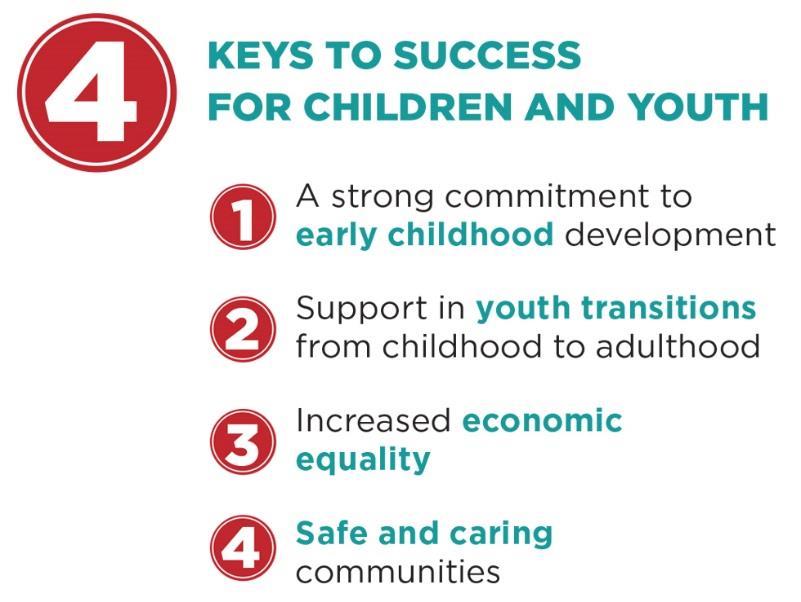
The toolkit is structured around the 4 Keys to Success. Each section highlights some of the current issues facing children, youth and families in BC and Canada and suggests solutions government can act on, in the form of questions to candidates.

September 2021
First Call Child and Youth Advocacy Society is a registered not-forprofit society based in British Columbia, Canada. We are committed to putting children and youth first through public education, community mobilization, and public policy advocacy.
c/o 312 Main Street | Vancouver, BC, V6A 2T2 | 604-288-8102 or 1-800-307-1212 | www. firstcallbc.org
First Call’s work is guided by the 4 Keys to Success for Children and Youth. These keys were developed by First Call through extensive research and focus groups across the province and reflect the scope of what is necessary to ensure the healthy development and well-being of BC’s children and youth. We know what will help and are looking for political commitment.
Putting BC’s children and youth first means:
1. A strong commitment to early childhood development
2. Support in transitions from childhood to youth to adulthood
3. Increased economic equality
4. Safe and caring communities
Information on how to vote, how to organize an all-candidates meeting, how to contact the media, candidates and political parties is available on our child poverty website www.Still1in5.ca

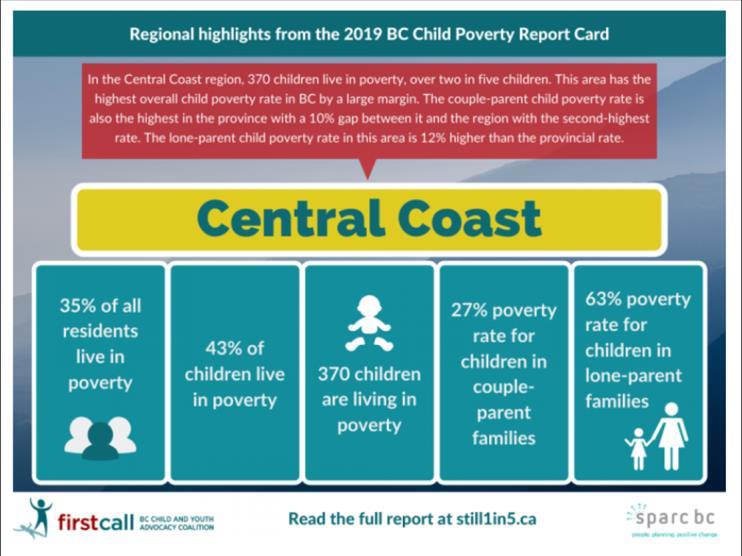
First Call has created an infographic on child poverty for every federal riding in BC. Visit www.still1in5.ca to learn about your riding.


RESOURCES ON CHILDREN’S RIGHTS
• Children 1st Canada Election Platform: childrenfirstcanada.org
• UNICEF Policy Book: oneyouth.unicef.ca/en/vote-for-every-child
• Canadian Coalition for the Rights of Children: rightsofchildren.ca
KEY 1 A STRONG COMMITMENT TO EARLY CHILDHOOD DEVELOPMENT
Early childhood is a crucial, time-limited period of human development. Data from BC's Early Development Index shows the number of children who are vulnerable on one or more measures of healthy development is increasing. All families should be able to access early childhood development supports and services that they need.
EQUITABLE ACCESS TO EARLY LEARNING AND CHILD CARE
There are licensed child care spaces for only 20% of children in BC. Child care across Canada is often characterized by high fees, low staff wages, mediocre quality, and unacceptable wait lists. Canada's support for young children and their families is the weakest among the world's rich countries at 0.25% of GDP - well below the 1% international benchmark.
Canada needs a publicly funded and managed early learning and child care (ELCC) system that is affordable, high quality, accessible and inclusive. “High quality” in a BC Indigenous ELCC context means that programs for Indigenous children must be culturally appropriate, reinforce pride in identity, be grounded in an Indigenous worldview and spirituality, and include Indigenous knowledge, values, ways of being and ways of caring for young children.
Questions:
Will your party commit to:
• Building a publicly funded and managed Canada-wide system of universally accessible, high quality, affordable, inclusive early learning, and child care?
• Federal spending of $34 billion over the next 5 years as set out in the 2021 federal budget?
• Implementing the Indigenous Early Learning and Child Care Framework Agreement?
• Honouring the signed child care agreements and reach similar agreements with remaining provinces and territories?
• Earmarking federal capital funding to support expansion of the Canada-wide child care system?
• Federal legislation to strengthen and protect a Canada-wide system of early learning and child care?
EQUITABLE ACCESS TO PARENTAL LEAVE
Parents receive only 55% of their average weekly earnings when taking maternity/parental leave In the majority of provinces, only 25% of fathers take parental leave. Not all people are eligible for parental leave because it is delivered as a part of the Employment Insurance program which has eligibility restrictions and can be inadequate for many Canadians.
Questions:
• Will your party improve parental leave benefits so more low-wage, part-time, contract, and selfemployed parents can qualify and afford to take leave?
• What steps will your party take to ensure all children in government care receive the same benefits and entitlements to things like federal Registered Education and Disability Savings Plans grants and the Canada Child Benefit?
EARLY CHILDHOOD RESOURCES
• Child Care Now: timeforchildcare.ca/vote/
• Coalition of Child Care Advocates of BC: cccabc.bc.ca
• Early Childhood Educators of BC: ecebc.ca
• $10 a day Child Care Plan: 10aday.ca
• Family Resource Programs of BC: frpbc.ca
• Family Support Institute of BC: familysupportbc.com
• Human Early Learning Partnership, UBC: earlylearning.ubc.ca
• BC Aboriginal Child Care Society: acc-society.bc.ca
• BC Council for Families: bccf.ca
• Canadian Association of Family Resource Programs: frp.ca
• Inclusion BC: inclusionbc.org
• BCACDI: bcacdi.org
KEY 2 TRANSITIONS FROM CHILDHOOD TO YOUTH AND ADULTHOOD
Transitions are times of increased vulnerability when children and youth may need extra support to navigate them safely. Developmental transitions include moving into adolescence and into the expectations of adult life. Other stressful transitions include changes in family, such as when parents separate or are unable to keep their children safe. Dealing with a mental illness, being new to Canada or coming to terms with a minority sexual identity are other examples of transitions that require extra support. Canada's youth need a strong safety net of universal and targeted programs and services to be there for them when times get tough.
YOUTH TRANSITIONING OUT OF CARE
In Canada, over 57% of homeless youth have been involved with the child welfare system at some point in their lives. In 2018, youth leaving government care died at five times the rate of the general population of young people in British Columbia. In addition, youth aging out of government care are uniquely vulnerable to poverty, unemployment, and poor health
While most provinces and territories offer some financial and other supports to youth transitioning from government care, Canada continues to be an outlier in the global north with no nation-wide standards
Temporary provincial and territorial COVID19 moratoriums ensured no youth aged out of care and into homelessness and proved that good government policy is possible. Youth across Canada deserve the support they need to thrive in adulthood. National, legislated standards that replace the current patchwork of policies would ensure youth have secured safe, stable housing, cost-indexed financial support and access to education when aging out of care.
Question:
• Will your party establish a national framework for extended care and support into adulthood in collaboration with youth, territories, and provinces?
MENTAL HEALTH
An estimated 84,000 (12.6%) children aged 4 to 17 years of age in BC are experiencing mental health disorders at any given time. From 2009 to 2017, there was an 86% increase in hospitalizations in BC for mental health issues of youth under 25 years of age. Suicide is the second leading cause of death among Canadian youth. First Nations youth and LGBTQ+ youth are at the highest risk.
Notably, Canada spends only 7.2% of its health budget on mental health care, the lowest proportion of funds spent on mental health among all G7 countries.
Questions:
• Will your party increase the proportion of federal health funding dedicated to mental health promotion and treatment services?
• Will your party make community supports for child and youth mental health a priority?
STUDENT DEBT
The average Canadian university graduate finished school with more than $26,000 in student debt. Among those who have never participated in post-secondary education, "financial issues" have been found to be the most commonly recognized barrier.
Canadians with student loans pay, on average, $5,000 in student loan interest. The system unfairly punishes those who can’t afford to pay education costs up-front. This unfair debt burden impacts those raising families.
Data from the 2016 census show 11% of Indigenous people had a university degree, compared to 29% for non-Indigenous people. High poverty levels for Indigenous people are a significant barrier to their ability to get a post-secondary education.
Questions:
• Will your party increase federal support for access to post-secondary education, both to remove financial barriers for low-income students and to lower student debt?
INCARCERATION AND DETENTION
70% of federally incarcerated women report being parents of minor children, and incarcerated women are twice as likely as men to be supporting dependents on the outside. 118 children were detained or housed in a Canadian detention centre in 2018-19.
Questions:
• Will your party lead Canada in shifting to a more child-friendly criminal justice system, which considers the effects of parental incarceration on a child and utilizes alternatives to incarceration whenever possible?
• Will your party amend the Immigration and Refugee Protection Act in order to end the detention of migrant and refugee children and ensure that migrant and refugee parents are never forced to choose between bringing their children into detention and allowing them to be placed into foster care?
IMMIGRATION SETTLEMENT AND SUPPORT SERVICES
Access to federally funded settlement programs is restricted to permanent residents and convention refugees, excluding many vulnerable people with alternate immigration statuses.
Many children wait years to be reunited with one or both parents in Canada, while the government processes the immigration application. Canada is legally obliged under the Convention on the Rights of the Child to deal with family reunification applications “in a positive, humane and expeditious manner” (article 10). Accepted refugee claimants must seek family reunification by applying for permanent residence for themselves and for their family members, whether in Canada or abroad.
According to current processing times, the parents in Canada can expect to wait 23 months for their permanent residence – only after that will their family members overseas be able to finalize processing and travel to Canada.
Questions:
• Will your party provide increased, stable funding for immigrant settlement services, and make immigrant settlement services available on the basis of need not immigration status?
• Will your party establish a standard of no more than 6 months to reunite separated children with a parent in Canada?
YOUTH TRANSITIONS RESOURCES
• Aunt Leah’s Place: auntleahs.org
• Fostering Change: fosteringchange.ca
• McCreary Centre Society: mcs.bc.ca
• BC Federation of Youth in Care Networks: fbcyicn.ca
• BC Federation of Students: wearebcstudents.ca
• Canadian Council for Refugees: ccrweb.ca/en
• Elizabeth Fry Society: caefs.ca
• Children with Incarcerated Parents: cjr.ufv.ca/research/childrens-rights
Research has long demonstrated that poverty is toxic to children’s health and development. From poor nutrition to family stress to exclusion from social participation, there are many ways that poverty is known to increase the risk of lifelong ill effects on health and reduce opportunities for individuals to realize their full potential. Growing income inequality in Canada is recognized as a threat to the health of both individuals and our society.
CHILD POVERTY
The impacts of living in deep poverty are devastating for children and youth. In the short-term they are at a higher risk of becoming homeless and, potentially, being removed from their families and placed in government care. One-third of food bank users in Canada are children.
Poverty is the most important social determinant of health. Long-term studies show that even access to universal medical care cannot overcome the likelihood that growing up poor will lead to life-long, persistent health issues.
The introduction in 2018 of Canada’s Poverty Reduction Strategy, including legislated targets and timelines, was a good start. However, without increased investments into the Canada Child Benefit, research indicates child poverty rates will not continue to decline.
Recent immigrants, Indigenous children, children in female lone-parent families, children in racialized families, and children with disabilities have significantly higher rates of poverty. Many of these families are concentrated in low-waged, precarious working conditions and have been disproportionately impacted by the economic fallout of the pandemic.
Questions:
• Will your party commit to maintaining and enhancing the federal Poverty Reduction Strategy and the targets and timelines to eradicate child poverty?
• What steps will your party take to ensure strategies to reduce child poverty will be a priority in ministries across government and properly funded through budget measures?
HOUSING
One in four Canadian households experience core housing need – meaning they are spending more than 30% of their income on their housing. Nearly one in five Canadian households experience extreme core housing need – spending more than 50% of their income on housing. And youth make up 20% of Canada’s homeless population.
Question:
• Will your party commit to fully funding strategies in Canada’s National Housing Strategy?
FOOD SECURITY
It is estimated that 1.15 million children in Canada live in households that struggle to put food on the table. Households led by female lone parents are especially vulnerable to food insecurity with onethird food insecure. Canada is one of the few industrialized countries that does not have a national school food program.
Question:
• Will your party commit to implementing a federally supported School Food Program that meets health outcomes, is universal and is developed collaboratively with provinces, territories, key stakeholder groups and Indigenous leaders?
EMPLOYMENT INSURANCE ELIGIBILITY AND SUFFICIENCY
Employment Insurance (EI) is based on full-time employment with one employer. Those who have part-time or erratic work are left with insufficient hours to qualify for EI or receive reduced weeks of benefits if they do qualify.
Typically, women, immigrants, and young people are most likely to be under-employed and therefore most likely not to qualify for adequate EI benefits.
Question:
• Will your party Ensure all who are unemployed or underemployed have access to income security measures within a revamped Employment Insurance (EI) program that increases access, amount, and duration of benefits?
KINSHIP CARE
When Canadian Pension Plan Disability recipients turn 65, they automatically become "regular" CPP recipients at a reduced rate and lose children's benefits, even if they are still raising children. It is estimated that 32,505 children aged 0-14 are being raised by grandparents in Canada.
Questions:
• Will your party adjust the CPP legislation to allow payment of the children’s benefit to be continued when a grandparent raising a grandchild turns 65 and transitions to the regular CPP program?
ECONOMIC EQUALITY RESOURCES
• First Call 2020 BC Child Poverty Report Card: still1in5.ca
• Campaign 2000 National Child Poverty Report Card: campaign2000.ca
• Canada Without Poverty: cwp-csp.ca
• Parent Support Services Society of BC, Grandparents Raising Grandchildren: parentsupportbc.ca/grandparents_raising_grandchildren
• Canadian Centre for Policy Alternatives: policyalternatives.ca
• Housing 4 All: housing4all.ca
• The Coalition for Health School Food: healthyschoolfood.ca/nourishkidsnow2021
• Canadian Rental Housing Index: rentalhousingindex.ca
KEY 4 SAFE
AND
CARING COMMUNITIES
Creating safe environments requires that adults take responsibility to ensure safety wherever young people spend time. Families rely on provincial and federal legislation to provide minimum standards for keeping children and youth safe in all aspects of community life. This includes employment standards and protective legislation to keep the physical environment clean and healthy for growing bodies. As a signatory to the UN Convention on the Rights of the Child, all federal legislation and policy should prioritize the immediate and long-term best interests of Canada's children and youth based on credible research evidence.
CHILD RIGHTS
Under Section 43 of the Criminal Code, parents, teachers, and other caregivers are "justified in using force by way of correction toward a pupil or child." This is a violation of children's right to physical safety.
Research shows that physical punishment of children results in increased delinquency and criminal behaviour later in life, harms the mental health of children, increases non-compliance in both the short and long-term, and increases aggression in the child.
The federal government has a responsibility to promote and monitor the implementation of the rights and protections of children in all Canadian jurisdictions. However, there is no focal point for children at the federal level to ensure children’s needs and rights are considered in legislation, policy, and services.
Questions:
• Will your party repeal Section 43 of the Criminal Code, which allows parents, teachers, and other caregivers to use physical punishment on children, as called for in the Truth and Reconciliation Commission Calls to Action?
• Will your party appoint a National Children's Commissioner and increase public accountability for respecting the rights of children in Canada?
HEALTH CARE
One-third of Canadians have no dental insurance. Half of lower-income Canadians have an identified need for dental care. In the absence of a national pharmacare plan, lower-income Canadians often don’t fill their prescriptions due to financial hardship. Physical and mental health needs have escalated under the COVID19 pandemic.
Questions:
• Will your party introduce universal coverage for prescription drugs, dental care, and eye care?
• Will your party negotiate a new 10-year Health Accord with provincial and territorial governments to secure the health care needs of citizens in all regions and into the future?
INEQUITABLE FUNDING FOR INDIGENOUS CHILDREN
40% of Indigenous children live in poverty. While comprising 8% of children in Canada, 52% of children in foster care are Indigenous There are still First Nations reserves that do not have access to safe drinking water systems. 40% of First Nations people report experiencing sexual and/or physical violence and abuse as children as compared to 29% of non-First Nations people.
Questions:
• As called for in the Spirit Bear Plan, will your party comply with the rulings of the Canadian Human Rights Tribunal by providing adequate funding for child and family services on reserve and ensure full application of Jordan’s Principle on and off reserve?
• Will your party implement immediate increases to funding for First Nations child welfare services, education and community health services, and services for urban Aboriginal people?
VIOLENCE AGAINST WOMEN AND GIRLS
67% of family violence victims are women and girls. Girls are 4.5 times more likely than boys to be victims of child sexual abuse by a family member. Girls aged 14-17 are almost twice as likely to be victims of family-related violence as their male counterparts.
Indigenous women and girls face greater risks of violence and homicide. Indigenous women and girls account for 21% of female homicide victims.
Between 2009 and 2016, 95% of human trafficking victims in Canada were female and one quarter were under 18.
Questions:
• Will your party support the development and implementation of a coherent, coordinated, and wellresourced National Action Plan on Violence Against Women and Girls?
• Will your party implement an action plan in response to the Calls for Justice from the Final Report of the National Inquiry into Missing and Murdered Indigenous Women and Girls?
• How will your party address the root causes of child sex trafficking and child sexual exploitation and hold traffickers and predators to account?
SAFE AND CARING COMMUNITIES RESOURCES
• CPJ on refugee child detentions: cpj.ca/lets-end-child-detention-in-canada/
• Inclusion Canada: inclusioncanada.ca/wp-content/uploads/2021/08/Fed-Election-Info-Eng-Updated1.pdf
• Joint Statement on Physical Punishment of Children and Youth: cheo.on.ca/en/about-us/physicalpunishment.aspx
• Canadian Environmental Health Atlas: ehatlas.ca
• First Nations Child and Family Caring Society of Canada: fncaringsociety.com
• Canadian Network of Women’s Shelters and Transition Houses: endvaw.ca
• Canadian Partnership for Children's Health & Environment: healthyenvironmentforkids.ca
• The Canadian Centre to End Human Trafficking: canadiancentretoendhumantrafficking.ca