
2024 Provincial Election Toolkit
Published by: First Call Child & Youth Advocacy Society
328-3381 Cambia Street Vancouver, BC, V5Z 4R3 604-288-8102
info@firstcallbc.org firstcallbc.org
First Call Child and Youth Advocacy Society is a registered charity in British Columbia whose purpose is to create greater understanding of and advocacy for legislation, policy, and practice so that all children and youth have the rights, opportunities and resources required to thrive.
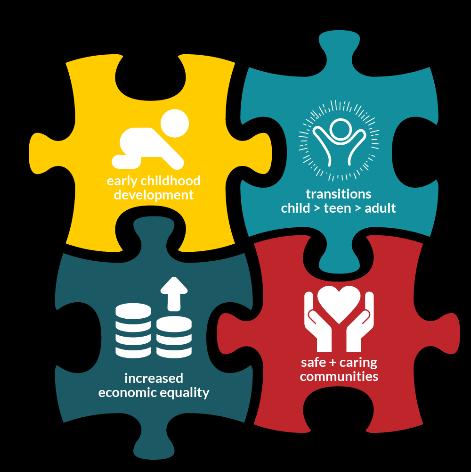
First Call has built a broad provincial consensus around the need to ensure all British Columbian children and youth benefit from the 4 Keys to Success for Children and Youth.
1. A strong commitment to early childhood development
2. Support in transitions from childhood to youth to adulthood
3. Increased economic equality
4. Safe and caring communities Follow us on “X” at: www.x.com/FirstCallBC Use these tags to share our messaging on social media! #bced #bcpoli #EndChildPoverty @FirstCallBC

Dear Advocate,
Whether public policy and advocacy work are second nature or you’re just getting started, you can be an effective advocate. You already have the most important and valuable tool you need: your personal experiences and thoughts. No one understands the ins and outs of the needs of children in British Columbia better than parents and caregivers, or those who help kids who struggle every day, or who are concerned by the inequities faced by BC families. By questioning our current and future policymakers about the important priorities and questions contained in this toolkit, you can play a critical role in shaping legislation that affects BC’s children, youth and families.
And to achieve this, a robust and coordinated advocacy effort is key.
There are many ways to advocate. Our 2024 Provincial Election Toolkit is full of resources designed to bring you up to speed and show you how to take action. No matter what you decide to do meet with your provincial election candidates in person, advocate on social media and/or write about policy issues in traditional media outlets it’s important to speak up for children and youth.
Our collective voice can influence policies that have the potential to improve lives! We look forward to advocating with you.
Sincerely,
The First Call Child and Youth Advocacy Society Public Policy Team P.S. If you have any questions, don’t hesitate to reach out to us at info@firstcallbc.org
GET BC’S CHILDREN & YOUTH ON THE PROVINCIAL AGENDA! VOTE4KIDS!
OCTOBER
19th IS VOTING DAY
IN THE BRITISH COLUMBIA PROVINCIAL ELECTION
On October 19th eligible voters can exercise their right to vote for one of the candidates in their riding to represent them in the provincial legislature. There are also several advance voting days in the two weeks prior to October 19th. To register and find more information, go to https://elections.bc.ca/2024-provincial-election/. Information on voting by mail can be found here: https://elections.bc.ca/2024-provincial-election/ways-to-vote/vote-by-mail/
HELP US ADVOCATE FOR BC’s KIDS!
The toolkit is structured around First Call’s 4 Keys to Success for Children and Youth. Each section highlights some current priority issues facing children, youth and families in BC and suggests solutions our provincial government can act on, in the form of questions to candidates.
**We will also be sending a questionnaire focused on child and youth issues to all of the major political parties, based on some of the priorities listed in the toolkit, and publishing their responses on our website**

WHAT YOU CAN DO
Community groups, organizations and individuals can all play a role in putting child and youth issues on the election agenda by taking action
1) SHARE First Call’s Provincial Election Toolkit and materials with your family, friends and network subscribers.
➢ Our 2024 Provincial Election Toolkit can be found at www.firstcallbc.org/2024BCElection Please pass it on!
2) CONTACT your local candidates in your riding (and their political parties) and ask where they stand on child and youth issues that are important to you or your organization
➢ When candidates hear your concerns, they report upline to their political party.
➢ You can email them, chat with them as they campaign in your neighbourhood or phone their campaign headquarters.
➢ The list of candidates by electoral district is available here: https://elections.bc.ca/provincial-elections/provincial-candidates/candidate-list/
➢ See our ‘Resources’ section for email letters, phone scripts, and more help!
3) REGISTER & VOTE! and remind your friends and family to vote!
4) USE THE “ADVOCACY OUTREACH TOOLS” guide found at the end of this document.
Questions for Candidates Based on First Call’s 4 Keys to Success for Children and Youth
Check out our priorities and questions. You can choose to ask all or some of the questions.
Key 1 Early Childhood
Early childhood is a crucial, time-limited period of human development. Without supportive public policy and needed services, young families are stressed by the demands of caring and earning. All young children and their families should be able to access the supports and services they need. We know what will help and are looking for political commitment.
FACT: Data collected in the Early Development Instrument (Wave 8 EDI – 2019-2022) by the Human Early Learning Partnership at UBC shows the provincial vulnerability rate for young children in BC is 33%, meaningfully higher than 20 years ago. This means 1 in 3 children, or about 13,500 Kindergarten students in BC, are starting school with vulnerabilities in one or more critical developmental areas. i
Reversing this trend requires a foundation of universal supports and services, plus additional strategies to address specific barriers facing certain families and population groups, such as those living in poverty, babies born with disabilities, and systemic barriers that limit the availability, affordability and accessibility of early years programs.
Priority 1: Healthy Babies and Family Support
Increased attention must be paid to maternal and infant health and the existing inequities in access to prenatal and postnatal supports across the province. Best practices for universal supports include free prenatal classes in local communities and home visits by public health nurses for all newborns. Specific supports are needed for mothers living in poverty, children with disabilities, in rural and remote communities, and those struggling with addictions, other mental health issues and other vulnerabilities. Additional best practices include the Healthy Pregnancy Outreach Programs, Infant Development Programs, and Supported Child Development Programs.
Q: If elected, will you increase investment in culturally inclusive, barrier-free public health initiatives aimed to support maternal health and healthy infant development, ensuring these supports are available throughout the province and designed to reach families experiencing poverty, babies born with disabilities and other threats to their ability to thrive?
Priority 2: Accelerated Implementation of the $10aDay Child Care Plan
BC and the federal government have committed funding and passed legislation to move toward building a universal child care system that is high quality, affordable, inclusive and culturally safe in support of families and the long-term health and well-being of young children. Significant steps have been taken to build more child care spaces, lower fees for families and increase the wages of early childhood educators. As of Spring 2024, there were 15,000 licensed child care spaces in BC that offered fees capped at $10aDay.ii
Many challenges remain to address a workforce recruitment and retention crisis due to the lack of fair compensation for early childhood educators, an insufficient supply of spaces, inconsistent operating funding, relying on individual organizations to do the work to create new programs, and systemic barriers to the inclusion of children with disabilities.
Q: If elected, will you support increased provincial investments to expand access to culturally sensitive, high-quality $10aDay child care for all BC families including low-income families and the inclusion of children with diverse needs?
Priority 3: Improving Families’ Access to Timely Early Intervention Supports and Services
All young children and their families must have access to a basic set of Early Childhood Development (ECD) supports and services as needed. This includes taking action to support the full inclusion of young children at risk of developmental delay and children with additional support needs. These children and their families, including kinship carers, require specific strategies and supports to ensure that they can participate in their local ECD community programs alongside their peers.
Early intervention services for young children should not have to rely on short-term funding agreements. Rather they should be an entitlement for all families and caregivers to access prior to school entry. When young children with support needs languish on wait lists for assessments and early intervention therapies or access to child care, they are missing irreplaceable developmental opportunities.
Q: If elected, will you increase funding for agencies and programs to ensure all families raising children with disabilities have timely, culturally sensitive universal access everywhere in BC to a core suite of early assessments and intervention therapies, family respite, and physical and mental health, medical and in-home supports?
Priority 4: Barrier-free Programs and Services for Families with Young Children
Parents and families – in all their diversities – are the first and primary teachers and caregivers of their children. Families are central to promoting children’s healthy development, and must be supported by local, barrier-free early years services that welcome and support the engagement of families as key partners, including mothers, fathers, grandparents, extended and non-traditional families and other caregivers.
Accessible, culturally safe drop-in and parent/caregiver support programs for families with young children are vital in every community, especially for families that are isolated, low-income, newcomers and facing other
challenges. These programs help build connections with other parents and make referrals to other services easier. Funding for services such as Family Resource Programs, Healthy Babies, Parent-Child Mother Goose programs or Young Parent Programs should be adequate and sustained to help them play this vital role.
Q: If elected, will you support increased provincial funding for non-barriered, free, community-based programs and services for all families with young children throughout the province, including rural and remote areas?
Key 2 Youth Transitions
Transitions are times of increased vulnerability when children and youth may need extra support to navigate them safely. Developmental transitions include moving into adolescence and into the expectations of adult life. Other stressful transitions include changes in family, such as when parents separate or divorce or are unable to keep their children safe. Dealing with a mental illness, being new to Canada or coming to terms with a minority sexual orientation are other examples of circumstances and transitions that require extra support. BC’s youth need a strong safety net of universal and targeted programs and services to be there for them when times get tough.
Priority 1: Ensure Access to Quality Public Education for All Children and Youth
To deal with a teacher shortage and anticipated enrollment growth, the BC public education system needs to recruit nearly 20,000 teachers over the next 10 years, according to government projections.iii The K-12 education system also needs more funding for special education assistants, school psychologists and deferred maintenance, among other areas. The right to inclusive education for students who need support with disabilities and neuro-diverse learning needs is still significantly impaired by underfunding.
More school-age child care on school sites is desperately needed to help working parents/caregivers. With federal promises of funding for school meal programs, BC needs to step up provincial investments in cooking and food storage facilities in schools. More attention to improving indoor air quality and ventilation in schools is needed to promote student health. Parents should not have to fundraise for public schools.
Q: If elected, will you support increasing K-12 public education funding to reduce inequities, uphold children’s right to inclusive education, and increase investments in school-age child care and universal healthy school food programs?
Priority 2: Safe, Affordable Housing for Youth Transitioning Out of Government Care
As of December 2023, there were 5,494 children and youth in care and on youth agreements in BC. Indigenous children and youth make up 66% of this total Nearly 800 young people transitioned into adulthood in the last year.iv Because youth transitioning out of foster care don’t have the family support other young people can rely on, they often need extra support in establishing a home of their own, finding employment, pursuing further education and connecting with needed community supports. Thirty-three per cent of the respondents in the 2023 Report on Homelessness Counts in BC reported they’d had experience in government care.
In a poll of British Columbians commissioned by First Call in early 2024, a strong majority (74%) agreed that people who have been in government care are at a greater risk of homelessness than other young adults. Just over two thirds (67%) favoured provincial government financial support for youth who have aged out of foster care until they turn 27. The current rent subsidy available to some youth from care in private rentals is $600/month for a maximum of two years. Rent costs have increased substantially in BC since this subsidy amount was set.
Q: If elected, will you support the creation of additional subsidized, accessible housing with wraparound supports for youth leaving care and an increase in the rent subsidy amount for former youth in care in private rentals?
Priority 3: Improving Mental Health Services for Youth
The 2023 Adolescent Health Survey conducted by the McCreary Centre Society reported a decline from 2018 in the percentage of children and youth in grades 7 to 12 who rated their mental health as good or excellent, felt hopeful or happy most of the time, and an increase in the rate of suicidal thoughts. Girls were more likely to selfharm than boys. Recent research has linked excessive cell phone use and time spent online to declining mental wellness in youth, especially teen girls.
The BC Coroner’s Office reported that 126 youth under the age of 19 died from unregulated drug toxicity in the 5 years from 2019-2023. 67% of these youth had a mental health diagnosis or anecdotal evidence of a mental health disorder.
Q: If elected, will you support increasing youth programming focused on prevention of mental ill health, in addition to opening additional youth-specific treatment programs for youth struggling with substance use and mental wellness?
Priority 4: Reducing Post-Secondary Cost Barriers for Low-Income Students
With living costs rising and the proportion of public funding to BC post-secondary institutions now at 41%, continually rising tuition fees are placing a heavy burden on students, and most seriously affecting low-income students. Low-income students need greater help with up-front, non-repayable grants to lower the amount of debt they are accumulating through student loans.
Polling shows that 90% of British Columbians agree that making college and university education in BC more affordable for students is important. 87% oppose increases in tuition fees and 79% support providing students from low- and middle-income backgrounds with grants.v
Q: If elected, will you support measures to reduce financial barriers for those in low-income to access post-secondary education, including increased funding for non-repayable student grants?
Key 3 Economic Equality
Allowing income and wealth inequality to continue to grow in B.C. brings with it increased health and social costs related to higher rates of many chronic diseases, obesity, mental illness, suicide, violence and addictions. Inequality also reduces social mobility, undermining the promise of a fair society and increasing social alienation for those left behind.vi
FACT: Children who are raised in poverty face risks to their health over their life course.vii In contrast, healthy, well-supported children and youth are more likely to become the engaged and contributing citizens that are essential for creating a healthy, sustainable society.
Priority 1: Reducing child and family poverty
In 2021, one in seven children in British Columbia (14.3%) were still growing up in poverty, representing 126,120 children. Included in the total number of poor children, 37,010 were under the age of six. Over 40% of children living in lone-parent families were poor.
The majority of poor children in British Columbia live in families with parents who work in the paid labour force, earning low wages, or stuck in precarious or insufficient work without benefits. Many of these poor families were living on annual incomes that were $12,000 to $14,000 below the poverty line, including families raising children on social assistance, and struggling to meet their basic needs.viii
Q: If elected, will you support increasing income assistance and disability assistance rates to bring them in line with actual living expenses and index them to inflation?
Q: If elected, will you support increasing BC Family Benefit payments for low-income families, especially in the first year after a baby’s birth?
Priority 2: Increasing housing security for children, youth and families
First Call research into children’s right to housing documented the experiences of BC families struggling to find or keep safe, affordable housing. Key themes that emerged from this research as barriers undermining children’s right to housing were unaffordability, overcrowding, waiting lists, discrimination in rentals and the fear of child apprehensions, among others.
Market rental rates for families with children are completely unaffordable for many families. We are seeing the results in rising homelessness, including among youth and families with children. This trend has given rogue landlords more of an opportunity to discriminate against families with children. It has also meant that there are more and more families on the waiting lists for housing through BC Housing and other subsidized housing operators. The impacts on children and their families of this failure to support their right to safe and adequate housing can have long-lasting effects on children’s health and development.
The Residential Tenancy Act only limits rent increases for existing tenants. When a tenant moves or is evicted, landlords are free to increase the rent as they wish. One solution is to change the Act to tie rent control to the unit, not to the current tenant.
Q1: If elected, will you support accelerating the building of affordable and safe social housing for lowincome children and their families?
Q2: If elected, will you support tying rent control to the unit in the private rental market?
Key 4 Safe and Caring Communities
Families should be able to rely on provincial (and federal) legislation to provide minimum standards for keeping children and youth safe in all aspects of community life. This includes protecting them from predators, robust employment standards if they enter the workforce, and protective legislation to keep their physical environment clean and healthy for growing bodies. All provincial legislation and policy should prioritize the immediate and long-term best interests of BC’s children and youth based on the research evidence of potential harms and hazards. Child and youth rights and well-being should not be an afterthought or subordinate to powerful economic interests.
Priority 1: Child Sexual Exploitation and Trafficking
Child sexual exploitation and trafficking has been increasing in BC, especially as more adult predators are focusing on reaching children and youth online. Sexual abuse of children in the home and other environments also serves to increase children’s vulnerability to further exploitation and trafficking.
A June 2020 Statistics Canada reportix notes the vast majority of victims of police-reported human trafficking are women and girls (97%); 73% of victims are under age 25 and nearly three in ten victims (28%) are under the age
of 18. In many studies survivors report first being trafficked at the age of 13 or 14.x BC youth workers currently report young teens and preteens being recruited and groomed into criminal gang activity, including being sexually assaulted and trafficked.
Q: If elected, will you support increased funding for prevention education, early intervention, data collection, enforcement and dedicated services for underage victims of sex trafficking?
Priority 2: Reducing violence against women and children
Violence against women, youth and children in BC is an ongoing public health and safety crisis that remains a devastating daily reality for many. In 2019, 11,128 women in BC were the victims of Intimate Partner Violence (IPV), representing 78% of all BC IPV victims. This was an 18% increase from 2018, compared to the 5% increase in female victims in that period for all of Canada.xi Very often children and youth are exposed to violence in the home, which can result in lifelong impacts and creates an overwhelming health, social and economic burden mostly borne by women and their children.
According to a survey by the BC Society of Transition Houses, during one 24-hour period in 2022, 518 BC children and youth were sheltered through Transition Housing programs, including 207 children 0-5 years old. Forty percent of these programs reported that their shelter was full during that 24-hour period. Wait lists and lack of space for larger families remains a significant barrier for women and children seeking safety. As the housing crisis has made finding affordable housing incredibly difficult, women are also staying longer in shelters.xii
Q: If elected, will you ensure programs and housing for women and children fleeing violence and at risk of violence are funded and meet current levels of need?
End Notes
i. https://earlylearning.ubc.ca/edi-wave8-provincial-synthesis/
ii. https://www.vancouverisawesome.com/highlights/theres-strong-support-to-expand-10-a-day-child-care-in-bc-poll-shows-8868385
iii. MPSEFS_11803_BC_Jobs_LMO_2023_FINAL..pdf (workbc.ca)
iv. https://mcfd.gov.bc.ca/reporting/services/child-protection/permanency-for-children-and-youth/case-data-and-trends, includes CYIC and on YA; also https://mcfd.gov.bc.ca/reporting/services/child-protection/post-transition-supports/case-data-and-trends
v. https://asset.nationbuilder.com/bcfs/pages/395/attachments/original/1696984482/BCFS-Lobby_Document-202324_Digital.pdf?1696984482
vi. Doug Saunders and Tom Cardoso, A tale of two Canadas: Where you grew up affects your income in adulthood, June 2017, The Globe and Mail, theglobeandmail.com/news/national/a-tale-of-two-canadas-where-you-grow-up-affects-youradultincome/article35444594/
vii. World Health Organization, Commission on Social Determinants of Health, Closing the Gap in a Generation, Health Equity through Action on the Social Determinants of Health, 2008.
viii. https://firstcallbc.org/bc-child-poverty-report-card-2023/ ix. https://www150.statcan.gc.ca/n1/pub/85-002-x/2020001/article/00006-eng.htm
x. https://www.canadiancentretoendhumantrafficking.ca/wp-content/uploads/2016/10/No-More-Ending-Sex-Trafficking-inCanada.pdf, pgs.24, 27, 32.
xi. https://www150.statcan.gc.ca/n1/pub/85-002-x/2021001/article/00001/tbl/tbl03.4-eng.htm
xii. https://bcsth.ca/wp-content/uploads/2023/04/2022-WTHSP-24-Hour-Census-Report.pdf
Advocacy Outreach Tools

Below are some suggestions from us with ‘best practice’ tips on how to reach out to candidates and support and amplify the concerns we’ve addressed in the Election Toolkit. Write an email.
• Writing to a candidate in your riding or their party HQ is an effective way to make your priorities known and to gauge their support. All parties’ candidates will be listed at the Elections BC website, by riding and by party affiliation: https://elections.bc.ca/provincial-elections/provincialcandidates/candidate-list/
• Check that Elections BC list regularly, as it will be updated up till September 21st, when the writ is dropped. That signals the ‘official’ start of the election campaign period. All candidates must be listed by that date.
• Candidates will usually note who has taken the time to contact them. They or a staffer may get back to you (not answering is also an answer!). If you have time, email all the candidates in your riding whose opinion you want to note.
• You can send an email through a candidate’s website (if an elected incumbent, they already have an easily accessible email). New candidates may not have their websites operable for a while. Check back.
• Keep your email simple.
➢ You may discuss one or two priority issues and corresponding questions from this toolkit that are important to you. Copy and paste the priority and questions we have developed here, to your email.
➢ Or, you may want to have them answer multiple concerns that we have raised we suggest you just copy and paste the questions if that is the case.
• Avoid abbreviations.
• Be courteous, of course.
• Remind the candidate that you are a constituent of the riding and are a First Call affiliate/child and youth care service provider/or concerned citizen.
Talk to candidates at your door, or as they ‘main-street’
Seeing a candidate ‘in the wild’ is a great way to get some face-to-face answers in real time. Being prepared with questions really captures their attention.
If a candidate comes to your door, you have an opportunity to really engage. Approaching a busy candidate in public can feel a little more intimidating, but if you’re prepared, that ‘in the moment’ engagement can also yield good results. {Be aware that if there is a lineup, or it’s very busy, you may want to email them instead.}
• Plan ahead. Use the educational priorities and questions in this toolkit to brainstorm what you’ll say. And use the sample script under these points, if you like.
• Identify yourself. State your name and make it clear that you are a constituent in the riding. A staffer usually writes that information down.
SAMPLE ‘TALK TO THE CANDIDATES’ SCRIPT:
• Stay on topic. Use the talking points in this toolkit to guide you.
• Ask for a written response if the candidate doesn’t have an answer to your questions. Leave your contact information so the staffer can update you with the member’s position or any action taken.
Hello, my name is______ and I am a concerned citizen in this riding.
{Add one sentence about your personal connection to concerns about children and youth in BC}
{Provide two to three sentences about the specific issue you want them to know more about. Here is an example based on information in the Election Toolkit from Key 3, Economic Equality}
I’d like to know where you stand on the issue of housing security for children, youth and families? Market rental rates for families with children are completely unaffordable for many families. We are seeing the results in rising homelessness, including among youth and families with children, as well as landlords who take advantage of the situation.
Q1: If elected, will you support accelerating the building of affordable and safe social housing for low-income children and their families?
Q2: If elected, will you support tying rent control to the unit in the private rental market?
Use social media!
Help us amplify and promote the Election Toolkit and the questions it contains on Twitter/X. Follow us at https://x.com/FirstCallBC and retweet our tweets about the Election Toolkit on ‘X.’ Or craft your own tweets and please tag us at @FirstCallBC so we can retweet you!