First Call Child and Youth Advocacy Society works with a non-partisan, cross-sectoral network of affiliate organizations to put BC children and youth first in public awareness and public policy. We conduct research and analysis on child and youth rights and well-being, offer education and training events, and make policy recommendations to promote, strengthen and defend the rights of children and youth in BC.
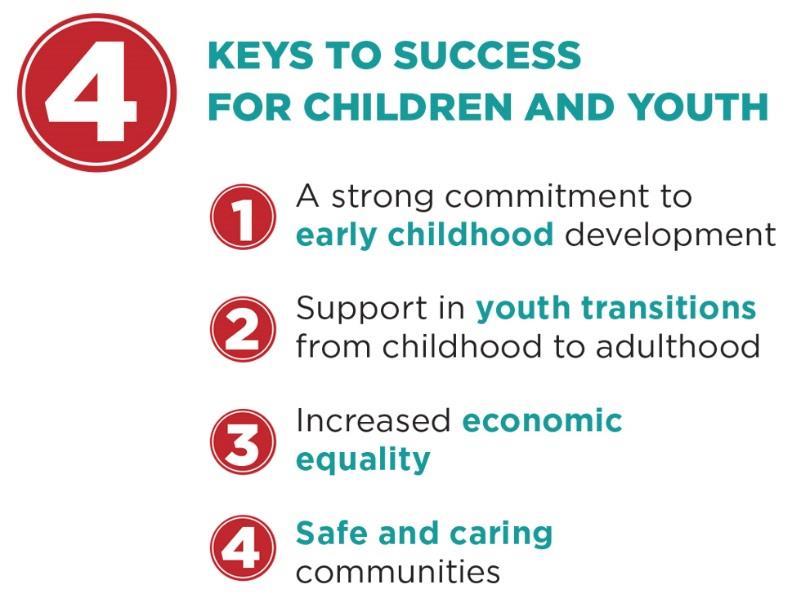
First Call has built a broad provincial consensus around the need to ensure all British Columbian children and youth benefit from the 4 Keys to Success for Children and Youth.
October 15, 2022 is Election Day in municipalities across the province.
On that day, eligible voters exercise their right to vote for mayors, councilors, school board trustees (and, in Vancouver, park board trustees).
The purpose of this toolkit is to support individuals and community groups in their advocacy for legislation, policy and practice at the municipal level that benefit children and youth and their families.
The toolkit is structured around the 4 Keys to Success. Each section highlights current problems, outlines the role of the municipal government, and suggests questions for candidates.
WHAT YOU CAN DO
Elections are the perfect time to speak up for children and youth.
Here are some ways you can contribute to positive change for youth and children in your community during an election campaign:
■ YOU CAN VOTE if you’re 18 or older, have lived in BC for at least 6 months and in your community (e.g. municipality) for one month
■ Discuss the issues in this toolkit with friends, neighbours and family
■ Attend or organize an all-candidates meeting, and ask the questions included in this toolkit
■ Write to your local newspaper or call-in to a radio show.
■ Contact candidates and tell them you want them to support children and youth. Use the information and questions in this toolkit for speaking points.
■ Hold a public forum. It could be as simple as gathering friends to talk about the issues over coffee. Or, hold a larger event and invite candidates to attend. Include youth and marginalized groups in the planning and organizing.
■ Join a local advocacy group that focuses on a child and youth issue of concern to you.
■ Encourage any group of which you’re a member, such as faith or cultural groups, to promote child and youth well-being in the campaign.
■ Use social media to publicize your conversations with candidates.
Key 1 A strong commitment to early childhood development
Early childhood is a crucial, time-limited period of human development, and data from BC’s Early Development Instrument is showing increasing risks of less than optimal development among young children. Without supportive public policy and needed services, young families are stressed by the demands of caring and earning. All families should be able to access early childhood development supports and services that they need.
YOUNG CHILDREN’S INCREASED VULNERABILITIES
The Problem
▪ One third of BC’s poor children, or 47,830 children, are under the age of six. Young children had a poverty rate of 17.5% in 2019.
▪ One third of BC children are entering Kindergarten vulnerable or behind in at least one area of their development – social, emotional, cognitive, communications or physical.
The Role of Municipal Government
▪ Cities are often able to offer grants or in-kind support to local services like neighbourhood houses, child care spaces, recreational programming and community events that focus on supporting young children and their families
▪ Mayors, city councillors and school trustees can proactively work with senior levels of government to advocate for increased investments in supports and services for families with young children.
Q: If elected, what will you do to reduce rising vulnerability among young children in your community?
THE CHILD CARE CRISIS
The Problem
▪ Because of the $10aDay campaign, the BC Government is beginning to implement quality, affordable, universal child care. There are still steps needed to fully implement the $10aDay Plan.
▪ Fees are too high and there are too few licensed spaces – BC parents can’t find or afford quality child care, especially for shift work.
▪ Early Childhood Educators’ wages and benefits are too low – forcing many to leave the field and compromising the quality of the care available to many families.
▪ Due to the high cost and lack of child care spaces, many mothers cannot return to work when they are ready to.
The Role of Municipal Governments and School Boards
▪ Municipal governments can endorse the $10aDay Child Care Plan calling on the provincial government to begin building a better child care system. If your local government has already endorsed the Plan, encourage them to support the next steps the campaign is calling for.
▪ Cities are responsible for many local regulations, such as development zoning, and can require that child care spaces be included in new buildings.
▪ School Boards can ensure stability for the many child care programs that operate on school sites.
Q: Affordable and high-quality child care encourages children’s healthy development, allows mothers to enter and remain in the work force, enables families to move out of poverty and benefits the economy by reducing social costs and increasing tax revenues. If elected, will you endorse (or advocate for the continued implementation of) the $10aDay Child Care Plan?
Q: If elected, what will you do to help increase the number of child care spaces in our community?
LEARN MORE
$10 a Day Child Care Plan – Toolkit for Small, Rural & Northern Communities 10aday.ca/tool_kit
Métis Nation BC – Programs for Families mnbc.ca/families/
Human Early Learning Partnership earlylearning.ubc.ca
BC Association of Pregnancy Outreach Programs bcapop.ca
BC Aboriginal Child Care Society acc-society.bc.ca
BC Association of Family Resource Programs frpbc.ca
BC Council for Families bccf.ca
BC Association for Child Development and Intervention bcacdi.ca
Key 2 Support in transitions from childhood to youth to adulthood
Transitions are times of increased vulnerability when children and youth may need extra support to navigate them safely. Developmental transitions include moving into adolescence and into the expectations of adult life. Other stressful transitions include changes in family, such as when parents separate or divorce or are unable to keep their children safe.
The Problem
▪ There are approximately 6,000 children and youth in government care at any time in BC.
▪ While many families support their children well into their 20s with a range of financial and emotional assistance, youth who age out of foster care are often left to fend for themselves.
▪ 40% of homeless youth in BC have spent time in foster care.
The Role of Municipal Governments and School Boards
▪ Civic leaders can ensure there are youth-friendly spaces in areas such as parks, community centres, schools and libraries, and cities and towns can create more safe and free spaces where youth can meet.
▪ Cities can subsidize and increase accessibility to after-school programs offering sports and arts activities and homework clubs.
▪ School boards and councils can ensure that children and youth have access to counsellors and youth workers to talk about anything from sexual health to family problems to employment.
▪ School boards and councils can organize youth forums so that young people can gather and discuss issues and provide valuable perspective to municipal leaders.
Q: If elected, what would you do to create more public youth-friendly spaces?
Q: If elected, what would you do to ensure that youth voices are represented in decisionmaking?
LEARN MORE
Fostering Change fosteringchange.ca
BC Teachers’ Federation www.bctf.ca
McCreary Centre Society mcs.bc.ca Federation of BC Youth in Care Networks fbcyicn.ca/programs/transitions/ BC Federation of Students wearebcstudents.ca
Key 3 Increased economic equality
Research has long demonstrated that poverty is toxic to children’s health and development. From poor nutrition to family stress to exclusion from social participation, there are many ways poverty is known to raise the risk of life-long ill effects on health and reduce opportunities for children to realize their full potential. Growing income inequality in BC is recognized as a threat to the health of both individual children, youth and families, as well as to communities as a whole.
CHILD AND FAMILY POVERTY
The Problem
▪ BC’s child poverty rate is 18%, or 1 in 5 children. First Call’s regional fact sheets and maps contain the poverty rates for many local communities and areas. Child poverty is most severe in the coastal regional districts, with much higher rates.
▪ Child and family poverty is an issue in every region of the province. While approximately 85% of BC’s poor children live in the 26 urban areas, rural child poverty rates can be much worse. To find the child poverty rate in your community see our census tract maps at still1in5.ca
▪ Families receiving social assistance still live thousands of dollars below the poverty line.
▪ Inequality in BC is growing. In 2019, the richest 10% of families with children received 29% of the total income of all families with children, with the poorest 10% shared only 1% of the total income pie.
The Role of Municipal Government and School Boards
▪ Elected municipal and school board officials can demand that the promised provincial and federal government poverty reduction strategies address poverty and growing income and wealth inequality through tax reform and increased social policy investments. Cities can also develop their own poverty reduction plans.
▪ Cities can stop low-income housing from being demolished, and they can require that new developments include affordable rental and social housing.
Q: If elected, will you endorse and/or advocate for evidence-based poverty reduction strategies for BC, including the right to affordable rental housing and better income supports for families living in poverty?
LOW WAGE POVERTY
The Problem
▪ The majority of poor children in BC live in families with parents in the paid labour force, many of them working full-time and sometimes multiple jobs.
▪ A parent with dependents working full-time all year would have to earn much more than the minimum wage to be above the poverty line.
The Role of Municipal Government and School Boards
▪ Cities and boards of education can pay their employees a living wage and can agree to only contract for services with companies that pay a living wage.
Q:
The majority of poor children come from working families. The municipal level government has a responsibility to avoid contributing to the problem of low-wage poverty. If elected, will you commit to adopting a living wage policy requiring the municipality or school district to pay a living wage to both its employees and contract staff?
THE HEALTH EFFECTS OF POVERTY
The Problem
▪ Living in poverty, even for one or two years, can have serious negative impacts on children’s health and development. These impacts include longer-term effects such as increased risks of chronic disease, school failure, and vulnerability to criminal involvement.
▪ Health inequities are associated with higher costs for our health and social service systems, and social costs to our communities.
The Role of Municipal Governments and School Boards
▪ Public schools can reduce or eliminate fees that act as barriers to inclusion for low-income students.
▪ Municipalities can provide free or discounted recreational services and access to programs for lowincome children, youth and families.
▪ Municipalities can support community gardens, community kitchens and schools can provide healthy meals and nutritional information to students.
Q:
School and recreation program fees are a significant barrier to low-income families. If elected, how will you ensure that children and families have equal access to school and community programs?
LEARN MORE
Key 4 Safe and caring communities
Families should be able to raise their children in communities that are safe and supportive. This includes physical safety, safe places for play, and an environment that is clean and healthy for growing bodies.
The Problem
▪ The average Canadian child is sedentary for three to five hours per day in front of a television.
▪ 40% of Canadian children already have at least one risk factor for heart disease due to an inactive lifestyle.
The Role of Municipal Governments and School Board
▪ Cities can create green spaces and parks accessible to all residents, and schools can make sure they have safe playground equipment and sports resources for children and youth.
▪ Cities are responsible for zoning and for designing the physical environment, and can require and protect green spaces, child friendly spaces, and more bike and walking routes.
▪ School boards can ensure that all children are served by public schools through ensuring inclusive education practices.
Q: If elected, what would you do to make our community more family, child, and youth-friendly?
Q: Recreation and parks play an important role in keeping children healthy, particularly those from low-income families. If elected, how will you ensure that all children have access to safe places to play?
Q: If elected, how will you monitor and ensure the inclusion of all school-aged children and youth in their local, neighbourhood schools?
LEARN MORE
International Play Association Canada ipacanada.org Brussoni Lab at The British Columbia Children’s Hospital Research Institute brussonilab.ca
Inclusion BC - Election Toolkit https://inclusionbc.org/wp-content/uploads/2022/09/ElectionGuide2022-links.pdf BC Healthy Living Alliance bchealthyliving.ca Society for Children and Youth-Child Friendly Communities childfriendlycommunities.ca UNICEF Child Friendly Cities childfriendlycities.org