Global Resuscitation Alliance Australasia 2019 Report
1. About this Report
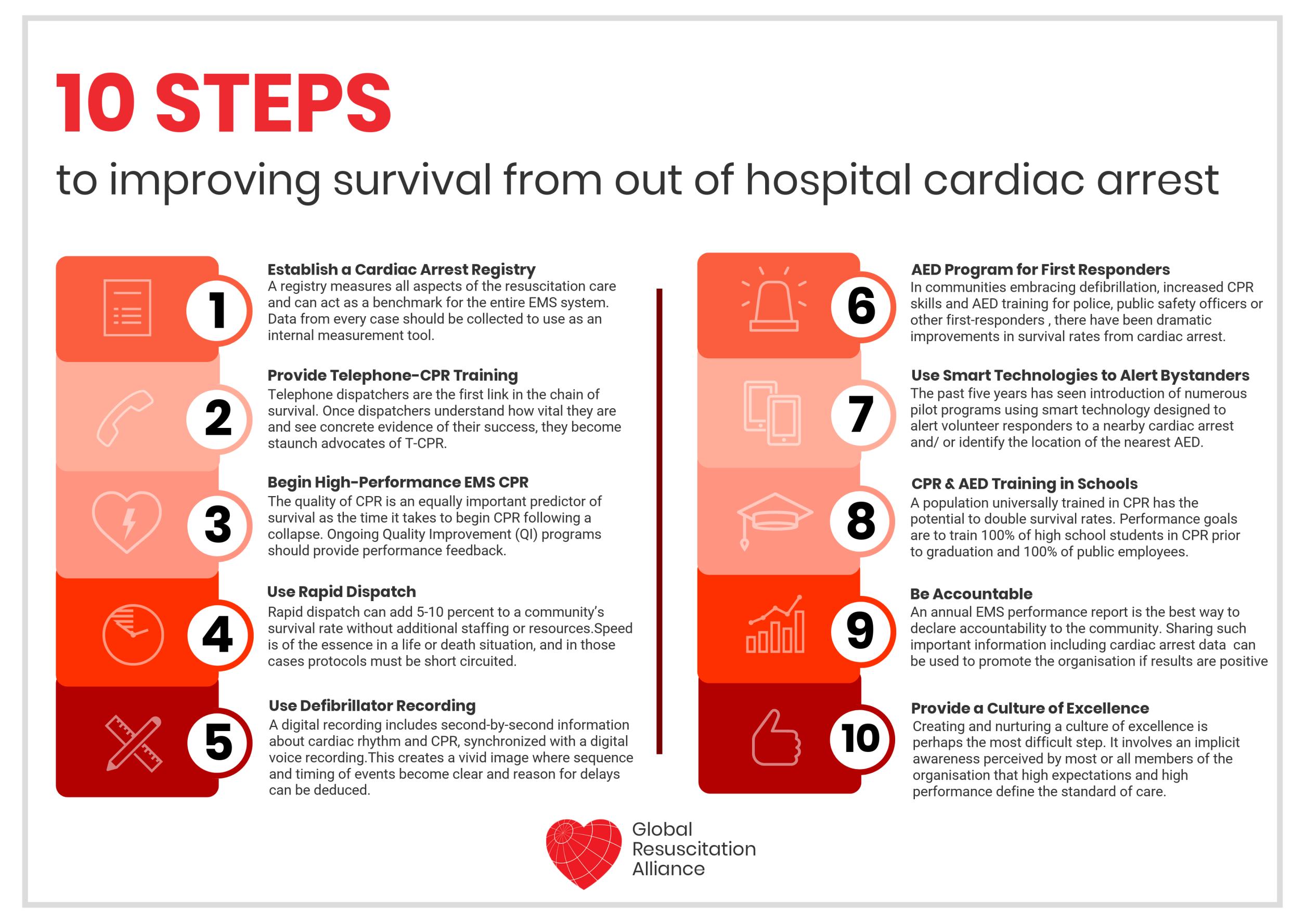
2. Global Resuscitation Alliance
3. Australasian GRA Secretariat
4. Australasian 2019 GRA Survey
5. Step 1 – Establish a cardiac arrest registry
6. Step 2 – Provide Telephone-CPR Training
7. Step 3 – Begin High-Performance EMS CPR
8. Step 4 – Use Rapid Dispatch
9. Step 5 – Use Defibrillator Recording
10. Step 6 – AED Program for First Responders
11. Step 7 – Use Smart Technologies to Alert Bystanders
12. Step 8 – CPR & AED Training in Schools
13. Step 9 – Be Accountable
14. Step 10 – Provide a Culture of Excellence
15. 2019 Survey Questionnaire
About this Report
David Waters CEO Council of Ambulance Authorities
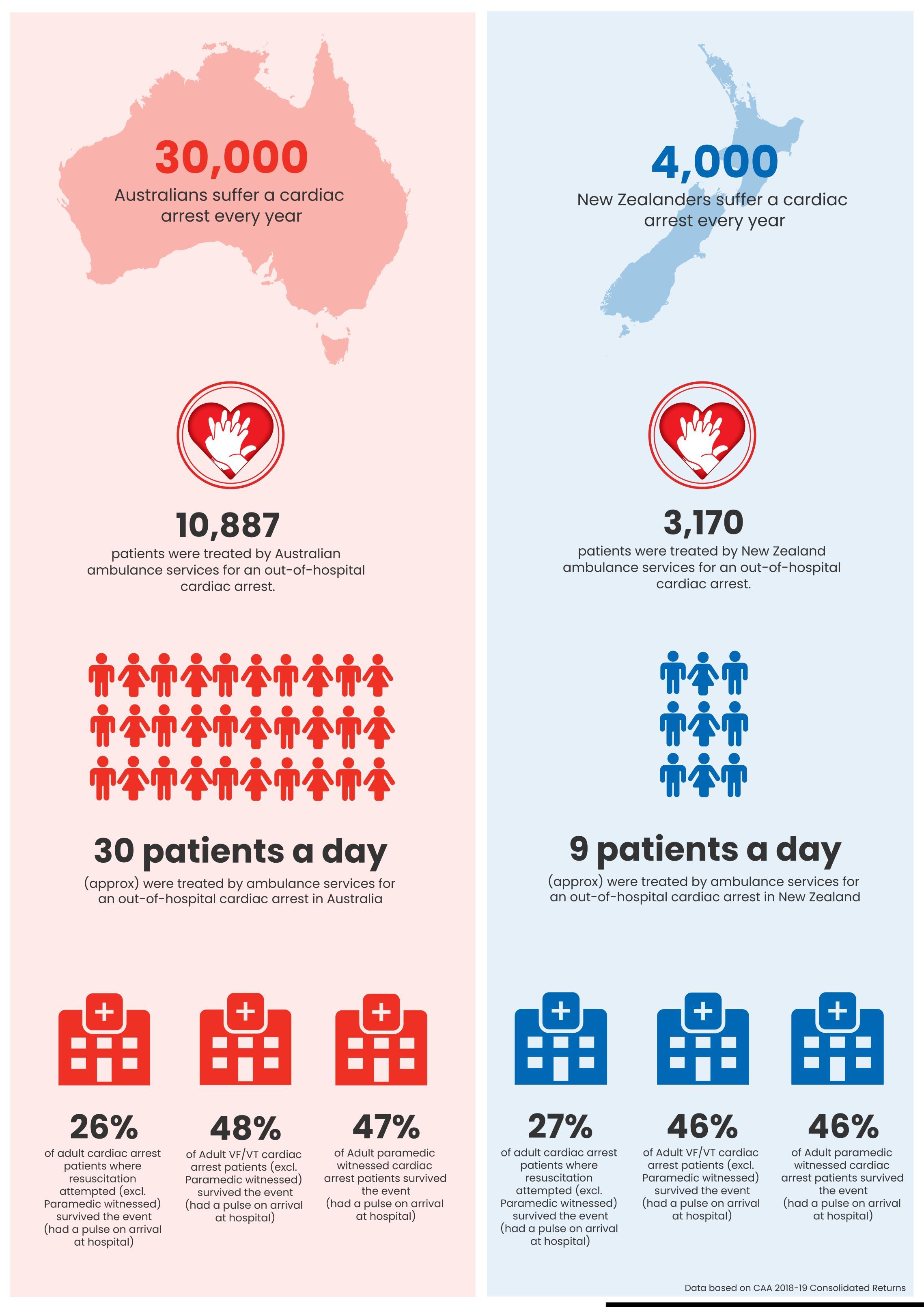
Out of Hospital Cardiac Arrest remains a considerable public health issue, with almost 30,000 Australians and 4,000 New Zealanders suffering an out of hospital cardiac arrest (OHCA) every year.
Sadly survival rates from OHCA remain low with research showing a vast variation among global survival results, varying from 6% to just over 50%.
CAA and its members are committed to ongoing improvement and research in OHCA space and through our work with the Global Resuscitation Alliance (GRA) we are starting to see improved results.
This report presents a summary of the 2019 survey, marking progress of Australian and New Zealand ambulance services against the GRA 10 Steps program.
The report includes a selection of case studies from CAA members presenting their work on 10 steps and how services adapted and improved their practices with a clear focus on OHCA by applying guidance from the GRA 10 steps program.
Across the CAA we now have a selected group of Resuscitation Academy trained trainers who work with the us to continue to share the GRA teachings across Australasia.
We are excited to see continued growth and improvement in OHCS across our member services in coming years including progressing work on mandatory CPR in schools on federal and state levels.
Global Resuscitation Alliance
The emergency medical services (EMS) within Seattle/King County are regarded one of the best providers of prehospital care in the world. Seattle/King County EMS have studied out-of-hospital cardiac arrest (OHCA) statistics within their region for more than 40 years, allowing it to have one of the highest rates of survival to hospital discharge rates for OHCA patients.
In 2008, Seattle/King EMS system developed the ‘Resuscitation Academy’ (RA) to enable sharing of best practices from their system with other communities (whether national or international) through lectures, demonstrations, hands-on sessions and workshops. Its aim was for communities to learn, adapt and implement communitybased, best practices for resuscitation of OHCA patients.
The attendees of the International Utstein Conference in June 2015 (Stavenger, Norway) endorsed a Global Resuscitation Alliance to progress the RA strategy of measurement and quality improvement for OHCA on a global scale. The Report ‘Improving Survival from Out- of-Hospital Cardiac Arrest: A Call to Establish a Global Resuscitation Alliance (GRA)’, following on from that meeting, was released in March 2016. It outlined goals aimed at achieving improvements in survival from out-of-hospital cardiac arrest (OHCA), modelled on the successful RA model.
The RA model puts forward the following 10 key steps which are considered best practice for improving OHCA survival. However, it should also be considered that not all steps will be as easy to implement and have different cost and impacts on survival.
Australasian GRA Secretariat
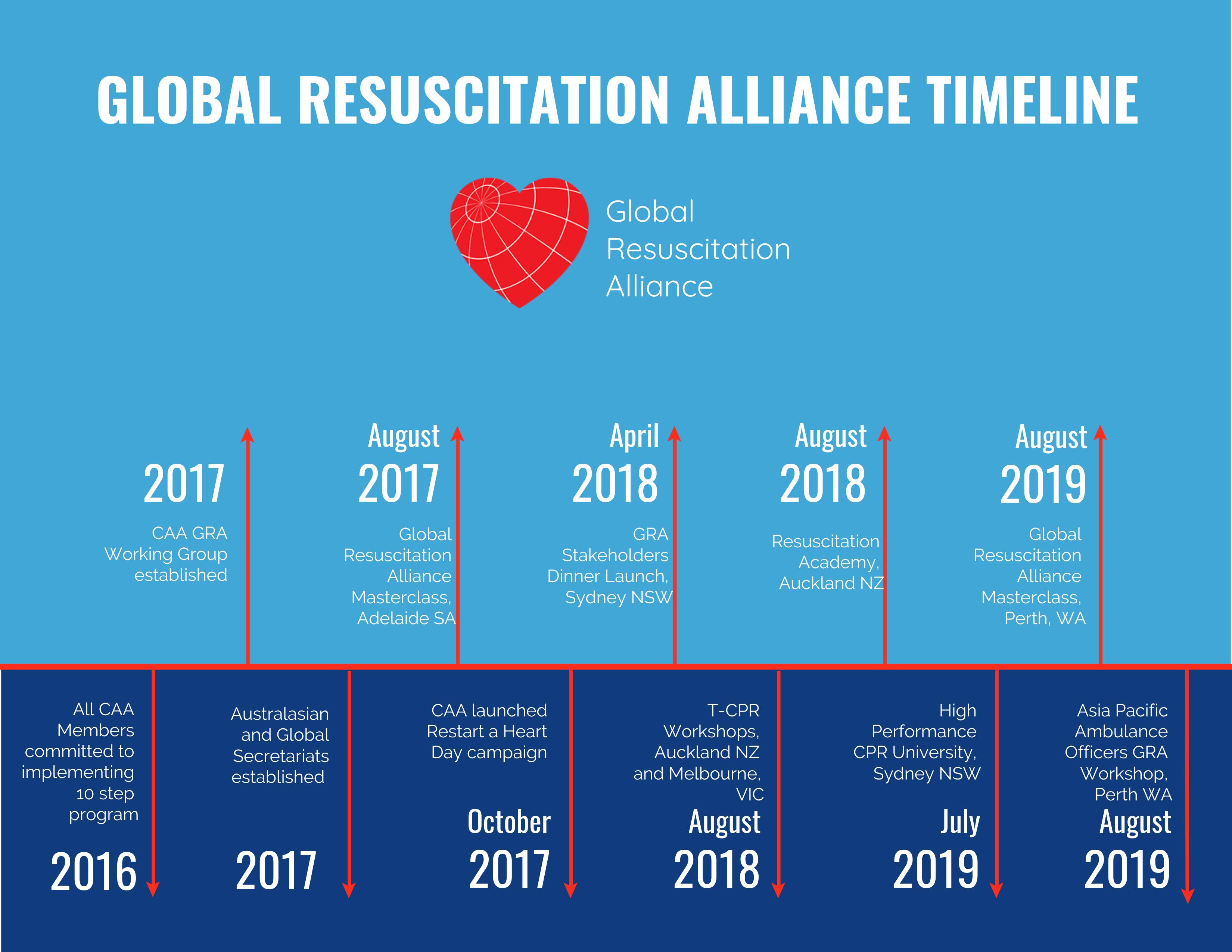
In October 2015, the Council of Ambulance Authorities (CAA) held a Resuscitation Masterclass in Melbourne which was attended by all 8 Australian and 2 New Zealand (NZ) ambulance services, which are all members of the Council of Ambulance Authorities (CAA). The following ambulance services are CAA members: Ambulance Victoria (AV), SA Ambulance Service (SAAS), St John Ambulance WA (St John WA), St John Ambulance NT (St John NT), Queensland Ambulance Service (QAS), NSW Ambulance, ACT Ambulance Service (ACTAS), Ambulance Tasmania (AT), St John New Zealand (St John NZ) and Wellington Free Ambulance.
At this meeting, ambulance services provided an update on what strategies were currently underway in their jurisdiction to further best practice in treating OHCA patients and improving OHCA survival. That meeting represented the start of an Australasian GRA, which included all 10 CAA members. It was a forum where information was freely shared, where strengths and weaknesses of each system which impact on OHCA survival were discussed.
By 2016 all Australian and New Zealand services have committed to adopting and actively working towards GRA 10 steps and in 2017, 2018 and 2019 GRA masterclasses were held to provide support and training to members services.
In 2017 a formal GRA Australasia Secretariat was established which sits with the CAA.
Australasian 2019 GRA Survey
The CAA to ran a survey with intention of capturing the overview of progress across Australian and New Zealand services against the GRA 10 steps.
The survey included questions addressing the ten recommended programmatic steps to improve OHCA survival: 1) cardiac arrest registry, 2) telephone CPR, 3) high performance CPR by EMS, 4) rapid dispatch, 5) measurement of resuscitation by EMS, 6) automatic external defibrillator (AED) program for first responders, 7) smart technologies for CPR and AED, 8) mandatory CPR and AED training, 9) accountability, and 10) culture of excellence.
Full survey questioners are provided at the end of the report.
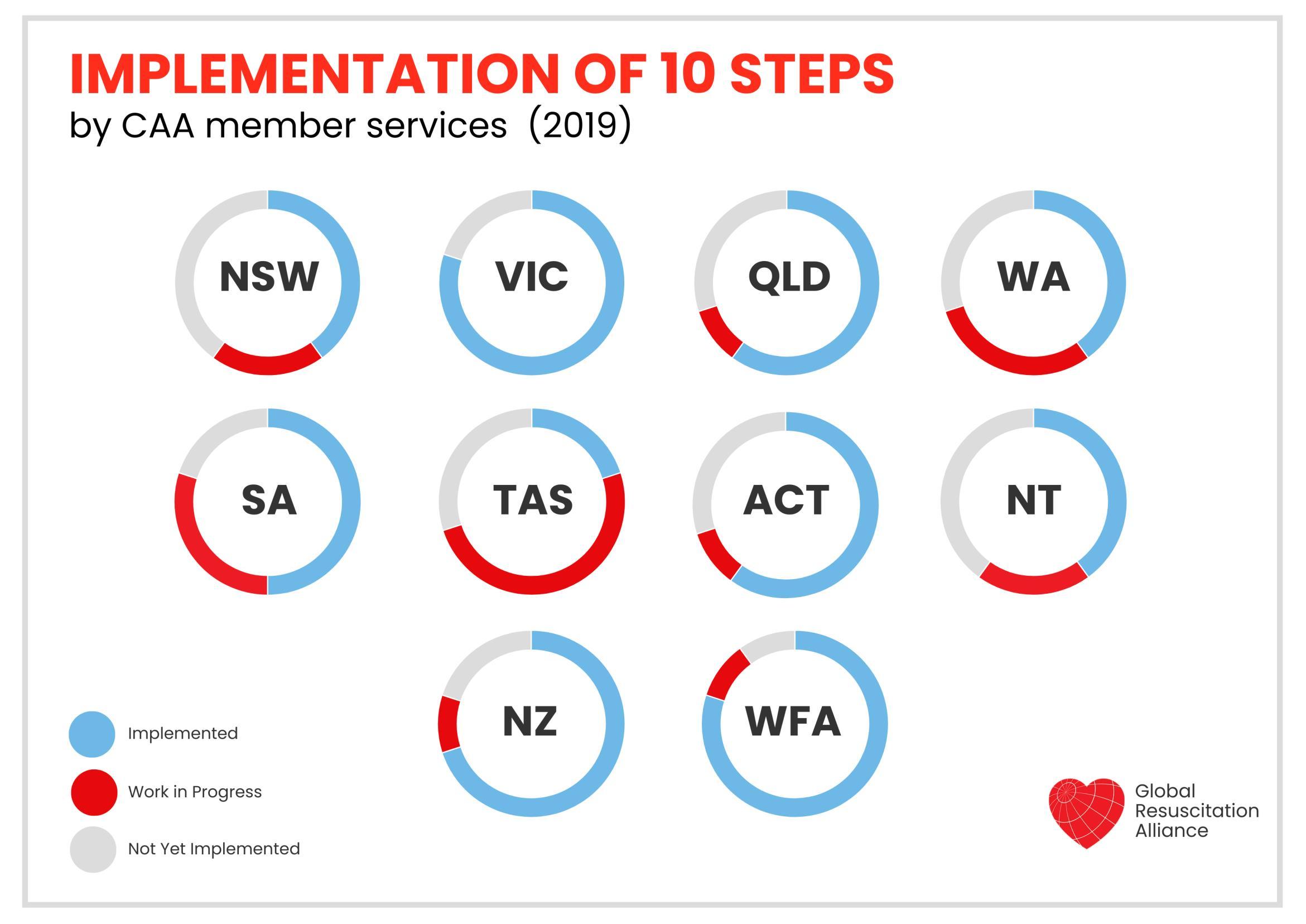
Results from 2019 survey show great progress from across all Australian and New Zealand services against the 10 GRA Steps.
We can see that all CAA member services have a minimum 50% achievement rate against the 10 steps, all have either fully implemented or are ‘working in progress against a minimum of 5 our of 10 steps. The furthest along is Ambulance Victoria with 8/10 implemented steps, closely followed by Wellington Free Ambulance with 7/10 implemented and additional 2/10 ‘work in progress’ steps.
Overall results from 2019 survey
Australasia OHCA Results 2019 (cont.)
Above results are reported by the CAA on behalf of all Australian members services to the Report on Government Services and are collected as part of annual CAA Consolidated Returns (all members services).
The collection is based on Utstein template and for the current reporting periods excludes bystander CPR reporting. Results listed here might vary from services annual reports and OHCA reports due to different reporting systems.
Step 1 - Establish a cardiac arrest registry
A registry measures all aspects of the resuscitation care and can act as a benchmark for the entire EMS system. Data from every case should be collected to use as an internal measurement tool.
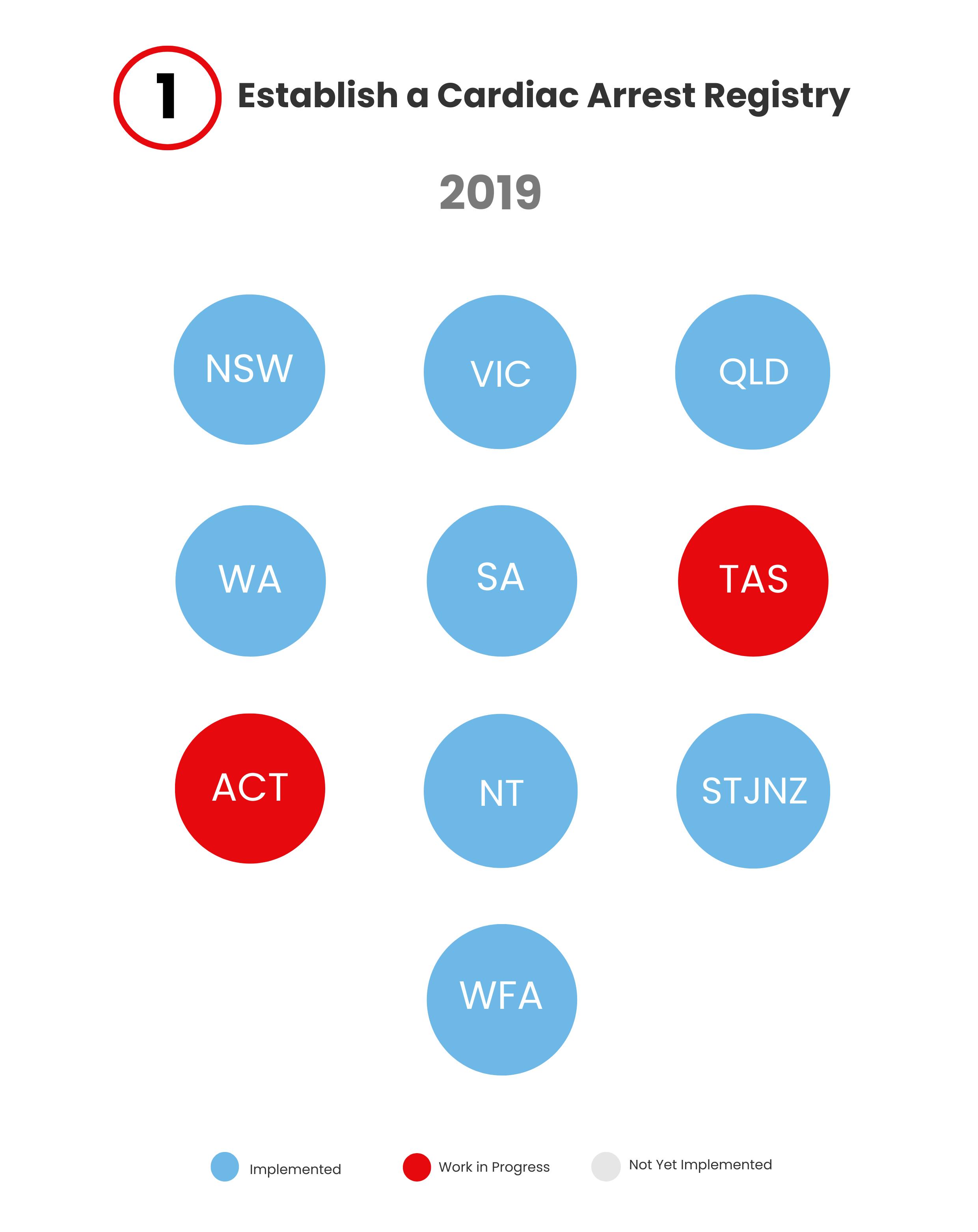
Results from 2019 survey show that all 10 CAA member services have an established cardiac arrest registry, with three services identifying theirs as work in progress. As an example St John NZ noted that theirs is a working progress due to the fact that they do not capture electronic defibrillator data as well as call handler data.
Case Study – SA Ambulance Service
The first step on the road to improving cardiac arrest survival is the establishment of a Cardiac Arrest Registry (CAR). With this in mind, SA Ambulance Service (SAAS) resolved to examine historical data collected on all out-ofhospital cardiac arrests (OHCA) attended in South Australia (SA).
Until recently, the information gathered as part of an ongoing key performance indicator and prospective observational study, had not been examined under the requirements of the updated Utstein Resuscitation Registry Template for OHCAs.
The review was directed by the 1st mantra for the 10 step program – Measure and Improve.
SAAS is the sole provider of emergency medical services (EMS) in South Australia, a state which covers some 983,482 square kilometres.
Problem to be solved/background
SAAS has collected data on OHCAs it has attended since 2002. Paramedics (EMS personnel) enter data on paper patient care records, which is later transferred to Excel spreadsheets, stored according to SA Health guidelines and sanctioned by the Human Research Ethics Committee (HREC).
Initially intended for quality assurance and various sector and government reporting, the data elements were based on early Utstein styles. The reports tell an important but small story, and only minimally encompass core elements of the 2014 updated Utstein Resuscitation Registry Templates for OHCA. Only survival to hospital handover information was available, no details on survival to discharge. Data was not routinely linked to other vital internal data such as the Medical Priority Dispatch System (MPDS).
Few published findings enabled SAAS to benchmark outcomes against other EMS services.
Description of project/program
SAAS-CAR: 4 steps
1. Review historical SAAS OHCA data collection process
2. Retrospectively review current data set
3. Establish external collaborations, partnerships and integrate SAAS-CAR within SAAS
4. Ensure business continuity and future planning
Step 1 - Establish a cardiac arrest registry (cont.)
Results
The review of the historical OHCA data collection process incorporated significant improvements for prospectively collecting data. We updated our patient care records to incorporate the core Utstein data elements and linked them to the computer aid- ed dispatch system (SACAD) and hospital discharge records. We can now determine if patients were discharged alive or if they died in hospital. A basic data dictionary was also developed and data stored on a secured server.
The data set for 2002-2009 was discarded due fragmentation and inconsistent quality. Data from June 2009 to June 2016 – 12,644 OHCAs – was retained and now forms the basis for measurement and improvement. A continuing collaboration with the Australian Resuscitation Consortium (Aus-ROC) and focus on improving OHCA survival has helped guide our progress.
SAAS-CAR is firmly integrated into our clinical performance and improvement processes and is expected to not only measure, but better our survival rates.
Challenges
We picked the low-hanging fruit but it wasn’t always within easy reach.
Business continuity and future planning has been difficult in the context of high de- mand for services, where patient care is foremost. However, due to the importance of the registry, SAAS is determined to maintain it and use the data internally and externally to promote survival from OHCA.
A research fellow will work with us to continue the process.
Additional plans
We have measured and improved our registry but we still have a way to go. We plan to publish an annual report, develop a steering committee and obtain funding.
Step 1 - Establish a cardiac arrest registry (cont.)
Step 2 – Provide Telephone-CPR Training
Telephone dispatchers are the first link in the chain of survival. Once dispatchers understand how vital they are and see concrete evidence of their success, they become staunch advocates of T-CPR.
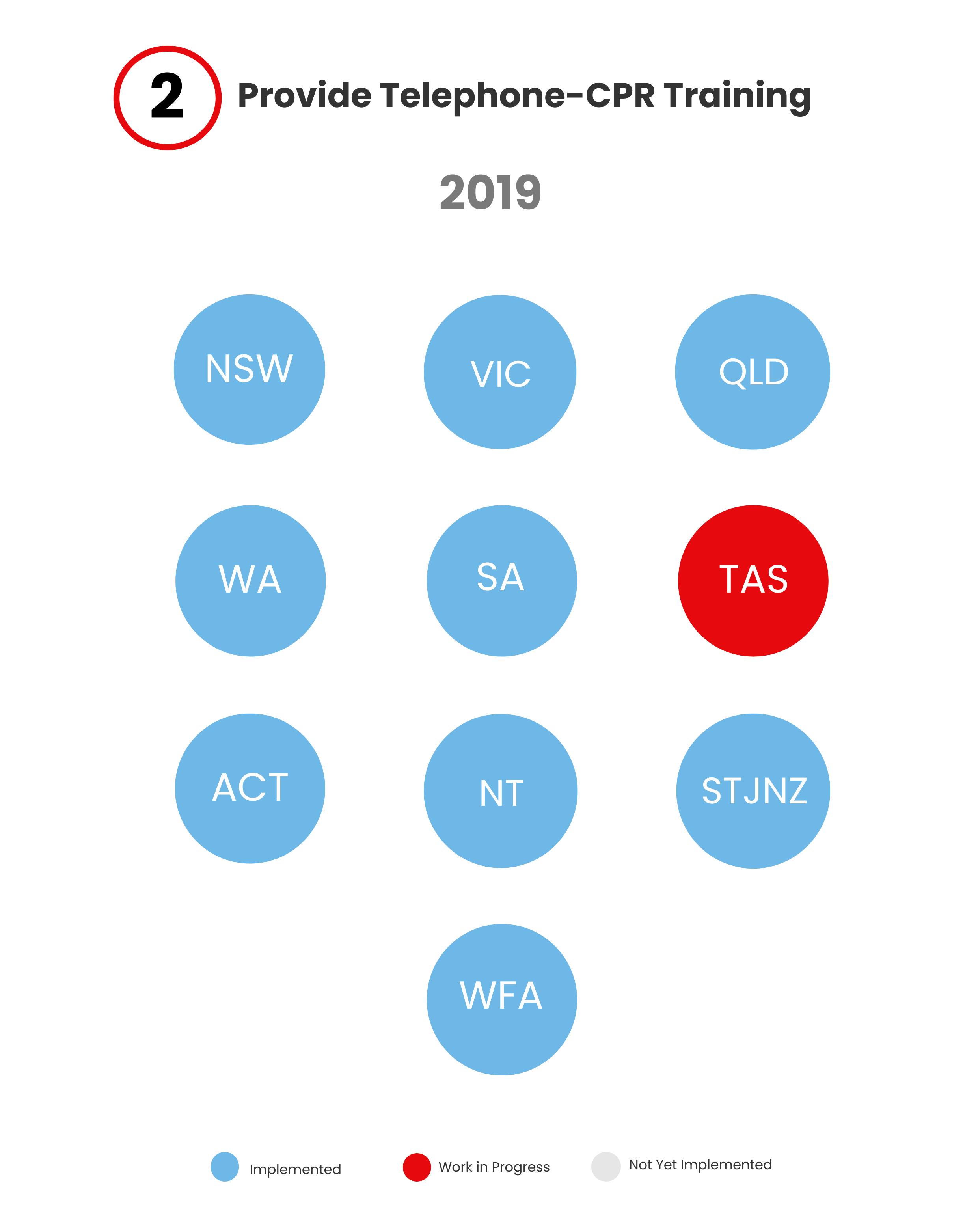
Results from the survey show 8 services have telephone-CPR provided by call takers/ dispatchers, with 2 services noting this step is ‘work in progress’. In majority of services (90%) T-CPR is done internally, Ambulance Victoria is the only agency that uses an external company.
Aside from ACT Ambulance Service, who use an ACTAS Clinical Dispatch Guidelines, all other services (9) use ProQA software.
T-CPR training varies from 4 services providing it annually, 3 services every 6 months and 3 services who do not have a set time frame. All services have some sort of hand on CPR training for those providing T-CPR, with 6 services requiring annual training and 4 where T-CPR providers have hands on training when they first join the service.
Case Study – ACT Ambulance Service
In 2015, Australian Capital Territory Ambulance Service (ACTAS) commenced a program to improve the recognition of potential cardiac arrests over the phone and reduce the time to telephone-CPR (T-CPR). The program has increased accuracy and decreased time to recognition.
Problem to be solved
It is challenging to rapidly and accurately identify out-of-hospital cardiac arrest over the phone. Increasing the rate of recognition and reducing the time to recognition may improve survival.
Description of project
Prior to 2015, ACTAS call-takers would ask callers if the patient was “conscious” and “breathing” to determine cardiac arrest. Analysis of historical calls indicated that callers responded inconsistently to the word “conscious”, particularly if the patient had their eyes open. Callers would also state the patient was breathing if they were making any kind of respiratory effort, including agonal respiration. It was apparent that this was a stressful situation for the caller and the language used by the call-takers was affecting the caller’s understanding of the questions.
In 2015, ACTAS changed the questions asked at the beginning of every 000 call. The aim was to ask simple, unambiguous questions that could be clearly answered as “yes” or “no” even by those under severe stress.
The new questions were:
“Is the patient awake and talking?”
“Is the patient breathing normally?”
If the answers to these questions were both “no” or uncertain, then all call takers would commence instruction in CPR. This change was preceded by extensive face-to- face training for call-takers.
Step 2 – Provide Telephone-CPR Training (cont.)
Once implemented, every cardiac arrest patient attended by ACTAS paramedics was identified from the electronic health record. Additionally, every call where T-CPR was initiated was identified and reviewed. Feedback was provided to call-takers following every incident in which T-CPR was provided. Call-takers received positive feedback and were encourage to continue to provide T-CPR, even if the patient was not in cardiac arrest on paramedic arrival. The continual message was that T-CPR is good and cannot harm the patient. “Better to perform CPR on someone who doesn’t need it, then not perform it on someone who does.”
“Is the patient conscious?” → “Is the patient awake and talking?”
“Is the patient breathing?” → “Is the patient breathing normally?”
Results
In the first 13 months of implementation, 100% of patients in cardiac arrest were identified over the phone. However, 61% of patients thought to be in cardiac arrest were not actually when paramedics arrived. The most common presentations for patients not in cardiac arrest were seizures or drug overdose. No patient harm was reported for those patients receiving CPR incorrectly.
Following this another study was conducted in 2017 to determine if this improvement was sustained. On this second audit, ACTAS call-takers correctly identified 98% of cardiac arrest patients. The missed cases were attributed to the call taker not asking the 2 questions or varying the wording of the questions. In 2017, 75% of TCPR cases were not in cardiac arrest on paramedic arrival. Again, no patient harm was reported.
From the time the call is answered to initiation of T-CPR was less than 60 seconds on 50% of cases. There were no calls where it took longer than 2 minutes from call answer to initiate T-CPR.
Challenges
There were several challenges we faced during this project. Changing the questioning of the call takers to stop using word “conscious” took some time. Additionally, the importance of the word “normally” in the breathing question has been emphasised. All call takers continue to receive feedback on every cardiac arrest case, which is demanding on the QA staff but found to be critical in maintaining standards. Despite this, the number of false positives remains high and we are continuing to investigate ways of reducing this, without reducing accuracy.
Additional Plans
The key challenge moving forward is to maintain call-taker support in the face of false positives. We plan on increasing feedback, but this will place increasing demands on QA staff so we are reviewing feedback mechanisms to improve quality and efficiency. We also need to consider additional support for non-English speaking persons and the hearing impaired to ensure consistency of service across the community.
Step 3 – Begin High-Performance EMS CPR
The quality of CPR is an equally important predictor of survival as the time it takes to begin CPR following a collapse. Ongoing Quality Improvement (QI) should provide performance feedback.
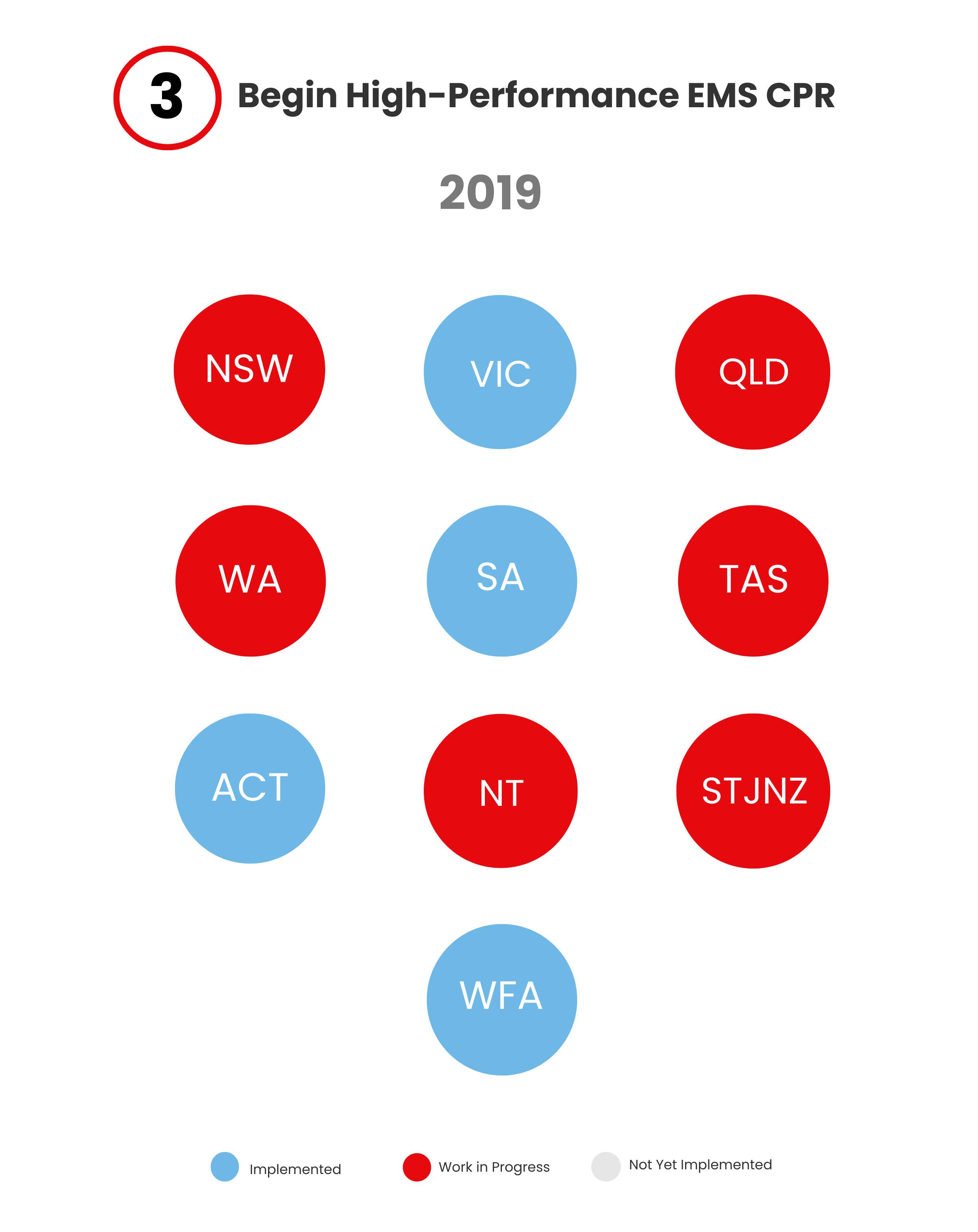
In 2019 the survey enquired whether services have high performance CPR, which all of the 10 services have in place, with stage of progress ranging from 30 – 100%. 3 services have implemented high performance CPR and 7 services are currently at ‘work in progress’ stage.
All services, aside from NSW, have rolled out high performance CPR training as a face-to-face training session. Most services 80% have plans for ongoing training. 7 services are measuring the impact of HP-CPR.
Elements of High-performance CPR
• Correct hand position
• Compression rate of 100-120 beats per minute
• Depth of compression of 2 inches (5-6 cm)
• Full recoil on the upstroke
• 50:50 duty cycles
• Ventilations of one second each
• Minimal interruptions of CPR (no pause to exceed 10 seconds)
• Intubation and IV start without pausing chest compressions
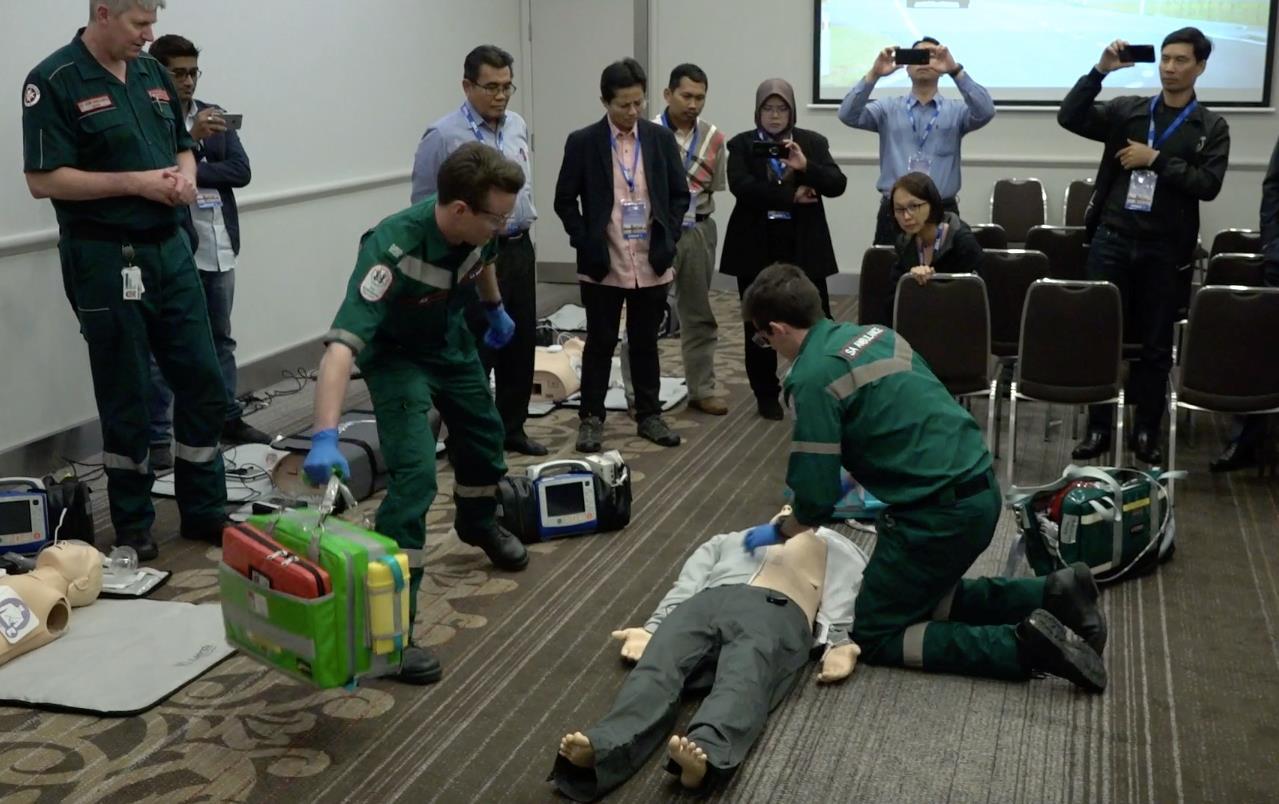
Example of High-Performance CPR Master class conducted by CAA , August 2018 Perth, Western Australia. https://www.dropbox.com/s/d6cxm39npo0jl5r/1.%20High%20Performance%20CPR%20%20CAA%20GRA%20Masterclass%2C%20Perth%20August%202019.mp4?dl=0
Step 4 –
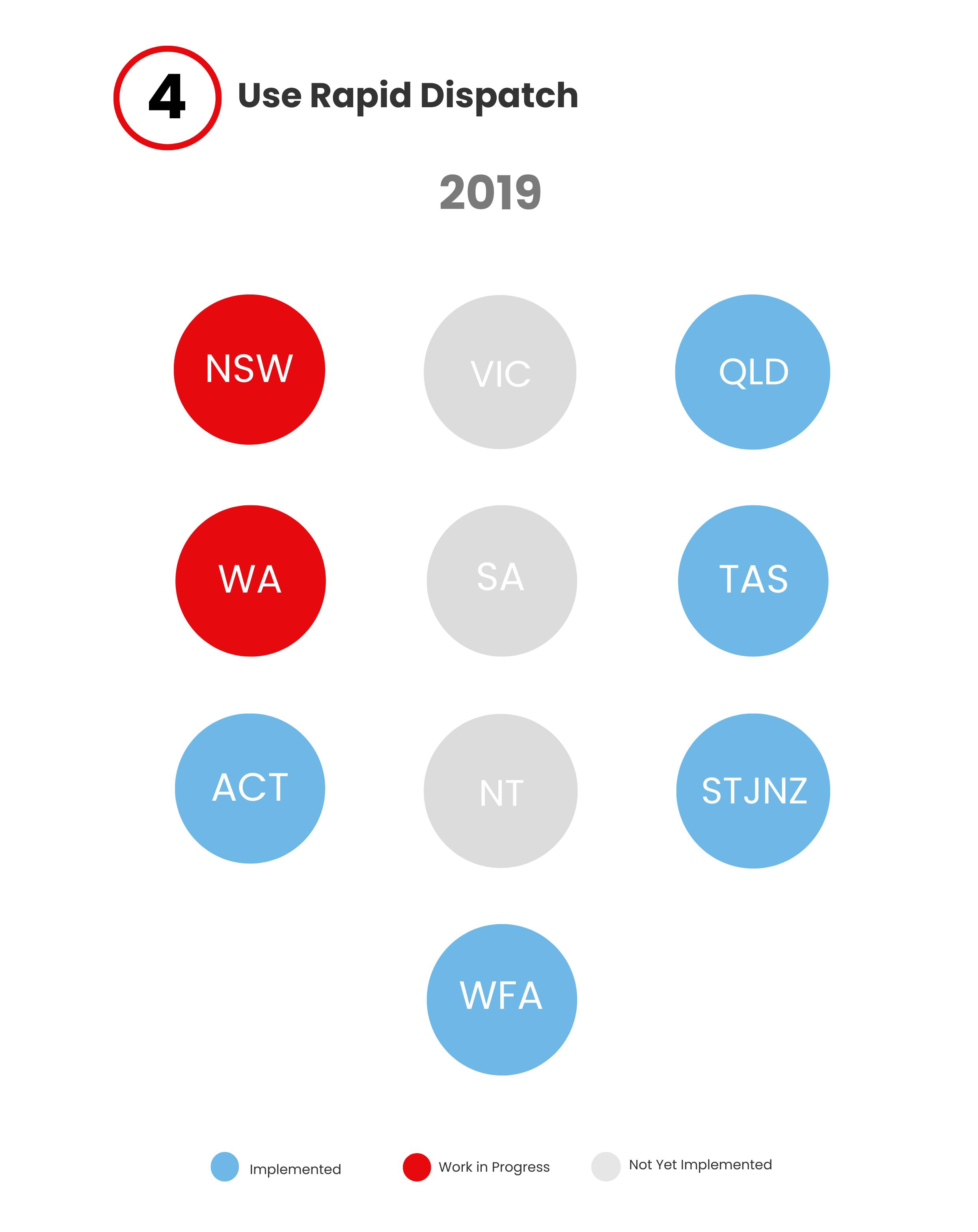
Rapid dispatch can add 5-10 percent to a community’s survival rate without additional staffing or resources. Speed is of the essence in a life or death situation, and in those cases protocols must be short circuited.
Results from 2019 survey show that 70% of services have standardised systems in place to for Rapid Dispatch. 5 out of 10 services have some sort of timeline set up for training in rapid dispatch.
Step 5 – Use Defibrillator Recording
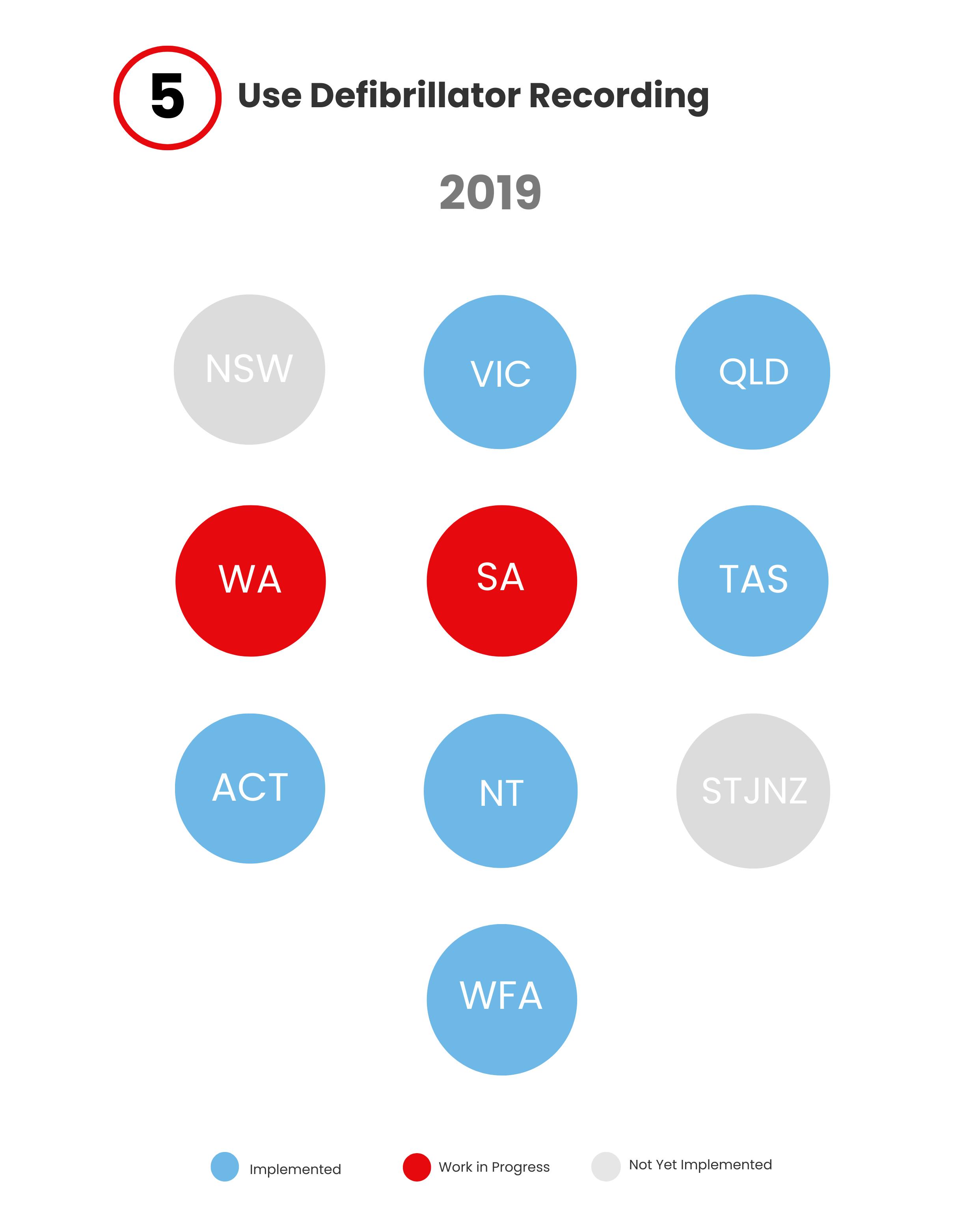
A digital recording includes second-by-second information about cardiac rhythm and CPR, synchronised with a digital voice recording. This creates a vivid image where sequence and timing of events become clear and reasons for delays can be deduced.
Defibrillator rhythm records for OHCA patients are routinely reviewed by six of ten ambulance services, with the exception of NSW Ambulance, St John NZ, SAAS who do not measure performance and ACT where this is currently a ’work in progress’.
Majority of services who do measure do so by feedback from audible monitor and AED performance data.
Step 6 – AED Program for First Responders
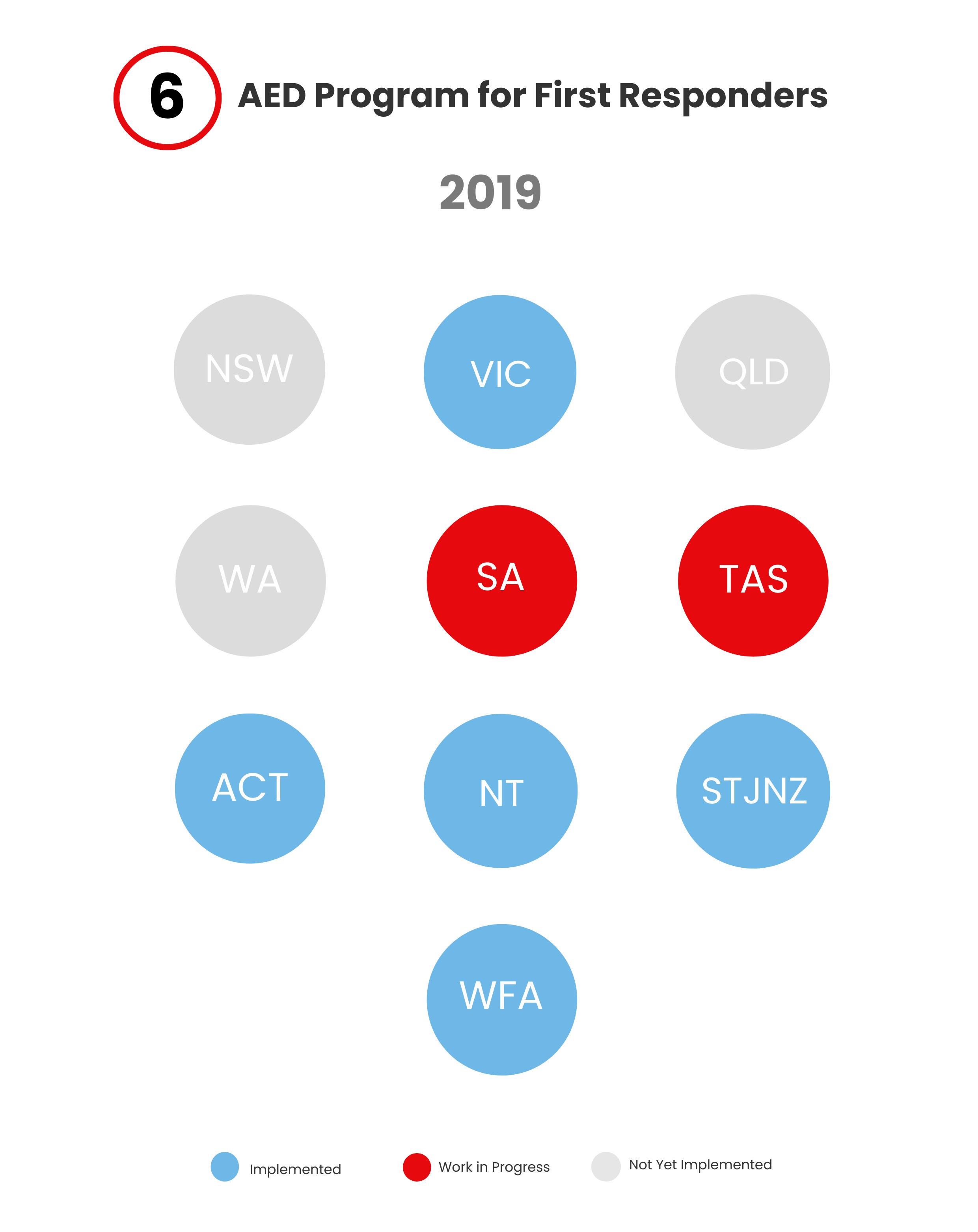
In communities embracing defibrillation, increased CPR skills and AED training for police, public safety officers or other first-responders, there have been dramatic improvements in survival rates from cardiac arrest.
AED programs for first responders are in place in 7 out of 10 services. Majority of these (5) are agreements with Fire Services and 1 (NT) is an agreement with Police.
Case Study – Ambulance Victoria
Reduce response times and time to defibrillation in Melbourne
Challenge: An audit in 1995 of ambulance case records in Melbourne (capital city of Victoria, Australia) showed mean ambulance response to out-of-hospital cardiac arrest (OHCA) patients was 9.4 minutes. More than 50% of patients were defibrillated >10 minutes after onset of ventricular fibrillation (VF).
To reduce response times and time to defibrillation, the Emergency Medical Response (EMR) pilot program was established in 1998. This involved simultaneous dispatch of Ambulance Victoria (AV) paramedics and fire-fighters (trained in cardiopulmonary resuscitation and equipped with automatic external defibrillators) to suspected OHCA in a pilot area of Melbourne. At 12 months, the mean EMR response time was reduced by 1.6 minutes (95% CI, 1.2–2.0), from 7.5 minutes in a control area with ambulance dispatch only to 5.9 minutes in the EMR pilot area (171 km2). Survival was higher for patients in VF on arrival of the EMR than in the control area (29% vs 18%). Based on the outcomes of the pilot program, in 2000 the EMR program was expanded to include all 47 metropolitan Melbourne serviced by the Metropolitan Fire Brigade (MFB). At 12 months after the expansion, 90th percentile response time was reduced by >1 minute when fire-fighter response times to OHCA were included.
In 2008, AV proposed a trial to extend the EMR model into Country Fire Authority (CFA) areas. The pilot involved five volunteer brigades in outer metropolitan Melbourne. At 24 months, 90th percentile response time was reduced by more than four minutes to EMR eligible events in the CFA pilot area. A further five additional integrated CFA Brigades (with volunteer and career fire-fighters) were included in the program in 2011 At 12 months, the 90th percentile response time to OHCA patients in the expanded CFA pilot area was 12.2 minutes, compared to 14.0 minutes when considering AV response time only, p<0.001. Median time to first shock was reduced by 1 minute when CFA provided first shock compared to AV (10.5 vs 11.5 minutes). Survival of patients first defibrillated by CFA fire-fighters (43%) was double that of patients first defibrillated by AV (21%).
In 2015, in recognition of the success of the EMR program, the Victorian Government committed to expanding the EMR program to all integrated CFA brigades. We anticipate that further expansion of the EMR program in Victoria will further improve response time and increase OHCA survival.
Step 7 – Use Smart Technologies to Alert Bystanders
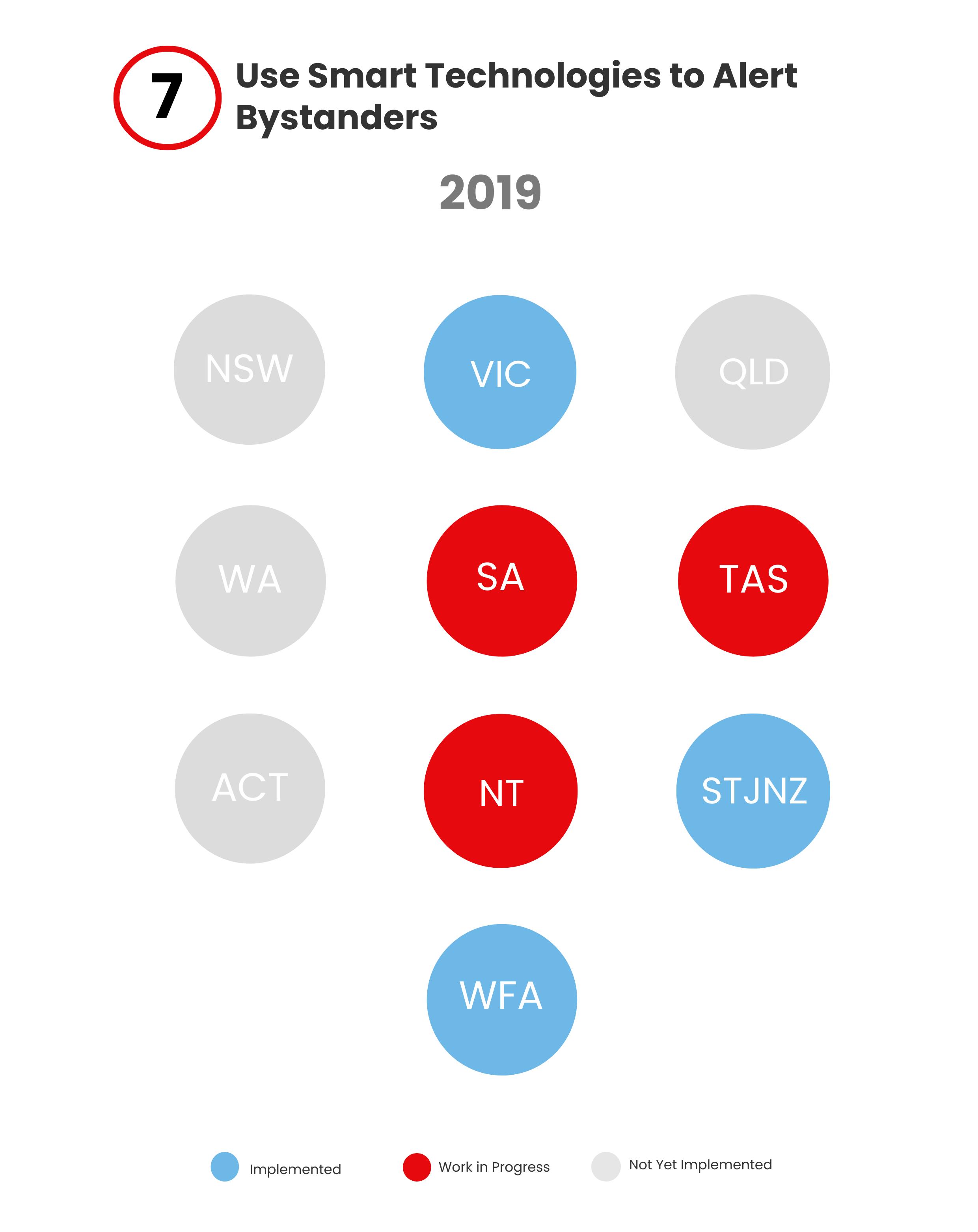
The past five years has seen introduction of numerous pilot programs using smart technology designed to alert volunteer responders to a nearby cardiac arrest and/or identify the location of the nearest AED.
6 out of 10 services are currently using a public notification system for alerting to cardiac arrest events. Ambulance Victoria, Wellington Free Ambulance and SAAS (currently being implemented) are using GoodSam, St John WA and Ambulance Tasmania have bespoke built systems.
Case Study – Ambulance Victoria
Alert and dispatch of community responders via the GoodSAM app
Cardiac arrest is often unexpected and for every minutes a patient doesn’t get CPR/defibrillation, their chances of survival fall by 10%. This is why AV introduced the GoodSAM (Smartphone Activated Medic) app on 28th January 2018. GoodSAM is a free global smartphone app that connects responders to patients in those first critical minutes of cardiac arrest while paramedics are on the way. GoodSAM is linked to the Triple Zero (000) communications centre, so as soon as an ambulance is dispatched, a GoodSAM alert will be sent in parallel.
Key media coverage saw an increase in number of individuals and businesses that registered their AED via the GoodSAM app, meaning more community members have access to an AED when needed. Through the implementation of GoodSAM, the AED registry grew and there are now over 1,000 Victorian AED’s registered with GoodSAM
GoodSAM eligible cases are based on dispatch events identified as the most commonly occurring OHCA events that include suspected OHCAs, apnoeic seizures and drownings. GoodSAM notifications, sent via alert message to a person’s smartphone, highlight the sophistication of this advanced emergency alerting technology. VACAR (Victorian Ambulance Cardiac Arrest Registry) will be pivotal in monitoring the impact of GoodSAM in Victoria on OHCA patient survival.
Establishing successful partnerships with five key community responder agencies let to an initial pool of trained responders in the Victorian community. The program was expanded to the general public on 4 July 2019 to include those holding first aid/CPR certification. Partner organisations include: St John Ambulance, Surf Life Saving Victoria, Country Fire Authority, Chevrah Hatzolah, Australian Volunteer Coast Guard and the Australian Health Practitioner Regulation Agency (AHPRA).
AV is now calling on all members of the Victorian community to join up to GoodSAM and save lives. As of November 2019, there were almost 10,000 registered GoodSAM responders.
How does GoodSAM work?
1. A Triple Zero (000) call triggers an alert to be sent to a GoodSAM responder.
2. The responder is told the location of the patient and the nearest available AED.
3. At the same time, the closest available ambulance is simultaneously sent to the patient, and in some parts of Victoria, the fire brigade is also dispatched.
4. Meanwhile, the GoodSAM responder can provide CPR and, if possible, make use of the nearest defibrillator.
Step 8 – CPR & AED Training in Schools
A population universally trained in CPR has the potential to double survival rates. Performance goals are to train 10% of high school students in CPR prior to graduation and 100% of public employees.
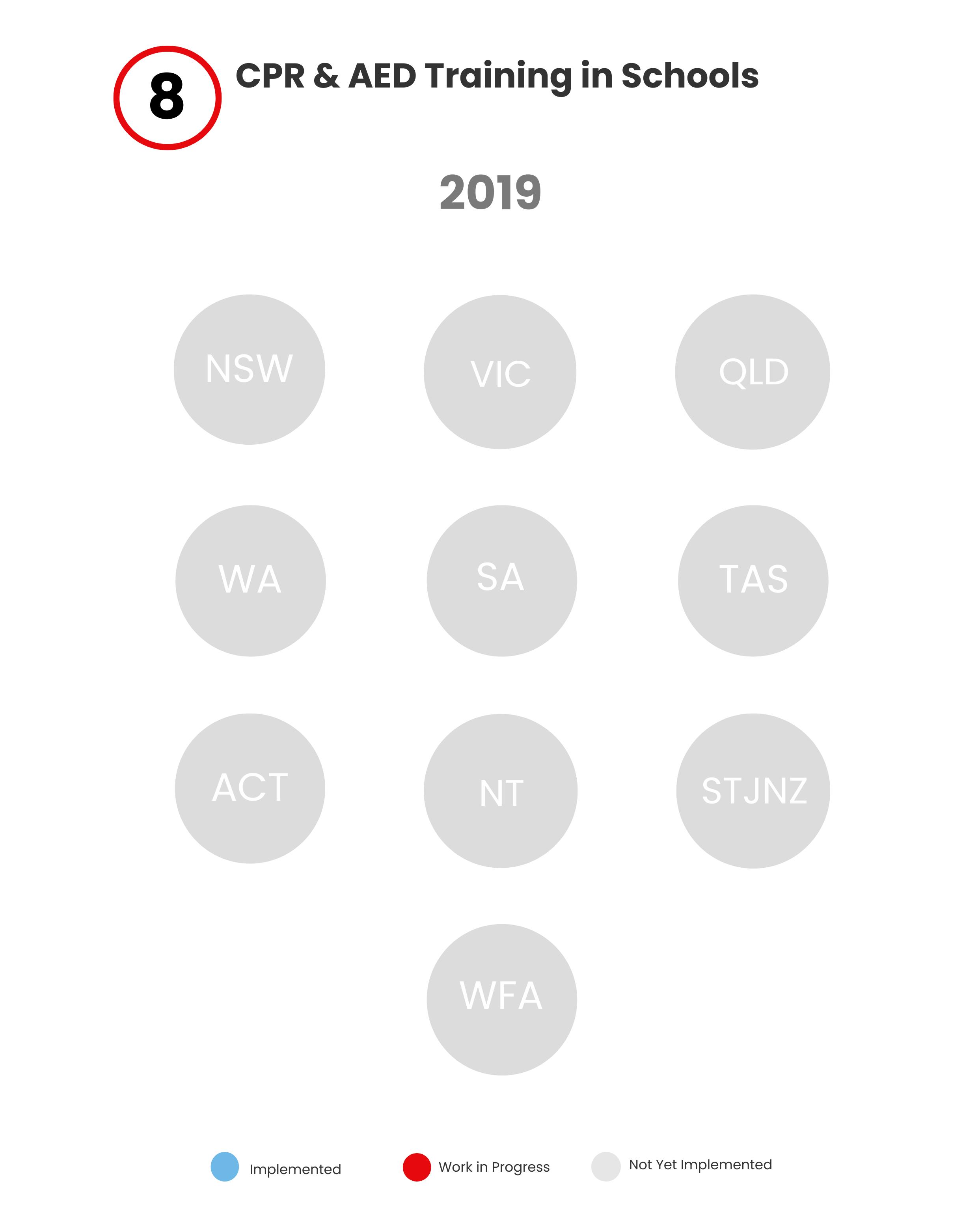
None of the services have mandatory training of CPR and AED in schools as this is very much a government decision. Majority of services (70%) provide training in schools and in some cases to the community. Question of supporting mandatory CRP training in schools has been raised in 6 services who are supportive of the proposal, others have not discussed the matter at this stage.
CAA Future plans
The CAA will commence work on mandatory CPR and AED training in schools in 2020/21. While some investigative work has been done to understand the current situation and challenges, the CAA has not yet formally started approaching the federal or state governments.
CAA will be looking to partner with other key organisation such as the Heart Association and the Australian Resuscitation Council in this space to progress this work together and will be looking to utilise the Restart a Heart Day campaign’s reach to share the message of mandatory school training.
An annual EMS performance report is the best way to declare accountability to the community. Sharing such important information including cardiac arrest data can be used to promote the organisation if results are positive.
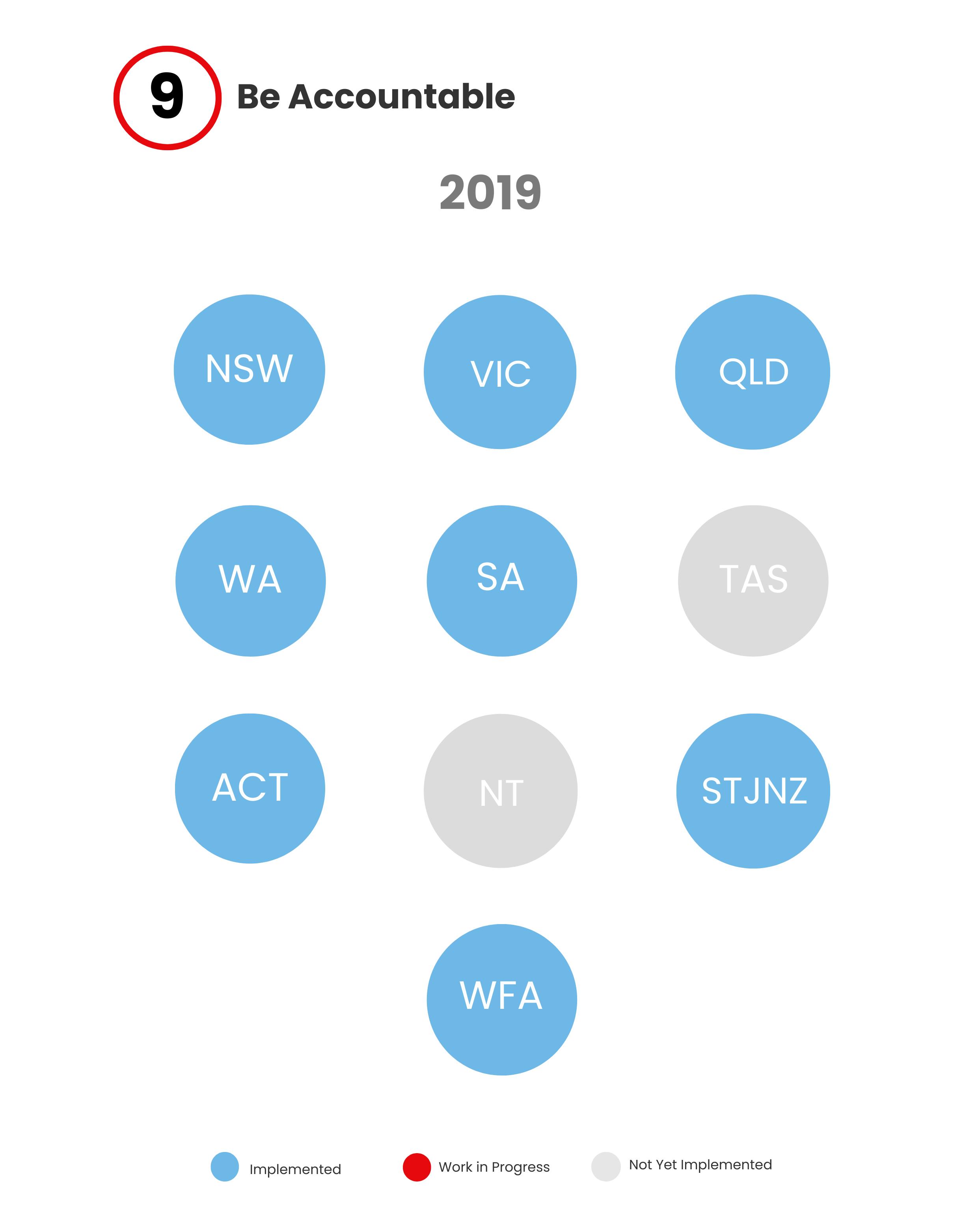
All Australian services have been providing cardiac arrest data to Report on Government Services for a number of years and 7 services out of 10 in addition provided annual reports on cardiac arrest data.
Case Study – St John NZ
The St John New Zealand ambulance service covers a population of just over 4 million people and attends greater than 4,000 cardiac arrests annually. In 2013 the St John New Zealand Out-of-Hospital Cardiac Arrest Registry was established giving St John the ability to collect data and ultimately report on outcomes from out-of-hospital cardiac arrest for the first time.
Challenge
The difficulty in reporting on technical data was to produce a document that explained to experts and lay people, the clinical outcomes from cardiac arrest. The report also had to be appealing and generate interest from our own staff, key stakeholders and the public. Moreover, as the intent was to engender accountability St John needed to compare our outcomes against other similar services.
Intervention
The challenge of making the report appealing and readable to a wide audience was met through incorporation of infographics and pictures to bring a reader’s focus on key results. The requirement for accountability was met through engagement with international collaborators seeking permission to use results from their services alongside the results from St John. In addition, comparisons were made to results already in the public domain. This side-by-side accountability, although not perfectly aligned in some instances, gives direction and impetus for making improvements.
Results
In 2014 St John produced its first Out-of-Hospital Cardiac Arrest Registry Annual Report. Alongside the report posters and media releases were generated which highlighted what St John were doing well and where improvements could be made. This was well received by our staff, key stake- holders and public alike. More recently other services are also adopting the use of infographics in their report.
Additional plans
Moving forward the focus is on strengthening communications through consistent publications utilizing further improved infographics and incorporation of the 10-Steps within annual reports to increase goal-directed accountability.
The St John Out-of-Hospital Cardiac Arrest Registry Annual Reports are publicly available through this link: http://www.stjohn.org.nz/News Info/Our-Performance/Cardiac-Arrest-Annual-Report/
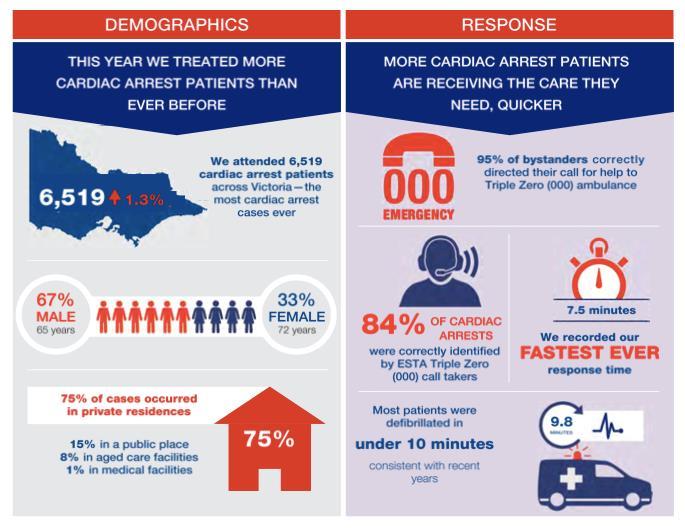
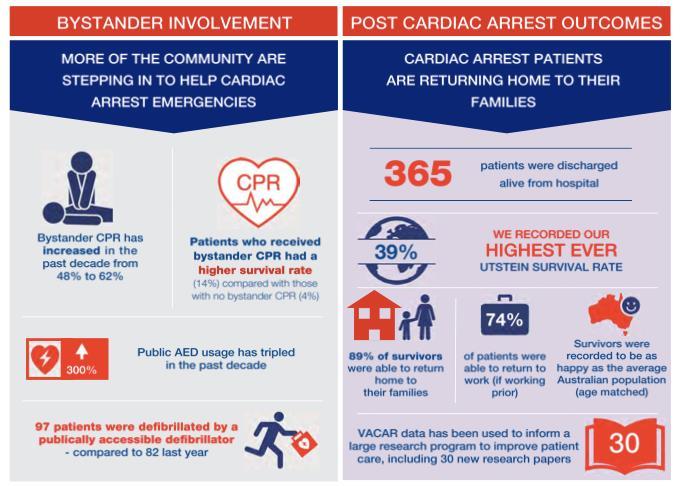
AV Results from this report might vary compared to CAA data due to different reporting systems.
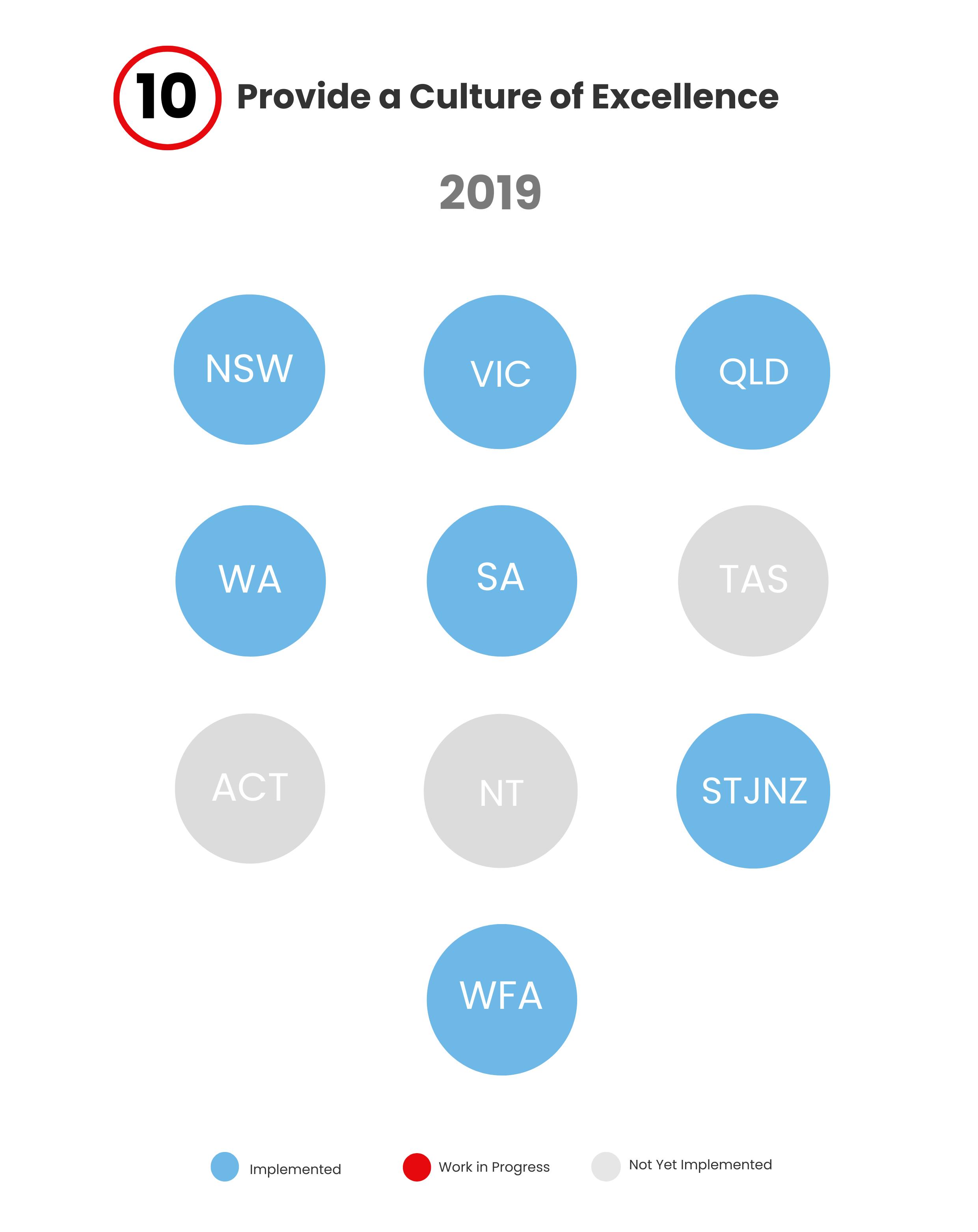
Step 10 – Provide a Culture of Excellence
Creating an nurturing a culture of excellence is perhaps the most difficult step. It involves an implicit awareness perceived by most or all members of the organisation that high expectations and high performance define the standard of care.
Half of services are conducting research to improve survival from OHCA. In addition to this 7 services partake in external research that works to improve survival from OHCA. 90% of services are using published research to inform practice in relations to survival from OHCA.
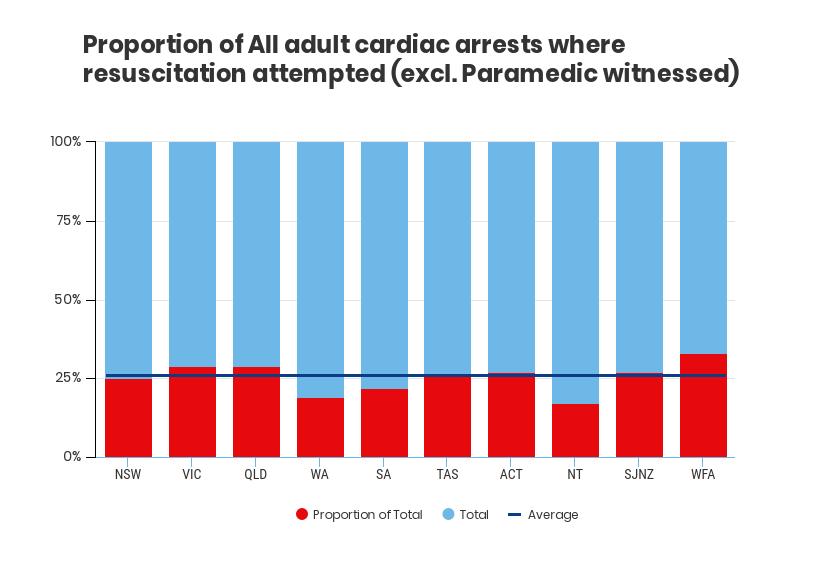
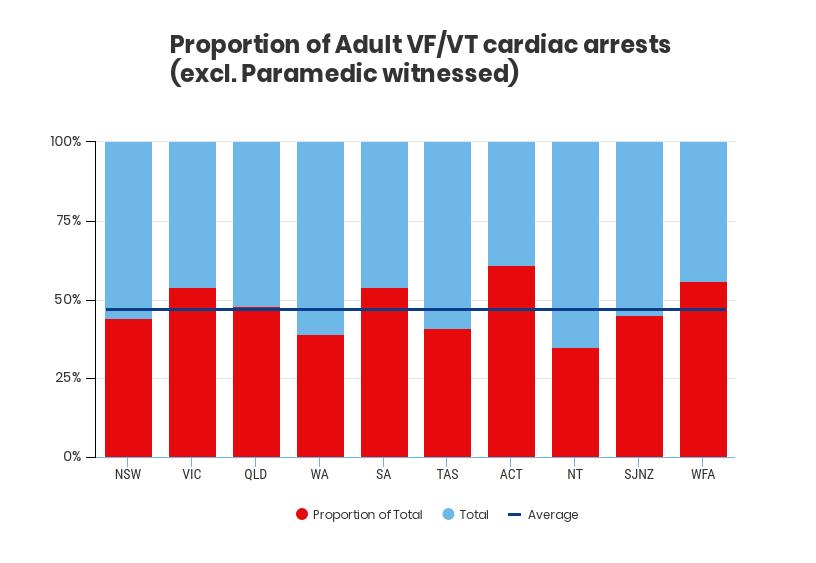
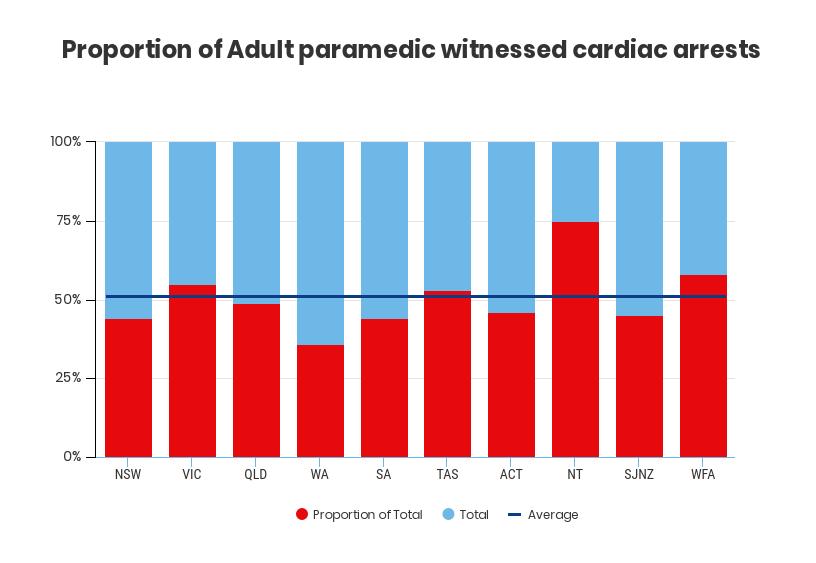
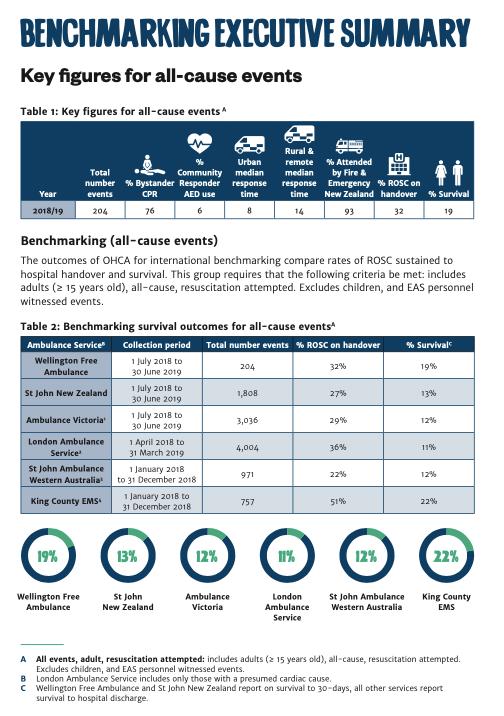
Wellington Free Ambulance benchmarking research from their latest OHCA Research Summary Report 2018-19
WFA Results from this report might vary compared to CAA data due to different reporting systems.
2019 Survey Questionnaire
Step 1: Establish a cardiac arrest registry
• Do you have a Cardiac Arrest Registry?
• If currently being implemented, what stage is it at?
• If being considered, what are the barriers?
• Did this require additional funding?
• If Yes, please specify
Step 2: Begin Telephone-CPR with ongoing training and QI
• Do you have standardised T-CPR?
• What stage is it at?
• What are the barriers?
• Does your organisation use PROQA software?
• If no, which system/software is used?
• Who provides the T-CPR?
• How often is training conducted in T-CPR?
• Do those instructing T-CPR do practical training i.e. hands on CPR?
• Did this require additional funding?
• If Yes, please specify
Step 3: Begin high-performance CPR with ongoing training and QI
• Do you have HP-CPR?
• What stage is it at?
• What are the barriers?
• Are all operational* (*registered paramedics) staff trained in HP-CPR?
• How was HP-CPR rolled out?
• How is this being achieved?
• How many days?
• Is there a plan for ongoing training?
• If ongoing training is planned, how often will it take place?
• How are you planning ongoing training and QI?
• Are you measuring the impact of HP-CPR?
• Have you incorporated Mechanical CPR into HPCPR?
• If Yes, what device are you using?
• If Considering, what device are you considering?
• If in the process, what device are you considering?
• Did this require additional funding? (e.g NHMRC grant, Foundation grant, Scholarship, Sponsorship)
• Please specify where funding came by
Step 4: Begin rapid dispatch - 'NO, NO, GO'
• Do you have standardised Rapid Dispatch?
• What stage is it at?
• What are the barriers?
• Who provides the Rapid Dispatch?
• How often is training conducted in Rapid Dispatch?
• Did this require additional funding?
• Please specify where funding came by
Step 5: Measure professional resuscitation using the defibrillator
• Do you measure professional resuscitation?
• If Yes, how is this done?
• If currently being implemented, what stage is it at?
• If being considered, what are the barriers?
• Did this require additional funding?
• Please specify where funding came by
Step 6: Begin an AED program for first responders: e.g. firefighters, police officers & other emergency personnel.
• Do you have an AED program
• If currently being implemented, what stage is it at?
• If being considered, what are the barriers?
• Did this require additional funding?
• Please specify where funding came by
Step 7: Use smart technologies to extend CPR and public access defibrillation programs to notify volunteer bystanders who can respond to a nearby arrest to provide early CPR and defibrillation
• Do you have a public notification process in place for cardiac arrest?
• Is this connected through the service dispatch system?
• If currently being implemented, what stage is it at?
• If being considered, what are the barriers?
• Who receives notification? * Registered paramedics, RN and doctors employed by the organisation
• Do you follow up with first responders
• Do you offer psychological support?
• If follow up and psychological support is offered, what timeframe is this done in?
• Is the AED program being measured?
• If currently being implemented, what stage is it at?
• If being considered, what are the barriers?
• Did this require additional funding?
• Please specify where funding came by
2019 Survey Questioner (cont.)
Step 8: Make CPR and AED training mandatory in schools and the community
• Do you have mandatory CPR and AED training in schools and the community?
• If currently being implemented, what stage is it at?
• If being considered, what are the barriers?
• Does your organisation support the introduction of mandatory training?
• Does you organisation offer training?
• If yes, is this training free or at a cost?
• If currently being implemented, what stage is it at?
• If being considered, what are the barriers?
• If you conduct training, do you capture how many people are trained annually?
• If yes, approx numbers trained
• If No, what has been implemented to encourage CPR and AED use?
• Did this require additional funding?
• Please specify where funding came by
Step 9: Work toward accountability
• Do you submit annual reports to the community
• If currently being implemented, what stage is it at?
• If being considered, what are the barriers?
• Did this require additional funding?
• Please specify where funding came by
Step 10: Work towards a Culture of Excellence
• Are you conducting research in relation to improving survival from OHCA
• If Yes, please provide details
• Is your organisation part of any external research in relation to improving survival from OHCA
• If Yes, please provide details
• Are you using published research to inform practice in relation to improving survival from OHCA?
• If yes, please provide details including title, author and date
• Have you published research?
• If yes, please provide details including title, author and date
• Do you think the work being done for Restart a Heart Day in association with the CAA and GRA is contributing to your implementation of the GRA 10 step programme?
• If yes, how?
• Are you implementing any other initiatives for the 10 steps, not already mentioned?