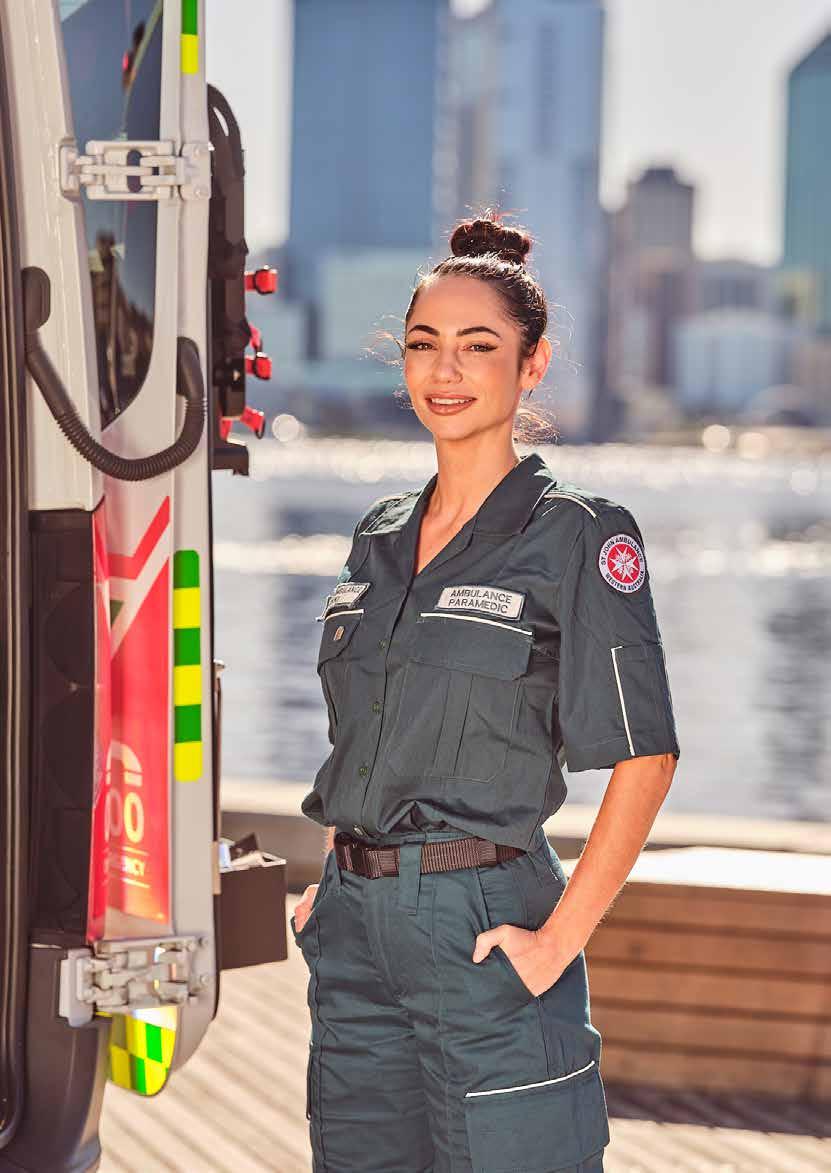
The Council of Ambulance Authorities (CAA) is a not-for-profit national charity and the peak body for all statutory ambulance authorities in Australia, New Zealand, and Papua New Guinea.
Founded in 1962, the CAA was created to provide an opportunity for senior leaders to network, share ideas and information, advocate on the ambulance sector’s behalf and learn from each other based on experience, research, and a collective desire to continuously improve patient care and outcomes.
Today’s CAA takes the leading role in the Ambulance sector by advocating for continuous improvement in service delivery and patient outcomes. This is done by engaging stakeholders to ensure sustainable funding, providing forums for members to collaborate and share information, ideas and experiences and developing programmes to grow and develop the next generation of Ambulance Sector leaders.
2022-23 has been a year of progress and development for the CAA, but also a year in which tragedy struck our Ambulance family in April in the form of a senseless and ultimately fatal attack on Steven Tougher, a dedicated and caring paramedic from NSW Ambulance.
I would like to take this opportunity to acknowledge Steven’s contribution and to offer our sincere condolences to his family, friends, and colleagues. No one should have to experience this kind of violence in their workplace, and we thank our paramedics and all emergency services people who serve to keep us safe under difficult conditions.
Additionally, I’d like to thank Tony Walker ASM for his dedicated service with both Ambulance Victoria and as Chair of the CAA. During his time as Chair he played a crucial role in navigating the CAA through uncertain times during the peak of the COVID-19 pandemic. Tony has also been also been an active supporter of both Women in Ambulance and Sustainability, and his legacy will include the leadership he provided in these initiatives.
Other significant contributors to the CAA who left us during the year included Judith Barker from St John NT, Michelle Fyfe from St John WA, and Joe Acker from Ambulance Tasmania.
We were very fortunate to have the international experiences and perspectives of Joe before he returned to Canada, and the spearheading of Women in Leadership under both Michelle and Judith’s co-chairing of the Women in Ambulance Forum.
On behalf of the Board, I would like to thank them all and wish them well in their future endeavours.
In the past 12 months, the CAA has continued the excellent work in areas such as Groups and stakeholder engagement, events, information sharing, sustainability and at the heart of it all, long term strategic development.
2022-23 has seen the Ambulance sector play its part in the ‘new normal’ Covid world. I, and all the Board are only too aware of the daily requirements placed on our people, including managing demand and adapting operations to reduce the risk of COVID-19 transmission to staff and patients. You are all to be congratulated.
At the start of 2023, the 2023-2028 CAA Strategy was released. In this document, the key pillars, areas of focus and future scope of the CAA are detailed, and I encourage you to read it. It is the roadmap of the peak Ambulance Sector body, and it provides the context for why the CAA does what it does.
Early in 2023 we also revisited our Groups and Committee Structures, streamlining them to ensure a strong, positive networking and information sharing flow that best meets the needs of the Ambulance sector now and into the future, and I thank all of those you contribute to these forums. They are the engine room of the CAA and reflect our very beginnings and reason why we were created 61 years ago.
In 2023 the CAA also launched a new look in the form of a rebrand, which the Board felt was necessary to modernise our image, without losing that strong sense of heritage that is the cornerstone of the CAA’s identity and credibility with all the audiences in which it engages with.
And finally, it is with great pleasure I can highlight the continued excellent events hosted by the CAA: 2022 Congress, the 2022 Awards for Excellence and the 60th Anniversary Gala Dinner. All three events where of an outstanding quality and offer our people from each of the 11 member services an opportunity to meet, engage, learn, share, and socialise.
Howard Wren Chair
It is with great pleasure that I present to you the Council of Ambulance Authorities’ Annual Report for the year 2022-23.
As Chief Executive, I am honoured to share the remarkable journey and collective achievements for our organization in a year that our members across Australasia attended a collective 4.8 million incidents, cared for 4.4 million patients and achieved patient satisfaction ratings of 96% in Australia, 97% in New Zealand and 97% in Papua New Guinea.
Over the following pages you will see progress reports and summaries of a vast array of initiatives and activities including:
• Highlights from each of our 11 member services showing the scope, breadth and ingenuity of the Australasian ambulance health sector.
• Summaries of the workplans and discussions held by our various Forums, Groups and Committees.
• A deeper dive into the CAA Five Year Strategic plan, launched in early 2023.
• The launch of a new CAA brand identity, logo and marketing look and feel.
• A major milestone, as we celebrated the CAA’s 60th Anniversary in style at a gala function at the National Arboretum in Canberra, Australia.
• A welcome return to a post-COVID face-toface Congress in Sydney, Australia including the Awards for Excellence, with this year’s Star Award Winner going to Ambulance Victoria.
• The launch of our inaugural sector-wide Women in Ambulance Scholarship, won by Mindy Thomas from Queensland Ambulance Service.
• Another successful year campaigning the Restart a Heart message of Call, Push, Shock and highly impactful activations right across all of our members including a well-attended event at Sydney’s globally iconic Bondi Beach.
I extend my heartfelt gratitude to our dedicated staff, committed member services, supportive partners, and the countless individuals who contribute to our shared mission. Your tireless efforts have made the accomplishments detailed in this report possible.
I would also like to echo Howard’s thanks to Tony Walker, Michelle Fyfe, Joe Acker and Judith Barker not only for all they have contributed to the CAA, but their contributions to their respective ambulance services.
I encourage you to delve into the pages that follow, as together, we reflect on a year of progress, resilience, and innovation.
David Waters Chief Executive
Together, we shall continue to elevate the standards of care, promote best practices, and demonstrate our unwavering commitment to the well-being of the communities we serve.
for the year ended 30 June 2023
Statement of Financial Position
as at 30 June 2023
Opinion
In our opinion, the accompanying financial report of The Council of Ambulance Authorities Inc is in accordance with the Australian Charities and Not-for-profits Commission Act 2012, including:
(i) giving a true and fair view of the Association’s financial position as at 30 June 2022 and of its financial performance and its cash flows for the year then ended; and
(ii) complying with Australian Accounting Standards to the extent described in Note 1 to the financial report and the Australian Charities and Not-for-profits Commission Regulations 2013.
We believe that the audit evidence we have obtained is sufficient and appropriate to provide a basis for our opinion.
Auditor’s Independence Declaration
In accordance with the requirements of subdivision 60-40 of the Australian Charities and Not-for-profits Commission Act 2012, I declare that, to the best of my knowledge and belief, during the audit of The Council of Ambulance Authorities Inc for the year ended 30 June 2022 there have been no contraventions of the independence requirements of the Accounting Professional and Ethical Standards Board’s APES 110 Code of Ethics for Professional Accountants (including Independence Standards) in relation to the audit.
MOORE AUSTRALIA AUDIT (SA/NT) PTY LTD
Stephen Camilleri Director
Adelaide, South Australia
Dated: 11 December 2023
Past years have shaken our world to the core. A global pandemic changed the way we look at the world, how we connect with people and indeed, how we deliver our services.
This in addition to the biggest demand growth our sector has ever experienced, technological changes coming at us at a rapid pace, and shifts in the way our teams’ view workplaces, sets us up for unique and challenging years ahead.
The CAA Strategy 2023-28 looks at the key challenges and opportunities CAA can contribute to our members and the wider ambulance and health sectors. Providing a strong voice for the ambulance community, a place for networking and sharing ideas, and providing a space to enhance skills and to support leaders and teams in the ever-changing world is our core focus.
Being able to represent our members in the ambulance sector sits at the top of CAA’s agenda, having a united strong voice to advocate for sustainable funding, for improved conditions in ambulance, and having a role in the shaping of future health systems, is one we strive to do and will focus on heavily over the next years.
Our strongest contribution stems from bringing the sector, our members, and partners together to exchange information, share knowledge and enhance the industry. Providing networking opportunities, sparking innovation, facilitating the exchange of thoughts through the CAA Groups, our premier events and the CAA Awards for Excellence will continue to be our ongoing commitment to the sector.
Empowering our leaders, current and emerging, and looking after the growth and wellbeing of people working across the ambulance sector will be an important step during future years of CAA planning.
Over the last years we have been focusing on improving representation of women in the sector, highlighting role models, and launching the CAA Women in Leadership Scholarship. Our aim is to enhance this work and highlight minority groups, First Nations people, and provide great leadership programs and development for all in the future.
The Strategy unfolds three key pillars where CAA will focus its efforts and details key opportunities that will be a guide for the CAA Board, Secretariat and Groups.
Advocacy
The Council of Ambulance Authorities (CAA) is committed to providing a unified voice for the ambulance sector with the aim to provide our members and the wider sector support and guidance in all matters relating to ambulance service delivery.
FOCUS
• Be the peak body and provide a unified voice for the Australasian ambulance sector.
• Provide an Australasian voice to the global ambulance space.
• Building relationships with National and State/ Territory Governments.
• Continue to expand CAA’s relationship with associated organisations working across health, emergency management, and volunteer fields.
Knowledge & Information
Providing the sector with ways to connect, share, exchange ideas and build strong relationships that span across borders and oceans, is something CAA has excelled at and will continue in the future.
FOCUS
• Provide networking opportunities for all members of the Australasian ambulance sector, with internal and external parties.
• Update the CAA Groups structure to ensure the best methods for inter-agency exchange and knowledge sharing.
• Continue to build strong data collections and analytics portfolios, providing timely informative statistics.
• Work to grow CAA’s internal research capacity and develop strong partnering opportunities.
Learning & Development
CAA will work to create strong learning and development programs by collaborating with universities and member services, and developing CAA specific programs and tools to ensure the Australasian ambulance teams continue to have world class education and training.
FOCUS
• Engage with internal and external partners to develop CAA endorsed leadership and management development programs.
• Continue working on ensuring more women step into leadership roles, and grow this program to be inclusive of the diversity and communities, especially First Nations people.
• Look towards developing standardised Clinical Guidelines
• Develop career pathways and monitor and support changes to paramedic and other ambulance service roles.
The Role of the Ambulance Sector
The last decade has brought many challenges for our services. Changing times and needs of our community and patients require our sector to evolve in order to meet demands.
Partner
Work in partnerships across the government, non-government health, and social sectors on health initiatives, and be truly integrated in ongoing discussions and future planning.
Engage
Bring ambulance services together to discuss best practice in ambulance service delivery and evaluate new treatment options, ensuring the sector is ever responding to changing needs and models of care.
Innovate
Advance the work of ambulance teams in out-of-hospital cardiac arrest, stroke, and other time critical conditions where ambulance intervention improves survival rates.
Advocate
Continue providing Secretariat to the Global Resuscitation Alliance and advocate for issues like mandatory CPR training in schools and better access to public AEDs to improve OHCA survival statistics.
Demand Management
Australia, New Zealand, and Papua New Guinea ambulance services have cared for 4.5 million patients in 2020-21 and of these transported 3.8 million patients to hospital. The demand for ambulance services has grown on average 21% since 2013-14, causing a strain on staff and resources.
Outreach
Grow relationships with relevant agencies and sectors to ensure a shared understanding of transfer of care issues, drivers, and potential solutions.
Report
Provide regular demand management reports to better understand trends and future challenges.
Cooperate
Work together with relevant agencies and sectors to develop best practice strategies for the resolution of transfer of care delays with the aim to distribute working solutions.
The Changing Workforce Landscape
There are a multitude of challenges our workforce faces, such as staff shortages and non-equitable culture - not only by gender split but lack of minority group and First Nations representation. Coupled with the most recent demand growth and a global pandemic which has pushed us clinically, mentally, and challenged our resilience and resolve.
Research
Collect, analyse, and distribute information on paramedic workforce via our yearly workforce survey to better understand the ambulance sector workforce, gender, diversity, and management.
Facilitate
Identify workforce shortages and pressure points, working with universities to ensure a consistent influx of students into services, whilst aiming to reduce the barriers to entry for overseas trained graduate paramedics.
Advance
Build on existing work in achieving a more equitable gender balance and commence work for a more inclusive workforce including First Nations communities.
Develop
Create, in collaboration with universities and member services, exciting career pathways for all our clinical, communication, administrative staff and volunteers, and identify leadership courses to help support existing managers and to grow new generations of leaders.
Ambulance Sustainability
In 2020-21, Australasian ambulance services travelled 182,397,610 km by road and spent 39,625 hours flying in the air. We need to look at practices that will offer a more sustainable future for our teams and community.
Network
Provide a networking forum for ambulance services to share sustainability initiatives and best practice, including working towards setting up a sector-wide sustainability benchmarking data set.
Resource
Provide adoptable resources for services that promotes sustainability including collation of a White Paper with cases studies, suppliers, and activations to help support services to deliver against strategy.
Activate
Promote activities and events that highlight sustainability achievements, including growing the CAA Sustainability Campaign and inspiring services and their teams to get involved.
Drive
Lead changes in the design of ambulance processes and systems that adopt and reflect a sustainability culture.
Today, CAA represents eleven statutory ambulance service providers across Australia, New Zealand and Papua New Guinea and works with associations and partners across the ambulance, emergency management and health sectors.
The CAA is the peak advocacy body that represents a combined workforce of 43,000 paramedics, patient transfer officers, volunteers, communications staff, corporate teams, students, and leaders. These world class trained teams are committed to looking after patients across all of Australasia.
4,462,428 Patients
4,802,059 Incidents
24,908 Staff (Full Time Employed)
1,860 Locations
19,711 Volunteers
1,404 Ambulance Response Locations
7,756 Fleet Vehicles
4,553 Emergency Ambulances
ACT Ambulance Service (ACTAS) has committed to achieving accreditation under the National Safety and Quality in Health Service Standards (NSQHSS) within two years, working in collaboration with other ambulance services to achieve accreditation.
As part of this project, ACTAS has completed a comprehensive infection prevention and control consultant review of ACTAS with recommendations that we are planning to work through over the next 12-18 months. In addition, a review on medication management is about to commence which will lead to change within ACTAS practices.
ACTAS has completed recruitment drives to permanently appoint additional Duty Officers (8 in total) to our frontline management which enables us to roster 2 Duty Officers for day and night shifts. Our recruitment also included PACER officers (Police, Ambulance & Clinician Early Response) providing us with 19 trained staff to achieve better outcomes for people living with a mental illness or disorder. Funding in last year’s budget has also allowed us to formally re-establish our Extended Care Paramedic programme.
More recently we have seen the return to direct ACTAS administration of our Education section, Communication Centre (ComCen) and Workforce Planning unit. The Operational Support unit will return to the Service in the near future.
As a demand management and patient safety initiative, ACTAS will be implementing Odyssey into the ComCen over the second half of 2023.
We are continuing the investment initiative by Government to modernise ACTAS. This investment has seen the roll out of the new capability, equipment, and staffing, including a day shift bariatric unit crew. Trial initiatives are also underway for a cardiac compression device, new suction devices, ELK fleet refresh, public notification application, peer support training and more emergency and single response vehicles.
ACTAS is also happy to announce the much anticipated and longawaited arrival of our Mascot, Kirby! Kirby joins the Emergency Service Agency team of Mascots - Paddy (State Emergency Service), Ember (Rural Fire Service) and Sparky (Fire & Rescue).
Ambulance Tasmania
Ambulance
Tasmania has welcomed two new Executive members including Tim Makrides as Executive Director of Clinical Services and Dr Erica Kreismann as Executive Medical Director.
Additionally, Jordan Emery was appointed as the Chief Executive with Joe Acker returning to Canada to be with his family. These appointments continue to support the organisation’s focus on cultural change, leadership development, enhancing the representation and roles of women within the organisation, clinical innovation, and future-focused service delivery across the state.
Ambulance Tasmania has continued to reform our care delivery models, further embedding our Secondary Triage service and expanding the number of calls managed by our expert nursing and paramedic clinicians. Over 5,700 calls have now been successfully managed through the service, preventing an emergency ambulance response. A new partnership with My Emergency Doctor that commenced in September 2022 is also supporting community-based care in circumstances where a General Practitioner might not be readily available for certain patients.
Police, Ambulance and Clinical Emergency Response (PACER) is a joint operation between Ambulance Tasmania, Tasmania Police, and the Tasmanian Department of Health to respond to patients in the community experiencing acute mental ill-health. The PACER model commenced operations on 24 February 2023 and is regularly supporting consumers to access care in the community, avoiding unnecessary Emergency Department presentations that have proven to be deleterious for those experiencing crisis. More than 75 percent of consumers are able to safely remain in the community after interacting with the PACER team that is now permanently established in Southern Tasmania. New models of mental health co-response will shortly be trialled in Tasmania’s North West.
In August 2022, Ambulance Tasmania commenced a Community Paramedicine model with nine Community Paramedics deployed across the three regions of the state. Community Paramedics have a strong primary health care focus and are targeted towards lower acuity presentations to support referral to alternate care pathways, keeping patients in the community. Future expansions to the Community Paramedic scope of practice are currently being progressed to provide care to an expanded cohort of patients.
Ambulance Tasmania continues to partner closely with the Tasmanian Health Service to ensure effective patient flow across the healthcare system. In August 2022, the Department of Health launched the Communication Escalation Protocol, a shared approach to escalating transfer of care delays that includes a staged approach focused on timely offload of ambulances. In December 2022, the Communication Escalation Protocol was supported by an Urgent Offload Protocol focused on immediately offloading ambulance resources when there are unresourced emergencies in the community. The process has been highly effective to date.
Ambulance Tasmania will shortly release its Strategic Priorities helping focus our efforts for the next three years. Key to our success will be supporting our incredible workforce to continue delivering world class care to Tasmanians and visitors of the state. We look forward to a continued close partnership with the Council of Ambulance Authorities and other ambulance services so that we can share innovation and success in service to the community.
In 2022-23, Ambulance Victoria (AV) continued to meet the challenges of the global pandemic, while establishing a solid footing for the future.
We welcomed new Board Chairperson Shelly Park in August 2022 and new Chief Executive Jane Miller in January 2023 – both of whom have experience in leading transformation in complex health-related organisations. Other Executive Directors have been recruited to lead our Strategy and Integration, People and Culture, and Communications and Engagement functions.
Record demand for emergency ambulances continued. October to December 2022 was the busiest quarter in AV’s history – with more than 100,000 Code 1 cases for the first time ever – and April to June 2023 our third busiest quarter on record. Throughout the year, AV welcomed 399 new paramedics to help meet the growing needs of the community.
In 2022-2023, innovative technology and improved resourcing created safer, more comfortable, and patient-led experiences. This includes the expansion of the Victorian Virtual Emergency Department (VVED), developed with Northern Health to care for patients in the home and reduce transports to emergency departments. Our Residential Aged Care Enhanced Response (RACER) pathway, also launched in 2022 uses VVED to minimise unnecessary, disruptive, and stressful hospital transfers.
AV has implemented to a full, significant, or moderate extent two thirds of the recommendations from an independent review into workplace equality at AV. This includes a new approach to responding to workplace complaints, supported by a new Professional Standards and Behaviours Department and an anonymous reporting pathway.
In June 2023, AV proudly launched its Reflect Reconciliation Action Plan (RAP). AV aims to build strong and meaningful partnerships with Aboriginal people, communities, and organisations to guide them on the journey towards reconciliation – improving their experiences with AV and learning from 60,000 years of continuing connection to land, sea and culture.
With our people, we co-designed our new organisational values to ensure everyone had a voice and an opportunity to be heard. This is a significant step that will drive and guide our behaviours and decisions so we can build a safe, fair and inclusive workplace for our people and deliver Best Care to our patients.
Importantly, our Strategic Plan 2023-2028 was developed with our workforce, partners, and the community. When launched the Plan will set our priorities and direction through ambitious and optimistic goals underpinned by our new values to guide our actions, decisions, and behaviours.
Hato Hone St John
Hato Hone St John is a charitable organisation, providing emergency ambulance services, community health services and youth leadership programmes across Aotearoa
New Zealand.
As the emergency services arm of the health sector, our ambulances serve 90% of New Zealanders across 97% of the country. In 2022/23, we answered 673,771 emergency 111 calls and treated or transported 515,230 patients.
Over the year, incident demand increased 4.4% from 2021/22, and the time at emergency departments increased 8%, leading to record levels of ramping within our major hospitals. Working with our hospital colleagues, our operational team implemented several initiatives to mitigate the impact and risk, including ambulance waiting areas, hospital ramping plans, remote triage, telehealth and data sharing with our national health provider, Te Whatu Ora.
Key initiatives over the 2022/23 year have included an ambitious recruitment plan to grow our ambulance service workforce. And, in support of this, we were pleased that paramedics and emergency medical technicians were added to the Straight to Residence pathway of New Zealand’s Immigration Green List. We advocated for this expedited immigration with the hope it would better support our country’s preparedness for winter demand.
We also continued implementation of our Aka Māori strategy in line with our commitment to health equity. Highlights include improving the cultural capability of our workforce and the roll out of ambulances bearing our new Waka Manaaki design, bringing us closer to the communities we serve.
We completed a major infrastructure project to move our Auckland Ambulance Communications Centre into a fit-forpurpose building, including installation of a new containerised datacentre (DataBlok) to host our IT equipment, applications, and systems.
The national emergency ambulance sector collaborated to develop and issue a single electronic set of Clinical Procedures and Guidelines (CPGs) to be used by all emergency ambulance service personnel throughout New Zealand, something that very few other countries have achieved.
The government-sponsored Public Safety Network (PSN) will ensure the three emergency services (Ambulance, Fire and Emergency, Police) will have a capable, resilient, reliable, and secure communications system into the future. A single Communications and Resource Deployment (CARD) was planned as part of the PSN but all agencies have agreed to progress their own CAD systems in the meantime, with a sector solution potentially revisited in future. Due to the nature of our work, our preference is that any future CAD developments would be aligned with the Health sector.
We made a written and oral submission on the Therapeutic Products Bill to the Government’s Health Select Committee. This new Bill will modernise and simplify the regulatory regime for medicines, medical devices, and related products. If passed into legislation, it will cover many of our activities across ambulance service operations and our supply and sale of medical devices and other therapeutic products such as first aid kits. Our submission was broadly supportive of the Bill, including the introduction of a stronger compliance framework to promote greater quality of healthcare and put the safety of the public front and centre. We did, however, highlight some practical implications including time to implement and the resources and costs required.
Following the COVID-19 pandemic, in 2022/23 the people of New Zealand’s resilience was again severely tested with extreme weather and devastating floods making a significant impact across the country. In the face of this ongoing disruption, our people, partners, and community organisations worked side by side to support our communities and each other.
Environmental sustainability is a key part of our five-year strategy. Operating a large vehicle fleet means we are a significant emitter of carbon, and we will be working to reduce our emissions and align with Government requirements over the coming years. Meantime, we have signalled our commitment to the climate emergency response by achieving Toit carbonreduce certification, an industry standard.
Finally, we were delighted to see Hato Hone St John named as New Zealand’s Most Trusted Charity for a tenth time at the Most Trusted Brand awards. As part of our Manaaki Ora strategy, we’re committed to helping to improve the health and wellbeing of New Zealanders and it’s great to hear they trust us with their lives and the lives of their families, often at times when they are at their most vulnerable.
It was an exciting year with the four-year, $1.76 billion Strategic Workforce InFrastructure Team (SWIFT) Program getting underway, the launch of our Next Normal Strategy, and involvement in a major International Search and Rescue mission.
Designed to boost and transform our frontline services, the key highlights from Year 1 of SWIFT included:
• The recruitment of 619 additional paramedics, educators, control centre and Virtual Clinical Care Centre staff
• The announcement of 28 locations for new stations
• Implementation of enhanced rosters at 30 stations
• 83 vehicles to support enhanced rosters.
Introducing new ways of working is a key part of the SWIFT program and the draft Frontline Leadership and Rapid Response Model (FLM) was released for consultation. Aiming to strengthen leadership and improve management capability across our frontline teams, extensive consultation on the draft model took place, including workshops with staff. More than 800 pieces of feedback were received and are now under review. Consultation is continuing to help shape the final model.
In August 2022, we launched The Next Normal: Workforce Strategy 2022-2026. With a strong focus on wellbeing and connection, the Strategy outlines how NSW Ambulance will continue to support its people to thrive as we emerge from the COVID-19 pandemic.
Significant progress was made regarding clinical innovation. The NSW Government announced a $2.5 million partnership with the pioneering smartphone app GoodSAM. The app alerts volunteer responders to someone nearby in cardiac arrest so CPR can be started before paramedics arrive. A 6-week pilot of the program involving our clinical and non-clinical workforce was completed with the program to be rolled out to the community in the future.
A pilot program for the service’s new monitor/defibrillator, the Corpuls3T, commenced; and we also succeeded in rolling out the LUCAS mechanical CPR device to every one of our frontline emergency ambulances.
Our Wellbeing Workshop program wrapped up after five years and 6,500 staff members completed the program since its inception in 2018. It now rolls into Business as Usual (BAU).
Specialist Clinicians from NSW Ambulance were called upon to utilise their skills overseas as part of a unique, major international search and rescue operation in Türkiye. Five NSW Ambulance’s Special Operations Team rescue paramedics and two aeromedical specialist doctors were part of Australia’s 72-member DART (Disaster Assistance Response Team) who provided-on-the-ground support for rescue and recovery efforts following a devastating earthquake.
Through delivery of timely, patient-focused ambulance services, the Queensland Ambulance Service (QAS) forms an integral part of
the
primary healthcare sector in Queensland.
Operating as a statewide service within Queensland Health, the QAS is accountable for the delivery of pre-hospital ambulance response services, emergency and non-emergency pre-hospital patient care and transport services, interfacility ambulance transport, aeromedical retrieval and transfer services, casualty room services, confidential health assessment and information services and planning and coordination of multi-casualty incidents and disasters.
The QAS delivers ambulance services from 305 response locations through eight Regions and 17 Districts, with Districts being aligned to the state’s Hospital and Health Service boundaries.
The QAS has eight operation centres located throughout Queensland that manage emergency call-taking, operational deployment and dispatch and coordination of non-urgent patient transport services. QAS also has the Health Contact Centre which offers virtual care services providing confidential health assessment and information services 24 hours a day, 7 days a week using multi-channel delivery models.
In addition, the QAS works in partnership with 136 active Local Ambulance Committees across the State, whose members volunteer their time supporting their local ambulance service.
The following achievements are highlighted for the 2022-23 period:
• The QAS responded, on average, 3,970 times per day, with an ambulance vehicle and its crew being dispatched the equivalent of every 22 seconds.
• Release of the QAS Strategy 2022-2027, to ensure strategic organisational alignment towards, and focus on, the sustainable, adaptive, and responsive delivery of contemporary health care to Queensland, both now and into the future.
• Expansion of the QAS Clinical Hub which is comprised of doctors, nurses, paramedics, social workers, and mental health clinicians who provide advice, virtual consultation, and referral to alternative care options at the point of call. The QAS Clinical Hub has delivered success in providing a secondary triage to a select cohort of patients to determine the most appropriate healthcare pathway, proportionate to the acuity of the patients waiting in the community.
• Expansion of the QAS Mental Health Co-Responder Model Program which now operates in 15 sites across Queensland including Cairns, Townsville, Mackay, Rockhampton, Hervey Bay, Sunshine Coast, Toowoomba, Metro North (three sites), Metro South (three sites) and Gold Coast (two sites). During 2022-23, this Program provided specialised clinical interventions to approximately 1,400 people in a mental health crisis per month. Between 70% to 80% of the people seen were provided with interventions in their own homes / environment without the need to transport to a hospital Emergency Department.
• Retrieval Services Queensland (RSQ) joined the QAS in October 2022 as part of the Department of Health’s Business Case for Change initiative. RSQ is responsible for the clinical coordination of all aeromedical retrieval and transfers across Queensland, telehealth retrieval and emergency preparedness and response capability.
• Release of the QAS Workforce Plan 2023-2028, which provides the QAS with a blueprint to identify the organisation’s leadership, capability, and workplace culture needs into the future, and to empower employees of the QAS to continue to deliver excellence in ambulance services.
2022-23 has been a year of transformation for SA Ambulance Service (SAAS), seeing the creation and implementation of once in a generation change across a range of areas.
SAAS created and started implementing its Operational Growth Plan which will see by the end of 2025:
• 258 extra Paramedics and 57 additional Ambulance Officers across South Australia. Of this, 72 Paramedics and 12 Ambulance Officers have already been employed.
• 15 additional Emergency Medical Dispatchers, with 10 already employed.
• 20 extra clinical leaders.
• 36 additional ambulances.
• Five new ambulance stations in metropolitan Adelaide, and five existing stations Statewide fully rebuilt. These will complement the recently rebuilt and reopened stations at Birdwood in the Adelaide Hills, and Strathalbyn on the Fleurieu Peninsula.
• The upgrade of other 10 stations across the State.
• The construction of a new state of the art Emergency Operations Centre (EOC), which will house South Australia’s first dedicated State Health Control Centre.
SAAS has also expanded its use of alternative care destinations and the SA Virtual Care Service to provide out of emergency department care to patients experiencing a range of conditions.
During the year, SAAS undertook a seven-month pilot introducing a Mental Health Clinician in the SAAS EOC with the aim to provide early access to intervention and/or referral to care pathways for mental health consumers in crisis accessing Triple Zero (000). The preliminary result of this pilot is showing positive outcomes in Emergency Department avoidance and improved patient outcomes.
A Community Paramedic Program was expanded by SAAS to Keith, in the State’s South-East, and SAAS has plans to do the same at Wallaroo on the Yorke Peninsula. This complements the highly successful Community Paramedic at Ceduna in the State’s Far West and Robe in SA’s South East.
In this financial year, SAAS joined Ambulance Victoria in becoming a member organisation of GoodSAM and rolling out the GoodSAM Responder mobile app in South Australia.
GoodSAM Responder is connected to SAAS’s call and dispatch system and alerts registered users who are close to a suspected cardiac arrest. This allows the user to provide time critical cardiopulmonary resuscitation (CPR) whilst an ambulance is on the way. GoodSAM also provides details of nearby automatic external defibrillators (AEDs) which have been registered with SAAS.
One final highlight for the year was SAAS releasing the Gender Transition and Affirmation Procedure to guide and support everyone at SAAS when a staff member undertakes gender transition/affirmation. As the first procedure of its kind in SA Health, and second in the entire SA Public Sector, this initiative makes a strong statement about the inclusive direction SAAS is moving toward.
The ambulance service in the Northern Territory is characterised by unique opportunities and challenges.
In the past financial year, St John NT has worked with the Northern Territory Government and NT Health towards renewing the Ambulance Services contract for the next three years. The organisations are committed to building a strong ambulance service and improving the models of care for Territorians and visitors alike across the wide expanse of the Northern Territory.
Key to this has been an ongoing recruitment campaign to attract operational ambulance staff for increased resourcing in Alice Springs, Tennant Creek, Katherine Darwin, and Nhulunbuy which has increased staff numbers by 75% in the past five years. This year more than 85 clinicians, were recruited and commenced with St John NT, resulting in additional patient transport services and emergency ambulance crews to assist with the ever-increasing demand.
St John NT also introduced a clinical deployment supervisor role into its Emergency Communication Centre. This role supports call takers with dispatchers though the provision of clinical oversight and the opportunity to start looking at alternative care pathways and care options for patients who call Triple Zero that were previously unavailable in the NT.
Our Darwin operations continued to provide support services to an increasing number of mental health presentations. The co-responder model of a mental health crew, consisting of a paramedic, mental health clinician and a police officer has achieved positive results with the model being reviewed and considered for expansion.
International Paramedics Day 2022 marked the launch of a new uniform for paramedic staff. The uniform design, aimed at addressing staff comfort, performance, and the unique Territory conditions, was the culmination of 18 months’ work from a dedicated uniform committee of frontline workers. As a commitment to the environment and sustainability St John NT engaged textile recycling company UPPAREL for the uniform change over, resulting in 971kg of textile material being diverted from landfill.
In January, St John NT welcomed new CEO Andrew Tombs, following the departure of Judith Barker who moved to the role of CEO, Royal Flyng Doctor Service Western Australia. Hailing from New Zealand, Andrew has significant experience in the corporate and business sectors and has made a positive impact to St John since his arrival. Andrew also now represents St John NT on the CAA Board.
St John NT continued to support major events showcasing the Northern Territory such as Bass in the Grass, The Garma Festival, and the Tatts Finke Desert Race. While the 2023 Tatts Finke Desert Race saw more than 50 people treated and 28 people transported to hospital, the event provided great experience and clinical challenges to our paramedics and ICPs, including remote locations with protracted stays and transport times.
This past year has provided us an opportunity to recognise three outstanding staff for their commitment to our service through the King’s Birthday Honours List Ambulance Service Medal. Stuart Allison, Mark Ferguson, and Warren Purse have all been with St John for many years and are excellent role models and clinical leaders. We congratulate them on this significant achievement.
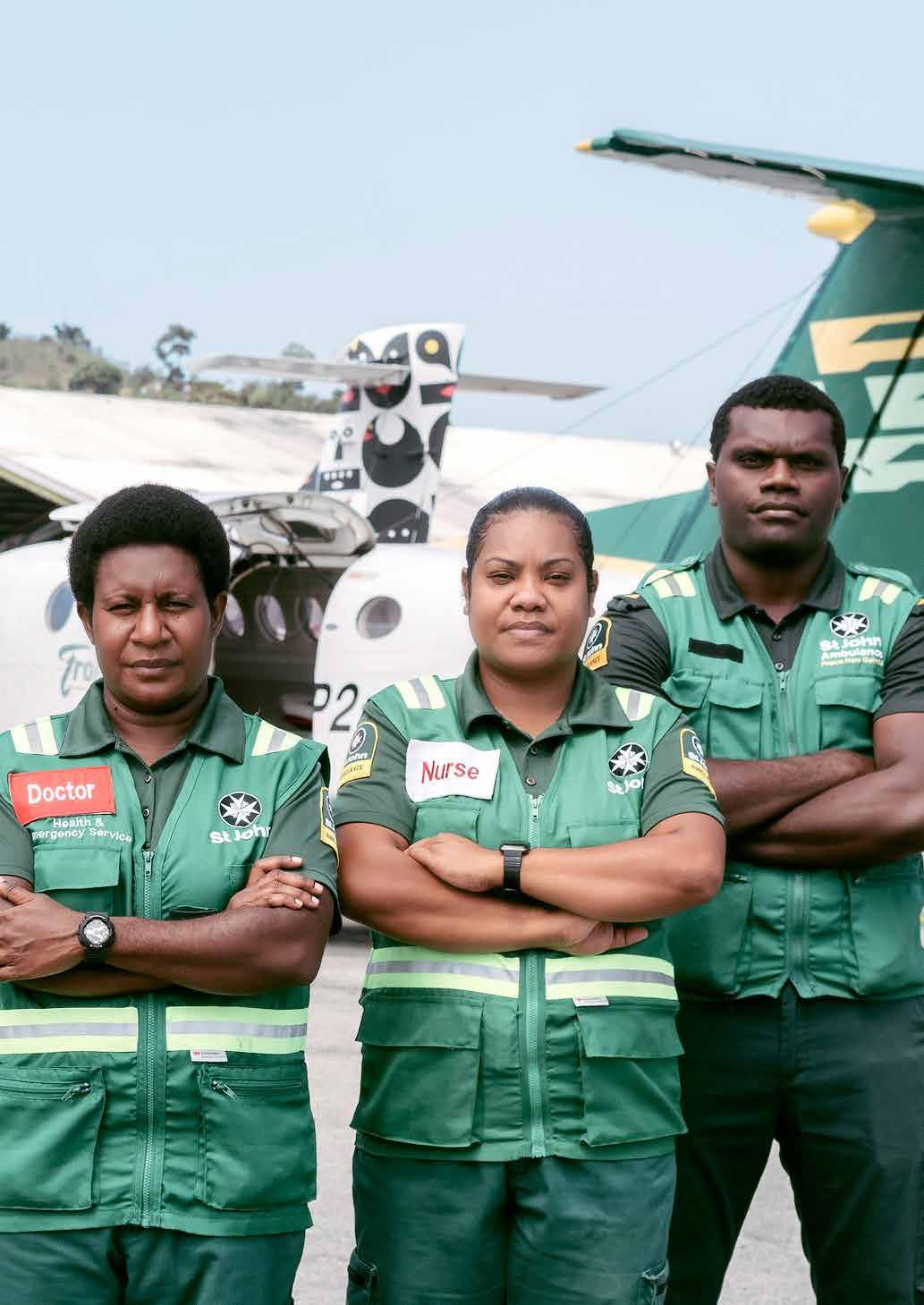
St John Papua New Guinea
SJA
handled 25,009 incidents, demonstrating a consistent increase in demand for ambulance services.
During the financial year 2022-2023, St John Ambulance Papua New Guinea (SJA) experienced a period marked by achievements and advancements, reflecting SJA’s commitment to helping communities improve health and save lives.
Specialised Operations and Collaborations:
The Specialised Operations Team was instrumental in supporting the Royal Papua New Guinea Constabulary during higher risk operations, including hostage rescues and the national general election from June to August 2022. SOT team leader Alex Dimain showcased a commitment to skill enhancement and versatile operational readiness.
Innovative Resources:
SJA introduced the Toyota Landcruiser Ambulance, a custom-built model by Toyota Gibraltar (International). This addition marked an important step in modernising and equipping SJA’s fleet.
Training and Development Initiatives:
SJA introduced a 10-day residential first responder course as the new standard for volunteers, remote area ambulance ‘drivers’, and operational support staff. This initiative was part of a broader strategy to ensure staff readiness and support the SJA’s expansion into more provinces. This new program successfully trained 98 first responders across four groups.
Collaboration with Australian Federal Police:
A significant development in 2023 was the signing of an agreement between the Australian Federal Police and SJA to support the PNG-Australia Policing Partnership. This collaboration is a multi-year agreement for SJA to improve emergency response capabilities including having Australian paramedics based in PNG to train and support local counterparts and provide emergency medical support for AFP personnel deployed in PNG. The first Australian paramedics engaged under this program began their roles in May 2023, marking a new chapter in international cooperation and capacity building for emergency services.
Investment in Aeromedical Training:
In collaboration with the Santos (formerly Oil Search) Medical Team, SJA introduced a new aeromedical training program. At the conclusion of training, candidates sit the International Board of Speciality Certifications exams. This new program ensures that medical professionals are equipped with the specialised knowledge and skills required for patient care during air transport.
Recognition and Expansion:
In November 2022, a ceremony honoured the contributions of officers, volunteers, and members, celebrating the graduation of over 100 ambulance officers, and Investiture of five members of the Order of St John.
The Minister for Health opened the new National Ambulance Operations Centre (NAOC) in October 2022. The new centre enhances SJA’s capability to handle the growing number of emergency calls now and into the future. The facility was made possible through joint funding from the Department of Prime Minister and National Executive Committee and the State-Owned Enterprise parent company, Kumul Consolidated Holdings.
Community Engagement and Milestones:
SJA actively engaged in community awareness campaigns and celebrated noteworthy anniversaries, including 66 years of service in PNG and 40 years of providing ambulance services in the National Capital District. Through the enterprise and education programs, 3,602 people were trained in first aid.
In summary, the achievements of SJA from July 2022 to June 2023 are characterised by an increase in operational demand, significant advancements in resources, training and development, and a commitment to community engagement and healthcare excellence.
The past year was one of renewal for St John Western Australia (SJWA) as the organisation’s ambulance service embedded new ways of working developed in response to COVID-19.
Investing in pathways allowing patients to avoid busy public Emergency Departments when appropriate was a priority. In total, Western Australian public EDs saw about 216,000 fewer patients thanks to St John WA programs:
• Almost 134,000 patients attended one of St John WA’s six premium Urgent Care locations rather than attending a public ED.
• A record of 30.7 per cent of all Triple Zero (000) ambulance incidents resulted in a patient not being transported to a public ED via to diversion programs like the St John WA Secondary Triage Team, Virtual Emergency Medicine, Health Direct, or transporting patients to a non-ED location.
Improved service to community was also demonstrated in the State Operations Centre where more than 93 per cent in Triple Zero (000) calls were answered in 10 seconds, up from 87.6 per cent the previous year. As the financial year ended, this remarkable team achieved rates high as 99.5 per cent, in the face of a 1.2 per cent annual increase of Triple Zero (000) calls to 291,214.
St John WA reorganised during the year to provide a sharper focus on key business priorities, with all ambulance-related activities grouped into an “Emergency Stream” headed by a new Chief Officer role.
Some highlights from the Emergency Stream included:
• Launch of Critical Care Paramedics (CCPs) on road in January providing advanced care to critically ill patients in Perth’s metropolitan area.
• A WA Mental Health Commission collaboration to adapt the federal Take Home Naloxone program to ambulance services, shortlisted for a CAA Awards.
• A new $2 million Family and Domestic Violence training initiative funded by the State Government to enhance responders’ ability to recognise and respond to patients experiencing FDV.
• Eclipse response: A big team deployed to support the emergency medical response during a once-in-a-century solar event in the remote Gascoyne to ensure the safety of many thousands of observers.
• Implementation of a new Early Warning Score (EWS) system and clinical escalation pathway to identify patients at risk of deterioration, particularly while ramped outside hospitals – also shortlisted for a CAA award.
• Investment in regional locations including new redeveloped sub centres in Pinjarra and Kondinin-Hyden. Additionally, a new transfer facility at Narrogin Aerodrome enhances the transfer of Wheatbelt patients to the Royal Flying Doctor Service Perth.
These achievements and initiatives reflect St John WA’s commitment to providing advanced care, addressing community needs, improving response systems, and expanding its reach to every Western Australian home, every year.
Wellington Free Ambulance
As Aotearoa New Zealand’s only free ambulance service, 2022/2023 was a special year that saw Wellington Free Ambulance (WFA) celebrate 95 years of serving the people of Greater Wellington and Wairarapa.
Founded in 1927 by Sir Charles Norwood, who believed in an accessible emergency ambulance service that needn’t cost lives nor money. This ethos continues to live strong to this day and we are honoured to be there for anyone who needs us - free of charge in our region.
While 2022/2023 was a year of looking back on a long-lasting legacy, it was also focused to the future and embedding important strategic direction. To put us on the pathway to our goals, WFA’s Strategic Renewal was shaped – prioritising support to our teams so they can treat others, the infrastructure required to deliver our services, and the financial security needed to remain Aotearoa’s only free ambulance service.
We are a small team with a mighty impact, with an average of 400 staff serving a population of half a million people.
WFA’s impact in 2022/2023
• 53, 897 emergency ambulance responses to patients.
• 40, 459 patient transfers to scheduled appointments.
• 164,136 emergency 111 calls answered.
• 468 events with event medic support.
2022/2023 Highlights
Wairarapa Station
During 2022/2023, WFA announced the build of a state-of-the-art ambulance station in Wairarapa. This fit-for-purpose station will become a permanent whare (house) for local paramedic crews and the central base for Wellington Free Ambulance’s mahi (work) in the vast Wairarapa region.
Shift Pattern Review
WFA has been on a journey to implement a new shift pattern, with the aim to improve staff wellbeing, manage fatigue, and find a sustainable operating model in an ever-changing landscape in paramedicine. This year saw significant steps made, including the creation of a committee and working group, and an extensive review to explore future shift pattern options for the WFA whānau (family).
WFA CPGs Podcast
Investing in and supporting our workforce has been the largest focus of WFA’s strategic renewal. WFA’s new podcast, titled WFA CPGs, was introduced in 2022/2023 – a professional development tool that aids in clinical learning and empowers staff in their commitment to delivering the best possible patient care.
Fundraising
We are extremely grateful for the aroha (love) from our community, who help keep us uniquely free. In 2022/2023, WFA saw the most money ever fundraised from the community in our 95-year-history which supported the increased demand and operational needs of our service to carry out life-saving work across the whenua (land).
The CAA plays a vital role in coordinating and advocating for the ambulance health sector.
It is committed to continuous improvement through education and professional development programs, facilitating communication and collaboration among different ambulance services.
Behind the scenes, CAA committees, groups, and forums play a significant role in shaping the policies, protocols, and standards that govern the ambulance health sector.. During 2022-2023, the groups, committees, and forums continued to coordinate efforts among CAA members towards advancing the ambulance sector’s interests, promoting best practices, and addressing key challenges facing the ambulance health sector.
Group Structure
CAA Board
CAA Secretariat
The Aeromedical Forum (AF) plays an important role in advancing the quality and safety of aeromedical care, promoting collaboration among aeromedical services, and advocating for policy and regulatory changes to support aeromedical operations.
One of the challenges highlighted by the Forum in 2022-23 was a significant increase in demand for aeromedical services. This rising trend of demand was particularly noted in rural and remote areas, where access to healthcare services can be challenging due to geographical distances and limited infrastructure. Natural disasters such as bushfires and flood during the year was another reason for demand growth, as aeromedical services were drawn upon to provide rapid medical triage and evacuation.
With the increasing demand on this highly specialised ambulance resource, increased investment in air ambulance resources, including dedicated aeromedical retrieval teams, specialised aircraft, and training for paramedics and medical personnel has been an area suggested by the AF for further review.
The Forum meetings covered a wide range of other important topics, such as critical care management, aviation safety, crew resource management, and communication skills.
The interactive discussions and example scenarios provided Forum members with opportunities to share their knowledge and experience, improving the delivery of highquality patient care.
The Ambulance Education Committee’s role is to continue guiding the education and training programs for ambulance personnel across Australasia, aligned with industry standards and best practice.
In 2022-23 the Committee continued to work closely with educational institutions and universities to work towards standardised and evidence-based training programs for ambulance services.
The Committee provided guidance and recommendations to member ambulance services on matters relating to education, including accreditation of training programs, certification requirements, and competency assessments.
Other items considered during the year included how best to develop post-employment tertiary pathways, the design of a returning to practise program, and the need for a relaunch of an ambulance operations risk management module.
The Clinical and Patient Safety committee pro-actively provides and strengthens the quality improvement and patient safety culture within the CAA member services.
It provides opportunities for Medical Directors and Clinical Managers of member services, to consider clinical matters relevant to the provision of quality ambulance services and ensure the patients safety and continuous quality improvement systems address areas of patient risk.
During 2022-23 the Committee reviewed and updated their approach to guideline development, providing ambulance clinicians with clear and concise recommendations on how to assess, manage, and treat patients in various situations.
Other topics covered during the year included the transition to McGrath video laryngoscope by NSW Ambulance, changing mechanical CPR policy to make sure that paramedics focus on stamp location and compression depth, receiving drug approval for Lorazepam and the introduction of GoodSAM within SA Ambulance Service.
The Committee discussed evidence-based practices that have been shown to improve clinical outcomes and patient safety such as telehealth technologies as well as collaborations with academic and research institutions to foster a culture of research excellence in ambulance services and promotes the translation of research findings into clinical practice to improve patient care.
Through its collaboration with other national and international organisations to promote clinical excellence and patient safety in ambulance services such as Australian Resuscitation Council, the Australasian College for Emergency Medicine, and the National Health and Medical Research Council, the Committee worked hard to ensure that member ambulance services are aligning with national and international standards, and that best practices were shared across jurisdictions.
The Emergency Management Committee provides a mechanism to share information between services to provide advice related to emergency management on issues including the impact on resource capacities and development, national standards, and technical advice across CAA member ambulance services.
In 2022-2023 one of the contributions of the Committee was reflected in developing a number of policies and strategies on effective emergency management for disaster response in situations such as natural disasters, mass casualty incidents and pandemics.
Emergency preparedness plans including procedures for disaster risk assessment, emergency communication and resource management were broadly discussed. The Committee continued to present a collaborative approach towards ensuring a coordinated and efficient response, particularly in complex and rapidly evolving situations.
Restructuring of emergency management space for NSW Ambulance and after the centre was affected by floods reviewing the earthquake initial response and Ebola management plans in New Zealand, were presented in Committee meetings.
The Emergency Management Committee’s efforts in emphasising the importance of ongoing professional development and quality education for ambulance personnel, continued to influence the building of a highly skilled workforce in the Australasian ambulance health sector.
The Fleet and Equipment Forum addresses the unique requirements of ambulance fleet and ensures ongoing oversight of their maintenance, equipment, infection control procedures amid other essential features to ensure safe and effective service.
In 2022-2023 the design of bariatric vehicles, building Unimog vehicles, implementing a new panel arrangement for the build of the single stretcher Mercedes sprinters and building intensive care ambulances were among the achievements of ambulance members, which were presented in Forum meetings.
Another activity of the Forum during the year included the development of strategies to improve the sustainability and environmental impact of ambulance fleet and equipment, including discussions around the use of nonfossil fuelled vehicles.
Networking Group
The Global
Resuscitation
Alliance Working
Group of the Council of Ambulance Authorities is a coalition of ambulance services and resuscitation experts dedicated to improving resuscitation outcomes.
To achieve this goal, the working group collaborated with international resuscitation organisations, such as the American Heart Association, the European Resuscitation Council, and the Australian and New Zealand Committee on Resuscitation, to develop comprehensive resuscitation guidelines that are based on the latest scientific evidence. These guidelines cover a range of topics, including basic and advanced life support, paediatric resuscitation, and postresuscitation care.
Another area of focus for the Global Resuscitation Alliance Working Group was in supporting research into new resuscitation technologies, such as mechanical chest compression devices and the promotion of novel resuscitation techniques such as extracorporeal membrane oxygenation (ECMO).
Control and prevention of infection is an essential aspect of healthcare. Given the nature of the emergency services, ambulance staff are at a higher risk of infection due to their regular exposure to various pathogens.
The Infection Control and Prevention Management Networking Group has been involved in several activities that aim to improve the control and prevention of infection in the ambulance sector.
In 2022-23 the Group continued to improve the overall standard of infection control and prevention management in the ambulance health sector through developing and disseminating infection control and prevention management guidelines and protocols.
The Group collaborated with other healthcare organizations, such as hospitals and primary care providers, to encourage consistent infection control and prevention management strategies across the healthcare sector.
Commencing on World Hand Hygiene Day, the CAA, in partnership with member services, once again promoted the 5/5 campaign, with dedicated resources highlighting the key infection risk areas at various stages of patient interaction.
Good mental health and wellbeing is essential for a resilient workforce and a supportive workplace.
It has particular significance for first responders, including call takers and paramedics, who constantly contend with confronting and sometimes traumatic situations.
The Mental Health and Wellbeing Forum plays a critical role in ensuring the sector is kept well informed about the latest research, best practice, and strategies to help deliver optimum support for services’ staff experiencing difficulties in their professional and private lives.
Following another outbreak of COVID-19 and with a series of natural disasters that placed an emotional and physical strain on member services, the Forum were focussed on fostering awareness, support, and advocacy for the mental health and wellbeing of ambulance personnel.
In 2022-23 the Forum reviewed current training programs in their services, which were designed for the ambulance personnel to recognize and manage their own mental health and to support their colleagues in distress. These programs include wellbeing workshops, suicide awareness and prevention program, leadership wellbeing programs, and psychological first aid training.
The Forum continued its collaborations with academic institutions and research organizations, including the University of Newcastle, Monash University, Curtain University, and Everymind. The research helped to identify the best practices and innovative approaches toward promoting mental health and wellbeing in the ambulance sector. The findings from these studies will be used to develop of resources and guidelines by the Forum, ensuring that they are based on the latest evidence and best practices.
The Occupational Violence Networking Group was established to identify approaches to reducing the growth in incidents of violence against ambulance staff in the workplace.
In 2022-23 the Occupational Violence Networking Group met and shared learnings across several identified issues and opportunities, including staff training and refresher training, de-escalation, reporting, risk assessments, public awareness campaigns and threats and abuse faced by call takers.
External partners introduced the Group to a range of new technologies and equipment used by other first responders around Australasia and the world to minimise harm and understand risk associated with occupational violence experienced by frontline staff.
The Operations Committee supports high quality and efficient service delivery through the exchange of knowledge, perspectives, and information on service delivery matters between member services.
The committee continues to focus on the everincreasing changes to the work environment as well as workforce demand.
In 2022-23, the continuing review of member services initiatives to assist in managing increasing workloads as well sharing approaches to address demand growth using alternative patient treatment pathways remained a priority for the Committee.
The Committee also continued to monitor the key indicators and metrics to measure the performance of ambulance services in various areas, such as response times, clinical outcomes, and patient satisfaction.
The CAA formed the Quality Standards & Accreditation Forum to provide support towards member services achieving or maintaining accreditation.
During 2022-23, the Forum shared their experiences, challenges, and successes and to closely discuss and review all aspects of ambulance services delivery. The standards for response times, clinical protocols, staff training, equipment and vehicles, and communication systems were updated in a series of discussions and networking.
The Forum continued to play its significant role in promoting accreditation of ambulance services towards meeting high standards of quality and safety. Currently, SA Ambulance Service has achieved accreditation for the National Safety and Quality Health Service (NSQHS) Standards with other member services interested to learn more.
The
Strategic Business Committee is CAA’s key advisory group providing strategic direction, business development, resourcing, planning, and reporting.
In 2022-23 the Committee met to a number of issues including financial management, governance, policy development, and strategic plans and initiatives that align with both member services and the CAA’s overall strategic plan.
Once again, the Committee provided oversight of the CAA’s data collection including the comprehensive collation of statistics for the Annual Report on Government Services (ROGS) and a comprehensive patient experience survey, now in its 20th year.
Published in September 2022, the Patient Experience Survey is one of the CAA’s landmark publications. Highlights from the 2022 survey report included the Satisfaction Rating for ambulance services in Australia was 96%, New Zealand 97% and Papua New Guinea 97%. 97% of survey respondents in Australia, and 90% in Papua New Guinea stated the standard pf care from ambulance personnel was either ‘good’ or very ‘good’. Over the survey period, CAA members attended more than 4.8 million incidents and saw to more than 4.4 million patients.
Formed in 2021-22, the Stroke Ambulance Networking Group aims to address the growing need for rapid and effective stroke care in the pre-hospital setting.
The Group meets to work collaboratively in developing strategies to improve stroke care in the ambulance health sector.
Over the course of 2022-23 the Group met to discuss member services initiatives including the Stroke Capable Ambulance Program in NSW and Victoria (Australia), services updates in the area of stroke patient care and updates from external research agencies and partners including the Australian Stroke Alliance.
The Women in Ambulance Forum is a space for women within CAA’s member ambulance services to discuss changes, challenges, and learnings with each other.
With more than half of the CAA’s member services identifying as female (and growing in number), yet occupying 30% of all leadership positions, it is important for women to have the opportunity to exchange their insights and share their views in a supported environment to enable gender parity in decision making and leadership roles throughout Australasia’s ambulance health sector.
The forum seeks to address the challenges and adversities for women in the ambulance health sector by encouraging leadership development and mentoring; creating networking opportunities; and facilitating research and data collection to ensure a progressive and multifaceted workforce.
In 2022-23 the Women in Leadership Working Group continued to focus on Scholarship and Career progression as two of the priorities.
With the introduction of the Women in Leadership Scholarship last Financial Year, CAA members demonstrated their encouragement of women to step into leadership roles and to support the development of current women leaders in the Ambulance Services Sector.
The Women in Ambulance Honour Recipients campaign continued in 2022-23, with 55 women across all member services receiving nominations for their contribution to their teams, patients, and colleagues. The Women in Ambulance campaign is, on average, the CAA’s most engaging content across various social media channels, testament to the people nominated and the positive influence they have within each service.
As the ambulance health sector’s peak body, how and where the CAA presents key messages to various audiences is vital to achieving the organisation’s strategic aims.
The CAA’s Marketing & Communications team is responsible for all outward facing communications, promotions, and campaigns as well as content creation and collateral and is a key contact for not only partners and sponsors but our member media, marketing, public relations, and communications teams. The CAA Marketing and Communications team also manages all social media and digital platforms.
2022-23 was yet another year of growth and learning. Against the twin objectives of audience growth and audience engagement, many activities and campaigns were undertaken or managed in conjunction with our members and other stakeholders.
From further developing the internationally recognised FIRST magazine, to working with partners and members to deliver Restart a Heart public awareness events around the country, webinars, a constantly updated Association website and the daily focus on delivering relevant, quality content on our social media channels, the CAA has continued its agenda of meeting the needs of the Australasian Ambulance sector and beyond for information, connection, and education.
2022-23 saw the CAA introduce a new brandmark, echoing the organisation’s history yet reflecting modern style.
Organisations often rebrand as there is an identified need to present a more modern image to their audience. In the CAA’s case, our organisation has been on a journey, both in style and naming convention. From ‘The Australian Convention of State Ambulance Authorities’ in 1962 to ‘The Convention of Ambulance Authorities in the 1990’s and now The Council of Ambulance of Authorities, better reflecting our truly international member base.
After much discussion, review and input from a wide range of stakeholders, in November of 2022 the CAA ultimately arrived at new ‘look and feel’ that draws on our status as an international organisation, our Ambulance heritage with a stylised Maltese cross and a number of design elements that can now be used across print, digital and video or photographic mediums to create an updated persona of an engaged, contemporary peak industry body.
A new focus was also given to the written style to ensure that all times the CAA presents itself as a credible authority but one that is warm and approachable.
2022 Congress and Awards for Excellence
Since 2009, the CAA Congress has been the only ambulance-specific conference and supplier exhibition in Australasia.
Following a period where travel and face to face gatherings where severely impacted by COVID-19, it was a real pleasure to be able to present an in-person CAA Congress in 2022 for the ambulance health sector’s community of member services, guests, speakers, exhibitors, and sponsors.
Held at the International Convention Centre (ICC) on Sydney’s Darling Harbor, attendees experienced a range of events, workshops, plenary sessions, and exhibitor demonstrations as well as the ability to connect with peers from across Australasia, many of whom had never had the opportunity to meet face to face.
Prior to the first sessions, the CAA was fortunate enough to welcome The Hon. Brad Hazzard, Minister for Health NSW who welcomed delegates to not only Congress but Sydney and New South Wales, as well as making several observations on the importance of the work carried out by the ambulance sector.
Over three full days, Congress attendees had their choice of numerous sessions across a range of subjects including the Global Resuscitation Alliance and highly praised Women in Leadership full day forums, and the half day sessions addressing Technology, Patient Safety, Stroke and Staff Mental Health & Wellbeing, Telehealth, Aeromedicine and Emergency Management.
There were keynote addresses from local and international speakers including Darren Mochrie (Chair, Association of Ambulance Chief Executives, UK), Dr Jordan Nyugen, Damien Easton (Australian Stroke Alliance), Mardi Steere (Royal Flying Doctors Service), Simon Cusack (Ambulance Victoria), Dr Loren Sher (The Northern Hospital, Melbourne) and the high-profile journalist and broadcaster Dr Norman Swan.
Congress is the time for attendees and suppliers to the ambulance health sector to meet and share innovations in products and services, discuss emerging challenges or just learn about innovations outside of Australasia. The Exhibition space in 2022 featured over 2000sqm of booths filled with the latest in technology and new product development from 40 world-leading organisations. The CAA thanks all exhibitors and sponsors for their support, without whom hosting a Congress would simply not be possible.
One of the most valuable aspects of Congress is the ability to meet and share ideas and information with sector peers from across Australasia. Encouraging conviviality and networking amongst people in the ambulance community was an important consideration in Congress planning. The Motorola Meet and Mingle Function, GoodSAM Delegate Breakfast and TOLL ICU Later event helped attendees put faces to names and build on their professional network, as well as have some fun in a relaxed environment.
Run in conjunction with Congress, the annual CAA Awards for Excellence Gala Dinner was yet another highlight of an eventful three days. Ground-breaking projects were recognised in a range of award categories, and Ambulance Victoria was announced as the Star Award Winner for their project ‘Real-time COVID-19 Data Linkage to inform the Pandemic Response.’
In addition to the awards, during the Gala dinner Mindy Thomas was announced as the winner of the inaugural CAA Women in Leadership Scholarship.
After 47 speakers, 12 masterclasses, 17 demonstrations, and 2 panels later and CAA Congress was over for another year.
On the 17th of November, the ambulance health sector community from across Australasia gathered at the National Arboretum in Canberra to celebrate the CAA’s 60th Anniversary.
The Gala was an opportunity to look back over the past 60 years, reflect and celebrate the Australasian ambulance health sector’s many achievements.
The Temora Ambulance Museum quite literally made the journey back through time possible by showing off many historic items that truly put in perspective just how far the sector has come. With everything from wheel and cart stretchers to old uniforms, the Museum invited Gala guests to ponder what it may have been like to ride, or work in an ambulance many decades ago.
CAA Board members presented stories focussing on the past 60 years, decade by decade. Each Board member focused on a different decade and delivered thought-provoking and often humorous speeches, and it was a joy to see guests reminiscing, laughing, looking back, and connecting their own experiences to the Board’s speeches.
As celebrations continued, the CAA presented some very special awards to our long-term sponsors, some who have supported the CAA for over 15 years. The CAA is incredibly thankful for the continued and dedicated commitment that these partners have shown to the organisation over many years.
The Gala was an opportunity to unveil the new CAA logo. As the new logo was unveiled, CAA General-Manager, Mojca Bizjak-Mikic, discussed the five-year strategy and future scope of the organisation.
A live auction lit up the end of the night as an experienced auctioneer took to the stage. A number of exclusive items were sold, including a very special Government House ornament donated by Her Excellency Mrs Linda Hurley, wife of His Excellency General the Honourable David John Hurley AC DSC (Retd).
Attendees were gifted with a commemorative book that tells the story of the evolution of the Australasian ambulance sector over the last 60 years. Filled with incredible rescue stories, industry-changing milestones, and worldrenowned achievements, guests were invited to delve into the pages of this unique book and join the CAA in a journey back through time.
Building on the successes and experiences from the past several years, 2022
Restart a Heart activities promoting CPR training and correct AED use were more widespread than ever before.
In almost every state and territory in Australia and New Zealand, the public had the opportunity to join member services, the CAA and partner organisations at an event to learn how to save a life in 3 simple steps. CALL. PUSH. SHOCK
Restart a Heart 2022 saw the CAA partner with Build-a-Bear to introduce Heartly the Restart a Heart Bear. At various Build-a- Bear store locations around Australia and supported by sponsors, paramedic and student volunteers, late night trading hours were an ideal way to engage with young families.
The stores drew large crowds that gathered to learn about Restart a Heart and have a go at practicing CPR and children were given the opportunity to buy their own Heartly the Restart a Heart Bear to take home.
Other Restart a Heart events including activations in Adelaide, Christchurch, Wellington, and Bondi Beach in locations as diverse as shopping malls, beaches, and airports. Several member organisations also ran the month-long Shocktober campaign, making Restart a Heart Day the centrepiece of their campaign.
The CAA was fortunate to be able to secure complementary outdoor advertising space in several capital cities in Australia.
A digital media kit featuring email signatures, social media tiles and posters was created and shared with member services, members of the public, businesses, and community groups.
Following discussions within the Women in Ambulance Forum, the CAA Women in Leadership Scholarship was launched in 2022.
The scholarship is intended to encourage women to step into leadership roles and to support the further development of current women leaders in the ambulance health sector.
Open to any women working for a CAA member service across Australia, New Zealand, and Papua New Guinea including those in volunteer positions, applicants self-nominated and had to complete an online submission on their work history, career goals and how the scholarship would benefit them in reaching those goals.
The standard of applications was high, and the competition fierce. With 131 applications received, the judging panel faced a strong challenge in determining who should be the winner of the inaugural CAA Women in Leadership Scholarship, and access to Total Coaching Academy’s program.
In an announcement and presentation at the CAA Awards for Excellence Gala dinner, Mindy Thomas from Queensland Ambulance Service was named as the inaugural CAA Women in Leadership Scholarship winner.
Mindy is a Senior Aboriginal and Torres Strait Islander Cultural Safety Advisor in the Queensland Ambulance Service’s Aboriginal & Torres Strait Islander Cultural Safety Unit in the Office of the Commissioner and has worked for QAS for more than twenty years in various operational and non-operational positions, including Triple Zero Operations Centres as a call taker, dispatcher, and various supervisory positions.
In 2022 there were two finalists announced, Karen Stewart from St John WA and Kathryn Eastwood from Ambulance Victoria. Karen is the Senior Operations Manager in the Country Ambulance Service and is a representative for St John WA on the Council of Ambulance Authorities Women in Leadership Forum. Kathryn is a MICA Paramedic and a Clinical Instructor at Ambulance Victoria, as well as a Research Fellow at Monash University.
This scholarship was donated to the CAA by Julie Piantadosi from Total Coaching Academy. Julie is one of Australia’s most sought-after coaches, and a specialist in empowering the mindset, leadership, and rapid acceleration. Her programs help make the shift from ordinary to extraordinary through simple and effective tools so her clients can move forward and excel in all areas of life.
People working in the ambulance health sector can feel they need to hold strong for others and may fail to look after their own mental health and wellbeing.
Working in the Ambulance sector is tough - regardless of whether our people work in front line roles as paramedics or within call and operations centres, or in roles that provide support to ensure ongoing operational capability and improving patient quality care.
It is not widely known that 1 in 5 Australian’s are affected by mental health, yet many don’t seek help because of stigma.
Because of the environment in which we work and given the evidence people are uncomfortable or lack the confident to ask for help, the CAA launched the ME First campaign in 2020.
ME First is a commitment from each of the CAA’s member services that each of us has the right and the opportunity to take some time out to assess just how we really are feeling, what the state of our mental health actually is and what we are doing to take care of each other.
In the lead-up to Mental Health Day on October 10, the CAA curated a series of social posts promoting the mental health self-assessment tool available on caa.net.au, as well as a series of videos featuring several member CEO’s and Commissioners sharing their stories and insights about how they check their own wellbeing and find ways to maintain positive mental health.
These videos were incredibly powerful as they provided insight as to how senior figures themselves approach their own wellbeing, creating a sense of empowerment for viewers to do the same.
CAA hosted a webinar, on “Mental Health & Wellbeing: Impact on paramedics and their loved ones” featuring Dr Jaelea Skehan (Everymind), Dr Zac Seidler (Movember), Lucy Brogden (formerly Chair, National Mental Health Alliance), and Dr Sally Fitzpatrick (Everymind).
Infection control is an important part of providing quality patient care, and this extends to ambulances both before during and after attending to an incident.
As part of a major global effort to improve hand hygiene in health care, in 2009 the World Health Organisation launched a global campaign called SAVE LIVES: Clean Your Hands, designating May 5 as World Hand Hygiene Day.
From this idea, several years ago the CAA created a campaign specifically for the Ambulance sector, Take 5 for Hand Hygiene.
The objective of the campaign is to reinforce good practices and provide a reminder to keep up the hand hygiene vigilance.
2023’s campaign focussed on the three key zones (before entering a clean zone, before working with clean equipment and before and immediately after working in the patient zone) and 5 key moments (prior to departure, on scene, during transit, at the hospital and following handover) that are most important when managing hand hygiene within an Ambulance context.
As well as promotions on social media leading up to World Hand Hygiene Day on May 5, print materials from previous years were updated for 2023 and distributed to members for local production and display.
Materials were also uploaded to the caa.net.au website and are free for anyone to use.
With a growing local and international audience, in 2022-23 FIRST Magazine continued to be a window into the Australasian ambulance health sector.
FIRST connects the sector, with stories ranging from interviews with high profile industry thought-leaders, research articles from accomplished academics, opinion pieces from influencers and decision makers within the sector and partnership updates from our colleagues in allied associations and industry bodies.
In preparing the 2022-23 editions, the CAA team continued to work closely with their colleagues in each member service to capture updates on the people, events and activities being undertaken by each of the CAA’s member services so all readers can get some insight in to their interstate or international colleagues.
Available in limited print runs, on caa.net.au and promoted widely online via social media and direct marketing. In 2022-23 each edition saw the team evolve the content, structure, and quality of FIRST to the benefit of our members and beyond.
The CAA maintains an active presence across social media and the digital landscape.
A dedicated Restart a Heart website and social media accounts are maintained and used almost exclusively for either the CAA’s own Restart a Heart content, or cross promotion of relevant stories or activities undertaken by national or international partners or member services.
The caa.net.au website is the repository of reports, publications, webinars, industry jobs and now a reference library for publications from organisations outside of the CAA.
The focus in 2022-23 has been to ensure all information is updated in a timely manner, is relevant, the website structure is logical and searchable and the website itself optimises SEO (Search Engine Optimisation) techniques to increase traffic, improve engagement and further enhance the CAA’s position as the sector peak body.
A CAA-branded account exists on all the major social media platforms, and all have shown positive audience growth, and engagement since inception only a few years ago.
2022-23 has seen the introduction of a social media strategy outlining the role, the types of content, frequency and even tone of voice to be used on each of the platforms with the aim of making sure we are providing the right content to the right platform in the right way. Audiences on Facebook and LinkedIn continue to grow, and there is constant learning around what content, time of day and day of week drives the highest amount of audience engagement.
As part of the revised 2022-23 social media strategy, a review of how the CAA uses eDM’s (electronic direct mail) to reach an audience was undertaken. The outcome was to instigate a systematic approach to frequency and type of email being sent to the database to minimise audience fatigue, coupled with a concerted social media campaign to increase subscription rates. Currently, eDM’s are used to both promote events and activities and provide updates and information via the regular E:News newsletter.
Since their inception in 2020, CAA webinars have provided education, training, and personal development to member services.
In 2022-23, a wide range of topics were covered including Mental Health & Wellbeing, Aeromedical complexity management, Job Interview and Recruitment techniques to get the job you want, and the use of real-time data to improve patient outcomes. There were also a variety of distinguished speakers including Professor Richard Lyon, Amanda Humphries-Ventura MD, Matthew McDonnell, and Eric Bauer.
In 2022-23 we took the opportunity to review the role of webinars, ways of improving content and delivery, possible alternatives to improving audience reach and how to increase engagement and audience participation.
Whilst webinars will remain part of what we do into the future, new technologies and cost-effective alternatives such as podcasts are all possibilities in 2023/2024 and beyond.