How to Choose the Perfect Network Rack for Your Business: Complete Guide
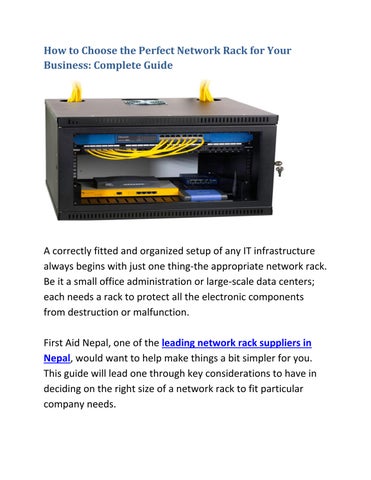
A correctly fitted and organized setup of any IT infrastructure always begins with just one thing-the appropriate network rack. Be it a small office administration or large-scale data centers; each needs a rack to protect all the electronic components from destruction or malfunction.
First Aid Nepal, one of the leading network rack suppliers in Nepal, would want to help make things a bit simpler for you. This guide will lead one through key considerations to have in deciding on the right size of a network rack to fit particular company needs.
What Is a Network Rack, and Why Is It Important?
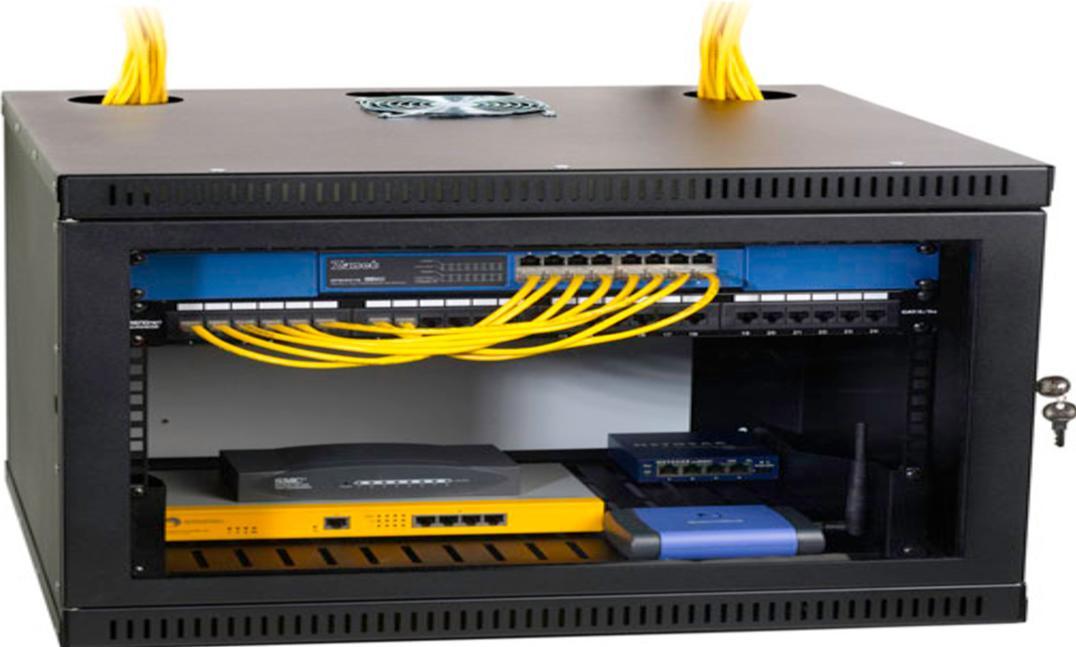
A server rack, or network rack, is a framework that mounts and provides efficient arrangements for routers, switches, patch panels, and servers. It offers efficient space management, improved ventilation, secure storage, and streamlined cable organization. Picking the right rack will mean the best performance and longevity for your network infrastructure.
How to Measure and Determine the Right Network Rack Size
The size is also one of the most critical factors with respect to network rack selection. Here's how to find the right size:
1. Understand Rack Units (U)
Network racks are measured by rack units, and each rack unit equals 1.75 inches in height. The total height of a rack is conventionally expressed as a multiple of U: for example, 24U, 42U, or 48U.
Small offices: 6U to 12U racks are adequate.
Large offices/data centers: 24 to 48U racks are deep and wide
enough.
2. Consider the Depth of Your Equipment
Racks come in 600mm, 800mm, or deeper. It should be deep enough to accommodate your biggest equipment and leave some space for good airflow and cable management.
3. Leave Room for Expansion
You will always want to get a rack that has more capacity than your currently intended use, allowing room for expansion when your business starts to grow.
Key Considerations for a Network Rack Choice
1. Weight Capacity
The rack must support the cumulative weight of your different pieces of equipment. When there is excessive weight on a rack, this compromises the aspect of safety and stability.
2. Ventilation and Cooling
In an attempt to eliminate overheating, find a rack that features:
Perforated doors
Inbuilt cooling fans
Provide for external cooling solutions
3. Security Features
Protect your sensitive equipment with racks that feature:
Lockable doors
Side panels with secure latches
Advanced options like biometric or keypad locks
4. Cable Management
The effective cable routing helps reduce clutter and makes the job of maintenance pretty smooth. Look out for the rack featuring:
Cable routing channels
Tie points
Removable panels for easy access
5. Rack Type
Select the ideal type of rack according to your setup:
Wall-mounted Racks: Best suited for space areas that are small and lighter equipment is required;
Free-standing Racks:Ideal for larger-scale set-ups involving and heavy equipment.
Why Choose First Aid Nepal for Your Network Rack?
First Aid Nepal also deals in a wide range of network racks that can easily fit into different business ventures in Nepal. Both ventilation and cable management in sizes and configuration options have been optimized for materials and construction for longevity, meeting or even exceeding even the most specialized applications. We have always stood committed to the delivery of quality products so that efficiency and security in your IT infrastructure are always maintained. An ideal choice for a network rack creates a secure, organized, and scalable environment for IT. If you become aware of your needs, size, and features about the rack concerning ventilation, security, and cable management, then you may have a better choice. For the best network racks in Nepal, contact First Aid Nepal today. Let us guide you to select the correct solution for your requirement!
Frequently Asked Questions
1. How do I calculate the size of a network rack?
To calculate the size of the rack: Measure your equipment height in inches. Take the total divided by 1.75 to determine the U.
2. What is the difference between wall-mounted and freestanding racks?
Wall-mounted racks are compact, which fits smaller spaces. Free-standing racks are larger to offer greater capacity for heavy equipment.
3. Is it possible to have just one rack for all my IT equipment?
Yes, of course, provided the rack would be big enough for all your devices and adequately ventilated.
4. What is the most common size for a rack in companies?
The 42U free-standing rack has been one of the most utilized and common rack types in businesses around the world for its
capacity and versatility.
5. Where can I buy network racks in Nepal?
First Aid Nepal is your trusted supplier of quality network racks and accessories. Let us know your best options, and we can help you with everything you need.