Ichthyosis Focus SPRING 2026 • Volume 45, No. 1
A Journal for Friends of FIRST
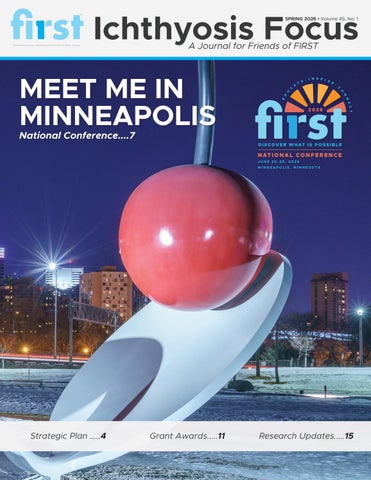
MEET ME IN MINNEAPOLIS National Conference....7
Strategic Plan .....4
Grant Awards.....11
Research Updates.....15
Sustaining Our Impact Through Many Seasons Hi FIRST Community, If you are like me and receive numerous organizational newsletters, you’ll be familiar with the common CEO/Chairman opening letter sent out this time of year talking about spring being a time of “rebirth” and “renewal”. You’ll read about how the sending organization is experiencing its own rebirth or renewal. I am going to use the analogy with a slightly different angle. FIRST just completed its most recent threeChris Boynton year strategic plan and, for the first time, spent considerable time thinking about its current and potential impact on research. We drafted our Research Roadmap to help guide our efforts, influence, and resources in ways that will accelerate the pace of discovery and improve, in a patient-centered way, the quality of research and products in development for this community. The process undertaken by your Board of Directors in drafting these plans was not to start over from the beginning, but to build on all the work done by volunteers and staff throughout the years for FIRST. You know that deer, moose, and elk grow new antlers every spring. But do you know why they progressively grow bigger each year as the animal matures? Young deer must prioritize their nutritional energy for skeletal and muscle growth, leaving less for antlers. Antlers, like strong bones, require large amounts of calcium. Younger moose and elk don’t have the capacity to produce big antlers and grow at the same time. As they mature and reach their full stature, more energy and calcium can be diverted specifically into growing and supporting larger antlers. While they shed every winter to conserve energy, the regrowth process in the spring is essentially a reset that allows the animal to grow a larger, more complex set that matches its maturing physical potential. FIRST has spent many years building its infrastructure, capabilities, and means of support. We are at a time in our maturity when we can ask where to allocate our resources to make the biggest impact. Our capabilities are becoming more complex and varied. A large set of antlers is impressive, but more importantly, they speak to the health and vitality of the animal and its ability to thrive in all seasons. FIRST is in a great position organizationally, and you will read throughout this newsletter how we are thriving now and with big plans for the future.
Chris Boynton CEO
Foundation for Ichthyosis & Related Skin Types, Inc. (FIRST) PO Box 1067 Lansdale, PA 19446-0687 2 FIRST | Spring 2026
Vol. 45, No. 1
Spring 2026
FIRST exists to improve lives and seek cures for those affected with ichthyosis or a related skin type. Copyright © 2026 by the Foundation for Ichthyosis & Related Skin Types, Inc.® Ichthyosis Focus is published by the Foundation for Ichthyosis & Related Skin Types, Inc.® Request to reprint information contained in the Ichthyosis Focus should be directed to the editor. The Foundation for Ichthyosis & Related Skin Types, Inc.® PO Box 1067, Lansdale, PA 19446 Phone: 215.997.9400 Toll-free: 800.545.3286 Fax: 215.997.9403 Email: info@firstskinfoundation.org Web: www.firstskinfoundation.org CEO Chris Boynton Editor Kimberly Cole Medical Editor Amy Paller, MD Editorial Assistants FIRST Staff
The Foundation for Ichthyosis & Related Skin Types, Inc.® is a 501(c)3 charitable organization supported by public and private donations. All contributions to the Foundation are tax deductible to the full extent of the law.
Celebrating Rare to Promote Mental Health FIRST member Eileen Uthuppan recently partnered with Rare Beauty to help create a powerful documentary exploring the mental health experiences of college and graduate students — including those living with ichthyosis. Selected as one of just 25 Rare Impact Mental Health Ambassadors for the fall semester, Eileen worked alongside fellow ambassadors to amplify the voices of “rare” students and highlight the importance of mental health awareness and support on campus. As part of the project, she was proud to include members of the FIRST ichthyosis community - Harper Foy, Jeyza Kaelani, and Gabriela Faber - bringing their lived experiences to a broader audience. “It was truly amazing to showcase our documentary LIVE and virtually to the Social Impact Team at Rare Beauty and to bring awareness of ichthyosis to a brand that celebrates what it means to be rare!” Eileen said. “If it wasn’t for FIRST, I wouldn’t have been able to grow the way I did, and I am incredibly thankful for being a part of an organization like this! I truly found my purpose in being Rare!” Watch the documentary at firstskinfoundation.org/news/rare-beauty-documentary and join us in celebrating the power of storytelling, representation, and mental health advocacy within the rare disease community.
Honoring the Legacy of Dr. Eugene Van Scott: A Pioneer for the Ichthyosis Community The ichthyosis community has been profoundly shaped by the dedication, innovation, and compassion of Dr. Eugene Van Scott — a visionary dermatologist whose work transformed both the understanding and treatment of disorders of keratinization. A co-founder of FIRST, Dr. Van Scott, who died in July 2025, devoted his career to researching rare skin diseases at a time when ichthyosis was largely misunderstood and treatment options were extremely limited. Through his leadership at the National Institutes of Health (NIH) and later in private research, he helped bring scientific credibility and urgency to conditions that had long been overlooked. One of Dr. Van Scott’s most groundbreaking contributions was his research into alpha hydroxy acids (AHAs), particularly ammonium lactate, which led to the development of effective topical therapies that significantly improved scaling and skin hydration for individuals with ichthyosis. These discoveries changed daily care for countless patients and remain a cornerstone of treatment today. Beyond the laboratory, Dr. Van Scott was deeply committed to patients and families. He believed that research should always translate into real-world impact — improving comfort, confidence, and quality of life. His partnership with patient advocates helped bridge the gap between science and community, laying the foundation for the collaborative model FIRST continues to champion. His legacy lives on not only in the therapies he pioneered, but in the hope he brought to generations of individuals living with ichthyosis. Because of Dr. Van Scott’s work, families gained answers, clinicians gained tools, and the rare disease field gained a powerful advocate. As we continue advancing research, education, and support, we honor Dr. Eugene Van Scott’s enduring impact — a legacy written in science, compassion, and lasting change for the ichthyosis community.
Dr. Van Scott and his long-time research partner Dr. Ruey Yu
www.firstskinfoundation.org 3
Strategic Plan Sets a Course for the Future The FIRST Board of Directors recently approved implementation of their next three-year strategic plan. This plan will guide our efforts through 2028 and ensure FIRST remains an impactful, supportive, relevant, and successful organization and an important resource in your life. The four components of the plan revolve around the concept of quality, which, by definition, means the degree of excellence of something. As a group, your Board of Directors are committed to a very high level of excellence. This excellence will be evident in our efforts in driving quality of care, quality of life, and quality research through our own program and support of research elsewhere. Quality of care will be elevated through our efforts to advance training and education to improve ichthyosis recognition and treatment throughout the health care system. Medical trainee education will include resources developed by FIRST and opportunities for medical/nursing students and trainees to engage with our community. We will also create continuing medical education courses with content that increases literacy of epidermal differentiation disorders (EDD – the new classification that includes ichthyosis) among dermatologists and non-dermatologists. We will also foster career development through expert/ trainee connections and mentorship. The front door to FIRST is often our physician locator service. To make this more helpful for more people, we will be expanding this service to include other specialties like ENT, mental health, rheumatology, allergy and others you interact with throughout your journey. The number of dermatologists you have access to is an important driver of quality. Access to telehealth will dramatically improve your access to EDD experts. Quality of life for our community can be heavily influenced by patient empowerment through self-advocacy, support
Share Your Life Events with Our Community FIRST invites members to share important milestones and achievements with us for publication in future issues of Ichthyosis Focus. Marriages, births, graduations, career changes ... We want to hear about it! Please submit your announcement to cwassel@firstskinfoundation.org. 4 FIRST | Spring 2026
networks at your disposal, and your ability to navigate the health care system. Much of this information and skill building will be found on FIRST’s new website where dedicated, easily accessible pages will build the community and provide educational resources with accurate and upto-date information. We will conduct advocacy training sessions to equip you with communication tools for conversations with health care professionals, schools, and insurance companies. Our policy advocacy will promote patient-centered care and insurance reform. The Board paid particular attention to Quality in Research and asked the question “What is FIRST uniquely positioned to do to accelerate the pace of scientific discovery in this area of dermatology?” The answer is in our Research Roadmap highlighted on the next page. The last area the plan looks to make a significant impact on is driving a quality organization. We strive to be a bestin-class patient advocacy organization with increased capacity and sustainability for maximum impact on our critical mission. The first objective is resource development – fundraising growth through increased engagement, diversification of revenue sources, and donor stewardship. Board development through identification of skills and expertise needed to align with strategic priorities will be important. Impactful organizations have a pipeline of qualified, effective volunteer leaders who can significantly contribute to the success of the mission. Lastly, FIRST will evolve its governance model to meet the challenges of the plan and the changing non-profit environment.
A Strategic Roadmap to Advance Research To help accelerate research and innovation for epidermal differentiation disorders (EDD), the FIRST has developed a comprehensive, patient-centered Strategic Research Roadmap. With a membership of more than 10,000 individuals and families affected by EDDs, a Medical and Scientific Advisory Board comprised of leading researchers and clinicians, FIRST is uniquely positioned to implement this patient-centered strategy to advance EDD research. The roadmap is structured around four strategic pillars that support accelerating discovery, fostering collaboration, elevating the patient voice, and improving access to information about emerging EDD research and clinical trials. FIRST will not begin conducting its own research, nor does it have the resources of a pharmaceutical company to conduct clinical trials, but we do have many assets that will be deployed to support the efforts of others. We can be part of the greater ecosystem, bringing stakeholders together to share information, resources, and effort to bring new treatments to our community. Core Pillars and Strategic Initiatives: 1. Expand and Advance EDD Research •C onvene a scientific forum to advance a patient-centered research agenda •O ptimize FIRST’s research grant program, support research, and showcase successful outcomes • Expand, cultivate, and engage a diverse pool of researchers active in EDD research • Encourage data sharing to accelerate discovery • Establish Centers of Excellence framework •C ultivate research talent through mentorship and recognize leadership 2. Convene Stakeholders •E ngage medical societies to encourage interdisciplinary research partnerships and increase visibility at key conferences •L everage Industry Partners Council to capitalize on industry expertise and resources •E xplore ways to engage NIH and FDA to advance research and policy initiatives •B uild relationships with rare disease groups (Global Genes, GlobalSkin, NORD, others) to build capacity 3. Advocate for Research and Elevate the Patient Voice •L aunch a Patient Champion Program to amplify the patient voice to engage and educate clinicians •P romote patient storytelling and public awareness • I ntegrate patient participation into the research framework (e.g., advisory boards and clinical trial design, policy initiatives) •W ork with membership to conduct longitudinal data collection to better describe burden and priorities 4. Elevate FIRST as the Central EDD Resource •T ranslate and present information on EDD research to broader audiences •D isseminate research updates to generate scientific interest •S upport trial recruitment and design to accelerate therapeutic programs •P roduce educational webinars, expert commentary, and patient stories to drive interest in EDD and study participation
www.firstskinfoundation.org 5
How Could You Explain Ichthyosis to a Young Child? Submitted by Anne Kaier In my experience, little children, around 3 to 5 years old, are often both curious and confused when they see a person, like me, with ichthyosis. This can cause difficulties for the child because she or he doesn’t know what’s different about the adult’s skin. As a touchy-feeling woman, I always want to hug a small child, make her laugh in my arms. An unexplained skin condition can sometimes get in the way of a good cuddle. I have a lovely great-niece, Greta, who lives near me. One day when she was about 3, we were playing on the floor with her fleet of trucks. She picked up a yellow dump truck, ran it along a blue line in the carpet and then pushed it onto my right hand. There it stopped. She brushed my scaly knuckles with her soft fingers and looked up at me with big questions in her huge eyes. “Yes, I know,” I said, feeling utterly vulnerable, “My hand is sorta rough.” Then I tried to reassure her, “My skin’s not like yours.” She rubbed my hand again as the dump truck clattered onto the carpet. “Why is it like that?” she asked, clearly wanting to know. “It just came that way,” I said. She accepted this inadequate explanation and went back to loading her pickup with wooden blocks. On the way home, I wondered if there was a better way to talk with her about my skin. That night, I texted her dad, Charlie, my nephew. He told me that Greta learns well from reading books, of which she has many scattered around her room. “We’ll check into that,” he texted back. A few weeks later, Charlie texted to say he had located a nifty book called Luke and the Tiger, a story about a little boy named Luke who has ichthyosis. He helps a tiger search for her cubs, who have gotten lost. As they go through a forest looking for the little ones, they meet other creatures who have some of the same characteristics as Luke. Elephants, for example, move slowly because they don’t sweat. He tells the elephant family he has ichthyosis and when they ask what that is, he explains: “It means my skin is very dry and I have to take very good care of it. I itch a lot.” The elephant asks: “So do you rub mud on your skin to cool down too?” Luke meets frogs and snakes who also have flaky skin. The book offers a charming way to associate interesting animals with people with ichthyosis. And of course, Luke helps the tiger find her cubs in the end—a hero boy.
Luke and the Tiger by Jolien van der Geugten with illustrations by Nynke Boelens, is available in English through Amazon and Bookshop.org. Jolien has a son with ichthyosis. This story gave me an idea: I could talk with Greta about how my skin is different, and yet similar to other fun creatures. Even if she hadn’t read the book yet, I could compare my skin with, say, the bark of a tree. I tried this out with Greta one spring day when buds were coming out on the little magnolia in her narrow Phillidelphia backyard. “Look, Greta,” I said, “The tree bark is rough, just like my hand.” She stood on tiptoe in her purple jacket, flicked her fingers through her brown hair, rubbed the bark, and then patted my hand. “Annie is a tree,” she giggled. While Greta was surely too young to understand gene mutations, with the help of the tree, I could normalize ichthyosis a bit for her—and find a reassuringly natural metaphor for my own skin. We could make something of a game out of all this—thus easing my embarrassment and her curiosity. It helped. It helped break down what could have been an emotional barrier for me. It made it easier for me to touch this precious child whom I loved. And it made it easier for her to hang out with her kooky great-aunt.
About the Author: Anne Kaier Anne Kaier is an award-winning author of essays and poetry. Her memoir, They Said I Couldn’t Have a Love Life, was a Finalist for the Association of Writers and Writing Programs’ 2024 Sue William Silverman Prize. Her essays have been featured in The New York Times and led to guest appearances on NPR. She is a Virginia Center for Creative Arts Fellow and has served on a Fulbright screening committee for creative writers. She has an MA from the University of Oxford and a Ph.D. from Harvard University. 6 FIRST | Spring 2026
2026 National Conference: Minneapolis, MN
2026 FIRST National Conference June 26-28, Minneapolis, MN Visit firstskinfoundation.org/ minneapolis-2026 for registration and accommodations
Registration (through May 31)
Conference Hotel
Adult (13+): $550
Hyatt Regency Minneapolis 1300 Nicollet Mall Minneapolis, MN 55403
Child (4-12): $275 Pre-K(1-3):
$100
Child Care: $75 per child (entire conference for children ages 1 to 12)
Conference sessions begin early on Friday morning. To avoid missing a significant portion of the conference, you may want to schedule your check-in for Thursday. If you would like to request an ADA accessible room or a room with a tub, please add a note in the special requests section when making your reservation.
Clinical Appointments Clinical appointments at the National Conference offer a unique opportunity for interested individuals to meet oneon-one with ichthyosis medical experts and help advance ichthyosis research. There are two options available, which can be selected during conference registration: • 1 5-minute visit with a group of knowledgeable dermatologists where you can ask questions. •E xtended visit to participate in research studies taking place at the conference, which will also include an opportunity to meet with knowledgeable dermatologists and ask questions. This could take an hour. The details of what studies are available will be posted when finalized.
www.firstskinfoundation.org 7
2026 National Conference: Minneapolis, MN Emcee Jeff Civillico to Bring Energy, Entertainment
Portia Cina Takes Spotlight as Member Keynote
A Las Vegas headliner and highly acclaimed keynote speaker, Jeff was recommended to FIRST by one of our families—and we’re thrilled to have him join us. Rather than offering abstract inspiration, Jeff equips audiences with a renewed awareness of their role in shaping culture, performance, and lives. Attendees will laugh, reflect, and walk away with a deeper sense of ownership over the ripples they create through example, mentorship, advocacy, service, and leadership.
Portia Cina is a longstanding advocate within the ichthyosis community. Diagnosed with ichthyosis en confetti at birth, she has been involved with FIRST since she was 9 months old and has dedicated her life to promoting awareness, understanding, and representation for individuals with rare skin conditions. Currently a student at the Savannah College of Art and Design, Portia continues to speak openly about her lived experiences and remains committed to fostering visibility, empowerment, and connection within the ichthyosis community.
Minneapolis Welcomes You! Longtime Minneapolis resident and FIRST community member (mother of three daughters) Sarah Aughenbaugh is delighted to welcome attendees to the city she and her family have proudly called home for more than 16 years. Sarah shares her perspective on what makes Minneapolis such a vibrant place to gather, from its beautiful lakes and lively arts scene to the strong sense of community that mirrors the spirit of FIRST. The snow is melting and the days are getting longer, seasonal signs that summer and FIRST’s National Conference will soon be here. As Minneapolis residents of more than 16 years, my family is thrilled to welcome FIRST and the ichthyosis community to the city we call home. There’s something truly special about summer in Minneapolis. Within the immediate vicinity of downtown and the conference hotel, there is a multitude of things to see and do. The city shines as the Chain of Lakes come alive with swimmers, cyclists, and kayakers. The Mill City farmers market overflows with local vendors and live music. Rooftop patios teem with friends and families out for a bite to eat and drink. The renowned arts scene bustles with life from First Avenue concerts to Guthrie Theater performances to Walker Arts Center and Sculpture Garden exhibits (the museum is free on Thursday evenings and the Sculpture Garden is always free). Minneapolis is a city that loves to highlight what makes our community special. In summer, it really shows off. Beyond Minneapolis, the broader Twin Cities community and State of Minnesota offer many options to extend your visit. Pay tribute to Prince at Paisley Park, the museum founded in his home and recording studio. Shop ‘til you drop at the Mall of America. Cheer on any one of our home teams in an athletic event. Visit the headwaters of the Mississippi River at Itasca State Park. There are as many options and adventures as there are lakes in Minnesota. Every two years FIRST’s National Conference brings people together from across the ichthyosis community. This is a precious opportunity to connect, share, and support one another in line with FIRST’s core values of compassion, hope, integrity, and responsiveness. We're honored that so many people in this cherished community will be coming together in this beautiful, vibrant city. Hope to see you soon in Minneapolis!
8 FIRST | Spring 2026
2026 National Conference: Minneapolis, MN Tentative Conference Agenda THURSDAY, JUNE 25, 2026
SATURDAY, JUNE 27, 2026
Time
Session
Time
Session
6:00 PM-8:00 PM
Registration and Welcome Reception
7:00–8:30
Board Meeting
9:00 AM
Day One Recap and What is Ahead
FRIDAY, JUNE 26, 2026
9:45 AM
Portia Cina – Keynote Speech
Time
Session
10:30 AM
Break
7:30
Yoga available
10:45 AM
Audience Participation
8:00-9:00
Breakfast
Noon
Lunch
8:00 AM
New Attendee Orientation
1:00–1:50
9:00 - 5:00 PM
Research Appointments
Research Update (Academic & Industry)
9:00 AM
Welcome – Sean, Chris, Sarah
2:00 - 2:50 pm
Ichthyosis Type Sessions
9:45 AM
Decade of Discovery – Amy & Others (CHEDD, Roadmap FIRST)
2:00–2:50
Vulgaris, X-Linked
2:00–2:50
Netherton Syndrome
10:30 AM
Break
2:00–2:50
Harlequin
10:45 AM
Patient Centricity (Advocacy, Self‑Advocacy, Research)
2:00–2:50
Lamellar, CIE
2:00–2:50
Sjӧgren-Larsson Syndrome (SLS)
Noon
Lunch
2:00–2:50
Ichthyosis En Confetti
1:00–1:50
Ichthyosis Life Hacks
2:00–2:50
Epidermolytic Ichthyosis and PPK
1:00–1:50
Overheating, Itching & Sports
2:00–2:50
1:00–1:50
Camp
KID, CHILD, PRP, TTD & Related Skin Types
2:00–2:50
Ichthyosis Life Hacks
Breakout Sessions
2:00–2:50
Insurance & Ichthyosis
3:00–5:00
Adults
2:00–2:50
Mental Health
3:00–5:00
Grandparents
3:00–3:50
Nail, Hair & Scalp Care
3:00–5:00
Moms
3:00–3:50
Genital involvement in Ichthyosis and its effect on sexuality
3:00–5:00
Dads
6:00–10:00 PM
Saturday Night Event
3:00–3:50
Insurance & Ichthyosis
3:00-3:50
Genetics & You
4:00–5:00
Genital involvement in Ichthyosis and its effect on sexuality
4:00–5:00
Nail, Hair & Scalp Care
4:00–5:00
Poster Session Walk‑Around
6:00 PM
Optional Events 1)Baseball Game offsite or 2)Ichthyosis Movie Showing at hotel (registration required)
FIRST NATIONAL CONFERENCE AGENDA – SUNDAY, JUNE 28, 2026 Time
Session
Morning
Goodbyes
www.firstskinfoundation.org 9
Throwback to 2016: A Look Back to FIRST Highlights of the Past Submitted by Abby Evans Haines You may have seen recently on social media the “throwback to 2016” trend popping up across your feed. It’s hard to believe 2016 is already 10 years ago. It’s worth reflecting on what was an exciting and monumental year for the FIRST community. Let’s rewind: January started with a celebration. On January 2, 2016, FIRST marked its 35th anniversary. What began as a small group of families has grown into a nationwide community connected through research, education, and support. Research Updates from the 2016 National Conference: • T he 16th National Conference in San Diego welcomed 473 attendees, record breaking attendance at the time. Affected individuals, families, advocates, dermatologists, and researchers all came together to learn, connect, and share experiences! • D r. Keith Choate of Yale University reported that through the National Registry for Ichthyosis & Related Skin Disorders, researchers had identified 608 affected individuals’ genetic diagnoses. Today, that number stands at 1,500. • D r. Amy Paller and her colleagues from Northwestern University enrolled participants in a study to understand the cause of skin redness in ichthyosis. Affected individuals could opt to participate in the study at the National Conference that year. • R esearchers were also working on improving how ichthyosis is evaluated in clinical settings. Dr. Nareh Marukian of Yale University presented work on developing new clinical assessment tools that would allow doctors and researchers to measure the severity of ichthyosis in a more consistent way. Since then, established criteria to measure severity has played an integral role in recent clinical trials. Meanwhile, gatherings brought the community together in new ways. The 2nd annual Ichthyosis Picnic, organized by Dr. Paller and her team at Northwestern University/ Lurie Children’s Hospital, brought together more than 75 individuals and families! At Dr. Paller’s latest gathering, now known as the Winter Warm-Up, more than 100 attended.
In August 2016, FIRST member Anne Kaier shared her story, “Finding Refuge with the Skin I’m In,” in The New York Times. The story piqued membership interest, with FIRST’s website receiving 4,425 visitors in a single day to read Anne’s story. The power of her story engaged thousands with the ichthyosis community. Anne is now a regular contributor to this publication, Ichthyosis Focus – see her latest article on p. 6. The FIRST member database currently has 9,904 affected households totaling 10,882 affected individuals, compared to 5,204 households and 5,681 individuals in 2016. Online, the community was growing too. Digital spaces were quickly becoming vital opportunities for members to share advice, ask questions, and connect with each other. By May 2016, membership in FIRST’s Facebook groups had passed 1,000 people, and later in the year, Facebook followers climbed to 4,000. The organization’s YouTube channel passed 300,000 views! Today, FIRST has over 9,500 members across its various Facebook groups and our videos have been viewed over 600,000 times! Then, in September, several new tools launched to make resources easier to access. FIRST introduced an automated Physician Finder launched in March 2016 to help members locate dermatologists knowledgeable about ichthyosis. The website was redesigned to work better on mobile devices, and educational materials were translated into Spanish. The Jane and Henry Bukaty Skin Care Fund, which helps individuals access essential skin care products, had awarded more than $19,000 in support since the creation of the fund in 2000. FIRST also awarded a record 17 UFIRST Scholarships, helping members of the community pursue their post-secondary education goals. Looking back, 2016 was a year of momentum, and opportunities for connection and awareness continue to grow! Looking ahead, we hope you will join us this June for the 23rd National Conference in Minneapolis. We cannot wait to see what new achievements and milestones we will have to look back on!
About the Author: Abby Evans Haines Abby Evans Haines is a newlywed living in Pennsylvania and working in development for a nonprofit organization. She has lived with Lamellar ichthyosis and has been an active member of the FIRST community for many years. Through various volunteer projects and initiatives, Abby has generously shared her time and perspective to help support others affected by ichthyosis. Her commitment to the community reflects her passion for connection, advocacy, and making a meaningful difference for individuals and families navigating life with rare skin disorders.
10 FIRST | Spring 2026
FIRST Research Grant Program: Advancing Knowledge in Ichthyosis and Related Disorders FIRST is proud to announce the latest recipients of our Research Grant Program. These innovative projects represent the next wave of scientific discovery, aimed at improving understanding and treatment of ichthyosis and related skin disorders. Through the support of our community, FIRST continues to fund pioneering research that addresses both the underlying biology of these rare conditions and their impact on quality of life. This year’s funded projects span a wide range of focus areasfrom molecular mechanisms to patient health outcomes.
Xiaomin Bao, Northwestern University
Cheryl Bayart, Cinncinati Children’s Hospital
Molecular mechanisms linking mechanical stretch to epidermolytic ichthyosis severity
Evaluation of bone health and analysis of osteoporosis risk factors in patients with epidermal differentiation disorders (EDDs)
Dr. Bao’s research will investigate how mechanical stress (such as skin stretching) contributes to the severity of epidermolytic ichthyosis, with the goal of identifying new therapeutic strategies.
Dr. Bayart’s study will explore the connection between EDDs and bone health, evaluating risk factors for osteoporosis in this patient population.
William Davies, Cardiff University, UK
John Edminister, Wake Forest University
Understanding the biology of X-linked ichthyosis (XLI) and associated medical conditions with a new mouse model
Modulation of the calciumsensing receptor in acantholytic genodermatoses
Dr. Davies aims to develop and study a new mouse model for X-linked ichthyosis, shedding light on the biology of XLI and its associated medical challenges.
Dr. Edminister’s research focuses on how the calcium-sensing receptor plays a role in acantholytic genodermatoses, potentially paving the way for targeted treatments.
Keith Choate, Yale University and Amy Paller, Northwestern University (second year funded) Employing spatial transcriptomics to identify drivers of scaling and erythema in EDD Drs. Choate and Paller will use advanced transcriptomic technologies to study what drives scaling and redness in epidermal differentiation disorders, helping to uncover new treatment targets.
Keith Choate
Amy Paller
Driving Progress Through Community Support These projects highlight the power of research to move us closer to better treatments-and one day, cures-for ichthyosis and related skin conditions. FIRST is honored to support these investigators as they take bold steps toward improving the lives of individuals and families affected by these rare disorders.
www.firstskinfoundation.org 11
Happily Ever After: FIRST Members Share Stories of Love and Marriage
After a number of bad dating experiences, I doubted I would find someone who was willing to take all of me. I stopped seeking romantic relationships and put my energy into growing myself. I had to learn what I wanted from life before I was ready to connect deeply with someone. Not a full year after that, I met Sean. We are both disabled self-advocates in our professional lives and met at a conference in 2023. We have different disabilities (me with ichthyosis, him with cerebral palsy) but those things bound us together. It meant we had more awareness of what the other was going through, a deeper understanding of what the other needed. Our respective conditions were openings for connection rather than embarrassing limitations. Sean and I committed ourselves to one another in a tiny seaside town in December 2024. The presence of ichthyosis in our lives has been a blessing to our relationship. Even when my skin is flaring or painful, it is a window into our mutual experiences in bodies that don’t always behave as we’d like. It allows us the opportunity to show up for the other. Being in a committed relationship has shifted the way I approach my role in the ichthyosis community. Before, I was an individual trying to show what achievements are possible. Now, I am a wife and mentor in a way that I wasn’t before because I’m not carrying that weight alone. I felt relationships as a teenager and young adult were about looks and popularity and thought that I didn’t fit in. When I dated, I never mentioned my ichthyosis right away.
What do you love about her? Sean: I love the way we make each other laugh. She saw me for me and makes me see the value in myself. What has been the hardest part of watching your loved one live with ichthyosis? Sean: It is hard watching her struggle to see the value in who she truly is.
12 FIRST | Spring 2026
“
I did not have to wait to find love; it can happen at any time. - Abby Haines
I tried not to make a big deal about it. Looking back, I can see how the way somebody responded was a sign of whether I should keep seeing them. After meeting PJ, the idea that I once thought I wouldn’t get married seems so far away and almost impossible now! We married in December. We both have things about ourselves that make us “different” but that has proved to be a strength in understanding each other. I am also significantly more resilient and adaptable than if I didn’t have ichthyosis, which makes me a stronger partner. Ichthyosis does impact my relationship when we have to do things to accommodate my needs. For instance, we may do things differently at the beach than someone who could sweat or I might need to take a bath before we watch a movie. Marriage has not shifted my identity with ichthyosis, but rather I gather more identities as life continues and ichthyosis’ portion gets smaller.
What do you love about her? PJ: Abby is authentically herself and that energy is contagious. She makes me feel comfortable and loved for being my true self. What has been the hardest part of watching your loved one live with ichthyosis? PJ: The hardest thing is seeing her struggle with pain and being uncomfortable on her bad days.
“
“
“
- Hunter Steinitz
“
“
The presence of Ichthyosis in our lives has only been a blessing to our relationship.
With the right person, whatever “flaws” one may have are irrelevant. - Marc Benedetto
My wife, Jennifer, doesn't see my condition as an issue in our relationship and marriage. We have been together for almost six years and it has never once been brought up. I guess if someone finds the right person, whatever "flaws" one may have are irrelevant.
“
- Bailey Fabiano
I grew up loving fairy tales and dreamed of my happily ever after but doubted that wish would come true because of my skin. My first relationship was after college and it was life-changing because it showed me that love was possible – skin and all! It didn’t last, but it laid an important foundation. When I got into the online dating scene, I always made sure to explain my ichthyosis before I went on a date and it helped to weed some people out. They always say that your person comes along when you least expect it. I had nearly given up on dating when Brian came back into my life. We had gone on a few dates several years prior, liked each other but never communicated that. We focused on friendship for two years before we went our separate ways. In 2022, he realized that I was the one who got away and we started dating. On September 16, 2023, we married. Our family grew when we had our daughter the following year.
“
“
“
I have a husband who loves all of me.
Being who I am is who I always want to be.
- Ellen Clemmer
As a teenager, I had boyfriends, and they were all very kind and caring. I was lucky. Having ichthyosis made me selfconscious, but I didn’t let it stop me from having fun, meeting people, and dating guys who were caring and accepting of who I was. No one ever rejected me because of my skin. I was open and honest about it. I worried sometimes that I might never get married, but I wed right after college. We were married for 20+ years and had two children. After a divorce, I married my second husband, Tom, and we have been together for almost 25 years and have two grandsons. My parents worked hard to help me accept myself and understand that ichthyosis did not define my life; that I could do and be anything I wanted. My husband also has a skin disorder called vitiligo, so we take care of each other. Being married to my husband has brought me joy and delight. As we grow older, we feel closer and life is more special.
Having ichthyosis has made me a better person. I believe that I am more compassionate, kindhearted, positive, and resilient from my experiences and I carry those over into my marriage. Being married has helped me become more comfortable in my skin because I have a husband who loves all of me.
Ichthyosis has brought more love into my life. Being who I am is who I always want to be. Having ichthyosis has made me aware of what is important in life: be yourself, do your best, and accept others for who they are. Being married to someone who believes in me made me more accepting of who I have become.
What do you love about her? Brian: She treats me with love and compassion and is very beautiful inside and out. I am proud to call her my wife.
What do you love about her? Tom: My wife is a beautiful, educated, accomplished person with a giving and loving personality who has not let her skin problems stop her from having a full life.
What has been the hardest part of watching your loved one live with ichthyosis? Brian: I think that her not wanting to disappoint people by her inability to regulate her body temperature, especially in the hot summer months, is the hardest part.
What has been the hardest part of watching your loved one live with ichthyosis? Tom: It is hard to watch her having to apply creams. It’s a small burden, I know, but is still limiting and I don’t like her having to be limited.
About the Author: Bailey Pretak Fabiano Bailey Pretak Fabiano is a dedicated member of the FIRST community who has supported the organization in many ways over the years. She previously served on the Board of Directors and has generously hosted fundraisers to help advance FIRST’s mission. Bailey lives in Pennsylvania with her husband and their young daughter, and remains passionate about supporting individuals and families affected by ichthyosis through advocacy, community engagement, and volunteerism.
www.firstskinfoundation.org 13
Research Examines Therapies, Impacts Beyond Skin Eye involvement in a series of 94 young patients with congenital ichthyosis: Importance of early ophthalmological referral Blanco-Calvo N, Núñez-Reiz A, Vals-Ferrán I, Malhotra R, Hernández-Martín A. JAAD. Published 2025 Dec 23. doi:10.1016/j.jdin.2025.12.004 Many forms of congenital ichthyosis, now grouped under the term epidermal differentiation disorders (EDDs), can affect the eyes. In this study, researchers evaluated 94 children and young people with EDDs to better understand how often and what kind of eye problems occur. They found that 81% of patients had some type of eye involvement. The most common issue was dry eye disease (72%), which happens when the eyes do not produce enough tears or the tears Nicole Chin evaporate too quickly, leading to irritation and redness. Many patients also had Pre-Doctoral meibomian gland dysfunction (63%), meaning the tiny oil glands in the eyelids Research Fellow are not working properly, which can worsen dry eye. Other complications included exposure keratopathy (31%), in which the surface of the eye becomes Department of Dermatology Feinberg School of damaged because it is not fully protected by the eyelids, and ectropion (28%), Medicine, Northwestern a condition in which the eyelid turns outward. Vision problems were also seen, University including astigmatism (37%), which causes blurred or distorted vision, and nearsightedness (18%). The researchers found that eye problems often develop gradually over time as dry eye and eyelid changes worsen.
Keana M Khodadad Pre-Doctoral Research Fellow Department of Dermatology Feinberg School of Medicine, Northwestern University
Steroid sulfatase deficiency: Clinical manifestations and psychological aspects in light of current evidence Fryze M, Pietrzak A. Clin Cosmet Investig Dermatol. Published 2026 Feb 20. doi.org/10.2147/ CCID.S581543
The syndromic epidermal differentiation disorder (sEDD) associated with steroid sulfatase deficiency (STS-sEDD), formerly called X-linked ichthyosis, is a hereditary disorder of males that causes dry, scaly skin but can also affect other parts of the body. In this review, researchers summarized current evidence on the medical and psychological effects of the condition. STS-sEDD is caused by changes or deletions in the STS gene, which normally produces an enzyme that helps to regulate skin cell turnover. When the enzyme is missing, certain substances build up in the outer layer of the skin, leading to the dark, plate-like scales typical of the condition. The authors emphasize that it should be viewed as a multisystem disorder, not just a skin condition. Studies show that many patients experience neurodevelopmental conditions like attention-deficit with hyperactivity disorder/ADHD or autism spectrum disorder, as well as heart rhythm abnormalities (especially as adults), eye changes (corneal clouding, but typically without causing vision change), and/ or hormonal or reproductive differences. The condition can also affect emotional wellbeing, as patients and families often face social stigma, anxiety, and reduced quality of life.
Leveraging gene-edited cells in organotypic models to discover therapeutic strategies for orphan skin diseases Simpson CL. Journal of Investigative Dermatology. 2026. doi.org/10.1016/j. jid.2026.01.023
Many rare genetic skin diseases still lack effective treatments, partly because they are difficult to study in traditional laboratory models. In this article, researchers describe how gene-editing technologies such as CRISPR can be used to create realistic laboratory models of these diseases using human skin cells. Scientists edited specific disease-causing genes in keratinocytes (the main cells that make up the outer layer of skin) and then grew them into three-dimensional skin tissue models, sometimes called “organotypic skin.” These models allow researchers to closely mimic how rare skin diseases develop and to test potential treatments more efficiently. For example, using a model of ATP2A2-nEDD/Darier disease, a rare genetic disorder that causes painful, crusted skin lesions and infections, the researchers identified abnormal activity in a signaling pathway called EGFR-ERK, which controls how skin cells grow and stick together. When they treated the cells with MEK inhibitors, medications that block part of this pathway, skin cell adhesion improved and the skin tissue began to develop more normally. In one reported patient with severe disease, treatment with the MEK inhibitor trametinib led to significant clinical improvement, further suggesting the value of the skin model system.
Unveiling serine protease activity profiles in Netherton syndrome skin across clinical subtypes by noninvasive analysis. Petrova E, Duthoit A, Prassas I, Hovnanian A. Am J Physiol Cell Physiol. 2025;329(4):C1139-C1149. doi.org/10.1152/ajpcell.01027.2024
A case of Netherton syndrome/spink5-syndromic epidermal differentiation disorder evaluated by serial tape-stripping: Persistent elevation of serine proteaseactivities despite clinical improvement Morizane S, Morita A, Sunagawa K, et al. J Dermatol. 2025;52(12):e1091-e1093. doi. org/10.1111/1346-8138.70007
14 FIRST | Spring 2026
SPINK5-sEDD or Netherton syndrome is a rare genetic skin condition caused by changes in the SPINK5 gene, which normally produces a protein called LEKTI that helps to control skin enzymes responsible for breaking down proteins during normal skin shedding. Without this protective protein, certain enzymes, especially serine proteases such as kallikrein-related peptidases (KLKs), become overactive, weakening the skin barrier and causing red, scaly, eczema-like skin inflammation. Petrova et al. found that overall KLK enzyme activity was higher, not only in visible skin lesions but also in skin that appeared normal. Some enzymes (KLK6 and KLK13) were increased mainly in inflamed skin, while others (KLK5 and KLK7, enzymes most closely linked with disease activity based on mouse models) were present throughout the skin. Patients with the scaly erythroderma (SE) subtype of the disease, with red, scaling skin everywhere, showed higher activity of one enzyme (KLK7) than those with ichthyosis linearis circumflexa (ILC) subtype, in which there are more localized areas of redness and scaling. The study also found that tape-strip sampling, a simple noninvasive method of collecting skin cells, could help monitor disease activity and treatment response. These findings support targeting KLK enzymes as a potential treatment strategy for SPINK5-sEDD/Netherton syndrome, but also raise the question about the relationship between KLK 5 and KLK7 and skin inflammation in this EDD. In this case report, Morizane et al. followed a young woman with SPINK5-sEDD/Netherton syndrome and used tape-stripping to collect skin cells and measure enzyme activity and inflammation over time. Although the patient’s skin improved clinically after treatment for infection and adrenal hormone deficiency, the KLK enzyme activity in the skin remained abnormally high, suggesting that the underlying disease process continued even when symptoms improved. The researchers also found higher levels of inflammatory signaling molecules (IL-1, IL-17, and IL-36) when the disease was more severe, with a decrease in the expression of these pro-inflammatory genes, despite persistence of the high underlying KLK as skin improved.
Lipid nanoparticle-based non-viral in situ gene editing of congenital ichthyosis-causing mutations in human skin models. Apaydin DC, Sadhnani G, Carlaw T, et al. Cell Stem Cell. 2026;33(2):233-252.e12. doi.org/10.1016/j.stem.2026.01.001
Researchers developed a laser-assisted topical lipid nanoparticle system to deliver gene editors directly into skin and correct the common TGM1 mutation causing autosomal recessive congenital ichthyosis/lamellar ichthyosis, restoring about 30% of normal enzyme activity in human skin models with strong safety and minimal systemic exposure.
A Cross-Sectional Questionnaire Survey on the Impact of Congenital Ichthyosis on Lifelong Education and Career. Suzuki Y, Tanahashi K, Kobayashi Y, et al. J Dermatol. 2025;52(9):1470-1474. doi. org/10.1111/1346-8138.17879
A survey of 77 people with congenital ichthyosis (epidermal differentiation disorders) found that most felt their condition affected their education or career choices, with those experiencing more severe symptoms and lower quality of life reporting the greatest impact.
An analysis of preterm birth rates among 500 kindreds with epidermal differentiation disorders. Echeandia-Francis C, Choate KA. Br J Dermatol. https://doi.org/10.1093/bjd/ljaf308
An analysis of 567 families with epidermal differentiation disorders (EDDs) found that preterm birth occurred in 27.9% of cases, much higher than the general population, with risk varying by gene mutation, highlighting the importance of monitoring pregnancies affected by these conditions.
Reliability of the ichthyosis Scoring System in individuals with skin of color.
Luo AJ, Arkin LM, Asch S, et al. JAMA Dermatol. 2025;161(8):849854. doi.org/10.1001/jamadermatol.2025.1965 This study found that the Ichthyosis Scoring System (ISS), a tool used to measure ichthyosis severity, works just as reliably in people with darker skin tones as it does in lighter skin, supporting its use for assessing ichthyosis severity and improving diversity in clinical trials.
www.firstskinfoundation.org 15
Ichthyosis Focus SPRING 2026 • Volume 45, No. 1
A Journal for Friends of FIRST
PO Box 1067 • Lansdale, PA 19446-0687
Non-Profit Org U.S. Postage PAID Doylestown, PA Permit No. 305
Your Story Can Shape Theirs Create a legacy that continues to make a difference this year and beyond. Every story of generosity helps write the next. FIRST has partnered with FreeWill to make it easy for you to create a free will and protect the people and causes you love.
Creating a legacy By including a gift to FIRST in your will, you’ll ensure ichthyosis education, inspiration, and connection continues for generations.
Get started Scan the code to begin your free will today.
Already included FIRST? Let us know at partner.freewill.com/record/first so we can thank you.