

First 5 California will convene, partner in, and help lead the movement to create and implement a comprehensive, integrated, and coordinated system for California’s children prenatal through age 5 and their families. It will promote, support, and optimize early childhood development.
It is my privilege to open this year’s Annual Report by reflecting on a year of work in service to California’s children and families, and by honoring the visionary whose leadership made that work possible. This report captures both the impact of the First 5 Network over the past year, across communities, systems, and generations, and the enduring legacy of Rob Reiner, whose courage and conviction forever changed how California invests in our youngest children . As we look back on the progress made and the challenges navigated, we do so with deep gratitude for the foundation he built as the Commission’s first Chair and with a shared responsibility to carry his vision forward .

Rob Reiner believed in a California that invests in children by making early childhood a priority across government and society That vision was not the reality in 1998 . Through Proposition 10, he helped chart a new course, establishing a permanent commitment to children ages 0–5 and their families by creating the framework for what would become First 5 California and the statewide First 5 Network .
Over the last 26 years, that vision has translated into measurable, lasting impact . Proposition 10 has generated more than $12 billion
dedicated exclusively to young children and families, and First 5 investments have helped directly serve an estimated 30 million children in every corner of California This does not include the tremendous impact on a generation of children and families who have benefited indirectly by transforming the systems that serve our communities to become more early childhood centered in their design . These resources have supported prenatal and early child health care, developmental screenings, early learning and care, parent education, and school readiness, helping the systems to be more prepared to support the complex and comprehensive needs of children and families. This vision of a unified voice and shared heartbeat, anchored in advancing the health, readiness, and long-term success of California’s youngest children, is operationalized through the collective leadership and accountability of the First 5 Network Proposition 10 served as seed money for enduring systems change . Many of the supports California families rely on today, from developmental screening and early identification to traumainformed health care and Universal Transitional Kindergarten, would not exist in their current form without the leadership of First 5 California, county commissions statewide and our early childhood partners at the State and local levels . Collectively, these systems now support children and families across health, education, and economic stability in ways that were once unimaginable
Rob Reiner also understood that lasting change requires winning both public policy and public will First 5 California remains one of the only state agencies mandated to invest significantly in early childhood public education and media, ensuring that parents and caregivers have access to tools and resources while also elevating early childhood as a shared public responsibility . Campaigns such as Talk . Read . Sing ® and today’s Stronger Starts® initiative reflect this commitment and have helped shift how Californians understand and support the earliest years of life The growth in public support for children’s issues over time reflects the power of that long-term investment in hearts and minds
This year’s Annual Report reflects how that legacy continues amid a changing and complex landscape Despite declining tobacco-tax revenue, an outcome of a historic public health success, the systems strengthened over decades, the policies advanced, and the partnerships built across state and local government remain firmly in place and focused on sustained investment in the holistic needs of our children, families and communities .
Throughout the past year, First 5 California and county commissions across the state continued advancing equity-driven systems change, strengthening early learning and health supports, elevating parent and caregiver voices, and advocating at the state and federal levels to protect and expand investments in young children. This work reflects both innovation and resilience, grounded in data, community partnership, and an unwavering commitment to children .
Rob Reiner’s legacy is not only one of vision, but of shared stewardship First 5 was built to outlast any one leader, campaign, or moment Because of his courage and foresight, we inherit both a gift and a responsibility to protect, evolve, and recommit to this work for future generations
As you read this Annual Report, I invite you to reflect on what has been accomplished, the challenges that lie ahead, and the opportunity we share to continue shaping a California where every child has a strong start . Together, guided by purpose and inspired by legacy, we will continue advancing a future in which all children and families can thrive
Sincerely,

Jackie Thu-Huong Wong (she/her) Executive Director First
5 California

In 1998, California voters passed Proposition 10—the California Children and Families Act (the Act)—and declared the importance of investing in a better future for California’s youngest children.
Proposition 10 imposes a 50-cent tax on tobacco products to generate revenue. 80% of the revenue is allocated to the 58 First 5 county commissions based on annual birth rate data, and 20% is allocated to the California Children and Families Commission (First 5 California). County commissions allocate their portion of the funds based on the specific needs and priorities of their communities. First 5 California’s funds are used to advance statewide systems change efforts including making additional strategic investments in counties across the state.
For 25 years, First 5 California has invested in the development of programs, services, and systems emphasizing improvement in early care and education, child health and development, family resiliency, research, and community awareness.

Under the California Children and Families Act, the California Department of Tax and Fee Administration (CDTFA) collects an excise tax on all cigarette and tobacco products. After refunds, administrative expenses, and statewide assessments are deducted, the remaining revenue is deposited into the California Children and Families Trust Fund, with 20 percent allocated to First 5 California and 80 percent allocated to county commissions.
In Fiscal Year (FY) 2024-25 First 5 California received $53.7 million while county commissions received $214.7 million in combined Proposition 10, Proposition 56 (backfill), and California Electronic Cigarette Excise Tax (CECET) revenues.
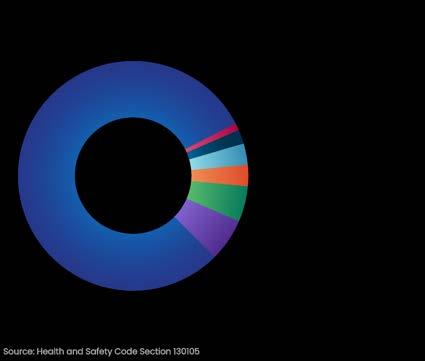
The annual funding allocated to each county commission is based on the number of births in the county relative to the statewide total. Counties invest their funds in locally designed programs aligned with community priorities, as well as in First 5 California’s statewide programs that focus on priorities such as child health, child development, and family resiliency for California’s children prenatal through age 5 and their families.
The State Controller’s Office conducts an annual audit review of the 58 county commissions’ independent audits to ensure accountability and transparency in the use of public funds. In December 2025, the State Controller’s Office published its review of FY 2023–24 county audits, confirming no findings warranted funding withholdings. The results demonstrate continued adherence to the California Health and Safety Code and can be viewed on First 5 California’s website at: https:// ccfc.ca.gov/pdf/about/budget_perf/annual_report_pdfs/etc/Annual_Report_to_ the_First_5_Commission_FY_2023_24.pdf
First 5 California’s organizational structure is designed to foster collaboration, efficiency, and statewide alignment. Through its Executive Office, External and Governmental Affairs Office, Program Innovation and Evaluation Division, Administration and Governance Office, Fiscal Services Office, Contracts and Procurement Office, and Information Technology Services Office, First 5 California provides coordinated oversight of:
• Fiscal management of the California Children and Families Trust Fund
• Tax revenue disbursements to county commissions
• Audits and annual fiscal reports
• Local agreement and program-disbursement management
• Public education and outreach initiatives
• Evaluation of First 5 California programs
• Procurement and contract management
• Workforce recruitment and professional development
• Information technology
• Business services
• Legislative advocacy efforts
In alignment with its mission, First 5 California continues to invest in programs, services, and systems that support California’s youngest children and their families. While the Home Visiting and Small Population County Funding Augmentation (SPCFA) programs sunsetted on June 30, 2025, previously approved multi-year investments, such as Impact Legacy, continued.
This year, the new iteration of the Kit for New Parents began with an investment of $15 million to continue providing resources statewide to parents and caregivers. Additionally, the Commission approved $18 million starting July 2025 to continue the SPCFA investment, allocating $15 million to the program and $3 million to the First 5 Network Resilience Initiative.
In 2021, First 5 California adopted a North Star and Audacious Goal, supported by a theory of change and the identification of key system levers to guide the organization’s work. To more fully integrate this foundation into the new Strategic Plan, First 5 California developed a Results-Based Accountability (RBA) framework that outlines the process for establishing population-level indicators, Specific, Measurable, Achievable, Relevant, and Timely (SMART) goals, and performance measures aligned with the North Star and Audacious Goal.
The following graphics show how we bring our North Star and Audacious Goal to life in a measurable way through policymaking, programs, and agency leadership to holistically serve our children and families:
The 2025-2028 Strategic Plan developed by First 5 California is designed to guide First 5 California’s investments and priorities over the next four years, ultimately working toward real positive impact for families. As part of this plan, First 5 California plays many roles in the advancement of the wellbeing of children prenatal to age five and their families.
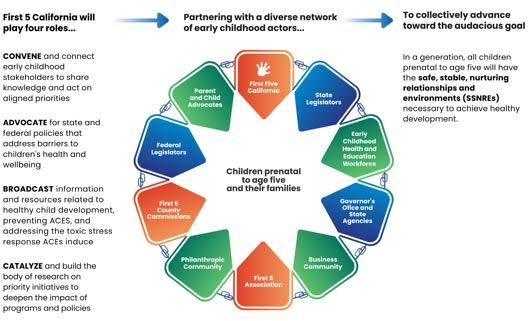
Theory of change describes the levers, actions, and outcomes of First 5 California’s work:
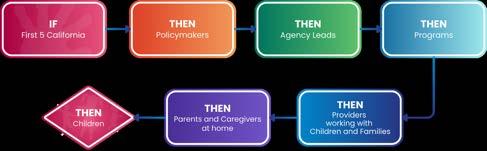
Trauma-informed, healing- centered, and culturally responsive systems promote the safe, stable, nurturing relationships and environments necessary to eliminate inequities and ensure healthy development for all children.
In a generation, all children 0–5 will have the safe, stable, nurturing relationships and environments necessary to achieve healthy development.
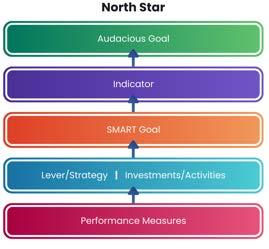
• North Star orients all our work
• Population-level indicator informs us about statewide well-being
• SMART goals are developed for each audience (parents, providers, programs, state agency leaders, policymakers)
• Multiple investments/activities may support the same SMART goal
• Investments/activities operate as levers
• Performance measures may be similar across programs and be project specific
• Staff workplans will detail source of data for performance measures, baseline, and frequency of collection
First 5 California continued advancing policies that strengthen the well-being and development of the state’s youngest children. The legislative agenda remained firmly aligned with First 5 California’s North Star and Audacious Goal, guiding advocacy toward initiatives that reduce toxic stress, expand access to early learning and health resources, strengthen the safety net, and promote equity across communities.
The 2025–26 budget cycle took place against the backdrop of an approximately $12 billion state budget deficit. Despite this challenging fiscal landscape, the Budget Act maintained critical early childhood investments while avoiding deep cuts to programs that support children and families. The final budget included $228 billion from the General Fund, $89 billion from special funds, and $4 billion from bond accounts, supported in part by responsible use of reserves, including $7.1 billion from the Rainy Day Fund.
Throughout the process, First 5 California’s External and Governmental Affairs (EGA) team collaborated with partners to protect core programs for children ages prenatal to five. The team closely tracked the Governor’s Extraordinary Session on federal immigration actions and supported the Legislature’s approval of $50 million one-time General Fund to the Department of Justice for legal defense efforts, including direct legal assistance for immigrant families.
EGA also supported efforts within the childcare and early learning system by working alongside the Early Care and Education Coalition to maintain commitments made in prior budgets.
The 2025 Budget preserved the state’s plan to expand subsidized childcare to serve 200,000 additional children by 2028. It also protected investments such as enrollment-based childcare funding beginning in 2026 and continued implementation of the Cost of Care Plus rate system. Additional investments included $10 million to expand tools for identifying multilingual learners and $160 million for Universal School Meals. First 5 California also supported the continuation of programs critical to the health, development, and stability of young children and their families. These included $1 million for additional ACEs training and $7.4 million one-time General Fund for the Diaper Access Initiative. The Mental Health Wellness Act, which provides $20 million for community response and maternal behavioral health, was also preserved.

First 5 California’s North Star Policy Agenda outlines the agency’s commitment to building trauma-informed, healing-centered, and culturally responsive systems for young children. The agenda guides all state and federal advocacy and is organized around four core pillars:
First 5 California supports policies that stabilize and uplift families by promoting economic security and reliable access to food and housing. Progress Made:
• Supported legislation that expands access to childcare and early learning for lowincome and migrant families.
• Advocated for financial supports that reduce material hardship for families with infants and toddlers, including funding for Universal School Meals and the Diaper Access Initiative.
• Advanced efforts to elevate the role of fathers in policy and narrative change.
First 5 California promotes sustainable, high-quality early care and education and a supported, well-paid workforce. Progress Made:
• Supported legislation expanding eligibility for early learning programs and supporting working families.
• Continued advocating for statewide rate reform and the full implementation of childcare slot expansion.
• Supported the enrollment-based funding transition and statutory COLA protections in the state budget.
First 5 California works to ensure families have access to equitable health care, screenings, and behavioral and mental health supports. Progress Made:
• Supported legislation improving maternal health services and expanding perinatal access in rural regions.
• Advocated for continued funding for ACEs training and for early identification of developmental and behavioral needs.
• Amplified awareness through campaigns such as Raise CA Strong and sponsored ACR 67, which established Stronger Starts for Children Day.
First 5 California advocates for stable funding structures that sustain early childhood investments at both the state and local levels. Progress Made:
• Advocated for policies that strengthen the First 5 Network through increased fiscal resiliency.
• Strengthened relationships with state and federal policymakers to advance longterm sustainability.
• Expanded collaboration with state agencies to improve alignment and maximize the impact of existing resources.
First 5 California supported a targeted set of bills that advanced family stability, child health, early learning, and immigrant family protections. Key bills signed into law included:
AB 495 (Rodriguez): Family Preparedness Plan Act
Strengthens support for children when parents face immigration-related detention or absence.
SB 669 (McGuire): Perinatal Services in Rural Hospitals
Expands maternity care access in rural communities through a pilot program.
AB 55 (Bonta): Alternative Birth Centers
Improves access to perinatal services by streamlining Medi-Cal reimbursement rules.
AB 1261 (Bonta): Right to Counsel for Undocumented Minors
Ensures unaccompanied children have access to legal representation.
STRENGTHENING THE EARLY LEARNING SYSTEM AND ACCESS TO EARLY LEARNING
SB 98 (Pérez): Immigration Enforcement Notification
Requires schools to strengthen notification processes during immigration enforcement activity.
SB 778 (Limón): Migrant Childcare Eligibility
Broadens access to early learning programs for migrant agricultural worker families.
PROMOTING SUSTAINABILITY OF EARLY CHILDHOOD INVESTMENTS
AB 607 (Rodriguez): CalWORKs Home Visiting Program
Extends program participation to improve outcomes for infants and caregivers.
SB 792 (Arreguin): CalWORKs Childcare Income Threshold
Aligns eligibility and supports more working families in accessing childcare.
Together, these measures advanced family resiliency, protected ALL families which include immigrant families, expanded health access, and strengthened early learning opportunities.
First 5 California deepened its engagement with federal policymakers in 2025 focusing on the preservation of critical supports for young children and their families. This work became especially important as Congress advanced H.R. 1, the “One Big Beautiful Bill Act,” which enacted significant reductions to federal safety-net programs that directly affect family stability, child health, and early development. Several major federal programs experienced substantial cuts or eligibility restrictions under H.R. 1, including:
The law significantly reduced overall SNAP funding, eliminated the SNAP-Ed nutrition education program, and restricted eligibility for several immigrant categories. These changes are projected to reduce food security for millions of families nationwide, including many with children prenatal to age five.
H.R. 1 introduced new work and administrative requirements that are expected to cause coverage loss for millions of low-income adults, including parents of young children. The bill also reduced state flexibility to fund Medicaid, increased costsharing for some enrollees, and tightened immigration-related eligibility pathways. These provisions threaten access to prenatal care, developmental screenings, behavioral health services, and early-intervention supports that young children rely on for healthy development.
Cuts and structural changes in H.R. 1 reduced support for programs such as Temporary Assistance for Needy Families (TANF), childcare and early learning resources tied to federal block grants, and funding for health and nutrition programs serving low-income and immigrant families.
Given these sweeping changes, First 5 California elevated federal advocacy to protect programs essential to early childhood well-being. EGA continued to support efforts that provide assistance to children and families in California and opposed federal proposals that would weaken access to health care, nutrition, and economic supports for vulnerable families. This federal advocacy ensured that California’s state-level efforts remained informed by national developments that could disrupt services for children prenatal to age five.
In 2025, the External and Governmental Affairs division elevated First 5 California’s leadership in both public policy and strategic communications. Through integrated PR and government relations efforts, EGA increased statewide visibility, strengthened policymaker engagement, and ensured alignment with First 5 California’s 2025 to 2028 Strategic Plan.
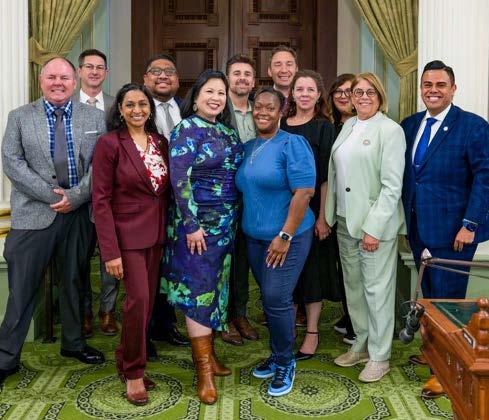
A major focus of the year was building and deepening relationships with policymakers. EGA met with new legislators, introduced First 5 California’s policy priorities, and strengthened ongoing partnerships throughout the Capitol. EGA hosted an awards event honoring champions for early childhood, further embedding First 5 California’s presence as a trusted voice.
These efforts extended beyond the Legislature. EGA partnered with state agencies, community-based organizations, and philanthropic leaders to advance family resiliency policies grounded in whole-child and whole-family approaches. Public-facing engagement increased through the Conversations with Champions for Children video series, spotlighting lawmakers and partners’ commitments to early childhood.
EGA’s PR work expanded dramatically in 2025 following the launch of a three-year strategic communications contract. This investment broadened First 5 California’s
public reach, strengthened bilingual media engagement, and supported the North Star communications strategy. In addition, EGA hosted a successful screening of the documentary Make a Circle at the IMAX in Sacramento, which brought together policymakers, childcare providers, and community members to highlight the importance of early learning.
Throughout the year, EGA elevated data, stories, and research that reinforced early childhood as a statewide priority. This included amplifying information on economic hardship, supporting statewide food access efforts during the federal shutdown, and contributing to major convenings and events.
By year’s end, First 5 California had significantly strengthened its legislative influence and public presence. These efforts created a policy environment that prioritizes early childhood and ensures that young children and their families remain central to California’s long-term vision.
During Fiscal Year 2024–2025, First 5 California continued its statewide effort to raise awareness about toxic stress and the long-term effects of adverse childhood experiences (ACEs) through its Stronger Starts campaign. The media strategy during this time period built on past momentum while expanding reach across multiple languages, cultures, and platforms to ensure that all California parents and caregivers have access to trusted, practical information.
Paid media extended across TV, radio, digital, social, out-of-home, and print, reinforcing the campaign’s presence in both English and Spanish and additional in-language executions for Chinese, Vietnamese, Filipino, Black/African American, Hispanic, Arabic, Armenian, Persian, and Russian audiences. Digital partnerships reinforced the media plan by continuing activities with Zynga, Reddit, and Snapchat, expanding the campaign’s presence in highengagement online spaces.
First 5 California’s presence on social media included ongoing evergreen social and digital storytelling on First 5 California’s social media channels and websites. Educational companion articles were promoted on social media as well. Web articles that talk about understanding and supporting your child’s mental health, tips on how to spot stress in your child, the role of fathers and father figures in supporting early development and First 5
California’s Stronger Starts powered by Cell-Ed; a program that provides family support through courses, coaching and micro-learning for caregivers.
Creative development introduced refreshed work across several waves. Wave 2.5 relaunched the “Prepared for Battle” and “Doctor 2.0” ads, expanding the AAPI effort with new “Doctors Know” videos in Mandarin and Vietnamese, accompanied by print and out-ofhome placements.
A set of explainer videos were produced in English and Spanish in April of 2025 to strengthen parent education through short, accessible online learning experiences. These videos will live on the First 5 California parent website, YouTube channel, and the Stronger Starts microsite.
Complementing these efforts, First 5 California also began production on a Fatherhood Campaign (September 2024). A video was produced highlighting the importance of dads in the early years of children. A special section was added to the website and microsite to promote this effort.
During this fiscal year, work began on our Wave 3 strategy and creative messaging to advance the campaign’s storytelling and implement the necessary steps in our Stronger Starts communications plan. This effort will outline the future direction of Stronger Starts into the launch of Wave 3 creative messaging and what is to come for Wave 4.
“The Four B’s that you shared are a good foundation to help build trust between adults and children.”
- Parent/Caregiver at Sacramento Kings event
To reach parents and caregivers at scale, First 5 California strategically partnered with trusted sports organizations and media to deliver the Stronger Starts campaign message in environments where families are already engaged. By aligning with teams and voices that resonate across generations and cultures, these partnerships shared guidance on how parents and caregivers can help children ages 0 to 5 buffer against the effects of toxic stress response, the body’s prolonged stress reaction to repeated or ongoing exposure to adversity in early childhood.

Through its partnership with the Sacramento Kings, First 5 California connected with families during Slamson’s Birthday takeover, one of the largest annual celebrations at Golden 1 Center. In addition, First 5 California sponsors halftime court activities with parents and infants throughout the season. Across three game-day event activations, the program generated more than 2,800 guest interactions and distributed over 5,400 educational giveaways, including informational brochures and early childhood learning items. These activations paired joyful, family-centered experiences with Stronger Starts campaign messaging in a trusted, in-arena setting. Beyond game-day activations, the Kings’ community relations team also supported and participated in First 5 California’s first Statewide Day of Action on May 8, 2025, underscoring a shared commitment to families and early childhood well-being.


A collaboration with Dodgers Radio extended this impact throughout Southern California, the Central Valley, and the Desert Communities statewide through bilingual media, social, and in-person engagement. In 2025, World Series champion Kiké Hernández was featured in English- and Spanish-language videos that ran in-stadium during Sunday home games. He also recorded radio spots in both languages, which aired during Dodgers Radio broadcasts, reaching one of baseball’s most loyal, multigenerational, and multicultural fan bases. This partnership garnered 53.1 Million cumulative impressions, amplifying the Stronger Starts campaign message to parents and caregivers across California. A social media post on Dodgers Radio’s social platform featuring Kiké Hernández further extended reach, generating over 12,000 likes and strong audience engagement that drove clicks to the First 5 California website. In addition, Dodgers Radio digital placements on the station’s website drove listeners to the First 5 California website, including new visitors, achieving an 83 percent engagement rate. In-person activations at Dodger Stadium also
took place, engaging over 1,200 families with 1,400 educational items distributed by our brand ambassadors.
Together, these partnerships helped First 5 California meet families where their passions and daily lives intersect, reinforcing the Stronger Starts campaign and increasing awareness of toxic stress response, how it affects young children, and how parents and caregivers can help buffer its longterm effects.

“We were just talking about anxiety the other day and what it means.”
- Parent/Caregiver
at Dodger Stadium event
The Cell-Ed micro-learning program, powered by First 5 California, was relaunched in May 2025 to deliver free, on-the-go education about toxic stress prevention and early development. Since then, Cell-Ed has partnered with the CA State Libraries, Child Care Resource Centers, WIC, and other partners to expand the access of the program and content. Additionally, the Los Angeles Public Library granted First 5 California permission to include their ‘Know Your Rights’ course, a course designed to learn about rights under the U.S. Constitution and how to confidently exercise them at home and in public, in the Stronger Starts learning program, absolutely free.
Evaluation findings released in July 2024 demonstrated the campaign’s measurable impact on awareness, knowledge, and behavior across California families. Familiarity with the term toxic stress rose from 22% in 2022 to 74% in 2024, while familiarity with ACEs grew from 20% to 60%. Campaign awareness reached 92% overall, surpassing CDC benchmarks for public education campaigns, with 95% awareness among Spanish-speaking parents and caregivers.
Parents and caregivers who had experienced toxic stress showed strong engagement with campaign messages. Eighty-seven percent recognized how toxic stress affects the way they parent, and 90% reported being motivated to take actions to help themselves overcome it. These
encouraging results give hope for the future, as 93% of participants said they are continuing to take steps to manage stress.
Behavioral data reinforced these findings. Sixty-four percent of caregivers exposed to ACEs actively sought information about toxic stress in 2024, compared to just 14% in 2022. Overall, 84% of those aware of the campaign said it showed them that parents can stop their own toxic stress from affecting their children, and 82% said it motivated them to protect their families. These results confirm that Stronger Starts is achieving its long-term goal of helping California families take meaningful steps toward resilience and healing.
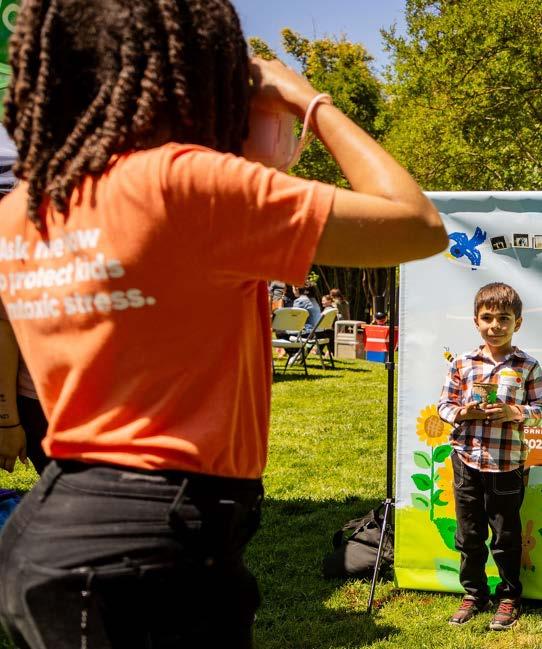
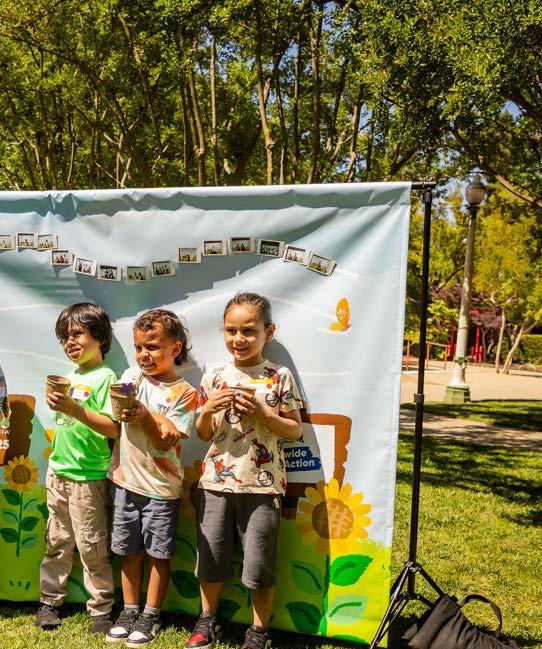
First 5 California strengthened its leadership role in early childhood advocacy through a series of strategic public relations initiatives and statewide partnerships.
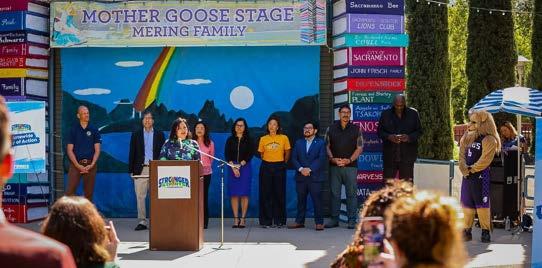
The highlight of the year was the Statewide Day of Action (SDOA), held on May 8, 2025, in Sacramento. The press conference brought together approximately 65 attendees, including state and local leaders such as Executive Director Jackie Thu-Huong Wong, Commissioner Elsa Mendoza Jimenez, Sacramento Mayor Kevin McCarty, Deputy State Treasurer Stephanie Tom, Sacramento County Supervisor and First 5 Sacramento Chair Phil Serna, and other dignitaries. The event featured participation from the Sacramento Kings, including legend Olden Polynice, team dancers, and mascot Slamson, emphasizing the partnership between early childhood advocacy and community engagement.
Following the Sacramento event, First 5 San Diego hosted its own regional Day of Action with Assemblymember LaShae SharpCollins, who also introduced Assembly Concurrent Resolution (ACR) 67 – “Stronger Starts for Children Day.” The California Assembly recognized the First 5 California team on the floor in honor of its work, and Governor Gavin Newsom’s office issued a commemorative letter designating May 2025 as Children’s Mental Health Month.
Additional earned media and thoughtleadership highlights included a publication of a National Association for the Education of Young Children Chapter for a Leadership book , spotlighting First 5 California’s community education approach and the release of the organization’s Strategic Plan, reinforcing its long-term vision for improving early childhood well-being across the state.
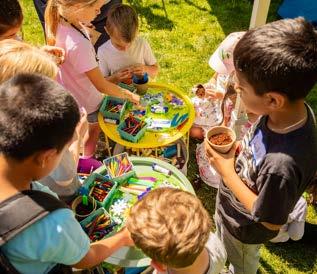
After the success of the Toxic Stress Takedown experiential events, First 5 California refreshed and reimagined its in-person outreach with the launch of First 5 California’s Stronger Starts Roadshow. This interactive, tactile experience was designed to help families learn about toxic stress and introduce families to educational play and emotional-regulation tools through sensory-based activities.
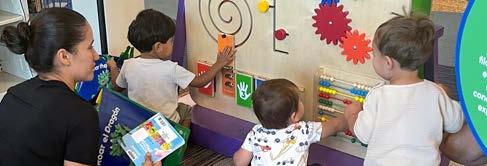
The new Stronger Starts Roadshow setup debuted in June 2025 at the Pista Sa Nayon Festival in Vallejo, offering hands-on learning stations such as Roar’s Soothing Scales, Pop & Play Zone, and Sound Journey. The Stronger Starts Roadshow continues to travel statewide, with the long-term goal of reaching all 58 counties through local partnerships and county collaborations.
Experiential and cultural events remained at the heart of community engagement. Highlighted appearances included:
• Pista Sa Nayon Festival – Vallejo (June 7, 2025)
• Atascadero Pride in the Park – San Luis Obispo County (June 14, 2025)
• Juneteenth Celebration of Ventura County (June 21, 2025)
• Fiestas Patrias (September 14, 2025)
• San Francisco Chinatown Autumn Moon Festival (September 27–28, 2025)
The Stronger Starts Roadshow also participated in other cultural and familyfocused events statewide, including Cinco de Mayo & Care-Fest and the International Kids Festival. Counties continue to request participation and collaboration with First 5 California to bring the Stronger Starts Roadshow to local communities, reflecting the agency’s ongoing commitment to reaching all 58 counties and ensuring equitable access to early childhood resources.
Together, these efforts continue to advance First 5 California’s mission to give every child a stronger start in life, through education, engagement, and connection across every corner of the state.
First 5 California continued advancing programs that strengthen the well-being and development of the state’s youngest children. Through strategic partnerships and statewide and local implementation, these programs translate policy and vision into meaningful, measurable impact for children ages 0–5 and their caregivers.
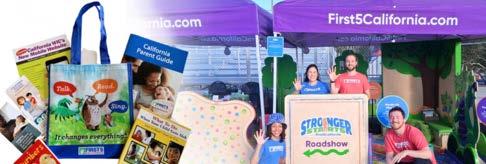
The award-winning Kit for New Parents (Kit) targets hard-to-reach and lowincome families, providing key information and resources for first-time parents, grandparents, and caregivers. The Kit is a foundational resource to support parents during the early stages of parenting. To date, First 5 California has distributed over 5 million Kits free-of-charge to local hospitals, physicians, and community groups to reach new parents statewide. Kits are available in English, Spanish, Chinese, Korean, and Vietnamese.
In Spring 2025, First 5 California collaborated with First 5 Association of California to form and facilitate a working group including representatives from state agencies, First 5 counties, and community-based organizations to explore ways to make First 5 California the Kit more accessible, culturally responsive, healing-centered, and trauma informed. This collaborative effort identified a clear need for the kit to offer materials that are tailored to specific communities (e.g., Black families, fathers, rural families), designed with caregiver voices in mind, more interactive and usable, and strategically distributed and marketed through trusted channels.
First 5 California is incorporating this feedback into its next edition of the Kit and will strive to:
• Continue distribution to parents of children ages 0 to 5 across California
• Expand its reach to more low-income families
• Strengthen relationships with First 5 county commissions and community partners
• Evaluate the Kit’s effectiveness in engaging and educating parents and caregivers
Parents, caregivers, and community members can request Kits to be shipped directly to them by emailing parentkit@first5.ca.gov and are encouraged to visit the California Parent Guide website for helpful information and resources for new parents.
In October 2022, the First 5 California Commission approved the current iteration of the investment, Improve and Maximize Programs so All Children Thrive Legacy (IMPACT Legacy), at $125,828,000 for four years, FYs 2023–2027. This represented a continued commitment to the innovative First 5 IMPACT approach to quality improvement and professional development systems for early learning and care (ELC) providers. Funding was awarded to 10 regional lead grantee agencies, reducing the number of grants to 10, while continuing to provide funding to all 58 counties and the Tribal Child Care Association of California.
IMPACT Legacy works in cooperation with all ELC quality improvement efforts and
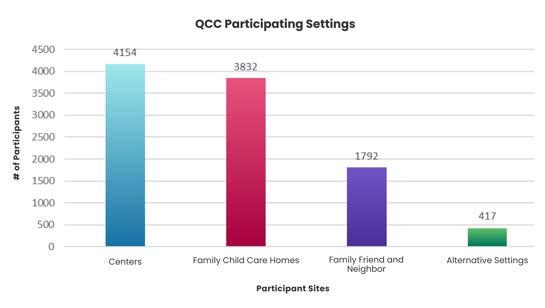
investments in California to support the implementation of the Quality Counts California (QCC) Quality Continuum Framework. IMPACT is designed to fund quality improvement expansion and support providers serving high-impact communities and populations not already receiving support. IMPACT Legacy participation within QCC focuses on the expansion of access to high-quality ELC in private centers, family childcare (FCC) homes, family friend and neighbor caregivers, and in alternative settings such as home visiting programs and libraries. For FY 2024-25, local consortia reported 10,195 sites participating in QCC, which is an increase of nearly 500 sites from FY 2023-24. Of participating QCC sites, about two-thirds (7,411) continue to be fully or partially supported by IMPACT Legacy funding.

In January 2024, First 5 California launched the Building Equitable Early Learning Systems (BEELS) work with WestEd. BEELS provides Early Learning and Care (ELC) Workforce Supports and Technical Assistance (TA), and works to transform California’s ELC systems with a strategic focus on equity in alignment with First 5 California’s North Star. Workforce supports focus on increasing the development of and access to more equitable learning opportunities and resources for the ELC Workforce, specifically, coaches, trainers, and providers. In addition, WestEd leads outreach and engagement of collaborative partnerships with institutes of higher education and key state partners to ensure ongoing communication and alignment in joint efforts supporting workforce capacity building. WestEd, in partnership with First 5 California and local/regional communities, will co-design systems equity building efforts that flexibly support the evolving needs of the QCC system and position First 5 California as a leader in responding to the call for dismantling barriers to access and equity and responding to the needs of the local ELC system. Advisory membership for these efforts includes county First 5s, county offices of education, local planning councils, early learning and care providers, parent voices, and institutes of higher education faculty. These efforts will leverage the collaborative strengths of the First 5 network to advance First 5 California’s whole child/family focus while
supporting the state’s strategic priorities for ELC and aligning with the Master Plan for Early Learning and Care (MPELC). This will help local and state leaders and agencies to transition to an equitable ELC system that balances statewide cohesiveness and efficiency with local contexts and needs.
Funded through IMPACT Legacy dollars, regional hubs streamline the collection of data and management of expensive data systems, saving substantial administrative dollars and improving the availability of data. The regional hubs provide trainings, facilitate communication, share best practices, and promote access to and consistency in coach, trainer, and administrator supports.
Regional hub support continues to be deemed particularly beneficial by small and rural consortia that would not otherwise be able to access certain trainings or have the critical mass needed for Communities of Practice (CoP) and other professional learning opportunities.
In FY 2024–25, regional hubs reported the top successes as improved communication and partnerships, data coordination, and providing greater access to professional development, trainings and communities of practice. The hubs continue to report that almost 80 percent of all counties within a region rely exclusively or partially on the regional hub for ELC workforce professional development offerings.
Quality Counts California (QCC) is a statewide system of locally implemented Quality Rating and Improvement Systems (QRIS) that provide resources and support to ELC providers so they can create engaging and effective experiences that help children grow and thrive. QCC is funded by IMPACT Legacy as well as state and federal funding administered by the California Department of Education and the California Department of Social Services. All ELC participant sites in QCC are reported in the statewide common
data file, which is inclusive of all the state’s QRIS funding streams. This data provides the state with an efficient and coordinated method for receiving information about each county participating in QRIS. As of June 30, 2025, there were 10,195 participant QCC sites across the state, including 3,832 family childcare homes and 1,792 family, friend, and neighbor providers. In total, 39,995 teachers received individualized professional development to improve quality of care and early education knowledge, and 310,491 children ages 0–5 benefited from the quality improvement support provided by QCC.
For more information on QCC, visit the website at https://qualitycountsca.net
In FY 2022–23, First 5 California funded an extension of the original Home Visiting Collaboration grants and offered new Regional Technical Assistance for Home Visiting Coordination and Integration (HVRTA) grants to begin the following fiscal year. The HV-RTA offered $14.5 million in regional funding for home visiting technical assistance and coordination in much the same way that IMPACT Legacy’s grant regionalized funding for IMPACT consortia. Nine regions were granted funding and began work in July 2023.
The FY 24-25 annual performance report describes themes that emerged in response to questions on capacity building tied to performance measures and sustainability efforts, being that this was
Medi-Cal / CHW & MCP Alignment
Data Systems & Evidence for Advocacy
Cross-Sector / Regional Collaboration
County-Led & In-Kind Support
Workforce & Training
Sustainability
Local Funding / Grants (Prop 10 & Philanthropy)
Governance & Embedding into Coalitions
the final year of funding. Overall, counties described strengthening partnerships and successful transitions for post funding activities. Many reported successes in communicating and collaborating with one another and having some level of sustainability following the end of this grant.
The data showed that crossagency collaboration and consistent communication were the most consistent tools that regions utilized. This highlights the importance of the network that has been built through the regional structure of this grant.
The regions were asked to report how they plan to continue their programs beyond the HVC funding. The graphics below show the common themes and frequency of mention.
Sustaining services by contracting with Managed Care Plans and billing through Medi-Cal CHW benefit.
Leveraging data systems and evaluation to demonstrate impact and secure future funding .
Continuation of collaboratives, advisory boards, and regional meetings for shared problem-solving and advocacy
Local entities (counties, nonprofits) committing staff, space, facilitation, or embedding HV in existing structures
Ongoing Communities of Practice, quarterly training, summits, and professional development as part of postHVC sustainability
Using Prop 10 funds, philanthropic support, or new grants to sustain home visiting programs
Folding HV into broader coalitions and boards to sustain momentum
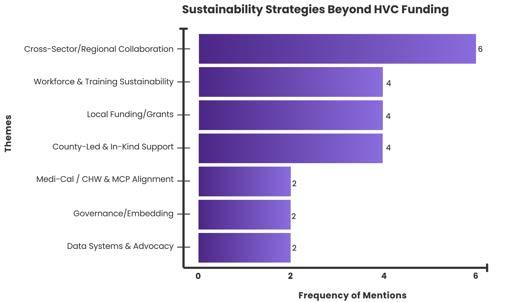
Promisingly, over half of the regions have committed to continuing cross-sector/ regional collaboration through regional meetings, shared file drives/resources, and shared training/professional development opportunities.
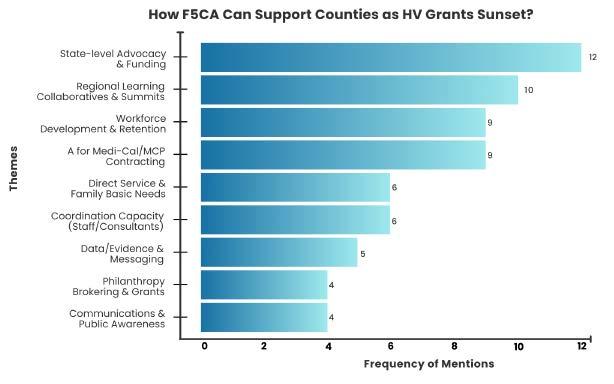
Regions were asked how First 5 California can support county commissions with their local home visiting systems now that this funding is sunsetting. There were various themes that arose, with the top 2 being State-level Advocacy & Funding, and Regional Learning Collaboratives & Summits. The graphics below show the common themes and frequency of mention.
In First 5 California’s new Strategic Plan, the agency highlights its strategies for systems change which include advocating for state and federal policies that strengthen early learning, health, and family economic stability to ensure all children prenatal to age five can thrive. The data shows this will
be the key method First 5 California can continue to support local commissions with their home visiting programs. There is also an opportunity to host a home visiting system breakout room or mini summit during First 5 California’s next Child Health, Education and Care summit. First 5 California will continue to be a partner/ advocate for home visiting, bringing us closer to achieving our audacious goal.
First 5 California’s home visiting coordination investment has enhanced local commission home visiting programs throughout the state by providing counties with resources to find alternative funding sources, build regional systems to help their fellow counties, and further increase home visiting access/resources across California. Advocacy at the state and federal levels to showcase and fight for this important work that is changing the lives of children and families throughout California is essential.
State-Level Advocacy & Funding Champion HV within CalWORKs, CalAIM/DHCS, DPH/DPSS; pursue budget asks and policy fixes; keep HV central to P–5 systems
TA for Medi-Cal/MCP Contracting
Workforce Development & Retention
Regional Learning Collaboratives & Summits
Direct Service & Family Basic Needs
Coordination Capacity (Staff/Consultants)
Communications & Public Awareness
Data/Evidence & Messaging
Philanthropy Brokering & Grants
Provide hands-on TA (billing, compliance, privacy, IT, contracting) to secure CHW/ECM reimbursement and MCP agreements
Fund PD, PLCs/CoPs, certifications, incentives/tuition; focus on trauma-informed, reflective, culturally responsive practice
Resource regional summits and quarterly cross-county learning to spread what works and support morale
Fill gaps for diapers, food, housing, childcare, mental health, employment supports where other funding is absent
Underwrite coordinator time/consultants to convene HVC/ CABs, align referrals, and maintain shared infrastructure .
Run statewide campaigns; share toolkits, stories, and media assets to boost awareness and uptake
Create one-pagers on outcomes/ROI; provide evaluation/ fiscal templates and language banks for grants.
Identify funders, share opportunities, and broker relationships to diversify revenue
First 5 California actively participates in the ongoing development and maintenance of the multi-state agency effort to elevate the importance of early science, technology, engineering, arts, and mathematics (STEAM) activities to support children’s success and understanding of STEAM. These efforts include seminars; symposiums and conferences for parents, teachers, and other ELC professionals; publication of STEAM-related literature; newsletters; book reviews, and web-based supports.
Early Math Project (EMP) is working more collaboratively with Count Play Explore (a statewide Early STEM Initiative supported and authorized by California as part of the System of Support) and began developing and co-branding STEM resources in 2025. EMP will have a new home page on the Count Play Explore website soon.
During 2025, EMP helped plan and organize an early math spring seminar, summer symposium, and fall forum. The most recent event took place on October 28, 2025 and focused on Family Engagement
and the importance relationships play in children’s learning and success. The seminar provided tangible ideas and resources for everyday STEM for children from birth to third grade. EMP’s next Early Math Event is scheduled to take place on February 26, 2026.
EMP also partnered in the development of over 20 video guides related to the I’m Ready Video series that will support parents and early education and care providers.
The EMP team added 43 book guides and related activities during 2025 and anticipates completing up to 5 additional guides by the end of 2025.
Ongoing resources that are shared on the EMP website (www.earlymathca.org) and the Count Play Explore application (www.countplayexplore.org) include:
• EMP Substack Newsletter.
The newsletter can be accessed at: https://carolynpfister.substack.com/
• STEAM Resources
• Book guides and activities
• “I’m Ready” Video Series

First 5 California has long supported the expansion of Dolly Parton’s Imagination Library (DPIL) as a proven, evidence-based early literacy strategy aligned with California’s school readiness and equity goals. In 2022, the Legislature authorized a historic statewide expansion through Senate Bill 1183, envisioning a Californiacentered implementation model supported by state infrastructure, local partners, and culturally responsive outreach.
Since enactment, a series of statutory and budgetary changes materially altered the implementation structure originally contemplated by the Governor and Legislature. While initial appropriations were awarded through the California State Library to the California-based nonprofit established to support statewide implementation—now known as Strong Reader Partnership (SRP)—subsequent trailer bill actions redirected the majority of remaining funds directly to the Tennessee-based national DPIL organization.
As a result of these changes, California public funds intended to build and sustain in-state capacity were ultimately transferred out of state for centralized administration. This shift removed the California nonprofit intermediary model that had been designed to provide localized technical assistance, multilingual outreach, and operational support to counties with the greatest literacy gaps. The multiple changes to the program have stalled progress overall to California’s program delivery that meets the state’s linguistic, geographic, and demographic complexity.
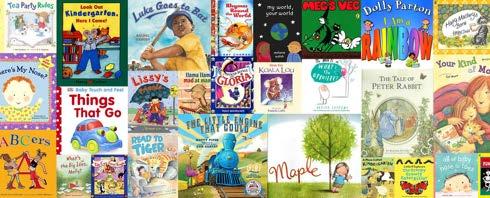
Despite these structural changes, DPIL enrollment in California has increased since the enactment of the statewide expansion in September 2022. As of Fall 2025, the program is serving approximately 142,000 children, representing roughly 5 percent of the 2.7 million children ages 0–5 statewide. Of those enrolled, more than 25,500 children—approximately 18 percent—are receiving the bilingual English/Spanish book collection, reflecting progress toward linguistic inclusion.
The program is currently fully implemented in 32 counties. While this progress is meaningful, it also underscores the distance between current reach and the Legislature’s original goal of universal statewide access. At present enrollment levels, the majority of California’s youngest children—particularly those in rural, low-income, and multilingual communities—remain unreached.
Strong Reader Partnership’s direct involvement in program development and early implementation provides several clear, evidence-based insights relevant to the program’s future success in California:
State-specific infrastructure matters.
California’s scale, diversity, and regulatory environment require localized technical assistance and operational support that cannot be fully addressed through a centralized, out-of-state model.
Program requirements can be burdensome for local partners.
Libraries and community-based organizations reported administrative and compliance challenges that slowed enrollment and limited participation.
Culturally and linguistically responsive outreach is essential.
Multilingual, community-rooted engagement significantly increases awareness and enrollment, particularly among families facing time, cost, and trust barriers.
Capacity-building accelerates impact.
Counties benefit from modest, targeted investments that strengthen local readiness rather than relying solely on passive enrollment models.
Based on this experience, First 5 California offers the following recommendations that future investments in DPIL or similar early literacy initiatives:
1. Restore or establish a California-based implementation partner to provide technical assistance, outreach, and accountability aligned with state priorities.
2. Ensure funding structures support local capacity-building, not solely book distribution.
3. Require regular, transparent reporting on enrollment penetration relative to the eligible population, disaggregated by language and geography.
4. Align early literacy investments with broader school readiness and family engagement strategies, including First 5 county systems.
First 5 California remains committed to advancing early literacy outcomes and ensuring that public investments deliver maximum benefit to California families. The experience of the DPIL expansion demonstrates both the promise of the model and the importance of implementation structures that reflect California’s unique needs.
The Program for Equitable Access to Resources for Literacy Support (PEARLS) was approved by the Commission in the Spring of 2022 with the primary goal to enhance early literacy development among children aged zero to five in families through family engagement, culturally responsive programming, and community partnerships. With over $100 Million in investments made by the State, the Commission assessed the best way to leverage its role with the new opportunities created by the state. The objectives for PEARLS funding are:
• Provide accessible, culturally relevant literacy resources and programs in the families’ home languages.
• Foster parent/caregiver knowledge and confidence in supporting early literacy at home.
• Promote cultural pride and multilingual skills as valuable components of children’s literacy growth.
• Build sustainable partnerships with community organizations, cultural groups, and local service providers.
To best serve these objectives, and support the current literacy efforts without duplication, additional time was taken to understand local needs, revise funding structure and review current data on literacy science. First 5 California entered into an agreement with Pitaya Consulting to assist in the development of the Request for Proposal (RFP).
First 5 California staff participated on the State Literacy Team for the Comprehensive Literacy State Development (CLSD) grant to revise the comprehensive State Literacy Plan (SLP) with updated evidence-based practices and guidance documents, as well as promising practices and implementation guides. With the team’s feedback incorporated, the State Board of Education approved the California Comprehensive SLP in May 2025. First 5 California will continue this partnership to implement the plan over the life of the CLSD grant.

To achieve the goal of grade-level reading by third grade, First 5 California staff participated in the Communications and Campaign Work Group, sharing expertise and existing relationships. The group met periodically to review efficacy of early literacy development tools, curriculum and educational outreach. The group recommended designating funds to engage a communications agency to create and launch a comprehensive public information campaign. This campaign would utilize available research, build on the success of past messages, and expand to impact children 5-9 years of age.
Carrying an evergreen message to a broader audience strived to educate not just about the academics of reading as a skill, but the importance of the social / emotional bonds and sense of security that powerfully impact brain development and on-going success in school.
First 5 California continues to fund Kick It California (KIC), an ongoing tobacco education and cessation activity, to meet the statutory requirement of the Children and Families Act (Health and Safety Code Section 130125 A, 130125 C). Kick It California (the “Quitline,” formerly known as the California Smokers’ Helpline) provides evidence-based tobacco cessation services to help users who are pregnant, or parents and caregivers of children prenatal to five, to quit tobacco.
On January 25, 2024, the First 5 California Commission approved up to $2.5 million for three years (July 1, 2024 through June 30, 2027) to continue tobacco cessation services for priority populations. As a result of this investment, First 5 California funds support services to focus specifically on pregnant smokers, smoking parents, and caregivers of children prenatal to five, and reduce/eliminate secondhand smoke exposure to young children. Quitline services have since been expanded to include vaping (electronic cigarettes) cessation, coaching for non-tobaccousing proxies, and the development of materials that address the danger of vaping during pregnancy and the danger to children of secondhand exposure to vape aerosol, vape cartridges, and vape juice (liquid nicotine).
KIC enrollees are ethnically diverse (over 70% identify as other than white) and primarily low income (over 80% are Medicaid recipients). Nearly ninety percent have not obtained a college degree, and 58% report one or more of the following mental health conditions— anxiety (49%), depression (42%), bipolar (18%), schizophrenia (6%), or drug/alcohol addiction (12%).
From July 1, 2024 to September 27, 2025, KIC serviced a total of 4,585 intake clients via phone and web, exceeding the monthly goal of 150 with an average of 304. During this timeframe, KIC coached 2,219 clients by phone and exceeded the monthly goal of 85 with an average of 147. Lastly, KIC evaluated 522 clients, exceeding the monthly goal of 17 with an average of 35.
KIC provides one-on-one telephone coaching for smokers, vapers, and nontobacco-using proxies. Services are available in English (1-800-300-8686) and Spanish (1-800-600-8191) and through the Asian Smokers’ Quitline (www. asiansmokersquitline.org) in Chinese (Cantonese and Mandarin) (1-800-8388917), Korean (1-800-556-5564), and Vietnamese (1-800-778-8440). For those who might not be ready to work oneon-one with a coach, KIC services also include live chat, mobile apps, online videos, and an automated text program, with content relevant to tobacco users who are pregnant or have a young child in the home. KIC also has an interactive and user-friendly website (www.kickitca.org).
The Small Population County Funding Augmentation (SPCFA) for Fiscal years 2021-2025 concluded on June 30, 2025. On January 28, 2021, the First 5 California Commission approved up to $20 million over 4.25 years beginning April 1, 2021 (through June 30, 2025) to focus on systems change and system efficiencies. Through this grant, twenty-one small population counties have received base funding to support county commission activities needed to fulfill the statutory requirements and for Proposition 10 to be a statewide effort that promotes, supports, and improves the early development of children ages 0 to 5.
In April 2021, twenty-one SPCs whose annual birth rates are less than 1000 received the funding for 3.25 years and all of them received a fourth-year funding starting July 2024 through grant extension process.
SPCs offered services to address the diverse needs of children ages 0-5 years and their families. Of the counties who completed their Annual Performance Report for FY 2024-25, majority of them reported implementing the following:
• Early Learning programs such as playgroups
• Early literacy including Imagination Library and book distribution
• Home visiting programs including Healthy Families of America and Parents as Teachers
• Supporting families through family resource centers
• Mental health, social-emotional, and trauma-informed supports

First 5 California partners with the California Health Interview Survey (CHIS) to access a comprehensive source of statewide data on the health and wellbeing of children and families. This collaboration provides First 5 California and First 5 county commissions with critical measures of health and key social indicators, directly supporting the implementation of First 5 California’s 2025–2028 Strategic Plan. The partnership strengthens the statewide evidence base that guides efforts to advance equity, strengthen systems of care, and improve outcomes for California’s youngest children and their families.
CHIS is the nation’s largest state health survey and a vital resource for understanding the needs of Californians, including diverse racial and ethnic groups. Since 2001, First 5 California has relied on CHIS for credible, population-level data to inform early childhood research, policy, and practice. Each year, CHIS surveys approximately 20,000 California households, providing robust insights that inform public health priorities across the state. To ensure continued access to this critical resource, First 5 California has entered into a three-year, $2.7 million contract (FY 2025–2028) with CHIS.
In 2025, CHIS delivered a policy brief on childcare, a priority area that explored disparities in access and affordability, and examined how limited childcare availability affects parental stress, employment stability, and child

development. These findings are helping to inform First 5 California’s strategic focus on equitable access to early learning and family support.
Under the 2025–2028 contract, CHIS and First 5 California will expand their collaboration to include new areas of inquiry, including fatherhood involvement and child mental health. These topics will explore the social, emotional, and behavioral factors that shape early childhood outcomes, as well as the role of family engagement and supportive systems.
Together, CHIS and First 5 California are advancing a shared vision: using highquality, population-based research to drive data-informed decisions that improve the lives of children ages 0–5 and their families across California.

First 5 California has established a multi-year partnership with the Children’s Data Network (CDN) at the University of Southern California to implement the Supporting a Strong Start for California Kids initiative.

This collaboration integrates linked administrative records with newly collected, representative input from recent parents to strengthen the statewide evidence base for children prenatal to five and to guide equity-focused policy and investment. Core activities include enhancements to the Strong Start Index and a comprehensive landscape analysis of early-childhood data efforts. Using a population-based frame derived from vital birth and death records, the project will invite recent California birthing parents to complete a survey on service needs, barriers to uptake, and experiences with community supports, capturing perspectives from families who do and do not engage with services. This direct, statewide data collection complements administrative analytics and dashboard development, advancing First 5 California’s equity goals and informing decisions that affect California’s youngest children.
This three-year agreement (FY 2024–2027), authorized up to $3 million, seeks to close California’s evidence gap by illuminating the needs, barriers, and service experiences of all families, enabling equity-focused policies and system improvements to better support children prenatal to five.
For annual reporting, First 5 California and First 5 county commissions track progress in four result areas to inform evidence-based funding decisions, program planning, and policies.
These result areas comprise a framework for reporting early childhood investments and provide an overview of the number, type, and cost of services to children and adults. Stakeholders can use this information to assess statewide resource allocation and impact of First 5 county commissions.
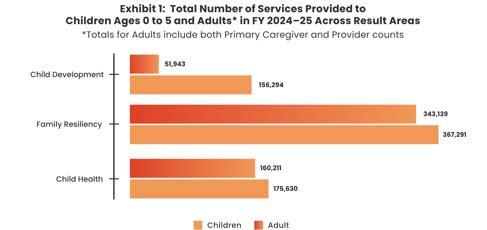
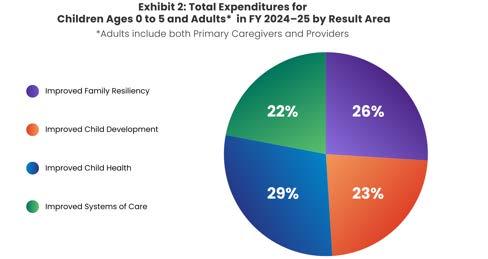
Exhibit 1 contains the total numbers of services provided to children ages birth to 5 and adults (including primary caregivers and providers) for Improved Family Resiliency, Improved Child Development, and Improved Child Health. During FY 2024–25, First 5 county commissions provided a total of 699,215 child services and 555,293 adult services. The distribution of expenditure in these three result areas totals $298 million.
The result area, Improved Systems of Care, with expenditures of $83 million, differs from the others. It consists of programs and initiatives for systemwide structural supports for efforts within the other three result areas. The four resulting areas combined show total expenditure of $381 million.
First 5 county commissions are required to report to First 5 California revenues, expenditures, and fund balances. In collaboration with the First 5 Association, First 5 California annually develops and adopts annual reporting guidelines to standardize data collection. County commission revenues are reported in Appendix A1. For expenditures, county commission fiscal and service data are aggregated to the statewide level under four result areas (Appendix A2) using specific definitions for each result area with service category detail (Appendix B).
Family Resiliency includes Family Literacy and Book Programs, General Family Support, and Intensive Family Support. Services include instruction on general parenting topics, support for basic family needs and case management, parent education and literacy, referrals to community resources, assistance for parents and families, and support to schools and educational institutions, nonprofit community-based agencies, government agencies, and private institutions.
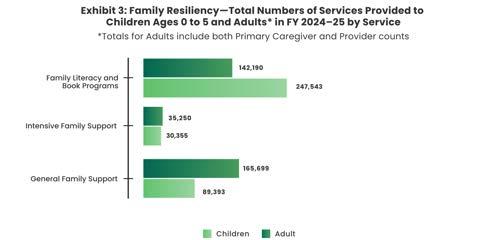
In FY 2024–25, First 5 county commissions provided a total of 367,291 services to improve family resiliency for children ages birth to 5, with 247,543 child services in Family Literacy and Book Programs, 89,393 child services in General Family Support and 30,355 child services in Intensive Family Support.
First 5 county commissions provided a total of 343,139 services to adults (parents, guardians, primary caregivers, relatives, and providers), with 142,190 adult services in Family Literacy and Book Programs, 165,699 adult services in General Family Support, and 35,250 adult services in Intensive Family Support. Exhibit 3 displays the number of services provided.
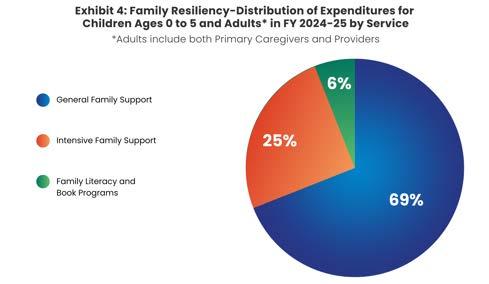
First 5 county commissions expended $98 million to improve Family Resiliency, with 6 percent of expenditures in Family Literacy and Book Programs, 69 percent of expenditures in General Family Support, and 25 percent of expenditures in Intensive Family Support. Exhibit 4 shows the distribution of expenditures by service category.
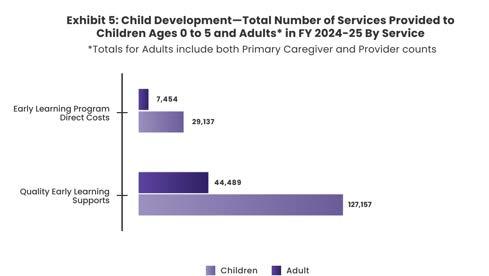
Child Development includes Early Learning Programs Direct Costs and Quality Early Learning Supports. Programs include professional development for educators, high-quality preschool, services for diverse populations, and school readiness. In FY 2024–25, First 5 county commissions delivered 156,294 child development services to children ages birth to 5, with 29,137 child services in Early Learning Program Direct Costs and 127,157 child services in Quality Early Learning Supports. First 5 county commissions provided 51,943 services to adults (parents, guardians, primary caregivers, relatives, and providers), with 7,454 adult services in Early Learning Program Direct Costs and 44,489 adult services in Quality Early Learning Supports. Exhibit 5 displays the number of services provided.
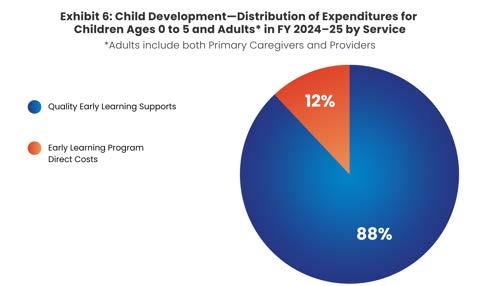
In FY 2024–25, county commissions expended $90 million to improve Child Development, with 12 percent of expenditures in Early Learning Program Direct Costs and 88 percent of expenditures in Quality Early Learning Supports.
First 5 county commissions fund a variety of Child Health services promoting identification, treatment, and elimination of risks that threaten health and may cause developmental delays and disabilities. First 5 Child Health services are far-ranging and include the categories of Early Intervention, General Health Education and Promotion, Oral Health Education and Treatment, Perinatal and Early Childhood Home Visiting, and Prenatal and Infant/Toddler Pediatric Support.
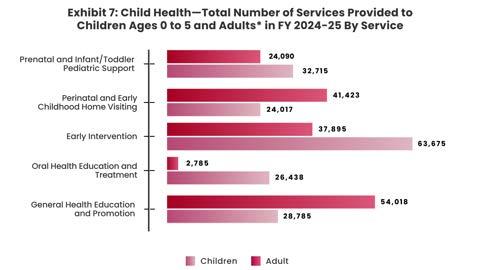
In FY 2024–25, First 5 county commissions provided a total of 175,630 services to children ages birth to 5, with 63,675 child services in Early Intervention, 28,785 child services in General Health Education and Promotion, 26,438 child services in Oral Health Education and Treatment, 24,017 child services in Perinatal and Early Childhood Home Visiting, and 32,715 child services in Prenatal and Infant/Toddler Pediatric Support. First 5 county commissions provided a total of 160,211 services to adults (parents, guardians, primary caregivers, relatives, and providers), with 37,895 adult services in Early Intervention, 54,018 adult services in General Health Education and Promotion, 2,785 adult services in Oral Health Education and Treatment, 41,423 adult services in Perinatal and Early Childhood Home Visiting, and 24,090 adult services in Prenatal and Infant/Toddler Pediatric Support.
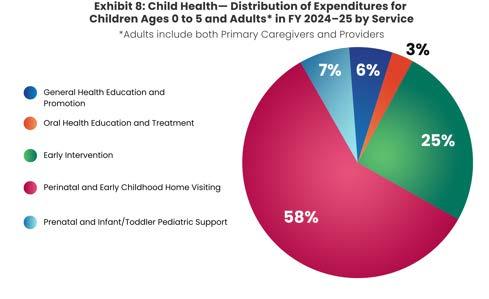
In FY 2024–25, county commissions expended $110 million to improve Child Health, with 58 percent of expenditures in Perinatal and Early Childhood Home Visiting, 25 percent of expenditures in Early Intervention, seven percent of expenditures in Prenatal and Infant/Toddler Pediatric Support, six percent of expenditures in General Health Education and Promotion, and 3 percent of expenditures in Oral Health Education and Treatment.
Systems of Care addresses system-wide structural supports as county commissions focus efforts within the result areas of Family Resiliency, Child Development, and Child Health. For example, interagency collaboration allows coordinated wrap-around efforts from multiple organizations providing focused client services. Since this result is at a systems level, counties do not report numbers of children and adults served.
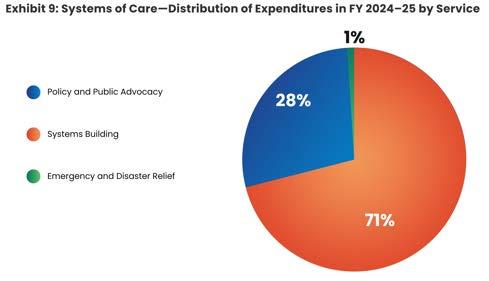
Expenditure data indicate that for FY 2024–25, county commissions expended $83 million to improve Systems of Care, with one percent focused on Emergency and Disaster Relief, 28 percent on Policy and Public Advocacy, and 71 percent of expenditures toward Systems Building.
County commissions served a diversity of populations by age, race/ethnicity, and language (Appendix C). Statewide, 641,015 children were served by county commission programs. The total of 511,241 adults served included primary caregivers such as parents and other family members (464,436) and service providers (46,805).
By age, 32 percent of children served were under three years old, 28 percent were ages 3 through 5 years old, and 40 percent were of unknown age.
By race/ethnicity, children served included Hispanic or Latino as the largest group (31 percent), followed by White (nine percent), Asian (four percent), Black or African American (four percent), Other (two percent), Two or More Races (two percent), Alaska Native or American Indian (less than one percent), Native Hawaiian or Pacific Islander (less than one percent) and unknown race/ ethnicity (47 percent).
With respect to primary language of children served, the two largest groups served were speakers of English (37 percent) and Spanish (20 percent), followed by speakers of Asian languages (Vietnamese, Cantonese, Mandarin, Korean, one percent), other (three percent) and language unknown (39 percent).
Fueled by additional revenue from the Oakland Children’s Initiative (OCI) and Alameda County Measure C, this was a year of rapid growth for the agency, with a total budget increase of 216 percent.
Through the OCI Early Education Fund, we continued investing in public system partners Oakland Unified School District and City of Oakland Head Start, to build a stronger early care and education system that was informed by multiple community listening sessions. Since FY 2022-23, $2.3 million has been spent in facilities improvements, and $1.1 million was invested in teacher training and curriculum.
In collaboration with a Community Advisory Council, we facilitated 60+ hours of community listening sessions to shape the ~$1 billion Measure C 5-Year Plan, which was adopted by the Alameda County Board of Supervisors in June. This paved the way for the launch of our ECE Emergency Grants, bringing much-needed relief to child care providers.
Continuing our partnership with Alameda Alliance for Health, we became a MediCal CalAIM provider under the Community Health Worker Benefit this year. Our Pediatric Care Coordination Team supported over 9,800 families in FY 202425 through outreach and care navigation, including supporting 1,944 members in connecting to their well-child visits and referring 1,349 families to early intervention services. Several partner school districts committed to participating in our first
year of Early Development Instrument implementation for our Kindergarten Readiness Study.
We also continued our birth equity work, funding lactation training and peer support groups for 500+ parents and caregivers. Our Fathers Corps initiative hosted learning communities for 200+ service providers and launched a pilot Prenatal Black Fathers Group to support new dads’ wellbeing. Our Trainings initiative also provided learning opportunities to 800+ partners and providers to expand early childhood knowledge in our local systems. Through our placed-based Neighborhoods Ready for School initiative, we invested $3million plus in community organizations to provide programming and basic needs support to families.
Starting in FY 2023-24, First 5 Alpine partnered with the Woodfords Indian Education Center to host playgroups, “Beziyezing Payti’l” that included story time and literacy activities in a space that is accessible and known to the Hung-ALel-Ti community. Participating families were given a copy of the book to build home libraries, of children’s books that represented native beliefs, practices and traditions. Through playgroups, First 5 Alpine has actively invested in increasing its understanding of the tribal community’s needs as well as its efforts to make services available within the community. This continued engagement has allowed the First 5 Executive Director to build relationships with families in the
community and to tailor services to better meet families’ expressed needs.
Additionally, First 5 Alpine positioned itself for the FY 2025-26 implementation of the Mobile Family Resource Center (MFRC) through its Home Visiting Coordination and outreach efforts. Through Home Visiting Coordination funding, the First 5 Alpine Executive Director attended an Ages and Stages Questionnaire (ASQ) refresher training and Parents as Teachers (PAT) curriculum training to support direct service offerings that will be available through the MFRC in the future, including county-wide developmental screenings through the MFRC and services to support children’s development incorporating the PAT curriculum in activities offered through the MFRC will help First 5 Alpine work toward its expected outcome that parents of children ages 0 through 5 use positive strategies to guide and teach their child.
First 5 Alpine’s multi-faceted approach to outreach this fiscal year strengthened its position within the county as a trustworthy, meaningful resource for children ages 0 through 5 and their families. Connections made and trust built through outreach will serve as the foundation for community interaction with the MFRC as it is established.
First 5 Amador has continued to collaborate closely with county agencies and community-based organizations, effectively utilizing local resources to maximize the impact of our initiatives.
Our primary investments included:
Weekly playgroups throughout the county including Messy Morning offer developmentally appropriate activities in both indoor and outdoor learning environments for children, parents, and caregivers. Our playgroups are held at three separate locations to ensure broad access.
This universal home visiting program has served 70 families in-person and 14 through kit deliveries (28 percent of total births). The program provides customized First 5 California Parent Kits and connects families to essential resources. Notably, 59 percent of in-person visits included the Edinburgh Postnatal Depression Scale screening, with 20 percent of those screened referred to clinical services.

This program maintained a 70 percent participation rate among age-eligible children, with data indicating that 94 percent of Amador’s four-year olds; 82 percent of 3-year-olds, 75 percent of two-year olds,

and 52 percent of our one-year-olds participated this fiscal year. Over 20 years of research conducted by the Imagination Library demonstrated parents read aloud more to their children as a result of this program. First 5 Amador’s surveying of parents aligns with this research and utilizes the program as an introduction to First 5 Amador to families with newborns, those new to the community, etc. Grandparents, businesses, service organizations, etc. are well-versed in the program and refer families on a regular basis.
This robust program helps to reinforce our relationships with the local library, foundation, non-profits, etc..

Thirty-one sites participated in this initiative, aimed at improving the quality of early learning and care programs and educating parents on the importance of quality early childhood experiences. Participants, including family, friend, and neighbor caregivers, as well as family child care and centers, received financial incentives and early education materials aligned with their quality improvement plans.
A collaboration with Public Health resulted in an incentive program for providers who implemented dental care at their sites. Five participants implemented an ASQ/ASQ-SE screening initiative and received monetary incentives for 70 percent or higher parent participation. A new initiative through
Amador College Connect has helped in the promotion and recruitment of individuals to the ECE field. Through Amador Quality for Kids, we have assisted in connecting interested individuals at a significantly higher rate than prior years. Q4K participated in the creation of a dedicated page on Amador College Connect’s website, promoted the higher education classes and connected individuals with Quality for Kids opportunities. Six hundred forty-four children were cared for at Q4K participating sites.
First 5 Amador continues to lead this coalition, which provides education, outreach, screening, and treatment for families experiencing perinatal mood and anxiety disorders (PMADs). Clinical support is offered through First 5 Amador for county residents. The coalition remains focused on system improvements, including referrals, trauma-informed provider education, and increased access to care.
Our site has become a vital community hub, offering a comfortable setting for children, families, and service providers. Amador Child Abuse Prevention Council, three weekly events -- music and movement, playgroups and Messy Morning, as well as parent and early care and education events are offered at our FRC. This site accommodates on-site child care, making it possible for more to benefit from adult education offered during offhours.
Tobacco tax revenue accounted for only 39 percent of total Commission revenue and funded 36 percent of program expenditures in the past year. As this revenue source continues to decline and fund fewer initiatives, the Commission remains committed to strengthening its leadership in data-driven coordination of federal, state, and local prevention investments. This strategic focus aims to sustain an integrated system of care that supports the county’s most vulnerable families with young children.
With support from the Butte Strong Fund of the North Valley Community Foundation and the County of Butte, the First 5 Family Center network has completed its inaugural year of service to families across Butte County. The network provides consistent, no-cost support to individuals who are pregnant or parenting young children, offering inclusive and welcoming spaces that promote family stability and child well-being. Services include parenting education, developmental screenings, early literacy and STEAM activities, playgroups, and warm referrals to community resources, all designed to support early relational health and to meet the unique needs of each family.
In addition, the Commission provided training to dozens of Family Center partner staff to deliver Triple P caregiver education classes, supported by funding from the California Department of Health Care Services.
First 5 Butte County has continuously
funded the Healthy Families America™ home visiting program since 2009. In response to declining tobacco tax revenues, the Butte County Department of Employment and Social Services allocated funding to implement the Child Welfare Protocol, expanding eligibility criteria to serve more families referred through Children’s Services. This partnership ensures continued access to critical prevention services while maintaining program sustainability.
For more information about First 5 Butte County’s programs, services, and impact, please visit www.first5butte.org.
In FY 2024–25, First 5 Calaveras advanced its mission to support the health, learning, and well-being of young children and families through strategic investments in family support, early learning, health promotion, and systems coordination. Evaluation activities—including surveys, performance tracking, and narrative analysis—guided policy alignment, funding decisions, and integration efforts with the Calaveras County Public Health Division (CCPH), enhancing sustainability and cross-agency collaboration.
Programs under Family Functioning focused on building resilience, strengthening parenting skills, and connecting families to community resources. CASA (Court Appointed Special Advocates) expanded services for foster children, ensuring consistent adult advocacy. Children showed
developmental gains and improved wellbeing, while families received support navigating placements and early learning needs. Volunteers were trained in traumainformed care. Strengthening Families Initiative, funded by MHSA Prevention and Early Intervention, offered high-quality parenting and professional education. Participants reported learning skills in emotional regulation, communication, and positive discipline, with meaningful improvements in family dynamics.
Community Playgroups provided safe, engaging spaces for caregivers and children to learn and socialize. Families built peer networks and accessed local resources, promoting early development and school readiness.
Child Development Programs enhanced early learning environments and supported professional growth among educators. Strong Start Calaveras offered coaching, training, and quality improvement incentives to early learning providers. Participants improved classroom environments and advanced inclusion and diversity practices. SocialEmotional Coaching and Mentoring supported educators and families in promoting children’s emotional wellbeing. Teachers implemented strategies for positive behavior and emotional regulation, leading to calmer classrooms and stronger peer relationships.
Child Health-focused initiatives emphasized prevention, education, and early intervention. Smile Keepers Oral Health Program delivered dental screenings, fluoride treatments, and
parent education at early learning sites. Families were connected to follow-up care, reducing untreated dental issues and increasing access to dental homes. SAFE-Self Preschool Safety Program taught personal safety, assertiveness, and kindness through songs, puppets, and stories. Caregivers reinforced lessons at home, building awareness of injury prevention in age-appropriate ways. Metta Services provided traumainformed mental health support for young children and families. Evaluations showed improved social-emotional functioning, fewer behavioral challenges, and stronger parent-child relationships. Caregivers reported increased confidence in supporting emotional growth.
A major milestone in Systems of Care was the structural integration of First 5 Calaveras within CCPH, improving efficiency, reducing duplication, and enhancing coordination across child- and family-serving agencies. Collaborative efforts with the Family Wellness Coalition, Strong Start Calaveras, and Healthy Calaveras Collaborative strengthened trauma-informed, prevention-focused systems countywide. Evaluation findings confirmed improved communication, data sharing, and joint planning, informing updates to the First 5 Calaveras Strategic Plan 2025–28.
First 5 Calaveras programs and partnerships continue to drive meaningful, lasting change. Families are gaining essential skills, children are entering school healthier and more prepared, and systems are working together more
effectively. Evaluation results affirm that local investments are improving family stability, early learning quality, child health outcomes, and community collaboration— laying a strong foundation for every Calaveras child to thrive.
This year, First 5 Colusa made a profound impact on families in our rural community, serving 1,238 children and 1,252 primary caregivers through programs designed to strengthen early childhood development and family well-being. These numbers represent more than data—they reflect the trust families place in us and the resilience of a community working together to ensure every child has the opportunity to thrive.
One of the most transformative efforts was the implementation of the CalAIM Incentive Payment Program (IPP) Grant through Partnership HealthPlan. This funding allowed First 5 Colusa to integrate Community Health Workers (CHWs) into our service delivery model, creating a bridge between health systems and families. Staff completed CHW certification, equipping them with the skills to provide culturally responsive care, navigate complex health and social service systems, and advocate for families in need. This initiative aligns with CalAIM’s vision of whole-person care and has strengthened our ability to address health disparities in Colusa County.
Recognizing the economic challenges faced by many families, First 5 Colusa partnered with Tri-Counties Community
Action Partnership to provide monthly diaper distributions to low-income families. This collaboration addressed a basic yet essential need, reducing financial stress for caregivers and promoting health and dignity for young children.
Amid these successes, we remained deeply committed to creating safe and welcoming spaces for all families, especially in light of political rhetoric that has heightened fear among undocumented communities. First 5 Colusa responded by reinforcing confidentiality, implementing traumainformed practices, and partnering with trusted local organizations to ensure families could access services without fear. Our message was clear: every family belongs here, and every child deserves support.
These accomplishments reflect more than program milestones—they represent a community united in its commitment to equity, resilience, and opportunity. Through collaboration, innovation, and compassion, First 5 Colusa continues to stand as a trusted resource for families, ensuring that every child and caregiver has the tools and support they need to thrive.

In FY 2024-25, First 5 Contra Costa advanced two key initiatives to promote equity, inclusion, and school readiness for young children and their families. Through Ready Kids East County (RKEC), we implemented the Womb to Classroom strategy to support African American/ Black children ages 0–5 with culturally responsive efforts from pregnancy through early childhood.
A kick-off event with 45 community partners identified three guiding priorities:
• Womb to Community
• Bolster Prenatal & Postnatal Supports
• Center Black Parents & Caregivers
Key activities included the “Motherwork Summit”, which brought together 42 Black women to reflect on health, wellness, and lived experiences; a CoCo Doulas session with 11 parents exploring culturally affirming birth options; and creation of 100 culturally relevant welcome totes with books and resources for expecting Black families in partnership with the Contra Costa County Library.
Families affirmed the importance of culturally specific spaces and programming, including the “I Believe in Black Family Leadership Series”, which supported 16 parents in navigating early education systems. As well, a summer LEGO education camp served 20 children, 15 of whom were Black, fostering STEM learning in hands-on ways.
Collaboration with school districts increased through shared tools like the
Ages and Stages Questionnaire and connections between child care providers and TK–12 educators. A RKEC Resource Fair drew 60+ Black parents and caregivers, connecting them to 33 service providers and on-site supports such as health screenings, food distribution, and WIC registration. A digital RKEC Resource Kit extended access to these resources. Community impact was evident through strong participation and feedback.
Simultaneously, First 5 Contra Costa led the Inclusion in Early Learning Project to improve the capacity of child care providers to support children with disabilities, developmental delays, and social-emotional concerns. The project had two main parts: (1) engaging families, educators, and advocates to understand community needs and create recommendations, and (2) providing training, materials, and support to early educators. Community engagement included five meaning-making/validation sessions with 53 participants and two convenings with over 140 people, producing recommendations for more inclusive early childhood programs.
Training reached 380 providers from 267 sites on topics such as special health care needs, neurodiversity, child development screening, and inclusive teaching strategies. Over 200 providers attended 14 inclusion-focused trainings, joined peer learning cohorts, or a yearlong Inclusion Specialization program. A major convening on neurodivergence drew 100+ participants, including expert speakers and a parent panel. Evaluations showed
99 percent rated trainings positively, and nearly all planned to apply what they learned.
To support implementation, providers received over 200 shopping passes for classroom supplies and 350 “inclusion toolkits” with materials and guides. We also launched a new early childhood mental health consultation program, serving 11 sites and nearly 800 children, and partnered with five community groups to expand outreach on early intervention and special education services, reaching 1,550 providers and 1,106 families. These culturally and linguistically responsive approaches targeted African American/ Black and Latinx communities. A technical assistance pilot helped seven child care sites adopt the Ages & Stages Questionnaire, with providers reporting immediate benefits for children and families.
These efforts reflect First 5 Contra Costa’s commitment to building inclusive, responsive systems where all children and families are supported to thrive.
During this fiscal year, First 5 Del Norte advanced several landmark initiatives aimed at improving child health, family resilience, and early learning across our rural county. The year marked both the culmination of years of collaborative planning and the launch of new, community-rooted systems that will benefit children and families for decades to come.
A major milestone was the successful implementation of Healthy Families America (HFA)—a long-anticipated, evidence-based home visiting program delivered in partnership with Del Norte County Public Health. After nearly four years of coordinated planning, training, and infrastructure development, the program officially launched this year, bringing comprehensive, relationshipbased support to expectant and new parents. Through HFA, families now receive individualized guidance on healthy child development, parent-child bonding, and access to community resources, ensuring that every family has the tools to build a strong foundation from the very beginning.
First 5 Del Norte also took a leadership role in oral health education and outreach, strengthening prevention and screening efforts countywide. In collaboration with public health, school districts, and community dental providers, First 5 helped ensure that all Kindergarten Oral Health Assessments were completed, while also expanding outreach to families through educational events, classroom presentations, and resource distribution. These efforts reflect a communitywide commitment to early intervention and equitable access to dental care—key to long-term health and academic success.
Building on our ongoing focus on family resilience and trauma-informed systems, First 5 Del Norte delivered a robust series of Adverse Childhood Experiences (ACEs) and Trauma-Informed Care workshops throughout the year. These trainings were open to parents, caregivers,
early educators, service providers, and teachers, offering a shared foundation for understanding how early adversity affects development and how communities can promote healing and resilience. This countywide effort continues to cultivate a trauma-informed culture, equipping both families and professionals with strategies to support children’s emotional well-being. Our commitment to early literacy and family engagement also remained strong. The Dolly Parton Imagination Library continued to thrive, providing free, highquality books to children from birth to age five. Participation in this program grew again this year, helping to nurture early reading habits and family bonding through shared story time. Complementing this, Ready4K, our school readiness texting program powered by ParentPowered, reached families with evidence-based tips, local resource information, and encouragement to engage meaningfully with their children through everyday activities. Together, these initiatives strengthen the home learning environment and empower parents as their children’s first and most important teachers.
Across all initiatives, First 5 Del Norte’s work continues to be guided by collaboration, equity, and community voice. By focusing on prevention, connection, and education, the Commission remains steadfast in its mission to ensure that every child in Del Norte County enters school healthy, confident, and ready to learn.
FY 2024–25 marked the final year that First 5 El Dorado focused its FY 2021-25 Strategic Plan efforts on the implementation of the Community Hubs initiative. A primary aspect of this initiative was the establishment of a navigational system that would connect expectant parents and families with children birth through five years of age to services and supports prior to crisis. Despite financial and countylevel constraints, the program continued to deliver high-impact services to families across El Dorado County during this final year, providing 1,300 individuals or families with at least one navigation service, and offering over 3,300 total navigation services.
First 5 El Dorado worked with its longstanding evaluation consultant to assess and document how Hubs 2.0 was implemented in FY 2024-25, including gathering qualitative and quantitative data to support close out evaluation activities and the development of a FY 2024-25 Evaluation Report. That report evolved to become the FY 202125 Strategic Plan Summary Evaluation Report, which reflected on the four-year implementation period covered by the 2021–25 Amended Strategic Plan and captured the evolution of the Hubs 2.0 model during that time. It brought together findings from multiple years to provide a more holistic summary of activities, highlighted shifts in

practice, and illuminated lessons learned as the Commission’s leadership role in establishing the Hubs 2.0 model came to a close.
The FY 2021–25 Strategic Plan Summary Evaluation Report highlighted Hubs 2.0 as a transformative systems-change effort that prioritized access, equity, and community voice. Key lessons included the importance of balancing flexibility with structure, investing in authentic engagement, and planning early for sustainability. These insights directly informed the development of the FY 2025–28 Strategic Plan, which strategically embeds the most impactful elements of Hubs 2.0 into new initiatives.
Specifically, the Commission has committed to:
• Designing a caregiver/child resiliency strategy that incorporates protective factors and universal developmental screening.
• Launching a Community Health Worker Network to provide individualized, community-based services for expectant parents and families with children ages 0–5.
• Centering community voice through needs assessments, public convenings, and inclusive planning processes.
By carrying forward the core components of Hubs 2.0—navigation services, interagency collaboration, and continuous quality improvement—First 5 El Dorado ensures that the legacy of this initiative continues to shape a more resilient and responsive system for children and families.
At First 5 Fresno County (F5FC) we believe it takes all of us working together to build a community where every family has the support they deserve. The following are examples of new ways we’re working cross-sector to improve community outcomes through leveraged funding and intentional partnership:
This fiscal year, F5FC activated our nonprofit, Lighthouse for Children, Inc., and established community partnerships to launch Dolly Parton’s Imagination Library (DPIL) in Fresno County. DPIL is a book gifting program aimed at providing young children with direct, universal access to free, age-appropriate books each month. In 2023, the governor signed legislation to expand DPIL across California – providing a cash match to local communities and the opportunity to leverage state funds to bring this early literacy program to local families. In January 2025, we secured $400,000 to launch the program, and by the end of the fiscal year over 20,300 books were mailed to more than 7,800 children.
This past fall also marked the beginning of a new partnership with BLACK Wellness & Prosperity Center (BWPC). This Fresno-based organization is focused on improving Black maternal and infant health outcomes in the Central Valley where Black families experience disproportionality high rates of preterm birth and life-threatening childbirth complications. Among multiple unique initiatives, BWPC is building their on-site capacity to provide clinical prenatal
care and birthing services. Through this partnership BWPC provides culturally affirming and evidence-informed group care for pregnant individuals. Group sessions are complemented with clientcentered support, goal setting and referrals to help participants reduce stress, enhance life skills and build social support. In the future, BWPC will implement Glow! Group Prenatal Care and Support Program, a locally enhanced group prenatal care model.
During FY 2024–25, First 5 Glenn County focused on strengthening internal systems to ensure long-term program stability, compliance, and readiness for future evaluation activities. This foundational year emphasized accuracy, consistency, and improved coordination across funded programs and community partners.
Significant progress was made in reconciling prior-year program and fiscal documentation to meet state reporting standards. Internal reporting templates and data collection procedures were updated to enhance accuracy and consistency, laying the groundwork for improved evaluation practices. These efforts position the Commission for more timely and comprehensive reporting in future cycles.
Despite the focus on stabilization, funded programs continued to provide meaningful services to families. Nurturing Parenting classes supported nine caregivers, positively impacting 27 children through improved family functioning and resilience. Additionally, the distribution of First 5 Book Bags and New Baby Kits promoted early literacy, parent-child engagement, and school readiness across the community. A total of 476 children and 189 caregivers received services.
Partnerships among county agencies, health providers, and early childhood programs were reinforced, improving coordination and referral systems for families. These collaborative efforts enhanced the community’s capacity to deliver preventive health and family support services, while also aligning local evaluation practices with state-level indicators.
Overall, FY 2024–25 marked an important year of rebuilding and preparation— ensuring that First 5 Glenn County is wellpositioned for future outcome evaluations, data-driven decision-making, and continued service to families with young children.

The combination of a dip in local birthrate and a greater than predicted tobacco tax decline has resulted in a 41 percent decline in tobacco tax revenue for First 5 Humboldt over the past four years. Although the Commission has judicially reduced funding to community partners over the years to match declines, FY 2024-25 represented a fiscal cliff. As our primary direct service program, playgroups provide parent education, developmental screening, and crucial connection opportunities for isolated rural parents and their children. The 0-5 population in Humboldt is around 7,400; in 2024-25, playgroups saw more than 15,000 visits at 21 sites. At the end of FY 2024-25, the Commission reduced playgroup funding by nearly half. News stories in every local news outlet emphasized how parents have relied deeply on the local playgroup network.
First 5 Humboldt also established a 501(c)3 non-profit at the end of the 2024-25 fiscal year. The new Humboldt Children and Families Foundation will support the vision and purpose of First 5 Humboldt. It will also allow us to apply for those funding opportunities that exclude government entities.
Since 2017, we have benefited from partnering with Vesper Society, an operating foundation which supports a full-time position in our office focused on ACEs, parent support, and community engagement. Vesper is planning a spenddown in anticipation of closing in three years. They have generously committed to
donating $450,000 to our 501(c)3, towards the purchase of a building to house First 5 Humboldt’s office and programs. The initiative, titled “The Belonging Project,” will emphasize community connectedness, empathy and critical thinking development, and provide a tangible symbol to the community that, in spite of tobacco tax declines, we intend to continue working on behalf of our youngest children and their families for years to come.
First 5 Imperial continued to place emphasis on expanding home-visitation and strengthening systems that support these efforts and recognizes that home visitation remains one of the most impactful ways to reach families with young children that are facing stressors or barriers to accessing resources. Locally, this work was carried out through collaboration with numerous partners, including the IVROP Home Instruction Program, ICOE Early Head Start and Home Visitation Program, Court Appointed Special Advocates, the 24/7 Dad Program, and other community-based organizations.
Each partner contributed unique strengths to the effort; however, one program in stood out for its comprehensive approach and impact—the El Centro Elementary School District’s Next Steps Project. Next Steps, operated by the district’s family resource center, has distinguished itself by integrating home visitation with intensive case management and developmental
screening and intervention services. The program targets “high-needs” families who exhibit developmental or behavioral concerns or who may benefit from support services. Case managers conduct developmental screenings using the ASQ and provide developmental surveillance for children flagged as having potential delays. This ensures early identification and referral to appropriate services.
Through a multidisciplinary approach, case managers develop family service plans tailored to each household’s needs and provide services in English/Spanish. During FY 2024-25, approximately 110 families within the district’s catchment area received intensive case-management. Environmental assessments conducted during home visits identify major stressors affecting families, such as economic hardship, behavioral-health needs, housing instability, or challenges related to parenting and child development. As a result, families were linked to essential supports including behavioral-health services, basic-needs assistance, family therapy, preschool enrollment, parenting classes, and other community resources. Data indicated that 24 percent of families were experiencing multiple stressors, underscoring the importance of outreach and follow-up.
Home visitation strengthened the ability of case managers to connect with families in a comfortable and familiar environment. Visits allowed case managers to conduct assessments, develop service plans, and build relationships that encouraged parents to engage more openly and
consistently. These interactions often led to identification of developmental concerns. The developmental screening component reached 122 children, with more than 42 percent identified as having a developmental delay. Nineteen percent of children screened were referred for earlyintervention services, most commonly speech/language therapy provided through the District or Regional Center. A number of these assessments were completed during home visits, making the process accessible to families who may otherwise struggle with transportation or scheduling.
Outreach and referral support also extended to early-education placement. Case managers assisted by referring families to Head Start, Early Head Start, and California State Preschool Programs, ensuring that children gained access to early-learning environments.
Both First 5 Imperial and its community partners recognize the value of Next Steps, particularly its commitment to intensive, family-centered services that address the needs of children 0-5. Parent feedback reinforces this: survey results show that a majority of families felt supported, respected, and informed about available resources. Parents also reported feeling comfortable sharing their concerns and appreciated that services were offered in their preferred language.
Next Steps continues to evolve in meaningful ways, First 5 Imperial is encouraged by the progress made when families are engaged early through home
visitation, which strengthens family-school relationships and builds trust that can extend well into the elementary school years.
First 5 Inyo advanced key initiatives across systems building, family resilience, and community engagement during FY 2024–25. Significant progress was made in Systems Building through continued coordination of the Perinatal Taskforce and the launch of two major crossagency groups: the Maternal Mental Health Workgroup, aligned with the 2025–28 Community Health Improvement Plan (CHIP), and the Comprehensive Prevention Plan Team supporting FFPSA implementation. These efforts strengthened countywide collaboration and deepened Inyo County’s commitment to culturally responsive, integrated family support systems.
A major accomplishment this year was the continued growth and impact of LIFE Night, a monthly family engagement event led by First 5 and Inyo County Prevention. LIFE Night provided families with free, accessible activities focused on literacy, inclusion, family bonding, and early childhood development. The program’s multi-room model offered targeted activities for children of different ages, while connecting caregivers with community resources and creating a welcoming environment for families across the county. LIFE Night demonstrates First 5 Inyo’s commitment to building resilient families
through regular, community-centered programming.
In direct services, the Inyo County Home Visiting Program delivered 160 home visits to 24 children and 21 caregivers, while Triple P Positive Parenting supported four caregivers and four children and resulted in a measurable 4 percent increase in parent resilience. Early learning and literacy initiatives remained strong, with 385 children enrolled in Dolly Parton’s Imagination Library and Reach Out and Read participation consistent with previous years.
Developmental screening capacity remained stable with continued training for home visitors and community providers on Ages and Stages Questionnaires. Despite persistent challenges in the early childhood education workforce, First 5 Inyo sustained quality improvement supports through IMPACT Legacy, helping maintain a foundation of high-quality practices across early learning environments.
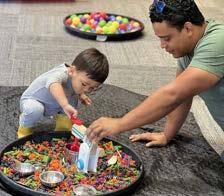
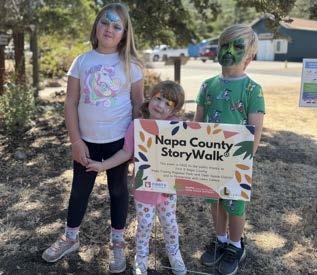
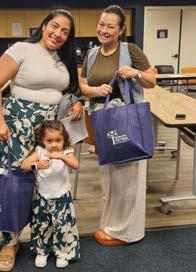
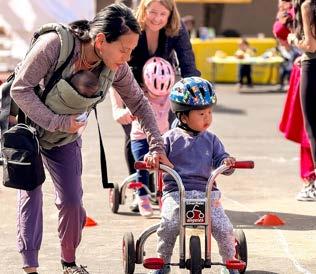
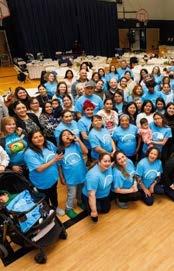


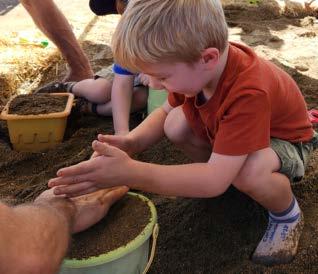

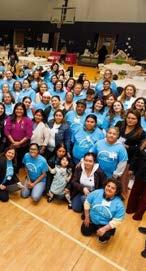
In FY 2024–25, First 5 Kern supported 39 programs across three key focus areas: health and wellness, parent education and support services, and early childcare and education. An estimated $7.5 million was invested in these areas to strengthen and support 13,223 children from prenatal to age five and 12,579 caregivers in Kern County. Key highlights include:
HEALTH AND WELLNESS
Funded programs served 930 caregivers and 4,643 children. The dental program provided oral health screenings to 3,241 children, and 163 received restorative dental care. Immunizations were administered to 434 children, while 118 mobile clinics were held throughout the county. Additionally, the Nurse Family Partnership and Black Infant Health programs delivered home visitation services to 167 mothers and 121 children.
A total of 10,584 caregivers and family members, along with 7,138 children, were served. Case management services were provided to 1,737 parents and 2,473 children. Parent education classes/ workshops had 927 participants, and 148 parents attended court-mandated education sessions.
EARLY CHILDCARE AND EDUCATION
Services reached 1,442 children and 1,065 parents. Of these, 622 children participated in center-based activities, while 116 received home-based services. Additionally, 122 children took part in summer bridge activities aimed at
supporting school readiness.
On May 21, 2025, First 5 Kern hosted its 3rd Annual ACEs Conference: Raising Resilience of Families, drawing over 270 attendees for a day of learning, collaboration, and trauma-informed practice. The success of this conference reflects the same spirit of partnership and commitment that drives First 5 Kern’s investments in health, family support, and early education. Together with community partners, these efforts touched more than 25,000 children and caregivers in FY 2024–25, underscoring our mission to give every child the strongest possible start in life.
This past fiscal year, the most significant accomplishment of First 5 Kings was establishment of Dolly Parton’s Imagination Library (DPIL). Commission staff successfully brought together a variety of community partners, including children’s mental health services, local service clubs, Kings County Departments of Public Health, Human Services and County Library, and numerous family-serving organizations, to brainstorm how to bring DPIL to Kings County. Registration opened on March 28, 2025, and 539 children were registered in time for the April 1 processing for the May book mailing. Eight hundred sixtyfive books were mailed to children 0-5 in June – the number of books that could be expected from a program operating for six months. We could not have reached this many children in such a short period of time, without the help of our dedicated partners.
First 5 Kings was heavily involved with all aspects of home visitation in Kings County. Staff participated in regional workgroups, the local home visitation advisory committee, and assisted another partner in their successful application for Tribal MIECHV funding, increasing the capacity of home visitation services available. The Commission was also awarded one of the Department of Health Care Services (DHCS) Children and Youth Behavioral Health Initiative grants: Early Childhood Wraparound Services. Our project included a start-up Home Visitation program, centralized intake & referral hub and development of an Infant and Early Childhood Mental Health Consultation program.
First 5 Kings values regional and statewide collaborations with other First 5s and family supportive organizations. We executed a Help Me Grow Regional Partnership with Valley Children’s Healthcare and three Central Valley First 5s (Fresno, Madera & Merced) to increase developmental screenings, improve local community outreach and care coordination as well as productivity and efficiency, with hopes of developing a long-term sustainable plan to support this project. Commission staff participated in a First 5 Communities of Practice facilitated by Strategies TA consultants, discussing how other Commissions support Family Resource Centers. This COP led to a local FRC/Family Support Network Development project that met to explore the purpose of a network, mapping community services, defining network benefits, decision-making
and timeline planning, and pulling it all together to make recommendations to organizational leaders.
First 5 Kings is engaged in other statewide initiatives including activities related to the Families First Prevention Services Act and DHCS’ Birthing Care Pathway and Transforming Maternal Health (TMaH), to ensure representation for pregnant persons, children 0-5 and their families.
First 5 Kings County and its funded partners are also continuing to concentrate on (1) building partner capacity to pursue new funding opportunities to supplement declining revenues, (2) adopt and implement evidence-based programs (EBPs) and practices with fidelity for parents and caregivers and young children, (3) increase visibility and coordination of First 5 and other early childhood and family services, and (4) strengthen data collection and reporting systems to demonstrate programmatic outcomes more effectively.
The Pathways Home Visiting program operated in quarter one (July-September 2024) of FY 2024-25. The information included for Pathways is limited to that which was collected and recorded in the program’s online databases managed by the Pathways Director and staff. These data were provided to the evaluation team in October 2024 but could not be validated with program staff due to the timing of program closure. That being said, 16 families and 17 children were served.
This resulted in 60 home visits, 98 points of contact, 25 additional services, and 6 referrals to other community resources.
The Commission supports the distribution of diapers and wipes through a partnership with Lassen County Public Health by investing funds for the purchase of these essential supplies. Public Health staff distribute the items at no cost to families across the county. Individuals simply describe their needs at the distribution point and are matched with the appropriate sizes and quantities for the children in their household. Beyond meeting immediate needs, this program also serves as a low-barrier entry point for families to access additional supports through the Lassen Links referral system (e.g., WIC, Lassen Works, or MCAH). To support the low-barrier intent of the program, limited information is collected from families when they seek these supplies. During the FY 2023-24, 149 families were given 906 packages of diapers and 537 packages of wipes. These families represent 231 children 0-5. In addition, this helped refer 14 families to additional services that they needed.
In FY 2024-25, First 5 Lassen continued serving a lead role in building and expanding the Lassen Links network to connect children, families, and individuals to services that they need. Key activities and successes include:
Providing over 250 referrals, via which 31 families that included a child zero through five were referred to community services. Refining referral reporting and tracking
with closed-loop systems and automated dashboards to improve data accuracy and sustainability.
Applying for funding through the Partnership Health Plan, although ultimately this funding source was not a fit for First 5 Lassen due to county capacity constraints.
Convening partners at regular meetings (10 Lassen Links meetings and three Strategic Partner meetings) to support Lassen Links viability and integrate the program into county-wide systems.
Promoting and facilitating a Community Health Worker (CHW) training to educate partners on billing processes and managed care plan contracting, with more than four individuals participating.
Contracting with SEI to develop a robust evaluation plan to assess the impact of the Commission’s investment in the Lassen Links referral network. While this evaluation was designed and will be conducted at the request of First 5 Lassen, it is intended that evaluation activities and findings can be used by all partners in the system to understand the impact of the service and engage in continuous quality improvement activities. As such, the plan was presented to key partners in May 2025 for review and feedback before being finalized.
In FY 2024-25 the Commission responded to community-identified needs for expanded early care and learning options in the Janesville area by issuing a Request for Applications (RFA) to fund start-up costs for a new preschool in the region.
This contract was subsequently awarded to Sierra Cascade Family Opportunities (SCFO), who will use the funds to source equipment and supplies, perform capital improvements, and obtain child care licensing. The establishment of this center is aligned with Commission goal one: Every child served by First 5 funded programs, prenatal through five, will reach his or her developmental potential and be ready for school. Financial support and monitoring of the contract will continue into FY 202526 as described in the following section of this report.
This year, LA County was hit by devastating wildfires and other unexpected emergencies. To help support impacted communities, First 5 Los Angeles (F5LA) provided El Nido Family Centers with the flexibility needed to respond quickly using their existing funds. El Nido helped more than 330 families meet urgent basic needs during sudden disruptions to income and safety caused by regional emergencies through food and diaper distributions, utility and rent support, and other financial assistance through gift cards. Home Visiting programs also utilized their funding from F5LA to provide resources such as food, baby essentials, and baby gear to families impacted by wildfires and supporting families facing stress due to recent immigration policies.
In response to disparities from historic under-investment, system inequities, and the fiscal reality of declining revenue, F5LA began development of the Index. The Index is an important tool that will help F5LA advance equity and make informed decisions about future investments by directing resources towards improving the well-being of young children and families, prioritizing communities experiencing the greatest disparities. In FY 2024-25, “Version 1.0” of the Index was drafted, incorporating indicators related to the 2024-29 Strategic Plan, such as infant mortality, rent burden, access to parks, and other measures.
Home Visiting is a proven prevention strategy supporting pregnant moms and new parents to promote infant and child health, foster educational development, and prevent abuse and neglect. For over 15 years, F5LA has invested in three HV program models—Welcome Baby, Healthy Families America, and Parents as Teachers—while also funding infrastructure and oversight activities to sustain and strengthen this network. Together, the program models represent a network working across funding streams to identify and connect

families to the right program and level of support to meet their unique needs, including how to navigate and advocate within systems that support families. F5LA continued to strengthen collaborations with LA County Department of Public Health (DPH) and Department of Mental Health to provide resources for communities and families through HV services. This included system wide efforts, including coordination on DPH’s Centralized Billing System to support the ability to maximize utilization of available funding streams for HV. Highlights of collective HV activities in FY 2024-25 include: ensuring continuity of care; promoting parent-child bonding and healthy attachment; engaging fathers, recognizing their essential role in development; training Parent Educators in Domestic Violence Counseling; screening new moms for postpartum depression; and other activities to support parents and their children. These efforts demonstrate F5LA’s ongoing commitment to strengthening families, promoting resilience, and improving outcomes for young children.

In 2024–25, First 5 Madera County (F5MC) launched a new strategic plan and shifted from funding multiple smaller programs to funding larger, more intentional initiatives to better leverage declining Proposition 10 funds. Despite facing numerous challenges stemming from changes in the social climate and funding landscape throughout the year, F5MC and its contractors served substantially more children and providers than last year. Services were delivered through the Family Resource Center, Preventive Services Program, Mobile Vision Clinic, Child Passenger Safety Program, IMPACT (Improve and Maximize Programs for All Children Thrive), and the Dolly Parton Imagination Library. Additional services were funded through sponsored events, community trainings, the Positive Parenting Program (Triple P), and the Raising a Reader Program. F5MC also strengthened the system of care through the Regional Home Visitation Initiative and its participation in the county’s Breastfeeding Coalition.
Funded services included the implementation of Triple P by Centro Binacional Para El Desarrollo Indígena Oaxaqueño (CBDIO), a program centered on resilience, parent education, and improved access to services for Indigenous parents and caregivers. The program’s unique strength lies in its cultural and linguistic accessibility, offering support in multiple Indigenous languages including Chatino, Zapoteco, Mixteco, Triqui, Amuzgo, Tzotzil, and Spanish. Grounded in social learning, cognitive-behavioral,
and developmental practice, Triple P helps parents build confidence and selfreliance by equipping them with tools to manage family dynamics and challenges independently. Its flexible design allows for varying levels of engagement, from light-touch interactions at Level 1 to more targeted and intensive interventions at Levels 2 and 3.
The program achieved notable outcomes, including 464 light-touch contacts and 77 individualized parenting interventions. Additionally, 28 caregivers were connected to essential resources through closedloop referrals for basic needs, social services, and child development support. These results underscore the program’s meaningful impact in strengthening Indigenous families through culturally responsive and empowering approaches.
During the fiscal year, F5MC also introduced a new funded program and partnership, collaborating with United Way of Fresno-Madera Counties to launch Dolly Parton’s Imagination Library (DPIL) countywide in April 2025. Through this program, children from birth to their fifth birthday receive a free book each month, helping foster early childhood literacy, strengthen parent-child connections, and promote a rich literacy environment in the home. DPIL provides a unique opportunity to reach children in remote and rural areas of the county, helping overcome barriers such as transportation, weather, and financial limitations—advancing equity and embedding literacy into daily family life. Since its inception, participation has steadily grown, with 1,601 children enrolled
and more than 1,700 books mailed by the end of the 2024–25 fiscal year.
First 5 Marin Children and Families Commission’s 2024–25 accomplishments demonstrate systems leadership across three strategic domains: collaborative strategy development for behavioral health integration, innovative financing and infrastructure building for sustainable service delivery, and strategic reinvestment in community partners despite declining revenue. Through facilitated partnership, strategic funding braiding, and results-based accountability practices, First 5 Marin is advancing an early childhood system that is equitable, coordinated, and sustainable.
In Fiscal Year 2024–25, First 5 Marin strengthened its role as a systems leader by convening five funded partners across sectors to co-develop a shared vision and collaborative strategy for traumainformed behavioral health services for birthing people, infants, and children ages 0–5. Through neutral facilitation, shared decision-making structures, and strategic investment of First 5 resources, partners produced a joint budget and coordinated grant approach that aligns funding, improves care coordination, and expands opportunities for long-term, equitable financing. This work represents a significant step toward an integrated behavioral health system where all young children and families in Marin can access the services and support needed to thrive.
First 5 Marin’s Help Me Grow program also became a recognized supervising Community Health Worker (CHW) agency—a critical credential enabling CalAIM billing, reimbursement, and longterm financial sustainability for CHW services supporting birthing people and young children. To reach this milestone, First 5 Marin braided state and local funding. This investment supports partner agencies through CHW contracting, providing mentorship to emerging CHW organizations, aligned training and certification pathways for CHW’s, and established a monthly CHW cohort working on alignment, shared learning and visioning. As a result, Marin County now has developed infrastructure to sustain CHW-led, CalAIM-billable early childhood behavioral health services.
Despite declining Proposition 10 funding, First 5 Marin launched an innovative Community Funding initiative in FY 2024–25, investing more than $1 million in year one to strengthen programs serving children 0–5 and their families. Investments addressed root causes of inequity while supporting communitydriven, culturally responsive, and scalable solutions.
Additionally, First 5 Marin implemented new accountability practices to increase transparency and support continuous improvement. Funded partners now use Results-Based Accountability™ to track progress, strengthen service delivery, and articulate outcomes. Quarterly convenings create shared learning, cross-agency collaboration, and alignment toward
countywide goals. This model reflects a shift from transactional grantmaking to transformational partnership—building organizational capacity, strengthening the early childhood ecosystem, and laying the groundwork for lasting impact.
During this past year, the most significant accomplishment of First 5 Mariposa was the School Readiness Program, which serves two preschools (Catheys Valley and Lake Don Pedro) located in remote areas of Mariposa County. The two preschools provide an outstanding play-based program that prepares the children for kindergarten. The facilities, curriculum and activities are creative, educational and focus on developmentally appropriate activities using Science, Engineering, Art, Technology and Math (STEAM curriculum). This program is free of charge to children in Mariposa.
A growing and successful program in Mariposa is the Dolly Parton Imagination Library. The 330 children enrolled make up almost 45 percent of the children 0-5 in Mariposa County.

In FY 2024-25, First 5 Mendocino demonstrated significant and expanding impact across all strategic result areas, effectively serving young children and strengthening the county’s early childhood ecosystem. Despite fiscal setbacks and declining Prop 10 revenue, strategic advocacy and active grant writing enabled sustained growth. First 5 Mendocino’s comprehensive reach is shown by its service to 8,927 children ages 0-5 and in providing over 1,000 professional development hours to increase the capacity of 117 agencies and 1,159 service providers. The Perinatal Coalition further strengthened the system of care by engaging 15 agencies and 121 participants.
Our Raise & Shine Family Resource and Empowerment Center, a key program of First 5 Mendocino, saw a 3.8 percent increase in Early Start referrals and a 27.6 percent expansion in the reach of the Positive Parenting Program (Triple P). At the same time, the Imagination Library successfully served over 1,500 children. The BreastStart support line experienced an unprecedented 81.6 percent surge in calls, underscoring a critical community need. Overall, the number of children served increased by 16.6 percent. Our focused commitment to an integrated and equitable system of care ensured that services reached a broad crosssection of the county, with data showing increased access for marginalized groups. First 5 Mendocino continues to invest in a cohesive network of Family Resource Centers, early learning programs, and
professional collaborations to ensure continued positive outcomes for every child in Mendocino County.
During the fiscal year, First 5 Merced County child development and enhance the overall system of effective family support.
As part of its system-strengthening strategies, First 5 Merced County led capacity-building and regional coordination initiatives to enhance the home visitation system within Merced County and across the broader San Joaquin Valley region.
Among direct service strategies, the Dolly Parton Imagination Library book distribution program successfully completed its second year, increasing access to books and supporting daily reading for children and families. In FY 2024-25, a total of 83,628 books were mailed to 7,392 children.
During the Week of the Young Child, funded partners and community agencies hosted activities in Applegate Park and Los Banos to improve access for families on the west side of the county. The celebration was attended by 774 adults, 647 children ages 0–5, and 442 youth ages 6–18. Additionally, 200 families received food boxes during the event. All attendees who completed a satisfaction survey reported finding the event valuable.
First 5 Merced continued its collaboration with local municipalities to build and
improve parks and recreation facilities. Fourteen shade structures were added in the City of Los Banos, and twelve additional structures were installed throughout Merced County.
In FY 2024–25, First 5 Modoc executed its final two direct programmatic grant contracts with Strong Family Health Center and T.E.A.C.H., Inc., completing a transition that began in 2020 from traditional grantmaking toward building in-house programs and strengthening long-term systems-change partnerships.
Provided culturally responsive early prevention services and developmental playgroups for children ages 0–5 and their families, including Native American communities. Weekly playgroups offered culturally centered activities supporting motor, cognitive, and social-emotional development, parenting support and education, healthy snacks and meals, referrals to home visiting and other early intervention services.
Expanded access to high-quality preschool for families who do not qualify for subsidized programs. Transitioned from part-day/part-year to full-day, yearround, added snacks and meals consistent with Child and Adult Care Food Program nutrition standards, and integrated scheduled rest time to support early learning and development.
While direct funding concluded in FY 2024-25 for these programs, First 5 Modoc will continue collaboration through technical assistance and systems support. Additional program investments included the Dolly Parton Imagination Library, which served 186 children, mailing 1,662 books to local families (1,599 in English; 63 in Spanish), promoting early literacy and school readiness. Systems efforts included Community Health Worker (CHW) Development with support from the First 5 Sonoma Regional TA Grant; CalAIM Incentive Payment Program – Partnership HealthPlan of California supported development of internal infrastructure for Enhanced Care Management (ECM), CHW service delivery, and implementation of the local Welcome Baby home visiting model; Quality Counts North State (QCNS) – Lead County & Coaching providing direct coaching, professional development, and social-emotional learning supports to 18 early learning and care sites, including family child care providers, Head Start, Early Head Start, library sites, and state preschool programs; and Workforce Development and Program Technical Assistance to partner agencies in Modoc and Shasta County to support early childhood education providers and educators individual and agency goals.
Across all investments, an estimated 80 percent of Modoc County children ages 0–5 received services supporting healthy development, family strengthening, or early learning. Investments leveraged Proposition 10 and Small County Population Augmentation funds, supplemented by competitive grant revenue.
School readiness rates increased significantly in FY 2024-25 indicating success in several First 5 Mono outcomes for home visiting, playgroups, school readiness, and the Childcare Quality System (local Quality Counts California work). Thanks to partnerships with families and communities, and investments in home visiting, playgroups, school readiness, and the Childcare Quality System First 5 Mono met its goal to: enhance the network of support services for families with children prenatal to 5 years old.
Two books were translated into Northern Paiute, part of Home Visiting Coordination work funded by First 5 California. “Cuddled and Carried/ Pija Namavitsiadu” and “Who Am I/ Hii nu, hannotu nu, haga nu?” will be printed and shared with Tribes and Tribalserving partners. Use of the books will bring a new learning modality for Northern Paiute language learners, an opportunity to learn from an illustrated book aided by an audio recording by the translator, Joseph Lent.
The 2025-29 First 5 Mono Strategic Plan was adopted which leverages rich local data to determine investments for the next 5 years. The plan highlights the most persistent need over the 20 years since First 5 Mono was created: childcare. To begin to address issues associated with childcare needs, First 5 Mono and Mono County adopted an Early Learning and Care Policy Platform which states the highest need to strengthen the childcare
system in Mono County is funding to: 1) increase provider pay, and 2) lower family cost. Efforts to facilitate fund creation, in support of the platform’s recommendation, will continue.
First 5 Monterey County works to ensure every child grows up in a community that supports their health and development. By building strong connections among partners and families, First 5 Monterey County creates sustainable systems that can adapt, heal, and thrive through challenges. In FY 202425, these efforts reached 9,514 children, caregivers, and providers across Monterey County.
This past year, First 5 Monterey County placed particular focus on supporting immigrant families facing fear and uncertainty. Through participation in countywide immigration coalitions, we advanced culturally affirming mental health and wellness strategies—offering training, technical assistance, and advocacy. Our child care safety plan trainings equipped providers, partners, and community members with tools to support families in crisis. We created an Emergency Family Preparedness Toolkit with mental health and immigration resources, distributed “Know Your Rights” and rapid response network resource cards, and shared children’s books to help families navigate difficult conversations in ageappropriate ways.
To strengthen the workforce and promote quality early learning, First 5 Monterey
County launched Together in Hope, a mental health training series designed to foster connection, learning, and reflective practice. Providers explored traumainformed approaches, identity, and equity to build compassionate, sustainable systems.
First 5 Monterey County also deepened its race, equity, diversity, and inclusion (REDI) work. In partnership with Monterey County’s Public Health Nursing program and the Irving Harris Foundation, 51 administrators and frontline staff participated in a Diversity-Informed Tenets workshop. Building on this foundation, First 5 Monterey County developed the Building Cultures of Community Care workshop, helping providers explore systemic inequities and their roles as agents of change.
Together, these efforts strengthen families, promote well-being, and build systems that ensure every child has the opportunity to thrive.
In fiscal year 2024-25 First 5 Napa County began a series of outreach and engagement activities to offer support for families and providers who care for children 0-5 in Napa County.
Three types of efforts were pursued in the program year. The first area had the simple goal of distributing free books to families of children 0-5. The next area encouraged families to participate in literacy activities in the community. The rest of the activities focused on provider training to strengthen
the organizations and systems that support families in Napa County.
First 5 staff participated in two community events to distribute free children’s books to families with children aged 0-5. The first event was Cope Kids Day, which occurs annually in spring. Staff were able to share books with 32 children aged 0-5 and 50 caregivers during the event. The second event series was “Meet Me in the Streets”, which takes place monthly during the summer in American Canyon. Staff were able to share books with 61 children aged 3-5 and 50 caregivers during the event. Additionally, staff partnered with the Napa County of Education to launch a local chapter of the Dolly Parton Imagination Library. The program began registering eligible children in July 2025 and the first books were distributed in August. The details of these activities will be included in the FY 2025-26 report.
First 5 Napa County continued its support of the annual Story Walk in partnership with Napa County Regional Park and Open Space District, Napa Bookmine, The City of American Canyon, The American Canyon Community and Parks Foundation, Skyline Park, and Napa Printing. The Story Walk was an annual outdoor installation of pages from a bilingual children’s book that were placed in four regional parks. Families visit the park and read the book from a series of signs along a path.
In FY 2024-25, First 5 partnered with other coalitions to strengthen the services available to children and families in Napa County. In May 2025, First 5 supported a training for providers to share information with families about creating Family Preparedness Plans in case of emergency. This is a process that is helpful for all families, and especially important for immigrant families. The training was a train-the-trainer model and First 5 staff participated alongside staff from ParentsCAN and Cope Family Center. All staff participants committed to sharing the training with the staff at their agencies who support families.
Additionally, First 5 Napa County partnered with Providence Queen of the Valley Medical Center, Napa County Health and Human Services, Cope Family Center, Partnership Health Plan of California, Doula Doula, CommuniCare Ole and Puertas Abiertas to support efforts to train Spanish-speaking individuals interested in becoming doulas. First 5 staff supported outreach for enrollment and provided administrative support for the registration system. These tasks led to more interested applicants than could be accommodated in the first cohort. Staff currently have a waiting list for a second cohort once the collaborative secures additional funding. The outreach efforts above are in addition to continuing our successful long-standing programs “Rainbow Family League”, and “Florecer”, which both have had meaningful impacts in our community.
We are proud of these collective efforts and look forward to continuing to work in partnership to support children and families in Napa County.
Fiscal Year 2024–25 marked a year of innovation, adaptation, and advocacy for First 5 Nevada County as the Commission continued to strengthen its system of care for children prenatal through age five amid declining revenues and uncertainty surrounding the Small Population County Funding Augmentation (SPCFA). Despite fiscal and policy challenges, funded partners delivered meaningful outcomes across prevention, family strengthening, early learning, and systems change, ensuring Nevada County’s youngest residents continue to grow up healthy, safe, and ready to learn.
First 5 Nevada County’s funded programs remained the backbone of the county’s early childhood network, offering consistent support to families navigating parenting and economic stressors. Through home visiting, parenting programs, and Family Resource Centers, families received individualized guidance, emotional support, and access to resources that reduced stress and strengthened parent–child relationships. Bilingual and culturally responsive outreach ensured families were met where they were, through home visits, playgroups, and workshops that fostered connection and confidence.
Collectively, these services helped caregivers build resilience and stability
while reinforcing protective factors that help families thrive.
The Parent Guardian Advisory Council, supported through the local Child Abuse Prevention Council, continued to elevate family voice in shaping program priorities. Parents identified a need for peer support and helped develop new groups and trainings focused on emotional regulation, parenting skills, and Positive Childhood Experiences. This family-led approach deepened trust between providers and the community, ensuring that services reflect the lived experiences and needs of local families.
Cross-sector collaboration remained a hallmark of the Commission’s work. Programs aligned with local and statewide initiatives such as the Maternal, Infant, and Early Childhood Home Visiting program, CalWORKs Family Stabilization, Behavioral Health’s Prevention and Early Intervention efforts, and Quality Counts California. Multi-agency networks, including the Community Support Network of Western Nevada County and the Community Collaborative of Tahoe Truckee, enhanced coordination, professional learning, and communication among providers.
First 5 Nevada County also prioritized equity and accessibility, focusing on families most affected by poverty, isolation, and language barriers. Promotora-led outreach expanded bilingual engagement, while early literacy initiatives like Read Me a Story, KidsReach, and Ready to Grow, helped families access books, playbased learning, and developmental
screening opportunities.
While these accomplishments demonstrate progress toward community resilience, the Commission faced challenges advocating for the continuation of SPCFA funding. These funds represent nearly one-third of Nevada County’s First 5 budget and are essential to sustaining core services in small, rural communities.
As First 5 California reconsiders this funding, the Commission has prioritized advocacy and education, sharing data-driven outcomes, highlighting local innovation, and emphasizing the disproportionate impact that funding loss would have on rural families. Without SPCFA support, foundational programs such as home visiting, family resource centers, and community collaboratives would face significant reductions, threatening progress made in family stability and systems integration.
Looking ahead, First 5 Nevada County will continue aligning evaluation and advocacy efforts to demonstrate the importance of equitable, sustained funding for small counties. Guided by its 2024–30 Strategic Plan, the Commission remains committed to collaboration, data-driven decision making, and centering family voice, ensuring that even in the face of fiscal uncertainty, Nevada County’s youngest children and families continue to thrive in nurturing, connected environments.

First 5 Orange County (F5OC) has two HV work streams—direct services through F5OC-funded HV organizations and system work via a countywide Collaborative. In FY 2024-25, we expanded HV services to increase language access and culturally relevant supports, onboarded 4 new partners who became affiliates of their evidence-based programs, and celebrated HV Week with awards honoring HV staff and agencies, reinforcing workforce retention. F5OC stepped into the role of backbone agency for the HV Collaborative, after the sunset of state funding, and is leading a social media campaign to raise awareness and celebrate home visitors.
In its fifth year, D&COC advanced its vision to ensure children receive timely well visits, developmental screenings per evidence-based guidelines, and early connection to supports. 22 organizations meet five times annually to coordinate three strategies: helping families access services, enhancing system coordination, and driving improvements. In FY 202425, D&COC launched a four-week parent campaign with social media, graphics, and fliers on accessing resources; held the first Technical Advisory Committee Summit on system challenges and opportunities; and published parent-facing videos in English, Spanish, and Vietnamese showing speech therapy tips families can use to support language and early milestones.
First 5 Orange County is the backbone agency for the OCFC. This year, we launched an OCFC event sponsorship fund. The intent of these funds is to support providers that want to engage dads and host a father-focused community event. We successfully sponsored our first event, the Latino Dad Summit, with over 30 dads participating. Additionally, we have begun development of a training for home visitors to help them engage fathers in home visiting. We will implement training in 202526, including all First 5s in the southern California region.
The 2024-25 Fiscal Year represented the first year of funding under our 2024–30 Strategic Plan which focused much effort around equity, sustainability of services supporting early child development and partnership and collective impact. Proposition 10 funding for this period decreased significantly due to funding declines, and Commission monetary investments in oral health and early learning were discontinued. However, long-standing partnerships and countywide commitments to oral health and early learning and literacy continued efforts in those two domains. External grant funding provided significant support to partners serving children and families in Placer County; one-half of First 5 Placer’s (F5P) investments are funded by sources other than tobacco taxes.
All of the Commission’s investments are seen through a systems lens. Much of
the work of the Commission is tied to systems building, policy and advocacy. Notably, F5P is a key member of the Placer Accountable Communities for which is currently focused on improving the MediCal provider network to deliver services under CalAIM. F5P is working to assure that its investments in and system of early childhood development (ECD) continues to be sustainable. F5P also continues to participate in the Oral Health Alliance led by Placer County Public Health and share data related to oral health of families served through F5P funded programs. F5P partners with the Office of Education in its Placer County Reads Literacy Initiative, which is a county-wide effort to ensure every child builds strong reading skills from the earliest years through high school. F5P also has leadership positions in the UPK Mixed-delivery system workgroup, the MHSA/BHSA steering committee, the Placer Collaborative Network, and the Placer County Affordable Housing Coalition.
With the shift toward collaborative grant making and increasing efforts on systems and sustainability, F5P has been able to offset declining tax revenue by acting as lead on collaborative grant applications.
F5P was the lead three grants multiyear grants. First, the three-year Road to Resilience Grant through the Office of Child Abuse Prevention, providing home visiting and wraparound services to mothers at risk for substance abuse who are pregnant or parenting infants in Placer and Nevada Counties. Two grants through DHCS’s California Youth and Behavioral Health Initiative (CYBHI rounds 2 and 3)
were awarded, that will end in June 2026. These provide training in therapeutic interventions and expand on home visiting supports for at risk populations. F5P also worked with the County to provide home visiting to CalWORKS participants and leveraged F5CA Home Visiting dollars to build a system of CalAIM providers who serve families through relevant modalities. F5P Partner Network services saw continued advancement of the Commission’s equity commitment and rebound of outcomes to pre-pandemic levels.
First 5 Plumas’ mission is to cultivate safe, nurturing, healthy environments for children, prenatal to age 5, and their families through inclusive and accessible services and support. First 5 Plumas supports home visiting programs that provide regular, voluntary home visits to expectant and new parents and offer guidance, risk assessment, and referrals to other services offered in the community.
While home visits are the primary investments of the First 5 Plumas Commission in 2024-25, we also provide direct services that support home visits including group supports and county-wide family service navigation.
Highlights for 2024-25 include: A total of 64 families were provided with home visiting services with a total of 449 home visits. 48 children and 27 parent/caregivers were provided with 336 playgroup and breastfeeding group direct service
contacts in Chester, Portola, and Quincy. Additionally, Roundhouse Council provided playgroups several times a week in Greenville with 163 service contacts, serving six native children and their families. In FY 2024-25, there were 3,453 Imagination Library books provided to 360 children in Plumas County.
One collaboration that was particularly effective was the Inclusive Early Education Workgroup, which meets monthly and collaborated with 14 organizations and 29 participants, to develop the Inclusive Early Education Action Plan. This plan is a response to gaps in services and significant deficiencies found in the Early Intervention referral and intake system and a lack of Early Inclusion coordination. The group has already implemented many of the improvements outlined in the plan.
First 5 Plumas Systems Improvement work also included collaborating with county partners to improve oral health access, child abuse prevention activities, parent education, and Help Me Grow Plumas.
First 5 Riverside County and its partners are transforming what prevention looks like in pediatric care. Through Medi-Cal managed care collaboration, HealthySteps shifted from short-term pilots to a standard element of pediatric practice— pairing universal screening with caregiver support and care coordination in clinical settings. Tier 3 services exceeded annual targets by one-third, and new referral
pilots with Child Welfare and Early Start are connecting families before crises escalate. This durable prevention pathway is now embedded in routine care across multiple systems.
By aligning Proposition 10, CalWORKs, and Medi-Cal resources under one coordinated entry system, First 5 Riverside County advanced a county-wide, multimodel home visiting network that reaches families earlier and keeps them engaged longer. Streamlined referrals and data sharing through the START universal intake platform lifted enrollment and retention across all models—serving 556 families (13 percent above target). Families are increasingly connected during pregnancy and the first three years, rather than only at points of crisis.
In partnership with the Riverside County Office of Education (RCOE) and local jurisdictions, First 5 Riverside County invested in a pipeline of early learning facility projects in every supervisorial district while sustaining Quality Start Riverside County supports at scale (approximately 464 sites serving 16,000+ children). Since 2023, more than 1,400 scholarships have strengthened provider stability and family choice through the Riverside Hybrid Alternative Payment Program (RHAP) —especially in rural communities where access to licensed care remains limited.
Riverside County is developing shared data dashboards to trigger rapid responses to preventable injuries such as near drownings, while continuousquality-improvement (CQI) projects are reducing administrative delays and improving service coordination across programs. These data-driven approaches demonstrate that systems change can be measured, managed, and sustained— translating local innovation into long-term prevention infrastructure.
In FY 2024-25, First 5 Sacramento (First 5 Sac) launched the Equity in Action (EiA) Initiative, a community engagement and investment strategy to support long-term transformation for children 0-5 and families who have historically been underserved. The EiA Initiative is a community-led process to determine how $4.2 million of First 5 Sac’s funds will be invested, placing under-resourced communities at the center of grantmaking by giving them the power to decide who and what to fund. This strategy aims to build capacity and fund new and non-traditional partners (e.g., smaller community-based organizations serving First 5’s prioritized neighborhoods not previously funded by First 5). Neighborhoods were prioritized in consultation with the First 5 Sac Community Advisory Committee based on potential barriers to services (e.g., child poverty; percentage speaking a language
other than English at home).
This journey began with two community assemblies. The 60 attendees represented businesses, community-based organizations, and residents (78 percent minority-led organizations; 87 percent serving minority communities). Assembly input informed the EiA Committee recruitment and selection. First 5 received 61 nominations through online, email, and press release outreach and invited 18 community members to join the EiA committee. The final group of 15 is gender and racially diverse, immigrants and U.S.-born residents, ages youth to grandparents, residing in 11 different priority neighborhoods.
The EiA Committee first met in June 2025 and began by creating group agreements and sharing stories about why they were called to this work. Over the course of FY 2025-26, the Committee will determine what types of things to fund, how the funding process will roll out, how funding decisions will be made, and how to evaluate the impact of the funding. It is anticipated that the $4.2 million in Equity in Action funding will be allocated in January 2026.
In FY 2024-25, First 5 San Benito (F5 SB) continued to provide services to children, families, and providers. Through Quality Counts, 96 percent of providers gained valuable skills to support children’s socialemotional development, and 98 percent significantly improved their ability to
support children’s academic skills. As part of Home Visiting, the Parents and Teachers curriculum significantly improved parent-child closeness in almost 70 percent of families. According to surveys completed by participants, three-quarters of families demonstrated improvement in their protective factors after receiving First 5 services. Their children also gained resilience, measured by an improved ability to stay calm when faced with a challenge or upset, and adjusting well to change.
F5 SB also continued leading the Regional Home Visiting Collaborative which supported the local county implementation of home visiting coordination strategies and regional coordination of technical assistance across counties to share best practices. F5 supported counties by coordinating their access to regional technical assistance resources and implementing a progress tracking tool. F5 SB also convened five regional meetings for seven Bay Area counties, in which counties shared updates, breakthroughs, challenges, and useful resources.
First 5 San Bernardino continued to support several successful initiatives and collective impact models, including Children’s Fund, Resiliency Institute for Childhood Adversity (RICA), and Maternal Health Network of San Bernardino County.
System-building efforts remain a key focus, particularly in the areas of Home
Visitation and Children’s Health strategic planning. The Children’s Health Collective has established focused workgroups with clear objectives, developed through the guidance of the Children’s Health Collective Steering Committee.
The first full year of the Family Support Initiative (FSI) demonstrated growth in the number of community members served in the areas of case management, parenting education, and resource and referral services to families.
Three successful campaigns were launched:
1. Gift a Kid a Book – promoting child and family literacy
2. Little Teeth, Big Responsibility – focusing on oral health education during early childhood
3. Kid Safe Summer – championing water safety, heat safety, and on-the-go safety, including car seat installation, helmet use, and other protective equipment
First 5 San Bernardino staff participated in over 70 community events, engaging with more than 20,500 attendees, and distributing promotional items to support outreach efforts.
In Fiscal Year 2024-25, First 5 San Diego completed the final year of the First 5 San Diego 2020–25 Strategic Plan, which focused on four strategic directionsresilient families, coordinated systems of care, integrated leadership, and sustained funding. We also developed a new 5-year
strategic plan that is guided by the values of Love, Integrity, and Justice. These values call us to build strong, integrated systems through deep collaboration, policy advocacy, and innovative funding approaches to better serve our children 0 through 5 and their families.
First 5 San Diego’s Talk, Read, Sing campaign promoted early childhood literacy and encouraged parents and caregivers to talk, read, sing and be active with their children. Messaging also promoted positive parenting practices that support healthy, social emotional development of children ages zero through five. Campaign messaging was broadcasted via television, radio, digital media and outdoor advertisements. The campaign achieved more than 60.7 million gross impressions, and the use of First 5 San Diego’s website averaged 33,722 page views per month and 4,320 new visitors each month.
In FY 2024-25, the San Francisco Department of Early Childhood, which operates First 5 San Francisco, built on its momentum from FY 2023-24 and moved steadily toward full recovery of all service levels. The year saw deepening investments in early learning, family support, and system coordination, as well as new and expanded initiatives to strengthen partnerships with pediatric clinics and support greater integration of services across the entire early childhood system of care.
Participation in funded early care and education, family resource centers, and developmental screening programs has returned to near pre-pandemic levels, even as San Francisco’s child population has declined. Specifically, funded family resource centers served 2,183 children and 8,031 caregivers and early care and education enrollment reached 9,152 children. Across all funded programs, and beginning to expand city-wide, 7,382 children received a developmental screen in FY 2024-25 up from 5,706 children in FY 2023-24. Since FY 2023, Early educator engagement in provider initiatives also grew by nearly 15 percent to 3,016 educators, as more teachers and caregivers accessed expanded compensation supports and professional development pathways, thereby strengthening retention and instructional continuity.
Kindergarten readiness among incoming San Francisco Unified School District students continued its upward trend, with the FY 2024-25 cohort showing gains across domains and surpassing prepandemic baselines. San Francisco now boasts an overall kindergarten readiness score of 68 percent which is the highest readiness level reached in over a decade and reflects continued improvement across all racial/ethnic groups and subgroups. This progress illustrates the impact of our collective investments in early education access, early educator compensation, social and emotional learning, family support, and early intervention.
This was the final year of the Preschool Initiative based on recommendations from the First 5 San Joaquin (F5SJ) Strategic Plan. Since 2004, F5SJ has played a pivotal role in the statewide movement towards Universal Preschool, participating in the initial “Preschool for All” pilot program and expanding it through initiatives like Race to the Top-Early Learning Challenge Grant and Quality Counts California. This work contributed to the establishment of Universal Transitional Kindergarten (UTK), a free and accessible program for all fouryear-old children. UTK was a collective achievement of funded partners, early care and education stakeholders, local and state partners, and the thousands of children and families served.
Despite reductions in Proposition 10 funding and other state funded initiatives, F5SJ has been tenacious in pursuing opportunities to leverage resources and support to expand or sustain F5SJ funded programs and services. A prime example is seen in local workforce development efforts. F5SJ has prioritized workforce development for early childhood education (ECE) and home visiting personnel. F5SJ has partnered with San Joaquin County Office of Education to promote training and capacity building opportunities for ECE providers. F5SJ also leveraged First 5 California Home Visiting Coordination funding to expand home visiting training opportunities provided through the First 5 Sacramento region and worked with San Joaquin County Home Visiting Coalition partners to host local trainings. Through the Coalition, F5SJ
identified relevant training topics and local trainers to help in the development of an on-demand training website for new home visitors. This site will provide foundational resources and training conducted by local trainers for onboarding new home visitors.
F5SJ was also responsive to the county’s Community Health Needs Assessment, which identified mental health as a priority within the Community Health Improvement Plan. F5SJ focused its JourneyWORKs investment on direct services to expand the delivery of mental health home visiting services. JourneyWORKs funded partner, San Joaquin County Child Abuse Prevention Council, onboarded an additional Family Advocate to expand services. JourneyWORKs partnered with three local San Joaquin County Human Services Agency Community Centers to create calming centers for children of CalWORKs families seeking services. This dedicated space provides books and materials for children to engage with while their parents/caregivers work with onsite CalWORKs Eligibility Workers to enroll them into relevant services.
F5SJ has worked with SJ TEETH and Help Me Grow funded partners to seek alternate funding opportunities and engage in MediCal Enhanced Care Management and Community Supports. Funded partners have been encouraged to participate in Community Health Worker training and apply to opportunities focused on strengthening internal capacity for MediCal billing. Through the Help Me Grow (HMG) Initiative, F5SJ has continued to build partnerships and is currently in the
process of negotiating a Memorandum of Understanding (MOU) with local Managed Care Plans (MCPs). F5SJ has used this opportunity to propose partnerships for universal screening efforts across the MCPs. F5SJ has also engaged in productive regional discussions with other Northern California First 5 counties exploring a shared model for developmental screenings.
Finally, F5SJ has been resourceful in addressing the business acumen of local family childcare providers. This year, F5SJ provided training through Coaching Companion to support 10 childcare providers on business and professional practices to strengthen continuous quality improvement for local family childcare providers. F5SJ will utilize training evaluation to inform and improve future training opportunities and outcomes.
First 5 San Luis Obispo (First 5 SLO) County mobilized its 2024-28 Strategic Plan with new areas of focus that emerged from community conversations centered around local needs during ever-changing times. As a funder, our agency allocated dollars to two programs designed to combat early childhood education workforce-related challenges:
• “Ticket 2 Teach,” which addresses staffing shortages by recruiting, supporting and training apprentices who are interested in a career in Early Childhood Education (ECE).
• “Building Connections,” which aims to improve access to quality, affordable
early care for children aged 0-2 by providing training, coaching, and curriculum support to Family Child Care (FCC) providers and Family, Friend, and Neighbor (FFN) caregivers.
First 5 SLO County funding also helped to give parent-child engagement classes a broader reach across our county, with the launch of “Aprendiendo con Mamá y Papá” (Learning with Mom and Dad), uniquely tailored to Mixteco-speaking families in the region. In that same spirit, First 5 SLO County joined other ally organizations to bolster support for immigrant families facing increasing uncertainty and barriers to health care, basic provisions and other essential resources. Amid dramatic funding and policy shifts at the federal, state and local levels, our agency also amplified its partner-convening role and established a First 5 Early Childhood Stabilization Fund to help safeguard critical services for young children and their families.
This year First 5 SLO County mobilized a regional Child Care Coalition focused on child care as an economic mobility strategy, with grant funding from Uplift Central Coast as part of the California Jobs First regional initiative. This collaborative space brings together cross-sector child care champions throughout six Central Coast counties— with goals of shared learning, policy change promotion, and identifying regionally scalable child care models.

During FY 2024-25, First 5 San Mateo County (F5SMC) maintained its multifaceted investments in programs supporting all aspects of a child’s early years, including Quality Early Learning; Healthy Development; Resilient Families; and Policy, Advocacy, and Communications. Supported by $4.8 million in community investments, our funded partners served over 13,000 children, parents, and providers. Highlights include:
F5SMC is a key partner in the design and implementation of Congresswoman Jackie Speier’s initiative providing direct cash payments to families of newborns with incomes below the federal poverty line. Each family in the program will receive monthly $300 payments for 36 months, from the baby’s birth to their third birthday. Along with partners including our County Health System, Stanford University, Stanford Children’s Health, the Health Plan of San Mateo, and the Jackie Speier Foundation, this year we received approval for our RCT design and data collection protocols, began building out the team of Community Health Workers who will provide home visiting and care coordination services to participating families, began issuing monthly payments to birthing parents. The study design includes implementation of new memoranda of understanding and data sharing agreements amongst key partners, including Stanford Children’s Hospital, the Health Plan of San Mateo, and
the SMC Health System. More streamlined and integrated data sharing practices are systems building victories that support timely and accurate communication between health programs serving MediCal eligible families with newborns, enabling more seamless service delivery without burdening families with the task of managing communication among the health providers who are serving their child.
Local needs assessments consistently find that San Mateo County families with young children have difficulty accessing mental and behavioral health services that can meet their needs; clinicians with specialized training to work with children ages 0-5 are in high demand. Supported by a grant from the California Children & Youth Behavioral Health Initiative, F5SMC is in the process of training over 60 mental health clinicians in Child-Parent Psychotherapy. These clinicians work in a variety of settings, including non-profit organizations, family resource centers, early learning sites, private practice, and the County Health System. During the 18-month training, clinicians receive classroom instruction, participate in case presentations, and receive coaching and mentorship from peers as well as from experienced CPP practitioners. Once the training series is complete, graduates are linked to an ongoing support network both within and across organizations. The network provides reflective supervision, peer support groups, and a community
of practice to deepen and embed CPP practices within their ongoing therapeutic work.
Goal: Improved Systems of Care
Strategy: Invest in a regional Workforce Pipeline and Professional Development System to build opportunities for home visiting professionals to climb their professional ladders, upskill, and professionalize the workforce while also providing opportunities to explore related career paths. FY 2024-25 activities included:
Contracted Brazelton Touchpoints Center to offer three Touchpoints trainings to 51 home visitors along the Central Coast which included four local consultants becoming certified Train the Trainers in the framework.
Contracted with VIVA Strategic Partners to conduct focus groups with home visitors to design the Tri-Counties Home Visiting Resource Hub. The online hub includes professional development resources, an up-to-date training calendar, decisionmaking tree to assist in referring families appropriately, and general resource library.
Secured a two-year, asynchronous professional development opportunity through Start Early on the following topics: developmental screening tools, relationship-building, substance abuse, inter-partner violence, infant mental health, trauma-informed care, and home visiting in general.
Supported 10 frontline staff to attend the 2025 National Home Visiting Summit and the National Healthy Families America Conference.
Held the first-ever 2024 Regional Pediatric Health Summit with 85 general attendees (Nine Medical Professionals and 58 home visitors) with CEUs available.
Held first-ever 2025 Central Coast Home Visiting Week that saw 382 books donated to seed Home Visiting Programs’ Resource Libraries, the distribution of 16 Hope at Home kits gifted to assist in supporting families with substance use issues, provided eight webinars (152 total registrants), opportunities for 3 home visitors to become certified lactation specialists, three publications on benefits of home visitation.
In year one of the 2024–27 Strategic Plan, First 5 Santa Clara County translated strategy into execution by aligning investments, contracts, and reporting around a common outcomes framework and a family-centered approach. We launched the Stronger Systems, Stronger Families Initiative as a tent-pole effort to strengthen place-based resource centers and drive systems change.
Milestones included onboarding grantees and convening multi-agency Learning Collaboratives to co-design shared measures and multilingual tools. To inform future scaling, we completed a countywide Home Visiting Feasibility Study that mapped service saturation and need,
modeled costs and financing opportunities (including Medi-Cal), and recommended actions to sustain and expand evidencebased models, build a stronger workforce pipeline, and standardize referrals and data.
Finally, through the Silicon Valley Guaranteed Income Project with community partners, we advanced poverty remediation for families with young children by enrolling eligible households and implementing participant-centered supports; forthcoming analyses will inform local policy and resource allocation related to economic stability and child well-being. Collectively, these efforts strengthened frontline capacity, improved coordination across agencies, and positioned the county to scale evidence-informed strategies that bolster family resilience, promote healthy development, and make the early childhood system more equitable and responsive.
First 5 Santa Cruz supports a program called Families Together, which provides prevention-based services to families experiencing hardships, such as involvement with Family and Children’s Services, financial instability, and other adverse experiences. Families have access to services and resources that cover many domains, including emotional, social, and financial wellness, and physical safety. The program includes comprehensive intake and risk assessments, and development of a tailored case plan:
Parents had their levels of risk assessed throughout their services. Of the families that exited the program between 200725 and completed three assessments, 77 percent were assessed as being “high risk” or “very high risk” upon intake, and this dropped to 24 percent six months later. The percentage assessed as being “high” or “very high risk” dropped to 16 percent for families who stayed in the program a full year.
Results from 2024 show that 97 percent of families did not have a substantiated allegation of maltreatment in the six months after their cases closed, and 73 percent of families did not have a rereferral to child welfare within six months after case closure.
Families Together offers Triple P services, which are designed to strengthen families by promoting positive relationships and teaching strategies for preventing and handling parenting challenges. After participating in Triple P, parents reported improvements in their children’s emotional and behavioral challenges, and increased use of positive parenting styles.
Families Together’s mission is to aid and empower families in times of need or discord. By assisting these families, they can intervene early, before family difficulties escalate to the point of maltreatment or other adverse childhood experiences. Early intervention helps
increase child safety, engages families in decision-making, and supports healthy child development.
First 5 Shasta (F5S) received a California Department of Food & Agriculture (CDFA) grant for a Farm to Family Childcare project where we partnered with our local community college, childcare sites, interns, and local farms to provide produce and nutrition education. The CDFA grant is an exciting opportunity to support small farms, partner with local educational providers, offer college credit and job skills to students, and introduce children to new fresh produce, nutrition and gardening. In the first round we provided services to 54 children at six family childcare sites, 100 percent of families reported their children enjoyed participating in the program and 88 percent report Often/Very Often their child talks about fruits/veggies at home.
Through grants from California Youth Behavioral Health Initiative (CYBHI) we received an extension to continue working with local agencies to provide TraumaInformed services to children, their parents, and caregivers, including Trauma Focused Cognitive Behavioral Therapy (TF-CBT) services, Infant and Early Childhood Mental Health Consultation (IECMH) training, and parent support groups. We continue to work with partner organizations around Adverse Childhood Experiences (ACE) education, screening, and intervention to increase public awareness of the prevalence of ACEs, their long-term negative effects on individuals’ health and
their long-term costs to society.
Through support of Help Me Grow Shasta (HMG), F5S helped identify children with developmental delays. In FY 202425, HMG completed 958 developmental screenings (ASQ-3), an increase of 24 percent over FY 2023-24. With Home Visiting grant funding ending in FY 2024-25 we were able to finish a push for advertising around home visiting options and three-part training for home visitors, convene our team to share resources and ultimately transition home visiting partners into a combined HMG and Home Visiting Collaborative. F5S presented the Champions for Children event for caregivers and children at Turtle Bay Exploration Park where over 500 participants enjoyed access to the museum, story times, developmental screenings and over 15 community booths with local resources.
F5S distributed 10,038 new, high-quality books to children, caregivers, and ECE providers. First 5 Institute (F5I) presented 13 high-quality trainings to more than 200 providers of services to children 0-5 and their families on topics such as the Home Visiting Series, Implicit Bias Training, and Pregnancy & Infant Loss. F5I sponsored four Smart Starts and eight Smart Lunches on topics including Doulas & Midwives, Brain Spotting therapy, and Building a Village with Community Partners. F5I provides access to high-quality early literacy programs by funding community “Storytimes”, which provide young children and their families access to early literacy material and an opportunity for social connections. F5I funded Storytime sites
directly served 1,172 children aged 0-5.
F5S organized our 20th Week of the Young Child with community partners offering a variety of events all week long focused on engaging families and children 0-5. We did our first kickoff event during a community First Friday Downtown that saw over 200 families engaging in story time activities, play, and music. In addition, we celebrated F5S’s 25th Anniversary with an awards ceremony where community partners were recognized for: Community Children’s Champion, Family-Friendly Business of the Year, Early Development Leadership Award, and Children’s Event & Activity Leadership Award. Awards were selected by community vote and highlight organizations and individuals that are building a more supportive community for families.
First 5 Sierra County continued to strengthen its early learning system, expand access to high-quality childcare, and enhance family well-being through robust partnerships and targeted investments.
First 5 Sierra’s Universal Preschool Program continued to meet the needs of local families who are not eligible for other childcare subsidies. This year, the program supported 56 children and their families, ensuring access to affordable, high-quality early education.
Participation in Quality Counts California
(QCC) remains strong, with 16 child care providers engaged in continuous quality improvement. Providers benefited from professional development stipends, tuition reimbursement, and specialized training on outdoor learning environments. Eight preschool teachers also pursued Early Childhood Education coursework at Feather River College with mentorship support, thereby strengthening Sierra County’s early learning workforce.
The Home Visiting Program, launched last year, entered its first full year of operation and has become a strong system of family support in Sierra County. First 5 Sierra played a key role in coordinating referrals and provided incentives to enhance families’ enrollment and parent leadership participation. In the last year of the grant, First Sierra participated in the Wellness Summit organized by First 5 Sacramento, which was very successful.
First 5 California launched the toxic stress campaign in Sierra County during Little League Opening Day. Families came together to play and learn about ACES and the adverse effects of toxic stress.
First 5 Sierra continues to be a lead partner in TechWise Sierra, a countywide initiative grounded in the Sierra County Comprehensive Prevention Plan. This collaborative effort—uniting agencies such as the Sheriff’s Office, Probation, the School District, Behavioral Health, and Public
Health—focuses on promoting responsible technology use and addressing the social and emotional impacts of excessive digital exposure among children and families, now expanding to provide family engagement activities, such as family movie nights and summer camps for school-age children.
OVERALL IMPACT
Through these collective efforts, First 5 Sierra advanced its mission to effectively invest in early child development, familystrengthening services, and systems change, and to ensure that all Sierra County children have a happy childhood experience.
Strategic investments in early education, family resilience, and provider development continue to create longterm benefits for children, families, and the community as a whole.
The Siskiyou Parenting Hub, coordinated by First 5 Siskiyou through the Oregon Parenting Education Collaborative (OPEC), continues to serve as a cornerstone of the county’s family strengthening efforts. Through accessible, evidence-based parenting education and workshops, the program empowers parents and caregivers to build strong, nurturing relationships with their children while normalizing participation in parenting support. In FY 2024–25, OPEC offered nine parenting education series spanning 68 classes, reaching 653 parents and 348 children across Siskiyou County.
Evaluation results demonstrated significant gains in parenting knowledge, confidence, and practices. Parents reported marked improvement in understanding normal child behavior (3.5 to 4.9), setting and maintaining reasonable limits (3.0 to 4.8), and listening to children to understand their feelings (3.6 to 5.3). All participants (100%) found the classes helpful and would recommend them to others. Child outcomes also improved, with growth in showing concern for others (3.4 to 4.5), willingness to follow limits and rules (2.8 to 4.2), and getting along with others (3.7 to 4.9). The OPEC Parenting Education initiative exemplifies First 5 Siskiyou’s leadership and trusted partnerships in building coordinated, sustainable systems of support for families. By combining evidence-based curricula, community partnerships, and inclusive engagement, the program strengthened parenting capacity countywide and advanced a shared vision of resilient families and thriving young children.
First 5 Solano continued to advance its mission to ensure that all young children in Solano County are healthy, eager to learn, and nurtured by strong families. This year, the Commission invested in initiatives that strengthened family resilience, advanced health equity, and expanded access to quality early learning—reaching nearly 12,000 residents countywide through coordinated programs and partnerships.
The Rise Vallejo Early Education & Community Resource Center (“Rise
Vallejo”) project made significant progress toward becoming a cornerstone for early learning and family support in Vallejo. The Center is scheduled to open in January 2026 and will serve as a vibrant hub for families, offering high-quality early care, parenting programs, and access to comprehensive community services. Final preparations are underway, including the hiring of a site manager, vetting the application for potential care teams, and recruitment of families to the program. A ribbon cutting for the first of its kind center will be held in April 2026.
Rise Vallejo represents a $16.3 million public–private investment to repurpose a shuttered elementary school into a modern, multi-purpose campus designed to meet the needs of Solano County’s children and families. Once fully operational, the Center will host 15 early learning classrooms operated by Child Start Inc. (five classrooms), and community-based providers (10 classrooms), creating up to 300 new licensed childcare and preschool slots for children ages birth to five each year. In addition to early education, the site will offer family support, developmental screenings, parent education, health navigation, and community programming—all under one roof.
The First 5 Center, Vallejo—a model of family engagement and systems integration—celebrated its fifth birthday in March 2025. The celebration brought together families, community partners, and dignitaries, including representatives from First 5 California and the Yocha
Dehe Wintun Nation, to honor the Center’s ongoing impact. In FY 2024-25, the Center served 1,810 individuals, a 33 percent increase from the prior year, and 92 percent of families completing enrolled sessions reported improved parenting knowledge and early learning practices.
Progress also advanced on the First 5 Center, Fairfield, with construction officially underway in partnership with the City of Fairfield. The new Center, slated to open July 1, 2026, will replicate the successful Vallejo model, providing playgroups, parent education, family navigation, and access to essential resources for young children and their caregivers.
First 5 Solano deepened its commitment to equity through the Solano HEALs “Centering the Doula” program, which trained 13 Black doulas—six now Medi-Cal enrolled—to provide culturally responsive care and reduce disparities in maternal and infant health outcomes. The program was recognized by the County Health Executives Association of California (CHEAC) as a statewide model and was replicated in Sonoma County through a $100,000 investment in Sonoma HEALs, based on Solano’s framework.
First 5 Sonoma County is entering an exciting new chapter marked by historic investments and strategic growth aimed at removing barriers to and strengthening the local systems that support young children and families. In November 2024, Sonoma County voters approved

Measure I, the Sonoma County Child Care & Children’s Health Initiative, establishing a quarter-cent local sales tax dedicated to advancing the well-being of children across the county. Measure I creates a permanent, local revenue source to strengthen the early care and education (ECE) system and promote children’s physical, mental, and developmental health, as well as perinatal mental health. Sixty percent of Measure I funds are dedicated to the child care sector through investments in workforce development, facilities, wages, and family scholarships. The remaining forty percent supports strategies that promote children’s physical and mental health, healing from trauma, and the well-being and support of birthing people and new parents. Aligned with the statewide goals of Proposition 10, this initiative ensures sustained and strategic investment in Sonoma County’s youngest residents for years to come.
With the passage of Measure I, First 5 Sonoma County has expanded its staff and operations to manage and steward this new funding. Since April 2025, the organization has added several new roles, including a Communications Manager, an Executive Administrative Assistant, and a Research and Evaluation Manager. This expansion strengthens First 5’s capacity to coordinate countywide early childhood initiatives and implement the long-term vision supported by Measure I. Simultaneously, First 5 Sonoma County has launched its 2026–31 Strategic Planning Process, which will guide the stewardship of both Proposition 10 and Measure I
funds. The new five-year plan will focus on ensuring the health, well-being, and school readiness of Sonoma County’s children through programs, services, systems improvements, and policy advocacy.
To ensure that the planning process reflects community priorities and the lived experiences of families and providers, First 5 Sonoma County convened eleven focus groups, multiple listening sessions and interviews with parents, caregivers, providers and community partners. Two advisory bodies support the development of strategies: the First 5 Strategic Planning Committee, composed of Commissioners and key stakeholders, and an elevenmember Measure I Community Advisory Committee, appointed by the Board of Supervisors. Both committees are supported by First 5 staff and consultants and are engaging in an in-depth analysis of local data and community input. Together, they have developed equitycentered recommendations for funding priorities that align with the intent of both Proposition 10 and Measure I. The committees include representation from parents, early educators, childcare administrators, and professionals from pediatric, perinatal, and mental health systems, ensuring that Sonoma County’s strategic direction is grounded in both evidence and community voice.
It is the mission of First 5 Stanislaus to be a catalyst to help give children and families the best start. In Fiscal Year 2024-25, First 5 Stanislaus funded partners delivered
services to the community that allowed 14,774 children, families, and early care education providers to remain connected to their support systems and basic needs when they were most needed. First 5 Stanislaus and its partners distributed supplies to assist families, including 139 new parent kits, 5,148 books and over 39,000 diapers.
First 5 Stanislaus funded partners fostered the children and families they serve thrive in their communities. The parents of 6,394 children received family support services through countywide Family Resource Centers or other programs. Ninety-eight percent of pregnant and parenting women (125/128) reported less stress as a result of attending support group sessions during their pregnancy through their child’s first year. During this fiscal year, our partnership with Imagination Library welcomed 446 new applicants, serving children aged 0-5 living in Stanislaus County. Ninety-seven percent of caregivers surveyed (340/351) gained an increase in skills and knowledge from attending parent education classes.
Three hundred nineteen library cards were issued to children/families who participated in literacy services.
The Ceres Community Baby Shower, held in May at the Center for Human Services’ Ceres Partnership Family Resource Center, was a wonderful celebration of families and community connections! This event brought together eight vendors and welcomed 79 participants—41 English speakers and 38 Spanish speakers. Hosted by First 5 Stanislaus, Ceres Partnership, WIC, and Health Plan of San Joaquin, the
baby shower featured a variety of vendors including La Familia, Livingston Community Health, Safe Sleep, Safe Kids Stanislaus, Oral Health, Imagination Library, and many more. Expecting moms received height and weight screenings from WIC, while Health Plan of San Joaquin offered postpartum classes in both English and Spanish. Attendees were thrilled to receive giveaways such as strollers, bassinets, and gift baskets. Open to the Ceres WIC community, this event was a true example of strengthening community connections and supporting families during the early years.
The 2024-25 fiscal year marks the beginning of First 5 Stanislaus’s new 2024-29 Strategic Plan, building upon the foundation laid in our previous initiatives. This plan is designed to promote the importance of the first five years of life and strengthen community partner capacity through collaboration, funding, advocacy, and support to serve young children and their families so that every child in Stanislaus County thrives. Our focus areas include improved family functioning, child development, and systems of care, with a commitment to enhancing literacy, safety, and early childhood education. By fostering partnerships with local agencies and organizations, we aim to create a cohesive network that supports the well-being of children and families throughout the county. As we embark on this strategic journey, we are excited to continue our mission and look forward to the positive impact this plan will have on our community.
Sutter County Strengthening System
Sustainability Through Partnership and Capacity Building
As Proposition 10 revenues continue to decline statewide, the Sutter County Children & Families Commission (SCCFC) has taken proactive, strategic steps to protect essential early childhood services by strengthening the long-term sustainability of community partners historically funded through First 5 investments. Understanding that reduced Proposition 10 funding would require a shift in how services are supported and maintained, SCCFC secured Behavioral Health Services Act (BHSA) funds to implement a comprehensive year-long Sustainability Capacity-Building Initiative. This initiative was designed to help local partners prepare for a future where First 5 dollars are no longer the primary funding source for essential programming.
Because many partner organizations operate across both Sutter and Yuba counties, SCCFC invited First 5 Yuba to join the initiative. This bi-county approach strengthened alignment across the region, reduced duplication, and ensured that the effort supported the broader early childhood system rather than isolated organizations.
SCCFC contracted with Applied Survey Research (ASR) to lead the work. Over the course of the year, grantees participated in a series of in-person workshops focused on refining organizational missions, sharpening impact statements, increasing
grant readiness, and strengthening board and donor engagement. The effort also provided partners with practical sustainability tools, including a Sustainability Worksheet, a Funding Readiness Assessment, and the development of a personalized Impact Snapshot to support future pitches to funders. For many organizations, the initiative marked the first time they had developed a formal funding strategy tied directly to their demonstrated community impact.
Beyond the workshops, eight organizations continued with individualized technical assistance, receiving support from a nonprofit fundraising specialist. These sessions helped grantees build content banks for grant applications, identify aligned funders, strengthen donor strategies, and draft or refine fund development plans. Feedback from participants was overwhelmingly positive, and evaluation ratings averaged 4.7 out of 5. Grantees shared that the most valuable outcomes were increased confidence in seeking funding, clarity gained around organizational priorities, and the ability to communicate impact and funding needs to potential investors in a compelling way.
This project represents an essential evolution in SCCFC’s role. Rather than solely serving as a funding body, the Commission is now positioning itself as a system-strengthening leader focused on sustainability, collaboration, and capacitybuilding. The work supported partners in developing diversified revenue strategies, improving messaging around impact,
building organizational readiness for competitive funding, and strengthening the regional network of providers serving young children.
Ultimately, the initiative ensured that as funding structures change, the services families depend on are not lost. Instead, they are being fortified through knowledge, planning, leadership, and shared responsibility. Through intentional collaboration with First 5 Yuba and local partners, SCCFC is helping build a resilient early childhood ecosystem that will continue to serve children and families for years to come.
At First 5 Tehama, we know every North State family dreams of a village — a caring community where every family feels seen, trusted, and supported to thrive and feel hopeful. We know every parent’s journey is unique, shaped by familial culture and strengthened by the community around them. Marely’s story shows how programs that build trusting relationships and honor each family’s unique journey create a ripple effect of hope and strength that transforms lives.
Marely became a mother at 16. Like many teen parents, she faced financial challenges and limited access to resources. Although fluent in English and Spanish, navigating services wasn’t always easy — until a teacher at Centennial High School connected her with Help Me Grow Tehama. That referral led to a trusting relationship with a bilingual
family liaison who provided essentials like diapers and a car seat, but more importantly, offered culturally respectful support without judgment. This trust encouraged Marely to open up about her emotional health, leading to a postpartum depression screening — a critical service, as one in five teen parents experience postpartum depression. The screening led to a connection with the Postpartum Support Group Circle of Hope, a bilingual and welcoming space led by an MFT where young mothers find connection, confidence, and healing. As Marely’s confidence grew, she joined Family Champions, a parent advisory group where she now shares resources and encourages other young moms to seek help. “I shared what I learned with other moms in my neighborhood and with my family members,” she said. Today, Marely is not just a participant but a resource herself — a trusted community voice who reminds others that asking for help is an act of strength.
Her story reflects what makes Tehama County unique: transformation happens through relationships. Across 2,900 square miles of farmland, foothills, and small towns, partnerships fill the gaps that geography creates. This year, those partnerships grew through the Car Seat Safety Coalition, a powerful collaboration between First 5 Tehama, NCCDI, Public Health, Help Me Grow, and community partners. In FY 2024–25 and into the beginning of FY 2025–26, the coalition hosted seven events serving 148 families, providing 104 car seats and completing
44 installation safety checks. Combined with previous efforts, the coalition has now served 267 families, provided 205 car seats, and completed 62 safety checks, ensuring that every child begins their journey safely.
These accomplishments were made possible through coordinated, multiagency funding and shared commitment: First 5 Prop 10 funds, AAA grant funding to NCCDI, Buckle Up for Life partnerships with NCCDI and Help Me Grow, VOSP and Public Health HMG collaboration, MCAH funding for infants, and even a Public Health surplus donation that fueled community events. Each partner contributed not just resources but trust — the cornerstone of successful systems change, in rural counties.
Across the year, bilingual specialists and partners connected families through 27 community events, linking them to Imagination Library, Positive Parenting Program (Triple P), postpartum and mental health supports, and Help Me Grow developmental screenings. These combined efforts enrolled 587 new children in Imagination Library, brought 55 families into Triple P, and quadrupled countywide social-emotional screenings.
During Fiscal Year 2025, First 5 Trinity continued to advance early childhood wellness and family resilience through a pilot partnership with the Trinity County Health and Human Services Agency, Public Health Branch. By embedding First 5 oversight within Public Health, the County
enhanced coordination, accountability, and sustainability across programs serving children and families. This integration strengthened data sharing, expanded cross-program outreach, and ensured consistent alignment with countywide health and prevention priorities.
We continued to strengthen childhood systems and supports through a coordinated network of programs designed to give every child the best possible start in life. Our School Readiness program through the Trinity County Office of Education fostered strong transitions into kindergarten by promoting early learning, literacy, and parent engagement across local communities. Our Trinity Smiles program through the Trinity County Office of Education expanded access to preventive care and education, helping families establish healthy dental habits from early on in life. This program has been able to develop partnerships with dental offices in nearby counties. These partnerships have been able to increase the consistency with which families are able to access timely care for their children with urgent dental needs. Our Welcome Baby program through a local non-profit, The Human Response Network (HRN), provided compassionate, homebased support to new parents, offering guidance and connections to community resources during the crucial early months of new parenting. Our two swim programs ensured that families with young children throughout Trinity County had access to learning essential water safety skills while building confidence and awareness
around outdoor recreation which is critical in Trinity County given the number of lakes, rivers, and ponds in our area. Together these programs illustrate First 5 Trinity’s commitment to nurturing health, resilient families and ensuring that every child is safe, supported and ready to learn.
While we experienced many successful outcomes for children and families during FY 2024-25, fluctuations in funding allocations, uncertainty around annual funding structures, and the administrative burden of reapplying each year presented a significant challenge and threat to our ability to continue to provide high-quality early childhood programs and systems of care in our very rural, frontier County. These conditions created instability in programplanning, staffing and service delivery and made it difficult to continue to maintain long-term partnerships and measure consistent outcomes. Stable, predictable funding is essential to ensure that our local programs can continue providing uninterrupted, relationship-based supports to children and families across our county.
With declining revenue, we are appreciative of our partnerships in the community that provide invaluable services to our most vulnerable 0-5 population. In 2024-25, our Commission’s funded programs served 21,381 parents and children. 2024-25 was the first year of a three-year grant cycle. The new grant cycle provided a new opportunity to serve an identified need in our community of Lindsay. The Lindsay Unified School District
School Readiness program provides developmental screening to all preschool and transitional kindergarten students. The program staff will use the learner’s screening results to make referrals and implement intervention strategies and adaptations as appropriate. The Early Learning Social Emotional Inclusion Specialist (ELSEIS) provides all Early Childhood Education staff support and coaching. ELSEIS will also provide parent education opportunities to support families throughout the year.
In 2024-25, 108 children were screened, 150 referrals were made to support services. 95 percent of the children were successfully linked to services. In addition, the ELSEIS held 27 Parent Education meetings, reaching 650 Parents. A parent passionately quoted, “I have the opportunity to watch the learning facilitators at LUSD in action daily and they are very diligent at giving individual attention to each learner and helping them feel heard and important. They are genuine and work hard to create a nurturing learning environment that fosters positive conversations and fun, safe interactions. The love and support in each learning environment go hand in hand and can easily be seen from all learning facilitators.”
In FY 2023–24, First 5 Tuolumne County advanced its mission to ensure that all young children grow up healthy, safe, and ready to learn through collaboration, innovation, and fiscal responsibility.
Despite declining tobacco tax revenue, the Commission strengthened family resilience, promoted child health and development, and enhanced system integration across Tuolumne County’s rural communities.
Through ICES Raising Healthy Families, First 5 Tuolumne provided home visiting and parent education that strengthened protective factors and improved family functioning. In FY 2023–24, 113 parents participated in services. Forty percent achieved or made substantial progress on at least one family goal, 63 percent engaged in social networking, and 45 percent expanded their social connections. Ninety-six parents attended online parenting classes, with “Trauma and Resilience” and “Effective Discipline” drawing the highest participation.
Families also benefited from developmental screenings, with 60 children completing Ages and Stages Questionnaires and nine identified for further assessment. A major milestone was Help Me Grow Tuolumne’s formal affiliation with the Help Me Grow National Network, expanding developmental screening and coordinated referral systems. Over 330 community members participated in outreach and training, strengthening cross-sector alignment among health, education, and family support providers.
The Commission continued its investment in high-quality early learning through Quality Counts Tuolumne, which supported all state-funded preschools in quality improvement. Early educators completed 1,599 hours of professional development focused on inclusion, social-emotional learning, and instructional quality.
The SEED program provided 300 hours of individualized coaching to 54 teachers, supporting implementation of the Teaching Pyramid model. Eleven children were identified for additional supports and referred for early intervention.
The Imagination Library also promoted early literacy, providing monthly books to 1,078 children—nearly 29 percent of all Tuolumne County children under five. Since 2018, families have received 33,479 books, supporting early literacy and family bonding.
The TCSOS Smile Keepers program, supported by First 5 Tuolumne, continued its 20-year commitment to improving oral health among young children. In FY 2023–24, 798 children received screenings, and of the 273 with follow-up visits, nearly all sustained or improved oral health. Preventive education reached 403 parents at kindergarten registration, and 371 families received infant oral health kits at Adventist Health Sonora. Long-term data show a continued decline in active dental caries among preschoolers, confirming the
success of this prevention model.
First 5 Tuolumne led ongoing system integration and sustainability efforts. Help Me Grow Tuolumne guided adoption of the Unite Us referral platform, now part of the Comprehensive Prevention Plan, improving service coordination across agencies.
The Commission co-hosted a Regional Home Visitor Retreat with First 5 Amador, the Tuolumne Resiliency Coalition, and Blue Zones Tuolumne County. The event brought together 25 home visitors from two counties to share strategies, strengthen networks, and promote workforce wellbeing.
Recognizing the volatility of tobacco tax revenue, the Commission worked diligently to diversify its funding base. A growing share now comes from external grants and partnerships, including Behavioral Health Services Act funding, a variety of Quality Counts grants, and other community grants, ensuring financial stability and continuity of essential programs.
First 5 Ventura County’s (F5VC) FY 202425 investments supported the early childhood system through Neighborhoods for Learning (NfL), offering Parent and Child Together classes and family support; Help Me Grow (HMG); and systems integration, advocacy, and capacity building. The Commission advanced home visitation with several grant-funded initiatives. The Welcome Every Baby (WEB) home visitation pilot, funded by County pandemic recovery
dollars, continued to improve maternal and child health, strengthen prevention, and address service gaps. F5VC also used $145,596 from First 5 California’s Regional Home Visiting Technical Assistance grant to:
• Host Ventura County’s first Home Visiting Conference, bringing together 110+ home visitors and partners for training on trauma-informed care, maternal mental health, and child development.
• Create bilingual eligibility tools to help families and care coordinators identify appropriate home visiting programs.
• Develop fiscal leveraging and systembuilding tools, including steps toward contracting with the Ventura County Medi-Cal Managed Care Plan, Gold Coast Health Plan (GCHP).
These mark the first dedicated resources for home visiting in Ventura County, tackling systemic barriers and expanding access. The Commission strengthened its partnership with GCHP by signing an MOU to coordinate services for Medi-Cal beneficiaries, especially children prenatal to age five.
Work also began on becoming a contracted Community Health Worker provider with GCHP, enabling reimbursement for services—key to sustainability as Proposition 10 revenues decline. In parallel, the Commission partnered with the Ventura County Human Services Agency on building a countywide Wellness System. Through the NfL, two pilot projects—Community Pathways and
the Family Access and Self-Sufficiency Team (FASST)—were launched to increase access to supports and promote healthy families in safe, local settings.
In FY 2024–25, First 5 Yolo signified a transformative year—both in program impact and in agency role and profile. In maternal and infant health, First 5 Yolo fully integrated its Welcome Baby and Road to Resilience programs. The merged initiative, now the agency’s largest, created a seamless continuum of care for postpartum families—providing nurse home visits, behavioral health screenings, lactation support, and extended parent coaching by community health workers. More than 400 high-risk families were served, with 98 percent of mothers completing timely postpartum visits and infants showing significantly higher wellchild visit rates. The model has earned statewide and local recognition for advancing health equity and preventing child abuse, with leaders, policymakers, academics, and Managed Care Plans citing it as an inspiring and replicable framework for maternal-child health reform.
At the same time, First 5 Yolo continued its broader mission of building an integrated, coordinated, and effective system of care for children prenatal to 5 in alignment with Proposition 10. Yet the recent, steeper decline in Prop 10 revenues threatens this work. Today, more than 75 percent of agency funding comes from nonProp 10 sources, requiring the braiding
of multiple streams to sustain complex and meaningful systems change. While we celebrate the success of our many partnerships, the fiscal complexity and administrative burden are heavy and largely unfunded. Variability in eligibility, timing, and reporting continues to create barriers for families—particularly those most in need of improved systems.
Balancing these challenges, First 5 Yolo has also broken new ground in pursuing sustainable funding through Medi-Cal billing. Building on proven impacts in maternal and child health, the agency is now an enrolled provider, serving as Supervising Provider for the Community Health Worker Benefit and contracting under CalAIM. While Medi-Cal billing helps offset program costs, it does not cover the full infrastructure needed to operate at scale. Looking ahead, First 5 Yolo remains committed to strengthening systems of care for young children and families and looks to the State as a critical partner in sustaining this vital work.

Fiscal Sustainability & Funding Diversification
Systems Building & Cross Sector Coordination
Home Visiting Expansion & Multi-Model Networks
Family Resource Centers & Community Hubs
Early Learning Access, Quality, & Child Care System Development
Developmental Screening & Early Identification
Perinatal, Maternal, & Infant Health
Literacy & Language-Rich Home Environments
Equity, Inclusion, & Culturally Responsive Practice
Mental & Behavioral Health Supports
WorkForce Development & Professional Pipes
Basic Needs, Economic Stability & Diaper/Food Supports
Oral Health & Preventative Child Health
Evaluation, Data Systems, & Continuous Learning
Immigration-Related Supports, Trust & Safety
Rural Access, Small-County Innovation, & Frontier Strategies
Advocacy, Policy Influence, & Strategic Planning
Innovation, Pilots, & New Program Models
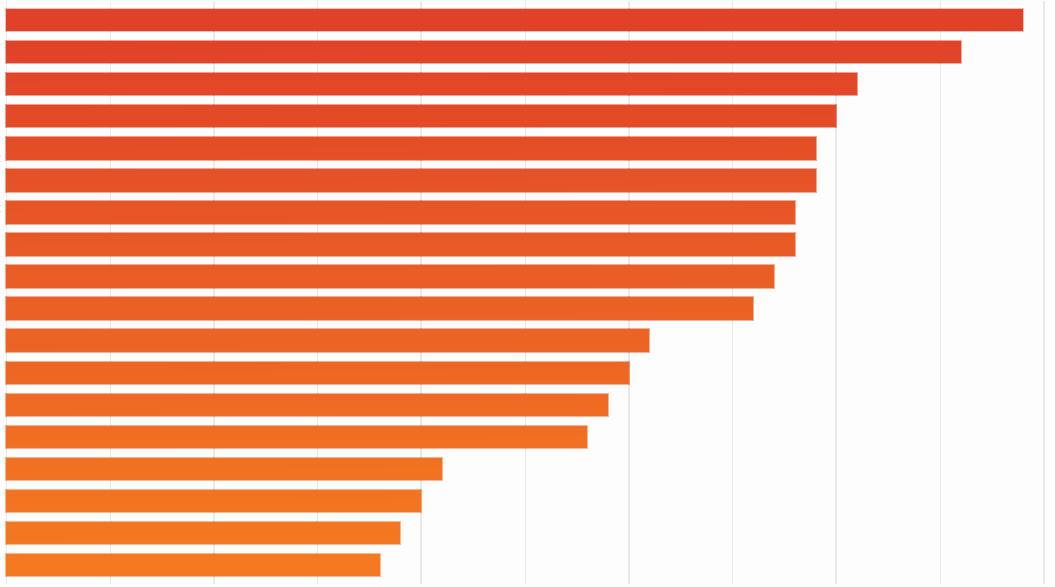
† The bar chart illustrates a thematic analysis of key themes identified in the county highlights during the 2024–25 reporting period.
† Missing county highlights from Lake and Yuba counties.
Fiscal Sustainability & Funding Diversification
Systems Building & CrossSector Coordination
Home Visiting Expansion & Multi-Model Networks
Family Resource Centers & Community Hubs
Early Learning Access, Quality & Child Care System Development
Developmental Screening & Early Identification
Perinatal, Maternal & Infant Health
Efforts to reduce reliance on Prop 10: leveraging grants, Medi-Cal/CalAIM billing, philanthropy, local tax measures, and braided funding strategies
Building coordinated systems of care, backbone roles, referral networks, collective impact tables, and integrated service delivery .
Implementation or expansion of home visiting models, centralized intake, and regional collaboratives
Place-based services such as FRCs, community hubs, Neighborhoods for Learning, and family navigation supports .
Preschool/UPK/UTK, QRIS/Quality Counts, facility expansion, capacity building, school readiness, and quality improvement
ASQ/ASQ-SE expansion, Help Me Grow systems, pediatric screening, early identification, referral pathways.
Perinatal mental health, postpartum screening, lactation support, maternal health workgroups
Literacy & Language-Rich Home Environments Dolly Parton’s Imagination Library, book distribution, Story Walks, Talk/Read/ Sing, literacy promotion .
Equity, Inclusion & Culturally Responsive Practice
Mental & Behavioral Health Supports
Workforce Development & Professional Pipelines
Basic Needs, Economic Stability & Diaper/Food Supports
Oral Health & Preventive Child Health
Evaluation, Data Systems & Continuous Learning
Immigration-Related Supports, Trust & Safety
Rural Access, Small-County Innovation & Frontier Strategies
Advocacy, Policy Influence & Strategic Planning
Innovation, Pilots & New Program Models
Work with Black, Indigenous, Latino, immigrant, multilingual, and rural communities; cultural humility; equity indices
IECMH consultation, CPP, TF-CBT, trauma-informed trainings, emotional regulation supports for families
CHW certification, home visitor training, ECE workforce pipelines, stipends, PD cohorts, apprenticeships
Diaper programs, food distribution, cash assistance, rent/utility relief, addressing poverty and material hardship
Dental screenings, oral health education, fluoride varnish programs, oral health coalitions
Shared outcomes frameworks, dashboards, CQI, data-informed decision making, feasibility studies
Supporting families experiencing fear, immigration threats, legal stressors, or language access barriers
Mobile services, reaching remote communities, frontier-county adaptations, cross-county sharing to address isolation
Local ballot measures, county policy initiatives, 5-year strategic planning, legislative advocacy
Newly designed pilots, CHW networks, digital tools, novel home visiting models, integrated service innovations
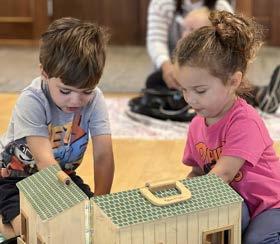
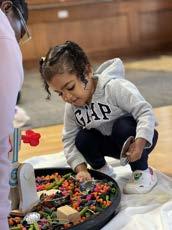
† Data includes all county commissions, except for Lake and Yuba. Imperial’s audit report submission to SCO is pending.
† The substantial increase in total revenue in FY 2024–25 compared with FY 2023–24 is primarily because First 5 Alameda received $618.7 million in FY 2024–25 from the Alameda County Measure C sales tax.
• Total Proposition 10 and Proposition 56 tobacco tax revenue.
• Improve and Maximize Programs so All Children Thrive (IMPACT Legacy) consortia or regional hub funds received from First 5 California.
• Small Population County Funding Augmentation (SPCFA) funds received from First 5 California.
• Other funds or revenues received, may include rental income or revenue from services provided.
• Other federal, state or public funds received.
• Other funds received from First 5 California.
• Grants received by the county commission.
• Donations received by the county commission.
• Interest earned in all Children and Families Trust Fund revenue accounts by the county commission.
• Other funds received from First 5 California.
Appendix A1: Revenues by Source, FY 2024-25
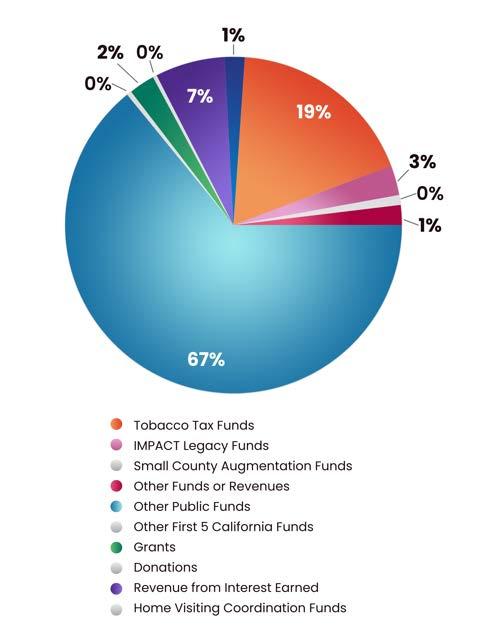
† Data includes all county commissions, with the exception of Lake and Yuba. Imperial’s audit report submission to SCO is pendi ng. (1) Totals may not equal 100 percent due to rounding.
$380,615,560
Data includes all county commissions, with the exception of Lake and Yuba. Imperial’s audit report submission to SCO is pendi ng. (1) Totals may not equal 100 percent due to rounding.
Providing parents, families, and communities with relevant, timely, and culturally appropriate information, education, services, and support.
Programs promoting family literacy, parent-child book sharing, or book ownership for families with children ages birth to 5. The Kit for New Parents may be included if these statewide efforts are locally modified to promote literacy. For example, adding a children’s book, and information and registration link to Imagination Library to the Kits can be an effective way to distribute books and reinforce the importance of access to early literacy activities. Program models or initiatives include Dolly Parton’s Imagination Library1, Kit for New Parents2, Little by Little3, Potter the Otter4, Raising a Reader5, Reach Out and Read6, and other Local Models.
Programs providing short-term, non-intensive instruction on general parenting topics, and/or support for basic family needs and related case management, including meals, groceries, clothing, and temporary or permanent housing acquisition assistance. General family support may include general playgroup programs that provide parents/ caregivers with opportunities to engage, learn, and play with their children. Playgroups are structured, intentional opportunities for parents and/or caregivers and their young children to support the optimal development of the child, the social-emotional needs of the family, and increase social connectedness. General family support may also include referrals to family services such as Family Resource Centers (FRCs) and other community resources. Core Operating Support includes staff, facilities, materials, and other general operating costs associated with an organization’s dayto-day functioning. Fatherhood programs and other operational and support for family support agencies and/or networks are included. In general, these programs are designed to provide less intense and shorter term (“lighter touch”) support services and classes for families by paraprofessional staff (e.g., FRCs). Program models or initiatives
1 The imagination Library of California gifts high quality, age-appropriate books every month to children from birth until the child turns five.
2 The Kit for New Parents provide free kit for new parents that includes parent guide, numbers touch-andfeel book, what to do when your child gets sick boo, and more. Kits are available in English, Spanish, Chinese, Korean, and Vietnamese.
3 The Little by Little Program is an evidence-based early literacy program for young children (ages 0-5) from families engaged in the WIC program.
4 The Potter the Otter is a free bilingual book that is a perfect reminder for children to drink water every day to stay hydrated and healthy.
5 The Raising A Reader program provides a way for children and their parents or caregivers to participate in a weekly rotating book bag program through early care and education settings.
6 The Reach Out and Read is a program that promotes early literacy and school readiness by integrating children’s books and advice about the importance of reading aloud into pediatric care.
include Abriendo Puertas7, Avance8, Core Operating Support9, Playgroups, Triple P10 Levels 2-3, and Five Protective Factors11.
INTENSIVE FAMILY SUPPORT
Programs providing intensive and/or clinical services by a paraprofessional and/ or professional, as well as one-to-one services in family support settings. Programs are generally evidence-based and designed to support at risk parents and families prenatally or with young children to increase knowledge and skills related to parenting and improved family resiliency (e.g., counseling, family therapy, parent-child interaction approaches, and long-term classes or groups). This also is the category for comprehensive and/or intensive services for special populations (i.e., homeless, teen parents, foster children, special needs). Program models or initiatives include Incredible Years12, Nurturing Parenting Program13, and Triple P14 Levels 4-5.
Increasing the quality of and access to early learning and education for young children.
EARLY LEARNING PROGRAM DIRECT COSTS
Early learning programs for children ages 0 to 5 years old may include preschool programs, kindergarten transition services, and early learning programs for all ages. Programs may include child related early literacy and Science, Technology, Engineering, and Math programs; programs for homeless children; migrant programs; and similar investments. Extra supports in early learning settings for homeless children, Federal Migrant or Tribal Child Care programs, and children receiving Alternative Payment vouchers for childcare should be included here. Program models or initiatives include Facility Grants, First 5-funded Preschool/Childcare Reimbursement, and Summer Bridge Programs.
7 The mission of Abriendo Puertas/Opening Doors is to honor and support parents as leaders of their families and their child’s first and most influential teacher.
8 AVANCE walks alongside children and caregivers in primarily Latino communities to achieve social and economic justice.
9 Core/General Operating Support is defined by Hutton Parker Foundation as unrestricted funding enabling an organization to carry out its mission. Funding awards are intended to underwrite administrative infrastructure, support increased agency capacity, assist with strategic financial and organizational capacity and/or help maintain core programs and essential staff.
10 Triple P gives parents simple and practical strategies to help them build strong, healthy relationships, confidently manage their children’s behavior and prevent problems from developing.
11 The five protective factors at the foundation of Strengthening Families are characteristics that have been shown to make positive outcomes more likely for young children and their families, and to reduce the likelihood of child abuse and neglect.
12 The Incredible Years® offers a variety of evidence-based early intervention programs for parents, teachers, early childhood educators, counselors, and other professionals who work with children ages 0-12.
13 The Nurturing Parenting® Programs are a family-centered trauma-informed initiative designed to build Nurturing Parenting® skills as an alternative to abusive and neglecting parenting and child-rearing practices.
14 Triple P gives parents simple and practical strategies to help them build strong, healthy relationships, confidently manage their children’s behavior and prevent problems from developing.
Programs designed to enhance early learning programs such as professional development for early educators, or implementation and integration of services. This service category may include quality and improvement system investments as part of IMPACT investments and other Quality Counts California investments. This service category covers early learning and care (ELC) settings work, most commonly by licensed care providers, but is also inclusive of alternative settings such as Family Resource Centers; Family, Friend, and Neighbor Care; Boys and Girls Clubs; and libraries. This service category may include interagency collaboration, quality improvement supports, support services to diverse populations, and database management and development.
Promoting optimal health through identification, treatment, and elimination of the risks that threaten children’s health and lead to developmental delays and disabilities in young children.
EARLY INTERVENTION
Programs providing screening, assessment, and diagnostic services, including referrals or follow-up to needed services. Programs including early intervention or intensive services to children with disabilities and other special needs, or at-risk for special needs, should be included here. May include strategies targeting language and communication skills, social and emotional development, developmental delays, and related parent education. Developmental playgroups are specifically intended for children who have been identified as at-risk for developmental delays. Additionally, the playgroup staff are trained to support each child’s specific early intervention goals. Mental Health Consultations in early learning and care (ELC) settings are included here. Program models or initiatives include Care Coordination and Linkage, Developmental Playgroups and Mild-to-Moderate Supports.
GENERAL HEALTH EDUCATION AND PROMOTION
Programs promoting children’s healthy development, including nutrition, fitness, access to insurance (health, dental, vision) and health services. Programs also may focus on increased awareness of information about child safety seats, fire, safe sleep, and substances education (drugs, alcohol, tobacco). Program models or initiatives include Nutrition/Breastfeeding, Safety Education, and Smoking or Tobacco Cessation.
ORAL HEALTH EDUCATION AND TREATMENT
Programs providing an array of services including dental screening, assessment, cleaning and preventive care, treatment, fluoride varnish, and parent education on the importance of oral health care. Category may include provider training and care coordination of services. Program models or initiatives are Local Models.
Home visiting is the primary service delivery strategy for inter-generational familycentered supports. Home visiting services are provided in the home by qualified professionals with parents, prenatally and/or with children birth to age three. These voluntary programs tailor services to meet the needs of individual families and offer information, guidance, and support directly in the home environment. While home visiting programs vary in goals and content of services, in general, they combine parenting and health care education, early intervention, and early learning supports for young children and their families. Their visits focus on linking pregnant women with prenatal care, promoting strong parent-child attachment, and coaching parents on learning activities that foster their child’s development and supporting families during the pivotal window of pregnancy through early childhood. Program models or initiatives include Early Head Start15, Healthy Families America16, Healthy Steps17, Home Instruction for Parents of Preschool Youngsters (HIPPY)18, Nurse Family Partnership (NFP)19, Parents as Teachers20, Welcome Baby21, and other Local Models.
Out-of-home programs include prenatal care and follow-up for healthy developmentrelated services during the first three years of a child’s life. These programs are designed to improve the health and well-being of women during and after pregnancy, and the infant or young child by a paraprofessional and/ or professional outside of the family home, including, but not limited, to pediatric or clinical environments. Programs may provide comprehensive support, including parenting education, health information, developmental assessments, providing referrals, and promoting early learning. Program models or initiatives include Developmental Understanding and Legal Collaboration for Everyone (DULCE)22, Healthy Steps, and other Local Models.
15 Early Head Start is a federally funded program that provides services for infants, toddlers, and pregnant women from low-income families.
16 Healthy Families America (HFA) works with pregnant and parenting families of children prenatally up to age 5.
17 HealthySteps program provides early childhood development support to families where they are most likely to access it- pediatric primary care office.
18 Home Instruction for parents of Preschool Youngsters (HIPPY) aims to support parents and caregivers as their children’s first teacher.
19 Nurse Family Partnership (NFP) is designed for low-income pregnant people and their children and focuses on first-time parents.
20 Parents as Teachers is a voluntary early childhood development program offering research-based curricula that help families raise children to be healthy, safe, and learning.
21 Welcome Baby is a voluntary, universal hospital-and home-based intervention for families who are expecting or have recently given birth.
22 DULCE is an innovative approach based in the pediatric care setting that proactively addresses social determinants of health, promotes the healthy development of infants, and provides support to their parents, all during the precious and critical first six months of life.
Implementing integrated, comprehensive, inclusive, and culturally and linguistically appropriate services to achieve improvements in one or more of the other Result Areas.
Unplanned expenditures made in response to a community disruption resulting from local, regional, or statewide events such as fires, earthquakes, floods, widespread illness (epidemic, pandemic), or riots. Direct materials or support may include addressing immediate needs of individuals or communities for items such as diapers, clothing, food, shelter, transportation, childcare, and lost wages. Also includes coalition building funding used in concert with other philanthropic, government, and business partners to support broader emergency response systems efforts. Program models or initiatives for material support and coalition building.
Services include community awareness, public outreach and education on issues related to children ages 0 to 5 years old and their families. This also includes work focused on policy change, work with local and statewide stakeholders, Town Halls, policy development, and related efforts. Program models or initiatives to address resilient families and communities, child health, early learning, and revenue Sustainability.
Efforts to improve service quality, connections between programs, infrastructure support, and professional development. This category includes activities such as strategic planning, business planning, grant writing workshops, sustainability workshops, and assistance in planning and promoting large community conferences or forums. These improvement efforts should result in improved outcomes for children ages 0 to 5 years old. Improvements could be geared toward creating a well-trained workforce with shared professional standards and competencies, creating strong and effective linkages across system components, or leveraging funding to sustain the system of care. Database management and other cross-agency systems evaluation are also reported here. Program models or initiatives include Early Identification and Intervention (e.g., Help Me Grow23), Family Resiliency24, Health Systems, Behavioral Health Systems25, Place-Based26, and Trauma Informed Care/Adverse Childhood Experiences27 .
23 Help Me Grow is a system of supports for pregnant women, caregivers with new babies, and families with young children with developmental delays and disabilities.
24 Family resilience is the family’s ability to maintain or resume effective functioning—including care of its members—following potentially traumatic events.
25 https://www.dhcs.ca.gov/cybhi
26 Place-based early identification and intervention refers to services and support that help babies and toddlers (from birth to 3 years of age) with developmental delays or disabilities and their families.
27 Trauma-informed care is an approach to healthcare delivery that recognizes and responds to the signs, symptoms, and risks of trauma to better support the health needs of patients who have experienced.

Children from 3rd to 6th Birthday
Children—Ages Unknown (birth to 6th birthday)

† Other-includes respondents who selected unknown or did not specify their race/ ethnicity. This group may also include individuals who identify with a race or ethnicity not explicitly listed in the available categories, or those who opted not to disclose this information for personal reasons. Data regarding these responses is available upon request.