
Phone: (518) 477-2631 • (800) 676-FIRE


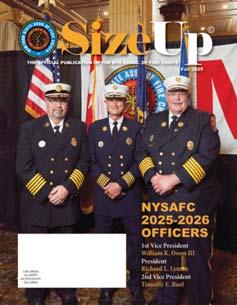
ASSOCIATION STAFF
Bruce E. Heberer – Chief Executive Officer
Oksana Franklin – Treasurer
Mary K. Hanlon – Communications Coordinator
Catherine E. Hannigan – Administrative Assistant
Paul C. Melfi – Hands-On Training Coordinator
Susan R. Revoir – Conferences/Education Coordinator
Jeremy S. Rodd – New York Fire Book Store Manager
ASSOCIATION OFFICERS
Chief Richard L. Lyman – President
Chief William K. Owen III – 1st Vice President
Chief Timothy E. Boel – 2nd Vice President
Chief Anthony V. LaFerrera – Past President
ASSOCIATION DIRECTORS
Chief Kenneth M. Almy
Chief Brad W. Davies
Deputy Fire Coordinator Anthony D. Faso
Chief Wayne C. Friedman
Chief George P. June
Chief Kevin O. Kalk
Chief
Chief
Chief
Chief

Patti Niebling -
To
Barbara








Access Compliance.......................32 www.accesscompliance.net
AT&T FirstNet.................................17 www.firstnet.com
Auctions International, Inc............15 www.auctionsinternational.com
Bauer Compressors, Inc................40 www.bauercomp.com
Certified Ambulance Group...........15 www.certambgroup.com
Draper Asset Management............13 www.draperasset.com
Fire Hooks Unlimited, Inc..............19 www.firehookssunlimited.net
Fire Innovations................................4 www.fireinnovations.com
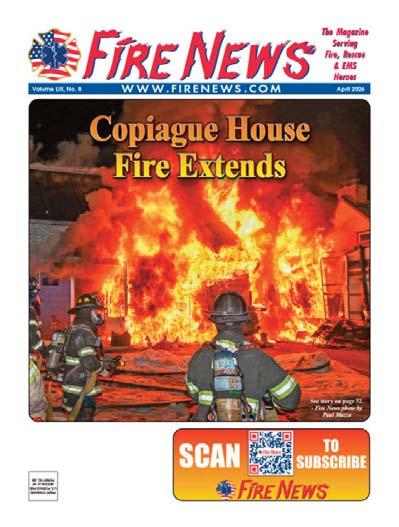
Fire News..........................................4 www.firenews.com
Frank G. Relf Architect PC............15 www.fgrelf.com
H2M Architects + Engineers..........17 www.h2m.com
Husky Portable Containment..........7 www.huskyportable.com
Liberty Art Works............................11 www.libertyartworks.com
National Foam.................................17 www.nationalfoam.com
Paul Congelosi Sales, Inc...............9 www.congelositrailersales.com
RBC Wealth ManagementThe LOSAP Group..........................17 www.rbcwealthmanagement.com
Signal 5 Fire Apparatus................15 www.signal5fireapparatus.com
Specialty Ambulance......................11 www.specialtyambulance.com
Tele-Lite, Inc...................................13 https://tele-lite.com
Traffic Systems Inc...........................2 www.trafficsystemsinc.com
VFIS-Glatfelter Insurance Group....9 www.vfis.com
W & E Phillips Locksmith..............19 www.phillipslock.com
Wendel/Five Bugles Design............5 www.wendelcompanies.com
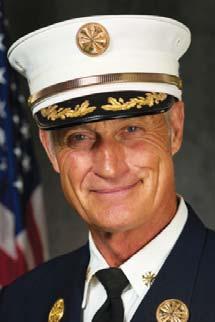
Chief Richard L. Lyman, NYSAFC President
Have you noticed the increasing use of artificial intelligence (AI) in everyday life? Anyone following the technology sector is acutely aware of how rapidly AI is evolving. These systems are driving increased worker productivity, enabling new research discoveries, and strengthening cybersecurity.
AI technology is rapidly enhancing the mission of all branches of the emergency services in areas such as AI-assisted analysis for pre-incident planning, operations, administrative efficiency, code compliance, and fire investigation. AI technology is establishing itself as an invaluable tool for training and simulations for both the fire and emergency medical services (EMS). However, it is critical to remember that AI is only as good as the data provided to address a set of defined human objectives. As of late, there has been a great deal of media coverage highlighting the potential pitfalls of relying on AI without having the discipline to review and verify the impact and result of its guidance.
The National Institute of Standards and Technology (NIST) Special Publication 800 defines AI as “A machine-based system that can, for a given set of human-defined objectives, make predictions, recommendations, or decisions influencing real or virtual environments” (https://bit.ly/4aOTff9). In the future, NIST will be looking to use AI to assist in developing new tools for fire modeling. These updated models would include, but are not limited to, flashover and backdraft prediction, enhancement of existing fire models, emergency exiting and evacuation planning, real-time situational awareness, and the prediction of heat release rates for static and wind-driven fires. The significance of NIST fire modeling is that it predicts fire behavior based on known physical laws, measured material properties, and validated experiments that produce consistent and dependable results. AI will allow researchers to expand those predictions in a faster, more accurate, and more efficient way.
NIST Special Publication 1500 warns of potential risks to the fire service as, “An AI system can only work as well as it is designed and trained to work. Therefore, there is the possibility that the AI component will not work correctly or will produce unexpected results, which may lead to incorrect
actions. Failures of AI can arise from various causes such as poor design, improper training models, and lack of benchmarks. Implementing poorly designed or poorly executed AI in a firefighting safety product could, in many cases, be catastrophic” (https://bit.ly/4rKeEvW).
This warning should also be considered for EMS. Imagine the impact of AI software that is designed to assist in the diagnosis of a patient and development of a treatment plan for a patient if the data it is using to make its analysis is faulty. The impact of applying those recommendations could have a profoundly negative impact on patient outcome. A trained clinician must always make the final decision to ensure the patient receives the most appropriate and effective care. AI can assist in providing better coordination between EMS providers, hospitals, and public health systems, thereby improving patient care in the field. AI is changing how EMS integrates operational improvements, clinical decision support, training, and real-time care enhancements leading to safer, more effective, and timely patient care in the field. But have we evaluated the risks? Risks can include compromise of patient confidentiality, potential misdiagnosis, and misleading or conflicting narratives when allowing AI to write the narrative in a report. Whether it is a fire or EMS report, it is crucial that the author or their supervisor thoroughly reviews the report before making it final. For information on potential pitfalls, I encourage you to read Curt Varone’s column in the February 2026 issue of Firehouse (https://bit.ly/3OGg8ZI).
AI software is being used by 911 dispatch centers to assist in determining the location of an incident and to aid in identifying available resources that will have the most efficient response time based on resource type, location, traffic, and weather. AI is simply a tool to assist dispatchers with information for enhanced decision-making; it is in no way intended to overshadow dispatchers who are required to make all final decisions.
Fire personnel, public safety communicators, and EMS providers should begin the process of developing policies and procedures for the use of AI. For AI to safely and effectively assist first responders in the protection of their communities, we must establish appropriate guidelines and implement for-
malized procedures. Once those policies and procedures are in place, we must be diligent about providing training for our first responders, who will likely be the primary users of the AI-assisted software and equipment.
NFPA is integrating artificial intelligence into its standards development and research process. Soon, it will be possible to ask their AI assistant questions about any standard or code compliance issue, and it will generate an answer based directly on the applicable NFPA standards and supporting documents. This tool is designed to help fire service leaders and code officials reduce the time it takes to locate appropriate standards and to receive accurate standard-based guidance (https://link.nfpa.org). Although the AI assistant is designed to save time, the code official must review the results, critically using their knowledge and experience for accuracy and appropriateness.
The National Fire Sprinkler Association (NFSA) has also developed an AI-powered tool for its members called Chat EOD (Expert of the Day). Through this AI program, technical support is provided to NFSA members at any time of day for topics such
as sprinkler design and installation. (https://bit.ly/4skweqb).
The U.S. Forest Service has been utilizing cameras trained by AI to identify smoke from wildfires up to 110 miles out over California forest preserves. In 2024, these cameras were able to detect 40% of the wildfires (approximately 1,000-plus fires) in California, allowing firefighters to respond quickly to extinguish the fires in efforts to reduce property damage and protect lives.
AI is intended to be a tool to assist the incident commander (IC) in enhancing emergency responder situational awareness and hazard detection, thereby improving first responders’ effectiveness and increasing safety. It is in no way designed to replace human judgment or real-world experience. Many of the AI initiatives mentioned in this article are still in the development stage but are truly evolving at a record pace. AI is and will continue to be a valuable tool in the IC’s toolbox. As mentioned, it is imperative for the IC to think critically and evaluate the recommendations from AI, especially in the public safety sector where trained personnel must make all final decisions for emergency operations.
AI, as with any tool at our disposal, has its limitations and we must remember to take those limitations into account when utilizing that tool. AI will be a great tool to enhance human judgment, not to replace it. In time, we will have developed sound and appropriate standards, so that AI will have a lasting role in supporting emergency responders.
Author’s note: This is my last column as president of NYSAFC. It has been a pleasure to serve as your president this past year. In my first article I stated, “It is important that we continue to build relationships with other fire service and emergency response organizations and maintain our collaboration on the Issues of United Concern legislative agenda, as well as health and safety issues that are of great concern to all first responders in the state of New York.” We remain focused on these priorities. To every member of the association, thank you for your support, service, and dedication to your communities. Working together, first responders in New York will be stronger, safer, and more united. Be safe and God bless you and your families.◆
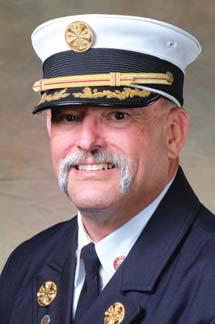
Chief Bruce E. Heberer, NYSAFC Chief Executive Officer
As we enter 2026, the fire service faces a growing challenge: how to keep the members we have while also attracting new members to serve our communities. We have been talking about recruitment and retention for several decades, and while our efforts have helped to a degree, we are not seeing the interest that we had hoped for. In today’s socioeconomic climate, many households require two incomes. Combined with raising families, increasing job demands, and employee shortages, our members are forced to devote more time to obligations outside their local fire departments. This dilemma is not just a New York problem and staffing is not just a volunteer problem. The fact that it is so widespread makes it even more difficult to solve.
Our state associations have formed a task force to look at options to give the local authority having jurisdiction (AHJ) the ability to craft a solution at its level, through new legislation, amendments to current laws, and ingenious ideas, to give its departments the tools needed to chart their future. Our proposed legislation will be non-mandatory, which will allow each jurisdiction the ability to tailor the solutions to its specific needs and abilities. The biggest benefit is the ability to provide nominal compensation (stipends) to our members for paid-oncall response, duty crew coverage, training, etc. This will not be an hourly wage; it will comply with the federal Department of Labor Fair Labor Standards Act that allows compensation, in certain forms, while maintaining the members’ volunteer status.
Our New York State Fire Service Alliance Issues of United Concern agenda contains additional initiatives that allow for more tangible incentives for our members as well. We are working with the Legislature to pass these measures. We are also looking at legislation to give counties the ability to engage with the AHJ, to ensure that our communities are being protected by competent, qualified responders who can rapidly respond to calls for service. This legislation is not meant to mandate any county takeover of the fire service; instead, it will allow counties to form coordinated solutions to our response problems together with the AHJ for the betterment of the service and the communities we protect.
Look at these initiatives for what they are – ad-
ditional tools available to be modified and adjusted to best suit the department’s and the community’s needs. There is no individual solution and no magic wand to wave to quickly fix our issues, but these proposals are a great beginning. As with every emergency we face, we may have to adjust and adapt as we move forward.
We must move forward. Sitting around and talking about the same issues year after year is not working. It is time to come together, pass these initiatives, and implement them. Our service demands action from its leaders. As leaders, we are asking for your help to move these efforts forward and implement them at the local level with a clear understanding of your needs and capabilities. This is not the end of the work. There is much more to be done. Get involved. Bring forward ideas. Engage in the process. We are in this together, and progress depends on all of us.
No single association will solve this alone, no single association has all the answers, and no single association represents everyone. We all have our own identities; however, we are all looking out for the health, welfare, and safety of not only our fire service members, but also the communities we serve. We must put the needs of our communities above all else. By working together with government, management, and members (both volunteer and career), we can continue to grow and keep our communities safe.
I strongly encourage everyone in the fire service to become an active member of our association. We are an inclusive organization, open to chief officers, company officers, firefighters, commissioners, and coordinators, as well as EMS leaders and members from volunteer, career, and combination agencies. Membership makes us stronger; with numbers, we can continue to reinvest in the fire service, both legislatively and through continued education.
Our association prides itself on maintaining a financial focus while delivering services that advance the fire service. This commitment is reflected in our legislative agenda, our annual conference and expos, and our comprehensive training programs, all designed to support and strengthen the fire service. I encourage you to participate. Let’s continue moving forward together. Stay focused, positive, educated, safe, and healthy!◆
Rev. Leon I. VanWie, Past Chief Chaplain, New York State Association of Fire Chaplains
Based on Psalm 133.
Ilove the visual image of Psalm 133 as King David describes what it looks like when people get along…
1How wonderful, how beautiful, when brothers and sisters get along!
2It’s like costly anointing oil flowing down head and beard, Flowing down Aaron’s beard, flowing down the collar of his priestly robes.
3It’s like the dew on Mount Hermon flowing down the slopes of Zion. Yes, that’s where God commands the blessing, ordains eternal life.
I am writing this column in the midst of a nation very divided, where people who disagree are apparently hateful enemies.
I miss the days when people could adamantly disagree, but still respect one another and be friends. Granted, I’ve been around a few years, and can remember when political adversaries Republican President Gerald Ford and Democratic House Majority Leader Tip O’Neill were friends and played golf together. I remember when Supreme Court Justice Antonin Scalia and Justice Ruth Bader Ginsburg were close friends who shared a love of opera, good food, and wine. Their spouses and children became friends as well, and the families often rang in the New Year together with a gourmet meal prepared by Marty Ginsburg and laughs provided by the gregarious Scalia. I miss those days when differences in politics didn’t make people hateful enemies.
Courtesy and civility in dealing with differences are the exception, rather than the norm, on the national level. Name-calling and spite are way too common.
What happens on the national scene trickles down to the state level, to local communities, and, unfortunately, to the EMS and the fire service.
Picture anointing oil flowing down over our nation bringing wholeness, healing, comfort, and peace – or maybe, just a sense of respect and common decency, for a change.
I struggle with this and I hope that you, as a leader in the fire service, do as well. What can we do to help bring the temperature down? Can we facilitate wholeness, healing, comfort, and peace in our nation, in our communities, and in our fire departments?

Sometimes, the differences we face are systemic and deep. We know that is nothing new, but sometimes, it is simply a matter of perspective.
Maybe it would help if we simply reminded ourselves what our mission really is – something to the effect of, “Fighting fires and saving lives, property, and the environment.” We could leave our political hats at the door and focus on what is really important.
Let’s breathe in, let’s breathe out! Take a step back and consider what you can do to help facilitate wholeness, healing, comfort, and peace in our nation, in our communities, and in our fire departments. At the least, consider what you can do to lessen the namecalling, disrespect, and spite that is so prevalent in our society.◆
Chaplain Leon VanWie served as chief chaplain of the New York State Association of Fire Chaplains, Inc. from 2020-2022. He began in the fire service in 1976 and became a chaplain within a year. VanWie was an EMT for over 15 years and currently serves as the chaplain for the Town of Watertown Volunteer Fire Department, chaplain for the City of Watertown Fire Department, and a deputy fire coordinator for Jefferson County in the role of chaplain. He belongs to numerous county and state fire organizations and has been a pastor since 1973. VanWie can be contacted at leonvanwie@gmail.com or (315) 771-9142 (voice and text).


The New York State Fire Service Alliance, consisting of the New York State Association of Fire Chiefs, Association of Fire Districts of the State of New York, and County Fire Coordinators’ Association of the State of New York, gathered on December 6, 2025, to develop the following priorities from each association’s respective legislative agendas. The identified priorities are to be advocated for through mutual efforts.
1. Volunteer Firefighters’ Benefit Law (VFBL) Coverage
Should be upgraded to align more closely with the protections and benefits of workers’ compensation. Enhancements might include higher weekly rate, reform rates for injuries, coverage for mental health and illness arising from service, and streamlined claim processes. This ensures volunteers receive equitable protection compared to paid personnel. S.5432/A.6410 (Skoufis/McMahon)
2. Designate EMS as an Essential ServiceChapter 703 of the Laws of 2025
Emergency medical services (EMS) should be legally recognized as an essential public service, similar to police and fire protection. This ensures stable funding, mandatory service coverage in every community, and access to state and federal resources. Making EMS essential would also strengthen workforce support and improve response times, particularly in rural or volunteer-dependent areas.
3. First Responder Peer Support Act
Establish or expand peer support programs for firefighters, EMS personnel, and other first responders. It provides confidential mental health counseling, training for peer mentors, and protection for support communications under the law. The goal is to address stress, trauma, and burnout, improving overall mental health and job performance. S.5407-A/A.7285-A (Harckham/Burdick)
4. Continue to Improve Tax Benefits for Volunteer Firefighters and EMS
Enhancing state and federal tax incentives, including increasing income tax relief and allowing firefighters to receive both real property and income tax benefits. S.6233/A.6790 (Martinez/McMahon)
5. Fire Service Delivery Options and Nominal Compensation
A. Ability to provide nominal compensation. Allow fire districts and departments to offer modest compensation to volunteer firefighters to support recruitment, retention, and staffing. This would strengthen, not replace, volunteer service, while ensuring LOSAP and VFBL protections remain in place under existing FLSA guidelines.
B. Enhanced county-level ability to support local districts/departments. Give counties the ability and tools to support and supplement local fire protection when resources are insufficient, improving readiness, shared resource use, and coverage gaps.
6. Amendment to the Ambulance Billing Law – Originally Enacted in Chapter 55 of the Laws of 2022 and Extended by Chapter 57 of the Laws of 2025
This amendment authorizes billing for mutual aid responses, allowing EMS providers to recover costs and eliminating prior restrictions on mutual aid billing. The law is scheduled to expire on April 9, 2031.
7. Retirement Service Credit
Volunteers and part-time emergency responders could earn service credits toward pension or retirement systems based on their years of active duty. Seeking to provide one year of service credit for the State Retirement System for every five years of volunteer fire service, with a maximum of three years of credit. Adding or improving retirement credit eligibility provides long-term recognition and financial stability for those who dedicate their careers or extended volunteer service to public safety. S.7021/A.8082 (Ryan/Eachus)◆
On March 11, 2026, members of the NYSAFC, AFDSNY, and County Fire Coordinators traveled to Albany, N.Y. to participate in the Fire Service Alliance Advocacy Day. Members met with their New York State Senate and Assembly representatives to make them aware of the critical issues impacting the fire and emergency medical services that are included in the IUC legislative agenda. Thank you to everyone who took time to participate. Thank you also to those who have participated in the coalition’s recent news conferences addressing nominal compensation for volunteer firefighters.
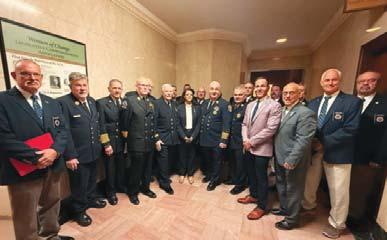
Assemblywoman Michaelle Solages joined members on March 4 to discuss the legislation to allow fire districts and departments to offer modest compensation to volunteer firefighters.
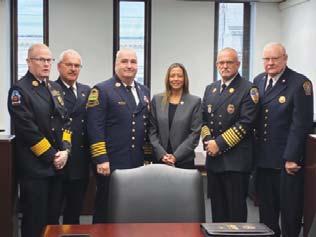
Senator Monica Martinez discussed legislation to enhance tax benefits for volunteer firefighters and EMS personnel.

Members of the New York State Association of Fire Chiefs Constitution & By-Laws Task Force have reviewed the association Constitution & By-Laws and presented proposed changes to the association board of directors.
The task force, consisting of past presidents, members of the board of directors, and the chief executive officer, spent several months reviewing the governing documents for consistency and cohesiveness of language, as well as alignment with the mission and operations of the association. Changes were proposed to streamline the language and to reflect the evolving mission of NYSAFC and the emergency services as a whole.
The proposed changes were accepted by the board of directors. The task force presented the proposed changes at the Fall Combined Board and Committee/Membership Meeting on November 8, 2025, in Schodack, N.Y., serving as the first reading. They were accepted by the members in attendance. The proposed changes will be read and voted on by the association members in attendance at the 120th Annual Conference General Session on June 11, 2026, 10:00 a.m., in Syracuse, N.Y.
Go to the NYSAFC website to review the proposed changes (https://bit.ly/4spQK8V) and the current Constitution & By-Laws (https://bit.ly/3PiVkaI).◆
The Nominations & Elections Committee of the New York State Association of Fire Chiefs has announced the following uncontested slate of officers for the 2026-2027 term. Officers will be sworn in during the 120th Annual Conference & FIRE
President: One-Year Term
• Chief William K. Owen III – Stittville Fire Department
1st Vice President: One-Year Term
• Chief Timothy E. Boel – East Greenbush Fire District #3
2nd Vice President: One-Year Term
• Chief Kenneth M. Almy – Scotia Fire Department
View the association event calendar to find a conference, class, or hands-on training program in your area!
2026 Expo Installation Ceremony, scheduled for June 13, 2026, 4:00 p.m., at the Marriott Syracuse Downtown, Persian Terrace, in Syracuse, N.Y. The ceremony is open to all event attendees and association members.◆
Directors – Volunteer: Three-Year Terms
• Chief George P. June – Catskill Ambulance Service – EMS –(re-election)
• Chief Nicholas Luparella III – Riverhead Fire Department
• Chief Anthony J. Tripp – Glen Cove Fire Department (re-election)
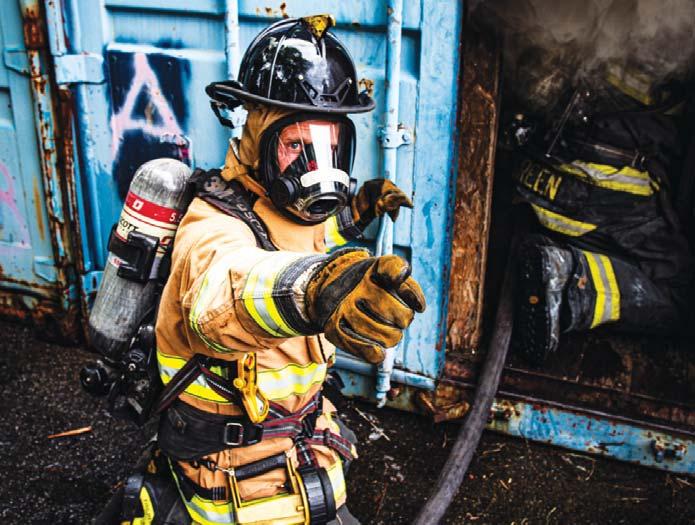


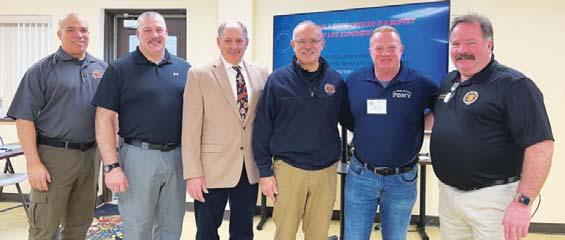
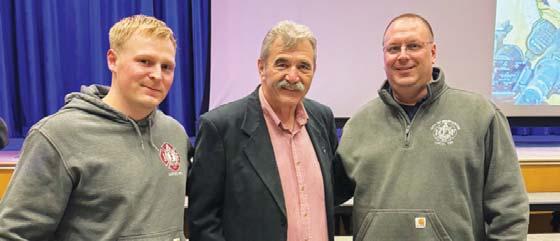
NYSAFC training kicked off for the year in January with Company Officers Leadership Training (COLT). The association’s two-day leadership development program was held in Erie, Fulton, and Monroe Counties and featured lectures by Chief of Training Michael Meyers (Fire Department City of New York), Lieutenant Michael Scotto (Fire Department City of New York), and Assistant Chief Scott DeNinno and Captain James McCredie (Johnstown Fire Department).
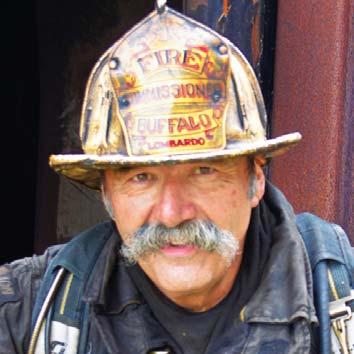
The 2026 Seminar Series got underway in February. Chief/Commissioner Michael Lombardo (Buffalo Fire Department) will present “Dangerous Spaces: Challenges and Tactics When Dealing with Garage and Basement Fires” at 26 sites across New York state through November.
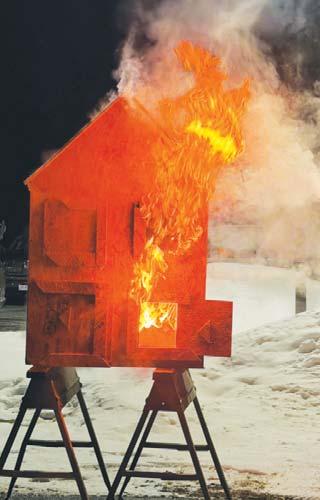
Regional Hands-On Training fired up in February with our newest course, Fire Behavior From the Outside, hosted by West Glens Falls Fire Company #1 in Warren County. Unlike our other two-day HOT courses, which are delivered on weekends, this program can be hosted on any day of the week year-round. NYSAFC instructors construct the dollhouse prop and present the two-hour program for a $500 flat fee. No student registration is required, as the program is presented for the host agency and their invited guests
only. This course is available for booking in 2026. Use the Host Request Form on the NYSAFC website.
Open enrollment is available for NYSAFC’s two-day Regional HOT courses, Beyond the Basics, Fire Behavior On the Inside, and Flashover, scheduled for many locations through November. These programs can be booked on weekends in 2027 by using the Host Request Forms, which also outline host responsibilities.
View the events calendar at www.nysfirechiefs.com to find classroom and hands-on educational opportunities in your area.◆
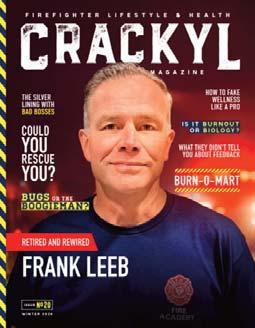
NYSAFC is pleased to announce that Individual Members of the association have been enrolled in a subscription to receive the quarterly firefighter lifestyle, health, and wellness magazine, CRACKYL, as a new member benefit. The first issue was mailed to members in January 2026.
Founded in 2020, the mission of CRACKYL is to enhance the lives and livelihoods of firefighters by connecting them with essential, engaging content that empowers them both at work and home. CRACKYL delivers resources to help firefighters heal, improve, and thrive by focusing on topics
such as physical and behavioral health and wellness, fitness and nutrition, managing stress, nurturing relationships, managing finances, and maintaining a healthy lifestyle.
NYSAFC members are encouraged to visit the CRACKYL website (www.crackyl.com) and download the CRACKYL mobile app to access more tools designed to help firefighters prioritize their well-being, both on and off the job. Fire service family members will also benefit from the many resources available. Past issues of CRACKYL are also available for reading.◆

PERMA and NYSAFC are pleased to announce the recipients of the 2026 Firefighter Risk Reduction MiniGrant Program. Launched in 2019, this program is available annually to members of both PERMA and NYSAFC (Department Members only) to provide financial assistance for the purchase of a new gear washer and dryer. This equipment is crucial in reducing the expo-
• Arkport Joint Fire District
• Avoca Fire District
• Caledonia Volunteer Fire Department
• Canisteo Fire Department
• City of Cortland Fire Department
• Grahamsville Fire District
• City of Hornell Fire Department
• Kauneonga Lake Volunteer Fire Department

sure to carcinogens and helps maintain firefighter gear integrity. This year, PERMA awarded $5,000 grants to the following 19 fire departments located throughout the state of New York. NYSAFC salutes PERMA for their commitment to improving firefighter safety, health, and wellness. Learn more about NYSAFC’s ongoing partnership with PERMA at www.nysfirechiefs.com.◆
• Lake Placid Volunteer Fire Department
• Lincoln Volunteer Fire Department
• Manhasset-Lakeville Fire District
• Village of North Hornell Fire Department
• Piseco Volunteer Fire Department
• City of Rensselaer Fire Department
• Village of South Floral Park Fire Department
• South Hornell Fire Department
• Village of Stewart Manor Fire Department
• Thurston Fire Company
• York Volunteer Fire Department
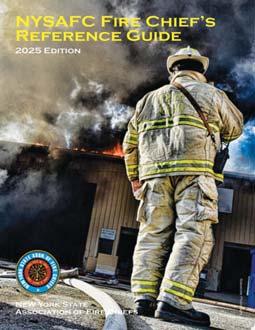
NYSAFC is pleased to announce release of the updated NYSAFC Fire Chief’s Reference Guide. Originally published more than 30 years ago, the guide was last revised in 2012. The 2025 edition will be provided to association Department Member agencies this spring.
The NYSAFC Volunteer Chiefs Committee, led by past Chairman Otto Kohlmier and current Chairman William Maloney, spent considerable time reviewing the previous edition, compiling timely and practical information for inclusion in the updated document, and coordinating the revision project. Many other association committee members, past and present, contributed their knowledge and expertise toward completion of this document. Thank you all for your work.
Significant updates include guidelines for firefighter and fire officer qualifications, a new chapter on firefighter wellness, and more information for managing and coping with a firefighter line of duty injury or death, as well as an expanded references and resources section to help fire chiefs locate information to assist them in day-to-day operations.
Email info@nysfirechiefs.com



The United States is at war with Iran, and the U.S. Department of Homeland Security (DHS) is shut down. This situation presents a potential challenge for America’s fire and emergency services. Many fire departments depend on grants from the Federal Emergency Management Agency (FEMA) and DHS to support their activities to protect the public from acts of terrorism. So, our number one goal is to reopen the DHS and get FEMA grants distributed. But there are other important legislative initiatives that also must be addressed by this Congress.
The war with Iran began on February 28. However, funding for DHS expired on February 14. This means that the National Fire Academy is closed and the application periods for the Assistance to Firefighters Grant (AFG), and the Fire Prevention and Safety (FP&S) and Staffing for Adequate Fire and
Emergency Response (SAFER) grants are delayed. In addition, funding for the State Homeland Security Grant Program and Urban Areas Security Initiative (UASI) grants will be delayed.
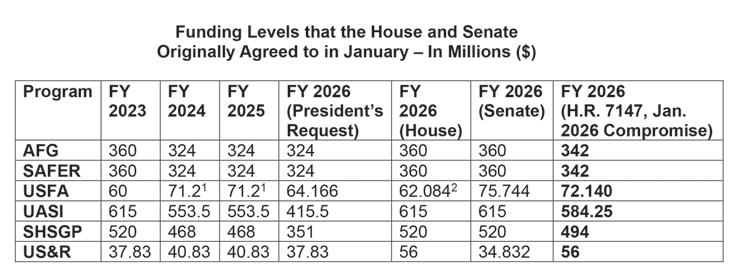
As Congress worked to fund a majority of federal programs before a January 30 deadline, the House and Senate reached an agreement on funding for DHS programs. Overall, there were increases to many of the federal programs like the U.S. Fire Administration (USFA), and the AFG and SAFER programs. Unfortunately, incidents involving DHS Immigration and Customs Enforcement (ICE) broke down the bipartisan consensus, as Democrats requested operational requirements on ICE activities. Congress passed a larger Fiscal Year (FY) 2026 appropriations bill that funded most of the federal government, but DHS was only funded until midnight on February 13. When Congress could not agree to more DHS funding, the agency shut down pro-
grams like USFA, NFA, and the FEMA grant programs. Please encourage New York Senators Chuck Schumer and Kirsten Gillibrand, as well as your representative, to pass the FY 2026 DHS appropriations bill.
The First Responder Network Authority (FirstNet) is another important tool for helping fire and EMS agencies protect the public from acts of terrorism. The sunset date for the federal FirstNet Authority is February 2027. The good news is that Congress is focusing on the issue.
On January 28, the Senate Committee on Commerce, Science, and Transportation held a hearing on preserving the federal FirstNet Authority. The House Energy and Commerce Committee followed up with a hearing on February 4. Right after the House hearing, Representatives Neal Dunn (R-FL) and Jennifer McClellan (D-VA) in-

troduced the First Responder Network Authority Reauthorization Act (H.R. 7386), which would extend the federal FirstNet Authority until September 30, 2037. The House Communications and Technology Sub-Committee marked up the bill on February 10. The full House Energy and Commerce Committee voted to pass H.R. 7386 on March 25 by a vote of 51-0. The IAFC and its public safety and state and local government allies support this legislation to ensure that the federal FirstNet network remains led by public safety for public safety.
The IAFC and NYSAFC also are watching Congressional legislation to promote housing. The House bill, the Housing for the 21st Century Act (H.R. 6644), would require the secretary of Housing and Urban Development to develop guidelines to provide model code language, best practices, and technical guidance that could be used to facilitate the permitting of single-stairway, point-access block residential build-
ings. The IAFC and other fire service organizations have raised concerns about allowing only a single stairway for egress in buildings with more than three or four stories. We have been explaining the fire safety reasons for having more than one way to escape a high rise building. H.R. 6644 passed the House on February 9. However, the Senate passed a substitute amendment to H.R. 6644 on March 12, which does not include any single stairway provisions. The IAFC and other national fire service organizations will continue to educate Congress about the importance of fire safety and building codes.
On a related note, the IAFC continues to push for the passage of the Setting Consumer Standards for Lithium-ion Batteries Act (H.R. 973/S. 389), which is sponsored by Representative Ritchie Torres (D-NY) and Senator Kirsten Gillibrand (D-NY). The legislation is stuck in the Senate. We are asking fire chiefs to emphasize the importance of this legislation as they visit their members
of Congress. If the Senate can pass H.R. 973, it will go to President Donald Trump for signature.
It is important for fire chiefs to remain engaged this year. With the war in Iran, there is an increased risk of acts of terrorism within the United States. Meanwhile, many fire service programs like USFA and NFA are closed, and all of the grant programs’ applications and disbursements are delayed. So, it is important to contact your members of Congress about the importance of funding these programs, preserving the federal FirstNet Authority, and passing fire safety legislation.
The IAFC publishes a weekly Washington Update with news about what is happening in Washington, D.C. In addition, the IAFC Hot Sheet with major fire service legislation is updated monthly. You can use them to keep up to date and take action.◆
1 This amount includes $10 million for the development of the NERIS program and $1.25 million for information technology upgrades at the National Emergency Training Center (NETC) in the Procurement, Construction, and Improvements (PC&I) account.
2 This amount includes $60.084 million for USFA and an additional $2 million for the National Fire Incident Reporting System (presumably they mean the “National Emergency Response Information System”) in the PC&I account.



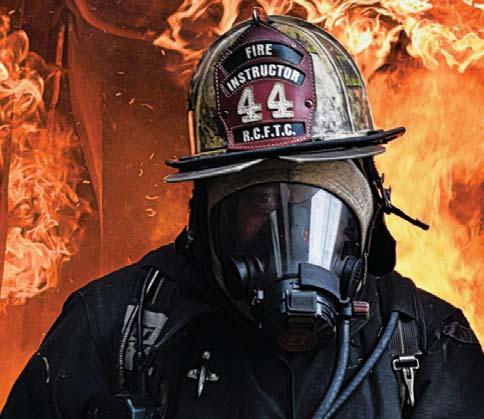





Join NYSAFC in Syracuse at the premier fire industry, rescue, and EMS expo and educational event in the Northeast! Featuring more than 145 exhibitors, 30+ fire/EMS classes, seven Hands-On Training courses, accredited training opportunities for codes, EMS, and fire district personnel, and networking events for first responders of all ranks, there’s something for everyone.
Register in advance or at the door!
Conference Full Term (expo and classes)
NYSAFC Individual Member: $50
Non-Member: $100
One Day Tickets (expo only)
FREE from vendors!
Pre-Registration: $25 (includes three tickets)
On-Site: $10 (per day)
Kids 15 and Under
Free entry to the expo.

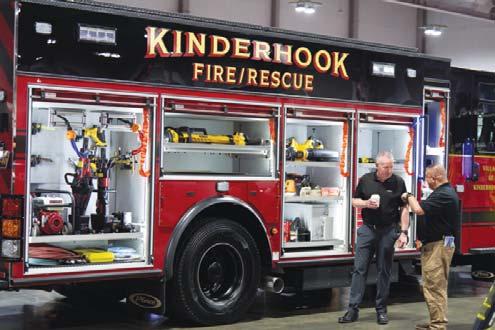
Apparatus, tools, equipment, new technologies, and services for fire/EMS responders will be on display. Last year, inside exhibit space sold out! View the vendor list at www.nysfirechiefs.com
New Exhibit Hours
Thursday, June 11: 1:00 – 5:00 p.m. NEW! Friday, June 12: 9:00 a.m. – 4:00 p.m. Saturday, June 13: 9:00 a.m. – 1:00 p.m. LOWER PRICES FOR 2026!
FREE parking is available at The Oncenter Garage, across the street from the exhibit hall.
NYSAFC room blocks are available in 9 hotels. Reservation cut-off dates vary.

“How to Lead from the Front – Using Strength, Intellect, Positivity, and Resilience”
Chief of Training Michael Meyers, Fire Department City of New York
Thursday, June 11 – 12:00 p.m. @ The Oncenter Ballroom
Open to all attendees
Sponsored by
Thursday, June 11 @ The Oncenter Ballroom
Open to all attendees
• 10:00 – 11:00 a.m. – Association Business Meeting
• 11:00 a.m. – 12:00 p.m. – Memorial Service
• 12:00 – 1:00 p.m. – Keynote Address
Wednesday, June 10 – Saturday, June 13
@ The Oncenter
Open to Conference Full Term registrants
More than 30 classroom lectures will be delivered by nationally renowned fire service leaders, including Chief Frank Leeb (FDNY), Lieutenant Mike Scotto (FDNY), Deputy Chief (Ret.) Robert “Butch” Cobb (Jersey City F.D.), Lieutenant John Lewis and Chief Robert Moran (The Jersey Guys), Past Chief/Coordinator of Education Mike Healy (Central Nyack F.D./Rockland Co.) and Firefighter/Instructor Jeff Daniels (FDNY/Rockland Co.), and many more! Certified EMS providers can earn CMEs by attending 5 EMS classes. Go to our website for the class schedule!
Thursday, June 11 – 5:00 p.m. @ The Oncenter Ballroom
Open to all attendees
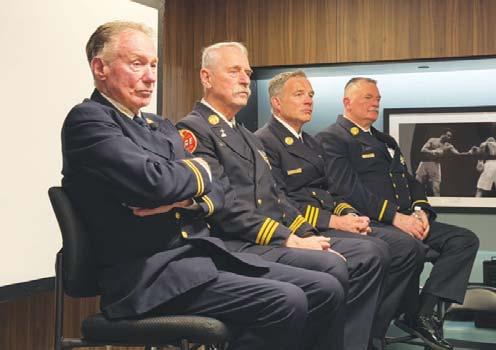
If you missed this special roundtable at the Long Island Metro Fire/EMS Expo, we’re pleased to announce the conversation will continue at FIRE 2026 with an expanded panel! Legendary FDNY leaders Chiefs Vincent Dunn, Frank Leeb, John Norman, Thomas Richardson, and John Salka are coming together for an engaging talk about fire service leadership strategies, professional development, cultural changes, advancing technologies, and much more. Don’t miss the opportunity to meet and talk with some of the foremost leaders in the industry.
Friday, June 12 – 2:00 p.m. @ The Oncenter Rooms C-E
Open to all attendees
The NYSAFC Volunteer Chiefs Committee will be moderating a roundtable discussion at FIRE 2026! Join in the conversation on curre nt issues, policies, procedures, and a variety of other topics impacting the volunteer fire service today. Pick the brains of our committee members and other attendees – your problems may not be as unique as you thought!
Wednesday, June 10 – Friday, June 12
@ Syracuse F.D. Training Center
Pre-registration required (includes Conference Full Term pass)
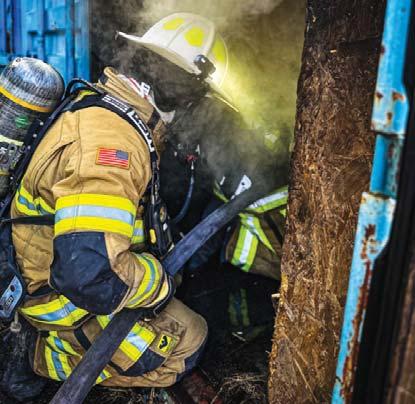
Every year, NYSAFC brings together hundreds of firefighters from all regions of New York state to train together and learn with our seasoned instructors. Challenge yourself and hone your skills in these high-intensity HOT courses
(*Denoted programs are physically demanding):
• Advanced Thermal Imaging Camera Ops (4-Hours/Live Fire)
• Advanced Vehicle Extrication (8-Hours)
• Fire Behavior On the Inside* (8-Hours/Live Fire)
• Firefighter Rescue: Do You Have What It Takes?* (4-Hours)
• First-In Officers’ Responsibilities* (4-Hours/Live Fire )
• Hoarder Fires* (4-Hours/Live Fire)
• Initial Attack: First-Due Company Operations* (4-Hours/Live Fire) NEW!
Wednesday, June 10 & Thursday, June 11 @ The Oncenter
Registration: $200 per day (includes Conference Full Term pass)
Personnel have the opportunity to earn 12 hours (6 per day) through code enforcement in-service approved courses. Students can register for training on one or both days.
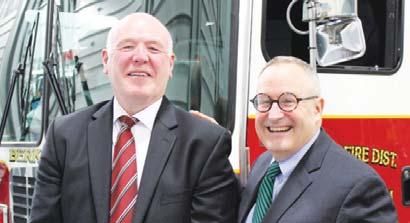
With Fire Service Attorneys Terry Hannigan and Mark Butler
Two of the leading fire service attorneys in New York state will present two special educational programs at this year’s conference! Students can register for one or both programs.
“New York State Fire Commissioner Training”
Wednesday, June 10 @ The Oncenter
Registration: $200 (includes Conference Full Term pass)
“Command Decision-Making: The Legal Considerations and Consequences"
Thursday, June 11 @ The Oncenter
Registration: $125 (includes Conference Full Term pass)
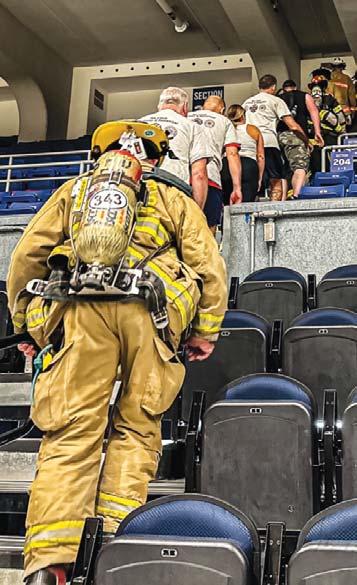
Friday, June 12 – 8:00 a.m. @ Upstate Medical Arena at The Oncenter War Memorial Registration: $25 (climb or walk), $10 (juniors, 17 and under) 2026 marks 25 years since the attacks of September 11. Join us as we climb and walk to honor those who made the ultimate sacrifice on that day. The arena is located adjacent to the exhibit hall. If you can’t participate in the climb/walk but are attending the conference, register for a Conference Participant Walk. You’ll walk the exhibit floor (June 11-13) to show your support. The first 150 people who register for the climb or walk will receive an honor badge, 25th anniversary challenge coin, and event t-shirt. Please sign up early, as a large turnout is expected. Register or donate to support the climb to benefit the NFFF and FDNY Counseling Services Unit at https://bit.ly/4m8nTE6
Friday, June 12 – 5:00 – 8:30 p.m.
@ Marriott Syracuse Downtown (South Warren Street)
Open to all attendees
Enjoy a night of live music, catch up with old friends, and connect with other conference attendees at our annual Block Party! Food, refreshments, and adult beverages will be available. Rain or shine!
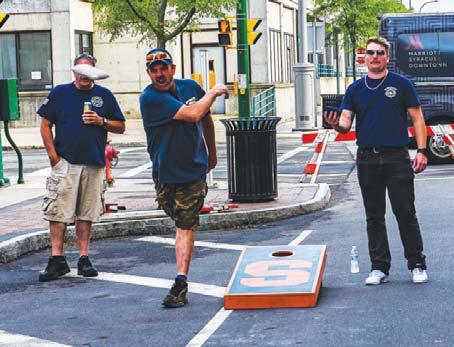
Plan ahead and visit www.visitsyracuse.com/nysafc to learn more about the restaurants, shops, nightlife, and family-friendly activities to enjoy after show hours!

Kieran J. Outhouse
As a lieutenant and captain, my world was straightforward: running calls, teaching drills, and making decisions on scenes. Moving into a chief officer role reinforced something I hadn’t fully appreciated before: the firehouse doesn’t exist in a vacuum. The job isn’t just incident command; it requires an understanding of how local government works.
Every operational decision eventually intersects with policy, budgeting, and the priorities of elected officials. On the fireground, authority is clear. In municipal government, authority is shared. Chiefs operate with professional expertise, while elected officials operate with democratic legitimacy. Both are necessary, and conflict often comes from forgetting that distinction.
Fire protection in our state takes many forms, including village and city departments, fire districts, joint districts, and independent companies, but they all share a common feature: public accountability. Whether oversight comes from a board of fire commissioners, a village board, or a city
council, the department ultimately exists to carry out the will of the public through its representatives. That relationship can feel frustrating when defending a budget request, yet it is also what grants the department its authority and trust.
From inside the station, our needs feel self-evident. Apparatus ages, call volume rises, and training requirements expand. However, from the perspective of local officials, those needs must compete with every other public good, including roads, parks, sanitation, police, and taxes residents can afford. What feels operational to us feels fiscal to them. Neither view is wrong; they are simply looking at the same problem through different responsibilities.
Many disagreements between chiefs and elected officials are not really about money or equipment. They are about perspective.
Chiefs are trained to manage risk. Officials are elected to balance priorities.
Chiefs focus on standards and preparedness. Officials focus on fairness and sustainability.
Chiefs often argue from consequence: what happens if we don’t buy this?
Officials often argue from impact: what happens to taxpayers if we do?
This tension is not dysfunction; it is a safeguard. Public administration depends on professional expertise informing policy, not replacing it. The challenge for chiefs is learning to translate operational necessity into community value.
Serving on local committees allowed me to see how decisions look from the other side of the table. The lion’s share of local officials are not anti-fire service; they are trying to make defensible decisions with limited information and competing demands. When chiefs provide only conclusions instead of context, we unintentionally force them to choose between trust and scrutiny.
Some principles have proven consistently useful:

• Transparency builds legitimacy: explaining not only what we need, but also how we determined it, makes decisions defensible to the public.
• Frame requests as community outcomes: a fire engine is not a purchase; it is reliable emergency response capability.
raises expectations.
Programs like LOSAP, recruitment incentives, and retention efforts exist at the intersection of operational need and political acceptability. Chiefs who understand municipal priorities can advocate effectively without creating adversarial relationships. The goal is not to win an argument but to maintain long-term credibility, because credibility determines whether the next request is heard with skepticism or confidence.
None of these replace operational competence. They complement it. A chief who can manage both emergencies and expectations is far more effective than one who excels only on scene.

• Options create cooperation: presenting alternatives allows officials to participate in problem solving rather than simply approving spending.

• Disagreement is not disrespect: a rejected proposal often reflects uncertainty, not opposition.
When we shift from advocacy alone to education, conversations can change dramatically.
In smaller communities, such as mine, the relationship becomes even more personal. Volunteer departments are often social institutions as much as emergency services. Chiefs may sit across from neighbors, friends, or relatives at budget meetings. That familiarity builds trust, but also
Experience has shown that a few habits make interactions with local government far more productive:
• Speak in plain language, eliminate acronyms, and translate standards into common language.
• Support requests with clear data and trends.
• Choose credibility over short-term victory.
• Build relationships before you need something.
• Remain professional even when discussions become frustrating.
Local politics will always meet the firehouse, and that is not a flaw in the system. The fire service provides expertise; elected officials provide legitimacy. Public safety depends on both. By understanding how those roles interact, chiefs can lead not only during incidents, but also in decisions that determine whether those incidents are handled successfully in the first place.◆
Kieran J. Outhouse is the volunteer 1st assistant chief of the Buchanan Engine Company #1 in Westchester County, where he has served since 2012, and a career assistant fire chief for the federal government. He holds a bachelor’s degree from SUNY Empire State College and a master’s degree in public administration from Marist College, and is currently enrolled in the National Fire Academy’s Executive Fire Officer (EFO) Program.
Michael Scotto
“Hey, Tom! The guys want chicken parmigiana for dinner.” “Sounds good, buddy!”
What is necessary to make this meal taste good? Preparation!
Without the proper seasoning, desired thickness of the meat, beaten eggs, seasoned bread crumbs, and the right temperature and cooking time, along with some traditions, it just won’t be good enough.
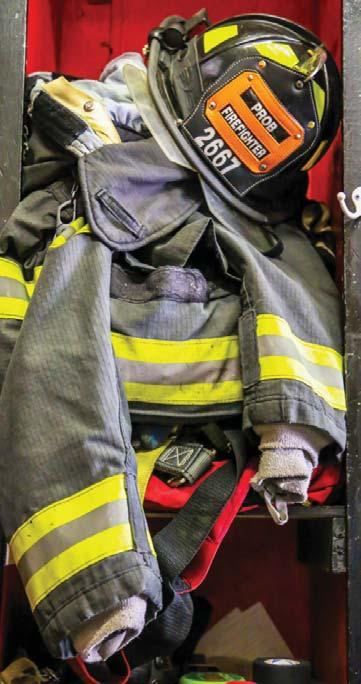
Preparing a meal is exactly the same as preparing a company officer. It simply takes time and the proper ingredients. The experiences the member has, combined with proper training from within and independent of their department, will help prepare them to serve as a company officer.
The Officer Must Know the Firefighter’s Job
Training an officer begins the first day of a new member’s career. As we all know, you only get one chance to make a good first impression. Clearly, the incoming member is nervous, and probably unsure of how things operate. Naturally, there’s joking, some exaggerated storytelling, etc. when meeting new members. It is just our world, but officers should monitor the conversations to guarantee it does not go too far under legal standards. This, too, is our world.
Having guidelines is a procedure itself. It provides continuity and helps maintain that homelike feeling we all have within quarters. It is a firehouse where family exists, and through time, the family grows closer together handling good times and bad. There is the honeymoon period, which happens in all relationships. You know, everybody is really nice and accepting of things that go on. Over a short period of time, people’s personalities rise to the surface. Then we see how people function –likes, dislikes, and so on.
For an officer, working things out is a daily procedure. This initial experience in the firehouse will benefit a firefighter throughout their career. You have seen it, so there should be no surprises here. A new member sees how training, uniform standards, basic rig checks, maintaining cleanli-
ness of quarters, showing respect, etc., are performed. To make this first step effective requires the current officers and members to have a stake in their own careers. For a new member, this might require some research to see if this department has a positive reputation. Everyone wants to be SEAL Team Six, but words and attitudes without substance will fall short of this desire. Those warriors train every day to be ready at a moment’s notice to demonstrate their expertise for the benefit of people in danger. Just like firefighters!
So we, the company officers, start the education process needed for us all. The simple things, when put together, show the proper way to become a firefighter. The officer MUST know what must be done, when it must be done, and how it must be done. In other words, the officer must know the procedures.
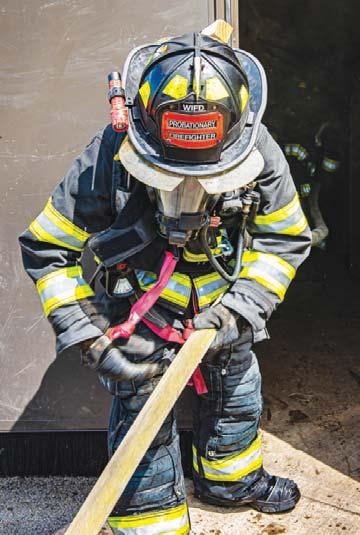
Let’s start with basic engine operations. Stretching of a handline has a procedure
that we must be proficient at. When we pull up at a house fire and it’s on the right side of the apparatus, the first length pulled off must head toward the building. The second length must be pulled straight back and a little to the right. The third length, if manpower is available, should be pulled to the left. This allows freedom of movement toward the fire building. Members will have space by keeping the line on their left arm so they will not trip on the line as it moves toward the structure.
In cities, a tire rim with one-quarter pie section cut out can be placed by the nozzle firefighter on the front or rear tire of any car that may be in the way of the stretch. The cut section fits around the tire, which provides a smooth surface that prevents the line from getting caught under the tire. This is an effective tactic for departments where manpower is an issue.
To continue, if your department stretches two lengths at calls for fire or smoke, once the address is verified, this will make stretching a common task. If you
stretch 10 times or so in a month, then the 11th time it’s a job, your members have all trained extensively and are ready. This is using the responses themselves as a training tool. At drill, if we take just one tool (say a nozzle) and each week spend 15 minutes focused on the tool, then we will know the proper pressure, maintenance, etc. to operate at. Here, it’s the procedure that helps guide members who may wish to add engine chauffeur to their resume to understand water supply, and they become a more valuable tool for the department.
OK, as we approach the structure, we may be able to flake out the line in front. A good procedure is to flake out the line in a snakelike method perpendicular to the building, which prevents the line from being under windows where it can be damaged by any falling debris. Positioning the line opposite the front door allows for a smooth operation. True, this may not always be the case, so our procedures can be adjusted to fit other scenarios. We should take at least one to 1 1/2 lengths for the fire floor. This guarantees us enough line for operations. Once the fire is knocked down, we can attach a half-inch tip to the nozzle for small pockets of fire and final extinguishment. This tip allows for more pressure to penetrate and uses less water. There is water damage at a good job. If we can reduce that by using a smaller tip during overhaul, we help out the homeowner and we reduce water usage, which may be necessary if there is no positive water source. I realize many of you understand this, but making sure everyone does is in itself a valuable procedure.
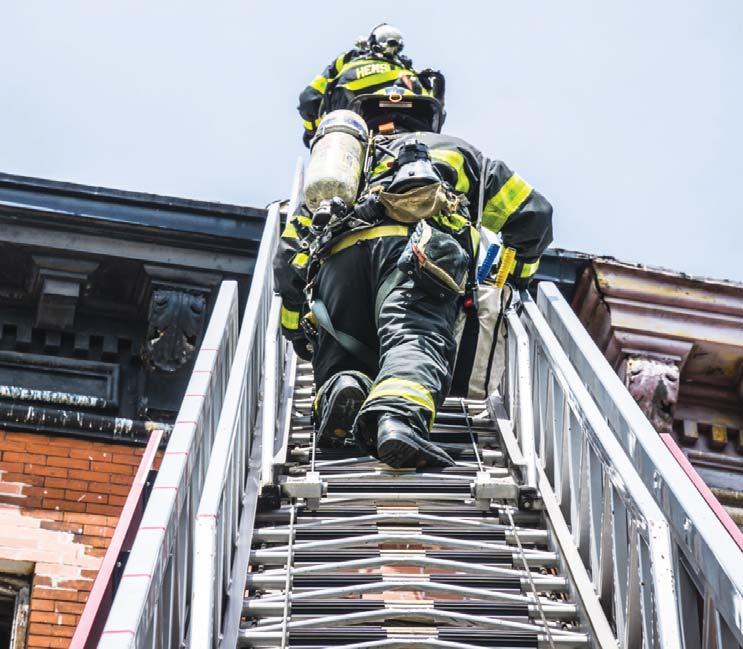
Many times, ladder operations require that members operate alone above the fire without a line; opposite the attack line; climbing a ladder to enter a window; in the bucket; or cutting a roof. Procedures have clear, enormous values here. Let’s start in the general order of arrival.
Remember, we receive information about the response. Once we arrive our size up will be more precise. We will be observing the structure as we pull up. Then, a member will complete a 360-degree view. As we approached, we may have seen two sides of the building, which leaves us only two sides to check. As we prepare to set up, we place the apparatus in position to use the aerial or tower ladder bucket. The reason is simple common sense; we only have so
many ladder feet available, so positioning is everything. By positioning your ladder apparatus in the middle of a normal size building, you guarantee that we are able to reach the entire frontage. If frontage is 100 feet, with the fire location unknown, you should stop closer to the side you approached from. In this way, you can move the rig further down the building if needed. If you set up further down, and the fire is discovered behind you, it may be impossible to back up, especially if an engine pulls in behind. If it’s a ladder company, things may work out. Another procedure here is to make sure all chauffeurs understand not to pull any closer than 25 feet behind you. If they pull closer, you will not be able to remove your portable ladders. This procedure guarantees all our tools are available for operations.
Next, we advance toward the building, counting windows, looking for any signs to determine the fire location, and if necessary start forcible entry procedures. I will only discuss one basic procedure here. If we are using the irons, be sure the member holding the Halligan has their rear hand facing up. In this way, your elbow is tucked into your body, which naturally protects it from being struck by the axe or maul. The member hitting the Halligan must make sure his top hand is one-fist-width down from the head of the axe or maul. This prevents the member from hitting his hand on the adz end. Procedures like these are designed for member safety. If you are injured before we enter the fire area, we have now depleted our
forces, which will have consequences that affect the operation. As officers, we are charged with assuring members are proficient with basic tactics. With forcible entry, like all ladder operations, we must follow our procedures for maximum efficiency with minimal manpower. This will affect operations while we search. Less members equals a longer search, which is not beneficial for civilians.
When searching a room, if there are two members, one can wait at the door to the room while the other member searches. This procedure preserves the air supply of the member at the door, while the other searches. There are two benefits here. The member at the door uses less air, which has a limit, and if things start to go bad, the searching member has their exit marked. This has proven to make searching more effective due to the confidence of knowing the exit is marked. For the next room to be searched, members will switch assignments. One searches, one rests, and confidence is high. A valuable procedure!
Communication procedures have immediate effects on operations. Let’s take a mayday transmission. There are five times we use it. A good acronym to help remember is I Owe U My Life. Acronyms give us something to spark our memory in a critical moment and especially on testing days. So here we have – injured, collapse occurred, unconscious member, missing, lost.
As a procedure, officers should assure that the term “collapse” only refers to a building, never a member. Over a handietalkie, this misunderstanding can cause units to rapidly back out, which can lead to unnecessary injuries. There is a procedure to back out, and training will reduce the chance of injuries. Using the term “a downed member” is a good way to eliminate confusion. Through training we will assure that whenever a mayday is transmitted, any member hearing it can respond if command has not. A good procedure if you are the member in trouble is to use the acronym CIA. It’s the company officer, incident command, any member.
To continue, if we are near the command post, we should notify the IC and have them respond. But it is very important that all members, upon hearing a mayday, stop using their radios. During training, all members MUST practice using radios to be-
come proficient. The officer must train on these daily procedures to assure professional fire operations. It can be easy to overlook communications, simply because we all feel comfortable speaking. Under stress will we revert to the way we were trained. This is not a problem, provided we have trained under stressful situations, so we may fine tune our responses. Stress, even artificial, will help us prepare to communicate properly when it counts most. It really comes down to common sense.
Don’t Be a Squirrel, Be a Farmer
If a decision is needed, then make it! Of course, you will evaluate the situation, using your experience and training. Sometimes you may doubt what you are about to say or do. That can be normal and probably good. It means you are processing your decision right up until you give it. No matter how things turn out – and this may sound a bit cavalier – own it! As the officer and a leader, good and bad decisions are part of doing business. Remember the words often attributed to George Washington, “If you want an easy life, don’t be a leader!” My words are, “Don’t be a squirrel!” Have you ever seen a squirrel crossing the road? They get run over because they can’t make up their mind as to which direction to run. We’ve all seen them, lying in the middle of the road, with no decisions to make now. Don’t let your members down because you have not trained properly or are not continually improving yourself. Those shortcomings are not what members want from their officers. They can lose respect for their officers because they expect leadership! Officers overcome this by making sound and confident decisions, even if it’s a tough call.
Farmers are vital to our society. Ever wonder how much work is required each day to succeed? It is a constant fight against many roadblocks. There’s lack of rain, infestation of the crop, fire, unexpected breakdown of equipment, the manpower, sickness, financial issues, delayed deliveries of needed supplies, etc. Sounds like a fire officer, doesn’t it? We have many of the same issues as they do. Some of these points fall on the responsibility of our department, not us.
All of these responsibilities make our job harder, but some more so. Look at the staff – the new members entering our department combined with those already there.
We must plant the seed of desire, we must cultivate them, and we must train daily to assure they grow properly. Some of our crop might not make it, others will be good firefighters, and still others will rise higher –just like the farmer’s crops. We do our best to have a good harvest, but unless we work hard, failure can be the result. If it’s on the fireground, it could be a bad day – injuries to civilians and members or even death. Helping a firefighter grow to be an officer is your crop. Nurture it, be observant of problems, help it in tough times, and one day, even if you have retired or moved on, you will have a crop we can all be proud of. The SEAL Team Six Fire Department!
Strategy is determined by the event. Now, the structure can mean the building. It could also mean our procedures. For the structure of a building, it depends on the construction and the occupancy. First, the construction tells us the procedures necessary for us to fight a fire in it. The type determines our strategy and tactics. This is based on our knowledge of the strengths and weaknesses of the specific type. We know how and where fire can and eventually will spread unless we take the steps required to control the fire. The occupancy, the other side of the coin, tells us what problems may exist. Each occupancy has its own issues for us to understand. If we follow the procedures for the construction type, combined with the occupancy, our outcome generally is predetermined. Of course, there is always the unknown. That is at each incident.
Now, the structure can also mean our procedures. By this, it means following the procedures, so all members know what is going on. The engine, if first on the scene, gave a size up and is stretching a line, attempting to get a positive water source and moving toward the fire location, if known. The ladder company is sizing up the structure as they approach, doing a 360-degree size up, forcing entry, setting up a ladder and/or portables, preparing to remove victims, and venting when necessary. That is the structure of procedures. The basics guide us! New officers must instill the obvious procedures to form a structure necessary for efficient operations. Intelligent leadership is essential.
Structure of procedures is like flowing water. Once water finds its course, it can
move boulders and break boats apart. Once members are consistent with the structure, then orders are carried out like flowing water. Leadership is necessary to the cohesion and the direction of the department. It makes the implementation of strategy possible. Simply put – leaders need knowledge, valor, wisdom, and modesty. These traits allow officers to adapt to changing situations with clarity and confidence, unfazed by the pressures of the moment. This is all possible with their knowledge of the value of procedures.◆
Mike Scotto served with the Fire Department City of New York (FDNY) from 1979-2021. He was appointed to lieutenant in 1997 and assigned to Tower Ladder 58 in the Bronx. Previous assignments included Engine 18 in Manhattan and Tower Ladder 157 in Brooklyn. Scotto is a New York state fire instructor, national fire instructor Level I and II, and master exercise practitioner certified through the Department of Homeland Security, as well as an Orange County fire instructor. He is a frequent lecturer for NYSAFC, most recently instructing at Company Officer Leadership Training (COLT).
Unlike the fire service’s open communication, successful peer support programs operate discreetly, emphasizing confidentiality and informal, ‘ninja-like’ interactions.
Jim Burneka Jr.
Originally published in CRACKYL Magazine, Issue 17 (Spring 2025), a publication of CRACKYL Media, Inc.© 2025. Reprinted with permission. Explore more firefighter health, culture, and performance content at CRACKYL Magazine: https://crackyl.com
The fire service is universally known and respected for its transparency and effective communication with the public it serves. The tax-paying public demands and is usually granted insight into the inner workings of the business conducted within the department.
Peer support shouldn’t follow the same mindset. A successful peer support team works in the shadows and consists of stealthy peer-support ninjas. A ninja is essentially someone who excels at a particular skill or job. Following these simple steps will help you attain peer-support ninja status.
A true peer-support ninja can provide peer support without making what they are doing obvious. This skill can be perfected by simply being a genuine friend who cares about others. It’s not necessary to make peer support a formal process. If there are concerns about a member, create a valid excuse to stop by the station and check on them. Examples of excuses could include dropping off handouts or picking up something you left at the station. While it may seem silly, these reasons allow you to interact with that member without alarming them or others.
Confidentiality is not just a rule, it’s the cornerstone of our peer support team. Members must feel they can trust the team to keep their conversations confidential. If there is even a shred of distrust, members will not confide in a peer supporter. That member may seek assistance independently, or worse, they may continue to suffer in silence. Your commitment to confidentiality is a testament to your trustworthiness and responsibility as a peer supporter.
One key to keeping confidentiality is limiting the number of people involved. The more people involved, the more likely privacy will be breached, and your members’ situations will be exposed against their wishes.
Management, human resources, or other city officials may ask you for information regarding the individual you are peer support-
ing. Ideally, a captive ninja being interrogated wouldn’t give up any information, and neither should you. Don’t release any information without the blessing of the individual you are peer supporting. Follow your department’s guidelines to make sure the appropriate forms are adequately completed to avoid any disciplinary action being taken against your member. HIPPA should be an allowable term for your department’s medical certification; however, be prepared to lawyer up if you’re the first person in your department to use HIPPA.
Better still, lay the groundwork with administration for how confidentiality will be handled before an issue arises. Getting their buy-in early will cloak the peer-support ninja when things get rough.
Privileged communication is a legal term that refers to interactions between two parties protected by law from their conversations being disclosed. In other words, depending on your state/province, you don’t have to disclose your interactions with your peers, even if you were subpoenaed. Suppose you aren’t eligible for privileged communication. In that case, it is advantageous to inform your peer that the conversation may be repeated if you are subpoenaed, however unlikely.
Most fire departments operate like quasi-military organizations

that function daily and in emergencies from directions based on their pertinent policies and procedures.
Peer support should be covered by policies and procedures. However, those policies should enable the peer team to take action, not handcuff them. The policies should speak to the team’s scope, but unlike the fireground, a certain amount of freelancing and autonomy is encouraged.
All peer supporters must have the freedom to function. This freedom may include meeting the member in a place they deem safe. This safe place may be their station, home, coffee shop, gym, or any other random place they decide. The peer supporter must be flexible to help the member feel comfortable enough to open up and share the issue they’re trying to resolve.
Keeping data on peer support touches is essential, but precision is necessary to ensure confidentiality is not breached. Analytics should cover the basics, including topics like critical incidents, PTS, substance abuse, family problems, suicidal ideation, struggles with depression and anxiety, and more. Referrals can be through crisis, one-on-one appointments with clinicians, group IOPs, inpatient programs, and more.
And guard that data, be it in print, digital or both, like… well, a ninja.
As a peer supporter, it’s your responsibility to protect the privacy of the individual you are supporting. Avoid giving any hints about their identity, including sex, race, etc. Practice referring to everyone as “they” to maintain their anonymity. This is particularly important in smaller departments, where a gender pronoun could make it easier to determine the identity of the member you’re helping.
Peer supporters serve as guides, directing members to the appropriate resources and aiding them in obtaining the support they need. By embodying the attributes of a ninja, peer supporters are best equipped to care for their members, all while operating discreetly within the department.◆
About the Author:
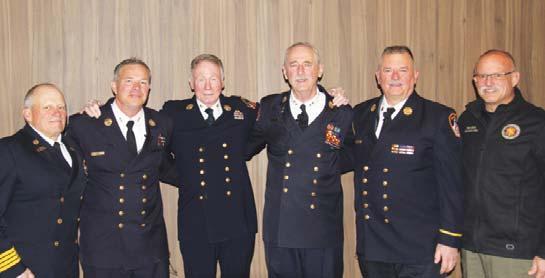
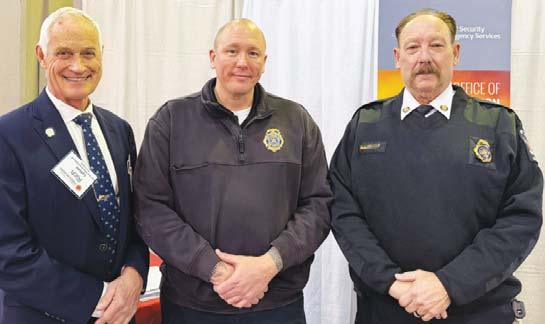
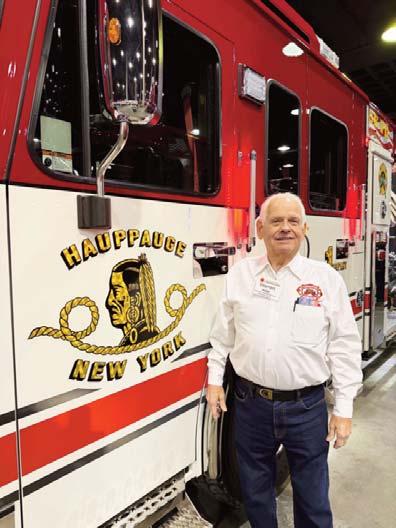
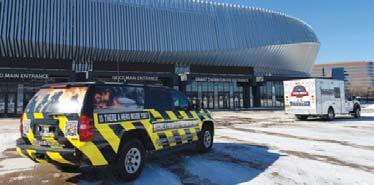
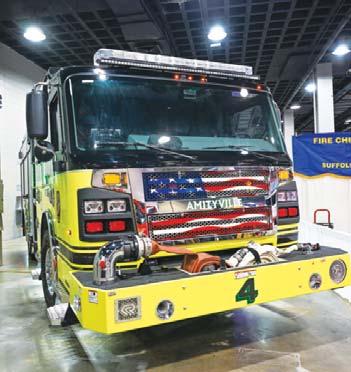
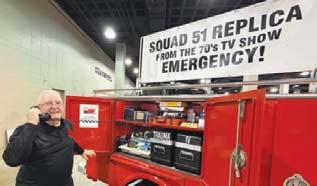
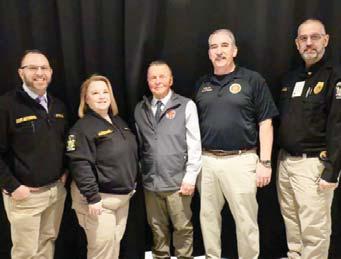
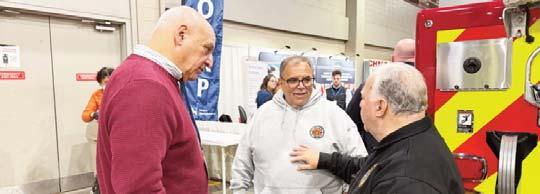
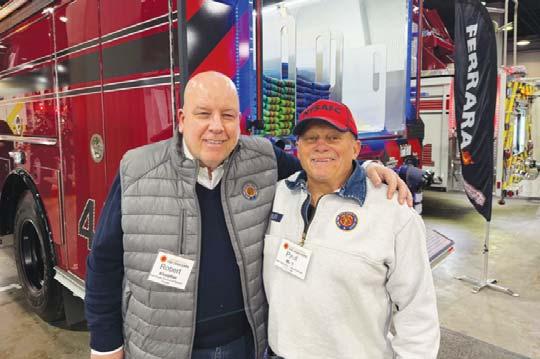
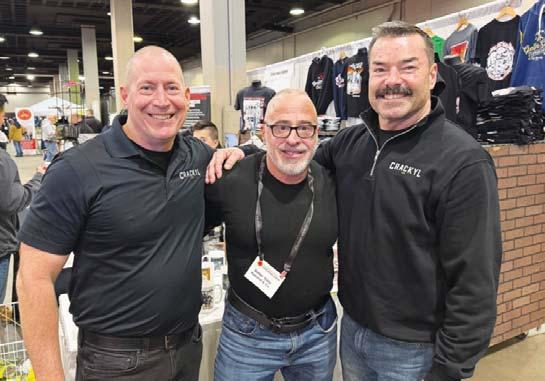
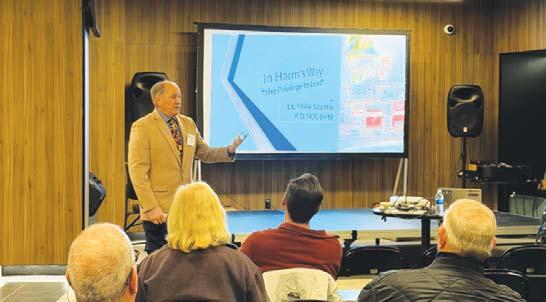
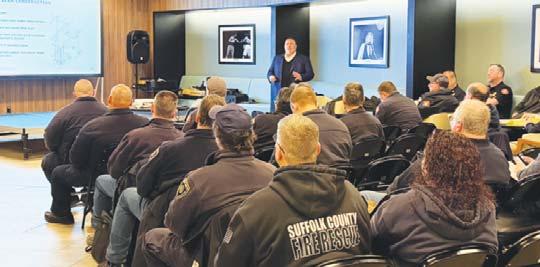
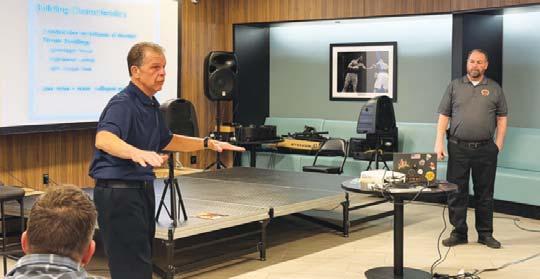
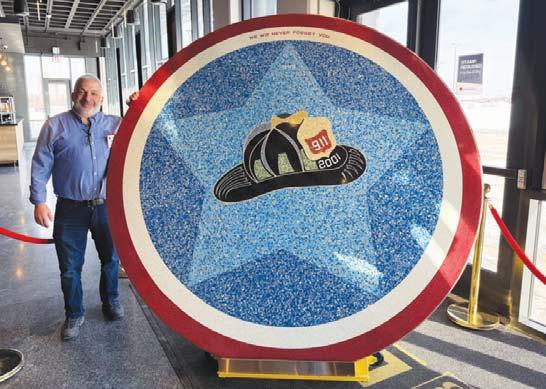
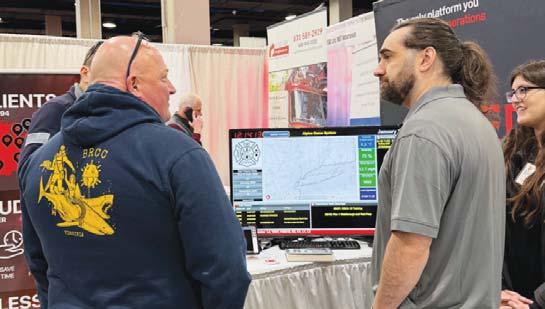
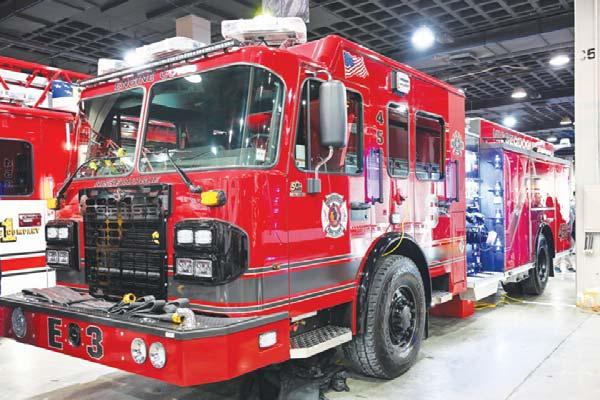
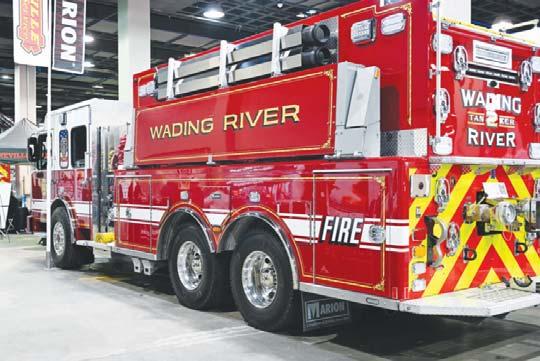
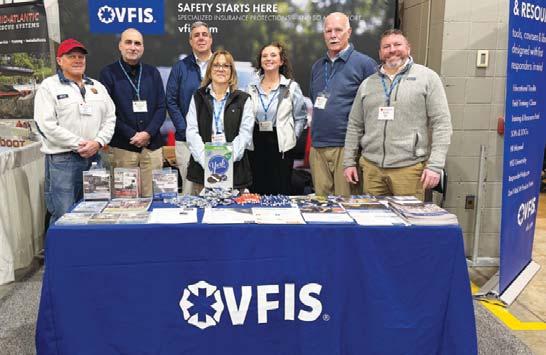
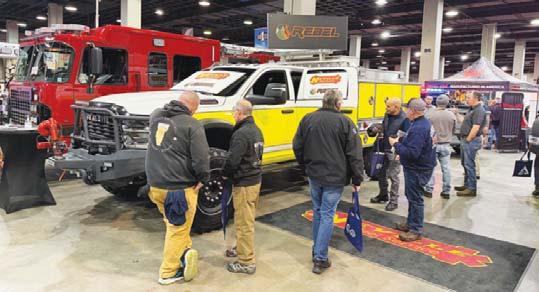
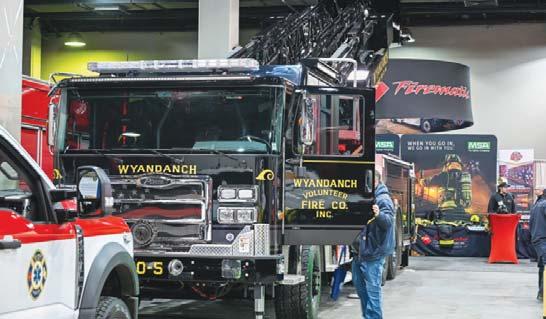
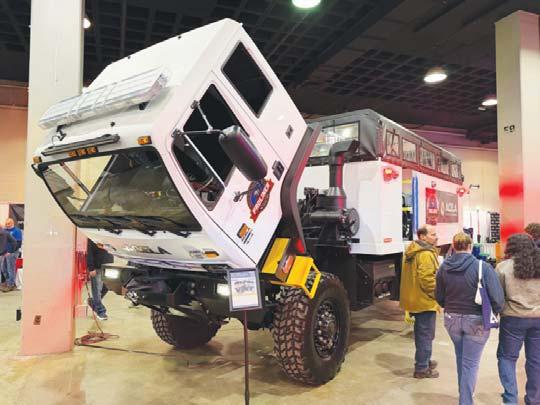
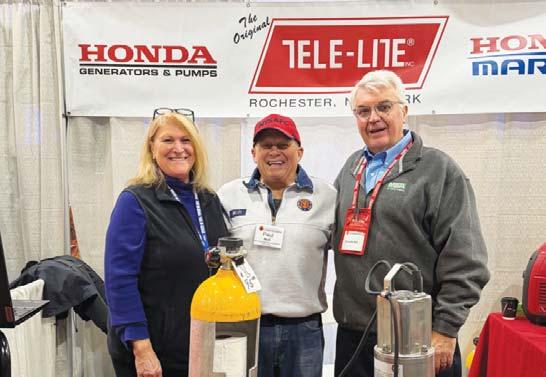
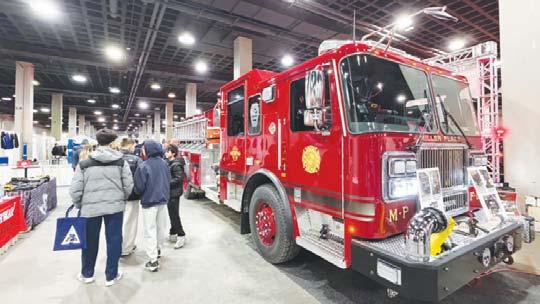
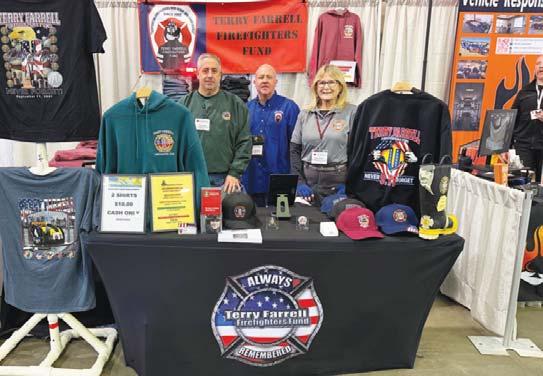
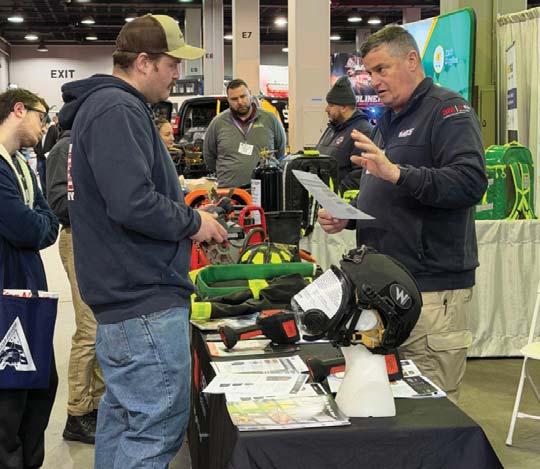
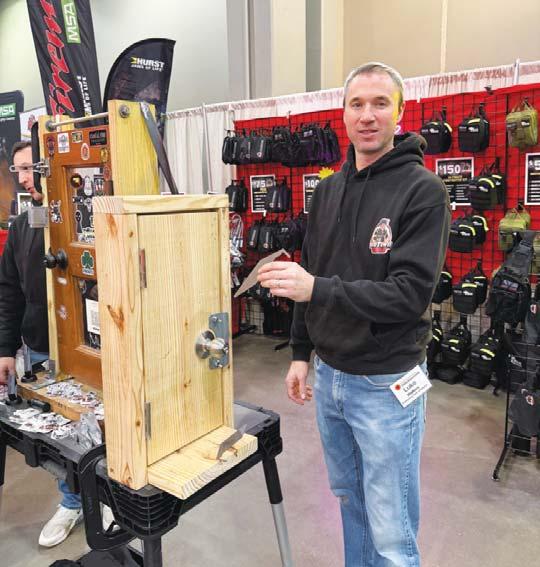
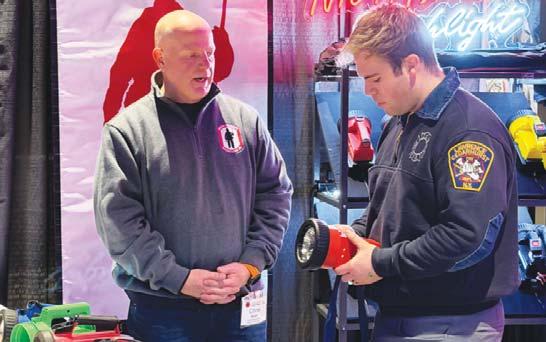
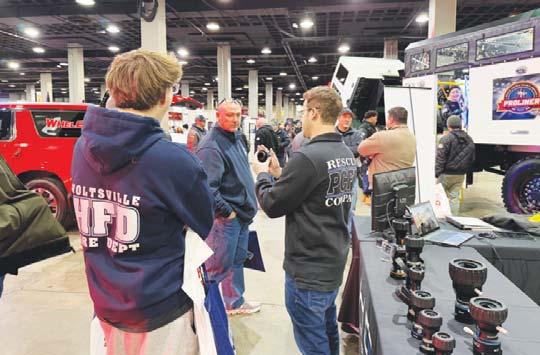
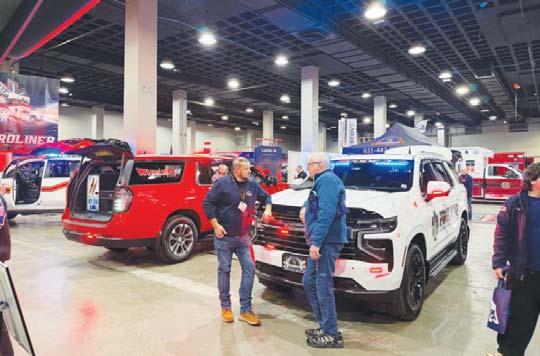
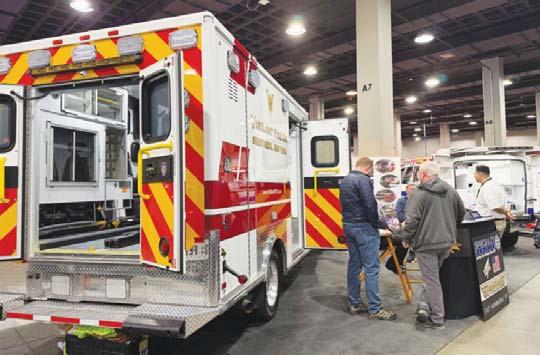
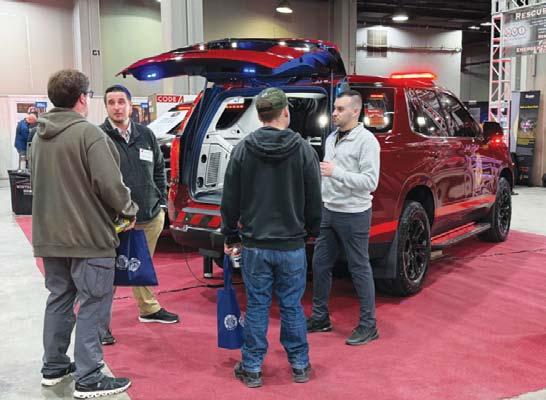
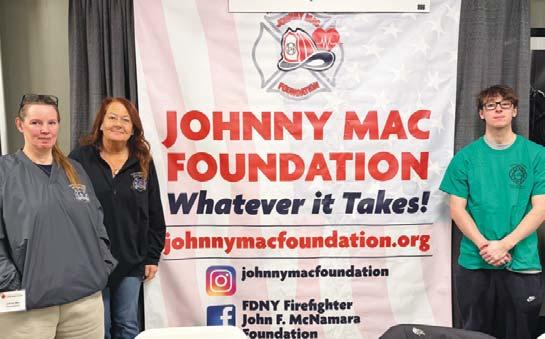
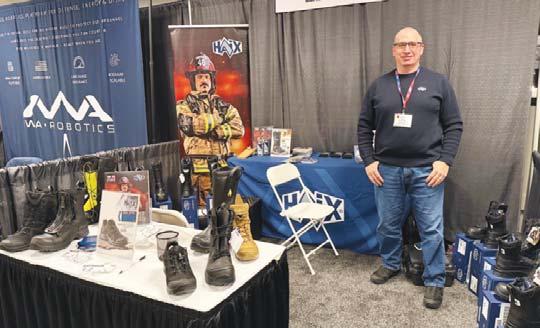
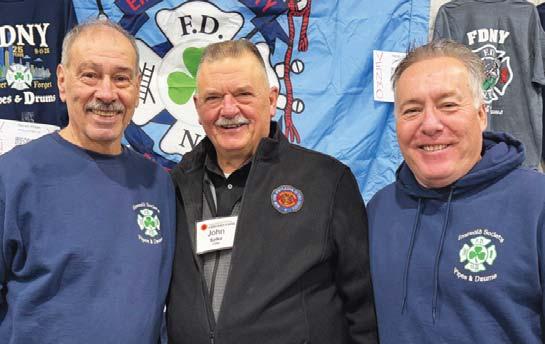
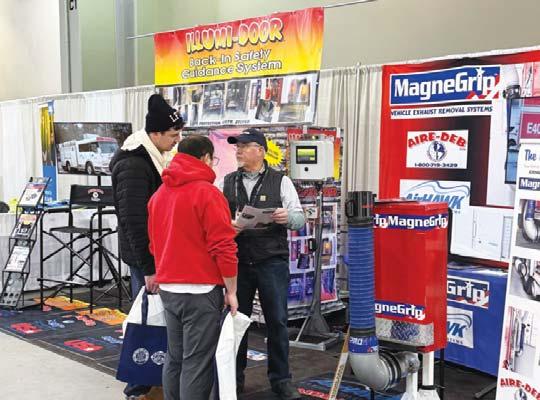
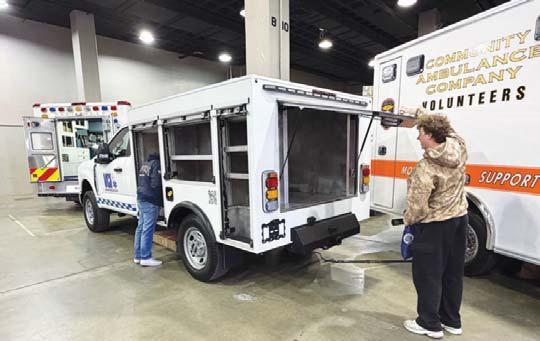
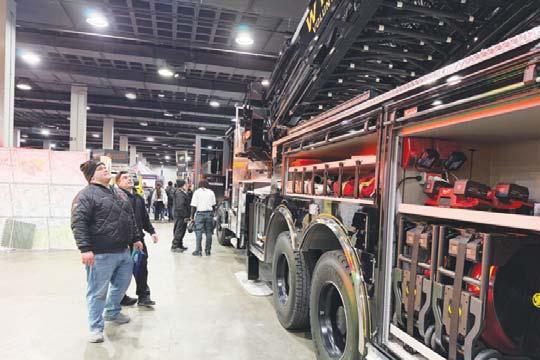
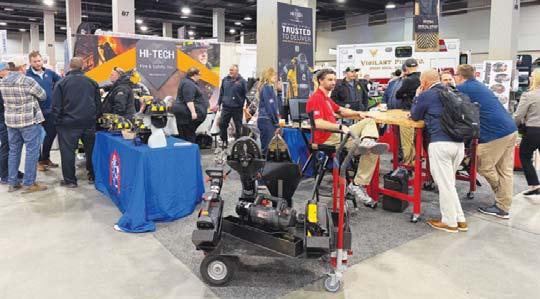
The 2026 Long Island Metro Fire/EMS Expo, hosted by the New York State Association of Fire Chiefs and Islip Town Fire/EMS Museum Educational Center, was held January 30 – February 1 at Nassau Coliseum. This year’s event included 180+ exhibitors, a full-day accredited Codes Training program, one EMS CME class, and six firematic seminars, including the special “Roundtable Discussion with the Last Lions” featuring FDNY Chiefs Vincent Dunn, Frank Leeb, John Norman, and John Salka. Thank you to our exhibitors, attendees, instructors, and volunteers for your support. Save the dates for our 2027 event – February 4-7 at Nassau Coliseum! Check out more photo highlights at https://bit.ly/3KgF8lb
Myles Quinn/Fire News
Instructor
John Lewis and Robert Moran
In the first part of this series, we discussed the components of emergency communication, including the difference between urgent and mayday messages, the structure of a mayday message, and the critical importance of the communication loop. In this second part, we will examine the value of mayday training and the pivotal actions required of the mayday firefighter and incident commander as they work toward a successful outcome.
When a mayday event comes knocking at your door, you must be prepared to act quickly with absolute proficiency, regardless of position, title, or assignment. Preemptive hands-on training in the operational and management skills required to control a mayday event is essential. Every member must be trained, competent, and ready to act when the message is transmitted. There is no option. While training is the foundation of success, the actions of the incident commander and the firefighter during a mayday event are also crucial to a successful rescue. Let’s take a closer look.
When a firefighter recognizes they are in trouble, a mayday message must be transmitted communicating critical information such as name, location, problem, and resources required. GRAB LIVES is a nationally recognized acronym developed by the IAFF and IAFC as part of their Fireground Survival Program that details several tactical actions to be taken by the distressed firefighter. These actions include gauge (remaining air), radio (issue mayday/give updates), activate (activate PASS), breathing (control breathing), low (stay low), illuminate (shine light to rescuers), volume (make noise), exit (self-rescue/move to safe haven), shield (protect facepiece). Make this acronym and the mayday message part of your muscle memory. The life you save may be yours.
During a mayday, the IC is responsible for managing and supporting the safe removal of the distressed firefighter. To accomplish this, the IC needs to execute several key actions with composure, authority, and control. The first decision to be made is whether the IC will manage the mayday or continue to supervise the fire suppression operation, since it will be impossible to effectively control both. Considering the need for a RIC supervisor during a mayday event, a best practice would be to appoint a member to this position upon assigning the RIC company. Doing so will significantly reduce confusion and support efficient management of the mayday. The IC must be proactive instead of reactive to a potential rescue situation. Do not make this a game-time decision.
Regardless of whom the IC appoints to manage the mayday, the individual assigned will be operating in an emotionally charged, chaotic, and challenging environment. This is when utilization of a mayday “checklist” detailing a systematic process of the tactical actions to be taken, a focused application of department SOGs, coordinated operations, and strict control of the fire operation will give the distressed firefighter the best chance of survival.
The following procedures are recognized as “best practice” tactical actions an IC should apply during a mayday event. Inclusion in your department’s SOGs, and as a component of your mayday checklist, is highly recommended. 1. Upon transmission of the mayday message, the IC must declare priority emergency radio traffic, controlling the mayday frequency for the distressed firefighter and essential interior IDLH communication only. 2. Acknowledge the mayday firefighter. Confirm who, what, and where. 3. Assign a RIC crew to the last known location of the distressed firefighter. Ensure the RIC supervisor is operational. 4. Verify
dispatch and operating companies are aware of the mayday (use dispatch tones if necessary). Keep interior companies on mayday frequency (most distressed firefighters are rescued by interior crews). Request additional frequencies, as necessary. Radio discipline is essential. 5. Maintain control of the fire suppression operation (protect the mayday firefighter). 6. Maintain communication with the safety officer and RIC supervisor for conditions, actions, needs (CAN) reports. 7. Upgrade alarm, request an additional rapid intervention crew, and additional resources (EMS, technical rescue, chief officers, other specialty units). 8. Conduct personnel accountability report. PAR reports are essential. However, timing can be an issue. A PAR conducted immediately after receiving a mayday may create an environment where radio transmissions overwhelm the ability to communicate with the distressed member. Reducing the request for reports to company officers and division and sector officers operating on the interior of the structure is an accepted tactic. 9. Assign additional chiefs to assist with command post operations. 10. At termination of mayday, conduct a PAR. 11. Notify dispatch and all members on scene of termination.
In the next edition, look for part 3 –“RIC Operations – Putting It All Together.”◆
John Lewis joined the volunteer fire service in 1978 and began his career as a firefighter/EMT in 1985. He retired as a lieutenant with the City of Passaic (NJ) Fire Department, where he was assigned as officer in charge of the Training and Safety Division. Robert Moran recently retired as chief of the Brewster (MA) Fire Department. He previously served for 27 years with the City of Englewood (NJ) Fire Department, where he was chief of department, and he is a former chief of the Leonia (NJ) Volunteer Fire Department. Lewis and Moran operate Jersey Guys Firefighter Training (www.jerseyfireguys.com).