FIRE DISTRICTS ASSOCIATION OF CALIFORNIA
JUNE 2026 REPORT


JUNE 2026 REPORT
2026 BOARD OF DIRE CTOR S
Don Butz, President
Geoff Belyea, 1st Vice President
Kyle Heggstrom, 2nd Vice President
Brian Bernier, Treasurer
FDAC STAFF
Catherine Smith, Executive Director
Carmen Berry, Deputy Executive Director
Anton Cervantes , Coordinator
Brett Moore, Legislative Assistant
Sam Brown, Graphic Designer
PHOTOGR A PHY
Pexels, Pixabay, Shutterstock and Unsplash
The purpose of this Association shall be: 1) to present a united position on fire protection issues; 2) to coordinate with other associations with similar views on fire protection, including legislation; 3) to provide advisory services and any other services deemed appropriate by the Board of Directors that may benefit member agencies; 4) to keep member agencies informed on laws relating to fire suppression, emergency medical and other related services provided by member agencies; 5) to take an active role in the legislative process affecting public agencies providing fire suppression, emergency medical and related services.
Thank you to all the authors in this issue for sharing with you their time and expertise. If you have an idea for a future article, please contact Carmen Berry at the FDAC office at cberry @fdac.org.
Disclaimer: The views and opinions expressed in these articles are those of the authors and do not necessarily reflect the official policy or position of FDAC.
For more information on FDAC or this magazine, please contact the FDAC office at 916.231.2137 or visit the website at www.fdac.org
Susan Blankenburg, General Manager
1255 Battery Street, Suite 450 San Francisco, ca 94111
Office 415.536.4005 Toll Free 855.350-7617
Lowest Stable Premiums Available
Exclusively Fire & Emergency Service Agencies
Broadest Insurance Coverage Available
Risk Management Assistance
In 1987, one of the largest insurers of California Fire Districts informed the fire industry that they would not be renewing their insurance. FAIRA's first year of operation resulted in an immediate premium reduction of 30%, and that was just the start! Since then we’ve continued to see favorable outcomes for our members including a combined additional savings of over 10% in the past 7 years alone. Not only did we create a solution that guaranteed continuous coverage and reduced premiums, FAIRA is the largest and only multi-state Fire District pool in the United States and has saved millions of dollars.
Our members pay less in premium than they did in 1988 for exposures that have quadrupled. We provide our members with risk management and loss control services including contract review, live & online training and we provide insurance rates that lead the marketplace when it comes to coverage terms and pricing for Property, Vehicle & Liability coverage for Fire Districts and Emergency Service Agencies.
Check out the new Fire Risk Management Services (FRMS) website at www.frmsrisk.org! The website is a great source of information related to FRMS, including available services, scheduled events, contact information, agendas and minutes, and more. The materials in the Member Portal require a login. A welcome email with log in information will be distributed to the contacts we have on file for each member districts.
Please contact Monica Quintana at monica.quintana@sedgwick.com for questions or comments about the FRMS website.
Don Butz Fire Chief
San Diego County Lakeside Fire Protection District, President FDAC
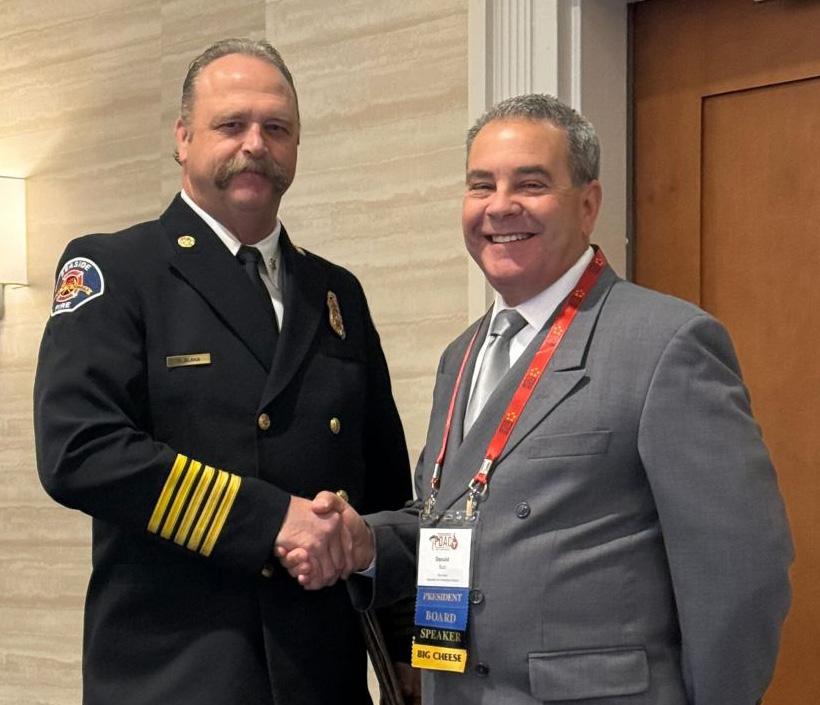
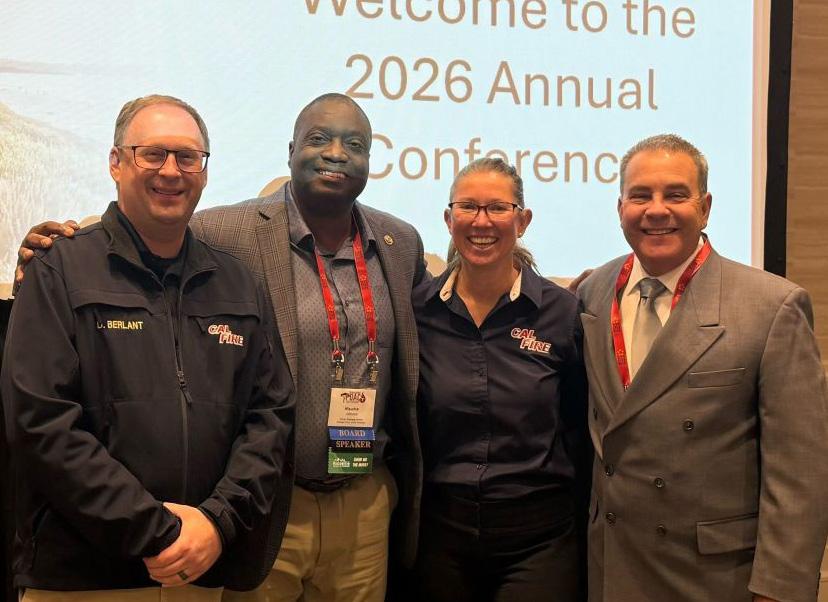
At this year’s FDAC Annual Conference in Monterey, I had the opportunity, along with Maurice “Mo” Johnson, to facilitate an impromptu listening session with many of our members and partners. What followed was one of the most candid, productive, and insightful conversations I have experienced during my time with FDAC.
The purpose of the discussion was simple: listen.
We asked participants what FDAC is doing well, where we need to improve, and how we can continue strengthening our role within California’s fire service community. The feedback was thoughtful, direct, and incredibly valuable.
The conversation reinforced that FDAC remains highly respected for its advocacy, networking, training, and ability to bring together chiefs, board members, and district leaders from across the state. Members clearly value FDAC’s role in representing fire districts in Sacramento and advancing initiatives such as Fighting Fire with Funding.
At the same time, our members challenged us to do more.
We heard the need for stronger communication, greater visibility, expanded outreach to younger personnel, and more year-round engagement opportunities. We also heard concerns that FDAC’s contributions are not always recognized within broader statewide advocacy conversations.
Those observations matter.
Organizations remain strong only when they are willing to listen, adapt, and continue evolving alongside the members they represent. The Monterey listening session reaffirmed that FDAC’s future is not about reinvention — it is about strategic growth, stronger engagement, and ensuring California fire districts continue to have a clear and unified voice.
As we move forward, I encourage every member to stay involved. Participate in legislative advocacy efforts. Engage in the Fighting Fire with Funding Initiative. Attend regional trainings and conferences. Encourage emerging leaders within your agencies to participate. Most importantly, continue sharing your ideas, concerns, and perspectives with FDAC leadership.
Our strength as an organization has always come from the collective experience and commitment of our members.
Thank you to everyone who participated in the discussion in Monterey. Your feedback will help shape FDAC’s priorities and direction moving forward, and I look forward to continuing the conversation in the months ahead.
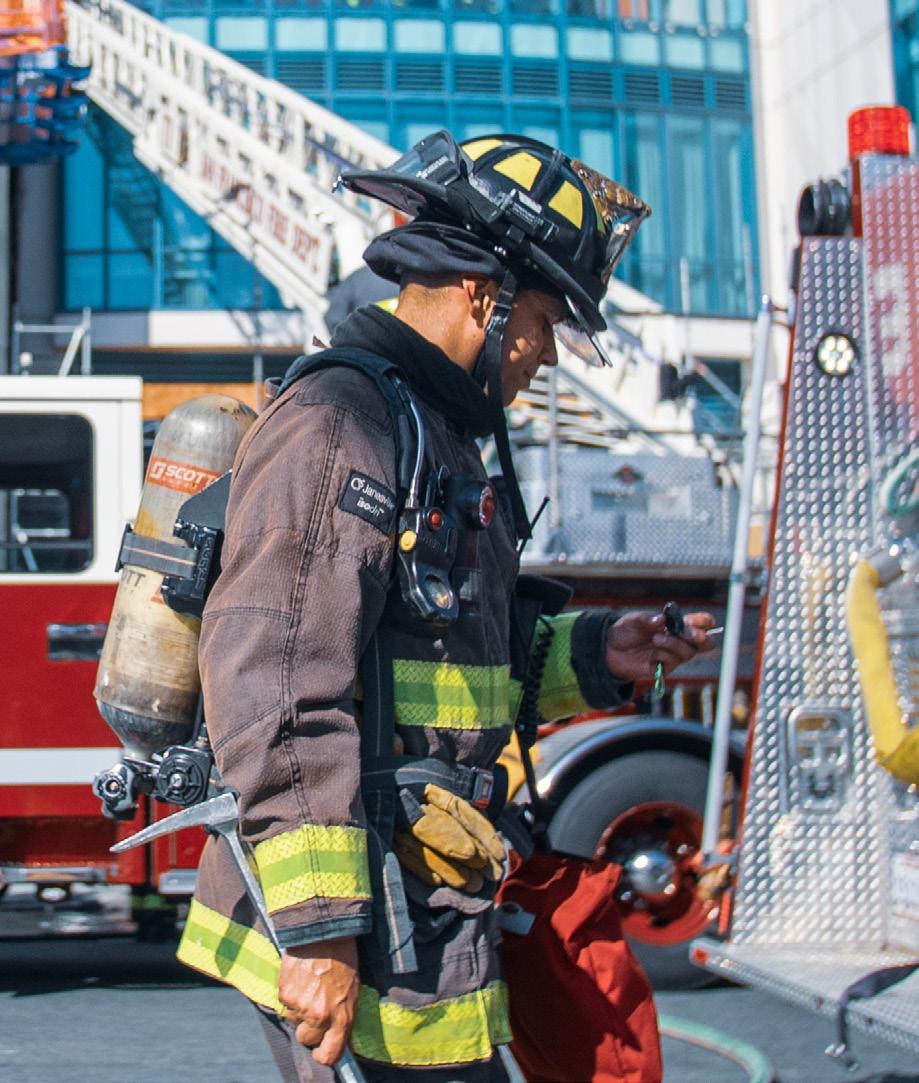
The United States is rapidly moving toward a next-generation airspace system built around autonomous aircraft operations. The fire service must begin preparing now, because even agencies that do not operate drones will soon be affected by them.
Many of these aircraft will not have pilots actively flying them. Instead, operations will rely heavily on automation and rapid data exchange.
Sacramento Metropolitan Fire District
California is already seeing the early stages of this transition. Commercial pilot projects for autonomous delivery operations are underway in Los Angeles and San Bernardino Counties through companies such as Amazon and Walmart. At the same time, Archer Aviation has partnered with the 2028 Olympic Games to support future transportation operations.
Commercial UAS operations have existed since 2016, but growth accelerated significantly in 2025 following Executive Orders 14307, “Unleashing American Drone Dominance,” and 14305, “Restoring American Airspace Sovereignty.” Federal regulators have since issued a series of notices and proposed rule changes designed to prepare the airspace for autonomous operations.
One of the most important developments is the Federal Aviation Administration’s proposed Part 108 regulations, which are expected to establish the operational framework for autonomous aircraft systems. A companion rule, Part 146, is expected to define the technical data standards that will allow autonomous systems to receive and process operational information. For public safety agencies, this means emergency incidents, dispatch locations, and temporary airspace restrictions may eventually need to be transmitted directly into automated traffic management systems.
These changes create several challenges for the fire service. One of the most important is how public safety aviation will safely integrate into increasingly congested airspace. California relies heavily on helicopters and fixed-wing aircraft for wildfire response, rescues, and other emergencies. Ensuring those aircrews can continue to operate safely will remain critical. The hazards are not limited to the air. Fire departments must also prepare for new ground-based incidents involving autonomous aircraft. Large drones powered by lithium-ion batteries introduce risks when accidents occur near buildings, roadways, or critical infrastructure.
In addition, many autonomous operations are intentionally designed to fly through sparsely populated areas to reduce risk to the public. Those locations may currently receive limited operational attention, creating new situational awareness and response challenges for emergency services.
These changes are coming quickly. Even agencies without drone programs will need to increase their professional knowledge of autonomous aircraft operations and related hazards. Once the final regulations are published, implementation will move rapidly. The time for the fire service to begin educating leadership and preparing for these operational changes is now.vt

California has reached the halfway point of the 2026 legislative year, and the pace at the Capitol has shifted from bill introductions and early policy hearings to the more consequential stages of the process. Policy committees have worked through most of their early calendars, fiscal committees are beginning to sort through bills with state costs, and attention is turning toward the May Revision, which will provide the clearest picture yet of how much room the state has to fund priorities this year.
The February bill introduction deadline produced just under 1,800 bills across both Houses, the lowest total in roughly two decades. At this point in the year, nonfiscal bills have either stalled, advanced to the Floor, or moved out of their house of origin and into the second House, where the committee process will begin again. Fiscal bills, meanwhile, are now under consideration in the Appropriations Committees, with many awaiting decisions on the Suspense File. This is often where a large number of measures are held for the year or amended to address committee concerns.
On the budget front, the picture has improved since the Governor released his January proposal. At the beginning of the year, the Administration projected a constrained fiscal outlook and warned that additional budget solutions could be necessary. Since then, April revenue collections have come in stronger than expected. Personal income tax and corporation tax collections totaled
roughly $30.5 billion in April, about $3.3 billion above the Administration’s January forecast. For the fiscal year to date, income tax collections are now running more than $10 billion above projections.
That is welcome news, but it does not mean the budget challenge has disappeared. A significant share of any new revenue is likely to be obligated under constitutional requirements for schools, community colleges, and reserves. The state is also still facing rising costs in health care, safety net programs, and other ongoing commitments. Stronger revenues may soften the budget problem and help avoid deeper cuts, but they are unlikely to create unlimited new funding capacity. FDAC will continue monitoring the May Revision closely to see how wildfire resilience, emergency response, Proposition 4 (2024) implementation, and how local fire district needs are treated in the updated proposal.
One of the most closely watched fire service issues this spring was AB 2252 by Assemblymember Lee, which would have required the state to develop building standards for single-exit, single-stairway multi-unit residential buildings up to six stories. FDAC and CalChiefs, in coordination with the California Professional Firefighters (CPF), testified in opposition when the bill was heard on 04/22/2026 in the Assembly Housing Committee. The author ultimately chose not to take a vote, and the measure is not moving forward this year. While the discussion was
constructive, the hearing reinforced a core concern for the fire service: if the state is going to consider more complex building designs, local fire agencies need the staffing, equipment, and resources necessary to respond safely.
FDAC is also continuing to oppose SB 1117 (Cervantes) unless amended. The bill would revise ADU impact fee calculations by limiting charges to square footage above 750 square feet. While the measure is part of the broader housing discussion, it raises concerns about local agencies’ ability to recover costs tied to growth, infrastructure, and emergency service demands. That concern is especially important for fire districts that rely on development-related fees to help fund facilities and services needed to keep pace with new housing.
Home hardening also remains a major focus this year, especially as lawmakers continue examining the connection between wildfire risk, insurance availability, and California’s broader affordability challenges. During the 05/06/2026 Assembly Budget Subcommittee No. 4 hearing on home hardening and defensible space, Chair Steve Bennett framed the issue as a tipping point for the state, pointing to repeated catastrophic community losses and the unsustainable cost of multi-billion-dollar wildfire disasters. Witnesses emphasized that California’s strategy must continue shifting from a traditional suppression-focused model toward communitylevel prevention, home ignition reduction, and stronger defensible space practices.
A major theme of the hearing was how to make home hardening scalable. Panelists acknowledged that the state cannot realistically fund full retrofits for every at-risk home, so the discussion centered on a broader framework that includes homeowner responsibility, targeted state incentives, local implementation, insurance-based incentives, financing tools, and public education. Witnesses also stressed that home hardening is most effective at the neighborhood level since wildfires can spread structure-to-structure once a community ignites. At the same time, lawmakers heard concerns about confusion and resistance surrounding proposed Zone 0 requirements, underscoring the need for clearer public messaging, stronger outreach, and more meaningful insurance incentives as implementation moves forward.
The 2026 election cycle is also beginning to shape the broader Capitol environment. Across the Legislature, there are 20 open seats, including 13 in the Assembly and seven in the Senate. While many of these districts maintain strong partisan leanings, roughly nine races are considered target or closely watched contests, including seven Assembly seats and two Senate seats. These races reflect a mix of competitive registration margins, open-seat dynamics, and incumbent vulnerability. Both caucuses will be working aggressively to protect their current seats and help their preferred candidates advance through the Primary and General Elections.
The gubernatorial race is also beginning to shape the tone in Sacramento. With the June 2 primary approaching, the field remains fluid. Xavier Becerra has gained significant momentum following Eric Swalwell’s exit from the race, and his campaign also received a notable boost from the California Professional Firefighters, who endorsed him in the race. Betty Yee has suspended her campaign and endorsed Tom Steyer. On the Republican side, Steve Hilton and Chad Bianco continue to hold steady bases of support. The race remains unsettled, but the shifting field is already influencing political conversations around the Capitol.
As the Legislature moves through the fiscal deadline and toward the May Revision, the next few weeks will determine which bills continue forward, which proposals are held, and how much flexibility exists in the budget. FDAC will continue to monitor fire and EMS-related measures, track budget decisions that may affect local fire districts, and keep members updated as the year progresses.
Chris Tubbs Fire Chief
Southern Marin Fire District
Mill Valley Fire Department
Every fire department has the data: response times, incident counts, budget figures. But how often does that data actually move the needle when it matters most — at a board meeting, a budget hearing, or a community town hall?
In their presentation A Leader’s Guide to Storytelling, Fire Chiefs Chris Tubbs and Dr. Eric Saylors make a compelling case that storytelling isn’t a soft skill — it’s a strategic leadership tool. Drawing on Stephen Denning’s The Leader’s Guide to Storytelling, they challenged fire service leaders to rethink how they communicate their department’s value.
The science is clear: humans remember stories far better than isolated facts. As Denning writes, memory works more like a painting than a photograph — vivid, emotional, and lasting. A three-minute story about a successful vertical vent and primary search can teach more about fire behavior and teamwork than an hour-long slide deck ever could.
Stalin’s grim observation — “One death is a tragedy; a million deaths is a statistic” — underscores the point. You can show a board a bar chart of response times, or you can tell them the story of the 87-year-old grandmother your crew pulled from a burning house in under four minutes. One moves the head. The other moves the heart — and the budget.
Chiefs Tubbs and Saylors didn’t stop at theory. They introduced a powerful framework for quantifying the value fire departments create — what they call
“Quantifying the Negative.” The concept, rooted in Dr. Saylors’ Naval Postgraduate School research, translates suppression and prevention outcomes into real dollar figures.
The results are staggering. In one six-month reporting period, a single department generated $235 million in total community value against a $15 million operating budget — a return of $13.32 for every dollar invested. Across multiple agencies, the numbers tell a consistent story: El CerritoKensington crews saved over $4.1 million in property value in a single incident. Southern Marin Fire preserved $5.9 million — a 15% ROI on their annual budget from one call. Kern County Fire saved $200 million. San Francisco Fire, $56 million.
These aren’t abstract projections. They’re the measurable outcomes of well-trained crews doing their jobs — made visible through the right narrative framework.
As Harvard professor John Kotter warns, “Those in leadership positions who fail to grasp or use stories risk failure for their team and for themselves.” With 78% of a leader’s work being talk, the ability to tell a clear, truthful, and emotionally resonant story isn’t optional — it’s the job.
The fire service may be one of the last truly trusted institutions in public life. That trust is earned on every call, in every community interaction. But trust that goes uncommunicated is trust that can erode. Storytelling is how we make the invisible visible — turning the courage, sacrifice, and split-second decisions of our crews into narratives that communities understand and support.
The takeaway is simple: your department’s story is too important to hide behind a spreadsheet. Start telling it.
2026 ANNUAL CONFERENCE
LEADERSHIP SYMPOSIUM
APRIL 21 - 24, 2026 | SEASIDE, CA
A big thank you to our sponsors and exhibitors who helped make the FDAC 2026 Annual Conference & Leadership Symposium in Seaside, CA such a success. Your support and partnership truly make a difference and help bring this event to life.
Looking ahead, join us for the 2027 FDAC Annual Conference, happening April 20–23, 2027 at the Napa Valley Marriott Hotel & Spa. It’s another great opportunity to connect with fire district leadership, board members, and professionals from across the state.
LIEUTENANT ANNUAL SPONSOR
5TH ALARM SPONSOR
4TH ALARM SPONSORS
2ND ALARM SPONSORS

1ST ALARM SPONSORS





EXHIBITORS
Advanced Traffic Products, Inc., Bauer Compressor, BK Technologies, Burton’s Fire, Cal TRUST, FAIRA, Golden State Risk Management Authority, ParcelQuest, PumpPod USA, Stryker, Zuri Alliance
Don Butz
Fire Chief
San Diego County Lakeside Fire Protection District, President FDAC
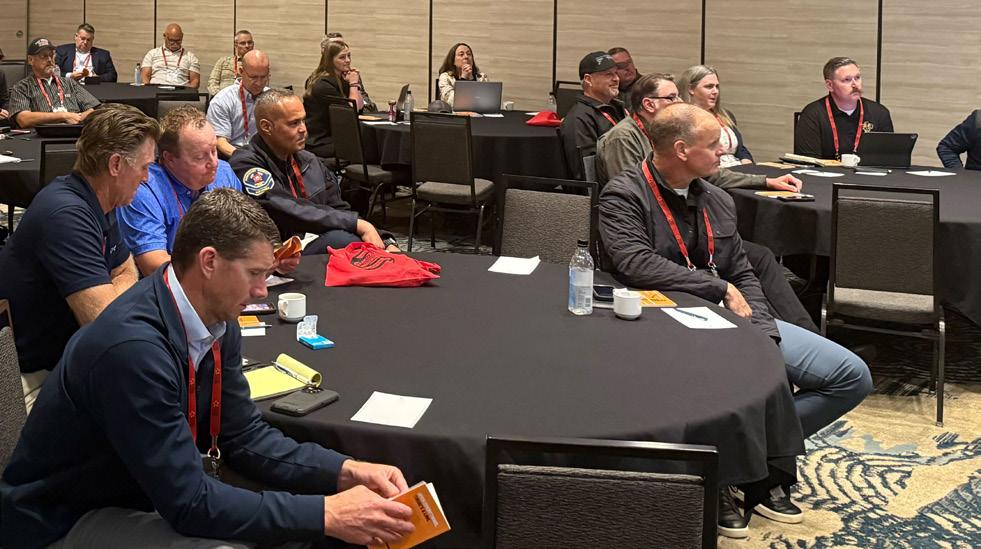
During the 2026 Annual Conference in Monterey, an impromptu listening session between FDAC leadership and conference attendees evolved into a candid and constructive exchange about the future of the Fire Districts Association of California (FDAC), its role within California’s fire service, and how the organization can continue to grow its influence and relevance in an increasingly complex environment.
Facilitated by FDAC President Don Butz and Maurice “Mo” Johnson, the session invited open dialogue from chiefs, board members, administrators, and emerging leaders from across the state. Participants shared honest feedback regarding FDAC’s strengths, challenges, opportunities, and long-term priorities. The message from attendees was clear: FDAC is highly valued by those engaged in the organization, but there is significant opportunity to strengthen visibility, expand outreach, and better connect with the next generation of fire service professionals.
Members consistently identified advocacy as one of FDAC’s greatest strengths. Participants recognized the organization’s leadership in statewide legislative issues, including development of the Fighting Fire with Funding Initiative and efforts to elevate the unique challenges facing California fire districts. Attendees emphasized that FDAC serves as an essential voice for districts in Sacramento and plays a critical role in ensuring local agencies have representation on emerging policy and funding issues.
Networking and peer collaboration were also repeatedly highlighted as key benefits of FDAC membership. Members described the annual conference and regional events as unique opportunities to connect with peers, exchange ideas, and build relationships across
organizational and geographic boundaries. Several participants also emphasized the importance of FDAC’s governance model, noting that the organization’s ability to bring together chiefs, executive leadership, and elected board members in one forum remains a distinctive strength within the California fire service landscape.
At the same time, the discussion revealed several areas where members believe FDAC must continue to evolve. Participants acknowledged that many firefighters, company officers, and even some leaders remain unfamiliar with FDAC’s mission and accomplishments. Others noted that communication methods must modernize to better engage today’s workforce through digital outreach, social media, and more direct engagement with line personnel.
One of the strongest themes to emerge from the session was the importance of engaging the next generation of fire service leaders. Members expressed support for expanding year-round training opportunities, developing leadership tracks for company officers and battalion chiefs, and creating more direct outreach opportunities to rank-and-file personnel. There was also strong interest in regional training events and topic-specific educational programs that extend beyond the annual conference model.
A particularly important discussion centered on FDAC’s role in statewide advocacy and organizational visibility. Participants noted that within many fire service and policy circles, advocacy efforts are frequently associated with other statewide organizations, while FDAC’s contributions are not always recognized despite substantial involvement. Members emphasized the importance of intentionally positioning FDAC as a co-equal voice in California fire service advocacy and ensuring fire district priorities remain visible at the state level.
For FDAC leadership, the listening session reinforced the importance of transparency, accessibility, and member-driven engagement. The discussion was not about reinventing the organization, but rather strengthening its voice,




FDAC recently submitted a letter in response to the CEA SB 254 Natural Catastrophe Resiliency Study and pointed to FDAC’s 2024 paper, Fighting Fire with Funding, as part of the broader conversation about long-term wildfire and catastrophe resilience funding.
FDAC Deputy Director
FDAC is also listed as a contributor in Appendix A. At its core, the study says California’s current approach to wildfire and catastrophe risk is under growing pressure from climate change, continued development in fire-prone areas, instability in the property insurance market, and rising utility liability costs.
The study frames the challenge around three connected statewide goals:
1. Affordable, safe, reliable, and clean energy
2. A stable and accessible property insurance market
3. Safe, catastrophe-resilient communities
In other words, these goals can no longer be tackled separately. The report argues that California needs a coordinated, cross-sector approach to address these interconnected challenges.
For FDAC members, this matters because it reinforces a point we have been making for some time: California faces a serious and ongoing statewide funding shortfall in wildfire resilience and response. While the study focuses heavily on mitigation and insurance, its findings also underscore the reality that local fire districts will continue to carry much of the responsibility for prevention, preparedness, and response when long-term funding is not in place.
The report also has important implications for local government funding. It suggests support for local agencies could come through state grant programs, regional
coordination funding, mitigation incentive programs, resilience workforce investments, and potentially broader statewide mitigation financing structures. At the same time, it recognizes that local implementation capacity varies widely, many communities do not have stable funding, and local agencies are still relying too heavily on temporary grants. Taken together, that supports a more centralized financing strategy, more stable long-term funding streams, and better alignment between state funding decisions and local implementation needs.
What the report is really saying about funding
California needs to move away from:
• reactive disaster recovery,
• fragmented grants,
• and emergency appropriations and move toward:
• durable long-term financing,
• statewide investment planning,
• risk-based targeting,
• public-private capital partnerships,
• and systemic catastrophe financing.
The warning throughout the report is straightforward:
“Failing to act will come at a significant cost.”
The bottom line is simple: investing in mitigation and resilience now is far less costly than continuing to pay for catastrophic losses later. For FDAC members, that is an important reminder that the push for stable, long-term funding for local fire districts remains as critical as ever.
Member action: Please continue sharing local examples and funding impacts with your state representatives and FDAC so we can strengthen our advocacy for long-term, reliable fire district funding statewide.
SB254 - Natural Catastrophe Resiliency Study
Fighting Fire with Funding Advocacy Tool Kit
Fighting Fire with Funding White Paper
FDAC’s Certificate of Achievement (COA) program provides essential training for fire protection district board members and leaders. This mobile two-day program covers key topics to help fire districts thrive.
Course Topics:
• Legislation, Regulations, and Codes
• Board Organization, Roles, and Responsibilities
• Fire District Planning
• Latest Trends and Resources
Hosting Requirements:
• A space with proper AV equipment
• Minimum of 10 attendees at registration deadline
Why Host?
• Provide valuable leadership training for your fire district
• Network with industry professionals
• Strengthen your district’s governance
Ready to Host?
Contact us at staff@fdac.org today to schedule your COA program!
Would you like to see your Fire Districts photo in FDAC publications and marketing material? We are looking to share the face of California local government fire. If you have photos that you would like FDAC to consider, please upload them to the dropbox link below.
*FDAC reserves the right to choose photos as it seems fit, there is no guarantee that photos will be selected for use. This continuity has created a culture of community. As the community and State continue to change LFPD, as well as all special districts, we are all experiencing challenges in funding, growth, and providing the highest level of service possible.