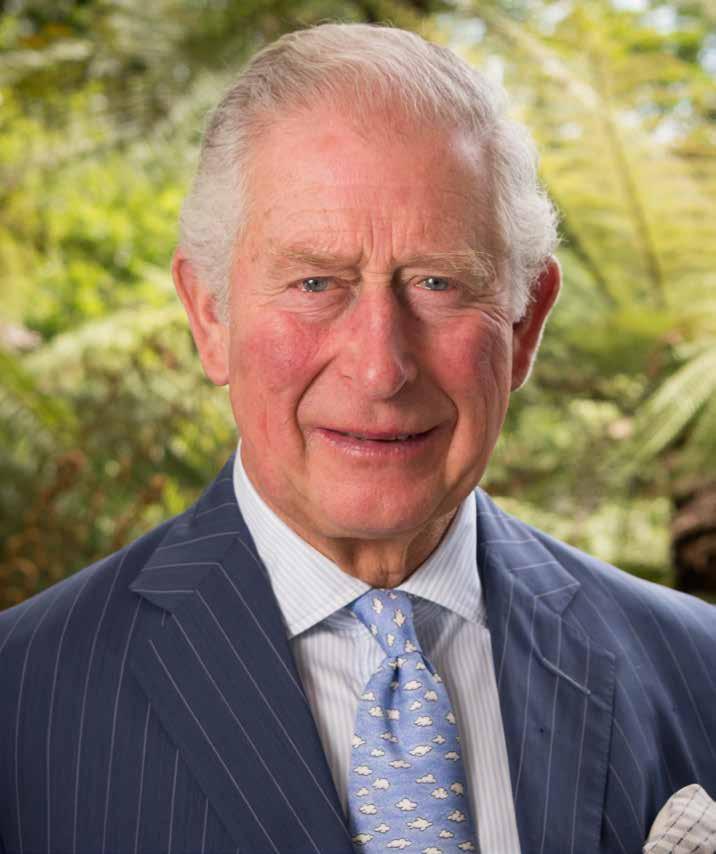
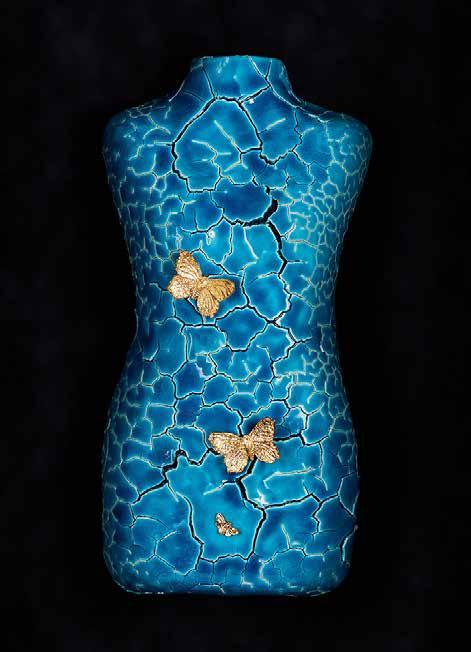
Discover our beautifully crafted limited-edition Mappin & Webb Jewellery and silverware collection, celebrating 50 years of The King’s Trust supporting young people. All profits from this carefully curated collection will be donated to The King’s Trust.
Editor: Christopher Jackson
Editor-at-large: Claire Coe
Contributing Editors: Emily Prescott, Meredith Taylor, Lord Ranger, Liz Brewer, Dr Paul Hokemeyer
Advisory Board: Sir John Griffin (Chairman), Dame Mary Richardson, Sir Anthony Seldon, Elizabeth Diaferia, Ty Goddard, Neil Carmichael, Mark Plummer
Next Gen Board: Nick Hennigan
Management: Ronel Lehmann (Founder & CEO), Colin Hudson, Tom Pauk, Professor Robert Campbell Christopher Jackson, Julia Carrick OBE, Gaynor Goodliffe, Nick Pelekanos, Martin May
Mentors:
Derek Walker, Andrew Inman, Chloë Garland, Alejandra Arteta, Angelina Giovani, Christopher Clark, Robin Rose, Sophia Petrides, Dana JamesEdwards, Iain Smith, Jeremy Cordrey, Martin Israel, Iandra Tchoudnowsky, Tim Levy, Peter Ibbetson, Claire Orlic, Judith Cocking, Sandra Hermitage, Claire Ashley, Dr Richard Davis, Sir David Lidington, Coco Stevenson, Talan Skeels-Piggins, Edward Short, David Hogan, Susan Hunt, Divyesh Kamdar, Julia Glenn, Neil Lancaster, Dr David Moffat, Jonathan Lander, Kirsty Bell, Simon Bell, Paul Brannigan, Kate King, Paul Aplin, Professor Andrew Eder, Derek Bell, Graham Turner, Matthew Thompson, Douglas Pryde, Pervin Shaikh, Adam Mitcheson, Ross Power, Caroline Roberts, Sue Harkness, Andy Tait, Mike Donoghue, Tony Mallin, Patrick Chapman, Amanda Brown, Tom Pauk, Daniel Barres, Patrick Chapman, Merrill Powell, Kate Glick, Lord Mott, Dr Susan Doering, Raghav Parkash, Marcus Day, Sheridan Mangal, Mark Thistlethwaite, Madhu Palmar, Margaret Stephens, John Cottrell, Victoria Anstey, Stephen Goldman, Patrick Timms, James Meek, Dominique Rollo, Tracey Jones, Alan Urmston, Duncan Palmer, James Slater, Charles Hamilton-Stubber, Catherine Wood, Guy Beresford, Paul Glanville, Richard Manners, Nigel Dicker Maeve Walsh, Kathie Knell, Tamsin Aston, Robert Goldsmith, Kathryn Stone OBE, Ron Boschetto
Business Development: Rara Plumptre
Design and Digital: Nick Pelekanos, Phil Verney
Photography: Sam Pearce, Will Purcell, Gemma Levine
Finito and FinitoWorld are trade marks of the owner. We cannot accept responsibility for unsolicited submissions, manuscripts and photographs. All prices and details are correct at time of going to press, but subject to change. We take no responsibility for omissions or errors. Reproduction in whole or in part without the publisher’s written permission is strictly prohibited. All rights reserved. Registered in England No. 9985173
FOUNDER’S LETTER
As a prolific writer of letters to the editor, I always enjoy reading other people’s correspondence. One that caught my eye recently came from Mike Hutchinson in The Times, reflecting on insurance as a simple wager: you pay your premium, and either you or the insurer “wins”. It is a neat way of putting it, but increasingly it feels like a model under strain.
Like many SMEs, we carry a full suite of insurance: employers’ liability, professional indemnity, medical cover and more. Yet the reassurance these policies are meant to provide can feel elusive. Readers write to us about claims handled not by people but by processes, often leading to outcomes that seem misaligned with common sense. A procedure covered in one form but not another. A minor repair escalated into a write-off. In more serious cases, individuals facing illness finding themselves navigating not only treatment but the complexity of what is, or is not, covered.
As Jack Simpson reported in The Sunday Times, even in extreme circumstances such as rare cancer diagnoses, patients can find themselves forced into fundraising alongside treatment. It is a sobering reminder that systems designed to mitigate risk can, at times, introduce new forms of uncertainty.
And yet, as Roger Flaxman puts it, insurance claims are not really about insurance at all. They are about people, and about the underlying businesses and lives affected. That distinction matters.
It matters because Issue 18 of Finito World is, at heart, about the relationship between systems and the individuals who move within them. Whether we are looking at youth unemployment, the quiet disappearance of the cover letter, or the growing role of artificial intelligence in hiring, the same question recurs: what kind of person does the modern world reward?
At Finito, our answer has always been clear. We are not simply interested in helping people find jobs. We want to help shape the kind of jobseeker who can build a meaningful career. That must begin with decency and transparency.
Nick Hennigan, who leads our new Next Generation Board, embodies this. His journey reminds us that talent alone is not enough. What matters is judgement, resilience, and a seriousness of purpose. In a labour market where ghosting has become normalised and communication has thinned, those qualities are not just admirable, they are differentiating.
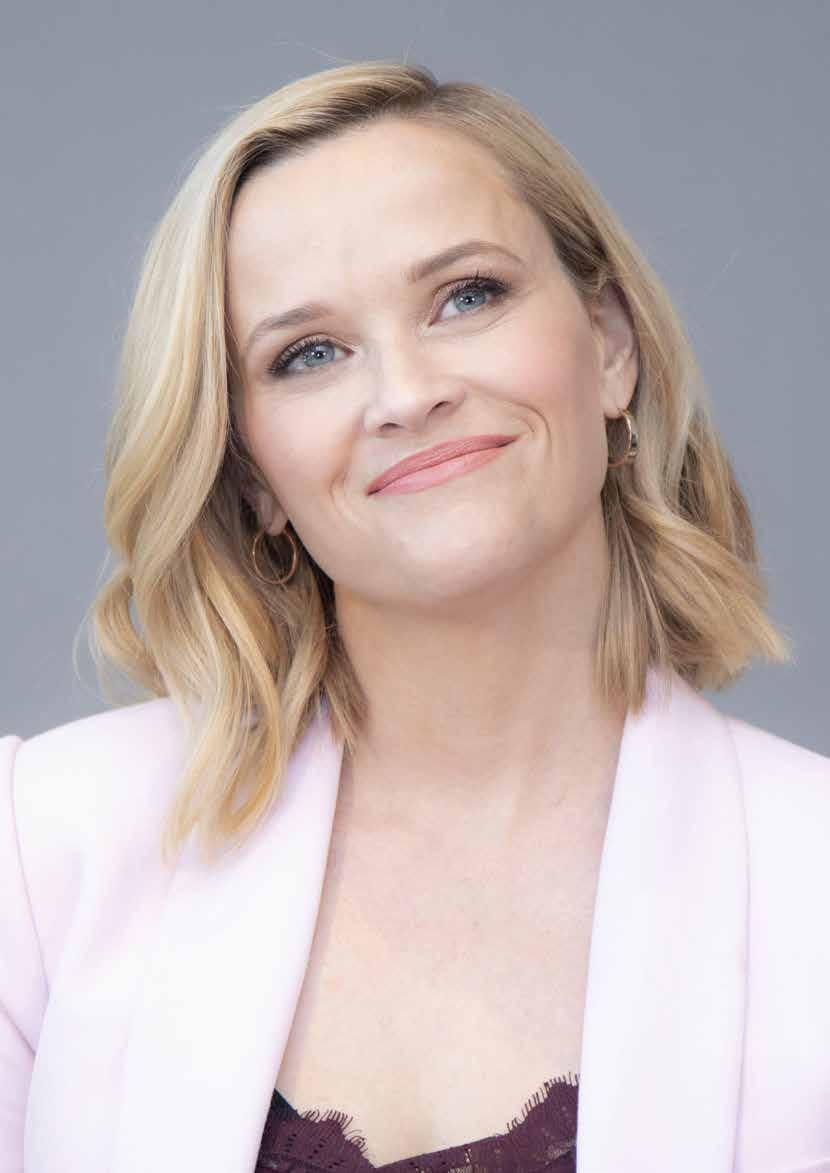
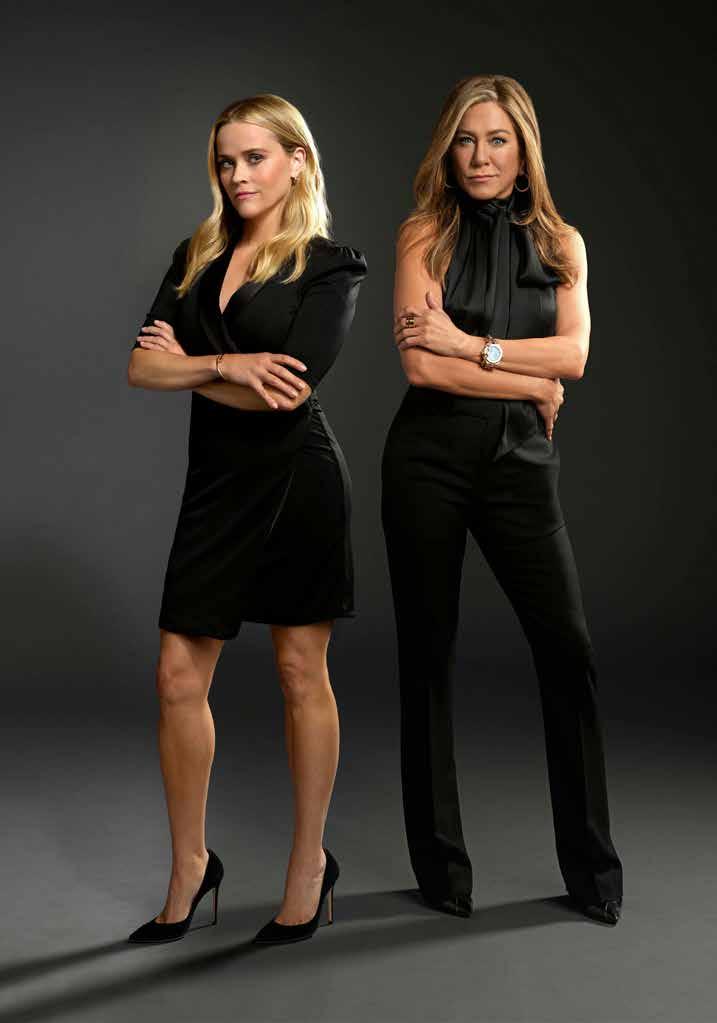
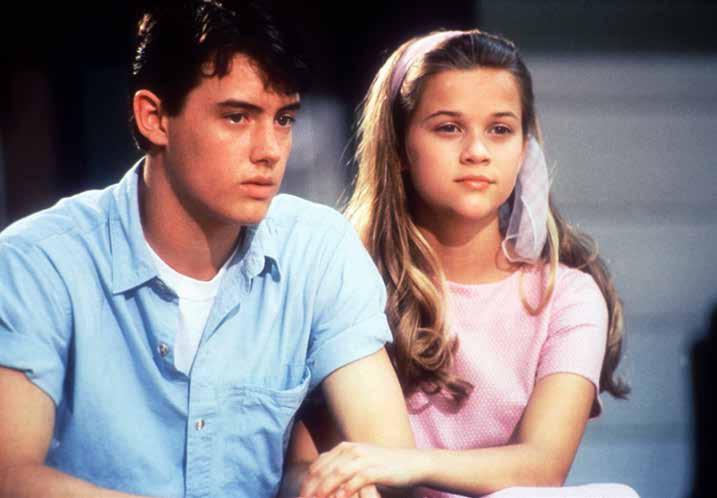
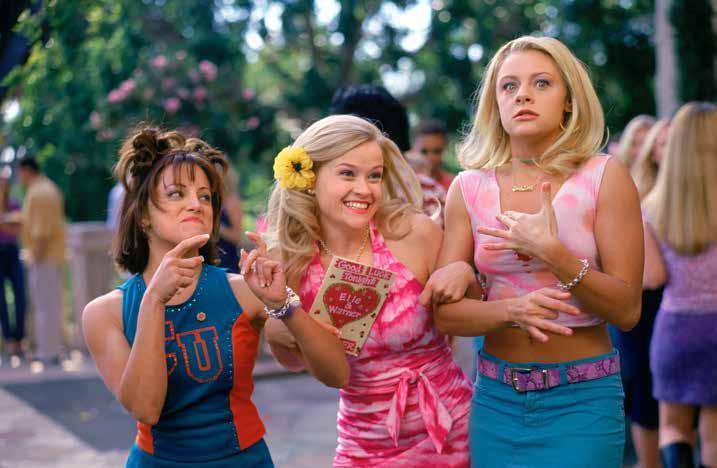
But meaningful careers are not built on character alone. They also require imagination. Which is why, in this issue, we turn for our cover story to Reese Witherspoon, who has redefined what a Hollywood career can look like. Not simply an actress, but a builder of platforms, a curator of stories, and an entrepreneur reshaping her industry. It is a reminder that careers today are not always linear. They are constructed.
So we return, in a way, to where we began. Systems matter. Structures matter. But ultimately, it is people who determine how they function and what they become.
As Nick Ross used to say at the end of each BBC Crimewatch: “Don’t have nightmares. Do sleep well.” It was good advice then – and it still is today.
CHOSEN, NOT PLACED
The government’s latest attempt to tackle youth unemployment suggests ministers understand that something serious is happening in Britain’s labour market. Nearly a million young people are now classed as NEET –not in education, employment or training. The acronym sounds vaguely positive but in reality is anything but. It means that roughly one in eight people aged between sixteen and twenty-four are in a dire situation. For a developed country, that figure should trouble anyone who cares about economic vitality or the prospects of the next generation.
In response, ministers have unveiled a suite of measures designed to draw young people back into work. The headline policy is a £3,000 “Youth Jobs Grant” for employers that hire 18–24-year-olds who have been on benefits for six months or more. Alongside this sits an expanded Jobs Guarantee, subsidising six-month placements for those out of work longer still. Apprenticeship funding, meanwhile, is being reshaped to favour younger entrants and sectors such as engineering, artificial intelligence and clean energy.
The rhetoric is, in many ways, the most striking element. The Work and Pensions Secretary has framed these reforms as part of a shift from a “welfare state to a working state”, emphasising work not simply as income but as identity, dignity and purpose.
In this, the government is surely right. Work is not merely a transaction. It is one of the first arenas in which a young person feels taken seriously by the adult world. It is where the loose promise of childhood begins to take shape as something more concrete: a role, a direction, a life.
But if the diagnosis has merit, the treatment deserves closer scrutiny.
What has been announced is not a single policy but a ladder of interventions. After six months on benefits, an employer
may receive £3,000 to take a chance on a young person. After eighteen months, the state steps in more directly, subsidising a placement. Alongside this, the apprenticeship system is being nudged towards areas aligned with Britain’s future economy.
There is a logic to this layered approach. It seeks to intervene earlier, to prevent drift, to catch young people before inactivity hardens into habit. And yet a deeper question remains unresolved: do subsidies create careers?
Temporary incentives can open doors. But the most meaningful jobs rarely begin with a government payment attached to them. They begin when an employer looks at a candidate and thinks: this person could genuinely help us build something.
At Finito Education, where we work with young people preparing to enter the workplace, this distinction is clear. Those who thrive are not simply placed somewhere. They are chosen. And that sense of being chosen matters enormously. It signals that someone has seen value in them – not just availability, but potential. The job is not an act of policy. It is an act of belief.
Subsidised roles can act as a bridge to that moment. But they cannot replace it.
There is also a quieter, more practical question that accompanies such schemes: would the job have existed anyway? Economists call this the “deadweight” problem. If an employer was already planning to hire, the grant may simply reduce the cost of a decision already taken. In that case, public money has moved, but no new opportunity has been created.
The government has not yet fully explained how it intends to avoid this. Nor is it clear what happens when the six-month placements come to an end. If these roles do not evolve into sustained employment,
they risk becoming a revolving door: movement without progress, activity without trajectory.
On apprenticeships, the reforms are more structural. Funding is being redirected away from certain management courses – often used by existing employees – towards younger entrants in sectors aligned with national priorities. The instinct here is sound. Apprenticeships should be a gateway into skilled work, not a line item in corporate training budgets.
But even here, the central issue is not funding. It is readiness.
The barrier many employers face is not reluctance to hire young people, but uncertainty about whether they are prepared. Confidence, communication, reliability, direction – these are often the missing pieces. When young people arrive equipped with those habits, employers are keen to take them on. When they do not, no subsidy can compensate for the gap.
This is where the conversation about youth unemployment should truly begin. The challenge is not only to create opportunities, but to ensure that young people are ready to seize them.
Government can help open doors. But the deeper work – helping a young person understand their strengths, develop discipline, and present themselves as someone worth investing in – happens long before any hiring decision is made.
If these reforms succeed, it will not be because a £3,000 payment has reshaped the labour market. It will be because more young people have crossed a quieter, more important threshold: from being supported to being needed.
Work, after all, is not something one is given. It is something one grows into.
THE DEATH OF THE COVER LETTER
There was something faintly Victorian about the cover letter. You announced yourself. You expressed admiration. You implied diligence. If you were ambitious, you hinted at a future in which your talents and the firm’s fortunes might align. It was formal, slightly artificial, occasionally even moving.
Now it is dying.
Not with drama, but with indifference. Recruiters admit they rarely read them properly. Hiring managers skim. Applicants, meanwhile, quietly feed a prompt into a generative model and receive, in seconds, prose that once took an anxious evening to produce.
The result is not liberation. It is inflation. When everyone can generate a polished letter, polish stops signalling anything at all.
This is more than an administrative shift. It tells us something about employability now.
The cover letter was always a hybrid. At its best, it demanded clarity: why this job, why now, why you? At its worst, it was theatre – a genre of exaggerated enthusiasm and
Odiscreet omission. We all knew the phrases: “I am passionate about…”, “I thrive in fastpaced environments…”. Sincere, perhaps, but ritualised.
AI has not corrupted the cover letter. It has exposed it. If authorship is uncertain, the document loses weight. A well-turned sentence might reflect talent. It might reflect a well-crafted prompt. The recruiter cannot tell – so the recruiter stops caring.
And that matters, especially for younger applicants. For those without polished CVs or prestigious credentials, the cover letter was a way into the room. It allowed for context, explanation, personality. Remove it, and the process tilts towards what is already visible.
Employers are responding by looking for harder signals: work trials, technical tasks, referrals, live interviews. In many ways, this is better. A short project can reveal more than a page of prose ever could. But it is also more demanding. The burden shifts from narrative to demonstration.
cheap. And when something becomes cheap, we look for something rarer.
Judgement is rarer. Reliability is rarer. The ability to collaborate under pressure is rarer. The capacity to learn quickly is rarer. All these things are now the test the prospective employee rightly faces.
What we are witnessing is not the death of discernment, but its migration. Hiring is becoming more experiential. You are less likely to persuade in advance and more likely to prove yourself in miniature.
That has consequences, and not all of them bad. For candidates, the centre of gravity shifts towards visible output. Build something. Write publicly. Accumulate evidence rather than adjectives. Everything moves away from abstraction into tangibility.
For employers, there is a risk that as trust in documents declines, reliance on networks increases. Referrals feel safer than cold applications. But networks are uneven. The quiet graduate without connections can disappear.
NEXT GENERATION
ne of the risks for any organisation working in employability is that it begins, slowly and almost imperceptibly, to speak about young people rather than with them. The language can remain fresh, the intentions good – but the signal drifts. What young people actually want, fear, and respond to evolves faster than most institutions can track.
At Finito, we have long been aware of that risk. Which is why we are introducing a new Next Generation Board: a group of younger voices who
The lesson is not that writing no longer matters. It is that surface fluency has become will help ensure we remain closely aligned with the reality of entering the workforce today.
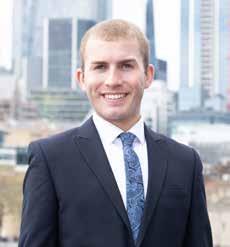
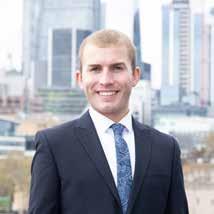
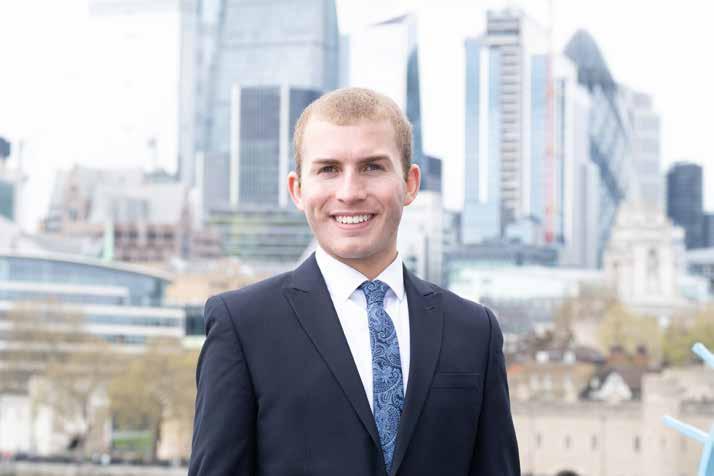
This board will be led by Nick Hennigan, a recent Finito bursary candidate and now an assistant to a private banker in London. Nick brings something rare: not only ability, but judgement. His path – from a state comprehensive in Aberdeen to a firstclass degree and a front-office role in private banking – has given him a clear-eyed understanding of how uncertain and non-linear early careers can be.
More importantly, he combines that with a seriousness of purpose. Having navigated significant personal adversity, Nick carries himself with a steadiness that is unusual at 23. He understands both the ambition and the anxiety that define this stage of life.
The purpose of the board is simple: to keep us honest. To test our assumptions. To ensure that what we build reflects not only what we think young people need, but what they actually experience. If Finito is to continue opening doors, we must also keep listening at them.
Finito
THIS ISSUE
FEATURES
The rise and rise of
50 years of the King’s Trust
How the vet industry is evolving
74 THE BOOK OF GAGE
Joanne Rees on her mentor’s biography
78 WOW! CENTREPIECE
How tech is altering design
CARD OF DREAMS
How to buy from Harrods
86 NEXT GEN NICK
How Hennigan is changing Finito
88 CLASSICALLY SOCIAL
David Zazo
90 CHANGING PROMISES
Roger Flaxman on the Insurance sector
p18 Tony Blair
p26 Sarah Tucker
Charles
130
Polly
132
Sarah Tucker reports
The latest non-fiction
136 ANYONE FOR PADEL?
The sport with all the momentum
140 COSTEAU
The £14 sandwich
144 CLASS DISMISSED
Robert Ettinger
SCAN BELOW TO SUBSCRIBE TO FINITO WORLD
Premier Padel
ALEXANDER HOARE
The legendary banker gives his insights on the banking industry and what it takes to keep it in the family
Ihave found myself thinking lately about my father. He was a banker, as was his father before him, and he never spoke about clients. That was simply understood: discretion was the job. Only after he died did I begin to meet people he had helped. They spoke of him with a kind of quiet reverence, often about moments I had never heard of. It struck me that the true work of banking is rarely visible at the time. It reveals itself later, in other people’s memories.
More than once, I have been asked to distil twenty years of experience into a few neat conclusions. The only one I really trust is this: ownership matters. If you want something to last, it must be small enough and simple enough that the next generation will actually want to take care of it. If it becomes too large, too complicated, it ceases to feel like something to be stewarded and becomes something to be sold. Affection, in the end, is as important as strategy.
I tend to fall back on a couple of simple mantras. “Keep it simple” is one. The other is “small is beautiful,” which is often taken the wrong way. It isn’t a sentimental attachment to smallness. It is a recognition that systems work better when they remain comprehensible, when people can still see themselves in what they are doing. Once things become too large, it becomes very easy to forget that people are the point of the whole exercise.
There is also something unfashionable, perhaps, in the idea of restraint. We do not try to do everything. In fact, we spend a good deal of time deciding what not to do. Complexity has a way of creeping in by degrees—one new system, one new product, one new exception—and before long you are running something no one fully understands. It takes effort to resist that drift, but without that effort, longevity becomes very difficult.
Much of what we do, in practice, is say no. We turn away perfectly reasonable opportunities with some regularity. That sounds counterintuitive, but the aim is not to maximise activity; it is to preserve quality over time. We are trying to build something that survives difficult periods, not something that merely prospers in easy ones. Years ago, we adopted—half seriously, half not—a rule to avoid what we called “potentates.” It cost us in the short term. It proved rather useful later.
The question of time comes up repeatedly. Not in the abstract, but in how decisions are actually made. If you are thinking in five-year increments, you behave one way; if you are thinking in generations, you behave quite differently. The difficulty is that most modern structures reward the former while depending, quietly, on the latter. That tension is not easily resolved, but it is worth at least being aware of it.
Isometimes think modern capitalism has become slightly confused about what success looks like. There is an assumption that scale is inherently good, that growth is always the objective. I am not convinced. Small things can endure in ways that large things cannot. The deeper problem, perhaps, is time: too many decisions are made with the next quarter in mind, when in reality most people are thinking decades ahead, even if they don’t say so.
Alexander Hoare, www.hoaresbank.co.uk
Meet the Mentor: TOM PAUK
Our Senior Mentor tackles the rising problem of employers ghosting applicants
From your perspective as a Senior Mentor, how widespread is the phenomenon of ghosting now — and how does it compare to even five years ago?
Regrettably, ghosting by employers has become the “new normal” compared with five years ago. And it’s not just confined to employers. We’ve seen plenty of examples of recruitment consultants meeting candidates to discuss a career brief or a specific role but then disappearing midconversation, despite repeated efforts to contact them.
Ghosting can of course occur the other way around, ie. when an applicant fails to advise an employer that they’ve found a better opportunity elsewhere.
“Ghosting by employers has become the ‘new normal’ compared with say five years ago.”
Regardless of who is doing it, our position here at Finito is that ghosting, whatever its implied or stated justification, is unkind, unfair and unhelpful, with an invariably negative impact for those on the receiving end.
It’s also worth adding that some employers take so long to notify
applicants they’re not progressing an application (months, in some cases) that the prolonged delay is tantamount to ghosting; in effect, applicants are held in limbo, never quite knowing whether their application has, or has not, been definitively rejected.
What do you see as the primary causes of ghosting by employers at different recruitment stages, from online tests to final-round interviews?
Some employers claim that the sheer number of applications they receive prevents them from responding to every candidate, if only to advise that they won’t be progressing the application.
Other factors may include an everincreasing reliance on automation of submissions at the expense of human interaction; and a growing shift towards remote hiring leading to poor
or no communication coupled with diminished accountability.
It may also be that some employers prefer not to deliver bad news, hoping, presumably, that candidates will "get the message" by not delivering any news at all.
At Finito we’ve also noted the growing tendency of employers not to provide candidates with feedback alongside a rejection. And where feedback is provided, it's often so generic (ie. general reflections on why some applications were preferred over others) that there's nothing of practical value to be gleaned that might strengthen a candidate’s future applications.
How does prolonged silence from employers affect candidates psychologically, especially those entering the workforce for the first time?
Tom Pauk
There’s an obvious loss of morale and motivation. And as the vast majority of candidates apply for multiple opportunities, the ongoing silence can have a cumulative, crushing impact; candidates feel as if there’s a dark cloud hanging over them, ie. that it’s deeply personal, even when it patently is not.
Are there particular personality types or backgrounds that seem especially vulnerable to the effects of ghosting?
Anecdotally, my sense is that candidates who are prone to selfdoubt and anxiety are likely to be more impacted by being ghosted than others. An obvious example is the current generation of job seekers whose education was most impacted by successive pandemic lockdowns. Having said that, none of us likes to be ignored, especially when we’ve invested so much time and energy in applying for a job.
What practical steps can candidates take when they’ve been ghosted — both to protect their mental wellbeing and to keep their job search productive?
First, keep on reminding yourself that it’s NOT personal, that in these most challenging of times securing a new job has become a lottery, compounded by the increasing use of Artificial Intelligence recruitment tools that process applications in a microsecond. Try not to take algorithms personally (after all, they don’t take you personally!)
Second, do try and extract whatever learnings you can from applications that did not progress. Ask a trusted colleague or friend to read your CVs and cover letters, consider how they
could be more closely aligned with each role applied for; remember, one size does not fit all.
Do you think employers fully appreciate the emotional and reputational damage caused by ghosting, or is this still a blind spot in hiring culture?
A blind spot. I’m hopeful, however, that we may, over time, move away from the current corrosive state of affairs towards a more personalised, empathetic recruitment process.
Have you seen cases where ghosting directly caused talented candidates to leave their chosen sector or rethink their whole career path?
Sadly, yes. A cumulative loss of morale and self-esteem can prompt a (as yet thankfully small) proportion of candidates to give up their long-held career aspirations. Some mentees question why they should bother applying for a job when chances are they’re unlikely to ever hear back let alone receive any feedback. Although I’ve some sympathy for this sentiment, resilience in the face of rejection is essential in the pursuit of employment.
Does AI-driven recruitment exacerbate ghosting by increasing distance between employers and candidates?
Self-evidently, yes. We now find ourselves in the curious position of candidates using AI to apply for jobs (drafting cover letters, personal statements and CVs) only to be rejected (either explicitly or by being ghosted) by the very same technology. In effect, no human being has been involved at either end of the application!
What responsibility do large employers have to guard against ghosting — and what would bestpractice communication look like?
All employers, big and small, should undertake to respond to all applications, as soon as practicable, and ideally with granular feedback as to why a given application was not progressed.
At Finito, how do you help candidates rebuild confidence after being repeatedly ghosted?
We’re always scrupulously honest and realistic with our candidates from the get-go, reminding them that the road to meaningful employment will be a challenging one, that they’re increasingly unlikely to hear back from employers let alone receive feedback, even after securing an interview or attending an assessment centre or vacation scheme.
And so it all comes back to building resilience and maintaining energy and momentum; dusting oneself off from the most recent rejection and preparing thoroughly for the next application ... and the next, and the next after that, as often as it takes.
Each (inferred or explicit) rejection represents, nevertheless, a learning experience for the candidate. To this end we work with them on improving their game, eg more compelling cover letters, CVs that are more closely aligned to each role applied for, and more rigorous interview practice.
I remind my mentees that one day, after they’ve secured that elusive job, they’ll reflect back on the process with satisfaction, perhaps even with a degree of nostalgia!
COLUMNS
Levine (Wikipedia.org)
NOVEL OPINIONS
Wikipedia .org
Zadie Smith on her life as a writer
Wikipedia .org
HUNT FOR THE TRUTH
V&A director on culture and politics
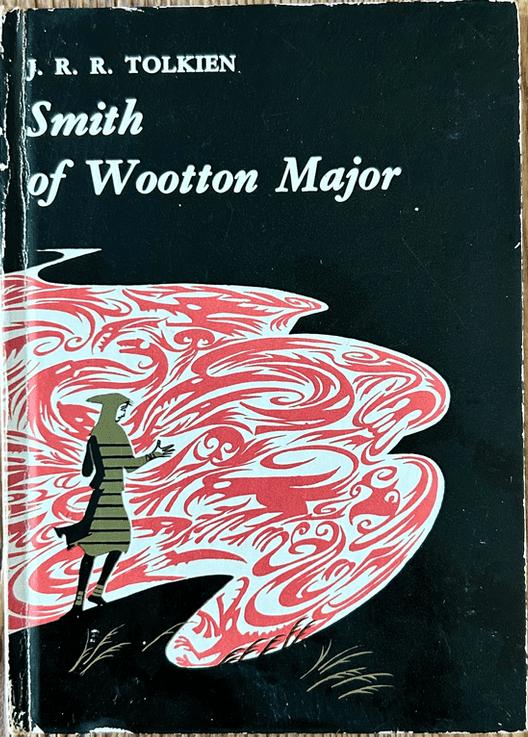
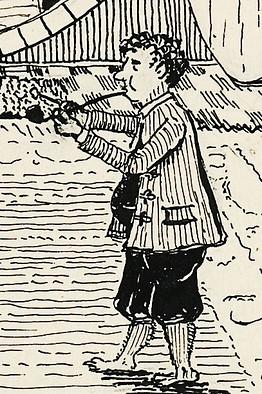
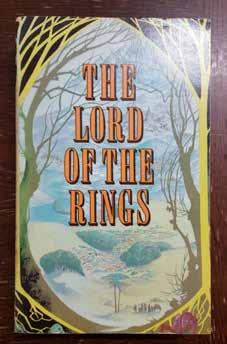
HALFON ON TOLKIEN
Bilbo Baggins, apprentice
The Former Prime Minister
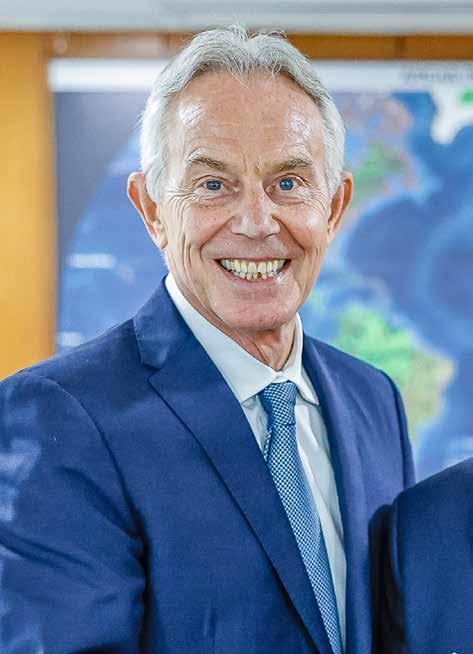
SIR TONY BLAIR
The longest-serving Labour leader on what he learned at the very top
Here’s one thing I’ve learned about politics, and not just from the time I was Prime Minister but from working with governments around the world: you’ve got to have a clear governing project. It’s the only thing.
Especially today, you’re operating in a media environment that is raw and difficult. So if you’re trying to follow where opinion is going, you’re going to be going all over the place, because it’s going in many different directions at once. That means you need to start with a very clear analysis of what you think is wrong and how you put it right.
“If you’re trying to follow where opinion is going, you’re going to be going all over the place, because it’s going in many different directions at once. That means you need to start with a very clear analysis of what you think is wrong and how you put it right.”
The problem for governments, when
Sir Tony Blair (Wikipedia.org)
they struggle, is that they’re never quite sure what direction they want. And therefore your tactical decisions, if you’re not careful, collide with what you say your strategic objectives are. So you end up not saying anything clearly, and people lose confidence.
People prefer you to be strong and
out there and clear, even if they don’t agree with you: that’s far better than to seem not quite sure what you’re going to do on any given day. If voters see that, then they lose confidence.
I always say to people that true leadership starts with policy: that’s the true catalyst. The politics can all
be layered on top of that, but if the policy is wrong, you’re not going to succeed.
And here’s the reality: once you take decisions, you divide. People always complain; that’s in the nature of the job. The moment you take a decision, someone is going to be displeased about it. You’re not going to avoid that, so it’s better just to accept it. Leadership involves making decisions that people disagree with.
“People prefer you to be strong and out there and clear, even if they don’t agree with you: that’s far better than to seem not quite sure what you’re going to do on any given day.”
All of this means that a leader must develop a certain resilience. Things go wrong. Life gets troublesome. You are aware of all the people depending on you. But you need to almost develop a certain insensitiveness to that – though not in a hard-hearted way. The truth is if you spend too much time contemplating that, it can overwhelm you. So you have to be able to carry on and act.
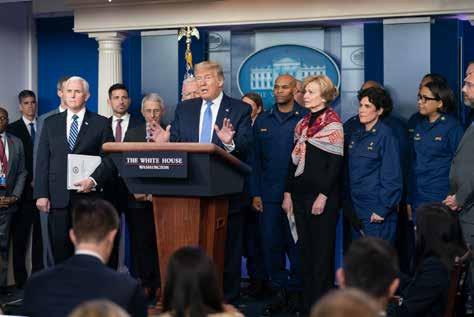
What we’ve been trying to do in the situations I’ve been working on in the Middle East together with the Trump administration is to construct a viable framework. You have, at the top, what’s called the Board of Peace, consisting of senior leaders of countries, providing the overall direction. Underneath that, there’s an executive board, which I sit on with
others, which is there to translate that direction into something practical. And then beneath that again, you’ve got a specific executive focused on the particular situation. So you’ve got layers. You’ve got the political leadership at the top, the executive capacity beneath it, and then the operational focus underneath that. The whole point of it is to create coherence, to create a structure that can actually deliver. Without that structure, you don’t get alignment – and without alignment, you don’t get results.
“Leadership is not about having a perfect plan and sticking to it regardless. It’s about having a clear direction, and then being able to adapt without losing that direction.”
I hope this framework will make
the difference. You can’t resolve every underlying disagreement, but you can create a structure in which people operate, in which they share responsibility, and in which they can pursue their objectives peacefully.
Of course, we must be realistic too. I’ve also learned that plans always collide with reality. You can have a plan, but when events unfold, the question is whether you can hold to it, or whether you replace it with something better.
Because you do need a plan. Without a plan, you have no direction. But you also need the ability to adjust.
So leadership is not about having a perfect plan and sticking to it regardless. It’s about having a clear direction, and then being able to adapt without losing that direction.
So in the end, that’s what leadership comes down to. You need clarity about what you think is wrong. You need a plan for how to put it right. You need the willingness to take decisions. And you need the ability to hold your course in a very difficult environment. Those are the things that matter.
Donald Trump (Wikipedia.org)
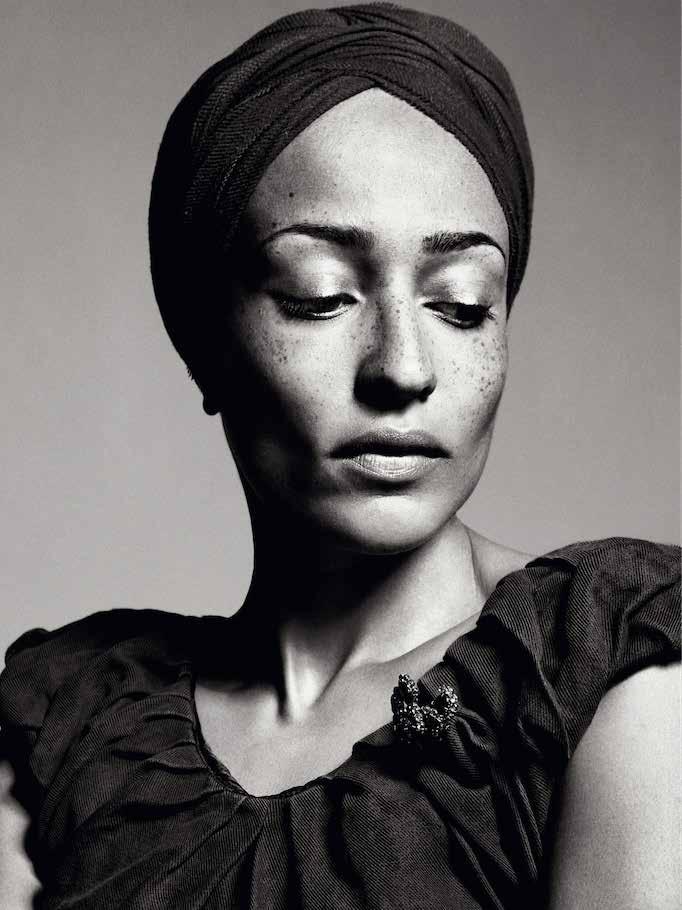
ZADIE SMITH
The author of White Teeth and The Fraud on writing essays, neighbourhood and the transcendence of Sally Rooney
Iremember writing my essay
‘Fascinated to Presume’ and thinking, even as I wrote it, that I didn’t really want to be making that argument. I hated writing it exactly for that reason, because it was a claim of rights, and I was so tired of the competition of everyone else’s rights that some part of me thought, well, I’m a writer, I have rights, and so I wrote a piece about the rights of us as a group.
I’m glad I wrote it, but I wish I didn’t have to defend what we do on the basis of rights. For me, when I’m defending writing, I don’t want to defend it on the basis of rights or on the basis of a global idea. I think writing is local and particular in itself. And actually, the older I’ve got, the more I want my life to be local and particular.
“For me, it’s in the idea that human beings suffer and that death is coming.”
I think there’s a better way of looking at our shared life which has nothing to do with rights. It rests instead on the facts.
For me, it’s in the idea that human beings suffer and that death is coming. Those two things unite the humanist, the existentialist, the socialist and the Christian. If you don’t have faith, that is the basis on which you are operating. The
awareness that death is real and that pain happens.
That’s the basis on which I think most of our writing depends. The ethics of it is this awareness that death is real and the pain happens. The last one is absolutely universal. The second one is partial. Not everybody experiences pain, but almost everybody. And that’s the basis
on which you build your characters.
I don’t enjoy polemics. Personally, I try not to write them. But I felt in that moment that writers I love and appreciate were taking up arms against the very word human, or the very word empathy. I felt that was a moment of extremity, and I felt a little bit embattled, and I wanted to try and defend the realm of the human.
Zadie Smith Photographed by Sebastian Kim
But I’m also able to recognise, as Pope Francis did also, that it’s a messy business to attempt to make relations with anybody. My students, for instance, often feel this sense of despair. One of the things the algorithm tells you is that the world’s problems are your problems every day. And if that’s the case, you can’t do anything about them, because you’re nineteen years old. So you feel completely defeated by eight in the morning.
Whereas personally, for my own mental health, I’ve tried to engage locally. I live back in my neighbourhood. I’m back on the street I was born on, so I live in a nineteenth-century village kind of way: the people around me I’ve known my whole life. This gives me a sense of agency. I can do something here. I can do something in my street, amongst my people.
And of course, my people in my neighbourhood are very varied. My neighbourhood is hundreds of people from all over the world. So it’s easy for me to say “we,” because I mean all of them.
But I also recognise that people live in monocultures, and write novels from that kind of contained place of rights. You don’t have to conceive of that idea as something that is coming for you.
At the same time, I am totally aware that this language of universalism has been multiply abused over hundreds of years. That began happening from the very first American statement “We the People,” which didn’t mean the people, it meant some of the people, and people like me were three fifths of a person.
So it’s absolutely comprehensible
that young people have nothing but suspicion for this language, because language has been abused by creative writers and politicians – in fact, by everybody.
So part of the task is saying to them there’s a difference between an ideal and a practicality, and the ideal is still meaningful, but we have to show them that these ideals can be animated by reality, not just discourse. That’s hard.
All of this means that the biggest struggle is to answer the question of how we create unity with diversity within it. Some of this is to do with discretion.
In front of the gates of my kid’s school, you really do have a hundred languages spoken. You are aware that you are talking to parents who don’t believe in vaccination, and some parents who have beliefs very far from your own. Watching those people speak together, Muslims, Jews, Hindus, black, white, they have a kind of caution. They know what to say and what not to say.
They know where they can speak together and say, well, we all want to be safe. There’s a basis here we can agree on. That’s because our shared humanity is that we’re death-facing as a species.
They approach those conversations with this delicacy. They’re aware that they’re a community. They’re aware there are differences within the community, but they’re able to speak to each other without it becoming purely a binary argument.
We need a language for all this. When it comes to reading, I agree that it’s miraculous people still go out and buy books, still queue up to
buy Sally Rooney. The sales of those books are miraculous, and those books are transcendent.
There is an idea of transcendence within them, and a religious idea within them, I think. But I don’t think the readers would express it that way. I think they think those books are about something else. They’re about human intimacy and the idea of a transcendent experience.
And millions of people have responded to those books for that reason.
I often feel really excited about reading because of that. But the question for me is, how come we don’t have a language to describe that experience, or to defend that idea of reading and what it does. Why do we always flatten it?
For instance, I love writing essays. But when I talk to readers, quite often they would prefer to read an essay than a novel. But I think novels contain more mystery. An essay is an argument, and a lot of people feel more comfortable with an argument, because that’s the kind of discourse they engage with all the time.
But when I’m reading a novel, I have a completely different feeling. To me, it’s deeper and more profound. Not because novels are better than essays. Most novels are bad, including mine. Novels are a really hard thing to write. There’s always something wrong with them.
Whereas an essay, you can really make an essay perfect. I think there’s a clue there about the difference – and in that difference is the reason we need novels.
The Museum Director
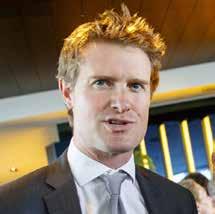
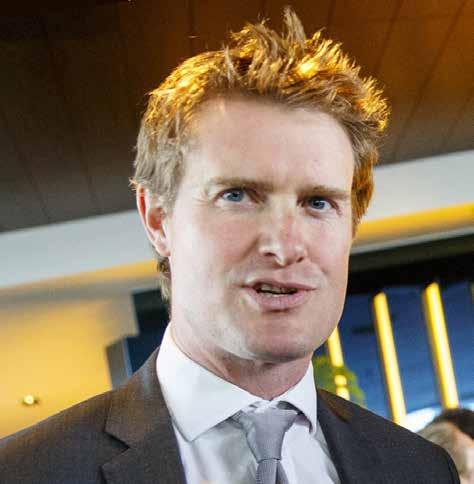
SIR TRISTRAM HUNT
The historian, former MP and current director of the Victoria and Albert Museum surveys
Ihavebeen thinking a great deal about the relationship between art and the future of Britain, less as an abstract question and more as a practical one. For all the noise of contemporary politics, this remains one of the quiet determinants of what kind of country we are, and what kind of country we might become.
It is easy to forget that the institutions we now take for granted were born not out of confidence, but anxiety. The Victoria and Albert Museum, where I now serve as director, traces its origins to the Great Exhibition of 1851. We often remember that moment as a triumphant display of imperial prowess, Britain as workshop of the world, basking in its industrial supremacy. In truth, it was something closer to a national moment of self-doubt. Prince Albert was deeply concerned that Britain was falling behind in design, manufacturing and the applied arts. The Exhibition was intended not to congratulate but to provoke, to expose British industry to the superior workmanship of others, and in doing so, to force improvement.
From that act of nervous self-reflection came a collection that has grown from a handful of objects into millions, spanning thousands of years of human creativity. Yet the founding purpose has remained remarkably consistent. The museum is not simply there for passive enjoyment. It exists to inspire, to provoke the next generation of makers, designers and thinkers into producing something new. Culture, in that sense, is not decorative. It is functional.
the cultural landscape
This, I think, is where we have lost our way in contemporary political thinking. There is a tendency, particularly in the centre, to treat culture as an optional extra. Something pleasant, something worthy, but not quite essential to the business of governing. That is a mistake. If you look across Europe, or indeed to the United States, it is often the populist right that has most clearly grasped the importance of culture as a tool of politics. Ministries of culture are not afterthoughts. They are instruments of power. They shape narratives, identities, and the sense a nation has of itself.
Britain, by contrast, has been oddly hesitant. And yet historically this was
not always the case. Conservative governments, in particular, have often had a much clearer sense of the relationship between culture and national identity than they are sometimes given credit for. Harold Macmillan’s willingness to sweep away Victorian architecture in favour of modernism was not merely an act of vandalism, but an attempt, however flawed, to project a vision of a new Britain. Margaret Thatcher, for all the ideological battles of her era, had a strong sense of the symbolic importance of culture, of how power should look, how it should be staged, how it should be experienced.
Even more recent governments, though less coherent, have understood that
Sir Tristram Hunt (Wikipedia.org)
culture can be politically potent. The debates around statues, around heritage, around what is remembered and what is removed, are not incidental. They are arguments about national identity. The problem is not that culture has been politicised, this is inevitable, but that it has too often been done in a shallow or reactive way, as a kind of short-term skirmish rather than part of a sustained governing vision.
All of this matters not only for reasons of identity, but for reasons of economics. The creative industries are one of the few sectors in which Britain genuinely excels. They generate well over one hundred billion pounds a year and continue to grow. They are flexible, innovative, and disproportionately attractive to young people entering the workforce. In an era where growth is elusive, this is not a marginal advantage. It is a central one.
“In an era where growth is elusive, this is not a marginal advantage. It is a central one.”
But creative industries do not exist in isolation. They depend on a broader ecology of education, institutions and public investment. If you hollow out arts education in schools, if you allow local museums and cultural spaces to wither, you are not merely cutting costs. You are undermining one of the most productive sectors of the economy.
There is also the question of Britain’s place in the world. We often talk about hard power, military strength and economic leverage, but Britain’s cultural influence remains extraordinary. Our museums, our music, our literature, our film and television, these are global assets. They shape perceptions of Britain far beyond what any diplomatic initiative
can achieve. In a multipolar world, where influence is increasingly diffuse, this kind of soft power matters enormously.
And yet there is a more intimate dimension to all of this. We are on the cusp of a technological transformation driven by artificial intelligence that will fundamentally alter the nature of work. It is not implausible that within a generation, many people will work fewer hours, whether by choice or necessity. The question then arises: “What fills the space that is left? What gives shape and meaning to lives that are no longer organised entirely around employment?”
Here, again, culture becomes central. Not in a didactic sense, but as a means of engagement, reflection and fulfilment. There is a growing tendency to speak of the arts in therapeutic terms, of museums as sites of wellbeing, of galleries as spaces of mindfulness. I am slightly sceptical of some of this language. But the underlying intuition is sound. Culture offers a way of structuring experience, of making sense of the world, that is not easily replicated elsewhere.
None of this is to deny the policy challenges. They are considerable. Local authority museums face severe financial pressure, caught between rising demands for social care and constrained budgets. Libraries, galleries and regional institutions are often the first to feel the squeeze. There are difficult questions about funding models, about whether free entry to national museums remains sustainable, about how best to allocate resources in a low-growth economy.
There are also more contentious debates, around restitution, around the legacies of empire, around what it means to hold global collections in a national institution. These are not always issues that resonate widely with the public, but they are nonetheless important. They go to the heart of how Britain understands its past, and how it presents itself to the world.
“Culture can be both reflective and transformative. It can tell us who we are, and it can suggest who we might become.”
What is required, above all, is a clearer sense of purpose. What is culture for. What role should it play in the life of the nation. These are not questions that can be answered definitively, but they must at least be asked.
Because without that, policy becomes reactive, piecemeal, incoherent. You end up lurching from one controversy to another, from one funding crisis to the next, without any underlying framework to guide decisions.
There is, of course, a delicate balance to be struck. One of the great strengths of Britain’s cultural landscape is its relative independence. We do not have a tradition of heavy-handed state direction of the arts, and that is something to be cherished. Creativity thrives on a degree of freedom, of unpredictability, of dissent. But independence does not mean indifference. The state still has a role to play, in setting conditions, in providing support, in articulating a broader vision. The question is not whether culture should be part of a political project, but how.
If there is a lesson to be drawn from the history of institutions like the V&A, it is that culture can be both reflective and transformative. It can hold up a mirror to society, and it can also help to reshape it. It can tell us who we are, and it can suggest who we might become.
At a moment when Britain is searching, once again, for a sense of direction, that seems to me not a peripheral concern, but a central one.
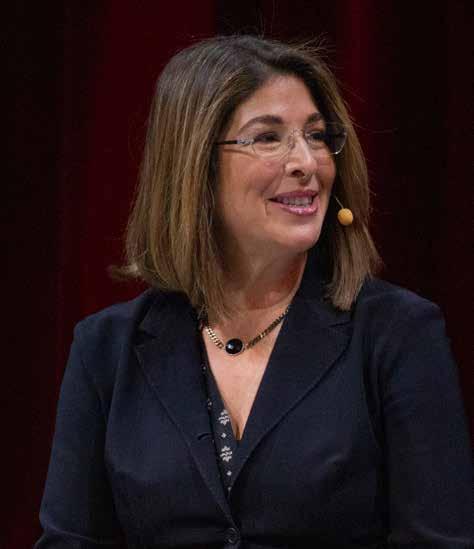
The Philosopher NAOMI KLEIN
The Doppelganger author on the speed of progress we see all around us
It is a very large question, perhaps too large to answer cleanly, but one feature of this moment stands out with unusual clarity: the speed at which transformative technologies are being deployed without anything like the level of public debate they warrant.
Listen carefully to the people building these systems and a definition emerges. Artificial general intelligence, they say, arrives at the point where the majority of human economic activity can be performed better by machines. Taken at face value, that threshold ought to prompt a pause. It ought to open a serious, collective conversation about whether we want to replace most of what we do with automated systems. The implications are not abstract. They go directly to the question of how people earn a living, how economies function, and how meaning is organised in everyday life.
Yet that conversation is continually deferred. The reason most often given is urgency. We are told that we are in an arms race, that hesitation carries the risk of falling behind, that if one country or company slows down another will accelerate. This framing has a predictable effect. It narrows the space for democratic deliberation and recasts political choice as technical inevitability.
Against this backdrop, it is worth looking closely at how younger people are navigating the pressures of the present. For years, the dominant story has been one of internalised
surveillance. The algorithm teaches you to see yourself as a brand. From an early age, you are encouraged to imagine how you will be perceived, to curate your actions in anticipation of future judgement. The advice is constant and familiar: do not post anything you would not want a future employer to see. The result is a kind of temporal dislocation, a life lived partly in the present and partly in a projected future where every action is assessed. What is striking now is the extent to which that logic is being disrupted. The
scale and persistence of student protest movements have been surprising, not least because they are unfolding under conditions of heightened scrutiny and real consequence. The risks are not hypothetical. They are immediate and tangible. And yet participation continues.
“The algorithm teaches you to see yourself as a brand.”
There were reasons to expect a different
Naomi Klein (Wikipedia)
outcome. The dramatic increase in tuition fees, the growing burden of debt, and the economic precarity faced by many students all seemed likely to act as disciplinary forces. If education requires extraordinary financial sacrifice, it is reasonable to assume that students would become more cautious, less willing to jeopardise their prospects. That assumption has not held.
“Every action risks becoming content.”
Instead, what has emerged is a level of risk-taking that is difficult to ignore. Students are organising, sustaining pressure, and doing so without the kinds of recognition that once accompanied high-profile activism. There was a period when visibility itself functioned as a reward. Media attention, public recognition, even a form of celebrity could attach to political engagement. That is not the primary dynamic here. These actions are not being widely celebrated in mainstream culture. In some cases, they are actively marginalised or condemned. And still they continue.
This is not to suggest that participants are untouched by the broader dynamics of digital culture. Social media remains a system that amplifies certain behaviours and suppresses others. It can reward conformity, intensify group dynamics, and create its own hierarchies of attention. It would be a mistake to idealise any movement operating within that environment. But it would also be a mistake to overlook what is genuinely distinctive.
At the same time, the question of leadership is being reframed. There is a recurring claim that we are living through a crisis of moral leadership, particularly at the level of large
institutions. That may be true in some respects, but it risks obscuring another reality. Moral leadership does exist. The issue is not simply its absence, but our willingness to recognise and support it.
Recognition is not neutral. It is shaped by choices about whose voices are amplified and whose actions are legitimised. In the current moment, many individuals are stepping into roles that involve significant personal risk, often without institutional backing or protection. Their visibility may be limited, but their influence is not negligible.
How movements are described also matters. There is a pattern in which collective action is quickly reframed as individual performance. Activists are characterised as attention-seeking, selfinterested, or driven by personal gain. This kind of framing is not accidental. It reduces political engagement to a form of narcissism and undermines the idea of solidarity.
Yet this framing is not always persuasive. There is a growing capacity to distinguish between actions motivated by self-promotion and those grounded in a broader sense of responsibility. That distinction is crucial, because it shapes how solidarity is understood and practised.
In an environment structured by algorithms, there is a constant pressure to individualise experience. Every action risks becoming content. Every statement can be folded into a personal narrative of branding and selfpresentation. What is notable in some of the current organising is a refusal of that logic. There is a willingness to act collectively without clear reward, to take risks that are not easily converted into personal advantage.
This does not resolve the larger structural tensions. Economic pressures remain acute. Technological change
continues at pace. The systems that guide behaviour are deeply embedded and highly influential. But within those constraints, choices are still being made.
“The future is not being shaped solely by the systems we build, but also by the ways in which people choose to live within and against them.”
Those choices matter because they speak to a deeper question. The issue is not only what kinds of systems are being built, but what kinds of people are being formed within them. Are individuals primarily oriented towards self-management, image control, and risk calculation, or is there still space for forms of action that involve sacrifice, commitment, and a sense of shared purpose?
There is no simple answer. The pressures towards conformity and self-surveillance are real and powerful. But the evidence, particularly among younger people, complicates the more pessimistic accounts. It suggests that even within highly constrained environments, there remains the capacity for resistance, for solidarity, and for moral courage.
That capacity does not guarantee any particular outcome. It does not settle the debates about technology, economics, or governance. But it is significant. It indicates that the future is not being shaped solely by the systems we build, but also by the ways in which people choose to live within and against them.
That, at the very least, is worth sustained attention.
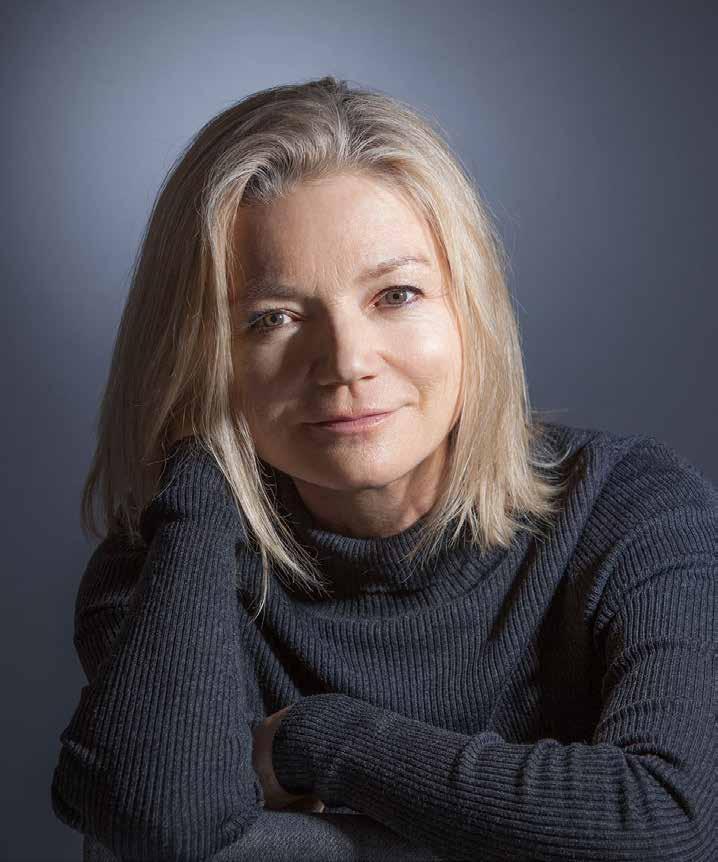
The Polymath SARAH TUCKER
The writer and advocate of lateral thinking on the ego trap and why power makes people thick
Sarah Tucker
Considering what has unfolded globally over the past few years, politically, economically, culturally, it feels like the right moment to talk about the ego. Not as a moral flaw or a personality quirk, but as a structural problem in thinking. One that narrows perception, hardens positions, and quietly sabotages decision-making at scale, particularly in entrepreneurial, corporate, and investment environments where the cost of bad thinking compounds fast.
Ego doesn’t announce itself. It arrives disguised as certainty, experience, seniority, success. It says: I’ve built this before. It says: I know how this market works. It says: Rules are for people who haven’t earned discretion.
“Ego doesn’t announce itself. It arrives disguised as certainty, experience, seniority, success.”
And once it takes hold, thinking stops moving, even as markets, technologies, and customers do.
Long before it became fashionable to critique power, this pattern had already been observed. One of the clearest early insights came from Edward de Bono, who noticed something curious not in formal strategy sessions but over dinners, the Albany dinners of the “good and the great.” The more influential the people in the room, the less flexible their thinking became. Status didn’t sharpen intelligence; it fossilised it.
This wasn’t incompetence. It was something more interesting and more dangerous.
When the Mind Becomes a Fortress
The ego’s primary function is
defensive. Carl Jung understood this well. He saw the ego as necessary, a centre of identity, but deeply limited. When it becomes overidentified with power, track record, or perceived expertise, it turns the psyche into a fortress. Everything unfamiliar is treated as a threat. Everything challenging is reframed as naivety, insubordination, or “lack of commercial understanding.”
Nietzsche, in his more surgical moments, noticed the same thing. Those who believe themselves superior often become brittle, not strong. They mistake dominance for depth, control for understanding. They stop listening not because they are malicious, but because listening would require them to risk rearranging the furniture of their own self-image.
This is where thinking becomes thick. Thick thinking is not slow thinking. It’s heavy thinking. Laden with reputation. Laden with past wins. Laden with the need to justify sunk costs and defend identity.
And it is extraordinarily common at the top of organisations.
The Boys’ Club Isn’t Strategic — It’s Predictable
Much has been written about elite networks, boys’ clubs, and closed power circles in business and finance. What’s less often discussed is how boringly repetitive their thinking is.
Same assumptions. Same benchmarks. Same playbooks. Same blind spots.
This is why ego is such an efficient trap. It creates the illusion of mastery while producing intellectual laziness. Once you believe you are above the rules, you stop examining them. Once you believe you are the system, you stop improving it.
And crucially, this isn’t confined to
men. Women who attach themselves too closely to existing power structures often inherit the same rigidity, mistaking proximity for independence, influence for insight. Status is contagious. So is its blindness.
The result is a culture where performance replaces curiosity, where optics matter more than outcomes, and where being seen to decide decisively outweighs deciding well.
Why This Isn’t Machiavellian Thinking
At this point, someone usually raises Machiavelli.
Isn’t this all just power? Isn’t managing perception, exploiting leverage, and outmanoeuvring competitors simply strategic intelligence?
“The ego’s primary function is defensive.”
No. And this distinction matters. Machiavellian thinking is linear. It optimises within a fixed value system: control, advantage, survival. It doesn’t question the frame; it sharpens execution inside it. It assumes scarcity. It assumes opposition. It assumes people are pieces to be moved, not systems to be redesigned.
What emerged from lateral thinking traditions was something fundamentally different and far more relevant to founders, operators, and investors navigating complexity.
He wasn’t interested in winning within the game. He was interested in changing the game, not ideologically, but structurally. His work focused on breaking patterning systems: the grooves into which thought naturally falls. Ego thrives on grooves. It likes precedent. It likes authority. It likes being reinforced.
True creative thinking does the opposite. It destabilises the self just enough to allow new configurations, new business models, incentives, and structures to emerge.
Which is precisely why ego resists it.
Why Big Egos Are Easy to Outsmart (But Hard to Confront)
Here’s the paradox: people with inflated egos are not formidable thinkers. They are predictable thinkers. Their fear of losing face makes them conservative. Their attachment to image makes them risk averse. Their need to appear competent prevents them from exploring uncertainty, even when uncertainty is where the upside lives.
This is why direct confrontation rarely works in organisations. It triggers defence. Committees form. Titles get invoked. Lawyers appear.
The smarter approach is oblique.
Lateral thinkers have long argued for moving “sideways” not attacking a belief head-on but creating conditions where it becomes unnecessary. You don’t burst the balloon; you change the environment, so the balloon deflates on its own.
For example:
• Introduce a pilot or skunkworks project that bypasses hierarchy rather than challenging it.
• Reframe a strategic problem so that preserving status requires adaptation, not resistance.
• Shift metrics and incentives so that old displays of dominance no longer deliver reward.
Ego doesn’t respond to argument. It responds to environment.
Values Are Harder — But Not Impossible
It has long been acknowledged that
altering values is far more difficult than altering thinking patterns. People cling to moral identities even more fiercely than intellectual ones. ESG, innovation, and sustainability are often treated as badges rather than systems, signals to broadcast rather than architectures to build.
As explored elsewhere, values without structural imagination quickly become theatre. The same applies in business and entrepreneurship. Declaring the “right” position is not the same as building the conditions that make it commercially viable.
This is where flexible thinking becomes essential. Not to persuade, but to reconfigure incentives. Not to shame, but to make outdated behaviours uncompetitive.
Why the Biggest Bullies Are the Most Afraid
There’s an uncomfortable truth here. The most aggressive displays of confidence often mask the deepest fear. Fear of irrelevance. Fear of exposure. Fear of being disrupted by someone younger, faster, or less invested in legacy.
This is why bullying, gatekeeping, and performative toughness are so common at the top. Not because power corrupts, but because power amplifies unresolved insecurity. The higher the perch, the further the fall, and the more frantic the grip.
Understanding this doesn’t excuse behaviour. But it does make it navigable.
You don’t defeat fear with force. You dissolve it by removing the conditions that sustain it.
Thinking Beyond the Ego Era
We are entering a period where old dominance models are visibly failing. Not simply because they are unethical
(though often they are), but because they are inefficient. They don’t scale with complexity. They can’t adapt fast enough. They collapse under their own certainty.
The future belongs not to the loudest voices or the most impressive titles, but to those capable of re-seeing problems repeatedly without needing to protect their self-image.
That requires a particular entrepreneurial discipline: the willingness to unsettle oneself.
Or as Jung might put it, the courage to let the ego loosen its grip without dissolving entirely.
“The most aggressive displays of confidence often mask the deepest fear.”
That, ultimately, is the quiet power of lateral approaches. They don’t overthrow. They outgrow. They don’t shame. They reframe.
And in doing so, they expose the central weakness of ego-driven systems:
They only work if everyone agrees to pretend.
And fewer people, in markets, in organisations, and in culture, are pretending now.
For readers interested in exploring lateral thinking beyond its business applications, Love Laterally (Aurora Metro) by Sarah Tucker offers a strikingly human portrait of Edward de Bono, not as a guru, but as a restless thinker. It’s a reminder that lateral thinking was never meant to be a technique alone, but a way of loosening the grip of certainty.
A Question of Degree SIR ANTHONY SELDON
AI is accelerating – but education is lagging. Sir Anthony Seldon in conversation with Edward de Bono biographer Sarah Tucker, explains why imagination is now a strategic advantage.
There is a piece of ground in Ilford, Essex, that quietly exposes one of the great strategic failures of modern society.
Today, it is home to Sir Isaac Newton Academy, a school preparing young people for a future shaped by artificial intelligence. One of its teachers is Sir Anthony Seldon’s son, working at the educational frontline of the 2020s. The same ground once held Gearies Boys’ School, where my father, Norman Tucker, served as deputy head. Different era. Different tools. Same underlying problem: how do you prepare young people for a world that will not wait for them to catch up?
“Education systems have spent decades optimising precisely the wrong things.”
That question has animated Sir Anthony Seldon’s professional life for decades. A historian of politics and education, former Head of Wellington College, former Vice-Chancellor of the University of Buckingham, and one of Britain’s most influential public thinkers on schooling and leadership, he has observed institutional change closely enough to know that failure rarely comes from ignorance. It comes from hesitation, and from mistaking control for progress.
At the centre of his thinking is a deceptively demanding premise.
“Education is fundamentally about human flourishing, not just knowledge transmission,” says Sir Anthony.
For Finito World’s audience, founders, investors, and builders, that framing should feel immediately familiar. Start-ups rarely fail because founders lack information; they fail because judgment collapses under pressure, because incentives distort behaviour, because resilience, ethics, imagination or collaboration prove insufficient when conditions change. Education systems, Sir Anthony argues, have spent decades optimising precisely the wrong things.
Artificial intelligence has now exposed that imbalance.
“Look, exams are not the end. They’re a means to an end,” he says. Accountability matters. Targets matter. Anyone who has tried to run an organisation without them knows what drift looks like.
But systems have a habit of worshipping what they can easily count.
“Too often exams have become not the means to an end, but the end itself,” he adds.
AI collapses that illusion overnight. When a machine can produce flawless coursework in seconds, assessment ceases to function as proxy. Education is forced, finally, to answer the question it has deferred for years: what
Sir Anthony Seldon
are we actually trying to produce?
Sir Anthony’s answer is consistent and unapologetically unfashionable.
“We need to develop the head, the hand and the heart, not just the head,” he says.
This is not nostalgia. It is strategy.
“AI collapses the illusion that exams are the end. Education is forced, finally, to answer the question it has deferred for years: what are we actually trying to produce?”
For entrepreneurs, this distinction matters deeply. Machines are
accelerating cognitive output. What they cannot replicate, at least not yet, are secure identities, moral judgment, embodied confidence, empathy under pressure, and the ability to work meaningfully with others when outcomes are uncertain.
And yet, for years, education policy moved in the opposite direction.
Successive UK governments have spoken eloquently about the importance of teachers while managing them like overheads rather than investing in them like talent. Curricula were narrowed in the name of efficiency. Anything that resisted tidy measurement was quietly squeezed out.
Drama was one of the first casualties.
Not because it lacked value, but because it was inconvenient.
Sir Anthony is blunt about what was lost.
“Drama builds confidence, trains young people to inhabit perspectives other than their own, what Edward de Bono called OPV, Other People’s Views, and gives students a sense of identity and place,” he says. These are not ornamental skills. They are foundational. They are also, not coincidentally, core founder capabilities.
Research I conducted at Cambridge University supports this intuition: teachers are more likely to be cited as role models than either parents or peers. Not influencers. Not content. People.
Which is precisely what concerns Sir Anthony most about uncritical technological immersion.
“We can see from the work of Jonathan Haidt and many others that immense damage can be done to the formation of secure identities through over-reliance on machines,” he says.
Freepik
Freepik
He is careful, as a historian, not to over-claim.
“We don’t yet have reliable data. Causality is very hard to establish,” he notes.
Even so, his intuition is clear.
“If you take people away from natural, healthy, caring relationships and substitute that with technology, this will not help secure personality formation,” he says.
“We are moving into deeply dangerous territory if we don’t get this right.”
“Machines are accelerating cognitive output. What they cannot replicate are secure identities, moral judgment, and the ability to work meaningfully with others when outcomes are uncertain.”
This is why he argues that schools must actively protect non-digital space: reading and reflection, physical exercise, time in nature, responsibility, friction, real human consequence. Not as a rejection of AI, but as a condition for using it wisely.
In 2023, Sir Anthony co-founded AI and Education with Alex Russell, a multi-academy trust leader, to help schools collaborate rather than compete as they navigate this transition. The initiative is deliberately practical, focused on teachers rather than policy statements.
Because Sir Anthony is clear about
where leadership is unlikely to come from.
“The ideas will not be generated by central or local government,” he says. “They’re too busy fighting themselves, trying to get headlines the next day.”
For entrepreneurs, this diagnosis will sound uncomfortably familiar. Innovation rarely comes from the centre. It emerges from people closest to reality, responding to constraint with imagination.
Which brings us back, inevitably, to that ground in Ilford.
My father never spoke the language of strategy decks or governance frameworks. But he understood something essential: education was about forming people who could stand upright in the world.
Sir Anthony is explicit.
“Change will come from the front line, the teachers,” he says.
“The ideas will not be generated by central or local government. They’re too busy fighting themselves, trying to get headlines the next day.”
This is where governments consistently miscalculate. They talk about education as infrastructure while treating its most important agents as costs to be controlled rather than assets to be developed. No venture capitalist would build a highgrowth company while systematically de-skilling its talent. Education has
done precisely that.
Looking twenty years ahead, Sir Anthony naturally slips into the historian’s register. By the early 2030s, society may pass through Artificial General Intelligence into superintelligence, possibly even into early forms of transhumanism.
Future historians, he suggests, will ask an unforgiving question.
“Did education rise to meet the age of AI, or retreat into caution when imagination was most needed?” he asks.
“In an AI-accelerated world, wisdom, not capability, is the ultimate competitive advantage.”
They may ask who was thinking not about scale and efficiency alone, but about humanity, especially the most disadvantaged. They may ask why teachers were praised rhetorically while being structurally constrained. Sir Anthony remains, characteristically, a cautious optimist.
“I think humans will win,” he says. But not because governments suddenly found vision. If humans do win, it will be because of what happened at ground level, on the same ground, with different tools, led by teachers who understood that in an AI-accelerated world, wisdom, not capability, is the ultimate competitive advantage.
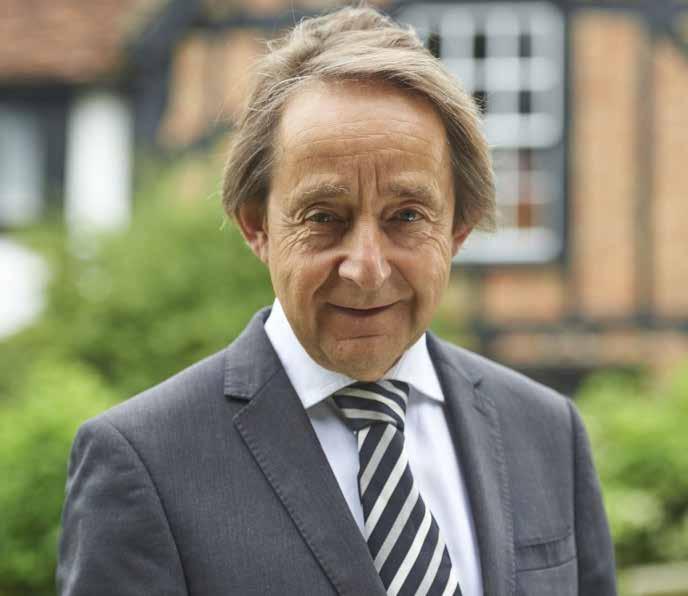
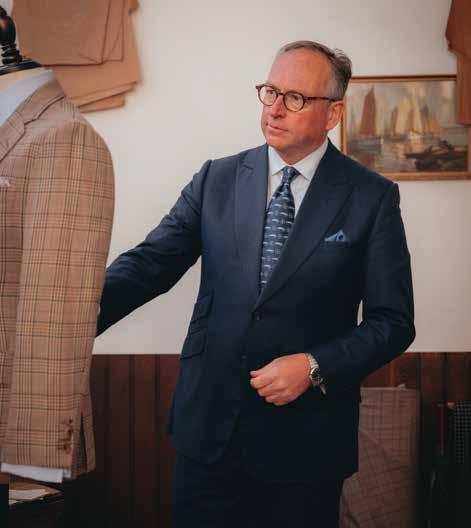
Relatively Speaking SIMON CUNDEY
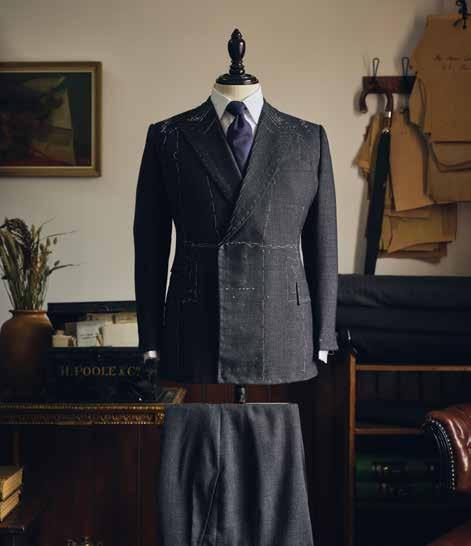
An exploration of how Henry Poole & Co has navigated 220 years of history by treating bespoke tailoring not as a fashion business, but as a generational inheritance of trust, standards, and self-possession.
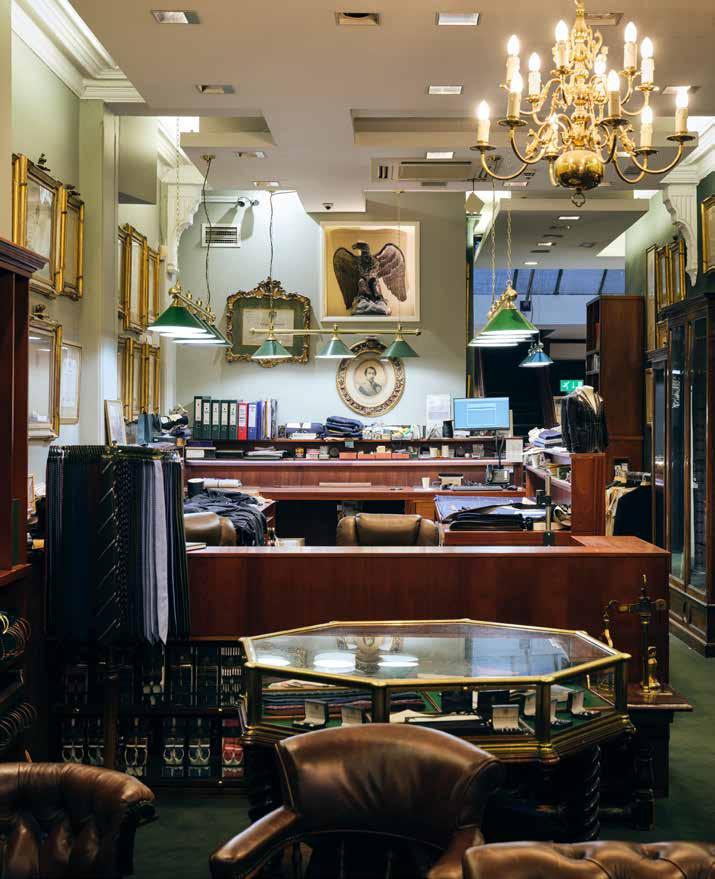
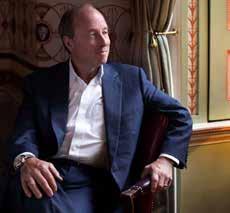
There are businesses, and then there are inheritances. At No. 15 Savile Row, the two have never quite been separable. When I talk to Simon Cundey, Managing Director of Henry Poole & Co, it is in the midst of a year that feels less like a celebration than a reckoning: 220 years of continuous tailoring, and still very much a family concern.
“It’s a big year,” he says, with the understatement of someone used to long timelines. “Two hundred and twenty years. You start to think about what that really means. Not just the history, but the relationships. The links to customers, what it takes to run a firm like this today.”
Those links, as it turns out, are the story.
“Bespoke tailoring, at its highest level, is not about fashion at all. It is about continuity.”
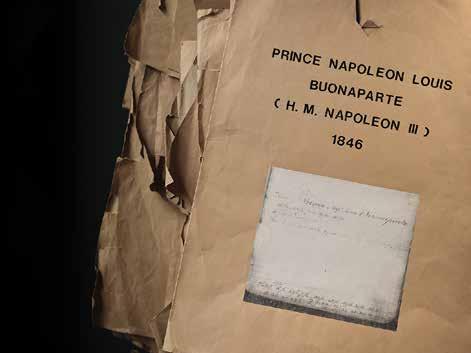
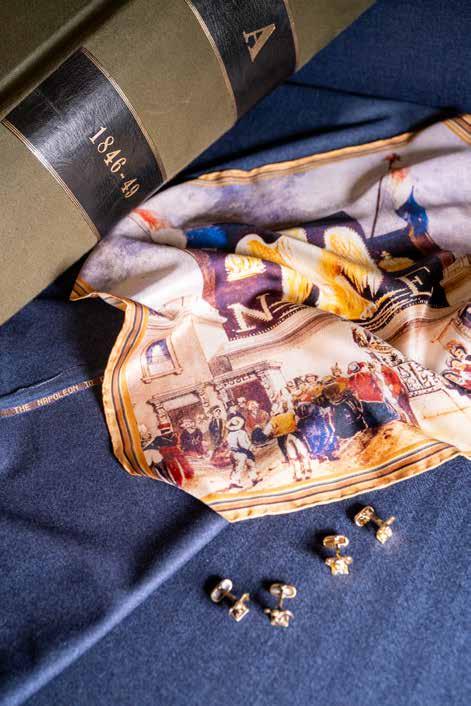
Henry Poole’s origins are unusually well preserved, almost novelistic in their clarity. James Poole arrives in London as a draper, learns his trade through military uniform, and finds himself in the orbit of a man who would become Napoleon III. “He was making uniforms for the volunteer corps,” Simon explains, “and Napoleon was trying to get back to France, to become Emperor. He spotted him. That’s where it began.”
The result, formalised with the firm’s first Royal Warrant, set in motion a chain of patronage that would stretch across Europe and beyond. Edward VII followed. Then a web of royal households, from Scandinavia to Russia.
But what is striking is not simply the scale of the clientele, but its continuity. Churchill, of course, remains the most famous. But alongside him sit financiers like J.P. Morgan and Vanderbilt, rulers, diplomats, industrialists. A kind of
parallel history of power, seen through cloth.
“It’s always been international,” Simon says. “Seventy per cent of our business is overseas. We couldn’t survive on London alone.” The modern version of this is the trunk show, fittings conducted across continents, orders placed for seasons ahead. Yet the principle remains unchanged. The relationship begins in person, and it endures.
If the customer base has shifted, the method has not.
Simon Cundey
“The journey starts with purpose,” he tells me. “What is this suit for? And then what do they want from it?” From there begins a process that is as much education as transaction. “We might have six thousand fabrics, but with
experience you narrow it down. You guide them.”
There are three fittings. The first is architectural. “Posture, stance, balance. Where the button sits, the width of the lapel. It’s mathematics and the eye
together.” The second is refinement. “The shape, the drape, the smaller details.” The third is what he calls, rather beautifully, the “blessing period”. The suit is finished, worn, inhabited. “You shouldn’t feel anything but comfort.”
What he describes is less a purchase than an initiation.
“The satisfaction is when someone comes in with a blank canvas, and leaves understanding what they have. They wear it, they’re
noticed,
they’re
admired.”
“The satisfaction,” he says, “is when someone comes in with a blank canvas, and leaves understanding what they have. They wear it, they’re noticed, they’re admired. That’s the reward. But more than that, they trust you. And you build something over time.”
That word, trust, comes up repeatedly. It is the quiet currency of the place. Over years, sometimes decades, a wardrobe accumulates. “You’re building something that lasts ten, twenty years,” Simon says. “Something that might be passed on. Sons, grandchildren.” It is a reminder that bespoke tailoring, at its highest level, is not about fashion at all.
It is about continuity.
Which brings us, inevitably, to family.
Henry Poole is still, in the most literal sense, one. “My wife is in the business.
My two sons are coming into it,” Simon says. “And we try to bring through the next generation of coatmakers, cutters. That’s part of our DNA. It’s how we survive.”
There is a quiet resistance here to the logic of modern branding. “When companies are taken over, values can be diluted,” he says. “Being a family business allows us to pursue what matters to us. We look to our own history. We look at how Poole dressed people. Not to magazines.” “It’s not just about the family, it’s also about the generations of cutters and tailors who have never deviated from our vision, and always worked as a team.”
It is a philosophy that extends beyond Savile Row. In Italy, Simon recently visited a mill with which Henry Poole has collaborated to produce
a commemorative cloth for the anniversary year. If Cundey represents seven generations, his counterpart there represents fourteen. “Another level,” Simon says, admiringly. “But the same feeling. The same heritage.”
“Being a family business allows us to pursue what matters to us. We look to our own history. We look at how Poole dressed people. Not to magazines.”
The cloth itself is a kind of historical echo. A “superfine blue” recorded in both archives in the nineteenth century has been reimagined as a lightweight flannel, understated but precise.
“I’m wearing it today,” Simon notes. “Most flannels are twelve ounces. This is nine. It gives you a lift. You feel upright.”
It is tempting to see all this as anachronistic, a world of ceremony preserved against the tide. But the numbers suggest otherwise. “We’re seeing a return to suits,” he says. “For a while, it was sports jackets. Now people are dressing up again. For work, for evening.”
He tells a story of a young entrepreneur who began in T-shirt and jeans, found himself in front of rooms of two hundred people, and realised something needed to change. “He became a diplomat. Now he wears tailcoats. It’s about representing yourself.”
Better, as Simon puts it, “to be blended in sometimes, rather than stand out like a sore thumb.”
It is an interesting formulation, and perhaps the key to understanding the place. In an age of self-expression, Henry Poole offers something more subtle: a form of self-possession. The suit does not announce. It aligns.
And perhaps that is where the deeper connection to family lies. Not simply in ownership, but in transmission. Knowledge passed down. Standards maintained. Relationships sustained across time.
Two hundred and twenty years is, in the end, less a milestone than
a test. That a business can remain recognisably itself across that span suggests something more than good management. It suggests a set of values that have been quietly, persistently, kept intact.
As we finish, Simon returns, almost unconsciously, to the customer. “They get to know you, and you get to know them,” he says. “That’s the whole thing, really.”
It sounds simple. It rarely is.
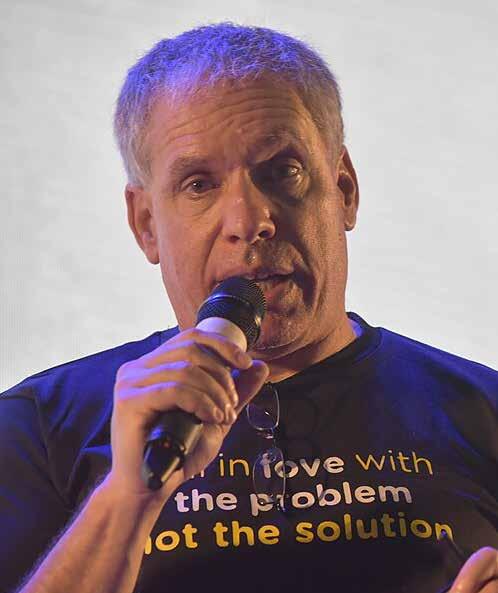
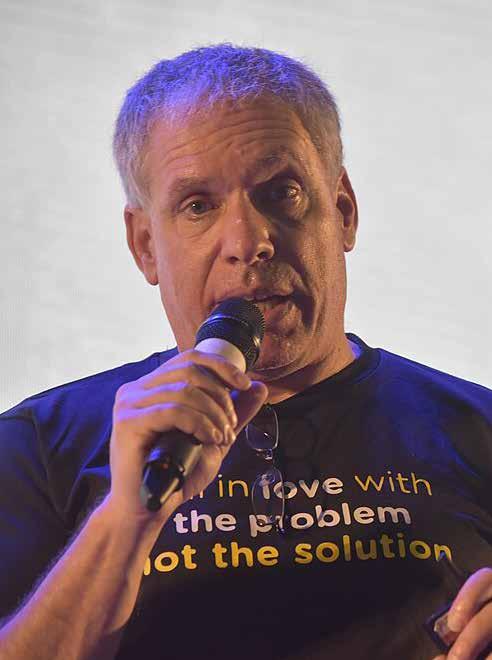
Ten Thousand Hours URI LEVINE
By Candice Krieger
Few are better placed to answer than Uri Levine, the two-time unicorn builder and co-founder of Waze, the go-to navigation app used by millions of drivers worldwide. Yet according to the serial entrepreneur, it’s neither. “There’s no doubt that the team is the most important,” says Levine, and specifically, the CEO. Levine founded Waze in 2007 to deal with congestion in Tel Aviv, his hometown. The app became well known for helping drivers avoid troublesome jams by refining routes using real-time information from its users. Google acquired the company in 2013 for $1.15 billion. Then came Moovit, a king of Waze for public transport, which was bought by Intel in 2020 for $1 billion (£830 million).
“Fall in love with the problem, not the solution.”
Building and selling companies at that level would be enough for most people to retire happy. But not Levine. “I want to continue adding value to the world,” he says. “Solving problems is the way to do this.”
Today, Levine is invested in around ten active start-ups, including Pontera, a fintech platform that helps financial advisers manage and optimise clients’ retirement accounts - a business he believes has the potential to reach unicorn status. Earlier this year, Levine launched his Double Down fund, alongside long-time friends and business partners Ariel Sacerdoti and
Uri Levine (Wikipedia)
Pasha Romanovski. The fund, designed to invest in his most promising portfolio companies, is targeting a total size of around $30–40 million, and plans to close its first round in January.
And while he continues to build and invest, he is just as focused on helping others navigate their own journey to success.
A serial entrepreneur turned investor
turned teacher, Levine now spends much of his time mentoring founders, coaching CEOs and lecturing at universities. He has also distilled his approach into Fall in Love with the Problem, Not the Solution: A Handbook for Entrepreneurs, designed to guide others as they build highly valued firms. The book draws directly on Levine’s experience, offering readers access to his advice and hard-won
lessons.
Some of his key takeaways: focus on the problem, stay close to the people building the solution, and be prepared to make uncomfortable decisions early. Asked what consistently separates founders who succeed from those who don’t, Levine says: “There are very few behaviours that really make the difference.”
The first is persistence. “Never give up. Never leave.” Building a company, he argues, is not about avoiding failure but surviving it. “As long as you keep going, you will keep failing. That’s part of the journey.”
“People don’t like to make hard decisions. But if the CEO doesn’t make them, you end up keeping people who shouldn’t be there.”
The second is decision-making, particularly when it’s uncomfortable. Founders often know early on when something isn’t working, but delay acting. “People don’t like to make hard decisions,” Levine says. “But if the CEO doesn’t make them, you end up keeping people who shouldn’t be there.”
To counter that instinct, he advises a simple rule. “When you’re hiring someone new, put a reminder in your calendar for 30 days later and ask yourself one question: knowing what you know today, would you hire this person again?” If the answer is no, he says, “then fire them.” Waiting longer only makes the decision harder and more damaging.
“If the answer is yes,” he adds, “tell them they’ve exceeded your expectations. And give them more equity.” Clarity, in either direction, is what keeps organisations healthy. The third behaviour, Levine says, is leadership, not as a title, but as a set of actions. “It’s about building awesomeness into the organisation,” he says. “That means creating an environment where strong people stay, trust each other and adapt as the company evolves. If the management team trusts each other, they’re strong. If they don’t, nothing else matters.”
Adaptation is a theme Levine returns to when talking about technology, particularly AI. Waze itself, he notes, was built on AI long before many people had even heard the term. What’s different now is the pace and scale of change. “You can do a job today five to ten times faster using AI,” he says. “If you’re not using it, you will lose to your competition, regardless of the space.”
Still, Levine is cautious about overpromising. For now, he believes the most effective systems are supervised - AI that accelerates work but remains under human oversight. That balance, he says, will evolve over time, much like autonomous vehicles. “Ten years ago, everyone was talking about selfdriving cars. Now we’re seeing the beginning of it and in ten years’ time, all cars will be driverless. There’s no doubt we’ll have fewer casualties on the road because of it.”
When it comes to scaling globally, Levine is equally pragmatic. Many founders, he says, default to the biggest markets first, usually the US or the UK, without appreciating how competitive they are. “The UK is not easy to win,” he says. “Competition is high, customer acquisition is
expensive, and it’s hard to be successful.”
Instead, he often advises starting in markets where it’s easier to gain traction and learn quickly. “Pick a market that’s easier to win,” he says, pointing to countries such as Spain, Italy, Mexico or Brazil. “Build there first, then expand.”
“You can do a job today five to ten times faster using AI. If you’re not using it, you will lose to your competition, regardless of the space.”
These days, Levine divides his time between Madrid, Israel and the rest of the world, moving between boardrooms, lecture halls and meeting rooms, alongside time with his family. A father of five, the Waze co-founder shows no signs of slowing down, remaining driven by a desire to create value and make a difference.
“I don’t want to stop,” he says. “My purpose is about value creation.”
Even after building and selling two unicorns, Levine remains firmly focused on the journey ahead and on helping the next generation of founders find their way.
Uri Levine is the founder of Waze and author of Fall in Love with the Problem, Not the Solution: A Handbook for Entrepreneurs
Tomorrow’s Leaders
FELICITY SYFRET
How to move from drift into purpose –via a long stay in Italy
Why is it that I can recognise myself in a photograph, and yet struggle to render even a half-decent self-portrait? Every feature becomes warped. I know the contours of my face, the straightness of my nose, the shape of my jaw, and yet I cannot bring myself to life. It is the same with words. Asked to describe who I am, what I have done, what I am passionate about and what I would like to change in the world, my mind goes blank.
We should all be subject matter experts in our own lives, able to detail the course of our growth and development. Yet I, perhaps due to deep-seated inhibitions, find myself reduced to two-dimensional lines with no depth. Hopefully, this attempt will bear a truer image. To attempt that, I must start somewhere. School feels like the natural place.
At fourteen, I vividly remember feeling overwhelmed by the pressure of having to pick the right GCSEs, the right A-levels, for the right undergraduate degree. It felt like an absurd weight at such a young age. Add to that close family members flying out to Afghanistan and a sense of not fitting in, and it made for a difficult adolescence.
Unsurprisingly, I dropped out of school after completing my GCSEs, which were surprisingly acceptable given I had spent most of my revision time reading anything other than
my textbooks. For a time, I did become something of an authority on Georgette Heyer.
After the summer, I enrolled at a local sixth form college to study art, but mostly played truant before dropping out completely, doing my best impression of a sulking, uncommunicative teenager. My mother threatened to send me to a Swiss boarding school to teach me some manners.
“We should all be subject matter experts in our own lives... Yet I, perhaps due to deep-seated inhibitions, find myself reduced to two-dimensional lines with no depth.”
As it happens, I was not sent to Switzerland, but Florence. Six months in the city instilled in me a deep love for Italy, its language, its history and its rhythm. I remember reading A Room with a View and I, Claudius while lying in warm patches of the Boboli Gardens.
When I returned home, I felt inspired to try again. At eighteen, I enrolled to study A-levels in Philosophy, History and Literature. I would be a Renaissance woman.
At least, that was the idea. No amount of Italian inspiration could replace a work ethic, and I fell back into a pattern of intermittent attendance. I enjoyed my lessons while I was there but often choosing a new book over completing coursework. After two years, I scraped by with three A-levels and an intervening three-month trip to India.
At twenty, I still had little idea of what I wanted and felt the pull of Italy again. I found a job as an au pair in Lecce, Puglia, and moved within weeks of interviewing.
“Drifting, even willingly, is still drifting. Eventually, it became clear that something was missing.”
Louise Houghton
Felicity Syfret
I spent the next five years in Italy. After ten months with the Console family, I moved to Florence, to a room just off Santo Spirito, and completed a TEFL course. I did occasional tutoring but mostly worked in hospitality, the ubiquitous Irish pub and similar places. My favourite job was at a late-night club, dubiously named Blob, which opened at around 10 o’clock at night and closed at five in the morning. Fellow bartenders would finish their shifts and arrive to take their turn as demanding customers.
In my free time, I played for the local women’s rugby team, Le Medicee, which gave me the honour of representing Tuscany. Through my teammates and colleagues, I developed a good grasp of the language, which still serves me well. My advice to anyone wanting to learn a language is simple. Go where it is spoken, and persist, however embarrassed you may feel.
“Being one of only a few women in a unit of around six hundred men is not easy... It reinforced my belief in the importance of both men’s and women’s spaces, and in the unique strengths of either sex.”
A few paragraphs cannot do justice to those years. It was by no means a grand tour, but a formative chapter that left me a lasting appreciation for efficient bureaucratic processes,
something, sadly, absent in Italy. Though I note our current government seems to be making a decent attempt to replicate the chaos.
Looking back, I can see that much of my early life was spent in pursuit of meaning. Why was I here? What was I good at? What was I meant to do?
The answers did not come all at once. They emerged gradually, through decisions that led me down a path I was not conscious of choosing.
“I want to be part of that fight, not out of restlessness or abstraction, but because I now understand what I value and why it matters.”
But drifting, even willingly, is still drifting. Eventually, it became clear that something was missing.
In 2019, I joined the infantry. There, I learned discipline and a form of respect that went beyond common courtesy.
I served alongside people whose lives bore little resemblance to my own. One had grown up as the child of a heroin addict and, instead of succumbing to that life, chose to serve. Experiences like that changed my perspective.
There were good times and difficult ones. I also found myself increasingly isolated. Being one of only a few women in a unit of around six hundred men is not easy. Some women thrive in that environment; I did not. It reinforced my belief in the importance of both men’s and
women’s spaces, and in the unique strengths of either sex.
After leaving the Army in 2023, I obtained my Close Protection Licence and moved into the security industry. While still operational, I now work as a Client Relations Manager for a security company. The team is largely ex-military, and I remain amused that I work alongside a former Brigadier, whom I call by his first name and resist the urge to salute.
I enjoy the work, particularly when I can see tangible results from decisions shaped by my experience, practicality and empathy.
“I want to be part of that fight, not out of restlessness or abstraction, but because I now understand what I value and why it matters.”
In my free time, I reflect, especially during times like Lent. I read, and I stay connected to the land. Recently, I visited my family’s farm, where the first wild garlic, bluebells, cuckoo flower and celandine had begun to emerge, alongside the arrival of new lambs.
Looking ahead, I see challenges in education, in faith, in freedom and in our relationship with the land. I want to be part of that fight, not out of restlessness or abstraction, but because I now understand what I value and why it matters.
So here it is, a portrait in words. Not perfect, perhaps a little smudged, but recognisable to me.
Those are my Principles
RT HON. ROBERT HALFON
The Executive Director of Make UK. Former MP for Harlow and Apprenticeships & Skills Minister on what Tolkien's final tale tells us about spotting talent
In 1967, a 75-year-old J.R.R. Tolkien published his last ‘faery’ tale. Smith of Wootton Major runs to 60-odd pages in its original edition, yet it contains everything he understood about talent, prejudice, and the passing of gifts between generations.
The story begins when the old Master Cook retires and brings back a young apprentice named Alf. Though Alf receives three years of excellent training, when his master departs, the villagers refuse to trust him with the position. Tolkien’s explanation cuts to the bone: Alf “had grown a bit taller, but still looked like a boy” – and was not one of their own.
“Some brilliant people are overlooked not because they lack ability, but because they learned through doing.”
Instead, they appoint Nokes, an idle local man who spends his tenure taking credit for Alf’s work and wasting the apprentice’s talent on absurd tasks, such as stoning raisins. That sentence haunts every conversation about skills education. Some brilliant people are overlooked not because they lack ability, but
because they learned through doing. Because their qualifications don’t fit conventional moulds. Because their backgrounds make establishment gatekeepers uncomfortable.
Some apprentices I’ve met carry Alf’s story in their experience. The assumption that practical learning is inferior to academic theory. The need to prove themselves twice over simply because they chose a different path. Hidden in Nokes’s Great Cake is a fay-star that a blacksmith’s son, Smith, accidentally swallows. On his tenth birthday, the star appears on his forehead, granting him passage to the Faery Realm for twenty-four years. Smith lives a double life: working at his forge by day, but walking in realms of wonder that transform his understanding. The star changes him. His work becomes exceptional. His vision deepens. He experiences beauty and danger that few mortals ever witness.
When Smith’s time comes to surrender the star, he meets Alf again. The overlooked apprentice—now Master Cook—reveals his true identity as the King of Faery. Alf takes the star and bakes it into a new Great Cake for another child to find. Smith returns to his forge to teach his craft to his son. The gift passes. The cycle continues.
The Professor’s Apprenticeship
Tolkien understood this through his own academic formation. When he
arrived at Exeter College, Oxford, in 1911, he at first found Classics difficult and nearly came unstuck in his early examinations.
Yet the example and scholarship of Professor Joseph Wright helped shape his intellectual path. In a letter written years later, Tolkien acknowledged the importance of Wright’s books: “It was your works that came into my hands by chance as a schoolboy, that first revealed to me the philology I love.”
Wright’s story deserves its own telling. Born in 1855 in Yorkshire, he started work at age six as a “donkey-boy” in a quarry, leading a cart of tools to the smithy. With very little formal schooling, he learned to read and write at fifteen, became fascinated by languages, saved enough money to study in Germany, and eventually became Professor of Comparative Philology at Oxford.
Rt Hon, Robert Halfon
Tolkien in the 1920s (Wikipedia)
When Tolkien applied for the Rawlinson and Bosworth Professorship in 1925, Wright wrote: “I have known Professor Tolkien intimately since the beginning of his undergraduate days at Oxford, and have greatly admired his keen interest in the philological study of Latin, Greek, and more especially the Germanic languages.”
Master and apprentice. Experienced practitioner developing emerging talent. Someone who recognised potential when conventional measures suggested failure. Tolkien named Wright as one of the executors of his
will. That level of trust says everything.
“The question faces every generation: Will we create pathways for talent to flourish, or will we maintain barriers that serve no purpose other than preserving outdated hierarchies?”
The Fay-Star
The fay-star in Tolkien’s tale represents something profound about how knowledge transfers. Smith doesn’t own it permanently. He receives it, benefits from it, grows through it—then surrenders it willingly so another can experience the same transformation.
This matters for apprenticeship policy. We’re building pathways where expertise transfers deliberately, where masters teach knowing their apprentices will eventually surpass them. Smith returns to his forge to teach his son, carrying forward what he learned.
Degree apprenticeships represent that Fay-Star in modern form. They provide university-level qualifications through employer-led training, while apprentices earn competitive salaries. No student debt, guaranteed employment, and academic credentials open international opportunities.
The UK now has over 50,000 degree apprenticeship starts annually, with cumulative participation exceeding 300,000 since 2017. Nearly 90 universities deliver these programs. According to analysis, 99% of employers agree that degree apprenticeships positively influence organisational performance. Apprentices achieve median salaries of £34,620 one year after completing Level 6. From Level 2 to degree and higher apprenticeships, earnings outcomes are strong, with median salaries rising from just over £24,000 to almost £50,000 one year after completion
Yet we still encounter Nokes figures— people who dismiss apprenticeships because they don’t match their narrow definition of education. Those who assume academic credentials
automatically signal greater worth than demonstrated competence.
Recognising the Overlooked
The most powerful moment in Tolkien’s tale comes when everyone finally understands who Alf truly is. The humble apprentice cook reveals himself as royalty. The overlooked young man possessed more knowledge and power than anyone in Wootton Major imagined.
Tolkien wrote about another apprentice in The Lord of the Rings. Samwise Gamgee started as an apprentice gardener. He helped Frodo deliver the Ring to Mount Doom, was eventually elected Mayor of the Shire seven times, and became advisor to the King.
“The apprentice model works when we let it, when we recognise talent wherever it emerges, when we stop demanding that brilliance arrives only through conventional gates.”
I’ve watched Councillor Dan Swords progress from parliamentary apprentice in my previous office as MP to Leader of Harlow Council— reportedly, when elected, the youngest council leader in British political history. I’ve seen countless young people transform their lives through apprenticeships, proving that dedication and skill matter more than
the letters after your name.
Tolkien called Smith of Wootton Major “an old man’s book, already weighted with the presage of bereavement.” Was he thinking about legacy—what we leave behind, how we ensure the next generation receives what we were given?
That question faces every generation: Will we create pathways for talent to flourish, or will we maintain barriers that serve no purpose other than preserving outdated hierarchies?
The Gift Continues
Smith’s journey matters because he understands when to let go. He doesn’t hoard the star until it loses its shine. He surrenders it at the right moment, ensuring another child receives the same wonder. Then he returns to his forge to teach his craft to his son. The work continues. The knowledge transfers. The forge stays lit.
“Let others follow it who can! Let them a journey new begin.”
As Bilbo Baggins says in The Return of the King : “Let others follow it who can! Let them a journey new begin.”
That is the spirit of apprenticeship: not merely preserving a craft, but entrusting it to others to continue, renew, and pass on.
In Smith of Wootton Major, Alf became king. Smith discovered wonder and passed it on. Wright transformed a struggling undergraduate into one of Oxford’s finest professors. Samwise became Mayor. The apprentice model works when we let it, when we recognise talent wherever it emerges, when we stop demanding that brilliance arrives only through conventional gates.
Tolkien understood this profoundly. He lived it. He wrote about it in his final tale, condensing everything he’d learned about recognising others’ worth.
The fay-star still waits in the Great Cake. The question is whether we’ll provide a ladder of opportunity to the child who finds it, or overlook them because they don’t look like “one of our own.”
Bilbo Baggins Tolkien illustration (Wikipedia)
FINITO SPONSORS THE NATIONAL CRITICS’ CIRCLE AWARDS AT THE NATIONAL THEATRE
Finito Education stepped up this year as headline sponsor of the Critics’ Circle Theatre Awards, and the effect was rather in keeping with the day itself: a sense of things being taken seriously, but never solemnly. Theatre, after all, resists solemnity when it is alive.
Hosted with easy assurance by Mark Lawson, the ceremony at the National Theatre gathered that particular mix of
polish and unpredictability which only the stage seems able to produce. There were big names, certainly, but also the quieter pleasure of seeing new ones arrive.
For Finito, the headline sponsorship was a natural evolution. The company has long supported the Most Promising Newcomer award, and there is something pleasingly consistent in that: an organisation concerned with direction and potential backing precisely
the moment when both are most fragile and most full of possibility. This year, that prize went to Ruby Ashbourne Serkis for her performance in Indian Ink, confirming her as one to watch, and sooner rather than later. She fondly recalled to Finito afterwards that the late Sir Tom Stoppard had joined rehearsals by Zoom and amused the cast by smoking and laughing at his own jokes.
Jeremy King
Ronel Lehmann with winner Ruby Ashbourne-Serkis
Nia Towle and Lucy Karczewski
Diego Andres Rodriguez
Hayley Atwell winner of Best Shakespearean Performance for ‘Much Ado About Nothing’ presented by Simon Trewin and Tim Bano
Paapa Essiedu - Best Revival of a Play or Musical ‘All My Sons’ presented by Sarah Hemming
Tom Fletcher and Jessica Swale for Best Musical ‘Paddington’
David Harewood
The evening itself had no shortage of established triumphs. Brendan Gleeson took Best Actor for The Weir, a production that managed the neat trick of winning over critics while somehow eluding the Olivier nominations. All My Sons, directed by Ivo van Hove, secured Best Revival as well as Best Director, reminding everyone that Arthur Miller’s moral machinery still runs with unnerving smoothness.
There were multiple wins for Into the Woods, with Tom Scutt recognised for design and the production taking the inaugural Best Ensemble award, while Paddington: The Musical carried off Best New Musical, which feels, in its way, entirely right. One suspects Michael Bond might have approved.
New writing was well represented. James Graham won the Michael Billington Award for Best New Play for Punch, and Ava Pickett was named Most Promising Playwright for 1536, a Tudor drama already making the leap from Almeida to West End and on, inevitably, to television.
In the acting categories, Rosamund Pike won Best Actress for Inter Alia, a performance of considerable control and intelligence, while Hayley Atwell took Best Shakespearean Performance for Beatrice in Much Ado About Nothing, seeing off competition that included her co-star Tom Hiddleston. There was also recognition for the not-for-profit company Red Rose Chain, recipient of the Empty Space award, a reminder that innovation in theatre is often as much about where it happens as what is staged.
If the winners told one story, the tone of the event told another. In introducing the newcomer award, Finito’s chief executive Ronel Lehmann spoke not as a sponsor but as an enthusiast. He recalled his first encounter with Guys
and Dolls as a young man, and the way it fixed something in him that never quite left. It was a simple point, but a persuasive one. The company’s support, he said, comes from the heart.
That, in the end, is what made the sponsorship feel apt rather than imposed. There is always a risk, at events like these, that the commercial presence sits awkwardly alongside the artistic one. Here it did not. The alignment was clear enough: a belief in talent, in beginnings, and in the curious, enduring power of a stage to change the direction of a life.
“A belief in talent, in beginnings, and in the curious, enduring power of a stage to change the direction of a life.”
David Newborn and Kathy Latham winners of the Empty Space Peter Brook Award (In Memory Of Blanche Marvin) for Red Rose Chain in Ipswich
Nick Hennigan, Judy Naake MBE DL, Ronel Lehmann and Amelia Griffiths (Credit Edward Lloyd)
Rosamund Pike, winner of The NLP Award for Best Actress for ‘Inter Alia’ collected by Suzie Miller presented by Nick Curtis
Ivo van Hove with the 5RB Award For Best Director ‘All My Sons’
James Graham with The Michael Billington Award For Best New Play ‘Punch’
FEATURES
Deep dives into the issues that matter
HM King Charles III (Wikipedia)
VETTING PROCESS How a sector is changing
The Design Centre Chelsea returns 78
WOWSERS
NEW BOARD, PLEASE Nick Hennigan on next gen 86
EXCLUSIVE: REESE WITHERSPOON
Christopher Jackson
Itis the Global Citizen Summit in New York, autumn 2018. Reese Witherspoon is at the podium, and she is telling a story about a thirdgrader. The third-grader is herself. A teacher asks the class what they want to be when they grow up. Most children, at this age, give answers calibrated to adult approval: astronaut, doctor, teacher. Reese Witherspoon announces that she intends to be the first female president of the United States of America.
The story is offered with selfdeprecating humour, but the undertow is serious. Because the point she is making is not really about ambition — though it is about that — but about the stories that are available to young women and what happens when those stories are inadequate. "I have seen the same twenty people making the same movies about the same sort of things over and over again," she tells the assembled dignitaries and campaigners. "We deserve better." And then, in the sentence that will be quoted back at her for years: "It's great to speak up, but what I really think is: you've got to do something."
This is a good place to start with Reese Witherspoon, because it captures the quality that makes her story genuinely interesting rather than merely impressive. She is not, primarily, a person who makes speeches. She is a person who takes stock of a situation, identifies what is structurally wrong with it, and then — unusually, in an industry full of people who speak with great fluency about change while doing very little to bring it about — does something. The something, in her case, has turned out to be considerable.
At 49, Witherspoon is an Academy Award-winning actress, the founder of a media company valued at $900 million, a New York Times bestselling
author, and the person who has probably done more than anyone else in the past decade to shift the economics of femaledriven storytelling in Hollywood. Her net worth is estimated at over $400 million. She has been named to the Time 100 most influential people. She is one of the most recognised faces in the world.
"It's great to speak up, but what I really think is: you've got to do something."
And yet the career trajectory that produced all of this is not, in its essentials, a story about talent recognising itself and ascending. It is a story about a person who hit the limits of what was available to her, understood those limits clearly, and then went around them. That is a different kind of story, and for the readers of Finito World, a more instructive one.
The Zoomed-In Moment
I have been spending a disproportionate amount of time on Reese Witherspoon’s Instagram page. It is a place where one can be by turns impressed and ever so slightly manipulated along with approximately 30 million other people. Every post has its relentlessly commercial logic promoting her movies and other endeavours, although like almost any public figure alive today she can get herself into hot water.
Take, for instance, a much covered post on AI. This is instructive because it reveals something about Witherspoon that sits uncomfortably alongside her genuine achievements: she is, in many of her public pronouncements, remarkably boilerplate. The Instagram caption –“the AI revolution has begun,” women
must learn about technology lest they be "left behind" – could have been written by any brand-conscious celebrity with a team of advisors scanning trend reports. The backlash was swift and predictable: accusations of being paid by AI companies, concerns about data centres and intellectual property theft, the environmental costs of training large language models. Witherspoon's follow-up was equally predictable: “no one is paying me to talk about this,” “I'm just a curious human,” an acknowledgment of “valid concerns” paired with a determination to “learn as much as possible.”
What is notable here is not the controversy itself – celebrities misreading the room on technology is hardly news – but rather how it fits into a broader pattern. For someone who built her success on identifying structural problems and solving them with clear-eyed pragmatism, Witherspoon's public politics are curiously unexamined. She occupies that vast, comfortable middle ground of Hollywood progressivism where certain positions are adopted not because they have been rigorously thought through, but because they are what people in her position are expected to believe.
Take her support for Kamala Harris's (Finito World Issue 5) presidential campaign. Witherspoon was effusive in her enthusiasm, posting carefully curated content, attending fundraisers, lending her considerable platform to the cause. There was nothing surprising about this – Harris represented everything that would appeal to a certain kind of successful, progressiveadjacent businesswoman: a woman of colour, a prosecutor-turned-politician, someone who spoke the language of empowerment while maintaining acceptability to corporate interests. That the campaign was, by virtually any measure, disastrous – a candidate
who failed to connect with voters, who flamed out spectacularly in the primaries before being installed as vice president through circumstances rather than popular support – seemed not to prompt any public reassessment. The Hollywood playbook doesn't really allow for that kind of reflection. You support the approved candidate, you post the approved messages, and when it doesn't work out, you simply move on to the next approved cause. Witherspoon supported her again in 2024, and I’ve seen nothing to suggest she wouldn’t again in 2028.
"She is not, primarily, a person who makes speeches. She is a person who takes stock of a situation, identifies what is structurally wrong with it, and then... does something."
The pattern here is of a certain kind of successful person who has made it within the system and now believes the solution to inequality is making sure more people like them also make it within the system. It's not a radical critique. It's not even particularly coherent. But it is very, very Hollywood. And it sits oddly alongside Witherspoon's genuine achievements — because those achievements required not accepting the system as it was, but actively working to change it.
Perhaps the disconnect is this: Witherspoon is exceptionally good at identifying problems that affect her directly and solving them through sheer force of will and business acumen. She saw that women over forty weren't
getting good roles, so she produced those roles herself. She saw that femaledriven stories weren't being made, so she built a company to make them. These are tangible problems with tangible solutions that benefit from her particular skills.
A few months ago, a short video appeared on Witherspoon's Instagram that has since accumulated almost a quarter of a million likes – as all of her posts do. In it, she describes a conversation she has recently had with a young woman who is unhappy in her job and looking to make a change. Witherspoon asked her: what are your talents? There was a long pause. Witherspoon treats this pause as the heart of the matter.
“This is very, very important,” she says, speaking directly to camera with the ease of someone who has been making this kind of content long enough that it no longer registers as performance. "You don't chase your dreams, you chase your talents. Everybody has dreams. It doesn't mean you're gonna be that thing. You are supposed to do what you're talented at. It's your job in life to figure out what your specific unique talents are and go chase them."
It may be then that Witherspoon might be taken with a pinch of salt as a political scientist but a little more seriously as a career mentor. The distinction she is drawing — between what we dream of being and what we are genuinely equipped to do — is not a counsel of limitation. It is a counsel of precision. The dreams, she is suggesting, are too vague to be useful. The talents are specific, actionable, and yours. What makes this advice interesting coming from Witherspoon specifically is that her own career is a case study in exactly this kind of precision. She did not succeed by following a dream – she
succeeded by being honest about what she was good at, honest about where the system was failing her, and strategic about how to use what she had.
Self-knowledge of this kind – knowing not just what you want but what you are actually good at – is difficult to come by, and most educational systems are not designed to help young people develop it.
"It is a story about a person who hit the limits of what was available to her, understood those limits clearly, and then went around them."
Back to Nashville
Reese Witherspoon was born Laura Jeanne Reese Witherspoon on March 22, 1976, in New Orleans, Louisiana, though she would not remain there long. Her father, John Draper Witherspoon, was a military surgeon and lieutenant colonel in the US Army Reserve, and the family spent her earliest years in Wiesbaden, West Germany, before settling in Nashville, Tennessee, where she would grow up. The Southern heritage would stay with her – literally, in the end: she named her fashion and lifestyle brand Draper James after her grandparents, Dorothea Draper and William James Witherspoon, and returned to Nashville as her base after her divorce in 2023. One of her children is called Tennessee.
What kind of life was it for her? Her parents were both accomplished professionals. Her father became a successful otolaryngologist – a word nearly impossible to pronounce that basically means an ENT doctor.
Reese Witherspoon and Jennifer Aniston in the morning show (Alamy.com)
Her mother, Betty, held a PhD in paediatric nursing and was a professor at Vanderbilt University. This is the context in which to understand the nickname her parents gave her: “Little Type A.” It was not, by the sound of it, entirely affectionate — it was an observation about a quality of driven, organised, achievement-orientated energy that was visible in her from childhood. She graduated from the all-girls Harpeth Hall School in Nashville, where she was a cheerleader and high achiever, and described herself, with characteristic accuracy, as “a big dork who loved reading loads of books.”
Incidentally, she is not physically remotely big. The stand-up comedian Leanne Morgan who starred alongside Witherspoon in You’re Cordially Invited said she is about the size of a glass of water.
The reading matters. “I get crazy in a bookstore,” Witherspoon says. “It
makes my heart beat hard because I want to buy everything.” This is not the statement of someone who reads because they are supposed to; it is the statement of someone for whom books are a primary experience of the world. And it is the through-line that connects the Nashville schoolgirl to the adult who built a business empire on the back of a book club. Reese's Book Club, which she began as an Instagram feature and which has now attracted millions of followers and turned over thirty of its selections into New York Times bestsellers, is not a marketing exercise with literary pretensions. It is the natural extension of a person who has been reading seriously and with genuine excitement her whole life.
At seven, she was selected as a model for a local florist's television advertisements — the first hint that her particular combination of presence and Southern charm translated readily to screen.
At eleven, she won first place in the Ten-State Talent Fair. At fourteen, she auditioned for a minor role in The Man in the Moon, directed by Robert Mulligan, and was offered the lead instead. She was fifteen when the film was made, and the reviews were strong enough that what followed — the early 1990s, working actress, Nashville to Hollywood, the full machinery of a nascent career — felt like a natural progression.
After high school, she enrolled at Stanford as an English literature major. A year later, she left to pursue acting full-time. This is presented, in most accounts of her life, as the obvious decision of someone who already had a career. But it is worth pausing on. Stanford is not a place you walk away from lightly. The decision to leave – to back herself, at nineteen, in preference to one of the most prestigious educational institutions in the world – took a kind of
Reese Witherspoon, The Man In The Moon, (Alamy.com)
self-knowledge that most nineteen-yearolds do not have, or do not trust. She had already identified her talent. She was going to chase it.
In 2017, she revisited her old dorm, an encounter which straightaway became Instagram content: "Surprise! While revisiting @Stanford, I popped by my old dorm room...and met its newest tenant, Caitlyn!" Witherspoon wrote. "She was so nice; she even welcomed me in!" The student in question told Inside Edition: “My jaw dropped.”
Hitting the Wall
The career that followed was, by any ordinary measure, a triumph. By the late 1990s and early 2000s, Witherspoon was one of the most commercially successful actresses in Hollywood. Election (1999), in which she played the terrifyingly determined Tracy Flick, earned her first Golden Globe nomination and established her as something more than a conventional blonde ingénue. Then came Legally Blonde (2001) — the role that defined her in the public imagination, and about which more later — and Sweet Home Alabama (2002), which grossed over $127 million in the US alone and made her one of Hollywood's highest-paid actresses. Her Oscar for Best Actress in Walk the Line (2005) — her portrayal of June Carter Cash is one of the more underrated performances of that era — confirmed a stature that went beyond commercial appeal.
But underneath the success, something was hardening into a specific frustration. Hollywood, as Witherspoon encountered it in her thirties, had very little interest in the kind of story she wanted to tell. The scripts that came her way followed a narrow template. The female lead was decorative, reactive, or both. In one formulation she would
repeat with increasing exasperation, there would always come the scene in which "the girl turns to the guy, and she says, “What do we do now?'” And she would read it and think: “Do you know any woman in any crisis who has absolutely no idea what to do?”
"I dread reading scripts that have no women involved in their creation,” she told Glamour's Women of the Year Awards in 2015, “because, inevitably, I get to that part.” The speech is worth reading in full, because it is sharper and angrier than the polished surface usually indicates: "I grew up watching movies with people like Barbara Stanwyck and, sometimes, I get frustrated that there aren't a lot of great female characters out there that young women can look at and go, 'I want to be like that.'"
"She did not continue to pitch. She did not write articles about the problem. She went and bought the power for herself."
She took the problem to the people who could fix it. It didn't go well. She went, she has recounted, to the Hollywood studios with pitches for female-driven material, and was met with incomprehension. She was told, at various points and by various people, that there “just wasn’t a market for female-driven material.” She was told that women could not carry a box office. The people saying these things were wrong – demonstrably, empirically wrong, as she was about to prove – but they held the power, and their wrongness was the kind that is very comfortable with itself. When the world is about to change there are many who would prefer it not to since their very positions are at stake.
What Witherspoon did next is the central act of her professional life, and the one that makes her story most worth studying. She did not continue to pitch. She did not write articles about the problem. She went and bought the power for herself.
Pacific Standard
In 2012, Witherspoon merged her own production company, Type A Films, with Bruna Papandrea's Make Movies banner to create Pacific Standard. The name was neutral, professional, forgettable –which was, almost certainly, part of the point. What it was not was an actress's vanity project. It was a company with a specific investment thesis: that there was an enormous, largely unserved audience for stories centred on complex, difficult, fully realised female characters, and that the industry's failure to provide them was a market inefficiency waiting to be exploited.
The thesis was tested almost immediately. Pacific Standard produced Gone Girl (2014), directed by David Fincher, from Gillian Flynn's novel — a film in which Amy Dunne, played by Rosamund Pike, is one of the most morally complex female characters in mainstream cinema history, and which grossed $369 million worldwide. Witherspoon was already becoming a businesswoman of some note, but she also had her fame to draw on. Wild (2014) saw her join up the dots. This was based on Cheryl Strayed's memoir about hiking the Pacific Crest Trail alone after the collapse of her life – and earned Witherspoon an Oscar nomination for Best Actress and demonstrated that audiences would turn out for a film in which a woman's inner life was the entire subject.
Then came the first season of Big Little Lies, adapted from a perfectly
competent airport novel by Liane Moriarty and transformed into something far stranger, sadder and more beautiful than its source material had any obvious right to become. This was not a good novel. It was structurally clever, commercially astute, highly readable in the way modern publishing prizes readability, but its psychology was often schematic and its prose functional. Yet the television series became one of the defining cultural events of the decade. Why?
Partly because television, unlike literary fiction, is collaborative in a way that allows mediocrity to become transcendence if enough gifted people gather around the same fire. The novel supplied a skeleton: wealthy Californian mothers, secrets, status anxiety, violence hidden beneath wellness culture. But the series understood that the real subject was not plot. It was female loneliness under late capitalism. It was performance. It was the endless pressure to appear curated while internally collapsing.
What made the show extraordinary was tone. Almost nothing “happens” for long stretches, and yet everything vibrates with dread. The sea itself becomes a kind of Greek chorus. The sound design matters as much as the dialogue. The houses are too beautiful. The light is too clean. Monterey is filmed almost as a hallucination of affluence. Everyone is insulated from ordinary life and therefore trapped inside themselves.
And then there is casting, which television critics often underestimate because it sounds unserious to say that beautiful famous people staring at each other can produce art. But it can. Nicole Kidman gives one of the great performances of modern television because she understands that abuse is not merely terror but confusion. Her scenes with Alexander Skarsgård are
genuinely frightening because the violence emerges out of eroticism, dependency, shame and ritual. The show refuses simplification. It understands that people remain inside destructive systems because those systems answer needs as well as inflict damage.
Meanwhile Witherspoon plays control itself: a woman trying to organise reality through force of personality. Laura Dern turns school-gate politics into Wagnerian opera. Her performance should not work. It borders on absurdity. Yet somehow she locates the tragic core beneath the satire: the terror of social exile among people who claim enlightenment.
"There is no false modesty in that statement, and no reason for any. It is an accurate inventory of capabilities, offered by someone who has spent years using them."
The genius of the series is that it understood something contemporary prestige television often forgets: seriousness does not require solemnity. Big Little Lies is funny. Often very funny. The pettiness of the parents, the absurd competitive intensity around children, the passive-aggressive warfare of wealthy liberal communities: all of this is observed with almost anthropological delight. The series knows these people are ridiculous. But it also knows ridicule alone is cheap. The deeper achievement is compassion. Most of all, though, the adaptation improved upon the novel because it removed the need for explanation. The book tells you too much. Television
allowed glances, pauses, oceans, school assemblies, wine glasses, trembling hands. It discovered that the material’s true language was not literary prose but image and rhythm. What on the page could feel like clever plotting became onscreen something closer to a dream of violence and guilt unfolding beneath Californian sunlight.
The market, it turned out, was enormous. The people who had told Witherspoon that women couldn't carry stories had been, in the technical sense, making things up. She later reflected on this period with characteristic directness: "Betting on myself. I know what to do. I know every producer in Hollywood. I know how to get a movie from book to script to screen, and I know how to market it."
There is no false modesty in that statement, and no reason for any. It is an accurate inventory of capabilities, offered by someone who has spent years using them. It is also, incidentally, a precise illustration of the advice she would later give that young woman about chasing talents rather than dreams. She knew what her talents were. She went and chased them.
Building at Scale
In 2016, Witherspoon founded Hello Sunshine – a media company built around a single, clear, and at the time still somewhat unfashionable idea: that stories centred on women's experience were not a niche market or a gesture of social responsibility but a fundamental commercial opportunity that the industry had systematically failed to develop.
The company was structured from the start as something larger than a production company. Hello Sunshine was built around a book club, a social media presence, a podcast network,
a lifestyle brand, and a portfolio of content in development – all connected by the central proposition that there was an audience of women who wanted to see their lives and experiences taken seriously on screen, and who would organise their cultural consumption around content that did so. The CEO she brought in, Sarah Harden, described the goal as building “a consumerfacing brand with 55 million social touchpoints” – not the industry-facing model of a traditional production house, but something more like a direct relationship with an audience.
The book club was the engine. Witherspoon announced a new pick each month on Instagram, with a brief personal endorsement of the kind that reads as genuinely felt rather than algorithmically optimised. The effect was immediate and remarkable: of the first fifty-four selections, more than thirty went on to make the New York Times bestseller list. A Reese's
Book Club selection became, virtually overnight, one of the most commercially valuable endorsements in publishing –comparable in its effects to an Oprah recommendation, and achieved through a combination of genuine literary taste and the scale of Witherspoon's platform. The company evaluates more than a thousand books, original scripts, pitches, and life-rights documents each year, looking for material that fits the template: stories with women at their centre, commercial enough to reach a broad audience, literary enough to deserve serious attention.
The content output matched the ambition. The Morning Show (2019) –in which Witherspoon stars alongside Jennifer Aniston in a drama about a morning news programme rocked by a #MeToo scandal – became one of Apple TV+'s flagship original series and earned Witherspoon a Screen Actors Guild Award. Little Fires Everywhere (2020), based on Celeste
Ng's novel and co-produced with Kerry Washington's Simpson Street, was one of Hulu's most-watched series. Where the Crawdads Sing (2022), the company's first major theatrical release, grossed over $170 million worldwide. The pattern was consistent: books with complex female characters, bought early, adapted for the screen, and marketed to the audience Hello Sunshine had been building for years.
In 2021, Blackstone's Candle Media purchased a controlling stake in Hello Sunshine for $900 million. Witherspoon retained her stake and a seat on the board. The price raised eyebrows in the entertainment industry – the company had only become profitable in 2020 – but it reflected something that pure financial metrics can miss: the value of a brand that has genuine consumer loyalty, a clear mission, and a proven ability to identify material that audiences will show up for. “Today, we're taking a huge step forward,” Witherspoon said at the
Legally Blonde film scene (Alamy.com)
REESE WITHERSPOON:
1991
Born March 22 in New Orleans, Louisiana; raised primarily in Nashville, Tennessee.
Early 1980s
Cast in her first feature film, The Man in the Moon, at age 14, marking the practical beginning of her professional education in acting.
Educated in Nashville; develops a strong interest in reading and literature from a young age.
time. The understated language was characteristic. It was, by any measure, an extraordinary exit for a company she had founded five years earlier.
The scale of the achievement financially is quite extraordinary. She isn’t quite in that first tier of Spielberg and Lucas though she may be one day. Nor is she quite in the absolute Kardashian/Jay-Z/ Swift category of global consumerscale empire. But she is in the first-tier strategically. Reese Witherspoon is probably best understood as upper second tier financially, but first tier
strategically. She correctly identified where female cultural power was heading before much of Hollywood did.
"It is impossible to write about Reese Witherspoon without addressing Legally Blonde."
It is impossible to write about Reese Witherspoon without addressing Legally Blonde, and the specific
1994
Graduates from Harpeth Hall School, an all-girls private school in Nashville, where she was a high academic achiever.
1994–1995
Enrols at Stanford University as an English literature major.
relationship between that film and its star. Elle Woods — the pinkobsessed blonde sorority girl who gets into Harvard Law School and proves everyone wrong — is one of the most consequential characters in recent popular culture, and the relationship between Witherspoon and her most famous role is more complex and more interesting than it first appears. The film was made in 2001, when Witherspoon was twenty-five. The conventional reading of her career is that Legally Blonde made her a star, and that
Reese Witherspoon/Instagram
The Man in the Moon (Alamy)
Reese Witherspoon/Instagram
EDUCATION TIMELINE
1995
Leaves Stanford after one year to pursue acting full-time, following early film success
1999
Gains critical recognition with Election, establishing her as a serious dramatic actress rather than a conventional ingénue.
2007
Forms her own production company (Type A Films), signalling a shift from performer to decision-maker in the industry.
2016
Founds Hello Sunshine, a media company focused on femaleled storytelling, expanding her role into entrepreneurship and content strategy.
2021–present
Sells a majority stake in Hello Sunshine in a deal valuing the company at around $900 million, cementing her status as one of Hollywood’s most financially successful and influential figures, widely reported to have reached billionaire-level wealth through her business ventures.
the roles she subsequently chose — or created — were a way of demonstrating that she was more than Elle Woods. This is not quite wrong, but it is not quite right either. Witherspoon has always been clear that she loves the character:
“Like Elle Woods, I do not like to be underestimated,” she said at the Glamour Women of the Year Awards — a line that got a loud response, because the connection between the fictional character and the real person is obvious and deliberate.
Elle Woods works as a character because
her intelligence is of a kind that the people around her consistently fail to register. She is dismissed as decorative, then turns out to be brilliant. She is underestimated by everyone who encounters her, and then proves them wrong in ways they cannot argue with. She succeeds not by changing who she is but by deploying it more completely than anyone expected.
There is something of this pattern in Witherspoon's own career. She was not taken seriously as a producer by the studios. She was told the content she
wanted to make did not have a market. She was underestimated, repeatedly and consistently, by people who thought they understood the business better than she did. And then she built a $900 million company on the back of proving them wrong.
Facing Difficulty
In 2018, Witherspoon published Whiskey in a Teacup, a book about Southern living, food, entertaining, and the particular texture of the culture she grew up in. It sold well, made the
Wikipedia
Reese Witherspoon as Tracy Flick in Election, 1999. (Paramount Pictures/Photofes)
bestseller lists, and was not — it is important to note — an autobiography. It was a lifestyle book, which is a different thing, and its subject was not her career but her values: hospitality, tradition, the specific pleasures of a life in which you know your neighbours and where your food comes from.
This might seem like a digression from the main narrative, but it is not. The book, the book club, and the Hello Sunshine brand are all expressions of the same underlying insight: that the audience Witherspoon was trying to reach was not simply looking for entertainment. They were looking for connection, for content that took their experience seriously, for a platform that understood that women's lives are interesting in their fullness rather than only in their extremity.
Any profile of Reese Witherspoon that confined itself to her professional triumphs would be incomplete, and a little dishonest. Her personal life has not been without difficulty. Her first marriage, to Ryan Phillippe — whom she met on the set of Cruel Intentions and married in 1999 — ended in divorce in 2007. They have two children together, Ava and Deacon. In 2013, she married talent agent Jim Toth, with whom she has a son, Tennessee. In 2023, she and Toth divorced after eleven years, reportedly citing irreconcilable differences.
The arrest of Reese Witherspoon and her then-husband Jim Toth in 2013 became one of those tiny Hollywood incidents that lingered disproportionately because it punctured a very carefully managed public image. The facts themselves were not especially dramatic. Toth was stopped in Atlanta on suspicion of drunk driving after weaving lanes. Witherspoon was in the passenger seat. During the stop
she repeatedly challenged the police officer, asked “Do you know my name?”, appeared agitated, and was eventually charged with disorderly conduct after refusing instructions to remain in the car. She later pleaded no contest and apologised publicly, describing herself as embarrassed and frightened. Toth pleaded guilty to DUI.
On paper it is trivial by celebrity standards. No violence. No destruction. No grand scandal. Yet culturally it mattered because Witherspoon at that point represented a particular American archetype: hyper-competent Southern polish, controlled charm, professionalism, discipline. She was not a chaotic star. She was not tabloid material. She projected managerial order. And therefore the incident fascinated people because it briefly revealed the machinery underneath the persona.
Hello Sunshine is explicitly a missiondriven company – its stated goal is to put women at the centre of stories – and it sold for $900 million.
What emerged in those few minutes of bodycam-era friction was not wickedness so much as entitlement colliding with panic. Her “Do you know my name?” line became famous precisely because it sounded like someone instinctively reaching for hierarchy when ordinary reality suddenly asserted itself. Hollywood status failing to work on a roadside policeman. The moment had symbolic power because America simultaneously worships celebrity and deeply enjoys seeing it fail.
But I think the reaction also revealed something unfair about the culture
around female stars. Male actors have had far worse incidents vanish almost instantly into the mythology of “difficult genius” or “bad boy excess.” Witherspoon’s comparatively minor lapse became a kind of moral referendum because her image depended upon composure. Audiences are often harsher when a performer’s brand is based on control rather than transgression.
There is something interesting about how tiny humiliations can harden public figures into their next form. The arrest did not destroy her because there was no true darkness there. If anything, it briefly humanised someone whose image had become almost excessively curated. What survived was not the embarrassment itself but the sense that beneath the bright professionalism there existed ambition, pride, fear, irritation, ego: in other words, an actual person.
What the Career Teaches
The structure of Reese Witherspoon's career contains a number of lessons that are worth making explicit, because they are not the ones that are most easily drawn from it.
The first is about the relationship between talent and infrastructure. Witherspoon's acting ability was never in doubt; what was in doubt was whether the industry would provide her with material that allowed her to use it properly. Her response – to go and build the infrastructure herself – is unusual in its ambition and directness, but the underlying principle is widely applicable. If the system you are operating within cannot accommodate what you have to offer, the question is not whether to accept the system’s verdict but what you can do to change the conditions. She identified the problem, assessed what it would take to solve it, and went to work.
The second lesson is about the relationship between mission and money. Hello Sunshine is explicitly a mission-driven company – its stated goal is to put women at the centre of stories – and it sold for $900 million. These two facts are not in tension. They are connected. The mission clarified the investment thesis, focused the content strategy, built the audience loyalty, and created the brand equity that made the company worth acquiring. The people who told Witherspoon that femaledriven content had no market were making, among other errors, a category mistake: they were confusing their own lack of imagination with a structural reality.
The third lesson is about the importance of self-knowledge of the specific, not the vague kind. Witherspoon knew she was good at acting. That is the vague kind. But she also knew she understood story – how to identify a book that
would work on screen, how to see the gap between what was being produced and what audiences wanted, how to move material from page to production to marketing. That is specific knowledge, developed over years of professional experience, and it was the foundation of everything else.
Leo with President of Brazil Luiz Inácio Lula da Silva in October 2025(Wikipedia.org)
The fourth lesson – the one she is still making explicitly, in Instagram videos and in conversations with young women who are unhappy in their careers – is about the distinction between dreams and talents. Dreams are what we imagine ourselves doing, filtered through desire and aspiration and the images of success we have absorbed from the culture. Talents are what we are actually good at, demonstrable, learnable, deployable. The gap between the two is where most careers go wrong. Witherspoon's career went right, at its crucial juncture, because she was honest about what she could actually do.
“I will be a storyteller till the day I die,” she has said. “It’s really what I was born to do.” This sounds like the language of vocation, but it is also the language of talent identified and honoured. She was born into a family of readers. She grew up in a culture that understood narrative. She went to Stanford to study English literature. She became an actress, and then a producer, and then an entrepreneur — and at every stage, the common thread was story. Not Hollywood. Not fame. Not money, though all of these followed.
In the end, the most useful thing about the Reese Witherspoon story is not that she became very famous or very rich, though she did both. It is that she understood, at a relatively early age, that the story she was living was not going to be written for her. She would have to write it herself.
Reese’s Book Club
THE KING’S TRUST AT 50: A CELEBRATION
Brian Duffy is the CEO of the Watches of Switzerland Group and has been deeply involved in the charity’s work. Here he reflects on how to deliver philanthropy and what it means to change lives. He is joined by Human Resources Director Philippa Jackson who also has much experience in working with the King’s Trust. We also hear from three mentees at The King’s Trust about how their lives were transformed by the charity’s mentorship.
FW: You’ve supported The King’s Trust for more than a decade, reaching over 11,000 young people directly. At what point did this move from being a corporate initiative to something that felt central to the identity of the Watches of Switzerland Group?
BD: The Watches of Switzerland Group Foundation was created in 2021 to bring greater structure, focus and
Christian Church (Unsplash.com)
long-term commitment to the Group’s charitable work. Before this, our giving was meaningful, but it was not formally coordinated, so we established The Foundation as we stepped up our contributions in line with what we felt were the priorities for our business. Our partnership with The King’s Trust was a core part of this.
A focus on education and supporting disadvantaged young people has always
been central to The Foundation's strategy, so a partnership with The King’s Trust felt aligned with our identity from the start. It’s an area we feel incredibly passionate about and through our work with The King’s Trust we have been able to support young people in so many ways - from creating pathways into careers, including apprenticeships and work experience, to supporting programmes such as the Change a Girl’s Life campaign,
HM King Charles III (Wikipedia)
which helps young women overcome barriers and reach their potential and raising vital funds through colleague engagement, events and awareness campaigns. Wherever possible we use the Watches of Switzerland Group’s platforms to help amplify the stories and achievements of young people supported by the Trust.
“It has been incredibly rewarding to see these initiatives grow year on year, with engagement from our colleagues in our showrooms and support offices.”
It has been incredibly rewarding to see these initiatives grow year on year, with engagement from our colleagues in our showrooms and support offices. All of this, underpinned by our close partnership with The King’s Trust through the Watches of Switzerland Group Foundation has enabled our support to feel truly embedded within our business.
FW: There’s often a gap between philanthropy and real impact. What have you learned, over those 13 years, about what genuinely shifts a young person’s trajectory?
PJ: Real impact is at the heart of the work of our Foundation and we know from our partnership with The King’s Trust that impact can be felt in many ways by young people, depending on their unique circumstances, stage of life or individual needs.
It could be supporting a young person with tools or advice they need to move forward, or giving them hope for what the future could hold for them. In
many cases support through initiatives, such as The King’s Trust Enterprise Programme or the Change A Girl’s Life campaign, can truly change the trajectory of a young person. But it can also be as simple as a conversation with a mentor that has an impact. I believe at the heart of this is instilling confidence in young people. Helping them believe in themselves when they don’t always see it in themselves. Unlocking that confidence so a young person can take action is so important.
FW: You’ve personally received the Trust’s Individual Impact Award. What did that recognition mean to you, and did it change how you think about leadership?
BD: Receiving the award was an incredible honour, but for me the recognition reflects all the work of the Watches of Switzerland Group and our partners. It reinforces my belief in long-term, committed philanthropy that is grounded in evidence and focused on genuine social outcomes. The award strengthens my conviction that business leaders have a responsibility to use their platforms to create opportunity for those in need and communities. More importantly, it validates the work of our partners and the young people they support. Their resilience is the real inspiration.
FW: What originally drew you — personally, not just professionally — to the work of the Trust?
BD: What initially drew me to The King’s Trust was its focus on unlocking potential in young people who may not have had the same opportunities as others. The idea that the right support, encouragement or intervention at the right moment can completely change someone’s trajectory is incredibly powerful.
Over the years, what’s kept me engaged is seeing that impact firsthand. Meeting young people who have overcome significant barriers and gone on to build careers, businesses and confidence in themselves is genuinely inspiring. A central principle guiding all our work is helping young people turn disadvantage into advantageensuring barriers such as poverty, lack of confidence or limited access do not define future opportunities.
FW: The 'Change a Girl’s Life' campaign has become a major focus. Why that emphasis, and what have you seen on the ground that convinced you it was necessary?
BD: The campaign resonated strongly with us because it focuses on addressing barriers that still disproportionately
Fearne Cotton, Shauna Tiffany, Brian Duffy
affect young women - whether that’s confidence, access to opportunities, financial hardship or limited support networks.
“Through our partnership with The King’s Trust, we’ve seen first-hand how targeted support can make a lasting difference.”
Through our partnership with The King’s Trust, we’ve seen first-hand how targeted support can make a lasting difference. We’ve met young women with enormous talent and ambition who simply needed access, encouragement and belief in their potential. The campaign doesn’t just raise funding, it creates visibility around challenges that are often
overlooked and helps provide practical pathways into education, training and employment.
FW: When you meet young people coming through these programmes, what strikes you most about them?
BD: Their resilience. Their bravery. Their spirit. They are remarkable young people and having the opportunity to meet with so many of them across the programmes we support is incredibly rewarding.
FW: The Trust’s Enterprise Challenge introduces business thinking early. Do you recognise anything of your own early instincts in those participants?
BD: Absolutely. What stands out most is their creativity, resilience and willingness to think differentlyqualities that are essential in business and leadership.
Many of the young people involved in Enterprise Challenge already demonstrate entrepreneurial instincts:
problem-solving, adaptability and ambition. What programmes like this do brilliantly is help channel those instincts into confidence and opportunity. I think many business leaders can recognise elements of their younger selves in that environment.
FW: Luxury retail and social mobility don’t always sit naturally together. How do you connect the world of high-end watches with the realities faced by the young people you’re supporting?
BD: At first glance they may seem like very different worlds, but at the heart of our industry are skills, craftsmanship, creativity and people. There are meaningful careers within luxury retail and watchmaking that many young people may never have considered or believed were accessible to them.
Part of our role is helping break down those perceptions and opening pathways into the industry - whether
From left to right – Tyler West, Kai McGuirk, Brian Duffy and Anna Williamson.
Hindu God, Ganesh Chaturthi (Unsplash.com) through apprenticeships, work experience, mentoring or exposure to different career opportunities. Social mobility improves when industries actively widen access and invest in future talent.
FW: Has the partnership changed how you think about talent — where it comes from and how it’s recognised?
PJ: It’s reinforced what I know about talent. Some of the most successful people at the top of business are those who came from nothing and built life skills and resilience along the way. One of the most important aspects of The King’s Trust is that talent is everywhere but opportunity is not always evenly distributed.
We’ve met young people with incredible potential who simply lacked confidence, support networks or access to opportunities. As a large employer, we already look beyond traditional pathways and recognise qualities like resilience, determination, adaptability and emotional intelligence alongside traditional experience or qualifications.
FW: Inside the business, how do you ensure this doesn’t become a “CSR silo” but something employees actually feel part of?
BD: Colleague engagement is vital. When our people get involved - whether through fundraising, volunteering, mentoring or advocacy - the impact multiplies. We encourage participation by supporting colleagueled initiatives, creating meaningful opportunities to engage, and ensuring our teams understand the difference their involvement makes.
Importantly, this is not something that sits separately from the business. Our Board and Senior Leadership Team are actively involved, and our charitable partnerships are closely connected to our people strategy, culture and broader
commitment to responsible business. Our colleagues are naturally generous, and their response continues to be incredibly inspiring.
“Some of the most successful people at the top of business are those who came from nothing and built life skills and resilience along the way.”
FW: You operate across both the UK and the US. Do you see differences in how young people engage with programmes like Enterprise Challenge in those two contexts?
BD: While there are naturally different social and economic challenges across regions, what’s remarkable is how universal ambition, creativity and potential are amongst young people.
In both the UK and the US, we see young people responding positively to opportunities that build confidence, develop skills and provide mentorship. As our business grows internationally, we want our community partnerships to reflect that footprint while still remaining locally relevant and impactful.
FW: To what extent do your colleagues get directly involved — mentoring, judging, coaching — and what effect does that have on them?
BD: Our colleagues are involved in a number of ways, from mentoring and judging competitions to fundraising, volunteering and supporting events. That direct interaction is incredibly valuable because it creates a genuine connection between our teams and the young people the programmes support. It also has a powerful impact internally
- colleagues often feel inspired, energised and more connected to the purpose of the business. It reinforces the idea that everyone can play a role in creating opportunity for others.
FW: Events like Palace to Palace and the King’s Trust Awards have a strong public profile. How important is that visibility in driving real impact?
BD: These campaigns increase visibility for the issues young people face and bring together colleagues, clients and partners in a shared cause. Their scale helps drive fundraising, but equally important is the awareness they build - spotlighting the challenges of disadvantage and the role businesses can play in addressing them. They also strengthen our partners’ ability to reach more young people. Importantly, these programmes provide our teams with meaningful opportunities to participate and contribute.
FW: Do you think businesses underestimate the value of long-term partnerships in this space?
BD: Long-term partnerships are incredibly important because meaningful impact rarely happens overnight. Trust, consistency, and sustained investment allow programmes to grow and evolve in ways that short-term initiatives often cannot.
FW: Have there been moments over the past 13 years where you’ve had to rethink or reset the approach?
Over the years we’ve absolutely adapted our approach - whether responding to changing economic pressures, evolving community needs or learning where we can have the greatest impact. The pandemic, for example, highlighted how quickly circumstances can change for vulnerable young people and communities. What has remained constant is our commitment to listening, learning and evolving alongside our partners.
FW: How do you measure success in a partnership like this — is it numbers, outcomes, or something more intangible?
BD: Impact measurement is important, so outcomes and data certainly matter. We look at indicators such as young people entering employment or training, participation levels, and the reach of programmes we support.
However, there’s also a more human side to success that can’t always be captured in numbers alone. Confidence, aspiration, resilience and self-belief are transformative qualities, and hearing personal stories directly from young people is often the clearest indication that meaningful change is happening.
FW: Has working with the Trust changed the culture of the business in any noticeable way?
PJ: People love people stories and our colleagues feel proud to be part of initiatives that create real impact and support young people in meaningful ways.
It has also encouraged greater collaboration and engagement across teams because these programmes bring people together around shared values. Over time, that contributes positively to culture, morale and a stronger sense of connection to the wider community.
FW: In an industry built on heritage and craftsmanship, do you see parallels with the Trust’s focus on skills and self-belief?
BD: Indeed. Watchmaking, jewellery craftsmanship and luxury retail are industries built on dedication, expertise, patience and continuous learning. Confidence in your own ability is essential - whether you’re learning a craft, leading a team or building a business.
That’s why the Trust’s focus on skills development and self-belief resonates so strongly with us. Helping young people
SALEEMAH
Beforejoining The King’s Trust, I was at the lowest point I had ever been. I was struggling with my physical health after suddenly developing seizures at 19, sometimes having between 10 and 18 a day, while still trying to work. At the same time, my mental health was suffering, and I had lost my uncle, who was a major father figure in my life.
Eventually, my mum arranged for me to speak to someone from The King’s Trust, and during that call I enrolled on the Get Started course. While the course itself wasn’t exactly right for me, it became a gateway into The King’s Trust. What I gained from it; confidence, communication, making friends again, and putting effort into something without fearing disappointment. It reignited my motivation and helped me get my life back on track.
After that, I explored what else The King’s Trust could offer and realised the Team Programme was exactly what I needed to rebuild my confidence, skills, and routines. That experience showed me that this was the type of work I wanted to be involved in long-term.
After the Team Programme, I started looking into job opportunities within programme delivery, but because of my disability and not having a driving licence, full-time roles weren’t accessible for me.
I then explored voluntary roles and came across the Mosaic education programme.
The structure really suited me. It’s one day a week for eight weeks so it felt manageable. I completed the training, met Sonya, who was amazing, and went into my first session as a complete nervous wreck. Over time, I went from needing lots of one-to-one support to now being in a position where I can support other mentors. That progression has been incredibly rewarding.
At its core, mentoring is about having conversations. It’s about taking an interest in young people’s lives, finding out what they enjoy, and building from there.
Sometimes it’s the smallest things, like noticing a change or giving a genuine compliment that help break down barriers. Those moments spark conversations and help young people come out of their shells, allowing them to fully engage with the Mosaic sessions.
The first session is led by a King’s Trust lead, and after that mentors take turns leading sessions. Teachers provide a list of potential topics, select the ones they feel will benefit their students most, and mentors each choose a session they’d like to deliver.
Each mentor then leads their chosen session during the programme, bringing their own experience and perspective to the group.
Even if young people take away just one thing, that’s enough. During my own Team Programme, a lead once said to me, ‘Just one more,’ and that stayed with me throughout the twelve weeks.
For me, it means trying one more day when things are difficult or making one more attempt after a setback. Life isn’t linear - it has ups and downs - but having a positive mindset makes all the difference. That’s what I hope young people take with them after the eight weeks.
recognise their own potential is often the first step towards long-term success.
"Very often, what determines a young person’s future is not ability, but access— access to
support,
guidance, confidence and opportunity."
FW: Many of the young people the Trust works with face structural barriers. What role do you think business can realistically play in addressing those?
BD: Business cannot solve these challenges alone, however it can play a meaningful role by creating opportunities, investing in communities and widening access to careers and development. Companies have platforms, networks and resources that can help remove barriers for young people - whether through mentoring, apprenticeships, funding, education programmes or simply opening doors that may otherwise have felt closed. Real progress comes when businesses, charities and communities work together with long-term commitment.
FW: Looking ahead, what would you like this partnership to have achieved in another ten years’ time?
BD: I’d like to see the partnership continue growing in both reach and depth - supporting even more young people while creating lasting, measurable outcomes.
Most importantly, I’d hope that in another ten years we can look back and see thousands more young people who have gained confidence, skills and opportunities that changed the trajectory of their lives. If we can continue helping young people turn disadvantage into advantage, then that will be a legacy worth building.
FW: And finally, if you had to distil it, what have these 13 years taught you about opportunity — who gets it, and why?
BD: These past 13 years have reinforced that talent and potential exist everywhere - however, opportunity does not.
Very often, what determines a young person’s future is not ability, but access - access to support, guidance, confidence and opportunity. That’s why partnerships like this matter so much. Sometimes a single intervention, conversation or opportunity can completely change someone’s direction in life.
ZUBAIDAH
Before joining
The King’s Trust, I was a graduate student and felt quite lost. I didn’t know which direction to take
and was exploring lots of different options without clarity. Joining their employability course really helped me by giving me clear guidance and direction.
The main challenges were CV writing and interviews. I didn’t understand the UK CV format or what employers in my industry were looking for. I received a lot of conflicting advice online and needed guidance from someone with real industry experience. Interviews were also difficult, as I lacked confidence and struggled to prepare effectively.
My mentor Claire gave me practical, detailed feedback on my CV and helped tailor it to industry standards. She also supported me with mock interviews before real ones. She was always available, responsive, and supportive, especially when I felt discouraged after receiving rejections.
Her support made a huge difference. She helped reduce my imposter syndrome and encouraged me to keep applying even when I felt like giving up. Her reassurance and belief in me helped build my confidence throughout the job search.
My life has changed significantly, particularly financially, as I’m now in a more stable position. More importantly, my confidence has grown. Having meaningful
Ruth Benford, Brian Duffy, Philippa Jackson
King Charles III (wikipedia)
Philippa Jackson
Brian Duffy
CAITLIN
My business at the moment is as a singer-songwriter and a teacher, so I teach music. But that wasn't what I saw myself doing when I first came across The King's Trust. I actually approached The Trust with a business selling dog clothes. I would craft them in my house and basically make like custom dog clothing for customers. I really loved doing that because I have a wee dog who I love. I'm obsessed with animals. But as the time went on, I realised that music was actually where my heart was and The King’s Trust supported me to make that sort of shift from retail and crafts into the music sector and that's been me since about 2024. It was very exciting.
I think for music, it's a very competitive industry and it's quite tight knit as well. So, for me, the main thing was meeting people. Networking was a big, big thing. You just need to know people in order to get music and if you're starting off and you're outside of the circles, that's really hard.
Also, as a creatively minded person, usually your strengths aren't as business focussed in the sense of managing money and time and writing invoices and stuff. So that was something that I definitely struggled with and something that going through the Enterprise programme really helped me with
because there was someone there to sort of guide you through it and give you a wee bit of background.
That was all transferrable when I started with Enterprise. I used all that with my previous business and then when I moved to music, it was all very transferrable and good for me to carry into that.
I met my mentor Adam when I finished the course part of the Enterprise programme and he became my mentor to help me navigate actually running my business. The first time we spoke my whole career shifted because I'd just been grinding out with the dog clothing business and the way things were going, it was just a lot, a lot, a lot of work. It was one of those things if I don't, put down everything and go straight into this business and only focus on that then it wasn't realistic as a full-time job. It would have to be a 24/7 thing and I'd have to cut out a lot of other things from my life.
When I went for that meeting with Adam, I think he just sussed out that something was up with me and I wasn't feeling 100% with the business. He asked me about it and I came clean to him. I told him that it's a lot more work than I thought it was going to be and I can only see myself putting more and more work into it if I carry it on. He was like ‘right, what else are you doing in your life?’ I said I do music. I studied music at university and it's something that I've loved my whole life and. He and I just sat, talked and basically came to the conclusion that it's time for me to do music instead because that's where my heart was. It just made more sense. Which was so lovely because it was like a massive weight I'd been carrying around, trying to run a whole completely different business for a while, so it was really nice to have someone
give me permission to chill out and go in a different direction.
We met up every month or so, and it would just keep me on track and keep me really motivated. He talks to me about what original stuff am I doing, if I was booking gigs, and try to connect me to people. It was really lovely. It was a nice sweet relationship and so we still follow each other on TikTok and support each other on there. But yeah, he's a great guy. It really helped me out.
Adam just sort of gave me permission to stop stressing about something that I didn't need to stress about. And I think it was a voice of wisdom to me. He was able to see things from an outside perspective and guide me in the right direction. What I needed at the time was for someone to look at me from an outside perspective and be like: ‘Okay, you're stressed. This is what you want to do so this is how we're going to get there.’
My confidence is so much higher than it was when I began and it was a bit of a long road to build up. But I persistent with it and having a support system was really key to getting me where I am. Now that I am able to do that, it feels like I'm doing what I'm meant to do with my life.
It just feels right and I wake up every day and I'm happy to be working, it's not like I'm dragging myself out of bed to a job that I don't want to do. I'm genuinely doing what I really love and it can be tiring, but it's well worth it.
THE VET BILLS SHOCK AND THE ALDI MOMENT COMING FOR ANIMAL CARE
There is a particular kind of bill that lands differently from others. A vet’s bill often arrives in the middle of fear.
Your dog is struggling to breathe. Your cat has stopped eating. The animal is part of the family, and the decision must be made quickly. Few owners are in the mood to negotiate.
Stories like this have become increasingly common. Over the past decade veterinary costs in the UK have risen dramatically — around 63% between 2016 and 2023, according to the Competition and Markets Authority. That rise has been far faster than inflation.
And yet the vet industry itself insists the story is more complicated than simple profiteering.
At one level they are right. Veterinary medicine has advanced enormously. Procedures once unimaginable for animals — airway surgery, advanced imaging, oncology treatments — are now routine. They are also expensive.
The public’s relationship with pets has changed too. Half of owners now say they view their animals as children. Social media is filled with “pet parents”. When an animal becomes emotionally equivalent to a family member, the willingness to pay rises.
But economics rarely stops there.
Over the same decade another transformation has occurred quietly inside the veterinary industry. Corporate consolidation.
In 2013 only about one in ten vet
IRIS SPARK
practices in Britain were owned by large corporate groups. Today the figure is closer to sixty percent. Many neighbourhood surgeries still look reassuringly local, but ownership often sits within a handful of large companies.
To pet owners facing rising bills, the connection seems obvious.
To vets working inside those organisations, the pressure is different. Some say they feel squeezed between clinical care and financial targets set by distant management. One vet who recently opened an independent practice describes becoming tired of being told by someone “sat behind a desk” that the clinic was not generating enough revenue.
Whether corporate ownership directly causes higher prices is debated. What seems harder to dispute is that the
structure of the market has changed — and when markets concentrate, prices often drift upward.
Now regulators are circling. The CMA’s investigation into the veterinary sector is expected to recommend greater transparency over pricing and ownership. At present, most vet websites reveal little about costs. In fact, the watchdog found that more than 80% of practices display no pricing information online at all.
London (Unsplash.com)
For a consumer facing an emergency, that opacity matters. The regulator is also expected to push for easier access to medicines through online pharmacies, which could undercut some practice markups. Yet even that reform has complications: many of those pharmacies are themselves owned by the same corporate groups that dominate veterinary clinics.
Freepik
Competition policy, as ever, can produce unexpected winners. The more interesting possibility lies elsewhere — the arrival of new entrants determined to disrupt the model entirely.
Some independent practices are experimenting with subscription-based care, borrowing ideas from dentistry or private healthcare. For a monthly fee, owners receive check-ups, preventative care and certain treatments bundled together. The logic is simple: predictability for the owner, stable revenue for the clinic.
Others are focusing on transparency, publishing clear prices and deliberately positioning themselves against the large chains. Veterinary leaders themselves
sometimes describe the opportunity in familiar retail language: the “Aldi moment”.
The supermarket comparison is revealing. For decades grocery retail was dominated by a handful of large brands. Then discount chains entered the market with simpler operations, lower costs and aggressive pricing. Within a generation they had fundamentally reshaped the sector.
Veterinary care may be approaching a similar inflection. Technology could accelerate that shift. Telemedicine consultations are emerging. Artificial intelligence may reduce administrative workloads and diagnostic time. If vets spend less time on paperwork, they spend
more time with animals — potentially lowering costs.
But structural change will not eliminate the uncomfortable reality that healthcare is expensive. In Britain the NHS shields people from the true cost of their own medical care. Veterinary treatment offers no such illusion. The surgery, the equipment, the training, the staff — all must be paid for directly by the client.
That creates difficult conversations about what level of treatment is appropriate. Some breeds, such as pugs and French bulldogs, come with known respiratory issues. Certain cats suffer predictable genetic problems. Owners are often surprised by the scale of medical intervention their pets require.
"Their healthcare is beginning to resemble human medicine in complexity and expectation."
Veterinarians increasingly speak about “contextualised care”: treatment that balances animal welfare, medical possibility and what owners can realistically afford. That phrase hints at a deeper cultural shift. Pets have moved from the farmyard to the sofa. Their healthcare is beginning to resemble human medicine in complexity and expectation.
The market is struggling to keep up. Whether the solution comes through regulation, new entrants, technology or consumer awareness remains uncertain. But something in the veterinary economy is clearly moving.
Rising prices have exposed a tension between compassion and affordability. Where that tension exists, insurgents tend to appear.
Freepik
JOANNE REES DISCUSSES A LANDMARK NEW STUDY OF ELIZABETH GAGE
Finito World interviews the CEO of Elizabeth Gage on a landmark study of the influential and revered jeweller
The book traces a remarkable journey from Elizabeth’s early life through to a sixty-year career. Looking back, what do you feel were the defining moments that shaped both the designer and the business?
Several moments feel formative. The first was Elizabeth’s early childhood, when long periods of illness encouraged a deep inner world shaped by history, storytelling and visual imagination. The second was her decision to pursue goldsmithing seriously, and to build technical mastery at Sir John Cass College rather than follow a more conventional path. A third defining moment was her exposure to the British Museum, where she encountered jewellery not simply as ornament, but as a language of symbolism, permanence and power. Then there were the major business milestones: the early Cartier commission, the establishment of the London studio, and later the opening of the Albemarle Street showroom. Together, those moments shaped both the creative identity and the commercial foundations of the brand. There is a strong sense that Elizabeth’s work emerged from a very personal vision rather than following prevailing trends. How conscious was that decision at the time, and how important has it been to the brand’s longevity?
It was deeply conscious, even if it may not have been expressed in those exact terms at the beginning. Elizabeth’s work came from a very personal visual and intellectual world: antiquity, mythology, art history, architecture rather than from fashion cycles. That independence of vision has been crucial to the brand’s longevity. Because the work was never trend-led, it has not dated in the way trend-led jewellery often does. The brand has built recognition through a distinctive design language rather than a logo or a seasonal aesthetic and that is a very powerful foundation for enduring relevance.
The early commission from Cartier seems to have been a pivotal moment.
How did that change the trajectory of the business?
The Cartier commission was pivotal because it provided early external validation at the highest level. Elizabeth had already developed her own creative language but receiving a major commission from Cartier New York in the late 1960s immediately placed her work in an international luxury context. It signalled that her ideas were not simply interesting or unconventional, but commercially and creatively significant. That kind of endorsement changes visibility and trajectory all at once. It helped establish momentum early and positioned the business for the international outlook it would go on to maintain.
London (Unsplash.com)
Elizabeth Gage
The book highlights the transition from making pieces herself to focusing on design and building a team. How difficult was that shift, and what did it unlock in terms of growth?
That is always a difficult shift for a true maker because it requires moving from total personal control into a model of trust, delegation and transmission. But it is also the shift that enables a creative practice to become a lasting name. By stepping back from personally making every piece and focusing more fully on design direction, Elizabeth was able to scale the business, deepen the archive, and build a team capable of carrying forward the standards and sensibility of the brand. It unlocked continuity, growth and ultimately legacy as many of those early craftspeople remain an integral part of the workshop today. Elizabeth Gage has remained independent in a market increasingly dominated by large luxury groups.
How important has that independence been to maintaining creative and commercial control?
It has been enormously important. Independence has allowed the brand to protect its own pace, its own standards and its own point of view. There has been no pressure to dilute the design language, over-commercialise the product, or chase scale at the expense of identity. That freedom matters creatively, but it also matters commercially, because clients respond to authenticity. The brand has remained deeply personal, intellectually coherent and recognisably itself and that would have been far harder to preserve inside a more corporate model.
There is a strong emphasis on craftsmanship and making everything in England. In practical terms, how challenging is it to sustain that model today? It is undoubtedly challenging.
Maintaining high-level craftsmanship in England requires skill, patience, investment and long-term commitment, particularly at a time when so much production in luxury has become globalised or cost-driven. But it is also central to what gives Elizabeth Gage its integrity. The value lies not only in where something is made, but in the continuity of knowledge, quality control and workmanship that comes from keeping creation close to the heart of the brand. It is demanding, but it is part of what clients are responding to when they buy Elizabeth Gage.
The archive now spans tens of thousands of designs. How do you balance that extraordinary heritage with the need to remain relevant to new generations of clients?
The archive is not a constraint; it is a source of vitality. We do not treat heritage as something static or nostalgic. The Elizabeth Gage archive
offers an immense body of ideas that can be revisited, reinterpreted and recontextualised for a new moment. Relevance comes not from abandoning heritage, but from presenting it with clarity and confidence to a new audience. Younger clients are often very drawn to authenticity, individuality and meaning and those are qualities the archive offers in abundance.
The business has always had an international outlook, particularly with strong links to the United States. How has that global perspective evolved over time?
It has evolved from early recognition abroad into a genuinely international sensibility. The Cartier New York connection came early and the United States has long been an important market for the brand. Over time, that international outlook has become less about expansion for its own sake and more about cultivating a global
community of collectors who respond to the same values: boldness, intellect, craftsmanship and individuality.
Elizabeth Gage remains very British in spirit, but it speaks to a cosmopolitan client with an instinct for substance over trend.
The “One Woman Shows” were clearly instrumental in building the brand. Do you see an equivalent model today, or has the way high jewellery is sold fundamentally changed?
The market has changed significantly, but the underlying principle remains the same. The “One Woman Shows” were powerful because they created personal connection and a focused world around the work. Today, the equivalent is found in intimate collection previews, highly curated presentations, private appointments and digital storytelling that extends the reach of those experiences. Jewellery is still sold through emotion, trust and personal
connection. The channels have changed, but the fundamentals have not.
The book makes clear that storytelling, history and symbolism sit at the heart of the designs. How important is that narrative dimension to clients today?
It is absolutely central. Clients today are surrounded by products, but they are still searching for meaning. What distinguishes Elizabeth Gage is that the jewellery carries an intellectual and emotional life: references to ancient civilisations, mythology, symbolism and personal stories. That narrative dimension gives the work depth and memorability. It turns jewellery into something far more personal than adornment alone, and that continues to resonate strongly with collectors.
Elizabeth’s work has attracted a very distinctive, confident clientele. Has that customer profile changed over time, or is there a consistent “Elizabeth Gage woman”?
There is certainly a consistent spirit, even if the customer has evolved across generations. The Elizabeth Gage woman is confident, independent-minded and drawn to jewellery with presence. She is rarely looking for something generic or purely decorative; she wants something with character. What has changed is that this sensibility now reaches a broader age range and a more international audience. But the core attraction — strength, individuality and substancehas been remarkably consistent. The business has successfully navigated several decades of economic cycles. What have been the most challenging periods, and what has enabled the company to endure?
Any business that lasts this long will have lived through multiple difficult periods. What has enabled Elizabeth Gage to endure is the combination of a clear identity, loyal collectors, exceptional product, and the discipline that comes with independence. When a brand knows exactly what it is and does not need to reinvent itself every few years it is much better placed to weather volatility.
Gold prices have been particularly volatile in recent years, and in 2026 remain elevated. How has this affected both pricing and design decisions within the business?
Elevated and volatile gold prices inevitably affect pricing discipline across the industry and 2026 has been especially turbulent. That kind of volatility forces any serious jewellery brand to be more precise on pricing, margin management and stock decisions. Creatively, it tends to encourage even greater intentionality: every design choice has to justify itself, and there is often a stronger emphasis on pieces where craftsmanship, design distinction and emotional value clearly outweigh raw material cost alone.
Has the rising cost of gold changed customer behaviour in any noticeable way, either in terms of what they buy or how they think about jewellery as an investment?
Not in any fundamental way. Our clients are well informed and understand that when gold prices rise, the price of new pieces will naturally follow. There is a level of acceptance around that, particularly among collectors who are used to thinking long-term. If anything, it reinforces their view of jewellery as a worthwhile investment. They recognise that they are acquiring something with intrinsic material value, but also with enduring design, craftsmanship and collectability. So rather than deterring purchases, it often deepens the sense that what they are buying is both meaningful and lasting.
Looking ahead, what does the next chapter of Elizabeth Gage look like, both creatively and commercially?
The next chapter feels like one of stewardship and renewal, about making the brand’s legacy relevant and long lasting. Creatively, it is about continuing to draw from the extraordinary archive while ensuring the work remains alive, desirable and resonant for our existing and future clients. Commercially, it is about deepening relationships with clients in Britain, the United States and beyond, while preserving the rarity, individuality and integrity that define the brand. The opportunity is not to become something different but to carry forward what is most distinctive about Elizabeth Gage.
The book is available to buy here: https:// elizabeth-gage.com/publications
THE INVISIBLE HOUSE
HOW TECHNOLOGY BECAME THE QUIET STAR OF WOW!HOUSE 2026
Christopher Jackson is impressed by WOW!house 2026 and sees a new trend towards innovative technology
Therewas a time when the “smart home” announced itself loudly. Wires, panels, blinking lights, the faint sense that you were living inside a gadget rather than a home. That moment has passed. At WOW!house 2026, returning for its fifth year at the Design Centre, Chelsea Harbour from 2 June to 2 July, technology is no longer something you see. It is something you feel.
This is the real shift. Not more technology, but better hidden
technology. Not novelty, but integration. Not spectacle, but atmosphere.
“Technology has become the secret ingredient that elevates WOW!house from a design showcase to a true sensory experience.”
“Technology has become the secret ingredient that elevates WOW!house from a design showcase to a true sensory experience,” says Claire German, CEO of Design Centre Chelsea Harbour. Last year’s debut media room hinted at the direction of travel. This year, the idea has been absorbed into the whole house. Fifteen rooms, each different, each designed by leading names, all working to the same principle: the digital should be invisible, but its effects unmistakable. That principle is what makes
Martin Moore Kitchen with Samantha Bartlett
WOW!house 2026 feel less like an exhibition and more like a prototype. A glimpse of how homes will look, sound and behave in the near future.
The End of Bolt-On Technology
For years, technology in homes arrived late. Designers created the space; engineers came in afterwards to fit screens, speakers, controls. The result was compromise. At WOW!house, that hierarchy has been reversed.
CEDIA, the Association for Smart Home Professionals™, is the official technology sponsor, and its involvement signals something important. More than half of WOW!house visitors are high-net-worth individuals, and what they are seeing here is not gadgetry but a new standard of living. Designers and technology specialists are now collaborating from the outset.
“WOW!house represents the very best of design excellence and crossdisciplinary collaboration,” says Wendy Griffiths, Senior Vice President Membership & Global Development at CEDIA. “As smart home technology continues to play an increasingly integral
role in high-end residential projects, this partnership reflects CEDIA’s ongoing commitment to working closely with the design community.”
The language is telling. Collaboration, not installation. Integration, not addition. The smartest homes are no longer those with the most features, but those where technology disappears into the architecture itself.
“The smartest homes are no longer those with the most features, but those where technology disappears into the architecture itself.”
The House as a System
That shift is perhaps most clearly articulated at the level of architecture. Darren Price of ADAM Architecture, responsible for the Size Group façade, frames it as a matter of responsibility. “When adapting and restoring
buildings, particularly with listed and sensitive country houses, both the architect and client are engaged in an act of stewardship,” he says. Energy performance is no longer secondary. Heating, cooling and efficiency are central to conservation.
What matters is how these systems are introduced. “This must always be done in a way that is integrated, discreet, and future proofing… You shouldn’t be able to detect the architect’s hand. The atmosphere, the spirit, and the soul of the house should remain entirely intact.”
That idea of invisibility recurs throughout WOW!house. Technology succeeds precisely when it cannot be seen.
Choreography, Not Hardware
Nowhere is this more striking than in the Nucleus Immersive Room by Russell Sage Studio, powered by Nucleus AV and L-Acoustics.
“The system we are implementing in the house is not just about technology; it is about choreography between design and engineering,” says Durgesh Sinh of Nucleus. “Audio, lighting, shading and control have been conceived as architectural elements.”
The distinction is subtle but profound. Technology is no longer equipment. It is part of the room’s language.
L-Acoustics, whose systems underpin everything from Adele’s Las Vegas residency to the Philharmonie de Paris, brings concert-level sound into the domestic sphere. But the ambition is not volume or spectacle. It is presence.
Where conventional home audio plays music, this recreates the experience of being there. Scale, depth, emotional weight. And yet, visually, it recedes.
Russell Sage describes the space as “not just a room—it’s an experience… a sanctuary for memory, emotion, and
Nucleus Media Room by Russell Sage Studio
connection.” That language of feeling, rather than function, is becoming the dominant way of talking about domestic technology.
The Rise of Sensory Design
Across the house, that philosophy plays out in different ways.
In the Samuel Heath Primary Bathroom by Rigby & Rigby, technology becomes part of wellbeing. “Homes can be both high-tech and high-touch,” says Jason Stewart, “where wellbeing, comfort, and
style are enhanced by innovation that is as discreet as it is powerful.”
Bathrooms, once defined by disconnection, are quietly evolving.
Studio Mark Andrew’s THG Paris Powder Room imagines a space that responds to mood and voice, turning daily rituals into something closer to a hotel experience. “Bathrooms used to be where we unplugged… now we’re quietly weaving in technology.”
In the Martin Moore kitchen, designed
with Samantha Bartlett, the emphasis is on rhythm. The space shifts between sociability and solitude, responding to time of day, light, and use. Materials age, surfaces soften, and technology supports rather than interrupts. It is a kitchen that learns the habits of its occupants.
“The system we are implementing in the house is not just about technology; it is about choreography between design and engineering.”
Even traditionally static spaces are changing. Libraries, drawing rooms, bedrooms, salons: each incorporates lighting, acoustics, or environmental control in ways that alter how the room is experienced rather than how it looks.
Technology and Wellbeing
Underpinning much of this is a growing focus on wellbeing. Jeff Hayward of CEDIA outlines the emerging logic.
Lighting systems now mirror natural daylight patterns, supporting circadian rhythms and improving sleep. Acoustic design reduces noise and creates calm. Environmental controls manage air quality, temperature and humidity. Security systems operate quietly in the background, offering reassurance without intrusion.
Perhaps most importantly, these benefits are no longer confined to dedicated “wellness spaces”. They extend throughout the home. This is a subtle but significant shift. Technology is no longer about convenience alone. It is about how a home makes you feel. Calibre Climate will join as WOW!house’s official AC
Studio Duggan - Black Edition for Romo Speakeasy Salon by Studio Duggan - Portrait
partner. Offering aesthetically discreet, energy-efficient air conditioning solutions to keep visitors feeling refreshed as they journey through WOW!house this year. They have recently launched Inversa by Calibre which is a system that removes your heat and recycles it into your hot water and under floor heating. Though the system isn’t being fitted at WOW! the partnership is a reminder that air conditioning can be sustainable.’
“The technology is everywhere and nowhere.”
The New Luxury What WOW!house ultimately reveals is a redefinition of luxury. It is no longer about visible opulence or overt technical capability. It is about effortlessness.
The best rooms in the house share a common quality. They respond. Light adjusts without being noticed. Sound fills a space without visible source. Temperature, air, atmosphere all align with the occupant’s needs before they are consciously expressed.
The technology is everywhere and nowhere.
A Roll Call of the Future
Across the fifteen rooms, this philosophy is interpreted in different ways: the Size Group façade with ADAM Architecture and John Cullen Lighting; the Turnell & Gigon Drawing Room by Albion Nord; the Lalique Home Bar by Elicyon; the Shepel’ Library by Róisín Lafferty; Sara Cosgrove’s Morning Room; Salvesen Graham’s Primary Bedroom; Studio Duggan’s Speakeasy Salon; Martin Kemp Design’s Parlour; Henri Fitzwilliam-Lay’s Bedroom Suite; De Rosee Sa’s bathroom; Max Rollitt’s dining room with candlelight effects.
Behind the scenes, a network of
specialists makes it possible. Powerplant Home Automation provides digital screens. Tewke delivers electronics and lighting systems. Lutron supplies LED lighting. Integrators such as Equippd, Tillman Domotics, Homeplay and others ensure that each element works as part of a whole.
The effect is cumulative. Room by room, the house reveals a new model of living.
The House of the Near Future WOW!house 2026 is not speculative. Nothing here is theoretical. Every system, every material, every integration exists now.
What is new is the way they are combined. Technology has moved from the edges of the home to its centre, and then, quietly, out of sight altogether. It has become infrastructure, like plumbing or electricity, but far more responsive.
The result is a house that anticipates rather than reacts. A house that supports mood, behaviour, and wellbeing. A house that feels, in a word, alive.
And that may be the most striking thing of all. Not that the house is smarter, but that it is more human.
Samuel Heath Primary Bathroom by Rigby & Rigby_WOW!house
Lalique Home Bar by Elicyon
THE GIFT OF CHOICE
HOW THE HARRODS GIFT CARD BECAME A LUXURY EXPERIENCE IN ITS OWN RIGHT
Christopher Jackson interviews head of Corporate Service
Tracy Finn about a development in their client experience
In an age when corporate gifting can often feel transactional, the enduring appeal of the Harrods Gift Card lies in something more emotional: anticipation. A sense that what is being given is not simply purchasing power, but entry into a world.
For businesses looking to reward employees, retain clients or elevate loyalty programmes, the Harrods Gift Card has quietly become one of the most sought-after gestures in premium gifting. Behind that success is Tracy Finn, Head of Corporate Service
at Harrods, who has watched the evolution of gifting from practical perk to experiential luxury.
“The Harrods Gift Card is the standout choice with our corporate partners whether it be to drive employee retention, promote customer loyalty
or thank valued associates,” Finn says. “Gift cards are always popular thanks to the freedom they give recipients to pick the items they truly desire, while the Harrods name shows just how much the recipient is valued.”
That sense of value matters. In a crowded luxury market, Harrods possesses something few retailers can replicate: mythology. Since opening on Brompton Road in 1849, the Knightsbridge store has become less a department store than a global symbol of aspiration. The gift card functions almost like a passport into that world.
“It’s a legacy of distinction,” Finn explains. “The Harrods Gift Card provides recipients access to the breadth and depth of the most soughtafter brands and specialist services within Harrods. Our world-famous Knightsbridge store is home to over 5,000 brands and seven floors of luxury.” The scale remains astonishing even
now: over a million square feet of retail theatre, more than 330 departments, twenty-one restaurants and an everchanging rotation of activations, pop-ups and seasonal experiences. Yet what is striking is how often recipients treat their first redemption almost ceremonially.
“The Harrods Gift Card is the standout choice with our corporate partners whether it be to drive employee retention, promote customer loyalty or thank valued associates.”
“The consistent trend we’ve identified is that recipients visit shortly after receiving the card,” Finn says.
“They often pre-plan the experience carefully, sometimes making a day of it with friends or family. It becomes memorable and experiential, incorporating a day out in London with loved ones.”
One begins to understand why the card performs so strongly in corporate environments. A bottle of wine disappears; a hamper is consumed. But a Harrods visit becomes narrative. People remember where they ate, what they bought, which floor they discovered unexpectedly.
The experience itself is part of the gift.
For first-time visitors, the store is designed to overwhelm in the most pleasurable sense. Shoe Heaven. Fine Watches. Jewellery. The famous Food Halls. Bespoke tailoring. Afternoon Tea at The Georgian. Personal shopping. Wellness and Beauty consultations. Even the pause between purchases becomes curated. “The first visit is an immersive
discovery of the store’s brand and service offer,” Finn says. “Customers intersperse shopping with lunch or afternoon tea, and many access services like Personal Shopping or Wellness and Beauty for the first time.”
“The Harrods Gift Card provides recipients access to the breadth and depth of the most sought-after brands and specialist services within Harrods.”
Importantly, Harrods understands that luxury now extends beyond products into atmosphere and feeling. Modern consumers increasingly want immersion, discovery and curation rather than mere acquisition.
“Brand partnership activations, seasonal touchpoints and retail theatre all provide a dynamic and elevated experience,” Finn says. “Through perpetual evolution, Harrods remains committed to first-class service, worldleading creativity and showcasing the globe’s greatest brands.”
Corporate clients appear to agree. Financial services firms, travel businesses and executive reward platforms have become particularly
strong adopters of the gift card, especially at senior levels where generic rewards can feel impersonal or uninspired.
“There is particularly high engagement around employee incentive programmes and executive-level rewards,” Finn says. “For conferences with international attendance, Harrods Gift Cards invite delegates into the Knightsbridge store and offer a cultural interlude alongside the freedom to select a personal memento.”
One especially successful campaign involved a multinational company celebrating a landmark anniversary. Harrods created personalised gift cards featuring the company branding and a message from the CEO, distributed simultaneously to 800 employees worldwide.
“The alignment with a globally recognised premium brand created emotional connection,” Finn says. “Our Corporate Team project managed the programme from inception through to seamless delivery.”
The flexibility helps. Cards can be loaded with anything from £10 to £10,000 and arrive in premium branded packaging, complete with personalised messaging and company logos. Recipients frequently spend beyond the initial value, often choosing long-desired purchases or commemorative pieces for birthdays, anniversaries or engagements.
Increasingly, too, Harrods is responding to a shift in what luxury itself means. The age of loud logos and maximalism appears to be giving way to something quieter, more tactile and emotionally resonant.
“Clients are leaning into quiet luxury,” Finn says. “They’re looking for gifts
that celebrate simplicity, craftsmanship and provenance. We’re also seeing demand for sensory-led gifts like scent, cashmere blankets and beautiful home accessories, alongside non-digital gifts such as notebooks, literature and poetry books.”
“The first visit is an immersive discovery of the store’s brand and service offer.”
It is a fascinating development. In a hyper-digital age, many luxury consumers are gravitating back toward objects with permanence and texture. Gifts that can be held, used, remembered.
Harrods is evolving accordingly. Later this year, the company plans to launch a digital version of the Harrods Gift Card, broadening accessibility while preserving the prestige of the physical experience.
“The physical gift card and the experience of receiving a tangible gift will always have a place,” Finn says. “But the convenience of digital gifting will scale the business to new heights.”
And perhaps that duality says something about Harrods itself: perpetually modernising while remaining unmistakably rooted in ritual, glamour and occasion.
Even now, in an economy increasingly defined by convenience and algorithms, there remains enormous power in giving someone the chance to walk through those famous doors on Brompton Road and choose something memorable for themselves.
Tracy Finn
BURSARY CANDIDATE NICK HENNIGAN ON HIS APPOINTMENT TO HEAD UP THE NEW FINITO NEXT GEN BOARD
Could you tell us a bit about your background – and what has shaped your thinking most over the past few years?
I am originally from Aberdeen and have been living and working in London for the past 2 years. The challenge for young people post University is not to be underestimated; I found it incredibly challenging to find my path and purpose. I studied a broad degree – International Business Management –which meant that I had lots of options which is a positive, but there wasn’t a specific direction calling out to me. I also believe in the Japanese concept of
Ikigai, which is the “reason for being”. It is an interesting concept as it intersects: passion, vocation, mission, and profession. In essence, it provides clarity over what someone is good at, what brings someone joy, and what benefit can be gained. For me, I have a passion for finance, I really enjoy networking and thrive in social and professional environments, and I can see a successful career in being a Banker. This is what has helped shape my focus over the past few years, but hard work, determination, and a positive can-do mindset above all is what will help me get to where I want to be.
You’ve been through the Finito bursary scheme – what did that experience give you, and how did it change your trajectory?
I am grateful to Finito and my bursary donor for providing me with the careerready mentoring which has led me onto a path which I feel is not only well suited, but one which will be incredibly rewarding for me personally and professionally. The sessions are delivered by mentors with perspective of what it is to have had successful careers within different disciplines, and how to navigate the opportunities and challenges on their journey to the top of their field.
Nick Hennigan
This kind of insight is invaluable and doesn’t stop once you have found a job. Ronel always says that “we never let go of our students” which is exactly what I experienced. Finito helped to channel my thinking and offer perspective on what may be a suitable path for me to follow, which was exactly what I needed especially as I was navigating my way through the challenges of my last role with my previous bank, and helped me to decide where I should focus on my next role to be.
The next gen board is a new initiative for Finito. What do you think its purpose should be, and what do you want to achieve over the next 12 months?
This is an incredibly exciting initiative, and one which I think is positive for Finito. As this is an organisation which helps young people, it’s imperative that young voices are at the heart of Finito’s decision making to constructively challenge and ensure that it’s fit for purpose, and provides the best possible outcomes for candidates. This is also a way for Finito candidates to connect with each other, reconnect with Finito mentors, and demonstrate the power of networking and what this can provide to the next generation of candidates of Finito. I am hopeful that the Next Gen Board can help to spearhead a sense of lasting community that should be associated with being involved with Finito, be that as a beneficiary, mentor or as a donor. My priority over the next year is to recruit a strong and diverse group of young talent to the Board, including past Finito mentees, to ensure that we can have as much debate and impact. Finito recently celebrated its 10th anniversary, which is a terrific milestone, but the graduate market is different to what it was 10 years ago with the introduction of AI within workplaces, expansion of universities
and their offerings, and the rise of apprenticeships, so it’s imperative that Finito helps graduates navigate this changing environment.
From your perspective, what do organisations most often misunderstand about young people today? And how can employers better engage with their young workforce?
I think that there are some obvious inter-generational examples I could cite here, not least an increased awareness of diversity, equity and inclusion (DE&I), wellbeing in the workplace, flexibility of working from home, and of course young people never knowing a world without technology. It’s important to recognise some of the positive progress achieved by organisations on these topics, but the real challenge I think that young people have in workplaces is being seen and supported to progress, sometimes without structure. The path to progression is seldom structured and beautifully presented to young people with clarity, which can be discouraging, lead to disenfranchisement, and ultimately the loss of good talent for organisations in the pursuit of being seen. Organisations should support and encourage their young talent to rise up within an organisation, and progress into more senior roles. I don’t think anyone would disagree with that statement, and most organisations would say that they do. The challenge is when timescales are misaligned, which is often because there is a divergence of interests between management and the young person themselves. I think it’s worth mentioning that being patient, working hard, and proving the individual valueadd a young person can have on an organisation should always prevail, and I would encourage organisations to promote from within and support junior talent when they show promise. In essence, back them or lose them.
What do you think makes a meaningful career, as opposed to just a successful one?
I think that the difference between just a successful career and one which has meaning is how much of an impact that an individual can have on others. Being successful is more of an individual measurement, be that through achieving a promotion or reaching a salary threshold, but being able to inspire those around you, and to be a mentor for them, is what really carries meaning. Having the ability to positively influence those who are from the next generation, and to instil in them the values and lessons from a successful career, thus promoting a tangible legacy, is what makes a meaningful one. This is why, in my opinion, Finito is such a valuable organisation, as it promotes the concept of mentorship and the knowledge transfer between successful individuals with those who, despite being at the early stages of their career, are aspiring for greatness.
Finally, what advice would you give to other young people trying to find their direction right now?
I think that all young people need to find their USP, which can be focused using the concept of Ikigai (as explained previously) to channel their energies into finding the purpose they have within a certain role, organisation, and profession. I also am a firm believer in the idea that no conversation is wasted as you never know what may come from having a conversation in an open-minded way. The idea of patience I brought up in a previous answer, and I believe that while an opportunity may not be immediately presented, you never know when in the future one may be as a result of presenting yourself well and (hopefully!) impressing.
FINITO CANDIDATE DAVID ZAZO ON FOUNDING CLASSICALLY SOCIAL
Classically
Social began as a response to something my business partner, Noah, and I had both noticed and observed for years.
London has one of the richest classical music scenes in the world, yet so much of it feels locked behind formality, convention, and an unspoken sense that you need prior knowledge to belong. We felt that there was a real disconnect between younger audiences and the highest level of classical performance - not because of a lack of interest, but because of how and where the music was being presented.
We founded Classically Social as a means to bridge that gap. Our aim was never to dilute the music or make it 'lighter', but rather to change the context around it. We wanted to create nights out that felt social, relaxed, and welcoming, while still presenting world-class classical musicianship at the highest possible standard. At its core, Classically Social is about reinvigorating nights out and rethinking how people experience classical music - using it as a catalyst for genuine human connection in a city that can often feel fragmented and impersonal.
From the outset, we imagined an experience that sat somewhere between a concert and a social gathering. By placing exceptional live performance into informal, carefully curated settings, we offer an alternative to the traditional concert hall - one that feels premium but never intimidating, and that encourages people not only to listen, but to talk, meet, and connect.
Over time, what began as a simple experiment has grown into a broader, community-driven cultural project. At a Classically Social event, long-time classical music lovers sit alongside people attending their very first live classical performance. Many guests arrive straight from work, looking to unwind in an environment that feels unpretentious yet thoughtfully designed. Conversation flows before and after the music, friendships form organically, and the evening unfolds at a relaxed pace. That balance - artistic excellence paired with social ease - has become central to our identity.
Each event centres around a live performance by one of the world’s leading young pianists, many of whom have recently won prizes at major international competitions. These are musicians who would normally be encountered on the most prestigious stages, yet at Classically Social they perform just a few metres from the audience, in intimate and unconventional venues. This format is made possible with the support of our technical partner, Markson Pianos, who help us to provide grand pianos to venues not traditionally equipped to host classical performances. Recent events have taken place at a wide variety of venues all over London, from hotels to independent venues like comedy clubs and pirate ship themed bars, spaces inside Battersea Power Station, and even the National Liberal Club for a one-off semi-formal evening. We deliberately avoid repeating venues consecutivelyeach event is designed to feel distinct,
evolving, and alive rather than fixed into a routine.
A typical evening begins around 7pm, with time built in for arrivals, drinks, and informal conversation. The live performance lasts roughly an hour, often with a short interval, before the night naturally opens back up into post-set socialising. Thanks to extended licenses at many venues, guests often stay well into the night. The music remains the centrepiece, but never feels isolatedinstead, it becomes the spark that fuels conversation and connection.
For many attendees, the most striking element is the intimacy. A large portion of our audience has never experienced classical music of this calibre at such close proximity. Sitting just a few metres away from an internationally recognised pianist - without the physical and psychological distance of a concert hall - can be overwhelming in the best possible way. We regularly see reactions of genuine
David Zazo
astonishment, and are reminded of how powerful this music can be when it’s presented in the right environment.
"At its core, Classically Social is about... using music as a catalyst for genuine human connection in a city that can often feel fragmented and impersonal."
That intimacy matters just as much to the artists. Classically Social gives performers the chance to engage with audiences in a more human, organic way. The traditional performer-listener divide dissolvesmusicians speak with guests, answer questions, and feel the immediate impact of their playing. In doing so, they become active participants in building new, curious communities around classical music.
Alongside our core social events, we are now expanding into complementary formats. One is a more traditional concert series aimed at dedicated classical audiences, with an emphasis on headline
performers, creative programming, and themed evenings. This series launched in February with a Chinese New Year concert, and was followed in March by the world premiere of a new transcription of Rachmaninoff’s Second Piano Concerto for solo piano. These concerts maintain our commitment to originality and artistic excellence, while offering a more focused listening experience.
We also offer bespoke corporate and private events, positioning Classically Social as a high-end cultural and client entertainment solution. Provided that there is access for a grand piano, we are able to bring world-class classical performance directly into corporate
spaces, private venues, or hospitality programmes. These events are highly flexible in format and timing - from lunchtime conference sessions to evening receptions or live action as part of multi-day events - and are designed to create a memorable experience that clients are unlikely to have encountered before.
Classically Social was founded by the two of us (David Zazo and Noah Zhou) - former schoolmates - combining complementary backgrounds. I operate primarily on the commercial side of the business, with a background in Philosophy and Finance. Noah is the first ever British-born Laureate of the Rachmaninoff International Piano Competition and a graduate of the Royal Academy of Music, where he received the Sir Elton John Scholarship. His performance career includes top prizes at over fifteen national and international competitions, and early recognition from the Royal Philharmonic Society of Great Britain. Together, we have built Classically Social as a project that sits at the intersection of cultural excellence, social connection, and contemporary lifestyle - reimagining how classical music can exist, be experienced, and ultimately thrive in modern-day London.
LIFE’S PATHWAY: AN ANALYSIS OF THE INSURANCE SECTOR
Roger Flaxman
THE REASONS
The insurance industry has changed out of all recognition from what it was in the 1970s. So too, of course, has every other walk of life. Advancement in technology and the incursion of postWWII American commercial influences in the UK financial services sector have been the primary motivators for change. The unintended consequences, particularly of time and cost saving initiatives, have left the financial services sector bereft of humanitarian values and conduct. It became a ‘numbers game’ and shareholder value and profit motives eliminated the room for customer care. Things are slowly changing as a result of customer pressure and regulation but the humanitarian values that customers crave will only be delivered if future generations of leaders in the sector reintroduce them to the core culture of their businesses.
COMPARABLES
In 1969 commerce (including all insurance business) was conducted by People Paper and the Postman. We were expected to reply to a customer’s letter within five working days of receipt; and we thought that was a tough call. Every letter coming into the company was read by the directors before being distributed to the ‘staff’ to deal with it and every letter leaving the company was checked for accuracy, politeness and spelling by the office manager before it was sent. The best form of
quality control. Banking and insurance generally, were highly regarded professional services in which to be engaged. Every person involved in a customer transaction was personally accountable for their part in the process. Ordinarily, senior employees had ‘started in the post room’ and gradually been promoted through all the key stages of the business before becoming a director in their mid-fifties. Are you beginning to yawn? Stick with it.
Progress in commerce, industry and the invention and development of technology has, perhaps above all other changes, removed personal accountability from any part of a customer process. Therein lies the root of customer frustration.
There is no one to take responsibility and no one to speak to. This is not of course confined to the insurance industry. It is common to all walks of life and fond memories of my early 1970s days in smoke-filled offices with pot plants on the window sill and the twice daily ‘tea lady’s’ trolly with oodles of cakes and biscuits will never, ever return; not that they should; but customer demand for fair treatment has to start somewhere; within the business, not in remote complaints and appeal processes.
ENFORCED ISOLATION
We all learned, in the Covid lockdown period, the cost of being isolated and
alone and unable to communicate, even in an emergency. The now ubiquitous Teams or Zoom meeting is a permanent reminder of enforced separation and polarises the difference that we experience when we are in the room with fellow mortals. It matters to all of us.
Insurance is an economic necessity; for everyone. Without it the world’s economies cannot function. We are alone and powerless without the money to repair, rebuild and start again. Few people have sufficient spare cash or investments to repair their home or car after a serious loss, let alone recover from a business loss that stops trade in its tracks, for a year or more. These are everyday events in the insurance sector but unless you have been a victim of serious loss it may not register just how devastating it can be to lose everything.
Aarifah Karim
Roger Flazman
INSURANCEAN UNIQUE COMPLEX AND EVER DEVELOPING INDUSTRY
The insurance industry is unique and it is a fascinating and increasingly complex industry to be a part of. Motor, travel, home, health and life insurances are what most people think of to be ‘the insurance industry’ but that is only because we all see it and hear about it as part of ordinary living. The world of insurance touches every aspect, nook and cranny of industry, commerce and everything in between.
Sustainable living and built environment projects are currently creaking at the seams waiting for insurance products to be designed and built to insure against potential losses that have not even been considered before now; because new technologies and methods of decarbonisation, for example, have not a proven science or track record by which the insurance underwriters can measure and price, the risk.
The benefits, conveniences, attributes and facilities that technology and science can offer a modern society are infinite. Moreover, they are highly attractive to the concept of laboursaving and providing opportunities for less time at work and more time at leisure. But when technology breaks down or is hacked or destroyed - what then? Insurance companies cannot help, except to provide the money to pay for help, but in an increasingly unskilled society who will take over, manually, the tasks of the computer?
PLANES TRAINS AND AUTOMOBILES
These are the just the tip of the iceberg in the insurance industry and together with homes, health, life, pets and vets and the ordinary commercial business
and property insurances that make up a large part of the ‘visible’ day to day insurance sector there are many more specialist areas of insurance eagerly awaiting the enquiring young mind’s contribution to their future. Space technology, oil and energy, cyber risks and security, medicine and healthcare, corporate and professional, construction and development, political risks, product risks, drug trial and innovation, banking and financial services; reinsurance; and more. There is something worth doing in insurance, for almost everyone.
AI AND TECHNOLOGY VS HUMANITY
AI is much talked about as are robots or ‘bots’ as the future of modern society but as the lockdown showed us it is the ordinary common humanity of family friends and neighbours that matters most- and having someone to talk to, who has the knowledge skill and authority to help when help is needed.
As Finito knows so well the personal attributes of all of us are infinitely varied. Some people are arty, others sporty, some science and technology minded, others social science, medicine and welfare inclined but we all need to talk and to communicate when the chips are down.
The art of communication, person to person, has been frustrated by the advent of the email, text and digital technology that enables worldwide communication, wanted or unwanted, at a nano second’s convenience; but its unintended consequences are causing harm to society that will require people with interpersonal human communication skills, specialist knowledge and the ability to take responsibility and make decisions for ourselves and for people that want or need to rely upon us in business, leisure and friends and family.
Whilst ‘careers’ are not considered ‘cool’ any longer a long life is the aspiration of most people and it requires the ability to earn sufficient money to pay for it and to pay for the cost of treatment and resources when things go wrong, as they usually do in the course of a lifetime.
A pathway to consecutive secure employment and the investment in knowledge, skills and reputation is what every parent would wish for their child. It is the bedrock of what makes a person fulfilled, with a purpose in life, a contribution which brings recognition and self-esteem, and the opportunity to be secure and enjoy life and its pleasures with one’s own family and friends.
FULFILMENT
The insurance industry has given me that opportunity and the invested knowledge and skill acquired over fifty five years by myself and by my team has provided a purpose in later life that makes a difference to a lot of people, and to all of us.
OPPORTUNITY
Insurance is not about technology and money, alone. It is the foundation of a secure economy. It requires people of significant educational quality and ability to take control of its unique and essential contribution to society and a healthy economy. The ability to foresee the future of loss and measure the risk to create a resource that can put people back into the same financial position after their loss and misfortune as they were before it beckons to the cream of educational success.
Roger Flaxman, Chartered Insurance Practitioner | Academy of Experts Accr.Expert Witness
IT'S NEVER TOO LATE ROSE WYLIE AT THE ROYAL ACADEMY
By Christopher Jackson
Ionce spent an afternoon with Rose Wylie at her cottage in Kent. This was some years ago, when she was already in her mid-eighties and had only recently become famous — a sequence of events which, in itself, tells you almost everything you need to know about her. The garden, I remember, was aggressively untamed. This was not neglect but philosophy. “I like wild daffodils,” she told me. “They grow and you can leave them alone; you don't have to nurture them – they're completely glorious.” It seemed, at the time, a precise description not just of her garden but of her art: something that had been left to grow in its own direction, stubbornly, gloriously, without reference to what the neighbours might prefer.
What I remember most vividly, though, is this: she stood for the entire
interview. Not briefly, not for the first half hour while we warmed up, but for the whole two hours — standing among the canvases in her studio, under the rafters, on a floor covered in newspaper to catch the falling paint. I was, by the end, considerably more tired than she was. She was in her mid-eighties. I was not.
“The work is what it is because of the life, not in spite of it.”
I thought of that afternoon recently, standing in the Royal Academy's main galleries, where Wylie's largest ever exhibition – The Picture Comes First – has taken over the whole space. She is 91. She is the first British female painter ever to have been given a solo exhibition in the RA's main galleries. That fact is worth sitting with for a
moment: the Royal Academy was founded in 1768. It has taken two hundred and fifty-eight years to get here. The delay tells us something about the institution, certainly. But it also tells us something about Wylie –about the particular, obstinate, entirely her own trajectory that her career has taken, and about why that trajectory matters to anyone thinking seriously about how a life can be lived and what a career can look like.
The exhibition brings together more than ninety paintings and works on paper, tracing a practice that spans four decades of sustained, peculiar, exhilarating work. Walking through it, you are struck first by the scale – the canvases run almost the full width of the walls, figures tilt and lean across enormous surfaces of unprimed canvas, words are written directly into the paint in Wylie’s signature block
capitals. Then you are struck by the energy. The RA’s gilded cornices and marble busts provide a setting that should, by rights, seem incongruous with Wylie’s cartoonish anarchism. Instead, somehow, it works: the grandeur of the rooms becomes a kind of joke that the paintings are in on.
To understand why the Rose Wylie story matters to readers of Finito World, you need to know the life behind the art. It is, in outline, familiar enough: a talented woman trained, diverted, returned, and eventually recognised. But the specifics are extraordinary.
Wylie was born in 1934 in Hythe, Kent. She studied at the Folkestone and Dover School of Art in the early 1950s, learning anatomical drawing and figurative painting in the oldfashioned way. In 1957 she married the painter Roy Oxlade, and for the next several decades her own painting largely stopped. She raised three children. Her husband's career continued; hers did not. This is not an unusual story for women of her generation, which is precisely what makes it worth examining — the sheer
ordinateness of the sacrifice, the way it was made not dramatically but by a thousand small accretions of domestic necessity.
“This is not the art of a young person discovering the world. It is the art of someone who has had the world for a very long time and is not remotely finished with it.”
In the mid-1970s, in her early forties, she began returning to her practice. And in 1981 — when she was fortysix years old — she completed an MA at the Royal College of Art. Her dissertation, characteristically, was on the language and status of drawing. She was not a student making a late start. She was a serious artist who had already formed her sensibility, and who was now returning to it with the kind of focus that only the experience
of having had it taken away can produce.
What happened next was a very long slow burn. Through the 1980s and 1990s, Wylie worked. The paintings accumulated. A first major series — Room Project, made between 2002 and 2003 — began to attract attention: large canvases in which cats, paper dolls, Olympic swimmers, and figures from her own life drifted across expansive surfaces. The scale was there, the looseness was there, the peculiar vividness was there. But the world was not yet paying attention in the way that the work deserved.
Recognition, when it came, was sudden and comprehensive. In 2010, she was the only non-American artist included in Women to Watch at the National Museum of Women in the Arts in Washington. In 2012, a retrospective at the Jerwood Gallery in Hastings. In 2013, a BP Spotlight show at Tate Britain. In 2014, election as a Senior Royal Academician. By the time I met her, she was selling work for six figures, P. Diddy owned a painting, and Germaine Greer was a public admirer. Roy Oxlade —
her husband, the painter who had been better known for most of their marriage — died in 2014. Rose Wylie continued.
The show opens with a group of works drawn from Wylie's childhood memories of the Blitz. In Park Dogs & Air Raid, oversized dogs stalk Kensington Gardens while Spitfires and Messerschmitts lock in combat overhead. The word "doodlebug" recurs across several canvases — the British nickname for the German V-1 missile, and a perfect example of Wylie's instinct for the way language
can defang terror by making it sound absurd. She grew up in Hythe, in Kent, and there is something very specific and very English about the way she processes history: not with solemnity, but with a kind of amused, slightly incredulous attention.
From the wartime rooms, the show moves through the full range of her preoccupations. A series of four canvases depicting Nicole Kidman on a red carpet — the actress's backless dress rendered in Wylie's deliberately flat, deliberately imprecise style — shares space with Peter Crouch,
Thierry Henry, and the Duke and Duchess of Argyll. Her Film Notes series, tracking her obsession with cinema, features scenes from Kill Bill and Inglorious Basterds processed entirely through memory and reassembled according to their graphic force rather than their narrative logic. Lilith — the mythological figure she has labelled "the first feminist" — appears alongside a Gucci fashion show attendee. The juxtapositions are not random. They follow the logic of a very particular and very alert mind, one that sees connections and rhymes
and collisions where most of us would see only category distinctions.
One of things she told me all those years ago was her particular dislike for Leonardo da Vinci, and every room tells us that the Renaissance possibly shouldn’t have happened – and maybe so far as Wylie is concerned, didn’t happen. It is as if by describing in any faithful way we start to do violence to the quiddity of our own perception and our own memory of that perception.
It’s an interesting insight – sometimes I wonder looking at Wylie if it’s definitely true. A treacherous thought occasionally enters my head, which reminds me of an indignant Larry David asking in an episode of Curb Your Enthusiasm of a modern artist: “If I can do it, is it art?” That’s the treacherous thought which pursues me through the hallowed halls of the RA: “I think I can do this”. Against that notion, jostling with it, is the
knowledge that I didn’t; Wylie did. The show closes with four large monochrome animal paintings, made by applying paint directly with her hands. A bird, a lemur, an elephant, a horse — the names written loosely beneath each figure, almost as if she doesn't quite trust the image to identify itself. The surfaces are thick and physical, and the effect is one of blunt, unapologetic presence. The image comes first. Meaning follows later, if at all.
The curator Katharine Stout has described the goal as letting the work shine, and largely it does. The word most heard at the opening was "exuberance" — and while that is accurate, it risks underselling what Wylie actually achieves. The Financial Times put it better: it is her ability to create collisions between wildly different things that is most remarkable, and most likely to take up permanent residence in your mind.
You leave the RA in a better mood than when you arrived. For a painter, this is not a small thing.
“It seemed, at the time, a precise description not just of her garden but of her art: something that had been left to grow in its own direction, stubbornly, gloriously, without reference to what the neighbours might prefer.”
So what does the Wylie story essentially amount to? It is not simply that she is old and still working, though she is. It is not simply that she became famous late, though she did. It is that her lateness is inseparable from
her particular quality as an artist — from the thing that makes her work what it is. Had Wylie not spent those decades raising children, not returned to her practice in her forties with the experience of a full life behind her, not developed her art quietly and stubbornly across two decades before the world decided to pay attention, she would not be the artist she is. The work is what it is because of the life, not in spite of it.
Consider what she brings to the canvas. Her cast of characters spans Elizabeth I and Nicole Kidman, Marilyn Monroe and Serena Williams, Snow White and Lilith. She has lived through the Blitz, through the postwar reconstruction of Britain, through the sexual revolution and secondwave feminism, through the collapse of the art market and its various subsequent reinventions. She watched her husband's career flourish while her own was paused. She returned. She remembers everything, and everything is available to her paintings: “I can
pick up images all the time,” she has said, “because of newspapers and photography and art books.”
“This is the kind of artistic courage that is very difficult to sustain without a certain depth of self-knowledge — without having lived enough to know what you believe and to be willing to act on it even when most of the world would prefer you didn't.”
This is not the art of a young person discovering the world. It is the art of someone who has had the world for a very long time and is not remotely
finished with it. It’s the same energy which insisted on standing all those years ago when I wanted to sit.
“You have to know where to start, where to go on, and where to stop,” she told me, that afternoon in Kent. “It's very difficult to do something like this when 99 per cent of the world will say, ‘What's she doing? It's ghastly!’”
This is the kind of artistic courage that is very difficult to sustain without a certain depth of self-knowledge — without having lived enough to know what you believe and to be willing to act on it even when most of the world would prefer you didn't. It is the courage, specifically, of someone who has waited long enough that the opinions of others have lost some of their power.
Rose Wylie: The Picture Comes First ran at the Royal Academy of Arts, Burlington House, Piccadilly, London W1J 0BD, until 19 April 2026.
CLAIRE JULIA-HILL, DIRECTOR AND OWNER OF GALLERY LES BOIS
Finito World meets the visionary leading the way on sustainability in the art world
You’ve described Gallery Les Bois as London’s first sustainability-led commercial gallery. What did you feel was missing from the traditional gallery model that made this necessary?
What struck me, both while studying Art History at Cambridge University and later working in the commercial gallery world, was a profound disconnect between the urgency of environmental conversations happening elsewhere and their relative absence in the gallery model. In architecture, engineering, and design, people were already discussing circular systems, life cycle assessments, and net zero thinking with real seriousness. In the art world, by contrast, sustainability was often either absent or treated as peripheral.
That felt increasingly untenable. The global art market is worth over $65 billion a year, yet it remains extraordinarily resource intensive, from shipping and packaging to storage and climate control. It is an industry that speaks the language of beauty, vision, and cultural leadership, but has historically been remarkably slow to interrogate its own environmental impact.
What was missing was a model that treated sustainability not as a side
note, nor as a curatorial theme alone, but as part of the gallery’s underlying structure and ethics. I founded Gallery Les Bois in 2024 to address precisely that gap. I wanted to build a gallery where sustainability, conceptual rigour, and aesthetic excellence were not seen as competing priorities, but as mutually reinforcing ones. On a personal level, I also became increasingly aware of collectors requesting sustainable art and enquiring about the provenance of existing artworks.
At heart, it came from a simple conviction: if the art world has the power to shape cultural imagination, then it also has the responsibility to help shape a more responsible future. There’s often a suspicion that
“sustainability” in the arts can become aesthetic branding rather than structural change. How do you ensure that, at Les Bois, it is genuinely embedded rather than simply signalled?
At Gallery Les Bois, sustainability is embedded at two levels: in the artists we represent through our curatorial programme and in the way the gallery operates. On the artists’ side, every artist provides a sustainability statement, and we are transparent with collectors about the nature of their practice, including whether they are fully sustainable or environmentally conscious. That distinction is important, because it allows us to maintain clarity and integrity. In the
Portrait of John Vanbrugh (1664-1726) (Wikipedia.org)
Founder and Director Claire-Julia Hill. Courtesy of Gallery Les Bois.
Founder and Director Claire-Julia Hill. Courtesy of Gallery Les Bois.
case of artists such as John Sabraw, sustainability is inseparable from the work itself, his pigments are created from pollution extracted from acid mine drainage in Ohio, thereby transforming environmental damage into vibrant paints. With Sienna Martz, sustainability is equally embedded in her material language. She works with plant-based fibres, recycled fabrics, and second-hand textiles, refusing to use wool, leather, or animal products, and demonstrating how discarded materials can be reimagined into works of real sculptural depth and beauty. For our artist duo Volcan, they explained “our work hold history, stories, and experiences, and by reclaiming them, we challenge the traditional art making process that often overlooks the value in what is discarded. Our aim is to give these materials new life, transforming them into art that connects the past to the present. Sustainability in the art world is usually seen from an environmental perspective, but we believe it’s also about questioning the systems that shape how art is made.”
reduce waste across the lifecycle of an artwork. These decisions may appear logistical, but they are precisely where meaningful change takes place.
We do not approach sustainability as a fixed state or a badge of perfection. It is a framework for responsibility and continual improvement. Structural change is built through consistency, transparency, and the discipline to ensure that values are reflected in the day to day mechanics of the business.
process, and context. To pretend otherwise would be reductive.
At the same time, if you abandon distinctions altogether, the term loses meaning. So, for us, the language matters. A fully sustainable artist is someone whose practice is fundamentally built around sustainable materials and methods. An environmentally conscious artist may still work with more traditional materials, but is actively making serious efforts to reduce impact, rethink sourcing, or engage critically with ecological responsibility.
On the operational side, we apply the same level of rigour. We work with carbon tracked shipping, prioritise lower impact transport wherever possible, minimise waste in installation and packaging, and align ourselves with suppliers who share our environmental values. That includes working with Rokbox reusable art shipping crates, which replace the industry’s reliance on single use packaging and significantly
You
make a distinction between “fully sustainable” and “environmentally conscious” artists. How do you navigate that line without diluting the integrity of your mission?
We introduced that distinction very deliberately, because I wanted to preserve both clarity and honesty. Sustainability in artistic practice is rarely binary. It exists on a spectrum shaped by material access, medium,
Crucially, there are also structural limitations within the industry itself. In some cases, the sustainable equivalent of a material simply does not yet exist at the quality required for serious contemporary practice. Rather than accept that as a fixed constraint, we see it as an area for active engagement. We are in ongoing dialogue with art material suppliers, pushing for the development of alternatives that meet both environmental and aesthetic standards. A simple example would be something like a recycled plastic bottle canvas, which exists in principle, but not yet at the level of thickness, durability, and surface quality that painters require. Our aim is to help drive the creation of materials that are not only sustainable, but also desirable to work with.
I do not see this approach as diluting
the mission; I see it as creating a more rigorous and workable framework. If the goal is genuine change in the art world, then we need to make space not only for those already operating at the furthest edge of sustainable practice, but also for those moving the dial in meaningful ways, and for the systems around them to evolve in parallel.
Integrity, to my mind, comes from transparency. We make those distinctions visible so that collectors can engage with them thoughtfully, and so that progress is acknowledged without collapsing important differences.
Many collectors still prioritise provenance, prestige, and return. Are you seeing a real shift in collector behaviour towards sustainability, or is the market still catching up?
There is absolutely a shift, although it is not yet universal. Provenance, prestige, and return remain deeply important, particularly at the upper end of the market, and rightly so. But increasingly, sustainability is entering the equation as an additional dimension of value rather than an external moral consideration.
to reshape the market within the next decade. That indicates to me that for a rising generation of collectors, environmental responsibility is not an abstract concern. It is part of how they understand legacy, taste, and cultural relevance. I also note (Neilson) that 66% of global consumers are willing to pay more for sustainable brands and 34 % of Boardrooms now discuss ESG at every board meeting whereas it was 15% in 2020.
rest of the system eventually follows. To what extent does sustainability impose limits on artistic practice, and to what extent does it open up new creative possibilities?
What is especially striking is the mindset of younger collectors. The Art Basel & UBS Report 2024 showed that 62% of millennial collectors factor sustainability into acquisitions, while Deloitte has reported that 70% of collectors under 40 expect sustainability
I often say that collectors are no longer asking only, “Is this a good work?” They are also asking, “How was it made? What values does it embody? What does owning it say about the future I want to be associated with?” That is a very real shift.
So yes, the market is still catching up in structural terms, but collector behaviour is moving faster than many people assume. And once demand changes, the
It does both, but I would argue that its creative possibilities are far more compelling than its limitations. All meaningful artistic movements have emerged through some form of constraint, whether material, political, or conceptual. Sustainability introduces a new kind of constraint, one that asks not only what is made, but how and with what consequence. When approached seriously, that does not diminish artistic practice; it sharpens it. What is particularly interesting is how this plays out at the level of material transformation. John Sabraw’s practice is a powerful example. He works with scientists and environmental engineers to extract iron oxide from polluted waterways caused by acid mine drainage. The process itself is as significant as the outcome, contaminated water is neutralised, cleaned, and returned to the ecosystem, while the extracted pollutants are refined into rich, complex pigments. These pigments are then used to create paintings of remarkable luminosity and depth. The work is not simply about representing environmental issues, it is materially entangled with them. The painting becomes both a record of damage and a mechanism of repair.
Sienna Martz’s work operates
Claire Julia-Hill
differently, but with equal intentionality. Her sculptural forms are constructed entirely from plant based fibres, recycled textiles, and second hand materials that would otherwise have been discarded. There is a quiet discipline in her practice, a refusal to rely on newly manufactured or animal derived materials which results in works that feel both intricate and deeply considered. The process is slow, tactile, and accumulative. Each piece carries the memory of its previous life, reconfigured into something that feels organic, almost ecological in its structure. It challenges ideas of permanence and value, while demonstrating that restraint can generate extraordinary visual richness.
Jasmine Pradissitto’s work moves yet further, into the realm of functional material innovation. Her sculptures are created using a pioneering material that actively absorbs nitrogen dioxide from the air. These are objects that operate
almost as environmental systems, responding to pollution in real time. The work collapses the distinction between sculpture and infrastructure. It raises a more radical question: can art move beyond representation and become an active participant in environmental repair?
What unites these practices is not simply that they are “sustainable,” but that they expand what artistic materiality can be. Sustainability, in this sense, is not a restriction placed on the artist, it is a reorientation of attention. It forces a more conscious relationship with process, with sourcing, with impact.
Far from narrowing artistic possibility, it opens entirely new material languages and conceptual frameworks. It asks artists to consider not just the finished object, but the chain of decisions that bring it into being, and in doing so, it deepens both the meaning and the responsibility of the work.
“What struck me... was a profound disconnect between the urgency of environmental conversations happening elsewhere and their relative absence in the gallery model.”
Your operational model includes carbon-tracked shipping and environmentally aligned suppliers. Has that made the business materially more complex, or has it sharpened your sense of purpose?
It has certainly made the business more complex, but it has also sharpened our sense of purpose immeasurably.
When you choose to operate in a more environmentally responsible way, you quickly realise that many of the easiest systems are also the most wasteful. Lower impact transport often requires more planning. Responsible packaging requires more thought. Supplier choices become more deliberate. There are fewer off the shelf solutions.
But that complexity has a clarifying effect. It forces you to interrogate each part of the business and ask whether it aligns with your values or simply reflects inertia. Over time, what initially feels like friction becomes a form of coherence. The operations begin to mirror the curatorial ethos of the gallery, and that alignment creates a much stronger sense of identity.
So yes, it is more demanding. But it is also far more purposeful. And I would rather build something with that depth of integrity than inherit an easier model that no longer reflects the realities of the world we are in.
You founded the gallery at 26, which is unusually young for the commercial art world. Has that helped you challenge conventions, or created additional barriers to being taken seriously?
Both, unquestionably.
Founding the gallery at 26 gave me a certain freedom, because I was not yet so deeply conditioned by the industry that I assumed its structures were fixed. That made it easier to question inherited norms and imagine a different model. Sometimes youth can be an advantage precisely because it allows you to be less deferential to convention.
At the same time, the commercial art world is still a relationship driven sector, and credibility is often measured through age, experience, and established networks. So of course, there have been moments where
being younger meant having to prove seriousness more quickly and more consistently.
That said, I have found that clarity of vision cuts through a great deal. If you are deeply informed, operationally committed, and genuinely building something distinctive, people eventually respond to that. In some ways, I think founding the gallery young made the mission more urgent to me. I did not want simply to enter the art world as it was, I wanted to help shape what it could become.
“We do not approach sustainability as a fixed state or a badge of perfection. It is a framework for responsibility and continual improvement.”
There’s an interesting parallel between sustainability and storytelling in your work, the idea that materials carry histories. Do you see Les Bois as part of a wider cultural shift in how art relates to time and responsibility?
Very much so. I think one of the most interesting cultural shifts underway is a growing recognition that materials are never neutral. Every pigment, fibre, surface, and process carries a history of extraction, labour, geography, and consequence.
That changes how we look at art. A work is no longer understood solely as an autonomous object, but also as the visible endpoint of a series of choices. In that sense, sustainability and storytelling are deeply connected. They both ask us to think about origins, systems, and what has been hidden from view.
Gallery Les Bois is absolutely part of that wider shift. We are interested in work that carries not only aesthetic power, but also material consciousness. That does not mean every artwork must be didactic. Quite the opposite, some of the most powerful works are subtle. But they are rooted in an understanding that time, responsibility, and legacy are inseparable.
I think the art world is moving towards a broader, richer definition of value, one that includes not just what a work means symbolically, but what its making tells us about how we live now.
Art schools often practise sustainability out of necessity, through reuse, improvisation, and constraint. Do you think the commercial art world has something to learn from that ethos?
Absolutely. Art schools often foster a kind of material intelligence that the commercial art world can lose sight of. When resources are limited, artists become inventive. They learn to improvise, to reuse, to question assumptions about what is necessary. That can produce extraordinary experimentation.
There is a humility in that ethos which I think is valuable. It understands that constraint is not the enemy of ambition, and that ingenuity often emerges precisely when abundance is not taken for granted.
The commercial art world has much to learn from that mindset, especially in a moment when inherited habits around production need rethinking. Not everything needs to be maximal, disposable, or endlessly expanded. Sometimes a more considered, resource aware approach produces work of greater originality and depth.
I also think fibre art is a wonderful example of this. It resists speed. It
foregrounds process. It makes labour visible. Historically, it has often been marginalised or misread, yet today it is at the centre of some of the most urgent conversations about sustainability, ethics, and responsibility.
“Integrity, to my mind, comes from transparency. We make those distinctions visible so that collectors can engage with them thoughtfully, and so that progress is acknowledged without collapsing important differences.”
How do you approach pricing in a sustainability-led gallery? Does environmental responsibility add a premium, or is part of the mission to normalise it within existing market expectations?
Part of the mission is absolutely to normalise it.
I would be wary of positioning sustainability as a kind of rarefied moral surcharge, because that risks reinforcing the idea that environmental responsibility is exceptional rather than essential. Our goal is not to create a niche category of worthy but commercially separate work. It is to demonstrate that work grounded in sustainability can stand on the international stage with the same conceptual depth, aesthetic excellence, and collectability as any other serious
contemporary art.
That said, pricing always reflects multiple factors, the quality of the work, the scale of the practice, the artist’s career trajectory, rarity, demand, and so on. In some cases, more responsible processes may involve additional cost or labour, but I do not think sustainability should be understood primarily through the language of premium. It should be understood through the language of value.
What we are trying to help reshape is the market’s understanding of what value includes. If provenance tells one story about an object’s history, then material and environmental responsibility tell another. Over time, I believe those dimensions will become increasingly inseparable.
To what extent do you see regulation, whether environmental or financial, shaping the future of the art market?
I think regulation will become increasingly important, particularly around transparency, reporting, and accountability. The art world has long operated with a degree of exceptionalism, but it is not insulated from broader economic and environmental realities forever.
We are already seeing other sectors adapt to increased scrutiny around supply chains, emissions, and responsible practice. It seems inevitable that the art market will face growing pressure, whether from environmental expectations, financial compliance, or shifting collector demands that effectively function as a form of market regulation in themselves.
That said, regulation tends to codify change rather than originate it. The more interesting question is whether the art world can evolve before it is forced to. I would much rather see
the sector move through leadership, curiosity, and cultural ambition than through reluctant compliance alone.
“The work is not simply about representing environmental issues, it is materially entangled with them. The painting becomes both a record of damage and a mechanism of repair.”
But one way or another, the future will require greater transparency. And I think that is healthy. If art is serious about legacy, then it must also be serious about responsibility.
There is sometimes a tension between global reach and environmental responsibility, particularly with art fairs and international collectors. How do you reconcile those competing pressures?
It is a very real tension, and I do not think there is any serious value in pretending otherwise. The art world is international by nature, and global exchange has always been part of what gives it vitality. But global reach comes with environmental consequences, especially when it relies on habitual air freight, excessive packaging, and relentless circulation.
For us, reconciliation begins with intentionality. We try to consolidate shipping, prioritise lower impact transport where possible, think carefully about what genuinely needs to travel, and make decisions that weigh cultural value against environmental cost.
Artist Sienna Martz. Photo: Joy Masi. Courtesy of Gallery Les Bois.
I am also interested in the broader question of how the market might evolve. We already think about provenance, rarity, and condition as central to value. It is not difficult to imagine a future in which carbon tracking becomes part of that conversation too, where the environmental life of a work is seen as part of its story rather than something external to it.
Global reach still matters enormously, but I think it must increasingly become a more thoughtful and selective form of global reach. Expansion at any cost is no longer a credible model.
What role do you think galleries should play in educating collectors, not just about artists, but about the environmental implications of collecting itself?
I think galleries have a significant responsibility here. We are not merely intermediaries facilitating transactions, we are context builders. We shape how collectors understand works, artists, and, increasingly, the systems surrounding them.
That means education must go beyond the usual art historical and market framing. It should also include conversations about materials, process,
transport, and the wider environmental implications of ownership and display. Not in a hectoring way, but in an intelligent and expansive one.
Collectors are often far more receptive to these conversations than people assume. Many are already asking the questions. They want to understand not only the aesthetic and conceptual dimensions of a work, but also its material life and what it stands for in a broader sense.
For me, the gallery’s role is to make that conversation richer. Not to prescribe virtue, but to widen the frame through which value is understood.
Do you think sustainability will become a baseline expectation in the art world, or will it remain a differentiating feature for certain galleries?
In the long term, I believe it will become a baseline expectation, though probably unevenly and not without resistance.
At present, sustainability still differentiates certain galleries because the sector as a whole has not yet caught up. But I do not think that will remain the case indefinitely. As collector expectations change, as regulation increases, and as environmental literacy becomes more embedded across culture, the idea that a gallery can ignore these questions altogether will become harder to sustain.
What may begin as a differentiating feature often becomes the norm. We have seen that happen in other industries, from architecture to fashion to finance. I suspect the art world will follow the same trajectory, albeit in its own slower, more idiosyncratic way.
My hope is that sustainability becomes so integral to the market that it ceases to be a novelty. At that point, the conversation will no longer be
Oliver Akdeniz, Clarity I (2023). Courtesy of Gallery Les Bois.
whether responsibility matters, but how thoughtfully and ambitiously it is being enacted.
If you look ten years ahead, what would success look like, not just for Gallery Les Bois, but for sustainability in the art market as a whole?
For Gallery Les Bois, success will mean proving that this model is not only ethically serious, but curatorially and commercially enduring. I would want the gallery to be known for a programme of real artistic rigour, for
representing exceptional artists, and for having helped shift the terms of the conversation in a lasting way.
More broadly, success for the art market would mean sustainability no longer being treated as a niche concern or a branding exercise, but as part of how quality, relevance, and legacy are understood. It would mean a sector that has become more transparent about its operations, more materially literate, more thoughtful about transport and production, and more willing to align cultural prestige with environmental responsibility.
Ultimately, the question of success is also a question of legacy. The art market has always been concerned with what will outlive us. Ten years from now, I hope we are in a position where collectors, galleries, and institutions understand that legacy cannot be separated from the conditions we leave behind.
Art has always asked humanity a simple but enduring question- “what will you leave behind?” Today, that answer has never mattered more.
THE ARCHITECTS OF TOMORROW
HOW REDESIGNED SCHOOLS AND UNIVERSITIES ARE SHAPING THE FUTURE OF WORK
There is a school in Ørestad, on the outskirts of Copenhagen, which from the outside resembles something closer to a tech campus than anything from our own memory of education. The Ørestad Gymnasium, designed by 3XN Architects and completed in 2007, is essentially a single enormous open space wrapped in a glass facade, its interiors arranged around a central atrium in which students from different year groups mingle, collaborate, and argue. There are no corridors in the conventional sense, no rows of closed doors behind which teachers declaim to seated rows. The building is a philosophical statement rendered in concrete and glass: that learning is social, that knowledge is not transmitted but constructed, and that the environment in which young people spend their formative years is as powerful an influence on their development as any curriculum.
I mention this not because Ørestad is unique — increasingly, it’s not — but because it is so brazen about its intentions. Most buildings prefer not to announce their ambitions. A Victorian school, with its martial corridors and high windows, designed so that children could not see out and be distracted, tells us exactly what its builders thought about human nature and about the
By Christopher Jackson
purpose of education: compliance first, learning as a byproduct. The Ørestad Gymnasium makes the opposite argument with equal force. Its message is that the future of work looks nothing like an assembly line, and therefore the future of education should not either.
“The building is a philosophical statement rendered in concrete and glass.”
This is the conversation that is now happening – often quietly, sometimes controversially – in architecture firms, government education departments, and university planning committees across the world. A generation of architects has concluded that the spaces in which we learn are among the most consequential we will ever inhabit. And a parallel generation of employers has begun to say, loudly enough that institutions are listening, that the skills they most
urgently need – creativity, collaboration, lateral thinking, adaptability – are precisely those which traditional educational environments most systematically undermine.
The result is a wave of educational architecture that is genuinely trying to think ahead. What does a building look like if its purpose is not to transmit a fixed body of knowledge, but to develop a disposition toward learning? What does a university look like if its goal is not merely to provide credentials for a young person going forwards, but to create the kind of person a twentyfirst century economy actually needs? These are large questions. The architects attempting to answer them deserve more attention than they usually receive.
The Problem with the Past
To understand what is happening now, it helps to understand what came before. The model of educational space that
most of us grew up in was shaped, in its essentials, by the Prussian system of the early nineteenth century – a system designed, quite deliberately, to produce reliable, orderly, obedient citizens capable of staffing an industrial economy and, when necessary, an army. The classroom as we know it – rows of desks facing a blackboard, a single authority figure at the front – is not a natural feature of the universe. It is a design choice, made for specific reasons, which have long since ceased to apply.
You can see this inheritance everywhere. Walk into most schools built before 1980, and the architecture tells you, without a word being spoken, that authority flows in one direction. The teacher's desk is elevated, or positioned centrally. The windows are high. The corridors are narrow and supervised. The message is legible: you are here to receive, to comply, to reproduce. The building is an argument about power, and it is made in bricks and mortar
Vittra Telefonplan school in Stockholm (archdaily.com)
rather than language, which makes it all the more difficult to question.
The architects now leading the way in educational design understand that they are not merely choosing materials and floor plans. They are making claims about human nature, about the relationship between teacher and student, about what knowledge is and how it moves. This is what makes the best of them so interesting: they are simultaneously architects, pedagogues, and philosophers.
Meet Rosan Bosch
Few names come up more frequently in conversations about the future of learning environments than Rosan
Bosch. The Danish designer – she describes herself as working at the intersection of architecture, interior design, and social innovation – has spent the past two decades developing a philosophy of educational space that has influenced projects on every inhabited continent.
Her starting point is deceptively simple: that different kinds of learning require different kinds of space. It sounds obvious when stated baldly, but the implications are radical. If a child needs quiet concentration for mathematics but needs physical movement and social interaction to absorb history through roleplay, then a single classroom cannot serve both needs. The building must be differentiated, flexible, responsive. It
must, to quote Walt Whitman, contain multitudes.
“The classroom as we know it... is not a natural feature of the universe. It is a design choice.”
Bosch has developed a vocabulary of what she calls “learning landscapes” –an approach that identifies six distinct modes of engagement: the cave (solitary, focused work), the campfire (large-group instruction), the watering hole (informal peer exchange), the studio (creative, hands-on production), the mountaintop (presentation and performance), and the laboratory (experimental, exploratory investigation). Her designs try to embed all six into a single coherent environment, creating a school that can flex between them as the day demands. Even a sceptic about modern trends in education will have to acknowledge that the results are visually extraordinary — her Vittra Telefonplan school in Stockholm, for example, looks less like a school than like a particularly ambitious art installation, with slides connecting different levels, multi-coloured sculptural forms functioning as seating and workspace, and a total absence of traditional classrooms. But Bosch is at pains to emphasise that the aesthetics are secondary. What matters is the pedagogy that the architecture enables. “We have to start with the human beings,” she has said, “and then let that define the architecture.”
The question of what employers make of graduates formed in such environments is one that Bosch has thought about carefully. Her answer is pointed: the skills that employers most consistently say they cannot find – people who can work collaboratively without being told
The Jordal School in Oslo (archdaily.com)
how, who can tolerate ambiguity, who can move fluidly between different modes of engagement, who can both lead and follow as the situation requires – are precisely the skills that conventional educational architecture suppresses and that learning landscape architecture is designed to develop.
Snøhetta and the Norwegian Experiment
If Bosch works primarily at the scale of individual schools, the Norwegian firm Snøhetta has been thinking about what it means to redesign an entire educational culture. Snøhetta is perhaps best known for its public buildings — the Oslo Opera House, the National September 11 Memorial Museum Pavilion in New York — but over the past decade it has turned increasing attention to the relationship between architecture and learning, with results that are attracting attention well beyond Scandinavia.
The firm's approach, articulated most clearly in its work on Norwegian upper
secondary schools, is rooted in what its architects describe as “the social contract of the building.” Every building, in their view, makes an implicit promise to the people who use it. A hospital promises safety. A museum promises significance. A school, they argue, should promise possibility – it should be a space in
which young people can imagine futures for themselves that their circumstances might otherwise prevent them from envisioning.
“A significant proportion of the most important learning... happens outside formal teaching sessions.”
This is more than a rhetorical flourish. Snøhetta's school designs consistently emphasise transparency – literal, physical transparency, through the extensive use of glass – as a means of breaking down the hierarchies that conventional school architecture reinforces. When a student can see the art room from the science corridor, when the school library bleeds visually into the cafeteria, when teachers' workspace is visible rather than sequestered, something changes in the implicit understanding of what school is for. It becomes less like a series of distinct subject-silos and more like a
Dyson Institute of Engineering and Technology
Dyson Institute of Engineering and Technology
single community of inquiry.
The firm's Jordal School in Oslo, completed in 2022, is a case study in this approach. The building is structured around what the architects call a “knowledge landscape” – a central, multi-level shared space that links every part of the school and that is designed to be used for everything from large-scale performances to small-group study. The message, again, is about the nature of knowledge itself: that it is not owned by individual departments, not dispensed by individual teachers, but collectively constructed by everyone present.
The University Rethink
The conversation happening in schools is also, with different emphases and different constraints, happening in universities. Here the stakes are in some ways higher, because universities are explicitly in the business of preparing people for professional life, and the gap between what universities produce and what employers actually need has become one of the more publicly uncomfortable facts of contemporary education.
The response from a number of universities, working with architects who understand the problem, has been to try to design spaces that are explicitly oriented toward the future of work rather than the conventions of the past. This has meant, above all, thinking seriously about interdisciplinarity — about creating environments in which students from different departments encounter each other not by administrative fiat but because the building makes it natural.
The Dyson Institute of Engineering and Technology in Wiltshire, designed by WilkinsonEyre, is one of the more striking recent examples. The campus is designed on the principle that the
boundary between education and work should be as thin as possible – students spend half their time in academic study and half working on live engineering projects for Dyson. The architecture reflects this: there are no spaces that feel distinctly “educational” in the conventional sense, no lecture theatres designed for passive reception. The buildings are workshops, laboratories, and collaborative spaces, and the students who use them are treated, by the design, as young professionals rather than as pupils.
“Architecture can create the conditions for good teaching. It cannot, by itself, produce good teachers.”
What is interesting about the Dyson Institute is not its particularity but its generalisability. The principle that education and work should interpenetrate – that the best preparation for a career is not a simulation of professional life but actual professional life, encountered under conditions of appropriate support and guidance – is one that the best educational architects are now trying to embed into their buildings. The question is no longer whether this is a good idea, but how to do it well.
The British Context
In Britain, the architectural practice Allies and Morrison has been among the most thoughtful practitioners of what might be called “purposive educational design” – buildings that are not merely functional but that embed specific educational values in their spatial organisation.
Their work on the University of Exeter's new Forum building, and more recently on a series of school projects for academies and free schools, reflects a consistent preoccupation with the relationship between space and behaviour. The question they return to repeatedly is: what does a building invite you to do? Not what it permits, but what makes it feel natural, obvious, easy? Because the difference between what a building permits and what it invites can be enormous, and it is in that difference that the real educational work happens.
The Forum at Exeter, completed in 2012, was one of the first major British university buildings to treat the space between formal academic activities –the corridors, the cafes, the informal gathering points – as educationally serious. The building was designed around the insight, now widely accepted but then still controversial, that a significant proportion of the most important learning that happens at a university happens outside formal teaching sessions. Conversations between students, chance encounters with ideas from different disciplines, the gradual accumulation of a sense of intellectual community – all of these require space, and space that is designed to encourage rather than discourage them.
The Forum does this through a kind of generous informality: its central atrium is vast enough to contain a multiplicity of activities simultaneously, its spaces grade from very public to very private without hard boundaries, its visual connections between different parts of the building create a sense of the university as a single community rather than a collection of departments. It is, in this sense, a profoundly social building — and its success has influenced a generation of subsequent educational projects.
Henning Larsen
One of the less frequently discussed dimensions of educational architecture — but one that is becoming increasingly central — is the relationship between the built environment and the wellbeing of the people who use it. The evidence that poor buildings damage learning is now substantial and growing; the corollary, that well-designed buildings actively support it, is equally wellestablished.
The Danish firm Henning Larsen Architects has been at the forefront of
thinking about educational buildings through the lens of wellbeing – an approach that encompasses everything from acoustic performance and daylighting to the provision of spaces for solitude and rest. Their work on a series of educational buildings in Denmark and beyond has consistently prioritised what they describe as “the quality of the daily experience” – the texture of being in a building, as opposed to its formal characteristics.
This matters for the future of work in ways that are not always immediately
obvious. The skills that the most thoughtful employers now say they most need – resilience, emotional intelligence, the capacity for sustained concentration, the ability to manage one's own energy and attention – are not necessarily always acquired through instruction. They are developed through experience, and they are supported or undermined by the environments in which people spend their time. A school that is loud, poorly lit, physically uncomfortable, and aesthetically impoverished does not merely fail to teach resilience – it
University of Exeter: The Forum
actively works against it, by making the daily experience of learning a minor ordeal.
Henning Larsen's educational buildings are consciously designed to be what the architects call “restorative” – spaces in which the nervous system can find equilibrium, in which the pressures of academic and social life can be temporarily set aside, in which young people can encounter themselves in something like quiet. This sounds, perhaps, impossibly idealistic. But there is a substantial body of evidence linking environmental quality to academic performance, and the architects who take this seriously are doing something practically important, not merely something aesthetically pleasing.
Designing for Collaboration
The American firm NBBJ – whose portfolio spans healthcare, technology campuses, and educational buildings –has developed one of the more rigorous frameworks for thinking about how physical space shapes collaborative behaviour. Their research, conducted in partnership with several major technology companies who were trying to understand why some of their office environments produced more creative work than others, has had significant implications for educational design. Their central finding – unsurprising once stated, but surprisingly rarely acted upon – is that collaboration does not happen because people are instructed to collaborate. It happens because the physical environment makes it feel natural, low-cost, and rewarding. When people have to traverse long corridors and navigate closed doors to reach a colleague, they do so less often. When chance encounters are built into the fabric of a building – through shared circulation routes, common
spaces positioned at points of natural congregation, workspaces that are visible from public areas – they happen more. Applied to educational buildings, this insight produces a specific set of design principles: minimise the amount of space dedicated to single-use functions, maximise the amount of space that can support multiple modes of activity, position formal learning spaces in relation to informal gathering spaces so that the transition between them is easy and natural, and create visual connections that remind people of the breadth of the community they belong to.
“The buildings that are genuinely changing educational culture are those built around a coherent view of human learning.”
NBBJ's work on the Bill & Melinda Gates Foundation headquarters in Seattle, and on a series of university science buildings in the United States, has demonstrated that these principles can be implemented at significant scale without sacrificing the acoustic privacy or the focused concentration that serious intellectual work also requires. The key, as their designers explain, is understanding that collaboration and concentration are not opposites. They are complementary — and the best educational buildings support both, offering a gradient of environments from the deeply social to the deeply solitary, with easy movement between them.
The Complications
It would be dishonest to present this
picture without acknowledging its complications. Educational architecture that is genuinely ambitious is also expensive — often prohibitively so, for the schools and universities that most need it. The schools that are investing in Rosan Bosch-style learning landscapes are, for the most part, well-resourced private institutions or generously funded Scandinavian state schools. The overcrowded Victorian schoolrooms that most need redesigning are also the least likely to get it.
There is also a genuine pedagogical debate about the merits of open, flexible learning environments. The research is mixed: some studies suggest that highly open spaces can be overwhelming for certain learners, particularly those with attention difficulties or sensory sensitivities, and that the removal of structure can disadvantage children who come from home environments that offer them little. The advocates of open learning landscapes are not wrong, but neither are the critics who point out that structure and routine have their own value, and that not every child thrives in an environment designed for spontaneity.
The most thoughtful architects — Bosch among them — acknowledge this explicitly, and it is why the best learning landscape designs include a full range of environments, from highly structured to highly open. The point is not to abolish the desk and the blackboard, but to make them one option among many rather than the only option on offer.
There is also the question of teacher training and pedagogy. A brilliantly designed building is not sufficient on its own. It requires teachers who understand how to use it, who have been trained to facilitate learning in environments that are less hierarchical than those they themselves were educated in, and
who are prepared to tolerate the messiness and unpredictability that genuine collaborative learning involves. Architecture can create the conditions for good teaching. It cannot, by itself, produce good teachers.
Amidst all these complications, what can we say with confidence about where educational architecture is heading?
First, that the movement away from the Victorian classroom model is real and gathering momentum. The forces driving it – employer demands, emerging pedagogical research, a growing understanding of the relationship between environment and learning – are not going to reverse. The question is the pace and the equity of the transition.
Second, that the most important innovations are not primarily aesthetic but philosophical. The buildings that are genuinely changing educational culture are those built around a coherent view of human learning and human development, not those that are merely
visually striking. Rosan Bosch's work is interesting not because it looks exciting – though it does – but because it is built around a serious engagement with what learning actually is.
Third, that the conversation between architects, educators, and employers is becoming genuinely productive in a way it has not always been. There is a growing recognition, on all sides, that these questions are connected – that what happens in a school building matters to what happens in an economy, that the environments we give young people shape the adults they become and therefore the workplaces they will inhabit and create.
And fourth, that the architects leading this work deserve to be understood as something more than designers of beautiful spaces. They are, in the most serious sense, shaping the future. The buildings they create will outlast them; the people formed in those buildings will shape the world that follows. It is difficult to think of a more consequential kind of work.
There is a moment, walking through the Ørestad Gymnasium, when you stop trying to work out what it reminds you of and simply accept that it is something new. The students moving through the central atrium – working alone, in pairs, in clusters, in large groups, in movement, in stillness – look, in some undeniable way, like people being prepared for a future that has not yet quite arrived. They look like people who have been trusted with the complexity of the world, and who are learning to manage it.
Whether the buildings they are educated in will ultimately produce the outcomes their architects intend remains to be seen. Education is too complicated, and too dependent on factors that architecture cannot control, for any building to guarantee results. But the ambition – to create environments that take human beings seriously, that trust them with freedom and support their development toward it – seems to me worth whatever it costs to pursue it.
Bill & Melinda Gates Foundation headquarters in Seattle
BACK TO MICHAEL JACKSON
George Achebe on Genius, Fame, and the Impossibility of Cancellation
Imagineone of those talent shows — Pop Idol, Britain's Got Talent, any of them — running their usual procession of hopefuls and heartbreak. The judges sit there with their rehearsed severity, their measured enthusiasm for the competent. Now imagine Michael Jackson walking onto that stage. Not the diminished figure of his later years, not the tabloid caricature, but Michael Jackson in his pomp: 1983, say, or 1988. Imagine him in the sequined jacket, the single glove catching the light. Imagine him taking his position, the music starting, and then — the moonwalk, the spin, the voice that could slide from a whisper to a scream and back again without ever losing its centre.
You might as well end the show. Simon Cowell — or whoever is playing the role of arbiter — would have no choice but to declare him an instant winner. The competition would be over before it began, rendered absurd by the sheer gulf in talent. It would be like watching Usain Bolt race against enthusiastic amateurs, or Mozart sitting down at a school piano recital. The scale of Jackson's gift was such that it didn't just surpass others; it made comparison itself seem faintly ridiculous.
That is the first truth we must reckon with when we discuss Michael Jackson: the sheer, overwhelming magnitude of his talent. Everything else — the allegations, the eccentricities, the tragedy — exists in the shadow of that fact. And now, with Antoine Fuqua's biopic Michael arriving in cinemas, we find ourselves forced once again to confront what we do with genius when it comes attached to a deeply troubling life.
The film itself, as has been widely written about, is a study in evasion. Critics have been merciless in their assessment of its sanitised approach. The reviews speak of "utterly sanitised,"
"mechanical storytelling," a portrait "so vacant of nuance or substance that it leaves one unsettled." One reviewer notes that the film "clearly loves Michael Jackson and his music, but it's painfully uninterested in understanding him." The production history tells its own story: a clause discovered in a legal settlement led to references to the 1993 child sexual abuse allegations being removed, the third act revised, twenty-two days of reshoots. What emerged is less a film than a commemorative souvenir booklet, a greatest hits compilation that offers spectacle — Jaafar Jackson's performance as his uncle is universally praised for its uncanny physical accuracy — but precious little insight.
“The scale of Jackson's gift was such that it didn't just surpass others; it made comparison itself seem faintly ridiculous.”
And yet the audiences have come. The film has grossed over $430 million worldwide. Fans describe it as "pure entertainment," "the closest thing to a Michael Jackson concert," an experience that left them ready "to revisit every album, every era, every sequined glove." The split between critical reception and audience enthusiasm is itself revealing. The critics want understanding; the audience wants the music, the moonwalk, the magic. They want to remember why they fell in love in the first place, and they are not particularly interested in wrestling with complications.
One cannot entirely blame them. The complications are genuinely painful to consider.
The numbers around Michael Jackson's
career remain, even now, barely comprehensible. Thriller, released in November 1982, spent 37 weeks at number one on the Billboard charts. For a period, it sold a million copies a week. The album eventually became the first in RIAA history to be certified 30 times multi-platinum in the United States – over 30 million copies sold domestically alone – with worldwide sales estimates ranging from 70 to 100 million copies. It produced seven top ten singles. Seven. From a single album. At one point, during the height of Thriller's dominance, it was selling like "a household staple," in the words of biographer J. Randy Taraborrelli. Jackson's total career sales exceeded one billion records worldwide. He had 13 number-one singles. He holds 39 official Guinness World Records. At age 11 years and 5 months, as the lead vocalist of the Jackson 5, he became the youngest person ever to front a numberone song ("I Want You Back" in 1970). The scale of these achievements becomes even more staggering when one considers they were accomplished across just six solo albums released between 1979 and 2001 — Off the Wall, Thriller, Bad, Dangerous, HIStory, and Invincible. That final trio — Bad and Dangerous — joined Thriller as the top three best-selling solo albums of all time by 1993.
We speak casually about “the best,” about “the greatest,” but with Jackson the superlatives are not rhetorical flourishes. They are statistical realities. Quincy Jones, who produced Off the Wall, Thriller, and Bad, once remarked: "Michael's magic was in how he gave himself to every note." The producer spoke of Jackson's focus during the filming of The Wiz: “He’d get up four hours before everyone else to get these prosthetics on his face, and then he'd stand there, very, very diligently and
disciplined. He knew everybody's lines, he knew all the songs, all the steps, everything. I mean I'd never seen so much focus in my life.” Of their creative partnership, Jones said: “The combination of the two of us was perfect. I cannot dance... That's what Michael is a genius of. He's attentive; he gets all the details. He looks at Sammy Davis, James Brown, Fred Astaire, Gene Kelly; he didn't miss nothing.”
There exists a telling anecdote about Jackson's creative process. When he first brought Quincy Jones the demo for "Billie Jean," Jones's immediate reaction was not enthusiasm. He thought the 29-second intro was far too long.
Jackson insisted it was essential – it was, in his words, “the jelly” that made him want to dance. Jones relented, though he admitted years later he thought Jackson had “lost his damn mind” at the time. History, of course, proved Jackson right. That intro is now one of the most recognisable openings in popular music. The only current comparison, in terms of sheer cultural omnipresence, might be Taylor Swift. But Swift inhabits a landscape crowded with other famous people — athletes, actors, fellow musicians, influencers of various stripes. In the 1980s, when Jackson was at his zenith, the field was far less crowded. Politicians were duller, greyer.
The machinery of celebrity was less democratised. There was no internet to fragment attention across infinite niches. If you wanted spectacle, if you wanted transcendence through performance, there was Michael Jackson, and then there was a very long distance to anyone else.
“We speak casually about ‘the best,’ about ‘the greatest,’ but with Jackson the superlatives are not rhetorical flourishes. They are statistical realities.”
It is hard to appreciate today the scale of Jackson's fame in that era, and therefore how destructive it must have been. He was not merely famous; he was a global phenomenon, a singular figure whose presence could shut down city blocks, whose appearance on television could draw over 100 million viewers. The Thriller music video, which premiered in 1983, was a cultural event. MTV was going to pass on airing the Billie Jean video until CBS Records president Walter Yetnikoff threatened a boycott and openly called out the network for not seeing a Black artist fitting their vision. The video's subsequent heavy rotation — alongside Prince's work — opened doors for Black artists at MTV. Jackson's videos weren't just promotional tools; they were short films that people watched repeatedly, studied, memorised.
This level of fame is corrosive. It isolates. It warps perception. When you are Michael Jackson, normal human interaction becomes impossible. Everyone wants something: a photograph, an autograph, a piece of
you. Everyone is performing for you or around you. The pressure to maintain that level of success, to follow Thriller with something even greater — the very thought is almost comic in its impossibility, yet that is precisely what was expected of him. And somehow, impossibly, he delivered Bad, which sold over 35 million copies and produced five number-one singles.
But we cannot discuss Michael Jackson without addressing the allegations. They hang over his legacy like a stain that will not lift, no matter how many times we wash the cloth. In 1993, Jordan Chandler, then 13 years old, accused Jackson of sexual abuse. Jackson denied the allegations. The case was settled in civil court for a reported $23 million, with Jackson maintaining his innocence. No criminal charges were filed. Then came 2005, and the trial that would define the latter part of his life.
The 2005 trial centred on accusations from Gavin Arvizo, who was 13 at the time of the alleged abuse. Jackson faced ten charges: molesting a minor, intoxicating a minor to molest him, attempted child molestation, and conspiracy to hold the Arvizo family captive. The prosecution called 85 witnesses. The case attracted international media attention on a scale that bordered on hysteria. When news of the raid on Neverland broke, channels switched to 24-hour rolling coverage. Networks produced re-enactments using look-alike actors.
The jury deliberated for about 32 hours over seven days. On the initial vote, nine jurors voted to acquit; three voted guilty. On June 13, 2005, they returned a verdict of not guilty on all charges. The jury found the prosecution's case weak. They described the timeline as problematic — the alleged molestation supposedly occurred after the broadcast of the documentary Living with
Michael Jackson, precisely when the world's attention was focused on Jackson and the boy. Jurors described the mother’s testimony as “rambling, incoherent, and at times combative.” One juror stated: “There wasn't a shred of evidence that was able to show us or give us any doubt in voting guilty. It was pretty obvious there was no other way to vote other than not guilty.”
“The extent of Jackson's genius makes him, in a practical sense, uncancellable. The work is simply too good, too influential, too deeply embedded in the culture.”
The defence had been devastating in its dismantling of the prosecution's case. During the weeks the family claimed they were being held hostage at Neverland, they were taken on allexpense-paid shopping sprees and spa treatments. After these outings, they willingly returned to Neverland — three times or more. The conspiracy charge collapsed under the weight of its own implausibility. The jury foreman later said: "We looked at all the evidence and we looked at Michael Jackson and one of the first things we decided was we had to look at him just as another person and not a celebrity." In a 2017 episode of the true crime series The Jury Speaks, four featured jurors said they would still vote to acquit.
After Jackson's death in 2009, Martin Bashir – whose documentary had triggered the investigation – told ABC News that he never saw any wrongdoing on Jackson's part. FBI files released posthumously noted there were no
outstanding leads or credible evidence items.
And yet. And yet the allegations continued to affect Jackson's career and permanently damaged his reputation. Despite selling out concerts in 2009, he was unable to find sponsors or merchandise partners. A judge observed in 2021 that “the fact that he earned not a penny from his image and likeness in 2006, 2007, or 2008 shows the effect those allegations had, and continued to have, until his death.”
These are the facts as we know them: accusations made, trial held, acquittal delivered, career damaged beyond repair. What we make of these facts is where the difficulty begins.
Which brings us to the question the film raises by its very existence, even if it refuses to engage with it directly: Is Michael Jackson cancellable? And if he is not — if his music continues to play at parties, if his videos continue to be studied, if his influence remains inescapable — what does that tell us about how we navigate the relationship between art and artist?
We have become, in recent years, quite comfortable cancelling mediocrity. When a moderately talented actor or a middling comedian is revealed to have behaved poorly, the calculations are simple: the loss to culture is minimal, the moral stance costs us nothing. We can feel righteous without sacrifice. Kevin Spacey, for all his skill, operated at a level where his removal from our screens felt manageable. House of Cards could be ended early. All the Money in the World could reshoot his scenes. Life, and cinema, went on.
But Michael Jackson? What would we actually be cancelling? "Billie Jean"? "Thriller"? "Man in the Mirror"? These songs have become part of the infrastructure of popular culture. They
exist beyond Jackson now, woven into the collective memory. The moonwalk is a reference point for physical grace. The Thriller video is a touchstone for anyone who makes music videos. His vocal techniques — the hiccups, the breathy gasps, the ability to shift registers — have influenced everyone from Justin Timberlake to The Weeknd.
“Art matters because it transcends the individual who made it.”
The extent of Jackson's genius makes him, in a practical sense, uncancellable. The work is simply too good, too influential, too deeply embedded in
the culture. And this ought to make us uncomfortable. It raises questions we would rather not answer.
The film whitewashes him, of course. That was always going to be the case with the family members serving as executive producers. But then, we have always known how to separate art from artist when it suited us. We do it constantly, often without even noticing. Consider Caravaggio, who killed a man in a brawl and spent his final years fleeing from justice, painting masterpieces while on the run. We do not tear his paintings from gallery walls. The fact that he was a murderer does not diminish the power of The Calling of St Matthew or Judith Beheading Holofernes. Wagner was a virulent anti-
Semite whose writings influenced Nazi ideology, yet his operas continue to be performed, his innovations in harmony and orchestration continue to be studied. Picasso treated women abominably; his paintings hang in museums around the world. Miles Davis was physically abusive to his partners; Kind of Blue remains one of the most revered albums in jazz history.
I would not want Charles Dickens to marry my daughter – but I will never tire of his books. Or consider the Earl of Rochester, John Wilmot, the 17thcentury poet and libertine. He was, by any reasonable standard, a terrible person: alcoholic, dissolute, responsible for numerous sexual assaults. Yet Harold Pinter championed his work. His poetry continues to be read and studied. The gap between the man and the work is accepted as a simple fact of literary history.
Roman Polanski — convicted of unlawful sexual intercourse with a minor, fled the United States to avoid sentencing — won the Academy Award for Best Director for The Pianist in 2002. The film world has continued to work with him, celebrate his films, accept his artistry. Woody Allen faces accusations from his adopted daughter; his films continue to find funding, distribution, audiences.
The pattern becomes clear: we are willing to accept terrible behaviour from artists when the art itself is too valuable to discard. This is not a new phenomenon. It is not a bug in our cultural operating system; it is a feature we have relied upon for centuries. The question is whether we are comfortable acknowledging it.
Does this make us hypocrites? Perhaps. But I suspect the truth is more complicated. What we are confronting with Michael Jackson — and with every artist whose personal conduct troubles
us — is a fundamental tension in how we engage with culture.
Art matters because it transcends the individual who made it. A great song, a great painting, a great film — these things take on lives of their own. They become vessels into which we pour our own experiences, our own meanings. "Billie Jean" is no longer just a song Michael Jackson wrote about a woman claiming he fathered her child. It is now a song about paranoia, about fame, about being pursued, about rhythm and movement. It belongs, in some sense, to everyone who has ever heard it.
This does not erase Jackson's agency in creating it. Nor does it absolve him of anything he may have done. But it does complicate the simple narrative of cancellation. When we “cancel” an artist, what exactly are we cancelling?
The person is often beyond our reach — dead, in Jackson's case, or indifferent to public opinion. What we are really cancelling is our own access to the work.
And when the work is good enough, important enough, we find ourselves unwilling to make that sacrifice.
This is where the film's evasions become telling. By refusing to engage with the allegations, Michael attempts to preserve Jackson as pure artist, pure genius, pure spectacle. It offers audiences permission to love the work without wrestling with the man. And audiences, by and large, have accepted this permission gratefully. They fill theatres. They dance in their seats. They leave talking about moonwalks and music videos, not about legal settlements and allegations.
Is this wrong? I am not certain we can answer that question definitively. What I do know is that it is human. We want the moonwalk. We want "Thriller." We want to believe in the magic without confronting the darkness. And when the talent is as overwhelming as Jackson's was, we find ways to make that work.
There is something else at work here, something we rarely discuss openly: our
complicated relationship with genius itself. Pure, transcendent talent makes us uncomfortable. We do not quite know how to process it. It reminds us that human beings are not, in fact, created equal — at least not in their abilities. Some people, through accident of birth or neurology or circumstance, simply have gifts that others do not.
Michael Jackson was one of those people. He was born with something — some combination of perfect pitch, physical grace, emotional intuition, and relentless drive — that made him able to do things other people could not do. Not with practice. Not with training. Simply could not do. This is hard to accept. It violates our democratic instincts, our belief that effort should be rewarded, that anyone can achieve anything with enough work.
“Pure, transcendent talent makes us uncomfortable. We do not quite know how to process it.”
And so we fall before such talent. We worship it. We make it superhuman. And in making it superhuman, we create the conditions for its destruction. Because humans cannot bear the weight of being treated as gods. The pressure distorts them. It isolates them. It prevents the normal processes of socialisation that might have created guardrails, boundaries, a sense of proportion.
Jackson's childhood was stolen from him. He was performing professionally before he could read. By the time he was a teenager, he had experienced more fame than most people experience in a lifetime. His father, Joe Jackson, pushed his children relentlessly, famously with physical abuse. Michael's escape from
Wikipedia
this was not into normalcy but into even greater fame, even greater performance demands. He never had the chance to develop a normal relationship with the world, with other people, with himself. This does not excuse anything. But it does help us understand how a person might become so warped, so unable to maintain appropriate boundaries. Fame of Jackson's magnitude is destructive. It breaks people. We see this again and again: Elvis, Judy Garland, Whitney Houston, Prince. The very gifts that make them extraordinary also mark them for tragedy.
And we, the audience, play our part in this tragedy. We demand the performance. We create the fame. We buy the albums and attend the concerts and watch the videos until the person at the centre of it all becomes something other than human in our eyes – an icon, a brand, a commodity. And then, when that person inevitably cracks under the pressure, when their humanity asserts itself in troubling or destructive ways, we act surprised. We act betrayed.
Let’s be clear. None of this lets Jackson off the hook, if indeed there is a hook for him to be let off from. He was acquitted in a court of law. He maintained his innocence until his death. These are facts. The allegations are also facts, as is the damage they did to his reputation and career. The discomfort we feel when we listen to his music now, the questions that arise – these too are facts.
What we are left with is a situation that resists simple moral conclusions. We cannot undo his influence on music. We cannot erase the pleasure his songs have brought to millions. We cannot resurrect him to face further questions. What we can do – perhaps all we can do – is hold multiple truths simultaneously.
Michael Jackson was a genius. This is not hyperbole; it is observable fact, documented in sales figures and influence
and the testimony of those who worked with him. He changed popular music, made it more visual, more danceoriented, more globally integrated. He broke racial barriers at MTV. He pioneered the music video as an art form. His vocal techniques remain influential. His performances set standards that others still chase.
Michael Jackson was also a deeply troubled person, damaged by fame and childhood trauma in ways that manifested in increasingly eccentric and concerning behaviour. Whether that behaviour crossed the line into criminal conduct was tested in court and found not proven. But the allegations themselves — the pattern of surrounding himself with young boys, the admission of sharing beds with children, the settlements and trials — these create a permanent stain.
Both things can be true. Both things are true. And perhaps our discomfort with this dual truth is itself instructive. We want our heroes pure. We want our villains irredeemable. We want clear categories and simple judgments. Life, and people, rarely cooperate with these desires.
The film Michael, for all its flaws, for all its evasions, serves one useful purpose: it reminds us of the scale of what we are discussing. Jaafar Jackson's performance captures something essential about his uncle's stage presence, his movement, his charisma. The recreations of iconic performances — the Motown 25th anniversary special, the Bad tour — these remind audiences why Jackson mattered in the first place.
And perhaps that is enough. Perhaps a sanitised celebration of the artistry, offered to those who want to remember the moonwalk without confronting the allegations, serves a purpose. It gives permission for joy without forcing resolution of the unresolvable.
But for those of us who write about culture, who think about these questions professionally, the film's evasions feel like a missed opportunity. Because the real story of Michael Jackson is not just the story of extraordinary talent. It is the story of what we do with such talent. How we worship it. How we exploit it. How we break it. And how, when it is broken, we must decide whether to preserve what remains or discard it entirely.
Seventeen years after his death, Michael Jackson's music still plays. His videos still circulate. Young artists still study his techniques. He remains, in the only way that ultimately matters for an artist, alive. Not in the sense that we condone everything about him, or that we have resolved our complicated feelings about his life. But in the sense that the work continues to exist, continues to matter, continues to influence.
Whether this makes us hypocrites or simply human beings trying to navigate an impossible situation is a question each person must answer for themselves. What seems clear is that Michael Jackson — for better and worse, in triumph and tragedy — will remain with us. His talent was simply too great, too foundational, too impossible to ignore.
That talent does not erase the allegations. The allegations do not erase the talent. Both are part of the legacy. Both shape how we understand not just Michael Jackson, but how we understand genius, fame, art, and the terrible price we sometimes demand from those who give us beauty.
The moonwalk remains perfect. The questions remain unanswered. And somewhere in the space between these two facts, we find ourselves still listening, still watching, still trying to make sense of a talent so bright it blinded us to everything else — and perhaps was meant to.
Alamy
CHARLES HASLETT
THE MAN WHO BECAME MANUEL (AND A KING)
Christopher Jackson meets a delightfully talented impersonator and hears his remarkable story
For more than three decades, Charles Haslett has been slipping into other people’s skins. Guests at weddings, corporate dinners and society events may think they’ve hired a lookalike, but what they get is something more immersive: a performer who doesn’t simply resemble a character, but inhabits it completely.
Best known for his portrayal of Manuel from Fawlty Towers – and more recently for his striking impersonation of King Charles III – Haslett occupies a curious space between acting, improvisation and social theatre. Since turning professional in 1994, he has built a career on spontaneity, physical comedy and an almost anthropological understanding of how people react when fiction suddenly walks into their lives.
“I was never just interested in looking like someone,” he says. “The whole point is to bring them to life in the room.”
What distinguishes Haslett, he insists, is precisely that difference.
“I don’t like being called a lookalike,” he says. “A lookalike stands there and resembles someone. I impersonate – I become the voice, the mannerisms, the thinking. That’s the craft.” Haslett’s route into performance was anything but conventional. His story begins not on stage but in the RAF,
where an offhand nickname would quietly reshape his future.
“I was christened ‘Manuel’ at nineteen,” he recalls. “It was the same night the
first episode of Fawlty Towers aired in 1975. I had the moustache, I had the offbeat sense of humour – and that was it. I was never called Charles again.”
At the time, it was less a blessing than a hindrance. Being known as “Manuel” did little for career progression, and Haslett eventually bought himself out of the RAF. What followed was a period of travel and work abroad, including time in Hong Kong and Saudi Arabia – experiences he now sees as formative.
“They gave me a sense of diplomacy, tolerance, and also how to read people,” he says. “Which, looking back, is exactly what I needed.”
Still, performance wasn’t yet a profession. That turning point came almost by accident.
The moment it “brought the house down”
The first time Haslett performed as Manuel was on a skiing holiday in Austria, entertaining friends.
“I was nervous because no one had seen me do it before,” he says. “No jacket, no props –just black trousers, white shirt, and a real moustache.”
“I don’t like being called a lookalike.
A lookalike stands there and resembles someone. I impersonate.”
The reaction was immediate and overwhelming.
“It brought the house down,” he says. “Even the Austrians recognised the character and laughed.”
Encouraged by the response, a restaurateur in Poole offered him
work – on the condition he trained as a waiter. Haslett accepted. By 1994, he was performing professionally, starting with a wedding in Yorkshire.
“I was scampering around, doing visual antics, building confidence,” he says. “And people loved it. That gave me the belief to advertise myself.”
From there, the bookings followed. Agents came on board, Equity membership formalised the career, and a sideline became a livelihood.
The art of “getting it wrong”
What makes Haslett’s Manuel so effective is not imitation in the narrow sense, but a deep understanding of what drives the character.
“Manuel is a vehicle,” he explains. “He allows me to express my natural sense of the ridiculous in a way people applaud rather than frown upon.”
The essence of the performance lies in deliberate misunderstanding.
“When someone shows you the correct way to do something, I immediately see how to do it the wrong way,” he says. “That’s where the comedy is.”
This instinct aligns perfectly with the original creation by John Cleese and Connie Booth. Manuel’s appeal, Haslett argues, lies in a particularly British sensibility: affection for the underdog.
“He’s the hapless figure trying his best under a tyrannical boss,” he says. “Audiences empathise with him. They recognise that dynamic from their own lives.”
In performance, however, Haslett adapts this dynamic. Without a Basil Fawlty on hand, he turns the audience themselves into characters.
“I use everyone in the room,” he says. “Anyone can be Basil, the Major, Mrs Fawlty. That’s why I prefer working alone – it’s more spontaneous.”
Theatre without a script
Unlike traditional acting, Haslett’s work has no script, no set, and no fixed audience configuration.
“I can’t recreate scenes from Fawlty Towers,” he says. “There’s no script, no other actors. Every venue is different.” Instead, he builds each performance from scratch.
“You might have 300 people standing with champagne glasses at a corporate event,” he says. “You have to enter, create intrigue, get validation – and then you’re away.”
“When someone shows you the correct way to do something, I immediately see how to do it the wrong way.”
Sometimes that means starting silently, relying on physical comedy until recognition dawns.
“Someone will say, ‘Is it him?’ And then I join their group, speak in character, and it builds from there.”
At smaller gatherings, the stakes can be even higher.
“Eight people around a private dining table can be harder than two hundred in a ballroom,” he says. “You can’t afford even one person not to like you.”
That sensitivity – to mood, to hierarchy, to the unspoken expectations of a room – is central to his method.
“You have to read everything: the client, the class of event, what’s appropriate and what isn’t,” he says. “It’s instinct, but it’s also discipline.”
Basil the Rat and the joy of surprise
Over the years, Haslett has developed his own embellishments to the character. Chief among them is Basil – a squeaking toy rodent carried in his pocket.
“He comes out at tables and causes absolute chaos,” Haslett says. “People scream because they think he’s real.”
Alongside the rat is a waiter’s tray, used variously as prop, percussion instrument and comic device.
“Have tray and rat – will travel,” he says.
These additions, he insists, are not departures from the original but extensions of it.
“I don’t change anything fundamental,” he says. “I just enhance certain elements.”
From Manuel to royalty – and beyond While Manuel remains his most recognisable role, Haslett’s repertoire extends further. His impersonation of King Charles III – and, perhaps more unexpectedly, Inspector Clouseau –reveals the technical precision behind the performance.
“How can Manuel also be King Charles?” he says with a smile. “It’s actually quite simple. Remove the moustache, adjust the make-up, add a toupee, stand taller, refine the voice –and you’re there.”
“Eight people around a private dining table can be harder than two hundred in a ballroom.”
Clouseau, by contrast, demands something different.
“That’s my favourite,” he says. “Because it’s about thinking like Peter Sellers.
It’s mental dexterity. You’re not just reacting – you’re constructing the absurd in real time.”
Each character draws on a different part of his skillset: Manuel the physical comedian, the King the controlled presence, Clouseau the improvisational mind.
Together, they form what is, in effect, a one-man repertory company.
Encounters with the real thing
Haslett’s work has occasionally brought him face to face with the figures he imitates – or those closest to them.
He met Andrew Sachs, the original Manuel, who gave his blessing.
“He said I would have passed the audition,” Haslett recalls. “That meant everything.”
He also briefly met the then Prince Charles, backstage at a performance marking the royal’s 50th birthday.
“He asked if I was gathering material for my act,” Haslett says. “I said, ‘Yes, sir.’”
There have been brushes with other figures, too – moments that underline the strange permeability of his profession. At one event, a wellknown actress greeted him warmly in character, only for him to respond with aristocratic hauteur.
“I said, ‘I’m sorry, who are you?’” he recalls. “Then – ‘Ah, Miss Collins.’ She loved it.”
A career built on reaction
If there is one thread running through Haslett’s career, it is the reaction of audiences. Whether it’s recognition, disbelief or sheer laughter, those responses are both the reward and the raw material of his work.
“The best moment is when people genuinely think I’m the real Manuel,” he says. “That’s very flattering.”
Some reactions have been more
memorable than others. He recalls, for instance, a client who booked him twice – once for her wedding, and again for her second marriage.
“With experience comes the understanding that you have to commit fully. You can’t do this halfway.”
“She joked that my performance had caused the divorce,” he says. “Luckily she’d checked her new husband’s sense of humour more carefully.”
At other times, the comedy sharpens.
“I remember one corporate event where a senior executive spoke down to me, assuming I didn’t understand,” he says. “So I stood up straight and replied in perfect English that I understood everything – I was just there to entertain.”
He pauses.
“That changed the dynamic quite quickly.”
Why Manuel endures
Nearly fifty years after Fawlty Towers first aired, Manuel remains a cultural touchstone. Haslett believes the reason lies in the depth of the writing and the universality of its themes.
“It’s quintessentially British,” he says. “It captures class, frustration, absurdity – all of it.”
At its heart is a simple dynamic: the underdog versus authority. It is a structure that transcends time, culture and context.
“People relate to Manuel,” Haslett says. “They always have.”
For him, that connection is what sustains the work.
“Every performance is different,” he says. “Every audience is different. But the laughter – that’s constant.”
“You have to commit”
After more than thirty years in the business, Haslett shows no sign of slowing down. If anything, his approach has become more refined.
“With experience comes the understanding that you have to commit fully,” he says. “You can’t do this halfway.”
It is perhaps the defining principle of his career: total immersion, whether as a bumbling waiter or a future king.
“You step into the room, and for that time, you are the character,” he says. “That’s what people want. That’s what they remember.”
In an age of digital entertainment and fleeting attention, Haslett’s craft feels almost old-fashioned – rooted in physical presence, human interaction and the unpredictable chemistry of live performance.
And yet, as his enduring popularity suggests, it is precisely this immediacy that continues to resonate.
After all, there are many lookalikes. But very few who can make a room believe.
www.charleshaslett.co.uk
LETTER FROM BUENOS ARIES
By Polly Cecil
BuenosAires rejects classification. Walk three blocks in any direction, and you pass through what feels like several continents stitched together. A wide, tree-lined Parisian boulevard, flanked by elegant apartment blocks with wrought-iron balconies, gives way mid-block to Italianate symmetry and arched windows. This, in turn, merges into the austere, whitewashed walls characteristic of colonial Spanish architecture before the street suddenly opens into a kaleidoscope of boutique cafes and dimly lit bars reminiscent of Manhattan. And yet none of it is a direct translation. Everything is thrown slightly off kilter.
A change in the sun’s beam exposes the reptilian skin of the Parisian mansion block: blistered, broken, its peeling paint flaking like dandruff. Campaign posters and political protest announcements are plastered across Italianate stonework like a tattoo sleeve, indifferent to the elegance that lies beneath. Black cables scrawl across Colonial facades with the messy abandon of a child let loose with a marker pen. The city has been performing one identity, and then, as if it can’t be bothered to keep up the pretence, the mask crumbles, revealing another underneath. The grandeur is genuine. So is the grit. Splendour and struggle exist together, unresolved, on the same walls, in a city chiselled from political trauma, economic instability and inherited grief.
In Buenos Aires, history rarely feels distant. Stepping out of the metro, on the 24th March at Plaza de Mayo, the air pulses with drums, the rhythm fusing grief and rage into a collective roar. Fifty
Unsplash.com
years had passed since the military coup that brought Jorge Rafael Videla to power and began what would become the bloodiest period in Argentine history: seven years of dictatorship during which the armed forces detained, tortured and disappeared an estimated thirty thousand people.
That afternoon, amid the tidal wave of chanting protesters, people strained to hold high placards bearing the black-and-white photographs of the
disappeared: faces peering out from the 1970s, frozen in time. Among them were the faces of pregnant women who had been detained and gave birth in captivity, their babies seized and handed to other families. Beneath the photographs, the words – ¿Dónde están? Where are they? – held aloft in a sea of unanswered grief.
Nunca más – Never again. Against a system designed to erase itself – bodies disappeared rather than buried, records
burnt, babies given false identities – the plaza still shakes with grief and rage fifty years on.
The plaza that had shaken with grief shook, weeks later, with a bassline. Portuguese priest Guilherme Peixoto hosted a free electronic music show –a tribute to Pope Francis – attended by more than 120,000 people. Vast screens projected clips of Pope Francis before a constellation of glowing halos, techno beat drops infused with spiritual messages. Trading placards for halos, Buenos Aires inhabits its contradictions, transforming a square where a nation mourns its disappeared into a dancefloor.
In this city, collective identity feels fierce, joyful and defiant, forged amid decades of political trauma and instability, as though belonging has been seized where the state failed to provide it. Nowhere is that more apparent than in La Boca on match day.
Given the match was being played at River Plate’s ground across the city, where Boca fans were banned from attending, the barrio transformed itself into the stadium instead. Every
bar had dragged a television onto the pavement, chairs spilling out onto the road, enormous flags hanging from every window frame, the streets humming with anticipation.
When Boca scored, the crowd erupted into a single heaving mass of blue and yellow. Children in Boca shirts so oversized they draped like dresses were hoisted onto their fathers’ shoulders, each one grinning with unselfconscious joy. A city with this much to grieve is somehow fiercely alive.
For all the city’s cosmopolitan selffashioning, Buenos Aires remains tethered to the gaucho traditions on which Argentina built much of its national identity. At Caballos 2026 at La Rural, an equestrian exposition in Palermo, riders put horses through movements of extraordinary precision: lead changes, sliding stops, fast pivots. Competition masked in a festive smile. Outside, the cattle-sorting trials were underway. A single cow was released into the arena, tasered beforehand to rile it, and a pair of riders on horseback had to guide it toward the exit, horses
slamming against the animal’s flanks, the cow lurching and panicking.
The porteños were outnumbered by a different kind entirely: gauchos in voluminous trousers tapered at the ankle, high leather boots and soft woollen berets, moving with the bowlegged gait of someone who has spent more time on a horse than on foot, each carrying mate as though it were an extension of their body. Beside them sauntered their children, carbon copies of their fathers, cowboy boots clattering across the gravel, hats slipping down over their eyes, not unlike the children in their oversized Boca shirts – identity worn before the body has grown into it.
Buenos Aires should not hold together. It is a city assembled from fragments – European facades, gaucho traditions, political fury, electronic music in a plaza still burning with grief. Grandeur sits beside decay, aspiration beside instability, trauma beside celebration. And yet, Buenos Aires coheres not despite its contradictions but through them, bound together by a collective spirit: unruly, unresolved, unapologetically itself.
Unsplash.com
LETTER FROM DORDOGNE
Sarah Tucker
There is a particular stretch of road in southwest France where time begins to behave differently. Not dramatically, this is not a place for grand gestures, but subtly, until you realise you are no longer entirely in charge of it.
The Dordogne does that.
The first time I came here was forty years ago. I was twenty, travelling with an earnest boyfriend whose principal ambition was to impress me with his knowledge of wine. This ended, or at least began to, when he ordered Sauternes as though it were Sancerre, prompting a waiter to lean in and say: “It is sweet, sir. As in dessert wine.”
We finished lunch. The relationship did not last.
Returning now, at sixty, alone, I find I am less interested in being impressed and more interested in how things are built, and why some of them endure. You drive here. That is part of the point. The roads slow you down, sometimes literally. Traffic lights appear only if you exceed the speed limit, briefly halting you, then releasing you again. It is a system based less on punishment than on correction. There is probably a lesson in that.
I began near Limoges, at La Chapelle Saint Martin (www.chapellesaintmartin. com), about fifteen minutes outside the city. The hotel is run by Aude Bauliataux, who has taken what could have been a conventional rural property and made
a series of decisions that suggest a tolerance, if not an appetite, for risk. Frescoes by a Congolese artist cover the exterior walls. Inside, nothing aims for neutrality. Even the porcelain is local, Limoges, she told me, because if you are here, it should be from here.
It would be easy to overreach. She doesn’t. The creativity is held in place by discipline, most notably in the kitchen, where her husband Gilles, a Michelinstarred chef at 24, does not allow the food to drift.
During lockdown, they introduced bee hives and picnics across the estate. Sensible adjustments, now permanent. Adaptation without dilution.
Wikipedia
In Limoges itself, the Cité du Cuir (www.citeducuir.fr) offers a useful parallel. A traditional craft, extended into new territory, fashion, materials, applications, without abandoning its core skill. It is not nostalgia. It is evolution.
From there, it is one hour and forty-five minutes to Trémolat.
Le Vieux Logis (www.vieuxlogis.com) operates on a different principle entirely.
"There is a particular stretch of road in southwest France where time begins to behave differently. Not dramatically, this is not a place for grand gestures, but subtly, until you realise you are no longer entirely in charge of it."
Estelle Lévêque did not buy the hotel. It was given to her by the original owner when his son chose not to continue. What she inherited was not just a business, but a responsibility, to maintain something without freezing it.
There was renovation to be done. But she kept his chair. The one he used to sit in. It remains. There are photographs too, him as a boy, till present, still observing. It is difficult not to feel that he would approve of the balance she has struck.
She met her husband here eighteen years ago, she a waitress, he in the kitchen. He now runs it as a Michelin-starred chef. One notices a pattern: women with clarity, men with stars, and a
shared understanding that neither works particularly well without the other.
This is not growth in the conventional sense. It is continuity.
From Trémolat, the distances are short, ten minutes to Limeuil, twenty-five to Souillac, thirty-five to Bergerac, but the pace remains measured. Nothing here rewards urgency.
Another fifty minutes brings you to Château de la Treyne (www. chateaudelatreyne.com).
If the first hotel is about creative risk, and the second about stewardship, this one is about time as strategy.
Stéphanie Gombert and her husband took it on in 1992 and spent ten years restoring it. Ten. In most businesses, that would be considered unworkable. Here, it is the foundation.
The estate includes over four hundred oak trees cultivated for truffles. Again, not a short-term decision. The chef has been here for twenty-eight years. Staff stay. Systems hold.
This is a model built on patience.
Nearby, Rocamadour and the Gouffre de Padirac (www.gouffre-de-padirac.com) sit within twenty to twenty-five minutes of the château, spectacular, well-known, and entirely secondary to the rhythm of the place itself.
Because that is the point.
The Dordogne does not overwhelm. It recalibrates. It removes the unnecessary and leaves you with something simpler: time, properly used.
Forty years ago, I came here to be impressed.
Now, I find that what matters is something else entirely, how things are built, how they are sustained, and how rarely those two are given equal attention. And, occasionally, the quiet satisfaction of no longer needing to pretend you understand wine.
Nearby: Rocamadour (20 mins), Gouffre de Padirac (20–25 mins)
BOOK REVIEWS
Uplifting Books For Challenging Times
What’s the Point?
Turning Purpose Into Your Daily Superpower
TOM RATH
There is a particular kind of American self-help book that treats life as a giant mirror: optimise yourself, maximise your potential, curate your happiness. Tom Rath has always been suspicious of that tradition, and in What’s the Point? he pushes against it directly. The argument here is almost unfashionably simple: purpose is not found by staring harder at yourself, but by becoming useful to somebody else.
That may sound pious. In Rath’s hands it becomes oddly practical.
Rath’s timing is clever. As artificial intelligence begins swallowing the more repetitive parts of modern work, millions of people are quietly wondering what exactly will remain valuable about them.
Rath’s answer is that human meaning will increasingly reside in contribution rather than credentialism. He argues that the people who flourish will not necessarily be those with the most technical mastery, but those capable of helping, connecting, encouraging and improving the lives around them.
There is something refreshing about a book that does not tell readers to “follow their passion” like a lost backpacker in Bali. Rath instead suggests purpose is built incrementally, through habits and service. The book’s core idea is that “small daily actions” matter more than grand declarations. It is a very Finito-ish proposition in that sense: employability not merely as acquisition of skills, but as usefulness to society.
Rath writes with the polished efficiency of somebody who has spent years turning research into airport-readable wisdom. Occasionally one wishes for a little more mess, a little more doubt. But perhaps that would miss the point. This is not philosophy in the abstract; it is guidance for people trying to survive Tuesday morning.
The most striking thing about the book is its insistence that meaning is relational. In an age obsessed with personal branding, Rath quietly asks a more difficult question: who is better off because you were here?
That lands harder than many books three times as clever.
As Rath puts it, purpose is created “by making a meaningful difference in someone else’s life.” It is the sort of sentence that sounds obvious until you realise how rarely modern culture actually behaves as though it believes it. CJ
The CEO's Compass. How to navigate your team through turbulent times
JONATHAN BOWMAN-PERKS MBE
When a book has "CEO" in the title, a finance professional or CFO could be forgiven for not picking it up – think twice.
In an era defined by volatility and increasing complexity, on leaders to deliver both performance and purpose, The CEO’s Compass arrives as a timely and compelling guide for anyone charged with steering an organisation through uncertainty. As a finance leader who has led teams across international retail, global consumer brands, I found this book not only insightful but grounded in the realities of modern day leadership.
Bowman-Perks draws on military, management and coaching experience to
build a framework for navigating leaders from calm to choppy seas. The compass metaphor is simple, sticks and can be easily applied. It is a practical framework for leaders to re orient themselves, and their organisations when the path ahead is uncertain. In the environments CFOs actually operate in – operational challenges, performance delivery, uncertainty, rapid change – this book is deeply relevant.
Three things land well from my perspective. First, his treatment of clarity: most execution failures are not strategy failures, they are translation failures. Second, psychological safety reframed not as cultural nicety but as operational necessity and it can be detrimental to performance and growth if not resolved at the core. Third, that technical competence is the entry ticket, not the differentiator. The finance leader who can only speak in numbers will be limited. The one who combines financial rigour with authentic human leadership and the ability to navigate through challenging times under pressure is a different animal entirely.
Jonathan challenges the myth of the infallible executive and instead champions vulnerability, authenticity, and emotional intelligence as strategic assets. For finance leaders, this message is particularly relevant. We are often seen as the guardians of financial discipline, but in reality, we are also culture setters, connectors, and stewards of organisational trust. Jonathan’s work reinforces this message where we can combined judgement with data and performance and humanity.
It provided me with a powerful tool for self-reflection, whilst wanting to taker deep dive into certain areas. For any finance leader thinking seriously about stepping up, or needs a framework to take a step back and consider how to drive performance further, this could we what you are looking for. Jonathan Jacobs MBE
Attenborough at 100
By Philip Fallow-Smith
He came here to describe continents:
He walked into homes, talking of beauty.
Of competition. Of cleverness.
He spoke of what is hidden in time.
He spoke of the denouement of human crime
It had in the end to do with duty.
He was never without cantankerousness
Preferring animals, it was said, to us.
Let it be said that when he spoke, Oceans felt themselves cleaner,
Eagles squinted, their eyesight keener,
And even God considered the scale of the joke:
That freedom should come to this.
That the last Cassandra shout be his –
And the elderly sage joined with the young,
To make together, a sacred terrified song.
ANYONE FOR PADEL?
We catch up with Alex Mills, Head of Marketing - International, Sela, a leading player in a new sporting phenomenon
Padel seems to have gone from a niche sport to a major global phenomenon in a relatively short period. What, in your view, has driven that acceleration?
In the UK, padel has been growing as a participation sport exponentially for a few years now. I think this is due to a couple of things: firstly, the accessibility of the sport. It’s quick to learn, rallies start almost immediately, and beginners can have fun from their very first session rather than spending weeks trying to master the basics. Many of the clubs opening across the UK have been built with today’s audience in mind - not just as places to play sport, but places to meet friends, spend time together and be part of a community. There’s music, atmosphere, fast points and a real sense of energy around the sport.
Why do you think padel has resonated so strongly compared to more established racket sports like tennis or squash?
I think padel has arrived at exactly the right moment. People increasingly want activities that are social, energising and easy to fit into busy lives. Compared to some more traditional racket sports, padel feels less intimidating and more dynamic. It gives people competition, fitness and social connection all in one experience, which is exactly what modern audiences are looking for.
How would you describe the current stage of development in the UK market? Are we early, mid, or already at a point of real maturity?
It still feels early – but early with momentum. The LTA data released last
month shows that the participation numbers in the UK have doubled in the last year, which is a strong sign the sport is still in its breakout phase rather than anywhere near maturity. Padel court numbers have doubled, yet in certain parts of the country it is still difficult to find a court. Bringing London Premier Padel P1 to the UK is the next logical step in the sport’s development here. The response to ticket sales has been hugely encouraging and shows there is now genuine appetite not just to play padel, but to watch the world’s best players live.
What role is Sela playing in shaping that growth, particularly through events like London Premier Padel P1?
Sela is new to padel in the UK, and we see this as both a tremendous opportunity and responsibility. We want to accelerate the sport’s growth by creating moments that bring new audiences in and give existing fans something truly world-class to rally around. London Premier Padel P1 is about much more than one week of competition. It is a chance to put padel on a bigger stage, raise awareness nationally
Delfina Brea Senesi (Premier Padel)
and show people how exciting, dynamic and entertaining the sport can be.
It will also play an important role in the elite pathway. Seeing the world’s best players compete live can inspire the next generation of British talent to believe they can reach the Qatar Airways Premier Padel Tour one day. Through our partnership with the Lawn Tennis Association, we are also able to offer wildcard opportunities into the men’s and women’s draws, helping create tangible opportunities for homegrown players now and in the years ahead.
To what extent is padel a participation story versus a spectator sport? Do you see it evolving into something with real broadcast and commercial scale?
Right now, in the UK, padel is primarily a participation story - the growth in people playing the sport has been remarkable. But in markets across continental Europe and Latin America, padel has developed passionate fanbases, strong event attendance and growing media interest.
Sela is a global sports and entertainment business, so we are always looking at where sport and culture are heading next. Our decision to partner with Premier Padel was based on commercial opportunity. We are realistic that growth takes time, but the early signs are encouraging, with strong interest from fans, positive momentum in ticket sales and commercial partners already coming on board. That gives us real confidence in padel’s long-term potential to become both a major participation sport and a meaningful spectator proposition in the UK.
One of the striking things about padel is its accessibility. How important is that to its long-term success?
Hugely important. It is no coincidence that the biggest participation sports in the world are often the ones that go on to build the strongest and most sustainable
ecosystems. A large player base drives demand for courts, coaching, equipment, events and future fans.
What are the biggest barriers to growth in the UK right now? Is it infrastructure, awareness, or something else?
As an event operator, we would be cautious about speaking definitively on club operations or facility development, but from what we can see awareness is rising quickly, supported by the latest Lawn Tennis Association participation data.
Anecdotally, from discussions I have had with people in the UK padel industry, it can be a challenge to find sites for new clubs, so this will certainly have an impact on the speed of growth. However,
when you look at other countries, such as Scandinavia, where the growth and development of infrastructure boomed and went bust, a more sustainable trajectory could ultimately be healthier for the UK market in the long term.
There’s clearly strong interest from investors and developers. What does a successful padel business model look like in 2026?
Our expertise is primarily on the events side, so we would be careful not to overstate views on club operations or the wider facility market, where the economics can be quite different. The business model for a major professional event is very different to that of a club, coaching venue or everyday participation business.
Agustin Tapia (Premier Padel)
How do you see the relationship between padel and traditional tennis evolving? Complementary, competitive, or something else?
There will naturally be some overlap, particularly around leisure time, facilities and participation choices, but overall, I see the relationship as more complementary than competitive. They are distinct sports with different dynamics, experiences and audiences, and there is room for both to thrive.
Are we seeing a particular demographic driving growth, or is the appeal genuinely broad-based?
The appeal is genuinely broad, but like any fast-growing sport there are still barriers to address. Right now, demand for courts is outstripping supply and the cost of developing facilities remains high, which can make participation more expensive than some other sports. As more courts come online, we would expect access and affordability to improve.
What is encouraging is the work being done across the UK to ensure padel grows in an inclusive way. Organisations such as Empower Padel are doing excellent work to bring more women and girls into the sport, while the Jason Manford Padel Academy is helping introduce young people from all backgrounds to the game. That kind of work is vital to ensuring padel remains broad-based rather than becoming exclusive.
What have been the most interesting commercial partnerships or brand opportunities emerging around padel so far?
One of the most exciting aspects of padel commercially is the breadth of brands it can attract. The sport sits at the intersection of performance, lifestyle, fashion and culture, so it creates opportunities beyond traditional sports sponsorship categories. A strong example of that is the
partnership between Oysho and London Premier Padel P1. It brings together a modern, style-led activewear brand with one of the most anticipated new events on the UK sporting calendar. That feels very natural for padel, where what happens around the court can be just as important culturally as what happens on it.
Looking ahead, what does the next five years look like for padel globally, and where does the UK fit within that picture?
The sport is already well established in parts of Europe and Latin America, so I think the next major growth market looks set to be the US, where momentum is building quickly. Events such as Miami P1 show the scale of opportunity when participation growth is matched by world-class events and growing audience interest. More broadly, I think we can expect continued expansion into new cities, stronger broadcast reach, bigger commercial partnerships and a deeper global fanbase. It is hard to see the sport slowing down anytime soon.
Do you think padel has the potential to become an Olympic sport, and if so, what would that mean for its trajectory?
Of course it has potential. There wouldn’t be the noise around this story if it wasn’t possible. The International Padel Federation is doing strong work to grow the sport internationally, and if it believes Olympic inclusion is right for padel’s future, I am sure it will continue to pursue it.
One of the key questions is the continued internationalisation of the elite level. Today, the sport’s top end remains heavily concentrated, with around 83 of the world’s top 100 players coming from Argentina or Spain. That reflects the sport’s heritage and strength in those markets, but broader global representation would only strengthen the Olympic case further.
It certainly ticks a lot of boxes for modern Olympic sports, gender equality, international footprint, compact facilities etc. But does padel need to be an Olympic sport to sustain its continued growth? I am not so sure, I think it is doing pretty well at the moment without it.
From your perspective, what would “success” look like for Sela in this space?
Our ambition is simple. We approach all events with the same mentality: to produce incredible live experiences for fans. We passionately believe in the enduring value - and fundamental human need - for live experiences. As more of our lives become digital and increasingly synthetic, the desire for authentic, shared moments continues to grow. Audiences are seeking experiences they can truly feel, events that surprise, capture attention and imagination, and bring people together in meaningful ways. We hope to establish one of the leading padel events in the world and ensure that London Premier Padel P1 is one of the unmissable events on the UK sports calendar.
Finally, for someone who hasn’t yet played, what is it about padel that tends to hook people so quickly?
Padel hooks people because it’s fun straight away. Padel gives people something many sports take longer to deliver - instant enjoyment. Within minutes, you are involved in rallies, covering the court, celebrating good points and laughing at the chaotic ones.
Most importantly, people usually leave the court feeling better than when they arrived - energised, challenged and wanting another go. That combination is what brings people back so quickly.
The London P1 Padel event is coming to London, Olympia on the 4th - 9th August. Buy tickets at: www.ticketmaster.co.uk
Arturo Curello (Premier Padel)
COSTEAU THE TYRANNY OF THE £14 SANDWICH
There is a moment – and it comes now with suspicious regularity –when you stand at a counter, glance up at a menu, and realise that a sandwich has quietly become a decision – and perhaps a decision with a certain sharp humour attached to it.
Fourteen pounds. Sometimes fifteen. Add a drink and you are north of twenty. The hesitation is brief – nobody else is outwardly protesting the pricing –but it’s a definite aspect of the situation. You tap the card anyway, and move on, but something in you has registered that a line has shifted.
It would be easy to dismiss this as generational grumbling. But something more precise has happened. The first stage of this story is not moral, but economic. Costs have genuinely surged. Food inflation over the past few years has been extraordinary, and hospitality has been hit even harder –labour, energy, rents, taxes all rising in a way that has forced operators into a defensive crouch.
Even the most hard-headed voices in the industry have said as much.
Tim Martin, the founder of J D Wetherspoon, has been blunt: trying to hold prices steady in the face of rising costs, he warned, could be “catastrophic”. So far, so reasonable.
But inflation has a second act, and this is where things get interesting. Once the initial increases are absorbed – once customers accept that £9 is the new £7 – something changes. Pricing becomes less about necessity and more about possibility. The question shifts from
“what must we charge?” to “what can we get away with?”
And this is how you arrive at the £14 sandwich.
It is not that every operator is cynical. Far from it. But markets are social systems. If one café pushes to £11 and customers keep paying, the next one
notices. If £11 holds, £13 does not feel like a revolution. Before long, an entirely new normal has emerged, and the extraordinary becomes routine. The effect on behaviour is already visible. People are eating out less often. They are making sharper choices. They are beginning – quietly – to notice value again.
"Wetherspoons has made a bet about customer psychology that much of the rest of the industry seems to have forgotten: people are loyal to places that feel fair. Not perfect. Not exceptional. Just fair."
Which is why a place like The Fox on the Hill in East Dulwich feels almost disorienting. The other day I had a burger there for £8.50. It was fine. Entirely fine. But more than that, it felt like time travel. Like the 1990s had briefly reasserted themselves. The place was packed.
This is where the Wetherspoons model begins to look less like a curiosity and more like a challenge. Because it is not magic; it is structure. Large premises, high turnover, tight cost control, ruthless simplicity. They operate close to 800 pubs, employ over 40,000 people, and generate more than £2 billion in revenue — but the underlying logic is almost old-fashioned. Sell more, charge less, keep it moving.
Martin himself has always been unusually explicit about the mechanics. Pubs, he points out, operate under far heavier cost burdens than supermarkets – higher taxes, higher staffing ratios, higher overheads. Labour alone can account for roughly a third of sales in pubs, compared with a fraction of that in retail. Even a modest wage rise adds materially to the price of a pint. Energy costs, he says, are among the highest in the world, and they ripple through everything else.
And yet – despite all that – he insists on holding the line where he can. His stated aim has been to “keep price increases to a minimum,” even as those pressures mount.
That is not altruism. It is strategy. Because Wetherspoons has made a bet about customer psychology that much of the rest of the industry seems to have forgotten: people are loyal to places that feel fair. Not perfect. Not exceptional. Just fair.
And fairness, in a pricing environment like this, is incredibly powerful. There is also a kind of brutal clarity in their model. They accept lower margins per pint or per burger because they expect volume to compensate. They fill large rooms. They turn tables quickly. They eliminate friction. It is not glamorous, but it is effective. One industry observer recently noted that their low prices are not the result of corner-cutting, but of bulk buying and slimmer profit margins — the oldest trick in retail.
The contrast with the £14 sandwich economy is stark. There, the model is inverted: fewer customers, higher margins, a more rarefied atmosphere perhaps, maybe a more intricate narrative. It is dining as positioning. And sometimes – often – it works.
But it carries a risk. Because once a customer begins to feel that they are being gently overcharged, something changes in the relationship. The spell breaks. The next time, they hesitate longer. Eventually, they simply do not come.
And this is where we may be now: somewhere between inflation and correction.
The first phase – necessity – is behind us. The second – opportunism – is still playing out. But the third is beginning: selection. Customers are quietly re-
sorting the market. Not dramatically. Not angrily. Just steadily. Choosing the places that feel sustainable over the ones that feel extractive.
So the question is not whether the £14 sandwich can exist. Clearly it can. The question is whether it can endure.
"Once a customer begins to feel that they are being gently overcharged, something changes in the relationship. The spell breaks. The next time, they hesitate longer. Eventually, they simply do not come."
Because there is a deeper shift underway here. Eating out used to be a habit. Now it is becoming an occasion again. And when that happens, frequency drops. Volume matters more than margin. Loyalty matters more than theatre.
Which brings us back to that £8.50 burger in East Dulwich. It was not remarkable. But it did not need to be. It answered the only question that matters in the long run: would you come back tomorrow and order it again without thinking?
Markets, over time, tend to reward the places where the answer to that question is yes.
The £14 sandwich still has its audience. But it has also acquired something dangerous: scrutiny.
And once people start doing the maths – properly, quietly, in their heads – the future tends to belong to whoever still makes sense without explanation.
Lord Toby Young
Ian McEwan
CLASS DISMISSED ROBERT ETTINGER
THE LEATHER GOODS CEO ON RUNNING A FAMILY BUSINESS, THE FORMATIVE NATURE OF SKIING, AND FACE TO FACE MEETINGS
YOU GREW UP AROUND ETTINGER. AT WHAT POINT DID YOU REALISE IT WASN’T JUST THE FAMILY BUSINESS, BUT SOMETHING YOU WANTED TO LEAD?
I was about 25 at the time and had been working on and off within the family business. Although the company was already well established, I felt there was considerable opportunity to further develop both the business and the Ettinger brand.
YOU SPENT YOUR EARLY TWENTIES AS A SKI INSTRUCTOR. WHAT DID THAT PERIOD TEACH YOU THAT STILL INFLUENCES HOW YOU RUN A COMPANY TODAY?
As a ski instructor, one of the most enjoyable aspects of the job - aside from the days on the slopes, of course! - was the people. Whether that was meeting new people or supporting them through their lessons, it taught me important skills that have served me well when dealing with customers, but more importantly, when managing my team. People make a business.
YOUR FATHER FOUNDED THE BUSINESS. HOW DO YOU BALANCE RESPECT FOR HIS LEGACY WITH THE NEED TO EVOLVE AND MODERNISE?
My father left a very solid business and taught me a lot about etiquette and respect within the industry, but all businesses need to move forward, especially nowadays. Despite making modernisations to the ways we work,
we have never been a trend-led business and have always maintained a focus on quality and British manufacturing, which I believe continues my father’s legacy.
ETTINGER REMAINS ONE OF THE FEW BRITISH LUXURY LEATHER GOODS MAKERS STILL PRODUCING IN THE UK. WHY DOES THAT MATTER, AND IS IT GETTING HARDER TO SUSTAIN?
Our factory, based in Birmingham, England, is still hugely important to the business. Our customers value and respect British manufacturing, and we choose to maintain that integrity over profit margins. As more and more companies have moved their manufacturing overseas, it has become harder to find people with the right skills, but we’re very fortunate to have a fantastic, long-standing team at our factory who are committed to passing on their knowledge to the younger generation.
YOU’VE SEEN THE SHIFT FROM FAX AND TELEPHONE TO EMAIL AND ZOOM. HAS ANYTHING BEEN LOST IN THE SPEED OF MODERN BUSINESS COMMUNICATION?
Email and Zoom are great and certainly help improve business efficiency! However, I still feel that there’s nothing better, especially when it comes to relationship building, than face to face meetings. It’s for this reason that I still travel to many of our markets worldwide personally to either meet with buyers or press.
WHAT DOES “GOOD CRAFTSMANSHIP” ACTUALLY MEAN TO YOU IN PRACTICE?
Good craftsmanship to me is welldesigned products, beautifully made, by people that care.
IF YOU WEREN’T RUNNING ETTINGER, WHAT WOULD YOU BE DOING?
That’s a hard one! I would likely still be running a business if I’m honest. I have always had a passion for entrepreneurship, and my father definitely nurtured that within me, encouraging me to work in other industries and really get a feel for how a business was run in my early twenties, before joining the family business.
WHAT’S ONE PIECE OF ADVICE YOU’D GIVE SOMEONE CONSIDERING JOINING A FAMILY BUSINESS — ESPECIALLY IF THEY’RE NOT SURE IT’S THEIR OWN PATH?
Definitely work for other companies first! Get a feel for different industries and understand how they’re run. The more experience you have in different departments, the better equipped you will be to oversee them.