BURSARY APPEAL SOCIAL MOBILITY
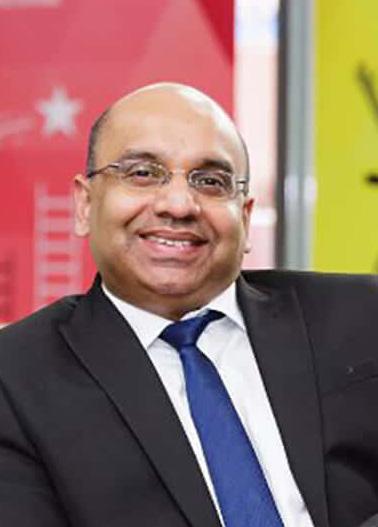
WITH AN INTRODUCTION FROM RT HON ROBERT HALFON

























WITH AN INTRODUCTION FROM RT HON ROBERT HALFON
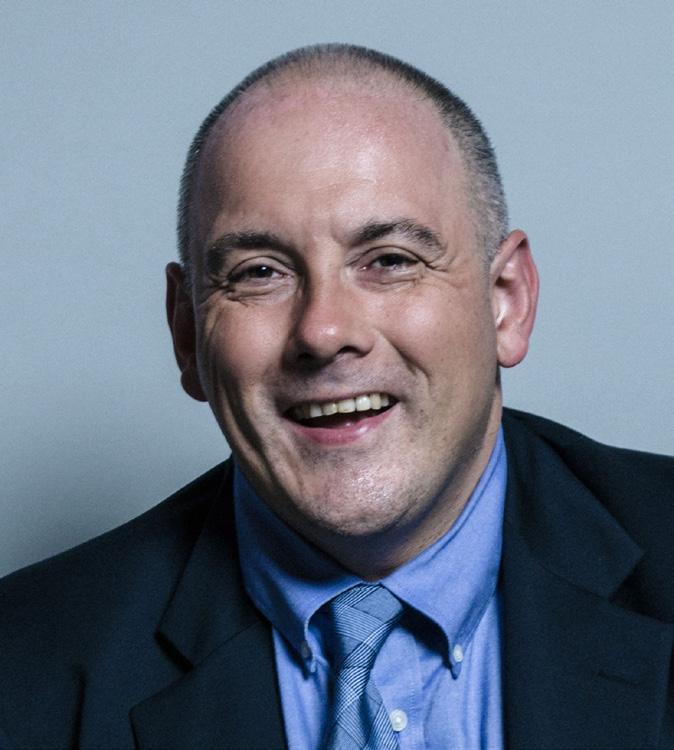
WhenI left Parliament after fourteen years as the Conservative MP for Harlow, having twice served as Minister for Skills, Apprenticeships and Higher Education, I knew I wanted to carry on the work that has defined my public life: promoting skills for life, and providing a ladder of opportunity for all those willing to climb it.
In my role as Executive Director at Make UK, the national manufacturers’ organisation, I can continue that work — championing skills, apprenticeships and technical education across one of the most vital sectors of our economy. British manufacturing employs around 2.6 million people and underpins communities across the country. There is no future for the industry without a relentless focus on the skills of the next generation. But my commitment to the ladder of opportunity does not end at the factory gate. It extends to every young person in every sector who needs a hand on the first rung.
It is that conviction which has led me to follow in Dame Mary Richardson’s footsteps in championing Finito and, in particular, its Bursary scheme.
The Bursary matters because it tackles, head-on, one of the most
stubborn injustices in our educationto-employment system. The truth is that the young people who most need world-class career support are almost always the least likely to receive it. Coaching, mentoring, interview preparation, professional networks, the quiet confidence that comes from knowing how a particular industry actually works — these have long been the preserve of those whose families can afford to buy them, or who happen to know the right people. For everyone else, the door is often closed before they have even had the chance to knock.
The Bursary scheme prises that door open. It gives talented young people from disadvantaged backgrounds — care leavers, refugees, those struggling with mental health, those who are the first in their family to consider university or a professional career — access to the same calibre of one-to-one employability support that has, until now, been available only to the privileged few. That means dedicated mentors, CV and application coaching, mock interviews with senior professionals, psychometric assessments, mental health support, and crucially, introductions to employers who might otherwise never have crossed their path. It is, in effect, social capital - offered to those who have earned it through nothing more than their potential and their determination.
And the results speak for themselves. In the pages that follow, you will meet some of the young people whose lives have been changed by it. You will meet Tushar Kumar, who had scarcely been beyond Derbyshire and is now thriving at one of the city’s leading recruitment firms. You will meet Valeria Mitureva, a Ukrainian refugee who has found her footing and her
future through the scheme. And you will meet Joseph McDonald, who has been supported through university while navigating serious challenges with his mental health.
What unites their stories is something more profound than employment statistics, important though those are. It is the quiet, transformative experience of a young person discovering who they are and what they are capable of. We all need a hand at some point. The question is whether, as a society, we are willing to extend one.
Readers who know me will know that I am a lifelong admirer of JRR Tolkien. When asked which of his characters I most identify with, my answer is always the same: Bilbo Baggins. And it is Bilbo who offers Frodo the line I find myself returning to again and again — “It’s a dangerous business, Frodo, going out your door. You step onto the road, and if you don’t keep your feet, there’s no knowing where you might be swept off to.”
Every young person setting out on an uncertain road deserves a Gandalf of their own: someone to steady them, to believe in them, and to help them keep their feet.
One of our Bursary candidates, Leah Houston, described the experience as “suddenly being seen.” I cannot think of a more powerful phrase. Because the alternative — invisibility, wasted potential, and the slow erosion of hope — is something no civilised country should be willing to accept. I never have. That is why I am here, and it is why I hope that those reading this will choose to walk a little of this road with me.
Those who believe in mentoring tend to have a personal story about how they came to understand its importance. That’s certainly the case for me. Born to a loving middle-class family on the island of Jersey, I suspected even then that I was lucky. I just didn’t know how much.
But even these fortunate circumstances weren’t enough to make success certain. When I was young, I dreamed of becoming a helicopter pilot in the army. But there was a problem – and it lay in me. At first, I didn’t find the resolve within myself to work as hard as I should have done at school to make that a reality. I left school at 16, and had to face a harsh truth: my dream was unlikely to be realised. It was at this point that a family
friend took it upon himself to open my eyes to what is possible with direction and application. His mentoring made all the difference to the outcome of my future working career – better than that, his example stuck in my mind.
“WE AIM TO UNLOCK THE TALENT AND POTENTIAL OF EACH PERSON.”
Looking back over the 37 years that have passed since then, I am incredibly fortunate to have achieved my career dreams and accomplished more professionally than I would have ever thought possible. I couldn’t have done it without mentoring. It’s this experience that has brought me to mentoring in general – and to Finito in particular.
The mentoring and networking we deliver within Finito is tailored to each mentee. What we aim to do is unlock the talent and potential of each person. That means that there are as many different outcomes as there are Finito candidates. Everyone’s different, and as a business, we love celebrating that uniqueness which lies in each of us.
However, there is one common thread for every introduction: all our mentees come from families who care enough to buy into the Finito service. That fact alone got me thinking. Over the course of my first year or two with Finito, I began to see that our work could produce a life-changing difference to talented young people who come from families who can’t afford our fees. I pitched the idea to Ronel Lehmann, the company’s founder and CEO: thankfully, he saw the
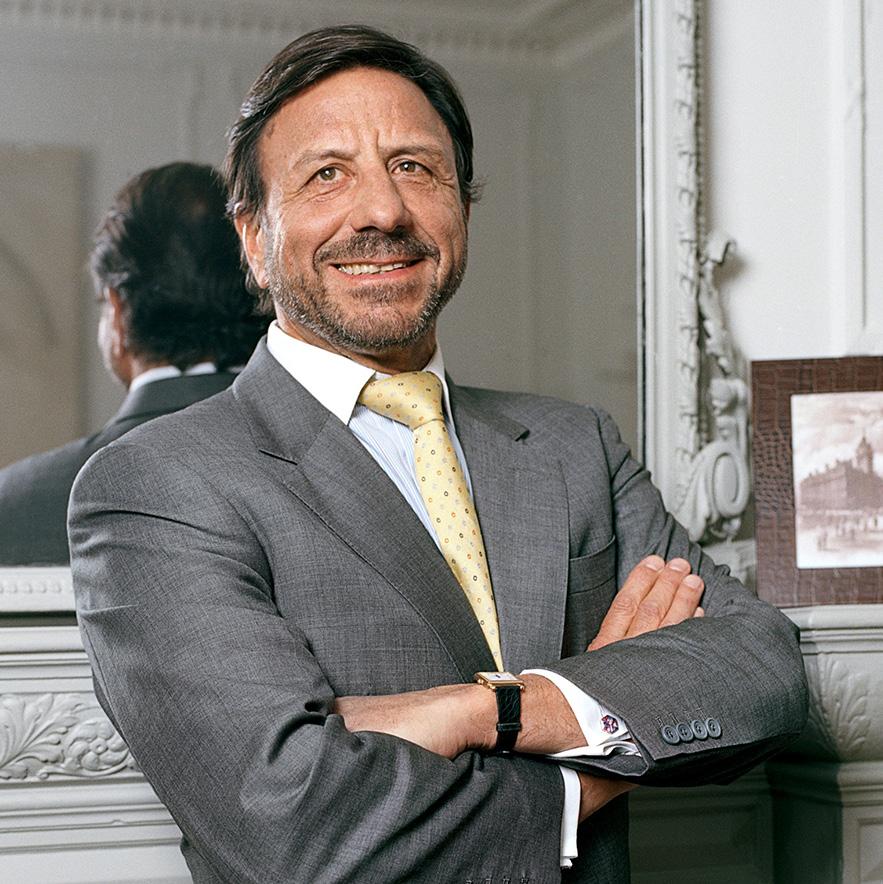
idea as a credible realistic project. He invited me to make it happen, and build on the work of Dame Mary Richardson, who has deep experience in bursaries and had been advising the business in this area.
Sometimes you have to be careful of what you wish for. As an exmilitary pilot now running an international defence training company I found myself in a totally new environment. On the one hand, I had the task of finding talented young people from underprivileged backgrounds, who would be interested in joining a fledgling Bursary programme.. On the other, I had to drum up interest from fellow mentors who would be willing to volunteer some of their time pro bono to a scheme which had no financial backing – yet.
As it turned out, I needn’t have worried. During my research, the Landau Forte Academy in Derby came onto my radar. The school immediately caught my attention on account of its holistic approach to education, and its academic success in one of the most deprived areas of the country. Significant sums of money donated by Martin Landau and Sir Rocco Forte had produced an educational environment across a number of campuses where young people were being enabled to reach their potential.
I sensed it would be a fit. Finito could take some of the most deserving individuals at the Landau Forte Academy, and work with them as they left their school environment and moved to the next stage of their lives. Whether students might wish to attend university, or secure an apprenticeship or immediate employment, we’d be able to help.
Fortunately, the senior management team at Landau Forte saw the benefits and worked with me to identify our first students. These were then matched with Finito mentors who had offered their time for free to help me start the programme..
Six months on and how’s it
going? Well, it’s been incredibly exciting. Our students so far have come from a broad spectrum of backgrounds. We’ve also had some notable early successes which motivate me – and everyone at Finito – to expand the programme..
When I speak to Sarah FindlayCobb, the CEO of the Landau Forte Charitable Trust, I am keen to get her feedback as to how much it’s helped the school. I am touched by how effusive she is: “I can’t get over what an amazing opportunity this is for our students,” she says. “We’ve had some huge successes from people who needed that extra push. It’s made a significant difference to their life chances.”
The successes Sarah mentions are a promise of what’s to come. For instance, one of our mentees has been given significant time and support to move to university and happily settle there. That outcome might sound reasonably normal to most of us but for a number of reasons it was thought unlikely to happen before that young person joined the programme..
Another early success involved support through advice and coaching for a young person who had been offered a fantastic apprenticeship, but in a location

that the school thought the mentee would decide not to relocate to – again, for several complicated reasons. In that instance, our mentor worked hard to support the individual, giving them contacts and advice as well as talking to agencies on their behalf in the new city.
Again this may sound like no big deal, but the young mentee would have had no help or guidance in making the apprenticeship a reality without the help of the Bursary. In the event of it, the school was both delighted and amazed that the young person in question had decided to take up the position. Findlay-Cobb says: “It was one of those students where we thought it could have gone either way. He’s been utterly changed – and hugely for the better.”
Another Landau Forte Academy mentee, Yassen Ahmad, talks to me about his own quest to be a software engineer, and how Finito has helped with that. He explains what the experience has meant to him: “For me, Finito mentoring has meant a lot more than just becoming employable. It is also about both growing and developing myself beyond the confines of my limited perception of the world.”
Had Yassen had prior experience of mentoring? “Previously, before I was being mentored, I had regimented myself to believe that university was the only viable pathway for my chosen career. As a naive young adult there’s only so much experience and knowledge that I have about careers and the world of work.”
So what did Yassen learn from his mentoring? “Flexibility is one of the major lessons I have gained from my sessions. My mentor shone a light from a different perspective and guided me to discover a plethora of alternative routes that I had previously isolated, such as apprenticeships, degree apprenticeships or even entering directly into the workforce with the right company.”
And does Yassen feel ready for the world of work? “The Finito mentors have also allowed me to understand how I can become more of an asset and of value to an employer, knowing what skills they look for within their company. I think these prospects have drastically helped me hone my current skills so I can become a more appealing applicant as well. I firmly believe I would not have so easily understood all these things on my own.”
“FOR ME, FINITO MENTORING HAS MEANT A LOT MORE THAN JUST BECOMING EMPLOYABLE.”
Yassen’s is a moving story, not least because there are too many young people like him who don’t have access to the sort of
opportunities we’re providing – and which the company now aims to expand. Yassen explains: “Coming from a background where finance has been difficult, I am very thankful for the monetary grant provided to me. It has aided in breaking down unnecessary financial barriers that I came across in my journey and exploration of my career. Allowing me to access online courses, books and other resources that were previously restricted to me, these opportunities have been able to maximise my current potential and performance like no other.”
Findlay-Cobb adds: “When you break that cycle of poverty you don’t just help that one person: it affects other family members, and it can last generations.” Yassen seconds that: “This is merely the start of my career journey, the benefits of the long-term investment with my mentor will only grow as time passes. That for me is why I love the mentoring with Finito.”
The notion that mentoring is a gift which grows in time is both an exciting thought intellectually, but also a profound motivation to those of us at Finito who now want to use the coming years to help break that poverty cycle for as many young people as possible.
Our support of Yassen and others shall continue well beyond the present moment. As these young people develop in the marketplace post-education, the Finito network will come into action. We shall introduce all our mentees to key figures in the industry and work arenas in which they seek employment. We shall not rest until they are fulfilled. We are expert at securing work placements, internships and helping prepare for interviews.

All candidates who come to Finito have an advantage – that is why the business is successful. But imagine a world where that privilege were extended to those who can’t afford it.
The Bursary is good for the mentees. It also happens to be the case that it’s good for the mentors as well. In fact, one unexpected side effect of the Bursary is to have stretched the Finito mentors, in each instance developing a stronger and more effective mentor for the organisation in general. Most of the Finito mentors are senior individuals in their own profession, from senior bankers and lawyers to high-flying media execs. While experienced in their professional worlds, all our Bursary mentors have reported that some of the social and welfare challenges that they have faced in working with our young Bursary mentees have taken them into new areas and broadened their perspective.
So as with so many good ideas, there turn out to be many hidden benefits to this. That’s why Finito has been seeking Bursary donations – and excitingly, some household names have already come forward to help.
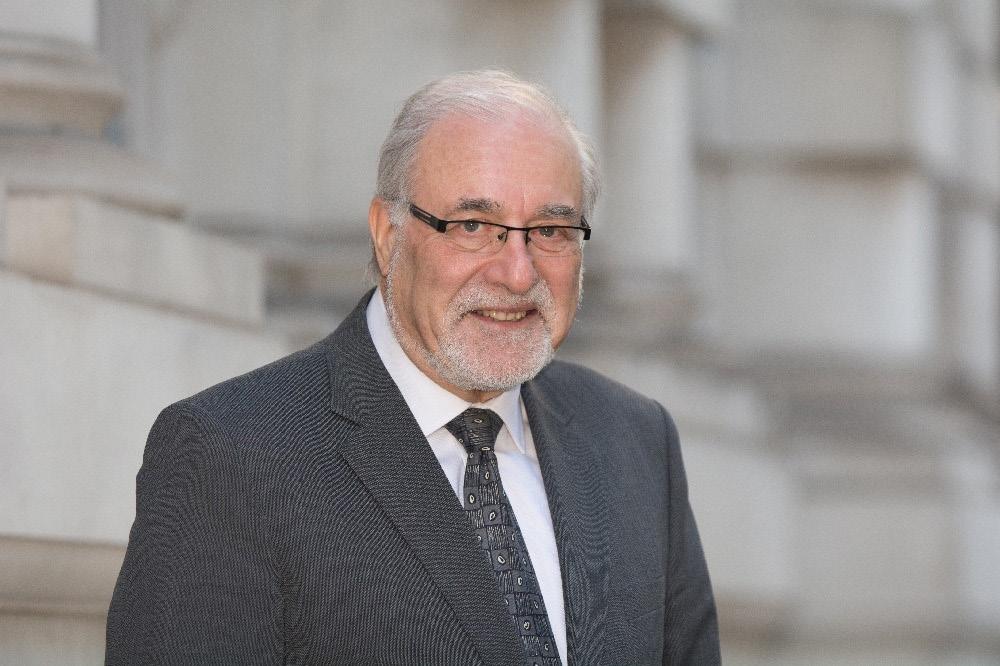
One of those is John Griffin, the founder of Addison Lee, and Chairman of Finito Education who says: “In my long career mentoring young people, it fills me with enormous pride that I created employment for thousands of people at Addison Lee. Finito continues this important work and I am delighted to be a part of their team.”
Meanwhile, John Cahill, managing partner of Stewarts Law, tells us: “In a perfect world comprehensive career guidance would be available to all regardless of their background. The Stewarts Foundation is delighted to support the important work of Finito via its bursary scheme.”
“WE ARE EXPERT AT SECURING WORK PLACEMENTS, INTERNSHIPS AND HELPING PREPARE FOR INTERVIEWS.”
Other donors include Dr Selva Pankaj, the CEO of the Regent Group, who hails the scheme as being particularly relevant in the “current volatile landscape of the pandemic”. The famed surgeon
Professor Nadey Hakim tells us: “Finito really makes things happen and it is incumbent on me to support you and to encourage others to follow my lead.” Simon Blagden CBE, the Chair of Larkspur International Ltd., adds: “I served the Government’s advisory panel reviewing the future of technical education. During the two year process we met with hundreds of young people all over the country. I am delighted to support the work of Finito. The valuable work which you do strongly resonates with both students and their parents.”
Meanwhile the Bursary has also earned praise from leading lights in education. Sarah Fletcher, the High Mistress of St Paul’s Girls’ School, tells us: “Education is all about providing everybody with opportunity – and that opportunity extends from school to university, and into the world of work. Finito performs an excellent job of giving students the opportunity to hone their CVs, fine tune their skills at interview and gain the confidence they need to enter the world of work. The fact that Finito is prepared to offer bursaries is really important to me, because it means that their offering is open to everybody regardless of background or means. That makes this truly special.”
These are marvellous endorsements, and I am confident that there will be many more in the years ahead. It’s almost enough to make me pleased that I needed mentoring at the age of 16. At any rate, our goal now is to move forwards and have as many young people like Yassen benefiting from our services as possible.

One sometimes hears someone called a ‘black sheep’ of a family as a pejorative term. It needn’t be like that. Most people who look inward in any concerted way find some surprising differences between their own hopes and dreams and their outward circumstances. Knowledge of this difference can open surprising inner capacities and point the way to a fruitful life. In the best cases, it is possible to strike out
in a different direction from one’s family, and to feel no sense of alienation whatsoever – but instead to feel a sense of loving journey, which ultimately all members of the family will accept and profit from in understanding.
Something like this appears to be happening to Finito candidate Leah Houston. I ask her about her upbringing: “I’m from very humble beginnings,” she tells me, her accent distinctively Northern Irish.
“Education was never pushed for me. It wasn’t the world I was in. I’m the first in my close family to be interested in my studies, and then to want to pursue them, and then to go onto university at the Belfast Bible College in Dunmurry, Belfast.”
Despite this, Houston is aware of many similarities between herself and her family. “On the other hand, working hard was pushed on me – it was a question of financial necessity. I’ve had a part time job
since I was 14. After school you went to work: food had to be placed on the table somehow. In hindsight, I wouldn’t have changed a thing at all.”
“YOU HAVE YOUR HANDS AND YOU CAN DO SOMETHING ABOUT IT – SO GO WORK.”
So what did her parents do for a living? “My Dad is typical Northern Irish. He is a part-time farmer and he sells animal feed from a local agricultural shop. My mum worked in office work all her life – then she had me. She felt that to stay at home was her calling, but then she started looking after other peoples’ kids and soon she had her own childminding business.” This seems to amount to a strong entrepreneurial streak in the family. Houston agrees: “You have your hands and you can do something about it – so go work,” she says, simply.
This innate understanding of business was already becoming apparent in Houston’s choices. “Business makes sense to me,” she explains, “seeing something through from 0 to 100. You’ve got to see what you’re good at and make something of it. I studied Business through to A-Level and initially thought I would study that subject at university as well. But I had a bit of a change of heart.”
This brings in another side of Leah – her religious belief. “I grew up in a strong Christian household,” she recalls. “It wasn’t pushy but it was fostered. So I studied religion and law at university which was a major change.” Throughout our conversation she will talk about her faith in the relaxed, confident way which people do when their beliefs
are deeply embedded.
I am interested to know how this degree was structured. She explains: “The main aspect of it was theology, in which world studies, policy and law were examined. It was all to do with how one’s faith works out in the public sphere. I was focused predominantly on Christianity but I also did world religion modules.”
This decision garnered a mixed reaction at home. “My extended family – my cousins and so on –weren’t sure. Firstly, because I’m a woman – that didn’t go down well, and led to some opposition. Some also thought I would lose my own faith, and question what I believe.” And has she? “I haven’t. Growing up in a Christian country, Christianity can be ugly because it’s political. There have been civil wars in the name of Christianity in my country. I came out the other end with a wider appreciation of all religions and the part they can play.”
“GROWING UP IN A CHRISTIAN COUNTRY, CHRISTIANITY CAN BE UGLY BECAUSE IT’S POLITICAL.”
Houston loved her degrees, but like most humanities degree, the gain of doing something one loves had a flipside: such courses don’t lead to such clear destinations as vocational courses. “I didn’t want to go into the Church, so in hindsight it was a much harder option. For the first few years I thought it was all amazing, but I’m not philosophical – I’m much more practical. My interest is in thinking how faith values can be implemented. During the three years of my degree, I did some time with a charity at home called the Evangelical Alliance. That
organisation tries to bridge the gap between Church and politics. In hindsight, my time there planted the seed for politics and the public sphere.”
This seed came to fruition when Houston began working for Baroness Anne Jenkin in the Houses of Parliament. “When I finished university, I thought: ‘What the heck am I going to do next?’ I came across Christian Action Research Education (CARE) a charity which seeks to facilitate getting a job as a Christian in politics in addition to offering training in thinking about politics. Anne Jenkin is extremely kind and said she’d take me for a year.”
And what were her impressions of the role? “Anne is so hard-working –no two days are the same for Anne,” Houston recalls, laughing perhaps at the remembered bustle of it all. “I was involved in diary management, speeches and organising meetings she would host. It was general ad hoc stuff and I was an extra pair of hands.” Leah brought a very clear sense of purpose to the role. “I was there to serve Anne – to allow her to do her job better. That could be sending letters, or photocopying, or making a cup of tea. I also became immersed in the question of gender
ideology, which is one of the key issues for Anne.”
And what was the culture like in Parliament? “As a practising Christian myself, I was interested to discover the APPG, Christians in Parliament, that is a cross-party group of Christians. As long as you were a passholder you could be a part of that: MPs, kitchen staffers, it didn’t matter. It brought a sense of community, with weekly services held in the Chapel of St Mary Undercroft. Politics is so polarised and tends to be all or nothing. It is meaningful to have something that unites: at election time we prayed for whoever was in leadership.”
Through Baroness Jenkin, Leah met Finito Education CEO Ronel who saw Leah’s potential. “Ronel is a great supporter of Anne and he took me under his wing. I was with Finito for half a year and the investment in me was incredible.”
“I especially value the confidence that the Finito service gives to someone in my circumstances.”
This is good to hear and I ask her what the impact has been. “Besides all the practical things such as the LinkedIn training, the CV writing and the mentoring, I especially value the confidence that the
Finito service gives to someone in my circumstances. It was as if I was being seen for the first time. This was so encouraging for me especially given my upbringing, where my wanting to succeed was perhaps sometimes considered a bit weird. My extended family would wonder why I was in London, and why I’m in the job I’m in. This was an organisation which wanted me to succeed.”
This process of building confidence in an individual is integral to the mentoring process. It begins from our first encounter with a new student. Houston recalls: “I remember vividly the first meeting with Ronel where I brought him my CV. When I had been in parliament I had co-founded a network for the protection of gender-critical views. I showed my leaflet to Ronel and it was an incredibly important moment, because someone was looking at my work, and taking an interest in me. It brought me an overwhelming sense of pride.”
Mentoring is to do with becoming reoriented in one’s life by coming into one’s essential self. Houston recalls that her being photographed by in-house photographer Sam Pearce continued this process. “I spent an afternoon with Sam and I noticed that she took the time to make me feel comfortable. She also took time to ask questions between pictures – it was not a transactional photoshoot, it was more an investment in who I was.”
Following on from there, Leah had her LinkedIn training with Amanda Brown (‘incredibly helpful’) and then began work with her lead mentor Tom Pauk. “He was so lovely and I was telling my heart and how I feel things deeply. He said: ‘I think you need to go into the charities sphere’. I said: ‘ I think you’re correct.’ And now I’ve landed a job
with a charity which is a start-up. Tom was amazing, and gave me contacts.’
“WEALTH TO ME ISN’T MONEY. IT’S WHAT I HAD GROWING UP: I HAD FAMILY AND FRIENDSHIP AND RELATIONSHIPS AND THAT TO ME IS WEALTH.”
From Pauk’s perspective, Houston made an excellent impression. He recalls: “Leah struck me as a highly intelligent, articulate and valuesdriven young woman, seeking a position where she can employ her myriad skills to improve the lives of others, especially those of women and children.” Pauk noted early on that her priority was ‘to use her lobbying skills to help bring about changes and social impact,” adding that “she is not driven by earning a high salary, though she’ll need a sustainable one.”
When the job came along it all happened very quickly ‘in the space of a week’. Houston brings me up to speed: “I now work for
a charity called Forum which is based in London and has launched in America too now. Its purpose is to serve leaders and influencers from all sectors of society. It tries to link up like-minded people. I’m a data manager and administrator, which is important for Forum, as someone’s name in the database is like gold to the business. I’m also EA to the founder David Stroud, who is married to Baroness Stroud.”
So how does she see the future? “I actually don’t know,” she admits. “My life these past few years has been full of uncertainty, but I can see myself settling here for a good while. It’s a start-up with huge potential for growth and now the whole past five years makes sense.”
At the end of our interview
Houston reflects a little on her journey so far.
“It’s strange to be in London and not be money-driven. Wealth to me isn’t money. It’s what I had growing up: I had family and friendship and relationships and that to me is wealth. Marriage and education is wealth.” And are her family beginning to understand the nature of her journey now?
“My parents have been massively supportive, but we don’t always speak a common language. My cousins have their own convictions and they don’t necessarily agree. But the relationships are there and really there’s so much love and support.”
One is tempted to call this attitude
mature except that many people live their whole lives without realising the importance of things which Leah innately understands. She also has an immense capacity for empathy and understanding. Houston is someone whose narrative is not to be judged by the usual metrics of success: money, or position or anything else – though there’s nothing to stop her acquiring these. But she is in such a strong position because she isn’t a materialist. She is someone who will make her own way – and in fact is already doing so.
The help which Finito gave to Leah would have been impossible without the generous help of the Stewarts Foundation. The firm’s managing partner Stuart Dench says: “In a perfect world comprehensive career guidance would be available to all regardless of their background. The Stewarts Foundation is delighted to support the important work of Finito via its bursary scheme.”
When it comes to someone like Leah, the importance is difficult to measure because it has to do with ineffable things like confidence, connectivity, and the unleashing of possibilities within a person who may not yet know how capable they are. In her case, it is also to do with helping someone to arrive at the realisation that the place they’re born in need not be a limiting factor. Ultimately it’s for us to make our own way – though it is right that we do so with the help of others.

One of the most underrated traits in our frenetic world is the one which many of us need more than we realise: patience. It is perhaps not surprising that having constructed a society based around the swift flow of information, and in encouraging the rush of activity, that we may have collectively forgotten this valuable attitude. But all the signs are that it’s an important thing for the job-seeker to cultivate. The world rarely works in a linear way, and it is as well to know that. Certainly, if we don’t do that, reality can disappoint and discourage us from getting anywhere.
All these thoughts came to me as I considered the case of Finito bursary candidate Johnny Windsor-
Clive. It’s hard to imagine a more likeable and gentler soul than Johnny: he’s the sort of person you find yourself rooting for before he’s even opened his mouth. But despite his obvious benevolence and decency, his career search hasn’t always been easy.
In fact, Johnny has had some definite headwinds to face. Ronel Lehmann recalls hearing about Johnny: “I was told that Johnny has mild Asperger’s Syndrome and when I met him I found myself warming to him immensely as someone with a kind and considerate manner, who nevertheless might not succeed in the same way without Finito’s help. Mild Asperger’s can lead to awkward movements, sensitivity to light and difficulty understanding other people’s perspectives – and
yet I could see his potential.”
From the outset, then, it was a fascinating assignment. I ask Johnny first about his upbringing: “My parents live in Marlborough and I grew up there,” he tells me. And his parents? “Dad is an estate agent. He has his own company which specialises in country estates – and he does that globally.”
I ask Johnny if he’d ever considered following his father into the property sector? “I am aware from various sources that the whole property sector is going through a period of change,” he tells me.
“Traditionally, the role of the agent was to bring something extra to the process – but nowadays, if you have a standard residential property, the role of the estate agent can largely be done because of the internet by
the client themselves. An example of that is Purple Bricks where they actually cut out the estate agent almost entirely so that everything is negotiated between the seller and the buyer.”
Sometimes, knowing what you’re not going to do is as important as knowing what you will do –especially when it comes to a successful parent.
What about Johnny’s education? At school, he showed strength in history, geography, economics and politics, before going on to study politics at university. “After prep school, I went on to attend Oxford Brookes. Since that time, I have done various things, working for an MP and mostly doing data analysis political work. I found it really interesting, and then went on to work for an MP called Henry Bellingham. I also worked with Danny Kruger MP before working as a research analyst at Allied Peak.”
Other roles followed. It was gradually emerging that Johnny felt a considerable affinity with data, but he couldn’t quite see a career path for himself: he knew he had the skills, but what was really required was a role in which he could grow. In time, he came to Finito. “I got introduced to Ronel Lehmann when my mother heard through the network about the services that Finito offer. She was aware that a lot of the roles I had done were not really leading anywhere. They may have been interesting, but there was no career progression. Whereas what Finito has delivered for me is actually a stepping stone into a long-term career progression instead of just working in roles which don’t really have a career progression.”
So how did the Finito team begin to shape that path? “After first speaking with Ronel, the number
one takeaway is finding out specifically where I wanted to go –but secondly I began to understand how important it is to have similar alternatives if the first option isn’t working out.” This greatly appealed to Johnny’s logical mind. “If you are in a process and there is only one possible outcome, it’s not very good,” he recalls. “Whereas if there are other options that hugely increases your chances of a beneficial outcome: you don’t have to keep going back to square one. Actually you can start from step 19 and carry on!”
“MANY CANDIDATES ARE UNDER STRESS AND IT CAN BE POSSIBLE FOR THEIR ANSWERS TO REFLECT THIS AND NOT TO CONTAIN QUITE THE ATTITUDE WHICH EMPLOYERS ARE SEEKING.”
All of this meant that Johnny was beginning to think about his career in a far more flexible way. With this strategy in place, he was now able to focus on improving his skillset in terms of his online presence, as well as his interview preparation. To do this, he was referred to two senior Finito mentors Andy Inman and Coco Stevenson.
Stevenson recalls: “I remember explaining to Johnny how important it is to research a company, in particular to consider its mission statement, vision, values and strategic plan. I told him that he needed to be prepared to answer questions about these things. If the interviewer doesn’t specifically ask questions about these, it is useful to bring them into your answers.’”
Another important lesson related to vocabulary. Many candidates are under stress and it can be possible for their answers to reflect this and not to contain quite the attitude which employers are seeking. “I remember telling Johnny to make sure that the vocabulary he uses is positive,” Stevenson continues. “For example, in a practice interview, when asked about moving abroad, Johnny said he would be happy to, and that he ‘couldn’t care less’. I knew that he meant this in a positive way in so far as he is not fazed by the challenge of relocating, but the way he phrased it sounded very negative, or it could be misconstrued as negative.”
For Johnny this was important: “Coco was incredibly helpful and offered really good advice. I would say for the interview preparation she was absolutely fantastic.”
Andy Inman, as a former military man, is known at Finito for offering a stricter approach. Johnny responded positively to this. “He was quite strict. But I appreciate strictness because it delivers results. That’s what I am in the system for – to achieve a result. Whenever I do something I want to know roughly what the result is going to be. As a result, I would rather a mentor who is strict than one who is not strict: if they’re not strict nothing gets done.”
Around this time, Johnny began to focus on the business analysis route. He was coming into greater awareness of his strengths. “One of the things I am very good at is going through data with a very fine tooth comb to find the relevant information. I then enjoy packaging that in a way that is useful to the project management team.”
Johnny had his setbacks, with not every interview successful, but it was here that the presence of a clear plan in his mind gave him resilience. However, Andy Inman had to make sure he kept a close eye on Johnny during the application process. “Having helped Johnny prepare for his previous interview, I was a little saddened at one point to hear that he had not been successful in securing a particular role,” Inman recalls. “I remember speaking to him after this disappointment, and I was heartened to see that he was as upbeat as ever, and hopeful that the company would be in touch again when a more data and research leaning role became available. We
chatted about some tech difficulties that Johnny had during the interview, and I reminded Johnny that we had previously discussed ways to mitigate that.”
But even as Inman was dispensing this advice, he noticed with his military eye for detail that Johnny needed to keep a close watch on the patterns of his life – as is common when one is between jobs. “I noticed that Johnny was becoming a little more eccentric over the 12 months that I had known him. His speech had become a little more affected and he would happily talk over you before you had finished a sentence. I felt it might have been due to the fact he had very little exposure to life outside of the home environment. I had a good idea of how Johnny’s days usually followed the same format of job applications in the morning, following up previous applications in the afternoon and then socialising with his parents’ friends in the evening or playing bridge with his mother.”
But in spite of these minor
adjustments, Johnny is blessed with an optimistic attitude and an enviable in-built resilience. In time, he heard through the Finito network about a potential role at Enness Global, the high end mortgages company. Johnny recalls: “Enness were potentially looking to take someone on because they had a challenge in terms of the management of their databases for two reasons.” What were these? “Firstly, some of it was only partially filled in. Secondly, there had been no one doing my role and so there was an enormous backlog which had built up.”
It was a hugely important interview and in advance of it Johnny had a long session with Andy Inman. The file note reads: “He [Johnny] is excited about the opportunity to meet Islay [Robinson, CEO of Enness Global]. We discussed various practical tips for the day, this will be Johnny’s first face to face interview, which in many ways is a bonus as it enables him to come across personally but is also a little daunting for him. We discussed the company background work he needs to do over the weekend as well as doing a recce of the office location on Sunday.”
If that seems like granular preparation, it wasn’t all. Inman continues: “We covered breathing techniques while waiting to be called in and then the social etiquette of the initial introduction. We covered work history and the need to make it an interesting story rather than firing off a list of job positions and dates and we covered strengths and weaknesses and how to best put those across. Finally I convinced Johnny of the importance of just enjoying the opportunity and allowing his true self to come across.”
The memorandum concludes on a moving note: “He is as ready as he
will ever be and is determined to give a good account of himself. This will be life changing for Johnny if he is successful.”
When Johnny got the job, everybody at Finito was thrilled for him and it is even more thrilling to consider now that Inman’s predictions have proven true; this has been life-changing for Johnny. But for Johnny himself this exciting challenge is only just beginning. “For the past 15 months, I have been going through the backlog and sorting it out so that former clients can be re-contacted, making it easier for Enness to handle old clients. Before I came into position, Enness were unaware of the value they could offer to old clients. What I have been doing is extracting that information and repackaging it for the relationship managers, who can then re-engage those people.”
This work has been an astonishing success, a fact which has greatly strengthened Johnny’s own standing within the company. “I know from discussions with various colleagues in the past weeks that those clients who I have extracted from the backlog have significant holdings and wealth, much of it brokered by Enness. And we have now been able to help many of them access additional value and financial services from our wider portfolio.”
How does that make him feel to know he is making such a difference to the company? Johnny is immediate with his response. “It makes me enormously proud that I am making such a positive difference to the company and also it makes me very pleased that it’s a mutually beneficial relationship. My work ensures that Enness get enormous value out of me and also that my skills have developed through the role which means that actually it give me an enormously sellable skill for the future. I feel one of the great
things about Finito finding me this role is that it will enable me to forge a career.”
This means that Johnny is now ideally positioned to graduate into a broader analytical role. Has he pitched that to the management at Enness? “They are aware that my skills go beyond purely data analysis and data processing. A lot of the projects I am now doing are involving more analysis than previously, so that my role has moved from being purely data processing to actually doing some of the analysis as well which is really useful.”
Johnny concludes: “They seem very happy with me. It’s a great success story and I am very grateful to Finito for providing such great assistance.”
But, of course, it hasn’t just been Finito that has helped. Johnny’s story would have been impossible without the generous support of two bursary donors. Richard Oldfield, the founder of the Henry Oldfield Trust, says: “Finito works intuitively with young people to help them pinpoint the areas
in which they can best excel and to move into fulfilling jobs. Their support of young people is invaluable. Finito helps them with their first step into the workplace. We are delighted to contribute to the Finito bursary for those who would not otherwise be able to afford this superb service.”
Meanwhile, Mike Watson, founder of Watson Medical Anti Ageing and Pain Management, tells us: “As a business owner, I often find myself mentoring students, school leavers and university graduates, many of whom are desperate for reassurance and guidance. Finito’s offering allows the sharing of invaluable insights, empowering youngsters in essential life values and reminding them the world is not as complex as portrayed –we’ve been their age before! Finito definitely put their money (and my own) where their mouth is!”
And when it comes to Johnny we’ll be reporting in these pages about developments as they come along. “This is just the beginning,” he says. “I’m excited for the future.”
Ihave sometimes observed that precocity creates its own challenges: being brilliant young creates expectation and pressure. In fact, it turns out that ability without the right temperament places even greater pressure on ability itself. It’s rare for the two to go hand-in-hand because the one can sometimes clash with the other. To be very talented is usually to be told you’re talented: not everyone keeps a level head.
Nick Hennigan, 23, who recently took part in the Finito bursary scheme, has had by any measure a difficult few years. His father took his own life at the start of the pandemic, leading to unthinkable grief and shock. But to talk to him you wouldn’t know it – and in fact he only mentions it towards the end of our conversation. “As much as it is a completely negative impact on anyone’s life –within my family it was a huge blow to us all – I now see myself as my dad’s legacy. I want to go out there and do him proud and do the rest of my family proud,” he will say.
What was his early life like? “I was born in Aberdeen and I’m very proud of my Scottish heritage. I went to a state comprehensive and after finishing secondary school, I went to join EY on a business apprenticeship, which allows young school age children to join a Big Four firm, and train up as a chartered accountant.”
The experience was formative but in ways Hennigan might not have been expecting: it showed him vividly what he didn’t want to do. “I was in the audit division, and I didn’t find it personally or professionally stimulating,” he says simply. But from there, Hennigan went on
to complete his university degree in international business management at the Aberdeen Business School, before heading off to study in Canada’s Mount Royal University . “That was a fantastic experience,” he tells me. “All of this has helped shape me into looking towards a career within a company that has international presence. I suppose it gave me a deep appreciation for multi-national business. ”
Hennigan has always had a broad range of interests, and was strong at school across the curriculum. “I always did quite well in maths subjects but then I also did biology and chemistry, as well as English and geography. I like to look at things intellectually and enjoy studying and working towards qualifications. I would say I am numerate but I am also good with my language and the written word.”
He says this without any air of boasting – he is stating the facts. Has this range of aptitudes made it harder for him to choose a career path? “That was the observation some of the Finito mentors would actually make once I joined the scheme,” he recalls. “They said because I excelled in different areas of business and subject areas, it was difficult to rule things out.”
But Hennigan was already standing out from the crowd and an example of this is his excellent thesis ‘Leading into the post-Covid 19 era’. This astonishingly mature piece of work has a foreword by ITV’s Chief Executive Officer Carolyn McCall DBE, who writes in the paper: “Nick’s research is considered and thought-provoking and very much chimes with what I have long believed, that personal values and purpose play a pivotal role in the type of leader an individual will become.”
This wasn’t the only figure that Hennigan interviewed for the paper: “I would love to one day – hopefully –become a CEO – so that’s why I chose that topic,” Hennigan recalls. “I also interviewed EasyJet’s Johan Lundgren; as well as Simon Roberts of Sainsbury’s, and Paul MacDonald, the CEO of Avon Protection, and Mark Darkworth of Schroders Personal Wealth.”
I cannot imagine the result was ever in doubt, but Hennigan secured a first for his efforts. It is worth noting that Hennigan achieved all this despite scepticism about the ambition of his approach: “My supervisor said to me it wouldn’t be possible when I proposed it and that the CEOs wouldn’t give me the time of day. This spurred me on to go and prove her wrong: that’s part of my DNA – to overcome challenges.”
So how did Hennigan come into contact with Finito? “It happened early in 2023,” he recalls. “I have recently joined the shadow board of UMBRA International Group. Through my work there, I got to know the CEO Kate Bright well and she very kindly introduced me to Ronel Lehmann, the CEO of Finito Education.”
Hennigan’s main point of contact under the Bursary scheme was Claire Messer. “We got on really well, and she was great at preparing me for interviews – as was Merrill Powell who
coached me in presentation, and made sure I put each point across succinctly and impactfully. Amanda Brown did my LinkedIn training and Sam Pearce did my headshots. But through all this, I had Ronel who was really my main mentor.”
So what was Lehmann’s advice? “I had breakfast with him at a time when I had just had a few rejections and close calls, where I had got down to the final stages. Ronel told me I needed to think of three areas. So we narrowed it down to PR and recruitment – but we also spoke about private banking.”
Hennigan was initially sceptical about this third possibility: “Given my experience with EY, I was wary about going back into finance, but private banking is very different to audit, even though it’s also underpinned by numbers. It also chimed as I have always said I want to be externalfacing and deal with clients.”
Once this strategy was deemed a major possibility, the stars began to align. Hennigan recalls: “Luckily enough, Kate Bright knows the Head of Marketing at EFG Private Bank in London and Ronel knew one of the MDs. I was able to meet with both of them on the same day back-to-back. The meetings weren’t for a particular role but I was able to explain my situation and set out my stall. They followed up afterwards by saying there was a potential role with us in a different team as an assistant banker. Again, I had no experience in banking and I made them very aware of that but they didn’t seem to think that was a problem: I got the job.”
Those are the four words we most enjoy hearing at Finito. When I speak to Hennigan, he has only been in position for two and a half weeks, but his early impressions prove to be overwhelmingly positive: “I am enjoying the set-up
that I’ve got,” he tells me. “It’s very fast-paced and I have got a lot to learn. It’s going to be a steep but positive learning curve. The good thing is I am fully supported by not only the banker that I am assisting but also the team and the other assistants that we have in the bank within the team. I am in the front office and I think it’s an amazing first job. I am not going to take it for granted. I am going to work hard.”
“IT’S THROUGH ADVERSITY THAT YOU END UP GOING ON AND DOING GREAT THINGS.”
Of course, it is a tragedy that Hennigan’s father isn’t around to see what a remarkable young man his son is – and is still becoming. His will always be one of those stories which, despite his remarkable nature, will contain the wish that events had been otherwise. Never once in our conversation do I see any trace of the self-pity others might feel and which would be perfectly understandable.
Hennigan says: “I suppose it’s formed my outlook on life. It’s through adversity that you end up going on and doing great things. Finito opens doors and it encourages you – but it is down to the candidates themselves to do well. If the candidate doesn’t want to engage in the process then they are not going to get out much. I think there is maybe a misconception with Finito: people say they will just place you into a job. No, they will support you to get yourself into that job.”
That’s something that mentors observe on a daily basis – it’s not often, however, that a mentee speaks so eloquently about the
experience of the mentor. What I think Hennigan has therefore –and I expect it to catapult him in time to the front ranks of British and maybe global business – is imaginative empathy. It is an ability to place himself in the shoes of others, and yet to retain his own remarkable steel and determination at the same time. It is the mark of someone already functioning at an extremely high level. It will do no harm that he is charming, and equally skilled at numerical and linguistic tasks.
Usually, in an article like this, we like to thank the Bursary supporters who have helped the candidate in question. In this case, the donor has asked to remain anonymous, but has been happy to offer us these thoughts: “All it took was one brief telephone call from Ronel and I felt compelled to help. He was so emphatic in his enthusiasm for a newly presented applicant in whom he saw enormous potential but who had no possibility of funding. Ronel gave me the basic details and story, but was careful not to reveal too much. I did not wish for anything in return, simply the expectation of hearing some good news in due course. And indeed there has been. Nick will no doubt have a bright future and successful career, made possible by Finito’s mentoring and guidance. Maybe one serendipitous telephone call really has changed a young life.”
This generosity is an example to us all, and Hennigan expresses to me the extent of his gratitude: “This person changed my life and I hope one day I get to meet and thank this person.” The donor should also know that to have supported Hennigan is to have backed an obvious winner. I would say: “Watch this space” –but my suspicion is you won’t have to look too hard to see the impact Hennigan will go on to make.
In an age where almost everywhere we look we hear lament about declining standards, let’s consider some good news from the front lines of mentoring: it’s remarkable how intelligent the young are. It’s hard to say this without sounding patronising, so it needs to be bound up with a couple of relativistic statements. They are, seemingly without exception, more intelligent than I was at that age – and always know things I do not know. In short, there’s always two-way learning to be done, and I’d distrust any mentoring process that didn’t have this understanding as a sort of guiding principle.
We have the word ‘precocity’ for this and I think generally we can say today: the young are precocious. Whether this is because the Internet, with its moreish flow of information, has democratised intelligence, I don’t know. But one thing it definitely hasn’t democratised is the work ethic. That is now the rare thing; to know what to do with intelligence.
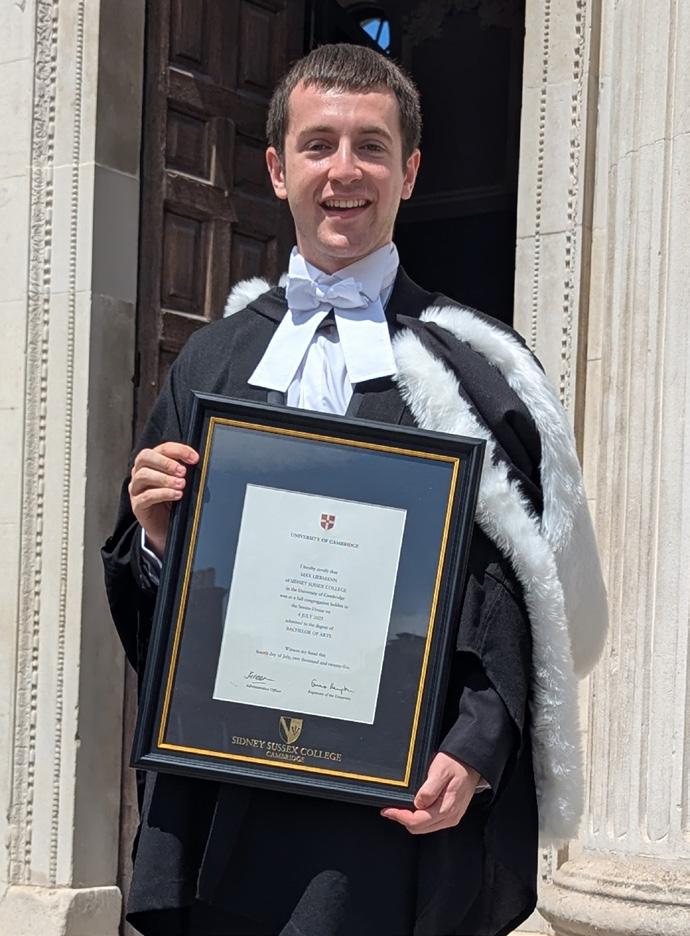
This last point is what sets Max Liebmann apart. When I heard that a mature young man was joining our Bursary scheme, I initially underestimated the extent to which that would be true. This mandate would see Finito help take Liebmann all the way to Cambridge University and in time, we hope to be part of his journey beyond that point. It’s definitely an example of a story where the candidate’s initial excellence was central to the mandate’s success.
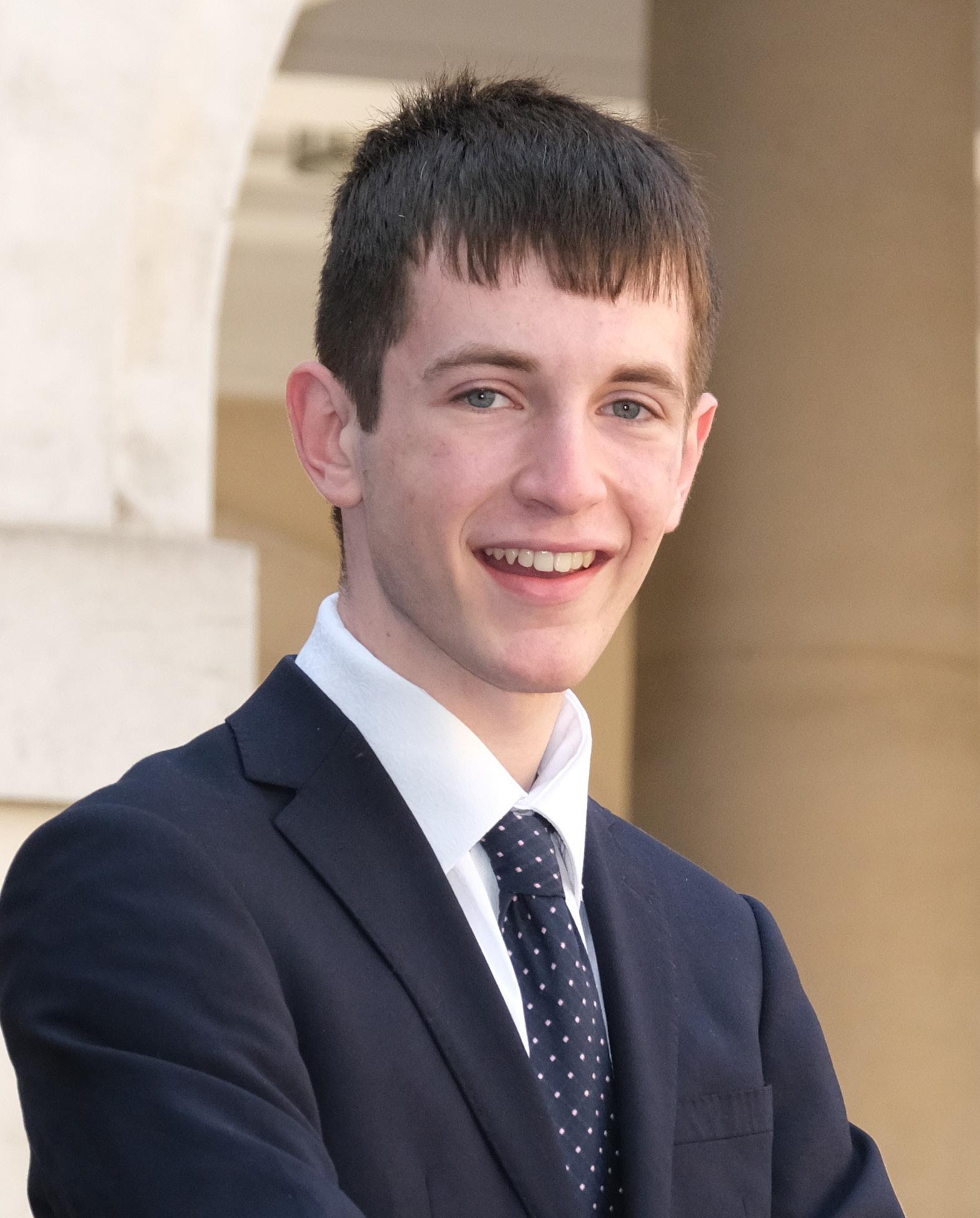
Liebmann came to the Finito bursary scheme fully formed in certain crucial respects. He knew for instance that he wanted to work hard and succeed. More than that, he had known from a very young age that he wanted to be a lawyer. “I have known that I wanted to become a lawyer since primary school,” he recalls. “I have always enjoyed logical problems, participating in Maths Olympiads during secondary school. I initially developed a passion for languages, taking both French and German at A level. This logical thinking I used to apply in maths evolved into a love of applying the
law to problems. I like the everchanging nature of the law which keeps it exciting and intellectually challenging.”
Sometimes an appetite for the law is a hereditary bequest, but not in this instance. “My mum currently works as a teacher in primary school, helping less-able students. I am also very close to my grandparents, and they have had a significant influence in my life,” Liebmann explains.
Liebmann attended Parmiter School in Watford and, as he came to maturity, began to stand out. He was successfully elected
Head Boy for the year 2021-2022: “I was incredibly fortunate to have been elected to that position. During my time as Head Boy, I represented the school at events, sought to improve the school, and I organised prom.”
This appointment gave Liebmann huge confidence, and it reminds us how maturity can often lead to a higher grade of experience which deepens a maturity which was already far advanced. Liebmann recalls: “Being Head Boy strengthened my leadership, time-management, and publicspeaking abilities, and it showed me the importance of giving a voice to students from underrepresented backgrounds. Working in a large and diverse community to bring about change, I learned how to synthesise multiple standpoints to determine a common objective.”
“I WANT A CAREER WHERE I CAN CONSTANTLY LEARN NEW SKILLS AND FACE NEW CHALLENGES.”
It was at this stage that the world beyond Parmiter began to loom, and Liebmann decided he would apply for Cambridge. At this hinge point, he was introduced to Finito, and assigned to our bursary scheme: “I try to make the most of every opportunity that I am offered,” Liebmann recalls. “I want a career where I can constantly learn new skills and face new challenges. I think it’s important that you do things that you enjoy in life. A career needs to be fulfilling, and I find law really exciting.”
So what were his impressions of the bursary scheme? “I first came across Finito during lockdown. Finito was excellent, helping me out in every way it possibly could. I was given mentors, each of whom helped me out with different things. I was advised how best to present myself to the business world, and Finito helped me set up a LinkedIn account. Finito helped me practise my interview skills and develop my legal thinking.”
LinkedIn training is all to do with the way we present ourselves to the world and is absolutely vital at the outset of our careers; it might be the unglamorous side of mentoring but that doesn’t make it any less important. Clair Marr, one of Finito’s experts, recalls Liebmann’s mandate: “I suggested that Liebmann think about who he wants to be on LinkedIn as well as on other social platforms. We looked at three other lawyer profiles and considered what we could learn from them, and also discussed keyword strategies.”
Liebmann was already beginning to develop a strategy for posting content based around keywords: ‘team player’, ‘positive’ and ‘proactive’ –words which, this writer can attest, do indeed encapsulate Liebmann’s strengths. More broadly, what this approach shows, is that Finito was already thinking beyond the entrance examination to Liebmann’s eventual career.
Meanwhile, it was necessary to prepare an all-star prep team consisting of Lumos Education and Bonas Macfarlane. This is an opportunity to thank Lumos Eduacation and Johanna Mitchell for their own sponsorship of the
Finito bursary scheme. Mitchell recalls: “We were delighted to be asked to support Max Liebmann to prepare for his Cambridge law interview. Monica, Lumos Education’s tutor, worked with Liebmann for three sessions. Prior to the tutoring, she read through Liebmann’s UCAS personal statement. This helped her to understand the type of questions he might be asked, based on the specific fields of law in which Liebmann was particularly interested. Interviewers are almost certain to make reference to the applicant’s academic interests set out in their personal statement.”
And what else did Monica cover? “Monica also discussed with Liebmann the law specialisms of the dons who were interviewing him, so Liebmann would be aware of their particular stance and bias.” A successful interviewing strategy was born.
Meanwhile, Bonas Macfarlane tutor Sam Williams went deep into the detail of how to impress – even taking Liebmann deep into first principles. Williams explained to Liebmann: “The law often works like grammar: the parties are like the subjects and the objects in a sentence. The verb is the action that occurs between them. Other grammatical elements of the scenario will give you more information about the syntax and significance of that relationship.”
“FINITO WAS EXCELLENT, HELPING ME OUT IN EVERY WAY IT POSSIBLY COULD.”
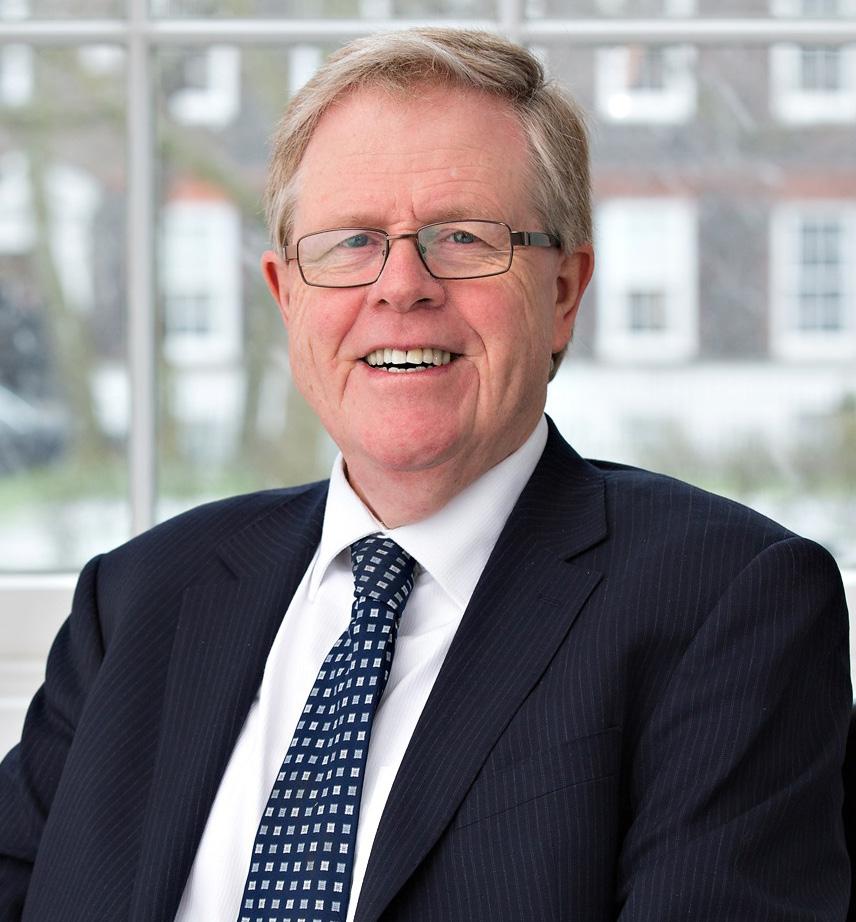
Liebmann was also advised by Williams to ‘focus squarely on the question asked; try not to introduce extraneous or abstruse counterfactuals. Ask your interviewer if you need clarification on the facts of the scenario to develop your answer.”
The advice throughout the report is admirably specific and shows how thorough Liebmann’s interview prep had become. At one point, Williams wisely urges: “Don't hedge: you do not generally need to give a yes no/answer, but your discussion of the principles needs to be confident. Try to avoid "possibly"/"might be argued that"/, depending on the circumstances" type-answers. If you are using the word "depends", do so sparingly and to refer to precise circumstances.”
“BE OPEN TO THE TUTOR GUIDING YOU TO RECONSIDER AND REFRAME YOUR POSITION. THEY ARE LOOKING FOR INTELLECTUAL EXIBILITY AND TEACHABILITY.”
Another piece of advice should resonate for all students preparing for the highly demanding entrance interview: “Be open to the tutor guiding you to reconsider and reframe your position. They are looking for intellectual exibility and teachability.”
Not wanting to leave anything to chance, Liebmann was also hooked up with a former Cambridge alumnus who has had a gilded career in politics. This mentor has asked to remain nameless, but his initial sense of Liebmann is worth quoting in full: “Max is up for the intellectual journey which is needed to get into Oxbridge. He has set his ambitions at the highest level when it comes to any arts degree in this country.
“Without help he is looking at a one in eight chance of getting in - but with help can get to a one in two or three chance. He has no doubt got command of his school subjects and leadershipbut lacks the extra yard needed in that his application has no evidence of entrepreneurial or world-leading academic courage. It’s not expected to be worldleading in standards, but his paperwork should be screaming that he’s fearless while being modest and that this man is not just going go nail his degree but will take St John’s around the world in reputation.”
Our former Cambridge mentor began identifying weaknesses: he was intent on stress-testing Liebmann’s candidacy. He recalls: “When asked why he wanted to go to St. John’s he replied that the squash court is a major attraction for him. He won’t get close with this.” The mentor advised Liebmann to lead with
academia, and also ‘to be alive to conferences where his supervisors have spoken out big.” He was also advised to be ‘current’ and, when it came to the question of immigration law, for instance, to be in contact with vulnerable communities.
This first session with this mentor would clearly bring out the best in Liebmann. As the sessions went by, our mentor became more and more impressed by his pupil, culminating in this assessment: “Max aspires to serve society as a barrister, to ask questions of the law and appreciate human circumstances. Being from a single parent household on free school meals, Max is acutely aware of sensitivities and vulnerabilities. He knows what makes people human. As such he has become a leader through understanding people, commanding the respect of his entire school to become Head Boy. He doesn’t lead to gain followers, he leads to create leaders - of their own choices and of society. With his breadth he has the potential to be at the vanguard of the legal profession. He was exceptional today - had a huge range of societal awareness and his subject in great shape. He has all the information to write his statement.”
It was time for the interview itself: the big day. So how did that go? The day after the interview, Liebmann spoke with Lumos Education’s founder, Johanna Mitchell. “He said that he felt that the interview hadn’t gone well at all and that, the more he reflected on it, the more he felt his answers should have been better,” Mitchell recalls. “Knowing Max’s considerable capabilities, and how daunting Cambridge
interviews can be, I wasn’t convinced that the interview had gone badly. I reassured Max that he had probably done better than his own assessment of the situation led him to believe.”
And Liebmann’s own recollections? “The entrance exam went quite well, and I was not particularly nervous about it. I took the Cambridge Law Test, which meant that I had to write a legal essay in an hour. I was more worried about the admissions interviews, and Finito really helped me with that. I had many mock interviews, but even that did not change my sense of doubt afterwards.”
“WHEN ASKED WHY HE WANTED TO GO TO ST. JOHN’S HE REPLIED THAT THE SQUASH COURT IS A MAJOR ATTRACTION FOR HIM. HE WON’T GET CLOSE WITH THIS.”
In the end, Liebmann’s fears were misplaced: he was offered a place to read law at Sidney Sussex College. “I couldn’t believe it,” recalls Liebmann. “The first thing I did was get someone else to verify that I had actually read the email correctly! I then called my family and celebrated with my friends. The offer day was full of mixed emotions; it was difficult in school, since many people were sad about the outcome of their application.”
So to fast forward to the present time, what has the course been like? “I cannot lie – the course is really intense. The short terms in Cambridge mean that term time is hectic and the workload is heavy,” Liebmann says. “I haven’t had the option to properly explore the law yet, since I could not choose which modules I studied in my first year. Nevertheless, it is manageable and can be a lot of fun. I am lucky to have made so many friends at Sidney.”
Meanwhile, Liebmann has continued to benefit from the Finito bursary scheme. Liebmann has been connected with people at the highest levels of law – most notably with Sir Rupert Jackson. Liebmann now also has work experience over the summer with Carter-Ruck – again through the bursary scheme. We are delighted to report that in this environment
he has shone and impressed senior partners.
All this would have been impossible without the support of The Stewarts Foundation. This began as a result of the support of the outgoing managing partner John Cahill who has said: “In a perfect world comprehensive career guidance would be available to all regardless of their background. The Stewarts Foundation is delighted to support the important work of Finito via its bursary scheme.” We are thrilled that this support is now continuing under the leadership of Stuart Dench. We will continue to support Liebmann as he continues his journey, and report back on developments.
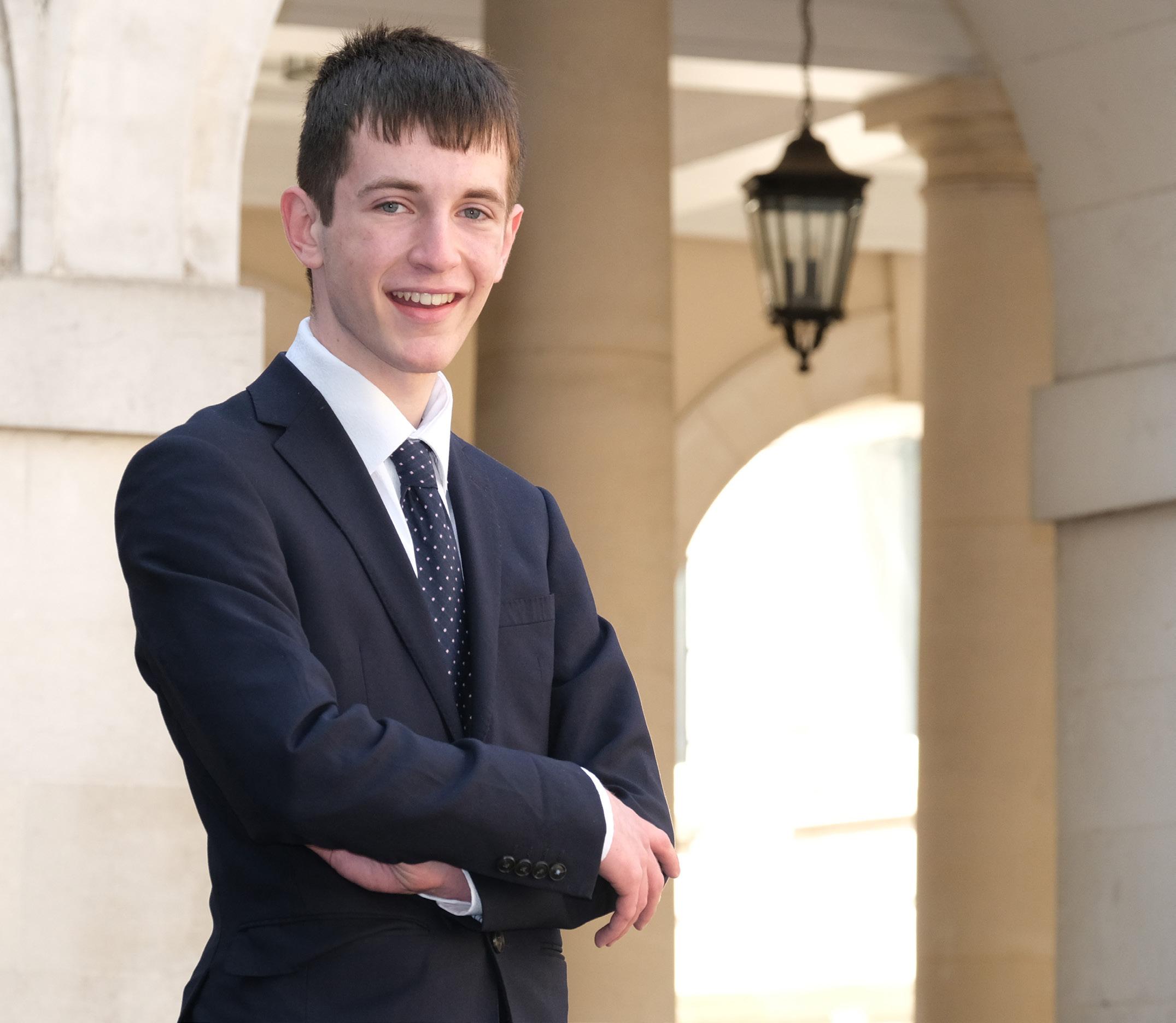
Congratulations on your training contract with Slaughter and May. How did it feel to receive the offer, and what was the first thing you did after finding out?
Obviously, it was a great feeling. I knew that my interview had gone well, but I wasn’t expecting anything.
The first thing I did after receiving the phone call was to call my family and friends to let them know the good news.
What was the most challenging part of the application process, and how did you overcome it?
The hardest part of the application process was the written assessment, mainly because I am incredibly slow at typing, and it seemed that Slaughter and May were expecting quite a lot in a short period of time.
I made a joke about this at the start of my interview (as well as some other jokes), and I think
this set the interview on a good footing.
Looking back, how do you think your time with Finito helped you in securing this role?
Finito ensured that I felt confident for my interview. I had a mock interview with my mentor, and Finito helped me with a mock written assessment.
Finito was also valuable for
holding me to account and ensuring that I made some progress on my applications and preparations.
Finito also helped me get into the correct mindset.
Was there a particular piece of advice or support you received from your Finito mentor that stayed with you during the process?
Term time at Cambridge is relentless, and I had little time to progress with my applications and preparations without falling behind on university work. Tom Pauk appreciated this and never pressured me during term time. In one session, however, he asked me what I wanted from my degree.
“FROM THEN ON, I SPENT MORE TIME ON APPLICATIONS, AND THIS ULTIMATELY LED TO MY TRAINING CONTRACT.”
I told him that (among other things) I wanted a training contract afterwards. He then told me that I needed to put things into perspective and spend more time on applications and preparations and then catch up on university work when I had the chance. From then on, I spent more time on applications, and this ultimately led to my training contract.
I am excited to be working on some big deals. I have spent a lot of time learning the law, and it will be great to finally be able to put this into practice.
I think their multi-specialist approach will really suit me, since it will keep me excited and always learning new areas/bits of law.
“I THINK THEIR MULTI-SPECIALIST APPROACH WILL REALLY SUIT ME, SINCE IT WILL KEEP ME EXCITED AND ALWAYS LEARNING.”
Have your long-term career goals shifted or evolved since we last spoke? If so, how?
Not really – I am still looking to become a solicitor and will see where that takes me (whether that be remaining a solicitor or becoming a barrister or a politician).
“TRY AND LEARN FROM YOUR REJECTIONS, AND COME BACK EVEN HARDER.”
Slaughter and May is known for its unique approach to training. What excites you most about starting there?
What advice would you give to other students or graduates hoping to follow a similar path?
Use the application process and all your interactions with a firm as a way of seeing whether the firm fits for you. For example, I particularly liked the fact that Slaughter and May had a simple two-stage process, which involved only a cover letter and an interview. This gave me the impression that Slaughter and May truly valued my time. I was less fond of the other firms which required several application questions, psychometric tests, and multiple stages of interviews, since I did not get the impression that they valued my time.
Don’t give up – it’s easy to feel disheartened when you receive rejections, but that is just part of the process. Try and learn from your rejections, and come back even harder.
Finally, what does success mean to you at this stage of your career?
It’s great to have a training contract as I leave university – I feel very privileged, since the job market (in particular for law) is very competitive.
I am very excited to be starting my SQE this September and look forward to starting at Slaughter and May in September 2026.
Max would like to thank The Stewarts Foundation for its generous support of his journey.

Very often mentoring can deal with minutiae – the creation of a LinkedIn profile, the process of CVwriting, and all the small steps which, taken together, move a job hunter into the category of employee. These things are very important, of course, but they can seem to be a long way from the daily drama of news headlines. But everything we do in this life has a historical context; we can’t escape history even if we’d sometimes like to.
This truth was brought home to us at Finito by the arrival on our bursary scheme of Ukrainian refugee Valeria Mitureva. Valeria grew up in eastern Ukraine and says of her upbringing: “I grew up as a curious child. From early childhood I was interested in books, other countries and cultures. At school everything was interesting, so in my youth I was faced with the fact that it is very difficult to choose one thing and move in that direction.”
Valeria’s instinct was towards broad enquiry and international travel, and in ways which she couldn’t then predict, these wishes would indeed be granted. But initially, she decided that it would be better to specialise. “I decided to enrol in a technical specialty at the university – technical information security systems,” she recalls. Characteristically, she didn’t leave it there. “I additionally studied French and English in my free time,” she recalls. This latter decision would prove useful, again in ways she couldn’t have imagined at the time.
So what happened after university? “I accidentally got into IT in the sales field while finishing my bachelor's degree,” she recalls. “But I was still ready to explore the world and decided to change my career to the design sphere, and I am glad to have been doing it for four years now and I see incredible opportunities for my development,” she says cheerfully.
All this might have proceeded upon the expected track, and Mitureva would have continued her progress towards a design career within Ukraine. But, as the world knows, Vladimir Putin was gearing up for his 2022 illegal invasion of Ukraine – that appalling violation which would
“THE SUPPORT WHICH OUR BURSARY SCHEME HAS GIVEN TO VALERIA WOULD HAVE BEEN IMPOSSIBLE WITHOUT THE GENEROSITY OF ONE DONOR IN
upend so many lives, including Valeria’s.
Valeria recalls the terrible ructions which took place a year ago. “I did not plan to move: everything happened very tragically and quickly. A full-scale invasion of the Russian Federation into the territory of Ukraine began in February 2022. We call it fullscale, because in 2014 the Russian Federation already occupied part of the Eastern region of Ukraine, where I grew up, and where my home is. Therefore, for my family, this is already the second war.”
Valeria was proactive during that terrible spring. “I read about the Homes for Ukraine programme and decided to apply. I contacted my future sponsors (my British family!), packed my suitcase and all that was left of my courage and landed in Heathrow on April 30th.”
It is impossible to imagine her emotions on being forced to leave her homeland and making the leap into the unknown. So what were Valeria’s initial impressions of the UK? “It felt as if it was my second home. The culture is familiar through books, films, music. It’s also a very friendly and open people, with incredible
stories – and, of course, I was shocked in a good way by the incredible support of the British people. You have a beautiful country and incredible people.”
When Valeria refers to her British family, she is referring to the family of Amy le Coz, the founder of Digital Media Services, who immediately took to Valeria’s infectious and optimistic spirit. “In those first few weeks when she lived with us, my husband and I were immediately very impressed and delighted with her work ethic and proactive attitude both for her job for her Ukrainian employer, as well as around the house,” Le Coz recalls. “We were both also profoundly moved by all that she had had to endure and at such a young age.”
By good fortune, Le Coz met Finito Education Chief Executive Ronel Lehmann at The Spring Lunch which raises money for Conservative Marginal Seats and Women2Win soon after Valeria’s arrival in the country. Valeria recalls: “My sponsor met Ronel at the event, who explained to him that they were hosting a Ukrainian woman and he immediately offered his
help. I was impressed with the approach, professionalism and, most importantly, the structure of the organisation. Finito has a huge team of mentors with a wide variety of expertise. It was indeed like a guiding light for me at that time.”
Le Coz recalls that Valeria was “buzzing with excitement” upon hearing of the opportunity – and it was certainly one which she took with both hands.
Valeria worked mainly with three mentors: “I worked with Robin Rose, Claire Messer, and Kate King. I’m grateful for their support, ideas and that they let me work it out myself, rather than tell me exactly what to do. Sometimes we would discuss my hobbies – so, for example, Robin gave me links to music events, which was helpful for a person who had just moved to a new country.”
Mentorship is sometimes really a kind of friendship. But the pair also got down to work.
Initially, Rose held two Zoom meetings in order to get himself up-to-speed on Valeria’s situation, and began to carve out a plan. “We needed a workable strategy to find her a role in web or graphic
design at a level which matched her experience and which would provide sufficient income for her to fund an independent lifestyle,” he recalls.
But there were initial headwinds, partly due to the uniqueness of Valeria’s situation. “Valeria had had a good education and relevant training throughout her career in Ukraine. She is personable and speaks good English,” Rose continues. “However, recruiters and HR people were unlikely properly to appreciate her potential from just seeing her CV when evaluating her documentation against other candidates particularly at junior or entry level. She had sent off over 50 applications and had had just one video interview.”
Rose looked hard at the situation, and made the following assessment: “This scattergun approach was unlikely to return any result for the time invested and continuous rejection was likely to sap her confidence even further.” Rose saw that the starter salary jobs in the sector – typically around £20,000 per annumweren’t a fair reflection of Valeria’s experience in Ukraine: “I felt that Valeria was, in reality, better
experienced and should have been competing for jobs in the £3040K bracket. She had, however, an understandable confidence issue with this approach.”
This meant that Valeria needed confidence training: “She needed to re-establish her belief in her own abilities. We needed to set up exploratory meetings with people working in the industry so that she could see how she would be of value. I thought that this activity in itself might lead to opportunities.”
Rose also suggested that the pair conduct web research to identify at least four organisations she’d like to work with.
“SHE NEEDED TO RE-ESTABLISH HER BELIEF IN HER OWN ABILITIES.”
In time, Rose worked closely with Valeria to make more targeted approaches, and provided her with a list of London-based creative agencies. Meanwhile, Valeria was also paired with another Finito mentor Claire Messer, who worked with her in August 2022, casting an experienced eye over her CV.
Messer says: “I explained to Valeria that recruiters look at CVs for an average of six seconds, and so it was important to make sure we had complete clarification over what kind of visa Valeria had obtained, right down to the number of hours a week which she was able to work. I also worked on clarifying the CV, and making sure that her work experience was tailored to the companies she was applying to.”
Valeria was beginning to realise that she didn’t want to work for a large company but for a smaller graphic design or creative agency.
Claire explained to Valeria the valued of LinkedIn Premium, and showed her mentee how direct messaging of creative agency owners might be to her advantage: “I suggested that messaging owners and CEOs might have traction,” Messer recalls. “This is because some smaller agencies tend not to use recruitment companies as the fees are too high for them. I told Valeria they tend to work by word-ofmouth referrals.”
In time, Valeria was put in contact with another Finito mentor Kate King, and this led to her first interview. “She felt that the interview went well but that the actual role was outside her technical skill,” King recalls: “It was a great practice interview and helped her to increase her confidence.”
“I’M CURRENTLY WORKING AS A GRAPHIC DESIGNER AT A COMPANY CALLED SPARK.”
Her confidence had in fact been transformed and Valeria was then well-prepared when she had the interview with the design studio where she now works, as she had hoped she would: “I’m currently working as a graphic designer at a company called Spark,” she tells us. “I mostly do packaging design but also I do some motion graphics and am learning to use new software as well.”
Most of all, she feels part of a team. “I am participating in design studio brainstorms and I learn from my experienced colleagues how to deal with nontypical issues. I am happy to have the opportunity to be
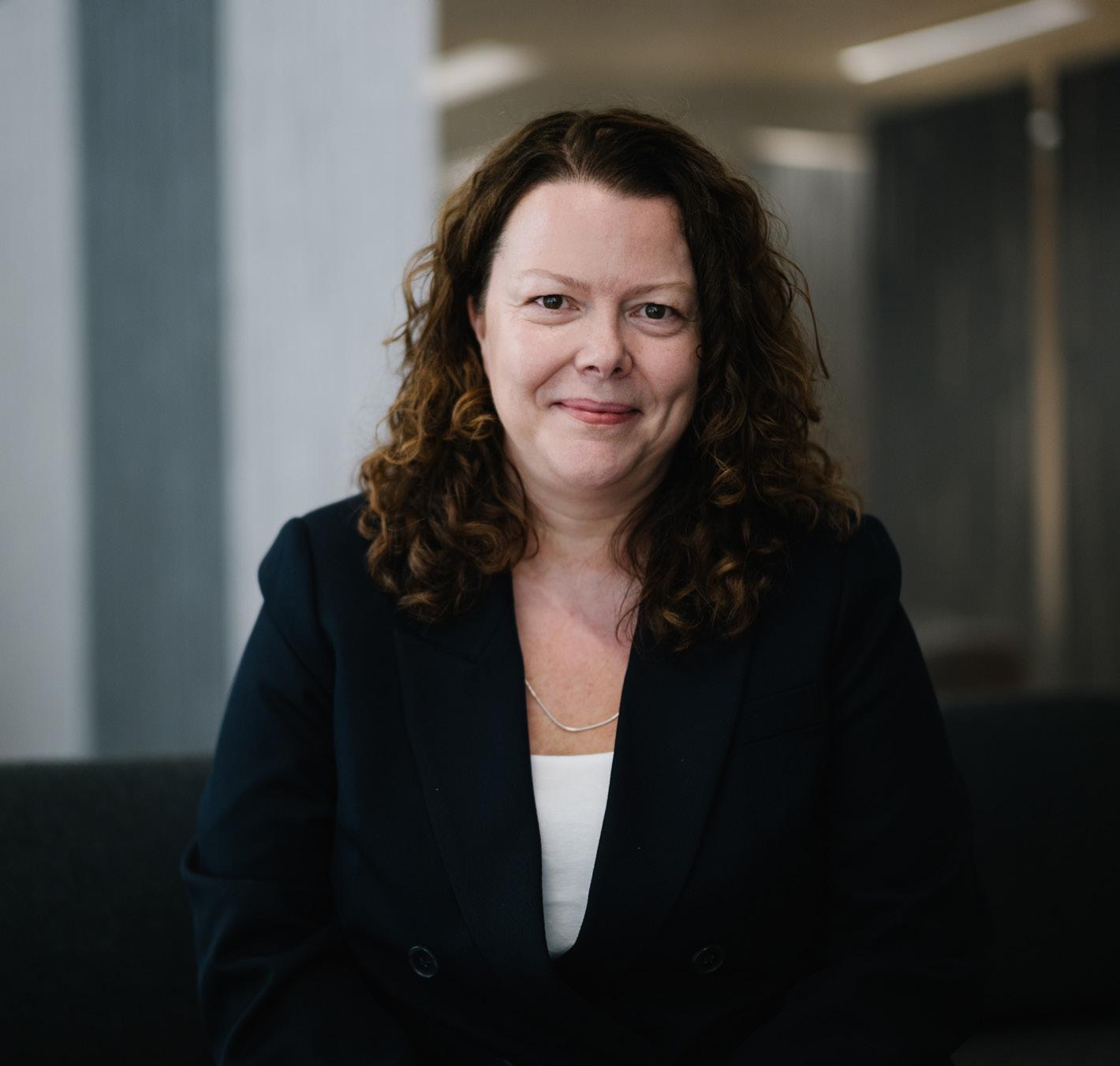
involved in most of the projects the studio creates. I simply love what I’m doing now as there are a lot of training opportunities and a lot of challenges.”
So how does Valeria see her future now? “The main task is to keep enjoying my job and do everything possible for it. I want to be a worthy professional and to be proud of my projects. For now I’m concentrating on feeling more confident in my role in the UK, studying the culture, the people and concentrating on developing as a designer.”
For Ronel Lehmann, Chief Executive of Finito Education, this has been an important mandate: “I myself finally got to meet Valeria in person at a Women2Win Business Club dinner in Fenwick of Bond Street. The guest speakers were Gillian Keegan MP, who was at the time Minister for Care and Mental Health and Virginia Crosbie MP. It was particularly apt to be able to listen to two Parliamentarians speak
about overcoming adversity. I felt that it resonated with Valeria who is simply inspirational”.
The support which our bursary scheme has given to Valeria would have been impossible without the generosity of one donor in particular.
We would like to thank Dr Selva Pankaj, the CEO of Regent Group, who says: “As CEO of a UK education group, I fully appreciate how difficult it can be to take those first steps onto the career ladder, especially in the volatile landscape during and after the pandemic. Hopefully, by supporting this initiative, we can help more individuals find the path that is right for them.”
That’s certainly the case with Valeria, who now has a bright future ahead of her. We will continue to help her in her career journey and report back in these pages on any developments.

At Finito, we are sometimes asked why it is that one-to-one mentoring works: one possible answer is that people are complex. During our lives – and especially our early lives – experience can often feel bewildering. Things come at us fast, and contradictory impressions are arrived at. Soon the world can seem insoluble.
There is no better way of tackling all this than the concerned help of a mentor. At Finito we take it a step further and make sure that our candidates have the benefit of numerous mentors: the reality is that it takes time and a degree of luck to establish the right kind of mentor-mentee relationship. This means that students often need to try several mentors before discovering the right one.
At Finito, not all we do is aimed at those punch-the-air moments: the place secured at a top university, the new job, the promotion. These are rewarding, of course, but they’re very far from the whole story.
More typically, mentoring is full of small wins – it can open up onto a world of quiet reward, and subtle attainments. Sometimes when you look back at the road travelled, you can be surprised by how far you came by small steps. But it usually happens that in these more mundane things might be contained the seeds of some important revelation.
All these factors are present in the fascinating story of Joseph McDonald, a Bursary candidate of whom we at Finito World are proud.
McDonald is one of our mentees on the outstandingly successful Bursary Scheme, which we continue to conduct in partnership with the Landau Forte Academy. Finito mentor Andy Inman, who was instrumental in setting up this arm of the bursary, remembers his first impressions of Joseph when he was introduced to us.
“Joseph is, by his own admission, not particularly social. He doesn’t like groups and crowds, and has very little home support to speak of. The important thing to realise when you have a candidate like that, is that small tasks become big things.”
When Joseph joined our programme, he was about to leave to take a computer science degree at Lancaster University; he was already in a state of anxiety about
what life would be like for him. “I was nervous about making friends and finding the right friendship group when I first came to university,” he tells us. “This is something that I struggled with in the past at school. It was definitely my number one priority upon arrival.”
Inman decided that Joseph required a caring, nurturing mentor and he couldn’t have made a better selection in this than Coco Stevenson. “I knew that Coco would look after him,” Inman recalls. “What was required might sound insignificant but they were not to Joseph: we’re talking about things like packing lists, and so forth – all the pre-university tasks which you have to do before the leap to university. ”
Inman’s remarks are a reminder that as we go on in life, we typically come to know the world and forget what it was like not to be sure about things we later come to regard as obvious. Inman recalls: “It was mentoring at its most granular, in a way – all about the detail. How would Joseph get to university? How would he make applications for student loans? Where would he shop for a duvet and for cutlery?”
But what Joseph most feared was Fresher’s week. “Most people would love that, but for Joseph it’s really the antithesis of what he enjoys – so he had to be talked through that.”
Stevenson stepped up and in time developed a profound relationship with Joseph. She tells us she was mindful of the magnitude of Joseph’s achievement in getting to university at all: “Joseph is the first in his family to go to university and we should remember that Lancaster University has one of the best Computer Science courses in the UK,” she tells us.
But Stevenson also never lost sight of the difficulty for Joseph: “Going to university is a major transition in a young person’s life and is all the more difficult coming out of a pandemic - especially when you are a neuro-diverse person, as the world is not always set up for people who are not neurotypical,” she continues.
Stevenson gives us her first impressions of Joseph: “My mentee was not especially confident in the months leading up to moving to university and there were a number of worries and concerns.”
Difficulties of this kind must be tackled head-on, and together, Coco and Joseph began to explore the issues: “Working regularly together, we were able to ‘workshop’ issues, come up with strategies and plan for eventualities,” she recalls. “Planning and strategising helped enormously in accomplishing tasks and not being derailed by unforeseen things.”
Stevenson used her experience of university life to begin to create a plan for Joseph. Joseph now recalls this fondly: “We discussed the kind of activities I could get up to, including the structure of academic events and the social events I could engage with outside of my studies. Coco encouraged me to convert my ideas of involvement into a more solid plan that helped me find my grounding as I began living away from home for the first time.”
Soon the pair of them had alighted on a strategy: “Coco explained that societies are fundamental to finding people with similar interests and a great place to make friends. She advised me on how many societies to attend, and how to approach the problem of deciding which societies I would
“INMAN DECIDED THAT JOSEPH REQUIRED A CARING, NURTURING MENTOR AND HE COULDN’T HAVE MADE A BETTER SELECTION IN THIS THAN COCO STEVENSON.”
continue attending. This was how I became part of the Sober Society, and I am so grateful to Coco for this.”
Gradually, Joseph began to feel confident, oriented in his new location, and in time able to feel at home. Stevenson looks back with satisfaction at the way in which Joseph’s sense of self developed in those early months at Lancaster University: “Each small step led to successes which in turn led to increased confidence and satisfaction. My mentee went from unsure and nervous to confident, assured and assuming various leadership roles, as well as achieving academic and social success.”
One of the core principles of Finito’s mentoring is that we want to be there for the long haul for our candidates. Coco and Joseph remained in touch as Joseph settled in, and Joseph still talks today of how the checklists and preparation that they made together helped him focus on his lecture content.
The opportunity to join the Sober Society came up by chance, Joseph remembers: “The Sober Society isn’t a recovery programme and does not require you to never drink alcohol but provides a safe space for non-drinkers to have fun and an alternative for those taking a break from alcohol. I was enjoying participating in the events the Society had put on such as game and film nights.”
By regular attendance, Joseph soon discovered another opportunity: “It was announced at one of the events that the Society would soon be holding its annual hustings for the executive positions in the society,” he recalls. “As a new society formed only in that October of 2021, there were only two fulltime members of the executive, so they were looking for more to fulfil
other roles. It was suggested by a friend of mine that I should apply for treasurer. I was uncertain of this since I was concerned it would create more work than I would be able to handle at this early stage of my university life.”
By this point the mentor-mentee relationship was far advanced. “Upon a call to Coco, I was reminded of the advantages of holding such a position. Such positions are seen positively by future employers as leadership, commitment, and initiative. As one of the two candidates up for the position, I won the vote.”
Joseph’s tenure as treasurer of the Sober Society was a huge success. He presided over a period of expansion: “By the end of the first term, we had over 150 members. This meant we were already one of the larger societies on campus. Issues surrounding alcohol are close to our hearts within the executive, so we were ecstatic at our success.”
And this success in turn began to be noticed: “After the end of the 2021-2022 academic year, our president was contacted via our Instagram account by student blog Student Beans. They were interested in the values of our society and studying Sober Societies across the country. This was representative of our success.”
Joseph began to create plans for the future of the Sober Society and for his own future, even planning a collaboration with other sober societies at Manchester Metropolitan University, with trips scheduled to destinations such as Edinburgh. In addition to this he also got a girlfriend.
But this is where the story shifts: unfortunately towards the end of his first year Joseph got into
an incident at the university, an altercation in which a door handle was accidentally snapped, when Joseph reacted to something a fellow student had said about his girlfriend. Joseph wasn’t at fault – indeed had shown admirable judgement – but the situation sadly rattled him and he decided to take a break from university.
It was at this point that Finito deepened its involvement still further, as Coco voiced concerns with the Finito management about Joseph’s mental health. Mental health has been a core aspect of Finito World and we sought immediately to have him assessed by Paul Flynn, the brilliant CEO of leading mental health organisation AddCounsel.
Flynn explains: “When I spoke with Joseph he was on antidepressants, and my sense was that he had better support from Lancaster University than people usually get in these situations.”
Flynn then relayed his advice to us: “One of the challenges Joseph has is around resiliency: whether that links back to the way he’s wired up or not, it’s something that needs to be looked at. If it isn’t taken care of, then it will resurface. A very good CBT-based therapist should be able to support but so could a coach with expert knowledge of resilience skills.”
Before setting this up, we asked about Joseph’s desire. “When you get a coach you’ve got to be sure there’s that level of desire, and a wish to sort out a situation. I think that’s there or he wouldn’t have gone on the phone with me. But his plan is to go back home, and there’s no real work plan. He needs structure.”
Enter Finito mentor Talan SkeelsPiggins, who is ideally placed
to help students in this kind of situation. Skeels-Piggins’ story is unique and makes him an ideal fit for Joseph. Having been a PE teacher Skeels-Piggins suffered a terrible setback when he lost the use of his legs in a car accident. This, however, was the prelude to an astonishing display of fortitude, and he has gone on to be a Paralympian Olympic gold medalist in both motorcycling and skiing. He recently published a book The Little Person Inside which describes his extraordinary life.
Skeels-Piggins has been able to find meaning in a situation which would have defeated many others, and he seemed an ideal mentor for someone like Joseph struggling with mental health issues.
This means that Joseph has now embarked on a second mentor-mentee relationship, following on from his continuing association with Coco. SkeelsPiggins has begun to deepen his understanding of what Joseph actually wants, and been able to uncover too that some of the origins of his difficulties came during the pandemic when he spent less time in school than he would have liked.
In terms of the future SkeelsPiggins’ sense of Joseph’s outlook has crystallised during their sessions: “He needs to realise that he is enough by being Joseph, and not having to prove himself to be loved. This leads him onto the issue of not knowing what he needs to do for his future as he is only doing the current course because he felt pressure to go to Uni in order to please parents.”
After a later session, this began to deepen: “Joseph is not interested in the corporate world but wants to do something; tangible, real, that you can see, be proud of, helps
others and makes a difference in the world. He admits he is not interested in computers and would not want to get a job related to computers once out of Uni. When we were talking about litterpicking, pond cleaning projects and other ecology-based activities he had done in the past he began to show interest and smiled whilst reflecting about the events.”
Joseph therefore has a momentous decision ahead of him: whether to return to university or whether to choose another path altogether and look for a future related to the environment or sustainability.
When such things are at stake, it’s our experience at Finito that people will struggle to make a choice when they don’t have enough information at their fingertips. At such crucial moments, it can never be a bad thing – and will almost always be a good thing – to look for more information about what might work best.
Joseph’s stated interest in the environment and climate change caused us to think about people in our network who might be of use to Joseph and we approached the former Green Party leader Natalie Bennett to ask if she would be prepared to take a call with Joseph to take him through the options. She very generously assented and though the call will take place after this magazine has gone to press it is a measure of how far Joseph has come that the boy who was worried about fresher’s week is soon to talk to the former leader of a major political party. Joseph should be proud of that.
Joseph’s story is evolving all the time, but the support so far provided him would have been impossible without the commitment of two Bursary donors in particular, whose generosity has
been matched to Joseph’s needs.
In the first place, we would like to thank, Simon Blagden, CBE, Chair of Building Digital UK and former Chair of Fujitsu UK. Blagden says: “I served the Government’s advisory panel reviewing the future of technical education. During the two year process we met with hundreds of young people all over the country. I am delighted to support the work of Finito. The valuable work which you do strongly resonates with both students and their parents.”
Secondly we would like thank Dinesh Dhamija, who says: “I have been helping entrepreneurs through coaching and mentoring over the past 17 years. Finito’s focus on young people is admirable and I am proud to join their group in support. My own expertise is in the fast growing online Business to Consumer sector, and the green energy solar and hydrogen fields.” We hope to use this expertise in future when it comes to Joseph’s story.
Joseph has already come a long way. The way ahead isn’t clear, but is becoming clearer all the time. What’s certain is that we stand
As I sat in the carriage of the train watching the Midlands countryside go by, I couldn’t believe how excited I was about my future. I had just spent the day having lunch as the guest of Finito Education in a private members’ club in London. Only a few months before, I could remember being anxious and worried about how my future would turn out.
A year or so earlier I had been working hard at school. My A-levels of Biology, Physics and Chemistry were aimed at getting me into a career in medicine, but for numerous reasons that turned out not to be the case. As a student at the Landau Forte College in Derby I, along with a small handful of other Upper Sixth Form students, were asked to attend a briefing on Finito Education. It was there I met Andy Inman, one of the mentors from Finito. He was there to describe the service that they give in mentoring and networking on behalf of their clients and mentees. Normal clients of Finito have to pay for this significant advantage in life, and here we were in an inner-city school in central Derby being offered the opportunity to become the first bursary mentees of Finito.
Knowing that it would be daft not to take the opportunity, I volunteered along with a number of my school friends and was later introduced to my first business mentor Robin Rose. He had been mentoring for many years, and he was very patient and kind while taking me through regular Zoom video call sessions explaining how recruitment would work as I left education. Robin set up a number of opportunities for me. However,
because of distractions that I was facing at home I didn’t make the most of them. Sadly, one of my A-level grades meant that my aspirations for a career in Medicine were not going to happen, and floundering around a little I grasped the idea of becoming a pilot.
Finito works with a broad network of mentors, and because of my pilot career suggestion I was handed back to Andy Inman who had briefed me and several of my school friends a few months beforehand. He had 30 years’ experience as a military pilot, and over the course of several Zoom sessions he opened my eyes to the possibilities of becoming a pilot while also being realistic about the harsh realities involved in getting there, both financially and in how long it would need my concerted effort. He introduced me to several people, from the Senior Instructor at a local airfield to newly qualified pilots working towards airline jobs. He also put me in touch with the head of the Royal Air Force pilot training system at RAF Brize Norton. I was amazed at the breadth of the network that Finito was able to
introduce me to, and even more so by the time and effort that those I was introduced to were willing to spend on helping me.
“FINITO TOOK TIME TO WORK OUT WHAT WAS MAKING ME TICK.”
It was at this point that I really started to lose hope about what the future might hold for me. A serious medical condition as well as family disruption at home meant that I dropped out and stopped returning the calls from Andy. I remember the last message from him via WhatsApp saying he would give me some space for now, but the door would always remain open for getting back into the mentor scheme.
After a few months my home life became more stable and I decided it was important to re-engage with Finito, so I contacted Andy and asked if it would be possible to start afresh. It was clear from his response that he was delighted I

was coming back to the fold, and we started regular chats about how to progress things while I was applying to go to Nottingham University later in the coming year. Finito took time to work out what was making me tick. It was clear that I had an entrepreneurial spirita couple of years earlier I had made a successful business from selling sneakers online. I had a strong work ethic and Andy dug down into what I enjoyed, where my skills lay, and how that would fit into a future working career. I was shown how to craft emails to companies, how to conduct myself in an interview and how to best come across in a telephone call.
At the same time, the wider Finito system kicked into action. I was introduced to a professional CV writer who helped me craft the most amazing CV, and I was invited to London to have my photo taken by a professional photographer to put on that CV, all as part of the bursary scheme.
As part of that visit I was invited to lunch with Christopher Jackson, News Director at Finito, at the House of St Barnabas. The private members’ club is invested in creating a fair and equal society, but I was still nervous as I arrived. I remember looking at the door and thinking it was like something from Harry Potter. The interior
certainly was; there were so many rooms it was like a maze, all with separate personalities and themes. I met Christopher in a lounge room near the garden. My hands were sweating, knowing this was another massive opportunity to gain knowledge and experience. We chose to start with lunch but only after he showed me around some of the different rooms. I remember walking into a room that looked like a church hall, another that was warm with colours and paintings, and the corridors were narrow and brimming with art.
“I WILL BE FOREVER GRATEFUL TO THE STEWARTS FOUNDATION, AND IN PARTICULAR ITS CHAIRMAN JOHN CAHILL.”
Everything was out of my norm – a peaceful professional environment that was not like anything I had experienced in my normal life in Derby. We arrived at the restaurant, a hall again adorned with art with polite guests and staff. Christopher asked me about my interests and where I see myself going with Finito. I was interested in his story too, and I learned about his experiences and work. After lunch Christopher walked me through the bustling streets of Central London back to the station. The weather was perfect, and as we walked and discussed more deeply each other’s stories, Christopher was drafting ideas in his head for experience placements for me. That day was more than just a trip to take photos. I was generously given the chance to see London, learn so many new things and create contacts with two lovely people at no personal
expense - something that would never be possible without Finito.
It was from that meeting that Christopher approached a contact within his network, Daniel Whomes, the Chairman of the Oyster Partnership, who organised an interview for me to join the company for some work experience in the Summer. Recruitment wasn’t a career that I knew anything about, but it was the experience and wider knowledge of the Finito mentors that married my salesmanship, entrepreneurial desires and my hard work ethic to the idea of becoming a recruitment consultant. Having just had the interview I’m delighted to report that I will be spending time with that company soon. The opportunities that I know this work experience will bring would not have been available to me without the help of the Finito Bursary scheme, and I will be forever grateful to The Stewarts Foundation, and in particular its Chairman John Cahill, for their financial contribution towards my work journey. I’m excited for what the future holds for me and will always know, wherever life takes me, that I received a life-changing opportunity just when I most needed it.
John Cahill


Some people carry the future inside them like a flame. It doesn’t flicker, though the wind may blow. It holds steady—even when the next step isn’t yet clear. When we first met Luela Figueira, she was already on fire.
A First-Class law graduate, a live TV host by 17, and a young woman raised in Guyana now navigating Britain’s job market under the ticking clock of a graduate visa, Luela had everything—talent, drive, voice. And yet, like so many in her generation, she was still waiting for the door to open.
What followed was a story not just of transformation, but of selfassertion. Through her time with Finito, Luela turned potential into power. She refined her purpose, deepened her voice, and now stands ready—not as a passive jobseeker, but as a confident, creative force for change in a world that urgently needs it.
Luela’s story begins in the town of Linden, Guyana—a place of resilience, rivers, and red earth. At just 14, she was already a radio presenter, scripting, producing, and hosting her own show. By 17, she was anchoring a daily television programme, The Café, interviewing artists, politicians, and community leaders, often live and unscripted. “I had to be quick, calm, confident,” she says. “It taught me early how to speak when it counts.”
This wasn’t youthful dabbling. It was work. Between jobs at Devine Entertainment, community leadership roles in her local youth revival group, and a growing passion for social justice, Luela was already combining media skill
with public purpose. Later, that passion led her to law. She moved to the UK, studying at The University of Buckingham. Her results were stellar: FirstClass in her LLB, a Distinction in her LLM in International and Commercial Law, and awards for top performance in nearly every module.
And yet: even with such credentials, when graduation came, the next chapter didn’t immediately write itself.
Like many international students in the UK, Luela faced structural barriers. Despite her achievements, her right to stay hinged on finding a graduatelevel job that paid over £30,000. This made even temporary roles a gamble—and every application a negotiation not just of talent, but of survival.
“It was overwhelming,” she recalls. “I was applying to jobs constantly and getting no response. I started questioning everything—even whether I belonged in this system.”
Finito entered the picture at a crucial moment. Through our bursary programme, supported by The Stewarts Foundation, Luela was matched with experienced mentors who didn’t just offer career advice—they listened, understood, and helped her locate the through-line in her story.
“She had all the ingredients,” says mentor Dominique Rollo. “But like so many young people, especially those with multiple identities and international backgrounds, she needed help translating her brilliance into something the job market could understand.”

At Finito, the first steps were practical: refining her CV, highlighting transferable skills, building a LinkedIn profile that reflected her range. She added new experiences, such as leading the social media campaign for her restaurant employer during the busy Christmas season, and her volunteer radio presenting role at 3Bs Radio in Buckingham.
More importantly, she began to identify key sectors where her passions aligned with opportunity: sustainability, communications, PR, and law. She started applying more strategically—including for a role at the Global Green Growth Institute in Guyana, a perfect convergence of her legal training, writing skill, and interest in global development.
“She’s a natural communicator,” says Matt Thompson, another of her Finito mentors. “But she also has real depth. Her work on climate change and human rights shows that she’s thinking not just about her own career, but about how she can contribute to the future.”
That work includes a significant academic paper published in The Denning Law Journal, where she makes a compelling case for a human rights-based approach to climate change in India—linking environmental degradation with fundamental legal protections. It’s serious, articulate, and ahead of its time.
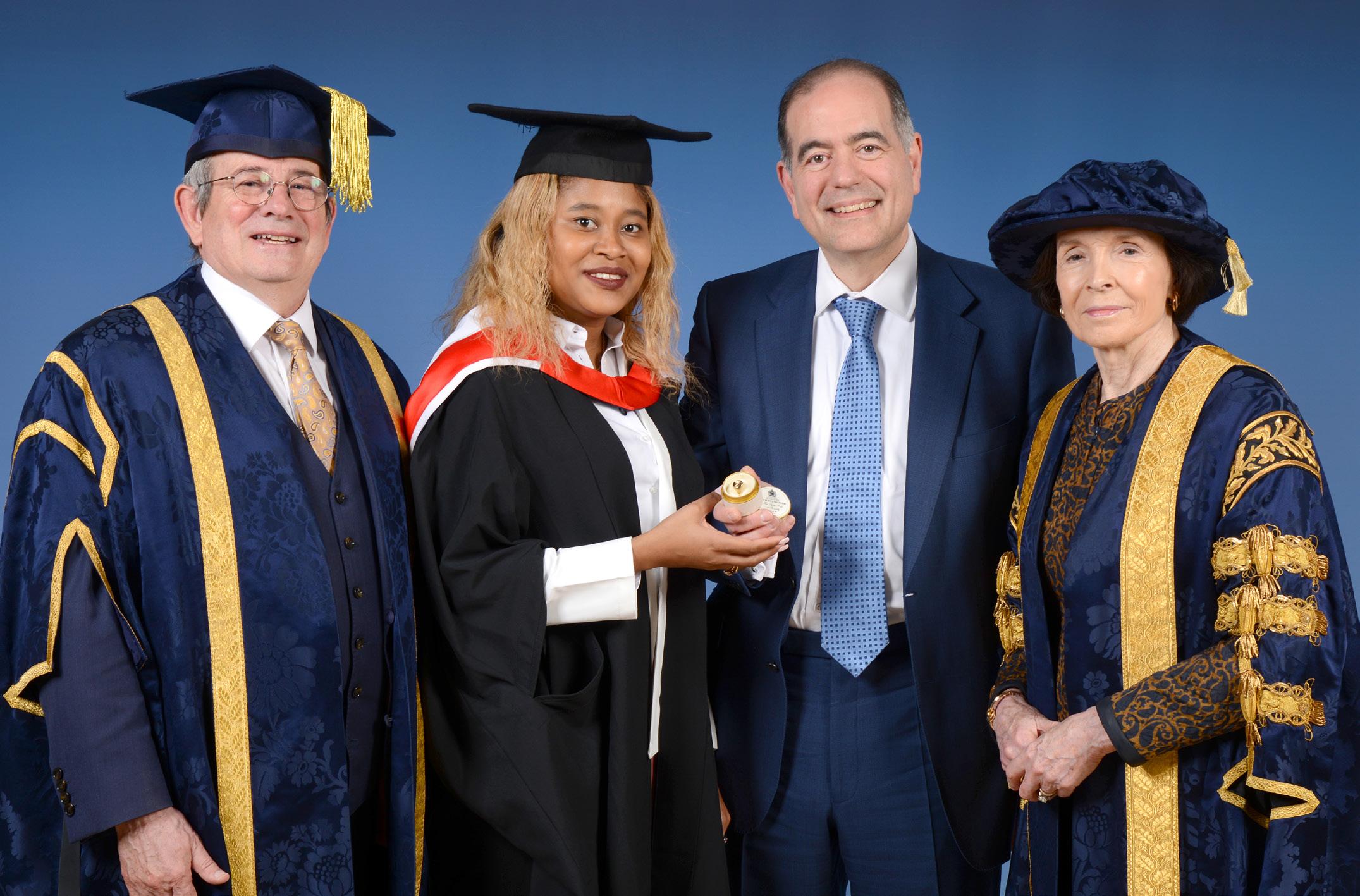
The Guyana Reconnection
Over Christmas 2024, Luela returned to Guyana. What she found stunned her.
“SHE STOPPED WAITING FOR PERMISSION. SHE STARTED SEEING HERSELF NOT JUST AS A JOB APPLICANT, BUT AS A PARTNER IN THE COUNTRY’S GROWTH.”
Sophia Petrides, Finito mentor
The country, once a quiet corner of the Caribbean-South American frontier, is booming. Since the 2015 discovery of massive offshore oil reserves, Guyana has become one of the fastest-growing economies in the world. Construction cranes
dot the skyline of Georgetown. Roads widen. Malls sprout. International delegations line up at embassies.
“It was surreal,” she says. “Suddenly, the place I left to find opportunity is itself becoming a land of opportunity. I realised: I could be part of that.”
She began researching jobs in the oil and gas sector, legal compliance, sustainability communications, and global trade. Her mentors helped her refine her approach. She started reaching out to people—overcoming her natural reluctance to cold-call— and soon had meetings with business leaders, lawyers, and public affairs professionals in Georgetown. In early 2025, her persistence paid off when she was offered a position at The Sui Generis Law Firm, a leading law firm in Georgetown—a role that aligned her legal training with her commitment to Guyana’s
development. As Finito Senior Mentor Tom Pauk wrote: “It was a richly deserved job offer and the culmination of a year’s worth of intensive mentoring, and a great team effort. She is an exceptionally bright and personable young woman with a wide range of skills and talents. Her new employer is lucky to have her. In fact it was Luela herself who had first spotted the opening at Sui Generis on their website, and my Finito colleague James Slater and I were impressed (though not surprised) by the thoroughness of her preparation once she had secured an interview with the firm’s principal.”
“There was this shift,” says mentor Sophia Petrides. “She stopped waiting for permission. She started seeing herself not just as a job applicant, but as a partner in the country’s growth.”
One of the most moving moments
in Luela’s Finito journey came unexpectedly. She was selected as recipient of the Finito Award at Buckingham—recognising a student who had shown “the greatest degree of excellence.” The prize: a signet ring, crafted by none other than Bentley & Skinner, royal warrant holders to His Majesty the King.
“IN A PERFECT WORLD, COMPREHENSIVE CAREER GUIDANCE WOULD BE AVAILABLE TO ALL REGARDLESS OF THEIR BACKGROUND. THE STEWARTS FOUNDATION IS DELIGHTED TO SUPPORT THE IMPORTANT WORK OF FINITO VIA ITS BURSARY SCHEME.”
Stuart Dench, Chairman, The Stewarts Foundation
“I was shocked,” she says. “I didn’t know people were noticing me. To be given something so beautiful, so symbolic—it was like being told: you belong.”
The ring became more than jewellery. It was a reminder of her worth, and a token of her resilience. It sits now not just on her finger, but in the centre of her story.
As she prepares for her wedding in 2026 and considers her next move—whether a return to Guyana or a remote legal communications role with a US firm—Luela’s vision is clear. She wants to work where

law, creativity, and impact intersect. She wants to tell stories that matter. And she wants, always, to empower others—particularly the young women who look like her, speak like her, and might otherwise go unheard.
She’s now targeting roles in legal policy, sustainable business development, and public engagement in sectors like mining, agriculture, and energy. She has begun building a powerful “why” statement, drawing on her lived experience, her Christian faith, and her commitment to dignity through work.
She is not waiting anymore. She is building.
Luela’s mentors all say the same thing: she is more than employable. She is essential.
“Every time we spoke,” says Dominique, “I came away more impressed. Not just by what she’s done—but by the grace and intelligence with which she carries it.”
That grace is visible in everything from her poetry collection The Confessions of a Christian Girl,
to her volunteer work mentoring Guyanese youth, to her poised interventions at conferences like the International Conference on Human Rights and Climate Change.
And in a world where employability increasingly means adaptability, creativity, and moral clarity, Luela offers a blueprint for what the next generation of leaders might look like—not self-promoting, but service-minded. Not waiting for power, but cultivating it.
Luela’s story is still unfolding. She may return to Guyana. She may find herself on global stages, leading communications for climate resilience initiatives or policy campaigns. She may become a broadcaster again—or an advocate, or a mother, or all three.
But what’s certain is that the arc of her life now bends not toward fear, but toward possibility.
Finito didn’t give her talent. That was always there. But what we did give—through conversation, belief, and guidance—was space. The space to grow, to reflect, to rise. And Luela has done just that.
Tell us a little about your early life and education? What was your family background and upbringing like?
I come from a very traditional family where education was highly valued. Both of my parents were teachers, deeply familiar with the system of success in academia. They understood the importance of discipline, hard work, and structured learning - principles they instilled in both me and my older brother. However, while my brother thrived in this environment, becoming a straight-A student and attending a ‘traditionally’
more prestigious university, I often felt overshadowed. As the second child, I was naturally independent and frequently left to my own devices - sometimes by my own will, sometimes by circumstance. At this point, I must point out I am very grateful for the impact of my parents’ roles on my life and do not mean the penultimate sentence in a negative way.
After receiving mediocre GCSE and A-Level results, I realised that if I wanted to succeed, I needed to take control of my education. University became a turning point. Determined to prove my capabilities, I applied myself fully
to my studies, pushing beyond past complacency. Determined to take control of my future, I worked tirelessly, culminating in achieving 90% on my master’s dissertation - a defining moment in my academic career. I felt this way as I did this on my own merit. I did not embrace help, I wanted to do it myself.
While my journey may not have followed the traditional path my parents envisioned, I ultimately embraced their values of perseverance and self-discipline, proving that success is about growth and determination, not just early achievement. I would
say that whilst I do not regret my decisions, I wish I knew what I knew now, 10 years earlier - but that’s life.
Who were your heroes growing up?
I never really had heroes growing up, but the person I admired most in a professional capacity was my great uncle Gordon. He was a circuit judge - extremely intelligent, effortlessly composed, and someone who just exuded class. I always looked up to him, not just because of his achievements but because of the way he carried himself. He lived in a massive house, which may or may not have influenced my admiration, but more importantly, he acted as a role model for what success in law could look like.
"I REALISED THAT IF I WANTED TO SUCCEED, I NEEDED TO TAKE CONTROL OF MY EDUCATION."
As a trainee lawyer, I feel we had a lot in common, and I only wish we had more time for him to see me follow in his footsteps. When I was at university, I would often ask for his opinion on legal matters, but he would always remind me - half amused - that he had retired long before the statutes I was studying had even been introduced. Still, his legacy and influence shaped my aspirations, and I hope I’ve made him proud. Aside from that, probably, annoyingly, Morrissey.
Tell us about how you came across Finito and what your first experiences with the business were?
From my very first experiences with Finito, I was impressed. Every single person I’ve spoken to has been incredibly knowledgeable, highly professional, and genuinely friendly. It was clear from the outset that I was surrounded by people who were at the top of their game, committed to guiding and supporting those they work with. The atmosphere was both welcoming and inspiring, and I knew right away that I was in the right place to grow and develop professionally.
"IT WAS CLEAR FROM THE OUTSET THAT I WAS SURROUNDED BY PEOPLE WHO WERE AT THE TOP OF THEIR GAME."
What was it like to be photographed by Sam Pearce?
Being photographed by Sam Pearce was a daunting experience at first, as I had never had my photo professionally taken before. To make things even more stressful, I got lost trying to find the building, which didn’t exactly help my nerves. However, once I finally arrived, Sam was incredibly welcoming and put me at ease straight away.
Not only is she brilliant at what she does, but she’s also genuinely friendly, which made the whole experience far more enjoyable than I had expected. On top of getting a quality LinkedIn photo, I also ended up with a guided tour of London along the way. All in all, what started as a nerve-wracking experience turned into a really positive one, thanks to Sam’s professionalism and warm personality. I actually asked for more photos than the one she sent me - which I was told - was a Finito first.
How did you find your LinkedIn training?
My LinkedIn training with Amanda was a great experience - she was incredibly nice and accommodating, especially with my schedule at the time since I was working. She made the process as smooth as possible, which I really appreciated.
That being said, LinkedIn is a completely different beast from any other social media platform I’ve used. Despite being part of the first generation to grow up with social media, I still haven’t quite got the hang of it - and, to be honest, I probably never will. However, thanks to the training, I’m now fully set up and ready to use it… even if I still hate it!
Which mentors did you get assigned to and what sort of things did you work on with them?
At the start of my assignment, I was fortunate to be assigned the very lovely Tom Pauk. He
immediately reminded me of my great uncle Gordon in all the best possible ways - an incredible role model and a true oracle of all things law. Having lived and breathed legal service for so many years, his knowledge and guidance were invaluable. Together, we worked on interview training, planning for psychometric tests, and scheduling application dates, all of which helped me approach the process with more structure and confidence.
“FROM MY VERY FIRST
WITH FINITO, I WAS IMPRESSED.”
Later on, I had the privilege of working with the intelligent James Slater, who built on Tom’s foundation. James took a more active role in selecting firms to apply for, leveraging his network
to gather useful insights, and assisting with the writing of application answers. His strategic approach and industry knowledge were instrumental in refining my applications. Both mentors played a huge role in my journey, and I’m incredibly grateful for their support and expertise.
Tell us about the interview process for the role you acquired?
The interview process for the role I acquired was quite unconventional. There wasn’t a formal interview process at all. It started when my friend casually called me and mentioned they were hiring. He gave me the partner’s email address, and I began emailing weekly to follow up. After a while, I grew tired of not getting a response, so I sent a straightforward message: “Hi Raj, any update? Cheers.”
Within five minutes, he replied, asking if I was available for an interview in 30 minutes. I said yes, and we had the interview. During the conversation, we discussed our goals and I shared more about who I am as a person. At the end of the interview, he offered me the job on the spot. It was a pretty spontaneous and informal process, but it worked out perfectly!
What is the role like and does it challenge you?
The role I’m in is focused on crisis management and commercial litigation, and it’s unlike anything I’ve ever done before. I really embrace the challenge, even though I often feel like a bit of an idiot with the number of questions I ask daily. It’s a steep learning curve, but everything always seems to work itself out in the end.
I’m working on high-stakes, multimillion-pound cases,
and it’s an incredibly dynamic environment. Every day feels like I’m right in the thick of it, navigating complex legal issues, managing intense client expectations, and developing strategic solutions under pressure. I’ve learned to think on my feet, make quick decisions, and prioritise effectively, all while collaborating with a brilliant team.
There’s never a dull moment –one minute, we’re dealing with an urgent crisis, and the next, we’re analysing intricate legal details in a fast-paced litigation scenario. It’s a role that constantly challenges me, pushes me out of my comfort zone, and sharpens my skills in ways I didn’t expect. It’s a demanding but rewarding experience, and I wouldn’t have it any other way.
What are your goals now for the future?
My goals for the future are to continue with what I’m doing right now for the foreseeable future - seeing out my training contract and gaining as much experience as I can. After that, I’m definitely considering making the move to London. I’ve only visited a few times, but I’ve fallen in love with the vibe of the city, and I can really see myself living and working there.
“AT THE END OF THE INTERVIEW, HE OFFERED ME THE JOB ON THE SPOT.”
Having lived in Newcastle, Manchester, and Leeds, I feel ready for a bigger city, with bigger challenges, and of course,
Andrew Law
bigger pay. I’m eager to dive into the fast-paced, high-stakes environment of London and take on the opportunities it offers. I’m driven by the desire to keep growing in my career, taking on complex work, and continuing to push myself to new heights. The future is all about embracing the next challenge and making the most of the opportunities that come my way. I want to become a stereotype, I want the Tom Ford suits and working 300 hour weeks – it’s what I actually want to do; obviously not my entire life but it’s a layer cake isn’t it?
Ollie is another one of the students supported by Andrew Law and the Law Family Charitable Foundation and we’d like to take the opportunity to thank them once again for their kind support of the Finito bursary scheme.
“I FEEL READY FOR A BIGGER CITY, WITH BIGGER CHALLENGES, AND OF COURSE, BIGGER PAY.”
Sometimes, it helps to look at the bursary scheme from the perspective of the donor. The Finito bursary scheme has been active since the inception of the broader commercial business, using the name and experience of advisory board member Dame Mary Richardson. Ever since, it’s been an integral part of what we do.
One interesting relationship came along during an interview for this magazine, when the great philanthropist and businessman Andrew Law was asked how it is that he knows his money has been put to good use?
I could see that Law took the question very seriously, and gave it some thought before answering: “My starting principle on philanthropy has been that philanthropists should focus on areas that governments can’t or won’t do.”
I asked Law for examples. “A brilliant example of that is the education reforms started by Andrew Adonis under Tony Blair with academies and which then continued relentlessly under the Cameron government. That was essentially a partnership between the public and private sectors. In that instance, the government found private individuals to be sponsors of the place where they’d been born or had an affiliation with. They would have to bring at least £1m of their own money, typically multiples of that, plus other resources. These were typically addons to the school day, whether it be sports facilities, or debating clubs, and then would make connections between their own network and institutions. You get the government

to do its work for it.”
Law continued, pointing out that one of his principal interests is social mobility and employability. He argued to me that a degree isn’t an outcome – it’s in many respects a starting point. Likewise, academic results can only take you so far. “You have to look at impact measurement,” Law continued. “There’s no purpose in having a school which has great academic results – because when you go for your interview at Oxbridge or job interview, guess what everyone else in the waiting room has got?”
Law is referring to that extra mile which people need to go to nowadays. “You need something else. In the education world, that something else is social capital.
It’s the ability to think and be interested and not just to be good at rote learning. You need the social capital to fit in with people and get on in your environment and you need a broader curriculum – typically it’s what people who went to private school have in their family environments, and what we need to do is create that for people from less well-off backgrounds. The ability to think only comes from lessons and tutorials where there are proper debates in schools and universities. It’s about assessing how those young people developed – not just the universities they got but the jobs they got at the end of it.”
I found myself liking Andrew enormously and told him a little about our bursary scheme. To our
delight at Finito, Andrew decided to sponsor three students at Trinity High in Manchester through the Law Family Charitable Foundation.
The first student which Andrew sponsored – and we shall be reporting on other students in these pages in subsequent issues – is Khadra Osman, and we could hardly have had a better beginning to our important work with Andrew.
Osman is a likeable and confident young woman who Trinity High earmarked as having particular promise. So what was Osman’s early life and education like? “Growing up, I attended state schools, which provided a fulfilling educational experience. I always felt supported and truly enjoyed the opportunities available to me. I was actively involved in extracurricular activities such as the science club, football team, and athletics, which greatly enhanced my time at school. I also attended sixth form, achieving two A* grades and a B.”
This shows in its beginnings what Law calls ‘that something else’. It is the CV of someone who might do many things: Osman, in short, struck the school and us at Finito Education as someone who would be worth investing in. But there was
also an early sense that Osman’s options needed to be whittled down: when we are interested in lots of things, it’s sometimes difficult to know what in the end we’re really going to do with ourselves.
That’s why at Finito we’re sometimes looking for that thing which a person talks about with a particular note of delight and even wonder: this is likely to be their leading love – the thing to which they’re meant to devote their lives.
In the case of Khadra, it would become increasingly clear that her leading love was sport. “Growing up I admired many sporting heroes, including Ian Wright, Serena Williams and Ade Adepitan, and inspirational figures beyond sports, such as Emmeline Pankhurst,” she tells me. It was a clear indication of where her interests lay.
At Finito, one of our first tasks is to photograph the candidate to make sure that they understand their importance to us. It is a form of validation. Osman recalls: “Sam was incredible and made my first photoshoot a smooth and enjoyable experience. Her professionalism and friendly demeanour helped me feel at ease, and her guidance made the entire process much more
approachable and fun.”
For her part, Pearce remembers: “It was a cold and wet day in Manchester and we struggled to find a dry spot to do the photos. But Khadra was immediately infectious and kind. It is an interesting part of the process, photographing a candidate at the start of their journey. You know that they are embarking on life, and you hope for great things. In Khadra’s case, I was delighted that she had been chosen as she had that right attitude which can make such a difference.”
The next part of her preparations included LinkedIn training with Amanda Brown (“extremely enlightening and it significantly enhanced my LinkedIn profile”) and then presentational training with Merrill Powell.
“A DELIGHTFUL CANDIDATE WHO RATTLED THROUGH HER PRESENTATION AT A CANTER , IF NOT A GALLOP!”
Powell’s attendance note gives an excellent account of Osman: “A delightful candidate who rattled through her presentation at a canter , if not a gallop! So that was where I began. Pace, diction, clarity.” A few further things needed working on: “Her academic record

is truly impressive so she lets herself down with sloppy grammar, and chewed diction. She remedied this immediately after I had explained the problems which was amazing.”
It was another sign that Osman was shaping up to be a very promising candidate. Powell continues in her note: “We worked on answering questions she failed a previous interview on and learned how to back up words with proper examples, pace the answer, emphasise power words etc. read proper papers on sport not just social media, to up her game.” Powell’s conclusion? “Started off badly but ended the session leaps and bounds ahead. A really worthwhile session.”
“HELPED ME REFLECT ON MY EDUCATIONAL AND CAREER JOURNEY, IDENTIFYING MY STRENGTHS AND AREAS FOR IMPROVEMENT.”
It was the beginning of an exciting momentum for Khadra. From there, Osman chose three mentors, with the first being Talan Skeels-Piggins, who is a Paralympian in not just one but two sports. Osman says that Skeel-Piggins “helped me reflect on my educational and career journey, identifying my strengths and areas for improvement.”
For his part Skeels-Piggins recalls: “I arrived in a noisy cafe in Manchester, so not an ideal place, but was looking forward to the session. Khadra said she wanted to get into sports media. She’d had internships but these had all been voluntary and now she wanted to get into work. I briefly mentioned the idea of creating her own blog or podcast to begin the brand and skillset needed for sports media, but Khadra wasn’t too sure of the exact type of sports media she wanted to focus on.”
At this point, Talan began to realise that there was a slight vagueness about Khadra’s ambitions which needed to be tackled head on. “There was a need to identify the exciting and driving factors of sports media. So we agreed that Khadra would spend time identifying exactly what it was that excited her about sports media.”
The pair also discussed her personality traits: this is the sort of rounded mentorship which we value at Finito, making sure that no stone is left unturned. What must be avoided at all costs is a false motivation. Talan recalls: “With personal reflection she admitted to not being too compassionate to herself and can often advise friends but does not take the same advice. This can lead to a degree of self-criticism. I asked Khadra to try and put aside some time every day for silent reflection, beginning with breathing exercises to bring her into the ‘present moment’ and then slowly going through the day, the previous day or the week’s experiences to see how things might have turned out differently if a different approach was taken.”
In addition, Khadra met with two other Finito mentors Mike Donoghue and Marcus Day, who has 25 years’ experience in sports
management. Donoghue, says Osman, “provided guidance on preparing for marketing interviews and reviewed my interview presentations to ensure they were polished and impactful.”
Day meanwhile “connected me with key contacts, including professionals from marketing agencies, expanding my network and opportunities in the industry.”
Day recalls: “We started with introductions and getting to know each other. Khadra gave me her ‘story so far’ and how she got to this point in her journey. I explained my career in the sports industry which started in a similar way to Khadra’s by following my passion for sport.”
It was an important chance for Osman to get a profound view of the sector she wished to enter through the eyes of someone who had managed over 60 golfers including Justin Rose and Adam Scott.
“We talked about the sports industry in general and then events relating to Khadra’s focus on the Production Management area as her preferred job,” Day recalls. “I emphasised that the difficult part is getting a role at a sports marketing or events company and that she should prioritise this over the actual role she desires as, in my experience, it is easier to move direction internally once you have impressed and got to know people in the organisation. “
Day, like Skeels-Piggins and Donoghue, could see considerable promise in Khadra: “She had achieved good work experience and is clear that she now wants to find a paid role which is understandable. Having said that, she is open to internships if they are with a high level brand in the sports industry as it will provide valuable experience and added value to her CV.”
Day continued: “After digesting everything Khadra had told me, I was able to share with her some job opportunities that I am aware of that I can pass on so she can explore these further. For example, there is a Red Bull internship, and one on The Legends Tour. I will also enquire if my contact who has worked on several Olympics over the past 20 years with Coca Cola would be willing to offer advice and guidance to Khadra.”
Day also noted certain gaps in Osman’s knowledge which he sought to remedy: “Interestingly, Khadra was not aware of any of the sports recruitment agencies. In my opinion, these are vitally important so that you are on their radar and can be made aware of roles. Recruitment in the sports industry is driven a great deal in this way, since it is such a niche sector. I have offered to make email introductions for Khadra to these agencies.”
Day was also impressed by Osman’s desire to get out there and network. He recalls: “Khadra expressed an interest in attending any sports networking events. I agreed with this approach as it’s a great way to meet people in the sports industry. I will let her know of any opportunities. However these are mostly in London so may not be logistically so easy.”
Each mentor had provided something different: Skeels-Piggins had gone into depth about Osman’s
motivation; Donoghue had worked hard on her presentation; and now Day was connecting her.
In time, an opportunity came up for a paid role as a Sports and Events Marketing Activator at Greenwich Leisure Limited (GLL), the country’s largest social enterprise delivering leisure, health, cultural and community services. It seemed the perfect fit for Osman and so the entire bursary team went into action helping her to prepare.
In time the big day came: the interview. So what was the process like? “ The interview process had two stages: a presentation showcasing marketing ideas on how to improve a holiday programme and presenting a marketing plan for a summer programme,” Osman tells me. All the work which Osman had done with Finito paid off: it was a very proud moment at Finito when we discovered that Khadra had got the job.
So how is the role going? Osman says: “The role is enjoyable and diverse, offering a range of responsibilities that keep things interesting. As the first person to hold this position, I have the unique opportunity to shape it according to my vision. This allows me to explore
new areas and take on challenges that align with my personal and professional growth goals. I can identify areas for improvement, implement innovative solutions, and continually develop my skills in a dynamic environment.”
And what are her goals for the future? “My goal is to advance my career by working on major sports events worldwide. I aim to enhance my professional expertise and personal skills by embracing new challenges and opportunities for growth in dynamic, high-impact settings.”
Khadra continues to illustrate that ‘something else’ which Andrew Law spoke to me about some years ago when he was first told about the bursary scheme. She has worked to help deliver the Wimbledon tennis championships and the 2024 Champions League final in London. In both cases, her posts show someone with an undimmed enthusiasm for sport, and for the joy of the big occasion.
Philanthropy sometimes delivers happy results – and we look forward to reporting further on our work with our Manchester cohort.
ALL OF US HERE AT FINITO EDUCATION WANT TO TAKE THE OPPORTUNITY HERE TO THANK OUR WONDERFUL DONORS WHO HAVE MADE THIS PUBLICATION – AND THE STORIES IN IT – POSSIBLE.
Finito is committed to helping young people into work, and we have no desire to turn away students simply because they cannot afford our fees. We believe that proper career guidance and job-seeking advice should be available to everyone, and we have connections with many donors who share that view and are willing to sponsor students who wish to access our tutoring programmes.


Mohamed Amersi Amersi Foundation
“After completing their education, many students still flounder trying to secure a meaningful career. As an entrepreneur, philanthropist and thought leader, I have always felt a burden of responsibility to help champion and inspire the next generation. We have long supported young people to increase their employment chances across the world and at this time, we are proud to support Finito for the outstanding work it does in facilitating opportunities for young people.”
Simon Blagden CBE
Chair of Larkspur International Ltd and former Chair of Fujitsu UK
“I served the Government’s advisory panel reviewing the future of technical education. During the two year process we met with hundreds of young people all over the country. I am delighted to support the work of Finito. The valuable work which you do strongly resonates with both students and their parents.”
Andre Chris
Founder and Managing Director of Havilands Estates
I totally support the ethos of Finito . For young people to have the opportunity to be guided , mentored in the Finito way and have doors opened that could be the grounding for their future is incredible and truly inspiring.
Our future depends on our younger generation. I am honoured to support you.


Tim Clark
“I was a secondary Head for 18 years, firstly of a selective grammar school and latterly of a very difficult academy in Hackney, sited on one of the largest and most deprived council estates in the country; I now work as an education consultant and professional development trainer. One of the key purposes of education is to prepare young people for adulthood and for the world of work; it is for this reason that I am delighted to support the incredibly valuable work undertaken by Finito.”
Dinesh Dhamija
“I have been helping entrepreneurs through coaching and mentoring over the past 17 years.
Finito’s focus on young people is admirable and I am proud to join their group in support. My own expertise is in the fast growing online Business to Consumer sector, and the green energy solar and Hydrogen fields.”
Richard Desmond
“Like my book, Finito is the real deal. I am a proud supporter.”
Dr Richard Davis, Belfast
“I find myself totally motivated to help young people needing a little extra support so that their jump into work is easier”
Stuart Dench Chairman, The Stewarts Foundation
“In a perfect world comprehensive career guidance would be available to all regardless of their background. The Stewarts Foundation is delighted to support the important work of Finito via its bursary scheme.”
James Ferrin Director, Virtual Campaign Management
“We are honoured to be working with Finito, who provide such a vital service to the younger members of our society. We would like to wish all Finito students the very best for their future endeavours.”
Sandro Forte CEO – Forte Financial Group
“I lost my father when I was eight years old. My mother, twenty-nine at the time, really struggled financially to bring up four very young children but she always made whatever sacrifices were necessary to ensure her children had the best possible education; giving us all an opportunity to make something of ourselves. Philanthropy takes many forms and although I am immensely proud to have raised more than £30m for charities all around the world and personally donated more than £2m, all of us can – and in my humble opinion should – do whatever we can to make the world a better place. Giving our time, offering emotional support, sending someone a note to let them know you are thinking of them, participating in a community project – or, inspired by the amazing work of Finito, give another the same chance my mother gave us…..generosity I always vowed to pay forward.”
Laurence Geller CBE CEO and Chairman of Loveday & Co
“Having started in the kitchen of the Connaught Hotel worked my way to have owned hotels with some of the most respected hotels bearing luxury hotel brands, and both founder and Chairman of Loveday & Co, I understand the challenges faced by young people in the early days of their careers. I’m proud to be Chancellor of the University of West London, supporting young people into business, healthcare and hospitality, and hope to extend that work through Finito’s Bursary scheme. I have no doubt that mentoring and education go hand in hand and are essential to tomorrow’s leaders from wherever they start in life.”
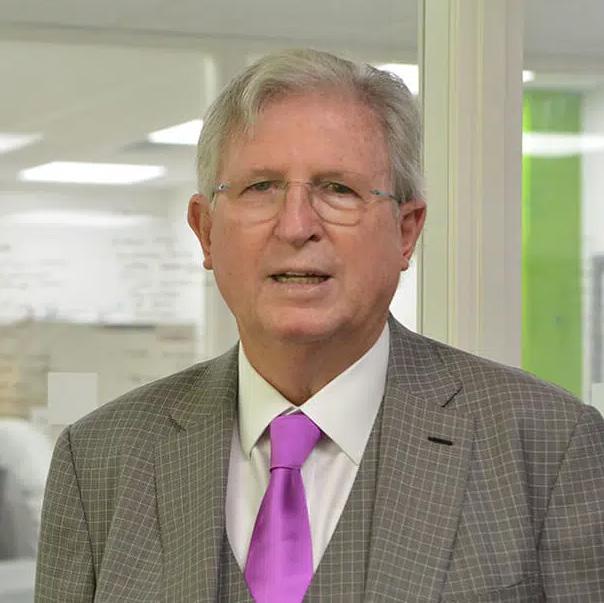

The John Griffin Foundation
“In my long career mentoring young people, it fills me with enormous pride that I created employment for thousands of people at Addison Lee. Finito continues this important work and I am delighted to be a part of their team.”
Professor Nadey Hakim GCStJ, MD, PhD
“You help so many young people by preparing them for the world of work and a wide variety of careers. Finito really makes things happen and it is incumbent on me to support you and to encourage others to follow my lead.”
Alan Halsall
“I am delighted to personally have supported the brilliant Finito Bursary Scheme. By helping young people discover their true vocation the Scheme makes a real difference to their lives and Ronel can be tremendously and rightly proud of what his Bursaries have achieved.”
Jeff Katz Chief Executive, Bishop Group
1946 - 2020
“As someone who benefited from the days when higher education and career advice was free, I feel the need to assist those who may not have the means to pay. I am pleased to donate a Finito bursary in the knowledge that it will give someone an advantage they might not otherwise have.”


Andrew Law
“The Law Family Charitable Foundation is delighted to be sponsoring Finito’s bursary scheme. Unlocking any individual’s full potential is a difficult but greatly rewarding pursuit. Our intention is that the ongoing proof of concept will lead to more sponsors supporting this fantastic initiative.”
“I am honoured to be part of aiding this scheme. It is vital that young people, who have talent and worked devotedly through school and university, have a chance to pursue their passion. Finito is able to find mentors, politicians, highly qualified businessmen, dedicated medical professors to help young people find the right path in their chosen professions, here in the UK and abroad. I am delighted to have been able to respond to this exciting mission, which helps inspire and motivate, the next and future generations.”
All too frequently young people leave our inadequately-resourced education system lacking skills, confidence, motivation. Thank you, Finito, for doing so much for so many to redress this imbalance.
Johanna Mitchell
Finito’s mentoring and support of young people, as they navigate their first steps on the career ladder, is wonderful. Finito take real care to get to know each individual candidate and to help them find the work that best utilises their unique skills and talents. Lumos Education is delighted to support Finito’s bursary scheme.

Judy
Naake MBE DL Founder, St Tropez Tan
“Giving someone the gift of a meaningful career, might spark the entrepreneurial in them and future business success that they never thought possible”
Richard Oldfield
Henry Oldfield Trust
“Finito works intuitively with young people to help them pinpoint the areas in which they can best excel and to move into fulfilling jobs. Their support of young people is invaluable. Lumos Education is committed to helping young people to access the best education opportunities. Finito helps them with their first step into the workplace. We are delighted to contribute to the Finito bursary for those who would not otherwise be able to afford this superb service.”
Judith O’Driscoll
“Supporting this Finito bursary is deeply personal to me. I’ve seen how mentoring and career preparation can change a young person’s life and I am proud to help make that possible”
Dr Selva Pankaj CEO, Regent Group
“As CEO of a UK education group, I fully appreciate how difficult it can be to take those first steps onto the career ladder, especially in the current volatile landscape of the pandemic. Hopefully, by supporting this initiative, we can help more individuals find the path that is right for them.”
I strongly believe in the value of education and in our collective responsibility to support disadvantaged students in achieving their full potential. Finito does outstanding work in providing bursaries and opportunities to students who may otherwise be unable to access valuable education, training, and skills development without financial assistance. The impact of this support extends far beyond the classroom, helping to create brighter futures and opening doors that might otherwise remain closed. Finito, you are doing remarkable work in helping those who need it most. The difference you make is truly remarkable. Keep up the excellent work.
David Pearl
“Young people have the potential to bring energy and creativity that drive meaningful change in any business. Supporting students searching for the right career, enabling them to fulfil their potential is a wonderful thing and as an ardent supporter of young people I’m proud to sponsor Finito’s work.”
“As a specialist education advisory service, we are fully aware of the challenges that young people can face when trying to transition into the world of full time employment. After years of academic training, many need further support with realising their full potential in the jobs market. We are proud to support such a worthy cause.”
Khawar Qureshi KC
“My work has enabled me to interact closely with senior State and Business sector representatives from more than 80 countries on commercial and international disputes . It is a pleasure to work with Finito in providing opportunities to talented individuals who will hopefully, in turn, contribute meaningfully to society when they flourish in their chosen careers”
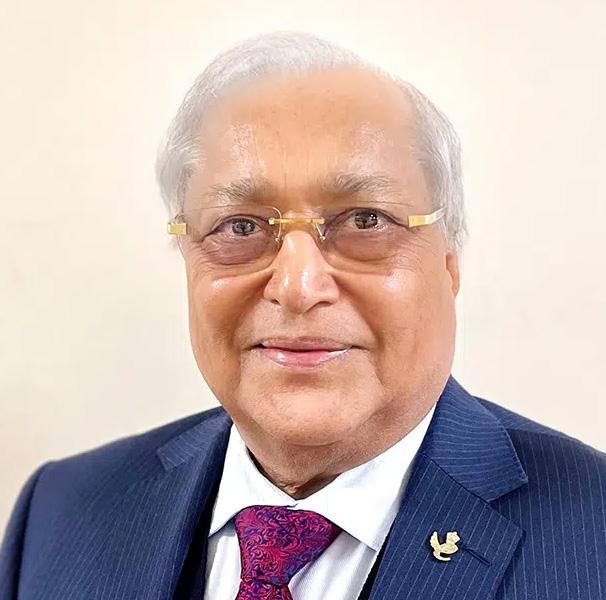

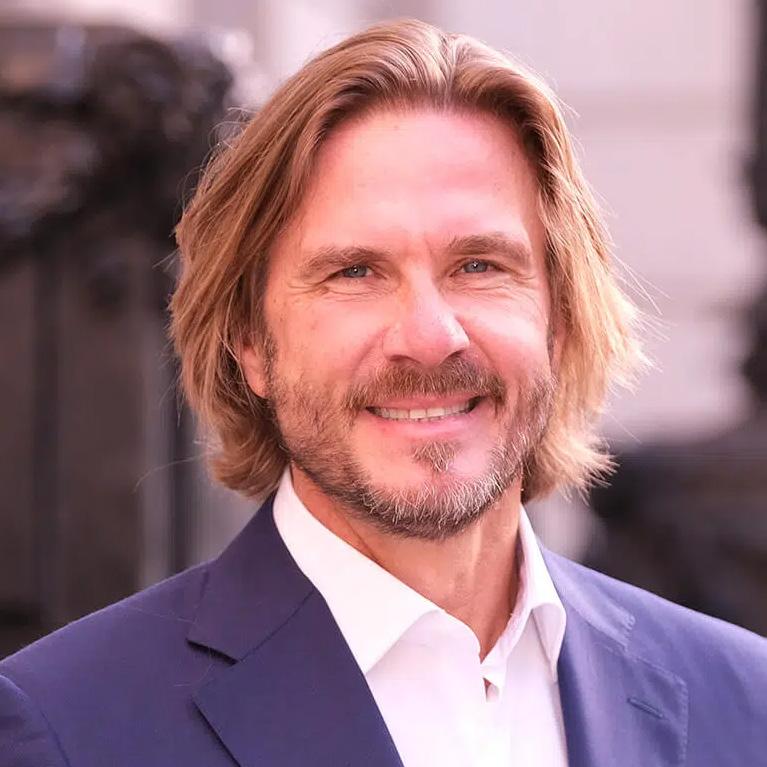
Lord Ranger
“The future of a nation lies in the hands of its students. By supporting students, the destiny of the country is shaped.”
Professor Carl Stephen Patrick Hunter OBE Chairman, Coltraco Ultrasonics Limited
“I am delighted to modestly support Ronel and Finito in their work. The causes of modern poverty are well documented in homelessness, educational failure, worklessness, drug and alcohol addiction, indebtedness, and family breakdown. If someone finds themselves in one of these, they are at great risk of joining the bottom 20% in our society, but if they have two of them, they are probably already there. We must all be a part of a national, shared endeavour to succeed to generate economic and prosperity.”
Mike Watson CEO, Tube Tech International Limited
“As a business owner, I often find myself mentoring students, school leavers and university graduates, many of whom are desperate for reassurance and guidance. Finito’s offering allows the sharing of invaluable insights, empowering youngsters in essential life values and reminding them the world is not as complex as portrayed – we’ve been their age before! Finito definitely put their money (and my own) where their mouth is!”
To find out more about our bursary please contact:
Ronel Lehmann ronel@finito.org.uk
Rara Plumptre rara@finito.org.uk
Finito Campus, Sutherland House, 3 Lloyd’s Avenue, London, EC3N 3DS
www.finito.org.uk www.finitoworld.com