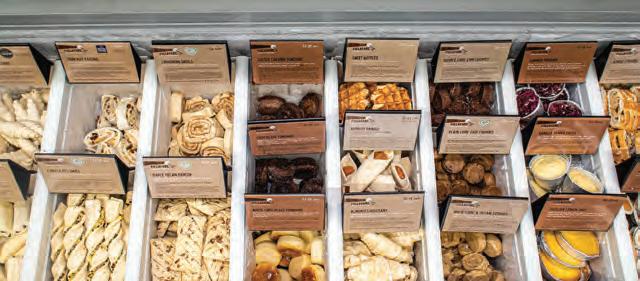
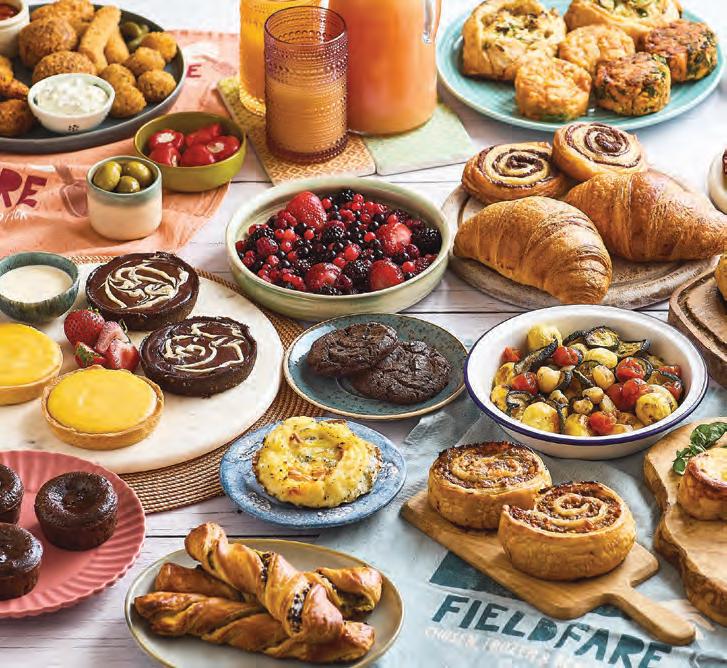
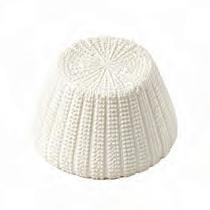
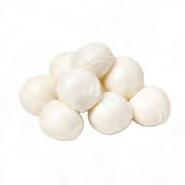
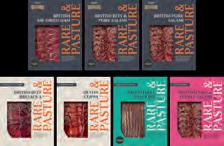
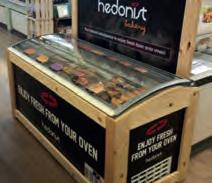
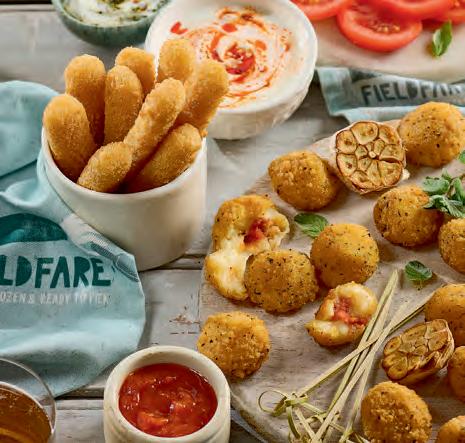
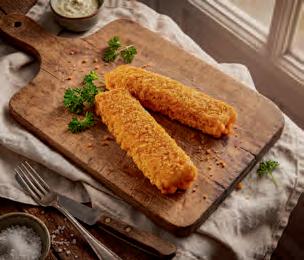
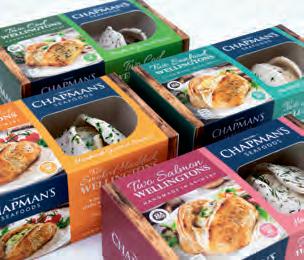
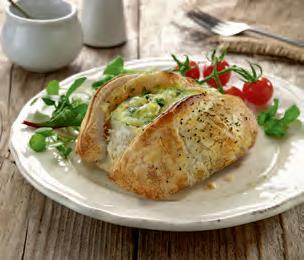
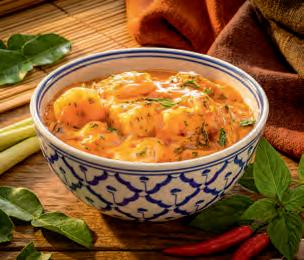
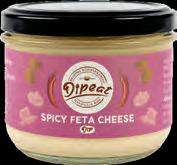
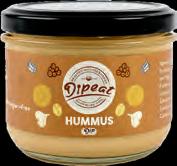
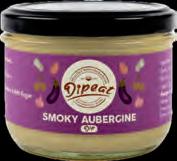
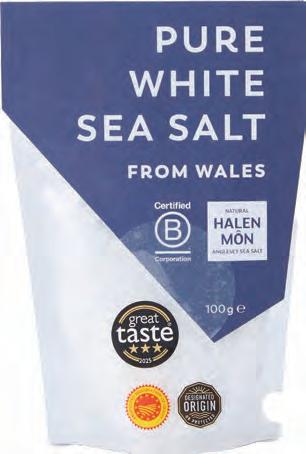
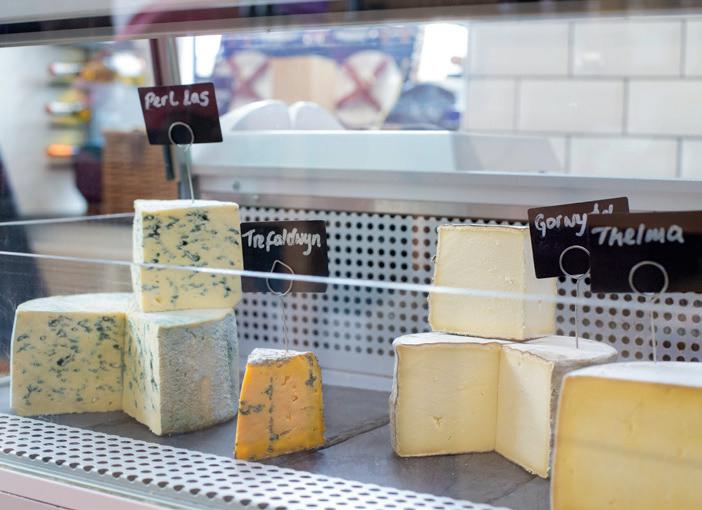
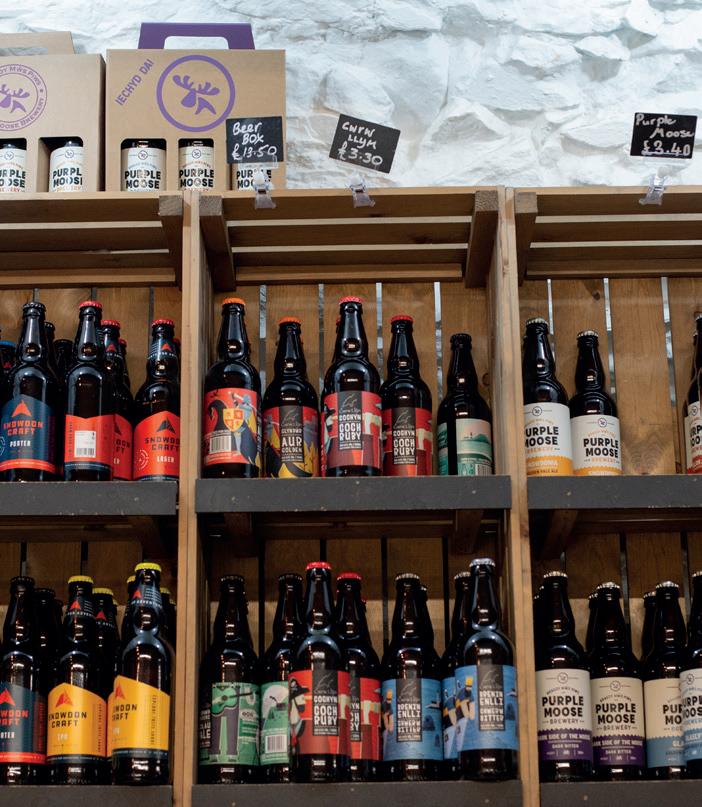
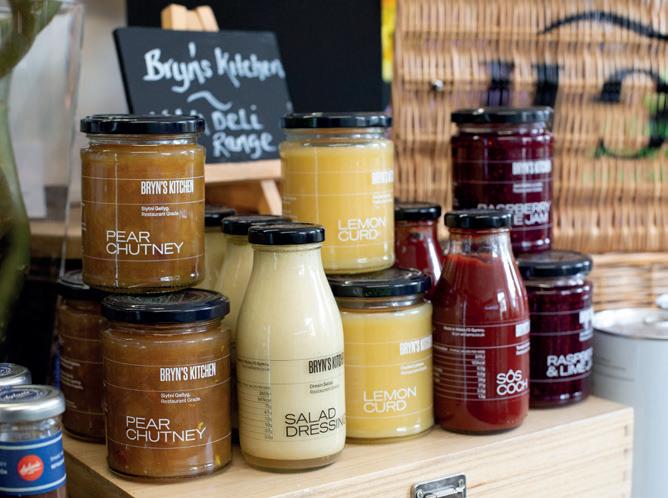
Sold loose, shoppers can pick exactly what they need
award winning range
32 awards in the last 4 years
Your Shoppers:
•36% of shoppers want low or no packaging*
•Over 1/3 of your shoppers have bought premium frozen food from speciality stores, farmshops and foodhalls in the past*
•Seek flexible eating with almost half personalising the evening meal (1 in 6 eat entirely different meals)*
* YouGov/Fieldfare survey of 2,000 British shoppers - February 2024
Join the Frozen Revolution
We will:
• Set you up with install and full branding of your freezer
•Advertise the offer to ‘sophisticated foodies’, over 8 million so far!
•Introduce new products to the range
To stock Fieldfare get in touch at enquires@field-fare.com or call us on 01732 864 344
CONTENTS
The
Bovine
It can be very hard to strip the context away and see the actual joy and purpose in our independent food & drink retail lives.
By Michael Lane, editor
Even though I’ve been around for quite a while and I’ve worked at the Guild of Fine Food for more than a quarter of that time, it’s struck me recently that you’re never too old to take things for granted.
It’s a very human flaw and one that creeps up on us. You don’t even know you’ve been doing it until you step away from your desk/counter/ premises/mobile device (delete as applicable).
It also helps if you increase that distance from the thing that grips you so tightly in place. By this, I mean travelling – and preferably going abroad.
I was speaking to an old friend that hasn’t lived in the UK for more than 20 years and he told me: “You don’t know how lucky you are. England is such a green place, compared to the rest of the world.”
He’s, literally, not wrong. But could he also be right, metaphorically?
Turn on your TV, swipe through
your social media or click on a link and it’s very easy to be hit with the feeling that everything is bad. There’s always a story about cost pressures (a lot of them linked to wars and oil), a new law that will make it harder to run your business or just general economic gloom that will hamper your sales. I dare say, you’ll find some of those things if you turn beyond this very page.
It can be very hard to strip these away and see the actual joy and purpose in our independent food & drink retail lives.
During the production cycle of this issue, I’ve been fortunate enough to escape the clutches of my laptop a couple of times. The most relevant was a trip that many of you reading this probably made too – to the NEC in Birmingham.
It takes some time but once you’re in that hall there is an infectious and protected energy about trade events (this is certainly something that never gets old). At
EDITOR’S CHOICE
Tanwen
DawnHiscox, deputy editor
the Farm Shop & Deli Show, one of the highlights was encountering those new producers – smiling and enthusing about their creations. No one is bothered by the noise of the outside world, you’re all just sampling, discovering and (whisper it) enjoying things.
It makes you think about the prospects for your business in a healthy way. Where will this product sit on the shelf? Is it good enough to share with my customers but also make a margin? Will they buy it? How could I use it in the café?
Of course, all the world’s heavy context is important and so are the numbers (apart from the calculation I’ve just done about the percentage of my life I’ve spent at Fine Food Digest. No one needs to know that). But just stop yourself occasionally, think about the aspects of the job that make you happy and then it might feel a little easier to keep going.
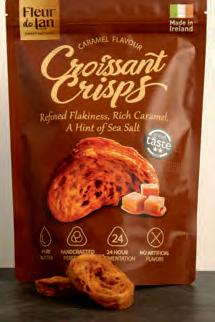
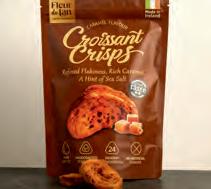
It’s no secret that I love croissants. My friends even bought me a chain with a pastry pendant on it for my birthday. I’m also a bit of a purist (snob), inclined to sniff at “takes” on the classic. I don’t need a tiramisu-flavoured breakfast. I don’t want it to be custard-filled. I frown at the mere mention of Dubai chocolate. So why am I am on board with these? I’m punctually setting my moral principles aside for their deep caramel coating, Palmier-like flakiness, and slight saltiness (with the decency not to be labelled ‘Salted Caramel’). Sometimes it’s good to be flexible. More on p.29
Warehouse lead & operations support: James McCall Published by The Guild of Fine Food Ltd Fine Food Digest is published 11 times a year and is available on subscription for £50 p.a. inc P&P.
Indies strategic in the face of revised food inflation predictions
By Greg Pitcher
Independent retailers are preparing for the fallout of the ongoing conflict in the Middle East to land on shelves of this country.
Industry figures called on the Government to ease other pressures and hailed the benefits of trading locally and rewarding loyalty as tough times loomed.
In April, the Food and Drink Federation (FDF) reviewed its food inflation forecast in light of the war that raged throughout March before an uneasy partial ceasefire was agreed.
Prices could now be 10% higher in December 2026 than a year earlier, the body warned, while further disruption to cargo traffic or oil, gas and fertiliser
facilities could make matters worse.
Monika Linton, founding owner at Brindisa, said in mid-April that the Spanish food importer had not yet seen “any indication of immediate and drastic price rises”.
While Spain had good levels of renewable energy to draw on, there was more likelihood of an impact on transport, Linton added.
“I’ve seen newsletters from other suppliers who rely on haulage for fresh produce and are seeing fuel surcharges of 8 or 9%.”
Meanwhile Brindisa has already seen a switch in consumer buying behaviour.
“We are seeing a drop in sales of luxury items; people are going back to basics,” said Linton.
“[Retail] businesses are trading down because they’re nervous their customers will. So they are buying less or more affordable products.”
Linton called for Government support to help squeezed retailers.
“If some Brexit costs were reduced in realignment with Europe, that would be good,” she said. “The Government should do whatever it can to help businesses that are really challenged with the other costs it has put on them.”
Guild of Fine Food managing director John Farrand also called for the Government to ease import-export routes within Europe.
“The global disquiet reminds us that looking
to our immediate trading partners is more secure, and I urge civil servants to maintain progress on sanitary and phytosanitary (SPS) agreements with the EU,” he said.
WHAT THEY ARE SAYING ABOUT... ...RESPONDING TO THE IMPACT OF THE MIDDLE EAST CRISIS?
“We’ve been working on a green agenda for our head office and facilities and we rely on solar for a lot of that energy now. If supplier prices go up, we will have to largely pass those on to consumers because margins are so challenged already. Consolidating the range so we can get more volume on a smaller number of products is one way we can save a little bit.”
“Consumer confidence is very low. Until people feel better off and are not worried they will be spending £200 to fill their car with diesel, it is worrying. You have to do an even better job of what you’re doing –everything has to be local, fresh, top quality, great customer service –people need a reason to come to you instead of someone else.”
“When the cost of essentials increases, discretionary spend tends to decline
disproportionately. The most important aspect will be to offer value without necessarily reducing prices. I would expect speciality retailers to consider developing bundles and multi-purchase offers. Furthermore, now is the time to introduce a loyalty programme.”
Farming and Food Partnership board meets for the first time
Food secretary Emma Reynolds and farming minister Angela Eagle have met industry representatives to discuss the way forward for the sector. The senior Government figures joined chiefs at seven key trade bodies at the inaugural convening of the Farming and Food Partnership Board.
Food and Drink Federation chief executive Karen Betts, British Retail Consortium director of food and sustainability Andrew Opie and UKHospitality chair Kate Nicholls all attended
the high-level summit.
A statement put out by the board after the meeting said it “recognised the significant pressures facing farmers and growers, including global shocks and rising input costs, and agreed that strengthening our domestic food production is essential to the nation’s food security and economic stability”.
The panel added that its mission was “to drive medium-to-long-term improvements in farm productivity, increases in farm profitability
“Opening those borders as soon as possible is imperative for growth.”
Vicki Colwill, owner of Bell’s Farm Shop in Worcestershire, said the crisis affecting international shipping and production presented an opportunity for independent businesses.
“We have a lot of local suppliers so I think it’s a bit less of an issue for us,” she said of the fallout from the Middle East.
“The fertiliser [shortage] won’t hit us as we don’t use a heavy amount. There will be some unexpected price rises coming through, I’m sure, but no-one is sounding alarm bells.”
Colwill was more focused on domestic issues the Government could help with.“Minimum wage and packaging tax are bigger worries for us,” she said.
and strengthen the contribution of domestically produced food to national food security”.
It said Sector Growth Plans would be drawn up to drive progress towards this goal.
“These plans will set out how each sector can grow its market share, both in the UK and overseas, of foods we can produce domestically.”
The board is expected to expand to 15 members. Reynolds will now consider the list of names put forward.
ANDREW GOODACRE, BRITISH INDEPENDENT RETAILERS ASSOCIATION
MONIKA LINTON, BRINDISA
WILL SIMKIN, ESSINGTON FARM SHOP
The FDF predicts food inflation will rise to more than 9% this year
IN BRIEF Easter delivers a much-needed boost despite gloomy conditions
By Greg Pitcher
Fine food retailers battled local weather fronts and global geopolitics as they strived for a business boost over Easter.
Deli and farm shop owners acknowledged the impact of both events on custom but were relieved to see a steady flow of customers during the important festive period.
Antonio Picciuto, proprietor of Buongiorno Italia, said both footfall and takings were “slightly up” on last Easter at the Hertfordshire store.
“All our Italian easter eggs sold and most of the Italian Colomba cakes,” he added.
“We did very well to achieve what we did considering what is going on in the country and the wider world.”
But he added, “If there had been some constant warm weather, we would have done a lot better. No one really wants to eat buffalo mozzarella and
Parma ham when it’s cold and rainy.”
Will Simkin, owner of Essington Farm Shop, said the Wolverhampton retailer’s takings were up 3% on the previous Easter. However, costs and prices had risen in that time, he added.
“We served more people than last year but items per basket were down. People were more budget-conscious because of the news.
ONS notes food sales fall in February
UK food sales dropped in February, official data has revealed.
The Office for National Statistics in late March published figures showing a 0.7% drop in volumes in the sector in the second month of the year.
The drop is a shift from positive January sale reports, transitioning into a more cautious spending period.
The seasonally adjusted data covers the period up to 28th February, when the US and Israel killed Iran’s supreme leader Ali Khamenei, sparking the war in the Middle East.
Andrew Goodacre, chief executive of the
British Independent Retailers Association, described the figures as “the first sign of consumers beginning to pull back on spending in the face of growing economic uncertainty”.
He added: “This could not come at a worse time for independent retailers, who are already contending with significant increases in their rates bills, rising wage costs and the very real prospect of higher energy costs.
“The so-called transformation of business rates has made matters worse and independent retailers are running out of road.”
Elevated volumes of traffic on the nearby A303 over the holiday period, and warmer weather in the South West, brought an uplift in trade, she added.
“There was a definite appetite for Easter goods – lots of chocolate, and the butchery was busy. Customers seemed u pbeat and chipper, happy to have sunshine, relaxed and keen to enjoy themselves.”
IN BRIEF
Cotswold Fayre has renewed its partnership with Jeremy Clarkson’s food & drink retail line, Diddly Squat Farm. The wholesaler says the 30-product range has been one of its most successful introductions ever.
“There were a lot of browsers on Easter Sunday and Monday, people were looking for something to do but didn’t want to spend big.
“Meat sold well, but fruit and vegetables were down. People made special journeys to buy lamb and nothing else.”
Ash Sinfield, founder at Teals, said the Somerset deli and farm shop had a strong Easter weekend in line with previous years.
Teals amended its range from the previous spring break in light of rising costs, but even pricier lines sold well.
Sinfield said the positive Easter period gave her optimism for the months ahead.
“Nothing has suggested patterns have changed,” she said. “Nothing makes us feel things have shifted.”
Picciuto also hopes the short-term picture can be rosy.
“Fingers crossed for a nice warm, dry spring and summer so trade can really motor on,” he said.
London Mayor Sadiq Khan has announced the return of the ‘Summer Streets’ fund and is set to spend £400,000 on helping businesses increase alfresco dining and extend their opening hours.
Investment in the Scottish food & drink sector fell by 34% between 2022 and 2024, according to Scotland Food & Drink. This is despite a record £24bn valuation. The drop was attributed to a reluctance to invest in small, family-run businesses.
Small indies offered grants for DRS implementation
Independent food shops could qualify for £6,000 grants to install reversevending machines (RVMs) as part of the UK’s deposit return scheme (DRS).
In April, the official operator of the drinkscontainer recovery initiative Exchange for Change (EfC) outlined proposals to help small retailers.
The body, led by logistics stalwart Russell Davies, said independent grocery shops introducing RVMs could be eligible for three annual payments of £2,000 each.
EfC said it planned to set aside £60 million for the subsidy.
“The overall funding envelope and detailed eligibility criteria will be developed further, alongside operational performance requirements,” it added.
Meanwhile, more shops than previously thought could be able to avoid installation of DRS return points altogether.
EfC said those with under 200 square metres of “sales area” could become eligible for exemption from the requirement. At present, only urban shops with retail space below 100 square metres are let off the hook.
Certain conditions
would have to be met to qualify for the proposed further exemptions, which are under review. Meanwhile changes to legislation that came into force in England in April allow the installation of RVMs in a wall or curtilage of a shop without a planning application.
Scotland already has similar measures in place, while Northern Ireland is progressing its own legislation.
DRS is due to come into force in England, Scotland and Northern Ireland in October 2027. Wales is working towards launching its own scheme at the same time.
Retail sales rose by 3.6% year-on-year in March (BRC)
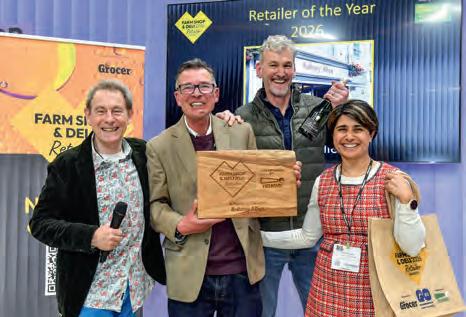
Aubrey Allen takes top title at Farm Shop & Deli Retailer Awards
By Tanwen Dawn-Hiscox
Leamington Spa’s Aubrey Allen was crowned Retailer of the Year at the Farm Shop & Deli Retailer Awards 2026, taking the top title as well as being named Best Butcher.
The awards were announced on the first day of the William Reedrun Farm Shop & Deli Show, held at the NEC in Birmingham from 13th-15th April, as part of the longrunning UK Food & Drink Shows.
In the ‘Large’ farm shop category, Ludlow Farm Shop in Shropshire, founded by the Ludlow Food Centre team, emerged as the victor, while the ‘Small’ award went to Mains of Glassaugh Vegetables in Moray, a family-run farm shop and grower. Birmingham’s Mouse & Grape, the cheese and wine shop run by Sarah and Will Durling, was named Best Cheesemonger, and Flourish in Bristol took the title of Best Food Hall.
The organic retailer with sites across Sussex and Kent, Seasons Wholefoods, was the regional winner for South East England, while George & Joseph in Allerton, Leeds, established in 2012 by Stephen Fleming, was deemed the best retailer in the North East. Conwy’s Dylan’s Baked Goods & General Store, an offshoot of the wider Dylan’s business, took the top title for Wales.
The awards were chaired by food and drink
broadcaster and presenter Nigel Barden and Elaine Lemm, the Yorkshire-born food writer, and judged by a panel of industry figures including Sangita Tryner of Delilah Fine Foods, Matt Whelan of Fieldfare and Carla Mills of Booths, among others. Entries were recognised on the basis of performance, innovation, sustainability and customer engagement.
Barden said that despite a fraught trading
DOWN ON THE FARM
Marks & Spencer will now apply discounts across its Food, Fashion, Home and Beauty divisions under a new loyalty scheme. Customers will earn £5 for every £35 spent in the foodhall, and £1 for every £10 spent on fresh fruit. ‘Buy and Bundle’ deals will also add credit onto Sparks accounts. The retailer says it has been developing its AI capabilities so that “the more customers shop with Sparks, the better and more personalised the experience.”
environment, the awards had “continued to thrive”. On Aubrey Allen, he added: “They demonstrate so much of what a retail food business needs to be doing to survive and thrive in today’s challenging retail landscape,” pointing to the “dedication” shown over more than four decades, as well as the way the business supports its team.
Alongside the retail awards were the Producer Awards, awarding Gold, Silver and Bronze medals to the best products available in independent retail. Kursat’s, a chef-founded condiments brand, scooped three Gold medals for its Enchilada, Ezme and Pickled Garlic Confit Paste, as did French preserve maker Léonce Blanc for its Pear and Vanilla, Blueberry and Apricot lines. Others included Makan Malaysia for its Rendang Paste and Ferment Fizz for its probiotic take on classic fizzy pop, Lemon & Raspberry Lemonade.
The latest from farm shops across the country
Following on the success of its Lifton, Buckfastleigh and Exeter outlets, Strawberry Fields has opened a fourth on Dartmoor. Located at the old Dartmoor Diner site, the store was entirely refurbished to provide the perfect setting for selling homemade
produce, as well as having a coffee shop. With direct access onto the moors, the owner hopes that walkers, cyclists, locals and tourists will stop in. It will be open 7 days a week from 7am to 7pm. strawberryfieldslifton. co.uk/pages/strawberryfields-at-dartmoor
Hayton Farm Shop and its adjoining café, a short drive off the A69 between Carlisle and Brampton, has been put up for sale to anyone who commits to keep up the good work. The property’s café can seat 60, and it also has and an events room and plenty of parking. haytonfarmshop.co.uk
IN BRIEF
Willow Tree Delicatessen at Wroxham Barns in Norwich is set to close at the end of May, as owner Martin Dupée is retiring.
Local stores in Scotland are warning against a commitment made by the SNP to cap the price of essentials like milk and bread if it wins the next Parliamentary elections. It would only be applied on large supermarkets, but would likely have knock-on effects on smaller retailers.
Waitrose has publicly defended its decision to sack an employee for going against company policy and tackling a shoplifter in April, saying the rules are in place to protect the safety of both staff and customers.
The owners of the Wenlock Edge Farm Shop near Much Wenlock in Shropshire have finally reopened their farm shop and sausage-making facilities ten months after a devastating fire. The
customers who have returned to the shop are glad to have it back, too. wenlockedgefarm. co.uk
Planning permission has been granted for the extension of a farm shop building at Gazabo Nursery, Brook Farm in Warwickshire. The extension will allow the shop to increase in size with a new tea room, and the owners have plans to modernise the whole site.
In association with Fabulous Farm Shops fabulousfarmshops.co.uk
Third generation Warwickshire butcher Aubrey Allen sells meat and cheese at its shop, wholesale to foodservice and into independent retail, as well as running a butchery school
IF I’D KNOWN THEN WHAT I KNOW NOW...
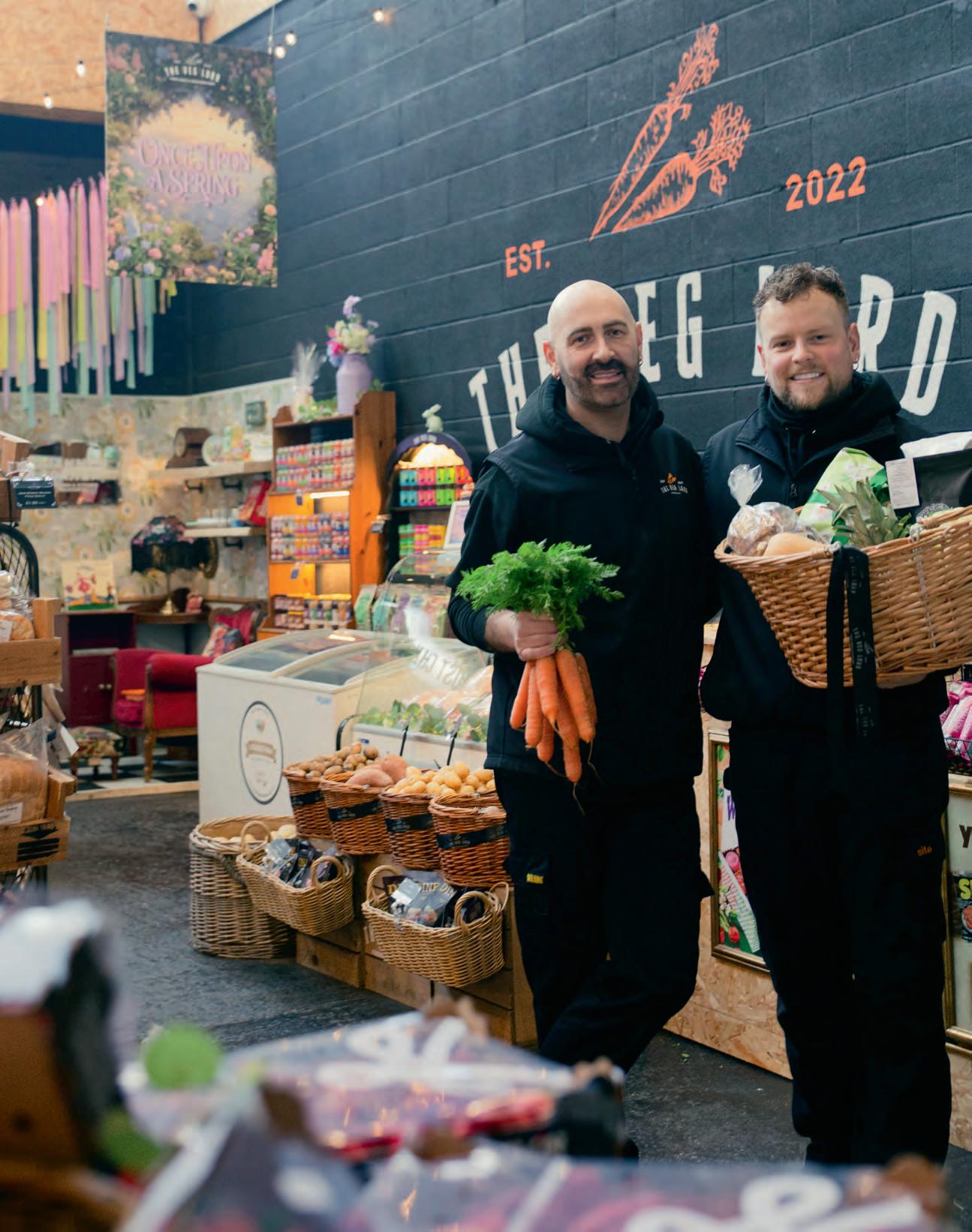
MATTHEW GILMARTIN, owner, The Veg Lord, Mossley, Ashton-under-Lyne
I left college at 18, went straight into the corporate world, and worked my way up to running a customer service department. After doing that for 12 years, I wasn’t enjoying it anymore and wanted to do something for myself. I am obsessed with food, so I did some market research around Manchester, which gave me the idea of opening a fruit & veg shop.
Finding a location took ages. I didn’t want to be on the high street as rent is astronomical and I was starting the business with next to nothing. I got in touch with the site manager of an industrial estate and, in April 2022, we signed a lease on a unit there. As the unit wasn’t ready for another six months, I set up a pop-up in the car park and used it to build brand awareness – and people bought into our story.
We’re all about community, education and experience. Shopping can be mundane and we want to make it easy and enjoyable. There are lots of little things we do that contribute to this, from donating to the local food bank to having little knitted pickles with positive messages on them in the shop. We hold community parties that are free to attend, and our themed installations are led by the shop’s co-owner (and my fiancé), Mark, who is our brand director.
Education is important. People love the idea of weird and wonderful produce but don’t always know what to do with it. We issue seasonal recipe cards, talk about food at the till and make it a community-wide conversation.
Last year, we moved into a larger unit and became a farm shop. At the start we were primarily a veg box business. Now the store generates 90% of our revenue. We sell roughly 150 fresh produce lines, as well as directly sourced ambient and pantry goods.
For our fresh produce, we work with a small, family-run wholesaler at the market. We send our orders the night before, and then go to the market the following morning. We invariably come away with something we didn’t know was coming in, like speciality tomatoes or exotic fruit.
We avoid waste through tight ordering. Daily market trips mean we don’t need to buy too much at once. When we buy something fancy we always have an exit point – we might simply put it as a special for one week. It’s also about knowing when to buy and when not to buy. When a season is coming to an end, the quality can dip and the price rises.
If people are looking for a hand-curated shopping experience different to that of the average supermarket, we are their people.
Interview Lynda Searby
Photography Stefanos Aktipis
View from HQ
FFD’s publisher and Guild of Fine Food managing director John Farrand has his say
IMalton Relish, the cornerstone deli of 18 years, looked like a shop extra from a horror film.
met Claude in March. No, this isn’t some sort of clumsy public outing via the pages of FFD, but an awakening. More accurately a realisation. AI has become more than a smarter Google search (my erstwhile opinion), but it is now a tool. A piece of software that you learn how to use as you would Excel or Word.
I’ve been over-Claude-ing these past few weeks. A 21st speech, a licensing agreement, a portal to process cheesemakers’ health certificates (niche, but an impressive solution supplied), and I am starting to understand the threat it poses. Not to us in realworld food & drink but to lawyers, management consultants and backoffice finance bros. I’m assuming it’s not bothering greedy landlords either. Their path to financial utopia seems Claude-proof.
We’re looking forward to August this year when our youngest leaves Durham uni. I’ve whinged before about the cost of her box room and
GUILD MEMBERS’ WHATSAPP GROUP
We know that many of you aren’t sitting behind a computer all day every day, so we have recently set up a WhatsApp community for Guild of Fine Food members. The aim is to give you the chance to learn from likeminded businesses, to receive announcements and opportunities quickly and easily.
If you’re a Guild member, you can join via the link in your MyGuild account today.
the fact that there are six others in box rooms in what I consider a 2 and a half bed Victorian terrace.
Heading south after a parental visit, we needed a stopover, and being a Guild of Fine Food believer meant that I needed it to deliver. I’d asked Claude what he (she / it?) algorithmised in the food destination department. The response: the UK’s food & drink capital could be Liverpool, Sheffield, Malton (North Yorkshire) or London. So, Malton it was, and we were looking forward to seeing James Martin and spending what little money we had left after seeing that landlord in Durham.
It was a bloody desert. Not an artisanal street market in sight.
Malton Relish, the cornerstone deli of 18 years, looked like a shop extra from a horror film, a dusty, boarded-up zombie. It had been glorious in its day.
Claude owed me an explanation.
After thanking him (her/it) as is protocol, I asked more of the demise
of Malton. The result was a stream of gripes from local shopkeepers as the Malton Christmas Festival, Monthly Food Market, Malton 10k and Malton Food Lovers Festival had all been cancelled in October last year in a decision made by Visit Malton, a promotional company owned by (dramatic gasp) the local estate and landlord, The Fitzwilliam Estate.
Chris Waplington, operations manager at Brass Castle Brewery, said that Malton had been branded as the food capital of Yorkshire and that now business owners were just confused at the decision. Confused? Pissed off, I’d say. I read on. The Fitzwilliam Estate said the change marked the “start of a new chapter for the town’s tourism and marketing efforts”. A euphemism for cutting costs and therefore colour.
That “new chapter” has not been read by Claude, otherwise I would have spent my last remaining pennies in Liverpool.
The Word on Westminster
By Edward Woodall Association of Convenience Stores
IN RECENT WEEKS, we’ve started to see more important details emerge about the incoming Deposit Return Scheme (DRS), coming into force in October 2027. For the most part, what we’re seeing is positive for retailers.
The headline news on DRS is that scheme administrator Exchange for Change has confirmed that there will be grants available for small independent retailers who are seeking to put a reverse vending machine in their store. Hosting an RVM won’t be right for everyone, but we’re pleased that there is an acknowledgement that the cost of RVMs is challenging and that independent retailers need more financial support to make that option viable. The £6,000 over three years that’s being made available as part of a £60m pot of funding for retailers is a step forward, but we need confirmation of the retail handling fees (the amount that retailers are paid for each container returned) to complete our modelling of how many containers you as a retailer need to sell and return to make participation with the scheme cost neutral. If the
scheme is going to be a significant net cost, it will lead to more retailers seeking exemptions and communities losing local access to return points.
For retailers in Wales, however, there are more concerning developments. The Welsh Government have decided not to appoint Exchange for Change (the scheme administrator that has already been appointed to deliver DRS in England, Scotland and Northern Ireland) but has not presented a viable alternative. This leaves a vacuum of responsibility with less than 18 months to go until the scheme comes into force, which is especially problematic as Wales’ proposals on the inclusion of glass make the scheme significantly more expensive and complex to deliver. Elections will be held to elect the next Welsh Government in May, and we’ll be pushing for more clarity on the plan as a matter of priority.
Every retailer across the UK is going to have to decide on how they’re going to interact with the scheme, so it’s important to stay close to the developments to understand whether seeking an exemption, operating a manual scheme or installing an RVM is right for you.
Edward Woodall is government relations director at the ACS edward.woodall@acs.org.uk
CONFESSIONS OF A DELI OWNER
Anonymous tales from behind
the counter
THE LATEST TREND sweeping the countryside isn’t a new breed of heritage sheep or a sourdough starter: it’s the arrival of the shiny, refrigerated vending machine at the farm gate. I don’t know about you, but I’ve definitely spotted more of these popping up where we live, offering everything from milkshakes to fresh meat and eggs. I can’t help but admire the farmer who has put them there for their efforts to sell direct, and I suppose it’s the new version of the old honesty box system we all know and love.
I recently heard someone who runs a farmers’ market complain that vending machines discourage producers from selling in person at
markets. But isn’t it just another outlet for a popular product, and if sales increase at the farm gate, doesn’t it make it worth it overall for a farmer to package up their products to sell at markets too?
I understand the appeal of cutting out the middleman (usually me) and pocketing the full retail margin without having to deal with the overheads of a traditional shop. Producers don’t have to worry about staffing costs, business rates, or a customer spending twenty minutes asking if the goats’ cheese is “happy” before buying a single lemon. They just stock the lockers and walk away.
However, I don’t think they’ll ever be a threat to bricks and
A vending machine will never tell you that the brie is at its absolute peak today
Expert eye
Trends are already influencing what people buy and how they eat. For fine food retailers, that’s a fantastic opportunity. You already have everything you need. The question is whether you’re capitalising on it.
Appetite-suppressing medications such as GLP-1s are altering eating habits not just for the person on the drug, but if the user is also the primary shopper for a family, there is a knockon effect for the whole household. Combine this with a growing consumer awareness of satiety and blood sugar balance, and you have a genuine shift in buying habits. More people are looking for smaller, nutrient-dense portions, creating opportunities in formats that champion protein, fibre, wholegrains and clean ingredients.
The ultra-processed food (UPF) conversation is becoming more nuanced. Shoppers are
mortar. A vending machine is a one-trick pony. If that specific farm has a bad week, the customer is left staring at an empty locker. In the shop, I am a curator. I’ve spent years sourcing the best produce so the customer doesn’t have to drive 50 miles to assemble a charcuterie board. We provide the variety that a single farm gate, no matter how high tech, can never match.
We also provide expertise: a vending machine will never tell you that the brie is at its absolute peak today, nor will it gently suggest that the wine you’ve picked will make your expensive steak taste like copper. That human interaction, the “oh, try this” moment of discovery is the only thing keeping the high street alive. In the current UK economic climate, the vending machine is a formidable competitor. It’s 24/7, it doesn’t need a pension and it never calls in sick. But it also doesn’t offer the sensory joy of a well-stocked deli or the community hub a farm shop provides. We are the storytellers and the quality controllers. While the machines are great for a quick fix in a lay-by, they’ll never replace the experience of a shop with a pulse. We just have to hope the customers remember that before the last of us is replaced by a keypad in a shed.
scrutinising labels, looking for recognisable ingredients and clear provenance, and quietly moving away from UPFs. This plays directly to the strengths of independent retailers, which are already stocked with products that emphasise craft, simplicity and traditional techniques.
There’s a renewed appetite for whole-animal eating, too. Nose-to-tail cooking and lesserknown cuts are gaining serious traction as consumers chase both flavour and affordability. It’s the under-30s queuing at the butcher for bones to make their own broth. Retailers who offer recipes, preparation tips or tasting experiences will build real confidence and loyalty around these products.
Snacking, meanwhile, has become the main event, and the three-meals-a-day tradition is out. Consumers want flavourful, shareable, informal food that fits around their lives. Retailers should curate snack-led displays, like crisps next to the good dips, or think about lower sugar alternatives like olives and cheese in snackable formats. Help your shopper picture the experience of having these things at home, because that’s what sells them.
The opportunity is not simply to follow trends, but to translate them into stories, tastings and curated experiences that help customers discover the best of what you have to offer.
sharprelations.com
25%
Source: Rachel Reeves at the IMF meetings, April 2026
ARE YOU LOOKING FOR MORE?
Whether it’s staff training, business advice, event space, making industry connections or opportunities to meet trade buyers and food lovers, the Guild of Fine Food does far more than publish FFD The Guild has been championing independent food & drink for over 30 years. Join us today and find out what we can do for your business.
Support & ideas: support@gff.co.uk
Training & venue hire: bookings@gff.co.uk Exhibition stands: opportunities@gff.co.uk
AJ SHARP OF SHARP RELATIONS ON HOW TO MAKE THE MOST OF BEING A TREND SETTER
www.sodiaal.co.uk info@sodiaal.co.uk
bTB vaccine on the horizon spells bright future for raw cheesemakers
By Patrick McGuigan
Government research into a new bovine tuberculosis (bTB) vaccine and test aimed at helping eradicate the disease could make a “huge difference” to dairy farmers and cheesemakers in terms of costs and using raw milk.
It’s estimated that the disease costs English farms around £100m a year through lost sales and slaughtered livestock, with more than 60,000 cattle put down in 2023/24. High rates of bTB in areas such as Wales and the West and South West of England mean many farmhouse cheesemakers are also forced to pasteurise or must go through the costly process of switching between raw and pasteurised milk.
However, the Animal and Plant Health Agency has been conducting field trials of a vaccine and new Detect Infected amongst Vaccinated Animals (DIVA) skin test. The vaccine is almost 90% effective, while the test distinguishes between vaccinated cattle and those infected with the disease, something the current skin test cannot do. The initial two phases of the initiative have been successful, with the third and final on-farm stage to be
completed this summer, ahead of a potential rollout, subject to official approval. If successful, the vaccine and skin test would “make a huge difference” to farmhouse cheesemakers, said Jane Quicke, MD of Quicke’s, which currently makes pasteurised cheddar. “If DIVA was approved then we could protect our cows against the disease in the first place. A win for welfare as well as raw cheese production.” she said. “If we could clear TB as a county or even a country this would take the risk levels down to an acceptable level and we could make raw milk cheddar once again.”
Somerset raw milk cheddar producer Westcombe splits
The Specialist Cheesemakers’ Association has launched a new website, which includes a new Members’ Hub, where members can access technical documents, a discussion forum and webinars, as well as a list of information about their cheeses.
Concerns are growing that Greek Feta production may struggle to keep up with demand as an outbreak of sheep and goat pox in Greece has resulted in the cull of tens of thousands of animals.
Parmigiano Reggiano grew to be worth E3.96bn in 2025, up from E3.2bn the year before. Exports are driving the increase with a 7.8% jump in volume sales to the UK, where 8,400 tonnes of the cheese were shipped last year.
its herd between two farms to mitigate the risk of bTB. “Our passion is raw milk – it’s a flavour of a specific place – but it’s a hell of a lot more work,” said owner Tom Calver. Montgomery’s, which also makes raw milk cheddar in Somerset, has had to pasteurise on occasion because of bTB. Owner Jamie Montgomery was less optimistic about the scheme, arguing it needs more robust testing in areas with higher rates of bTB and to see how it reacts with other vaccines. “DNA testing for bTB could provide much higher accuracy, but the Government is dead-set against anything that might get in the way of skin tests.”
cheese producer
, which makes the raw Crottin-style cheese Yr Afr,
moved production to a
dairy and shop at the
Shopping Village
Owners Brad and Beth Cunningham, who previously rented production space at Cosyn Cymru in Bethsesda, are working on new goat’s and cows’ cheeses at the new site, which is open to the public six days a week.
THREE WAYS WITH...
Abbaye de Cîteaux
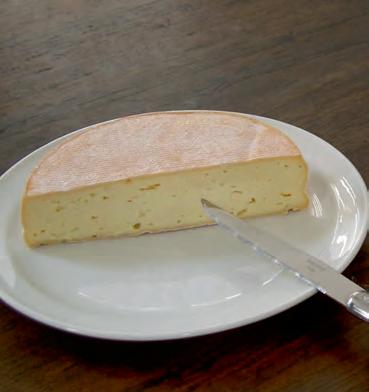
There’s more to Burgundian cheese than Époisses. Abbaye de Cîteaux is a mild washed rinder, made by monks at the Cîteaux Abbey near Dijon. Using thermised Montbéliarde milk, it has a pudgy, semi-soft texture and a pungent terracotta-coloured rind, which takes in notes of malted barley, meat and musky floral flavours.
Aligoté
Burgundy is best known for Pinot Noir and Chardonnay, but it is also home to the white grape Aligoté. Used to make light, citrussy white wines, Aligoté offers excellent value compared to Chardonnay-based Burgundies and is a good foil for Cîteaux. A recent bottle of Bouzeron from producer Domaine de Villaine. proved this: its steely acidity cut through the funk, while floral and mineral notes picked up on something scented and spicy in the cheese.
Ready salted crisps
The glossy, silky paste of Cîteaux needs something crisp and crunchy for contrast. And what could be crisper than a crisp? A wodge of the washed rind cheese smeared on a thick-cut, ready-salted crisp is a wonderful thing. Like a tartiflette, the earthy, savoury cheese is the perfect partner for the salty slices of potato.
Mustard
Cîteaux Abbey is just south of Dijon – home to the worldfamous mustard. Classic Dijon mustard is too sharp and spicy for the cheese, but a lick of whole grain mustard works well. The mustard seeds are pleasingly crunchy against the creamy paste, while there’s vinegary sharpness to cut through. Maille Moutarde à l’Ancienne, made near the Abbey, is a good bet.
Goats’
Wacky Wedge
has
new
Cei Llechi (Slate Quay) Artisan
in Caernarfon.
CHEESE
King Stone drops sheep’s milk cheeses and relaunches Evenlode
By Patrick McGuigan
King Stone Dairy will not make sheep’s milk cheeses this year as it “dials down” on cow’s milk with a new Langres-style cheese and pasture mapping project on Manor Farm in Gloucestershire.
The company, which makes Rollright, Ashcombe, Yarlington, Burford and Moreton, started making sheep’s milk cheeses in 2024 with the Ossau-Iraty-style Bibury and soft lactic Hidcote, using milk from the flock previously owned by Berkswell producer Ram Hall Dairy. But cheesemaker David Jowett will now focus exclusively on cheeses made with cow’s milk from the farm. He is currently developing a new version of Evenlode, which has been out of production for three years, but is returning as a wrinkly, washed rind cheese similar to Langres.
Jowett and farm owner Seb Clarke have also embarked on a project to map the farm’s different grazing paddocks,
CHEESE IN PROFILE with
recording information on plant varieties, rotation cycles and weather. The information will be used to improve pastures and milk quality in the long term. A new cow shed has also been built to improve animal welfare and milk consistency during the winter.
“It makes sense for us to dial down on cheeses using the milk from here, rather than buying in from outside,” said Jowett. “We might bring back sheep’s cheeses in the future,
but we want to really focus on what’s happening on the farm. We found that some of our best Burfords last year were made when the cows were in particular parts of the farm, so pasture mapping could help us understand why.”
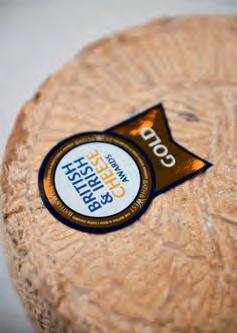
King Stone’s cheeses received 17 medals at the British and Irish Cheese Awards, including Reserve Champion and Best Export Cheese for Yarlington. kingstonedairy.com
BEHIND THE COUNTER TIPS OF THE TRADE
Tom Pinder, The Welsh Cheese Co, Cardiff, Wales
Tom Pinder started selling Welsh cheese online in 2017 before opening a shop at his warehouse in Taffs Well in Cardiff. But his new venture in Victoria Park is a different proposition, combining a counter, deli and cheese bar that can sit up to 23 people.
“We were conscious of getting the balance right between eating in and retail,” he says. “It’s working well, but we have tweaked things.”
The bar hit the ground running with weekend evenings booked up for wine and cheeseboards, while the fortnightly tastings have also sold out. But Pinder has made changes to boost day trade, introducing a Welsh rarebit menu and coffee, while displays and signage have been improved to boost retail.
“There’s a 60/40 split between the bar and the shop, which I’m pleased with, but you can always improve. We’re using whole cheeses and large cuts in our displays now, and ‘cheese of the week’ and better stories about the producers on our labelling. I didn’t want to do sandwiches and become just another café, but rarebit works well because it’s classically Welsh and cheese is the focus.” welshcheesecompany.co.uk
What’s the story?
This soft goats’ cheese takes its name from the village of Rocamadour, a historic World Heritage UNESCO site home to Saint-Sauveur Basilica and the Saint-Amadour Crypt in the MidiPyrénées region of south-west France. The area is famed for being a pilgrimage stop on the route to Santiago de Compostela, where visitors come to see the revered Black Virgin Madonna – a wooden statue of the Virgin Mary
believed to have been carved by Saint Amator. Rocamadour cheese was first recorded in 1451 and was even used as a form of payment for church taxes, highlighting its importance to the local economy. Previously known as ‘Cabécou de Rocamadour’ and part of the wider Cabécou family, the cheese was officially renamed after receiving its PDO status on 16 July 1996. Today, the town continues to celebrate its cheesemaking heritage with the annual Fête des Fromages – a lively festival featuring competitions for the best farmhouse cheeses, tastings and traditional music.
How is it made?
Rocamadour is made from raw milk sourced from Alpine or Saanen goats. The
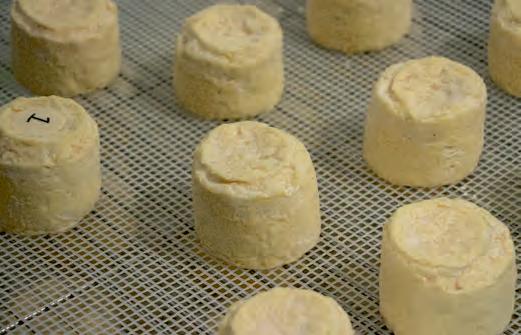
plateau, where the cheese is produced, provides ideal grazing for goats, with its sparse moorland, woodland and coppices. The goats are milked twice a day, producing around two to three litres of milk per goat over a ten-month period. Rennet is added to the milk, which is then left to slowly coagulate over 24 hours. The curd is gently drained for a further 24 hours before being
salted, moulded and left to mature for a minimum of six days. During this time, the cheeses are turned daily to encourage even maturation.
Appearance & texture:
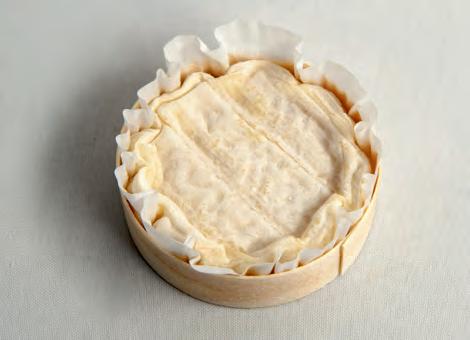
Rocamadour has a delicate, creamy and
gently nutty flavour when young, which deepens and becomes more pronounced with age. Its texture is smooth and melting, with a thin, velvety white rind.
Variations:
None
Cheesemonger tip: Pairs particularly well with a glass of the local Cahors wine, made with inky Malbec grapes.
Chef’s recommendation: Delicious as an appetiser, spread over sourdough or seeded baguette. It’s also perfect served with a simple salad, a handful of walnuts and a drizzle of honey.
Rocamadour PDO is one of the 75 cheeses studied as part of the Academy of Cheese Level Two Certification. For more information on this and all of their courses, head to: www.academyofcheese.org
arid limestone Causses
King Stone Dairy’s Langres-style Evenlode, made with pasteurised cows’ milk, earned a Bronze medal at the World Cheese Awards in 2022.
HOW DO I APPLY?
Simply
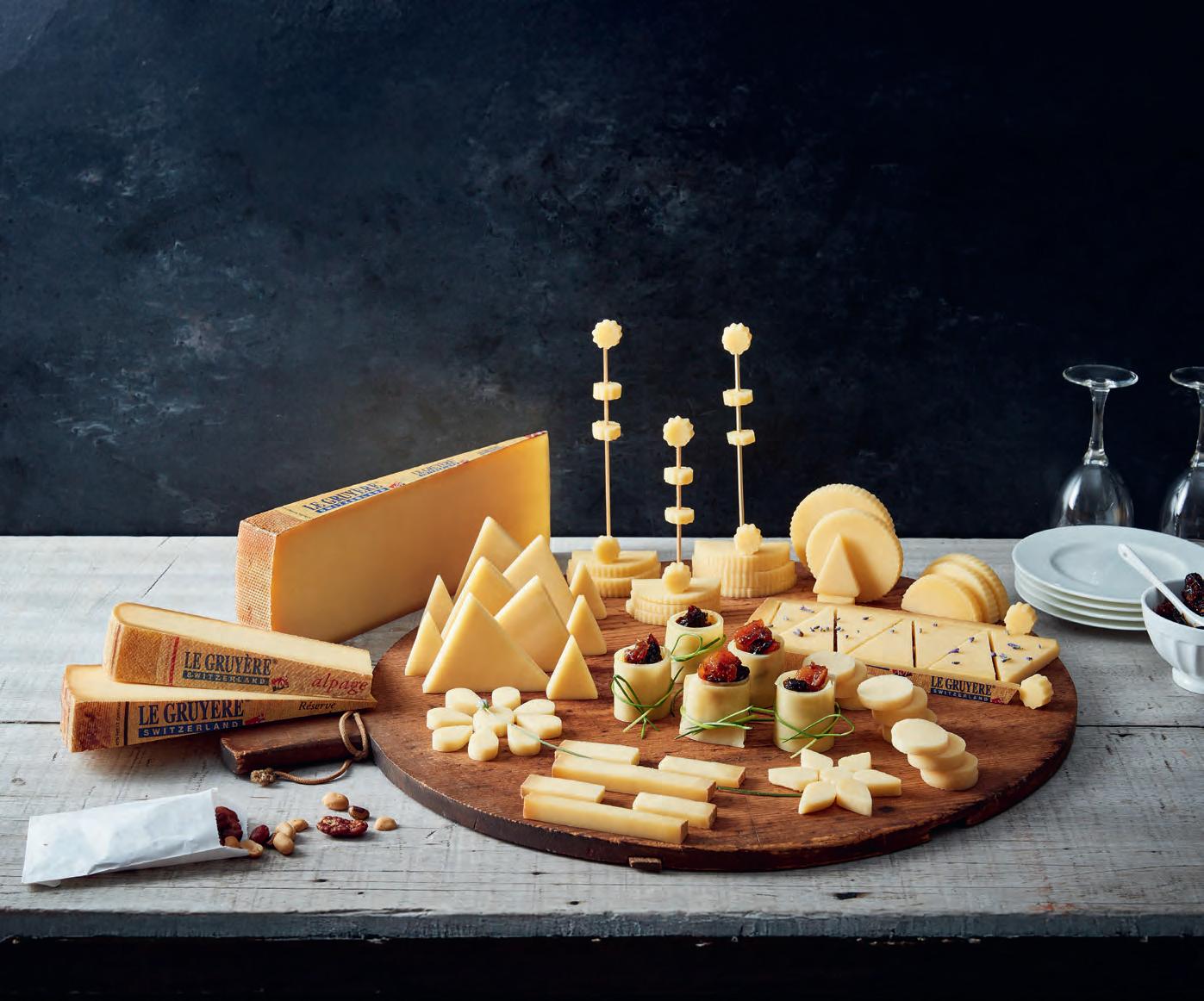
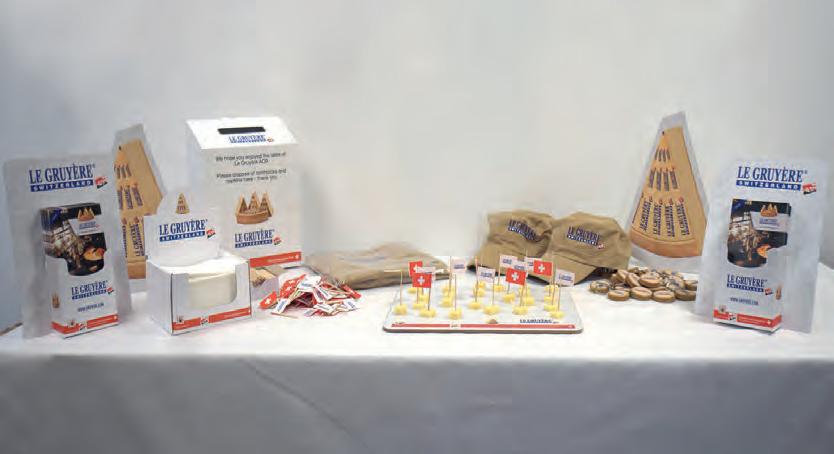
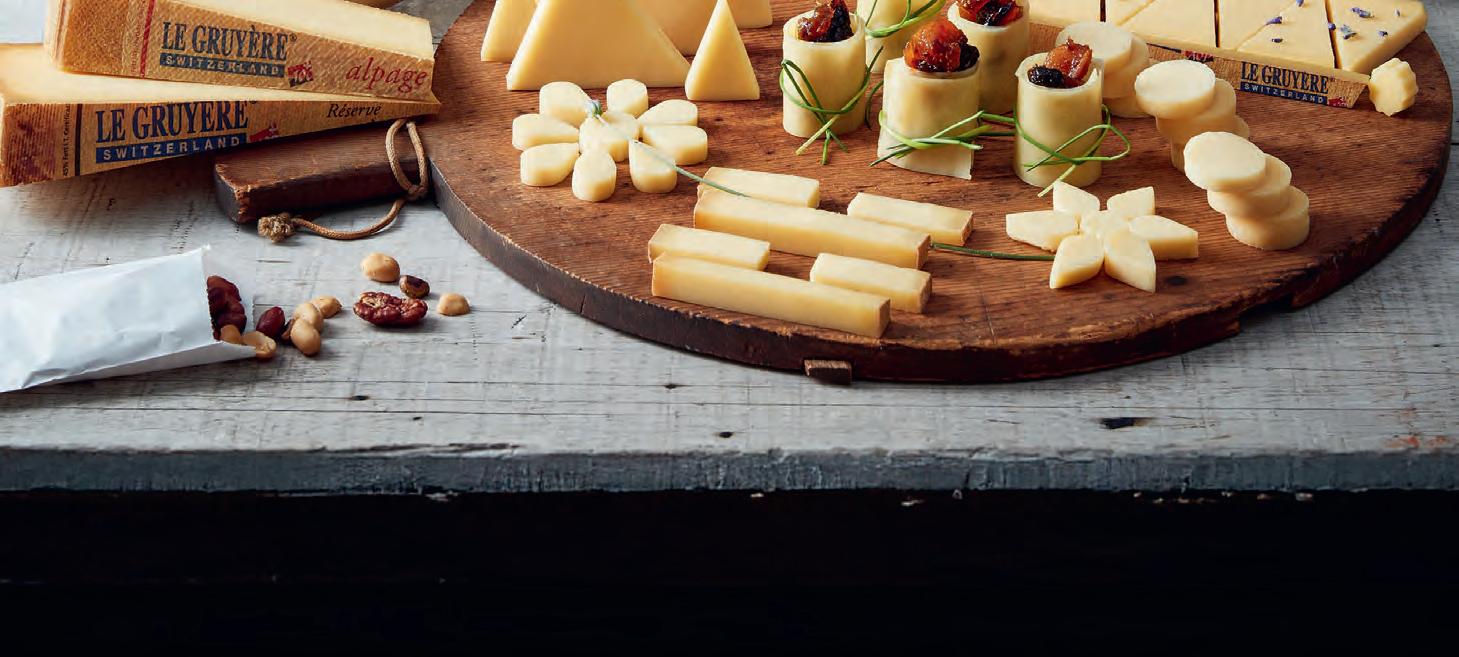
Once we receive your request, our team will securely pack, label, and send your kit directly to your address, providing you with everything you need to help showcase and sample Le Gruyère AOP cheese in-store.
With his own two hands
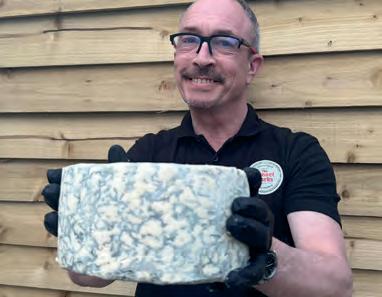
From his converted garage in Gobowen, Shropshire, The Rennet Works founder Matthew Lloyd creates intricate, singular cheeses, deliberately blurring the line between art and craft.
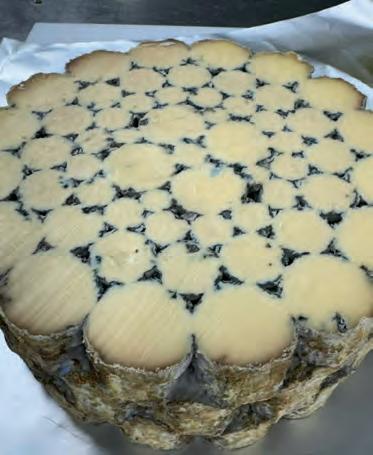
Acheese has to be something special to stand out among the thousands of truckles, wedges and logs at the World Cheese Awards. At last year’s global gathering in Bern, Switzerland, it was an elaborate British blue, resembling a marble sculpture, that became the talk of the tables, attracting a steady stream of curious judges and journalists to see the beautiful cheese for themselves.
Made by The Rennet Works Cheese Studio in Shropshire, Kaleidoscope Blue is painstakingly constructed by cheesemaker Matthew Lloyd, who cuts 220 small cylinders of curd by hand. These are then assembled into a circular shape and stacked on top of each other to create a beautiful multi-layered, kaleidoscopic cheese. It won silver in Bern, much to the joy of Lloyd, who sees himself as a cheese artist as much as a cheese maker.
“I’m non-traditional – a bit out there – but I always want to make my cheese as beautiful as possible,” he says. That’s especially true when he’s entering awards. “Sometimes 30% of the judge’s mark is visual, so I want those extra points.”
A business consultant by trade, working in construction and housing, Lloyd’s journey to becoming an award-winning cheesemaker started in 2019 with a home cheese-making kit. “I made a simple paneer and I got sucked in by the science of cheesemaking – the magic of taking humble milk and turning it into so many different styles of cheese.”
Today, the magic takes place in a dairy in a converted garage at his house in Gobowen, which Lloyd funded, designed and built himself. He uses two 50-litre stock pots, making just a couple of times a week with pasteurised Jersey milk from a nearby farm. “People talk about ‘handmade’ but even in
small dairies, machines are used to pasteurise, stir and press. Everything I do is genuinely by hand.”
Rennet Works’ core range, which is sold to local delis, includes Shropshire Knight (see box-out), the grilling cheese Hallouminati (both of which have also won World Cheese Awards), and soft lactics called Pixie Bombs, flavoured with high-end toppings and fillings, such as Sicilian lemon zest, dahlia petals and wild honey. Other products include the wrinkly-rinded Cave Dweller and a smoked Alpine-style decorated with a cross called Templar.
But Lloyd also makes bespoke cheeses for private clients for weddings, birthdays and corporate events. Last year saw him spend two days on a single 1.8kg cheese, which was hand-carved and covered in 24-carat gold leaf to resemble a golden orb, with a hefty price tag to match.
“Around 70% of what I do is ‘undercover brother’ cheese for bespoke commissions, but also direct to members of the public. I have a big database of people who I contact when a one-off batch is ready. I can deliver; courier or they come to the house and collect. It’s like a secret cheese club.”
Lloyd still works full-time as a consultant, rising at 4am on make-days, but the plan is to transition to full-time cheesemaking soon. A new maturation fridge has been installed, and he is planning to buy a 500-litre vat, but rather than scale up, he wants to continue with bespoke commissions that sell for a premium.
“That is the future of the business,” he says. “I don’t want to do big volumes. People like the idea of scarcity and rarity. I want to be in the same place as fine wine, commissioned art and fine dining.” instagram.com/the_rennet_works
I want to be in the same place as fine wine, commissioned art and fine dining.
CROSS
Shropshire Knight
1
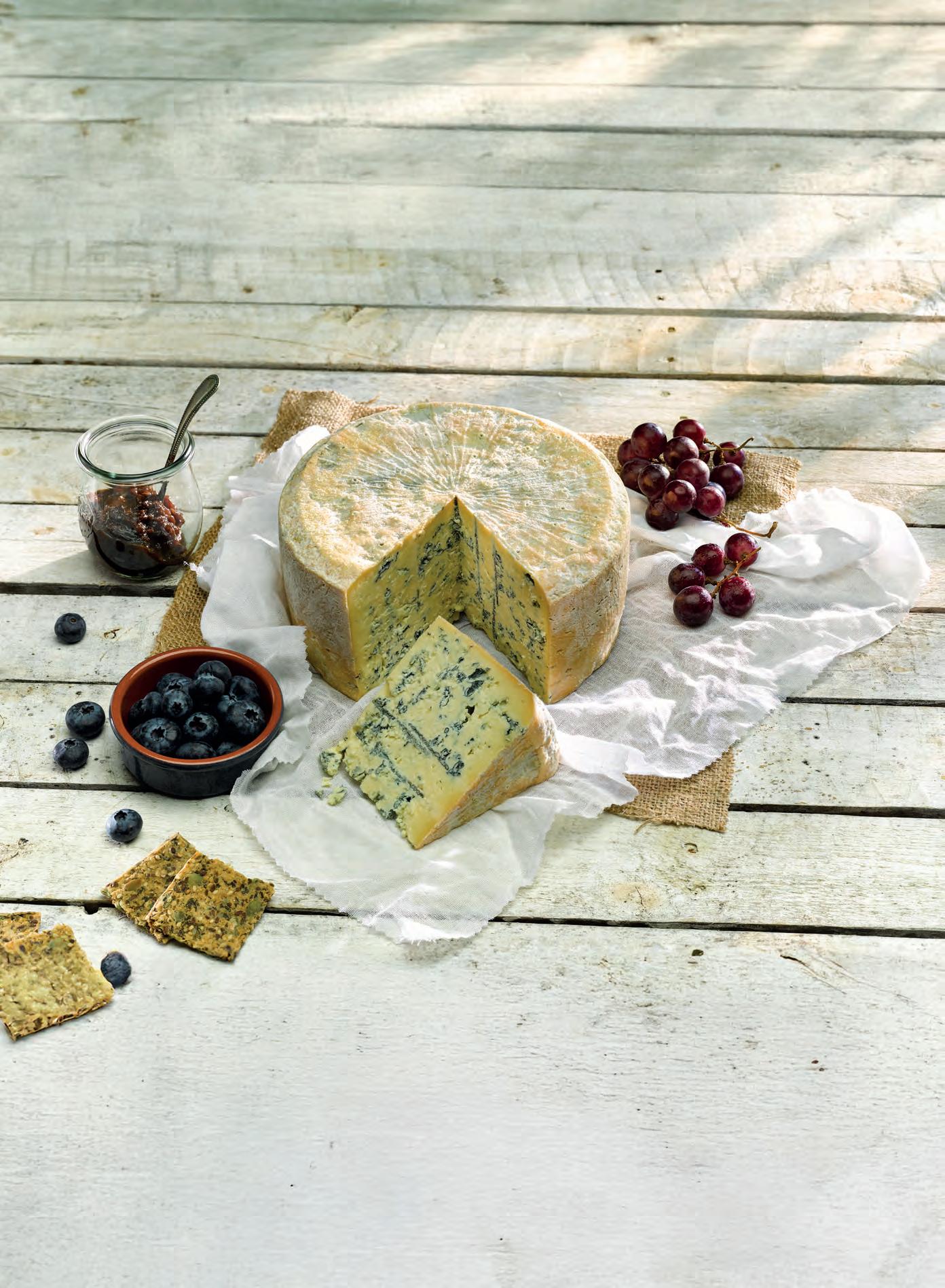
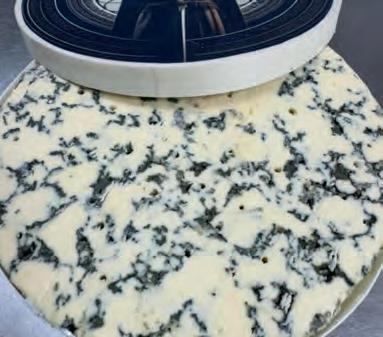
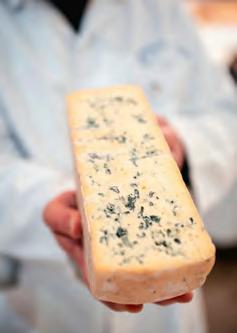
Made with pasteurised Jersey milk, enriched with cream, Shropshire Knight is a creamy blue that is similar in style to Roquefort. Lloyd makes four 3.5kg cheeses in each batch, which are pierced at 5-6 days and aged for 6-8 weeks in foil.
2
The cheese is named in homage to the Knights Templar – a religious military order that held several estates across Shropshire during the Middle Ages. He called the company The Rennet Works after a 19th-century rennet factory in nearby Ellesmere.
The texture of Shropshire Knight is soft and fudgey with an even spread of indigo and pastel green veins. The flavour is salty and sharp like Roquefort, but also rich thanks to the buttery Jersey milk and added cream, plus a spicy kick on the finish.
3
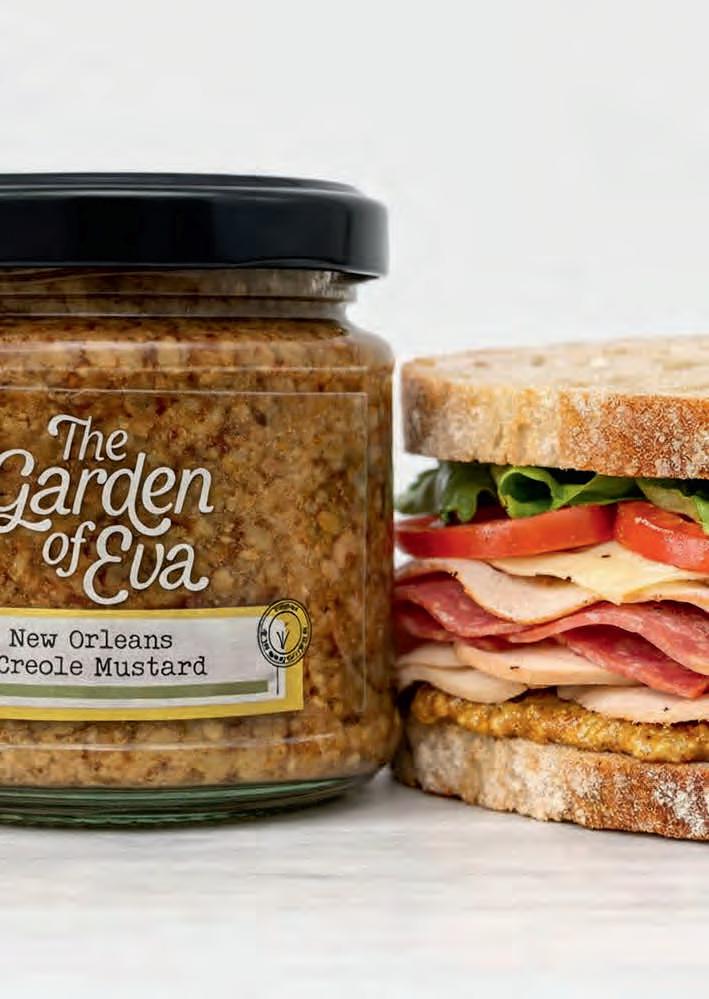
A bold, soulful mustard inspired by the flavours of New Orleans. Bright mustard heat meets warm Creole spice, a touch of sweetness and a gentle vinegar tang that lifts savoury dishes without overpowering them. Brilliant with charcuterie, sandwiches, served with roasted meats, and in sauces and dressings.
Contact us on 07424 748333 or email pickles@gardenofeva.co.uk www.gardenofeva.co.uk | @gardenofeva.uk
Even those that like a strong cheese smooth texture of this little cheese. will enjoy the subtle flavours and the
The best of the isles
The 30th anniversary edition of the British & Irish Cheese Awards, saw a goats’ milk log crowned as the best in the competition, but there were a host of medal winning cheeses
on the day.
By Michael Lane Photos by Joe Breakwell
From the 600-plus entries delivered to The Bath & West Showground in Somerset, there was only ever going to be one Supreme Champion – and, this year, that honour was taken by Dazel Ash, produced by Wiltshire-based stalwart Rosary Goats Cheese.
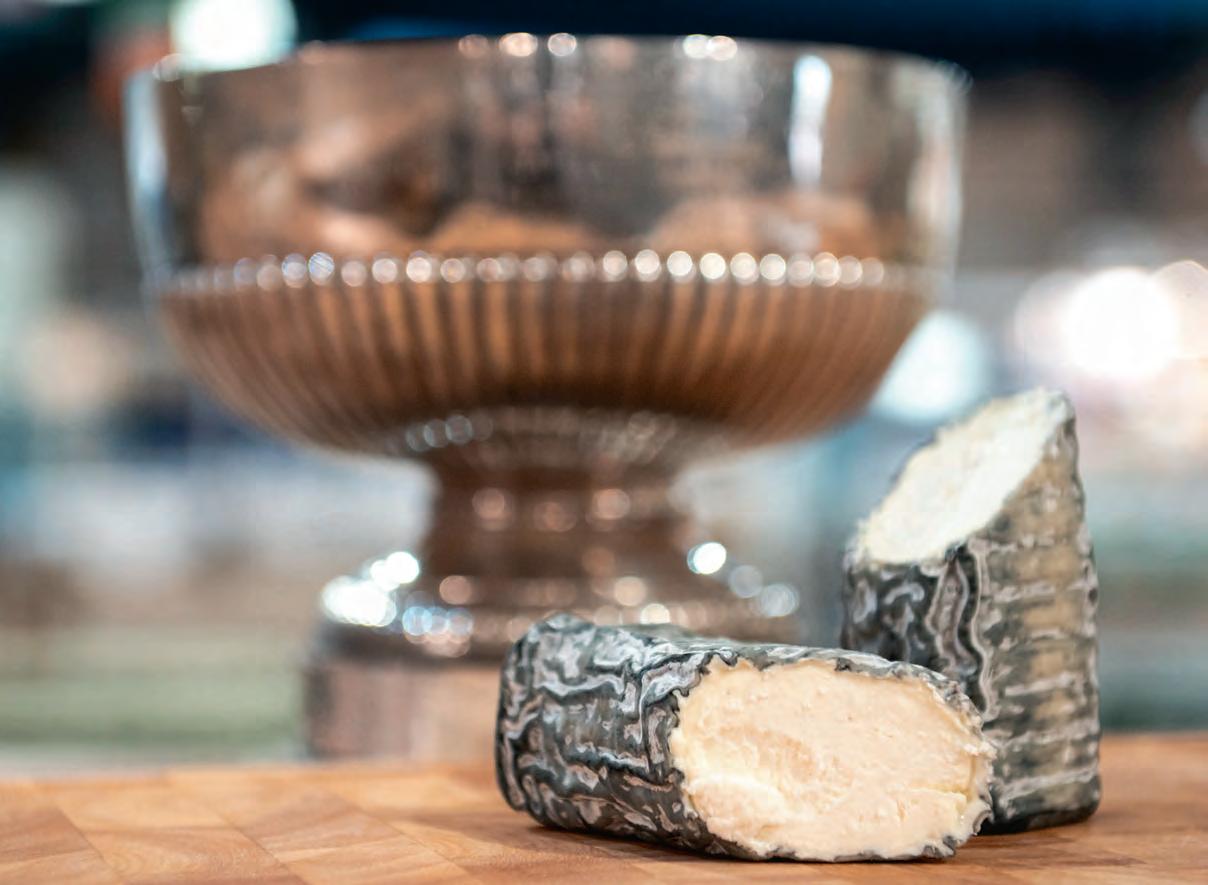
Made by Chris and Clare Moody in the dairy at their New Forest home, this cheese comes in 200g logs with an edible ash-coated rind and a creamy-but-crumbly white paste. The cheese, which is named after the Dazel Wood Copse Close to where it’s produced, is made with pasteurised milk, is suitable for vegetarians and offers up fresh, citrussy lactic notes as well as earthy and floral flavours.
Chris Moody said it was an honour to receive the award given the calibre and artisanal cheesemaking experience of the awards’ 60-strong judging panel.
“The Cheese Awards have always been a marvellous showcase for British and Irish cheesemakers, especially the small producers. The sudden burst of enthusiasm that you get from winning an award reminds you why you started
making cheese in the first place.”
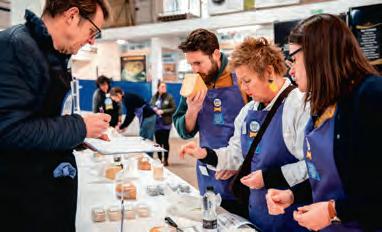
All entries into the British & Irish Cheese Awards 2026 were judged at The Bath & West Showground near Shepton Mallet, Somerset, on Friday 20th March. A team of 60 experts –including cheesemakers, cheesemongers, buyers and commentators – was split into smaller groups and assigned various categories for Round 1.
This process determined the Gold, Silver and Bronze awards, with all Gold winners progressing to a second stage to identify the winners in each category – including cheddar, other territorials, blue, soft white, added flavour cheeses, fresh cheeses, modern cheeses and new cheeses.
A final round of tasting these category winners by a select panel of judges identified the Supreme Champion. This year’s trophy winners were announced during theBritish&IrishCheeseAwardsDinner on the evening of Friday 20th March.
British success stories
Remarkably, last year’s Supreme Champion cheesemaker King Stone Dairy came extremely close to claiming the title again – albeit with a
different cheese.
Yarlington, a soft washed rind cheese made in collaboration between cheesemaker David Jowett, cider-maker Tom Oliver andbroadcaster SamWilkin, was named the winner of the Reserve Champion Cup and Best Export Cheese.
Across the awards, Jowett’s cheeses – also entered were Rollright, Morbier-style Ashcombe and last year’s Supreme Champion Alpine-style Burford – picked up 17 medals in total, including nine Golds.
Another previous Supreme Champion, White Lake Cheese also enjoyed multiple successes by picking up 23 medals and three trophies. Sheep Rustler, a semi-hard sheep’s milkcheese, was awarded the Best ModernCheesetrophy, while the Best Flavour-AddedCheesetrophy went to Eve, a soft, goats’ milkcheesewashed in Somerset cider brandyandwrapped in vine leaves. The producer’s Somerset Goat Halloumitook the Best FreshCheesetitle.
The Best Scottish Cheese trophy went to Highland Fine Cheeses for its soft lactic cows’
BRITISH & IRISH CHEESE AWARDS 2026 IN NUMBERS: 30TH ANNIVERSARY EDITION OF THE COMPETITION
Over 600 cheese entries, with 405 from England, 48 from Ireland, 29 from Wales and 17 from Scotland, with UK retailers accounting for the remaining 104 entries.
60 experienced judges with a variety of backgrounds, including cheesemakers, cheesemongers, buyers and journalists.
milk creation called Ooh La La; and the Best Welsh Cheese trophy was awarded to Golden Hooves for its regeneratively farmed Smoked Cheddar.
When Irish cheeses are smiling
The Best Irish Cheese trophy was presented to Hegarty Cheese for Templegall, an Alpine style cows’ milk cheese made in County Cork.
The Awards received a record-breaking number of Irish entries into this year’s competition, with 48 crossing the Irish Sea to be judged.
Award organisers The Royal Bath & West Society said this highlights a growing renaissance for Irish cheese in the UK, after years of decline in imports due to Brexit, and the bureaucracy it has added to the process of bringing them into cheese counters.
Following some logistical difficulties last year, The Royal Bath & West Society worked alongside CÁIS - The Association of Irish Farmhouse Cheesemakers, Bord Bia (the Irish Food Board) and the Specialist Cheesemakers Association in the UK, to improve transport of entries in 2026.
Tim Rowcliffe, vice-chairman of the British & Irish Cheese Awards and ambassador to Ireland for the Specialist Cheesemakers Association, said: “It’s shocking to think that a decade has passed
SUPREME CHAMPION
Dazel Ash
Rosary Goats Cheese rosarygoatscheese.co.uk
RESERVE CHAMPION
Yarlington King Stone Dairy kingstonedairy.com
BEST MODERN CHEESE
Sheep Rustler
White Lake Cheese whitelake.co.uk
BEST FLAVOURADDED CHEESE
Eve
White Lake Cheese whitelake.co.uk
since Irish cheese began losing its presence in the UK, but I’m really excited by the progress we’ve made in putting this right. It’s been a huge team effort to overcome the complex bureaucratic hurdles and rekindle our once strong ties with Irish cheese.”
Rowcliffe thanked the partner organisations in Ireland for their efforts and added that he hoped the Awards’ progress this year reflected a “renewed confidence and enthusiasm” in Irish producers for selling their cheeses in the UK.
Estelle Alley, UK Market Specialist at Bord Bia, added: “As Ireland’s farmhouse cheese category continues to go from strength to strength and UK trade interest rises year after year, Bord Bia plays a central role in fostering long-term partnerships by connecting British buyers with the latest innovations and distinctive flavours from Ireland’s dynamic community of farmhouse cheesemakers.”
A very public engagement
After the Awards were concluded, cheeselovers were able to view the judging arena throughout the weekend, as part of the Bath & West Food & Drink Festival. Visitors were given the opportunity to sample some of the trophy winners as part of the Festival’s expanded Guided Cheese Tours.
BEST FRESH CHEESE
Somerset Goat Halloumi White Lake Cheese whitelake.co.uk
BEST SCOTTISH CHEESE
Ooh La La
Highland Fine Cheeses hf-cheeses.com
BEST WELSH CHEESE
Smoked Cheddar Golden Hooves goldenhooves.co.uk
BEST IRISH CHESE
Templegall
Hegarty Cheese hegartycheese.ie
BEST TRADITIONAL
CHEDDAR
Pitchfork Mature Cheddar
Trethowan’s Dairy trethowanbrothers.com
BEST RIND WASHED
Templegall
Hegarty Cheese hegartycheese.ie
BEST TERRITORIAL
Traditional Organic Double Gloucester Daylesford Organic Farm daylesford.com
BEST BLUE CHEESE
Jiffler Blue Norfolk & Better norfolkandbetter.com
Away from the judging area, the event also celebrated producers and suppliers from the West Country with a programme of demonstrations, presentations and entertainment.
Julius Longman, chairman of the British & Irish Cheese Awards, added: “As our British and Irish cheesemaking communities continue to go from strength to strength, we’re delighted to celebrate their work at the British & Irish Cheese Awards, welcoming more cheese entries and more judges yet again this year. Huge congratulations to all of our winners, and of course to our Supreme Champion, Dazel Ash from Rosary Goats Cheese, which was up against some truly astonishing cheeses in this year’s hotly contested final.”
Visit britishcheeseawards.com for the full list of award winners
BEST NEW CHEESE
Town Crier Yorkshire Pecorino yorkshirepecorino.co.uk
BEST SHEEP CHEESE
Shepherd’s Store Cashel Farmhouse Cheesemakers cashelblue.com
BEST GOAT CHEESE Dazel Ash Rosary Goats Cheese rosarygoatscheese.co.uk
BEST PDO /PGI CHEESE Blue Stilton Long Clawson Dairy clawsonfarms.co.uk
BEST CHEESE FROM A MEMBER OF THE SPECIALIST CHEESEMAKERS ASSOCIATION
Golden Cross Golden Cross Cheese Company goldencrosscheese.co.uk
BEST EXPORT CHEESE Yarlington King Stone Dairy kingstonedairy.com
THE TROPHY WINNERS
The year of the stills
A ripe, early 2025 harvest across English and Welsh vineyards means high-quality still wines could hit the market as soon as this summer.
By Tanwen Dawn-Hiscox
Independents can look forward to an “exceptional” vintage of English and Welsh wines produced in 2025, with a preponderance of quality still wines and excellent, though fewer, sparkling wines. And they can expect the former to arrive as soon as this summer.
According to the Harvest Report 2025 published last month by WineGB, the trade body for English and Welsh wine, wine production rose by 39% in 2025 compared with 2024, while it fell in many European counterparts.
The report is based on a survey of 122 vineyard owners, representing 1,700ha of vines in production, or 41.5% of the UK’s total cropping area.
British wine enjoyed an exceptional year, Stephen Skelton MW, who provided the viticulture harvest commentary
throughout the season.
As a result, Skelton says still wines from classic varieties, which account for the most plantings, such as Chardonnay, Pinot Noir and Pinot Meunier, should be “of exceptional quality”.
“Ripe fruit, high sugars, and slightly lower acidity makes the wines more approachable earlier on, and generally better. They’ll have more aroma and taste better on the palate.”
“I think you’ll see a lot more quality Chardonnay and Pinot Noir still wine on the market quite quickly, some as early as this summer”, he says.
Alongside this, particularly strong yields from varieties such as Bacchus, Solaris and Seyval Blanc are likely to translate into more competitively priced still wines.
“Unlike sparkling, they don’t have to go through long ageing, and most are unoaked,” he says.
It takes three to four years to mature traditional method sparkling wines, and, “by definition, the uptick in stills will mean fewer sparkling wines from 2025,” he adds. “You’re not selling sparkling wine from the current year anyway, you’re selling from stock.”
“Sparkling stocks are quite high, but comparable to Champagne, now working off about five years of stock,” he adds, “so there’s no panic.”
In ripe years, the sparkling wines are very good.”
Still wines are likely to offer a broader, more accessible price range, as they require less time and cost to bring to market.
“To sell a still wine over £30 today, it has to be very good or have won something significant. Good Chardonnay, Chablis-style, and good Pinot [Noir], rosé or light red, will sell at that level.
“If you’re newer to the market, you probably need to be closer to £20.”
And for varieties like Bacchus, which registered its secondbest result this year, joined by exceptionally high yields of Solaris, Seyval Blanc and Rondo, “you should be below £20”.
Skelton says output was average overall, with early estimates around 30 hectolitres per hectare, giving about 16.5 million bottles.
“The official figure is about 16.47 million, so we were close.
“So average volume, but very high quality.”
Skelton recommends paying close attention to competitions this year, “as we may see more wines from 2025 showing well early”.
Until then, independents should prioritise producers with the biggest range.
for the report, tells FFD, as an early, dry spring followed by hot weather in June and July led to an early harvest, with warmer, drier regions picking from the third week of August – though some producers waited until the end of October for extra ripeness.
In fact, “it was the ripest harvest we’ve ever had”, says Skelton, with sugar levels averaging around 11% across the nine most-planted varieties, 1.25% above the nine-year average.
“Very few wines were chaptalised, which is quite remarkable. Natural alcohol levels were record-breaking, which means we will get better still wines.”
Tartaric acid levels were also below the 10-year average, while lower disease pressure and reduced bird damage meant fruit remained in good condition
It is reasonable to wonder whether the sparkling wines, usually made with grapes with a lower potential alcohol level than those used to make still wines (because they are more acidic) may be of a lower quality in 2025, but Skelton says this is unlikely.
“There are very few poor examples of sparkling wine coming out of the UK.
“We still have higher acidity than Champagne, even in ripe years, which helps with ageing.
Retail takeaways
For the right balance of price and quality, he adds, “Bacchus should be very good. Pinot Gris, Pinot Blanc, these are generally slightly less expensive than pure Chardonnay or Pinot Noir wines.”
Rosés made with Pinot Noir and Bacchus grapes, he adds, “will be particularly good”.
Finally, with 1,000 hectares of vineyards not yet in full production, “new producers, who may price more competitively, will be coming through, whereas established names have a steady market and established price points”.
winegb.co.uk
• Chardonnay and Pinot Noir still wines are likely to hit the market early and to be of exceptional quality
• Bacchus, Solaris and Seyval Blanc should offer strong value
• Look out for 2025 rosés (especially Pinot Noir) which should be of a high standard
• Look out for competition results – including the WineGB awards, the Decanter World Wine Awards and the International Wine Challenge (IWC)
• New producers may offer competitive pricing
sweet & savoury snacks
Something to tide you over
This month at FFD, we found out what new snacks – sweet and savoury – have hit the market over the past year. If it’s something more substantial you’re after, turn to p.37 for our round-up of NPD in the jams & preserves category. If you’re looking to refresh your charcuterie selection, go ahead and flick to p.39
Compiled by Lynda Searby
Challenger brand Miss Kim has reimagined two traditional Korean snacks for modern life.
Lotus Root Bugak and Sea Salt Nurungji launched in January 2026 and are now stocked in Selfridges, Panzer’s and 28 MINISO stores across the UK.
Art curator turned entrepreneur Heejin No founded the London-based brand after noticing that much of the Korean food available in the UK was “over-processed, inauthentic and inaccessible”.
Lotus Root Bugak (WSP £2.40/30g) is made by drying and seasoning lotus root slices, then flash-frying them for a light crunch. Sea Salt Nurungji (WSP £2.40/50g) is made with cooked rice, lightly toasted and seasoned with matured sea salt from the Sinan Coast. misskim.co.uk
Traditional snacks for modern life
Earthnutz has moved its Peanut Protein Crisps into recyclable paper cans and added a Wasabi flavour to the lineup, following the opening of its new zero waste production facility in Kent. From its new unit, the company turns peanuts into two products - high-protein peanut-shaped snacks and virgin peanut oilusing the whole nut to eliminate waste. RRP £2.99-3.25/32g. earthnutz.com
Almonds and cranberries are baked into these thin, crunchy toasts, resulting in a sweet-savoury profile that pairs with soft cheeses or stands up on its own as a snack. They were developed by Mexican mother-daughter bakery venture Breana’s Toast as part of a 15-year anniversary collection and are also available in Date & Sea Salt; Rosemary & Raisin; and Apricot, Ginger & Hazelnuts varieties. WSP £5/170g; RRP £7.50. breanastoast.com
Dutch B-corp BitesWeLove is on a mission to prove that protein bars aren’t all bad. The company, which launched its Chewy Oat Bars in the UK in 2025 through a partnership with Whole Foods, has now added Crispy Protein Bars to its offer. Targeting busy women, the bars are packed with plant protein, contain no artificial sweeteners and are non-HFSS. WSP £1.49/50g; RRP £2.99 biteswelove.co.uk
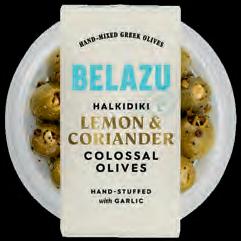
Ahead of the summer dining season, Belazu has unveiled a range of olives and antipasti in 140g tubs (RRP £4). SKUs include Halkidiki Rose Harissa Colossal Olives hand-stuffed with pimento peppers; Halkidiki Genovese Basil Pesto Mammoth Olives; Sicilian Nocellara Del Belice Giant Olives cured in the traditional Castelvetrano style; Calabrian Chilli Artichokes with a hint of basil; and Puglian Balsamic Tomatoes. belazu.com
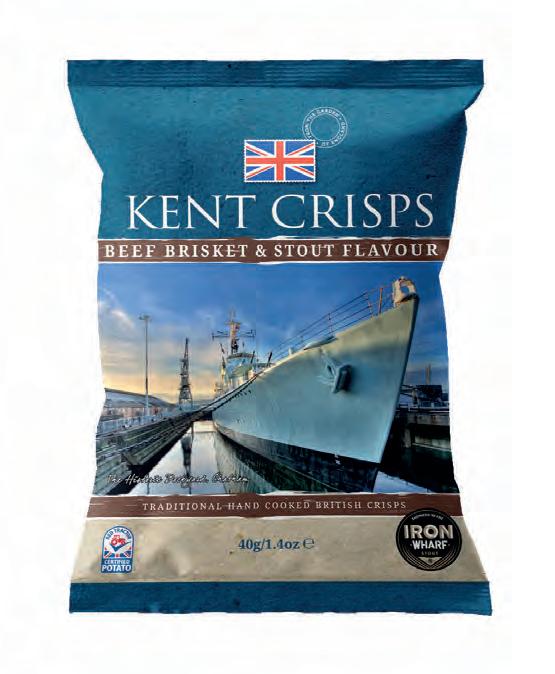
Kent Crisps’ new Beef Brisket & Stout Flavour (40g) is a collaboration with historic Kent brewery Shepherd Neame. The stout’s roasted malt character complements the savoury brisket notes, and the pack features HMS Cavalier at The Historic Dockyard Chatham on its front. kentcrisps.com
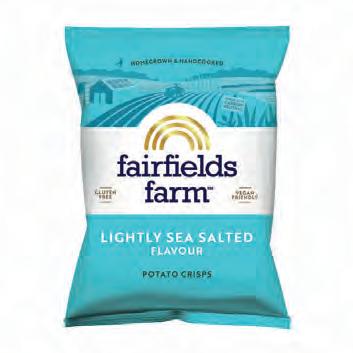
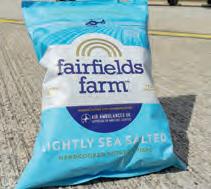
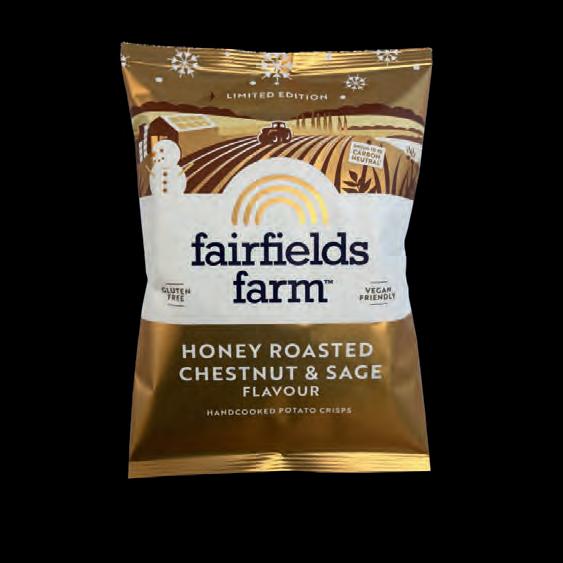
Fairfields Farm Crisps has launched a special edition version of its Lightly Sea Salted crisps in partnership with Air Ambulances UK. The special packs feature air ambulance-themed artwork, and a percentage of profits is donated to the charity. RRP £1.15/40g; £2.30/150g. fairfieldsfarmcrisps.co.uk
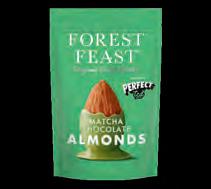
Forest Feast has teamed up with matcha brand PerfectTed for its first ever collaboration. The Northern Ireland snack maker says it sees the launch of Matcha Chocolate Almonds as an opportunity to “reach and excite” younger consumers who are embracing the viral sensation. RRP £3.95/120g; £1.45/40g. forestfeast.com
Sweet & savoury snacks strategy: keep it settingappropriate
Katie Taylor, owner of Drewton’s farm shop in South Cave, East Riding of Yorkshire, on staying focused and resisting fads in sweet and savoury snacks.
Make it, bake it, or source it locally
For us, the snacks category is very broad and deliberately so. It includes everything from fresh sausage rolls, pork pies and scotch eggs made on site, through to our homemade cakes and traybakes, biscuits and flapjacks, alongside crisps, savoury nibbles and ambient snacks. Wherever possible, if we can make or bake it ourselves, we will. If not, we source locally, working closely with our network of 372 local suppliers.
Don’t chase new launches
Our buying is guided by a few simple principles: local first, seasonal relevance and customer demand. We don’t chase every new launch – instead we look for products that genuinely fit our customer base and our rural setting.
Snacking changes through the year, so seasonality plays a huge role. Our offer evolves naturally from Easter treats, picnic‑friendly snacks and summer grazing, through to harvest flavours, pumpkin‑led products and festive Christmas ranges. This allows the category to stay fresh while remaining familiar.
Target a 40% margin
Across sweet and savoury snacks, we typically work to a 40% margin. Having a mix of in‑house production and carefully chosen local suppliers helps make this achievable, while still offering strong value to customers and fair returns to producers.
Keep it simple
The strongest performers are often the simplest. Freshly made snacks, traditional bakes and classic treats sell consistently well, particularly when customers can see they’re made on site or clearly sourced locally. Highly processed or trend‑led products don’t resonate as strongly with our audience. Our shoppers value familiarity done well, rather than novelty for novelty’s sake.
Trends: seasonality always in fashion Seasonality remains the biggest “trend” for us, rather than fast‑moving food fashions. Traditional crisps and nuts remain extremely popular –protein bars, energy balls and similar products haven’t gained the same traction here. Our customer base is very rural, and their preferences tend to lean towards authentic, hearty and recognisable foods rather than functional or heavily marketed snack trends.
Consumers no longer want empty calories from their snacks, says MORiSH, which used IFE to launch its new seaweed based snack. Seaweed from the South Korean coast is roasted and seasoned to deliver umami flavour and nutrient density – the thins are high in vitamin B12, iodine and fibre, and a source of protein. WSP £0.75/4g pack or £2.99 for a caddy (5x4g). morishsnacks.co.uk
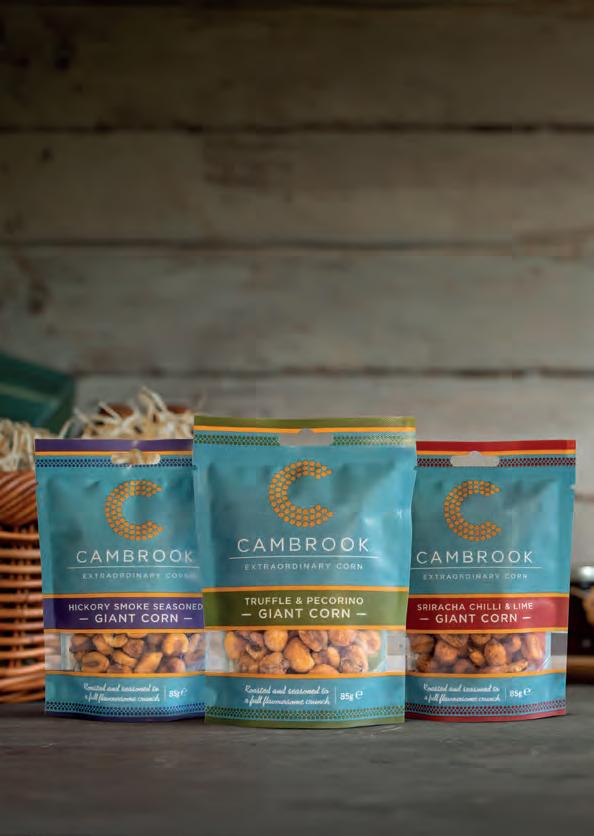
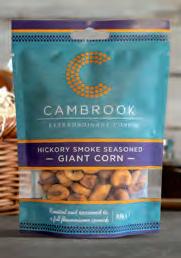
After years of supplying giant corn snacks to hotels and bars, Cambrook has created a retail pouch range, allowing delis and farm shops to tap into the current big corn trend. The company uses the giant variety from Peru and coats the roasted kernels in its own in house seasonings: Sriracha Chilli & Lime, Truffle & Pecorino and Hickory Smoked. RRP £2/75g pack. cambrookfoods.co.uk
Retailers looking for ethical snacks should check out Tanza Kindness, which has created a vertically integrated supply chain for Tanzanian cashews, with 100% of the profits funding healthcare and education projects at source. The inaugural range takes in two products: roasted and raw ultra-jumbo cashews with no added oils or salt, packaged in recyclable paper tubes. RRP £22.49/500g. tanzakindness.com
Curry Smugglers continues to shake up the Desi snack scene with canned snacks that draw on the street food culture of South Asia and the energy of modern Britain. Its latest creation Margate Mix blends spiced noodles, crunchy lentils, peanuts and signature seasoning with locally grown Lion’s Mane mushrooms an ingredient that is receiving attention for its reputed nootropic and wellness benefits. RRP £2.99. currysmugglers.co
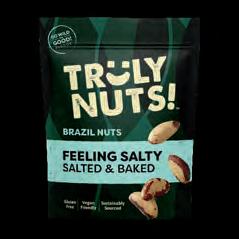
Driven by a passion for the planet, former international DJs Gareth Lloyd and Greg Vickers have hung up their headphones, built a factory in Peru and launched what they claim is the world’s first flavoured and sustainable Brazil nut snack. Truly Nuts are wild harvested in the Amazon, and processed by women who are paid at least 50% more than the minimum wage. uk.trulynuts.com
IN BRIEF
Fleur de Lan has combined classic French techniques with Irish ingredients and modern flavours to bring a pâtisseriestyle snack to the category. Handcrafted in small batches in Ireland, Caramel Flavour Croissant Crisps are distributed in the UK via Mahalo. RRP
£5.50-£6.95/70g. fleurdelan.ie
Windmill Organics says its new ProFusion Protein Puffs bridge the gap between whole food and functional snacking. The HFSS-compliant snacks landed in March. Both Paprika & Himalayan Salt and Lemon & Black Pepper are clean-label, plant-based options for highprotein seekers. RRP £1.99/40g. windmillorganics.com
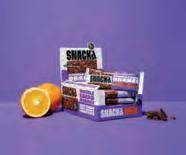
SNACK’d claims to be the first UK snack bar to launch in a kerbside recyclable paper wrapper. Carrying ‘gut friendly’ and ‘high fibre’ claims, the bars are made with British wholegrain oats and other gluten free, vegan ingredients. They come in Apple & Raisin, Peanut Butter & Banana and Double Cacao & Orange flavours. RRP £1.50/42g bar. getsnackd.com
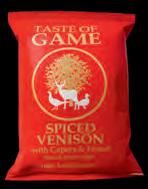
Spiced Venison with Capers & Fennel is the latest flavour to launch under Just Crisps’ Taste of Game sub-brand. Targeting snackers on the hunt for original flavours, the hand-cooked potato crisps fuse meaty notes, chilli spice, tomato and caper. WSP £19.53 for a case of 12; RRP £2.89/150g. justcrisps.co.uk
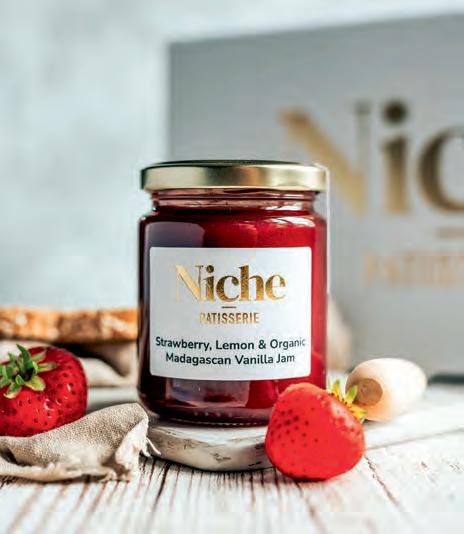
Strawberry, Lemon & Madagascan Vanilla Jam is the latest addition to Niche Patisserie’s retail range. Described as a “refined, small-batch jam combining fresh strawberry with sharp lemon and the warmth of Madagascan vanilla,” the jam is said to have a balanced flavour profile that complements both sweet and breakfast applications. WSP £4.65/220g; RRP £6.50.
Founded by former Bake-Off semi-finalist Adam Cleal and his mother Samantha, Niche has operated from the Black Gate in Oswestry since 2021. Its kitchen turns out everything from viennoiserie delicacies and sourdough loaves to dressings, fudge, shortbread biscuits and jam – all of which feature on its brunch, lunch and afternoon tea menus, as well as being available wholesale. Flagship stockists include Panzer’s and Rhug Estate. nichepatisserie.com
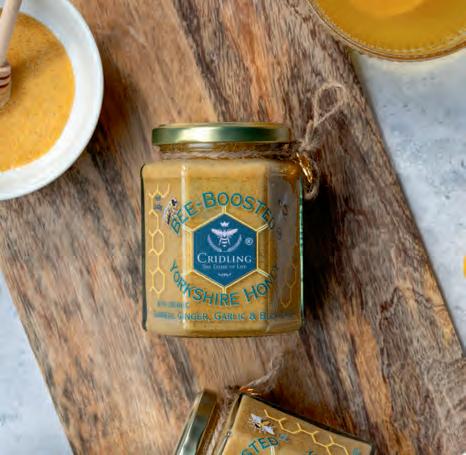
Cridling has created a range of wellbeing honeys that combine pure, raw Yorkshire honey with organic ingredients, reputed to have health-giving properties. Bee-Boosted blends honey with “anti-inflammatory and immune boosting ingredients” turmeric, ginger, garlic and black pepper, to produce a tonic that can be used as a tea, marinade or spread. Bee-Performance contains fenugreek, beetroot and cinnamon – “pick me up” ingredients that are believed to boost strength and cardio capacity, and is best eaten simply on hot buttered toast. Jar sizes are 50g, 112g, 225g and 340g, and RRPs range from £4.50-£19.50. cridling.co.uk
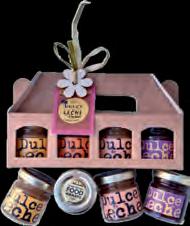
My Vegan Dulce de Leche has launched a mini jar gift pack that is designed to offer a taster of its range. With an RRP of £16, the set features The Original, The Sea Salty, The Blondie and With Cacao, in 44g jars. The coconutbased spreads are Cintia Yankelevich’s vegan take on the popular South American caramelised milk confection. myvegandulce deleche.com
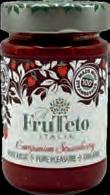
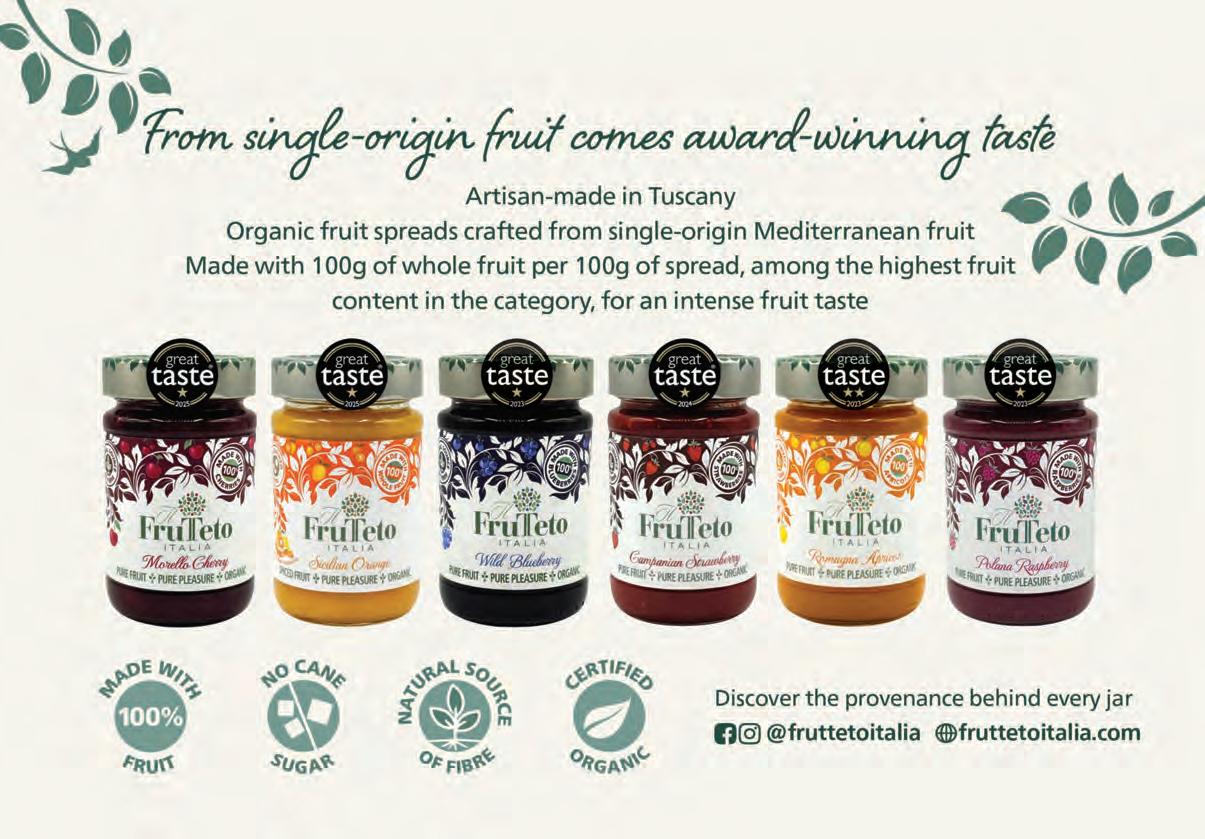
Frutteto Italia has relaunched its organic fruit spreads with a focus on singleorigin fruit. On-pack storytelling highlights the provenance of Mediterranean fruit varieties such as Romagna apricots, Campanian strawberries, Polana raspberries and Sicilian oranges that make these preserves stand out. They contain 100g of whole fruit per 100g of spread and no added sugar. WSP £3.35-3.75/215g; RRP £4.49–4.99. fruttetoitalia.com
IN BRIEF
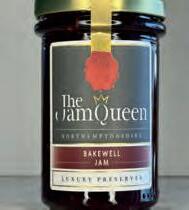
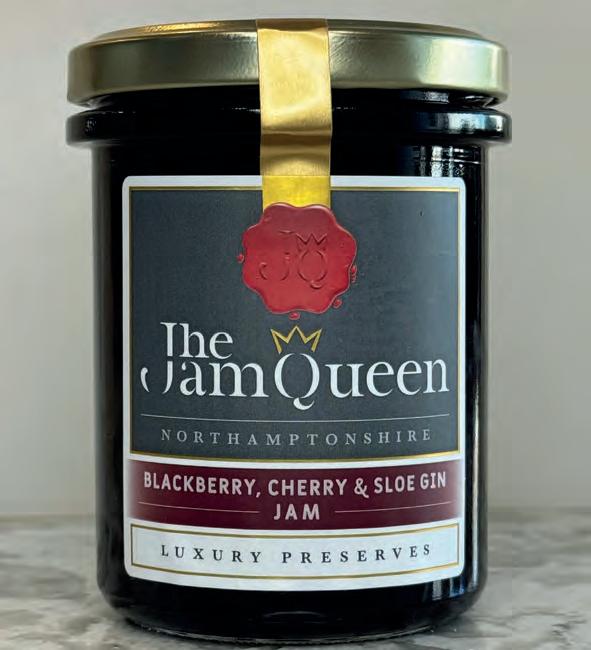
The Jam Queen has captured the flavours of a Bakewell tart in a jar. Combining raspberries, cherries and almond extract, the jam will shine in porridge, on hot toast or used as a cake filling. WSP £3.30; RRP £5. thejamqueen.square. site
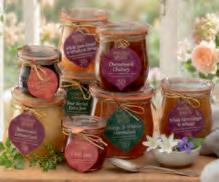
The Wooden Spoon Preserving Company has introduced a new family of tulip jars that turn its preserves into “thoughtful and elegant” gifts. There are three sizes (400g, 215g-240g and 85g), priced respectively at £6.65, 4.70 and £3 to the trade. The format is available for a variety of product lines, including Strawberry & Champagne Jam, Damson & Sloe Gin Jam and Orange & Whisky Marmalade. thewoodenspoon.co.uk
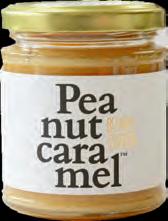
Product developers Tom Corley and Gemma Kinnaird have created a Blonde Edition of their Peanut Caramel spread. Described as “the easy-going little sister”, the new addition is made from lightly roasted peanuts and pale-gold homemade caramel syrup for a flavour profile that is said to be lighter and more accessible than the intense rich-roast flavour of Original Peanut Caramel. RRP £5.75/200g. peanutcaramel.uk
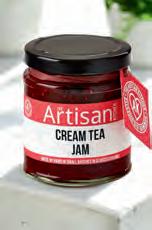
The Artisan Kitchen has taken inspiration from the classic British cream tea for its latest creation. Cream Tea Jam combines strawberries, raspberries and vanilla for a soft, fruity, indulgent finish. It was developed by owner and chef Sarah Churchill with scones and clotted cream in mind and is said to be ideal for retailers seeking something nostalgic, giftable and distinctly British. RRP £6.50/200g. theartisankitchen.co.uk
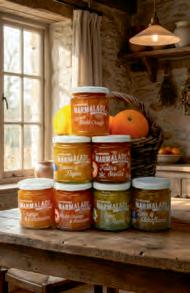
The Proper Marmalade Company has added six new lines to its collection, which now counts 30 varieties. The new flavours include Lime & Fennel, Orange & Cardamom, Blood Orange & Amaretto and Lemon & Thyme, infuse fruit in herbs and spices to create aromatic marmalades that work with sweet and savoury foods. WSP £3.103.50; RRP £4.99-£5.29. thepropermarmalade company.co.uk
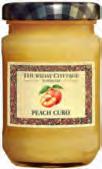
Last month, Thursday Cottage added two new curds to its lineup: creamy, rich Peach Curd and “light and lively” Lime Marmalade. Respective WSPs £9 and £8.55 for a case of 6 jars; RRPs £2/110g and £1.90/112g. thursday-cottage.com
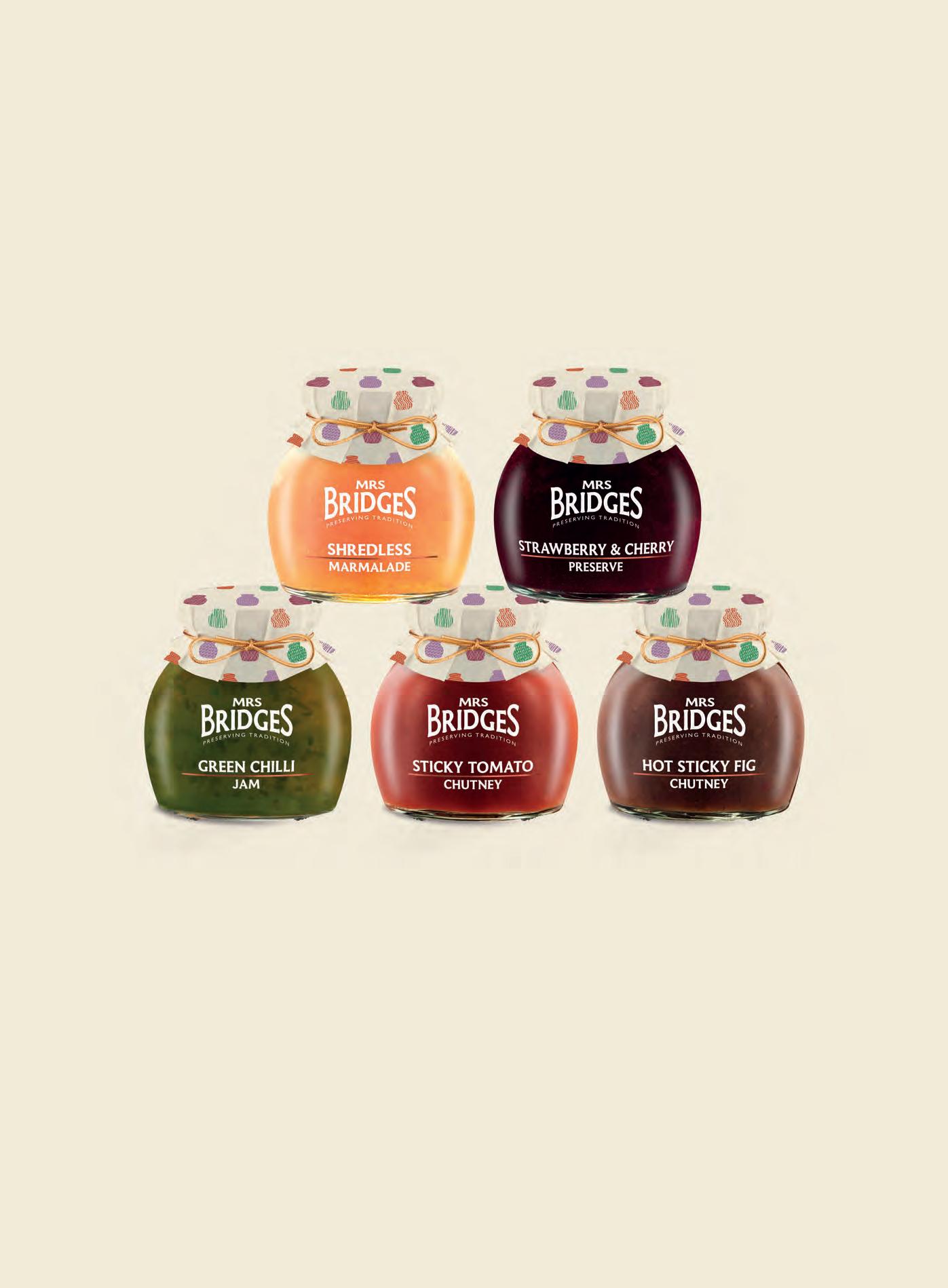
Mrs Bridges introduced two new preserves last month: Strawberry & Cherry Preserve (WSP £2.95/340g), which marries Scottish strawberries and Morello cherries and Shredless Marmalade (WSP £2.80/340g). mrsbridges.co.uk
charcuterie
Retailers looking for a British charcuterie range with an ethical slant should check out Knepp - a brand whose story centres on a pioneering biodiversity project on a West Sussex estate.
Over 20 years, 3,500-acres of failing, intensive farmland have been converted into rewilded landscape, where herds of cattle, pigs and deer free-roam, helping to revitalise the soil and plants and restore the natural habitat.
Slow-grown beef from old English Longhorn cows and pork from Tamworth pigs are the basis of Knepp’s charcuterie - which is named after the estate. Longhorn Salami, Chorizo Picante, Fennel Salami, Spiced Loin, Juniper Coppa and Bresaola are all available in 50g packs or whole muscles via Neal’s Yard and The Cheeseman. knepp.co.uk
The Greek Farmer has entered the protein snack category with a new sub brand after spotting a gap in the market.
Club Salami, which officially launched at the Farm Shop & Deli Show in April, is pitched as an alternative to sweet protein bars and “tough” biltong or jerky.
“We created Club Salami to be everything other savoury protein snacks weren’t. Not fatty, not tough, just seriously good flavour in a convenient pack,” said owner Tony Charalambides.
There are three flavours - Garlic & Paprika, Fennel & Oregano and Cumin & Cayenne - all made in the UK using British free-range pork. They come in 36g packs, providing up to 14g of protein and under 100 calories per portion. Each flavour is supplied in a shelf ready case of 12, with an RRP of £2.50 per pack and a WSP of £1.60. clubsalamiuk.com
Patson Hill Farm in Dorset is expanding the range of charcuterie it makes from its rare breed Mangalitza heritage pigs to include four new lines: Smoked Pancetta, Lardo, Tingler Salami with fennel and chilli, and Pink Pepperoni Salami with pink peppercorns. Mangalitza pigs are said to be ideally suited to charcuterie, producing beautifully marbled meat with rich, flavourful fat. RRP £4.80-£6.30 per 80g. patsonhill.farm
Cobble Lane Cured has rolled out a new design across its retail range and added Smoked Speck Ham to its offer. The London charcuterie producer says the refresh responds to growing demand for ready-to-eat charcuterie in convenient formats for grazing and entertaining. It describes the new introduction as a “lightly smoked, delicately aged, cured ham with a clean, balanced flavour”. WSP £3.30/70g; RRP £5. cobblelanecured.com
IN BRIEF
Salt Beef by Trailhead is now available in both 100g and 500g cooked, sliced and packed formats via Blas Ar Fwyd, Castell Howell and Artisan Food Club. The salt beef, crafted from PGIcertified Welsh beef, is the latest addition to Get Jerky’s portfolio. getjerky.wales
This month sees the launch of a regeneratively farmed British charcuterie range from Rare & Pasture It includes Pastrami, Bresaola, Salami and Frankfurters made on the producer’s farm in Devon, from beef raised by British farmers who manage their land to create healthier soils and improve habitat for wildlife. The sliced packs, (60-100g), are expected to retail at £6-7.50. rareandpasture.com
Embutidos Mayoral has launched a range of Iberian charcuterie for international export markets. Artisan Iberian Salchichón, Artisan Iberian Chorizo and 10-month Marinated & Cured Duroc Pork Belly are handcrafted in Spain from Iberian and Duroc pork, seasoned with natural spices and slow-cured. RRP £6.95-8.95 for a pre-sliced pack (80g/100g); £2855 for a whole muscle. embutidosmayoral.com/es
Moyletra Moileds has collaborated with Curly Pigs to create a Bóshaille (salted beef) that showcases its rare native Irish Moiled cattle. The beef, which is slow reared on the family farm in Northern Ireland, is gently cured and subtly infused with rosemary, developing a rich, savoury flavour and fine texture that is said to pair well with blue cheese or enhance a grazing board. WSP £4.50/35g; RRP £6. moilies.com
Italian charcuterie producer Fratelli Corrà has introduced two new lines: Speck Riserva Roen (RRP £60-68/kg) is made from cold-smoked pork leg that is aged for more than 12 months, while Double Smoked Guanciale (RRP £32-38/kg) is pitched as the perfect choice for carbonara enthusiasts. fratellicorra.it
Mzansi Biltong Company has added a continental twist to its range with the launch of Käsegriller – juicy smoked pork and bacon sausages infused with melted cheese, for cooking on the ‘brai’. Blending South African heritage and European flavours, the range complements the Irish producer’s core offering of biltong, boerewors and droëwors. There are two variants – Chilli and Cheese – with an RRP of £8+/500g. mzansibiltong.ie
Somerset Charcuterie has unveiled new livery for its salamis, chorizo, cured meats and poker sticks. The new, more contemporary look is designed to improve shelf presence, enable clearer differentiation between products and modernise the brand, while staying true to its craft-led roots. somersetcharcuterie.com
Time for you to chill?
Whatever the reason –convenience, energy saving, waste reduction – frozen food is an increasingly popular category for independents. The offer keeps growing, and it keeps getting better. We’ve assembled a selection of NPD and spoke to a merchandising expert about how to make the best of your coolest products.
Compiled by Tanwen Dawn-Hiscox
Self-serve frozen food provider Fieldfare has expanded its offer with additions across its Meal Makers, Seafood Meal Makers and Light Bites ranges, which it says are designed to balance convenience with quality while reducing waste. New lines include a Cottage Pie Parcel (RRP £6.49), a Chicken, Ham & Leek Parcel (RRP £6.49), Grimsby Fish Pie (RRP £6.99) and a Salmon & Spinach Naked Fishcake (RRP £4.99). Meanwhile, new to its snacking range are Pizza Bites (RRP £0.49 apiece) and Halloumi Sticks (RRP £0.55). fieldfare.co.uk
Chefees has launched with a range of portioned cooking sauces which it says deliver chef quality flavours while reducing food waste. Options include Marinara (RRP £2.70), Tuscan (RRP £2.30) and Coconut Turmeric (RRP £2.20), with formats intended for single-use portions for pasta, meat and vegetable dishes. The brand is currently selling D2C, but is actively seeking retail listings.
chefees.co.uk
Suffolk-based cured meat specialist Sunday Charcuterie has broadened its offer by introducing a frozen Pork Ragù range, made with high-welfare East Anglian pork and San Marzano tomatoes. Available in Classic, ’Nduja and Pancetta & Mushroom variants, they are said to offer quick, low-effort meal options without compromising on flavour. Supplied frozen with a six-month shelf life. RRP £6.00. sundaycharcuterie.co.uk
Grimsby-based producer Chapman’s Seafoods has launched Haddock Toppers –Scottish haddock fillets topped with sauce, then coated in breadcrumbs. Available in Cheese, Prawn & Mushroom and Cheese, Leek & Broccoli, the range is supplied frozen in packs of two fillets. RRP £7.45. chapmans-seafoods.co.uk
FieldGoods has expanded its frozen dessert range with a White Chocolate & Raspberry Bread & Butter Pudding made using Wildfarmed bread, and a Peanut Butter Meltin-the-Middle Brownie using Pip & Nut peanut butter. Supplied as double portions, the products only require cooking in the oven, allowing for for indulgent dessert at home, without the effort of baking. Both have an RRP of £5.95. fieldgoods.co.uk
New to Bistro Chef’s frozen ready meal range are Lamb Provençal with Gnocchi (RRP £8.45) and Sea Bass Fillets with Ratatouille (RRP £9.95). Founded by husband and wife Christophe Lacroix and Magalie Touret, Bistro Chef specialises in classical French dishes like Beef Bourguignon and Cassoulet Toulousain, with recent distributor listings including Cotswold Fayre and Stratford Fine Foods. bistrochef.co.uk
Chunk of Devon has introduced frozen unbaked pies and pasties across its range, including Steak & Ale Pie and Cheddar & Onion Pasty (RRP £4.95 and £4.75, respectively). Supplied to delis and farm shops in cases of six, the products were created to allow for convenience and extended shelf life. chunkofdevon.co.uk
Norwich producer Brick handmakes its 12” Neapolitan pizzas, fermenting the dough for 48 hours for flavour and texture. The range includes Margarita, Pepperoni, Vegan, Capricciosa and Dolore. £6.60–£7 to trade, RRPs £10.99- £11.49. Stockists include Cobbs, Booths and Whole Foods Market. All packaging is recyclable. brick.pizza
Frozen Assets
Merchandising consultant Judy Roberts on how to make your freezers a point of appeal and present your frozen food as a category worth championing
Frozen food can complement your fresh ranges if the quality is there. Everything in your shop reflects your brand, so suppliers must meet your standards for quality and provenance.
Customers should see you as a sourcing expert. You have done the hard work, so your range becomes a trusted shortlist that makes it easy for them to eat well, entertain or gift.
So if you are proud of your range, make sure your frozen food is not given 2nd class merchandising. Give it space and visibility to ensure it’s not seen as a lower-quality item, but instead as a lifestyle choice that perfectly meets the needs of today’s time-poor consumer.
Some retail outlets are able to produce their own frozen range of meats, ready meals or doughs, etc., and this must get the spotlight. Don’t dilute the impact of these products by selling competitor items if you can avoid it, as this will indicate to customers that your products are not as good. Choose only complementary frozen products that you can’t produce in-house, and these will then enhance your offer rather than compete.
In upright freezers, use the eye-level shelves for the dishes you most want to sell
Highlighting your freezers with effective signage and lighting is vital to your customers seeing them. Ensure they are part of the customer journey through your outlet and that the hanging signage faces the direction of customer flow, positioned just above head height so it can be seen over anyone in front.
‘Eye-line is buy-line’ applies to freezers too, so, in upright freezers, use the eye-level shelves for the dishes you most want to sell – the ones that bring the best sales or margins. Ensure pricing is super-clear and large enough not to be an eye test. If you have chest freezers, consider attaching backboards to the rear that give you vertical surface sitting proud of the lid to hold signage or details about what is in the freezer. Raising the eye-line of freezers in this way will mean that more people see them.
If your supplier provides branded freezers, it is worth evaluating whether their branding means anything to your customer. If they are a wholesaler which markets direct to the consumer in the press, social media or TV, then there is value in using their brand. If they are only really known in the trade, then asking them to collaborate with you on a joint signage project would be more effective. Focus on your own brand ‘proudly supplying...’ so you get the primary position, and your supplier is in a supporting role. In this way, you are strengthening your own brand position, rather than introducing too many other less meaningful, distracting brands into your space. The more streamlined you can keep the branding in store, the more polished and professional it will appear. rightproductrightplace.co.uk
Frook Eats, founded by a father-and-son team, is on a mission to make mealtimes easier, tastier and more nutritious. Refusing to prioritise convenience over flavour, the Tunbridge Wells-based producer uses whole ingredients sourced daily from local suppliers, with no artificial additives, making meals in small batches before flash-freezing to ensure freshness. The packaging is 100% recyclable and RRPs range from £6.95 to £10.95 for single or double portions. A broad selection of dishes includes Mighty Mac & Greens; Cod Chorizo & Chickpea; Chicken Pot Pie, and classics such as Lasagna al Forno and Fish Pie. Having secured a number of local farm shop listings, Frook is seeking more retail partners to build on its D2C offer. frookeats.co.uk
Seven Refrigeration is helping a wide range of industries, including independent retailers, store fresh and frozen goods with its temperature-controlled storage units. Available in 20ft and 40ft formats, to hire or purchase, units operate across a temperature range of +30 to -40C. Each unit is equipped with a panic alarm, internal lighting and a removable ramp, and can be sited internally or externally near a reliable power source, subject to a site survey. Temperature data monitoring and nationwide delivery are also available. sevenrefrigeration.co.uk
Latest additions to Girl Gone Wild’s line-up of frozen-ready meals made with game include a Pheasant Masala Curry, developed with Kumar’s Curry Club founder, Praveen Kumar, and combining pheasant breast with a creamy, spiced sauce finished with mango chutney. RRP £11.95. A Wild Venison Lasagne (RRP £11.95) pairs lean venison with pork in a red wine and tomato ragù, layered with fresh pasta and béchamel. The brand has also joined forces with All Things Butter on Wild Venison Steak kits. Slow-cooked to mediumrare pinkness with thyme, garlic and black pepper, ready to finish at home in a hot pan, they are sold with medallions of Garlic & Herb Butter. RRP £22. ggwfoods.co.uk
Bertha’s Pizza, Bristol’s award-winning restaurant, began selling its 48-hour fermented sourdough pizzas into retail in 2024 and is now listed in two COOK stores, adding to a list of prominent stockists including Dart’s Farm, Burford Garden Centre and Teal’s. After trialling hundreds of dough iterations, the producer says the crust is thin and foldable, with a char and chew not typically associated with frozen pizza. The range includes five Neapolitan-style pizzas: A Margherita; Meat + Heat, with pepperoni; Hamageddon, with olives, artichokes and ham; Napoli, with capers and olives; and the Rossa, with vegan mozzarella, roasted red pepper, red onion and capers. Available nationally via Cotswold Fayre. Pizzas are sold for £6.50 to trade with an RRP of £9.99. berthas.co.uk
When working in Michelin-starred kitchens, RaviOllie founder Oliver Greenhalgh noted that fresh pasta had to be made daily to be at its best. So rather than sell refrigerated filled pasta, he launched it as a frozen product, preserving day-one freshness and the quality of the ingredients. Initially supplying highend restaurants, pubs and hotels, the brand is now moving into independent retail. Fillings include South Devon Crab, Mascarpone & Dill; Free-range Pork Sausage & Fennel Ragù; Wild Mushroom & Truffle; and Vegan Rainbow Chard & Kalamata Olive Puttanesca. RRPs range from £12.95 to £14.95 for 350g. raviollie.co.uk
11 Frozen Ready Meals using British Free Range Chicken, Lamb, Goat, Vegan and Vegetarian All Gluten Free
Contact us to find out more 07879777167 info@binifinefoods.co.uk www.binifinefoods.co.uk
PROMOTIONAL FEATURE
Driving seafood sales the Chapman’s way
For retailers looking to stand out in today’s competitive food market, quality, consistency and product differentiation have never been more important. Chapman’s Seafoods continues to deliver on all three.
WITH A LONG-standing reputation built on traditional methods and trusted sourcing, Grimsby-based Chapman’s has become a go-to supplier for independent retailers, farm shops and delis seeking frozen seafood products that offer both strong visual appeal and repeat purchase potential.
Every line is designed to perform on shelf and meet growing consumer demand for high-quality, convenient meal solutions.
At the heart of the brand is a clear commitment to quality, with carefully sourced fish and a focus on sustainability, helping retailers confidently meet the expectations of today’s more discerning shoppers.
As consumer trends continue to shift towards “dine at home” experiences, Chapman’s range is well positioned to support retailers in capitalising on this demand. Shoppers are increasingly looking for premium, easy-to-prepare meals that deliver restaurant-quality results at home – and Chapman’s delivers exactly that!
A key area of growth is the company’s expanding Gourmet Ready Meals Range. Handmade in Chapman’s new factory kitchen using high-quality ingredients and their own developed recipes, these products offer retailers a strong opportunity to increase basket spend. Frozen for convenience and long shelf life, they reduce waste while giving customers a reliable, premium meal option they can keep on hand. Alongside ready meals, Chapman’s continues to see strong performance from its oven-ready
fish products. Designed for ease and consistency, these lines go straight from freezer to oven, making them an attractive choice for busy consumers who don’t want to compromise on quality. From premium fish fillets to indulgent pastry fish wellingtons, the range offers variety and strong shelf presence – key drivers for impulse purchase and repeat sales.
Looking ahead, Chapman’s recent investment in a new factory kitchen is set to further strengthen its offer to retailers. This development is already enabling faster, more flexible product innovation, with new lines being introduced to keep ranges fresh and relevant. Retailers can expect a steady pipeline of new products throughout 2026.
In addition, the introduction of a state-ofthe-art coating line has significantly expanded Chapman’s capabilities in breadcrumb and battercoated seafood. This allows for both a broader core range and bespoke product development.
Sustainability also remains a key selling point. With responsibly sourced fish and a
focus on long-term supply, Chapman’s provides reassurance to both retailers and their customers at a time when transparency and provenance are increasingly important purchase drivers.
Beyond the product itself, Chapman’s supports its stockists with a range of in-store marketing tools and branded materials, helping to maximise visibility and drive sales. From eye-catching packaging to point-of-sale support, recipe cards and freezer branding options, the company works closely with retailers to ensure products look good on shelf and sell.
To maximise visibility in-store, the company can supply fully branded Chapman’s freezer units or refresh existing freezers with eye-catching graphics, creating a strong focal point. This not only enhances brand recognition but also helps drive sales in the frozen category.
Chapman’s further supports its retail partners through its online Stockists Portal, designed to make ordering and marketing as simple and effective as possible. Stockists can place orders online directly to their account, while also accessing a library of downloadable marketing materials and in-store support resources. In addition, Chapman’s invests in consumer-led advertising campaigns, promoting the brand directly to end customers and encouraging them to seek out their local stockists. This joinedup approach not only simplifies day-to-day operations for retailers but actively helps drive footfall and increase sales across the UK.
For independent retailers in particular, Chapman’s offers a compelling combination: premium products with strong margins, reliable supply, and ongoing innovation. Whether it’s boosting a frozen seafood range, adding value with gourmet ready meals, or introducing new and exclusive lines, Chapman’s is a partner focused on helping retailers grow. With its heritage in quality, continued investment in production, and clear focus on future trends, Chapman’s Seafoods is well positioned to support retailers in building a profitable and differentiated seafood offering in 2026 and beyond.
chapmans-seafoods.co.uk
Gluten Free Vegetarian
Horgan’s Delicatessen Supplies offers a comprehensive range of premium meats, artisanal cheeses and speciality accompaniments specifically curated for charcuterie and grazing boards. Horgans retail range of Charcuterie products includes Traditional German Salami, Black Pepper Coated Salami and Cheese Coated Salami as well as Continental classics such as Horgans Italian Parma Ham. www.horgans.com
Our one-day course for anyone sourcing or selling cheese, delivered by industry and retail experts. Understand how cheese is made, how it should be stored and sold, gain skills to help communicate with customers and sell more cheese from a position of knowledge.
We started Mushrooms & Love with a simple idea make snacks that feel a bit better, without giving up on taste. Made a little differently, and hard to put down.
Seavoury | Shroom | Sweet Chilli Proudly made in Ireland.
Spud they like (again)
For independents, the jacket potato offers a rare combination of a low-cost base product, operational simplicity and scope to elevate it as little or as much as they wish.
By Nick Baines
EFFORTLESSLY SIMPLE WITH a sizeable profit margin, the humble baked potato is enjoying a social media-fuelled resurgence. Perhaps one of the most overlooked British foods, this hearty staple is even drawing international attention, with the New York Times recently profiling Preston’s Spud Bros.
The Hot Potato Tram was established in the Flag Market in 1955 and was taken over by the Nelson family in 2023. Brothers Jacob and Harley run it with their father Tony.
With more than 7.4 million social media followers, SpudBros regularly draws queues of up to six hours. The family has simultaneously expanded to five brick-and-mortar sites across the UK including London, Sheffield and Liverpool. There’s talk of an imminent opening in Amsterdam, and rumours of expansion into the U.A.E. The business now turns out more than 2,000 potatoes a day.
“The beauty of the product is its versatility”, Jacob Nelson tells FFD. “It’s a blank canvas. It lends itself just as well to indulgent, loaded toppings as it does to lighter, healthier options, and even global flavour influences.”
Writing in the New York Times, British journalist and food critic Jimi Famurewa says jacket potatoes ‘act as an endlessly adaptable vehicle for baked beans, tuna salad and all manner of other peculiarly British toppings.’
So far, so Monty Python, but operators like Spud Bros, Tamworth’s Spud Man, and Bexley Heath’s SpudBae are rejuvenating the dish with toppings like chip shop-style curry sauce, flavoured butters and eveb donner kebab.
“Some of our bestsellers include the garlic chilli chicken with cheese, coleslaw, tram sauce [a sriracha mayo with lemon juice, mustard, and minced garlic] and crispy onions as well as our salt and pepper chicken with Irish curry sauce,” continues Jacob Nelson.
“What’s been really interesting is that while there’s always a place for the classics, our customers are increasingly leaning into the more adventurous options,” he continues. “The bolder and more unexpected the flavour combinations, the better they tend to perform.”
In Brighton, Tato & Topping has leant into a Turkish style of heavily loaded baked potatoes called Kumpir, where the tubers come laden with Russian salad, Kisir [a tart and spicy bulgur-based salad], beef sausages, gherkins, sweetcorn and red cabbage.
“Jacket potatoes are a brilliant example of a simple product that can work commercially”, Jacob Nelson says. “But it’s not as straightforward as people might assume.”
“Yes, the core ingredient is affordable and relatively stable from a supply point of view, but the reality of running a food business is that margins are shaped far more by overheads than by the base product.”
With rising energy costs as well as increases in wages, rent and business rates, finding items that deliver a strong margin while remaining accessible feels like locating the holy grail. But done well, the baked potato is surely a step in the right direction.
THREE WAYS TO... ...load your potatoes
Chicken curry
At Brighton’s Tato & Topping, the chicken curry adorns many a baked tuber, the buttery sauce sinking into the fluffy filling of the jacket. It is finished with fresh coriander for a fragrant lift.
Full
English
The breakfast spud from Spud Bros features beans, a mini folded omelette, bacon, roast tomato and crispy onions. Riffing off the hash brown, the building blocks of breakfast can make this a substantial brunch item.
Pulled Jerk chicken
SpudBae in Bexley Heath has been feeding hungry crowds with its pulled Jerk chicken, a topping that brings a lacing of Caribbean spice in what can be seen as a more interesting alternative to a classic beef chilli.
CONDIMENTS TO LEVEL UP YOUR SPUDS
Pineapple Habanero Hot Sauce –Sauce Shop
Few hot sauces deliver so much tropical brightness as this pineapple habanero number. It is the perfect partner for everything from jerk chicken to slow-roasted pork shoulder, bringing a summery profile to the classic winter warmer.
Dorsetshire Sauce – From Dorset With Love
This take on the classic Worcestershire is a bold, decisive addition to the timeless cheese and baked beans topping. Made using a blend of sugars, vinegars, herbs and spices, it will dial your jackets up to eleven, adding depth and intensity of flavour.
Garlic Butter with Parsley, Thyme & Pepper – Isle of Wight Garlic Farm
Sometimes, simple things are also the most effective. But rather than reaching for plain butter, consider a slathering of this garlic butter from Isle of Wight Garlic Farm, laced with fresh herbs and fragrant black pepper.
Founded by Siamak Abbaszadeh and son Babak, alongside Babak’s wife Aylar Farrokhzād, ready-todrink tea brand Yalda Tea Co. has set its sights on a growing category by drawing on traditional Persian tea culture.
Interview by Tina Nielsen
What is the story behind Yalda Tea Co?
Siamak Abbaszadeh (SA): I wanted to start a family business and zoomed in on ready-to-drink tea. I lived in Japan for five years and it is a big part of the culture in Asia. I noticed that what was available in the UK was pretty rudimentary, and not as sophisticated as what you get in Asia.
Babak Abbaszadeh (BA): This was around the second wave of Covid, five years ago. We liked the idea of creating moments for people to connect and socialise.
Aylar Farrokhzad (AF): We’re all tea drinkers – in Persian culture, just like in English culture, it’s a pivotal part of socialising, at dinners. You go around people’s houses to gather around the teapot, share tea and just converse with each other.
How is the tea produced?
SA: We make it using a unique process and in an artisanal way. We use organic tea, which we extract in the same way that you make tea at home. All the flavours are natural. We cap it with nitrogen to avoid it becoming carbonated. All our production is in the UK around London and the South West.
What are your flavour profiles?
AF: We have three flavours – Jasmine and Chamomile is the lightest, and is very refreshing. The next one is Saffron, Peach and Assam, which tends to be our most popular one because it’s intriguing, being made with saffron. Finally, we have Cinnamon and Darjeeling, which I would describe more as a mature tea.
What does the name Yalda mean?
AF: In Persian culture,
In Persian culture, just like in England, tea is a pivotal part of socialising
we celebrate the changing of every season, and Yalda is the name of the winter solstice celebration. So on the night of Yalda, which is normally December 20th, families gather around a table, we drink tea, have nuts and fruits, and play games. The idea is the night of the winter solstice is the longest night of the year and Persians take that as an excuse to gather around and drink all night. So the idea is that this is about light prevailing over darkness.
What was your route to market?
BA: We are lucky to have two experienced individuals on board, who are both from the industry. We considered doing direct to consumer, but the recommendation was very much to go wholesale first and build it up from there. So we curated a list of wholesalers as well as businesses who we wanted to contact. A lot of the ones that we initially reached out to were Iranian restaurants. After less than a year we were stocked in Harrods Food hall, which is amazing.
What does the next step look like for Yalda Tea Co?
moment you knew you were on to a
When I took the drink to an Iranian restaurant and the girls working there
SA: We’ve nursed the product to the level that we are confident in the process and supply chain and now we’re looking to scale. Ultimately the sales have begun to show that there’s appetite in the market for it. The demand for non-alcoholic drinks is strong, and people are searching for unique flavours. yaldatea.com
PRODUCTS & MERCHANDISING
Startup vows to put Albania on the map as premium olive oil origin
By Lynda Searby
Little Olive Oil has embarked on a drive to introduce Albanian extra virgin olive oil to the UK retail market, promising a quality oil at a competitive price. Founded by Herman Ermal Pobrati, the London-based brand bottles oil produced from olives grown by small family farmers.
He told FFD that to his knowledge, Little Olive Oil is the first Albanian oil to target the quality end of the market – a space dominated by more established Mediterranean producers.
He said that Albania offers several advantages over other origins.
“The farmers are quite small, which means the quality is very high and there is zero use of pesticides,” he said.
He added that Albanian oil is also priced more competitively, partly because it is less commercial and also because xylella fastidiosa, the disease that has killed off a large proportion of Italy’s olive trees, hasn’t spread to Albania.
“The olive groves in Albania are as established as those in Italy and Greece – it is just that people don’t know about them,” he said.
The current harvest is from Berat, a region with a long tradition of olive growing, and first includes Kalinjot Pure (RRP £25/500ml), pressed
Launched just in time for the summer, BlackFire Food’s Honey Sriracha is pitched as this year’s must-have BBQ accessory. It is described as a “rich, layered flavour bomb” that combines fermented chilli peppers, honey, apple cider vinegar and lemon juice. It is said to be perfect on rosemary roast potatoes, as a salad dressing, on grilled foods, mixed with plain yoghurt for flatbreads or drizzled on halloumi. Founded in Belfast in 2014, BlackFire Food is a Northern Ireland-based hot sauce company whose focus is blending local heritage with global flavour. WSP £5/350g; RRP £8.50. blackfirefood.com
from native kalinjot olives, giving it a tomato leaf character, balanced bitterness and high polyphenol content.
Koroneiki Superior (RRP £22.50/500ml), is said to be vibrant and green with fruity, grassy notes and high in polyphenols. Finally, Trio Select (RRP £20/500ml) is a smooth, mild flavoured oil produced from koroneiki, frantoio and leccino olives.
The company bottled in recycled aluminium because it is a sustainable choice that also protects the olive oil from light.
So far the brand is listed with Deliveroo, Amazon and a few London coffee shops and delis, and Ermal Pobrati is keen to grow its UK presence.
“At the moment, we only have 1,000 litres to sell, as we have only produced one batch, but we can increase our volume without compromising on quality if the demand is there,” he said.
The company is hoping that a collaboration with Balkan-inspired eatery Peckham Bazaar will drive awareness. Over the coming year, chefowner John Gionleka will create a collection of 12 seasonal recipes that pair with Little Olive Oil’s extra virgin olive oil. littleoliveoil.co.uk
WHAT’S NEW
Jundgam’s authentic Korean Gochujang is a fermented red chilli paste and seeks to be a fine example of the backbone of Korea’s sweet-spicy flavours. It is fermented for over a year in earthen pots. RRP £24.99/450g; WSP £159.99 for 10 jars. instagram.com/jungdam.uk
There is no ‘may contain’ with Creative Nature’s new gluten-free snack bar collection, which is completely from all 14 allergens. Carried by Castell Howell, the oat and fruit bars come in Berry Blend, Oh Wow Cacao, Blueberry Muffin, Berry & Beetroot and Mango & Carrot varieties. RRPs £11.50. creativenature superfoods.co.uk
Windmill Organics has introduced three new organic kombuchas across its Biona and RAW Vibrant Living brands: Biona Passion Fruit & Lemon kombucha (RRP £3.39/330ml), and Peach and Apple & Blackberry kombucha under the RAW Vibrant Living label (RRP £2.39/250ml). windmillorganics.com
Beyond pickled veg: producers get creative with kimchi
In the last few years, kimchi – a traditional Korean side dish made from fermented napa cabbage – has become one of the hottest condiments, with brands like Vadasz, The Ferm, Fermary and Belle & Herbs injecting new life into the category. As it moves into the mainstream, kimchi is breaking out of the jar to become a distinct flavour profile in its own right, characterised by a complex combination of sour, umami, tangy, and spicy notes. It is crossing into products such as snacks, mayonnaise and sauces.
Feel Good Ferment has applied live fermentation in a condiment context, with the introduction of Kimchee Paste - a product designed for everyday use – from marinating meat or tofu, to tossing through vegetable stir-fries. Developed in collaboration with a Grand Master of Kimchi, the recipe combines traditional fermentation techniques with clean, natural ingredients such as vegetables, fruit and chilli. It launched with Selfridges in April, and is available to the trade for £5/200g; RRP £9.50.
Another example of kimchi crossing into sauces is Kimchi Ketchup, sold by both Chimac and,
as of recently, Hawkshead Relish. The Lakes producer set out to deliver the bold tang of authentic Korean kimchi in a smooth ketchup, without the challenging texture or short shelf life. WSP £18.70 for 6 x 275g; RRP £4.45. Kimchi mayo is also emerging as a popular shortcut to K-food flavours; Bombom staked its claim in this space in 2023, and then at the end of 2025, importer JK Foods introduced Tiger Tiger Kimchi Mayo and Kimchi Sauce to the UK. feelgoodferment.co.uk hawksheadrelish.com jkfoods.co.uk
PRODUCTS & MERCHANDISING
WHAT’S NEW
A little goes a long way with Mutti’s Double Concentrated Tomato Puree with Basil. This additive- and preservative-free puree is made from 100% Italian tomatoes that are cooked down to a rich, thick paste and enhanced by the fresh note of basil. RRP £1.90/130g. mutti-parma.com
Granola Fan Club is the latest entrant on the breakfast scene, serving up small-batch ‘gut-friendly’ granola that contains over 60% nuts, seeds and fruit and no refined sugar. The Devon-based startup has three SKUs that are already listed with Planet Organic and Selfridges. RRP £9.49/330g. granolafanclub.com
Using Original Chilli Crisp as a starting point, Red Panda has developed two variations on its oil-based Sichuan-style condiment.
With Spicy Chilli Crisp, it has adjusted the balance of Guizhou peppers, using more of the hottest variety. The slow-roasted chillis are combined with fried alliums and fermented black beans for crunch, and suspended in smoky, infused oil. In Nuts 355, the addition of roasted peanuts, sesame, pumpkin and sunflower seeds gives a nutty umami hit.
All three products are made on a Devon farm powered by wind energy, and the producer donates 1% of proceeds to a reforestation charity. WSP £4.25/180ml; RRP £6.80-7.50. chillicrisp.com
Seggiano’s new Artichoke & Garlic Sauce & Spread hails from the hills of Piemonte, where it is crafted by a small producer using only fresh artichokes, olive oil, garlic and sea salt. A sauce-spread hybrid, it aligns with the multi-purpose condiment trend, and is equally at home as a cheese board dip, bruschetta spread or pasta sauce. RRP £6.15/190g. seggiano.com
Dipeat debuts with fresh dips and seed-only, clean label crackers
By Lynda Searby
Dipeat, a new London-based brand, is championing ‘real food, made properly’ as it launches its fresh dips and seed-based snacks. Founder Stelios Papadakis comes from a food science background and spent six years working in factories producing dips. He saw how many fillers and additives go into some products, which made him think he could do it better.
“I wanted to create a product that was healthy, but that still tasted amazing; something that was better than available options,” he told FFD
His first product was an oil-free hummus, and he went on to develop three more dips: Spicy Feta Cheese Dip, Smoky Aubergine Dip and Yellow Split Pea Fava Dip.
All of these are chilled products, made fresh without preservatives, with a seven-day shelf
life. While Papadakis recognises that this could limit take-up by the trade, he is unwilling to compromise on these principles.
“The focus is on maintaining natural flavour and quality rather than using heat treatment or extending shelf life through processing,” he said.
The brand’s other product – a seed-only cracker – was designed around the same ethos.
“Most flours contain additives. The recipe only uses seeds and extra virgin olive oil, it is also gluten-free and high in protein and fibre.”
Production is currently done in small batches, but Papadakis said he is actively exploring options to scale as demand grows.
At the moment, Dipeat’s routes to market are D2C and at farmers’ markets, but he is approaching independent delis and retailers to expand into the retail channel. dipeat.uk
The backstory behind Anglesey Sea Salt initially attracted us to the brand: the company’s founders started making salt from seawater to provide year-round employment for the staff at Anglesey Sea Zoo. We did a road trip there, and when we tried it, we were blown away. We can honestly say it is the best sea salt we have ever had. The flakes are brilliant white with a pure, clean flavour and an intense crunch, and have become a kitchen staple for us.
We can honestly say it is the best sea salt we have ever had
We are big fans of the company’s flavoured salts too – they feature in many of the dishes we serve here. Pure Sea Salt with Roasted Garlic and Pure Sea Salt with Chilli & Garlic are both fantastic in pasta dishes and on garlic bread, and we use Pure Sea Salt with Organic Spices in savoury and sweet dishes. It works surprisingly well in polenta cake – it might sound odd but it is actually delicious.
Halen Môn Sea Salt
DEBORAH EVANS, Lil Bo’s Deli My magic
By building strong local ties and meticulously curating its offer of Welsh produce, Y Groser Harlech has created a business that works for both residents and tourists, year-round.
By Tanwen Dawn-Hiscox
The allweather grocer
It’s not every day that, as a pedestrian, you’re overtaken by a mobility scooter moving at less than four miles an hour.
But so steep is the hill as I clamber up towards Y Groser Harlech, that an elderly man, a high-vis gilet draped over his headrest, silently glides past me.
It’s hard enough for retailers on the level to keep trading but it makes you wonder how this deli, a stone’s throw from Harlech Castle, keeps its doors open 363 days a year. Despite the climb, it has garnered support from locals and also capitalised on the town’s tourist trade since it opened in 2022.
Harnessing this mix of footfall was
very much the plan when Gary and Adrian Stevenson first thought of opening the shop. They moved to Harlech in 2015; Gary was a mental health social worker in Stokeon-Trent, Adrian worked in hospitality in Manchester, but they commuted every day.
“We were away for most of the week, and someone said to us, ‘you’ll get to 18 months and you’ll want to find a way of permanently being here’,” Adrian tells FFD.
One evening during Covid, the Stevensons sat down with a glass of wine and cooked up a plan.
“We knew there was a gap in Harlech. The Spar had closed and the high street was dying a little bit. We wanted to be part of the community and to do something that used our skills, but was more enjoyable than corporate life. We also wanted to employ local people and create jobs for both tourism and the community.”
There and then, they decided that they would not be a seasonal shop: they would stay open throughout the year.
“Our idea was to fill that winter gap and be profitable year-round. We’ve built a strong following. Christmas Eve is our biggest takings day of the year, whereas most places rely on August Bank Holiday,” Adrian says.
The ambition was not just to be a deli, but a high-end convenience store with the aspirational appeal of Waitrose, he adds, not to mention a showcase of Welsh food & drink. The quota currently sits at around 75%, with Wales accounting for all of its fresh meat, charcuterie, dairy and vegetables.
VITAL STATISICS
Address: High Street, Harlech LL46 2YA
Number of employees:
The ham is prepped by a local butcher, bread and pastries are parbaked up the road and finished on site every morning, while cakes and buns are from a nearby bakery. Honestly, it would be a quicker exercise to identify the non-Welsh items, there are so few of them.
The Stevensons work with wholesalers Blas ar Fwyd and Castell Howell but for a
lot of things, they rely on suggestions from customers and locals.
As a couple running a business, they have naturally played to their strengths. They run holiday lets and have bought, developed and sold houses together, but this is their first time working alongside one another in this way. Thankfully, Adrian says: “we have the same vision”.
“We’ve found our own niches, I do all the ordering and stock, Gary does all the payroll, rotas and all the accounts.”
As they both hate working the till, “everything is still fairly manual”.
“We don’t do online. You ring up and say, ‘can I have two pints of milk and a cauliflower’. So it’s all very personal, which is nice.”
They prepare welcome packs for holiday homes, and for these as well as for locals, they run accounts, like old-fashioned tabs,
There’s a cost to popping out now, so having a shop locals can walk to is great.
billed monthly.
“It encourages people to come in. They can pop in for a pint of milk and put it on their account rather than go to Aldi. We try and fly the flag for supporting and shopping local.”
This has helped them forge deeper ties with the townspeople of Harlech, as does their opening policy. It’s seven days a week, every day but Christmas and Boxing Day.
“We reduce our hours in the winter when
the clocks change,” Adrian says, closing at five pm, “but other than that we’re open eight till six.”
This heavy roster requires a reliable team, including a young man named Alex, who has worked at the shop for almost as long as it’s been open.
“He’s born and bred in Harlech, and from working here he’s actually bought his own house. A lot of people will leave the area after university because there aren’t any prospects, but it’s kept him here in a town he loves –which isn’t a given, as house prices can be higher here, because there’s a lot of second homes and tourism,” he says.
In the summer, the part-timers – many of them students at local colleges – take on more hours, helping the owners manage the balancing act of very busy summers and quieter winters.
It is indeed noticeably quieter in the winter, and stock management has taken some getting used to.
“I would say that’s a bit finger in the air, there’s no science behind it. It’s just knowing what goes and how much to order – but our wholesalers either deliver daily, or twice a week, so we can manage without getting caught out.”
The stock is nonetheless reduced when the tourists aren’t around. “For example, we have shelves that we remove from below the central table so it doesn’t look empty, but in the summer it’s packed.”
The shop is far from pokey, stretching across two rooms, but it isn’t massive either,
so the foodservice element was always going to be restricted when they introduced it. But customers can sit on one of the six window seats, located next to the cheese and deli counter, for a glass of wine and a deli board, also helpful for cross-selling. The two outdoor tables are a good spot for customers to enjoy a cup of coffee in the morning.
“A lot of the cafés open at half nine or
ten, but we’re open at eight. So you get all the dog walkers, the early people.” As well as takeaway coffees, hot pies and sausage rolls are good earners.
Four years in, the Stevensons feel positive about the future, but as is the case for anyone running a business, cost pressures are a constant juggle.
“We check every invoice and where prices fluctuate, we make a call. We still don’t have a lot of buying power, but we have very good supplier relationships, and where we’ve got busier over the last two years, we can command better prices.
“We’ll give that back to the customer, and keep prices as low as we can. But it is hard,” he adds.
Equally, squeezing suppliers isn’t the aim.
“It’s a chain, isn’t it? They have to make their percentage, then I’ve got to make mine. You soon realise you’re just a reseller – but it’s how you do it, how you box it up.”
Adrian is quick not to make light of the pressures, but says there are ways in which they can benefit the business, too.
“There’s a big community in Harlech, and the next supermarket’s in Porthmadog [roughly 10 miles away]. Well, there’s a cost to popping out now, so having somewhere they can go without needing to drive is great.”
This spirit of solidarity extends to local businesses, too. A new local bar encourages passers-by to wander from one to the other,
Y Groser Harlech owners Gary Stevenson (L) and Adrian Stevenson (R)
DELI OF THE MONTH
MUST-STOCKS
Edwards Pies
Caws Cenarth cheeses
Caws Teifi cheeses
Welsh deli meats
Home-baked fresh bread
Loose fruit & vegetables
Penderyn Whisky
Purple Moose Brewery beers
Cwrw Llyn Brewery beers
Halen Môn products
Dylan’s chutneys and sauces
Hetty’s Homemade Bara Brith
as do the artisan gift shops. The Stevensons also have a good relationship with the town’s cafes and even the convenience retailer up the road.
“It’s great to see businesses that are open.
“The more there is a presence on the high street, the more will open – and I like to think we’re contributing to that.”
The businesses also regularly come together to think of ways of drawing locals from the lower part of town up to the high street.
“If you’ve got kids, you’re not going to visit the castle every weekend, are you?”
Events like Easter egg hunts and Trick or Treat trails involving all the shops have proved successful and the Stevensons have also introduced a brass brand into the Christmas light switch-on to generate more of that local footfall in the off-season.
If they weren’t busy enough, the Stevensons want to become even more
to Harlech residents out of the tourist season, and to tourists during it.
“We started to, and want to do more wine tasting and food evenings, like a little pop-up bistro.”
They can clear the end of the shop and host around 20 people, pairing wines, gin or whisky with deli boards and food, and are looking to bring in more local food providers to cook at the events.
“There’s a lady that lives in the next village that creates a lot of great Indian food, so she’s done a couple of nights with us”, Adrian says.
They also want to introduce Continental breakfasts, he adds, “especially in the summer, for the early walkers – so your juice, your yoghurt, your muesli, your pastry and your coffee – as a price per head.”
Irrespective of the steep climb to its door, clearly, the sky is the limit for Y Groser. ygroserharlech.cymru
attractive
The Real Deal
Did you know? Nearly 97% of vanilla flavouring in the West is artificial! LittlePod has been producing it’s iconic vanilla paste in collaboration with sustainable farmers around the world for over 15 years, determined to bring the beauty of real vanilla to every kitchen, big and small.
Each tube is equivalent to a mighty 20 vanilla pods – a top quality concentration which minimises flavour bake-off. Perfect for adding to porridge, pancakes, marinades, desserts and all home baking. But don’t just take our word for it: our natural vanilla paste is Good Housekeeping Institute Taste Approved 2026! Available on our online shop.
to marinades, desserts 2026! Available on our online
Let’s Get Grilling
As the days get warmer, why not experiment with a squeeze of natural vanilla paste in your salad dressing?
LittlePod ambassador Peter Gorton created this stunning grilled corn and pineapple salad with a vanilla and lime dressing. Try it at your next BBQ!
scan for recipe
Top of the Pods
Hot off the press: our iconic vanilla paste is now available in an alcohol-free version!
Keep your eyes and ears peeled: we’ve got a podcast in the works! The first episode will be published on the 3rd June: follow us on Facebook or Instagram to stay in-the-loop, or sign up to our newsletter.
LittlePod founder, Janet Sawyer MBE BEM will be hosting engaging chats with inspring guests, starting with Ariana Yamada from Japan who will be calling in from Mongolia.
With love from Devon
Smoked Salmon Hand Sliced Side
Expert
MARTIN BLYTHSWEETINGHAM
TALKING TORTOISE ON MAKING SURE YOUR MARKETING STRATEGY IS RIGHT FOR YOUR BUSINESS
Running an independent deli or farm shop is all-consuming. Early starts, long days, staffing pressures, stock management and customers to serve, never mind another supplier trying to make a sale. As a result, your marketing often ends up at the bottom of the list, when really it should be near the very top.
When marketing does make it to within your eyeline on your never-ending to-do list, it can feel like a hassle, and the thought of outsourcing feels like a risk, and just another invoice to settle. Spending money on marketing is not always an easy decision. That hesitation is completely understandable.
But when done properly and tailored to your business, it is not just a sunk cost. It is one of the most effective investments you can make.
Marketing doesn’t have to be expensive, and you don’t need to pursue every marketing channel or tactic that you’ve heard in passing, In many cases, consistent and well-targeted marketing can cost less than employing a barista for a month. The difference is that, when it is working, it can make your existing team busier, increase footfall and create conditions for growth.
That growth might mean taking on more staff, expanding your range, or simply building a more
MODEL RETAILING
secure and sustainable business. Marketing is often the catalyst that helps make those next steps possible.
What is often overlooked is that most independent retailers are already doing the hard part brilliantly. You are sourcing great produce, supporting local suppliers, and creating a genuine experience for your customers.
You do not necessarily need to do more. You just need to tell more people what you are doing.
Every product has a story. Every supplier adds depth to that story. These are not just parts of
You don’t need to do more. You just need to tell more people what you’re doing.
your day-to-day operation; they are powerful marketing tools.
The challenge is finding simple, manageable ways to share your story. That might be regular social media posts, a short email newsletter or better in-store storytelling.
Marketing is not about shouting the loudest. It is about being consistent, authentic and visible. Independent businesses have a real advantage here because what you do is genuine and rooted in your community.
Done right, marketing does not just bring in new customers. It keeps existing ones coming back and encourages them to spend more when they do.
Hi Mr Deli. We’re from the new coffee shop around the corner Ah yes, I heard about that. Just got my new bean-tocup working. Free drink for any customer spending over £10
Hey, Mr Deli. What’s this I hear about you doing kebabs
Setting up shop for good hygiene
Controls over weighing equipment
Weighing equipment can either be:
Non-automatic, where goods are placed on them by the user and the weight indication is displayed and can be printed if required.
These must be accurate and manufactured in accordance with an approved certificate of conformity.
...or
Automatic, as used in production lines where goods pass over the equipment to ensure the quantity is correct without intervention by an operator.
They are capable of determining or checking the weight of items without the intervention of an operator and are usually used in specialised circumstances within a production process.
Their approval requirements and usage circumstances are different to nonautomatic equipment and more detailed advice concerning their suitability for use can be obtained from the local trading standards service.
This advice is an excerpt from the Guild of Fine Food’s Assured Code of Practice for Deli Retailing. The guide is available in PDF format (free for Guild Members, £250+VAT for nonmembers). To request a copy of the Code, email support@gff.co.uk Fine Food’s Assured Code of Practice for Deli Retailing The guide is available in PDF format (free for Guild members, £250+VAT for non-members). To request a copy of the Code,
SOLVING EVERYDAY SHOPKEEPING DILEMMAS. IN MINIATURE.
Well, actually, we’re going a bit classier and calling them Mediterranean sandwiches.
FFD says: You wouldn’t suddenly start offering a dry-cleaning service or taking bets from punters, so be careful not to start competing with fellow food & drink outlets that are on your high street or in the vicinity. The best high streets thrive thanks to a mix of complementary and collaborative businesses. That doesn’t mean you can’t do similar things, but be a good neighbour and speak to those around you about creating a collective offer that works for everyone.