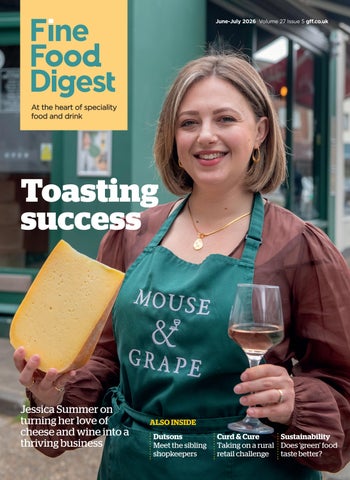
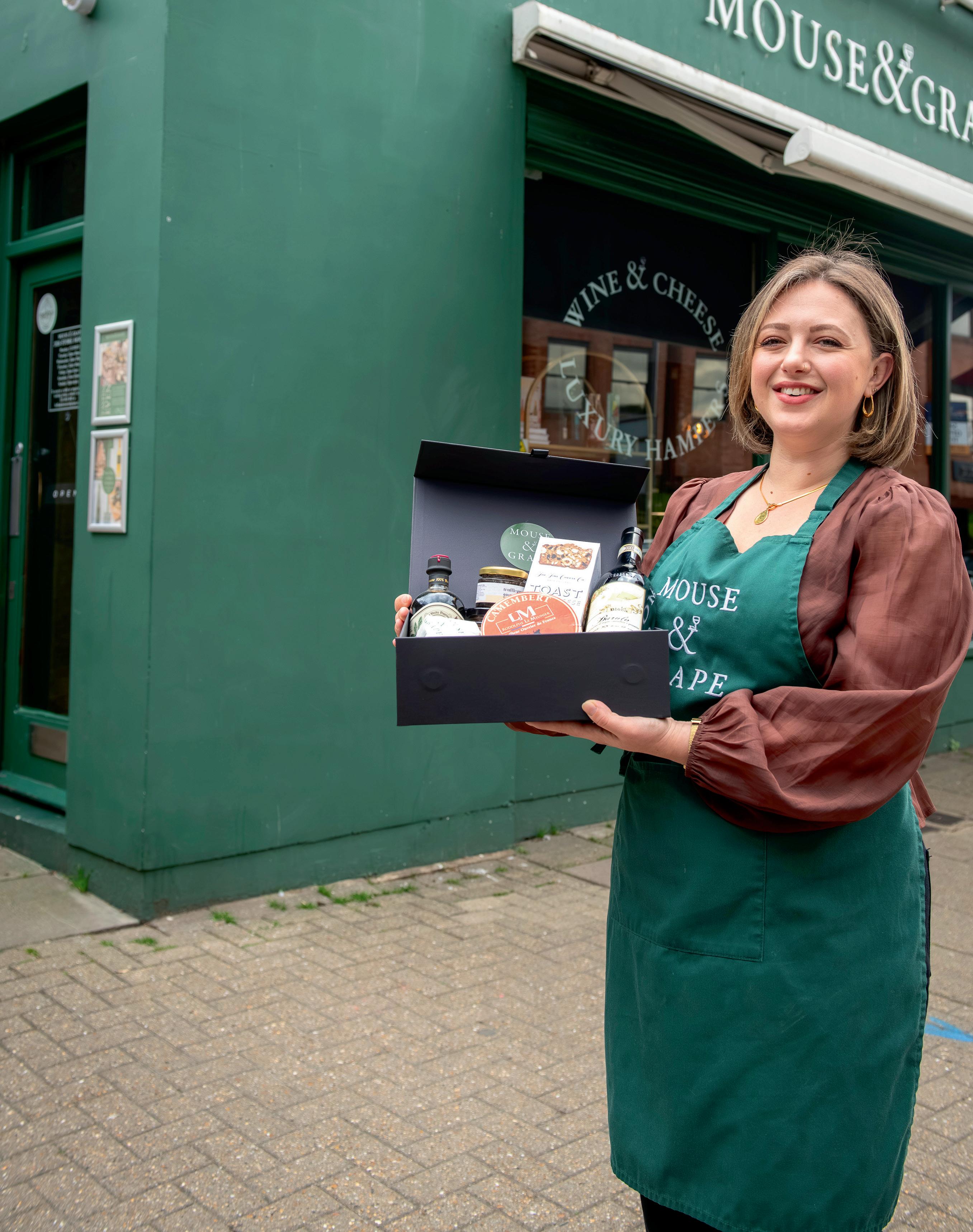
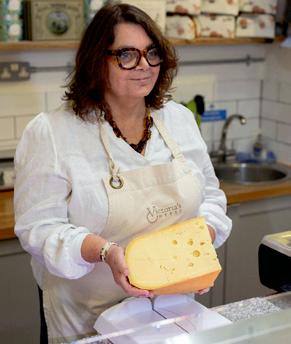
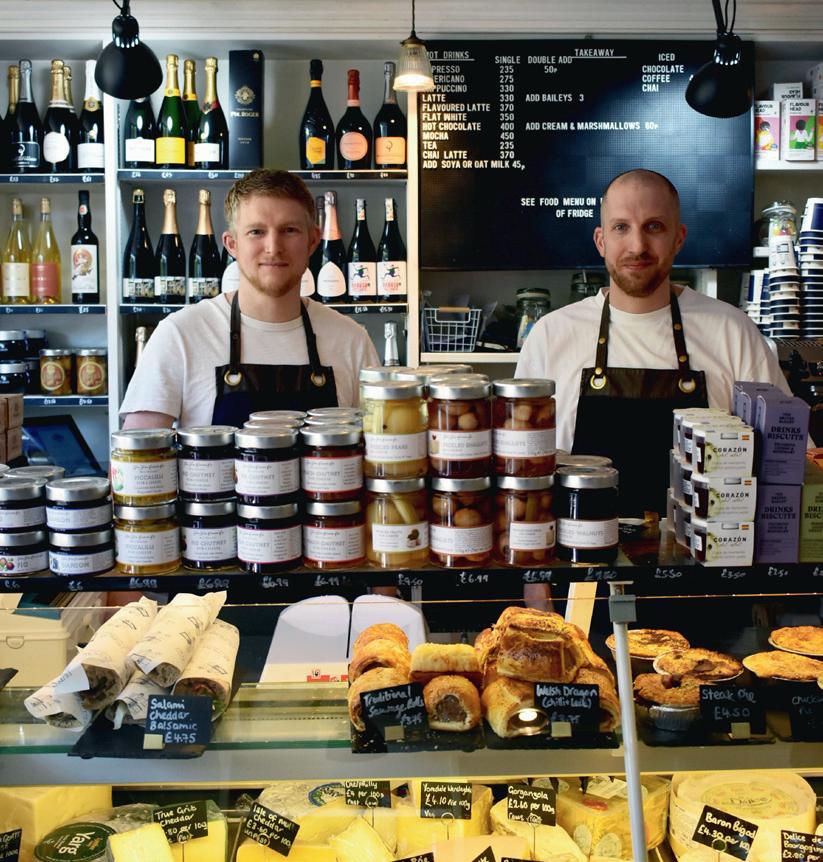
Jessica Summer on turning her love of cheese and wine into a thriving business
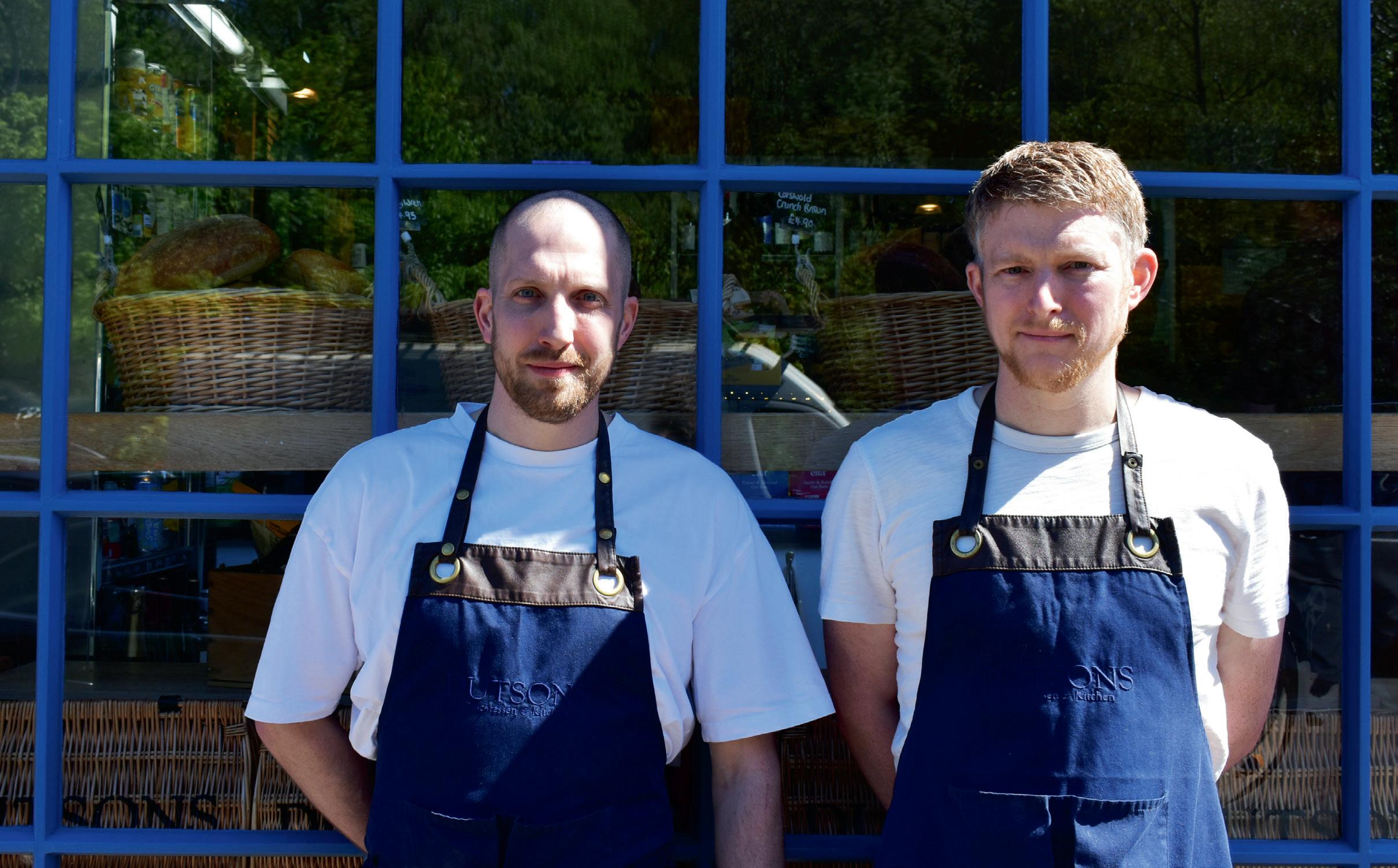
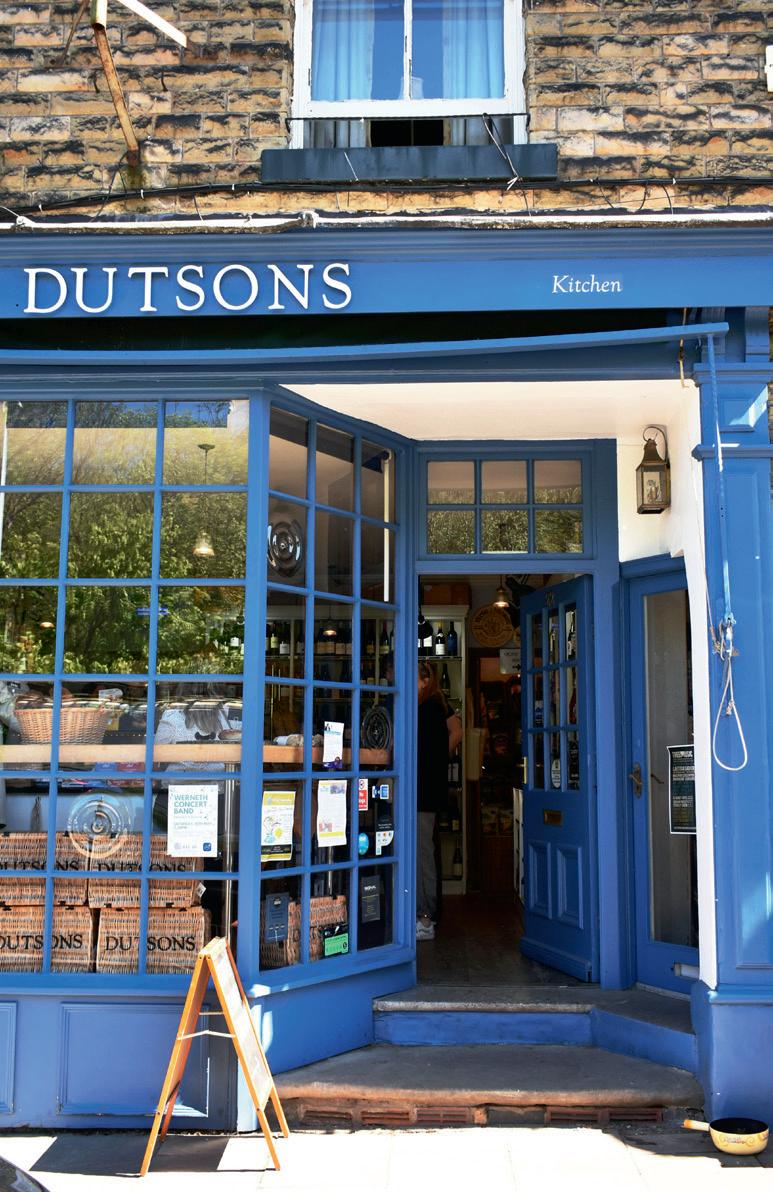
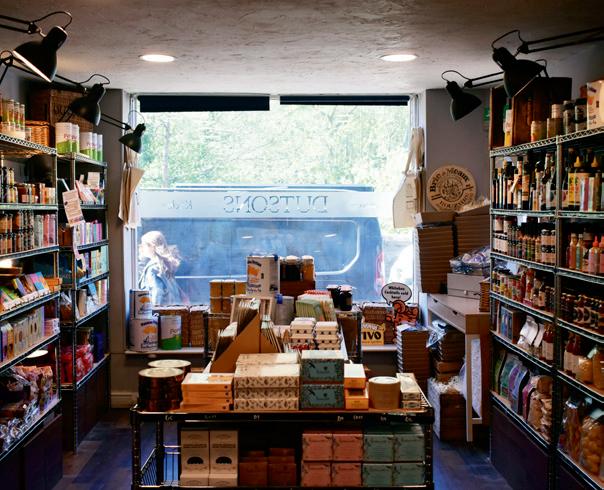
ALSO INSIDE Dutsons Meet the sibling shopkeepers
Curd & Cure Taking on a rural retail challenge
Sustainability Does ‘green’ food taste better?
CONTENTS
Preparing for a new UK-
This stallholder clearly does his homework online, finding quality items that are genuinely useful for people who like to cook in 2026.
By Tanwen Dawn-Hiscox, deputy editor
New cheese from Cashel, sales of cheese vending machines on the
An
with Instituto del Queso’s CEO, Luisa Villegas
There’s something to be said for a good old-fashioned market. And I’m not just talking about the sheer romance of walking around in a state of sensory overload, all noises, smells and colours, fondling fruit to assess ripeness.
On a recent family holiday in the Drôme, in the French Vercors mountains – where the French Resistance famously baffled their opponents during WWII with their knowledge of every rocky nook and cranny – we had our own stint of accidentally dispersing. My mother, sister, nephews, partner and I all found ourselves enraptured by ripe cherries, fresh snowy pats of fromage de brebis and wild boar saucisson studded with hazelnuts.
But one stall captivated all of us: one selling kitchen utensils, looked after by a friendly fellow in his forties. There were Wüsthof paring knives and Opinels for mushroom picking, walnut and seafood crackers, and a moulin cheese grater
EDITOR’S CHOICE
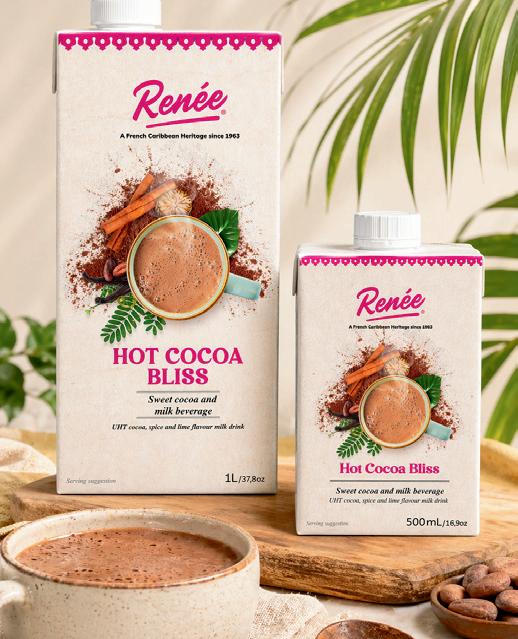
Cocoa Bliss
with a drum just for semi-hard cheeses, which I’ve wanted since I was old enough to understand that rotationally shredding Gruyère onto anything stands to benefit said thing.
The object that caught both my mother’s and my partner’s eye was an oil dispenser, made of glass. Deceptively simple, with a sliding switch to choose between an efficient, broad spritz of oil, or a glug.
For context, my partner is the target demographic for the Googleowned video streaming platform known as YouTube. The nerdier the video, the better. I frequently find he has dozed off watching hydraulic presses crushing things, someone talking about the history of an Eastern European city’s water distribution infrastructure, or tutorials on how to use niche power tools. He was in awe that this teeny rural village market where people come for their twice-weekly fill of
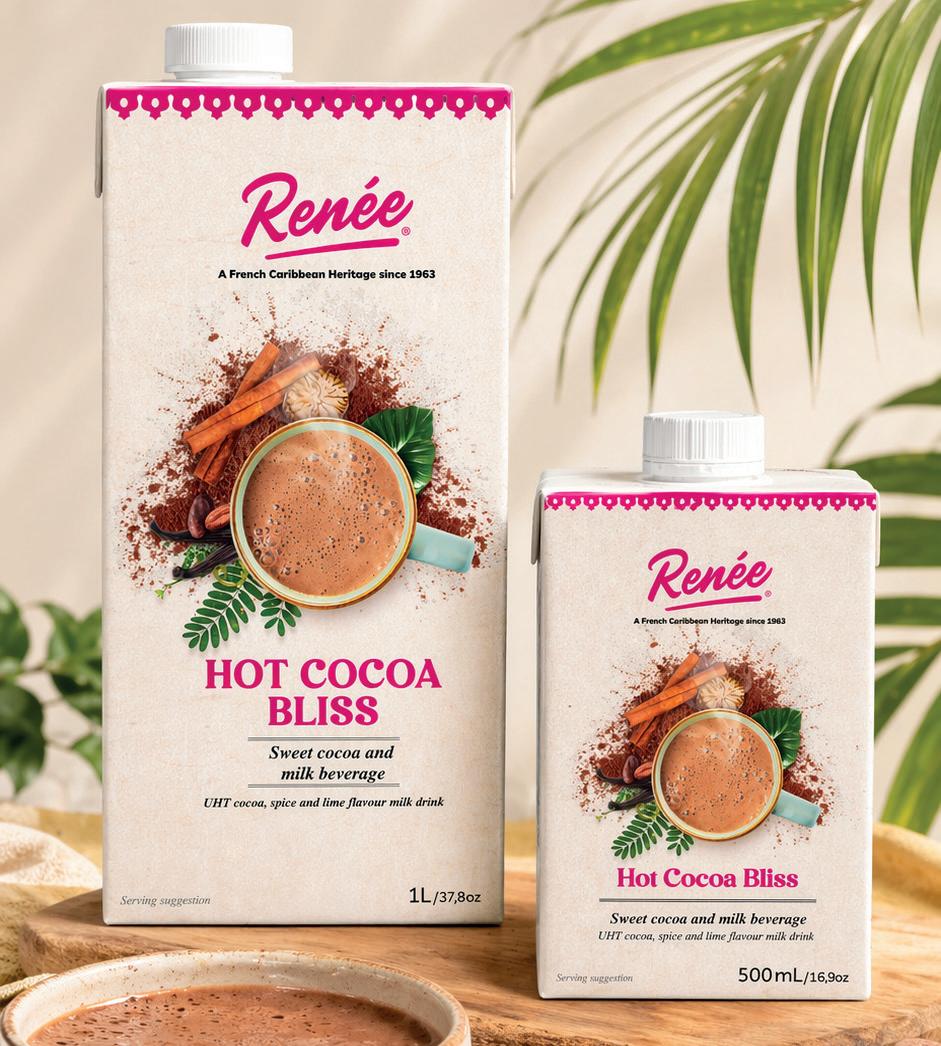
Step aside, powdered milk, sugar and cocoa mixes. Ready-to-drink hot chocolate is quite definitely having a moment, and I’m here for it. Renée’s sweet cocoa drink is a family recipe from Guadeloupe in the French West Indies, unctuously thick and rich with dark chocolate and warmly spiced with nutmeg, cinnamon and vanilla – with lime zest bringing a gentle brightness. I was asking the producer whether it would be good cold, over ice, when another punter interjected: “With rum!” Their words, not mine. More on p.52
potatoes and poulet rôti would be selling an oil dispenser he had come across halfway down one of his internet rabbit holes.
I found it a perfect summary of how tradition and modernity should co-exist. I would have been happy with fresh produce and a friendly exchange, but this stallholder clearly does his homework online, finding quality items that are genuinely useful for people who like to cook (I would rather keel over than use the word foodies) in 2026.
It’s all too easy to pick a lane and be staunchly unfavourable to the passage of time, but to cherry-pick what has been good about retail for millennia while embracing what makes being alive now exciting feels like the best approach. It’s what we try to do with our journalism here at FFD, and what we hope you practice within your business, too. Your customers will thank you for the perfectly even sear on their steaks, we promise.
editorial@gff.co.uk
Editor: Michael Lane
Deputy editor: Tanwen Dawn-Hiscox
Art director: Mark Windsor
Contributors: Lynda Searby, Isabelle Plasschaert, Tina Nielsen, Patrick McGuigan, Greg Pitcher, Pip Hibbert
Headaches at the till as EPOS providers cut out card payment suppliers
By Greg Pitcher and Michael Lane
Independent food retailers have hit out at several point-of-sale technology (EPOS) providers that have cut off their ability to use third-party card-payment processing systems, also known in the industry as ‘merchant services.’
A number of delis and farm shops told FFD they had been left manually inputting customer bills after EPOS companies stopped their tills communicating with card machines, because integration with cardpayment companies was switched off at short notice.
FFD understands that this practice has been adopted by a number of EPOS companies and it appears to be on the increase. In many cases, retailers have been given little notice of the move and told to switch to the pointof-sale tech provider’s own card-payment systems to restore smoother operations.
Many felt their only other option was to invest in entirely new till software, which would require laborious rescanning of products and staff training.
“It is a trend that many people within the EPOS sector are noticing,” one
industry veteran told FFD “A growing number of providers are offering their own merchant services and, in some cases, reducing or removing support for alternative payment providers.”
“In a sector like farm retail, where businesses are processing millions of pounds in card transactions each year, it’s understandable that EPOS companies may see value in managing that relationship directly, particularly when payment services can become a source of recurring revenue.”
The source stressed that there is a marked distinction between supplying a preferred payment solution and creating a platform that locks retailers into a particular provider.
“Most retailers understand commercial decisions. The issue is whether they still have the freedom to choose the payment provider that best suits their business. If changing card provider effectively means changing your entire EPOS system, that’s a very different conversation.”
They added: “Imagine if the same approach were taken with weighing equipment, e-commerce platforms or accounting
WHAT THEY ARE SAYING ABOUT...
integrations. Most retailers would expect those decisions to remain theirs.”
Mark Kacary, co-owner of The Norfolk Deli in Hunstanton, said he received a call from his EPOS supplier in late April notifying him that his capacity to use current card machines would be switched off in early May.
Following several phone calls and written conversations, he said the functionality was indeed removed.
“Now for us to take card payments we have to manually put the amount on the machine,” said Kacary.
He said his till-tech supplier had offered significant incentives to switch to its card-processing system but he liked the way his current one worked and small businesses were “under severe financial pressure” without shelling out to move platforms.
Paul Dutson, co-owner of Dutsons, said the Greater Manchester deli had been using a combination of third-party merchant services and EPOS supplier successfully for a few years.
He said he first learned of the forthcoming split between the two systems from the card-payment processing company.
“We’ve not had much
communication from the EPOS side, except trying to sell us the idea of staying with them on the basis of solving the problems they created,” he added.
Dutson said the retailer had been manually inputting bill totals since the move.
“It is a faff, liable to mistakes, time consuming and we’d rather present a more professional image.”
Dutson said the EPOS supplier had offered to beat the deal that the deli currently has for card payments but that he didn’t want to cut ties with the existing provider.
He added that he would like to find a different pointof-sale system that linked to third-party machines, but feared this could require a
...EPOS PROVIDERS DROPPING THIRD PARTY MERCHANT SERVICES
“The card machines in our shop stopped talking to our tills completely out of the blue on a Friday afternoon in April. Nobody had forewarned us, and it was done on our busiest day of the week. A week later the same thing happened in the café. I have been looking into both alternative till providers. This is taking up a huge amount of time and will require significant investment.”
“We received a decent offer from our EPOS provider to reduce the transaction costs with a blended rate if we went with their payment system. Then the card provider approached us offering yet further cost-cutting. I think the subsequent withdrawal of integration with my card provider is just part of an ongoing EPOS company strategy to move fully into an end-to-end service, including payments.”
“It’s how these businesses work.
Our previous provider even sent us new card terminals for our tills. We didn’t use them and dug our heels in, but I think they would’ve got us in the end by simply switching off the integration. Ultimately, we left that EPOS company because they were so focused on their extra products that they took their eye off the ball when it came to customer service.”
lot of work to end up back in the same position.
“Can we get our data in a usable format? It would take me two weeks scanning products to get them on a new till. And what is going to stop other providers from doing the same?”
Charlie Pinsent, of Somerset’s Pinsents Deli, experienced escalating charges to use third-party machines from another provider a few years ago.
He said the retailer now “reluctantly” paid two companies cardprocessing charges. EPOS providers understood their importance to independent retailers, he said.
“They know your whole business is running through their system. We have about 600 product lines, the thought of getting them all on to another system is a headache.”
Responding to FFD’s request for comment, one EPOS supplier said: “As part of the normal operation of any technology platform, integrations may evolve or change over time based on technical, operational, commercial, and customer considerations.
“We appreciate that changes to business systems can be disruptive, and we always aim to support customers through transitions as clearly and smoothly as possible.”
TOM NEWEY, COBBS FARM SHOPS
STEPHANY HARDINGHAM, ALDER TREE
PAUL DONOUGHUE, GREEN AND LOVELY
Some EPOS suppliers have made sudden changes to integration with card terminals and merchant services providers
IN BRIEF
Indies say Government should be bolder with UK-EU border rule adjustments
By Tanwen Dawn-Hiscox
Independent retailers and importers are hoping for easier trading conditions following the Government’s latest negotiations update to strike a new sanitary and phytosanitary (SPS) agreement with the EU.
Defra issued advice on 1st June urging businesses to prepare for changes expected to take effect in mid-2027, intended to reduce some of the postBrexit friction affecting the movement of food, animals and plants between Great Britain, Northern Ireland and the EU.
The new rules will scrap routine SPS border checks for most eligible goods entering the UK from the EU, or Northern Ireland from Great Britain.
For the food & drink sector, this could mean easier transit of spoilageprone products, and allow for smaller consignments to travel.
However, the agreement is neither a return to the customs union nor the single market, meaning customs declarations will
and EU
shoulder the burden.
He said there is some good to come from easing trade, but that the agreement is unlikely to go far enough, with customs controls remaining in place, particularly burdensome for fishery products.
from the island of Ireland.
McDowell said he has witnessed fellow retailers hit hard by the additional checks, “particularly those that bring in GB cheeses and other such items”.
Ahead of the October 2027 launch of the Deposit Return Scheme (DRS) in England, Scotland and Northern Ireland, the body responsible for its implementation, Exchange for Change, has provided more details for retailers who will be processing packaging for return. It has confirmed the handling fees based on return method and quantity of containers, and proposed a grant to help small retailers install Return Vending
remain necessary, and UK businesses will need to follow relevant EU rules, even if they don’t trade with the EU.
Francisco Pombal, buying manager at Spanish importer, wholesaler, retailer and restaurant business Brindisa, told FFD that trade barriers imposed as a result of Brexit have added “layers of unnecessary complexity” for the business.
“We went from buying foods in Spain like we could in Manchester to basically entering international trade,” he said.
Machines (RVMs) in their stores.
Manual return points will receive 3p per container returned, while shops with RVMs processing up to 250,000 will get 3p per unit. For volumes above that, retailers will be compensated 1.3p per container returned.
Meanwhile, small retailers could be entitled to £6000 grants to install RVMs, as Exchange for Change has set aside £60m to encourage small retailers to join the
Calculating the costs of customs clearance fees and other requirements at around 1.5% of purchase costs, he said the impact on the business was in the hundreds of thousands of pounds a year, “that we obviously had to pass on to the consumer”.
Though it hasn’t dropped any of its suppliers, Pombal sees the biggest impact of Brexit as reducing the choice and variety available in the UK, affecting small producers but also fellow wholesalers, some of which went under because they couldn’t
scheme. All urban retailers with 100-199 sq m of sales space, and all rural retailers with less than 200 sq m, will be entitled to apply. Exceptions will be made for some small retailers: businesses with 100 sq m of sales space will automatically be exempted from the scheme, and retailers with between 100 and 199 sq m in urban settings, and rural retailers with less than 200 sq m will be allowed to apply for size-based exemptions.
He added: “We need some clarity, because our understanding is that the veterinary standards will be mutually recognised, so health certificates won’t be necessary. But we still have to clear customs, that fee is not going to disappear. It is needless. It doesn’t add any value. It only carries costs.”
Given wider price pressures affecting food prices, Pombal said the deal would help, but not necessarily reverse inflation.
“You won’t see prices going down immediately because some of the increases have been absorbed by the industry,” he said. “But the pressures pulling prices up will ease.”
Even Johnny McDowell of Indie Füde in Belfast has had to adapt, despite being largely shielded from disruption because it focuses on food & drink
“It’s been a little boggling for people with the Windsor Framework and its implications,” he said, as it has meant extra checks, labels and paperwork for some goods travelling between Great Britain and Northern Ireland.
The retailer is unsure whether changes affecting farmers and producers will have a knock-on effect on prices, noting that retailers often don’t hear about pressures absorbed by suppliers, but do see higher prices and supply issues. “So we’ll wait and see.”
Though Indie Füde only trades locally, McDowell said extending the amount of high-standard, quality food available in the UK can only be a good thing.
“We’ve seen the food chain weakened by cheap imports over the years,” he said. “If this can help us strengthen our own food chain, that would be great.”
SPS TRADE AGREEMENT: WHAT TO EXPECT
Routine SPS checks and health certificates will be removed for most eligible agrifood goods moving between the UK and EU.
Agrifood goods moving from Great Britain to Northern Ireland should face fewer checks, labels and paperwork.
Customs declarations will still be required.
UK businesses will need to follow relevant EU rules, whether or not they trade with the EU.
Label changes will be required, including organic labels and country-oforigin.
Some specific changes may affect products on shelves: examples include higher minimum fruit content for jam, BPA restrictions in food contact materials.
Seafood businesses will still need IUU fishing documents, including catch certificates For more information on how to prepare, and to sign up for email updates from Defra, visit: gov.uk/government/ publications/spsagreement-preparingyour-business
From mid-2027 Defra has said there will be changes to the movement of food, animals and plants between the UK
IN BRIEF Share of retailer revenue from loyal, regular customers continues to grow
By Greg Pitcher
Retailers have spoken about the importance of cultivating customer loyalty after a report showed the growing value of regular customers.
Business leaders spoke to FFD after a study published by commercetool provider Square showed the contribution of regular buyers to retailer revenues had increased every year since the start of the Covid-19 pandemic.
The report added that more than a third of UK consumers planned to shop or dine in-person more often at local businesses this year.
Sangita Tryner, owner of Nottingham’s Delilah Fine Foods, said creating and maintaining loyalty was “the most important part of my business”.
“Without loyal regular customers we wouldn’t exist,” she added, stressing that she had always set out to create “the Cheers bar of the deli world”.
“People don’t just come in for food, cheese and wine – they want a bit of company, a bit of love,” Tryner said.
“The first man who spent money in Delilah 21 years ago still comes in for the same Americano.”
Tryner added: “You have to be better than the next person who opens up. We are forever improving what we do and asking for customers’ opinions.”
Paul Castle, managing director of Flourish Foodhall and Kitchen, which has sites
MARY PORTAS ADVISES INDIES TO BUILD COMMUNITIES
Retail guru and indie-champion Mary Portas advised firms to become part of their communities as she geared up to open a key event this summer.
The celebrity consultant spoke out ahead of the start of the British Retail Consortium’s (BRC) Leaders Summer School on 1st June.
She was preparing to speak to delegates about the growing divide between those shops competing on price and efficiency and those building longterm relevance through values, community and purpose.
Portas said: “The retailers planting roots right now in their communities are the ones who’ll still be standing in 10 years.
“The ones still asking: ‘How cheap, how fast, how much can we squeeze out?’ are running a different race entirely.”
Portas has presented several TV shows including Mary, Queen of Shops and What Britain Buys. She has also written books and advised previous Governments on making high street improvements.
near Bath and Bristol, also believes in canvassing his patrons.
Taking a data-driven approach to loyalty, he stressed the importance of a well-managed engagement initiative.
“Our reward-card customers come in almost twice as often as others and spend 25% more each time,” said Castle. “It is the primary focus of our marketing team.”
Flourish offers those signed up to this scheme rewards such as event
invites, personalised offers, exclusive prices and even product giveaways.
“We can see customers who haven’t been in for a while and try to recapture them through offers.
“We get postcode locations so we can see where we’re not getting penetration in an area, and we get ages so we can play to our audience.”
Castle said loyalty schemes should create a club-like experience, adding: “It isn’t a five-minute job.”
Guild of Fine Food managing director John Farrand said indie retailers should find means beyond pricing to hook customers.
“If you ensure your regulars are not only discovering quality products but learning how to enjoy them from your informed team, they will spread the gospel,” he added.
“You don’t hear many people telling their friends that Tesco is the best place to go for a top-notch cheeseboard or a perfectly crafted coffee.”
DOWN ON THE FARM
IN BRIEF
The UK Government has launched a consultation ahead of changes to flexible work contracts, which could enforce guaranteed hours on employers, reasonable notice of shifts and payments for cancelled shifts. A form to feed back on the Plan To Make Work Pay can be found on gov.uk.
Isabel Montes de Oca has been named CEO of Brindisa. She has held the same role at Spaghetti House and Lavval Restaurants. She started her career at Brindisa, in the finance department.
Targeting shoppers who have drifted to Ocado and M&S in recent years, Waitrose has taken a £20m hit and reduced prices across a range of products, including fruit, vegetables and meat.
The latest from farm shops across the country
As the weather warms up, Blacker Hall Farm Shop, near Wakefield, has launched an interactive experience for young children. Running until early Summer, the Little Farmers Trail has eight questions to answer as kids make their way around the farm. The trail finishes with a “grow your own sunflower” kit for all participants. blackerhallfarmshop. co.uk
The Welbeck Farm Shop in Worksop, Nottinghamshire has been crowned regional champion The Countryside Alliance Awards, sometimes referred to as the “rural Oscars”, and will now compete in the grand final. The winner will be announced later in July. welbeckfarmshop.co.uk
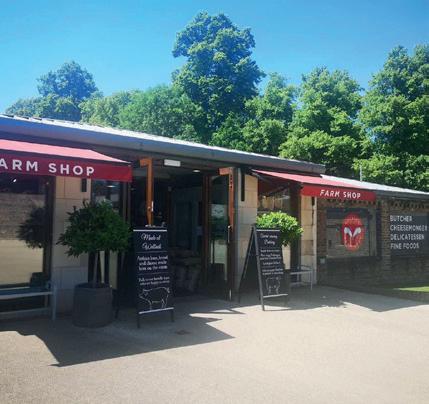
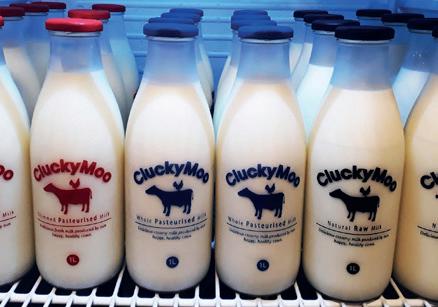
The owners of a North Somerset farm have submitted plans to build a new farm shop and café to replace the current temporary
structure. Located between Bridgwater and Burnham-on-Sea, The CluckyMoo Shed currently sells its own milk, cream, kefir, eggs, pork, cakes and savouries but has outgrown its current space. facebook.com/ NorthFarmCluckyMoo
In association with Fabulous Farm Shops fabulousfarmshops.co.uk
According to Square’s research, in the 12 months to May, 22% of UK consumers spent more at local businesses than the year before.
I started a new role at a London estate agency in March 2020 but lost the job ten days later due to Covid. I had intended to gain more industry experience to bring back to the family property lettings business I thought I would one day take over, but ten days was enough to make me realise this was not what I wanted to do.
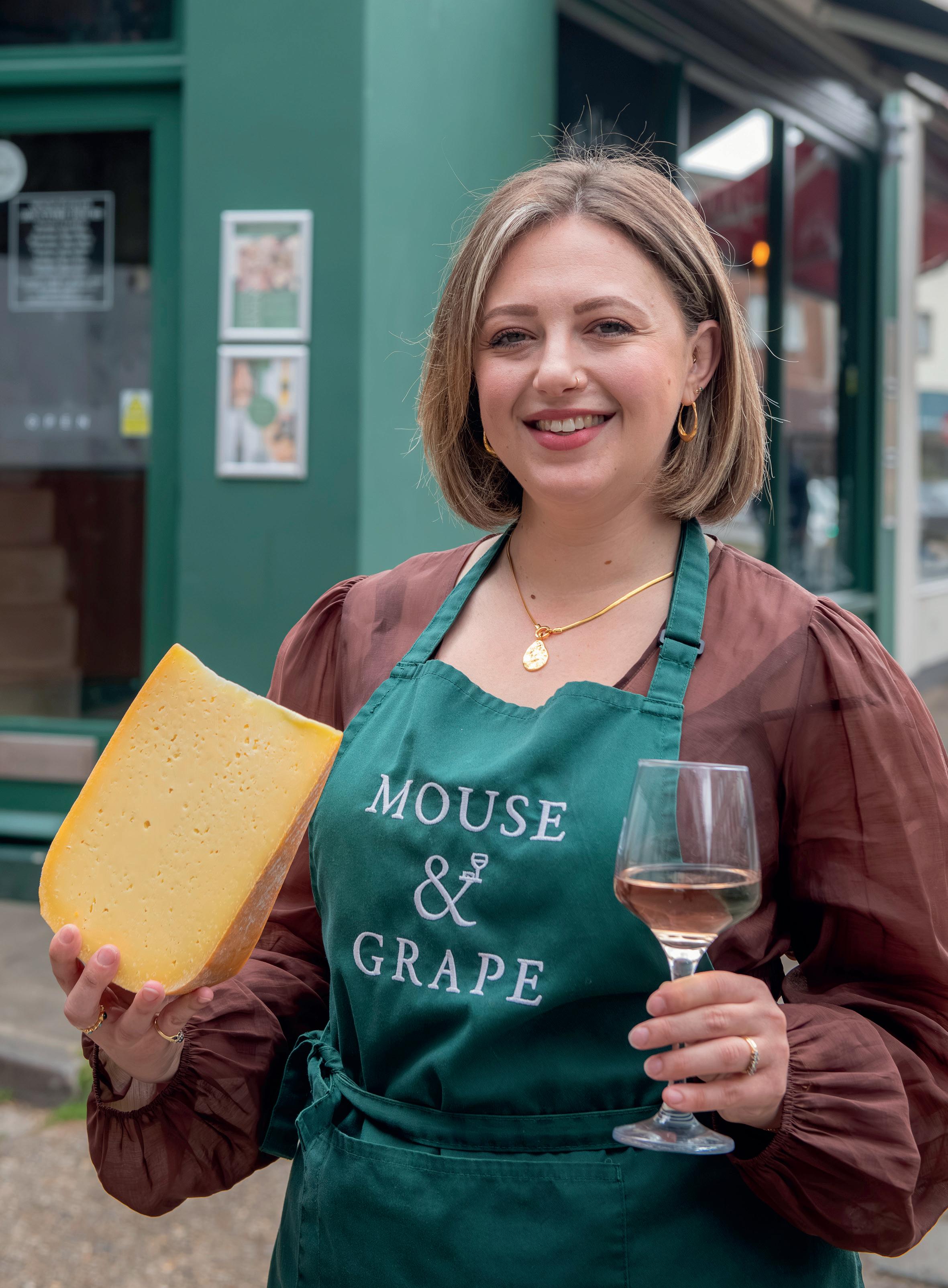
During this time, I found myself listening to inspirational podcasts. In one episode of Fearne Cotton’s Happy Place, Holly Tucker spoke about her book Do What You Love, Love What You Do Later, when my now husband asked me what I loved, without hesitation, I answered “cheese and wine”. That was the beginning of Mouse & Grape.
I first focused on building my Instagram and e-commerce while completing my WSET Level 3 and Academy of Cheese Level 2 and working in a wine shop. In 2021, I launched an online hamper business selling cheese and wine pairings.
I soon realised I had gaps in my cheese knowledge. A ten-month stint at La Fromagerie gave me more technical experience and confidence. I became a finalist in Young Cheesemonger of the Year 2022 and began hosting corporate and at-home tasting events.
By Christmas 2022, Mouse & Grape had grown enough for me to focus on it fulltime. I also became known as a cheese and wine influencer, working with producers and regions and attending press trips. A highlight was appearing on Saturday Kitchen in 2023. I continued building my profile, judging competitions and winning awards, including IWSC Emerging Talent in Wine 2025 and Drinks Business Retail Buyer of the Year 2025.
At that point, I was still running the business alone, wearing every hat imaginable. In November 2024, I opened the Mouse & Grape cheese & wine bar, deli and shop and began growing a team. The business has expanded rapidly, winning Specialist Retailer at the Farm Shop & Deli Awards 2026.
Mouse & Grape is a multi-faceted business; I think you need that to survive at the moment. Originally, my idea was purely an online business, but without a warehouse or large marketing budget, I needed to grow through more than just e-commerce. I focused on creating experiences through storytelling, hosting and face-to-face interaction.
From the beginning, my ambition was to build a big business. All those hours spent listening to podcasts during lockdown made me believe that if businesses like Fortnum & Mason, Laithwaites and The Fine Cheese Co. can do it, there is no reason Mouse & Grape can’t be next.
Interview Lynda Searby
Photography Isabelle Plasschaert
View from HQ
FFD’s publisher and Guild of Fine Food managing director John Farrand has his say
COne day I’ll be able to travel from Birmingham to the outskirts of London, in very good time, enjoying an upmarket 99 flake, on a spotless train
lichés are clichés for a reason, and everything you’ve heard about Japan came true on a recent food & drink trade mission. Decent, dignified and polite people, pink blossom and redefining soy sauce moments. There’s the efficient, speedy bullet train, devoid of Japanese folk eating and drinking fast food, not because it is banned but because it is more civil not to. And that means you don’t have to clear up a KFC bucket when you hop into your seat as you do in the UK.
I confess I am not a train nerd, and my bullet train fact-file is limited, but I was expecting cutting-edge trains. Nope – the interior felt decidedly eighties, with brown velour and aged fonts on the signage (no digital displays). Impressive, nonetheless. Our trip two hours north of Tokyo was on time, stress-free and unsoiled, and it got us right to our destination. I can’t remember
OPEN FOR ENTRY
World Cheese Awards 2026 is taking place in Córdoba, Andalusia on November 12th as part of the Andalucía-Gusto del Sur International Cheese Festival (more on p.40). Entry to the awards opened on Thursday 11th June and cheesemakers have until Tuesday 15th September* to enter. Head to gff.co.uk/worldcheese to find out more.
*Entry will close earlier if capacity is reached.
GREAT TASTE RESULTS
This year, more than 15,000 entries were judged over four months in London, Dorset, Dublin and Bergamo, Italy. The 2026 results will be announced on Tuesday 28th July. Visit gff.co.uk/directory to discover the great tasting food & drink from this year.
when I had a trip like that at home, a fact made more galling with news that the cost of HS2 will hit £100 billion, won’t open until 2039 and will require even longer to complete the line into central London.
The Japanese clichés became less obvious at our destination, the Nasu region, in proper farming country. Our itinerary included visits to farm shops, from the humble through to Tokyo venturecapital-backed Uber service station. Think Tebay, only cleaner.
We first visited the Majima sisters, Chiho and Nanami, at their eponymous farm shop, where we tasted cheese and butter (technically brilliant but needing some reckless romance in the making for me) and then walked 50 yards to meet the Holsteins that made it all possible.
The other end of farm retail took us to Nasu Senbonmatsu Dairy Farm, where one of the financiers, who had commuted
from Tokyo suit and all, introduced an unexpected Japanese food trend – Mr Whippy style ice-cream, made from their own (excellent) milk. No nasties and certainly (they’re very technical, remember) no legionnaires’ disease served by a dubious man in a van.
Will that trend make it over here? Very possibly, as dairy farmers continue to seek ways to add value. I daydreamed, enjoying my cone on the breakneck-speed train back to the Japanese capital: one day I’ll be able to travel from Birmingham to the outskirts of London, in very good time, enjoying an upmarket 99 with a flake, on a spotless train.
Alternatively, we could have saved our economy, invested in cooking lessons for school-age children and improved the nation’s health, encouraged and invested in a functioning NHS or just made the trains that we already have work.
The Word on Westminster
By Edward Woodall Association of Convenience Stores
FOR THOUSANDS of retailers across the country, crime sits firmly at the top of the agenda. It’s not just the financial impact of stock losses that can run into thousands of pounds a month, but also the cost of defensive investment in CCTV, product tagging, and security staff to try and mitigate the problem. Plus the time it takes to report incidents, and the mental strain on whoever has to deal with it all. Finding effective ways to break the cycle of reoffending and take prolific criminals off the streets has long been one of our top priorities, and I’m pleased to report that there is progress being made in two important areas. Firstly, a range of measures are coming into force to support retailers as part of the Crime and Policing Act, which received Royal Assent last month. Measures include a scrapping of the so-called £200 threshold for investigating shop theft offences, making attacking a retail worker a separate offence, and extending closure orders for businesses wilfully selling illicit goods. These are meaningful policy changes that will make a positive difference.
The second area that has become more prominent is the battle against the illicit trade. You’ll be familiar with this problem just by observing the pop-up shops and mini marts on your high street that sell all sorts of products with questionable origins. It’s not just illicit vapes, tobacco and alcohol, it could be other electronics, toys, premium food products and even stolen goods. We’ve been calling on the Government to do more to stop these businesses, and while the additional powers for Trading Standards are welcome, they’re no good if they’re not backed by additional resources and boots on the ground.
This is why we’re pleased to say there’s been major progress in this area through the announcement of a new £30m taskforce to tackle organised crime on high streets. New police officers, more cash to fund trading standards activity and a new High Street Organised Crime Unit to bring this up the list of police priorities. There is still much to be done to back responsible retailers and ensure they’re not losing out to illicit traders, but this is an important step forward and shows that the Government does take this issue seriously.
Edward Woodall is the CEO of the ACS edward.woodall@acs.org.uk
CONFESSIONS OF A DELI OWNER
Anonymous tales from behind the counter
THERE WAS A time not so long ago when food only had to achieve two things: taste excellent and not give you food poisoning. If a cheese was exceptionally creamy or a loaf of sourdough had a beautiful, blistered crust, that was enough to justify its place on my shelves. Not anymore. We have officially entered the era of the functional food takeover, where a product is deemed a failure unless it promises to perform a medical miracle.
My shop floor has slowly mutated from a speciality deli into an upscale pharmacy. Everything landing on my desk from distributors seems to be infused with adaptogens, CBD, or functional mushrooms like Lion’s Mane and
Cordyceps. Olive oil is no longer just a beautiful dressing for tomatoes; it is a high-potency antioxidant shot. Coffee is no longer a quick tool to shake off the morning haze; it is a cognitive enhancer designed to realign your synapses.
Standing behind the counter trying to pitch a £7 bar of chocolate because it claims to lower your cortisol levels feels less like shopkeeping and more like selling snake oil from the back of a Victorian cart. I recently had a customer spend 10 minutes interrogating me about the specific gut microbiome benefits of a jar of local honey. I wanted to tell her that it is essentially delicious bee spit and sugar, perfect on toast, but instead I had to nod solemnly and
We have officially entered the era of the functional food takeover
Expert eye
NEWLY-APPOINTED FRA CHAIR BEN LOUGHREY SETS OUT HIS VISION FOR HIS TENURE
When I stepped into the role of Chair of the Farm Retail Association (FRA) at our annual Conference this March, I was incredibly proud to represent a sector that continues to evolve, innovate and connect communities with outstanding local produce and experiences. Farm retail has always been about more than simply selling products, it is about supporting British farming, championing local businesses and creating meaningful relationships between producers and consumers.
I have therefore set out my priorities as Chair with pride and purpose to continue the great work of my predecessor, Emma Mosey. Looking ahead, one of my key priorities is improving engagement across our Association. Our members are at the heart of everything we do, and it is vital that every farm retail business, regardless of size or location, feels connected,
point to the label’s vague promises of holistic vitality.
The reality is that we are selling premium snacks wrapped in pseudo-scientific jargon to a consumer base obsessed with optimisation. People will happily wince their way through a bitter, mud-like mushroom broth if the packaging implies it will cure their weekend brain fog. They want the indulgence of a luxury treat, but they require the moral and physical absolution of a vitamin supplement.
There is a deeper, rather depressing economic context to this wellness madness in the UK. In a country where public services are stretched to the limit and getting a basic GP appointment feels like winning the lottery, people are increasingly taking healthcare into their own hands. They are terrified, stressed out, and utterly exhausted by the grind of modern Britain. Unable to fix the larger systemic issues, they are turning to the luxury deli counter to buy a sense of control. If you cannot see a doctor, at least you can buy a packet of crisps that promises to support your immune system. We are not just selling food anymore; we are selling a very expensive, beautifully packaged illusion of wellness to a nation that is running on empty.
supported and listened to.
An important step towards this will be the return of regional meetings. These gatherings provide invaluable opportunities for networking, idea sharing and collaboration throughout the year. Farm retailers face many similar challenges, but regional events also allow us to address local issues and celebrate regional successes. This way, we can strengthen relationships across the industry and encourage greater peer-to-peer support.
Another focus will be to review what modern farm retail looks like today. The sector has diversified significantly in recent years, with businesses expanding into hospitality, experiential retail, online sales and tourism. I want to ensure the Association reflects this evolving landscape and welcomes a broader range of businesses that share our commitment to quality, provenance and customer experience.
Finally, I would like to see even more events, from workshops and supplier showcases to networking events and industry visits. There is huge appetite for opportunities that inspire, inform and connect. This way, we can continue to support innovation and help rural retailers navigate the opportunities and challenges ahead.
Farm retail remains one of the most dynamic and resilient sectors within British agriculture, and I am excited about what we can achieve together in the years ahead.
£5 billion was the recordbeating value of meat imports into the UK last year, up 15% year-on year. Poultry, mainly from Poland and the Netherlands, accounted for almost £2 billion of the total.
Source: HMRC
ARE YOU LOOKING FOR MORE?
Whether it’s staff training, business advice, event space, making industry connections or opportunities to meet trade buyers and food lovers, the Guild of Fine Food does far more than publish FFD The Guild has been championing independent food & drink for over 30 years. Join us today and find out what we can do for your business.
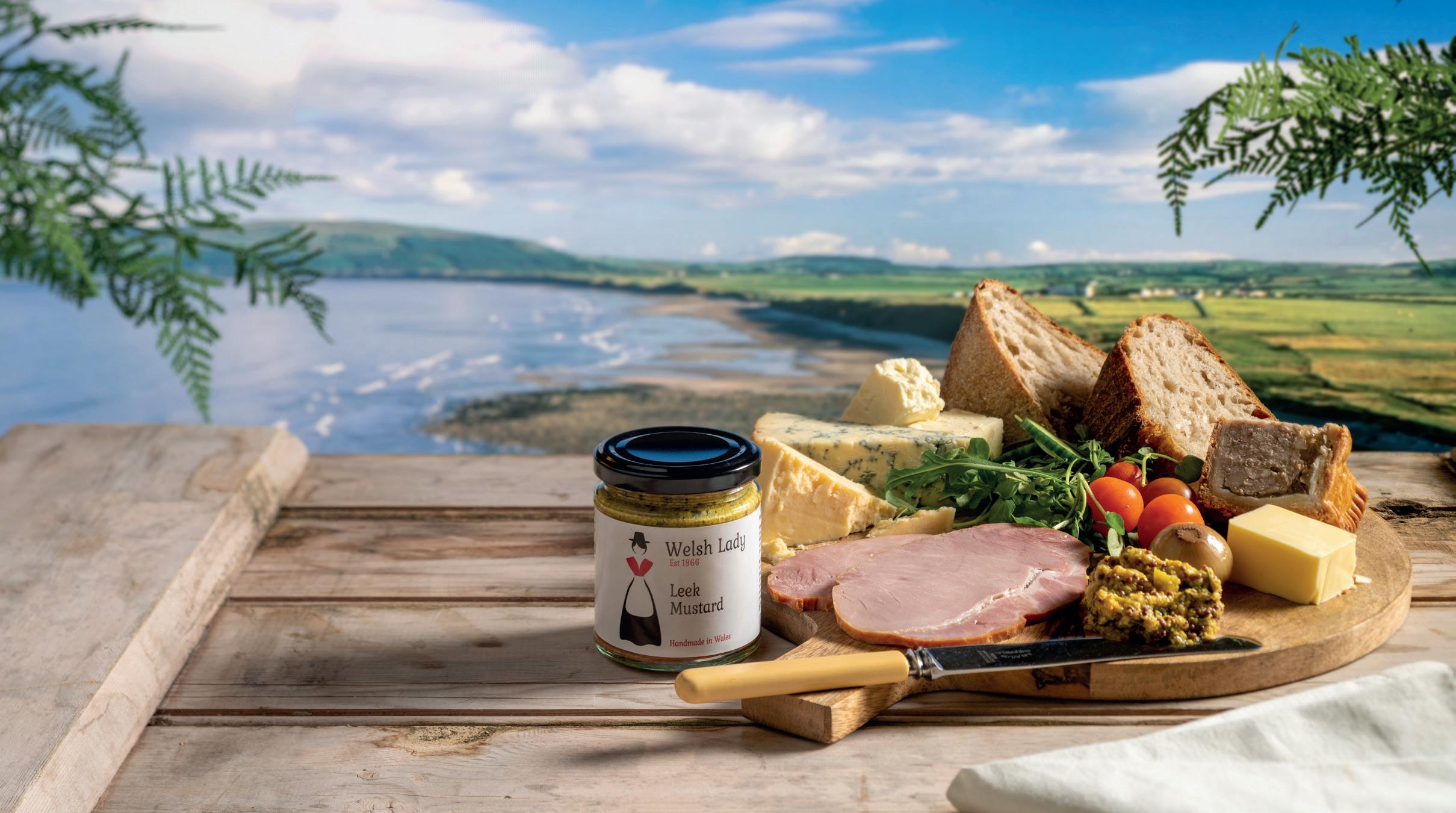
Welsh cheese is combining centuries of tradition with fresh creativity, producing distinctive, award-winning varieties that reflect the country’s rich farming heritage, exceptional milk and unmistakable sense of place.
IN RECENT YEARS a quiet revolution has been taking place in the Welsh cheese industry, as it quietly builds a reputation far beyond its borders.
At the heart of Welsh cheese is a strong sense of history and identity, with the small farms that form the backbone of the Welsh agricultural industry having a rich cheese-making heritage that dates back centuries.
In the 16th century cream would be skimmed from cow’s milk to make butter, while the remaining milk would be turned into crumbly cheese, sometimes with a little added sheep’s milk. Parts of Clwyd was famous for making a Cheshire-style cheese in the 19th century, while milk from the now almost extinct Glamorgan cattle breed was used to make a white, hard cheese known simply as Glamorgan.
Which of course leads us to Caerphilly cheese, one of the most celebrated to have come out of Wales. So much so that it takes its place amongst the likes of Champagne, Roquefort and Gouda by having coveted Geographical Indication (GI) status.
The Traditional Welsh Caerphilly (PGI) cheese that we eat today is based on an unchanged recipe written down by Annie Evans in her notebook in 1907, but which probably dates back well into the 19th century. Initially popular with coal miners as a form of sustenance while working underground, the specific knowledge and skills required to produce it has remained largely unchanged for generations.
But Welsh cheese is not only about tradition. One of its great strengths is the way it combines
heritage with creativity. Welsh producers have not stood still; they have used traditional skills as a foundation for developing cheeses that feel modern, distinctive and full of character. There is now a steady stream of new cheeses being made in Wales by artisan producers in every style imaginable, from Halloumi and Feta to blues and hard, nutty sheep’s milk cheeses and much more.
What truly makes Welsh cheese special is the land from which it is produced. Dairy producers repeatedly stress that the quality of the cheese starts with the quality of milk and the closeness of the supply chain. The lush, green grasslands of Wales, amply supplied by regular rainfall, along with the smaller-scale nature of the Welsh agricultural industry, provide a perfect platform for producing cheese of the highest quality.
You could almost say that all these factors
combine to give Welsh cheese its own, unique ‘terroir’.
This quality and taste is being recognised by judges as well as customers. Welsh cheeses have won an impressive variety of awards in recent years. At the World Cheese Awards 2025, Welsh cheesemakers won six prizes overall, including three Gold, two Silver and one Bronze, with Perl Las Deli from Caws Cenarth taking the title of Best Welsh Cheese.
Equally, at the British & Irish Cheese Awards 2025, Saval from Caws Teifi was named Best Welsh Cheese, while north Wales-based Flavour Moments, who produce Goats Cheese Pearls, was presented with the most exciting new product award at the
Welsh Government’s recent international food and drink showcase, Blas Cymru / Taste Wales. Tom Pinder, owner of The Welsh Cheese Company, started as a wholesale business and an online shop almost a decade ago, but has since grown considerably and opened its own cheese shop in Taffs
Well, followed by the launch of a deli and cheese bar in Victoria Park, Cardiff.
For Tom, the quiet revolution that’s been taking place has been remarkable. “In the decade that I’ve been working with Welsh cheese, the variety, quality and consistency have all been moving in the right direction.
“There are some fantastic new cheeses coming out every year, and you’ve even got cheesemakers moving into Wales, as well as new homegrown producers starting up. This just shows how the conditions in Wales, such as the green, healthy pastures that produce fantastic milk, are ideal for producing fine cheeses.
“It really is a positive and exciting time for Welsh cheese.”
Welsh cheese offers quality with a real sense of place, or even its own ‘terroir’. Once you try it, you may wonder why you waited so long.
For more information: gov.wales/ foodanddrinkwales
Fleuri
Vending machines top up revenue for cheesemongers and makers
By Patrick McGuigan
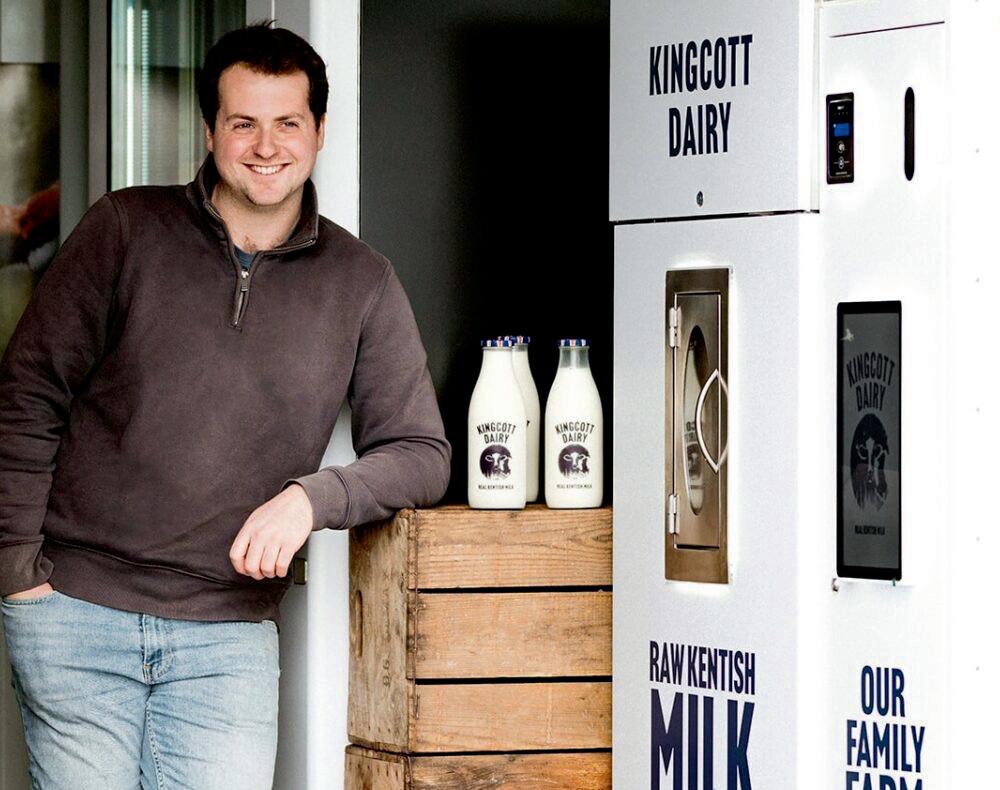
Sales of cheese vending machines are surging as dairy farms and farm shops look to diversify and meet demand for out-of-hours shopping. The trend builds on the success of milk vending machines, which have proved so successful that producers are extending their operations with complementary self-service cheese machines.
“The growth is being driven largely by farms and producers wanting to diversify their offering, increase direct-toconsumer sales and make better use of their existing sites,” said Sarah Sloan, marketing manager of The Milk Station Company, a supplier of both types of machines.
“We are seeing more enquiries from businesses that may have started with milk vending, or a farm shop model, and are now exploring how cheese and other chilled products can create an additional revenue stream.”
Blue cheese producer Kingcott Dairy in Kent installed milk and cheese machines from the Milk Station in March, helped by a £15k Rural Development Grant. Owner Karen Reynolds said the farm was already getting a few hundred customers each week.
“We’ve been pleasantly
surprised at how popular they are, especially as there are two farm shops near here,” she said.
“It’s convenient for people before and after work or on the school run. People come for the raw milk, but then buy cheese at the same time.”
The Courtyard Dairy cheese shop in Yorkshire has sold ice cream, coffee and cheese from vending machines since 2020, adding a milk unit in 2023 and a ‘Farmers’ Larder’ meat machine in May, which supports six local farms.
“They are busy during the summer and school holidays when it’s lighter in the evening, but also when people are leaving
Fen Farm Dairy has opened a third farm shop in Suffolk. The new outlet will sell the company’s Baron Bigod cheese, butter, yoghurt and new kefir, plus local produce.
Welsh cheesemaker Usk Valley Cheese Company, which is best known for Goudastyle cheeses has launched Blorenge, a Brie-style cheese made with Jersey milk from a local farm.
A beautiful new book mapping the disappearing world of artisan Italian cheesemakers in photos and articles has been published by author Jiří Giorgio Jelínek, founder of The Italians wine and food company. Only 500 copies of the hand-bound book, Manifesto of Noble Cheese, have been printed.
the restaurant in the evening and the shop is closed,” said owner Andy Swinscoe.
“They’re also popular with campers from the three nearby campsites and when we’re really busy in the shop.” Back at the Milk Station, Sloan said the most successful cheese vending machines were properly branded, clearly signposted and actively marketed.
“It is not enough to simply place a machine on site and hope people will find it. Customers need to know it is there, understand what is available, and be reminded that it is open for business 24 hours a day.”
In May, the founder of the Slow Food movement Carlo Petrini died, aged 76. The journalist and writer Petrini created Slow Food in 1986 to champion sustainable agriculture and traditional food production, motivated by his belief that quality food is a universal right. He died in his home city of Bra, also the location of Slow Food’s biennial Cheese festival, the world’s largest event celebrating raw-milk cheese.
THREE WAYS WITH...
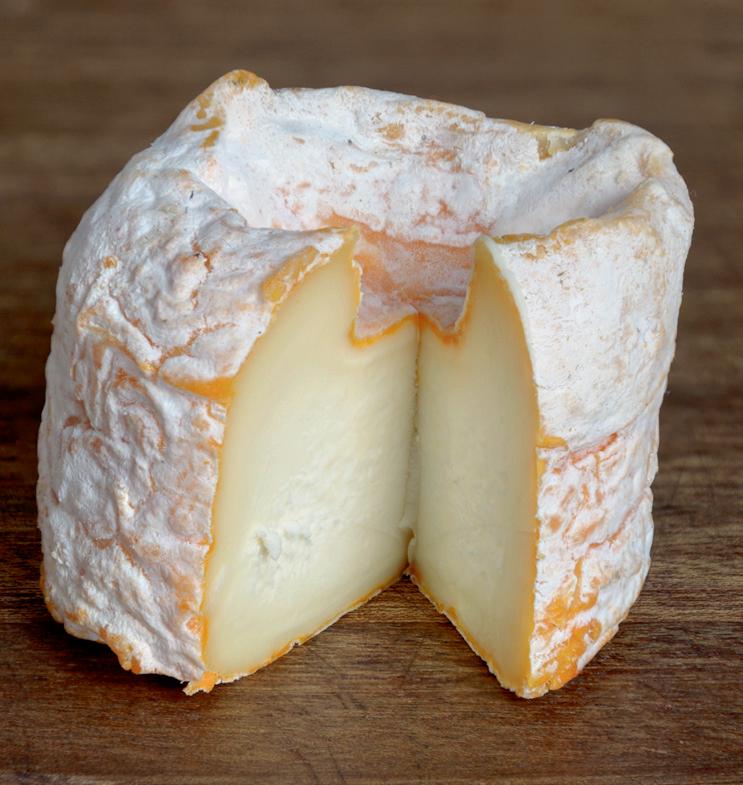
Langres
Instantly recognisable thanks to it wrinkly orange exterior and concave dent, Langres PDO originates from the old Champagne-Ardenne region of France. It has an almost musty aroma from the washed rind, and the interior ranges from light and fluffy when young to as glossy as cream when mature. The flavour is yoghurty and fresh early on, but warm and savoury as it breaks down, with a mouth-coating creaminess.
Champagne
Tradition dictates that the dip (known as a ‘fontaine’) should be filled with a splash of Champagne, but this results in a soggy cheese. Much better is a glass of Champagne on the side, especially a Vintage Blanc de Noirs. The earthiness of Pinot Noir and the biscuity notes from the extra lees ageing really leans into the yeasty, umami notes from the rind.
Fig Jam
Well-known Langres producer
Fromagerie Germain in the Haute-Marne region recommends serving a few slices of its cheese on seeded toast with a spoonful of fig chutney. The crunch of the seeds contrasts nicely with the delicate texture of the cheese, while the sweetness of the chutney balances the meaty, savoury tones of the rind.
Pancetta potatoes
Chef Hayden Groves has a great recipe for Langres in his book Back in the Saddle. He bakes a whole cheese sprinkled with white wine for around 20 minutes, while roasting new potatoes wrapped in pancetta. The molten cheese is then served with the charred and sizzling potatoes on the side, which are dipped into the gooey, hot cheese.
The Milk Station says sales of its cheese vending machines increased by 22% in the year leading up to May 2026.
Jennifer Olson
CHEESE
Cashel introduces Tomme-style cheese ahead of ramping up capacity
By Patrick McGuigan
Ireland’s Cashel Farmhouse Cheesemakers has launched a new tomme-style cheese ahead of major investment in its dairy, which will boost capacity by 30%.
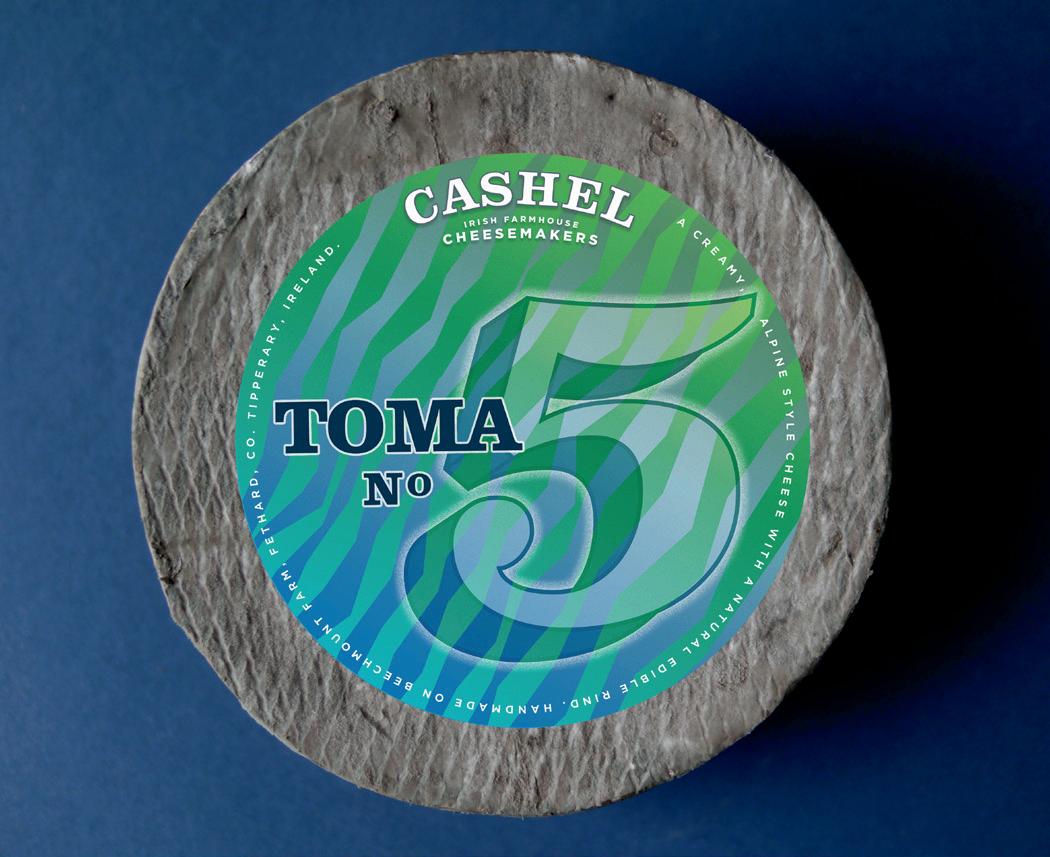
The Tipperary-based business, which is most famous for Cashel Blue, has developed the new cheese, branded Toma No.5, taking inspiration from French and Italian tommes. Made with pasteurised milk and animal rennet, the semi-soft cheese comes in 750g wheels and is matured for a minimum of 6 weeks, but typically eaten at between 8-14 weeks.
Toma No.5 is made by French cheesemaker Quentin Duboz, who joined last year after previously making Templegall in Cork. It has a velvety, grey rind and buttery flavour, and is named No. 5 because it is the company’s fifth cheese after Cashel Blue, Crozier Blue, Shepherd’s Store and a historic product called Cashel White. It is currently sold by IJ Mellis and Rowcliffe in the UK.
“It’s different to the tommes in France and Italy because it’s made with whole milk with a higher butterfat content, so it’s creamier and more buttery,” said director Sarah Furness. “It’s very easy to eat.”
Cashel is also investing in its dairy with four 4,000-litre vats replacing the current eight 2,000 litre vats. The new
with
equipment includes automated cutting equipment, allowing the company to increase production days during the week, boosting capacity by 30%.
“We’re not planning any more new products in the short term, but in the longer term we will be able to develop more new cheeses,” said Furness. cashelblue.com
BEHIND THE COUNTER TIPS OF THE TRADE
Victoria Dunthorne, Victoria’s Cheese, Ely, Cambridgeshire
Tempting shoppers to cross the threshold is half the battle for any retailer, especially in these straitened times. Good signage, beautiful displays and even just leaving the door open are all tried and trusted techniques, but Victoria Dunthorne has a few other tricks.
“We do Friday Blind Date bags, containing three 100g wedges of cheese for £10,” says owner Victoria Dunthorne. “People love a bargain, and it opens their minds to new cheeses.”
The fact that customers don’t know what’s in the bag adds to the interest, she says. “Some people get overwhelmed by the counter, so they like that I’ve made the decision for them. We often get people coming back to buy a cheese they’ve discovered in the selection.”
Dunthorne takes a similar approach with other products, offering five local beers for £20, and cross-selling baked goods at the weekend. “People come in for the Blind Date bags, but they can’t resist the cheese scones. It’s about getting people through the door and them leaving with a couple of extra things.”
victoriascheese.co.uk
The Cheesemaker
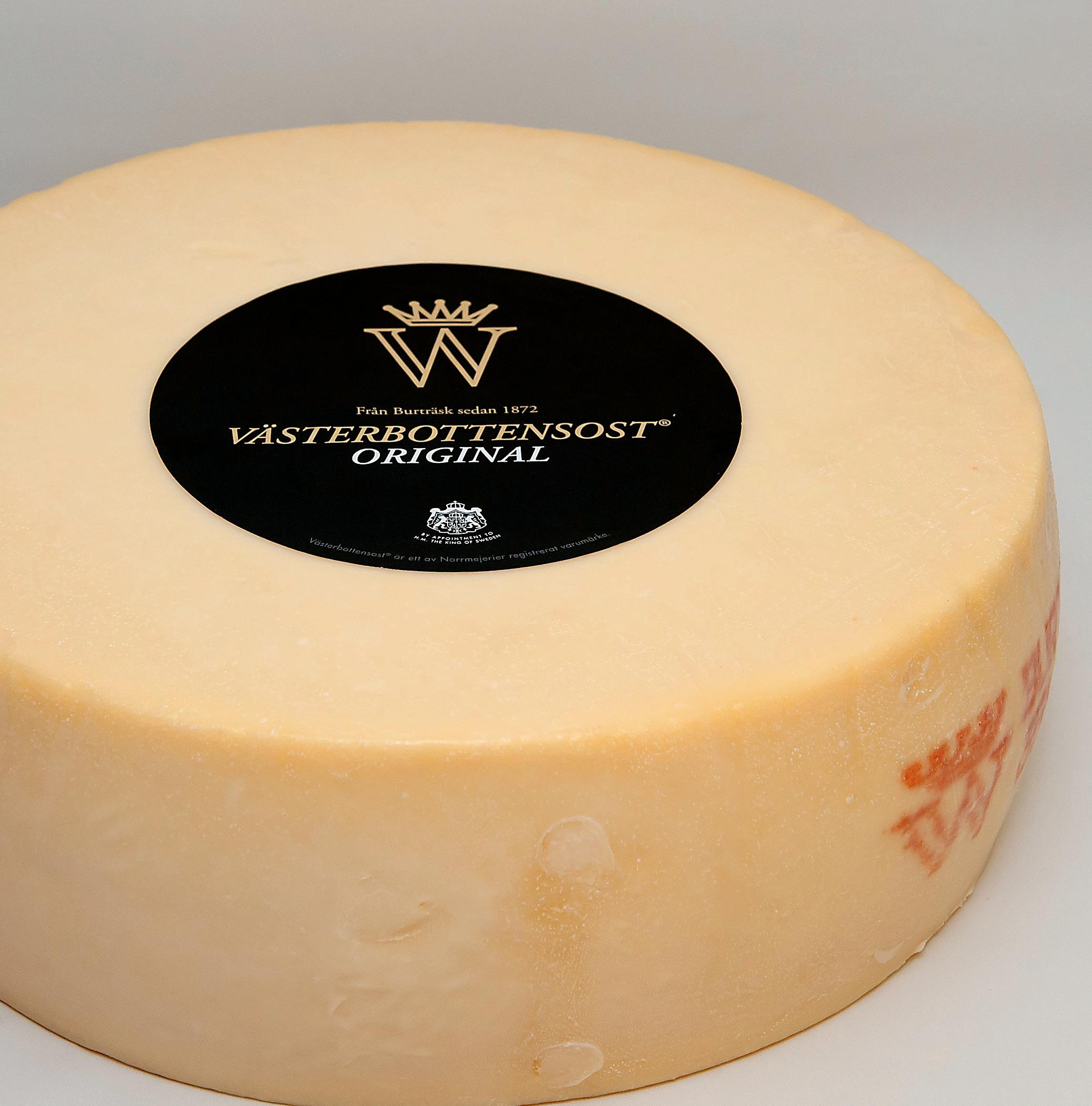
Norrmejerier – Dairy cooperative
Type
Hard, Aged
Milk & Rennet
Pasteurised cows’ milk, Vegetarian
Tasting notes
The flavour is salty, fruity and savoury.
Texture
Västerbottenost has a hard and granular texture similar to ParmigianoReggiano. Its paste is straw yellow in colour.
Affinage
Coated in paraffin and matured for at least 14 months on spruce shelves.
Perfect Pairings
Serve with a Belgian blonde ale (6-7.5% ABV) or a sparkling white wine, as a refreshing alternative.
Culinary Suggestions
This is a unique cheese that can be used in many dishes. It can be grated into mashed potato or pasta. But why not try making a Västerbottensost Cheese Pie (a Swedishstyle quiche) and serve it with pickled herring and strawberries?
Västerbottensost is one of 75 cheeses studied as part of the Academy of Cheese Level Two Certification. For more information about all of the Academy’s courses, visit: academyofcheese.org
Cashel produces more than 400 tonnes of cheese a year with 35% exported to countries including the US, Australia, the UK and the rest of Europe.
Västerbottensost
Breaking the mold
By Patrick McGuigan
Through judicious cheese curation, a hands-on customer service team, and a focus on building out its rural retail base, Curd & Cure hopes to be a wholesaler with a singular edge.
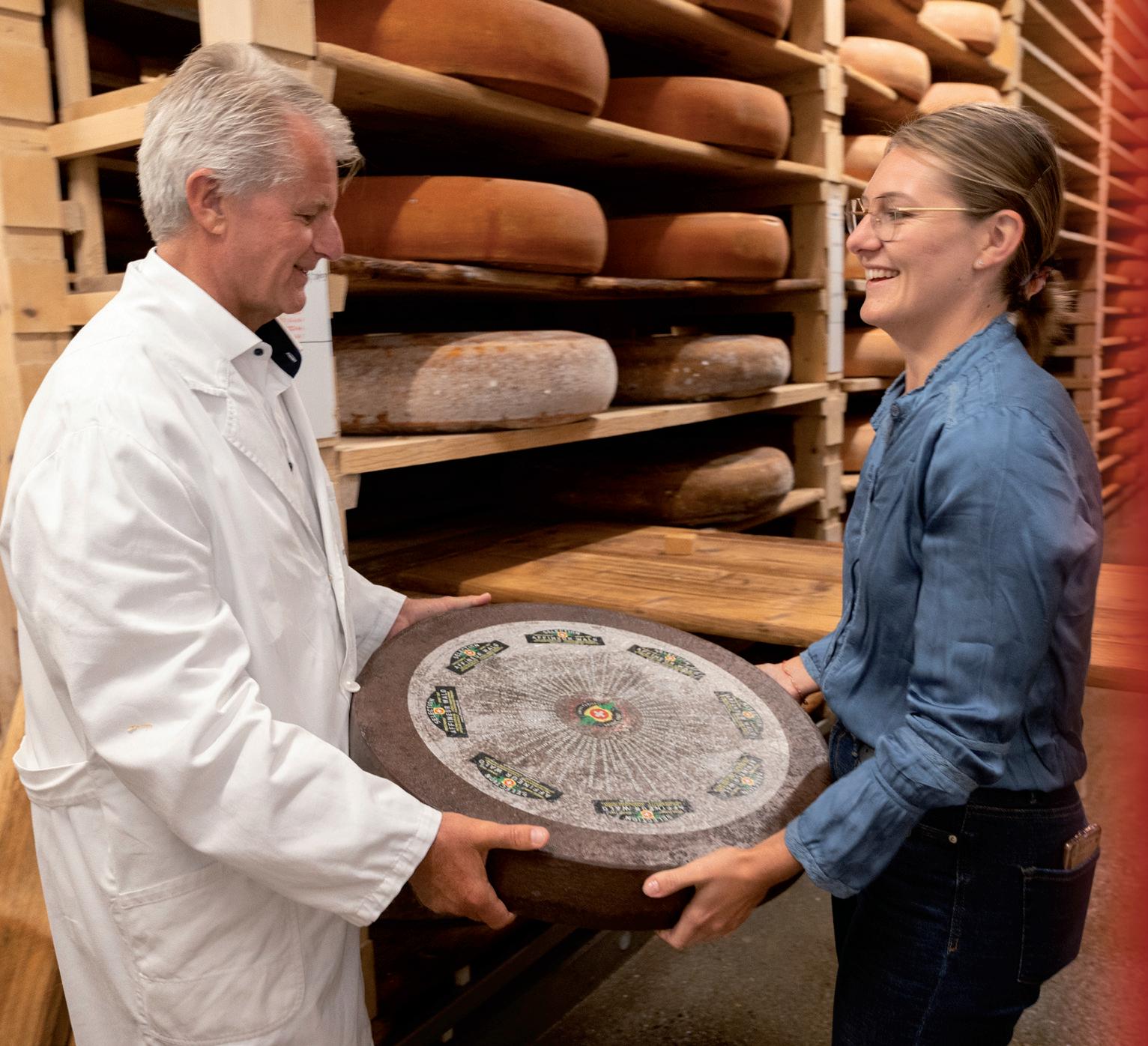
When the winner of the World Cheese Awards in Switzerland was announced last year, there was a rush by the world’s cheesemongers to get hold of the champion Gruyère, made by Bergkäserei Vorderfultigen.
It’s a testament to the quick thinking of Patrick Spinazza, head of cheese at Kent-based Curd & Cure, that he was the only one to secure an order for the cheese in the UK before it sold out. “I was in Bern when the winner was announced and was sitting near the affineur,” he says. “I placed an order there and then.”
The deal with Swiss affineur Gourmino was supported by importer European Fine Cheese (EFC), resulting in three and a half 32kg wheels arriving just before Christmas. They sold immediately with more delivered this year, along with an array of lesser-known Swiss cheeses through EFC.
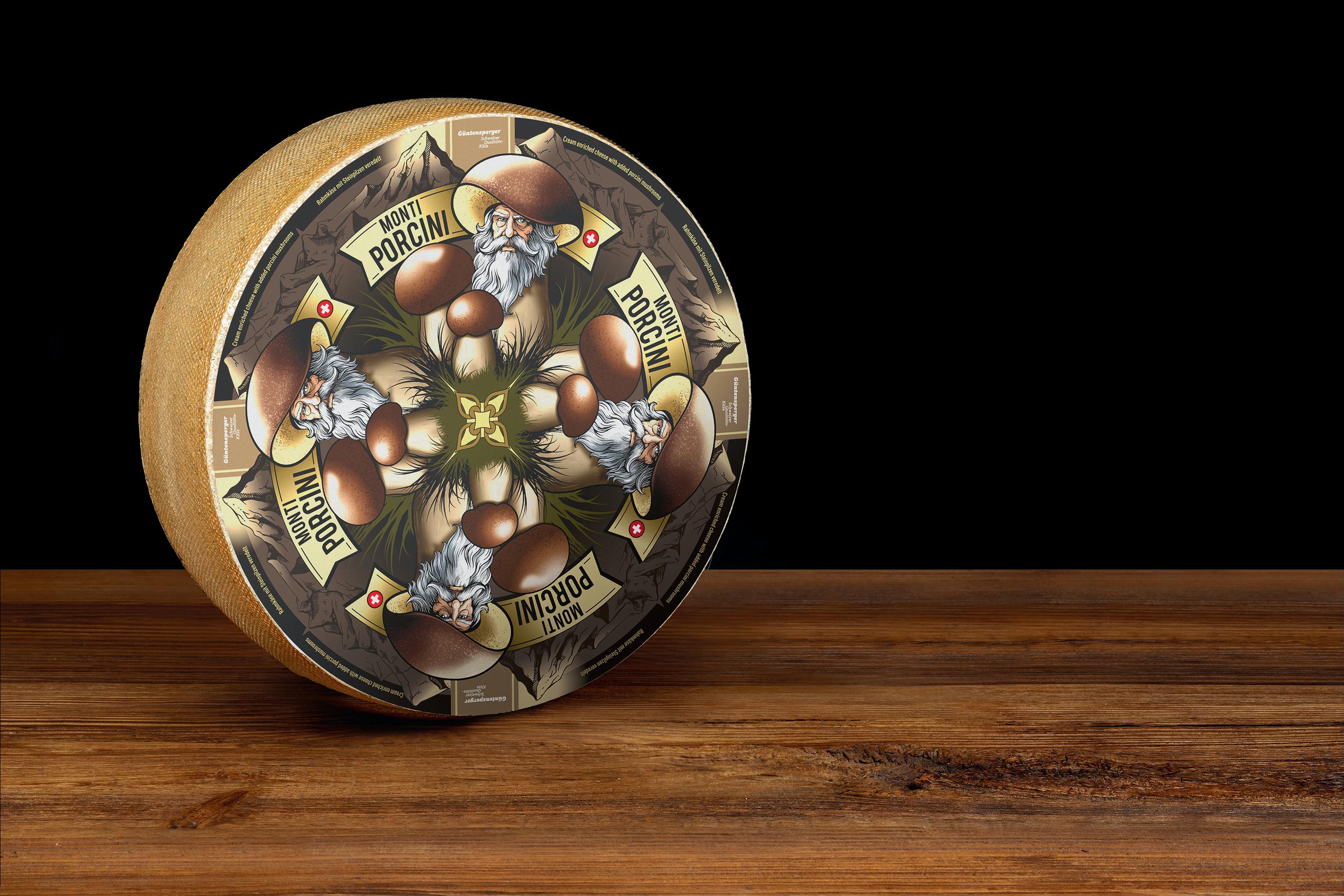
Originally from Australia with a long track record in British cheese, Spinazza joined Curd & Cure last year with a brief to grow sales beyond the South East. Part of the strategy is to offer products not found elsewhere. Hence the new Swiss cheeses, which include the semi-hard Monti Porcini, infused with porcini mushrooms, and raw milk softies Fette Berta and Galait.
The Staplehurst-based company is also stocking new British cheeses such as Cuthman, Lindley and Eggleston, plus Persian Gold, a Feta-style cheese suspended in rapeseed oil, developed by White Lake. Many of these are helping to fill the gap left by the ban on raw cow’s milk cheeses from France caused by Lumpy Skin Disease, says Spinazza. “Everybody wants something nobody else has.”
Curd & Cure was founded in 1988 and is going back to its roots with a stronger focus on cheese, explains Laura Bounds MBE, who now
leads the business as the managing director and is well known as the owner of Kent Crisps.
“We’ve gone back to the drawing board and built a new value proposition,” she says. “We want to be best in industry for unique products with a point of difference. Cheese can alienate some trade customers. It can feel intimidating, so one of the biggest things for us is to make cheese accessible, not just in service but in language, account management and presenting.”
There is “a massive gap in the market” in farm shops, she adds. “Farm shops are where all the growth has been, but you find that with farmers their passion is often meat or fresh produce, so cheese gets lost. We need to look at these untapped markets.”
To this end, Curd & Cure is building a new customer service team and is launching a new website, with a cheese library covering provenance, pairings and tasting notes, allied to 24-hour online ordering. As well as delivering direct across the home counties, it is also targeting national customers via courier, with a full range of British and European cheeses. Many are available pre-packed, thanks to its in-house cutting and packing operation. “We’ve seen massive growth in pre-pack because of the labour savings for retailers,” says Spinazza.
The company is also doing more to support customers with advice on product ranges, merchandising and how to sell. “Customers are only as good as the support they get from distributors. We’ve got to be leading with that passion and knowledge,” says Bounds.
Exclusive new cheeses are all part of the proposition, says Spinazza. “It’s about grabbing customers by the hand, pulling them over and saying look at this cheese. There’s only a few shops in the country that sell it.” curdandcure.co.uk
It’s about grabbing customers by the hand and saying, ‘look at this cheese. There’s only a few shops in the country that sell it’.
CROSS SECTION
Toggenburger Ziege
1
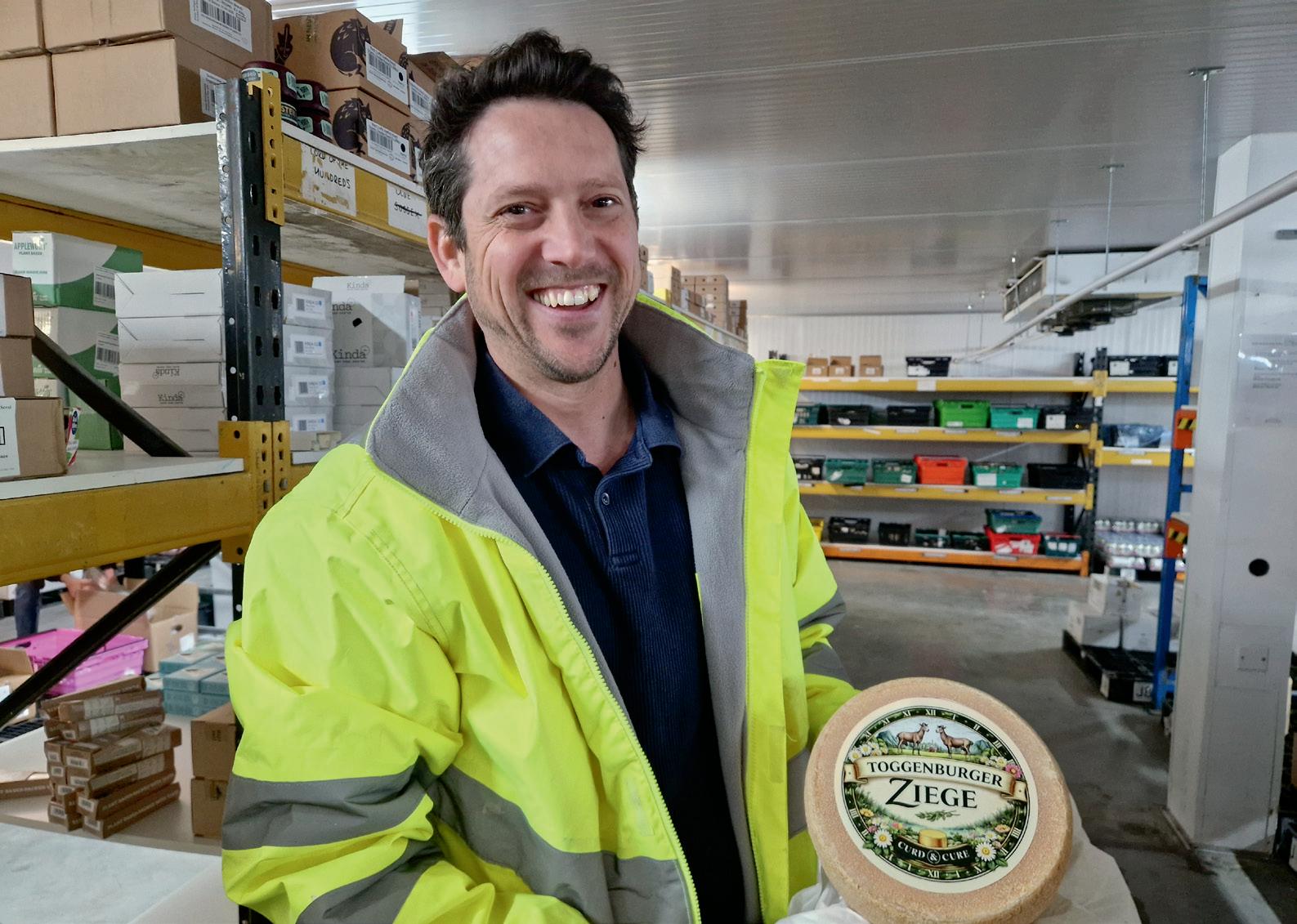
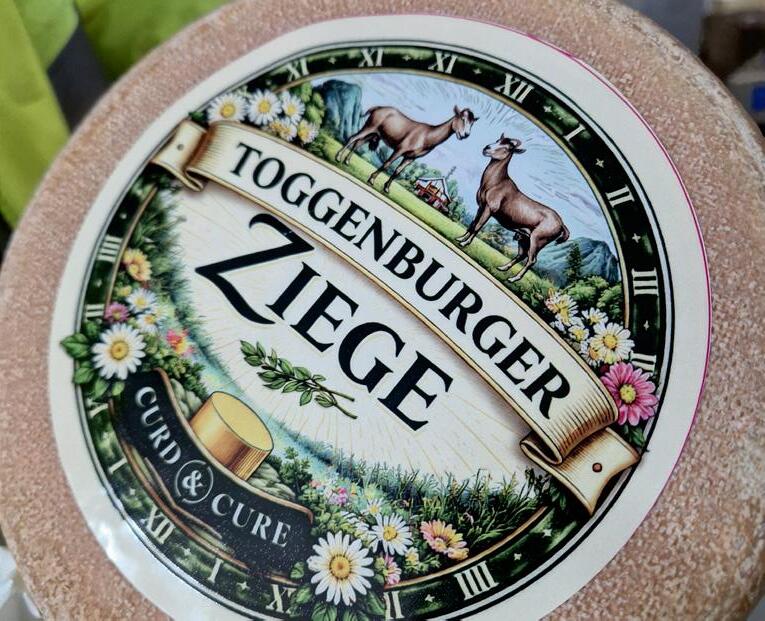
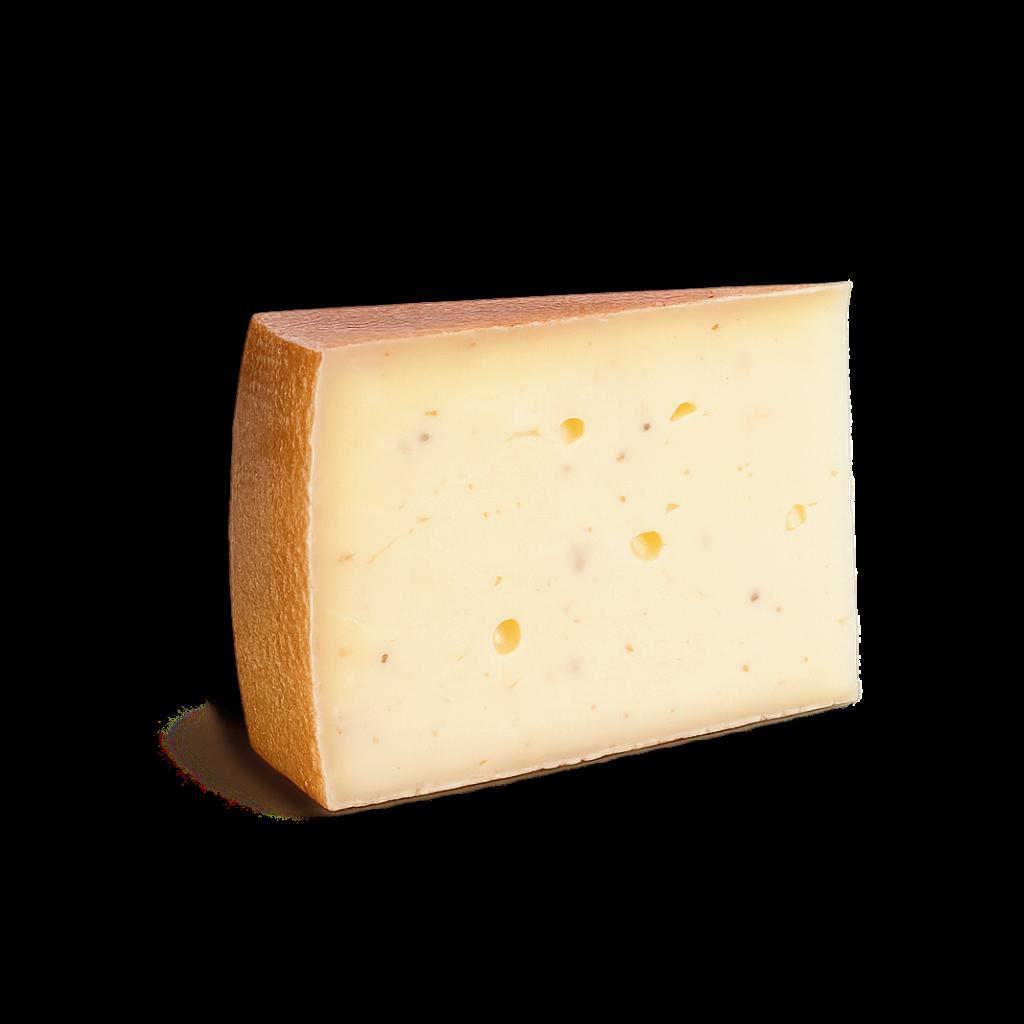
This Alpine goats’ cheese, made by Güntersperger in Switzerland, is one of several new cheeses stocked by Curd & Cure. Made with thermised milk, it comes in 2.5kg wheels and is aged for four months, during which time the rind is washed.
2
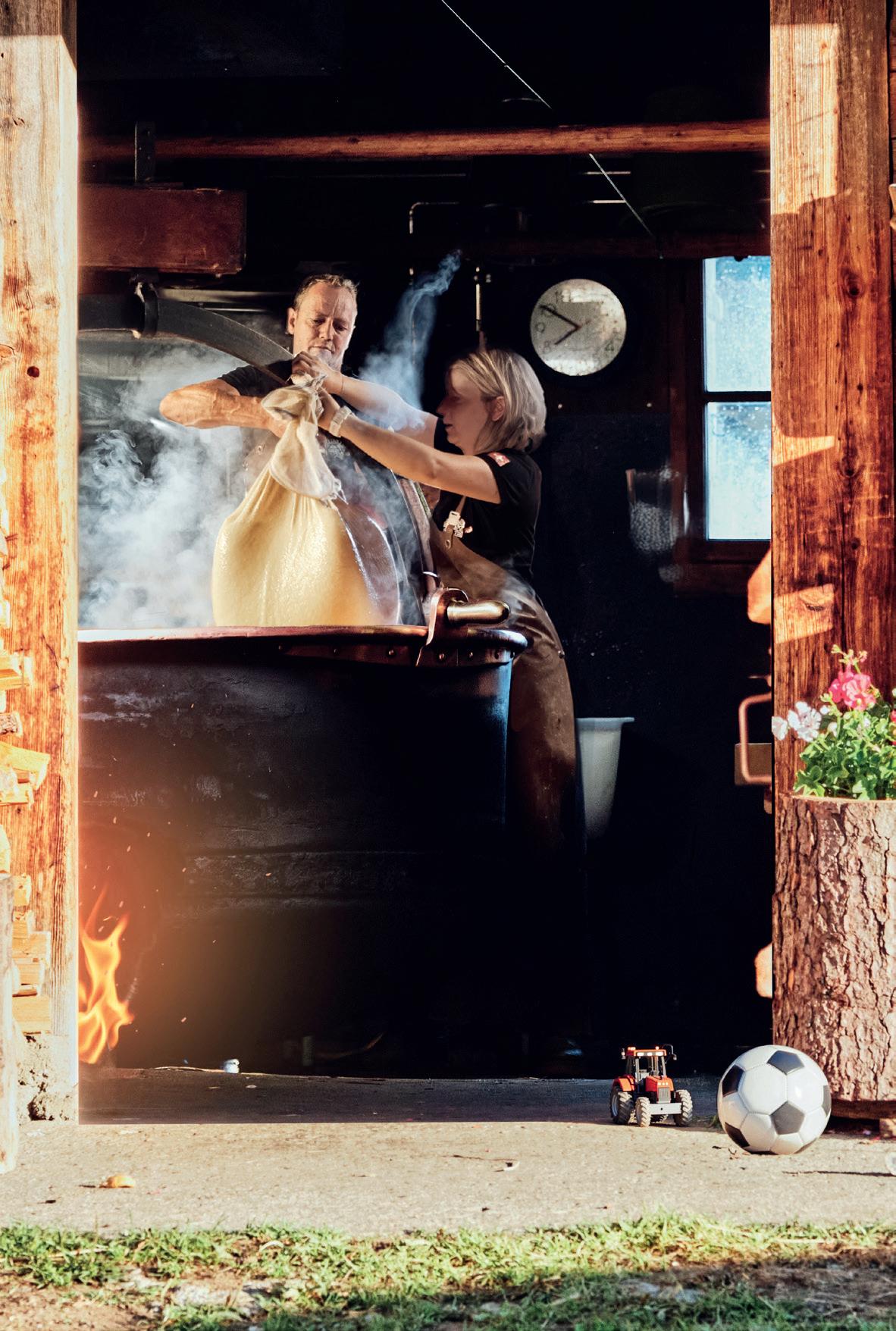
The milk from which the cheese is made comes from Toggenburg goats in the region of Toggenburg, helping to support and protect the breed for future generations. It is heated in a traditional copper vat and the curd is scooped up using a cheesecloth before it is pressed.
The texture is firm, but still a little fudgey with the ocasional protein crystal, while the flavour is sweet and floral with savoury, spicy notes from the rind. The wheels carry an eye-catching label depicting Alpine flowers, which is co-branded with Curd & Cure.
3
Green outside and in
Fine food retailers have always had a knack for finding items that are healthy, good for the planet, and meet a broad spectrum of dietary requirements. Our round-up of NPD is here to help you refresh this selection, and, for the first time, we’ve dedicated a section to B-Corp certified products (p.27) too.
Compiled by Lynda Searby
a
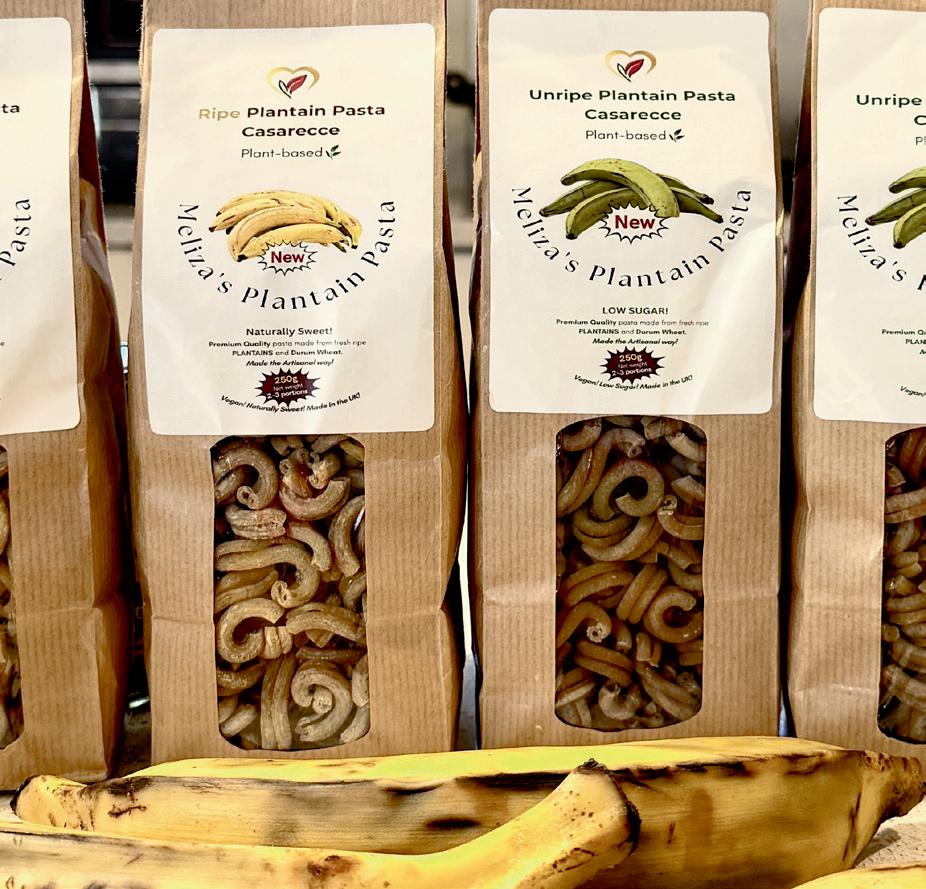
to pioneer a new pasta subcategory based on plantain – a heritage ingredient that was part of her own culinary upbringing in Lagos, Nigeria.
The founder of Meliza’s says plantain pasta has a number of advantages over regular pasta: it is nutrient-rich, easier to digest, sweeter yet lower in sugar, and cooks in 6-7 minutes.
Consumers are also connecting with the intention behind it, she said.
“People increasingly want foods that feel thoughtful, culturally rooted and created with real-life challenges in mind.”
Meliza’s Plantain Pasta comes in Ripe and Unripe variants. WSP £5.99/250g; RRP £9.99. melizas.com
Culturally-rooted plantain pasta”
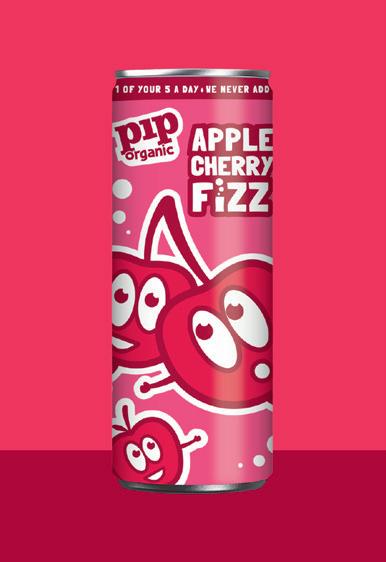
Pitched as a clean-label fizzy drink option that parents can confidently say ‘yes’ to, Pip Organic’s Apple Cherry Fizz contains no added sugar or sweeteners. The organic sparkling drink is made with just five ingredients: water, apple, cherry and grape juices, and ascorbic acid. WSP is £24.99 for 24 cans and it is soon launching in a 4-pack (RRP £5.50). piporganic.com
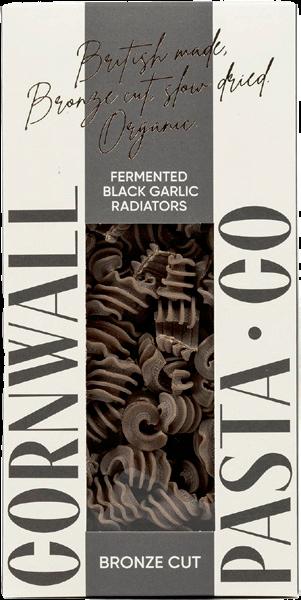
Cornwall Pasta Co’s Fermented Black Garlic Pasta has been three years in the making. Organic durum wheat is infused with fermented black garlic that has been slow-aged for 60 days to take on a mellow, sweet, balsamic-like character. With its complex, rich umami profile, this pasta needs nothing more than a drizzle of olive oil and a sprinkle of sea salt. RRP £5.50/500g. cornwallpasta.com
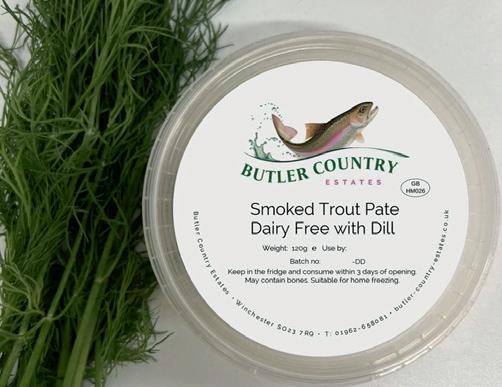
Butler Country Estates says its Dairy-Free Smoked Trout Pâté with Dill was developed in response to consumer demand for premium free-from products that do not compromise on flavour or quality. Made from smoked trout and a plant-based cream alternative, the pâté is said to offer up a delicately smoky profile balanced with fresh dill and citrus notes. WSP £4.15/120g; RRP £5.50. butler-country-estates.co.uk
Tribo Drinks is a Bristol-based, Brazilian-inspired functional drinks brand, conceived to bring a more “natural, vibrant and culturally rooted” alternative to the UK energy drinks market. At the heart of Tribo is yerba mate – a naturally caffeinated South American plant. The brand’s first flavour – Lime – will be joined by an Açaí and Guarana infused flavour this summer. WSP £1.35/330ml. tribodrinks.com
IN BRIEF
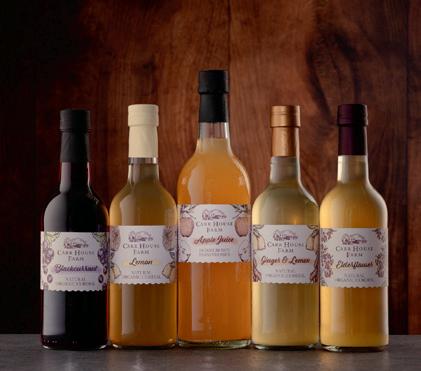
Side Oven has relaunched its organic fruit cordials in clear glass bottles with new labels, giving them a classic contemporary look. Available in Elderflower, Lemon, and Ginger with Lemon flavours, the cordials are made on Carr House Farm in East Yorkshire. WSP £3.95/50cl; RRP £6.60. sideoven.com
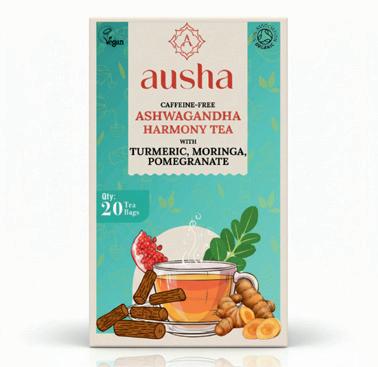
In creating Ashwagandha Harmony Tea, Ausha says its aim was to produce a herbal tea that provides multiple health benefits. The tea blends multiple ‘superfoods’, including ashwagandha, moringa leaves, turmeric and liquorice. WSP £2.45/20 bags; RRP £4.95. ausha.co.uk
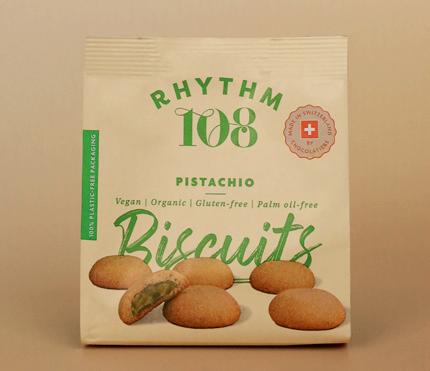
Rhythm 108 has taken inspiration from this year’s hottest food trend for its latest vegan, organic and gluten-free introduction. Pistachio Biscuits combine the Swiss bakery’s signature slow-baked buttery sablé with a creamy pistachio filling. WSP £3.35 for a bag of 12 biscuits; RRP £4.49. rhythm108.co.uk
Moyo Ogunmiloro is on
mission
We left out the gluten, dairy, refined sugar, nasty oils and artificial everything. We kept the nutrients and the flavour. Handmade from organic whole foods, our snacks prove that clean eating can be crave-worthy.
HANDMADE-ORGANIC-PLANTBASED-FREE FROM ALLERGENS & ADDITIVES YOU DON’T HAVE TO CHOOSE BETWEEN EATING CLEAN AND EATING TASTY Real ingredients. Unreal flavour
Request a wholesale sample pack email sproutingpea@gmail.com
DISCOVER THE TASTE OF ORKNEY WITH OUR HANDCRAFTED SOURDOUGH BEREMEAL CRACKERS AUTHENTIC. SUSTAINABLE. DISTINCTIVELY ORKNEY
Naturally vegan and dairy-free, our artisan crackers are made with organic flour, olive oil, and traditional Beremeal, with no artificial additives. Slow-fermented for exceptional flavour and produced in small batches with zero food waste, these award-winning crackers celebrate Orkney’s heritage while meeting demand for premium, plant-based products.
Love Eat Inc is a newly-established food business focused on building challenger grocery brands.
Designed as a portfolio platform rather than a singlebrand company, it systematically identifies categories with structural gaps and introduces clean-label, convenient and nutrient-dense products to drive value growth.
With a team of directors experienced in FMCG, finance and marketing, so far it has introduced brands in the snacks, bone broth and coffee categories, with a seasoning launch planned for autumn.
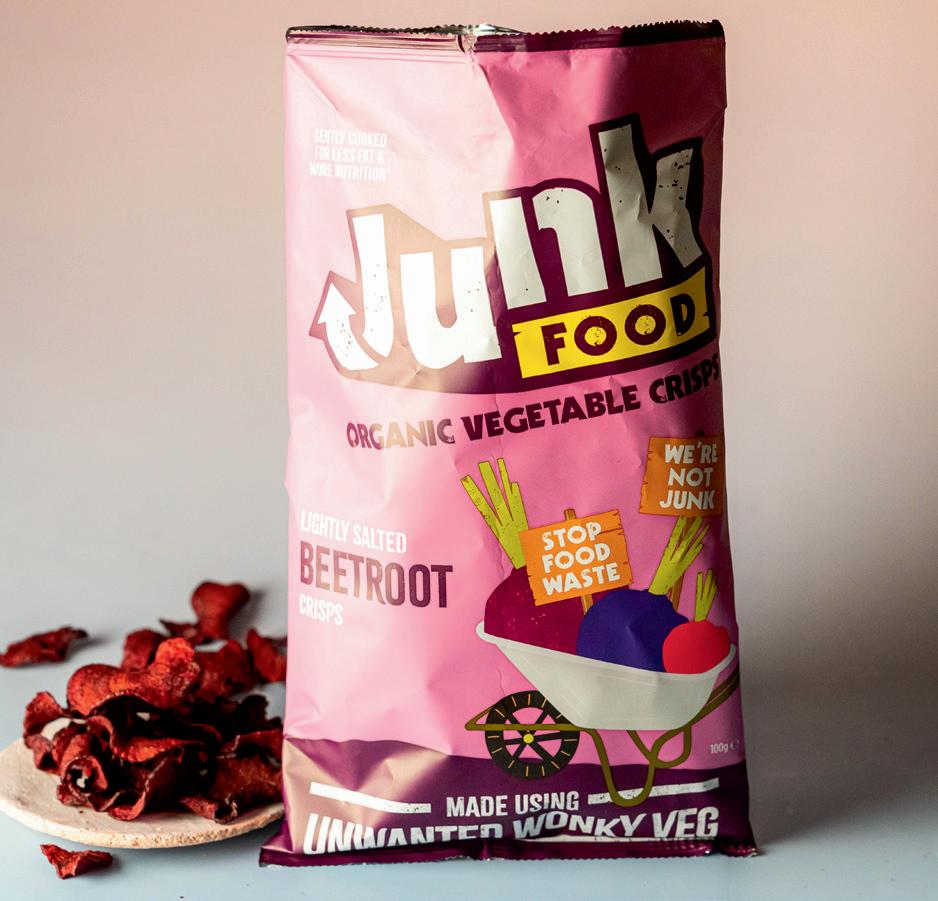
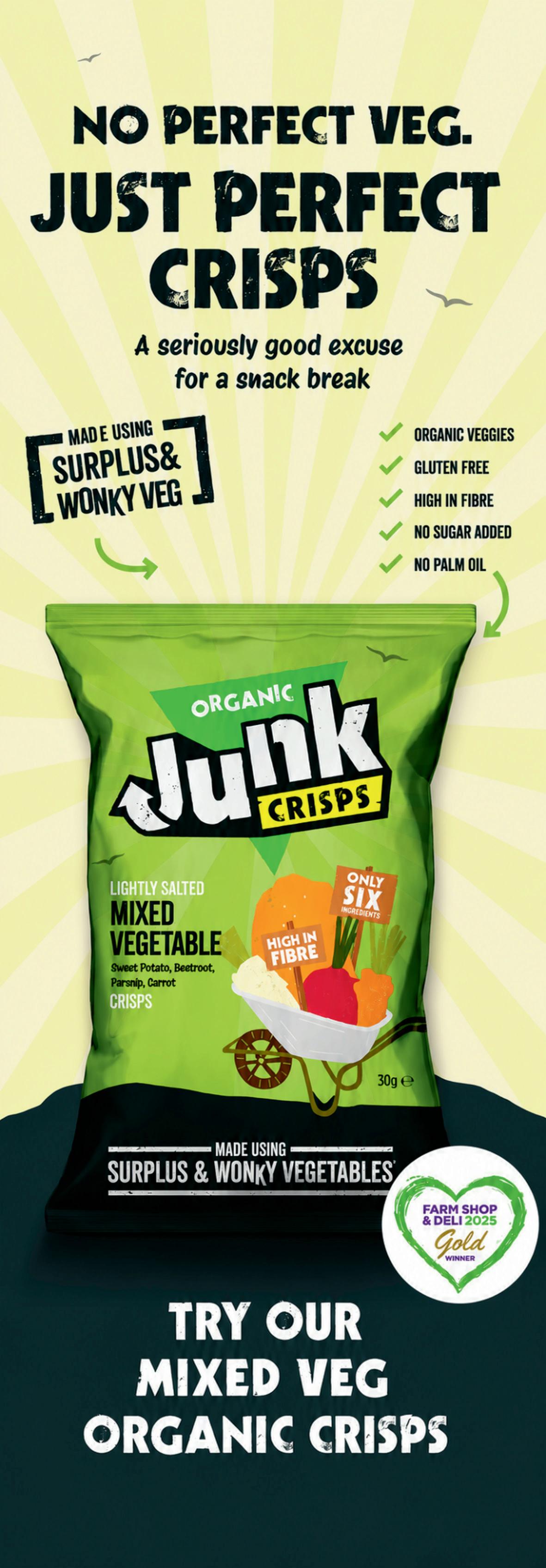
Junk and Bullshot are two of its brands. Junk Organic Crisps are made using surplus and “wonky” organic vegetables that would otherwise go to waste, and are vacuum cooked for a lower fat content, while Bullshot is a high-protein bone broth brand aimed at consumers seeking flavour-led, functional meal solutions.
Love Eat has secured listings with a number of wholesalers and retailers, including Infinity Foods Cooperative, CLF Distribution, Cress Co and Abel & Cole. loveeatinc.co.uk
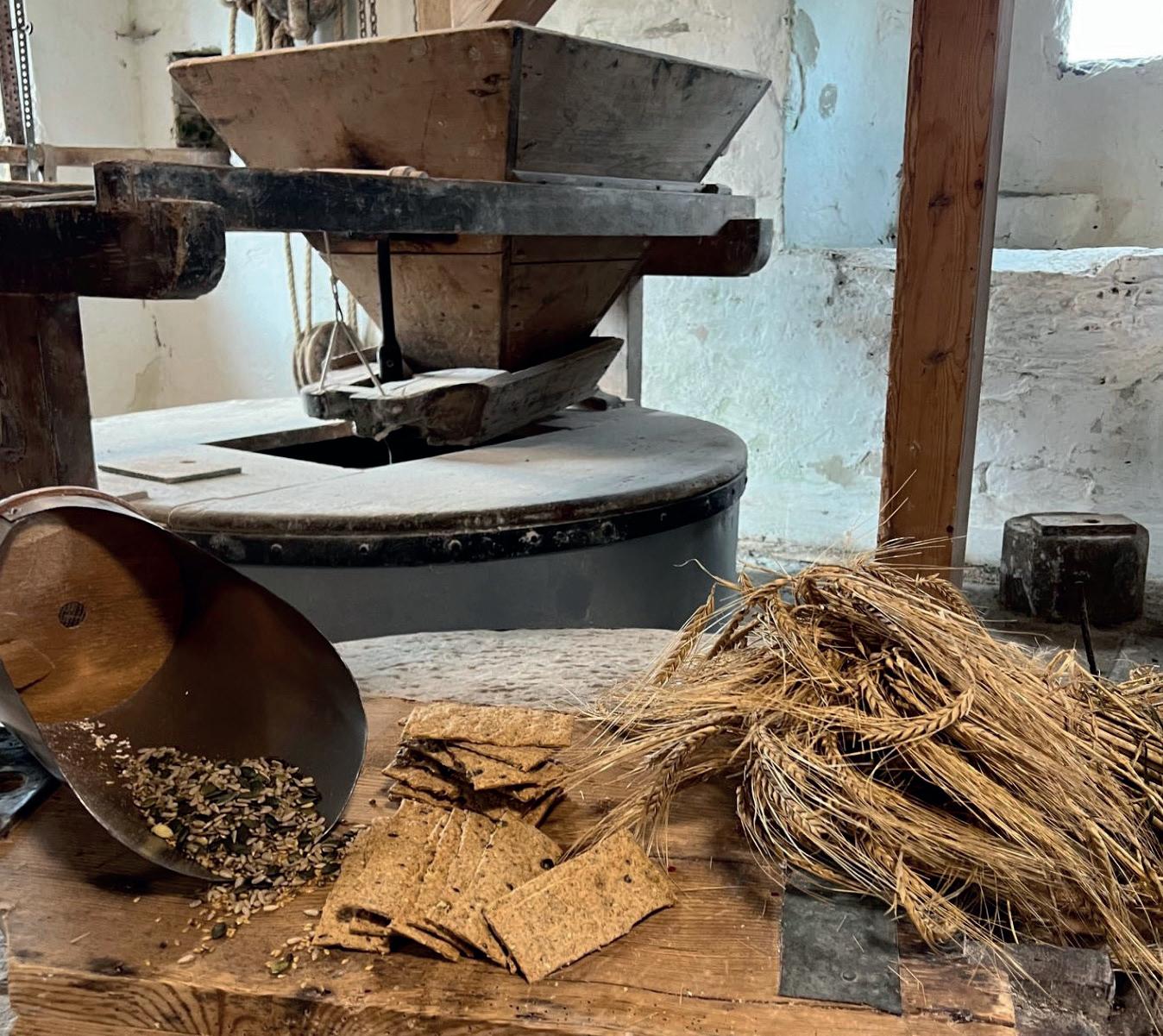
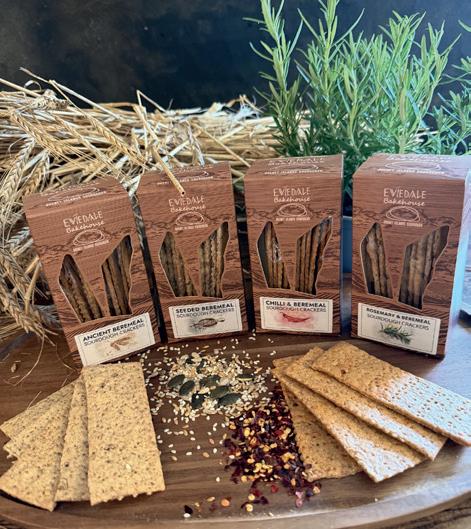
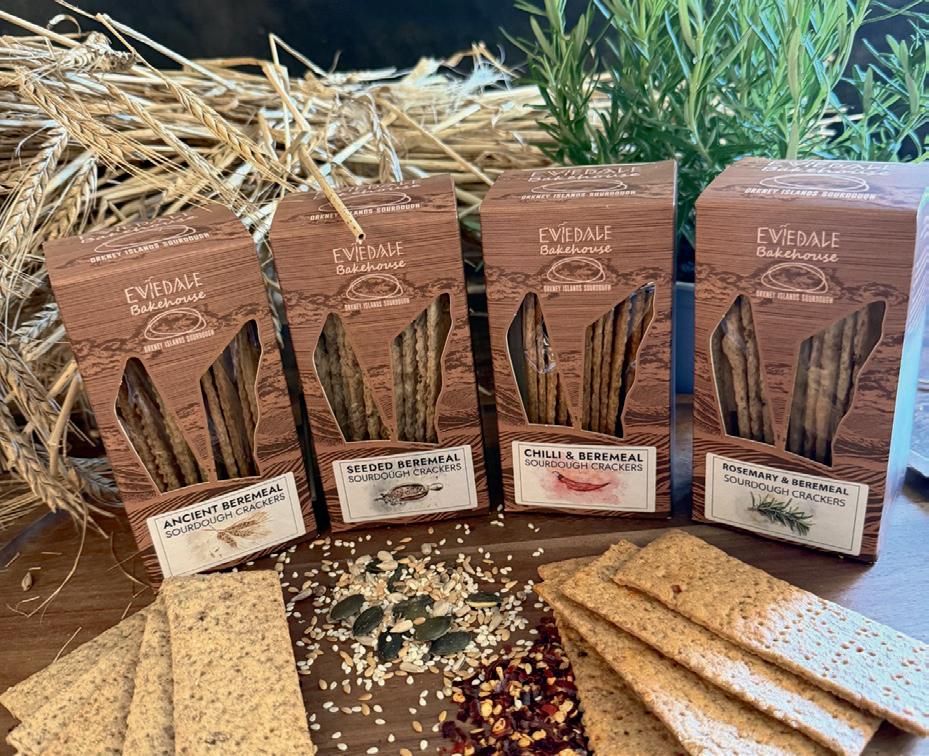
Eviedale Bakehouse’s Beremeal Sourdough Crackers are a great example of how ancient grains can add a new dimension to a product’s back story.
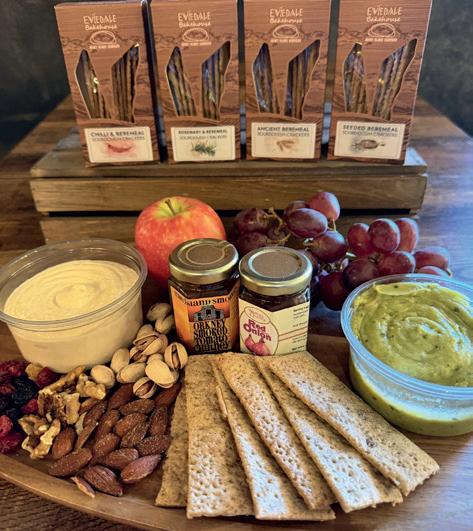
The crackers are baked with olive oil, organic flour and Bere barley – a nutty and nutritious ancient grain that is grown and milled on Orkney, where the bakehouse is based. The result is a product that is both contemporary and deeply connected to the island’s culinary heritage. The bakery’s signature sourdough ferment is said to enhance flavour, improve digestibility and promote a light, crisp texture that complements hummus, soups and other vegan accompaniments.
Available in four flavours – Original; Chilli; Seeded and Rosemary – the crackers have a WSP of £2.50+ for a 90g box; RRP £3.50-£4.
eviedale-cottages.co.uk/bakehouse
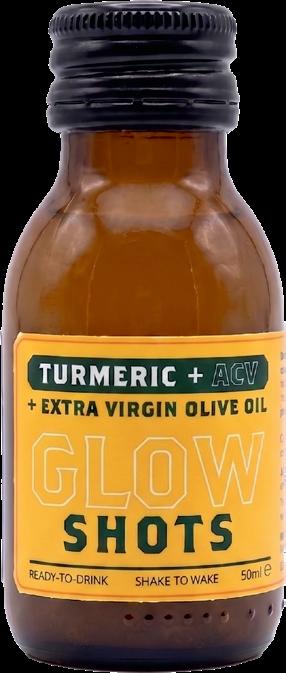
Willy’s has blended its signature Eureka Tumeric Apple Cider Vinegar with olive oil to create a new health tonic. Eureka Glow Shots are billed as the ultimate daily ritual for those seeking to glow from within. They are currently priced at £45 for 15x60ml shots on Willy’s webshop. willysacv.com
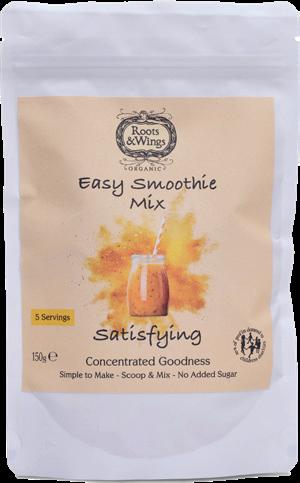
Organic food label Roots & Wings has made its first foray into smoothie mixes. Each of the three SKUs in the Easy Smoothie Mix range has a clear ‘purpose’ – Energy, Vitality or Satisfying – and is made from fruit and vegetables that support this positioning. The organic powders are designed to be blended with a milk or mylk for an instant fix. RRP from £6 for 5 portions. rootsandwingsorganic.com
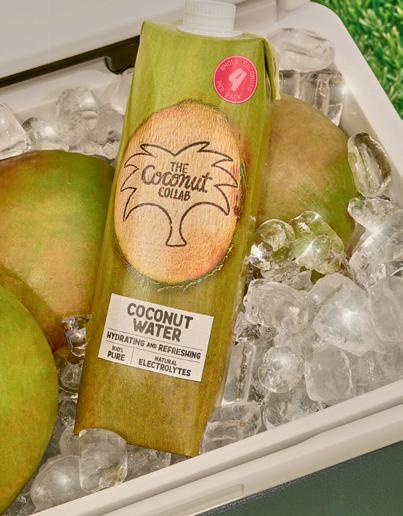
The Coconut Collab has branched out beyond its core yoghurt and dessert pot offering with the launch of a coconut water. A singleingredient product, it contains no added fructose or sugar – just water from young green Xiem coconuts grown along the banks of Vietnam’s Mekong Delta. Packed with natural electrolytes, the product is said to be perfect for post-exercise hydration. RRP £4.30/330ml. coconutco.co.uk
IN BRIEF
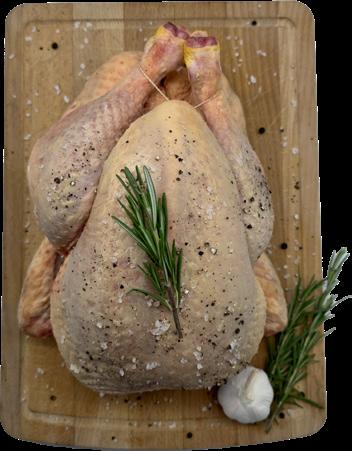
Castors has pledged to raise the standard of chicken by prioritising high welfare, natural diets and slower-growing breeds on its newly established Cambridgeshire farm. The producer says the outcome is a deeply flavoured, nutrient-dense bird with a firm texture and rich, traditional taste. It is currently selling direct to the consumer, with prices starting from £12.22 per kg. castorspastures.co.uk
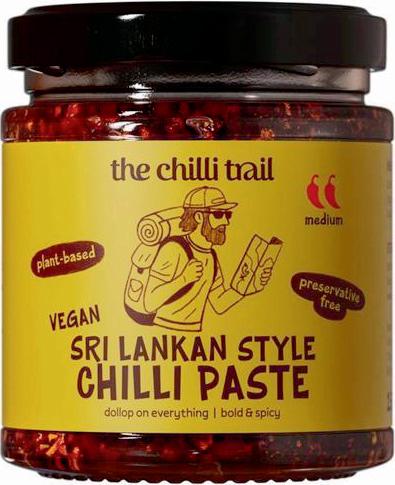
The Chilli Trail launched onto the Brighton scene at the end of last year, with the aim of bringing lesser-known food cultures to UK kitchens through a range of handcrafted chilli pastes. Its debut product is Sri Lankan Style Chilli Paste, available in both fish-based and vegan versions. WSP £4/150g jar. RRP £6.50. thechillitrail.com
bakery Generous says it developed these organic waffles to bring an indulgent, artisanal option to the premium free-from category. Gluten-free, lactose-free and organic, while maintaining the taste of traditional Belgian waffles, they come in Plain, Speculoos, Chocolate Chip and Chocolate variants in 250g sharing packs (8 waffles) and 60g single-serve flowpacks (2 waffles). generous.eu
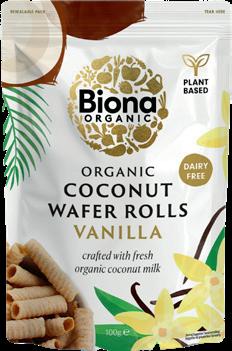
Biona is tapping into demand for ‘permissible treats’ with the launch of Organic Coconut Wafer Rolls. Available in Vanilla and Chocolate flavours, these dairy- and gluten-free wafer snacks are made with fresh coconut milk, coconut sugar and natural flavourings. RRP £3.69/100g. biona.co.uk
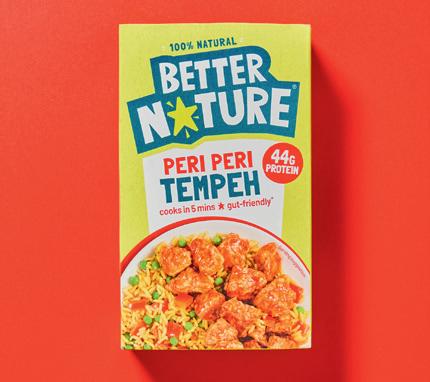
As Nando’s fuels the UK’s appetite for Peri Peri, Better Nature has added Peri Peri Tempeh to its range. The brand is encouraging meat-eaters to ‘give chicken the night off’ and use its plant-based protein source to liven up rice, wraps and stir-fries. RRP £3/220g. betternaturetempeh.co
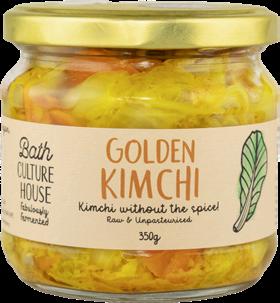
Delicate and aromatic rather than fiercely spicy, Bath Culture House’s new Golden Kimchi is made with cumin, curry leaves and turmeric. It also boasts an allergen-free ingredients list that includes Chinese leaf cabbage, carrots, seaweed and apple. RRP £6.49/350g. bathculturehouse.co.uk
Free-from, plantbased and health foods: plough your own furrow
For The Pickled Fig in Hessle, Yorkshire, avoiding going headto-head with the supermarkets has been a wise move, says coowner Robert Harrison
Everybody says how important free-from, vegan and health foods are becoming, but for an independent retailer it is not as simple as following the trends. In our experience, a more selective strategy is needed.
Don’t try and compete with the multiples
A few years ago we had a surge in people asking for free-from and vegan foods and so we started stocking gluten-free pasta. But it just sat on the shelves and in the end the only way we could shift it was by eating it. The problem was the price – we couldn’t compete with the supermarkets. People could buy gluten-free pasta from the supermarket for a quarter of the price that we could buy it for. Now, we only stock vegan and free-from products that we know we can use in our kitchen, so there is no waste.
Sandwiches and soups: a winning strategy
Where free-from does work for us is in sandwiches. Supermarkets don’t make fresh sandwiches, so we are not competing on price. We use glutenfree ciabattas from Schär and our own bread for vegan sandwiches – most loaves use plant-based fats and oils. For the fillings, we might make a small batch of coleslaw with vegan mayo. We make our soups with gluten-free customers in mind too. We also have bake-off options like falafels and gluten-free sausage rolls that we keep in the freezer and bake on demand.
Free-from treats sell well
We have a small selection of glutenfree and vegan sweet treats and traybakes – usually about five or six at any one time. We prioritise buying products that cover both requirements. Those go well, as people often buy a sandwich or coffee and have a cake with it. We have also noticed that some older customers find our ordinary bakes too big, so they go for the smaller free-from option.
Keep it natural and honest
We don’t really believe in health foods. A lot of products are publicised as ‘healthy’ but aren’t. Our policy is more about keeping it natural and using honest ingredients. A lot of what we sell we make ourselves, so we know exactly what has gone into our products. Our Scotch eggs, for example, are coated with a sourdough crumb and are baked rather than fried; a lot of our fresh produce is organic and local, and our meat is sourced from a local butcher.
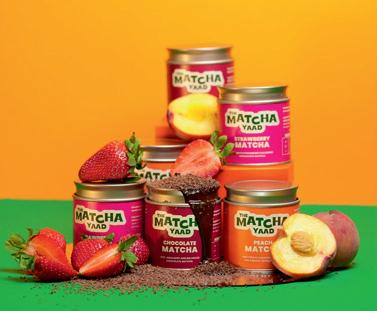
The Matcha Yaad launched a flavoured matcha range in May, offering an accessible entry point into ceremonial-grade matcha without compromise. The Chocolate, Peach and Strawberry varieties are flavourinfused – a process said to preserve the characteristic green colour and velvety mouthfeel of the matcha base. WSP £15.60/25g; RRP £25. thematchayaad.com
Black cumin has been used for years as a protective supplement, and now Living Foods has brought this ancient wellness tradition to the modern-day pantry in the form of Organic Sprouted & Cold-Pressed Black Cumin Oil. A germination process activates the seeds, and mechanical extraction yields a culinary oil with a bold, peppery aroma and complex spice notes. WSP £10.45/100ml; RRP £15.99. livingfoods.uk
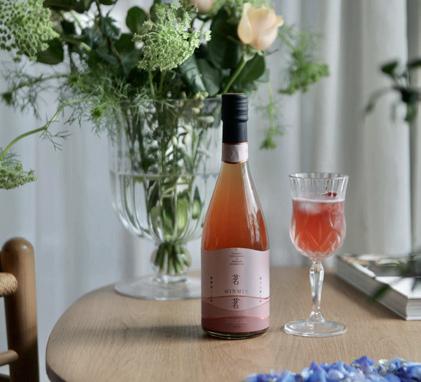
Crafted from organic Taiwanese black tea, goji berries, rose petals, smoked longan and hibiscus flowers, Min Min Kombucha’s Rose Longan Kombucha presents a floral, gently smoky drink inspired by Eastern botanical traditions. RRP £28 per 520ml bottle. minminkombucha@gmail. com
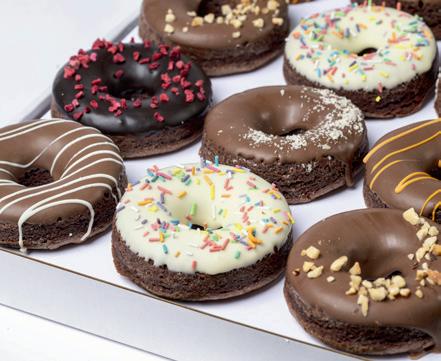
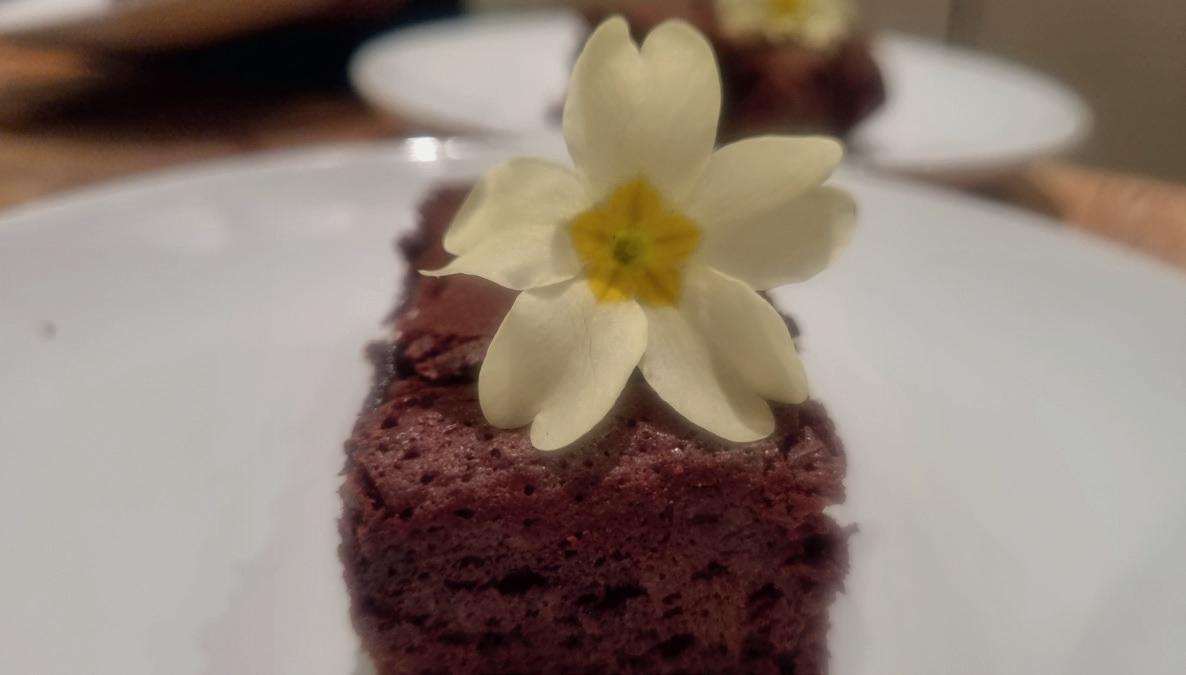
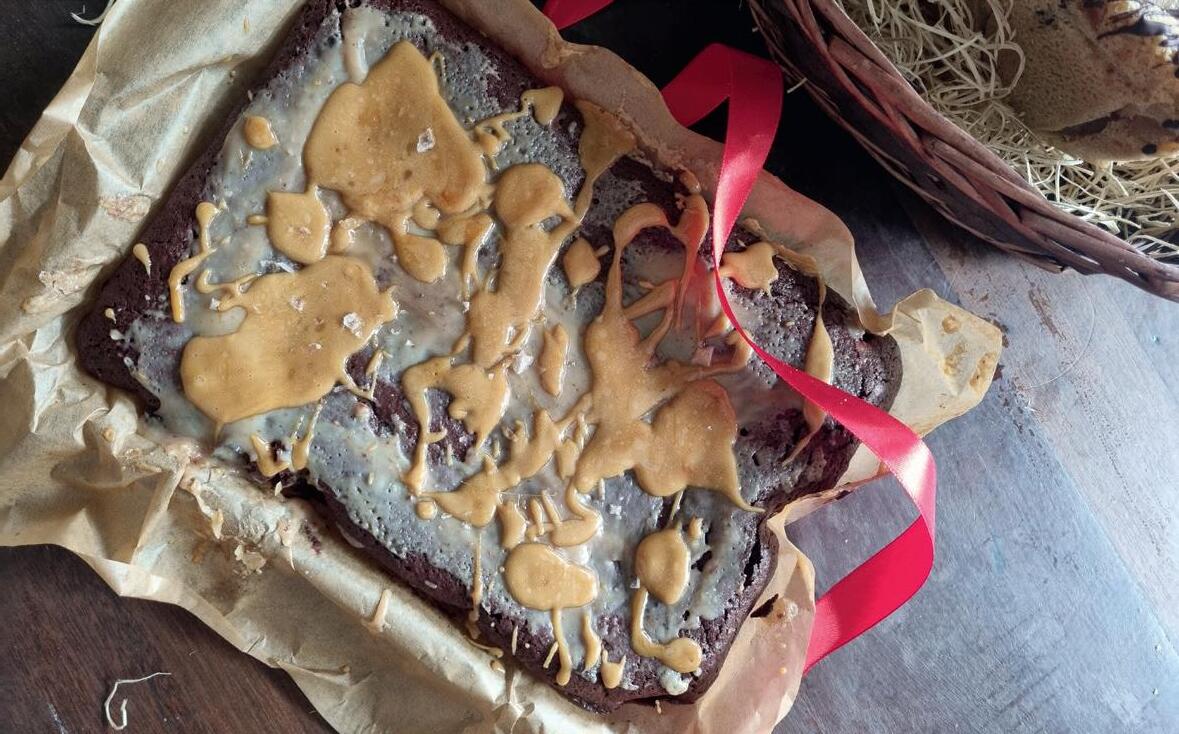
Making sure those with a gluten intolerance don’t miss out on doughnuts, The Homemade Brownie Company has created Brohhnuts. These glutenfree treats combine the ring doughnut format with the fudgy texture of a brownie. They are available in Classic Chocolate, White Chocolate Sprinkle and Chocolate Orange flavours, with more to come. WSP £15 per box of 12; RRP £2.50-£3.50. homemadebrownie. co.uk
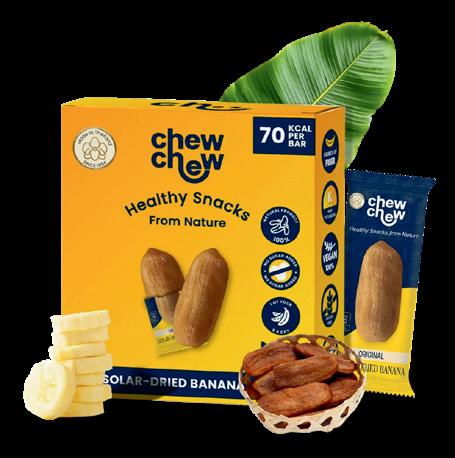
Next month [July] will see a new science-led snack brand debuting its first product: an organic solar-dried banana bar. By combining organic sourcing with proprietary solar-dome drying technology, Manchesterbased startup ChewChew says it has devised a sustainable strategy for producing a naturally sweet snack from bananas without adding sugar, preservatives or artificial ingredients. WSP is £0.99 for a 25g bar; RRP £1.39. chewchew.co
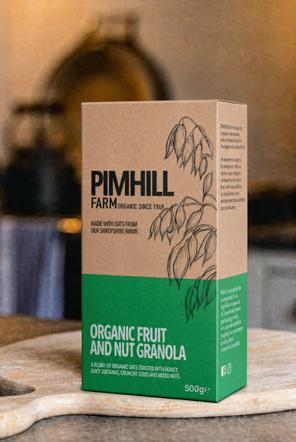
Pimhill Farm has extended its organic oat cereal range to include its first granola. Single-origin organic oats grown in the parish of Pimhill, Shropshire, are baked into crisp, golden clusters with organic nuts, fruits and seeds. Packaged in a home-compostable inner bag and recyclable outer box, Organic Fruit and Nut Granola has a WSP of £4.50/500g; RRP £7.50. pimhill.com
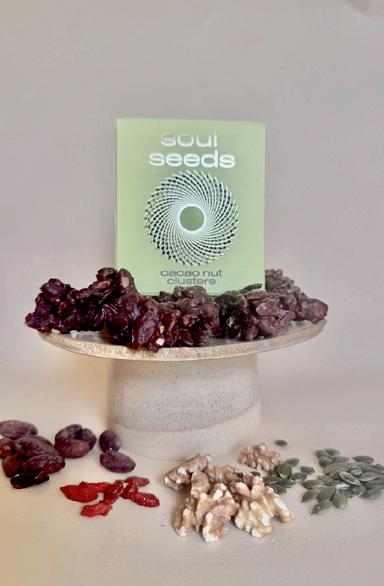
Soul Seeds has unveiled a range of nut snacks designed to feel indulgent despite wholefood ingredients and minimal processing. Cacao Nut Clusters are bite-sized clusters of roasted Portuguese almonds and walnuts, pumpkin seeds and goji berries, coated in a 72% date-sweetened dark cacao blend, to deliver “a genuinely nourishing alternative to conventional chocolate snacks”. RRP €6.80/70g. soulseeds.earth
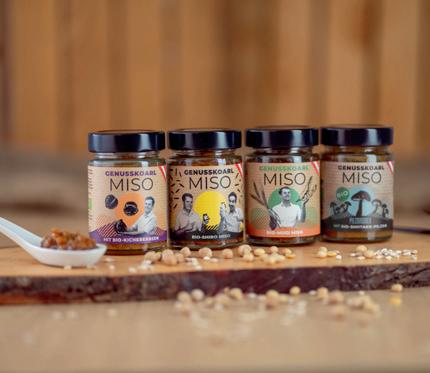
Austrian producer Genusskoarl used Biofach 2026 as the launchpad for Bio-Shiitake Miso – a fermented paste made with organic shiitake mushrooms and pearl barley, for an intense, longlasting umami and mushroom flavour. Certified BIO AUSTRIA and EU Organic, the miso has a WSP of €5.08/190g. RRP €7.99. genusskoarl.at
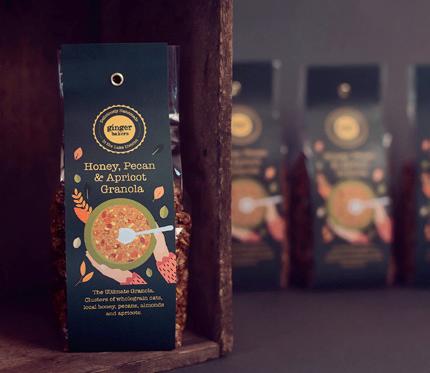
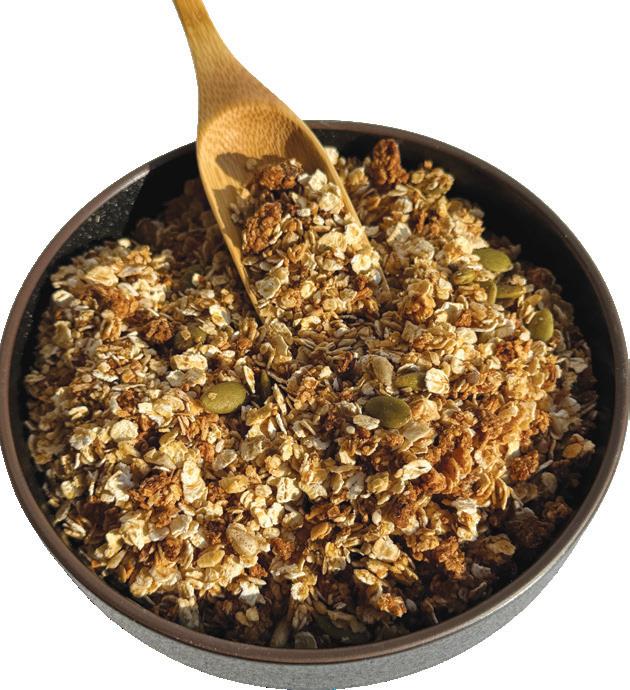
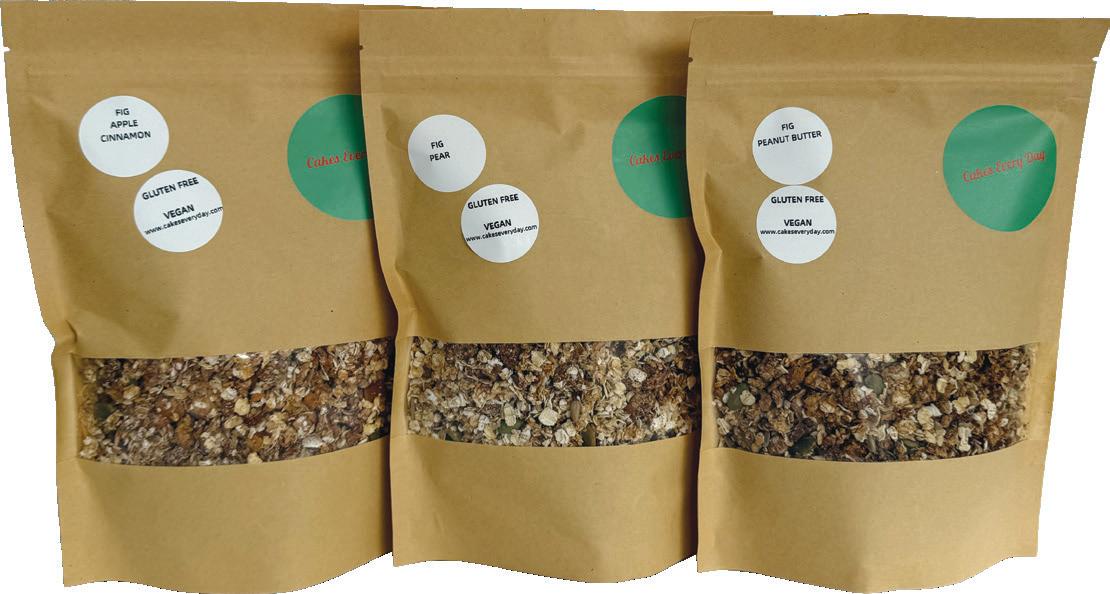
Ginger Bakers has released its first granola – a gluten-free recipe made with wholegrain oats, butter, honey, pecans, almonds and naturally dried apricots. The ingredients are baked into crunchy clusters with background notes of orange and spices. WSP £57.50 for a case of 10 x 450g boxes; RRP £7. gingerbakers.co.uk
Decadent Dark Chocolate Brownie
Gluten Free Brownie
Fudgy Brownies
Seren’s
Amarena Cherries & Cream
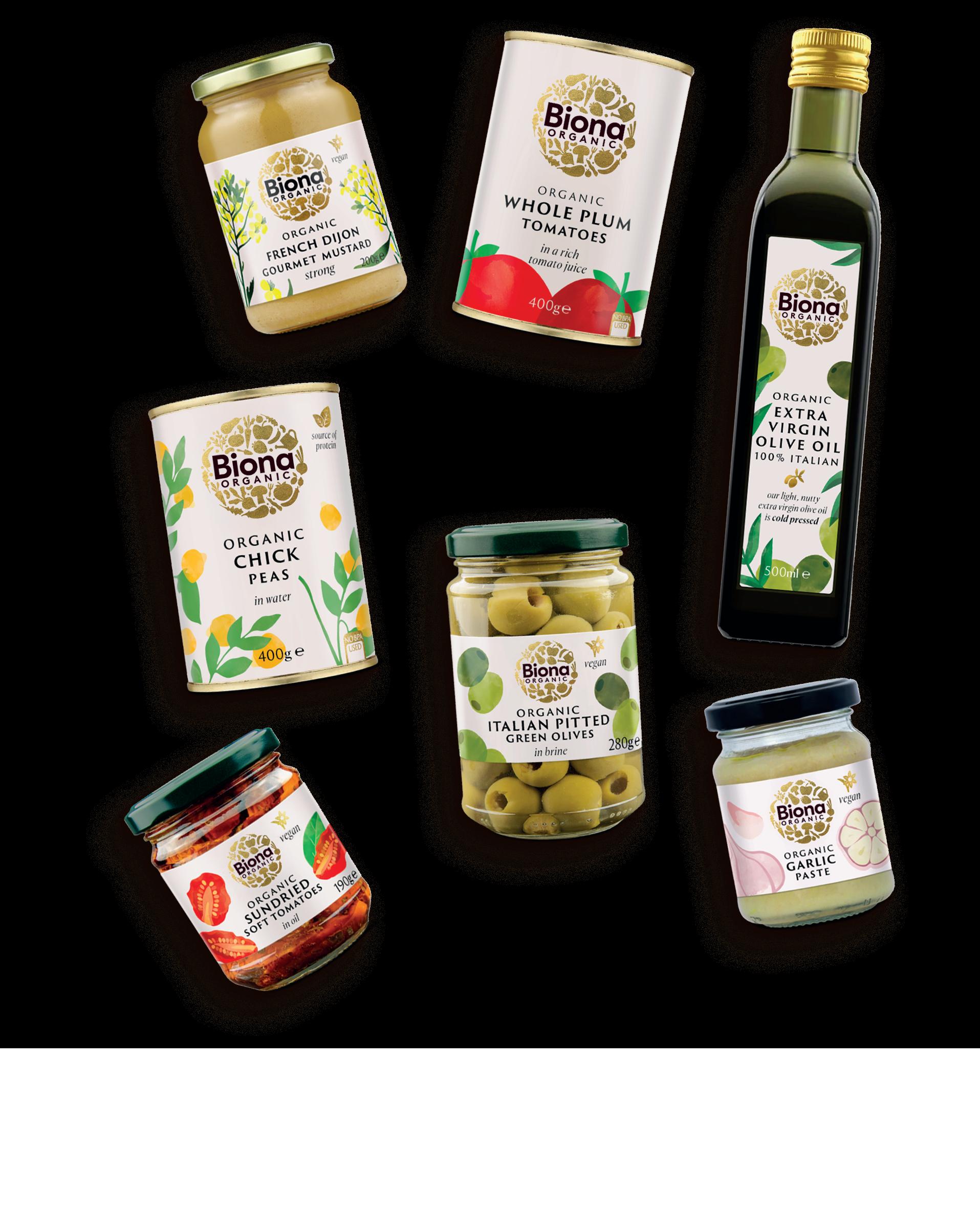
ORGANIC PANTRY STAPLES THAT CUSTOMERS COME BACK FOR
From quality canned heroes to convenient cooking pastes, Biona delivers a complete range of pantry essentials that meet the growing demand for clean-label, planet-friendly food.
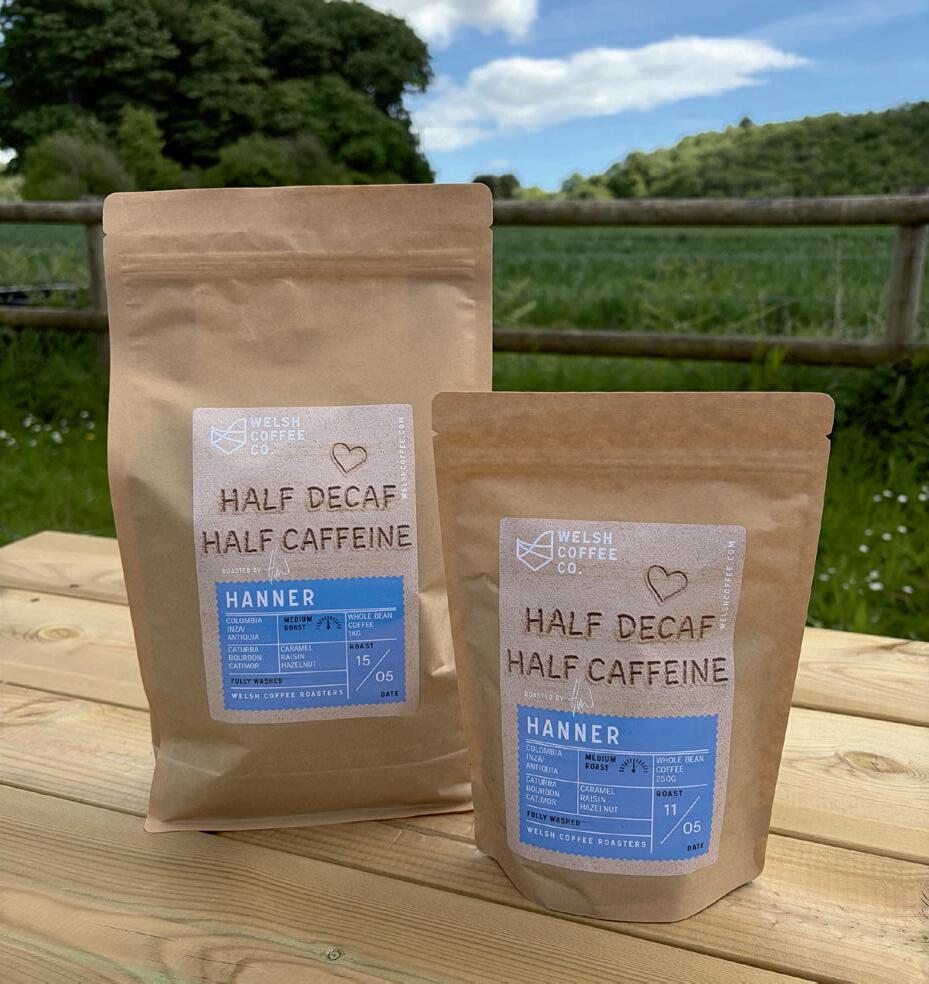
Welsh Coffee Co achieved B Corp certification at the end of last year, becoming one of only 13 Welsh food producers to gain this status. Then in March of this year, the roastery added a new SKU that taps into the half-caf trend. Taking its name from the Welsh word for ‘half’, Hanner is a “half ’n’ half” blend of decaffeinated and caffeinated coffee with notes of caramel, hazelnut and raisin, aimed at anyone looking to reduce their caffeine intake without cutting it out completely. This coffee uses 50% Colombia Caicedo Antioquia caffeinated coffee and 50% decaffeinated hanseatic specialty sugarcane processed Colombia Inza coffee, blended and roasted at Welsh Coffee Co’s micro-roastery at Ewenny, in the Vale of Glamorgan. RRP £9.75/250g. welshcoffee.com
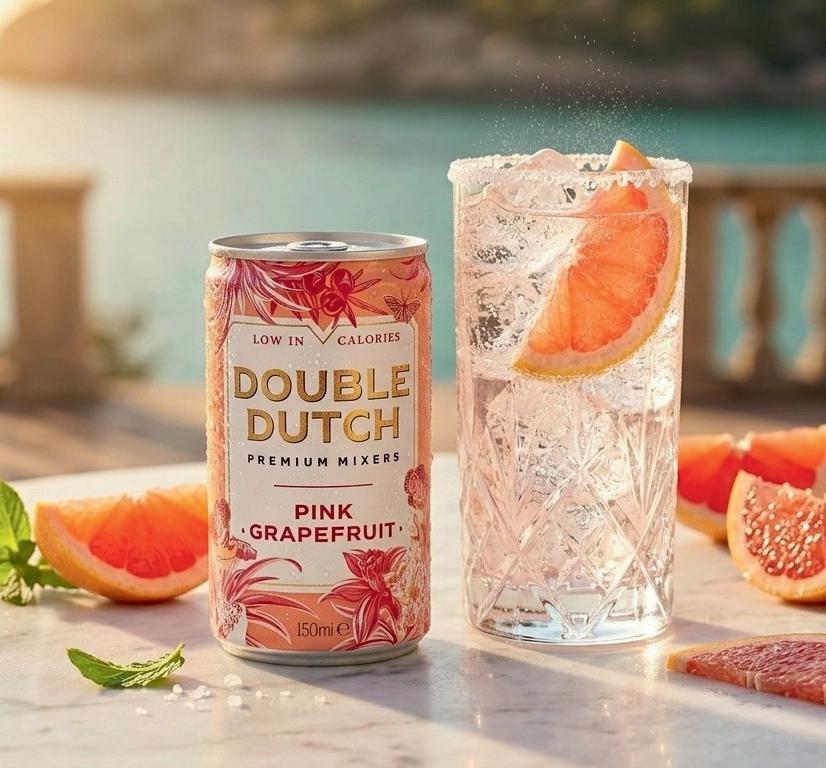
Double Dutch is capitalising on the growing popularity of tequila-based cocktails with the launch of Pink Grapefruit Soda – billed as “the ultimate Paloma partner”.
The soda combines grapefruit with piquant Persian lime to deliver a “crisp, zesty and perfectly bittersweet” profile that can either stand alone or bring fresh energy to tequila serves.
According to Raissa Haas, co-founder of Double Dutch, tequila has evolved from being associated with shots and nightlife into a premium cocktail staple, and is now one of the fastest-growing spirit categories in the UK.
“Consumers are increasingly moving away from highvolume, low-quality options and choosing spirits with authenticity, craftsmanship and a story behind them,” says de Haas. “Tequila speaks directly to that shift.” Pink Grapefruit Soda is listed with Ocado and Amazon, where it retails at £3.90 for 6 x 150ml cans. doubledutchdrinks.com
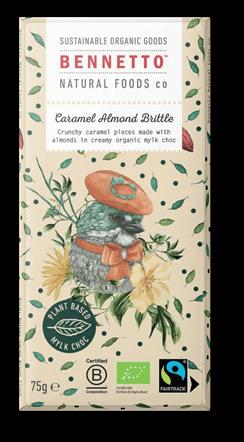
August marks the arrival of Bennetto’s new vegan Mylk chocolate range – developed to showcase the flavour of the cocoa rather than to imitate the taste of milk. The range comprises three 75g bars (RRP £4.49): Almond Caramel, Strawberry and Classic for plain chocolate lovers. As well as being B Corp-certified, the chocolate is net climate-positive, organic and fairtrade. bennetto.co.uk
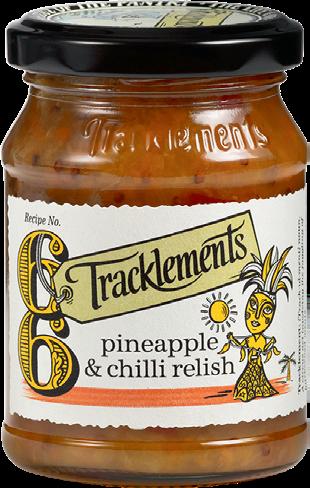
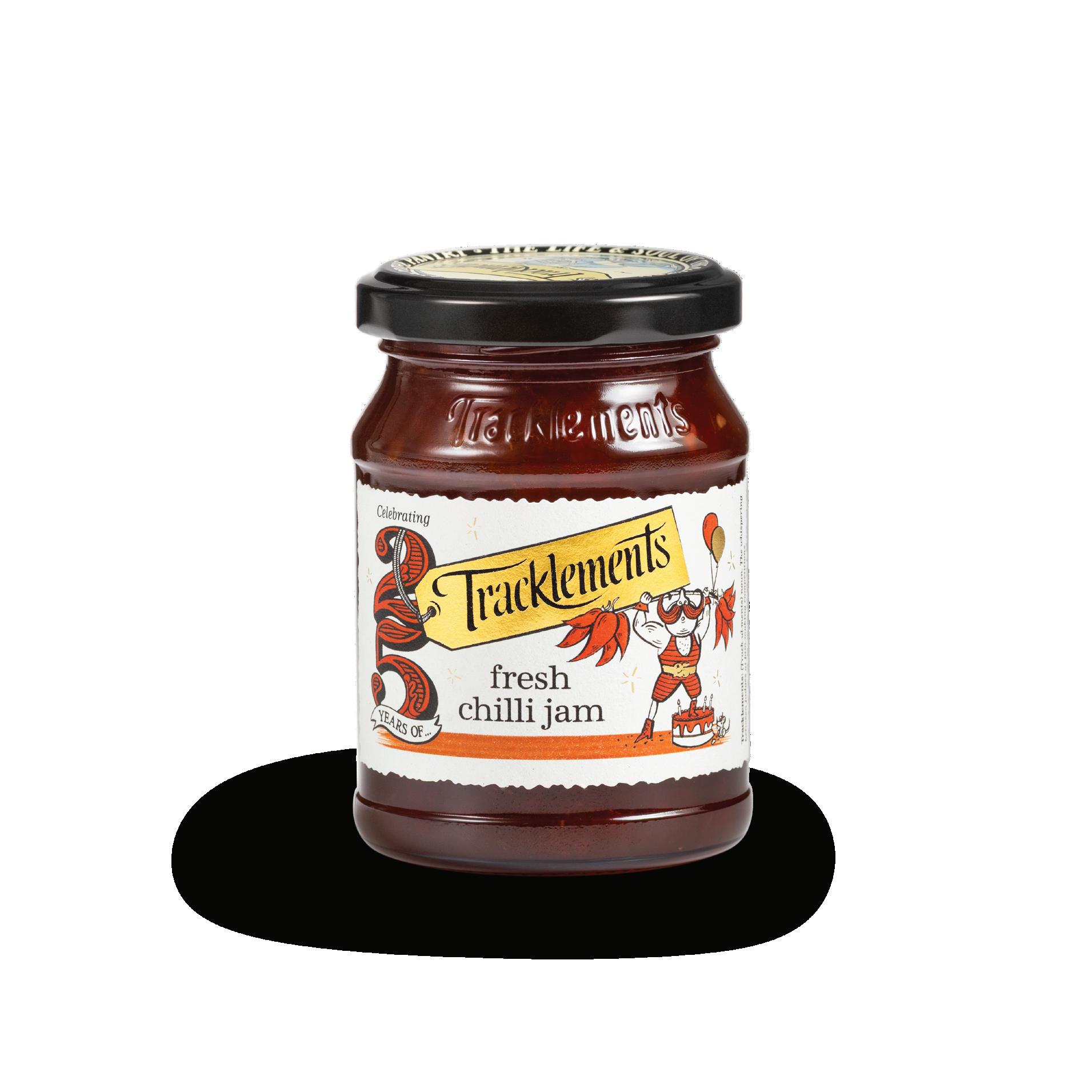
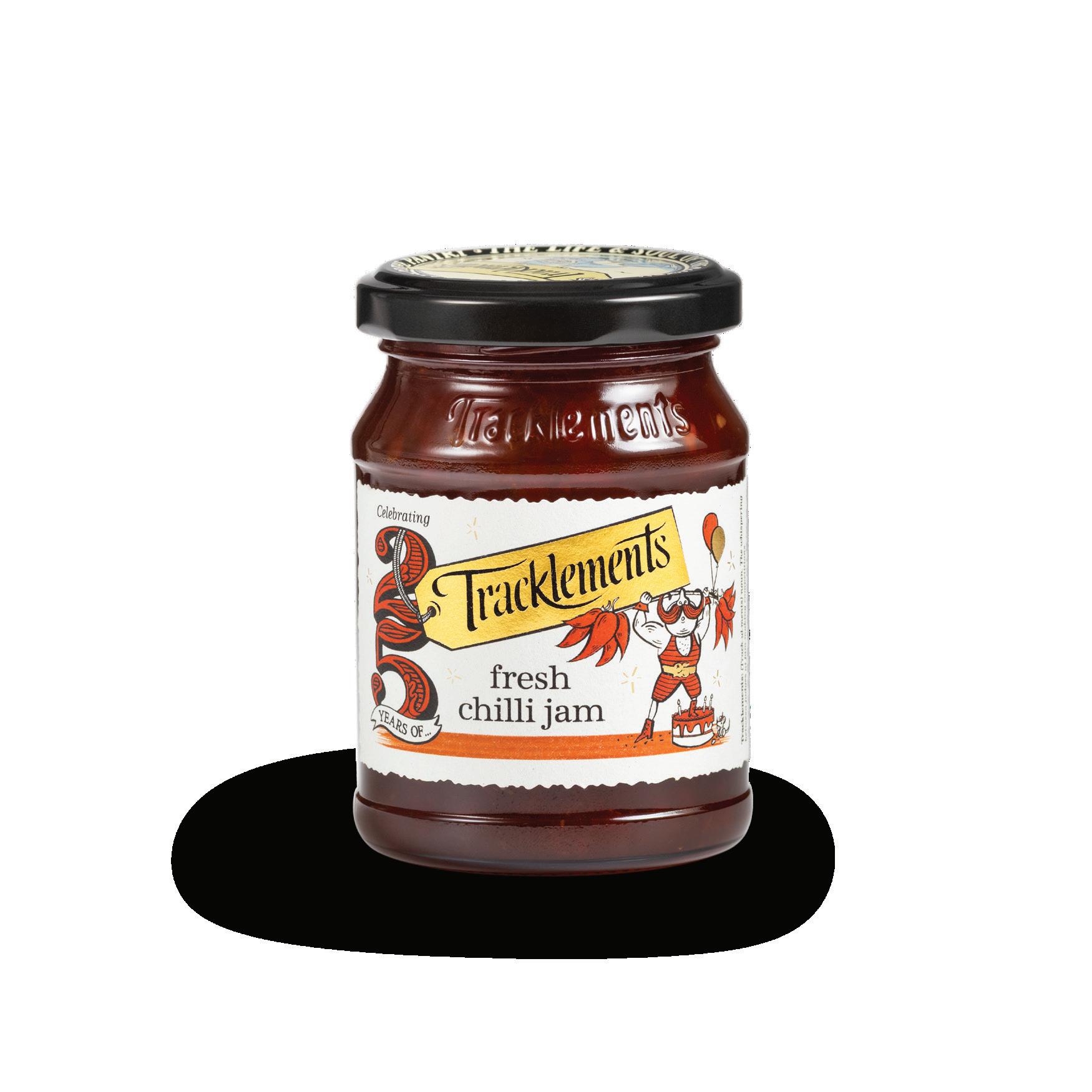
Pineapple & Chilli Relish has become Tracklements’ top-selling special edition of the last ten years, prompting the producer to add the condiment to its core range. Like a mango chutney but with more sweetness and spice, the relish can be paired with grilled pork, chicken, fish or goats’ cheese, or used as a fruity marinade, thanks to pineapple’s natural meat-tenderising properties. RRP £4.20/190g. tracklements.co.uk
Summer 2026 sees Belvoir Farm launch a functional drinks brand, Happi –clean-label canned drinks built around digestion and hydration. The first two SKUs are Ginger, Lemon & Turmeric, which are high in fibre and contain live cultures, and Blueberry & Lemon, which delivers electrolytes from Himalayan pink salt, magnesium, calcium and vitamin C. belvoirfarm.co.uk
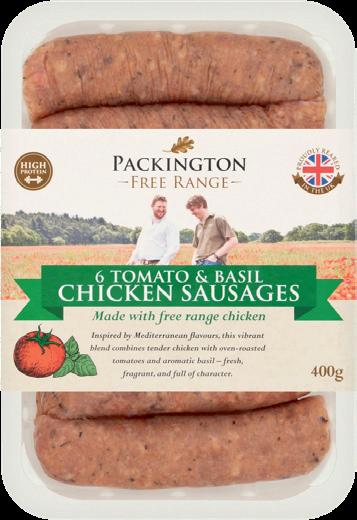
B Corp-certified family farm Packington Free Range has expanded its welfare-led meat and poultry offer with a trio of high-protein, free-range chicken sausages. Launching initially with Ocado in Sage & Onion, Sweet Chilli and Tomato & Basil flavours, they are said to offer a lighter alternative to regular sausages, without compromising on flavour or texture. RRP £8 per pack of six sausages. packingtonfreerange.co.uk
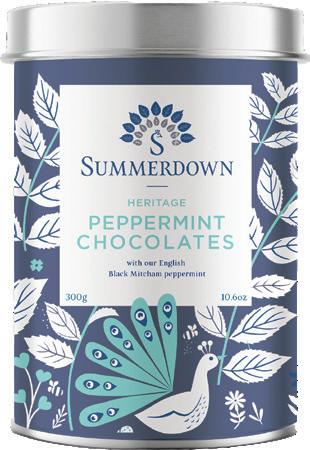
Summerdown has introduced decorative tins for two of its peppermint-based products in response to customer requests for more giftable formats. The tea tin (RRP £12/30g) provides 20 peppermint tea bags, while the chocolates tin (RRP £18.50/300g) contains individually wrapped dark chocolate peppermint crisps and fondants. Both products use Black Mitcham peppermint grown on Summerdown’s regenerative Hampshire farm. summerdown.com
IN BRIEF
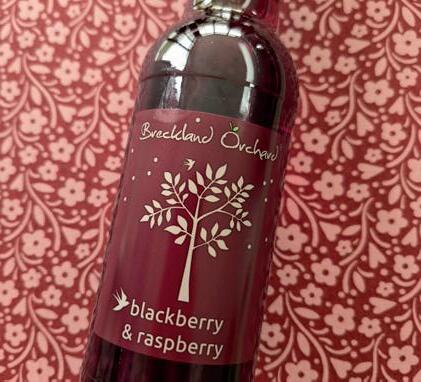
Breckland Orchard’s newest Posh Pop flavour was inspired by owner Claire Martinsen’s favourite crumble recipe. Blackberry & Raspberry Posh Pop is the fifth addition to the brand’s Zero Sugar range, which promises a “full-bodied” flavour experience without any added sugar. RRP £2.50/275ml. brecklandorchard.co.uk
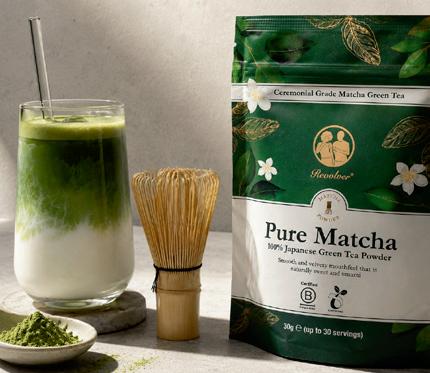
Revolver has caved in to the matcha trend, introducing a ceremonial grade matcha this month [June]. The cooperative is hoping the antioxidant-rich green tea powder will appeal to a younger demographic seeking alternatives to traditional coffee. RRP £9.99/8 x 30g. revolverworld.com
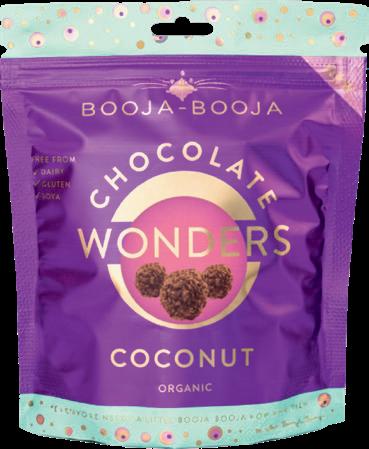
August sees free-from chocolate brand BoojaBooja add several new SKUs to its range: two new varieties of Chocolate Wonders –Coconut and Deeply Chocolate; and three new hot chocolates: Orange, Vanilla Chai Spice and Hazelnut. Made in Norfolk, they are dairy-free, gluten-free, soya-free, vegan and organic. WSP £1.87/65g pouch; RRP £2.99. boojabooja.com
Anish and Mikesh Patel have drawn on the ayurvedic traditions to develop a range of benefit-led wellness teas based on researched botanicals. Bestsellers in the NutraTea collection include Ginseng & Ginger, Liquorice & Cinnamon and Spearmint & White Peony. RRP £5.99/20 bags. nutratea.co.uk
Brothers
It’s time to talk about terroir
Ecological practices are usually framed as an ethical duty, but for some producers, doing the ‘green’ thing also makes their food & drink taste better, and gives it a real sense of where it’s from.
By Tanwen Dawn-Hiscox
When we talk about sustainability, certain terms are often bandied around: low emissions, soil health, biodiversity. Reducing our impact on the planet is laudable and necessary, but for some producers, it is also about improving the quality, and all importantly, flavour of what they’re making.
When something is only a few steps removed from the raw ingredients, decisions that protect soils, let fruit grow naturally and allow animals to manage their own inputs can help create distinctive characteristics in food & drink. They give it a sense of place, reflective of what the French call ‘terroir’.
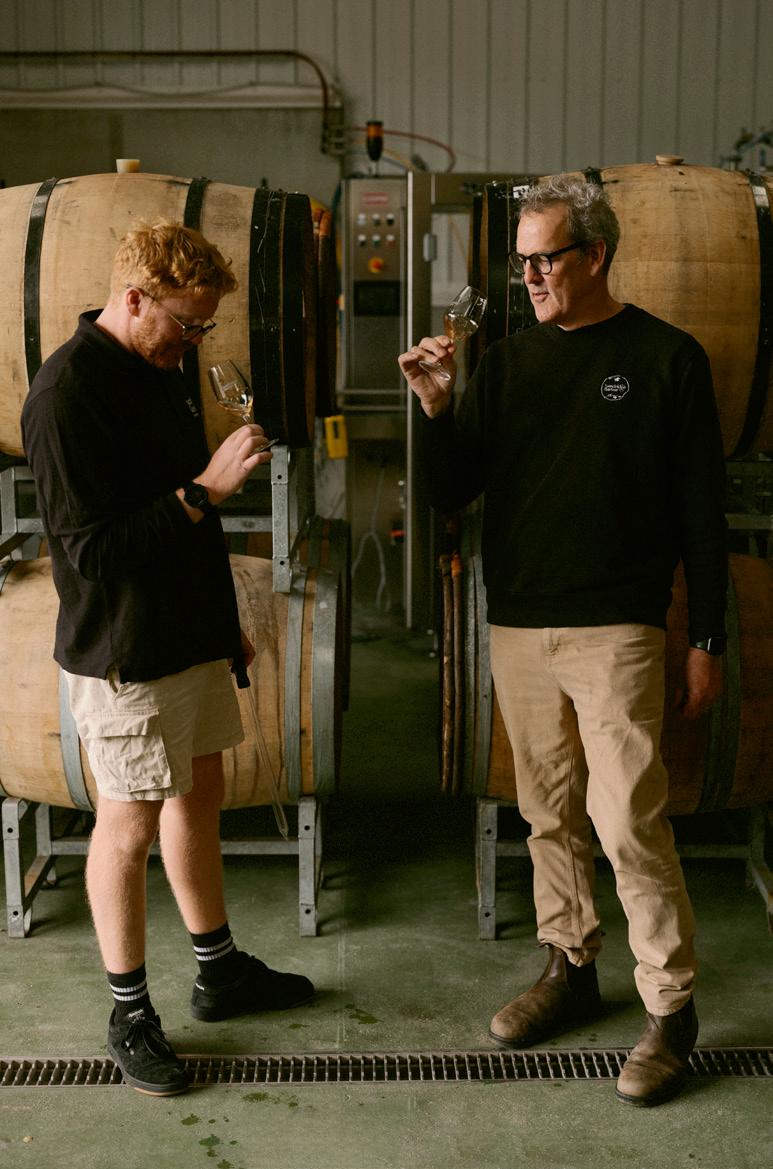
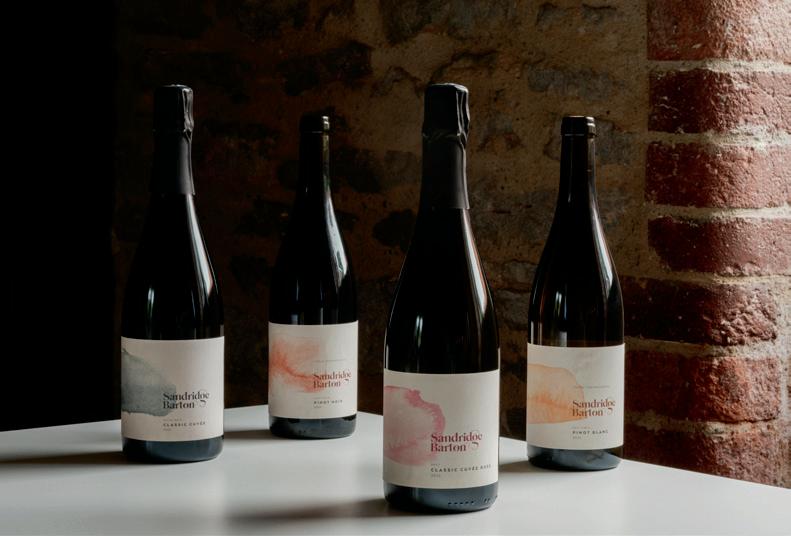
A good example to illustrate this point is wine, and specifically, wine produced by Sandridge Barton in Devon. The operation formerly known as Sharpham Wines used to be located on the other side of the river, and when it moved in 2020, CEO and winemaker Duncan
Schwab (pictured, right) saw an opportunity to work differently.
They used to spray glyphosate to kill the weeds then rotovate the soil, but this brought dormant seeds to the surface and compacted the earth. So Schwab and his team planted weed-suppressing clovers instead. Fungicides are used sparingly, and insecticides no longer get used at all.
The natural state of the soil, Schwab tells FFD, “is incredible. It’s very rich, red Devon. We’re also on this amazing volcanic ridge, and millions of years ago we were part of a tropical seabed.”
With both volcanic and limestone characteristics, discovering the nature of the soils made Schwab feel bold enough to not only plant German clones of Pinot Noir for sparkling wines, but also Burgundy clones for stills.
Now, the producer makes plot-specific
SUSTAINABILITY
wines from the stony field, the top-ridge limestone, shallow soil and the alluvial, red soil by the river.
“And the wines, as a result, have got a real character to them” Schwab says. “They’re not just of the region; they’re of this specific area.”
Winemaking at Sandridge Barton is also about as low intervention as it gets. It moved away from cultured yeasts, and now uses wild yeasts, which occur naturally on the grape skins while they ferment. It doesn’t chaptalise, letting natural sugars suffice. “No fining, very little filtration, very little residual sugar,” Schwab adds, and whereas the producer used to use sulphur fairly liberally, it barely does at all anymore.
The reasoning behind all of this is to let the grapes speak for themselves. While the single plot wines show the characteristics of the particular soil, wines in the ‘Don’t Feed the Ponies’ range, which are more experimental –among them an orange wine, a Col Fondo and an award-winning white wine aged using a Solera system – express their environment.
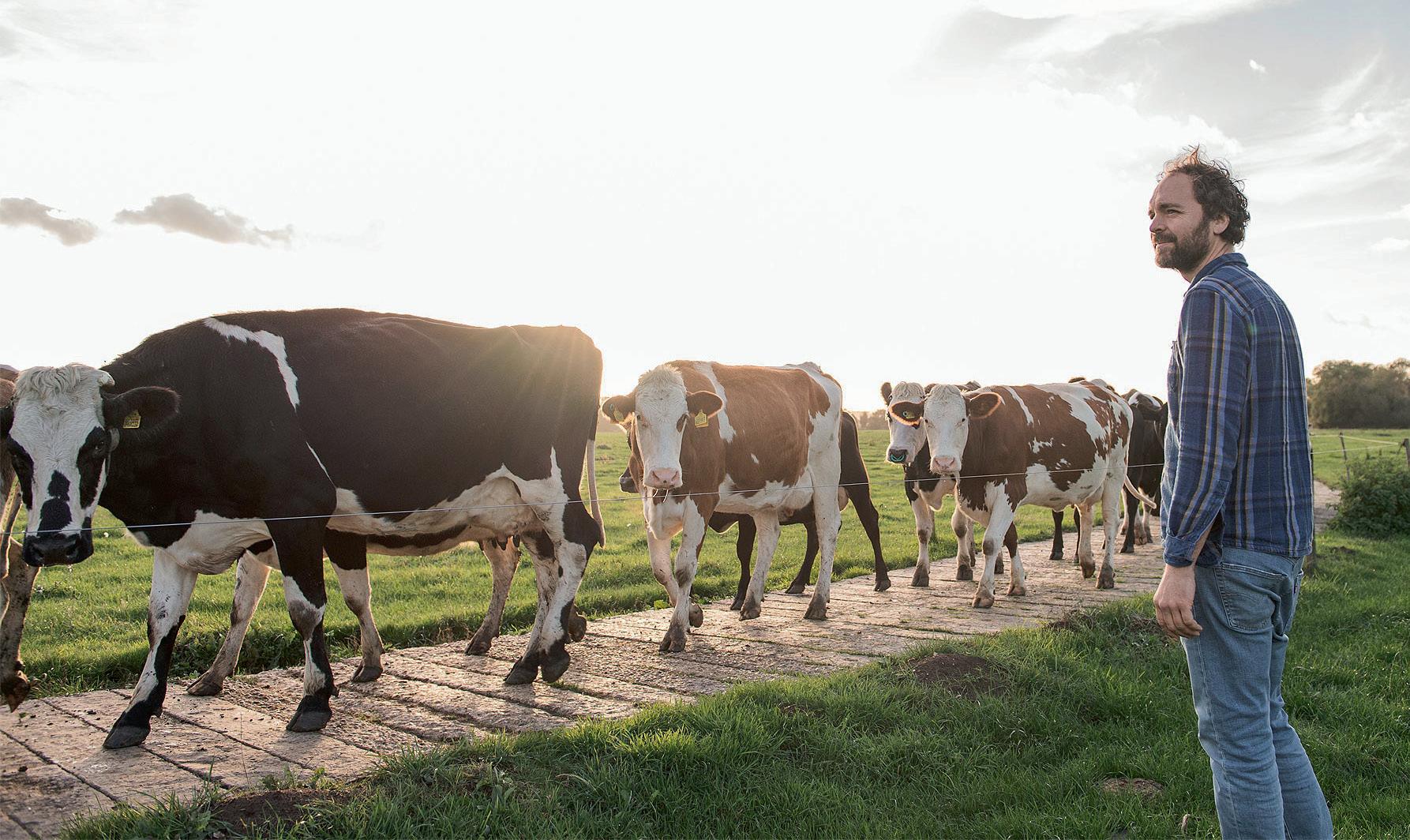
As a producer in a sector that comes under a lot of scrutiny, Fen Farm Dairy takes a similarly eco-conscious approach. The maker of Baron Bigod, Bungay Butter and seasonal Reblochonstyle Raedwald generates more solar power than it can use; recovers heat from cow dung to help keep the cows warm in the winter; generates biomass energy using a straw burner; uses hydrogen-fuelled cars and tractors; and founder Jonny Crickmore (pictured below) is an outspoken advocate for ecologically responsible cow farming.
Fen Farm is on course to become a circular farm – and not just because it wants to do good. Yield-chasing is fruitless, Crickmore says, because “no matter what you do to get more production, it creates another problem which you then have to solve, which costs more money.”
“By doing circular farming and growing our own crops, we’ve got control over the process, and we can influence things that will benefit the milk.”
Over time, Crickmore has concluded that diversity is key. Fen Farm has stopped using
heavy nitrogen and sprays to maintain the complexity of the fields.
“The cows pick and choose and eat bits and pieces, and yeah, sure, there’s some weeds, but it brings diversity to the soil with all the different plants,” he says.
And beyond what’s happening at the surface, “there’s loads of stuff you can’t see which is beneath the soil, the mycorrhizal stuff – a fungal network that’s working together.”
The producer is looking to reintroduce trees and hedges to its field, many of which were dug out in the 19 60s and 1970s to make more room for food production.
“There’s loads of research on this,” says Crickmore. “Cows like to pick from hawthorn bushes and willow and ash – all things that grow on our farm – all of that aids them in health.”
The producer has extended this drive to diversifying its herd, which is made up of Montbéliardes from France, mixed and bred with other breeds like Jerseys and Holsteins.
“So you’ve got a unique set of cows in fields which are unique to Waveney Valley, Suffolk and Norfolk. That, plus the diversity in plants, the soil – all adds to the uniqueness of it”.
Importantly for our purposes, though, does working this way affect the quality of the milk?
“Hugely”, Crickmore asserts. While in cheesemaking, experiments with a selection of cultures have yielded small variations in the results, “the real difference is the milk”.
“The trouble is, so much cheese eaten in the UK and around the world is made from blended milk, and it takes away all the uniqueness of it.”
Whereas we understand the impact of locality and the variety of flowers bees feed on affects honey, many don’t understand this when it comes to cheese. Homogeneity and dullness become likely the more we let our food become amalgamated, Crickmore argues. “And to make something unique, you have to look after the land where it comes from. It makes the product better, and it also encourages the nature around it to do better.
“The further you go from the way nature intended, the more bland and less interesting something gets.”
For retailers, this is where things become practical, and a good way of explaining quality and the value of their products.
The Guild of Fine Food, this magazine’s publisher, was established in 1995 to champion quality food & drink made by dedicated, independent producers such as Fen Farm Dairy and Sandridge Barton.
Managing director John Farrand says that while there is a lot of romance around the idea of terroir, whose definition is often disputed. “But it means everything in the soil, the sky and the elements that contribute to the aroma, structure, and flavour of food & drink,” he says.
“Mass-production takes away the notion and presence of terroir as that style of making strives for consistency, where artisan methods, which embrace terroir, allow seasonality and changes in terroir to shine through.”
A good example of how terroir and seasonality dictate quality, he says, is Stilton.
“This historic cheese is enjoyed at Christmas – we all know that. But why?
Some cheesemakers will argue that the richer milk produced by cows grazing on the second growth pastures, in late August and September, contributes to a more refined Stilton. Stilton typically takes three months to mature and, hey presto, that is the middle to end of December. It is, quite simply, when Stilton tastes best, and our self-indulgent ancestors realised that.”
Why though, should retailers be concerned?
“Sense of place in food can supply us with a story, retail theatre, and traceability,” he says.
Plus, there is the non-negligible fact that by sourcing locally and knowing why your products taste as they do, “you are additionally doing your bit for the planet. Simple products that rely on the elements to direct the flavour will typically have simple ingredient listings.”
And as we know, he adds, “fewer ingredients and less faffing with a product normally means it is better for you and will be more enjoyable.”
So next time you consider how to talk to your customers about sustainability, you might consider getting some samples ready. sandridgebarton.com fenfarmdairy.co.uk
2 STAR GREAT TASTE WINNER
Azores quality skipjack tuna fillets in olive oil
"LIGHT AND DELICATE"
"THE FISH MELTS IN THE MOUTH"
"DELICIOUS" "SATISFYING" THE DELICIOUS DELICIOUS" " SATISFYING SATISFYING" "
"THE PROVENANCE IS COMMENDABLE"
"MOUTH WATERING"
"THE QUALITY OF THE FLAVOUR OF THE FISH"
"THIS HAD THE JUDGES EXCITED" "A VISUAL MASTERPIECE"
and what you need
Whether it’s a niche ingredient from a faraway country you’re looking for, or just weekly deliveries of staple goods, our annual importers & distributors guide is here to help you find your match.
Diverse Fine Food diversefinefood.co.uk
Delivers to: UK
Min order value: £150
Diverse Fine Food carries a broad portfolio of premium ambient food & drink brands, regularly listing what it says are category-leading, wellpresented products of exceptional quality. It holds stock across its ranges to ensure consistent availability, and promises a dependable ordering service via its webstore.
Cress Co thecressco.co.uk
Delivers to: UK
Min order value: £175
Specialist wholesaler
Cress Co is the largest distributor of ambient and chilled fine food & drink in the UK. Its catalogue lists more than 5,000 retail products, delivered via its own fleet of dualtemperature vehicles. Exclusive lines include Bullshot broths, Charlie & Ivy’s gifts and dressings, and Salcombe Dairy ice cream.
Suma
suma.coop
Delivers to: UK
Min order value: £325
Worker-owned wholesaler
Suma specialises in vegetarian and sustainable products, with a portfolio of more than 7,000 food, body care and home cleaning items. Its food & drink offering spans ambient, chilled and frozen goods – including its own label range of natural and organic foods.
Carron Lodge carronlodge.com
Delivers to: UK
Min order value: N/A
As well as being a cheese producer, Lancashire’s Carron Lodge is an importer, distributor and wholesaler. Cheese makes up 90% of its range, sourced mainly from France and England, spanning small-batch artisan, European staples and high-volume supplies. It also stocks a selection of deli items.
Best of Hungary bestofhungary.co.uk
Delivers to: UK-wide, excluding Channel Islands
Min order value: N/A
Best of Hungary sources premium food & drink from small producers and co-operative-owned businesses. Prized items include truffle products, caviar and foie gras, but it carries everything from paprika and honey to cheese and charcuterie, as well as specialist wine and spirits.
Bellota bellota.co.uk
Delivers to: UK
Min order value: N/A
Bellota is an importer of fine Spanish food & drink. It specialises in Jamón de Bellota and Serrano ham from Trevélez, also offering regional cheeses like sheep’s milk Carmen Trufa, Valdeon Picos and aged Manchego; tinned seafood from Arroyabe and arlequin; oils, vinegars, beans, pickles, nuts and more.
importers & distributors
CATEGORY FOCUS
Brindisa brindisa.com
Delivers to: UK and Ireland
Min order value: varies
Brindisa is a touchstone for fine Spanish food supply in the UK, as an importer, wholesaler and distributor into retail and foodservice. Its selection spans Spain’s most iconic foods, and supplementing its own label items is an attentively curated catalogue including 1605 Manchego, famed EVOO producer Nuñez de Prado; Ortiz and La Brújula tinned fish and more.
Rowcliffe rowcliffe.co.uk
Delivers to: UK
Min order value: £100
Since it launched in the 1960s, importer, wholesaler and distributor Rowcliffe has built up a sizeable selection of British, Irish and Continental cheeses. These are complemented by a selection of premium meat and charcuterie, deli items such as olives, pâté and antipasti, as well as seafood, cheese accompaniments and Sicilian pastries.
Victus Emporium victusemporium.co.uk
Delivers to: UK
Min order value: Free for first order, £180 thereafter
Bristol-based Victus Emporium imports, distributes and is a wholesaler of ambient specialist brands from across the European Continent. These include Bret’s and Bonilla a la Vista Crisps, Aneto broths and paella bases, Toreras pickled skewers, Breton biscuits from La Trinitaine and more.
Eurilait eurilait.co.uk
Delivers to: UK
Min order value: on request
Eurilait is a farmer-owned organisation and the subsidiary of two large French cooperatives, Laira and Eurial. It imports and distributes dairy products including specialist cheese and yoghurt from across Europe. Known brands include goats’ cheese brand Soignon, Maestrella and Paysan Breton, but it also sells own label items.
Mahalo mahalosupplies.com
Delivers to: UK
Min order value: Free deliveries for orders > £250
Mainly working with independent retailers and high-end department stores, Mahalo specialises in emerging challenger brands, with a catalogue of roughly 70 suppliers. Orders are despatched within 48 hours, and the wholesaler is committed to using minimal plastic packaging.
Harvey & Brockless Harveyandbrockless. co.uk
Delivers to: UK
Min order value: £80
First founded in the 1970s, Harvey & Brockless specialises in dairy products, including commodity and artisan cheese, its own range of goats’ cheeses, yoghurt and butter. It also manufactures sauces, dips and dressings, and supplies cured meats and pâtisserie ingredients.
Naturally Spanish naturally-spanish.com
Delivers to: UK
Min order value: £300
Naturally Spanish imports premium ambient products from Spain, supplying wholesalers, retailers and foodservice operators across the UK. Its range includes honey, olives, almonds, gazpacho, olive oil and crisps. It has its own private label and can provide this service for retailers too.
Fifth Generation International bonafinds.com cornedor.co
Delivers to: UK
Min order value: on request
Fifth Generation International is an importer, distributor and sourcing partner to the independent retail trade and foodservice operators. It specialises in Eastern Mediterranean pantry items, including pomegranate molasses, bulgur wheat and seasonings.
The Fine Cheese Co. finecheese.co.uk
Delivers to: UK mainland Min order value: £150
The Fine Cheese Co. is an importer, exporter, wholesaler, distributor and retailer of artisanal cheese from across the UK and Europe. Its broad catalogue also includes accompaniments, charcuterie, fish, foie gras, sweet biscuits, chocolates and more. It is the exclusive distributor of a number of speciality brands.
Highland Wholefoods highlandwholefoods. co.uk
Delivers to: Scottish Highlands, islands and north-east Scotland
Min order value: Free deliveries for orders > £250
The Highlands Wholefoods Workers’ Co-operative is a Scottish wholesaler specialised in organic, vegan and vegetarian wholefoods and household products. It selects food & drink brands on the basis of ethical and environmentally-sound credentials, and is Soil Association licenced.
Toll House Spirits tollhousespirits.co.uk
Delivers to: UK
Min order value: Free deliveries for orders > £250
Toll House Spirits is a Scotland-based producer and distributor of spirits, liqueurs and low-andno drinks. It owns the Redcastle brand of gins, rums and liqueurs; an ownlabel range of gins, rums and vodkas and the KALF Cold Brew Coffee Liqueur. It is the exclusive UK distributor of Cooperativa Capel and of Wild Atlantic Irish Gin, Vodka and Whiskey.
Brand Organic brandorganic.co.uk
Delivers to: Mainland UK
Min order value: one mixed pallet
Brand Organic is a UK importer and wholesaler of natural food & drink and supplements. It works with producers from around the world, offering its services to enable their entry onto the UK market, as well as with brands based here, most of them certified organic.
Wholesale is an importer, wholesaler and distributor into the independent trade, carrying a broad range of ambient organic, fairtrade, natural wholefoods and household essentials. As well as its own label items, suppliers include Amisa, Seed & Bean, Glebe Farm, Clearspring, Seggiano and Mr Organic.
Castell Howell
castellhowellfoods.co.uk
Delivers to: UK
Camarthenshire’s Castell Howell is an independent wholesaler and distributor. With more than 7,500 food and non-food product lines, it prides itself on offering the best speciality food & drink from Wales. While the lion’s share of its clientèle is in the foodservice sector, it also supplies independents.
Shire Foods East Anglia sfea.co.uk
Delivers to: UK
Min order value: dependent on location
Shire Foods East Anglia is an ambient fine food wholesaler serving the independent trade, with a catalogue spanning local, national and international brands. In addition, Shire Foods offers own-label items, and has its own baked goods brand, The Real Norfolk Cake Company.
Mevalco mevalco.com
Delivers to: UK
Min order value: £120
Spanish ingredients specialist Mevalco is an importer and a distributor, mainly supplying restaurants, as well as independent retailers, across the UK. It sources food & drink from 110 Spanish producers, prioritising provenance, environmental stewardship and mastery of craft.
Delicioso delicioso.co.uk
Delivers to: UK
Min order value: N/A
Spanish food & drink importer, distributor and wholesaler Delicioso supplies retailers and hospitality businesses across the UK. It covers a broad spectrum of goods, from charcuterie and cheese to fish, olives, pickles, tapas, rice, spices, drinks, sweet treats and more. It also sells kitchenware and ceramics.
Surya Foods suryafoodsonline.com
Delivers to: UK
Min order value: Free delivery for orders > £350
World food specialist
Surya Foods covers a broad spectrum of cuisines and has a catalogue of recognisable brands, in addition to its own-labelled goods. It owns and distributes 20 brands including Laila Rice and Thai Dragon, and distributes a further 20, including Kewpie mayo, Mae Ploy and Maggi.
Cotwold Fayre cotswoldfayre.co.uk
Delivers to: UK
Min order value: varies depending on type of vehicle required
Independent retail specialist Cotswold Fayre is a B-Corp certified wholesaler. Its sourcing policy is to stock quality, artisanal brands committed to ethical and sustainable values. Best-selling brands include Field Goods, Folkington’s, Nice Rice and the Diddly Squat Farm range.
Curd & Cure curdandcure.co.uk
Delivers to: London and the south east
Cheese wholesaler Curd & Cure started life in 1988, solely delivering Somerset cheddar to businesses in Kent. Now, its offer counts more than 300 British and Continental artisan cheeses. It prides itself on its exclusive selection of quality, small production items, refined by nurturing close relationships with the cheesemakers.
importers & distributors
CATEGORY FOCUS
Holleys Fine Foods holleysfinefoods.com
Delivers to: UK and Ireland
Min order value: £200
Bristol-based Holleys is a fine food distributor with more than 4,000 ambient products on its books, which it supplies to farm shops, delis and food halls. Its offer includes hard-to-find grocery items, brands that work exclusively with independents, regional items, and full ranges of well-known brands.
Paxton & Whitfield paxtonandwhitfield. co.uk
Delivers to: UK
Min order value: Free deliveries for orders > £250
Paxton & Whitfield is one of the UK’s oldest purveyors of cheese, which it wholesales to independents, luxury department stores, fine dining restaurants and hotels. Its offer spans British and Continental artisan cheese, premium accompaniments and homeware. It also has a dedicated affinage site in the Cotswolds.
PW Fine Foods pwfinefoods.co.uk
Delivers to: UK
Min order value: £200
PW Fine Foods supplies ambient speciality food & drink to independent retailers and cafés across the UK. It stocks 3,500 products from UK and international brands, including its own –Epicure, Burnt Sugar and Salad Makers. It lists wellknown names like Diforti, Perelló and Ortiz, as well as harder to come by lines.
Emmi UK group.emmi.com
Delivers to: UK
Min order value: set on a customer-by-customer basis
The UK division of Emmi, Switzerland’s largest milk processor, supplies and markets a range of branded and private label dairy products. Its portfolio includes Emmi Caffè Latte, Onken, Kaltbach cave-aged Swiss cheese, Bettine goats’ cheese, as well as a broad selection of speciality Swiss cheeses.
Ballancourt Fine Foods ballancourt.co.uk
Delivers to: England, Scotland, Wales
Min order value: £150
Ballancourt Fine Foods is an importer and wholesaler of high-end artisanal French food & drink. It works with family-run businesses across the hexagon to source traditionallymade ambient products, namely: pâtés, terrines and rillettes; mustards, vinegars and tinned fish and cooked meals in jars.
Kindred Forest kindredforest.co.uk
Delivers to: UK
Min order value: £100
Kindred Forest sources rare, single-origin rainforest ingredients from the Bolivian Amazon, Colombia and Indonesia. Its offer includes craft cacao nibs, mass, couverture, drinking chocolate and truffles; green and roasted speciality coffee and Arenga sugar. It buys directly from smallholder farmers, indigenous growers and conservation projects, ensuring full traceability.
Caviar & Cocktails caviarandcocktails.com
Delivers to: England, Scotland and Wales
Min order value: Free delivery for orders > £200
Caviar & Cocktails is an importer and distributor of Italian luxury goods –its main two being caviar and truffles. It prioritises traditional production methods and small family-run businesses. It is also the exclusive supplier of Adamas Caviar and Appenino Food group, with other brands including Reperso and Pasta di Gragnano.
Provisions provisionslondon.co.uk
Delivers to: UK
Min order value: £100 in London, £225 elsewhere
Provisions imports and is a wholesaler of traditional food & drink from Southern Europe, from producers practicing sustainable, minimal intervention farming methods. It offers a selection of cheeses, deli goods, charcuterie –including pâtés, terrines and foie gras from Maison Argaud – tinned food, and biodynamic wines.
Meridian Sea meridiansea.com
Delivers to: UK
Min order value: £50
Offering a range of fresh and tinned anchovies, seaweed, sauces, fish soups, rouille, blinis and spreads, Meridian Sea was founded in 1997 as a distribution partnership with French anchovy supplier, Miceli. It now also stocks Bord a Bord seaweeds, Gastronomer soups and sauces, and has its own private label of marinated seafood.
Buckley and Beale buckleyandbeale.com
Delivers to: UK
Min order value: N/A
Buckley and Beale imports and wholesales high-end ambient food & drink from the US and Canada. It focuses on healthier than big-brand, functional, clean-label items, such as baking lines from Guittard Chocolate, Otelia highprotein bean pasta, PUR mints, Dare veggie crisps and Buddha Tea.
From 12th to 15th November 2026, Spain’s Instituto del Queso will host the AndalucíaGusto del Sur International Cheese Festival, and will be joined by the Guild of Fine Food to stage the 38th edition of the World Cheese Awards. Here, we interview the Spanish cheese institute’s CEO, Luisa Villegas, about its goals and aspirations, and what to expect from this year’s event.
Queso in Córdoba
CREATING THE INTERNATIONAL CHEESE FESTIVAL
This bird’s eye view of the sector led to her conceiving of an event that would bring together cheese professionals to organise activities addressing their needs in terms of strategy, innovation and marketing.
This is how the International Cheese Festival was born: an event designed to celebrate cheese in all its dimensions. As Villegas points out, the aim is to move beyond the solemnity of the product and build a space where the sector’s real challenges are addressed. “Cheese is part of our culture, our economy and our identity, but it also plays a key role in the future of food,” she says.
“That is why it was necessary to create a project that not only showcased its richness, but also helped define where it is heading in the near future.”
One of the festival’s major milestones was the integration of the World Cheese Awards into the International Cheese Festival; a decision which, as she explains, “responds to the need to create spaces for excellence that have a real impact.”
Considered the “Oscars of cheese”, the World Cheese Awards brings together more than 250 professionals from across five continents and has established itself as a key
platform not only for recognising quality but also for connecting the industry’s leading players. In this sense, its inclusion in the festival is not coincidental, but strategic: “we need to create environments where the sector can come together, share knowledge and, above all, generate business opportunities on an international scale. And there is no better time than the organisation of the international cheese competition by excellence, which features the participation of more than 5,000 cheeses from around the world, making it a major global meeting point.”
What sets the International Cheese Festival apart from other gastronomic or industry events is the fact that it serves as a professional networking event and includes a major Forum for Dairy Innovation; it is a symposium to which leading scientists and technologists are drawn to address the sector’s various challenges.
“Bringing together producers, buyers, scientists and investors at a single event is important for fostering a thriving ecosystem that can evolve into a healthy, sustainable agrifood model accessible to all,” says Villegas.
Against this backdrop, the festival has established itself as a meeting point for these professionals, fostering a constant dialogue between tradition and innovation. It is no
coincidence that the International Cheese Festival has already held two successful editions – in San Sebastián in 2016 and Oviedo in 2021 – reinforcing its position as a key event in the sector.
This year, the festival comes to Córdoba under the name Andalucía – Gusto del Sur International Cheese Festival 2026.
Córdoba was chosen for its immense cultural and gastronomic wealth, as well as for the importance of the agri-food business sector in the region of Andalusia, making it the ideal setting to continue driving the future of the international cheese industry. In this edition, the event was conceived of as a true universal exhibition of cheese, like an interactive exhibition where visitors can explore its history, diversity and prospects. All this is accompanied by an extensive and carefully designed programme, which will combine content, experience and knowledge to offer a comprehensive and contemporary view of the sector, where visitors from all over the world can learn, enjoy themselves and do business.
DEFINING THE INSTITUTO DEL QUESO
The Instituto del Queso has been working on this event in Córdoba for a year and a half, since, as Villegas notes, “tackling a
INTERNATIONAL CHEESE FESTIVAL 2026
project of this scale requires time and effort.” Furthermore, each edition is approached from a different perspective, tailoring the strategy to the intrinsic characteristics of the host region and developing a unique approach. This “personalisation or customisation” is indissociable from the Instituto del Queso’s working method, which adapts each project to the client’s specific requirements.
It is this very philosophy that defines the Instituto del Queso, an independent, private and highly specialised organisation that works on defining sectorial strategies, technological development and strategic positioning around raw milk and cheese. “Our job is to support the sector as it adapts to new technologies, trends and markets,” explains Villegas, highlighting the importance of integrating scientific knowledge, technological tools and business acumen into every project. Through a multidisciplinary team and a solid network of national and international partnerships, the Instituto del Queso acts as a bridge between different fields, ranging from the scientific and technological to the institutional and business sectors.
In practice, this work involves developing bespoke projects that meet the specific needs of each client. The science and technology division promotes the application of scientific principles and new technological tools to generate added value in production processes. In the field of strategic positioning, Instituto del Queso designs solutions aligned with each organisation’s business objectives; and, through initiatives such as the acceleration of innovative projects, it works to establish cheese as a true vehicle for innovation within the food industry of the future and in the development of cultural landscapes. “Every project is unique, because every company is, but they all share the same foundation: the need to evolve with discernment and rigour.”
In an increasingly competitive global market, where companies seek to improve their efficiency without losing sight of the essence of their products, the role of the Instituto del Queso takes on strategic importance. As Villegas points out, the key lies in striking a balance between tradition and innovation: “Automation, digitalisation and artificial intelligence are not a threat, but an opportunity to improve processes, guarantee quality and ensure the sustainability of the business.” In this regard, the Instituto del Queso works with large companies to optimise production systems, integrating advanced technology that enables production to be scaled up whilst maintaining standards of excellence.
In this way, the vision championed by Luisa Villegas is not limited to interpreting the sector’s current situation but rather sets out a clear roadmap for its immediate future. A future in which cheese is positioned as a strategic foodstuff, where innovation is built on knowledge, and where collaboration between stakeholders becomes the driving force behind transformation. In this scenario, the Instituto del Queso presents itself as a key ally for those organisations that seek not only to adapt, but to lead the metamorphosis of the food industry through excellence, efficiency and a global vision.
INTERNATIONAL CHEESE FESTIVAL 2026
A helping hand
Through her work as CEO of the Instituto del Queso, Luisa Villegas oversees the organisation’s mission to support farmers and cheesemakers. Assisting with everything from day-to-day troubleshooting and quality improvement to longer-term planning for the future of cheesemaking, the institute is intent on nurturing an industry in a constant state of flux.
How would you describe the Instituto del Queso, and what are its main areas of activity?
It is a consultancy firm that works with experts from various countries to serve two types of clients: cheese producers and livestock farming groups seeking to reorient or evolve their production.
What kind of projects does the Instituto del Queso carry out at national and international level?
Those relating to technological process improvement and market positioning, as well
as the development of a strategy for public bodies wishing to promote a specific sector or region.
How do you work with companies looking to improve their production processes? By analysing their processes and making specific proposals regarding efficiency and/or new markets.
How does the Instituto del Queso help companies position themselves strategically in the market? By understanding their processes and
working closely with them to provide training for technical staff, addressing market demand for their products, developing a strategy and providing business contacts. The Instituto del Queso also has a design team that assists with labelling, branding and communication. However, there is a highly strategic line of work with farmers and groups or cooperatives of farmers who want to take the next step, and we have all the expertise to help them become dairy entrepreneurs with a final business project.
AN INGREDIENT WITH AN AUTHENTIC TASTE
What’s the secret ingredient for a delicious ready meal? The unmistakable flavour of an outstanding cheese. From PDO delicacies such as Parmigiano Reggiano, Grana Padano and Pecorino Romano to other hard cheeses also suitable for vegetarians: you’ll find the perfect solution in the DalterFood Group range to enrich your dishes, packaged in handy packs and suitable for every production process.
INTERNATIONAL CHEESE FESTIVAL 2026
What role do the Instituto del Queso’s international partnerships and network of contacts play in your projects?
They are key to the success of projects. What we have found is that these partnerships are growing every day, and there is still a great deal to be done.
How would you describe the current situation facing the global cheese industry?
The cheese industry, like all more traditional agri-food businesses, is currently facing a challenging period marked by rising costs, both for raw materials and for the energy required for production processes, as well as an endless number of digital and environmental challenges. However, the data confirms that the sector is performing well, as consumption has risen significantly worldwide thanks to the efforts of producers, public institutions and certified quality schemes. The image of cheese has evolved and now encompasses that of a premium product on certain occasions and that of a simple ingredient on others.
What are the main challenges facing the sector today?
Optimising time and energy. Providing staff with the necessary training to develop new recipes and addressing the shortage of raw materials.
How are consumers behaving, and what trends are emerging in terms of cheese consumption and production globally?
Current trends in cheese consumption are moving toward a balance between health, convenience and indulgence. Consumers are increasingly drawn to products with clean labels, free from artificial additives, and inherent nutritional benefits, including higher protein and calcium content and lower fat and salt levels. Practical or convenience formats, such as sticks, cubes or portions, are seeing increased demand, boosting the positioning of cheese as a snack. At the same time, there is growing interest in premium, artisanal and globally inspired cheeses.
Are there particular milk types, affinage styles or regions gaining momentum?
There is currently a strong trend towards the consolidation of “artisan cheese”, with a focus on its regional identity. As for the milk used, cheeses made from pure sheep’s and goat’s milk, particularly those from protected or native breeds, are gaining in status thanks to the growing recognition of their nutritional and energy profile.
In Spain, for example, “toasted cheese” is experiencing a boom in consumption. This is a matured cheese, mostly made from a mix of different milks, characterised by an intense flavour, a creamy texture and roasted toffee or caramel aromas. This new product, created by the Spanish company Entrepinares, is a clear example of how the dairy industry can adapt and set trends.
How important are science and technology to the development of the cheese industry?
They are absolutely essential, given that the dairy products of the future are being designed and developed today and we need to understand the challenges that global production poses for society as a whole. By applying scientific knowledge, we can completely transform a cheese for the better.
In what ways are automation and AI transforming production in cheese dairies?
Automation and AI are helping to optimise processes, achieving greater consistency,
What competitive advantages can a company gain by committing to this type of transformation?
Greater efficiency in the use of raw materials and faster turnaround times in dealing with distribution, but above all, significant cost savings.
Will automation and AI help to improve artisanal cheesemaking, or could they risk harming it?
In terms of efficiency, these technologies can help producers achieve a final product using fewer energy resources and in less time. The key challenge will be ensuring that technological advances support, rather than dilute, the individuality and identity that define artisanal cheesemaking.
I would like to see the establishment of ‘Dairy University Hubs’, where professionals can receive rigorous training. This is what we are working towards.
efficiency and sustainability without losing their artisanal essence. These technologies enable complex variables to be monitored in real time, digitised, stored and used as predictive models in the event of process irregularities. This reduces waste and improves final product quality. AI is already a triedand-tested tool, and now is the time to put it into practice to reduce lead times, optimise processes at all levels and better synchronise with distribution networks.
How do you envisage the cheese industry developing over the coming years, and what role will the Instituto del Queso play in that future?
I would like to see dairy products regarded as essential to a healthy, balanced diet that is accessible to all over the next 10 years. I would also like to see the establishment of ‘Dairy University Hubs’, where professionals can receive rigorous training. This is exactly what we are working towards. I see groups of new farmers transforming the current landscape.
What role do cheese vendors and specialist retailers play within the vision of the International Cheese Festival? They are the main players. This is a space for them to speak, get to know one another, understand each other’s needs and capabilities, and build greater synergy between them.
What will specialist retailers in the UK gain from either attending or paying attention to what is happening at the International Cheese Festival compared with other events?
At the International Cheese Festival, visitors will be able to experience a true “Universal Exhibition” featuring cheeses from every continent, and speak directly with Spain’s leading producers, all complemented by wines, olive oil, ham and the unique cultural landscape of the Córdoba region in Andalusia.
Can you provide specific examples of cheesemakers and businesses that have benefited from the support provided by the ICF-WCA in 2021 and 2016?
International companies that purchase cheese are now more aware of the different types and production methods found in Spain, thanks to their participation in previous festivals. Scientific forums also provide valuable insight for participating companies, as evidenced by the high quality of cheeses and their export potential.
For more information visit: institutodelqueso.com
• 17 Years of well-established active trading
• We offer the widest range of `free from` preserves & fermented foods in Northern Ireland
We make:
• 14 Probiotic kimchis and sauerkrauts
• 15 Probiotic drinks
• 5 Vegan pestos
• 5 Ambient types of hummus
• 20 Diabetic friendly jams with no added sugar
• 20 Diabetic friendly cordials and dense syrups
• 12 Light pickles with no added sugar
• Coconut milk vegan kefir
• Funky nutty dense dips, spreads, sauces and salad dressings 98% Of our products are vegan, gluten free and no added sugar
Our ferments are vegan, gluten free, always raw, live and lively!
We make small artisan batches, we forage and grow ingredients on our farm as much as we can, and we have fun making good honest food.
Due to the growing demand we welcome enquries from independent shops. We are not in supermarkets. We do not use AI, so if we don’t answer the phone- that means we are busy making stuff in the kitchen.
That is all - and yet so much. alicia.amberline@yahoo.com or 07935915000. www.amberlinepreserves.com
Smoked Haddock
Smoked Salmon
Cold Smoked Trout
Smoked Eel Fillet
MEET THE PRODUCER
Grandma’s hands
Kapana Feldano’s hot sauce brand is not only a tribute to her Guyanese heritage, but also to her grandmother, who developed the recipe five decades ago.
Interview by Tina Nielsen
What’s the story behind Grandma’s Hot Sauce?
I am of Guyanese heritage and my grandmother opened a restaurant in Georgetown, Guyana in 1974. Grandma’s Hot Sauce is her recipe as she served it in her restaurant. When she moved to Canada, she had the idea to open a restaurant again, but she never could. So launching Grandma’s Hot Sauce in 2021 is my way of carrying on what she started. I also want to share a piece of my culture – Guyanese cuisine is very underrepresented; when people think of Caribbean food, they turn to Jamaica or Trinidad.
What are the main components of Guyanese cuisine?
It is a big melting pot of many cuisines. I am West Indian, so my ancestors came from India, but there is a significant Chinese, Portuguese and African population. The Wiri Wiri pepper is the one flavour that is ever-present in all Guyanese cuisine. It doesn’t just add spice, but a particular fruity flavour.
Was your business born in the pandemic? Yes, it started as a lockdown project, but I had thought about doing it for years. I had worked in TV and specialised in the food sector, so I always worked in food. During the pandemic, I had lots of time to plan and develop it.
What was your Eureka moment?
It was in 2017. I had friends visiting for a barbecue, one of my guests asked if I had any hot sauce to go with the food, and I opened a jar of my grandmother’s homemade sauce. When
The Wiri Wiri pepper is ever-present in Guyanese cuisine. It adds spice, and a particular fruity flavour.
he ate it, he said, “You could sell this”. That’s when I knew it would work.
What was the start-up process like? The start-up world can be glamourised, but what it looked like for me in the beginning was lugging thousands of glass bottles to a commercial kitchen with all my blenders, cooking and mixing all day. Those days were so tough. I got to the point that I got carpal tunnel syndrome in my wrist because of the repetitive
Selfridges within three months of launching.
online and got in touch to request and then he put
thought it was a joke at first, but
now launching in Ocado as well.
Did you always plan to expand the range? Yes. When my grandmother made it, she would always do a ‘not so hot’ version because my mum liked less spice. Today I have four sauces and seasonings too. My hope is to one day have a range of products, not just sauces. grandmashotsauce.co.uk
The olive oil we grew up with carried a character unlike any other, shaped by Libya’s land, climate, and generations of family tradition.
Since 1947, our family has cultivated these groves, producing single-estate olive oil with a distinctive taste and story. While Libya remains one of the Mediterranean’s best-kept olive oil secrets, ÉNOIR is bringing that heritage to tables around the world.
Family Farmed S ince 1947
Bringing Libya’s hidden olive-growing heritage to your table
Available
PRODUCTS & MERCHANDISING
Scottish dairy offers ‘brewed milk’ as a retail-friendly raw milk alternative
By Lynda Searby
While raw milk is in high demand, tight regulations mean that it cannot be sold widely. In England, Wales and Northern Ireland, only registered dairy farmers can sell it, and in Scotland the sale of raw milk is banned entirely.
With more consumers asking for raw milk, Mossgiel Organic Dairy in southwest Scotland has a solution that addresses these concerns in the form of ‘brewed milk’.
Gently pasteurised at a lower temperature (68°C for five minutes), it preserves proteins and flavour while remaining and non-homogenised.
Third-generation farmer Bryce Cunningham developed the process, taking inspiration from gearbox cooling technology used in the automative industry.
It is essentially a hybrid technology that combines the efficiency of High Temperature Short Time (HTST) processing with the gentle treatment afforded by low temperature methods.
“Normally, if you pasteurise milk the low temperature way it is very inefficient. You can’t really do any more than a couple of hundred of litres a
FOLI is a new olive oil and dressings brand that is making its debut with an interlocking three-SKU system designed to encourage crosspurchase. The FOLI Essentials Set (RRP £44) comprises an EVOO, a French salad dressing and a mature balsamic vinegar of Modena (PGI). FOLI’s EVOO is pressed from early-harvest Picuda olives grown in Córdoba, Spain, while its French dressing is naturally emulsified and made without water or additives.
Beyond product quality, FOLI says it is placing strong emphasis on shelf standout and gifting appeal, with bold, design-led packaging. The company was founded by Lyon, Franceborn Nohra Currie, with the aim of creating a clean-label alternative to what she sees as an over-processed dressings category. foliclub.com
day,” Cunningham, now managing director of Mossgiel Organic Dairy, told FFD. “We managed to create a different way of pasteurising which is somewhere between the two methods, and what we found was that we could scale it up quite
He added that the process is highly efficient, using about 90% less energy
The resultant ‘brewed milk’ is said to offer a “seasonally evolving flavour”. This ranges from light, melted-icecream sweetness in spring to richer, buttery notes in colder months.
Mossgiel says the milk’s distinctive taste comes from its grass-fed cows, which are fed a completely natural, seasonal diet that is free from concentrates, and synthetic
As well as using milk from its own organic dairy farm, Mossgiel works with a network of dairy farmers “to help them sell their product for a price that is viable for
The dairy has just announced an agreement with Modern Milkman that has made its milk available to consumers across the UK at a retail price of £2.80 for a
Chilli crisp makers get creative with flavours
Chilli Crisp – the fiery, umami-packed condiment that went from being a niche Asian pantry item to global phenomenon during the pandemicis still rising in popularity.
The basic premise of chilli crisp as an infused oil with crunchy bits of fried chilli, shallot and garlic offers plenty of latitude for experimentation.
This year has seen Guernsey Seaweed add seaweed into the mix. Its Seaweed Chilli Crisp combines seaweed, garlic pieces, onion flakes and chillies which have been
WHAT’S NEW
Continuing the mutton revival is The Real Cure, with the launch of a new snacking salami crafted from highwelfare mutton. Mutton Snacking Salami with Harissa & Preserved Lemon takes inspiration from North African flavours, pairing warming harissa with preserved lemon. The snacking sticks do not need to be refrigerated, and can be merchandised either ambient or chilled. RRP £5.40/70g (5 sticks). therealcure.co.uk
St Lawrence Gold has introduced its Organic Maple Butter in a larger jar (160g) while maintaining the same price point. Naturally sweet with no additives or preservatives, the dairy-free butter is made from 100% pure maple syrup, gently heated and whipped to create a rich, velvety texture. WSP £26.33 for a case of 6 jars; RRP £6.75/160g. stlawrencegold.co.uk
The Fresh Pasta Company is now importing Italian charcuterie from Golfera, the Emilia Romagna cured meats producer. Golfretta, a salami crafted from lean off-cuts of Parma ham (RRP £3/80g), Organic Coppa (RRP £3.49/80g), and Salami Ventricina (RRP £3.04/80g) are some of its most renowned products. thefreshpastacompany.co.uk
crisped in rapeseed oil and infused with chilli flakes, smoked paprika and ginger. WSP £3.85/120g.
Ooily Bros, a UK-based brand established by three brothers, has put an ocean-inspired twist on its signature recipe. Infused with shrimp and scallops, its Seafood Crispy Chilli Oil is said to deliver a “delicate seafood umami and natural sweetness without overpowering heat”. WSP £4.205.20/190g.
Spicy Hot Monkey, meanwhile, has taken chilli crisp in a Japanese-fusion direction with its
Akanami Chilli Oil, which features red miso and katsuobushi. WSP £6.50/100g. Late 2025 saw the arrival of Mama’s Fire, whose clean-label Chilli Crisp is said to bring Sichuan soul in Original, Xtra Spicy, Garlic and Sweet Chilli Shiitake Mushroom varieties (RRP £5.99-6.50/160g). Also new is Red Panda, which uses slowroasted Guizhou chillies, with a nut and seed variant featuring roasted peanuts, sesame, pumpkin and sunflower seeds. WSP £4.25/180ml. chillicrisp.com guernseyseaweed.com mamasfire.co.uk ooilybros.com spicyhotmonkey.com
PRODUCTS & MERCHANDISING
WHAT’S NEW
Great Glen Charcuterie has opened a purpose-built facility near Spean Bridge.
The Highland producer says the move will enable it to keep pace with demand for its wild venison charcuterie, and to develop new products, which will include pork fennel salami. greatglencharcuterie.com
Hawkshead Relish has made its first foray into pasta sauces, launching two “midweek heroes” to meet growing demand for simple, flavoursome meals. Made by hand in the Lake District, the Tomato & Herb and Tomato & Chilli sauces are gluten-free, dairy-free and vegan, and only contain natural ingredients. hawksheadrelish.com
Chocolat Renée is gearing up to launch with Ocado, bringing a ready-to-heat FrenchCaribbean hot chocolate to the UK.
A smooth, spiced, ambient hot chocolate, family-owned Chocolat Renée is produced in France from milk, condensed milk, Côte d’Ivoire cocoa, cinnamon, nutmeg, vanilla and lime zest.
The company says it taps into several trends: premium comfort drinks, Caribbean flavours, convenient formats, and products with a genuine story and sense of place.
“Although the UK hot chocolate category is competitive, we believe our differentiation is very clear: Chocolat Renée is not a powder or an instant mix, but a ready-to-heat drink with a distinctive French-Caribbean identity,” said the company’s Gil Reynaud. renee-restaurants.com
My top store cupboard pick is the full SAL de IBIZA range. It takes pride of place in my kitchen, and we’ve recently added it to our farm shop shelves because we think everyone should know about it.
Taste of Xiangxi is looking to expand its retail presence, three years after it first started trading at Leeds Kirkgate Market. Named after one of China’s most mysterious mountain regions, the brand was conceived to bring the soul of Chinese food to UK palates. Its inaugural line-up takes in three condiments: Garlic Chilli, Aromatic Chilli Crisp and Garlic Bliss. WSPs from £4.53/180g. xiangxi.co.uk
Homi Kitchen rebrands as Yumm Singa, with retail ambitions
By Lynda Searby
Homi Kitchen, the Singaporean food brand born out of Megan Tan’s home-run supper club, is rebranding as Yumm Singa as it gears up for retail growth.
Tan, a former lawyer, told FFD that while retailers responded well to Homi Kitchen’s initial range in 2025, from consumer feedback it was clear that a “sharpened focus” on branding and packaging was needed.
“Nowadays, consumers aren’t just buying products – they want to know the story behind the brand and what it stands for, beyond the flavours and ingredients.”
“It’s all guided by the realisation that we are growing, and in order to grow effectively, and with the right audience, we need to communicate a lot more clearly,” she added.
The new name stems from the Cantonese ‘Yam Seng’ - an energetic cheering tradition often heard at celebrations in Singapore.
“The name has a very strong cultural meaning but also sounds delicious,” she said. In rebranding, the company is also setting out its stall to become a global retail brand. “Long term, my big ambition is to champion Singaporean food and make it accessible to everyone. Right now, there isn’t a global brand with a clear focus on Singaporean cuisine.”
Yumm Singa has carried its Signature Ginger Chilli (WSP £4.86/196g) and Black Pepper Sauce (WSP £4.54/225g) over from the original Homi Kitchen range and added a new SKU - Laksa Curry Sauce (WSP £4.54/175g) - to complete the range.
Yumm Singa is currently listed with Selfridges and Artisan Food Club, and Tan said she hopes to build its retailer customer base “steadily, one retailer at a time”. yummsinga.com
The range is built around natural sea salt that is hand-picked and harvested from a protected UNESCO World Heritage Nature Reserve in the Balearics. The salt is left to dry naturally in the sun, wind and open air, bringing an exceptional ray of Ibiza
Once you’ve experienced its crystal crunch, you won’t look back
sunshine to our wonderfully British pantry. I guarantee that once you’ve experienced its crystal crunch, you’ll never look back.
The brand’s signature sea salt is perfect for simply salting pasta water to get that depth of flavour, while its ‘Granitos’ – sea salt seasonings – are great for sprinkling on top of a well-presented dish or salad. Its packaging is sustainable too, with ceramic and cardboard options as well as a refill range. saldeibiza.com
SAL de IBIZA
MATTHEW GILMARTIN, The Veg Lord
The leafy village of Marple Bridge sits in a perfect position between Manchester, Stockport and the arresting landscapes of the Peak District. Over the past 15 years, the Dutson brothers’ vision of their family-run neighbourhood café has evolved into a deli packed with thoughtfully-sourced products – and thirsty customers picking up a coffee to go.
By Katie Mather
On the sunny side of the street
Take a left down the hill from Marple train station, and you’ll hit Marple Bridge, where Dutsons sits on one of the village’s most picturesque streets. 15 years ago, brothers Paul and Matthew Dutson opened their own café and deli based on a dream they’d shared. Now their place has become a hub for the local community in their leafy part of Greater Manchester; somewhere to find delicious, uplifting products that stretch the idea of what a kitchen essential can be to its very limit. We all need Kick Spaghetti Spice in our lives.
The idea of feeding people, or at the very least providing the very best ingredients with which they can feed themselves, has been a top priority for the brothers since they were little.
“We used to go on holiday to France as kids,” says Paul about the food memories that inspired him to create Dutsons with Matthew. “Just very simple lunches, getting some nice bread and some nice cheese and then going home and sitting around the kitchen table.” At Dutsons you can buy these very same items – beautiful cheeses, locallybaked baguettes – and create those same memories for yourself.
Prior to opening their own place, Matthew worked as a food and beverage supervisor at The Lowry Hotel in Manchester, and Paul graduated with an architecture degree and went straight to Majestic Wines for six years. He ended up as the manager of the Twickenham store. So in effect, Dutsons has two bosses, but nobody seems to mind. In fact, the shop runs like clockwork, with a core team that’s been behind the counter since before 2020, when the deli was still a café.
VITAL STATISICS
Location: Marple Bridge, Greater Manchester
Average basket spend: £12
Average margin: 40%
Floor space: 35m²
No of lines: Between 400-600
“We didn’t want anyone to lose their job when the café part of the business closed during Covid, so our chef is still making all of our pastries in-house,” says Paul. In retail, you expect staff turnover, but here the loyalty both have shown their team has been repaid with long-serving staff who know the ins and outs of the shop like the back of their hand. What’s more, they’re willing to pitch in to help any new members of the team find their way through the hundreds of individual items in stock on any given week.
Part of the reason Dutsons is still going strong is down to the pair’s resilience and willingness to be flexible. During the pandemic lockdowns, when the café side of their business was no longer viable,
they used the space as extra storage for products they were, at the time, delivering to customers at home. The café never reopened, and instead, they created a second shopping area and bought some freezers to sell everpopular Brick pizzas and Fieldgoods meals. This is how the business has stayed, and both Matthew and Paul agree that they have no desire to veer back into foodservice. Their takeaway coffee menu – with beans roasted by Peak Bean in nearby Furness Vale – and homemade pastries are more than enough for them, and judging by the constant the flow of customers, it’s enough for the local crowd too.
“We were always very, very busy as a café, so people say it was a strange move away from that side of the business,” says Matthew. “A shift has happened over the last
We were always very busy as a café, so people say it was a strange move away from it.
six years though, and people’s habits have changed. People’s budgets are tighter, so rather than paying for a taxi and going out to eat, they come in and get a pizza and a bottle of wine.”
This idea of premiumising the homecooked meal is what Dutsons does exceptionally well, offering ways to effortlessly pep up almost any dish and make it feel special. It’s a niche within the market that perhaps could be capitalised on more.
After all, if a person isn’t spending £30 on taxi fares, they might feel they can splash out a bit more on better olives, or a fancier salad dressing. Customers might be saving money, but they still want their nights in to feel special.
As well as being a haven of these premium ingredients and artisanal snacks, Dutsons has an enviable drinks selection, including bottled and canned cocktails and low-no alcohol wines and spirits. Matthew’s love of wine – and his favourite suppliers –followed him from his career in wine, and it’s possible to pick up a bottle or two for dinner while you browse for condiments and side dish inspiration. Matthew’s wine experience has rubbed off on Paul, who is just as passionate about the selection.
“A special wine for me is Messer del Fauno,” says Paul, “I had it at my wedding. Of course I have to sell it here now.” He pulls a bottle from the well-stocked shelves to show the label. A great value Primitivo with a personal backstory – it’s no wonder it’s a best seller here. Matthew recommends Great Glen’s venison salami as the perfect accompaniment, gesturing towards a shining silver fridge full of luxury charcuterie.
“This is very different from architecture,” he says, acknowledging that his career path has been unusual to say the least. “But we always aimed to open something of our own together.”
It’s unusual to see brothers get along so well in such close quarters, and becoming business partners seems like a recipe for
trouble, but for Paul and Matthew, it has been plane sailing. “We’ve just always got on,” says Matthew. “It was our mum’s greatest fear that owning a business together would make us fall out, but it hasn’t happened. We took the risk while we were still young and it still works.”
For an upscale deli in 2026, there are a few items that should be easily within reach,
encouraging impulse buying. Tinned fish in bright, stylish packaging, artisanal dried pasta, high-quality oils and salts.
“Recently we had someone come in and pick one of every type of tinned fish we have,” says Matthew. “They’re a big seller, but that’s the most we’ve ever sold in one transaction.”
Odd cravings and special requests are really their speciality, and a major point of pride is that they’re rarely caught out when a customer asks for something specific. Dutsons really do seem to have everything, though, and that’s no accident. The pair works hard to make sure they’ve got an entire spectrum of kitchen cupboard ephemera, even using WhatsApp group communities with other deli owners to catch up on the latest brands to hit the market or the newest product launches.
“The only things we don’t really sell are products and brands you’ll find in the supermarket,” says Matthew. “There’s just no point trying to compete with their price points, so we don’t. I prefer to find more interesting and exciting brands to work with instead.”
The variety of Dutsons’ products and the quality of the items they sell is clearly what their return customers are coming back for. From the extensive Brets crisps selection to the locally-made sourdough bread, the focus is on everyday luxury, including the sandwiches, which are made with the same artisanal and farmhouse cheeses available to
Matthew (L) and Paul (R) Dutson
DELI OF THE MONTH
MUST-STOCKS
Perelló olives
Blackthorn Salt
Cacklebean eggs
Sirop maple syrup
Deenos olive oil
Belly of the Beast mustard
‘Grette dressings
Brick pizzas
Jones Crumpets
Brets Crisps
Jampots hot sauces
Dutsons’ roast coffee
Cowburn’s bread
buy from the deli counter. The Dutsons are all about practising what they preach.
“We use Cacklebean eggs in the baking too,” says Matthew. “Once you know how good they are, you can’t use anything else.”
Despite its enviable position along the commuter route to Manchester, Dutsons remains a local, family business, catering to its community first and foremost. “I’d say 90% of our customers are locals,” Matthew says. “50% of them we see multiple times a week, so yeah, we’re very fortunate.”
Weekends are seeing more visitors from further afield now that the cool young hip crowds of Ancoats are looking for countryside escapes and more wholesome activities. “It seems to have become a big thing in the last couple of years, people coming out from Manchester,” says Paul. “They’re coming on the train, going for a walk and then popping in on the way home.”
Does it matter to them that their cool
olive oils and trendy canned cocktails are attracting a new audience? Let them come, they say – after all, their bright and cheerful social media presence on Instagram was bound to bring in customers from further afield. It’s no surprise, really. There’s a Christmas window display of a festive tree made from stacked Perelló cans. A saucepan as a water bowl for passing pooches outside. Inside, there are all the brands you’d expect to see, but merchandised alongside displays featuring lesser-known independent companies both Paul and Matthew are keen to support. They are also eager to work with businesses local to them too, including Cowburn’s Family Bakery who supply the shop with all their focaccia, croissants, baguettes and sourdough.
“We’re still just a friendly local deli,” says Matthew. “We just happen to have loads of fun stuff on the shelves.”
dutsons.co.uk
It’s business time
The Bread & Jam Festival has been helping start-ups achieve listings, improve their products and make connections for nearly a decade. This July, it reaches its 10th birthday and will be going even bigger for attending producers, with a two-day gathering at London’s Business Design Centre.
Since it was first set up by serial food & drink entrepreneurs Jason Gibb and Tara Mei in 2016, the Bread & Jam Festival has mirrored the journeys of its attendees and grown every year.
It can now stake a claim for being the largest gathering of FMCG challenger brand founders in the UK.
In 2026, it will take place on 14th and 15th July at the Business Design Centre in London. With hundreds of buyers, investors, industry experts, press and influencers in attendance, it’s the ultimate destination for producers to soak up knowledge, network, and gain brand exposure – not to mention secure listings and investment.
Here are some of the key reasons a budding food & drink business might want to attend…
BECOME A BREAD WINNER
As well as an extensive programme of talks, panels and workshops, to celebrate its 10th anniversary, the Festival has launched The Bread Winner Competition powered by Wayflyer – a pitching contest offering up to £95k in funding and business support.
The seven-round competition will eventually see 42 entrants selected to pitch live on stage to a panel of highprofile investor judges at the Festival, and one will be crowned champion and walk away with the £95k prize.
Co-founder of Bread & Jam, Jason Gibb says: “It’s an incredible
opportunity for challenger brands to get in front of brilliant investors who can help unlock the funding and support needed to fuel longterm growth.”
Investors have expressed an intention to invest up to £25k in the winning business, with a further £70k in services including a four-week billboard campaign across 44 sites in London, provided by Stratus and Backlite, legal
advice from Joelson, branding services from A Tribe Called West, operational support from YF and Pesto, and social media support from Snackable, plus a stand at SIAL Paris 2026. Investors include renowned serial start-up entrepreneur Giles Brook, (BEAR, Vita Coco), Sam Dennigan (ex Strong Roots), and Kristian Li.
The competition is open to all brands attending the Bread
& Jam Festival who are raising pre-seed (up to £250k) and seed (£250k–£1.5m) investment. Six places are specifically reserved for ‘impact’ brands and six places are reserved for female-founded businesses. Applications are now open on the Bread & Jam website. Brands can only pitch with a Festival ticket.
EVENT PREVIEW
LISTEN UP
Over the two days, more than 100 speakers will be sharing practical tips and actionable insights into how to launch, scale and grow.
Everything from margins to manufacturers and investment to innovation will be covered across four rooms of keynotes, panels, roundtables and workshops. One hot topic this year will be AI, with founders and experts sharing how they are using AI for everything from hiring and operations to finance and sales. Big names sharing their knowledge include Amelia Christie-Miller from Bold Bean Co, Gulrez Arora from Gymkhana Fine Foods, Julie Chen from Cheeky Panda, Elin Roberts from Better Nature, Cemal Ezel from Change Please, Wycliffe Sande from Blue Turaco Coffee, Anna Richey from Two Chicks, Rachel Ama from AMA’s, Riya Patel from All The Aunties, Levi Levenfiche from PerfectTed, Genevieve Fitch from Ocado, Eugene Patterson from Revibed Drinks, and Jade Hoai from Whole Foods Market.
PLENTY FOR THE NEWBIES
The Festival has something for everyone, from wannabe founders to seasoned entrepreneurs. Every aspect of launching, scaling or exiting a food & drink business is covered in the Leader’s Room, FMCG Masterclasses and Roundtables. There are numerous opportunities to meet, and get feedback from retail buyers, industry experts and angel investors, whether that is in the Pitching Zone, the Indie Walkway, The Bread Winner competition or on the Tasting Panel and Advisor Zone.
Delegates can bring samples to display in the Producer’s Shop and Concept Corner areas, find expert support to supercharge their growth in the Exhibitor Marketplace or get free product shots at the Photo Studio. And if it all gets too much, they can find a quiet space for catching up on emails in the Chill Zone.
PRIMED TO PITCH?
Bread & Jam has also supercharged its one-to-one buyer Pitching Zone, giving brands the chance to pitch to 100 national, international and speciality buyers in 1,000 curated pitching slots. Confirmed speciality retailers include Fenwick, Harrods, Whole Foods Market, Fortnum & Mason, Planet Organic, Nourished Communities and Greensmiths. Distributors include
Cotswold Fayre, Epicurium, Delicious Ideas, CN Foods and Suma. Meanwhile foodservice and hospitality operators such as Gail’s, Olympia, Bidfood, Vegetarian Express and CollectivFood will also be there; plus buyers from British Airways, Gategroup, EnRoute and AMI Group; and supermarkets such as Co-op, Ocado and Holland & Barrett. There will also be a strong international flavour courtesy of the FDEA who will
be organising meetings with buyers from India, Ireland, across mainland Europe, South Korea, Southeast Asia, Mexico and Australia. Applications are
now open for the Pitching Zone. Brands (with festival tickets) can apply to pitch to multiple buyers, with each selected meeting consisting of a dedicated 10-minute session.
OF COURSE, THERE’S GOING TO BE A PARTY…
And, as a special 10th anniversary celebration, there will be a VIP After Party with 500 guests including industry icons, buyers and special guests who have supported Bread & Jam in its mission to provide a space for challenger brands to succeed. This event will also provide a viewing room for the semi-final of the 2026 FIFA World Cup.
Tickets can be bought separately on the Festival website.
Festival co-founder Tara Mei says: “It has been a huge privilege to be part of the growth journeys of so many entrepreneurs in our industry. Over the last decade, we’ve seen challenger brands become far more disciplined in how they scale — with a stronger focus on long-term profitability, resilient supply chains, health-conscious innovation, and building sustainable consumer demand. It’s an exciting space to be in, and we’re proud to continue playing a role in its evolution.”
To apply to pitch and buy Festival tickets (which you need to have purchased for your pitching slot), add-ons and VIP After Party tickets, visit: breadandjamfest.com
Jam
Bread &
founders Jason Gibb and Tara Mei
ORGANISED BY
WORLD CHEESE AWARDS 2026
Taking place as part of the Andalucía-Gusto del Sur International Cheese Festival 2026 from 12 ‐ 15 November
OPEN FOR ENTRY
Enter now gff.co.uk/worldcheese
KEY DATES 2026
Entry closes: 15 September (or earlier if capacity is reached)
Cheese staged: 11 November | Judging: 12 November
Results available: 24 - 48 hours after judging
Large business (Turnover more than £5m) £101 per cheese COST OF ENTRY (all +VAT)
Small business (Turnover less than £1m) £61 per cheese
Medium business (Turnover £1-5m) £76 per cheese
ORGANISED BY
HOSTED BY
LOCAL PARTNERS
Cheese
Expert View
INSIGHT6’S RICHARD KNIGHT ON WHY REAL-TIME FEEDBACK GIVES YOU THE ABILITY TO ACT WHILE IT MATTERS
Customer experience happens in real time, so why doesn’t insight? In many organisations, feedback is still reviewed weeks after the experience. Reports are compiled monthly. Surveys are analysed quarterly. By the time leadership teams see what customers were feeling, the opportunity to respond meaningfully has passed.
This is where real-time feedback is changing the conversation.
Most SMEs don’t lack feedback mechanisms; what they lack is immediacy. Traditional surveys and reporting cycles create a delay between the experience, the awareness and the response.
That delay can lead to lost enquiries, reduced conversion, escalated dissatisfaction and missed opportunities to reinforce positive experiences
Real-time feedback isn’t simply a customer satisfaction tool. It directly impacts enquiry conversion, client retention, operational efficiency, team confidence and online reputation.
Traditional surveys still have a place. But they are snapshots. Real-time feedback systems provide continuous visibility. Instead of waiting for an annual engagement survey or quarterly
MODEL RETAILING
review, organisations can: capture feedback immediately after key touchpoints, identify patterns as they form, support teams with timely insight and act before dissatisfaction escalates. The result is not more data, but better timing.
For SMEs, agility is often their advantage. Real-time feedback enhances that strength. It allows leadership teams to detect friction early, support frontline teams with clarity, reduce reliance on assumptions, improve conversion without increasing marketing spend, and strengthen loyalty through timely action.
In competitive markets, speed of insight becomes a differentiator. Not because it is dramatic, but because it is consistent.
When implemented thoughtfully, realtime feedback systems increase response rates compared to traditional surveys, reduce survey fatigue through simplicity, encourage participation at the moment of relevance and provide actionable insight, not just scores.
The goal isn’t volume of data. It’s usable insight delivered at the right time. That’s what makes real-time feedback commercially powerful.
Speed alone isn’t enough. Insight must lead to action.
Real-time feedback works best when it supports clear prioritisation, timely response, small operational improvements and measurable commercial outcomes.
When insight moves at the speed of experience, real-time feedback becomes more than a metric; it becomes a competitive advantage. Get in touch today for advice from Insight6. insight6.com
Do you have any honey from the same region as this cheese?
If you must pour honey on it, any old sugary nonsense will do.
Setting up shop for good hygiene
Minimum durability indications for loose and pre-packed food
NON-PREPACKED FOOD
If you sell food loose – or package it for sale –you only need to show:
• The name of the food
• If ingredients have been irradiated
• If ingredients come from GM sources
• Certain warnings
• Allergen information
PREPACKED FOOD
If you sell food that is prepacked, you must give the following information:
• The name of the food
• A best before or use-by date
• Quantity or weight marking
• Any required warnings
• A list of ingredients
• A quantity declaration of certain ingredients
• If the food contains any of the 14 specified allergens, these should be highlighted within the ingredients list
• The name and address of the responsible food business operator
• The lot number (or use-by date if you wish) for traceability
This advice is an excerpt from the Guild of Fine Food’s Assured Code of Practice for Deli Retailing The guide is available in PDF format (free for Guild members, £250+VAT for non-members). To request a copy of the Code, email support@gff.co.uk
Do you have any anchovies? I want to use them on my roast lamb at the weekend.
Yuck. I’ll sell them to you but I do not approve of this.
FFD says: Half the magic of food is trying out different combinations. For retailers, this is what should really drive your add-on sales. Even if they sound mad, it’s much better to embrace customers’ ideas, thoughts and suggestions. They can read, travel and experience things too. Just because you’re the deli owner doesn’t mean that you’re always right. Don’t let your pride or snobbery get in the way of joy, customer service and profit.
We had this salami with a white wine when we were abroad the other day. Not sure that’s right. It is always served with red.