

We are looking for business owners who like to join the
Manningham Network Group and Community Paper.
• Accounting Services
• Acupuncture
• Architect
• Architectural Interior Design
• Attorney- Family
• Auctions- Real Estate
• Bookkeeper
• Bowen Therapy
• Builder- Commercial
• Business Coach
• Business Equipment Financing
• Business Insurance
• Cabinets
• Caterer
• Graphic Designer
• Plasterer
• Chinese Medicine
• Chiropractor
• Creative Director
• Commercial Mortgage
• Computer Repair
• Computer Web Design
• Concrete


• Copywriting/Copy Editing
• Counselor/ Psychotherapist
• Dentist
• Digital Media
• Electrical Operations
• Electrician
• Finance Bookeeper
• Financial Planner
• Fitness Trainer
• Flooring
• Pilates
• Garage Doors
• General Insurance
• Health & Wellness Coach
• Homeopathy
• Lactation Consultant
• Lawn Care
• Lawyer
• Life Coach
• Loans
• Marketing
• Massage Therapist
• Meditation/Yoga












• Mortgage Broker
• Naturopathic Medicine
• Nutrition
• Osteopathy
• Painter
• Personal Trainer
• Photographer
• Plumber
• Podiatrist
• Printer
• Project Management
• Psychologist
• Real Estate Rentals
• Real Estate Sales
• Reiki
• Residential Cleaning
• Residential Mortgage
• Security
• Signs
• Solar
• Solicitor
• Travel Agent
• Website Developer
• Wedding Planner













By Warren Strybosch
The Find Manningham is a community paper that aims to support all things Manningham. We want to provide a place where all Not-For-Profits (NFP), schools, sporting groups and other like organisations can share their news in one place. For instance, submitting up-andcoming events in the Find Manningham for Free.
We do not proclaim to be another newspaper and we will not be aiming to compete with other news outlets. You can obtain your news from other sources. We feel you get enough of this already. We will keep our news topics to a minimum and only provide what we feel is most relevant topics to you each month.
We invite local council and the current council members to participate by submitting information each month so as to keep us informed of any changes that may be of relevance to us, their local constituents.

EDITORIAL ENQUIRES: Warren Strybosch | 1300 88 38 30 warren@findnetwork.com.au
PUBLISHER: Issuu Pty Ltd

We will also try and showcase different organisations throughout the year so you, the reader, can learn more about what is on offer in your local area.
To help support the paper, we invite local business owners to sponsor the paper and in return we will provide exclusive advertising and opportunities to submit articles about their businesses. As a community we encourage you to support these businesses/columnists. Without their support, we would not be able to provide this community paper to you.
Lastly, we want to ask you, the local community, to support the fundraising initiatives that we will be developing

and rolling out over the coming years. Our aim is to help as many NFP and other like organisations to raise much needed funds to help them to keep operating. Our fundraising initiatives will never simply ask for money from you. We will also aim to provide something of worth to you before you part with your hard-earned money. The first initiative is the Find Cards and Find Coupons – similar to the Entertainment Book but cheaper and more localised. Any NFP and similar organisations e.g., schools, sporting clubs, can participate.
Follow us on facebook (https://www. facebook.com/findmanningham) so you keep up to date with what we are doing.
We value your support,
The Find Manningham Team.
POSTAL ADDRESS: 248 Wonga Road, Warranwood VIC 3134
ADVERTISING AND ACCOUNTS: editor@findmanningham.com.au
GENERAL ENQUIRIES: 1300 88 38 30
EMAIL SUPPORT: support@manningham.com.au
WEBSITE: www.findmanningham.com.au
The Find Manningham was established in 2019 and is owned by the Find Foundation, a Not-For-Profit organisation with a core focus of helping other Not-ForProfits, schools, clubs and other similar organisations in the local community - to bring everyone together in one place and to support each other. We provide the above organisations FREE advertising in the community paper to promote themselves as well as to make the community more aware of the services these organisations can offer. The Find Manningham has a strong editorial focus and is supported via local grants and financed predominantly by local business owners.
The City of Manningham is a local government area in Victoria, Australia in the north-eastern suburbs of Melbourne. Manningham had a population of approximately 125,508 as at the 2018 Report which includes 27,500 business and close to 45,355 households. The Doncaster and Templestowe Council administered the area until December 15, 1994.
The Find Manningham acknowledge the Traditional Owners of the lands where Manningham now stands, the Wurundjeri people of the Kulin nation, and pays respect to their Elders - past, present and emerging - and acknowledges the important role Aboriginal and Torres Strait Islander people continue to play within our community.
Readers are advised that the Find Manningham accepts no responsibility for financial, health or other claims published in advertising or in articles written in this newspaper. All comments are of a general nature and do not take into account your personal financial situation, health and/or wellbeing. We recommend you seek professional advice before acting on anything written herein.

By Joe Lam
Mother’s Day in Australia has a rich and heartfelt history. The tradition was introduced in the early 20th century, inspired by the efforts of American social activist Anna Jarvis, who campaigned for a day to honour mothers. In Australia, the celebration gained momentum thanks to Janet Heyden of Sydney, who in 1924 began a campaign to support lonely mothers and widows by encouraging schools and businesses to donate gifts. Her compassion sparked a movement that grew into the national celebration we know today, held each year on the second Sunday of May.
This year, on Sunday, May 10, 2026, mothers across Victoria will be cherished with gratitude, joy, and love. While flowers and cards remain timeless gestures, many families are embracing more experiential gifts that create lasting memories. Imagine gifting a day at a spa, where a mother can unwind and be pampered. Or perhaps a creative workshop—whether it’s pottery, painting, or cooking—where she can learn something new and enjoy the thrill of discovery. For adventurous spirits, a road trip along Victoria’s stunning Great Ocean Road offers
breathtaking views and precious family bonding. And for those who love culture, tickets to a theatre show or concert can be a delightful surprise, filling the day with music, laughter, and inspiration.
The beauty of Mother’s Day lies not in the grandeur of the gift but in the thoughtfulness behind it. A handwritten letter, breakfast in bed, or simply spending uninterrupted time together can mean more than anything money can buy. It’s about recognising the countless ways mothers nurture, guide, and uplift us every day.
As we celebrate, let us extend our gratitude beyond biological mothers. Mother figures—grandmothers, aunts, mentors, carers, and community leaders—play equally vital roles in shaping lives with love and wisdom. This Mother’s Day, Victoria honours not just the women who gave us life, but all who embody the spirit of motherhood.
To every mother and mother figure: thank you for your unwavering strength,your boundless kindness,and your endless love. May this day remind you how deeply you are cherished.


Director and Financial Adviser
By Erryn Langley
Recent headlines have been difficult to ignore. Global tensions, cost of living pressures and ongoing speculation about interest rates can make it feel as though uncertainty is the new normal. Yet when we look beyond the noise, the broader Australian economic picture remains relatively balanced.
Inflation has eased from its recent highs, although it continues to demand the attention of the Reserve Bank of Australia. Interest rates remain at restrictive levels as policymakers work to keep price pressures under control, and while growth has slowed, it hasn’t stalled. Employment has remained surprisingly resilient, and many Australian businesses have shown a strong ability to adapt to changing conditions.
At the same time, heightened geopolitical tensions, particularly in the Middle East, including the ongoing conflict involving the US and Iran, have contributed to periods of market volatility. Energy prices have been especially sensitive, bringing petrol prices firmly back into everyday conversation for many Australians over recent weeks. These global developments can feel unsettling, but they are not new in the context of long term investing.
Markets have always been influenced by political events, economic cycles and unexpected shocks. What changes is the source of uncertainty, not its existence. This is precisely why portfolios are built with diversification, balance and a long term focus. A well constructed portfolio is designed to navigate a range of environments, rather than respond to short term headlines.
This is also where the value of a trusted financial adviser becomes clear. An adviser helps ensure your investment strategy (whether it’s your superannuation portfolio or your personal portfolio) remains aligned to your personal goals, not market emotion. They provide perspective during volatile periods, regularly review your strategy as your circumstances evolve,
and help manage the complexities of superannuation, tax and investment decisions in an ever changing regulatory environment.
While the world may look different today, staying focused on a strategy, supported by professional advice, remains one of the most effective ways to protect and grow wealth over time. In a fast moving news cycle, confidence comes not from reacting quickly, but from knowing your financial plan has been designed to endure. T:1300 557 144 Email: erryn@cherrywealth.com.au

Director and Financial Adviser - GradDipFinPlan
Authorised Representative No 1269525
Website: www.cherrywealth.com.au
Office Address: Suite 4 / 4 - 6 Croydon Road, Croydon 3136
Postal Address: PO Box 657, Croydon VIC 3136
Financial Planning is offered via Cherry Wealth Pty Ltd Ltd ABN 14 653 375 458 Cherry Wealth is a Corporate Authorised Representative (No. 1314769) of Alliance Wealth Pty Ltd ABN 93 161 647 007 (AFSL No. 449221).
Part of the Centrepoint Alliance group https://www.centrepointalliance. com.au/
Erryn Langley is Authorised representative (No. 1269525) of Alliance Wealth Pty Ltd.
This information has been provided as general advice. We have not considered your financial circumstances, needs or objectives. You should consider the appropriateness of the advice. You should obtain and consider any relevant Product Disclosure Statements (PDS) and seek the assistance of an authorised financial adviser before making any decision regarding any products or strategies mentioned in this communication.
Whilst all care has been taken in the preparation of this material. It is based on our understanding of current regulatory requirements and laws as at the publication dates. As these laws are subject to change you should talk to an authorised adviser for the most up to date information. No warranty is given in respect of the information provided and accordingly neither Alliance Wealth nor its related entities, employees or representatives accepts responsibility for any loss suffered by any person arising from reliance on this information.


Warren Strybosch
We recently came across an accounting firm’s website that clearly promoted its ability to provide financial planning advice. On the surface, this may not seem unusual—many firms position themselves as “one-stop shops” for their clients. However, on closer inspection, there was no mention of an Australian Financial Services Licence (AFSL) holder or “licensee” anywhere on the website.
This raised immediate concerns. We conducted a search of the Australian Securities and Investments Commission professional registers to verify whether any of the firm’s directors were authorised to provide financial advice. The results were telling—none of the directors were listed as financial advisers or authorised representatives.
Given the seriousness of this, we contacted the firm directly to highlight that they may be in breach of the Corporations Act 2001 by promoting financial planning services without appropriate licensing. At the time of writing, no response has been received.
This situation is not isolated. In Australia, the line between accounting and financial advice is not just a matter of professional etiquette—it is a legal boundary. Yet, many consumers unknowingly receive financial product advice from individuals who are not
properly licensed. This can expose them to significant financial risk and, importantly, leave them without access to critical consumer protections.
Under the framework set by ASIC, anyone providing financial product advice— such as recommending superannuation strategies, investments, or insurance— must hold, or be authorised under, an AFSL. This requirement exists to ensure that advisers are properly trained, monitored, and accountable [1][2].
Accountants can provide factual information or tax advice, but once they begin recommending a specific financial product or strategy—such as establishing a self-managed super fund (SMSF) or advising how to invest within it—they may cross into the realm of financial advice. At that point, an AFSL (or authorisation under one) is required [1].
One of the clearest indicators of a properly licensed adviser is transparency. Licensed financial advisers must disclose their licence details, typically on their website or within a Financial Services Guide (FSG). This includes the name of the AFSL holder (the “licensee”) and the adviser’s authorisation status. If you cannot easily identify these details, it should raise immediate concern.
Importantly, AFSL holders have strict compliance obligations. They must provide services “efficiently, honestly and fairly” and maintain adequate systems for risk management, training, and supervision of advisers [2]. They are also.
required to have both internal and external dispute resolution processes in place
This is where consumer protection becomes critical. Every licensed financial advice firm must have an internal complaints process and be a member of the Australian Financial Complaints Authority (AFCA). AFCA provides a free, independent service for resolving disputes between consumers and financial firms. If a complaint cannot be resolved internally, it can be escalated to AFCA for determination [3].
In addition, Australia introduced the Compensation Scheme of Last Resort (CSLR) in 2024. This scheme can provide compensation (up to $150,000) where a consumer has received a favourable AFCA determination but the financial firm is unable to pay [4]. However, access to both AFCA and the CSLR depends on the advice being provided under a licensed framework.
This is the key risk when dealing with an unlicensed accountant or adviser. If they are not operating under an AFSL:
• You may have no formal complaints pathway
• AFCA may not have jurisdiction to hear your complaint
• You may be ineligible for compensation under the CSLR
In practical terms, this means that if something goes wrong—poor advice, inappropriate investments, or financial loss—you may have little to no recourse. Consumers should be vigilant. Before acting on any financial advice, ask a simple question: “Are you licensed to provide this advice?” Then verify the answer by checking ASIC’s professional registers and reviewing the adviser’s disclosures.
The reality is that licensing is not just a regulatory box to tick—it is the foundation of consumer protection in financial advice. If your accountant is stepping into financial planning without the appropriate licence, you are taking on more risk than you may realise.
Sources
1. Australian Securities and Investments Commission – Financial advice and licensing requirements
2. Australian Securities and Investments Commission – AFS licensee obligations
3. Australian Financial Complaints Authority – How AFCA handles complaints
4. Compensation Scheme of Last Resort – Scheme overview and eligibility
By MAREE SMITH
It’s a great question, isn’t it? Simple on the surface—but when you really sit with it, the answers can be surprisingly different from person to person.
At Find Wellbeing, this belief shapes how we listen, respond and build support around each individual. Ask ten people what makes them happy, and you’ll get ten completely different answers. For one person, it might be a phone call with a friend. For another, its maintaining independence, sticking to a routine, or having the freedom to try something new. There’s no single answer and that’s exactly the point.
Australian research supports this strongly. The Australian Unity Wellbeing Index, developed in partnership with Deakin University, has shown for many years that wellbeing is shaped across different life domains—such as health, relationships, community connection, security and feeling a sense of achievement—rather than one single factor. What improves wellbeing for one person may look very different for another, depending on what they value and where they are in life. [acqol.com.au]
And yet, when it comes to older Australians, we sometimes fall into the trap of assuming happiness looks the same for everyone. We unintentionally “box” people into ideas about ageing that don’t reflect who they really are. When that happens, support can become more about fitting people into systems than understanding what genuinely matters to them.
But happiness isn’t one size fits all. It never has been.
That’s why I was drawn to recent work from National Seniors Australia, which asked older Australians a simple but powerful question: What would make you happy? From this, they identified 11 different ways people experience happiness as they get older highlighting how varied, personal and individual wellbeing can be.
When you look at those different ways of experiencing happiness, you start to recognise people you know… maybe even yourself.
There’s the person who thrives on connection—their happiness comes from relationships, community, and feeling close to others. Then there’s someone who values security, where peace of mind comes from financial stability and knowing things are under control.

You might meet someone whose focus is independence and health—being able to do things for themselves, staying active, and maintaining autonomy. Or someone driven by purpose, who wants to contribute, give back, and feel they’re still making a difference.
Others are motivated by growth and learning—curious, engaged, always wanting to try something new. And then there are those who simply want to enjoy life—finding happiness in leisure, fun, and making the most of each day in a way that feels light and fulfilling.
Some people find happiness in routine and stability, where predictability brings comfort. Others are natural givers, finding deep fulfilment in supporting family, friends, or their community.
For some, happiness comes through creativity and self expression—art, music, writing, or simply having space to be themselves. For others, it’s grounded in spirituality, culture or personal meaning. And then there are those who value peace and simplicity—a quieter life, time to reflect, and freedom from pressure or complexity.
None of these are more “right” than the others. They’re simply different.
And that difference matters.
The Bolton Clarke Ageing Well Report reinforces this exact idea. Their national research shows that Australians increasingly reject outdated stereotypes of ageing and instead define ageing well as something that is active, purposeful and deeply individual. Crucially, the report emphasises that joy, meaning and wellbeing depend on autonomy, choice and feeling valued for who you are—not just your age or health status.
[boltonclarke.com.au]
At Find Wellbeing, this thinking sits at the heart of how we approach support. We don’t start with a checklist, a package, or a service model. We start with a person. We ask questions. We listen. We take the time to understand what matters to them—not what we think should matter.
Because when you understand what makes someone happy, you can build support around that. You move from doing things for people, to doing things with them, in a way that reflects who they are and how they want to live.
It sounds simple—but it makes all the difference.
Research tells us what many of us already know instinctively: when people are supported to live in ways that reflect who they are, wellbeing follows. And perhaps that’s the real invitation here— to slow down, stay curious, and keep asking better questions of ourselves and each other.
So maybe the question isn’t just for the people we support.
Maybe it’s for all of us.
When was the last time you really asked yourself:
What would make you happy
References
• National Seniors Australia (2025). What makes older Australians happy? [nationalse...ors.com.au]
• Australian Unity & Deakin University (2024). Australian Unity Wellbeing Index. [acqol.com.au]
• Bolton Clarke (2024). Ageing Well Report. [boltonclarke.com.au]
By JODIE MOORE
As the end of the financial year rolls around, it’s easy to feel a bit overwhelmed. Whether you’re a sole trader, running a small business, or managing the books for a growing operation, EOFY (end of financial year) is crunch time. The good news? With a bit of organisation and a clear plan, preparing your books for tax time doesn’t have to be stressful.
First things first get your records in order. This means making sure all your income and expenses are accurately recorded and up to date. If you’ve been keeping on top of your bookkeeping throughout the year, you’re already ahead. If not, now’s the time to catch up. Go through your bank statements, invoices, receipts, and any other financial documents to ensure nothing is missing. It’s much easier to deal with discrepancies now than when your accountant is chasing you for answers.
Next, reconcile your accounts. This is a crucial step that often gets overlooked. Reconciling means checking that your bookkeeping records match your bank accounts, credit cards, and other financial statements. It helps catch errors like duplicate entries, missed transactions, or incorrect amounts. While it might feel tedious, it’s one of the best ways to ensure your numbers are accurate before lodging your tax return.
Don’t forget to review your expenses. EOFY is the perfect time to categorise everything correctly and make sure you’re claiming all allowable deductions. Think about things like office supplies, software subscriptions, vehicle expenses, and even a portion of your home office costs if you work from home. Just make sure you’ve got the documentation to back it all up—receipts are your best friend here.
Another important step is checking your accounts receivable and payable. In simple terms, who owes you money, and who do you owe? Chase up any outstanding invoices so you can bring in as much income as possible before the books close. At the same time, consider whether you want to pay any outstanding bills before the end of the financial year, as this may impact your deductions.

If you’ve got employees, there are a few extra things to tick off. Make sure your payroll is up to date, including wages, superannuation contributions, and any leave balances. Super payments need to be processed on time if you want to claim a deduction this financial year, so don’t leave that to the last minute.
It’s also a good idea to review your asset register. If you’ve purchased equipment, vehicles, or other assets during the year, ensure they’re recorded correctly. Depending on the value, you may be able to claim an immediate deduction or depreciate the asset over time. This is one area where a quick chat with your accountant can really pay off.
Speaking of accountants, don’t wait until the last minute to get them involved. A quick check-in before EOFY can help you identify any last-minute opportunities to minimise your tax bill or tidy up your records. They can also flag any compliance issues before they become a bigger problem.
Will you be claiming vehicle expenses in your tax return? Ensure you have a valid logbook so you can claim all related expenses. A logbook must run for 84 full days.
You need to enter every single trip whether it be for business or personal and label each trip as such. This means you might have 5 trips recorded in one day! The logbook also needs to record the date, start and end odometer reading for each trip, what the trip was for and the location (ie visit client for meeting - Croydon or school pickupRingwood). A logbook can be valid for 5 years provided the type of travel and the usage doesn’t change. If you change vehicles, you can usually continue using the same logbook. If you use two cars for work, you need to do a logbook for both cars for the 84 days at the same time.
Finally, back everything up. Whether you’re using cloud-based software or spreadsheets, make sure your financial data is securely stored and easily accessible. Losing your records right before tax time is a headache you definitely don’t need.
At the end of the day, EOFY bookkeeping is all about preparation. Staying organised, reviewing your numbers, and asking for help when you need it can make the whole process far smoother. And once it’s all done, you can breathe a sigh of relief—and maybe even enjoy a well-earned break.


By Warren Strybosch
A recontribution strategy is a powerful yet often underutilised approach within superannuation planning that can significantly reduce the tax burden on adult children who inherit super death benefits.
At its core, a recontribution strategy involves withdrawing a portion of your superannuation and then recontributing it back into super as a non-concessional (after-tax) contribution. This process gradually converts the taxable component of your superannuation into a tax-free component, which can make a substantial difference when benefits are ultimately passed on to non-dependent beneficiaries, such as adult children.
Why does this matter? When adult children inherit super, the taxable component of the fund is generally taxed at up to 15% (plus Medicare levy). In contrast, the tax-free component is received entirely tax-free. Therefore, reducing the taxable component during your lifetime can translate into significant tax savings for your beneficiaries.
Example:
Consider John, aged 67, who has a super balance of $1,000,000. Of this, $900,000 is classified as the taxable component, and $100,000 is tax-free. If John were to pass away and leave his super to his adult children, the taxable portion could be subject to tax of up to 17% (including Medicare levy). This would result in a potential tax liability of approximately $153,000 on the $900,000 taxable component.
However, John implements a recontribution strategy. Over several years, he withdraws funds from his super (ensuring he meets a condition of release, such as retirement) and recontributes them as non-concessional contributions, subject to contribution caps and eligibility rules. Suppose he successfully recontributes $400,000.
As a result, his super balance may still be around $1,000,000 (ignoring investment returns and fees for simplicity), but the underlying taxable and tax-free components change significantly—for example, $540,000 taxable and $460,000 tax-free.
Upon his passing, only the $540,000 taxable component is subject to tax, reducing the potential tax liability to approximately $81,000 + medicare levy of 2%. This represents a tax saving of around $72,000 for his children.
Key considerations:
While the benefits are clear, a recontribution strategy must be carefully managed. Factors such as age, contribution caps, total super balance limits, and eligibility to contribute all play a role. Additionally, timing and cash flow considerations are important, particularly where large withdrawals are involved.
In summary, a recontribution strategy is an effective estate planning tool that can significantly reduce the tax payable by adult children on inherited superannuation. When implemented correctly, it ensures more of your hard-earned wealth stays within the family rather than being lost to tax. Professional advice is essential to tailor the strategy to individual circumstances and ensure compliance with superannuation laws.
Warren Strybosch Award Winning Financial Adviser

Financial Planning, SMSF, Super, Insurance, Pre-Retirement & Retirement Planning (Financial Planning) are offered via Find Wealth Pty Ltd ACN 140 585 075 t/a Find Wealth, Find Insurance and Find Retirement. Find Wealth Pty Ltd is a Corporate Authorised Representative (No 468091) of Alliance Wealth Pty Ltd ABN 93 161 647 007 (AFSL No. 449221). Part of the
Centrepoint Alliance group (www.centrepointalliance.com.au/fsg/aw).
Warren Strybosch
Authorised Representative (No. 468091) of Alliance Wealth Pty Ltd.
This information has been provided as general advice. We have not considered your financial circumstances, needs or objectives.You should consider the appropriateness of the advice. You should obtain and consider the relevant Product Disclosure Statement (PDS) and seek the assistance of an authorised financial adviser before making any decision regarding any products or strategies mentioned in this communication.
Whilst all care has been taken in the preparation of this material,it is based on our understanding of current regulatory requirements and laws at the publication date. As these laws are subject to change you should talk to an authorised adviser for the most up-to-date information. No warranty is given in respect of the information provided and accordingly neither Alliance Wealth nor its related entities, employees or representatives accepts responsibility for any loss suffered by any person arising from reliance on this information.





By Warren Strybosch
Navigating the aged care system can be one of the most emotionally and financially complex periods in a family’s life. Decisions often need to be made quickly, under pressure, and with long-term consequences. While many aged care advisers focus solely on structuring fees and accommodation payments, our approach goes significantly further. We provide a comprehensive, end-to-end service that not only develops strategy but also actively supports the ongoing financial management and protection of a loved one’s wealth.
At the core of our service is the recognition that aged care advice does not stop once a resident enters a facility. In fact, that is often when the real work begins. Families are frequently left managing substantial sums of money, navigating ongoing fees, and ensuring compliance with Centrelink and aged care regulations. This responsibility often falls on an appointed Power of Attorney (PoA), who may feel overwhelmed by both the legal obligations and the investment decisions required.
This is where our service stands apart.
We work closely with the appointed PoA to ensure they are supported, protected, and confident in fulfilling their duties. Rather than simply providing a one-off strategy, we take an active role in implementing and managing the financial arrangements. This includes investing surplus funds in a manner that is appropriate for the resident’s circumstances, balancing capital preservation, income generation, and flexibility.
Importantly, this approach reduces the personal burden and risk placed on the PoA. Acting as a PoA carries significant legal responsibility, and poor financial decisions—whether through inaction or lack of expertise—can lead to disputes or even personal liability. By engaging a professional advice and investment service, the PoA is not only supported but also demonstrates that they are acting prudently and in the best interests of the individual in care.
Another key advantage of our model is the impact on estate planning.

Funds that remain tied up in traditional structures or personal bank accounts can often become subject to probate upon death, resulting in delays before beneficiaries receive their entitlements. Probate can take months to finalise, during which time families may face uncertainty and restricted access to funds.
By contrast, when funds are structured and invested appropriately, it is often possible to ensure that these assets can be transferred more efficiently outside of the estate. This can significantly reduce delays and allow beneficiaries to receive their inheritance sooner, at a time when financial support may be most needed.
This integration of aged care advice with investment and estate planning creates a more holistic and forward-thinking solution. It ensures that decisions made today not only meet immediate care needs but also protect family wealth and simplify the eventual transfer of assets.
Ultimately, our philosophy is simple: aged care advice should not be transactional—it should be ongoing, protective, and strategic. Families deserve more than just a recommendation; they deserve a trusted partner who can guide them through the entire journey.
By combining aged care expertise, investment management, and estate planning insight, we provide a service that delivers peace of mind during a challenging time. We help ensure that the person in care is financially secure, the PoA is supported and protected, and the family’s broader financial objectives are preserved for the future.




Founded as an incorporated charity in 2004, Limbs 4 Life offers support, resources, givers and healthcare staff. Limbs 4 Life provides services to thousands of amputees many, amputees and their loved ones would
Limbs 4 Life wants every person who is facing or who has experienced amputation to know that they’re not alone. Whether it’s information about funding, prosthetics, human rights, access to community, healthcare or any other amputee-related issue, Limbs 4 Life can help.
Navigating complex systems such as healthcare, funding and disability services can be overwhelming, especially when adjusting to the impact of amputation. Limbs 4 Life is committed to providing amputees and their loved ones with knowledge, support and the resources that they need.
Our mission is to ensure that every person who’s experienced amputation feels empowered to live the life that they want to.
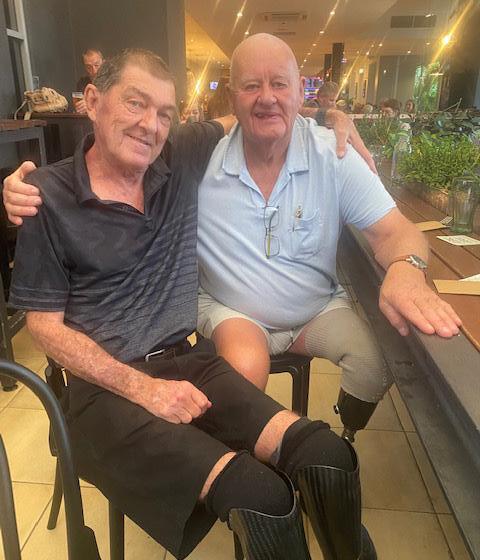
Limbs 4 Life offers connection with trained Peer Support volunteers. Our volunteers, who are amputees, are willing to share their knowledge and lived experience to assist others during their journey to recovery and a ‘new normal.’ Speaking with someone who personally understands what it means to lose a limb can be a great relief and provide the opportunity to share concerns and to ask questions that only someone who has been through amputation can answer.
A recipient of our Peer Support service reported, “After my amputation, a nurse asked me if I would like to speak with someone from Limbs 4 Life, which would be my first introduction to the amputee community. A lovely, energetic gentleman came to visit me. He was an amputee too, and was so upbeat, positive and enthusiastic about his life. I noticed how well he walked with his prosthesis and I thought, if he can do it, I can too.”
We provide online support via Facebook, ‘Amputees Australia – Limbs 4 Life,’ a closed, moderated group for amputees and their family members only. A safe environment where people who are amputees and their loved ones can connect with others who truly understand. Whether someone is still adjusting or they’ve lived with amputation for years, the community encourages members to ask questions, share experiences, celebrate milestones and seek advice in a secure and compassionate setting. To date, we have 3,000 members from all around Australia in the group, unrestricted by physical distance.
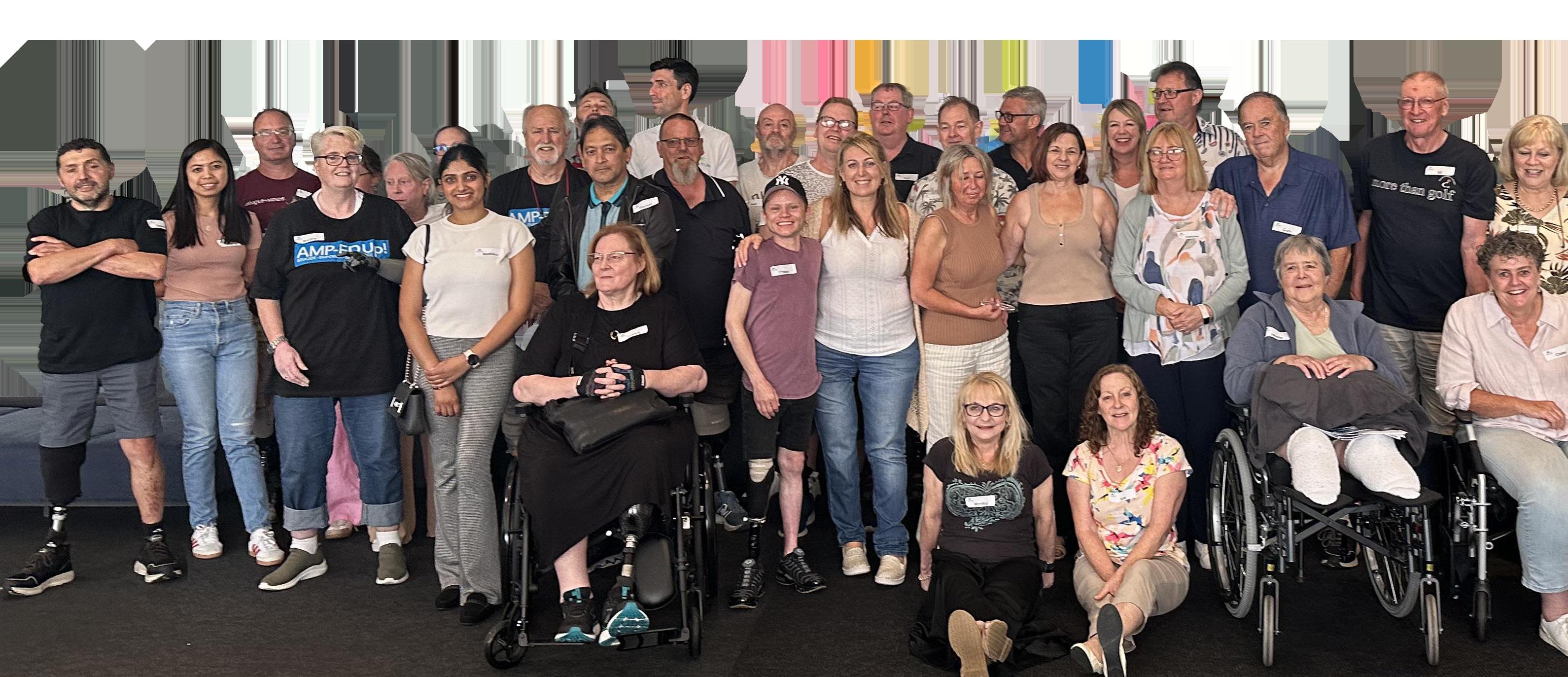

resources, events and community inclusion for amputees, their families, primary care amputees and their care givers prior to, or after amputation. Without Limbs 4 Life would go through the trauma of limb loss alone.
Limbs 4 Life produces and distributes free health resources to amputees and their carers. Our publications include;
• ‘A Practical Guide For Amputees’ is a comprehensive resource for people pre, or post amputation
• Information sheets; topics include mental health, phantom pain, regaining independence, funding support and more
• Amplified magazine – our free, tri-annual, in house publication with personal stories from community members, informative articles on healthcare and community matters
All of our amputee resources are available to download from our website, or we can post them, free of charge.
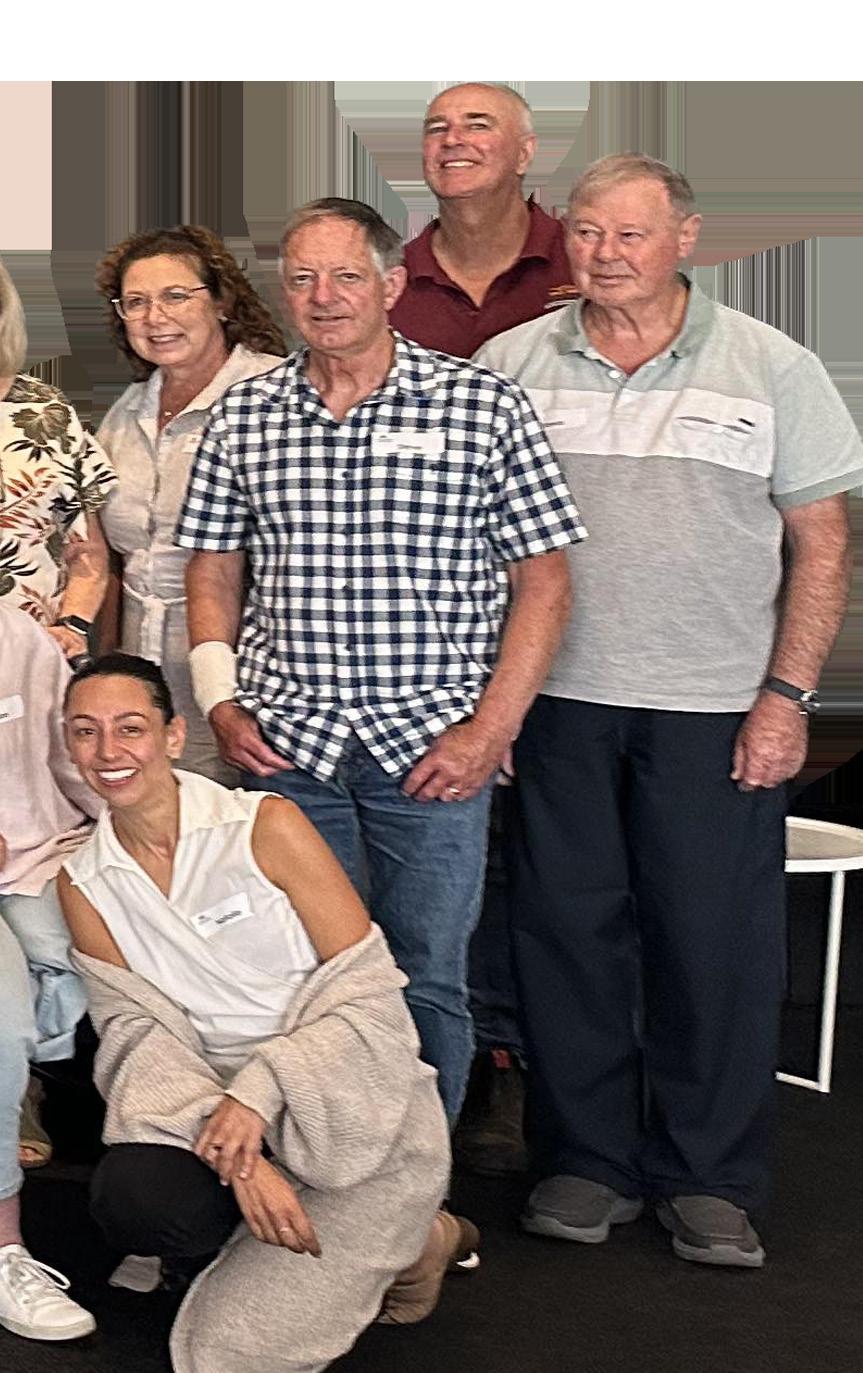
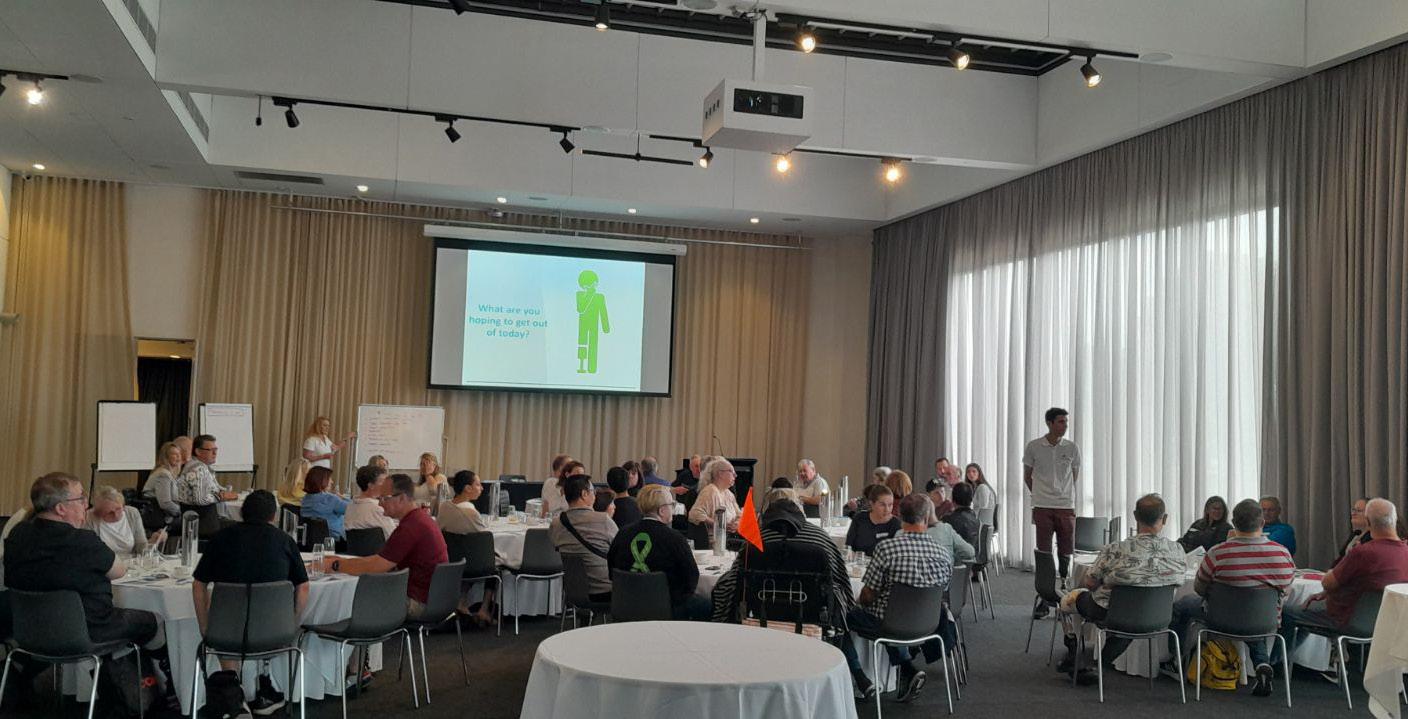
At Limbs 4 Life, we know how important it is for people to connect with their community. We facilitate Local Area Support Groups nationally, to bring together amputees, their partners, families and carers. These groups offer a casual, welcoming environment where individuals can share experiences, ask questions and build lasting support networks. Our Support Group Leaders have reported, “It’s really satisfying to see when someone who’s quiet or withdrawn comes to one of our gettogethers and realises that there are lots of other people in the same boat, and you see them come out of their shell. These groups help others to understand that life doesn’t end when you lose a limb.”
Our Victorian Local Area Support Groups operate in Albury, Bendigo, Blackburn, Brighton, Geelong, Greensborough, Mildura, Preston and Sandhurst. Partners, family members, carers and support workers are welcome and encouraged to attend.
Our YouTube channel, Amputees – Limbs 4 Life, provides a fantastic platform for people who are amputees to see that they’re not alone.
Our new A Practical Guide For Amputees 5-part video series is a comprehensive guide which supports people from the moment that they learn that they’re having or have had an amputation and features real people from our community.
Personal stories and dozens of other videos including interviews with prosthetists are available with subtitles in over 80 languages.



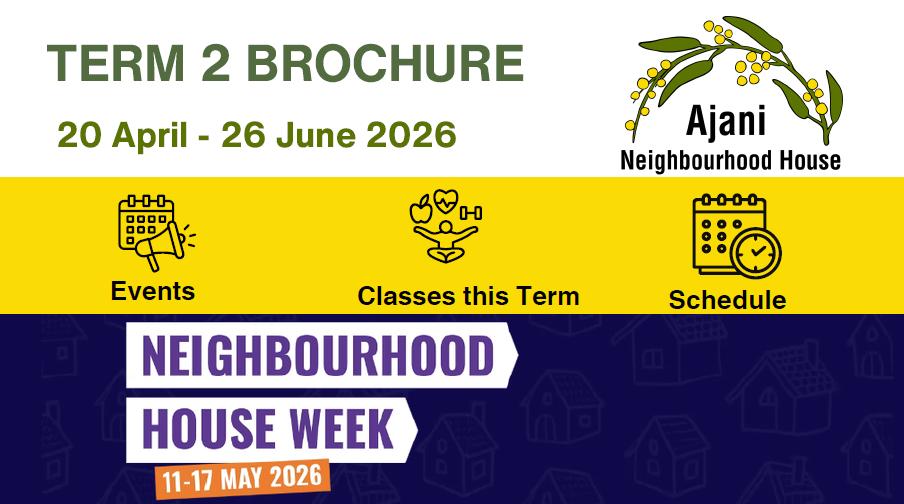

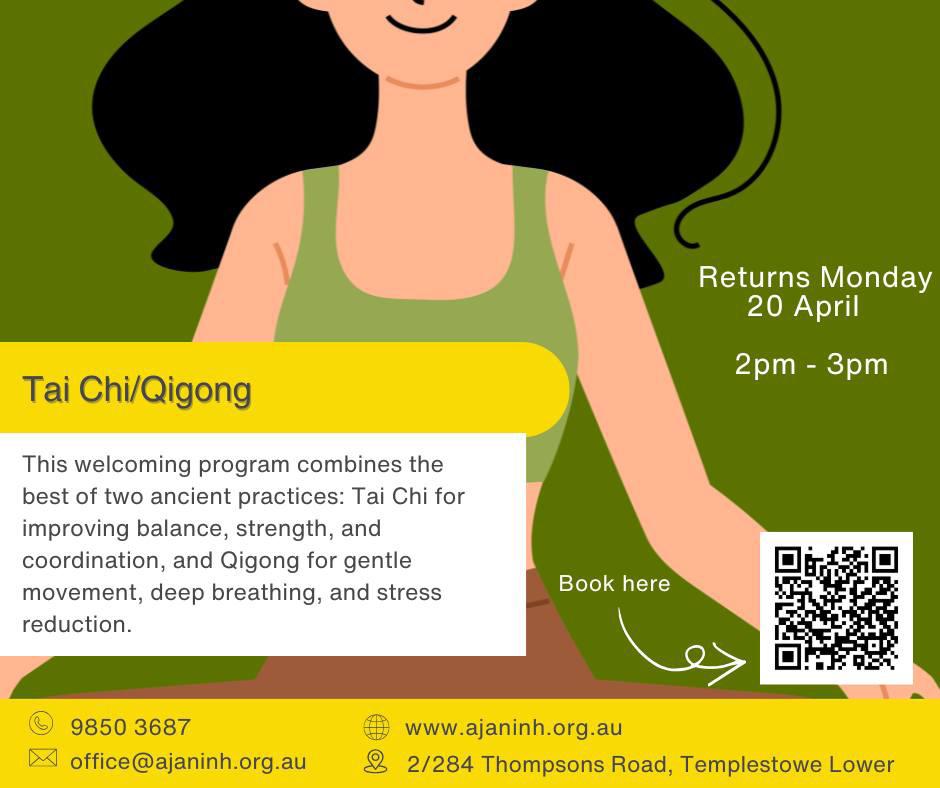
Art of Painting and Drawing
Returns 20 April
Mondays 10am - 12pm
9 sessions | Full $226 Conc $210

Gentle Yoga
Returns 20 April
Mondays 6.30pm - 7.30pm
9 sessions | Full $146 Conc $136

Applique Guild of Australia
Fourth Saturday every month
9.30am - 3pm
$5 per session

Introduction to using computers (Windows)
Begins 21 April
Tuesdays 9.30am - 12.30pm
9 sessions | ACFE $57 Conc $32

Gardening Employability Skills
Returns 20 April
Mondays 10am - 1pm 9 sessions. ACFE $57 Conc $32

Walking Group
Returns 21 April
Tuesdays 9.30am - 11.30am $3 per session

Cook with Teta
Begins 8 May
Fridays 10am - 12pm 4 sessions | $10 per session

Playgroup (parent-led)
Returns 4 February
Wednesdays during Term 10am11.30am

For More Info on other Work Shops at ANH, kindly Scan the QR code.




Manningham Council is inviting young people to help shape their community and the discussions that will take place at our first youth summit, MY Summit, in May.
The youth-led forum of local students will develop recommendations on 4 key issues that were chosen by, and which matter most to young people – including youth mental health; climate change; equality; and youth political participation.
Outcomes from the summit will help inform progress on Council Plan priorities from a youth perspective.
Manningham Mayor, Cr Jim Grivas, said engaging the young community was important, ensuring recommendations will be grounded in real and diverse experiences.
“Young people have identified topics affecting their lives, but we want to make sure their recommendations reflect the voices of all young people in our community,” Cr Grivas said.
“Providing opportunities for people of all ages to engage in civic life is a key focus of our Council Plan and the Youth Summit is one of the ways we can do this.”
Ahead of the summit, Manningham Council is inviting young people across Manningham to provide their feedback on the 4 key topics to gain a better understanding of young people’s views and lived experiences.
“This consultation is an opportunity for young people to share their insights and help shape meaningful outcomes at MY Summit,” Cr Grivas said.
“Tell us where the gaps are in mental health support, or how we could be better at including young people in the democratic process.”
Who can participate:
Anyone aged 12 to 25 who lives, works or studies in Manningham can contribute their thoughts in a short survey at Your Say Manningham. Find out more and share feedback at: yoursay. manningham.vic.gov.au/manningham-youth-survey-2026
Consultation is open from Friday 1 May – 11.59pm Sunday 24 May 2026.
Feedback will be provided to student delegates attending MY Summit 2026 to support the development of informed recommendations.


Council endorsed the Integrated Water Management (IWM) Strategy at its meeting on Tuesday 28 April 2026, subject to some refinements prior to publication of the Strategy. These refinements to the Strategy are now underway and the final Strategy will be shared once available.
The IWM Strategy sets the direction for how we will manage all sources of water over the next 10 years, supporting a resilient, liveable and sustainable Manningham. Developed in collaboration with community and a range of stakeholders and partners, it outlines practical actions to respond to emerging challenges such as population growth, climate change, and increasing flood and drought risk.
Thank you again to everyone who shared their views during the community consultation held between October and December 2025. Your feedback helped strengthen the Strategy and informed meaningful improvements.
We also acknowledge Council’s Flooding and Stormwater Management Community Reference Panel for their time, expertise and valuable input throughout the development of the Strategy.
View the 28 April 2026 Council Meeting minutes here.
For more information, visit the Integrated Water Management Your Say Manningham
We’re working to make it safer and easier for people of all ages and abilities to stay active and get around Manningham.
Our draft Active Transport Strategy is now open for community consultation. It sets out a 10-year plan to create a safer, more connected and more accessible active transport network across the municipality.
Take the Survey
The strategy brings together all forms of active travel, including walking, cycling, scooting and e -mobility, to support everyday trips and healthier, more sustainable travel choices.
A vision for a more active and connected Manningham
The draft strategy focuses on improving key parts of Manningham’s active transport network, including:
• on-road and off-road cycling infrastructure
• shared pathways and trails
• connections to key destinations and public transport
• bicycle facilities along major cycling routes
• amenities such as lighting, shading and rest areas.
The strategy will guide future planning, infrastructure delivery, community programs and advocacy work over the next 10 years – helping to support safe, healthy and sustainable travel choices.

The draft Active Transport Strategy is open for community feedback from 1 to 31 May 2026.
View the draft strategy and provide your feedback.
Your insights will help inform the final Active Transport Strategy, which will be considered at Council meeting later this year.
Subscribe for project updates at Your Say Manningham - Active Transport Strategy Refresh.
For more information
Call: 9840 9333
Email: manningham@manningham.vic.gov.au

Saturday 16 May
Join Dr Melissa Fletcher at Wonga Park Community College to learn what menopause is. Discover changes, myths and truths and take part in a hormone timeline activity that normalises experiences and connection.
Wednesday 27 May
Learn how to plan and prioritise home energy upgrades in this free small- group workshop. Get expert guidance, practical tools and time for questions to help you confidently improve comfort and reduce energy bills at home.

Thursday 14 May
Celebrate Law Week with wellregarded Melbourne lawyer and ABC Radio regular, David Whiting.
Join our Q&A session to have your legal questions answered as David demystifes the legal system for Victorians. Registrations required as seating is limited.
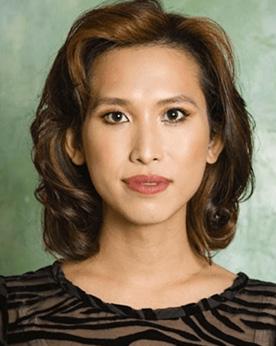
Join us as we raise the rainbow flag in recognition of IDAHOBIT at the Manningham Civic Centre, followed by a morning tea with our guest speaker, Anastasia Le, whose work focuses on social inclusion, institutional safety and organisational culture. Registrations are essential for this free event.