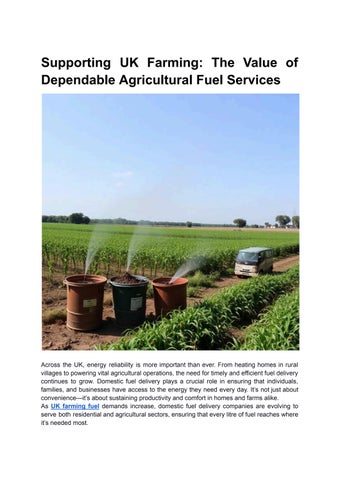
Supporting UK Farming: The Value of Dependable Agricultural Fuel Services
Across the UK, energy reliability is more important than ever. From heating homes in rural villages to powering vital agricultural operations, the need for timely and efficient fuel delivery continues to grow. Domestic fuel delivery plays a crucial role in ensuring that individuals, families, and businesses have access to the energy they need every day. It’s not just about convenience—it’s about sustaining productivity and comfort in homes and farms alike. As UK farming fuel demands increase, domestic fuel delivery companies are evolving to serve both residential and agricultural sectors, ensuring that every litre of fuel reaches where it’s needed most.
What Is Domestic Fuel Delivery and Why Is It Essential?
Domestic fuel delivery refers to the distribution of heating oil, diesel, and other fuels to homes and properties nationwide. Many rural and off-grid households in the UK rely on fuel deliveries to power boilers and heating systems, especially during the colder months when energy consumption spikes. The reliability of domestic fuel delivery ensures that homeowners never have to worry about running out of heating oil. These services often include flexible delivery options, emergency refills, and even tank-monitoring systems to ensure customers always stay warm and comfortable. But the role of domestic fuel suppliers extends beyond residential properties—they are also vital partners for local farms and small businesses that depend on a steady energy supply.
How Does Domestic Fuel Delivery Support UK Farming Fuel Needs?
Agriculture is one of the backbones of the UK economy, and it runs heavily on fuel. From tractors to generators, farm operations rely on a steady supply of UK farming fuel to maintain productivity throughout the year. Domestic fuel delivery services are designed to ensure that these operations never come to a halt. Suppliers coordinate deliveries to farms located in rural or hard-to-reach areas, bringing much-needed red diesel, kerosene, and heating oil directly to the source. This partnership between domestic fuel suppliers and the farming industry is vital for smooth operations, especially during busy agricultural seasons when time and efficiency matter most. The integration of domestic delivery and agricultural supply ensures seamless fuel logistics and consistent access to essential energy resources for both homes and farms.
Why Is Reliability Crucial in Domestic Fuel Delivery? Reliability forms the backbone of every fuel delivery service. For homeowners, it means consistent heating on the coldest winter days. For farmers, it means uninterrupted operations across vast agricultural lands. A dependable fuel delivery schedule minimizes downtime, prevents losses, and maintains comfort and efficiency across rural communities. In the UK, where unpredictable weather and remote locations can challenge logistics, domestic fuel delivery companies often use advanced planning systems and monitoring tools to manage routes and track consumption levels. This ensures that both residential and UK farming fuel clients receive timely refills without disruption.
How Are Domestic Fuel Suppliers Moving Toward Sustainability?
The energy industry is undergoing a major transformation as the UK pushes toward a greener, low-carbon future. Domestic fuel suppliers are taking an active role in this shift by introducing renewable and eco-friendly alternatives to traditional fuels. Hydrotreated
Vegetable Oil (HVO) and other sustainable biofuels are gaining popularity as they significantly reduce carbon emissions without compromising performance. This shift benefits both homeowners and agricultural operators who wish to make their energy use more sustainable. Farms that depend on UK farming fuel are beginning to explore renewable options, helping the sector lower its environmental impact while maintaining efficiency. Domestic fuel delivery companies are also investing in cleaner logistics—using efficient transport routes and low-emission vehicles—to support the UK’s net-zero objectives.
How Does Delivery?
Technology
Improve
Domestic
Fuel
Modern technology has revolutionized how domestic fuel delivery operates. Many suppliers now offer online ordering, automated scheduling, and real-time tracking. Smart tank systems allow customers to monitor their fuel levels remotely, alerting them before the tank runs dry. For farms, technology plays an even greater role. It enables efficient fuel management for machinery, reducing waste and optimizing performance. Through data-driven delivery routes and predictive analytics, suppliers can anticipate demand and plan deliveries with precision. This digital integration enhances the reliability and speed of UK farming fuel delivery, ensuring smooth and uninterrupted service across the country.
What Is the Future of Domestic Fuel Delivery in the UK? The future of domestic fuel delivery in the UK is focused on adaptability, sustainability, and innovation. As the country continues to balance energy demand with environmental responsibility, suppliers will play a vital role in helping customers transition to greener solutions while maintaining reliability and affordability. The ongoing collaboration between the domestic and agricultural energy sectors will strengthen the supply chain for UK farming fuel, ensuring that both homes and farms benefit from smarter, cleaner, and more efficient fuel delivery systems. From keeping homes warm to powering the machinery that feeds the nation, domestic fuel delivery remains a cornerstone of the UK’s energy infrastructure—connecting people, productivity, and sustainability in one seamless network.
Conclusion Domestic fuel delivery is far more than a service—it’s an essential link that supports daily life across the UK. By bridging the gap between households and UK farming fuel supply, these providers help maintain both comfort and productivity while steering the nation toward a greener energy future.