
From gut to kidney: One microbiome platform
for women’s health



Seamlessly supporting wellness through science-backed solutions at each stage of a woman’s life, SynbioTech’s microbiome platform addresses often underserved needs throughout her journey
“For decades, women’s health was addressed in silos – reproductive health, bone density, cardiovascular risk – each treated separately,” said Hsiao Wen Huang, PhD, senior scientist “The last decade of microbiome science revealed the gut microbiome as a central regulatory hub connecting hormone metabolism, immunity, inflammation and the gut-organ axes reaching the kidneys, the vaginal environment, the musculoskeletal system, and beyond ”
Backed by more than a quarter of a century’s experience in the field of microbiome science, SynbioTech is a frontrunner in understanding the crucial foundation this community of trillions of micro-organisms provides for health innovation across a woman’s life stages and need states
©iStock-mapodile
One platform across the female lifespan
Few ingredients are clinically validated in female populations – and fewer still offer a connected, platform-level story across the female lifespan . Yet this is the white space that SynbioTech’s microbiome platform occupies today .
SynbioTech begins development of every product with the following ‘microbiome-first’ question: What is happening in the gut, and how does its disruption cascade into the challenges women face at each life stage?
“In reproductive years, dysbiosis contributes to vaginal infections and digestive discomfort In perimenopause and beyond, it accelerates muscle loss and metabolic dysfunction In women at risk of chronic kidney disease, dysbiosis fuels uremic toxin production through the gut-kidney axis, accelerating renal function decline independent of age,” Dr Huang outlined “The microbiome is not one story – it is a continuous thread across a woman’s life, which is what makes it such a powerful and scientifically rigorous platform for targeted innovation ”
SynbioTech’s lifespan map (below) illustrates how the microbiome platform works, demonstrating support across the female healthspan – from reproductive/active years, through menopause, to healthy ageing
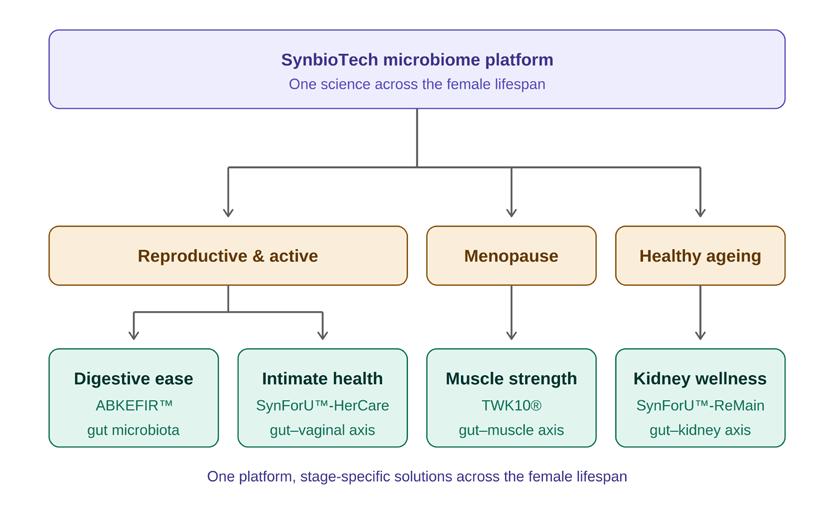
Figure 1. The microbiome platform as stage-specific solutions across the female lifespan –each anchored in a ‘home’ life stage, while the platform spans the whole journey.
Science-backed support for women’s life-long needs
Through the lens of the female healthspan, SynbioTech’s clinically validated solutions each target a particular women’s health painpoint via a specific microbiome mechanism.
ABKEFIR™: Digestive comfort and metabolic balance
Painpoint: Women carry a disproportionate burden of IBS, bloating, and functional gastrointestinal (GI) disorders, making daily digestive comfort a clear priority Metabolic balance also matters across the active and transitional stages of a woman’s life
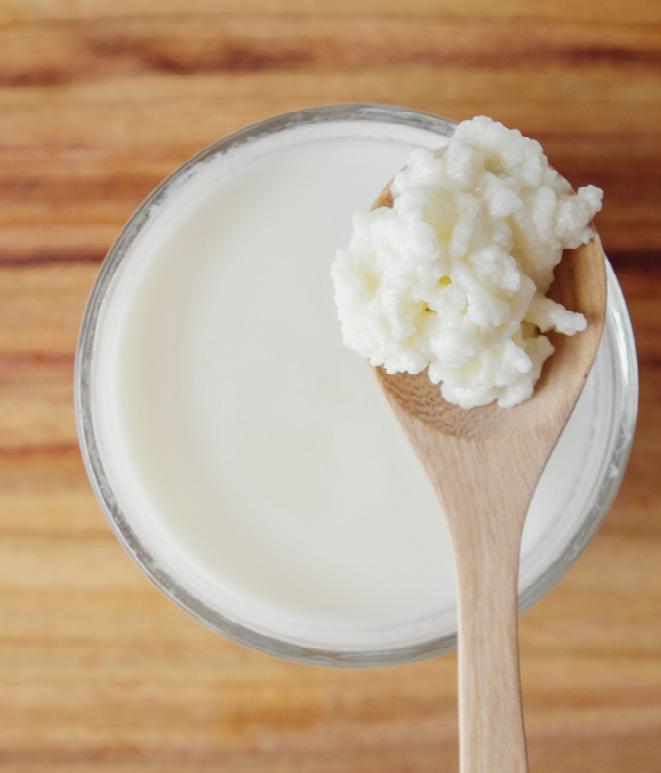
Mechanism: Gut microbiota restoration –achieved through ABKEFIR’s “complete 3P matrix: probiotics, prebiotics, and postbiotics working in synergy” Critically, SynbioTech’s proprietary co-fermentation process SYNTEK™ “not only preserves the live bacterial strains but also retains the full spectrum of fermentation metabolites generated during co-fermentation – including amino acids and vitamins) These metabolites fall within what is now defined as postbiotics, and their preservation is a defining characteristic of ABKEFIR’s mechanism of action,” advised Dr Huang
Solution: ABKEFIR is a seven-strain solution that carries the brand equity of kefir, yet with the significant advantages that standardisation and clinical validation deliver “ABKEFIR delivers a functional ecosystem designed to support gut microbiota restoration, digestive health, and metabolic balance simultaneously ”
Evidence: “A randomised, single-blind, placebo-controlled study1 confirmed that three weeks of ABKEFIR supplementation helped improve abdominal bloating, poor appetite, and abdominal pain, while also modulating gut microbiota composition. The study observed an increase in beneficial Bifidobacteria and total anaerobes, together with a shift in microbiota clustering away from potentially pathogenic bacteria such as E. coli and Clostridia,” reported Dr Huang
“Preclinical data further demonstrate metabolic benefits in a high-fat diet model,2 including reduced body weight gain, improved glucose tolerance, and reduced hepatic steatosis [commonly known as fatty liver disease], mediated through regulation of key lipid metabolism genes including CD36, Igf1, and Pgc1 ”
Formulator advantage: “ABKEFIR delivers something highly distinctive: the authentic spirit of kefir, standardised and validated for modern functional product development,” she noted “And while the digestive health probiotic market is well established, ingredients backed by clinically validated evidence relevant to women’s health, and with a dual digestive and metabolic health profile, remain genuinely differentiated. This is precisely where ABKEFIR delivers ”
SynForU™-HerCare: Intimate health and confidence
Painpoint: “Vaginal microbiome imbalance affects women across all life stages: recurring infections during reproductive years, dysbiosis triggered by stress, antibiotic use, or hormonal fluctuations, and vaginal environment changes that accompany the menopause transition,” said Dr Huang, highlighting the “measurable burden on women’s emotional wellbeing and daily life”
Mechanism: The gut-vaginal axis. “Taken orally, SynForU-HerCare modulates both gut and vaginal microbiota simultaneously.” Six patented probiotic strains “adhere to the vaginal epithelium, produce hydrogen peroxide, and actively inhibit key pathogens responsible for vaginal candidiasis and bacterial vaginosis, including Candida albicans, Gardnerella vaginalis, E. coli, and Salmonella.”
Solution: SynForU-HerCare restores a beneficial Lactobacillus-governed vaginal ecosystem (rather than merely suppressing pathogens) to deliver “genuine restoration of a healthy vaginal microbiota”
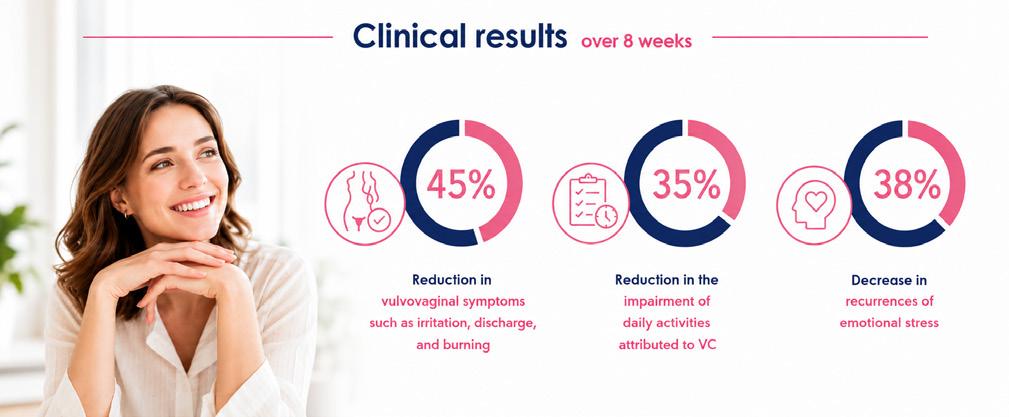
Evidence: An eight-week gold-standard clinical trial3 was conducted on pregnant women “Hormonal shifts, immune modulation, and heightened consequences of infection” make pregnant women “a rigorous test of any [vaginal health] solution’s efficacy”, yet such challenges can likewise arise from other triggers (eg, antibiotics use, stress, perimenopause, and menopause), making the study of “huge relevance for women across all life stages who face vaginal microbiome imbalance”
SynForU-HerCare supplementation significantly reduced key vulvovaginal symptoms (irritation, discharge, and burning) The treatment group also showed reduced recurrences of vaginal symptoms versus placebo SynForU-HerCare continuously reduced abundance of both Candida albicans and Candida glabrata throughout the vaginal tract. Beneficial L. crispatus also rose while declining on placebo – a sign of genuine microbiota restoration, not just pathogen suppression
The resolution of fungal burden was further supported by an improved inflammatory profile, translating into important emotional and social quality-of-life gains for the SynForU-HerCare supplemented women
Formulator advantage: “SynForU-HerCare’s dual-site mechanism actively shifts the vaginal environment away from pathogen dominance and toward a Lactobacillus-governed ecosystem, enabling broader, more sustained restoration of vaginal microbiome balance than single- or dual-strain products can offer ” The dualsite mechanism plus emotional wellbeing evidence offer combined benefits rarely seen in this category.
TWK10®: Muscle strength through menopause and beyond
Painpoint Muscle mass gradually declines from around the age of 30,4 accelerating for women through menopause, when oestrogen loss compounds muscle loss and introduces broader musculoskeletal symptoms 5 In later life, sarcopenia becomes a primary driver of frailty Metabolism likewise slows, and weight/belly-fat often increases with age 6 Additionally, “rapid mainstream adoption of GLP-1 receptor agonists creates an urgent, unaddressed need: women achieving significant fat loss through these medications are simultaneously experiencing accelerated muscle loss – a metabolic trade-off with long-term consequences for mobility, strength, and quality of life,” warned Dr Huang
Mechanism: The gut–muscle axis. SynbioTech’s researchers became one of the earliest groups to systematically investigate the direct regulatory relationship between the intestinal microbiome and skeletal muscle health And TWK10 lies at the heart of this journey of discovery
Solution: A clinically proven probiotic and postbiotic, Lactiplantibacillus plantarum TWK10 boasts three formulator-facing strengths
Firstly, format freedom: TWK10’s heat-killed postbiotic format is heat-stable, facilitating high-temperature processed applications including protein beverages, ready-to-drink formats, functional foods, and fortified dairy products
Secondly, protein amplification: “TWK10 significantly enhances amino acid absorption from dietary protein, resulting in a significant increase in branched-chain amino acids (BCAAs).7 Furthermore, co-supplementation of TWK10 with plant-based protein resulted in a 108% greater increase in total amino acid availability compared with plant-based protein alone This positions TWK10 not merely as a muscle support ingredient, but as a tool that enhances the fundamental efficiency of nutritional intake across life stages.”
Thirdly, TWK10’s appeal for GLP-1 users: “Evidence on muscle preservation and amino acid absorption positions TWK10 as a scientifically credible companion ingredient in this emerging space, precisely when the market is looking for solutions ”
Evidence: TWK10’s clinical evidence addresses the full adult female continuum: “From younger women where TWK10 combined with exercise training produced greater improvements in cardiorespiratory fitness and body composition than exercise alone,8 through to elderly subjects aged 55–85, where TWK10 supplementation9 significantly increased muscle mass, improved grip strength, enhanced endurance and stamina, and improved mobility and agility, while bone mineral density remained stable ”
Formulator advantage: Spanning performance, healthy ageing, and a timely GLP-1-related opportunity, TWK10 features the added advantage of dual viability: “The validation of heat-killed TWK10 as a postbiotic fundamentally expands where this ingredient can go ” TWK10 also brings rare global regulatory validation (US GRAS self-affirmed, Japan’s FFC, Korea’s HFF, and Taiwan’s Health Food certification) and international recognition via NutraIngredients Awards (in Asia, USA, and Europe) and Vitafoods Europe Innovation Awards

SynForU™-ReMain: Maintaining kidney wellness through the years

Painpoint: Kidney function naturally declines with age, and this decline is further accelerated by menopause 10,11 Moreover, the loss of oestrogen’s renoprotective effect around this time coincides with a rise in cardiometabolic risk factors 12 For women who want to proactively manage their long-term wellbeing, everyday kidney wellness is therefore a relevant but underserved priority
Mechanism: The gut–kidney axis. “In a healthy state, beneficial gut bacteria metabolise dietary fibre into short-chain fatty acids (SCFAs) that maintain gut barrier integrity, reduce systemic inflammation, and support the kidney’s ability to efficiently clear metabolic waste. When this balance is disrupted, the gut begins generating higher loads of uremic toxin precursors (indole and p-cresol), which are absorbed into circulation and converted into protein-bound toxins. These accumulate in the bloodstream, driving oxidative stress, inflammation, and progressive kidney damage.” These gut-derived metabolic by-products are detectable even at the earliest stages of reduced kidney function,13 which is why SynForU-ReMain intervenes upstream –supporting the gut’s clearance of these by-products and easing the kidneys’ metabolic load 14
Solution . Featuring strains specifically selected for uremic toxin precursor clearance ability (LP1410 and LPC1411), SynForU-ReMain is available in multiple formats (capsules, powder, and stick packs)
Evidence chain: In an adenine-induced CKD mouse model,15 ReMain demonstrated multi-layered benefits: blood urea nitrogen reduced by 27% and creatinine by 22% compared to the CKD group; serum indoxyl sulphate reduced by 29%, and p-cresyl sulphate by 17%
“These findings were subsequently supported by a human pilot study16 in kidney transplant recipients, where three months of supplementation reduced creatinine by 0 06 mg/dL and improved estimated [Glomerular Filtration Rate] GFR by 3.1 mL/min/1.73 m²,” Dr Huang said, emphasising how ReMain’s application fir mly occupies the space of everyday kidney wellness and preventive health, rather than treatment
Formulator advantage: Kidney wellness is one of the few women’s health need states with no established ingredient incumbent SynForU-ReMain lets a brand open that category rather than compete inside an existing one.
Why SynbioTech?
One science, multiple solutions
SynbioTech’s portfolio addresses women’s health priorities not as isolated concerns, but as connected solutions grounded in the same scientific foundation: the gut microbiome as a central regulator of women’s systemic health .
For women in their reproductive years, ABKEFIR™ supports everyday digestive comfort and metabolic balance, while SynForU™-HerCare addresses vaginal microbiome health and the emotional wellbeing that accompanies this
Through menopause and active ageing, TWK10® maintains muscle strength, physical performance, and metabolic resilience
In later life, SynForU™-ReMain supports long-term kidney wellness – helping maintain healthy renal function by reducing gut-derived uremic toxin precursors at the earliest, most modifiable point in the process.
And because a platform is only as valuable as a brand’s ability to build on it, SynbioTech pairs science with end-to-end CDMO capability – from strain selection and formulation to dosage-form engineering and fullscale manufacturing This means a single ingredient’s evidence can be translated into formats tailored to each brand’s market, thus offering validated microbiome science to support women through every step in her journey






References
1. Ming-Cheng Wang, Ahmad Imran Zaydi, Wei-Hung Lin, Jin-Seng Lin, Min-Tze Liong, Jiunn-Jong Wu. Putative Probiotic Strains Isolated from Kefir Improve Gastrointestinal Health Parameters in Adults: a Randomized, Single-Blind, Placebo-Controlled Study. 2019. Probiotics and Antimicrobial Proteins https://doi.org/10.1007/s12602-019-09615-9.
2. Chen, Y.-T.; Hsu, A.-H.; Chiou, S.-Y.; Lin, Y.-C.; Lin, J.-S. AB-Kefir Reduced Body Weight and Ameliorated Inflammation in Adipose Tissue of Obese Mice Fed a High-Fat Diet, but Not a High-Sucrose Diet. Nutrients 2021, 13, 2182. https://doi.org/10.3390/nu13072182
3. Ang XY, Chung FY, Lee BK, Azhar SNA, Sany S, Roslan NS, Ahmad N, Yusof SM, Abdullah N, Nik Ab Rahman NN, Abdul Wahid N, Deris ZZ, Oon CE, Wan Adnan WF, Liong MT. Lactobacilli reduce recurrences of vaginal candidiasis in pregnant women: a randomized, doubleblind, placebo-controlled study. J Appl Microbiol. 2022 Apr;132(4):3168-3180. doi: 10.1111/ jam.15158.
4. Volpi E, Nazemi R, Fujita S. Muscle tissue changes with aging. Curr Opin Clin Nutr Metab Care. 2004 Jul;7(4):405-10. doi: 10.1097/01.mco.0000134362.76653.b2.
5. Ko J, Park YM. Menopause and the Loss of Skeletal Muscle Mass in Women. Iran J Public Health. 2021 Feb;50(2):413-414. doi: 10.18502/ijph.v50i2.5362.
6. Panxi Yu, Rong Yuan, Xiaonan Yang, Zuoliang Qi. Adipose tissue, aging, and metabolism. Current Opinion in Endocrine and Metabolic Research, Volume 5, 2019, Pages 11-20, ISSN 2451-9650, https://doi.org/10.1016/j.coemr.2019.02.003.
7. Mon-Chien Lee, Chun-Hui Chiu, Yi-Chu Liao, Yi-Chen Cheng, Chia-Chia Lee, Chin-Shan Ho, Yi-Ju Hsu, Hsiao-Yun Chang, Jin-Seng Lin, Chi-Chang Huang. Gut microbiota modulation and amino acid absorption by Lactiplantibacillus plantarum TWK10 in pea protein ingestion: TWK10 boosts gut microbiota, amino acid uptake. Current Research in Food Science, Volume 9, 2024,100917, ISSN 2665-9271, https://doi.org/10.1016/j.crfs.2024.100917.
8. Huang, W.-C.; Lee, M.-C.; Lee, C.-C.; Ng, K.-S.; Hsu, Y.-J.; Tsai, T.-Y.; Young, S.-L.; Lin, J.-S.; Huang, C.-C. Effect of Lactobacillus plantarum TWK10 on Exercise Physiological Adaptation, Performance, and Body Composition in Healthy Humans. Nutrients 2019, 11, 2836. https://doi. org/10.3390/nu11112836
9. Xing G, Ohashi A, Suzuki N, Takara T. Impact of Consuming Food Containing Lactiplantibacillus plantarum TWK10 on Muscle and Body Fat in Healthy Middle-aged Japanese: A Randomized, Placebo-controlled, Double-blind, Parallel-group Comparison Study. Japanese Pharmacology & Therapeutics (薬薬薬薬薬; Jpn Pharmacol Ther). 2024;52(7):833–846.
10. Cevik, E. Cansu; Erel, C. Tamer; Ozcivit Erkan; Ipek Betul; Sarafidis, Pantelis; Armeni, Eleni; Fistoni薬, Ivan; Hillard, Timothy; Hirschberg, Angelica Lindén; Meczekalski, Blazej; Mendoza, Nicolás; Mueck, Alfred O.; Simoncini, Tommaso; Stute, Petra; van Dijken, Dorenda; Rees, Margaret; Lambrinoudaki, Irene. Chronic kidney disease and menopausal health: An EMAS clinical guide. Maturitas. 192. 01/01/2025. doi: 10.1016/j.maturitas.2024.108145.
11. Leone A, Menichetti F, Sileo F, Gallosti S, De Amicis R, Foppiani A, Bertoli S, Battezzati A. Menopause is associated with a reduction in glomerular filtration rate, independent of body composition and metabolic syndrome. Maturitas. 2025 Jul;198:108595. doi: 10.1016/j. maturitas.2025.108595.
12. Andrea Cignarella, Mario Kratz, Chiara Bolego. Emerging role of estrogen in the control of cardiometabolic disease. Trends in Pharmacological Sciences, Volume 31, Issue 4, 2010, Pages 183-189, ISSN 0165-6147. https://doi.org/10.1016/j.tips.2010.01.001.
13. Barrios C, Beaumont M, Pallister T, Villar J, Goodrich JK, Clark A, Pascual J, Ley RE, Spector TD, Bell JT, Menni C. Gut-Microbiota-Metabolite Axis in Early Renal Function Decline. PLoS One. 2015 Aug 4;10(8):e0134311. doi: 10.1371/journal.pone.0134311.
14. Tsuji K, Uchida N, Nakanoh H, Fukushima K, Haraguchi S, Kitamura S, Wada J. The Gut-Kidney Axis in Chronic Kidney Diseases. Diagnostics (Basel). 2024 Dec 25;15(1):21. doi: 10.3390/ diagnostics15010021.
15. Huang et al., J. Agric. Food Chem. 2021, DOI 10.1021/acs.jafc.1c01547
16. Wai-Nga Chan, Dong-Ru Ho, Yun-Ching Huang, Jian-Hui Lin, Yu-Liang Liu, Ming-ju Chen, Chih-Shou Chen. A Pilot Study of Nephrogenic Probiotics to Further Improve an Already Stabilized Graft Function After Kidney Transplantation, Transplantation Proceedings. Volume 55, Issue 9, 2023, Pages 2090-2094, ISSN 0041-1345, https://doi.org/10.1016/j. transproceed.2023.08.011.