EXPO DAY WITH SPONSORS, VENDORS, MUSIC, CANTEEN, BAR, ACTIVITIES
ENGLISH SPORTING PAIRS EVENT – 80 TARGET
SATURDAY 31st OCTOBER
ASF NATIONAL CHAMPIONSHIP – 100 TARGET
SUNDAY 1st NOVEMBER
ASF NATIONAL CHAMPIONSHIP – 50 TARGET
Major Sponsors
From the Editor
Our June issue brings you the outstanding submissions from members who entered our 2026 Field & Game Australia Photo Competition. Once again, the quality and variety of entries were exceptional, capturing everything from opening morning scenes and wetlands through to the happy faces, incredible birdlife, and the experiences that continue to shape our community.
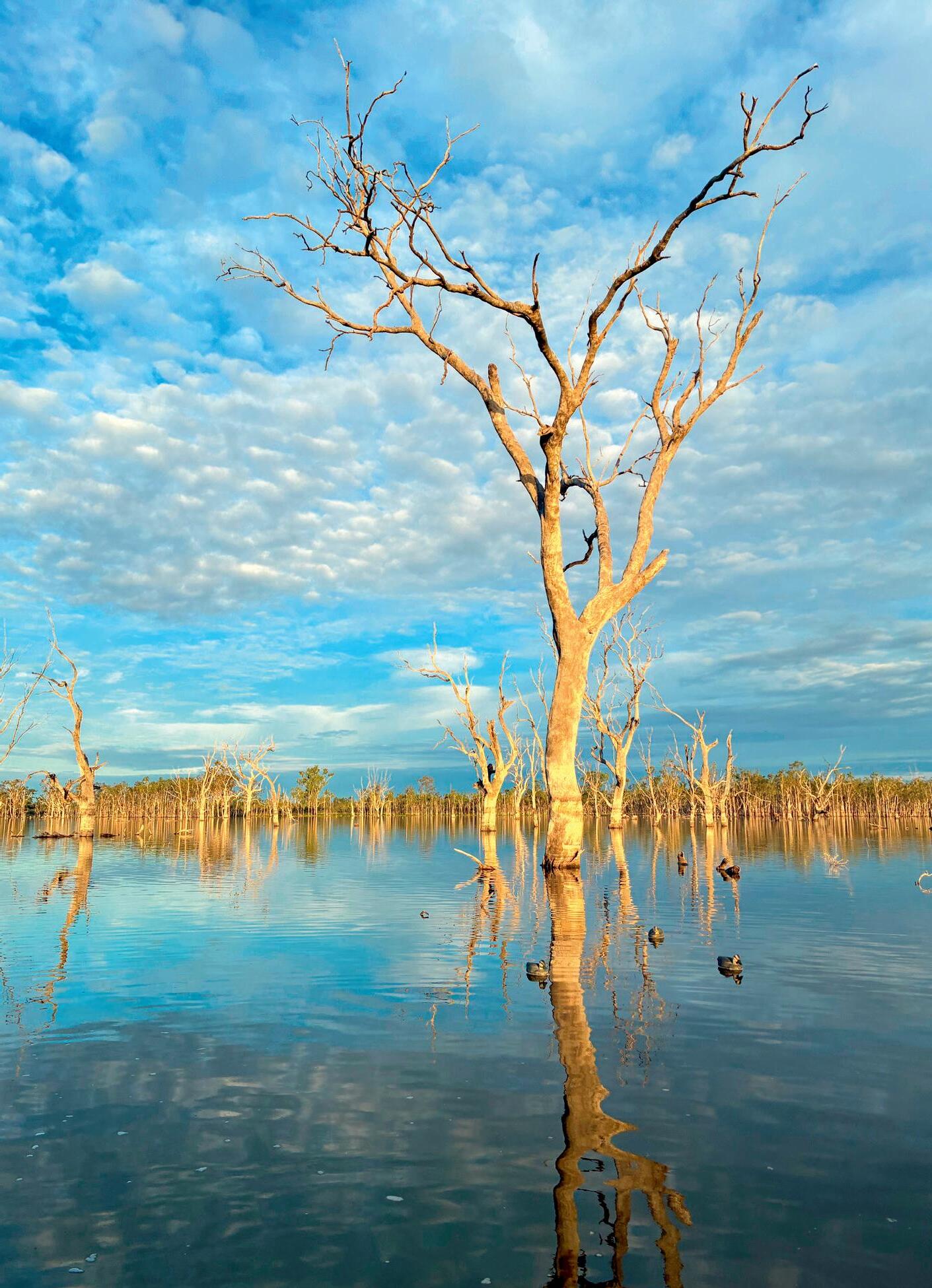
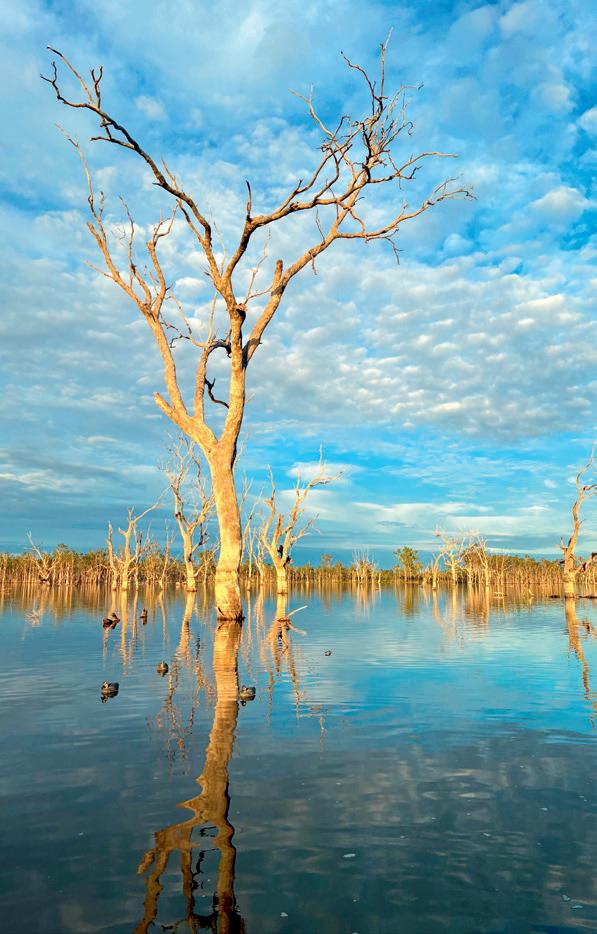
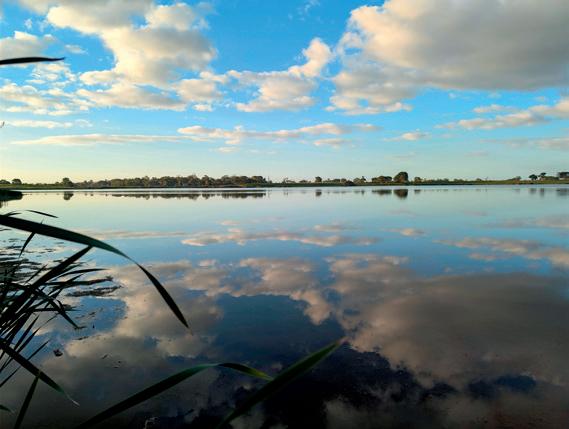
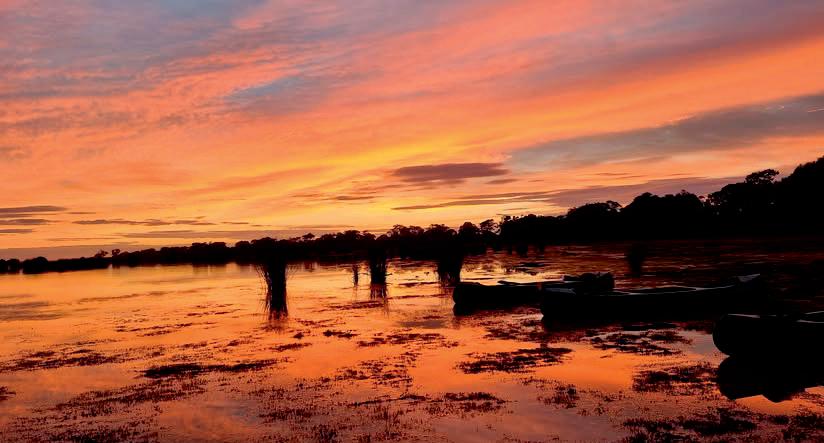
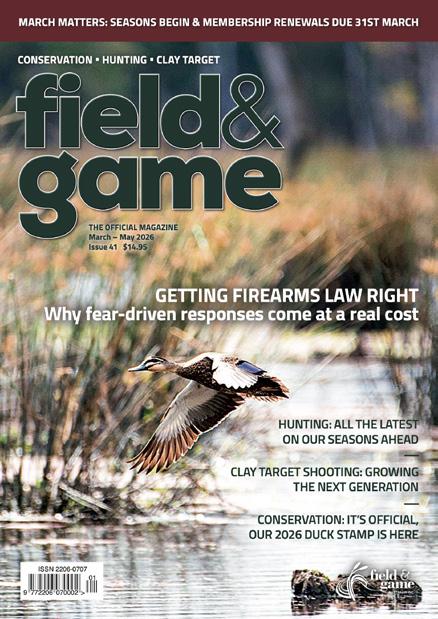
Our front cover this issue features the winning image from the 2026 Field & Game Australia Photo Competition, captured by Paul Thompson at Woolshed Swamp near Boort on opening weekend. It’s a striking reminder of the connection many of our members have with the landscapes they spend time in and the experiences that continue to bring people back season after season.
There is also a strong sense throughout this issue of recognising where things began, while continuing to look ahead. Whether reflecting on the early efforts that helped establish some of our branches, the ongoing evolution of ASF and shooting techniques, or the broader discussions taking place around firearm ownership across Australia, there is a common thread running through it all, the importance of participation, experience, and staying engaged.
While the sport and the conversations around it continue to evolve, some things remain unchanged. Consistency, judgement, respect for the environment, and the willingness of members to contribute their time and knowledge continue to shape the organisation just as much today as they did decades ago.
The role of practical pest management is another theme that continues to surface throughout this issue. Spending more time on the Bellarine Peninsula recently has provided a firsthand reminder of just how significant predator pressure can be. Seeing the impact foxes can have on both livestock and local wildlife reinforces that ethical pest control plays an important role in both land management and conservation across many parts of the country.
These connections define Field & Game Australia. Across the organisation, members continue contributing not only through hunting and shooting sports, but also through habitat work, conservation projects, and practical land management activities.
As another season comes to a close, it’s also a timely reminder of the role each of us plays in keeping this community strong. Whether it’s bringing someone new along to a shoot, sharing knowledge in the field, or simply taking the time to explain what we do and why it matters, those efforts continue to build on what has already been established.
There has never been a more important time to stay engaged, informed, and proud of what we represent. And just as importantly, to share it.
Anne-Marie Blewett
Field & Game Australia
If you have any feedback of any sort of would like to contribute to Field & Game magazine in any way, drop us a line at editor@ fieldandgame.com.au or, you can call on (03) 5799 0960.
Field & Game Australia
Lucas Cooke – Chief Executive Officer
Anne-Marie Blewett – Operations Lead
Wayne Peters - Senior Administration and Branch Support Officer
Olivia Peachey - Administration and Member Support Officer
Chelsea Skinner – Business Accounts Clerk
FGA Board
David Anderson – Chairman
david.anderson@fieldandgame.com.au
Trent Leen – Vice-Chairman trent.leen@fieldandgame.com.au
Field & Game (ISSN: 2206-0707) is published and printed by Complete Colour Printing (84-86 Herald Street, Cheltenham, VIC 3192) under licence from Field & Game
Australia Inc www.fieldandgame.com.au
Copyright 2026 Field & Game Australia Inc.
June - August 2026 Issue 42
Page 6
From the Chairman: Moving Forward Together
Page 8
From the CEO: Working beyond the headlines
Page 10
2026 Photo Competition: Through your lens - The moments that matter
Page 14
Legislation: State of the States
Page 16
Members: Rotorua Rod & Gun Club
Page 19
Community: Fowles Winery
Page 22
Hunting: My GL and GMA Education Modules
Page 24
Members: The Free Dog
ADVOCACY - A VOICE
Page 26
Heritage: Cranbourne Field & Game - A Proud History
Page 28
History: Paris & Normandy - A Journey of Reflection
Page 29
Advocacy: A Voice in Parliament
Page 30
Conservation: On the ground at Rushworth
Page 32
Shot Loads: Performance of Light Shot Loads
Page 34
Proud to Belong: The Modern Firearm Owner and the Old Fashioned “Representative”
Page 36
Conservation: Birdwatching is Bad for Ducks - Timing matters more than intent
Page 38
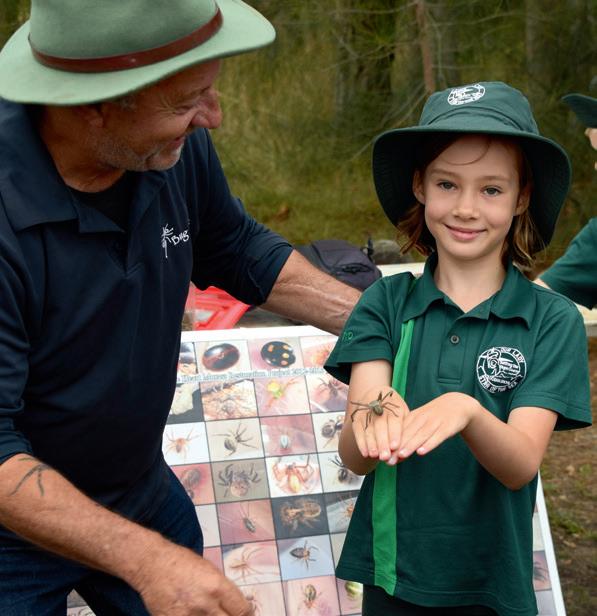
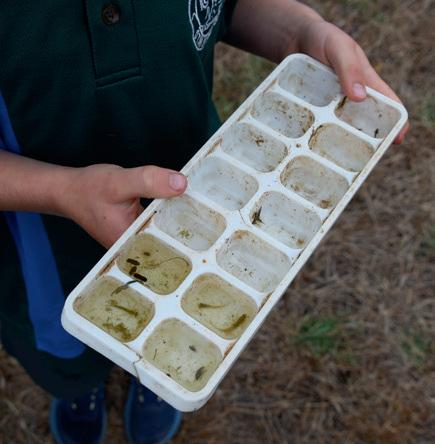
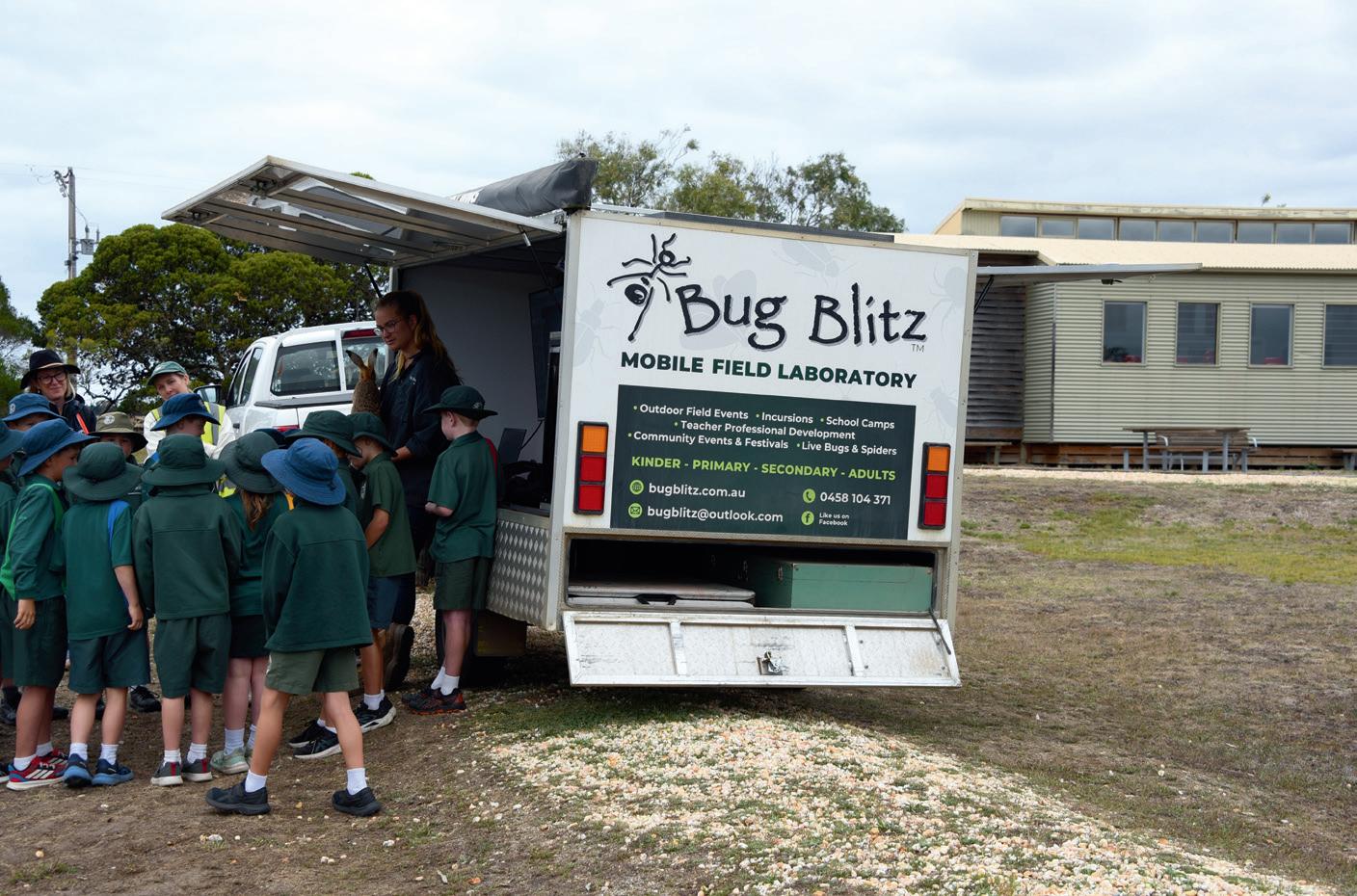
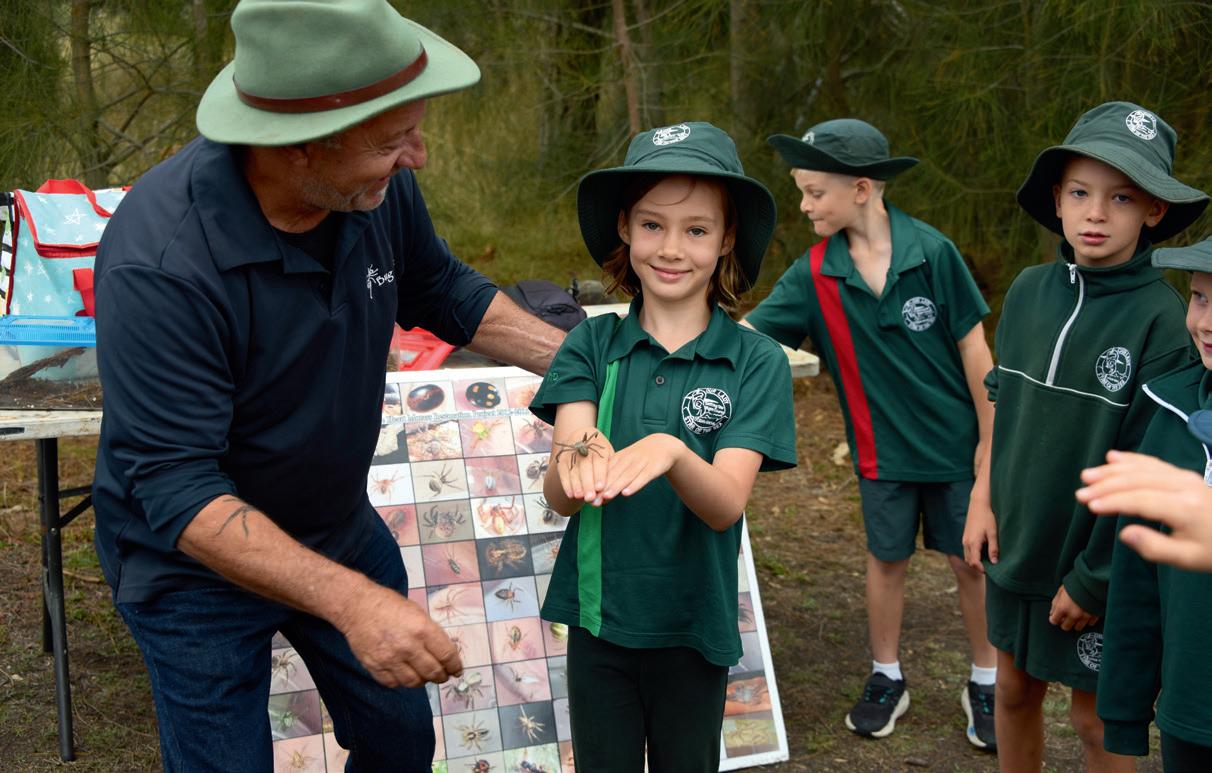
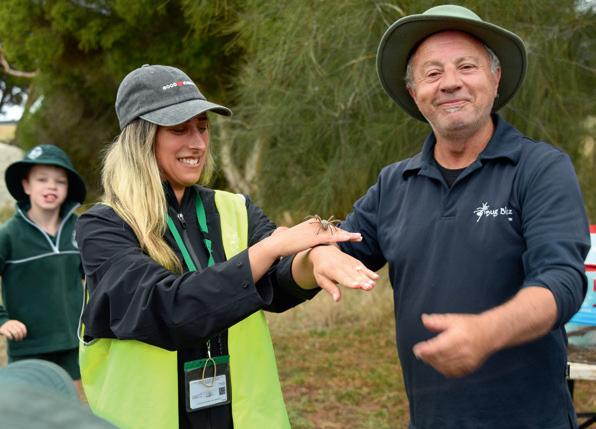
Next Generation: Bug Blitz Learning from the smallest things
Page 40
Hunting: I have found my people
Page 43
ASF: Reading the target
Page 44
ASF: Rulebook Version 3 - All you need to know
Page 46
Advocacy: 2026 Politicians’ Shoot - Engagement, understanding and a shared experience in the field
Page 48
Vet Talk: Karen Davies Exercise-Induced Collapse and Fatigue in Working Dogs
Page 50
Conservation: Tremendous Teamwork at Hird and Gaynor Swamps
Page 52
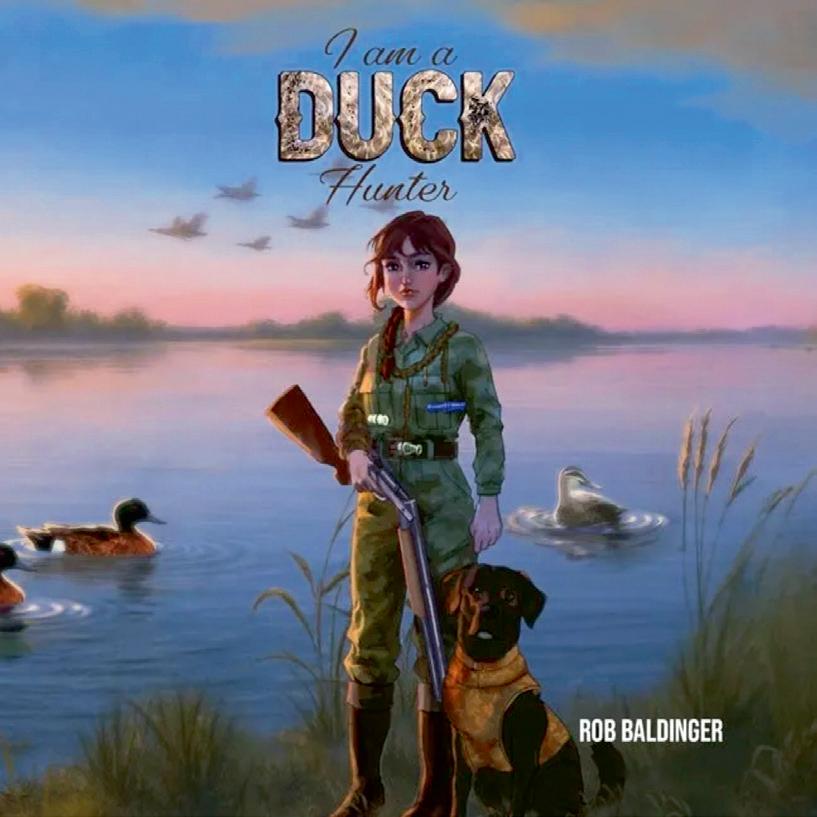
Book Review: I am a Duck Hunter
Page 54
Hunting: Jack, the Fox Trapper
Page 56
ASF: The Art of Trap Setting
Page 58
Pest Control: Feral Animals in Australia
Page 60
Heritage: On Target for a winning score
Page 61
Tribute: Mark Reynolds Wodonga-Albury Field & Game Life Member
Page 62
Branch News: Bendigo Field & Game - 2026 Season Information Night
GENERATION - BUG BLITZ
ADVOCACY - 2026 POLITICIANS’ SHOOT
BRANCH NEWS - BAIRNSDALE FIELD & GAME SCHOOL SHOOT 40
HUNTING - I HAVE FOUND MY PEOPLE
Page 63
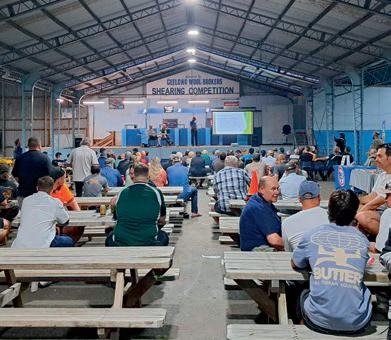
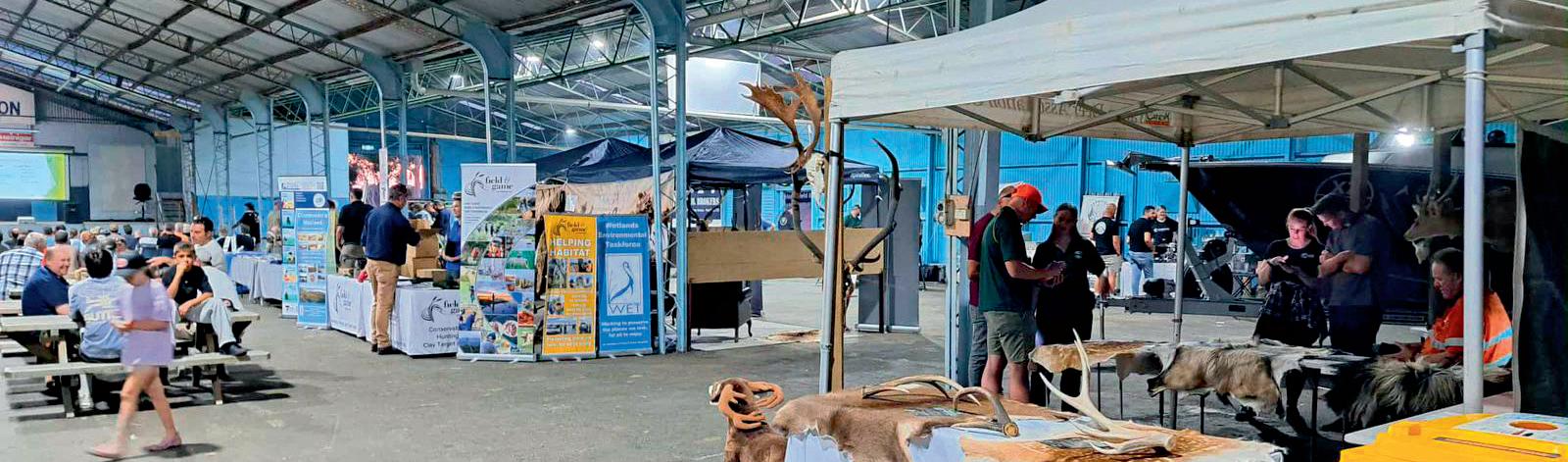
Branch News: Geelong Field & Game - 2026 Duck Expo and Information Night
Page 64
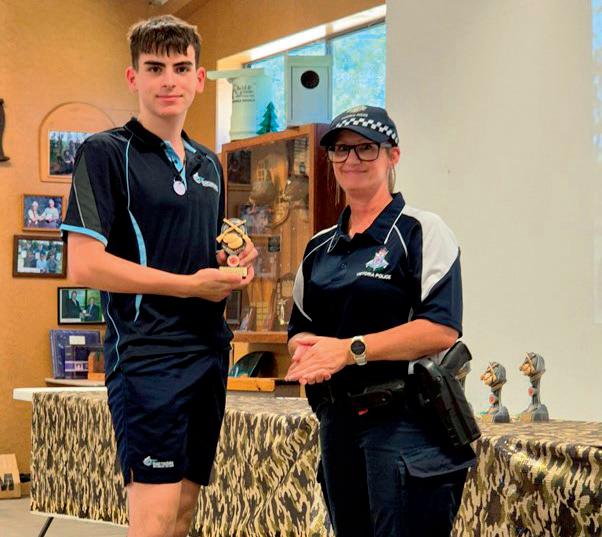
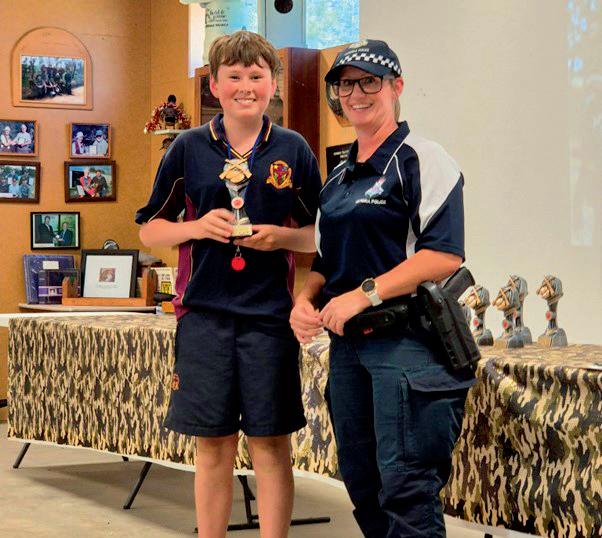
Branch News: Bairnsdale Field & Game School Shoot
Page 66
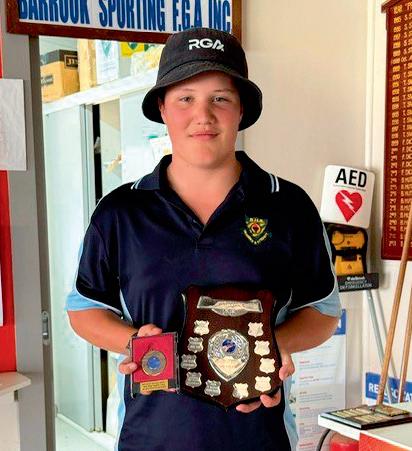
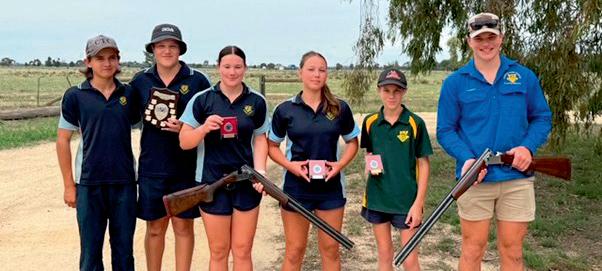
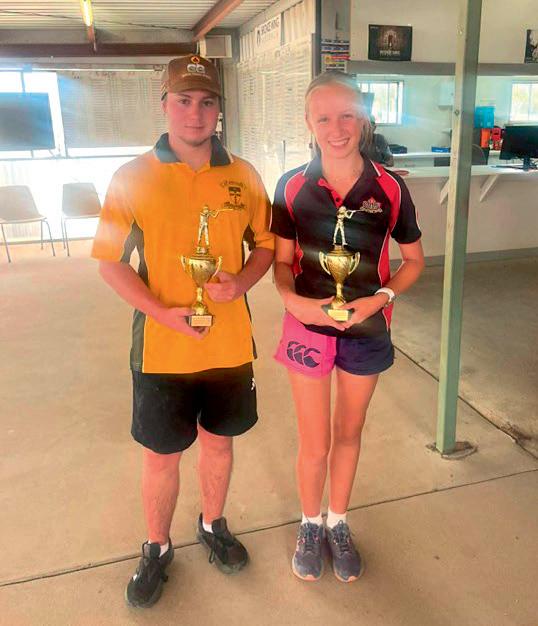
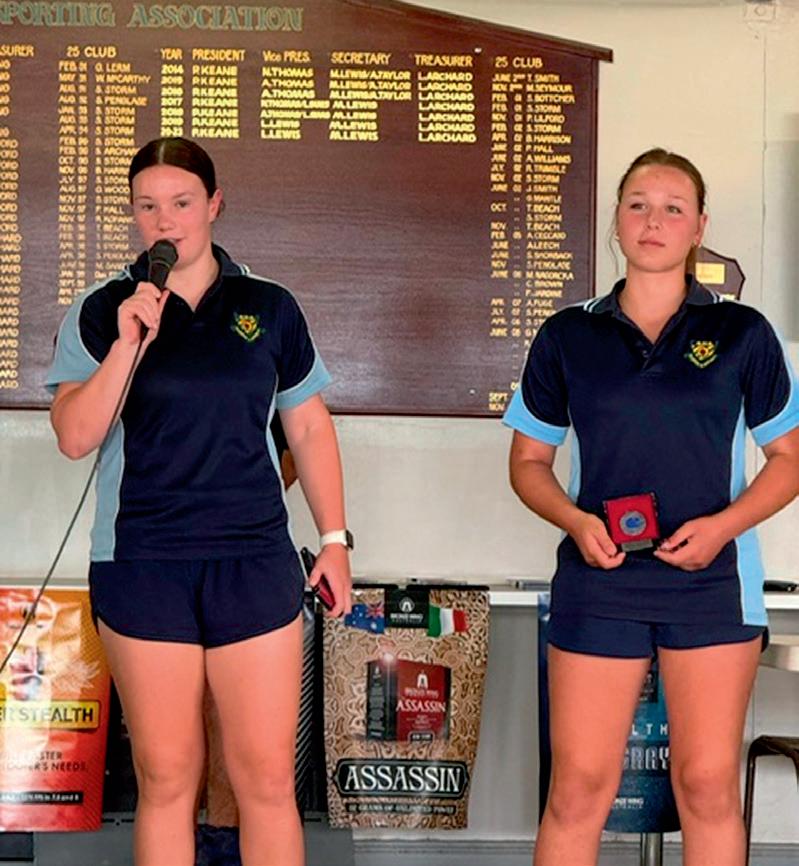
Branch News: Bar-rook Field & Game School Shoot
Page 68
Branch News: Donald & Minyip Field & Game Poachers Weekend
Page 71
Branch News: Grampians Field & Game Mick Greenwood Classic
Page 72
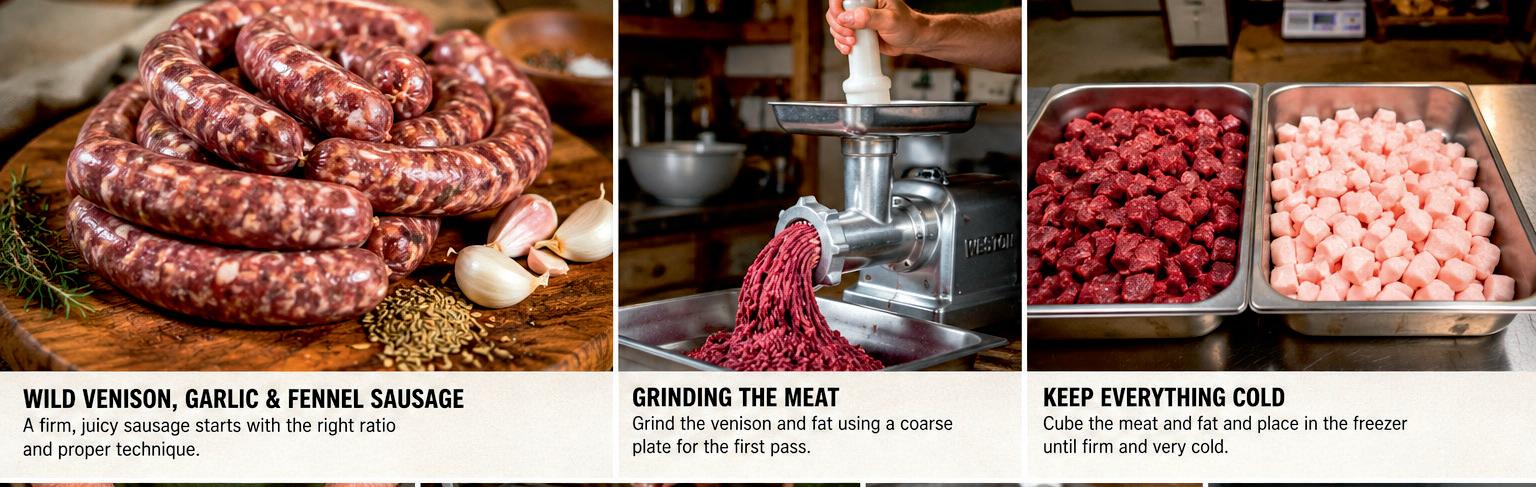
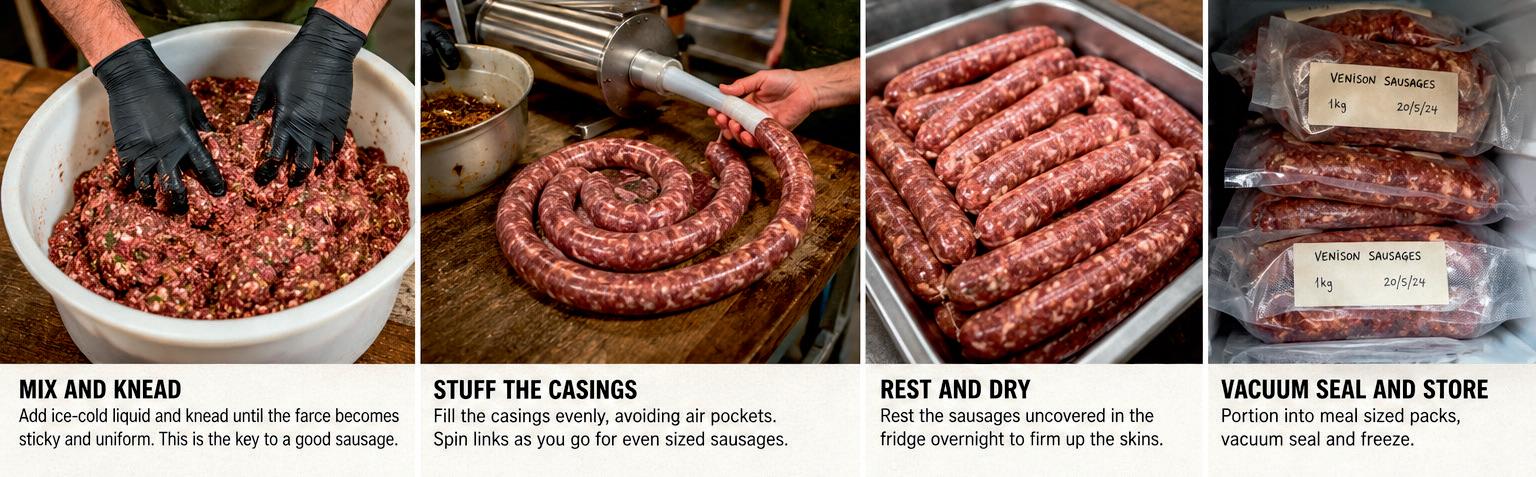
Cooking: Beginners guise to making wild sausages Page 74
Recipe: Crispy Magpie Goose Stir Fry in Sticky Sauce
Page 75
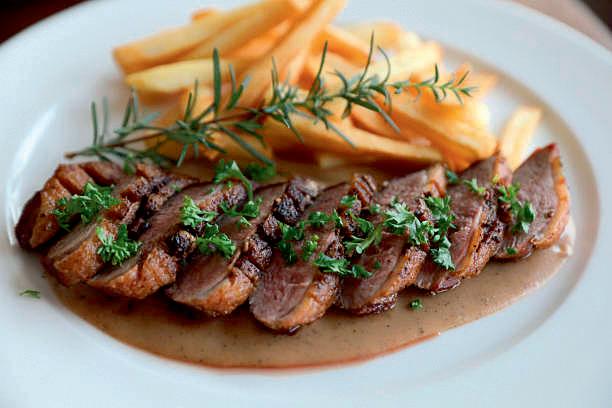
Recipe: Pan seared duck breast with French Fries
Page 82
Back Page Yarns: Does a Poor Day’s Hunting Really Beat a Good Day’s Work?
Cover Photo: Paul Thompson – Woolshed Swamp, Boort Vic
Moving Forward Together
Our second quarter continues to unfold, with a number of work fronts progressing and events taking place throughout this period.
As you may recall, we have recently undergone an organisational reshuffle, with our current CEO, Lucas Cooke, relocating to Tasmania in an Executive Director role, commencing upon the appointment of a new CEO. The organisation has been busy securing a suitable candidate of high calibre, someone who can pick up where Lucas has left off and continue our journey of growth and professionalism.
We received over 50 applications, which was very pleasing, and were able to narrow this down to the top five candidates for interview. A team of six was convened, comprising experienced FGA members and external representatives, forming two panels to assist in determining the best candidate for our organisation. All candidates were highly capable and would have performed admirably in the CEO role, however there is only one position to fill.
We are pleased to confirm that Turlough Guerin has accepted the position as CEO of Field & Game Australia, commencing on June 9th. We look forward to supporting and working with Turlough as he finds his feet, meets with our Board, staff, and members, and settles into the role. Please join me in welcoming Turlough to Field & Game Australia.
Additionally, we look forward to Lucas focusing on a number of significant work fronts that will bring additional revenue, strength, and membership to our organisation. It can’t happen soon enough.
I continue to hear mixed feedback on the duck season, with some hunters enjoying a strong season in Northern Victoria, while others report that it has been hard work to secure a few birds. What has been particularly pleasing, however, is the level of compliance and behaviour
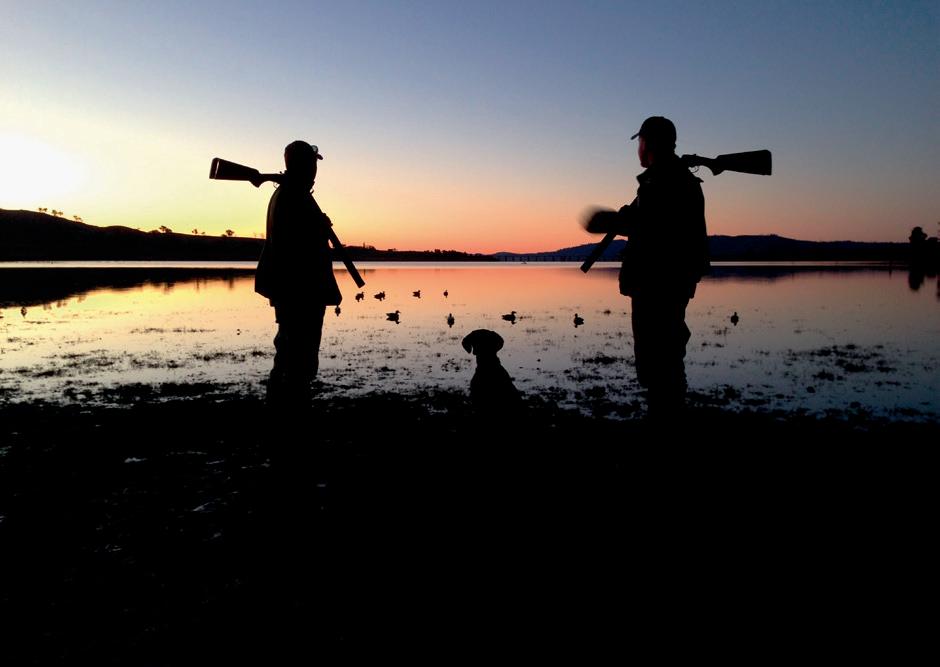
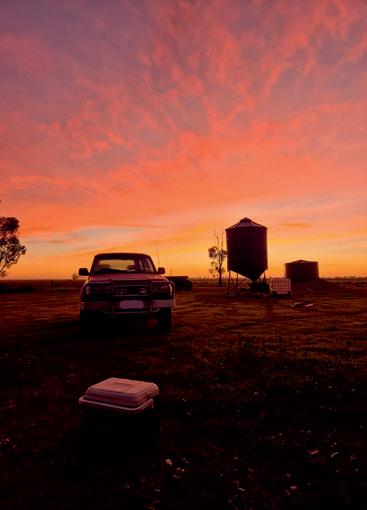
demonstrated by our members while out in the field. These standards reinforce that we are a committed and reputable group who value the privilege of participating in the season. Congratulations to you all, Field & Game Australia is proud to have you as members. Please keep sending in your photos. I have seen some incredible sunrises and sunsets shared by our hunters, particularly on ANZAC morning, as we paused to remember those who fought for our country. It is a tribute that resonates strongly with what it takes to protect our sovereignty and way of life.
Gun reform continues to be at the forefront of our focus. It was a particularly positive experience to attend Parliament on April 1st and observe proceedings from the public gallery. It was encouraging to see those who support us articulate their views, and the views of lawful firearm owners, clearly and strongly. The message was unmistakable, that responsible, lawabiding hunters and firearm owners should be supported, and that efforts should focus on reinforcing existing laws.
It was also pleasing to see the public gallery well attended, demonstrating a strong level of interest and engagement. It sent a clear message to decision-makers that our members are present, engaged, and not going away anytime soon. A sincere thank you to all those who attended.
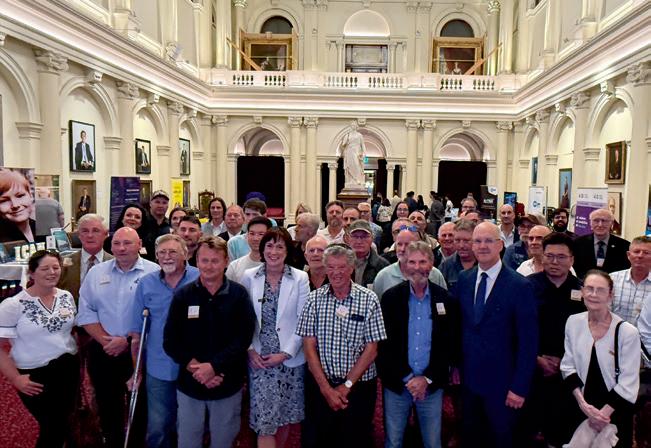
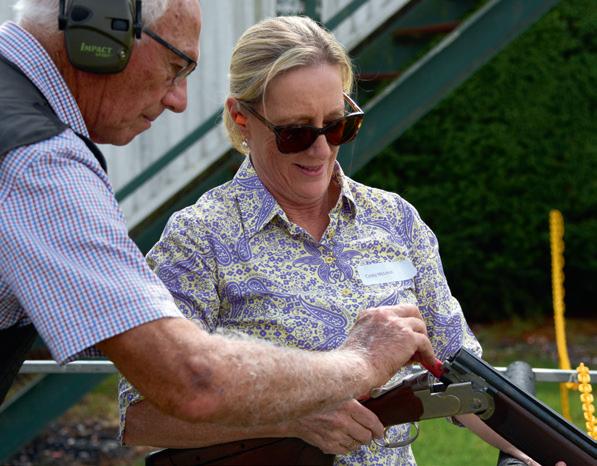
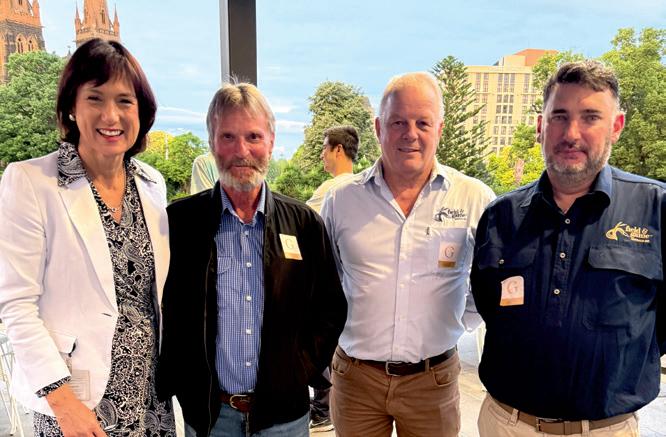
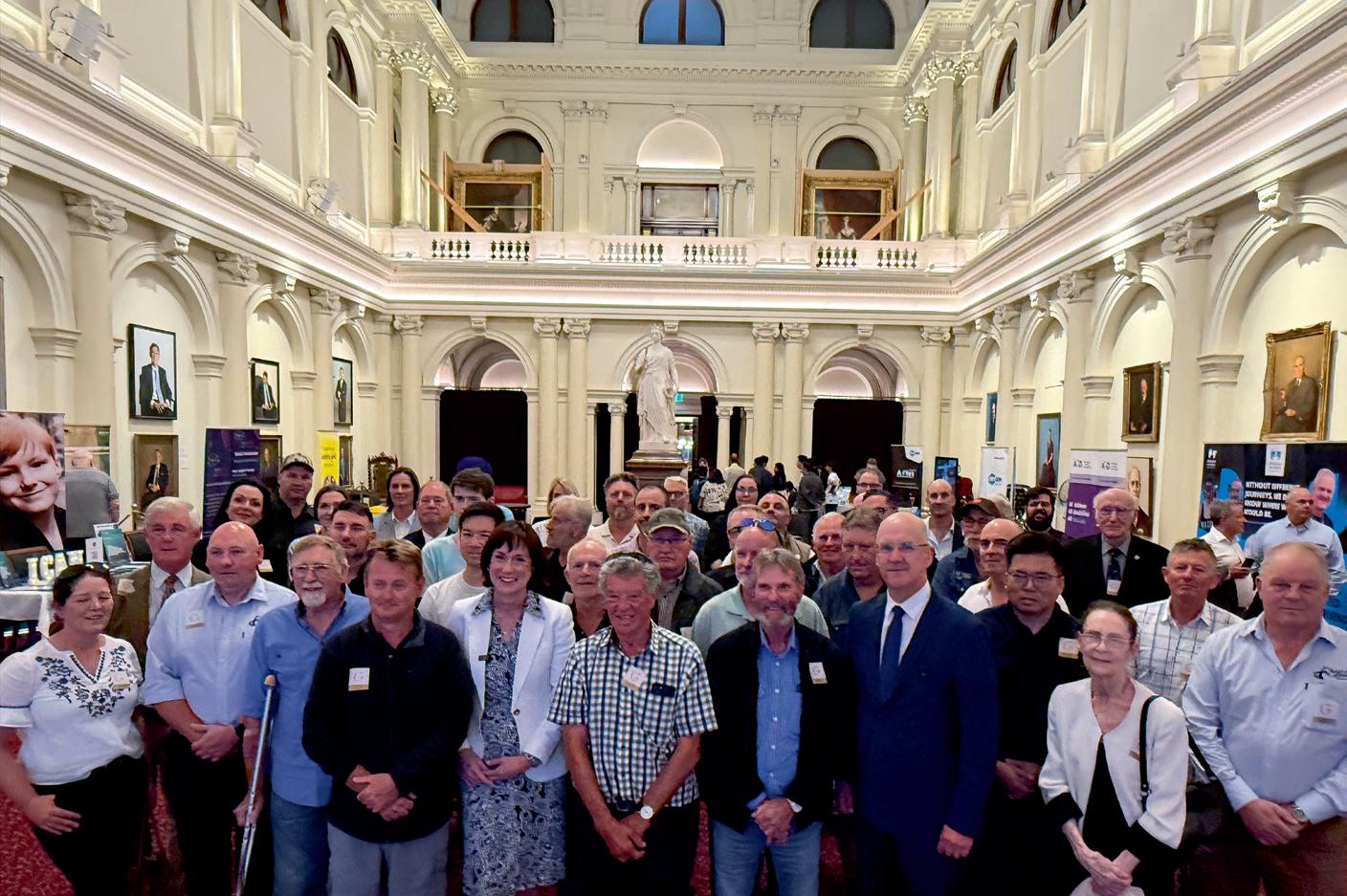
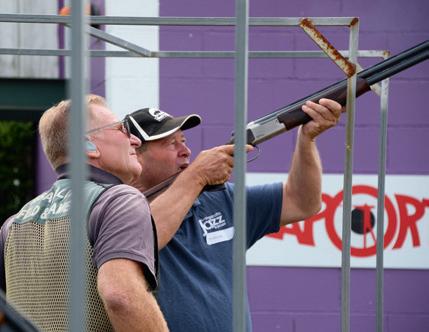
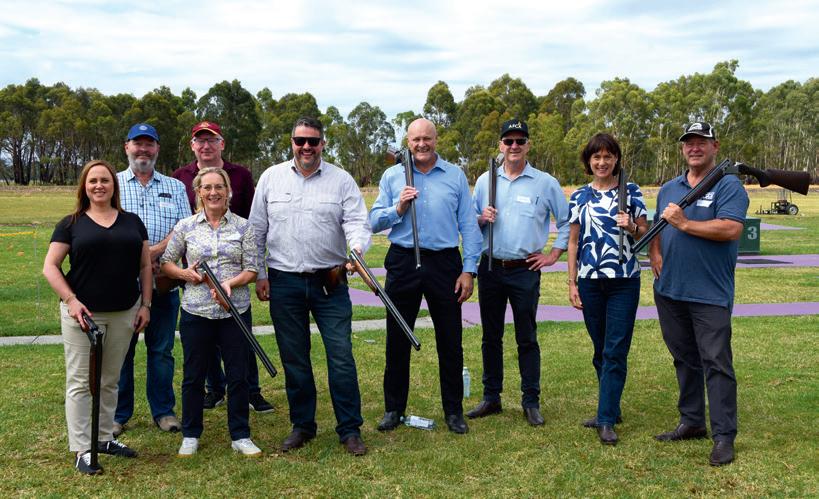
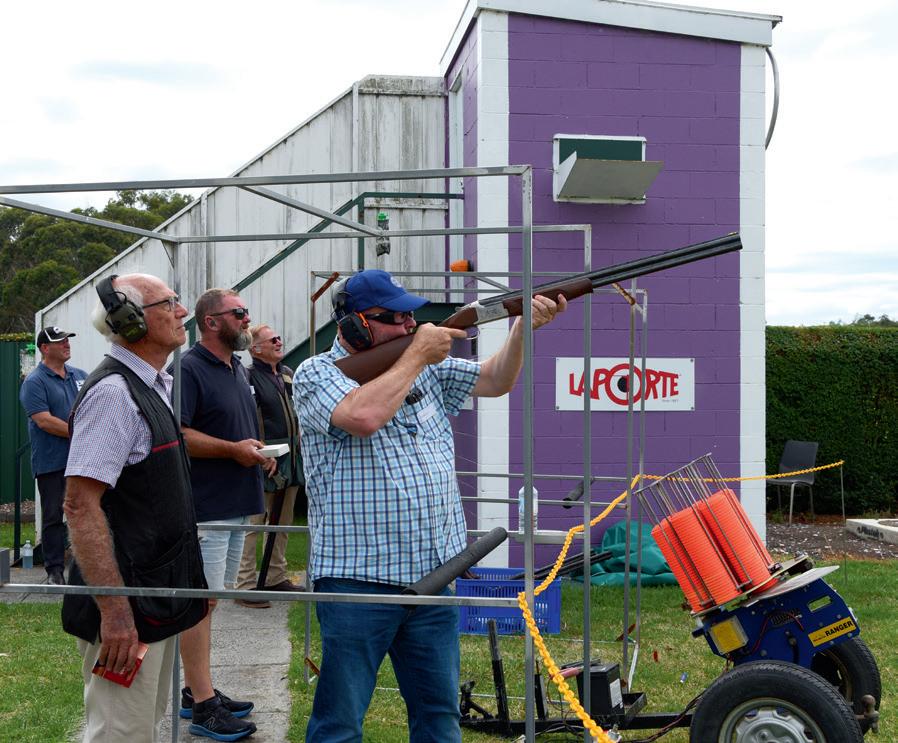
The annual Politicians’ Shoot was another highlight, attracting a strong group of representatives who were keen to test their skills and enjoy some friendly competition. It was great to see participants from across the political spectrum come together, not only to share views on broader issues, but more importantly to gain a better understanding of what we do and why we are so
passionate about Field & Game.
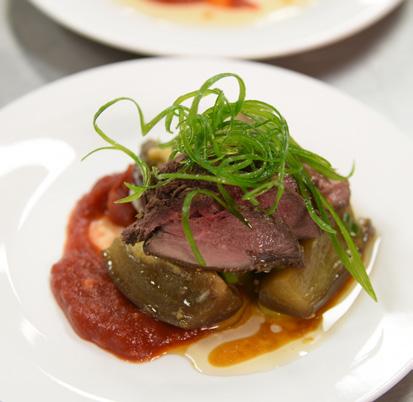
A fantastic array of game-based dishes was prepared and served throughout the day by Chef Andrew Fielke, who travelled from South Australia to be part of the event. We also heard from Beretta’s General Manager, Clemente Scribani Rossi, who spoke about the broader impacts on the firearms industry following major incidents such as Bondi, and the subsequent government responses. It was a timely reminder that the implications extend well beyond firearm owners alone, affecting the broader industry, including manufacturers and importers.
Overall, it was an enjoyable and informative day, and I would like to extend a sincere thank you to the Yarra Valley Field & Game members who dedicated their time to delivering a well-run and professionally presented course.
In closing, I would like to recognise the members who have put in a significant effort to review and update our ASF Rulebook. The process involved absorbing extensive feedback, coordinating surveys, and translating that input into clear, practical, and accessible rules for all members. Thank you, it is a job well done.
Finally, the Heart Morass is approaching a significant milestone, celebrating 20 years under the care and stewardship of dedicated Field & Game members. Over that time, what was once a saltaffected and degraded landscape has been transformed into a thriving wetland. We look forward to sharing more on this achievement in the near future.
Thank you all for your continued support and engagement with Field & Game Australia.
David Anderson
Chairman – Field & Game Australia
Consistency that counts
INATE THE TRAP
Japanese Precision. Australian Specification
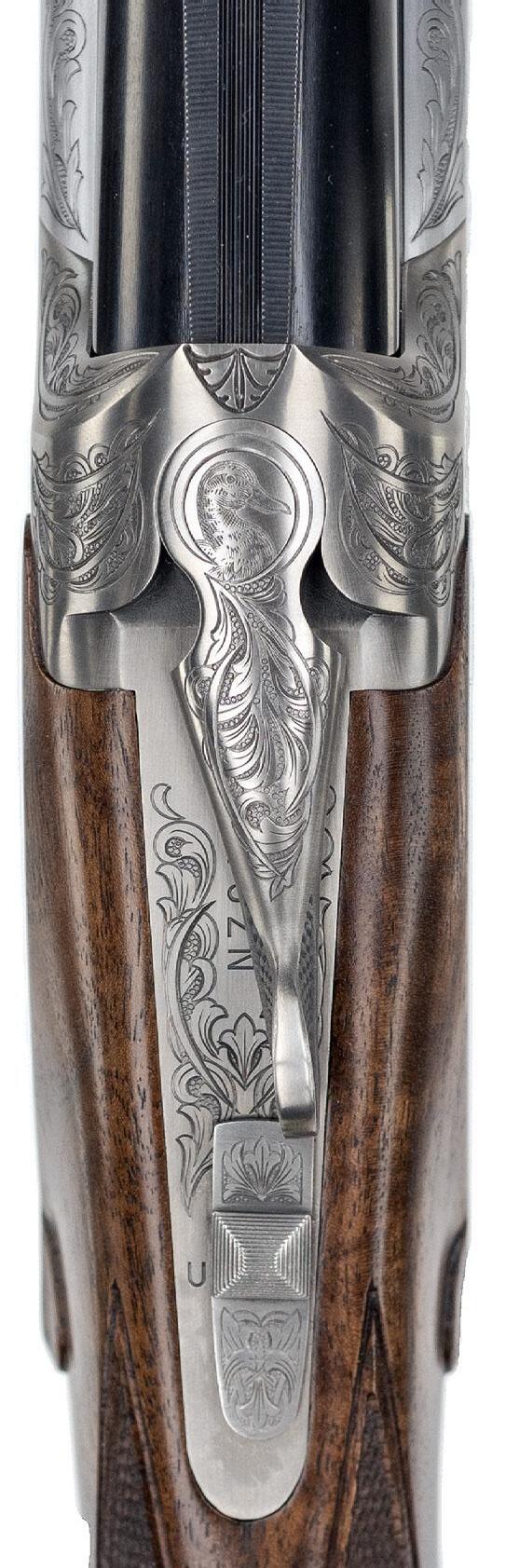
Australia demands a shotgun that refuses to compromise. Whether you are waiting for the morning flight in the wetlands or lining up for the National Championships, the Miroku MK10 is your ultimate partner.
Clever target loads deliver clean breaks, round after round. Proven since 1952.
Working beyond the headlines
As CEO of Field & Game Australia, the June quarter is always one of the busiest periods of the year — and this season has certainly been no exception.
Over the past few months, our membership and operations teams have processed the renewals of more than 15,000 members across the country. That is a huge undertaking, and I want to sincerely thank both our staff and the many volunteers who continue helping keep this organisation operating day in and day out.
To any members who may not yet have renewed — please do so when you can.
I genuinely believe every lawful firearm owner in Australia should belong to at least one organisation that actively advocates for their interests. Naturally, we would prefer that organisation to be Field & Game Australia, but regardless of who you choose to support, strength in numbers matters. The pressures facing hunting, shooting sports, and lawful firearm ownership across Australia continue to grow, and united communities are more important now than ever before.
A significant amount of my own time continues to be dedicated to advocacy work on behalf of lawful firearm owners and hunters. That work often happens quietly, away from social media and headlines, but I can assure members that we are actively involved in discussions taking place around the country. We are engaging with governments, departments, regulators, politicians, and industry stakeholders to ensure practical and balanced voices remain part of the conversation.
With elections beginning to loom in several states, political parties are increasingly shaping future policy positions. Field & Game Australia intends to continue ensuring that lawful firearm ownership, practical conservation, sustainable hunting, and public land access remain issues politicians cannot simply ignore.
In the media the week of writing this there is a lot being said about the fact Pauline
Hanson’s One Nation has released a detailed new firearms policy positioning itself strongly in support of lawful firearm owners, hunters, sporting shooters, and the firearms industry ahead of the Victorian election.
Field & Game Australia will remain neutral on individual party policies and political parties themselves, however we do believe lawful firearm owners deserve transparency around where all parties stand on issues affecting hunting, shooting sports, and firearm ownership.
We would encourage all major parties to publicly outline their positions well ahead of the election so voters can make informed decisions.
At the same time, advocacy cannot come solely from national office.
Members should continue writing respectfully to local MPs and representatives whenever they have the opportunity. A short, genuine letter from a local constituent still carries far more influence than many people realise. Politicians need to hear directly from ordinary Australians who safely own firearms, volunteer in conservation, hunt ethically, and contribute positively to regional communities.
On the hunting front, it has been encouraging to see duck seasons now open across Victoria, South Australia, and Tasmania, with many members reporting healthy harvest numbers and enjoyable hunting opportunities.
At the same time, I am aware that some Victorian hunters — particularly those focusing on the larger public wetlands such as Kerang, Kow Swamp, and parts of the western district systems — have found conditions more challenging at times this season. Reports suggest birds have often been highly mobile,
moving quickly between systems and utilising smaller or less pressured areas, particularly where fresh feed and water conditions are changing rapidly.
That said, we are still receiving consistent reports of ducks spread throughout many regions, and importantly, broader climatic conditions are beginning to hint at the potential for significant breeding activity moving into 2026 and 2027.
If conditions continue to develop favourably, there is genuine reason to be optimistic about increasing waterfowl populations over the next 12 months.
Conservation work also continues to remain a major focus for both Field & Game Australia and our branches.
Predator control — particularly fox control — has always been one of the most important and practical conservation activities undertaken by many of our branches and members. I would encourage branches to continue maintaining a strong focus not only on foxes, but also on feral cats and other invasive predators wherever possible.
Without diving too deeply into a topic that probably deserves its own article in the future, there is some genuinely interesting work now emerging — including projects we are involved with — showing that the benefits of targeted predator management may extend much further than many people previously realised.
It makes logical sense when you think about it.
When a duck hunter removes a fox from the landscape, the benefits are not limited only to ducks. Reduced predator pressure can also positively impact a wide range of smaller native species — including songbirds, ground-nesting birds, and small native mammals and reptiles that share those same environments.
Some of the early observations and data emerging around these broader ecosystem benefits are extremely encouraging, and I suspect this is an area we will hear far more about over coming years.
More on that another time.
But for now, I would simply say this: if you have not done a fox hunt recently — or have been thinking about organising one through your branch — consider doing so. It absolutely does make a difference.
Another encouraging development this quarter has been increasing engagement with land and water managers around the country.
At the time of writing, our General Presidents Meeting has not yet occurred — however, by the time this magazine reaches members, many of you will hopefully have attended and heard directly from Parks Victoria CEO Lee Miezis.
Lee accepted our invitation to engage directly with members and branch committees regarding Parks Victoria’s renewed commitment to volunteerism, community engagement, and public land management. Importantly, this represents an encouraging sign of what we hope will be a more collaborative and practical relationship between public land managers and the Victorian community moving forward.
Field & Game Australia has long believed that the people who actively use,
volunteer on, and care for public land should have a seat at the table when decisions are being made. Early signs suggest there is genuine willingness to rebuild some of those relationships, and we welcome that approach.
Hopefully, positive engagement models developed in Victoria may also begin flowing through into other states over time.
More broadly, we are continuing to increase our engagement with wetlands, waterways, and habitat projects around the country. Discussions are underway with several departments, agencies, and water authorities regarding future conservation, habitat restoration, predator management, and environmental monitoring projects that we hope members will begin hearing more about over the coming months.
A great deal of this work happens quietly in the background — site visits, meetings, project development, water management discussions, habitat planning, and relationship building — but it remains critically important to the long-term future of both conservation and hunting in Australia.
Behind the scenes, our membership and operations teams also continue working hard to support branches across Australia. Unfortunately, like many organisations across the sporting and volunteer sectors, we have again experienced substantial increases in the cost of liability insurance
provided to members and branches.
That reality reinforces the importance of continuing to prioritise safety in everything we do.
Whether on the range, in the field, at working bees, or during branch events, small details matter. Good habits, proper supervision, attention to procedure, and looking out for one another all play an important role in protecting not only ourselves, but also the future sustainability of our clubs, branches, and activities.
If members identify opportunities for safety or operational improvements, I encourage you to raise them constructively. Field & Game Australia works best when we all take responsibility for maintaining the high standards expected of our organisation.
As always, thank you to every member, volunteer, branch committee member, sponsor, and supporter who continues contributing their time and effort to Field & Game Australia.
This organisation only exists because people are willing to stand up, get involved, and contribute to something bigger than themselves.
Stay safe, enjoy the season, and I look forward to seeing many of you out in the field over the months ahead.
Lucas Cooke CEO – Field
& Game Australia
Through Your Lens: The Moments That Matter
Every season leaves its mark — and this year, you captured it.
When we opened submissions for the 2026 Field & Game Australia Photo Competition, we expected strong entries. What we received went well beyond that. The images sent in by members across the country didn’t just showcase skill behind the camera — they reflected the depth of experience, connection, and pride that defines our community.
There was a consistency across the entries that stood out.
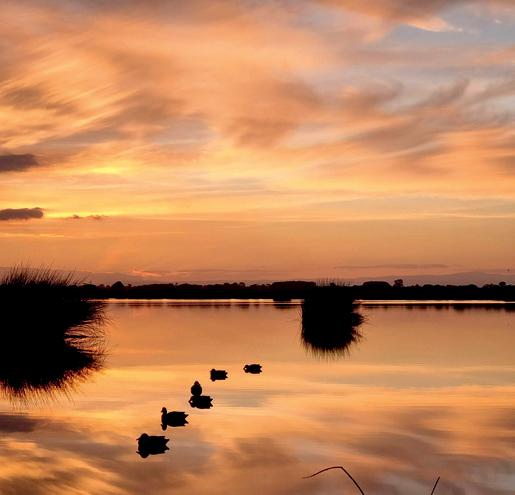
Early mornings where the light just starts to lift off the water.
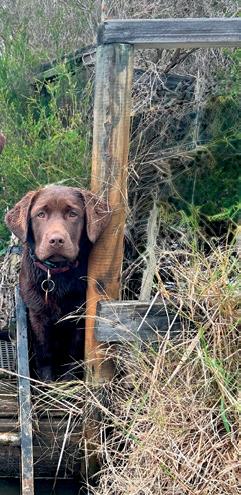
Dogs locked in on a retrieve, completely in their element.
Quiet moments that say more than any headline ever could.
These weren’t staged shots — they were real moments, captured as they happened.
And that’s what made them so strong. What came through clearly this year was the breadth of what Field & Game represents. Hunting, conservation, time with family, time on your own, the work that happens before and after the season — it was all there. Not as separate ideas, but as part of the same experience.
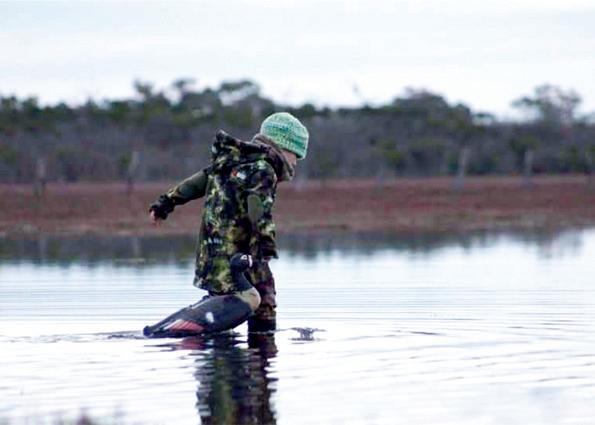
One of the strongest themes across this year’s competition was the number of entries featuring families and younger members in the field. There were countless images of children helping set decoys, riding in boats before daylight, proudly standing beside dogs on retrieves, and simply enjoying time outdoors with parents, grandparents, and friends. More than anything else, those photos highlighted just how deeply connected many families remain to the traditions, friendships, and shared experiences that continue to shape Field & Game Australia across generations.
Across the board, there was also a strong sense of place. Wetlands, bush blocks, open country — the environments our members spend time in are as much a part of the story
2026 Photo Competition Winners
First prize
as anything else. These are not just locations, but landscapes that are understood, respected, and looked after over time.
As with every year, selecting winners was no easy task.
There were a number of images that could
easily have taken out top honours, and narrowing the field ultimately became about more than simply photographic quality. Many of the entries that stood out most strongly were the ones that captured genuine emotion and atmosphere, moments that instantly felt familiar to anyone who has spent time in the field.
PAUL THOMPSONWOOLSHED SWAMP, BOORT VIC
Second prize
First Prize
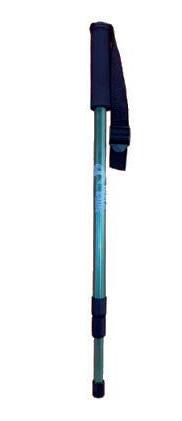
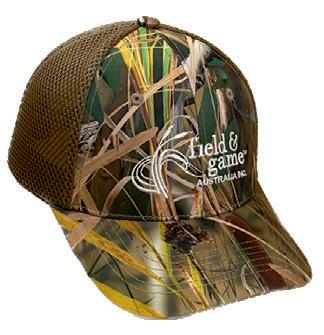
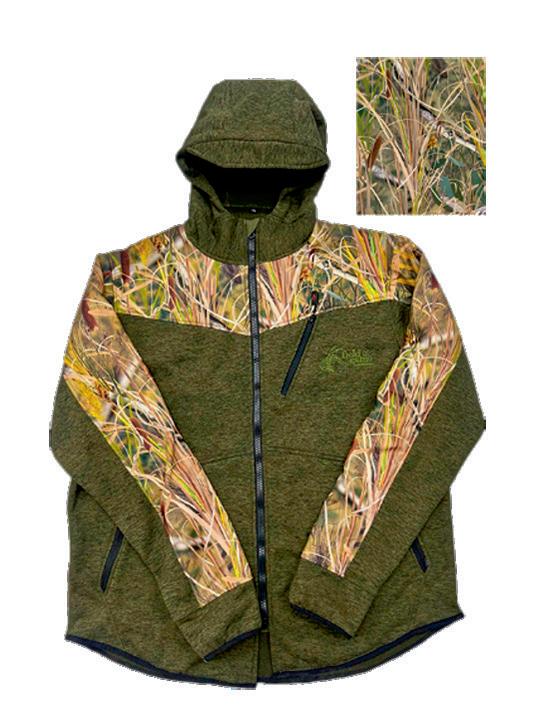
Water-resistant fleece hoodie in wetland camo (valued at $130) + matching cap ($30) + Pick Stick ($40)
Winner: Paul Thompson
Second Prize
Fleece hoodie
Winner: Andrew Jeffery
Third Prize Camo cap
Winner: Darren Evans
What these photos reinforce is something we already know — but don’t always stop to recognise.
This is more than a pastime.
Third prize
It’s early starts, long days, missed chances, good shots, time with mates, time with family, and the kind of experiences that stay with you long after the season ends.
It’s also a record.
These images matter because they show what this lifestyle actually looks like —
not how it’s often portrayed, but how it really is. They capture the responsibility, the respect for the environment, and the connection to the land that sits behind everything we do.
So keep taking the photos.
Not just the perfect ones — but the real ones.
Because over time, they build a picture that tells our story better than anything else can.
DARREN EVANS
ANDREW JEFFERY
1 Joe Spagnolo 2 Anthony Franco 3 Phil Toose
8 Brian Williamson
4 Andrew Spencer
6 Maksym Galemin
7 Tamara Caldwell
5 Greg Playdon
HONOURABLE MENTIONS
1. Joe Spagnolo
2. Anthony Franco
3. Phil Toose
4. Andrew Spencer
5. Greg Playdon
6. Maksym Galemin 7. Tamara Caldwell
Brian Williamson
Nick McCracken 10. Simon Robins 11. Kate Walker
Paul Anderson 13. Moses Brincat 14. Mark Daley
15. Stuart Hutchings 16. Christopher Collins
The response to this year’s competition was outstanding, and we sincerely thank every member who took the time to submit their photos. The quality and variety of entries made judging incredibly difficult, with many deserving images simply unable to fit within the available pages of this issue. We
only wish we could feature them all. A large number of submissions captured moments and experiences that reflect exactly what Field & Game Australia is about, and many of these images will continue appearing throughout future editions of the magazine and across our broader communications. So keep
an eye out, there’s every chance your photo may still feature in the months ahead. Thank you again to all members who contributed and helped showcase the people, places, and experiences that continue to shape our community.
14 Mark Daley
15 Stuart Hutchings
16 Christopher Collins
11 Kate Walker
12 Paul Anderson
13 Moses Brincat
9 Nick McCracken
10 Simon Robins
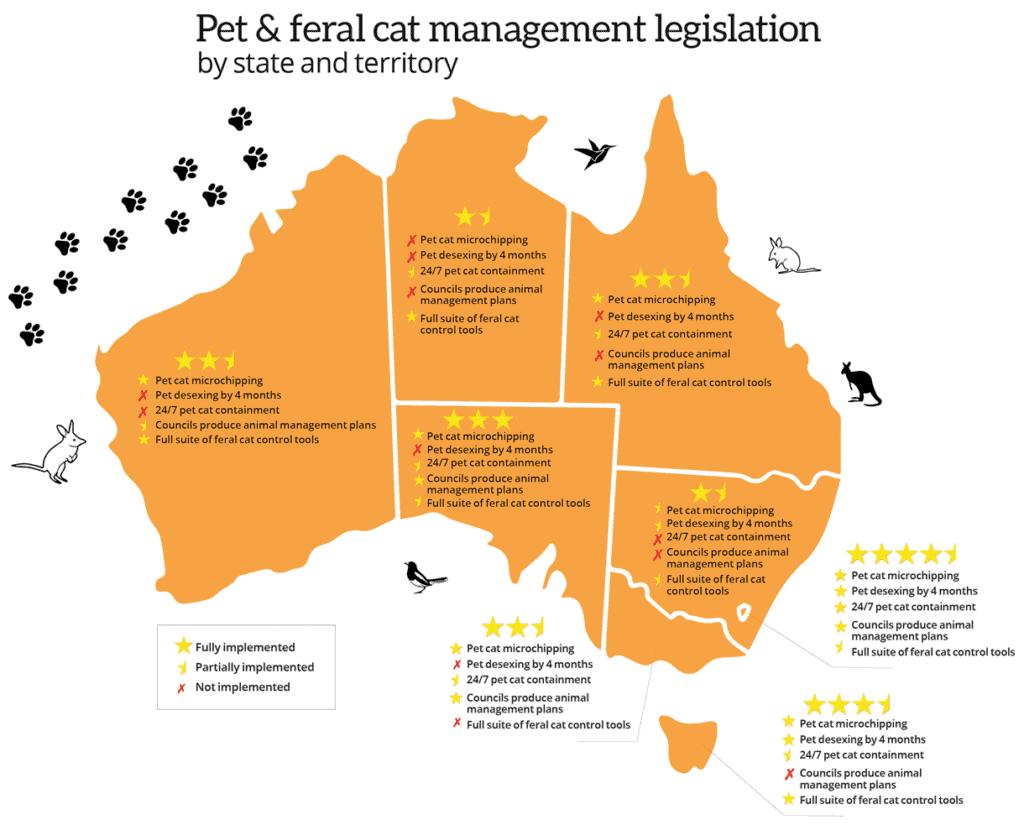
State of the states
Where firearm reform sits across Australia in 2026 — and what it means for lawful owners
There’s a temptation in national conversations to talk about “Australian gun laws” as if they are one thing. They’re not. As of the December 2025 Australia has likely never been further from nationally consistent gun laws.
What we’re seeing in 2026 is not a unified national model with strong (or any) leadership—but a patchwork of approaches. Some states have rushed headlong into poorly conceived but sweeping restrictions. Others have taken a more measured path, focusing on enforcement, intelligence, and real-world risk. A few are still working out where they land.
For members, that matters. Because the future of lawful firearm ownership in Australia is not being shaped in one place— it’s being shaped eight different ways.
What follows is a clear-eyed look at where each jurisdiction actually sits today*—not the headlines, not the politics, but the substance.
*as of writing – 17/04/2026 – subject to change
NEW SOUTH WALES
Status: Legislated and in force
NSW has moved the furthest in the eastern states—and in a direction that will be used in future “how not to repond” textbooks. “unforeseen consequences” is the new catch cry – and they will be dealing with them (or rather, not dealing with them) for years to come.
The Minns Government has introduced hard caps on ownership, generally limiting individuals to four firearms, with some allowance for primary producers and sporting shooters. It has also tightened access to certain firearm types, reduced magazine capacities, strengthened inspection powers, and embedded ongoing compliance obligations like mandatory club membership.
This is layered on top of a buyback arrangement with the Commonwealth.
The direction is clear: more restriction on lawful owners, with zero evidence that these changes address any criminal
misuse pathways. Leave criminals and terrorists alone.
FGA Rating: (0/5)
VICTORIA
Status: Under review (Ken Lay Rapid Review)
Victoria has, for now, taken a more cautious approach, or at least a more carefully considered one.
The only immediate legislative change was already in the works long before Bondi – and has been the introduction of offences relating to the possession and distribution of digital blueprints for firearm manufacture.
Beyond that, the state is waiting on the outcomes of the Ken Lay rapid review, which is expected to shape broader reforms.
That leaves Victoria in a holding pattern. There is risk here—but also opportunity. The direction Victoria takes from this point will depend heavily on whether the review process is grounded in evidence, or driven by national political pressure.
FGA Rating: NA - (Pending final position)
QUEENSLAND
Status: Targeted reforms introduced, no buyback commitment
Queensland stands out—for the right reasons.
Rather than defaulting to ownership caps or sweeping restrictions, the state has focused on where risk actually sits:
• Increased penalties for firearm related crime
• Strengthened Firearm Prohibition Orders
• Improved intelligence and agency information-sharing
Importantly, Queensland has refused to sign on to the federal buyback, and has not pursued arbitrary limits on lawful ownership.
It’s a model that recognises a simple
truth: compliance-heavy systems already regulate lawful owners—risk sits elsewhere.
FGA Rating: (5/5)
TASMANIA
Status: Major reforms announced, legislation pending
The Tasmania liberal government has announced a significant reform package, including reclassification of certain firearms, stronger penalties, and a structured buyback scheme.
But it has also drawn a clear line:
No arbitrary caps on firearm ownership.
Importantly, the liberal government are yet to put these reforms through government, and the Tasmanian labor/greens opposition has indicated an intention to highjack and significantly worsen the outcomes.
The Tasmanian liberal approach attempts to balance reform with practicality— acknowledging the needs of primary producers, hunters, and regional communities while still responding to national pressure. They have erred in insisting on a reclassification of certain firearms, but do not intend broad scale buy backs.
The detail will matter when legislation lands—but the absence of ownership caps is a critical and positive signal.
Labor and the Greens want an ownership cap, and associated mandatory buy back, despite having no costing, or money to pay for it!
Liberal - FGA Rating: (4/5)
Labor/Greens rating (0/5)
If you are a Tasmanian – Now is the time to speak to your local politicians especially local independents, who hold the balance of votes in both Tasmanian houses!
SOUTH AUSTRALIA
Status: Limited reform implemented, broader position unclear
South Australia so far has not moved in
any targeted way. They have introduced offences around possession of digital blueprints used to manufacture firearms, but they were already being worked on.
The Malinauskas Government has indicated that “at this time they have not moved, budgeted or planned to make any changes”. They have acknowledged they are satisfied with the firearm laws in place, and do not plan to change them.
A definitive statement that they will not be making changes would have won them 5 stars, the hedging means so far: FGA Rating: (4/5)
WESTERN AUSTRALIA
Status: Major reforms already implemented
Western Australia is already operating under one of the most restrictive frameworks in the country. Poorly advised, expensive, under resourced. Should have been the “what not to do” example to the rest of the country.
The new Firearms Act includes ownership limits, expanded prohibitions, and a completed large-scale buyback. The system is heavily compliance-driven and places significant constraints on lawful owners.
WA has taken a path that leans heavily on restricting legal ownership, rather than demonstrably addressing criminal access and misuse.
FGA Rating: (0/5)
AUSTRALIAN CAPITAL TERRITORY
Status: Bills introduced, not yet passed
The ACT has proposed sweeping reforms, including firearm ownership caps, expanded prohibitions, and new offences. These laws are not yet passed, but the
direction is clear—and concerning.
If implemented as proposed, the ACT would sit alongside NSW and WA in applying broad, restrictive controls to lawful owners, despite already having one of the most tightly regulated systems in the country.
There is still time for this to change. But based on what has been put forward:
FGA Rating (Proposed): (0/5)
NORTHERN TERRITORY
Status: Bill introduced, targeted reforms
The Northern Territory has taken a more measured approach, focusing on:
• Licensing process improvements
• Administrative and governance updates
There has been no move toward ownership caps, and the Territory has not committed to the federal buyback.
It is a quieter reform path—but one that remains grounded in practical administration rather than headline-driven restriction.
FGA Rating: (4/5)
THE NATIONAL PICTURE
So where does that leave us?
Not with a single national system—but with three distinct approaches emerging:
1. Restriction-led models
(NSW, WA, proposed ACT)
Focus on caps, bans, and tightening lawful ownership
At the same time, the Commonwealth continues to push for alignment— particularly around buybacks and national consistency. But as it stands, that consistency does not exist.
In a federal dummy spit of sorts – the federal government has exercised the only powers they have in relation to firearms and has heavily modified the rules and process’ around importing firearms –taking the step of banning the import of firearms that are still legal to own in most states!
WHERE THIS GOES NEXT
For firearm owners, the lesson is simple.
The future isn’t being decided in Canberra alone.
It’s being shaped—state by state—by the decisions made right now.
Some jurisdictions are demonstrating that you can respond to public concern without undermining lawful ownership.
Others are proving just how quickly that balance can be lost.
And that puts a responsibility back on all of us.
Not to argue for what the system used to be.
Not to defend the worst examples.
But to represent, clearly and consistently, what firearm ownership actually looks like today:
Responsible. Accountable.
Part of communities—not apart from them.
Because if we don’t get that right—we won’t just be responding to the narrative from the outside.
We’ll be shaping it from within.
Rotorua Rod and Gun Club
The Rotorua Rod and Gun Club (RRGC) is, in the opinion of many, one of the finest clay-target shooting venues in the world. The club sits on a plateau which drops steeply on all sides to provide target setting opportunities limited only by imagination. The hillsides are covered in scrub so many of the traps are not visible and, even when they are visible, they may instil more terror than comfort.
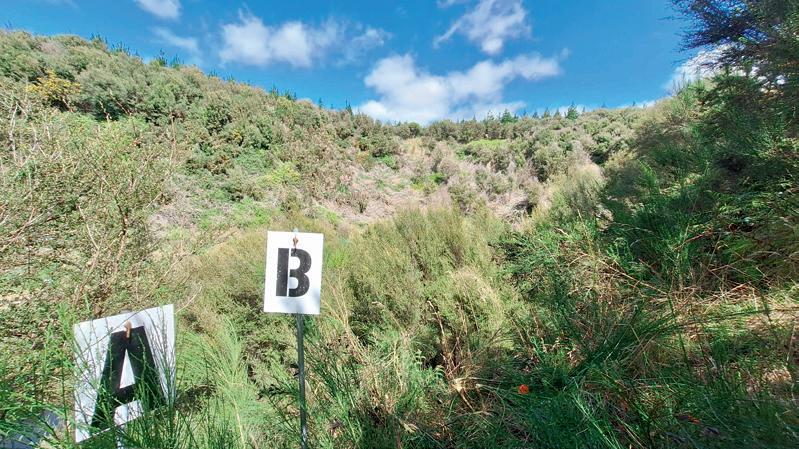
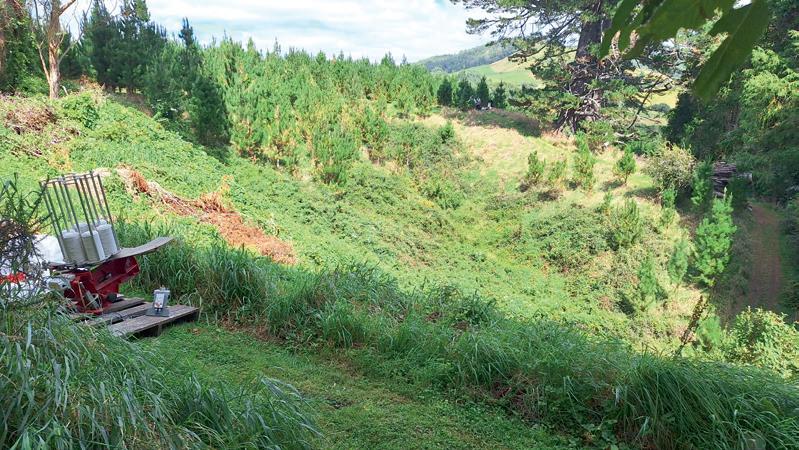
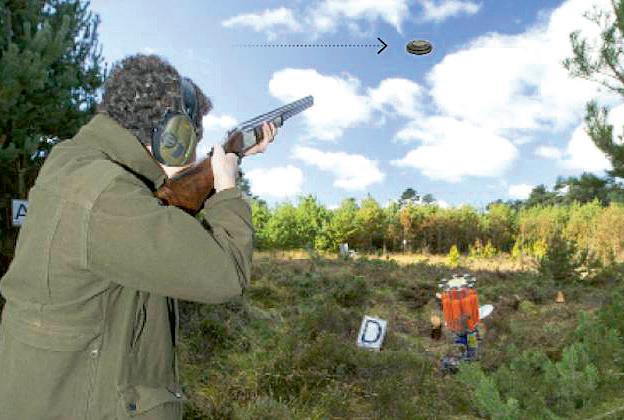
The sight of (Pic 1) a trap perched on top of a ridge 150m away seen from your perch on the side of a ravine should be enough to make anyone nervous. The C trap is facing towards the shooter and is visible slightly above centre in the photo. The A and B traps are on top of the ridge on the left just out of frame. These three targets all come towards the shooter and are all dropping rapidly by the time they crash into the undergrowth below the shooter’s feet. The ground in front of the B sign drops sharply down into the ravine. I think you get my drift.
However, I am getting ahead of myself, a week before the competition at RRGC Tony Pratt and I attend the Waikato GC for the FITASC NZ Grand Prix. This event was shot in heavy rain and 90% humidity which made shooting a trial. Guns were wet, gun bags got soaked, shooters got soaked and a lot of time was spent drying clothes and cleaning guns. Fortunately, the local knowledge was that Sunday would be overcast but dry. And so it was, until I stepped onto station one when the rain started and did not falter until well after we finished. Tony picked up 3rd in C Grade. I got as wet as a shag again!
Congratulations to Cameron Kivinen who took out the title with 187/200 which was a special effort in those conditions.
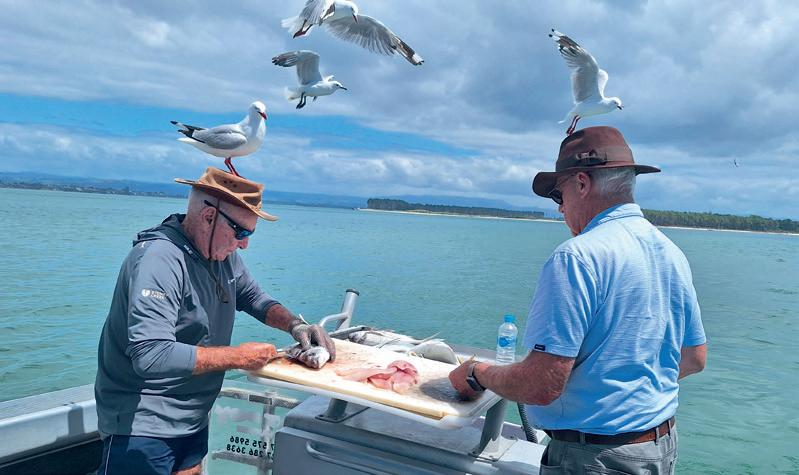
With a few days between competitions, Tony and I went to Tauranga on the Bay of Plenty to fish with Fat Boy Charters (no sniggering please). Russ Hawkins was our Skipper and he found the fish; Terakihi, Pink Snapper, Red Snapper and a nightmare called a Hagfish (look it up). Russ and Tony filleted the fish while I watched the seagulls which seemed very comfortable with Russ but not so much with Tony, smart birds (Pic 2). We took as
many fillets as we thought we could eat and had fresh fish for tea every second night thereafter.
On arrival in Rotorua, we checked our guns to find that while mine was fine Tony’s would not fire either barrel. Tony uses a magnificent Beretta SO6 EELL, so finding someone he would trust with it was problematic. As for getting parts 24 hours before the comp was to start, forget it. We rang Geoff Wells of Kilwell, a leading NZ supplier of fishing tackle, hunting and outdoor-related products and, a major sponsor of NZ Clay Targets events. Geoff said he knew of a retired gunsmith who no longer took clients but who might if Geoff spoke to him nicely.
The following morning, we met ‘Malcolm’ who said he would be happy to look at the gun and report back to us at lunchtime. With some trepidation Tony parted with his gun and we wandered off to explore Rotorua. Tony rang at 1 pm and the news was good. Malcolm had taken the action apart, identified a couple of issues, replaced one of the hammer springs and it was all working again. Straight to the club to fire some test shots and all was well. Many thanks to Geoff and Malcolm who saved the day, and I am pretty sure broke the world record for servicing a Beretta.
The competitions at RRGC were shot in rounds of 50 over 8 stations that were sprinkled along the Black Ground and the
Red Ground. Black Station 1 (Pic 3) was a deep gully with targets arriving from the far left, the immediate left and from the trap on the far side, coming at the shooter. This stand was shot over the comp from the top, as per the photo, and from the bottom of the gully. It was easier to shoot with the belly of the target in view from below than above where they were more edgy. All of them were fired out across the gully and dropped fairly quickly. A rough awakening.
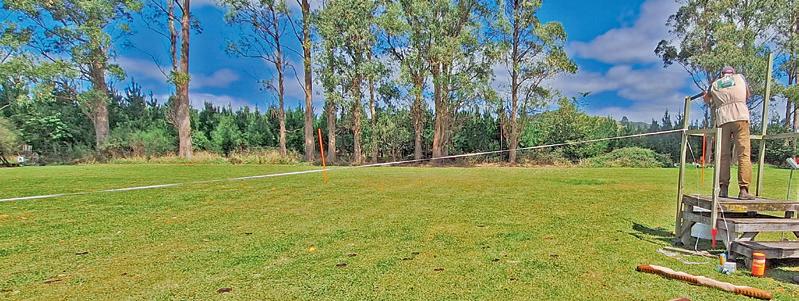
One of the few stations which featured flat ground was Black 2 (Pic 4). A rabbit from the trap on the extreme left, and a rabbit from the trap to the right of the shooter were featured. They were relatively straight forward when thrown along the tree line but, when they were thrown angling in towards the stand, and included a simultaneous pair, and had to be shot before they reached the two orange poles in the picture, it was a different story.
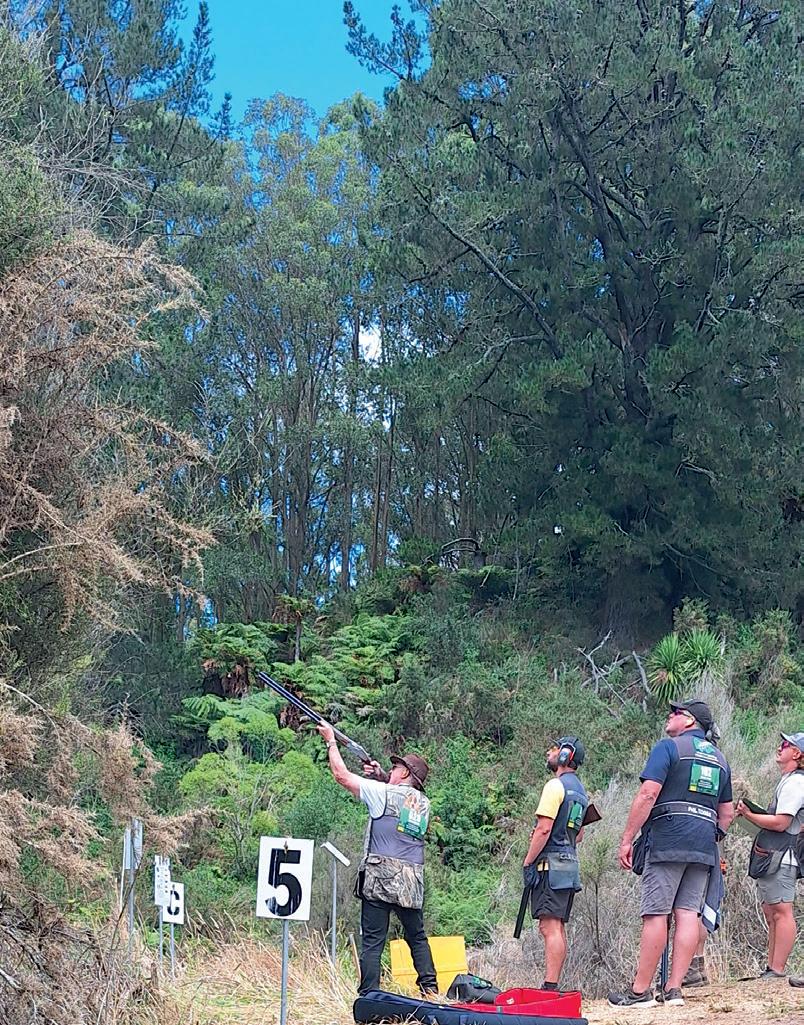
Then we went over the edge and down down down until we arrived most of the way down where one of the most spectacular stations #4 was situated. I could not get a picture of station 4 that made sense so I will describe it be reference to stand 5 (Pic 5) where Tony is seen ironing out a looper. Stand 4 was next to stand 5 but required the shooter to face the other way. Targets were thrown off the top of the hill maybe 150 m away. They were of course dropping and curving away to the farthest stand of trees on the other side of Tony. I love the cliff at Clunes with the high targets, but this is in a different league. These targets require firing almost straight up in the air. Absolutely awesome, but hittable. Oh, and one was a middy.
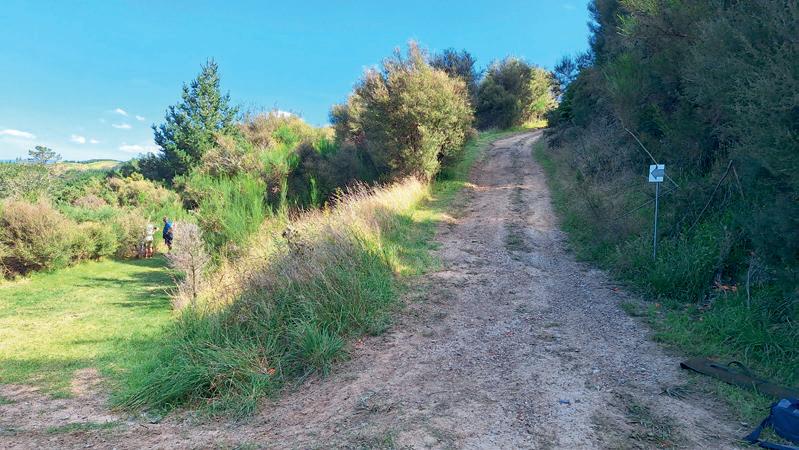
The tracks around the ground (Pic 6) are driveable in a four-wheeler and walkable, but as you can see the tracks are quite steep and hauling a couple of 70+ year old bodies up the hills was an effort, and we did it three days in a row. You will also note that the right side of the track shows a near vertical rise. Station 8, which faces the drop off, is on the right of the photo and it was my last of the three days. I hauled my tired carcase up that track and was mighty pleased to get to the top and the flat ground, which was not just around that corner! Phew! But I would do it again tomorrow if I could.
One other station I have to mention placed shooters on a small platform looking over a pond behind which the hillside soared. A Left to Right crosser from the bushes arced over the water while a Right to Left crosser launched from well above the platform went the other way. Challenging enough, but the star of the show was launched from the top of the hill as a tiny speck. Its 60-degree trajectory down
the side of the hill left you plenty of time to work out what you were going to do but, if you were hesitant, its increasing speed made any last-minute attempt a panicked lunge (well it did in my case). A missed target slapped into the water often followed a millisecond later by a fountain of water from a shot in vain.
Spectacular stuff. Even the locals had to put some thought into these targets and they had no doubt seen them before. As for a couple of Aussies from the flattest continent, ooeee!
NZ National Championship Day 1
Tony shot the lights out with 81/100 on day one to be leading C Grade by 9, while I was equal first in Vets with 81 as well.
(Pic7) Shows the Tony in action. You can see the pieces of the target just to the right of the tree.
NZ National Championship Day 2
The day started with work to be done. Tony fell away a little with 71 to finish 154/200. This put him 5 in front of the rest and C Grade National Champion. I finished with 83 for 164/200 which put me in third place in Vets. We both shot well for our grades and were well pleased.
(Pic 8) The C Grade National Champion looking well pleased with his performance. Our final treat was to watch Brian Deadman and John Younger (187/200) shoot off for overall. After 25 tgts, some of which mere mortals were hard pushed to see, Brian finished a target in front.
I shot with Brian and it was a pleasure to watch an elite shooter in action. The rest of the squad tried to emulate him but he was never going to be worried by us. His secrets seemed to be full focus and concentration when required and rarely making the same mistake twice.
Tony and I will be back again and while the hills don’t get any flatter we are up for the task. I cannot recommend a trip over the ditch to shoot at RRGC enough.
When the Fire Came Through
Fowles Wine, loss, recovery, and the work that follows
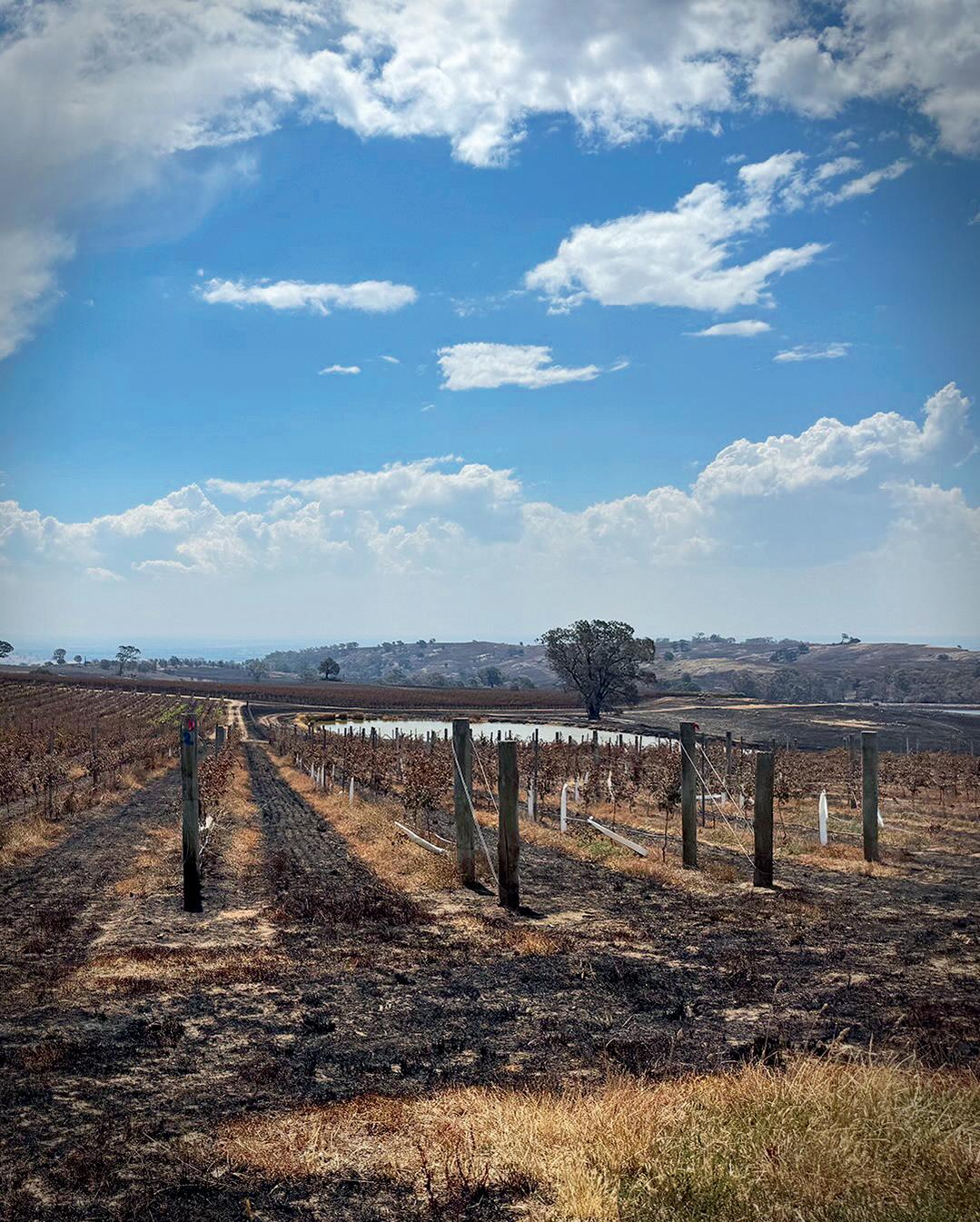
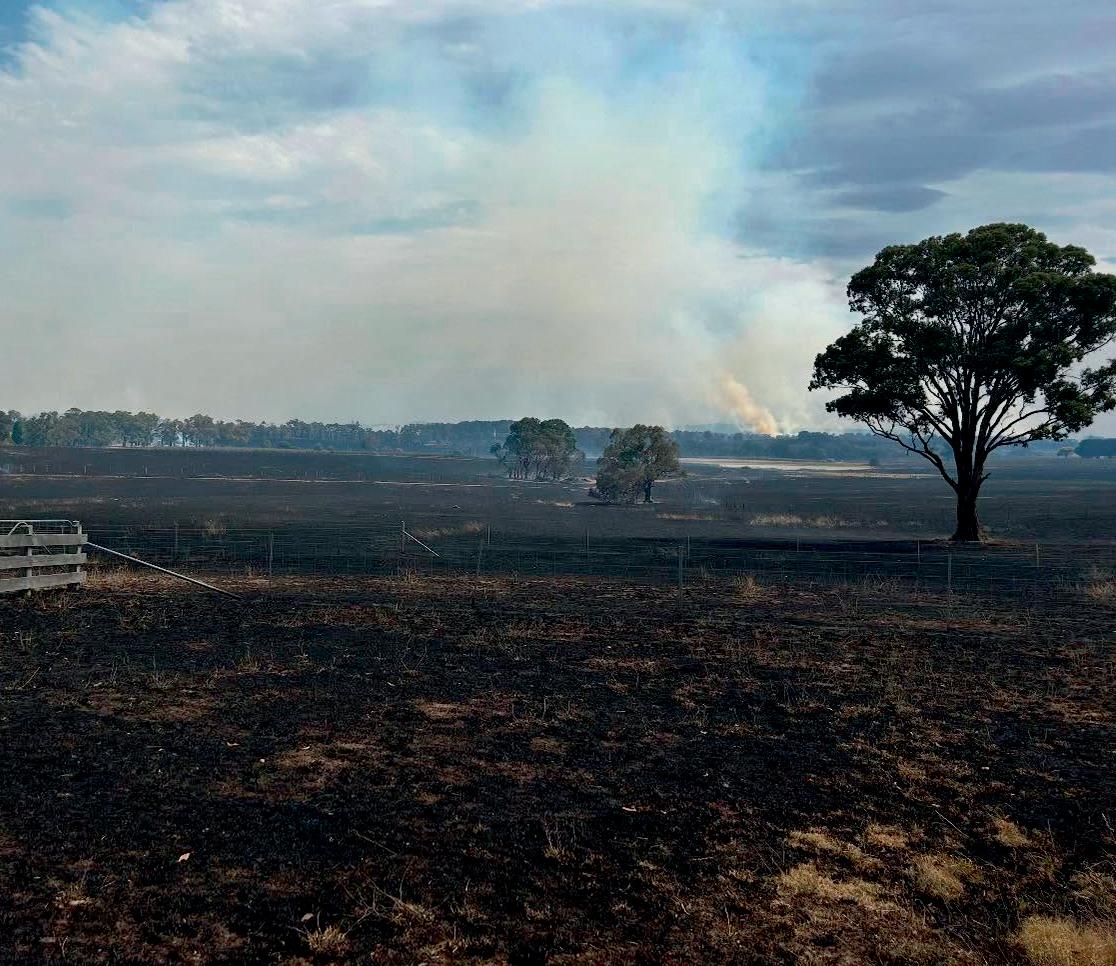
In early January 2026, under extreme fire conditions across Victoria, a fast-moving bushfire tore through parts of the Strathbogie Ranges.
For those who live and work in regional communities, the pattern is all too familiar — rapid movement, unpredictable conditions, and very little time to respond.
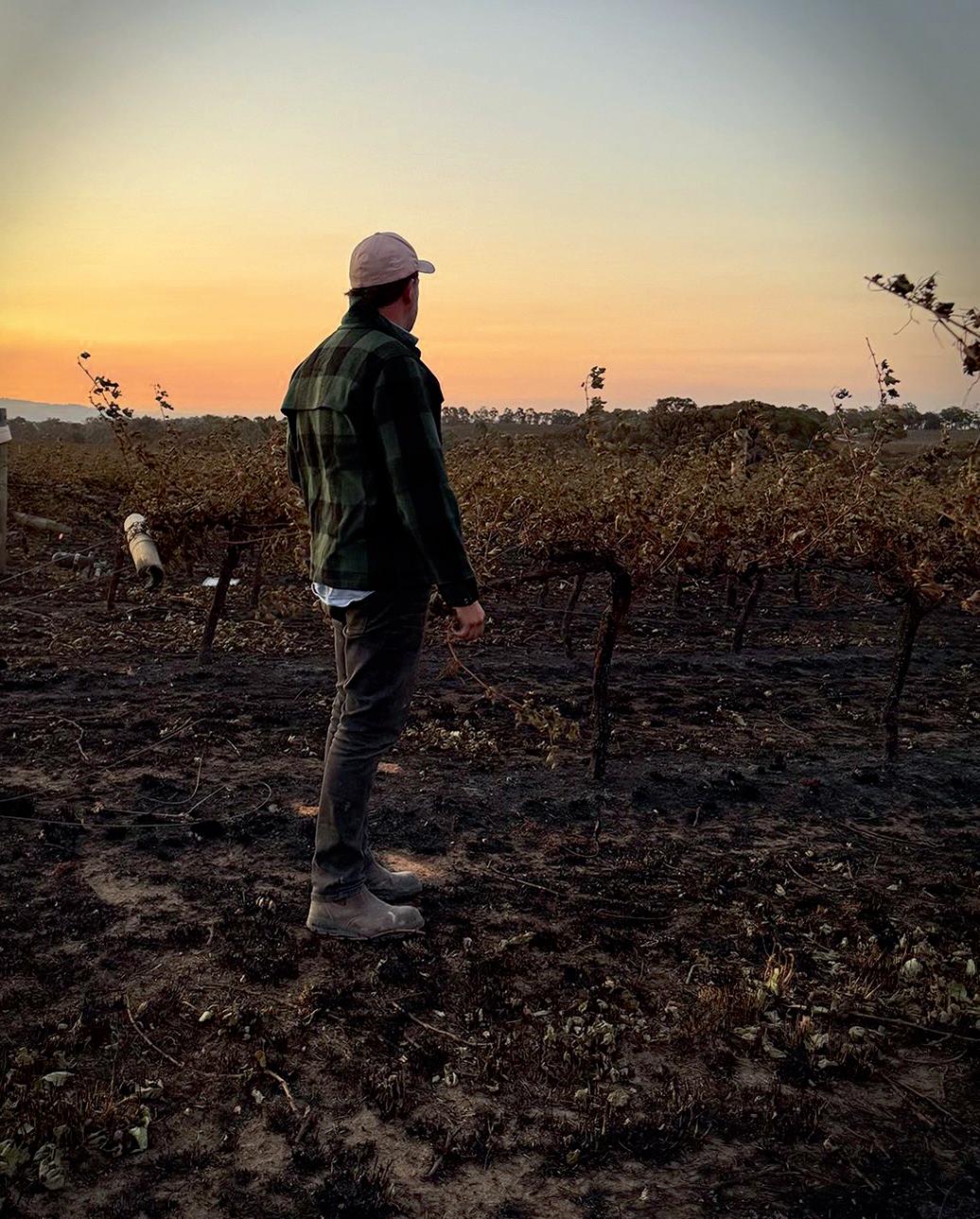
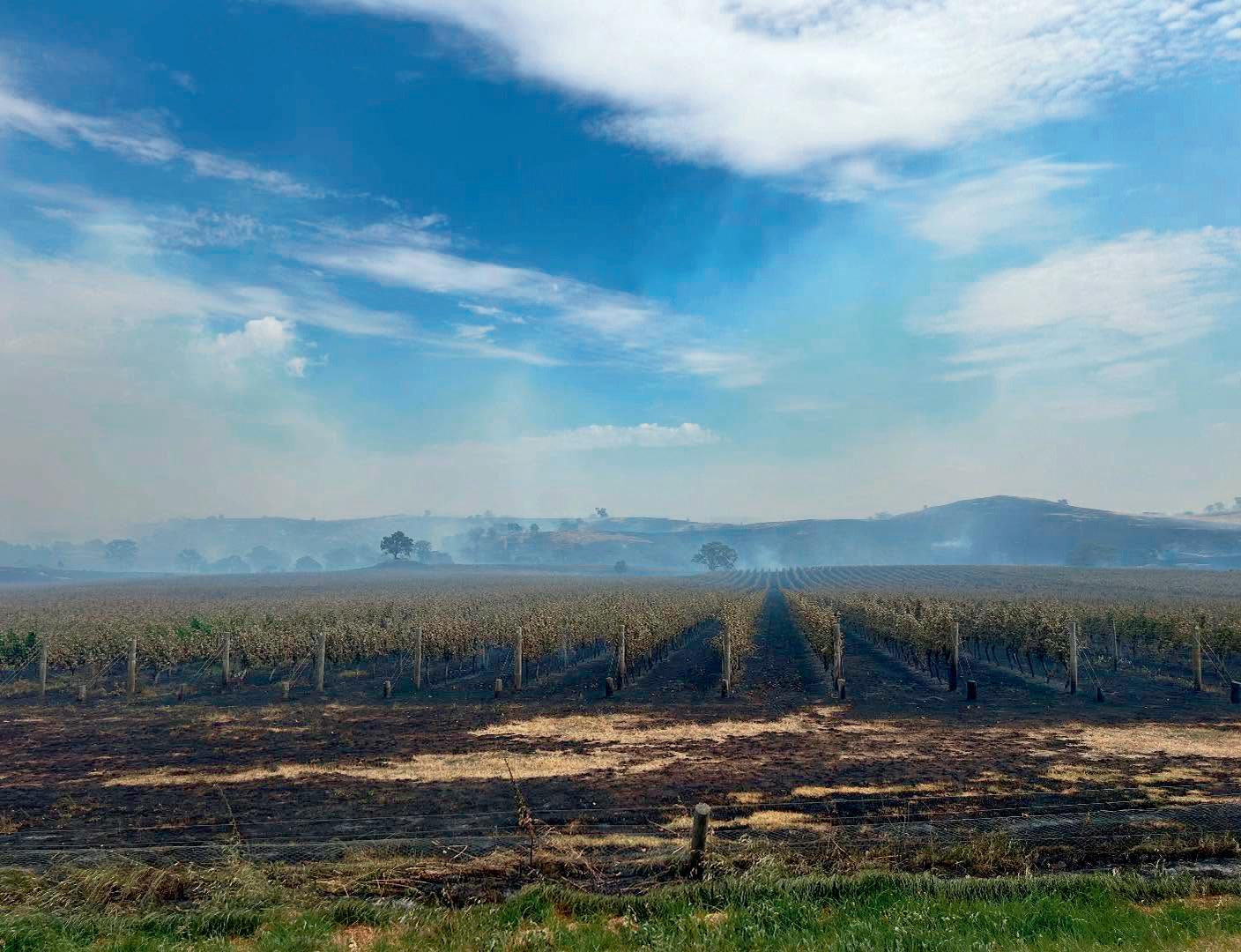
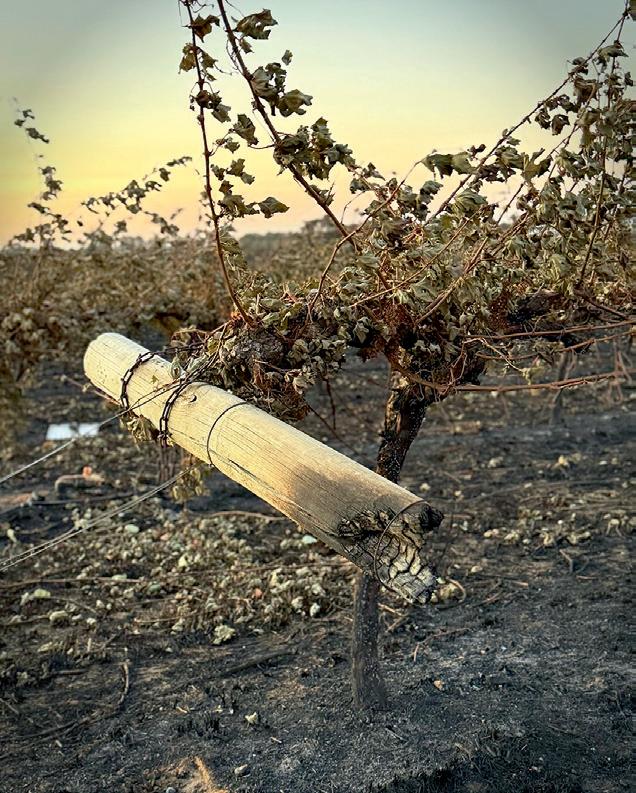
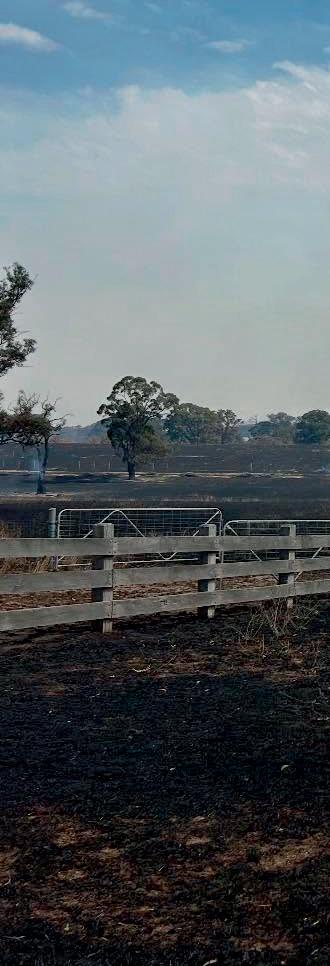
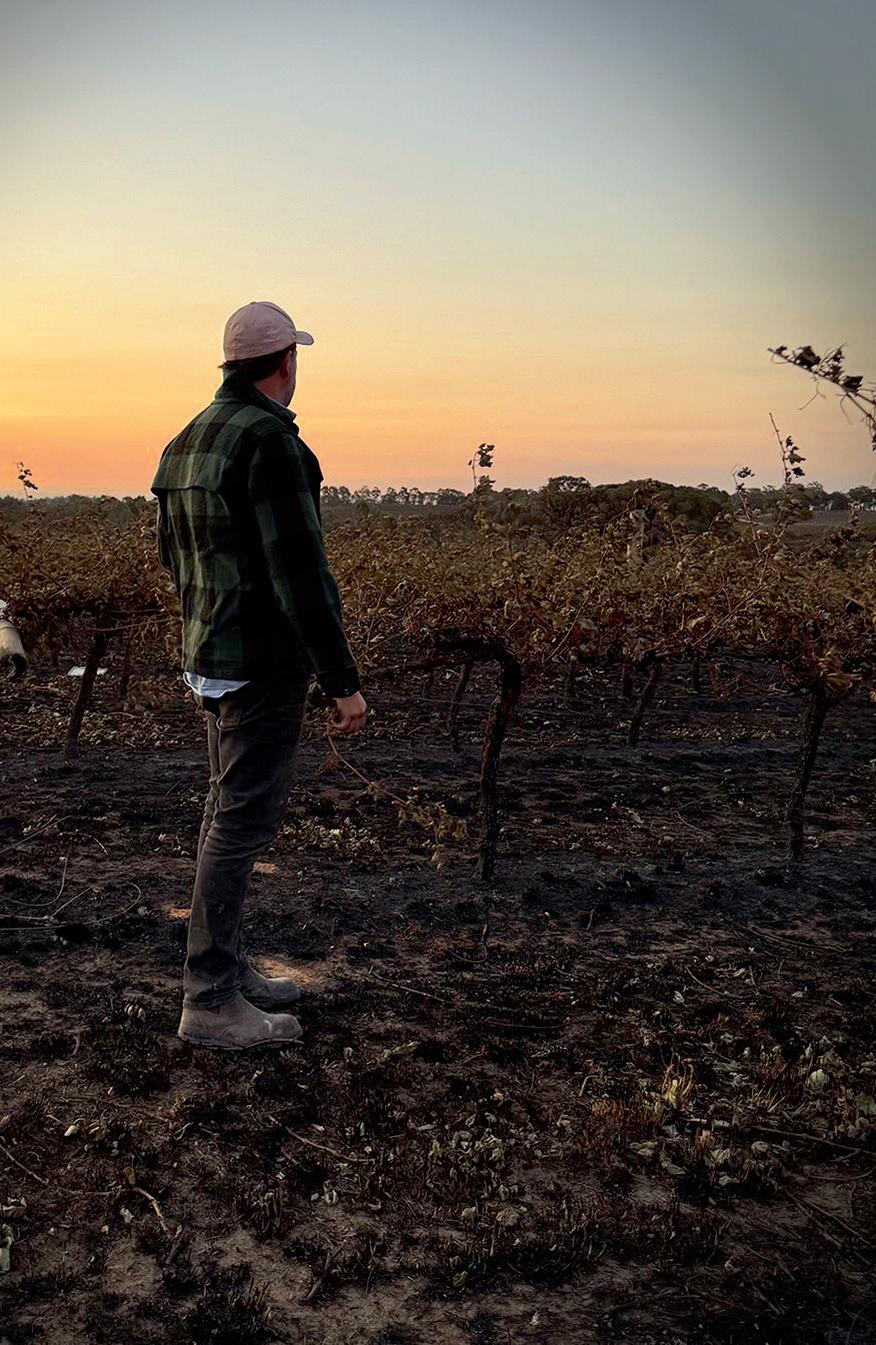
For the team at Fowles Wine, that reality unfolded quickly, as fire moved through their vineyard sites near Avenel on 8 January, destroying all 300 acres of vines across their property.
What had been shaping as a strong 2026 vintage was lost entirely in a matter of hours.
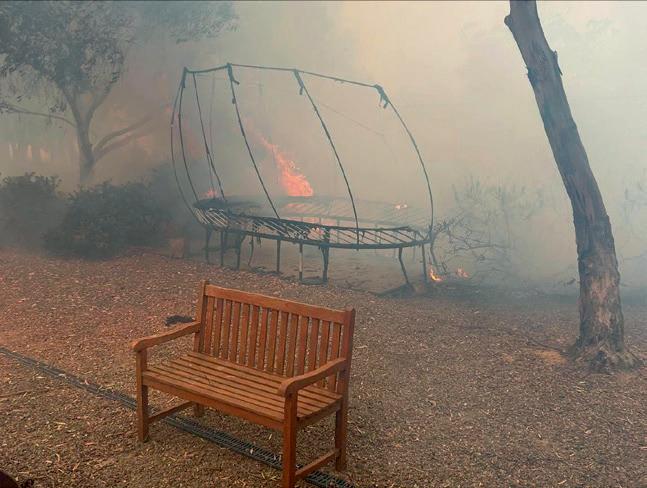
The impact extended well beyond the vineyard. Livestock losses added to the scale of the damage, and while the family home was initially protected during the first fire front, ongoing ember attacks the following day ultimately led to its loss.
It’s a sequence many who have experienced fire will recognise — the immediate threat followed by the quieter, ongoing damage that unfolds in the hours and days that follow.
What Held
Despite the scale of destruction, there were critical elements that remained.
The winery facility was successfully protected by the CFA, along with the cellar door and restaurant operations. Existing wine stock was also preserved, allowing the business to continue supplying previous vintages and maintain a level of continuity moving forward.
In practical terms, these outcomes are significant. Retaining core infrastructure provides a foundation to rebuild from, even in the face of a complete crop loss.
Early Signs and the Reality of Recovery
In the months since the fires, attention has shifted to the long process of recovery.
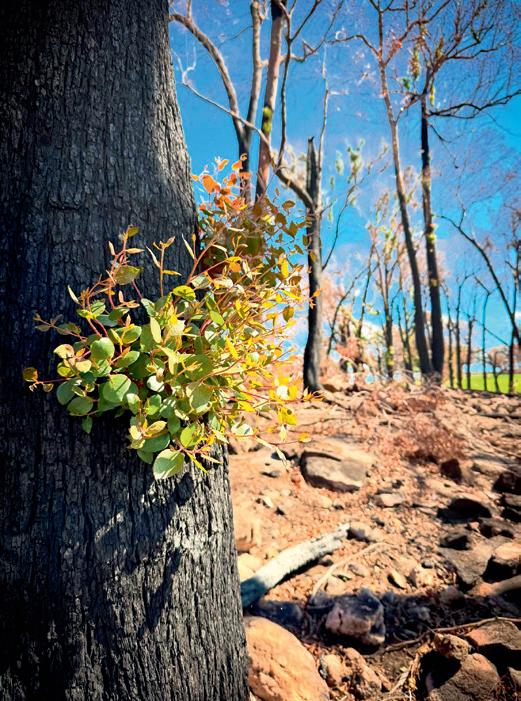
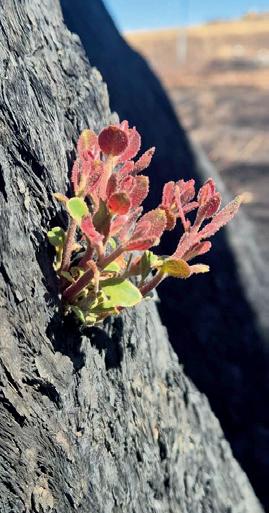
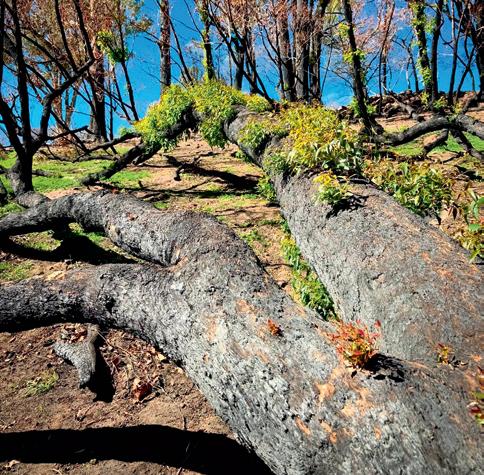
Work across the vineyard has begun with clean-up efforts, assessing damage and determining what, if anything, can be salvaged. Among the devastation, small
signs of life have started to appear, with early green shoots emerging in several blocks.
There is cautious optimism around this regrowth, although experience suggests that early signs can be misleading. Even if some vines do recover, these areas represent only a small portion — around five percent — of what was once the vineyard footprint.
The reality is that most of the vineyard will need to be rebuilt.
>>
Planning for the Future
While the scale of the loss is significant, planning for what comes next is already underway.
Matt Fowles has begun developing ideas for how the vineyard can be replanted, with a focus on pushing the boundaries of sustainability and biodiversity in Australian viticulture. Rather than simply replacing what was lost, the intention is to take the opportunity to evolve — to build something more resilient and better suited to the future.
Re-establishing a vineyard is not a short-term process. New plantings can take several years to reach meaningful production, and recovery will depend on soil health, infrastructure, and seasonal conditions. It is a long road, but one that is being approached with clear intent.
A Different Kind of Vintage
With the 2026 crop lost entirely, the winery has taken a different approach to the year ahead.
Rather than stepping back from production, Fowles Wine has sourced small parcels of fruit from trusted growers across Victoria. These will form a limited collection of wines, including varieties the team has not previously worked with.
In total, around 60 to 70 tonnes of fruit will be processed this year — a significant reduction from a normal vintage, but enough to keep the winery active and create something new.
It will be a very different vintage, but also an opportunity.
There is confidence that the winery team, led by Matt Harrop, will produce something special, even under these circumstances.
The BatNav Project Continues
Among the many disruptions caused by the fires was the BatNav Project — an initiative focused on monitoring bat activity across the property.
At the time of the fire, the project was in its early stages, with recording devices already deployed. Remarkably, several of these devices survived, allowing some data to be recovered.
With no existing studies on bat activity following fire events, the project has taken on added significance. Recording equipment has since been reinstalled, and the data collected may contribute to what could become a world-first study, supporting ongoing PhD research into post-fire ecological responses.
Despite the challenges, there is a strong commitment to continuing the project.
Support and Perspective
In the weeks following the fires, support from across the wine industry and broader community has been significant.
Offers of fruit, messages of support, and practical assistance have all played a role in helping the business move forward. That sense of community has been felt not just locally, but globally.
For those connected to the land, this response is not unusual — but it is always meaningful.
Looking Ahead
Recovery from events like this is measured in years, not months.
Vines will need to be replanted. Infrastructure rebuilt.
And the land itself given time to recover.
The loss of the 2026 vintage is significant, but it is not the end of the story.
What remains is a clear focus on rebuilding — not just to restore what was there before, but to shape what comes next.
Because for those who live and work on the land, the response is often the same.
You assess.
You adjust.
And you keep going.
MyGL and GMA Education Modules
MyGL Education Modules and Renewing Your Licence via the GMA Portal
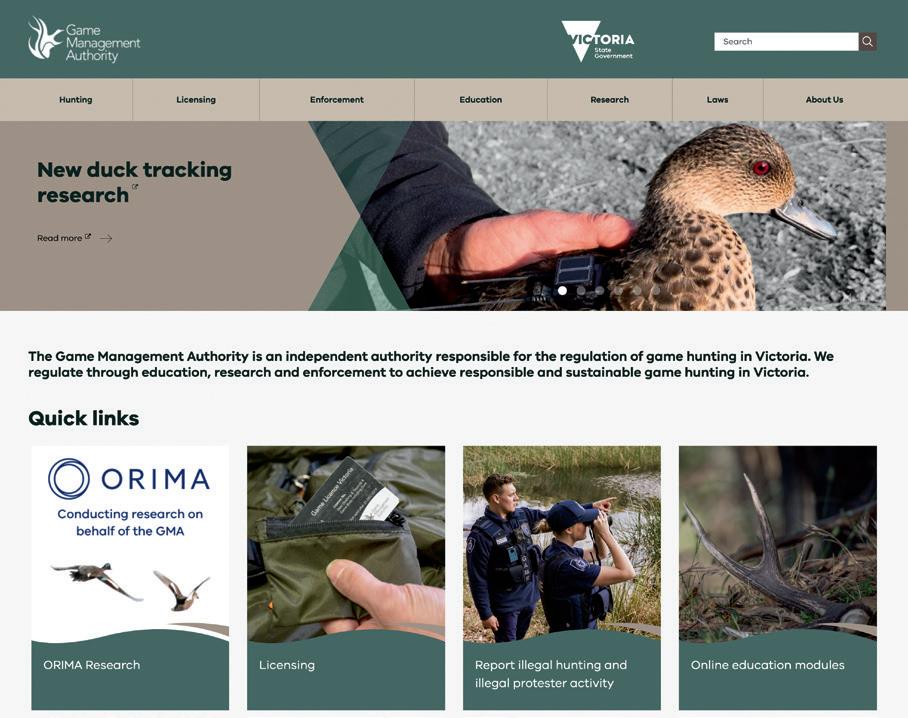
Over recent months, Field & Game Australia has continued to hear from members navigating the MyGL education modules and the Game Management Authority (GMA) online licensing process.
We want to be clear — we understand the challenges, and we’re here to help.
Since these changes were introduced, our team has supported a significant number of members directly, particularly over the phone, helping work through the modules and renewal steps. We know this process hasn’t been straightforward for everyone, and for many, it has required patience and persistence.
Encouragingly, we have now held two member information sessions, both of which were very well received. These sessions have provided practical, stepby-step guidance and the opportunity for members to ask questions and work through the process together.
We will be running more of these sessions throughout the year, particularly as we approach the period where many members’ licences will fall due for renewal in December.
From the outset, FGA raised concerns about a fully digital, multi-step system — particularly the impact it would have on members with limited access to technology or those less familiar with online processes. While we continue to advocate for improvements, our immediate focus remains clear:
Supporting our members to successfully complete their renewals.
One message remains as important as ever:
Please don’t give up your licence.
Our hunting community is built on participation, experience, and shared
knowledge. It’s important that we continue to support each other — whether that’s helping a mate, a family member, or someone at your local branch work through the process.
FGA is maintaining regular contact with the GMA, and we will continue to share any important updates through our weekly newsletter and here in the Field & Game Australia magazine — ensuring all members, including those who are not online, stay informed.
If you need assistance, please don’t hesitate to contact the FGA National Office
on (03) 5799 0960. Our team understands the process and can walk you through it step-by-step, just as we have done for many other members.
We will continue to advocate for a system that is practical, accessible, and fair for all Victorian hunters.
In the meantime, stay persistent, support each other, and know that we are here to help.
For Game Licence renewals:
Visit www.gma.vic.gov.au and navigate to Licensing
Need help with your Game Licence renewal?
If you’re stuck with the GMA education modules or renewal process and can’t get support elsewhere, contact the FGA National Office on (03) 5799 0960. We’re here to help.
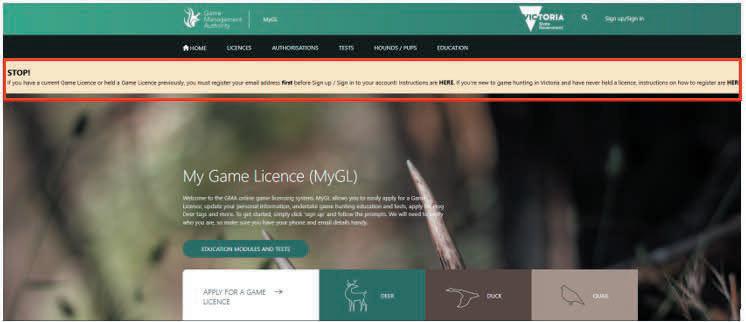
If you have a current Game Licence or held a Game Licence previously, you must register your email address first before Sign up / Sign in to your account!
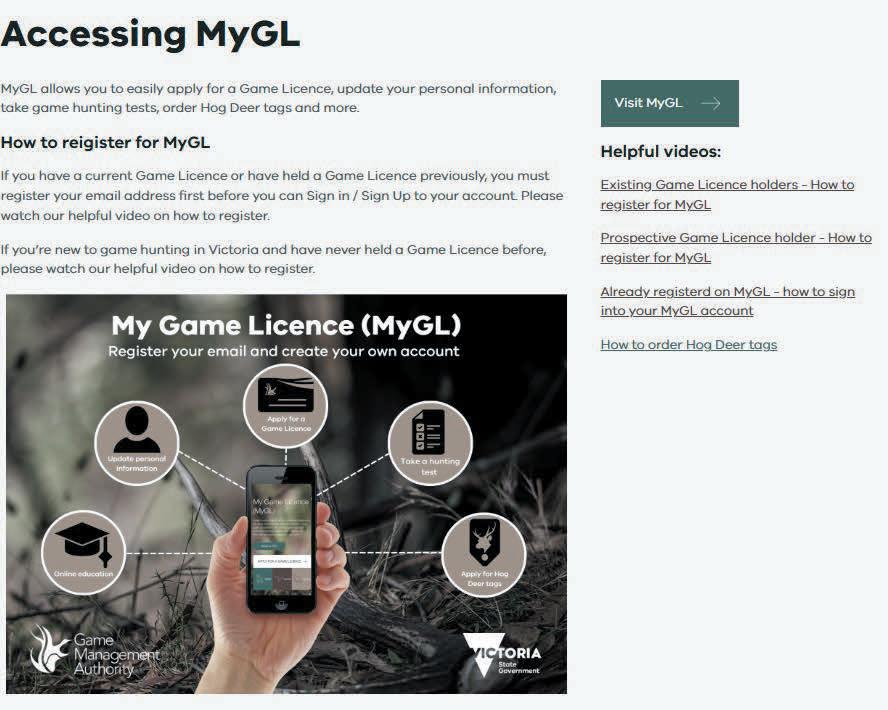
When you visit the MyGL area of the GMA website – there are several videos and instructions.
The ‘Free’ Dog
Everyone tells you about their best dog ever. Around the campfire tales of great retrieves, rock solid points, gold medal winning swimming prowess, until eventually they are clearly supernatural tales limited only by the imagination of the owners.
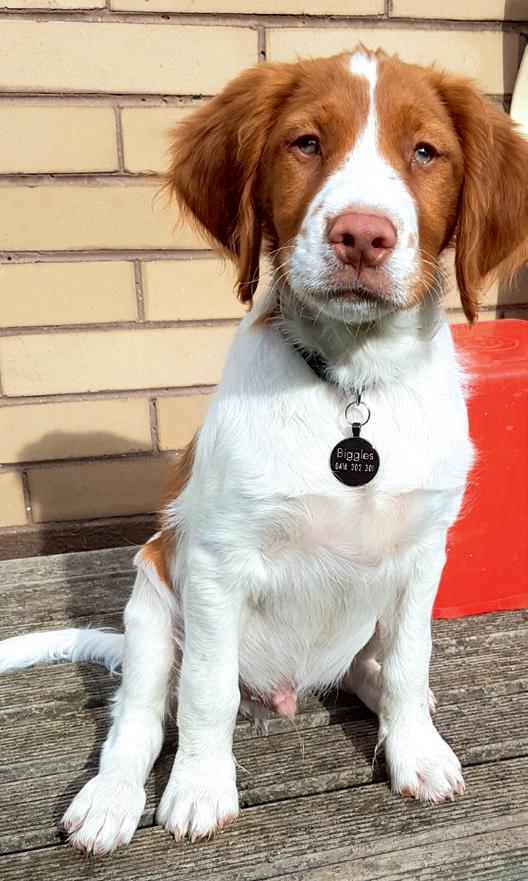
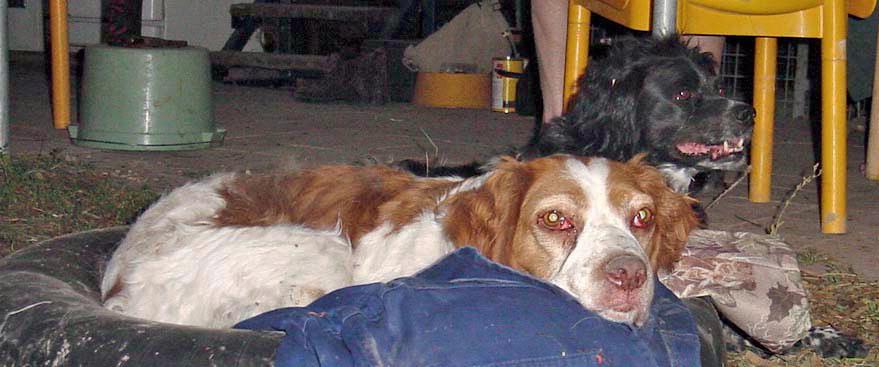
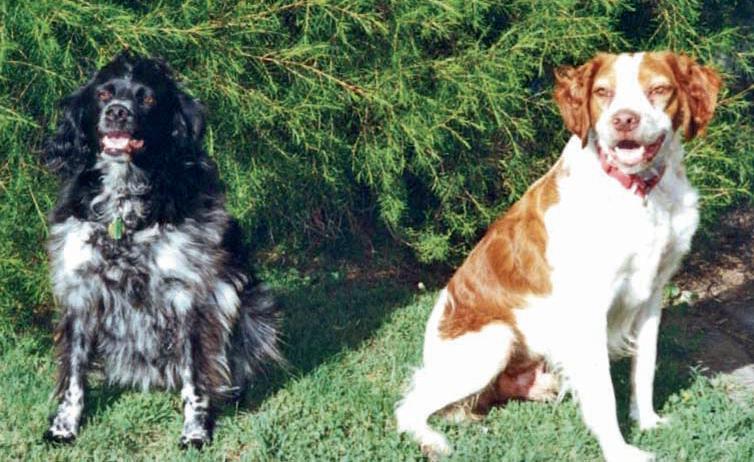
This story is about Biggles, a rescue dog we accepted on condition that he got along with our existing dogs and he was a Brittany Spaniel. We were told he was 3 yrs old, was pedigree with papers and otherwise in good health. With no opportunity for a preview, he was delivered and one glance was nearly enough. While he was a big strong dog, he was closer to 7 yrs and had the most bloodshot eyes we had ever seen. We named him Biggles as he didn’t come with a name either.
The weekend prior my first Brittany, Kelly had been killed by a tiger snake, traumatising both me and Kate our other bitch. Biggles was not to know this and he was friendly and looked eager to please. Kate was understandably very tentative. Still all went well till tea time. We feed them both at the same time and when we checked the food bowls later on, with Kate looking well fed and Biggles down at the end of the yard looking confused. It did not take long till we figured our Kate was keeping Biggles at bay while she ate both bowls of food.
Jane was concerned that Biggles would starve. I assured her that was he was much larger than Kate, he would figure it out. Two nights later he was at the back door looking well fed and Kate was down the end of the yard. They worked it out.
Our first drama occurred as I was leaving for work. I sat the dogs on the front lawns and opened the front gates and drove out.
As I turned to close the gates, I spotted Biggles trotting down the path about 50m away. I called to him “Biggles”, not his name of course but the only one I had to work with, no response. He went about 100m and looked back. I tried to encourage him to return. He continued on as though on a morning walk so I though he was not escaping he just wanted a stroll. This repeated until we were in the next street and so on.
offended at being laughed at. He knew he was no fool.
I eventually got back to my car and followed him. Again, no attempt to escape he was just enjoying the walk. I could not get him back. Eventually, we ended up on Chesterville Rd heading towards Nepean Hwy, a six-lane highway. My last attempt was to drive past him and crouch down, in my work suit and tie of course, on the path and extend my hands to him. He wandered over to me and I took a firm grip on his collar. When I put him in the passenger side he curled up in the footwell. He had obviously been trained at some stage.
Jane was waiting back home and when I returned, she was delighted, Kate perhaps not so much. Later that day we experimented using commands and hand signals. He had definitely been trained. Then Jane said “Do you think he can’t hear us?”. It seemed so and a trip to the Vet confirmed he was nerve deaf 100%. After that we controlled him with had signals and got along very well.
He would look for commands which caused a few collisions with cars parked in the drive where he was not expecting them to be. On a couple of memorable occasions with the house. These sudden stops did not seem to phase him and he took them in good humour and wasn’t
The Vet was also concerned about the whites of his eyes and sent us to a dog eye specialist who determined after several visits and several $00’s that Biggles had been born with the blood vessels, which are usually behind the whites of the eyes, in front of the white. “A birth defect, doesn’t seem to worry him, nothing to be done”.
Despite his defects he was worming himself into our affections, even Kate’s’.
Boxing day 1997 Jane, Robert, Kate and Biggles set out for a visit to the Riverina. At Echuca we pulled into the park next to the bridge to let the dogs out for a swim and so we could rehydrate. Xmas day had been good and we were a little dehydrated. Shortly some shouting from the duck pond alerted me to the activities of Kate who was giving the ducks a work out.
The people at the lake were carrying on a treat and I was subject to plenty of vocal attention but managed to recover Kate. By the time I reached the car my seediness was developing into something more.
But hang on where is Biggles?? Hard to give hand signals when he is not in line of sight and th was no point calling him. Eventually he turned up and was encouraged to come to me. I was perhaps
a little too eager to get him into the car and had picked him up and launched him it no the car before I realized that he stunk to high heaven. An odour, that will be familiar to anyone who is old enough to have emptied a grease trap, will know it. Horrid though it was, the look on Kate’s face when he landed next to her, was priceless and almost worth it.
Biggles had fouled me, Kate, and the back of the car. It was out with the soap and into the Murray for me and the dogs. After some considerable time, scrubbing accompanied by some helpful comments from the bank, “Is it coming off? What do you think he rolled in?” We emerged smelling much better but still not good. The hangover was taking the form of a pounding headache by this stage.
On we went. Jane said “I think that smell is getting worse.” It might have been but with my headache moving up the scale I was in no position to judge the finer points between ghastly and effing appalling. I looked in the rearview mirror to see Biggles walking around hunching his shoulders! Heaven help us! He was clearly unloading whatever he had eaten, which was probably a sign his nose did not work either, as nothing that smelled like that could be considered food.
I kept driving until we found an irrigation channel, the smell was now considerably worse and as Biggles had kindly hurled some of it down between the drawers in the back a major effort was required. I placed some chairs in the shade and put the esky
there and opened a frosty crowny for Jane.
The dogs and I were washed again and tied up, no more exploring for them! I removed the contents of the back of the car and washed it all and laid it out to dry. The smell was conquered but lingering the headache was 11. I retired to a chair in the shade and had a frosty crowny myself. After an hour or so I assembled the car, reloaded the dogs and the wife and we proceeded to our camp.
What about retrieving you ask. I tried many times to get him to retrieve, but he did not retrieve anything ever. He did however pick up a duck I shot, once.
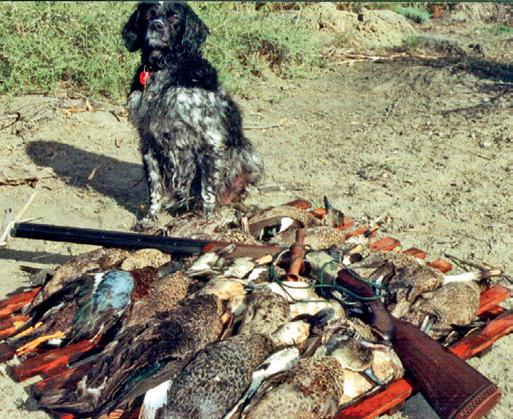
Shooting in a shallow lake I waded out dragging my boat to a suitable spot. Put decoys out and backed into cumbungi with sun behind me. For once I had got it right and birds decoyed in close. I shot a mixed bag of black duck, shoveller, pink ear and teal. The shoveller was such a good specimen that I had him mounted and installed him in the garage.
Biggles was simply confused by all this and while he came to survey what the decoys were all about, he sat in the middle of the spread and looked back at Kate and I crouching in the cumbungi.
Fortunately, he wandered off into the cumbungi when the birds started to appear but showed no interest in the birds falling or Kate jumping out of the boat to retrieve. His claim to fame arose when he flushed a wounded blacky from cumbungi and grabbed it for me. I thought for a minute
he had a carp but when he turned it was the blacky. I was very excited one minute then a I thought how do I get his attention to call him back. Never mind, he dropped it and it returned to the cumbungi for Kate and I to collect.
As I waded back across the lake I saw Biggles off to our right getting further away. The wind was from the right so we had no means of communication. I was not worried and waded back to the car and took some photos. You will notice – no Biggles!
I spent an hour or so looking, then cleaned the birds, had lunch and set off again. I drove around all of the tracks accessing the Lake and then set off on foot to circumnavigate where the tracks did not reach. He was dozing on the shore opposite where I shot. He of course did not hear me approach and the temptation to scare the wits out of him was strong, but I was glad to have him back and he was happy to see me. He then proceeded to vomit in camp. Given previous experience I approached cautiously with a shovel and dispensed with it downwind.
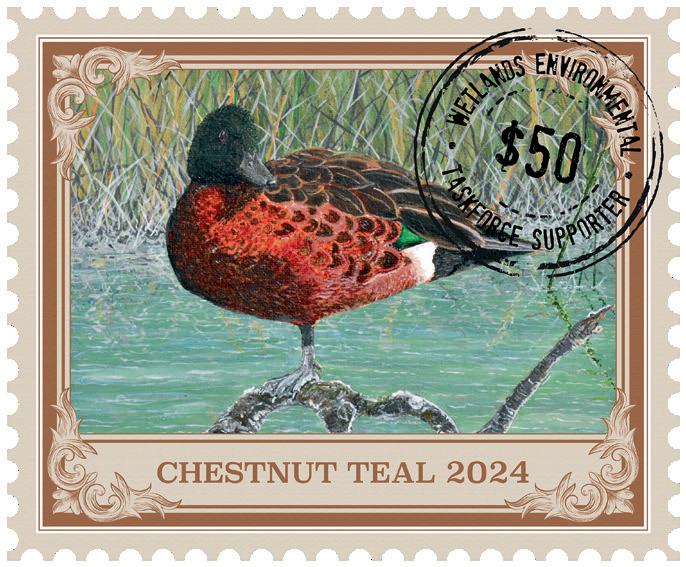
The verdict. Well Biggles had a few problems, don’t we all, but he was a happy affectionate and obedient friend who left a hole in our hearts when he left us. Indeed, as a mark of respect, a friend as so taken with Biggles she presented us with a sheet of Biggles stamps.
And of course, we now name our dogs “Biggles #” in honour of the first. Welcome Biggles III.
Cranbourne Field & Game – Where It All Began
A story shaped by persistence, practicality, and a shared idea
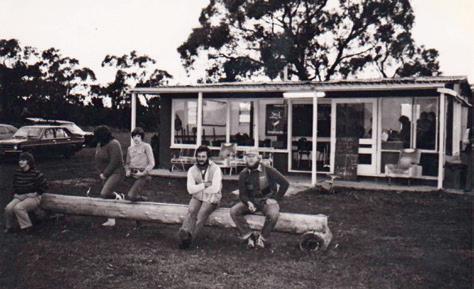
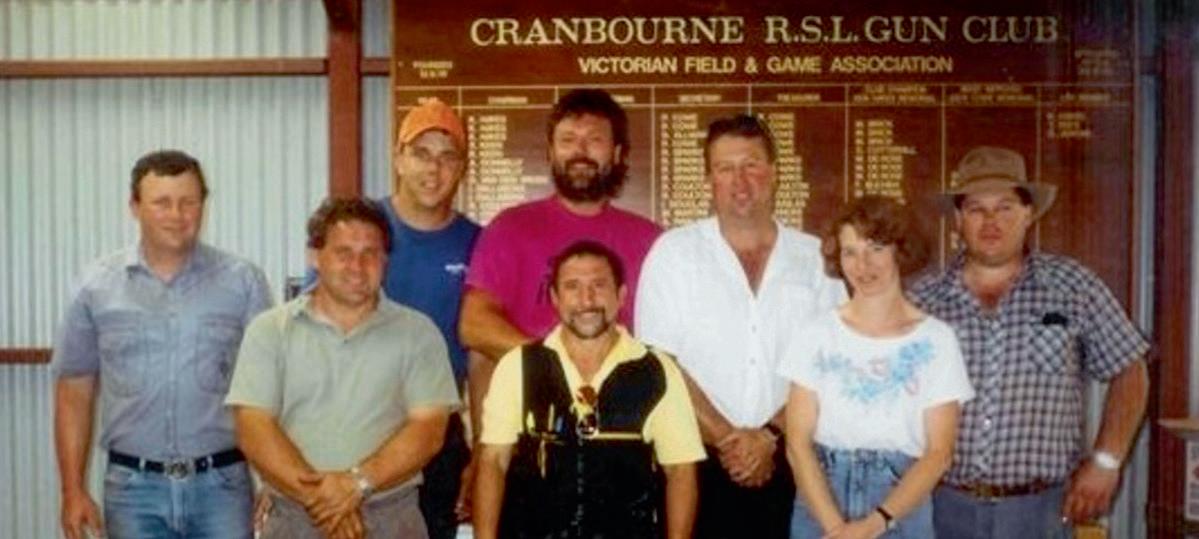
The Cranbourne RSL Gun Club traces its beginnings back to 1978, when a small group of local men found themselves drawn together by a shared interest in shooting and a growing sense that there was room to do things differently.
At the time, clay target shooting was well established, but not always accessible in a way that suited everyone. Larger gun clubs could feel dominated by established groups, and for those simply wanting to enjoy the sport without pressure, the experience could be less than inviting. What this group had in mind was something more straightforward — an environment where people could shoot, learn, and enjoy each other’s company without the complications they had encountered elsewhere.
The idea itself came together informally. Conversations held around an open fire at the Cranbourne RSL Club, usually centred on hunting, fishing, and past experiences, began to shift toward the possibility of creating something new. Initially, the suggestion of forming a club was met with hesitation. It was not a small undertaking, and there were understandable doubts about whether it could be achieved. However, as the discussions continued, the idea began to carry more weight, eventually moving from casual suggestion to a genuine plan.
Once that decision had been made, progress depended entirely on the willingness of those involved to commit their time and effort. A committee was formally established on 12 September 1978, with Ken Hayes as President, Ted Rees as Vice President, and Peter Cowe taking on the dual role of Secretary and Treasurer. Larry Oakley served as Field Captain, supported by Murray Ryan, Ray Close and Michael Brick. These were individuals with no shortage of other responsibilities, but they shared a practical determination to see the idea through.
Support from the Victorian Field & Game Association provided some early guidance. Representatives Jeff Latch and Rod Bowman attended a meeting and outlined the benefits of affiliation. At that stage, however, the club chose to continue
independently, focusing on establishing its own identity before formally aligning with the broader organisation.
Finding a suitable location to shoot presented one of the first real challenges. In the early days, access to grounds was limited, with occasional use of facilities at Keysborough. The arrangement was not ideal, but it allowed the club to begin operating while longer-term options were explored. That changed when Maurie Dinn of the Keysborough Gun Club assisted in securing access.
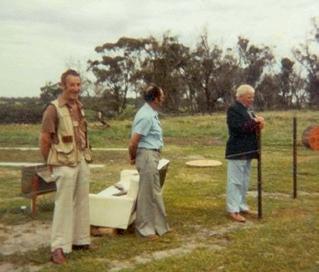
On 24 April 1979, the club held its first official shoot at this location. The turnout exceeded expectations, with ninety-nine shooters participating in novice, open and ladies’ events. The Treasurer’s report for the day noted takings of $333, returning a modest but memorable profit of $3. For a newly formed club, the level of support was significant and provided a clear indication that the effort had been worthwhile. The success of that day set the tone for what would follow.
As the club grew, so too did the practical demands of running it. A site has been found. Approvals needed to be obtained, neighbours consulted, and infrastructure gradually established. At one point, concerns raised by a local landowner
altogether. Resolving the issue required patience and careful negotiation, but ultimately an agreement was reached that allowed the club to continue operating.
Facilities developed slowly and largely through the efforts of members themselves. A prefabricated building purchased for $200 served as the clubrooms for more than a decade. Toilets were installed, grounds were marked out, and trap layouts were refined over time. Much of this work took place on weekends, with members contributing what they could in terms of labour and materials.
During this period, the club also benefited from the involvement of local clay target shooter Ian Hale, a Vietnam veteran and member of the Cranbourne RSL Club, who assisted with setting up the ground and shared valuable experience in the early days. His contribution, along with that of others, added to the steady development of the club.
threatened to halt shooting activity
Michael Brick and Sam Biondo.
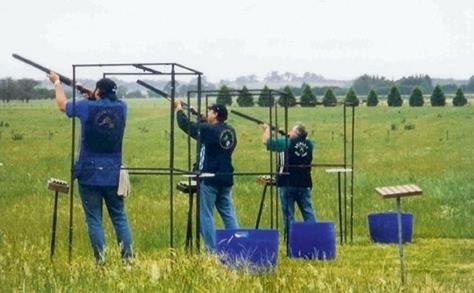
The Cranbourne RSL Gun Club FGA 1998, 3 person Flush exhibition shoot, AA shooters 75/75. Left to right: Ves Dubacanin, Michael Brick, Graham “Dr Duck” Eames.
Left to right: Mr Ken Hayes (President Cranbourne RSL Gun Club), Mr Neil Cameron (President Cranbourne RSL Club), Mr Bruce Ruxton (President Victorian Branch RSL Australia), Mr Ruxton opening the new shooting ground of the Cranbourne RSL Gun Club in 18th January 1979.
The original Cranbourne RSL Gun Club, Club house, 1981.
The High Gun Trophy at the opening shoot of the Cranbourne RSL Gun Club at Keysborough Gun Club in 1979.
Another early tradition that reflected the club’s culture was the Jock Cowe Memorial Trophy, named in honour of Peter Cowe’s father, an avid shooter. The trophy was awarded for the most improved shooter and became a meaningful recognition within the club.
By the late 1970s and into the early 1980s, the Cranbourne RSL Gun Club had established itself as a consistent and well-supported organisation. Competitions were regularly held, and participation continued to increase. The visit of Bruce Ruxton, then President of the Victorian RSL, who fired a ceremonial first shot on 18 January 1979, was a notable moment
that reflected the club’s growing profile.
Over time, the club became known not only for its shooting, but for the atmosphere it offered. It attracted a broad cross-section of people, including those who may not have otherwise felt comfortable joining more established clubs. The emphasis remained on participation and enjoyment, which in turn supported its continued growth.
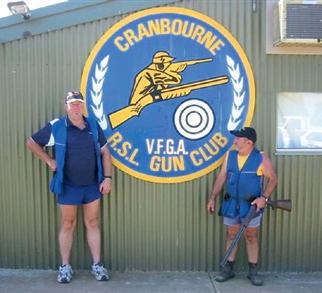
A significant milestone came in 1993, when the club formally affiliated with the Victorian Field & Game Association (VFGA) becoming Cranbourne RSL Gun Club, Field & Game.
By 2003, membership had grown to
approximately 650 members, and the Cranbourne RSL could no longer accommodate the club under its existing structure. In particular, insurance requirements meant that all club members would have needed to become members of the Cranbourne RSL — an impractical outcome given the club’s size. As a result, the decision was made to separate and move forward independently.
From that point, the organisation continued as Cranbourne Field & Game Inc., maintaining its connection to the sport while adapting to new circumstances.
Looking back over that period, what stands out is not a single defining moment, but the way in which the club was built over time. Progress was rarely straightforward, and there were challenges at every stage. However, the consistency of effort from those involved ensured that each obstacle was addressed as it arose.
The result is a club that reflects the intentions of those who established it — practical, inclusive, and grounded in a shared interest in the sport.
That approach has carried through to the present, and it remains central to what the club represents today.
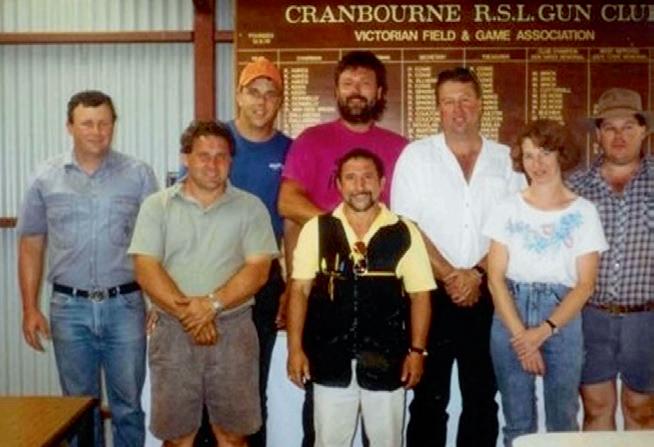
Back: Eric Mills, Matthew Munro, Ves Dubacanin, Michael Brick (Secretary/ Treasurer), Peter Morgan (Vice President). Front: David Jenke, Sam Biondo (President), Coral Morgan.
Paris & Normandy – A Journey of Reflection
Recently, my wife Shez and I had the opportunity to travel to France — a trip that turned out to be far more meaningful than we could have imagined.
We arrived in Paris and spent several days taking in the sights before boarding a Scenic river cruise along the Seine, heading toward the historic battlefields of Normandy. While many travel to France for its beauty and culture, for us this was a different kind of journey. In many ways, it felt like a search — not for game, but for connection — as we set out to find the resting places, or at least the stories, of family members who never returned home.
Shez’s great-uncles, Alfred and James Stone, both served in the First World War. Alfred, an infantryman awarded the Military Medal for bravery, died of wounds at Vignacourt. His brother James, a sniper, was killed in action at Villers-Bretonneux. Both lost their lives during the brutal fighting that led to the recapture of VillersBretonneux in April 1918 — a pivotal moment under the command of Sir John Monash that helped secure the region and contributed to the eventual end of the war.
France itself is a remarkable country — rich in history and strikingly different from our own. Interestingly, many of the people we travelled with were Australians and New Zealanders, with a few Americans along the way. It reinforced just how connected these places remain to those back home.
From Rouen, we travelled by bus to VillersBretonneux — a town well known to many Australians. The fighting there in late April 1918 was intense. German forces captured the town on April 24th, supported by tanks, before Australian troops launched a counterattack that same night, successfully reclaiming it. The town was left devastated, heavily damaged by artillery, and the cost in human life was immense.
The scale of that loss is difficult to comprehend. Many of those who fell have no known grave. Alfred Stone was among them. At the Australian National Memorial at Villers-Bretonneux, we found his name — one of more than 2,000 recorded there — but no grave to visit. We were also unable to locate any resting place for
James. For Shez, this was an emotional moment. Like so many families, theirs never came home. Across the war, more than 10,000 Australian soldiers remain with no known grave.
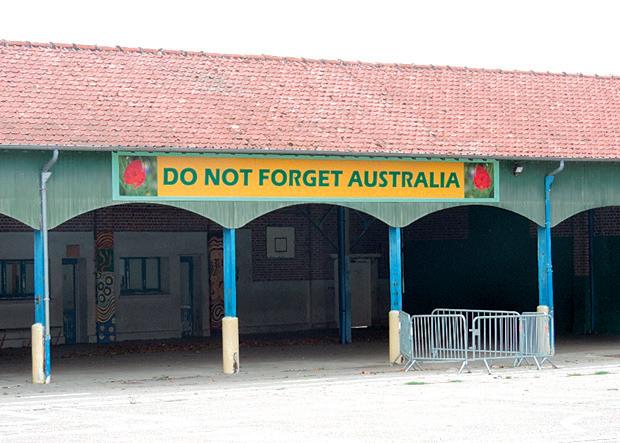
We spent time exploring the town itself, visiting the museum and the Victoria School — a place that holds special significance. After the war, the people of Victoria helped fund the rebuilding of the school, which was officially opened in 1927. Today, it stands as a powerful symbol of the connection between Australia and France. A sign at the school reads, “Never Forget Australia,” and each day the students sing Advance Australia Fair. Streets throughout the town carry Australian names, and every ANZAC Day a dawn service is held in remembrance.
Later in the trip, I visited Omaha Beach and its military museum, reflecting on the events of D-Day in June 1944. Walking along the shoreline, it was hard to imagine the scale of what took place there. Even now, remnants of the past remain — I came across what appeared to be a rusted machine gun partly buried in the sand. It’s said that many more artefacts still lie
beneath the surface.
The American Cemetery overlooking Omaha Beach is an extraordinary place. Immaculately maintained, it honours more than 10,000 fallen soldiers. It is a place many will recognise from the opening scenes of Saving Private Ryan. Among those buried there is Brigadier General Theodore Roosevelt Jr., aged 56, who led troops ashore on D-Day and later died of a heart attack. He rests alongside his brother, Lieutenant Quentin Roosevelt.
I’ve always had an interest in history, and this trip reinforced just how important it is that we continue to learn from it. Standing in such peaceful and beautiful countryside, it is difficult to comprehend that it was once the site of such destruction and loss.
We returned home with wonderful memories and new friendships, but above all, with a deep respect for those who served — and those who continue to serve today.
Each year, on April 25 and November 11, we remember them.
Lest We Forget
A Voice in Parliament
Members stand together to be heard
Recently, representatives from Field & Game Australia, including National Office staff, Board members and many of our members, attended Victorian Parliament to observe debate surrounding proposed changes to firearms legislation. It was an important moment.
Not because it marked the end of a process, but because it represented something that matters just as much, the opportunity for the voices of law-abiding firearm owners to be heard within Parliament.
The debate followed a petition signed by more than 12,500 Victorians, reflecting a broad cross-section of the community. As was highlighted during the address, those who contributed included farmers, pest controllers, sporting shooters, conservationists and families, all of whom operate within one of the most highly regulated systems in the country.
For those in attendance, what stood out most was not the politics of the debate, but the themes that were raised.
There was a clear emphasis on the importance of evidence-based policy, and the need to ensure that any regulatory change is directed toward genuine risks.
The discussion reinforced a point that many within our community already understand — that licensed firearm owners are subject to rigorous oversight, and that public safety outcomes are best achieved by focusing on criminal activity rather than those who are already compliant.
Importantly, the petition itself did not call for a reduction in standards. Instead, it called for measures that strengthen safety outcomes while maintaining fairness. These included improved national registration systems, stronger enforcement against illegal firearm trafficking, and ongoing monitoring of licence eligibility, all grounded in practical, evidence-based approaches.
For Field & Game members, much of this aligns with everyday experience.
Whether through ethical hunting, pest control, or conservation work, our members operate within clear regulatory frameworks and understand the responsibilities that come with firearm ownership. The expectation is not for special treatment, but for policy that recognises the difference between lawful participation and criminal misuse.
Our attendance at Parliament was not about supporting any particular political position. Rather, it was about ensuring that the perspectives of our members — and the broader community they represent — are part of the conversation.
That includes recognising the role that licensed firearm owners play across Victoria. As was noted during the debate, these individuals contribute not only to sporting traditions, but also to regional economies, environmental management and conservation outcomes.
These are not abstract contributions. They are practical, visible, and ongoing.
As discussions around legislation continue, Field & Game Australia remains focused on engaging constructively, advocating for balanced, evidence-based outcomes, and ensuring that the voice of our community is represented in a measured and responsible way.
Moments like this serve as a reminder that participation matters.
Not just in the field, but in the broader conversations that shape how our activities are understood and managed into the future.
On the Ground at Rushworth
A few months of work that are starting to show results.
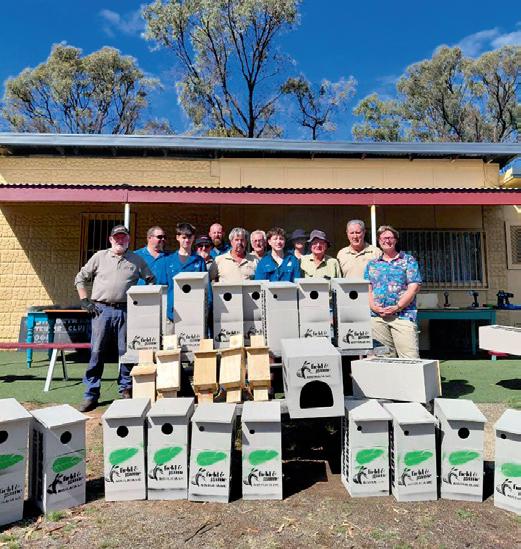
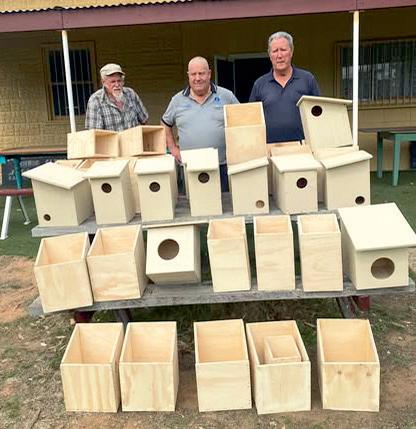
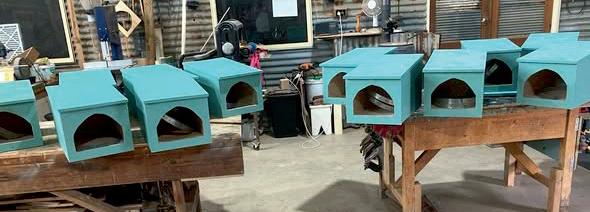
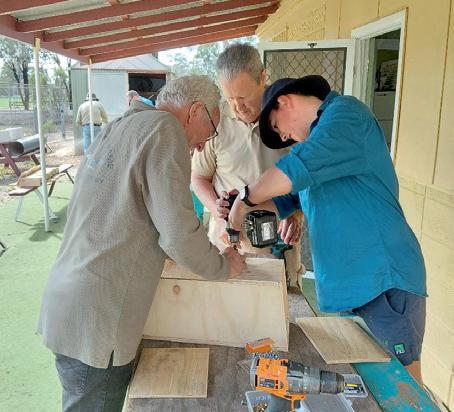
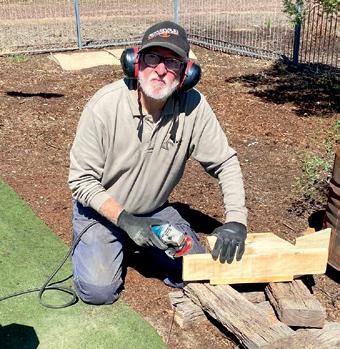
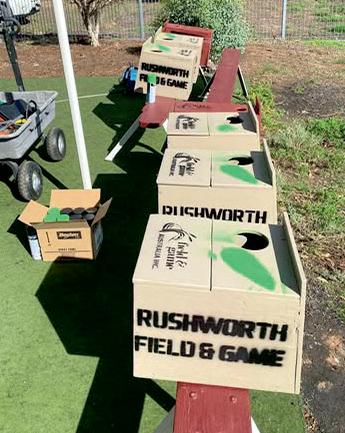
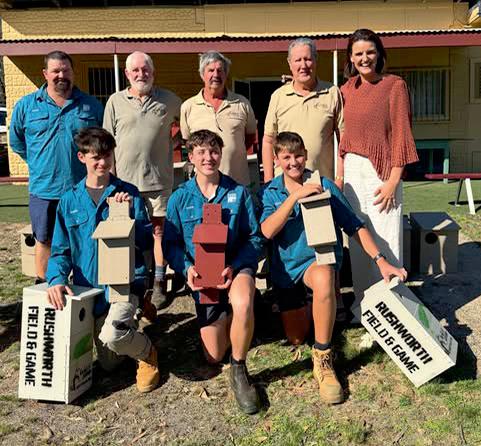
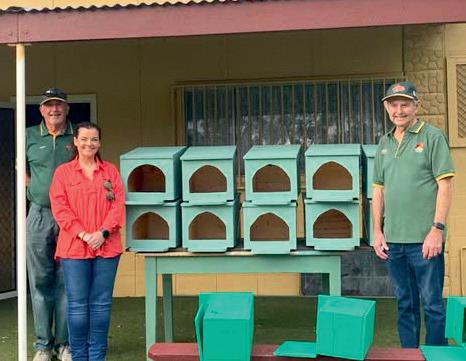
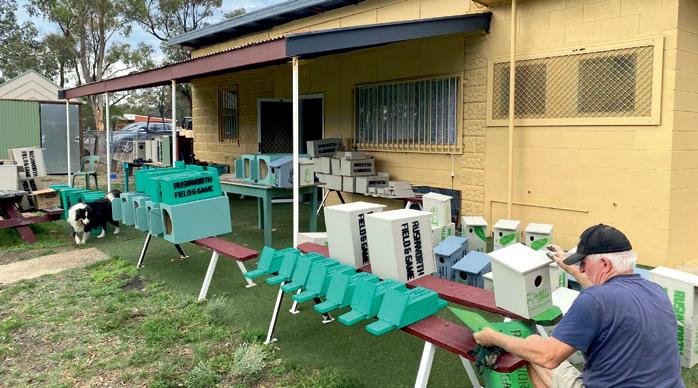
Our branch has a regular Wednesday working bee where we join with Students from the Rushworth P12 college. The College has a HOPE program for short. Full description ‘Hands On Practical Education’. We commenced the program in 2025 and following its outstanding success it was decided to continue it in 2026. Craig Hunt the coordinator from the Rushworth P12 college said in 2025 we along with the conservation officer from Rushworth Graeme Wall had reservations about how the program would go. Both were extremely pleased with the way the students relished working with the branch members and although there were age differences, friendships developed. Last year there were many achievements the best would be the construction and erection of 50 nest boxes along the Waranga Rail Trail along with construction and erection of hen houses on wetlands. In 2026 after the fires the idea was born of building nest boxes to donate to the areas recently affected by the fires. 90% of older trees are destroyed by fire and these are the trees with hollows where many native species live and breed.
From there, the focus shifted naturally to what could be done. No one was looking to overcomplicate it. Nest boxes were the obvious starting point. They’re not a perfect solution, but they’re practical, and they give wildlife something to work with while the country takes the time it needs to recover.
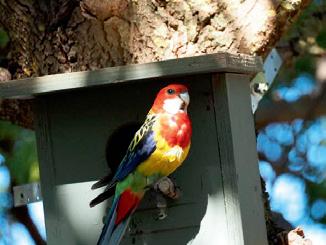
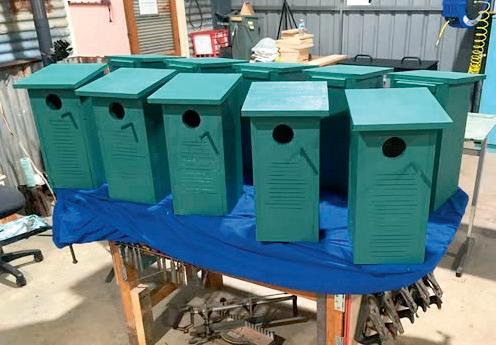
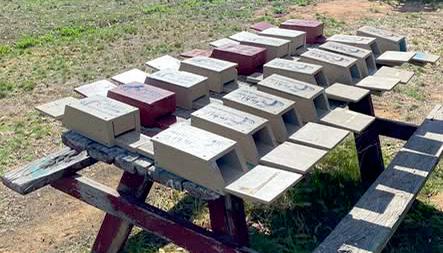
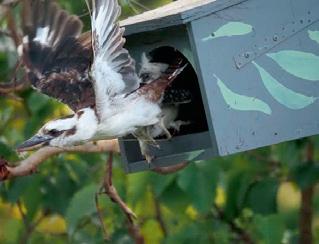
As we had the skilled members along with the students, we aimed to build a hundred boxes. We went about using our contacts and we were able to get donations of plywood and exterior paint. Community response was tremendous with donations of materials and cash. Different species were considered as well, with boxes made for parrots, kookaburras, bats and small marsupials, each requiring slightly different dimensions and placement.
It didn’t stay within the branch for long. The Tallygaroopna Men’s Shed got involved, and
donated boxes they had made. Marymede Catholic College had students building boxes and one of their teachers Mark Chapman who had seen our project made contact and dropped off boxes made by the students. Children from the Rushworth Kindergarten had seen the boxes along the Rail trail and volunteered to paint boxes for the fire area. Another recent affiliation is developing with the newly formed Murchison Ladies shed, with discussions about boxes and best building materials
Getting kids out to see what’s involved in maintaining habitat — not just hearing about it — is something that tends to stick, and it’s probably as important as the work itself.
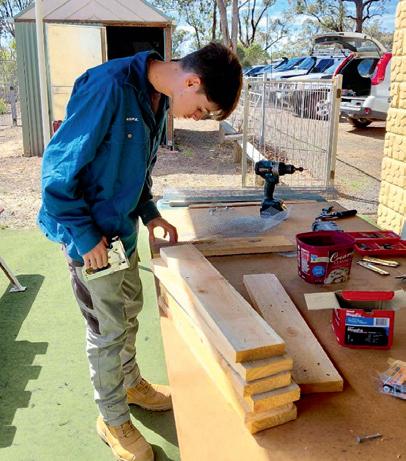
During the building process there was the trips picking up donated materials and doing the cut out for the boxes was done by our member Charlie Cerchi and school
staff. Each week there were different boxes to build just like a normal flat pack as with normal flat packs there were some easily remedied errors. As we progressed through the building, we invited our local politicians who as normal were pleased to visit and view our progress. Annabelle Cleeland MP who is the local National party members property was affected by the Longwood fire and was very appreciative of our contribution. Annabelle has been a regular visitor to our branch and is very supportive of our conservation work. We were also visited by RikkieLee Tyrrell MLC who Is the member for Northern Victoria on the same day the Tallygaroopna Men’s Shed dropped off 8 Kookaburra boxes. While in Rushworth Rikkie -Lee had a tour of some wetlands and viewed some of the problems that they have and had many questions, and this quick introduction of issues could be
of benefit in the future. Rikkie-Lee was so impressed she highlighted our work in her next speech in parliament. Another visitor was Allison Trethowan who is the Biodiversity Recovery Officer for the Longwood fire area.
Once the boxes were built, attention turned to delivering them. The first delivery was to Natimuk Field and Game where we supplied some parrot boxes to their shooting ground. The next delivery was to Euroa to the recovery centre where boxes are being stored awaiting erection. Janet Hagan a Ruffy resident and recovery officer met us and took us to Ruffy Hall which has become a drop off point for donations and is the spot for locals where they can gather for meals. This meeting place is integral in the rebuild of the community. Janet’s house had been destroyed, and she took us to her and husband Justus’s farm and showed us
the damage. Although a confronting scene the students were respectful and interested in seeing the damage and the regrowth following recent rain.
Placement of boxes makes a difference. The height, the direction the opening faces, the type of tree, the surrounding cover and proximity to water all play a part in whether a box is likely to be successful. Monitoring of the boxes is important seeing which species are using them and if they have success. Sometimes a slight movement on a tree or a move to new location can make a difference.
There is still a fair bit of work ahead. More boxes need to be built, and we still have some that require some alteration to suit the different species that have been affected by the fires. Beyond that, there’s always more to be done when it comes to habitat, whether it’s around wetlands,
vegetation or general land management. None of it happens quickly, and no one expects it to.
What stands out most is that no one involved sees this as anything out of the ordinary. It’s just part of being involved with the branch and part of looking after the areas we spend time in. The work doesn’t draw much attention, and it’s not something that gets talked about a lot, but it adds up over time. The Rushworth Field and Game Facebook page is critical to our success as it enables us to get our work out to politicians, our members, and community members.
And that’s probably the best way to describe what’s been happening at Rushworth. Nothing complicated, nothing overstated — just a group of people putting in the time, doing what they can, and continuing to see the results.
Performance of Light Shot Load Cartridges
Many long-time members will have witnessed the evolution of ASF and shotgun cartridge performance over the decades. Drawing on his own experiences as both a competitor and referee, including during the 1988 FITASC World Championships conducted under the ASF format at Geelong, John C Long reflects on the steady shift from heavy competition loads toward the lighter cartridges now commonly used throughout the sport. His observations provide an interesting perspective on how shooting techniques, recoil management, and cartridge performance have changed over time, while reinforcing that effective shooting has always relied on far more than simply heavier loads.
In Issue 40 of Field and Game Magazine, pages 48 & 49, Lucas Cooke describes in detail the “anatomy” of shotgun cartridges, showing shot ranging from very fine through to a single projectile, making them suitable for use against intended targets.
Then in Issue 41, pages 34 & 35, we are reminded of our responsibilities as hunters to “REDUCE” wounding by using suitable cartridges and refraining from shooting at game at excessive ranges.
It was noted that the cartridges displayed were 34 grams, or a little under 1¼ ounce in Imperial measures, and the recommended “killing range” for ducks is up to 30 metres. (ASF Ground Setters to note.)
So let’s go back a step in time and again review the loads of cartridges used in competitions down through the years.
The Live Bird Shooting Era
Prior to 1956, as introduced by Max Beck in Issue 39 of our magazine.
What did shooters use in those competitions, and why?
(Pardon the use of Imperial measures, the memory is being stretched.)
The Arenas
These were circular spaces, 100 yards in diameter, surrounded by a low fence two feet high.
The Traps
These were spring-loaded, box-style mechanisms, set in a semicircle 25 yards from the boundary fence.
The Layout
There were five traps, one on the centre line of the arena, with two on each side. The distance between each trap was five yards.
The Birds
As Max has said, the birds used were sparrows, starlings, and galahs, which were trapped in the wild using mist-net systems. However, pigeons were used in more competitions, particularly in majors, as they are domestic birds which return to their lofts each evening, providing a reliable supply.
Trap Loading
The birds arrived at events in flat box-type cages with access from the top, allowing the “Trap Boys” to catch a bird, run it out to the trap area, place it in the open trap, close the lid, and return it to its springloaded position.
The Shooting Position
As only one competitor could shoot at any one time, a single track on the same centre line as the middle trap led from the assembly area, past a trap selection “roulette” wheel, set up with a view of the
numbers available only to the trap release operator in a small “house” beside the track.
Thus, the shooter did not know which trap would be released on his call, with the bird free to fly in any direction it chose.
The Competitor
The shooter walked along the track to his handicap mark, set himself, called for the target, and endeavoured to shoot the bird dead within the boundary fence. A bird shot over the fence was lost.
So speed of movement, accuracy, and powerful cartridges were an absolute necessity.
Whilst sparrows, starlings, and galahs were in regular use, pigeons were the preferred bird at many events, as they were also a food source for competitors.
It must also be remembered that bookmaking and gambling on competitors’ performances were common, particularly at major events.
The cartridges of choice, even for sparrows, were always 1¼ ounce (36 gram) loads,
with the preferences being:
• Black Legia, nickel-coated shot, in packets of 10, for the “Big Boys” and those with cash to splash
• Coopal Crown, copper-coated shot, in packets of 25
• ICI Special, lead shot, in packets of 25, for the common man
The “REDUCE WOUNDING” philosophy was ever present even back then for competitors to be successful.
The Clay Target Era
So let’s fast forward past the FITASC World Championship, conducted at the Geelong Field and Game ground under our ASF format in 1988, when it was evident that 1¼ ounce loads were still being used by many competitors.
But possibly not by the Men’s Champion, John Bidwell, and definitely not by the slim and athletic Ladies Champion, Anthea Hillier, both representing the UK.
By the Rule Book, which came into operation in September 2011, 36 gram cartridges could still be used, except at
the National Carnival, where a reduction in load to 28 grams was specified.
The maximum shot size of No. 7 and minimum of No. 9 became compulsory at ASF events and, surprise, surprise, results did not diminish.
The Rule Book was re-written in 2018, allowing 32 gram loads to be used from 1 January 2018 to 31 December 2019 in events other than the Nationals.
Then from 1 January 2020, only 28 gram loads could be used at all ASF events.
Now, 24 gram loads are in common use, and even 21 gram loads have been found to be effective due to their low recoil, proving very helpful to beginner boys and girls, older veterans, and those carrying injuries.
So next time you are picking up a slab or two of your favourite 28 gram cartridges, buy a packet of 21 gram loads and give them a try.
You may be surprised.
A Light Load User
The Modern Firearm Owner
– and the Old-Fashioned “Representative”
The Incident
Iwas sitting in a room recently, doing what I do—representing firearm owners, explaining who we are, and getting a read on what the people across the table actually think. It wasn’t hostile, but it wasn’t friendly either. Mostly bureaucrats. Policy types. People who don’t shoot, don’t hunt, and in many cases don’t really know anyone who does. The sort of room where opinions are formed quickly and, once formed, tend to stick.
Partway through, a bloke stood up to speak. He’s been around a long time. Known. Respected. The sort of person people point to and say, “he knows his stuff.” Seen plenty. Done plenty. And importantly, looked at as someone speaking on behalf of hunters and shooters. As he got going, you could see the room lock in. Heads nodding. Pens moving. This was landing—but it was all wrong.
He was engaging the room with the very worst version of a long-gone era of hunters—and they were buying it. Why wouldn’t they? It was coming from someone presented as a hunting representative. To them, this was the insight.
What they were hearing was the worst image of irresponsible hunting, spoken about as if it were still the standard.
Now, to be fair, that version does exist. We’ve all seen it at some point. The oncea-year, opening morning hunter. Plenty of noise, not much skill. Shooting at birds that should never have been shot at. Not much thought for how it looks, or whether it’s done properly.
But that standard went out of style long ago, and more importantly—it’s just not who we are anymore.
The Problem
The issue wasn’t that it was mentioned. The issue was that it was presented as typical. And in that room, that mattered. Because the people listening don’t have another reference point. They don’t go out with us. They don’t see the effort, the discipline, the standards that now exist across the majority of firearm owners.
So what they heard became their reality.
And what they heard was a version of firearm owners that was easy to question, easy to regulate, and easy to justify tightening controls around.
I’ll say it straight—what was said in a few short minutes did more damage than any protest, headline, or anti-hunting campaign ever could. Because those things come from the outside. This came from within, and it came from someone who should have known better.
Owning a firearm today is not a passive hobby. It carries responsibility, scrutiny, and whether people like it or not, a level of political weight. The old stereotype—the disengaged, low-effort operator—doesn’t survive in that environment. Most of them don’t adapt, and most of them don’t stay. What remains is a far more engaged, aware, and motivated group. That’s the modern firearm owner, and it deserves to be represented as such.
Why It Happens
Walking out of that room, it stuck with me, because I don’t believe that bloke set out to do harm. In fact, I suspect he thinks he was being helpful—being realistic, showing balance. But there’s a trap in that.
Spend enough time in representative roles and you tend to see the worst of things. Complaints, issues, the occasional poor behaviour. That’s what lands on your desk. People don’t call to say everything is going well. They call when something’s gone wrong. Over time, that becomes your reference point.
It wears you down.
And if you’re not careful, you start to see the whole group through that lens. You lead with the negatives because that’s what you hear the most. You think you’re being honest, but in reality, you’ve become a bit disconnected from the broader picture.
That’s when experience tips over into being jaded.
And the danger is—you don’t always realise it.
A Word to the Jaded Representative
If you’re reading this and thinking you might be the person I’m talking about—or that you know exactly who I’m talking about—that’s not by accident.
So I’ll say this plainly.
If you represent members, you owe it to them to represent them properly. Not
perfectly, not blindly—but fairly, and with a level of respect for who they actually are.
Because if your view is that your own members are untrustworthy, poorly behaved, or “the problem”… then you need to have a hard look at yourself.
Why are you representing them?
And more to the point—how are you representing them?
You might be tired. I get that. Plenty of us are. You might be carrying more of the negative than the positive. You might have seen enough bad behaviour over the years that it’s stuck with you.
But that’s not an excuse to drag the whole group down with it.
You might not realise how you sound. You might think you’re being balanced. But if you can’t remember the last time you stood up and genuinely, confidently described firearm owners as responsible, capable, and trustworthy people—then something’s off.
And if that’s the case, you’ve got a choice. Reset.
Or step aside.
Because staying in the game too long— and getting it wrong—does more damage than getting out at the right time.
And I’ll add this, just to be clear—I’m glad to say this person does not represent Field & Game Australia members. But he does represent a segment of our broader firearm-owning community, and right now, he’s not doing it well.
The Role of Members
This isn’t just on “representatives”. Members have a role in this as well.
Branch committees, club officials, and many of the people who end up speaking on behalf of others are volunteers. They put in the hours, they deal with the issues, and more often than not, the feedback they receive is when something’s gone wrong. That shapes people. It would be strange if it didn’t.
So if you want good representation, support it.
Tell the good stories. Acknowledge the effort. Back the people who are trying to do the right thing. A bit of positive feedback goes a long way in balancing out the constant noise of complaints and problems, and it helps keep good people engaged rather than worn down.
Because culture doesn’t maintain itself. It’s shaped by what we choose to focus on.
Where We Sit Today
The modern firearm owner is something to be proud of. More engaged. More aware. More accountable than ever before. That’s not an accident—it’s a direct result of the environment we operate in, and the standards most people now choose to uphold.
But that only holds if we represent it properly.
Not as it was twenty years ago.
Not based on the worst examples we’ve ever seen.
But as it is today.
Because if we don’t get that right, we won’t just be fighting the narrative from the outside—we’ll be reinforcing it from within.
And that would be a shame, because the truth is far better than the stereotype.
Modern firearm owners are not cowboys. They’re not rednecks or bogans.
They are thoughtful, engaged, and active members of their communities. They are the people you rely on every day—your farmers, your tradies, your teachers, your police officers, your business owners. In many cases, they are your doctors and your lawyers. They are people who take responsibility seriously, who understand consequence, and who care about doing things properly.
They are people deserving of respect.
More than that—they are people worth backing, and worth celebrating.
And if we keep telling that story—clearly, confidently, and honestly—then that’s the version of firearm ownership that will endure.
Timing Matters More Than Intent
In Part 1, we pushed on the idea that birdwatching is somehow harmless by default. Not because birdwatchers don’t care—but because intent and impact are not the same thing.
In Part 2, the conversation needs to go a step further. Because the real issue isn’t just that ducks are disturbed.
It’s when they’re disturbed… and how that disturbance actually occurs.
Modern duck hunting, for all the criticism it attracts, is built around a very deliberate constraint: leave ducks alone when they need it most.
Seasons are set outside breeding. Outside nesting. Outside moulting, when birds are flightless and highly vulnerable. That structure didn’t happen by accident—it reflects decades of refinement in waterfowl management. The idea is simple enough to be almost uncontroversial: if you want healthy populations, you don’t apply pressure when birds are at their most exposed.
And yet, when you step back and look at birdwatching, you see the inverse.
Birdwatching is a year-round activity. It peaks in spring. It intensifies precisely when birds are pairing up, nesting, and raising young. The very moments that draw interest—courtship, nests, ducklings—are the same moments when disturbance carries the greatest consequence.
That’s not a moral failing. It’s a biological mismatch.
A duck flushed off a wetland in winter will burn some energy and relocate. A duck flushed off a nest in spring may expose eggs to temperature stress, reveal the nest site to predators, or simply fail to return. A hen with newly hatched ducklings pushed off a quiet edge may separate her brood or force movement before those birds are ready.
None of this is dramatic in isolation. But repeated over days or weeks, it becomes the difference between success and failure.
And repetition is the key.
There’s another distinction that rarely gets airtime, but once you see it, it’s hard to ignore.
Hunters, by necessity, tend to go where ducks already want to be. They find a feeding area, a flight line, a piece of water birds are using, and they set up. Then they stay still. For the most part, they are interacting with birds that are already moving—ducks coming and going, travelling between places, following patterns they were going to follow anyway.
Birdwatchers, on the other hand, often do the opposite.
They see birds where they are… and then
move toward them.
It feels gentler. More respectful, even. But from the duck’s perspective, it can be the more disruptive interaction. Because now the pressure is being applied to a bird that had no intention of moving at all. A bird that was resting, feeding, incubating, or brooding is suddenly forced to relocate— not because it needed to, but because something approached it.
And often, that approach is repeated. A step closer for a better look. A reposition for a photo. A return the next day.
What looks like quiet observation can become persistent displacement.
There’s also the matter of how we present ourselves in these environments.
Research and field work referenced by organisations like Delta Waterfowl reinforce something hunters have long understood through experience: ducks are highly sensitive to the shape, movement, and visibility of a human.
An upright figure walking in the open is a strong signal. Bright or contrasting clothing increases detection distance. Movement— especially direct movement toward birds— triggers early flight responses.
Camouflage, stillness, and concealment reduce that response.
That’s not about “hiding from ducks” in some tactical sense—it’s about not triggering the reaction in the first place.
So when you contrast a camouflaged, stationary hunter with a visible, upright
person moving through habitat, the picture becomes less black and white than many assume.
But perhaps the biggest difference between hunting and birdwatching isn’t intensity. It’s frequency.
Hunting is seasonal. It’s time-bound. It is, in most cases, predictable.
Birdwatching is none of those things. It happens every day. It happens yearround. It is concentrated in the same accessible wetlands, often amplified by social media and shared locations. A site that holds birds well will attract people— and continue to attract them.
From a duck’s perspective, that creates a very different kind of pressure.
Not sharp and occasional—but constant.
And constant pressure changes behaviour. Birds feed less during the day. They move more. They shift into suboptimal habitat. They burn energy they would otherwise conserve. They lose the very thing that good habitat is supposed to provide: the ability to function without interruption.
This becomes most acute during breeding.
It’s no surprise that people are drawn to nests, to broods, to the rare and the fragile. That curiosity is part of what drives conservation interest in the first place. But it also means the most sensitive birds can become the most repeatedly approached.
A hen pushed off a nest once might cope. A
hen pushed off repeatedly may not.
A brood moved once might regroup. A brood moved again and again begins to fracture.
And all of this happens outside any regulatory framework. No seasons. No buffers. No limits—just individual decisions, each one reasonable on its own, adding up to something much larger.
None of this is an argument against birdwatching.
It’s an argument against the idea that it is impact-free.
Because the current narrative is far too simple. Hunting is visible, regulated, and therefore easy to criticise. Birdwatching is quiet, well-intentioned, and therefore assumed to be harmless.
But ducks don’t respond to narratives. They respond to pressure.
And pressure is defined by timing, frequency, and behaviour—not by whether the person causing it sees themselves as part of the problem.
If we are serious about ducks—about real outcomes, not just perceptions—then those distinctions matter.
More than we might like to admit.
Next in Part 3:
We take on the biggest assumption of all— that “non-consumptive use” is inherently better for wildlife—and examine who actually funds, manages, and sustains duck populations.
Learning from the Smallest Things
Young Visitors Discover Big Lessons at Connewarre
There’s something about seeing a wetland through a child’s eyes that reminds you why it all matters.
In March, the Connewarre Wetland Centre welcomed students from Our Lady Star of the Sea, with Grades 1, 2 and 3, spending the day exploring, learning, and getting hands-on with the environment in a way that most will remember for years to come.
For many of the students, it was their first real experience of a working wetland.
Not something in a book.
Not something on a screen.
But something real — something they could walk through, look closely at, and begin to understand.
At the centre of the day was the Bug Blitz education sessions, led by John Caldow and his team of dedicated conservationists.
And it didn’t take long for curiosity to take over.
Seeing What’s Usually Missed
Armed with nets, trays and plenty of questions, the students began exploring the water — discovering a world that most people would walk straight past.
Tiny aquatic insects.
Waterbugs moving just beneath the surface.
Small creatures that, at first glance, might not seem important at all.
But that’s where the learning began.
Through the Bug Blitz sessions, students were shown how these small organisms tell a much bigger story.
• Waterbugs and aquatic insects are indicators of water quality
The types of species present in a wetland can help identify whether the water is healthy or under stress. Some species thrive only in clean water, while others can tolerate poorer conditions.
• Biodiversity reflects the health of the ecosystem
A greater variety of species generally indicates a more balanced and functioning environment.
• Small changes can have large impacts
Pollution, habitat loss, or changes in water flow can quickly affect these ecosystems — often starting with the smallest life forms.
For many of the students, this was a shift in perspective.
What started as curiosity quickly became understanding.
Learning by Doing
One of the most powerful aspects of the day was its simplicity.
The students weren’t being told what to think — they were being shown how to observe.
They:
• collected samples
• identified species
• asked questions
• and made connections
And in doing so, they began to understand that conservation is something that we can all contribute to have a real impact.
It’s something practical.
Something they can be part of.
Programs like Bug Blitz are built on this idea — that education is most effective when it is hands-on, engaging, and connected to real environments.
Why It Matters
For those involved in conservation, the importance of education is well understood.
But seeing it in action reinforces it.
Children are not just learning facts — they are forming perspectives.
They are:
• developing an understanding of the environment
• building respect for natural systems
• and beginning to recognise their role in protecting them
Research in environmental education consistently shows that early exposure to nature significantly increases long-term environmental awareness and stewardship.
In simple terms — what children experience now shapes how they think later.
A Shared Responsibility
The work being done by John Caldow and the Bug Blitz team is a reminder that conservation is not just about maintaining environments — it’s about passing on knowledge.
It’s about ensuring that the next generation:
• understands what healthy ecosystems look like
• recognises the signs of change
• and feels confident in their ability to be involved
Because the future of our wetlands, our wildlife, and our outdoor environments will depend on exactly that.
Looking Ahead
By the end of the day, the students left with more than just a memory.
They left with:
• a new way of seeing the environment
• a better understanding of how it works
• and a sense that what they do matters
And perhaps most importantly, they left with curiosity.
The kind that leads to questions.
The kind that leads to care.
The kind that, over time, leads to action.
At Connewarre, those small discoveries, the ones found just beneath the surface, are helping shape something much bigger.
And that’s something worth investing in.
“I’ve Found My People”
Every now and then, something happens that reminds you just how small the world really is. Not in the sense of distance or geography—but in people. In values. In the quiet, shared understanding that exists between those who spend their time in the outdoors, particularly in places most others would drive straight past without a second thought.
Sometimes you meet someone from the other side of the world, and instantly you know they get it.
Recently, Field & Game Australia had one of those moments.
When I was tipped off that Australia was hosting several high-profile American country artists within a matter of weeks, it felt like a genuine opportunity. These are people who live and breathe the outdoors—surely there was a way to get one of them into a swamp while they were here – and show them that the US isn’t the only part of the world with ducks!
We went through the official channels and got exactly what you’d expect—generic responses, no real traction, and no way to make it happen.
But that’s where the “small world” part of this story really starts to show.
A call to our friends and contacts at Ducks Unlimited, and within hours the duck hunting world did what it always does. No layers, no gatekeepers—just people connecting with people. Suddenly I had the number for the man who makes things happen: the manager for these artists, Zach Sutton (pictured right with FGA Board Member Trent Leen). I clicked on Zach’s profile. A black lab, sitting proud in a duck boat. That was all I needed to see to know I was onto the right bloke.
Those who follow global duck hunting media may have already heard Zach and Jordan Davis on Episode 635 of the Ducks Unlimited Podcast—and if you haven’t, it’s worth a listen. It tells you a fair bit about the kind of people you’re dealing with.
In that episode Jordan and Zach speak candidly about their passion for duck hunting. Not as a hobby, not as a talking point—but as something central to who they are.
They spoke about investing in land together. Not as a financial play, but as a long-term commitment to habitat— working a property into something that can hold and produce ducks, year after year. Their reasoning was simple and deeply familiar: if you care about
something, you invest in it. You improve it. You leave it better. Not just for yourself –but for future generations.
There’s a line in one of Jordan’s most wellknown songs, Buy Dirt—written before
that land purchase—that says, “Find you a few things that matter / That you can put a fence around.”
Another line, “send your prayers up and your roots down deep,” lands in the
same place. The song is about grounding yourself in the things that matter: family, faith, land, work, and place. For duck hunters, that idea reaches even further. Habitat is not just where ducks live. It is where a lot of us feel most ourselves.
That speaks to the grounding nature of owning a piece of country. A place to return to. A place that gives more than it takes. It’s a sentiment that reaches well beyond music, and certainly beyond America.
Some are lucky enough to hold title to that ground. Others “own” their patch in a different way—through time spent, effort given, and work done on public land. But the principle is the same. If you’ve invested in a place—through conservation, care, or simply years of being there—there’s a sense of responsibility that comes with it.
Because for those of us who hunt, “dirt” is rarely just dirt. It’s habitat. It’s stewardship. It’s the difference between birds being there—or not.
A Window of Opportunity
Jordan was on a whirlwind tour. In and out of cities, across countries, moving at a pace that most would struggle to keep up with. Yet when the opportunity came up to spend an afternoon in a Victorian swamp, there was no hesitation.
We had a narrow window—just a single
afternoon—and a tight geographic constraint. It had to be within an hour or so of Melbourne. That left us with one realistic option: Hospital Swamp.
Permits were arranged, and we were able to get both Jordan and Zach into the field legally and properly. Each was paired with an Australian guide to assist with species identification—something that becomes very real, very quickly, when you’re dealing with unfamiliar birds.
From the outset, expectations were set. This wasn’t going to be a shoot with birds stacked across the sky. We’re two weeks into the season here, and conditions dictate everything. We told them straight: we’d do what we could.
What followed was something better than numbers.
Same Language, Different Birds
It didn’t take long to realise that while the birds were different, the fundamentals weren’t.
Jordan and Zach are, by any measure, very capable callers. You could hear it straight away. They were handed unfamiliar calls, had a few test runs, talked through decoy spreads and motion, and then settled in. There’s a universal language in duck hunting that doesn’t need much translation.
We sat. We watched. We talked quietly
about the differences—and the surprising similarities—between Australian and American wetlands.
Then a single duck appeared.
It responded.
What followed was one of those moments that any duck hunter understands instantly. The bird was wary—decoy shy, as you’d expect—but interested. It worked. Circled. Came back. Drifted off. Then came again. Over and over.
It never fully committed. It never dropped in.
But it stayed engaged far longer than it should have.
For me personally—no great caller by my own admission—it was a genuine thrill to watch two blokes from the other side of the world work that bird purely through sound. Even when it had clearly picked something wasn’t quite right, the calling brought it back. Again and again.
Eventually, the bird had enough and left. Unharmed. Untaken.
And not a single person there felt shortchanged.
A few more mobs moved in the distance, but nothing came close. And just as quickly as it had started, it was time to pack up. Jordan had a schedule to keep, a public appearance to get to. The reality of his world closing back in.
We would have happily stayed until last light.
“I’ve Found My People”
Somewhere in that afternoon, Jordan made a comment that stuck.
“This is so cool. I’ve come to the other side of the world, and I’ve found my people.”
He followed it with something even simpler.
“Duck hunters are just good people.”
It’s hard to argue with that—but it’s also worth being clear about what we mean when we say “duck hunter.”
Because not everyone who pulls the trigger on a duck necessarily understands what it means to be one.
In this context, “duck hunter” isn’t just about participation. It’s about understanding.
It’s about people who understand the balance—who respect the resource, who value the habitat, and who recognise that the experience is bigger than the outcome.
It’s about people who put in the time. Who learn the birds. Who pay attention to water, seasons, and conditions. Who take responsibility for what they do, and how
Jordan Davis at Hospital Swamp with Rory the Lab
they do it.
That’s the difference.
And when you’re around people like that— whether they’re from down the road or the other side of the world—you recognise it pretty quickly.
More Than a Hunt
For Trent Leen, David Cox, and myself, the whole experience was surreal at times. You’re standing in a Victorian wetland with a global music figure—and yet within minutes, none of that matters.
There’s no stage. No audience. No ego. Just a few blokes in a swamp, watching a bird work.
Now that’s the leveller.
And it speaks to something broader that we don’t say often enough: hunting— particularly duck hunting—is one of the last genuinely shared experiences that cuts across geography, culture, and background without needing to be explained.
The following night, David Cox and I found ourselves in a very different environment.
A sold-out Rod Laver Arena. Fifteen thousand people on their feet. We stood there watching Jordan Davis walk out onto that stage—lights, noise, energy—and take control of the room in a way very few people ever can. Song after song, the crowd wasn’t just listening—they were part of it. Singing every word back, completely engaged.
And it was hard not to think back to the afternoon before.
The same bloke who, 24 hours earlier, was standing in a Victorian swamp, working hard to hold the attention of a single, wary duck with a call in his hand… now holding fifteen thousand people in the palm of it.
Different setting. Same presence. It puts things in perspective.
Because whether it’s one duck circling wide and thinking about committing, or fifteen thousand people on their feet shouting every word back—connection is connection.
Whatever else comes with that level of success—the schedule, the travel, the pressure—there was no doubt that the part of him that values time in a swamp, watching a bird work, is still very much intact.
And maybe that’s part of why it all works.
In this day and age of phones and screens and faster than light moments - that simple connection to country that we hunters know and understand without needing to explain it—is a story that needs to be told far and wide.
And this bloke has reach.
A Quiet Rejection of Cancel Culture
There’s something to be said for people who don’t feel the need to separate who they are from what they do.
It’s been personally refreshing to see figures like Jordan Davis, Lainey Wilson, Riley Green and others be open about their connection to hunting and the outdoors. They don’t dress it up, and they don’t hide it. It’s simply part of who they are.
And that matters.
Because there are a lot of people out there—many reading this—who hunt, who care deeply about the outdoors, and who contribute to conservation, but keep it to themselves. Not because they’re unsure of it, but because they understand the reaction that can come with speaking up. In a climate where some would rather cancel than understand, staying quiet can feel like the safer option.
That’s the reality.
And it’s also why those who don’t play that game stand out. Not because they’re trying to make a statement—but because they’re not backing away from who they are.
There’s also a reason it’s easier for some than others.
These artists are in a position where they can afford to be open. Those still building their careers often can’t. Not because it isn’t real, but because it carries risk. Being honest about who you are can come at a cost.
That should tell us something.
Because if that pressure exists at that level, it reinforces exactly why organisations like Field & Game Australia need to keep doing what we do—normalising hunting not by changing it, but by standing behind it.
A legitimate, responsible, conservationlinked activity undertaken by everyday people.
Not something to be hidden. Not something to be softened.
And for those who do choose to stand openly in that space—whether on a stage in front of thousands or simply in their
own community—it’s worth recognising the role they play.
Not because they ask for it.
But because it matters.
And maybe it’s something more of us should be comfortable doing.
Coming Back
Before they left, both Jordan and Zach made it clear—this wasn’t a one-off. They’ll be back.
And next time, we won’t be working around a touring schedule. We’ll have time. Proper time. The kind of time you need to really hunt a place, to understand it, to let it unfold the way it should.
Because if that short afternoon proved anything, it’s that the connection is already there.
Different continent. Different birds. Same people.
There are people out there with real reach who are unapologetically living the hunting life. Not for show. Not as a talking point. Just because it’s part of who they are.
If you haven’t already, look up Jordan Davis and have a listen—you’ll find him on Spotify, Apple Music, YouTube, wherever you stream your music. And while you’re there, check out Riley Green, Lainey Wilson and others who openly share that same connection to the outdoors.
These aren’t “hunting personalities.” They’re artists who just happen to hunt—and aren’t afraid to say so.
In a world where plenty feel the need to keep that quiet, it’s worth recognising those who don’t.
Give them a follow. Support them. And more importantly—be comfortable backing in what we all know hunting actually is.
Because the more it’s seen for what it is, the better off we all are.
David Cox, Trent Leen, Jordan Davis
Reading the Target – The Skill Behind ASF Shooting
Why the best shooters aren’t just reacting — they’re
anticipating
One of the defining features of Australian Simulated Field (ASF) shooting is that no two targets are ever quite the same. Unlike more structured disciplines, ASF is designed to replicate the unpredictability of real hunting conditions, where speed, angle, and presentation can change without warning. It’s this variability that separates ASF from other forms of clay target shooting — and it’s also what makes it so challenging.
For many shooters, particularly those newer to the discipline, the instinct is to react to the target as it appears. The trap fires, the clay moves, and the shot follows. While this approach can be effective at a basic level, it rarely leads to consistent results. More experienced shooters tend to approach things differently. They are not simply reacting — they are reading the target before they even call “pull.”
This begins with observation. Watching the shooters ahead in the squad provides valuable information about how a target
behaves. Even in well-set grounds, there are patterns — slight variations in trajectory, timing, or speed that become more apparent with attention. The most successful shooters use this time to build a mental picture of the target, allowing them to plan their shot rather than chase it.
Positioning is equally important. Where the gun is held before the target appears can significantly influence the outcome. Holding too low can result in rushed movement, while holding too high may obscure the line of sight. Finding a natural hold point — one that allows smooth movement into the target line — is often the difference between a clean break and a miss.
Another factor that becomes more apparent over time is timing. In ASF, the temptation is often to shoot quickly, particularly when targets are fast or unpredictable. However, many experienced shooters will deliberately delay their shot by a fraction of a second, allowing the target to stabilise within their field
of vision. This controlled approach often results in better shot placement and higher consistency.
There has also been a noticeable shift in how shooters prepare for ASF. Rather than relying purely on instinct, many now approach the discipline with a more structured mindset, drawing on techniques from coaching and competition shooting. This includes visualisation, pre-shot routines, and a greater focus on consistency across all targets.
For Field & Game members, ASF offers more than just competition. It provides a direct link between shooting practice and real-world application. The ability to read a target, judge distance, and control timing translates directly to ethical hunting outcomes, where accuracy and decisionmaking matter far more than speed.
Ultimately, ASF is not just about breaking clays. It is about understanding what is in front of you — and making the right decision at the right time.
Australian Simulated Field – Rulebook Version 3
A Stronger, Clearer Foundation for the Future
Across Field & Game Australia, Australian Simulated Field (ASF) continues to be the core of our clay target shooting offering and a discipline that is both widely accessible and deeply valued by our members.
As participation continues to grow and branches deliver high-quality events across the country, the need for a clearer, more consistent framework has become increasingly important. That is what has driven the development of the updated ASF Rulebook Version 3.
Why an Update Was Needed
The previous version of the ASF Rulebook has served the organisation well over many years. However, as the discipline has evolved, a number of areas were identified where greater clarity and consistency would benefit both competitors and branches.
Feedback from members, referees and branches highlighted a few common themes:
• Inconsistent interpretation of rules between shoots
• Uncertainty around scoring decisions in certain scenarios
• The need for clearer guidance for referees
• A desire for stronger alignment across all branches
Version 3 has been developed to address these areas—without changing the core of what makes ASF what it is.
What Has Changed
Rather than introducing sweeping changes, Version 3 focuses on refinement, clarity and consistency.
Clearer Target Setting Standards
Greater emphasis has been placed on:
• Keeping targets within the defined effective range (50 metres)
• Ensuring fair and visible target presentations
• Providing greater consistency in target presentation standards
This helps ensure that results are determined by shooting skill rather than unnecessary variability in target presentation.
Improved Scoring Clarity
One of the most important updates is the clearer definition of scoring outcomes, particularly:
• Reinforcing that at least one visible piece must break from the target to be scored as “One”
• Clarifying that dust only is not a hit
• Providing clearer direction on when a No Target should be applied
These changes are designed to reduce disputes and give referees greater confidence in their calls.
Consistency in Pair Targets
Pair target rules have been tightened to remove ambiguity, including:
• Clear outcomes for Simultaneous Pairs
• Defined handling of Pair on Report timing issues
• Guidance on situations where targets interfere with each other
This helps ensure more consistent scoring across all branches.
Stronger Referee Framework
Referees play a critical role in ASF, and Version 3 provides stronger support through:
• Clearer referee guidance and decisionmaking processes
• More defined processes for appeals
• Improved alignment between rules and
referee accreditation
Alongside the new Rulebook, an updated Referee Accreditation Test is also being rolled out to support this.
Enhanced Safety and Conduct Guidance
Safety has always been central to ASF, and Version 3 reinforces this with:
• Clearer expectations around firearm handling
• Defined authority to suspend shooting when required
• Stronger guidance on behaviour and conduct
These updates support a safe and respectful environment across all events.
Recognition of Modern Equipment
The updated rules now acknowledge the use of uncommon or modern firearm configurations, providing guidance to support:
• Safe operation
• Clear communication within squads
• Confidence for all participants
This reflects the evolving nature of the sport while maintaining safety standards.
What Has Stayed the Same
Importantly, the fundamentals of ASF remain unchanged:
• The focus on simulated field shooting
• The variety and challenge of target presentations
• The balance between competition and enjoyment
• The strong sense of community across branches
Version 3 builds on these foundations—it doesn’t replace them.
What This Means for Members and Branches
For most members, the transition to Version 3 will feel familiar. The key difference will be in the consistency of how rules are applied across all shoots.
Branches will be supported through:
• A Branch Guidance document
• Updated referee accreditation
• Clear communication and ongoing support from the National Office
The goal is simple:
No matter where you shoot, the rules
should be applied consistently.
Looking Ahead
The release of ASF Rulebook Version 3 represents an important step forward for the discipline.
It reflects the collective input of our community and provides a stronger, clearer framework for the future of ASF across Field & Game Australia.
We encourage all members to take the time to familiarise themselves with the updated rules and continue supporting the positive, safe and enjoyable shooting environment that ASF is known for.
Top 5 Key Changes in Version 3
1. Defined Effective Range (50m)
Clear guidance for target setting helps improve fairness and consistency across all shoots.
2. Clearer Scoring Rules
“At least one visible piece = ONE” and “dust only = LOST” reduces ambiguity and helps support consistent scoring.
3. Stronger Pair Target Rules
Improved clarity around Simultaneous Pairs and Pair on Report scenarios.
4. Enhanced Referee Support
Clearer referee guidance, appeals processes and updated referee accreditation.
5. Updated Safety & Equipment Guidance
Stronger safety framework and recognition of modern firearm configurations.
Engagement, understanding, and a shared experience in the field
Field & Game Australia once again hosted its annual Politicians’ Showcase in February, bringing together representatives from across the political spectrum for a day that continues to grow in importance.
Held at the Melbourne Gun Club, the 2026 event welcomed a strong cross-section of Members of Parliament, advisors, and staffers from major parties and the crossbench. The intent remains consistent — to provide an opportunity for decision-makers to experience firsthand the environment, standards, and community that sit behind lawful firearm ownership, conservation, and shooting sports.
Events like this are not about presentations or policy discussions in isolation. They are about context.
For many in attendance, it was an opportunity to step outside the office and into a setting that more accurately reflects the day-to-day reality of Field & Game members. The program was designed to be practical, engaging, and informative, allowing guests to participate rather than simply observe.
The morning began with a safety briefing before guests moved onto the grounds for a supervised Australian Simulated Field (ASF) shooting experience. Guided by experienced coaches and Field & Game representatives, participants
were introduced to a range of target presentations, including rabbit, quail, and duck simulations. The focus was on safety, understanding, and providing a genuine insight into the level of discipline and skill involved.
What stood out throughout the morning was the level of engagement. Conversations flowed naturally between participants and FGA representatives, with many taking the opportunity to ask questions, challenge assumptions, and gain a clearer understanding of how the sport operates in practice.
Following the shooting component, guests returned to the clubhouse for a shared lunch experience that highlighted another important aspect of Field & Game — the connection between hunting, food, and sustainability.
Renowned chef Andrew Fielke delivered a three-course menu featuring Australian game, including magpie goose, venison, wild duck, and rabbit, paired with wines from long-time Field & Game partner Fowles Wines. The lunch provided a relaxed setting for further discussion, allowing guests to explore not just the “how,” but the “why” behind what our members do.
Importantly, the Showcase continues to reinforce a key message — that the modern firearm owner is engaged, responsible, and part of the broader community. The day provided a clear demonstration of the standards that exist across the organisation, from safety and compliance through to conservation and ethical practice.
The presence of multiple parties and independent representatives also highlighted the value of maintaining open lines of communication. In an environment where policy decisions can often be shaped by perception, providing direct, first-hand experience remains one of the most effective ways to ensure those
decisions are informed by reality.
Events like the Politicians’ Showcase do not aim to resolve every issue in a single day. What they do provide is a foundation — an opportunity for understanding, for conversation, and for relationships to be built over time.
That, in itself, is a worthwhile outcome. Field & Game Australia extends its thanks to all attendees, as well as to the partners and volunteers who contributed to the success of the event. Their involvement ensures that this initiative continues to provide value, not only to those who attend, but to the broader membership it represents.
Exercise-Induced Collapse & Fatigue in Working Dogs
What’s
really
happening
when your dog is pushed too hard in the field
Agood hunting dog will give you everything it’s got—often more than it safely should.
Whether you’re running dogs on pigs in the heat, working a beagle pack through thick bush, stalking deer with a tracking dog, or sending a retriever into cold water on a winter morning, our working dogs are incredibly driven. That drive is what makes them so effective—but it also means they don’t always know when to stop.
Exercise-induced collapse and fatigue aren’t just about a “big day out.” They reflect what’s happening inside the body when workload, environment, and physiology don’t quite line up. The good news is that with a bit of understanding, most of these situations are preventable— and that’s what keeps dogs working well over the long term.
What’s Happening Inside the Dog
Heat Load vs Cooling Capacity
Dogs don’t sweat like we do. Their main way of cooling down is through panting.
During hard work:
• Muscles generate significant heat
• Warm or humid conditions add to that load
• Excitement and drive can keep a dog pushing on
If heat builds faster than it can be lost, core temperature rises. Once it gets too high (around 41°C), the body starts to struggle at a cellular level (early heatstroke).
Important: collapse is usually the last stage, not the first sign.
Pig hunting dogs are particularly exposed here due to bursts of high-intensity work and limited rest between efforts.
Cold Fatigue: The Other Side of the Coin
Cold conditions are just as relevant,
especially for:
• Waterfowl retrieval
• Early morning deer hunting
• Wet, windy southern climates
In the cold:
• Dogs burn more energy to stay warm
• Energy stores (glycogen) run down faster
• Blood flow shifts to protect vital organs
This can lead to:
• Reduced muscle efficiency
• Slower movement and coordination
• Gradual fatigue, and in some cases, hypothermia
What to do?
• Dry to reduce the conduction of cold.
• Warm slowly (insulated dog coat, blankets, warm air from the car heater) cooling too quickly can cause blood redistribution issues.
• Avoid heat packs or any warming devices without thermostats - burns are a significant risk.
Retrievers working in and out of cold water are especially vulnerable, particularly if there’s wind or they’re not getting time to dry off between retrieves.
Unlike heat stress, cold fatigue can come on quietly.
Muscle Breakdown (Rhabdomyolysis)
If a dog is pushed beyond its level of conditioning, muscle tissue can start to break down—a condition called rhabdomyolysis.
In simple terms:
• Muscle fibres become damaged
• Breakdown products enter the bloodstream
• The kidneys have to work harder to filter these out
You might notice:
• Stiffness or reluctance to move
• A drop in performance
• Dark urine later on
This is more likely in:
• Dogs returning after time off
• Long tracking days (e.g., deer work over distance)
• Repeated high-intensity efforts (pig hunting)
Dehydration & Electrolyte Balance
Hydration isn’t just about giving water— it’s about maintaining the right balance in the body.
During work:
• Fluid is lost through panting
• Electrolytes (like sodium and potassium) shift
• Circulation becomes less efficient
This can show up as:
• Reduced stamina
• Muscle weakness
• Poor coordination
In longer or more intense sessions, especially in heat, water alone may not fully replace what’s been lost.
Early Signs Worth Watching
Dogs are very good at pushing through discomfort, so the early signs can be easy to miss. Picking them up early makes a big difference.
Keep an eye out for:
• Subtle changes in movement
• (wobbling, crossing limbs, hind-end weakness)
• Slower responses to commands
• Panting that doesn’t settle with rest
• Reduced focus or a “distant” look
• Seeking water or shade more often
• A noticeable drop in pace
In practice:
• A beagle falling behind the pack
• A deer dog losing focus on a track
• A pig dog pausing when it normally wouldn’t
These are often early indicators that the body is under strain.
If a Dog Does Go Down
Collapse is always something to take seriously.
Possible causes include:
• Heat-related illness
• Muscle cramping from electrolyte imbalance or cold and a reduction in blood flow.
• Severe fatigue
• Electrolyte imbalance systemically affecting organ function
• Early organ stress
What to do:
1. Stop work immediately
2. Move the dog to shade or shelter
3. Begin cooling with cool (not icy) water or warming depending on the temperature issue at hand
• Focus on the belly, groin, and paws, the underside of the neck and over the kidneys. These are all areas of significant “close to surface” blood flow
4. Offer small amounts of water if the dog is alert, add electrolyte solutions and glucose if appropriate.
5. Seek veterinary attention as soon as possible
Try to avoid:
• Ice baths (they can make things worse) when overheated. They cause blood vessels in the skin to close and increase core temp, increasing organ damage.
• Waiting too long before starting cooling or warming.
• Forcing large amounts of water
Recovery Matters More Than It Looks
Some dogs seem to bounce back quickly, but it’s important to give the body time to fully recover.
After a tough day or any concerning episode:
• Allow 24–48 hours of rest
• Keep hydration up (electrolytes can help in some cases)
• Monitor urine colour (dark can indicate muscle breakdown)
• Watch for stiffness, lethargy, or reduced appetite
From a veterinary perspective, some of the internal effects can continue after the
event, so this period is important.
Genetic Factors: Not Just About Workload
While most fatigue-related issues come down to workload and environment, some dogs have a genetic predisposition to collapse.
Exercise-Induced Collapse (EIC – Genetic Form)
This is an inherited condition seen most commonly in:
• Labrador Retrievers (including field lines)
• Chesapeake Bay Retrievers
• Curly Coated Retrievers
It involves a mutation in the DNM1 gene, affecting how nerves communicate with muscles during intense activity.
What you might see:
• Normal performance initially
• Weakness after 5–20 minutes of intense work
• Hind limbs often affected first
• Dogs usually remain conscious but can’t continue
Episodes are often triggered by a combination of exercise and excitement.
Other Less Common Genetic Contributors
These include:
• Malignant hyperthermia (rare but serious heat response)
• Metabolic muscle conditions affecting energy use
• General differences in heat tolerance between lines
In mixed-breed pig dogs, these aren’t always formally identified—but they can still be present.
Choosing a Puppy: A Practical Approach
If you’re looking at a pup—particularly in retriever or established working lines— there are a few simple steps that can make a big difference.
• Ask about DNA testing, particularly for EIC
• Look for dogs that are:
• Clear (ideal), or
• From matings where one parent is clear
Understanding results:
• Clear: won’t develop or pass on the condition
• Carrier: healthy but can pass it on
• Affected: at risk of collapse
A good breeder will be open about this and happy to discuss it.
Prevention: Setting Dogs Up for Success
The goal isn’t to hold dogs back—it’s to help them perform consistently and safely.
Simple, effective strategies include:
• Building fitness gradually
• Adjusting workload to the conditions
• Providing regular rest breaks
• Offering water frequently
• Getting to know your dog’s individual limits
At Direct Vet Services, we often talk with owners about how small adjustments can make a big difference—not just for safety, but for long-term performance and enjoyment.
Dr. Karen Davies – Veterinarian, Hunter & Advocate for Working Dogs
A passionate deer hunter, farmer and experienced vet, Dr. Karen Davies champions the ethical use of dogs in hunting and game activities. With over 30 years in veterinary practice, she brings a deep understanding of animal health and welfare—especially for hardworking hunting dogs. Karen is a firm believer that with proper care, training, and nutrition, these dogs thrive in their roles and form strong, rewarding bonds with their handlers.
When she’s not in the clinic at Direct Vet Services or out in the bush, Karen enjoys fishing and cooking up incredible meals from the game she harvests— nose-to-tail and full of flavour. A proud advocate for responsible hunting, she blends traditional skills with expert care, ensuring the health and performance of every dog in the field.
For Karen, it’s more than sport—it’s a lifestyle rooted in respect for the land, the animals, and the dogs that walk beside us.
www.directvetservices.com.au
Tree-mendous Teamwork at
Hird and Gaynor Swamp
What started as a straightforward clean-up quickly turned into something much bigger at Hird Swamp Wildlife Reserve, with volunteers uncovering far more work than anyone had anticipated. Shepparton Field and Game conservation officer David Cox had organised the working bee as part of an ongoing effort to remove abandoned tree guards from the swamps. The day marked the second in a series, following an earlier working bee held at Gaynor Swamp in conjunction with a clean-up day.
“Our primary objective in both swamps was to remove all of the old tree guards,” said David. “We’re not 100% sure who put the wire and the plastic guards out in Hird or in Gaynor. Unfortunately, only three out of the hundreds of guards in Hird were successful at helping establish trees. It really was quite an eyesore in both wetlands and they really needed to be removed.”
David had estimated at least two hundred guards would need to be removed from Hird Swamp. However, after volunteers filled
their skiffs twice each, it became clear there was far more work than expected.
“They just kept on going,” volunteer Brad Woolley from Bendigo said. “Emma, Gary and I would think we were done, we’d walk through some more lignum and there would be 50 more!”
After floating back as much rubbish as their skiffs could carry, volunteers gathered for a barbecue and sorted through the hundreds of guards ready for
disposal at the Cohuna tip.
“We didn’t think they’d all fit in the trailer,”
Matt Roughley from Rushworth FGA said. “But after the young blokes jumped on the stack, we squished them all in somehow.”
All of the guards were successfully removed from Gaynor Swamp, along with a substantial amount of other rubbish collected along the edges. At Hird, not all tree guards were removed, but the day was still a success, with the main area around the regulator cleaned up, along with sections stretching out to the fourth island.
“Hird was tough going in patches but I
had an absolute ball on the day,” said Shepparton’s Emma Cox. “We had a really good bunch of volunteers who all had a great sense of humour. Ages ranged between 21 and 93. Our 93-year-old Barook member Stan Archer kept us all entertained with stories around the barbecue. He even gave me a bouquet of wattle, which was a lovely gesture. He held so much knowledge and was a nice bloke to hang out with. It was a privilege to know Stan, and he is fondly remembered by everyone who had the pleasure of spending time with him.”
The day wrapped up with most volunteers heading back to camp along the edge of
Gunbower Creek, where a spit-roast lamb and vegetables cooked over the fire made for a well-earned meal after a big day’s work.
Plans are in place for another working bee, to be organised through ParkConnect, to remove the remaining guards.
“We have at least another day or two of work to do,” said David. “Depending on how many volunteers we can get. If you’re thinking about doing some conservation work and would like to learn from a great, fun group of people, we would love to have you join us next time. Give the Field and Game National Office a call and they’ll point you in our direction.”
I Am a Duck Hunter
I Am a Duck Hunter by Rob Baldinger is a thoughtful and engaging children’s book that blends storytelling with practical knowledge, making it a great read for young outdoor enthusiasts. Rather than simply telling a story, the book takes readers step by step through the exciting journey of a young girl determined to become a duck hunter.
The young main character begins learning what it takes to follow her dream. She studies for and completes her WIT test, saves for her own shotgun with help from her parents, and proudly receives it as a birthday gift. From there, readers follow her as she practises on clay targets, builds confidence with her shooting, and learns important skills such as duck calls and identifying species including black ducks, teal, and wood ducks.
The story truly comes alive when duck season arrives. The anticipation of setting up the blind and placing the decoys is captured beautifully, along with the nervous excitement of waiting for the first opportunity. Her loyal Labrador, Lucy,
is just as eager and ready to retrieve. When the girl misses her first shots, it becomes one of the key moments in the book. Instead of giving up, she stays calm, tries again, and succeeds, showing young readers the value of patience and perseverance.
What makes this book stand out is the way it handles the entire hunting experience with respect and realism. After the successful hunt, the girl carefully prepares the ducks for a family meal, using the harvest responsibly and sharing a reward with Lucy. The final scene of the family enjoying roast duck together is a warm reminder of the connection between effort, food, and family traditions.
Another highlight is the informative detail included throughout the book. Each page introduces hunting terms or duck species in a way that is easy for children to understand, making it as educational as it is entertaining. It is a wonderful introduction for kids who are curious about hunting and conservation, while also offering an authentic story they can relate to.
With its positive message, realistic approach, and strong sense of achievement, I Am a Duck Hunter earns a well-deserved five stars. It is highly recommended for families wanting to share outdoor traditions with the next generation in a respectful and engaging way.
The Heart Morass — Celebrating 20 Years of work
Twenty years is a long time to commit to anything.
In conservation, it’s often just enough time to start seeing what’s truly been achieved.
Looking at the Heart Morass today, it can be difficult to reconcile what this place once was with what it has become. For those who have been part of the journey since the early days, the change has been gradual — built season by season, job by job, working bee by working bee. For others arriving more recently, the transformation can feel almost immediate.
But none of it happened by chance.
What now stands as one of the most recognised wetland restoration projects in Victoria began as something far less certain. In the mid-2000s, the Morass was a heavily degraded system — impacted by salinity, grazing, and decades of altered water management. It was not the sort of place people would have pointed to as a future example of what was possible.
What followed over the next two decades was not a single project, but a sustained effort.
Water needed to be managed differently. Infrastructure needed to be built and maintained. Vegetation had to recover. Pest species had to be controlled. And perhaps most importantly, people needed to stay committed — long after the initial enthusiasm had worn off.
That is often the part that gets overlooked.
Conservation at this scale is not defined by a single milestone. It is defined by consistency.
Across those 20 years, members of Field & Game Australia — alongside partners, volunteers, and supporters — have contributed time, resources, and knowledge to steadily bring the Morass back to life. Not for recognition, and not for a single outcome, but because it was the right thing to do.
Today, the results speak for themselves.
The Heart Morass is once again a functioning wetland system. It supports a diverse range of birdlife. It holds water differently. It behaves as a wetland should. And for those who spend time there — whether for conservation work, education, or simply being in the environment — it carries a presence that is hard to ignore.
It is also a place that tells a broader story. It demonstrates what can be achieved when conservation is approached as a longterm responsibility rather than a shortterm project. It shows that hunters and conservationists are not separate groups, but often the same people, working toward the same outcomes. And it reinforces the idea that meaningful environmental work is built over time, not delivered overnight.
For many members, the Heart Morass has become more than just a project site.
It is somewhere they have worked, learned, and contributed. Somewhere they have
brought family, introduced new members, and seen firsthand what sustained effort can achieve. It is a place that connects people not just to the environment, but to each other.
Reaching a 20-year milestone is worth acknowledging — not because the work is finished, but because it highlights what has already been achieved.
There is still more to be done.
Wetlands require ongoing management. Conditions change. Pressures remain. The next 20 years will bring their own challenges. But the foundation that has been built provides confidence in what comes next.
As Gary “Pud” Howard has said many times, if you’re going to hunt, you have to give back.
At the Heart Morass, that principle has been put into practice for two decades.
And the result is something that every member can take pride in — whether they have been there once, a hundred times, or are yet to step foot on it.
Because this is not just a place.
It is a reflection of what Field & Game Australia stands for.
And after 20 years, that is something worth recognising.
We are looking forward to sharing and celebrating more about the Heart Morass in future issues.
JACK, THE FOX TRAPPER
Going back thirty or forty years ago, I used to go hunting on a property in NSW with a mate of mine, and sometimes, one or two of our kids. The property was in Hatfield, halfway between Balranald and Ivanhoe. It was called “Round Plain”, and owned by a cocky called Ken and his wife Robin. This place was huge, and at one time said to cover over 10,000 acres. Some of this encompassed a property down the road called Ärlington”. Ken ran sheep on this place, helped by Robin and their three children. To supplement the earnings from wool, Ken used to grow crops as well, wheat I think.
We are all very environmentally aware now-days, but if you were growing crops back then, Emus and kangaroos were not your friend. They could literally destroy those crops in hard, dry times. Foxes were a big problem also. Many a lamb fell to these cunning red introduced predators.
I digress, back to where I began, hunting. That’s what we travelled hundreds of miles to do as feral pigs and goats were in abundance on these properties. We were always made welcome as the farmers appreciated the fact that we were, in a
Jack, me and a goat shot for meat
small way, helping to control the ferals. Years later, they discovered shooting pigs with automatic weapons from helicopters was a very effective method of keeping the populations down, although somewhat more expensive than having us help out! I am told that feral pigs were also rounded up and shipped out to Germany, where “wild boar” was considered a delicacy. Both the pigs and the goats did a lot of damage to the local flora. Farmers discovered that a lot of goat meat was consumed in the Middle East, so eventually thousands of feral goats were herded up on these properties and shipped overseas. Another little side hustle that helped financially strapped farmers make ends meet.
There were professional “Roo shooters” dotted around some of these towns, tough lone individuals who enjoyed the solitary life of living off the land in the bush, with very little human contact.
But this story is about a fox trapper, called óle Jack. I’m not sure of the relationship between Ken and Jack, but I think their friendship went back many years.
Jack turned up periodically, not too sure where from. He had an old aluminum caravan permanently parked on a hilltop over at Arlington. Now, I’d like you to visualize this: Jack’s attire (which never changed, day to day, week to week) was a dirty old felt pair of trousers, held up with an old belt two or three sizes too big,
to which Jack’s belly hung over. Move up the torso to a cotton checked shirt, blood stained and smelly, with the collar torn off years ago. Jack’s hat was a torn tattered and stained version of the typical cocky hat.
Jack never seemed to shave, being somewhere in the region of seventy years old, he always had an inch or so of stubble on his face, cheeks and neck. His old neck reminded me of an ancient tortoise, loose folds of skin with plenty of dirt trapped between the bristle covered creases. As we get older we seem to develop some serious wrinkles, and Jack was no exception. On either side of his toothless mouth Jack had deep crevices, all the way down to his chin. As with the neck creases, these crevices were also little traps for food scraps and dust.
Now Jack was a loner, but nevertheless, seemed to enjoy our company, having met us on several occasions over the years. So he always offered us a cup of “brew”, black tea sweetened with an old can of carnation milk. I never did like that combination, and threw it out at the first chance of Jack not paying attention. However, it was the dirty ole’ tin mug that the brew was served up in that was more of a turnoff than the brew itself. I think there may have been something living in the bottom of that mug, hiding itself in the grime and leaf matter at the bottom!
There were always fox skins (with the
occasional feral cat thrown in) around camp, tacked to trees, drying. In those days fox skins were worth money and I’m sure Jack never informed the pension board of his “extra income”, after all, they were “government people”. Not to be trusted in any way, shape or form!
Once we had finished our brew, Jack would say to me “Burnsie, drop a few roos for me on ya way out, will ya”. What Jack was asking was for me to shoot a few kangaroos on the property near his camp, to which he would then later set fox traps around the carcasses. Some people reading this may say “How Cruel”, or it’s just not right, ethically or environmentally. But cast your mind back thirty or forty years, kangaroos were in the tens of thousands on those properties then, and the rationale was then, a few less kangaroos, equals a few less foxes, equals a few extra dollars for Jack to survive on. Right or wrong.
I would not shoot a kangaroo, or a wallaby now-days. Both are beautiful animals to be treasured and admired, but we were all young once. My mind set and the times, were very different then.
Writing this brings back many vivid memories, times shared with mates and characters like Jack. Many of these people have probably passed on by now, but I remember.
The Art of Trap Setting
Why good ASF layouts are about far more than difficult targets
Most experienced ASF shooters can recognise the difference between a thoughtfully set ground and one that feels genuinely balanced across the full day of competition.
It usually becomes obvious within the first few stands.
Some grounds flow naturally. Targets are visible, presentations feel balanced, shooters stay engaged, and the round tests consistency without becoming frustrating. Other layouts can feel repetitive, awkward, or overly demanding, often because too much focus has gone into increasing difficulty rather than building a well-rounded competition.
That balance is one of the more overlooked parts of ASF.
Good trap setting is not simply about
throwing the fastest target possible or building a ground that only suits topgrade shooters. Experienced setters will often say that a successful layout should challenge competitors across all grades while still remaining fair, safe, and enjoyable to shoot.
The strongest grounds generally cater not only for experienced AA shooters, but also for A, B, and C grade competitors. That does not mean every target should be easy, far from it, but there is an expectation that shooters across all levels can approach the round feeling they have a genuine opportunity to shoot competitively if they perform consistently throughout the day.
Several experienced setters also noted the importance of considering both left and right-handed competitors when designing a stand. Small adjustments in target line, visibility, or presentation can make a
significant difference depending on how a shooter mounts and tracks a target.
Target visibility, trajectory, and the overall flow of presentations were also regularly raised as important considerations by experienced setters consulted for this article. Grounds that become visually cluttered or difficult to follow can quickly frustrate competitors and interrupt the rhythm of a round, particularly when targets overlap visually or interfere with neighbouring stands.
Importantly, safety remains the foundation underneath all of it.
While safety deserves a much broader discussion in its own right, many of the experienced branches consulted agreed it is always the first consideration when setting any ASF ground. General access around the course, designated pathways,
shooting stand positioning, trap access from the rear only, authorised personnel around machinery, signage, and careful trap placement all form part of the planning process long before competitors arrive at the first stand.
Often the best-run grounds are the ones where competitors hardly notice these details because everything flows smoothly and naturally throughout the event.
There was also strong feedback that modern ASF should not always be viewed solely through the lens of simulated hunting. While the discipline certainly grew from those origins, many competitors today participate purely for the sport itself and may never hunt at all. As a result, expectations around presentation, professionalism, target quality, and overall event experience continue to evolve alongside the sport itself.
That evolution has arguably become one of ASF’s strengths.
Different branches around the country approach target setting in slightly different ways, and experienced setters will often have their own philosophies around pacing, target combinations, visibility, and difficulty. Some prefer highly technical grounds requiring patience and precision, while others favour more open flowing targets that reward timing and consistency.
The current ASF Rulebook also places significant emphasis on consistency, safety, fairness, and clear conduct of competition, all of which ultimately influence how a ground is designed and managed throughout an event. While competitors often focus on the targets themselves, experienced setters understand that a successful ground
begins long before the first squad steps onto a stand.
Regardless of style, the best layouts usually leave competitors talking positively afterwards, not because the targets were easy, but because the ground felt fair, balanced, and enjoyable to shoot.
In many ways, that is probably the real art behind trap setting.
Creating a ground that challenges shooters while still making them want to come back and shoot it all again next weekend.
Top 5 Trap Setting Considerations
1. Set for how targets are seen — not how they look from the trap
What appears clean and consistent from behind the machine can present very differently from the stand. Always assess targets from the shooter’s position, taking into account background, light, and how quickly the target is picked up. Visibility is often what separates a fair target from a frustrating one.
2. Use the ground to shape the target
Terrain is one of the most effective tools available. Trees, contours, and natural cover can be used to create realistic presentations — a target that appears briefly through a gap or runs along a tree line will feel far more like the field than one set in open space. Good grounds rely as much on environment as they do on machines.
3. Balance pressure with opportunity
A well-set target creates a decision. Speed, angle, and distance should introduce challenge, but there should always be a clear opportunity for a well-executed shot. If a target consistently leaves shooters guessing rather than reacting, it usually needs adjustment.
4. Build variation across the course, not within a single stand
Variety is essential, but it should come from the way stands differ from each other, not from overcomplicating individual presentations. A course that flows well will expose shooters to different target types — crossing, incoming, quartering, rising — without feeling disjointed or unpredictable.
5. Expect conditions to change — and set accordingly
Wind, light, and temperature all influence how targets behave throughout the day. A target that is well balanced in the morning can become inconsistent by the afternoon. Good setters anticipate these changes and make small adjustments as required to maintain fairness and consistency.
Feral Animals in Australia
An ongoing challenge that requires constant attention
The impact of feral animals on Australia’s environment is both extensive and persistent, and it represents one of the most significant challenges facing biodiversity conservation. Unlike seasonal hunting, which is structured and time-bound, pest management operates continuously, responding to pressures that do not diminish without intervention.
Feral cats and foxes are among the most damaging introduced species, with research indicating that feral cats alone are responsible for the deaths of hundreds of millions of birds each year in Australia, along with large numbers of reptiles and small mammals. What is less widely understood is how efficient these predators are in Australian conditions. Studies have shown that a single feral cat can cover several kilometres in a night, often returning repeatedly to areas where prey is abundant. This means that even relatively low population densities can have a disproportionate impact on local wildlife, particularly in fragmented habitats or around wetlands where birds congregate.
Foxes exert similar pressure, particularly on ground-nesting species. One of the key factors influencing their impact is timing. Fox activity during breeding seasons can significantly reduce nesting success, and targeted control in the lead-up to these periods is often far more effective than reactive efforts later on. This is something many land managers have come to understand over time — that when control occurs can be just as important as how much is done.
Feral pigs present a different type of challenge. Their impact is often most visible in wetland systems, where rooting and wallowing behaviour can quickly degrade habitat. What may not be immediately obvious is how quickly this damage compounds. Disturbed soil leads to increased turbidity, which reduces light penetration and affects aquatic vegetation. That, in turn, reduces food availability for waterbirds and other species. In a relatively short period, a functioning wetland can lose much of its ecological
value if pig activity is left unmanaged.
The expansion of deer populations across parts of Victoria has added another layer of complexity. Unlike more visible impacts such as rooting or predation, deer tend to alter landscapes more gradually. Repeated grazing and trampling reduce regeneration of native vegetation, particularly in understorey layers that provide cover and food for smaller species. Over time, this can simplify entire ecosystems, making them less resilient to other pressures such as drought or fire.
What becomes clear across all of these species is that isolated efforts rarely achieve lasting results. Effective control depends on consistency and coordination. Animals move across properties and landscapes, and without a broader approach, localised control can be quickly undone. This is why collaboration between landholders, community groups, and government programs is so important.
For many involved in Field & Game, pest control is simply part of being active in these environments. It often happens alongside other activities — a morning spent in the field, time on a property, or as part of a broader conservation effort.
While it may not always be the primary focus, its contribution is significant, particularly in areas where other control methods are limited.
There are also practical aspects that become clearer with experience. Understanding movement patterns, recognising signs such as tracks or rooting, and knowing when pressure is building in a particular area all contribute to more effective outcomes. These are not things that come from theory alone — they develop over time, often shared between members or picked up through time spent in the field.
Looking forward, the scale of the challenge is unlikely to diminish. Climate variability, changes in land use, and the continued spread of species such as deer will all influence how these populations behave. What remains consistent is the need for ongoing management.
It is not a problem that can be solved once. It is one that requires attention, understanding, and a willingness to act when the opportunity arises — often in small, practical ways that, over time, make a measurable difference.
What to Look for in the Field
Recognising early signs of pest pressure
Often the biggest difference in effective pest control comes down to noticing small changes early. Most experienced members don’t rely on numbers — they rely on signs.
Fresh tracks and movement
Soft ground, dam edges and access tracks will often show recent activity. Cats and foxes tend to move predictable routes, while pigs and deer leave heavier, more obvious sign.
Changes in bird behaviour
Birds lifting earlier than expected, avoiding certain areas, or not holding where they normally would can indicate predator pressure nearby.
Ground disturbance
Rooting, turned soil, or damaged vegetation is often the first sign of pigs moving into an area. Even small patches can quickly expand if not addressed.
Loss of cover
In areas where deer are active, understorey
vegetation can thin out over time. This reduces habitat for smaller species and can change how birds use the area.
Scat and scent
Fox and cat scat is often found along tracks, fence lines and high points. Regular sightings in the same area usually indicate
an established pattern of movement. Why it matters
By the time pest numbers are obvious, the impact is already well underway. Recognising these early indicators allows for more targeted and effective control, often before significant damage occurs.
On Target for a Winning Score
A moment worth remembering
There’s something special about looking back through old newspaper clippings — not just for the result, but for what they represent.
This piece, originally published in The Courier in July 1998, captures a moment that still resonates today. At a time when opportunities for women in shooting sports were far more limited, this achievement stood out — not just as a win on the day, but as a genuine milestone within the sport.
What’s most impressive isn’t simply the score, but the context around it. The consistency, the skill, and the determination required to compete — and succeed — at that level speaks volumes.
It’s a reminder of how far the sport has come, and the individuals who helped shape that progress along the way.
Stories like this don’t just belong in the past. They form part of the foundation of what we see today across Field & Game — a sport built on participation, progression, and the people who continue to raise the standard.
On target for a winning score
Competition shooter Jill Hocking has achieved a rare competitive feat.
The Bendigo shooter won the high gun award at the Deniliquin shoot.
The award is presented to the shooter with the highest overall score.
Jill also took out the women’s event, beating a strong field of competitors.
She said she had been shooting for about 15 years and had enjoyed every minute.
Jill said she had always enjoyed shooting and had been involved through her family.
She said she first started shooting with her father and had been hooked ever since.
Usually men dominate the sport but Jill has shown that women are just as competitive.
The women’s event was held at the Deniliquin shoot and attracted a strong field.
Jill won with a score of 75/75 while Bill Oliver (57/75) won the veterans event.
Vale
It is with great sadness Wodonga Albury Field & Game have lost Life Member Mark Reynolds after a short battle with illness.
Marks contribution to the club has been invaluable over his 23 years. He was deservedly awarded Life Membership in 2024.
During that time he served positions as President, Vice President, Treasurer, building and maintenance.
Mark spent a few years at the original Wodonga Field & Game in Felltimber Creek road before moving away from shooting when having a family and concentrated on fishing for 15 years. When the club moved to Klings Road Mark got back involved in 2002. I was
setting up the 2002 Nationals and this bloke Mark rang me out of the blue and asked if he could give me a hand and like to be involved. I said absolutely and that’s when his journey started. He was an integral part of 2004, 2009, 2017 & 2022 Nationals and other major events held at the club.
Mark travelled to many shooting grounds and learnt the craft of target setting and adventuring further with some great adventures with me to New Zealand National events. Everywhere he went he made friends because you
couldn’t help but just like him. Mark wasn’t just a target shooter; he had many fond years Duck & Quail hunting and also a very keen fisherman
Our clubs run on a small amount of dedicated people and when you lose someone like the quality and experience of Mark it leaves a big hole in the team. Mate you were loved and appreciated by us all and will be sorely missed.
RIP
Simon Hore on behalf of Wodonga Albury Field & Game
Ifirst met Mark in 2022 during the lead-up to the National Carnival through the Wodonga committee, and immediately came to value his advice, support, and willingness to help wherever he could.
After those first interactions, Mark made a point of telling me I could call him any time if I ever needed assistance — and over the years, I did. He never once turned me away. No matter the
topic, or whether it was convenient, Mark was always generous with his time, advice, and support, and I will always be grateful for that.
People like Mark are the quiet backbone of organisations like Field & Game Australia. They are the people who simply get on with supporting others and helping keep the Association strong.
He was one of the good ones.
On behalf of Field & Game Australia, I extend my sincere condolences to Mark’s family, friends, and the members of Wodonga Field & Game during this difficult time.
RIP Mark, and thank you for the support and guidance you so willingly gave over the years.
— Lucas Cooke CEO, Field & Game Australia
2026 SeasonInformation Night
Bendigo Branch Hosts Successful Season Information Evening
As the 2026 duck season approached, Bendigo Field & Game once again provided local hunters with the opportunity to come together for a practical and informative preseason evening.
Held at the Sporting Globe in Bendigo, the event attracted a strong turnout of members and visitors keen to hear the latest information ahead of opening weekend and catch up with others from across the region.
While smaller in scale than some of the larger expos held around the state, the evening focused on exactly what many attendees were looking for, straightforward and useful discussion around the upcoming season, hunting conditions, regulations, preparation, and what members were
seeing across local wetlands and waterways leading into the opener.
One of the strengths of evenings like this is the opportunity for genuine conversation. Hunters with decades of experience sat alongside newer participants, with plenty of practical knowledge shared throughout the night. Topics ranged from scouting and wetland conditions through to gear preparation, access, bird movement, and general observations about the season ahead.
The relaxed setting also allowed members to reconnect socially before the season began, something that continues to remain an important part of many branch activities. For newer hunters in particular, evenings like this provide an approachable environment to ask questions, build
confidence, and learn from more experienced members.
Importantly, the success of the evening reflects the continued effort of the Bendigo Branch committee and volunteers, who continue creating opportunities for local members to stay connected and engaged throughout the year.
While hunting seasons may only run for a relatively short period, the sense of community behind them often extends far beyond opening weekend itself.
Field & Game Australia thanks the Bendigo Branch for hosting the evening and appreciates the effort that went into providing members and visitors with a valuable and enjoyable lead-in to the 2026 season.
Geelong Duck Expo Continues to Grow
The Geelong Field & Game Duck Expo and Information Night has continued to build year after year, with the 2026 event once again drawing a strong turnout of members, hunters, families, and visitors from across the region.
Held at the Geelong Showgrounds, the evening has steadily evolved into far more than just a preseason information session. What began several years ago as a relatively modest branch initiative has now become a significant event on the local Field & Game calendar, requiring months of planning, coordination, and support from volunteers, sponsors, and exhibitors.
Walking through the venue on the night, it was clear how much work had gone into bringing the event together. A broad range of vendors, displays, and industry representatives filled the space, giving attendees the opportunity to look through new equipment, speak directly with businesses and organisations, and catch up with others ahead of the season.
The atmosphere throughout the evening reflected what many people enjoy most about these types of events. It was practical, social, and relaxed, with experienced hunters, new participants, and families all moving through the displays, asking questions, and sharing stories as the season approached.
Importantly, the evening also continued to serve its original purpose, providing hunters with current information around regulations, season arrangements, wetland conditions, equipment, and preparation ahead of opening weekend.
Events like this do not happen without an enormous amount of work behind the scenes. Coordinating exhibitors, sponsors, venue logistics, displays, permits, catering, and event setup takes considerable time and effort, much of it carried out quietly by branch volunteers well before attendees arrive through the doors on the night.
The success of the Geelong Expo is also a reflection of the broader strength of the branch itself. Over many years, Geelong Field & Game has built a strong reputation for member engagement, conservation work, and creating opportunities for the local hunting community to come together in a positive and welcoming environment.
The continued growth of the event demonstrates there is still strong interest in face-to-face opportunities for hunters and outdoor enthusiasts to connect,
particularly ahead of the season. In an environment where much information is now consumed online, evenings like this still provide something valuable that cannot easily be replicated elsewhere, genuine conversation, practical knowledge sharing, and community connection.
Field & Game Australia congratulates the Geelong Branch and all volunteers involved in delivering another successful event and thanks the many vendors, sponsors, and supporters who contributed to making the evening possible.
Bairnsdale School Shoot
On Tuesday 10th March, the Bairnsdale Field & Game proudly hosted the 2026 Riviera High Schools Championship, welcoming 125 students from 13 schools travelling from Orbost through to Kew.
Competitors shot 20 targets across two grounds, featuring our traditional Simulated Field layout, along with a taste of both DTL and Skeet disciplines. The format gave students the opportunity to experience a variety of clay target presentations while testing their skills.
A special thank you goes to Spartan Global, whose support of the event helped make the day possible. Sponsorship plays a vital role in allowing the club to continue hosting youth shooting events and encouraging the next generation of shooters.
Events of this size rely heavily on volunteers, and this day was a great example of the shooting community coming together. Volunteers from Bairnsdale Field & Game as well as neighbouring clubs Bairnsdale Clay Target Club, Sale Field & Game generously gave their time to help ensure the event ran smoothly. We sincerely thank everyone who stepped up to assist as Range Officers, Scorers, Armoury supervisors, target setters and our hardworking canteen team who kept everyone well fed throughout the day.
We were also pleased to have local District Firearms OfficerShanrah Ross attend the event and complete the presentation ceremony, recognising the efforts and achievements of the students on the day.
It was fantastic to see so many students enjoying the sport, demonstrating great sportsmanship and enthusiasm across the grounds.
Overall winners were as follows:
Winning School
Orbost Community College.
Team Members
- Zoe Kleinitz - Mark Hederman
- Mitchell Farley - Sara Gladstone
- Tom Gladstone
Overall High Gun
Patrick Horan Sale Catholic College
Over 15 Boys
1st Caleb Short
Sale Catholic College
2nd Zaeln Lynch in shoot off Nagle College
3rd Nicholas Goranitis Bairnsdale Secondary College
Under 15 Boys
1st Charlie Hall in shoot off Sale Catholic College
2nd Archie Peel Nagle College
3rd Tyson Smith Nagle College
Over 15 Girls
1st Zoe Kleinitz Orbost Community College
2nd Brianna Tangey St Pauls Anglican Grammar
3rd Imogen Carpenter Gippsland Grammar
Under 15 Girls
1st Gemma Derix Maffra Secondary College
2nd Peyton Schroeter Lavall Catholic College
3rd Sienna Ffrench in shoot off Bairnsdale Secondary College
Congratulations to all competitors and thank you to the schools, families, volunteers and supporters who helped make the 2026 Riviera High Schools Championship such a successful day. We look forward to welcoming everyone back again next year.
Bar-Rook School Shoot
– 16th March 2026
Fifty-seven enthusiastic school children kicked off their Monday morning at the Bar-Rook Field & Game School Shoot on the 16th March.
Arriving from Barham, Echuca, Deniliquin, Swan Hill, Kerang, and as far away as Geelong, the children and their chaperones ventured from near and far to attend.
We thank all members, teachers, parents, caregivers and volunteers who came on board to help make this all possible.
With a very pleasant 29c predicted, things were off and going by 9am.
The course set for the school shoot consisted of two rounds of 12 targets per round. Each squad is escorted by a registered Field & Game member to guide them through the course.
The competition runs across Members & Non Members sections for both boys and girls. By the end of the day there were some excellent scores recorded, with a few shoot offs needed to determine the final place getters. It was great to see such strong participation and competitive spirit from all involved.
RESULTS OF PLACINGS WERE
HIGH GUN BOYS
Marcus Keirl (Echuca St Joes)
HIGH GUN GIRLS
Grace O’Connor (Deniliquin High)
SNR BOYS - MEMBER
1st Harrison Maher (Barham High)
2nd Brodie Spedding (Echuca St Joes)
3rd Hunter Ash (Kerang Tech High)
SNR BOYS - NON-MEMBER
1st Billy Hart (Geelong)
2nd Lachlan Jones (Swan Hill McKillop)
3rd Lachlan Heil (Swan Hill)
SNR GIRLS
1st Zoe Arnett (Swan Hill College)
2nd Meg McDonald (Barham High)
3rd Eliza Maher (Barham High)
JNR BOYS - MEMBER
1st Dane Rosmalen (Swan Hill) 2nd Kohen Edge (Swan Hill)
Congratulations and well done to all winners and place getters.
Everyone deserves a Pat on the back for the way you conducted yourselves throughout the day. It was great to see and very well deserved.
HIGH GUN BOYS - Marcus Keirl
HIGH GUN GIRLS - Grace O’Connor
26th Poachers Weekend
– Great Success!
A cracking weekend of shooting, socialising and rain for our 26th Poachers! Donald F&G had 167 shooters attend on Saturday 28th February (Day 1) and on Day 2 at Minyip and District F&G there were 153 shooters in attendance. Overall, 142 shooters shot both days. 30 Clubs from Victoria, NSW and South Australia were represented.
Prizes
Donald’s major raffle prize winner was Christopher La Rocca from Natimuk winning a wireless digital weather station. Minyip’s major raffle prize winner of a Companion 45L Fridge was Tanya Clark from Minyip. The Overall Lucky Door Prize winner of a Promatic Pigeon Trap was Mick Hiscock from Sunraysia. Donald – Day 1
Shaun Thomas and Chris Charleson
Minyip – Day 2
What a Day 2! Well done to all those shooters that stuck it out and conquered a very wet Day 2 at Minyip & District Field and Game. Might be time to get some waterproof paper after having to reprint multiple scoresheets.
Congratulations to Chris Charleson for his Possible (25/25) on the C Course.
Poachers Two Day Overall Handicap Results
Overall Winners (combined 2 days)
High Gun Off the Gun
Chris Charleson 141/150 (Swan Hill)
Targets Only
1st Ben Henderson 85 (Donald)
2nd Mick Hiscock 73 (Sunraysia)
3rd Mark Brabender 63 (Sunraysia)
All remaining winners include handicap on count back.
Highgun Handicap
Daniel Brullo 152 (Bar-rook)
1st Tim Lardner 138 (Shepparton)
2nd Kevin Jacobs 137 (Moe)
3rd Shaun Thomas 137 (Bar-rook) A Grade
1st Peter Mitchell 144 (Donald)
2nd Kaleb Krause 140 (Minyip)
3rd Brock Ezard (Deni) 139 (Grampians)
B Grade
1st Jamie Sweeny 152 (Colac)
2nd Christopher La Rocca 134 (Natimuk)
3rd David Sweeney 133 (Timboon)
C Grade
1st Joe Kirley 140 (Benalla)
2nd Terance Deason 137 (Dunolly)
3rd Jarred Newell 130 (Donald)
Ladies
1st Mahalya Pay 138 (Sunraysia)
2nd Jessican Baldwin 134 (Sunraysia)
3rd Shannon Ware 130 (Benalla)
Veterans
1st Barry Wentworth 133 (Geelong)
2nd Neil Campbell 129 (Benalla)
3rd Snake Whelan 125 (Bairnsdale)
Junior
1st Jack Monument 131 (Ararat-Stawell)
2nd Peter Fitzpatrick 115 (Ararat-Stawell)
3rd Kailie Krause 100 (Minyip)
Sub Junior
1st Mitchell Wilson 129 (Bar-rook)
2nd Blake Doyle 123 (Shepparton)
Sponsors:
Donald: Dunstan Wool, EXCEL Farms, Lyal Eales, Harbergers, Donald Hotel, Customised Spreading, Brunt Truck Repairs, Top Shot Shells and Spuds Café.
Minyip: J&A Shooting Supplies, TUFF Equipment, and Nutrien Ag (Rupanyup),
Overall: Outdoor Trading Company (OTC) – supplied prizes for lucky door prizes at both clubs and overall.
It takes a huge team effort between both clubs to run the Poachers Weekend event. Months of planning and preparing then there is the running of the shoot days,
which is all hands on deck; set up crews, members to keep the traps filled, kitchen crew, office crew. There is so much that goes on behind the scenes to make this weekend happen.
Next F&G shoot is Donald Sunday 3rd May, and Minyip Sunday 19th April.
Lastly, though most important thank-you. Thank you to all the shooters and nonshooters that supported the Poachers Weekend event. An absolutely SMASHING weekend with an amazing bunch of people from three different states. There were lots of old and new faces supporting the sport of shooting and both clubs hope to see you all again at Poachers in 2026.
Mick Greenwood Classic – C Grade
To honour the memory of one of the club’s founding members, Mick Greenwood, the Mick Greenwood Classic for C Grade was proudly sponsored by Mick’s good friend Chris Roberts and held on 29 March.
Mick played a pivotal role in the early development of the Grampians Field & Game Association. It was Mick who secured the property known as “Riachella” at Wal Wal, which would become the home ground of the club. His dedication, vision, and willingness to put in the hard work helped establish the foundations that allowed the club to grow into what it is today.
In recognition of his outstanding contribution to the club, Mick was awarded Life Membership in 2023. Unfortunately, due to declining health, his involvement with the club lessened in later years, and he sadly passed away on 17 March 2025.
Mick was a much-loved member of the club community. He was welcoming to everyone, always quick with a joke and a laugh, and greatly enjoyed sharing stories of his time serving in the Vietnam War, of which he was immensely proud.
The Mick Greenwood Classic for C Grade attracted 75 shooters — a strong turnout and a fitting tribute to Mick. The winner of the slab of shells and trophy was Grampians member and friend Greg Cooper, who took out the honours on the day.
Mick’s legacy will always remain a part of the Grampians Field & Game Club. The ground he helped secure, the friendships he built, and the spirit he brought to the club continue to shape what it is today. The Mick Greenwood Classic now stands as a fitting tribute to a man who gave so much to the club and whose memory will continue to be honoured for many years to come.
Photo three are of Mick's daughter Kerrie and wife Chic at the shoot on the 29th of March.
Left: friend and sponsor Chris Roberts, Middle is our President Paul Webster right is the C grade Classic Winner Greg Cooper.
Beginner’s Guide to Making Wild Game Sausages
Making your own wild game sausages does require a bit of setup to begin with, but once you’ve got the basics sorted it quickly becomes worthwhile. Most people either make very small batches regularly, or do what many experienced sausage makers prefer, put aside a day, process 10–15 kilograms at once, and stock the freezer for months ahead.
Whether you’re using venison, kangaroo, or another lean game meat, the process itself is fairly straightforward once you understand the basics.
Sausage Making Equipment
Meat Grinder
A meat grinder, or mincer, is essential.
For occasional smaller batches, a grinder attachment fitted to a bench-top mixer such as a KitchenAid will generally do the job. If you plan on regularly making sausages, mince, or burger blends, a standalone grinder with a reasonably powerful motor is well worth the investment.
Sharp blades are critical. Many grinders come with blades that are not particularly sharp straight out of the box, so it is often worth having both the blades and plates professionally sharpened before use.
Sausage Stuffer
While many grinders include sausage stuffing attachments, dedicated sausage stuffers generally produce far better results, particularly when working through larger batches.
Horizontal or vertical stuffers both work well, provided they allow a steady and consistent fill rate through the casing.
Digital Scales
Accurate kitchen scales are important for getting salt, liquid, and seasoning ratios correct.
For fresh sausages, scales measuring in 1-gram increments are perfectly adequate. If producing cured products or smallgoods, finer scales capable of measuring down to 0.01g are recommended.
Mixing Tubs
Two large food-safe tubs are ideal for mixing batches. Plastic or stainless steel both work well, and it helps if the tubs fit comfortably into the fridge during the chilling stages.
Vacuum Sealer
Unless the sausages are going to be eaten within a few days, a vacuum sealer quickly becomes one of the most useful pieces of equipment in the shed.
A chamber vacuum sealer is ideal but expensive. Standard domestic sealers work perfectly well for most people
making home batches.
Getting the Ratios Right
Good sausage making is all about balance.
A quality sausage relies on the correct combination of lean meat, fat, liquid, and salt. Too little fat and the sausages will end up dry and crumbly. Too much liquid and the mixture will struggle to bind properly.
A reliable ratio for venison and kangaroo sausages is:
• 70% lean meat
• 30% fat
• 3–5% liquid
• 1.5–2% salt
For example, a 2kg batch of venison sausages may look something like this:
Ingredient Quantity
Lean Venison 1.4kg Beef fat 0.6kg
Beef fat is commonly used because most wild game meats are naturally very lean.
Grinding and Mixing
One of the most important parts of sausage making is keeping everything cold.
Cube the meat and fat into manageable pieces and place them into the freezer until they are firm and very cold, but not fully frozen. It also helps to chill grinder components such as the auger, blades, and plates beforehand.
Once chilled, run the meat and fat through the grinder using a coarse plate for the first pass.
After the initial grind, mix through the salt, herbs, and seasonings by hand before putting the entire mixture back through the grinder a second time.
If the fat begins softening during processing, stop and chill everything down again before continuing.
Creating the Farce
The mixed sausage blend is traditionally referred to as farce.
This is the stage where the meat, fat, and liquid are fully combined into a smooth, sticky mixture. Proper emulsification is what gives sausages a firm, juicy texture rather than a dry, crumbly one.
Add ice-cold liquid gradually while kneading and mixing the meat thoroughly by hand.
The mixture should eventually become sticky and uniform in texture, clinging slightly to both your hands and the tub.
A useful tip is to start with the lower liquid percentage and add more only if required.
Test Before Stuffing
Before filling casings, cook a small test patty in a frying pan.
This gives you the opportunity to adjust seasoning levels before committing the entire batch.
Once the seasoning is right, many sausage makers prefer to rest the farce overnight in the fridge before stuffing. This helps flavours develop and improves texture.
Stuffing the Sausages
Natural casings remain the preferred option for most sausage makers.
They should be rinsed thoroughly and soaked before use according to supplier directions.
Common casing sizes include:
• Sheep casings (24–26mm) – thinner sausages and hot dogs
• Hog casings (28–38mm) – standard sausages and pepperoni
Once the stuffer is loaded, feed the casing carefully onto the nozzle and work steadily to maintain an even fill.
Too much pressure can split the casing,
while underfilling produces wrinkled sausages.
Most people quickly develop their own rhythm after a batch or two.
When linking sausages, alternate the direction of each twist to stop them unravelling.
Final Rest and Storage
After stuffing, inspect the sausages for any trapped air pockets and carefully prick them with a clean sharp blade if needed.
The sausages should then be rested uncovered in the fridge overnight, or ideally hung if space allows. This helps dry and tighten the skins while improving the bond between the casing and meat.
Once rested, portion the sausages into meal-sized packs, vacuum seal, and freeze.
Properly sealed sausages will comfortably keep for many months in a good freezer, although most batches rarely seem to last that long.
The reward for taking the time to get the ratios, mixing, and emulsification right is a sausage with good texture, proper moisture, and consistent flavour.
And once you’ve made a few batches yourself, it becomes very hard to go back to store-bought snags.
Recipe inspiration and techniques adapted from content originally published by Wild Game Cook.
Crispy Magpie Goose Stir Fry in Sticky Sauce
Asian food stall inspired crispy stir fried magpie goose
Prep Time: 30 mins | Cook Time: 20 mins | Total Time: 50 mins | Course: Main Course | Servings: 4 hungry people | Cuisine: Chinese
Equipment
• wok
Ingredients
• 4 magpie goose breasts
• ½ cup corn flour
• garlic salt or steak spice
• 1 onion
• 2 cloves garlic
• ½ thumb sized piece of ginger
• 4 spring onions
• 1 red chilli optional
• 1 tbsp sesame seeds
• 1-1 ½ cups canola oil or any neutral oil with a high smoke point
• 1 tbsp peanut oil
Sauce
• ½ cup hoi sin sauce
• ¼ cup light soy sauce
• ¼ cup honey
• ¼ cup oyster sauce 2 tbsp water
• 2 tbsp Chinese cooking wine rice wine
• 1 tbsp rice wine vinegar or white vinegar
• ½ tbsp chicken stock power
• 1 piece palm sugar (crushed)
• 2 tbsp corn flour for a slurry to thicken sauce 2 tbsp water for a slurry to thicken sauce
Method
1. For the best texture, the goose should be cooked in two stages, first lightly deep fried to crisp the outside, then quickly tossed back through the wok with the vegetables and sauce. A steel wok over high heat works best for this style of cooking.
2. Begin by preparing the goose breast. Using a sharp knife, carefully slice each breast horizontally to reduce the thickness, then cut the fillets into thin strips approximately 5mm wide.
3. Spread the sliced meat across a board or tray and season generously with garlic salt or your preferred steak seasoning.
4. Transfer the meat into a bowl and coat evenly with cornflour. Once coated, separate the strips as much as possible to stop them sticking together before frying.
5. Prepare the vegetables and aromatics by slicing the onion, capsicum, spring onions, chilli, garlic, and ginger. Set everything aside within easy reach before cooking begins.
6. Place the sesame seeds into a dry wok over medium heat and toast gently until lightly golden. Remove immediately and set aside.
7. While the sesame seeds are toasting, combine the sauce ingredients together in a bowl, leaving the cornflour slurry aside for later.
8. In a separate small bowl, mix two tablespoons of cornflour with two tablespoons of water to create the slurry that will later thicken the sauce.
9. Once everything is prepared, heat 1 to 1½ cups of oil in the wok over high heat. The oil is ready when a test piece of meat immediately begins bubbling once added.
10. Fry the goose strips in small batches, avoiding overcrowding the wok. Cook until lightly golden and crisp, then transfer to paper towel to drain.
11. Carefully remove the oil from the wok, leaving only a small amount behind. Add a tablespoon of peanut oil and quickly stir fry the onion and capsicum for around one minute over high heat. Add the garlic, ginger, chilli, and spring onion and continue cooking briefly, ensuring the garlic does not burn. The vegetables should remain slightly firm rather than overly soft. Remove from the wok and set aside.
12. Pour the prepared sauce into the wok and stir over heat until the sugar has dissolved and the mixture begins simmering. Add the cornflour slurry and stir continuously until the sauce thickens slightly.
13. Return the cooked goose and vegetables to the wok and toss everything together until evenly coated.
14. Serve immediately while hot and crisp, topped with toasted sesame seeds, sliced chilli, and fresh spring onion.
Pan seared duck breast with French fries
Sometimes the simplest meals are still the best. A properly cooked duck breast, crispy skin, medium-rare centre, good fries, and a flavoured butter is hard to beat. This style of cooking lets the flavour of the duck stand on its own without overcomplicating the dish.
Ingredients
Serves 4
Duck
• 4 duck breasts, skin on
• 2 tablespoons duck fat or olive oil
• Flaky sea salt
Compound Butter
• 4 tablespoons softened salted butter
• 2 tablespoons soft blue cheese (optional)
• 1 tablespoon finely sliced chives
Fries
• Frozen French fries
Preparing the Compound Butter
A flavoured butter works perfectly with duck and can be adjusted to suit personal taste.
For this version, combine the softened butter with blue cheese and finely sliced chives until evenly mixed. If preferred, the blue cheese can be left out and replaced with extra butter for a milder flavour.
Once combined, spoon the butter onto plastic wrap, roll into a log shape, and place in the fridge until firm.
Garlic, parsley, or additional herbs also work well depending on preference.
Cooking the Fries
While homemade fries are always an option, frozen fries work perfectly for a quick meal after a hunt or a long day outdoors.
Cook them using your preferred method, oven, air fryer, or deep fryer, following the packet instructions. Try to time the fries so they finish cooking as the duck comes off the pan.
Cooking the Duck
Heat the duck fat or olive oil in a heavy frying pan over medium to high heat.
Lightly score the duck skin with a sharp knife, being careful not to cut too deeply into the meat itself, then season generously with salt.
Place the duck breasts skin-side down into the hot pan. If needed, use a weight or press gently with a spatula during the first few minutes to ensure the skin remains flat against the pan and crisps evenly.
Cook skin-side down for approximately four minutes, or until the fat has rendered and the skin becomes golden and crisp.
Turn the breasts over and continue cooking briefly on the second side until the duck reaches medium-rare. Cooking time will vary slightly depending on breast size and heat.
Once cooked, rest the duck for several minutes before slicing.
To Serve
Slice the duck breasts and serve alongside hot fries with a round of compound butter placed over the top to melt through the meat.
Finish with a little extra flaky sea salt if desired.
Simple, rich, and hard to improve on after a good day in the field.
Recipe inspiration and techniques adapted from content originally published by Wild Game Cook
You can help make a difference
WET's primary purpose is to purchase and manage wetlands for the benefit of wildlife, but it receives no government support and relies solely on donations to do so – and this is where you can help.
Wetlands Environmental Taskforce Duck Stamps are an easy way to make a difference to wetland conservation efforts in Australia.
When you donate to Wetlands Environmental Taskforce Trust, you will receive an email containing an A4-sized "thankyou" receipt showing the number of $50 Duck Stamps equal to your donation amount (available in multiples of $50, up to $500) which you can print out and keep – or, for an extra $5.95, we will print it for you on deluxe paper suitable for framing, and post it to you (you can choose to add this option during the checkout process).
Your donation goes directly toward the ongoing conservation and preservation of precious Australian wetland habitats for the benefit of the native species that depend upon them and also for the enjoyment of generations of outdoors lovers to come.
Your commitment will have a lasting impact, as together we forge a path towards a future in which wetlands thrive and biodiversity flourishes.
Donations to WET are fully tax deductible.
Order your duck stamp here
SUPPORT CONSERVATION. CELEBRATE OUR WATERFOWL. BE PART OF THE STORY.
Stay Up to Date with 2026 Shoots
FGA branches sometimes adjust shoot dates, times, targets, and other details. Make sure you have the latest information before you attend a clay target event. Follow these steps:
1. CHECK THE 2026 SHOOT BOOK ONLINE
The FGA website always has the most current details. Make sure you review it before heading to a shoot.
2. FOLLOW THE BRANCH ON SOCIAL MEDIA
Visit the branch’s Facebook page or website. Updates on time changes, catering, parking, or other important info are often posted there.
3. PLAN AHEAD AND PRE-NOMINIATE
Secure your spot by nominating via My Clubs My Scores or contacting the branch directly. This speeds up check-in and allows the branch to reach you if plans change.
View the 2026 Shoot Book: www.fieldandgame.com.au
Questions? Call the FGA National Office on 03 5799 0960.
High N Dry Waders
$599.00
Pick up only National Office, Connewarre. Call 03 5799 0960 for sizing availability enquiries.
LEVEL UP YOUR GEAR IN 2025!
Field & Game Australia are ready to ensure you hit the ground running in 2025!
Our products are designed with our members in mind, to make your hunting, clay target and conservation experiences easier! Order now via https://www.fieldandgame.com.au/shop
Twist-Lock Telescopic Magnetic Shell Picker
$50 Includes postage. Makes picking up your empty shells a breeze, whether in the field or on a clay target range. Lightweight, yet durable. Save your back! Save the planet!!
$5 from the purchase of every shell picker will be donated to Wetlands Environmental Taskforce Trust
FGA Wetland Camo Cap
$45.00 Includes postage.
Featuring the same wetland camo pattern as our very popular FGA jacket with hood and zip pockets, this cap will complete your outfit and make sure you blend into the scenery on your next hunt!
Pilbara Workshirt
$85.00 Includes postage.
Our latest addition to our FGA Casual wear is the hard wearing and comfortable Pilbara work shirt. This features half button front, collar, long sleeves, buttoned cuffs, regular fit, 150gsm weight and washed soft cotton finish for that great feel and easy care.
Designed for comfort in the harshest of Australia's conditions with a UPF rating of 50+. Made from 100% Cotton.
FGA camo, green & black jacket with hood and zip pockets
$145.00 Includes postage.
One for the hunters! Water-resistant fleece hoodie with wetland pattern across the shoulders and arms, and two-tone olive and black body. Also featuring an extended cuff with thumb holes, full zip front, contoured hood with brim, deep front pockets with zips, and chest pocket with zip.
A Community Initiative for Wetland Preservation Containers for Conservation:
Wetlands Environmental Taskforce (WET) recognize the pressing challenges facing our environment today. That’s why we are proud to introduce our Containers for Conservation program—a grassroots initiative designed to transform everyday recycling into meaningful action for preserving vital wetland habitats.
The Concept Behind Containers for Conservation
Containers for Conservation encourages positive community engagement through recycling. Volunteers are provided with WET branded wheelie bins to place at worksites, clubs, and other community gathering spots. Once these bins are full, they are taken to a recycling centre where the Container Deposit Scheme (CDS) kicks in, refunding 10 cents for each eligible returned container. What makes this initiative truly remarkable is that all proceeds go directly back to WET, funding essential conservation projects and protecting game bird nesting habitats.
CDS Vic is part of the Victorian Government's $515 million investment to transform the state's waste and recycling sector. Funded by contributions from the beverage industry, the scheme will contribute to Victoria's target of diverting 80% of all material away from landfill by 2030.
This simple yet effective approach allows anyone to contribute to environmental efforts without requiring extensive time or resources. By recycling, participants are not only cleaning up their local environment but also financially supporting critical conservation work.
The Victorian Container Deposit Scheme & Wetlands Environmental Taskforce:
A Dual Benefit
Field & Game Australia has partnered with WET to enhance the impact of the
Victorian Container Deposit Scheme. This program incentivizes recycling by allowing participants to return eligible beverage containers at various collection points throughout the state, receiving a refund for each returned item. But the CDS offers something unique: the option for participants to donate their refunds to the Wetlands Environmental Taskforce Trust.
The scheme was introduced with the goal of reducing litter and promoting resource recovery. With this dual benefit, individuals can not only recycle but also support environmental initiatives. This encourages a culture of generosity while fostering a sense of community responsibility towards preserving our natural resources.
Making A Difference
When participants choose to donate their container refunds to the Wetlands Environmental Taskforce Trust, they contribute to crucial efforts aimed at restoring and preserving wetland habitats. Victorians use more than 3 billion drink containers every year. Sadly, many are not recycled, ending up in landfill and as litter in local communities across our state. The funds generated through the CDS allow WET to continue its mission of habitat restoration, ensuring the long-term health and resilience of these precious environments for future generations.
In Victoria, three Zone Operators—Visy (North Zone), TOMRA Cleanaway (West Zone), and Return-It (East Zone)
facilitate the Container Deposit Scheme. To find a collection point near you, simply visit CDS Vic Locations.
Easy Steps to Support Wetland Conservation
Getting involved is easy! Participants can locate Wetlands Environmental Taskforce Trust at their local refund points or use the trust’s Donation Partner ID number, C2000010199, when donating. Each Zone Operator offers a dedicated app—CDS Vic North, CDS Vic East, and CDS Vic West—to streamline the donation process. Users can easily set up an account, select ‘Donations,’ and search for the Wetlands Environmental Taskforce Trust to ensure their refunds directly benefit our wetland conservation efforts.
Please note, Legitimate Zone Operator Apps will never ask for your credit card details and can be found on the official CDW website at cdsvic.org.au/refund-point-types
Join the Movement
As individuals, FGA branches, community groups or households, we can all play a part in making a positive impact on our environment. By participating in the Containers for Conservation initiative and the Victorian Container Deposit Scheme, we not only reduce waste but also support essential conservation work.
To learn more about the exciting projects undertaken by the Wetlands Environmental Taskforce, visit WET Projects. Together, we can ensure that our wetlands survive and thrive for generations to come.
For more information about the Container Deposit Scheme and how you can get involved, check out CDS Vic. Let’s turn our recycling efforts into a powerful tool for conservation!
BACK PAGE YARNS with Lucas Cooke
Does a Poor Day’s Hunting Really Beat a Good Day’s Work?
There’s an old saying every hunter has repeated at some point:
“A bad day hunting beats a good day at work.”
Now, after my one and only short solo hunt so far this season, I feel qualified to say that some days in the marsh test that theory pretty severely.
Like a lot of people lately, time has been in short supply so when a small gap finally appeared in the calendar, I took it.
The weather forecast was terrible. Naturally, I considered this promising.
The plan itself was Ok. Nothing spectacular. Just a quick trip to the sort of quiet spot that usually produces a few birds if you’re willing to walk further than everybody else.
The afternoon hunt began with immediate success.
By “success,” I mean I made it about fifty metres from the ute before the shoulder strap on my decoy bag exploded and deposited the entire contents across the track.
One minute I was walking confidently into the reeds.
The next, I was standing amongst scattered decoys, tangled cord, and enough loose gear to suggest I’d been in a rollover accident.
That probably should have been the warning sign.
Instead, I tied the strap together and continued on.
The weather by this stage had moved from “ordinary” to actively miserable. Wind in the face, light rain, increasingly sticky mud. The works.
Still, optimism remained high.
Right up until I reached the spot I’d scouted. Technically not dry. But considerably less than the “promising wetland system” I remembered.
What remained looked more like several puddles reluctantly cooperating with one another.
At this point, a sensible person would’ve changed plans.
Unfortunately, I’d already committed to the walk and didn’t really have time to find another spot anyway, so I did what hunters have done forever:
Ignored reality and continued confidently.
Once I’d worked out that my spot also didn’t have a particularly good spot for a hide, I made do with the best I could arrange, got my decoys set out, and settled in.
I figured if nothing else – at least I could get some calling practice.
Then…Nothing.
Not a single bird. Not one circling. Not one in the distance. Not even one flying somewhere past to somewhere else entirely just to mock me.
Two full hours later, I packed up, dragged the muddy remains of my dignity back to the ute and headed home empty handed. And honestly?
I loved it. I’d go again tomorrow without hesitation.
This is where the Musing finally starts in this back page musing:
Because I think that’s probably something worth reflecting. Particularly in a world where hunting is so often reduced by critics to simplistic slogans about “killing for fun.”
If that was really all it was, a lot of hunters
would’ve given it away years ago.
I’ve had limit hunts that were honestly pretty forgettable. Everything worked, the animal(s) were there, the shooting was decent, and everybody went home happy.
And then I’ve had hunts where absolutely nothing went right — and somehow still had an absolute ball.
How does that make sense?
How do you spend hours cold, wet, uncomfortable and empty handed, only to drive home already thinking about when you can go again?
I think it’s because the hunt was never just about the outcome.
It’s the anticipation. The challenge. The quiet. The escape from phones and schedules. The places most people never see. Even the disasters become part of the story.
The marsh doesn’t care how busy you are, how much gear you bought, or how carefully you planned. Sometimes the ducks simply don’t cooperate.
Strangely, that’s part of the appeal.
And it’s also why the “killing for fun” line misses the point so completely.
If the only enjoyable part was harvesting a bird, nobody would bother with the other 99% of it — the walking, scouting, weather, preparation, dogs, conversations, early starts and, occasionally, rescuing drifting decoys from knee-deep mud.
That’s the hunt.
Sometimes birds are part of it.
Sometimes they aren’t.
And despite my recent effort producing nothing more than wet socks, bruised pride and a damaged decoy bag, I’d still go again tomorrow.
Field & Game’s quarterly magazine is distributed to about 16,000 households in March, June, September and December each year. The magazine holds a wealth of information, articles and photos on all aspects of Field and Game Australia’s activities. No other publication can offer the same targeted, repeated exposure to our shooting members! Call us now to secure your spot. Contact our National Office on 03 5799 0960 or email - editor@fieldandgame.com.au
688 PERFORMANCE
NOW AVAILABLE IN DTL
688 Performance from S5,499 RRP
Designed for the next aspiring champions .
BUILT TO COMPETE
Improve balance handling and performance with a wider and heavier receiver , a redesigned top lever for a smoother opening feeling and the unparalleled ballistics of the Steelium® OBHP® barrels
NATURAL ADAPTABILITY BOLDER LOOK
Unlock your inner potential with the adjustable B-Fast® stock , allowing you to find the perfect fit through custom height, cast and drop. Define the ideal LOP with the adjustable trigger and MicroCore® pad
Experience contemporary style with the modern burnished receiver , orange details and black laminated wood for a more stable stock with marginal fluctuations in weight and changes in shape.