
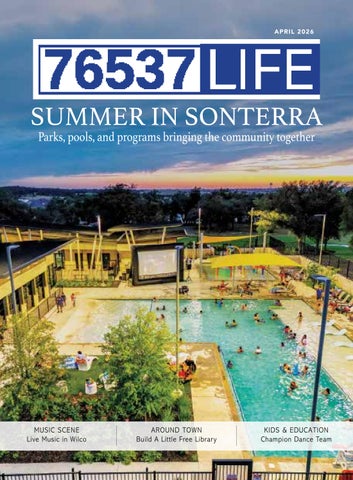
Parks, pools, and programs bringing the community together

In an age where the rush of daily news often overshadows the deeper narratives that shape our community, 76537 Life constantly strives to be an eager beacon of positivity and unity. Far more than just a lifestyle magazine, our publishers and staff are committed to creating a means of getting to know what makes our community thrive: its people and their impact.
Since its inception in 2021, 76537 Life,
Has grown with the community – we originally mailed to 4,200 homes and businesses in 76537 and now mail to over 9,600 homes and businesses monthly.
Works closely with Jarrell Independent School District, the Jarrell Chamber of Commerce, Sonterra MUD, Jarrell Economic Development Corporation, Jarrell Community Library and Resource Center, and the City of Jarrell.
Is a local business, located in Jarrell, that employs local people.
Has, to date, mailed close to 400,000 magazines within the 76537 area.
But we are also good at doing what we do — showcasing prominent community agencies and initiatives like the Jarrell Education Foundation, Jarrell Community Library, Jarrell ISD students, FFA, 4-H, and many more on our covers and in multi-page features. These not only celebrate their contributions but also inspire readers to personally engage and participate in the missions of these community pillars.
PUBLISHERS
Cathy Payne • Mike Payne
COMMUNITY EDITOR
Camy Reynolds
COMMUNITY LIAISON
Janet Hage
SENIOR WRITER/COPY EDITOR
Ann Marie Kennon
CONTRIBUTING WRITER
Linda A. Thornton
GRAPHICS
Ann Marie Kennon • Sandra Evans
DIGITAL MEDIA MANAGER
Jesse Payne
ADVERTISING
512.746.4545 • info@myjarrell.com
76537 Life is a Fidelis Publishing Group, LLC publication and a product of AdvocateNewsTX Newspaper.
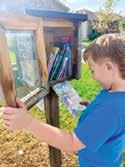
Reading has always been one of my favorite pastimes—borderline obsession, if we’re being honest—and I’m doing my best to pass that love on to my three kids (with mixed success depending on the day). I average close to 100 books a year, which sounds impressive until you realize it’s also my favorite excuse to ignore laundry and anything else that requires responsibility. But truly, reading has a way of expanding our minds, sparking creativity, and taking us places far beyond our everyday routines. That’s why I love seeing Little Free Libraries popping up around Jarrell. They make books easy to access, fun to share, and a little harder to resist. Whether you’re picking up your next great read or dropping one off for someone else, these tiny libraries are a big reminder that stories—and a good imagination—are meant to be shared.

Copyright © 2026 All rights reserved. 76537 Life is published monthly and mailed USPS, free of charge, to homes and businesses in the 76537 zip code. Mail may be sent to 76537 Life, P.O. Box 213, Jarrell, TX 76537. Email: info@myjarrell.com

SCAN THE CODE FOR E-SUBSCRIPTION AND NEVER MISS AN ISSUE.

FOLLOW US ON FACEBOOK FOR FOLLOW-UPS AND OUTTAKES • 76537Life



Meet our Pros — industry professionals, business owners, and subject matter experts from leading local companies who share their knowledge and expertise to bring readers practical advice, how-to tips, best practices, and current and emerging trends.
To learn more about becoming a featured pro, contact info@myjarrell.com or 512.746.4545












by
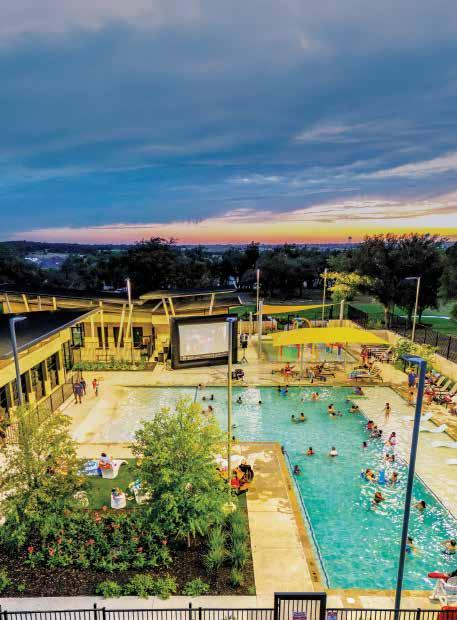
As temperatures rise and school winds down, Sonterra's pools fill with laughter, parks buzz with activity, and neighbors gather for events that bring the community together. Behind many of those experiences is the Parks and Recreation team, a small but dedicated group creating opportunities for residents of all ages.
Over the past few years, recreation programs have steadily expanded thanks to Recreation Manager Tyler Brown and Program Coordinator Abi Fowler, who are working to grow activities not only for youth but also for adults and seniors.


“When I came here about three years ago, the focus was mostly on youth programs,” Tyler explains. “That’s still a big part of what we do, but we’re working to expand opportunities for adults, teens, and seniors so everyone in the community has something they can enjoy.”
This summer’s schedule includes a mix of new programs and returning favorites designed to bring residents outdoors and together.
Family Game Nights on April 14 and April 21 will offer relaxed evenings where families can gather over classic board games. For just one dollar, participants can enjoy

games, refreshments, and a chance to meet neighbors.
Later in the month, Sonterra will celebrate Arbor Day with a family-focused event at Cool Water Park on April 24, featuring a ceremonial tree planting and giveaways such as flower pots and seed packets.
Throughout the summer, residents can also look forward to art classes, Movies in the Park, and other pop-up community events
“One of our goals is to create activities that don’t always have to be tied to a big holiday,” Tyler says. “Sometimes it’s just about giving families a reason to come out to the park and spend time together.”
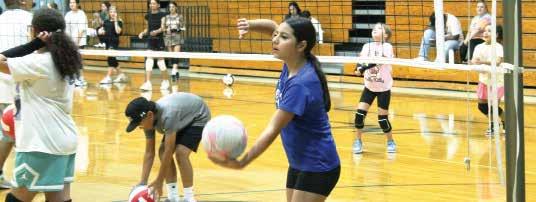
Sports leagues remain one of the most popular parts of Sonterra’s programming, particularly for youth as the community continues to grow. The programs emphasize participation, teamwork, and fun rather than intense competition.
“We try to keep our leagues focused on fun and learning,” Tyler says. “This isn’t about college-bound athletes. It’s about giving kids a place to play, learn teamwork, and build confidence.”

“We want to reach a point where there’s something for everyone.
~ Abi Fowler


Aquatics programs are another summer highlight, with swim lessons offered for all ages and experience levels. “Swimming is a lifesaving skill,” Tyler notes. “We want residents to feel comfortable in the water, whether they’re five years old or fifty.”
Another fan favorite returning this year is Paws & Splash, now entering its fourth year. The pet-friendly celebration invites residents to bring their dogs for a day of fun at the pool.
One of the biggest shifts in Sonterra’s recreation programming has been the expansion of activities for adults and seniors. New fitness programs designed for residents age 55 and older are gaining interest. A 60-minute line dancing class scheduled for May offers a fun and affordable way for older residents to stay active, with sessions for just $6.
Looking ahead, a unique goat yoga event planned for September will combine fitness with lighthearted fun. “Whether it’s a child learning to swim, parents enjoying a movie night, or seniors joining a fitness class, the goal is to help people stay connected.”
Even adults without children have options this year, including an alcohol-free magic and comedy show designed specifically for grown-up audiences.
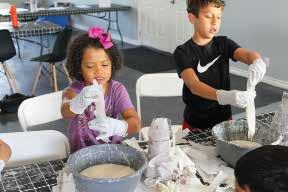
While the events themselves are enjoyable, their deeper purpose is building connections between neighbors. Tyler notes that partnerships with organizations like the local ESD #5 help reinforce that sense of community. Events often give families a chance to interact with local service providers while spending time together.
“When people come out to these programs, they meet their neighbors, meet local organizations, and start to feel like they’re part of something,” Tyler says. “That’s really what we’re trying to build.”
Organizing a full season of recreation programs requires coordination from a surprisingly small staff. Sonterra’s Parks and Recreation department operates with just a handful of team members supported by maintenance, aquatics staff, and administrative personnel.
“Our entire MUD team is about 11 employees,” Tyler says. “On the recreation side, there are three of us working closely together.” Abi began her career with the district as a Recreation Specialist and was recently promoted to Program Coordinator, helping oversee new initiatives alongside colleagues like Adam Bernal and Aiden Pineda.
As Sonterra continues to grow, its recreation programs are evolving alongside it. New residents arrive each year, bringing fresh energy and new ideas for community life.
“If someone visits Sonterra for the first time this summer,” Tyler says, “I hope they notice how welcoming the community feels. I hope they see families enjoying the parks, kids playing together, and neighbors stopping to talk.”
And if the packed calendar of events is any indication, this summer will offer plenty of opportunities to experience it firsthand.
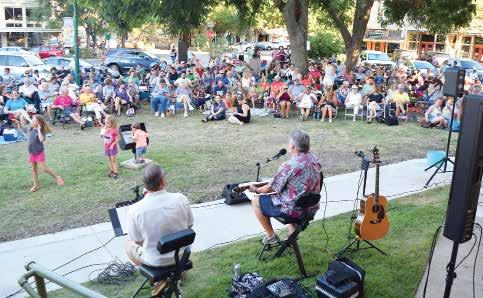

While Austin may be dubbed the Live Music Capital of the World, you don’t have to brave the traffic or fight the crowds to enjoy a great show here in Central Texas. This spring, live music series are returning across Williamson County, with the sounds of local bands and family-friendly tunes filling parks, plazas, and downtown restaurants.
The tradition of live public music dates back to 18th- and 19th-century Europe, where bandstands were built in town squares to bring music out of elite concert halls and into everyday life. These performances turned central plazas into social hubs where communities gathered not just to listen, but to connect.
The United States embraced—and expanded—that idea. During the 19th and early 20th centuries, towns across the country hosted regular concerts in courthouse squares, parks, and public green spaces. Free performances became part of civic life, bringing together growing and increasingly diverse communities.
In Texas, the tradition took on its own character. Alongside courthouse concerts, live music flourished in dance halls, saloons, and open-air venues, blending community gatherings with regional sounds like country, blues, and folk.
Today’s concerts on courthouse lawns and in community parks across Williamson County carry forward that tradition, proving that live music remains one of the simplest ways to bring people together.
From historic downtowns to neighborhood parks, several spring and summer concert series are bringing music back to local gathering spaces:
Agape BBQ (Liberty Hill) — live music and authentic Central Texas barbecue come together every Friday and Saturday night. Set beneath 300-year-old oak trees, the backyard stage offers a relaxed place to enjoy great food, local craft drinks, and performances from talented musicians.
First Friday Music on the Square (Georgetown) – On the first Friday of each month from March through November, the historic courthouse lawn comes alive from 6–8 p.m. with live bands, lively crowds, and after-hours shopping.
Music on Main (Round Rock) – This long-running series brings Wednesday evening concerts downtown throughout the spring and summer. Guests are encouraged to bring
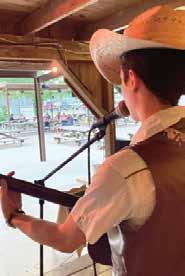

lawn chairs or blankets. The city also hosts Hometown Lunchtime Parklet Shows through June 25 on Tuesdays and Thursdays from 11:30 a.m. to 1 p.m.
Music on Main (Taylor) – Held in Heritage Square, this spring series showcases Austin-area bands performing Latin rhythms, fusion styles, and Texas Americana. Concerts run April 16 and May 21 from 7–9 p.m.
Live @ Lakeline (Cedar Park) – Lakeline Park hosts evenings of music, food trucks, lawn games, and family activities. This year’s lineup includes The Capitol (April 17), Lover: A Taylor Swift Tribute Band (May 1) and the WILCO Symphony (May 15).
For many local businesses, live music isn’t just entertainment—it’s part of the atmosphere.
Georgetown's Tony & Luigi’s owner Jamie Cohen has seen how different styles of music can shape the experience from one night to the next. On Tuesdays, guitarist Jack Mason performs relaxed pop and rock favorites from the ’60s, ’70s, and ’80s, creating what Jamie describes as the perfect background vibe for families and date-night diners alike.
“Someone will hear a reworked Beatles song like Penny Lane and suddenly go, ‘Wait a minute—I know that song,’” Jamie says. “It adds warmth and nostalgia to the whole experience.”
Live music isn’t limited to parks and public venues. Many local restaurants and gathering spots now feature regular performances:
At Dale’s Essenhaus in Walburg, live music adds to the welcoming small-town atmosphere. Local performers regularly bring classic country, rock, and crowd favorites to the stage, giving guests a relaxed place to enjoy great food, cold drinks, and a night out with friends. Visit dales-essenhaus-walburg.com for dates and times.
At Faurie’s End of the Trail (3225 US 183 in Florence), live music is part of the experience. Local performers bring country, classic rock, and crowd favorites to the stage while guests enjoy good food, cold drinks, and the welcoming atmosphere of this Hill Country gathering spot.
By Thursday, the mood shifts. Performer Ken Cruse leans into Rat Pack-era classics, bringing a crooner-style energy to the room. While the music resonates with longtime fans of the genre, Jamie says younger guests often discover it for the first time.

“Tuesday is about comfort and conversation,” he explains. “Thursday is more of a show—people are engaging with the performer and singing along.”
Whether it’s background melodies over dinner or a full outdoor concert under the Texas sky, live music continues to transform everyday spaces into places where community, connection, and lasting memories are made.























They look like tiny houses on posts—brightly painted boxes in front yards, outside schools, and along park trails—each filled with books waiting for their next reader. These Little Free Libraries turn ordinary spaces into miniature neighborhood book hubs designed to bring libraries even closer to the people they serve. What started as one small project in a Wisconsin yard has since grown into a global network dedicated to sharing stories and expanding access to reading.
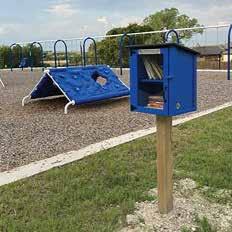

The first Little Free Library was built in 2009 by the late Todd Bol, a former teacher in Wisconsin. Todd constructed a small wooden box modeled after a one-room schoolhouse and mounted it on a post in his yard—a tribute to his mother, a teacher and avid reader. He filled the miniature library with books and invited neighbors to borrow them freely. The concept was simple: “take a book, leave a book.” The idea quickly caught on. Todd partnered with Rick Brooks, a local university’s outreach program manager, to expand the concept and encourage others to build their own book-sharing boxes. Inspired in part by philanthropist Andrew Carnegie— who funded more than 2,500 public libraries in the early 1900s—they set a goal of surpassing that number with Little Free Libraries. They reached that goal in 2012 when the organization also became a registered nonprofit.
Today, more than 200,000 Little Free Libraries have been serving bibliophiles in 128 countries. The nonprofit behind the movement works to expand access to books, particularly in communities where reading materials may be scarce. By placing books directly in neighborhoods, Little Free Libraries function as miniature community hubs—encouraging reading, sparking conversations among neighbors, and reminding communities that sharing stories can begin right on their own street.
Igo Elementary: 1601 CR 314
Jarrell Elementary: 1615 CR 313
Jarrell Fire Stations 1 and 5: 212 N Fifth St and 155 CR 313
Jarrell Montessori: 540 Town Center Loop
Sonterra Amenity Center: 510 Sonterra Blvd
VISIT LITTLEFREELIBRARY.ORG OR DOWNLOAD THE LITTLE FREE LIBRARY APP TO DISCOVER EVEN MORE BOOK-SHARING SPOTS IN 76537 AREA.

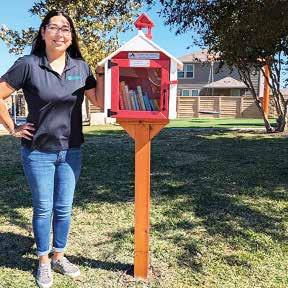
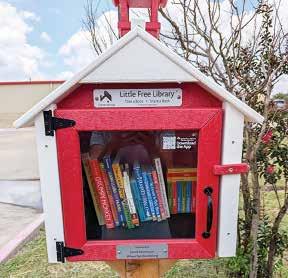
Inspired by the Little Free Library movement? Here’s how to start your own mini neighborhood library:
IDENTIFY A LOCATION AND STEWARD: Choose a spot where you can legally and safely install the library. The location should be visible and have regular foot traffic. You’ll also need at least one steward—a caretaker who helps promote the library and keeps it clean and welcoming.

GET A LIBRARY:
You can build your own, hire someone locally to build one, or purchase a readymade library through the Little Free Library website.

REGISTER YOUR LIBRARY:
Registration connects you to a network of support and benefits, including an official charter sign engraved with a unique charter number. Libraries purchased through the Little Free Library online store are automatically registered and include a charter sign.



BUILD SUPPORT:
Spread the word in your community. Contact local media, tell friends and neighbors, and use social media to encourage participation. The more people who know about the library, the more it will thrive.

ADD YOUR LIBRARY TO THE WORLD MAP:
Celebrate with a grand opening—invite neighbors, hold a ribbon cutting, share snacks, and exchange books. Take photos and add your library to the Little Free Library world map online to connect with the wider network of stewards.
To learn more about Little Free Libraries, scan the code to visit The Little Free Libraries website.

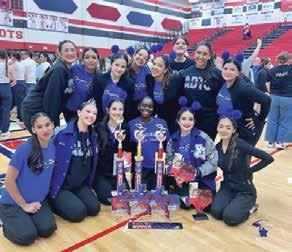
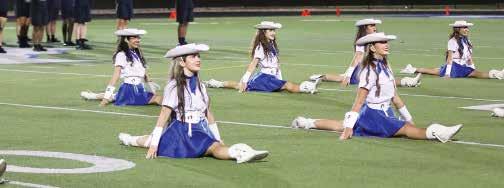
In just three years, the Jarrell High School Dance and Drill
Team has transformed from a six-member startup into a 23-strong performance force—one now setting its sights on the national stage.
Under the direction of coach Bethany Miller, the program began with little more than determination. Until this point, there has not been a private dance studio in Jarrell; every step, turn, and routine these students have mastered has come through Jarrell ISD. “We built this season from the ground up,” Bethany says. “To watch them go from a smalltown team to ranking high enough to have the opportunity to compete nationally in a city like Galveston is incredible.”
This season, the team, also known as the Cougar Stars, competed in person for the first time, entering regionals at the highest level—and winning, earning sweepstakes at every regional competition. Those victories qualified them for
not one, but two national competitions, where they earned the opportunity to compete April 3–5 in Galveston in multiple styles, including jazz, lyrical, and kick, with both full team and officer routines.
At press time, the team was still working to secure the funding needed to attend nationals, but the milestone itself already marked a defining moment for the program. By qualifying and excelling at regionals, they proved something even bigger: that they belong at that level. “They didn’t even know if this was attainable at the start of the season,” Bethany says. “But they earned it.”
Beyond the trophies, the team has become the heartbeat of Jarrell. They energize pep rallies, perform at the annual Meet the Cougars event, march in the homecoming parade, support other Jarrell High School teams, and serve as ambassadors of school spirit wherever they go. Known for
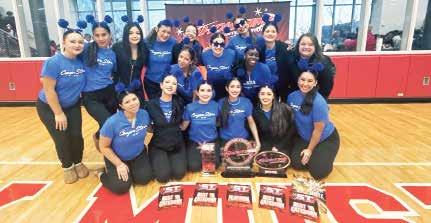
their talent and character, they have also earned sweepstakes honors for dance and maintained an impressive team GPA above 3.8—living out their belief that they are students first, athletes second.
This year, they expanded their impact even further, launching outreach programs with local elementary and junior high schools and hosting showcases that assemble dancers across the district. Whether painting the town blue during playoff season or mentoring younger students, they have become leaders in every sense, becoming the face of Jarrell.
The Stars have consistently shown up for Jarrell; on the sidelines, in the streets, and on the stage. Now, Jarrell has the chance to show up for them. Competing at this level comes with significant costs, and the team has worked tirelessly to raise funds, even launching a booster club to help support their growing program and future competitive opportunities.
Their biggest effort yet is the Reaching for the Stars gala fundraiser on April 19 from 3–6pm at Tequila Ranch in Taylor, an afternoon open to the public that will help ensure this year’s success is only the beginning.
Scan the code to register for the gala and help these Jarrell stars keep shining. You can also follow them on Instagram and Facebook to keep up with their journey and relive the moments that made this season unforgettable.


If you’ve ever found yourself scrolling social media wondering:
Why does this keep happening?
...this new column is for you. Each month, Here’s the Real Deal will tackle questions and conversations specifically related to our community in Jarrell and Sonterra and we're digging in to find real, reliable answers.
HOA and COA concerns
parks and amenities
new businesses coming to town
water quality issues
and other local topics.

Each month, we’ll take a question submitted by readers—or one we’re seeing repeatedly online—that relates directly to life in Jarrell or Sonterra, and do the legwork to get the facts. That means reaching out to local officials, organizations, experts, and trusted sources to provide clear information, helpful context, and when possible, practical solutions. No speculation. No keyboard debates. Just the real deal.
















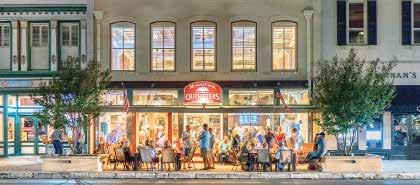
Jarrell residents are helping shape the future of downtown— and nearby Georgetown offers a glimpse of what’s possible
As
Jarrell continues its rapid growth, city leaders are asking residents to help shape what the heart of the community will look like in the years ahead.
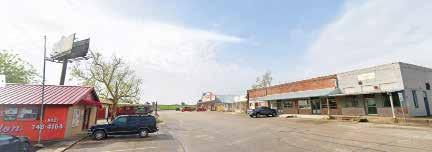
The City of Jarrell launched a community survey in January as part of its Downtown Master Plan, a long-term effort designed to guide how Old Town develops as new neighborhoods, schools, and businesses continue to arrive.
Originally founded in 1909 as a railroad town by developer O.D. Jarrell, the city has transformed dramatically in recent years. With a population of 1,753 recorded in the 2020 Census and thousands of residents in Sonterra, 76537 is becoming one of the fastest-growing communities in Central Texas.
City leaders say the master plan will help ensure growth strengthens the historic downtown rather than leaving it behind. According to Forrest Williams, City Planner for the City of Jarrell, the plan is currently being drafted by consulting firm Kimley-Horn, which has been working with city staff after gathering input and reviewing community survey responses. “We’ve completed our stakeholder meetings and steering committee meetings and reviewed the survey responses,” Forrest says. “The plan is being drafted now.”
A draft of the Downtown Master Plan is expected to be released for public review in May, giving residents an opportunity to see the proposed concepts before the City Council considers adoption. If the process stays on schedule, the plan could be formally adopted as early as June.
While the final design concepts are still being developed, Forrest says the plan focuses on improving the streetscape, walkability, and public spaces throughout Old Town. “The idea is to look at the streetscapes and public spaces and figure out a plan for what we can do to make it a more desirable place for people to come and hang out downtown,” he explains.
Changes include improving sidewalk safety, pedestrian accessibility, and overall circulation for vehicles and foot traffic. Another issue the city hopes to address is truck traffic moving through downtown streets. “There isn’t technically a truck route through downtown, but a lot of trucks still pass through,” he says. “Part of the design work is looking at ways to encourage that traffic to use other routes so the downtown area can be safer and more pedestrian-friendly.”
The plan will also outline how future development should fit within the character of the existing downtown. “We want redevelopment and new development to be compatible with
what’s already there,” Forrest says. “You don’t want something like a five-story building that sticks out like a sore thumb.” Instead, the goal is to preserve the community’s existing character while creating opportunities for thoughtful growth.
While Jarrell is in the early stages of shaping its downtown vision, nearby Georgetown offers an example of how intentional investment can transform a historic center into a gathering place.
Nearly a decade ago, Cody Hirt and Brad Strittmatter opened Mesquite Creek Outfitters on Georgetown’s Historic Square. What began as a retail concept gradually expanded into a collection of restaurants, retail spaces, and gathering spots that many locals now associate with the heart of downtown.
“We were actually looking at opening Mesquite Creeks in other towns,” Cody says. “But then we had a conversation with David Morgan, the city manager, and he said, ‘I love that for you guys, but I’d also love to see you reinvest in Georgetown.’ That really shifted our focus.”
Instead of expanding outward, the partners began expanding closer to home. Within months they were working on their next concept, the upscale Golden Rule restaurant, followed by additional projects that now include casual dining, retail, and pop-up experiences around the Square.
“We didn’t want to sit back and complain about growth,” Cody says. “We wanted to help steer it a little bit.”
The guiding idea behind many of the partners’ projects is simple: build spaces where people naturally come together. Over the years Mesquite Creek Outfitters has hosted everything from game nights to political rallies. One local jokingly referred to the space as Georgetown’s living room. “Our goal is to build community and serve others,” Brad says. “If we enjoy it, we hope other people will too.”

Their influence has even extended beyond their own businesses. Brad and Cody helped the team behind Tejas Meat Supply rethink its concept, transforming it from a traditional butcher shop into a casual restaurant and gathering place on the Square.
For Jarrell, the Downtown Master Plan aims to create the same kind of welcoming environment, one where families gather, local businesses thrive, and residents feel connected to the heart of their community.
By launching the survey early in the process, city leaders say they hope the final plan will reasonably reflect what residents want to see in Old Town.
When the draft plan is released in May, residents will have another opportunity to review the proposals and share feedback before the City Council considers adoption later this summer. For a city growing as quickly as Jarrell, those decisions could shape the future of downtown for decades. And if the process works as intended, that future won’t be designed only by planners.
Every great downtown begins with a simple idea: create a place where people want to gather.
Jarrell is now deciding what that place will become.
Six million Jews, along with millions of other victims—including people with disabilities, homosexuals, political dissidents, and Black citizens—were murdered during the Holocaust that devastated communities throughout Nazi-occupied Europe. Numbers, however, don’t reveal the personal stories of countless individuals whose lives were drastically changed because of this historical event. That’s why each year, the Georgetown Public Library and local nonprofit Congregation Havurah Shalom of Sun City present a public program commemorating Holocaust Remembrance Day.
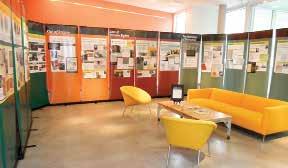
This year’s program, A Reason to Remember, narrows the lens from millions to five families in one small German village from 1933 to 1942. “There are many, many accounts of genocide during the Holocaust and many more are lost,” says Hutto librarian Angela Hartman, who has attended many Congregation Havurah Shalom programs focused on Holocaust education.
The program begins Sunday, April 12, from 2 to 4 p.m. in the Hewlett Room at the Georgetown Public Library with featured speaker Deborah Roth-Howe, the daughter of Holocaust refugees who escaped Germany and rebuilt their lives in Chicago. In her talk, she will recount the history of five Jewish families who lived in Roth (pronounced "Rōt"), Germany, a rural village where Jews had been part of community life for generations. They were neighbors, friends, and business owners. The men in these families had served in the German army during World War I.
A Reason to Remember’s 28-panel exhibit and accompanying eight-minute video traces the families’ lives from relative stability in 1933 through
Every single story is significant.
A Reason to Remember humanizes this historical event by introducing the individual people in these families.”

the steady tightening of Nazi persecution. Visitors will see how discrimination moved from rhetoric to policy, from social exclusion to systematic destruction.
What happened in Roth was a microcosm of what unfolded across Europe, and serves as a reminder of how easily history could repeat itself.
The goal of the exhibit, Congregation Havurah Shalom member Lenora Hausman says, is “to show the effects of prejudice and racial hate and the need to speak out against injustices. We need to remember history could repeat itself.” Angela agrees. “This exhibit not only explains the history of what happened to these specific families but is a reminder to students
and adults of what can happen when hate is not challenged and cruelty to people considered different or inferior is met with apathy.”
The Reason to Remember exhibit is free and open to the public, no registration required. Following the talk, the exhibit will remain on display at the library through May 21 during regular library hours. Docent-led tours are offered daily for youth groups, private and homeschool students, church groups, and community organizations. The material is recommended for grade levels 6 and up.

1933 - Hitler appointed Chancellor
1935 - Nuremberg Laws strip Jews of their citizenship
1938 - Kristallnacht • Coordinated Nazi attacks destroying Jewish homes, synagogues, businesses, and lives
1941 - Deportations begin
1942 - Mass deportations and extermination camps begin systematically murdering millions


To schedule a tour or learn more about A Reason to Remember, scan the code to visit HolocaustExhibitGeorgetown.com.
























by Linda A. Thornton

The comforting "melting pot" of the early 20th century has been replaced with the modern realization is that different cultures thrive together more like a salad bowl; coexisting but distinct, like the ingredients of a salad that retain their unique flavors and textures, while contributing to the whole dish.
We often take for granted the fact that today’s Texas lifestyle is built on the foundation of the deep roots of the past. Customs integrated into our daily life are derived from those traditions.
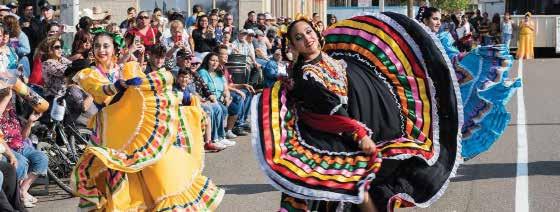
HISPANICS & TEJANOS • TEXAS’ LARGEST DEMOGRAPHIC
Tejanos were Texas’ original settlers. Spanish for “Texan,” the name refers to those of Mexican descent born or living in Texas. � San Antonio, Amarillo, and Llano are just some of the Latin named cities. The most well-preserved cluster of Spanish Colonial missions in the world is in San Antonio.
� Some Tex-Mex food favorites are tamales, tacos, burritos, enchiladas, and fajitas. Salsa, Spanish for “sauce” is the official state snack of Texas.

� Celebrations like Cinco de Mayo, Día de los Muertos, and Las Posadas have become familiar parts of life in Texas—not because they were imported later, but because Mexican culture has always been part of the state’s foundation.
� Spanish ranching and horsemanship traditions were the basis for the cowboy culture. So even classic “cowboy English” often has Spanish roots: mustang, lasso (from lazo), bronco, buckaroo (from vaquero), stampede, and corral.
� Many Latin words are a part of daily life: canyon, patio, rodeo, fiesta, plaza, tornado, and even cafeteria and vanilla.

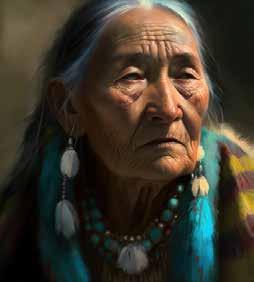
The Caddo were just one of the indigenous tribes that developed farming techniques and trading net works. Waco, Nacogdoches, and Waxahachie are just some of the cities with names from indigenous languages. Native American land use practices, such as controlled fires and rotational grazing, were the basis of ecological techniques.
SOME NATIVE AMERICAN TRADE ROUTES WERE THE BASIS OF TEXAS HIGHWAYS, SUCH AS THE OLD SAN ANTONIO ROAD DEVELOPING INTO TEXAS HIGHWAY 21.
Professional beer brewing techniques made way for beer gardens and a bringing together of communities. Sausage, sauerkraut, and kolaches - hand-held pastries–remain traditions in the Hill Country, especially at Oktoberfest and Wurstfest. The National Polka Festival and the Polka Lovers Club of Texas still preserve this dance music. Traditional, staple construction featured wooden beams and steep roofs.
COMMUNITIES FORMED AROUND BEER GARDENS AND DANCE HALLS THAT LATER WELCOMED MUSICIANS FROM ACROSS TEXAS TRADITIONS.
The Vietnamese helped revitalize the shrimping and fishing industries in the Gulf Coast. The third largest Vietnamese population in the United States is in Houston. The culture is known for cultivating family run businesses, a strong sense of community, and the preservation of language and heritage. Celebrations such as Lunar New Year, which marks the arrival of Spring, are embraced by all.
VIETNAMESE FISHERMEN HELPED TRANSFORM GULF COAST SEAFOOD CULTURE, GIVING RISE TO THE VIET-CAJUN CUISINE TEXANS LOVE TODAY.
Formerly enslaved Black cowboys became expert horse breakers, ropers, and trail drivers and were often the most skilled in a crew.
� Bill Pickett, the first Black cowboy inducted into the National Cowboy Hall of Fame, and Fred Whitfield, an eight-time World Champion in the Professional Rodeo Cowboys Association are just some of many Texas rodeo legends.
� Texas is the birthplace of Juneteenth, the commemoration of the end of slavery in the United States, celebrated on June 19th.
BLUES AND GOSPEL LATER SHAPED TEXAS COUNTRY, JAZZ, AND ROCK TRADITIONS.


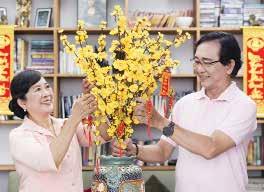

Stop to buy a kolache in Amarillo, while celebrating Juneteenth. Sing along to Mariachi music, on the radio to attend a polka festival. Dine on sausage and sauerkraut before attending a fiesta: a Lunar New Year celebration.
Sit in a plaza at a gospel concert and enjoy garlic butter crawfish with lemongrass, a Viet-Cajun specialty.
Treat yourself to a beer and an enchilada, after hard work on the ranch, practicing native ecological techniques.









by Ann Marie Kennon

Last month I voted on a very long ballot that appeared to be mostly judges. Knowing Texas recently added the 512th District Court, I realize there are at least 512 robe-wearers, plus county judges, justices of the peace, and a few dozen appellate and supreme court seats. I'm glad I live in a state that takes justice seriously.
At some point I stopped trying to remember which court handled which kind of dispute and just trusted the Founding Fathers planned for citizens to occasionally say, “Well, that name sounds reasonable.”
Judges do decide important things—constitutional rights to traffic citations—and apparently whether working on a farm qualifies as cruel and unusual punishment.
That one was in the back of my mind. Possibly because I’m married to a judge who believes hard work is character-building, personal responsibility still exists, and nonsense has a short shelf life in his courtroom. When I mentioned the federal ruling that found prison farming unconstitutional, he gave me the same look he gives defendants who explain that the meth in their pocket belonged to “a friend.”
He said Texas prisons once relied heavily on farming and ranching. Inmates grew crops, tended cattle, and produced alot of their own food. It wasn’t glamorous, but it was productive, and the meals were fresh and healthy.
After the Ruiz ruling in the 1980s curtailed many of those operations, the system drifted away from agricultural programs. Today the prison system spends millions each month purchasing food and
running facilities that once helped sustain themselves. According to hubby, the irony lies in the low quality food the inmates now eat.
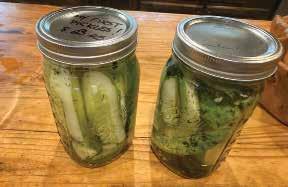
Which might explain why the debate crossed my mind last summer while I was celebrating the fact that I had successfully grown enough cucumbers to make actual pickles.
Real pickles. In jars. The kind you show off like you personally reinvented agriculture.
To be fair, some prison farms in the past looked less like vocational training and more like a sequel to "Cool Hand Luke" —massive fields, brutal heat, and guards who clearly did not attend the Healthy Workplace Culture seminar. So, perhaps, the concern makes sense.
Still, there’s something deeply satisfying about coaxing food out of the dirt. Humans have enjoyed doing it for roughly 10,000 years, which suggests farming is not universally regarded as a human rights violation.
It’s also the idea behind planned food forests like MatriArk Village— spaces where families learn to grow fruit, vegetables, and herbs right in their own community. Kids see how food grows instead of thinking it comes from the refrigerated aisle at H-E-B, while the soil does what soil was designed to do and humans mostly coax things along with sunlight, water, and a few dollars’ worth of seeds.
Turns out my dirt is surprisingly cooperative with some good gloves, a little patience, and ChatGPT to analyze my many photos of brown leaves.
Growing food is empowering when we teach it to children, admirable when farmers do it for a living, and deeply satisfying when suburban hobby gardeners like me produce an edible pickle.
But when inmates do it, we have a constitutional conversation—which suggests the problem may not be the vegetables.
The cucumber, for its part, remains baffled.