Index Index
30+
10

30+
10
13
100
Networking Day
Making the Invisible Visible: Designing Systems from Natural Processes
Marijke De Vuyst
Future Rhymes. Audio-Visions of the Post-Human World
Katarzyna Figat & Kajetan Zakrzewski
Live after life (Infographics Beyond Use)
Maaike Hamelynck
Expanded Cinema
Hanan Kaminski
Delta · Common City
Playing and designing non-verbal graphic systems for post-human cities
Melani Lleonart García & Álvaro Sanchis Gandia
PLAYS! Post-human Legacies Activating Yielding Systems
Emilio Lonardo
Mutual Aid Communication Toolkit
Ana Matic´& Miloš Nikolic´
Embodied Algorithms: Bodies as Sensors and Interfaces for natural and man-made signals
Carla Molins-Pitarch
Designing Post-Human Storyworlds: Interactive Audio Narratives
Niklas Rönnberg
Collaborative Intelligence Workshop
Nitzan Waisberg
Final presentations
Impressum
The International Design Week 2026 marks the 5th edition of the annual event at the Institute of Design & Communication at FH JOANNEUM University of Applied Sciences Graz. Following previous editions exploring speculative futures, transformation and interdisciplinary exchange, this year’s program invited participants to engage with the theme of Post-Human Resources.
The week brought together international guests – students and lecturers from across our global partner network – in Graz. In 10 workshops participants explored how design can respond to a world in which labor, intelligence, care and agency are no longer understood as exclusively human domains.
The theme Post-Human Resources examined what “resources” might mean beyond extraction, efficiency and productivity. Projects investigated relationships between bodies, algorithms, ecosystems, materials and machines, asking how design can foster new forms of coexistence grounded in interdependence rather than exploitation. From AI-assisted practices and speculative economies to ecological thinking and multispecies perspectives, the week opened a space for critical reflection and experimentation across disciplines and media.
As in previous editions, our International Design Week functioned as a temporary laboratory for exchange, collaborationand collective imagination. The resulting works and conversations challenge established boundaries between nature and technology, human and non-human, tool and collaborator — proposing exploratory ways of designing within interconnected systems of matter, meaning and shared responsibility across cultures and disciplines. And for the most important part: we hope our participants shared not only their design expertise but also a good amount of drinks, foods, laughter and (post-)human friendship.
In an age when “human resources” is no longer just about people, bodies and labor, the 2026 edition of International Design Week at FH JOANNEUM invited you into the realm of Post-Human Resources: where design, ethics, technology and ecology remix the very idea of what “resource” means.
What happens when algorithms become coworkers, nature becomes partner, and care is shared across human, non-human systems and more-than-human-systems? Through workshops, cross-media collaborations and international guests, the week investigated post-human practices, speculative economies and ethical infrastructures.
Together, we explored how design could move beyond extraction toward models of coexistence, care and flourishing in multispecies worlds.
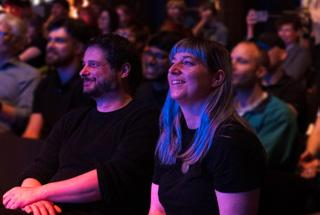
Daniel Fabry Head of Master Programs / Head of Institute Design and Communication
Birgit Bachler Head of Bachelor Information Design
The 5th International Design Week kicked off on Monday, May 4, with a full day dedicated to networking and exchange among the international guest lecturers and the team of the Institute of Design & Communication. Birgit Bachler, Head of the Bachelor's program in Information Design, and Daniel Fabry, Head of the Master's programs and Head of the Institute of Design & Communication, welcomed all international guests and opened the week under this year's theme: Post-Human Resources.
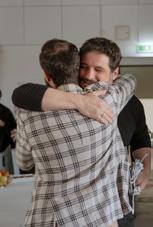
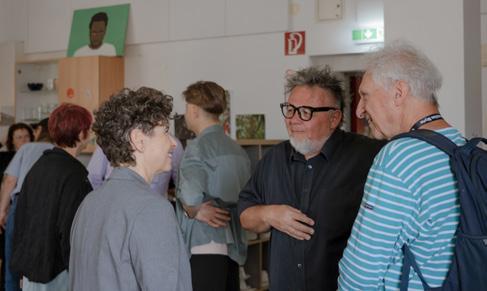
After the introduction, all lecturers presented their home institution as well as the workshop they have planned for the week, giving colleagues a glimpse into the diverse approaches and creative challenges awaiting the students. The ten workshops spanned a wide range of disciplines and perspectives — from designing non-verbal visual systems for speculative post-human cities, to embodied sensing, audio narratives, expanded cinema with AI, and collaborative intelligence.
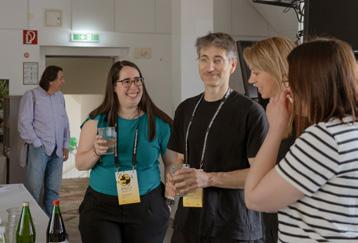
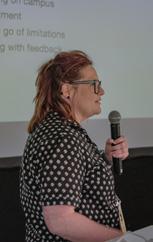
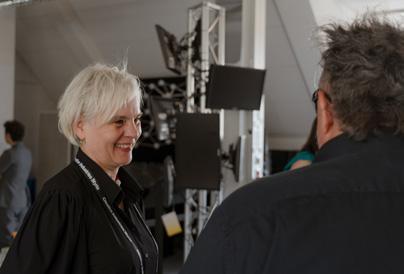
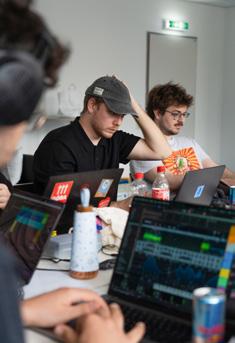
In the afternoon, a keynote was delivered by Nitzan Waisberg, who had travelled all the way from JMC Academy in Australia, on Human-Centered Design in Times of Crisis — which sparked lively activities and discussions among the participants, touching on themes of belonging, collective agency, and the role of design in turbulent times.
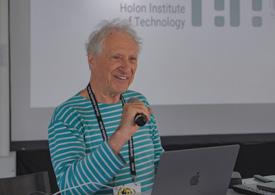
The day concluded with a tour of the building and campus, allowing the international guests to explore the workshop rooms and settle in ahead of the three intensive workshop days to follow.
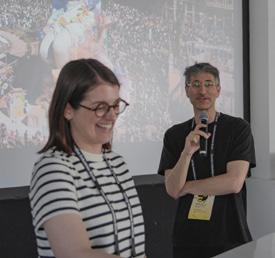
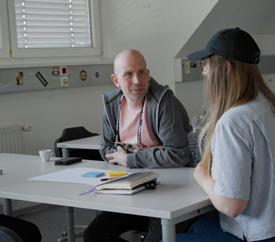
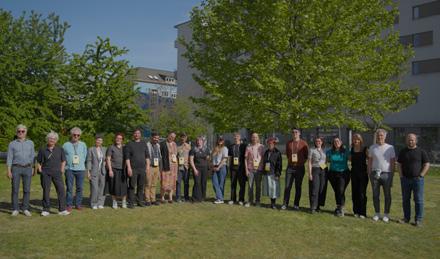
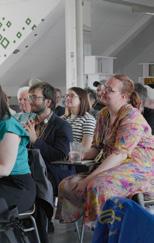
The Networking Day successfully launched the International Design Week at the institute, delving into exciting design topics, contemporary creative issues, and innovative teaching methods.
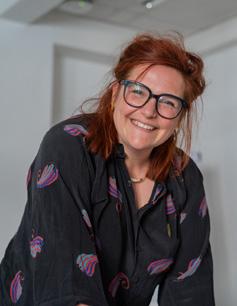
Marijke De Vuyst Head Visual Design Lab / Department Media, Design & IT / AP University of Applied Sciences & Arts Antwerpen / BEL
““
Playing around is still the most important tool for a graphic designer.
““

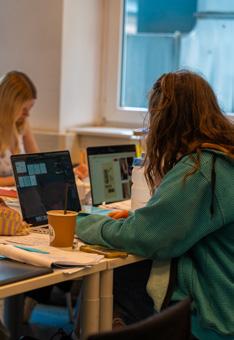
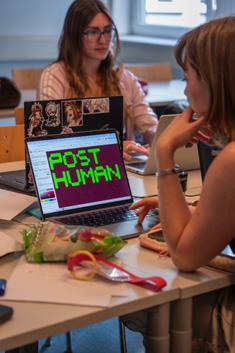
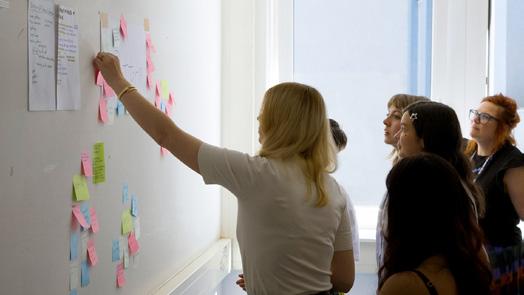
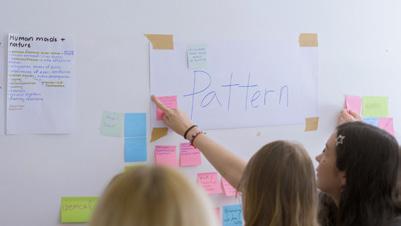
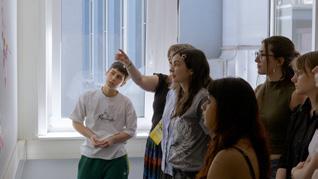
Making the Invisible Visible: Designing Systems from Natural Processes explored how graphic design can reveal hidden dynamics such as growth, rhythms, dependencies and interactions within natural and systemic environments.
Through observation, research and experimentation, participants translated invisible processes into visual rules, structures and graphic systems. By combining analogue and digital methods, they developed outcomes that made relationships and interactions perceptible while documenting both the process and the evolution of their ideas in sketchbooks.
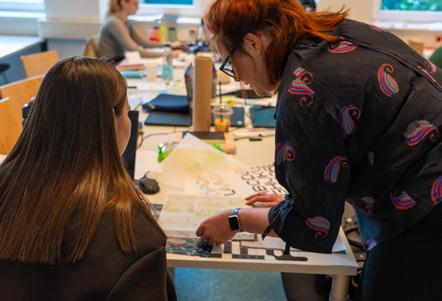
“The workshop was experimental and full of freedom to choose. It felt like a great opportunity to try out the resources that the university provides, such as the various printers and art supplies. As the only interaction designer there, I felt encouraged to step outside of my comfort zone and have some fun with things I don't normally have the time or opportunity to dabble in. I learned how to use the Riso printer, and created three variations of an illustration using three interchanging colours. ”
Anja Kljajic / Interaction Design Master student / FH JOANNEUM
“I really liked the theoretical input, and that Marijke made it feel like we were both working as a team and individually at the same time. I truly enjoyed the positive atmosphere, the open and supportive space, and the thoughtful feedback and encouragement that Marijke continuously offered us during the workshop.
It was lovely to visit the workshop, meet her and the other students, exchange perspectives, and gain inspiration from the different approaches everyone brought into the space.”
Selina Pichler / Communication Design Master student / FH JOANNEUM
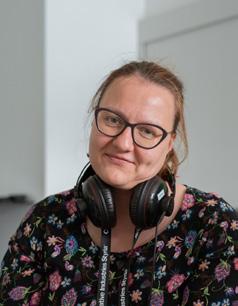
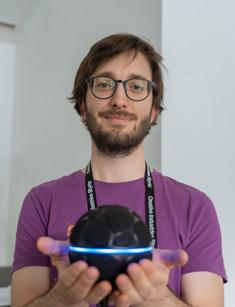
Katarzyna Figat & Kajetan Zakrzewski
Assistant Professors / Department of Sound Engineering / The Feliks
Nowowiejski Academy of Music
Bydgoszcz / POL
We don‘t know the future, but certainly there will be sound.
““
Future Rhymes. Audio-Visions of the Post-Human World explored how future realities might emerge from the structures and systems of the present. Inspired by the idea that history “rhymes,” participants developed speculative visions of post-human environments through audiovisual storytelling.
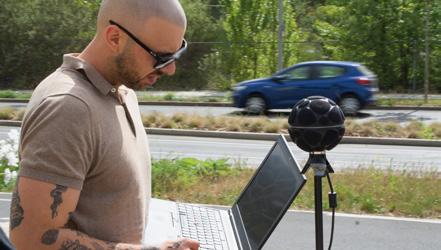
Using spherical photography, sound design and AI-supported image generation, they created immersive collages combining contemporary elements with imagined futures. The resulting 360° films merged futuristic soundscapes and visual narratives into atmospheric reflections on possible worlds beyond human-centered realities.
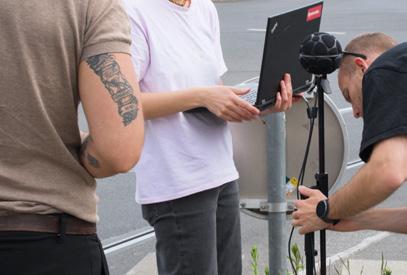
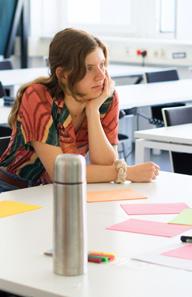
“I had great experiences during the International Design Week, i learned a lot about sound design, new technologies, how to use VR and mixed Reality, how to create visual and auditive content for it and how to also use AI in these processes. The lecturers were really nice and also skilled and professional so i learned a lot from them. But the best part was to meet and work with the international students but also the students from the other studies of our department.”
Judith Berger / Exhibition Design Master student / FH JOANNEUM
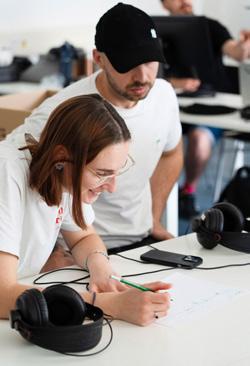
“It was a really cool week of workshops. I learned a lot about immersive audio and implementing it to a virtual environment. I also had the pleasure of completing an ambisonic recording and a 360 degree panoramic picture of Schlossbergplatz.
I also explored the Dear Reality suite of plugins and used them to craft a vision of our team's future world. This world was primarily dominated by the forces of nature and highlighted how differently the world would look without humans.”
Joshua Thomas Chelakkattuparambil / Sound Design Master student / FH JOANNEUM
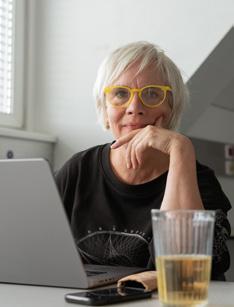
Maaike Hamelynck Lecturer Graphic & Interaction Design, Coordinator Department of Design / Minerva Art Academy, Hanze University of Applied Sciences / NLD
Post human resources turned into golden treasures.
Live after Life (Infographics Beyond Use) explored how data can be transformed into poetic and experimental visual narratives. Focusing on themes such as waste, leftover energy, memory and digital traces, participants researched post-human resources and translated their findings into tactile zines and infographic-based storytelling.
Through folding, sequencing and visual experimentation, they developed narrative compositions that evolved into public poster designs. The workshop combined research, illustration and graphic design to expand the role of infographics beyond the communication of facts.
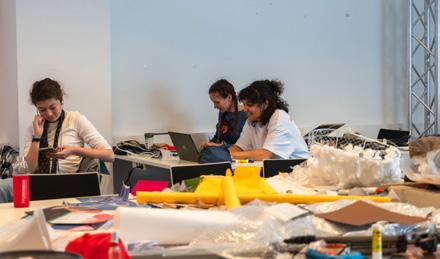
“At the beginning of the International Design Week 2026, I was honestly just super curious about what we could create together out of pure ‘trash’. The whole experience felt a bit like being in a TV cooking show (almost like MasterChef), where you get random ingredients and somehow have to turn them into a beautiful dish — except instead of cooking food, we were ‘cooking’ posters.
That completely changed the way I think during the design process. You start seeing potential in materials that at first seem completely useless. The atmosphere during the workshop was always open, supportive, and friendly, which made experimenting and sharing ideas feel very natural.”
Jana Klammer / Communication Design Master student / FH JOANNEUM
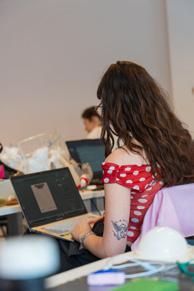

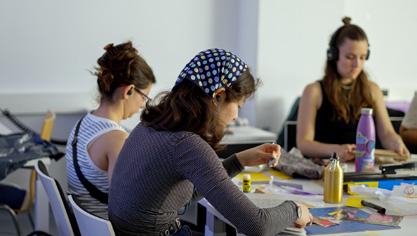
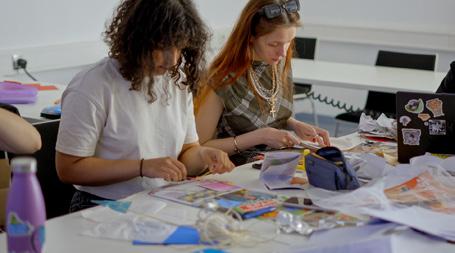
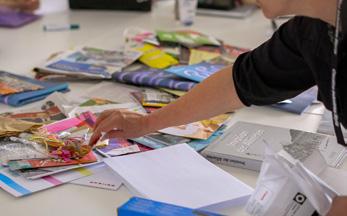
“I had the pleasure of joining Maaike’s workshop ‘Life after Life.’ From the description alone, I wasn’t entirely sure what to expect, but I was immediately drawn to the part where we were asked to bring materials like old magazines and similar items. I had really missed not just sitting in front of a laptop all day, but also returning to handcrafted work. Maaike truly gave us the opportunity to feel like children again — going through ‘trash,’ letting our creativity flow, and allowing ourselves to be inspired by the materials.
Throughout the whole week, we simply had fun without restrictions, just freely expressing our creativity. I learned that almost anything can be used as a material and that nothing is really trash. In our final project, which had to be a poster, I think we all used materials in creative and clever ways to express ourselves.”
Carla Asmellash / Media Design Master student / FH JOANNEUM
Hanan Kaminski
Head of Master‘s Program in Design for Technological Environment / Faculty of Design, Holon Institute of Technology / ISR
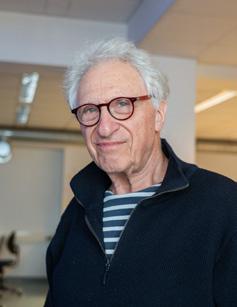
Three-day AI films mixing craft & new technologies.
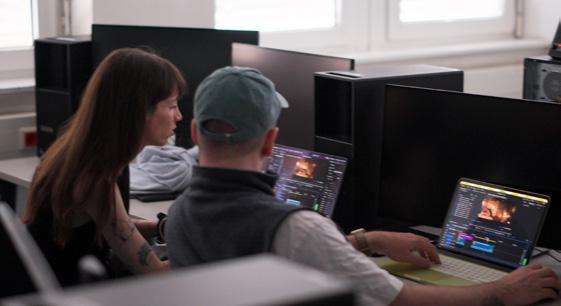
Expanded Cinema explored the intersection of traditional filmmaking and Artificial Intelligence through the creation of short experimental films. Following a professional production pipeline, participants developed concepts, storyboards and visual narratives before generating and refining scenes with AI-supported tools.
The workshop examined how algorithms can extend cinematic storytelling and reshape creative labor, positioning students as directors and curators of hybrid workflows. The resulting 30-second films combined immersive sound, contemporary aesthetics and new forms of post-human narration.
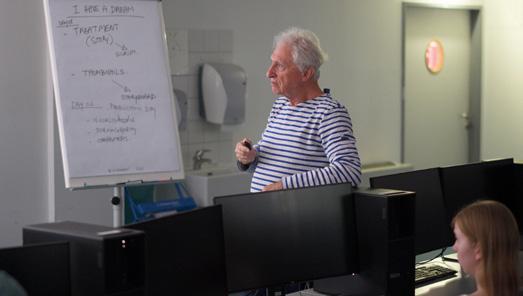
Expanded Cinema is about bridging the gap between an idea and its cinematic execution. The students used Gemini and Kling to build their worlds, but it was the final integration in labs.google/flow that truly brought their visions to life. The results achieved in just three days were nothing short of remarkable.
“Our task was to create a short film in a group using AI tools. We started by developing the story and creating sketches and thumbnails for the different scenes. After that, we turned the ideas into a storyboard that structured the entire film visually. Finally, in post-production, music, background sounds, and sound effects are added to bring everything together. What I especially enjoyed was seeing how many creative and technical steps are involved in producing even a short animation. ”
Michelle Hauptmann / Communication Design Master student / FH JOANNEUM
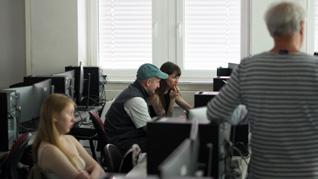
“As an interaction design student, it was incredibly refreshing to step outside my comfort zone and try something new, especially since I had no prior experience in filmmaking. Learning from such an influential figure in the field was the best part of the week. He taught us how to integrate various AI tools into a professional workflow, showing us how these technologies can enhance rather than replace the creative process.
The final result was truly incredible. This workshop has been a great inspiration for my future work, and it has sparked a desire in me to explore animation further and find new ways to blend it with interaction design.”
Indigo Tschurtschenthaler / Interaction Design Master student / FH JOANNEUM
Melani Lleonart García & Álvaro Sanchis Gandia
Professors, Painting Department / Universitat Politècnica de València / ESP
““Visual systems for collective living after collapse.
““
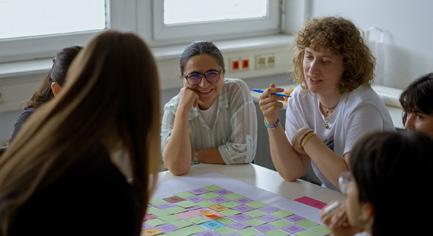
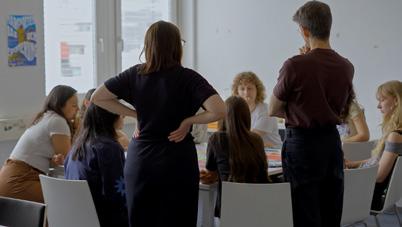
Delta · Common City explored graphic design as a non-verbal language within a speculative post-human city shaped by climate crisis and cultural diversity. Through collaborative world-building and game-based methods, participants developed a self-sufficient urban scenario in which communication relied entirely on visual systems rather than spoken language.
Using symbols, color, form and spatial logic, they created text-free signage and environmental graphics that organized orientation, interaction and coexistence. The workshop resulted in a collective prototype presented through visual documentation and exhibition formats.
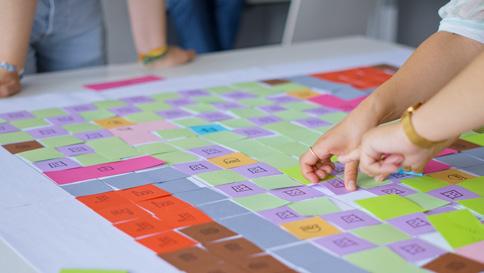
“We tried to design a city from scratch for 500 people that were coming from different places around the world. It was really challenging to design a city for people that didn't speak the same language so we used a lot of icons and illustrations to make sure the city and the people could communicate with each other. As an outcome we hand a booklet to the people when they first arrive, a newspaper, an icon list designed specially for the city and of course a logo and a brand for the city.”
Dila Bayraktar
/ Interaction Design Master student / FH JOANNEUM
“Throughout the week, I learned a lot about graphic design, teamwork, and creative problem-solving. It was both educational and enjoyable, and it gave me valuable insight into the field of visual communication and design. Melani and Alvaro were excellent teachers who created a safe, welcoming, and creative environment in the classroom. They were knowledgeable, supportive, and easy to talk to, which made it comfortable to ask questions and share ideas. I appreciated how they encouraged us to think independently while also being available whenever we needed guidance.”
Ylva Tokle Larsen / Incoming student / Interaction Design Master / FH JOANNEUM
Emilio Lonardo Lecturer and Research Fellow / Design Department / Politecnico di Milano / ITA

Play is a serious way to imagine other possible worlds.
Activating Yielding Systems explored play as a shared form of knowledge between humans, animals and more-thanhuman systems. Through speculative tools, roles and collaborative scenarios, participants developed ideas within openended processes shaped by negotiation, care and interaction.
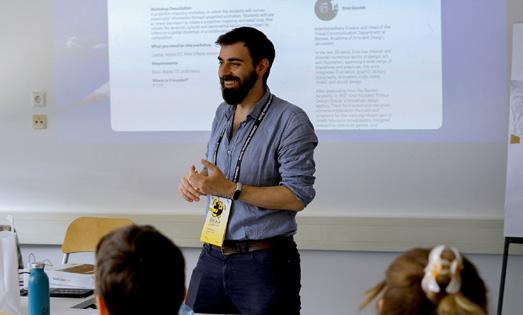
Instead of focusing on fixed outcomes, the workshop encouraged collective decision-making and systemic thinking, allowing projects to evolve dynamically. The resulting concepts ranged from games and installations to performative and narrative formats, emphasizing the lasting “leftputs” generated through the design process.
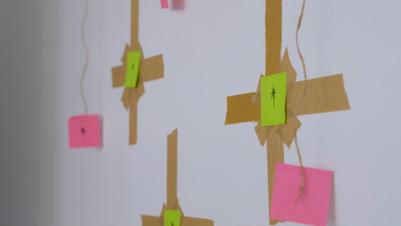
“The experimental nature of the workshop inspired me to think more openly and critically about design processes, pushing me to explore unconventional ideas and methods. This broadened my understanding of collaboration-driven design and showed me how much innovation can emerge through collective creativity.
A particularly positive aspect was the guidance from our lecturer, who acted as both a mentor and a source of inspiration. His feedback and encouragement motivated us to continuously refine our ideas, think more deeply, and strive for stronger and more thoughtful results. This supportive mentorship played a significant role in creating an environment where experimentation and ambition were equally valued.”
Alexandra Hesse Interaction Design Master student / FH JOANNEUM
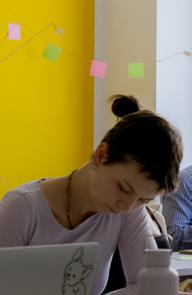
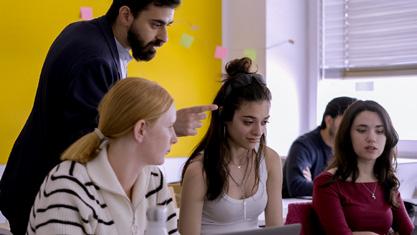
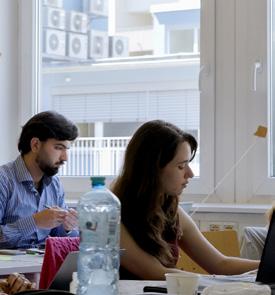
“The workshop was a unique and interactive experience that encouraged us to think beyond traditional design methods and explore post human ideas through collaboration and experimentation.”
Muhammad Mohiz Sardar Khan / Incoming student / Information Design Bachelor / FH JOANNEUM
Ana Matic´ & Miloš Nikolic´ Professor / Teaching Assistant / Faculty of Fine Arts Cetinje, University of Montenegro / MNE
Proud that young creatives have a collective response to communication challenges.
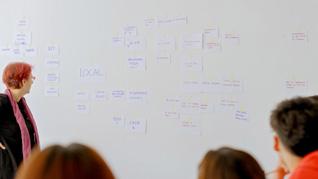
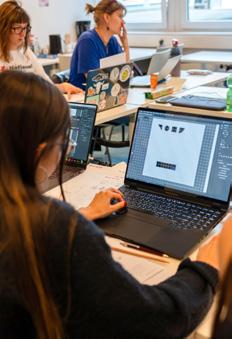
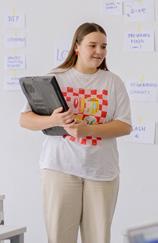
Mutual Aid Communication Toolkit explored how communication systems can function in a post-human society affected by infrastructural collapse and recurring power outages. Within a fictional low-resource scenario, participants investigated how graphic design can support communities when digital networks and electricity are no longer reliable.
Through experimentation with analogue and low-tech methods, they developed communication tools, signage systems and visual networks designed to strengthen cooperation and mutual aid. The workshop highlighted the social role of designers in building resilient local infrastructures during times of crisis.
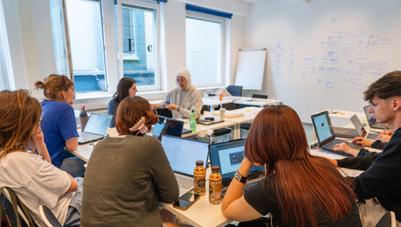
“I believe the organization by the institute was excellent because there was always good communication, support, and attention to the students’ needs. I also think it was a very good decision to give participants access to all the facilities and installations, since this helped everyone feel more comfortable and integrated. Overall, this program has been a great opportunity for personal, cultural, and academic growth, and I would definitely recommend it to other students.”
Elisa Tapia de Andrés / Incoming guest student / Universitat Politècnica de València
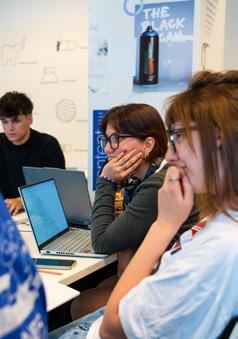
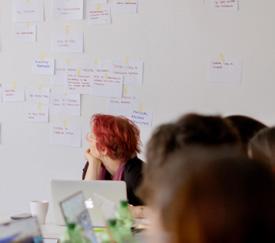
“While working with and discussing this speculative scenario I became more aware of what my role as a designer might be in times of crisis. We can do more than just create pretty images, we have the power to actually help people through hard times.”
Lieve Maijoor / Incoming guest student / Hanze University of Applied Sciences
Carla Molins-Pitarch
Lecturer & Researcher / Digital Design and Multimedia Technologies (CITM) / UPC BarcelonaTech / ESP
3 days of electronics tinkering to augment the human senses through creativity, experimentation, and prototyping.
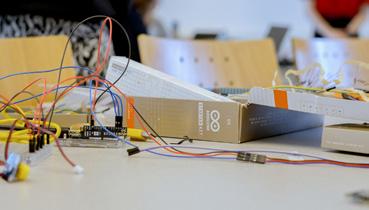
as Sensors and Interfaces for Natural and Man-Made Signals explored how sensing technologies can translate invisible environmental, bodily and technological signals into tangible experiences. Through physical computing, electronics and interactive prototyping, participants developed wearable and spatial interfaces that responded to movement, sound, light and biological rhythms.
The workshop positioned the body as an active sensor within larger ecological and algorithmic systems, emphasizing interdependence between humans, technologies and environments. The resulting experimental prototypes highlighted process, collaboration and experiential feedback rather than finished products.
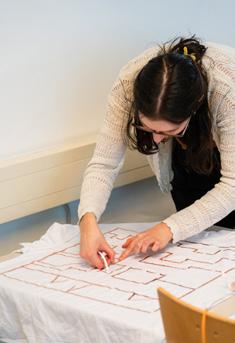
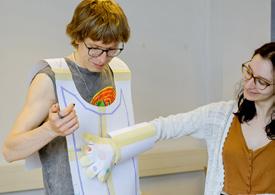
“I think that IDW is a great opportunity for expanding your creative field. For me learning Arduino was very inspirational. Not only in terms of coding but also in terms of seeking new fields that I can expand my knowledge in. People were great, very friendly, very open. I learned how to use Arduino with different components and basics of coding in Arduino IDE. The teaching staff is great, patient and very good at explaining. My group produced a headband that prevents you from doomscrolling by vibrating when you slouch. It was also great to not put all my focus on finishing the product but to get most knowledge out the workshop. Overall I'm greatful for this opportunity to be a part of IDW and having a chance to get inspired in so many different fields. ”
Aleksander Intek
Incoming guest student / The Feliks Nowowiejski Academy of Music Bydgoszcz
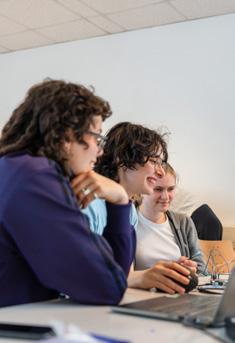
“I am really happy with all that we managed to do in such a short time as a two-person-team. I even learned how to program a LED and a button and a string of LEDs in Arduino, which I would say is definitely a success. And I realized again that being an interdisciplinary team actually can work as a big advantage, since everyone can focus on tasks they’re good at and combine all the skills that are available within the team in a meaningful way. ”
Flora Dokonal / Communication Design Master student / FH JOANNEUM

Niklas Rönnberg
Senior Associate Professor / Division for Media and Information Technology / Linköping University / SWE

Who knew branching stories and sound design took so much work?!
““
Designing Post-Human Storyworlds: Interactive Audio Narratives explored non-linear storytelling through immersive, location-based audio experiences. Participants developed branching narratives and multi-perspective storylines that adapted to listeners’ movements and decisions within physical space.
Combining field recordings, foley sound, music and AI-supported sound design, they created interactive sonic environments using mobile devices, GPS and audio editing tools.
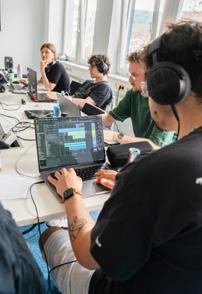
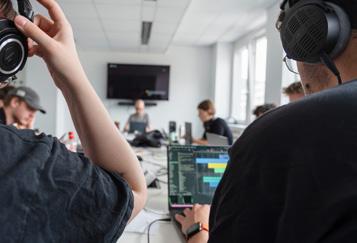
The workshop examined how narrative, technology and spatial experience can merge into responsive storytelling systems, resulting in prototypes of interactive audio storywalks.
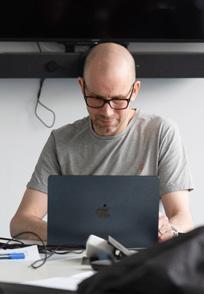
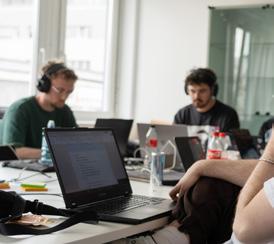
“The overall atmosphere of the IDW was a highlight in itself. The venue was a fantastic place where you felt a genuine sense of freedom and creativity. It was the perfect environment to meet so many great people and share information across different design fields. I was also deeply touched by the kindness of the FH JOANNEUM students, who were always there to help with any questions or issues. This week was a 10/10 experience that successfully combined professional growth with a truly welcoming community spirit!”
Vadim Lebiedziewicz / Incoming guest student / The Feliks Nowowiejski Academy of Music Bydgoszcz
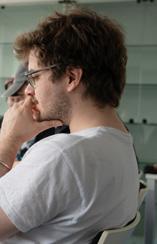
“The workshop with Niklas Rönnberg was really valuable for me, especially because it gave me a good overview of sound design, storytelling, narration, and audio-based communication. I learned how to structure stories with different branches and how to think more carefully about the role of sound in storytelling. I finally understood the difference between atmospheric sound and atmosphere as a genre. (; I also learned how to create an audio guide, experimented with AI tools and realized they are mostly useful for prototyping, and got a better understanding of how to approach recording different kinds of sounds. Overall, I would describe my learning curve during the workshop as pretty steep. At the same time, I left the workshop feeling very inspired. Also I finally made some contacts to other students from FH who I will ask a lot about sound engineering.”
Juliana Melzer / Exhibition Design Master student / FH JOANNEUM
Nitzan Waisberg
National Head of Design (Visual Communication) / JMC Academy / AUS
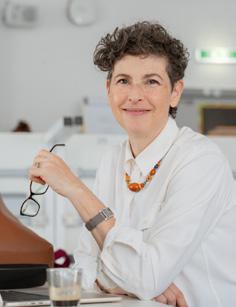
The LLMs knew where people lived, what they did, what they liked, their financial status and personal traits.
““
Collaborative Intelligence Workshop explored alternative models for the exploitation, control and distribution of resources in a post-human context. Inspired by ecological systems such as mycelium networks and the concept of the “Mother Tree,” participants developed speculative visions of collaborative intelligence involving humans, AI and non-human species.
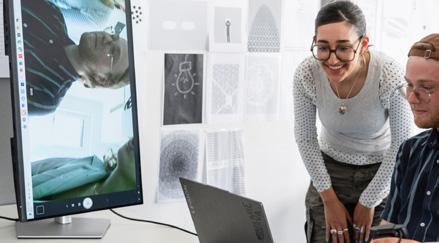
Through expanded design thinking processes, they created campaigns, manifestos, installations and other communicative formats that made these ideas tangible and accessible. The workshop emphasized collective ideation, cross-species collaboration and the development of new societal narratives beyond human-centered systems.
“Our team developed an exhibition project exploring the profound connection between humanity and social media. Specifically, we focused on how artificial intelligence influences our daily lives by gathering personal data, which is subsequently used by corporations for targeted advertising and consumer profiling. The creative process involved extensive experimentation and deep, insightful debates on the ethics and design of our concepts. Ultimately, our efforts culminated in a highly successful exhibition that successfully engaged and captivated university visitors. Through this, I learned a great deal about conceptual design, teamwork, and how to translate complex digital issues into interactive physical spaces.”
Nadiia Yaroshenko / Incoming student / Communication Design Master / FH JOANNEUM
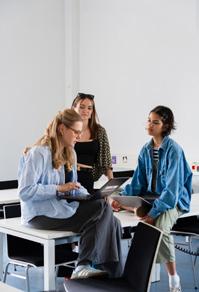
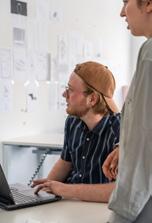
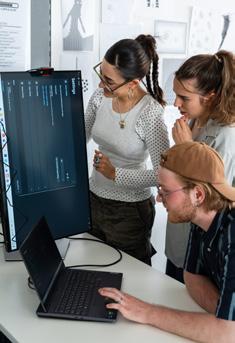
“The workshop was great and offered a genuinely interesting perspective on AI that I had never considered before. The comparison between trees, mycelium, and AI especially impressed me, making me reflect on how much data is collected about us, how it is used, and how Large Language Models could potentially serve more human-centered purposes in a non-capitalist society. The final outcome of the workshop was an interactive exhibition exploring how much our apps reveal about us and how much can be inferred simply by analyzing the applications we use.”
Laura Larrañaga Madrid / Incoming guest student / Universitat Politècnica de València
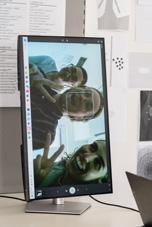
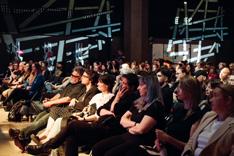
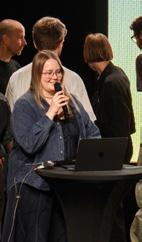
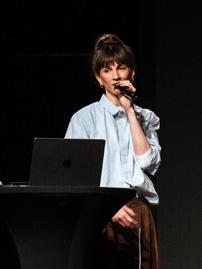
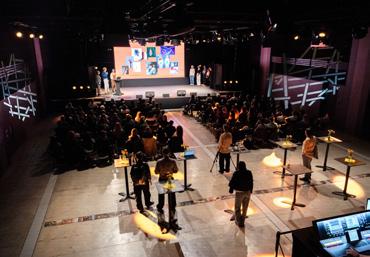
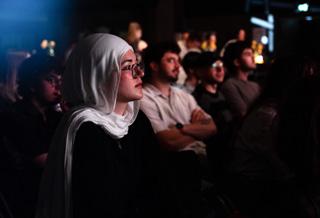
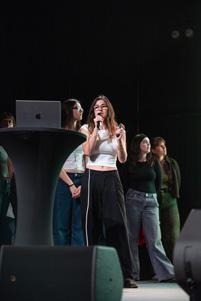
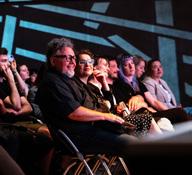
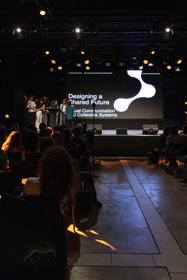
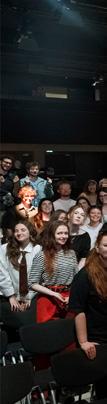
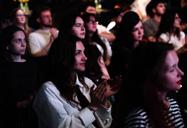
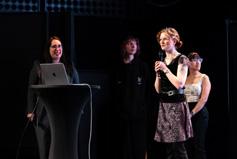
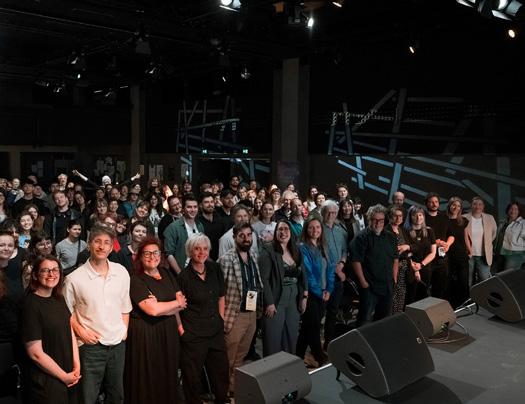
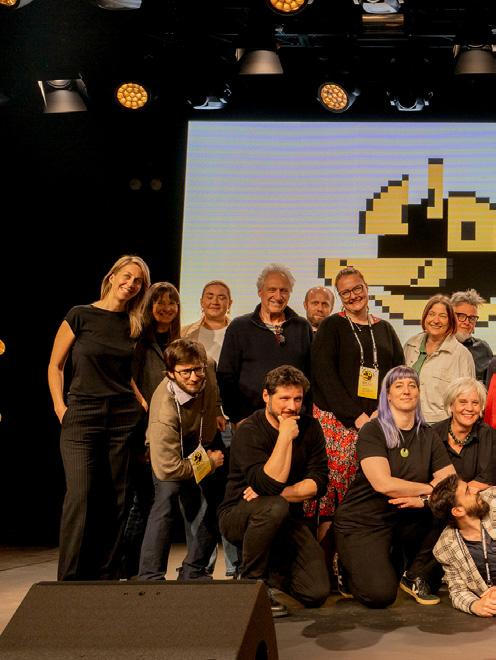
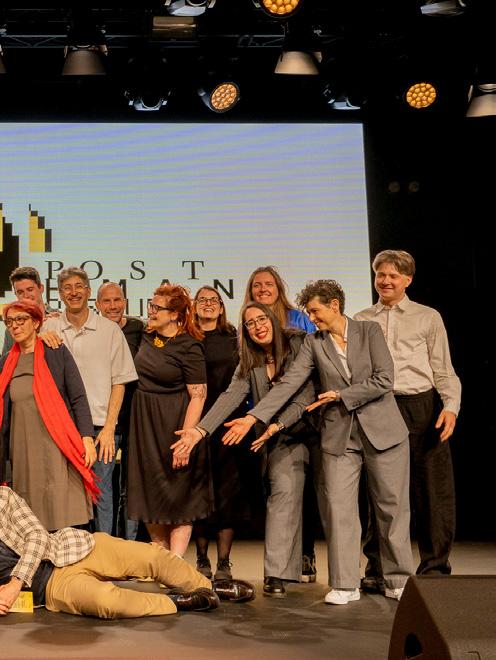
The climax of the week were the final presentations at the Helmut-List-Halle / Hall Detroit in Graz, where students presented the results of their collaborative work to all fellow students, the international guest lecturers and the team of the Institute of Design and Communication.
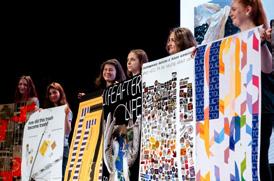
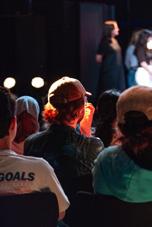
The presentations highlighted the diversity of ideas, methods, and design perspectives that emerged during the intensive workshop sessions and demonstrated the strong spirit of international exchange that shaped the entire week. In addition to the presentations, projects were also exhibited, offering further insight into the creative processes and outcomes developed. Visitors were able to engage directly with the prototypes, installations, and visual concepts gaining a deeper understanding of the experimentation, teamwork, and critical reflection behind each project. The final event not only celebrated the achievements of the participants, but also created a vibrant platform for discussion, networking, and future collaboration across disciplines and cultures.

Photography & Editorial Design
Arthur Maier / Boris Janic / Lilly Koch / Myriam Thiel / Milo Zettelbauer / Tarja Wedberg