THE PUBLICATIONOFTHE FLORIDA FIRE CHIEFS’ ASSOCIATION July 2026 • VOLUME 34 NUMBER 7














THE PUBLICATIONOFTHE FLORIDA FIRE CHIEFS’ ASSOCIATION July 2026 • VOLUME 34 NUMBER 7

Florida Fire Service is the monthly publication of the Florida Fire Chiefs’ Association, provided to Florida Fire Chiefs’ Association (FFCA) members, by the Florida Fire Chiefs’ Association.
Florida Fire Chiefs’ Association
P.O. Box 15932
Tallahassee, FL 32317
Phone:(850) 900-5180
Email: info@ffca.org • www.ffca.org
FFCA Staff
Harold Theus- Executive Director
Rachel Pardo - Marketing & Member Services Coordinator
Savannah Selski - Meeting & Events Coordinator
FFCA Board of Directors
Ryan Crawford - President
Mike Tucker - 1st Vice President
Carlos Aviles - 2nd Vice President
Trip Barrs - Immediate Past President
Ian Kemp - Secretary/Treasurer
Jeff Wagner - Northwest Region Director
Brady Rigdon - Northeast Region Director
Todd Allen - East Central Region Director
Chantal Botting - Southeast Region Director
Jason Dougherty - West Central Region Director
Gregory DeWitt - Southwest Region Director
Harold Theus - Executive Director
Terry Parris - Foundation Chair
Jeffrey Money - Senior Member
Editorial Submissions magazine@ffca.org (850) 900-5180
Advertising
Scott Leisen, Editor in Chief scott@ffca.org (386) 717-0055
Subscription rate for members is $36, which is included in member dues. Archived electronic monthly editions of Florida Fire Service magazine are available at www.ffca.org. Log in as a member and click on the Publications tab.
Florida Fire Service
July 2026, Volume 34, Number 7 USPS # 016-759
Periodical postage paid in Daytona Beach, Florida, and additional post offices.
POSTMASTER: Send address changes to Florida Fire Service, P.O. Box 15932 Tallahassee, FL 32317
Statements of fact and opinion are the responsibility of the authors alone and do not imply an opinion on the part of the officers or the members of FFCA.

Copyright 2026 by the Florida Fire Chiefs’ Association. All rights reserved. Materials may not be reproduced without written permission. MENTORING, THE BIBLICAL
ALegacy of Service: Honoring John Kohnke
The Joe Casello Act: ATurning Point for Firefighters 16
South Walton’s On-Site Physical Therapy Program





Ryan Crawford, Fire Chief FFCA President
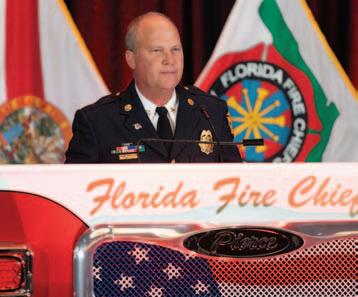
The days following our Executive Development Conference have given me time to reflect on what an honor it is to serve as President of this Association.
For more than two decades, the FFCA has been an important part of my professional life. Through service on our Sections and Committees, Board of Directors, and the Executive Committee, I have seen firsthand the value this Association brings to Florida’s fire service. As I begin this new role, I am grateful
for the trust our membership has placed in me and mindful of the responsibility that comes with it.
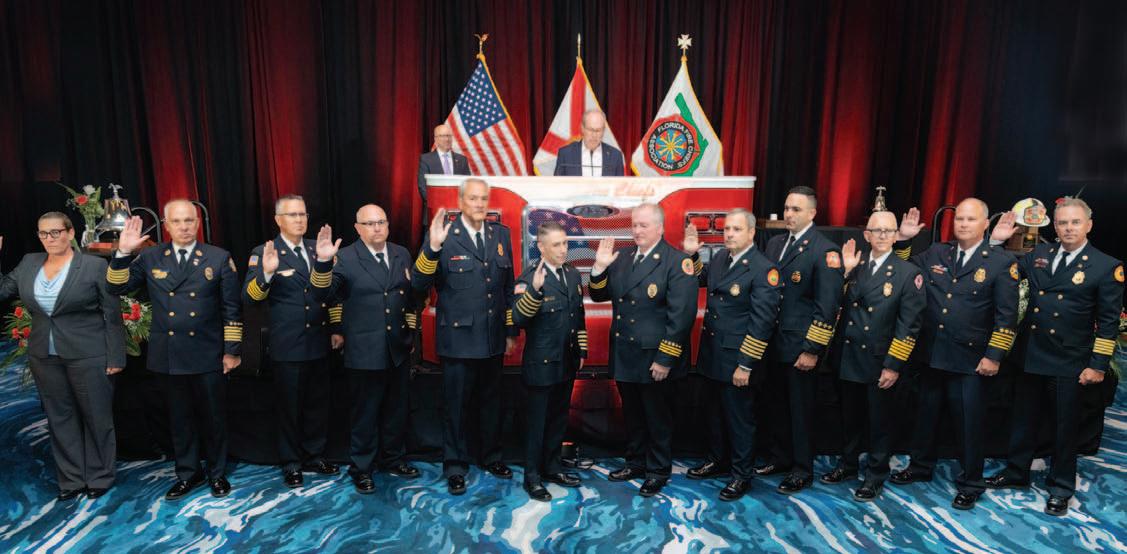
I want to again thank Chief Trip Barrs for his leadership as President this past year and for his friendship and support. I also want to recognize Chief Michael Choate as he completes his service on the Board as Immediate Past President. Chief Choate led our Association during a challenging period, and we are grateful for the steadiness and commitment he brought to the Board.
I am pleased to welcome Chief Jason Dougherty of Hillsborough County Fire Rescue as our new West Central Regional Director. He succeeds Chief Ian Kemp, who will continue serving the Association as Secretary-Treasurer. Our Installation Dinner provided us the opportunity to recognize Fire Chief Jason Timbert of the St. George Island Volunteer Fire Department as Florida’s Volunteer Fire Chief of the Year and Chief Jason Dougherty as Florida’s Career Fire Chief of the Year. Both honors are well deserved and reflect the leadership and

service we value throughout Florida’s fire service. Congratulations on receiving this honor once again!
I also want to thank Charlotte County Fire & EMS for welcoming us to Punta Gorda and hosting this year’s Executive Development Conference. Their hospitality helped make our conference a tremendous success.
One of the Board’s top priorities this next year will be a thoughtful strategic planning process examining our programs, services, communications, and future direction. We need to understand what members value most, where we can improve, and where our resources will have the greatest impact. Our goal is to ensure the FFCA remains relevant, responsive, and valuable to our members. Improving communication across the Association will be a top priority Our Sections and Committees are among the FFCA’s greatest strengths, and their expertise must remain connected to the Board and visible to the broader membership. During the coming year,

I intend to visit every region and hear directly from our members. I want to understand what agencies are experiencing, where the FFCA is providing value, and where additional support may be needed.
Leadership development will remain central to our mission. The future of Florida’s fire service depends on preparing the next generation of fire officers and executive leaders through mentoring, education, professional development, and succession planning. Our conferences, regional programs, Sections, and Committees provide opportunities to build those skills and relationships. I encourage every member to become more involved—attend a regional meeting, join a Section or Committee, mentor an emerging leader, or share a lesson learned from your department.
That work is especially important because Florida continues to grow rapidly. Communities are becoming larger and more complex, call volumes are rising, and expectations placed on fire and emergency services continue to expand. Our agencies are trying to keep pace with recruitment and retention challenges, rising apparatus and construction costs, evolving health and safety requirements, and greater demands for training. At the same time, public policy discussions could significantly affect how fire and EMS services are funded and delivered.
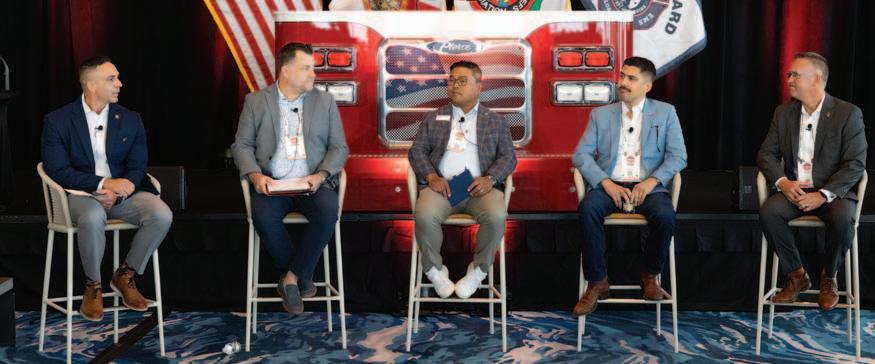
Property tax reform is among the most consequential of those discussions, and it was the focus of one of the most valuable panel sessions at this year’s Executive Development Conference. Legislative and funding experts provided background on the ballot initiative and its potential implications, followed by a panel of fire chiefs who offered a fire service perspective. These discussions showed how changes to local government revenues could affect staffing, apparatus replacement schedules, expansion of new fire stations, and the overall emergency response framework. The strong attendance and thoughtful
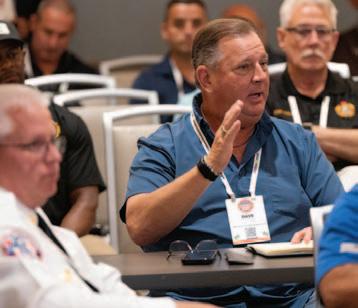
participation confirmed how important this issue is to our members.
The Board of Directors adopted a formal position on Amendment 3 (Property Tax Reform), affirming that Florida taxpayers deserve both thoughtful tax policy and dependable public safety, and that tax relief and reliable emergency services are not mutually exclusive.
As proposed, Amendment 3 creates substantial uncertainty regarding the future funding of fire protection, emergency medical services, and disaster response without identifying a sustainable replacement revenue source. Until a comprehensive funding plan is established that preserves local governments’ ability to provide these essential services, the FFCA cannot support the amendment in its current form.
Our role as fire service leaders and as a trade association is not to engage in partisan politics. Our responsibility is to ensure policymakers, community leaders, and the public understand the practical consequences of the decisions being considered. When funding decisions affect staffing, response capacity, or the availability of fire and EMS resources, the fire service must explain those impacts clearly and credibly.
The next opportunity for us to connect is right around the corner The 2026 Safety and Health Conference returns to Margaritaville Resort Orlando October 19–21. Early-bird registration is $200 through September 25. For those who have never attended, this conference is not just for safety officers or health and wellness personnel. It is designed for chiefs, company officers, labor leaders, peer support teams, and anyone responsible for the wellbeing of our personnel. The program provides practical information, proven strategies, and opportunities to learn how agencies across Florida are addressing firefighter cancer, behavioral health, occupational exposure, injury prevention, physical readiness, and longterm wellness.
Just as important, the conference offers time to connect with other fire service leaders who are facing many of the same challenges. Protecting our people is one of our most important leadership responsibilities, and I encourage every agency to consider sending members of its leadership and safety teams.
As we move into the year ahead, I ask each of you to stay engaged. Share your perspective, participate in your region, contribute through a Section or Committee, and help us identify where the FFCA can better serve you. This Association is strongest when its members are not simply connected to it but actively invested in its work.
Florida’s fire service includes departments of every size, structure, and community type. Although our circumstances may differ, we are united by a shared responsibility to protect the public, support our personnel, and prepare our organizations for the challenges ahead. The FFCA gives us a place to bring those perspectives together and address issues that no individual agency can solve alone.
I look forward to visiting our regions, hearing directly from you, our members, and building on the strong relationships that have always been central to the FFCA.
Thank you for placing your trust in me. I will work to honor that trust and help ensure we leave this Association stronger, more connected, and better prepared for those who will lead it in the future.
By Rick Spence, FFCA Chaplain
Moses led the Israelites out of Egypt, and they wandered through the desert and wilderness for 40 years. (Some say that was the first recorded instance of a man refusing to ask for directions.) But, just prior to crossing over into the Promised Land, Moses died. Fortunately, for the Israelites, Moses had been mentoring, leading and teaching Joshua during the trek out of Egypt. Moses had done such a good job of teaching Joshua that he was able to step into leadership without any issues and took the Israelites the rest of the way into the Promised Land. This led to the Jewish people finally establishing a land of their own that exists to this day.
Other successful mentors include the Apostle Paul. He mentored Timothy, Titus, and many others, which led to dozens of new churches starting in Asia. But the best example of mentorship in the Bible is Jesus’ mentorship to the 12 disciples.
Jesus was such a strong and thorough mentor that it led to the Gospel spreading from the Middle East to the rest of the world. Jesus did such an incredible job of teaching His disciples, that the Gospel of Jesus Christ is still alive and well over 2000 years later All of us are in some level of leadership in our departments. We have people we
answer to, and also have people that answer to us. We all know that we will not be in our current position forever: at some point, someone else will be sitting in our seat. If we want to leave the fire service better than it was when we started, we need to ensure that a qualityand capable person takes our place. The only way to do this is to begin to teach, guide, and lead the person who will likely be our successor.
In the fire service, one day you are riding a rig and the next, you are a chief officer. Occasionally, there are move-up opportunities to work out of class in the next step in leadership. But too often, the decision to promote is based on someone’s test scores or interview abilities. Often the reason for not being able to move up is based on contractual language – it is frequently designed to protect overtime opportunities in some of these positions (half of my union brethren will agree with this, and half will argue their classification is the best suited to be in that position). Personally, I think there is some shortsightedness in that mindset. Do you want a new officer put into a higher position without thorough training and some level of experience in that position? There are better ways to promote people than the ‘Yesterday, I couldn’t spell it. Today I am
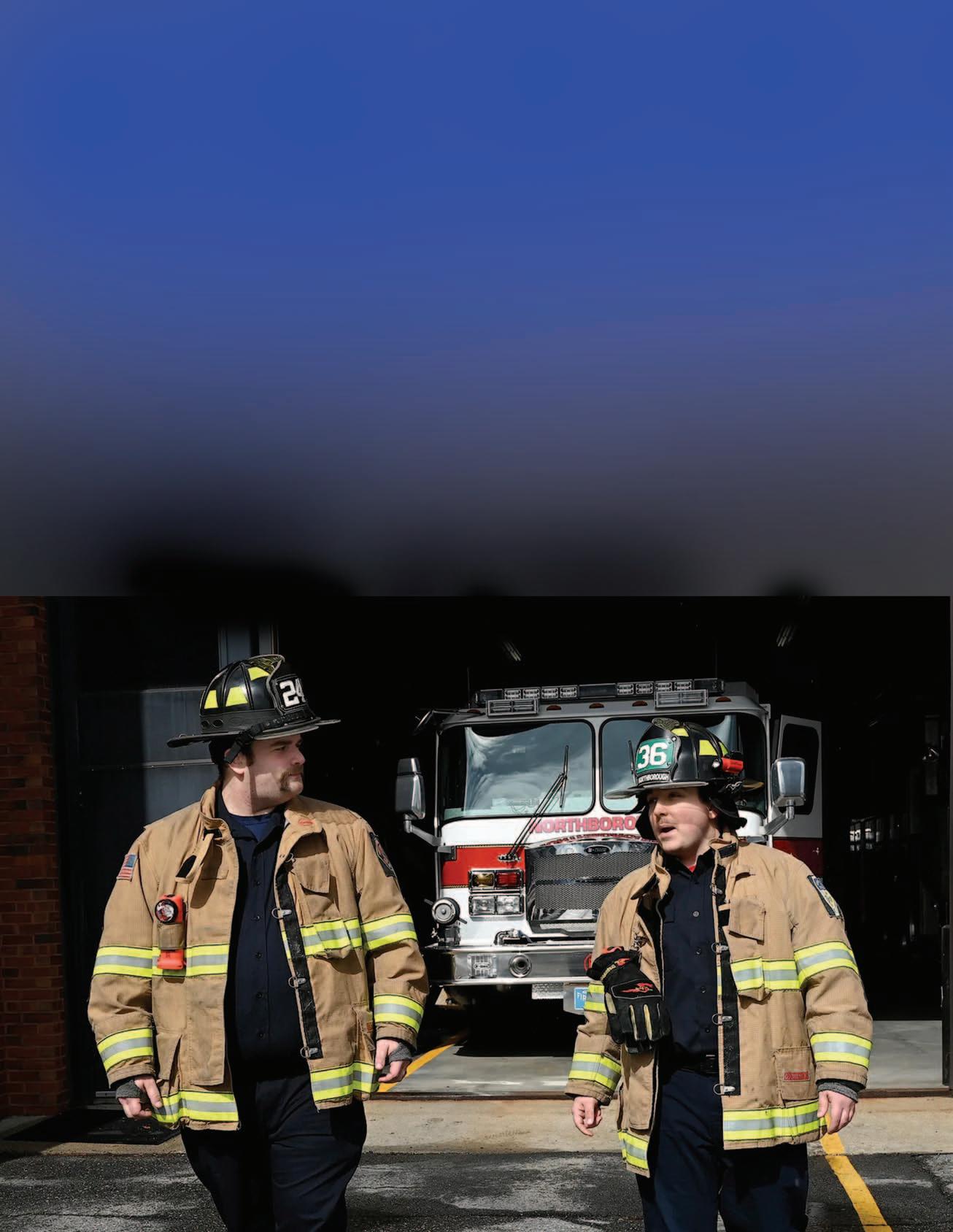
one’ philosophy.
There are some forward-thinking fire departments that have contractual language which allows overtime for the higher position while still allowing opportunities for junior officers to move up. This is something that should not be limited to only bargaining unit positions, and I believe it better serves the department as a whole by reducing transition time and lessening the learning curve of a new job.
Even if you do not share the same faith that I do, the Bible has a good plan when it comes to mentoring others. The Apostle Paul followed what Jesus did by mentoring many followers of Christ at a time when Christians were being persecuted and martyred for their faith. Paul wrote in 2 Timothy 2:2, “Take the teachings that you heard me proclaim in the presence of many witnesses, and entrust them to reliable people, who will be able to teach others.” We have to get past the insecurity that often comes when we know there is someone who might be able to do the job better than we can. If our goal is to genuinely make the fire service better than it was when we arrived, we need whoever comes behind us to do a better job than we did.
By Matthew C. Trent
The fire service has always been about answering the call, and today our profession faces a new one. Departments across Florida need more skilled people in the ranks, and they need strong leaders who are ready to guide them through a demanding future. Women are a key part of that answer. When women can see a real path into this career, along with a clear way to rise through it, everyone benefits. The department gains more talent, the community receives better service, and the next young woman who dreams of wearing the badge finds someone to look up to. Reaching that goal takes a plan that connects recruiting, professional development, promotion, and leadership into one steady pipeline.
Recruiting women starts with showing them that they belong. Many young women never picture themselves in turnout gear simply because they have never seen someone like them on the truck. We can change that. Visiting schools, hosting station tours, and running youth camps and Explorer programs let girls try the work with their own hands. When a teenager pulls a hose, climbs a ladder, or meets a female firefighter who loves her job, the idea of a fire service career suddenly feels possible. Recruiting also means being honest and welcoming. Share what the job really involves, from the physical training to the shift schedule. Offer mentors who can answer questions without judgment. A woman who feels supported before she ever applies is far more likely to finish the academy, pass her probation, and stay for the long haul.
Getting hired is only the beginning. To keep talented women in the fire service, we have to help them grow. Professional development is how a new firefighter turns into a trusted expert. That means paying for certifications, covering the cost of college classes, and giving people time to train. It also means making sure women are invited to the same courses, conferences, and hands-on drills as everyone else.
Mentorship matters just as much as formal training. A good mentor helps a firefighter set goals, study for the next exam, and learn from mistakes. Mentors do not have to be women themselves, but seeing women who have already succeeded sends a powerful message. When a firefighter can picture her future clearly, she is far more likely to reach for it.
Every firefighter should understand how the career ladder works, from firefighter to driverengineer, to lieutenant, captain, battalion chief, and beyond. Too often, women are not told what each step requires or encouraged to take it. We can fix this by being direct. Sit down with your people, map out the ranks, and explain exactly what training, time, and testing each promotion takes.
Leaders should also tap women on the shoulder. Many capable firefighters wait to be asked before they apply for a promotion. A simple word of confidence from a chief or captain can be the push someone needs to study for the officer exam. Fair promotion processes, clear standards, and steady encouragement help make sure the best people rise, no matter their background.

Retention is just as important as recruiting, because a department gains nothing if the women it hires walk away after a few years. People stay where they feel respected, challenged, and included. That means providing gear and facilities that fit a diverse workforce, addressing harassment quickly and firmly, and treating family needs as normal parts of a firefighter’s life. When a station feels like a second home, firefighters give their best work and encourage others to join them.
Listening is a simple but powerful retention tool. Ask the women in your department what is working and what is not, and then act on what you hear. Small changes, such as a fairer duty roster or a clearer path to training, can make the
difference between a firefighter who leaves and one who stays for a full career and eventually leads.
Leadership is where all of this comes together. Women in command roles prove to every recruit that the path is real. They bring fresh ideas, strong communication, and a deep sense of teamwork to the officers’ meeting. Just as important, they open the door for the women coming up behind them.
If you are a woman in the fire service today, know that your voice and your goals matter. Seek out training, ask for the tough assignments, and do not be afraid to aim for the corner office. And if you are already a leader, reach back and lift someone up. The strength of Florida’s fire service depends on the leaders we build now. Together, we can make sure the next generation of women is ready to answer the call.
As Assistant Chief for North Collier Fire Control and Rescue District, Chief Trent is assigned to the Office of the Fire Chief, where he leads strategic initiatives and executive-level projects that support the District’s mission, priorities, and long-term objectives.
Trent holds an Associate’s Degree in Fire Science & Technology, a Bachelor’s Degree in Public Safety Administration, and a Master’s Degree in Public Administration. Currently, he is pursuing a Doctor of Public Administration. Matthew has been designated Chief Fire Officer (CFO) by the Center for Professional Safety Excellence (CPSE), Member Grade (MIFireE) by the Institution of Fire Engineers (IFE), achieved Certified District Manager (CDM) from the Florida Association of Special Districts (FASD).
Trent holds numerous Florida certifications to include Fire Officer IV, Fire Code Administrator, Live Fire Training Instructor II, Fire Instructor III, Safety Officer, Fire Inspector II, Fire and Life Safety Educator, Hazardous Materials Technician, Fire Investigator, and Pump Operator.In addition, he has achieved an accredited Fire Officer IV, Fire Inspector II, and Plans Examiner certification by the National Board on Fire Service Professional Qualifications (NBFSPQ) and is a certified Emergency Medical Technician (EMT-B) with the State of Florida.
Trent is an active member of the National Fire Protection Association (NFPA), the International Association of Fire Chiefs (IAFC), and serves on the Training and Education Section with the Florida Fire Chiefs Association (FFCA).


By JoAnne E. Rice MPA, CFO, Director, Florida Division of State Fire Marshal
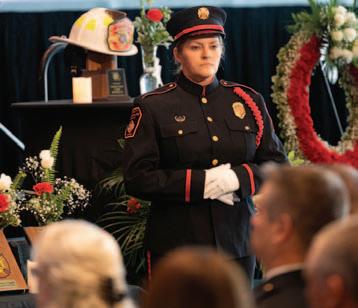
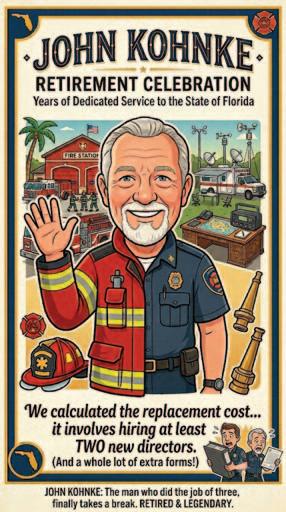
On June 30, 2026, the Florida fire service celebrated the retirement of one of its most valued partners. After an extraordinary 46-year career in emergency services, including 33 years serving the State of Florida, John Kohnke leaves behind a legacy of service, professionalism, and an unwavering commitment to protecting Florida’s communities.
John began his career in emergency services in 1980 in Jacksonville, launching a career that would span nearly five decades. He later served as Taylor County EMS Director from 1983 to 1986 before becoming Fire Chief and Public Safety Director from 1986 to 1994. During that time, he led his community through the devastating “Storm of the Century” in March 1993, when 90 mph winds and a 12-foot storm surge tested the resilience of North Florida and its emergency responders.
In 1994, John joined the Florida Division of Emergency Management as an Operations Officer and Statewide Mutual Aid Coordinator John, widely recognized as the father of the Emergency Management Assistance Compact (EMAC), helped to build and strengthen Florida’s mutual aid system and contributed to a model of interstate emergency response that continues to serve the nation today.
From 1998 to 2009, John served with the Florida Department of Law Enforcement, leading terrorism preparedness and supporting law enforcement disaster response during this critical period in homeland security, following 9/11.
Since joining the Florida Division of State Fire Marshal in 2010 as Domestic Security Coordinator and Emergency Manager II, John
has been instrumental in building Florida’s nationally recognized specialty response capabilities. As the statewide coordinator for Urban Search and Rescue (US&R), Hazardous Materials (HazMat), and other specialty fire response teams, he has overseen tens of millions of dollars in funding supporting training, equipment, and disaster recovery.
John understood that Florida’s emergency response is strongest when agencies work together. Throughout his tenure, he built a strong partnership with the Florida Fire Chiefs Association and helped advance statewide preparedness through the State Emergency Response Plan (SERP), the Florida Association of Search and Rescue (FASAR), and the Florida Local All-Hazards Response Teams (FLARH). His ability to unite state agencies, local fire departments, emergency managers, and public safety partners strengthened Florida’s readiness and set a lasting example of collaboration.
As Emergency Coordinating Officer for Emergency Support Functions 4 and 9 at the State Emergency Operations Center, John has coordinated fire and rescue resources through countless hurricanes, wildfires, floods, and other disasters. His leadership has helped shape Florida’s US&R system into one of the finest in the nation while strengthening partnerships that ensure responders are ready when disaster strikes.
While his accomplishments are impressive, those who know John best speak less about his titles and more about his character. He is the person who always answered the phone, quietly solved problems, and never hesitated to help a colleague. A devoted husband and father, talented handyman, and self-
proclaimed “chaos coordinator,” John has earned the respect and friendship of countless firefighters, emergency managers, and public safety professionals across Florida.
His impact cannot be measured by awards alone—including his SERC Lifetime Achievement recognition—but by the lives he has touched, the leaders he has mentored, and the emergency response systems he helped build. Florida is safer today because of his commitment and willingness to serve.
On behalf of the Florida fire service, thank you, John, for your 46 years of dedication, leadership, and friendship. We wish you good health, happiness, and every success in retirement. Your legacy will continue to guide Florida’s fire service for generations to come.

By Doreen Overstreet, Public Safety Information & Education Officer, Seminole County Fire Department
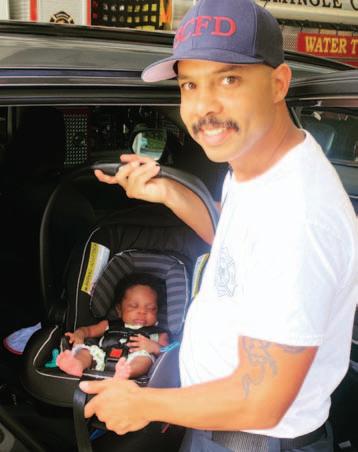
The National Child Passenger Safety Certification program recently designated Seminole County Fire Department Public Safety Specialist Sharon Gregory as one of only eight new Certified Child Passenger Safety Technician Instructors (CPST-I) in Florida.
Gregory is currently the only CPST Instructor in Seminole County, and only 45 percent of Florida counties currently have a CPST Instructor. Statewide, there are fewer than 100 CPST Instructors. In her new role, Gregory is qualified to train and certify new Child Passenger Safety Technicians and lead certification classes.
Achieving the CPST Instructor designation is a significant professional accomplishment that requires extensive training, experience, and evaluation. Gregory has served as a nationally certified Child Passenger Safety Technician since 2015.
The Child Passenger Safety Certification Training program is administered by Safe Kids Worldwide, the certifying organization responsible for managing all aspects of the program. The organization works closely with the National Highway Traffic Safety

Administration, the National Child Passenger Safety Board and program sponsor State Farm.
Over the past three years, the Seminole County Fire Department has inspected or installed more than 250 car seats and averages approximately 60 inspections annually. In addition to Gregory as a CPST Instructor, the Department has three nationally Certified Child Passenger Safety Technicians, including one fire lieutenant, one firefighter/paramedic and one member of Dispatch.
“Sharon works tirelessly in her commitment to public safety education and serves as an outstanding resource for our community,” said Fire Chief Matt Kinley of the Seminole County Fire Department. “Her dedication to safety education directly improves child safety and strengthens our fire department’s community outreach across Seminole County.”
Gregory has helped lead the Seminole County Fire Department’s community outreach efforts since 2014. She previously served as an emergency communications dispatcher with SCFD and began her public safety career as a firefighter in another Florida county.
“A 30- to 45-minute appointment can save a
child’s life,” said Seminole County Chairman Andria Herr “When you consider that three out of five car seats are installed incorrectly, it’s easy to see why this ser vice matters.
Sharon’s achievement will help more Seminole County families access expert guidance and keep their children safe on the road.”


Aqueous Film Forming Foam (AFFF) effective? Absolutely. Is it also extremely harmful to the career firefighters? Unmistakably, the answer is yes.
For decades, AFFF has been the go-to extinguishing agent for Class B fires involving combustible liquids like gasoline, jet fuel, oil, and paints. But many AFFF formulations also contain per- and polyfluoroalkyl substances (PFAS), a group of chemicals increasingly linked to occupational cancer and other serious health risks in firefighters. In fact, cancer now accounts for more than 70% of firefighter line-of-duty deaths. Studies have consistently shown that firefighters are exposed to much higher levels of PFAS than the general population, increasing their risk of cancer and other chronic diseases.
Fortunately, change is underway. Florida’s HB 1019, better known as the Joe Casello Act, took effect on July 1, 2026, establishing a threephase approach to eliminating PFAS-containing AFFF and helping protect future generations of firefighters.

PFAS are synthetic chemicals that break down so slowly they build up in the environment and the human body faster than they can degrade, earning them the nickname “forever chemicals.” They’ve been linked to a long list of health concerns, including certain cancers, immune system suppression, developmental issues in children, reproductive health effects, and metabolic disorders. They also contaminate drinking water, wildlife, livestock, and the environment.
PFAS are added to AFFF because they create a blanket of foam over combustible liquids, smothering the fire and cutting off oxygen. Unfortunately, firefighters and other personnel using AFFF can be exposed through skin contact, inhalation, and contaminated turnout gear. While those risks have been part of the job for decades, they don’t have to be part of its future.
Here’s where Joe Casello enters the story. Joe was a career firefighter for 33 years before becoming a Florida politician. After witnessing the devastating health impacts PFAS-containing AFFF had on fellow firefighters, he made it his mission to phase it out. Seeing the effects of PFAS contamination on local drinking water only strengthened that commitment. Thanks to his relentless advocacy, the Joe Casello Act was signed into law on June 20, 2025.
The law rolls out in three phases:
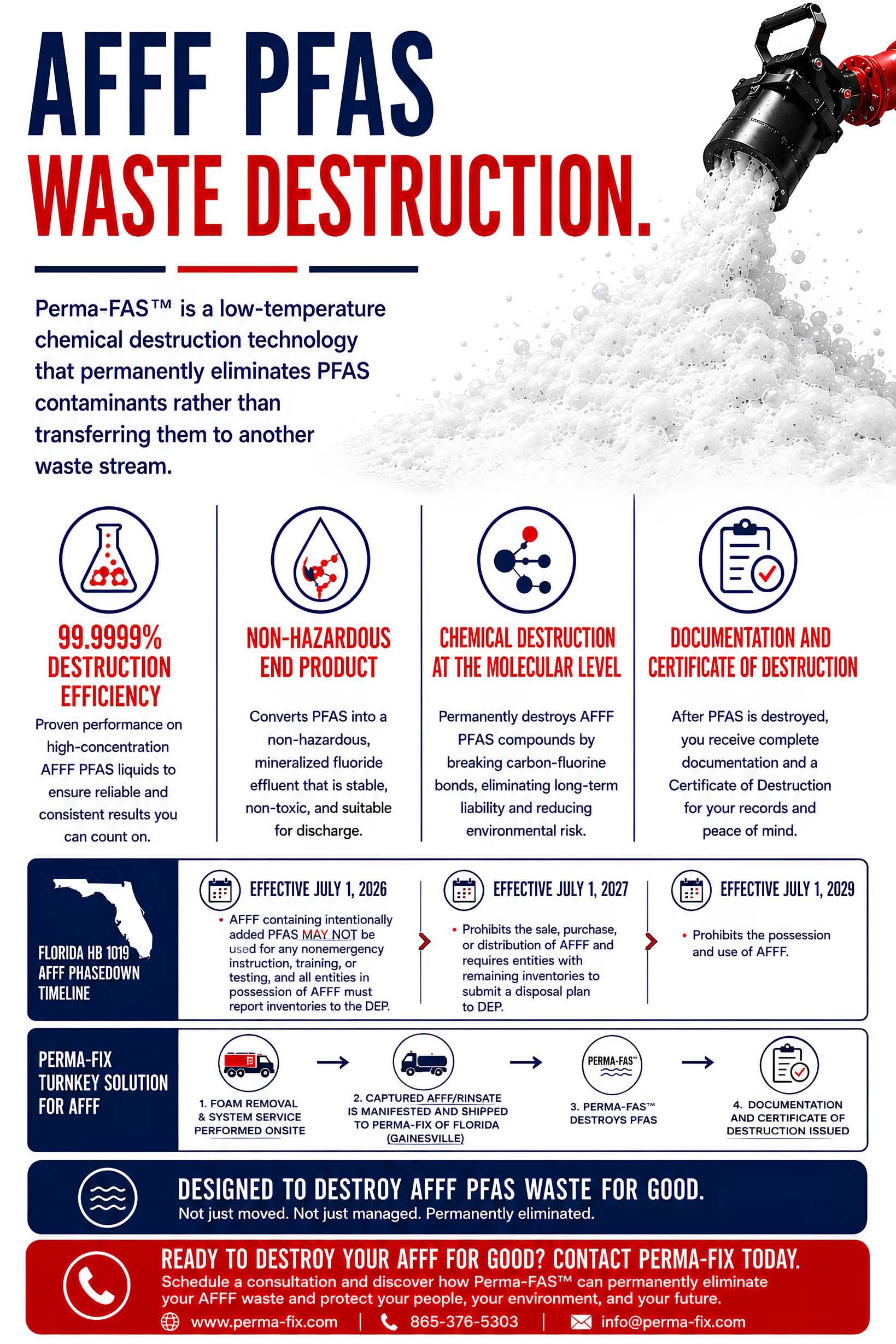
• July 1, 2026: Non-emergency training, testing, and instructional use of AFFF is prohibited, and entities possessing AFFF must report their inventories to the Florida Department of Environmental Protection (FDEP).
• July 1, 2027: The sale, purchase, and distribution of PFAScontaining AFFF are prohibited, and entities must submit AFFF disposal plans to the FDEP
• July 1, 2029: Possession and use of PFAS-containing AFFF are prohibited, with limited exemptions.
Stopping the use of these chemicals is a huge step forward, but it’s
only half the battle. Existing AFFF still has to go somewhere, and simply throwing it away isn’t the answer. PFAS don’t disappear. If they’re disposed of improperly, they can seep into groundwater, contaminate crops, livestock, and drinking water, and eventually make their way right back to us. It’s a vicious cycle unless the chemicals are actually destroyed.
There are several ways to manage PFAS waste, but very few actually destroy it. Deep-well injection and landfilling simply move the problem somewhere else, while incineration remains the subject of ongoing debate. In 2025, Perma-Fix Environmental Services, an environmental services company with waste treatment facilities across the United States, introduced Perma-FAS®, a PFAS destruction technology capable of destroying PFAS by up to 99.9999% using lowtemperature, ambient-pressure processing. Operating from its Gainesville, Florida, facility, Perma-FAS provides organizations with a convenient, cost-effective, in-state solution for permanently destroying AFFF as they comply with Florida’s new legislation. Perma-Fix holds distributor agreements with UL-listed and Mil-Spec fluorine-free foam providers, enabling Perma-Fix to deliver a turnkey AFFF replacement solution that includes AFFF removal, safe transportation, permanent destruction, replacement with fluorine-free foam alternatives, and a Certificate of Destruction documenting compliant disposal.
The Joe Casello Act is more than just another regulation. It’s a major step toward protecting firefighters, their families, and the communities they ser ve. By phasing out PFAScontaining AFFF and making permanent destruction a priority, Florida is helping ensure these “forever chemicals” don’t have to be forever.
For more information on Perma-Fix Environmental Ser vices and its turnkey PFAS destruction offerings go to www.perma-fix.com/permafas.aspx.





By Mackenzie McClintock, Public Information Officer, South Walton Fire District
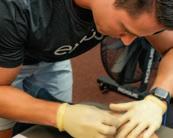
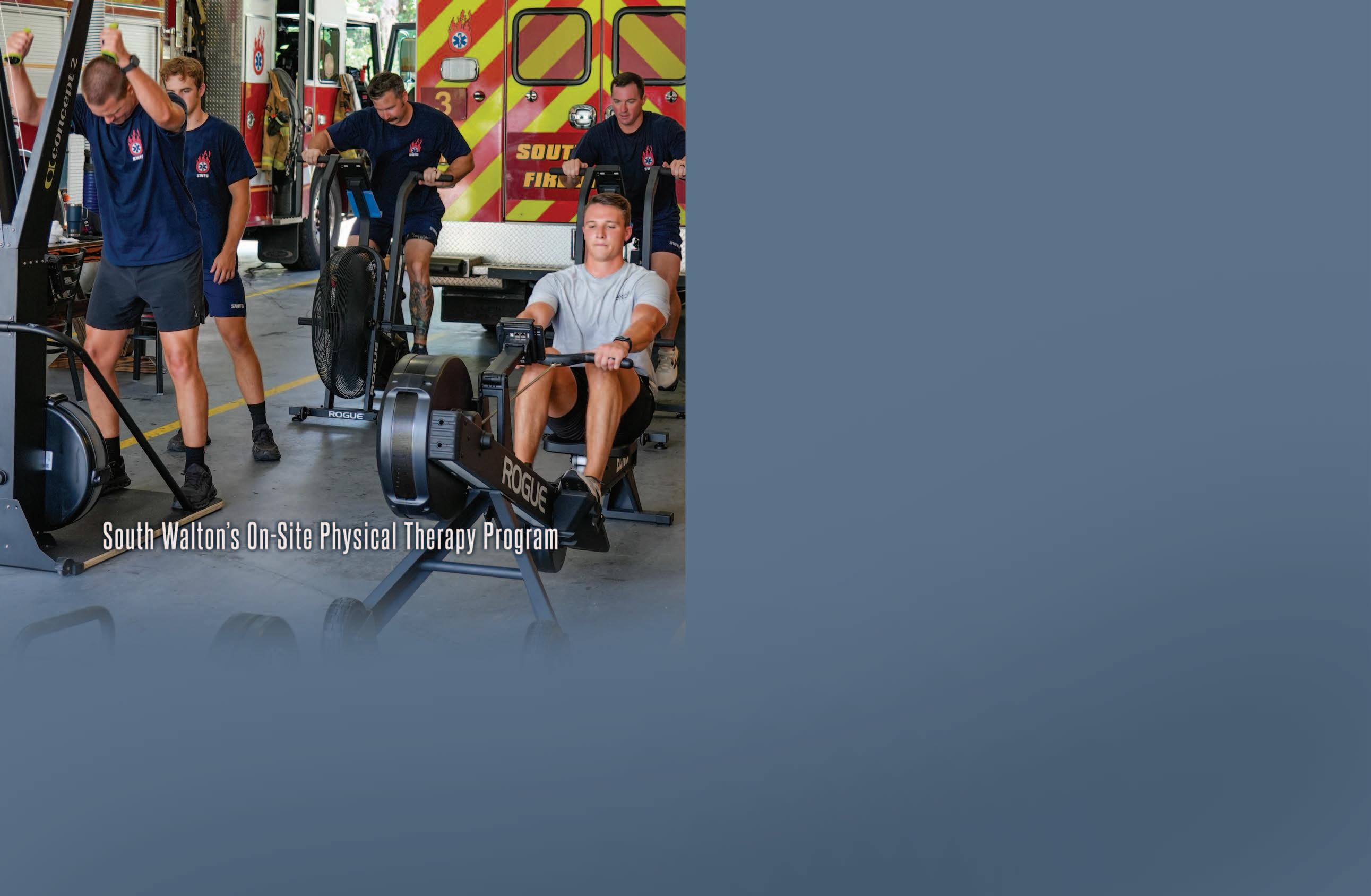
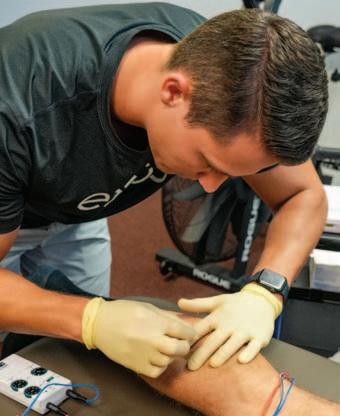
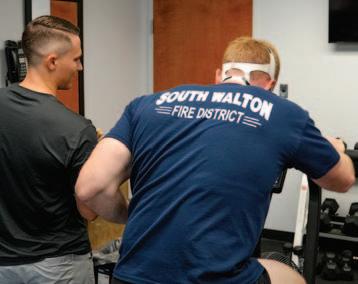
For firefighters, workplace injuries have long meant waiting for appointments, seeking referrals, and ultimately, time away from the job. South Walton Fire District is changing that model with the launch of an in-house physical therapy program designed specifically for emergency responders.
Through a partnership with Exos, this on-site program places specialized treatment, injury prevention, and enhanced athletic training in the workplace, providing immediate access to a physical therapist outside of the normal insurance model.
The program grew its roots following an increase in orthopedic-related injuries across the district, with an overwhelming majority of injuries taking place either on the training grounds or during physical fitness training. While injuries during training may be an unfortunate but anticipated part of a physically
demanding job, an additional, recurring problem was creating a barrier for personnel to get back to work after suffering that injury.
“A major obstacle we continue to face is ensuring personnel can access timely medical evaluation and treatment following an injury,” said Ryan Crawford, SWFD Fire Chief/Administrator. “In many cases, responders can experience extended wait times before being seen by a specialist or receiving a treatment plan, which can delay recovery and return-to-duty timelines.”
This waiting game can ultimately translate into taxpayer dollars being spent unnecessarily on overtime budgets, backfilling positions, the worker’s compensation process, and insurance premium increases.
By tracking the patterns of work-related injuries and thinking proactively about how to create a lasting, positive change within the
district’s workforce, the in-house physical therapy program was born.
“It was clear we needed to create a bridge, first to prevent injuries from occurring and second to provide immediate evaluation and treatment of an orthopedic injury until more definitive care can be accessed,” said Brian Hughes, SWFD Assistant Chief of Operations.
“We face the monetary investment regardlesseither by providing a program such as this or by paying higher premiums and backfilling employees that are out due to injury. To us, the benefits of providing this program in terms of overall employee health outweigh spending the dollars in a post-injury model.”
The idea was just the start. Next came the many necessary steps in the process toward success: Selling the idea to District leadership and personnel, a thorough budget build and approval, constructing a workspace and clinic

area, developing a contractual relationship with Exos, ordering equipment and supplies, and identifying the right candidate for the job.
At the start of 2026, SWFD saw the initial fruits of its labor, welcoming Physical Therapist Mason Stitt on board through a contract with Exos. Stitt brings Midwestern roots, having received his educational background in Indiana. He meets personnel on their level with an energetic attitude geared towards strength and conditioning, physical endurance, and career longevity.
“When negotiating with Exos, our position has always been that this program would be won or lost with the individual we put in place to operate it,” Hughes said. “Mason has been a great fit for the district and has been accepted as one of our own. The program is attractive to the younger personnel who are already fitness focused and enjoy the training aspect of the partnership while the older personnel enjoy the ongoing physical therapy and tweaking of chronic injuries that have plagued them over their career.”
Since Mason’s introduction, he has focused on expanding both physical therapy and strength and conditioning services within the district. His responsibilities include treating acute and chronic injuries, conducting NFPA 1582-adjacent fitness evaluations, and developing work-hardening programs that help personnel safely return to duty following a longterm injury or illness.
As part of that effort, Exos conducts the district’s annual fitness evaluations, measuring body composition, mobility, aerobic capacity, muscular power, strength, and endurance. The results establish individual performance baselines and help guide the training programs
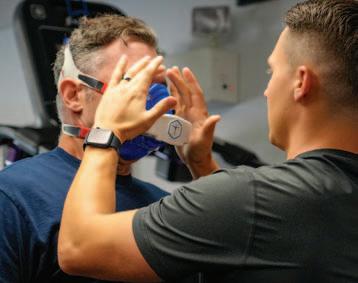
delivered through live crew-based workouts and an internal fitness app.
“A career in public safety, specifically firefighting or open-water lifeguarding, can place tremendous demands on the body,” Stitt said. “From climbing stairs in full gear and to carrying heavy equipment, to performing rescues and operating in the heat, personnel are routinely asked to perform at a level comparable to professional athletes. Our approach is to help them build physical conditioning while preventing injuries and improving mobility.”
By viewing personnel as tactical athletes, Stitt is working alongside District leadership to build programs that foster explosive strength, cardiovascular endurance, balance, mobility, and overall operational readiness.
Through his regular assessments, he helps identify movement limitations, strength imbalances, and potential injury risks before they become serious problems, allowing personnel to remain healthy, resilient, and ready to meet the demands of emergency response.
“What we’re building here is not just on-thejob improvements, but also longevity for our personnel to enjoy their retirements, too,” Stitt said. “Whether I’m helping a firefighter,
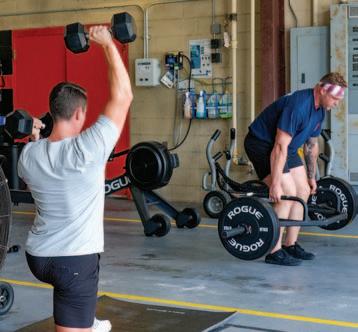
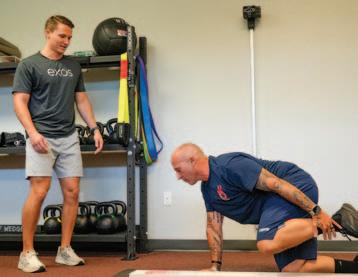
lifeguard, member of administration, or a telecommunicator, the goal is to improve the health and safety of everyone.”
Within the first few months of relocating to Florida and working on-site, Stitt has seen 50 employees in clinic with over 140 sessions provided, not to mention numerous workouts created and physical testing sessions.
“We also know and are tracking when he evaluates or treats an acute, on-the-job injury, and have seen some injuries not progress to the worker’s compensation stage other than a ‘report only’ notification,” Hughes said. “This program bypasses most of the typical restrictions and expedites ongoing care of injuries. When we combine the Physical Therapy aspect and the athletic training portion, then you have a comprehensive program that addresses an employee’s health, related to fitness and therapy, from the prevention stage through the post injury stage.”
While the model is new, it’s showing signs of promise. Personnel are witnessing very real initiatives and dollars being spent to improve quality of life over several different programs. As the program picks up steam, the district is hopeful of sharing continued updates, and to see how this initiative pays off in real time during the community’s time of need.
The district also recognizes its Board of Fire Commissioners for supporting a proactive approach to responder wellness. The demonstrated leadership and forward-thinking prioritizes the health of SWFD’s workforce, the long-term sustainability of the organization, and the high level of service the community expects and deserves.
“To be under pressure is inescapable. Pressure takes place through all the world; war, siege, the worries of state. We all know men who grumble under these pressures and complain. They are cowards. They lack splendour. But there is another sort of man who is under the same pressure but does not complain, for it is the friction which polishes him. It is the pressure which refines and makes him noble.”
-Saint Augustine
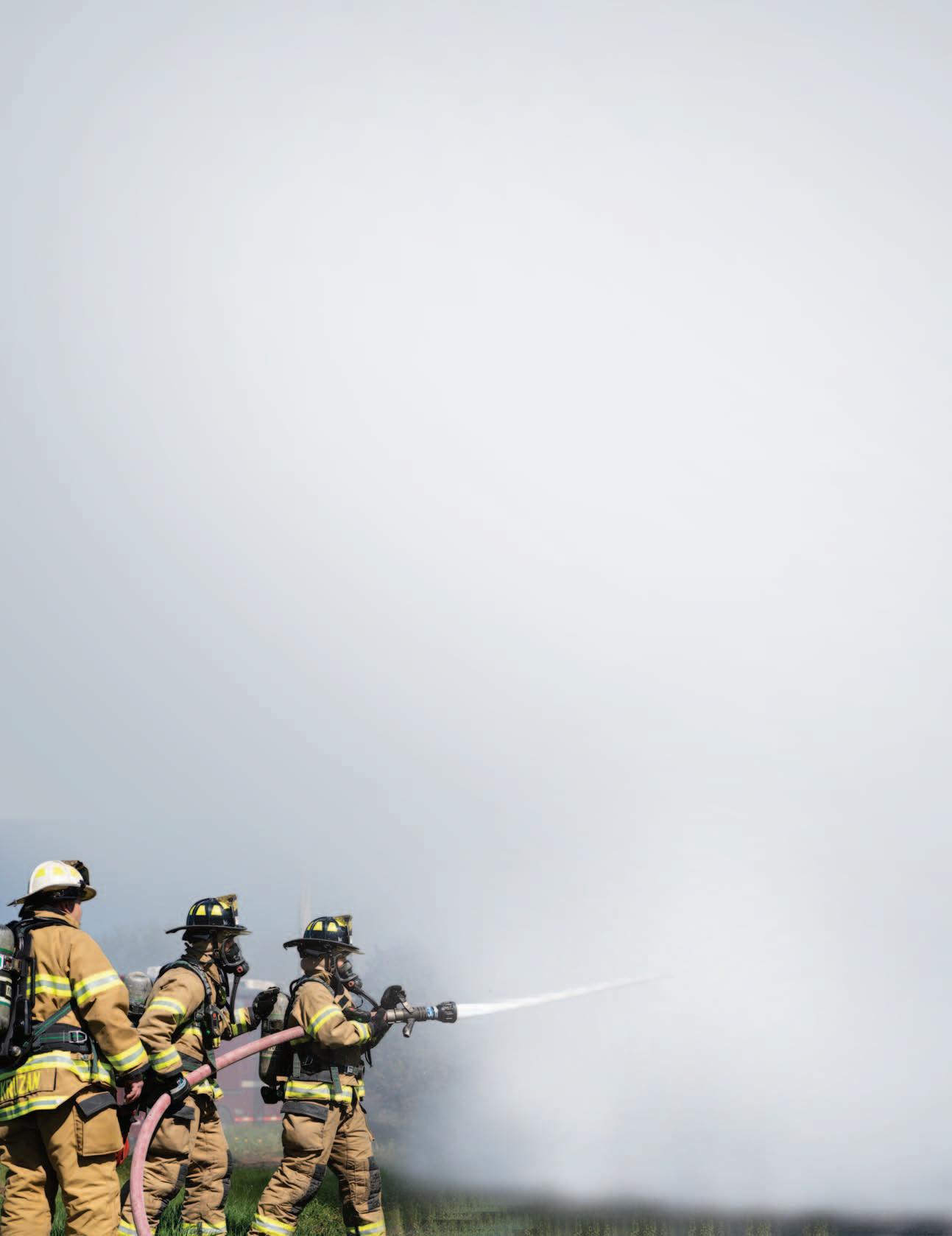
The fire service has always been a proving ground for character. From the moment the tones drop, firefighters step into uncertainty, complexity, and environments that demand calm under pressure. Murphy has already showed up before we were even called and now we have to bring calm to the chaos. Yet what often separates great fire service leaders from average ones isn’t technical skill — it’s their relationship with stress. More specifically, it’s their ability to harness adaptive stress, the type of challenge that strengthens leaders rather than breaks them down.
Adaptive stress refers to the controlled, intentional exposure to difficulty that increases capacity, resilience, and competence. In the fire service, where conditions change rapidly and lives depend on decision?making, developing this capability is essential. The fire service leader who understands adaptive stress doesn’t shy away from challenge; they use it as a training tool, a cultural driver, and a leadership advantage.
1. Fire service leadership demands composure under real pressure.
Fire service leaders need the ability to make rapid, high?stakes decisions. Exposure to controlled stress — realistic training, scenariobased drills, and challenging simulations —
By Michael Tucker
conditions leaders to stay calm when it counts. Even the politically charged environments of the fire chief require the ability to see the big picture and remain calm under intense pressure. While not a life and death situation, a wrong decision can quickly end a promising career.
2. Teams mirror their officer’s emotional tone.
If a company officer is stressed, reactive, or overwhelmed, the crew feels it immediately. Even fire chiefs who fail to control their emotions can cause stress to be felt at all levels of the department. Adaptive stress helps leaders expand their capacity so they can set a stable emotional anchor for their teams.
3. Modern emergency services leadership require cognitive agility.
Today, firefighters handle so much more than fires — EMS calls, hazardous materials incidents, mental health calls, natural disasters, and complex community needs. Fire chiefs are responsible for much more than simply “running” a fire department. Poor leadership decisions can have lasting impacts on the department that will be felt for years to come. Adaptive stress sharpens problem?solving and prevents tunnel vision under pressure.
4. It prevents burnout and improves longevity Chronic, unmanaged stress is a silent threat in the fire service. Adaptive stress, paired with recovery, creates resilience that helps leaders withstand long careers filled with exposure to trauma, loss, and uncertainty. Adaptive stress is about leaning into the “hard things” for a short time and then pulling away for a period to evaluate and recover from the experience.
1. Make training harder than the job. Realistic stress inoculation improves performance. Use complexity, not chaos. The goal is growth, not overwhelm. The same is true of the fire service leader. Find things that take you out of your comfort zone and challenge you for a season.
2. Promote a culture where learning is valued more than perfection.
Crews should feel safe making mistakes in training so they avoid them on the fire ground. Up and coming officers should be given the ability to
take on new responsibilities without the fear of negative consequences when they don’t get it perfect.
3. Model regulated, confident behavior under pressure.
Your crew and department mirror you. If you stay composed, they stay composed. If you lose control, they lose control. They’re watching you!
4. Use progressive leadership overload.
Just like physical fitness, leadership capacity grows incrementally. This is an intentional effort to take those who follow you out of their comfort zones, but not so much that they collapse under the pressure.
5. Protect time for recovery and debriefing.
Adaptive stress only works with rest and reflection. Post?incident evaluations, peer support systems, and honest conversation build psychological safety. While this is absolutely true in emergency operations, it is equally true in the development of future fire officers. Keeping them in a constant state of homeostasis isn’t helpful to their growth and its not helpful to their mental fortitude. Being a leader isn’t easy, but giving people the opportunity to experience increasing responsibilities incrementally has rewards.
The fire service is evolving — calls are more complex, communities are more diverse, and the expectations on our leaders have never been higher. Technical skill alone will not prepare the next generation of fire officers. What sets leaders apart is their ability to confront discomfort, navigate complexity, and guide their teams through uncertainty.
Adaptive stress is not just a leadership tool. It’s a leadership necessity.
“Change. Adapt. Bend so as not to be broken. Let opportunity guide your actions.”
Wayne Gerard Trotman
Michael Tucker has over 40 years of fire rescue and EMS experience, serving seventeen years as Chief of Department and eight years with the Florida State Fire Marshal’s Office as Superintendent of the Florida State Fire College. He is currently fire chief of Flagler County Fire Rescue. He holds an Associate’s Degree in Fire Science, Bachelor’s Degree in Business Management, and a Master’s Degree in Public Administration. He is a graduate of the National Fire Academy’s Executive Fire Officer Program and is designated as a Chief Fire Officer by the Center for Public Safety Excellence.

Years in the Fire Service:
30 Years
Tell us about your fire service journey.
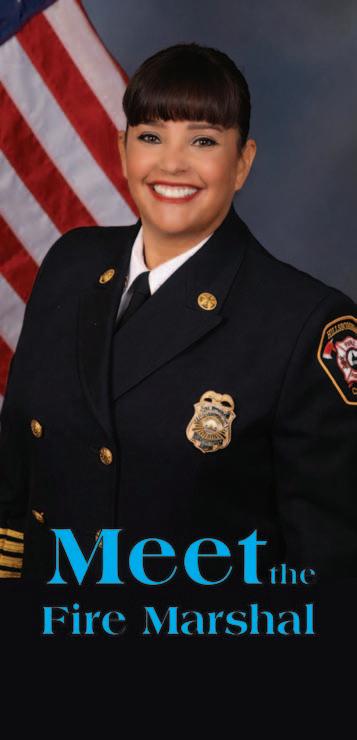
My fire service career began in 1996 as a Fire Inspector with Pasco County Fire Rescue. In 2000, I joined Hillsborough County Fire Rescue as a Fire Inspector and have spent the last 26 years serving the citizens of Hillsborough County. I was promoted to Deputy Fire Marshal in 2011 and Fire Marshal in 2015.
Throughout my career, I have remained committed to the prevention side of the fire service. While emergency responses are often the most visible aspect of what we do, I have always believed that preventing emergencies is one of the most meaningful ways we can
protect our communities. Every inspection completed, every code issue corrected, every educational program delivered, and every fire investigation conducted contributes to a safer community.
What inspired you to pursue fire prevention and community risk reduction?
I have always enjoyed helping people and solving problems. Fire prevention offers a unique opportunity to make a difference before a tragedy occurs. Whether we work with business owners, developers, schools, community groups, or residents, our mission is to identify hazards, educate the public, and reduce risk.
What continues to inspire me is knowing that our work directly impacts the safety and well-being of the people we serve. Prevention may not always make headlines, but it saves lives every day.
What are your primary responsibilities as Fire Marshal?
As Fire Marshal for Hillsborough County Fire Rescue, I oversee the Fire Prevention Division, which includes fire inspections, plan reviews, fire code enforcement, public education, and fire investigations. Our division serves the residents, businesses, and visitors of unincorporated Hillsborough County, one of the largest and fastest-growing counties in Florida, with a population of over one million.
I work closely with county leadership, elected officials, developers, business owners, and community stakeholders to ensure fire and life safety requirements are met while supporting responsible growth. A significant part of my role involves fostering collaboration, maintaining high professional standards, and ensuring our team remains focused on community risk reduction and customer service.
What accomplishments are you most proud of?
I am most proud of the dedicated professionals who make up our Fire Prevention Division. Their commitment to protecting our community through prevention, education, and investigation has produced remarkable results.
In 2025, our Fire Prevention personnel conducted 13,850 inspections, covering more than 256 million square feet of occupancies throughout unincorporated Hillsborough County. Our Fire Investigations Unit completed 638 investigations, helping determine fire causes, identify trends, and support public safety efforts.
Our Public Education Team reached more than 60,000 residents through safety
presentations, community outreach programs, and special events. They also installed 344 smoke alarms in homes throughout our community, providing an additional layer of protection for families who needed it most. These numbers represent much more than statistics. They represent lives protected, risks reduced, and countless opportunities to prevent emergencies before they occur.
You are Hillsborough County Fire Rescue’s first female Fire Marshal. What does that achievement mean to you?
It is both an honor and a responsibility that I do not take lightly. When I entered the fire service, my focus was simply on learning the profession, serving the community, and doing the best job I could every day. Becoming Hillsborough County Fire Rescue’s first female Fire Marshal was not something I specifically set out to accomplish, but it is a milestone that I am proud of.
I hope my career demonstrates that opportunities within the fire ser vice are available to anyone willing to work hard, continue learning, and lead with integrity. The fire service has evolved significantly during my career, and diverse perspectives make our organizations stronger and more effective.
If my journey encourages another woman to pursue a career in fire prevention, investigations, inspections, or fire ser vice leadership, then I consider that an additional accomplishment beyond any title I have held.
What are some of the biggest challenges facing fire marshals today?
One of the greatest challenges is keeping pace with growth and development while maintaining the highest standards of fire and life safety. Communities continue to expand, construction methods evolve, and new technologies emerge. Fire prevention professionals must continuously adapt and stay current with evolving codes, building systems, and industry best practices.
Another challenge is helping the public understand the value of community risk reduction. Fire prevention is often most successful when nothing happens, making it important to communicate the impact of our work in protecting lives and property
Never underestimate the impact you can have through prevention. Fire inspectors, investigators, and fire marshals play a vital role in protecting communities. Develop strong communication skills, remain committed to lifelong learning, and approach every
interaction as an opportunity to educate and serve.
Success in fire prevention is built on professionalism, relationships, and credibility. The ability to build trust while promoting safety is one of the most valuable skills a prevention professional can possess. What leadership philosophy guides your work?
My leadership philosophy is centered on integrity, accountability, collaboration, and service. I believe leaders should set clear expectations, empower their teams, and lead by example.
I also believe that success is built through relationships. Whether working with our personnel, elected officials, business owners, contractors, or community members, strong partnerships allow us to accomplish our mission more effectively. Our ultimate goal is to create safer communities, and that requires teamwork both inside and outside the organization.
What do you enjoy outside of the fire service?
Outside of work, I enjoy spending time with family and friends and staying connected to the community I have served throughout my career. I also enjoy mentoring others and sharing knowledge with the next generation of fire prevention professionals.
The fire service is often recognized for its emergency response capabilities, but prevention is where many tragedies are avoided before they ever occur. Every inspection, every smoke alarm installation, every public education presentation, and every investigation contributes to a safer community.
I am honored to serve alongside the dedicated professionals of Hillsborough County Fire Rescue and our Fire Prevention Division. Through education, enforcement, investigation, and community partnership, we remain committed to reducing risk and protecting the citizens we serve every day.


By Kevin Nazario, Battalion Chief, OCFRD and Ashley Gipson, PIO, Orange County Fire Rescue
The Orange County Fire Rescue Department (OCFRD) is one of the largest and busiest fire rescue agencies in Florida. The department consists of approximately 1,681 personnel who operate from 45 fire stations. OCFRD provides a range of services, including fire suppression, advanced life support transport, technical rescue, hazardous materials response, dive rescue, and other specialty team operations. The department responds to a high annual call volume across a diverse mix of urban and rural communities while also protecting one of the world’s largest tourist destinations. It also serves internationally recognized theme parks and attractions, as well as the nation’s second-largest university and second-largest convention center. Given the complexity and scale of these responsibilities, OCFRD places a strong emphasis on recruitment and training to ensure personnel are prepared to meet the community’s evolving emergency response needs.
In June of 2025, Orange County Fire Rescue held the official ribbon-cutting ceremony for its brand new, state-of-the-art training center The training center represented a $52 million dollar investment in public safety, offering the capacity to train large numbers of personnel simultaneously through realistic, scenario-based exercises, advanced classroom instruction, and specialized skills development.
Another significant training accomplishment is the development and implementation of the Fire Standards Program. The program was created to provide pathways for non-certified members of the Central Florida community to pursue career a firefighter position within Orange
County Fire Rescue Department. Through the offering of a full non-certified training program, the department can identify motivated candidates within our community and provide them with a direct pathway into both the fire service and OCFRD. The program creates opportunities for candidates who may not otherwise have had access to a career in the fire service while allowing Orange County Fire Rescue to recruit and develop highly qualified future firefighters from within the communities we serve.
Through focused marketing campaigns, recruitment initiatives, and partnerships with local high schools and surrounding communities, candidates are introduced to the fire service profession and the culture and expectations of Orange County Fire Rescue early in professional development.
The real impact of the program is that recruits are trained entirely within the Orange County system. Candidates attend the state-certified fire training program at the OCFRD Training Center, where they are instructed and mentored by OCFRD personnel who bring real-world operational experience into the classroom and training environment. Following fire certification, recruits continue through an additional 10week academy specifically designed around Orange County operations. During this phase, they are trained in engine company operations, truck company operations, special service disciplines, and EMS responsibilities while also being expected to maintain a consistent physical fitness standard throughout the entire process.
Beyond certifications and technical skills, the program has helped
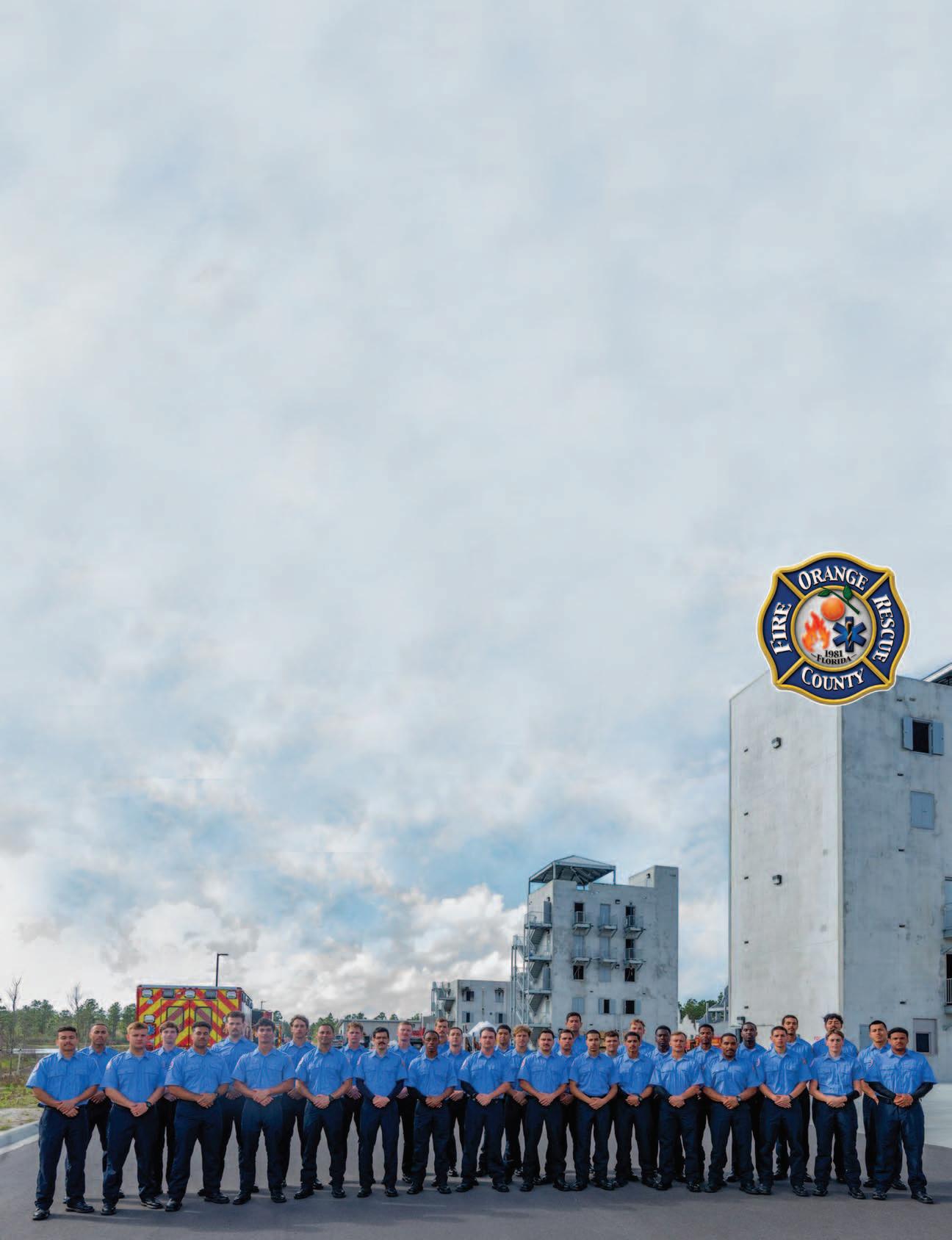
strengthen organizational culture and pride. Recruits are immersed in the expectations, professionalism, and values of the department from day one, creating a stronger connection to both the organization and the community they serve. The ability to recruit, develop, and mentor highly qualified candidates internally has allowed Orange County Fire Rescue to build consistency in training, maintain high operational standards, and invest in the long-term future of the organization. This program is helping to shape the next generation of firefighters while also contributing to the continued evolution and professionalism of the fire service.
The department is currently on track to graduate its third state-certified class and has maintained a high average pass rate.
Orange County Fire Rescue Department strives to leave a legacy of producing highly trained, adaptable, and mission-focused firefighters who are prepared to ser ve their communities with professionalism and integrity
By Lindsey Darby, Public Information Officer, Walton County Sheriff’s Office
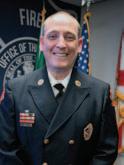
Leadership transitions shape the course of any fire rescue organization, and for Walton County Fire Rescue, that direction now continues under Fire Chief Jonathon Davis. His path reflects steady progression, operational experience, and a clear understanding of how the department has responded to growth – and how it must continue to adapt.
Chief Davis entered public safety in 1999, later becoming a paramedic and joining Walton County Fire Rescue in 2004. Over the last two decades, he has risen through the ranks as lieutenant, battalion chief, training chief, and assistant chief, each role broadening his influence and perspective.
In his most recent role as assistant chief, Davis oversaw the Fire Marshal’s division, logistics, training, and emergency medical services (EMS) operations. His leadership helped modernize programs, elevate operational expectations, and reinforce a
culture focused on preparedness and professional excellence.
Under his leadership, Walton County Fire Rescue became the first fire rescue agency in the Florida Panhandle to achieve EMS Accreditation through the Commission on Accreditation of Ambulance Services (CAAS). In June 2026, the department reached another milestone by becoming only the second agency in the state of Florida to earn Perinatal Readiness Recognition, further reflecting a commitment to high-quality patient care across every level of service.
He also played a critical role in expanding the recruit academy and establishing Walton County Fire Rescue’s first officer development program. These initiatives strengthened internal training, promoted consistency across shifts and stations, and created clear pathways for personnel preparing for super visory and command roles.
Beyond daily operations, Chief Davis has participated in statewide emergency response efforts, including deployments after Hurricane Katrina and Hurricane Ian, where he served as
strike team leader. His work as one of the first tactical medics for the Walton County Sheriff’s Office SWAT team further broadened his operational experience and strengthened coordination during high-risk incidents.
A graduate of the Florida Fire Chiefs’ Association Emergency Services Leadership Institute (ESLI), Davis holds advanced certifications including Fire Officer II, Fire Service Instructor, Apparatus Operator, Aerial Operator, and Fire Inspector.
As he steps into the role of fire chief, Davis brings a leadership style grounded in consistency, integrity, and a clear commitment to strengthening not only the department for the long term. His focus remains on supporting personnel, refining operational systems, and ensuring that Walton County Fire Rescue continues to meet the needs of a rapidly growing community
With Chief Davis guiding the department, Walton County Fire Rescue enters its next era with a clear sense of direction and a leader equipped to navigate the challenges and opportunities ahead.
By Doreen Overstreet, Public Safety Information & Education Officer, Seminole County Fire Department
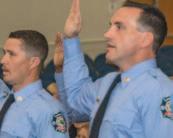
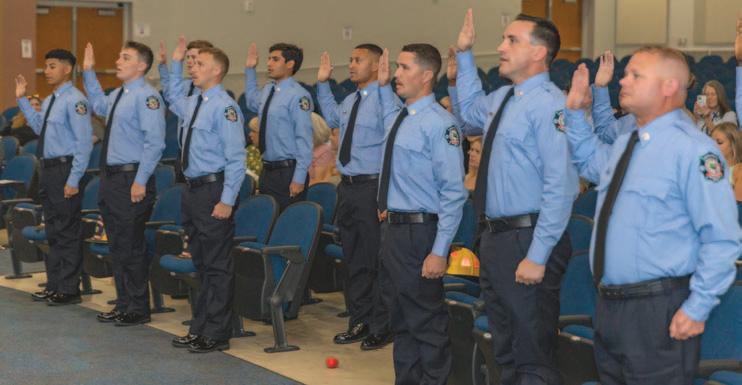
Recently the Seminole County Fire Department (SCFD) celebrated the addition of 12 new recruits as part of Class 2026-01. The ceremony was held at Millennium Middle School in Sanford. At least half of the new graduates grew up in or currently live in Seminole County and are now fully prepared to serve their community as probationary firefighters with the Department.
Many of the recruits completed their Fire Standards training through Seminole State College before joining SCFD. Following their certification, each recruit successfully completed the Department’s eight-week orientation and training program, designed to prepare new firefighters for the demands of emergency response and public safety service. The graduates have now been assigned to stations throughout Seminole County’s network of 21 fire stations and will serve as probationary firefighters.
During the ceremony, Fire Chief Matt Kinley delivered the keynote address, offering words of encouragement and advice to the graduates as they embark on their firefighting careers.
“The friendships and brotherhood built here become part of what carries you through those difficult calls, long nights, and demanding years,” said Fire Chief Kinley. “There is a bond formed by spending 24, 48, or sometimes more hours together in a fire station—responding to emergencies, training, eating, laughing, and carrying one another through hard moments. That trust is what
allows us to run into burning buildings, deliver lifesaving medical care, and know someone has our back.”
The addition of Recruit Class 2026-01 strengthens SCFD’s commitment to providing exceptional fire rescue, emergency medical, and public safety services to the residents and visitors of Seminole County.
By Matthew C. Trent, Assistant Chief, North Collier Fire Control and Rescue District
Leadership in training is more important now than ever before. The fire service is changing quickly. Technology is advancing, community expectations are increasing, and firefighters are being asked to learn more information in less time. At the same time, many agencies are seeing changes in experience levels, staffing, and operational demands. Because of this, training cannot be treated as another item on a calendar. It must be part of who we are.
I read a quote recently that said “a compass was invented before the clock - so direction is more important than time.” That message fits the fire service well. We often focus on how many hours we train, how many classes we complete, or how
fast we can meet a requirement. Those things matter, but direction matters more. Training must have purpose. It must point our people toward readiness, safety, confidence, and service.
The company officer plays the most important role in that direction. Chiefs can set the vision, and training divisions can build the programs, but the company officer brings training to life at the station level. They are the direct link between the organization’s expectations and the crew’s daily performance.
Firefighters watch their company officers every day. They watch how they train, how they speak, how they handle stress, how they correct mistakes, and how they support the crew. That daily example shapes culture. It
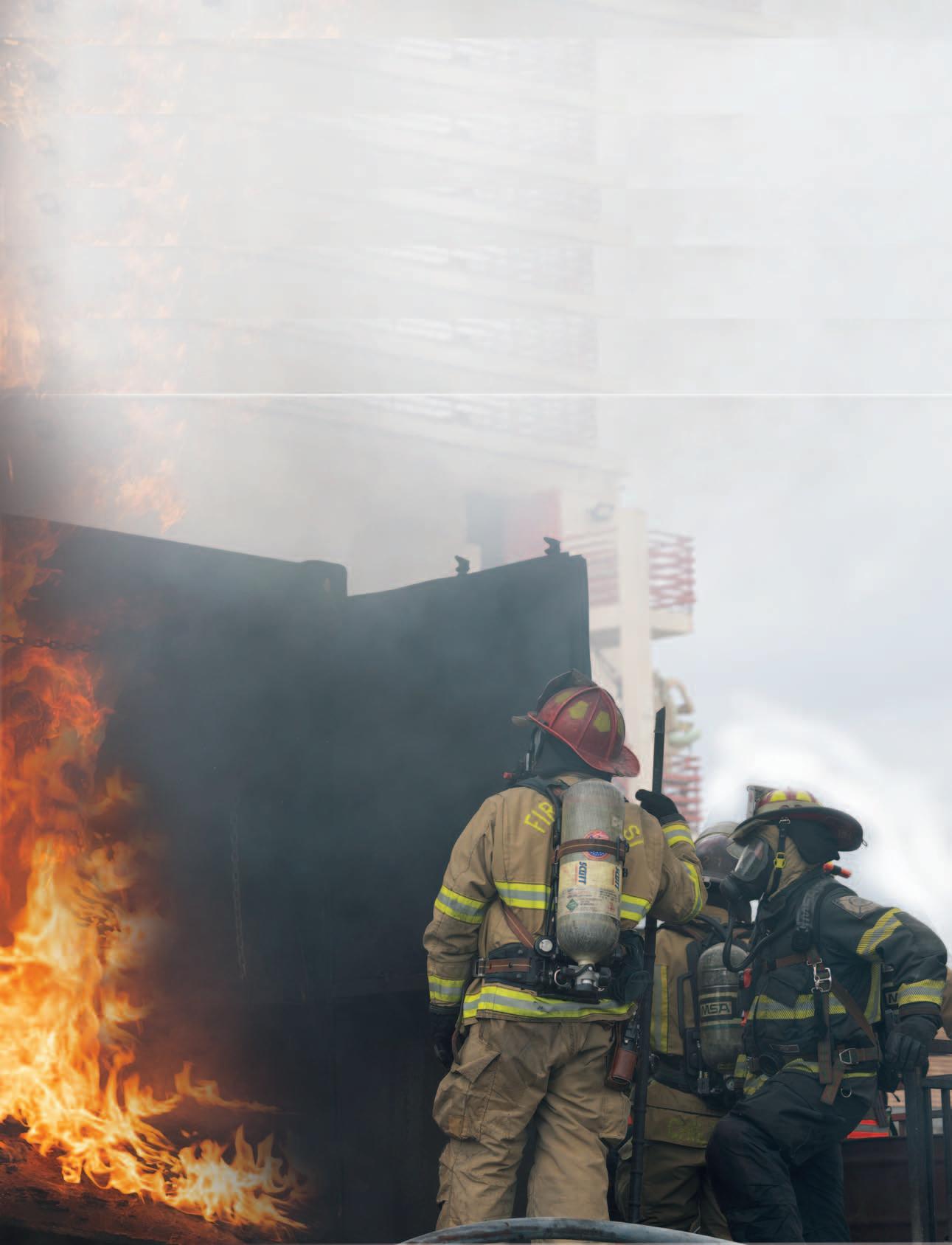
builds ownership. It affects morale. It teaches firefighters what the organization truly values.
Strong company officers understand that training is not punishment or busy work. Training is preparation. It protects our crews, improves our service, and honors the trust our communities place in us. When training has meaning, firefighters are more likely to take ownership of their own development.
Today’s fire service needs company officers who can mentor, coach, evaluate, and lead with purpose. They do not need to have every answer, but they must be willing to set the standard and keep the crew moving in the right direction.
Time will always matter in our profession. Response times, training hours, and deadlines are part of what we do. But without direction, time alone will not build strong firefighters or healthy organizations. The future of the fire service will be shaped by leaders who understand that the compass must come before the clock.
By Lisa McDonald, Communications Manager, City of Oviedo
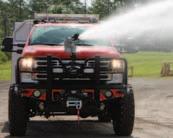
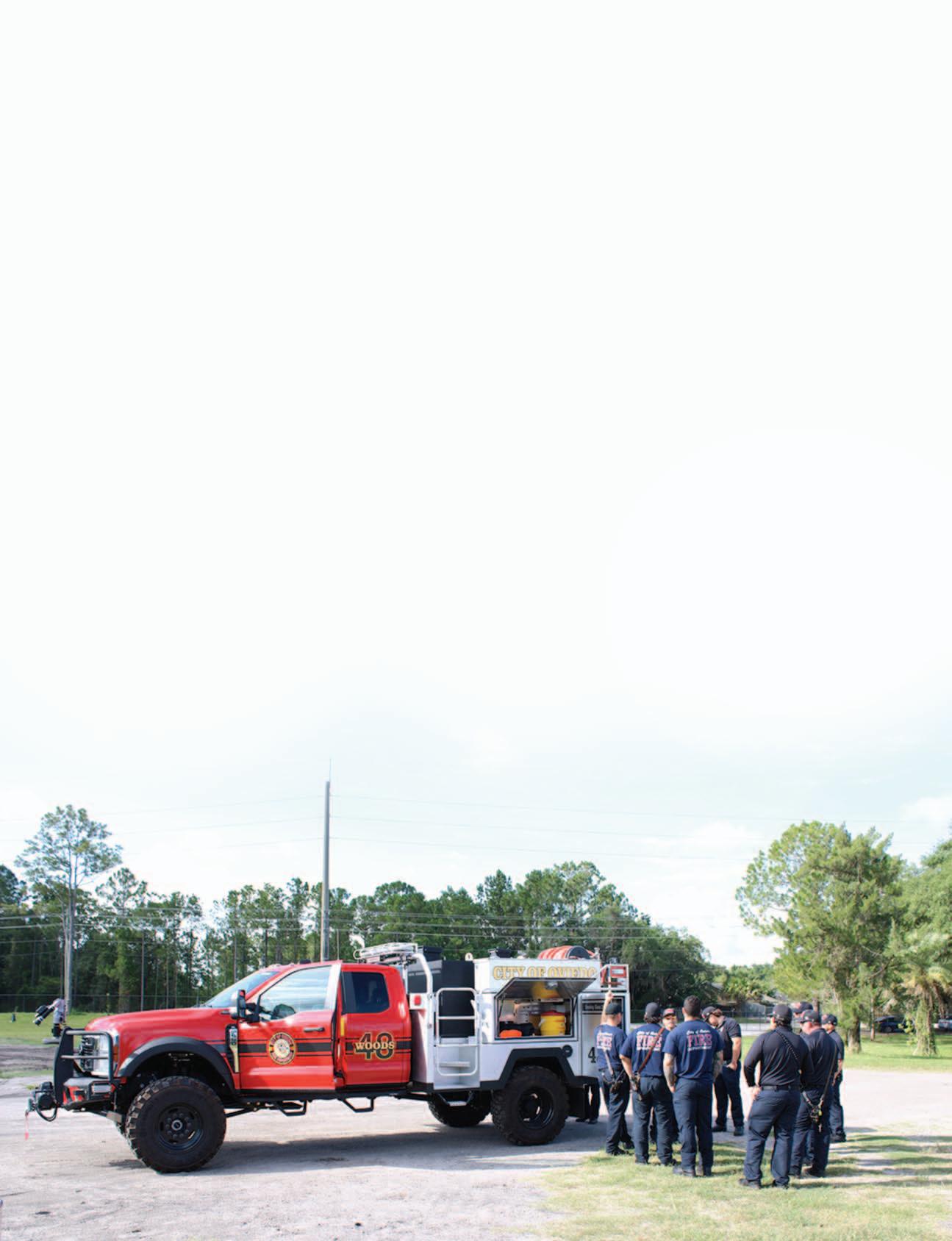
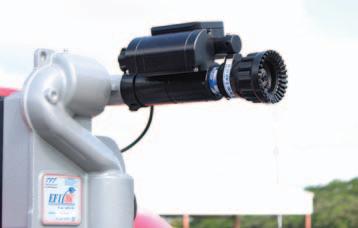
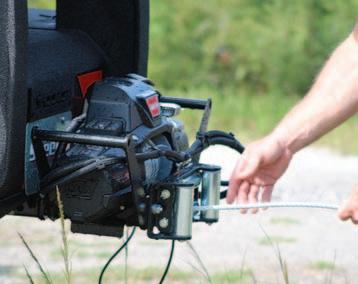
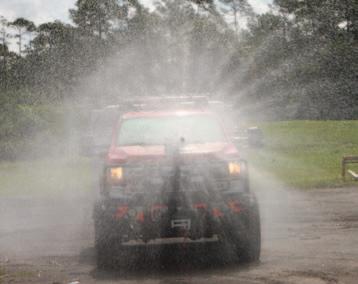
Woods 48, the new Wildland Brush Fire and Rescue Truck went into service on July 4, just in time for the holiday, for the Oviedo Fire Department. The truck is a multifunctional truck for fighting brush fires and performing high-water rescues.
On June 26, 2023, the department was notified of the award for $275,000 for the purchase of the vehicle. In August 2025, the Oviedo City Council was presented with that check by Rep. David Smith from the State of Florida to fund the purchase the apparatus from Skeeter Emergency Vehicles. Another $275,000 was awarded to the department for the purchase of necessary equipment with a total reward of $550,000 for the project.
“We are pleased the vehicle is in service and ready for use,” said Oviedo Fire Chief Michael Woodward. “Our firefighters are confident and ready to respond to brush fire or flooding emergencies.”
The specialized vehicle will serve a critical role in protecting Oviedo’s residents and natural areas. With portions of the community bordered by brush and woodlands, the risk of lightning strikes sparking wildfires is always present. The
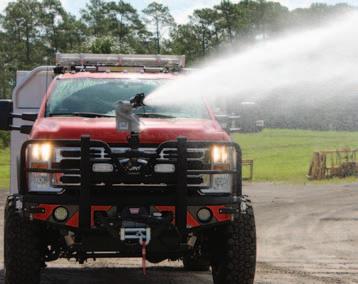
brush truck will give the Fire Department the ability to respond quickly and effectively to these types of emergencies.
“This truck is valuable to our department because of the many functions it can perform,” said Chief Woodward. “Our department can respond much faster to brush fires and flooding rescues, reducing risks to our residents and their property.”
Woods 48 can be converted into a highwater rescue apparatus during the wet season. This flexibility is especially significant for Oviedo, which experienced historic flooding during Hurricane Ian in 2022. The truck’s
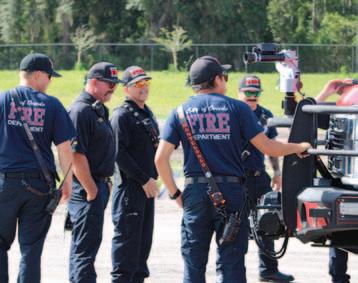
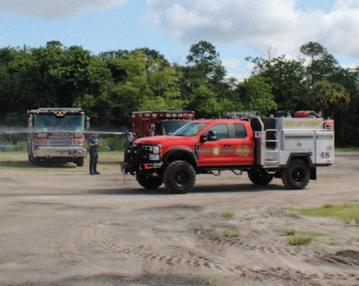
capabilities will allow firefighters to safely navigate flooded neighborhoods and assist in evacuating residents when conditions become dangerous.
By Samuel Schulze,Multimedia Technician, Marion County Fire Rescue
Marion County Fire Rescue has taken another significant step forward in advancing pre-hospital critical care by equipping every rescue unit in the department with the HamiltonT1 ventilator, a state-of-theart transport ventilator designed to deliver hospital-quality respiratory care in the prehospital environment. Along with this department-wide deployment, every field provider has completed comprehensive handson training to ensure they are fully prepared to utilize the new equipment when patients need it most.
The addition of the Hamilton T1 ventilators represents Marion County Fire Rescue’s continued commitment to investing in technology, education, and equipment that improves patient outcomes while supporting the department’s mission of delivering exceptional emergency medical services.
Raising the Standard of pre-hospital Care
Mechanical ventilation is one of the most critical interventions provided by emergency medical personnel. Patients experiencing severe respiratory distress, traumatic injuries, cardiac arrest, neurological emergencies, or other lifethreatening conditions often require precise ventilatory support during transport to definitive care.
The Hamilton T1 allows Marion County Fire Rescue crews to provide advanced respiratory management that mirrors the capabilities found in emergency departments and intensive care units.
Unlike traditional transport ventilators, the Hamilton T1 offers:
• Advanced ventilation modes for a wide variety of patient conditions.
• Intelligent monitoring and real-time feedback.
• Lung-protective ventilation strategies.
• Adult, pediatric, and infant patient capabilities.
• Portable design built specifically for prehospital and critical care transport.
By placing these ventilators on every rescue unit, Marion County Fire Rescue ensures that advanced respiratory care is readily available throughout the county whenever it is needed.
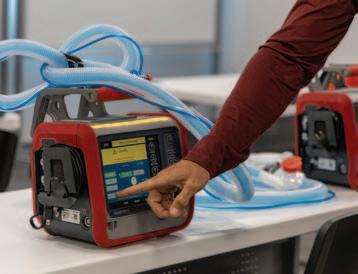
Introducing new technology is only one part of improving patient care. Ensuring personnel are confident and proficient in using that technology is equally important.
To prepare for the rollout, Marion County
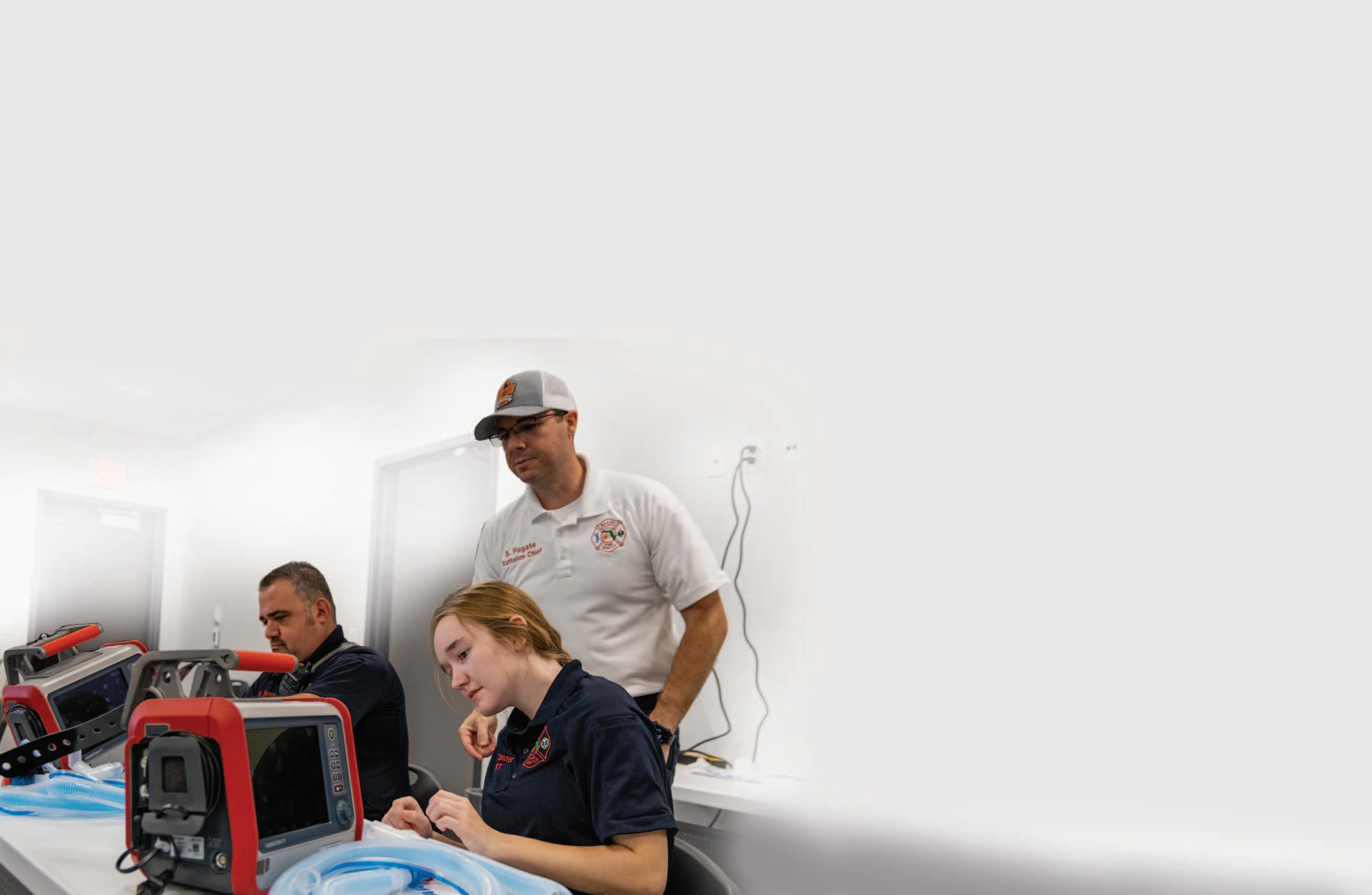
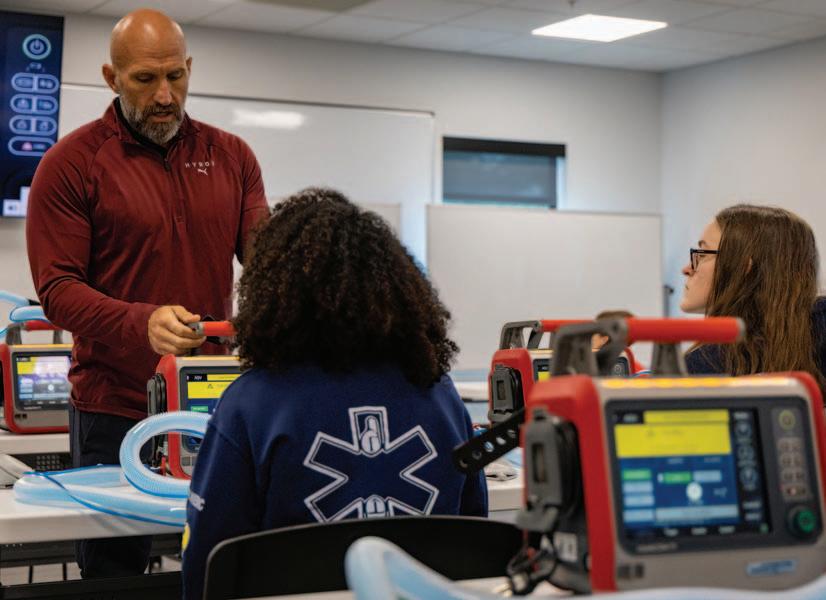
Fire Rescue conducted department-wide training for all field personnel. The training combined classroom instruction with hands-on practical scenarios designed to simulate realworld emergencies.
Crews learned:
• Ventilator setup and operation.
• Appropriate ventilation modes for various patient presentations.
• Airway management integration.
• Troubleshooting alarms and system issues.
• Patient monitoring and ventilator adjustments during transport.
• Best practices for adult and pediatric patients.
By training every operational member, the department has created a consistent standard of care across all shifts and response areas.
As emergency medicine continues to evolve, Marion County Fire Rescue remains committed to adopting evidence-based practices and modern medical technology that benefit both patients and providers. The department’s investment in Hamilton
T1 ventilators reflects a broader commitment to continuously improving emergency medical services through innovation, education, and professional development. Ever y emergency presents unique challenges, and having the right equipment, paired with highly trained personnel—helps
ensure patients receive the highest level of care from the moment crews arrive until they are transferred to hospital staff.
Whether responding to respiratory emergencies, traumatic injuries, cardiac events, or critical medical transports, Marion County Fire Rescue personnel are now equipped with advanced ventilatory technology that enhances their ability to deliver lifesaving care.
The department-wide deployment of Hamilton T1 ventilators, combined with comprehensive provider training, marks another milestone in Marion County Fire Rescue’s ongoing pursuit of clinical excellence. By investing in both cutting-edge equipment and the education of its personnel, the department continues to strengthen its ability to serve the residents and visitors of Marion County with the highest standard of emergency medical care.
As the demands of pre-hospital medicine continue to grow, Marion County Fire Rescue remains dedicated to staying at the forefront of emergency medical services—providing advanced care, improving patient outcomes, and ensuring every crew is prepared for the challenges of tomorrow.

By Casey Wright, Community Information Specialist, City of DeLand
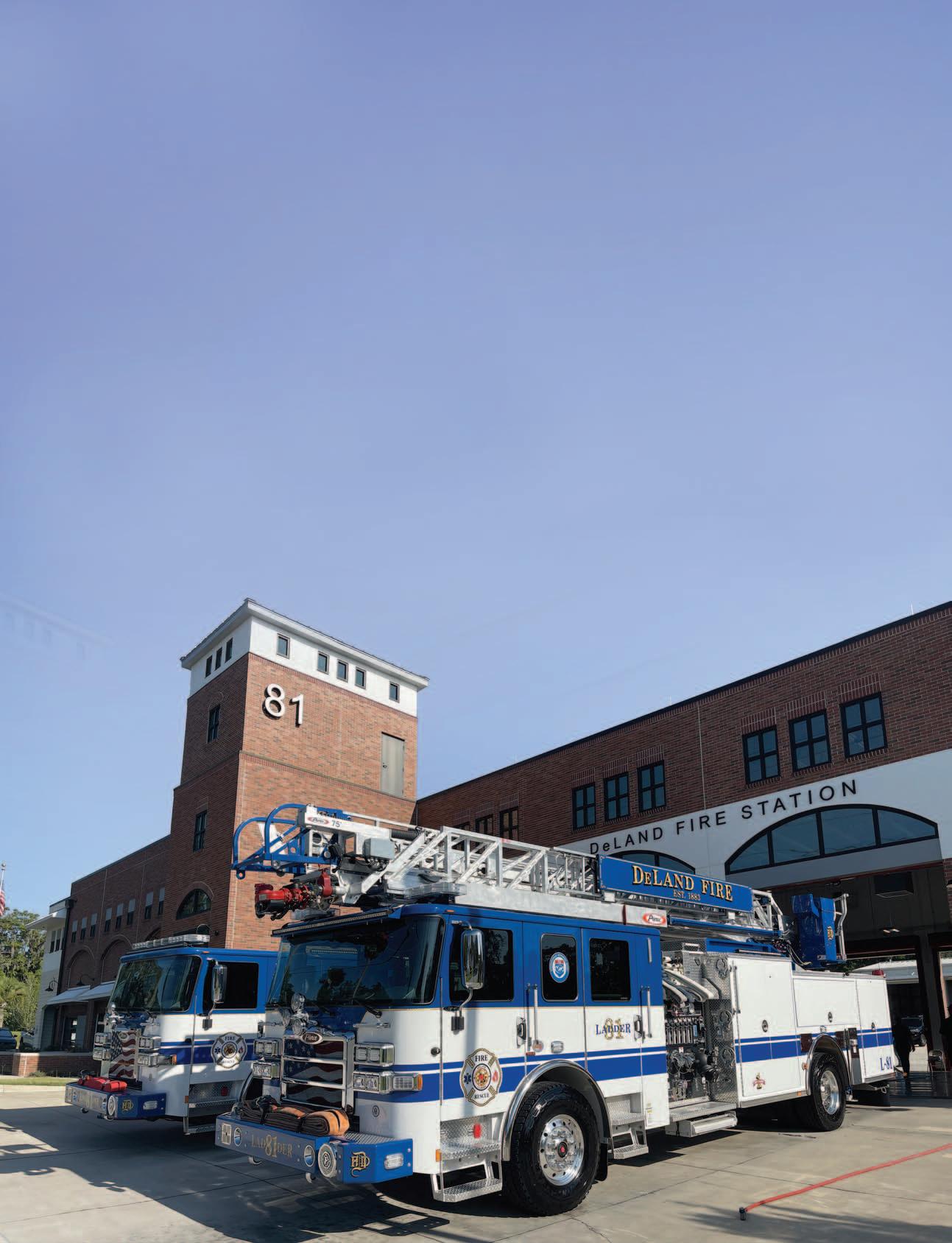
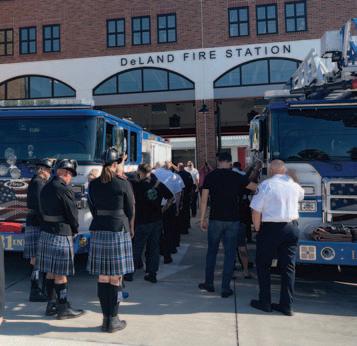
On June 11, the City of DeLand came together at Fire Station 81 to officially welcome two new front-line apparatuses into service, with a traditional Push-In Ceremony, celebrating the arrival of Engine 81 and Ladder 81, all while honoring one of the fire service’s oldest customs.
The tradition dates back to the era of horse-drawn fire apparatus. After returning from an emergency, firefighters would unhitch the horses and manually push the apparatus back into the firehouse, preparing it for the next response. Community members often joined firefighters in this effort, symbolizing the partnership between the fire department and the citizens it served.
“Today, we continue that tradition to honor those firefighters who came before us and to remind ourselves that while technology changes, our mission remains the same,” said DeLand Fire Chief Todd Allen.
Fire Station 81 serves the heart of the community, protecting DeLand’s historic downtown, Stetson University, established neighborhoods, businesses, churches, and many of the city’s largest community events.
The station remains the busiest fire
station in Volusia County, responding to more than 6,000 calls for service during 2025.
The addition of Engine 81 and Ladder 81 reflects a continued investment in firefighter safety, operational readiness, and the community’s expectation that highly trained professionals will arrive with the right tools when they are needed the most.
That investment has helped position the DeLand Fire Department among only 124 fire departments nationwide, to simultaneously hold an ISO Class 1 Public Protection Classification and international accreditation through the Center for Public Safety Excellence (CPSE).
The ceremony also recognized many individuals who helped bring the project to life. Deputy Chief Justin Desy, Lieutenant Nate Carn, Lieutenant Chris Murray, and Engineer Brandon Ferri all ser ved on the apparatus committee, dedicating countless hours to developing specifications, reviewing production drawings, and ensuring both apparatuses were designed to meet the operational needs of DeLand firefighters.
The department also recognized apparatus representative Robbie Wallace of Ten-8 Fire Equipment for his coordination and support throughout the project.
As active and retired
firefighters gathered around the new apparatus to participate in the ceremonial push into Fire Station 81, the moment served as a visible reminder that while today’s fire service is equipped with sophisticated technology, its greatest strength continues to be the people who serve and the traditions that unite generations of firefighters. Both Engine 81 and Ladder 81 are now on the road to help serve and protect City of DeLand residents for years to come.
Colleen Campbell, Budget Officer, City of Palm Bay Fire Rescue
Tenure:
Budget officer for the past 2.5 years,training specialist, training supervisor, financial analyst, and financial/program control analyst.
Describe the structure of the administrative services of your organization.
Palm Bay Fire Rescue’s administrative services are structured to support emergency readiness. Leadership begins with the Fire Chief, followed by the Deputy Chief and Assistant Chiefs, who oversee vital, non-operational functions such as personnel management, budget development, logistical support, and emergency management.
The key pillars of the department’s administrative and support services:
• Fire Prevention & Code Enforcement: Focuses on community risk reduction, safety inspections, and building plan reviews.
• Training & Safety: Manages ongoing firefighter certifications, emergency medical services (EMS) coordination, and professional development.
• Logistics: Oversees the purchasing and maintenance of fire apparatus, equipment, and station facilities.
• Emergency Management: Coordinates disaster preparedness, mitigation strategies, and public education
Briefly describe your job duties.
Responsible for all aspects of the department’s budget administration, procurement, and financial management, including development and management of the zero-based budget, budget analysis, forecasting, capital planning, expenditure reconciliation, payroll verification, and compliance with Finance deadlines. Oversees purchasing processes by developing standardized procedures, preparing and reviewing purchase requests and requisitions, managing contracts and procurement documentation, maintaining tracking systems, processing invoices, reconciling P-Card transactions, monitoring expenditures, and ensuring strong fiscal controls. Develops training materials and standardized procedures to improve efficiency and maintains Notary Public certification to provide notary services as required.
The most important part of your job:
Following all policy while ensuring the budget is in place to provide all the necessary functions needed to maintain the safety of our crew and protection of the citizens of Palm Bay. Making sure we have the necessary items in place for our crew to serve the citizens of Palm Bay while providing the tools to keep the crew safe is my focus while analyzing the budget daily
What are your biggest challenges?
The primary operational constraint facing the Fire Service is fiscal limitation. As all municipal
departments require adequate funding to maintain baseline operations, absorbing supply chain inflation presents a significant challenge. Securing the necessary capital to offset these rising costs must be balanced carefully to avoid compromising the essential budgetary needs of adjacent city departments.
What do you enjoy most about your job?
I thrive in a fast-paced environment where you must think quickly and adapt. For me, the most rewarding part is balancing that quick decision-making with helping the team stay on track and making sure our weekly tasks get crossed off.


By Jenn Samsel, Independent Journalist
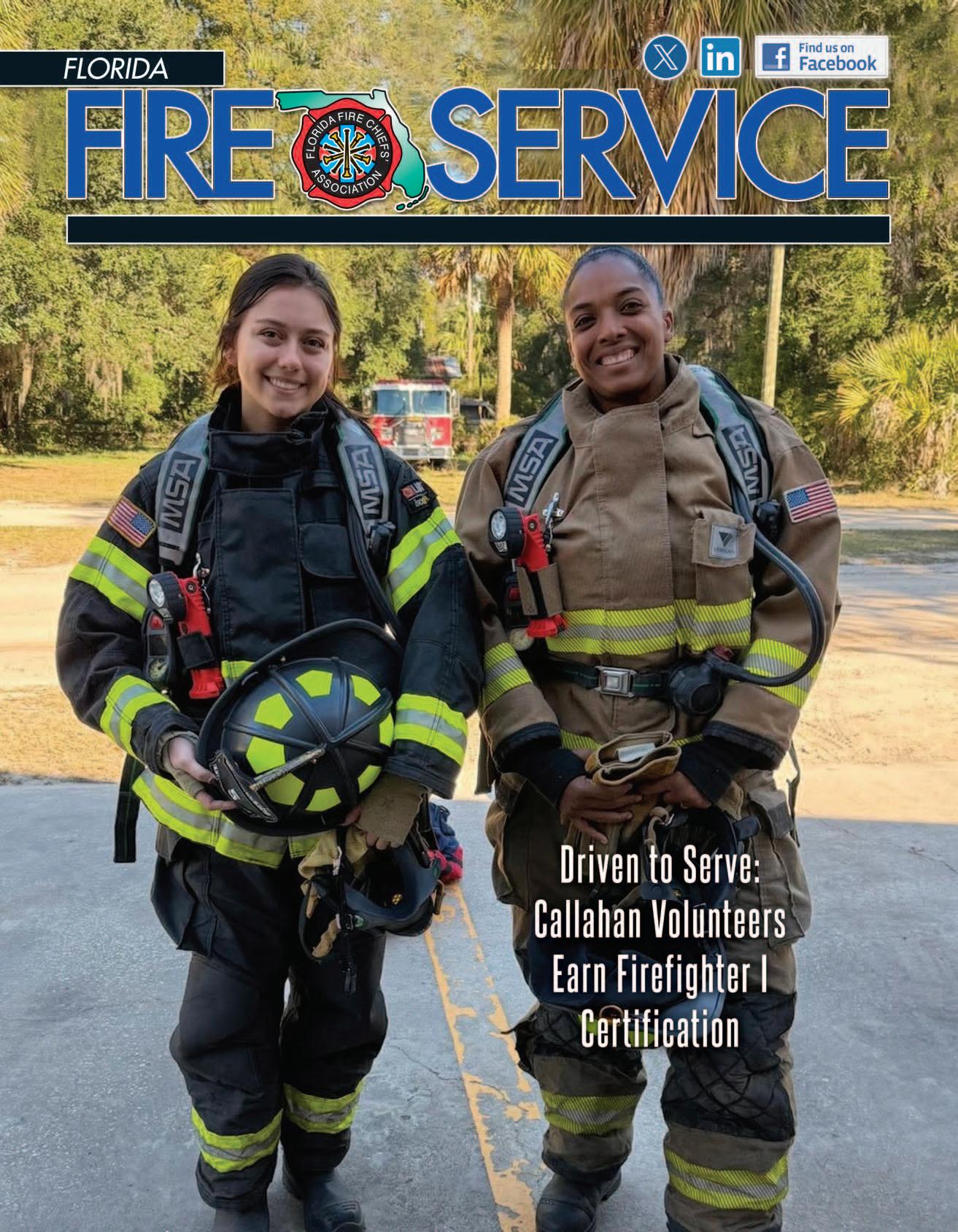
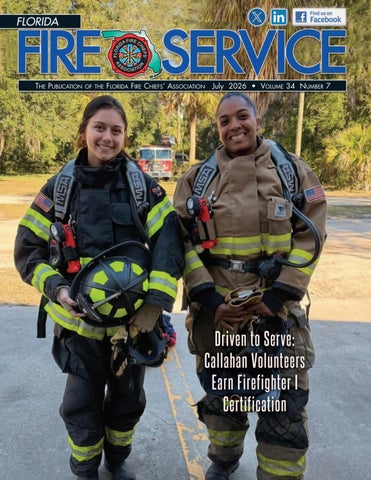
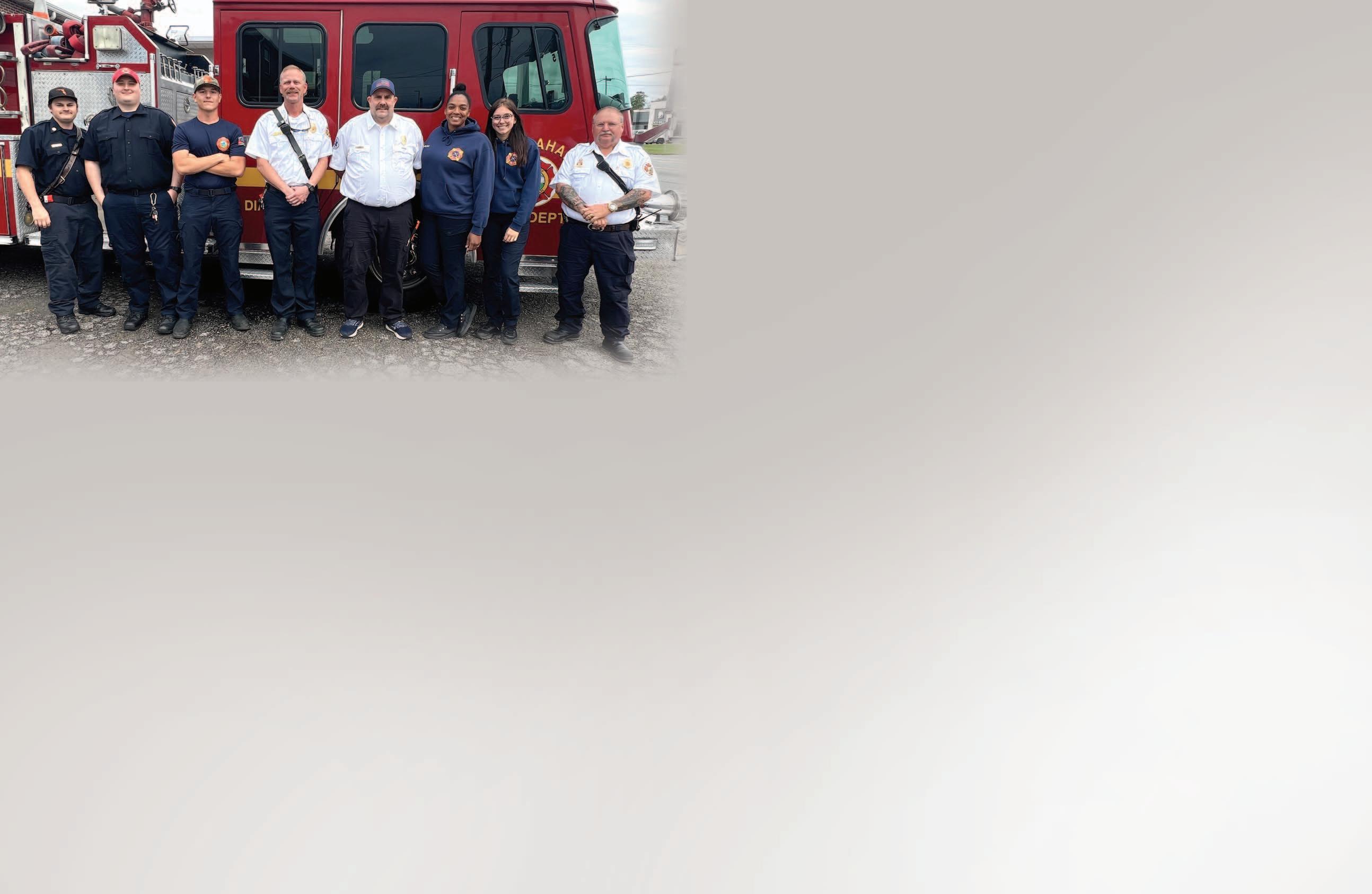
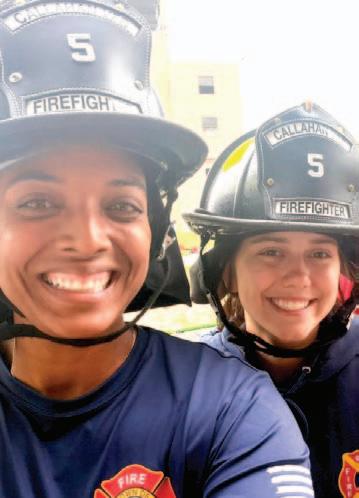
The Callahan Fire Department collaborated with Clay County Fire Rescue to assist their volunteer firefighters in completing Firefighter I training. Over two days, several members, including two female firefighters, received classroom instruction and training in Clay County, followed by live-fire exercises at the Florida State Fire College in Ocala. This rigorous training helped them pursue their Firefighter I certification.
For many volunteer firefighters, the sound of a pager or emergency alert can interrupt dinner, family gatherings, work, or even sleep. Despite not receiving a paycheck for their service, they remain committed to responding whenever their community needs assistance.
This training opportunity was made possible through a partnership with the Florida State Fire College, retired Green Cove Springs Fire Chief RichardKnoff, and the personnel from Clay County Fire Rescue, who provided facilities and expertise.
Assistant Chief Wade Taylor noted that this experience offered invaluable hands-on training, helping prepare firefighters for realworld emergencies.
"This hands-on training event was essential for fulfilling the requirements for sign-off in the Firefighter I class, which took place at the Ocala Firefighter Academy. The two days were productive and focused on enhancing crucial fireground skills while reinforcing teamwork."
"RichardKnoff was able to assist us in getting our sign-offs through the program," Assistant Chief Taylor said. "His connections
and background made it possible for us to train with Clay County Fire Rescue and gain the live-fire experience we needed."
Throughout the program, firefighters trained at Clay County Fire Rescue Stations 20 and 22, where they learned essential skills such as ventilation, search and rescue, ladder operations, confined-space navigation, hose deployment, door breaching, and air management.
The training concluded at the Florida State Fire College, where firefighters participated in multiple live burn exercises and hands-on training.
"We did interior fires, above-grade and below-grade scenarios, vehicle fires, rope operations, ladders, and fire extinguisher training," Assistant Chief Taylor said. "There were multiple burns each day. It was extensive training with outstanding instructors from departments across Florida."
For firefighter Mackenzie Taylor, earning her Firefighter I certification has been a goal, as it allows her to continue her family's legacy in the firefighting profession.
Her father, Assistant Fire Chief for the Callahan Volunteer Fire Department, and her grandfather previously worked as firefighters for the Jacksonville Fire Rescue Department. Throughout her journey, she has reinforced her passion for the fire service and recognized the vital role of mentorship. Taylor believes that serving her community is a natural calling for her. "It's always been in my family."
"We had a lot of people who were willing to help. RichardKnoff was very willing to take us in, help us get our sign-offs, be patient with us, train us to be better firefighters, and show us what we needed to do for our fire one checkoffs and burns. It was really good. All the guys there were very interactive and very helpful, willing to help us learn, and ver y encouraging, telling us that we can do it and that there's nothing to worry about. If you made a mistake, they encouraged you to tr y again and keep learning," she said.
Firefighter Taylor also hopes to inspire more women to pursue careers in firefighting.
"Don't be afraid because you're the only girl," she said. "Don't let anyone tell you you're too small or can't do it. Just push through and keep going."
Destiny Westberry is a certified firefighter and EMT. She developed a passion for firefighting. Her inspiration came from watching firefighters help people during emergencies.
"I would see them working on the side of the road helping people, and it made me want to do the same thing," Westberry said.
After completing EMT school, she found a passion for patient care and emergency medicine.
"The medical side is really my specialty and what I love most," she said.
Westbury said one of the biggest lessons she learned throughout the training process was remaining open-minded and willing to learn.
"It was great, honestly, like Mackenzie said, being a female coming into the service, you have so many reservations because it's maledominated, and all the guys they're willing to help, RichardKnoff and all the guys at 22, and being able to get us to where we need to be successful with Ocala was huge," said Westberry.
"Always ask questions," she said. "No matter how much experience you have, there's always another way to do something and always something new to learn, getting per fect or getting better as simple as filling an air bottle. Be open-minded and never, like, don't ever think that you know how to do something if you don't know how."
The firefighters highlighted that the program offered more than just technical
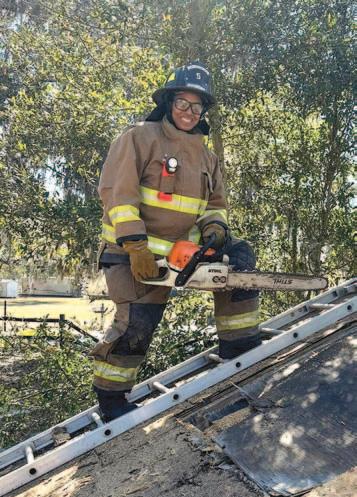
skills. Confined-space drills, live-fire exercises, and search-and-rescue scenarios challenged them both physically and mentally, building confidence and trust within the team.
"We learned a lot about ourselves," Assistant Chief Taylor said. "The maze training and confined-space exercises showed us what we could handle and helped prepare us for real situations."
Chief Taylor praised Clay County's facilities, particularly the training center's specialized equipment and realistic scenarios.
"They're extremely well equipped and very knowledgeable," he said. "Everything from ventilation training to air bottle operations helped us improve."
With Firefighter I certification nearing completion, many of the firefighters are already planning their next steps.
Several members intend to pursue Firefighter II certification, while others are interested in advanced training opportunities, including hazardous materials response, pumping operations, technical rescue, and additional emergency medical certifications.
"I'm grateful that I have a group of men and women at this station that's come a long way," said Fire Chief Chris Wood. "I've been here for 17 years, and this is the best group of people we've had. They're all willing to learn. Some of them, like McKenzie and Destiny, we have new firefighters that are coming aboard now, and they've taken their time to teach, and if they don't have the answer, they ask one of us."
The department also hopes to attract more volunteers, particularly younger community members looking to explore careers in emergency services.
For Taylor, the future is about continued growth.
"If you're not willing to learn and grow, there's really no point in being in the fire service," he said. "Nobody knows everything. You learn something new every day."
"This is a great stepping stone," Taylor said. "You get hands-on experience, learn what the job is really like, and find out if it's something you're passionate about."
For these volunteers, the reward isn't measured in paychecks.
It's measured in lives helped, homes protected, and the satisfaction that comes from answering the call when someone is experiencing one of the worst moments of their life.
"As volunteer firefighters, we're doing the same job," Westbury said. "Some people get paid for it, and some don't. We do it because
we love it."
"Don't be afraid to do it," she added. "If you have a drive or a desire to be a firefighter or to help somebody, or if you have spare time and want to be around like-minded people, we are an open door. We're willing to take anybody and show them the ropes, and if it's something they'd like to do and want to grow within it, we're here.”
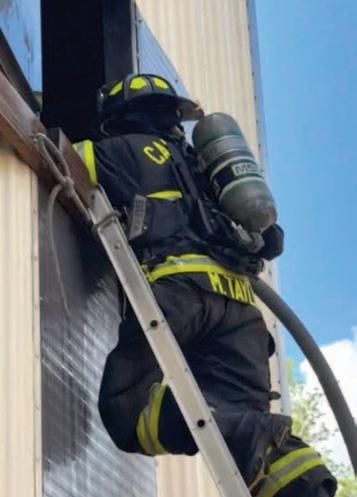

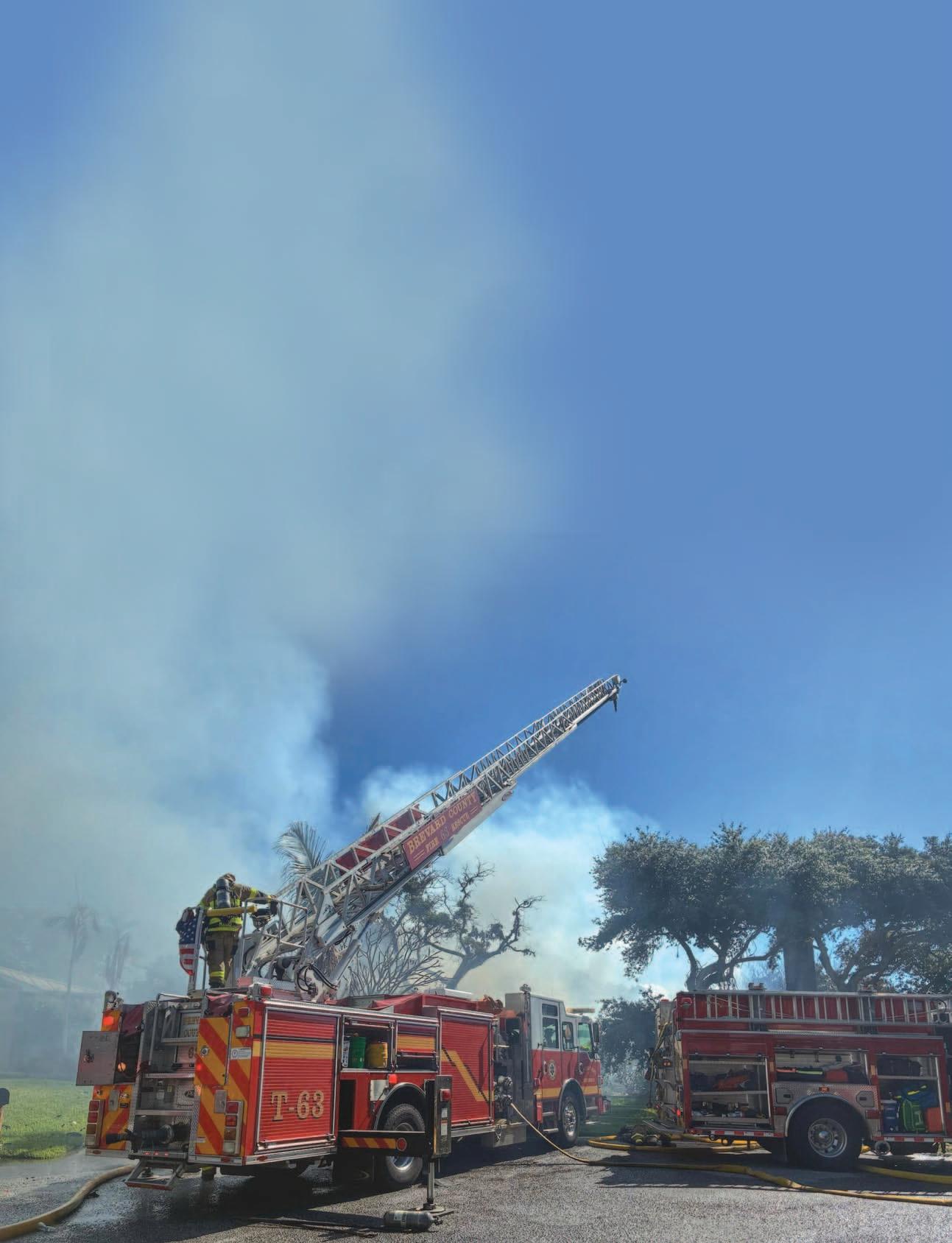
By Lisa Smith, Brevard County Fire Rescue Operations, Brevard County Fire Rescue
On June 5, 2026, Brevard County Fire Rescue (BCFR) District 60 units along with additional BCFR districts units and local City Fire Departments were dispatched to a 1st alarm residential fire on Indian Mound Drive in Melbourne Beach. Upon arrival E65 confirmed heavy fire showing from the Alpha side of the 1st floor with extension to the 2nd floor and to the A/B area of the garage which housed a fully involved vehicle. E65 Alpha made contact with the homeowner confirming everyone had been evacuated but was informed pets may have still been inside the home. Due to the home being in a cul-de-sac this limited space for additional units arriving to provide assistance. FPL arrive on scene and secured the utilities, and additional crews were brought in to overhaul the fire until BCFR Inspectors and State Fire Marshal arrived on scene to investigate the cause of the fire. A total of 20 units were on scene to assist, and it took approximately seven hours until fire was eventually knocked down and closed out.
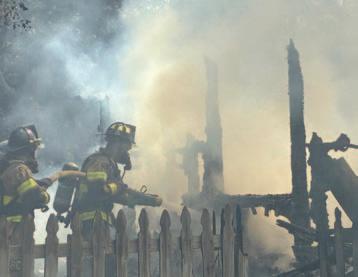
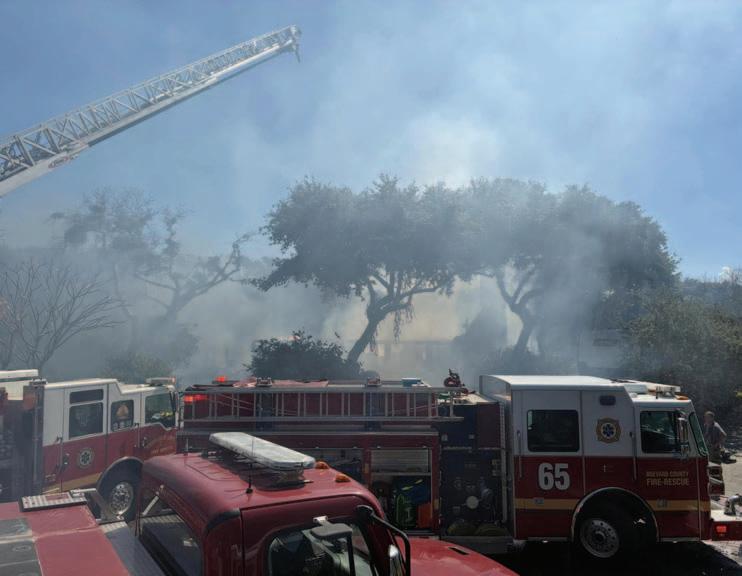
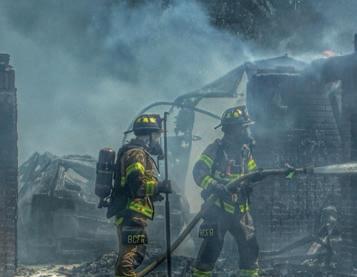

By Lisa McDonald, Communications Manager, City of Oviedo
On Friday, July 17, 2026, the City of Oviedo officially welcomed four new firefighters to its ranks. The pinning ceremony, held at Oviedo City Hall, celebrated dedication, resilience, and a shared commitment to public service.
Firefighters Kyla Mullens, Jesse Mejia, Clayton Pressley, and Raymond Cortes-Castillo stood proudly as they were sworn in by Fire Chief Michael Woodward, surrounded by family, city officials, and their fellow first responders. Each new firefighter had completed an intensive orientation, honing their skills alongside Battalion Chiefs,
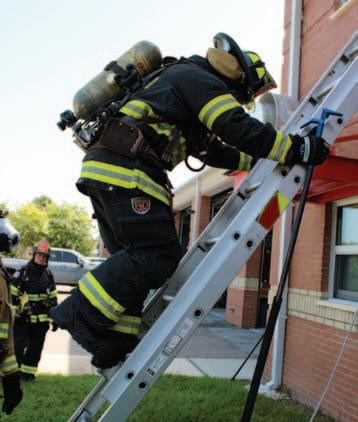
Engineers, Paramedics, and trainers. Their training covered everything from hose lines and hydrant work to advanced EMS scenarios, rapid rescue, search and rescue operations, and live fire simulations. The result: four individuals more than ready to ser ve their city
“All four of these firefighters have shown dedication each and every day,” Chief Woodward remarked during the ceremony.
“Their enthusiasm and passion for our community will contribute to the great service we provide to the citizens of Oviedo.”
Each firefighter had one thing in common: a passion for helping others as they discovered their love of the fire service.
Raymond Cortes-Castillo, born and raised in Puerto Rico, brought a background in nursing and experience with the Puerto Rico Fire Department. After relocating to Florida in the aftermath of Hurricane Maria, he overcame the challenge of pursuing his new calling in a second language, earning his EMT certification at Seminole State College. Cortes-Castillo’s fiancée had the honor of pinning his badge—a symbol of both his resilience and gratitude.
Jesse Mejia’s path began in Modesto, California, and wound through much of the country as the child of a military family. After studying Biomedical Engineering and working as a merchant mariner in Hawaii, Mejia discovered his passion for firefighting as a volunteer. Returning to Florida, he earned his
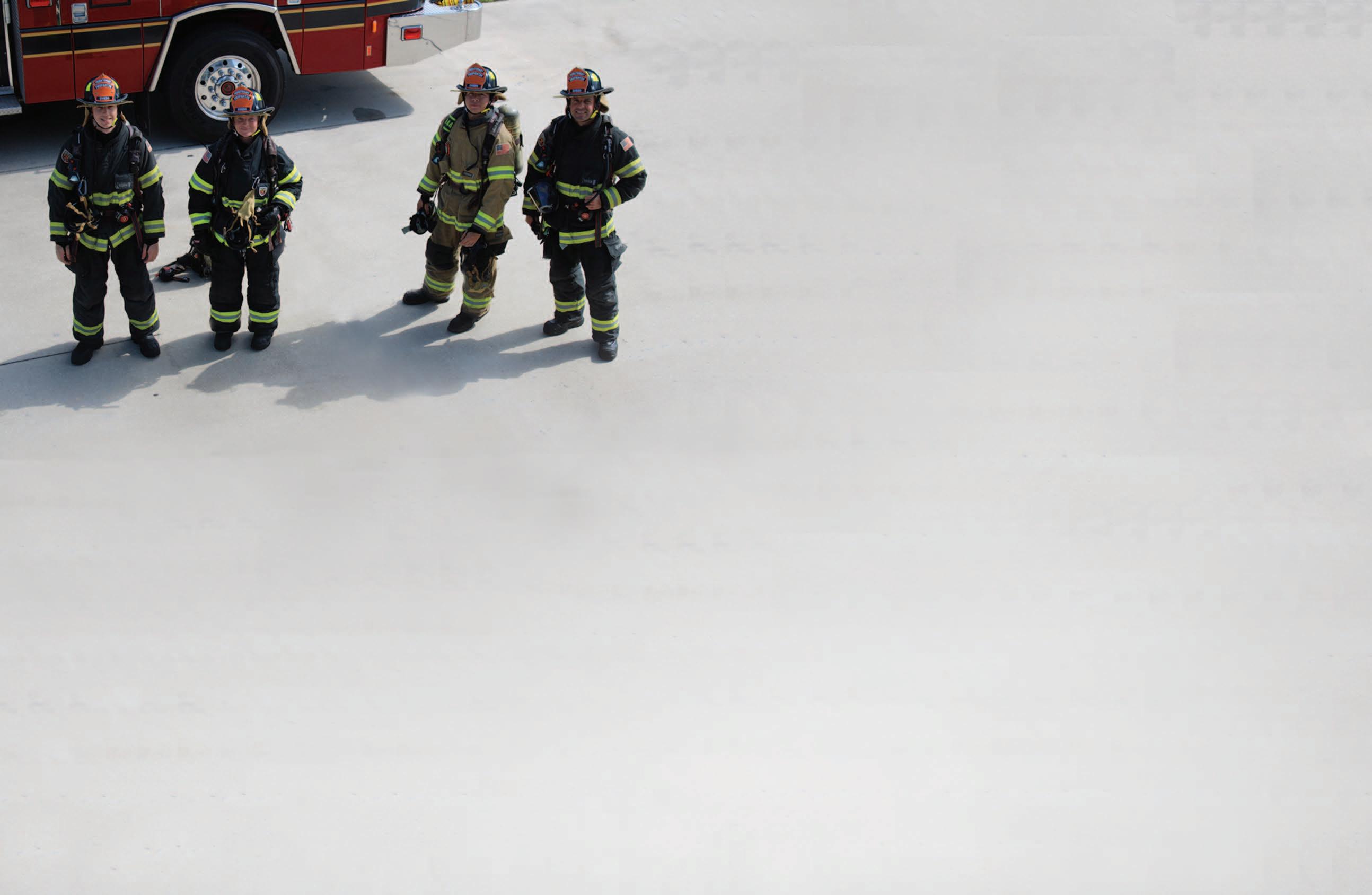
certifications and was pinned by his fiancée, marking the culmination of a journey defined by adaptability and a drive to ser ve.
Kyla Mullens, an Oviedo native and Hagerty High School alumna, found her calling through her EMT clinicals after attending college in Georgia on a volleyball scholarship. Her goal is simple yet profound: to make someone’s day better. Her mother had the privilege of pinning her badge, a proud moment for the family and hometown alike.
Clayton Pressley grew up in South Carolina before moving to Oviedo at age 10. A 2024 graduate of Oviedo High School, Pressley always dreamed of becoming a firefighter, eager to make a difference in his community. His father pinned his badge, signifying both a personal and family milestone.
The ceremony drew a crowd of supporters, including city council members, City ManagerBryan Cobb, fire command staff, police department command staff, and city staff. They witnessed the next generation of Oviedo’s bravest step forward, ready to embrace the challenges and rewards of public service.
As Chief Woodward reminded the gathering, “What we do is a commitment to our residents, families and visitors, every day. Always remain humble and never stop learning.”
With these words, Oviedo’s newest firefighters begin their service spanning across all three shifts.
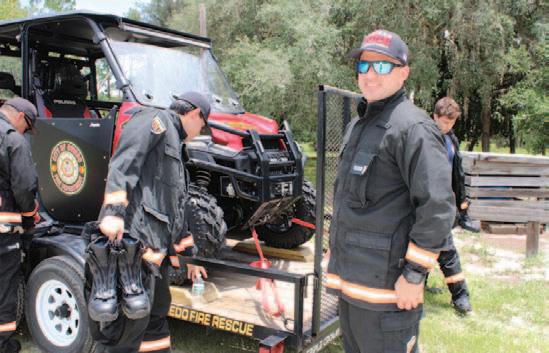
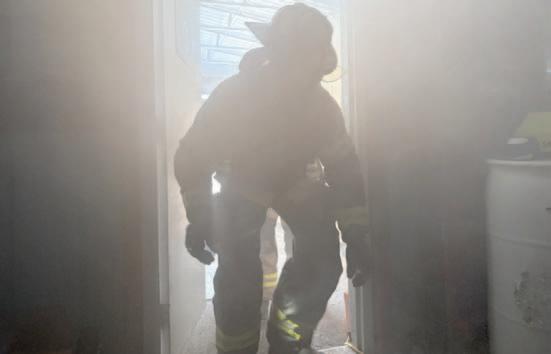
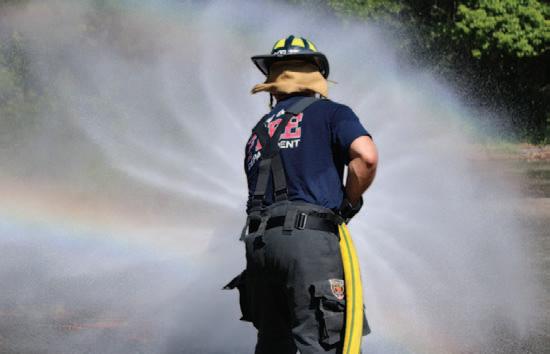
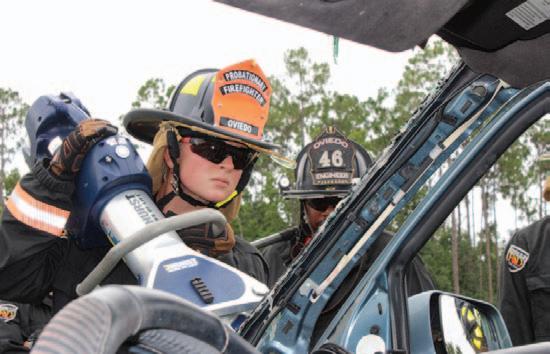
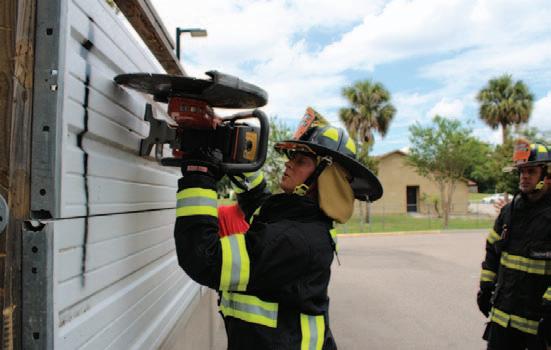
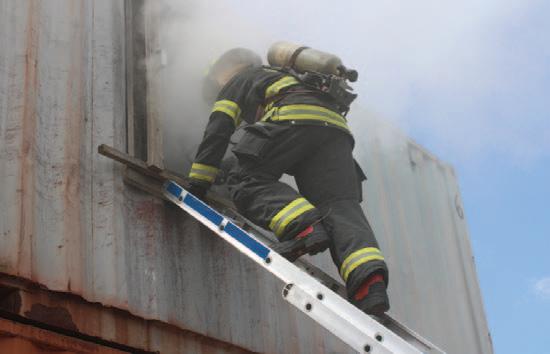
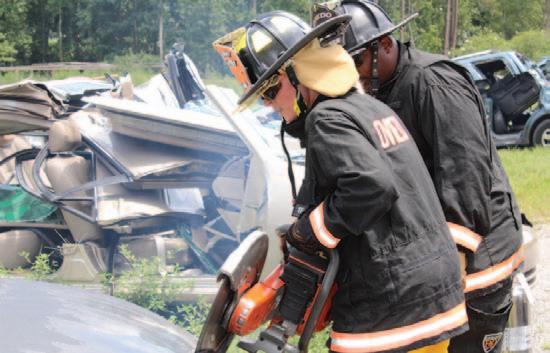
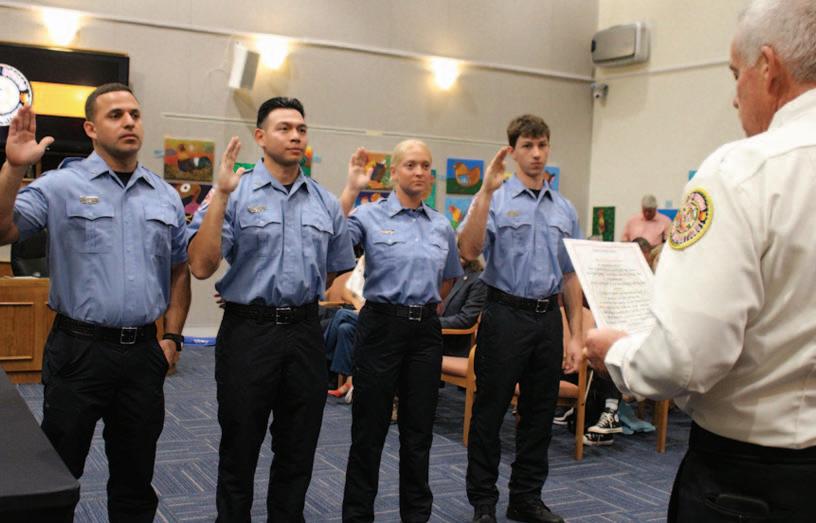
By Mackenzie McClintock, Public Information Officer, South Walton Fire District
When the Army National Guard set out to find its best soldier, they found one of South Walton’s own. Brandon Brown, a Beach Safety Lieutenant for the South Walton Fire District, has been named the 2026 Army National Guard Soldier of the Year.
Brown earned the title during the 2026 Best Warrior Competition, held at Camp Blanding Joint Training Center. The prestigious competition brought together high-performing Soldiers from across the United States to determine the National Guard’s top service members.
Through four demanding days,
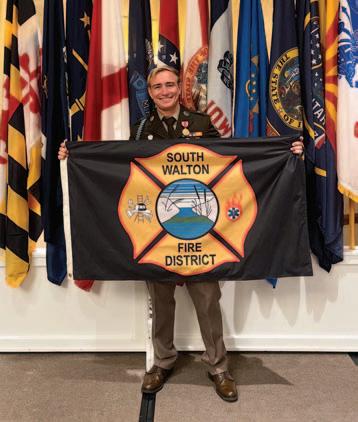
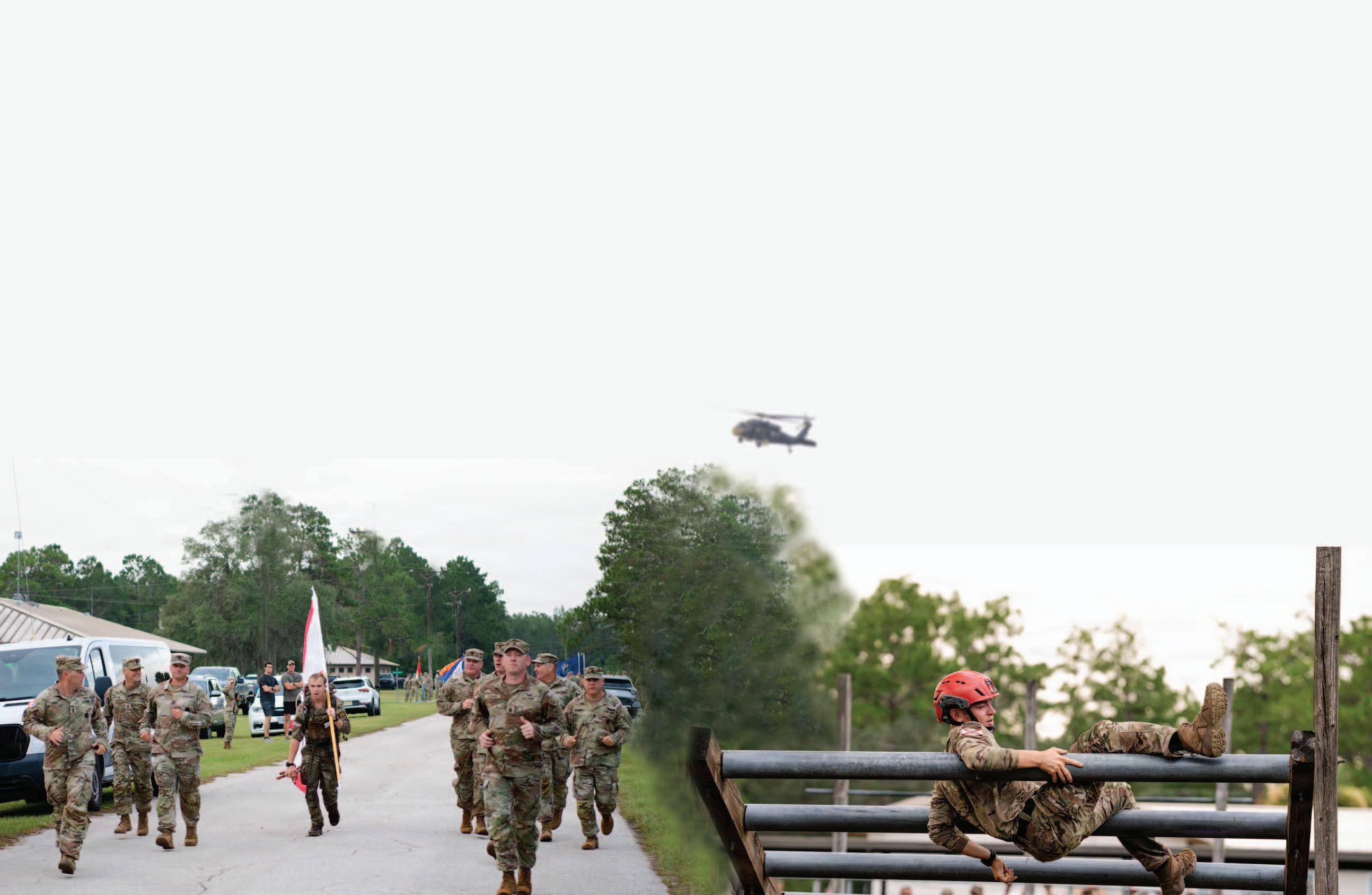
competitors completed more than 25 physically and mentally challenging events designed to evaluate every aspect of military readiness. The competition tested physical fitness, marksmanship, land navigation, tactical proficiency, leadership, and decisionmaking under pressure, all while soldiers were enduring Florida’s triple-digit heat index.
“This recognition speaks to Brandon’s character more than anything else,” said South Walton Fire District Fire Chief Ryan Crawford. “No matter which uniform he’s wearing, he leads by example and represents
this District with professionalism and integrity. We’re incredibly proud of him and all he’s accomplished. This sort of service and performance is simply exceptional.”
Brown advanced to the national competition after winning company, state, and regional-level Best Warrior competitions, earning the opportunity to represent Florida on the national stage.
Within South Walton Fire District, Brown serves as a Beach Safety Lieutenant and Director of the Junior Lifeguard Program, where he leads efforts to educate local youth in open water safety, surf lifesaving skills, and
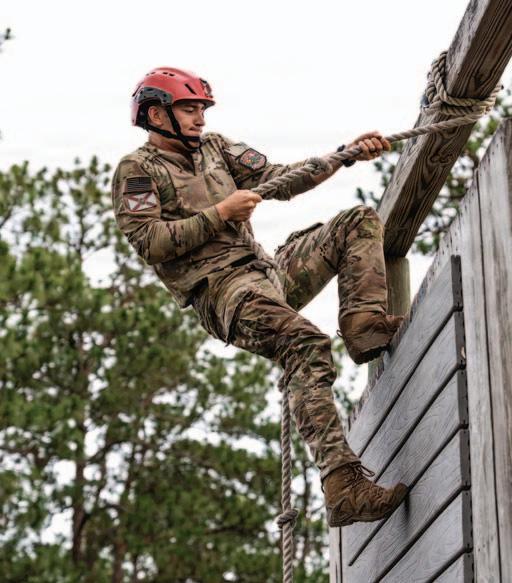
leadership. He is also a certified drone pilot and serves as a mentor to the lifeguards under his supervision.
“Whether he’s mentoring and coaching others, protecting visitors on our beaches, or performing in his military role, Brandon approaches every responsibility with humility, discipline, and a genuine desire to serve,” Crawford added. “We strive to hire and retain this level of leadership within our Beach Safety Division, and this speaks volumes to what our lifeguards are capable of achieving.”
South Walton Fire District congratulates
Lieutenant Brown on this remarkable achievement and extends its support to all the Soldiers who competed in the 2026 Army National Guard Best Warrior Competition.
Photos courtesy of the Army National Guard and the Brown family.
By Jenn Samsel, Independent Journalist
The Lake City Fire Department recently hosted its first Kids Fitness and Firefighter Skills Camp, which offered 30 children aged 6 to 11 a week of hands-on learning, physical fitness, and public safety education.
The camp aimed to promote healthy lifestyles while familiarizing children with the world of emergency services. It included daily physical training and interactive lessons conducted by firefighters from the Lake City Fire Department and officers from the Lake City Police Department.
Each morning began with stretching and physical training, as firefighters worked alongside
campers to emphasize the importance of fitness in both everyday life and in the fire service.
Throughout the week, participants explored various firefighter skills, learned essential fire prevention techniques, and gained a deeper understanding of the dedication required to protect the community.
The curriculum focused on different themes each day. On Monday, campers were introduced to the fire department, familiarized themselves with fire apparatus, and experienced a ride in the department's tower truck. Tuesday centered on fire safety education using the department's fire safety trailer, where children practiced calling 911, learned the importance of knowing their home address, identified family meeting locations, and reviewed
emergency evacuation procedures. Campers also received hands-on training with fire extinguishers.
Wednesday focused on public safety with the Lake City Police Department, where campers learned about law enforcement, police equipment, and the vital role officers play in serving and protecting the community.
The week wrapped up on Thursday with firefighter shift competitions and obstacle course challenges, allowing campers to apply everything they had learned. Participants engaged in teamwork exercises, fitness stations, and firefighter-inspired obstacles,
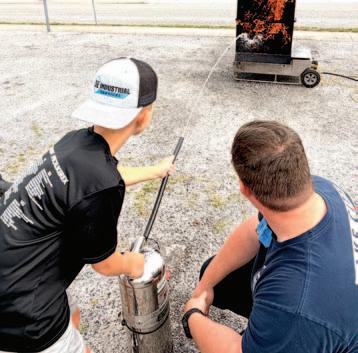
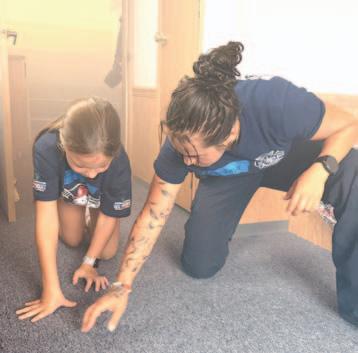
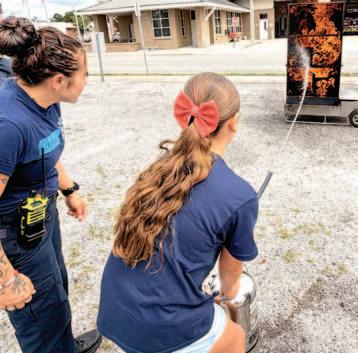
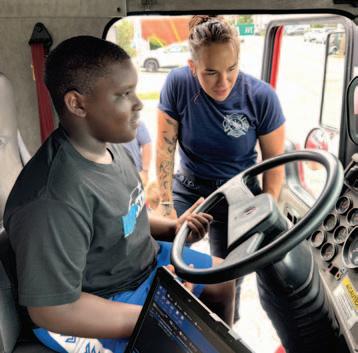
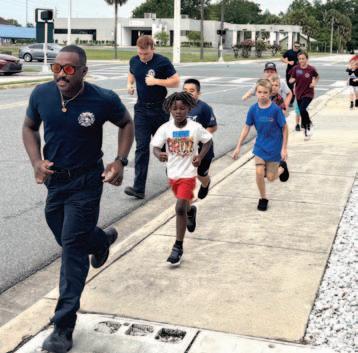
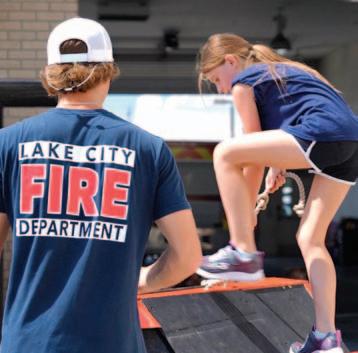
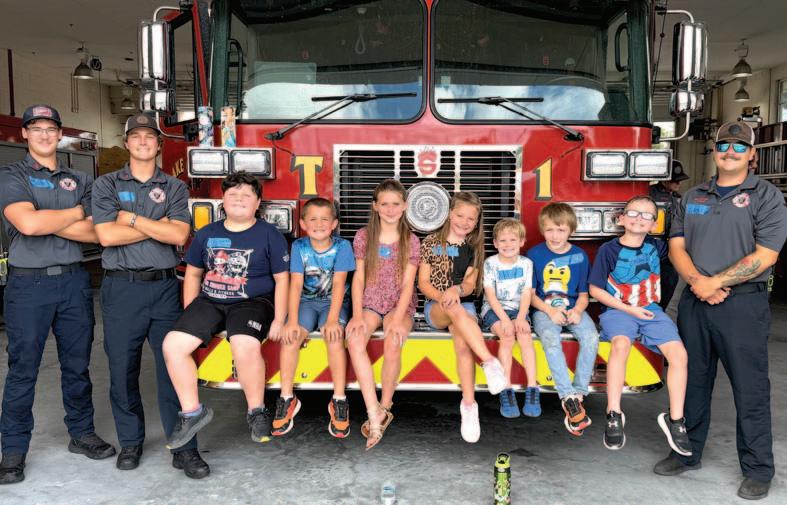
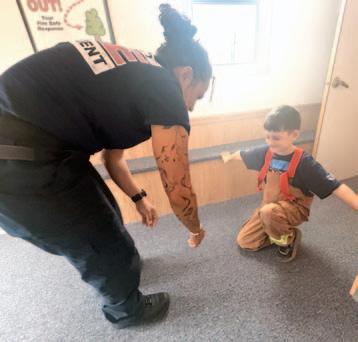
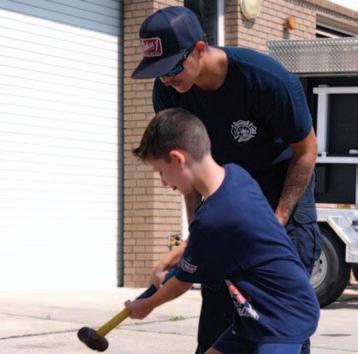
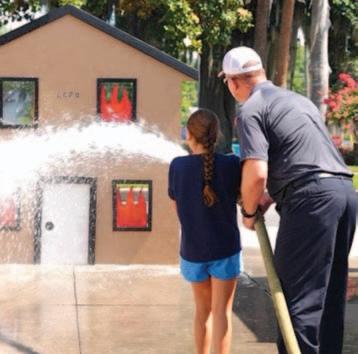
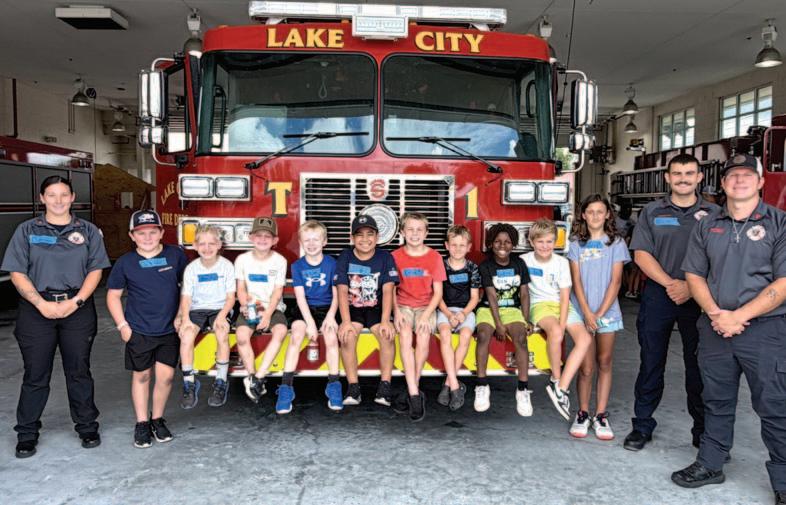
YOUNG continued frompage 40
demonstrating confidence, determination, and enthusiasm while supporting one another.
"The goal of this camp is more than just teaching kids about firefighting," said Assistant Fire Chief Ret Tompkins. "It's about building relationships, encouraging healthy habits, and connecting with the youth in our community positively. We appreciate everyone who helped make this week possible."
"It was something that our community would benefit from, and we felt that it could make a lasting impact on the youth of Lake City/Columbia County. Getting kids outside and having fun while learning about fire safety/emergencies. From having an emergency fire escape plan to safety tactics to use in case of a fire emergency It was truly a group effort from everyone," said Firefighter Christian Munro.
Munro mentioned that what began as an
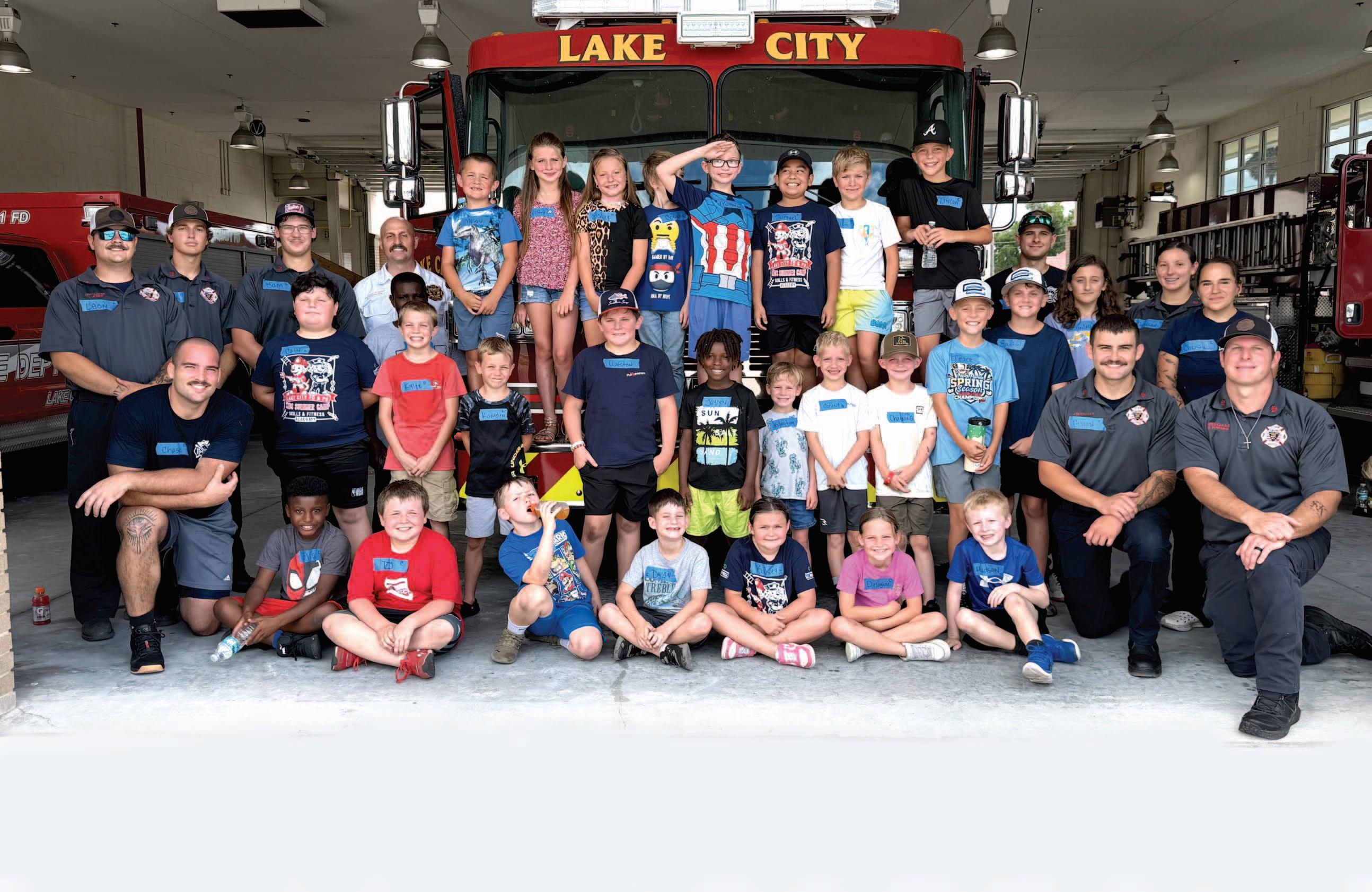
idea ultimately developed into a success and a positive experience for the community
"These kids are our future, and investing a little time into them is something we value as a department. Hopefully they think we're pretty cool and maybe, maybe decide to become firemen/women themselves. We're definitely looking forward to continuing to grow the camp and get even more kids involved," said Munro.
The overwhelming response to the program
has already prompted the department to schedule another Kids Fitness and Firefighter Skills Camp in August.
The Lake City Fire Department expressed its gratitude to the firefighters, police officers, volunteers, sponsors, and community partners who made the camp possible. Through programs like this, the department continues to invest in the next generation while fostering relationships between first responders and the families they serve.
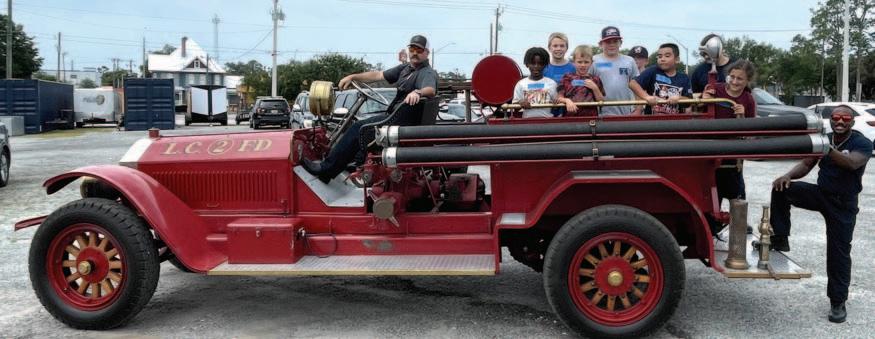
By Casey Wright, Community Information Specialist, City of DeLand
The City of Deland Fire Department is celebrating the grand re-opening of Fire Station 83, following the completion of a significant expansion and renovation project.
The upgrades help enhance the department’s capacity to serve neighborhoods in the city’s southeast corridor, a rapidly growing area, while maintaining its commitment to exceptional emergency response. Over the past two years alone, Fire Station 83 has seen an approximate 25 percent increase in emergency calls, with even more development planned for the near future.
Without this expansion, increased travel distances and more simultaneous incidents would begin to impact response times and challenge the department’s ability to maintain its nationally recognized performance standards.
Some of the upgrades include additional living quarters, more office space, and a larger area for storage. Firefighters also now have a dedicated decontamination area, that is separate from their living quarters, to reduce the exposure of hazardous chemicals emitting from their equipment.
“Firefighters spend nearly one-third of their lives in fire stations like this. Creating an environment that supports rest, recovery, and wellness, helps ensure that they are ready to perform at their best when the alarm sounds,” said DeLand Fire Department Chief Todd Allen.
These improvements help to provide the capacity needed for future staffing while enhancing the daily work environment for

personnel. The city originally hired six firefighters in 2021 as part of a phased staffing plan, with three positions intended to support the future expansion of Fire Station 83. As growth continued, the department added additional firefighters, to help staff two response units from Station 83. The added support allowed both Engine 83 and Tower 83 to be staffed 24 hours a day, seven days a week, and moved the daily staffing from three firefighters to six firefighters per day
Fire Station 83 has been in ser vice for nearly two decades, originally being constructed back in 2007. By investing in facilities and staffing, the DeLand Fire Department is preserving its ISO Class 1 Public Protection Classification, while maintaining compliance with the CFAI accreditation performance benchmarks. Including a response-time objective of arriving within six minutes at the 90th percentile.
The expansion reflects the City’s commitment to staying ahead of growth, rather than reacting to it.

By Elyssa Walterson, Communications Assistant, Orange County Fire Rescue
Orange County Fire Rescue celebrated their newest firefighter recruit class and over 20 new promotions at their Graduation and Promotional Ceremony on July 2, 2026. This ceremony was unique, as there was an unprecedented number of promotions being recognized, including nearly every level of fire operations, along with Office of the Fire Marshal and administrative personnel.
“The badge you will wear represents far more than a title, it symbolizes a commitment to saving lives, serving others, and upholding public trust,” said Fire Chief Anthony Rios. “As you embark on this next chapter, remain committed to excellence, and never lose sight of the responsibility and privilege that come with serving others”.
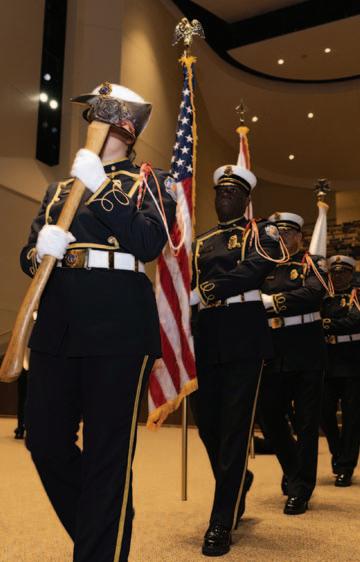
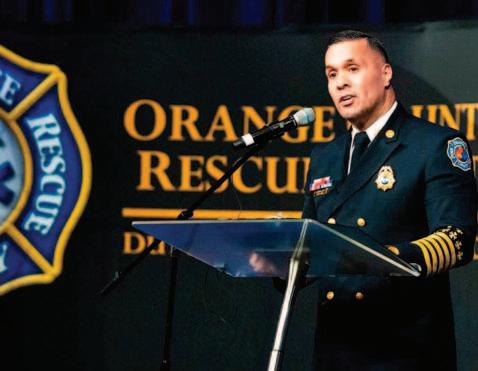
Men and women from across the department proudly stood to take their oaths and accept their new positions. Orange County Mayor Jerry L. Demings helped to swear in some of the appointed promotions, including Deputy Chief John Westmoreland, Division Chief Scott Egan, and their new Emergency Manager, Carlos Durden.
“Leadership isn’t measured by the incidents we command or the strategies we develop,” said the new Deputy Chief of Administration John Westmoreland, as he made his first remarks in his new role. “It’s measured by how people experience us during their most difficult moments”.
Congratulations to Class 112 and to all of the new promotees at Orange County Fire Rescue!