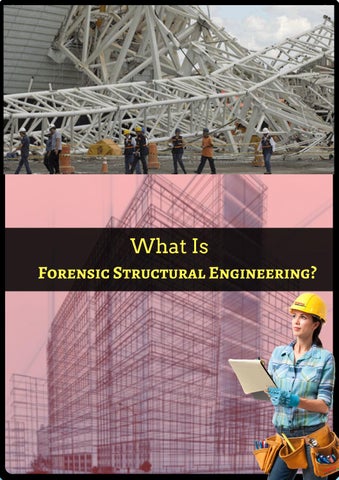
What Is Forensic Structural Engineering?
Forensic structural engineering is referred to as engineered investigation and determination of the causes of failures in buildings, structures, bridges and other constructed facilities. The process also includes giving testimony and rendering opinions in judicial proceedings. It has become a field of professional practice in Brisbane.
www.fernandes.net.au
Reasons Professional engineering companies as well as insurance agencies, governmental departments, architects and attorneys have been looking for programs that can provide an integrated education on the forensic aspects of structural engineering.
An engineer's success in this field means the result of a combination of many components in his/her background. Forensic structural engineering services can be provided only by experienced personnel who are skilled analyzers, designers and constructors. They are also good at structural testing, inspection, condition assessment, and trouble-shooting. Forensic structural engineers understand the design-construction process, comprehend legal implications, communicate professionally and friendly to avert misunderstandings & solve problems with ease.
www.fernandes.net.au
Purpose The purpose of forensic structural engineering is to acquaint graduate students as well as other young practicing professionals, with various aspects included in the field and to provide them with the basics of investigation, failures, understanding the pertinent legal aspects, and to prepare them efficiently for the eventual practice of forensic structural engineering.
www.fernandes.net.au
Benefits of Forensic Structural Investigation: One of the benefits of forensic investigations is the lessons learned from failures. The professionals use these lessons to improve codes, standards and practices to avoid similar incidents in the future. Therefore, the purpose of this method is not only to teach forensic investigation of failures but also to provide technical support in the consequent dispute resolution process. It is also a way to show how failures can be avoided and what the consequences can be.
www.fernandes.net.au
Extending the building’s life-cycle The lessons learned from forensic engineering offer tools that can bring positive changes in building operation and maintenance cost. Forensic engineering is essentially a process of employing a holistic view that takes all the elements of a building into account. Perhaps, forensic engineering can be employed as a part of a preventive strategy, which can help to anticipate problems and implement corrective actions before failures occur.
www.fernandes.net.au
One of the most important lessons highlighted by forensic structural engineering services, is the importance of periodic inspection that can assess the condition of a building’s assets including the building system and structure itself, elevators, water distribution system, electrical wiring, etc. Thus, it is clear that the process cannot be performed unless trained forensics experts are hired. You do not have to look for an individual who does this specific categorisation of engineering works. This is because the specialised service cannot be given by a single individual, it needs a number of assessors and qualified engineers, who are generally provided under a company in Brisbane. While a system-specific engineer can solve a particular problem, the forensic experts can also look at the broader picture to understand the environment in which the component can successfully operate.
www.fernandes.net.au
Fernandes & Associates Pty Ltd
www.fernandes.net.au