We work for a better tomorrow so you can feel good about your choices today.
CEO Statement
Responsibility shapes how we think, create and operate at Ferm Living. It drives us to thoughtful, intentional action that influences choices and contributes to a more sustainable future. It is central to how we design, develop and deliver our products. This sustainable mindset defines every stage of our process, helping us balance creativity, quality and lasting impact.
Our approach in 2025 has been characterised by a clear allocation of time and resources to the areas that matter most. Our responsibility ambitions and strategy guide our actions while remaining flexible to new insights and emerging challenges. Responsible business requires a holistic approach, addressing the entire value chain and harnessing collaboration to drive meaningful change.
In 2025, our work has been defined by turning insight into action. Building on the full impact milestone reached in 2024, we have actively used the comprehensive CO₂eq hotspot analysis of our entire product range to guide our priorities. This has given us clarity on where our largest impacts occur and, just as importantly, where we can and must turn the dial to achieve reductions. We have deliberately started at the top – focusing first on the most significant hotspots – and initiated concrete actions where the potential for impact is greatest.
It marks an important shift from data collection to disciplined execution. The extensive effort invested in gathering highquality data and addressing the complexity of Scope 3 emissions is now being translated into focused initiatives aimed at real impact through incremental improvements.
Alongside this, we continue to strengthen the foundations for responsible business. Certifications, including the Global Recycled Standard (GRS) are increasingly embedded in relevant product categories to promote circular thinking, and our preparations for compliance with imminent laws and regulations have progressed further, reinforcing governance and accountability.
Sustainability is a continuous journey of learning, prioritising and acting with intent. As our understanding grows and expectations evolve, we remain committed to making a positive and measurable impact on the world around us.
Peter M. Vedel CEO, Ferm Living
“In 2025, our work has been defined by turning insight into action. Our approach has been characterised by a clear allocation of time and resources to the areas that matter most. Sustainability is a continuous journey of learning, prioritising and acting with intent.”
Peter M. Vedel, CEO, Ferm Living
About Ferm Living
Founded in 2006, Ferm Living is a Danish design brand rooted in authentic design and responsible thinking. Our mission is to create thoughtfully designed pieces that enhance everyday life while supporting a more sustainable future.
We believe good design goes beyond aesthetics – it should inspire change. By offering products that balance quality, functionality and responsibility, we empower consumers to make more conscious choices for their homes.
Guided by our Responsibility Ambition and nine 2030 Commitments, we take a holistic approach to sustainability, focusing on Our Planet, Our Society and Our Community pillars and committed to integrating them into every aspect of our business.
Core Story
Life is full of contrasts. As we navigate expectations and dreams in search of meaning and comfort, we long for a balanced life with room to be ourselves. A place where we can realise the true value of things and feel at home. Driven by a love for authentic design and a commitment to responsible choices, we design products and calm environments that help you balance life’s contrasts.
From our home in Copenhagen, we collaborate with skilled partners around the world, fusing our Scandinavian mindset with
global skills and traditions. Our collections are defined by soft forms, rich textures and curious details, allowing you to create composed atmospheres with a touch of the unexpected. From materials and processes to production and delivery, we challenge ourselves to help shape a sustainable future, making it easier for you to make responsible choices. We create collections of furniture, accessories and lighting, so you can create space to feel comfortably you.
Design Approach
We design for longevity, creating high-quality, functional products that are responsibly crafted and carry enduring aesthetic appeal. Our ambition is to inspire a more mindful, sustainable way of living — encouraging conscious consumption, buying better and using products for longer.
Every design begins at our Copenhagen headquarters, where our in-house Design Studio develops ideas from first sketch to finished form. Keeping design internal allows us to embed a sustainable and responsible mindset from the outset
“Our ambition is to inspire a more mindful, sustainable way of living — encouraging conscious consumption, buying better and using products for longer.”
Material choices, construction methods, durability and potential end-of-life pathways are considered as integral parts of the creative process, not as subsequent adjustments. Close collaboration across departments ensures that insights from sourcing, compliance, climate screening and supplier engagement inform each decision.
Our approach is guided by defined “Responsible Criteria”, which serve as practical benchmarks throughout design and product development. These criteria ensure that environmental and social considerations are integrated from the outset, and that certified materials and circular practices are integrated to create products remain responsible throughout their entire life cycle.
At Ferm Living, we are committed to contributing to a better tomorrow and inspiring change by enabling consumers to make responsible choices.
Responsibility Strategy
At Ferm Living, our responsibility ambition is to work for a better tomorrow, so customers can feel good about the choices they make today. Our 2030 Commitments continue to guide all areas of our business, from materials and design processes to production, delivery and organisational culture. As we move closer to 2030, our attention has sharpened on the areas where we can make the greatest impact, ensuring durability, function and aesthetics remain at the core of everything we do.
Teams across the company are actively involved in initiatives that strengthen transparency, accountability and progress across operations. Rising Environmental, Social and Governance (ESG) expectations and the changing demands of society mean this agenda requires ongoing focus and sustained
effort. Collaboration with suppliers and a shared commitment to social responsibility as well as certified and responsibly sourced materials are central to our work, reflecting where our efforts can have the most meaningful effect.
As longstanding participants in the UN Global Compact, we continue to report progress annually. We strive to cultivate partnerships built on mutual value, open communication and ethical practice, while empowering teams to explore opportunities for responsible business practices. The journey presents challenges, but by prioritising impact, leveraging insights and adapting to the world around us, we continue to contribute to the sustainability dialogue and work steadily towards a better tomorrow.
We work for a better tomorrow so you can feel good about your choices today. Responsibility Ambition
2030 Commitments
We have set nine 2030 Commitments under three pillars, which enable us to adopt a comprehensive approach to achieving our goals.
Our Planet
→ Ensure full transparency on all products.
→ Obtain third-party certifications on all products.
→ Work towards CO₂eq neutrality.
Our Society
→ Build value on all bottom lines: people, planet, profit and purpose.
→ Inspire customers to make responsible choices.
→ Give back to local communities in support of better homes.
Strategic Focus Areas
Our Community
→ Maintain a strong culture with clear values.
→ Nurture long-lasting relations built on mutual trust and respect.
→ Empower individuals to learn and grow together.
Guided by our brand purpose, we inspire individuals to create personal and comfortable homes with responsibly made products. Our strategic focus areas outline key projects and initiatives, evolving over time to align with our 2030 Commitments and shaping our roadmap for the future.
Business in Balance
We strive to balance business success with making a positive impact on the world. Responsible choices may challenge economic considerations, yet we prioritise integrity and accountability. By expanding our focus to include nonfinancial metrics, we work towards environmental and social progress.
Empowering Relations
We foster a supportive community of colleagues and partners, valuing diversity and mutual respect. Our supplier relationships are built on responsible practices, transparency and a shared sustainable mindset, empowering individuals to grow and drive positive change.
Responsible Living
We help individuals create spaces that reflect a sustainable mindset through thoughtfully designed products. The mindset is embedded in every aspect of our business – from material selection to production and logistics – making responsible choices easier for our customers.
→ Unified company action plan for 2026.
Inspiring Change
Sustainability is a continuous journey and we are committed to progress. By being transparent about our efforts, we aim to inspire consumer confidence in responsible choices and encourage collective action towards a more sustainable future.
Ferm Living in Figures
People Health and Safety
People
→ As a collective of colleagues and partners from across the world, our shared commitment is evident in the passion we bring to our work. We celebrate our diversity and uplift one another in an inclusive environment where every individual can thrive.
→ As participants in the UN Global Compact, we uphold its principles and values in our conduct and interactions.
→ Human rights are universal and must be upheld for everyone, regardless of age, gender, race or beliefs. Ferm Living strongly condemns any violations of internationally declared human rights and is committed to treating all individuals with dignity and respect. We expect the same commitment from our partners, ensuring that human rights are protected and upheld across our value chain.
→ Our recruitment practices prioritise talent and disregard biases related to ethnicity, age, gender, religion, sexual preference, disability or social identity.
→ A respected and well-supported workforce is the foundation of a successful, long-term business. We prioritise professional, positive and motivating leadership, fostering a workplace culture that values employee wellbeing, engagement and long-term growth.
→ Our working environment is enhanced through greater empowerment and flexibility, promoting a healthy work-life balance and advocating for general well-being.
→ We are driven by entrepreneurship and high ambitions. Our relationships with partners and suppliers are built on mutual respect and lasting connections.
→ We recognise our responsibility not only to our employees but also to our partners, ensuring shared values of diversity, integrity and ethical conduct. Transparency and accountability are central to our culture and our Whistleblower scheme enables us to identify and address concerns proactively, reinforcing our commitment to responsible business practices.
Health and Safety
Our efforts in documenting workplace accidents have yielded positive results, as no incidents have been recorded in the past years. Nevertheless, we maintain a proactive approach to safety through the operation of a Working Environment Committee.
Ferm Living is committed to leveraging the insights from internal company surveys, addressing concerns at both individual department and leadership team levels. Following a Team Engagement and Culture Survey conducted in 2025, we continue to build on the learnings and will undertake regular surveys in 2026 to further enhance employee satisfaction, collaboration and development.
Our open and trustworthy corporate culture invites individuals to report legal violations, ethical breaches or serious concerns securely and confidentially through our Whistleblower system. We expect our partners to implement independent grievance mechanisms, ensuring employees, subcontractors and third parties can report misconduct anonymously, free from retaliation, intimidation or harassment.
Concerns related to Ferm Living can be reported here: https://whistleblowersoftware.com/secure/fermLIVING
Ferm Living Code of Conduct: https://fermliving.com/pages/company-information
Changemakers
Engaging across the organisation is essential to achieving our sustainability ambitions. Each department contributes through projects aligned with our strategic focus areas, and in 2026 and beyond even more teams will play an active role in driving progress.
Reaching our targets requires shared ownership, with everyone applying their skills and expertise to move Ferm Living forward. To support this, Changemakers – representatives in every department and operating across the company – track progress, implement actions planned and cultivate collective responsibility for our sustainability journey. These internal ambassadors help translate strategy into tangible outcomes, ensuring continuous improvement and responsible practices throughout the organisation.
Our sustainability focus spans both environmental and social dimensions, guided by a commitment to openness and transparency in sharing our progress. We recognise that this journey has no fixed endpoint and that our goals will continue to evolve in response to the changing world around us.
Actions Realised 2025
In 2025, our work has been defined by turning insight into action. We are dedicated to shaping a more sustainable future by designing responsibly and by empowering our customers to make informed and responsible choices. Our approach considers both environmental and social impacts, with a strong emphasis on transparency, accountability and ongoing refinement.
Sustainability is an evolving journey rather than a fixed destination. As expectations and global challenges change, we continuously adapt our practices to ensure responsibility remains at the core of our operations. This mindset is reflected in the way we work, how we collaborate with partners and suppliers, and the experiences we create for our customers and communities.
In 2025, we have built on the progress of previous years and reached important milestones on our responsibility journey. Highlights include:
→ Driving targeted and meaningful reductions by actively applying the comprehensive CO₂eq hotspot analysis of our entire product range, enabling significant reductions across our bestselling Ripple design series
→ Increasing the share of third-party certified products across full product range to 29%, including working with Global Recycle Standard, promoting circularity
→ Strengthening our “Responsible supplier” framework, by extended engagement through the Qarma platform
→ Elevating sustainability on the agenda through participation in initiatives such as the Circular Furniture Network contributing to a more responsible industry.
Conscious Consumption
In 2025, our work has been defined by turning insight into action. Building on the full impact milestone reached in 2024, we have actively used the comprehensive CO₂eq hotspot analysis of our entire product range to guide our priorities. This has given us clarity on where our largest impacts occur and enables us to focus our efforts where they can drive the most meaningful change, moving beyond mere compliance. By prioritising the most significant hotspots, we ensure that our reduction initiatives deliver real, measurable impact.
One such change is Ripple, one of our bestselling design series. In 2025, we moved production to a new supplier with
renewable and a more energy-efficient setup, this significantly reduced emissions. This change means the series is no longer our largest source of CO₂eq. Early results indicate there is still substantial potential for further reductions, marking a clear shift from data collection to disciplined, targeted action. The Ripple case illustrates how access to detailed, high-quality data allows us to make more responsible, informed decisions and drive real impact.
Responsibility in Design
Responsibility is embedded from the very first stages of design. Decisions made early in the process have a significant influence on material selection, production methods and overall impact. By applying our “Responsible Criteria” at the outset, we create designs that are both enduring in form and considerate in their footprint.
Sourcing and working with certified materials is central to our focus. The CERTIFIED tag guarantees that products meet recognised standards such as FSC™, GOTS, GRS, or OSC 100/Organic Blended, supporting both environmental and social responsibility. In 2025 we grew the share of certified products to 29 %, up from 28 % at the start of the year, reflecting our commitment to responsible supply chain practices from raw materials to logistics. Our goal for 2026 is to increase this percentage to 32-35 % for the entire Ferm Living collection.
Expanding certified products is not only about numbers; it demonstrates action across the supply chain and reinforces responsible thinking. In 2025, we partnered with new suppliers to bring more GRS-certified products into our collections, advancing our efforts to use materials more responsibly and support circularity.
As longstanding participants in the UN Global Compact, we remain committed to responsible business practices. We recognise that sustainability is a continuous journey of learning, adaptation and progress shaped by a shared vision for a better tomorrow.
A Responsible Supply Chain
In 2025, we strengthened our supplier engagement through the Qarma platform, enhancing transparency, documentation and data quality across our supplier portfolio. Our “Responsible Suppliers” framework sets clear expectations for ethical and sustainable business practices, ensuring alignment with our values.
Through supplier mapping and assessments, we now have an even clearer view of the factories producing our products, allowing targeted actions where they can achieve the greatest impact. This enhanced visibility enables verification of social and environmental practices during factory visits and audits and ensures continuous improvement through collaboration with suppliers and on-site quality controllers. These efforts, alongside dedicated preparation for forthcoming EU laws and regulations, further strengthen our due diligence and support long-term responsible sourcing.
A Sustainable Agenda
Sustainability remains a default expectation at Ferm Living, yet sharing our strategy and insights continues to be vital. In 2025, we engaged in knowledge sharing and collaboration through initiatives like the Circular Furniture Network (CFN), as well as participation in 3DaysofDesign panel discussions alongside peers in the design industry to highlight the importance of collaborative, pre-competitive efforts to drive meaningful change.
These discussions reinforced that real impact requires bold action, open knowledge sharing and commitment across the sector. Being part of the CFN provides valuable insights and fosters collaboration across more than 30 Danish design brands, helping to develop common frameworks, share best practices and advance circular solutions for the industry.
We participated in Carbon Footprint in the Furniture Industry – A Common Language. And through the Climate Footprint project, we contributed to establishing a shared methodology for measuring and communicating product CO₂eq emissions, increasing transparency and comparability across the sector to support more informed and responsible choices. The ProLong pilot project enables us to extend the functional life of our furniture by guiding repairs, facilitating refurbishment and promoting reuse, thereby reducing waste, material consumption and emissions.
We know that achieving our targets requires collective ownership. Every team member plays a role in advancing Ferm Living’s impact across the business, suppliers, partners, customers and the wider world. By remaining curious and open to new approaches, integrating insights from these collaborations and embedding responsible practices into our designs and processes, we continue to move forward on our sustainability journey.
UN Global Compact Principles
Our dedication to ethical and responsible business practices is outlined in our Code of Conduct, which aligns with the UN Global Compact's Ten Principles. All suppliers are required to adhere to Ferm Living’s Code of Conduct, which outlines our commitment to sustainable thinking and responsible business practices.
Human Rights
Principle 1
Businesses should support and respect the protection of internationally proclaimed human rights.
Principle 2
Make sure that they are not complicit in human rights abuses.
We uphold international human rights, embracing diversity and treating all individuals equally, irrespective of race, age, religion, sexual orientation or social background. We vehemently oppose all forms of racism and physical or emotional abuse. Our commitment extends to responsibly sourcing and producing products, safeguarding workers' rights and ensuring safe, healthy working environments. Human rights violations are unequivocally unacceptable and will not be tolerated.
Throughout our supply chain, we cultivate lasting relationships grounded in mutual value creation, respectful behaviour and transparent communication. We enforce good working standards among our suppliers through our Code of Conduct, accredited third-party certifications and our internal framework “Responsible Suppliers” reflecting that our commitment to sustainability spans both environmental and social aspects and that we are dedicated to sharing our progress and increasing transparency.
Labour
Principle 3
Businesses should uphold the freedom of association and the effective recognition of the right to collective bargaining.
Principle 4
The elimination of all forms of forced and compulsory labour.
Principle 5
The effective abolition of child labour.
Principle 6
The elimination of discrimination in respect of employment and occupation.
We unequivocally prohibit the use of forced and child labour in any form. Throughout 2025, we have not identified any instances of human rights violations within our company or among our suppliers. We remain committed to monitoring labour conditions along our supply chain to ensure compliance and ethical practices.
Upholding social responsibility, we engage with Amfori for Business Social Compliance Initiative (BSCI) audits. Through our Code of Conduct, initiatives and third-party certifications such as BSCI, FSC™, GOTS and GRS, we actively champion the rights of workers in our supply chain, aligning with the labour principles of the UN Global Compact and adhering to our “Responsible Suppliers” framework.
Our relationships with partners are built on mutual value creation, transparent communication, trust and considerate behaviour, all in pursuit of responsible business practices and improved living standards.
Environment
Principle 7
Businesses should support a precautionary approach to environmental challenges.
Principle 8
Undertake initiatives to promote greater environmental responsibility.
Principle 9
Encourage the development and diffusion of environmentally friendly technologies.
Our environmental policy revolves around three key 2030 Commitments:
→ To achieve complete transparency for all products.
→ To attain third-party certifications for all products whenever possible.
→ Lowering our impact.
Dedicated to minimising our environmental impact and promoting circular practices in production processes, we encourage transparency and traceability, while certifications and testing ensure the safety and fairness of working conditions in our supply chain, as well as the high quality of our products. To measure progress, we apply a Climate Screening Tool based on the EU Product Environmental Footprint methodology (PEF), providing a consistent and transparent way to assess the CO₂eq footprint of our products. Currently, we have onboarded the majority of key suppliers to the Climate Screening Tool, enabling structured assessment of CO₂eq emissions and identification of reduction opportunities.
Detailed hotspot analysis of our entire product range identifies where our environmental footprint is greatest and achieving this full visibility across our product range has been a critical step in enabling targeted action, informed decision-making and continuous improvement in our environmental performance.
Anti-corruption
Principle 10
Businesses should work against corruption in all its forms, including extortion and bribery.
Ferm Living categorically condemns any form of corruption, including extortion and bribery. Any business proposals that imply corrupt practices are immediately rejected and we remain unwavering in our dedication to legal compliance and operating with the highest standards of integrity.
While we acknowledge the potential risks in our global supplier relationships, we uphold a strict zero-tolerance policy toward corruption within our company. Partners are required to immediately inform Ferm Living in writing if they become aware of any corruption. Such activities may lead to the immediate termination of the business relationship, reporting to relevant authorities and organisations, and potential legal actions.
We foster a culture of openness and trust, where all individuals can confidently report legal violations or concerns through our Whistleblower scheme. Our partners are required to implement independent grievance systems, enabling employees, subcontractors and third parties to report misconduct anonymously, free from retaliation or harassment.
Any concerns regarding Ferm Living should be reported via: https://whistleblowersoftware.com/secure/fermLIVING
To date, there is no record of any corruption breaches within the company or among suppliers, and no Whistleblower incidents have been reported.
Read our Code of Conduct here: https://fermliving.com/pages/company-information
UN Sustainable Development Goals
The 17 United Nations Sustainable Development Goals (SDGs) provide a roadmap for building a fairer and more sustainable world. They address global challenges including poverty, inequality, climate change, environmental pressures and the pursuit of peace and justice. While a sustainable mindset might now seem expected, it remains vital for all of us at Ferm Living; it guides smarter choices that benefit our teams, customers, partners and the planet. Embedding these principles is both a moral responsibility and a sound approach to business. We actively support the SDGs by integrating them into business strategy and company culture, focusing on Goals 8, 12, 13 and 17, where our operations have the most significant impact.
GOAL 8
Decent Work and Economic Growth
Promote sustained, inclusive and sustainable economic growth, full and productive employment and decent work for all.
We actively foster inclusive and sustainable economic growth, aiming to offer fair, secure and productive employment opportunities for all. For us, decent work includes fair remuneration, safe working conditions, social protection and pathways for personal development and social integration. Upholding high standards in human rights and fair wages is central to our approach, reinforced through our Code of Conduct, supplier initiatives and third-party certifications such as BSCI, FSC™, GOTS and GRS.
In 2025, we strengthened collaboration and transparency further via the Qarma supplier module. This tool enhances visibility across production units, enables systematic supplier engagement and supports risk mapping, performance monitoring and targeted improvements across our supply chain. Our risk management is increasingly supported by Qarma supplier modules and the upcoming Qarma product module and EUDR integration, enabling deeper insight and stronger governance across our supply chain.
GOAL 12
Responsible Consumption and Production
Ensure sustainable consumption and production patterns.
We promote sustainable consumption and production by achieving more with less, decoupling economic growth from environmental harm, and advocating for resource efficiency and sustainable lifestyles. We are committed to using services and products that meet essential needs and enhance quality of life while minimising resource consumption, toxic materials and harmful emissions throughout their lifecycle — ensuring a sustainable future for generations to come.
In 2025, we expanded our work with certified materials, particularly through the Global Recycled Standard (GRS), to ensure that recycled materials are verified throughout the supply chain while maintaining social, environmental and chemical standards. By combining certifications with robust supplier engagement, we can take concrete steps to safeguard workers’ rights, improve production practices and promote long-term sustainable growth. In the early design phase, guided by our sustainable mindset and responsible design criteria, we make prudent choices by selecting certified materials, designing for disassembly and longevity. This also ensures ease of recycling for customers, promoting a circular mindset. Furthermore, to limit waste we hold an annual outlet sale and surplus items are donated to NGOs like the Red Cross.
GOAL 13
Climate Action
Take urgent action to combat climate change and its impacts.
Climate change poses an indisputable threat to civilisation, with visible and potentially catastrophic effects. Urgent action through education, innovation and commitment to climate goals can avert disaster. Making necessary changes not only safeguards the planet but also presents significant opportunities to modernise infrastructure, generate new jobs and promote global prosperity. To support these goals, we continuously assess our impact using Målbar’s Climate Screening Tool to measure the CO₂eq footprint of our products from raw materials through to warehouse arrival. In 2024, we reached full visibility of our emissions across the entire product range. In 2025, we applied hotspot analysis to this data, identifying the areas where reductions would have the greatest impact. This evidence-based approach enables us to prioritise actions that lead to meaningful change. We have deliberately started at the top – focusing first on the most significant hotspots – and initiated concrete actions where the potential for impact is greatest. One such area is the Ripple Series, now with a more energy-efficient setup to significantly reduce emissions.
Certifications provide independent verification of material content, production standards and social and environmental safeguards, helping us make deliberate, measurable progress rather than relying on broad or vague claims.
GOAL 17
Partnerships for the Goals
Strengthen the means of implementation and revitalise the Global Partnership for Sustainable Development.
Achieving sustainable development requires collective action. At Ferm Living, we maintain long-term partnerships with organisations such as the Red Cross and engage specialists across diverse fields to share expertise, learn continuously and advance responsible practices. In 2025, more than fifty Ferm Living employees volunteered at a Red Cross Women’s Shelter and joining teams at second-hand Mega Stores. These handson initiatives allowed us to contribute meaningfully to the community while reinforcing the spirit of collaboration and social responsibility across our teams.
We recognise that sustainability is a shared task and standing together is more important than ever in a polarised world. By collaborating with internal experts, suppliers and external partners who share our sustainable mindset, we can prioritise interventions, drive meaningful change and ensure our actions have a lasting impact.
Sustainability and responsibility have many dimensions. For us, it is about more than climate impact alone – it encompasses materials, design, people and partnerships, all working together to create lasting positive change.
Environmental Impact
Our approach to environmental responsibility is guided by three interconnected commitments for 2030: achieving full transparency across all products, ensuring third-party certifications wherever possible, and progressing steadily towards reducing our impact. In 2026, our focus is on further increasing transparency, making environmental information accessible and actionable throughout the organisation and across our supply chain.
We are committed to minimising our environmental impact and embedding more circular and resource-conscious choices into the production of our products. Transparency and traceability are central to this work, supported by rigorous testing and certifications that safeguard ethical working conditions while ensuring responsible production and product quality. By sharing climate footprint data in professional projects, we provide relevant, practical information that supports smarter decisionmaking and encourages resource-conscious choices.
A responsible and sustainable mindset is also embedded in our logistics and packaging. By using software to optimise container space, we reduce both environmental impact and costs. Packaging is designed for recyclability and circularity, with FSC-certified cardboard and lower-impact materials wherever possible.
To measure the CO₂eq footprint of our products, we use Målbar’s Climate Screening Tool, which is based on the EU’s Product Environmental Footprint (PEF) methodology. The CO₂eq footprint represents the total amount of carbon dioxide equivalent emitted throughout a product's lifecycle. Product key emission drivers include material selection, production processes, packaging and transportation.
Currently, we have onboarded the majority of key suppliers to the Climate Screening Tool, enabling structured assessment of CO₂eq emissions and identification of reduction opportunities.
Detailed hotspot analysis of our entire product range identifies where our environmental footprint is greatest and achieving this full visibility across our product range has been a critical step in enabling targeted action, informed decision-making and continuous improvement in our environmental performance. By working closely with our suppliers and encouraging lowerimpact solutions, we can drive meaningful progress toward a more sustainable supply chain.
Prolonging a product's lifespan is essential for sustainability and demonstrates our responsibility for our impact on the world. We provide care guides for products, support customers with spare parts and emphasise the use of recycled materials to reduce reliance on virgin resources. The Pro-Long pilot project enables us to extend the functional life of our furniture by guiding repairs, facilitating refurbishment and promoting reuse, directly embedding circular thinking into our design offering.
Collaboration is key to making meaningful progress. Through initiatives like the Circular Furniture Network (CFN), we are working with industry peers to create a common language for climate footprints in furniture. This goes beyond simple data exchange, providing detailed, relevant insights into individual products that enable informed design, purchasing and production decisions, and contribute to a more responsible industry.
Our Global Supply Chain
We collaborate closely with skilled partners around the world, producing our collections in different regions based on crafting expertise. For us, sustainability is about both social and environmental responsibility.
Upholstery Textiles China, India, Italy, Lithuania, Norway, Spain, Turkey, United Kingdom, Belgium
Production
We collaborate closely with skilled partners around the world, producing our design products in regions chosen for their specific crafting expertise. A responsible and sustainable mindset guides decisions across materials, production and logistics.
Our products are produced across the globe under ethical standards outlined in our Code of Conduct. We are committed to a responsible and transparent supply chain and expect our partners to actively engage their networks to enhance traceability and accountability. This includes identifying and tracking the origin, distribution and use of products, parts and materials, with documentation provided upon request and subject to third-party verification.
Upholding social responsibility, we engage with Amfori for BSCI audits. We prioritise sustainable and responsible partnerships worldwide, aiming to reach a defined threshold within our internal “Responsible Suppliers” framework. Suppliers classified as responsible must adhere to recognised initiatives and third-party certifications such as BSCI (SA8000), FSC™, GOTS or GRS, reflecting their alignment with our mission to uphold human rights and fair working conditions. In 2025, we strengthened collaboration and transparency further through the Qarma supplier module. This tool enhances visibility across production units, enables systematic supplier engagement and supports risk mapping, performance monitoring and targeted improvements across our supply chain.
Our environmental commitment extends to minimising impact and encourage circular practices. With full visibility of CO₂ emissions across our product range and insight from hotspot analyses, we are equipped to set targeted reduction goals and prioritise actions that deliver meaningful impact. Responsible sourcing is central to this work, underpinned by long-term relationships built on mutual value, respect and transparency. Our ongoing commitment to sharing supplier stories and production practices increases our transparency and inspires our customers to make responsible choices.
Compliance
We ensure all products comply with relevant laws, standards and regulations on safety, quality and environmental impact. Risk assessments are carefully conducted for all products, ensuring compliance with frameworks such as the General Product Safety Directive (GPSD 2001/95/EC). Upcoming laws and regulations further require detailed disclosure on environmental, social and governance impacts. Our “Responsible Criteria” guide the creation of durable and responsibly produced products.
Safety and Quality
During 2025, we implemented a new Product Information Management (PIM) system to collect and structure Master Data more efficiently. As a foundation for product compliance, we aim to have PIM fully up and running in 2026.
We also began deploying the Qarma EUDR and Supplier modules, which provide deeper insight into product compliance, facilitate verification across suppliers and products, and enable accurate reporting for upcoming EU directives such as EUDR and EPR.
Products meet necessary safety standards, including CE marking, fire safety requirements, environmental regulations and correct material labelling. Rigorous compliance measures ensure that our products meet and exceed industry standards for both safety and sustainability.
Responsible Waste Management
We adhere to all waste management requirements, including responsible disposal and recycling under the Waste Electrical and Electronic Equipment Directive (WEEE) for electrical products, and the Packaging Directive. Our due diligence systems audit and monitor supplier adherence to ethical and environmental standards, aligned with UN Global Compact principles.
Supplier Accountability
Supplier contracts, our Code of Conduct and compliance requirements have been updated to emphasise due diligence, certification, product safety and chemical restrictions. Throughout 2025, we have focused on enhancing transparency and accountability internally and externally, ensuring suppliers meet our expectations and legal obligations.
Material Selection and Chemical Restriction
We comply with international safety and environmental standards, prioritising responsible material selection and chemical restrictions in line with current legislation.
Certifications
Certifications underpin sustainable growth and transparency. In 2025, we partnered with new suppliers to expand the number of GRS-certified products, adding more items to our collections and supporting circular practices throughout the supply chain.
Our “CERTIFIED” tag indicates products verified under FSC™, GOTS, GRS or OSC 100/Organic Blended standards. This guarantees compliance with environmental and social criteria across the supply chain and provides transparency and credibility for consumers.
Risk Management
We maintain a Risk & Responsible Sourcing Policy to systematically identify, assess and manage risks associated with products, production methods and supplier countries. This includes human rights, labour practices and environmental impact. Our risk management is increasingly supported by Qarma supplier modules and the upcoming Qarma product module and EUDR integration, enabling deeper insight and stronger governance across our supply chain.
A Responsible Supplier
Partnering with experts, we continue to advance circular material flows, responsible production practices and transparent impact measurement, demonstrating how long-term collaboration can translate sustainability ambitions into tangible results.
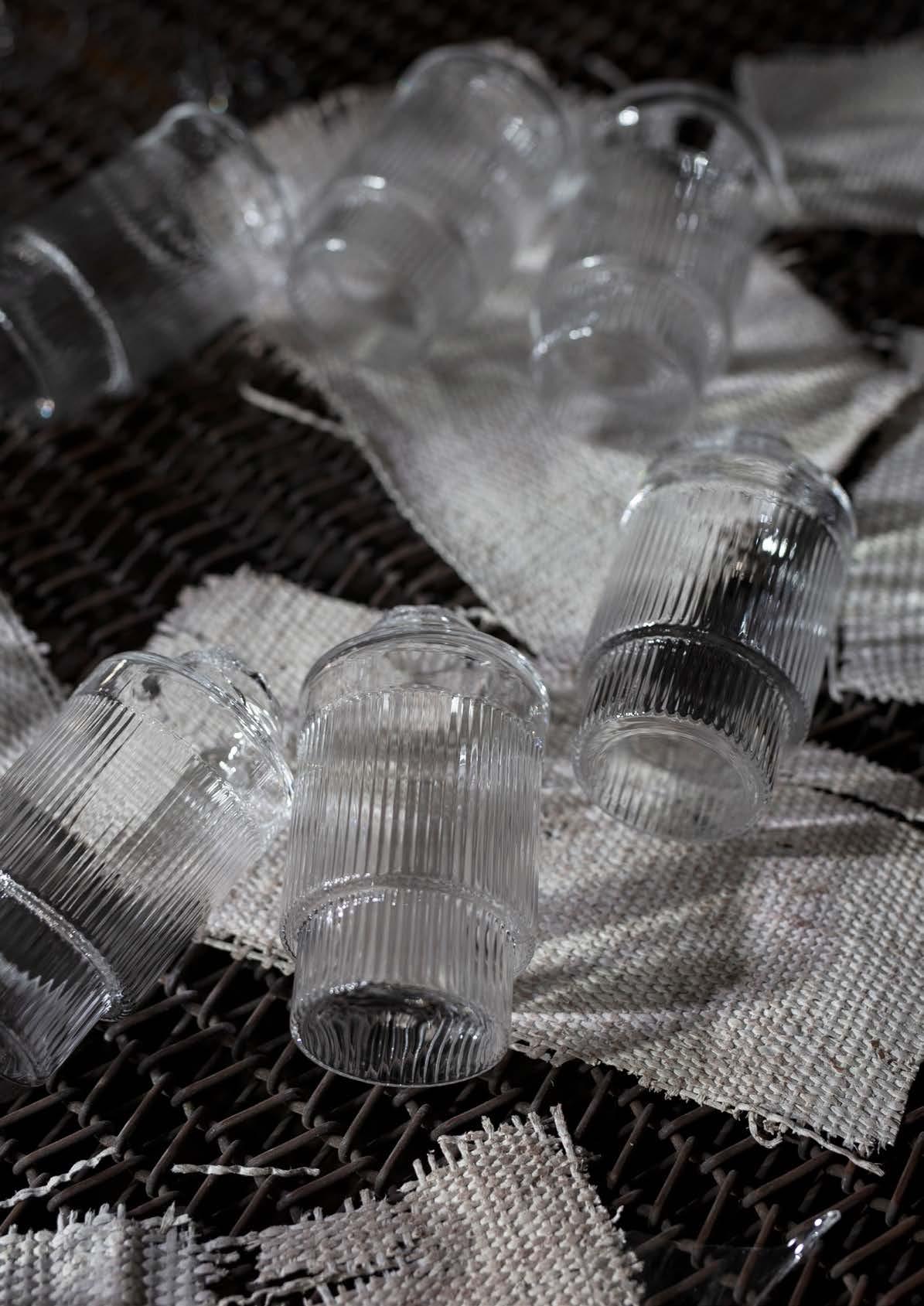
One of our new partners builds on more than three decades of technical expertise in glassware production, with approximately 225 employees and dedicated design, sourcing and production teams.
The supplier holds recognised certifications and initiatives including BSCI, GRS, Sedex and ISO 9001, supporting structured quality management and responsible labour practices. Social responsibility is embedded through adherence to recognised standards that safeguard workers’ rights and fair working conditions.
Environmental improvements are practised through continuous operational upgrades. In 2024, the factory invested in a new electric furnace, increasing material efficiency and improving
overall output utilisation. Waste heat from production is recovered and used to heat water for employee facilities, reducing additional energy demand. Production wastewater is collected, filtered using professional treatment equipment, and safely reused for designated purposes, minimising freshwater consumption. Renewable energy also forms part of the energy mix. Solar panels installed on warehouse rooftops supply a share of operational electricity, contributing to approximately 30 % of total production energy coming from renewable sources.
We have onboarded the supplier to the Målbar climate screening tool, enabling structured assessment of CO₂eq emissions and identification of reduction opportunities. This provides datadriven insights to further optimise energy use, material efficiency and overall climate performance.
The supplier holds the following certifications and initiatives:
Conscious Consumption
We take responsibility for understanding and managing the impact of our business. Our approach in 2025 has been characterised by a clear allocation of time and resources to the areas that matter most. Measuring the CO₂eq footprint of our products and materials is a core part of this work and forms the basis for informed, responsible decision-making.
Through a Climate Screening Tool, we assess the CO₂eq footprint of products and raw materials across the portfolio. In 2025, this data was actively applied through hotspot analyses, allowing us to identify where our largest impacts occur and where efforts can drive the most meaningful change. Rather than treating data as a compliance exercise, it is used to prioritise actions, guide material choices and focus resources where real impact can be achieved.
Our CERTIFIED tag indicates that a product meets verified environmental or social criteria throughout the supply chain, providing clearer documentation and greater credibility for consumers. Products carrying the CERTIFIED tag are certified under recognised standards such as FSC™, GOTS, GRS or OSC 100/Organic Blended, with each stage of the supply chain meeting defined requirements. Throughout 2025, we continued to work systematically with certified materials and to increase the number of certified products in our collections. This focus supports more responsible sourcing practices and strengthens transparency across the value chain from raw materials to finished products.
In 2025, we achieved our target of increasing the share of certified products in our collection to 29 %. Looking ahead, we aim to increase this share to 32-35 % of our total collection, recognising that expanding certified products is not only a numerical goal but a commitment to responsible practices across environmental and social dimensions of our supply chain.
Responsible choices are made from the earliest design stages. The design phase is pivotal in shaping a product’s environmental and social footprint. Our in-house design team adhere to a set of responsibility criteria that ensure new products align with our commitment to sustainability. These benchmarks include quality in design, function and materials for longevity, disassembly, certifications, climate screening, commitment to human rights and fair labour practices, as well as social responsibility. Wherever possible, we prioritise certified materials and we design for disassembly to support repairability and recyclability. While we aim to steadily increase the share of certified products, we acknowledge that the percentage may vary year to year depending on collection changes and demand, including the phasing out of products where relevance declines.
The percentage of certified products in our collection increased from 28% in 2024 to 29 % in 2025. We are committed to increasing this further in 2026.
“Design decisions are never neutral. The choices made at the very beginning of the design process shape a product’s environmental and social footprint.”
Jannie Søgaard, Chief Brand & Product Officer
Quality
Quality is central to how we create products and guide customers towards responsible choices. By designing items intended to last – in function, material and aesthetic – we want to inspire customers to make more responsible choices.
Longevity begins in the design studio. Every new product is shaped by a design approach rooted in material understanding, durable function and timeless expression. Our in-house design team works closely with product development to ensure that responsibility is considered from the earliest stages, where material choices, construction methods and production processes are defined. This work is guided by our “Responsibility Criteria”, covering durability, material performance, certifications, climate screening, social responsibility and compliance requirements.
Quality is safeguarded through structured processes across the value chain. Products undergo comprehensive quality control, including supplier assessments, inspections and routine visits to manufacturing sites. Risk assessments and rigorous testing in accredited laboratories ensure compliance with national and international standards. This systematic approach allows us to identify potential issues early and continuously improve product performance and durability.
Our products meet all required safety standards, including CE marking, fire safety regulations, environmental requirements and correct material labelling. Through rigorous compliance, we aim to meet and exceed industry expectations for safety, quality and responsible production.
In 2025, our production claim rate was 0.8 %, achieving our target of staying below 1 %. For 2026, we aim to maintain this level. Going forward, will we report across production, packaging, transport, and warehousing to provide a clearer overview of product performance across the full journey. For this combined metric, we aim to reduce the rate to 1.5 %, improving on 1.8 % in 2025.
Extending product life remains a key focus. Through initiatives such as our spare-parts service and the Pro-Long pilot, we support longevity through maintenance, repair and prolonged use as part of a more circular approach.
Certifications and Testing
Certifications and testing play a central role in how we translate a sustainable mindset and a strong sense of responsibility into practice. By communicating clearly about standards and verification, we provide a shared reference point to support informed choices and strengthen the relationship between design intent, production and use.
Our commitment to environmental and social responsibility is reflected in how we work with certified materials, suppliers and processes. Through responsible design principles, we integrate considerations such as material performance, durability, certifications, climate screening and social responsibility from the earliest stages of product development. This approach supports the integration of certified materials and circular practices into future designs and helps ensure that responsibility is embedded throughout a product’s life cycle.
To support this work, we established our framework “Responsible Suppliers” in 2023. Suppliers classified under this internal framework adhere to recognised initiatives and third-party certifications such as BSCI (SA8000), FSC™, GOTS or GRS, reflecting their alignment with our requirements for human rights, fair working conditions and responsible practices. Building on achievements in 2024 (58 %) and 2025 (68 %), our ambition is for 70-73 % of suppliers to be classified as Responsible Suppliers by the end of 2026. Our use of the Qarma supplier module supports this.
Product safety and compliance are ensured through structured risk assessments and rigorous testing in accredited laboratories.
We comply with applicable national and international regulations and standards – including the European Union chemicals regulation, REACH (Registration, Evaluation, Authorisation and Restriction of Chemicals) which governs the manufacture, import and use of chemical substances within the EU –safeguarding environmental and health requirements while supporting responsible production and product quality.
Certifications underpin sustainable growth and transparency. By continuing to expand certified products and supplier engagement, we aim to strengthen circular practices, support conscious consumption and integrate responsibility more deeply into future collections.
CERTIFIED
CERTIFIED Tag
The CERTIFIED tag is primarily a communication tool designed to increase awareness and engagement by clearly identifying products that meet verified environmental or social criteria. Products carrying the CERTIFIED tag are certified under recognised schemes such as FSC™, GOTS, GRS or OCS 100/ Organic Blended, with requirements met across the entire supply chain. The transition has strengthened transparency and ensured that materials previously considered responsible now meet recognised certification standards.
GRS, the Global Recycled Standard
GRS is an internationally recognised certification that verifies the use of recycled materials across the supply chain while meeting strict environmental, social and chemical criteria. Our work with GRS supports circular thinking by helping keep materials in use for longer and reducing reliance on virgin resources. Using the Earth’s resources wisely is a key part of conscious consumption and GRS-certified products provide verified traceability from recycled input to final product.
GOTS, the Global Organic Textile Standard
GOTS is recognised as the leading processing standard for textiles made from organic fibres. It defines strict environmental and social criteria throughout the entire organic textile supply chain, from raw material to finished product.
OCS 100/Organic Blended, the Organic Content Standard
OCS verifies the presence of organically grown material in products and ensures independent verification at each stage of the supply chain, from source to final product.
We recognise that sustainability is a continuous journey of learning, adaptation and progress shaped by a shared vision for a better tomorrow.
FSC™, The Forest Stewardship Council™
FSC™ is an international, non-profit certification scheme for wood and paper. FSC-certified forestry protects biodiversity, limits harvesting to sustainable levels and safeguards workers’ rights across the supply chain. We will also work with FSC Traces, a traceability system that tracks certified forest-based materials from origin to final product, ensuring responsible and legally sourced materials.
Amfori's Business Social Compliance Initiative (BSCI) Through Amfori BSCI, we monitor and assess workplace standards in our global supply chain. Audits support compliance with labour rights and ethical working conditions and form part of our broader due diligence efforts.
NORDIC SWAN ECOLABEL
The Nordic Swan Ecolabel sets strict criteria for environmental performance, health, quality and safety. Our Nordic Swanlabelled candles meet defined requirements across raw materials, production and use.
UN Global Compact
We are active participants in the UN Global Compact and our Code of Conduct aligns with its Ten Principles. The Code establishes the ethical foundation for our business and is endorsed by partners and suppliers, supporting safe working conditions, ethical conduct and responsible partnerships.
We are working to bring more products under certification schemes and integrate certified materials and circular practices into future designs.
NORDICSWAN ECOLABEL
Packaging
Packaging plays a crucial role in the environmental impact of our products. By carefully selecting packaging materials, we aim to reduce waste, improve circularity, protect products more efficiently and limit environmental impact.
Packaging is one of the biggest contributors to our product emissions, alongside material usage, energy-intensive production processes and transportation. Prioritising sustainability in our packaging solutions is therefore essential to significantly reduce the overall environmental impact of our products.
To ensure responsible choices, we have initiated a comprehensive survey of all suppliers to assess packaging materials against the eco-modulation criteria set by the Danish Environmental Protection Agency. This supports our reporting under Denmark’s Extended Producer Responsibility (EPR) system and ensures continued compliance with Directive 94/62/EC on Packaging and Packaging Waste.
We actively engage with European and national regulations, registering, reporting and assuming financial responsibility where required. Labelling and documentation are continually updated to meet evolving legal requirements, supporting transparency and responsible practices across the supply chain.
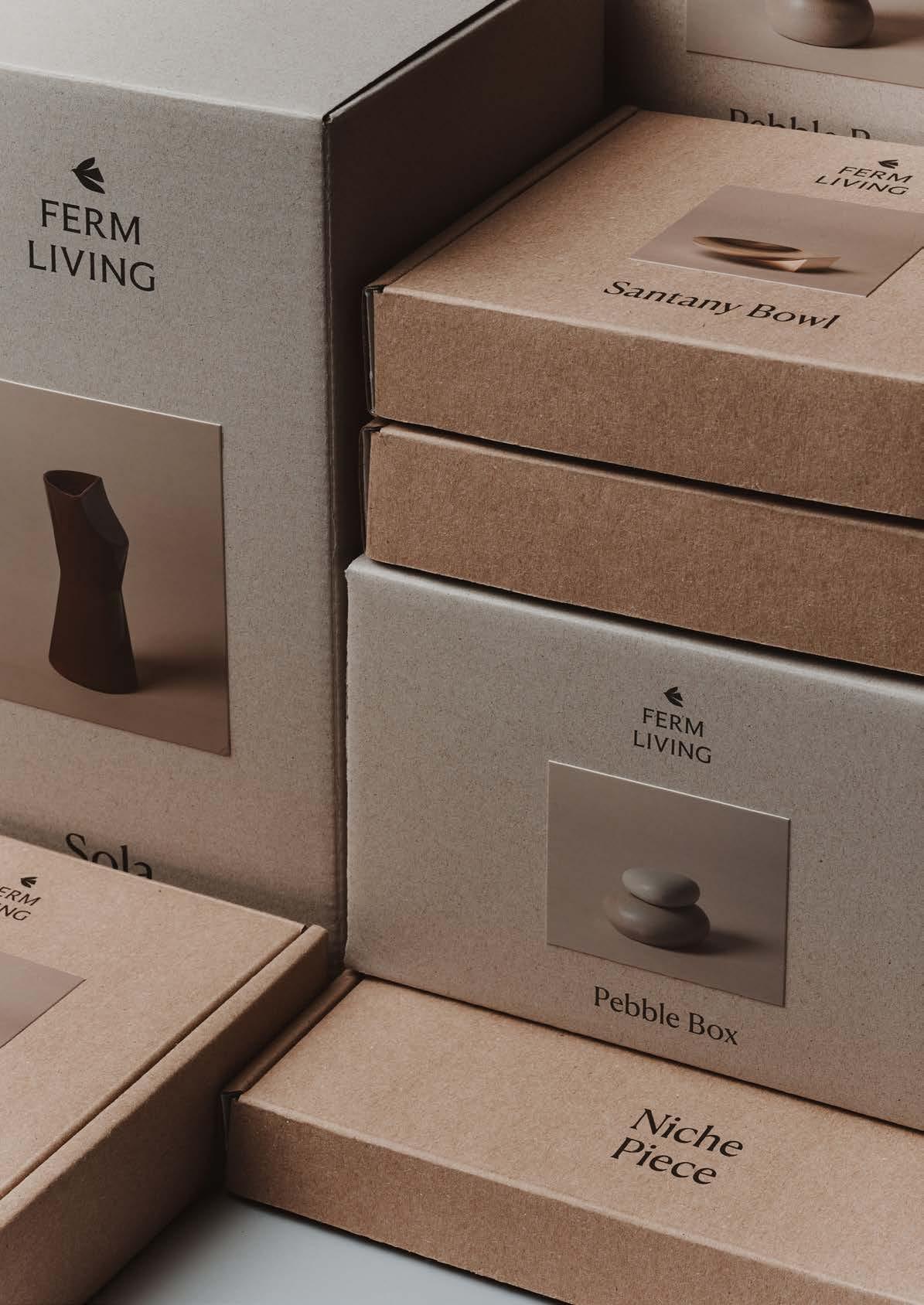
All our gift boxes and product packaging are made from FSC™certified cardboard and printed using black soy-based inks. Hang tags carry FSC certification, while tote bags are crafted from GOTS-certified organic cotton and designed for repeated use.
Since 2020, we have maintained a focus on reducing Styrofoam in our packaging. Then, around 10 % of our products relied on Styrofoam, but by the end of 2025 this was reduced to just 1.8 %. Minimising Styrofoam remains a key priority, helping us cut waste, lower environmental impact and support more sustainable packaging solutions. To that end, we are actively exploring alternatives in collaboration with our packaging suppliers and closely monitor developments in this area.
For product protection during shipping, the majority of materials are FSC-certified, including cardboard, paper pulp and craft paper. Smaller items and textiles are packaged in recyclable plastic and textile bags to encourage circular consumption and reduce production waste. Larger furniture pieces require more robust packaging, such as wood, which has a higher CO₂eq footprint. We continue to investigate lower-impact solutions in close cooperation with our suppliers.
We prioritise working with partners who actively implement recycled and recyclable solutions, optimise production to minimise excess material and adopt closed-loop systems to enhance reuse and recycling. All packaging — cardboard, wooden boxes and paper — must meet FSC certification requirements and comply fully with EU Directive 94/62/EC.
Logistics
Our transport operations exclusively rely on external forwarders. European freight is transported chiefly via road, and products originating from Asia are shipped by sea.
2025 Percentage of inbound transport types by volume (m3):
Transportation is one of the biggest CO₂ emission drivers in our products, alongside material usage, energy-intensive production processes and packaging. Our transport operations exclusively rely on external forwarders. European freight is transported chiefly via road, and products originating from Asia are shipped by sea. As standard practice, we prioritise alternatives to air transport; however, there are specific instances where high-priority shipments necessitate air transportation. For 2026, we aim to maintain our air transport rate at under 1 %. Our sea transportation rates have experienced a gradual and consistent rise, attributed to increased production in Europe compared to Asia.
Our ongoing efforts are focused on optimising our logistic procedures to achieve maximum efficiency and space utilisation. We use software calculators to measure container space, ensuring
that both environmental impact and transport costs are fully minimised.
During 2025, we conducted a comprehensive network analysis to further our understanding of our logistics footprint. The results show that our existing warehouse network is geographically well positioned.
Our warehouse facility in Denmark aligns with both our logistical needs and sustainability goals. The innovative facility is designed with a strong commitment to sustainability and features key elements such as green energy generated through a rooftop solar system, a sustainability certification that guarantees the building meets rigorous standards and a comprehensive approach to sustainability in its daily operations.
A Better Tomorrow
At Ferm Living, a better tomorrow means turning insight into action. Our decisions are guided by our 2030 Commitments, with sustainability at the core. We encourage transparency and measure, track and share our impact openly, using tools such as hotspot analyses, certified materials and supplier engagement to focus efforts where they matter most. Transparency, responsibility and collaboration drive real change.
But true progress is collective. By working together – with our colleagues, with our suppliers and with our community – we create enduring designs that encourage conscious consumption and strengthen the positive impact of our work. Through thoughtful choices and shared ownership, we contribute to a future where design, sustainability and action go hand in hand.
We value your feedback. If you have any questions or comments relating to this report, or require access to documents mentioned in this report, please contact: