
FENGATE RESPONSIBLE INVESTMENT POLICY

1 | Background and Introduction
At Fengate Asset Management (“Fengate”), we are driven to exceed our clients’ objectives while improving the world through our investments. Responsible investing, and our practice of incorporating environmental, social, and governance (ESG) factors into our processes forms the foundation of our purpose, our vision, and our work each day.
Fengate is a leading alternative investment manager focusing on infrastructure, real estate and private equity investment strategies. We believe that responsible corporate behavior and responsible investing is intrinsic to strong, long-term investor returns and we strive to align such principles with our portfolio objectives in each of our business lines.
In 2018, Fengate became a proud signatory of the United Nations-supported Principles for Responsible Investment (“UNPRI”), which promotes the application of six foundational principles into business operations and investment management processes in the belief that ESG factors can positively influence financial performance.
The purpose of this policy is to set out Fengate’s responsible investment beliefs, objectives, and approach to integrating ESG risk assessments throughout the investment process across each of our asset classes, to deliver long-term, sustainable returns for stakeholders. This policy applies to each of Fengate’s business units: infrastructure, real estate, and private equity. Due to differing asset classes and investment strategies, each team is independently responsible for their investment decisions, assessment of material ESG factors, and incorporation of the assessment into their investment processes


2 | Scope and Application
The purpose of our Responsible Investment Policy (the “Policy”) is to outline Fengate’s approach to responsible investing and stewardship activities. The Policy applies to all members of Fengate’s team including officers, directors, employees, and temporary employees. In instances where Fengate does not have operating control over an asset or entity, commercially reasonable efforts will be taken to encourage the alignment of third-party management activities to the policy statements.
3 | ESG Objectives
Fengate’s Responsible Investment Objectives Are:
1
2
To integrate ESG assessment in our investment process including origination, investment due diligence, approval, asset management, and disposition
3
To quantify the risk and return impact of ESG factors, where possible
4
To monitor and improve our ESG performance in our asset management activities
5
To report and be accountable on ESG-related matters and progress to our investors and stakeholders
To promote responsible investment principles to our employees, partners, service providers, and investors
See Section 5 for Fengate’s ESG Principles and Material Factors.

4 | Commitment to UNPRI
As a signatory of the UNPRI, Fengate has committed to upholding UNPRI’s principles in our firm’s activities. Fengate professionals across the organization work together to integrate the principles throughout the full investment lifecycle.
Fengate is committed to applying the six principles of the UNPRI:
1
2
We will incorporate ESG issues into investment analysis and decision-making processes
4
3
We will be active owners and incorporate ESG issues into our ownership policies and practices
5
We will promote acceptance and implementation of the Principles within the investment industry
We will seek appropriate disclosure on ESG issues from the entities in which we invest
6
We will work together to enhance our effectiveness in implementing the Principles
We will report on our activities and progress towards implementing the Principles
In adherence with the UNPRI’s six principles, Fengate considers material sustainability matters for all investment screening, diligence, asset management, and reporting activities to the extent reasonably practicable.
5 ESG Principles and Material Factors
At Fengate, ESG principles and considerations include a variety of factors that align with Fengate’s purpose, vision and corporate culture that may have an impact – on its own or in combination – on the risk and return profile of investments. We embed the material ESG considerations and evaluate risks and opportunities related to each of these factors into every stage of our investment process, and may include:
Minimize our investment’s environmental impact and support the global energy transition
■ GHG emissions
■ Climate risk
■ Water consumption
■ Waste management
■ Biodiversity & Sustainable Land Use
Amplify the health, safety, and well-being of our employees and our communities
■ Responsible labour practices
■ Human rights and community relations
■ Employee engagement
■ Diversity and social inclusion
■ Employee health and safety
Uphold strong governance principles and ethical conduct
■ Board composition and governance rights
■ Critical incident and systematic risk management
■ Cybersecurity
■ Remuneration policies
■ Accounting integrity


We aim to minimize our negative environmental impact, amplify the health, safety, and wellbeing of our people and our community, promote responsible labour practices, and always uphold strong governance principles and ethical conduct in all our investment and operating activities while fulfilling the fiduciary duty of providing value to our investors and stakeholders. Our material ESG factors guide our strategy and our efforts toward positive sustainability outcomes, and we continue to set expectations and targets for our investments in sustainability-related performance and outcomes as we evolve and mature our responsible investment practices.
In principle and fundamental to our core investment strategy, Fengate conducts an ESGrelated exclusionary screening that prohibits
investment in assets or entities whose principal operations and revenue generation are in sectors deemed unethical, harmful to society, or in breach of laws or regulations including but not limited to tobacco, palm oil, civilian and nuclear weapons, or thermal coal power generation.
Further, we firmly uphold the principles of human rights as outlined in international frameworks such as the Universal Declaration of Human Rights and the United Nations Guiding Principles on Business and Human Rights. We are dedicated to preventing and addressing any potential infringements on human rights, both within our Firm and across our partners.
6 Governance Structure – Fengate’s Responsible Investment Committee
Fengate’s Responsible Investment Committee has the main oversight of Fengate’s responsible investment strategy.
The Committee is co-led by Kevin Reid, Chief Operating Officer, and Vernita Tsang, General Counsel and Chief Compliance Officer.
The Committee is comprised of Fengate’s Director of Responsible Investment and senior representatives from each business line (infrastructure, real estate and private equity) and the firm’s corporate team.
The Responsible Investment Committee is accountable for the ongoing development, monitoring, and improvement of Fengate’s responsible investment activities. The investment teams and management teams of portfolio companies are primarily responsible for the management of ESG considerations within their operations.

Kevin Reid
Chief Operating Officer
The Director of Responsible Investment is responsible for overseeing the corporatewide strategic implementation of Fengate’s responsible investment strategy and providing updates and decisions to the Responsible Investment Committee for review and approval. The Committee meets at least once each quarter and will review and update, if necessary, Fengate’s Responsible Investment Policy on an annual basis.
Fengate also implements measures to ensure the advancement of the collective knowledge, skills, and experience of the Responsible Investment Committee and the firm’s executive team on sustainable development through training curriculums that are mandated across the organization on an ongoing basis.

Vernita Tsang General Counsel and Chief Compliance Officer

7 Integration of Responsible Investment into General Investment Processes
Fengate integrates ESG considerations into all phases of its investment processes across each of its investment strategies, recognizing that our level of influence may differ across investment strategies and the investments we manage. The investment teams and asset management teams are responsible for assessing and monitoring ESG factors during each phase of the investment process. Investment Committee approval for each investment strategy is required prior to reaching financial close on an investment.

Responsible Investment Integration into the Investment Cycle
1
Leverage relationships to identify and source investment opportunities
Ensure screened investment opportunity meets investment mandate and aligns with responsible investment policy
Fengate performs an initial risk assessment, including the identification of material ESG factors
2
Evaluate investment risks and develop risk mitigation strategies, including value creation strategies and assessment of material ESG factors
Complete asset specific environmental and technical diligence, leverage independent third-party experts to identify and assess ESG factors INVESTMENT SCREENING MEMORANDUM
Investment Committee approval required to proceed with detailed due diligence
Investment Committee approval required prior to commitment on investment, includes detailed ESG assessment

VALUE CREATION & ASSET MANAGEMENT 3
Actively manage investments, hold for duration or realize value through exit
Ongoing review and monitoring of ESG factors, summarized in our annual ESG Monitoring Report
Leverage governance rights on projects to influence positive ESG outcomes
QUARTERLY FUND & PORTFOLIO REVIEW REPORT
Quarterly reporting review of asset and fund performance, including regular monitoring of ESG factors

8 | Infrastructure

OVERALL APPROACH
Fengate Infrastructure invests in greenfield (i.e., newly constructed, refurbished, or modified infrastructure) and brownfield (i.e., operational infrastructure) mid-market assets providing essential services that drive economic growth and social advancement across the social, transportation, energy transition, and digital sectors. Each sector is well-positioned to benefit from global trends including demographic shifts, enhancing societal mobility, decarbonization, and demand growth for data and mobile connectivity.
PRE-INVESTMENT SCREENING AND DUE DILIGENCE
During initial investment screening, the investment team performs a negative ESG screening, ensuring that a potential investment opportunity does not conflict with Fengate’s Restricted Sectors. Fengate
conducts diligence to identify and manage ESG risks and opportunities, engaging with third-party consultants to perform technical and environmental assessments on each investment. Fengate’s ESG screening and assessment includes consideration of climaterelated risks and opportunities, including physical impacts such as extreme weather events, flooding, as well as higher energy costs, changes in raw material costs, and changes in demand. Throughout the due diligence process, Fengate engages with service providers, including design-builders and operating providers, promoting the use of favorable environmental and economic practices. An initial ESG assessment is subsequently completed in the investment committee memorandum (ICM) and presented to the Investment Committee.
Fengate will also conduct site visits and perform in-depth interviews with management and personnel to ensure alignment on beliefs and investment
approach, including responsible investment approach. Fengate seeks majority ownership stakes in projects and majority board representation, which provides Fengate with the ability to closely monitor asset performance and influence proactive risk mitigation through its governance protections during the investment period. Fengate Infrastructure utilizes the Sustainability Accounting Standards Board (“SASB”) definitions for materiality, defined as sustainability issues that are likely to affect the financial condition and operating performance of companies within an industry. Fengate considers the materiality of ESG topics of an investment on an individual project basis, as each case is unique.
VALUE CREATION AND ASSET MANAGEMENT
Fengate performs an annual ESG assessment for each of its infrastructure investments, collecting and reporting data on several ESG key performance indicators, which may include carbon emissions, energy usage, biodiversity, building certifications, water and waste management, community engagement, board composition, health and safety, and governance policies. Fengate will report ESG-related matters to investors on an annual basis through each fund-specific Responsible Investment Report.

9 | Real Estate

OVERALL APPROACH
Fengate Real Estate integrates ESG considerations into all phases of its investment process across all its asset classes by integrating ESG factor analysis throughout the investment and development process, asset management, management/leasing, and stakeholder engagement. Fengate works to implement sustainable business practices that positively influence the value of our projects. All real estate professionals at Fengate are responsible for implementing material sustainable business practices that may positively influence the value of the investment, such as energy and water conservation, waste management, tenant engagement, and building certification. Fengate Real Estate is a member of GRESB (Global Real Estate Sustainability Benchmark), a mission-driven and industryled organization that provides actionable and transparent ESG data to financial markets.
PRE-INVESTMENT SCREENING AND DUE DILIGENCE
During the sourcing stage, Fengate conducts an initial screening of ESG factors on potential new investments and ensures that screened investment opportunities meet the mandate commitment to responsible investing. This is underpinned by the team’s continuous monitoring of any material ESG developments in the market, regulatory environment, and real estate industry.
During the due diligence and approval, Fengate’s real estate team conducts a detailed internal review of relevant ESG factors, and where appropriate and/or required, seeks appropriate environmental and technical diligence from independent third-party experts. An initial ESG assessment is subsequently completed in the investment committee memorandum (ICM) and presented to the Investment Committee.

DEVELOPMENT
During the planning stages of any developments, Fengate actively engages with stakeholders, including local communities and governments to manage material ESG risks in the development phase. Fengate will also actively identify opportunities to provide employment in building new housing and communities with a focus on unionized labor. Fengate will also ensure the alignment of values and objectives with institutional investors and project partners through active engagement during the planning stage. Fengate’s real estate development team works with its industry partners, to ensure that ESG factors are considered throughout the diligence and investment phase of each project.
Fengate has established a standard of excellence for our residential design and development activities, one that thoughtfully integrates environmental sustainability, supports climate adaptation, and prioritizes tenants and community wellbeing. Together, these elements form our Sustainable Design Guidelines (“the Guidelines”) and, in turn, contribute to long-term value creation for our stakeholders.
Considerations may include building code requirements, energy efficiency and carbon emissions, wellness & accessibility, water & waste reduction, climate resilience, affordable housing components, testing and removal of contaminated soil, public consultation, and stakeholder engagement. Throughout the development process, Fengate collaborates with various government entities (e.g., cities, municipalities, ministries) and stakeholders (e.g., project partners, community members, business groups).
ASSET MANAGEMENT
As property managers, Fengate reviews and monitors assets for ESG risks and opportunities through ongoing assessment. Fengate actively identifies areas of improvement that may result in both operational efficiencies and improvement in environmental or social impact. Some examples of ongoing improvements include meeting or exceeding the minimum LEED certification, pursuing WELL HealthSafety Ratings, and BOMA BEST certification as required. Fengate conducts annual submissions to GRESB and is actively looking for opportunities to improve our GRESB rating.
10 | Private Equity

OVERALL APPROACH
Fengate Private Equity invests in growth-oriented businesses in North America. Fengate Private Equity invests through minority to majority ownership positions and typically secures meaningful governance rights, including board representation, enabling active stewardship and ESG integration. Fengate Private Equity works with its operating partners and advisors to identify, assess, and address material ESG factors in a manner consistent with its approach to material risk assessment, as identified through our investment screening, diligence, and asset management activities. Material ESG initiatives may also form part of Fengate’s value creation plans, supporting growth, operational resilience, and exit readiness. Fengate’s influence may vary depending on its ownership and governance rights.
PRE-INVESTMENT SCREENING AND DUE DILIGENCE
During initial investment screening, the investment team performs a negative ESG screening, ensuring that a potential investment opportunity aligns with Fengate’s exclusionary screening per Fengate’s Responsible Investment Policy. Fengate integrates ESG risk assessments into its screening and due diligence processes, including assessment of strong governance practices, board composition, responsible labor practices, and social stewardship. During diligence, Fengate will conduct site visits and perform in-depth interviews with management and personnel to ensure alignment on the investment approach. Fengate Private Equity utilizes the SASB definition for materiality, defined as sustainability issues that are likely to affect the financial condition and operating performance of companies within an industry.
Fengate will also engage as required with third parties to advise on potential material risks and mitigation. Upon identification of material ESG risks and opportunities, Fengate works with management to mitigate the risk either before investment or incorporates a risk-mitigation strategy into our post-investment action plan to be implemented by our operating partners.
HOLDING PERIOD
For majority control positions, Fengate ensures appropriate governance oversight through board representation at the portfolio company level and seeks to work proactively with management to improve the portfolio company’s responsible investment practices. For minority control positions, Fengate aims to influence control around ESG risks and opportunities within reasonable commercial efforts. During the holding period for each investment, Fengate may implement risk and responsible investment oversight to ensure appropriate risk management and ESG integration into the firm’s short and longterm planning. The investment team regularly re-evaluates its ESG factor analysis with any material findings incorporated into portfolio monitoring reporting that is discussed with Fengate’s Investment Committee and Advisory Board quarterly. Escalation of ESG incident reporting to investors will depend on a materiality threshold for the issues identified.

11 | Engagement and Stewardship
Fengate is aligned with the UNPRI’s definition of stewardship and strives to maximize overall long-term value to our stakeholders, including our investors, partners, and the communities in which we work, understanding the economic, social, and environmental influence and the impact that we have through our investments across infrastructure real estate, and private equity.
ENGAGEMENT AND STEWARDSHIP
Fengate regularly engages through direct dialogue with our portfolio companies and project partners, including designbuilders, contractors, developers, operators, etc. to ensure that all identified material ESG factors are addressed in a timely and appropriate manner. In addition, Fengate engages with numerous industry stakeholders to promote the use of favorable environmental and responsible investment practices and to advance Equity, Belonging, Inclusivity and Diversity (EBID) initiatives. Fengate will engage with regulatory entities, as applicable, to ensure compliance with local jurisdictions, laws, and regulations in which we operate. To ensure appropriate oversight and control of companies or projects, in most instances, Fengate obtains voting rights and board representation. In instances where initial stewardship activities are not effective, escalation efforts such as

representation on boards, management replacements, and other appropriate measures will be considered.
Fengate will consider opportunities to participate in collaborative engagement initiatives that support businesses and projects, our stakeholders, and the industries in which we invest. Fengate is an active member in several industry groups to support positive growth and change within each of the industries we invest, including Council of Institutional Investors (CII), Real Property Association of Canada (REALPAC), NAIOP Commercial Real Estate Development Association, Canadian Council of PublicPrivate Partnerships (CCPPP), Association for the Improvement of American Infrastructure (AIAI), and the Association for Corporate Growth (ACG).

CONFLICTS OF INTEREST
Fengate is fully committed to maintaining high standards of integrity and professional conduct, including handling of conflicts of interest. Fengate’s Code of Ethics and Compliance Manual, both incorporate policies on conflicts of interest. Due to the nature of Fengate’s business, there are instances in which material conflicts may arise between Fengate, including our individual advising representatives and our clients. Upon identification of a material conflict of interest of which, in the opinion of Fengate’s Chief Compliance Officer, an investor would be expected to be informed, Fengate will disclose, in a timely manner, the nature and extent of the conflict of interest or critical concerns to the client whose interest conflicts with the identified interest. Fengate ensures that appropriate documentation of steps taken to manage the conflict of interest and that the conflict is resolved in the client’s best interest.

12 Commitment to Equity, Belonging, Inclusion, and Diversity (EBID)

Fengate is committed to supporting the advancement of EBID across the firm and the industries in which it is involved. Fengate has an established Social Impact Committee, to support the advancement of EBID practices within the firm and broader industry.
It is Fengate’s core belief that diverse perspectives and experiences enhance the value to our firm, our investors, our stakeholders, and the communities in which we work; therefore, it is our moral imperative to continuously grow and sustain a culture of inclusivity. It is a priority at Fengate to create, operate with, and continuously grow and sustain an inclusive culture that respects
and connects the diversity of our team, our clients, our partners, and the communities in which we work. Fengate is a signatory to ILPA’s Diversity-in-Action, an initiative that brings together limited partners and general partners who share a commitment to advancing diversity, equity, and inclusion in the private equity industry. The goal of the initiative is to motivate market participants to engage in the journey toward becoming more diverse and inclusive and to build momentum around the adoption of specific actions that advance diversity, equity, and inclusion over time.


13 | Community Engagement
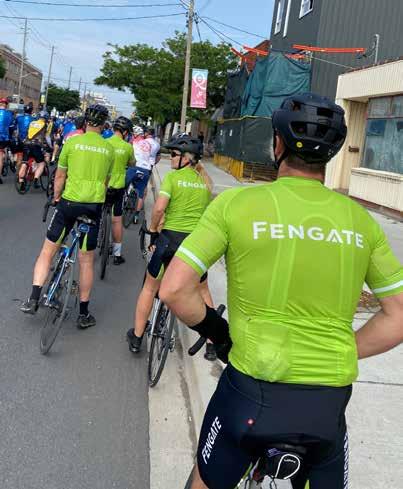
Fengate supports the communities in which we invest through various engagement opportunities and charitable donations. Acting responsibly toward our stakeholders, our communities and those in need is fundamental to our culture and our business. At the heart of our community efforts is the Fengate Community Foundation (FCF), established in 2010 to enhance Fengate’s philanthropic efforts. The FCF is an approximately $2 million grant from Fengate that is administered by the Hamilton Community Foundation, ensuring
donations and support reach programs and causes with the most need, within Canada and abroad. In addition, each year Fengate donates money and time in support of community and charitable organizations, such as with our annual Louis Serafini Sr. Community Partnership Day.
Fengate also encourages our team to give back in ways that are meaningful to them, allowing three paid community service days, and supports employee giving through a charitable donation matching program.

14 Support for the Task Force on Climate-related Financial Disclosure
Fengate supports the recommendations of the Financial Stability Board (FSB) Task Force on Climate-related Financial Disclosure (TCFD), recognizing climate change as an important global issue and support the FSB’s mission to develop voluntary, consistent climate-related financial risk disclosures.
15 | Policy Changes
This Policy has been prepared under the supervision of Fengate’s General Counsel and the Chief Compliance Officer. The Policy will be reviewed and updated annually, or more frequently as appropriate.
16 | Contact Information
Any questions concerning the Policy should be directed to responsibleinvestment@fengate.com

17 Fengate Responsible Workforce Principles
Fengate was founded with a deep commitment to community, and responsible labor principles have been integrated into the firm’s mission from the start. We fundamentally believe that a diverse, adequately compensated, and trained workforce promotes private capital investment and leads to enhanced risk-adjusted returns for our investors in the regions in which we invest. To uphold this commitment, Fengate’s dedicated Responsible Labor team oversees the execution and continuous monitoring of the firm’s responsible labor standards, including the Responsible Workforce Principles (Principles) and fund level Responsible Contractor Policies (RCP).

RESPONSIBLE WORKFORCE PRINCIPLES
Fengate has summarized its core Responsible Workforce Principles below:
1 | Respect workers’ freedom to join a trade union without undue interference and engage in good faith negotiations, as required, with any trade union that lawfully represents its workers
a. Adhere to Fengate’s Responsible Contractor Policy to encourage the use of Signatory Contractors and Responsible Contractors by providing inclusive bidding opportunities, while aligning to Fengate’s fiduciary responsibilities. See Responsible Contractor Policy for more details.
b. Work closely with NABTU on advancing our responsible labor practices, including quarterly pipeline notification calls, policy language updates, and labor impact reporting.

2 | Provide fair compensation, safe working conditions, and industry standard labor practices
a. Engage with portfolio companies to provide wages and benefits that are generally equal to or greater than the prevailing standards within the relevant industry, including compliance with all applicable statutory minimum wage requirements.
b. Prioritize the health and safety of its workforce through compliance with all applicable occupational safety and health laws, regulations, and strive to meet or exceed industry standards.
c. Consider adverse impacts on its workforce resulting from portfolio company transactions and asset acquisition, management, and disposition activity.
3 | Provide meaningful worker voice, engagement, and grievance mechanisms
a. Encourage each portfolio company to share these Principles with their employees.
b. Establish accessible, confidential grievance channels that allow workers to raise concerns without fear of retaliation where applicable.
4 | Uphold equitable workforce practices that prohibit discrimination and harassment
a. Uphold practices that prohibit discrimination or harassment on the basis of race, ethnicity, gender, sexual orientation, religion, disability, or any other ground protected by law.
These Principles are embedded across Fengate’s full investment lifecycle—from due diligence and Investment Committee review to post closing execution. Fengate monitors implementation and reports on progress annually in its Sustainability Report, working closely with portfolio companies to advance responsible labor practices. The Principles apply to all controlled portfolio companies, while for non controlled investments, Fengate seeks to promote and influence adoption wherever feasible.
1 These principles are subject to applicable legal restrictions and internal Fengate criteria regarding company size, number of employees and employee tenure at portfolio company.
*All values presented in this brochure are in Canadian dollars.
“Fengate” refers to the Fengate group of companies which is comprised of Fengate Capital Management Ltd., its affiliated entities and the funds or other investment vehicles that they manage. Fengate has produced this information brochure (the “brochure”) for informational purposes only. The information contained in the brochure (the “Information”) is believed to be accurate at the time of publication of the brochure; however, Fengate does not guarantee or warrant or make any representations concerning the quality, suitability, accuracy completeness or timeliness of the information contained in the brochure.
This brochure and the information contained within it does not constitute an offer or solicitation by anyone in any jurisdiction in which such an offer or solicitation is not authorized or to any person to whom it is unlawful to make such an offer or solicitation. In no event will Fengate be liable to any party for any claim or any direct, indirect, exemplary, incidental, punitive, special or other consequential damages arising out of information available in the brochure. Fengate is a trade name of Fengate Corporation. All other trade names, trademarks, service marks or logos found in this brochure are owned by their respective owners.
© 2026 Serafini Holdings Corporation. All rights reserved.
Canada | Toronto and Oakville United States | Miami and Houston info@fengate.com