
5-7 August 2026
Tides Hotel 66 Trafalgar Street
The Wood, Nelson Pricing:
Early Bird $450
(2 or more tickets $420 each) available until 31st March 2026
Regular $490
(2 or more $460 each) available 1st April 2026 until 17th July 2026









5-7 August 2026
Tides Hotel 66 Trafalgar Street
The Wood, Nelson Pricing:
Early Bird $450
(2 or more tickets $420 each) available until 31st March 2026
Regular $490
(2 or more $460 each) available 1st April 2026 until 17th July 2026
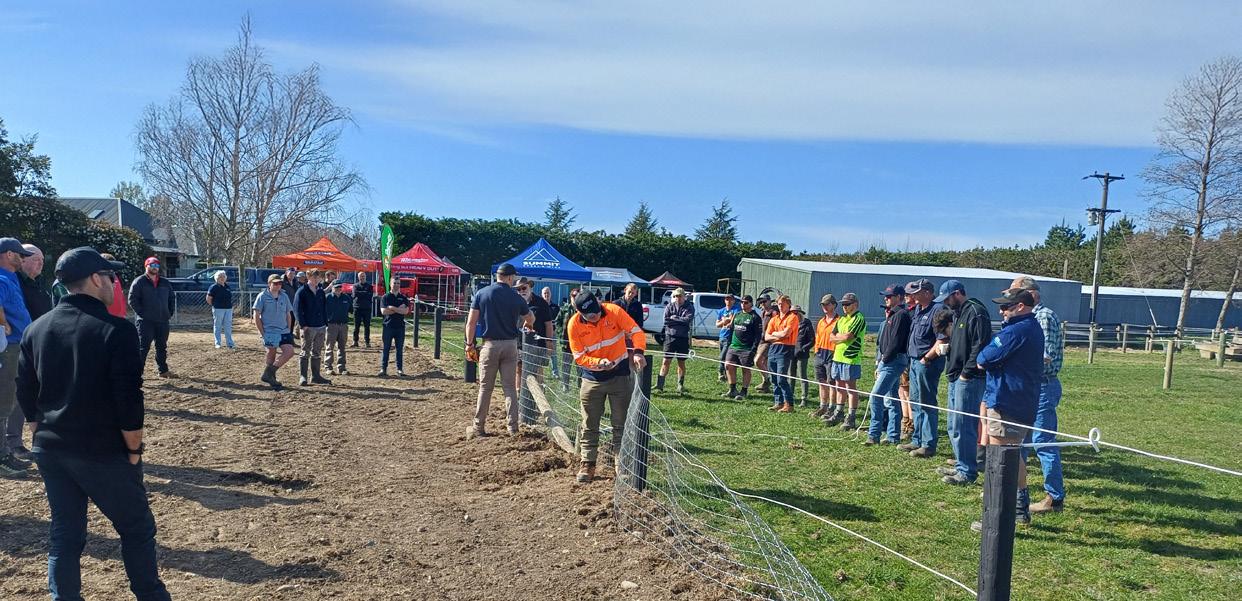
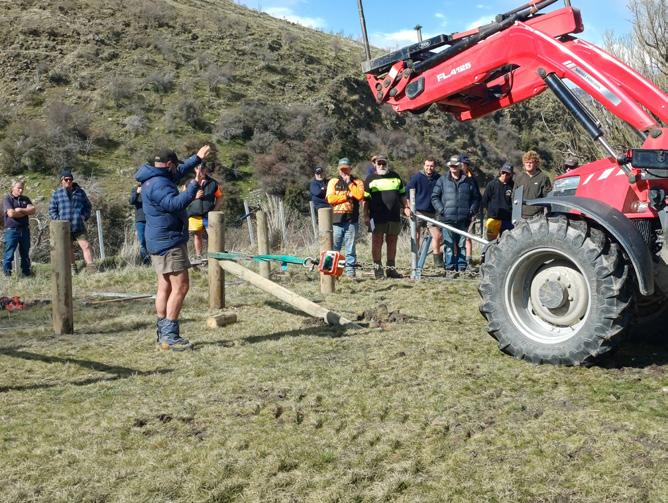
FCANZ Best Practice Days deliver practical, hands-on training through interactive demonstrations and discussions. You’ll sharpen your skills, see the latest gear in action, and connect with suppliers and contractors in your region – taking away tips and techniques you can put to work immediately.
Discussions include:
• Various fencing approaches
• Choosing the right stay assembly for different ground types and situations
• Practical tips to save time and get lasting results Who should attend
• Fencing contractors, fencer generals, horticulture workers, farmers
• Anyone curious about building a career in this fast-growing industry Times
• 9.30am – 3.00pm Cost (includes lunch)
• FCANZ Members: $20 ($15 if you pre-book and pay before event)
• FCANZ Employee Members: $10
• Non-Members: $40 (25% discount for two or more) Cash & EFTPOS available on the day or register and pay online.
Tuesday 17 March
191 Oamaru Creek Road
Demonstrations include:
• Electric irrigation fencing
• Netting fencing techniques
• Stay assembly options and testing
Tuesday 14 April
Gallagher Animal Management
Inwards Goods Entrance 13 Gallagher Drive, Melville
Demonstrations include:
• Electric fence solutions
• Footing in various soil conditions
• Stay assembly options
– where / why
• End straining techniques
“
Thursday 19 March
282 Glasnevin Road, Glasnevin
Demonstrations include:
• Deer fencing
• Load testing
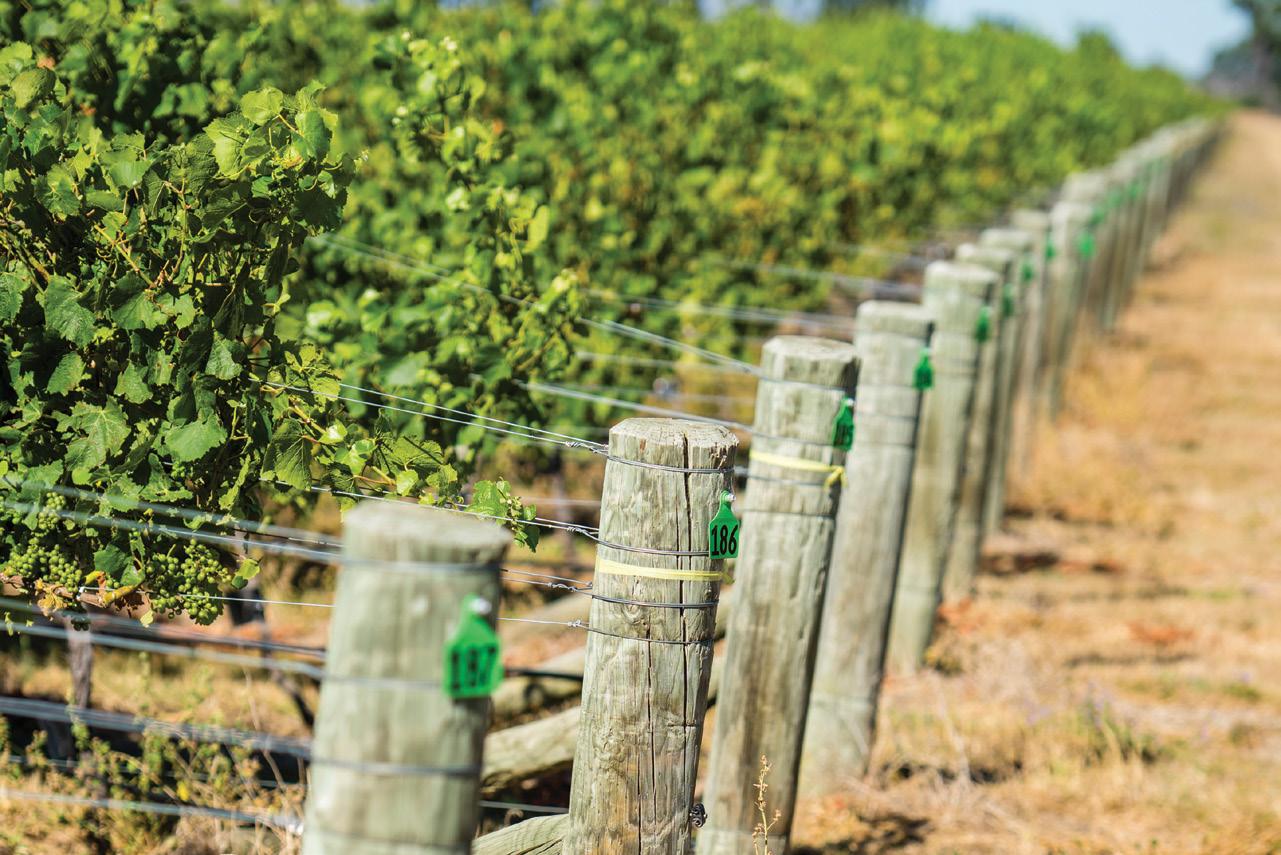
• Vineyard stays
Thursday 16 April
Lewis Farms, 747 St Highway 1
Demonstrations include:
• Fencing with timber
• Footing in various soil conditions
• Stay assembly options
– where / why
• End straining techniques
3.30pm – Mitchpine Tour 931 State Highway 1, Levin
Even after fencing for 40 plus years I picked up a few tricks to make the job easier










2026 has kicked off with pace and purpose. Christmas already feels like a distant memory as the industry launches straight into a busy new year.
One encouraging sign I’m hearing consistently is the number of fencing contractors actively advertising for staff — a strong indicator that workloads are increasing and confidence is returning. There’s a definite sense that more work is on the horizon, and that positive change is beginning to move through our sector.
Momentum is building across the wider economy as well, and while challenges remain, the wind is certainly shifting in a more optimistic direction. Activity is picking up, opportunities are opening, and many businesses are positioning themselves for growth rather than simply holding steady.
At the same time, election campaigns are starting to heat up. As always, this brings a level of uncertainty, and it will be important to watch closely what the coming months mean for New Zealand, particularly for trades, rural industries, and small businesses. FCANZ will continue to monitor developments and advocate for the interests of our members, as policies and priorities take shape.
A real highlight to kick off the year was the second Field Days Fencing Hub, held in Waimumu in the South Island. This event was a fantastic example of what can be achieved through collaboration. The Hub brought together industry partners, fencing contractors, and FCANZ in a meaningful way, creating space for connection, conversation, and shared learning. Feedback has been extremely positive, and it reinforces the value of working together to strengthen our industry.
For me personally, the year started with change, with a move to Taupō for me and my family. The fencing business will remain in Northland, with me as overseer and our excellent staff continuing to do what they love to do. We’ve moved to be in a more central location, to open up opportunities for the kids, and a relocation for Donna’s new job at Sotheby’s International Realty. Donna will remain the National Coordinator for the fencing qualifications in the interim, to maintain continuity for Fencers.
As we move further into 2026, there is a growing sense of energy and opportunity. With increasing work, strong partnerships, and an engaged membership, FCANZ is well positioned for the year ahead. I look forward to seeing how this momentum continues to build.
Cheers, Phil The FCANZ Mission
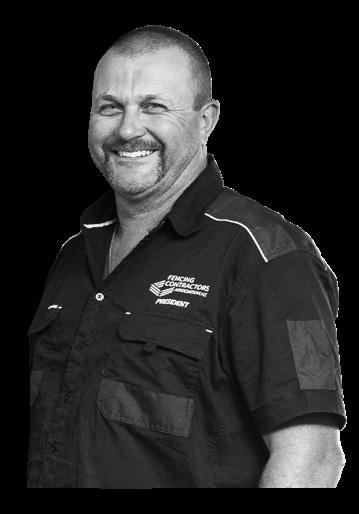
Phil Cornelius President




we know there will always be a need for fencing and innovative solutions in the decades ahead.

The Board has long held a goal of growing our membership base beyond 500. While new members join and others move on, overall numbers remain steady.
If you’re asking, “Why join?” — I would ask, “Why not?”
If there is just one message you take from this month’s WIRED, let it be this: get on board and register for the 20-Year FCANZ Conference26. We want to see you there.
Conference is an incredible opportunity to connect, reset, and recharge your batteries. It is always a motivating event, and the relationships formed across the country are invaluable. The networking alone makes it worthwhile.
As we look back through the history books – or talk to some of our wise (I won’t say old!) founding fencers – it’s clear the Association’s journey stretches even further than our official 20 years since incorporation. We want to celebrate the proud history of FCANZ, acknowledge those who built it, and reflect on what the Association represents today.
More importantly, this is a chance to look forward. What do we want FCANZ to look like in another 20 years? How do we ensure a strong, prosperous future for fencing in New Zealand?
Whether you’ve been involved for decades or are considering attending for the first time, we would love to have you at Conference26. Please get in touch with any of us if you would like to learn more. We also encourage you to share old photos or historical stories – we would love to acknowledge and celebrate the journey of fencing in New Zealand.
Even with emerging technologies such as virtual fencing gaining momentum,


The opportunities and camaraderie that come with membership are exceptional. David (my husband) and I can personally attest to this, having joined as new fencing contractors six years ago. From accreditation pathways and member benefits to social events at Conference and industry support networks, there truly is something for everyone.
Membership naturally lifts the profile and professionalism of your own business. When you are performing at your best, it also creates an opportunity to share knowledge and celebrate success with others.
The Board continues to grow with fresh energy following the addition of three new members. These individuals have brought new ideas and perspectives, while also affirming that many of our existing strategies and focus areas have been on the right track.
With significant projects now behind us – including establishing the fencing endorsement process – we are excited about 2026. It presents an opportunity to reset, refocus, and plan what comes next.
Strong partnerships and relationships underpin the value our association brings to the industry. I would like to acknowledge our partners, who are cornerstone to the success of the entire fencing sector. Together, we are stronger, and I look forward to seeing these relationships continue to strengthen over the next 20 years.
Since joining the Board, I have occasionally heard references to past grievances. While it is important to acknowledge history, it is equally important not to be defined by it. As I gain a few more grey hairs and hopefully a little more wisdom, I recognise that life in 2026 comes with more pressures than ever before. Retirement looks different. Expectations are higher. Life moves faster. None of us are perfect, even though we may strive to be. Setbacks are part of the journey. But if we commit to doing our best and remain open-minded, we position ourselves well for the future. Ongoing learning and development – for ourselves and for others – fuels motivation, productivity, profitability, and ultimately helps create the lifestyle we all seek.
While many days are strong and positive, there are also days that fall short. For some, life can be tough for many reasons.
In that spirit, I would like to acknowledge the incredible work of our Patron, Craig “Wiggy” Wiggins, and his initiative, Lean on a Gate, Talk to a Mate. Wiggy continues to work tirelessly to support mental wellbeing across rural New Zealand. I encourage you to explore the new courses and resources he has developed.
Supporting one another remains one of our greatest strengths as an industry.
Written by Janine Swansson
View your pricing Access exclusive offers
Manage and track orders Shop the full Farmlands range
Manage multiple farms
Manage and drawdown on sales agreements


It’s always a bit strange writing an opinion piece that won’t be seen for another month. As I write this, the horror of what unfolded in Mt Maunganui is still fresh in my mind, and my heart goes out to all the whānau affected by the loss of their loved ones. Sadly, what was once considered extreme weather seems to be happening more frequently, with the same areas bearing the brunt over and over.
On a brighter note, 2026 has started with a hiss and a roar for just about everyone I’ve spoken to so far. There are signs the economy may be trending upward, and there’s definitely more optimism out there. Prices for many commodities are still high for the average consumer, but hopefully we’ll start seeing that ease as the year progresses.
20 years on…
Heather, Jeanette, and I have had a blast going through old WIRED magazines to bring you our “The Way We Were” series this year. There are some fresh faces in those old editions – which, I must admit, made me double-take at how different I must look! We’ve had some robust discussions about whether to include some of the gems we found that probably wouldn’t pass muster these days. You’ll have to read on to see if we were brave enough to include them.
Later this year, we’re broadening our Join & Win competition to include current members. All you need to do is have a new member put your name down as their
By the time this edition of WIRED goes to print, we will be well into the rebuild of our website.
Our current site has been letting visitors down – especially on mobile, which makes up more than half of our traffic. Menus are tricky, icons and buttons often don’t display, pages can feel confusing, and glitches like disappearing maps or broken ticks make it frustrating to use. The Find a Fencing Contractor directory has been slow and hard to navigate, with no filters for location or category.
• Mobile-friendly layouts, fast-loading images, and intuitive navigation make every visit simple and smooth.
• A simple and quick to search Find a Fencing Contractor directory which can filter by location, fencing category and even FCANZ endorsement.
• Members will be able to easily access exclusive content, events, classifieds, and an industry supplier directory – all in one place.
• Members will have the option to add an advert to their FAFC listing, and there will be an online membership card to show current FCANZ status.
This isn’t just about looking good – it’s about saving time and hassle. Visitors will find what they need quickly, members can access resources easily, and the site will be simple to keep up-to-date. In short, FCANZ resources will be more accessible than ever.
Keep an eye out for an email in the coming weeks with your login details so you can update your listing.

referrer. Both of you will go into the draw to win a $500 voucher each for Farmlands or PGG. If they sign up at the trailer, both of you will get a triple entry! Keep an eye on our social media – facebook.com/ fencingcontractorsnz – and your inbox for updates.
Jaime Bigwood
Executive Director 021 284 8223 | exec@fcanz.org.nz

Disclaimer: This schedule is subject to change. See the website for the latest information.

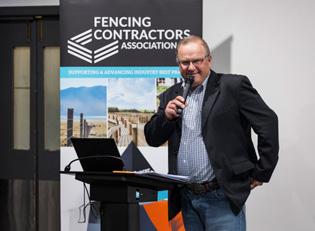
This year marks the 20th anniversary of the Fencing Contractors Association of New Zealand (FCANZ) becoming an incorporated society. Over that time, both the fencing industry and the wider economy have changed significantly, and FCANZ has evolved alongside them.
One of the most notable shifts has been in the rural sector, where landowners increasingly recognise the value of engaging specialist contractors to carry out key on-farm tasks such as fencing.
FCANZ President Phil Cornelius says the change in mindset has been gradual but significant.
“Farmers used to do everything themselves, but over the last decade or so there’s been growing acceptance that it often works out cheaper to pay a professional to get the job done properly. That frees farmers up to focus on their stock, while fencing work is completed efficiently and to a high standard.”
When FCANZ was formally incorporated in 2006, two years after the organisation was established, its founding objectives were clear and ambitious. These included lifting the profile and standard of fencing in New Zealand, growing the market for professional fencing contractors, promoting high-quality workmanship, encouraging training and skills development, facilitating information sharing within regions, and providing advice for the benefit of members.
Over time, those objectives have been refined into a clear mission: “To raise the profile of fencing as a recognised trade that embraces best practice, adherence to quality standards, and ongoing professional development.”
This mission is underpinned by three core principles: that fencing is a recognised trade, fencing is chosen as a career, and best practice is adopted across the industry.
As the membership body for a largely unregulated industry, achieving these goals has not been without challenges. While the Fencing Act 1978 sets out responsibilities for boundary fencing, it does not prescribe how fences must be built, nor does it establish enforceable construction standards or industry-wide specifications. The Act defines what may be considered an “adequate fence” and provides examples of fence types, but these are guidance only. In addition, regional and district councils often have their own by-laws relating to fence height and, in some cases, fence style, adding further variation to requirements across the country.
To address this gap, FCANZ has undertaken a major project to develop best-practice technical drawings for a range of fence types.
“Everyone has their own way of doing things, and practices vary between regions and between islands,” says Cornelius. “What these drawings do is draw a line in the sand and say: this is what we, as an organisation with 20 years’ experience, consider to be best practice/minimum standards. Contractors can still work in their own way, but this is about education – for our members and for the people paying for fences. We want everyone to understand what good looks like.”
The drawings are being developed by a panel of fencers from around New Zealand, bringing together decades of hands-on experience. They are undergoing peer review by a further five experienced fencing contractors
with extensive practical expertise to ensure their robustness and real-world relevance.
The initial portfolio of drawings, due for release in the first quarter of 2026, will include key rural sector fence types, as well as post-and-rail and paling fence drawings, and will continue to grow as additional fence types and details are developed. The drawings will be available free of charge to FCANZ members via the member-only portal on the Association’s website. They will also be made available for a small fee to support procurement processes for New Zealand-based organisations, such as councils and construction companies.
While FCANZ’s roots are firmly in rural fencing, the Association has broadened considerably over the years. Membership and industry partners now span a multitude of fencing sectors including rural, residential, commercial, and security. Many members work with a wide range of materials across diverse fencing styles and environments, and a significant number have diversified
into related areas such as vineyard installations, orchard infrastructure, track building, decking, and retaining walls.
Later this year, FCANZ will launch a revamped website, including a significantly improved online contractor directory for the public. With more than 20,000 visits each year to the directory, FCANZ Executive Director Jaime Bigwood says improving accessibility is critical.
“This is a significant project, but it’s an important one — particularly when it comes to modelling and reinforcing the adoption of best practice across the industry,” says Bigwood. “We run an always-on Google Ads campaign directing people to the directory, helping ensure FCANZ members are the first contractors found when someone searches for a fencer in their area. It’s vital that the user experience is seamless and that our members are easy to find. The directory is just one of many member benefits, and it also plays a role in lifting the visibility and recognition of fencing as a professional trade.”
The Fencing Contractors Association of New Zealand (FCANZ) is the voice of the fencing industry, dedicated to lifting standards, promoting professionalism, and positioning fencing as a recognised and rewarding career.
FCANZ connects members with the latest in fencing innovation – products, techniques, and industry trends – while providing practical tools like best practice guidelines, templates, and codes of practice to support quality workmanship.
Through flagship events such as the annual conference and nationwide Fencing Best Practice Days, FCANZ offers members valuable opportunities to learn, connect, and grow. These events deliver hands-on insights into new techniques, health and safety, product performance, pricing strategies, and more – helping members stay ahead in a competitive industry.
Written by Jaime Bigwood

Posts, wire, fasteners, and everything in-between to help you get the job done.
Shop in-store or online now at store.pggwrightson.co.nz


As FCANZ marks its 20th anniversary, it’s the perfect moment to look back at the early years captured through the pages of WIRED.
These photos from 2004-2007 offer a vivid snapshot of an Association finding its feet, building momentum, and shaping the identity that would carry it forward. From grassroots gatherings to the growing professionalism of the industry, these images remind us how far FCANZ has come—and how the commitment of its members laid the foundations for the organisation we celebrate today.
The concept of a Fencing Association is gaining momentum. The first Steering Committee is formed.

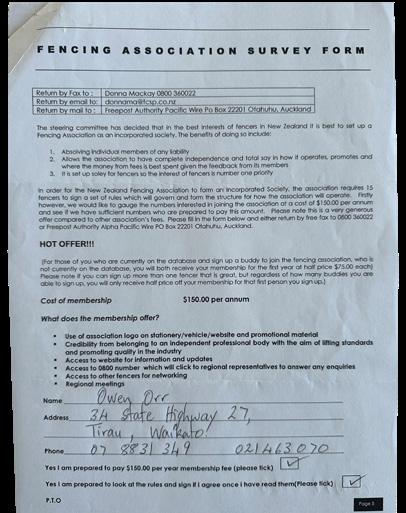
Survey sent to fencing contractors to establish interest in membership of FCANZ (as an incorporated society). Indicative membership is $150 per annum.
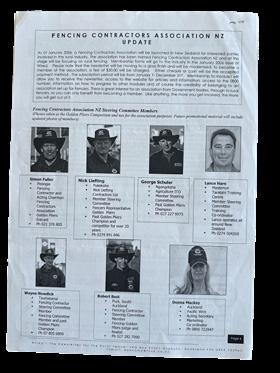
FCANZ Rules are adopted and submitted to the Companies Office, with a view to becoming an incorporated society. Membership is $50, with members entitled to received WIRED newsletter, access to the Association’s website, and 0800 number.
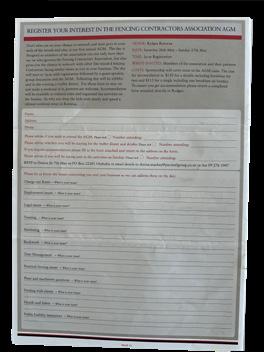
An Expression of Interest Form is circulated for the inaugural FCANZ AGM, to be held in Rotorua, May 2007. The AGM included a guest speaker and group discussion.

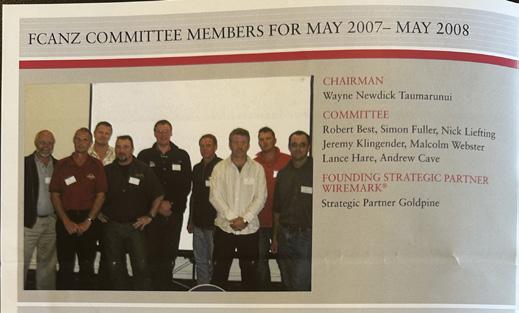
The first appointed Executive Committee of the Fencing Contractors Association of New Zealand, Incorporated. Chair: Wayne Newdick, Committee Members: Robert Best, Simon Fuller, Nick Liefting, Jeremy Klingender, Malcolm Webster, Lance Hare, and Andrew Cave. Founding Strategic Partner: Wiremark.
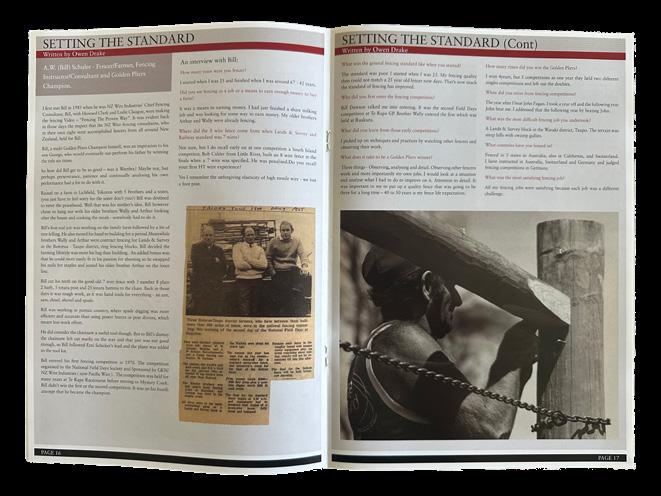
For FCANZ, few names embody the craft, character, and quiet determination of New Zealand fencing quite like A.W. (Bill) Schuler – FCANZ Lifetime Award recipient, Golden Pliers champion, and a man whose influence has shaped generations of fencers.
Bill’s story remains a benchmark for what dedication to quality, curiosity, and continual improvement can achieve. As we celebrate 20 years of FCANZ, it’s only fitting to revisit the journey of someone who not only set the standard, but helped define it. This article featured in the March 2009 edition of WIRED.
Written by Owen Drake
A. W. (Bill) Schuler – Fencer/Farmer, Fencing Instructor/Consultant and Golden Pliers Champion.
I first met Bill in 1985 when he was NZ Wire Industries’ Chief Fencing Consultant. Bill, with Howard Clark and Leslie Claugue, were making the fencing Video – “Fencing The Proven Way”. It was evident back in those days the respect that the NZ Wire fencing consultants, who in their own right were accomplished fencers from all around New Zealand, held for Bill.
Bill, a multi Golden Pliers Champion himself, was an inspiration to his son George, who would eventually out-perform his father by winning the title six times.
So how did Bill get to be so good – was it Weetbix? Maybe not, but perhaps perseverance, patience and continually analysing his own performance had a lot to do with it.
Raised on a farm in Lichfield, Tokoroa with 5 brothers and a sister, (you just have to feel sorry for the sister don’t you?) Bill was destined to enter the priesthood. Well that was his mother’s idea. Bill however chose to hang out with his older brothers Wally and Arthur looking after the house and cooking the meals – somebody had to do it.
Bill’s first real job was working on the family farm followed by a bit of tree felling. He also turned his hand to building for a period. Meanwhile brothers Wally and Arthur were contract fencing for Lands & Survey in the Rotorua – Taupo district, ring fencing blocks. Bill decided the farming lifestyle was more his bag than building. An added bonus was that he could more easily fit in his passion for shooting, so he swapped his nails for staples and joined his older brother Arthur on the fence line.
Bill cut his teeth on the good old 7 wire fence with 5 number 8 plain, 2 barb, 5 totara post and 25 totara battens to the chain. Back in those days it was tough work, as
it was hand tools for everything – an axe, saw, chisel, shovel and spade.
Bill was working in pumice country, where spade digging was more efficient and accurate than using power borers or post drivers, which meant less work effort.
He did consider the chainsaw a useful tool though. But to Bill’s dismay the chainsaw left cut marks on the stay and that just was not good enough, so Bill followed Erni Schicker’s lead, and the plane was added to the tool kit.
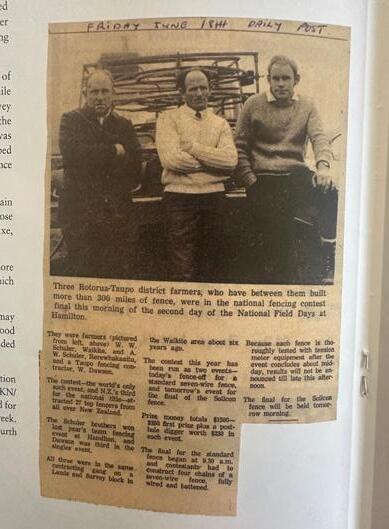
Bill entered his first fencing competition in 1970. The competition organised by the National Field Days Society and Sponsored by GKN/NZ Wire Industries (now Pacific Wire). The competition was held for many years at Te Rapa Racecourse before moving to Mystery Creek. Bill didn’t win the first or the second competition. It was on his fourth attempt that he became the champion.
An interview with Bill
How many years were you fencer?
I started when I was 25 and finished when I was around 67 (42 years).
Did you see fencing as a job or a means to earn enough money to buy a farm?
It was a means to earning money. I had just finished a share milking job and was looking for some way to earn money. My older brothers Arthur and Wally were already fencing. Where did the 8 wire fence come from when Lands & Survey and Railway standard was 7 wires?
Not sure, but I do recall early on at one competition a South Island competitor, Bob Calder from Little River, built an 8 wire fence in the finals when a 7 wire was specified. He was penalised.
Do you recall your first HT wire experience?
Yes, I remember the unforgiving elasticity of high tensile wire –we lost a foot post.
What was the general fencing standard like when you started?
The standard was poor. I started when I was 25. My fencing quality then could not match a 25 year old fencer now days. That’s how much the standard of fencing has improved.
Why did you first enter the fencing competition?
Bill Dawson talked me into entering. It was the second Field Days competition at Te Rapa GP. Brother Wally entered the first which was held at Ruakura.
What did you learn from those early competitions?
I picked up on techniques and practices by watching other fencers and observing their work.
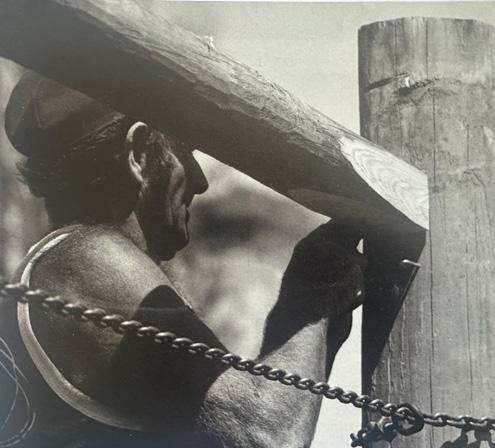
What does it take to be a Golden Pliers winner?
Three things – Observing, analysing and detail. Observing other fencers work and more importantly my own jobs. I would look at a situation and analyse what I had to do to improve on it. Attention to detail. It was important to me to put up a quality fence that was going to be there for a long time – 40 to 50 years is my fence life expectation.
How many times did you win the Golden Pliers?
I won 4 years, but 5 competitions as one year they held two different singles competitions and left out the doubles.
When did you retire from fencing competitions?
The year after I beat John Fagan. I took a year off and the following year John beat me. I addressed that the following year by beating John.
What was the most difficult fencing job you undertook?
A Lands & Survey block in the Waraki district, Taupō. The terrain was steep hills with swamp gullies.
What countries have you fenced in?
Fenced in 5 states in Australia, also in California, and Switzerland. I have instructed in Australia, Switzerland and Germany and judged fencing competitions in Germany.
What was the most satisfying fencing job?
All my fencing jobs were satisfying because each job was a different challenge.
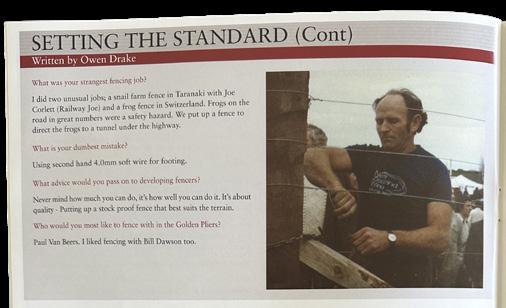
What was your strangest fencing job?
I did two unusual jobs; a snail farm fence in Taranaki with Joe Corlett (Railway Joe), and a frog fence in Switzerland. Frogs on the road in great numbers were a safety hazard. We put up a fence to direct the frogs to a tunnel under the highway.
What is your dumbest mistake?
Using second hand 4.0mm soft wire for footing.
What advice would you pass on to developing fencers?
Never mind how much you can do, it’s how well you can do it. It’s about quality – putting up a stock proof fence that best suits the terrain.
Who would you most like to fence with in the Golden Pliers?
Paul Van Beers. I liked fencing with Bill Dawson too.
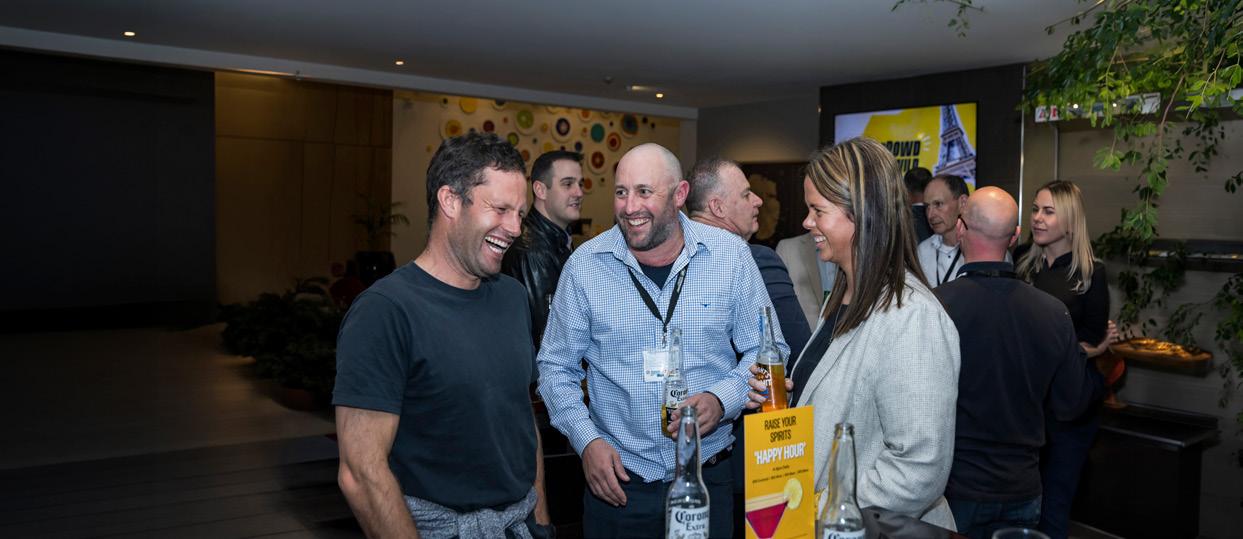

5 – 7 AUGUST 2026 | NELSON
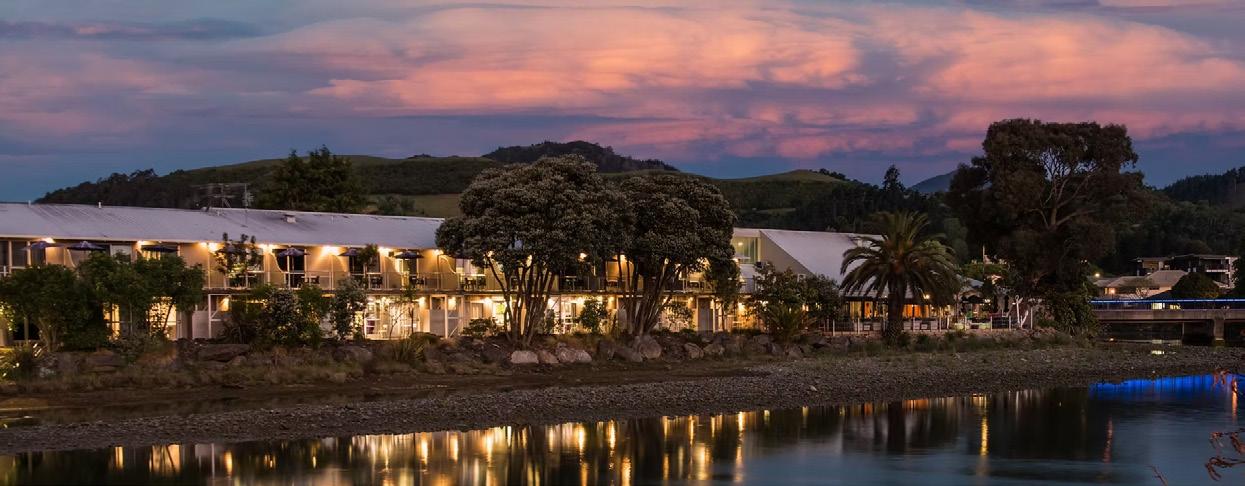
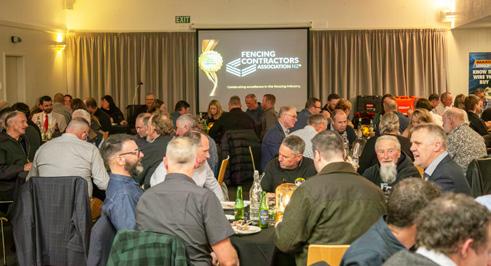
Join us in Nelson as we celebrate the 20th anniversary of FCANZ! Open to all current FCANZ members and their partners, this three-day event is all about learning, sharing ideas, checking out the latest gear, and catching up with other contractors.
There’ll be plenty of chances to network, see practical demos, and have your say on how the Association runs. With numbers limited and 80% of tickets already gone, now’s the time to lock in your spot.
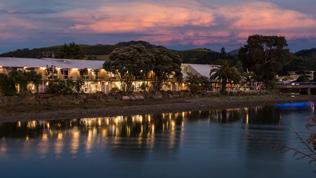
Kick off Conference26 at the 6th annual National Fencing Field Day (NFFD). This year, the NFFD is being held at the grounds of the historic Riwaka Hotel. Now also a general store, bar, restaurant and beer garden, the Riwaka Hotel has been standing strong in the heart of horticultural country as the cornerstone of the Riwaka community for over 160 years.
See the latest fencing gear, watch best practice demos, talk with industry suppliers and challenge fellow fencing contractors to win great prizes in the FCANZ Games.
Coming in your work ute? Enter the “Show Us Your Toolbox” competition and be in to win big! Make sure your toolbox is in tiptop condition because the competition is open to both FCANZ members and general attendees.
Note: because our Mix & Mingle dinner is on-site, we’re encouraging conference attendees who are looking to have a beverage or two to use the buses included in their Conference26 ticket. We’ll be running a second, member-only “Show Us Your Toolbox” competition as part of the 4WD trip on Friday.
And don’t miss the Secondary Schools Fencing Competition, returning for its third year – always inspiring to see the next generation of fencers in action.
Travel to and from, and entry into the NFFD are complimentary with your Conference26 ticket.
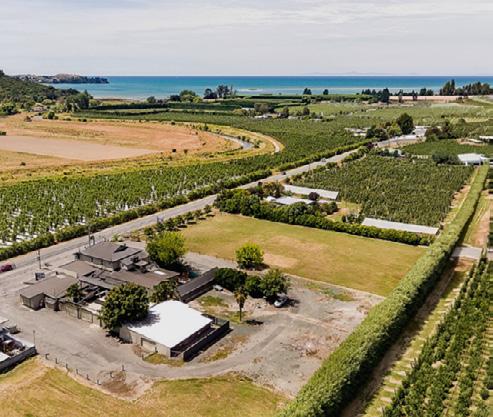
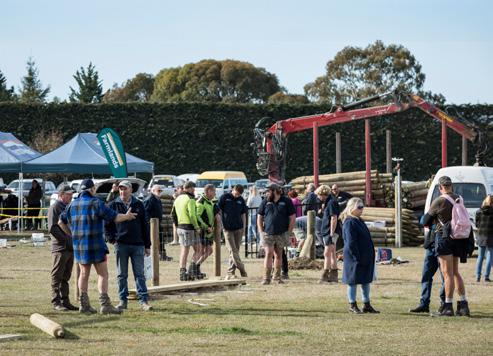
For those who aren’t keen on spending the day in a field with their other half, our ever-popular Ladies Who Lunch outing is back! Your FCANZ “hostess with the mostest” will take you on a fabulous day filled with delicious food, interesting activities, and wonderful company. Book early, though, as spaces are limited!
Mix & Mingle Dinner
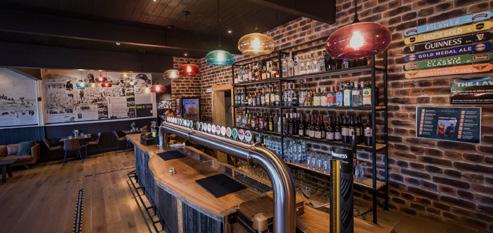
Always a crowd favourite, our Mix & Mingle dinner is being held this year at the historic Riwaka Hotel – so there’s no need to travel after the NFFD! Come along, enjoy a casual catch-up with old acquaintances, and meet new people.
*Food and drinks at this event are not included in your Conference ticket. Address: 627 Main Road Riwaka 7198
Conference26
Thursday provides members with an update on what the Board has achieved in the previous 12 months and what is on the plan for the next 12 months. This is followed by the AGM, during which the Board will be decided, and any Association rule changes will be voted upon. There are four positions up for renewal this year and we have an additional vacancy to fill to take us up to our full quota of nine Board members. If you have been considering being involved in the direction of the Association, then now is your chance. While the incumbents may look to stand again, this doesn’t stop others from standing. If there are more nominations than positions, it will go to a confidential vote, with the results notified later in the day. Nomination forms and role descriptions will be available on our website in April.
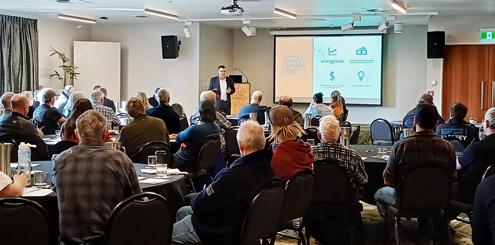
Following the AGM we’ll draw some of the $9000+ worth of prizes, before hearing from our keynote speakers. Details of the speakers for this year’s Conference are currently being finalised, with the full lineup to be announced soon. Note: you have to be there to claim your prizes!
Thursday Night Dinner
We’re working on something different for dinner on Thursday night, and we don’t quite have everything squared away yet so we’re keeping tight-lipped on it for now. It is safe to say it will definitely include great food and will be an absolute blast. Keep an eye on your emails and our social spaces for more info!
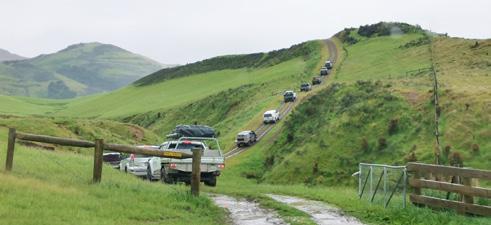
We love planning the activities day for our delegates – and this year is no exception! This year we’re doing a guided 4WD trip, exploring some of the special areas around the Nelson-Tasman area. We’ll contact all delegates closer to the time to find out who is bringing a ute, and is happy to drive, and who needs to go with someone else. There’ll be no-one left behind – and it will be a brilliant day out!
Our annual industry awards and gala dinner is on Friday night again this year. Once we’re back from our activities day, you’ll have the chance to change into your glad rags and meet us for a well-earned beverage before enjoying our semi-formal dinner and awards ceremony. There will be prizes for the best dressed, so make sure you put in a good effort! See page 18 about this year’s awards and keep an eye on your emails and our website to find out when nominations open.
Getting to Nelson is pleasantly straightforward, whether you prefer a scenic drive or a quick flight. Travelling by car lets you soak up New Zealand’s landscapes – cruising over the Whangamoa Saddle if you’re coming from the east, or winding your way up from the South Island’s east coast.
If you’d rather skip the kilometres, flying into Nelson Airport is fast and convenient, with regular domestic flights connecting from major cities like Auckland, Wellington, and Christchurch. The airport sits just a short drive from the city centre. If you decide to fly, let us know when your flight lands, and we’ll see if we can arrange transport for you.
Early Bird Tickets – Available Now!
Early Bird tickets are $450+GST per person and are available until 31 March 2026. From 1 April 2026, tickets will be at full price$490+GST per person. Discounts are available for two or more tickets.
Book your ticket now to lock in your spot – numbers strictly limited! www.fcanz.org.nz/conference
Note: details are subject to change

Now in its fourth year, the FCANZ Industry Awards return to celebrate those who truly embody the Association’s mission – championing fencing as a professional trade, delivering exceptional workmanship, and upholding best-practice standards across the industry. Here are this year’s categories.
This award recognises an individual who undertakes fencing work as their primary form of employment and who completed the NZQA National Certificate in Fencing Level 3 course in 2025. They will have demonstrated to the tutor that through the course, they have obtained the skills and knowledge for excellent fence line installation.
Criteria
• Completed NZQA Level 3 course during 2025
• Employer is a FCANZ member (including during the period the trainee was enrolled in the course)
• Nominated by the course tutor
• Shows excellent knowledge of fence line practices, and it is evident that they have been trained well by their employer
Selection process
• 1 nominee per course, put forward by the course tutor
• FCANZ to facilitate the appointment of three independent judges
• Nominees are invited to attend the FCANZ Gala Dinner, where the winner is announced
This award recognises the graduate of the NZQA National Certificate in Fencing Level 4 who consistently displayed excellence across their coursework. Awarded to only one of the 2025 graduates, this award acknowledges the student who consistently produced excellent work, identifying them as a true asset to the fencing industry.
Criteria
To be considered for this award, students must have excellent attendance and consistently:
• Participate openly in all group discussions, assisting other members of the group by sharing their knowledge and experience while maintaining an open mind to the opinions and experience of other members,
• Complete all study and assessments within appropriate time frames while demonstrating a willingness to achieve and maintain consistent gains within their learning,
• Demonstrate a willingness to accept new and alternate methods and systems, and the ability to adapt their thinking to consider and apply gained
knowledge where applicable into their approach to the operational processes within their given business and working environment.
Selection process
• Nominees for this award will be identified by the NorthTec Course tutor.
The recipient will also be determined by the tutor according to the criteria above.
This award is for those in the industry who have demonstrated a commitment to fencing as a career opportunity and demonstrated growth and excellence in their workplace.
Criteria
• Under 25 years of age
• Employed in the industry by a FCANZ member
• Been employed by the employer for a minimum of two years
Signed Employer Declaration confirming worker:
• has demonstrated good work habits
• is punctual and reliable
• demonstrates interest in the job and a willingness to learn
• has demonstrated good uptake and understanding of fence line systems
• has good uptake of Health and Safety and demonstrates a willingness to engage Selection process
Nominees will be expected to provide video evidence of their work, and to attend an online meeting with the independent judging panel, which will decide the winner.
This award recognises a woman who supports and advances the New Zealand fencing industry. Recipients of this award are chosen by the Board to acknowledge the great work put in by women in a predominantly male environment, adding value on the fenceline or within the wider fencing industry.
This award recognises and acknowledges individuals who go above and beyond to champion and support the fencing industry’s growth and development. Recipients of this award are chosen by the Board for their commitment to the betterment of the fencing industry as a whole.
The FCANZ Legacy award (formerly known as the Lifetime Award) is the highest award that FCANZ can bestow. The achievements and contributions of the individual must truly be outstanding and significant, over a sustained period of time. Recipients must have contributed to the industry across several capacities, contributing significantly to the improvement of industry and supporting the Association to meet its goals. To be eligible to receive this award, the individual must have been an FCANZ member at some time in their career.
The FCANZ Legacy award is a special and infrequently awarded honour, with recipients receiving honorary Life Membership.
Keep an eye on your inbox and our socials – we’ve got a brand-new award to announce!
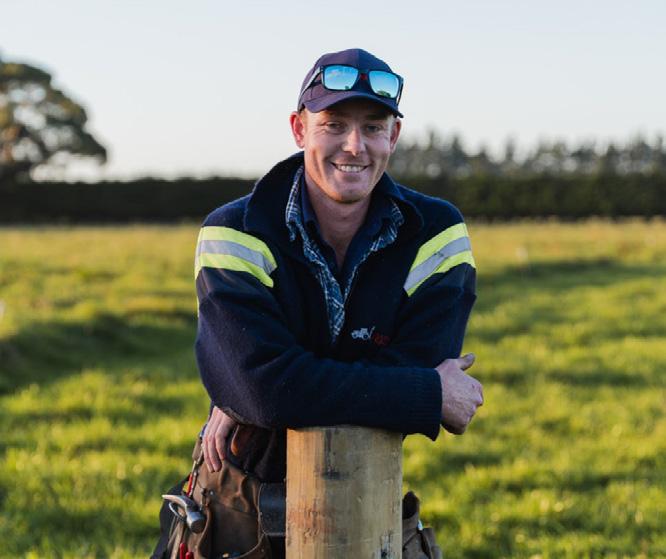
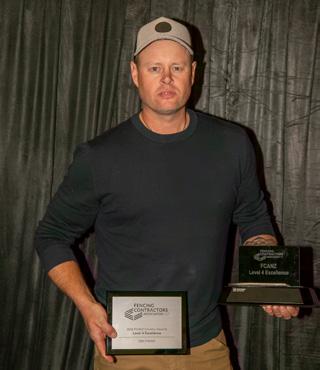
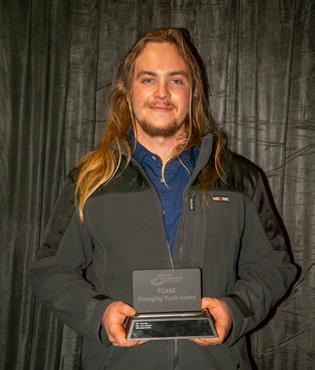
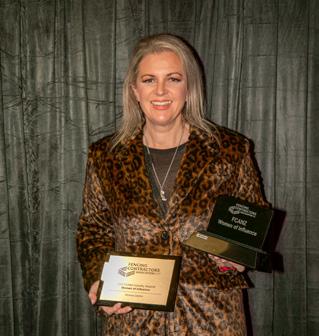
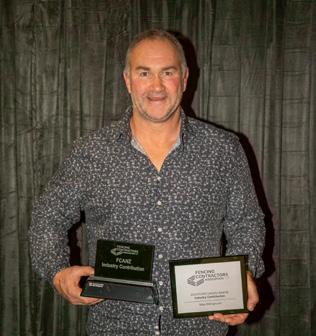
Nomination forms for the 2026 awards can be found on the FCANZ website from 1 May 2026 (www.fcanz.org.nz/awards). The deadline for nominations is midnight 30 June 2026.








Google what the weather is like in Southland in mid-February and you are told that “In February, Southland experiences its peak summer weather, characterised by mild to pleasant temperatures, long daylight hours, and high, often changeable, rainfall.
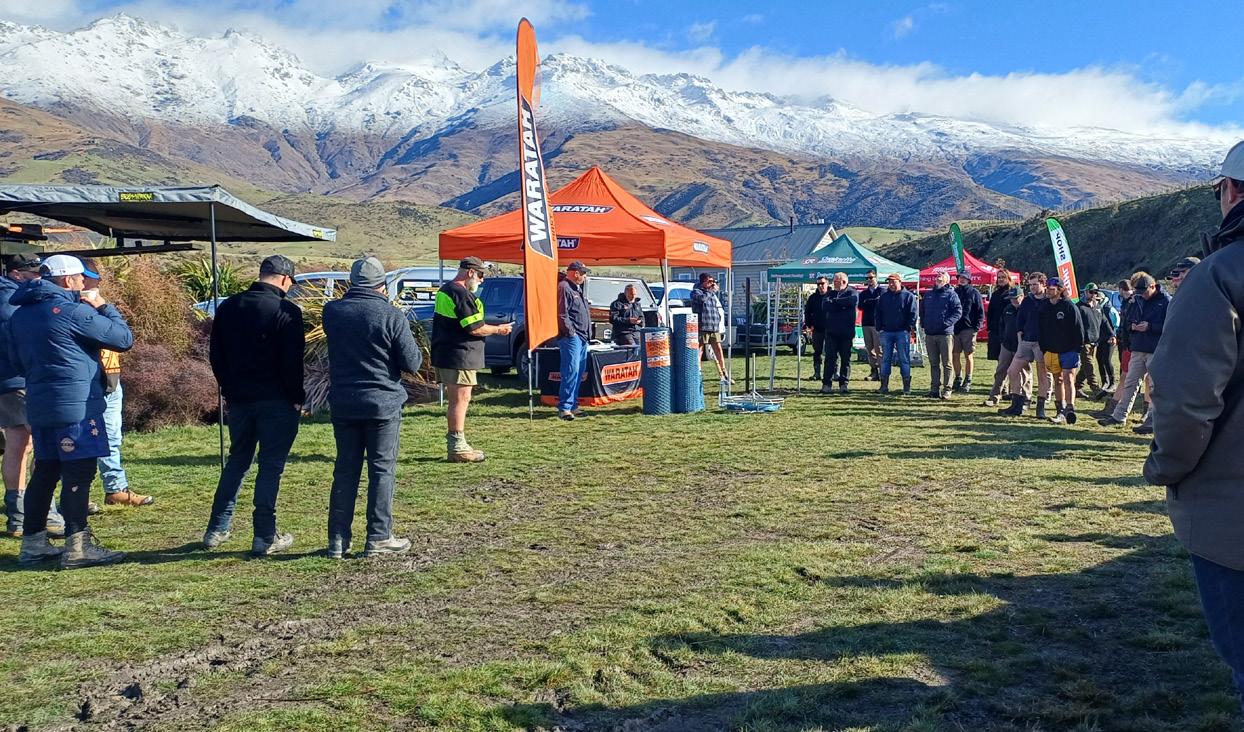
While it is one of the warmest times of the year, sudden showers, cool evenings, and winds are very common.” Which basically means pack for every kind of weather. This couldn’t have been more accurate for the three days of the event, with rain and sun on day one, a sweltering 30 degrees on day two, and rain and wind on day three. Farmers and fencers are a hardy bunch though, so we still had plenty of people pop by.
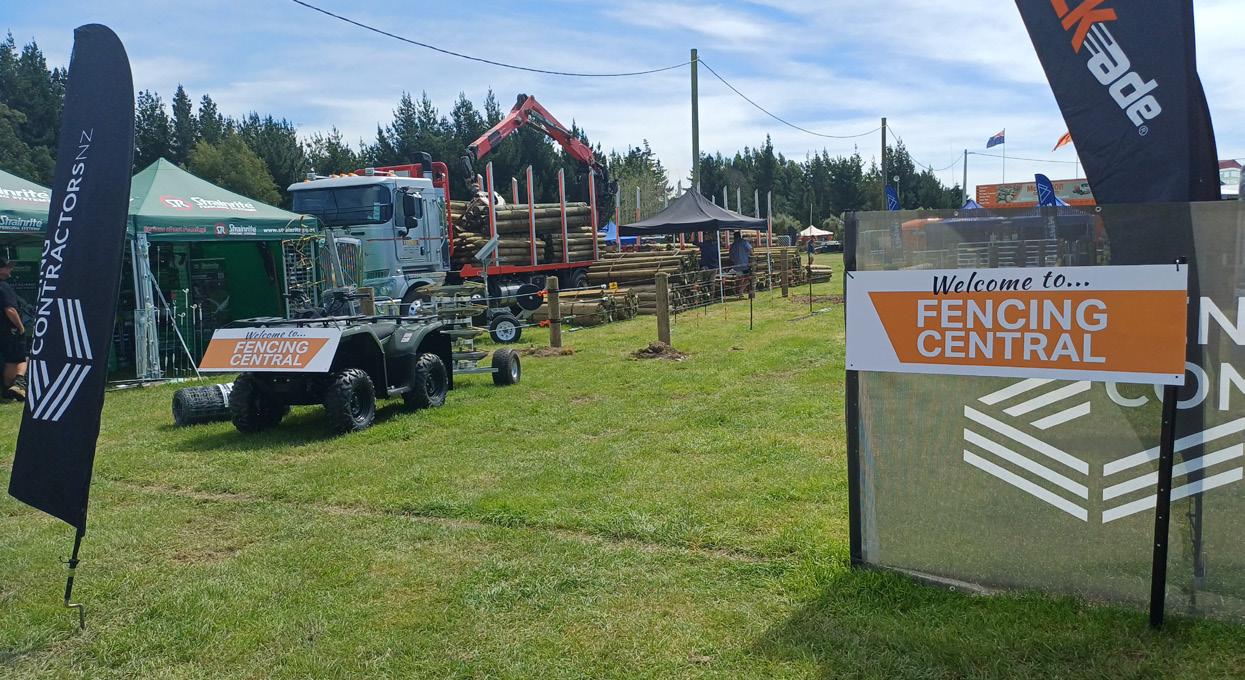
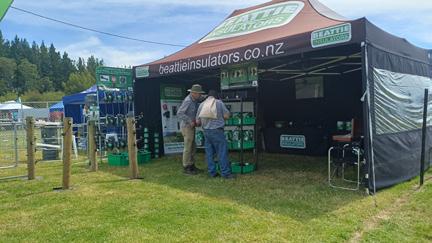
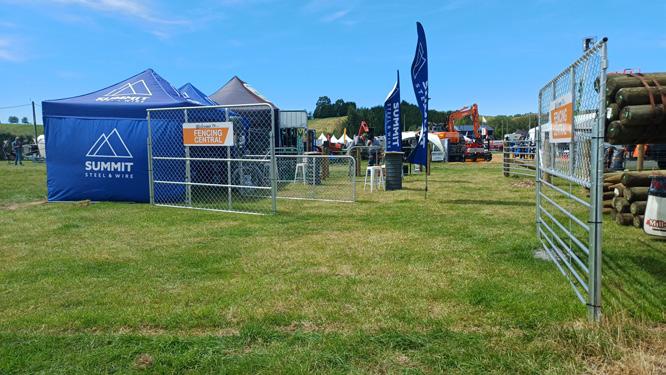
This was our first time at the Southern Field Days in a number of years, and certainly the first time we had brought Fencing Central to the people. It was great to be back on site and reconnecting face-toface with contractors, farmers, suppliers, and industry supporters. Under the FCANZ umbrella we were joined by seven of our Gold partners and their local sales reps, providing a one-stop hub in which visitors could talk all things fencing. Having everyone together in one space made it
easy for people to ask questions, compare products, and have practical, real-world conversations about fencing solutions.
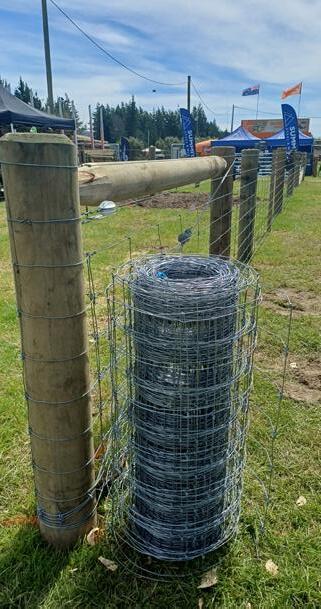
A demonstration area was set up in the centre of the site, where visitors could see and touch Partner products rather than just hearing about them. This handson approach was great for those wanting a closer look at systems or materials they hadn’t seen before.
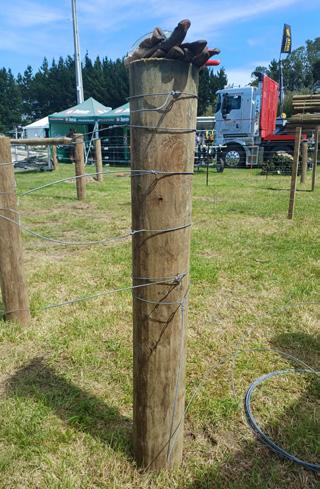
To keep things spicy, we ran a knot-tying competition, which added a bit of friendly rivalry and a lot of entertainment. While some of the work was questionable, most of it was excellent, and it was great to see such strong skill levels on display. Everyone who gave it a crack went into the draw for a $500 wire voucher, thanks to PGG Wrightson, which certainly helped encourage participation and enthusiasm.
Congratulations to Brent Jamieson, who was the lucky person to have their name
picked out of the hat by Craig “Wiggy” Wiggins, Association Patron and head of our charity of choice, Lean on a Gate. A big thanks to Craig for taking the time to be involved and for the ongoing support he provides to the Association and the work he and his team do for mental health in the wider industry.
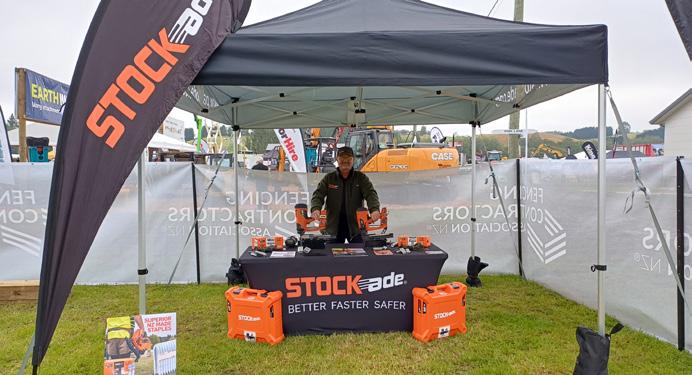
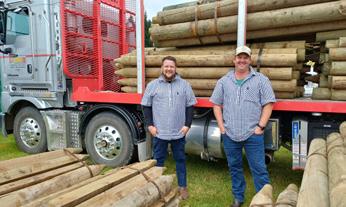
Thanks to Gold Partners Gallagher, Stockade, Bayonet, Beattie Insulators, Strainrite, Summit and Point Lumber for joining us to deliver what is undoubtedly a great concept – and one we look forward to repeating at the South Island Agricultural Field Days in Kirwee next year. The feedback from both partners and visitors was definitely positive, reinforcing the value of bringing industry expertise and product knowledge together in one accessible space. Next stop for Fencing Central? Mystery Creek in June. See you there!
Written by Jaime Bigwood & Phil Cornelius

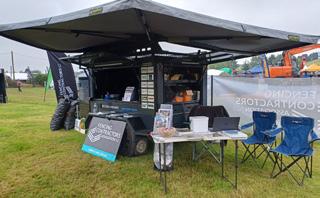
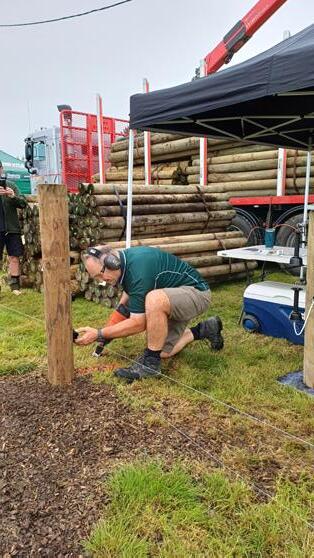
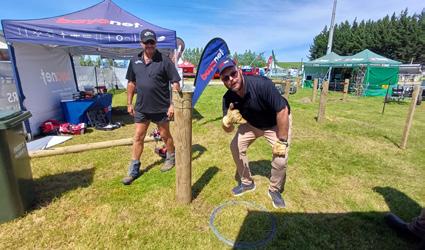
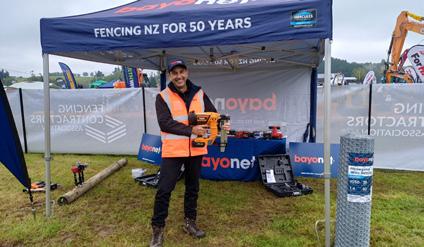
By the time this goes to print, most people will have forgotten what their New Year’s resolution was and will be back in the grind of working to stay afloat or to buy that dream boat or toy.
We get wrapped up in the day-to-day life of survival and the pressure of commitments until some date, event, or moment in time makes us reassess who we are and what we do. The old cliché comes out: “What is your why?”
But it is a question that needs an answer to really balance your own needs, versus the needs of your career or business. Your ‘Why’ may change depending on what stage in life you are and what personal position you may now sit in. For example, the young fencer coming out of school will have desires, hopes and ambition. A life of unknowns, with responsibility only for their own needsand perhaps a date on Friday night.
The 40-year-old business owner with five staff, machinery and a family is at the other end of the spectrum. I expect those reading this will know the pressure this stage of life brings and remember the pressure of dating with a dry smile.
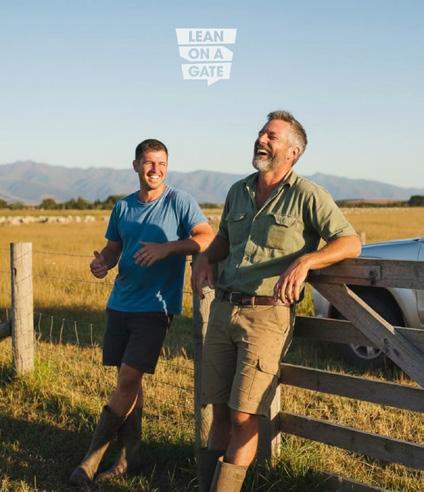
But just as the younger version of you put your best foot forward on those Friday nights to portray strength and confidence, the older version of you needs to do the same, to be the best you can be for the many aspects of your life now.
What if this year wasn’t about being everything for everyone? What if it was about tuning in - to YOUR needs, YOUR limits, and YOUR wellbeing? Showing up for yourself doesn’t have to mean dramatic change. Sometimes it looks like going to bed earlier. Saying no when something’s too much. Making time for things that matter to you. Speaking up when something’s not right, especially if that’s to do with your own wellbeing. It means recognising that your needs matter too - you don’t have to wait until you’re completely burnt out to honour them.
This year will be a big year for me and the team at Lean on a Gate. I am a little bit anxious about the amount of work to be delivered – generated by the needs of so many we have spoken to.

Construction and their support networks for those who go through the training programme will be a game changer in rural mental health, and this helps me quieten that anxiety. My biggest worry was what would happen to the work we do if I, or one of the team at LOAG, wasn’t able to continue it. This new partnership gives that work longevity and stability.
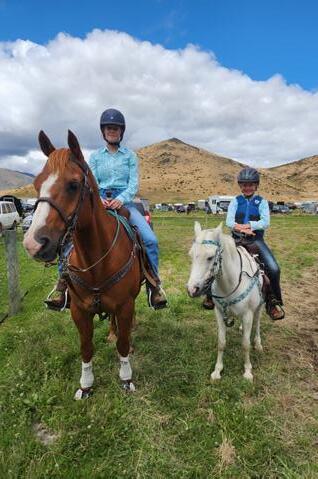
I prioritised my family time this Christmas with a trip away; three horses in a float and the three ladies in my life who often miss out due to my commitments. Hardly any arguments, great friends to share meals with and to introduce our girls to, and some success and growth in their riding and competing. I wasn’t that keen to go, due to my having moved away from that part of my life recently. But it was refreshing: my eldest daughter showed just how competitive and determined she is (no wonder we clash occasionally); my youngest daughter winning the biggest smile competition every time she rode; and my wife – who puts everything into ‘us’ – got to enjoy her passion, with the support that allowed her a less stressful trip and to enjoy her moments of happiness as we travelled. Right there is my new ‘Why’.
So for me, the focus has changed. The work we do in the mental health space needs me to focus more on what makes me happy. Supporting my family, a bit of fishing and hunting where possible, and of course the knowledge that what we do matters. (If anyone is looking for a mate on a boat or for a wee hunt, please let me know, shameless plug!)
I had very limited success on Friday nights, as I remember, but they say it’s all about the effort you put in. Thank goodness we find worthy causes as we age and focus on more important things. What I have found is that life finds its own path, and whatever you do matters!
What have we created? A training programme for rural professionals and those in the service industries who regularly visit those in need or who work with many who could use a supportive hand on their back. But it’s not just us anymore; the partnership with Mates in www.leanonagate.co.nz
This year, make space for yourself. The people around you benefit when you’re looking after yourself too.

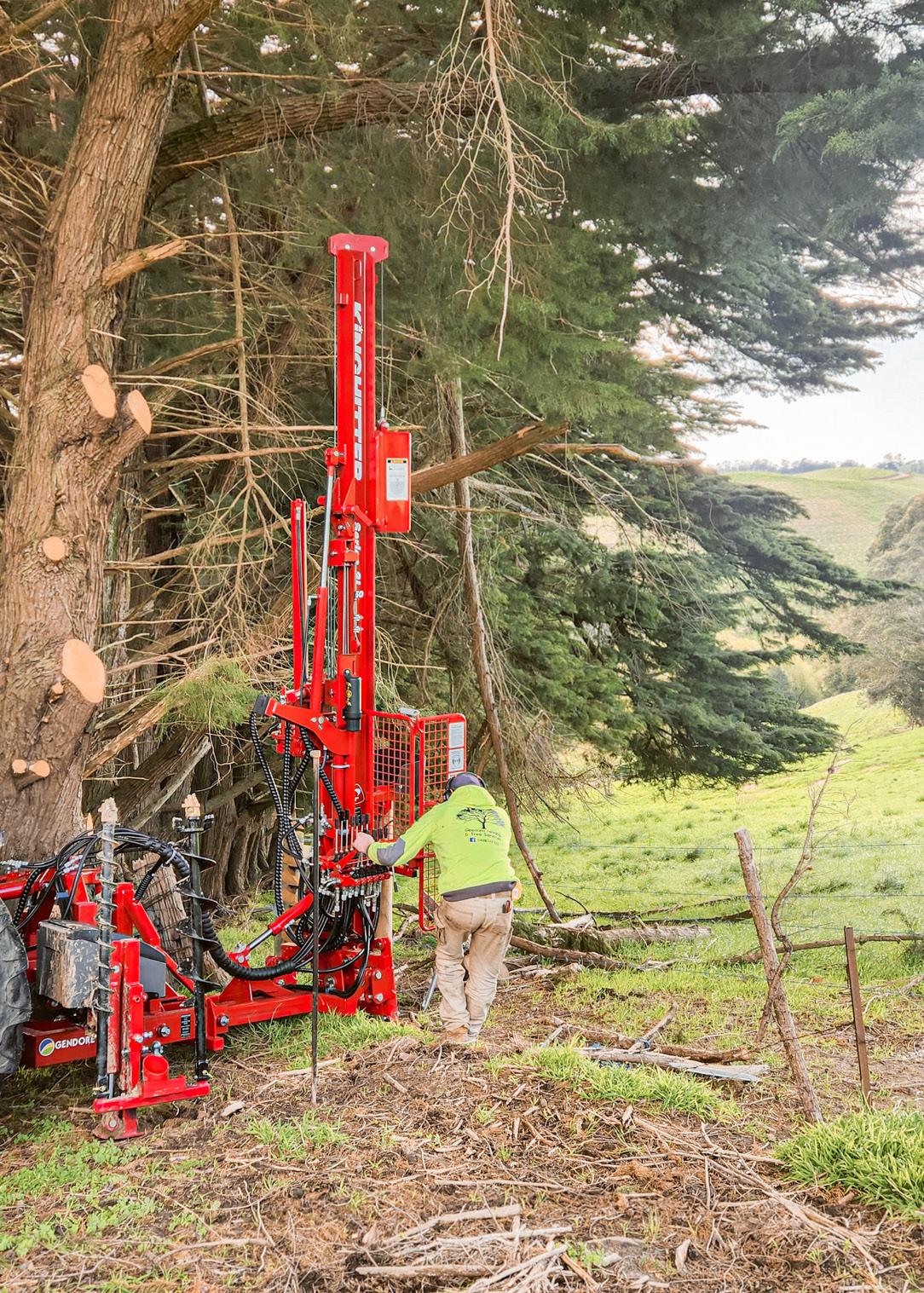
- NZ Made for over 45 Years - The Strongest Mast Steel - Quality European Valves - Optional ‘Active Safety System’ - Local Service & Support - 24-month Warranty - Tried & Trusted Designs

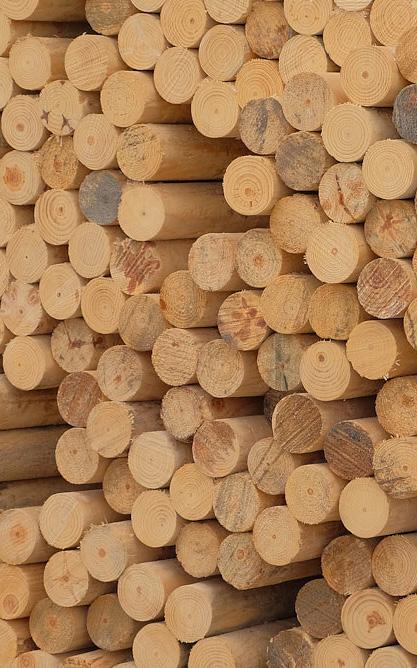
Whether you’re in the trade or a home renovator, we’re your local experts when it comes to fencing and outdoor timber
48 Racecourse Rd, Washdyke, Timaru
P 03 688 2591
F 03 688 2594
M 027 455 2029 (Sales Rep)
E sales@pointlumber.co.nz
We stock posts and strainers, lathed posts, gates, fencing wire and more. If you need fencing materials, we’re your one-stop shop.
PO Box 2143
No matter what your project is, with our products you can be sure that you are getting the best available on the market
Washdyke 7491
HOURS
Mon - Fri / 8:00am -5:00pm Sat / 9:00am - 12:00pm


Across horticulture and viticulture, growers are under constant pressure to do more with less.
Labour shortages, rising input costs and the need for long-term infrastructure performance mean that every decision – from pruning to tying and trellis setup – must deliver efficiency, durability and consistency.
That’s where Strainrite Fencing Systems’ vineyard professional tools and solutions play a key role in supporting modern vineyard operations.
Clean cuts and smarter pruning
Pruning remains one of the most critical tasks in the vineyard calendar. Done well, it sets the foundation for vine balance, fruit quality, and long-term plant health. Timing and technique matter, but so do the tools.
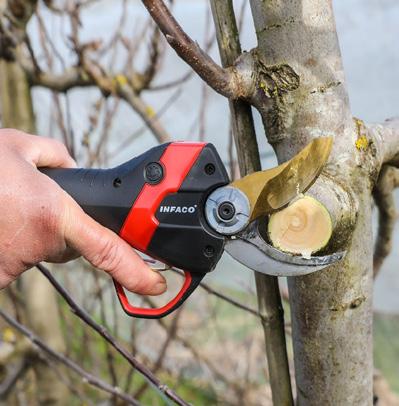
INFACO electric pruning shears, distributed by Strainrite, including the F3020, deliver clean, precise cuts while reducing operator fatigue. Consistency is crucial when pruning large blocks, and electric pruners help maintain cut quality throughout the day. Built-in safety systems and ergonomic design support safer, more comfortable work during long winter pruning sessions.
As vineyards scale up, reliability and repeatable performance become just as important as cutting power – making professional-grade tools a worthwhile investment.
Faster, more consistent vine tying
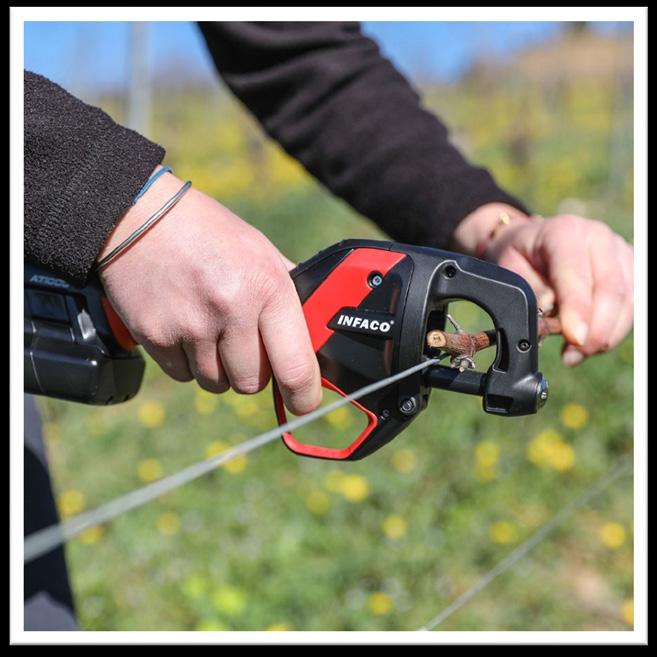
Tying is another labour-intensive job that benefits from mechanisation. INFACO’s AT1000 electric tying tool provides fast, consistent tying across a wide range of vineyard training systems, including single and double Guyot, Chablis, arching, and trellis applications.
The AT1000’s fully automatic operation, adjustable twist settings and highcapacity reels allow operators to work efficiently with minimal interruption. Thousands of ties can be completed on a single battery charge, supporting productivity during peak periods while reducing hand and wrist fatigue.
Consistent tying saves time and contributes to uniform vine positioning,
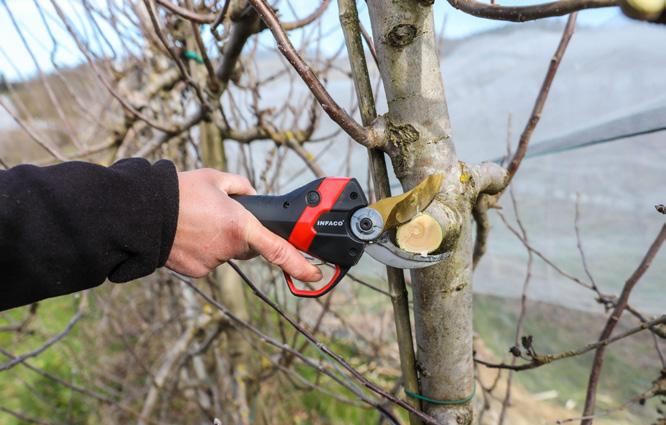
“ Consistency is crucial when pruning large blocks, and electric pruners help maintain cut quality throughout the day
improving canopy management, airflow and light penetration.
Strainrite’s Premium Bungy range is widely used in horticulture and viticulture for irrigation droppers, vine support and flexible trellising applications. It is superior to all other bungy cords available, particularly in demanding outdoor environments.
RETAIL GOLD PARTNERS
Unlike traditional bungy cords that use multifilament natural rubber cores, which perish rapidly when exposed to the elements, Strainrite Bungy features a unique solid core made from specially formulated, UV-protected rubber. Combined with a tightly braided sheath incorporating stainless steel wires and high-denier polyester fabric, pretreated with a UV inhibitor, it provides an additional barrier of protection.
In short, Strainrite Bungy is built to last and perform in harsh environments, maintaining elasticity, strength and reliability season after season.
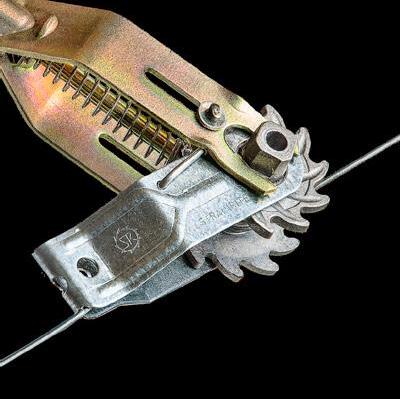
wire strainers for vineyard trellis systems
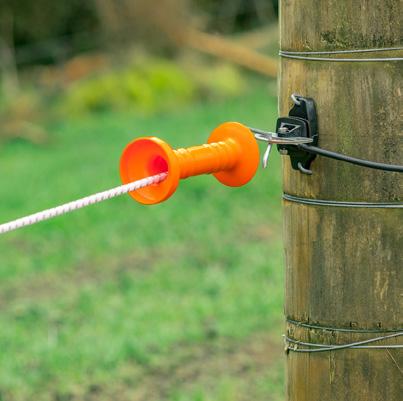
A vineyard trellis is only as strong as its tensioning system. Strainrite offers a range of permanent wire strainers for horticultural and viticultural applications, including Insul-Clip, Durashield, XT1, and Cliplock strainers.

These strainers are designed for longterm installations where wire tension must be maintained and adjusted as vines mature and seasonal loads change. Permanent strainers allow growers to re-tension trellis wires efficiently, helping protect vine structure, reduce maintenance and extend trellis life.
For commercial vineyards focused on longevity and return on investment, reliable wire strainers are a critical component of vineyard infrastructure.
An integrated approach to vineyard efficiency
From pruning and tying to irrigation support and trellis tensioning, modern vineyards perform best when tools and infrastructure work together. Strainrite Fencing Systems’ vineyard professional tools and solutions, including INFACO pruning and tying equipment, Premium Bungy and permanent wire strainers, support growers in building systems that are efficient, durable and designed for long-term performance.
In an environment where labour, time and reliability matter more than ever, investing in quality solutions across every stage of vineyard management ensures consistent results – season after season.
Supplied by:

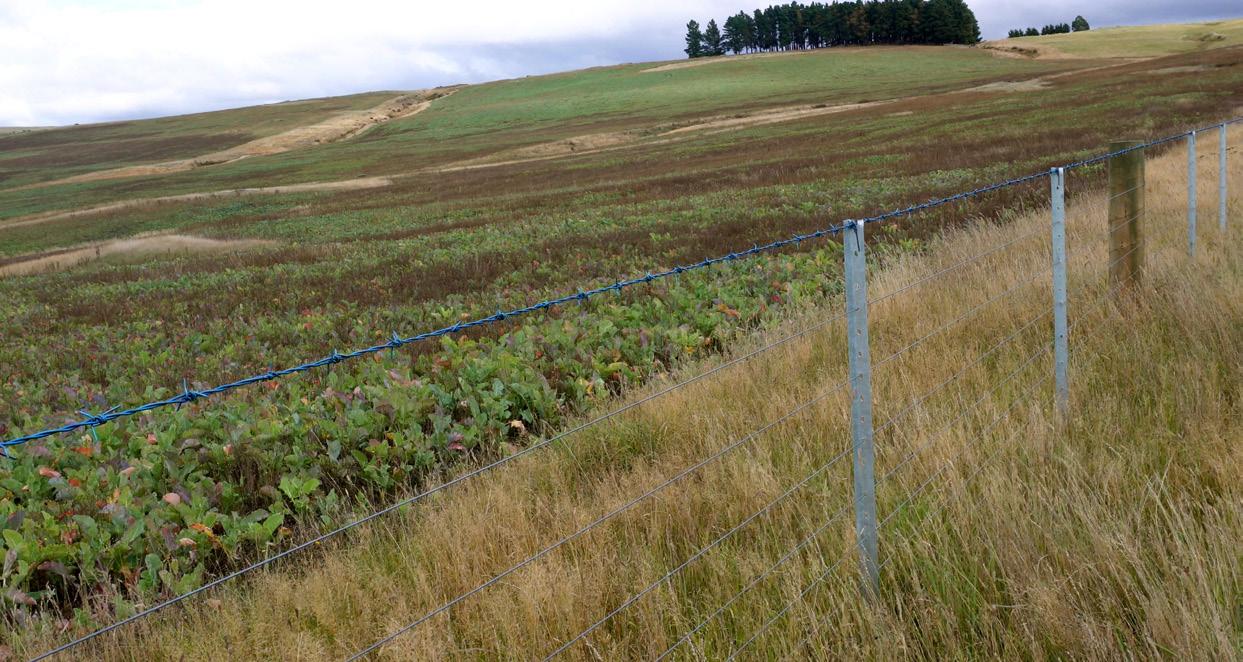
When it comes to reliability and ease of use, the Waratah Longlife Blue 25kg coils are ideal for contractors who value performance and ease of use.
In challenging environments where access is limited and conditions are unpredictable, having a fencing product that can be moved easily and installed confidently makes a significant difference on the job.
Contractors across New Zealand are going blue, just like South Canterbury fencing contractor Dan Douglass, owner of Dan Douglass Fencing. Dan says the lighter coils’ weight are a major advantage when working in hill country. “The 25kg coils are great for New Zealand. A lot of hill fencing means you need to carry it in by hand, so if you can carry a Longlife
Blue® 25kg coil in by hand, it’s great,” he explains. Dan also values the product’s consistency, noting that it performs reliably and remains stable in price, allowing him to plan jobs with confidence.
Another key benefit of Waratah Longlife Blue® fence wire is how it works as part of a complete fencing system. When used alongside JiO® Star posts and JiO® Clips, the installation process becomes faster, easier, and more dependable. As Dan points out, having the entire fence designed as a system means it is quicker to build while delivering long-term performance and protection for farmland.
For contractors, achieving the same result every time is essential. Dan says the quality and consistency of Waratah Longlife Blue® sets it apart. “I like the quality and the consistency of the wire. It’s always the same,” he says.
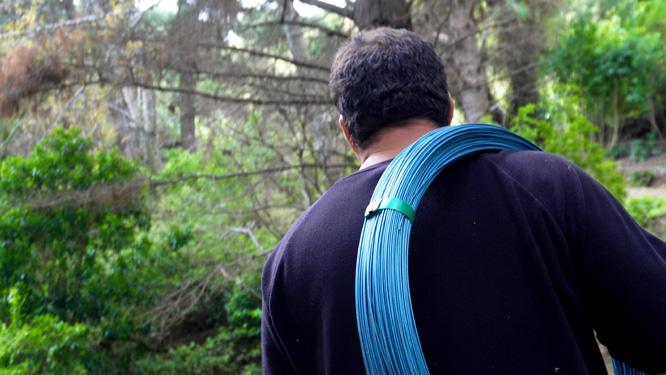
“ I like working with Waratah because of the quality, it’s easier to use. There is no comparison between Waratah and cheaper competitors
That consistency is echoed by fencing contractor Tom Evans, who regularly works in steep, rocky terrain where access is difficult and conditions can be harsh. “The hardest part of my job is the terrain and the weather,” Tom says. “I like working with Waratah because of the quality, it’s easier to use. There is no comparison between Waratah and cheaper competitors.” He explains that using inferior products in the past has led to dangerous situations, with fencing materials failing while being installed on difficult ground. “Longlife Blue® wire has that extra protection. It’s worth it in the long run, and it makes sense to use it.”
When advising farmers, Tom consistently recommends Waratah fencing products. “Farmers like quality, especially in hill country. You don’t want to be doing things twice if you don’t have to,” he says. Built for demanding landscapes and designed to work as a complete system, Waratah Longlife Blue® 25kg coils provide a practical, reliable, and long-term fencing solution for contractors and farmers across New Zealand.
For more information on Waratah products, visit www.waratahfencing.co.nz or call Brendon Crequer on 021 393 010
Supplied by:
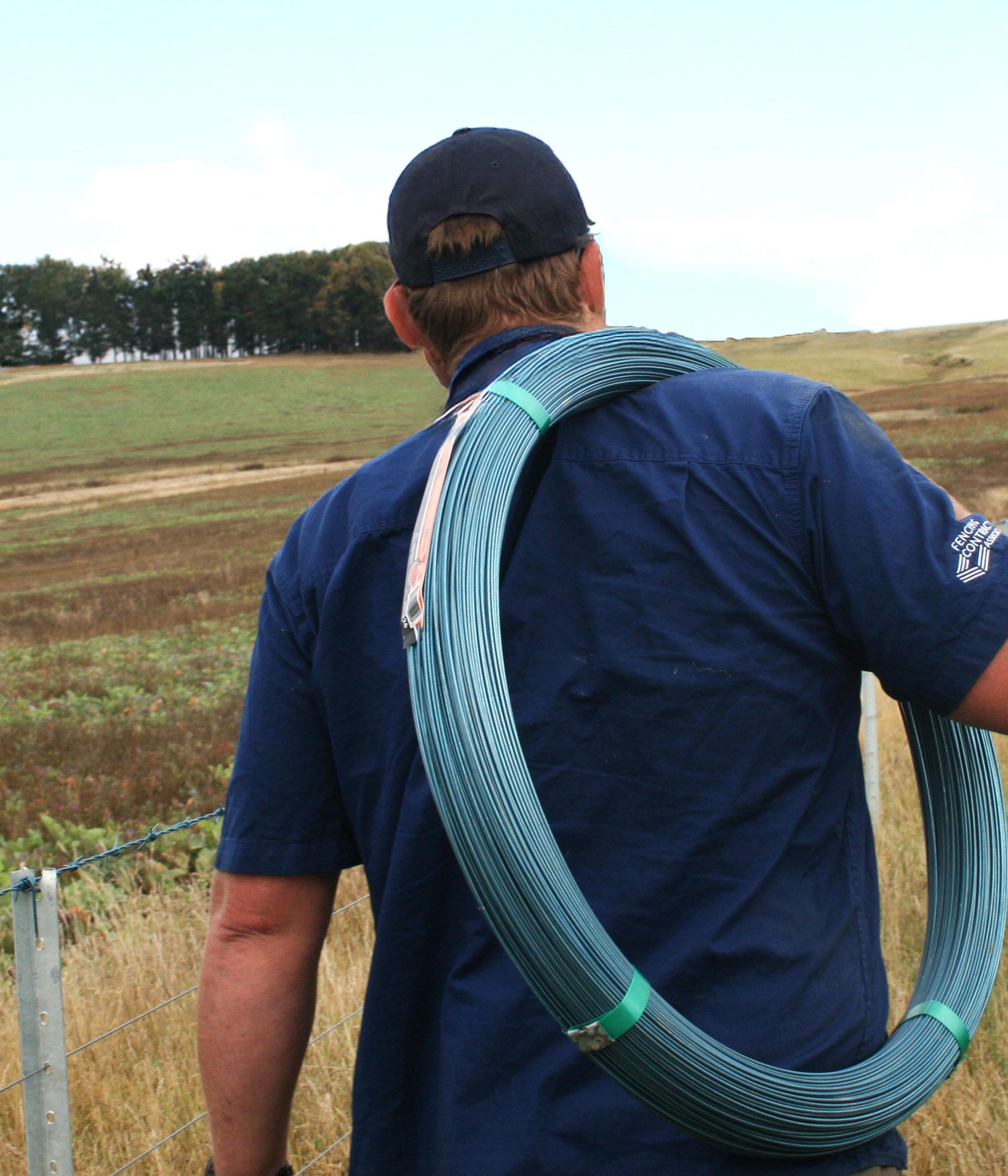


“The toughest part of my job is the terrain and the weather. That’s why I rely on Waratah. The quality makes it easier to work with in difficult conditions, and there’s no comparison to cheaper alternatives. It’s reliable, it lasts, and it’s worth it in the long run.”
“The toughest part of my job is the terrain and the weather. That’s why I rely on Waratah. The quality makes it easier to work with in difficult conditions, and there’s no comparison to cheaper alternatives. It’s reliable, it lasts, and it’s worth it in the long run.”
-Tom
“The toughest part of my job is the terrain and the weather. That’s why I rely on Waratah. The quality makes it easier to work with in difficult conditions, and there’s no comparison to cheaper alternatives. It’s reliable, it lasts, and it’s worth it in the long run.”
Evans, Fencing Contractor
-Tom Evans, Fencing Contractor
-Tom Evans, Fencing Contractor 1
When Michelle and Rhett Matson started Kiwi Structure, it wasn’t part of a grand business plan. It was born out of necessity, good timing and a very real gap in the Whangarei kiwifruit industry.
Based in Maungatapere, Northland, Kiwi
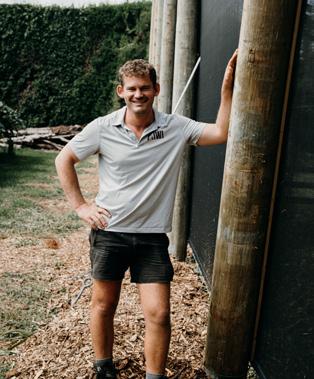
Structure is a family-owned fencing and orchard infrastructure business that has grown steadily since its establishment in 2020. What began as a one-man operation is now a tight-knit team of four, specialising in kiwifruit orchard development, maintenance and repair, alongside more conventional agricultural fencing.
The catalyst for the business was close to home. When Rhett’s family decided to develop a new kiwifruit orchard, they discovered the nearest specialist contractors were based in Kerikeri. With transport, availability and timing all adding pressure, it quickly became clear Whangarei needed local expertise.
“There was a gap that needed filling,” Rhett said. “And if someone was going to do it properly, it might as well be us.”
From fencing wire to orchard structures
Rhett has been fencing for more than a decade, including time spent working overseas before returning home to Northland to raise a family. His family has been involved in the kiwifruit industry for more than 30 years and has been part of the Maungatapere community for over 150.
That history has shaped the way Kiwi Structure operates today.
“I understand the seasonal pressures growers are under,” Rhett said. “You’re not just building a fence or a structure –you’re supporting a crop, a harvest and someone’s livelihood. That changes how you approach the job.”
Kiwi Structure now works predominantly in the kiwifruit industry, with around 80 percent of its workload coming from orchard developments, expansions, repairs and maintenance. The remaining 20 percent is made up of agricultural fencing, a sector the business leans into during quieter years.
Michelle handles everything behind the scenes. With more than 10 years’
experience in business operations and marketing, she keeps the wheels turning.
“Anything you don’t see on site – that’s me,” she laughs. “Bookkeeping, admin, compliance, marketing and being a general gopher.”
Originally from Hawke’s Bay, Michelle met Rhett overseas before the pair decided to settle in Maungatapere. Today, they juggle business life with raising three young daughters, a reality that shapes how Kiwi Structure runs day to day.
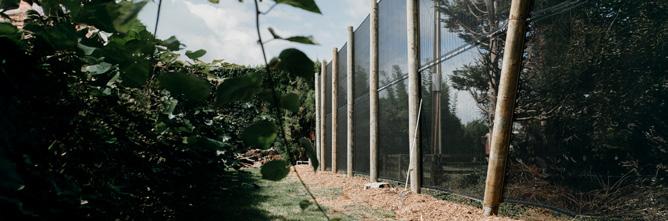
One recent project highlights the specialised nature of the work Kiwi Structure now undertakes – a 30-metre artificial shelter installation for a kiwifruit orchard.
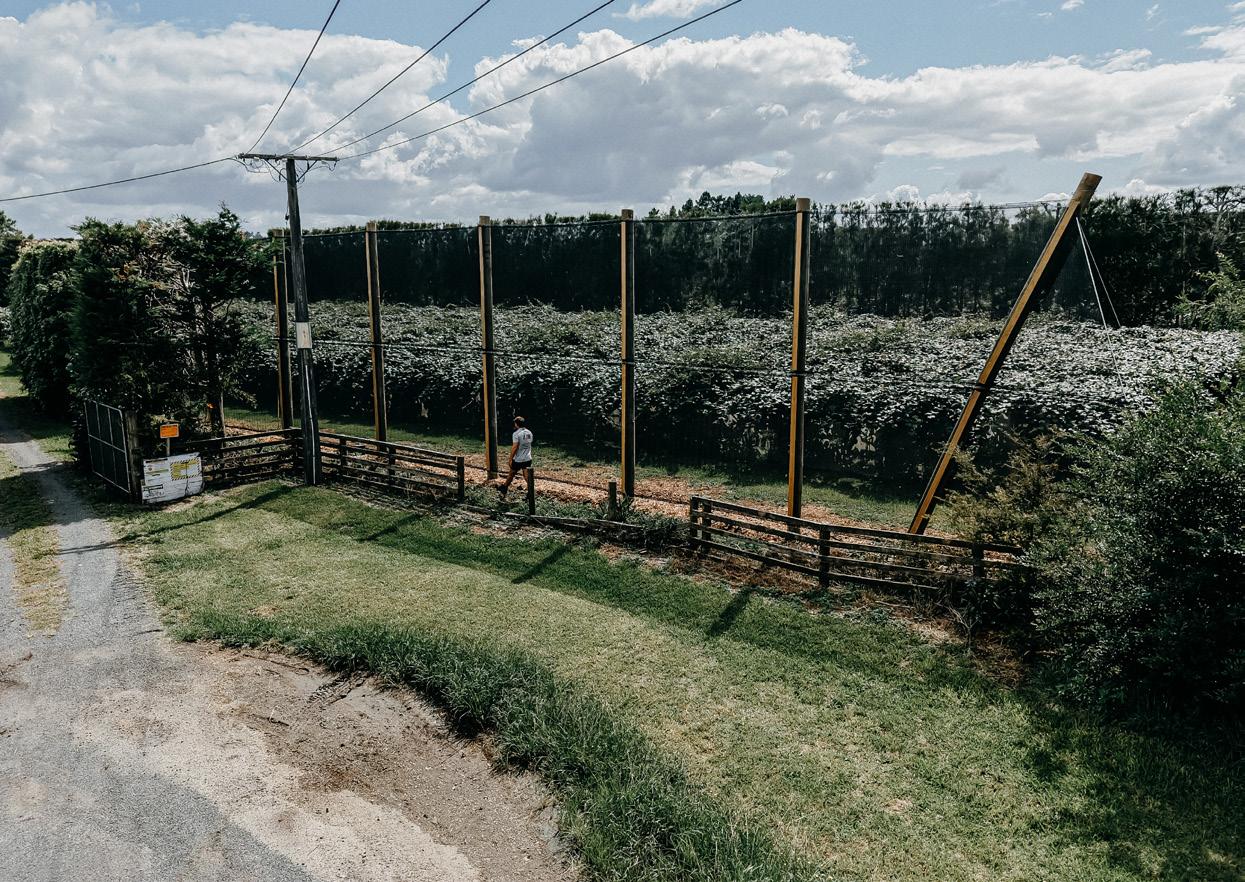
Kiwifruit vines are notoriously sensitive to wind, and effective shelter is critical for both plant health and productivity. In this case, a 30-metre gap existed between established living shelter trees, leaving the orchard exposed. Artificial shelter was the only viable solution.
“This wasn’t a massive job by our standards,” Rhett says. “But it had plenty of complexity.”
The structure was installed in close proximity to live power lines overhead and a high-pressure water scheme below. Before any work began, Kiwi Structure secured a permit from the local power company authorising work within the four metre exclusion zone, to within one metre of the 400 V lines. They also worked closely with the local water utility to identify pipe locations, enabling them to safely operate inside one metre of underground infrastructure.
“That coordination is just part of the job now,” Rhett says. “You can’t afford assumptions when you’re working around services like that.”
The build was completed in stages. While the concrete around the poles was left to cure for two weeks, Rhett and his twoman crew moved on to work elsewhere on the same orchard, maximising efficiency and minimising downtime.
Bigger, higher and tighter
Orchard infrastructure brings a very different set of challenges compared to conventional fencing.
“Everything is bigger, higher and tighter,” Rhett says. “The loads we’re dealing with are on another level.”
Cables used in orchard shelters can be strained to 2.5 tonnes – a stark contrast to the roughly 150kg strain of a standard
fence wire. While the team has never had a failure or close call, the consequences of a mistake are never far from mind.
“When you’re five or six metres off the ground, things get your attention pretty quickly,” Rhett says. “You don’t cut corners.”
Health and safety is a daily focus on site. Toolbox meetings are held every morning, and for this particular job, working at height alongside live power and water infrastructure required detailed planning and constant awareness.
“It’s not just ticking a box,” Michelle adds. “Everyone needs to go home at the end of the day.”
The satisfaction of getting it right
Like many fencing contractors, Rhett takes pride in visible progress.
“There’s something really satisfying about looking back at the end of the day and seeing what you’ve achieved,” he says. “You know if it’s been a productive day.”
One of the most satisfying aspects of orchard shelter work, however, is tensioning the windbreak material itself.
“I’ve spent the last few years refining that technique,” Rhett says. “You don’t want flapping or billowing in a well-built artificial shelter. When it’s tight – really tight – and sitting exactly how it should, that’s a good feeling.”
Efficiency also plays a big role in how he works.
“I’m always thinking two steps ahead. It annoys me if I have to walk back to the ute because I’ve forgotten something,” he laughs. “Time in motion matters.”
In the early days, Rhett listened to podcasts while fencing. These days, running a business means his head is often too full to focus on anything but the job.
Kiwi Structure’s growth hasn’t been without challenges. Shortly after the business was established, Covid hit. That was followed by two tough seasons for
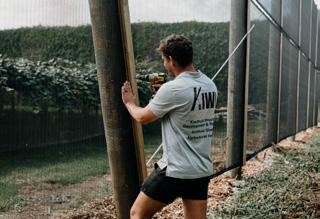
the kiwifruit industry, with low returns and damaging weather events slowing investment.
“When things are tight, growers batten down the hatches,” Rhett says. “Only the essential jobs get done.”
During that period, the business pivoted towards agricultural fencing to stay busy and keep cashflow moving.
“When kiwifruit picked back up, we were straight back into it,” Rhett says. “But having that flexibility made a big difference.”
That adaptability has paid off. Kiwi Structure now has a strong base of repeat clients, many of whom call them back for new developments as orchards expand, or for ongoing maintenance of existing structures.
In 2025, Kiwi Structure was named a finalist in the Northland Business Excellence Awards micro-business category, recognition that reflected both their workmanship and the way they operate.
Rhett is also currently completing his Level 4 Certificate in Fencing through NorthTec, underscoring his commitment to continual improvement.
“I still want to learn,” he says. “You can always do things better.”
For Michelle and Rhett, Kiwi Structure remains very much a family business – built on local knowledge, strong relationships and doing the job properly the first time.
“At the end of the day,” Michelle says, “we’re building structures that have to stand up to Northland weather and support people’s livelihoods. That responsibility isn’t lost on us.”
And in a region where specific expertise once had to be trucked in from hours away, Kiwi Structure has become exactly what it set out to be – a strong, reliable solution built close to home.
Written by Alice Scott
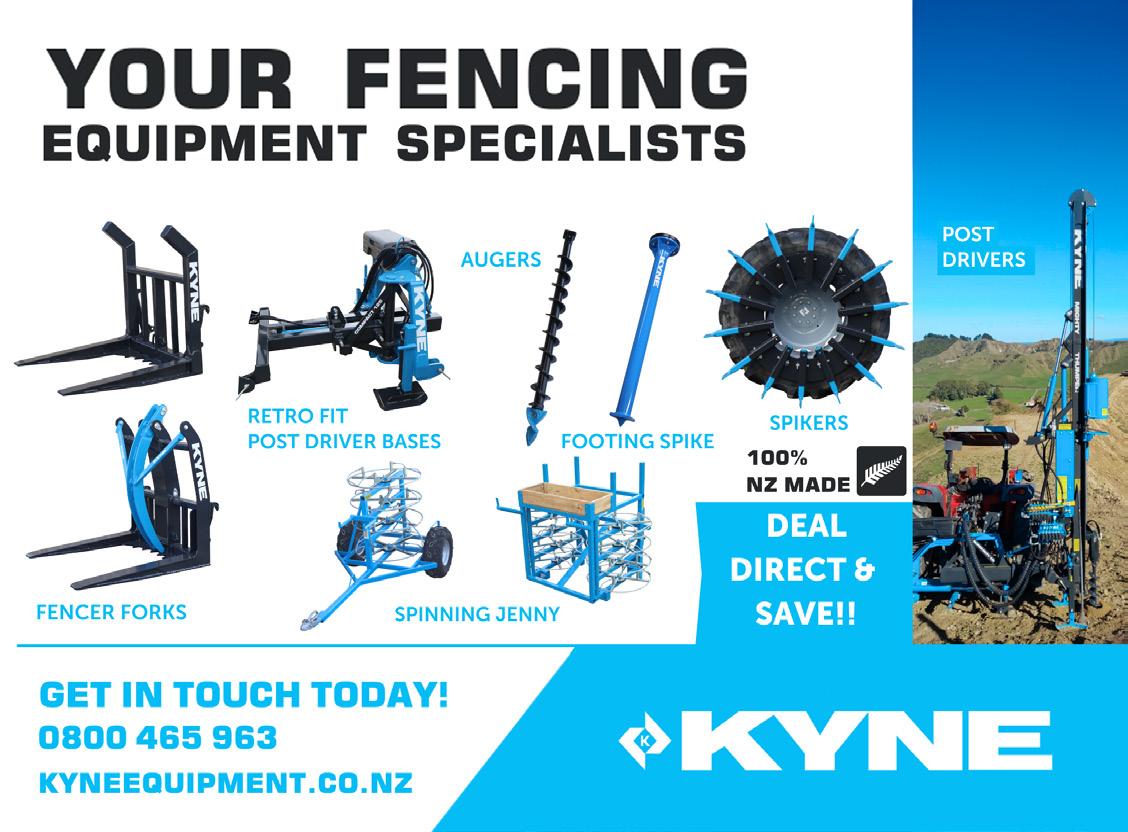
Choosing the right tools for the job is key when installing ground screw building foundations in challenging ground conditions. In a recent job undertaken at the Masterton Medical Centre by Quick Slabs of Wairarapa, Kyne Equipment’s post driver and Rock Spike stood out from the crowd.
Quick Slabs was tasked with installing foundations at the Masterton Medical Centre, a site with extremely challenging ground conditions. The subsoil consisted of demolition material from a previous concrete building combined with river gravel. The original design called for 1-metre-diameter augered concrete piles, some extending over 3 metres to reach virgin ground. Based on site investigations and experience, traditional augering was deemed costly, high-risk, and inefficient.
Large augered piles would have required extensive excavation and removal of contaminated soil, creating environmental compliance issues, higher costs, and logistical complexity.
Quick Slabs proposed stop-dig screw piles as a more practical solution, and worked alongside Kyne to come up with a custom-built rock spike to do the job.
Multiple spike sizes were trialled to achieve the ideal balance between penetration and pile engagement. A 90 mm spike created holes that were too large, preventing piles from achieving full load, while a 50 mm spike was too narrow, restricting screw advancement. After testing, a custom 75 mm rock spike from Kyne proved optimal, consistently penetrating the hard, abrasive material while maintaining required pile performance.
This combination allowed screw piles to be installed efficiently, reliably, and repeatably. The solution eliminated ongoing auger replacement, reduced pile damage, avoided large-scale excavation and disposal of contaminated soil, and kept the project on schedule.
The Kyne Super Thumper with custom rock spikes proved simple to operate on a confined commercial site and delivered significant time and cost savings:
• Reliable pile installation through demolition fill and river gravel
• Consistent achievement of 60 kN design load
• Minimised equipment wear and reduced labour requirements
• Eliminated the need for large-scale excavation and contaminated soil disposal
• Streamlined installation within tight site constraints
Following this success, Quick Slabs and Kyne Equipment are exploring enhancements to allow stop-dig screw piles to be installed directly using the post driver, removing the need for a separate auger system. This innovation promises to further reduce equipment, labour, and site congestion on future projects.
Kyne Equipment has an innovative team set-up and specialise in working directly with the end users – we all know the importance of getting the right tools for the job. Kyne has been working with fencers and farmers across New Zealand and Australia to ensure the fencing sector is set up to achieve results, whether it be using our range of post drivers, rotating bases, fencer forks, spinning jennies or augers.
Ryan Garrity, founder and operator of Quick Slabs said, “Quick Slabs would confidently recommend Kyne Equipment’s post drivers with a purpose-built rock spike for installing stop-dig screw piles on similar commercial projects, particularly where ground conditions are hard, abrasive, contaminated, and not suitable for conventional auguring. What could have become a costly and high-risk foundation installation was instead delivered as an efficient and practical solution through innovation, collaboration, and adaptability.”
Ryan went on to say, “The Masterton Medical Centre project demonstrated the strength of Kyne’s integrated solution. By combining the Super Thumper post driver with custom rock spikes we were able to deliver a high-quality, costeffective foundation solution in ground conditions that would have challenged conventional methods.”
Kyne’s equipment proves to be innovative, reliable, and adaptable,
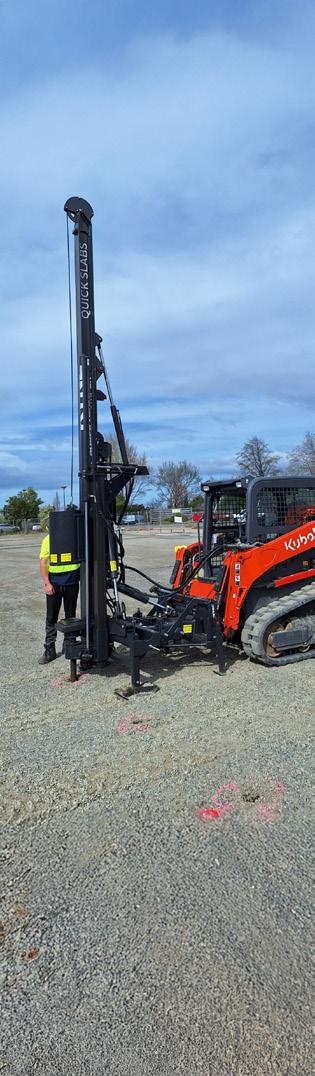
“ After testing, a custom 75 mm rock spike from Kyne proved optimal, consistently penetrating the hard, abrasive material while maintaining required pile performance
making its post drivers and custom rock spikes the preferred choice for stop-dig screw pile installations in hard, abrasive, or contaminated ground conditions.
Supplied by:


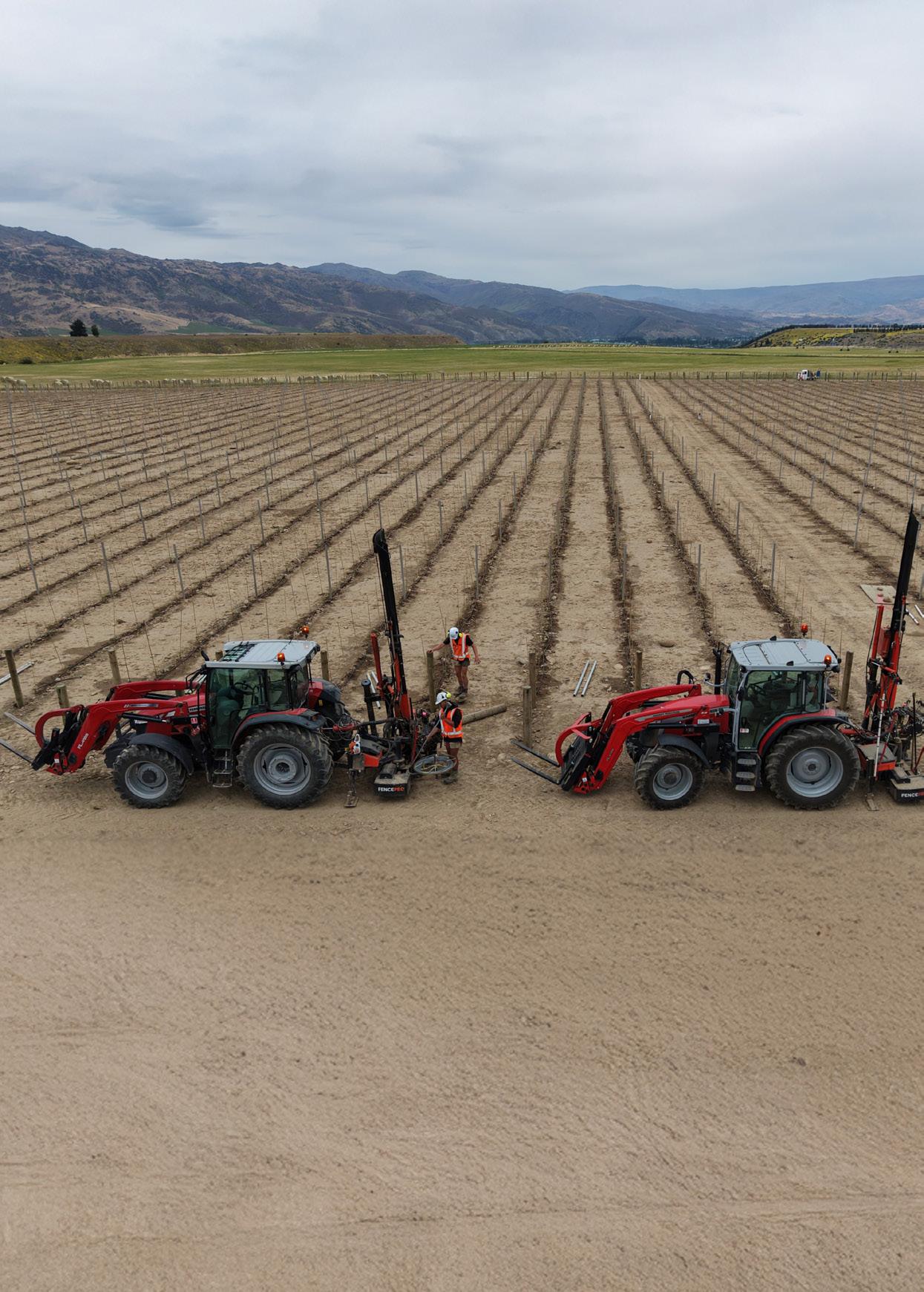
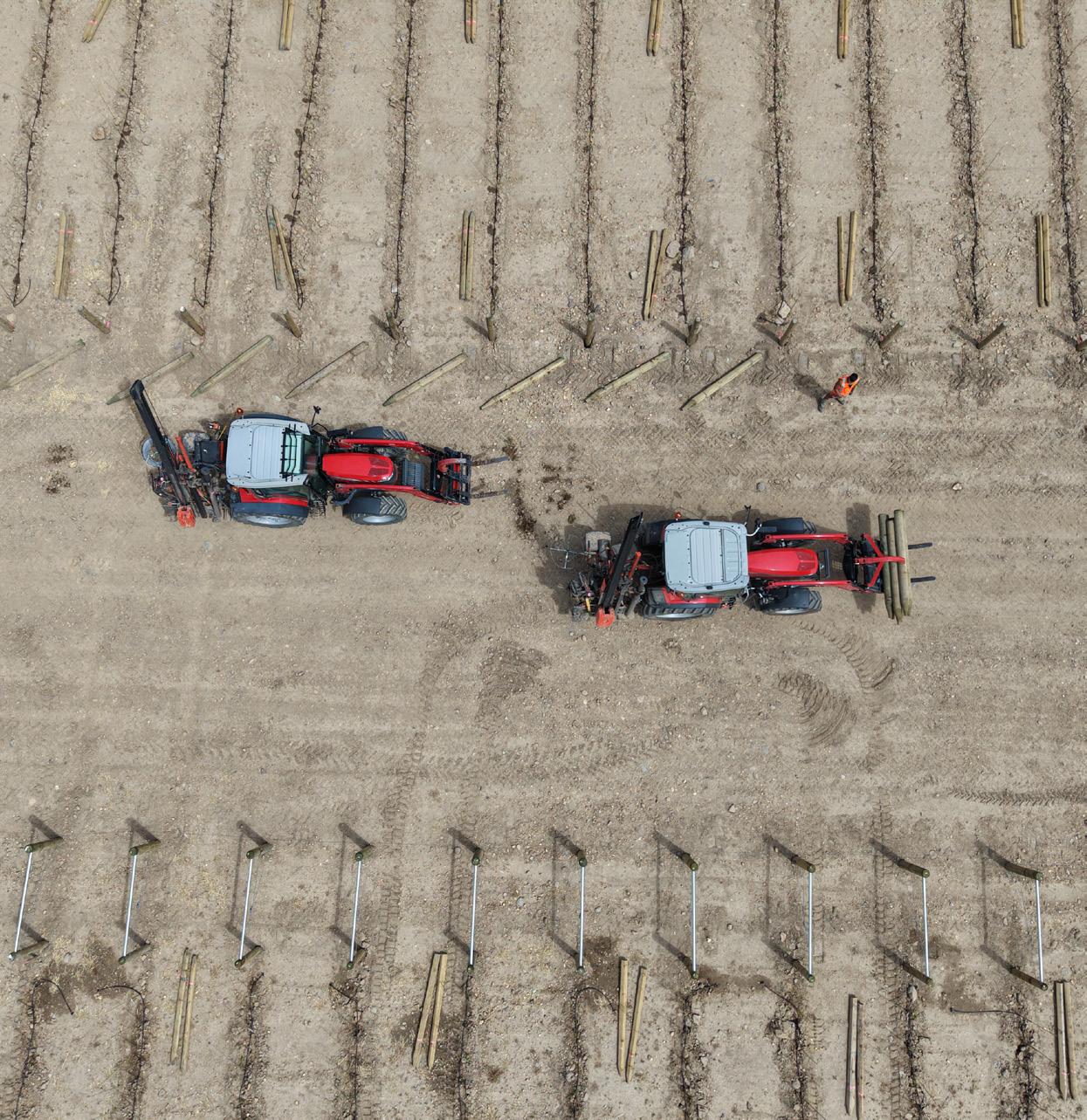
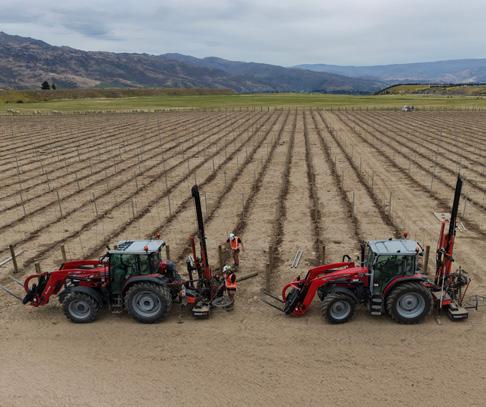
In February, we heard from Derek at Cloudy Bay about pricing for a vineyard development they were planning for spring. After a few conversations around different end assembly options, they settled on a box stay system using a steel pole as the horizontal post, with two timber strainers acting as the end and butt posts.
We chose a 180mm diameter end strainer with a slightly smaller 150mm diameter butt post, knowing the ground was going to be extremely hard.
Once the job was confirmed, we decided to invest in another tractor and post driver so we could run two crews on the project. The job involved driving 1,280 strainers, each 2.4 metres long, into ground so hard that digging a single hole by hand could take close to an hour. Most of the rocks were around basketball size,
and working through that kind of ground can be tough going.
We pre-drove a 120mm spike and then drove the posts to a depth of 1,100mm. Once the posts were in, we set up an assembly line drilling holes into the timber strainers so the steel horizontal poles could be fitted. Because the steel poles were pre-cut, post spacing had to be spot on. If the posts were too far apart, the steel pole would be too short.
“ Cloudy Bay runs a strict site when it comes to PPE and safety. Halfway through the job, we were audited by their in-house safety manager
After drilling, we painted the holes with a wood preservative. Steel poles can sweat inside timber posts, and if moisture sits inside the wood over time, it can cause the post to rot from the inside out, so this step is important for long-term durability.
To get vineyard end assemblies looking neat and consistent, accuracy matters. Post placement, straight lines, and post heights all need to be right. Having the right gear and operators who know what they’re doing makes a huge difference.
We stayed busy on other jobs through winter, and before long, spring rolled around. Derek got back in touch to line up a start date, aiming for the week after Labour Weekend. That timing usually works well, with ground temperatures right and enough moisture in the soil for new vines going in.
As usual, we were juggling several projects at once. When we got the call that the new irrigation pump shed had been delayed due to power supply issues, it took some pressure off the schedule. We were still keen to have the project finished before Christmas, as we’d planned to take three weeks off and wanted to come back to new jobs rather than unfinished ones.
In the end, we started about a month later than planned. There were 640 end assemblies to complete. Post driving was slower than expected due to a very wet spring. While the extra moisture helped early on, once the ground dried out it went hard like concrete, making the posts much harder to drive than anticipated.
The ground was the biggest challenge, along with wind and dust. At times the conditions weren’t safe to work in. Visibility was poor and it was difficult to stand up, which doesn’t help when you’re trying to keep everything straight.
This job also lined up with the rollout of our new health and safety app. The team was getting used to doing daily site briefings and machine pre-starts through the app, and this project helped everyone understand the process and why it matters.
Cloudy Bay runs a strict site when it comes to PPE and safety. Halfway through the job, we were audited by their in-house safety manager. We passed with flying colours, with the only issue being one of the boys wearing sunglasses that weren’t safety approved.
We did hit a couple of water pipes while driving posts, which is never ideal. Power
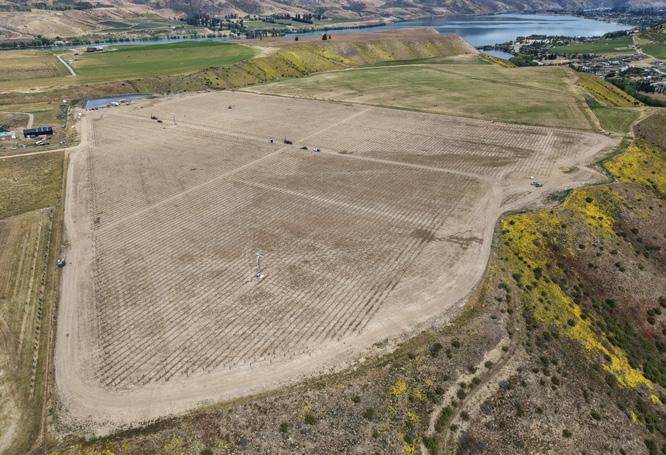
was clearly marked, so posts in that area had to be hand-dug. On the plus side, our new drone captured some great aerial footage of the job, showing the scale of the work and the finished result. The team should be proud of what they achieved.
In the new year, Cloudy Bay brought us back to finish rolling out the vineyard row wire, and we also fenced off their irrigation dam using old vineyard posts.
All up, it was a great project to be part of. The team faced new challenges and really grew, especially in time management, teamwork, and how we document health, safety, and machine processes.
A special mention goes to Point Lumber for supplying the posts. They were pre-chamfered, lathed and ideal for the conditions – out of all the posts driven, only a handful were broken.
Supplied by:

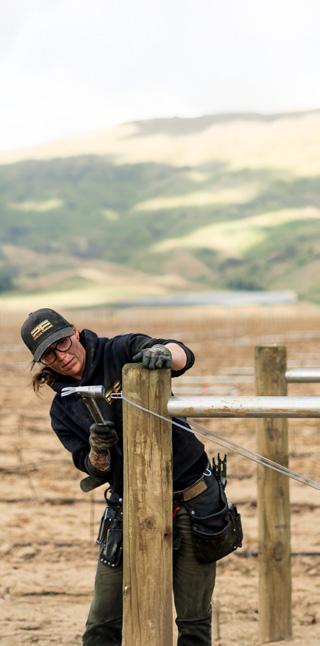
“ The ground was the biggest challenge, along with wind and dust. At times the conditions weren’t safe to work in
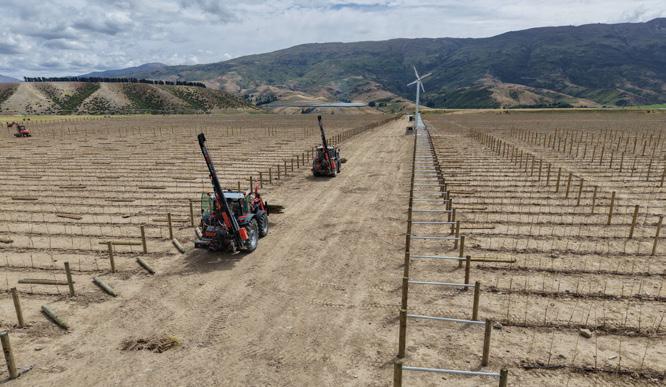
Who can remember what they were up to in business 18 years ago? Well, that was about the time when I penned an article in this magazine about the rise of the hop fields going in around the Tasman region.
So how about an update direct from the horse’s mouth? I got in touch with Brent McGlashen from Mac Hops to see how the hops market has fared.
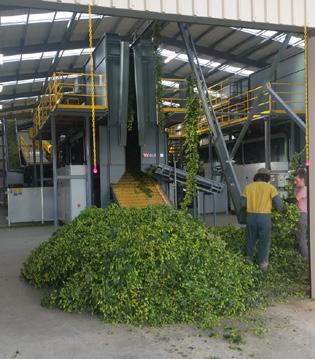
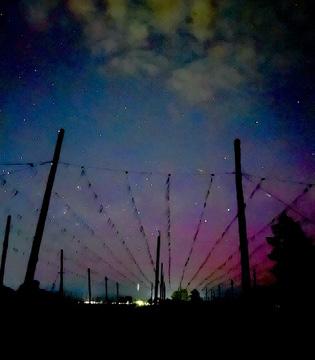
In nearly two decades, there has been a nearquadrupling in area of hop fields established in the Tasman region, producing over 95% of New Zealand’s hops. The influx of the Craft beer boom sure took hold and didn’t go away.
The early adopters of those acreage increases were often family farms (whose numbers at the time were down to 17 families left in NZ), who battled through the tougher years and then could see potential for a little longer-term growth. This growth was then recognised by the corporate investment sector, who piled a significant amount of money into several larger farms. This happened not only in New Zealand but also worldwide, where non-traditional growing regions felt they could also succeed, trying to create their own story.
No one has been immune to the significant rise in cost of production, and the Hop industry has definitely experienced that. Hop poles (an internal structure pole is 5.4m x 125mm) went from $45 to $90+; wire and cable prices rose to the point of even becoming scarce in some parts of the full development cycle;
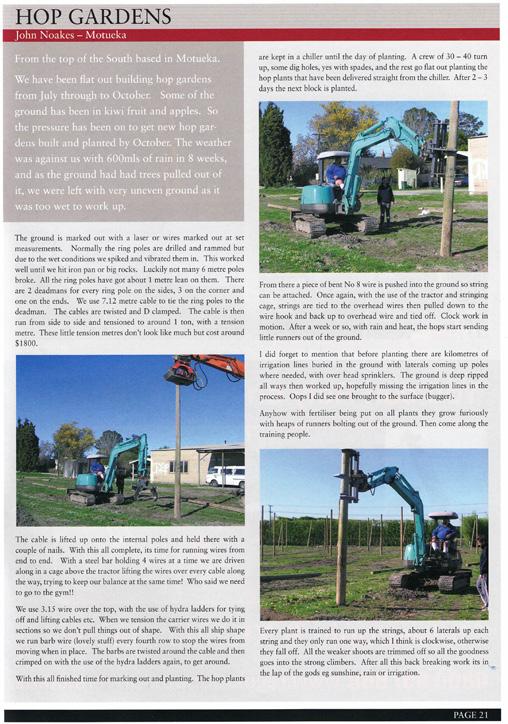
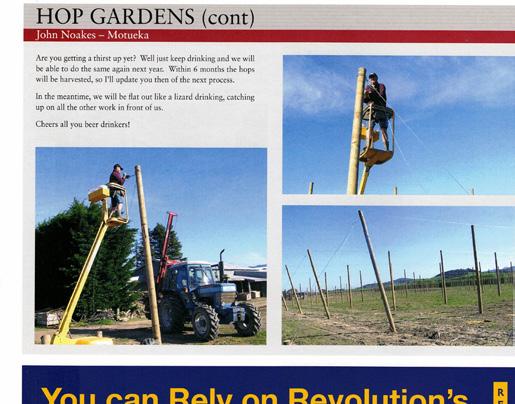
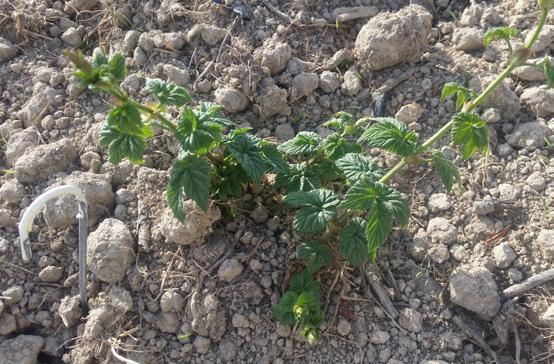

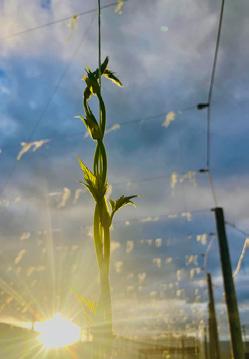

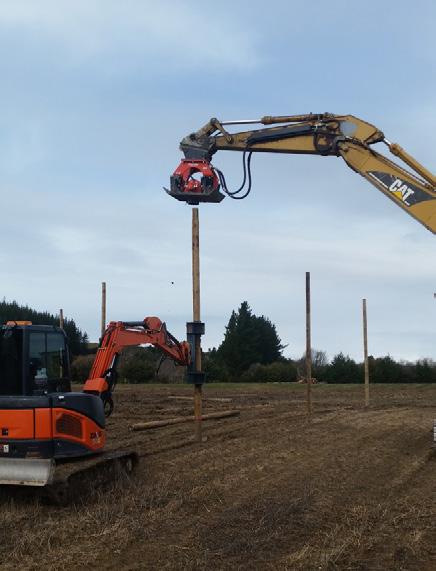
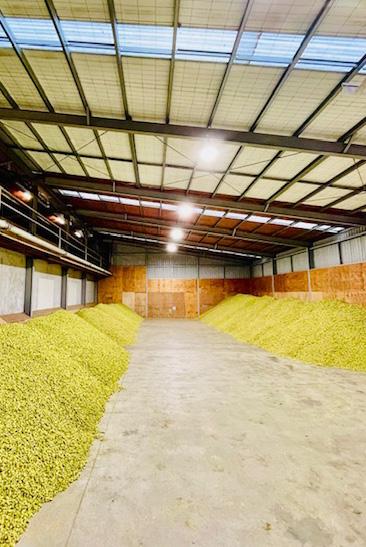
even hop pegs doubled in price. This, coupled with an increasing supply of hops and a post-Covid era of lowering beer demand, as well as young people changing their socialising habits, has culminated in a large hop surplus build-up worldwide. A recent international review suggested that even if 10,000ha were removed worldwide, it would still take a few years to balance out the current demand.
So, where to from here? Well, in the 2025 crop year, growers I talked to had not strung/grown at least 30% of their crop, just to lower their input costs, and were doing their best to hang on through the (now very low part of the) hop market cycle.
Talking with Mac Hops in Motueka - who I joined for the celebration of their farms’ 125th year of growing hops last yearthey mentioned that it has been a tough part of the cycle.
“Our family has seen this kind of market a number of times through our five generations of growing. It is never an easy part of the cycle, but you just have to hunker down, reduce spending as much as you can, but also don’t compromise on crop quality. Yield and efficiencies become even more important, so you aren’t having to grow more area at a cost to then produce less amount of hops. Also, the land that you are resting, pull out older or less saleable varieties and regenerate it with cover crops so when they are ready to replant, they are in good condition, ready to maximise their full potential.”
I think that has happened to many businesses in the last couple of years. Those who have overspent and not had the work ahead of them to pay off the rise in all things business-cost-related
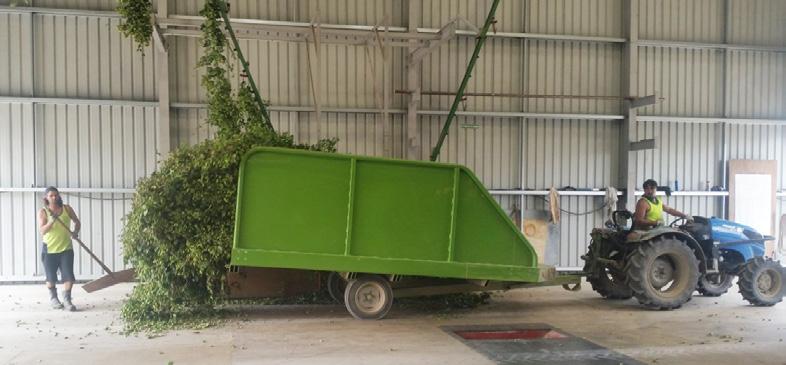
haven’t survived. Maybe your old tractor can hang on for another year or two. Maybe that extra employee isn’t actually earning us any more money. Maybe that job our ‘friend’ wanted us to do has cost us income somewhere else… I’m sure you can relate to some of these thoughts going through your own head.
So, with the 2026 harvest starting at the end of February for the hop growers, you can guarantee they will be focused on efficiencies in their operations. Quality has been exceptional in the last couple of years, and that must be maintained to hold a very high bar in the world of hops (New Zealand only produces 1.5% of world production).
The new varieties must continue to punch above their weight against the more established ones and gain traction in an overcrowded market. I look on in the hope that a number of my friends in this niche little industry can continue to grit their teeth and find their own little wins to pull them through. I think we should all raise a beer to that.
Article supplied by John Noakes. A big thanks to Brent McGlashen of Mac Hops for contributing.
Renner Fencing Contractors is known for handling complex commercial and viticulture fencing projects across Marlborough and beyond. With four crews on the ground, the business delivers security, viticultural, residential and rural fencing.
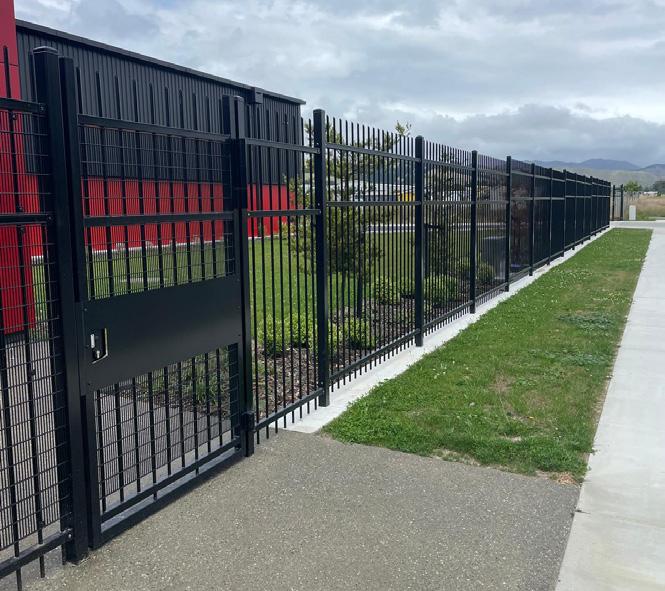
One standout commercial client has been Calder Stewart, through whom Renner Fencing has completed work for Bascik Transport, installing depot perimeter fencing for both its Nelson and Blenheim depots.
The frontage features 2100mm-high black powder-coated Chiefs Panel supplied by KC Fence Systems and manufactured by Edgesmith. The remaining perimeter is secured with chainlink fencing topped with three strands of barbed wire.
The Nelson site was particularly challenging, featuring a boundary line with multiple obstructions and, on one side, a narrow 100mm gap between the fence line and neighbouring shipping containers. There were also the logistics of working away from home for the crew, which Mike said added to the complexity of the job.
By contrast, the Blenheim depot was a more straightforward rectangular site, which was completed on time. “Both projects had the same end goal - a really sharp-looking commercial fence.”
Mike has recently been awarded a third Bascik Transport yard through Calder Stewart, installing fencing at their Palmerston North depot. “They are a great client to work for, and the finished job looks really good.”
Viticulture – a core business focus
Viticulture fencing is a major component of Renner Fencing’s workload. Crews handle full vineyard development, redevelopments and maintenance, from post layout through to intermediate posts, strainers and stay assemblies.
A recent 15-hectare vineyard redevelopment project involved replacing older wooden infrastructure with steel Eco Trellis, installing around 8,000 intermediates and 380 box strainer assemblies.
To manage labour challenges, Mike outsources intermediate post installation
to a Fijian crew, citing high turnover among local staff due to the repetitive nature of the work. “You might train a group of young local guys to do the intermediates, but they’ve usually gone and found something better to do after one round of that!” he said, laughing.
An incentivised pay scheme - offering bonuses for completing more than 2,000 intermediates driven - has proven effective for his Fijian crew. “They’re getting very efficient now,” Mike laughs. “I might need to lift the target for the bonus.”
This 15ha job wasn’t without its complexities. Narrower row spacings compared with the original layout meant some new strainers landed close to old post holes, causing issues with strainers diverting away from the new line. The solution was to refill and compact the old holes to provide a solid base.
Material selection is evolving alongside innovation, with steel and wood now used in equal measure. Steel can be faster for crews
to work with, making jobs more economical, but Mike explains that much of the remaining Marlborough viticulture land is hard, stony ground, where steel posts can bend or become difficult to install. Mike often fields calls from developers seeking advice on the best materials for their ground conditions.
While 2024 was a strong year for vineyard development, Mike says 2025 has been quieter, with 2026 and 2027 expected to follow suit. “Diversification has been key,” he says. “When one sector slows, the others keep our crews going.”
Family graft key to growing business
Renner Fencing stretches back to 1968, when Mike’s father Terry began fencing in Marlborough. Like many rural operators of the time, fencing wasn’t his only focus. He worked on the family farm and also ventured into shearing.
By the mid-1990s, Terry had purchased a shearing run which came with seasonal
shearers and shed hands. This expansion led to the establishment of Renner Contracting Ltd in 1999. The shearing run was then sold, a turning point that allowed him to focus on fencing and farm management work.
The company took another step forward with the purchase of its first tractor, the lease of a second, and an investment in two Taege post drivers. Vineyard development work soon followed, aligning the business with Marlborough’s expanding viticulture industry.
Mike and his brother Brad both left school early to work full-time. Brad left at 15 in 1991 to help with fencing at Muller Station, and Mike was pulled out of seventh form after his First XV rugby season ended to help his father and brother.
Both brothers worked at the freezing works and fenced in the off-season. In 2001, Mike headed overseas on his OE, fencing and shearing in the UK. Time spent in Scotland proved especially valuable, where he gained experience in residential fencing. On returning to New Zealand, Mike established a residential fencing crew within the family business. Further training through KC Fence Systems later expanded Renner Fencing into security fencing.
When the freezing works closed, Mike and Brad bought into the business using their redundancy payouts. Ownership structure has changed over time, with the three families now each holding a third share of the business. Over the years, the business has steadily grown, specialising in vineyard development and fencing, and employing up to 16 staff at its peak.
In 2012, Mike took over quoting, initially handling it after hours while still fencing full-time. With the support of a business mentor, he eventually stepped away from the tools to focus on management. “It was pretty all-consuming trying to do it all,” he said.
Today, Mike oversees new quotes, client meetings, material ordering, staffing, invoicing, and health and safety. His wife, Olivia, manages data entry, account reconciliation, invoice payments and wages. Brad remains very much on the tools in the business, running one of the crews.
Managing four crews spread across Marlborough can be challenging. “It would be good to eventually establish a central yard and office to allow for regular toolbox
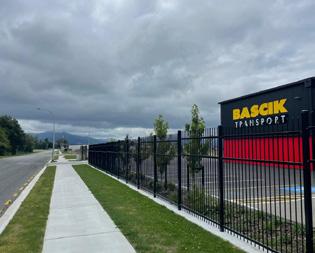
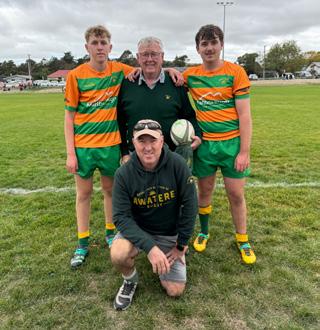
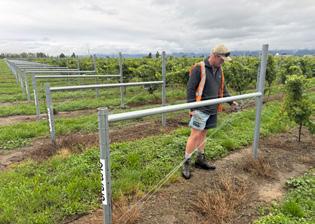
meetings, and I think that would help us stay connected as a team a bit better,” he said.
“At the moment, I try to pick a day and time when most of us are going to be within close proximity to each other to have a catch-up, but it can be hard when there’s a bit going on.”
Technology helps, with a mobile app called Tradify used for quoting, job assignment, timesheets and invoicing, which then feeds through to Xero. Mike sees potential value in integrating a health and safety tab into the programme. “The guys already use Tradify every day, so they would probably get into a good habit of entering risk management and pre-starts.”
He has tried in the past to get his staff to use another health and safety app, but found it wasn’t well adopted. “Those programmes are only as good as the information going into them. We are pretty old school in that aspect - we’re good at keeping ourselves safe on the ground, recognising and minimising hazards and
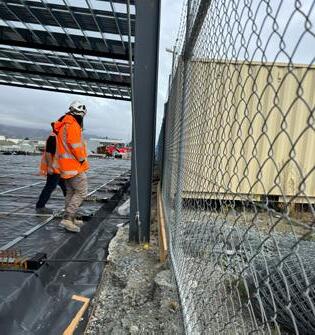
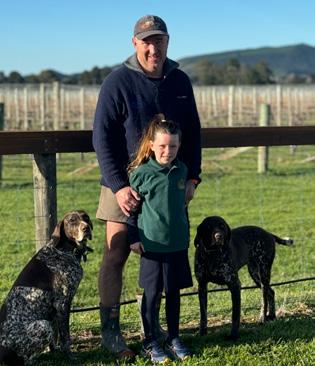
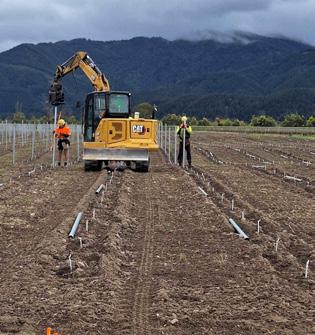
risks – but the recording of it all is where we need to get better.”
Engaging business mentor Daniel Fitzpatrick around a decade ago proved transformative for the business’s bottom line. Gross profit improved from about nine percent to between 20 and 30 percent, with turnover averaging $3.4 million over the past three years. “Getting a mentor has been absolutely worth it,” he said. “This year we have downsized and will be around $2.5 million turnover. Net profit is still looking about the same, and that’s the number to keep an eye on. As they say: production is vanity, profit is sanity.”
Written by Alice Scott
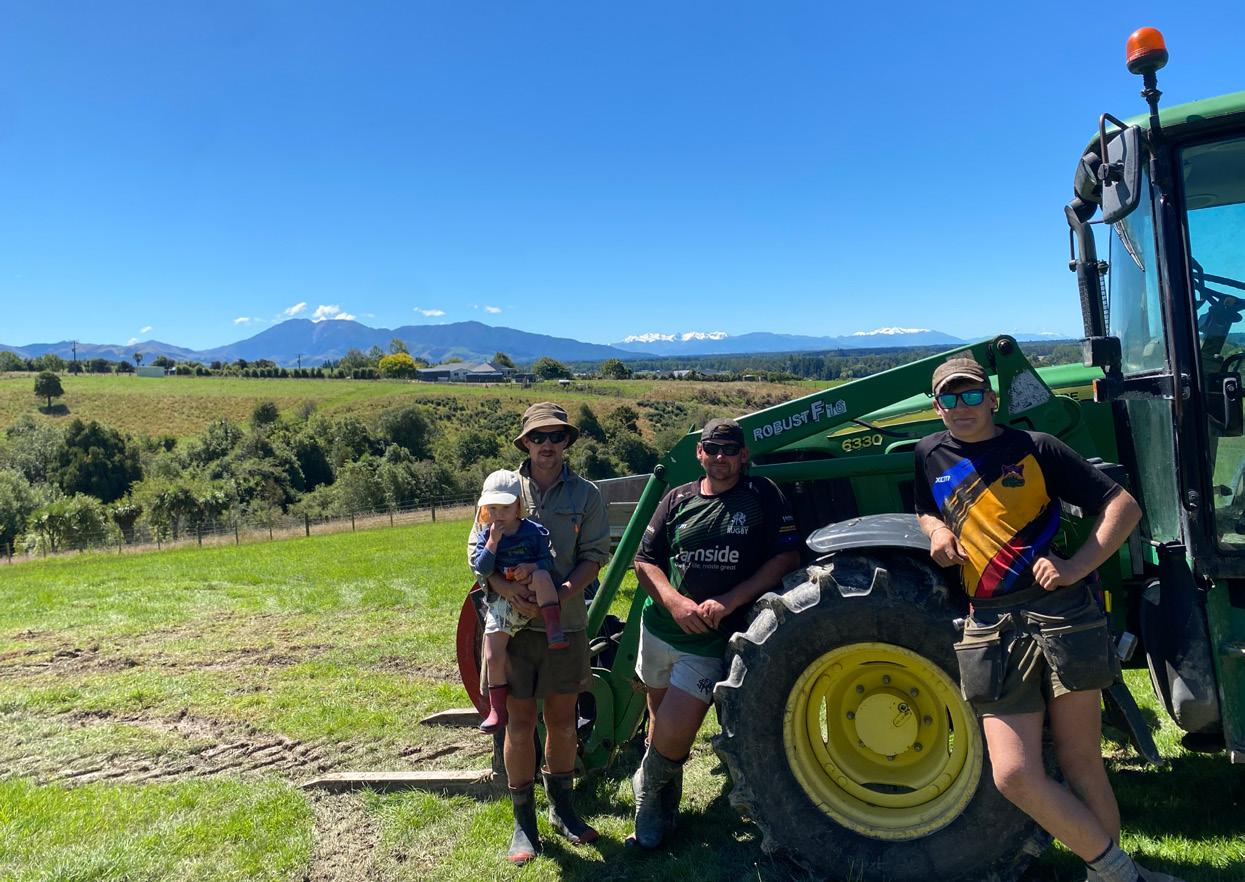
Ask Toby How what he likes most about fencing and the answer isn’t complicated — it’s the mix of physical work, problem-solving, machinery, teamwork and the visible result at the end of the day. A fence line doesn’t hide whether you’ve done a good job or not.
His business – Toby How Fencing - has never chased rapid expansion. Instead, it has grown steadily through reputation, local connection and dependable delivery. Being part of the local community helps — Toby is active in the outdoor pursuits, squash and rugby circles — but he’s quick to point out that community visibility only works if the workmanship stacks up behind it.
“In rural areas especially, word travels quickly, and farmers remember who turns up on time, communicates clearly, and stands behind their work,” says Toby.
Since starting in business back in 2014, the variety of work, and ‘the fact that you turn up and there is work to do all day’ has kept Toby motivated and striving to
improve the service he offers to clients and as an employer.
From its base in Geraldine, the company now works across South and Mid Canterbury with a small, experienced crew of three to four full-time staff, delivering mostly rural fencing across sheep, beef, deer and dairy properties. Over time, the client base has become increasingly loyal, with many repeat customers and long-term relationships — something Toby puts down to consistency more than anything clever.
The day-to-day job mix is one of the features that keeps the team motivated. While rural fencing makes up the backbone of the workload, the variety within that category is wide. Recent weeks have included a boundary fence between dairy farm and large apple development, doing the fencing for a new dairy conversion, lifestyle block fencing, deer fencing upgrades on hard hill country, and specialist framework for commercial sized on-farm solar arrays, contracted by the solar installer Sunergy, based in Rangiora. That spread of work means different materials, layouts, terrain and challenges –and fewer weeks that feel repetitive.
The crew has just completed their third solar job; these have all been on dairy farms to offset the energy demands for irrigation and cowshed needs. The ground-based framing is wood (round wood posts); rear posts are 3.3s which are 2500mm out of the ground and the front posts are 1.8s 900mm out of the ground. Post spacings are 2m and front-to-back approximately 3.5m. The framing is 150x50mm, there is a rail that goes along the top of each row and then the rafters are a metre apart.
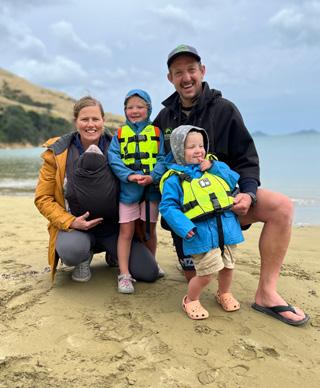
Toby says the wood is a point of difference for Sunergy due to its sustainability. “The first project we completed required 91 x 3.3s, 91 x 1.8s, 58 x 6m lengths and 175 x 4.8m lengths of 150x50mm timber – this array was all in one row along the side of an irrigation pond. It definitely stands out.“
“I’ve learnt some tricks and worked out some systems, but it’s also been a lesson in solar efficiency – the slope of the panels and orientation, and that some irrigation spray helps to clean panels as dust effects generation ability,” says Toby.
Due to the uptake and benefits with solar, it looks as though this work will carry on for the team for the foreseeable future.
The team culture behind the work is something Toby considers just as important as the equipment. Fencing can be demanding, and a young person’s game where long hours are pushed without flexibility.
Toby How Fencing takes a different approach, aiming to structure work in a way that supports a sustainable lifestyle for staff. The philosophy is simple: fencing should support a good life, not crowd it out. That means sensible hours where possible, flexibility around important personal commitments, and recognition that sport, family and community involvement make better workers, not weaker ones. The trade itself helps – unlike some industries, fencing work is typically site-based and daytime-focused, allowing a clearer separation between work hours and home life. Staff are encouraged to pursue their sporting and personal interests, and the variety of fencing work itself helps keep the job engaging rather than monotonous.
Beyond commercial work, Toby puts strong emphasis on contributing to the wider rural and youth community. The business supports local squash and rugby clubs both financially and through volunteer effort, and by employing players brought in, helping keep grassroots sport active in the district. There is also a close relationship with Geraldine High School’s Primary Industries Academy, where Toby takes students for work experience during school holidays, contributing time to them and the Young Farmers fencing skills days, where practical demonstrations and coaching help lift confidence and competence among younger participants.
Several of those placements have turned into ongoing employment, giving
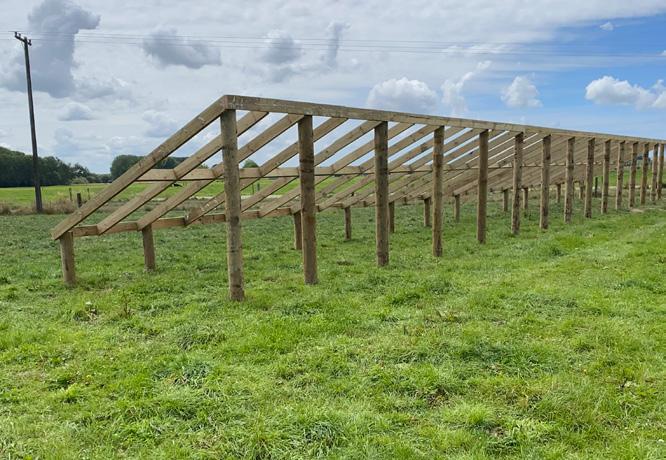
“ The philosophy is simple: fencing should support a good life, not crowd it out
young people a direct pathway into the trade. These events are seen not just as community service, but as investment in the future workforce of the industry. Good fencing contractors don’t appear by accident – they are trained, mentored and given opportunities to learn on real tools and real terrain.
Industry involvement extends to membership in FCANZ, which Toby views as worthwhile when actively engaged with. Guidance on fencing standards, shared technical knowledge and industry communication all play a role in lifting overall professionalism. The Wired magazine is read by the team and often discussed, with practical tips and product insights sometimes influencing how jobs are approached or specified. Rather than seeing industry resources as background noise, Toby treats them as part of staying current and accountable in a changing sector. Training and industry days are approached as a shared investment rather than an individual extra. The crew attends where practical, using those opportunities to pick up product knowledge, safety refreshers and new techniques. Even experienced contractors find there’s always something useful to learn or refine, and shared training experiences help build team cohesion as well as technical skill.
Outside the business, Toby and his wife Sarah live just outside Woodbury with their three young children. Their lifestyle block keeps them busy with horses, projects and outdoor activity, and the family makes the most of local hunting, sport and recreation opportunities. Home life is not separate from the business values — it’s directly connected. The same priority placed on
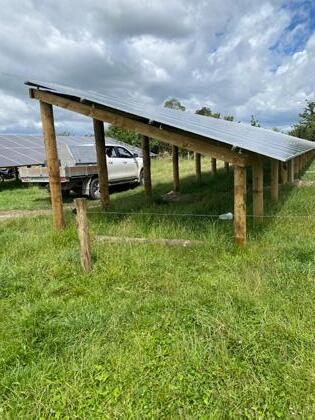
balance, community and practical effort shows up both on and off the fence line.
After more than a decade in operation, Toby still describes fencing as honest work – physically demanding, technically precise, and visibly measurable. There’s satisfaction in seeing a completed line run true across a boundary, knowing it will serve its purpose for years. In an industry where shortcuts are always visible in the long run, the commitment to doing the job properly remains the simplest and strongest business strategy.
“It’s straightforward,” he says. “Build it right, treat people well, stay involved – and the work keeps coming.”
Submitted by Toby How Fencing
TOBY



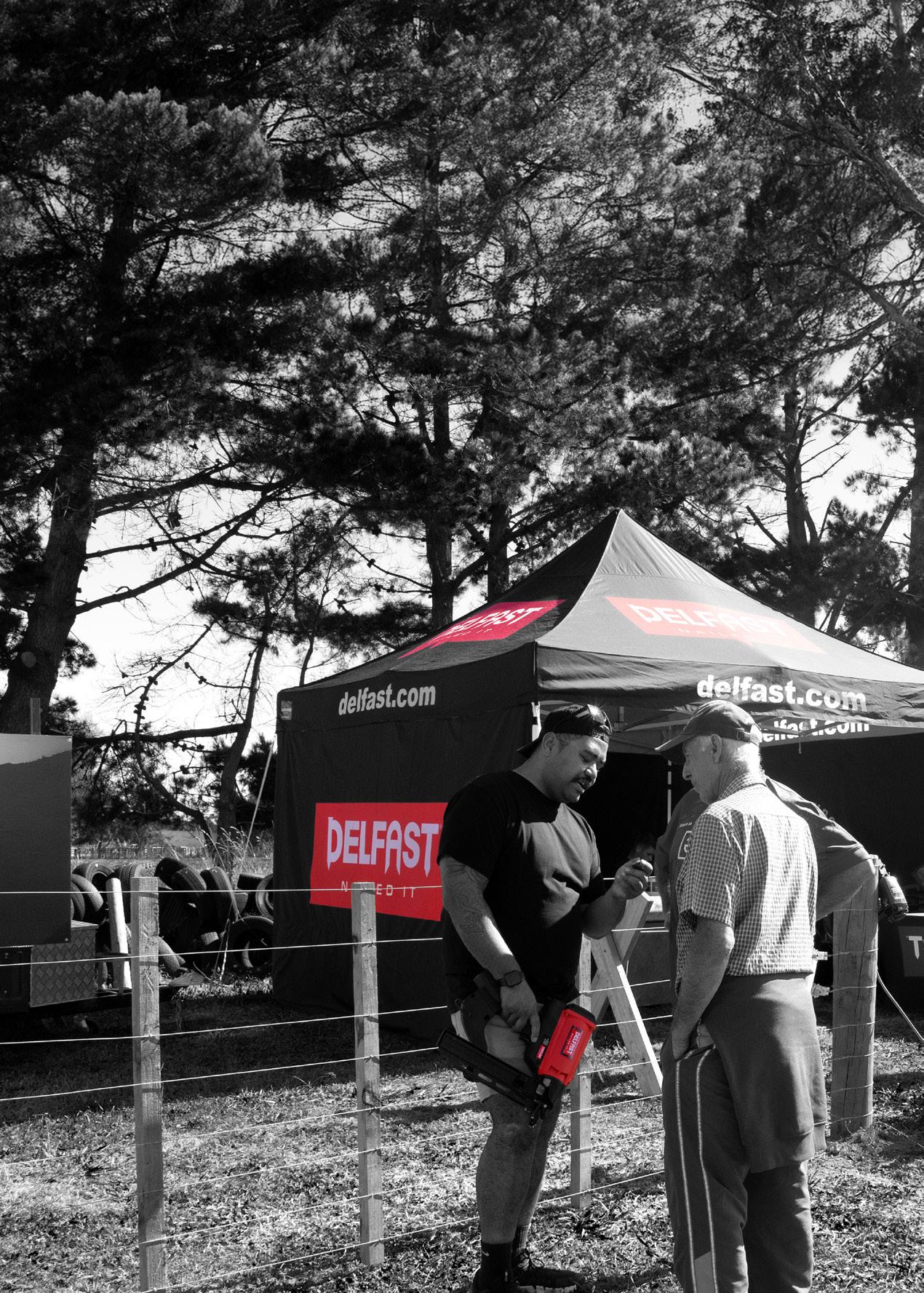
While we have constructed a number of artificial shelter belts and overhead canopies, this golf driving range was a bit of a different contract.
At 10-metre-high sports net, 450 metres long and requiring a solution below the net to stop golf balls from rolling under.
The facility was a run-down Golf Driving range located just outside Pukekohe, in Paerata. A landscaping company had taken over the facility and decided to rebuild the Driving Range infrastructure (together with installing 18 covered driving range bays, and a nine-hole mini putt course, which will extend to 18 in future). They had installed the 43 13 metre poles, planning on putting the netting up themselves, but they discovered they lacked the necessary expertise, and after viewing and providing an estimate, we got the job.
We worked out loadings and tension terminations, which resulted in pulling out some of the poles and building reverse raker tie backs on the end assemblies, with dropper cables to take longitudinal loading of the net. We ran out all the cables - being 1,500 metres of 7.5 mm cable - in 3 runs. We sliced and strained up the cables to 1.5 tons, with 5 separate strains.
Our hydraladas go up to 8 metres high, so we couldn’t reach the top cable. We used our excavator and a telescopic cherry picker, using the excavator arm to pull the netting across on the cable.
Because of the golf balls, the perimeter netting needed to be attached to the ground to stop golf balls from getting underneath. We drove fence posts every 1.5 metres and attached 160 x 50 mm ground rails to them, clipping the netting to the rail.
The Iron Yard opened in January, to the delight of the golf-loving residents of Franklin and Clevedon.
Written by Debbie White

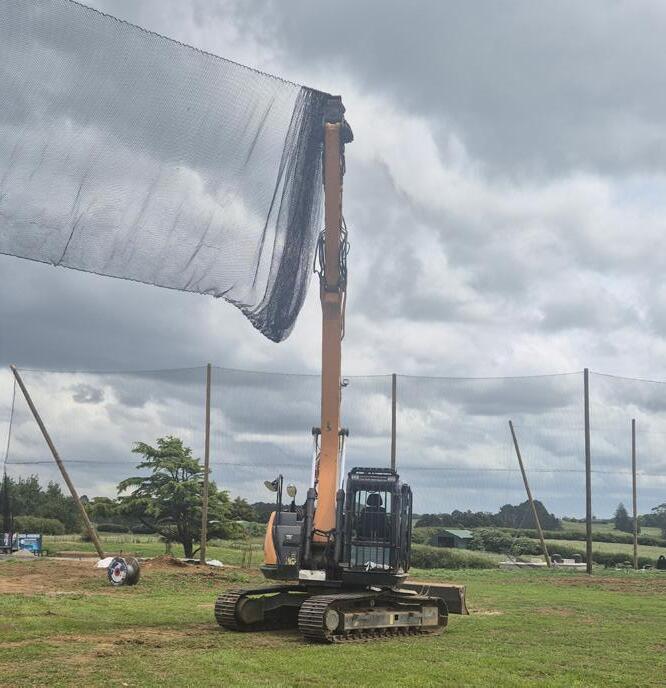
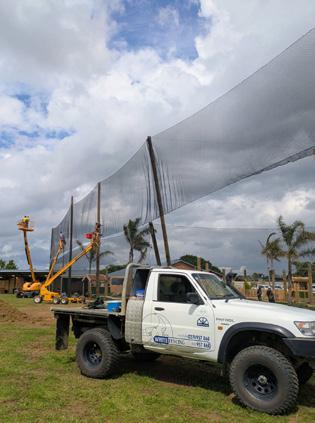
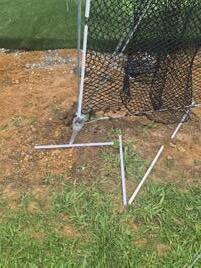
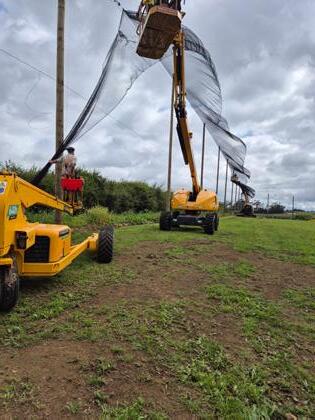
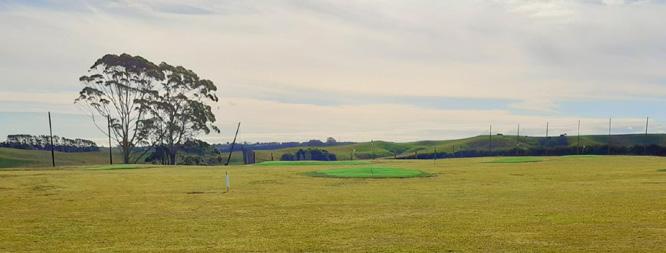
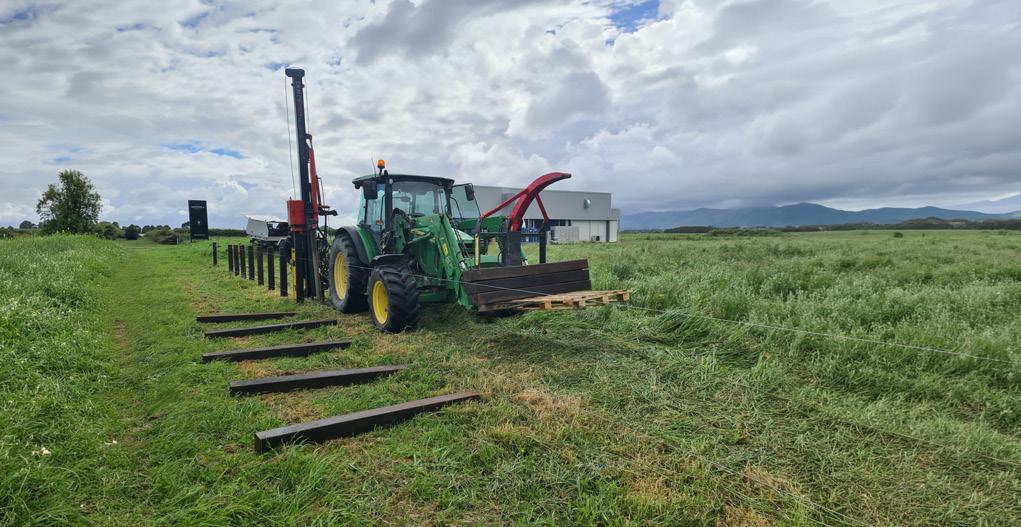
When plans for the Levin bypass on State Highway 1 were presented to the local community prior to its construction, fencing contractor Dale Poulton saw an opportunity that couldn’t be missed.
“I knew it was coming up because they’d been talking about doing the bypass for a long time, so they had some meetings in town organised by the Horowhenua Company,” he tells WIRED Magazine.
The Horowhenua Company Limited is the region’s independent economic agency dedicated to driving impactful economic development.
“There was quite a bit of information handed out about how to tender, and health and safety, etcetera,” Dale says.
The project - delivering 24km of new highway - got underway in September last year and was split into a northern alliance and southern alliance, aimed at speeding up delivery, reducing construction and spreading delivery risk.
Dale’s business, Dale’s Fencing Crew, tendered for and was awarded the contract with Fulton Hogan, fencing off an exclusion zone for the northern alliance with mostly – around 95 per cent
– conventional seven-wire fencing, three to four metres apart, along with some paling fencing.
The team – himself and two workers –also constructed deer fencing around compounds with offices and amenities, and acoustic fencing for properties affected by noise and dust.
“There are some properties where people are staying, so NZTA has been putting in high paling fencing,” Dale says
The tender process was a new experience for Dale, who works primarily in agricultural fencing.
“It was a little bit outside my area of expertise.”
But the NZTA team were very understanding and offered plenty of support, he says.
Keeping his pricing competitive had been an advantage in winning the contract.
“I didn’t jack up my prices at all. I don’t overcharge.
“I take a decent enough return as it is, I don’t need to be greedy.”
Working alongside the many contractors working on the project hadn’t been a problem, he says.
“Everyone’s been really good to work with.
“Coming from a farming background, I’m pretty used to working around other contractors.”
““It’s important to do a timely job, it’s more important to do a good job, but it’s most important to do a safe job
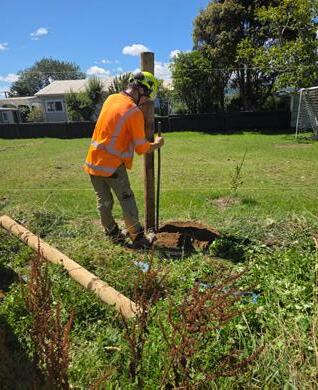
He deals with one point of contact at Fulton Hogan, which makes communication straightforward.
“If I’ve got a problem, I ring him, and if he’s got a problem, he rings me. It’s great having the one point of contact.”
A good relationship with the local Farmlands store ensures materials are in full supply, with Farmlands staff making sure there is plenty of stock on hand at competitive prices and delivering to site.
“Loyalty goes a long way,” Dale says.
Posts are sourced from nearby Mitchpine.
Ensuring a safe environment on site for staff is a priority over haste, and Dale encourages the team to report anything.
“It’s important to do a timely job, it’s more important to do a good job, but it’s most important to do a safe job. I tell the guys, “If I ask you to do something you are not comfortable with just let me know.” Sometimes in the middle of the day something happens and you haven’t noticed, it’s important to have those open lines of communication.”
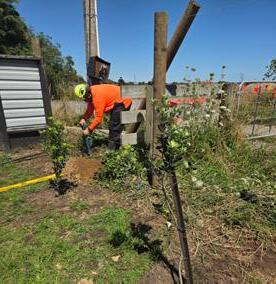
Most of the exclusion fencing has been completed, and there is now the odd job, such as fencing off areas of significance.
Dale says work will pick up again at the end of the project, fencing from one end to the other.
All the while he’s been working on the bypass, Dale has been ensuring he is looking after local clients.
“Just trying to keep the local clients happy as well, we’ve been working all weekend doing local work and then all week doing the bypass project.
“I don’t want to let (local clients) down just because we’ve got this project.
“It was pretty full on for about three or four months.”
But the bypass was too good an opportunity to pass up, he says.
“If I was driving along and I saw someone putting fencing through my backyard, I’d just kick myself. It’s literally just five minutes down the road.
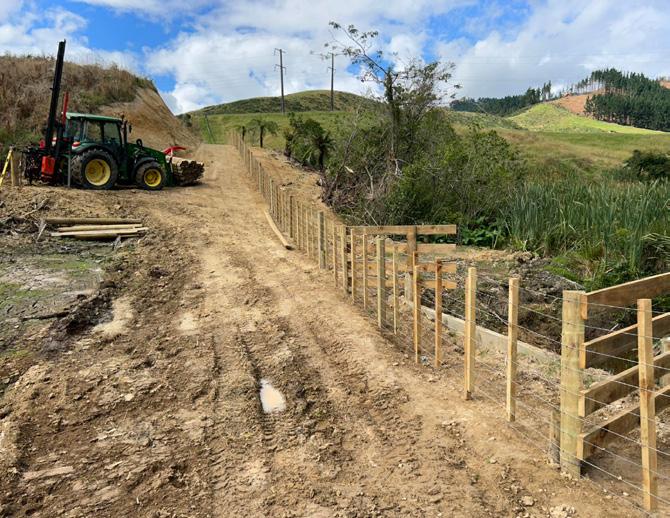
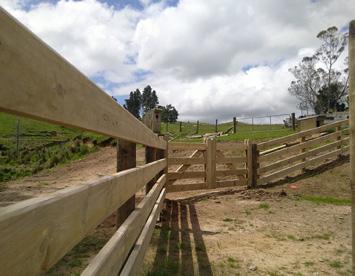
“It’s really satisfying driving past it and seeing it there, and it’s all looking good. It’s good to be making my own mark.”
The work was lucrative, being nearby with little travel costs, and with the advantage of long runs of fencing.
The only challenge was with Health and Safety requirements on the project; the team had to be fully covered all day for long hours, which was harder than a day in the usual tee-shirt and shorts.
Dale started Dale’s Fencing Crew six years ago, purchasing a John Deere tractor, FencePro post driver, and a good quality rock spike, which has been very handy on the bypass project.
“Being a riverbed, you’ve got to have a good rock spike.”
He brought plenty of fencing experience into the business, having a background in farming.
Since then, the business has gone from strength to strength, Dale says.
“It’s just got busier and busier. I’ve not done any advertising, it’s all been through word of mouth. I have an awesome wife and wider group of supportive colleagues, which makes so much difference in the running of my business.”
When asked about his team, Dale says,
“Both my workmates come from an urban background, and I’m really happy with how they’ve adapted to working primarily rurally. They pick things up quickly, and are good with the gear and customers. Neither had experience in fencing. It’s been really rewarding teaching them how to fence to a high standard, and seeing them progress and take such pride in their work.”
Dale says he wouldn’t hesitate to take on another similar project to the bypass in the future, while at the same time is keen to build on his agricultural work.
Written by Rosa Watson
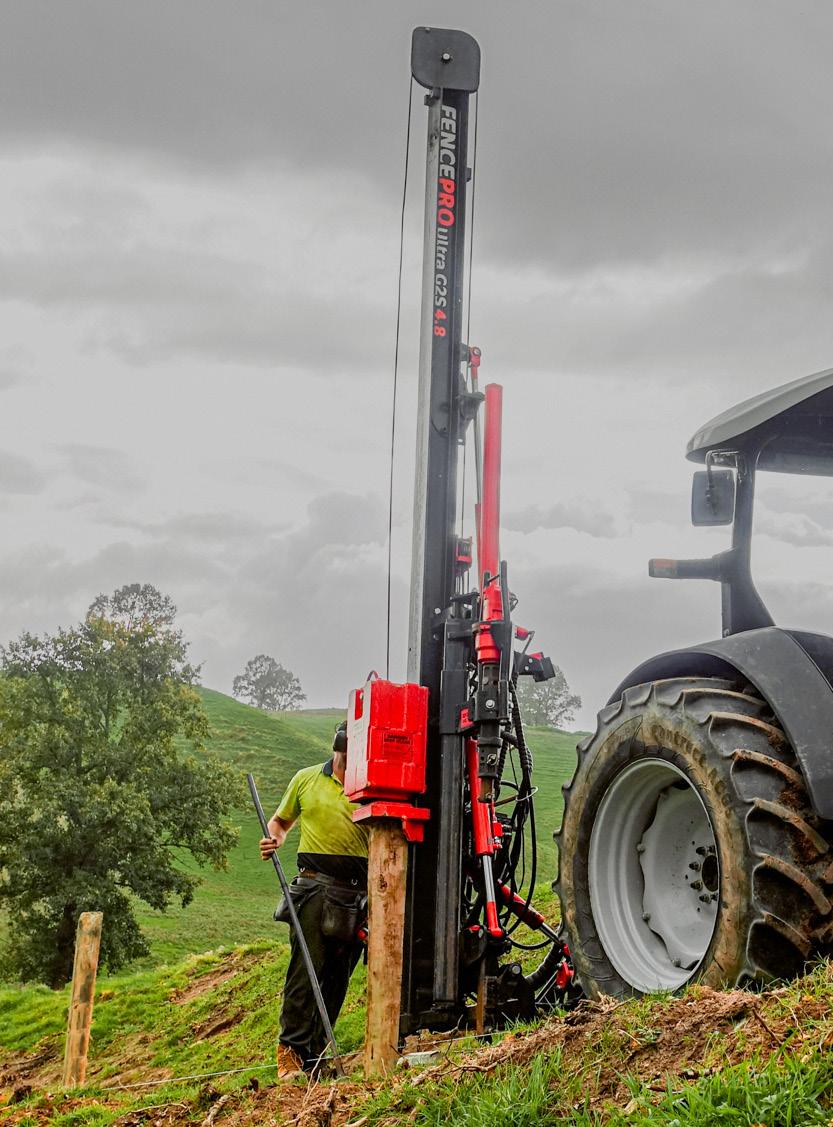
In the demanding world of competitive fencing, Marton’s Tim Stafford has engineered a season for the ages. At 49, Stafford’s recent selection as a finalist for the prestigious PTS Logistics New Zealand Rural Sportsman of the Year award is a testament not to a fading legacy, but to a reign redefined.
His 2025 campaign stands as a masterclass in sustained excellence, a phenomenal comeback that saw him reclaim the sport’s summit a full decade after first conquering it.
Stafford’s year was a stunning treble of elite victories, underscoring a versatility and skill level that places him in a class of his own. He and his doubles partner, Jeff Joines, first secured the Silver Spades championship in a showcase of seamless teamwork and tactical brilliance. Stafford then carried New Zealand’s fencing standards onto the global stage, triumphing at the prestigious East Coast Fencing Rivalry in Virginia, USA. The crowning jewel, however, was a historic domestic victory. After a ten-year gap, Stafford once again claimed the Golden Pliers by defeating the country’s finest competitors in a gruelling test of skill and nerve.
This victory transcends a mere trophy. It highlights a journey of profound dedication. Winning the Golden Pliers once defines a career; winning it again a decade later, while simultaneously claiming national and international doubles honours, speaks to remarkable consistency, evolving technique, and an undimmed competitive drive. Stafford has seamlessly grown from champion to custodian of the sport he loves. Now serving as the voluntary Chairperson of the NZ Fencing Competitions Committee, he dedicates countless hours to guiding, developing, and upholding the best practices that will ensure the sport’s future.
Beyond the fence line, Stafford is a regenerative farmer on 200 hectares of sheep and beef country, an endeavour that shares fencing’s core values of stewardship and resilience. This holistic life, balanced with pursuits like social mountain biking, fuels the competitive spirit recognised by the Rural Sports Awards judges.
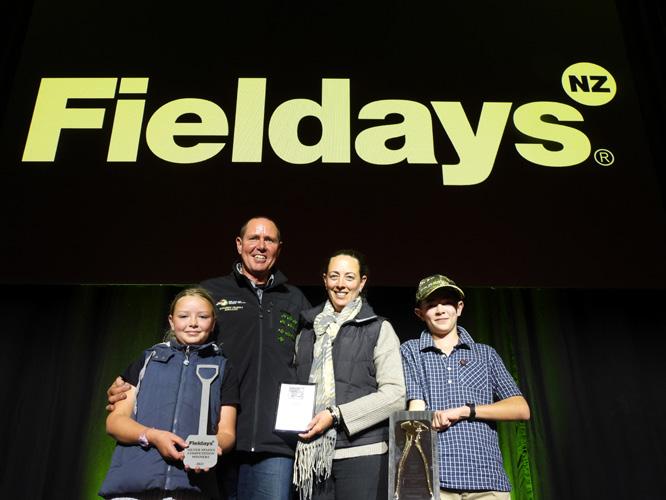
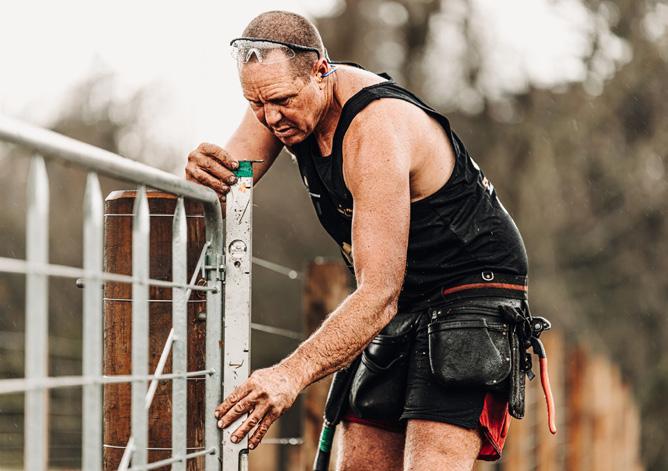
As announced for the landmark 2026 Ford New Zealand Rural Sports Awards at Awapuni Racecourse, Stafford stands alongside wood chopping’s Jack Jordan and sheep dog trialist Leo Jecentho as a finalist for the top male honour. On the evening of the awards ceremony, Olympians Emily Sherman
and Sarah Walker will provide further information, and the recipients of both the Contribution and Legacy awards will also be announced, alongside Women’s, Youth, and Disability Rural Sportsperson of the Year awards.
Written by Daniel O’Regan
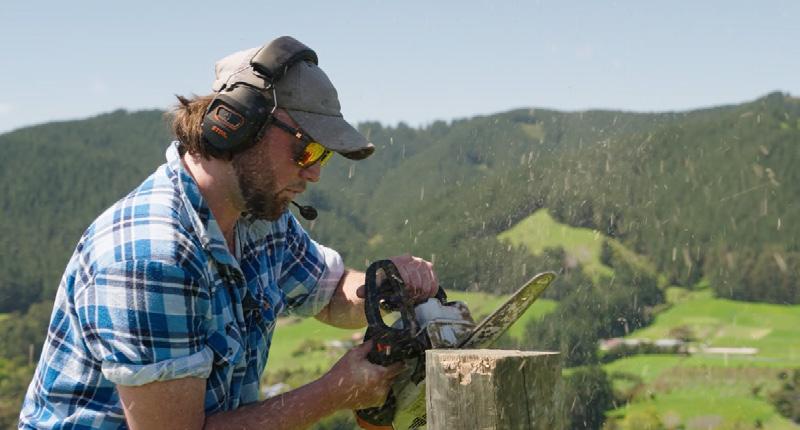
Get more efficient, safer and
how the team from Big
ProCOM in any situation. Bring the communication to the team with up to 16 pairs of
ProCOM able to connect in one network. See how the team from Big Dog Fencing in Wellington use ProCOM to speed up their process here:


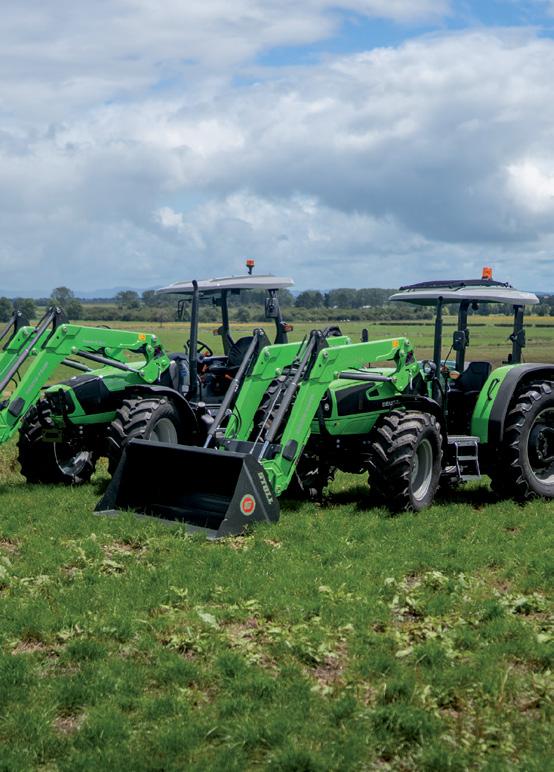

2026 marked a significant milestone for Wayne & Kathy Newdick and their King Country Fencing Competition.
In 2006, they set about starting a fencing competition after some prodding from a group of fencing friends. They were committed and passionate about creating a competition that encouraged and developed young fencers’ skills, and, 20 years later, it sits firmly amongst competitors as one of their favourite competitions on the competitive fencing circuit.
Sponsors are vital to the success of fencing competitions, and Kathy is quick to acknowledge the backing of their local Taumarunui businesses as well as national brands. “We would not have had a comp if it wasn’t for the Porritt and Peterson families sponsoring us since day one; they’ve all been amazing”. This year’s sponsors included Te Koura Partnership, Petco Contracting, Kawatahi Farms, NZ Fencing Competitions (NZFC), Cyclone, Strainrite, Revolution Postdrivers, and PGG Wrightson. Thanks also go to Jim Fairbrother for the spot prizes on the day.
Wayne and Kathy are appreciative of the Strainrite boys, Hugh Morrison and Lyndsey Dry, and everyone else who has turned up the day before events to help Wayne set up.
Whilst judging is now overseen by Owen Peterson, and supported by a team of judges, in previous years the competitors have been paired up to judge all the lines - something that the Newdicks’ believe is a valuable way for competitors to learn where they can gain and lose points. It is a great learning tool for the newer competitors, and a good refresher for the not-so-new competitors!
Wayne has always made himself available to walk over people’s lines and discuss judging points and where there is room for improvement. It is something Wayne and Kathy both encourage the newer competitors to take advantage of.
There were some VIP’s invited to attend this year’s event to celebrate the 20 year milestone; including past competitors, judges and sponsors. They came together to reconnect and acknowledge the hard work the Newdicks’ have put in to creating such a popular event.
Placings were hotly contested; yet ultimately the Bouskills’ won out over Tim Garrick and Corey Twigley on their tension points.
The King Country is renowned for producing hardy and passionate locals, and the Newdicks’ are no exception. Cheers to them for 20 years of developing New Zealand’s best fencers.
Written by Vanessa Stafford
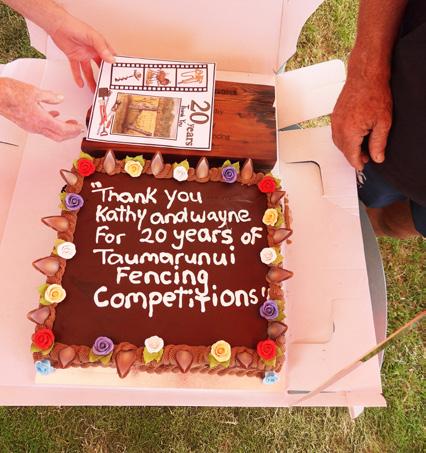
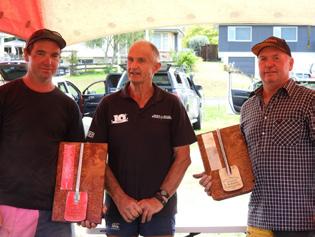
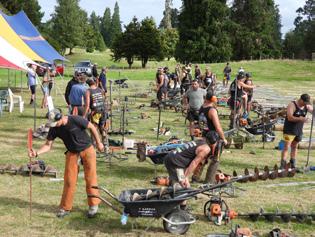
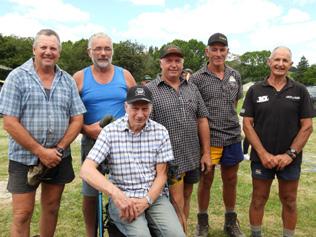
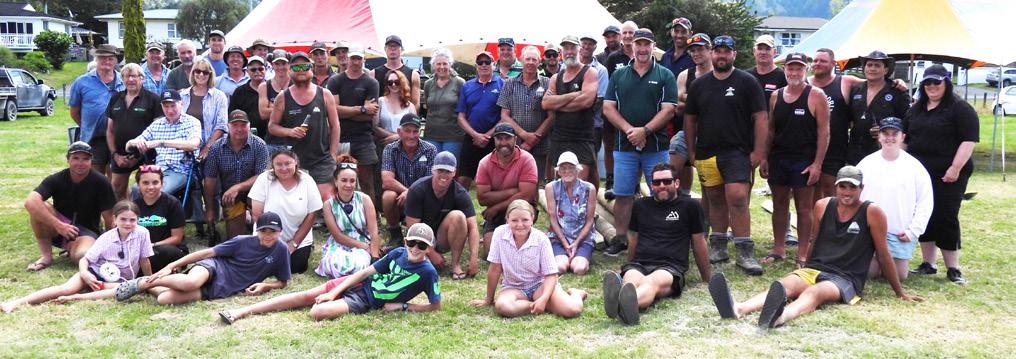
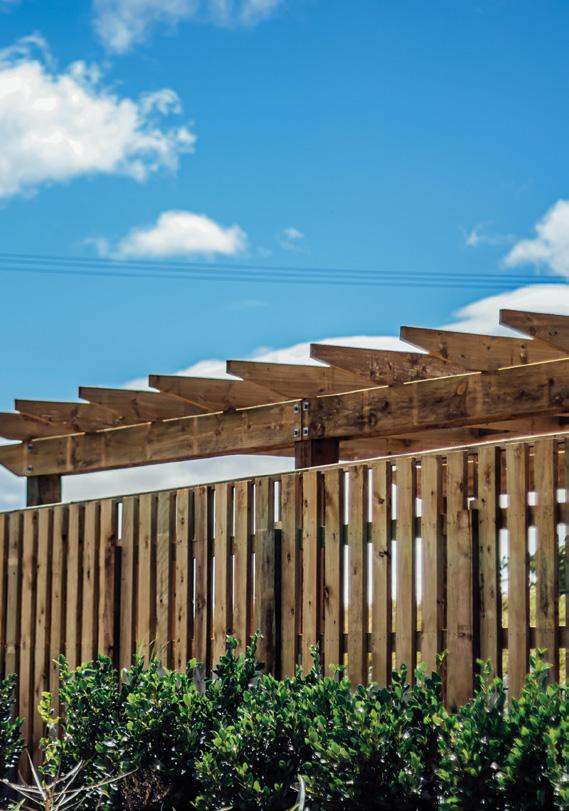
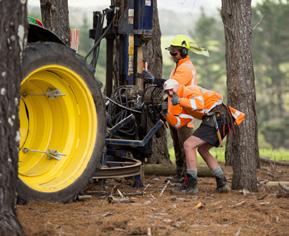
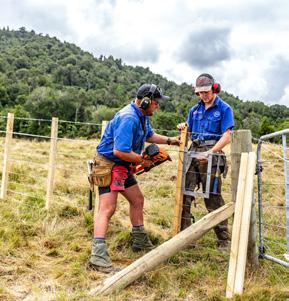
Gain your NZ Certificate in Fencing Level 3 with online study and 3 block courses, meaning you can spend more time on the fence line rather than in the classroom.
Want to become a Certified Fencer? The NZ Certificate in Fencing Level 4 assists you to become a fencing supervisor or a selfemployed fencer.
Both Qualifications are available nationwide.

With Fieldays fast approaching, the NZ Fencing Competitions’ (NZFC) exchange program is once again set to offer an exciting overseas opportunity.
Winners of the 2026 Fieldays Silver Spades will travel to England in July to compete in the Tornado UK Fencing Competition, held in Malvern.
It’s a quick turnaround period, and heats entrants are encouraged to hold current passports.
As the Tornado UK Fencing Competition event is a biannual competition, we won’t see an automatic Fieldays Silver Spades UK finalist team until the 2027 Fieldays, at which time we also hope to see other team representatives from Ireland and Scotland.
The US Team representatives come from the US Platinum Strainer Doubles Championship, and with the East Coast Fencing Rivalry being held annually in August in Galax, Virginia, the 2026 Fieldays Fencing Competitions will see 2025 East Coast Fencing Rivalry winners Dylan Herndon and Ed Struana competing (Ed taking the spot of Deuce Brown, who is unfortunately not able to make it). Event organiser Derrick Cox goes to considerable lengths to ensure the US representative team for the Fieldays Silver Spades finals makes it to New Zealand shores to compete.
Ed Struana started fencing full-time in 2007 in the state of Ohio, having previously dairy farmed and fenced with his father. In 2023, Ed met 2 young men from Indiana, Rodney and Rodger Rhodes. In 2024, Rodger and Ed entered the East Coast Fencing Rivalry in Galax, Virginia, taking home a win in the machinery competition. This friendship and event has lead to a tremendous number of new friends and involvement in a new era of agricultural fence builders in the United States.
Jump ahead to February of 2025, when Ed received a call to join Deuce Brown as his partner in the Fieldays Silver Spades.
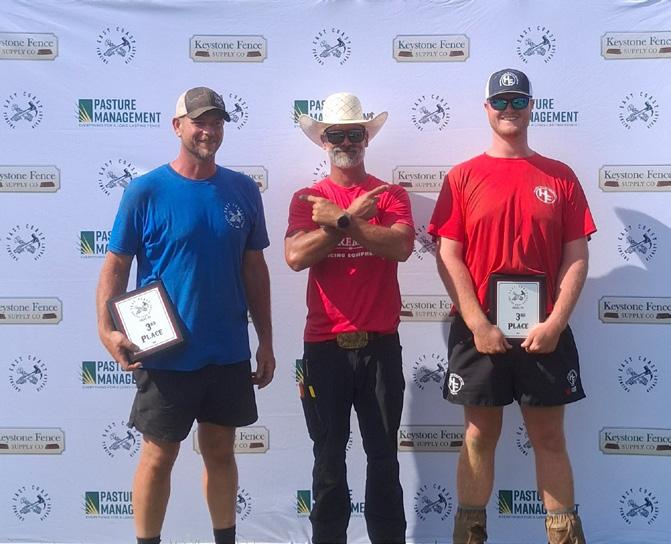
Ed jumped at the opportunity, then boarded a plane to NZ. Ed’s start in New Zealand was wet, cold, and bumpy, but things soon warmed up.
“I was surrounded by a fence community that was warm, welcoming, and more than willing to share their knowledge.”
“The fencing competitions at Fieldays were just plain intimidating to me. ‘Can I do this?’ was running through my mind. The head judge says Go! All worries seem to leave me - just building a fence, like we do every day. I was pleased with what my partner (Luke Gibson, as Deuce was sick) and I accomplished in the finals.”
“As 2026 sets in, I once again can return to compete for the 2026 Fieldays Silver Spades. Foremost, I am eager to complete the heats events and better my time, technical, and strength test scores. This is also the ultimate goal for the finals. Afterwards, I plan to spend some time seeing more of New Zealand and spend some time with some of the best fence contractors in the world. At the end of the trip, I look forward to returning home as a better fence builder, having even more fence friends and acquaintances.” 2026 will be Dylan Herndon’s first time
in New Zealand, but Dylan is no stranger to the recently acquired taste in the USA for handwork competitions. Dylan now organises his own fencing competition in February and is a regular competitor at the likes of the East Coast Fencing Rivalry. Dylan owns and operates Herndon Farm and Land Services in Georgia. A quick convert to using high quality materials and workmanship, Dylan has taken to competitions like a duck to water.
Comments Dylan, “My trip to New Zealand this year has been a long time coming. Having the chance to go over and compete in such a prestigious fencing competition, at such an event, is an honour. While there, I hope to meet many new people, catch up with friends I’ve made when they have come over to the States, and really take in any knowledge that is shared with me. I’m looking forward to learning, practicing and competing, honing my skills as much as I can.”
Written by Debbie White

You’re sitting at the computer, staring at the numbers for what feels like the hundredth time today.
The client’s been waiting for your quote. You know what the job will take in materials, hours, plus maybe a few surprises along the way. You do the numbers, and it’s ready to send, or is it?
Then that familiar knot forms in your gut.
“That seems too much. They’ll never go for it.”
So, you shave a bit off. Then a bit more. You tell yourself it’s still okay, that you’ll make it work. You don’t want to be seen as too dear.
But deep down? You know you’re undercutting yourself again, but you do it anyway because it feels uncomfortable not to.
Busy, stressed, and barely breaking even.
It’s not because you’re bad at your trade or your business. It’s just that your pricing is working against you.
Maybe you’re the opposite type. You price high because you’re scared of being caught out, like that job last year that took way too long, and you ended up working 3 months for bugger all. Wrecking cash flow, putting stress levels through the roof.
So, you throw out a big number but then miss out on the job even though you really could have used the work.
No system. No strategy. More about gut feeling on the day.
Either way, you’re not really in control. Your pricing is.
And that’s the real challenge. Because pricing isn’t just about winning work, it’s about building a business that pays you what you’re worth, covers your costs, and gives you a healthy profit at the end of the month.
Here’s the good news: the biggest pricing mistakes tradies make aren’t complicated. And once you know what they are, they’re fixable.
Why most tradies are losing money (and don’t even know it)
After coaching thousands of tradie business owners for over 14 years to be more profitable and get more work, these are the seven biggest pricing mistakes I see tradies making, along with how to fix them.
Mistake #1: Pricing against your competitors (the race to the bottom)
Here’s how it usually goes: you hear what your competitors are charging (or think you know), and you price a bit lower to win the job.
It works. You get the work.
But then you barely cover your overheads, let alone pay you properly, and still make
“ You estimate
the hours, but
it’s easy
to
forget
about all
the little things
that eat time: travel, loading up, site access, setup and pack down, waiting on other trades, client changes, weather delays, callbacks, or the learning curve on slightly unusual jobs a profit. You’re busy, sure, but you’re not making money.
Here’s what works better:
Instead of pricing off someone else’s number, work to a target margin. You don’t know their costs, their overheads, or whether they’re even making money themselves.
Kevin, a contractor I am working with now, quotes every job using a target margin. He is getting 10% more gross profit on every job, has confidence in his pricing, and is getting just as many jobs as when he was pricing lower. Better profit, better cashflow and business is way more fun.
Mistake #2: Guestimating labour hours (and getting burned every time)
This is where job costs blow out most often.
You estimate the hours, but it’s easy to forget about all the little things that eat time: travel, loading up, site access, setup and pack down, waiting on other trades, client changes, weather delays, callbacks, or the learning curve on slightly unusual jobs.
It all adds up. And suddenly, a job you thought would be profitable is costing you money.
Here’s what works better:
Allow for all those hidden time sucks, then add another 5-10% buffer. Even when you do everything right, around 1 in 10 jobs will still go over.
If you’ve got a large job and aren’t confident in your numbers, consider hiring a Quantity Surveyor to price it. It’s better to invest a little upfront than to be stuck with a big job that’s bleeding money.
When your quote is vague, or worse, you don’t have one. The client fills in the gaps with their own assumptions. That’s where scope creep starts.
“Oh, I thought that was included…”
Now you’re in a tough spot. Either you do the extra work for free to avoid conflict, or you try to charge, and it gets awkward because nothing was clearly defined upfront.
The job blows out, your timeline gets squeezed, and your profit quietly disappears.
Here’s what works better:
Tighten up your quote so it’s crystal clear what’s included and what’s not
Write your scope like a checklist: exactly what you’re doing, where, and to what finish or standard. Then add a short “Exclusions” section that protects you from common grey areas, such as site access issues, remedial work, site conditions, waste disposal, etc.
If something is unknown, let them know that if you discover something out of the ordinary, it will be extra.
The goal isn’t to be difficult; it’s to remove confusion, reduce disputes, and make variations easy to price when the client asks for extras.
Mistake #4: No system for handling variations (or not using it)
Do you have a variations clause in their terms… and if so, are you using it?
So, the job slowly grows. “Can you just...”, “While you’re here…”, “We changed our mind...”
Suddenly, you’ve done extra materials, extra hours, extra running around, for free.
One or two large freebies can wipe out the profit on the whole job. And often the client doesn’t even realise it was extra, they just assumed it was included.
Here’s what works better: Make variations a process, not an awkward conversation later.
Set the expectation upfront: “Any changes outside the quoted scope will be treated as a variation and priced before we proceed.”
Then use a simple system: spot it, price it, approve it, then do it. Record in writing. Text or email works fine.
Make sure your team knows: no variations go ahead until they’ve been agreed to in writing.
Rudy, my builder client, had a team that often completed variations which ran into tens of thousands of dollars in extra costs he felt he couldn’t charge for, because he didn’t get his client’s agreement to those extra costs first. Awkward and expensive. Once we got his pricing right and put a system in place for variations, this added $73,000 to his bottom line.
Most clients will respect your professionalism, your margins stay protected, and you stop resenting jobs that “should’ve been profitable.”
Mistake #5: Not tracking costs and profit of previous jobs (back costing)
If you don’t review jobs once they’re finished, you’re essentially quoting blind. You might feel busy and assume you’re “making money”… but without back costing, you don’t know which jobs were profitable and which weren’t.
The real challenge?
If you never compare estimated vs. actual labour hours, materials used, delays, variations charged, or missed, you’ll likely repeat the same underquoting pattern next time.
Here’s what works better:
Track materials and labour against your original estimates. Then check the profit and gross margin for each job against the quote.
Try to do this with every job, or at least all the big ones. You can track it in a spreadsheet or job-tracking software such as Tradify, Simpro, Buildaprice, BuildXact, or Fergus.
Make notes on any jobs that fall below your target margins and what you’d do differently next time.
This is how your pricing gets sharper - no more guesswork.
Mistake #6: Pricing the same for all clients and all jobs
Charging the same rate across the board feels simple... but it can quietly work against you.
“ Know your target margin and aim for it on every job. If you’re tempted to discount, check how that fits with your target margin. Too low: don’t do it
Easy jobs with great clients run smoothly: good access, quick decisions, minimal changes. You get in and out.
Challenging jobs are the opposite: tricky sites, tight deadlines, lots of back-andforth, scope creep, and a higher risk of rework or disputes.
If both jobs are priced the same, your best clients end up subsidising the worst ones.
Here’s what works better:
Consider pricing based on difficulty, risk, and client behaviour, not just trade and hours.
Set a base price for standard work, then apply clear loadings when the job will soak up extra time or create risk: awkward access, unknown conditions, a high-spec finish, rushed timeframe, coordination headaches, after-hours, or a client who’s already signalling they might be highmaintenance.
A simple way is to create a “job grade” system (A/B/C) :
• A jobs: smooth + low risk → standard margin
• B jobs: some complexity → higher margin
• C jobs: high risk or time-wasters → highest margin (or consider declining the job)
That way, you’re not subsidising the hard stuff; you’re getting fairly compensated for it.
Mistake
instead of the numbers
This one’s really common, and tradies find it the hardest.
You get uncomfortable when you’re doing the quote. You feel bad charging “too much.” You worry they’ll say no or can’t afford it, so you drop the price.
Other times, you price too high because you remember a job that went wrong, which clouds your judgment.

Either way, pricing becomes inconsistent, profits become unpredictable, and you start taking on the wrong jobs at the wrong rates.
Here’s what works better:
Let the numbers guide you, not your emotions.
Know your target margin and aim for it on every job. If you’re tempted to discount, check how that fits with your target margin. Too low: don’t do it.
When your pricing system is solid, you will have confidence in your pricing. You’re not “guessing what feels right”; you’re quoting to protect profit and run a more predictable business.
The bottom line (and what happens next)
If you’ve recognised yourself in a few of these mistakes, you’re not alone.
I’ve worked with hundreds of tradies who were making these exact same errors. Good people. Skilled workers. Just pricing themselves into a corner without realising it.
The more consistent and predictable your business is, the easier it is to run and the better results you’ll get. Pricing is a key part of that.
And look, I get it. You didn’t get into the trades to spend all day on a computer. You got into it because you’re good at your trade and want to make a difference.
But here’s the reality: if your pricing isn’t working for you, everything else gets way harder.
You can be the best tradie around, have a great reputation, work long hours… and still struggle financially.
Ready to get your pricing right?
If you’re tired of the guessing game, the stress, and feeling that you’re leaving money on the table, it might be time to look at your pricing strategy.
I work one-on-one with tradies and construction business owners to build pricing systems that actually work and give them the profits they want. We’ll go through your numbers, your margins, and your pricing structure together so you can quote with confidence, win the right jobs, and get paid what you’re worth.
No more second-guessing yourself. No more hoping the job will be profitable.
Just clear numbers, solid systems, and a business that works for you. No more guesswork.
Book a free pricing strategy session with me at nextleveltradie.co.nz/nextstep
Written by Daniel Fitzpatrick


Insurance is one of those behindthe-scenes essentials which helps your fencing business operate with confidence, and Gallagher brings the expertise and support to ensure you have the right cover in place.
For Custom Fencing’s Nick Terry, reviewing his insurance with Gallagher was a turning point. When his long-time broker was retiring, he decided it was time to check whether his coverage still matched the reality of his business.
“I’d been with my old broker for 15 odd years – even my father used them. When they retired and I said I’d be getting a second quote, suddenly their service fee dropped from 15% to 5%. My first thought was: ‘Where was that last year?’”
Fencing contractors face a unique mix of risks, and Gallagher brokers understand that no two operations look the same. We take the time to understand how your business works, whether you’re running a single post driver operation or coordinating multiple crews across rural and commercial sites.
We help ensure your cover works together across:
• public liability requirements for large clients
• tools, vehicles, and machinery
• rural and lifestyle block risks
• business interruption
• employer obligations and subcontractor exposure
For Nick, having a broker who genuinely understood his business made a noticeable difference.
“Insurance is becoming one of our biggest costs, but you can’t live without it. So you’ve got to make sure you have cover for the right things,” he says.
“Krystine, my broker, is local and knows what our business is all about – she made life easy.”
This local connection is a defining part of Gallagher’s approach. Our brokers live in

the same communities as the contractors they support. They understand the pressures of weather-dependent work, tight rural networks, and council compliance, because they see it every day.
Another advantage of working with Gallagher is our negotiating power. With long standing insurer relationships this often means sharper premiums, broader cover, and policy terms that aren’t available when going direct. And when something goes wrong, contractors aren’t left to deal with insurers alone –we act as your advocate, managing the details and pushing for the best possible outcome.
Nick has already seen the benefits of working with Gallagher. “I’ve got better premiums for sure, and I particularly liked that as a new client, some of Gallagher’s commission could be redirected to my local junior rugby club.”
He’s referring to our Club Kickback programme, where new clients associated with a rugby club can have 15% of Gallagher’s commission donated back to a club of their choice. For fencing contractors who value supporting their local community, this is a simple way to give back while sorting your insurance.
Nick believes insurance is something every contractor needs to take seriously. “In our line of work, bigger companies
require a certain amount of public liability just to start a job. We’re all busy people, so the easier it is to make a claim, the better.”
Gallagher’s role is to make sure those costs deliver value, not surprises at claim time. As Nick puts it: “I’m a big fan of loyalty, it can get you things money can’t buy. But sometimes it can cost you too. Support the people who support your industry.”
His advice to other contractors is simple, “It can’t hurt to ask for a quote to see how well your current insurer is looking after you. You could save a few dollars, and your name gets brought up at the local rugby club for donating money. Doesn’t sound all bad.”
With brokers located throughout New Zealand and deeply connected to their communities, Gallagher helps fencing contractors stay protected.
For contractors wanting guidance, confidence, and cover that truly fits the work they do, get in touch with us today at fcanz@ajg.co.nz
Supplied by

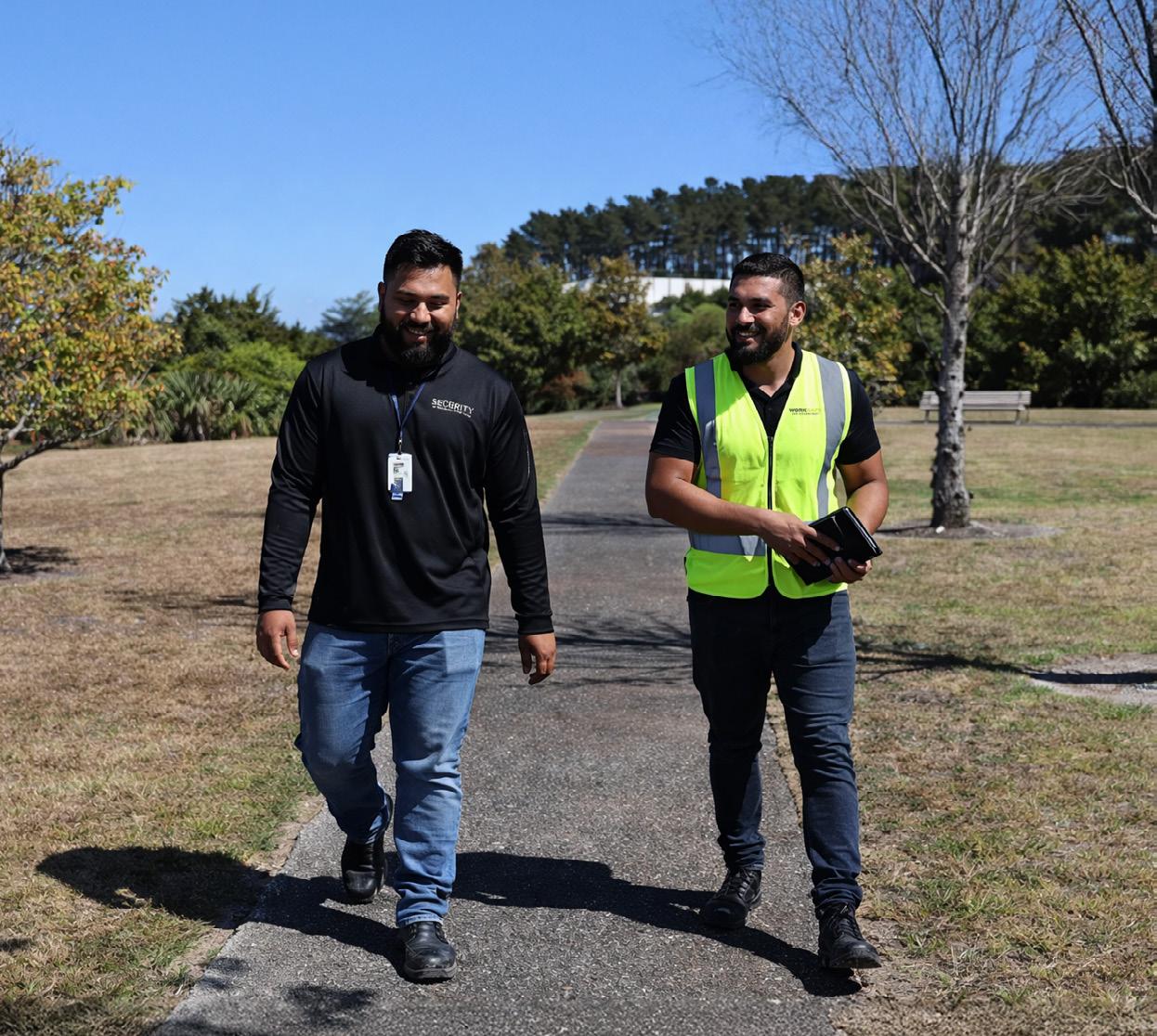
Running a fencing business is more than posts and wire – it’s about keeping your team safe while getting the job done.
WorkSafe NZ visits aren’t something to fear; they’re an opportunity to show your commitment to safety and professionalism.
This guide walks you through what inspectors look for, how the process works, and practical steps to stay compliant without losing your stride.
WorkSafe inspectors aren’t out to catch you off guard—they’re there to make sure everyone goes home safe. Their day often
starts with reviewing recent incidents, complaints, or scheduled visits. When they arrive on site, they’ll introduce themselves, explain the purpose of the visit, and outline what they’ll be looking for.
Inspectors are trained to educate and engage with businesses about health and safety matters. They look out for ways to help people and businesses keep themselves, and workers, safe. Inspectors also learn more about specific work practices through assessments.
Expect them to:
• Walk the site observing work practices, machinery use, and public safety measures.
• Talk to workers and supervisors to check understanding of hazards and procedures.
• Review documentation like hazard registers, induction records, and maintenance logs.
• Check high-risk areas such as machinery guarding, hazardous substances storage, and excavation safety.
• Provide feedback - sometimes immediately, sometimes in a follow-up report.
Their goal? To ensure compliance and encourage practical improvements, not to shut you down unnecessarily. Think of them as a safety partner rather than an adversary.
Inspector entry on your site
Under the Health and Safety at Work Act 2015, WorkSafe NZ inspectors have
the legal right to access your workplace during reasonable hours to perform inspections, investigations, tests, or examine records and equipment.
As a person in charge of the site (PCBU), you must:
• Allow prompt entry when an inspector arrives — delaying or denying access is an offence
• Provide full cooperation, including access to areas, documents, and personnel
• Not obstruct or hinder the inspector –failing to comply may result in penalties
1. Pre-visit preparation (appointments are made in som–e circumstances to visit your site)
Inspectors expect you to have your systems in order before they arrive.
Contractor checklist before a visit
• Health & Safety policy and hazard register up to date.
• Induction forms completed for all workers.
• Toolbox talks documented and signed.
• PPE available and worn (boots, gloves, eye/ear protection, hi-vis).
• Machinery maintenance logs current (post drivers/tractors).
• Hazardous Substances correctly managed.
• Excavations covered or fenced off.
• Emergency contacts and first aid kit on-site.
• Workers trained and competent for tasks, with training and competency records - particularly for operation of machinery and manual handling.
• Public safety measures (signage, temporary fencing).
• Evidence of worker engagement in safety discussions.
2. Inspection process Inspectors follow a four-phase approach:
• Conversation – speaking separately with managers and workers to verify consistency and genuine engagement.
• Observation – watching site operations, including fence installation and post driving, to confirm compliance with documented practices.
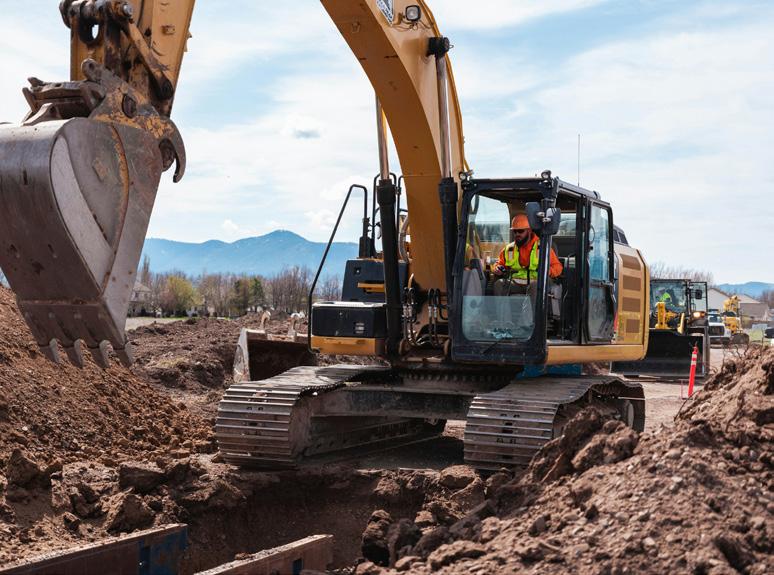
• Examination – focusing on higherrisk activities (e.g., using machinery, excavation, working near public access).
• Documentation Review – verifying paperwork aligns with what is happening on site (induction forms, risk assessments, maintenance logs).
3. Inspector focus areas for fencing contractors
a) Critical controls and high-risk activities
• Use of machinery (e.g. post drivers, heavy vehicles) with safety features, guarding, and proper training.
• Safe manual handling and ergonomics – especially ladder use and lifting heavy fencing materials.
• Excavation risks if digging is involved (trenches for posts): these must be fenced off or covered.
b) Hazard controls
• PPE usage: gloves, steelcapped boots, eye and hearing protection, high-vis wear.
• Checks on equipment condition, guarding, and maintenance records.
• Barriers around exposed holes, trenches, or hazardous zones to protect workers and the public.
c) Worker engagement
• Confirming toolbox talks and hazard discussions are held regularly and documented.
• Ensuring workers understand procedures and can freely raise issues.
• Participation from workers in risk identification and decisionmaking.
d) Compliance with public safety requirements
• Temporary fencing must meet standards (≥2 m height, secure, no climbable gaps).
• Sites must control public access, especially near roads or residential areas.
4. Hazardous substances and online register
Safe management includes:
• Inventory: record all hazardous substances (e.g., solvents, fuels, adhesives) using WorkSafe’s online calculator and Toolbox kit.
• Compliance: ensure proper labelling, storage, and access to current Safety Data Sheets (SDS).
• Controls: follow the “Five Steps to Safety” – elimination, substitution, isolation, engineering and administrative controls, then PPE.
• WorkSafe Registers: check and update on statutory registers for gas cylinders or equipment, where applicable.
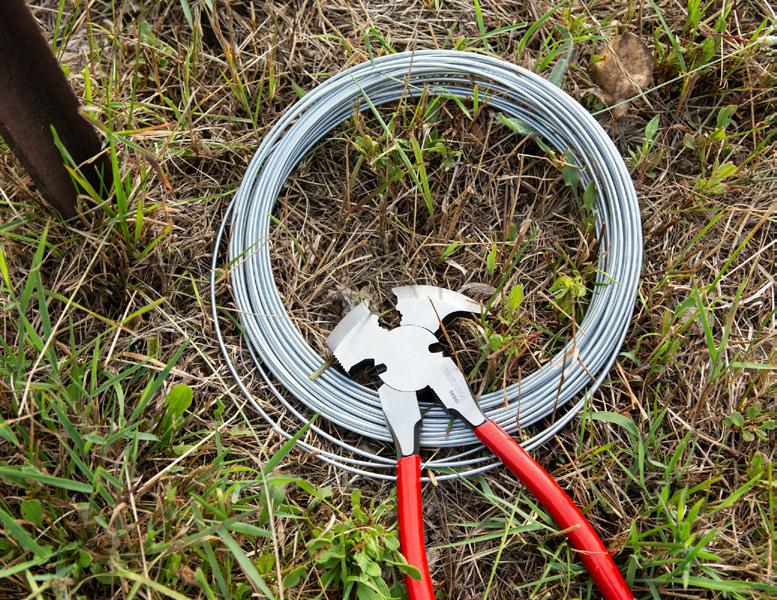
5. Health and exposure monitoring
Why it’s required
Mandatory where workers could breathe in harmful dusts, gases, fumes, or be exposed to damaging noise or vibration.
Key monitoring types:
• Exposure: Measures noise levels, dust/fume concentrations, vibration; may include biological sampling.
• Health: Audiometry for hearing, lung function tests, skin assessments, vibration checks, blood/urine testing for chemical exposure.
Legal requirements
PCBUs must inform workers of monitoring, its purpose, frequency, reporting methods, and keep records; non-compliance can result in fines.
6. Types of notices and what to do if non compliance is found
Always treat notices seriously. Quick, documented action shows commitment to safety and reduces risk of further enforcement.
Verbal Direction
Used for low-risk issues; no legal enforcement, but noted and recorded.
• Act immediately to fix the issue.
• Document what was done and keep a record.
Directive Letter
A formal but non-legislative notice. Encourages voluntary compliance; may not be followed up.
• Review the letter and correct issues promptly.
• No legal enforcement, but failure to act may lead to escalation.
Improvement Notice
A legally binding notice requiring specific corrective actions within a set timeframe to rectify or prevent a breach.
Actions required:
• Acknowledge receipt and read requirements carefully.
• Create an action plan with deadlines.
• Implement corrective measures (e.g., update SOPs, install guards).
• Provide evidence to WorkSafe (photos, updated documents).
• Keep records for future audits.
Prohibition Notice
Issued if an activity poses an immediate risk. May require work to stop until serious hazards are addressed.
• Stop the specified activity immediately.
• Fix hazards before resuming work.
• Submit proof to WorkSafe for clearance.
Typical steps include:
• Immediate response: acknowledge receipt and begin addressing specified issues.
• Action planning: develop measures (e.g. new guard rails, updated checklists, revised inductions, or ditch fencing).
• Follow up: implement changes and submit evidence (photos, updated documents) to WorkSafe.
• Verification: WorkSafe confirms fixes. If satisfied, the matter is closed; if not, further enforcement may follow.
Why it matters
• Fencing contractors face multiple risk exposures - from manual handling to hazardous chemicals and loud machinery.
• Safety isn’t just a compliance box to tick - it’s the foundation of a successful fencing business. A WorkSafe visit is your chance to demonstrate that you value your people, your reputation, and the communities you work in.
• By staying proactive with hazard management, health monitoring, and clear documentation, you turn inspections into opportunities for improvement rather than interruptions.
• Remember: a safe site is a productive site, and every step you take toward better safety is a step toward longterm success.
• WorkSafe inspections are intended to improve safety, not just enforce regulations.
• Contractors being proactive not only demonstrates compliance but also protects your team, avoids enforcement actions, and boosts your reputation.
• Strong systems and practices not only avoid notices—they comply with law and avoid costly disruptions or reputational damage.
Deb and the Rural Safe team - helping you keep your people safe, your business compliant, and your fencing projects running smoothly for 2026.
Submitted by

www.ruralsafe.co.nz

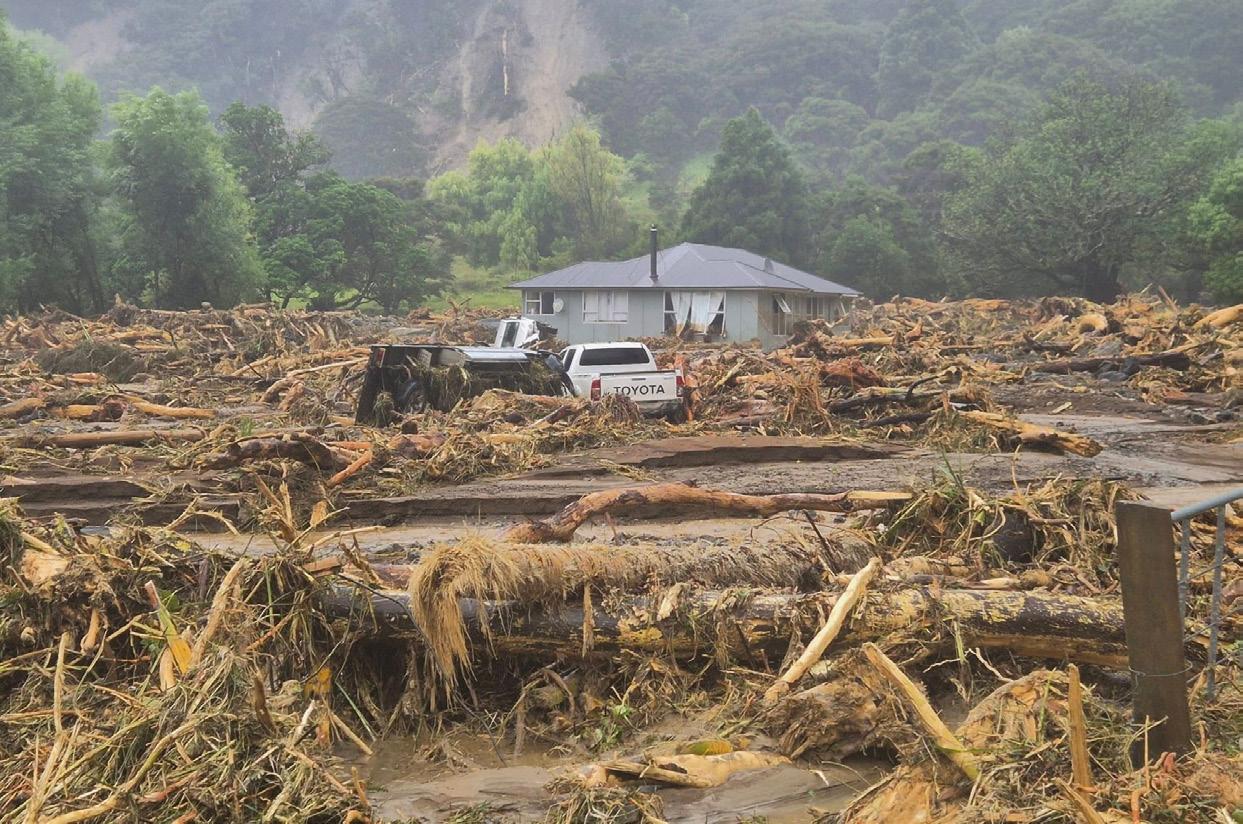
After a relentlessly wet summer marked by a steady stream of orange and red weather warnings, communities across New Zealand continue to face the challenges of the massive clean-up required in the aftermath of these extreme weather events. In response, WorkSafe issued the following reminder urging people involved in recovery efforts to stay alert to the risks that come with cleaning up after severe weather.
Many areas of the country are grappling with flooding, slips, downed power lines, debris and waterlogged ground.
WorkSafe’s Acting Northern Regional Manager Jason Gibson says workers need to be aware of how those changes can affect them.
“For floodwater, silt and debris there’s a high risk it’s contaminated with things like farm run-off, sewage and chemicals which can make you sick. For workers involved in the clean up, they need to take precautions like wearing appropriate PPE .”
He says there’s also an increased risk of outbreaks of the water-borne disease leptospirosis and if workers feel unsafe, they need to speak up.
There are also risks posed by households without power using portable generators and gas barbeques.
“These should be used in a well-ventilated place so exhaust gases can escape safely – we don’t want people breathing them in,” says Jason Gibson.
“The last thing we want is to have incidents and injuries in the aftermath of this serious weather event. We have a lot of guidance available on our website designed to keep people safe and get everyone home in one piece.”
Some tips for staying safe during the clean up:
• If the work is not necessary, postpone it until conditions improve.
• Always assume that debris, flood water and silt is contaminated and stay away from it, or if you do need to work with it then wear appropriate PPE.
• Minimise the risk of exposure to leptospirosis by washing your hands thoroughly and wearing PPE.
• Never use portable LPG stoves in a confined space and allow good ventilation for generators.
• Even if you know the land very well, waterlogged ground can be very unstable. Ensure you’re using the correct vehicle to move around, especially on farms.
• Make a plan to check in if out on a job, in case you run into trouble.
• If comms are down, have an alternative means of communication.
• Always assume downed power lines are live – stay away from them.
• If you notice things aren’t working when the power comes back on, get an electrician to check it out.
• Ensure fatigue is managed –businesses should monitor how long employees work, the sort of jobs they carry out and the conditions they’re working in. Originally

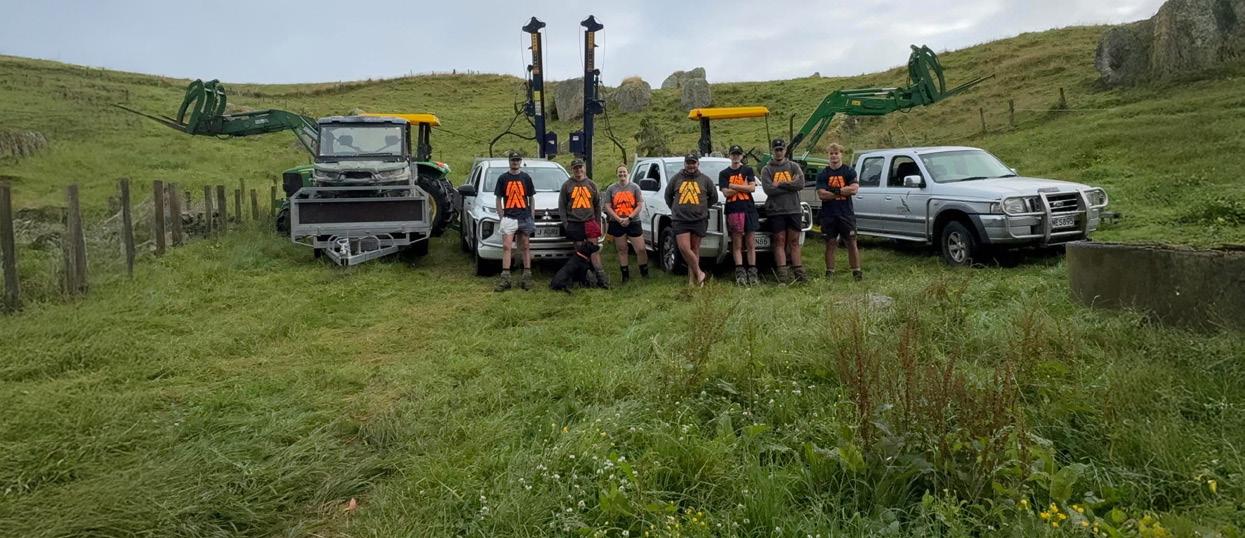
As a 19-year-old, I have always found myself prone to the odd silly decision, but when I landed in New Zealand, I thought I might have made my biggest mistake yet. I could not have picked a further place in the world to go.
However, just a few months into my stay, I realised that this decision had proven to be the best one I had ever made. Back in Scotland, my weeks tended to follow a predictable routine: a few hundred metres of sheep fencing, and the rest of the time was usually spent with mates. While there was nothing wrong with that, I was looking for a change – something exciting and new.
The idea to move abroad began from casual conversations with friends and other people I knew. They would share their experiences working abroad and how great it was to explore new cultures while earning a living. These stories prompted me to start thinking
about my own life and ultimately sparked my interest in an adventure. After doing a bit of research, I quickly realised it was not that difficult to get over to New Zealand, especially if you are willing to work. With the skills I had learned from my old crew in Scotland, I figured it wouldn’t be too hard to find a job.
After a few months of applications, phone calls, and a couple of texts back and forth, I finally ended up in Tokoroa, working for Cory and Chloe Jones at Jones Agri Fencing. As soon as I got straight into work, I realised that the terrain wasn’t much different from what I was used to in Scotland. There is a nice amount of flat ground mixed with a bit of steep stuff here and there. However, the fencing itself was completely different. The variety I’ve experienced in fencing since arriving has been brilliant. I have had the opportunity to delve deeper into electric fencing and expand on a few styles I did back home, but mostly, I’ve been able to avoid barbed wire, which I must admit has been quite nice. Not only that, but I also got to change things up. Instead of only working with timber, I have been able to spend some time experimenting with plastic materials. This is something I had never imagined I’d be doing on a daily basis.
Outside of work, my life has undergone significant changes as well. I’ve gone from spending most evenings in a workshop with my mates, tinkering with cars and bikes or just chatting away about random rubbish, to embracing a whole load of new experiences. Making friends here wasn’t hard, especially thanks to the South Waikato Young Farmers group. Interacting with people I’ve met through this community has been a fantastic opportunity for socialising and learning. One of my favourite memories is going to Taupō,
where we spent a few days hanging onto a biscuit being towed by a boat, learning how to water ski for the first time, and of course, enjoying a few cold beers around the town.
Cory has also invited me to participate in his hobbies, like hunting and fishing, which has opened up a whole new world of outdoor adventure for me. I’ve spent a few days in Te Kaha trying to catch some snapper, and those experiences have been unforgettable. We’ve also taken a few trips away hunting, which, despite the milk bottles attached to my face, has been successful some of the time.
The jump I made from Scotland to New Zealand was no small move. Packing my life into a bag and moving to the other side of the world was daunting, but I have no regrets. This place, with its stunning scenery, friendly people, and varied experiences, has been life changing. New Zealand is definitely somewhere I will return to; it’s not a bad wee place, I must admit. I’ve embraced the challenges and adventures that come with living in a new country. Ultimately, these experiences have shaped me in ways I never anticipated, and I look forward to where they may take me in the future
Written by Adam Miller
Business name?
Fully Wired Fencing
Based in?
Whanganui
In the fencing industry since?
I have been in the fencing industry for a total of 15 years, and roughly 12 years as a business owner.
How did the business come about?
Fencing is something I have always enjoyed, and an opportunity arose to purchase a tractor and rammer, with augers, rock spike, blade, etc., and I just decided to go with it.
Who is in the team?
A full-time sub-contractor and myself. I also have my young son, who will often come and help. He has been helping since I started the business when he was a toddler.
What style of fence is your favourite to build, or what do you specialise in?
My favourite style of fence to build is a standard 8-wire with a bulldozed line. I enjoy jumping on the bulldozer and bulldozing them myself.
What’s the best thing about being a fencer?
Every project is different, no fence is the same, and the ability to be autonomous is a bonus.
What project are you most proud of or have most enjoyed?
Last year, I worked at a station in the backcountry, where an entire fenceline was slipping away. I went in and bulldozed the batters and the line. This was challenging; once it was completed, I felt proud of the job I did.
What project has been the most challenging?
I completed a few kilometres of deer fencing in rough terrain. This was challenging due to its steepness, having multiple waterways and ironstone.
What has been the hardest part of running a business?
The hardest part of running a business is managing mechanical breakdowns and completing some jobs on time. I’m the only worker at times.
What keeps you sane as a business owner? (Apps, tools, tricks, people)
3M earmuffs keep me sane as a business owner ha ha, but in all honesty, it would be the farmers who are loyal and repetitive.
If you could use one wish to make any part of your business better, what would you wish for?
Punctual, reliable staff would be my wish. Fencing is a hard job on the body, it’s hard to find committed staff.
What’s one thing you would tell someone new to running a fencing business?
My advice for someone starting new would be to start with the best gear you can, shadow someone in the business, and buy a remote rubber track machine.
Why do you belong to FCANZ?
I belong to FCANZ as I like to keep up to date with what’s happening in the fencing world.
What’s for lunch?
Tuna and crackers, and a banana. If you eat too much or stop too long, it slows down movement. I like to keep up my momentum.
Marmite or Vegemite?
Vegemite is the one my household likes and prefers, although I’m not fussy haha.
Ranger or Hilux?
I drive a Ranger – it’s done a couple of engines over the last 2 years, so I’d go a Hilux hahaha. But the Ranger is good for the size and the amount of gear I can get on it.
Favourite tool?
My favourite tool is my remote SoloTrak. I can walk beside it while ramming the post; it’s so quick and efficient, you would never go back to standing behind and pulling levers.
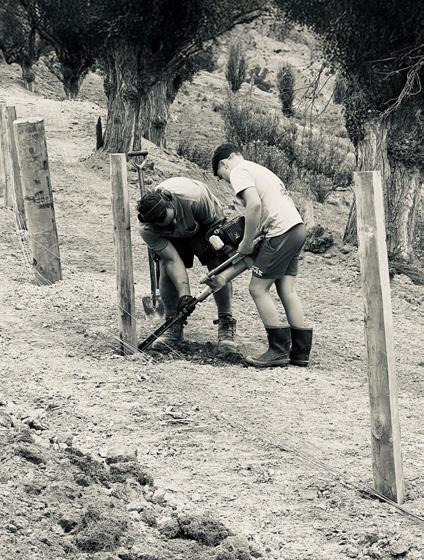
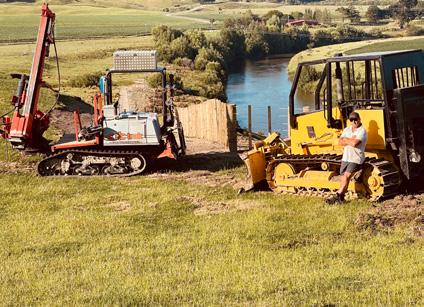
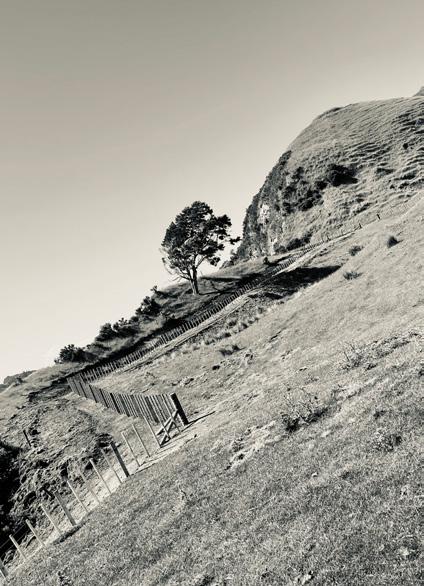
What do you listen to at work?
Podcast or music?
I listen to a wide range of music on my 3M headphones, and I listen to Spotify; it would make for a long day if I had no music.
Favourite song or podcast?
My favourite song is “I ain’t no nice guy” from Lemmy and Ozzy, but I listen to a lot of Ozzy Osbourne at the moment.
Business name?
CPC Fencing Limited.
Based in?
Northland.
In the fencing industry since: 2000.
How did the business come about?
My husband started it when he returned from America.
Who is in the team?
Phil, Donna, Harrison, Glen, Orlando and Cuatro.
What style of fence is your favourite to build or what do you specialise in?
I’m not a fencer so I can’t build it, but Selflock speaks to me.
What's the best thing about being a fencer?
Again, not a fencer, but I’m told that seeing what you have achieved at the end of the day/week/year is pretty satisfying.
What project are you most proud of or have most enjoyed?
My input into the industry training and career pathway. Seeing people and businesses be BETTER – business-wise, health and safety-wise, and mentally more positive.
What project has been the most challenging?
Coordinating fencers around the country, who want training and basically want someone else to do it for them, ha ha.
What has been the hardest part of running a business?
In recent years, navigating pandemics and technical recessions.

What keeps you sane as a business owner? (Apps, tools, tricks, people)
Horses and alcohol.
If you could use one wish to make any part of your business better, what would you wish for?
A lotto win, to be debt-free.
What's one thing you would tell someone new to running a fencing business?
Don’t undersell yourself, make sure you’re at the forefront of mind and have good marketing before you need it.
Why do you belong to FCANZ?
I belong to FCANZ, because in the time I have been involved, I have met some of the best people around, likeminded and phenomenal. There are some not so cool ones as well, but the good definitely outweigh the bad.
What's for lunch?
Today I had half a homemade burrito.
Marmite or Vegemite?
Vegemite.
Ranger or Hilux?
RAM.
Favourite tool?
Husband.
What do you listen to at work? (Podcast or music)
Country music or talkback.
Favourite song or podcast?
The good ones – Gabby Barret.

Business name?
Fisher Fencing.
Based in?
Matawai, East Coast.
In the fencing industry since:
Full-time contracting since 2008.
How did the business come about?
Went to take 18 months off shearing for a break and spend it on the fence line, and spend a bit of time at home. 17 years later, and still haven’t got back to the handpiece like planned!
Who is in the team?
Allan Spice, Billy Fleming, Kamaia Te KuniRuha, Manaia Reeves.
What style of fence is your favourite to build or what do you specialise in?
Rural fencing mainly. Love doing post and rails, yards are a bit of a fetish.
What’s the best thing about being a fencer?
The sights you see, and the places you end up.
What project are you most proud of or have most enjoyed?
Yards – any yards – bit of my jam.
What project has been the most challenging?
Not naming names, but a couple of clients in the past.
What has been the hardest part of running a business?
Bloody book work.
What keeps you sane as a business owner? (Apps, tools, tricks, people)
Beer, family, and just getting right away from it from time to time.
If you could use one wish to make any part of your business better, what would you wish for?
No bloody taxes!
What’s one thing you would tell someone new to running a fencing business?
Don’t be precious, just do what needs to be done.
Why do you belong to FCANZ?
To support the industry, help it grow, for the contacts and networking, and sharing of knowledge.
What’s for lunch?
Sandwiches – Again.
Marmite or Vegemite?
Avocado.
Ranger or Hilux?
If you’ve got to ask, we can’t be friends.
Favourite tool?
Bottle opener.
What do you listen to at work? Podcast or music?
Usually the boy’s violins.
Favourite song or podcast?
Dilemma – Nelly and Kelly – anything really, Eminem to Engelbert.
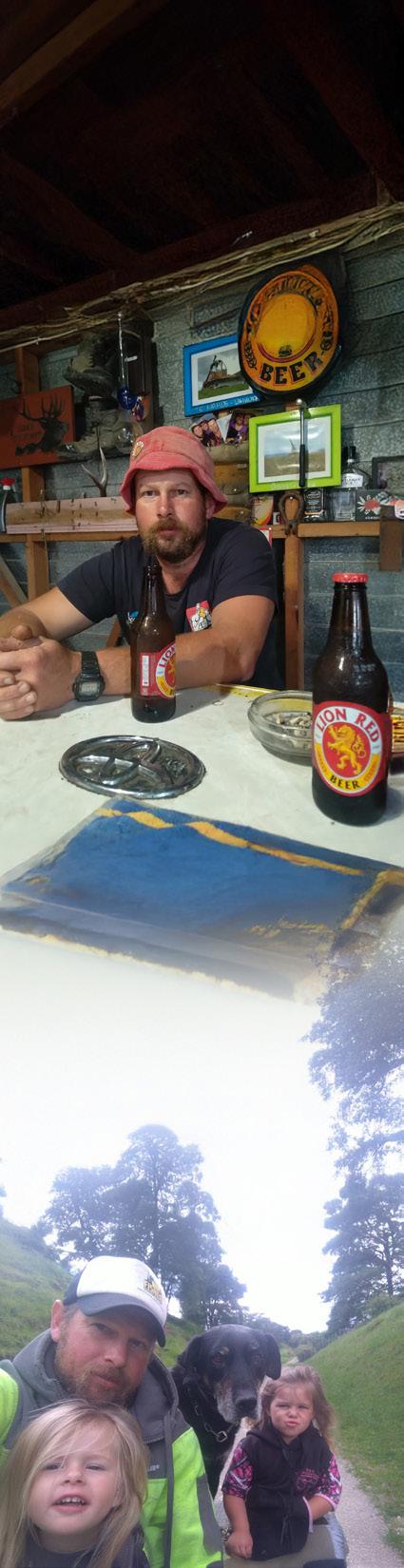
It was lunchtime on a bright summer’s day. I was sitting in my parked car, sobbing empty-nest tears. My heart was hurting. I called Shaun.
“She leaves in a week,” I managed to say. “Oh,” he replied nonchalantly. “That’s soon, aye.”
He was out on a fence line. I could tell he was busy. This wasn’t a priority for him.
Our second child was about to leave home. We were about to become empty nesters. A home that is empty.
Empty.
(Adjective) containing nothing; not filled or occupied; lacking meaning. (Verb) to become void of its contents. This was how my heart was feeling, sitting in the hot and busy car park. Empty. Lacking.
But this was not my first rodeo. Our son had left home two years earlier. I had felt this grief before. I remember the day he left to head over the ditch. As Shaun and I drove him to the airport, the zipper to my heart was slowly undoing, spilling out what I had tried to conceal – tried to hide from him so as not to take away from his excitement. Shaun was doing a much better job at that than I was. In fact, it didn’t look like he was that upset at all.
Man hug at the departure gate. Pat on the back. “Have a good time, son.”
As our firstborn walked away from us towards the departure gate, the symbolism of a child beginning their adult life could not have been more obvious.
I stood there sobbing and felt Shaun wrap his (quite handsome, I must say) arms around me, and I noticed something in the too-tightness of that hug. I realised then that this was big for him too. They had worked as fencers together, hunted together, best-friended together. His loss was different from mine, and he showed it differently, but I realised it wasn’t any less.
And now we were doing it all again – this time with our daughter.
We are close to her too. Unusually, we never had any teenage girl issues. She’s just so… cool. And so fun (carpool karaoke at the top of our lungs), and helpful (grocery dates, unpack it all and then offer to cook dinner), with a smile that warms anyone’s bad day. She’s also got sass and won’t fake it to be polite,
“ Raising good humans was my main priority, and our fencing business (and my other career choices) allowed Shaun
and me the opportunity to spend a lot of
time with our kids –
to build connection
which is an essence within her that we adore and encourage. Patrick Swayze would be proud, because “nobody puts [my] Baby in the corner.”
The day she left was like déjà vu. Dropping her at the airport, standing at the departure gate sobbing, Shaun wrapping his (still very handsome) arms around me – and again, the too-tightness was there. He was sad too.
Raising good humans was my main priority, and our fencing business (and my other career choices) allowed Shaun and me the opportunity to spend a lot of time with our kids – to build connection. Yes, we own a business. Yes, it is stressful. Yes, at times cash flow requires us to work a lot. But we always tried to prioritise family. Not just attending sports days at school, but the important things — not working nights, eating dinner together at the table, being there for them on their bad days. We will always find a reason to
do more work, but spending time with our kids is time I will never regret.
And now, as our job is done, the grief of losing such wonderful humans from our daily lives is hard.
My coping strategy is to eat cheese. Feta makes you feel better.
And, to remember that our nest, our home, is not empty (containing nothing or lacking meaning). We are just making new meanings together and rebuilding the contents – perhaps with more farm animals.
I can feel a new puppy might be on the horizon...
Written by Angelena Davies
so their lives are easier and more fun.
PHIL CORNELIUS
PRESIDENT
m. 027 274 4188
e. phil@fcanz.org.nz

JANINE SWANSSON VICE-PRESIDENT
m. 027 381 2025
e. janine@fcanz.org.nz

DONNA UPTON TREASURER
m. 021 761 022
e. donna@fcanz.org.nz


RUBEN CONNELLY
m. 027 233 4894
e. ruben@fcanz.org.nz
BURNE MAXTED
m. 027 549 3207
e. burne@fcanz.org.nz

JAIME BIGWOOD
Executive Director
m. 021 2848 223
e: exec@fcanz.org.nz

BEN FISHER
m. 027 337 7442 e. ben@fcanz.org.nz
DEBBIE WHITE
m. 027 495 7033 e. debbie@fcanz.org.nz
SCOTT HEASLEY
m. 027 535 0302 e. scott@fcanz.org.nz

CRAIG WIGGINS
m. 027 457 6694 e. wiggyswhatever@gmail.com

JEANETTE MILLER
Administration Manager
t. 0508 432 269
m. 027 432 2033
e: admin@fcanz.org.nz

HEATHER KAWAN
WIRED Editor
m: 022 630 8533
e: wired@fcanz.org.nz
Businesses that have achieved Accredited Fencing Contractor endorsement have proven to the assessment panel that they model industry and business best practice in all facets of their company, including quality of workmanship, health and safety behaviours, and management of employees and sub-contractors.
CUSTOM FENCING
Dunedin t. 03 465 7212
e. nick@customfencing.net.nz
w. www.customfencing.co.nz
Nick Terry m. 021 614 100
FENSIN
Taupō Waikato
e. fensin56d@gmail.com
Neil Robertson m. 027 474 6335
OMATA CONTRACT FENCING
Manawatū / Horowhenua / Whanganui / Wellington / Wairarapa
e. omatafarming@gmail.com
w. www.omatafencing.co.nz
Emile de Greeuw m. 027 320 4756
SPECIALIST RURAL SERVICES
Bay of Plenty
e. srsfencing@gmail.com
w. www.notjustfencing.co.nz
Scott Graham m. 027 427 7946
This annually-renewed endorsement is for individuals who have completed the NZ Certificate in Fencing Level 4 and can prove they have the skills needed to operate as a foreman, supervise staff and oversee the quality of rural fencing projects.
A1 FENCEWORX
Wellsford
t. 09 423 7585
e. admin@a1fenceworx.co.nz w. www.a1fenceworx.co.nz
Shane Beets (owner)
m. 027 625 5383
Nicholas Beets (owner)
ANDREWS OF CANTERBURY
Canterbury / Marlborough / Nelson / Tasman / West Coast e. andrewsofcanterbury@gmail.com w. www.andrewsofcanterbury.co.nz
Andrew Osgood (owner) m. 027 899 3556
BARAKAT CONTRACTORS
Waikato & Auckland t. 0800 735 513
e. dale@barakatcontractors.co.nz w. www.barakatcontractors.co.nz
Dale Barakat (owner) 0274 735 513
Carl Barakat (owner)
BOZCUT
Northland e. jamie@bozcut.co.nz
James Rogers (owner) m. 027 526 9288
CENTRAL FENCING
Canterbury e. nigel@centralfencing.co.nz w. centralfencing.co.nz
Nigel Broadbridge (owner) m. 021 433 623
COOPER & SPADE FENCING
Bay of Plenty / Tauranga t. 027 4334678
e. cooperandspade@gmail.com w. cooperandspade.co.nz
Benjamin Cooper (owner)
CPC FENCING
Northland t. 09 4332644
e. cpc.fencing@yahoo.co.nz w. www.cpcfencing.co.nz
Phil Cornelius (owner) m. 027 274 4188
Glen Hobbs
Harrison Waara
CUSTOM FENCING
Dunedin t. 03 465 7212
e. nick@customfencing.net.nz w. www.customfencing.co.nz
Nick Terry (owner) m. 021 614 100
Marcus McKean
Galen Monks
EWING FENCING CONTRACTORS
Oamaru t. 03 431 3864
e. mark@ewingfencing.co.nz w. www.ewingfencing.co.nz
Mark Ewing (owner) m. 027 498 4049
FENSIN
Taupō / Waikato t. 07 825 5747
e. fensin56d@gmail.com
Neil Robertson (owner) m. 027 474 6335
FISHER FENCING
Gisborne t. 06 862 4081
e. bjfmatawai@gmail.com
Ben Fisher (owner) m. 0273 377 442
GOLDEN BAY FENCING
Tākaka t. 03 525 8426
e. fourjake1@gmail.com
Luke Jacobsen
GREG BURTON FENCING
Cambridge e. GregBurtonFencing@gmail.com
Greg Burton (owner) m. 027 427 8765
HEASLEY FENCING
Amberley
e. scottandannam@xtra.co.nz
w. www.heasleyfencing.co.nz
Scott Heasley (owner) m. 027 435 0302
JEFF JOINES FENCING CONTRACTOR
Kāpiti t. 06 364 2510
e. jeffjoinesfencing@gmail.com
Jeff Joines (owner) m. 027 484 4481
JONES AGRI FENCING
Tokoroa e. office@jonesagri.co.nz
Cory Jones (owner) m. 027 805 6571
J W FENCING
Canterbury e. josh@jwfencing.co.nz w. www.jwfencing.co.nz
Josh Weaver (owner) m. 027 317 7753
LEWIS JOHNSTON FENCING
Waikato e: admin@lewisjohnstonfencing.co.nz
Lewis Johnston (owner) m: 0212011449
OMATA CONTRACT FENCING
Manawatū / Horowhenua / Whanganui / Wellington / Wairarapa e. omatafarming@gmail.com w. www.omatafencing.co.nz
Emile de Greeuw (owner) m. 027 320 4756
PRECISE CONTRACTING OTAGO
Cromwell e. ruben@precisefencing.nz w. www.precisefencing.nz
Ruben Connelly (owner) m. 027 233 4894
SPECIALIST RURAL SERVICES
Bay of Plenty e. srsfencing@gmail.com w. www.notjustfencing.co.nz
Scott Graham (owner) m. 027 427 7946
WHITE FENCING
Papakura t. 09 292 8064
e. admin@whitefencing.co.nz
w. whitefencing.co.nz
Tony White (owner) m. 027 495 7868
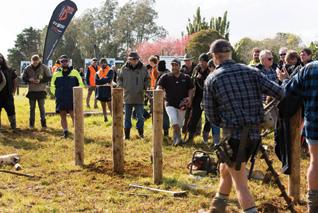
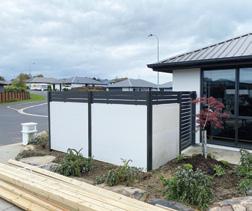
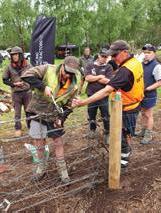
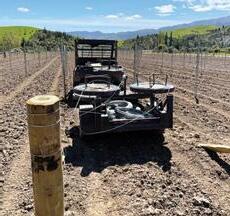
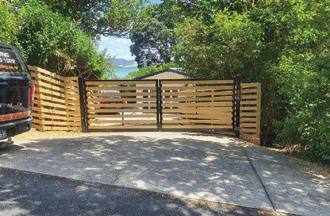
Fencing Contractors Association NZ (FCANZ) is the industry body supporting and advancing the fencing industry of New Zealand.
Established in 2006, FCANZ aims to raise the profile and standards of the fencing industry, growing the market for fencing contractors and others associated with the industry, and ensuring Fencing Contractors Association NZ is the first port of call for those seeking a fencing contractor.
Enjoy FCANZ member exclusive pricing from many of our industry partners. Just let them know you are an FCANZ Member and see the benefit on your bottom line.
Boost your business by being listed on the FCANZ ‘Find a Fencing Contractor’ directory, helping the public find contractors in their area. Enjoy free promotion through campaigns that attract potential clients to the directory which is visited more than 25,000 times each year!
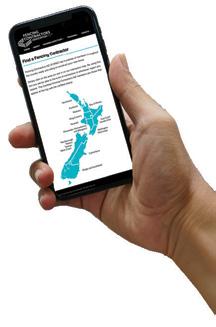
Receive a new member Welcome Pack which includes a branded cooler bag, hi-viz vest, hat and other merchandise.
FCANZ’s affiliation with Federated Farmers gives all members a complimentary Federated Farmers membership – worth $499, including access to free legal and employment advice, group purchasing opportunities and much, much more.
WIRED is the official quarterly publication of FCANZ, and is New Zealand’s only fencing industry magazine. Each issue contains a host of informative news, business and industry insights, human interest articles plus information and advice specific to the fencing industry.
FCANZ members also benefit from:
• Exclusive discounts and offers from Association Partners
• Regional fencing Best Practice Days
• Free business best practice webinars
• Use of the FCANZ logo to differentiate your business from your competitors
• Creating industry-wide connections through networking opportunities with members and Association partners
• 10% discount on Site Safe membership
• Free job, tool and equipment listings on the FCANZ classifieds web page
• Certified Fencer and Accredited Fencing Contractor industry endorsements