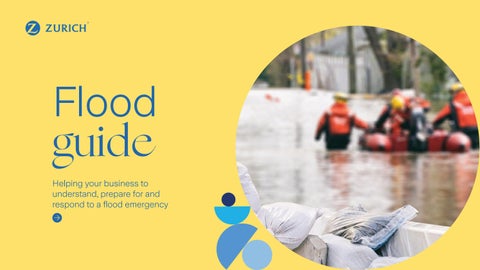
Flood guide Helping your business to understand, prepare for and respond to a flood emergency
01
02
03
04
05
Contents Use the buttons below to navigate to the various sections and guidance. If you want to return to this contents page, click on the Home button in the top right-hand corner.
01
03
Preparing for a flood
Introduction
04
Flood protection and recovery
• Understanding the different types of flood
What is flooding?
02
•
Establishing your flood risk
•
Early warning systems
• Resilience and resistance measures •
Checklist
•
Helpful tips
•
Emergency kit
• Flood emergency response plans
Informing the relevant authority
05
02
03
04
05
Introduction Flooding poses a risk to millions of businesses and homes across the United Kingdom. Floods can cause substantial damage, operational disruption and financial stress for your business. The UK Government considers flood risks to have a ‘significant’ impact on people, the environment, infrastructure, and the economy. This is the second-highest impact rating possible for any risk. Developed to compliment the Federation of Small Businesses' report, New Growth - How to Support Small Businesses to Cut Carbon and Costs on the Road to Net Zero, in partnership with Zurich, this guide provides practical, actionable steps to help your SME protect its operations from flooding.
“
“
01 01
Insurance is an integral part of business resilience. With flooding being such a key risk for business survival, FSB appreciate Zurich's support in providing guidance and practical steps to safeguard small businesses in this important area. Caroline Lavelle, Chief Commercial Officer, Federation of Small Businesses A changing climate
The impacts of climate change are leading to more frequent and severe flooding events across the UK. The 2022 UK Climate Change Risk Assessment reported that in a 2°C warming scenario, the annual damages from flooding for non-residential properties across the UK would be expected to rise by 27% by 2050 and 40% by 2080. In a planet warmed by 4°C, these figures increase to 44% and 75% respectively. The latest UK State of the Climate report, signals that UK’s climate is becoming wetter. A report sponsored by the National Trust warned that the UK is underprepared for the forecasted flooding risk posed by climate change. It found that too many organisations only act after the flood happens, but we must prepare now to avoid disasters in the future. All of us, on an organisational, community and individual level, must make changes to improve our resilience to flooding events and invest in adaptation and preparation, rather than living with the costs of clean-ups. Read more here: Organisations need to prepare for more frequent flooding
Flood damage costs the UK an estimated
£1.1bn per year¹.
One in six,
(over 5.2 million) properties in England are at risk of flooding from rivers, the sea, or surface water¹.
The average cost associated with a flood-related claim is
£98,178 (Zurich Commercial claims data)
Our commercial claims data Weather-related losses (mainly from floods and storms) account for 14% of claims² – the third highest when we look at the number of claims, and the second highest by value at £112 million. Whilst not as frequent as escape of water or accidental loss, the damage caused by weather-related loss is much greater in terms of cost. 1 https://www.gov.uk/government/publications/national-flood-and-coastal-erosion-risk-management-strategy-for-england--2 /national-flood-and-coastal-erosion-risk-management-strategy-for-england-executive-summary ² https://www.zurich.co.uk/-/media/news-and-insight/documents/useful-documents/building-resilience-guide.pdf
01
02 02
03
04
05
What is flooding? A flood is an overflow of a large amount of water beyond its normal limits, especially over what is normally dry land. When is it ‘critical’?
What is the ‘return period’?
A “critical” flood hazard is the point at which mitigation measures are recommended, however it’s definition can differ from country to country as well as regionally within the same country.
The ‘return period’ is the statistical likelihood that an event of a given magnitude will occur within a given year.
It is generally recommended that if a site has a 0.2% annual probability of floods occurring, or a 500-year return period, then the site should consider mitigation measures. Areas impacted by wind-driven flood zones, for example, typhoon, tropical cyclone or hurricane, as well as regions prone to flash floods, are recommended to develop an emergency response plan.
As an example, the term “100-year flood” refers to a flood event that has a 1% probability of occurring in any given year. It is important to recognize that this does not mean that the event will happen only once in a 100 year period. Rather, a 100-year flood event can happen more than once in any given year, it can occur annually over several years concurrently, or once in a given time period. Since the definition of an event of a given return period relies on historical occurrences, the longer the historical database, the more accurate the probability.
01
02
03 03
04
05
Preparing for a flood The starting point to preparing for flooding and actions to implement as part of an Emergency Response Plan are highlighted below. The time frame for these activities is typically several months before a potential event. • Identify and understand the sources of flooding and how these can impact your business premises and operations. • Undertake a flood risk assessment to identify the site’s vulnerability to flooding and what controls are available or are required. • Sign-up for early warning systems. • Implement a flood emergency response plan. • Implement flood resilience and resistance measures.
Click on the different sections below to find out more: Understanding the different types of flood
Flood checklist
Establishing your flood risk
Some helpful tips
Early warning systems
Emergency kit
Resilience and resistance measures
Flood emergency response plans
The Chartered Institution of Water and Environmental Management’s online guide to preparing for a flood provides guidance and online resources for everything from flood maps and warning systems, to flood plan templates. Click here to see more
01
02
03 03
04
05
Understanding the different types of flood
Fluvial floods
Pluvial floods
Coastal floods
River floods
Flash floods and surface water
Storm surge
Water and debris flows down hillside
Water is forced ashore High winds
To plan for floods, it’s important to understand the type (or types) of flood you may face. But why? There are several different kinds of flood, and each one bears a different impact in terms of how it occurs, how it is forecast, the damage it causes, and type of protection you need.
Excessive rain
Snowfall
Storm surge
Overflowing water Normal water level
A fluvial, or river flood, occurs when the water level in a river, lake or stream rises and overflows onto the neighbouring land. The water level rise of the river could be due to excessive rain or snowmelt. To determine the probability of river flooding, models consider past precipitation, forecasted precipitation, current river levels, as well as soil and terrain conditions.
Strain on urban drainage system
A pluvial flood occurs when extreme rainfall creates a flood separate to an overflowing water body, such as a river or lake. Properties don’t need be located near a body of water to be at risk. Two common types of pluvial flooding: • Surface water floods – occur when an urban drainage system is overwhelmed and water is unable to drain, instead flowing along the streets into nearby structures. • Flash floods – characterized by an intense, and fast flow of water triggered by torrential rain falling within a short amount of time. Flash floods are very dangerous and destructive not only because of the force of the water, but also the hurtling debris that is often swept up in the flow.
Coastal flooding is the flooding of land areas along the coast by seawater. Common causes: • Intense windstorms happening at the same time as high tide (storm surge) • Tsunamis. A storm surge is created when high winds and low pressure forces water onshore. This is the leading cause of coastal flooding and often the greatest threat associated with a hurricane or typhoon.
01
02
03 03
04
05
06
07
Establishing your flood risk At Zurich, we want to increase understanding and awareness of the changing risk landscape. Flooding can not only cause significant risks of property damage, but it can also cause significant disruption. Too often, buildings are constructed with designs and materials that offer little protection against flooding. When building in flood-prone areas, planners assume that the proposed flood mitigation measures will be done correctly and in a way that reduces current and future flood risks, but this isn’t always the case.
Organisations which can help you to identify if you are at risk of flooding include: England: Environment Agency: Flood map for planning - GOV.UK Scotland: Scottish Environmental Protection Agency (SEPA): Flood Maps | SEPA - Flood Maps | SEPA Wales: Natural Resources Wales (NRW): Natural Resources Wales/ Check your flood risk by postcode
Where do you start with understanding your flood risk? To ensure appropriate flood protection and response planning is in place, the best place to start is to understand what flood risk your property is exposed to. Accurately gauging future flood risk can be challenging but it is an important step to understanding whether an organisation or community is as prepared as it can be. Flood Risk Assessment A flood risk assessment can help to identify the risk of an area by assessing the source of flooding, its likely impact and what can be done to reduce the impact and increase resilience to flooding. These assessments should be completed by qualified organisations and are typically required for planning permission. Historical Flood Risk Whilst historical flooding is not an indication of what can happen in the future, being aware of past events can still be useful. If the area around a property has previously been flooded, knowing how this occurred can help to plan and build resilience. You can find out historical flood events from online historical records or you can request information from the risk management authorities.
Northern Ireland: Department for infrastructure Flood map
01
02
03 03
04
05
Early warning systems Flood warnings will give you time to prepare for flooding which could save you time, money and stress. You can receive warnings by telephone, mobile, email, SMS text message or fax, whichever you prefer.
The fluvial flood warning system consists of the following warnings:
ALL CLEAR Flooding of low-lying land and roads is expected. What to do: • Monitor local news and weather forecasts. • Be aware of water levels near you. • Be prepared to act on your flood plan. • Check on the safety of pets and livestock.
Click on the buttons below to find out more:
Fluvial flood warnings Pluvial flood warning systems
• Charge your mobile phone. • Make a list now of what you can move away from the risk.
Flooding of homes and businesses is expected. Act now. What to do: • Move company vehicles, valuable stock, critical equipment and important documents to safety. • Get flood protection equipment in place. • Turn off gas, electricity and water supplies if safe to do so. • Be prepared to evacuate your business premises. • Protect yourself, your family and help others. • Act on your flood plan. • Roll up carpets and rugs, hang curtains over rods. • Inform employees, key suppliers and neighbours if evacuation is needed. • Move any large or loose items in your garden or weigh them down. • Get your emergency kit together.
Floodline Warnings for England
Act now! Severe flooding is expected with extreme danger to life and property.
No further flooding is expected. Water levels will start to go down.
What to do:
• Keep listening to weather reports.
• Collect things you need for evacuation.
• Only return to evacuated buildings if you are told it is safe.
• Turn off gas, electricity and water supplies if safe to do so.
• Beware of sharp objects and pollution in flood water.
• Stay in a high place with means of escape.
• If your property or belongings are damaged, contact your insurance company. Ask their advice before starting to clean up.
• Avoid electricity sources. • Avoid walking or driving through flood water.
What to do:
• In danger call 999 immediately. • Listen to emergency services. • Act on your flood plan.
Floodline Warnings for Scotland
Floodline warnings for Wales
01
02
03 03
04
05
Early warning systems Flood warnings will give you time to prepare for flooding which could save you time, money and stress. You can receive warnings by telephone, mobile, email, SMS text message or fax, whichever you prefer. Click on the buttons below to find out more:
Fluvial flood warnings Pluvial flood warning systems
Unlike fluvial flooding, there are no national pluvial flood warning systems in place. However, here are some sources which can help you in preparing for potential pluvial flooding. Flash flooding guidance for customers and businesses Flash floods can be very dangerous and destructive, not only because of the force of the water, but also the hurtling debris that is often swept up in the flow. Sadly, these weather events are no longer exceptional weather events. When a flash flood happens, the water has nowhere to go and overwhelms drainage causing flooding and serious damage to properties and businesses. In the event of heatwaves, for example, the problem is exacerbated, where the very dry ground becomes incredibly compacted, and rainfall struggles to soak into the ground and instead sits on top resulting in a flash flood.
The Met Office The Met Office Severe Weather Warning System can provide early indications of potential flood conditions. The Met Office Severe Warning Environment Agency flood helpline: 0845 988 1188 You can also get information from: • local radio • your local council You can contact the emergency services by phoning 999 if you are in immediate danger.
01
02
03 03
04
05
Flood resilience and resistance measures Water can enter your property through several different routes. These include: • Walls • Floors • Doors
• Windows • Airbricks • Vents
• Drains • Sewers • Pipework
By implementing flood resilience and resistance measures, you can reduce property damage and business interruption.
Resilience focuses around accepting the ingress of water but utilising resilient design and materials to reduce the impact and speed up recovery. Examples of resilience measures include: • Raising critical infrastructure • Tiling floors and walls • Raising floor levels • Utilising water resilient materials • Laying plasterboard horizontally instead of vertically
Before installing Property Flood Resilience (PFR) measures a PFR survey should be carried out to determine the appropriate measure and provide the design for the property. All measures installed should adhere to the latest standards and those undertaking the survey and installation should be suitably trained and competent following the PFR Code of Practice. More information on property flood resilience can be found at: • The Flood Hub
Drainage systems exist to store and transport water. They can be human-made, like sewer systems or gutters and downpipes for roof drainage. Or they can be natural, like rivers, ditches, brooks, or streams. If drainage systems aren’t maintained, they can stop working correctly, and this can lead to an increased risk of flooding. Regular maintenance is, therefore, the best way to reduce the impact of flooding. Permission should be obtained from the relevant risk management authority before undertaking works to maintain watercourses.
Dry proofing (flood resistance)
Drainage systems must be fully mapped from roof to underground drainage, as well as the connectivity of the system. The drainage system should be inspected and maintained regularly as part of a proactive maintenance schedule.
Resistance is centred around putting measures in place to reduce the ingress of water into a property.
The importance of regular drain maintenance
There are two types of flood defence: Wet proofing (flood resilience)
Maintaining drainage systems
Examples of resistance measures include: • Flood doors and barriers • Self-closing air bricks • Portable pumps and sump pumps • Non-return valves on wastepipes For a full list of available flood protection products for your property, as well as links to certified suppliers, please visit: • National Flood Forum’s Blue Pages
1. Preventing blockages and overflows: Regular drain clearance prevents blockages that can cause overflows, leading to property damage and health hazards. 2. Cost-effective management: Proactive maintenance is cost-effective, preventing expensive emergency call-outs and extensive damage repairs. 3. Enhancing longevity of plumbing systems: Regular clearing of drains extends the life of plumbing systems, saving long-term costs. 4. Health and Hygiene: Blocked drains can lead to unsanitary conditions, which are detrimental to occupant health. Regular clearance ensures a hygienic environment.
01
02
03 03
04
05
Flood checklist Understanding the flood risk and what you can do if you are at risk is the starting point to preparing for a flood. Using this checklist should help you with this. Establish the risk of flooding: Is the property at risk of flooding? Do you know what the source of flooding is? Does the site have a history of flooding? If you are at risk: Do you have a flood risk assessment? Have you signed up to a flood warning system? Do you understand what the alerts mean? Do you have a plan to respond to a flood alert? Have you trained your staff on how to act in the event of a flood? Consider measures to protect your property: Can you install any flood resistance measures? Can you implement flood resilience measures?
01
02
03 03
04
05
Some helpful tips
Measures to take indoors: • Turn off electricity, gas and mains water supplies.
If your business is at risk of flooding and flood damage, here are some tips to help keep you safe and reduce loss to property and possessions:
• Move as many possessions as possible/expensive equipment to higher floors. • Remove critical or valuable smaller items from the property. • Ensure that equipment that cannot be moved is tied down to prevent it from floating and damaging other belongings. • Elevate stock which may be prone to flood damage. • Back-up critical data. • Disconnect appliances connected by rigid pipes to the mains supply. This prevents the pipes from snapping if the appliances float off.
Do: Prepare for flooding with a Business Flood Plan. eep extension cables out of water and wear K rubber boots. void enclosed areas which may not be ventilated A and where hazardous fumes may build (e.g. garages and cellars). all the National Grid immediately if you smell gas C or suspect a leak, their number is 0800 111 999. Notify employees / visitors if flooding is imminent. Prepare an emergency flood kit.
• Use weighed down plugs for sinks as plugs can let in floodwater. • Install non-return valves, to stop sewer backing up.
Measures to take outdoors: • Your local authority may provide flood boards or sandbags. They can be used to cover the building’s vents, doors, lower windows and air bricks to reduce the amount of water that gets in. • Once the flood has passed, remove all coverings to allow air to circulate as soon as possible. • Flow valves for propane gas or oil storage tanks should also be shut off.
Do not: Walk through floodwater, along riverbanks or cross river bridges if avoidable. As little as 15cm of fastflowing water can knock you over and banks or river bridges may collapse in extreme situations. Avoid floodwater or contaminated belongings. Re-enter your property unless you are sure it is safe to do so.
01
02
03 03
04
05
Emergency kit Use the checklist below to ensure you have all the items you’re likely to need if you’re affected by flooding. Torch
Wash kit and essential toiletries (including toilet paper and wet wipes)
Batteries (not rechargeable)
Important documents including insurance documents, as well as insurance emergency helpline, local council and emergency services numbers, family and friends’ telephone numbers, local radio frequencies.
Portable radio Mobile phone Bottled water First-aid kit with essential medication, prescription items, and repeat prescription form Non-perishable food items (including energy or cereal bars)
Camera to record damage for insurance purposes Emergency cash Additional items for flood kit such as wellington boots, waterproof clothing, rubber gloves.
Blankets and warm clothes
You may find it useful to complete these contact numbers which you should find in your telephone directory or online. Emergency services (if life is at risk)
Gas leaks
Floodline police (non-emergency)
Electricity faults
Fire and rescue (non-emergency)
Your water company
County council (emergency)
Your doctor
Your district council
Your nearest hospital
Your parish/town council
Your insurance emergency helpline
NHS non emergencies
Policy number
01
02
03 03
04
05
Flood emergency response plans
A flood emergency response plan is an important tool to help reduce the damaging impact of a flood to your property, business and employees. To create your emergency response plan, you’ll be using information such as understanding of different flood types, warning systems and resilience measures in the preparation phase. With most flood events, there is usually an adequate warning period to apply an effective emergency response plan. This warning period is an important factor to consider when developing your plan. Once created, it is important to train all staff, practice the plan, and learn from what works well and what doesn’t. The plan’s effectiveness is dependent on support from business leaders. External emergency response services should be involved in the planning and training. Typically, a flood emergency response plan includes the following phases:
Preparation
Response
Recovery
This phase is mostly around planning for the flood event and should be part of a comprehensive risk assessment analysis.
Once the flood trigger levels and corresponding time-frame for each level have been identified, you can allocate the corresponding actions and resources at each level.
Once the authorities have confirmed the flood event has ended, recovery actions can be taken and the site may be safely accessed.
The time frame for this phase is typically several months before a potential event.
Activate the emergency response plan according to the defined hazard and action levels.
Download our Flood Emergency Plan guide here
01
02
03
04 04
05
Flood protection and recovery We believe in pre-emptive action – reducing flood risk before an event happens for long-term resilience. However, we understand that as flooding events become more frequent and severe, it is important to know how best to recover following a flood.
Here are some helpful tips on recovery after a flood: • Contact your insurer as soon as possible following a flood event. • Find your local flood action group or warden. You can contact the National Flood Forum www.nationalfloodforum.org.uk for help in finding local support. • Note the time the property was flooded and how long water was inside. Make a list and take pictures of anything that is damaged. Don’t throw away items that need to be claimed for. • Take advice from specialists before starting to repair your property. Most of the repair work will be arranged by your insurer, including the clean-up/drying process. • If you have questions about recovering from a flood, such as disposing of damaged furniture or sandbags, contact your local authority www.gov.uk/find-local-council. • The Environment Agency has specially trained Flood Support Officers across the country to provide information and advice during and after floods. Call their 24-hour Floodline on 0345 988 1188.
01
02
03
04 04
05
Keeping workers safe Pre-disaster planning:
Post disaster recovery:
Employees are a company’s greatest asset. To prioritize their safety during natural disaster recovery, it’s important to plan ahead.
Here are four tips for keeping employees safe during cleanup and recovery operations from a natural disaster:
Start by reviewing the most up-to-date information from the government and private cleanup agencies. This preparation will help keep workers safe and protect your company’s assets. Disaster recovery may require additional expertise beyond your employees’ capabilities. Identify and establish relationships with reputable contractors and salvage specialists to call on.
Tip 1
Be aware of physical stress on your employees during cleanup and recovery.
Tip 3
Be smart when removing debris: use proper lifting techniques and look out for structural damage and changes.
It’s also important to include hazardous waste-removal professionals on your list. Ensure they follow the same safety guidelines as your employees.
Read more about keeping workers safe by clicking here
Tip 2
Be cautious with structural, chemical and electrical hazards and hire the right personnel when need be.
Tip 4
Be careful of disease and toxic environments after the storm and take the proper steps to prevent employees’ exposure.
01
02
03
04
05 05
Informing the relevant authority that a flood has occurred After each flood event, whether it’s inside or outside of your property or area, it is important to report it to the appropriate risk management authority.
Risk Management Authorities include: • Water and Sewer companies • Environment Agency • Natural Resources Wales • Scottish Environmental Protection Agency • Department for Infrastructure
Every flood source has a risk management authority (RMA) responsible for managing its risk. You’ll find reporting information on each RMA’s website or by contacting them directly.
• Internal Drainage Boards
England and Wales, see: Who’s responsible for what – National Flood Forum
You normally own the watercourse if it: • runs on or under your land • Is on the boundary of your land, up to its centre
• Lead Local Flood Authorities
This helps make a case for taking action to manage or reduce the flood risk. If you don’t report it, the authority won’t know and won’t be able to do anything.
For more information on roles and responsibilities in:
Did you know? You have responsibilities for the stretch of watercourse you own. A watercourse is a body of running water, so a stream, river or canal.
• Highways Authorities • Local Authorities
For more information on owning a watercourse, refer to:
England
Scotland
Northern Ireland
Wales
Scotland, see: Responsibilities for flooding | Beta | SEPA Northern Ireland, see: Rivers maintenance and flood management | Department for Infrastructure (infrastructure-ni.gov.uk)
Want to find out more? Business can be unpredictable, but with Zurich by your side, your business can prepare for the unexpected. Our experts can help you find opportunities that don’t just avoid disaster, but help you build back better than before. Zurich Resilience Solutions help customers prevent losses and build resilience for the future. With a range of services our Climate Resilience team can help you to identify and understand your future climate risks, prioritise your assets and provide recommendations to enable you to adapt to flood and any other climate-related risks. More importantly, we enable you to reduce property damage and business interruption while safeguarding users. If you would like to discuss any of this guide in more detail, please get in touch by emailing broker@uk.zurich.com or contact our Zurich Resilience Team directly at zrs.enquiries@uk.zurich.com. You can take a look at our Climate Resilience services and get in touch with our team through our website
Zurich Insurance Company Ltd. A public limited company incorporated in Switzerland. Registered in the Canton of Zurich, No. CHE-105.833.114, registered offices at Mythenquai 2, 8002 Zurich. UK. Branch registered in England and Wales no BR000105. UK Branch Head Office: The Zurich Centre, 3000 Parkway, Whiteley, Fareham, Hampshire PO15 7JZ. P0733063 (08/25) TCL