The Impact of Russia’s Invasion of Ukraine on Migration

Volume 69, Issue 6
page 40

SAVE THE DATE ANNUAL MEETING & CONVENTION SEPTEMBER 21-23, 2023 The Peabody Memphis • Memphis, TN www.fedbar.org/event/fbacon23 For available sponsorship opportunities contact sponsor@fedbar.org.
EDITORIAL BOARD
Editor in Chief Andrew Doyle andrew.doyle@usdoj.gov Associate Editor
James W. Satola jsatola@roadrunner.com
Managing Editor
Lynne G. Agoston (240) 404-6488 social@fedbar.org
Elizabeth Kelley
Peter M. Mansfield
Judicial Profile Editors
Hope Forsyth Hon. Karoline Mehalchick
Articles Editors
Kristine Adams-Urbinati
Anna Archer
Sara L. Gold
Niles Illich
Jon Jay Lieberman
Bruce A. McKenna
Jeffrie Boysen Lewis
Amanda Thom
Stewart Michael Young
Columns Editor
Ira Cohen
Senior Proof Editor
Ellen M. Denum
Proof Editors
Melanie L. Alsworth
Tamar Rebecca Birckhead
John Black
Leonid Feller
Reid Jones
Michelle Quist
Kirsten Samantha Ronholt
Benjamin R. Syroka
The Federal Lawyer (ISSN: 1080-675X) is published bimonthly six times per year by the Federal Bar Association, 1220 N. Fillmore St., Ste. 444, Arlington, VA, 22201 Tel, (571) 481-9126, Fax (571) 481-9090, Email: social@fedbar.org.
Subscription Rates: $14 of each member’s dues is applied toward a subscription. Nonmember domestic subscriptions are $50 each per year; foreign subscriptions are $60 each per year. All subscription prices include postage. Single copies are $5. “Periodical postage paid at Arlington, VA., and at additional mailing offices.” “POSTMASTER, send address changes to: The Federal Lawyer, The Federal Bar Association, 1220 N. Fillmore St., Ste. 444, Arlington, VA 22201.”
©2022 Federal Bar Association. All rights reserved. PRINTED IN U.S.A.

Editorial Policy: The views published in The Federal Lawyer do not necessarily imply approval by the FBA or any agency or firm with which the authors are associated. All copyrights held by the FBA unless otherwise noted by the author. The appearance of advertisements and new product or service information in The Federal Lawyer does not constitute endorsement of such products or services by the FBA. Manuscripts: The Federal Lawyer accepts unsolicited manuscripts, which, if accepted for publication, are subject to editing. Manuscripts must be original and should appeal to a diverse audience. Visit www.fedbar.org/ tflwritersguidelines for writers guidelines.
November/December 2022: Immigration Law
By Lauren Anselowitz
By Dr. Alicia Triche
By Francesca Braga
By Dr. Gavin Clarkson and Eric Smith
By Julie A. Werner-Simon
By Kyle R. Kroll and Alexander M. Johnson
32 Through The Looking Glass: An Examination of Current Case Law as It Relates to Controlled Substances Offenses
40 The Impact of Russia’s Invasion of Ukraine on Migration
46 Fiduciary Imprudence: The Evolving Dynamics of the ERISA Battlefield
52 Four Ways to Mitigate Current Legal Risks in Pointof-Sale Financing So That “Buy Now, Pay Later” Doesn’t Lead to “Get Sued”
58 A Tale of Two Cases: Two Intrepid Women in the Sixth Circuit Move the Lever on Domestic-Violence-Based Asylum Law
64 Marijuana and the Noncitizen: Warning! The Same Rules Do Not Apply to You
Also in This Issue 76 Annual Meeting & Convention Recap 90 Meet Your Board Volume 69, Issue 6
Book Review Editors
November/December 2022 • THE FEDERAL LAWYER • 1
COLUMNS
3 President’s Message Making Progress
By Matthew Moschella
5 Beltway Bulletin Remarks on the Daniel Anderl Bill
PROFILES
28 Hon. Debra Ann Livingston Chief Judge, U.S. Court of Appeals for the Second Circuit By Phil Schatz
1220 N. Fillmore St., Ste. 444 Arlington, VA 22201
Ph: (571) 481-9100 • F: (571) 481-9090 fba@fedbar.org • www.fedbar.org
BOARD OF DIRECTORS
President • Matthew C. Moschella mcmoschella@sherin.com
President-Elect • Jonathan O. Hafen jhafen@parrbrown.com
Treasurer • Glen R. McMurry gmcmurry@taftlaw.com Hon. Alison S. Bachus bachusa@superiorcourt.maricopa.gov
Third Circuit
Christian T. Haugsby
Fourth Circuit
Kacy L. Hunt Fifth Circuit
Mark L. Barbre
Paul D. Barkhurst
Sixth Circuit Jade K. Smarda
Seventh Circuit Melissa Schoenbein Eighth Circuit
By
Hon. Bruce H.
Hendricks 8 At Sidebar Deep in the Heart of Texas: How Three Immigration Attorneys in Texas Are Making a Difference
BOOK REVIEWS
Ernest T. Bartol etbartol@bartollaw.com
Bonnie S. Greenberg bonnie_baltimore@yahoo.com
Anna W. Howard anna.howard@uga.edu
Joseph S. Leventhal joseph.leventhal@dinsmore.com
Adine S. Momoh adine.momoh@stinson.com
David A. Goodwin Ninth Circuit
Jody A. Corrales
Darrel J. Gardner
Tenth Circuit Kristen R. Angelos
Kate Simpson
Eleventh Circuit Lauren L. Millcarek
Oliver A. Ruiz III
By
Jeffrie B.
Lewis
and
Soledad Valenciano 13 Diversity & Inclusion It Takes a Village: The Promise of the Southern District of Florida’s Judicial Intern Academy to Inspire Mentorship and Leadership Through Service
By Jonathan Osborne 16 From the Foundation It’s Not Your Grandfather’s Buick Anymore!
By Aaron Bulloff 18 Immigration Law Update Help! We Need a Doctor: How an Antiquated and Dysfunctional Immigration System Jeopardizes U.S. Healthcare By Tina R. Goel
In-House Insight Litigation in the Attention Economy: Developing Defenses to Social Media Addiction Claims
By Kyle W. Cunningham
By Kathleen Gasparian
Nancy Morisseau nancy.morisseau@nationalgrid.com
Michelle M. Pettit michelle.pettit@usdoj.gov
Rachel V. Rose rvrose@rvrose.com
Kelly T. Scalise ktscalise@liskow.com
Michael S. Vitale mvitale@bakerlaw.com
Ex Officio Members
Amy E. Boyle aboyle@mjsbjustice.com
Anh Le Kremer akremer@nystromcounseling.com
Scott P. Lopez splopez@lawson-weitzen.com Hon. Karoline Mehalchick karoline_mehalchick@pamd.uscourts.gov
Nathan A. Olin nate@oliplaw.com
NATIONAL STAFF
Executive Director Stacy King sking@fedbar.org Deputy Director R. Yvonne Cockram ycockram@fedbar.org
Director of Membership and Chapters Dominick Alcid dalcid@fedbar.org Managing Editor Lynne G. Agoston social@fedbar.org
Outreach and Foundation Manager Cathy Barrie cbarrie@fedbar.org
Program Coordinator, Membership & Events Marisa Beam mbeam@fedbar.org
Membership Coordinator Clarise Diggs cdiggs@fedbar.org Program Coordinator Daniel Hamilton dhamilton@fedbar.org
Director of Sections and Divisions Mike McCarthy mmccarthy@fedbar.org
Marketing Director Jennifer Olivares social@fedbar.org
Senior Conference Manager Caitlin Rider crider@fedbar.org
Leadership Support & Board Specialist
Shaniece Rigans srigans@fedbar.org
Program Coordinator, Conference & Webinars Nikki Toledo mtoledo@fedbar.org
Administrative Coordinator Kim Wonson kwonson@fedbar.org
Database & Technology Administrator
Miles Woolever mwoolever@fedbar.org
VICE PRESIDENTS FOR THE CIRCUITS
First Circuit Scott P. Lopez
Second Circuit Olivera Medenica Dina T. Miller
D.C. Circuit Patricia D. Ryan
SECTION AND DIVISION CHAIRS
Chair, Sections and Divisions Council
Nathan A. Olin
Admiralty Law Michelle Otero Valdes
Alternative Dispute Resolution James N. Downey
Antitrust and Trade Regulations Robert E. Hauberg Jr. Banking Law John Court
Bankruptcy Law Angela Sheffler Abreu Civil Rights Law Kyle J. Kaiser
Corporate and Association Counsel Lawson E. Fite Criminal Law Madison Bader
Environment, Energy & Natural Resources
Vacant
Federal Career Service Dina T. Miller
Federal Litigation Andrea L. Marconi
Government Contracts Vacant Health Law
Thomas S. Schneidau
Immigration Law
Kate Melloy Goettel
Indian Law Helen B. Padilla
Intellectual Property Law Oliver Alan Ruiz
International Law Bijan Kasraie
Judiciary Hon. Karoline Mehalchick
Labor and Employment Law Mary Augusta Smith Law Student
Jenifer Tomchak
LGBTQ+ Law
Mario Choi
Qui Tam Megan Mocho Securities Law
Vacant Senior Lawyers Albert Lionel Jacobs Jr.
Social Security Law Jerrold A. Sulcove
State and Local Government Relations Vacant
Taxation
Daniel Strickland
Transportation and Transportation Security Law Sarah Bell Nural
Veterans and Military Law Frank J. McGovern
Younger Lawyers
Amy E. Boyle
Federal Bar Association
22
26 Commentary 100 Years of Love in the Time of COVID
78 Real to Reel: Truth and Trickery in Courtroom Movies Reviewed by Henry Cohn 79 Retail Gangster: The Insane, Real-Life Story of Crazy Eddie Reviewed by Christopher Faille
90
96
98
99
100
105
DEPARTMENT 82 Supreme Court Previews FBA MEMBER NEWS
Meet Your Board
Chapter Exchange
Sections and Divisions
Hon. Constance Baker Motley Essay Competition
Member Spotlight
Calendar of Events
2 • THE FEDERAL LAWYER • November/December 2022
Making Progress
By Matthew Moschella
Matthew C. Moschella is chair of the Litigation Department at Sherin and Lodgen and a partner in the firm’s Litigation and Employment Departments. He represents companies and individuals in a wide variety of civil matters in state and federal courts across the country as well as in arbitration proceedings. Moschella also represents employers concerning complaints filed against them with state and federal administrative agencies. In addition to representing clients in various types of civil litigation, he counsels clients in a wide variety of industries on employment risk management issues. Moschella is also an adjunct professor at New England Law Boston, where he teaches contract drafting. Following law school, he was a law clerk to Hon. Judith Gail Dein, U.S. magistrate judge, U.S. District Court for the District of Massachusetts.

I am writing this installment during the first week of November (although you are likely reading it long after that) and reflecting on the super-productive first month of the FBA year, which was due to the excellent work of numerous FBA leaders and members across the country. Anyone who was at the annual meeting in Charleston, S.C., may remember that we talked about focusing on three areas this year: (1) being the dominating bar association presence at law schools across the country; (2) recognizing, supporting, and appreciating the broader court community; and (3) strategic membership placement by having current knowledgeable FBA leaders identify other potential leaders and members, connect them with the FBA, and get them placed in leadership roles that will maximize their interests and skillsets.
We are off to a great start on these areas. Regarding law schools, in October, the National Board of Directors voted to set the dues for law student membership at $0 for the duration of a joining member’s time in law school and—to facilitate the transition from law student member to the Younger Lawyers Division and professional member—for the year immediately following their graduation from law school (provided that they joined the FBA while in law school). This step will greatly facilitate the FBA’s ability to attract new law student members. In addition, there is a newly formed working group of national leaders holding key positions that meets regularly to collaborate and discuss steps for implementing a methodical outreach effort and plan to law schools across the country. This approach is already yielding helpful information and results.
The FBA has also continued to make great progress in recognizing, supporting, and appreciating the broader court community. The Clerk’s Committee of the Judiciary Division developed a new national award called the FBA Unsung Hero Award, which was created to honor a person whose work exemplifies the many individuals who ensure the safety and efficient operation of the federal judiciary. The Award will be presented annually to a member of the court community who, while serving in a nonlawyer or nonjudicial role at the local, state, or federal level, has—in service of the federal judiciary—demonstrated career contributions or exceptional heroics that have maintained and
improved the safety and functioning of the courts and the community at large. The National Board approved the award in October, and eligibility and nomination criteria will be announced soon. The FBA also took the lead in organizing a group of bar and judicial organizations to collectively support the Daniel Anderl Judicial Security and Privacy Act (which would prohibit federal agencies and private businesses from publicly posting certain personal information (e.g., home addresses) of federal judges and their immediate family members and also (1) requires information to be removed upon written request from the federal judge concerned, (2) prohibits data brokers from purchasing or selling such information, and (3) establishes programs to protect such information at the state and local level and to enhance security for judges). The collective efforts led to these organizations sending two jointly signed letters to members of Congressional leadership supporting the Act and advocating for its approval.
Getting to the other focus area—strategic membership placement—the question often comes up of what we should be telling prospective members about the benefits of the FBA and reasons to join. To assist us all in formulating responses to this frequently asked question, I asked a group of FBA past presidents—who know this organization inside and out—how the FBA has most benefited them in a specific and concrete way. They responded as follows:
• “As a judge for over two decades, the FBA has during this time served as a forum to exchange ideas with federal practitioners from across the nation as to how bench and bar can continuously support and improve our justice system.” (Hon. Gustavo Gelpi, Circuit Judge, U.S. Court of Appeals for the First Circuit)
• “I cannot emphasize how important the FBA has been to my career. Simply put, I wouldn’t be a federal judge without all of my years of service in the FBA. I’ve been afforded leadership opportunities that I never otherwise would’ve had; I’ve made good friends from throughout the United States; and the FBA allowed me to have a civics platform, on a national basis, to work with young people to explain the important role of federal
President’s Message
November/December 2022 • THE FEDERAL LAWYER • 3
judges throughout the United States. I am forever grateful.” (Hon. Michael Newman, U.S. District Judge, Southern District of Ohio)
• “FBA membership—and particularly leadership at chapter, circuit, and national levels—permitted me to expand my professional experience and enjoyment beyond imaginable scope of what otherwise would have been available. There can be no substitute for opportunities such as personally meeting and having informal conversations with judges and other judicial officers, helping develop and promote legislative and regulatory improvements, and meeting and developing new and genuine friendships with colleagues all over the country.” (Robert Mueller)
• “Thanks to the FBA and the network it provides, I have access to top attorneys in other states who did exactly what I needed them to do—for example, closed a difficult and contentious real estate transaction, provided skilled co-counsel for defending a class action, provided a lovely conference room for a deposition and an arbitration, and took good care of referrals which resulted in very grateful clients.” (Joyce Kitchens)
• “Even though the FBA is a national organization, I found opportunity abounds for participation and leadership, for all.” (Juanita Sales Lee)
• “As Chairman of the Indian Law Section my name and position as an attorney for the civil rights division (USDOJ) was announced to the 750 attendees of our annual Indian Law conference three times a day which brought referrals to me of American Indian victims of civil rights violations; at my retirement the AAG for Civil Rights said I’d filed more cases on behalf of American Indians than any other attorney in the history of the Division, a direct result of being an FBA member.” (Lawrence Baca)
• “The FBA strengthened my personal and professional relationships with our local federal judges, before whom I still continue to practice. When I was president of the FBA in 2003, the organization jointly presented a white paper at the U.S. Supreme Court with the ABA to then-Chief Justice William H. Rehnquist, who was accompanied by Associate Justices Breyer, Kennedy, and Souter, concerning the pressing issue of federal judicial pay. The conference was undoubtedly a career highlight for me, but more importantly it allowed the FBA and the Chief Justice to speak as a

collective voice about an important issue that never ceases to resonate. Several judges in Dallas, and Justice Souter with a follow-up note, kindly thanked me afterwards for the work we do with the FBA, and it was only because of the opportunity the FBA offered me, particularly at a national level, that I was able to enhance my relationships with the federal bench and those fine people who work to support and sustain our court system.” (Kent Hofmeister)
• “The Federal Bar Association it’s a steal because it offers local chapters, substantive law sections, and a national organization at the lowest cost of any Bar Association in America.” (Robert De Sousa) “Membership in the FBA led to an invitation to speak at an annual, prestigious conference. Through that annual conference, I was fortunate to meet a long-term, repeat client. Membership in the FBA helped me to better serve a Fortune 150 client by having relationships with trustworthy and effective local litigation counsel in cities throughout the United States.” (Maria Vathis)
• “Being involved in the Federal Bar Association over my career has given me the opportunity to build lifetime friendships with those serving within our national legal community, from America’s Judicial, Legislative, and Executive Branches of government to its law schools, private corporations, legal organizations, and non-profit organizations that seek to improve our system of justice and increase understanding of our U.S. Constitution. One could not hope for better friends.” (West Allen)
• “As in-house counsel, I have relied on my FBA network to assist me with legal matters throughout the United States. I’ve hired counsel for employment and litigation matters through my FBA connections and importantly, have also had the ability to pick up the phone informally and run things by attorneys who know the local laws and landscape better than I do, which has helped me provide better guidance to my company. It’s been a big “value add” for me.” (Anh Le Kremer)
Hopefully these responses and insights can assist us all in approaching and recruiting new members to involve them in the FBA, and in working with existing members to get them placed in key leadership positions to best maximize their interests and skill sets.
Get Published in The Federal Lawyer The Federal Lawyer strives for diverse coverage of the federal legal profession, and your contribution is encouraged to maintain this diversity. Writer’s guidelines are available online at www.fedbar.org/tflwritersguidelines. Contact social@fedbar.org or (240) 404-6488 with topic suggestions or questions. 4 • THE FEDERAL LAWYER • November/December 2022
Remarks on the Daniel Anderl Bill
By Hon. Bruce H. Hendricks
Guest columnist Hon. Bruce H. Hendricks is a U.S. district judge for the District of South Carolina and former U.S. magistrate judge of the same court. Judge Hendricks served as an assistant U.S. attorney for 11 years before her appointment as magistrate judge in 2002. As magistrate judge, she presided over the first drug court program in the District of South Carolina, which Attorney General Eric Holder praised as “a national model.” Nominated for a seat on the U.S. District Court for the District of South Carolina by President Obama in 2013, Judge Hendricks was confirmed by a vote of 95-0, a tally not often seen in judicial confirmations these days. She is the first woman from Charleston to serve on the federal bench.
Note: At the FBA’s Annual Meeting in Charleston, S.C., Judge Bruce Hendricks delivered the following inspiring remarks, not only urging support for the Daniel Anderl Judicial Privacy and Security Act, but also calling on each of us, as members of the bar, to address the root of the increase in attacks on our judiciary: pervasive mistrust in our institutions of government. As Judge Hendricks eloquently explains, “[w]e are curators of the public trust and the rule of law,” and we must “practice in such a way that people accept justice even when they don’t prefer it.”
It’s an honor to address you all on this account.
Of course, I did invite myself.
I looked around at our Board of Directors for the South Carolina Chapter, which is apparently literally every member of our chapter, … and, I didn’t see anyone who could stop me. Certainly not Beattie Ashmore. Now our national president, Ms. Kremer, maybe. But she has no jurisdiction here. This is still South Carolina.
And, even Trey and Bakari, who are certainly rockstars, have long since abandoned any real power in Article I or General Assembly authority. So, it was pretty much an unimpeded waltz to the dais today to say whatever it was that I preferred.
I would sincerely like to thank the federal bar and our local chapter. For this event every year. For your undying support of the federal judiciary. Our chapter is relentless in offering service however they can. For mentoring programs. For CLEs. For our federal drug court program. For our practitioners and court personnel. And, I would especially like to thank them for giving me some time today to discuss something that has become increasingly personal for me.
As you know, the Daniel Anderl Judicial Security and Privacy Act is pending in the Senate. The Bill is named after U.S. District Judge Esther Salas’s late son, Daniel Anderl, who was shot at their home in New Jersey. The assailant was disgruntled over one of her honor’s rulings. The Act proposes to shield the personal information of jurists in order to better protect against such attacks. It restricts the ability of public and private entities’ ability to publish the personal information of federal jurists. It is a kind of anti-doxing bill. The bill has been hung up in some of the typical

machinations of our legislative process. I wanted to share briefly about it with you today. I think it is important on a few fronts.
I’d like to first express my desperate condolences to Judge Salas and her husband—who was also shot in the incident—for their unspeakable loss. As a mother and grandmother, I cannot imagine. I have gotten to know her some recently as a colleague and friend, in her grief, and this shared and sacred duty to do justice. It is a tragedy for them that has touched me deeply. Unfortunately, the Salas’s story is not aberrational. There have been other high profile and lesser known attacks on, or inappropriate contacts with, judicial officers, court personnel, and their families, federal and state. And, indeed the rate of such incidents have spiked in just 7 short years from only 768 in 2014 to 4500 in 2021. A rubicon has certainly been crossed.
But, it feels a little self-serving to ruminate on judicial security, as a judicial officer. We take these jobs for their tremendous privilege—but unequivocally knowing their tremendous personal risk. Accepting, the presidential nomination is caveat emptor so to speak. We can’t say that we didn’t know.
And, we also cannot say that our safety is not already a national priority. Our benches are bullet proof. Entry into our courthouses is well managed. There is an entire federal agency tasked with protecting us around the clock. Court security dutifully escorts us wherever we fancy, whenever we like. Marshalls are at our door the moment a threat materializes. I have an adventure dog, Henry, who is with me at all times, and I work out with nine personal trainers, give or take. I’m not asking for trouble, but I grew up fist fighting boys and my brothers, and I am no damsel in distress.
And, so these remarks are not an appeal about physical protection, necessarily. Although, the lives that might be saved are worth every bit of ink in the bill, on their own accord. And, I only wish that Daniel could be returned to his grieving parents.
But, truthfully, my concerns are not about personal threats. They are about democratic, indeed constitutional, ones. I am not a sociologist. And, this is not a Netflix docuseries on the evils of social media or the conspiracy hives occupying the deepest parts of the web. But, you don’t have to be a culture expert to know we are at a moment of pervasive mistrust.
Beltway Bulletin
November/December 2022 • THE FEDERAL LAWYER • 5
Mistrust in information. Mistrust in others. Mistrust in institutions and government. Mistrust in the court system. We can’t even be sure that the video or audio we see and hear is authentic or whether it’s a deep fake cooked up by your middle schooler on Tik Tok. It’s a kind of collective information vertigo. And, it’s driving us mad.
Jon Jay said in some enumerated Federalist Paper, “Distrust naturally creates distrust, and by nothing is good will and kind conduct more speedily changed.” Our pervasive distrust is a direct threat to civilized society and the constitutional institutions and procedures upon which it operates.
All my family are lawyers. Almost anyone else would probably be ashamed to confess it. But, it’s my every personal pride. Some of the most prominent litigators in this State’s history are my forebears. It’s all I ever wanted to do. Skipping class to run down to the courthouse and watch my dad in closing argument through courtroom door window. I was raised to believe we were the good guys.
We wax romantic about our profession and those more convivial and philosophical days. But, I still genuinely believe it about us. We are curators of public trust and the rule of law. We occupy authority and power in every quadrant of society and business and government. We are front-line ambassadors to the world on essentially every issue that matters. So how we behave, and the accuracy of our speech, matters. There is no system. We are the system.
And, so, we are stereotypically and historically perceived as part of the problem. And, indeed institutions, including our own profession, offend. Communities of color. Historically marginalized groups. Their distrust has been regrettably hard earned. It’s not based on some collective delusion or dizziness algorithmed by Twitter or YouTube. That kind of distrust is justified.
But, I know we, as lawyers, are well suited to be a part of the solution – for both justifiable and unjustifiable mistrust. We have to renew a commitment to conduct and language which resurrects trust in our institutions and each other.
Let our consultations be earnest. Don’t treat clients like a “mark,” I’ve heard Frank Eppes say.
Let our arguments be authentic. Don’t treat the court like a fool. Let our prosecutions be proportionate. Don’t treat defendants like numbers.
Let our orders be human. Don’t treat the public like a transaction. Let us practice in such a way that people accept justice even when they don’t prefer it, which is essentially every single time
There are so many simple and everyday ways for us to help restore order and some sense of stability.
Our chapter of the Federal Bar has an amazing civics program. Its aim is to help reraise the lost collective IQ in how federalism and a democratic republic works. FDR summarized this need well, “Democracy cannot succeed unless those who express their choice are prepared to choose wisely. The real safeguard of democracy, therefore, is education.”
Ironically and sadly, it was a lawyer disgruntled with one of Judge Salas’s rulings who shot Daniel. Among probably other things, he suffered the vertigo. He couldn’t figure out which end was up.
It is very frustrating being a lawyer. You are at our mercy. The mercy of our rulings. The mercy of our power. The mercy of our sometimes, maybe often, ignorance. I really get it. Your practice feels
like a swirling cauldron of irrationality. But, your training is specifically in sense making. You know how to bring order to intellectual chaos. To reduce complexity to usable paradigm, like a—I don’t know—a McDonald Douglas burden shifting scheme, for example. It’s what you do. The insanity of a right or left wing extremist podcast is no match for the unique musings of a pro se 1983 filing.
The point being—your skills in reason and sense making have never been more needed. Let us turn it back again on each other and the world. To restore hope to those offended and order to those who think there is simply none left.
The Daniel Anderl bill is definitely about human safety. As tough as I think I am, unlike the bench I sit behind, I am unequivocally not bullet proof. The special and important lives of Daniel and so many others might have been spared for the protections it would now propose.
And, we can lead by supporting it. I’d simply ask today that you educate yourself about the Bill and then encourage others, in power and elsewhere, to do the same.
But, you know this. The very worst use of your legal practice is you. The personal gain and the prestige, it’s not our calling. We will do Daniel and ultimately free society, the most justice, if we practice and work in a way that begins to slowly unwind this public distrust which is so much the real source of all kinds personal and physical risk in our country - from the courthouse to the schoolhouse. When we set our sense making loose on the world again, we will safeguard democracy and hopefully protect many lives in the process.
Thank you again to the Federal Bar and for your kind attention and time today.
Editorial Policy
The Federal Lawyer is the magazine of the Federal Bar Association. It serves the needs of the association and its members, as well as those of the legal profession as a whole and the public.
The Federal Lawyer is edited by members of its Editorial Board, who are all members of the Federal Bar Association. Editorial and publication decisions are based on the board’s judgment.
The views expressed in The Federal Lawyer are those of the authors and do not necessarily reflect the views of the association or of the Editorial Board. Articles and letters to the editor in response are welcome.
6 • THE FEDERAL LAWYER • November/December 2022
HYBRID QUI TAM CONFERENCE FEBRUARY 16-17, 2023








New Frontiers:





Redefining

the Landscape of the FCA
Join the Qui Tam Section for its Annual Qui Tam Conference on Thursday, February 16 – Friday, February 17. This year’s hybrid program offers in-person or online viewing options for registered attendees.
This annual event, dubbed “the Oscars for False Claims Act nerds” by a 2020 panelist, provides timely perspectives from all sides of the FCA ecosystem: prosecutors, relator-side attorneys, defense counsel, inspectors general, federal judges, and in-house counsel. Register

Today at https://www.fedbar.org/event/quitam23 Rates Increase after Friday, January 20!
Deep in the Heart of Texas: How Three Immigration Attorneys in Texas Are Making a Difference
By Jeffrie B. Lewis and Soledad Valenciano
One can hardly turn on the news without hearing something about the immigration crisis in America. How one defines crisis, however, is a matter of perspective. Texas is undoubtedly one of the key southern border states affected by the social and economic effects of immigration. For example, one in six Texas residents is an immigrant, while another one in six residents is a native-born U.S. citizen with at least one immigrant parent.1 At least 1.4 million U.S. citizens in Texas live with at least one undocumented family member.2 And, Texas is home to over 107,000 Deferred Action for Childhood Arrivals (DACA) recipients.3 Economically, immigrants in Texas have contributed tens of billions of dollars in taxes, and as consumers, add over $100 billion to Texas’s economy.4 According to the Brookings Institution, immigrants are essential to the U.S. workforce, and without them, the aging workforce cannot meet the U.S. economy’s capacity.5 Yet, the influx of people crossing into the United States through Texas border towns has been linked to property damage, an increase in crime, and a sense of danger.6 With immigration being such a hot-button issue, and immigration law practiced within the Department of Justice regime, it is no wonder that the good work—no, the great work—of our fellow practitioners and the reforms they seek go relatively unseen and unheard.
Jeffrie B. Lewis is assistant general counsel at Zachry Group in San Antonio. Soledad Valenciano practices commercial and real estate litigation with Spivey Valenciano, PLLC, in San Antonio. ©2022 Hon. Jeffrie B. Lewis and Soledad Valenciano. All rights reserved.


U.S. immigration law is based on the following principles: the reunification of families, admitting immigrants with skills that are valuable to the U.S. economy, protecting refugees, and promoting diversity.7 In line with these principles, the “transactional” side of immigration law is made up of the family-based immigration system, the employment-based immigration system, refugee/asylee protection, and diversity.
As an initial matter, once a person obtains an immigrant visa and comes to the United States, they become a lawful permanent resident (LPR). In some circumstances, noncitizens already in the United States can obtain LPR status through a process known as “adjustment of status.” LPRs are eligible to apply for nearly all jobs and can remain permanently in the United States even if they are unemployed. After residing in the United States for the required period, LPRs may apply for U.S. citizenship. The family-based immigration system allows U.S. citizens and LPRs to bring certain family members to the United States. Prospective immigrants and the relative(s) in question in the family preference system must meet standard eligibility criteria, and petitioners must meet certain age and financial requirements.
Immigrants with valuable skills may enter the United States on either a permanent or temporary basis under a program known as employment-based immigration. This process allows employers to hire and petition for foreign nationals for specific jobs for limited periods. There are numerical caps and strict requirements to follow.
Refugees are admitted to the United States based on an inability to return to their home countries because of a “well-founded fear of persecution” due to their race, membership in a particular social group, political opinion, religion, or national origin. The admission of refugees depends on numerous factors, such as the degree of risk they face, membership in a group that is of special concern to the United States, and whether they have family members in the United States. Asylum is available to individuals already in the United States who are seeking protection based on the same five protected grounds upon which refugees rely. Refugees and asylees are eligible to become LPRs under certain circumstances.
Although not currently used as often, the Diversity Immigrant Visa Program was created by the Immigration Act of 1990 as a dedicated channel for immigrants from countries with low rates of immigration to the United States. Applicants from qualifying countries must have a high-school education (or its equivalent) or have, within the past five years, a minimum of two years working in a profession requiring at least two years of training or experience. There are other forms of relief, including temporary protected status, which is granted to people who are in the United States but cannot return to their home country because of “natural disaster,”
At Sidebar
8 • THE FEDERAL LAWYER • November/December 2022
“extraordinary temporary conditions,” or “ongoing armed conflict.” Another program, deferred enforced departure, protects individuals from deportation when the home country is unstable. DACA and humanitarian parole are other options for immigrants who wish to remain in the United States.
In contrast to the systematic methods of entry into the United States described above, there is the body of immigration law that involves noncitizens who have been charged by the Department of Homeland Security (DHS) with violating immigration law.8 When DHS does not have the authority to administratively deport an individual, it brings the matter to the immigration court and asks an immigration judge to issue a removal order authorizing DHS to deport that individual. Immigration court is an administrative court within the Department of Justice responsible for adjudicating immigration cases, where immigration judges resolve issues such as:
• Whether an individual should be allowed to remain in the United States.
• Whether an individual’s application for relief from deportation (removal) should be granted.
• Whether a detained individual should be allowed to post bond or whether the bond amount should be changed.
Unlike defendants in criminal courts, immigrants—even unaccompanied children—have no legal right to an attorney in cases of indigency. Cases generally begin when Immigration and Customs Enforcement (ICE) officials or Customs and Border Protection agents issue a “Notice to Appear” to an individual and then file the notice with the immigration court. Appeals of immigration judge decisions can be made to the Board of Immigration Appeals (BIA). Some BIA decisions can be appealed by immigrants further to the federal courts. Both the immigration court and the BIA are part of the Executive Office for Immigration Review (EOIR) within the DOJ, while criminal and civil courts are part of the United States judicial branch.9 The immigration court system employs approximately 600 trial immigration judges and 23 immigration appeals judges.10 There are over 60 U.S. immigration courts, with 13 in Texas alone.11 Approximately 1.7 million cases are now pending before approximately 600 immigration judges nationwide, which is an average of over 2,800 pending cases per judge.12
Whether one practices immigration law on the “transactional” or the “litigation” side of the law, the technical, political, and emotional complexity of this bursting-at-the-seams practice area is shocking.13 Wanting to learn more about this practice area, we interviewed three immigration attorneys located in South Texas to get their perspective on their practices, their clients, and the immigration system in general. What we heard from these attorneys was informative, heartbreaking, and inspiring, all at the same time. Each attorney is a female solo practitioner whose practice focuses primarily if not exclusively in immigration law. Their backgrounds varied, but their motivations were similar.
For Analisa Nazareno, once a journalist for the Miami Herald and the Philadelphia Inquirer, this is a second career.14 Nazareno immi-


grated from the Philippines as a child and grew up in the immigrant suburbs of Los Angeles. Nazareno’s practice focuses on affirmative family-based applications and naturalization and humanitarian relief, including asylum and Violence Against Women Applications. Her main docket currently includes assisting Afghan asylum seekers following the evacuation of Afghanistan.
Jacqueline Sandoval15 has offices in deep South Texas in the area known as “the Valley,” where she primarily handles family-based applications and assists clients seeking immigration relief for family members or based on marriage, with some asylum cases.

Ofelia Delgado,16 whose studies have taken her to Wisconsin, California, New Orleans, and now Texas, handles naturalizations; adjustments of status; DACA proceedings; and waivers for criminal convictions, bars to reentry, and unlawful presence charges. Delgado’s practice is primarily transactional work centered around the Department of State and U.S. Citizen and Immigration Services (USCIS) where she assists her clients in adjusting their status outside of immigration court.
Immigration law is extremely complex and circumstance driven. Several bodies of law determine what relief, if any, can be sought. Generally, the overarching law discussed above is found in the Immigration and Nationality Act (INA),17 which the practitioners we interviewed referred to as the “bread and butter” of immigration law. However, immigration law practitioners must stay abreast of frequent changes from other directions (e.g., the availability or unavailability of certain relief that changes from presidential administration to administration, internal political pressure, other orders that change the priority of applications). The law on asylum applications, for instance, is primarily found outside the INA. Moreover, the federal court system issues rulings affecting the types of relief that can be sought. For example, a recent Fifth Circuit opinion regarding DACA has the potential to change the entire existence of the program.18 One of the lawyers we interviewed noted that, at a minimum, something “significant” changes every quarter.
As far as processing and granting or denying relief, two avenues exist there as well. The USCIS is granted the governmental authority to process immigration applications.19 It is largely transactional and it processes the forms, sometimes with large backlogs depending on the type of relief sought. For example, according to the data maintained by USCIS, the time for processing a petition for an alien relative in Texas who is an unmarried child 21 years or older is 32 months.20 The other avenue is the immigration court system.21 Each of the immigration practitioners we interviewed expressed a general feeling that immigration court is not where a lawyer would want their client to be. In fact, at least one of their practices (Delgado’s)
November/December 2022 • THE FEDERAL LAWYER • 9
Jaqueline Sandoval (left), Analisa Nazareno (middle), and Ofelia Delgado (right).
is specifically focused on moving clients out of immigration court to seek relief through the USCIS transactional process.
Even if you do not specifically practice immigration law, immigration influences are bound to impact matters. For example, we discussed the overlap of immigration and criminal law, or “crimmigation” law as our immigration practitioners referred to it. The effect of a conviction for even a relatively minor misdemeanor charge can have devastating consequences on a client seeking adjustment of immigration status. In some cases, even the charge of criminal activity can have a consequence. Our practitioners described scenarios for their clients in which they are arrested on minimal criminal charges and are checked and cross referenced with ICE to determine status, where previously there was no question about their legal status. They described scenarios where family members pay a bond to get them out of county jail, only to have them immediately released from custody to ICE, which has a second detainer bond placed on them, unbeknownst to the family that paid the initial bond to have them released. The result is that they are picked up by ICE; taken to the nearest detention facility, wherever that may be (sometimes hundreds of miles away); and held there indefinitely while the detained family member awaits an immigration court date, thereby missing their court date on the underlying criminal offense and leading to convictions that all but destroy the ability to seek certain immigration relief. We all know that a basic tenet of the U.S. criminal justice system is the presumption of innocence. But how does that tenet stand when intermixed with immigration considerations?
With immigration law constantly changing and evident in different bodies of law, what is a practitioner to do who may find themselves occasionally handling matters that overlap with immigration law? First, the attorneys we interviewed suggested a USCIS listserv that will send an email update any time there is a decision affecting any application.22 They suggested that criminal law attorneys be familiar with orders and priorities issued by presidential administrations. They stressed the importance of Padilla letters based on the 2010 U.S. Supreme Court decision in Padilla v. Kentucky23 where the Court held there is a right to know the immigration consequences of entering a guilty plea to a criminal charge. A criminal defense attorney can ask their clients to obtain a Padilla letter from an immigration attorney and advise the client of the consequences of a criminal conviction on their future ability to seek immigration relief.
What cannot be understated is the emotional toll taken on attorneys specializing in immigration law. We know too well the statistics of mental health of the legal profession in general.24 In her practice assisting asylum seekers, Nazareno recounted watching her clients cry when recalling how they witnessed others being killed, including members of their own family. The process for relief for these clients often relies heavily on evidence to demonstrate they are entitled to the relief sought. Her clients are repeatedly forced to relive the most painful, traumatic events they have ever experienced, in excruciating detail. Then, they must reduce it to writing in a declaration and study it in preparation for the hearing, where they are scrutinized in order to establish the requirements needed for a waiver or for asylum.25
Delgado recounted her assignment to a children’s detention center that housed child gang members. She explained how these children, hailing from countries like Honduras and El Salvador, were stolen away from their families and forced to join gangs and commit awful atrocities to avoid their own deaths or the deaths of their families at the hand of the gang members who abducted them. Reliving
these memories with her clients brought on terrible nightmares for which she sought counseling to process.
But each of these attorneys expressed their love for their job. Nazareno stated that as a second career, it was important for her to be happy. She did some research before embarking on her second career and found that amongst lawyers, immigration lawyers are the happiest. She reflects that her clients are good and humble people who need advocacy, and that it feels good to help people in need. Delgado shared a story where she assisted a survivor of domestic abuse from an ex-boyfriend and was able to get her a green card and, afterwards, the same relief for her now-husband and father of her children based on her status. After finally receiving her green card, Delgado’s client was able to go back to Mexico to see her mother after 20 years, and her mother was able to meet her grandchildren for the first time.
Sandoval states that immigration was a place where her heart laid, noting she herself is from a border town and her grandparents were migrants. It is important for her to speak up for those who do not know the language or the laws and to be the voice that her family needed for a very long time. Sandoval shared a story about assisting a Liberian client with his application under the Liberian Refugee Immigration Fairness Act (LRIF).26 Under the LRIF, if you are Liberian and have lived a certain number of years in the United States, you are eligible for a green card if you meet certain qualifications. She tells us this particular client had suffered unspeakable violence in his home country, witnessing his sister raped and butchered in front of him, his brother beheaded, and the rest of his family tortured and killed. Thereafter, he was taken as a slave until he escaped and was able to flee the country, eventually arriving in the United States. Putting together this client’s application required him to recount and relive all the atrocities he had witnessed. An affidavit from his wife about the effects these experiences had on him was required. After the application was submitted, all that was left to do was wait. Sandoval recalls sometime later, while on vacation, she began receiving multiple calls. Immediately thinking something was wrong, she was overjoyed to find out her client’s application had been granted. She spoke with her client, who was crying uncontrollably, and he told her he was able to save his babies and his family by being permitted to stay in the United States and was so grateful. Our interviewees recognize that their work is at times emotionally daunting and taxing, but at the same time, they all reflected that keeping families together and seeing the joy and relief they bring to their clients makes it all worth it.
What do these immigration attorneys want to see changed for their practice or their clients? Sandoval noted that the remote options COVID-19 brought to the legal profession have greatly improved her practice and her ability to assist clients in ways she could not before. Client meetings and audiences with a judge have been made easier with platforms such as WebEx and Zoom. Both Delgado and Nazareno mentioned the uncertain course of DACA and the desire for clarification as well as updates to the asylum laws.27 All three practitioners expressed frustration with the sometimes draconian nature of some immigration laws. Delgado spoke to us about the heartbreaking time she had to inform a young client that she would be ineligible for relief. The client, who sought Delgado’s assistance in adjusting her status, was a legal permanent resident who had lived in the United States since she was an infant. She spoke little Spanish and attended elementary, middle, and high school in Texas. One day, the high school she attended hosted a program to encourage students of age to vote. The client, having grown up in the
10 • THE FEDERAL LAWYER • November/December 2022
United States and mistakenly believing she was a U.S. citizen, signed up to vote. Unfortunately, a law bars individuals from naturalization if they have ever told anyone they are a U.S. citizen when they are in fact not. There is no exception for a mistake. Delgado had to explain to her young client that due to an innocent mistake she made in high school, she was not entitled to the relief she was seeking.
More generally, all three lawyers struggle with the misunderstandings, misconceptions, and misinformation surrounding immigrants and immigration law. With no signs of immigration efforts slowing down and the constantly evolving nature of immigration law, we need to be aware of the effect of immigration on our fellow practitioners, our profession, our communities, our country, and the individuals seeking entry into the United States. While the world is made better by practitioners such as Nazareno, Sandoval, and Delgado, their devotion and stamina should not be taken for granted. It takes heart to do what they do each day. So, if economic studies prove correct, the national economy could benefit from a targeted immigration reform policy while simultaneously improving the delivery of just legal services to an important population.
Endnotes
1Immigrants in Texas, Am. Immigr. Council. (Aug. 6, 2020), https://www.americanimmigrationcouncil.org/sites/default/files/ research/immigrants_in_texas.pdf
2Id.
3Id
4Id
5The Brookings Institution is a nonprofit public policy organization based in Washington, D.C., whose mission is to conduct in-depth research that leads to new ideas for solving problems facing society at the local, national, and global level. According to the May 2022 data from the U.S. Bureau of Labor Statistics, there were over 11.2 million job openings, with significant gaps in construction, retail trade, accommodation, and the food services industry. It is believed that immigration reform that facilitates an immigrant workforce will help the U.S. economy. See Dany Bahar & Pedro Casas-Alatriste, Who are the 1 million missing workers that could solve America’s labor shortages?, Brookings Inst. (July 14, 2022), https://www.brookings.edu/blog/ up-front/2022/07/14/who-are-the-1-million-missing-workers-thatcould-solve-americas-labor-shortages/.
6James Barragán, Republican county officials in South Texas want Gov. Greg Abbott to deport migrants. Only the federal government can do that, Texas Trib. (July 5, 2022, updated July 6, 2022), https://www. texastribune.org/2022/07/05/texas-migrants-deportation/.
7How the United States Immigration System Works, Am. Immigr. Council. (Sept. 14, 2021), https://www. americanimmigrationcouncil.org/sites/default/files/research/how_ the_united_states_immigration_system_works_0.pdf
8Immigration Court Primer, TRAC Immigr., Syracus Uni., https:// trac.syr.edu/immigration/quickfacts/about_ eoir.html (last visited Oct. 22, 2022).
9An Article 1 Immigration Court-Why Now is the Time to Act, A Summary of Salient Facts and Arguments, Nat’l Assoc. of Immigr. Judges (Feb. 20, 2021), https://www.naij-usa. org/images/uploads/ newsroom/Article_1_-_NAIJ_summary-of-salient-facts-andarguments_2.20.2021.pdf.
10Board of Immigration Appeals, U.S. Dep’t of Just., https://www. justice.gov/eoir/board-of-immigration-appeals-bios (last visited
Oct. 24, 2022) (including biographical information for immigration appeals judges); Office of the Chief Immigration Judge, U.S. Dep’t of Just., https://www.justice.gov/eoir/office-of-the-chiefimmigration-judge-bios (last visited Oct. 24, 2022) [parenthetical].
11EOIR Immigration Court Listing, U.S. Dep’t of Just., https:// www.justice.gov/eoir/eoir-immigration-court-listing (last visited Oct. 24, 2022).
12Executive Office for Immigration Review Adjudication Statistics, U.S. Dept. of Justice, https://www.justice.gov/eoir/page/ file/1242166/download (last visited Oct. 24, 2022) (listing 1,699,636 cases pending at the end of the fiscal year as of the third quarter of 2022 based on data generated July 15, 2022).
13In Feb. 2022, the FBA announced its support of legislation introduced by Rep. Zoe Lofgren, D-Calif., chair of the House Immigration and Citizenship Subcommittee, that seeks to establish independent immigration courts under Article I of the Constitution. See FBA Statement on Rep. Zoe Lofgren’s (D-CA) Independent Immigration Courts Legislation, Fed. Bar Assoc. (Feb. 2, 2022), https://www.fedbar.org/government-relations/policy-priorities/ article-i-immigration-court/
14Nazareno graduated cum laude from St. Mary’s University School of Law in San Antonio, where she gained practical experience in the Immigration and Human Rights Clinic, served as an editor and writer for the St. Mary’s Law Journal, founded the Immigration Law Students Association, and earned the Women in Law Leadership Award and Pro Bono and Public Service certificate. Nazareno interned at the Executive Office of Immigration Review, serving as a clerk in the Pearsall Immigration Court, Texas’s Fourth Court of Appeals, the Mexican American Legal Defense and Educational Fund, and American Gateways, doing asylum rights workshops for women in immigration detention facilities in South Texas.
15Sandoval graduated cum laude from the University of Texas Pan American in 2014, only two years after graduating with honors from Johnny G. Economides High School. She went on to work at the Texas State Capitol during the 2015 legislative session and subsequently attended St. Mary’s University School of Law in San Antonio. Sandoval was a student attorney at the St. Mary’s Center for Legal and Social Justice Immigration Clinic, where she completed over 140 pro bono service hours, earning the Pro Bono and Public Service Certificate. 16Delgado graduated from the University of Wisconsin (Madison) with a B.S. in sociology, behavioral science, and law. While at the University of Wisconsin, Delgado founded La Semana Chicana Conference and the Tiahui Mentorship Program. She earned her M.A. in sociology from the University of California (Santa Barbara), where she was the recipient of the Center for Chicano Studies Graduate Research Award and the Sociology Graduate Fellowship Award. Delgado earned her J.D. from Loyola University New Orleans College of Law. Prior to opening a solo practice, Delgado worked for the Refugee and Immigrant Center for Education and Legal Services, a 501(c) (3) nonprofit agency that provides free and low-cost legal services to underserved immigrant children, families, and refugees.
17The Immigration and Nationality Act, 8 U.S.C. §§ 1101-1537.
18Texas v. U.S., No. 21-40680, 2022 U.S. App. LEXIS 27845, __ F.4th __ (5th Cir., Oct. 5, 2021).
19On Mar. 1, 2003, U.S. Citizenship and Immigration Services (USCIS) officially assumed responsibility for the immigration service functions of the federal government. The USCIS was formed to enhance the security and improve the efficiency of national
November/December 2022 • THE FEDERAL LAWYER • 11
immigration services by exclusively focusing on the administration of benefit applications. Immigration and Customs Enforcement and Customs and Border Protection, components within DHS, handle immigration enforcement and border security functions. See U.S. Citizenship and Immigration Services, Fed. Reg., https://www. federalregister.gov/agencies/u-s-citizenship-and-immigrationservices (last visited Oct. 24, 2022).
20Check Case Processing Times, https://egov.uscis.gov/processingtimes/ (last visited Oct. 24, 2022).
21How the United States Immigration System Works, Am. Immigr . Council (Sept. 14, 2021), https://www. americanimmigrationcouncil.org/sites/default/files/research/ how_the_united_states_immigration_system_works_0.pdf; see also Immigration Court Primer, TRAC Immigr., Syracus Uni., https:// trac.syr.edu/immigration/quickfacts/about_ eoir.html (last visited Oct. 22, 2022).
22You can sign up for email alerts on the USCIS.gov website at https://www.uscis.gov/news/alerts.
23Padilla v. Kentucky, 559 U.S. 356 (2010).
24See, e.g., Anh Kremer, President’s Message – COVID and Beyond, Fed. Bar Assoc. (Feb. 7, 2022), https://www.fedbar.org/blog/ covid-and-beyond/ (president of the FBA Anh Kremer’s message noting that an ALM Mental Health and Substance Abuse Survey in 2021 found that 31.2% of 3,800 respondents feel depressed, 64% feel they have anxiety, and 10.1% feel they have an alcohol problem).
25Asylum in the United States, Am. Immigr. Council., https://www. americanimmigrationcouncil.org/sites/default/files/research/
asylum_in_the_united_states_0.pdf (providing an overview of the asylum system in the United States, including how asylum is defined, eligibility requirements, and the application process), (last modified Aug. 16, 2022).
26For more information on LRIF see Liberian Refugee Immigration Fairness, https://www.uscis.gov/green-card/green-card-eligibility/ liberian-refugee-immigration-fairness (last visited Oct. 24, 2022).
27For more commentary on the recent Fifth Circuit DACA decision see Uriel J. García, DACA remains intact as appeals court sends case challenging its legality back to lower court in Texas, Texas Trib. (Oct. 5, 2022), https://www.texastribune.org/2022/10/05/texas-dacaappeals-court-ruling/.
AL | CO | D.C. | GA | LA | MA | MS | NC | NM | NY | PA | SC | TN | TX | VA | UK | SG YOU CAN STAY IN YOUR LANE. OR YOU CAN SET THE PACE. We’re law. Elevated. See the difference at BUTLERSNOW.COM At Butler Snow, our attorneys have the specialized knowledge and depth of experience to predict trends and anticipate challenges before they become obstacles. 12 • THE FEDERAL LAWYER • November/December 2022
It Takes a Village: The Promise of the Southern District of Florida’s Judicial Intern Academy to Inspire Mentorship and Leadership Through Service
By Jonathan K. Osborne
Jonathan K. Osborne is a shareholder and co-chair of the White-Collar Defense & Internal Investigations Practice Group at Gunster law firm. Previously, he served as a Criminal Division assistant U.S. attorney in the Southern District of Florida.
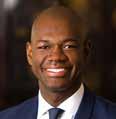
Osborne serves in the FBA’s Broward County Chapter as the chapter’s national delegate. ©2022 Jonathan K. Osborne. All rights reserved.
There are many inspiring quotes about the virtues of service. Martin Luther King Jr. said, “Life’s most persistent and urgent question is, ‘What are you doing for others?’” and “Everybody can be great … because everybody can serve.” Mother Teresa said, “Never worry about numbers. Help one person at a time, and always start with the person nearest you.” Anne Frank said, “How wonderful it is that nobody need wait a single moment before starting to improve the world.”
And on leadership, John C. Maxwell has explained that “A leader is great not because of his or her power, but because of his or her ability to empower others” and that “leadership is influence.” There is a U.S. district judge in Miami who personifies these principles and, through her service and leadership, is multiplying leaders while inspiring future generations of attorneys. That judge is Hon. Beth Bloom.
A graduate of Broward Community College, Judge Bloom received her undergraduate education at the University of Florida and attended the University of Miami School of Law. Judge Bloom’s judicial career began at the state level in 1995 and, on Feb. 6, 2014, President Barack Obama nominated her to serve as a U.S. district judge for the Southern District of Florida. She received her judicial commission on June 25, 2014, and, in the ensuing years, has presided over numerous significant cases.

The focus of this article, however, is what she has done for our bench and bar—and the students and aspiring lawyers of our community—and how her example can galvanize generational progress in federal jurisdictions around the country with respect to mentorship and leadership.
The Key Roles of Federal Law Day and Civil Discourse and Decisions in Fostering Mentorship in the Southern District of Florida
For many years, U.S. courts have participated in Law Day, which was established by President Dwight D. Ei-
senhower in 1958 to celebrate the role of law in American society. Federal courts, including in the Southern District of Florida, have also participated in Civil Discourse and Difficult Decisions (CD3), a national initiative of the federal judiciary, which brings high school and college students into federal courthouses to tackle legal issues youth face. Both Law Day and CD3 facilitate student interactions with judges, court personnel, private attorneys, and representatives from U.S. Attorney’s and Federal Public Defender’s offices. In our district, Judge Bloom spearheads Law Day and works with federal judicial colleagues in Broward and Palm Beach counties to deliver the CD3 program, with help from local FBA chapters. These programs teach about the role of law in society and introduce students from various communities—across a wide range of backgrounds—to the court.
Law Day and CD3 are also inspirational. These programs have inspired me to be grateful for the mentors
Diversity & Inclusion
November/December 2022 • THE FEDERAL LAWYER • 13
who have enriched my life and career and to become a leader who, like Judge Bloom, serves with humility, commitment to excellence, a team mentality, and vision.
Feedback from the 2021 Law Day program, which was held via Zoom due to the pandemic, illustrated the impact of the program on students. Last year, through the leadership of the court and Stephanie Turk, a shareholder at Stearns Weaver Miller, Law Day touched nearly 1,000 students across Miami-Dade, Broward, and Palm Beach counties. In providing feedback, students indicated they learned, among other things, that with hard work and dedication, you can achieve your goals and aspirations. Another student remarked that Law Day was a “once in lifetime opportunity.” A teacher from a participating school remarked that she appreciated that Law Day offered students “an opportunity to hear from attorneys that looked like them and had different backgrounds that [her] students could relate to and be inspired by.” These examples demonstrate the value of our court’s outreach to high school students, many of whom aspire to careers in law enforcement, law, and other forms of public service. Moreover, Judge Bloom’s latest project, the Judicial Intern Academy, holds great promise for the development of our youth and federal bar.
The Judicial Intern Academy Motivates Service at Every Level of the South Florida Federal Legal Community Research on the value of mentorship shows that “[m]entoring relationships are critical to launch successful careers in law and, at a minimum, necessary to adequate career development in law.”1 It is also widely understood that, in the law firm context,
A good mentor acts as an advisor, teacher, exemplar, and career advocate. A good mentor can also acquaint a new associate with firm culture and client relations, and can help groom the associate for partnership. The road to success is often paved by a good mentor.2
More broadly, quality mentorship offers strategies for managing job demands, provides advice on how to balance work and family demands, models ethical behavior, communicates values of the legal profession, and “lend[s] meaning to work through demonstration of its broader social worth.”3
Judge Bloom’s Judicial Intern Academy—which launched in summer 2022 in its pilot stage—demonstrates the power of the federal judiciary to advance mentorship and teach leadership through creativity and inclusion. Designed to offer the benefits of a federal judicial internship to rising 2Ls who are unable to devote their summer to a full-time unpaid judicial internship, the inaugural Academy paired each of its 18 participants with a former federal law clerk. The former clerks, who now work in state and federal government agencies and an array of law firms, served as law clerk advisors (LCAs), volunteering their time to supervise the interns. As far as workload, the Academy asked each student to draft a proposed order and argue an issue at a mock hearing, with the goal of developing recommendations for the court and producing a writing sample. In addition to the tremendous value generated by these assignments and relationships with the LCAs, the Academy leveraged the court’s ties to our legal community to expose the interns to the litany of career options available and invited judges, court personnel, and federal practitioners from varied backgrounds to the mentorship table.
To that end, a highlight of the program included an initial session about the work of the court, ethics, and wellness. Over the course of the ensuing eight weeks, interns attended federal civil, criminal, and bankruptcy proceedings as well as a naturalization ceremony, and at the state level, they attended civil, criminal, juvenile, and family proceedings. Among the summer’s invaluable experiences, the Academy convened “Conversations with the Court” and “Meet and Greets” with more than 20 federal circuit, district, magistrate, bankruptcy, and immigration judges as well as state judges. Each week also featured “Learning from the Legends” sessions with renowned and emerging leaders of the federal bar who discussed their careers and offered advice to the interns. Through sessions on practical topics like preparing for on-campus interviews and maximizing law school, the Academy also provided practical tools for success. Impressively, Judge Bloom and her team accomplished all this while she maintained her active docket and hosted full-time interns in chambers.
The Promise of the Judicial Intern Academy Judge Bloom herself said it best:
Creating the Judicial Intern Academy allows the Court to provide intern opportunities for a greater number of law students and to reach out to more law schools. Many students are unable to devote their entire summer to an internship because of financial or other personal reasons but still want to learn and grow.¼The Academy will allow more law students to learn about our judicial system, meet dedicated members of our court family, and hopefully become inspired about their futures.
And in a profession that continues to confront how to foster a diverse and inclusive legal community, resources like the Academy illustrate the capacity for federal courts to leverage their role in society and legal communities to inspire, equip, and mentor future lawyers while multiplying leaders across the bench and bar by inviting us to serve.
Endnotes
1Fiona M. Kay, John Hagan, & Patricia Parker, Principals in Practice: The Importance of Mentorship in Early Stages of Career Development, 31 L. &Pol. 69 (2009).
2Elizabeth K. McManus, Intimidation and the Culture of Avoidance: Gender Issues and Mentoring in Law Firm Practice, 33 Fordham Urb. L.J. 217, 219 (2005).
3Fiona M. Kay, John Hagan, & Patricia Parker, Principals in Practice: The Importance of Mentorship in Early Stages of Career Development, 31 L. &Pol. 69, 74 (2009).
14 • THE FEDERAL LAWYER • November/December 2022

Register Today! LABOR & EMPLOYMENT LAW CONFERENCE FEBRUARY 23–24, 2023 San Juan Marriott Resort & Stellaris Casino San
Rico www.fedbar.org/event/labor23 The Labor and Employment
biennial
labor
employment
REGISTRATION Standard Rates apply after Friday, January 27. $405 Sustaining Member $425 FBA Member $345 FBA Section Member $525 Nonmember $375 Government/Academic $120 Law Student
Juan, Puerto
Law Section’s
conference returns to San Juan, Puerto Rico! During this one and a half-day conference, leaders in
and
matters will address compelling and timely topics of interest to practitioners. In addition to ample networking opportunities, this conference will provide educational insight on current hot topics in the field.
It’s Not Your Grandfather’s Buick Anymore!
By Aaron Bulloff
Without law, civilization perishes.
—Talmud
As of Oct. 1, I became president of the Foundation of the FBA board of directors, and it is my intention to write about the Foundation in each edition of The Federal Lawyer while holding the position.
Aaron Bulloff is a long-tenured FBA and National Council Member who has held numerous chapter and national positions. He is a Charter Life Member of the Foundation’s Fellows and in 2015 received the Earl Kintner Award.

The FBA has had a Foundation since 1954. While its assets have changed dramatically over the last several years, its mission has not wavered:
• Promote and support legal research and education.
• Advance the science of jurisprudence.
• Facilitate the administration of justice.
• Foster improvements in the practice of federal law.
The Foundation is a congressionally chartered 501(c)(3) organization. Title 36, United States Code, Section 70502 (2) states its purpose:
To apply its income, and if the corporation so decides, all or any part of its principal, exclusively to the following educational, charitable, scientific, or literary purposes, or any of them: (a) To advance the science of jurisprudence; (b) To uphold high standards for the Federal judiciary and for attorneys representing the Government of the United States; (c) To promote and improve the administration of justice, including the study of means for the improved handling of the legal business of the several Federal departments and establishments; (d)
To facilitate the cultivation and diffusion of knowledge and understanding of the law and the promotion of the study of the law and the science of jurisprudence and research therein, through the maintenance of a law library, the establishment of seminars, lectures, and studies devoted to the law, and the publications of addresses, essays, treatises, reports and other literary works by students, practitioners, and teachers of the law.
For many years, however, the Foundation could not advance its mission or further its purposes very well. It simply did not have assets to do so; they primarily consisted of some plaster busts of eminent jurists and old law books. And then, at a watershed time, former national FBA president Bob McNew took it upon himself to raise funds for the Foundation. His persistent, relentless, arm-twisting efforts coupled with a favorable investment climate and the astute guidance of the Foundation’s investment managers culminated in the successful realization of a corpus goal of $1 million. We were on the map, and we could start properly funding worthy programing and scholarships. Then, within the last two years, through the incredible largesse of the Federal Bar Building Corp. (FBBC), distributions from the FBBC’s investment portfolio to the Foundation have helped us more than double our corpus.
The stewardship of these funds has been overseen by the Foundation’s board, but I wish to give a special shout out to the two long-tenured board members whose terms ended Sept. 30: Sharon O’Grady and Henry Quillian. Some of you may not know them, but for several years they helped raise, invest, and distribute Foundation funds in such impactful ways. We technically lose incredible institutional knowledge, but I am asking them to continue to assist the board as we move forward. I also wish to acknowledge Judge Pamela Mathy’s completion of her board presidency on Sept. 30. I am space-limited to give her all the kudos to which she is entitled for her calm, quiet leadership that always found consensus among any disagreement. For small feet, she has amazingly large shoe steps to follow.
It is now my great pleasure to introduce the four individuals whom the National Council elected to new board membership at the 2022 Annual Meeting and Convention. They are Bruce Moyer, who just finished an open term and now succeeds himself to a full term; David Guerry; Erin Brown; and Cal Chipchase. They arrive at an incredible time for the Foundation and the association. With the pending sale of the business condominium that has housed the FBA’s headquarters, further distributions by the FBBC may be forth-
From the Foundation
16 • THE FEDERAL LAWYER • November/December 2022
coming. We are working with a strategic planner to help us chart a proper, even more impactful course through a post-pandemic legal world. What a time for them to come on board!
Everyone knows Bruce. He retired last year as the FBA’s government relations counsel after 25 years of service. Here is what he says regarding his election:
I became a member of the Federal Bar Association in 1975 and have served as a leader, volunteer, and donor to the Foundation ever since. Back in the 1990s I served on the board of the Foundation and was privileged to be part of then President Bob McNew’s working group that led to the creation the Fellows of the Foundation. Now, three decades later, it’s an exciting time to return to the board. The Foundation’s greatest challenge is making relevant its mission to promote a wider understanding of the administration of justice and the rule of law.
If you don’t know David Guerry, it’s because you haven’t spent enough time at host hotels’ “evening business venue” at national meetings. He writes:
I am delighted to have the opportunity to serve on the board of the Foundation again. The Foundation serves an important purpose within the Federal Bar—it accomplishes the charitable giving so many of us desire to pursue and does so within the federal practice areas we all embrace. The Foundation has great opportunities for growth, and I am excited to have the opportunity to assist in both raising that corpus and growing the Fellows.
Erin Brown is a younger superstar immigration attorney in northeast Ohio who will bring fresh ideas to the board. She writes:

I am honored and excited to serve on the Foundation Board of Directors. As the new kid on the board, I am looking forward to learning about the history and workings of the Foundation and applying that knowledge towards awarding scholarships and grants on behalf of the FBA that promote civics, diversity, and community outreach. The oversight of these investments is a significant responsibility and ensures that quality lawyering and judgeships are not only maintained but also cultivated and promoted. The quality of our profession isn’t limited to what we do today, but also reflected in what we are willing to invest into tomorrow. The Foundation’s willingness to continue to devote its collective energy to ensuring that
the profession of lawyering remains vibrant is an important priority for me.
Cal Chipchase is a partner at Cades Schutte in Honolulu, so just by virtue of distance, his service and attendance at national meetings as a National Council member and as the prior general counsel of the FBA has been all the more meaningful. He writes:
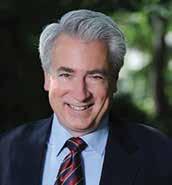


I’m glad to be on the board. It’s super exciting! Having met great lawyers and friends from around the country and having improved my practice through many FBA programs, I look forward to continuing my FBA service on the Foundation board. I will look for opportunities to improve the practice of law in the federal courts, including greater support for the hardworking judges and staff of the federal bench.
There is much additional to tell, but as one wise man said, “Leave them wanting more.”1 Future columns will, inter alia, discuss the Fellows program, detail specific programs and distributions undertaken by the Foundation, and update you on strategic planning efforts and our investment strategies. But, as I hope you can see, it’s not your “grandfather’s” Foundation anymore. Those days have passed. We are now and will continue to be light years ahead from what our efforts could be and were even just a few years ago. We are looking at the good fortune of assets to foster our mission and purposes in ways in which we could only dream.
So, in this new day, keep in mind that this is now your Foundation and not that of the ancients. Now that you have been introduced to our new board members, inundate them (and the rest of us on the board) with your ideas and requests for resources. As Linus Pauling said, “The best way to have a good idea is to have lots of ideas.”
“Lots of ideas” can never be an issue; as Groucho Marx said, “These are my principles. If you don’t like them, I have others.” Together we will chart the Foundation’s—your Foundation’s—path forward through these upcoming exciting times. Stay tuned.
Endnote
1A prize to the first to identify said wise man.
November/December 2022 • THE FEDERAL LAWYER • 17
Left to right: Bruce Moyer, David Guerry, Erin Brown, and Cal Chipchase.
Help! We Need a Doctor: How an Antiquated and Dysfunctional Immigration System Jeopardizes U.S. Healthcare
By Tina R. Goel
Tina R. Goel represents clients across multiple industries, including healthcare, finance, real estate, technology, and higher education. She counsels healthcare entities and physicians regarding clinical and research waivers and advises employers and employees on nonimmigrant and immigrant petitions. Goel serves on the boards of the FBA’s Immigration Law Section and Younger Lawyers Division. In 2016, she received the ILS Younger Lawyer of the Year Award. ©2022 Tina R. Goel. All rights reserved.

The U.S. healthcare workforce is short at least 20,000 physicians.1 Unfortunately, the situation is not likely to improve anytime soon. The Association of American Medical Colleges (AAMC) forecasts a total physician shortage of between 37,800 and 124,000 by 2034. The shortage developed over the past two decades and is caused by a mix of factors, including birth rates falling below mortality rates, resulting in an aging population with more complex healthcare needs. The physician workforce is aging alongside the greater population. Medical school enrollment rates doubled over previous years in the 1960s and 1970s2 but then remained flat up until 2021.3 Doctors who enrolled in medical school in the 1960s and 1970s have largely since retired, and the subsequent classes of doctors have not grown in proportion to the demand for care.4 According to American Medical Association (AMA) leaders, these trends mean the shortage is here to stay for a while.5
If the demand for physicians is increasing, what is the status of the supply, both domestic and foreign? Americans are not practicing medicine at the needed rate for a myriad of reasons, including the length of training and costs of medical school, along with the limited number of residency spots.6 Can the United States import physicians to alleviate the shortage? Perhaps. The AMA writes, “If immigration barriers for physicians are reduced, it will help to increase the number of physicians in the U.S. which will lead to healthier communities and ultimately a healthier country as access to much-needed medical care increases.”7 Physician immigration has undergone different phases in the last century, and today, foreign physicians have a limited ability to fill the shortage. International medical graduates (IMGs),8 also known as foreign medical graduates, are 24.5 percent of active physicians,9 but their numbers are insufficient to bring quality care to all underserved areas of the
United States, and there is an immigration chokehold on the physician pipeline. IMGs are not able to freely remain in the United States after completing their residency program and any applicable fellowships. Medical schools generally provide residency and fellowship training10 to IMGs through the exchange visitor J-1 program.11 In 1976, Congress was concerned that the physician shortage at the time had ended and that the immigration of IMGs needed to be more closely regulated,12 so it passed the Health Professions Educational Assistance Act of 1976.13 While the act attempted to encourage physicians to practice in rural areas, it also required J-1 trained IMGs to return to their country of citizenship or of last permanent residence before seeking a change of immigration status or permanent residence.14 What this means for IMGs who complete graduate medical education in the United States is that they must either return to their home country for an aggregate of two years, disrupting their careers and removing them from the U.S. physician workforce, or seek a waiver of the home residence requirement.15
IMGs have provided critical medical care to Americans for decades.16 These physicians—more than a quarter of all doctors practicing in the United States today—practice in medically underserved communities at far higher rates than their U.S.-trained peers.17 In areas with the highest poverty rates, in which annual per capita income is below $15,000, nearly half of all physicians are IMGs.18 The U.S. immigration system is set up so that these qualified and now-U.S. trained medical graduates need to find not only a community they want to serve after completing training but also a way to receive a waiver of this two-year home residence requirement.
The Immigration and Nationality Act provides a physician multiple paths to waive the two-year foreign residence requirement noted above, including under the following circumstances:
Law
Immigration
18 • THE FEDERAL LAWYER • November/December 2022
(1) The J-1 physician would be subject to persecution upon returning home.
(2) The J-1 physician’s compliance with the requirement would cause exceptional hardship to their U.S. citizen or lawful permanent resident spouse or child.
(3) A U.S. federal government agency has determined that the J-1 physician’s departure from the United States for two years would be detrimental to its interest.
(4) A designated state public health department or its equivalent has determined that the J-1 physician’s clinical service in its jurisdiction is in the public interest.19
Clinical service waiver programs include those administered by the U.S. Department of Health and Human Services (HHS),20 state public health agencies (e.g., Conrad 30 program),21 and federal-state partnerships (e.g., through the Appalachian Regional Commission).22 While these programs provide a much-needed pathway for IMGs to secure a waiver and continue to provide medical services in shortage areas, they are not a magic bullet because of their adjudication times, limited geographical scope, cost, and prolonged uncertainty. This means that, despite these programs, the physician shortage is still growing.
In recent years, incremental efforts have been made to open new waiver programs, waive burdensome requirements, and expand the clinical scope of existing programs. For example, the Southeastern Crescent Regional Commission announced a new J-1 waiver program in summer 2022 that allows for the placement of eligible physicians in all of Florida and parts of six states (i.e., Virginia, North Carolina, South Carolina, Georgia, Alabama, and Mississippi).23 As of Oct. 1, 2022, the Delta Regional Authority, to further encourage physicians to practice in its jurisdiction, no longer requires a $3,000 application fee.24 Finally, in May 2020, HHS expanded its program so that not only Federally Qualified Health Centers and Rural Health Centers, but also hospitals and private practices, may seek to employ candidates through this program. While these incremental efforts are valuable to each patient a new waiver physician serves, they are insufficient to alleviate the severe shortage at hand.
First, the process of obtaining a clinical service waiver is daunting to employers and can be a significant financial commitment. While the complexity of the process varies among the health agencies and commissions, two players are static: the U.S. Department of State (DOS) and the U.S. Citizenship & Immigration Services (USCIS). If seeking a waiver in Maryland, for example, the prospective employer and candidate must first file a waiver support request with the Maryland Department of Health (MDH)25 while the candidate also files a waiver application with DOS. If the MDH determines that both the medical practice site and the candidate are eligible, and that using one of its scarce 30 waiver slots to support the employment of this candidate is in the interest of its population, the MDH will issue a favorable recommendation to DOS. If DOS concurs that granting the waiver application is, on balance, in the nation’s interest, it will forward the application to USCIS with a recommendation for approval.26 Once the waiver is settled, the employer must also petition the USCIS for this candidate as an H-1B worker. Both the waiver application and the H-1B petition must be approved in order for the physician to be authorized to work for the petitioning employer pursuant to the relevant program. As you might guess, the various parties must work together seamlessly to prevent missing statutory deadlines.
Each of the waiver programs has limitations outlined by statute and/or agency policy. Key limitations include the number of waivers that can be supported, geography, and substantive requirements regarding the type of physician candidate and/or the population they will serve. These limitations serve to prevent IMGs from adequately remedying the physician shortage.
The Conrad 30 program, for example, has strict numerical limitations. In 1994, the Conrad state clinical waiver program began with 20 waivers for each state to bring U.S.-trained physicians to rural locations.27 In 2002, Congress increased the program to permit 30 waivers per state; hence, the name “Conrad 30.”28 States are permitted to allocate up to 10 of their 30 slots to physicians who provide care to underserved patients, despite being located at facilities that are not located in Health Professional Shortage Areas or Medically Underserved Areas/Populations (“FLEX” slot). In fiscal years 2021 and 2020, about half of all Conrad waiver programs were filled to capacity—23 and 26 programs, respectively—and more than five programs granted at least 25 slots each year.29 This means that employers and U.S.-trained physicians were turned away by a number of Conrad programs due to statutory numerical limits. Some states assess applications and select the 30 most helpful to alleviate the shortages, but others turn to first-come, first-served or a lottery so that the program is administratively neutral, especially when the shortages are simultaneously severe in multiple locations within the state. In states where the Conrad waiver slots are exhausted each year, employers and candidates find this process unpredictable, a disincentive to submitting an application, and IMGs ultimately depart the United States because they are unable to stay without a waiver or a job. Patients lose the opportunity to access preventative care and then arrive in hospitals to receive care for conditions that could have been prevented at a lower cost to themselves and the healthcare system.
By contrast, the HHS program does not have a cap on the number of physicians it can support for a waiver, which makes it a boon for qualified employers and candidates. To obtain an HHS clinical service waiver, however, the IMG must provide full-time primary care clinical services in an underserved area. Primary care services include family medicine, general internal medicine, general pediatrics, obstetrics and gynecology, and general psychiatry. The Health Professional Shortage Area score of the relevant locality must be 07 or higher. The score is determined by the Health Resources and Services Administration. Another notable requirement is that the physician must commence employment pursuant to the waiver no more than 12 months after the completion of an eligible residency. Given the lack of statutory limits on the number of HHS waiver recommendations that may be issued, as long as the medical practice site and the candidate are eligible for the waiver, this is a more reliable pathway than the Conrad 30 waiver. However, candidates must begin preparing these applications well in advance of completing their residency programs to comply with the HHS upper time limit for the candidate to start employment pursuant to the J-1 waiver.30 In addition, this waiver does not alleviate specialist shortages in underserved rural areas.
Ultimately, the categorical two-year home residence requirement hampers the ability of U.S.-trained physicians to provide quality care where it is needed most. Still, these programs are widely popular, and expanding them represents a rare opportunity for bipartisanship. Thirteen Republicans and 11 Democrats in the current Congress—from Sen. John Cornyn, R-Texas, to Sen. Elizabeth Warren,
November/December 2022 • THE FEDERAL LAWYER • 19
D-Mass.—have joined to co-sponsor the proposed Conrad State 30 and Physician Access Reauthorization Act.31 If we are to seriously address the existing physician shortage, which continues to grow, we must remove the roadblocks (e.g., categorical two-year home residence requirement, numerical limits on Conrad state programs, and limited eligibility for specialists) to retaining the talented physicians who wish to care for the underserved in the United States.
Endnotes
1Health Resources & Services Administration, Health Workforce Shortage Areas, https://data.hrsa.gov/topics/health-workforce/ shortage-areas (last updated Oct. 10, 2022).
2Edward Salsberg & Atul Grover, Physician Workforce Shortages: Implications and Issues for Academic Health Centers and Policymakers, 81 Acad. Med., no. 9, Sept. 2006, at 782, 787, https://journals.lww. com/academicmedicine/fulltext/2006/09000/physician_workforce_ shortages__implications_and.3.aspx
3Patrick Boyle, Medical School Applicants and Enrollments Hit Record Highs; Underrepresented Minorities Lead the Surge, Ass’n Am. Med. Coll. (Dec. 8, 2021), https://www.aamc.org/news-insights/medical-school-applicants-and-enrollments-hit-record-highs-underrepresented-minorities-lead-surge.
4IHS Markit Ltd, The Complexities of Physician Supply and Demand: Projections From 2019 to 2034, Ass’n Am. Med. Coll. (2021), https://www.aamc.org/media/54681/download.
5Andis Robeznieks, Doctor Shortages Are Here—and They’ll Get Worse if We Don’t Act Fast, Am. Med. Ass’n (April 13, 2022), https://www. ama-assn.org/practice-management/sustainability/doctor-shortages-are-here-and-they-ll-get-worse-if-we-don-t-act/.
6See, e.g., Derek Thompon, Why America Has So Few Doctors, Atlantic (Feb. 14, 2022), https://www.theatlantic.com/ideas/ archive/2022/02/why-does-the-us-make-it-so-hard-to-be-a-doctor/622065/
7Statement of the American Medical Association to the U.S. Senate Subcommittee on Immigration, Citizenship, and Border Safety, Am. Med. Ass’n (Sept. 14, 2022), at 2, https://searchlf.ama-assn.org/ letter/documentDownload?uri=%2Funstructured%2Fbinary%2Fletter%2FLETTERS%2Flfdr.zip%2F2022-9-13-AMA-Statementfor-the-Record-on-Senate-IMG-v2.pdf
8National Resident Matching Program, The Match Terms and Topics, https://www.nrmp.org/intro-to-the-match/the-match-terms-andtopics/ (last visited Oct. 11, 2022).
9Active Physicians Who Are International Medical Graduates (IMGs) by Specialty, 2017, Ass’n of Am. Med. Coll., https://www.aamc. org/data-reports/workforce/interactive-data/active-physicianswho-are-international-medical-graduates-imgs-specialty-2017 (last visited Oct. 11, 2022).
10Exchange Visitor Sponsorship Program (EVSP): About EVSP, Educ. Comm’n Foreign Med. Graduates (last updated Mar. 17, 2021), https://www.ecfmg.org/evsp/about.html.
11Immigration and Nationality Act (INA) § 101(a)(15)(J), 8 U.S.C. § 1101(a)(15)(J). See also 8 C.F.R. § 214.2(j), 22 C.F.R. § 62; cf. https://j1visa.state.gov/.
12John J. Greene, The Health Professions Educational Assistance Act of 1976: A New Prescription? 5 Fordham Urb. L.J. 279 (1977), https:// ir.lawnet.fordham.edu/ulj/vol5/iss2/4.
13Health Professions Educational Assistance Act of 1976, 90 STAT. 2300, Pub. L. No. 94-484 (1976), https://www.congress.gov/94/
statute/STATUTE-90/STATUTE-90-Pg2243.pdf.
14Id.
15INA § 212(e).
16 John J. Greene, The Health Professions Educational Assistance Act of 1976: A New Prescription? 5 Fordham Urb. L.J. 279 (1977), https:// ir.lawnet.fordham.edu/ulj/vol5/iss2/4.
17Statement of the American Medical Association to the U.S. Senate Subcommittee on Immigration, Citizenship, and Border Safety, Am. Med. Ass’n (Sept. 14, 2022), at 5, https://searchlf.ama-assn.org/ letter/documentDownload?uri=%2Funstructured%2Fbinary%2Fletter%2FLETTERS%2Flfdr.zip%2F2022-9-13-AMA-Statementfor-the-Record-on-Senate-IMG-v2.pdf
18Foreign-Trained Doctors are Critical to Serving Many U.S. Communities, Am. Immigr. Council (Jan. 2018), https://www. americanimmigrationcouncil.org/sites/default/files/research/ foreign-trained_doctors_are_critical_to_serving_many_us_ communities.pdf at 9-10.
19INA § 212(e). See also FAQs: Waiver of the Exchange Visitor TwoYear Home-Country Physical Presence Requirement, U.S. Dep’t of State, Bureau of Consular Affs, https://travel.state.gov/content/ travel/en/us-visas/study/exchange/waiver-of-the-exchange-visitor/ exchange-waiver-faqs.html (last visited Oct. 10, 2022).
20HHS Exchange Visitor Program, U.S. Dep’t Health Human Serv https://www.hhs.gov/about/agencies/oga/about-oga/what-we-do/ exchange-visitor-program/index.html (last updated June 3, 2020).
21E.g., J-1 Visa Waiver Program, Md. Dep’t Health, https://health. maryland.gov/pophealth/Pages/J-1-Visa-Waiver-Program.aspx (last visited Oct. 11, 2022).
22J-1 Visa Waivers, Appalachian Reg’l Comm’n, https://www.arc. gov/j-1-visa-waivers/ (last visited Oct. 10, 2022).
23J-1 Visa Waiver Program: Guidelines, Se. Crescent Reg’l Comm’n, https://scrc.gov/wp-content/uploads/2022/09/ Southeast-Crescent-Regional-Commission-J-1-Guidelines.pdf (last visited Oct. 11, 2022).
24Delta Doctors, Delta Reg’l Auth https://dra.gov/initiatives/ promoting-a-healthy-delta/delta-doctors-how-to-apply/ (last visited Oct. 11, 2022).
25J-1 Visa Waiver Program, Md. Dep’t Health, https://health. maryland.gov/pophealth/Pages/J-1-Visa-Waiver-Program.aspx (last visited Oct. 11, 2022).
26See Waiver of the Exchange Visitor Two-Year Home-Country Physical Presence Requirement, U.S. Dept. of State https://travel.state. gov/content/travel/en/us-visas/study/exchange/waiver-of-theexchange-visitor.html (last visited Oct. 11, 2022).
27Flatlining Care: Why Immigrants Are Crucial to Bolstering Our Health Care Workforce: Hearing Before the Subcomm. On Immigr., Citizenship, and Border Safety of the S. Comm. On the Judiciary, 117th Cong. 5 (Sept. 14, 2022) (statement of Sarah K. Peterson, Principal Attorney, SPS Immigration PLLC), https://www.judiciary.senate. gov/imo/media/doc/Testimony%20-%20Peterson%20-%20202209-14.pdf.
2821st Century Department of Justice Appropriations Authorization Act § 11018(a), Pub. L. No. 107-273 (2002), https://www.uspto.gov/ sites/default/files/web/trademarks/PL107_273.pdf
29Data provided by 3RNet at https://www.3rnet.org/j1-filled (last accessed Oct. 11, 2022). Conrad Historical Totals – 2001 to Present, Table in Conrad 30 Slots Filled Data, 3RNET, https://
continued on page 25 20 • THE FEDERAL LAWYER • November/December 2022
Next Challenge. Next Level.
For 77 years Nexsen Pruet lawyers have been helping companies succeed. We counsel clients in more than 30 practice areas and represent international and domestic companies across a wide array of industries.

Chart a new path forward with the attorneys of Nexsen Pruet.
Charleston, SC
Charlotte, NC
Columbia, SC Greensboro, NC Greenville, SC
Hilton Head, SC
Myrtle Beach, SC Raleigh, NC Austin, TX
nexsenpruet.com
Leighton Lord, Chairman
Litigation in the Attention Economy: Developing Defenses to Social Media Addiction Claims
By Kyle W. Cunningham
Kyle W. Cunningham is an associate at the Boston office of Cetrulo LLP. His practice concentrates on defending corporations in complex civil litigation matters, including multiparty product liability cases. ©2022 Kyle W. Cunningham. All rights reserved.

By Litigation against social media platforms for using allegedly addictive features has been on the rise, with 28 federal lawsuits filed in 2022.1 In an attempt to circumvent Section 230 of the Communications Decency Act (CDA), plaintiffs claim that social media platforms knowingly designed defective algorithms, causing minors to become addicted to social media, resulting in disordered eating, depression, body dysmorphic disorder, suicidal ideation, and severe anxiety.2 As courts begin to rule on these claims, not only will plaintiffs be unable to prove causation, but defendants’ social media platforms will be shielded by Section 230 of the CDA for their tailored algorithms and user engagement features.
Understanding the Attention Economy: How Social Media Platforms Make Money
The advent of the information age has brought increased social media usage, with users’ daily time on social networking sites increasing dramatically over the last 10 years. In 2012, users spent 90 minutes per day on social networking sites; the number increased to 147 minutes per day in 2022.3 As of 2022, the vast majority of teens aged 13 to 17 used social media, with usage as follows: 95 percent used YouTube, 67 percent used TikTok, 62 percent used Instagram, 59 percent used Snapchat, and 32 percent used Facebook.4
Increased social media use has coincided with broader access to smartphones. In 2014, 24 percent of teens reported being “almost constantly” on the internet, with 73 percent owning a smartphone. By 2022, 46 percent of teens were “almost constantly” on the internet, and 95 percent reportedly owned a smartphone.5
Social media platforms make money primarily through their marketing partners. The more users pay attention to a platform, the more appealing the site becomes to advertisers. Social media companies use two marks to judge attention: (1) time spent on the platform and (2) user engagement. Generally, top social media platforms allow advertisers to choose to pay based on cost-per-click or cost-per-impression.6
Under a cost-per-click program, an advertiser only pays the social media platform when a user clicks on an ad, whereas under a cost-per-impression program an advertiser pays whenever their ad appears on the user’s screen, regardless of whether the platform user interacts with the ad. Consequently, platforms are incentivized to keep users on the site, clicking and scrolling for as long as possible to make the sites profitable. Some major social media platforms also provide the option to pay only when a targeted user takes a particular action. For example, advertisers can send out direct messages to users on LinkedIn and are only charged when users click on the message.
Social media platforms use algorithms to study individual user behavior to maximize engagement. These algorithms aim to create the perfect newsfeed for each user by (1) analyzing accumulated unstructured data, (2) predicting the types of content a user will find interesting, and (3) populating the user’s feed with content it believes the user will find interesting.7 The more a user engages with content through liking, sharing, messaging, or searching the content, the more likely similar content will populate their feed. Additionally, the more “likes” a post receives, the more likely the algorithm will share it with a broader audience.
Platforms use personalized algorithms to make it easier for users to discover new products and services that are right for them. Social media is how 28 percent of customers find out about new brands and services, making it the fourth most popular brand discovery channel behind search engines (36 percent), TV ads (35 percent), and word-of-mouth (31 percent).8 Similarly, businesses that adopt personalized marketing also benefit as they see an average 19 percent increase in sales.9
Designed to Engage: How Social Media Platforms Keep Users Interested
Social media platforms are a form of entertainment; consequently, they have incorporated elements to
In-House Insight
22 • THE FEDERAL LAWYER • November/December 2022
increase user engagement and enhance the overall user experience. Features adopted by social media platforms to prolong use include (1) infinite scrolling, (2) read receipts, (3) tailored content, and (4) social rewards.
Endless scrolling/streaming or infinite scrolling allows users to discover new content endlessly without leaving the page. The user becomes increasingly immersed in the platform without coming to a natural stop. A natural stop would encourage the user to leave the platform. Endless scrolling is particularly effective on smartphones. The simple finger swipe requires less effort than scrolling using a mouse, making it even more immersive.10 Infinite scrolling utilizes the brain’s release of dopamine, the chemical responsible for reward-seeking behavior; looking through social media releases dopamine, encouraging users to continue viewing new content. Facebook’s Feed utilizes infinite scrolling to keep users engaged, it is a constantly updating list of stories in the center of the user’s home page. The stories include status updates, photos, videos, links, app activity, and “likes” from people, pages, and groups the user follows on Facebook.11
Read receipts on Snapchat, Facebook, and WhatsApp encourage both parties to expect a fast answer after opening the message, thereby encouraging users to remain on the app once they open a message and to continue communicating. Snapchat, which does not allow users to opt out of read receipts, has a very high user engagement rate. The average active Snapchat user opens the app’s camera more than 20 times daily.12 Social reward features include the “like” or “thumbs up.” A “like” or thumbs up indicates positive social feedback, creating a feeling of validation among users receiving them. These design features make social media platforms engaging and therefore play a crucial role in their utility and entertainment value.
Plaintiffs Will Struggle to Prove Causation
Social media addiction is currently unrecognized as a mental health disorder, and we should remain skeptical of the necessity to regulate it until it is proven to exist.13 The health consequences of excessive social media usage are largely unknown; therefore, plaintiffs will struggle to establish causation. A literature review by the National Institutes of Health revealed that many studies indicate that social media may cause psychological harm to users; however, the level of the suspected harm has yet to be determined.14
Research on the effect of social media on adolescent development has yielded mixed results. When studying the impact of excessive social media use among adolescents, a correlation between social media use and depression was observed by some researchers, yet significant benefits to adolescent well-being were also observed.15 Other studies concluded that social media use in teens did not have a strong association with physiological health and may even improve teen well-being, as adolescents were found to establish a better diversity of friends and increased access to emotional support.16 One UK study of 10,000 teens and pre-teens found that social media is “not, in and of itself, a strong predictor of life satisfaction across the adolescent population.”17 One study even suggested that social media usage has benefited children because it has allowed them to fulfill their need to socialize without their peers being physically present. The ability to sustain friendships online is valuable, especially during periods such as the COVID-19 global pandemic, where opportunities to socialize were limited. One study suggested that online friendships among youths are as strong as offline relationships. The study measured the
strength of these relationships based on self-disclosure, validation, companionship, instrumental support, conflict, and conflict resolution.18 Thus, while the spaces in which these relationships are being established and maintained are novel, the core qualities of these online relationships remain the same.19 Such a finding could indicate that social media is not crowding out healthy social behaviors but rather being utilized to help amplify them.
The effectiveness of social media breaks and their relationship to higher levels of well-being has not been established, further suggesting that social media use does not significantly impact users’ mental health. A study involving multiple social media platforms (i.e., Facebook, Twitter, Instagram, and Snapchat) over four weeks found no correlation between well-being and social media abstinence. Participants maintained the same levels of well-being and quality of life throughout every week of the experiment, although a decrease in loneliness was reported.20 Unlike previous studies that openly hold themselves out as studying the effect of social media usage, the study framed itself primarily as a study on how people use their time rather than on the influence of social media use on psychosocial outcomes.21 Given that the impact of excessive social media use on mental health remains unknown, plaintiffs claiming social media addiction will struggle to establish a causal link between excessive social media usage and a negative impact on mental health.
Section 230 of the Communications Decency Act Shields Platforms
From Liability
Section 230 of the Communications Decency Act (CDA) serves as the strongest defense for social media platforms in lawsuits with teen social media addiction claims. Section 230(c)(1) reads in part, “No provider or user of an interactive computer service shall be treated as the publisher or speaker of any information provided by another information content provider.” Courts have interpreted Section 230(c) (1) immunity to apply broadly, providing social media platforms immunity for good faith editing and filtering decisions.22
Plaintiffs can overcome the CDA only by proving that either (1) social media platforms do not act in a publishing capacity when employing personalized algorithms to recommend content to users or (2) these platforms act as information content providers when they design their systems to addict users. Under a strict product liability theory, users must prove the defect, causation, and injury. Plaintiffs allege that the liability does not arise from the posting, editing, or withdrawing of specific content. Instead, plaintiffs, attempting to circumvent CDA 230, allege that the harm stems from the use of artificial intelligence and reinforcement learning to personalize user content23 or, alternatively, argue that defendant social media sites are content developers through features to prolong site usage, such as badges, “likes,” or mechanisms such as infinite scrolling.
While courts have found that social media platforms can be liable for encouraging illegal behavior via platform features available to end-users, courts have consistently struck down any attempts to hold platforms liable for any alleged harm caused by tailoring users’ feeds. In Maynard v. Snapchat, a plaintiff driver alleged that Snapchat could reasonably foresee that its product design created a risk of harm based on, among other things, the fact that Snapchat knew that other drivers were using the platform’s speed filter while driving at 100 miles per hour or more as part of “a game,” purposefully designed its products to encourage such behavior, and knew of at least one other instance in which a driver who was using Snapchat while speeding
November/December 2022 • THE FEDERAL LAWYER • 23
caused a car crash.24 The Georgia Supreme Court reversed the appellate court’s decision to dismiss the case, finding that the lower court erred in dismissing the case based on a lack of proximate cause.
The Ninth Circuit expanded upon Maynard in Lemmon v. Snap, Inc. In Lemmon, the Ninth Circuit reversed the district court, finding that CDA did not protect Snapchat under a negligent design claim and that it could be held liable for manipulating user behavior to the user’s detriment through in-app reward systems. Like Maynard, Snapchat’s speed filter was the alleged source of the harm, but it expanded Maynard to include the app’s general reward system. In Lemmon, a speeding driver was using Snapchat’s speed filter, hoping that he would receive a badge from the app. The parents of the deceased son argued that Snapchat encourages certain behavior by rewarding users with “trophies, streaks, and social recognitions” based on the types of snaps they send out.25 Snapchat does not, however, tell users how to earn these badges.26 Thus, the court found that it was reasonable for users to believe that by using the Snapchat speed filter, a reward in the form of a badge could be achieved by driving at speeds exceeding 100 miles per hour, even if there was no badge for reaching the speed.27 In denying summary judgment, the court found that the case could proceed because “Snap is being sued for the predictable consequences of’ designing Snapchat in such a way that it allegedly encourages dangerous behavior.” The court also rejected Snapchat’s argument that the harm was caused by the third-party content or the publishing of the Snap and, thus, Snapchat was not shielded by Section 230 immunity. The court stated that the platform’s own acts caused harm through their defective content-neutral tools. Therefore, by trying to manipulate user behavior, platforms can be liable for unintentional harm resulting from the behavioral changes encouraging potentially dangerous illegal actions as long as they are reasonably foreseeable.
Much like in Maynard and Lemmon, plaintiffs have argued that liability should attach to the hyper-personalized recommendation algorithms and user engagement features.28 Plaintiffs allege that the tailoring of the content is defectively designed since the third party content on its own would not cause the suspected mental health harm. According to plaintiffs it is the way in which the third-party content is aggregated and presented to users that demands users attention at allegedly extreme levels. Thus, plaintiffs argue that, unlike Backpage, Herrick, and Barnes, these actions do not arise solely from third-party content posted on the site; instead, plaintiffs allege it stems from the act of hyper-personalizing the content caused by the defendant’s social media platforms, which they argue manipulates user behavior.29 However, user engagement features such as “likes,” read receipts, and tailored personalized user feeds via the platform’s algorithm are all subject to immunity under Section 230 of the CDA. Unlike in Maynard and Lemmon, the user engagement features allegedly causing mental health issues are not encouraging any dangerous illegal activity. The user engagement features are designed merely to keep users entertained.
Plaintiff’s allegations that social media platforms are liable due to their allegedly addictive algorithm are likely to fail. The Second Circuit’s ruling in Force v. Facebook undermines the plaintiffs’ likelihood of succeeding on their defectively designed algorithms theory. In Force v. Facebook, plaintiffs were victims, estates, and family members of terrorist attacks in Israel, suing under the Antiterrorist Act, alleging that Facebook provided material support to Hamas, a terrorist group. Specifically, plaintiffs argued that Facebook de-
veloped the content of the terrorist postings through its algorithms that were designed to utilize users’ information to match them with others, allowing the group to grow and spread its message.30 The Second Circuit rejected this argument, however, stating that using these automatic algorithms does not subject Facebook to liability under Section 230, as it is merely the site “vigorously fulfilling its role as a publisher.”31 Applying Force to plaintiffs’ social media addiction claims suggests that the defendant social media platforms will not be found liable for their use of algorithms that are designed to make their platforms more engaging.
Conclusion
While plaintiffs continue to file claims alleging that social media platforms are addictive, the alleged harm caused by purported excessive social media usage has yet to be conclusively proven. Even if plaintiffs could establish that excessive social media usage causes mental illness, courts will likely find that Section 230 of the CDA will prevent plaintiffs from prevailing on such claims.
Endnotes
1Barbara Grzincic, Acetaminophen, social media addiction cases go before consolidation panel, Reuters (Sept. 29, 2022), https:// www.reuters.com/legal/litigation/acetaminophen-social-mediaaddiction-cases-go-before-consolidation-panel-2022-09-29/. 2Id; Complaint at 1-5, Charles v. Meta Platforms, Inc. et al. No. 1:22cv-21721 (S.D. Flo.); Complaint, DH v. Meta Platforms, Inc., et al., No. 4:22-cv-04888 (N.D. Cal.)
3H. Tankovska, Daily Time Spent On Social Networking By Internet Users World Wide, statista (Feb. 8, 2021), https://www.statista.com/ statistics/433871/daily-social-media-usage-worldwide/.
4Emily A. Vogels et al., Teens, Social Media and Technology 2022, Pew Rch. Ctr. (Aug. 10, 2022), https://www.pewresearch.org/ internet/2022/08/10/teens-social-media-and-technology-2022/. 5Id.
6Jake Frankenfield, et. al, Cost Per Click (CPC) Explained, With Formula and Alternatives, Investopedia (Aug. 10, 2022), https:// www.investopedia.com/terms/c/cpc.asp.
7Sang Ah Kim, Social Media Algorithms: Why You See What You See, 2 Geo. L. Tech. Rev. 147 (2017), https://georgetownlawtechreview. org/social-media-algorithms-why-you-see-what-you-see/GLTR-122017/.
8Viktoriya Trifonova, How Effective are Ads on Social Media? Globalwebindex (Jun. 25, 2019), https://blog.globalwebindex. com/chart-of-the-week/ads-on-social-media/.
9Sam Ernest-Jones, Ecommerce Personalization: 10 Brands Doing it as Good as Amazon (Mar. 21, 2019), https://blog.globalwebindex.com/ marketing/ecommerce-personalization/.
10Liz Stinson, Stop the Endless Scroll. Delete Social Media From Your Phone, Wired (Oct. 1, 2017), https://www.wired.com/story/rantsand-raves-desktop-social-media/.
11How News Feed Works, Facebook, https://www.facebook.com/ help/1155510281178725/how-news-feed-works (last visited Oct. 10, 2022).
12Maryam Mohsin, 10 Snapchat Statistics You Need To Know in 2021, Oberlo (Mar. 14, 2021), https://www.oberlo.com/blog/snapchatstatistics.
13Ronald Pies, Should DSM-V Designate “Internet Addiction” a Mental Disorder?, Psychiatry (Edgemont) Feb. 2009, at 31-37; Jeffrey
24 • THE FEDERAL LAWYER • November/December 2022
Singer, Stop Saying Social Media ‘Addiction,’ Medpage Today (Sept. 20, 2018), https://www.medpagetoday.com/psychiatry/ addictions/75194.
14Fazenda Karim, etal., Social Media Use and Its Connection to Mental Health: A Systematic Review, Cureus June 15, 2020, at 6-9, https://www.ncbi.nlm.nih.gov/pmc/articles/PMC7364393/pdf/ cureus-0012-00000008627.pdf.
15Carol Vidal et al., Social Media Use and Depression in Adolescents: A Scoping Review 32(3) Int. Rev. Psychiatry 235–253 (2020).
16United Kingdom Department, State Of The Nation 2019: Children And Young People's Wellbeing 10 (2019); see also Karim, supra note 14
17Amy Orben, et al., Social Media’s Enduring Effect on Adolescent Life Satisfaction, Proc. of the Nat'l Acad. of Sci. (May 2019), https:// www.pnas.org/content/116/21/10226.
18Joanna C. Yau & Stephanie M. Reich, Are the Qualities of Adolescents’ Offline Friends Present in Digital Interactions? 3 Adolescent Rsch. Rev., 339 (2018).
19Id.
20Jeffery A. Hall et al., Experimentally Manipulating Social Media Abstinence: Results of a Four-Week Diary Study, 24 Media Psych. 259 (2021).
21Id. at 271.
22See Eric Goldman, The Ten Most Important Section 230 Rulings, Tul. J. Tech. & Intell. Prop. Aug. 2019, at 1, 2 (2017) (Citing Zeran v. Am.Online, Inc., 129 F. 3d 327 (4th cir. 1997); see also Jane Doe No. 1 v. Backpage.com, LLC, 817 F.3d 12 (1st Cir. 2016) (holding website operating classified ads was protected by CDA
Immigration Law continued from page 20
www.3rnet.org/Portals/0/adam/Basic%20Content/QxXpOcnfkeKBY1XymXi7Q/Content/Conrad%20 Historic%20Totals%20 -%202001%20to%20Present.pdf. (last visited Oct. 11, 2022)
30HHS Exchange Visitor Program, U.S. Dep’t Health Human Serv https://www.hhs.gov/about/agencies/oga/about-oga/what-we-do/ exchange-visitor-program/index.html (last updated June 3, 2020).
31Cosponsors: S.1810 — 117th Congress (2021-2022), https://www. congress.gov/bill/117th-congress/senate-bill/1810/cosponsors (last accessed Oct. 12, 2022).
from plaintiff’s allegations that they should have verified third-party postings); Herrick v. Grindr, LLC, 306 F. Supp. 3d 579, 588 (SDNY 2018), aff’d, 765 F. App'x 586 (2d Cir. 2019) (holding dating app immune under Section 230 of the CDA, and was not responsible for abusive content posted by third parties); Barnes v. Yahoo!, Inc., 570 F.3d 1096 (9th Cir. 2009) (Finding Yahoo was not required after being alerted to remove plaintiff’s naked photos which were posted by someone else).
23Barnes v. Yahoo!, Inc., 570 F.3d at 1125 Complaint at 1-5, Charles v. Meta Platforms, Inc. et al. No. 1:22-cv-21721, (S.D. Fla. 2022); Complaint, D.H. v. Meta Platforms, Inc., et. al., No. 4:22-cv-04888 (USDC N.D. Cal).
24Maynard v. Snapchat, Inc., 870 S.E. 2d 739.747 (6a.Sup. Ct. 2022).
25Lemmon v. Snap, Inc., No. 20-55295, 2021 WL 1743576, at *2 (9th Cir. May 4, 2021).
26Id.
27Id. at 7.
28Allison Zakon, Optimized for Addiction: Extending Product Liability Concepts to Defectively Designed Social Media Algorithms and Overcoming the Communications Decency Acts, Wisc. L. Rev. 1007, 1137 (2020).
29Id (Citing Jane Doe No. 1 v. Backpage.com, LLC, 817 F.3d 12 (1st Cir. 2016); Supra, note 22.
30Force v. Facebook, Inc., 934 F.3d 53 (2d Cir. 2019), cert. denied 140 S. Ct. 2761.
31Id. at 71.
November/December 2022 • THE FEDERAL LAWYER • 25
100 Years of Love in the Time of COVID
By Kathleen Gasparian
Kathleen Gasparian is the founding partner of Gasparian Spivey Immigration in New Orleans. She currently serves on the boards for the New Orleans Chapter of the FBA, the Louisiana Language Access Coalition, and the Louisiana Immigration Working Group. She is also an adjunct professor of immigration law at Loyola University in New Orleans. She has been recognized by Gambit, New Orleans Magazine, Super Lawyers, and City Business for her expertise as an immigration attorney.

Our culture is saturated with love and marriage. The wedding industry is valued in the mind-boggling billions, and viral romantic proposals (from prom to marriage) are everywhere online. Streaming channels are dedicated not only to romance or romantic comedies, but to historical romances, paranormal romances, and Christmas romances. Immigration law is not immune from the heady rush of romance or the devasting impact of heartbreak. In fact, the formula of love plus immigration almost always creates tension and crisis worthy of Romeo and Juliet or any episode of Bridgerton
Family unification has been a significant force in immigration law since 1965.1 Under the current law, family relationships, including marriage, provide pathways for permanent residence2 in the United States. Waivers for grounds of inadmissibility, protection from removal, and forgiveness for certain immigration violations or missteps may be available through family relationships as well.
The majority of individuals obtaining permanent residence in the United States each year do so through family-based immigration. The process begins with the filing of a visa petition with the U.S. Citizenship and Immigration Service (USCIS) by a U.S. citizen or lawful permanent resident for a closely related family member. The foreign national beneficiary may seek an immigrant visa at a U.S. Department of State consular office after the petition is approved or can apply to adjust status if already present in the United States and eligible under the law. The timing of the application is limited by a number of factors, most notably the availability of immigrant preferences. For many family members, a cap or quota limits the number of foreign nationals that can emigrate to the United States from a given country within a fiscal year, and the line in some countries can be decades long.
The largest category of new permanent residents every year is the immediate relatives of U.S. citizens,3 which includes spouses, unmarried children under the age of 21, parents of U.S. citizens (when the citizen is over 21), and certain widows or widowers of U.S. citizens.4 Such individuals are not subject to numerical limits and receive preferential treatment under the law.
Those seeking to change the immigration status of a spouse or prospective spouse apply for a K-1 visa, as
anyone who has watched the TLC show 90 Day Fiancé and its multiple spinoffs knows. The K-1 visa is a category of permission specifically to enter the United States to marry or decide to marry, and in most cases, the couple must have met in person before the U.S. citizen files a petition with USCIS. If approved, the matter is then sent to a consular office for an interview and security screening. The foreign fiancé then enters the United States, and the couple has 90 days to wed. If they do, then the foreign fiancé can apply for lawful permanent residence in the United States.
For many, obtaining a nonimmigrant visa that grants them temporary permission to enter the United States to visit family is a serious hurdle. Immigration law presumes that foreign nationals are entering the United States to remain and places a high burden on applicants to show an intent to return home. One who might intend to marry cannot meet such a burden but may find a way to enter the United States through a K-1 visa. However, as every episode of the show tells us (over and over), this is not an easy journey.
While the Bridgerton siblings have a reputation for making a love match in marriage, this Netflix series that follows them through Regency-era London emphasizes that love and marriage are not synonymous. The reasons one might enter marriage or desire the legal consequences of such a contract include many motives that are not love. The series also reflects the sentiment that true love and a great marriage are both worth overcoming extensive challenges. In this dynamic, life imitates art. Not all marriages are motivated by love, and immigration law forces a couple to demonstrate that their marriage is more than a pretext to gain legal status in the United States. They must show evidence of a genuine relationship and navigate the complexities of filing with government agencies. They must triumph over cross-cultural miscommunications and must endure lengthy processing times and delays.
A law that prioritizes family must also define it, and an area of law that crosses cultures and continents must also place those definitions within the context of the United States. Most family relationships are defined by the Immigration and Nationality Act, which includes concepts of legitimation and age limitations that may seem at times arcane and at times progressive. For example, for a marriage to serve as the basis
Commentary
26 • THE FEDERAL LAWYER • November/December 2022
for a visa petition, it or the intended marriage must be legally valid and recognized in the place where it was created. It cannot violate federal or state public policy in the U.S. state where the couple will reside. Polygamous marriages, child marriages, and proxy marriages, unless later consummated, are not recognized by immigration law.
Marriage does not have a universal definition. In some countries and some U.S. states, marriages between close relatives are permitted under certain circumstances; in some countries and U.S. states, those marriages are not lawful. Such a couple would need to reside or intend to reside in a state where the marriage does not offend its laws for the marriage to be recognized for immigration purposes. Same-sex marriage is currently recognized by U.S. immigration law and is a lawful basis for immigration benefits based on marriage.5
In order to be valid for immigration purposes, a same-sex marriage must meet all of the same requirements as an opposite-sex marriage, and current case law holds that a same-sex marriage that is legally valid in the jurisdiction in which it was celebrated is valid for immigration purposes, regardless of whether the jurisdiction in which the parties reside recognizes same-sex marriage.6 The recent Supreme Court decision of Dobbs v. Jackson has raised concerns about the future of this recognition.
I am not a regular watcher of 90 Day Fiancé, but I am not unfamiliar with the entertainment formula of the show. I find pleasure in the challenge of determining which couples are real relationships, with a chance at “happily ever after,” and which couples are a scam in process. In real life, green card marriages are riskier than people realize because fraudulent marriages carry severe immigration and criminal penalties. Petitions that raise red flags and prompt more in-depth questioning by a USCIS or State Department officer frequently involve large age gaps, vast cultural differences, and/or a lack of shared languages.
These factors are pedestrian proxies for a more interesting and esoteric question: What makes a marriage? For immigration law purposes, the test is not of love or sex but of an intent to build a life together.7 Accepted evidence of such intent has skipped modern feminist theory and focuses on shared finances and financial obligations. If romance exists, it is reduced to quantifiable texts, calls, and photos.
That barometer sounds bureaucratic, but romance is quantifiable, at least according to the author guidelines of Harlequin, one of the leading publishers of romance novels.8 Each novel type has specific rules, with some even designating on which page readers get the first kiss. Overcoming obstacles or challenges sells the romance and makes the union at the end even sweeter. 90 Day Fiancé and the immigration process mirror such novels. A challenge tests the couple’s commitment, and the result is a triumphant union. Petitioners face the complexity of the filings with USCIS and the State Department, the evidence gathering, and what feels like endless documentation. Couples must overcome unfamiliar cultural norms as well as language and religion differences, but the greatest obstacle to love and marriage in immigration is time.
For a couple in love or for a family separated by hundreds of miles, any amount of time is too long. Immigration processing delays are currently at an all-time high. In 2019, a group of 38 federal senators sent letters to USCIS seeking an accounting of what was then called crisis-level delays in the processing of petitions, and the pandemic did no favors to USCIS processing times. USCIS halted adjudications of certain cases, faced a dip in revenue, and dealt with other issues that created not a snowball effect of delays but an avalanche.9 Digging out has been incredibly slow and painful for families
seeking unification. To add salt to the wound, COVID saw extensive restrictions on international travel, both inbound and outbound. For K-1 visa seekers, additional delays are afoot, as many U.S. embassies still have limited appointments, and extensive delays are everywhere.
Those delays can test a relationship in ways that do not make for good television. Our inner romantics are not satisfied by engaged couples that drift apart for a reason other than character issues or interfering plots. We want a story, not governmentally mandated distance, particularly when the delay is the product of inefficiency and not another intentional marital stress test.
Because we as a culture enjoy love and justice, we want the right results, whether on 90 Day Fiancé or when K-1 visa petitioners are evaluated by USCIS. We want real relationships to be validated and fraudulent ones exposed, and we hope that the tools used to parse out this distinction are up to the task. The nagging doubt is that these tools do not and cannot account for magic—for the intangible and often improbable bond between two people that is a staple of movies on the Hallmark Channel. Adjudicators focus on the relationship’s past and the aspects of life that can be documented and often quantified. But what about the future and the moment when a person suddenly sees someone differently and thinks that the new feeling might be love? There is no way to know if or when such a corner will be turned.
The immigration lawyer in me wants better tools to more precisely understand the subtleties of petitioners’ relationships, but it reassures my inner romantic that there is something about marriages that cannot be ascertained by a questionnaire or interview. It is reassuring to have a reason to believe in magic.
Endnotes
1The Immigration and Nationality Act of 1965, PL 89-236, 79 Stat. 911, prioritized immigration status for families.
2Lawful permanent residents are foreign nationals who have been granted the right to reside permanently in the United States. In the vernacular, such individuals are referred to as immigrants, permanent residents, and/or green card holders.
3Irene Gibson, Off. Of Immigr. Stat., U.s. Dep't Of Homeland Sec., Fiscal Year 2021 U.s. Lawful Permanent Residents Annual Flow Report (2021), https://www.dhs.gov/sites/default/ files/2022-07/2202_0405_plcy_lawful_permanent_residents_ fy2021_0.pdf.
4Preference categories, meaning those subject to quotas, include a U.S. citizen’s unmarried sons and daughters (age 21 and older), spouse and children of a lawful permanent resident, married children of U.S. citizens, and brothers and sisters of U.S. citizens.
5In United States v. Windsor, 133 S. Ct. 2675 (2013), the Supreme Court held that Section 3 of the Defense of Marriage Act (DOMA) (1 U.S.C. § 7), which previously had barred recognition of same-sex marriages for Federal purposes, is unconstitutional.
6See Matter of Zeleniak, 26 I. & N. Dec. 158 (B.I.A. 2013).
7In re Soriano, 19 I. & N. Dec. 764, 765 (B.I.A. 1988).
8Harlequin Enters., ULC, Write for Harlequin, https://harlequin. submittable.com/submit (last visited October 7, 2022).
9Citizenship And Immigr. Servs. Ombudsman, U.s. Dep't Of Homeland Sec., Annual Report 2022 (2022), https://www.dhs. gov/sites/default/files/2022-07/2022%20CIS%20 Ombudsman%20 Report_verified_medium_0.pdf.
"This article was written and sent to press prior to the resolution of The Respect for Marriage Act."
November/December 2022 • THE FEDERAL LAWYER • 27
Hon. Debra Ann Livingston
Chief Judge, U.S. Court of Appeals for the Second Circuit
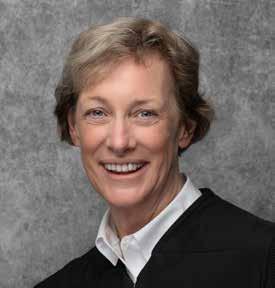 by Phil Schatz
is a partner at Wollmuth
& Deutsch LLP in New York City and a former president of the SDNY chapter of the FBA. Nicolás Quaid Galván, a graduate of Columbia Law School, formerly at Wollmuth Maher & Deutsch LLP and now an associate at Patterson Belknap Webb & Tyler LLP, provided research and editorial assistance for this article.
When beloved Chief Judge Robert A. Katzmann of the Second Circuit passed the baton to his successor on Sept. 1, 2020,1 the court, like the entire country, was confronting overwhelming challenges amidst the political polarization of an election year. Workplaces were vacated, schools were shuttered, and morgues filled up. And, if these challenges weren’t demanding enough, the court was halfway through an unusual period of transition, potentially jeopardizing its proud traditions of consensus and civility, adding a stream of new judges with disparate views, and strong personalities and opinions to match. “Covid complicated everything,” says former Chief Judge Dennis Jacobs,2 “and integrating so many new judges into the workings of the court is a real challenge, and a threat to collegial relations.”3 To meet these challenges, the court needed a chief with an unusual collection of special attributes—a diplomat of unusual tact and credibility; a leader who could listen with patience, evaluate with dispassion, and decide with resolve; a captain who could steer a crew of strong-minded equals through the disparate challenges of illness, conflict, and change. And, through a lucky confluence of seniority and circumstance, that is exactly what it got with new Chief Judge Debra Ann Livingston.4

Debra Ann Livingston was born in Waycross, Ga., a small southern town that took its name from its many railroad junctions (tracks from six directions cross in the city). Waycross was the first town in Georgia to open municipal elections to women and is home to the first national park named after a woman, conservationist Laura S. Walker (1861–1955). Walt Kelly would occasionally mention Waycross in his nationally syndicated comic strip Pogo (1948–1975), set in the Okefenokee Swamp just south of town. Waycross is also notable for its 1950s campaign to encourage tourism; the highway patrol would stop out-of-state motorists and escort them to town, where they were met by a welcoming committee and treated to lodging, dinner, and visits to all the local attractions, primarily the swamp.
Chief Judge Livingston didn’t live in Waycross for long. Her father’s work and promotions required the
family to move every few years to states throughout the South, including Georgia, Alabama, Tennessee, Kentucky, and Florida. “I went to eight schools in six different cities before finishing high school,” she says. The experience was more positive than negative. “You find good people wherever you go,” she says. Her middle and high school years in Nashville, Tenn.; Louisville, Ky; and Miami had the greatest impact. In Miami, where she graduated from Hialeah Miami Lakes, she was editor-in-chief of the high school paper and co-editor-in-chief of the yearbook, and she worked summers as a clerical assistant in the Miami-Dade State Attorney’s Office—the office over which Janet Reno would preside as the first woman to serve as a state attorney in Florida. During the school year, Chief Judge Livingston maintained a newspaper clippings file for Janet Reno’s predecessor and then for Reno herself, a part-time job that Chief Judge Livingston kept throughout her college years.
A back-to-school spread in a 1970s teen magazine highlighting the (belated) integration of women into the Ivy League led Chief Judge Livingston to Princeton, where she graduated Phi Beta Kappa in three years from the School of Public and International Affairs. She loved Princeton. “Princeton at that time was very committed to teaching undergraduates, and
Judicial Profile
Phil Schatz
Maher
28 • THE FEDERAL LAWYER • November/December 2022
it really represented to me the ideal of the university as a place of learning. I read wonderful books and got a great education.”
Chief Judge Livingston had always been a reader, dating back to trips to the bookmobile with her mother. The books had a profound influence on her career choice, particularly Irving Stone’s biography of Clarence Darrow and Harper Lee’s portrayal of Atticus Finch in To Kill a Mockingbird. “I always wanted to go to law school,” she says, “even though I didn’t actually know any lawyers as a child. I was lucky that the profession I had imagined proved to be one in which I could be happy in reality.”
Chief Judge Livingston earned her law degree from Harvard. Unusually, she took a year off after her second year. “I didn’t know what I should be doing next, so I started looking for opportunities to be involved in the issues of the day.” She chose to work on the refugee crisis in Southeast Asia and took a posting to work in Thailand for the U.N. High Commissioner for Refugees (UNHCR). Her boss was Shun Chetty, a South African lawyer of Indian descent, forced into exile for his representation of anti-apartheid activists and for his questioning of the apartheid regime’s flimsy explanations for Steve Biko’s death while in government custody. Chetty’s role at UNHCR was to advocate for a permanent home for the many Vietnamese, Cambodian, and Laotian refugees in Thailand. “He viewed Americans positively, and saw the American government as playing an important role in the protection of human rights,” Chief Judge Livingston says. “It was a really great job. And I did learn that American power and prestige could be put to good ends to protect people.” She then returned to Harvard and her position on the Harvard Law Review and graduated magna cum laude.
After Harvard, she clerked for Senior Second Circuit Judge J. Edward Lumbard, a fearsomely independent judge who, before being appointed by President Eisenhower, had been the U.S. attorney for the Southern District of New York (SDNY); a founding partner of Donovan Leisure, Newton & Irvine; and a justice of the New York Supreme Court. Judge Lumbard was chief judge for 12 years (1959-1971) (the maximum term is now limited to seven years). He instilled a love of public service and respect for SDNY prosecutors in his law clerks. “He taught by example,” recalled Chief Judge Livingston at her induction in 2007, adding, “he wasn’t one to preach.”5 Judge Lumbard called his law clerks “assistant judges” and led them to think critically and appreciate the virtue of judicial humility. His motto was, “never assume a goddamn thing.”
After her clerkship and a short stint at Paul, Weiss, Rifkind, Wharton & Garrison in Manhattan, Chief Judge Livingston became an assistant U.S. attorney in the SDNY criminal division, where she participated in the prosecution of Ferdinand Marcos, former president of the Philippines, and was also a deputy chief in the appellate unit. Following another year at Paul, Weiss, she entered academia. She taught evidence and criminal
procedure at the University of Michigan School of Law beginning in fall 1992, winning the teaching award there, and then moved to Columbia Law School in 1994, where she was the Paul J. Kellner Professor of Law and also served as vice dean from 2005-2006. Then-Mayor Giuliani appointed her to New York City’s Civilian Complaint Review Board in 1994, and she served there for almost a decade.
Much of Chief Judge Livingston’s scholarly writing has focused on the Fourth Amendment and, in particular, on police. She frequently considers what the police actually do, why it matters, and how caselaw can impact that work. Her tenure piece at Columbia, the influential Police Discretion and the Quality of Life in Public Places: Courts, Communities, and the New Policing, 6 —which is an analysis of community policing and its impact on life in the streets—was received with acclaim both within and outside of academia.7 Her 1998 law review article, Police, Community Caretaking, and the Fourth Amendment,8 was recently cited by Justice Kavanaugh, in concurrence, as cogently explaining the day-to-day “community caretaking” responsibilities of municipal police officers in mediating disputes, locating missing persons, and providing emergency aid to the ill and injured—responsibilities that do not draw much attention from courts or legal scholars.9 Her work is “rich in detail about the way different legal approaches intersect with the administration of criminal justice on the ground,” says Dean John F. Manning of the Harvard Law School, reflecting “a keen and nuanced understanding of the way the world works.”10 “She brings such nuance and sensitivity to difficult issues, and her instinct for the heart of the problem, and for finding the solution, are the gold standard,” says Professor David M. Schizer, former dean of Columbia Law School.11 David Leebron, Professor Schizer’s predecessor as dean, took him aside and said, “when you have a hard problem, be sure to ask Debra what she thinks.”12
Chief Judge Livingston was appointed to the Second Circuit by President George W. Bush and unanimously confirmed in 2007. Rumors had it that she had been considered for the D.C. Circuit, but the administration wanted someone more ideological. “It was a great thing for her, and for us,” says Judge Jacobs. She was named chief judge on Sept. 1, 2020. Departing Chief Judge Katzmann predicted that she would “be a distinguished chief judge and make great contributions to the 2nd Circuit,” emphasizing her meticulous care and collegiality.13 He added, “Collegiality is very important to the functioning of a court. And maintaining collegiality is the prime responsibility of a chief judge.”14
Everyone agrees that she is a careful and meticulous judge. “She has an ideal judicial temperament,” says Professor Schizer, “she has the discipline and patience not to rush to judgment. She has fantastic judgment, keen focus, and brilliant insights.”
“Oral argument matters a lot,” says former clerk Andrea Surratt, now an assistant U.S. attorney in Colorado and former chief of the SDNY narcotics unit. “If she asks
November/December 2022 • THE FEDERAL LAWYER • 29
a question, it is not politeness—the question matters to her, and the answer can make a difference.” “Oral argument matters more often than not,” agrees former clerk Jason Anton, now an assistant attorney general in Maine. He adds, “If she asks a question, she’s testing a line of reasoning or working through something that bothers her. She has no interest in catching an attorney off guard; she’s saying ‘help me play this out.’” Chief Judge Livingston agrees that oral argument is important. She comes to argument “having already done a lot of work.” She says, “I’ve read the briefs, read the record, and spoken with my law clerks.” Accordingly, she has a sense of the case and usually how she thinks it should turn out. “But my view is tentative,” she says, “so oral argument is an opportunity to make sure I understand the facts and that I haven’t missed anything.” Even more importantly, she says, “because the panel hasn’t spoken about the case before oral argument, oral argument permits the judges to test each other’s understanding of the case. One of the real virtues of each chamber reviewing the case independently before oral argument is that one of us might see something that the others missed.” This doesn’t happen often, but it does happen, and it is one of the reasons that Chief Judge Livingston hopes the court never abandons its tradition of holding oral argument in most cases.
Afterwards, she discusses the argument with her clerks. “We’d talk after oral arguments about what worked and what didn’t,” says Anton. “She puts a lot of care into her opinions and sees the court as a steward of precedent.”
“She cares about the practical implications of a decision,” says Surratt, “and never forgets that there are real people involved in the litigation.” “She really thinks long and hard about the consequences of a decision,” says Judge Richard Sullivan,15 who recently joined the court from the SDNY. “She’s very much into making the right decision,” says Jeannette Santos, her judicial assistant from 20072022, hired fresh off a master’s degree. “She spends a lot of time reading and rereading the opinions to make sure the structure, grammar, and spelling are just right,” says Santos. Attorneys appearing before her would be advised, says Judge Jacobs, to “pick your points, don’t waste time, and don’t repeat yourself.” That’s good advice for any argument, but crucial when dealing with a judge who remains, at heart, an academic. Indeed, she has continued to teach at Columbia Law School throughout her time on the bench. She has also continued to write. She is one of the co-authors of a widely used textbook, Comprehensive Criminal Procedure, now in its fifth edition.16 She works principally on the Fourth Amendment and complex criminal investigation chapters.
Her relationship with her clerks mirrors her relationship with Judge Lumbard. “She thinks of her law clerks as her lawyers,” says Anton. “Our job was to ensure that she was well-informed and well-prepared, and to be a sounding board for her deliberations.” She rarely indicated how she thought a case should be decided before hearing from her clerks, and she listened to their opinions. “It’s quite a bit like a partner-associate relationship,”
says Anton. “She is a warm person who cares about her clerks,” says Surratt, “I adored working for her.” “It was a wonderful mentoring experience,” says Anton. The mentoring spirit extends to everyone in her chambers. “She was my mentor as well as my boss,” says Santos. She is “always patient, dignified, and respectful. And those are the qualities she wants in chambers. She doesn’t care about politics; she wants people who are kind and civil, in addition to being smart.” At Chief Judge Livingston’s request, Santos kept a list of former clerks and noted marriages, babies, new jobs, and other events so that Chief Judge Livingston could send congratulations and gifts. Chambers hosted a holiday party every year, until the pandemic. Friends and former clerks threw a 10-year anniversary bash in the majestic Second Circuit library— and took care, at her husband’s suggestion, not to make it a surprise. “I’m not sure she likes surprises so much,” says Santos.
Personally, Chief Judge Livingston is diplomatic and reserved, even courtly, though there’s a sense of fun and adventure beneath the surface. “She is a person of uncommon modesty,” said Professor Manning at her induction. “She’s reserved, but also down to earth and easy-going,” says Santos, “and she is a great storyteller even though I don’t think she particularly likes giving speeches. And she’s funny!” “She has a strong aversion to being boring,” notes Judge Jacobs.
Chief Judge Livingston is a strong believer in the National Parks System. She became acquainted with the parks during a family trip to Yellowstone. “It wasn’t on my bucket list,” she says, “but I was awestruck, and it set me off on looking at other national parks. I can’t believe I came so close to never exploring them.” “There are beautiful New Deal era prints in every room in chambers,” says Anton, “and she frequently talked with us about great places to hike.” She is also an exploratory eater. She takes clerks and friends on culinary adventures throughout lower Manhattan. “I don’t know any kind of food that she won’t try,” says Santos.
Although Chief Judge Livingston is always gracious and kind, Professor Schizer notes that she is “tough as nails when she needs to be”17 and “isn’t afraid to say what she thinks.” She listens more than she talks. “She is inquisitive and patient, and an amazing listener,” says Professor Schizer, and “one of the things that makes her special is that she engages deeply with the person she’s speaking with.” “She is never glib,” says Judge Sullivan, “and there’s nothing false about her.”
As chief judge, “she has a genial, low-stress approach,” per Judge Jacobs. “She refuses to be defined by the epidemic,” he adds. The work of the Second Circuit continues. Nothing is put off. Cases are heard, decisions are rendered, the backlog of ceremonial events is being cleared. She initiated Tuesday lunches, an opportunity for judges to have lunch together, in person or by Zoom, and to socialize over topics such as “the worst good book I’ve ever read.”18 She arranged for immediate sittings for new colleagues on the bench so that they could be
30 • THE FEDERAL LAWYER • November/December 2022
integrated as quickly as possible into the workings and traditions of the Second Circuit. She has shepherded the court through several years of unprecedented challenges, even though the untimely death of her predecessor deprived her of a friendly sounding board. She has been aided by the immense respect of her colleagues. “Nobody ever questions her motives,” says Judge Sullivan. “She is candid, diplomatic, and courteous,” says Professor Schizer, “it’s not easy to be all three of those things.” It helps that she has enormous respect for them too. “They are an extraordinarily hard-working bunch,” she said at her induction as chief, “very capable” and “seriously committed to doing their work well, and to getting it right.”19 Ultimately, Chief Judge Livingston remains the careful, thoughtful, and courteous judge, colleague, and scholar she has always been, completely unimpressed with the trappings of her new position. The last word goes to Judge Jacobs: “The most salient thing about her is she’s not enthralled by the title or duties of chief, which many people would crave. She does them as her responsibility. But she’d rather be teaching and deciding cases. And that makes her remarkable.”
Endnotes
1Unknown to most, Chief Judge Katzmann was suffering from pancreatic cancer and would die within the year. His death was a great loss to the Court.
2Philip R. Schatz, Hon. Dennis Jacobs, Fed. Law. (August 2011, https://www. fedbar.org/wp-content/uploads/2019/10/ JacobsAugust2011-pdf-3.pdf ).
3Unless otherwise indicated, quotes are from personal interviews.
4Although the people I spoke with say she is the perfect person for this period in the Second Circuit’s history, as well as the first woman ever to hold the title, Chief Judge Livingston says the position is purely an accident of timing “because it’s something that falls upon you simply by virtue of the day you were appointed and your age.”
Professor Debra Livingston Invested as Chief Judge for the 2nd Circuit, Colum. L. Sch. (Nov. 10, 2020), https://www.law.columbia. edu/news/archive/professor-debralivingston-invested-chief-judge-2nd-circuit (“Columbia Law Profile”).
5U.S. Second Cir., Induction Honorable Debra A. Livingston, XII (2007) (“Induction”) (remarks of Judge J. Edward Lumbard).
697 Colum. L. Rev. 551, 595–96 (1997).
7See Induction, supra note 5, at X (remarks of Justice Rena K. Uviller).
81998 U. Chi. Leg. F. 261 (1998).
9Caniglia v. Strom, 141 S. Ct. 1596, 1604 (2021) (Kavanagh, J., concurring).
10Induction supra note 5 at XI (remarks of Professor John F. Manning).
11Induction supra note 5 at VIII (remarks of Professor David M. Schizer).
12Id. at VIII (quoting David Leebron).
13Columbia Law Profile, supra note 4.
14Id.
15Philip R. Schatz, Hon. Richard J. Sullivan, Fed. Law. (January 2022, https://www. fedbar.org/wp-content/uploads/2022/03/ TFL_Jan-Feb2022_JudicialProfile_Sullivan. pdf ).
16Ronald Jay Allen et al., Comprehensive Criminal Procedure (5th ed. 2020).
17Induction at VIII (remarks of Professor David M. Schizer).
18Although Judge Jacobs gives her credit for the Tuesday lunches, Judge Livingston says they were his idea.
19Induction supra note 5 at XIII (remarks of Chief Judge Livingston).
Judicial Profile Writers Wanted
The Federal Lawyer is looking to recruit current law clerks, former law clerks, and other attorneys who would be interested in writing a judicial profile of a federal judicial officer in your jurisdiction. A judicial profile is approximately 1,500-2,000 words and is usually accompanied by a formal portrait and, when possible, personal photographs of the judge. Judicial profiles do not follow a standard formula, but each profile usually addresses personal topics such as the judge’s reasons for becoming a lawyer, his/her commitment to justice, how he/she has mentored lawyers and law clerks, etc. If you are interested in writing a judicial profile, we would like to hear from you. Please send an email to social@fedbar.org.

November/December 2022 • THE FEDERAL LAWYER • 31

32 • THE FEDERAL LAWYER • November/December 2022
THROUGH THE LOOKING GLASS: An Examination of Current Case Law as It Relates to Controlled Substance Offenses
LAUREN ANSELOWITZ
In the renowned story by Lewis Carroll, Alice, laughing at the queen, remarks, “One can’t believe impossible things.” The queen replies “I daresay you haven’t had much practice …. Why, sometimes
I’ve believed as many as six impossible things before breakfast.” In its modern iteration, U.S. crimmigration law is evocative of the queen’s magical skill set—particularly in the context of controlled substance offenses. During arguments regarding removability for particular offenses, the practitioner will often ask the court to believe in the impossible—such as marijuana is not always marijuana, cocaine is not always cocaine, and methamphetamine is not always methamphetamine. This article will explore the application of current jurisprudence in rendering the “impossible” true when it comes to removability for controlled substance offenses.
For nearly four decades, all offenses relating to controlled substances have been prohibited grounds removability (formerly excludability and deportability) under the Immigration and Nationality Act (INA).1 Not long after Congress passed this prohibition, the U.S. Supreme Court set a precedent addressing how to analyze all state criminal offenses, including those involving controlled substances, under the federal scheme of immigration.2 That methodology is commonly referred to as the categorical approach.
In 2015, Human Rights Watch reported the results of a U.S. Immigration and Customs Enforcement Freedom of Information Act request that showed that in a five-year period from 2007 until 2012, the number of noncitizen deportations for individuals whose most serious conviction was for a drug offense increased by 22 percent, to a number totaling more than a quarter of a million.3 There is a growing consensus that existing U.S. laws criminalizing drug use and possession are not working and, in some respects, may be doing more harm than good. For this reason, many jurisdictions are taking active measures to minimize the criminal sanctions of drug offenses,
including legalizing marijuana for recreational use. Until these types of changes are incorporated into the federal scheme of controlled substances, however, many immigrants will continue to face detention, removal, and exile from the United States for drug offenses that often don’t even carry a criminal sentence of incarceration.4
This article will provide (1) a brief overview of the history of controlled substance offenses under U.S. immigration law; (2) the framework under the categorical approach for analyzing a state-controlled substance offense in the immigration context; and (3) recent developments in crimmigration case law as it relates to controlled substance offenses, including emerging trends in the categorical approach.
Brief History of Controlled Substance Offenses Under U.S. Immigration Law
The Anti-Drug Abuse Act of 1986 amended and broadened the language of the INA to include any controlled substance, whereas previously, specific prohibited substances were enumerated in the
November/December 2022 • THE FEDERAL LAWYER • 33
INA. The language of the Anti-Drug Abuse Act of 1986 has been incorporated in the INA as “classes of deportable aliens,” as follows: “Any law or regulation of a State, the United States, or a foreign country relating to a controlled substance (as defined in section 102 of the Controlled Substances Act (21 U.S.C. § 802)).”5
A few years later, pursuant to the Immigration Act of 1990 (“IMMACT90”), the drug trafficking aggravated felony ground was added to the INA, revising the definition of an aggravated felony to include “any illicit trafficking in any controlled substance.”6
Nearly four decades later, these expansions remain in place. Today, under INA Sections 212(a)(2) and 212(h),7 an individual with no legal status seeking to adjust their status to permanent lawful residence will be prohibited from doing so for any controlled substance offense, except one simple possession of 30 grams or less of marijuana. The same circumstances will prevent an immigrant who has been removed from the United States from ever returning—essentially relinquishing them to permanent exile from the United States for even relatively minor controlled substance offenses. And, under INA Section 237(a)(2)(B) (8 U.S.C. § 1227(a)(2)(B)), even those noncitizens with lawful permanent resident status may find themselves facing removal from the United States for any controlled substance offense other than the above-referenced simple possession of a small amount of marijuana. While a lawful permanent resident may be able to secure relief from removal through the application of a waiver under INA 240A(a) (8 U.S.C. § 1229b(a)) this “cancellation of removal” is not available to waive any conviction beyond mere possession, including offenses such as the sale of $10 worth of cocaine.8
Perhaps the silver lining to the seemingly dire circumstances of the noncitizen, as laid out above, is the potential loophole found in the disconnect between state criminal statutes and federal criminal statutes. And, therein enters the categorical approach, a potential means for exploiting this loophole.
Overview of the Categorical Approach
Around the same time as the expansion of the definition of prohibited controlled substance offenses under immigration law, the U.S. Supreme Court issued its decision in Taylor v. United States, which would prove seminal in immigration jurisprudence. Justice Blackmun, delivering the opinion of the Court, laid out a framework for the categorical approach that is still applied today in analyzing the immigration consequences of a state offense. While Taylor dealt with a sentence enhancement statute rather than immigration, the same principles laid out apply in the immigration context. The Court held that, in the interest of uniformity, regardless of the independent labels that state criminal codes may choose, “burglary” will only be “burglary” when it meets the basic elements of the federal generic offense. In addition, when applying this categorical approach analysis, a court should only look to “the fact of conviction and the statutory definition of the predicate offense, rather than to the particular underlying facts” of an individual’s case.9
For practitioners who don’t regularly practice immigration law as well as for noncitizens, this blatant disregard for the underlying facts oftentimes can seem incongruous; but it is demanded by the judicial principle of comity. When analyzing a state offense for its federal comparison, because immigration law is part of the federal scheme, it is not what your client was originally accused of doing, or even what they actually did, that matters. It matters only what offense your client was convicted of and what constitutes that offense. Judi-
cial comity demands no other result. Out of deference and respect, a court in one state or jurisdiction will give full effect to the laws and decisions of a court in another state or jurisdiction; therefore, it is not for an immigration judge or other adjudicator to relitigate the underlying state offense.
Case precedent takes this base comparison of the state conviction with the federal counterpart one step further in requiring the Court to examine only the minimal conduct under the state statute. As the Court laid out in Moncrieffe v. Holder, “[b]ecause we examine what the state conviction necessarily involved, not the facts underlying the case, we must presume that the conviction rested upon [nothing] more than the least of th[e] acts criminalized.”10 This minimum conduct analysis has led to a current circuit split on the application of the realistic probability that a state will actually prosecute the minimum conduct proscribed, despite a U.S. Supreme Court case and a case from the Board of Immigration Appeals (BIA), both of which lay out the framework for the realistic probability test.
The U.S. Supreme Court held in Gonzalez v. Duenas-Alvarez that an individual must show a realistic probability, not merely a theoretical possibility, that the state will prosecute the minimum proscribed conduct. In Matter of Navarro Guadarrama, the BIA reaffirmed its adherence to the realistic probability test as set forth in Duenas-Alvarez, holding that
[w]here an alien has been convicted of violating a state drug statute that includes a controlled substance that is not on the Federal controlled substances schedules, he or she must establish a realistic probability that the State would actually apply the language of the statute to prosecute conduct involving that substance in order to avoid the immigration consequences of such a conviction.11
As will be examined in more depth below, the different circuit courts of appeals have applied the realistic probability test differently. Some circuits require an individual to produce an actual case where the state prosecuted the proscribed conduct—an exemplar prosecution as it is often referred—and some circuits rely instead on the plain language of the statute itself.
Before getting further into the realistic probability test, it is worthwhile to delve a bit more into the application of the categorical approach as a whole, which provides the structural foundation for analysis in each of these cases.
Twenty-six years after Taylor and following the U.S. Supreme Court’s decision in Mathis v. United States, 12 which reinforced the use and application of the categorical approach for criminal offense analysis, the BIA has expressly acknowledged that it is bound by the Supreme Court’s precedent regarding the categorical approach.13 Therefore, a Court must ask whether the elements of the offense forming the basis for the conviction sufficiently match the elements of the generic version of the enumerated offense. Elements are the constituent parts of a crime’s legal definition, which must be proven beyond a reasonable doubt to sustain a conviction. These are distinct from the facts of the case, which are extraneous to the crime’s legal definition and, therefore, not applicable under the categorical approach.14
When applied in its basic formulation, the categorical approach is straightforward. However, it is often distorted or complicated when there is a divisible statute in question and the offense calls for
34 • THE FEDERAL LAWYER • November/December 2022
a circumstance-specific approach, or when applying the realistic probability test.
The first step of the categorical approach asks whether the definition of the state offense for which your client was convicted is narrower or the same as the generic definition. This means that there is no way to commit the state offense without also committing the federal (generic) offense. If this is true, then a categorical match exists between the state offense and the federal (generic) offense, and the analysis ends.
Thankfully, for the thousands of noncitizens whom my colleagues and I represent every year, this is frequently not the case. As various state criminal codes define seemingly the same offenses in vastly different ways, a “mismatch” between the state offense and the generic offense is common. In the case where there are ways to commit the state offense that fall outside the definition of the generic offense, then the state statute is considered overbroad, and the categorical approach continues to step two.
But first, what constitutes the “generic” federal definition of the offense? In some instances, throughout the INA, Congress has specified what the generic definition of a particular crime is by specifically listing the particular section of the federal code (i.e., INA § 237(a)(2) (A)(iv), (8 U.S.C. § 1227(a)(a)(A)(iv)) High speed flight—“Any alien who is convicted of a violation of section 758 of title 18, United States Code …). However, when the statute has not specified the generic crime, typically we look to a court-created definition. Delivering the opinion of the Court in Esquival-Quintana v. Sessions, 15 Justice Clarence Thomas engaged in a survey of the law of the 50 states at the time the offense in question was added to the INA. That case dealt with an offense for statutory rape under the California criminal code and whether or not it matched the aggravated felony ground of sexual abuse of a minor. After surveying the 50 states, Justice Thomas found that the generic federal definition of “sexual abuse of a minor” necessarily required the age of the victim to be less than 16. Since the California statute in question set the age of the victim at less than 18, there were ways to commit the California offense without also committing the generic offense and, therefore, no categorical match was apparent.16
Faced with an overbroad state statute, the analyzer moves to step two in the analysis to determine whether the state statute is divisible. The U.S. Supreme Court in Descamps v. United States, 17 and again in Mathis, reinforced a strict standard for what constitutes a divisible statute. The statute must list multiple distinct offenses, not simply different means for committing the same offense, in order to be divisible. Ask yourself whether you are looking at a single crime that can be committed by different means or multiple crimes, each with their own elements that must be found unanimously by the jury. The Court in Descamps gave the example of an offense, one element of which is the use of a deadly weapon. If a deadly weapon is understood to be a “knife, gun, bat, or similar weapon,” then the statute is not divisible, as those are separate means for committing the same offense, not separate offenses. Mathis instructs the practitioner to look at state law to determine the elements of the offense, and practitioners commonly utilize a state’s jury instructions and state case law to answer this question.18
A common misconception is that a divisible statute will lead the analysis away from the categorical approach; however, that conclusion is misplaced. The requirement to analyze the case within the framework of the categorical approach doesn’t change from a
divisible statute to an indivisible statute; it merely “modifies” the approach by allowing a modest expansion of the documents the Court can rely on to determine the offense in question. In the case of a divisible statute, the examiner can look beyond merely the statute to a limited set of documents—the record of conviction—to ascertain of which distinct offense from the divisible list the individual was convicted. Commonly referred to as the “Shepard documents,” these include the criminal indictment, jury instructions, plea agreement, and colloquy.19 While this “modified” approach to the categorical analysis allows the Court to rely on more than just the statute, the analysis doesn’t change. Once the practitioner has determined which of the multiple offenses listed under the divisible statute are at issue, the analysis reverts to step one above—comparing it with the generic offense to determine if there is a categorical match.
What is now emerging as step three in the analysis is determining the realistic probability that the state would prosecute the overbroad conduct under the state statutory scheme.
Realistic Probability Test
Once you have determined that either your divisible or indivisible state statute is overbroad as compared to the generic offense, then step three of the categorical approach requires determining the realistic probability of the extra conduct included in the state statute actually being prosecuted by the state. As noted above, in Gonzales v. Duenas-Alvarez, the Supreme Court indicated that a finding “state law creates a crime outside the generic definition … requires a realistic probability, not a theoretical possibility, that the State would apply its statute to conduct falling outside the generic definition.”20 Further, to make such a showing, an individual “must at least point to his own case or other cases in which the state courts in fact did apply the statute in the special (nongeneric) manner” being cited.21 Since the BIA’s 2019 decision in Navarro Guadarrama reaffirming its adherence to the realistic probability test, several circuit courts of appeals have had the opportunity to apply this test to state controlled substance offenses that are a clear mismatch to the generic (federal) offense for their inclusion of formulations of controlled substances not found on the federal controlled substances schedules.
While a circuit split remains, a majority of the circuit courts of appeal do not require an actual example of a prosecution if the plain language of the statute is clear that the state offense proscribes conduct not within the generic offense. The case law is addressed in detail below. Essentially, the BIA, along with the Fifth and Sixth Circuit Courts of Appeal, continues to require evidence of an actual prosecution for the proscribed conduct that falls outside the generic offense. In contrast, the First, Second, Third, Fourth, Seventh, Ninth, and Eleventh Circuits have cases supporting the conclusion that if the statutory language is plain, nothing further is required because the categorical approach doesn’t require legal imagination. The Eighth Circuit Court of Appeals appears to require both the language of the statute and an exemplar prosecution.
Review of Current Case Law as It Relates to Controlled Substance Offenses and Emerging Trends in the Categorical Approach
Applying the categorical approach, practitioners in multiple jurisdictions have successfully argued that marijuana is not always marijuana, cocaine is not always cocaine, and methamphetamine not always methamphetamine. These seemingly illogical conclusions arise from
November/December 2022 • THE FEDERAL LAWYER • 35
the mismatch between state and federal controlled substances schedules. While some of these cases have failed under a realistic probability test, even the courts that require an actual prosecution to meet the realistic probability test have often acknowledged the mismatch between the controlled substance schedules.
In United States v. Abdulaziz, the First Circuit Court of Appeals, in the context of a sentencing enhancement statute, addressed the question of what constitutes a controlled substance offense. Evaluating a July 2014 offense for possession with intent to distribute marijuana under Massachusetts law, the court found that the law in effect at that time in the Commonwealth of Massachusetts criminalized hemp, while the federal controlled substances schedule did not. Applying the categorical approach, the court “assumed” that Abdulaziz could have been convicted for possession with intent to distribute hemp (the least culpable conduct). Since “hemp was not on the [federal] drug schedule when Abdulaziz was sentenced,” his conviction did not constitute a controlled substance offense.22
In United States v. Ruth, the Seventh Circuit Court of Appeals held that a 2006 conviction for possession with intent to distribute cocaine was not a predicate offense under 21 U.S.C. § 841(b)(C) because Illinois’ definition of cocaine was categorically broader than the federal one. It was plain to the court that the Illinois statute was on its face overbroad as compared to its federal counterpart, which “defines cocaine to include positional isomers, whereas the federal definition covers only cocaine’s optical and geometric isomers.” In United States v. De La Torre, the Seventh Circuit Court of Appeals found the Indiana statute’s definition of methamphetamine overbroad when compared to the federal definition for a similar reason. In that case, the court noted that the “federal definition of methamphetamine includes only its optical isomers, whereas the Indiana definition includes something more than just optical.”23
While these cases did not specifically compare the states’ controlled substance offenses with the generic (federal) controlled substance offense for purposes of immigration, they are nonetheless instructive for their application of the same analytical framework. The following cases have specifically addressed the mismatch between a state’s controlled substance offense and the generic (federal) controlled substance offense in the context of immigration. Recall that since 1986, a noncitizen has been subject to immigration penalties for a violation of “any law or regulation of a State, the United States or a foreign country relating to a controlled substance (as defined in section 102 of the Controlled Substances Act (21 U.S.C. § 802)).”24
In Alexis v. Barr, a case arising out of the Fifth Circuit Court of Appeals, the noncitizen, Alexis, was a lawful permanent resident since his entry to the United States in 1991 from his native Trinidad and Tobago. He pled guilty in 2016 and was sentenced to one year in prison for the offense of possession of a controlled substance, specifically cocaine in an amount of less than one gram, under Texas law. Alexis moved for termination of his removal proceedings, challenging that his offense was not a controlled substance offense as described in the INA. The immigration judge found that Texas’s definition of “cocaine” includes position isomers, which the federal definition does not include. Nonetheless, the immigration judge “determined that Alexis could not establish a realistic probability that Texas prosecutes individuals for possession of position isomers of cocaine.” Had the court ended its analysis at the mismatch between the state and federal definitions of cocaine, Alexis would have been entitled to termination of his removal proceedings and resumption
of his lawful permanent resident status, a drastically different result than facing removal from the United States and a permanent bar to returning in the future.25
The Fifth Circuit, in Alexis v. Barr, demanded that Alexis produce evidence of an actual case to establish that Texas applies its cocaine possession statute in, as they term it, the “special (nongeneric) manner,” referring to the application of cocaine positional isomers. Because Alexis could not produce such a prosecution, the court found no realistic probability that the Texas statute criminalizes conduct broader than the federal statute.26
Writing a concurring opinion for the court, Circuit Judge James E. Graves Jr. noted that the “actual case” requirement is “simply illogical and unfair.”27 Judge Graves relied on the Second Circuit decision in Hylton v. Sessions to indicate that reading a separate realistic probability test in all instances is a misapplication of Duenas-Alvarez In Hylton, the Second Circuit noted that Duenas-Alvarez was dealing with an aiding and abetting theft statute, “in which the boundaries of the offense conduct were ill-defined and the court was tasked with an interpretive dilemma.” The need for an actual case to satisfy the realistic probability arose when the argument put forth by the individual offender conjures up the legal imagination. Judge Graves pointed out that “Alexis’s challenge to the competing definitions of “cocaine” does not conjure the same indeterminacy—[rather] it is facially clear from the statutory text.”28
The Eleventh Circuit Court of Appeals, in Ramos v. U.S. Att’y Gen., rejected the government’s argument that an offender must always point to a case to show prosecution of the overbroad conduct in order to meet the realistic probability set forth in Duenas-Alvarez 29 “When the statutory language itself, rather than the application of legal imagination to that language, creates the realistic probability that a state would apply the statute to conduct beyond the generic definition,” no actual case is required.30 More recently, in Chamu v. U.S. Att’y Gen., the Eleventh Circuit reiterated that when the statutory language itself creates the realistic probability, producing an exemplar prosecution is unnecessary.31 However, the court points out that “different words alone are not enough” to create a realistic probability.32 This has essentially led to the Eleventh Circuit finding that Florida marijuana is not federal marijuana, but that Florida cocaine could be federal cocaine.
In a similar vein to the Fifth Circuit’s decision in Alexis, the Eleventh Circuit in Chamu ultimately concluded that “we cannot hold that Florida’s definition of cocaine is completely consistent with the federal definition. But we do hold that Chamu has failed to prove that it covers more substances.” The court in Chamu conceded that the federal statute omits a subcategory of cocaine isomers that the Florida statute does not. Stereoisomers are one set of isomers—“a chemical compound with the same formula but a different arrangement of atoms in the molecule and different properties”—and stereoisomers can be further divided into subcategories.33 The federal definition of cocaine limits cocaine’s stereoisomers to the subsets of optical and geometric, while Florida’s definition does not. But the case ultimately failed on a burden of proof, insofar as Chamu failed to show that cocaine actually has the missing subcategory of isomers, similar to the idea of the individual having to show an exemplar prosecution.34
In a subsequent decision, Said v. U.S. Att’y Gen., the Eleventh Circuit found that “when the statutory language itself creates the realistic probability there is no need to produce an exemplar prosecution.” Consequently, the Eleventh Circuit found that in the case
36 • THE FEDERAL LAWYER • November/December 2022
of marijuana, the statutory language is clear. Federal law specifically excludes parts of the cannabis plant, such as “the mature stalks of such plant, fiber produced from such stalks, oil or cake made from the seeds of such plant.” On the other hand, Florida law defines marijuana to include “all parts of any plant of the genus Cannabis …” The court found the plain language of the Florida statute, which includes “all parts” of the marijuana plant, makes it plainly more broad than the federal law, noting that “[f]or instance, federal law does not include the mature stalks of the marijuana plant or fiber produced from such stalks.” The court further found that a significant divergence such as this, “on its own, is sufficient to establish a realistic probability of broader prosecution under Florida law.”35
Said argued before the court that his Florida offense did not relate to a controlled substance as defined by 21 U.S.C. § 802, and, therefore, he was not precluded from accruing the requisite seven-year period of continuous residence under INA § 240A(a) for cancellation of removal.36 The Eleventh Circuit, concluding that his Florida marijuana offense was a mismatch to the generic (federal) offense, stated that his Florida offense “did not relate” to a controlled substance offense, as was required under the INA. This opened the door for Said to pursue cancellation of removal.
The above cases applied the categorical approach under the most current methodology expressed in the case law. Four decades after the categorical approach was introduced, however, two recent decisions of the U.S. Supreme Court lay out some potential changes for its application in the immigration context.
Emerging Trends in the Categorical Approach
Last year the Supreme Court issued a decision in Pereida v. Wilkinson, resulting in the asymmetrical application of the categorical approach when it comes to the noncitizen’s burden to prove eligibility for relief from removal as opposed to the government’s burden to prove the charges of removability. In that case, Pereida argued that his conviction under Nebraska state law did not constitute a crime involving moral turpitude, and, therefore, he was not precluded from eligibility for relief from removal under INA § 240A(b) (8 U.S.C. § 1229b(b)), cancellation of removal for certain nonpermanent residents. The Court found that the statute under which Pereida was convicted was divisible and employed the modified categorical approach. The record of conviction documents, however, did not establish of which offense Pereida had been convicted. Pereida sought to argue that the indeterminacy should weigh in his favor, and he should be considered to have been convicted of the least culpable conduct—in this case, conduct that was not a crime involving moral turpitude. The Supreme Court disagreed. The Court ruled that Pereida could not rely on the inconclusiveness of the record to meet his burden as to eligibility. The burden rested with the noncitizen, Pereida, to establish eligibility for the relief sought and, in this instance, to establish that he was not convicted of a disqualifying offense under INA § 240A(b) (8 U.S.C. § 1229b(b)).37
While there was previously a circuit split on this issue, with courts in the First, Second, Third and Ninth Circuits finding more favorably toward the noncitizen, the issue has now seemingly been resolved by the Supreme Court’s decision in Pereida. Practitioners challenge that the decision in Pereida abuses what should be viewed as a strictly legal question. Pursuant to the categorical approach, courts are instructed to look at the offense of conviction only and not the facts of an individual’s underlying offense. However, in instanc-
es where this analysis cannot resolve an ambiguity, Pereida now requires the noncitizen to expose the underlying facts of his/her case in order to meet the burden on eligibility. This signifies a shift in the analysis from a strictly legal framework, as the courts have applied for four decades under Taylor, to a more fact-based analysis.
Another recent U.S. Supreme Court case, which calls for an alternate application of the categorical approach analysis, has practitioners concerned regarding the trickle-down effect it may have in the immigration context. In Shular v. United States. the U.S. Supreme Court issued a decision under the Armed Career Criminal Act (ACCA). The ACCA mandates a 15-year minimum sentence for a defendant convicted of being a felon in possession of a firearm who has at least three convictions for what is referred to under the statute as “serious drug offense[s].” The statute further specifies that a state offense will only be a “serious drug offense” if it “involv[es] manufacturing, distributing, or possessing with intent to manufacture or distribute, a controlled substance.”).38
There was agreement that the categorical approach is the applicable tool of analysis. Rather than strict adherence to an elements-based comparison, however, the Court concluded that the statutory text and context of § 924(e)(2)(A)(ii) refers to conduct rather than offenses. The language of § 924(e)(2)(A)(ii) is contrasted with terms like “burglary” and “extortion,” which unambiguously name an offense. The Court concluded that use of the word “involve[es]” in § 924(e)(2) (A)(ii) indicates that the terms that follow identify conduct rather than offenses. In that case, the Court held that the definition of a “serious drug offense” as laid in § 924(e)(2)(A)(ii) required only that the state offense involve the conduct specified; it did not require the state offense to match certain generic offenses.39
This conduct-based approach versus an elements-based approach is not new. The U.S. Supreme Court previously employed the same method in the application of the categorical approach to the aggravated felony ground of INA § 101(a)(43)(M)—“an offense that (i) involves fraud or deceit in which the loss to the victim or victims exceeds $10,000…” In Kawashima v. United States, the Court found that the fact that the words “fraud” and “deceit” were not specified as elements of 26 U.S.C. § 7206(1) and (2), the statutes under which the noncitizens were convicted did not matter. The Court determined that INA §101(a)(43)(M) “refers more broadly to offenses involving fraud or deceit—meaning offenses with elements that necessarily entail fraudulent or deceit conduct.”40
Referring to the language of INA § 237(a)(2)(B), which was added by the Anti-Drug Abuse Act of 1986, cited at the beginning of this article, practitioners are especially concerned regarding the language “has been convicted of a violation of … any law or regulation … relating to a controlled substance ….” The concern is that the Court’s reasoning in Shular that the word “involves” refers to conduct rather than specific offenses and, therefore, necessitates a conduct-based rather than elements-based analysis could be broadened to apply to the phrase “relating to” in INA § 237(a)(2)(B).41 This could effectively work to close the loophole for controlled substance offenses described herein.
In conclusion, Lewis Carroll’s story of Alice in Wonderland asks the reader to suspend their concept of reality and imagine a world that gets “curiouser and curiouser” by the minute. The categorical approach to criminal analysis for purposes of immigration oftentimes feels like this imaginary world as you tumble down the rabbit hole, hoping the solution will be found in the nonsensical world on
November/December 2022 • THE FEDERAL LAWYER • 37
the other side. When the noncitizen you are representing is facing permanent separation from their home and family here in the United States, creative analysis that can turn a state-controlled substance offense into anything but a federal-controlled substance offense is a world of nonsense that I’d like to live in.
As the character Tweedledee proclaims, “if it was so, it might be; and it if were so, it would be; but as it isn’t, that’s logic.” Until the severe penalties in both the criminal system and immigration law for relatively minor drug offenses get amended, we must continue to live in this nonsensical logic found by peering through the looking glass.
Lauren Anselowitz is a partner at Harlan York and Associates, where she specializes in deportation defense, detention matters, and crimmigration issues. A graduate of North Carolina State University and Seton Hall Law School, Anselowitz also earned a M.A. from the John C. Whitehead School of Diplomacy and International Relations. Named to Best Lawyers in America, her most noted accomplishments include successfully arguing numerous cases under the Convention Against Torture before the U.S. Immigration Courts and winning oral argument before the U.S. Third Circuit Court of Appeals to vacate a deportation order for a client of the firm. ©2022 Lauren Anselowitz. All rights reserved.
Endnotes
18 U.S.C. §§ 1101-1537; INA § 212(a)(2)(A)(i)(II), 8 U.S.C. § 1182(a) (2)(A)(i)(II); INA § 237(a)(2)(B); 8 U.S.C. § 1227(a)(2)(B).
2Taylor v. United States, 495 U.S. 575 (1990).
3Human Rights Watch, A Price too High: US Families Torn Apart by Deportations for Drug Offenses Jun. 16, 2015, https://www.hrw. org/report/2015/06/16/price-too-high/us-families-torn-apartdeportations-drug-offenses.
4Id.
58 U.S.C. § 1101-1537.
6Anti-Drug Abuse Act of 1986, Pub. L. No. 99-570, Title I, Subtitle M, 100 Stat. 3207 (1986); Immigration Act of 1990, Pub. L. No. 101649, Title VI, 104 Sta. 4978 (1990).
78 U.S.C. § 1182(a)(2), (h).
8INA § 237(a)(2), 8 U.S.C. § 1252(a)(2); I.N.A.§ 240A(a); (a), 8 U.S.C. § 1229b(a); and I.N.A.S. 101(a)(43); 8 U.S.C. § 1101(a)(43).
9Taylor v. U.S., 495 U.S. 575.
10Montcrieffe v. Holder, 569 U.S. 184, 190–91 (2013).
11Gonzales v. Duenas-Alvarez, 549 U.S. 183, 193 (2007); Matter of Navarro Guadaramma, 27 I. & N. Dec. 560 (B.I.A. 2019).
12Mathis v. United States, 136 S. Ct. 2243 (2016).
13Matter of Chairez-Castrejon, 26 I. & N. Dec. 819 (B.I.A. 2016) (“Chairez III”).
14Mathis v. U.S., 136 S. Ct. 2243.
15Esquivel-Quintana v. Sessions, 137 S.Ct. 1562 (2017).
16Id.
17Descamps v. U.S., 570 U.S. 254 (2013).
18Id.; Mathis v. U.S., 136 S.Ct. 2243. For a discussion of the challenges of applying state authority in the determination of divisibility, see Alicia Triche, Crimmigration’s Muddy Waters: The Problem with State Authority and “Divisible Statutes,” 21 Bender’s Immigr. Bull. 353 (Apr. 1, 2016).

19Shepard v. United States, 544 U.S. 13, 26 (2005).
20Gonzalez 549 U.S. at 193.
21Id.
22United States. v. Abdulaziz, 998 F3d 519 (1st Cir. 2019).
23United States v. Ruth, 966 F.3d 642 (7th Cir. 2020); United States v. De La Torre, 940 F.3d 938 (7th Cir. 2019). 24Pub. L. 99-570, Title I, Subtitle M.
25Alexis v. Barr, 960 F.3d 722 (5th Cir. 2020). 26Id. 27Id. at 731.
28Hylton v. Sessions, 897 F.3d 57 (2d Cir. 2018); Alexis v. Barr, 960 F.3d 722 (5th Cir. 2020).
29Said v. U.S. Att’y Gen., 28 F.4th 1328 (11th Cir. 2022) (quoting Ramos v. U.S. Att’y Gen., 709 F.3d 1066, 1071-72 (11th Cir. 2019))
30Chamu v. U.S. Att’y Gen., 23 F.4th 1325 (11th Cir. 2022). 31Chamu, 23 F.4th 1325. 32Said, 28 F.4th 1328. 33Chamu, 23 F.4th 1325 (quoting Oxford American Dictionary 921 (3d ed. 2010) (internal quotations omitted). 34Id 35Said, 28 F.4th 1328 (emphasis added) 36Id.; see also Gonzalez v. Wilkinson, 990 F.3d 654, 661 (8th Cir. 2021) (finding “the plain language of the Florida Statute makes clear that it applies to conduct not covered by the federal statute”). 37Pereida v. Wilkinson, 141 S. Ct. 754 (2021); INA § 240A, 8 U.S.C.§ 1229b. 38Shular v. United States, 140 S. Ct. 779, (2022) (emphasis added), 18 U.S.C. § 924(e)(1), (2)(A)(ii) (emphasis added). 39Id. 40Kawashima v. Holder, 565 U.S. 478 (2012). 41INA § 237(a)(2)(B); 8 U.S.C. § 1227(a)(2)(B) (emphasis added).
38 • THE FEDERAL LAWYER • November/December 2022





Get started at lawpay.com/fedbar 866-730-4140 TOTAL: $1,500.00 New Case Reference **** **** **** 9995 *** Trust Payment IOLTA Deposit YOUR FIRM L OGO HERE PAY AT TO RNEY PO WE R ED BY 22% increase in cash flow with online payments Vetted and approved by all 50 state bars, 70+ local and specialty bars, the ABA, and the ALA 62% of bills sent online are paid in 24 hours Data based on an average of firm accounts receivables increases using online billing solutions. LawPay is a registered agent of Synovus Bank, Columbus, GA., and Fifth Third Bank, N.A., Cincinnati, OH. Trusted by 50,000 law firms, LawPay is a simple, secure solution that allows you to easily accept credit and eCheck payments online, in person, or through your favorite practice management tools. Member Benefit Provider I love LawPay! I’m not sure why I waited so long to get it set up. – Law Firm in Ohio +

40 • THE FEDERAL LAWYER • November/December 2022
The Impact of Russia’s Invasion of Ukraine on Migration
FRANCESCA BRAGA
On Feb. 24, 2022, the Russian Federation (Russia) launched a full-scale invasion of Ukraine after several weeks of building up troops on the country’s border.1 The attack began after Russian President Vladimir Putin addressed his nation, announcing a “special military operation” in Ukraine’s eastern Donbas region.2 Russia’s move was in response to threats of the North Atlantic Treaty Organization to achieve “the demilitarization and denazification of Ukraine” and to stop the “genocide” perpetrated by the “Kyiv regime.”3
Nevertheless, on Aug. 24, 2022, Ukraine celebrated the 31st anniversary of the restoration of its independence and statehood. The recent history of Ukraine is marked by Ukrainians’ enduring faith in their right to live free in their land and choose their common destiny as a nation. Russia has failed to achieve a quick military victory in Ukraine, while Ukraine has shown enormous resistance.
Armed conflict in eastern Ukraine started in early 2014 following Russia’s annexation of Crimea; however, in the past few months, the attacks have started again and made repeated and widespread use of weapons that kill, maim, and destroy indiscriminately—a potential violation of international humanitarian law.4 There have been reports on attacks leaving civilians dead and injured and destroying or damaging civilian infrastructure, including hospitals, schools, homes, and
major airports.5 Most of the recorded civilian casualties were caused by explosive weapons with a wide impact area, including shelling from heavy artillery and multiple launch rocket systems as well as missile and air strikes.6
All parties must respect international humanitarian and human rights law in international armed conflict. In fact, under international humanitarian law, combatants and commanders are supposed to take all necessary measures to minimize harm to civilians and civilian targets.
On Feb. 28, 2022, the prosecutor of the International Criminal Court (ICC) opened an investigation and sent the “largest-ever” team of experts to Ukraine to investigate/probe alleged war crimes and crimes against humanity.7 Neither Ukraine nor Russia are member states of the ICC. Still, Ukraine previously accepted the ICC’s jurisdiction over any international crimes committed in its territory since 2014.8 The prosecutor’s ability to exercise jurisdiction over Article 5 offenses comes from Articles 12 and 13 of the Rome Statute.
The ICC cannot investigate the crime of aggression. It is explicitly barred from exercising jurisdiction over crimes of aggression by the nationals of, or on the territory of, a state that is not a party of the Rome Statute, by Article 15(bis)(5).9 In particular, the ICC lacks jurisdiction over the crime of aggression committed against Ukraine by the leadership of Russia. The issue now is how to support people and guarantee justice to them in the medium to long term.
The Ukrainian Refugee Journey Is Just Beginning— What Will Happen?
Ukraine is facing one of the most catastrophic humanitarian crises in Europe’s recent history. The escalation of the conflict in Ukraine has destroyed civilian infrastructure and homes, forcing the population to flee their homes in search of safety, protection, and assistance.10
November/December 2022 • THE FEDERAL LAWYER • 41
The world has been through several refugee crises over the last decade; however, the invasion of Ukraine has become the most significant and fastest displacement crisis since World War II.11 It could have lasting consequences for generations to come.
Over 6.2 million people remain displaced within Ukraine, and 17.7 million Ukrainians are estimated to need urgent humanitarian assistance and protection.12 In addition, the United Nations High Commissioner for Refugees (UNHCR) estimates there are over 7.6 million refugees from Ukraine are recorded across Europe.13 More than 4.2 million refugees from Ukraine have registered for temporary protection or similar national protection schemes in Europe.14 Most refugees initially fled to countries in the immediate vicinity, notably Poland, Romania, Slovakia, Hungary, Belarus, Russia, and Lithuania. However, other European countries, such as Germany, Italy, the Czech Republic, Austria, and Switzerland, embrace Ukrainian diasporas.15
One of the unique features of the Ukrainian crisis is the gender of refugees.16 Women and children currently comprise most of the Ukrainian people seeking refuge. In fact, Ukrainian men are compelled by the government to remain in the country if they are between 18 and 60. Contrast this with 2015, when most of the asylum seekers who arrived in Europe were predominantly adult men.17
Women and girls face a significant risk of gender-based violence, trafficking, and sexual exploitation and abuse, and they often lack adequate access to pedological healthcare and sexual and reproductive health services.18 Moreover, it is estimated that more than half of people who are internally displaced are people who belong to vulnerable groups, including older people and people with disabilities who may be unable to flee from high-risk areas.19 Ukraine and Russia are party to the four Geneva Conventions and their additional protocols, which prohibit all forms of sexual violence in situations of international and non-international armed conflict. Therefore, the governments of Russia and Ukraine are obligated to prevent and address conflict-related sexual violence. In addition, Ukraine’s parliament, on June 20, ratified the Istanbul Convention, a key human rights treaty on preventing and combatting violence against women. It obliges states that are party to it to create a legal framework to combat violence against women.
According to UNICEF, a Ukrainian child becomes a refugee every second that passes.20 UNICEF estimated that more than 5.5 million Ukrainian children need humanitarian assistance, particularly 3 million inside the country and more than 2 million in refugee-hosting countries.21 Children face a significant risk of family separation, abuse, sexual exploitation, and trafficking. Child refugees immediately need safety, stability, child protection, and psychosocial support, especially those who are unaccompanied or have been separated from their families.
Children continue to be killed, wounded, and deeply traumatized by the violence around them. Since the beginning of the invasion, UNICEF affirmed that nearly 1,000 children were killed or injured, and at least two children every day.22
How long will the refugees stay? That depends on how long the invasion lasts and how much damage is inflicted on their home country. In fact, refugees have made almost 3 million cross-border movements back into Ukraine, despite continued shelling and warning from local officials in cities urging people not to return home.23 They presumably return to secure places, such as Ukraine’s capital, Kyiv.
Do Governments Apply a Double Standard to Refugees?
The European Union (EU) was unprepared for the wave of Ukrainian refugees due to a lack of reforms. However, the EU has welcomed Ukrainian refugees and granted them the right to stay without a visa and work throughout its 27 Member States for up to three years.24 Those are privileges that refugees often struggle for years to attain. Therefore, in March 2022, the EU activated for the first time the Temporary Protection Directive aimed at providing immediate protection to those fleeing the conflict.25 It gives refugees the chance to stay, work, and put their children in school automatically, avoiding the delays and bureaucracy of the regular asylum procedure.
The Ukraine refugee crisis has received unprecedented public and political support. This is how the international refugee protection regime should work, especially in times of crisis.
However, this is not how the international protection regime has operated in Europe regarding the migration crises from Asia, Africa, and the Middle East. Specifically, in 2015, Central and Eastern European governments strongly opposed the European Commission’s plans to relocate asylum applicants throughout the EU and vowed to keep their borders closed to refugees. It caused a breach within the EU.26 In that period, there were many arrivals of Syrians and other people from the Middle East and Africa, mainly through Italy and Greece, using unauthorized boats. Islamophobia was a central issue during the refugee debate.27 But in the current crisis, the attitude and tone of European politicians and citizens toward Ukrainians are quite the opposite. Now they are welcoming to Ukrainian refugees.
The reasons are different and, in some ways, obvious. First, the length of the situation plays an essential role and involves different levels of support. Syria was 11 years, Afghanistan was 40+ years, and Ukraine has just begun. Moreover, Eastern Europeans seem more sympathetic to Ukrainians and know what it feels like to live under Soviet aggression and occupation.28 Besides, Ukrainians have a legal right to enter the EU.
The universal right to asylum is often not recognized for those coming from outside Europe, even though it should be.29 Race also plays an essential role, because Ukrainians are perceived as more like Europeans than Syrians, Iraqis, or Afghans.
Not every person fleeing Ukraine received the same warm welcome, however. Non-white people, especially those from Africa, who have been lawfully living in Ukraine faced blatant discrimination. Non-white students, migrant workers, and others that did not fit the profile of a “typical Ukrainian” (faired-skinned with light-colored eyes) found themselves stranded at the border.30
Over in the United States, on March 3, 2022, the Department of Homeland Security announced the designation of Ukraine for Temporary Protected Status for 18 months.31 Furthermore, on April 21, 2022, President Biden responded to the Ukrainian crisis and announced the launch of a new program called “Uniting for Ukraine.” It is an essential step toward fulfilling the president’s commitment to welcome Ukrainians fleeing Russia’s invasion.32 The program enables approved Ukrainians to travel to the United States, on a case-by-case basis be considered for parole for a period up to two years, and be eligible to apply for employment authorization while here.33 It is also called humanitarian parole, and it is granted to individuals based on a compelling emergency, when the individual is not otherwise able to be admitted into the United States. This process is similar to how the United States welcomed Afghans after the fall of Kabul to the Taliban
42 • THE FEDERAL LAWYER • November/December 2022
in August 2021.34 The United States has now met President Biden’s goal to legally admit up to 100,000 Ukrainians.35
The Future of Ukrainian Refugees
The conflict in Ukraine could last for years. Countries should take measures to grant international protection to people fleeing Ukraine. No government alone can take responsibility and help such large numbers of people in need of protection. The EU Member States must find durable solutions and rely on the support and solidarity of other states. A bureaucratic approach is not enough; a more coordinated and multilateral approach is needed to solve the refugee crisis. The United States has already shown its commitment to help Eastern European nations contend with millions of refugees who have fled Ukraine. However, the United States and the EU need a mid- to long-term plan for resettling Ukrainian refugees and solving the humanitarian crisis.
Francesca Braga is an international human rights lawyer and researcher who specializes in international criminal law and human rights law. Her current research focuses on serious human rights violations against vulnerable groups. She works for different international organizations and NGOs in Southeast Asia and Europe. She holds a law degree and two LLMs in international law (United Nations, 2016, and Fordham University School of Law, 2018). ©2022 Francesca Braga. All rights reserved.
files/RS-Eng.pdf.
9Press Release, Statement of ICC Prosecutor, Karim A.A. Khan QC, On the Situation in Ukraine: “I Have Decided to Proceed With Opening an Investigation.” Int’l Crim. Ct., Feb. 28, 2022, https:// www.icc-cpi.int/news/statement-icc-prosecutor-karim-aa-khan-qcsituation-ukraine-i-have-been-closely-following.
10Ukraine Refugee Situation, Operational Data Portal, U.N. High Comm’n for Refugees, https://data.unhcr.org/en/situations/ ukraine, (last visited Oct. 17, 2022, 8:00 AM).
11Ukraine Crisis, Int'l Rescue Comm., https://www.rescue.org/ topic/ukraine-crisis (last visited Oct. 17, 2022, 8:00 AM).
12Ukraine Situation: Flash Update #32, U.N. High Commissioner for Refugees, Oct. 7, 2022, https://data.unhcr.org/en/ documents/details/96052, see also supra note 10.
13Id.
14Id.
15How the War in Ukraine is Changing Europe’s Demography, Economist, (Apr. 30, 2022), https://www.economist.com/ international/2022/04/30/how-the-war-in-ukraine-is-changingeuropes-demography.
16Simon Schlegel, Mitigating the Gendered Effects of Ukraine’s Refugee Crisis, Int'l Crisis Gr. (Mar. 16, 2022), https://www.crisisgroup. org/europe-central-asia/eastern-europe/ukraine/mitigatinggendered-effects-ukraines-refugee-crisis.
17Id.
Endnotes
1War in Ukraine, [Deutsche Welle], (Oct. 17, 2022, 8:00 AM), https://www.dw.com/en/war-in-ukraine/t-60931789.
2Russian Forces Launch Full-Scale Invasion of Ukraine, Al Jazeera, (Feb. 24, 2022, 8:00 AM), https://www.aljazeera.com/ news/2022/2/24/putin-orders-military-operations-in-easternukraine-as-un-meets.
3Allan Ripp, opinion, Ukraine’s Nazi Problem is Real, Even if Putin’s ‘Denazification’ Claim Isn’t, Nbc News, (Mar. 5, 2022 5:30 AM EST), https://www.nbcnews.com/think/opinion/ukraine-has-naziproblem-vladimir-putin-s-denazification-claim-war-ncna1290946.
4Danielle Ivory, etal. What Hundreds of Photos of Weapons Reveal About Russia’s Brutal War Strategy, Ny Times, (June 19, 2022, 8:00 AM), https://www.nytimes.com/interactive/2022/06/19/world/ europe/ukraine-munitions-war-crimes.html., (last update June 20, 2022).
5Id.
6Ukraine: Ukraine: Civilian Casualty Update 10 October 2022, U.N. Off. of the High Comm’r Hum. Rts., https://www.ohchr.org/en/ news/2022/10/ukraine-civilian-casualty-update-10-october-2022.
7ICC sends 42-member team to probe alleged war crimes in Ukraine, Al Jazeera, (Oct. 17, 2022, 8:00 AM), https://www.aljazeera.com/ news/2022/5/17/icc-sends-largest-ever-investigative-team-to-wartorn-ukraine.
8Article 12(3) of the Rome Statute, Preconditions to the exercise of jurisdiction, “[If the acceptance of a State which is not a Party to this Statute is required under paragraph 2, that State may, by declaration lodged with the Registrar, accept the exercise of jurisdiction by the Court with respect to the crime in question. The accepting State shall cooperate with the Court without any delay or exception in accordance with Part 9.]”, Rome Statute of the International Criminal Court, Art. 12(3), July 1, 2022, 2187U.N.T.S.8, https://www.icc-cpi.int/sites/default/
18Ukraine Emergency, U.N. High Commissioner for Refugees, https://www.unrefugees.org/emergencies/ukraine/; see also, Devastating Impact of Putin's War on the Most Vulnerable in Ukraine: UK Statement to the OSCE, Gov. Uk (June 16, 2022), https://www. gov.uk/government/speeches/the-devastating-impact-of-putinswar-on-the-most-vulnerable-in-ukraine-uk-statement-to-the-osce.
19How Many Ukrainians Have Fled Their Homes and Where Have They Gone?, BBC News, (July 4, 2022), https://www.bbc.com/news/ world-60555472, see also Ukraine Emergency, supra note 18.
20Ukraine War Creating a Child Refugee Almost Every Second: UNICEF, UN News, (Mar. 15, 2022), https://news.un.org/en/ story/2022/03/1113942.
21One Hundred Days of War in Ukraine Have Left 5.2 Million Children in Need of Humanitarian Assistance, UNICEF (May 31, 2022), https:// www.unicef.org/greece/en/press-releases/one-hundred-days-warukraine-have-left-52-million-children-need-humanitarian; see also War in Ukraine: Support for Children and Families, UNICEF (Oct. 17, 2022, 8:00AM), https://www.unicef.org/emergencies/war-ukraine-poseimmediate-threat-children, (last accessed Oct. 17, 2022).
22Id
23See supra notes 12 and 19.
24EU Plans to Grant Ukrainians Right to Stay for up to 3 Years, Reuters (Feb. 28, 2022, 8:00 AM), https://www.reuters.com/ world/europe/eu-plans-grant-ukrainians-right-stay-up-3years-2022-02-28/. Temporary Protection, Eur. Comm’n Migration and Home Affs., https://home-affairs.ec.europa.eu/policies/ migration-and-asylum/common-european-asylum-system/ temporary-protection_en (last visited Oct. 17, 2022, 8:00 AM). .
25Id
26Lenka Drazanova, Why are Ukrainian Refugees Welcomed in Central and Eastern Europe, EUI Robert Schuman Ctr., (Mar. 23, 2022), https://blogs.eui.eu/migrationpolicycentre/why-are-ukrainianrefugees-welcomed-in-central-and-eastern-europe/.

November/December 2022 • THE FEDERAL LAWYER • 43
27Saif Khalid, Q&A: Understanding Europe’s Response to Ukrainian Refugee Crisis, Al Jazeera (Mar. 10, 2022), https://www.aljazeera. com/news/2022/3/10/qa-why-europe-welcomed-ukrainianrefugees-but-not-syrians.
28Id
29Id.







30Mehdi Chebil, “Pushed Back Because We’re Black”: Stranded at Ukraine-Poland Border, France 24, Feb. 28, 2022, https://www. france24.com/en/europe/20220228-pushed-back-because-we-reblack-africans-stranded-at-ukraine-poland-border; see also, Monika Pronczuk and Ruth Maclean, Africans Say Ukrainian Authorities Hindered Them From Fleeing, NY Times (Mar. 1, 2022), https:// www.nytimes.com/2022/03/01/world/europe/ukraine-refugeediscrimination.html
31Press Release, Department of State, Secretary Mayorkas Designates Ukraine for Temporary Protected Status for 18 Months, Mar. 3, 2022, https://www. dhs.gov/news/2022/03/03/secretary-mayorkasdesignates-ukraine-temporary-protected-status-18-months


32The U.S. Door Swings Open to Ukrainians, Wash. Post (Oct. 17, 2022, 8:00AM), https://www.washingtonpost.com/ opinions/2022/06/22/united-states-ukraine-refugee-program/.
33Uniting for Ukraine, U.S. Citizenship and Immigr. Servs. Gov., https://www.uscis.gov/ukraine, (last visited Oct. 17, 2022).
34Mary Pflum, Americans Hosting Ukrainian Refugees Encounter ‘Unbelievably Difficult’ Process, NBC News, (May 21, 2022),, https:// www.nbcnews.com/news/world/americans-hosting-ukrainian-






refugees-encounter-unbelievably-difficult-rcna29580.























































35The U.S. Has Admitted 100,00 Ukrainian Migrants. It Must Keep Going, Editorial Board, Wash. Post, ( Jul. 30, 2022, 7:00 AM), https://www.washingtonpost.com/opinions/2022/07/30/ushas-admitted-100000-ukrainian-migrants-it-must-keep-going/

Embr ace Volatili ty MOBI2307-024C_1aa02_FedLay_Ad_7x4_875_SWOP_OL.indd 1 10/12/22 4:59 PM 44 • THE FEDERAL LAWYER • November/December 2022


46 • THE FEDERAL LAWYER • November/December 2022
Fiduciary Imprudence: The Evolving Dynamics of the ERISA Battlefield
DR. GAVIN CLARKSON AND ERIC SMITH
Attorneys representing business clients with 401(k) plans or colleges and universities with 403(b) plans should pay close attention to the growing number of successful lawsuits involving plan sponsors and trustees, particularly two U.S. Supreme Court cases that unanimously ruled in favor of plan participant plaintiffs: Tibble v. Edison1 and the recently decided Hughes v. Northwestern University. 2 Based on the holdings in those cases, plan sponsors, trustees, the investment advisors upon whose advice they have been relying, as well as ERISA3 practitioners and corporate counsel advising plan sponsors, all may be potentially at risk.
The first part of this article will examine those cases and their discussion of liability for “fiduciary imprudence.” The second part examines the exponential rise of similar class action cases focused on plan costs and the recent flurry of class action litigation focused on investment choice performance. Some recommendations are then offered for protecting plan sponsor and trustee clients and the attorneys advising them. The article concludes by posing some as-yet unanswered questions.
Tibble, Hughes, and ERISA’s Requirement of Fiduciary Prudence
Under ERISA, plan fiduciaries must act “with the care, skill, prudence, and diligence under the circumstances then prevailing that a prudent man acting in a like capacity and familiar with such matters would use in the conduct of an enterprise of a like character and with like aims.”4
Both Tibble and Hughes were class actions brought by plan participants alleging that the plan fiduciaries had failed in their duty of fiduciary prudence with regard to the decisions they made in the selection of the investment choices available to their plans’ participants.
To better understand these cases, it is essential to understand how plan fiduciaries typically make investment selection, retention, and replacement decisions. Since most plan trustees lack the training or experience to independently analyze the myriad of investment options necessary to make informed decisions about which choices might best match the retirement-related needs and goals of their plans’ participants, most plan fiduciaries engage the services of investment consultants. Just as corporate board members must make informed decisions to enjoy the protection of the Business Judgement Rule,5 a comparable requirement applies to the decisions of plan trustees. Thus, the relevant question is what is required to make reasonably informed decisions for a plan fiduciary to avoid a credible allegation of fiduciary imprudence.
Tibble and earlier cases focused almost exclusively on excess costs, both administrative costs and the relative costs of investment choices. Wrong share class selections in Tibble resulted in unnecessarily greater costs to plan participants and an ultimately successful claim of “fiduciary imprudence” against plan trustees.
Tibble v. Edison6
In 2007, petitioner beneficiaries of the Edison 401(k) Savings Plan filed a class action to recover damages for alleged losses suffered by the plan from alleged breaches of fiduciary duties, specifically by offering six higher priced retail-class mutual funds as plan investment choices when materially identical lower priced institutional-class mutual funds were available.
How did the Edison plan wind up with the “wrong” (i.e., more costly) share classes? At trial, the Edison trustees asserted that they relied on the advice of their investment consultant in making the selections. Notably, plan sponsors and trustees of the vast majority
November/December 2022 • THE FEDERAL LAWYER • 47
of 401(k), 403(b), and other defined contribution plans rely on the advice of a single investment advisor in selecting investment options for their plan’s participants. Some plans have no investment advisor at all. Consequently, at best, trustees often have only one source of investment information, with no meaningful way to independently evaluate the investment-related advice they receive. Having legal counsel present at such meetings doesn’t necessarily help and may foster the misimpression in plan trustees that “everything is OK.”7
In what may have been an unpleasant surprise to the Edison plan trustees, the district court summarily brushed aside their “we relied on the advice of our investment consultant” defense, holding that
While securing independent advice from HFS [the Edison trustees’ investment consultant] is some evidence of a thorough investigation, it is not a complete defense to a charge of imprudence. At the very least, the Plan fiduciaries must “make certain that reliance on the expert’s advice is reasonably justified.”8
Interestingly and importantly, the validity of the “we relied on the advice of our investment consultant in making the selections” defense—a defense one can imagine that most, if not virtually all, plan trustees would believe to be not only truthful but also sufficient to protect them from liability—was not a part of the appeal to the U.S. Supreme Court, despite being effectively brushed aside by both the district court and the Ninth Circuit.9
The principal issue the Supreme Court did consider was limited to ERISA’s requirement that breach of fiduciary duty complaints be filed no more than six years after “the date of the last action which constituted a part of the breach or violation [or] in the case of an omission the latest date on which the fiduciary could have cured the breach or violation.”10
Because the alleged breach of fiduciary duty was viewed by the Court as continuing and not just an isolated event at the moment that investment choices were made, Justice Breyer wrote, in a unanimous decision, that
under trust law a fiduciary is required to conduct a regular review of its investment with the nature and timing of the review contingent on the circumstances. Of course, after the Ninth Circuit considers trust-law principles [on remand], it is possible that it will conclude that respondents did indeed conduct the sort of review that a prudent fiduciary would have conducted absent a significant change in circumstances.11
While the Supreme Court clearly stated “that the duty of prudence involves a continuing duty to monitor investments and remove imprudent ones, [the Court] express[ed] no view on the scope of respondents’ fiduciary duty in this case.”12 The Court did state, however, that the continuing duty to monitor “exists separate and apart from the trustee’s duty to exercise prudence in selecting investments at the outset.”13
Perhaps because Tibble was viewed primarily as an ERISA statute of limitations case involving excessive fees, the ineffectiveness of the “we relied on the advice of our investment consultant” defense (as well as language regarding failures to monitor and remove imprudent investments) appears to have been largely overlooked and not widely publicized, nor were broader questions widely asked.14
Hughes v. Northwestern15
In the most recently concluded term, the Supreme Court revisited the subject of fiduciary imprudence and expanded its analysis beyond merely excessive fees. Beginning the analysis with a review of Tibble, Justice Sotomayor wrote, again for a unanimous court, that the Court had previously concluded that “a fiduciary is required to conduct a regular review of its investments.”16 Thus, “[a] plaintiff may allege that a fiduciary breached the duty of prudence by failing to properly monitor investments and remove imprudent ones.”17
When the question turned to the claim that the plan fiduciaries had included imprudent investment choices in the menu of options for plan participants, the Court again turned to Tibble, stating that even in a defined-contribution plan where participants choose their investments, plan fiduciaries are required to conduct their own independent evaluation to determine which investments may be prudently included in the plan’s menu of options. If the fiduciaries fail to remove an imprudent investment from the plan within a reasonable time, they breach their duty.18
There is no indication in Hughes that an “our investment advisor didn’t recommend any changes” defense would have been any more effective than the ineffective “we relied on the advice of our investment advisor in making the selections” defense. If neither provides “a complete defense to a charge of imprudence,” how exactly are plan trustees to “at the very least ¼ make certain that (their) reliance on the expert’s advice is reasonably justified?” The problem appears to lie in the fact that there is a single source of information, advice, and recommendations that plan trustees have no way to effectively “vet” themselves. The lack of “transparency” as to how consultants arrive at recommendations presents another risk factor … virtually anything can happen “in the dark,” with trustees collectively unable to effectively monitor what is going on.
The Rise in Fiduciary Imprudence Class Actions
The Tibble and Hughes class actions were brought by Schlichter, Bogart, and Denton, which pioneered this type of class-action litigation and secured those unanimous U.S. Supreme Court decisions. Since Tibble, the number of such cases has risen exponentially year to year and is continuing to grow. Jeff Mamorsky, the author of the treatise Employee Benefits Law/ERISA And Beyond, 19 tracks class action lawsuits against 401(k) plan sponsors and trustees and estimates that such litigation increased tenfold between 2019 and 2020 and continues to increase.
With the increased publicity surrounding successful cases, other plaintiff litigation-focused law firms, seeing the high-damage awards and settlements, are finding it relatively easy to enter this arena, and a growing number are. Because the claims are often so similar, prior successful cases provide a veritable “blueprint” for pleading the essential elements of fiduciary imprudence claims.
As a result, fiduciary liability insurance premiums are dramatically rising, coverage amounts are declining, and “retention” (the amounts insureds must absorb before coverage kicks in) is dramatically increasing as well. Those increased costs are tempting some 401(k) plan sponsors to risk “going bare” or self-insuring.
Ominously, the focus of fiduciary imprudence claims is now shifting in such a way as to increase potential damage awards and settlements dramatically. Although excessive cost-related claims are still a core component of such cases, in one week in August 2022, nine major companies were sued in less than a week, claiming
48 • THE FEDERAL LAWYER • November/December 2022
potentially much larger damages related to chronic underperformance of investment choices within the plan.20 Unfortunately for plan trustees, despite their best efforts to make the best investment decisions possible with the information available, many plans contain chronically underperforming investment choices. The larger and longer the underperformance, the greater the risk and potential liability.
While excess cost-based claims can typically range between 10 to 50 basis points, chronic underperformance-based damage claims can be hundreds of basis points,21 over multiple years, making claims against mid-sized and smaller plans increasingly viable and leading to an escalation in fiduciary imprudence claims against such plans.
Plans that sacrifice investment performance for social causes, such as ESG funds, are highly vulnerable in terms of both cost and performance, as “ESG investors [pay] higher fees for their investments [and ESG funds] underperformed the broader market in the past five years.”22
So, just how seriously should attorneys representing defined contribution plans, plan sponsor companies, and plan trustees consider the changing dynamics of the ERISA class-action battlefield? With defined contribution plan sponsors and trustees increasingly becoming the targets of fiduciary imprudence claims related to their investment-related decision-making, what should attorneys representing plan sponsors be doing about it? Is there anything meaningful that they can do?
Recommendations for a Protective Review
As the vulnerability of a broader range of plan sponsors and trustees appears to be exponentially growing, so is the problem of how to advise and protect them. While it is widely recognized that few plan trustees appear to actually know, much less fully appreciate, that they are potentially liable to the full extent of their personal net worth for their investment-related decision-making, even fewer (if any) are aware that their reliance on the advice of their plan’s investment consultant won’t fully protect them from such claims. How would they know, unless advised by counsel? But are they getting that advice?
And that brings us back to the core questions posed above: How exactly are plan trustees supposed to “at the very least ¼ make certain that (their) reliance on the expert’s advice is reasonably justified.”23 And how should attorneys representing plan sponsors advise their clients about this risk?
Absent the highly unlikely possibility that plan trustees and their attorneys become knowledgeable enough in the principles and “best practices” of investment choice selection and ongoing performance monitoring to assume for themselves the responsibility of vetting the investment advice and recommendations their plans are being given, what options are left? Our strong recommendation is for plan sponsors and trustees to secure a “protective review” of the investment choice lineups within their plans, performed by an independent expert qualified to perform such a review. Just as when considering major medical decisions, plan trustees should seek a professional “second opinion.”
To satisfy the expressed and implied requirements of both Tibble and Hughes, it appears difficult to avoid the conclusion that a “second opinion” may be needed to provide the trustees with the means to “ensure that their reliance on the advice of their investment consultant is reasonably justified” (Tibble) and to identify and remove chronically poor performing investment choices (Hughes)—both
arguably being failures of the plan’s investment consultant.
In the Tibble decision that ended up before the Supreme Court, the Ninth Circuit cited its own precedent as well as that of the Third Circuit to call for just such a review.24 In the case cited by the Ninth Circuit, the Third Circuit specifically
encourage[d] fiduciaries to retain the services of consultants when they need outside assistance to make prudent investments and [did] not expect fiduciaries to duplicate their advisers’ investigative efforts, [however] we believe that ERISA’s duty to investigate requires fiduciaries to review the data a consultant gathers, to assess its significance and to supplement it where necessary.25
In Howard v. Shay, the Ninth Circuit alluded to the need for a second opinion when it ruled that, while plan trustees are “required to make an honest, objective effort to read the [consultant’s report], understand it, and question the methods and assumptions that do not make sense[, if] after a careful review of the [consultant’s report] and a discussion with the expert, there are still uncertainties, the [plan trustees] should have a second firm review the valuation.”26
All these decisions lead to the common conclusion that plan sponsors and trustees need to seriously consider having protective reviews of the investment choice lineups within their plans periodically performed, and not doing so is becoming increasingly risky. That risk can be easily visualized using this “thought experiment.” Imagine, for instance, if one of your clients’ plan trustees were to be asked, under oath, how they came to pick the investment choices within their plan. In which way would you want them to truthfully answer? "We relied on the advice of our investment consultant" versus
We brought in a special reviewing investment consultant, and we comparatively evaluated the investment choices within our plan, in the following way, to ensure that the choices best match the investment needs, goals, and preferences of our plan’s participants. After thoroughly considering the results, we made investment selection, retention, and replacement decisions based upon that analysis, as documented in the minutes of our meeting.
So, how should such a protective review be performed? How often? How involved do trustees and/or counsel need to be in such a review? Neither Tibble nor Hughes answered these questions, instead remanding each case for further context-specific review and analysis. While answers are undoubtedly under development for each of these questions and others,27 the authors anticipate developing definitive conclusions regarding the specific methodologies needed and likely benefits of a protective review in one or more subsequent articles. In the meantime, one key question needs to be raised. Who is arguably “on notice” of this disturbing rise in class action litigation and on notice that all of the above questions might need to be asked and discussed with plan sponsor and trustee clients? An uncomfortable answer may already be becoming increasingly apparent.
How many plan sponsors and trustees are aware of any of these issues? Many plan sponsors, trustees, and their legal counsel may believe that no meaningful risk exists. Either or both may respond to the risk mitigation rationales for having a protective review performed by saying, “We have fiduciary liability insurance to cover
November/December 2022 • THE FEDERAL LAWYER • 49
that.” Are they correct? Perhaps. However, a more accurate and potentially more helpful way to address such a casual dismissal of the risks that such class actions pose to both the plan sponsors and trustees might be:
No, you don’t. You don’t have any insurance that will cover the reputational damage that you, as a trustee (and likely members of your family) will suffer from you being publicly accused of breaching your fiduciary duties to your plan’s participants. Moreover, you have no insurance that will cover amount of the “retention” that you will have to pay, out of pocket, before your fiduciary liability policy coverage kicks in. How much exactly is that ¼ how much will you have to absorb? A protective review may not only help prevent you from ever having to pay that out-of-pocket amount, the improvement in investment performance that you may likely realize from its use (by removing chronically underperforming choices) could conceivably help recoup the cost of the protective review, possibly many times over.
If you or your law partners are representing plan sponsors or trustees, have you or they disclosed and discussed any of these issues with those plan sponsor and trustee clients? How do you or they view the role of attorney for a plan sponsor or plan trustees? Perhaps more importantly, how do your plan sponsor and trustee clients view your role? Is it to proactively and protectively advise to help them avoid harm? If so, and we suspect that is how most such clients view their attorney’s role, will attorneys be the next targets of unpleasantly surprised and disappointed clients?
Will such clients, facing fiduciary imprudence claims and looking for those to blame, be tempted to take action against attorneys for the protective advice they were not, but could and arguably should have been, given?
It’s not difficult to imagine plan sponsor and trustee clients asking, “Did you know about this ¼ about our vulnerability to this type of claim?” None of the answers that might be expected to truthfully follow (i.e., not knowing what arguably should have been known or not disclosing and discussing what was known) is likely going to end well for counsel.
We believe that law firms should consider arranging such protec-
tive reviews for their plan sponsor and trustee clients. Doing so could not only help to protect all involved from potential liability, but it could also prove to be a potentially significant source of new legal fee revenue. Such reviews, if arranged by and under the supervision of those law firms, might also be protectable under attorney-client privilege.
Proactive, protective advice and possible protective action, as opposed to continuing inaction, whether knowing or unknowing, is a “bet” attorneys are making and will make. Which bet is the “safer” bet of the two, for both their clients and themselves, is increasingly evident.
Conclusion
Two unanimous U.S. Supreme Court decisions in favor of plan participants against plan sponsors and trustees should be a “wake-up call” to the law firms and attorneys representing them that the risk to their clients, and quite possibly to themselves as well, is increasing.

As fiduciary imprudence claims increasingly focus on chronically underperforming investment choices within the plans (often many orders of magnitude larger than earlier cost-related claims), we see more and more cases being brought against progressively smaller plans. With the claims being so similar, we are also increasingly seeing a significant rise in “copycat” cases. Litigation-oriented firms appear to be concluding that the way is now largely open to the possibility of significant awards and settlements well in excess of the costs and risks involved in initiating such actions. All of these risks are real, and these disturbing trends appear likely to increase.
To be unaware that this dynamic exists, or to pretend that it does not exist and willfully ignore the increasing risk to plan trustee and sponsor clients and not advise them about it, would appear to put counsel to plan sponsors and trustees at increasing risk as well.
As discussed earlier, the Tibble and Hughes cases raise numerous questions about how plan trustees can better select and monitor the ongoing performance of the investment choices within their plans. The affirmative need to do so appears to no longer be in question. For the vast majority, improving both processes may no longer be “optional” in light of the increasing amount of successful litigation on exactly those issues. It is becoming increasingly clear that “business as usual”—the 15 to 20 minutes typically devoted to “consideration” of an investment consultant’s report on the plan’s investment choices
www.fedbar.org Friend Us. Follow Us. Join Us. 50 • THE FEDERAL LAWYER • November/December 2022
and the largely unquestioned acceptance of that single investment consultant’s recommendations—may no longer be adequate to protect plan trustees from justified and winnable claims of fiduciary imprudence.
With fiduciary liability insurance premiums increasing, coverage decreasing, and retention amounts increasing as well, the outlook has all of the hallmarks of a coming perfect storm.
If such a storm is visible on the horizon, common sense would dictate that one should take reasonable precautions and protective action. Some recommended steps, including the most obvious—the need for a protective “second opinion”—have been discussed above. Our concluding suggestion is that forward-looking legal counsel to plan sponsors and trustees should be actively considering what protective steps are possible and how best to effectively implement them. Not only could it help to better protect their clients, but it may also ultimately better protect counsel as well.
An enrolled member of the Choctaw Nation of Oklahoma and managing member of both Tribal Finance LLC and Clarkson PLLC, Dr. Gavin Clarkson earned undergraduate and MBA degrees from Rice University and graduated cum laude from Harvard Law School. He was the first-ever tribal member to earn a doctorate from the Harvard Business School. Named the nation’s “leading scholar in tribal finance” by The Financial Times, Clarkson has been cited by Bloomberg, the Wall Street Journal, and USA Today on matters of finance, economic development, and federal Indian law. Eric Smith graduated cum laude from Harvard College and with high distinction from the University of Kentucky College of Law. After a clerkship with the Kentucky Supreme Court, Smith engaged in the private practice of law. He later co-founded and now serves as chair and president of Trustee Empowerment & Protection, Inc. He also co-founded and now serves as chair and CEO of Decision Technologies Corporation. ©2022 Dr. Gavin Clarkson and Eric Smth. All rights reserved.

Endnotes
1575 U.S. 523 (2015).
2142 S. Ct. 737 (2022). 329 U.S.C. §1001 et seq. 429 U.S.C. §1104(a)(1)(B).
5See American Bar Assn., Corporate Director’s Guidebook (7d ed. 2020) (“A director should ensure that he or she has sufficient information to engage in informed decision making and oversight.”);
See generally S. Samuel Arsht, The Business Judgment Rule Revisited, 8 Hofstra L. Rev. 93 (1979).

6575 U.S. 523 (2015).
7After all, it is not difficult to imagine that plan trustees might well assume that “if there was any problem, our attorney make us aware of it and come to our aid.”
8Tibbie vs Edison Int'l., Wo.CU 07-5359, 2010 WL2757153, *27(C.D.Cal, July 8, 2010), (citing Howard v. Shay, 100 F.3d 1484, 1489 (9th Cir. 1996)). As is so often the case, the Court states what is required but provides no practical description of “how” plan trustees can “make certain that (their) reliance on the expert’s advice is reasonably justified.” Id.
9In particular, the Ninth Circuit adopted the position of the Third Circuit and held that “a firm in Edison’s position cannot reflexively and uncritically adopt [a consultant’s] investment recommendations.
See In re Unisys, 74 F.3d at 435-36 (‘[W]e believe that ERISA’s duty to investigate requires fiduciaries to review the data a consultant gathers, to assess its significance and to supplement it where necessary.’)” 711 F.3d 1061, 1086 (9th Cir. 2013).
1029 U.S.C. §1113.
11Tibble, 575 U.S.A. 528.
12Id. at 531.
13Id. at 529.
14One exception, however, was “Tibble and the Fiduciary Duty to Monitor (or The Only Foolish Question is the One You Didn’t Ask)” which was published in The National Law Review on June 1, 2015.
15142 S. Ct. 737 (2022).
16Id. at 738.
17Id. at 741 (internal citations omitted).
18Id. at 742 (internal citations omitted).
19Published by Law Journal Press (2022).
20See e.g. Austin Ramsey, BlackRock 401(k) Investment Suits Send Message ‘Nobody’s Safe’, BloombergLaw, Aug. 10, 2022; Jacklyn Wille, BlackRock 401(k) Fund Suits Continue, Targeting Marsh & McLennan, BloombergLaw August 5, 2022.
21A “basis point” is 1/100th of 1%, or 0.01%.
22Natasha White and Lisa Pham, ESG Funds Resist Worst of Downturn but Investors are Spooked, Bloomberg.com, June 18, 2022.
23Howard v. Shay, 100 F.3d 1484, 1489 (9th Cir. 1996).
24711 F.3d at, 1086.
25In re Unisys Sav. Plan Litig., 74 F.3d 420, 435 (3d Cir. 1996).
26100 F.3d 1484, 1490 (9th Cir. 1996).
27Should such a protective review of plan investment choices be performed quarterly, once per year, every other year? Should plan trustees be involved in the process and, if so, how involved? Should the plan’s existing investment consultant be involved and, if so, to what extent and in what way? Would minutes of the meeting, documenting each step in the process and decisions reached be advisable and potentially dispositive?
November/December 2022 • THE FEDERAL LAWYER • 51

52 • THE FEDERAL LAWYER • November/December 2022
Four Ways to Mitigate Current Legal Risks in Point-of-Sale Financing So That “Buy Now, Pay Later” Doesn’t Lead to “Get Sued”
KYLE R. KROLL AND ALEXANDER M. JOHNSON
Buy now, pay later” (BNPL) consumer financing has been booming. As the BNPL nomenclature implies, these services allow consumers to purchase products right away but pay at a later date, and they have grown dramatically in popularity over recent years due to their ease of use, low-cost financing, and nearubiquitous availability.1 In fact, the volume of debt originated by five major BNPL lenders has increased by 1,092 percent from 2019 to 2021,2 and McKinsey & Company expects BNPL to comprise 14 percent of all unsecured lending balances by 2023.3
Point-of-sale financing is not new; for example, many retailers have had “layaway” and similar programs for several decades. But BNPL is the newest form of this financing in the fin-tech realm. And although similar in concept, BNPL differs from traditional layaway in three key ways: (1) third parties generally finance BNPL services instead of the merchant; (2) consumers gain immediate access to products under BNPL, whereas layaway requires full payment before possession; and (3) many statutes that currently govern layaway do not clearly apply to BNPL.4
As always, with increased popularity comes increased scrutiny. The most active regulator in this space is the Consumer Financial Protection Bureau (CFPB). The plaintiffs’ bar has also taken aim at BNPL lenders in recent years. As prospective plaintiffs and regulators alike direct greater attention to these increasingly prevalent
loans,5 BNPL servicers and partners should consider four primary ways to mitigate the risk of public and private litigation.
1. Selectively conduct credit inquiries and survey consumers about outstanding debt.
Championed as one of this service’s primary advantages, the simplicity of BNPL financing enables consumers to easily purchase products, including those they might not otherwise afford, without traditional financial safeguards. Currently, most BNPL providers require only that debtors be at least 18 years old, with a valid mobile phone number and debit or credit card—notably excluding any credit check typical among traditional forms of consumer debt.6 Layaway plans also generally forego credit inquiries, but such financing does not usually transfer ownership to the consumer until they have fully paid for the product.7
BNPL’s general lack of a credit check provides better access to financing for those with poor or light credit profiles, but it could remove the credit check’s role as an independent control on expenditures.8 And, although most BNPL-financed purchases are small, BNPL financing enables consumers to incur multiple loans with different schedules and lenders, creating debts that might be administratively unmanageable or too burdensome when combined.9 For example, it has been reported that 42 percent of BNPL users have made late payments, and nearly 70 percent admit to spending more through the service than they would have had they paid for their products upfront.10 Since other lenders generally do not receive information on these loans, BNPL financing has also received criticism for allegedly hindering the ability of all financial institutions, including more traditional lenders, to assess credit risk.11 Studies have repeatedly found that consumers prioritize personal
November/December 2022 • THE FEDERAL LAWYER • 53
loan payments—including BNPL obligations—over satisfying other debt (e.g., mortgages and student loans),12 so long-standing lenders have justified concerns about the negative externalities that BNPL services impose on all sources of financing. And although all three major credit bureaus intend to report BNPL debt, such plans have yet to be fully implemented.13
Accordingly, BNPL lenders should consider opportunities to address consumer protection concerns without sacrificing the accessibility of their services. One example of how to address these concerns would be to perform a credit check for first-time customers. Given the relatively high frequency with which many BNPL consumers incur such loans,14 “hard” inquiries for each transaction would likely be impractical and cause credit scores to decrease with every “pull”—particularly when numerous “pulls” occur in quick succession.15 BNPL lenders could perform “hard” checks once for first-time customers and subsequently rely on only “soft” inquiries, which do not impact credit scores, for additional purchases.16 Drawing inspiration from American Express’s reported practice of conducting only soft inquiries when issuing new credit cards to some existing customers, this system informs servicers of consumers’ creditworthiness without inundating their profiles with numerous hard checks. And since recurring borrowers often incur these loans in close temporal proximity to each other, their credit histories would generally lack sufficient changes across such brief spans of time to warrant successive inquiries.
That said, even a single credit check might dissuade would-be BNPL customers; for example, lenders risk losing the business of some consumers who are hesitant to apply for loans due to the chance of denial. Following a model akin to the Apple Card,17 servicers could respond by beginning their applications with a soft check to initially share the approval status and total credit line for new borrowers, only conducting a hard inquiry should the consumer accept their offer. Through this system, lenders would only deter borrowers who lack sufficient creditworthiness—the exact group largely fueling concerns that BNPL services facilitate unaffordable spending.
Additionally, since BNPL customers often incur debt across multiple lenders, BNPL lenders could condition financing on the completion of a short questionnaire asking applicants about any outstanding loans with competitors that would otherwise go unnoticed. Some buyers might understate their debt to expand borrowing capacity, but creditors could still point to such surveys as attempted due diligence. Subject to cooperation within the industry, lenders could even establish a joint network disclosing their loans to all participating companies, including those traditional lenders expressing frustration at the current opacity of BNPL debt. Such measures may only be needed until credit bureaus begin to disclose BNPL financing in their reports, however.
Through these efforts, BNPL servicers could more fully address overarching critiques of their business model. Although credit reporting could pose some threats to BNPL’s accessibility, lenders have opportunities to tactfully leverage inquiries and questionnaires to limit unaffordable purchases while preserving their service’s unique characteristics.
2. Improve the transparency of disclosures and increase compliance with regulations.
Although the United States already has fairly robust oversight of traditional credit arrangements, BNPL providers often are not
subject to such governance due to the structure of their loans.18 For example, the Truth in Lending Act (TILA) mandates the disclosure of certain credit terms to consumers for debts subject to finance charges or repaid over at least five installments.19 But because BNPL loans generally impose no direct fees and require four payments at most, lenders have stated that they do not need to not follow TILA and its rules on, for instance, advertising,20 opening accounts,21 and disclosing charges.22
Further, since most state laws on credit transactions were not drafted with BNPL in mind, providers are not clearly subject to legacy licensing regimes.23 Even in cases of broad statutory language, the CFPB has expressed concern that BNPL lenders may be engaged in “regulatory arbitrage” by failing to adequately evaluate the application of consumer protection laws to their business.24 Seizing on this issue, some states have already demonstrated willingness to proactively regulate BNPL financing: California imposed civil penalties and refunds on several major lenders for lacking proper licensing, Massachusetts classified Affirm as a small-loan company requiring a state license to operate, and Oregon shared that it has been monitoring such services in contemplation of future regulatory oversight.25 The CFPB also recently announced that it would be invoking a largely unused provision of the Dodd-Frank Act to examine “nonbanks whose activities the CFPB has reasonable cause to determine pose risks to consumers”—likely foreshadowing federal government action given the announcement’s timing shortly after the end of the agency’s comment period on BNPL financing.26
To reduce the risk of future penalties and preemptively address regulatory overcorrection, lenders could adopt disclosure policies more comparable to those of traditional creditors. For example, they could provide a variation of the “Schumer box” outlining basic information about their offerings in clear terms, such as late fees and an explicit reference to the CFPB for credit assistance.27 And, mimicking recent Australian regulation,28 BNPL lenders could allow vendors to add surcharges to their transactions explicitly reporting any BNPL-imposed merchant fees that are passed down to consumers—clearly disclosing the full cost of such services. Although these distinct fees might sufficiently constitute “finance charges” and thereby bring BNPL financing within TILA’s governance structure, the CFPB’s demonstrated interest in regulation suggests that the service’s relatively light federal oversight will likely be short-lived.
Additionally, several class-action lawsuits have recently been filed against BNPL lenders, such as Afterpay, Klarna, PayPal, and Sezzle.29 In their complaints, plaintiffs allege these lenders falsely advertise that their services impose no fees when they can instead lead to overdraft and “non-sufficient fund” (NSF) charges after automatically withdrawing money from consumers’ bank accounts.30 The Sezzle and PayPal lawsuits also distinctly claim that the companies caused multiple overdraft fees on the same transaction by repeatedly reprocessing unsuccessful payments—allegedly creating, for instance, $134 in overdraft fees at unaffiliated banks from a single missed payment.31 Relatedly the CFPB has reported that all major BNPL lenders allow for at least one “re-presentment” of failed or declined payments.32Since such lawsuits are still in their early stages, their prospects and copycat-ability remain unclear. Although BNPL financing apparently can lead to overdraft and NSF charges at customers’ separate banking institutions—allegedly in violation of lenders’ “no-fee” commitments in advertising—BNPL lenders do not
54 • THE FEDERAL LAWYER • November/December 2022
levy these expenses themselves; rather, consumers’ respective banks control the quantity (and the initial disclosure) of overdraft and NSF charges. Nevertheless, BNPL lenders could mitigate such litigation risk through disclaimers clarifying that consumers can still incur overdraft and NSF fees from their respective banks, which would reduce the risk of consumer confusion or misapprehension—not to mention a class-action lawsuit.
Finally, since BNPL lenders typically forego disclosures to credit bureaus, consumers may not build history through timely payments on BNPL-financed purchases.33 The alternative presents greater concerns, however: given the short-term nature of most BNPL loans, such financing would reduce the average age of a consumer’s credit history and increase utilization rates, likely counteracting any benefits derived from the initial disclosure altogether.34 For example, a $200 BNPL-financed purchase paid off in a timely manner over two months would have the same effect as opening a credit card with a $200 limit, immediately maxing it out, paying off the balance within two months, and then canceling it.35 Consequently, as the three major credit bureaus look to include BNPL financing in their reports, they all have stated an intention to implement options or mandates for BNPL lenders to exclude such loans from core credit score calculations.36 Considering the potential for misconceptions among some consumers who believe that they can improve their scores through responsible BNPL borrowing,37 servicers could correct any such misunderstandings through additional disclaimers explicitly stating otherwise.
3. Adopt post-sale procedures comparable to debit and credit cards.
Most BNPL financing also currently differs from traditional sources of credit on the basis of dispute resolution, return, and automatic repayment procedures. Consumers can often file complaints to their card issuers when encountering problems with the quality of a purchase, but many BNPL lenders do not offer comparable services and can instead hinder this process by obscuring who should be contacted for assistance.38 In addition, many consumers have expressed difficulty when seeking refunds for returned products financed through these services,39 as such transactions often require that BNPL lenders communicate with the respective vendors and void future payments, refund past charges, and adjust merchant fees appropriately—steps that currently appear to involve substantial human intervention and thus can lead to both lengthy and error-prone processes.40 Finally, most BNPL lenders require that borrowers repay their debts in automatic installments, a practice prohibited for traditional credit products.41 Although such universally mandated “autopay” increases debtors’ likelihood of repayment, the CFPB has expressed concern that it adversely limits customer autonomy to, for instance, change payment methods or prioritize other financial obligations above BNPL loans.42
Given the CFPB’s interest in this topic,43 lenders could contemplate more robust consumer-protection-oriented post-sale procedures. Chargeback policies akin to those of credit cards could be ideal because many consumers are familiar with such policies44 (e.g., a three-tiered liability system that provides protections to consumers who give timely notice of fraudulent activity).45 Servicers could also streamline consumer returns; for instance, they could preemptively negotiate return policies when initially contracting with merchants, alleviating the communication issues
that currently afflict some BNPL lenders. This initial discussion and negotiation may also lead to opportunities to improve efficiency through automation. And BNPL lenders could more explicitly provide contact information for customer support for returns or disputed transactions to avoid borrowers, for example, turning first to the servicer when they should have started with the vendor. Lastly, servicers could adopt “autopay” policies akin to those of more traditional creditors; that is, rather than requiring automatic repayments, they could incentivize borrowers to voluntarily opt into such programs through customer loyalty programs46 for those purchasing with “autopay.”
4. Monitor “data harvesting” given the growing need for alternative revenue channels. Like many web-based technology companies, BNPL lenders can gather significant amounts of data from customer purchases, including information on items bought, prices paid, and most frequent times for shopping.47 Private businesses often value such payment histories, and some lenders have leveraged their data to promote specific products and create closed-loop shopping applications with partnering merchants, often tailored to younger audiences.48 Predicting that increased market competition will exert downward pressure on merchant fees paid to BNPL providers, the CFPB anticipates this conduct will only grow in popularity as lenders search for new revenue channels.49 Increasing bad debt balances among BNPL lenders and the Federal Reserve’s recent increases to its benchmark rate also indicate that such companies will soon face higher interest costs, foreshadowing even greater reliance on revenue streams alternative to interest and fees to maintain and grow profit.50
The extent of BNPL lenders’ current “data harvesting” varies from lender to lender and is not widely known. Therefore, the CFPB inquired into creditors’ practices surrounding behavioral targeting and data monetization, citing concerns related to privacy, cybersecurity, and autonomy.51 These issues implicate numerous legal risks, justifying at the very least controls over information systems to avoid breaches. In addition, even though federal regulations on data privacy remain sparse, the growing number of comprehensive state protections52 suggests that BNPL lenders should exercise caution when monetizing customer information—potentially enabling consumers to opt out of certain usages or data collection altogether, or requiring opt-in consents similar to those required for checking overdraft programs regulated by the CFPB.
Key Takeaways
BNPL offers a novel, affordable, and straightforward source of accessible financing to some populations that have struggled to acquire loans elsewhere.53 But such innovation faces risks, both known and likely on the horizon. Among other things, BNPL lenders face both litigation and regulation related to credit checks, disclosures of key lending terms, dispute resolution and post-sale procedures, and data collection practices. No fewer than 21 state attorneys general54 and six U.S. senators on the Committee on Banking, Housing, and Urban Affairs55 have recently urged the CFPB for heightened governance over these services. BNPL lenders could adopt additional safeguards and polices to better protect themselves against current and prospective risks in these areas.
November/December 2022 • THE FEDERAL LAWYER • 55
Kyle R. Kroll is an attorney at Winthrop & Weinstine, P.A. in Minneapolis, where he practices business litigation at both the trial and appellate levels. Alexander M. Johnson is a student at Harvard Law School and an editor of the Harvard Law Review. The views expressed in this article are those of the authors alone and not of any other person or organization.

Endnotes
1Ryan Browne, How Buy Now, Pay Later Became a $100 Billion Industry, CNBC (Sept. 21, 2021, 4:50 AM), https://cnb. cx/3CxAWY0.

2Consumer Fin. Prot. Bureau, Buy Now, Pay Later: Market Trends and Consumer Impacts, 3 (2022), https://files. consumerfinance.gov/f/documents/cfpb_buy-now-pay-latermarket-trends-consumer-impacts_report_2022-09.pdf
3Puneet Dikshit et al., Buy Now, Pay Later: Five Business Models to Compete, McKinsey & Co. (July 29, 2021), https://www.mckinsey. com/industries/financial-services/our-insights/buy-now-pay-laterfive-business-models-to-compete
4Ellen T. Berge et al., Buy-Now-Pay-Later: A 360 Degree Overview, Venable LLP (Jan. 25, 2022), https://www.venable.com/insights/ publications/2022/01/buy-now-pay-later-bnpl-a-360-degreeoverview; Maurice Shevin, Back to Basics, Continued—What Does “Buy Now, Pay Later” Mean for Consumer Finance? JD Supra (Jan. 19, 2022), https://www.jdsupra.com/legalnews/back-to-basicscontinued-what-does-buy-7246648/.
5Consumer Financial Protection Bureau Opens Inquiry into “Buy Now, Pay Later” Credit, Consumer Fin. Prot. Bureau, (Dec. 16, 2021), https://www.consumerfinance.gov/about-us/newsroom/ consumer-financial-protection-bureau-opens-inquiry-into-buy-nowpay-later-credit/
6Nelson Akeredolu et al., Should You Buy Now and Pay Later?, Consumer Fin. Prot. Bureau (July 6, 2021), https://www. consumerfinance.gov/about-us/blog/should-you-buy-now-and-paylater/.
7Erica Sandberg, Layaway or Credit: Which Is Best? EXPERIAN (Oct. 12, 2019), https://www.experian.com/blogs/ask-experian/ what-is-layaway-and-does-it-affect-your-credit/.
8Akeredolu, supra note 6.
9Consumer Fin. Prot. Bureau, supra note 5.
10Jessica Dickler, Buy Now, Pay Later Is not a Boom, It’s a Bubble, Harvard Researcher Says, CNBC (May 13, 2022, 10:30 AM), https:// cnb.cx/3FGdKcM
11Sharon Epperson, ‘Buy Now, Pay Later’ Loans Make It Tough to Get a Handle on Your Credit, CNBC (June 3, 2022, (9:20 AM), https:// cnb.cx/3xesblL
12See Consumer Fin. Prot. Bureau, supra note 2, at 66–69.
13See Consumer Fin. Prot. Bureau, supra note 2, passim (discussing concerns and suggesting regulatory action); TransUnion to Maximize Financial Inclusion Opportunities for the Nearly 100 Million Consumers Using BNPL Loans, TransUnion, (Feb. 24, 2022), https://newsroom.transunion.com/transunion-to-maximizefinancial-inclusion-opportunities--for-the-nearly-100-million-
consumers-using-bnpl-loans/; Experian’s Industry-First Buy Now, Pay Later Bureau Will Protect Consumer Credit Scores and Provide Real-Time Insights to Drive More Inclusive and Responsible Lending, Experian, (Jan. 27, 2022), https://www.experianplc.com/media/ latest-news/2022/experian-s-industry-first-buy-now-pay-laterbureau-will-protect-consumer-credit-scores-and-provide-realtime-insights-to-drive-more-inclusive-and-responsible-lending; Equifax First to Formalize Inclusion of ‘Buy Now, Pay Later’ Payment Information in Consumer Credit Reports, Equifax, (Dec. 20, 2021), https://investor.equifax.com/news-events/press-releases/ detail/1204/equifax-first-to-formalize-inclusion-of-buy-now-pay 14Dikshit, supra note 3.
15Brianna McGurran, What Is a Hard Inquiry and How Does It Affect Credit?, Experian (Nov. 5, 2019), https://www.experian.com/ blogs/ask-experian/what-is-a-hard-inquiry/
16Amex Credit Card Approvals Without a Hard Pull, Dr. of Credit, (Dec. 8, 2016 2:49 PM), https://www.doctorofcredit.com/amexcredit-card-approvals-without-hard-pull/
17How Your Apple Card Application Is Evaluated, Apple, (last visited July 11, 2022), https://support.apple.com/en-us/HT209218
18See Berge, supra note 4.
1915 U.S.C. § 1602(g)(1) (“[T]he term ‘creditor’ refers only to a person who both regularly extends, whether in connection with loans, sales of property or services, or otherwise, consumer credit which is payable by agreement in more than four installments or for which the payment of a finance charge is or may be required ”).
20See 12 C.F.R. § 1026.16.
21See 12 C.F.R. § 1026.6.
22See 12 C.F.R. § 1026.8.
23Berge, supra note 4
24Ashwin Vasan, Our Public Inquiry on Buy Now, Pay Later, Consumer Fin. Prot. Bureau (Jan. 12, 2022), https://www. consumerfinance.gov/about-us/blog/our-public-inquiry-buy-nowpay-later/.
25Elaine S. Povich, Regulators Scrutinize Buy Now, Pay Later Plans, The Pew Charitable Trs. (Feb. 2, 2022), https://pew. org/3uhx8sQ.
26CFPB Invokes Dormant Authority to Examine Nonbank Companies Posing Risks to Consumers (Apr. 25, 2022), Consumer Fin. Prot. Bureau, https://www.consumerfinance.gov/about-us/newsroom/ cfpb-invokes-dormant-authority-to-examine-nonbank-companiesposing-risks-to-consumers/
27Lindsay Frankel, The Schumer Box Is a Cheat Sheet for Credit Card Fees and Terms. Here’s How to Read One, NextAdvisor (Dec. 30, 2021), https://time.com/nextadvisor/credit-cards/how-to-readschumer-box/.
28Review of Retail Payments Regulation: Conclusions, Rsrv. Bank of Aus., (Oct. 22, 2021), https://www.rba.gov.au/media-releases/2021/ mr-21-23.html.
29Complaint, Miller v. Afterpay US, Inc., No. 3:21-cv-04032 (N.D. Cal. filed May 25, 2021); Complaint, Edwards v. Afterpay US, Inc., No. 2:22-cv-00118-JDL (D. Me. filed Apr. 27, 2022); Complaint, Edmundson v. Klarna, 3:21-cv-00758 (D. Conn. filed June 2, 2021); Complaint, Hale v. Klarna, Inc., 3:22-cv-00598-DMS-AHG (S.D. Cal. filed Apr. 28, 2022); Complaint, Vidaurre v. PayPal, Inc., 4:22-cv01283-YGR (N.D. Cal. filed Mar. 1, 2022); Complaint, Sliwa v. Sezzle, Inc., 2:22-cv-03055 (C.D. Cal filed May 6, 2022); Complaint, Shephard v. Affirm Holdings, Inc., 7:21-cv-05241 (S.D.N.Y. filed June
56 • THE FEDERAL LAWYER • November/December 2022
14, 2021).
30Miller, supra note 29, at 1–2; Edwards, supra note 29, at 1–2; Edmundson, supra note 29, at 1–2; Hale, supra note 29, at 1–3; Vidaurre, supra note 29, at 2–3; Sliwa, supra note 29, at 2–3.
31Vidaurre, supra note 29, at 6; Sliwa, supra note 29, at 8.
32Consumer Fin. Prot. Bureau, supra note 2, at 74.
33Akeredolu, supra note 6.
34Trina Paul, BNPL Loans Will Soon Be on Your Credit Report: Here’s What You Need to Know, CNBC (Mar. 20, 2022), https://cnb. cx/3igvGQj.
35Dylan Sloan, Why Regulation Will Help the Buy Now, Pay Later Giants, Forbes (July 12, 2022 2:16 PM), https://www.forbes.com/ sites/dylansloan/2022/07/12/why-regulation-will-help-the-buynow-pay-later-giants/?sh=38dad0b17f95
36TransUnion, supra note 13; Experian, supra note 13; Equifax, supra note 13.
37Akeredolu, supra note 6.
38Trina Paul, What Consumer Protections Do You Have with ‘Buy Now, Pay Later’ Services? Here’s What You Need to Know, CNBC (Oct. 9, 2021), https://cnb.cx/3lsU1ox
39Jessica Dickler, Buy Now, Pay Later Refunds Can be Tricky: ‘The Process Isn’t Quite Down to a Science,’ Says Chief Credit Analyst, CNBC (June 29, 2022 9:17 AM), https://cnb.cx/3uahLBA
40AnnaMaria Andriotis, Shopping With Buy Now, Pay Later Is Easy. Getting a Refund Is Harder., Wall St. J. (June 24, 2022, 8:00 AM), https://www.wsj.com/articles/shopping-with-buy-now-pay-later-iseasy-getting-a-refund-is-harder-11656051506?st=sbiekykr4yxksjn&r eflink=desktopwebshare_permalink .
4112 C.F.R. § 1005.10(e).
42Consumer Fin. Prot. Bureau, supra note 2, at 73–74.
43Consumer Fin. Prot. Bureau, supra note 5.
44Credit Card v. Debit Card – Know the Difference, State of Mich., https://www.michigan.gov/ag/consumer-protection/consumeralerts/consumer-alerts/shopping/credit-card-v-debit-card-know-
the-difference (last visited July 11, 2022).
4512 C.F.R. § 1005.6(b) (capping cardholder liability to $50 if notice is provided within two business days, $500 if notice is provided within sixty calendar days, and no limit afterward).
46See, e.g., Aisha S. Gani & Ivan Levingston, Klarna Rolls Out ‘Pay Now’ and Rewards Programs to New Markets, Bloomberg (Feb. 22, 2022, 1:30 AM), https://www.bloomberg.com/news/ articles/2022-02-22/klarna-rolls-out-pay-now-and-rewardsprograms-to-new-markets.
47See Consumer Fin. Prot. Bureau, supra note 5.
48Id.
49Id.
50AnnaMaria Andriotis & John Stensholt, Missed Payments, Rising Interest Rates Put ‘Buy Now, Pay Later’ to the Test, The Wall St. J. (June 1, 2022, 5:30 AM), https://www.wsj.com/articles/missedpayments-rising-interest-rates-put-buy-now-pay-later-to-thetest-11654033930?st=fy4voy88twmhfgr&reflink=desktopwebsha re_permalink
51Consumer Fin. Prot. Bureau, supra note 2, at 75–76.
52David Uberti, States Push Internet Privacy Rules in Lieu of Federal Standards, Wall St. J. (Feb. 18, 2021, 5:30 AM), https://www.wsj. com/articles/states-push-internet-privacy-rules-in-lieu-of-federalstandards-11613644200

53Dikshit, supra note 3.
54Letter from Kwame Raoul et al., State Atty’s Gen., to Rohit Chopra, Dir., Consumer Fin. Prot. Bureau (Mar. 25, 2022) (on file with regulations.gov). The twenty-one attorneys general represent California, Colorado, Connecticut, Delaware, Hawaii, Illinois, Iowa, Maine, Maryland, Massachusetts, Michigan, Minnesota, Nevada, New Jersey, New York, North Caroline, Oregon, Pennsylvania, Rhode Island, Vermont, and Washington. Id.
55Letter from Jack Reed et al., Senators, to Rohit Chopra, Dir., Consumer Fin. Prot. Bureau (Dec. 15, 2021) (on file with reed. senate.gov).
Contact the Federal Bar Association to claim your missing issue of The Federal Lawyer or order additional copies at (571) 481-9100 or social@fedbar.org. November/December 2022 • THE FEDERAL LAWYER • 57

58 • THE FEDERAL LAWYER • November/December 2022
A Tale of Two Cases: Two Intrepid Women in the Sixth Circuit Move the Lever on DomesticViolence-Based Asylum Law
DR. ALICIA TRICHE
Welcome to the Ping Pong Table For decades—some might say too many decades—the conceptual validity of domestic-violence-based asylum has been a subject of controversy in U.S. jurisprudence.1 When, in 2014, the Board of Immigration Appeals (BIA) issued Matter of A-RC-G-, the subject was seemingly put to rest.2 The case held that “married women in Guatemala who are unable to leave their relationship” constituted a “particular social group” (PSG) under the statutory definition of “refugee.”3 The U.S. refugee definition is derived directly from the United Nations Refugee Convention,4and it is specifically intended to ring consonant with our international obligations under that treaty. Thus, through A-R-C-G-, the BIA implicitly accepted that protection from domestic violence was a human right—meaning it was a matter of severe enough public concern to fall within the purview of those rights which, if denied, warrant surrogate national protection.5
Unfortunately, effecting A-R-C-G-’s intended protections for bona fide refugees proved challenging in U.S. courts. In the year following that decision, advocates recounted that “arbitrary and inconsistent outcomes … continued to characterize asylum adjudication” in the
domestic violence arena.6 And, as time passed, recurring patterns of resistance began to emerge. Some adjudicators utilized an overly narrow or literal interpretation of the PSG—for example, surmising that a woman was “able to leave” a relationship if she simply left the building.7
In addition, and especially regarding the Northern Triangle, some adjudicators displayed a tendency to minimize, dismiss, or even altogether ignore evidence in the record. This “ostrich in the sand” approach to serious and often uncontroverted evidence, such as expert testimony or country-conditions reports, would often prove fatal to the claim, for such evidence can be necessary to demonstrate numerous required elements of the refugee definition.8 Perhaps the most notable among such requirements is the asylum-seeker’s duty to demonstrate that a nation is “unwilling or unable” to offer protection if the feared agents of persecution are nongovernment actors,9 a category which, unless they are public officials, applies to most perpetrators of domestic abuse.
In 2018, resistance to the application of A-R-C-G- gave way to a new and reinstated resistance to the basic concept of domestic-violence based asylum. In a controversial decision that has since been overturned, then Attorney General Jeff Sessions overruled A-R-C-G-, holding its designated social group was circular and poorly deliberated.10 In the midst of this decision, Sessions also ruled that “[g] enerally, claims by aliens pertaining to domestic violence or gang violence perpetrated by nongovernmental actors will not qualify for asylum.”11 And, although this decision is no longer in effect as precedent, its temporary existence is nonetheless indicative of the fervently swinging, ping-pong nature of the “judicial” landscape that characterizes this arena of U.S. refugee and asylum law.
It was upon this kaleidoscope-landscape that two women chose to publicly fight their cases. In 2020, two Central American women
November/December 2022 • THE FEDERAL LAWYER • 59
filed Petitions for Review in the Sixth Circuit Court of Appeals. Both had been denied asylum in Memphis Immigration Court, and both sought review of the subsequent BIA dismissals. Both also obtained highly positive results—one published, one unpublished—and these two decisions address numerous aspects of the aforementioned recurring problems. This article tells the experiences of these women and offers some take-aways from these decisions: Zometa-Orellana v. Garland, and Navarro-Vega v. Garland 12
Delmi Araceli Navarro-Vega
Delmi Araceli Navarro-Vega was a college student in Honduras whose educational career was thwarted when she had to flee domestic violence.13 She also was a seamstress, running a small solo business from her home.
Delmi met her ex-partner when she was around 18 years old. When, to her dismay, he began to brutally assault her, she attempted to move away numerous times, but her ex did not comply with her wish to end the relationship. Over a period of years, he pursued her at no fewer than four locations—including the residence she had rented in an attempt to leave him for good. From this rented house, Delmi had hoped to go to school, run her business, and raise their two children. Instead, her ex showed up at this house time and again, breaking in and forcibly assaulting her. In a striking aspect of the case, the immigration judge noted in Delmi’s testimony that she had been sexually assaulted over 10 times during this period—before later ruling that Delmi had failed to establish “past persecution” and also was “able to leave” her relationship.14
Delmi’s time in that fateful house ended with a particularly dramatic episode. One day she returned home to find the building filled with smoke and discovered her ex-partner inside in a “crazed” state, attempting to burn down the house and all its contents. She did call the police, and in response to this incident, they detained Delmi’s ex-partner for only one day; even though the “couple” were not married or dating, the police listed her as his “wife” on the official complaint. A previous attempt to involve the police, while the two were still together, had drawn similar results—the police had told her to “listen more” and work harder on the relationship.
Knowing well the police would not protect her, Delmi fled her residence once again, to another house that would prove to be her last try. Just a few weeks later, she arrived at college and saw her ex lurking outside of the classroom, a suspicious looking briefcase (which he never carried) in his hands. This was the last straw; Delmi fled with her children to the United States.
Delmi’s “individual calendar” asylum hearing was March 18, 2018. She was the sole witness, and she testified compellingly and in detail. The immigration judge found her credible. Her second police report was in the record. A limited but nonetheless directly relevant set of country-conditions documents were submitted to the record, which contained numerous explicit factual indications that domestic violence victims in Honduras were not receiving effective police protection.
The immigration judge’s decision was issued in March 2018. At that time, A-R-C-G- was still in effect, and, based on that case, the judge found “Honduran women in a domestic relationship who are unable to leave the relationship” was a cognizable PSG. However, the immigration judge (and the BIA) went on to hold that, although her PSG was cognizable, Delmi herself was not a member. This was purportedly because she had ceased living under the same roof with
her partner when they formally broke up in 2010 and because, years before that time, she had once voluntarily returned to him. (It should be noted that, at the time of the immigration judge’s decision, the Sixth Circuit had not yet issued Juan Antonio v. Barr,15 in which the court held “physical separation does not necessarily indicate that a relationship has ended—if it did, then any woman who escaped her persecutor and then filed an application for asylum on these grounds would be denied.”16)
In a determination particularly contested at the BIA, the immigration judge found that the 10+ sexual assaults did not rise to the level of persecution, apparently based on the court finding it “somewhat implausible that someone with her level of education would tolerate that type of conduct without notifying law enforcement authorities or seeking some type of assistance.” And, finally, outside of acknowledging their admission to the record, neither the Memphis immigration judge nor the BIA cited, referenced, or engaged with any of the country-conditions evidence Delmi had submitted in support of her claim.
When she lost her case at the BIA on Dec. 31, 2019, Delmi considered an appeal. She later told me that she chose to appeal her case because she believed in the system—she felt the appellate judges were a “necessary and indispensable” part of the “circle of authority” who were meant to “apply the law” and give her case “a second chance.”17 She knew from the start that her case might make a difference for others—and she wanted that, too.
The Sixth Circuit granted Delmi’s petition on two dispositive grounds.18 The court ruled: “Substantial evidence does not support the finding that Navarro-Vega could leave her relationship …”19 The court specifically cited the proposition from Juan Antonio v. Barr that physical separation does not indicate a relationship has ended.20 Next, the court found “[t]he evidence also compels the conclusion that Navarro-Vega could not reasonably expect the assistance of Honduran officials … Navarro-Vega’s efforts to report the abuse resulted in no protection and almost no punishment.”21 In reaching this conclusion, the court cited a compelling fact from the record: “a 2014 United Nations report stated that 95 percent of sexual violence and femicide cases in Honduras were never investigated.”22 Accordingly, the court remanded Delmi’s case to the BIA, where it presently awaits further adjudication.
Ana Mercedes Zometa-Orellana
Ana Mercedes Zometa-Orellana was a native of El Salvador who left behind her entire immediate family to flee repeated and degrading physical, verbal, and sexual violence at the hands of her domestic partner. At times, he would lock her in their residence, cutting her off from the outside world. It was her own parents who, upon learning what was happening, begged Ana to flee the country. When her partner learned Ana had left, he visited her parents’ home and warned them: if he ever saw Ana again, he would kill her.
Ana was found to be a credible witness, and she gave a specific account of the nature and frequency of the violence her partner had committed against her—which, again, was strikingly brutal. She had been too terrified to even approach the police; however, numerous country-conditions documents were submitted to the record that had direct statements backing up Ana’s assertion that the police would not have helped her. For example, the State Department report in the record had indicated laws against domestic violence were “not well enforced.”23 Likewise, a report from the Immigration
60 • THE FEDERAL LAWYER • November/December 2022
and Refugee Board of Canada had indicated protective orders against domestic abusers were not enforced; that some police viewed women “as male abuser’s property;” and, due to inadequate enforcement, making a police report “puts the victim even more at risk of further violence by her abuser.”24
Ana was a bold and engaging witness, and she had (and has) strong opinions. She also testified that she “spoke out against machismo” to her partner, because she believed that women should be on “equal footing” with men, and that the abuse had become “worse” when she did so. However, the record did not include any direct statements of Ana’s ex-partner in response to her objections, nor was there any indication that Ana had expressed her opinions on the matter to anyone outside her immediate family.
Unlike Delmi, Ana no longer had A-R-C-G-. Ana’s individual calendar hearing took place in Memphis Oct. 4, 2018—just a few months after the initial A-B- decision had ruled that “married women in Guatemala who are unable to leave their relationship” could not be used as a PSG. Counsel thus argued that Ana’s stated objection to “machismo” constituted a political opinion. And, faced with A-B-I in place, he also argued the PSG of “Salvadoran women of childbearing age in domestic partnerships.”
The immigration judge ruled that Ana had met none of the required elements for refugee status, including findings that the abuse was “on account of” the domestic relationship with Ana rather than any protected refugee grounds and that Ana failed to prove that the police were “unable or unwilling” to protect her because she had never approached them. With only two or three sentences of analysis, and without citing any of the country-conditions evidence, the BIA upheld the immigration judge’s opinion. Importantly, instead of making an analysis of whether the PSG on the record met the legal requirements for cognizibility,25 the BIA specifically quoted the A-B-I presumption: “generally, claims by aliens pertaining to domestic violence or gang violence perpetrated by nongovernment actors will not qualify for asylum and related relief.”
Ana petitioned for review to the Sixth Circuit on the last day of 2020, in the heart of the first wave of COVID-19. Her briefing began during a historic Memphis snowstorm that dumped several feet of snow on the ground and caused disruptive flooding when it began to melt. At the time of opening briefs, the first two A-Bdecisions were still in place, and the arguments presented in the initial brief were ultimately rejected by the court. Ana had argued that the BIA brief was not sufficiently deliberated because it was almost completely missing the “A” in the IRAC process; she also had asserted that her “anti-machismo” opinion should be considered a political one, for which she was persecuted. However, the Sixth Circuit ruled that the BIA’s decision easily met minimum standards to enable its deliberation.26 In addition, due largely to Ana’s conflicted testimony on what “machismo” was, and also to the lack of any direct statements by her partner on the matter, Ana’s political opinion claim was also denied.27
But, just days before the reply brief was due, Attorney General Merrick Garland issued A-B-III. This decision specifically rejected the de facto presumption on which the BIA had relied to reject Ana’s PSG claim. Discussing said language, A-B-III stated that “broad language could be read to create a strong presumption against asylum claims based on private conduct. As a result, A-B-I- threatens to create confusion and discourage careful case-by-case adjudication of asylum claims.”28
The two sentences above were perhaps most dispositive in Ana’s eventual Sixth Circuit victory. Said the court, “a crucial case on which both the BIA and the IJ relied to assess Zometa-Orellana’s particular social group was vacated by the Attorney General.”29 The Sixth Circuit also ruled that the BIA and immigration judge “failed to consider the entire record in determining the El Salvadorian Government’s willingness to respond and Zometa-Orellana’s ability to relocate in El Salvador.”30
To reach these conclusions, the court reaffirmed both international and U.S. refugee law, strongly reaffirmed the potential for validity of domestic-violence-based claims, potentially empowered immigration adjudicators to construct their own PSGs (or other legal arguments), and required adjudicators (yet again) to meaningfully grapple with country-conditions evidence in the record. These aspects of the decision are discussed further in the “Top Four Takeaways” section below.
Zometa-Orellana was initially issued as an unpublished decision. Ana moved for publication under 6th Cir. IOP 32.1(b)(C), asserting that the case “[d]iscusse[d] a legal or factual issue of continuing public interest.” On Nov. 23, 2021, over government opposition, the Sixth Circuit granted the motion for publication.
Top Four Takeaways
The Zometa-Orellana decision has 20 Westlaw keynotes, and it has already been cited in the Sixth Circuit for numerous and varied tenets.31 At a minimum, the case stands for the propositions that asylum and withholding denials based on Matter of A-B-I- will be remanded, and that adjudicators cannot simply ignore directly relevant country-conditions evidence in those aspects of an asylum claim that require demonstration that a country is “unable or unwilling” to protect the applicant. The court’s reasoning has broader implications in the Sixth Circuit and beyond, however. Navarro-Vera is an unpublished case; but it conducts such a thorough, engaged assessment of the record that it may be considered highly persuasive on the issues it deliberates. Considering them together, here are key takeaways from these two Sixth Circuit decisions.
1. The validity of domestic-violence-based asylum as a concept is reinforced. The Sixth Circuit’s rulings, taken in context, indicate that the court is extremely unlikely to reject the dismissal of domestic-violence-based asylum as a general concept. Instead, it is fair to say that, taken in context, the court’s decisions seem to reinforce the idea that domestic-violence-based claims are, in fact, cognizable. At the time Navarro-Vega was issued, A-B-III had not yet come down. Navarro-Vega was issued June 4, 2021, and A-B-III was issued June 16, 2021. The court could have remanded the case for reconsideration under A-B-I but did not. The court deliberated the application of A-R-C-G, even though that case was overruled at the time.
As for Zometa-Orellana, the very reason the court remanded was because “In essence, the BIA, relying on [A-B-I’], disposed of the element on the grounds that particular social groups presumptively cannot be defined by domestic violence by nongovernment actors.”32 The court’s instruction to the BIA was to “consider what change this vacatur [A-B-III-] has on the particular social group analysis, and specifically whether groups pertaining to domestic violence are now cognizable.”33 This instruction occurred in the context of (1) A-R-C-G-, which the court knows is back in place; (2) Juan-Antonio
November/December 2022 • THE FEDERAL LAWYER • 61
v. Barr, which already accepted a group defined partly by domestic relationship; and (3) page 979 of Zometa-Orellana itself, which discusses and reaffirms the ongoing international obligation of adjudicators to grant bona fide refugee claims.
2. The BIA and immigration judges are required to explicitly engage with evidence of country conditions that directly or specifically support an applicant’s claim.
In both Navarro-Vega and Zometa-Orellana, the court takes the rare step of overruling fact-based findings for lack of substantial evidence. As referenced above, in both cases, the BIA and the immigration judge had simply failed to engage with direct evidence on the record. In Zometa-Orellana, the court states,
The BIA, referencing the IJ’s decision, concluded that Zometa-Orellana did not demonstrate that the authorities in El Salvador would be unable or unwilling to protect her. In so concluding, both the BIA and the IJ relied exclusively on the fact that Zometa-Orellana did not report the incidents regarding her abuse to the police department.34
In essence, the Sixth Circuit has put adjudicators on notice that meaningful analysis should be conducted on these issues. The court had already made this point in Juan Antonio v. Barr—now it’s done so at least three more times. In Zuniga-Martinez v. Garland, another recent unpublished decision, the court cites Zometa-Orellana to hold that
Because neither the BIA nor the immigration judge addressed the documentary evidence of the country conditions that Zuniga submitted, and because it is entirely unclear whether the immigration judge or the BIA analyzed the evidence in the context of determining whether the government was unable or unwilling to protect Zuniga, the agency’s finding is not supported by substantial evidence.35
3. In a very rare shoutout, U.S. international obligations under the Refugee Convention are reasserted. In INS v. Cardoza-Fonseca,36 the Supreme Court outlined the history of the U.S. statutory definition of “refugee,” explaining that it derived directly from our international obligations under the Refugee Convention. Since that time, however, domestic “shoutouts” to U.S. international obligations have been exceedingly rare. Zometa-Orellana is one such occasion. The court “emphasize[s] that the IJ and BIA have certain obligations under international law to extend refuge to those who qualify for such relief ….”37
Without directly stating it, this reminds the reader of an important proposition that is still also the law of the land: the Charming Betsy canon of statutory interpretation. As articulated in Sale v. Haitian Centers Council, Inc., this canon holds that “An act of Congress ought never be construed to violate the law of nations if any other possible construction remains.”38 The BIA and immigration judges are empowered to construct their own legal theories in support of a winning case, without being limited to what counsel has proposed.
This is perhaps the most important point of the Sixth Circuit’s opinion. To ensure that bona fide convention refugees are properly granted protection, the court states that the BIA and immigration judges have an “independent role” to assess the application, and
“bear the responsibility for ensuring that refugee protection is provided where such protection is warranted by the circumstances of an asylum applicant’s claim.”39
Taken in context with the remainder of the decision, this is a clear indication that adjudicators have the power to craft their own legal arguments in support of a winning claim. In other words, if, on the facts of the case, an immigration judge determines that the refugee definition is satisfied by a legal theory that is not yet articulated by the attorney, the judge retains the power to grant on that basis. For example, if an immigration judge determines, on the facts of the record, that “Salvadoran women” is a cognizable particular social group, but the attorney has expressed another group (or groups) instead, the immigration judge nonetheless retains power to proceed using “Salvadoran women” and to grant asylum on that basis.
4. The complexities of the “convoluted legal concept” of particular social group construction should not be used to deny legal protection to an otherwise bona fide refugee claim. Lest point 4 be less than clear, the court rings it in with this quote, taken from a Fifth Circuit concurrence:
Someone who faces persecution on account of a protected ground is no less deserving of asylum’s protections because of her inability to exactly delineate a convoluted legal concept. Such a requirement runs counter to the BIA’s responsibility to ensure that refugee protection is provided where the circumstances warrant it ….40
In context of this particular remand, it is a telling statement. It calls into question the current requirement that attorneys must articulate PSGs to immigration judges or lose them forever.41 More than that, it acknowledges the difficult, if not impossible hoops that applicants and their attorneys have been made to jump through in order to craft “winning” PSGs for bona fide gender- and domestic-violence-based asylum cases.
Conclusion
The most reasonable inference seems to be that the drafters at the Conference of Plenipotentiaries wanted to make sure that all persecuted groups in society would receive the same amount of international protection against persecution, whether for political, racial, national, or religious reasons, or on some illegitimate or even absurd “social” grounds.
Terje Einarsen42
Not every incident of domestic violence will give rise to a successful asylum claim, and Zometa-Orellana and Navarro-Vega are not meant to “open the floodgates.” Asylum is intended to be determined on a case-by-case basis,43 and the domestic violence context is no exception. But, in these two cases, their native countries utterly failed to protect these women from repeated sexual assault, from brutal beatings; and, more fundamentally, from making their own decisions on whether to remain in romantic relationships with their partners.
By recognizing these women as “refugees,” the Sixth Circuit necessarily asserts that to deny them such protection was an unacceptable violation of human dignity—so unacceptable that they now fall within that limited group to whom the Refugee Convention means to afford surrogate protection. Inclusion in this category thus offers not only literal physical protection but also moral condemnation of the persecutory act that is feared.
62 • THE FEDERAL LAWYER • November/December 2022
Delmi and Ana are both acutely aware of this, and they both see their own case as part of that larger fight. When asked why she chose to appeal to the Sixth Circuit, Ana answered, “Because I didn’t want my case to only be of benefit to me. I want other people to know and hope that their cases also have one more chance to be heard.”44 “I feel very happy,” she continued, “that this case can help other people.”45 In my opinion, Ana has the spirit of a warrior, fighting to protect others.
Delmi sees her efforts more in terms of community-building, in support of the concept of justice. “I have always been willing to obey and abide by the law and try to do the right thing,” she says.46 “I always wanted to give my best to this country.”47 Her response to her own Sixth Circuit victory was, “Thank God, there are people who extend their hand to help us in those moments when one may think that everything is lost … it is a protection that makes us feel that we are not alone.”48
Dr. Alicia Triche is a sole proprietor in Memphis who writes immigration appeal briefs for clients and attorneys. She is the recipient of the FBA Immigration Law Section’s “Lawyer of the Year” award for 2021–2022. ©2022 Dr. Alicia Triche. All rights reserved.
threatening propensity under the terms of 8 U.S.C. § 1158(b)(2). Due to the one-year bar, both Delmi and Ana Mercedes originally applied for withholding only, but both have since asserted asylum eligibility through membership in what is known as the ”Mendez-Rojas” class. See Litigation Notices, U.S. Dep’t of Just., https://www.justice.gov/ eoir/litigation-notices (last visited Sept. 3, 2022).
9See, e.g., Bringas-Rodriguez v. Sessions, 850 F.3d 1051, 1061–68 (9th Cir. 2017) (overviewing development of unable or unwilling requirement in BIA and Ninth Circuit); see also Deborah E. Aker, Law of Asylum in the United States: State Protection: Inability or Unwillingness to Protect § 4:8 (West 2022).
10Matter of A-B-, 27 I. & N. Dec. 316 (A.G. 2018) [A-B- I], modified, Matter of A-B-, 28 I. & N. Dec. 199 (A.G. 2021) [A-B- II]; vacated, Matter of A-B-, 28 I. & N. Dec. 307 (A.G. 2021) [A-B-III].
11A-B- I, 27 I. & N. Dec. at 320.
12Zometa-Orellana v. Garland, 19 F.4th 970 (6th Cir. 2021); NavarroVega v. Barr, Case Nos. 20-3111/3740 (6th Cir. Jun. 4, 2021) (Order) The Sixth Circuit has not yet placed the Navarro-Vega decision in the public realm. A motion for the court to do so remains pending. Meanwhile, an authentic copy of the decision is available at http:// tricheimmigrationappeals.com/wp-content/uploads/2021/11/ REMAND-June-4-2021.pdf (accessed Sept. 2, 2022).
Endnotes
1See Karen Musalo, A Short History of Gender Asylum in the United States: Resistance and Ambivalence May Very Slowly Be Inching Towards Recognition of Women’s Claims, 29 Refugee Sur. 46, 46–48 (2010) (introduction to evolution of gender-based asylum in U.S. law); Blaine Bookey, Gender-Based Asylum Post-Matter of A-R-C-G-: Evolving Standards and Fair Application of the Law, 22 Sw. J. Int’l L 1 (2016).
2Matter of A-R-C-G-, 26 I. & N. Dec. 388 (B.I.A. 2014).
3Id. 26 I. & N. Dec. at 389. The U.S. refugee definition is located at 8 U.S.C. § 1101(a)(42).
4United Nations Convention Relating to the Status of Refugees, July 28, 1951, 189 U.N.T.S. 150 [hereinafter Refugee Convention]. At the international level, the United States is bound to Article 33 of the Refugee Convention through its incorporation in the 1967 Protocol. Jan. 31, 1967, 19 U.S.T. 6223, 606 U.N.T.S. 267. UN records indicate the United States ratified the Protocol Nov. 1, 1968.
5See Andrew Shacknove, Who is a Refugee? 95 Ethics 274 (January 1985) (discussing concept of refugee law as a vehicle for enforcing human rights worthy of surrogate national protection).
6Bookey, 22 Sw. J. Int’l L. at 2.
7See Juan Antonio v. Barr, 959 F.3d 778, 791 (6th Cir. 2020) (holding “physical separation does not necessarily indicate that a relationship has ended—if it did, then any woman who escaped her persecutor and then filed an application for asylum on those grounds would be denied.”).
8An applicant must meet the definition of “refugee” at 8 U.S.C. § 1101(a)(42) to obtain either asylum, 8 U.S.C. § 1158(b)(1), or “withholding of removal” under 8 U.S.C. § 1231(b)(3). Withholding is a less broad form of protection sought where the applicant is disqualified for asylum. This can occur under various circumstances, such as failure to meet the one-year asylum application deadline, 8 U.S.C. § 11158(a)(2)(B), or having a criminal or otherwise
13Unless otherwise indicated, the factual and procedural accounts in both narratives stem from the Record on Appeal submitted to the Sixth Circuit by the Department of Justice’s Office of Immigration Litigation.
148 C.F.R. § 1208.13(b) (2022) states: “An applicant shall be found to be a refugee on the basis of past persecution if the applicant can establish that he or she has suffered persecution in the past in the applicant’s country of nationality or, if stateless, in his or her country of last habitual residence, on account of race, religion, nationality, membership in a particular social group, or political opinion, and is unable or unwilling to return to, or avail himself or herself of the protection of, that country owing to such persecution.” 15959 F.3d 778 (6th Cir. 2020).
16Id. 959 F.3d at 791 (citations omitted).
17Telephonic Interview with Delmi Araceli Navarro-Vega by Clara Ospina White, interviewer and interpreter, Sept. 3, 2022 (notes on file with author).

18Delmi had also sought reconsideration of her case in light of A-B-III, asking for the opportunity to assert “Honduran women” as a particular social group. This aspect of the petition was denied, holding Delmi was not “excused” from raising that group before the BIA had decided her original appeal. Navarro-Vega v. Garland, Case Nos. 20-3111/3740 at 8.
19Id. at 5.
20Id. at 6, citing 959 F.3d at 791.
21Id. at 7.
22Id. at 7.
23U.S. Dep’t of State, El Salvador 2015 Human Rights Report at 13.
24Immigration and Refugee Board of Canada, Responses to Information Requests: El Salvador: Domestic violence, including legislation, state protection and support services, (Sep. 17, 2015), available at https://irb-cisr.gc.ca/en/country-information/rir/ Pages/index.aspx?doc=456104&pls=1 (accessed Sept. 5, 2022).
25See, e.g., Matter of M-E-V-G-, 26 I. & N. Dec. 277 (B.I.A. 2014) (outlining requirements of social visibility and particularity).
continued on page 74 November/December 2022 • THE FEDERAL LAWYER • 63

64 • THE FEDERAL LAWYER • November/December 2022
Marijuana and the Noncitizen: Warning! The Same Rules Do Not Apply to You
JULIE A. WERNER-SIMON
Throughout this nonscientific article, the words marijuana and cannabis are used interchangeably to refer to the Cannabis sativa L. plant and its byproducts exceeding 0.3 percent tetrahydrocannabinol (THC), a psychoactive compound.1 Since the passage of the 2018 Farm Bill2, plant and byproducts with less than that amount are classified as “hemp.” Hemp is not federally illegal3 and is not the subject of this article.

“Do not use marijuana or be anywhere where marijuana is used,” I have told my Special Immigrant Juvenile Status (SIJS)4 pro bono clients in Los Angeles, where I volunteer for a public interest immigration organization, Kids in Need of Defense (KIND).5
All of KIND’s clients are unaccompanied minors, children under the age of 21 who have entered the United States without relatives or parents. They hail mostly from the Northern Triangle of El Salvador, Honduras, and Guatemala and have experienced abuse, neglect, or abandonment by one or both parents. Most of these children apply for SIJS to remain in the United States.6
During almost every encounter with my SIJS child-clients, I remind them that the law in California, where marijuana has been legal medically since 1996 (as California was the first state in the nation to legalize marijuana)7 and legal recreationally since 2016,8 is not the same as “federal American law.”9 Marijuana is illegal under federal law.10 The marijuana laws applicable to the uninvited guests of
America seeking legal status, such as lawful permanent residency, are more like the laws in their home countries than the laws of the state of California. I break it down for them like this (and sometimes use props to show the three branches of government):
In California, marijuana is legal to buy and to use as medicine or for fun (recreation) by grownups. Marijuana stores are found all over Los Angeles, and billboards promote “marijuana for sale.”
But California is only one state of 50. California and the other states are part of a big federal family, with each state being “bossed around” (in many respects) by its federal parents. Instead of two parents, this “federal family” has three parents making the rules and, most importantly, deciding when to enforce the rules. The three federal parents? They are the three branches of government:
November/December 2022 • THE FEDERAL LAWYER • 65
Cannabis sativa L. plant.
Congress (parent #1, the lawmakers), the president (parent #2, the enforcers), and the courts (parent #3, the “deciders” of how much jail time an individual will receive for a drug offense when they plead guilty in the courtroom).
One of the areas in which the federal parents show the states “who’s the boss” involves marijuana. Even though many states have legalized marijuana, all three of the federal parents say (sometimes in different ways) that marijuana use—in almost every case—is federally illegal. This means that using it, buying it, or being present where it is used is a federal crime. People who work for the president (parent #2), including drug enforcement agents, can decide to arrest anyone involved with marijuana. Then, because Congress (parent #1) made laws to give drug crimes severe and harsh sentences, when the case gets to court (parent #3) and the marijuana user is found guilty, the judge can sentence the marijuana user to jail—sometimes for a very long time.
This is what can happen to people in the United States who are not U.S. citizens, including lawful permanent residents and undocumented immigrants. Sometimes, however, the federal governmental parents (depending on who is president) decide to step back and let states “do their own thing” with marijuana. Many states these days are doing their own thing, like California. And the federal parents from time to time leave the states alone. Sometimes the federal parents say, “We will not prosecute you or investigate you if you are following the rules in a state that has legalized medical marijuana.” (That’s how I explain the existence of 2013 U.S. Department of Justice Cole Memorandum, “the Cole Memo,” which permitted prosecutorial discretion for marijuana user-participants who fully comply with the rules and regulations in states with medically legal marijuana regimes.)11
And sometimes the federal parents change their minds and say we will prosecute anyone for drug crimes even in legalized states. (That’s how I discuss the recission of the Obama administration’s Cole memorandum which afforded “cover” to state rule-compliant medical marijuana purveyors) with the change in policy of the Trump administration to “go hard on all offenders.” This was the directive of then-Attorney General Jeff Sessions in the 2018 Attorney General Sessions’ Memorandum, “the Sessions Memo.” The Sessions Memo revoked the Cole Memo and directed federal prosecutors and agents to investigate and prosecute all drug offenses even in legalized states.)12
But no matter who is president, none of that discretion to “go easy” on those who fully comply with state marijuana laws13 or who are pardoned by the president for drug crimes—ever applies to noncitizens.14 So even if your friends and schoolmates can smoke and use marijuana because it’s legal in California and they follow all the rules of California, this privilege will not apply to you.
Why? Because you are not a citizen of America. You have been given conditional and temporary permission to stay in America for a little while. The exceptions that could be given
to your friends who are citizens or who may be undocumented, but unknown to the U.S. government, do not apply to you.
I need you to imagine that the American marijuana laws—for you—are as if they are in the country of your birth. These are places of zero tolerance. For example, in Honduras, someone using marijuana can face up to 10 years in prison.15 In El Salvador, any cannabis-related activity is prohibited, and based on the country’s 2003 revised drug code, both the user and trafficker can face up to 15 years in prison for encouraging or promoting drug use and up to 15 years for cultivating and manufacturing, per El Salvador Decree No. 153 - 2003, (Art 3(e)).16 In Guatemala, even though marijuana use is common, the law makes it illegal to use drugs but is rather ambiguous as to the quantity that is permitted. Before 2001, the death penalty was imposed on some drug offenses.17
All of this means that you cannot use or be around anyone using marijuana. Period.
What my young clients do not know, and so many of their young peers in California do not grasp, is that marijuana has been a federally illegal drug since the passage of the Comprehensive Drug Abuse Prevention and Control Act of 1970 since the administration of President Richard Nixon.18
Title II of the Comprehensive Drug Abuse Prevention and Control Act of 1970 (still good law today) classifies all federally controlled substances into one of five degrees on a severity schedule. The least severe, Schedule V, includes cough syrup and diarrhea medication. The most severe are denoted as Schedule I, and no doctor can ever prescribe these because they, since 1970, have been deemed as having no medical value. Schedule I banned drugs (to this day) include heroin, LSD, and yes, marijuana.19
And, despite the profusion of adult recreational states (and U.S. territories) that have co-existing medical programs and those states and territories that have only legalized medical use of marijuana, the drug remains federally illegal in practically every corner of America.20
Before the Biden administration consented for the DEA to permit some federally authorized marijuana efficacy research studies,21 there was only one federal site (at the University of Mississippi) that was permitted to produce federally legal marijuana for research.22 The reason for this paucity of federally sponsored research is because of marijuana’s federal illegality. Marijuana was made federally illegal during the Nixon administration, even though President Nixon’s National Commission on Marijuana and Drug Abuse, established as part of the 1970 Nixon drug legislation, urged the removal of marijuana from Schedule I.23
The president’s commission conclusively established, through some 600 studies undertaken from 1971-1972, that, among other things, marijuana was not a gateway drug to heroin and that “no significant physical, biochemical, or mental abnormalities could be attributed solely to marihuana” use. Most significantly, the commission found that marijuana does not cause “violent or aggressive behavior; if anything, marihuana serves to inhibit the expression of such behavior …”24
President Nixon ignored the results of the commission even though it was led by someone the president selected, Raymond Shafer, a Republican, former governor of Pennsylvania, and former
66 • THE FEDERAL LAWYER • November/December 2022
prosecutor.25 As a result, and to this day, marijuana remains federally illegal. This is a reality that all noncitizens must be aware of. Any noncitizen seeking entry into the United States from outside the country or seeking to remain in the country and/or become a legal resident or citizen of the United States faces significant risks by failing to understand the danger that marijuana poses in all immigration matters.
This is the world in which my clients live. It is imperative that any lawyer handling immigration matters understand and communicate to their clients that marijuana use is not as benign as its ubiquity in America suggests—at least for noncitizen immigrants.
Marijuana in America Today
Marijuana use in America continues to increase, as approximately half of all Americans, roughly 78 million people, reported trying marijuana in 2017.26 Studies by the Centers for Disease Control found that in recent years, marijuana use has even surpassed tobacco use, with 35 million Americans having reported regularly using marijuana at one point.27 The COVID-19 pandemic led to a significant uptick in marijuana use as well.28
The wave of access to marijuana, which has expanded across the geographic and political spectrums in the United States, has given young people more opportunities to try and sometimes use the federally controlled substance.29 About 40 percent of high school students who are still minors have reported trying marijuana at some point, and 6 percent of 12th graders reported daily use, according to the same studies.30 Further, the National Institute on Drug Abuse found that 44 percent of college students in the United States reported using marijuana in 2020, and 8% percent reported daily or near daily use.31
In California, marijuana is the most used drug among youth.32 According to studies by the California Department of Public Health, 31.4 percent of California high school students had tried marijuana in 2018, and nearly 15 percent of California high school students reported using marijuana within the 30 days of the study. The same year, 30.7 percent of California high school students reported having been in a car or room with someone who was smoking marijuana.33 The California Healthy Kids Survey also found that from 2017-2019, 16 percent of 11th graders used cannabis, with 9 percent reporting frequent use.34
Knowing this, I have made a point to remind my young adult clients in every communication not to use marijuana or be in places where marijuana is used, manufactured, sold, or dispensed. It is not uncommon for me to “check in” and ask, “Do you remember what I told you about marijuana, and are you following my instructions?”
When Marijuana Presents Immigration Issues
My young adult SIJS clients, now years into the immigration pipeline as recent green card holders (classified as lawful permanent residents), can jeopardize their immigration status by using marijuana.35
In preparing to “educate” my young clients about how marijuana involvement could negatively impact their immigration status, I have come across three common scenarios that experienced immigration practitioners report are extremely problematic.
Marijuana use, convictions for marijuana-related crimes, and admitting to uncharged marijuana involvement all have varying immigration consequences depending on where the noncitizen is in
the immigration pipeline. The first stop in the pipeline for my young clients may occur outside the United States, when the noncitizen applies for a visa or other travel document at a U.S. consular post abroad. The second stop, which is where most people get into trouble, often occurs when the noncitizen applies for admission into the United States or tries to change their status after they arrive, a process known as “change of status” or “adjustment of status,” or when the noncitizen but lawful permanent resident applies for U.S. citizenship. The third stop can occur when a noncitizen in the United States is put into removal proceedings, which may be due to their use, production, possession, or sale of marijuana. The subjects listed here will be discussed within:
A. First: A Criminal Conviction for a Marijuana Crime Can Result in Inadmissibility and So Can Admitting Marijuana Use, Which Can Impact Getting a Visa Too.
B. Second: Admitting Marijuana Use, Working in a State-Legal Marijuana Business, and/or Being Convicted of Marijuana Use Can Prevent or Impede a Noncitizen From Receiving Lawful Permanent Resident Status and Affect Their Ability to Acquire U.S. Citizenship
C. Third: A Marijuana Conviction by the Noncitizen Resident Can Result in a Person Being Deported (aka “Subject to Removal”).
A. Criminal Conviction for a Marijuana Crime Can Result in Inadmissibility and So Can Admitting Marijuana Use, Which Can Impact Getting a Visa Too
A noncitizen seeking to enter the United States must prove to immigration authorities that they are admissible.36 Criminal convictions and, under certain circumstances, admissions to criminal activity, can bar a noncitizen from traveling to the United States as well as from being allowed to enter the United States or acquire a new status once here.
i) Criminal Convictions
Convictions of certain crimes are automatic bars to admission. Generally, any crime identified as an “aggravated” felony will bar someone from travelling or returning to the United States. Aggravated felonies are identified in Section 101(a)(43) of the Immigration and Nationality Act (INA) and include crimes of violence, such as murder, rape, and child sexual abuse, INA § 101(a) (43)(A); drug crimes, INA § 101(a) (43)(B); money laundering, INA § 101(a) (43) (d); child pornography (INA § 101(a) (43)(I), and fraud of $10,000 or more, INA § 101(a) (43)(M) (i) (ii).37
For the noncitizen seeking to acquire status in the United States, being convicted of a marijuana-related offense (to include possession of marijuana in any amount in violation of 21 U.S.C. § 843; 21 U.S.C. § 841, possession with intent to distribute, and/or 21 U.S.C. § 863, use and transportation of drug paraphernalia) will likely result in a determination of inadmissibility.38 An exception is made for individuals who have been convicted of marijuana possession, where individuals who possess 30 grams or less of marijuana will not be subject to deportation pursuant to INA § 212.39 A criminal conviction is not required to trigger a bar to admission. An admission to using marijuana can also result in a finding of inadmissibility.40
November/December 2022 • THE FEDERAL LAWYER • 67
Admissions
Admitting marijuana use can take on a variety of forms. An admission can be a written statement made in a form and/or in an oral statement or utterance to consular, border, law enforcement, or other government authority.
If the noncitizen is outside the United States, they may be speaking to a consular officer at a U.S. embassy or consular post, or to a Customs and Border Protection officer at a port of entry to the United States. Affirmative responses to questions such as, “have you used marijuana” or “have you possessed marijuana?” could be deemed “admissions” by the applicant, thus rendering them “inadmissible” for entry. Maxim: Admitting to marijuana use (that is, admission of conduct without a conviction) can be grounds for inadmissibility.41
For an “admission” involving drug use or possession to be reliable for inadmissibility purposes, the statements must be voluntary and elicited after the U.S. government officer has explained the elements of the drug crime, and the applicant must have admitted facts that satisfy each of the requisite elements.42 If the officer is satisfied that the applicant’s admissions meet the necessary criteria, they are often referred to as “qualifying admissions.” In other words, according to USCIS Policy Manual,43 these statements “… meet the long-held requirements for a valid ‘admission’ of an offense.”44
Typically, criminal convictions for drug-related offenses are easier for U.S. government officers to review and determine whether your client may be subject to a ground of inadmissibility. Convictions are easily established with certified court records, while the circumstances of statements made by applicants about criminal culpability require the reviewing officer to evaluate and determine the credibility of the applicant’s presentation and testimony.
B. Admitting Marijuana Use, Working in a State-Legal Marijuana Business, and/or Being Convicted of Marijuana Use Can Prevent or Impede a Noncitizen From Receiving Lawful Permanent Resident Status and Affect Their Ability to Acquire U.S. Citizenship i) Adjustment of Status Implications from Admitting Marijuana Use
When a noncitizen applies for permanent resident status (referred to as a “green card”), they are asking to remain in the United States indefinitely. As a nonimmigrant, their stay in the United States is temporary and limited to a specific purpose. As a green card holder, the United States becomes their primary residence, and they may remain indefinitely to work and reside with few restrictions. The process for acquiring permanent resident status is called “adjustment of status” and is done through the Department of Homeland Services U.S. Citizenship and Immigration Services if the noncitizen is already in the United States. If the noncitizen is abroad (while waiting and already being in the pipeline), their application for permanent residence is processed through the Department of State National Visa Center and completed at a U.S consular post outside the country.
Whether the noncitizen is inside or outside the United States, they will be required to disclose, among other things, their criminal history, regardless of where or when such activities took place or were subsequently dismissed. A failure to disclose an individual’s criminal activity will otherwise result in their visa application being denied or delayed.45
Visa applications filed by the noncitizen are signed under penalty of perjury. This means that any intentional omissions or false statements made by the noncitizen can become grounds for the separate
grounds of perjury in violation of 18 U.S.C. § 1621 for making false statements under oath in a federal proceeding and/or whether under oath or not, could constitute the crime of making a materially false statement in a matter within the jurisdiction of a federal agency or department in violation of 18 U.S.C. § 1001. This also means that a noncitizen is required to tell the truth on their application to avoid perjurious conduct. But this comes with the cognizance that truthful responses can prevent or impede adjustment of status, as the Immigration and Nationality Act also includes a separate ground of inadmissibility based on misrepresentation that may be levied against the noncitizen, in addition to the criminal-related grounds of the INA.46
Nonimmigrants seeking to adjust their status (to include those who seek to become American citizens) are interviewed by USCIS (if located in the country) or by the consular officials (if located outside of the country) and are subject to a medical examination.47 Admitting marijuana use under oath in a court proceeding (e.g., be it a family custody case or during a guilty plea proceeding or criminal sentencing hearing) or to an immigration official, consular officer, or civil surgeon during the medical exam can constitute admission of a federal crime.48
To reiterate, much depends on whether the applicant’s statement constitutes an “admission” to federal criminality, such as whether the statement was made under oath in an application or in a court proceeding, and whether the applicant was admitting to each of the elements of a federal offense.49 Because immigration is an area of federal law, admitting to the use of state-legal medical marijuana can impact an application to adjust status.50
ii) Status Implications from Working in State-Legal Marijuana Industries
As discussed in more depth below, in section B (iii), with respect to a lawful permanent resident whose citizenship was denied, noncitizens working in state-legal marijuana businesses place themselves at significant risk because their conduct remains what is referred to as a crime involving moral turpitude (CIMT). CIMTs often include an element of deceit and have been described as acts of “baseness, vileness or depravity.”51 While noncitizens who have committed certain nonviolent CIMTs (think fraud, not murder) may fall within an exception to the rule or qualify for a waiver, prior drug offenses, including marijuana convictions, are often viewed as “trafficking” and are typically charged under a different section of INA that does not provide for an exception or waiver.52
The USCIS Policy Manual,53 notes that “certain conduct involving marijuana, which is in violation of the CSA, continues to constitute a conditional bar to [good moral character] for naturalization eligibility, even where such activity is not a criminal offense under state law.”54
In Voronin v. Garland, a March 2021 district court case from California, the plaintiff, a lawfully present asylum seeker, was a handyman at a California licensed medical marijuana business.55 During the plaintiff’s interview to adjust his status from asylee to lawful permanent resident, he candidly admitted his work history. As a result, USCIS, on the grounds that the plaintiff “aided, abetted, assisted, conspired, or colluded in the illicit trafficking of marijuana,” denied his adjustment to lawful permanent resident status.56 The plaintiff appealed to the immigration court decision to the district court (see conclusion for discussion of May 2022 Patel v. Garland, which will limit the district court’s review of immigration court decisions).57
ii)
68 • THE FEDERAL LAWYER • November/December 2022
The district court denied the plaintiff’s claim, which was based on an Amendment equal protection argument, reasoning that the plaintiff was “not similarly situated to the broad population of non-aliens operating state-licensed marijuana businesses” because non-aliens are not subject to the admissibility standards of the INA.58
iii) Naturalization Impediments from Marijuana Involvement
Not only can adjustment of status be denied because of marijuana usage but, so too, can the ultimate immigration benefit— naturalization—be denied.
In Reimers v. United Sates Citizenship & Immigration Servs., 59 the plaintiff, Maria Elena Reimers, an El Salvadorian citizen who moved to the United States in 2004 and married a U.S. citizen that same year, applied to become a U.S. citizen (“naturalization”) in 2017.60 Three years prior, in 2014, she and her husband sought and received a license to operate a marijuana dispensary in Washington state, where marijuana had been “state-recreationally legal” since 2012 and medically legal since 1998.61
On the plaintiff’s 2017 Form N-400, Application for Naturalization, filed with USCIS, Reimers checked “no” to the following question: “Have you ever sold or smuggled controlled substances, illegal drugs, or narcotics?” In an addendum to her naturalization application, Reimers explained her answer and noted that she and her husband “are legally licensed in the State of Washington to sell marijuana” and provided the name and license information for their company.62 She was subsequently interviewed under oath by USCIS and described her participation in Washington state’s legal marijuana business.
In 2018, USCIS denied Reimers’ application for naturalization on the grounds that she was an “illicit trafficker of a controlled substance.” As a result, because of her participation in drug crimes, USCIS found her to be without good moral character during the requisite statutory period. She ultimately sought review of her immigration court denials in the U.S. District Court for the Eastern District of Washington. The district court upheld USCIS’ denial of citizenship for the plaintiff, finding that she lacked good moral character, as evidenced by her own admissions in the application and while under oath during her USCIS interviews, in which she admitted her intentional distribution of marijuana to dispensary clients. This conduct was federally illegal and, as a result, she was committing continuing federal crimes and could not become a U.S. citizen.
Reimers’ denial of U.S. citizenship because of her involvement in a state-legal marijuana business is not unique. Osvaldo Barrientos, also from El Salvador, received permanent resident status in the United States when he was 13; he applied for U.S. citizenship status when he was 30.63 His work history included taking a job at a state-legal Colorado marijuana dispensary in 2014 to support his mother who was suffering from cancer. Barrientos, like Reimers, had his
application for citizenship denied because his employment in a legal state marijuana business violated federal law.64
Lawful permanent residents have been denied citizenship due to their employment in the marijuana industry, even in states like Colorado, where the legal marijuana industry is two decades old. This is because marijuana remains illegal in the eyes of the federal government. Barrientos said he and his mother emigrated from El Salvador when he was a baby, and he obtained his green card at the age of 13. By the time he was 30, he was ready to become naturalized and gain full citizenship but was not allowed to do so.
Given the wide array of conduct that constitutes drug trafficking, which federally includes any “helpers” who “aid and abet” or facilitate drug trafficking, any noncitizen working in or for a marijuana business (whether plant touching or not, from janitorial worker to sales associates) risks negative immigration consequences. As an aside, lawful permanent residents who dabble in cannabis stock purchases are also putting themselves at risk. Even though such stocks are on the U.S., Canadian, and foreign exchanges, any noncitizen investing in them could be deemed by USCIS to be an aider and abettor of drug trafficking and participating in money laundering.65
C. A Marijuana Conviction by the Noncitizen Resident Can Result in a Person Being Removed

Once a person is in the legal immigration pipeline, having filed an application, perhaps having received a green card, and almost certainly residing in the United States at the pleasure of the U.S. government, the strict liability laws of admissibility for marijuana, which bar a marijuana user or one convicted of a marijuana offense from entering the United States, abate in a small but significant way. While marijuana use can bar admissibility (entry) outright (see A. above), possession of 30 grams or less to include a conviction or a series of close-in-time convictions for possession of 30 grams or less for personal use does not mandate or result in deportability.66
While the noncitizen has a continuing duty to report all criminality to USCIS (which would include arrests), this one-time 30 grams or less exception is triggered when the applicant is convicted
November/December 2022 • THE FEDERAL LAWYER • 69
Photo of 28 grams of state-legal marijuana sold in Arizona in 2021. State-legal marijuana is often packaged and sold in 7-gram denominations.
(defined as having plead guilty to or being convicted at trial) of possession in a single count or multiple counts of marijuana possession at or near the same moment in time of 30 grams of dry weight marijuana or less.67
INA § 237(a)(2)(B)(i) states that
Any alien who at any time after admission has been convicted of a violation of (or a conspiracy or attempt to violate) any law or regulation of a State, the United States, or a foreign country relating to a controlled substance, other than a single offense involving possession for one’s own use of 30 grams of marijuana, is deportable.68
But the personal use exception is temporal. A lawful permanent resident who uses and is convicted even of this “exempted” personal conduct will likely have difficulty traveling abroad and returning to the United States. At the border seeking re-entry, the noncitizen could be deemed to be “seeking a new admission” per under INA § 101(a)(13)(C)(v) and deemed inadmissible for re-entry and excluded under INA § 212(a)(2).69
In Moncrieffe v. Holder, petitioner Moncrieffe, a Jamaican national and lawful permanent resident living in Georgia, was convicted of the state offense of possession of 1.3 grams of marijuana with intent to distribute.70 USCIS deemed the conviction an aggravated felony and initiated deportation proceedings. Moncrieffe’s petition for review was denied by the Fifth Circuit on the grounds that even a misdemeanor marijuana offense violated federal drug trafficking laws. The U.S. Supreme Court granted cert and in a 7 to 2 decision, held that “social sharing of a small amount of marijuana,” specifically limited to up to 30 grams, does not constitute aggravated felony and does not result in mandatory deportation.71 Moreover, the court noted that the Board of Immigration Appeals (BIA) suggestion of 30 grams served as a “useful guidepost” based on the exception contained in INA § 237(a)(2)(B)(i), an exception to deportability, which affects individuals who have already been admitted into the United States.72
Five Things Related to Marijuana That Those Representing Noncitizens Should Know
1. The U.S. Supreme Court and the Recent Limits Imposed on District Court Review of Immigration Court/USCIS determinations
Among the topics that effective immigration lawyers should share with their noncitizen clients is informing them about the vagaries of the U.S. Supreme Court. They should also alert their clients that as of May 2022, the Supreme Court, in Patel v. Garland, made what happens during most immigration court proceedings (specifically, fact findings) unreviewable by the Article III federal court judges who previously “weighed in” on appeal of such cases.73
Noncitizens seeking certain forms of discretionary relief under immigration law will likely be left with no judicial review when the government denies them such relief. Arguably, federal district court judges—who in the past have reviewed factual findings such as those made in cases where individuals have sought discretionary relief for admission or conviction related to marijuana possession (e.g., seeking INA § 212(h) waivers to avoid deportation or to be eligible for
adjustment of status)—no longer have judicial review when denied relief by the executive branch courts.74
2. The Dichotomy Between Federal and State Approaches to Marijuana and the Federal Government’s Parental, Often Preemptive Role Vis-à-Vis Legalized States
Immigration clients must be apprised that no matter what they have seen, heard, or learned in or about the United States, marijuana is federally illegal. Lawyers must explain to their clients the differences between the federal and state legal systems and that at any moment, due to marijuana’s federal illegality, the federal government can investigate, prosecute, and ultimately incarcerate anyone involved, even tangentially in state-legal marijuana businesses. The federal government parental overseers can also investigate, prosecute, and incarcerate those who use or possess marijuana for personal purposes. The federal criminal repercussions are in addition to the serious immigration consequences faced by noncitizens during all phases of the immigration pipeline.
3. Successful Immigration Outcomes Necessitate/Are Enhanced by Years of Out-of-Country Pre-Planning
The immigration lawyer’s education of the client must start early—ideally before the noncitizen enters the country and certainly before the noncitizen seeks to reside permanently here or become a U.S. citizen.
The future applicant must stay clear of marijuana in their country of origin, elsewhere, and while in the United States.
4. Clients Must Be Informed of the Significance of Any Statements (Written and Oral) About Criminal Conduct and Criminal Convictions, to Include Conduct That Would Be Deemed Legal in Any State but Illegal Federally
Lawyers must advise clients about the use of “admissions” and the legal requirement that those admissions be “qualified” in order to deny benefits and privileges to the noncitizen who is in or is seeking to be a part of the legal immigration pipeline.
Lawyers should discuss with their clients how to answer questions on immigration forms and from immigration officials truthfully and, even from medical professionals conducting physical exams related to their immigration applications, regarding criminal convictions and uncharged criminal conduct. Silence may or may not be the best course of action for a client seeking admissibility at the border or for one seeking adjustment of status, or some other form of relief to removal. Silence could be viewed as deception or recalcitrance. Immigration authorities could then deny the application for failure to cooperate.75
These concepts must be thoroughly discussed with the immigration client, ideally well before they enter the immigration pipeline.76
What is best? Immediate nonadmissibility for admission to conduct that could be better contextualized or explained by counsel, or silence?77
Immigration lawyers can take a page from American criminal defense lawyers, many of whom begin a client interview with the lawyer’s discussion about the elements of the crime. They may say something along the lines of
70 • THE FEDERAL LAWYER • November/December 2022
Almost every crime in America, on local, state or federal level, requires two things: the act and the requisite mental state to do the act. For example, if the crime is a fraud crime—the actions of taking someone else’s money—could be fraudulent and criminal, unless one did not have the intent to deceive or cheat. Now having explained the legal requirements, tell me what happened and what you were thinking when you did what the authorities say you did.
5. Clients Must Be Regularly Reminded and Warned About the Significance of Marijuana on Immigration Prospects
Attuned and effective immigration lawyers understand that clients often do not remember what is told once or twice. Repetition is key. Immigration lawyers’ short-hand advice for clients can be reduced to this warning, to be given multiple times over the course of the representation:
Do not use marijuana, including medical marijuana. And even if living in or visiting a state-legal regime, do not buy cannabis and do not apply for any state-issued medical marijuana card (that could be an admission). Do not be present where marijuana is used—if at a party where it is being used, leave. Do not visit social media cannabis sites because as a noncitizen at the border, yes, as a noncitizen, USCIS can at any time take and look at your phone and bar you from reentry.78
A frequent reminder should also be given to not discuss anything related to marijuana with anyone without the express permission of counsel.
Conclusion
Immigration lawyers can advocate to change the oft-deleterious impact of marijuana in immigration proceedings. Immigration lawyers are on the front lines and should not stand on the sidelines when it comes to advocating for changes in U.S. immigration law. This should include bringing about changes in the way marijuana involvement can detrimentally impact immigration determinations of a client.
Immigration lawyers should participate in fashioning the debate and changing immigration laws. Lawyers should support the efforts of lawmakers to craft and pass immigration and marijuana legislation that specifically permits participation by noncitizens in state-legal marijuana businesses. One such bipartisan effort came and went with the 116th Congress in 2019, when Sen. Elizabeth Warren, D-Mass., and Sen. Cory Gardner, R-Colo., proposed legislation that would have helped Reimers and Barrientos become U.S. citizens.79
Sens. Warren and Gardner proposed modest legislation that would have amended the INA to provide an exception for participation in marijuana businesses that comply with state-legalization rules. Even though the legislation died, Sen. Warren’s words about the legislation still ring true: “No one should have to worry about being denied naturalization for working in their state’s legal cannabis industry.”80
Marijuana is mainstream. It is legal to some degree in more states and territories than not.81 U.S. citizens and noncitizens alike are confused and stymied by the disjunction. But it’s the noncitizen who pays the highest price for any failure to understand. It is the intervention of the immigration lawyer that serves as a bulwark for the
noncitizen client against the perplexing unfairness inherent in the immigration system concerning this still federally illegal substance.
The author thanks Professor Lenni Benson of New York Law School and Professor Veronica Jeffers of Southwestern Law School for their inspiration and guidance, as well as 2022 New York Law School graduate Rebecca Azuga and recent Southwestern Law School LLM degree recipient Cristina Ivens.
Julie A. Werner-Simon is a former federal prosecutor. She served as a constitutional law fellow from 2017-2021 at Southwestern Law School in Los Angeles. Currently, Werner-Simon, is an adjunct law professor at the University of Southern California Gould School of Law and Drexel University’s Kline School of Law, and is a legal analyst at Drexel’s LeBow School of Business. At each of these institutions, Werner-Simon teaches aspects of America’s state and federal dichotomy in marijuana cannabis law. Werner-Simon’s original feature-length training film titled “Marijuana Cannabis Law—History, the Constitution and Degrees of Legalization” (2022) is set for release in 2023. She is also a pro bono lawyer for Kids in Need of Defense, a group that trains and mentors volunteer lawyers to represent unaccompanied children facing deportation.
Endnotes
1Cannabis (Marijuana) and Cannabinoids: What You Need to Know, U.S. Department of Health & Human Services: National Center for Complementary & Integrative Health on Cannabis & Marijuana (Oct. 2017), https:// www.nccih.nih.gov/health/cannabis-marijuana-andcannabinoids-what-you-need-to-know#:~:text=The%20word%20 %E2%80%9Ccannabis%E2%80%9D%20refers%20to,amounts%20 of%20tetrahydrocannabinol%20(THC).
22018 Farm Bill, Pub. L. No. 115-334; see also Hemp Production and the 2018 Farm Bill: Hearing Before the Subcomm. On Argirc., Nutrition, and Forestry, 116th Cong. 10-19 (2019) (statement of Amy Abernethy, Md, Phd., Principal Deputy Commissioner, Office of the Commissioner, Food and Drug Administration, Department of Health and Human Servs.), https://www.congress.gov/116/chrg/ CHRG-116shrg39843/CHRG-116shrg39843.pdf.
3John Hudak, The Farm Bill, Hemp Legalization and the Status of CBD: An Explainer, Brookings Inst., (Dec. 14, 2018), https:// www.brookings.edu/blog/fixgov/2018/12/14/the-farm-bill-hempand-cbd-explainer/.
4Safe Passage Project, Special Immigrant Juvenile Status Manual (3d Ed. 2017), https://www. safepassageproject.org/wpcontent/uploads/2021/11/SIJS-Manual-Nov.-2021.pdf.
5Kids in Need of Defense (KIND), https://supportkind.org/, a national public interest pro bono organization.
6Id. Safe Passage Project, supra note, 4.
7California’s Cannabis Laws, Dept. of Cannabis Control State of Cal., https://cannabis.ca.gov/cannabis-laws/laws-andregulations/#:~:text=California%20became%20the%20first%20 state,Businesses%20operate%20safely.
8Julie A. Werner-Simon, The Three Degrees of Marijuana Legalization in the United States, MJBizDaily Mar. 17, 2021, https://mjbizdaily.com/ the-three-degrees-of-marijuana-legalization-in-the-united-states/.
9Id 10Id

November/December 2022 • THE FEDERAL LAWYER • 71
Memorandum for all United States Attorneys: Guidance Regarding Marijuana Enforcement, James M. Cole, U.S. Dept. of Just. Off. of the Deputy Att. Gen., https://www.justice.gov/iso/opa/ resources/3052013829132756857467.pdf.
12Justice Department Issues Memo on Marijuana Enforcement, Dept. of Just., Off. of Pub. Aff. (Jan. 4, 2018), https://www.justice.gov/ opa/pr/justice-department-issues-memo-marijuana-enforcement.
13Id
14A Proclamation on Granting Pardon for the Offense of Simple Possession of Marijuana, The White House Briefing Room (Oct. 6, 2022), https://www.whitehouse.gov/briefing-room/ presidential-actions/2022/10/06/granting-pardon-for-the-offenseof-simple-possession-of-marijuana/ (stating,“[t]his pardon does not apply to individuals who were non-citizens not lawfully present in the United States at the time of their offense.” The government will also pardon “only the offense of simple possession of marijuana in violation of Federal law (codified at 21 U.S.C. § 844)…and not any other offenses related to marijuana or other controlled substances.”); Id.; see also Maegan Vazquez & Aditi Sangal, Here’s who is not Eligible for Biden’s Marijuana Pardon, CNN (Oct. 10, 2022), https:// www.cnn.com/2022/10/08/politics/biden-marijuana-possessionpardons. Pardons are akin to expungements; both technically erase aspects of criminal culpability. The Department of Justice defines a pardon as “an expression of the President’s forgiveness…[yet] [i] t does not signify innocence.” Frequently Asked Questions, The United States Dept. of Just., https://www.justice.gov/pardon/ frequently-asked-questions. Expungements are almost exclusively a state court process, as most individuals convicted of federal offenses would not be eligible for expungement unless the conviction is for simple possession and the individual is less than twenty-one years old at the time of the offense. Can Federal Convictions be Expunged?, Law Offices of Hal M. Garfinkel, (Jan. 24, 2020), https://www.garfinkelcriminallaw.com/chicagocriminalblog/canfederal-convictions-expunged; 21 U.S.C. § 844(a). It is the Board of Immigration Appeals’ position that neither an expungement (In re Roldan-Santoyo, 22 I. & N. Dec. 512, 1999 WL 126433 (B.I.A. 1999) or a pardon (Matter of Golshan, 18 I. & N. Dec. 92, 1981 WL 158828 (B.I.A. 1981) obviate the criminality of marijuana use.
15Honduras Marijuana-related law sources: Honduras Penal Code, https://www.tsc.gob.hn/biblioteca/ https://www.laprensa.hn/honduras/salvador-nasralla-proponelegalizar-cultivo-de-cannabis-en-honduras-GB7201901.
16El Salvador Decreto No. 153: LEY REGULADORA DE LAS ACTIVIDADES RELATIVAS A LAS DROGAS, (Feb. 10, 2003), https://www.asamblea.gob.sv/sites/default/files/documents/ decretos/7FFDAA3E-95C9-41B9-B23C-2F466C3C4E20.pdf.
17Guatemala Decreto No. 32-99: REFORMA AL ARTICULO
3 DE LA LEY CONTRA LA NARCOACTIVIDAD, (Aug. 31, 1999), http://www.cicad.oas.org/fortalecimiento_institucional/ legislations/PDF/GT/decreto_congresional_32-99.pdf
18Comprehensive Drug Abuse Prevention and Control Act of 1970 (Pub. L. 91–513, 84 Stat. 1236, enacted Oct. 27, 1970).
19The Controlled Substances Act, United States Drug Enforcement Administration, dea.gov/drug-information/csa.
20Claire Hansen, Horus Alas, and Elliott Davis Jr., Where is Marijuana Legal? A Guide to Marijuana Legalization, U.S. News (Nov. 9, 2022), https://www.usnews.com/news/beststates/articles/where-is-marijuana-legal-a-guide-to-marijuana-
legalization#:~:text=Recreational%20marijuana%20is%20legal%20 in,Alas%2C%20and%20Elliott%20Davis%20Jr.&text=By%20 Claire%20Hansen%2C%20Horus%20Alas%2C%20and%20 Elliott%20Davis%20Jr.,-%7C.
21DEA Continues to Prioritize Efforts to Expand Access to Marijuana for Research in the United States, U.S. Drug Enforcement Agency (May 14, 2021), https://www.dea.gov/ stories/2021/2021-05/2021-05-14/dea-continues-prioritizeefforts-expand-access-marijuana-research; Kyle Jaeger, Federal Marijuana Monopoly Finally Ends as Two Companies Harvest Cannabis Approved By DEA, Marijuana Moment (Jan. 4, 2022), https://www.marijuanamoment.net/dea-finally-breaks-federalmarijuana-grower-monopoly-with-two-new-companies-harvestingcannabis-approved-by-agency/; Kyle Jaeger, DEA Proposes Dramatic Increase In Marijuana and Psychedelics Production in 2023 for Research, Marijuana Moment (Oct. 14, 2022), https:// www.marijuanamoment.net/dea-proposes-dramatic-increases-inmarijuana-and-psychedelics-production-in-2023-for-research/.
22Frequently Asked Questions, The University of Mississippi: Marijuana Research, https://pharmacy.olemiss.edu/ marijuana/#:~:text=For%20many%20years%20the%20 DEA,cultivate%20plants%20for%20this%20purpose.
23Gabriel G. Nahas, M.D., Ph.D., and Albert Greenwood, M.D., The First Report of the National Commission on Marijuana (1972): Signal of Misunderstanding or Exercise in Ambiguity, Bull N.Y. Acad. Med., https://www.ncbi.nlm.nih.gov/pmc/articles/PMC1749335/ pdf/bullnyacadmed00168-0058.pdf; (Jan. 1974), Julie Werner-Simon (film): Marijuana Cannabis Law – History, the Constitution, and Degrees of Legalization (jawsMEDIA, LLC and Persuade2Win™ and distributed by Legal Buds ™ ã 2022) (hereinafter, “Werner-Simon, Marijuana Cannabis Law – History, the Constitution, and Degrees of Legalization film, ©2022”).
24Nahas & Greenwood, supra note 23; Simon, supra note 23.
25Keith Stroup, A Founder Looks at 50: Keith Stroup on the Shafer Commission, The NORML Foundation (May 8, 2020), https:// norml.org/blog/2020/05/08/a-founder-looks-at-50-keith-stroup-onthe-shafer-commission/; Werner-Simon, supra note 23.
26Marijuana Addiction: Rates and Usage Statistics, National Center for Drug Abuse Statistics, https://drugabusestatistics. org/marijuana-addiction/.
27Id.
28Luke Winkie, How the Pandemic Created a New Generation of Stoners, Guardian (Mar. 30, 2022), https://www.theguardian.com/ us-news/2022/mar/30/pandemic-marijuana-use-increase-covid.
29Julie Werner-Simon, November’s Election Turned Red and Blue States Into Green, Cannabis Business Times (Jan. 28, 2021), https://www.cannabisbusinesstimes.com/article/red-blue-greenfederal-legalization/.
30Marijuana Addiction: Rates and Usage Statistics, Supra note 26. 31María Luisa Paúl, College Students Reported Record-High Marijuana Use and Record-Low Drinking in 2020, The San Diego Union-Tribune (Sept. 13, 2021), https://www. sandiegouniontribune.com/news/education/story/2021-09-13/ college-students-reported-record-high-marijuana-use-and-recordlow-drinking-in-2020-study-says.
32Marijuana and California Youth: Trends and Impacts, Cal. Dept. of Health, https://www.cdph.ca.gov/Programs/CCDPHP/sapb/ CDPH%20Document%20Library/Marijuana-Factsheet-Youth.pdf.
11
72 • THE FEDERAL LAWYER • November/December 2022
34Gregory Austin, Thomas Hanson, Gary Zhang & Cindy Zheng, Marijuana Use Among California Secondary Students, 2017/19. Vol. 2, Characteristics of Current Marijuana Users in California Among 11th Graders. ( WestEd 2021), https://calschls.org/docs/marijuana_use_ vol_2.pdf.
35Kathy Brady & Rachel Prandini, Practice Advisory: Special Immigrant Juvenile Status (SIJS) & The Grounds of Inadmissibility, Immigrant Legal Resource Center (Aug. 2020), https:// www.ilrc.org/sites/default/files/resources/sijs_and_grounds_of_ inadmiss_5.21.pdf. (Some juvenile criminal dispositions may not be used in immigration cases)
36Policy Manual Vol. 7 – Adjustment of Status, Part B-245(a) Adjustment: Chapter 2 – Eligibility Requirements, U.S. Citizenship and Immigr. Ser., https://www.uscis.gov/policy-manual/volume7-part-b-chapter-2
37Policy Manual Vol. 12 – Citizenship and Naturalization Part F –Good Moral Character: Chapter 4 – Permanent Bars to Good Moral Character, U.S. Citizenship and Immigr. Ser., https://www.uscis. gov/policy-manual/volume-12-part-f-chapter-4.
38INA § 212(A)(i)(II) 8 USC § 1182.
39Id. 8 USC § 1182.
40Id.
41Id. (Further, admission of marijuana use has been used by panel physicians during a medical exam to characterize an individual as a “drug abuser” and therefore inadmissible under INA § 212(a)(1) (A)(iv). Clients should be warned that admission of use or a positive drug test reflecting use could also be a basis of inadmissibility).
42INA § 212(a)(2)(A)(i) (“any alien convicted of, or who admits having committed, or who admits committing acts which constitute the essential elements of … (II) a violation of (or a conspiracy or attempt to violate) any law or regulation of a State, the United States, or a foreign country relating to a controlled substance”).
43USCIS Policy Manual, Vol. 12, Pt. F, Ch. 5, Sec. (C)(2).
44Citing to the Matter of K, 7 I. & N. Dec. 594, 1957 WL 10581 (BIA 1957).
45I-485, Application to Register Permanent Residence or Adjust Status, U.S. Citizenship and Immigr. Ser., https://www.uscis.gov/i-485. 46INA § 212(a)(6)(C).
47Policy Manual Volume 12 – Citizenship and Naturalization, Part F – Good Moral Character: Chapter 5 – Conditional Bars for Acts in Statutory Period, U.S. Citizenship and Immigr. Ser. https://www.uscis.gov/policy-manual/volume-12-part-f-chapter-5.
48Kathy Brady, Zachary Nightingale, and Matt Adams, Immigrants and Marijuana, Immigrant Legal Resource Center (May 2021), https://www.ilrc.org/sites/default/files/resources/immigrants_ marijuana_may_2021_final.pdf.
49Keith Hunsucker, Criminal Without Conviction – Prosecuting the Unconvicted Arriving Criminal Alien Under Section 212(a) (2)(A) of the Immigration and Nationality Act, Federal Law Enforcement Training Center , https://www.fletc.gov/sites/ default/files/imported_files/training/programs/legal-division/ downloads-articles-and-faqs/research-by-subject/miscellaneous/ aliencriminalwithoutconviction.pdf.
50Warning for Immigrants About Medical and Legalized Marijuana, Immigrant Legal Resource Center (May 21, 2021), https:// www.ilrc.org/warning-immigrants-about-medical-and-legalizedmarijuana.
51S. Rep. No. 81-1515, at 351 (1950); Matter of Franklin, 20 I&N Dec. 867, 868 (B.I.A. 1994) (“[C]ontrary to the accepted rules of morality…”). Not all CIMTs will render a noncitizen inadmissible.
INA § 212(a)(2)(A)(ii).
52INA § 212(a)(2)(C).
53USCIS Policy Manual, Vol. 12, Pt. F, Ch. 5, Sec. (C)(2).
54Policy Manual Vol. 12, Supra note 47.
55Voronin v. Garland, Case No. 2:20-cv-07019-ODW (C.D. Cal. Apr. 20, 2021).
56Id.
57Id.
58Id.
59Reimers v. United Sates Citizenship & Immigration Servs., No: 2:20-CV-459-RMP (E.D. Wash. Feb. 7, 2022), https://www. courthousenews.com/wp-content/uploads/2022/02/naturalizationapplication.pdf.
60Id. 61Id 62Id.
63
Legal Marijuana Workers Blast U.S. Citizenship Denial Over Work, CBS News (Apr. 4, 2019), https://www.cbsnews.com/news/legalmarijuana-workers-blast-u-s-citizenship-denials-over-work/. 64Id
65Cannabis and Immigration, Boundless (Apr. 20, 2022), https:// www.boundless.com/blog/cannabis-and-immigration/.
66INA § 237(a)(2)(B)(i) 8 USC § 1227; See also, INA § 212(a)(2)(C) and 212(h).
67INA § 237(a)(2)(B)(i) 8 USC § 1227.
68INA § 237(a)(2)(B)(i) 8 USC § 1227 (emphasis added).
69Brady, supra note 48.
70Moncrieffe v. Holder, 569 U.S. 184 (2013).
71Id
72Citing Matter of Castro Rodriguez, 25 I. & N. Dec. 698, 703 (2012).
73Patel v. Garland, 596 U.S., 142 S.Ct.1614 (2022) (interpreting INA § 242(a)(2)(B)(i) as a bar to judicial review of facts used to find Mr. Patel inadmissible during an adjustment of status application).
74Dan Schweitzer, Supreme Court Report Volume 29 Issue 14: Patel v. Garland, 20-979, Nat. Assoc. of Att. General, https://www. naag.org/attorney-general-journal/supreme-court-report-patel-vgarland-20-979/.
75Matter of Guevara, 20 I. & N. Dec. 238 (B.I.A. 1991) (negative inference drawn from silence that applicant-client used marijuana).
76Matter of Guevara, 20 I. & N. Dec. 238 (B.I.A. 1991).
77Id.
78Carpenter v. U.S., 138 S.Ct. 2206 (2018) (the requirement that law enforcement, during an investigation, secure warrants for cell phone tower data, does not apply at the border. Citizens and non-citizens cell phones and other digital devices can be searched at the border (and point of entry) but only the non-citizen can be barred from entry/reentry).
79Warren, Gardner Announce Bipartisan Bill to Address Immigration Status in the State-Legal Cannabis Industry, Elizabeth Warren for Senate (Dec. 19, 2019), https://www.warren.senate.gov/ newsroom/press-releases/warren-gardner-announce-bipartisan-billto-address-immigration-status-in-the-state-legal-cannabis-industry.
80Id.
81Werner-Simon, supra note 8.
33Id.
November/December 2022 • THE FEDERAL LAWYER • 73
26
Zometa-Orellana, 19 F.4th at 976-77.
27Id. at 977–78. Importantly, the court distinguishes Rodriguez-Torres v. Garland, 993 F.3d 743 (9th Cir. 2021), implying that feminist based political opinion claims could sometimes be cognizable in the domestic violence asylum context.
28A-B-III-, 28 I. & N. Dec. at 309.
29Zometa-Orellana, 19 F.4th at 974.
30Id.
31Francisco-Pasqual v. Garland, No. 21-3905, 2022 WL 2119150, at * 2 (6th Cir. Jan. 13, 2022); Zuniga-Martinez v. Garland, No. 21-3312, 2022 WL2160668, at *5 (6th Cir. June 15, 2022); Martinez-Castro v. Garland, No. 21-3774, 2022 WL 3137712, at* 2(6th Cir. Aug.5, 2022) 3219 F.4th at 978.

3319 F.4th at 979.
3419 F.4th at 979 (emphasis added).
352022 WL 21606688 at *5; but see Palucho v. Garland, 49 F.4th 532, 540 (6th Cir. 2022) (distinguishing Zometa-Orellana, the court holds the BIA’s failure to engage specifically with country conditions documentation does not fail for lack of substantial evidence where “there is no reasonable basis for concluding that the Board may have committed a legal error”).
36480 U.S. 421 (1987).
3719 F.4th at 979.
38509 US 155 n. 35 (1993), citing Murray v. Sohooner Charming Betsy, 2 Cranch 64, 117–18, 2 L. Ed. 208 (1804).
3919 F.4th at 979.
40Id., quoting Canterero-Lagos v. Barr, 924 F.3d 145, 154 (5th Cir. 2019) (Dennis, J., concurring).
41Matter of W-Y-C- & H-O-B-, 27 I. & N. Dec. 189 (BIA 2018).
42Terje Einarsen, Drafting History of the 1951 Convention and the 1967 Protocol, in The 1951 Convention Relating to the Status of Refugees and its 1967 Protocol: A Commentary 37, [57] (Andreas Zimmerman, et al., eds. 2011).
43Pirir-Boc v. Holder, 750 F.3d 1077, 1084 (9th Cir. 2014).
44Telephonic Interview with Ana Mercedes Zometa-Orellana by Clara Ospina White, interviewer and interpreter, Sept. 3, 2022 (notes on file with author). 45Id.
46Telephonic Interview with Delmi Araceli Navarro-Vega, supra note 17. 47Id. 48Id
A Tale of Two Cases continued from page 63 Support Sixty dollars of every sustaining membership is used to support educational programs and publications of the FBA. Save Sustaining members save 5 percent on national event registrations and publications orders. Upgrade your membership—contact the membership department at (571) 481-9100 or membership@fedbar.org. ARE YOU A SUSTAINING MEMBER? 74 • THE FEDERAL LAWYER • November/December 2022
Invest in your community
Foundation of the Federal Bar Association
Support the advancement of justice
THEFOUNDATIONOFTHE FEDERALBAR ASSOCIATION
The work of the Foundation of the Federal Bar Association is made possible by charitable gifts from FBA members like you. Help the Foundation serve the legal community by making a gift today.
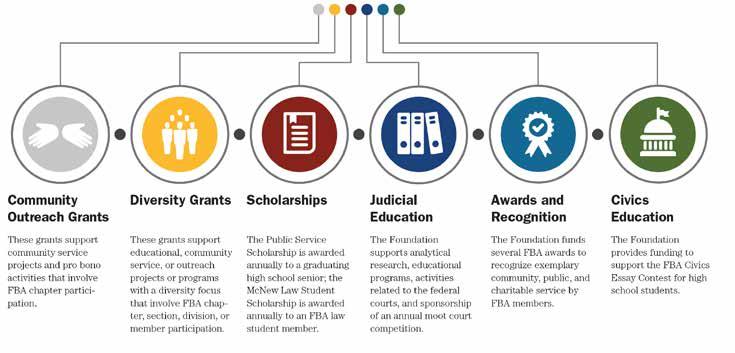
Petere bonum summum lege
With your support of the following programs and initiatives, the Foundation of the Federal Bar Association works toward our mission to •Promote and support legal research and education •Advance the science of jurisprudence •Facilitate the administration of justice •Foster improvements in the practice of federal law
1954 WASHINGTON, D.C.
2022 Annual Meeting & Convention
Worth the Wait!
erailed by COVID in 2020, the South Carolina Chapter bided their time wisely, ensuring that the attendees at the Charleston meeting would have the best the iconic city had to offer! Two years in the making, the FBA’s 2022 Annual Meeting and Convention, held September 15-17 at the historic Francis Marion Hotel, was a spectacular array of hospitality, featuring entertaining and educational programming, business meetings, and awards, all while highlighting the Southern Charm of the host city at receptions
Christie Companion Varnado, Chair
Beattie Ashmore, Chapter President
in historic Charleston venues. It all culminated with Charleston Mayor John Tecklenburg’s resolution proclaiming September 15 “Federal Bar Association Day”—a resolution we plan to keep! It was truly an amazing experience for FBA members and guests, and one, along with 2021’s Miami meeting, that will serve to usher and restore the FBA to its pre-pandemic in-person conventions.
Our thanks to the South Carolina Chapter for their tireless work welcoming the FBA to beautiful downtown Charleston!

Members: Christy Ford Allen, Nick Bianchi, Cherie Blackburn, Nancy Bloodgood, Piper Byzet, Janet Holmes, Matt Hubbell, Christiaan Marcum, Hannah Rogers Metcalfe, Bruce Miller, Brian Quisenberry, Stephanie Ramia, Beth Richardson, Sam Sammataro, Nick Sanders, Chris Schoen, Jamie Schoen, Cheryl Shoun, Patrick Wooten. Honorary Member: Hon. Michelle Childs.

—
76 • THE FEDERAL LAWYER • November/December 2022
Top: (Left to



The first
chapters. Middle

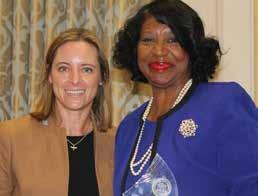
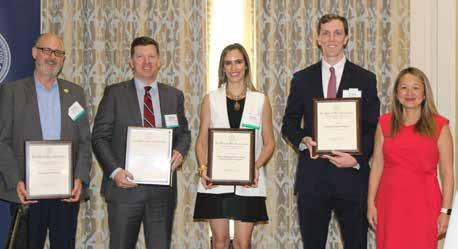


Incoming

November/December 2022 • THE FEDERAL LAWYER • 77
right) Daniel Hedlund, Matthew Panach, Sarika Angulo, Patrick Shockey, and Anh Le Kremer.
four are receiving Outstanding Newsletter Awards on behalf of their
left:
President Matthew Moschella and Hon. Karoline Mehalchick at Matt’s Installation Ceremony. Middle right: (Left to right) Lauren Caisman, Anna White Howard, Joseph Marutollo, Rebecca Church, Marissa Harris, Amy Boyle, Askley Akers, and Jenifer Tomchak. Joseph and Marissa were awarded the YFLA Award, and Rebecca was awarded the Robyn J. Spalter Award. Bottom left: (Left to right) Younger Lawyers Division representatives Melissa Yates, Victoria del Campo, Amy Boyle, and Adine Momoh. Bottom right: Megan Mazza presenting the Peter J. Mazza Award to Barbara Bowens.
Real to Reel: Truth and Trickery in Courtroom Movies
By Michael Asimow and Paul Bergman Vandeplas Publishing, 2021
516 pages; $38.99
Reviewed by Henry Cohn Movies about lawyers are widely popular. In 1996, two UCLA law school professors, Michael Asimow and Paul Bergman, published a comprehensive reference book on movies based on legal themes. Titled Reel Justice: The Courtroom Goes to the Movies, it was well-reviewed, and they issued a revised version in 2006 that discussed additional movies. In 2021, now emeritus, they issued yet another edition, renamed Real to Reel: Truth and Trickery in Courtroom Movies.
Real to Reel, with some differences, retains the basic organization of the earlier books. It has 15 chapters, each discussing movies with similar significant legal or social issues. The films are summarized, and, where applicable, there are sections on the relationships to actual incidents that inspired the movie plot. The authors also discuss the legal subject matter and the accuracy of

its presentation as well as the long-term public implications of the film.
The book covers a variety of movies. Town Without Pity involves a situation where townspeople turn against a woman who alleges she was raped by four soldiers. Its well-known theme song was performed by singer Gene Pitney. Vera Drake portrays a time in England when performing an abortion was a crime. Judgment at Nuremberg and The Life of Emile Zola highlight the court’s role in eliminating intentional suppression of the truth by a government.
Evidentiary proof lies at the heart of My Cousin Vinny and Witness for the Prosecution. The authors point out interesting twists as defense counsel present unexpected witnesses.
The abolition of the death penalty is a theme in A Place in the Sun and Knock on Any Door as well as in Just Mercy, a 2019 film about a real case handled by attorney Bryan Stevenson.
The authors do not ignore humorous legal films. Among these are Adam’s Rib, where Spencer Tracy and Katherine Hepburn play a husband and wife aggressively facing off as prosecutor and defense attorney in a murder trial. In Legally Blond, a law student who is presumed to have weak trial skills is able to persevere and prove her winning capabilities in the courtroom.
The following classic films are among those analyzed in the book:
Compulsion is fiction but is based on the true story of the Leopold-Loeb murder trial, in which Clarence Darrow represented both defendants. The authors criticize the fact that both Clarence Darrow and the Clarence Darrow character in the movie pressured the two accused clients to enter guilty pleas just before jury deliberations. This approach gave Darrow the opportunity to convince the court to give his clients life sentences instead of the death penalty.
The Wrong Man, directed by Alfred Hitchcock and starring Henry Fonda, concentrates on the difficulties faced by the accused and his family. The authors use this movie to emphasize the importance of bail,
showing how the accused uses his time on bail to assemble his defense.
12 Angry Men is regarded as one of the finest films ever made. Both the movie and Real to Reel give insight into the importance of the jury system. Henry Fonda’s character was the only juror to vote not guilty during the deliberations; this would have secured a mistrial. But by convincing the other 11 jurors to change their votes from guilty to not guilty, he was able to get the defendant acquitted. This makes for an exceptional drama.
Inherit the Wind is based on the famous Scopes monkey trial, with wonderful acting by Frederick March and Spencer Tracy. The authors consider whether the presiding judge went too far in excluding evidence and in failing to rule that the Tennessee law, on which the trial was based, was unconstitutional.
Mr. Deeds Goes to Town and Miracle on 34th Street address the relationship between a guardian or conservator and a ward. Similar issues have been raised recently by Brittany Spears.
The Verdict is a spectacular film in which an attorney, brilliantly played by Paul Newman, wins a case that he probably should have lost based on the law. The authors discuss whether the trial judge correctly excluded evidence under the best evidence rule.
Anatomy of a Murder was based on a book written by a Michigan Supreme Court Justice. The authors find the heart of the story to be the rule that, on cross-examination, an attorney should NEVER ask a question not knowing how the witness will answer.
Asimow and Bergman’s fascinating observations will enhance one’s enjoyment of these legally themed movies.
Judge Henry S. Cohn was appointed a judge of the Connecticut Superior Court in 1997 and became a Connecticut Judge Trial Referee in 2015. He is the co-author of a book on the 1944 Hartford, Connecticut, Circus Fire published by Yale University Press. He has written several law review articles, and The Federal Lawyer has published his book reviews for many years.
Book Reviews
78 • THE FEDERAL LAWYER • November/December 2022
Retail Gangster: The Insane, Real-Life Story of Crazy Eddie
 By Gary Weiss
Hachette Books, 2022
336 pages, $29.00.
Reviewed by Christopher Faille
Independent journalist Gary Weiss has devoted much of his working life to the interface of crime and commerce. For example, he has written about the Mafia presence on Wall Street. He has also written about the morality of actively managed mutual funds. (His conclusion is that the difference between those two presences is not as great as one might hope.)
Now Weiss’s attention turns to another crime/commerce interface: the rise and fall of Eddie Antar, the man behind “Crazy Eddie’s.” Weiss brings his own gifts—a penchant for exhaustive research and a remarkably straightforward style—to bear upon a very complicated and twisty tale.
This story opens simply: Antar became a part owner of an electronics store in 1969. He became its majority owner two years later. The store was in Brooklyn, N.Y., on King’s Highway. At first it was known as “Sights and Sounds,” but it acquired the name “Crazy Eddie’s” in 1973.
Antar skimmed off much of the sales tax money. This was easy—in the 1970s most retail transactions were still in cash. He stashed the money away as unreported funds, what Syrians and Syrian immigrant families in the
United States call “nehkdi.” In time, the family nehkdi made its way from hiding places above loose ceiling tiles or inside mattresses to proper though distant bank accounts … in particular, much nehkdi found a way to Bank Leumi in Israel.
Radio, Television, and a Tagline
In 1975, radio stations in the New York metropolitan area began running ads, in which Jerry Carroll read copy about Crazy Eddie’s “insane” prices in a frenetic yet precisely enunciated way that soon became Carroll’s own ticket to television and to immortality.
To this day, men and women who lived in the northeastern United States in the late 1970s and most of the 1980s, if shown a picture of Carroll in character, will laugh and recite the easy-to-remember tagline: “his prices are in-SANE.”
Carroll became a celebrity, and the chain expanded rapidly. Crazy Eddie’s became a four-state concern, with stores in New York, New Jersey, Connecticut, and Pennsylvania. Carroll’s schtick was remarkable enough to draw Hollywood’s attention. A mermaid passing as a human watches one of these ads in a scene in the 1984 fantasy film Splash. In the early ‘80s Eddie’s younger cousin, Sam Antar, became the de facto CFO. The actual title came later.
Crazy Eddie’s Goes Public
Our simple story became a good deal more complicated when the company went public, in 1984, and chicanery in the valuation of its inventory was employed to enhance its value. Companies overstate their inventory’s value for a lot of reasons—most often because a higher inventory may reassure potential lenders or the purchasers of company equity.
But many companies that engage in finangling for such reasons discover that the practice feeds on itself. To understand why, consider the basics of preparing a profit-andloss statement for a retail business. There must be numbers for the inventory at the start of the period covered by the statement, numbers for the purchases over the course of the year, and numbers for the inventory at the year’s close.
Here are some made-up numbers for a hypothetical annual statement for a widget merchant in 1984:
1. Inventory Dec. 31, 1983, $20,000 in widgets.
2. Inventory Dec. 31, 1984, $40,000 in widgets.
3. Purchased from widget manufacturers in 1984, $30,000.
In this case, the first and third figures likely allow you to make a rapid mental calculation: the store had a total of $50,000 worth of widgets available for sale in 1984. Presumably, it either sold them or it still has them. (We will ignore issues of depreciation and damage since taking account of them would change nothing in what follows.)
In this case, the cost of goods sold is $10,000. Starting inventory plus purchases minus ending inventory yields the COGS figure. This figure is then subtracted from revenues to determine gross profit. Then, other deductions need to be made for salaries, overhead, and other expenses to realize the net profit.
This simple exposition should indicate that if the owner of a widget store can inflate the ending inventory number, he can inflate the profit numbers. If our owner could plausibly pretend the ending inventory was $42,000, then his COGS falls from $10,000 to $8,000. If everything else on the books is left unaffected, this will mean he will record $2,000 more in profit than the facts justify.
The Antars did a lot of finangling with ending inventory figures. I will spare my readers the mechanics of it—they can get that from Weiss.
Feeding on Itself
But now, I submit that we can see why such finagling feeds on itself. Here are the three key figures for the following year:
1. Inventory, Dec, 31, 1984, $42,000.
2. Inventory, Dec. 31, 1985, $44,000.
3. Purchase from widget manufacturers in 1985, $20,000.
We’re starting with $42,000 because we postulated that the company had inflated its own ending inventory from the previous year to that point in order to lower its COGS. The ending inventory of one year simply is, definitionally, the starting inventory for the next. The other two numbers are made up.
We use the same formula as before.
Starting inventory ($42,000) + purchases ($20,000) – ending inventory ($44,000) = $18,000.
This is the COGS our firm will have to subtract from revenue.
November/December 2022 • THE FEDERAL LAWYER • 79
If it hadn’t cooked the books the year before, the COGS would be better. It would be:
$40,000 + $20,000 – $44K = $16,000. As before, a lower COGS means higher profit numbers.
The gist of it is that by pumping up your ending inventory by $2,000 one year, you have lowered COGS for that year (as desired if you are showing these numbers to potential lenders/investors), but you have raised COGS for the following year (which is bad news.) You find the next year that you have put yourself $2,000 behind. The temptation will be to phony up your ending inventory again, by at least the $2,000 necessary to avoid this. Usually by more.
By degrees, then, a firm that begins fudging the books one year finds itself driven to ever more inventive fudging in the years to come. As Weiss puts it, inventory frauds become “hungry rattlesnakes that [need] to be fed, lest they strike and kill.”
The Warranty-Fraud Subplot
At this time, too, the company was deeply immersed in warranty fraud. One employee, Dave Panoff, who held the title “director of service,” seems to have been hired chiefly as a director of warranty fraud. As Weiss explains, “If customers brought in an item for repairs that had an expired warranty, [Panoff would] give the unit back to them, tell them they were out of luck, and file a claim with the manufacturer anyway. He would alter the date of purchase so that the manufacturer would be forced to pay for the repairs. “
Given this and other tricks of the warranty-fraud trade, for several years, more than 40 percent of the claims Crazy Eddie made to manufacturers were shams. The shams reaped $400,000 a year for the company.
In addition, by 1986, the Antars were bringing much of the long-hidden nehkdi, those never-paid sales taxes, back from Israel (with a weigh-station in Panama), entering it into the books as new revenue. All this new revenue helped impress Wall Street analysts and boosted the stock price.
A Losing Cause
In early 1987, an FBI agent served a subpoena on Dave Panoff, asking for the production of all records relating to warranty claims.
Panoff consulted with the key Antar family members, and they decided to turn over to the feds only innocuous records, dragging their feet on those that would be incrim-
inating, hoping that the U.S. Attorney’s Office would grow bored. Disingenuous as it sounds, this cross-fingers-and-run-outthe-clock strategy is employed with some frequency by real and alleged white collar criminals. The Antars and Panoff had, fortuitously, closed down their warranty-fraud operation shortly before receiving service of the subpoena. This is why they had some innocuous records they could offer.
By early 1987, though, Crazy Eddie’s had passed its prime as a retailing force. It wasn’t merely the unraveling inventory fraud and the closedown of the warranty frauds that was hurting the company by then. It was the increased competition with The Wiz, Newmark & Lewis, and other players in the discount electronics arena. This was the era of answering machines and VCRs. The electronics business was expanding in exciting and profitable ways, and this attracted new entrants.
The company’s stock prices went into decline, and that inspired shareholder lawsuits. Many of these lawsuits, filed in May 1987, extrapolating from recent headlines, asserted the theory that the Antars were deliberately depressing the price so that they could buy the company (with friendly assistance from Canadian financier Marc Belzberg) and take it private. In essence, the theory ran, Antar was buying back shares he had sold into the market when the company was worth three times as much a year before, cheating outsider shareholders in the process.
The SEC and NJ DA
The theory was not wrong, but it missed the key point. The talks with Belzberg about taking the company private were the result of the Antar family’s desperate desire to hide the truth about accounting and warranty fraud, a truth of which the plaintiffs’ lawyers were still at this point ignorant.
The private lawsuits excited the attention of the Securities and Exchange Commission, which announced its own inquiry in June. The inquiry became an investigation that fall, though, and by that time—presumably somebody had squealed—the SEC disclosed to the Antars that it suspected them of overstating values in their financial statements. The SEC was now hitting the target the plaintiffs’ lawyers had missed. The friendly taking-private talks with Belzberg failed. But the low stock prices did invite a takeover—a hostile one.
The hostile offer came from Elias Zinn, who was working with management
consultant Victor Palmieri and Palmieri’s turnaround specialist Robert Marmon. The Zinn-Palmieri forces won control at a shareholders’ meeting in November 1987.
Although systematic document destruction had made things difficult for the new Zinn-Palmieri bosses, in time they discovered that the actual value of the whole chain’s inventory was only $75 million. The last numbers filed with regulators by the old management had put the value of the inventory at $126.7 million.
The new bosses made this shocking shortfall public, and this stimulated the U.S. Attorney’s Office for New Jersey to expand its own investigation. It had been looking specifically, as we’ve mentioned, at the warranty-fraud matter. Now it was looking at the broader arc of the company’s rise-and-fall.
Several New Names and an Extradition
On June 15, 1988, without fanfare, Antar traveled to Israel. Eleven days later, still there, he registered as an immigrant. His second wife joined him there in July, and she, too, filed papers to become an immigrant. As Weiss notes, many Jewish immigrants in Israel Hebraize their names. Weiss adopted a new name for Israeli purposes: in time, he would adopt several. But for this first new name, oddly, he, “Scotlandized.” He entered himself into the records of the Israeli government as “Alexander Stewart.” Then he came home to the United States.
The SEC filed lawsuits in September 1988 against Eddie Antar and Sammy Antar as the principals, demanding the disgorgement of illegal profits and treble damages. Several others (including Panoff) were charged with related accounting frauds.
The Zinn/Palmieri turnaround effort had by this time collapsed. In October 1988, Crazy Eddie’s entered chapter 7 liquidation proceedings.
In February 1990, upon sensing that the criminal investigation of the case was coming to a head (Sam Antar was at this point a cooperating witness), Eddie Antar fled the country—specifically, to the country where Alexander Stewart was already listed as an immigrant.
Antar made this trip, though, under the name Harry Shalom. Sometime thereafter he also adopted the name “David Cohen,” using a phony passport that made him out to be Brazilian.
80 • THE FEDERAL LAWYER • November/December 2022
It wasn’t until June 1992, though, that a federal grand jury in Newark indicted Eddie Antar for conspiracy to commit securities fraud and on related charges.
Israel extradited Antar the following January.
Final Twists in the Story
Antar was tried before Hon. Nicholas Politan. He was defended by Jack Arsenault, a highly regarded criminal defense attorney who had very little with which to work, in an effort to infuse “reasonable doubt” into the jury box.
Among much else, Arsenault argued that Antar was innocent because he had allowed his company to be taken over, bought out by Zinn and Victor Palmieri. If he had been guilty, Arsenault said, Antar would have “fought until his last breath” to remain in control. That would have given him continued possession of the records that the prosecution had used against him during the trial.
That argument did not help. The verdict was guilty. At a sentencing hearing in 1994, Judge Politan made the following comment in speaking to the prosecutor: “My object in this case from day one has always been to get back to the public that which was taken from it as a result of the fraudulent activities of this defendant and others.”
On appeal from the verdict and sentence, Antar lawyers took these words as an admission by Judge Politan that he had prejudged the case—that “from day one” he had presumed the defendant’s activities had been fraudulent.
The appellate panel agreed. Antar was entitled to a new trial. But the new trial judge was to be Hon. Harold Ackerman. Weiss describes Ackerman as “at least as tough as Politan,” and as a man who could get “good and mad when the occasion demanded” in a way that could manifest itself in the sentence. Antar didn’t risk it. He pleaded guilty in 1997, received a sentence of up to eight years, and was released from prison two years later.
Final Thoughts
I can recommend this book to many lawyers. If you are, or are ever likely to become, engaged in either the defense or the prosecution of white-collar criminals, Weiss offers important material on the recent history of that field.
Even if you don’t see any such possibility as likely, the book offers lessons about everything from securities law to forensic accounting and to Israel’s law of return: Those lawyers to whom these lessons may prove valuable already know who they are.
Best of all, it is a rippin’ good story, full of well-told drama.
Christopher Faille has written on a variety of legal, regulatory, and financial issues for decades. He was an early reporter with Lipper HedgeWorld and has contributed to Forbes, Hedge Fund Law Report, and Alternatives Watch
UnitedHealthcare dental coverage underwritten


Insurance Company, located in Hartford, Connecticut, UnitedHealthcare
Company of New York, located in Islandia, New York, or
affiliates. Administrative services provided by Dental Benefit Providers, Inc., Dental Benefit Administrative


(CA
Services (NY only), United HealthCare Services,


or


affiliates. Plans sold in Texas use policy form number DPOL.06.TX, DPOL.12.TX, DPOL.12.TX (Rev. 9/16) and DPOL.18.TX and associated COC form numbers DCOC.CER.06, DCOC.CER.IND.12. TX, DCERT. IND.12. TX and DCOC.18.TX. Plans sold in Virginia use policy form number DPOL.06.VA with associated COC form number DCOC.CER.06.VA, policy form number DPOL.12.VA with associated COC form number DCOC.CER.12. VA or policy form number DPOL.18.VA with associated COC form number DCOC.18. VA. This policy has exclusions, limitations and terms under which the policy may be continued in force or discontinued. For costs and complete details of the coverage, contact either your broker or the company.

A FEDVIP Dental plan worth smiling about is just a few clicks away. Just enter your ZIP code at uhcfeds.com to compare benefits and perks from UnitedHealthcare, including: • A network of nearly 400,000 access points • Quality care whenever you need it with 24/7 virtual consultations with a dentist for certain services • Access to discounts and wellness offers via our BenefitHub • Exclusive discounts on items like electric toothbrushes and aligners All trademarks are the property of their respective owners © 2022 United HealthCare Services, Inc. All Rights
Reserved. ES22-1752536a
Sign up during open season Nov. 14–Dec. 12 (Midnight EST) Learn more at uhcfeds.com Click. ZIP. Go! Find dental coverage fast when you November/December 2022 • THE FEDERAL LAWYER • 81
by UnitedHealthcare
Insurance
their
Services
only), DBP
Inc.
their
Supreme Court Previews
The previews are contributed by the Legal Information Institute, a nonprofit activity of Cornell Law School.
The previews include an in-depth look at two cases plus executive summaries of other cases before the Supreme Court. The executive summaries include a link to the full text of the preview.
Merrill v. Milligan (No. 21-1086)
Oral argument: Oct. 4, 2022
Question as Framed for the Court by the Parties
Whether the state of Alabama’s 2021 redistricting plan for its seven seats in the United States House of Representatives violated Section 2 of the Voting Rights Act.
Facts
Alabama has seven seats in the House of Representatives. Following the 2020 census, the Alabama Legislature and Committee on Reapportionment began redrawing its congressional districts (redistricting) to account for population changes since the last census. The Alabama Legislature passed the redistricting plan (Plan), and Governor Kay Ivey signed the Plan into law in November 2021. The plan had one majority-minority district, consistent with previous congressional maps in Alabama.
District Seven is the majority-Black district. The district has elected a Black Democrat to the House of Representatives since 1992. The cartographer who prepared the Plan testified that he wanted to preserve previous maps and “‘turned race on’ only at the end of the process” to ensure compliance with § 2 of the Voting Rights Act (VRA).
After the Plan was approved, a group of Black registered voters and other interested organizations (Milligan) sued Alabama Secretary of State John Merrill and the cochairs of the Reapportionment Committee (Merrill). Milligan made three allegations: (1) that the Plan dilutes the power of Black voters in violation of § 2 of the VRA, (2) that it is unconstitutional racial gerrymandering,
and (3) that the legislature intentionally discriminated based on race when making the Plan. Section 2 of the VRA prohibits the drawing of districts in a way that “provides ‘less opportunity’ for racial minorities ‘to elect representatives of their choice.’”
Milligan alleges that this gerrymandering results in Congressional District Seven being “packed” with Black voters, so that the Black vote is “crack[ed]” amongst the remaining districts, thus diluting the influence of Black voters in the remaining districts.
Milligan sought a declaration that the Plan violates the VRA and sought preliminary injunctions barring Alabama from holding an election under the Plan and requiring Alabama to either use a congressional district map that includes two districts that are majority-Black or otherwise give Black voters an opportunity to elect their preferred candidates. Milligan proposed his own map he contends is in line with the VRA and includes two majority-minority districts.
Around the same time, a similar group of Alabama citizens brought a suit like Milligan’s but limited their challenge to the VRA claim. These Caster plaintiffs also requested a preliminary injunction to prevent elections from occurring under the Plan.
The U.S. District Court for the Northern District of Alabama granted the preliminary injunctions for both sets of plaintiffs. The court found that the plaintiffs were “substantially likely to establish that the Plan violates Section 2 of the Voting Rights Act,” and gave the legislature 14 days to enact a remedial plan.
Merrill appealed to the United States Supreme Court, which granted a stay on February 7, 2022. This case is joined with Merrill v. Caster
Legal Analysis
PRECONDITIONS TO A § 2 CLAIM
Merrill contends that Milligan has not met the first of three preconditions to a vote dilution claim under § 2 of the Voting Rights Act (VRA). Merrill observes that the Court’s decision in Thornburg v. Gingles requires plaintiffs to prove that a minority population is “sufficiently large and compact” that it could make up a majority of eligible voters in a “reasonably configured district.” Merrill argues that Milligan cannot use his illustrative maps to meet this requirement because those maps were drawn with race as the primary consideration. Relying on Shaw v. Hunt, Merrill asserts that a state may not use race as the primary factor in its map drawing, even to guard against a VRA violation. Merrill maintains that, because states may not use race as a primary factor, plaintiffs attempting to satisfy the first Gingles precondition likewise may not rely on a race-guided map. Accordingly, Merrill concludes that Milligan’s illustrative maps are not “reasonably configured” and thus fail to satisfy Gingles’ first requirement.
Milligan counters that his illustrative maps are sufficient to satisfy the first Gingles requirement because the limitations on the use of race in map drawing, derived from the Fourteenth Amendment’s Equal Protection Clause, apply only to state actors, not private parties. Milligan notes that the Court’s decision in Bartlett v. Strickland, which requires § 2 vote dilution plaintiffs to submit plans resulting in an additional majority-minority district, effectively requires race-consciousness in map drawing. Furthermore, Milligan contends that his illustrative maps are “reasonably configured” because they meet all the other traditional districting criteria: they are contiguous, they are at least as compact as Alabama’s map, and they better respect communities of interest.
EQUALLY OPEN POLITICAL PROCESSES
Merrill argues that Milligan has not shown a § 2 violation because he has not demonstrated that the Plan results in political processes that are “not equally open” to Black voters. Merrill asserts that a practice results in “not
82 • THE FEDERAL LAWYER • November/December 2022
equally open” political processes only when racial discrimination is the sole explanation for the practice. Merrill contends that Alabama did not draw its map for racial purposes, but according to traditional criteria such as avoiding significant changes from previous maps. Merrill notes that Alabama’s cartographer could not see racial demographic data while drawing the map, and thus could not have considered race.
Alternatively, Merrill argues that a single-member district system, where each district elects one representative, can never violate § 2. Merrill notes that § 2 applies only to a “voting qualification,” a “prerequisite to voting,” or a “standard, practice, or procedure.” Merrill maintains that single-member districts fall outside these categories. Further, Merrill contends that single-member districts are inherently equally open because they do not prevent the casting of any votes.
Milligan counters that Congress amended the VRA in 1982 and that the amendments require courts to look at a practice’s effects, not only the intent with which it was adopted. Milligan contends that this inquiry is inconsistent with a blanket rule that maps drawn for race-neutral reasons comply with § 2. Milligan maintains that the § 2 totality of the circumstances analysis should be guided by a list of factors focusing on historical discrimination in voting and other contexts. Milligan asserts that the district court properly relied on these factors in finding that Alabama’s political process is not equally open to Black voters.
Milligan also argues that single-member districts are a “standard, practice, or procedure” and thus fall under § 2. Milligan claims that Congress included language from the Court’s vote dilution cases in § 2, indicating that Congress intended the VRA to cover vote dilution. Milligan contends that, even if single-member voting districts do not prevent anyone from casting their ballot, they nonetheless can “abridge” the right to vote by preventing minorities from electing their candidates of choice.
CONSTITUTIONAL CONCERNS
Merrill contends that the Court should reject Milligan’s interpretation of § 2 because that interpretation would render the VRA unconstitutional under the Equal Protection Clause. Merrill maintains that Milligan’s interpretation effectively requires states to use racial classifications in districting. Merrill notes that racial classifications must survive
strict scrutiny, which requires that the classifications be narrowly tailored to serve a compelling government interest. Merrill contends that remedying past discrimination is only a compelling interest if there is a particularized, identifiable instance of discrimination to be remedied, as opposed to generalized societal discrimination. Since the VRA covers the latter type of discrimination, Merrill asserts that compliance with the VRA cannot justify racial classifications. Merrill posits that, consistent with equal protection, § 2 can force states to disregard race in drawing their districts but cannot force them to consider race.
Milligan counters that he is proposing a race-conscious map solely to satisfy Gingles, not to insist that Alabama adopt such a map. Thus, Milligan argues that the Equal Protection Clause does not apply because there is no state action. Alternatively, Milligan posits that his maps survive strict scrutiny. Milligan maintains that compliance with the VRA is a compelling government interest, and that a state may implement a race-conscious map when there is “good reason” to believe doing so is necessary to avoid a VRA violation. Milligan emphasizes that there is “good reason” to believe that race-conscious districting is necessary in this situation.
Discussion COMMUNITY PRIORITIES IN REDISTRICTING
United States Representatives from Alabama (Alabama Representatives), in support of Merrill, assert that states should prioritize neutral factors in redistricting, and that Milligan’s map impermissibly focuses on racial proportionality. Instead of racial proportionality, Alabama Representatives posit that legislatures should prioritize core retention, which requires districts to remain substantially unchanged between elections. Alabama Representatives argue that core retention best supports the formation of long-standing relationships between constituents and their representatives.
Alabama Representatives point to Mobile and Baldwin counties, two coastal counties in the same district, that would be divided under Milligan’s map to join the Black Belt and form the second majority-Black district.
Alabama Representatives posit that these counties’ shared history and culture indicate they should be kept together to best serve their interests and promote democratic accountability.
Alabama Historians (Historians), in support of Milligan, counter that Milligan’s map does not seek to achieve racial proportionality but serves the permissible purpose of “maintaining ‘communities of interest’ and traditional boundaries.” Historians contend that the proposed second majority-Black district adheres to these traditional standards. Historians assert that the Black Belt region has a shared history that is well-documented. Accordingly, Historians maintain that Milligan’s map recognizes the commonalities between the Black Belt and coastal communities like Mobile County. United States Representatives from several states (United States Representatives), also in support of Milligan, argue that majority-minority districts do not promote segregation, but rather promote “cross-racial” and bipartisan communication. Additionally, United States Representatives assert that “disrupting ‘core retention’” will not result in reduced voter engagement because research suggests that Black voters are equally as likely to vote after redistricting if there is an incumbent Black representative on the ballot.
ENSURING FAIR REPRESENTATION
The Republican National Committee (RNC), in support of Merrill, argues that it is not the purpose of the VRA to allow gerrymandering, and that the VRA should not be read to benefit one political party over another. The RNC further asserts that Milligan’s interpretation of § 2 is incompatible with the original purpose of the VRA: ensuring an equal opportunity to vote for all. Additionally, the RNC contends that the VRA is not meant to achieve mandatory racial proportionality in the legislature. Moreover, the RNC asserts that Milligan is using race to ensure that the Democratic Party wins more seats in Congress.
Republican Former Governors (Former Governors), in support of Milligan, similarly deride partisan gerrymandering and express support for “fair and effective representation.” Former Governors assert that § 2 of the VRA is meant to protect against racial discrimination in voting, but that redistricting can also entrench power for one political party over another. Former Governors contend that redistricting can have the same disenfranchising effect for racial minorities, especially when different racial groups prefer different candidates. Former Governors emphasize that, like traditional gerrymandering of congressional districts to entrench po-
November/December 2022 • THE FEDERAL LAWYER • 83
litical power, racial vote dilution and racial gerrymandering are similarly undemocratic. Former Governors argue that vote dilution erodes our democracy because candidates can ignore a minority group’s interests without threatening their electoral chances.
Full text available at https://www.law. cornell.edu/supct/cert/21-1086.
Written by Gabrielle Blom and Josiah Rutledge. Edited by Emily Gust.
Andy Warhol Foundation for the Visual Arts, Inc. v. Goldsmith (No. 21–869)
Oral argument: Oct. 12, 2022
Question as Framed for the Court by the Parties
Whether a work of art is “transformative” when it conveys a different meaning or message from its source material (as the Supreme Court, U.S. Court of Appeals for the 9th Circuit, and other courts of appeals have held), or whether a court is forbidden from considering the meaning of the accused work where it “recognizably deriv[es] from” its source material (as the U.S. Court of Appeals for the 2nd Circuit has held).
Facts
In 1981, Lynn Goldsmith, a prominent celebrity photographer, took a photograph of the musician, Prince. Goldsmith holds a copyright in the photo. In 1984, Goldsmith’s agency, Lynn Goldsmith, Ltd. (LGL), issued a license to Vanity Fair magazine to use the photograph as an artist reference.
Vanity Fair commissioned Andy Warhol to create an image of Prince for publication alongside an article about the musician, and credited Goldsmith with the “source photograph” for the illustration Warhol produced. Warhol ultimately created fifteen works derived from Goldsmith’s Prince photo, which became known as the Prince Series (Series). Ownership of the copyright in the Series’ images belongs to the Andy Warhol Foundation for the Visual Arts (AWF), a not-for-profit corporation. AWF licenses the Series for commercial, editorial, and museum usage through the Artists Rights Society.
Following Prince’s passing in 2016, Goldsmith learned of the Series when AWF licensed one of the Series’ images to Condé Nast, Vanity Fair’s parent company, for publication in its tribute issue. Goldsmith
received no credit as the source image, and only AWF was attributed. Goldsmith subsequently notified AWF of its potential violation of her copyright in the original photograph.
In 2017, AWF sued Goldsmith and LGL, seeking a declaratory judgment that the Series did not infringe Goldsmith’s copyright, or alternatively, that the Series made fair use of her original photograph. Goldsmith and LGL then counterclaimed for copyright infringement.
The U.S. District Court for the Southern District of New York granted summary judgment to AWF on its fair use claim and dismissed Goldsmith and LGL’s infringement counterclaim with prejudice. Among other factors, the court concluded that the Series was transformative because it depicted Prince as an “iconic, larger-than-life figure,” while the Goldsmith photograph portrayed him as an uncomfortable and “vulnerable human being.”
Before the Second Circuit, Goldsmith and LGL asserted that the district court erroneously assessed and applied the fair use factors under 17 U.S.C. § 107. The Second Circuit agreed, finding that all four fair use factors favored Goldsmith and that the series did not constitute fair use as a matter of law. Four factors determine whether the use of a copyrighted work is fair, including (1) the purpose and character of the use, (2) the nature of the copyrighted work, (3) the amount copied, and (4) the effect of the use on the potential market for the original. Under the first factor, the court held that a work is not transformative based on the perceived meaning of the work, but rather, based on whether the work adds a “‘fundamentally different and new’ artistic purpose” to the original. The court found that Goldsmith’s photo remained recognizable in Warhol’s print, and Warhol did not add or change enough for his work to be considered fair use.
The Second Circuit reversed the district court’s grant of AWF’s summary judgment motion, vacated its judgment dismissing LGL and Goldsmith’s counterclaim, and remanded the case for further proceedings consistent with its opinion. The Supreme Court granted certiorari on March 28, 2022.
Legal Analysis APPLICATION OF THE FAIR USE DOCTRINE
Copyright protection for authors of creative works comes from the intellectual proper-
ty clause of the Constitution and the U.S. Copyright Act. Under § 106 of the Copyright Act, valid copyright owners have exclusive rights over their works. Copyright infringement will not be found if the copying is fair use under § 107 of the Copyright Act.
Andy Warhol Foundation for the Visual Arts, Inc. (AWF) asserts that the prints in Warhol’s Prince Series (Series) are transformative and are fair use of Respondent Lynn Goldsmith’s photograph. Under the first of the fair use factors—the purpose and character of the use—AWF maintains that a use is fair if it transforms the original to further a distinct purpose. AWF emphasizes that use of a copyrighted work is transformative under Campbell v. Acuff-Rose Music, Inc. when it conveys a “new expression, meaning, or message.” AWF calls this “Campbell’s meaning-or-message test” and asserts that the test applies to all analyses of transformative use. Thus, AWF argues, despite similarities between the use and the original, or even literal copying of the original, a use is transformative if it adds new meaning.
AWF asserts that the Series is transformative under Campbell’s meaning-or-message test. AWF points to Goldsmith’s testimony that she intended her photograph to portray Prince as “uncomfortable” and “vulnerable.” In contrast, AWF emphasizes, Warhol’s cropping and silk-screening process removes Prince’s vulnerability and is intended to portray Prince as an icon, rather than “[an] actual human being.” AWF contends that these differences in meaning make Warhol’s use of Goldsmith’s photo transformative and thus fair use.
Lynn Goldsmith and Lynn Goldsmith, Ltd. (Goldsmith) dispute that the Series is transformative. Goldsmith emphasizes that uses of copyrighted works can vary widely in their purpose and amount of copying— some, but not all, of these uses are permitted under the fair use analysis. Goldsmith disapproves of AWF’s focus on only the first factor and further asserts that AWF mischaracterizes the transformative analysis. According to Goldsmith, transformative uses must not only have a different meaning or message than the original, but the copying must be necessary to achieve a distinct purpose from the original. Furthermore, Goldsmith argues, the use must serve as more than a mere substitute for the original work. Goldsmith explains that the requirement of adding to the original work, rather than substituting for it, diminishes the likelihood of market
84 • THE FEDERAL LAWYER • November/December 2022
harm to the original, the fourth and “most important” factor in the fair use analysis.
Goldsmith then asserts that the Second Circuit correctly determined that the Series is not transformative. Though the Series may have a different meaning than Goldsmith’s photo, Goldsmith argues that using her specific photo was not necessary for Warhol to create the prints. Rather than choosing Goldsmith’s photo for a specific artistic purpose, Goldsmith points to evidence that Warhol did not select the photo and likely would not have created the Series at all without being hired by Vanity Fair. Goldsmith also contends that AWF’s licensing of images of Warhol’s prints is an impermissible substitute for her photo. Goldsmith points out that the photo was only used because Vanity Fair licensed the photo from Goldsmith, and Goldsmith was credited in the first publication of a Series print. Goldsmith concludes that even if the Court decides that unnecessary copying can be fair use when the works have distinct purposes, the purposes of the works in this case are identical and thus Warhol’s print cannot be fair use.
EVALUATING TRANSFORMATIVE USE
In arguing that the Series is transformative, AWF also asserts that the Second Circuit’s analysis of transformative use violates precedent. First, AWF contends that the Second Circuit held that courts should not “assume the role of art critic” and consider whether the two works have different meanings. This ruling, AWF argues, directly contradicts Campbell’s meaning-or-message test. Second, AWF maintains that the Second Circuit incorrectly focuses on the visual similarity between the two works. AWF argues that this focus disregards the precedent laid out in Campbell and Google LLC v. Oracle America, Inc., in which uses have been found to be fair even when the original was recognizable in or even identical to the use at issue. Third, AWF disputes the Second Circuit’s ruling that Warhol’s prints and Goldsmith’s photograph have the same purpose as works of art depicting the same person. AWF argues that the Second Circuit improperly generalized the purposes of the two works because under the court’s reasoning, virtually any two works can be considered to share the same purpose. Instead, AWF asserts that the two works have different purposes because they convey different meanings.
In contrast, Goldsmith supports the Second Circuit’s finding that the Series
is not transformative and agrees with the court’s reasoning. First, Goldsmith explains that the Second Circuit does not prohibit consideration of the works’ meaning, but merely holds that such consideration does not determine the transformative analysis. Second, Goldsmith asserts that the Second Circuit does not inappropriately focus on visual similarity but considers the similarity in the context of the works’ purposes. The two works have the same purpose, Goldsmith argues, so their visual similarity is impermissible. Third, Goldsmith supports the Second Circuit’s comparison of the works’ purposes and does not agree that this comparison is too general. On the contrary, Goldsmith argues that precedent and § 107 itself require a general analysis of purpose. Finally, Goldsmith notes that AWF ignores the other three factors in the fair use analysis in their entirety.
Discussion
BALANCING COPYRIGHT’S ECONOMIC AND SOCIAL JUSTICE OBJECTIVES
Floor64, Inc., in support of AWF, argues that too great an extension of copyright holders’ reach in original works gives them “effective veto power over follow-on works, including those that would convey new meanings not in the original.” If follow-on works with meanings different from original works are subject to the “monopolistic control” of the original copyright holder, Floor64 asserts, new forms of expression will be seriously constrained. Floor64 emphasizes that in such an environment, copyright holders would be able to censor future expression in a manner far more extensive than necessary to preserve original copyright holders’ economic incentives.
The Institute for Intellectual Property and Social Justice (Institute), in support of Goldsmith, asserts that copyright law’s current economic goals are overly narrow. The Institute advocates for a broader view of copyright law’s goals that includes advancing social justice aims. The Institute contends that under the current copyright regime, secondary creators from dominant social groups are given too much leniency in determining whether their works are fair use. This leniency, the Institute explains, leads to marginalization because fair use inquiries are typically judged by other members of the same dominant majority, who are more inclined to accept secondary creators’ assertions that they intended to transform
preexisting works, while marginalized artists’ commercial prospects are subjected to majoritarian judges’ “cultural tastes and racial biases.”
Impact on Creative Expression
The Robert Rauschenberg Foundation (Foundation), in support of AWF, argues that a narrowed version of the fair use doctrine will disincentivize artistic development. The Foundation emphasizes that much current art relies on the appropriation of past works. If the types of art classified as fair use were reduced, the Foundation stresses, more artwork would become the subject of copyright litigation, thereby discouraging its creation. Furthermore, the Foundation warns, museums and galleries would face liability for displaying allegedly infringing art. Accordingly, the Foundation concludes, expanding copyright liability would suppress creativity.
Philippa S. Loengard, the Executive Director of the Kernochan Center for Law, Media, and the Arts, in support of Goldsmith, argues that focusing on visual art’s purpose and character rather than its message or meaning supports free expression. Different works’ purpose and character, Loengard explains, can be more objectively compared by a district court because specific visual differences between the two pieces can be easily identified and distinguished. Loengard agrees that borrowing from past works is an essential component of visual art. Accordingly, Loengard argues, creative expression will remain if artists are free to borrow from past works while meaningfully changing their final products’ purpose and character in an objectively identifiable way.
Full text available at https://www.law. cornell.edu/supct/cert/21-869.
Written by Leslie R. Irwin and Steven D. Mirsen. Edited by Amaris Cuchanski.
Sackettt v. Environmental Protection Agency (No. 21-454)
Oral Argument: Oct. 3, 2022
Court below: U.S. Court of Appeals for the Ninth Circuit This case asks the Supreme Court to determine the jurisdiction granted to the Environmental Protection Agency (EPA) by the Clean Water Act (CWA) to regulate wetlands. One test for determining whether a wetland falls under the CWA is the contin-
November/December 2022 • THE FEDERAL LAWYER • 85
uous surface connection test, which allows a wetland to be regulated when it shares a continuous surface connection with a body of water. Another test is the significant nexus test, which allows an adjacent wetland to be regulated when it significantly affects waters covered under the CWA, regardless of a surface connection between them. Petitioners Michael and Chantell Sackett assert that, under the principles of statutory interpretation and congressional intent, a version of the continuous surface connection test is proper and therefore their lot of land does not fall under the jurisdiction of the CWA. Respondent EPA counters that due to judicial deference to administrative agencies’ interpretations of statutes, the significant nexus test is the proper test, and therefore the Sacketts’ land does fall under the jurisdiction of the CWA. The Court’s decision in this case implicates the costs which industries must bear for their infrastructure, the allocation of state and federal power, and the protection of water quality across the nation.
Full text available at https://www.law. cornell.edu/supct/cert/21-454.
Full text available at https://www.law. cornell.edu/supct/cert/22O145.
Arellano v. McDonough
(No. 21-432)
Oral argument: Oct. 4, 2022
Court below: U.S. Court of Appeals for the Federal Circuit
should begin after the trial court denied Reed’s DNA testing request because this is when Reed first became aware that his right to DNA testing was allegedly being violated. The outcome of this case has significant implications for federalism, inmate rights, and the accuracy of the justice system.
Full text available at https://www.law. cornell.edu/supct/cert/21-442.
National
Pork Producers
Council v. Ross (No. 21-468)
Delaware
v.
Pennsylvania and Wisconsin (No. 22O145)
Oral argument: Oct. 3, 2022
Court below: Original Jurisdiction
This case asks the Supreme Court to define MoneyGram’s Official Checks (Official Checks) to determine which states have jurisdiction over funds from unclaimed Official Checks, and then to clarify which abandoned financial instruments are subject to the Federal Disposition of Abandoned Money Orders and Traveler’s Checks Act (FDA). The FDA sets the standards for the remittance of funds payable on unclaimed financial instruments. Petitioner Delaware argues that Official Checks are “third party bank checks,” not “money orders,” “traveler’s checks,” or “other similar written instruments” and are therefore not subject to the FDA. Respondents Pennsylvania and Wisconsin counter that Official Checks are subject to the FDA as either “money orders” or “other similar written instruments.”
The outcome of this case has implications for the state receipt of funds from unpaid financial instruments, the role of the Court in interpreting legislation, and the direction of future litigation regarding the recovery of funds.
38 U.S.C. § 5110(b)(1) allows veterans who apply for disability compensation benefits within one year of discharge from the military to have retroactive disability compensation benefits counted from the date of discharge instead of the date of application for benefits. In this case, the Supreme Court will determine whether equitable tolling, an exemption to statutes of limitations under which plaintiffs who could not discover the basis to bring their lawsuits until after the expiration of the limitations period may bring a claim, applies to this one-year deadline. Although 38 U.S.C. § 5110(b)(1) does not have an explicit statute of limitation, Petitioner Adolfo Arellano argues that the statute functionally serves as a statute of limitations and that the Court has held that equitable tolling applies by default to functional statutes of limitations, including those applicable to suits against the government. Respondent Denis McDonough, Secretary of Veterans Affairs, counters that § 5110(b) (1) is not a statute of limitations, and that if Congress intended to allow equitable tolling to apply to the statute, it would have explicitly stated so in the law. The Court’s decision in this case will impact veterans’ welfare and the speed and procedure of disability claims administration.
Full text available at https://www.law. cornell.edu/supct/cert/21-432.
Reed v. Goertz (No. 21-442)
Oral argument: Oct. 11, 2022
Court below: U.S. Court of Appeals for the Fifth Circuit
This case asks the Supreme Court to resolve a circuit split and decide when the statute of limitations for 42 U.S.C. § 1983 claims for post-conviction DNA testing begin to run. Petitioner Rodney Reed argues that the statute of limitations for his § 1983 claim for DNA testing should begin after the Texas Court of Criminal Appeals denied rehearing because this is the point at which he exhausted his state court options. Respondent Bryan Goertz, District Attorney of Bastrop County, Texas, counters that the statute of limitations
Oral argument: Oct. 11, 2022 Court below: U.S. Court of Appeals for Ninth Circuit This case asks the Supreme Court to consider whether California’s Proposition 12 violates the dormant Commerce Clause by failing the extraterritoriality doctrine and the Pike v. Bruce Church, Inc. balancing test. Petitioner National Pork Producers Council (NPPC) argues that Proposition 12 violates the extraterritoriality doctrine by producing a “practical effect,” beyond its influence in California, that unduly burdens the integrated national pork market. NPPC also claims that Proposition 12 does not pass the Pike balancing test, as it imposes an undue burden on out-of-state commerce that is clearly excessive compared to its local benefits.
Respondent Karen Ross, California’s Secretary of Food and Agriculture, counters that Proposition 12 regulates only the in-state pork market and that the opposing side’s expansive reading of the extraterritoriality doctrine may render it meaningless. Ross also argues that Proposition 12 survives the Pike balancing test. The outcome of this case has important implications for determining the scope of the dormant Commerce Clause as well as the extent of the states’ police power.
Full text available at https://www.law. cornell.edu/supct/cert/21-468.
Helix Energy Solutions Group v. Hewitt (No. 21-984)
Oral argument: Oct. 12, 2022
Court below: U.S. Court of Appeals for the Fifth Circuit
This case asks the Supreme Court to clarify whether highly compensated white-collar employees must meet the requirements of 29 C.F.R. § 541.604 to be exempt from overtime pay. To be exempt from overtime pay, 29 C.F.R. § 541.604 requires that employees
86 • THE FEDERAL LAWYER • November/December 2022
receive certain minimum weekly guarantees and that a reasonable relationship exists between the guaranteed amount and the amount actually earned. Petitioner Helix Energy Solutions Group argues that incorporating 29 C.F.R. § 541.604 into the Fair Labor Standards Act’s highly compensated employee exemption goes against the text and regulatory history of the highly compensated employee exemption regulation and unnecessarily complicates the exemption process. Respondent Michael Hewitt counters that 29 C.F.R § 541.604 has been embraced in the text and practice of the highly compensated employee exemption regulation and that it encourages employers to improve welfare and increase job slots. The outcome of this case has significant implications for the oil, gas, and nursing industries, as well as their employees’ job prospects.
Full text available at https://www.law. cornell.edu/supct/cert/21-984.
Statement of Ownership, Management, and Circulation of The Federal Lawyer
This statement of ownership, management, and circulation as filed Oct. 1, 2022, is required by an act of August 12, 1970: Section 3685, Title 39, United States Code. The Federal Lawyer (ISSN: 1080-675X) is published by the Federal Bar Association (FBA); in calendar year 2022, The Federal Lawyer was published bi-monthly. The annual nonmember subscription price is $50 ($14 FBA member subscription included in member dues).
The publisher’s general office is: 1220 North Fillmore Street, Suite 444, Arlington, VA 22201. The Federal Bar Association, Publisher; Andrew Doyle, Editor in Chief: 1220 North Fillmore Street, Suite 444, Arlington, VA 22201; Lynne Agoston, Managing Editor: 1220 North Fillmore Street, Suite 444, Arlington, VA 22201. Owned and managed by the Federal Bar Association, 1220 North Fillmore Street, Suite 444, Arlington, VA 22201. Stockholders owning or holding 1 percent or more of total amount of stock: none. Bondholders, mortgage, and other security holders owning or holding 1 percent or more of total amount of bonds, mortgages, or other securities: none. The purpose, function, and nonprofit status of the Federal Bar Association has not changed during the preceding 12 months.
Publication Title: The Federal Lawyer Extent and Nature of Circulation: Association Issue Date for Circulation Below: July/August 2022
Avg. No. Copies of Each Issue During Preceding 12 Months
A. Total No. Copies Printed
B. Paid Circulation
1. Mailed Outside-County Paid Subscription State on PS Forum 3541
2. Mailed In-county Paid Subscriptions State on PS Form 3541
3. Paid Distribution Outside the Mails Including Sales Through Dealers and Carriers, Street Vendors, Counter Sales, and Other Paid Distribution
4. Paid Distribution by Other Classes of Mail Through the USPS
C. Total Paid Circulation
D. Free or Nominal Rate Distribution
1. Free or Nominal Rate Outside-County Copies Included on PS Form 3541
2. Free or Nominal Rate In-County Copies Included on PS Form 3541
3. Free or Nominal Rate Copies Mailed at Other Classes Through the USPS
4. Free or Nominal Rate Distribution Outside the Mail
E. Total Free or Nominal Rate Distribution
F. Total Distribution
G. Copies Not Distributed
H. Total
I. Percent Paid
15,416 14,456 0 0 5 14,461 540 0 6 200 746 15,207 209 15,416 95%
No. Copies of Single Issue Published Nearest to Filing Date
15,541 14,623 0 0 5 14,628 540 0 5 300 845 15,473 68 15,541 95%
This publication is a general publication and publication of this statement is required. The statement will be printed in the November/December 2020 issue of this publication.
Signature and Title of Editor, Publisher, Business Manager, or Owner Date

Executive Director 10/1/22
I certify that all information furnished on this form is true and complete. I understand that anyone who furnishes false or misleading information on this form or who omits material or information requested on the form may be subject to criminal sanctions (including fines and imprisonment) and/or civil sanctions (including civil penalties).
November/December 2022 • THE FEDERAL LAWYER • 87
2023
Nominations and Elections Committee
Matthew C. Moschella President and Chair Jonathan O. Hafen President-elect Anh Le Kremer Immediate Past President Christian T. Haugsby Circuit Vice President
Kate Simpson Circuit Vice President Michelle Otero Valdes Section or Division Chair
Robert S. Clark Chapter Representative
Pursuant to Bylaw 8, Sec. A1, the Nominations and Elections Committee is responsible for administering the procedures applicable to nomination and election of national officers of the Association during the annual election as prescribed in Article V, Section 3, of the Constitution and Bylaw 6. The Committee shall be composed of the President, who shall chair the Committee; Presidentelect; immediate past-President; two Vice Presidents for the Circuit designated by the President; a Section or Division chair designated by the President-elect; and one Professional Chapter representative designated by the President-elect.
Notice of Elections for FY2024
The Nominations and Elections Committee (Committee) hereby gives notice that there will be an election for the following officers of the association for the fiscal year beginning October 1, 2023: President-elect; Treasurer; three Directors; and one Vice President for the following circuits: Third, Fourth, Fifth, Sixth, Eighth, Ninth, Tenth, Eleventh, and D.C. Please review specific qualifications for each position at Bylaw 6B. FBA Bylaws – Federal Bar Association (fedbar.org)
All officers will assume their elected position on October 1, 2023, and serve the following terms: President-elect and Treasurer, one year; three Directors, two years; and Vice Presidents for the Circuits,two years. The incumbent President-elect will automatically succeed the incumbent President on October 1, 2023
Under Article V, Section 3 of the FBA Constitution, there are two ways for members to be listed on the ballot:

• By nomination of the Nominations and Elections Committee; or
• By petition: (1) a candidate for national office must be endorsed by not less than fifty members in good standing; and (2) a candidate for Vice President for the Circuit must be endorsed by not less than twenty members in good standing of chapters and/ or members at large in that particular circuit.
Under Article V, Section 2 of the FBA Constitution, all members of the association at the time of nomination, whose dues are paid for the current fiscal year and who otherwise are in good standing, and meet all other qualifications, as may be required by the Constitution, Bylaws, and policies of the Association, shall be eligible as candidates for any elective office. The FBA welcomes and encourages diverse individuals to apply for leadership positions.
Nominations
Members interested in being nominated for office by the Committee shall complete and submit the FBA Application for National Office along with an electronic resume and photo to Matthew C. Moschella, Chair of the Nominations and Elections Committee, at elections@fedbar.org, to be received by February 1, 2023. The Committee shall require, at a minimum, that each candidate provide their name; place of professional practice (firm, office, court, agency or other); preferred mailing address; contact telephone number; e-mail address; date of FBA membership; and the title of the office sought. Also, the Application shall provide space for a candidate to provide a biographical sketch of their qualifications for the office that should include 1) why the candidate is seeking national office (2) a description of the candidate’s FBA activities and leadership positions; (3) professional experience and awards received; (4) other volunteer activities;
(5) what is one significant issue facing the FBA and, as a leader, how would you address the issue?
The biographical statement is limited to one page electronic document no larger than 8.5”X11” using 12-point font.
By March 1, 2023, the Committee shall nominate one or more members in good standing for each of the elective offices becoming vacant for the coming term. By March 10, 2023, the Committee shall cause to be transmitted to each member in good standing notice of the upcoming annual election and of the offices to be filled therein; of the Committee’s nominations for those offices; and the manner and time by which nominations of candidates may be made by petition as provided in Article V, Section 3.b. of the Constitution and Bylaw 6(C).
Petitions
Members who have not been nominated for office by the Committee, but who wish to be placed on the ballot for national office, may do so by delivering to Matthew C. Moschella, Chair of the Nominations and Elections Committee, at elections@fedbar.org, a petition, including an Application, specifying the office being sought and bearing the required number of signatures indicated previously. Petitions must be received by May 15, 2023
Election
In accordance with Bylaw 6(D), by June 1, 2023, the Committee shall cause a Notice of Election to be sent to each member of the Association in good standing. The notice shall list the names of all nominated candidates and candidates by petition in alphabetical order under each elective office. The notice also shall contain such instructions as necessary for members to cast their votes as prescribed by policy adopted by the Board of Directors.
Completed ballots shall be received by the Chair of the Committee or by such person as designated by the Chair no later than June 15, 2023. The Committee shall review and certify the tabulated votes and report as elected the candidate for each office who has received a plurality of the votes cast for that office by the next business day following June 15
In the event that any deadline herein specified is a Saturday, Sunday, or legal federal holiday, the next succeeding business day shall substitute for that specific deadline.

Member News Not a member? FBA members enjoy these great benefits: ADVOCACY • Regular Issues Updates for Federal Practitioners • “Washington Watch” Articles • Government Relations Efforts • Annual Capitol Hill Day NETWORKING AND LEADERSHIP • Legal Career Center • More Than 90 Chapters Across 12 Circuits • 23 Practice Area Sections • Six Career Divisions • Volunteer Leadership Opportunities EDUCATION • Judicial Profile Index • Bimonthly CLE Webinars • National CLE Conferences COMMUNICATIONS AND PUBLICATIONS • The Federal Lawyer Magazine • Bimonthly eNewsletter • Section, Division, and Chapter Newsletters OTHER • Member Plus Affinity Program • Member-Only Directory • “Need an Attorney” Listing 96 | Chapter Exchange 98 | Sections & Divisions 100 | Member Spotlight 90 | Meet Your Board 99 | Essay Contest Winner November/December 2022 • THE FEDERAL LAWYER • 89
MEET YOUR BOARD
Matthew C. Moschella

National President
Matthew C. Moschella is a partner at Sherin and Lodgen LLP in Boston, Mass. where he represents clients in all types of civil litigation. He is also a member of the firm’s Employment Law and Professional Liability Groups. Mr. Moschella counsels clients in various industries on employment risk management issues, including preventing discrimination claims, hiring and termination issues, employment contracts, employee handbooks, non-compete, non-solicitation, and non-disclosure agreements.
Mr. Moschella graduated from Boston College, Boston College Graduate School of Social Work, and Northeastern University School of Law. After law school, he served as a law clerk to Hon. Judith Gail Dein, U.S. magistrate judge, U.S. District Court for the District of Massachusetts. During law school, he interned with a district judge at the U.S. District Court for the District of Massachusetts, the civil division of the U.S. Attorney’s Office for the District of Massachusetts, two Boston civil litigation firms, and the Massachusetts Department of Social Services’ legal department.
Mr. Moschella has been active in the FBA since 2004. He has been a board member of the Younger Lawyers Division for several years and has recently served as chair. He is also the co-chair of the FBA’s Supreme Court Admissions Program, which is coordinated by the YLD. He is also active in the Massachusetts Chapter. He has been a member of its Executive Council and an officer for several years.
Jonathan O. Hafen National President-Elect
Jonathan Hafen is widely regarded as one of Utah’s top lawyers. As a trial lawyer, Mr. Hafen handles a wide variety of litigation, including cases in the areas of securities and investment law, employment law, regulatory enforcement defense, disputes over the ownership and control of businesses, class actions, and legal malpractice defense. Mr. Hafen also serves as legal counsel to numerous small, midsize, and multinational companies, utilizing the significant resources available at his law firm, Parr Brown Gee & Loveless, to address the broad spectrum of legal challenges routinely confronting business leaders. Most recently, he has devoted a significant portion of his time serving as the court-appointed Receiver in a $200 million precious metals ponzi scheme.
Following a nomination, research, and blue-ribbon review process, Mr. Hafen was named one of the “Top 10” Lawyers in the Mountain States (Utah, Nevada, Idaho, Montana, and Wyoming) by Super Lawyers. Mr. Hafen also has been repeatedly recognized as a top commercial litigator by Best Lawyers in America, Chambers USA –America’s Leading Business Lawyers, Benchmark Litigation, and Utah Business magazine as one of Utah’s Legal Elite. Best Lawyers named Mr. Hafen “Lawyer of the Year” in Employment Law for Individuals.
Prior to joining his current firm, Mr. Hafen graduated summa cum laude from BYU in 1988 and magna cum laude from BYU Law School in 1991. He clerked for Monroe McKay, chief judge of the U.S. Tenth Circuit Court of Appeals, and worked
at one of the nation’s most prestigious law firms, Sidley & Austin (Chicago).
Mr. Hafen is heavily involved in work for charitable organizations. He has served for many years as board chair of Tuacahn Center for the Arts. Tuacahn typically hosts over 300,000 patrons each year and has a positive economic impact on Washington County, Utah, of over $100 million. He supports numerous professional organizations and has held leadership positions with the FBA, the Utah State Bar, the BYU Alumni Association, the BYU Law School Alumni Association, and the J. Reuben Clark Law Society.
Mr. Hafen supports his legal community through a wide variety of service, including serving for a number of years as chair of the Utah Supreme Court Advisory Committee on the Rules of Civil Procedure, as chair of the Utah State Bar CLE Advisory Committee, and as an organizer of dozens of CLE conferences and presentations. In recognizing his mentoring of many other lawyers, the Utah State Bar awarded Mr. Hafen the inaugural Charlotte Miller Mentoring Award. He recently completed a term serving as the FBA’s general counsel (pro bono).
Mr. Hafen is also active in Utah’s business community, having served for many years on the Salt Lake Chamber’s Board of Governors, where he is currently the co-chair of the Chamber’s Public Policy Committee. He also serves on the boards of Utah’s Women’s Leadership Institute and the Utah Center for Legal Inclusion.
Mr. Hafen has published and lectured widely on a variety of topics, including trial skills, investment fraud, antitrust law, professionalism and civility, legal ethics, employment law, securities law compliance, and litigation strategy.

90 • THE FEDERAL LAWYER • November/December 2022
Glen R. McMurry National Treasurer
Glen McMurry is a partner at Taft Stettinius & Hollister LLP in its Dayton, Ohio, office. He is a member of the firm’s litigation practice group. He has over 15 years of experience serving diverse corporations and individuals across the country resolving a wide variety of issues, including complex contractual disputes and compliance with local, state, and federal laws. Mr. McMurry also focuses his practice on employment issues, construction claims, insurance claims/ defense, and mergers and acquisitions.
Mr. McMurry has been an active participant in the FBA for over a decade and served as the Dayton, Ohio Chapter president for three years (2010-2012). Since then, he has served in many capacities, including chairing the Law Student Division in 2021, chairing the Younger Lawyers Division in 2016, serving on Government Relations Committee and the Editorial Board, and serving as one of the Sixth Circuit vice-presidents. Recently, he was appointed to steer a national task force aimed at increasing courtroom advocacy opportunities for younger lawyers across the country.

Mr. McMurry resides in Tipp City, Ohio, with his wife, Angela, and their three children.
which examined the FBA’s elections procedures. She then served on the National Governance Task Force in FY 2019. From 2012 to 2017, she served as vice president for the Ninth Circuit. Judge Bachus was chair of the CVPs for FY 2017. Prior to her election as a CVP, she served as president of the Phoenix Chapter, where she was a member of the board from 2007 to 2020. She is also proud to be a Fellow of the FBA Foundation.

From 2011 to 2016, Judge Bachus presented at every FBA national leadership training program and co-chaired the program in 2016. She drafted the national sample membership plan, which is used as a model for chapters across the country for membership best practices, as well as the national governing document changes recently adopted by the National Council. At the section level, she has been a member of the Federal Litigation Section and has served on its board. She was a speaker at the FBA’s national Women in the Law Conference in Washington, D.C., in 2015.
Prior to her appointment to the Arizona state bench in 2015, Judge Bachus served as an assistant U.S. attorney for many years and as in-house counsel for the Federal Bureau of Prisons in Arizona. She received various awards during her career as a federal litigator, including Cooperative Law Enforcement and Victims’ Rights awards. Before joining the U.S. Attorney’s Office, she served as a law clerk for then-Chief U.S. District Judge Stephen M. McNamee.
Ernest T. Bartol Director
Ernest T. Bartol received a J.D. from Villanova University School of Law in 1970. Admitted to the New York Bar in 1971, Mr. Bartol was a Founding Charter Member of the FBA Eastern District of New York Chapter, where he served as president from 2011-2013. He was elected as an FBA circuit vice president from 20142020, during which he served as secretary (2016-2017) , vice chair (2017-2018), and chair (2018-2019). Mr. Bartol has also served as a member of the Nassau County Bar Association, Estates and Trusts Law Committee since 1977, the Professional Ethics Committee from 1979-2018, and the New York State Bar Association Estates and Trusts Law Committee since 1973.
Mr. Bartol, who has a B.S. in accounting from Fordham University, has concentrated in all phases of Estates, Wills and Trusts and commercial litigation since leaving the employ of a major accounting firm in 1971.

Hon. Alison S. Bachus
Director
Hon. Alison S. Bachus has served the FBA in a variety of capacities, including on the National Board of Directors from 2018 to 2020. She has also served on the National Constitution, Bylaws, Rules and Resolution Committee; Government Relations Committee; Budget and Finance Committee; Community Service and Outreach Committee; Membership Committee; Nominations and Elections Committee; Chapter Activity Awards Committee; and Special Committee on Women in the Law. In FY 2018, she chaired the Nominations and Elections Task Force,
Judge Bachus currently serves on the board of the Law College Association of the University of Arizona’s Rogers College of Law, and she was a faculty member of Arizona’s Bar Leadership Institute, working on bench/bar relations between the federal and state bars, for many years. She is a member of the Arizona Women Lawyers Association and the National Association of Women Judges. Prior to joining the bench, she served as a lawyer-representative for the Ninth Circuit Judicial Conference and on the Arizona State Bar’s Committee on Minorities and Women in the Law. Outside of legal organizations, Judge Bachus volunteers with the Girl Scouts in Arizona.
On the estate-planning side, he has been engaged in all phases of estate asset protection by drafting, inter alia, (1) wills with shelter trusts and provisions, (2) irrevocable and revocable trusts, including life insurance trusts and Medicaid asset protection trusts, (3) qualified personal residence trusts, (4) family limited partnerships and limited liability companies, (5) private annuities, (6) GRATS, GRITS, and GRUTS, and (7) other planning devices for use by individuals, shareholders of family, and closely held businesses and partners of family and closely held businesses.
On the estate-litigation side, he has been engaged in all types of proceedings in the surrogates courts located in New York City, Nassau, Suffolk, and upstate counties, including contested probate proceedings, contested accounting proceedings, and discovery proceedings, among others. Mr. Bartol has also handled many commercial trials in the New York State Supreme Courts and the U.S. District Courts in the Eastern and Southern Districts.
A member of the New York State Bar Association Trusts and Estates Law Committee, wherein he frequently lectures on estate-related topics, Mr. Bartol also has
November/December 2022 • THE FEDERAL LAWYER • 91
been a member of the Federal Bar Council, which operates within the Second Circuit, and has become a member in the Fellows of the American Bar Foundation and the New York State Bar Association. He is a member of various Who’s Who registers, including Who’s Who in American Law, Super Lawyers since 2013, and he was honored with the Marquis Who’s Who Humanitarian Award and the Lifetime Achievement Award in 2021.
In 2003 Mr. Bartol became a member of the Civil Rules Committee of the U.S. District Court for the Eastern District of New York, and in August 2008, he became a member of the Magistrate Selection Committee of the U.S. District Court for the Eastern District of New York. In March 2008 he became a member of the State of New York Committee on Character and Fitness for the Second, Tenth, and Eleventh Judicial Districts. In June 2008, he became a member of the Independent Judicial Election Qualification Commission for the Tenth Judicial District of the New York State Supreme Court. In 2004, he became the presiding trustee of the Board of Directors of United Cerebral Palsy of Nassau County, a charity for whom he has donated substantial time for 40+ years.
Mr. Bartol is admitted to practice before all the courts of the state of New York, several U.S. district courts, the U.S. Court of Appeals for the Second Circuit, the U.S. Supreme Court, and the U.S. Tax Court.
Bonnie S. Greenberg Director
Bonnie S. Greenberg is an assistant U.S. attorney in the District of Maryland, where she has worked since 1991, prosecuting a wide range of cases, such as violent crimes, child exploitation, public corruption, national and international narcotics organizations, and federal racketeering crimes.
Currently, Ms. Greenberg is on temporary assignment to the Department of Justice’s Office of Overseas Prosecutorial Development, Assistance & Training. As such, she coordinates programming for counterterrorism resident legal advisors throughout the world. Ms. Greenberg has provided guidance on best learning practices
in locations such as Croatia, North Macedonia, Qatar, Malaysia, and Ghana.
Ms. Greenberg has enjoyed teaching throughout her career and has instructed at the Department of Justice’s Office of Legal Education since 1999. She was selected as assistant director for the Office of Legal Education from January 2017 to August 2018 and January 2011 to September 2012. Further, she served as training coordinator for the Office of Legal Education from July 2019 to December 2021, and prior to that was the acting chief learning officer from August 2018 to July 2019. Last, but certainly not least, Ms. Greenberg has been an adjunct professor at various law schools since 2006. Currently, she is an adjunct professor at Georgetown Law, where she has taught Trial Advocacy and Applied Evidence since 2019.
Ms. Greenberg has diligently served the Maryland Chapter of the FBA in a variety of capacities, most notably as chapter president (2004) and chapter delegate (since 2014). Before being elected to the FBA’s Board of Directors, she was chair of the FBA’s Professional Development Committee and served on several FBA committees, such as the convention committee and the audit committee.


Anna W. Howard Director
Anna W. Howard, who joined the University of Georgia School of Law in 2019, teaches legal writing courses, serves as the school’s judicial liaison, and volunteers with the Appellate Litigation Clinic. In the clinic, Ms. Howard supervises students as they represent indigent clients before the Federal Circuit Courts of Appeals, the Supreme Court of Georgia, the Board of Immigration Appeals, and the U.S. Supreme Court.
Previously, Ms. Howard was an associate with Butler Wooten & Peak, where she litigated False Claims Act qui tam, product liability, and catastrophic personal injury cases. She also served as a career law clerk for Judge Leigh Martin May and a term law clerk for Judge Richard W. Story, both of the U.S. District Court for the Northern District of Georgia.
Outside of her position as a director, Ms. Howard also currently serves as a member
of the National Board of Directors for the FBA’s Younger Lawyers Division. She has previously served as YLD chair, chair-elect, treasurer, and secretary, and for many years, she chaired the YLD Younger Federal Lawyer Awards and Membership Committees. She also currently serves as president-elect of the FBA Atlanta Chapter and formerly served as the Atlanta Chapter’s YLD chair.
Joseph S. Leventhal Director
Joe Leventhal is the office managing partner of Dinsmore & Shohl’s San Diego office. As a litigator, Mr. Leventhal represents clients across all industries in varying legal disputes. He has led jury trial teams in both state and federal court and multiple arbitrations, ranging from the protection of the First Amendment to class actions, intellectual property infringement to employment claims, and other complex business matters.
Mr. Leventhal obtained his law degree with honors from the Georgetown University Law Center while working on Capitol Hill as a legislative aide handling issues such as health care and education. After law school, he served as an attorney in the White House as deputy assistant to the vice president. As part of the vice president’s senior staff, at the age of 25, Mr. Leventhal was then the youngest deputy assistant to the vice president.
Mr. Leventhal’s experience and involvement with the FBA is significant. He served as president of the San Diego Chapter in 2015. Under his leadership, the chapter achieved the following: (1) increased membership by 29 percent, fundraising by 1,429 percent, and social media engagement by over 134 percent; (2) launched a new email marketing platform and two first-ever community service events; (3) held a record-breaking 22 CLE events, including the chapter’s first-ever Women in the Law Conference (approximately 150 attendees); first annual all-day CLE session on competence, ethics, and elimination of bias; and first-ever law student moot court competition; and (4) created a government relations liaison and held its first-ever government relations event with Judiciary Committee member Rep. Darrell Issa. The chapter ended the year with a record-high

92 • THE FEDERAL LAWYER • November/December 2022
bank account balance, enabling it to continue to innovate and increase its relevancy to members. Mr. Leventhal currently serves as the vice president of the San Diego Federal Bar Foundation.
In addition to the National Board of Directors, Mr. Leventhal serves on the Budget and Finance Committee, the Task Force to Study Sections and Divisions, and the Annual Meeting and Convention Task Force Charge. He is a past Ninth Circuit vice president. Mr. Leventhal previously served on the Community Service Committee, the Government Relations Committee, the SOLACE Committee, the Sarah T. Hughes Civil Rights Award Committee (for two years, including serving as chair of the committee), and the Nominations and Elections Committee. He was on the board of the YLD and previously served as the chair of the Chapter Activity Fund Committee and as chair of the National Convention Planning Committee for the FBA’s 2012 Convention in San Diego. He also served as a San Diego Chapter Delegate to the FBA’s Annual Meeting and Midyear Meeting numerous times. Mr. Leventhal is a Life Fellow of the Foundation of the FBA, a sustaining member of the association, and the 2021 recipient of the Elaine R. “Boots” Fisher Award for community, public, and charitable service.
At the request of the chief judge, Mr. Leventhal chaired the Southern District of California’s 50th Anniversary Committee, which included several events throughout 2016. He previously co-chaired the Ninth Circuit Lawyer Representatives for the Southern District of California and chaired the Southern District of California’s Magistrate Judge Merit Selection Panel five times.
Outside of his volunteer work in the legal community, Mr. Leventhal serves on the North San Diego Chamber of Commerce’s Board of Directors, the San Diego Regional Chamber of Commerce’s public policy committee, the Board of Directors of St. Vincent de Paul’s Village, the Advisory Board for the North County Food Bank, and the San Diego Steering Committee for Just the Beginning, and he is a member of the Rancho Bernardo Rotary. He previously served as a commissioner on the City of San Diego Ethics Commission and as a member of the Board of Directors of Kids Included Together, a nonprofit focused on training childcare providers on how to include children with disabilities instead of simply accommodating such children.
Adine S. Momoh Director
Adine S. Momoh is an equity partner and trial attorney specializing in complex business and commercial litigation, securities litigation, estates and trusts litigation, and creditors’ rights and bankruptcy in the Minneapolis office of the law firm of Stinson LLP. She chairs the firm’s national Estates and Trusts Litigation Practice Group. Ms. Momoh received her B.A. in business administration-legal studies in business, psychology, and pre-law, summa cum laude, from the University of St. Thomas Opus College of Business. She received law degrees from Georgetown University Law Center, LL.M. in Tax (Securities and Financial Regulation, concentration), with highest distinction, and William Mitchell College of Law, J.D., magna cum laude. After law school, she clerked for Hon. Jeanne J. Graham of the U.S. District Court for the District of Minnesota.
Ms. Momoh has been an active member of the FBA since 2011, after having joined as a law student member in 2007. She currently serves as an at-large director on the National Board of Directors. She is a former Eighth Circuit vice president and served as chair of the FBA’s Younger Lawyers Division during the FBA’s Centennial, where, under her leadership, the division initiated the annual Step Up Pro Bono Challenge, which encourages all FBA members to volunteer at least 50 hours of pro bono service each year for work addressing systemic racism, socioeconomic injustice, and access to justice. Having been elected to the YLD Board of Directors in 2011, Ms. Momoh has served on practically all of the YLD’s committees. For five years, she served as a director of the YLD’s Thurgood Marshall Memorial Moot Court Competition in Washington, D.C., one of the most prestigious moot court competitions in the country. She served as the chair of the Robyn J. Spalter Outstanding Achievement Award Committee and was one of the award’s founders. She also assisted the YLD with its Summer Law Clerk Program and U.S. Supreme Court Admissions Ceremony, among many other committees and FBA initiatives. A nationally recognized and award-winning attorney, Ms. Momoh has received national FBA awards for her work, including the FBA’s Appreciation of Leadership Award in 2017.


With respect to her involvement with the FBA on the national level, in addition to chairing the YLD and serving as an Eighth Circuit vice president, Ms. Momoh previously served as chair of the FBA’s Chapter Activity Fund Committee and has served as a member on various FBA committees and task forces, including the FBA’s 100th Anniversary Planning Committee, the Rising Professionals Symposium Planning Committee, the Audit Committee, the Membership Committee, the Nominations and Elections Committee, the Shaw Younger Lawyers Public Service Award and Grant Committee, and the Diversity and Inclusion Committee. With respect to her involvement with the FBA on the local level, Ms. Momoh is a member of the FBA Minnesota Chapter’s Board of Directors and was previously vice president of special events, vice president of membership, co-chair of the chapter’s Law School Outreach Committee, and a member of the chapter’s Communications Committee, for which she has written several articles for the chapter’s nationally recognized and award-winning Bar Talk publication. She currently serves as the strategic initiatives coordinator.
Aside from her work with the FBA, Ms. Momoh has been active with other bar associations and nonprofits, including serving on the boards of the Minnesota Association of Black Lawyers and the Saint Paul and Minnesota Foundation, and as co-chair of the American Bar Association’s Bankruptcy Appeals Subcommittee of the Bankruptcy Committee.
Nancy Morisseau Director
Nancy Morisseau works as an in-house counsel for an international utilities and gas company. She has nearly 20 years of experience and practices in labor and employment. She clerked for Hon. George B. Daniels of the Southern District of New York and was associated with a number of Wall Street law firms and government agencies. She is a former president of the FBA’s Southern District of New York Chapter and a former founding board member of the Haitian American Lawyers Association of New York, Inc. She is a magna cum laude graduate of
November/December 2022 • THE FEDERAL LAWYER • 93
Syracuse University, where she obtained a B.A. in public relations & African American studies. She has an M.S. from the London School of Economics & Political Science, where she did her graduate thesis on Haitian market women. At Cornell Law School, where she obtained her J.D., she was an article editor on the Cornell Law Review.
Michelle M. Pettit
Director
Michelle M. Pettit is an assistant U.S. attorney in the Southern District of California, where she has worked in the Criminal Division since 2007, prosecuting a wide range of cases, such as drug trafficking, immigration offenses, human smuggling, child exploitation, sexual assaults, cybercrimes, domestic and international terrorism, and homicide. She was the deputy chief of intake, coordinating the initial processing of all new reactive cases and training new prosecutors in one of the nation’s busiest border districts, and she recently transferred to the Major Frauds Section.
Ms. Pettit, who received a B.S. with distinction from the United States Naval Academy, began her career in 1994 as a surface warfare officer in the Navy. She held multiple leadership positions in the Engineering, Combat Systems, and Operational Departments and completed two Persian Gulf deployments on Navy destroyers. She was selected for the Law Education Program in 1998 and received a J.D. from Vanderbilt University Law School in 2001, where she was inducted into the Order of the Coif and served as a managing editor of the Vanderbilt Law Review. Subsequently, she entered the Judge Advocate General (JAG) Corps and served six additional years on active duty, advising Navy officials on personnel and military justice matters and serving as the senior supervising prosecutor for the entire Southwest region. In 2007, she transferred to the Navy Reserves when she joined the Department of Justice. As a Navy Reservist, she has been assigned as a trial counsel, an appellate defense counsel, a Naval Justice School instructor, an executive officer, a preliminary hearing officer, an appellate judge on the Navy-Marine Corps Court of Criminal Appeals, the chief reserve trial
judge and commanding officer of the Navy Reserve Trial Judiciary, and the commanding officer of the Navy Reserve Region Legal Service Office in Japan. Currently, Ms. Pettit is on active duty as the circuit military judge for the Navy-Marine Corps Trial Judiciary, Southwest Judicial Circuit.
Ms. Pettit has diligently served the San Diego Chapter of the FBA in a variety of capacities, including as committee member, secretary, president, and now as an Advisory Board member. In addition to her FBA service, she has been a member of the Ninth Circuit Conference Executive Committee and a lawyer representative for the Southern District of California, where she has coordinated and presented eight programs in support of the federal judiciary. She is currently the president of the Enright Inn of Court, and she is an active member of the San Diego County Bar Association, the Lawyers Club of San Diego, the National Association of Women Judges, and the Association of Business Trial Lawyers. She spends countless hours volunteering for the district court’s outreach programs and is a committee member and judge for the annual Ninth Circuit Civics Contest. She frequently conducts law enforcement training and provides lectures on national security and military justice topics.
Edition), as well as a co-author of the ABA’s books The ABCs of ACOs and What Are International HIPAA Considerations? She is extensively published and presents on a variety of matters related to her practice.



Ms. Rose has been named consecutively to the Texas Bar College, the National Women Trial Lawyers Association’s Top 25, Houstonia Magazine’s Top Lawyers (healthcare), and the National Trial Lawyers Association’s Top 100, as well as 1st Healthcare Compliance’s 2019 Top Presenter.
Kelly T. Scalise Director
Rachel V. Rose Director
Rachel V. Rose, J.D., MBA advises and represents clients on healthcare, cybersecurity, securities, and qui tam compliance, transactional, litigation, and government enforcement matters. Ms. Rose is also an affiliated member with the Baylor College of Medicine’s Center for Medical Ethics and Health Policy, where she teaches bioethics. She is often quoted as an expert.
Ms. Rose is licensed in Texas and is a Fellow of the FBA. Currently, she serves as a director on the FBA’s National Board of Directors, is a member of and the immediate past chair of the FBA’s Government Relations Committee, is an Advisory Board member of the FBA’s Qui Tam Section, and is the co-editor of the American Health Lawyers Association’s Enterprise Risk Management Handbook for Healthcare Entities (2nd
Kelly T. Scalise has been a member of the FBA for over 18 years and has served in a leadership role for all those years. After joining the FBA in November 2001, Ms. Scalise became a board member of the Younger Lawyers Division of the New Orleans Chapter. She entered the leadership ladder and became chair of the YLD in 2005, overseeing the re-establishment of the YLD following Hurricane Katrina. While serving on the YLD Board of Directors, she organized a CLE that brought in over 150 new members; participated in an event for high school students, during which they visited oral arguments at the U.S. District Court for the Eastern District of Louisiana; organized a program for law school students at the Eastern District, which also increased membership by over 100 members; and participated in public service projects, including a refurbishment of a police station after Hurricane Katrina.
In 2006, Ms. Scalise became a board member of the New Orleans Chapter. She served on multiple committees, including CLE committees, policy committees, and planning committees. She served as the national liaison for the New Orleans Chapter from 2009 to 2011. In 2011, she was selected to serve as membership chair, thus entering the leadership ladder. While president-elect in 2015-2016, the New Orleans Chapter was awarded Chapter of the Year. As chapter president, she established eight practice area committees that provide substance and opportunities for engaging our members; conducted a gift card drive for the legal community affected by devastating floods in Louisiana; welcomed nearly 100 new law-
94 • THE FEDERAL LAWYER • November/December 2022
yers as members; coordinated with national sections on CLE programming; and oversaw at least one CLE or special event per month.
In 2007, Ms. Scalise also became a member of the YLD National Board of Directors, joining the Thurgood Marshall Memorial Moot Court Competition Committee and advancing to co-director. She chaired a CLE committee that presented the first YLD CLE program at the Annual Convention in San Diego. From 2012 to 2013, she served as chair of the YLD, co-chairing the largest moot court completion. She received the 2013 Division Chair Award.
In 2013, Ms. Scalise co-founded the Admiralty Law Section with Howard McPherson and served as its chair for a two-year term. As chair, she established a quarterly newsletter, organized three seminars, and steadily recruited members. She was a member of the Board of Directors and The Federal Lawyer Editorial Board and is past co-chair of the Law Student Division Task Force and past member of the Sections and Division Council. She is a Fellow of the FBA Foundation.
Ms. Scalise is a shareholder at Liskow & Lewis, practicing in maritime, oilfield, and indemnity issues as well as environmental and tort litigation. She has represented clients both as plaintiffs and defendants and tried cases in federal and state court. She serves on her firm’s Diversity Committee and is a frequent presenter on admiralty and insurance issues. She was nominated to “Top Lawyers” by New Orleans Magazine, Louisiana Super Lawyers, and Best Lawyers in America. She also received the 2015 FBA President’s Award.
Ms. Scalise is a member of the New Orleans Bar Association, having chaired several committees; the Judge John C. Boutall American Inn of Court; the Women’s Energy Network; and the Women’s International Shipping & Trading Association, and she is a Fellow of the Louisiana Law Foundation and the American Bar Foundation. She is a member of the ABA Admiralty and Maritime Law Committee. She also volunteers at her children’s school, St. Catherine of Siena.
Michael S. Vitale Director
Mike Vitale is partner at the law firm of Baker & Hostetler LLP, where he has practiced law since 2007. His practice includes civil, construction, and complex business litigation across the Southeast United States, where he has trial experience at both the federal and state level. Mr. Vitale has been recognized for his accomplishments as an attorney by Martindale-Hubbell, The Legal 500 (U.S.), Florida Super Lawyers, and Florida Trend magazine. He is admitted to practice as a member of the Florida Bar as well as the Northern, Middle, and Southern Districts of Florida, the U.S. Court of Appeals for the Eleventh Circuit, and the U.S. Supreme Court.
A dedicated servant to the FBA, Mike has been a member for almost 15 years and has held leadership roles both at the national level and locally. Last year, in addition to serving as a director, Mr. Vitale was a member of the FBA’s Governance Task Force and this year serves on the FBA Conferences Task Force and Audit Committee. Mr. Vitale previously served as a vice president for the Eleventh Circuit for six years, chairing the group during the 2019-2020 year. He received the award for Outstanding Circuit Leader for 2016-2017. During his time as a circuit VP, Mr. Vitale assisted the 15 local chapters in the Eleventh Circuit with their professional development and helped to form the FBA’s Southern District of Georgia Chapter.
Mr. Vitale has also served on the Membership Committee; the Chapter Activity Fund Committee; the Nominations and Elections Committee; the Constitution, Bylaws, Rules, & Resolutions Committee; and the FBA Mentorship Committee, among others. Locally, he previously served as the president of the Orlando Chapter during the 2012-2013 term and as the national delegate for Orlando for the 2013-2014 term. He is also a proud lifetime Fellow of the Foundation of the FBA and a member of the Federal Litigation and Government Contracting sections.
Mr. Vitale has a B.A. from Florida State University and earned his law degree from Vanderbilt University Law School in 2005. Prior to entering private practice, he was
a judicial law clerk for then-Chief Judge Patricia C. Fawsett of the Middle District of Florida. See https://www.bakerlaw.com/ MichaelSVitale for his complete biography.

November/December 2022 • THE FEDERAL LAWYER • 95
Chapter Exchange
FIFTH CIRCUIT
Mississippi Chapter
The Mississippi Chapter hosted a luncheon meeting with a panel presentation by U.S. Magistrate Judges Keith Ball and LaKeysha Greer Isaac. The judges offered practice pointers and advice to an overflow crowd of members and guests. President Nick Morisani offered a welcome, provided introductions, and noted chapter business matters.
The Student Chapter of the FBA at Mississippi College School of Law (MC Law) hosted a tour of the Cochran Federal Courthouse in Jackson, Miss., for its members. The MC Law students received a briefing from Clerk of Court Arthur Johnston III and visited the chambers of U.S. District Court Judges Kristi Johnson and David Bramlette.

The Student Chapter of the FBA at MC Law also hosted a luncheon program
featuring the chiefs of the Civil Division (AUSA Angela Williams) and Criminal Division (AUSA Erin Chalk), who shared their professional journey to their current
positions and their work experiences. After their presentations, the packed room of law students peppered the speakers with questions. At the conclusion of the program,
 Left to right: Candace Gregory, Secretary (Attorney General’s Office); Alison McMinn, Treasurer (Forman Watkins & Krutz); Magistrate Judge Ball; Nick Morisani, President (Phelps Dunbar); Magistrate Judge Greer Isaac; Blythe Lollar, Vice President (Nelson Mullins Riley & Scarborough); and Dean Emeritus Jim Rosenblatt, Executive Director (Mississippi College School of Law).
96 • THE FEDERAL LAWYER • November/December 2022
Left to right: Rikia Fulmore, Brian Stallings, Ted Paulmino, Advisor Dean Emeritus Jim Rosenblatt, Judge Johnson, FBA Student Chapter President Calvin Combs, Tyler Carmack, Andrew Palmer, Nick Raad, and Sam McHaney.
the MC Law students showed their appreciation with an enthusiastic round of applause. The program was jointly sponsored by the MC Law Chapter of the Black Law Students Association, the MC Law Litigation and Dispute Resolution Center, and the MC Law Student Chapter of the FBA. The luncheon was generously funded by the MC Law Student Bar Association.
SIXTH CIRCUIT
Northern District of Ohio Chapter

On Oct. 3, 2022, the FBA Northern District of Ohio Chapter (NDOC) held its annual State of the Court Luncheon at the Marriott Cleveland Downtown Grand Ballroom, where the chief judges of the U.S. District Court for the Northern District of Ohio and the U.S. Bankruptcy Court for the Northern District of Ohio reported on the events of the past year and the outlook for the coming year for each of the respective courts. The event also marked the installation and swearing in of the 2022-2023 slate of FBA-NDOC officers and board members and recognized pro bono service efforts over the past year. Well over 300 people attended the event, including almost every judicial officer of the Northern District of Ohio District and Bankruptcy Courts. This year’s luncheon was tied in to accompany the programming for the FBA-NDOC’s three-day FBA Trial Academy for newer lawyers, focusing on deposition and discovery disputes, a program held at the Cleveland Federal Courthouse. The luncheon was followed by a CLE, open to all, related to ethical issues and best practices in depositions and discovery and led by judges of the U.S. District Court for the Northern District of Ohio.


 Left to right: Eunice Osei-Wusu (Parliamentarian, BLSA), AUSA Angela Williams, AUSA Erin Chalk, Calvin Combs (FBA Student Chapter President), MC Law Dean Emeritus Jim Rosenblatt (Advisor).
Chief Judge Patricia A. Gaughan (U.S. District Court for the Northern District of Ohio). Photo Credit, Justin Gamble Photography
Chief Judge Gaughan swearing in U.S. Magistrate Judge Amanda M. Knapp (USDC-NDOH) as the incoming president of the FBA Northern District of Ohio Chapter for 2022-2023. Photo Credit, Justin Gamble Photography
Chief Judge Mary Ann Whipple (U.S. Bankruptcy Court for the Northern District of Ohio). Photo Credit, Justin Gamble Photography
Left to right: Eunice Osei-Wusu (Parliamentarian, BLSA), AUSA Angela Williams, AUSA Erin Chalk, Calvin Combs (FBA Student Chapter President), MC Law Dean Emeritus Jim Rosenblatt (Advisor).
Chief Judge Patricia A. Gaughan (U.S. District Court for the Northern District of Ohio). Photo Credit, Justin Gamble Photography
Chief Judge Gaughan swearing in U.S. Magistrate Judge Amanda M. Knapp (USDC-NDOH) as the incoming president of the FBA Northern District of Ohio Chapter for 2022-2023. Photo Credit, Justin Gamble Photography
Chief Judge Mary Ann Whipple (U.S. Bankruptcy Court for the Northern District of Ohio). Photo Credit, Justin Gamble Photography
November/December 2022 • THE FEDERAL LAWYER • 97
Attendees at the State of the Court Luncheon at the Marriott Downtown Cleveland. Photo Credit, Justin Gamble Photography
INTERNATIONAL PROPERTY LAW SECTION
On October 13, the Intellectual Property Law Section of the FBA held the 2022 Paris Fashion Law Conference at La Fondational des Etats-Unis in Paris. The conference was held in collaboration with the French American Bar Association, and the conference cochairs were Olivera Medenica of Dunnington Bartholow & Miller LLP in New York and Jean-Baptiste Bourgeois of Rezac Law Group in Paris. The conference included three panels with the following topics: (1) intellectual property and licensing issues pertaining to NFTs; (2) greenwashing and ESG focused enforcement actions; and (3) negotiation strategies for better licensing deals. All three panels were eligible for CLE credits as well as formation continue for French counsel.


Divisions
Sections &
Left to right: Jean Baptiste Bourgeois (Rezac Law Group), co-chair of Paris Fashion Law Conference; Joan Divol, director of Fondation des Etats Unis; Olivera Medenica (Dunnington Bartholow & Miller LLP), co-chair of Paris Fashion Law Conference; Ewa Abrams, general counsel of Kering Americas; Jean-Hyacinthe de Mitry, partner, Gide Loyrette Nouel LLP.
98 • THE FEDERAL LAWYER • November/December 2022
Left: Olivera Medenica; Right: Maria Vathis.
The Federal Bar Association’s Hon. Constance Baker Motley Diversity, Equity, and Inclusion Young Member Essay Competition is created to celebrate the life of Hon. Constance Baker Motley (1921-2005) and promote her legacy by encouraging law students and younger federal practitioners to promote, achieve, and sustain diversity, equity, and inclusion in the legal profession.
The competition is named after Judge Baker Motley, the first African American woman appointed to the federal judiciary and the first woman judge in the Southern District of New York. She was a key leader of the African American civil rights movement, a lawyer, judge, state senator, and Borough president of Manhattan, New York City.
This year’s essay competition winner is Daniel Cardwell. Daniel is a 3L at The Thomas M. Cooley Law School in Riverview, Fla. He completed the Business Transaction Concentration, earning elective credits in bankruptcy law, taxation of business entities, securities regulation, and UCC Article III negotiable instruments. He earned his B.A., magna cum laude, from the University of South Florida and an M.A. from Northern Arizona University.
Daniel is currently a fall 2022 intern at the Department of Justice in the U.S. Trustee’s Program, and he was a judicial intern for Hon. Susan Rothstein-Youakim at the Florida Second District Court of Appeal and Hon. Catherine Peek McEwen at the U.S. Bankruptcy Court for the Middle District of Florida.
Three Strategies: One Mission
By Daniel Cardwell
Equity, diversity, and inclusion offer broad, but important, insights for advancing the legal profession. Equity is fairness. It looks at objective standards to eliminate oppression. Diversity looks at using all forms of talent to their highest use, while inclusion addresses obstacles to participation. These three concepts form a foundation for creating a profession that recruits talent, maximizes the development of its professionals, and enables participation for all members of the profession. These objectives can be achieved through the implementation of several workable and scalable strategies, which can be applied to any pool of talent such as pre-law students, law students/recent graduates, and early career attorneys.
Strategy One
Establish basic pipelines of accessibility. Pipeline programs address a common issue with recruitment: lack of visibility. Many professionals from underrepresented backgrounds experience a lack of familiarity with opportunities early in their careers. Lack of familiarity means not knowing about opportunities and not knowing the customs and procedures to pursue them. Therefore, strategy one focuses on crafting open access pipelines. A pipeline could be a “first come, first served” event to observe a court, firm, or agency, or it can be more targeted events where students benefit from mandatory pipeline participation. The focus of mandatory programs can be tailored to individual high schools within a specific zip code or undergraduate/law students registered for a specific elective course. The purpose is to create visibility and familiarity for potential law school recruitment.
Strategy Two
Remove economic disadvantages to participation. Incorporating fee waivers and reim-

bursements for organizational memberships and bar examinations would dramatically improve many students’ ability to participate in all the voluntary and mandatory processes for entering the profession. For some, a $25 membership fee is enough to deter students from joining organizations or attending events and conferences while in school. Additionally, the profession should consider sponsoring events and stipends for young professionals to acquire professional attire and participate in etiquette coaching. Being familiar with and comfortable with professional style and social spaces is a real concern for many students of different socio-economic backgrounds. Establishing an “Introduction to the Profession” fellowship program for students and early career lawyers is a targeted strategy to help anyone become equipped with basic professional necessities.
Strategy Three
Invest heavily in onboarding practices for employees, especially new hires and interns. Creating a solid infrastructure for training, HR orientation, and on the job support would and should replace the trial by fire mentality. An employer’s culture should demand the creation of an elite, efficient team where everyone understands their importance and role. High turnover rates are easily apparent in jobs where the culture favors finding employees who survive, rather than purposefully creating a skilled employee. Investing in the support structure of a firm would help the profession retain the talent recruited through its diversity and inclusion efforts in strategies one and two. Taken together, these three strategies will promote sustainable diversity and inclusion within the legal profession.
November/December 2022 • THE FEDERAL LAWYER • 99
HON. CONSTANCE BAKER MOTLEY ESSAY COMPETITION
Member Spotlight
* Denotes Sustaining Member
Michelle Andotra
Maura Ashe
Tamara Ashford
Joseph Axelrad
Joseph Bataillon
William Baughman
Brent Brennenstuhl
Wynn Clark
Harriet Cooperman
Waverly Crenshaw
Marcia Crone
Mark Davis
Shannon Elkins
Amanda Farfel
George Foley
Dave Fox
Patricia Gaughan
Julia Gibbons
Donald Graham
Steven Grimberg
Andrew Hallman
Jonathan Halpern
Hayden Hawkins
Marcia Henry
Andrew Holford
Mark Holmes
Matthew Howatt
David Hurd
Curtis Ivy James Jarvis
Bruce Kasold
Samantha Kavanaugh Mark Kearney
Steve Kim
Adam Landy
Joseph Leeson
Diana Leyden
Giselle Lopez-Soler
John Lungstrum
Leticia Marquez
Jose Martinez
William Matthwman
David McKeague
Donald Molloy
Jacqueline Nguyen
Nadia Nickerson
Ryan Patrick
Andrew Peck
Mark Pedersen
Daniel Picketts
Lawrence Piersol
Gene Pratter
Phillip Pro
Jason Robertson
Mary Schoelen
Stephen Schwartz
Frederick Scullin
Peter Silvain
Gina Simms
Carolyn Small
Joshua Spencer
Eric Sussman
Alvin Thompson
Jon Tigar
Gerald Tjoflat
James Tuomey
Francis Tydingco-Gatewood
Michael Urbanski
Susan Van Keulen
Diane Vescovo
Rosalyn Sia Baker Barnes*
Henry Eigles*
Matthew Glodowski*
Knut Johnson*
Alexandre Mallet*
FIRST CIRCUIT
First Circuit At Large
Lisa Holley
Luis E. MiÒana
Jacquelyne Weatherspoon
Hon. Raymond L. Acosta Puerto Rico
Ana Carolina De Castro
Maritza Gonzalez-Rivera
Isabel Lecompte Shiba
Mariana Lûpez-Rosado
Elaine Maldonado-Matias
Camille Marrero-Quinones
Andrew Mercado Vazquez
Zoe Negron-Comas
Alberto Perez Hernandez
Angel Rotger Sabat
Camille Somoza
Massachusetts
Chelsea Choi
J.P. Christian Milde
Luke Rosseel
Nancy Kelly*
Anna Richardson* John Willshire*
SECOND CIRCUIT
Southern District of New York
Donna Frosco
Lalit Loomba Steven Siegler
THIRD CIRCUIT
Delaware
Francis DiGiovanni
Robert Kravetz
Matthew Middleton
Susan Morrison
Travis Murray
Paul Saindon Jeremy Tigan
Jeffrey Castellano* Andrew Russell*
Eastern District of Pennsylvania
Natasha McKay Elise Romberger
Middle District of Pennsylvania
Joseph Price
Christopher Van de Verg
New Jersey
Quinton Robinson Ester Salas
Western District of Pennsylvania
Ryan Driscoll
FOURTH CIRCUIT
Maryland
Erin Aslan
Sarah Hogarth H.C. Jones
Annie Kenville James Lewis
Megan McGinnis Madelaine Amanda Katz*
Northern Virginia
Ambika Biggs
Gul Gharbieh
Phillip Gordon
Amie Murphy Jake Novack Doug Smith Jack White
South Carolina
Barbara Bowens
David Dubberly Sloan Ellis Brandi Hinton Ittriss Jenkins Lucy Sanders Nathan Williams Frank Eppes* Katherine Flynn*
Western District of North Carolina
Kathleen Cusack Misty Greene
FIFTH CIRCUIT
Austin
Ross Brennan Ethan Glenn Rachel Mathisen Mireya McAlpine-Braxton Colleen Murphey Brian Nash Mia Storm Richard Cofer* Lauren Ditty* John Runde*
Baton Rouge
Hannah Calandro Katie Cook Monica Griffith-Braud Justin Jack
Dallas
Lara Burns Gary Krupkin Ewomazino Magbegor Lisa Sotelo
Fort Worth Lee Reno
Lafayette/Acadiana
Lucas Colligan
Mississippi
Kimberly Purdie
New Orleans Matthew Almon
Mary Bubbett Jackson
Nico Caluda
Megan Daily Mina Ghantous
Oliver Hadley Stephen Higginson
Evan Howell
Paul Hubbell
Nowal Jamhour Marcelle Mouledoux Caroline Paschal Kathlyn Perez
Amanda Plaiscia Nicholas Simon Robert Waldrup
Hayden Bashinski* Kevin McGlone* Shanice Smith-Banks*
San Antonio
William Calve Cynthia Orr Rebecca Smith
Southern District of Texas
Evan Howze
Elizabeth Karpati Jeremy Northum Stacie Osborn Ryan Sun Theresa Wanat Zelene Zaleta Brandon Duke*
SIXTH CIRCUIT
Chattanooga
Jessica Wolinsky
Cincinnati-Northern Kentucky, John W. Peck
Michael Bishop Alexander Durst Columbus Amanda Gallant Madison Hill Syed Huda Kimberly Jolson Dalia Phelps Thomas Pope Erika Prouty Seth Smith
Dayton Sharon Ovington
Eastern District of Michigan
Gabriella D’Agostini
Erica Jilek
Gena Miller Gage Wakula
Knoxville W Tyler Weiss
Northeast Tennessee
Joseph McAfee
Northern District of Ohio
Matthew Carpenter
Christos Georgalis
Patrick Lipaj Susan Moran
Daniela Paez
Lauryn Robinson Rachelle Smith
SEVENTH CIRCUIT
Seventh Circuit At Large Mary Marcin
Central District of Illinois
Yusra Gomaa
Chicago
Katie Burnett
Brandon Clark Peter Currie Andrea Evans
Amanda Guertler Briana Leatherberry Joseph McKay Chloe Pedersen R. Allan Pixton Mark Wallin*
EIGHTH CIRCUIT
Kansas and Western District of Missouri
Brooke Hesler Ramsey Katherine Myers Benjamin Stueve
Minnesota
Stephanie Angolkar
Thomas Beimers
Maureen Kane Berg
Grace Chanin
Reena Desai Shashi Gowda John Katuska
Kayla Kienzle
Samuel Logterman Sharon Markowitz
Kimberly McNulty Andrew Mohring Sheila Niaz Emily Peterson Christopher Proczko Brian Rochel
Ryan Rypka William Michael, Jr.*
Nebraska
Robert Rossiter
St. Louis
Eliot Gusdorf Colleen Lang Shine Lin Timothy Smith
NINETH CIRCUIT
Alaska
Karen Vandergaw
100 • THE FEDERAL LAWYER • November/December 2022
Hawaii
Jennifer Tran
Troy Young*
Idaho Colleen Smith
Los Angeles
Cameron Fraser
Robert Meyerhoff
Jae Shin
Sidney Kanazawa*
Northern District of California
Linda Coco
Andrea Hall
Rachel Hester
Richard Johnson
Willem Jonckheer
Yvonne Rogers
Cara Sandberg
Tabatha Schneider
Michael Stepanian
Sara Townsend
Marcia Valente
Lukasz Wlodarczyk
Orange County
Catriona Lavery
Sandra Smith
Oregon
Matthew Schroettnig
Phoenix
Hannah-Kaye Fleming James Smith
Sacramento
Helena Barch-Kuchta
Deborah Barnes
Patrick Bergin
Samantha Blemker
Edmund Brennan Allison Claire
Frederick Clement Dennis Cota
Jay Allen Eisen
Erica Grosjean
Keith Holland
Christopher Jaime Colleen Kennedy
Rene Lastreto
Kimberly Mueller
Jennifer Niemann
Troy Nunley
Sheila Oberto
Jeremy Peterson
Richanne Roope
Jennifer Thurston
Emily Vasquez
San Diego
Paul Alarcon
Brooke Brean
Dustin Cantwell
Brianna Enoch Michelle Gaulin
Lauren Kim Saul Lopez
Leyla Moustapha Haley Murphy Caitlin Rabiyan Huey Ratcliff
Deborah Rider Samuel Roth
Daniel Silva
Stephen Suk
Omid Valinasab
Jessica Villaescusa
Andrea Williams Brittany Yanni Sean Yi
Washington State
Thomas Ahearne
Makalika Naholowaa
Kara Pinetti
William D. Browning Tucson Maria Aguilera
TENTH CIRCUIT
Tenth Circuit At Large David Fogel Colorado Kurt Riggin
Northern/Eastern Oklahoma
Barbara Woltz
Oklahoma City
Rachel Calvert
Wilson McGarry
Utah
Hannah Follender Julie George Jennifer Joslin Trevor Lee
ELEVENTH CIRCUIT
Eleventh Circuit At Large

Tara Lyons
Atlanta
Benjamin Brown-Harkins
J Evan Gibbs
Nafela Helou
Alisha Marie Nair
Lindsey Siegel Max Wallace
Jon Gumbel*
Tom Lacy
Birmingham John Groff
Broward County
Abe Bailey
Austin Bodnar
Barbara Junge
Gabrielle Olivieri Sliwka
Jacksonville
Margaret Miller* Lauren Purdy*
Montgomery Tripp DeMoss
Orlando
Tiffany Enger
Edmund Normand Joshua Walker
Palm Beach
Sandra Heller
South Florida
Robert Becerra
Joshua Brankamp
Anshu Budhrani
Clyde Dunton-Gallagher
Matthew Kim Elliot Kula
Daniel Lazaro Kristin Schulz
Cleo Suero
Raychelle Tasher John Thornton, Jr. Amal Uthman*
Southern District of Georgia
Melissa Franklin Steve Harris
Tampa Bay
Eliza Horne James Matulis
D.C. CIRCUIT
District of Columbia
Matthew Bornfreund
Daniel Caves
Leticia Corona
Michael Delman
George Ganey
Matthew Marcellino Elizabeth Milgram Sarah Nural
John Anthony Coughlan* Shadi Karimi*
WRITE A BOOK REVIEW TO BE FEATURED IN THE FEDERAL LAWYER The Federal Lawyer encourages book review submissions. Writer’s guidelines are available online at www.fedbar.org/ TFLwritersguidelines Email social@fedbar.org with book suggestions or questions regarding your submission today. November/December 2022 • THE FEDERAL LAWYER • 101
You Belong at the FBA
The Federal Bar Association is the leading national organization representing the federal practitioner. Joining the FBA also entitles you to membership to your local FBA chapter so you can benefit from local CLEs and other educational programs, access to your local judiciary through special events, and the close-knit federal practice community in your area. Join now by scanning the QR code below from your mobile device, or visit www.fedbar.org/membership for more information.
Membership gives you access to:
ü More than 700 credit hours of free and discounted continuing legal education (CLE) at both the national and local level throughout the year ü Local chapter membership that provides networking, programs, community outreach, and leadership opportunities ü Representation on Capitol Hill on behalf of federal practitioners, and so much more!
Scan here to join today!
Connect with us here to ensure you get the latest news and updates from the FBA.

1st Circuit This index contains profiles as they were published in The Federal Lawyer magazine. The index is organized by circuit and district, which can be accessed via the tabs at right. Ifyouwouldliketosearchforaspecificjudge,itisrecommendedthatyouuse the search function above and type in the judge’s last name. This index will be updated with both new profiles and historical profiles on a regular basis. If the judge you are looking for does not appear, this either means that they have not yet been added to the index or have not been profiled. The Federal Lawyer encourages submissions of judicial profiles; contact Managing Editor Sarah Perlman at sperlman@fedbar.org for more information.

Federal Bar Association Calendar of Events 2022 NOVEMBER NOVEMBER 2 Eastern District of New York Chapter: Entering the Legal Profession NOVEMBER 3 South Florida Chapter: Federal Judicial Reception and Installation NOVEMBER 3 Section on Taxation: Network & Repeat! A Night of Speed Networking and DE&I Discussion NOVEMBER 7 D.C. Indian Law Conference (Hybrid) NOVEMBER 9 Minnesota Chapter: Monthly Luncheon Series: Election Day Recap NOVEMBER 9 Immigration Law Section: Law Library of Congress – Legal Research and Writing NOVEMBER 15 Mississippi Chapter: November CLE Luncheon NOVEMBER 16 Qui Tam Section: [VIRTUAL] False Claims Act Today – Southern District of New York NOVEMBER 17 Broward County Chapter: Judicial Perspectives Summit NOVEMBER 18 Northern Eastern Oklahoma Chapter: Breakfast with the Bench NOVEMBER 30 Webinar: False Claims Act Litigation in Healthcare DECEMBER DECEMBER 2 Webinar: Corporate AMT and International Tax Issues DECEMBER 9 Immigration Law Section: Updates in Asylum Law DECEMBER 12 Dayton Chapter: Federal Court Practice Seminar 2023 FEBRUARY FEBRUARY 16–17 Qui Tam Conference (Hybrid) FEBRUARY 23–24 Labor and Employment Law Conference MARCH MARCH 22–23 2023 Thurgood Marshall Moot Court Competition MARCH 24–25 Leadership Summit APRIL APRIL 17–18 Indian Law Conference JUNE JUNE 1–2 Insurance Tax Seminar SEPTEMBER SEPTEMBER 21–23 FBA Annual Meeting & Convention – Memphis, TN Visit Fedbar.org for more information. November/December 2022 • THE FEDERAL LAWYER • 105
Scan now to renew.