Heat Wave Postpones Civic Jam to July 24
by Nicholas F. Benton Falls Church
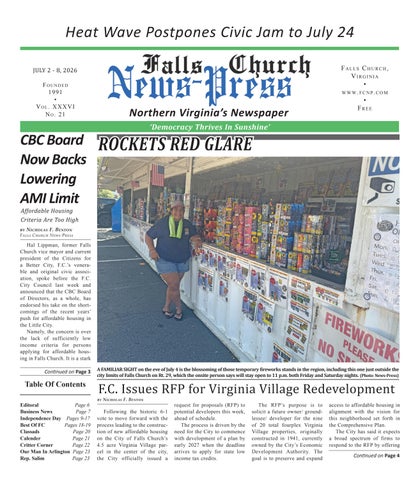
Hal Lippman, former Falls Church vice mayor and current president of the Citizens for a Better City, F.C.’s venerable and original civic association, spoke before the F.C. City Council last week and announced that the CBC Board of Directors, as a whole, has endorsed his take on the shortcomings of the recent years’ push for affordable housing in the Little City.
Namely, the concern is over the lack of sufficiently low income criteria for persons applying for affordable housing in Falls Church. It is a stark
Editoral Page 6
Business News Page 7
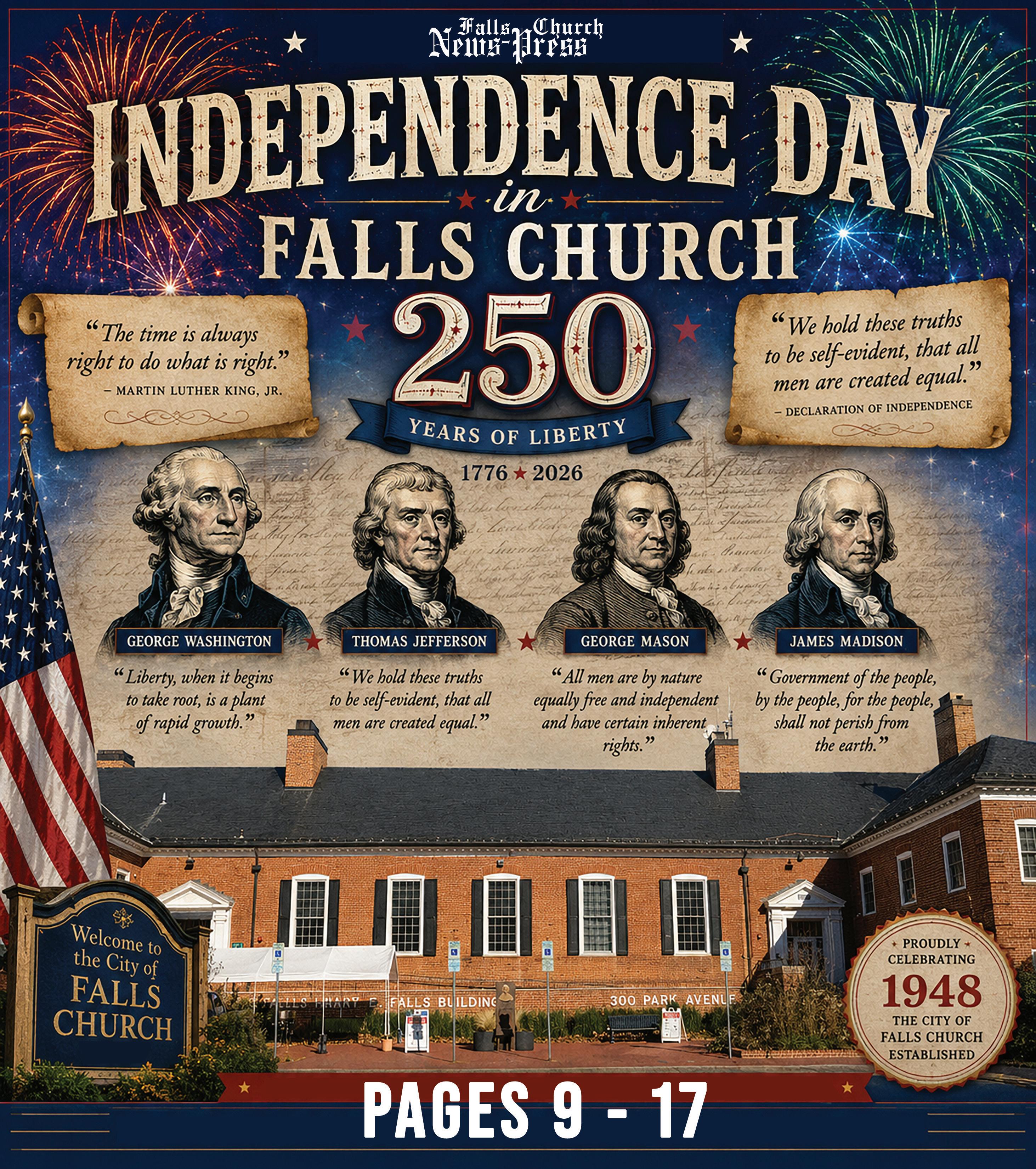
Independence Day Pages 9-17
Best Of FC Pages 18-19
Classads Page 20
Calender Page 21
Critter Corner Page 22
Our Man In Arlington Page 23
Rep. Salim Page 23
by Nicholas F. Benton
Following the historic 6-1 vote to move forward with the process leading to the construction of new affordable housing on the City of Falls Church’s 4.5 acre Virginia Village parcel in the center of the city, the City officially issued a
request for proposals (RFP) to potential developers this week, ahead of schedule.
The process is driven by the need for the City to commence with development of a plan by early 2027 when the deadline arrives to apply for state low income tax credits.
The RFP’s purpose is to solicit a future owner/ groundlessee/ developer for the nine of 20 total fourplex Virginia Village properties, originally constructed in 1941, currently owned by the City’s Economic Development Authority. The goal is to preserve and expand
access to affordable housing in alignment with the vision for this neighborhood set forth in the Comprehensive Plan.
The City has said it expects a broad spectrum of firms to respond to the RFP by offering
The Fairfax County Planning Commission has unanimously recommended approval of a rezoning application that would advance the redevelopment of the Cavalier Club property at 6200 Wilson Blvd. near Seven Corners.
The proposal calls for a new eight-story apartment building with 238 residential units and ground-floor retail space, a five-level parking garage, and the retention of the existing 12-story, 220-unit apartment building. The approximately 5.5-acre property spans both Fairfax and Arlington counties, with future townhouse development proposed for the Arlington portion of the site.
The Planning Commission’s recommendation now moves to the Fairfax County Board of Supervisors for final consideration. Because the property crosses county lines, plans for the Arlington portion of the redevelopment will require a separate review and approval process.
According to the ranking released this week, McLean had a 2024 average household income of $379,689. The average home value is $1,701,866 as of January 1, 2026. The 2014 average income was $265,588, and the home value was not listed.
Other NoVA suburbs on the list include Vienna and Fort Hunt. Vienna was not on the 2014 list, but it now ranks No. 42. The area has an average 2024 household income of $287,108 and an average home value of $1,166,090.
Fort Hunt previously ranked at No. 34, but 10 years later is at No. 50. The area had an average 2024 household income of $270,002 and an average home value of $962,861 as of January 1. In 2014, the average income was $178,684, and the average home value was $1,127,721.
Scarsdale, New York, retained the No. 1 spot on the list for the wealthiest suburb in both 2014 and 2024. The area has a 2024 average household income of $612,591, as compared to $365,996 in 2014. West University Place, Texas, ranked No. 2, and Rye, New York, ranked No. 3.
Yesterday, key members of the Virginia General Assembly representing Virginia’s 8th Congressional District endorsed Don Beyer’s reelection campaign, supporting
his continued leadership on behalf of Northern Virginia.
The endorsing members of the General Assembly are: Senator Scott Surovell (SD-34), Senator Dave Marsden (SD-35), Senator Jennifer Boysko (SD-38), Senator Elizabeth Bennett-Parker (SD-39), Senator Barbara Favola (SD-40), Delegate Patrick Hope (HD-1), Delegate Adele McClure (HD-2), Delegate Alfonso Lopez (HD-3), Delegate Charniele Herring (HD-4), Delegate Kirk McPike (HD-5), Delegate Rip Sullivan (HD-6), Delegate Marcus Simon (HD-13), Delegate Vivian Watts (HD-14), Delegate Paul Krizek (HD-16), Delegate Garrett McGuire (HD-17), Delegate Kathy Tran (HD-18), and Delegate Rozia Henson (HD-19).
“I’m honored and grateful for the support from colleagues who know our communities so well and share my commitment to delivering results for Northern Virginia,” said Congressman Beyer. “I’ve been fortunate to work alongside these public servants to improve the lives of Virginia families by lowering costs, strengthening our economy, and expanding opportunities to ensure everyone has a fair shot at success.”
Jeff McKay, chair of the Fairfax Board of Supervisors, issued the following statement this week:
“Our region is currently experiencing ongoing drought conditions, with below-normal rainfall affecting regional water supply conditions. County staff are monitoring conditions closely in coordination with Fairfax Water and regional partners to ensure continued reliability of the Potomac River drinking water system, which serves more than 2.2 million residents in Northern Virginia.
“Fairfax County’s response follows the long-established Metropolitan Washington Council of Governments (MWCOG) Water Supply and Drought Awareness Response Plan, which guides coordinated, science-based action across the region.
“Fairfax County recently communicated with the Commonwealth regarding drought planning and water supply management. In a letter to Governor Spanberger, the County expressed support for Fairfax Water’s request that any statewide drought emergency declaration appropriately account for the regional MWCOG framework and the unique operational characteristics of the Potomac River system.
“This action is focused on protecting drinking water reliability for residents and ensuring consistency with long-standing regional water supply planning.
“Residents are encouraged to use water wisely, including limiting outdoor watering and fixing leaks where possible.”
Continued from Page 1
but important critique.
Lippman, speaking on behalf of the CBC board, said, “In my statement last month I expressed concerns based on the 2021 joint League of Women Voters/CBC series of forums on affordable housing in Falls Church. As I noted then the two basic themes of those three forums were the issues of economic and racial diversity, which over the years the City’s efforts had been unsuccessful in realizing.
“After further due diligence since then (attending work sessions, the walk around, and other public events, and carefully reviewing the RFP and other relevant source documents), my initial concerns still appear to be warranted.
“Let me explain why by sharing some significant data points that underlie these concerns,” he stated. “Over the
past 20 years, excluding 132 long-existing affordable housing units at the Fields and Virginia Village, the City has brought 204 units into its inventory, of which 189 (88%) have been at between 60% and 80% AMI (Area Median Income).
By way of comparison, in 2021 when the League and CBC held the joint forums the AMI was slightly under $130,000, which at the 60% level for a family of four was almost $80,000. Now the AMI for a four-person household is $163,900, which at the 60% level is $98,340 for four persons, 78,672 for two, and $68,838 for one.
“What does this all mean in terms of the City’s failure to address economic and racial diversity?” he asked. “Just 3% of rental properties in our City are at 40% AMI (currently, $65,560 for four persons and $52,448 for two) and about one-third of current waiting list applicants are at an AMI
of 30% or below ($49,170 for four persons and $39,336 for two). In this regard, incomes of lower wage earners are particularly important, including for example: hotel workers ($33,000-$46,000); retail workers ($34,000-40,000); house cleaners ($34,000-40,000); and janitors ($35,000).
“Hourly employees, such as kitchen staff, fast food workers, baristas, and servers/waitstaff are all in the $13-$17.00 range (which, if full time and excluding tips, amounts to about $30,000). Clearly, based on the dominant 60% - 80% AMI pattern over the past 20 years these and other such lower income wage earners have not been the focus of City affordable housing efforts.
“Furthermore, over the past 20 years the percentage of African American residents has remained in the 4-5% range (currently 4%). In effect, among other things, the City
failed to confront the legacy of the long ago actions taken by the then Falls Church Town Council to ‘retrocede’ roughly one-third of its territory back to Fairfax County….to reduce the influence of Black voters in local elections. “To sum up,” he stated, “I believe the City has never focused adequately on the essential issue of bringing about a more racially and economically diverse community. Our wonderful Little City remains among the least racially diverse communities in the region and an economically restrictive communi -
ty for lower income people of color and others in similar wage-earning circumstances.
“Accordingly, I’d like to recommend some changes in the RFP being considered tonight: on pp. 15-16, item 2-A, change ‘30-80% AMI’ to ‘30-60% AMI’; 2-B, change ‘50%’ to ‘30%’; 2-C, change ‘most of the 80% AMI units’ to ‘many of the 60% AMI units’ and on p.16 item 1, change ‘50% AMI’ to ‘30% AMI.’ If the Council is unable to consider these AMI level recommendations tonight, I respectfully request that they be addressed in the near future.”
the Council will make a final decision on the preferred team in the fall.
creative solutions to help achieve the City’s affordable housing objectives.
Firms interested in learning more and submitting a response to the RFP are invited to participate in the following: Deadline for Questions: Monday, July 13, 2026 ; Virtual Pre-Proposal Conference: Tuesday, July 21, 2026 ; Guided Site Tour (weather dependent): Wednesday, July 22, 2026 ; RFP Proposals Due: Thursday, August 6, 2026; Evaluation of Proposals: August / September 2026, and Selection of the top ranked firm: Fall 2026
The bid process, PDF submissions, and all communications or inquiries must be emailed to Purchasing@fallschurchva.gov. Prospective bidders are invited to view the full Request for Proposal at: fallschurchva.gov/Bids
An Evaluation Committee, supported by the City’s real estate consultant Jones Lang LaSalle, will make its recommendations to the City Council in early September. It’s anticipated that
The City Council voted to authorize the issuance of the RFP at its marathon Monday, June 22, meeting by a 6-1 vote. The RFP process follows months of public input and consideration on the desired future of the Virginia Village neighborhood and how best to preserve and potentially expand access for affordable housing on the City Economic Development Authority (EDA) owned properties, according to a City statement.
The content of all RFP submissions will remain private pending the selection of a final winner, though submitters are invited to provide a general executive summary of their plans that will be made public as they are received.
At the June 22 meeting the Council voted to limit the height of the buildings to six stories. But the first reading of the RFP ordinance it OK’d could still be amended by its final adoption this fall.


“Our
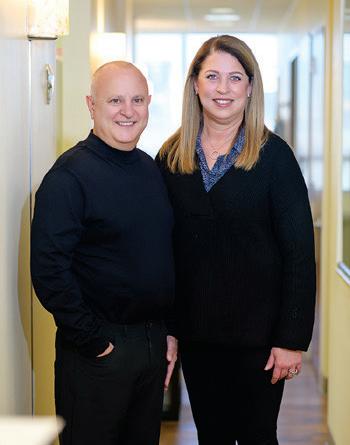
Drs. Love and Miller provide a family practice with special emphasis on healthy and beautiful smiles for adults and children. Both doctors graduated from the Medical College of Virginia and have been practicing together in Falls Church for over 25 years.
Drs. Love and Miller, along with our amazing team, greatly appreciate the community’s trust and support.


6,
The City of Falls Church has issued a Request for Proposals (RFP) for the Virginia Village Affordable Housing Opportunity. The RFP’s purpose is to solicit a future owner/ groundlessee/ developer for the Virginia Village properties currently owned by the City’s Economic Development Authority.
For more information on the Virginia Village project, visit: fallschurchva.gov/VirginaVillage.
Learn more and respond to the RFP:

Only City owned properties are being considered; privately owned buildings on the Virginia Village site are not part of this effort, and the City is not using eminent domain to acquire additional lots. Past acquisitions and transfers were voluntary.


any
Since 1991, an award-winning LGBT-owned general interest community newspaper.
Vol. XXXVI, No. 21 JULY 2 - 6, 2026
• City of Falls Church ‘Business of the Year’ 1991 & 2001 • • Member, Virginia Press Association •
Nicholas F. Benton Owner & Editor-In-Chief nfbenton@fcnp.com
Nick Gatz Managing Editor ngatz@fcnp.com
Sue Johnson Advertising Sales sjohnson@fcnp.com
Amy Bowker Copy Editor
Circulation delivery@fcnp.com
To Contact the News-Press
phone: 703-532-3267
email: fcnp@fcnp.com display advertising sjohnson@fcnp.com 703-587-1282 classified & Legal ads classads@fcnp.com letters to the editor letters@fcnp.com News & Notes newsandnotes@fcnp.com Obituaries obits@fcnp.com subscriptions distribution & delivery delivery@fcnp.com
www.fcnp.com
The News-Press is certified by the Commonwealth of Virginia to publish official legal notices including probate, abc notices, small and foreign estates. We will provide the appropriate paperwork. A comprehensive book on the 36 year history of the News-Press, “The Life and Times of the Falls Church NewsPress”: by Charlie Clark (History Press, 2023), can be purchased at local bookstores or online. The Falls Church News-Press is published weekly on Thursdays and is distributed free of charge throughout the City of Falls Church and the Greater Falls Church area to over 140 locations. Offices are at 105 N. Virginia Ave., #310, Falls Church, VA 22046. Reproduction of this publication in whole or part is prohibited except with the written permission of the publisher. ©2025 Benton Communications Inc. The News-Press is printed on recycled paper. A searchable archive of all issues of the Falls Church News-Press since 1991 can be found at bit.ly/44kt6Sc.
The nation’s elderly population is about to explode, and no one is building enough facilities to house them as they age, setting the stage for a senior housing affordability crisis, according to an article in this week’s Bisnow report.
The nation’s age 85-plus cohort is projected to reach nearly 16 million by 2045, an increase of about 125% from last year’s numbers, according to the Census Bureau. The mean age Americans enter senior housing is 84, according to a 2024 study published by JAMA Internal Medicine.
Yet construction is slowing. Just 16,423 senior units were under construction last quarter, the smallest pipeline since 2012, according to National Investment Center for Seniors Housing & Care data provided to Bisnow. Given the skyrocketing demand for senior housing, the sector’s muted construction pipeline has left experts concerned.
The lack of new supply is pushing rents up. Average rents reached $5,479 at the end of last year, up 28% from Q4 2020 and 50% from Q4 2015, according to JLL.
Wall Street has noticed. Investors spent $12.1B on senior housing real estate in the first three months of 2026, the most of any quarter in at least 20 years, according to MSCI data provided to Bisnow. Over the past 12 months, senior housing was the second-most-active property asset class, behind only data centers.
According to reporting by Bisnow, industry executives say the pool of investors pursuing senior housing assets has expanded significantly, with buyer interest increasing markedly over the past six to nine months compared with roughly 18 months earlier, reflecting renewed confidence and investment in the sector.
Senior housing is a wide-ranging sector. The level of care ranges from almost none at independent living communities designed for active residents to round-the-clock medical support at nursing homes and memory care facilities.
Seniors between 75 and 84 making between $25K and $74K annually often make too much to qualify for federal support like Medicaid but still can’t afford private senior housing or long-term care, according to NIC.
About 90% of retirees rely on their Social Security checks, according to a 2025 Transamerica Center for Retirement Studies report. More than 50% of them consider it their primary source of income. The average monthly Social Security payment of just over $2K pales in comparison to the $5,479 average rent for a senior housing unit.
More than 17 million Americans aged 65 and older are living at or below the federal poverty level and considered economically insecure, according to a 2024 National Council on Aging report. On top of that, those in need of assisted living — which can include memory care and help with daily tasks — can’t pay for it all with federal health insurance like Medicare and Medicaid.
Yet in neighborhood after neighborhood, opposition to workable solutions abound as existing residents cling to old rules of housing and zoning.
1. Keep the news clean and fair.
2. Play no favorites, never mix business and editorial policy.
3. Do not let the news columns reflect editorial content.
4. Publish the news that is public property without fear or favor of friend or foe.
5. Accept no charity and ask no favors.
6. Give ‘value received’ for every dollar you take in.
7. Make the paper show a profit if you can, but above all keep it clean, fearless and fair.

Grocery Outlet is participating in the corporation’s National Independence from Hunger campaign and owner Prince Wafa has selected Food for Others as their local recipient through July 31. The community is invited to attend a casual reception on Monday, July 6 at 11 a.m. to learn about the Independence from Hunger campaign, why it matters, and how the partnership with Food for Others will support local families facing food insecurity. There are also options to participate as a business, volunteer, family, or sponsor a match day. There is no cost and there will be light refreshments and a camera crew for marketing purposes.
The City of Falls Church has not changed most permit fees since 2016, so this is a significant change. Most fees are increasing approximately 35%, although there are some reductions, and some fees will remain unchanged. Guidance on the new fee structure, projects, and other changes can be found online at: https://fallschurchva.gov/permitfees?ct=t(FocusOnFCJan9_COPY_01)
The 2026 General Assembly session produced a sweeping package of new employment-related legislation. With many provisions taking effect yesterday, July 1, businesses across the Commonwealth must prepare for changes affecting hiring practices, workplace policies, compliance obligations, and litigation risk. Members of the Falls Church Chamber of Commerce may contact the office to participate in a July 7 virtual session to learn more about pay transparency, noncompete restrictions, class actions, paid sick leave, paid family and medical leave, and expanded wage liability. While a new paid family and medical leave program has been approved, contributions from employers and employees won’t begin until April 1, 2028, and the benefits won’t begin until December 1, 2028. The minimum wage will go up on January 1, 2027.
A major change is coming in 2026 that may affect employee retirement savings options and administrative responsibilities for small businesses in Virginia. Beginning July 1, 2026, eligible Virginia businesses will receive an initial notice outlining the requirement to either offer their own qualified retirement plan, certify an exemption, or register for RetirePath Virginia, the state’s automatic-enrollment individual retirement account (IRA) savings program. RetirePath eligibility drops from 25 employees to 5 and now includes part-time employees. Those wishing to use RetirePath will not incur fees or administrative burdens and may find hiring and retention easier by offering retirement savings options.
Wine Spectator has released its 2026 Restaurant Awards with Trio Restaurant in Falls Church among the Northern Virginia restaurants to make the list for their wine program. The Inn at Little Washington (in Washington, Virginia) once again made the list. They are the only Virginia restaurant to receive the Grand Award, the top honor, which was bestowed in 1995. This year, 4,012 restaurants across the globe were recognized for their wine and hospitality.
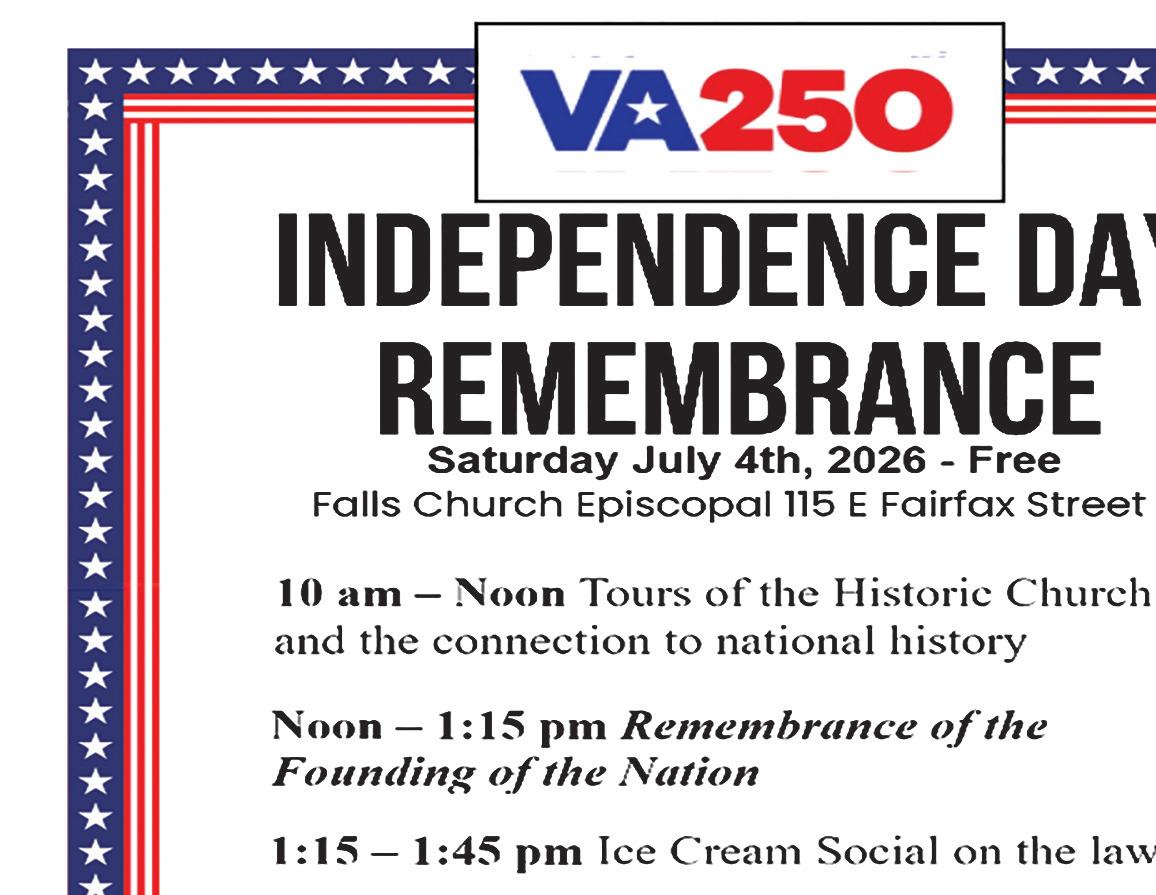
For those still planning their Fourth of July events, VA250 has a tool kit and resources to assist you. Visit them online to learn more: https://www.va250.org/fourth-of-july-toolkit/ .
Business News & Notes is compiled by Elise Neil Bengtson, Executive Director of the Greater Falls Church Chamber of Commerce. She may be emailed at elise@fallschurchchamber.org.


for
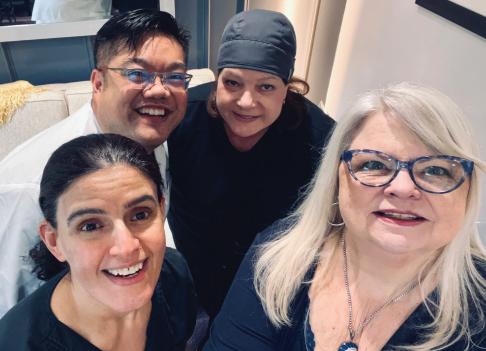
We are deeply honored that Falls Church has recognized all our hard work. We look forward to welcoming you to our family.

Nicholas F. Benton
FALLS CHURCH NEWS-PRESS
Those of us still around who recall the events of 1952 know that it was a very contentious presidential election year, really the first in the post–Roosevelt era when no one from that administration was on the ballot for the first time in two decades.
Enemies of Roosevelt’s New Deal, including Social Security and its many other reforms, believed they finally had their chance to dismantle those policies. They were disappointed. Although Harry Truman had succeeded Roosevelt as president, neither his administration nor Republican nominee Gen. Dwight D. Eisenhower had any intention of undoing the core achievements of the New Deal.
Truman’s speeches in the fall of 1952 assailed the right wing’s charges that the policies of FDR were “socialist,” stiff charges in the wake of the then thriving Cold War with the Soviet Union.
These days, in the hands of MAGA Trumpians, the words have been revived. It remains to be seen if they are repudiated in the same way they were more than a half-century before. Some signs these days are encouraging.
In 1952, many of Truman’s speeches were delivered from the back of the train in which he rode across the country.
In one speech, delivered in Syracuse, New York, on Oct. 10, he began by intoning, “I have been traveling for two weeks now, through about 20 states. I have seen a lot of this country, and I can tell you this great nation of ours is in good shape. Never has there been as much growth or so much activity as there is today. That is true up and down this land of ours, just as it is here in this great state of New York.
“Private enterprise is confident of the future. Large and small businesses are enjoying good profits. Their customers have money, because we have good farm prices and good wages, and steady jobs for all who want them.
“We have almost forgotten that there can be such things as mass unemployment, bank failures, dollar-a-day wages, and 30-cent wheat.
Those things have long been banished, along with the Republicans who brought them upon us.
“Now, what is the reason for this confidence and this prosperity? It is very, very simple. The programs of the Federal Government in the past 20 years have made America a land of individual security, and at the same time a land of tremendous opportunity.”
During the 1952 presidential campaign, President Truman delivered a series of sharp, public rebuttals against conservative critics who labeled his administration’s policies as “socialism.”
He sought not only to defend the accomplishments of the New Deal and Fair Deal but also to dismantle what he viewed as a politically motivated smear campaign. In doing so, Truman provided a defining critique of how the label of “socialism” is often weaponized in American political discourse to stall social and economic progress.
Truman’s most famous articulation of this argument occurred during his Syracuse speech. He bluntly characterized the word “socialism” as a “scare word” employed by the Republican Party to frighten voters away from progressive governance.
According to Truman, the opposition routinely applied this label to “every advance the people have made in the last 20 years.” He systematically listed the cornerstone achievements of modern American society that had once been decried as socialist nightmares: Social Security, bank deposit insurance, farm price supports, free public power projects, and the legal recognition of labor organizations.
Truman’s defense of social safety nets was not an endorsement of Marxist ideology or state control of production. Instead, he framed these programs as essential stabilizers that protected and enhanced the American capitalist system.
He pointed out the irony of his critics’ fears by highlighting the unprecedented economic prosperity of the post-WWII era. Under his administration, both large corporations and small businesses were enjoying record-breaking profits. Truman asserted that by providing citizens with a baseline of economic security, the government was actually fostering a healthier environment for private enterprise to thrive.
True capitalism, in Truman’s view, required a healthy, secure populace capable of participating fully in the marketplace.
By Penny Gross Former Fairfax County Supervisor
On July 4, 1976, my husband and I took our three-year-old daughter and a picnic basket to a grassy hill overlooking the Pentagon. The severe white headstones of Arlington Cemetery created a solemn backdrop to the northwest; the old Navy Annex was behind us, and the view across the Potomac River was expansive. The first leg of Metro’s Red Line, from Rhode Island Avenue to Farragut North, had opened three months earlier. The Pentagon City Mall would open 13 years later, followed by the Air Force Memorial in 1992. The spaghetti-like highway corridor, the original “Mixing Bowl,” created a steady thrum of motor vehicle noise which could be heard above the oohs and aahs of the fireworks audience.
We joined hundreds, perhaps thousands, of others who settled in for a warm summer evening of fireworks celebrating the Bicentennial of the nation. It’s doubtful that any of us watching from that lofty location thought about fifty years in the future. Gerald Ford was president, inflation was high following the oil crisis of 1973, and we still were recovering from
the after-effects of the Watergate scandal. J.D. Vance’s recent comments about Richard Nixon and Watergate being a 12-hour news story if it happened today are simply wrong. It was a constitutional crisis that left an indelible stain on our national psyche. On that summer evening, all simply were Americans. Not Democrats or Republicans; no loudspeakers or banners supporting some political position or another. No yelling or crude epithets back and forth. Patriotic unity, not partisan division, at least for one evening. The biggest challenge for the celebration probably was the long line of vehicles inching out of the parking area afterward.
The semiquincentennial (a scholarly word for a 250th anniversary) America will observe on Saturday shares some similar history. Many Americans are facing a struggling economy, gasoline prices are high, and unprosecuted presidential scandals dominate daily news headlines. Americans are more polarized and political divisions creep into areas that previously were sacrosanct. Red and blue are basic shades on a
Week of JUNE 22 - 28, 2026
Unlawful Entry, West Falls Station Blvd, Jun 23, 1:16 p.m., victim reported two recently fired employees utilized a key lockbox to enter the business after hours.
Larceny from Vehicle, Wilson Blvd, Jun 23, between 3:00 p.m. and 3:30 p.m., an unknown suspect stole a camera sitting in plain sight from the victim’s unlocked and running vehicle.
color wheel; now they can denote the politics of a person, a jurisdiction, a philosophy, sometimes even a faith. Some partisans use the American flag as a cloak, proclaiming that they are more patriotic than their perceived foes.
In 1976, the United States population was estimated at 215 million; today there are 341 million people sharing our borders and territories. Not only has our population increased by 136 million, it has broadened our ethnicities, customs, cultures, and faiths.
The Ellis Island “melting pot” has become a colorful quilt of intricate patterns and stitches, often familiar, sometimes strange, but always extraordinary, reflecting the promise of America, then and now. That’s what we should build on – the freedoms, the opportunities, the hope, humanity and respect enveloped in our founding documents. The landscape of America has changed immensely since Thomas Jefferson and the Founding Fathers composed those documents, but the basic tenets of life, liberty, and the pursuit of happiness have not. Patriotism is defined as “love of and devotion to one’s country.” It doesn’t say “but only if you think the same way I do.” There is room in our great nation for many thoughts and ideas; there needs to be room in our heads for the same.
Happy Birthday, America!
tim’s black 2015 Ford Fusion that was left unlocked with the keys inside. The suspect also took the victim’s credit card and made multiple unauthorized transactions
Larceny, S Washington St, Jun 27, 12:44 p.m., an identified suspect stole the victim’s wallet when it fell out of the victim’s pocket. The wallet was later recovered.
Reckless Driving, Hillwood Ave, Jun 25, 5:12 p.m., a female, 47, of Fairfax County, was arrested for reckless driving.
Other Jurisdiction Warrant Service, Roosevelt Blvd, Jun 26, 2:14 a.m., a male, 46, of Annandale, was arrested on an outstanding warrant for another jurisdiction.
Theft of Motor Vehicle/Credit Card Theft/
Driving on Revoked License, S West St, Jun 25, 10:10 a.m., a male, 47, of Fredericksburg, was arrested for driving on revoked license.
Fraud – Credit Card, Berry St, between 4:00 p.m. on June 26 and 10:54 a.m. on June 27, an unknown suspect stole the vic -
Domestic Assault and Battery, S Washington St/W Annandale Rd, Jun 27, 1:36 p.m., victim reported being assaulted by their girlfriend.
Shoplifting, S Washington St, Jun 27, 5:28 p.m., an unknown suspect stole merchandise. The unknown suspect is described as a Hispanic male wearing a black oversized Dickies T-Shirt, long blue denim shorts, black sneakers and a Nike baseball cap.
BY NICK GATZ FALLS CHURCH NEWS-PRESS
Anyone who has walked or biked along the W&OD Trail in recent months has likely noticed the changes at American Legion Post 130.
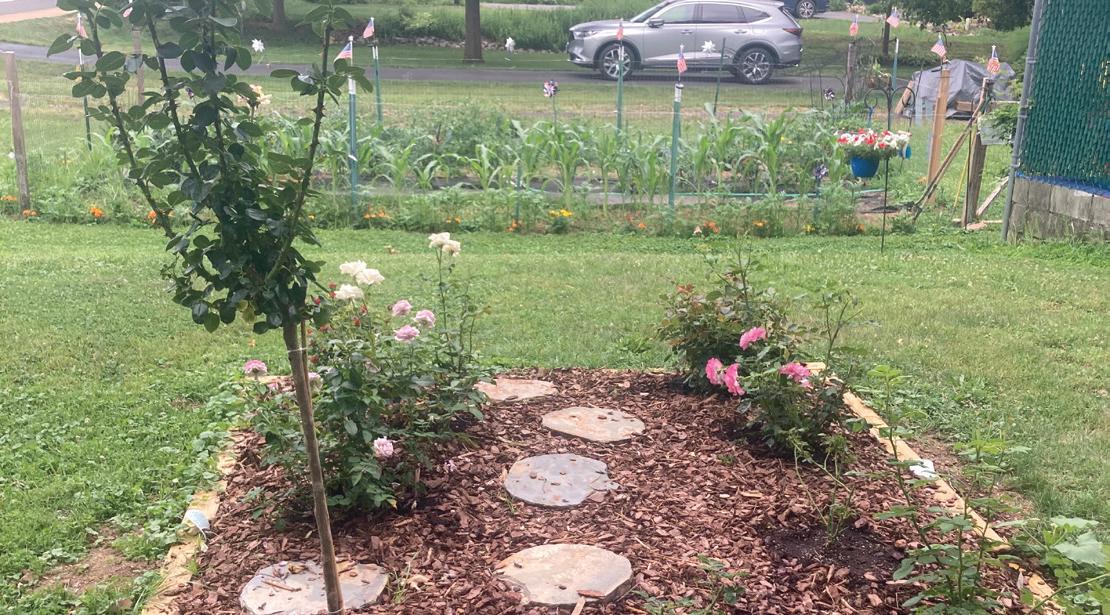
A new fence, colorful rose gardens, and a 100 percent organic Victory Garden reflect a beautification effort that began in April and has been driven by member contributions, volunteer labor, and a commitment to creating a more welcoming home for veterans, their families, guests, and the Falls Church community.
“A lot of our members have been with our Post for a number of years,” said Club Manager Tammy Brennan. “It’s become a second home to them and they want to ensure that it continues to grow and attract new members and their guests.”
Brennan said the projects grew from suggestions by members and staff eager to improve the property
and encourage greater involvement.
Among the most noticeable improvements is a new privacy fence along the W&OD Trail, replacing one that had deteriorated into an eyesore. A member volunteered to build the fence for the cost of materials alone.
“The new fence significantly improved the visual impact of our property along the jogging and biking trail,” Brennan said.
The Post also created two rose gardens featuring climbing, tea, and bush roses, along with a Peace Rose Tree and “Rocket’s Red Glare,” a commemorative rose bred for America’s 250th anniversary.
Brennan credited an anonymous couple with selecting the roses and doing much of the digging, soil preparation, and planting. Other volunteers, including Scott Smith, JD Johnson, Lee Vicars, Kenny Jenkins, Brennan, and many others, have also contributed.
The Post’s 100 percent organic Victory Garden, first planted last year and officially named

this year, honors the tradition of Victory Gardens. Produce is shared with members, while some is preserved to make sauce for the Post’s Christmas celebration.
“There have been way too many hours to count,” Brennan said. “This is an everyday project to keep the gardens pruned, watered, weeded, and loved.”
Brennan said the improvements have inspired additional projects while strengthening friendships among members and encouraging greater involvement.
“We’re seeing strengthening and enduring friendships among our members, guests, and visitors as our reputation as a welcoming Post continues to grow,” she said.
The Post will showcase its renewed grounds during its Fourth of July 250th Anniversary Celebration on Saturday, July 4, from 3 p.m. to midnight at 400 N. Oak St.
The public is invited to enjoy a barbecue, cornhole tournament, cash prizes, and a best dressed


patriotic outfit contest. Cornhole registration is $10.
“We always welcome the public and our neighbors to come to our events, enjoy the comradeship, and learn about our mission,” Brennan said.
As America celebrates its 250th anniversary, Brennan said the holiday carries added significance.
“We are all proud Americans and we love our Country. This is a big year for our country.”
She hopes neighbors see more
than landscaping improvements.
“We hope they notice that we are trying to improve our curb appeal and to stay up with the standards that they have all brought to this community,” Brennan said. “It shows that we care about the Little City and the beautiful area we live in.”
For anyone unfamiliar with the Post, her invitation is simple.
“We are your neighbors, brothers, and sisters and look forward to building new relationships with them all.”

















BY NICK GATZ FALLS CHURCH NEWS-PRESS
I’ve spent my entire life in Northern Virginia, but I didn’t grow up in Falls Church.
That distinction has given me a unique perspective over the past several years covering the Little City for the Falls Church News-Press. Like many who move here from elsewhere in Northern Virginia, I’ve come to understand that Falls Church is more than a place on a map. It is a community defined by civic engagement, volunteerism, and a genuine belief that local government works best when neighbors know one another, listen to one another, and participate together.
As America celebrates its 250th anniversary, that spirit seemed worth preserving.
Anniversaries invite us to look backward, but they also ask us to look forward. As America reaches its 250th
birthday, the Falls Church News-Press asked the people entrusted with leading our community, from City Council members to constitutional officers and other elected officials, to reflect on democracy, public service and the future they envision for both America and the Little City.
Vice Mayor Laura Downs and Council Member David Snyder are the first voices in this continuing series. Their reflections are presented largely in their own words, edited only for length and clarity. While their backgrounds and perspectives differ, both ultimately arrive at the same conclusion: America’s future depends on engaged citizens, strong communities, and a willingness to serve something greater than ourselves.
For Vice Mayor Laura Downs, America’s story begins with immigration and opportunity.
“My father was first generation, Italian American and my grandfather came from Italy and entered the US via Ellis Island. My grandparents only had an 8th grade education, but both worked hard to make sure my father attended a good high school and college. My father is an example of achieving the ‘American Dream.’”
Council Member David Snyder’s story begins generations earlier.
“Parts of my family have been here and defended the country in the Revolution, the Civil War, and WWII. My family also has been, and is currently, deeply involved in civic affairs, and our son-in-law is a veteran and daughter-in-law is on active duty.”
Though one family arrived through Ellis Island and another traces its roots through generations of military service and civic engagement, both see America as a country whose
story is still unfolding.
If their personal histories differ, their answers converge when discussing the foundations of American democracy. Both point first to the Constitution and the freedoms it protects while acknowledging that democracy requires continual stewardship.
Downs answered simply:
“I believe freedom of speech is our greatest strength.”
Looking back on American history, she pointed to expanding civil rights as one of the nation’s defining achievements.
“When thinking back on our history, fighting for equal rights for African-Americans, women, and LGBTQ+ individuals has to be one. I hope future generations continue to look out for the marginalized.”
Snyder emphasized constitutional principles and civic responsibility.
“Our greatest strength has
been our shared values of the rule of law and cooperation for the common good and for all of humanity.”
He believes today’s challenges make civic leadership even more important.
“We must have citizens and leaders at all levels of government and in the private sector who protect human rights and inspire productive cooperation here and abroad to improve the lives of everyone. When we adhere to these values, we succeed; when we do not, we fail.”
Those beliefs help explain why both chose public service. Though they arrived in elected office by different paths, each describes the work as rooted in listening, consensus and a commitment to civic life.
Downs’ path to elected office began in education. She said her experience as an education professional inspired her
Continued on Page 17






BY AMY BOWKER FALLS CHURCH NEWS-PRESS
If you think you’ve seen everything there is to see at the Lincoln Memorial, you’re in for a nice surprise. Beneath the monument to our nation’s sixteenth president lies a 15,000-square-foot exhibit space, never before open to the public and now filled with artifacts from the construction of that venerable structure, which opened in 1922.
The exhibit space is part of the Lincoln Memorial Undercroft, an area that covers 43,800 feet and supports the Lincoln Memorial with 122 arched columns. The museum space is the result of a $69 million project announced in 2016 as the joint venture of the National Park Foundation, the National Park Service, and private donors.
The intention of this museum is to educate the public on the construction and craftsmanship of the Lincoln Memorial, as well as the historical significance of the site over the past decades. Notably,
visitors will find multimedia presentations that pay homage to the memorial’s role in American history and civil rights, including Marian Anderson’s concert in front of the Lincoln Memorial in 1939 where she sang “My Country ‘Tis of Thee” to an estimated crowd of more than 75,000 people.
The Undercroft museum opened to the public for the first time on June 25. Visitors form a line near the Vietnam Veterans War Memorial and are led by a ranger to the undercroft entrance near the base of the memorial. Ticketholders then go through an airport-like security screening as they make their way into this cavernous space.
The treasures you’ll find in the Undercroft include an exhibit on the construction of the Lincoln statue with a photo of workers standing next to the statue-in-progress, as well as prototypes of Lincoln’s hands, his head, and a miniature replica of the entire statue. It’s fascinating to glimpse behind the scenes information on how the statue was
designed and carved.
The Undercroft museum space features many unique objects linked to the construction of the memorial, with one particular artifact even taking up space on the restroom wall – namely, a rendering of drawings and words scrawled by the workers during the construction of the memorial.
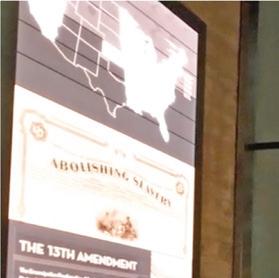
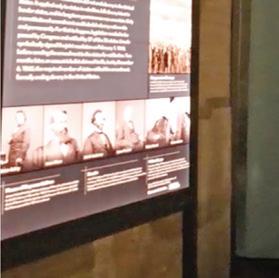
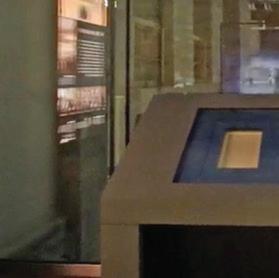
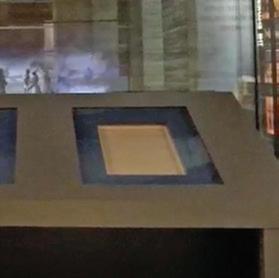
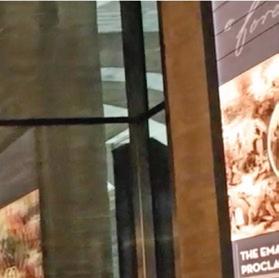
Visitors to the Undercroft will also find on display a copy of the 13th Amendment that outlawed slavery and was passed by Congress in 1865, and Lincoln’s 1863 Emancipation Proclamation that declared freedom for people enslaved in Confederate states and paved the way for Black men to join the Union Army and Navy.
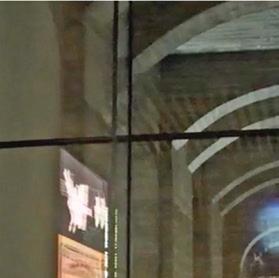
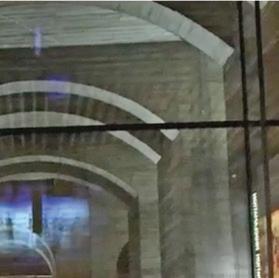
The museum space is a design triumph all its own with vaulted ceilings and a theater area where archival films are projected on the walls and columns. A floorto-ceiling glass wall allows visitors to peek into the depths of the vast undercroft where visible
concrete pillars stretch 50 feet high. This new public space also includes an expanded bookstore where visitors can stock up on volumes related to the memorial.
The Lincoln Memorial was designed by architect Henry Bacon and constructed by the U.S. Army Corps of Engineers beginning in 1914. Sculptor Daniel Chester French is credited with the design of the famous Lincoln statue, which was carved by the six Piccirilli brothers.
Reservations for timed tickets
to the Undercroft are required. The tickets are free, with a $1 service fee, and can be reserved online up to 30 days in advance. Additional tickets are released online at 4 p.m. each day for tours on the following day. Same day free tickets are available in person at the Korean War Veterans Memorial kiosk on a first-come, first-serve basis. For more information and to view a list of items that are prohibited in the museum, visit recreation.gov or call 877-444-6777.
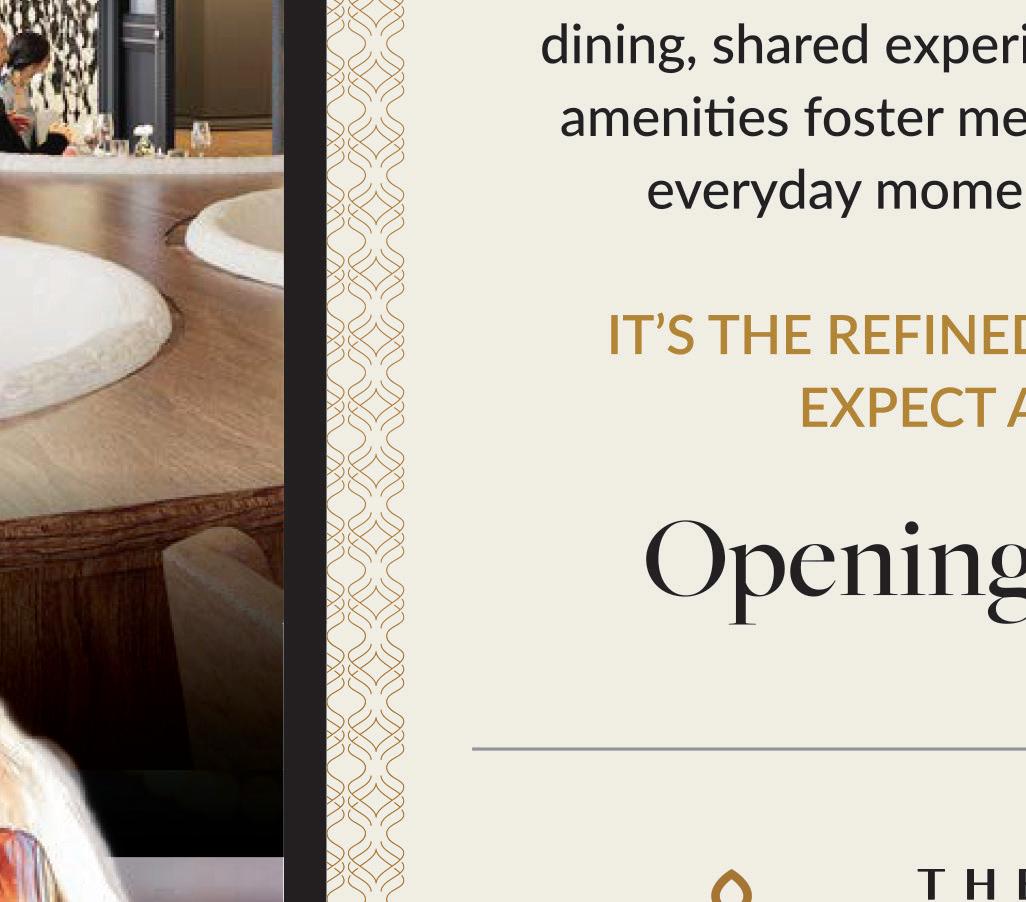
Check all your senior living boxes with a one-and-done move to Brightview Woodburn.

BY NICK GATZ FALLS CHURCH NEWS-PRESS
This summer, as America celebrates its 250th birthday, the world also came to watch us. The FIFA World Cup has become far more than a sporting event. It has become a mirror, reflecting not only the country we are but the country we continue striving to become. For a few remarkable weeks, millions of visitors have filled American streets wearing jerseys from nations separated by oceans, languages, religions, and politics. Yet inside stadiums and city squares, those differences have become reasons to celebrate rather than divide.
For 250 years, this nation has wrestled with the promise contained in its founding documents. We have never fully achieved the ideals of liberty and equality, but each generation has pushed the country closer to becoming what it claimed to be in 1776. The American story has never been one of perfection. It has been one of expanding opportunity, broadening rights, and extending the promise of freedom to more people.
Perhaps no country has captured that spirit more beautifully than Cape Verde.
With a population of just over half a million, the island nation arrived at its first World Cup with little expectation beyond competing. Instead, it became one of the tournament’s greatest stories, advancing to the knockout stage and proving that belief can overcome almost any odds. For Cape Verde, simply standing among the world’s elite became a victory worth celebrating.
Then came the moment that reminded me what this tournament is really about.
After one of the biggest performances of his career, goalkeeper Vozinha became emotional while explaining that his mother could not attend because of visa complications. For all the joy surrounding the greatest moment of his career, the seat he most wanted filled remained empty.
What happened next became my favorite story of this World Cup. People rallied and fans rallied. Community members organized. Public officials worked with urgency. Bureaucratic obstacles that often seem impossible suddenly became solvable because people decided a mother should be able to watch her son make history. Before long, she was on her way to the United States. That’s what communities do when they’re at their best.
The story was never really about a visa. It was about refusing to let paperwork become the final chapter. It was about strangers deciding someone else’s joy mattered enough to act. At a time when immigration and borders dominate political debate, it became a reminder that compassion can exist alongside security and that welcoming people does not diminish a nation. It strengthens us.
For me, that became the defining image of America’s 250th birthday.
It is also the America much of the world has experienced during this tournament. Despite concerns surrounding visas and political rhetoric before kickoff, host cities have welcomed visitors with remarkable enthusiasm. Whatever our disagreements may be, ordinary Americans have reminded the world that hospitality remains one of this nation’s greatest strengths.
The World Cup asks remarkably little of those who play it. Once the whistle blows, effort, discipline, teamwork, and heart become the only things that matter. Winning matters, but so does losing with dignity. Somewhere along the way, we have begun to lose sight of that distinction.
Competition has always fueled America’s success. It has driven innovation, entrepreneurship, scientific discovery, and athletic greatness. Increasingly, however, too many of our disagreements have become contests of humiliation rather than ideas. Political opponents become enemies, and success is measured not by what we build together but by how
completely we defeat the other side.
The World Cup offers a different example. Nations celebrate simply qualifying because representing your country on the world’s biggest stage is itself an achievement. There is dignity in competing, even if you never lift the trophy. Not everyone embraced that spirit.
Following Iran’s elimination from the tournament, Homeland Security Secretary Markwayne Mullin said he was glad the team was leaving the United States and joked that he had “danced a happy dance.” Whatever one’s views of the Iranian government, there is a difference between opposing a regime and celebrating the defeat of athletes.
A soccer team is not a government, and a player’s jersey is not a political manifesto.
The World Cup reminds us that fierce competition and mutual respect can exist at the same time. Players battle for ninety minutes, then exchange jerseys, embrace, and congratulate one another. Patriotism does not require humiliation. Loving your own country has never depended on celebrating another nation’s disappointment.
Perhaps that is why the story of Cape Verde has stayed with

me more than any scoreline or trophy.
Years from now, few people will remember every goal scored during this tournament. They will remember a small island nation reaching the knockout stage against overwhelming odds. They will remember a goalkeeper whose greatest wish was simply for his mother to be there. And they will remember a community that refused to let paperwork stand in the way of one of life’s most meaningful moments. It wasn’t just a soccer story. It was an American story not because it happened here, but because people chose compassion over division.
As America marks its 250th birthday, that may be one of the most important lessons this tournament has to offer. One absence during this remarkable summer, however, is impossible to ignore. As America celebrates its 250th birthday, Washington, D.C., the nation’s capital will not host a single World Cup match.
No one should pretend the reasons are simple. Stadium financing deserves serious debate, and taxpayers should always question public investment in professional sports venues. But this was never simply another sporting event. This was the FIFA World

Cup arriving during one of the most significant anniversaries in American history.
Imagine supporters from every corner of the globe walking the National Mall before heading to a World Cup match. For a few unforgettable weeks, Washington could have introduced millions of visitors not only to American history, but to the ideals that continue to define it. Instead, one of the greatest opportunities of America’s 250th birthday belonged to other cities.
While fans traveled across the country to follow their national teams, millions of Americans gathered much closer to home for parades, cookouts, concerts, and fireworks celebrating 250 years of independence. In many ways, those local celebrations and the World Cup honored the same idea: freedom is best celebrated together.
Maybe that is the lesson this remarkable summer has been trying to teach us.
The World Cup reminds us that we can compete fiercely without losing our humanity. We can love our country without diminishing another. We can welcome the world while remaining proud of who we are.




by Nick Gatz Falls Church News-Press
“Energy and motion made visible.”
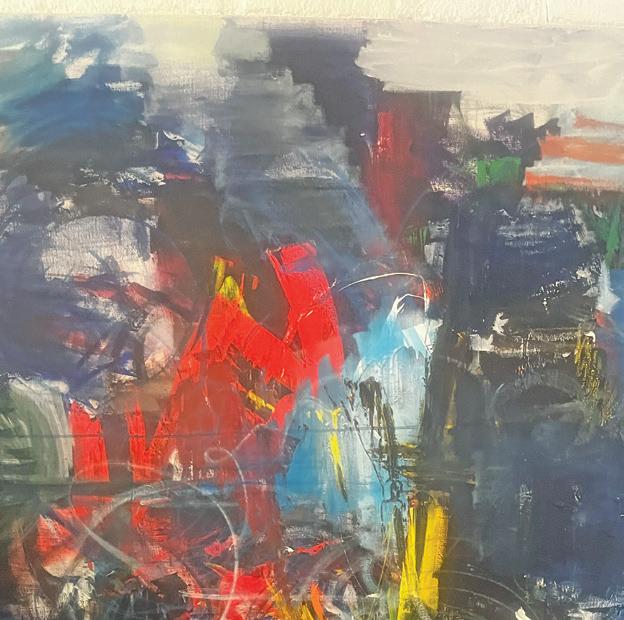
Jackson Pollock was speaking about painting, but as I wandered through the historic grounds of the Workhouse Arts Center during Red, White & Boom, I couldn’t help but think he may as well have been describing the campus itself. Some places simply have a pulse.
The Workhouse breathes with creativity.
It begins quietly inside century-old brick buildings before spilling into hallways, galleries, theaters, classrooms, and open courtyards. It finds its way into conversations between artists and visitors, into children discovering paint on their fingertips for the first time, into musicians performing for strangers who quickly become neighbors, and eventually into fireworks that paint the Virginia sky above buildings that have witnessed more than a century of American history.
Standing there, it’s impossible not to think about time.
These walls have seen joy and hardship. They have witnessed injustice and redemption. They have stood through wars, social movements, changing generations, and now something perhaps no one could have imagined when they were first built—a thriving community where creativity has
become the common language.
The Workhouse Arts Center sits on the grounds of the former Lorton Reformatory, a place that once housed thousands from Washington, D.C.’s correctional system. Among those who passed through these gates were violent offenders, young men whose lives had gone off course, people society often chose to forget, and women like Lucy Burns, whose imprisonment became part of the fight that secured voting rights for generations of American women.
It’s a heavy history. Yet somehow, it doesn’t weigh the campus down. Instead, it gives every brushstroke, every sculpture, every theater performance, every song, and every conversation a little more meaning.
The brick buildings themselves almost feel alive. Built from clay dug directly from this land and fired in the prison’s own brick kiln, they possess a craftsmanship that’s difficult to replicate today. Time has weathered them without diminishing them. If anything, the passing decades have only made them more beautiful.
Perhaps that’s what makes the Workhouse so remarkable. It didn’t erase its history. It transformed it.
Where confinement once existed, creativity now flourishes. Where voices were once silenced, artists now speak as loudly—or as quietly—as they choose.
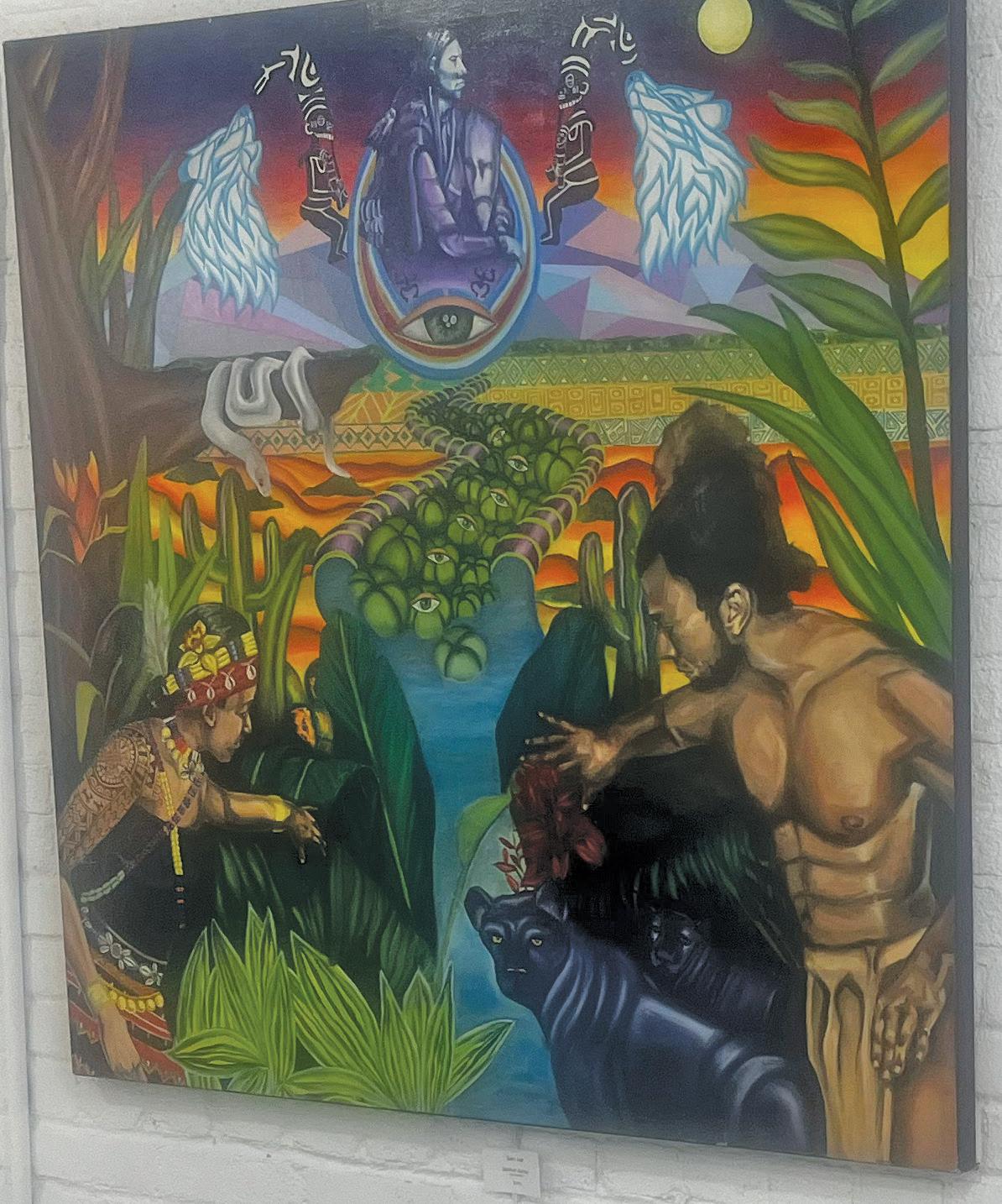
Former prison buildings have become studios where painters wrestle with ideas, photographers capture moments, fiber artists weave stories, glass artists shape light, ceramicists mold earth, and sculptors breathe life into raw materials. One room may hold bold contemporary works connected to artists who’ve collaborated with musicians like Cardi B. Another may feature peaceful watercolor landscapes that slow your heartbeat the moment you see them.
Every door opens into another perspective. Every artist offers another statement. Pollock once said, “Technique is just a means of arriving at a statement.” Walking through the Workhouse, I realized the campus itself is making one. Freedom.
Not simply the freedom we celebrate each Fourth of July, but the quieter freedom to create, to question, to remember, to heal, and to imagine something different than yesterday.
Outside, children laughed as they made their way through an art-themed miniature golf course. Families shared meals from local food vendors. Friends settled into lawn chairs waiting for darkness to arrive. It felt like the America many of us hope never disappears—neighbors gathered together without hurry, celebrating not just a holiday, but each other.
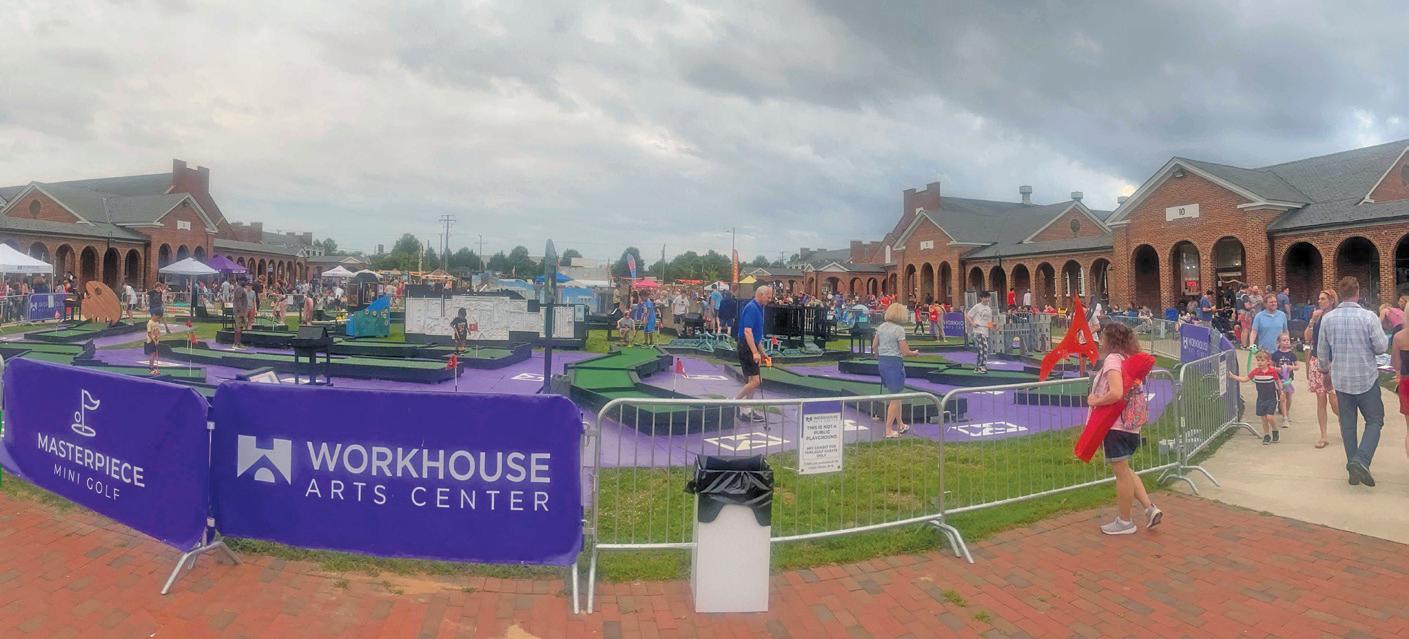
Then came the fireworks. As brilliant colors exploded above the old brick buildings, I found myself looking down almost as often as I looked up. Those walls have witnessed so much. And somehow, after all these years, they now reflect light instead of casting shadows.
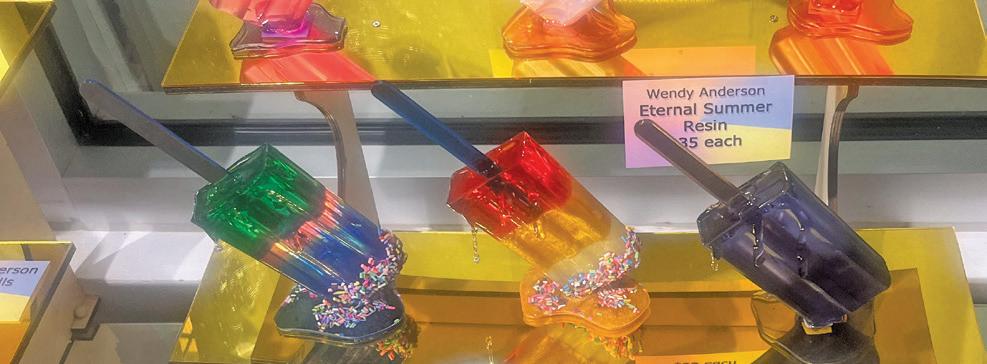
Before leaving, I wandered back through the artist studios one last time. One thing became immediately clear: the Workhouse Arts Center isn’t reserved for seasoned collectors. Original artwork begins around $25, while museum-quality pieces reach into the tens of thousands of dollars.
Whether you’re searching for a birthday gift, a painting for your living room, or a once-in-a-lifetime investment, you’ll likely find something that speaks to you.
More importantly, you’ll know exactly who created it.
In a world filled with mass-produced everything, there’s something deeply satisfying about buying directly from the artist whose hands shaped the work. Every purchase helps sustain a living creative community while bringing home something that can never truly be duplicated.
The Workhouse offers far more than galleries. Throughout the year visitors can experience live theater, concerts, hands-on glass classes, educational workshops, children’s summer camps, and the Lucy Burns Museum, where the

site’s complex history is preserved rather than forgotten. One of the best opportunities to experience it all is the monthly 2nd Saturday Open House & Art Walk, held on the second Saturday of every month from 11 a.m. to 9 p.m.
The campus continues that conversation with “How to Cage a Butterfly,” an exhibition by acclaimed artist Halim Flowers, with a public reception on July 11 from 6 to 8 p.m. Flowers spent more than two decades incarcerated before becoming an internationally recognized artist. His work, displayed inside a former prison transformed into an arts center, feels less like coincidence and more like destiny. His story mirrors the story of the Workhouse itself—a reminder that neither people nor places should forever be defined by their darkest chapters.
Maybe that’s what stayed with me long after the fireworks ended.
The greatest transformation at the Workhouse Arts Center isn’t found in a painting, a sculpture, or even the spectacular fireworks display. It’s the campus itself. A place once built to limit freedom has become a place where freedom of expression is celebrated every single day.
And somehow, standing among those old brick walls, that feels like the most American story of all.
As fireworks illuminate the sky this Independence Day, I won’t remember every score or every trophy. I’ll remember a small island nation called Cape Verde standing
to run for the School Board before later seeking a seat on City Council.
“Engaging with the public is what most motivates me to continue to serve.”
She said one of the most rewarding aspects of public service has been building consensus through public feedback while making local government more accessible, including expanding City Council office hours.
Snyder said his motivation has remained remarkably consistent.
“I first ran for office and have continued to do so to support our community and its values and forward them on to future generations.”
He believes protecting those shared values remains one of the fundamental responsibilities of local elected officials.
Ask either official what makes Falls Church special, and
proudly among the world’s best. I’ll remember a goalkeeper whose greatest wish was for his mother to witness the defining moment of his career. And I’ll remember a community that came together to make sure she did.
Those moments remind us that the true measure of a nation is not found only in its military strength, economic power, or political victories. It is found in the compassion it shows, the confidence it carries, and the generosity it extends to others.
For 250 years, America has been a work in progress. That journey continues. If the first 250 years have taught us anything, it is that our greatest strength has never come from closing ourselves off from the world. It has come from
having the confidence to welcome it.
Perhaps, at 250 years old, America should stop and watch itself, not through politics, but through the world’s game. It might like what it sees.
neither begins with buildings or budgets. Both start with the people who make the Little City what it is.
Downs believes the city’s greatest strength is the people who choose to call it home.
“I think the people who live here make Falls Church unique. We are one of the most highly educated ZIP codes in the country. People come from all over the world to live here and often choose Falls Church City for the school system, the walkability, and proximity to downtown and public transit.”
Snyder shares a similar admiration.
“Falls Church is a unique oasis where residents contribute immensely to the common welfare and generally act as good neighbors. Ours is a strong history of civic engagement and commitment to a high and meaningful quality of life.”
While they describe Falls Church from different perspectives, both point to the same
qualities: engaged residents, excellent schools and neighbors invested in the city’s future. Both also cited long-standing traditions and civic practices that capture Falls Church’s spirit, from the Memorial Day Parade to the respectful exchange of ideas at City Council meetings.
Looking ahead, neither leader hopes Falls Church loses what makes it unique. Instead, both envision a city that continues to grow while preserving the values that have shaped it for generations.
Downs hopes Falls Church retains its close-knit character.
“Honestly, I hope it doesn’t look too different.”
She also believes the city should continue investing in walkability, environmental stewardship and opportunities that encourage residents to become involved in civic life.
Snyder expressed a similar hope.
“I hope Falls Church will
continue to offer the values and benefits I have described here.”
Both also encouraged future generations to become active participants in their city.
Downs encouraged students and residents alike to serve on boards and commissions, while Snyder offered a reminder that civic participation is its own reward.
“When you give the gift of your time to this City and civic life generally, you get back much more than you give.”
Perhaps their final reflections best summarize why these conversations matter.
Downs concluded:
“America is and always will be a work in progress and that gives me hope that people across the country will seize the opportunity to make a difference and push this country forward, focusing on what unites us—not what divides us.”
Snyder also expressed hope for the nation’s future.
“People here and throughout
the United States are rising up with words and deeds in opposition to the current national leadership to recall us to the values that made our country truly great.”
Their answers differ in emphasis and perspective, but together they reflect something larger than politics. Democracy is not measured only by national debates or elections. It is strengthened every day by citizens willing to listen, participate, and serve.
As America begins its next 250 years, the lessons offered by these two local leaders are rooted not in Washington, but here in the Little City, where democracy is practiced one conversation, one vote and one act of public service at a time.
This is the first installment in the Falls Church News-Press “America at 250” series featuring reflections from Falls Church’s elected leaders as the nation commemorates its semiquincentennial.
The News-Press BEST OF FALLS CHURCH reader vote is back and it’s time to cast your ballot for your Falls Church-area favorites! Our 17th annual contest features a host of categories — now 45 in all — for readers to vote on the best eating, drinking, shopping and more in and around the Little City. Winners will be featured in a special BEST OF FALLS CHURCH edition of the News-Press on August 20!
• Favorite Little City Experience • Mortgage/Bank • Professional Services • Real Estate Agent
• Real Estate Group • Property Management • Doctor • Dentist • Orthodontist • Therapist
• Physical Therapist or Chiropractor • Dry Cleaners • Retirement Community
• Hair Salon • Barbershop • Gym/Fitness • Yoga • Nail/Day/Skin Spa
• Live Entertainment • Pet Services • Specialty Store • Private School • Camp
• Home Improvement • Landscapers/Garden services
• Architect • Builder/Remodeler • New Business • • Accountant • Place to Buy Local Art
The following were given first reading at the June 8, 2026, City Council meeting. Public hearings, second readings, and possible City Council action is scheduled for Monday, July 13, 2026 at 7:30 p.m., or as soon thereafter as the matter may be heard.
(TR26-18) Resolution to Amend Comprehensive Plan Chapter 5, “Environment for Everyone: Environmental Sustainability, Resilience, And Natural Resources Chapter of the City’s Comprehensive Plan” to Add Required Elements of the Chesapeake Bay Preservation Act Program
(TO26-08) Ordinance to Amend Chapter 35, “Stormwater,” Article I, “Stormwater Management,” Section 35-2, “Definitions,” Section 35-12, “Water Quality Impact Assessment,” And Section 35-24 “Fees” Of The Code Of The City Of Falls Church, Virginia to Comply with the Chesapeake Bay Preservation Act (CBPA)
(TO26-09) Ordinance to Amend the Code Of the City of Falls Church, Virginia, Chapter 38, “Subdivisions,” Article II “Requirement For Plats,” Section 38-30 “Preliminary and Final Plats Required,” and Section 38-34, “General Regulations,” to Comply with the Chesapeake Bay Preservation Act (CBPA) and Correct City Code References
(TO26-10) Ordinance to Amend the Code of the City of Falls Church, Virginia, Chapter 48 “Zoning,” Article V “Supplementary Regulations,” Division 7 , “Site Plans,” Section 481134, “When Required,” to Comply With The Chesapeake Bay Preservation Act (CPBA); and Section 48-1135, “Preliminary Survey Documents,” Section 48-1137, “Required Information,” Section 48-1141, “Considerations;” and Division 8, “Landscaping,” Sections 48-1179 “Intent And Objectives,” And Section 48-1180, “Tree Canopy Coverage,” to Correct Typographical or City Code Section Reference Errors
The following was given first reading at the June 22, 2026, City Council meeting. Public hearing, second reading, and possible City Council action is scheduled for Monday, July 13, 2026 at 7:30 p.m., or as soon thereafter as the matter may be heard.
(TO26-16) Ordinance Allocating Personal Property Tax Relief Funds For Tax Year 2026
All public hearings will be held in the Council Chambers, 300 Park Avenue, Falls Church, Virginia. All persons desiring to present their views on the items will be heard. Comments may also be sent to cityclerk@fallschurchva. gov. Remote participation information at www. fallschurchva.gov/publiccomment. For copies of legislation and other information, contact the City Clerk’s office at 703-248-5014 or cityclerk@fallschurchva.gov or visit www. fallschurchva.gov/councilmeetings. The City of Falls Church is committed to the letter and spirit of the Americans with Disabilities Act. To request a reasonable accommodation for any type of disability, call 703-248-5014 (TTY 711) or e-mail cityclerk@fallschurchva.gov.
CELESTE HEATH, CITY CLERK
IN THE UNITED STATES DISTRICT COURT FOR THE NORTHERN DISTRICT OF ALABAMA, SOUTHERN DIVISION
PORTER CAPITAL CORPORATION, Plaintiff v. GENERATIONAL HEALTHCARE STAFFING, LLC; BRITANNY KEITH; JARED STEINER; & GOUCHEV LAW PLLC, Defendants.
CIVIL ACTION NO.: 2:23-CV-01227-MHH
NOTICE OF SERVICE BY PUBLICATION
To: BRITANNY KEITH, whose whereabouts are unknown and whose last-known address is 2121 North Westmoreland Street, Apt. 347, Arlington, Virginia 22213.
Be advised that on May 7, 2026, the Honorable Madeline H. Haikala, Chief Judge of the United States District Court for the Northern District of Alabama, entered an Order on Plaintiff’s Motion for Service by Publication on Defendant Britanny Keith (the “Order”) in the pending case styled Porter Capital Corporation, Plaintiff, v. Generational Healthcare Staffing, LLC; Britanny Keith; Jared Steiner; & Gouchev Law PLLC, pending in the United States District Court for the Northern District of Alabama, Southern Division, Case No. 2:23CV-01227. The Order authorized Plaintiff Porter Capital Corporation to perfect service on Britanny Keith by publication pursuant to Ala. R. Civ. P. 4.3.
Pursuant to the Order, BRITANNY KEITH is hereby notified that on the 26th day of June 2025, an Amended Complaint was filed in the Circuit Court of Jefferson County, Alabama, against you in the above-styled action asserting claims for breach of contract, unjust enrichment, civil theft, trespass to property, and civil conspiracy, seeking monetary damages at least in the amount of $543,997.24, plus interest, fees, and costs, and an award of punitive damages.
You are required to answer the Complaint within thirty (30) days after the last publication of this notice, or no later than August 15, 2026, or thereafter a judgment by default may be entered against you. This notice is being published pursuant to Rule 4.3 of the Alabama Rules of Civil Procedure.
If you require a copy of the Amended Complaint and the exhibits thereto, please contact Plaintiff’s counsel, Danielle E. Douglas with the law firm of Adams & Reese, available by phone at 205-250-5000 and by email at danielle.douglas@arlaw.com.
This Notice shall run in the Falls Church News Press for four consecutive weeks on June 25, 2026; July 2, 2026; July 9, 2026; and July 16, 2026.
Submitted this 19th day of June, 2026, /s/ Danielle E. Douglas
Danielle E. Douglas
ADAMS & REESE LLP
1901 Sixth Avenue North, Suite 1110 Birmingham, AL 35203-3367 (205) 250-5000
danielle.douglas@arlaw.com
Counsel for Plaintiff
A Planning Commission public hearing and possible recommendation to City Council is scheduled for Wednesday, July 15, 2026 at 7:30 p.m., or as soon thereafter as the matter may be heard, on the following:
(TR26-23) Resolution to Adopt Amendments to the Downtown and South Washington Street Small Area Plans Relating to Land Use, Zoning, and Related Guidance for the Virginia Village Area
The proposed amendments to the City’s South Washington Street Corridor and Downtown Small Area Plans relate to future land use recommendations for the Virginia Village area. More information is available at www.fallschurchva.gov/virginiavillage.
The materials for the above item will be available on the city’s webpage prior to the public hearing: http://www.fallschurchva. gov/PC. All persons desiring to present their views on the items will be heard. For copies of materials and other information, contact Jack Trainor jtrainor@fallschurchva.gov.
All public hearings will be held in the Council Chambers, 300 Park Avenue, Falls Church, Virginia. All persons desiring to present their views on the items will be heard. Comments may also be sent to jtrainor@fallschurchva.gov. Remote participation information at www.fallschurchva. gov/pc. For copies of legislation and other information, contact Jack Trainor jtrainor@ fallschurchva.gov. The City of Falls Church is committed to the letter and spirit of the Americans with Disabilities Act. To request a reasonable accommodation for any type of disability, call 571-421-7943 or e-mail jtrainor@fallschurchva.gov.
PUBLIC NOTICE CITY OF FALLS CHURCH, VIRGINIA PLANNING COMMISSION PUBLIC HEARING
A Planning Commission public hearing and possible recommendation to City Council is scheduled for Wednesday, July 15, 2026 at 7:30 p.m., or as soon thereafter as the matter may be heard, on the following:
(TR26-24) Resolution to Amend the City of Falls Church Comprehensive Plan Chapter 4 Addendum, “Revitalization Areas, Small Area Plans, and Urban Development Areas,” In Order to Relocate the Following Parcels Out of Planning Opportunity Area 5, “City Center/Downtown,” and into Planning Opportunity Area 6, “South Washington Street Corridor”: 202 Gibson Street (RPC #52-309-002), 204 Gibson Street (RPC #52-309-003), 206 Gibson Street (RPC #52-309-004), and 208 Gibson Street (RPC #52-309-005), and to Incorporate by Reference All Small Area Plans Adopted by City Council into Chapter 4 of the City’s Comprehensive Plan
The proposed amendment to Chapter 4 of the Comprehensive Plan, “Land Use and Economic Development,” would remove four properties from the Downtown Falls Church Planning Opportunity Area and incorporate them into the South Washington Street Corridor Planning Opportunity Area: 202 Gibson Street, 204 Gibson Street, 206 Gibson Street, and 208 Gibson Street.
The materials for the above item will be available on the city’s webpage prior to the public hearing: http://www.fallschurchva. gov/PC. All persons desiring to present their
views on the items will be heard. For copies of materials and other information, contact Jack Trainor jtrainor@fallschurchva.gov. All public hearings will be held in the Council Chambers, 300 Park Avenue, Falls Church, Virginia. All persons desiring to present their views on the items will be heard. Comments may also be sent to jtrainor@fallschurchva.gov. Remote participation information at www.fallschurchva. gov/pc. For copies of legislation and other information, contact Jack Trainor jtrainor@ fallschurchva.gov. The City of Falls Church is committed to the letter and spirit of the Americans with Disabilities Act. To request a reasonable accommodation for any type of disability, call 571-421-7943 or e-mail jtrainor@fallschurchva.gov.
Volunteers who live in the City of Falls Church are needed to serve on the boards and commissions listed below. Contact the City Clerk’s Office (703-248-5014, cityclerk@fallschurchva.gov, or www.fallschurchva.gov/BC) for an application form or more information. Positions advertised for more than one month may be filled during each subsequent month.
Architectural Advisory Board Arts and Humanities Council of Falls Church Board of Equalization Historic Architectural Review Board Historical Commission Public Utilities Commission Advisory Board of Recreation and Parks Towing Advisory Board
Regional Boards/Commissions Coordinating Council for the Aging and Adults with Disabilities Fairfax Area Disability Services Board Health Systems Agency of Northern Virginia
Kollabatula Group LLC, trading as Fairfax Tower Convenience Grocery store , 2251 Pimmit Dr Suite A Falls Church VA 22043, is applying to the Virginia Alcohol beverage control (ABC) Authority for a Convenience grocery store Beer and Wine off premises license to sell alcoholic beverages Shekar kollabatula , Parimala Kollabatula managing members. NOTE: objection to issuance of this license must be submitted no later then 30 days from the publishing’ date of the first of two required news paper legal notice, objections should be registered at www.abc. virginia.gov or by calling 1-800-552-3200
Claims Analyst. Review and assess insurance claims; determine coverage and settlement amounts; communicate with policyholders, claimants, and third parties; settle claims. Requires Bachelor’s degree in Business Administration or related field and 2 years of experience in claims support, client coordination in property and casualty matters, or business/healthcare administration. Salary: $89K-$90K. Send resume to Cover First Insurance, Attn: M. Ghanem, 5981 Columbia Pike, Ste. 302, Falls Church, VA 22041 or hr@coverfirstinsurance.com
ATTN. AUCTIONEERS: Promote your upcoming auctions statewide! Affordable Print and Digital Solutions reaching your target audience. Call this paper or Commonwealth Media Solutions 804-521-7570, advertising@ commonwealthmediasolutions.com

No more cleaning out gutters. Guaranteed! LeafFilter is backed by a no-clog guarantee and lifetime transferrable warranty. Call today 1-877-614-6667 to schedule a FREE inspection and no obligation estimate. Get 15% off your entire order. Plus, Military & Seniors get an additional 10% off. Limited time only. Restrictions apply, see representative for warranty and offer details.
Safe Step. North Americas #1 Walk-In Tub. Comprehensive lifetime warranty. Top-of-theline installation and service. Now featuring our FREE shower package and $1600 Off for a limited time! Call today! Financing available. Call Safe Step 1-877-591-9950
Prepare for power outages today with a Generac Home Standby Generator. Act now to receive a FREE 5-Year warranty with qualifying purchase. Call 1-844-947-1479 today to schedule a free quote. It’s not just a generator. It’s a power move.
DIVORCE-Uncontested, $525.00 + $89.00 court cost. WILLS-$295.00. No court appearance. Estimated completion time twenty-one days. Hilton Oliver, Attorney (Facebook). 757490-0126. Se Habla Espanol. BBB Member. https://hiltonoliverattorneyva.com Consumer Cellular - the same reliable, nationwide coverage as the largest carriers. No long-term contract, no hidden fees and activation is free. All plans feature unlimited talk and text, starting at just $20/month. For more information, call 1-855-262-5564
Thursday, July 2
Summer Storytime
10:30 - 11:00 a.m.
Mary Riley Styles Public Library, Lower Level Conference Room, 120 N. Virginia Ave., Falls Church. Children ages 2-4 are invited to join the Mary Riley Styles Public Library children’s librarians for songs, stories and rhymes as part of the Summer Reading Program. Please attend only one storytime per week. Pick up a ticket at the Children’s Desk upon arrival.
Concerts in the Park:
Summer Concert Series
- Postponed
7:00 p.m.
Cherry Hill Park, 312 Park Ave., Falls Church. Due to the extreme heat forecast throughout the week, the Big Tow concert originally scheduled for Thursday, July 2, has been postponed to Thursday, Aug. 6, 2026. Bring your own beer and wine (BYOB) will not be permitted at Cherry Hill Park because the concert has been postponed. Concerts in the Park is co-sponsored by the Village Preservation and Improvement Society (VPIS).
Best of FC Voting
All Day
Vote for your favorite local businesses, restaurants and organizations in the 2026 Best of Falls Church competition. Visit bestoffc.com.
Friday, July 3
Mary Riley Styles
Public Library Closed
Mary Riley Styles Public Library, 120 N. Virginia Ave., Falls Church.
The library is closed in observance of Independence Day.
Civic Jam - Postponed
Cherry Hill Park, 312 Park Ave., Falls Church.
The City of Falls Church’s Civic Jam celebration has been postponed because of the extended period of extreme heat. The event has been rescheduled for Friday, July 24, from 6 - 10 p.m. at Cherry Hill Park. The free celebration of
America’s 250th anniversary will feature live music, food vendors, a beer garden, family activities, community organizations and the Civic Cup Competition.
“America at 250”
Art Exhibition
5:00 - 7:00 p.m.
McLean Art Gallery, Chesterbrook Shopping Center, McLean.
Celebrate America’s 250th anniversary at the opening reception for “America at 250,” presented by the nonprofit McLean Art Society. The exhibition also features more than 180 new works by 45 local artists, including paintings, photography, sculpture, ceramics, glass, wood, jewelry and mixed media. Live music, wine and refreshments will be served. Exhibition dates are July 1 - Aug. 2. Admission is free. Register at 250.eventbrite.com.
Saturday, July 4
Mary Riley Styles Public Library
Closed
Mary Riley Styles Public Library, 120 N. Virginia Ave., Falls Church.
The library remains closed for the Independence Day holiday.
Falls Church
Farmers Market
8:00 a.m. - 12:00 p.m.
City Hall Parking Lot, 300 Park Ave., Falls Church. Shop fresh produce, baked goods, flowers, meats and artisan products from local vendors.
Historic
Falls Church Tours
10:00 a.m.
The Falls Church Episcopal, 166 E. Broad St., Falls Church. Take a guided tour of the Historic Falls Church as part of America’s 250th anniversary celebration. Hosted by the Falls Church Village Preservation and Improvement Society.
Readings of Historic U.S. Documents
12:00 p.m.
Original Sanctuary, The Falls Church Episcopal, 166 E. Broad St., Falls Church. Hear readings of historic American documents in the original church sanctuary at The Falls Church Episcopal. Hosted by the Falls Church Village Preservation and Improvement Society.
American Legion Post 130
Fourth of July Celebration
3:00 - 11:50 p.m.
American Legion Post 130, 400 N. Oak St., Falls Church. Celebrate America’s 250th anniversary with a community barbecue, cornhole tournament ($10 entry fee with cash prizes), patriotic attire contest and an evening of food, fun and fellowship. Open to the public.
Dallas Smith Live 8:00 p.m.
Dogwood Tavern, 132 W. Broad St., Falls Church. Celebrate Independence Day with live music as Dallas Smith returns to Dogwood Tavern.
Sunday, July 5
Board Game Sunday for Adults
1:00 - 4:00 p.m.
Mary Riley Styles Public Library, Lower Level Conference Room, 120 N. Virginia Ave., Falls Church. Explore the world of modern tabletop games during an afternoon of board gaming. Learn new games, meet fellow players and enjoy a variety of easy-to-learn favorites. For adults 18 and older.
Monday, July 6
Teen Craft Club: Cross Stitch
6:30 - 7:30 p.m.
Mary Riley Styles Public Library, Lower Level Conference Room, 120 N. Virginia Ave., Falls Church. Teens in grades 6-12 are invited to enjoy snacks while learning the basics of cross stitch during this month’s Teen Craft Club. Registration is required.
Tuesday, July 7
Creative Cauldron
Summer Programming
Creative Cauldron, 410 S. Maple Ave., Falls Church. Check Creative Cauldron’s schedule for family-friendly performances, camps and workshops. Details: creativecauldron.org.
Have events? Send an email to calendar@fcnp.com
Wednesday, July 7
Falls Church Arts: 2025 All Member Show (A-L Artists)
11:00 a.m. - 6:00 p.m.
Falls Church Arts, 700-B W. Broad St., Falls Church. View the 2025 All Member Show, featuring works by Falls Church Arts members whose last names begin with A-L. The annual exhibition showcases paintings, photography and mixed-media artwork by local and regional artists. Show dates: June 6 - July 12.
LEGO Club
4:00 - 5:00 p.m.
Mary Riley Styles Public Library, Lower Level Conference Room, 120 N. Virginia Ave., Falls Church. Young builders are invited to create with LEGO bricks during this drop-in program for students in grades K–5. Preschoolers are welcome with continuous adult supervision. No registration is required.
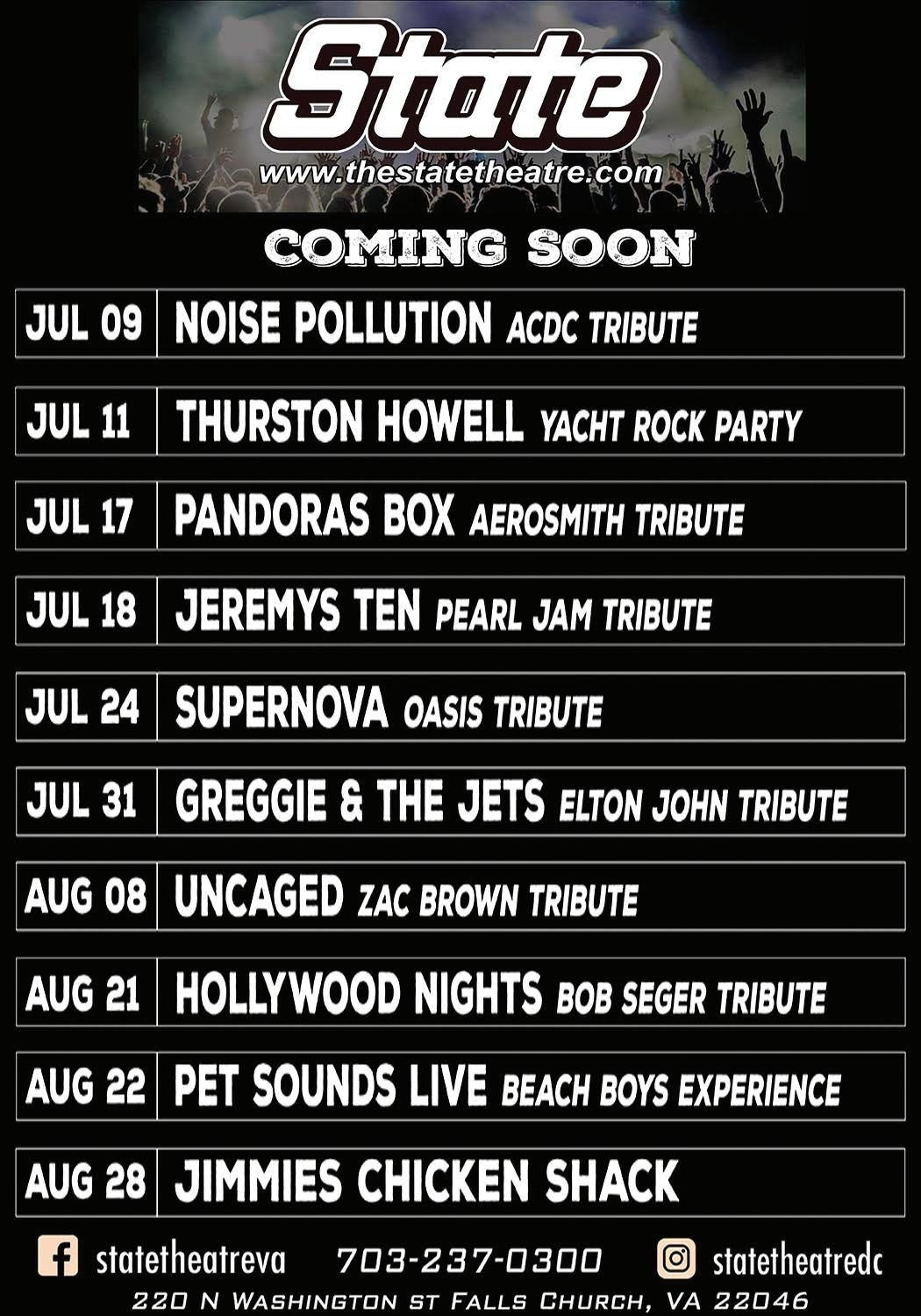
Wayne Lynwood Allen, born November 4, 1953, in Arlington, Virginia, passed away peacefully on April 25, 2026, in New Orleans, Louisiana. Raised on Spring Street in Falls Church, Wayne carried the spirit of his hometown with him throughout his life. His deep affection for Falls Church City—its history, its people, and its sense of community—remained a defining part of who he was.
A 1972 graduate of George Mason High School, Wayne completed his certification in Trade & Industrial Education. Over the years, he made his home in Warrenton, Virginia, and later in New Orleans, places where he built lasting friendships and left warm memories.
Wayne was predeceased by his parents, Leon Ray Allen and Judith Allen (née Swift); his brothers, Olin R. Allen and Gerald D. Allen; and his beloved wife, Cynthia Mallon Lewis. He is survived by his daughter, Sally Ray Cronin; his stepdaughter, Tallulah Lewis; and many longtime friends who cherished his companionship.
Those who knew Wayne will remember his unwavering positivity—he was the kind of person who always greeted the world with a smile. He had a gift for making friends wherever he went, striking up conversations with ease and genuine interest. Wayne loved history, music,
and classic movies and television shows, which he enjoyed sharing with anyone willing to listen.
His warmth, humor, and kindness touched countless lives. Wayne’s legacy lives on in the stories he told, the friendships he nurtured, and the joy he brought into every room. He will be deeply missed by all who had the privilege of knowing him.
We will be celebrating Wayne’s life and spirit on Sunday, July 19th at 6:30pm at the Cherry Hill Pavilion. All who knew and loved him are welcome to attend.
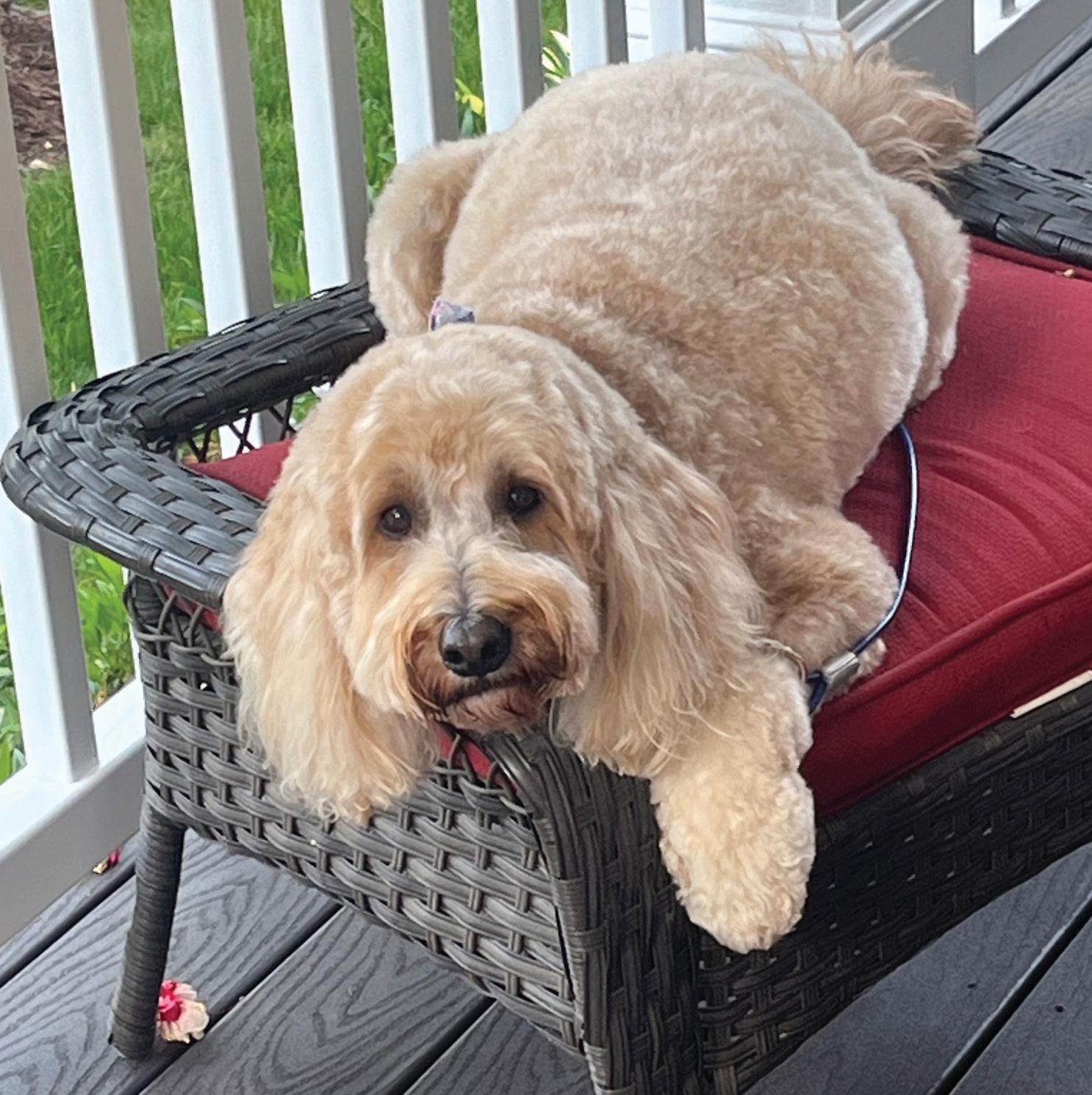
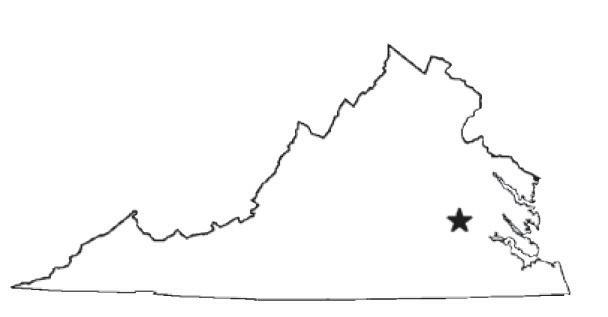
Right on schedule, or just in the nick of time? Either way, Virginia’s 2026-27 biennial state budget was approved on June 29th and became effective July 1st. Reaching a budget deal at the end of the legislative session in March is ideal because it allows maximum time for our local governments and businesses who work with the government to plan ahead. Historically, Virginia has been able to get this done, but in my third year we have not yet accomplished it - and 8 of the last 14 budgets have not been completed until after the regular session adjourned.
With the negotiations out of the way, we can finally say with certainty what is in this budget, and there is much to be excited about. Governor Spanberger and my Senate colleagues disagreed about the need to address the growing fiscal impact of the data center sales tax exemption, which cost $1.02 billion in 2024 alone. While the Senate’s initial demand of a full repeal of the exemption was not achieved, the compromise we struck to create a new Data Center Electricity Consumption Tax will raise $1.2 billion over two years. Both the sales tax exemption and the new consumption tax will incentivize data centers to invest in reducing their energy use, and businesses who chose to locate in Virginia for the sales tax exemption are on notice that rates may change further in the future. There will also be new regulations coming to address noise and water issues.
$1.2 billion in new tax revenue is significant, but Virginia’s total budget is $207 billion, and $600 million is less than the total cost of our response to the Trump administration’s cuts to Medicaid ($350 million), Affordable Care Act subsidies ($150 million), and food stamps ($150 million). The amounts we are spending do not even fully replace the federal cuts, with the State Corporation Commission estimating Virginia would have to spend $234 million to prevent an increase in the cost of ACA health insurance plans. This is why the Senate insisted on taking action on the data
center issue now, and why the House and the administration ultimately decided to work with us.
Closer to home, $1 million will be invested to establish a Visitor’s Center at the W&OD Trail in Vienna. I was glad to work with Nova Parks and the Town of Vienna’s Economic Development Department to get this proposal included in the Senate’s proposed budget, but with the House’s budget including no mention of the project, I had to lobby for this along with everything else going on this summer in order to make it happen. Users of the trail have been dispirited by deforestation along stretches of the trail, and while replanting efforts are underway, this project demonstrates to the more than 2 million people who use the trail each year that the trail’s future is a priority. I look forward to sharing more news about the Town of Vienna’s plans for this facility in the near future. Finally, as part of our reimplementation of the Regional Greenhouse Gas Initiative (RGGI) that Governor Youngkin illegally disregarded, this budget allocates 45% of the funds utilities pay based on their carbon footprint to reducing residential power bills. When RGGI became law under Governor Northam, this revenue was used for flood mitigation and energy efficiency programs. Those will continue to receive 55% of the funds, but this modification was another step we took to prioritize the affordability crisis facing Virginians.
We also gave public school teachers a 4% raise in each year, increased the standard deduction from $8,750 to $9,200, and too many more things to list in one column, but these highlights should show that this state budget was all about your budget. By reducing tax breaks for major corporations, we were able to restore some fairness to Virginia taxpayers despite the economic headwinds generated by Trump’s cuts, tariffs, and wars. There is always more work to be done, but in the end this budget agreement is a good deal to keep Virginia moving forward.
For the July edition of my “guest column” concept, I asked Chelsey Stone, a resident from the Crystal City area, to provide a perspective on life in Arlington. Chelsey is a travel writer whose work explores literary travel, running culture, and the stories that make places memorable. Her column involves public transportation and a new bridge coming to Arlington. In Praise of Walking to the Airport: by Chelsey Stone
Growing up in Sacramento, California, getting to the airport usually entailed a lengthy car ride. Later, living in Chicago, I appreciated being able to take public transportation to the airport, even if it took a little over an hour and a transfer from the bus to the Blue Line. In San Diego, where the public transportation was adequate, if cumbersome, I could take a bus to Old Town and then a shuttle directly to the airport, also in about an hour.
It’s with these getting-to-the-airport-in-major-cities experiences that my husband and I moved to Crystal City in July 2024. I’m not sure how I first realized I could walk from our apartment to Ronald Reagan Washington National Airport, but I can tell you I get such a thrill from arriving at my gate 21 minutes after leaving my building—on foot. I delight in dropping this tidbit into conversation as I recount my travels to friends and family I visit throughout the country; they’re always amazed.
And I’m not the only one making my way to National Airport on foot. I run on the Mount Vernon Trail, and every other week it seems I see someone on the path, luggage in tow, making their way to the airport via one of the numerous paths branching off the trail.
But I take the streets. From my building, I exit onto Crystal Drive between 20th and 23rd streets, climb the Airport Access Road off-ramp up and over George Washington Memorial Parkway, make one of two challenging crosses at Abingdon Drive, walk through a relatively quiet parking lot (you can make out the faint paint lines directing pedestrians through),
make a few more crossings (one with a stoplight, the other depends on how willing oncoming cars are to stop for you on Smith Boulevard), and finally arrive at Terminal 1, usually continuing on to Terminal 2.
It’s not without its challenges and risks, but as an intrepid traveler, I’m up for it. And it beats waiting on the Metro or for a rideshare. So you can imagine my surprise when, out for a walk, my husband and I discovered a sign tucked between 2011 Crystal Drive and the Lockheed Martin building announcing a bridge to the airport, a few hundred feet from our building.
As the descriptive but not so pithy name— the Crystal City to Reagan National Airport (CC2DCA) Multimodal Connection—implies, this bridge will connect Crystal City to National Airport. Not only will the Connection improve walking, biking, and using micromobility devices to commute to or from the airport, but it is also meant to create and enhance connections between the airport, Virginia Railway Express, and Mount Vernon Trail.
According to ARLnow, Arlington County first recognized the need for an improved connection to the airport in 2010, but it wasn’t until 2017 that the idea gained momentum when the then-Crystal City BID conducted a feasibility study. A year later, Virginia selected the bridge as one of five transportation projects it would provide funding for as part of the HQ2 Amazon deal.
Since then, the National Park Service greenlit the project in 2024, Arlington’s 20252034 Capital Improvement Plan funds the project (in combination with numerous other agency funding), and the public has weighed in. The project team anticipates completing the 30% design concept by fall 2026, and to begin construction in Fiscal Year 2031 with an anticipated duration of two years.
My husband’s job has us moving around a lot, so while we won’t get to make use of this bridge, I can still be grateful for the existing infrastructure that makes walking to the airport possible today—and I can cheer Arlington County on from a distance as it welcomes this new and exciting bridge several years from now.