


Tyler ISD Benefits
Higginbotham Public Sector
833-966-2314
www.mybenefitshub.com/tylerisd
Medical Coverage
TRS ActiveCare
Region 7
866-355-5999
www.bcbstx.com/trsactivecare
Telemedicine and Behavioral Health
Recuro 855-673-2876 customerservice@recurohealth.com
Emergency Transport Services
MASA
Group #: MKTYTISD
800-643-9023 masaaccess.com/member
Dental Coverage
Lincoln Financial
Group #: 00001D044398
800-423-2765 www.lfg.com
Pharmacy
Express Scripts
844-367-6108
www.express-scripts.com/trsactivecare
Prescription Drug Discounts Clever RX
800-873-1195 www.cleverrx.com/tylerisd
Vision Coverage
Superior Vision by MetLife Group #: 2415581 833-393-5433
www.metlife.com/mybenefits
Health Savings Account EECU 817-882-0800 www.eecu.org
Flexible Spending Accounts
National Benefit Services
Group #: NBS651616 855-399-3035 service@nbsbenefits.com
Basic and Voluntary Life and AD&D
Lincoln Financial Group #: GL 000400270894 800-423-2765
Educator Disability
New York Life
Group #: SLH- 1000002 888-842-4462 www.mynylgbs.com
Employee Assistance Program
Lincoln Financial 888-628-4824 www.guidanceresources.com
Accident Insurance
Lincoln Financial Group #: 0001648065
800-423-2765 fileclaim@lfg.com
Cancer Insurance
Chubb Group #: 100000204 888-499-0425 cwbspecialmarketservice@chubb.com
Critical Illness Insurance
Cigna
Group #: CI110964 800-754-3207
supphealthclaims@cigna.com
Hospital Indemnity Insurance
Cigna
Group #: HC962302 800-754-3207
supphealthclaims@cigna.com
Identity Theft Protection
Aura 833-552-2123
https://my.aura.com/sign-in
Financial Planning: 403(b) and 457
TCG
800-943-9179 www.tcgservices.com
We are pleased to offer a full benefits package to you and your eligible dependents. Read this guide to know what benefits are available to you. You may only enroll for or make changes to your benefits during Open Enrollment or when you have a Qualifying Life Event. Availability Of Summary Health Information
Your plan offers medical coverage options. To help you make an informed choice, review each plan’s Summary of Benefits and Coverage (SBC) available by accessing www.mybenefitshub.com/tylerisd
Your New Benefits
Begin and End
September 1, 2026August 31, 2027
If you (and/or your dependents) have Medicare or will become eligible for Medicare in the next 12 months, federal

1. Go to www.mybenefitshub.com/tylerisd. Scan the QR code above.
2. Click Login.
3. Enter your Enter your Microsoft credentials Note: THEbenefitsHUB uses this information to check behind the scenes to confirm your employment status.
4. Once confirmed, the Additional Security Verification page will list the contact options from your profile. Select either the Text, Email, Call, or Ask Admin options to receive a code to complete the final verification step.
5. Enter the code you receive and click Verify to begin your benefits enrollment.
6. Review your personal information and verify covered dependents. Contact your employer with any discrepancies.
7. Select and confirm the dependent(s) who are to be covered on each benefit screen (medical, dental, etc.). If a dependent is not selected for a benefit, it will not be provided. NOTE: Dependents cannot be double-covered by married spouses within the district as both employees and dependents.













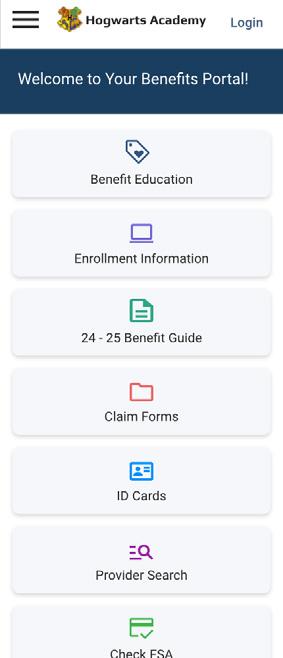

Ask your Benefits Department or email benefits@tylerisd.org Call Higginbotham Public Sector at 833-966-2314 Email tylerisd@hps.higginbotham.net


What if I miss the enrollment deadline?
You may only enroll for or change your benefits during Open Enrollment or if you have a Qualifying Life Event.
Is there an age limit for dependents to be covered under my benefits?
You may cover dependents up to age 26 on most benefit plans, but there are exceptions. See the Eligibility section for more details.
Where do I find benefit summaries and forms?
Access www.mybenefitshub.com/tylerisd and click on the benefit plan you need (i.e., Dental). Forms and benefits information are under the Benefits and Form section.
How do I find an in-network provider?
Access www.mybenefitshub.com/tylerisd and click on the benefit plan for the provider you need to find. Click on the Quick Links section to find provider search links.
If the medical carrier provides ID cards and there is a plan change, new cards usually arrive within four weeks of your effective date. If there are no plan changes, a new card may not be issued.
You may not need a card for dental and vision plans. Simply give your provider the insurance company’s name and phone number to verify benefits. You can also print a temporary card by visiting the insurance company’s website.
Ask your Benefits Department or email benefits@tylerisd.org
Call Higginbotham Public Sector at 833-966-2314
Email tylerisd@hps.higginbotham.net
The following limitations and exclusions may apply when obtaining coverage as a married couple or for your dependents. Can I cover my family — a spouse or a dependent — as dependents on my benefits if we work for the same employer?
Some benefits may not allow you to do this if you work for the same employer. Review the applicable plan documents, contact Higginbotham Public Sector, or contact the insurance carrier for spouse and dependent eligibility. Are there FSA/HSA limitations for married couples?
Yes, generally. Married couples may not enroll in both a Flexible Spending Account (FSA) and a Health Savings Account (HSA). If your spouse is covered under an FSA that reimburses for medical expenses then you and your spouse are not HSA-eligible – even if you would not use your spouse’s FSA to reimburse your expenses. However, there are some exceptions to the general limitation for specific types of FSAs. Contact the FSA and/or HSA provider before you enroll or reach out to your tax advisor for further guidance.
Disclaimer: You acknowledge that you have read the limitations and exclusions that may apply to obtaining spouse and dependent coverage, including limitations and exclusions that may apply to enrollment in FSAs and an HSA as a married couple. You, the enrollee, shall hold harmless, defend, and indemnify Higginbotham Public Sector, LLC from any and all claims, actions, suits, charges, and judgments whatsoever that arise out of your enrollment in spouse and/or dependent coverage, including enrollment in an FSA and HSA.
You are eligible for coverage if you are a regular, full-time employee. You may only enroll for coverage when:
• You are a new hire
• It is Open Enrollment (OE)
• You have a Qualifying Life Event (QLE)
Who is Eligible
• A regular, full-time employee working an average of 15 hours per week
When to Enroll
• Enroll by the deadline given by Human Resources
When Coverage Starts
• Next first of month after date of hire
Who is Eligible
You must be Actively at Work on the date your coverage becomes effective. Your coverage must be in effect for your spouse’s and eligible children’s coverage to take effect. See plan documents for specific details.
• A regular, full-time employee working an average of 15 hours per week
When to Enroll
• Enroll during OE or when you have a QLE
When Coverage Starts
• You must be actively at work on the plan effective date for new benefits to be effective
• QLE: Ask Human Resources
Who is Eligible
• Your legal spouse
• Child(ren) under age 26 regardless of student, dependency, or marital status
• Child(ren) over age 26 who are fully dependent on you for support due to a mental or physical disability and who are indicated as such on your federal tax return
When to Enroll
• You must enroll the dependent(s) during OE or when you have a QLE
• When covering dependents, you must enroll for and be on the same plans
• Dependents cannot be double-covered by married spouses within the district as both employees and dependents
When Coverage Starts
• Based on OE or QLE effective dates



You may only change coverage during the plan year if you have a QLE, such as:

Marriage
Divorce
Legal separation
Annulment
Death
Birth
Adoption
Placement for adoption
Change in benefits eligibility
Death
You have 30 days from the event to notify Human Resources and complete your changes. You may need to provide documents to verify the change.
Undergoing FMLA, COBRA event, court judgment, or decree
Becoming eligible for Medicare, Medicaid, or TRICARE
Receiving a Qualified Medical Child Support Order
Gain or loss of benefits coverage
Change in employment status affecting benefits Significant change in cost of spouse’s coverage

Our medical plans protect you and your family from major financial hardship in the event of illness or injury. All TRS-Active participants may enroll in one of the following plans:
• TRS-ActiveCare Primary
• TRS-ActiveCare Primary+
• TRS-ActiveCare HD
• The TRS-ActiveCare 2 plan is closed to new enrollments, but you may continue in the plan if you are a currently enrolled participant.
These plans require you to choose a primary care physician (PCP) who coordinates your care and makes specialist referrals when needed. You have predictable costs for doctor visits and prescriptions, access to a broad statewide network, and coverage options for dependents who live out of state.
Watch and learn more!
TRS-ActiveCare HD is a high-deductible plan that pairs with an HSA. You must meet your deductible before the plan begins to pay for most services. This plan does not require a PCP or referrals for specialist visits, offering more flexibility in choosing your care. It features a broad nationwide network, including coverage outside Texas, and also provides out-of-network benefits. Prescription coverage includes specialty medications, and the plan’s compatibility with an HSA allows you to save pretax dollars for medical expenses.



TRS is committed to accessibility. If you have trouble accessing this content, contact TRS at WebAccessibility@trs.texas.gov to request an alternative format.
• PREMIUM: The monthly amount you pay for health care coverage.
• DEDUCTIBLE: The annual amount for medical expenses you’re responsible to pay before your plan begins to pay.
• COPAY: The set amount you pay for a covered service at the time you receive it. The amount can vary based on the service.
• COINSURANCE: The portion you’re required to pay for services after you meet your deductible. It’s often a specified percentage of the costs; e.g., you pay 20% while the health care plan pays 80%.
• TIERING: Grouping doctors and facilities into tiers based on quality, cost and best practice clinical guidelines. This helps you compare choices. Tier 1 providers and facilities offer top performance and best value. You pay less when you choose Tier 1 and may pay more when you choose Tier 2.
• OUT-OF-POCKET MAXIMUM: The maximum amount you pay each year for medical costs. After reaching the out-of-pocket maximum, the plan pays 100% of allowable charges for covered services.
Administrator for your
• $0 preventive services
• One-on-one health coaches
• Weight loss programs and nutrition
• TRS Virtual Health
• Member Rewards is even better. Now you’ll get a check when you use Member Rewards and choose low-cost, highquality doctors and facilities – up to $599* per tax year.
• Airrosti Remote Recover y gives you inhome virtual physical therapy to relieve common aches and pains at no cost.*
You have in-office and virtual benefits:
• TRS-ActiveCare Primary Plan: $30 copay for office visits or $0 with Teladoc
• TRS-ActiveCare Primary+ Plan: $15 copay for office visits or $0 with Teladoc
• TRS-ActiveCare HD Plan: 30% coinsurance after deductible or $42 with Teladoc
• TRS-ActiveCare 2 Plan: $20 copay for office visits or $12 with Teladoc
As part of your TRS medical plan coverage, you also have pharmacy benefits coverage through Express Scripts, our pharmacy benefits manager (PBM). This pharmacy benefits coverage is available ONLY to those enrolled in one of the TRSActiveCare medical plans.
Express Scripts helps you understand your pharmacy benefits and makes it convenient and affordable for you and your family to access the medications you need. New enrollees will be issued ID cards effective for the upcoming plan year. If you do not receive a card, or if yours is misplaced, you may download a temporary ID card. You can also contact the Express Scripts TRS-ActiveCare Customer Support team for assistance.
Once your plan year deductible is met, you will pay the applicable copay or coinsurance for each prescription until your out-of-pocket maximum is reached. The Express Scripts website allows you to download a temporary ID card, check medication costs, and explore options for home delivery, specialty medications, and retail pharmacies.
Please note that when utilizing prescription drug resources outside of Express Scripts, your prescription costs may not be applied toward your pharmacy coverage deductible or copays.
Visit https://www.express-scripts.com/ trsactivecare
Call 844-367-6108
Aside from the pharmacy benefits coverage included with your TRS medical plan, standalone prescription drug discount programs (which are not insurance) may help to lower your prescription costs. Such discount programs are available to anyone interested in saving money on prescriptions.
Don’t overpay for your prescriptions. Clever RX gives you access to discounts on thousands of medications, and it is accepted at most pharmacies nationwide. Best of all, you can get up to 80% off prescription drugs!
Getting started is easy.
Download the free Clever RX app and enter these numbers.
2.
3.
• Group ID – 1085
• Member ID – 1795
Enter your ZIP code to find local pharmacies with the best prices.
Click the voucher with the lowest price, closest location, and/or at your preferred pharmacy. Then present the voucher to the pharmacist when you pick up your prescription.
Get a deeper understanding of your body and spot potential issues early.
Your benefit plan includes the opportunity for you and your family to enroll for a Function membership. Function empowers you to own your health through affordable access to advanced lab testing. A Function membership evaluates five times more biomarkers than the average physical, helping you gain a deeper understanding of what’s going on in your body, monitor for early indicators of disease, and track your health as it evolves.
The membership includes:
• Access to 100+ lab tests at the start of your membership.
• Access to an additional 60+ midyear follow-up tests to track your progress.
• Detailed clinician notes highlighting areas of focus.
• A targeted action plan to help improve your health.
• Results stored on one secure platform for easy access anytime.

After signing up for Function, you will get an email and text message to schedule a convenient time and location for your lab visit. Tests take less than 30 minutes and are done at one of more than 2,000 partner lab locations nationwide. You will then get a detailed summary of your results and a targeted action plan to help you reach your health goals. All results are stored in one secure location for you to access anytime. You can retest in six months to see how you are progressing. Nonroutine tests (e.g., advanced MRI, early detection of multiple cancers, allergies, heavy metals, and more) may be added for an additional cost.

More. Know More.
Advanced testing across:
• Heart
• Immunity
• Metabolics
• Hormones
• Nutrients
• Heavy Metals
• Liver
• Kidneys
• Pancreas
• Prostate
• Sexual Health
• Electrolytes
• Thyroid
• Autoimmunity
• Urine
• Blood
The cost for an individual annual membership* is $335!
FSA/HSA Eligible
Funds from your Flexible Spending Account (FSA) or Health Savings Account (HSA) may be used to pay for your membership. Reimbursement is not guaranteed, so please contact your FSA/HSA provider in advance to confirm the terms of reimbursement. If you do not have an FSA or HSA, use a personal credit card.
*Function membership includes prepaid access to 160+ lab tests each year at a Quest Diagnostics site. Due to state regulations, members testing in New York and New Jersey will be charged an additional fee directly by Quest for each lab visit. We cannot accommodate lab testing in Hawaii or Rhode Island at this time. You can schedule lab testing in a neighboring state.
Enroll anytime during the year. You will pay the membership fee(s) directly to Function.
Visit https://www.functionhealth.com/aep/higginbotham

We offer an HSA to offset your High Deductible Health Plan (HDHP) medical costs, reduce your taxes, and offer a long-term tax-advantaged savings account.
An HSA is like a personal savings account that allows you to pay for current or future health care expenses with pre-tax dollars or save the funds for retirement. An HSA is always yours to keep, even if you change health plans or jobs.
You are eligible to open and contribute to an HSA if you are:
• Enrolled in an HSA-eligible HDHP
• Not covered by another plan that is not a qualified HDHP, such as your spouse’s health plan
• Not enrolled in a Health Care FSA
• Not eligible to be claimed as a dependent on someone else’s tax return
• Not enrolled in Medicare, Medicaid, or TRICARE
• Not receiving Veterans Administration benefits

Having an HSA is a smart financial move!
Use it Now
• Make annual HSA contributions.
• Pay for eligible medical costs.
• Keep HSA funds in cash. Let it Grow
• Make annual HSA contributions.
• Pay for medical costs with other funds.
• Invest HSA funds.
• Have your doctor file your claims and use your HSA debit card to pay any balance due.
• Keep ALL your records and receipts for HSA reimbursements in case of an IRS audit.
• Only HSA accounts opened through our plan administrator are eligible for automatic payroll deductions.
Knowing the difference between an HSA and FSA can help you choose the best option for you and your family.
Internal Revenue Code
Description
Employer Eligibility
Contribution Source
Account Owner
Underlying Insurance Requirement
223
An HSA is an actual bank account in your name that allows you to save and pay for unreimbursed qualified medical expenses tax-free.
A qualified HDHP
You and/or your employer
An FSA allows you to pay out-of-pocket expenses tax-free for:
• copays, deductibles, and certain services not covered by medical plan
• qualifying dependent care
All employers
You and/or your employer
2026 Maximum Contributions
Permissible Use of Funds
Cash-Outs of Unused Amounts (if no medical expenses)
Year-to-year rollover of account balance?
• $1,700 single
• $3,400 family
• $4,400 single
• $8,750 family
• $1,000 age 55+ catch-up
Use any way you wish. If used for nonqualified medical expenses, funds are subject to the current tax rate plus a 20% penalty.
Permitted, but subject to current tax rate plus 20% penalty (waived after age 65).
Yes, it will roll over to use for subsequent year’s health coverage.
Does the account earn interest? Yes
Portable?
Yes, it is portable year-to-year and between jobs.
$3,400
Reimbursement for qualified medical expenses as defined in Section 213(d) of the IRS.
Not permitted
No. Access to some funds may be extended under the 75-day grace period.
No
No

Include MASA emergency medical transportation coverage in your benefits to protect what matters most. With a MASA plan, employees will have an additional layer of financial protection from the out-of-pocket costs of medical transportation. Alongside expert coordination services, the options below offer coverage that resolve out-of-pocket costs or provide indemnity benefits. Whichever plan you choose will give you peace of mind and add value to your benefits package.
4
1
Our dental plans help you maintain good oral health through affordable options for preventive care, including regular checkups and other dental work.
Two levels of benefits are available with the DPPO plan: in-network and out-of-network. You may select any dental provider for care, but you will pay less and get the highest level of benefits with in-network providers. You could pay more if you use an out-of-network provider.



Our vision plan offers quality care to help preserve your health and eyesight. Regular exams can detect certain medical issues such as diabetes and high cholesterol, in addition to vision and eye problems.
You may seek care from any vision provider, but the plan will pay the highest level of benefits when you see in-network providers. The benefits illustrated below reflect in-network coverage only. Out-of-network benefits are not included in this summary.
Lenses
• Single vision
• Lined bifocals
• Lined trifocals
• Lenticular
Contacts
In lieu of frames and lenses
• Contact lens fitting (standard)
• Contact lens fitting (premium)
• Elective lenses
• Necessary lenses
• Eye health exam, dilation, prescription, and refraction for glasses: Covered in full after a $5 copay.
• Retinal imaging: Up to a $39 copay on routine retinal screening when performed by a private practice.
Contacts
Treatment for cancer is often lengthy and expensive. While your health insurance helps pay the medical expenses for cancer treatment, it does not cover the cost of non-medical expenses such as out-of-town treatments, special diets, daily living, and household upkeep. In addition to these non-medical expenses, you are responsible for paying your health plan deductibles and/or coinsurance. Cancer insurance helps pay for these direct and indirect treatment costs so you can focus on your health.
Accident insurance provides affordable protection against a sudden, unforeseen accident. These plans help offset the direct and indirect expenses resulting from an accident such as copayments, deductible, ambulance, physical therapy, childcare, rent, and other costs not covered by traditional health plans. See the plan document for full details.
TREATMENT BENEFIT
• Ground / Air Ambulance
• Emergency Room Benefit
• Urgent Care Benefit
• X-Ray Benefit
• Major Diagnostic Exam
BENEFIT
• Hospital Admission
• Hospital Intensive Care Admission
• Daily Hospital Confinement Benefit
• Daily Hospital Intensive Care Confinement Benefit
• Physician Follow-Up Benefit / Max Visits
FRACTURE BENEFIT (NONSURGICAL FRACTURES)
•
•
•
•
DISLOCATIONS (CLOSED NONSURGICAL DISLOCATIONS)
• Fingers & Toes
• Shoulder
•
•
INJURIES
• Concussion
• 2nd degree burns
• Dental Injury
• Lacerations
• Fracture
• Hernia
• Ligaments, tendons, rotator cuff – Surgical Repair
•
• Spouse Accidental Death
• Child Accidental Death
• Finger or Toe Dismemberment
• Hand Dismemberment
• Arm Dismemberment
• Leg Dismemberment
•
•
•
Identity theft is one of the fastest-growing crimes in the country. Millions of people have their identity stolen each year.
Protect yourself and restore your identity with coverage that includes:
• Identity consultation and advice
• Licensed private investigators
• Identity and credit monitoring
• Social media monitoring
• Identity restoration
• Threat and credit alerts
• 24/7 emergency ID protection access
• Mobile app



Educator Disability insurance combines features of short-term and long-term disability into one plan. Disability insurance protects part of your income if you are unable to work due to a covered accident, illness, or pregnancy. We offer Educator Disability insurance for you to purchase and allow you to choose the coverage amount and waiting period that best suits your needs.
Benefits Begin
The first number indicates the number of days you must be disabled due to Injury and the second number indicates the number of days you must be disabled due to Sickness.
Percentage of Earnings You Receive 30%, 40%, 60%, 65%
Maximum Gross Monthly Benefit $7,500
Maximum Benefit Period SSNRA
Pre-existing Condition Exclusion 3/122
1 If your elimination period is 30 days or less and you are confined to a hospital for 24 hours or more, the elimination period will be waived, and benefits will be payable from the first day of hospitalization.
2 Benefits may not be paid for any condition treated within three months prior to your effective date until you have been covered under this plan for 12 months. If your disability is a result of a pre-existing condition, we will pay benefits for a maximum of 4 weeks.
What is disability insurance?
Disability insurance protects one of your most valuable assets: your paycheck. This insurance replaces part of your income if you are physically unable to work due to sickness or injury for an extended period of time. The educator disability plan is unique in that it includes both short- and long-term coverage in one convenient plan.
Does this plan have pre-existing condition limitations?
Yes. However, all plans will include pre-existing condition limitations that could impact you if you are a first-time enrollee in your employer’s disability plan (including your initial new hire enrollment). Review the plan documents for full details.
Will I get all of my disability benefit?
Your disability benefit may be reduced by other income you receive or are eligible to receive due to your disability, such as:
• Social Security disability insurance
• State teacher retirement disability plans
• Workers’ compensation
• Other employer-based disability insurance coverage you may have
• Unemployment benefits
• Retirement benefits that your employer fully or partially pays for (such as a pension plan)
Your disability plan selection should be a two-step approach.
Choose your elimination period, or waiting period. This is how long you are disabled and unable to work before your benefit will begin. It will be displayed as two numbers, such as 0/7, 14/14, 60/60, etc.
The first number indicates the number of days you must be disabled due to Injury and the second number indicates the number of days you must be disabled due to Sickness
When choosing your elimination period, determine how long you could go without a paycheck. Choose your elimination period based on your answer.
Note: Some plans will waive the elimination period if you choose 30/30 or less and you are confined as an inpatient to the hospital for a specific time period. The 60-day and 180-day elimination period plans do not include the rider available on some other plans.
Under these options, you must satisfy the full elimination period before disability benefits become payable. This means you must be continuously disabled for 60 or 180 days, respectively, before coverage begins. No disability benefits are payable during the elimination period.
The elimination period functions like a deductible in time rather than dollars—you must complete the waiting period before benefits are paid. Review your plan details for more information.
Choose your benefit amount. This is the maximum amount of money you would get from the carrier on a monthly basis once your disability claim is approved by the carrier.
When choosing your monthly benefit, consider how much money you need to pay your monthly bills. Choose your monthly benefit amount based on your answer.

Life and Accidental Death and Dismemberment (AD&D) insurance is important to your financial security, especially if others depend on you for support or vice versa.
With Life insurance, you or your beneficiary(ies) can use the coverage to pay off debts such as credit cards, loans, and bills. AD&D coverage provides specific benefits if an accident causes bodily harm or loss (e.g., the loss of a hand, foot, or eye). If death occurs from an accident, 100% of the AD&D benefit would be paid to you or your beneficiary(ies).
Basic Term Life and AD&D insurance are provided at no cost to you. You are automatically covered at $10,000 for each benefit.
If you need more coverage than Basic Term Life and AD&D, you may buy Supplemental Term Life for yourself and your dependent(s). If you do not elect Supplemental Term Life insurance when first eligible, or if you want to increase your benefit amount at a later date, you may need to show proof of good health.
A beneficiary is the person or entity you elect to receive the death benefits of your Life and AD&D insurance policies. You can name more than one beneficiary, and you can change beneficiaries at anytime. If you name more than one beneficiary, you must identify how much each beneficiary will receive (e.g., 50% or 25%). The total must add up to 100%.

Supplemental AD&D coverage is separate and apart from your Basic and Supplemental Term Life insurance coverage. It provides benefits beyond your disability or life insurance for covered losses that are the result of an accidental injury or loss of life. The full amount of AD&D coverage you select is called the Full Amount and is equal to the benefit payable for the loss of life. Benefits for other losses — such as loss of sight, speech or hearing; coma; or paralysis — are payable as a predetermined percentage of the full amount.
Your Supplemental AD&D amount is equal to your Supplemental Term Life amount. You can also cover your dependent spouse and child(ren). Dependent coverage amounts will be equal to their Dependent Term Life coverage amounts.
• Portable – keep your supplemental coverage if you leave your current employer
• Convertible – convert your group term life insurance benefits to an individual whole life policy if your coverage ends
• Accelerated Benefits Option – get up to 80% of your life insurance benefit if you (or your spouse) are terminally ill and have less than 12 months to live. Note: this benefit is not the same as long term care insurance.
Some limitations and exclusions apply, so see the plan documents for details.
• Increments of $10,000, up to seven times your annual salary. Continuing Employee Guaranteed Coverage: $40,000. Reduction 50% at age 70.
• Guaranteed Issue: $350,000. Reduction 50% at age 70.
• Increments of $10,000, up to the Employee amount. Continuing Employee Spouse Guaranteed Coverage: $40,000.
• The Spouse amount cannot be greater than the employee amount.
Beneficiaries should promptly notify the
in the event of a loss to initiate the claims process.
Help protect your family with The Family Protection Plan from Chubb. This level term life insurance plan offers level premiums and a level death benefit to age 121, as long as there is no lapse in premium payments. The death benefit is paid in a lump-sum cash payment.
Coverage That Stays With You
• Coverage can continue if you leave your job
• No rate increases due to age or employment changes
Permanent Protection
• Death Benefit Guaranteed through age 121
• Premiums never increase
• Coverage cannot be canceled as long as premiums are paid
Living Benefits
Terminal Illness Benefit
• Up to 75% of your benefit (max $150,000) paid if diagnosed with a terminal illness
Long Term Care / Chronic Illness
• Pays 6% monthly of the benefit until 100% of the face amount is exhausted
• Covers home care, assisted living, or nursing care
• Premiums waived while receiving benefits
Restoration of Benefits
• Restores up to 50% (max $100,000) of the death benefit Contact Information
Enroll with no health questions during your initial enrollment:
• Employee: Up to $150,000
• Spouse: Up to $25,000
• Child(ren): Up to $25,000 Covers children from live birth to age 27 with option to convert to individual coverage at age 27
Employee must enroll to cover dependents
Included Services
• Grief and funeral planning support
• Estate and beneficiary assistance
• 24/7 caregiver support
• Payroll deduction for convenience
• Changes must be made through your employer
Payroll must be notified to update deductions.

An FSA allows you to set aside pretax dollars from each paycheck to pay for certain IRS-approved health and dependent care expenses.
The Health Care FSA covers qualified medical, dental, and vision expenses for you or your eligible dependents. Eligible expenses include:
• Dental and vision expenses
• Medical deductibles and coinsurance
• Prescription copays
• Hearing aids and batteries
You may not contribute to a Health Care FSA if you enrolled in an HDHP and contribute to an HSA.
You can access the funds in your Health Care FSA two different ways:
• Use your FSA debit card to pay for qualified expenses, doctor visits, and prescription copays.
• Pay out-of-pocket and submit your receipts for reimbursement:
• Call 855-399-3035.
• Visit www.mynbsbenefits.com
• Email service@nbsbenefits.com
• Fax 844-438-1496.
Note: You may file claims incurred during the plan year for another 90 days.
The Dependent Care FSA helps pay for expenses associated with caring for elder or child dependents so you or your spouse can work or attend school full-time. You can use the account to pay for daycare or babysitter expenses for your children under age 13 and qualifying older dependents, such as dependent parents. Reimbursement from your Dependent Care FSA is limited to the total amount deposited in your account at that time. To be eligible, you (and your spouse, if married) must be gainfully employed, looking for work, a full-time student, or incapable of self-care.
• Overnight camps are not eligible for reimbursement (only day camps can be considered).
• If your child turns 13 midyear, you may only request reimbursement for the part of the year when the child is under age 13.
• You may request reimbursement for care of a spouse or dependent of any age who spends at least eight hours a day in your home and is mentally or physically incapable of self-care.
• The dependent care provider cannot be your child under age 19 or anyone claimed as a dependent on your income taxes.

The Hospital Indemnity plan helps you with the high cost of medical care by paying you a cash benefit when you have an inpatient hospital stay. Unlike traditional insurance which pays a benefit to the hospital or doctor, this plan pays you directly. It is up to you how you want to use the cash benefit. These costs may include meals, travel, childcare or eldercare, deductibles, coinsurance, medication, or time away from work. See the plan document for full details.
Hospital Admission (Non - ICU and ICU) No Elimination Period. Limited to 1 day, 1 benefit every 90 days.
Hospital Chronic Condition Admission No Elimination Period. Limited to 1 day, 1 benefit every 90 days.
Hospital Stay No Elimination Period. Limited to 30 days.
Hospital Intensive Care Unit (ICU) Stay No Elimination Period. Limited to 30 days.
Hospital Observation Stay 24 hour Elimination Period. Limited to 72 hours.
Newborn Nursery Care Admission
Limited to 1 day, 1 benefit per newborn child. This benefit is payable to the employee even if child coverage is not elected.
Newborn Nursery Care Stay
Limited to 30 days, 1 benefit per newborn child. This benefit is payable to the employee even if child coverage is not elected.
Health Screening Test Benefit
Examples include (but are not limited to) mammography, and certain blood tests. Virtual Care accepted.
Critical Illness insurance helps pay the cost of non-medical expenses related to a covered critical illness or cancer. The plan provides a lump-sum benefit payment to you upon first and second diagnosis of any covered critical illness or cancer. The benefit can help cover expenses such as lost income, out-of-town treatments, special diets, daily living, and household upkeep costs. This coverage is portable. See the plan document for full details.

Alongside your medical coverage is access to quality telehealth services through Recuro. Connect anytime day or night with a board-certified doctor via your mobile device or computer.
While Recuro does not replace your primary care physician, it is a convenient and cost-effective option when you need care and:
• Have a non-emergency issue and are considering a convenience care clinic, urgent care clinic, or emergency room for treatment
• Are on a business trip, vacation or away from home
• Are unable to see your primary care physician
• $12 covers the entire family!
Behavioral Health Benefits Included
Coverage includes behavioral health services such as therapy, counseling, and psychiatric care to support mental and emotional well-being.
Registration is Easy

Register with Recuro so you are ready to use this valuable service when and where you need it.
Visit www.recurohealth.com. Call 855-6RECURO (673-2876).
Download the Recuro app
At a cost that is the same or less than a visit to your physician, use telehealth services for minor conditions such as:
• Sore throat
• Headache
• Stomachache
• Cold
• Flu
• Allergies

• Fever
• Urinary tract infections
Do not use telemedicine for serious or life-threatening emergencies.

The 403(b) and 457 plans can be powerful tools to help you reach your investment goals and be financially secure in retirement.
You are eligible to participate in the plan if you are a full-time employee, age 18 or older, and have 90 days of service with the company. You may contribute up to the IRS annual limits.
• $24,500
• $8,000 catch-up (ages 50-59 and 64+)
• $11,250 catch-up (ages 60-63)
You decide how much you want to contribute, and you can change your contribution amount anytime. All changes are effective as soon as administratively feasible and remain in effect until you update or stop your contributions. You also decide how to invest the assets in your account.
*NOTE: Roth catch-up contribution requirements may apply to eligible 457 participants; this provision is not available under the 403(b) plan.

Beneficiary – Who will receive a benefit in the event of the insured’s death. A policy may have more than one beneficiary.
Coinsurance – Your share of the cost of a covered health care service, calculated as a percent (for example, 20%) of the allowed amount for the service, typically after you meet your deductible.
Copay – The fixed amount you pay for health care services received.
Deductible – The amount you owe for health care services before your health insurance begins to pay its portion. For example, if your deductible is $1,000, your plan does not pay anything until you meet your $1,000 deductible for covered health care services. The deductible may not apply to all services, including preventive care.
Employee Contribution – The amount you pay for your insurance coverage.
Employer Contribution – The amount your employer contributes to the cost of your benefits.
Explanation of Benefits (EOB) – A statement sent by your insurance carrier that explains which procedures and services were provided, how much they cost, what portion of the claim was paid by the plan, what portion of the claim is your responsibility, and information on how you can appeal the insurer’s decision. These statements are also posted on the carrier’s website for your review.
Flexible Spending Account (FSA) – An option that allows participants to set aside pretax dollars to pay for certain qualified expenses during a specific time period (usually a 12-month period).
Generic Drugs – Drugs approved by the U.S. Food and Drug Administration (FDA) to be chemically identical to corresponding brand name versions. The color or flavor of a generic medicine may be different, but the active ingredient is the same. Generic drugs are usually the most cost-effective version of any medication.
Health Savings Account (HSA) – A personal savings account that allows you to pay for qualified medical expenses with pretax dollars.
High Deductible Health Plan (HDHP) – A medical plan with a higher deductible in exchange for a lower monthly premium. You must meet the annual deductible before any benefits are paid by the plan.
In-Network – Doctors, hospitals, and other providers that contract with your insurance company to provide health care services at discounted rates.
Out-of-Network – Doctors, hospitals, and other providers that are not contracted with your insurance company. If you choose an out-of-network provider, you may be responsible for costs over the amount allowed by your insurance carrier.
Out-of-Pocket Maximum – Also known as an out-of-pocket limit. The most you pay during a policy period (usually a 12-month period) before your health insurance or plan begins to pay 100% of the allowed amount. The limit does not include your premium, charges beyond the Reasonable and Customary (R&C) Allowance, or health care your plan does not cover. Check with your health insurance carrier to confirm what payments apply to the out-of-pocket maximum.
Over-the-Counter (OTC) Medications – Medications typically made available without a prescription.
Prescription Medications – Medications prescribed by a doctor. Cost of these medications is determined by their assigned tier.
Preventive Care – The care you receive to prevent illness or disease. It also includes counseling to prevent health problems.
Reasonable and Customary (R&C) Allowance – Also known as an eligible expense or the Usual and Customary (U&C). The amount your insurance company will pay for a medical service in a geographic region based on what providers in the area usually charge for the same or similar medical service.
SSNRA – Social Security Normal Retirement Age.

This brochure highlights the main features of the Tyler ISD employee benefits program. It does not include all plan rules, details, limitations, and exclusions. The terms of your benefit plans are governed by legal documents, including insurance contracts. Should there be an inconsistency between this brochure and the legal plan documents, the plan documents are the final authority. Tyler ISD reserves the right to change or discontinue its employee benefits plan anytime.