Editorial Staff
Publisher Patrick Gregory
Editor-in-Chief
Rebecca Burylo
Editorial Staff
Publisher Patrick Gregory
Editor-in-Chief
Rebecca Burylo
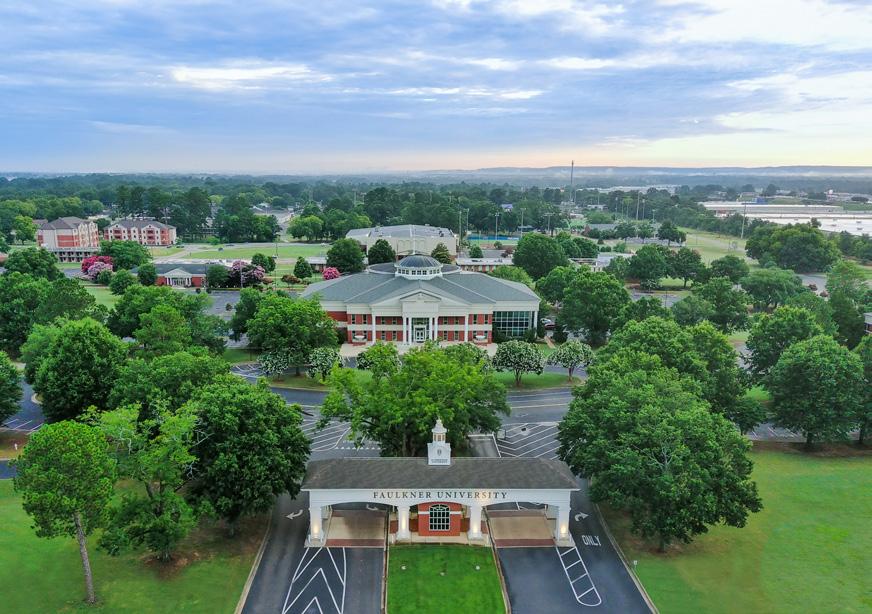
The mission of Faulkner University is to glorify God through education of the whole person, emphasizing integrity of character in a caring, Christian environment where every individual matters every day.
Designer
Angela Bennett Staff Writer
Rebecca Burylo Contributors
Robin Bradford
John Browning
Brian Champlin
Loren Howell
Carter Moles
Charlotte Morris
Jeremy Smith
Office of the Chancellor
Billy Hilyer
Cabinet Members
Mitch Henry, President Richard Boutwell, Chief of Staff
Wayne Baker, Vice Chancellor
Cassie Boyd, Dean, College of Health Sciences Candace Cain, VP for Student Services
Billy Camp, VP for Advancement
Board of Trustees
Mr. Mike Eubanks, Chair
Mr. Tim Richardson, Vice Chair
Mrs. Wilma Phillips, Secretary
Com. Roy Johnson, Parliamentarian
Mr. Jason Akins
Mr. Sid Aultman
Mr. Steve Brannan
Mrs. Martha Burleson
Dr. Kristi Busby
Mr. Terry Cagle
Mr. John DeBerry
Mr. Joseph W. Donaldson
Mrs. Scherry Douglas
Mrs. Rhonda Fernandez
Mrs. Carlton Freeman
Mr. Stanley Gray
Mr. Mike Gurganus
Mr. Ken Harris, Jr.
Dr. Mike Houts
Trustees Emeriti
Mr. James Campbell
Mr. Ernie Chappell
Mr. Archie B. Crenshaw
Dr. Fred D. Gray, Sr.
Mr. David Howell
Mrs. Libby Jones
Dr. Billy Lambert
Charles Campbell, Dean, Jones School of Law
William Cooper, Interim VP for Traditional Enrollment
Pat Gregory, VP for Marketing
Elisabeth Hailes, Special Projects
Manager / Grants Coordinator
Jamie Horn, Assoc. VP for Finance
Mark Hunt, VP for Executive and Professional Enrollment
Gerald Jones, General Counsel
Renee Kephart, VP for Human Resources
Kasey Oakley, VP for Information Technology
Dave Rampersad, VP for Academic Affairs
Lee Vardaman, Assoc. VP for Academic Affairs
Charlie Robinson, Executive
Assistant to the President
Joseph Vickery, VP for Finance
Reed Sutton, VP for Athletics
College Deans
Dr. Jeff Arrington
Dr. Justin Bond
Dr. Cassie Boyd
Dr. Todd Brenneman
Dr. Charles Campbell
Dr. Sandy Ledwell
Mr. Jason Isbell
Mr. Frank “Butch” Jones
Mr. Dale Kirkland
Dr. Jeff Langham
Mr. Jeff May
Dr. Henri McDaniel
Judge Carole Medley
Mr. Brian Mitchell
Mr. Thomas Smith
Dr. Bud Stumbaugh
Mr. Jon Sykes
Senator Jabo Waggoner
Mr. Matt Wallin
Mr. Eddie Welch
Dr. Richard “Rick” Williams
Mr. Bob Lee
Mr. Louis Lester, Jr.
Dr. W. Mansel Long
Ms. Glenda Major
Mr. Phil Norton
Mr. Ted Norton
by Rebecca Burylo
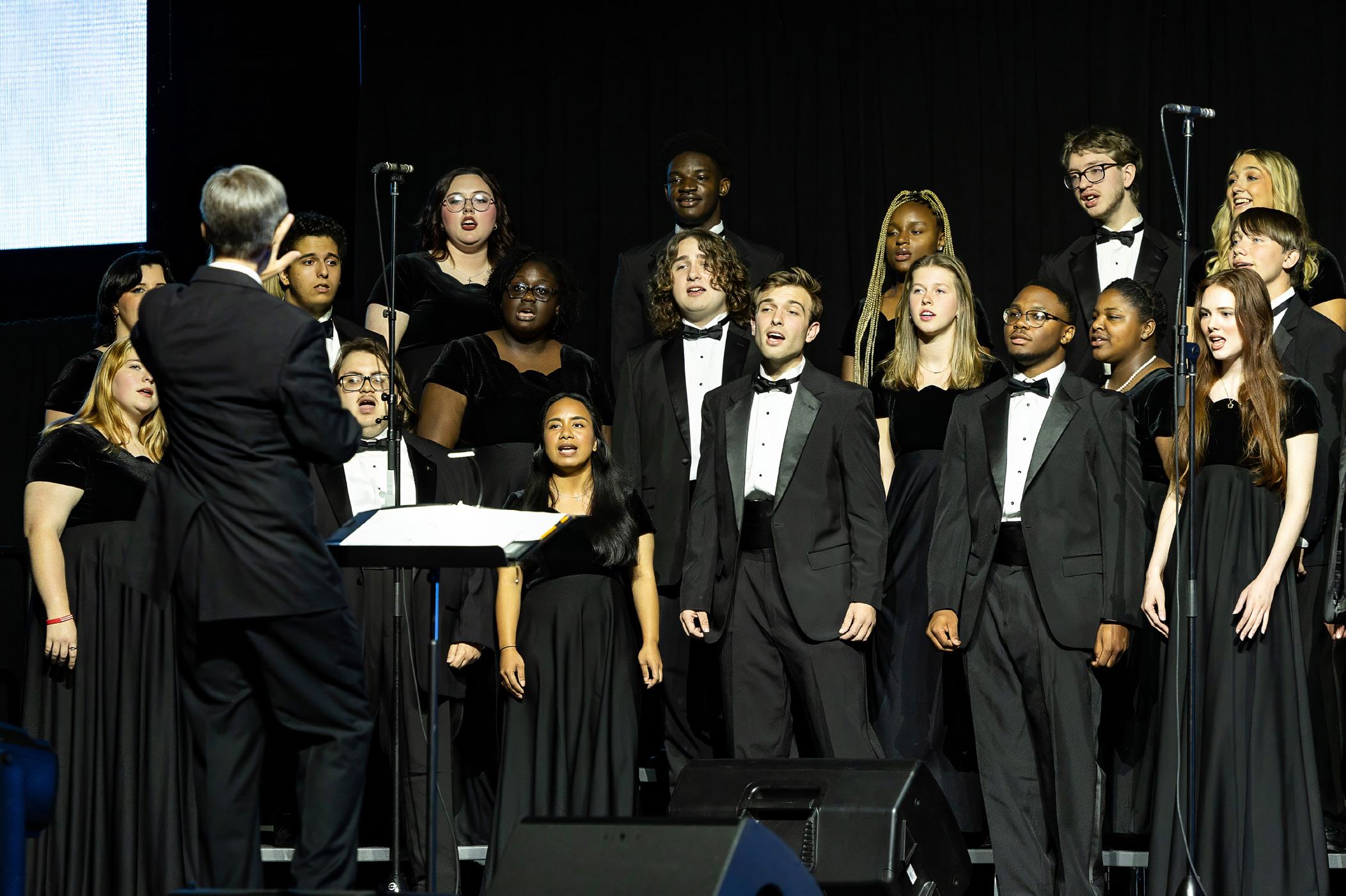
If a greater knowledge of music and the arts is the only thing a student walks away with after graduating from Faulkner University’s music department, then something has been missed.
At its core, the mission of Faulkner’s Department of Music, housed within the Alabama Christian College of Arts and Sciences, goes far beyond notes, rhythms and performances. The department exists to cultivate faithful servants of Jesus Christ, using music as a powerful means of connection, ministry and transformation.
“Music is a means by which to be in touch with our students and their lives,” said Art Williams, chair of the Department of Music. “I love to tell students, ‘I care that you know what a quarter note is, but I care so much more about the kind of person you are becoming and that you are growing in Christ.’”
After years of learning music in secular educational settings, Williams came to Alabama Christian Academy (ACA) to teach and later joined Faulkner’s Department
of Music. It was at ACA that he discovered a deep passion for Christian education and the opportunity to shape students both musically and spiritually.
He described music as a universal language and a natural avenue to introduce people to Christ.
“Who doesn’t like music?” Williams said. “It’s one of the few ways we can all connect. That’s why the world needs more Christian musicians and artists.”
That philosophy defines the culture of Faulkner’s music program. Small class sizes allow faculty to provide individualized instruction while fostering spiritual growth, meaningful relationships and a supportive environment grounded in faith. Professors invest deeply in students’ lives, helping them succeed not only as musicians but as people seeking to honor God.
“My favorite moments are when students come to my office, and we end up talking about things happening in their lives,” Williams said. “Some have experienced very difficult things. We get to have real, life-changing
conversations, and my advice is always the same: You can’t lose obeying God. No matter the circumstance, there’s no way you lose by being faithful to Him.”
That care and connection resonate strongly with students and form the foundation of Faulkner’s educational offerings in music.
The Bachelor of Music Education is a four-year degree designed for students pursuing a career in teaching music with each course integrating a Christian worldview, equipping graduates to enter classrooms prepared both academically and spiritually. Offered collaboratively by the Department of Music and the College of Education, the program emphasizes strong musicianship alongside educational philosophy and best practices for the classroom. Students may focus on choral music, instrumental music or both, while preparing for teaching certification for PreK through 12th grade.
Music education majors participate in the Faulkner National Association for Music Education (NAfME)
student chapter and attend the Alabama Music Educators Association Conference every year. Choral majors participate in a regional tour every spring, while instrumental majors perform at all home football games during marching season and present multiple concert band performances each spring.
Students attend conferences annually, network with professionals in the field and develop leadership skills that serve them long after graduation.
The Bachelor of Arts in Music is designed for students seeking advanced musical training without a teaching certification and includes concentrations in vocal or instrumental music. Coursework includes music theory, sight-singing and ear training, music history, conducting, orchestration and arranging. Students receive weekly private instruction on their primary instrument, perform daily in ensembles and complete a professional internship during their final semester. These experiences allow students to gain firsthand knowledge of careers in music in settings such as recording studios, churches, high school bands and choruses and other professional music environments.
Performance opportunities mirror those of music education majors, including national travel, concert performances and ensemble participation by audition.
The Minor in Music allows students from other academic disciplines to pursue music-related studies by completing a minimum of 18 credit hours, including six upper-level courses. The minor requires at least two hours of private instruction and two semesters of ensemble participation, with course selections approved by the department.
Music scholarships are available annually to students who participate in Faulkner’s ensembles, and a music major is not required to qualify. Auditions are required for all music students and are offered on multiple dates each year to accommodate prospective students. Performance opportunities abound through ensembles including Faulkner University Chorus, Faulkner Singers, Eagles Marching Band, Concert Band and the Faulkner Swingin’ Eagles Jazz Ensemble. Choral students often tour nationally, performing at schools and churches from Texas to Washington, D.C., and have the opportunity to perform for world-renowned dignitaries at Faulkner’s annual Benefit Dinner.
Before admission as music majors, students complete a theory placement exam and an audition on their primary instrument. Degree candidates also fulfill recital, jury and concert attendance requirements, complete a senior recital and pass proficiency and field exams.
Whether students pursue teaching, performance or ministry, Faulkner’s music program emphasizes calling over career and service over self.
“Our goal is not just to graduate musicians,” Williams said. “It’s to graduate people who love God, love others and use their gifts to serve.”
At Faulkner University, music is not simply studied or performed. It is lived, shared and offered as a testimony of faith.
by Rebecca Burylo
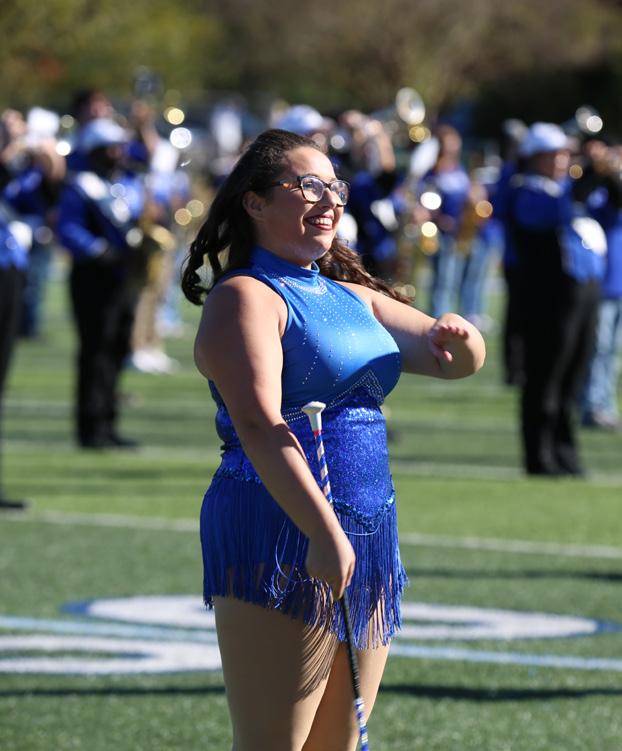
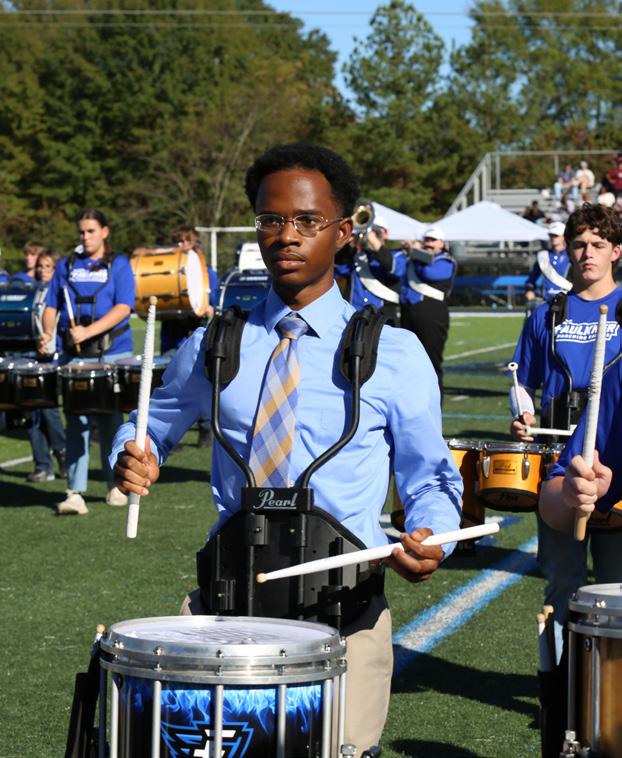
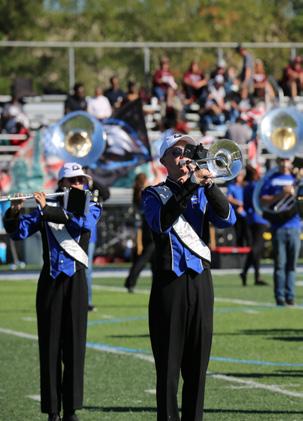
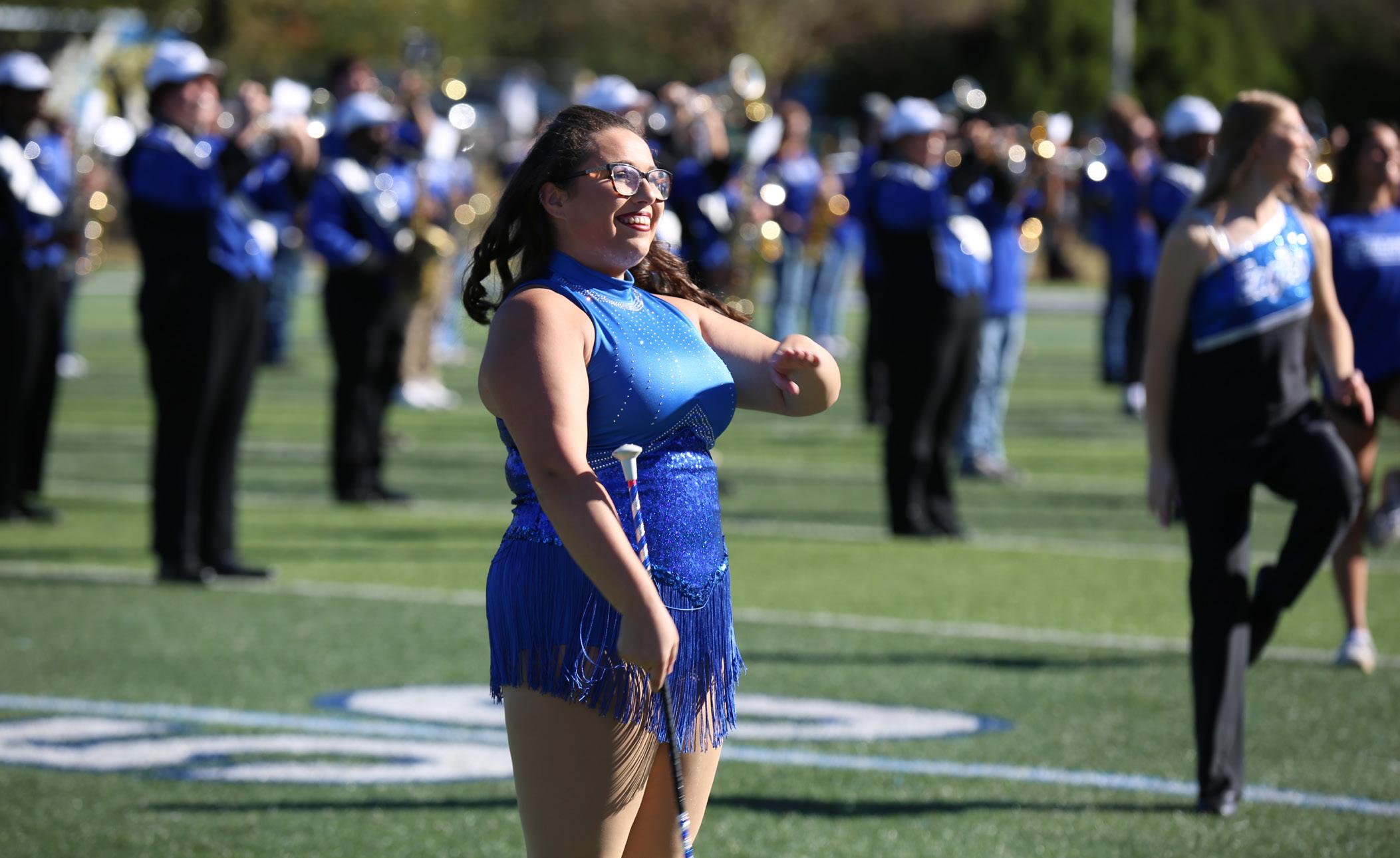
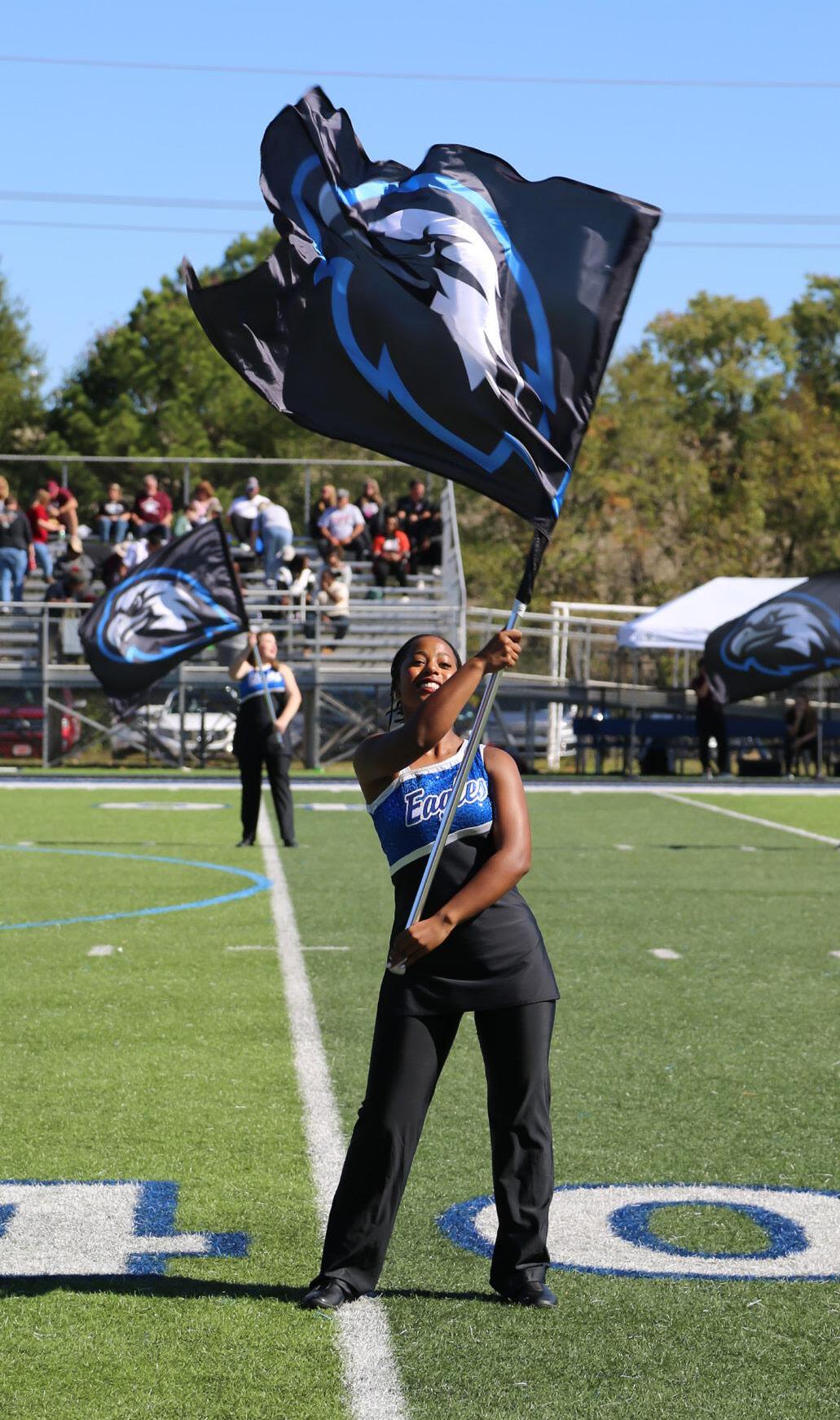
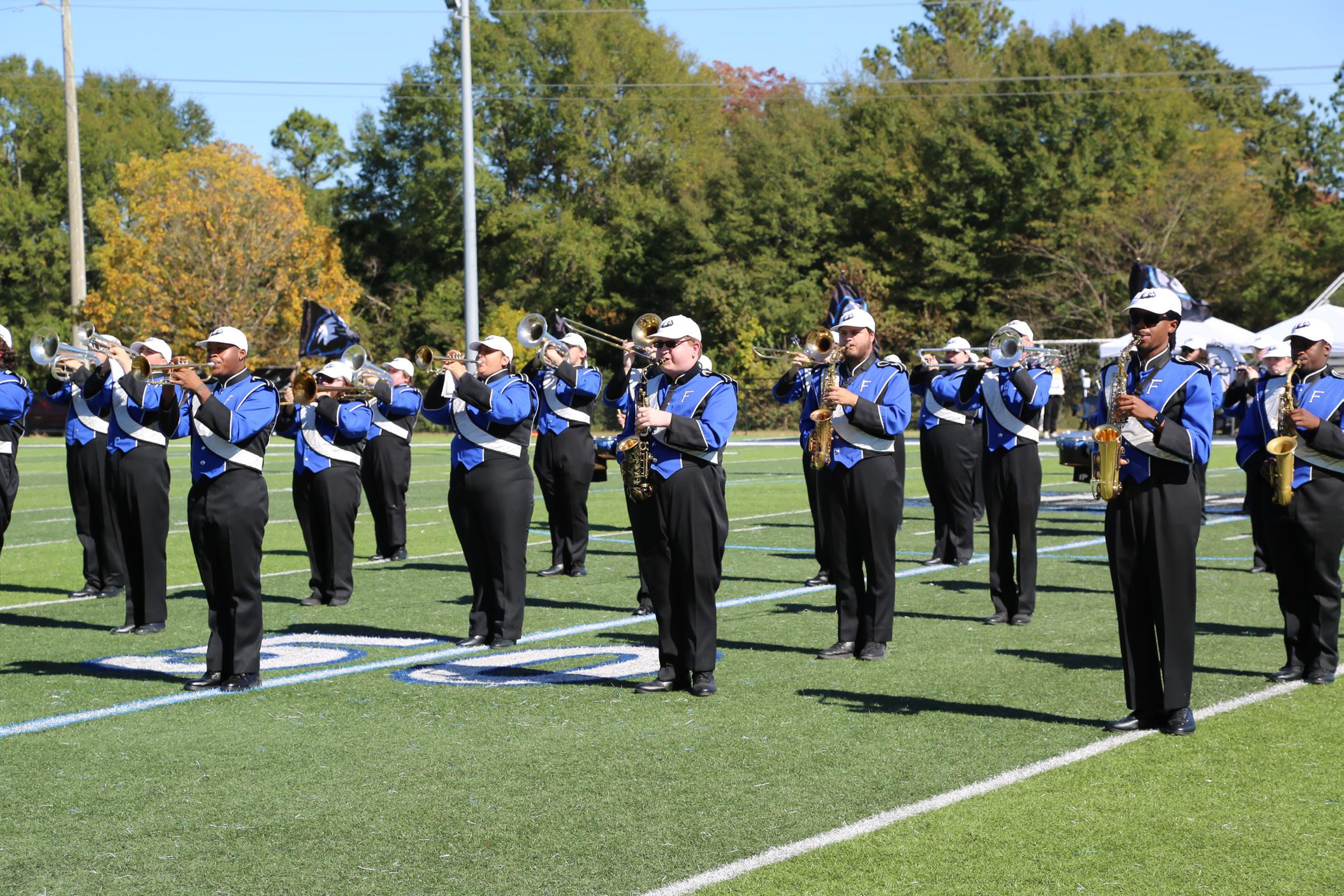
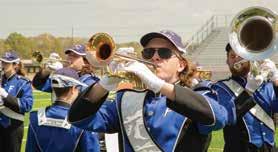
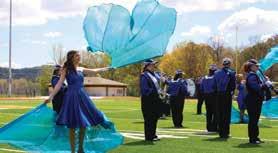
Faulkner University’s “Marching Eagles” is shaping the rhythm of campus life as the department of music expands opportunities for student musicians and establishes new leadership for its growing band program.
In just one year, the Faulkner University Band has grown from 13 members to 50, a transformation that has energized the department and elevated school spirit during football and basketball games, pep rallies and away games.
The growth follows the hiring of Robby Glasscock as director of bands and Michael Bird as assistant director of bands. The longtime collaborators came to Faulkner from Tallassee City Schools, where they spent 20 years together building a respected and competitive music program.
Bird dedicated much of the past year to traveling the state, visiting schools and sharing Faulkner’s vision with band directors and students. The effort paid off.
“It was hard work, but it’s been rewarding to see the department quadruple in size,” Bird said. “Faulkner is all in when it comes to growing the university. We are trying to build a culture on campus where students feel welcomed from start to finish. A place where they can know and be known.”
That culture extends beyond rehearsals and performances. The directors have prioritized creating meaningful experiences for students, from traveling to Nashville to perform at an away football game and explore the city’s music scene to team-building outings at Montgomery Whitewater and movie nights at the Faulkner football stadium.
“We want our band students to feel like they are a part of something special,” Bird said. “It’s a great way for us to build those connections with them that are both entertaining and fun.”
Bird, a Montgomery native and graduate of Robert E. Lee High School, earned his bachelor’s degree in music
education and master’s degree in education from Troy State University. During a 28-year career in public education, including 20 years in Tallassee, he founded the Tallassee Jazz Festival, hosted the Capital City Classic show choir competition and produced annual stage musicals while directing multiple choirs and assisting with band programs.
The Faulkner University Band, the university’s largest instrumental ensemble, performs as the “Marching Eagles” in the fall and as the concert band in the spring. Membership is open to music majors and non-music majors, and students are selected by audition.
Scholarships beginning at $16,000 per year are available to qualified applicants regardless of major. Students eligible for the marching band may receive close to 70 percent off tuition, a significant draw for recruitment.
Another major recruiting event is Mass Band Day, held each fall in conjunction with Homecoming. In fall 2025, the event drew a record crowd and became the largest attended athletic event in university history. Eight high schools brought more than 400 students to campus to perform alongside the Marching Eagles during halftime.
Participants received lunch, a T-shirt and the opportunity to connect with admissions counselors and
program directors during a college fair before the game. Feedback from visiting students, parents and directors was overwhelmingly positive.
Glasscock, an Elmore County native, earned his bachelor’s degree in music education from Troy State University in 2000. He later earned a master’s degree from Alabama State University and earned both an education specialist degree and a doctorate in music education from Auburn University. After briefly teaching in Albany, Georgia, he returned to Alabama and served 24 years as band director at Tallassee City Schools. He was recognized as one of the “50+ Directors Who Make a Difference” by School Band and Orchestra Plus magazine.
At Faulkner, Glasscock oversees the marching band and concert band. He describes his transition from middle and high school settings to a private Christian university as a blessing.
“Coming from a middle school, then a high school and now a college band, there has been a progression,” Glasscock said. “I really enjoy building these relationships with students at a college level. They are in a different stage of their lives and it’s a blessing to help prepare them for their careers and for real life.”
He said the university’s faith-based environment enhances those relationships.
“Being at a private institution is a positive in every way,” Glasscock said. “Students have the freedom to stop by my office just to talk about their day or about their classes. It’s nice to have those opportunities.”
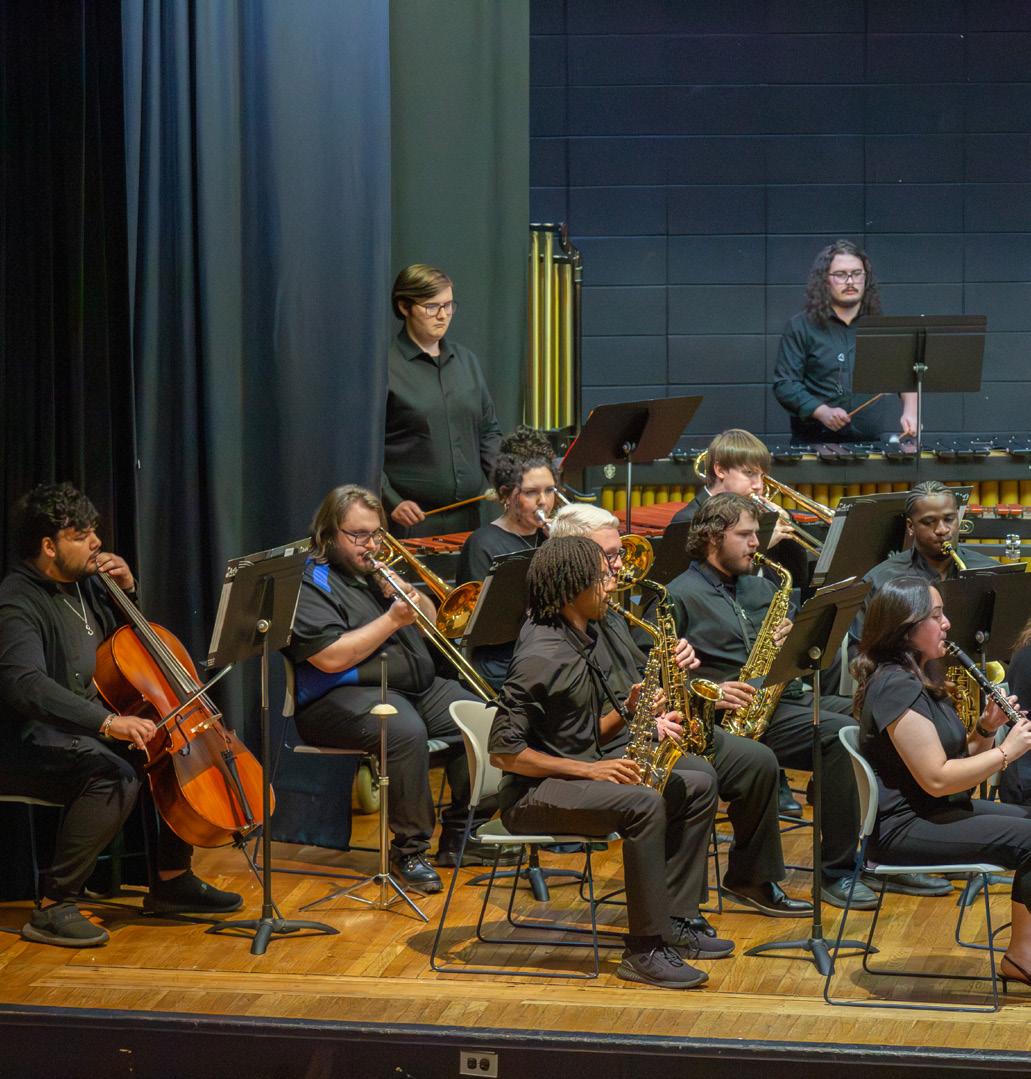
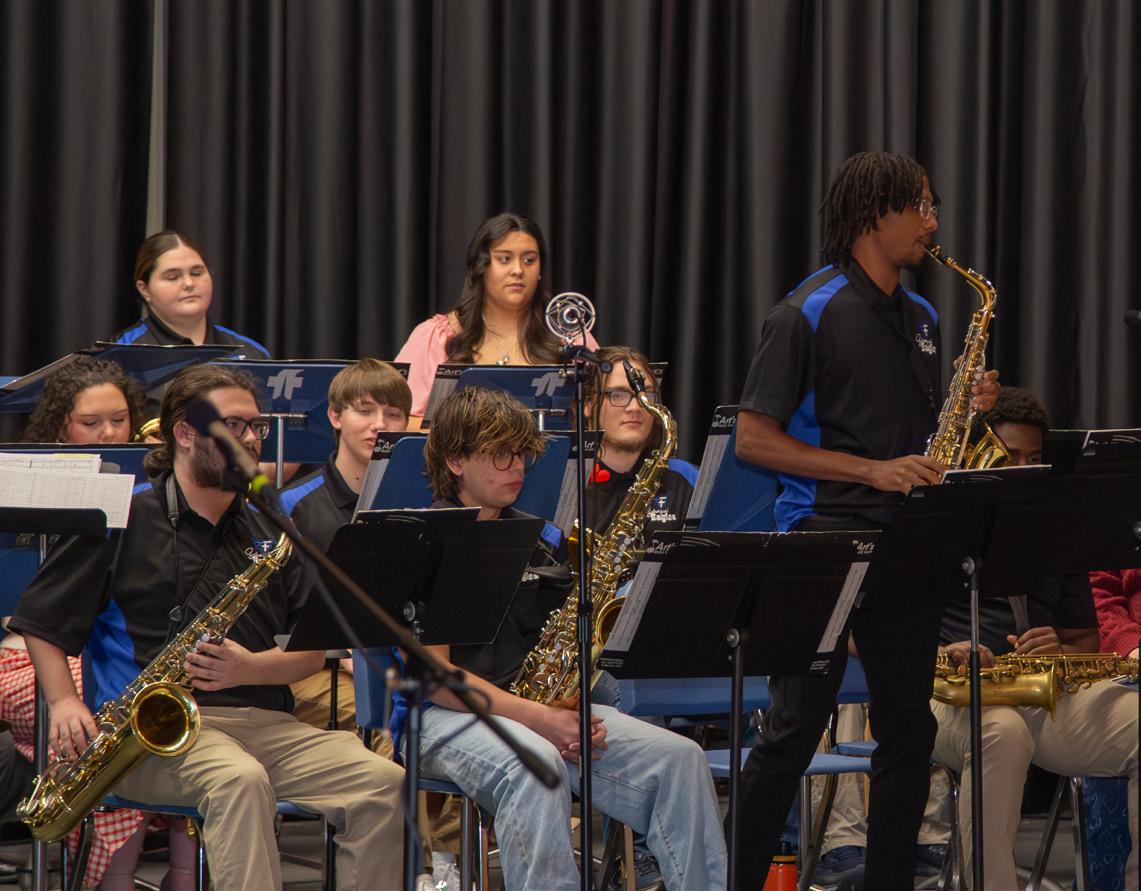
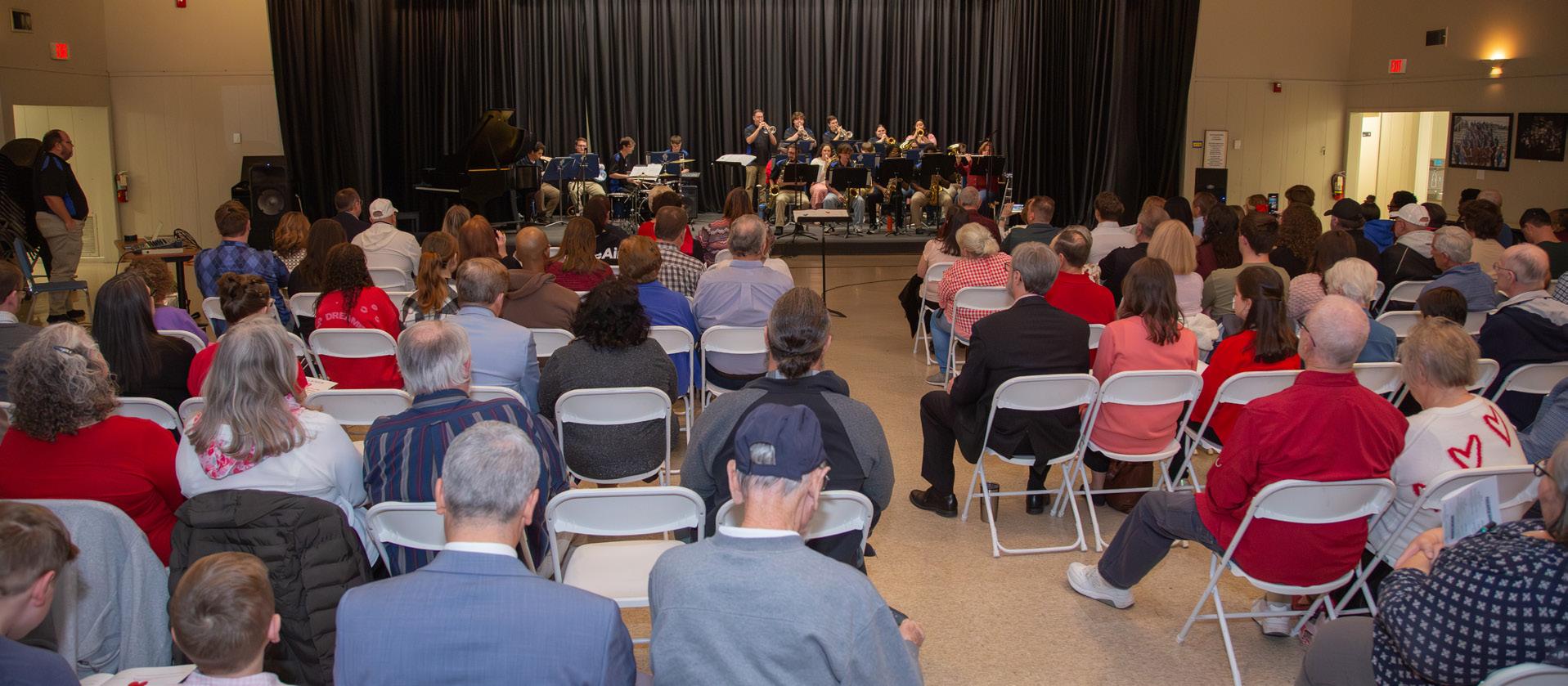
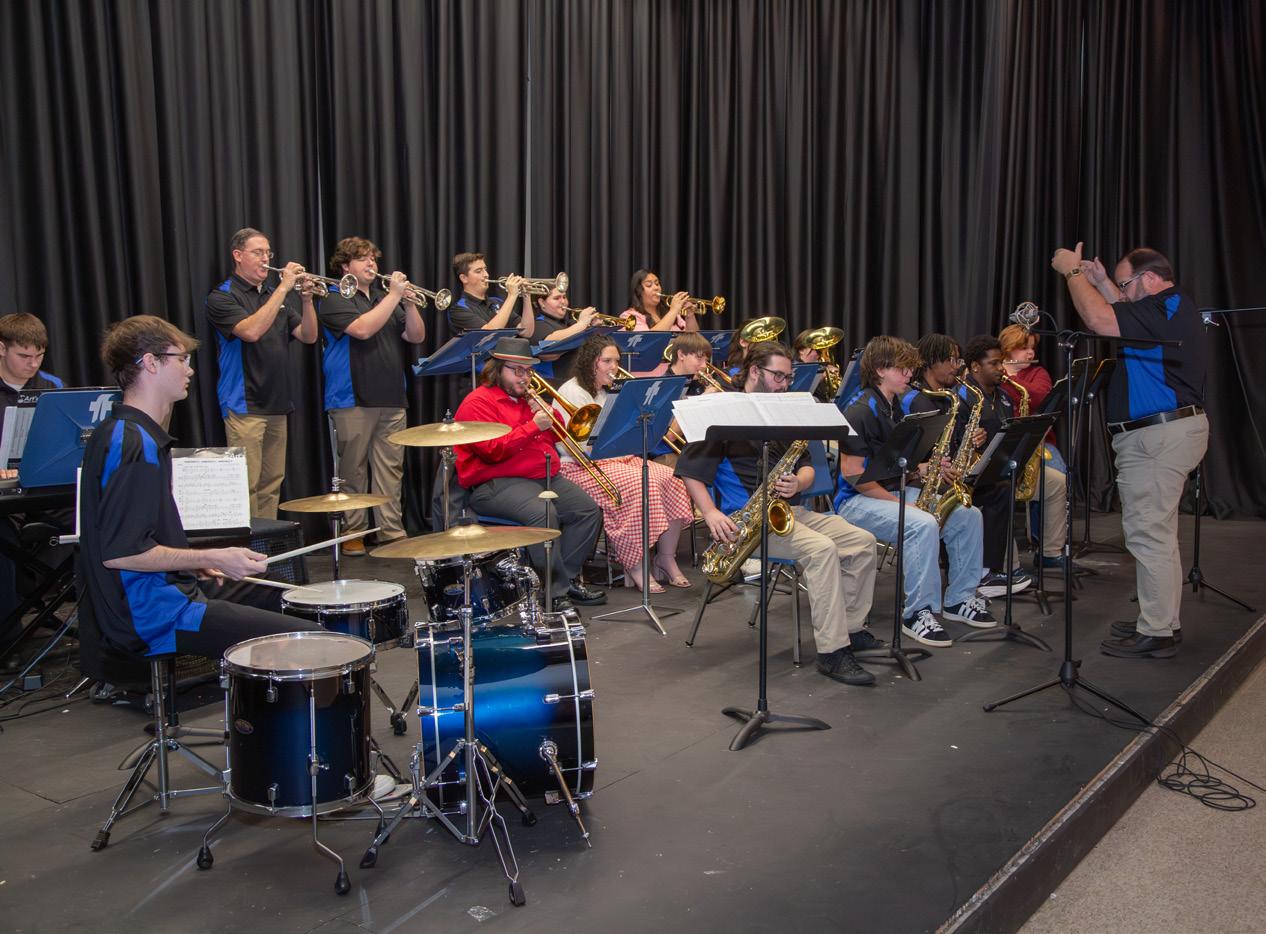
In addition to marching and concert bands, Faulkner is home to the “Swingin’ Eagles,” a traditional jazz combo and big band that performs music from swing, bebop, funk and fusion styles. The group, overseen by Bird, presents at least one on-campus concert each semester and hosts the annual Faulkner Jazz Festival each spring, typically welcoming about six schools from across the state.
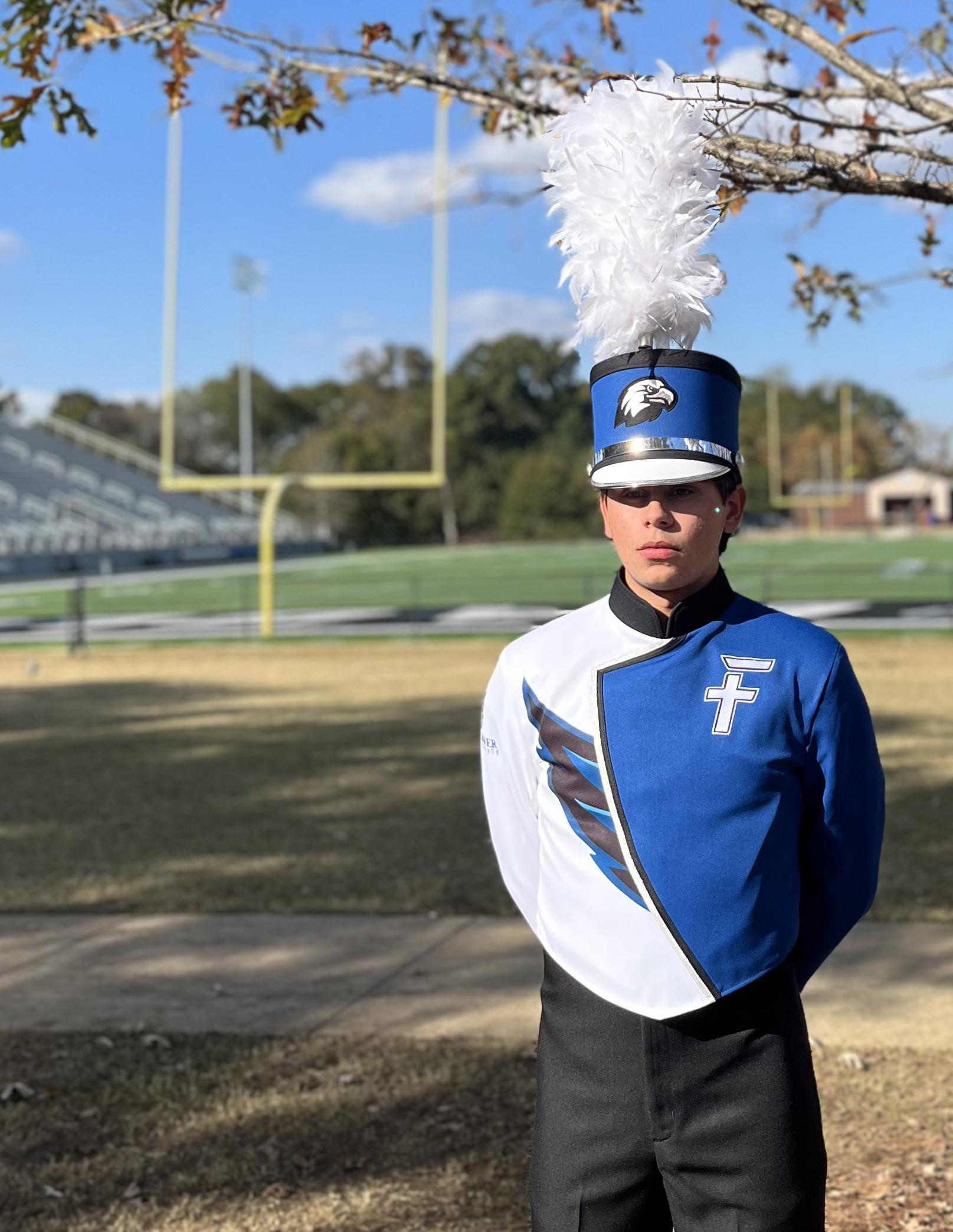
The program’s momentum shows no signs of slowing. New band uniforms are currently in development and will mark the first redesign since the original uniform debuted in 2009.
by Rebecca Burylo
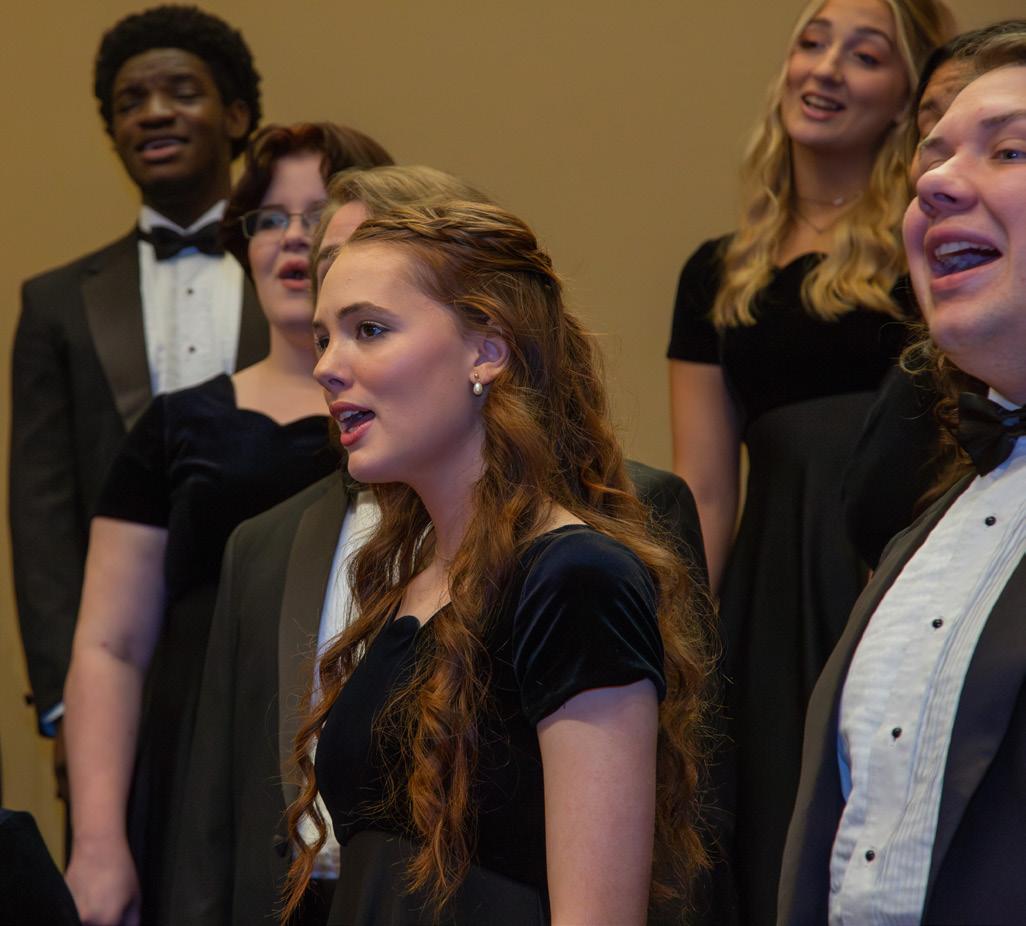
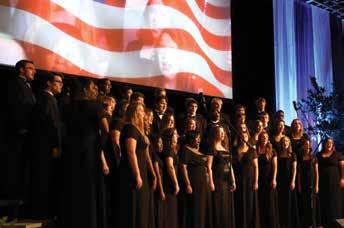
At Faulkner University, the chorus has been a part of campus life for nearly eight decades, blending musical excellence with a mission rooted in faith.
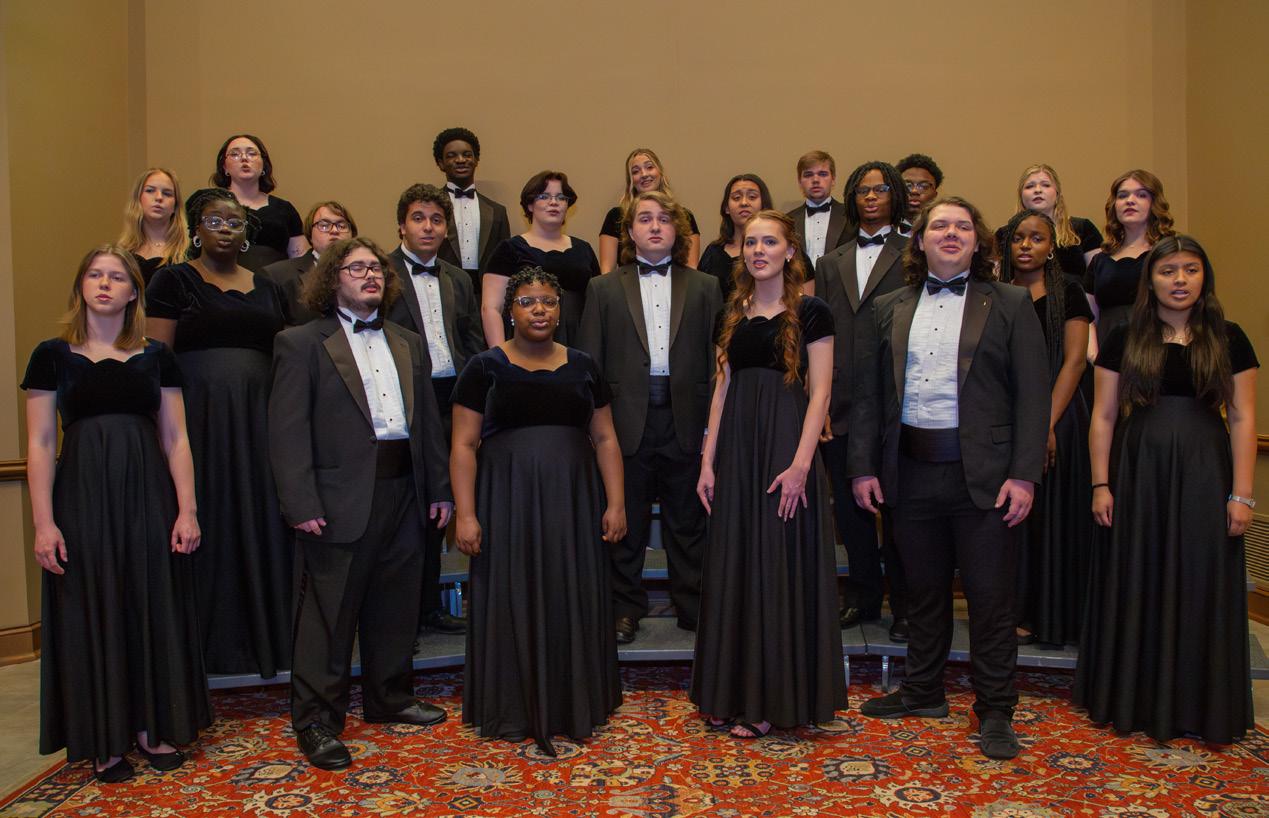
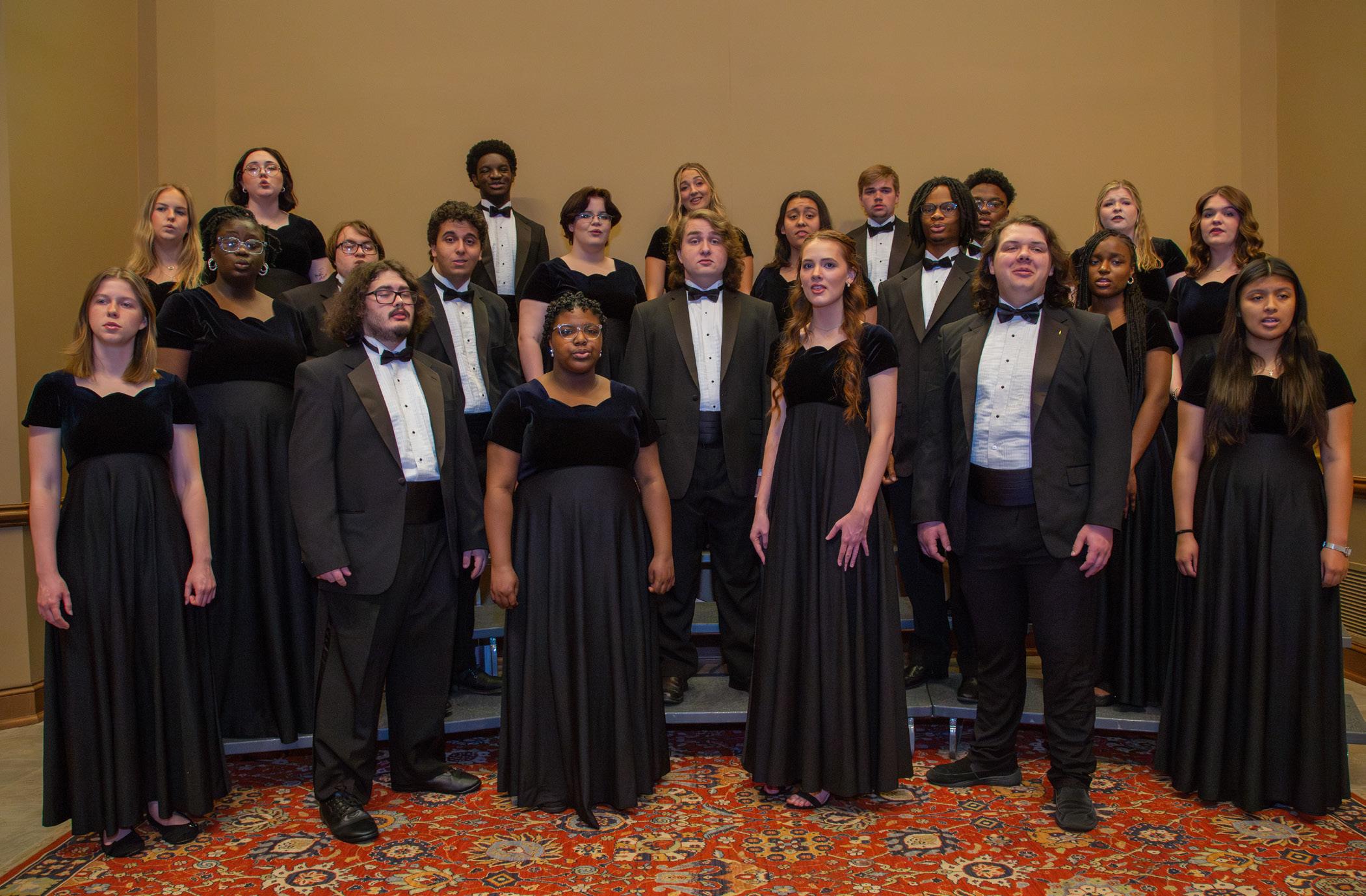
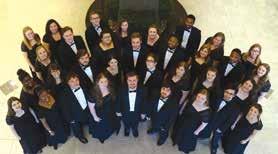
When Faulkner University was founded in 1942, it was known as Montgomery Bible School and had an organized chorus as early as 1946, confirming that choral singing has long been central to Faulkner’s identity. Over time, the school changed its name to Alabama Christian College and later Faulkner University, but the chorus remained a constant presence. Today, the Faulkner Chorus has 32 students, while the select ensemble, Faulkner Singers, is composed of 12 members.
The rise of collegiate a cappella ensembles in the early to mid-20th century helped shape that tradition. For
institutions affiliated with the Churches of Christ, the format proved to be a natural fit. At Faulkner, the chorus became both a musical ensemble and an ambassadorial group, performing on campus, throughout the local community and across the country. Today, the Faulkner Chorus continues that legacy by visiting congregations and schools, encouraging audiences and sharing the university’s mission with prospective students.
Allen Clements, director of choral activities, has led the program since fall 2010. His passion for music began early, growing up in a family where singing together, often in four-part harmony, was a regular part of life. Those formative experiences, along with involvement in school choruses, led him to pursue a career in music.
From performing in front of leaders of state at the Annual Faulkner Benefit Dinner to bringing melodies of worship to the Faulkner Bible Lectureship and traveling on tour to churches and schools across the Southeast, the Faulkner University Chorus is the school’s largest, mixed choral ensemble.
The group performs a wide variety of sacred, a cappella literature. Membership is open to both music majors and non-music majors. Members are selected by audition and commit to a demanding performance schedule that includes many local and regional appearances as well as an annual, extended spring tour during which the group travels throughout the United States. Scholarships are available to qualified applicants.
Each year, Clements works with a new group of students, guiding them as they develop both musically and spiritually. While their backgrounds and levels of experience vary, they share a common commitment to singing and to their faith. For Clements, the process is both challenging and rewarding.
“Collaborating with each group is a little bit different; it’s almost like solving a new puzzle each year,” Clements said.
Faith is central to the chorus experience. More than 95 percent of the group’s repertoire is sacred, with texts drawn directly from scripture or inspired by biblical principles. Performances focus on technical excellence and spiritual purpose. Students are encouraged to view music as a gift from God, using their abilities to help audiences reflect on God’s word and will.
“God gives composers the ability and desire to compose,” Clements said. “He gives us the ability and desire to sing. The music serves as a vessel for the lyrics. When we sing, we pray that God will use us to help people focus and meditate on His word and on His will for us.”
The Faulkner Singers is a select, ensemble whose members are chosen from the ranks of the Faulkner University Chorus. The group performs music which requires the finesse and vocal agility best achieved by a highly disciplined chamber ensemble.
Repertoire is drawn from multiple eras, genres, and styles including everything from Renaissance motets to contemporary vocal jazz. Scholarships are available to qualified applicants.
Clements said his time at Faulkner, which fosters an environment to discuss scripture, has strengthened his own faith.
“I especially enjoy the freedom we have to discuss the Bible and to encourage each other in our efforts to discern and do God’s will,” he said. “I have matured as a Christian while at Faulkner, partially because I’ve had to work to overcome my own weaknesses so that I can set a good example for my students but even more so because I’ve had so many students who have set a good example for me.”
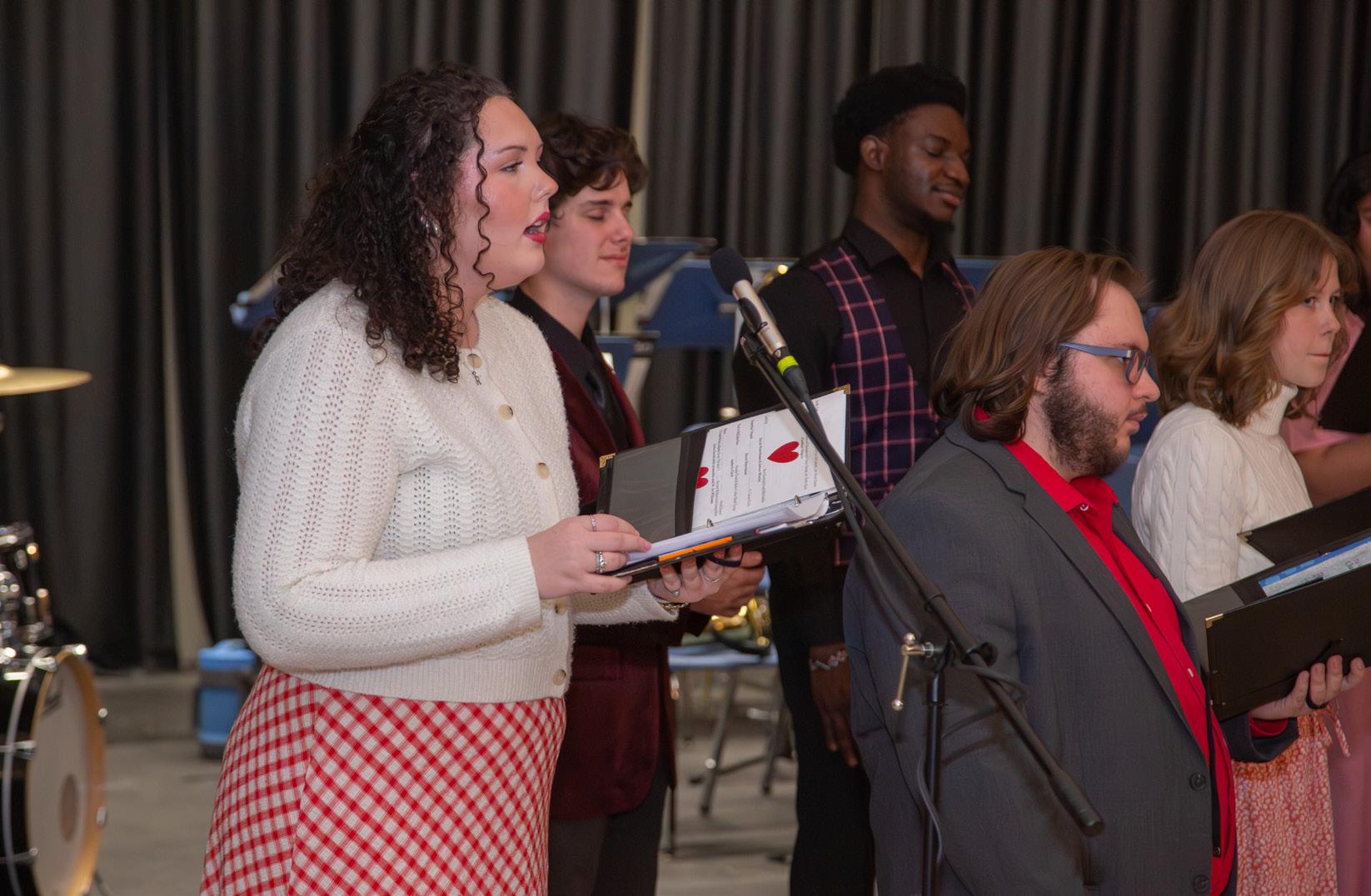
Throughout the academic year, the chorus participates in a variety of performances and events, including the Annual Faulkner Benefit Dinner, The Faulkner Bible Lectureship, A Faulkner Christmas, the Sweetheart Concert, the Spring Tour and the Spring Concert. The group also performs regularly at local churches, schools and retirement communities. Beyond performances, students take part in community-building activities such as a fall cookout, Christmas party, spring banquet and the annual spring tour. The next chorus tour is scheduled for March 2027.
by Rebecca Burylo
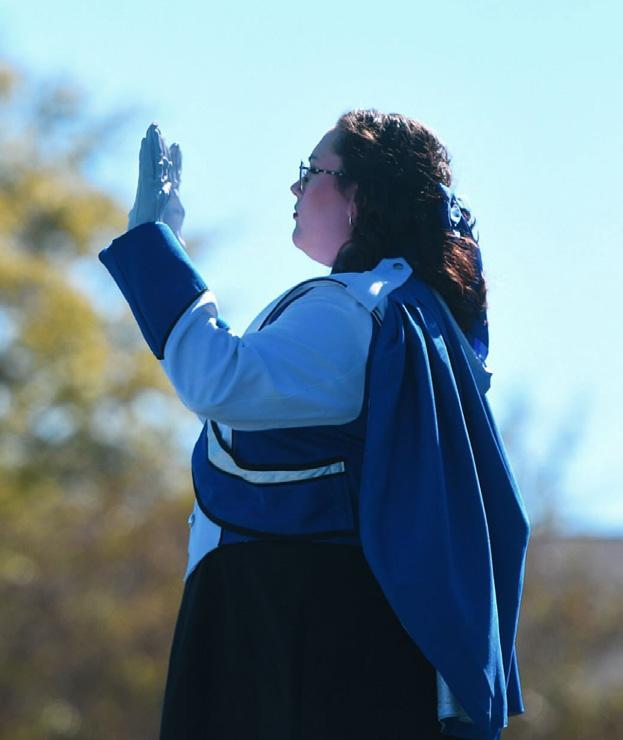
For Breanna Clark, a senior music education major at Faulkner University, the path to becoming a future band director has been shaped by leadership, performance and a deep sense of faith.
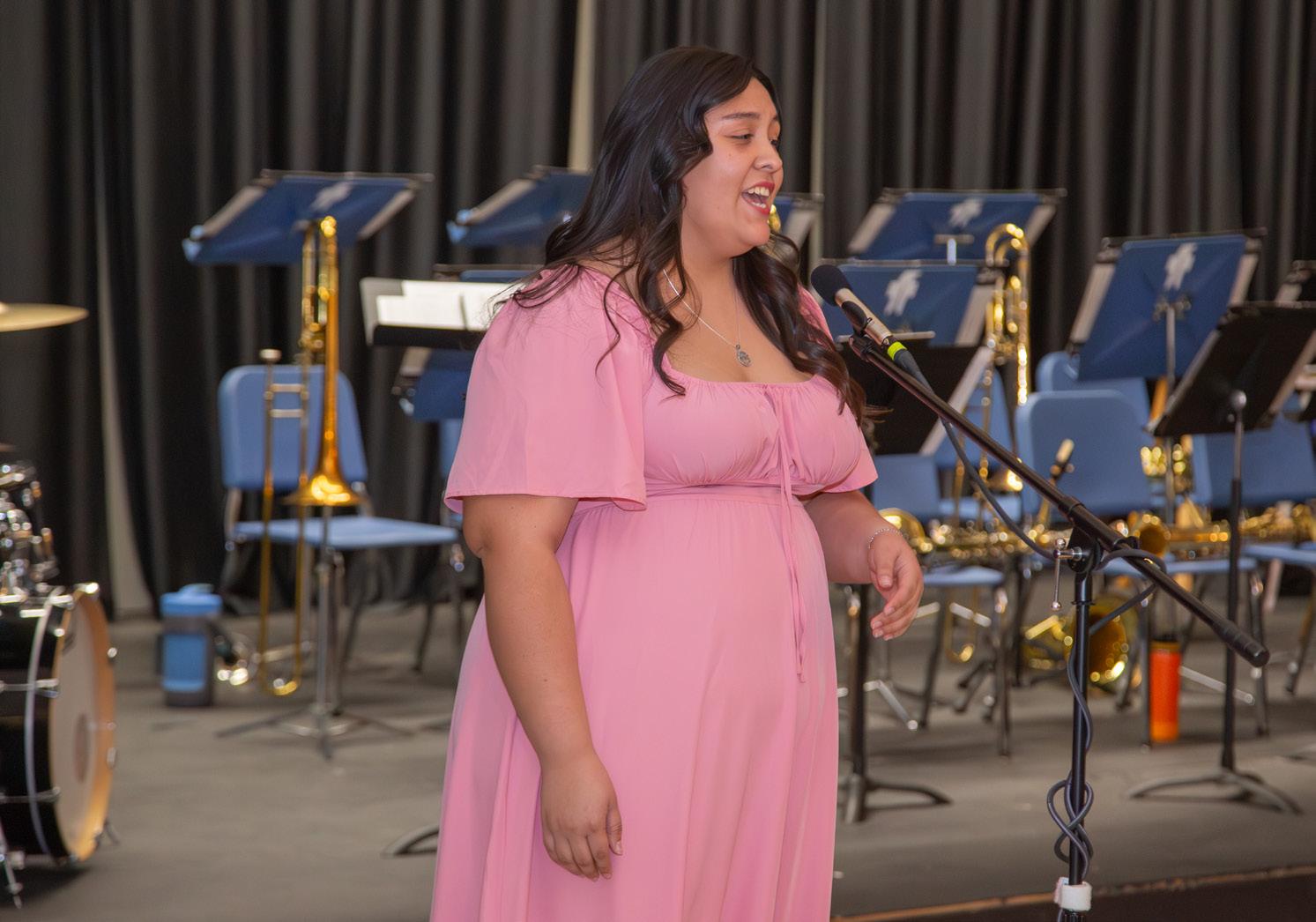
Clark, who will graduate May 1, 2026, is completing her teacher preparation courses through Faulkner’s music education program after four years of involvement across nearly every ensemble the department offers. She has participated in marching band, concert band, jazz band, chorus and the select Faulkner Singers. She plays trumpet and has also performed vocally as both a soprano and alto.
“I’m so grateful to be at a place that invests not just in my education, but in my faith”
Originally from Munford, Alabama, a small town near Cheaha Mountain, Clark had not originally planned to attend Faulkner. Like many of her high school classmates, she initially expected to enroll at a state school. That changed during her senior year of high school when the Faulkner Marching Eagles performed at a competition her band attended.
After the performance, director of bands at the time, Stephen Foster, approached Clark and encouraged her to consider Faulkner’s music program. That moment led to a visit to campus for Scholars Day, where she met faculty member Art Williams.
“We talked for hours about music, faith and life,” Clark said. “I realized Faulkner was different. They cared about me as a person and as a soul.”
That experience solidified her decision, and she has called Faulkner home ever since.
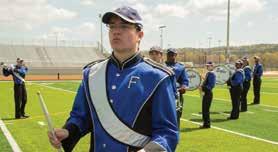
During her time at Faulkner, Clark served as drum major for the “Marching Eagles” during the 202526 season, was an alto section leader and later president of the chorus and helped lead Faulkner’s chapter of the Collegiate National Association for Music Education (NAfME). She also performed her senior trumpet recital and presented that work at the Alabama Music Educators Association professional development conference. For the past three years, she performed as a Jamboree hostess and one year as a soloist for the Annual Faulkner Benefit Dinner.
Clark has also been active in service and outreach. One of her favorite experiences was organizing an “instrument petting zoo” for local elementary students, where Faulkner musicians demonstrated their instruments and introduced young children to music.
“It was a lot of work, but seeing their faces light up made it worth it,” she said.
Her most meaningful moment, however, came outside the performance hall. In 2023, Clark was baptized, surrounded by members of the music department.
“I’m so grateful to be at a place that invests not just in my education, but in my faith,” she said encouraging future students to consider Faulkner’s music department. “It’s a family,” Clark said. “You grow as a musician, as a person and in your faith. There’s a place for everyone.”
After graduation, Clark will begin her career as director of bands at Highland Home School in Crenshaw County, a position she described as her dream job.
“When I am performing, whether it be on my trumpet or with my voice, I feel closer to heaven than I ever thought I’d feel on earth,” she said. “It is a gift from God and I can’t wait to share this gift with my future students as a band director.”
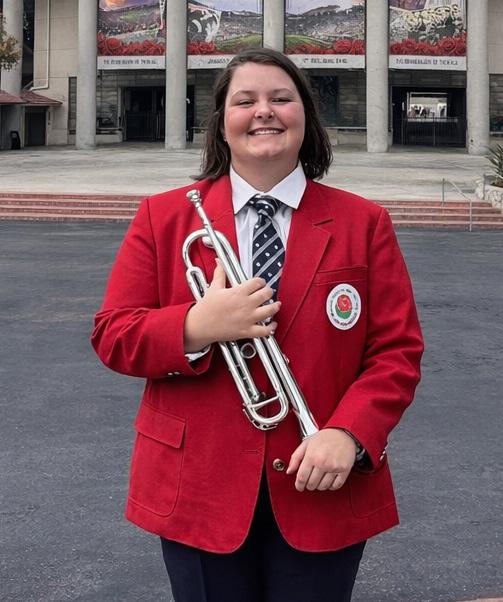
Rebecca Potter, a 2018 graduate of Faulkner University, turned her passion for music into a growing band program and a career she credits to the strong foundation she found as a student.
Potter made history as Faulkner’s first music education graduate, earning her degree in December 2018. Though she initially planned to attend another university, her path changed after attending a Christian Youth Conference and later participating in Faulkner’s Band Day during her senior year of high school.
“I fell in love with every moment of that day,” Potter said. “The environment, the people and the
experience drew me in.”
At Faulkner, Potter immersed herself in the music program, performing in band, chorus and jazz band. She played trumpet throughout her college career and sang alto in the choral program.
“The professors knew me by name and truly cared about me. They supported me”
While at Faulkner Potter served as vice president and president of the university’s collegiate National Association for Music Education chapter and was an active member of the Chi Omicron Chi social club, where she held roles including reporter, Jamboree head coordinator and vice president.
Potter said the relationships she built at Faulkner made a lasting difference in her life.
“The professors knew me by name and truly cared about me,” she said. “They supported me even when I struggled and reminded me to keep going.”
She credits faculty members, including Art Williams and Stephen Foster, along with staff such as Marilyn Swears and Carolyn McCoy, for encouraging her throughout her academic journey.
“Everyone was rooting for me,” Potter said.
One of the most meaningful aspects of her time at Faulkner was the integration of faith into daily life. She said moments of prayer and encouragement from professors left a lasting impression, including a reminder of Romans 8:28 that continues to guide her today.
Now in her eighth year of teaching, Potter serves as the director of music and band for grades 6-12 at McEwen High School in McEwen, Tennessee. During her tenure, she has grown the band
program from nine students to 40 and led the group to a top-10 finish at a state contest in 2024.
In 2026, Potter was selected to perform with the Saluting America’s Band Directors Band and marched in the Rose Parade on January 1, 2026.
“I love what I do,” she said. “It means everything to be able to use my degree every day.”
Potter remains connected to Faulkner and continues to follow the university’s growth, especially within the music department. She said she proudly represents her alma mater and encourages prospective students to consider Faulkner.
“Faulkner built me,” Potter said. “I’m so thankful for it.”
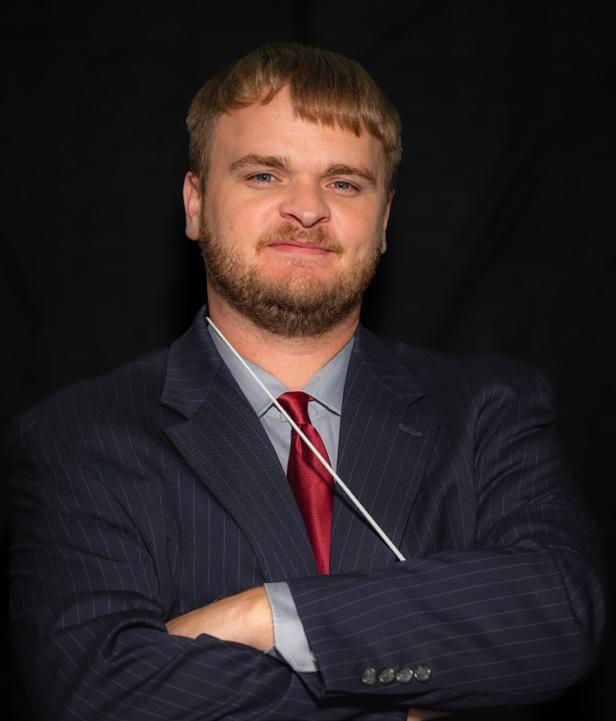
For Josh Guy, a 2014 graduate of Faulkner University, a passion for music has grown into a career dedicated to developing young musicians and leaders.
Guy earned a Bachelor of Arts
in Music from Faulkner and quickly turned his focus toward music education and now serves as director of bands at Alabama Christian Academy.
“The faculty genuinely invest in their students, and that impact extends well beyond graduation”
In this role, he oversees all aspects of the band program, including concert ensembles, marching band and percussion.
Guy said his connection to Faulkner began with family ties to the university, but it was the music department’s close-knit environment that ultimately influenced his decision to enroll.
“I knew I would be supported both academically and personally,” Guy said.
During his time at Faulkner, Guy was actively involved in the band program as a trumpet player. He also developed leadership skills through his roles as band president and as a member of the Sigma social club.
Guy said the relationships he built during his college years left a lasting impact.
“The friendships, mentorship and shared experiences created a foundation that has stayed with me long after graduation,” he said.
Guy said he was drawn to the field because of its ability to shape students in meaningful ways. Now as an educator, Guy works to instill those same values in his students.
“Music provides a unique platform to teach discipline, teamwork and excellence,” he said. “It has the ability to impact students far beyond the classroom. I enjoy watching students grow not only as musicians but also as individuals. Seeing their confidence and work ethic develop over time is incredibly rewarding.”
Guy continues to credit Faulkner’s music department for preparing him for his career.
“Faulkner’s Music Department offers a supportive, relationship-driven environment where students are known, challenged and encouraged to grow,” he said. “The faculty genuinely invest in their students, and that impact extends well beyond graduation.”
by Rebecca Burylo
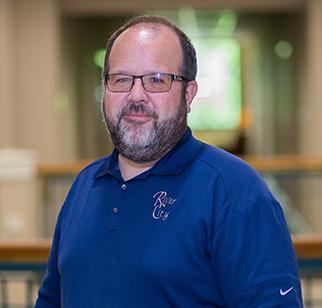
Michael Bird is an assistant professor of music at Faulkner University and director of the Swingin’ Eagles Jazz Ensemble. After graduating from Robert E. Lee High School, Bird earned a bachelor’s degree in music education and a master’s degree from Troy University. He taught for 28 years in Alabama public schools, including Frisco City High School, Zion Chapel High School and Robert E. Lee High School, before spending 20 years with Tallassee City Schools.
As a choir director, Bird team-taught in a program featuring seven choral groups with more than 220 students. He directed Gold Edition, an all-male show choir that was the first of its kind in Alabama and among the few in the country. He also co-directed the Capital City Classic show choir competition for 15 years, bringing more than 40 high school groups to the Montgomery Performing Arts Centre annually. In band programs, Bird founded the Tallassee Jazz Fest and directed it for 10 years, hosting ensembles from middle school through college across the state. He is also a writer for the Tallassee Tribune and a radio host for WACQ-AM 580 and FM 98.5. Bird serves as night manager for Tallassee Super Foods and marketing director for Jaco Sales. In 2015, proceeds from his book Fanfare: The 75-Year Legacy of the Troy University Bands raised more than $20,000 for the university’s band program.
His primary instrument is the trombone.
Allen Clements joined the music faculty at Faulkner University in 2010 and serves as director of choral activities. He conducts the Faulkner Chorus and Faulkner Singers and teaches music theory I and II, choral conducting, private voice and other music education courses. Clements earned a bachelor’s degree
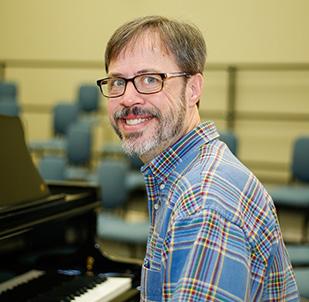
in music education from Harding University and later completed two master’s degrees in music at the University of Alabama, one in choral conducting and the other in music theory and composition. He earned a doctorate in music education from the Conservatory of Music at the University of Missouri-Kansas City.
Choral ensembles under his leadership have performed works including Handel’s Coronation Anthem No. 4, Haydn’s Missa brevis Sancti Joannis de Deo, Fauré’s Requiem, Schubert’s Mass in G Major, Bach’s motet Jesu, meine Freude, Beethoven’s Ninth Symphony, Holst’s Hodie, Orff’s Carmina Burana and Vaughan Williams’ Dona Nobis Pacem.
Clements served as director of choral activities at Southern Arkansas University from 2003-2010. His reviews of choral recordings are regularly published in Choral Journal. In 2009, his article “Minority Students and Faculty in Higher Music Education” appeared in Music Educators Journal.
In 2022, the Faulkner Chorus and Faulkner Singers recorded the album O Lord, God of All, available on compact disc and digital platforms. In addition to his teaching, Clements regularly serves as a guest conductor and clinician. In 2017, he prepared the Faulkner University Chorus and served as guest conductor for a joint performance with the Montgomery Chorale titled Peace and Harmony In 2020, he served as an adjudicator for two events sponsored by the Alabama Vocal Association: regional auditions for Outstanding Choral Student and the state solo and ensemble festival.
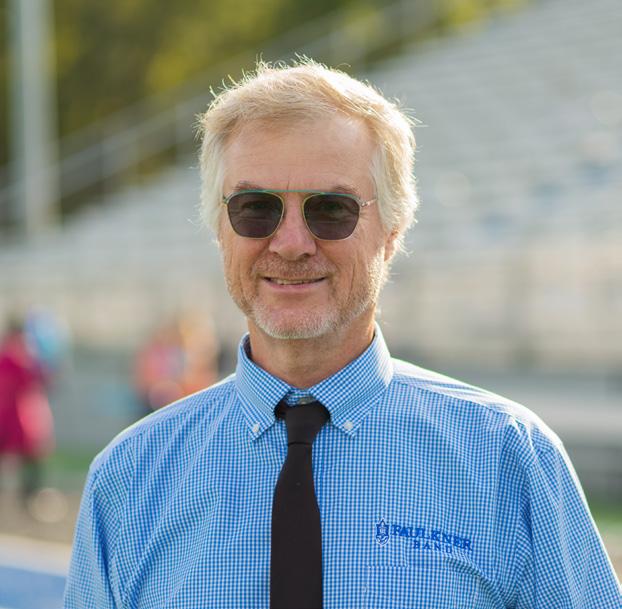
Stephen Foster joined the faculty at Faulkner University in fall 2014 as director of bands, a role he held until 2025. He continues to serve the music department as professor of music. For the past four years, he has served the Higher Education Division of the Alabama Music Educators Association, including two years as president-elect and two years as president. He earned a bachelor’s degree in music education from Middle Tennessee State University and a master’s degree in music from Belmont University. He also holds an education specialist degree in supervision and instruction from Tennessee Technological University, and education specialist and doctoral degrees from Union University.
Foster has been teaching since 1984, with experience in public and private schools in Tennessee and Alabama. He has taught kindergarten through college-level students in general, vocal and instrumental music. He is an active member of the National Association for Music Educators (NAfME), Alabama Bandmasters Association and Alabama Music Educators Association. His primary instrument is the trumpet.
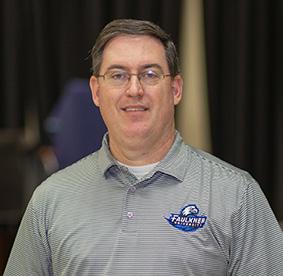
Robby Glasscock is director of bands at Faulkner University, where he leads the marching and concert bands.
After graduating from Holtville High School, Glasscock earned a bachelor’s degree in music education from Troy University, a master’s degree from Alabama State University and an education specialist degree and doctorate in music education from Auburn University.
He served as a band director for Tallassee City Schools for 24 years, leading the Tallassee High School band through significant growth and consistently earning superior ratings in marching and concert competitions. The “Pride of Tallassee” performed on regional and national television and in parades across the country, including the Magnificent Mile Parade in Chicago (2010, 2016), Fiesta Flambeau in San Antonio (2014), Parade of Lights in Fort Worth (2022) and the Boscov’s Thanksgiving Day Parade in Philadelphia (2008). The band also performed in the King Felix III Mardi Gras Parade in Mobile (2023), represented Elmore County in the Alabama Bicentennial Parade in 2019, and appeared in the gubernatorial inaugural parades in 2011 and 2015. Additional performances include the national anthem at the Ag-Pro 300 NASCAR race (2023) and the halftime show for the Alabama-Mississippi All-Star Football Game (2012).
Known to his students as “Dr. G,” Glasscock is an active musician in the River Region. His primary instrument is the French horn.
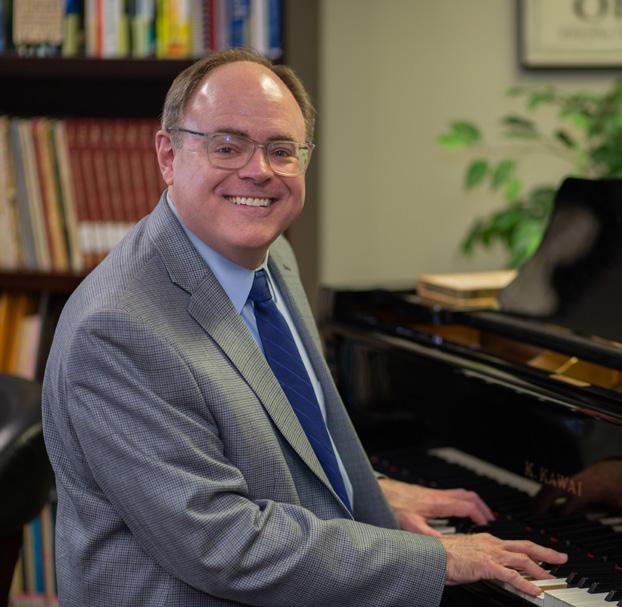
Art Williams is professor and chair of the department of music at Faulkner University. He began teaching at Faulkner in spring 2014 after several years of experience at the elementary, secondary and collegiate levels. He earned a bachelor’s degree in music education and a master’s degree in education from Troy University and a doctorate in music education, with a minor in child development, from Indiana University in 2017. Williams specializes in elementary general music education and appears as host of “Mr. Art’s Music Room,” the DVD component of the nationally released Expressions Music Curriculum from Warner Bros. and Alfred Music.
An accomplished pianist, Williams’ research focuses on music education through media. His doctoral research examined the methods of Fred Rogers as presented on the long-running public television program Mister Rogers’ Neighborhood.
by Charlotte Morris
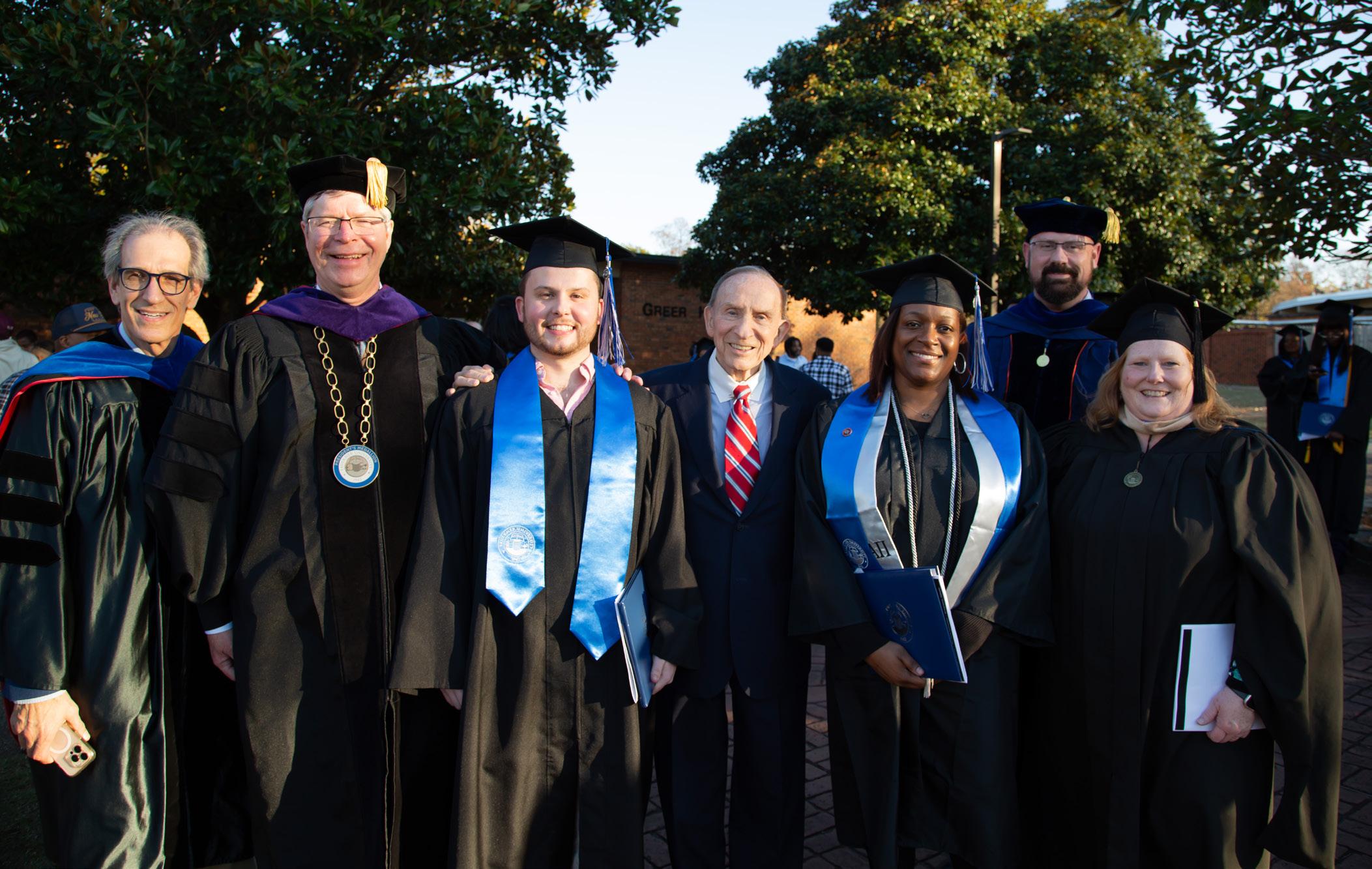
Just 14 months after launching the Stumbaugh School of Risk Management and Insurance (RMI), Faulkner University proudly celebrates the graduation of its first two RMI students. Robert Bowler of Indianapolis, Ind., and Christa Minniefield of Birmingham, Ala., have not only completed a rigorous 12-month course of study, but have also helped shape the foundation for future students who will follow in their footsteps. Both are employees of AssuranceAmerica and graduated from the online Bachelor of Risk Management and Insurance program in December 2025.

Bowler first learned about Faulkner’s RMI program while studying economics at Florida State University. Although he was not particularly interested in economics, it was the closest available path to his interest in the insurance industry.
“When I learned about the opportunity to earn a degree directly aligned with the industry I was pursuing, I immediately took interest,” Bowler said. “At Faulkner, I was able to learn concepts that I could apply in real time to my career. For the first time, school became something I genuinely enjoyed because I was learning material that directly contributed to my professional growth.”
He noted that one of the standout aspects of the program was the strong support from faculty and staff.
“The professors were very supportive and understanding of students balancing full-time careers, which made a significant difference,” Bowler said, emphasizing the personalized attention and encouragement that contributed to his success.
Since graduating, Bowler serves as Territory Manager in Indiana for AssuranceAmerica.
“Earning my RMI degree has had a significant impact on my career. I gained valuable industry knowledge that
I apply daily, and the program gave me insights I would not have developed through work experience alone,” he said.
As one of the program’s first graduates, the experience carries special significance.
“I’ll always be proud to have been among the first,” Bowler said. “It’s a privilege to have been part of something built from the ground up. The professors and staff deserve tremendous credit for creating such a strong program — I simply had the opportunity to benefit from their hard work.”
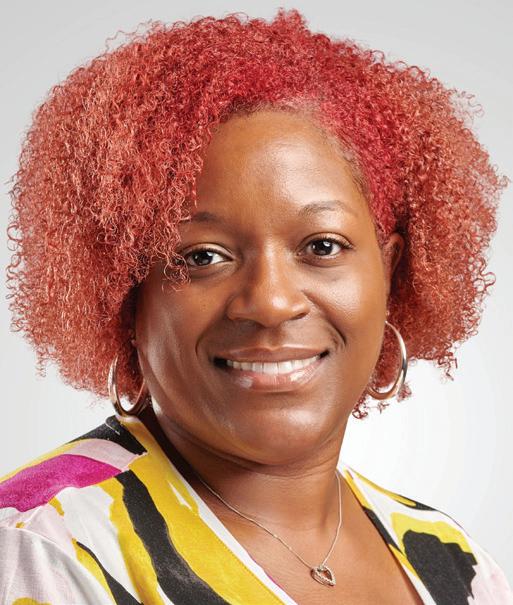
While Bowler’s experience highlights the program’s impact on early-career professionals, Minniefield’s journey reflects the determination of adult learners balancing multiple responsibilities.
Like many adult learners, Minniefield balanced the demands of school with her professional and personal responsibilities.
“Completing this program in just one year while working full time and balancing life as a mother and wife is something I am incredibly proud of,” Minniefield said.
Minniefield currently works as an adjuster handling injury claims for AssuranceAmerica and is exploring additional career opportunities within the industry. Prior to enrolling at Faulkner, she earned both her associate’s and bachelor’s degrees from Samford University and had already built a career in insurance.
“Having worked in the insurance field for many years, I decided to pursue this degree to build on my experience and further advance my career,” she said.
Reflecting on the accelerated program, Minniefield acknowledged the challenges of balancing coursework with career and family commitments but remained determined to succeed.
“There were moments of exhaustion and doubt, but I never gave up,” she said. “It allowed me to show my boys that there should never be limits placed on their dreams. I wanted them to see that with hard work, determination, and faith in Jesus, you can overcome any obstacle.”
As a nontraditional student, Minniefield hopes her journey will inspire others.
“I hope my story encourages others to believe that it is never too late to return to school, chase your goals, and create the future you want — for yourself and for your family.”
Building on the success of students like Bowler and Minniefield, the RMI program continues to grow. Currently, 27 students are enrolled in the online Bachelor of Risk Management and Insurance program, with an additional 10 students in the traditional fouryear program.
As enrollment increases, Faulkner University is also focused on expanding and strengthening the program through partnerships such as the one with Thompson Insurance, which provides scholarships and internship opportunities for RMI students. The program also hosts student-focused events that highlight academic pathways and career opportunities in the industry.
This spring, the Harris College of Business and the Stumbaugh School of RMI partnered to host an “Eyes Up!” safe driving event for area high school students, as well as an Industry Spotlight event featuring insurance professionals for current college students.
Together, the achievements of Bowler and Minniefield reflect not only personal success but also the strong foundation of a program poised for continued growth.
Bowler offers this advice to prospective students:
“If you see yourself in the insurance industry at all, pursuing an RMI degree is a no-brainer. Even if you’re unsure, it’s still a strong choice. The insurance industry is stable, recession-resistant, and centered on helping others. The program provides valuable knowledge, career opportunities, and connections with professionals in the field.”
by Rebecca Burylo
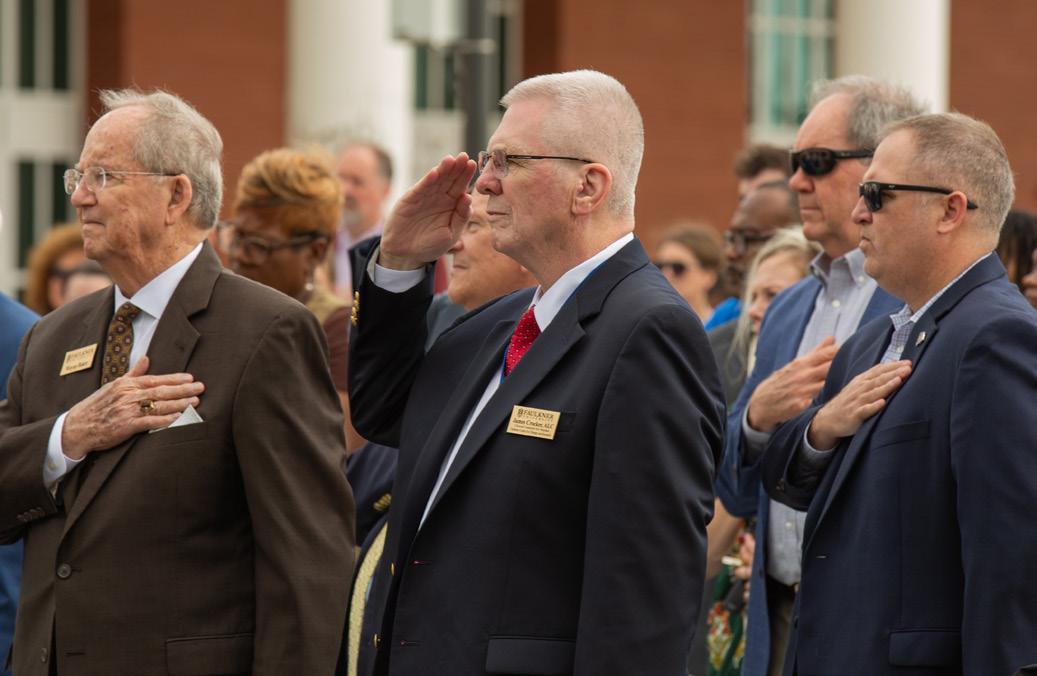
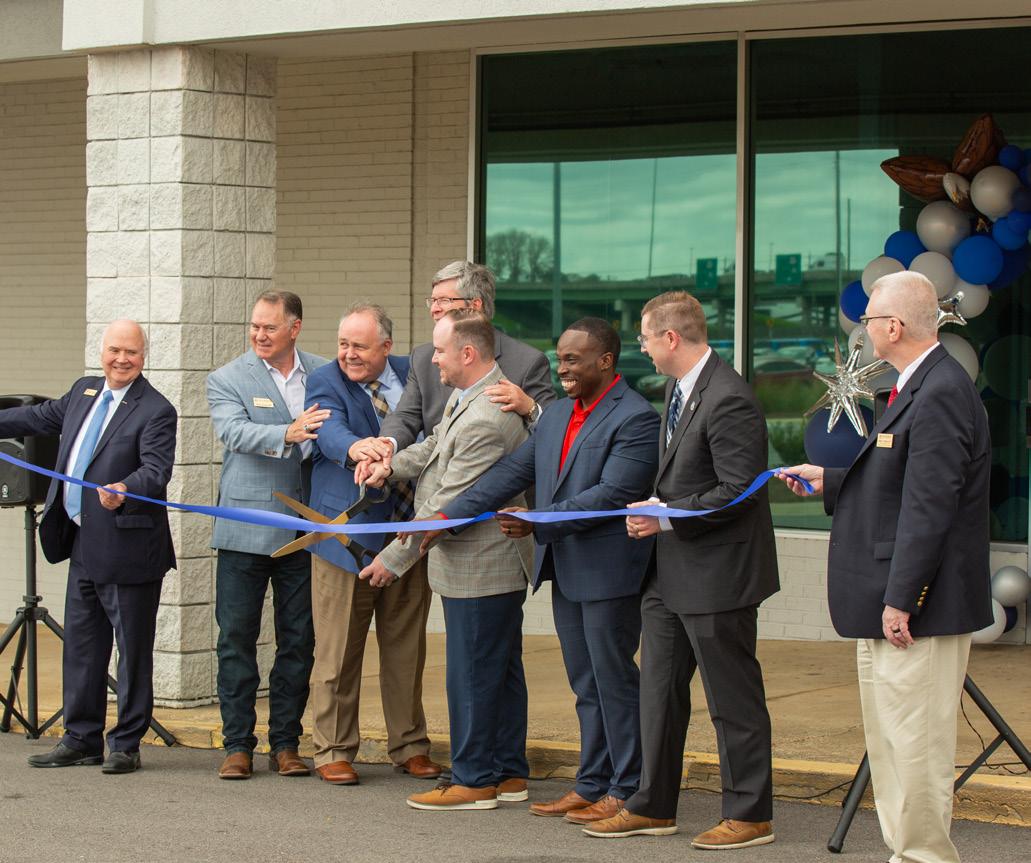
Faulkner University formally dedicated its new Faulkner Mental Health Center with a ribbon-cutting and dedication ceremony on March 6, 2026. The clinic operates under the Faulkner University Center for Therapy and Research and represents a significant expansion of the university’s mental health counseling services with a particular focus on serving veterans and their families. Services are also available to eligible members of the broader community.
The project received partial funding through a grant from the Alabama Department of Veterans Affairs as part of the Supporting Alabama’s Veterans Grant Program, which supports initiatives aimed at improving mental health outcomes for Alabama veterans and their families.
“Today represents far more than an opening of a building,” said Alan Deal, director of the Faulkner Center for Therapy and Research. “It represents access, it represents partnership, it represents commitment. Above all, it represents health and hope.”
The clinic will provide services to patients free of charge and will also serve as a training site for students in Faulkner’s College of Health Sciences who will gain hands-on experience working with veterans, families and other individuals seeking counseling services.
McKee and Associates managed the facility’s design and Liberty Construction served as the general contractor. Ongoing operational funding is provided by the Alabama Department of Mental Health, the Alabama Department of Rehabilitation Services and the Alabama Department of Human Resources.
Brandon Miller, director of outreach for the Alabama Department of Veterans Affairs, said the clinic demonstrates the impact of statewide collaboration.
“When we established the Supporting Alabama Veterans grant it prioritized visions transforming action-based solutions,” Miller said. “What Faulkner has done here is just that — create a space for students, veterans and families where they can find professional support and passionate care.”
Licensed professional counselors Cela Ardis and Jenn Ingram provide counseling services along with counseling interns under the clinical supervision of Dr. Heath Willingham. Retired U.S. Army Col. James Crocker, an associate licensed counselor, provides specialized services for veterans. Cindy Payes serves as clinic clerk providing administrative support and assisting with care coordination.
by Rebecca Burylo
A place of “help and hope,” Faulkner University’s Center for Therapy and Research has reached a major milestone, delivering its 50,000th patient visit for therapy and counseling services since opening in 2018.
The 20,000-square-foot state-of-the-art facility, located on Faulkner’s east campus, is an integral part of the university’s College of Health Sciences. It is the only free therapy and counseling clinic of its kind in the area, serving individuals and families across the lifespan, from infants to the elderly.
On average, families and individuals who qualify for services see a savings of nearly $1,200 per month. In so doing, the clinic is making a positive impact in the landscape of healthcare for families with special needs in Alabama.
throughout the region. Clinic Director Alan Deal, OTR/L, said the mission extends beyond treatment alone.
“We exist to promote the holistic well-being of our community by improving physical, emotional and spiritual health,” Deal said. “We seek to extend the healing ministry of Jesus through compassionate, quality rehabilitative services while training students to become competent, Christlike healthcare professionals.”

Services include speech therapy, occupational therapy, physical therapy and mental health counseling. Areas of specialization include autism spectrum disorders, sensory processing disorders, voice disorders, feeding and swallowing disorders, developmental disorders, traumatic brain injuries, neurological impairments, orthopedic injuries, and emotional and mental health disorders.
The Faulkner University Center for Therapy and Research clinic and the Mike and Lisa Williams Center for Autism continue to expand access to care
The clinic’s team of licensed therapists and supervised graduate students use evidencebased treatment approaches designed to achieve the best outcomes for patients. By partnering with such entities as the Alabama Department of Rehabilitation Services, the Alabama Department of Mental Health, the Alabama Department of Human Resources and the Alabama Department of Veterans Affairs, more than 200 physicians and nurse practitioners across the state are referring patients to the clinic.
For more information on eligibility requirements, to schedule an appointment or to learn more about the services offered at the clinic, follow the “Faulkner Center for Therapy and Research” on Facebook, call 334-386-7351 or email clinic@faulkner.edu. Additional information is available at www.faulknerclinic.org
by Rebecca Burylo
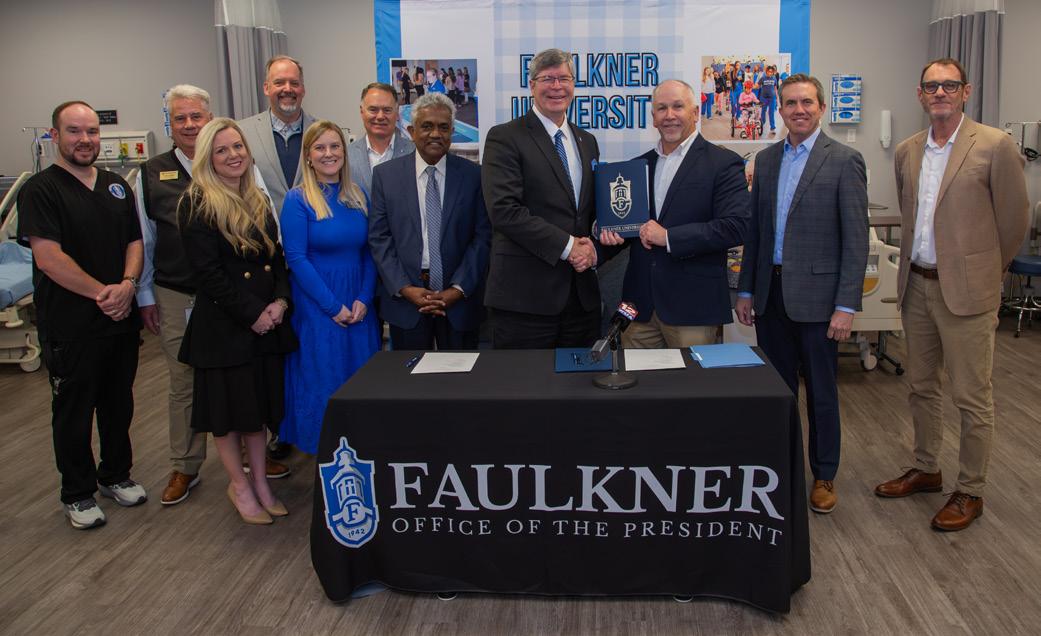
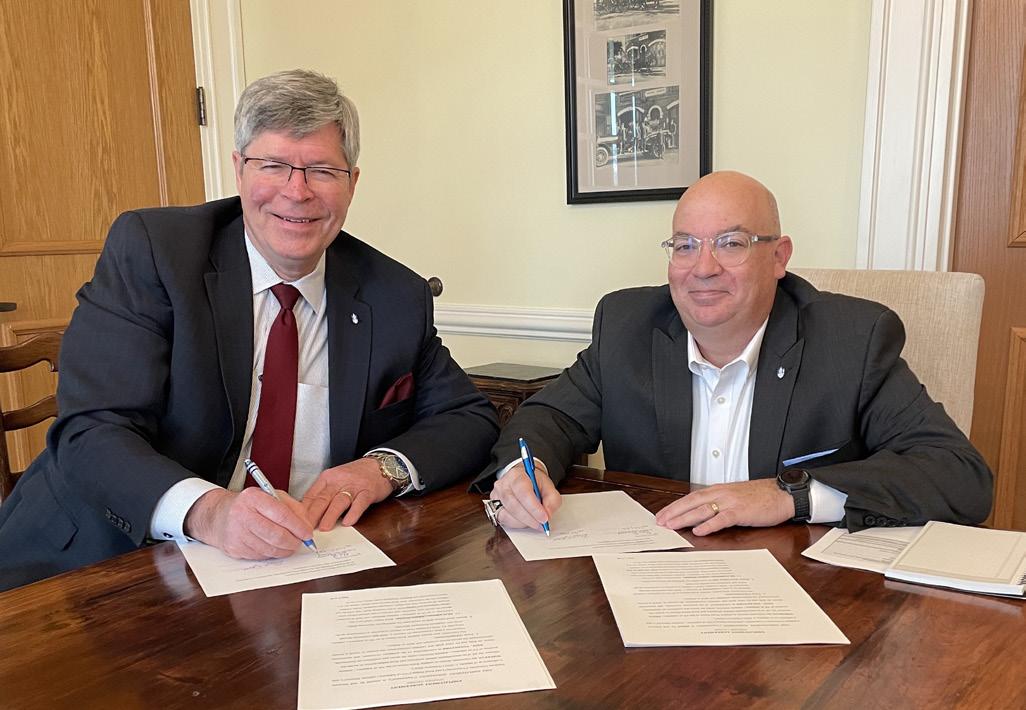
Faulkner University and Hyundai Motor Manufacturing Alabama, LLC (HMMA) signed a Memorandum of Understanding on March 18, 2026 to establish and fund new training opportunities through Faulkner’s College of Health Sciences.
The signing ceremony formalizes a three-year partnership in which HMMA will contribute $200,000 annually to support Faulkner’s Partnering in Alabama for Training in Healthcare (PATH) program. The agreement begins January 2026 and continues through December 2028.
The PATH partnership program is a statewide initiative led by Faulkner’s College of Health Sciences in collaboration with the Alabama Department of Public Health (ADPH) and a diverse network of partners. Its aim is to provide free, high-quality, simulation-based training to healthcare professionals and emergency responders across Alabama. PATH delivers immersive, interprofessional training experiences using a full spectrum of simulation technology including highfidelity manikins; task trainers; ultrasound systems; virtual reality and other state-of-the-art equipment for public health nurses, public school nurses, emergency responders, the Alabama National Guard and community partners.
“This is a historical event with a public-private, private-private partnership, which is so important and critical for us in impacting healthcare in the state of Alabama and in the surrounding region,” said Faulkner University President Mitch Henry. “What a blessing it is to partner with a wonderful community asset like Hyundai. What you do at Hyundai means so much to so many families in our community. What you do there impacts the world.”
The partnership will support specialized training services provided to HMMA personnel and contractors, including Advanced Cardiac Life Support (ACLS), Pediatric Advanced Life Support (PALS), CPR/ AED certification and recertification, Pre-Hospital Trauma Life Support, EMT, continued competency training, advanced trauma simulations and additional professional development offerings.
“We’re fortunate to have strong partnerships with many of the local colleges and universities here in town. These partnerships help strengthen the quality of life in the communities we call home and this new partnership with Faulkner University continues to build on that commitment,” said Hyundai Motor Manufacturing Alabama CEO Mark Rader. “It not only enhances the life-saving skills training of our medical teams and responders at HMMA, but also extends those opportunities to others across the region who serve our families, our friends, our neighbors and those in public health. So together we are building a stronger, safer and more resilient Alabama. One that supports the people who care for our communities and helps protect HMMA’s most valuable asset and that’s our team members.”
by Rebecca Burylo
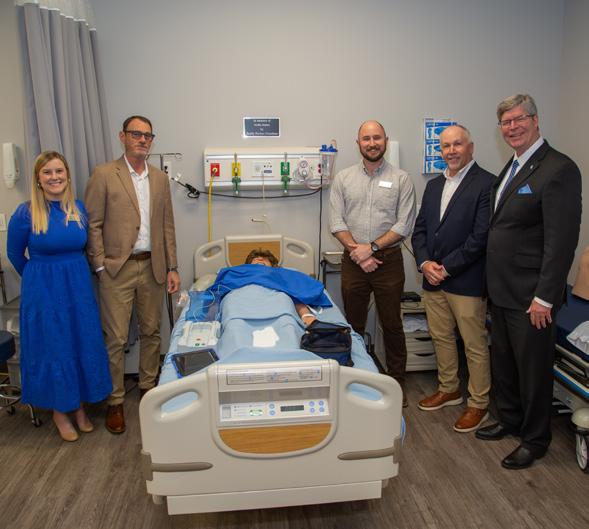
Faulkner’s College of Health Sciences and York University signed a historic agreement allowing eligible York students preference in three of Faulkner’s health science programs. Faulkner President Mitch Henry and York President Timothy Westbrook signed the Memorandum of Understanding on February 10, 2026.
The agreement will enable York students interested in pursuing a degree in health sciences to complete a STEM-related degree at York and then receive preference for admission to College of Health Sciences programs, specifically in occupational therapy, physical therapy and speech-language pathology.
“STEM education is important for any of our colleges and universities and I can’t stress enough how important it is for our Christian schools to have graduates and professionals in the field of health sciences with a foundation of faith,” Westbrook said. “As our graduates from York University are looking toward their futures we want them to have opportunities like this and I want to thank Faulkner University and the College of Health Sciences for creating this pipeline for our graduates to continue their education and their Christian service in health services.”
by Rebecca Burylo
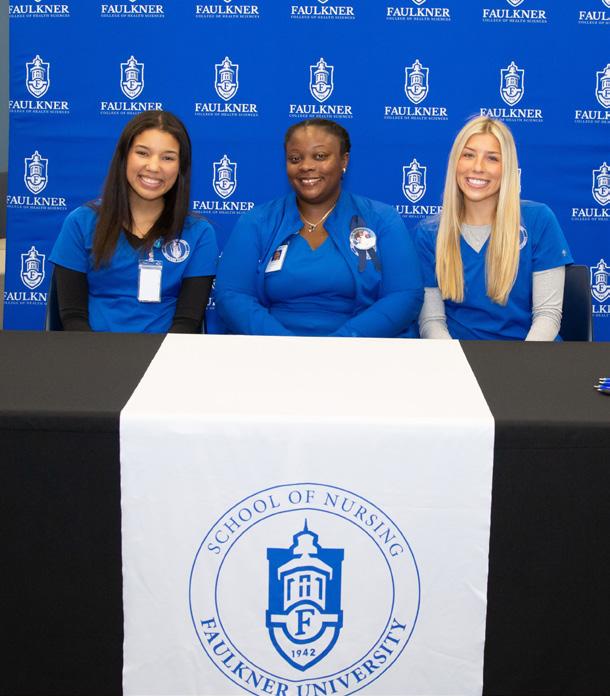
Faulkner University marked a historic milestone by hosting its first Nurse Apprentice Signing Day on December 18, 2025 in the College of Health Sciences, celebrating three nursing students selected for Alabama’s Student Nurse Apprentice pathway. The students signed were Kolbi Bates and Eavie Polk with Baptist Health and Bethani Jackson with Vaughan Regional Medical Center. Jackson’s signing is especially
historic, as she is the first nursing apprentice ever selected by Vaughan Regional.
The apprenticeship is a paid opportunity that allows students to earn income while gaining hands-on experience. Participants complete their clinical rotations at the facilities where they are employed, giving them real-world patient care experience while developing professional skills and confidence.
“Our nursing students are in a unique position,” said Faulkner School of Nursing Director Shellye A. Vardaman, PhD, RN, MEDSURG-BC, NEA-BC, CNE. “They are learning in real patient care environments while developing the skills and confidence needed to become competent professionals.”
by Rebecca Burylo
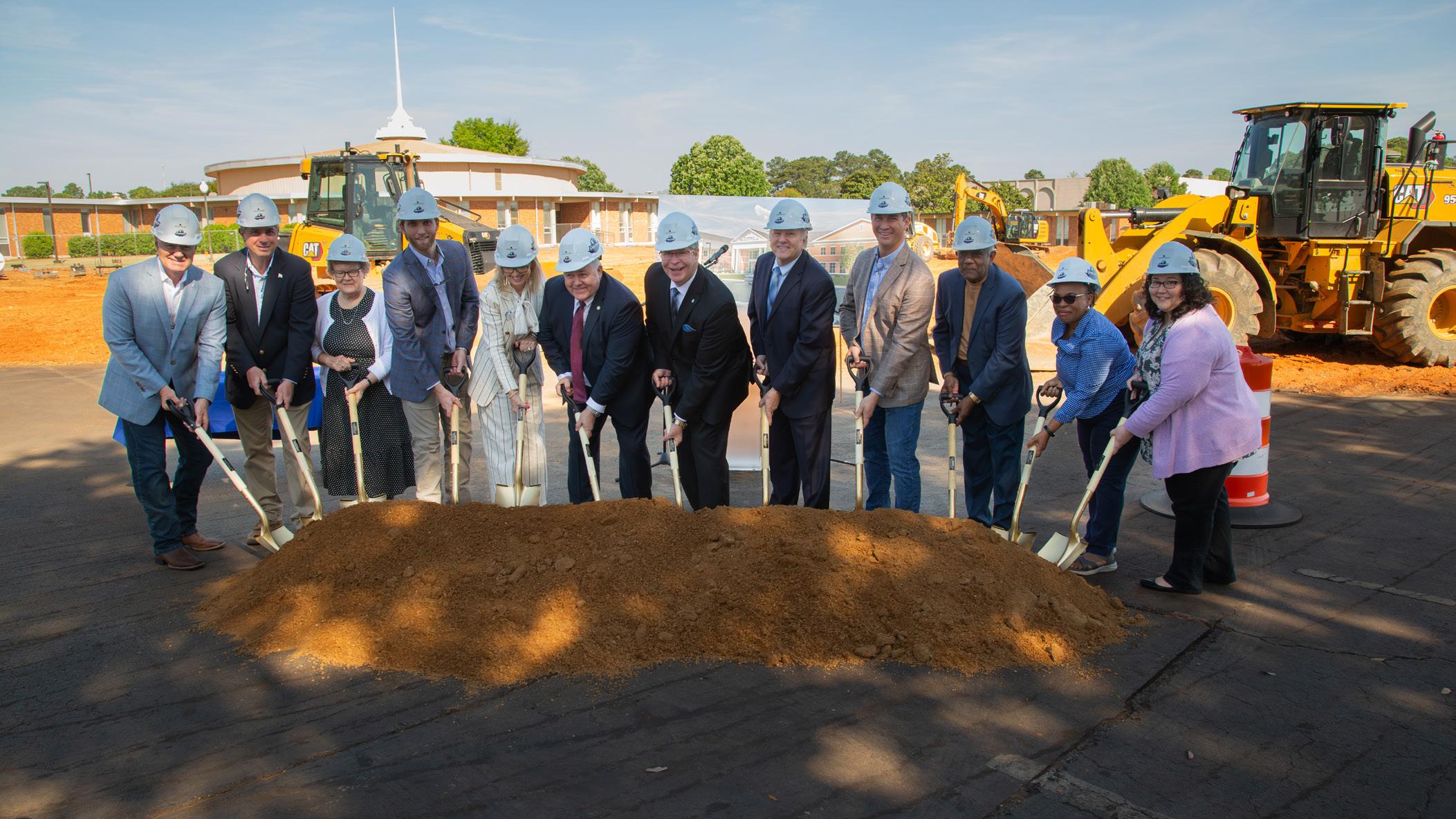
Faulkner University hosted an official groundbreaking ceremony for the new Academic Resource Center (ARC) on April 10, 2026, on the Montgomery campus. A historic day for the university, the groundbreaking heralds the official start of one of the most significant construction projects in the university’s history to date.
“There will be students who walk through these halls of this Academic Resource Center whose lives will be changed forever, not just academically, not just intellectually, but spiritually,” said Faulkner Vice Chancellor Wayne Baker. “God has blessed this place for 84 years and may He continue to do so.”
University President Mitch Henry, members of the Faulkner University Board of Trustees, cabinet members and distinguished guests were in attendance.
Construction of the Academic Resource Center, or ARC, is officially underway. The facility is designed as a state-of-the-art hub for collaboration, innovation and student success. The project is part of Faulkner University’s capital campaign, Where Faith Shapes Futures, a more than $53 million initiative aimed at expanding and enhancing campus facilities.
The project has been made possible through ongoing contributions from the Faulkner community and generous support from key anonymous donors, including the two largest gifts ever received by the university. Lathan-McKee Architects have developed
designs and plans for the ARC. Site preparation and excavation is being completed by Sitepros. Engineers for the project are Larry E. Speaks & Associates.
“It is great for us to stand here with reverence to know that the purpose of education at this institution is to help develop moral character of young people for not just this generation and generations to come,” Faulkner President Mitch Henry said. “This building will be the most used building on this campus, at least for the next 50 years. It will be that way because of what it contains.”
The approximately 62,000-square-foot facility will include the Gus Nichols Library collection, student services, student learning areas, collaborative spaces, academic coaching services, student technology services, virtual learning environments and a veterans center. Plans also include laboratories and studios for high-demand programs such as computer engineering, digital media and health sciences, as well as high-tech classrooms designed to connect students across Faulkner’s campuses in Montgomery, Mobile, Huntsville and Birmingham.
Of the special guests in attendance, Vicki Blackwood participated in the groundbreaking as the granddaughter of Gus Nichols, the namesake for Faulkner’s Gus Nichols Library. The physical library was removed and the site where it stood is now the future home of the ARC. The project is expected to be completed in early fall 2027.













by Faulkner Law Staff
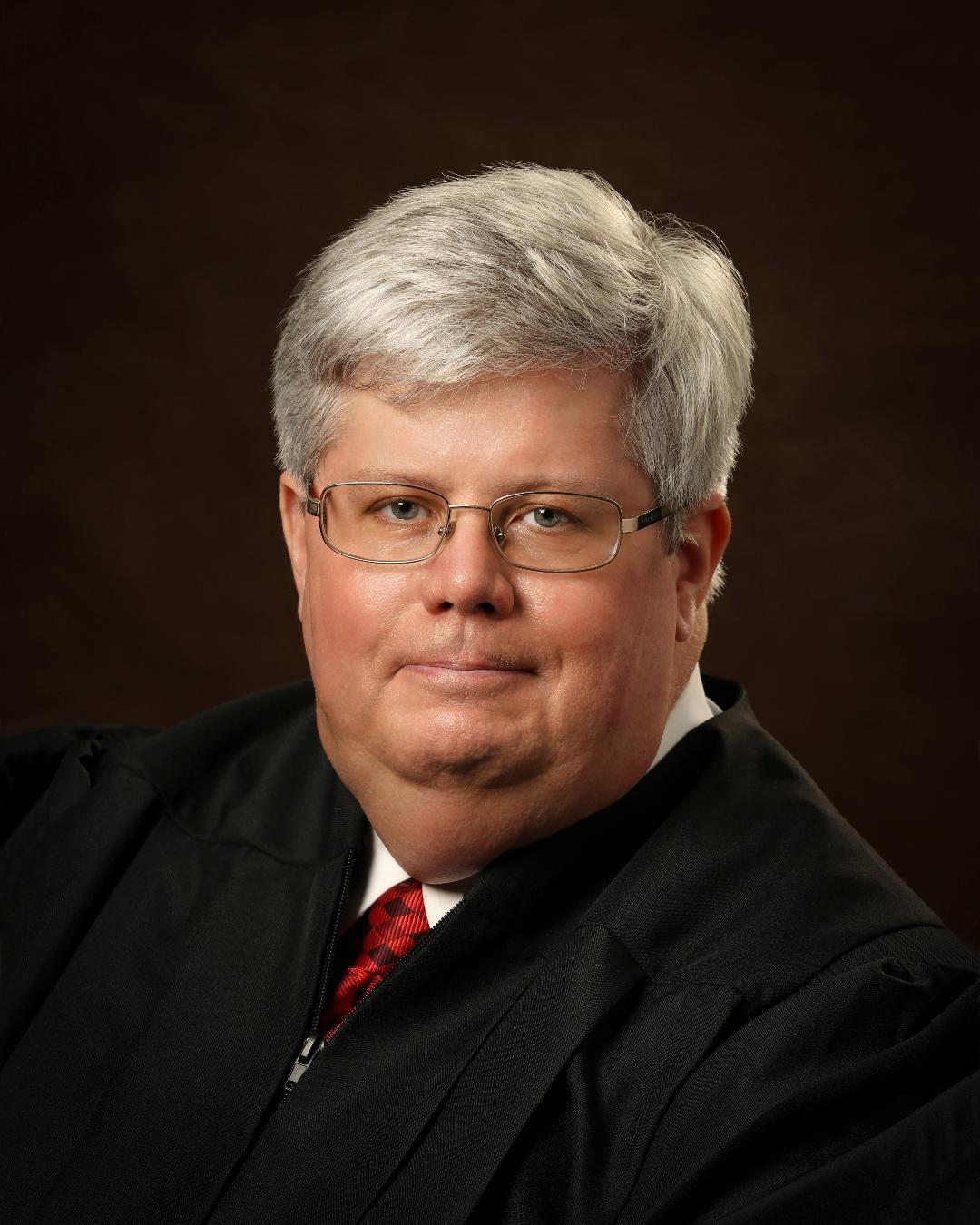
Students at Faulkner’s Thomas Goode Jones School of Law quickly learn the school’s motto: “Learn Law; Seek Justice.” Those words carry a particularly special meaning for one law professor, Distinguished Jurist in Residence Justice (ret.) John G. Browning. For years, Justice Browning has been seeking justice for Black and Native American men barred from entering the legal profession during the 19th and early 20th centuries solely due to the color of their skin. Inspired by the posthumous pardons granted in recent years to the Scottsboro Boys by Alabama’s governor and to Homer Plessy by Louisiana’s governor, Justice Browning became determined to seek and win posthumous bar admission for minority individuals who had been denied entry by the all-white legal establishment of the time throughout the country.
Such posthumous recognition has only occurred 8 times in U.S. legal history. The first five instances involved Asian Americans in Washington state and California, as well as Black lawyers in Pennsylvania and New York. Justice Browning, whose scholarly work on America’s first Black lawyers has been published in law reviews at Berkeley, Howard, and UCLA, as well as in the Journal of Supreme Court History, knew there had to be more examples of such injustice. “With many of the trailblazing Black lawyers I’ve studied, their first efforts at gaining admission to the bar were rejected by racist judges and bar committees,” Browning states. “I knew there had to be individuals who weren’t able to persevere, and who remained shut out of the profession due to the prejudice of the time,” he adds. In the absence of a bar exam and formal legal education, aspiring lawyers usually “read the law” before presenting themselves for a fairly lax and highly subjective review. In most cases, little was asked of candidates beyond a showing of “good moral character.” But for aspiring attorneys of color, the bar was often higher or even unreachable; they were often grilled for hours, or denied outright.
In 2016, Justice Browning called for belated justice for J.H. Williams, a Black man who journeyed to Dallas in 1882 and impressed a bar committee enough that it deadlocked on his qualifications. The irate judge then handpicked a second committee that rejected Williams in minutes. Although Browning’s effort was initially rebuffed, he tried again in 2020. This time, his campaign—aided by retired Chief Justice Carolyn Wright of the Texas appellate court that Browning served on—was warmly received by the Supreme Court of Texas. In October, that Court posthumously admitted Williams.
For his next effort, Browning uncovered records about Edward Garrison Draper, a Dartmouth-educated Black man who sought admission to Maryland’s allwhite bar in 1857. Although the Baltimore judge who examined Draper pronounced him “well qualified to
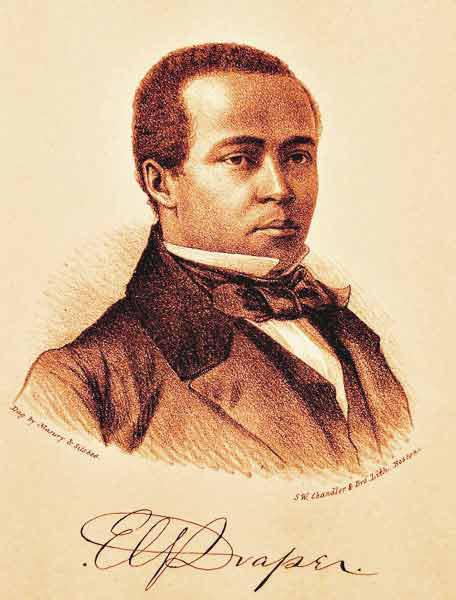
practice law—if he were a white man,” the would-be attorney was rejected. Justice Browning published his research in the University of Baltimore Law Forum, where it attracted the attention of the chief justice of the Maryland Supreme Court. Browning filed a petition with the Court, and in October 2023, it posthumously admitted Draper in a ceremony attended by Maryland Governor Wes Moore and numerous dignitaries from across the state.
Meanwhile, Justice Browning was working diligently on yet another effort. After learning that Seneca chieftain and Union general Ely S. Parker—close friend and military adjutant to Ulysses S. Grant—had been trained as a lawyer but had never practiced, Browning set out to find out why. Browning’s research revealed that Parker had apprenticed with an Ellicottville, New York law firm between 1847 and 1849, but was crushed after discovering that the New York bar would not admit him because, as a Native American, Parker was not considered a “citizen.” According to Browning, the disappointed young Seneca turned instead to civil engineering, a career that led to Parker crossing paths with and befriending Ulysses Grant. When Parker’s
attempts to enlist were rebuffed when the Civil War broke out, Grant intervened and got him a commission and a prominent place on his staff.
Parker’s legal training was put to good use, however. He was instrumental in securing two key victories at the U.S. Supreme Court in the late 1850s that enabled the Seneca to retain their ancestral homelands in New York and resist removal. Parker even drafted the articles of surrender signed by General Robert E. Lee at Appomattox in 1865. However, the inability to gain a law license haunted Parker and remained a bone of contention for his descendants.
Setting out to correct this injustice, Justice Browning reached out to Parker’s living descendants and to the Seneca Nation. He drafted a petition to New York’s highest court, featuring not only the results of his research but also letters of support from the National Native American Bar Association, historians, museums, and other groups. Along with Parker descendant Melissa Parker Leonard and Seneca Nation deputy counsel Lee Redeye, Browning filed the suit and found the New York Supreme Court eager to take what Presiding Justice Gerald Whalen called “the last steps on the long road to correcting a historic injustice.”
On November 14, 2025, the court granted Browning’s petition and posthumously admitted Ely Parker to the New York bar in what Ms. Leonard called a “deeply personal” moment that also stands “as an example for all Native people aspiring to do great things.”
Justice Browning’s story about the fight to win Parker’s posthumous admission is being published in the American Indian Law Review, just the latest of the 76 law review articles published by the prolific scholar. His work righting historic wrongs has been profiled by such national publications at The New York Times, the Washington Post, CNN, the Associated Press, Reuters, and the ABA Journal. Pointing to other examples around the country, Justice Browning says his work is far from over. Such campaigns are “not merely symbolic,” he emphasizes, but important reminders to lawyers and law students of the individuals of color whose dreams were denied on account of their race. Browning finds Biblical inspiration in Isaiah 30:18’s admonition about waiting for God’s justice, while reminding us that here on earth, “justice has no expiration date.”
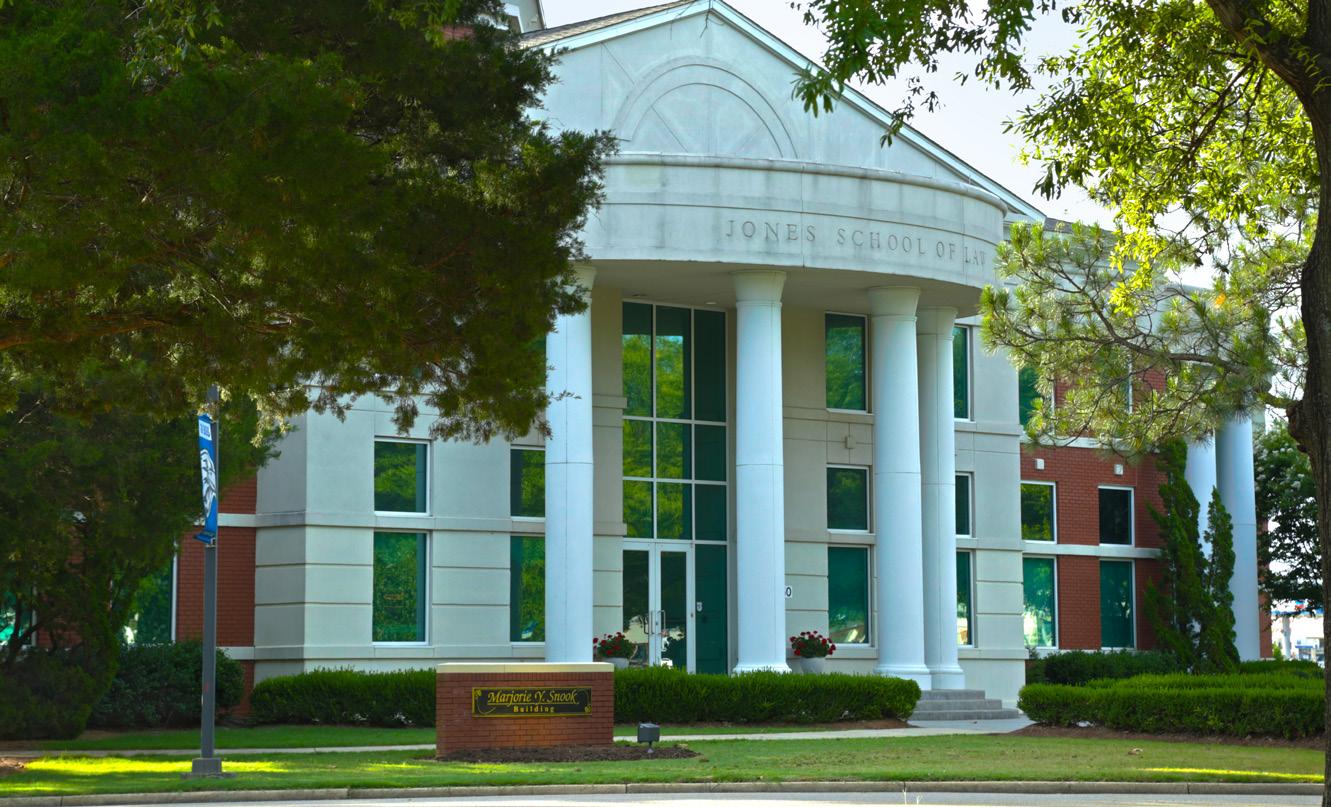
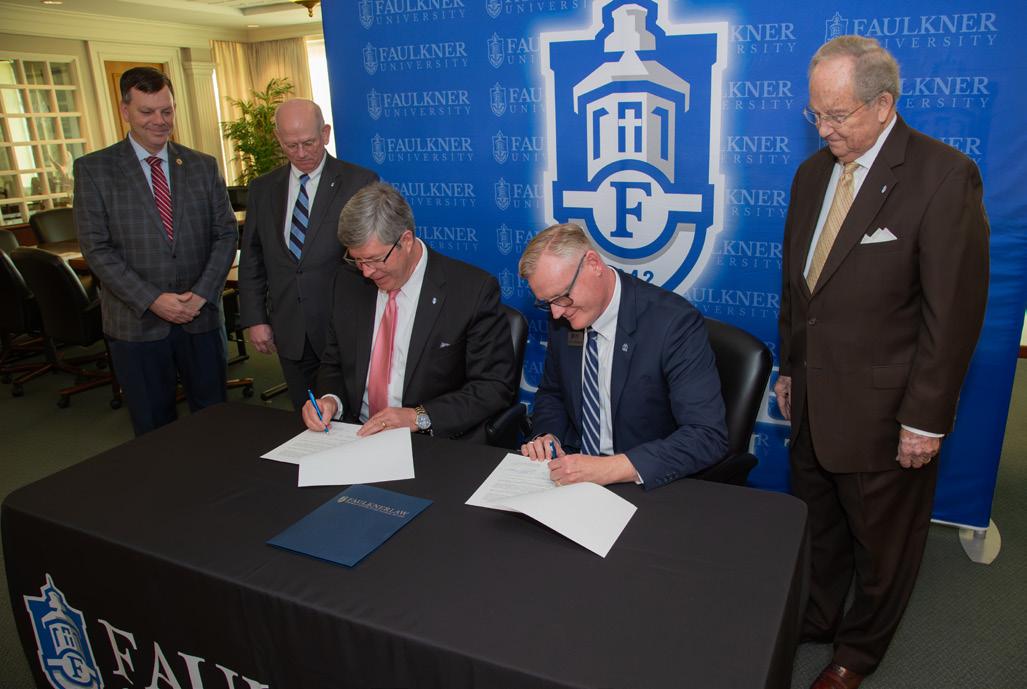
Faulkner Law and York University signed a historic agreement allowing eligible York students to enroll in an accelerated law degree program at Faulkner Law. Faulkner President Mitch Henry and York President Timothy Westbrook signed the Memorandum of Understanding on February 10, 2026.
The agreement, commonly referred to as a “3+3” Program, will enable York students interested in pursuing a law degree to complete their first three years at York for their undergraduate degree, followed by three years at Faulkner Law for their Juris Doctor. The first year at Faulkner Law will fulfill students’ undergraduate requirements. Their final two years at the law school will prepare them to sit for the state bar exam. This streamlined path allows students to earn both their bachelor’s and law degrees in just six years.
“I want to express my gratitude to Faulkner University and Jones School of Law for inviting us to be a part of this partnership,” Westbrook said. “Giving this opportunity to the students at York University to be able to pursue an academic future and career through law is very exciting for us.”
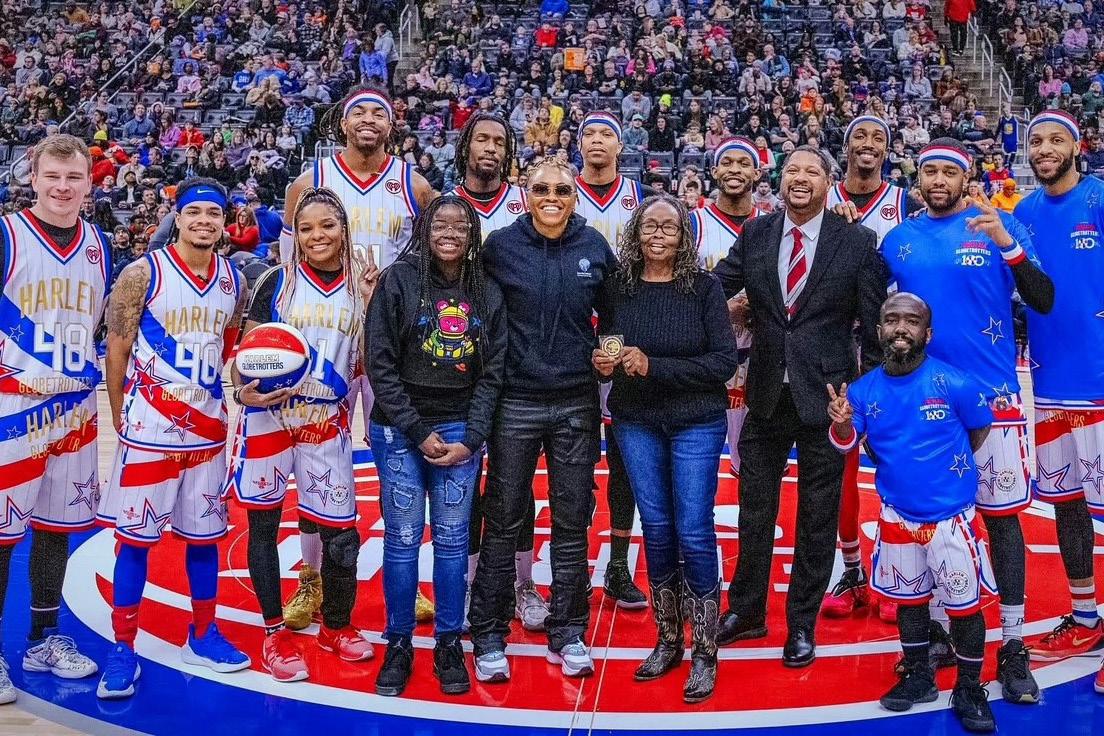
Faulkner Law third-year student Stephanie Douglas, a former member of the Harlem Globetrotters, was recently honored during the team’s 100 Years of Legacy World Tour.
On January 24, 2026, Douglas was recognized on the court at Little Caesars Arena for her contributions to one of the most iconic teams in sports history. She was among a select group of former female Harlem Globetrotters honored during the event.
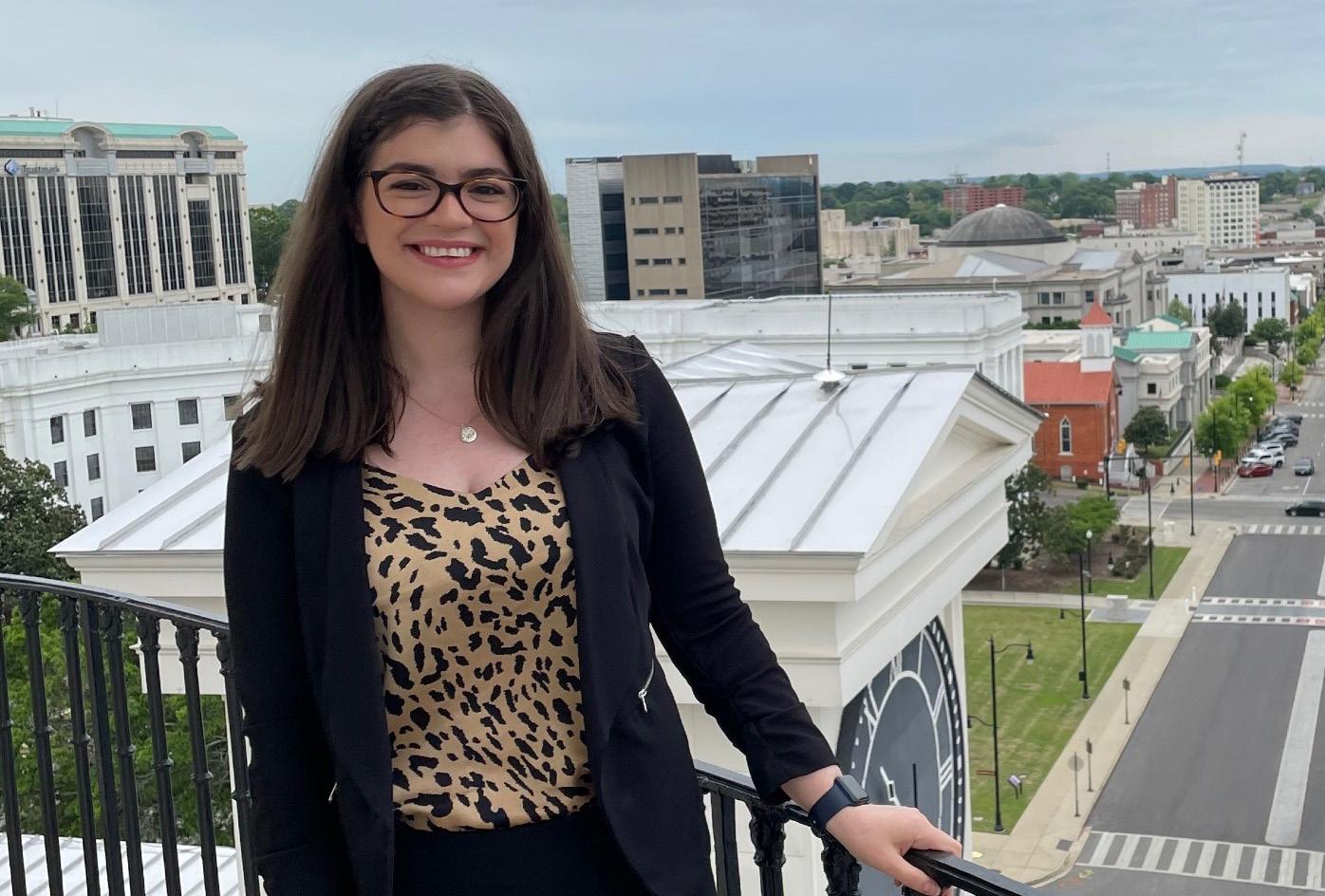
Janey Whitney, a 2023 graduate of Faulkner Law, has been appointed to the National Association of Regulatory Utility Commissioners Staff Subcommittee on Law.
The subcommittee focuses on strengthening effective public regulation through legal and policy engagement at the national level.
Whitney is an adjunct professor in the Legal Writing Program at Faulkner Law and serves as chief of staff to the president of the Alabama Public Service Commission. She began her legal studies in Faulkner Law’s executive program and said the experience played a significant role in preparing her for both her regulatory work and continued involvement in legal education.
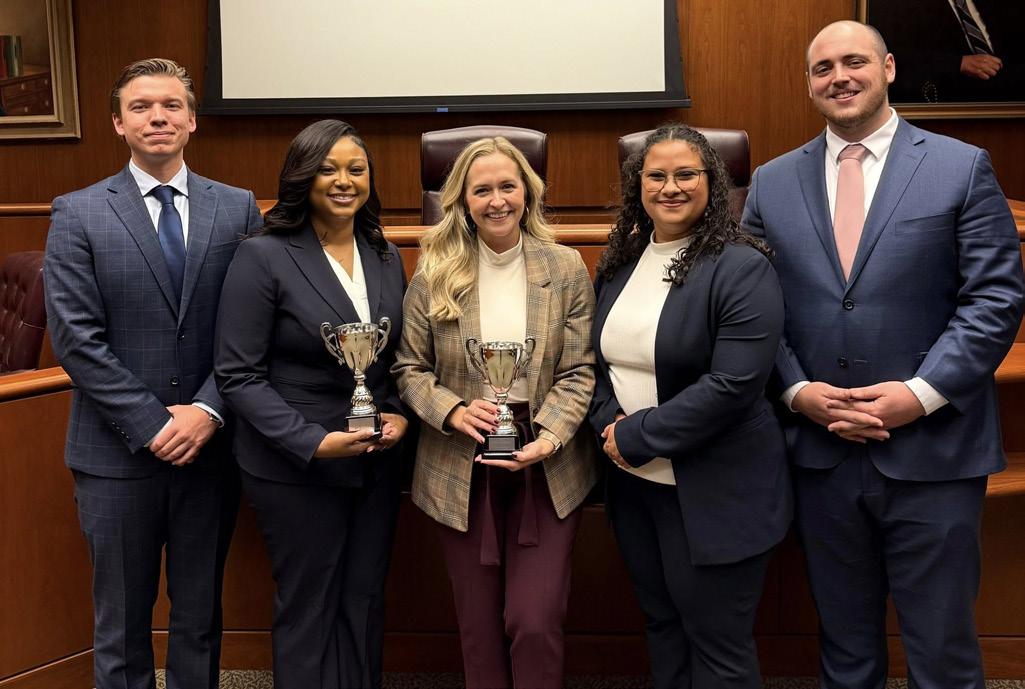
Faulkner Law’s Trial Advocacy Program has been ranked No. 10 in the nation by the prestigious Gavel Rankings, placing Faulkner Law among the most elite advocacy programs in the United States.
The Gavel Rankings evaluate advocacy excellence based on competitive performance, training quality, faculty expertise, and the overall strength of student advocates. Faulkner Law’s rise into the Top 10 reflects years of strategic investment in advocacy education, faculty leadership, and student success.
Faulkner Law’s Trial Advocacy Program’s recent achievements include multiple regional top five placements, national appearances, and consistent recognition for excellence in trial practice and advocacy training. Just this year Faulkner Law Advocacy Teams have beat nationally recognized teams such as the University of Florida Law School, University of
California Los Angeles Law School and Stetson Law School.
“Our program is built on the belief that great advocates are not just trained—they are developed through mentorship, practice, and real-world experience. We are so proud of our program and the students who spent countless hours preparing for these rigorous competitions,” said Professor Courtney Horton, Director of Advocacy Programs for Faulkner Law.
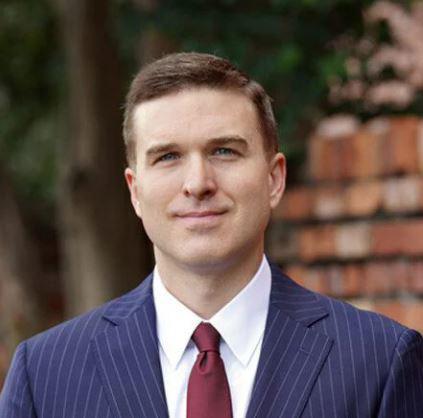
Joseph VanZandt, a graduate of Faulkner University and Faulkner Law, served as co-lead counsel in a landmark California case addressing the alleged harmful effects of social media platforms on young users. He and fellow Church of Christ attorney Mark Lanier, represented a 20-year-old woman known by the names K.G.M. and Kaley. The case was part of a consolidated group representing thousands of plaintiffs, collectively known as JCCP 5255. On March 25, 2026, a jury in a Los Angeles courtroom found that Meta and Google were responsible for the depression and anxiety of Kaley, who compulsively used social media as a child. She was awarded $3 million.
According to statistics released by the American Bar Association, the Law School’s first-year class has grown to 167 students, representing a 49.11% increase over last year’s entering class. This growth ranks as the third-largest percentage increase among law schools nationwide and stands as the largest increase in Alabama.
Overall enrollment at Faulkner Law has reached 411 students, reflecting a 20.2% increase from the previous year. This places the Law School sixth nationally for percentage growth in total enrollment and first in the state of Alabama among American Bar Association approved schools.
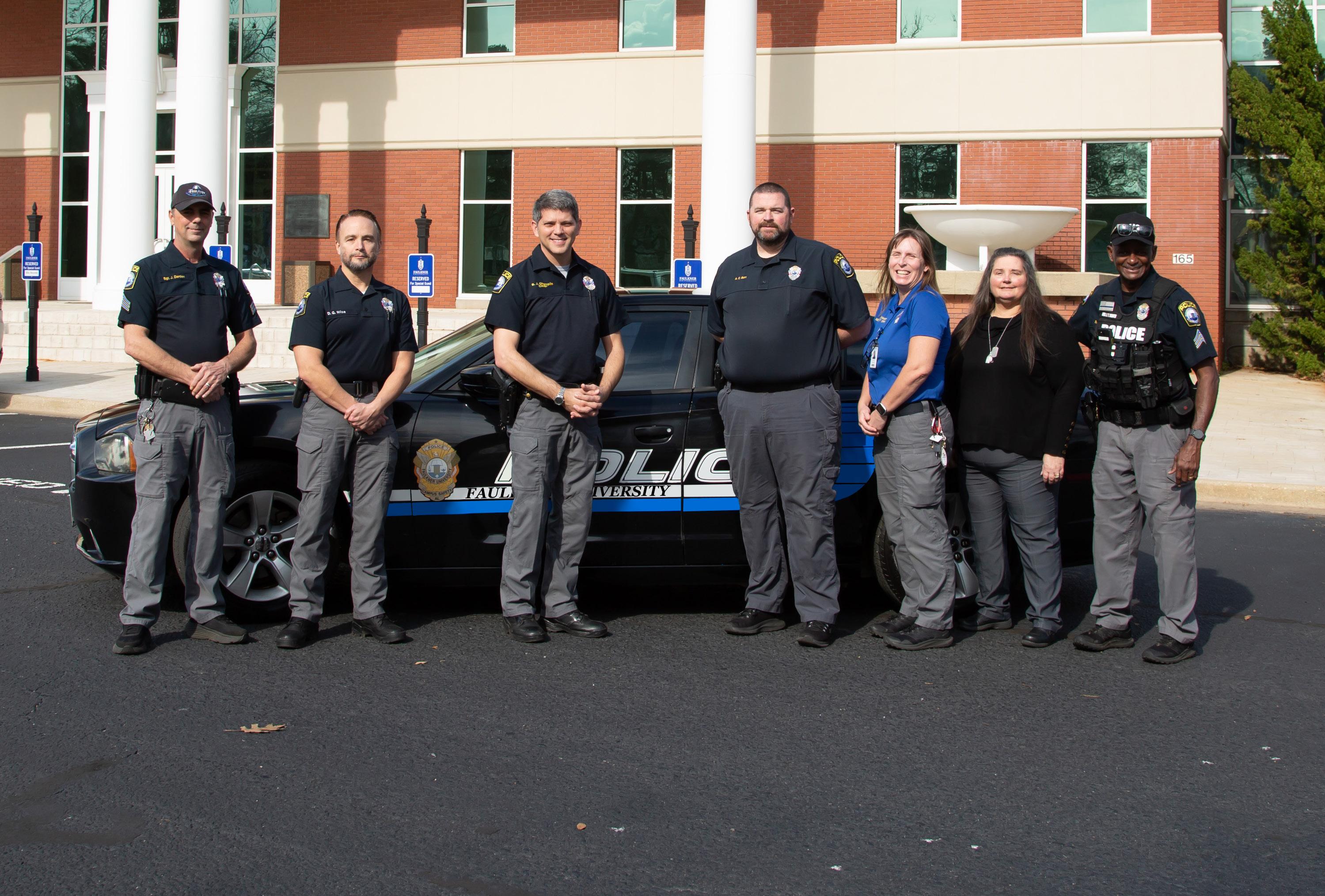
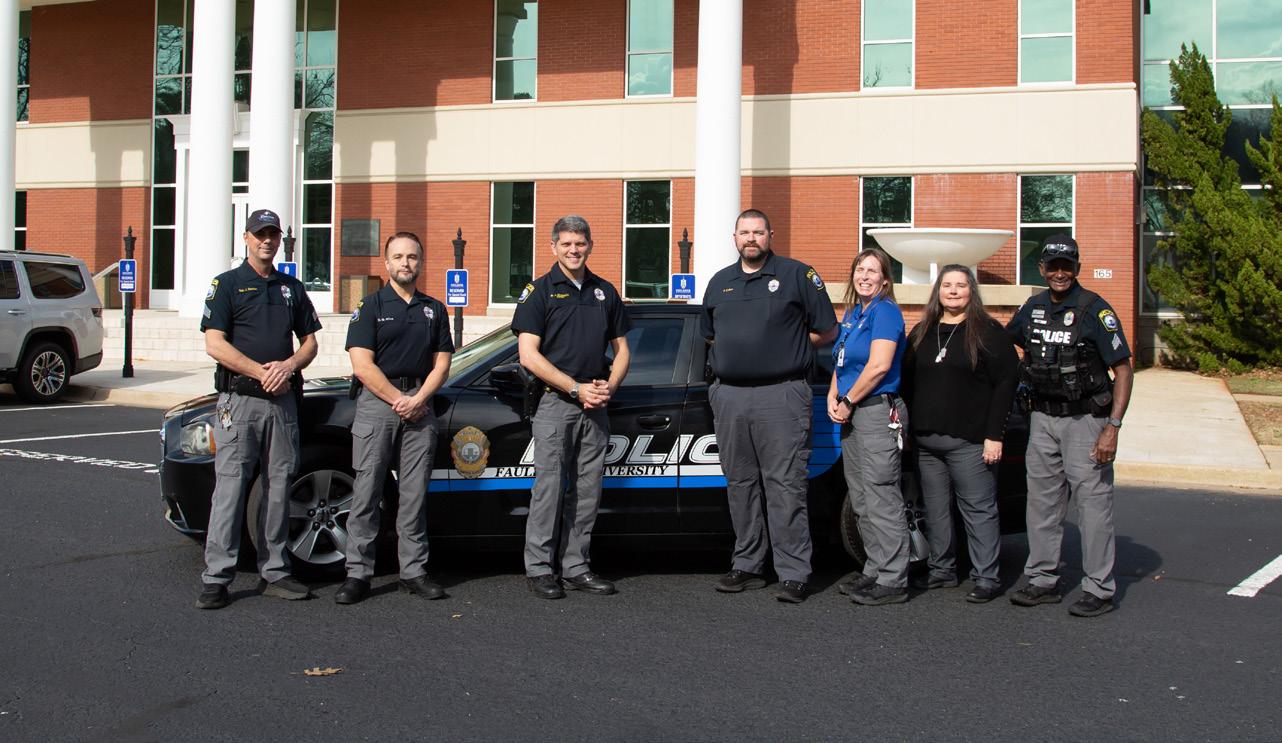
by Police Chief Brian Champlin
Over the past year, the Faulkner Police Department has implemented several significant security enhancements designed to strengthen campus safety, improve visibility, and expand technological capability.
One of the most impactful improvements is that the department is now fully staffed with 12 sworn officers and one non-sworn, but certified security officer, an important milestone for the university and the first time in recent years that we have reached full staffing. Collectively, these officers represent over 330 years of law enforcement experience. This depth of experience greatly enhances our ability to prevent incidents, respond quickly and support the campus community with strong professional expertise. Being full staff is particularly beneficial during evening shifts, where multiple officers patrol simultaneously, ensuring comprehensive campus wide coverage.
Since becoming chief, I have hired five new officers who bring a wide range of experience from municipal police departments, Alabama Law Enforcement Agency (ALEA), various Sheriff offices, university law enforcement agencies, airport police departments and military service.
The investigator position is new and by elevating and filling this role, we now have a dedicated officer managing case follow ups, gathering evidence, coordinating with external agencies and identifying trends that may affect campus. This dedicated focus allows cases to be resolved more efficiently and strengthens our long-term crime prevention strategies.
Perhaps most notably, the department has placed a stronger emphasis on professionalism and lawenforcement best-practices training across all ranks. Recent accomplishments include:
Sgt. Booth James completed his third and final FBIsponsored leadership course, earning the prestigious LEEDA “Trilogy” Award, a nationally recognized benchmark of professional excellence in supervisory, command and executive leadership training.
Sgt. James Darden completed advanced training as a certified pistol armorer for both Sig Sauer and Glock platforms, enhancing the department’s in-house weapons maintenance and readiness capabilities.
Inv. Burr completed coursework in modern searchwarrant procedures and is scheduled to attend training related to “Professional Background Investigations” in May 2026.
As part of the department’s commitment to combating substance-abuse challenges affecting young people, Faulkner sponsored multiple officers to attend the 2026 Alabama Substance Abuse Youth Summit (SAYS), where current drug-use trends and preventative strategies were discussed.
Following a lead-by-example philosophy, as chief, I recently attended the 2026 Alabama Chiefs of Police Winter Conference, received training in internalaffairs investigative best practices through the Alabama Community College law enforcement network and will attend the 2026 Alabama Collegiate Chiefs of Police Annual Summit at Jacksonville State University.
Our department would be remiss not to highlight the tremendous contributions of our Campus Safety and Police Department Secretary, Evelyn Hamby. She is often the first point of contact for students, parents, faculty and staff, providing a steady, caring presence within the department. Hamby has streamlined several important processes for our campus community, including parking-decal issuance, incident-report acquisitions and general administrative support. She embodies community-policing principles through her daily actions, modeling a ministry-minded approach to service. Whether it’s staying late to assist a student, offering a listening ear or sending proactive reminder emails about parking compliance so students avoid unnecessary stress, Hamby continually demonstrates compassion and dedication.
Another major focus has been on expanding and modernizing security technology. The university continues to add upgraded security cameras equipped with unique AI-enhanced alert features and extended high-definition video storage. The new camera systems can automatically identify potential concerns or unusual activity, helping officers detect issues more quickly. Additionally, the department is moving forward with plans to retrofit several facilities that still rely on mechanical keys with electronic card access controls.
The department has also enhanced its vehicle fleet. After decommissioning an older patrol vehicle, two
newer, identical Jeep models were added—bringing the total to three matching units. This uniform fleet increases visibility, improves patrol presence and creates a more recognizable and consistent official police appearance across campus. In addition, each vehicle is being outfitted with touchscreen, tablet-style in-car computers that will allow officers to eventually access essential systems and, pending final integration, display select live security camera feeds from around campus.
Another notable improvement is the completion of a new fence along the Atlanta Highway corridor. This upgrade not only enhances the visual appeal of the campus perimeter but also serves as an important physical barrier, helping prevent unauthorized access to certain areas, particularly around the women’s Harris Dorms. It creates clearly defined and monitored access points, directing both pedestrian and vehicle traffic through secure, observable areas.
Faulkner’s internal grant team has been highly effective in working with outside partners—most notably FEMA and ALEA—to obtain and manage the resources needed for these improvements. Through these partnerships, the university has secured funding not only for significant camera and access control upgrades across several primary facilities that directly impact student quality of life, but also for perimeter fencing and future technology expansions at the Multiplex facility.
Finally, campus police have strengthened communication channels with neighboring partners. The department now maintains a direct line of communication with nearby security teams, including the Alabama Christian Academy campus and the University Church of Christ. This collaboration helps ensure faster information sharing, coordinated responses and a stronger overall safety network for the surrounding community.
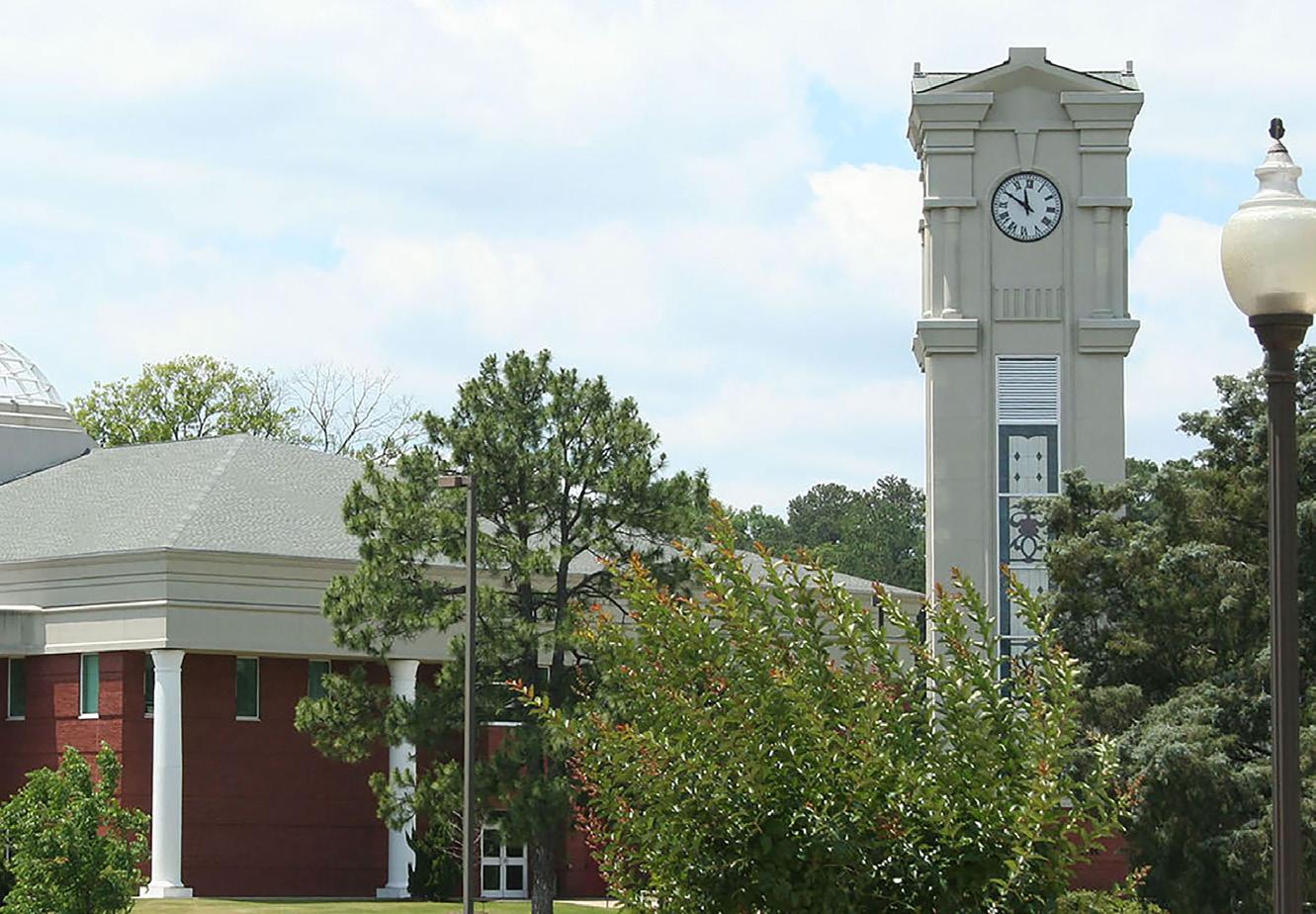
Faulkner University has surpassed previous enrollment numbers with official fall census figures reflecting a 15.6% increase for fall 2025 compared with fall 2024. Gains in online graduate programs are leading the growth.
Solid increases in on-campus undergraduate programs were also recorded, with new student enrollment up 37% year over year.
Enrollment growth is also being fueled by Faulkner’s expanding College of Health Sciences, which saw a 20% increase in enrollment this fall. The recently launched nursing program, along with established professional degrees in occupational therapy, physical therapy, speech-language pathology and physician assistant studies, continues to attract students seeking careers in health care. Online terminal degrees in health science (PhD and DHSc), which feature accelerated coursework, are also experiencing strong growth.
Thomas Goode Jones School of Law experienced a nearly 20% year-over-year increase in enrollment, welcoming the largest class of first-year law students in its nearly 100-year history. The law school emphasizes a faith-based approach to legal education, preparing students to integrate Christian principles with the practice of law.
Online programs remain another area of strength. Undergraduate enrollment grew 15%, while graduate enrollment climbed 25%. Working professionals are increasingly turning to Faulkner’s flexible online environment to pursue degrees in business, psychology, criminal justice, counseling and management. Online
PhD programs in humanities and biblical studies also continue to expand.
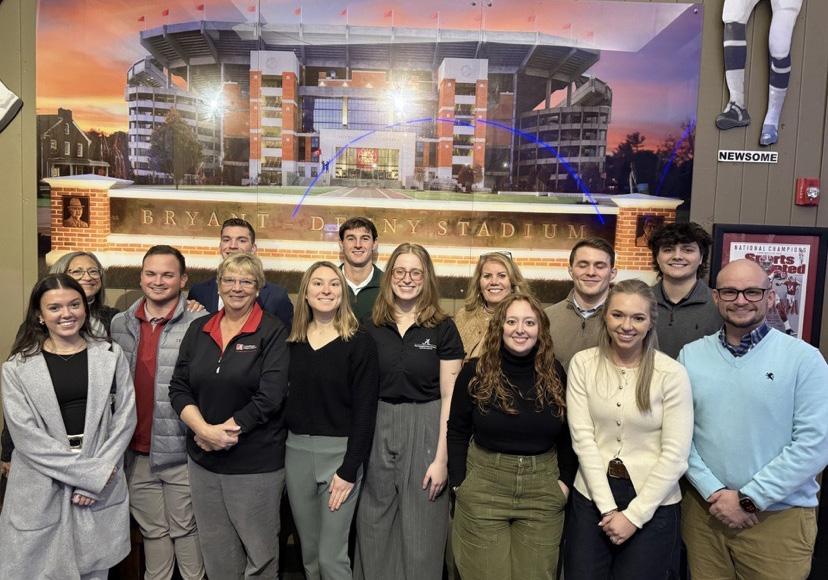
Three Faulkner University Risk Management and Insurance students — Thomas Failla, Syndey Grisham and Max Osgatharp — joined 30 students from University of Alabama for “A Day in the Life of a Renewal,” an experiential workshop held February 5-6, 2026 at the University Club.
The event began with a networking dinner at Baumhower’s Victory Grill, followed by a full day of hands-on activities.
Students were divided into teams representing clients, brokers and insurance carriers. They negotiated policy renewals, evaluated risks, compared coverage options and presented their final strategies, gaining real-world insight into the commercial insurance renewal process.
Faulkner University announced January 27, 2026 that Reed Sutton has signed a three-year contract to serve as the university’s vice president of athletics and athletic director. Sutton, who arrived at Faulkner in 2010 to launch the women’s basketball program, stepped into the interim athletic director role in June 2025.
During his coaching tenure with the Eagles, Sutton spent 14 seasons leading the women’s basketball program and compiled a 259-177 career record. While serving as assistant athletic director, Sutton stepped away from the women’s basketball program to help stabilize the men’s and women’s cross-country teams, serving as head coach for Faulkner’s runners for one season.
Since taking the helm of the Faulkner athletic department, Sutton has led coaching searches for golf, cross-country and cheerleading while also playing an instrumental role in finalizing the contract for Dayne Brown, who signed a deal in December 2025 to lead the school’s football program for the next three years.

Ireland began his head coaching career at Faulkner in 2006, leading the Lady Eagles to a 10-8 record. In his first season, he guided the program to its first winning season and first conference tournament appearance. Ireland inherited a program that had won just six games over its first two seasons.
Ireland is one of only two coaches with a winning record at Faulkner, joining his brother Jeff Ireland, who coached the Lady Eagles from 2007 to 2011.
After one season at Faulkner, Ireland became head coach of the women’s soccer program at Lipscomb University in Nashville, Tennessee, where he became the winningest coach in program history. He led a Bison team that had not won a conference match in the previous seven seasons to its most successful campaigns to date. Ireland recorded 28 total victories during his tenure.
Ireland is married to the former Hailee Augsberger and they have three children, Finn, Pippa and Gemma.
“We are excited about adding Coach Ireland, Hailee and their three kids to our Faulkner athletic family,” said Reed Sutton, vice president of athletics. “We are looking forward to getting him on campus and in front of the team for a productive spring. I can’t wait to see how the team will grow under his guidance.”
Jon Ireland is once again an Eagle, returning to Faulkner University as the eighth head coach of the women’s soccer program.
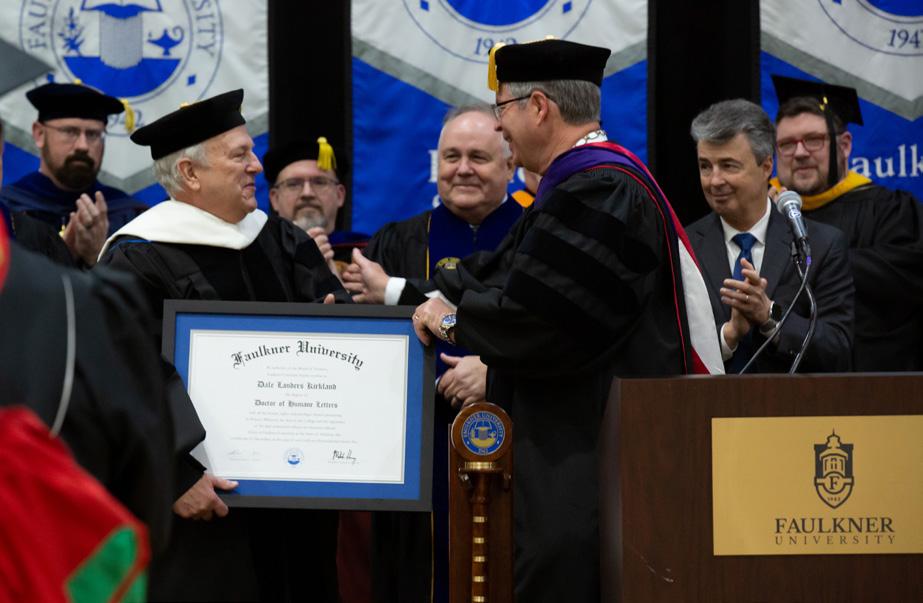
Long-time Board of Trustees Chairman Dale Kirkland was conferred an Honorary Doctorate in Humane Letters in Leadership during the December 2025 graduation ceremony for his outstanding service and impact to Faulkner University.
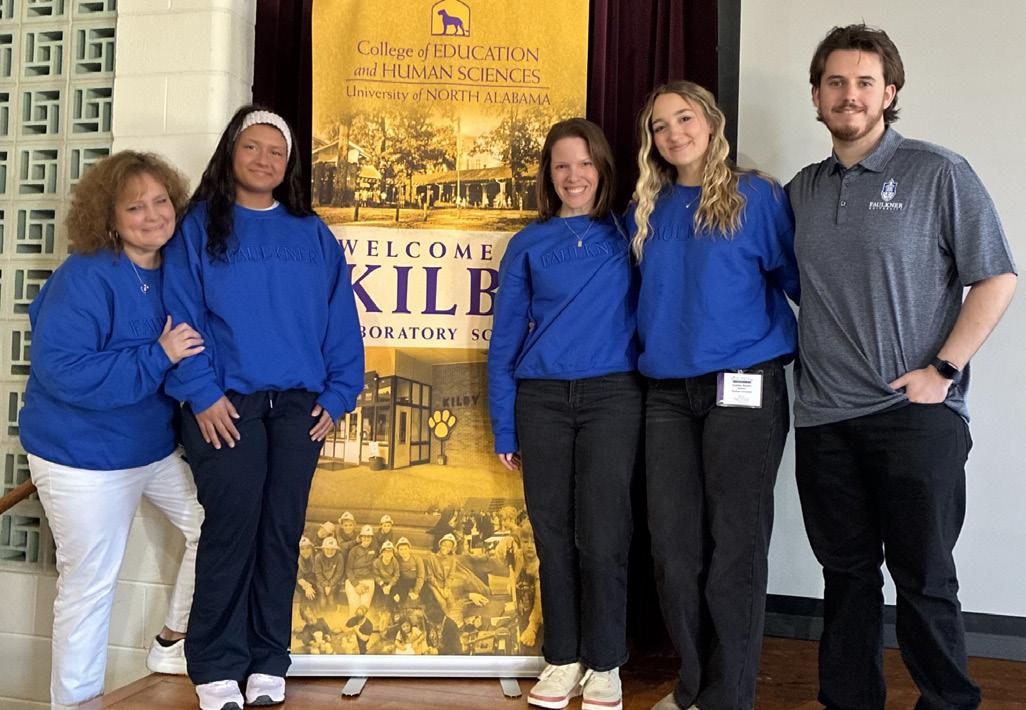
Students from Cohort 2 in the College of Education at Faulkner attended the Alabama Higher Education Science of Reading Symposium at University of North Alabama on February 4-5, 2026 thanks to a grant from the Alabama State Department of Education.
Hosted by UNA’s Spencer College of Education and Human Sciences, the symposium brought together higher education faculty from across the state to share research-based best practices in science-based literacy instruction, course design, assessment and P–12 partnerships.
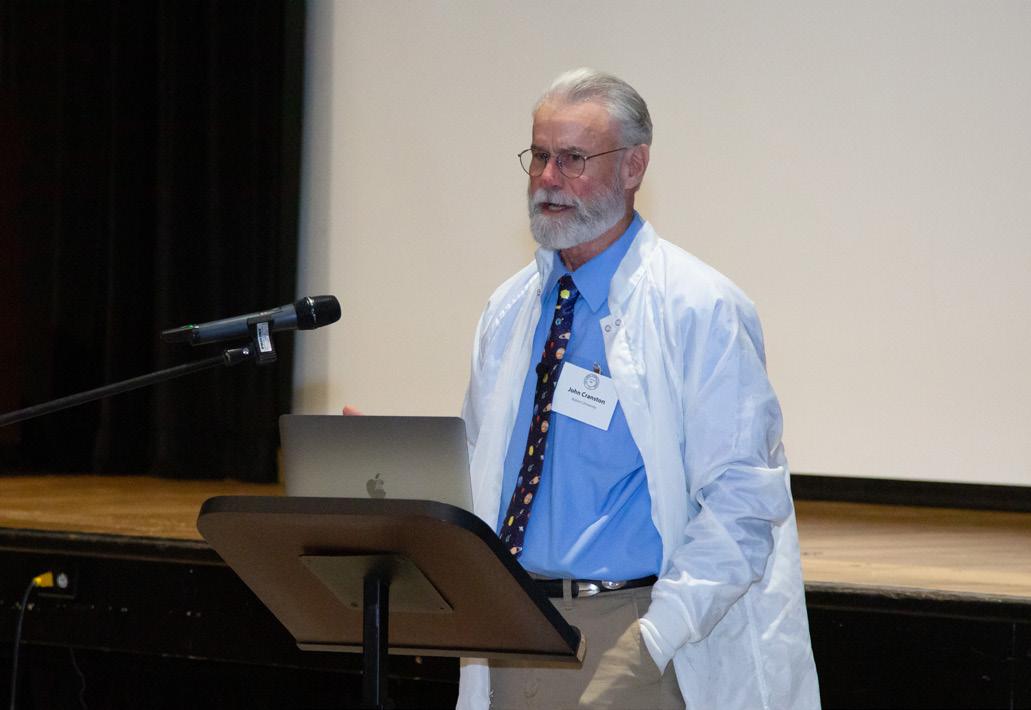
On February 27 and 28, 2026 students and faculty from colleges, universities and high schools across the state
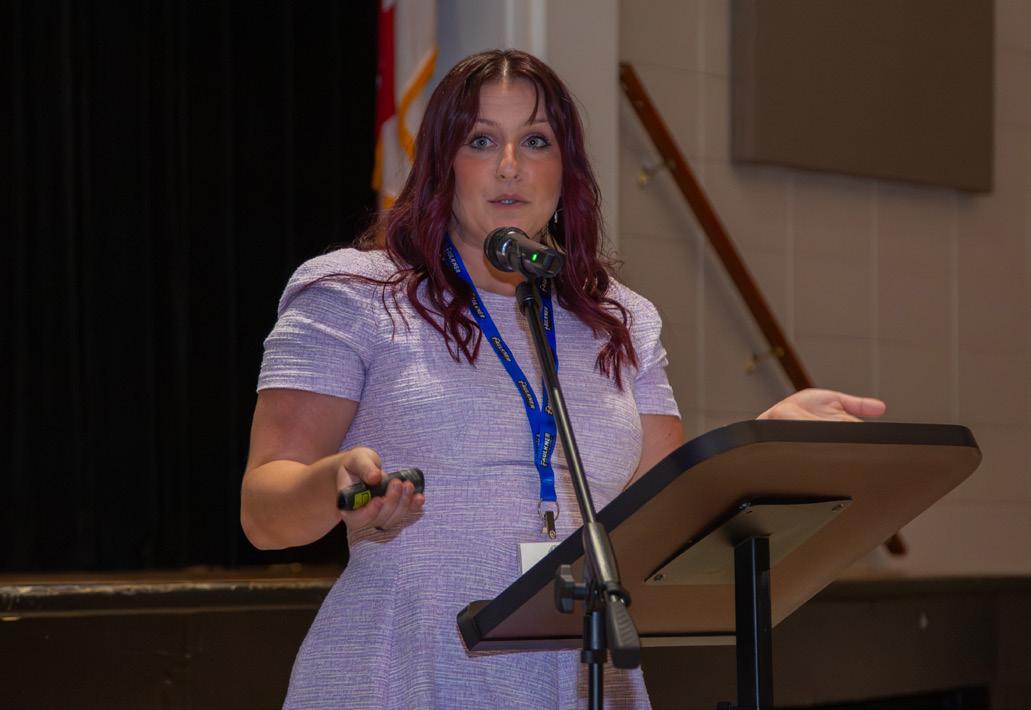
gathered to share research, compete in presentations and celebrate scientific achievement. Two of the keynote speakers were Faulkner alumni.
Larissa Strath, assistant professor in the Department of Health Outcomes and Biomedical Informatics at the University of Florida and a Faulkner alumna spoke on Friday afternoon. She holds a Bachelor of Science in Pre-Medicine from Faulkner and graduated in 2016.
John A. Cranston, Faulkner alumnus, state coordinator of Bird Inc. and affiliated with ICAMS at Auburn University spoke on Friday night. He holds a Bachelor of Business Administration after graduating from Faulkner in 1990.
Faulkner University launched a new online bachelor’s degree in cybersecurity this spring designed for working professionals who want to upskill, change careers or strengthen their leadership in the rapidly growing field of information security.
Students can study on their own schedule, learn from experienced professionals and gain practical skills in network defense, ethical hacking, digital forensics and risk management.
The university’s cybersecurity program equips students to:
• Identify and mitigate cybersecurity threats across networks and systems
• Apply strategies to prevent, detect and respond to cyberattacks
• Perform ethical hacking and vulnerability assessments
• Secure organizational data through effective governance and compliance
• Manage cybersecurity risk in corporate, government or nonprofit environments
• Integrate faith-based ethics into professional cybersecurity decision-making
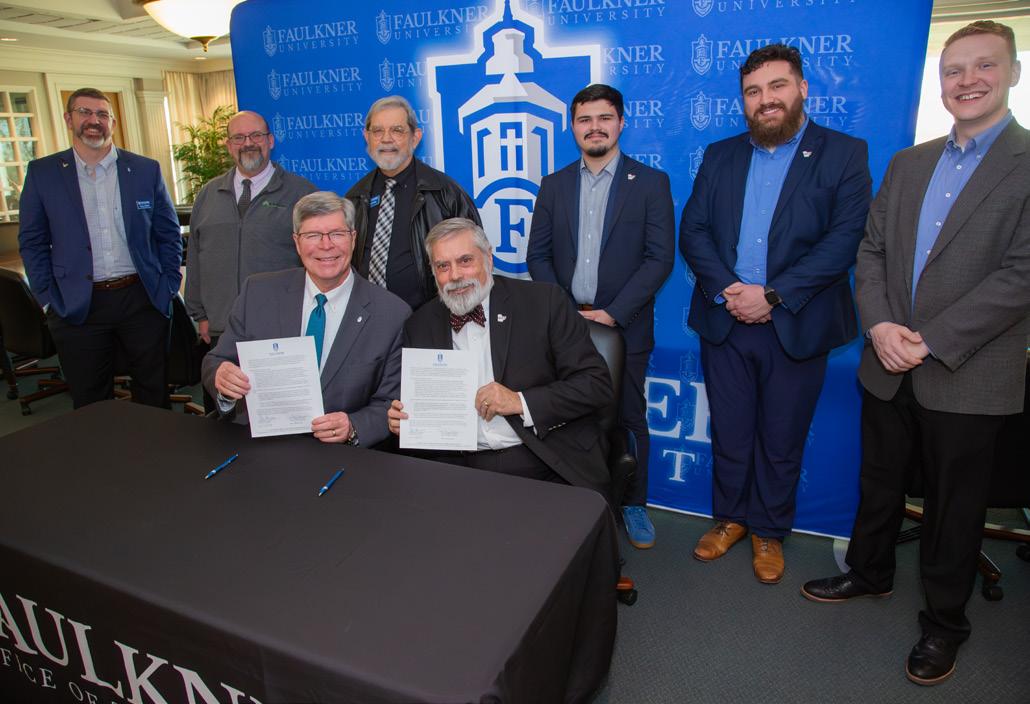
V.P. Black College of Biblical Studies Signs Articulation Agreements With Georgia School of Theology and Sunset International Bible Institute
Faulkner University President Mitch Henry signed an articulation agreement January 28, 2026 with Dave Domingue, director of the Georgia School of Theology, creating a new pathway for graduates seeking a master’s degree in biblical studies.
A few months later in April, another similar articulation agreement was signed between Henry and Tim Burrow, president of Sunset International Bible Institute.
Both agreements allow alumni of Georgia School of Theology and Sunset International Bible Institute who have completed a certificate in biblical theology or biblical doctrine to apply directly for admission to graduate programs within Faulkner University’s Kearley Graduate School of Theology. Eligible programs include the Master of Arts in Biblical Studies and the Master of Arts in Christian Counseling and Family Ministry.
“We’re excited for the opportunity and grateful for Faulkner University,” Domingue said. “It has been our passion to help train men to be ministers for life and that means continuing education. There’s really no better place to continue their education than here at Faulkner University.”
The signing between Faulkner and Sunset was done virtually.
“I have had the greatest respect for ministers of the Gospel of Jesus Christ who have graduated from Sunset,” said Henry. “Effectiveness and practicality geared toward saving souls and hands-on ministry makes a difference. It is an honor for Faulkner University to collaborate with these institutions to offer their alumni a path to continued degree completion to enhance their graduates’ impact on this generation.”
Faulkner Bible faculty reviewed the academic components of the Georgia School of Theology and Sunset International Bible Institutes’ program and determined the curriculum meets the standards required for admission into Faulkner’s graduate Bible programs.
For more information about Faulkner’s V.P. Black College of Biblical Studies visit www.faulkner.edu/ academics/college-of-biblical-studies/



stories by Robin “Bird” Bradford
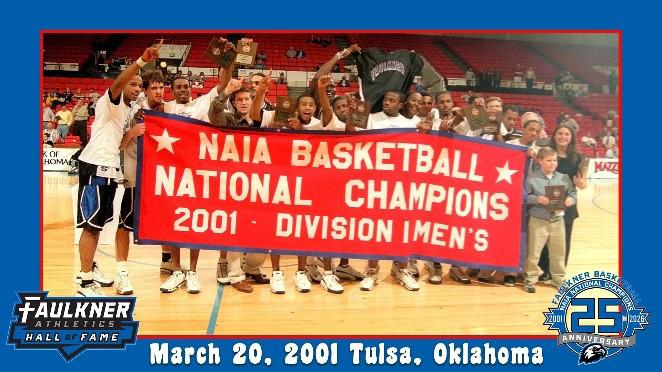
In March 2001, the Faulkner University men’s basketball team returned to Tulsa, Oklahoma to compete in the National Association of Intercollegiate Athletics National Championship Tournament after reaching the Elite Eight the previous season. The 2000-01 team entered the year with momentum and the belief they could bring home the coveted national championship red banner.
Head coach Jim Sanderson said he sensed early that the season would be special.
“Before school started, the Lord laid on my heart during the month of July that our team would win the national championship,” Sanderson said. “With all the ups and downs of a season, He continued to assure me that it was going to happen. It was an amazing journey.”
The team was coming off a strong 1999-2000 season in which Faulkner posted a 26-11 record and advanced to the Elite Eight in the national tournament. Senior leaders Treives Henry and Moussa Dioum helped guide the team during preseason workouts, building the mental and physical toughness needed for a championship run.
Sanderson said the team’s defining trait was its willingness to play for each other.
“This team was very selfless and willing to play their individual roles for the good of the team,” he said.
One moment during the regular season became a key turning point. Faulkner suffered a difficult loss to Auburn University at Montgomery after leading by 10 points with one minute remaining.
“Although it was a devastating loss, it was a great opportunity for our guys to learn how to handle adversity,” Sanderson said. “I believe this was part of the process of building the grit needed to get the job done.”
The national tournament presented its own challenge. Teams must win five games in six or seven days to claim the title, making it one of the most physically demanding basketball tournaments at any level.
During the tournament’s opening round against McKendree College, Faulkner survived a close call. Leading by two points in the final seconds, the opposing team attempted a game-winning three-point shot at the buzzer but missed.
“I have always considered that if that shot falls, we would have been sent home the very first day,” Sanderson said. “The difference between winning and losing is a very small margin.”
Depth also played a key role in the Eagles’ success. Faulkner used a 10-player rotation to combat fatigue as the tournament progressed.
In the championship game on March 20, 2001 against University of Science and Arts of Oklahoma, two hustle plays proved decisive. Kellen Cole dove on the floor to recover a loose ball and Paul Little secured a rebound on a missed free throw, giving Faulkner two extra possessions that helped seal the victory.
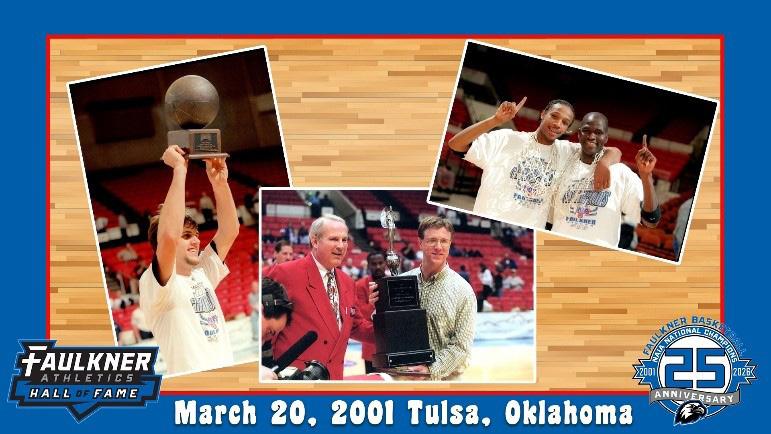
For senior leader Henry, the team’s identity was clear.
“If I had to choose one word for that 2001 team, it would be selfless,” Henry said. “A group of young men putting each other before themselves is the reason we won. I’m thankful to God for the opportunity to experience winning a National Championship.”
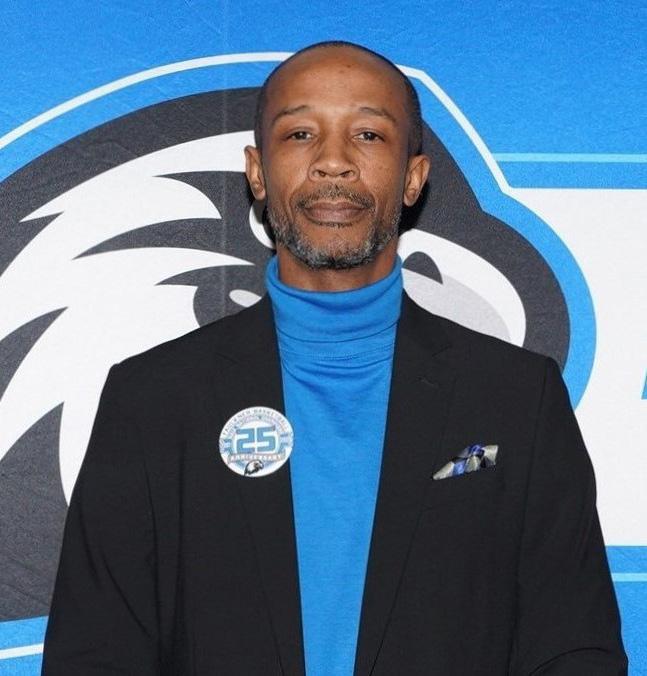
Team manager Freddie Brooks said the experience created lifelong bonds.
“Time with the team taught me it was more than being a student manager,” Brooks said. “It was being there for the team
from hanging out in the café to early morning practices. It is a brotherhood bond that can never be broken. Being a part of this team and knowing the slogan on the media guide that year was Unfinished Business is a memory I will never forget.”
“To be there on the sideline as the last seconds ticked off the clock and the buzzer sounded, they had come and finished the business. To see the look on their faces and watching each player cut down the net was awesome! Arriving back on campus to a celebration showed just how much this team meant to the school and town,” he added.
Former player Travis Williams said his favorite memory came when the buzzer sounded to secure the title.
“Experiencing that moment with my teammates is something I will never forget,” he said.
For Benjamin Baxter, the championship was the culmination of years of growth. After suffering a broken wrist and taking a medical redshirt early in his career, he relied on encouragement from teammates and coaches.
“What brought me to Faulkner was the opportunity to play college basketball and to be a part of something special. The family atmosphere that Coach Sanderson, Coach Mixson and the players displayed was great,” he said. “Every year we got better individually and collectively,” Baxter said. “We kept making progress until we achieved greatness.”
Cole remembered the team’s work ethic even before the tournament began.
“Faulkner was the program set up for the most success. We practiced at one of the assigned high school gyms in Tulsa and treated it like a normal practice,” he said. “I remember another team walking in after us and they looked shocked at how hard we were practicing.”
Cole also recalled the support from Faulkner students who traveled to Tulsa to cheer on the team.
“I was in awe at the number of students who made the trip for the championship game and celebrating with them afterward,” he said.
Team manager Fred Barnett said his time at Faulkner shaped him both athletically and spiritually.
“Going to chapel daily was good for the soul and I was able to grow closer with God,” Barnett said. “I was once asked to speak in chapel and it felt great to share the Word with my peers.”
Barnett also enjoyed campus traditions including social clubs and Jamboree while serving as a member of Lambda Alpha Chi.
For Paschal Ike, Faulkner provided an opportunity to pursue education, faith and basketball. He said his science courses with Dr. Elsa Price inspired him to pursue a career in medicine and is now a doctor.
“My fondest Eagles basketball memory is easy,” Ike said. “Winning my teammates over and then winning the championship together.”
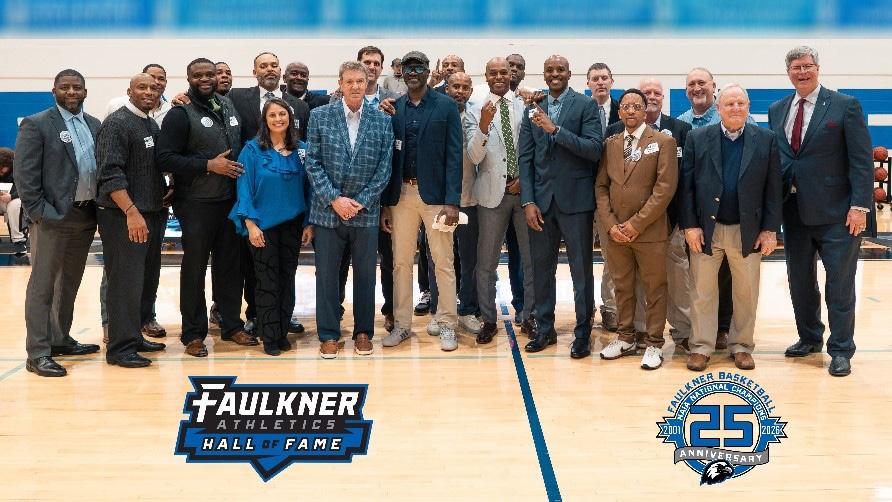
In January 2026, Faulkner University celebrated the 25th anniversary of the 2001 NAIA men’s basketball national championship team. Every player and most of the team’s staff returned to campus where they were inducted into the Faulkner Athletic Hall of Fame as the Class of 2025-26.
Brooks described the event as more than a ceremony.
If you were an Eagle Athlete, please share your story and pictures with Robin “Bird” Bradford at rbradford@faulkner.edu or complete one of the two forms on our website under Alumni and Friends at www.faulkner.edu/about-faulkner/ alumni-friends.
“It’s a reflection of a legacy. It represents the foundation built long before the championship team ever stepped on the court,” Brooks said. “The players, coaches and supporters who came before us set the standard for excellence, discipline and faith. The 25th Anniversary milestone isn’t just about honoring talent; it’s about honoring impact - the people who shaped the culture of the program. For everyone to come together after 25 years was a moment of a lifetime.”
Baxter said the reunion allowed teammates to reconnect and relive old memories.
“To see all my brothers back at the place it all started was great,” he said. “We got to share stories, laugh and enjoy
each other again. Lastly, we are Champions and Hall of Famers!”
Cole said the strong turnout reflected the program’s lasting impact.
“It was really good to see the amount of people show up for the occasion,” he said.
Williams echoed the sentiment.
“It was an amazing experience and a lot of effort was put into celebrating us,” he said.
Barnett said he was honored to take part in the event.
“I thought the Hall of Fame celebration was planned perfectly,” he said.
Ike described the gathering as a fullcircle moment.
“I am thankful that we were all still here on this earth to celebrate our fond memories. Seeing the development and growth of my teammates and their families and embracing our lifelong legacy together could not have been any better,” Ike said. “We are forever connected.”
For the coach who led them to the championship, Sanderson said the celebration was a reminder of a journey defined by faith, perseverance and teamwork. The reunion was a blessing for him and his family.
“The 25th Anniversary Celebration was an absolute blast! It was great to see all the players, staff and their families,” he said. “Some of these guys I had not seen in 25 years. It is hard to believe they are now husbands and fathers. My family and I have truly been blessed to be a part of this Championship Celebration!”
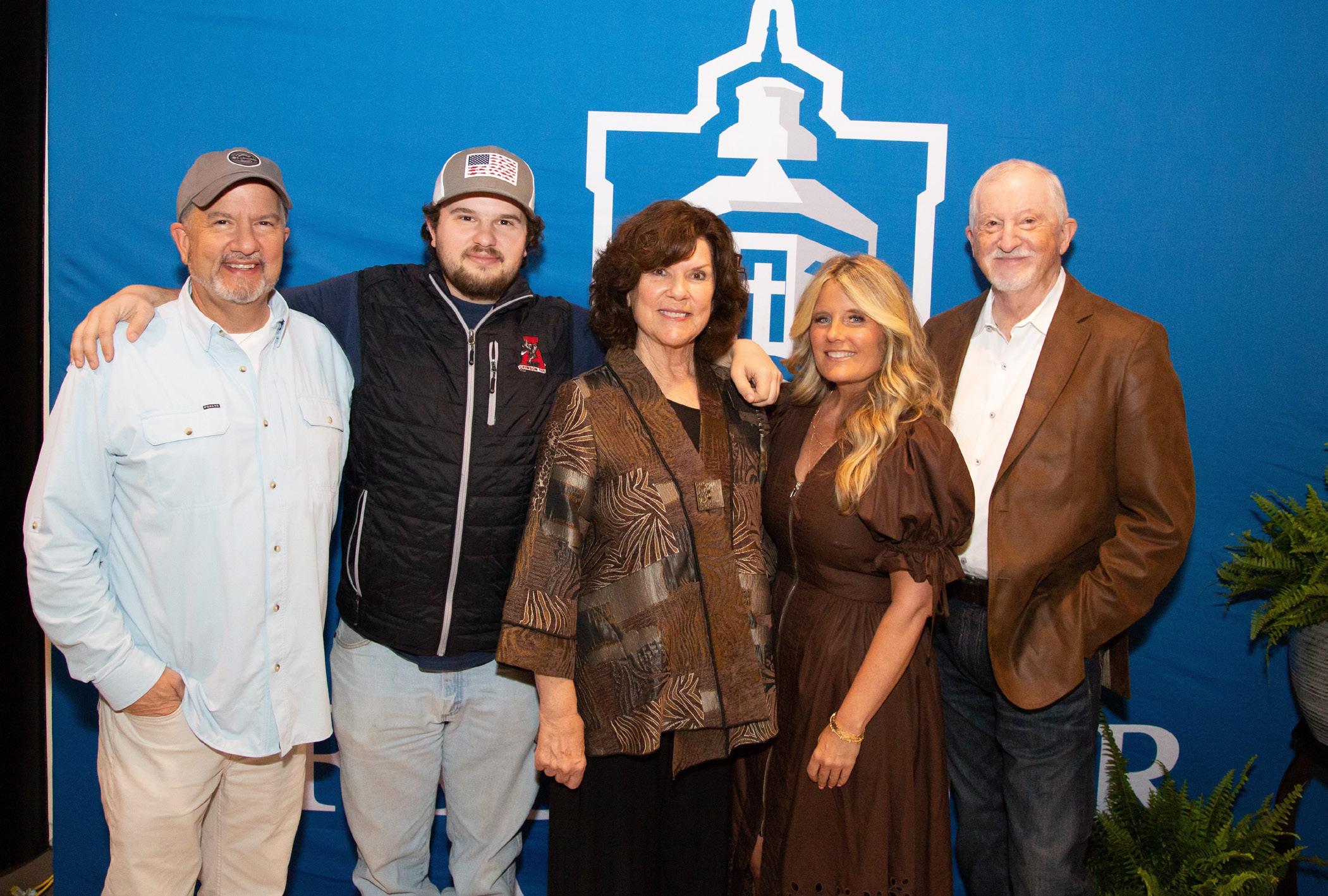
by Rebecca Burylo
A faithful pillar of Faulkner University for more than 47 years, Wilma Phillips was celebrated as the 2026 Alumna of the Year during the annual Marketplace Faith Friday Forums on February 20, 2026. Almost five decades earlier, Phillips moved to Montgomery from Arkansas with her husband, Lanar, who was in the Air Force, and their two sons. It was not until they found a local church to attend, that they learned about Faulkner University and Phillips found her life’s calling.
The Phillips enrolled their young children in Alabama Christian Academy (ACA), which was next door to Faulkner. After first learning about the university, Phillips was immediately struck by its mission to glorify God through educating young men and women, not just intellectually, but caring and nurturing the whole person through integrity and character.
She soon accepted a part-time position in the university’s Gus Nichols Library in order to help pay tuition costs for her two sons at ACA and would eventually begin taking classes at Faulkner. Before the move to Alabama, Phillips attended Arkansas State University in the late 1960s, but had not completed her degree. She instead worked in health services and eventually began a career in respiratory therapy.
In 1980, a full-time position opened in the university’s Business Office, and she transferred into what would become her life’s vocation. As she settled into her new role, she discovered a love for finance. While balancing work and family responsibilities, she began taking business and accounting classes as her schedule permitted and eventually completed her business degree from Faulkner in 1990.
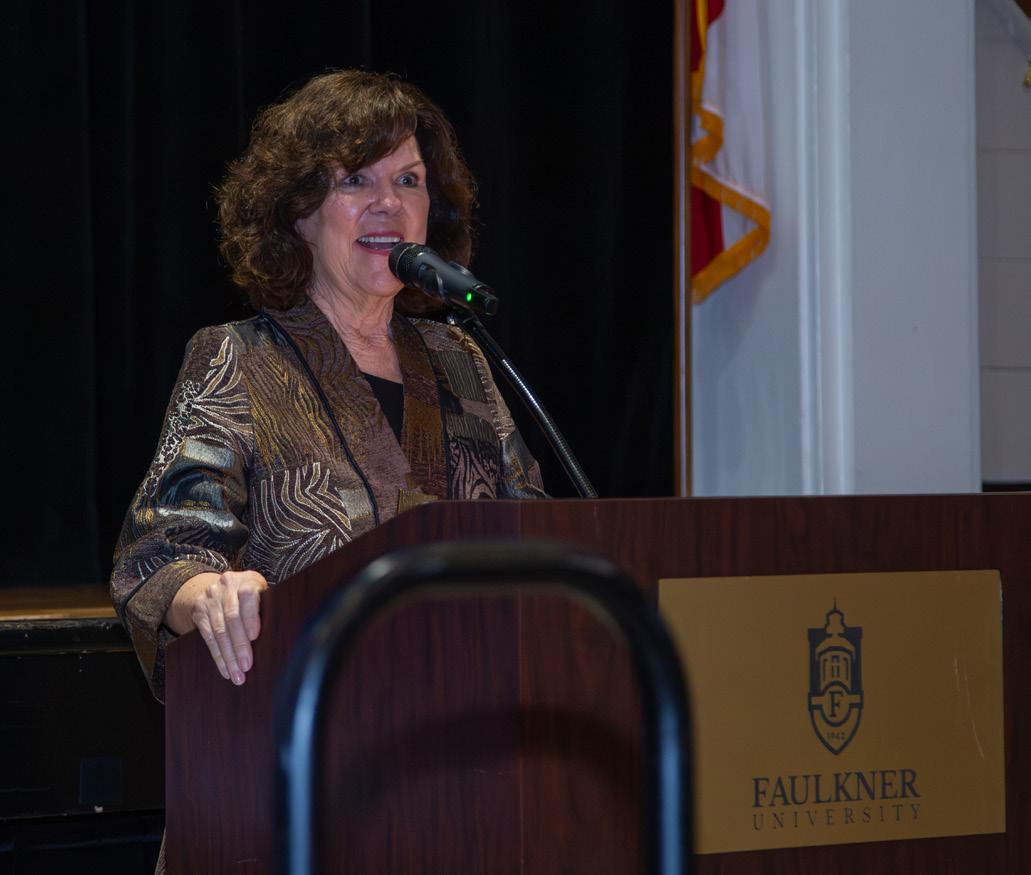
Those early years working at Faulkner were challenging. Payroll was sometimes difficult to meet, and staffing often shifted as employees did what was necessary to care for their families. Whenever a position became vacant, Phillips frequently stepped in to fill the need. Over the course of her tenure in the Business Office, she served in every clerical role — including payables, purchasing, student accounts, accounting and budgeting. She often reflects that even though the work was difficult, she loved every minute of it.
When the vice president for finance left the university, then-president Billy Hilyer, after much prayerful consideration, appointed Phillips to the position. At the time, no woman within Faulkner’s sister schools associated with the churches of Christ had held such a role. She went on to serve as chief financial officer until her retirement in 2020. Shortly thereafter, she joined the Faulkner Board of Trustees, where she currently serves as Board Secretary.
In 2021, after serving 41 years at Faulkner University, Phillips was honored for her distinguished service by the renaming of the Rotunda’s business offices to the Phillips Business Center. Then-President Mike Williams and former Faulkner Board of Trustees Chairman Dale Kirkland unveiled the plaque, which reads in part, “Wilma was a trailblazer for women in higher education. She served as chief financial officer for 26 years. She also became a national voice in higher education finance serving as President of SACUBO and on the board of NACUBO. She led with clarity
and grace which propelled the mission of Faulkner University.” Phillips continues to serve Faulkner and supports higher Christian education by giving back both financially and with her time.
Vice President of Advancement Billy Camp presented the award to Phillips saying she represents what it truly means to serve with dedication, integrity and heart and that honoring Phillips in this way was “long overdue.”
“Many people help institutions succeed through bold ideas and public leadership,” Camp said. “She did it through consistency, loyalty and an unwavering sense of responsibility. She showed us that leadership doesn’t always come with applause – it often comes with long hours, hard work and choices, and steadfast resolve.”
Phillips treasures the relationships formed during her decades on campus. Her first supervisor, Mr. Blois Clifton, made each day an adventure, often recruiting the Business Office staff to assist with event decorating and planning. As the “face” of the Business Office for many years, Phillips came to know students by name — among them Keith and Angela Cantrell, Tommy Bone and Billy Camp who have become lifelong friends. Many of whom are now grandparents themselves.
In reflecting on being named Alumna of the Year, Phillips emphasizes not what she has done for Faulkner, but what Faulkner has done for her.
“Faulkner has given me friends for life — a community of believers in both our Lord and in this university. Faulkner has given me family,” she said.
Both of her sons earned their degrees at Faulkner and met their wives on campus. Four of her grandchildren have also attended the university, forming friendships that continue the family’s deep connection to the institution.
For Phillips, Faulkner provided more than a career. It offered a calling — one that was challenging, meaningful, and deeply fulfilling. She remains a strong advocate for Christian education, believing that institutions where every student matters continue to hold lasting value in today’s world.
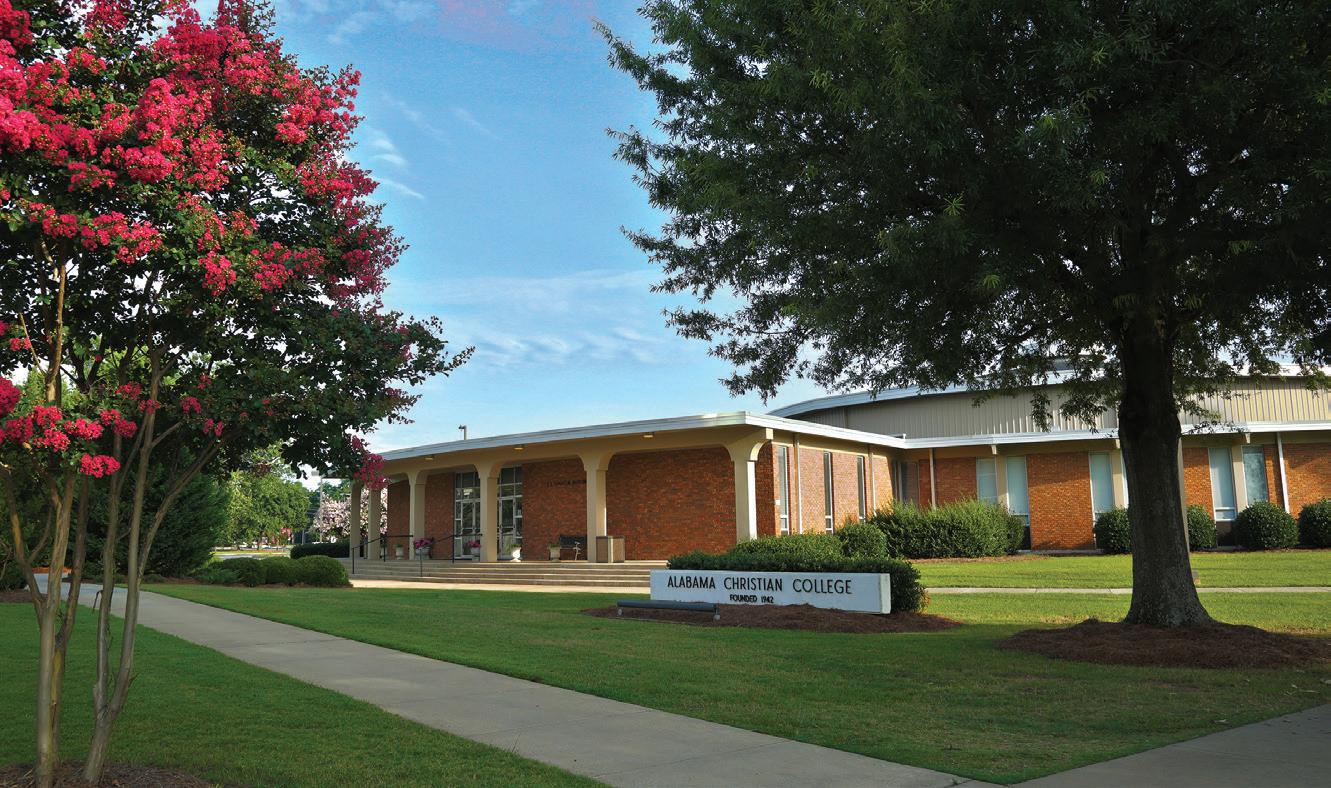

Keith Cantrell (’84) retired from the Prattville YMCA after 39 years on October 26, 2025. He served as a coach leading youth sports programs and raised funds for the Coach-A-Child Scholarship Campaign. He graduated from Alabama Christian College with an education degree and was a member of Zeta social club, served as a class officer for SGA, was Mr. ACC in 1982 and was the manager and bus driver for the basketball and baseball teams.
Jim Vickrey (‘90) authored his sixth book and the fourth to be published, Awakenings to Racism in Alabama: The Education of a Native Son and the Lessons He and His Peers Learned Resisting Jim Crow. It is available on Amazon as well as from NewSouth Books and the EJI Bookstore in Montgomery, AL.
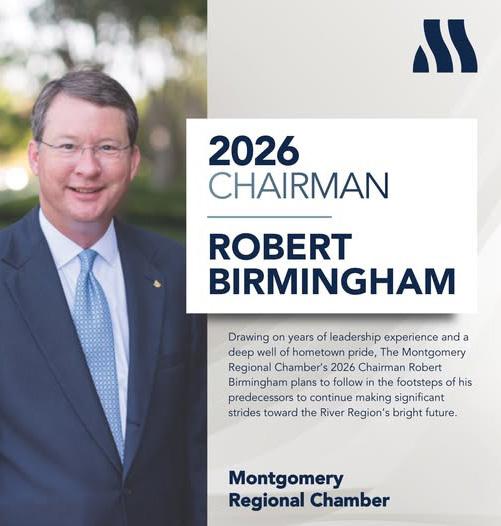
Robert Birmingham (JSL ‘93) is the 2026 Chairman of the Montgomery Area Chamber of Commerce. He serves as Regions Bank’s area wealth executive and private wealth managment and market executive for Central Alabama.
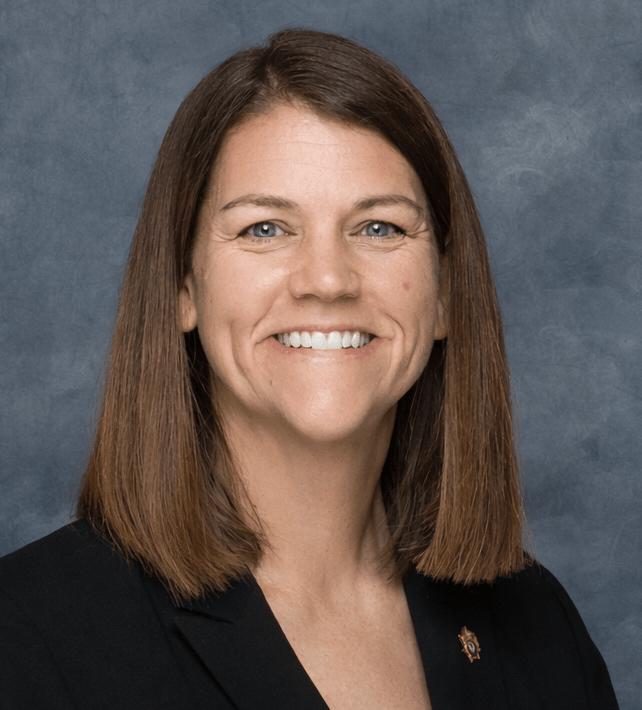
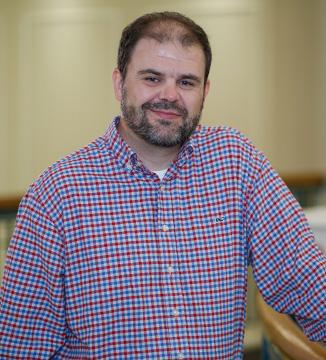


Angie Hamilton (JSL ’02) was appointed district attorney for Lauderdale County’s 11th Judicial Circuit by Governor Kay Ivey on February 19, 2026. She is the first female district attorney for Lauderdale County.
Kasey Oakley (’03) earned a Ph.D. in Information Technology with an emphasis in Information Security from the University of the Cumberlands on December 15, 2025.
Brandon Isleib (‘06) is an assistant city attorney for Seattle, WA and the city’s first code reviser. Under the name Restless Mosaic, he released an album with the Grammynominated Declaime in January 2026 and is producing an EP for Billboard charttopping singer Jan Johnston.
Regina Green (’07) of Huntsville, AL, was promoted to senior manager of subcontracts for Mission Solutions at Amentum, leading a team that supports the aviation and sustainment and analytics business line.

Braden Pace (’07) and his wife Jenna welcomed their third child, Abreena in February 2025. In August 2025, Braden earned a Master of Arts in Religion in Church Ministry in the Digital Age from Liberty University. He is in his fourth year as the Technology and Media Outreach Minister at the University Church of Christ in Montgomery, AL.
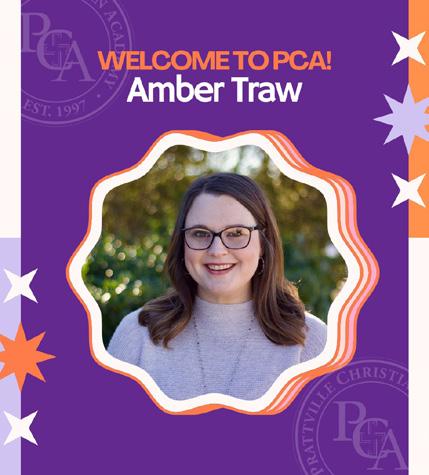
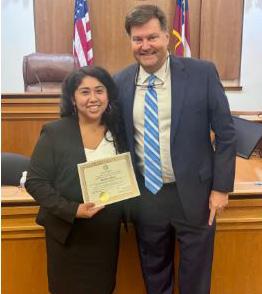
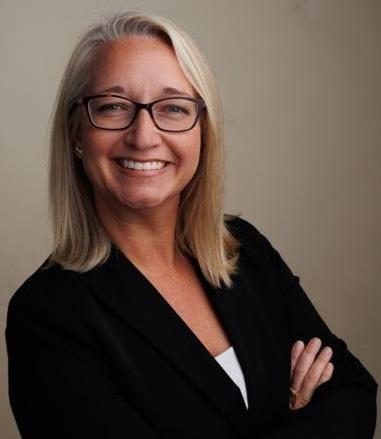
Amber Traw (’12) is the new lower school administrative assistant at Prattville Christian Academy.
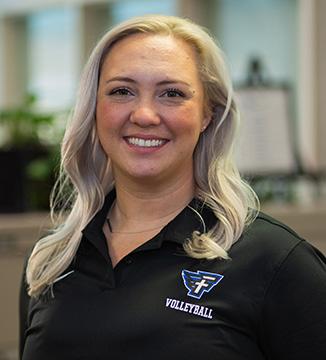
Keisha Crenshaw (’16) was named human resources director of the Alabama Department of Workforce (ADW) by ADW Secretary Greg Reed. Crenshaw holds a Bachelor of Science in Human Resource Management and an Executive MBA from Faulkner.
Wendy Mose (‘10 & ‘16) is the new athletic admissions counselor for Traditional Admissions at Faulkner.
Amy Gonzalez Jackson (JSL ’12) made history when she was sworn in as the first Hispanic female attorney in the Thomas County Judicial Circuit. She was sworn in on October 16, 2025.
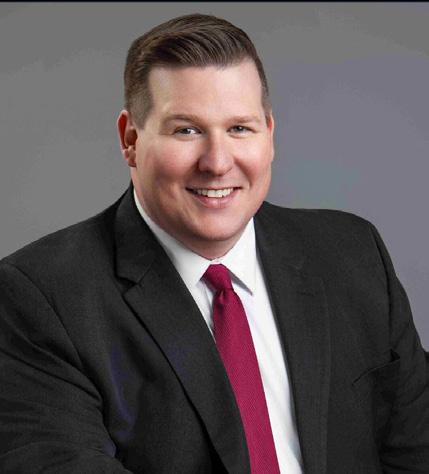
James Lewis “Luke” Farmer (JSL ’18) was appointed by Governor Kay Ivey as a circuit court judge for the 5th Circuit of Alabama, which covers Chambers, Macon, Tallapoosa, and Randolph counties.
Joy Leigh (Jane) Danne (JSL ’13) was appointed by Florida Governor Ron DeSantis to serve as a judge for the Alachua County Court. She served as an assistant public defender for Florida’s Eighth Judicial Circuit since 2013.
Michael P. Keaton (’20) is a tenured professor of history at Southern Wesleyan University in Central, SC. In February 2026, Bloomsbury Academic published his book, Start College Strong: What Every First-Year Student Needs To Know. The book is designed to be practical, insider’s guide for incoming freshmen to be read the summer before their first semester or use as a university textbook for first-year seminar courses. The book is available online through Amazon, Bloomsbury, Barnes and Noble, and Walmart. For more details, visit startcollegestrong.com.
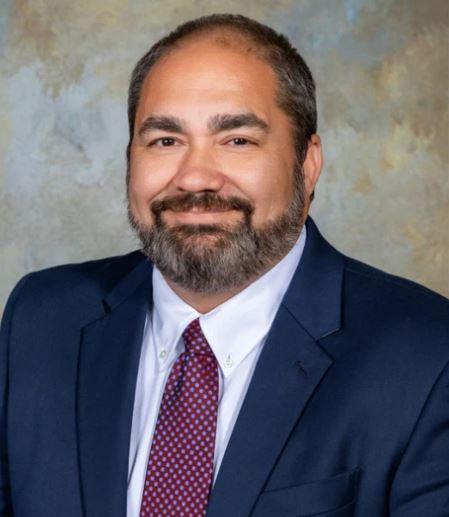
Matthew Caballero (’21, JSL ’25) is department captain for the Anniston Police Department (APD) and was appointed as interim city manager for Anniston, AL. He earned his Bachelor of Science in Criminal Justice from Faulkner, his Juris Doctor from Faulkner Law and served APD for more than 22 years.
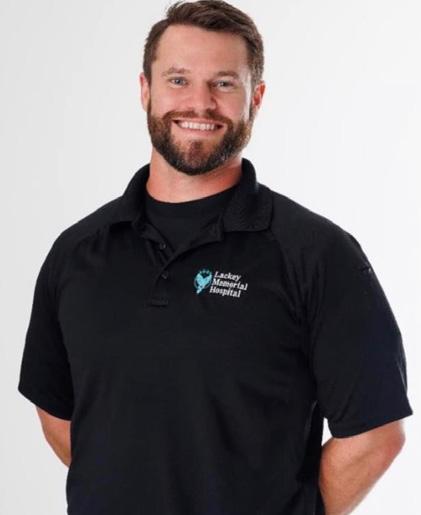
Edward Maner (’22) was part of the first physician assistant cohort at Faulkner University’s College of Health Sciences. He works at a critical access hospital as a sole provider in the emergency room. Maner earned his Doctor of Medical Science from Butler University in 2023 and is training to be the hospital’s pediatric emergency care coordinator. He is certified as a volunteer level one and level two firefighter and is the medical officer at his local volunteer fire department. He graduated from a paramedic program in 2025 and is working toward national registry certification.
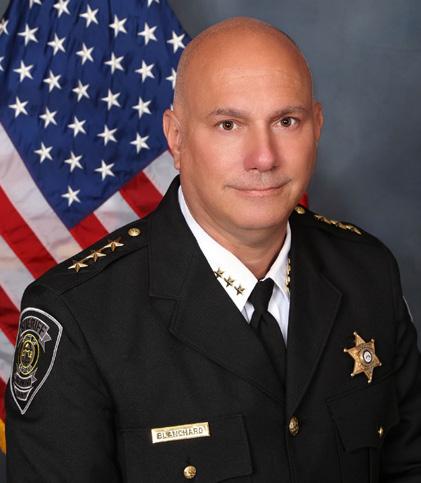
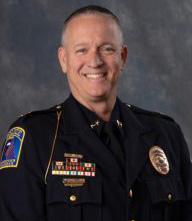
Lewis Blanchard (’23) was appointed Police Chief of Lynn Haven, FL. He earned his bachelor’s degree from Faulkner and is currently completing his Master of Justice Administration.
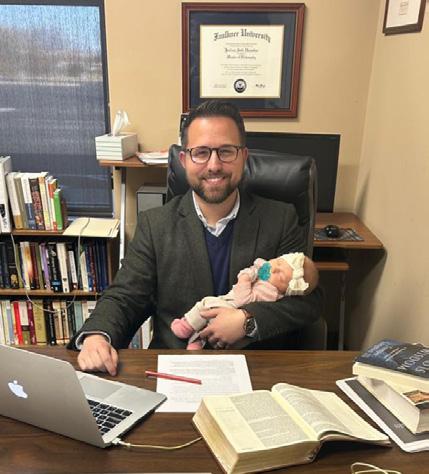
Riley Hall (’24) and Libby (Wright) Hall (’24) were married on February 28, 2026.
Buck Buchanan (’23) is the Andover Police Chief and was sworn in as the president of the Kansas/Western Missouri FBI National Academy Associates, Inc. Executive Board. He earned his Bachelor of Science in Criminal Justice from Faulkner and attended the FBI National Academy in 2017.
Joshua Houston (’24) and his wife welcomed a daughter, Emery, on November 19, 2024. Houston has published two academic books: Shedding Egypt, Becoming Israel: A Critical Evaluation of Egyptian Culture and Circumcision on the Formation of National Israel and Church Choices: Catholicism, Calvinism, and One Man’s Search for the True Church of Jesus Christ. Houston has also published two children’s books. Houston began serving as the pulpit minister for the Fairlane Church of Christ in Shelbyville, TN in April 2026.
William Cooper (‘25) successfully defended his dissertation and completed his Ph.D. in business analytics. His dissertation is entitled, “Skilled Immigration and State Growth: A Business Analytics Perspective.” He is the interim vice president for Traditional Enrollment.

For nearly three decades, Alice Moore served faith, love and hospitality alongside warm meals in the Faulkner University cafeteria. Serving as director of food services for Culinary Management Solutions until 2017, she became a second mother to many. When she passed away on January 4, 2026, her family asked that gifts be made to the Faith and Futures Endowment Fund to honor her life and legacy.
Moore transformed Faulkner’s cafeteria into a “home away from home.” She wrote letters to students’ families asking for their favorite home-cooked recipes, then recreated those meals to ease homesickness. The “Ask Alice” board invited students to share ideas, reinforcing that everyone had a voice and a place.
Beverly Tolliver passed away on December 17, 2025. She served Faulkner University for more than 30 years and faithfully served the Office of the President as the executive assistant to the president. She was a cherished member of the Faulkner family. She loved Faulkner, and above all, she loved the Lord.
Peggy Gail Broderick, 78, died on March 16, 2026, in Quitman, GA. She attended Alabama Christian College (ACC) from 1969-70, where she served on the SHEAF yearbook staff as assistant sports editor. Over the decades, nearly a dozen members of her family have attended the institution. Her father, Neal Sessions, and his sister, Beth Sessions, attended Montgomery Bible College in the 1940s. Her sister, Bonnie, attended ACC in the 1960s. The most recent graduates earned degrees from Faulkner in 2025.

Tommy Ralph Prestridge, 82, of Arab, died January 9, 2026. He earned a degree in business administration from Faulkner University. He served 27 years with the Arab Fire Department, first as a firefighter and then 22 years as chief.
Major Mark Anderson, 62, of Huntsville, AL passed away October 17, 2025. He earned a degree in business from Faulkner University. He began his career in the Army National Guard, where he flew Black Hawk helicopters and fixed wing aircraft. He retired from active duty as a major after 20 years. Anderson also served as a fire fighter for the Huntsville Fire Department, started a landscape business, Landscape South and worked as a pilot for Atlantic Southeast Airlines.
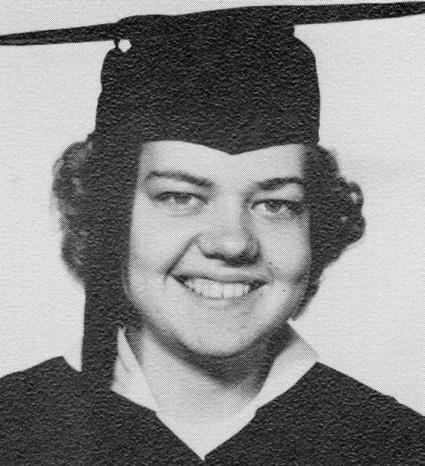
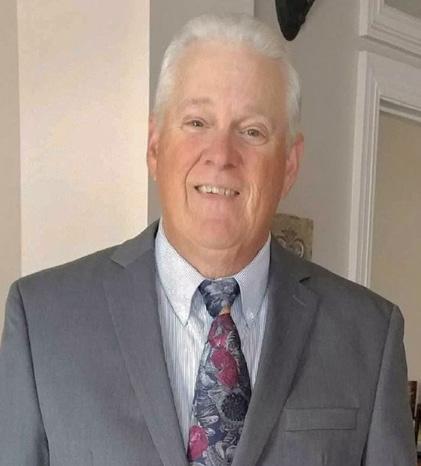
Edith Samples Kincaid, age 93, passed away on February 10, 2026 just days before her 94th birthday. She was a member of the chorus and student council while attending Alabama Christian College on the Ann Street Campus in the 1950s.
Kenneth William Bagwell, 76, passed away on March 9, 2026 after a three-year battle with multiple myeloma. The Mobile, AL native graduated with his bachelor’s in business administration from Faulkner and retired as a master shipbuilder from Ingalls Shipbuilding after 42 years.
Blended on-campus & online delivery over 4 years CONTINUE YOUR FAULKNER EDUCATION WITH A
MAINTAIN YOUR CAREER & PERSONAL LIFE WHILE YOU PURSUE YOUR LAW DEGREE.
Designed for those seeking a J.D. without weekday on-campus classes, the Executive J.D. Schedule offers a reduced load of blended classes over four years. Blended classes meet on campus two weekends a month (excluding summers) and have an online, distance education component during the week.