

Welcome to the Australian Steel Institute (ASI) 2025-2026 Year in Review
The ASI is the peak body for the Australian steel industry. We represent the entire local steel supply chain from the individual through to all businesses regardless of size.
Our vision is to influence profitable growth for the complete Australian steel value chain.
Our mission is to promote steel as the material of choice; promote the capability and capacity of the Australian steel supply chain; and provide leadership in advocacy, compliance, safety, sustainability and technical education to more than 7,000 members and 700 companies nationwide.
Read on to discover how we worked towards these goals this year.
Total members 7,045
Annual member retention rate 92%
Of new members fabricators 62%
25,016
Total reach of database
Corporate members 717
New company members 79
Increase in ASI audience growth 15%
Attendees at ASI events and seminars 1,710

During the 2025–2026 calendar year, the Australian Steel Institute (ASI) intensified its role as the peak body representing Australia’s steel supply chain, with a strong emphasis on trade defence, quality compliance, and sustainability.
A defining initiative of the year was ASI’s application to the Federal Government seeking a Safeguard measure to protect local fabricators from a flood of low-priced imported fabricated structural steel. Interim findings are due later in the year, with a final report in November 2026.
Complementing its trade agenda, ASI continued to expand its compliance frameworks in 2025-2026. Mid 2026 saw the Steelwork Compliance Australia (SCA) scheme consolidate its position as a JAS-ANZ-accredited certification body for auditing to the full scope of AS/NZS 5131 and AS/NZS ISO 3834.
Elsewhere, the Steel Sustainability Australia (SSA) scheme saw significant uptake among steel mills, manufacturers, fabricators, reinforcing processors, and distributors during the calendar year.
ASI membership rose to a record 7,045 members during the financial year (717 of whom were corporate members), driven by the ASI’s strong advocacy on behalf of the local steel industry and significant demand for the ASI’s certification schemes.
ASI was highly visible in 2025-2026 providing advice to federal and state governments on local content, renewable energy infrastructure, green steel, and sustainability; and promoting Australian steel in the media as the product of choice.
In a significant milestone, 2025-2026 saw the signing of a memorandum of understanding to merge the ASI and the National Association of Steel-framed Housing (NASH). The move will result in a stronger and more successful combined entity, with significantly greater capability to advocate for our industry.
Throughout 2025–2026, ASI’s activities reflected a coordinated strategy: defending local industry from unfairly traded import pressures, raising compliance and quality standards, and supporting the steel sector’s sustainability transition.
Together, these initiatives underscore ASI’s role in safeguarding both the competitiveness and long-term resilience of Australia’s steel industry.
Mark Cain
Chief executive, Australian Steel Institute
“Throughout 2025–2026, ASI’s activities reflected a coordinated strategy: defending local industry from unfairly traded import pressures, raising compliance and quality standards, and supporting the steel sector’s sustainability transition.”
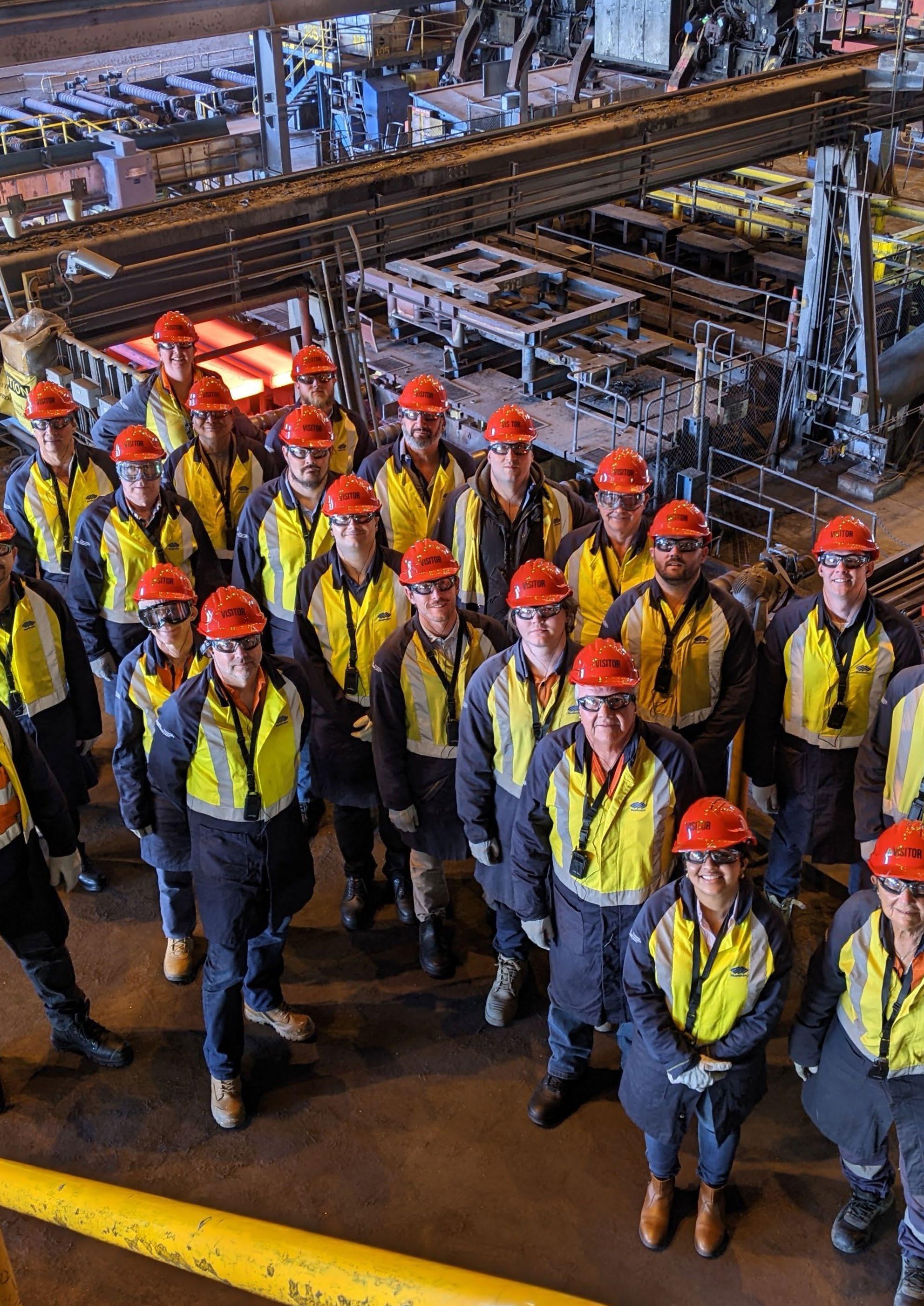
A technical tour during the ASI’s 2025 Australian Steel Convention.
Membership support over the past 12 months enabled the ASI to achieve the following meaningful progress for the Australian steel industry.
• Successfully lobbied the Federal Government in support of a Safeguard inquiry to investigate a surge in cheap imported fabricated steel. https://www.steel.org.au/ what-we-do/advocacy/asi-campaign-on-importedfabricated-steelwork/
• Signed a memorandum of understanding to merge the ASI and the National Association of Steel-framed Housing (NASH). The move will result in a stronger combined entity, with significantly greater capability to advocate for the local steel industry.
• Released a ‘traceability’ tech note outlining duty of care obligations on steel stakeholders to ensure compliant fit-for-purpose steelwork in the finished structure. https://www.steel.org.au/news-and-events/news/asireleases-traceability-tech-note-tn017/
• Continued to monitor government infrastructure projects where local content is mandated and sought enforcement where regulations/codes were not followed.
• Represented the steel industry at the Federal Government’s Minerals and Metals Processing Roundtable chaired by Federal Industry Minster Tim Ayres. Called for more timely and effective trade measures to protect the local steel industry against a surge in low-priced imported steel. Continued to provide advice to the Federal Government’s Green Metals Advisory Panel.
• Ramped up an advocacy campaign promoting local steel’s capability to service the booming electricity and alternative energy markets.
• Continued to advocate for regulatory controls on the export of unprocessed steel scrap via a submission and presentation at a hearing to the inquiry into decommissioning oil and gas infrastructure in Victoria (Bass Strait).
• Successfully supported advocacy for an east-coast gas reservation to combat high local energy costs. On 7 May, 2026, the Albanese government required local gas producers to set aside 20% of export volumes for the Australian market.
• Attended a consultation meeting with the Anti-Dumping Commission to discuss how trade data is currently used by industry. Attended an online workshop on improving access to the anti-dumping system. Progress made in identifying opportunities to improve SME access to the system.
• Promoted the local steel supply chain’s capability to build infrastructure for the 2032 Brisbane Olympics in meetings with government and suppliers, and via news stories and ASI web pages.
• Presented online to a global meeting of trade ministers and diplomatic staff in South Africa on steel excess capacity. The meeting provided unprecedented international access and profile for the Australian steel industry.
• Presented to the Ministerial Industry Forum on Trade Remedies Reform hosted by Federal Industry Minister Tim Ayres about issues and shortcomings with existing trade measures, including anti-subsidy and antidumping investigations being essentially inaccessible to SMEs due to the cost, extended timeframes, and complexity.
• Successfully advocated for amendments to the WA Industry Participation Scheme to encourage local content in government projects.
• Met with the Federal Department of Industry, Science and Resources to discuss ‘early warning’ metrics that could be employed to provide evidence of likely impending dumping or subsidy behaviour by steel importers.
• Advocated for the inclusion of whole-of-life carbon reduction measurement for building materials at the project level.
• Participated in a Citi Group panel discussion with Federal Industry Minister Tim Ayres exploring investment opportunities in green steel and iron.
• Initiated discussion with BlueScope about the proposed constructsteel life cycle analysis study on data centres.
• Lodged a submission to the Department of Industry Science and Resources’ Strengthening Australia’s Trade Remedies System consultation group, seeking:
• improved ability of industry associations or similar organisations to collectively represent small businesses
• less onerous financial reporting requirements on SMEs
• changed identity disclosure requirements to reduce the risk of retribution by large clients on SMEs
• legal aid-style advice to small businesses suffering hardship circumstances.
• Met with Indonesian steel industry associations in Indonesia to discuss issues of shared interest.
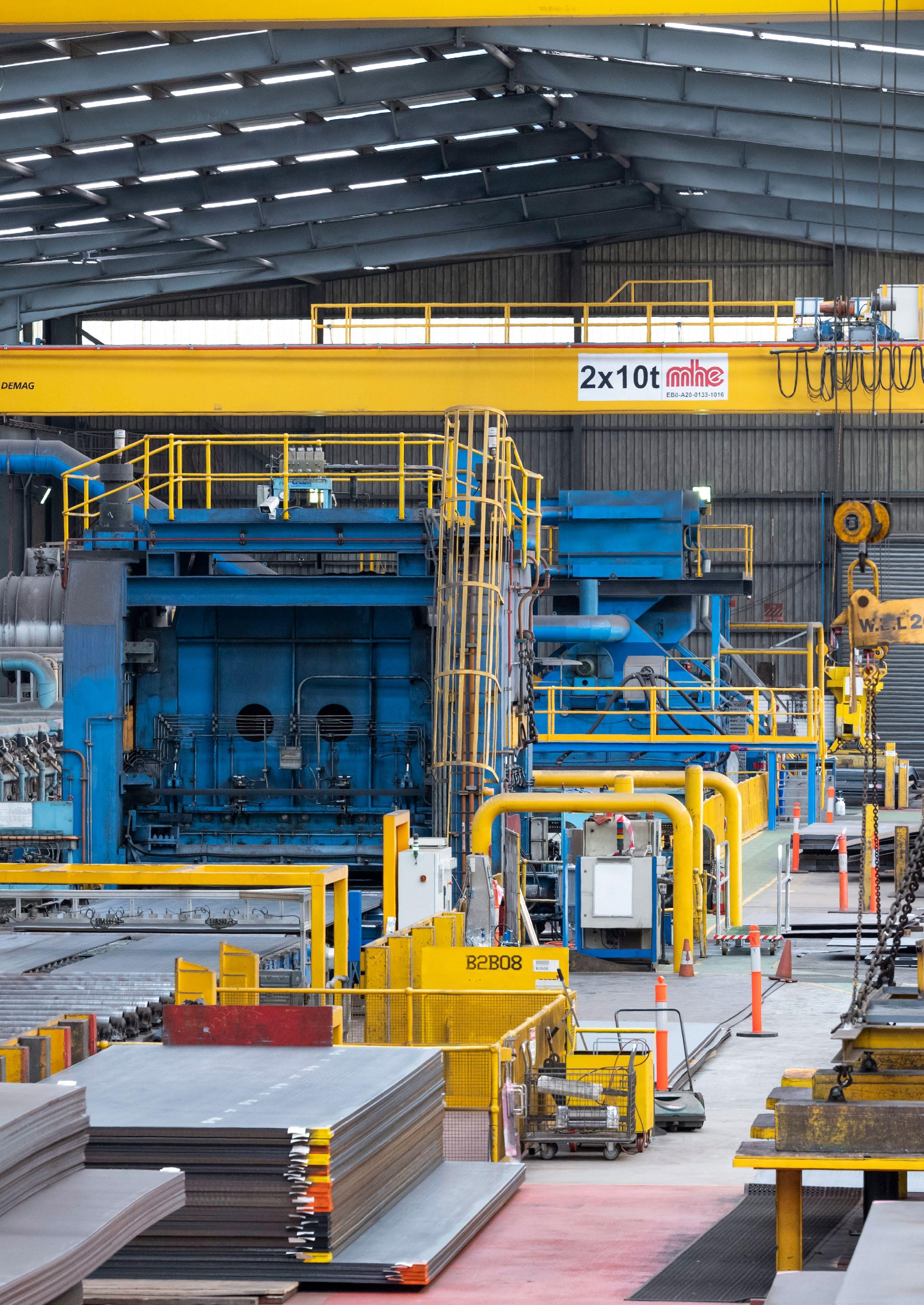
ASI provides support to members through the following focus areas.
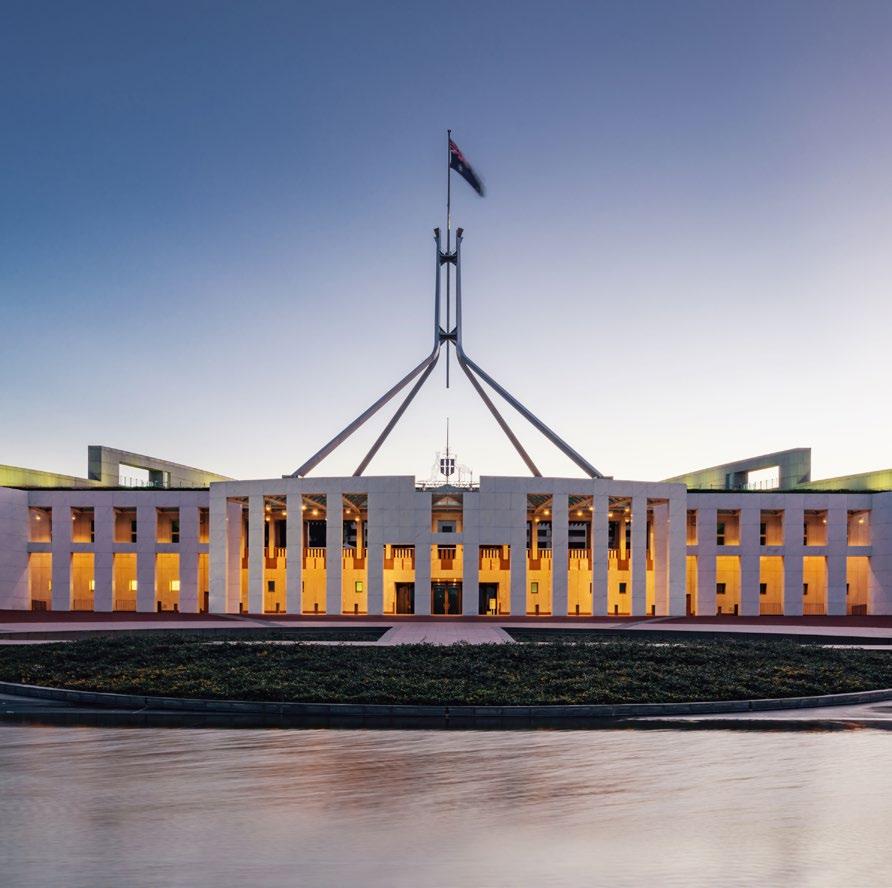

ASI advocacy initiatives in 2025-2026 included:
• An ASI-initiated Productivity Commission Safeguard inquiry is now reviewing whether measures are needed to provide short-term protection for the fabricated steel industry, which is under threat from a flood of low-priced imports. Interim findings are due later in the year, and a final report is expected in November 2026. https://www.steel.org.au/what-we-do/advocacy/asicampaign-on-imported-fabricated-steelwork/
• A major ASI priority in 2025-2026 was championing local content in state and federal government contracts. The work included lobbying ministers responsible for government procurement to enforce and further tighten regulations specifying local content in government contracts. It also included providing input to governments as a member of select panels to develop policy on local steel content in government projects.
• Successfully supported advocacy for an east-coast gas reservation to combat high local energy costs.
• Promoted the local steel supply chain’s capability to build infrastructure for the 2032 Brisbane Olympics in meetings with government and suppliers, and via news stories and ASI web pages.
• Presented online to a global meeting of trade ministers and diplomatic staff in South Africa on steel excess capacity. The meeting provided unprecedented international access and profile for the Australian steel industry.
• Presented to the Ministerial Industry Forum on Trade Remedies Reform hosted by Federal Industry Minister Tim Ayres about issues and shortcomings with existing trade measures, including anti-subsidy and antidumping investigations being essentially inaccessible to SMEs due to the cost, extended timeframes, and complexity.
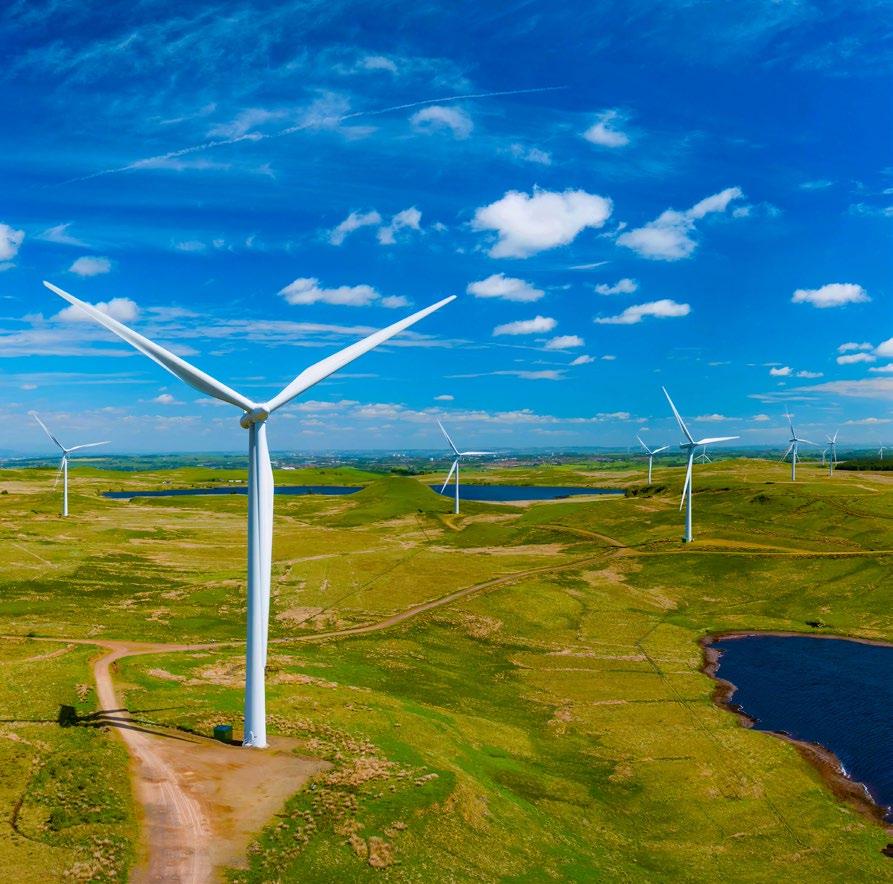

Sustainability initiatives in 2025-2026 included:
• A submission to the Federal Government Climate Change Authority on its 2025 Annual Progress Report, advocating for natural gas at internationally competitive pricing to enable the transition from blast furnace ironmaking to decarbonised alternatives, and faster government regulatory approval for renewable energy projects.
• A submission to the Federal Government Department of Industry, Science and Resources on Green Aluminium Production Credit Consultation Paper, addressing the proposed green aluminium production credit in the context of a potential fit for steel producers.
• ASI continued to advocate for regulatory controls on the export of unprocessed steel scrap via a submission and presentation at a hearing to the inquiry into decommissioning oil and gas infrastructure in Victoria (Bass Strait), as well as via a letter to the WA Minister for Energy and Decarbonisation on retention and domestic recycling of scrap steel from decommissioned infrastructure in Western Australia.
• Australian Steel Stewardship Forum (ASSF), chaired by the ASI, advocated for the inclusion of wholeof-life carbon reduction measurement for building materials at the project level (rather than purely upfront carbon reduction) through consultations with various organisations, including INZ on their embodied carbon clause initiative and Infrastructure NSW on their decarbonising infrastructure policy.
• ASSF, as a member of the Australian Sustainable Built Environment Council (ASBEC), supported the strategic imperatives of a sustainable built environment, including accelerating decarbonisation, enhancing resilience and adaptation to climate change risk and transitioning to a circular economy.
• ASI consulted with Green Building Council Australia on introducing new credits in the Green Star rating system
to reward circularity in the manufacturing and use of building materials at the project level.
• ASI invited onto the Department of Science, Industry and Resources-funded Standards Australia Low Carbon Metals Expert Advisory Group. Scope of work includes:
• mapping of relevant national, regional, and international standards
• setting and refining policy priorities for low-carbon metals.
• endorsing definitions and terminology set for national adoption, including “green steel”.
• ASI secured a presentation spot at Australia’s largest construction event Sydney Build Expo on the topic Steel: Circular Solutions for a Sustainable Future, where it highlighted the benefits of steel as a circular material and presented the St Mary’s IPO project, a case study on carbon reduction using design for deconstruction.
• Presented to the Brisbane Olympics Games Independent Infrastructure and Coordination Authority (GIICA) on sustainability credentials of steel and the responsible procurement of steel for Brisbane 2032 projects.
• ASI through Standards Australia ISO/TC 59/SC 17Sustainability in buildings and civil engineering works supported a proposal to develop a new standard to develop data templates to digitalise environmental product declaration data to feed into building information models.
• ASI arranged a meeting with the Federal Department of Climate Change, Energy, the Environment and Water to understand the impact of the industrial deep decarbonisation initiative (IDDI) on the steel supply chain. One of the IDDI’s initiatives is the Green Public Procurement Pledge. The ASI has joined an expert panel to review data reporting, standard harmonisation and public procurement ahead of deciding whether to take up the pledge.
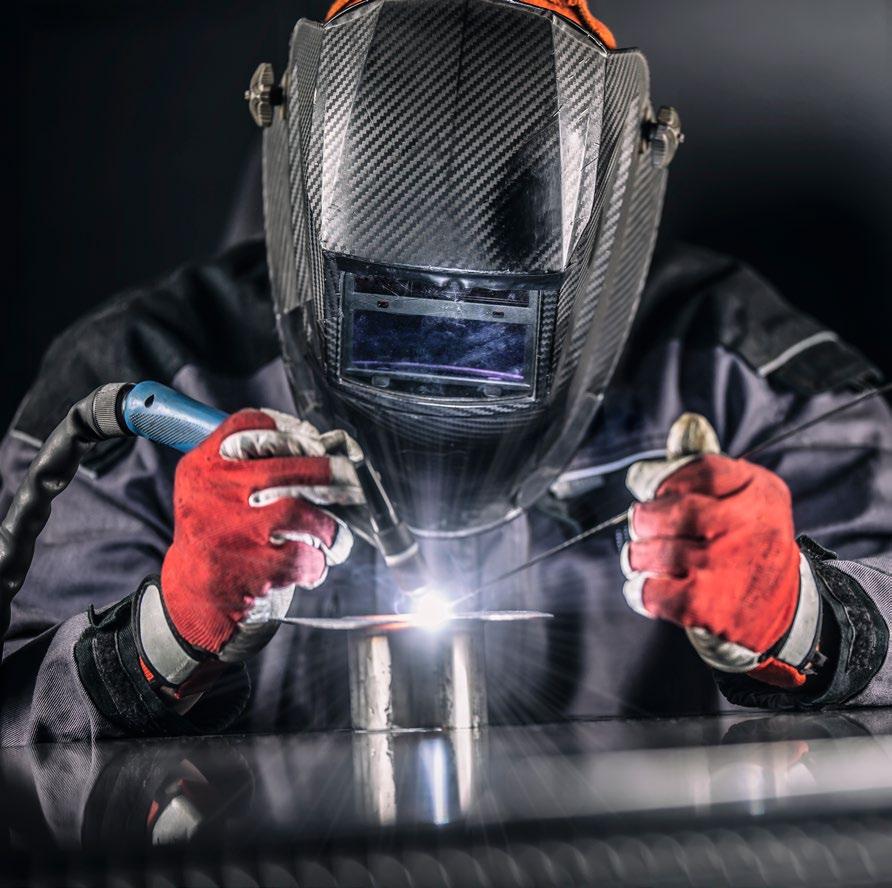
The ASI welcomed a new Steelwork Compliance Australia (SCA) dual certification offering in 2025 that includes AS/NZS ISO 3834 certification alongside the existing AS/NZS 5131 scheme.
The expanded scheme:
• Optimises efficiency in the auditing process.
• Improves cost effectiveness.
• Reduces administrative workload.
• Provides the pathway to meet specifications requiring both standards.
The certification under the National Structural Steelwork Compliance Scheme (NSCCS) is JAS-ANZ accredited for both standards, providing continued confidence in the auditing and certification process. The expansion enables fabricators to better meet quality and safety requirements specified by government and the private sector as a prerequisite for tendering for projects.
SCA has 155 companies currently certified, with numbers expected to increase with the new offering to clients. Steelwork fabricators continued to achieve higher levels of certification, with many upgrading to CC3. Forty companies have already adopted dual certification to AS/NZS ISO 3834 and AS/NZS 5131.
For details, see: https://www.scacompliance.com.au.

ShedSafe is the ASI’s third-party accreditation and training program for shed manufacturers, buyers and builders.
Buyers purchasing a ShedSafe-accredited shed can be confident in the engineering, steel products and site specifications of the steel shed. ShedSafe activities in the past 12 months include:
• Continued to progress an application programming interface for ShedSafe to use geoscience data (free) in lieu of Google Maps.
• Reviewing working at heights requirements for sheds.
For details, see: https://www.shedsafe.com.au

Now in its fourth year, SSA has become Australia’s most widely adopted steel certification scheme with strong and sustained growth.The program assesses and certifies downstream steel suppliers, including fabricators, roll formers and reinforcing processors, while also verifying upstream steel producers against best practice environmental, social and governance (ESG) criteria.
SSA certified sites achieved a 92% average waste diversion rate in 2025, alongside a 17% average reduction in emissions intensity (CO2e/tonne of steel) over five years; equivalent to a 4% annual reduction and double the minimum target rate. These are verified, measured outcomes across the certified network, reflecting the program’s tangible and growing impact across the Australian steel industry.
Registrations have increased by 20% per year over the past two years, bringing total participation to 93 companies across 131 sites. Of these, 103 sites (representing 85%) have successfully achieved certification, reflecting a high level of industry commitment to continuous sustainability improvement. Fabricators continue to represent the largest share of participants, accounting for 50% of registrations, followed by reinforcing processors at 24%.
In 2025-2026, SSA significantly expanded its international presence, with the verification of 10 international mills and the commencement of certification for international pipe and tube manufacturers. The program also achieved key milestones in New Zealand, where SSA-certified sites are now recognised for supplying sustainable steel to projects seeking Green Star certification with the New Zealand Green Building Council. In addition, SSA verified steel suppliers are now recognised under the New Zealand Sustainable Steel Council certification scheme, meaning a single SSA verification can now support market access across both Australian and New Zealand.
SSA also received additional Responsible Product Value (RPV) recognition from the Green Building Council of Australia, reflecting the strength of its steel traceability processes and comprehensive Environmental Management System requirements. This resulted in the top three SSA
certification levels being recognised as best practice sustainability under the Green Star framework.
To support industry readiness for emerging regulatory requirements, SSA introduced a new credit aligned with mandatory climate-related financial disclosures, alongside targeted guidance and training webinars for participants.
SSA is recognised as a Type 1 environmental label under the Infrastructure Sustainability Council’s rating tools, and endorsed as a best practice initiative within the Green Building Council of Australia’s Green Star rating tools. SSA certification ensures that steel supplied to projects meets the highest sustainability standards for both building and infrastructure developments.
With increasing demand for sustainability certification from government and private sector specifiers alike, the SSA certification enables ASI members and steel suppliers within the value chain to:
• Demonstrate and provide assurance that their operations meet best practice sustainability standards.
• Enhance operational efficiency while reducing business costs.
• More effectively meet sustainability requirements set by government as part of its drive towards Net Zero carbon emissions.
• Deliver sustainable steel to Green Star and Infrastructure Sustainability Council projects, helping both government and private sector projects achieve their sustainability targets.
SSA will continue to work closely with the steel industry, government organisations and private sector stakeholders within the built environment to advocate for a sustainable and responsible steel supply chain in Australia.
For details, see: https://www.steelsustainability.com.au

ASI now has a record 7,045 total members, with 717 corporate members and 25,061 contacts in the broader ASI community. This represents a significant increase from last year, with 15% more contacts receiving ASI communications. Membership retention rate across all member categories was 92%, with all categories achieving retention rates equal to or higher than the last financial year.
2025-2026 saw the introduction of a new associate membership package. The package offers a multi-tiered advertising model across all ASI platforms, including website, communications, social media and the Steel Australia magazine. The new communication channels enable associates to reach a broader audience, build stronger relationships across the supply chain and help members find solutions to their problems.
Fabricators led ASI growth in 2025-2026, accounting for 62% of all new members. ASI’s compliance solutions Steelwork Compliance Australia (SCA) continued to be the biggest attraction for fabricator membership. With state government departments now specifying AS/NZS 5131 and/or mandating the use of certified fabricators, demand for certification remains strong. With SCA now including dual certification to AS/NZS 5131 and AS/NZS ISO 3834, there has been an increase in companies seeking dual certification under the SCA scheme and taking advantage of the significant discounts available to ASI members for their audits. Engagement with ASI fabricator members was at an all-time high throughout the year, driven by the ongoing work in the lead-up to ASI’s Safeguard application.
Despite the tough economic climate and the surge of imported fabricated steelwork having an impact on almost all local fabricators, ASI members remained strong, positive, and committed to supporting the Safeguard application and turned up in large numbers to the ASIfacilitated online forums, team meetings, interviews with media and meetings with local members of parliament.

Marketing and communications crafted and delivered communication strategies, created content, and managed campaigns across various channels to drive ASI initiatives in 2025-2026. Key initiatives included:
• Promoting and growing the ASI’s associate member package. Associate member marketing in LinkedIn increased the visibility of the ASI brand by 40%.
• Writing and distributing media releases promoting ASI’s advocacy efforts on behalf of the local steel industry, including the ASI Safeguard campaign to combat the surge in imported fabricated steel (https:// www.steel.org.au/what-we-do/advocacy/asi-campaignon-imported-fabricated-steelwork/).
• Developing messaging and marketing support for the Steelwork Compliance Australia (SCA) scheme, communicating that SCA is now JAS ANZ accredited to provide certification to both AS/NZS 5131 and AS/NZS ISO 3834.
• Developing messaging and support for the Steel Sustainability Australia (SSA) scheme.
• Promoting awareness of and participation in the Steel Sustainability Awards; the Australian Steel Convention; and the Steel Excellence Awards.
• Crafting and publishing news stories for the ASI monthly newsletter, Metal Musings and electronic direct mails (EDMs).
• Continued curation of the ASI’s Steel Australia magazine as a way of engaging with the industry (https://www.steelaustralia.com.au/).
• Significantly increasing views of ASI’s flagship news publication Metal Musings, driven by a new online design and inclusion of new content.


In 2025-2026, the ASI:
• Spearheaded a major revision of the AS/NZS 4100 Steel Structures Standard and sent it to Standards Australia for review in 2026, and presented a webinar on Advanced Analysis to AS 4100. AS 4100 sets out minimum requirements for the design, fabrication, erection, and modification of steelwork in structures.
• Presented a range of webinars, including on Advanced Analysis to AS 4100. AS 4100 sets out minimum requirements for the design, fabrication, erection, and modification of steelwork in structures.
• Developed a draft quality management system (QMS), configured specifically to integrate the requirements of AS/NZS ISO 9001, AS/NZS 5131 and AS/NZS ISO 3834. Once finalised the QMS will be offered on an online platform with integrated help and training.
• Developed a thought-leadership paper on Data-driven connectivity as a position paper for the construction industry in general and steel construction in particular. Alignment on digital connectivity systems and processes will help the steel industry action robust traceability and compliance.
• Lodged a submission to the final review of AS3959 Construction in Bushfire Prone Areas. This has been a two-year process of standards committee meetings.
• Met with the Construction, Forestry, Maritime and Energy Union (CFMEU) to seek an update on outcomes from the CFMEU training compliance team’s mapping and gap assessment in bolt installation training requirements.
• Met with the Australasian Corrosion Association and the Galvanizers Association of Australia to discuss standards to evaluate overseas fabricated structures when audited by the Steelwork Compliance Australia (SCA) scheme.
• Worked with roll forming members to progress a revision of HB 39 – Installation Code for Metal Roof and Wall Cladding
• Continued to represent the industry on a wide range of Australian Standards committees (see https://www.steel.org.au/what-we-do/representationand-memberships/).
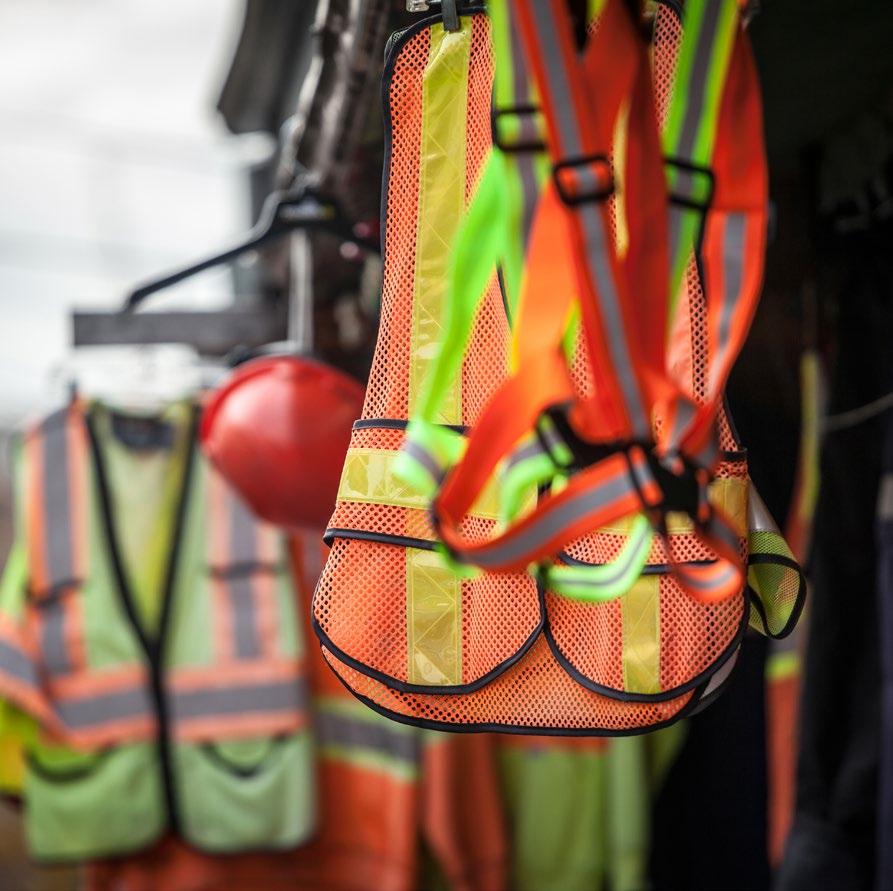
2025-2026 saw the ASI provide input to governments and receive advice on a range of issues, including:
• Meetings with the Australian Chamber of Commerce and Industry (ACCI) and Safe Work Australia to discuss proposed changes to the regulation of Non-Threshold Genotoxic Carcinogens (NTGCs).
• Representing the Australian Chamber of Commerce and Industry on the Safe Work Australia Crane Licence Working Group.
• Providing technical assistance to the Victorian Building Authority (VBA) in its ongoing investigation into the collapse of the Kew Recreation Centre, and other authorities where mishaps with steel occurred.

ASI had a strong focus on promoting steel as a career path in 2025-2026, including:
• Developing online resources to attract and educate young people regarding career pathways, qualifications and emerging roles in the steel industry.
• Meeting with the NSW Department of Education curriculum team to discuss how the ASI might support schools in creating meaningful links to the metals industry. ASI is developing a plan to create storyboards for video and interview content for possible use in the schools, focusing on steel as a career pathway.

• Partnering with ASI members at school careers expos to educate careers advisers, parents and students. Twenty schools were visited, connecting the ASI with more than 10,000 students.
• Continuing to offer job placement opportunities in steel through the ASI’s jobs website (http://jobs.steel.org.au/).
• Presenting student lectures and awards at the Queensland University of Technology, University of NSW and James Cook University, among others.


Webinars, seminars and eLearning
ASI welcomed 1,710 attendees at ASI events, webinars and seminars throughout the year.
Two flagship eLearning courses were added to the ASI eLearning program in the past 12 months: Induction to steel – basics and Bolting supervisors training course, bringing the total to 76. A total of 392 people downloaded courses. The most popular were the Changes to AS 4100 and AS/NZS 5131 course, followed by the AS 4100 Refresher Course for Engineers
There are further courses in the pipeline: Advanced Analysis to AS 4100, Preparing for AS 4100 - Understanding the New Fire Provisions, Design of Welds and Welded Connections for Engineers. A number of future courses are focussed on fabricators.
Webinars held in 2025-2026 included: Design of light gauge cold-formed steel connections (includes welded, bolted, screwed, and riveted connections); Design of welds and welded connections for engineers; Advanced analysis to AS 4100; New proposed fire provisions AS 4100, and Climate-related disclosures and reporting.
Library and website
Professionals continue to seek access to ASI’s world-class, extensive list of more than 20,000+ steel related resources. 2025-2026 saw more than 746 books sold (eBooks and hard copies) and 450 library enquiries.
The ASI website had 685,124 page views from 1 July to 25 May, with the industry directory being the most-viewed page after the home page. The online Steel Australia media site had 23,399 views from 1 July 2025 to 25 May 2026.


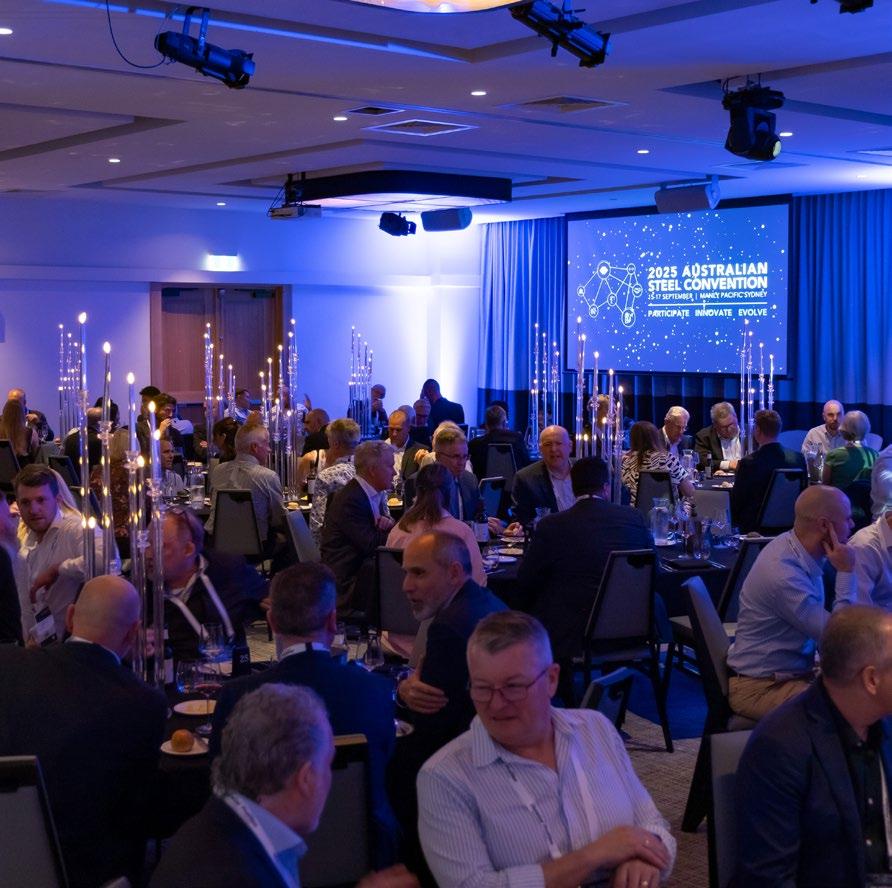
The ASI annual convention brings ASI members together each year to share stories and explore the latest developments and innovations in the steel industry.
Record numbers attended the 2025 ASI Convention at Manly, which included two technical tours and a successful fabricator forum.
The theme for the 14-16 September, 2026 convention is Capability, strength and resilience in a changing world Speakers will explore:
• Building and protecting Australian capability.
• Driving investment, skills and innovation.
• Navigating decarbonisation and the energy transition.
• Responding to trade pressures and policy reform.
• Strengthening resilience across supply chains and global markets.
For details, see: https://www.steel.org.au/news-and-events/ steel-convention-2026/
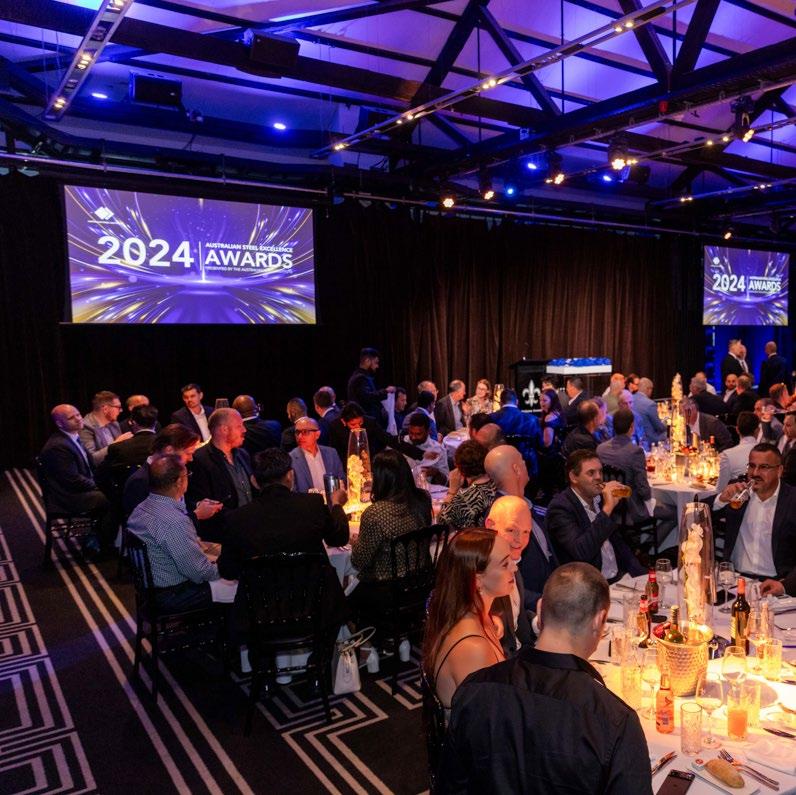
The ASI takes pride in recognising the achievements of its members. Initiatives undertaken in 2025-2026 to recognise such achievement included:
• A call out for nominees for the 2026 ASI Steel Excellence Awards. The awards showcase Australia’s best and brightest steel designs. State and territory winners compete in six categories for awards presented at a gala end-of-year dinner in Sydney (https://www.steel.org.au/awards/2026/).
• Presentation to award winners in the 2025 ASI Steel Sustainability Awards. The biennial awards cover two broad focus areas: sustainable use of steel in building and construction projects and company steel-related sustainable initiatives (https://www.steel.org.au/asisteel-sustainability-awards-2025/).
• Presenting ASI-sponsored academic awards to students at state and territory universities.
• Nominating local steel projects for international awards. In 2026, an ASI-nominated project St Marys IPO won the Excellence in Sustainability category in the World Steel Association’s Constructsteel Awards. This marks the third year in a row that an ASI-nominated entry has won one of the three available categories.


AustralianSuper is a valued partner, with the offering to members now in its 13th year. AustralianSuper provides ASI members with a range of superannuation choices and important updates on superannuation legal requirements and products to meet industry and individual needs. More than 100 members registered for this year’s superannuation webinar hosted by AustralianSuper.

Choice Energy provides discounted energy plans and solar installations to ASI members. Its services have provided members with $1.6m in savings to date - and helped them meet sustainability targets.

Membership support enabled the ASI to achieve the following significant advances at a state and territory level.
• Advocated as a director of the NSW Renewable Energy Sector Board for local steel content on renewable projects.
• Lodged a submission to the NSW Local Jobs First Bill policy consultation advocating for local steel content, and participated in a subsequent ministerial roundtable on elements of the policy.
• Provided input to standards committees.
• Discussed with unions (CFMEU NSW) and others regarding non-compliant/unsafe imported fabricated steelwork.
• Delivered the annual steel construction lecture to the civil engineering class at the Australian Defence Force Academy in Canberra.
• Requested NSW Treasury to update their procurement board directive PBD-2016-03 (construction standards and conformance) to include references to AS/NZS 5131 and the ASI’s SCA scheme.
• Met with Master Builders ACT to introduce the ASI’s SCA and SSA certification schemes.
• Attended ministerial roundtable on trade remedies reform with Federal Industrial Minister Tim Ayres held in Western Sydney.
• Attended regular meetings with NSW Treasury to discuss fuel supply consultation with manufacturers.
• Convened three meetings of the NSW Roll Forming Best Practice Group.
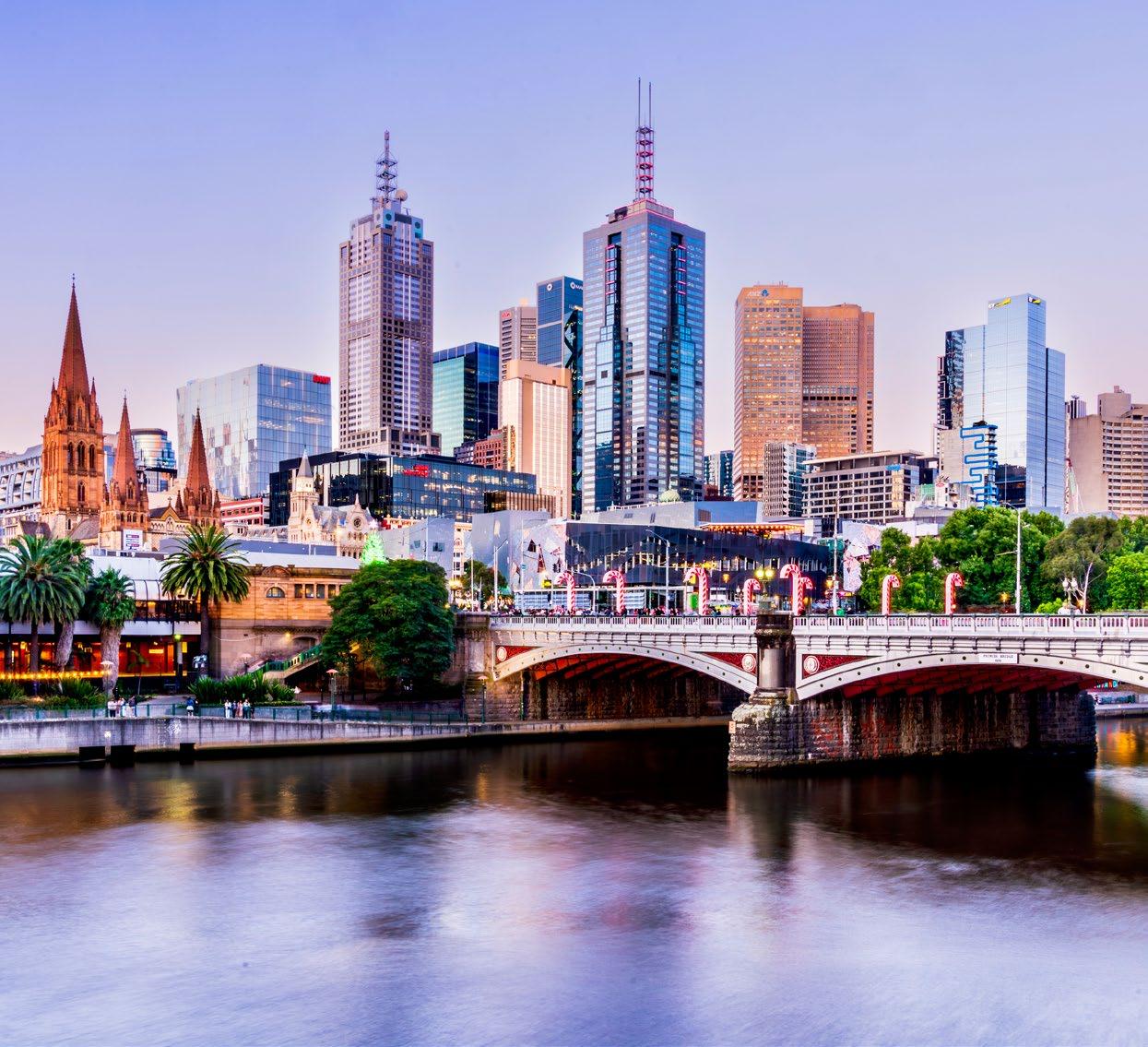
• Influenced focus and support for local content on Victoria’s Suburban Rail Loop (SRL) East Project. The authority is committed to using at least 90% locally fabricated and milled steel.
• Continued to monitor the local steel content status of VIC Government Local Jobs First strategic projects including the North-East Link, Suburban Rail Loop, Level Crossing Removal, Sunshine Station Superhub, Hospitals, Schools and VRET2 / Renewables projects.
• Attended an ICN Industry Briefing on the NEL - Eastern Freeway Upgrades - Tram to Springvale Alliance project. A local steel content requirement of 90.5% has been set for the Project as part of the Local Jobs First requirements. Provided an update to ASI members.
• Engaged with the Port of Hastings Corporation regarding the potential for local steel supply for the Victoria Renewable Energy Terminal Project.
• Lodged a submission to the Victorian Government recommending that ferrous scrap from decommissioning of oil and gas infrastructure in Bass Strait be recycled for use in low-emissions steelmaking.
• Successfully advocated to the Victorian Dept of Transport and Planning to allow for SCA dual AS/NZS 5131 and AS/NZS ISO 3834 certified fabricators to work on Victorian infrastructure projects.
• Active industry representation at the Victoria Skills Authority’s Industry Advisory Groups in both Manufacturing and Construction.
• Attended Royal Melbourne Institute of Technology (RMIT) Civil Engineering’s Industry Day to exchange information with RMIT’s research teams.
• Presented the ASI Undergraduate Awards at Monash University’s Department of Civil and Environmental Engineering Annual Awards.
• Briefed fabricator and manufacturing members on tender opportunities on the VicGrid Project Gateway.
• Monitored developments related to the Kew Recreation Centre structural steel collapse and enforceable undertaking.
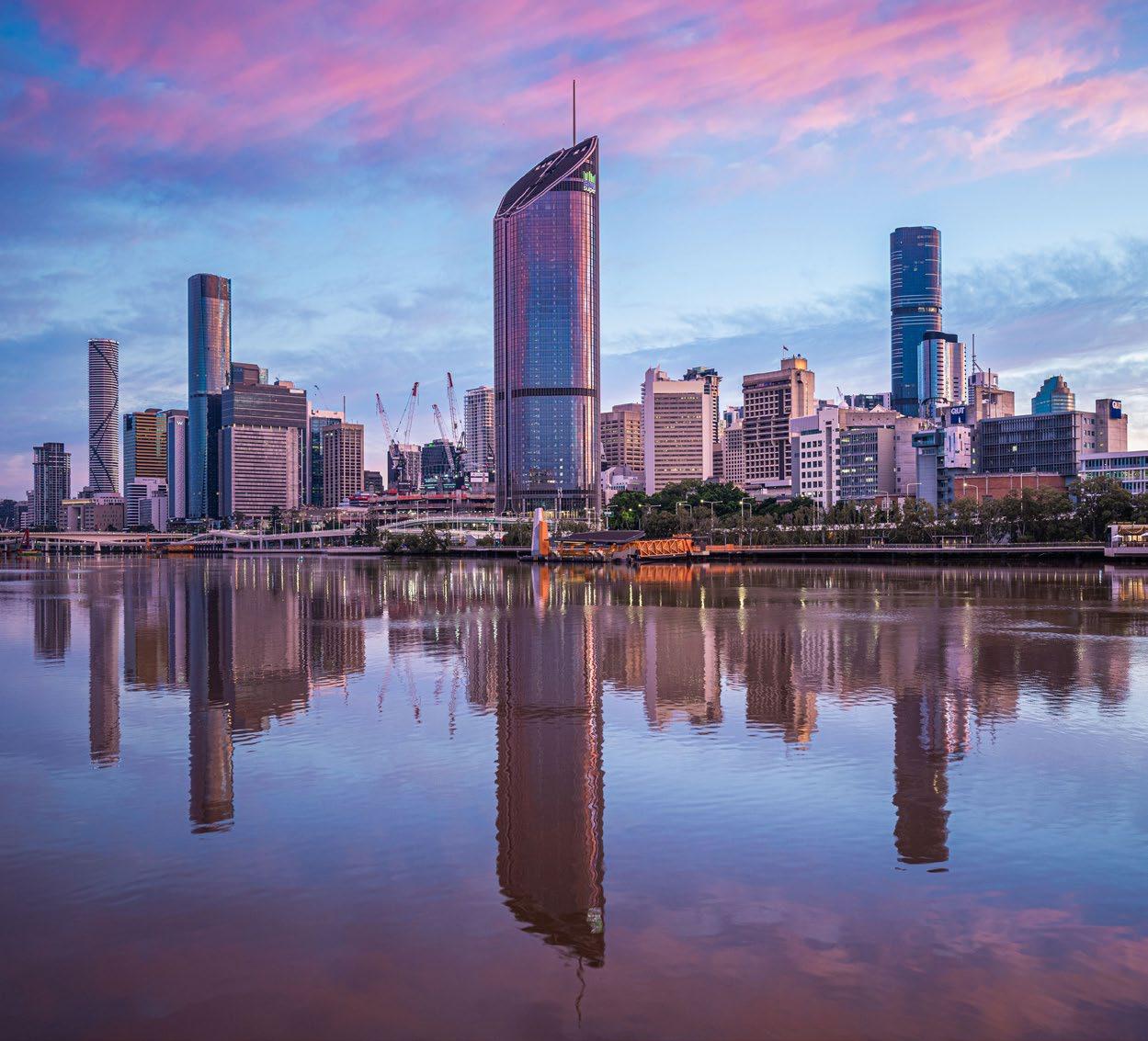
• Met with the Queensland Government and the Games Independent Infrastructure and Coordination Authority (GIICA) to promote the local steel supply chain’s capability for the 2032 Brisbane Olympics. Established pages on the ASI website and wrote news stories promoting the capability of the local supply chain to construct infrastructure for the Games. Convened a fabricator roundtable to discuss Olympics tender opportunities.
• Provided submissions to the Queensland Productivity inquiry on opportunities to improve productivity of the construction industry. Sought minimum local steel content targets in government-funded construction, including the Olympics and public housing projects.
• Held an Industry Capability Network (Qld) workshop to advise ASI Qld steel fabricator members on ways to raise their profile on Gateway.
• Represented ASI at a visit by National leader Matt Canavan to Noosaville fabricator NEACH, where he endorsed local steel manufacturing and sovereign capability.
• Attended the Brisbane Enterprise Business Breakfast to discuss opportunities for steel in the $5 billion redevelopment plan for Brisbane airport.
• Held several meetings with the Queensland Major Contractors Association (QMCA) to discuss local steel supply chain capability and capacity to supply construction projects in Queensland.
• Presented on corrosion prevention of steel at the Queensland Buildable Conference; steelwork compliance to Master Builders Queensland members; and provided lectures on economical structural steelwork and bolting and welding to engineering students at Queensland universities. Held ASI Queensland welding course for engineers in conjunction with TAFE Queensland.
• Coordinated ASI student awards to engineering students at Australian universities. Updated the ASI education support pack brochure.
• Held an ASI NT steel fabricators forum attended by NT Minister for Business and Advanced Manufacturing Robyn Cahill.
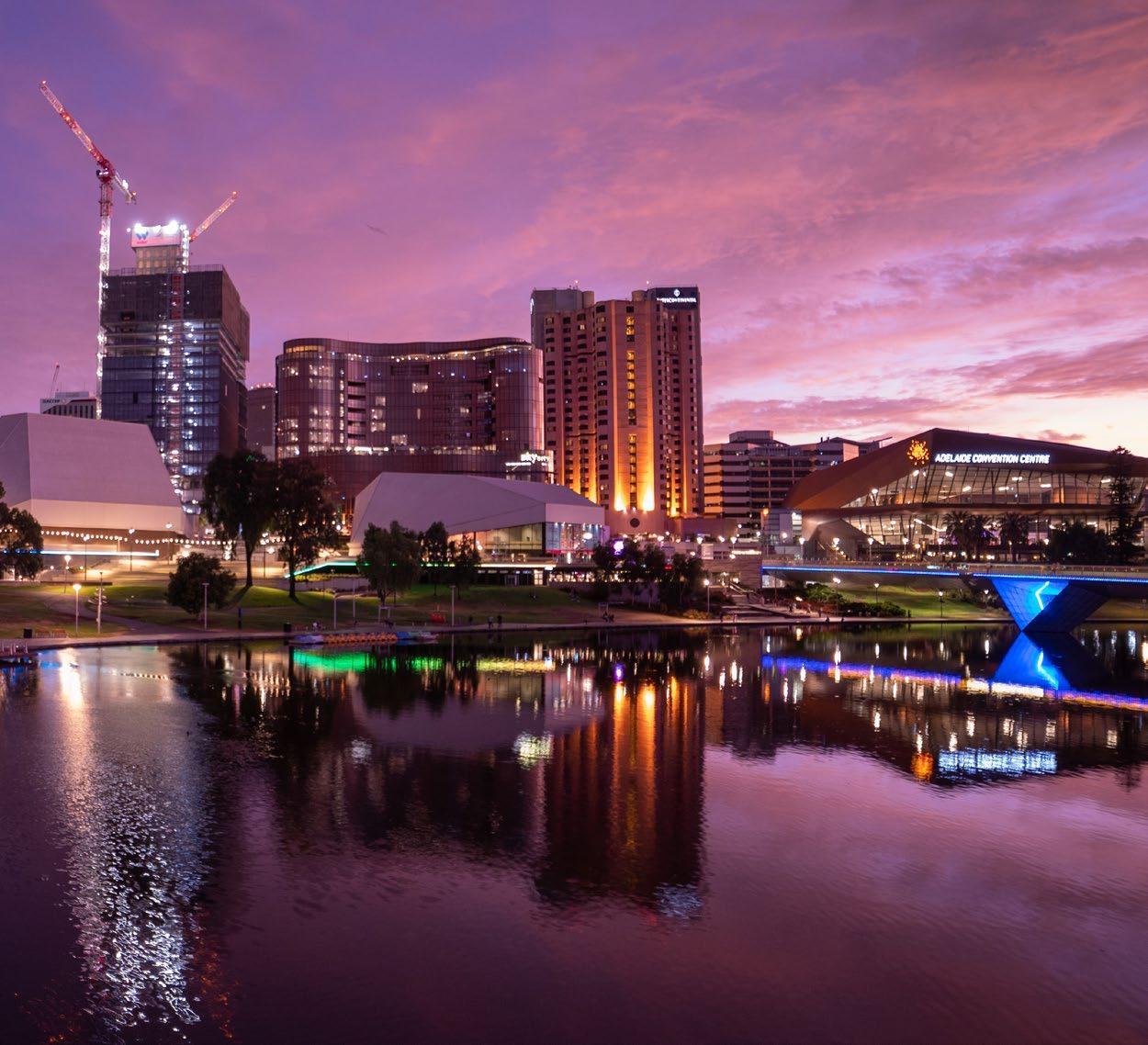
• Active engagement with the SA Office of the Industry Advocate on the development of a draft tailored industry participation plan for steel.
• Engaged with ElectraNet (SA) regarding the potential for local steel supply for ElectraNet’s Northern Transmission Project.
• Monitored the progress of South Australia’s northern water supply project and provided support for potential local steel content.
• Successfully set up an exhibitor stall as part of the SA Department for Education’s Student Pathways and Careers Hub, funded by the department and supported by ASI SA members, at the Adelaide Careers and Employment Expo. Engaged with the student attendees and job seekers to promote careers in Australian steel and student pathways.
• Continued to support the University of Adelaide - Australian Steel Institute Scholarship via the Australian Steel Institute Scholarship Fund which has been endowed in perpetuity by the university.
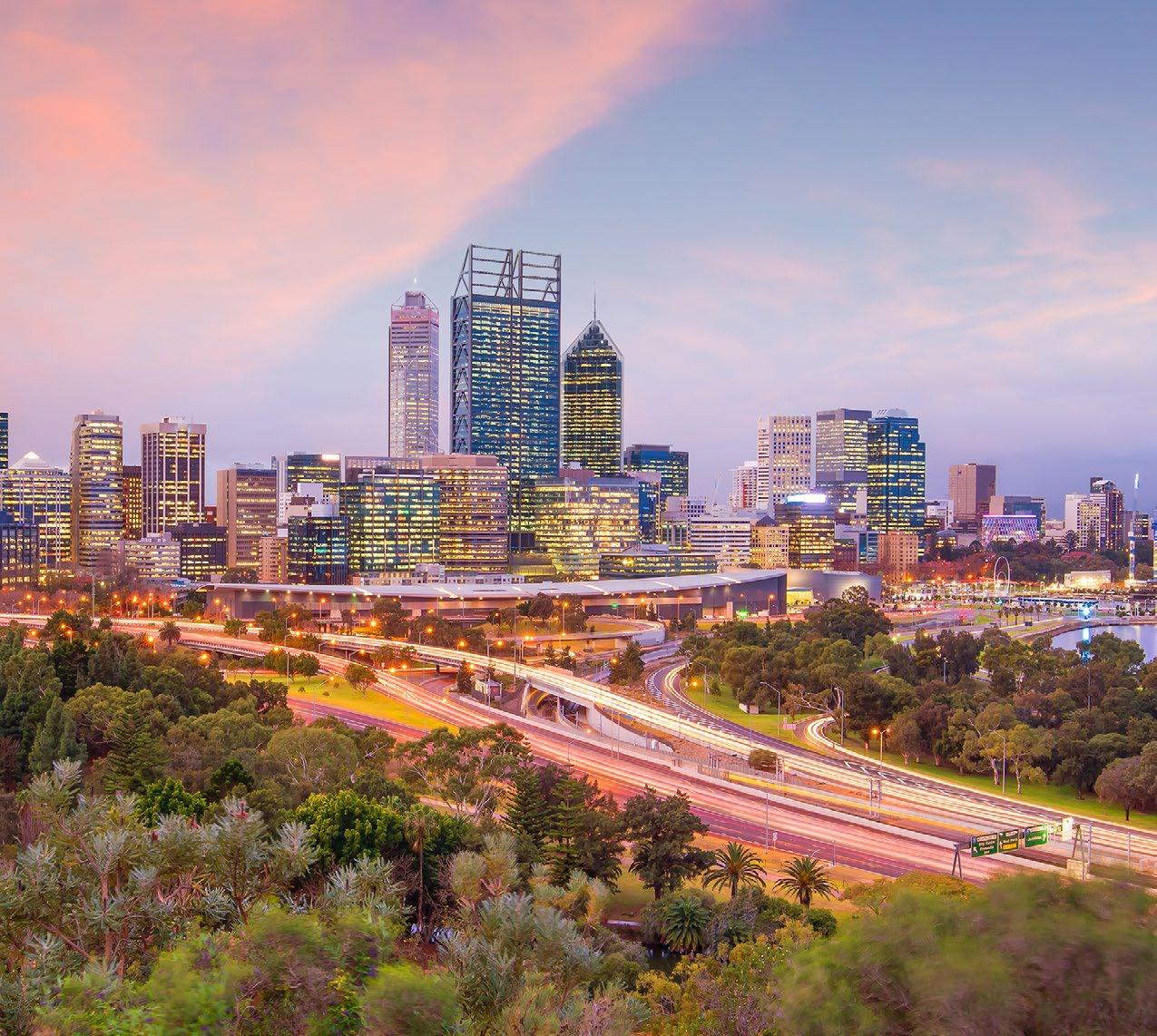
• Successfully advocated for an amendment to the WA Industry Participation Scheme to encourage local content in government projects. The amendment signals to government departments that locally fabricated steel – not imported steel - is the preferred option for their projects, and they must monitor their contractors closely to ensure compliance.
• Participated in a WA Government local content panel discussion focusing on ASI WA fabricator and manufacturing members. Joined the WA Government’s Made in WA Manufacturing Advisory Group. Contributed to Office of Major Infrastructure Delivery meetings.
• Lobbied state and Federal Government and Australian Manufacturing Workers Union (AMWU) for support for Safeguard. Organised online and in person forums on Safeguard and other ASI initiatives.
• Engaged with Westport project (300,000t).
• Visited Department of Energy and Economic Diversity on regular basis and contributed to policy development.
• Maintained regular attendance of Electrical, Engineering and Automotive Training Council meetings, gaining useful contacts and took part in development of training modules.
• Supported Curtin University Engineering School prize giving.
2026-2027 is shaping as an exciting but challenging year for the ASI and the steel industry.
Key priorities for the ASI in the coming 12 months will be:
• Continued advocacy through the Productivity Commission, media and other channels to protect local fabricators from the surge in very low-priced imported fabricated steelwork.
• Implementation of the merger of ASI and the National Association of Steel-framed Housing (NASH).
• Modernisation of technical guidance for steel roofing and cladding, involving the release of new technical literature associated with the National Construction Code (NCC) 2025 roll-out.
• Revision and updating of existing industry guidance information to reflect recent innovations in building practices.
• Investigation of opportunities to enhance design for building resilience.
• Implementing a new traceability system for steel products.
• Engaging with governments on renewable energy projects.
• Advocating for local steel content in government and private industry contracts, and monitoring contracts to ensure local content regulations are enforced.
• Promoting the Steel Sustainability Australia (SSA) scheme to provide pathways for members to meet sustainability requirements in their projects.
• Representing on Australian Standards committees.
• Promoting steel as the preferred building material.
• Engaging with government and industry to discuss specific industry matters.




Are you taking advantage of your ASI member benefits?

Advocacy at all levels of government to advance the cause of Australian steel
Member discounts on publications, eLearning, seminars, events and more
Superior technical advisory services, delivered by experienced industry experts
Opportunities to participate in committees and groups to address industry issues
Regular industry news and steelAustralia magazine and Steel Construction Journal
For corporate members, promotion in the ASI Directory, steelAustralia magazine and use of the ASI logo
Countless other benefits from joining and networking with a community of like-minded companies and people
Opportunities to connect with your local schools, students and teachers, and help promote steel as a career and build your brand.

steel.org.au 02 8748 0180 enquiries@steel.org.au