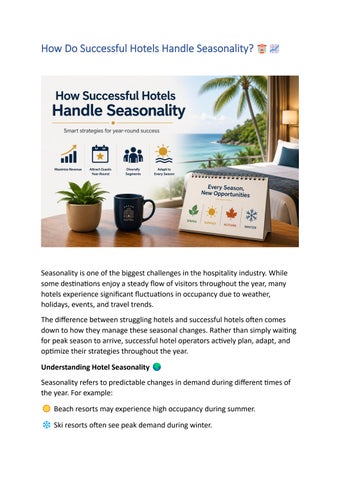
How Do Successful Hotels Handle Seasonality?

Seasonality is one of the biggest challenges in the hospitality industry. While some destinations enjoy a steady flow of visitors throughout the year, many hotels experience significant fluctuations in occupancy due to weather, holidays, events, and travel trends.
The difference between struggling hotels and successful hotels often comes down to how they manage these seasonal changes. Rather than simply waiting for peak season to arrive, successful hotel operators actively plan, adapt, and optimize their strategies throughout the year.
Understanding Hotel Seasonality
Seasonality refers to predictable changes in demand during different times of the year. For example:
Beach resorts may experience high occupancy during summer.
Ski resorts often see peak demand during winter.
City hotels may benefit from festivals, conferences, and major events.
Some destinations face slow periods due to weather conditions or reduced travel demand.
Hotels that fail to prepare for these fluctuations often struggle with inconsistent revenue and underutilized resources.
Dynamic Pricing Strategies
One of the most effective tools successful hotels use is dynamic pricing. Instead of maintaining the same room rates year-round, hotels adjust prices based on demand, occupancy forecasts, local events, and market conditions.
During peak seasons:
Rates increase to maximize revenue.
During low-demand periods:
Hotels offer competitive pricing and attractive packages. This flexible approach helps hotels optimize both occupancy and profitability.
Focusing on Revenue
Management
Revenue management plays a critical role in handling seasonality effectively.
Successful hotels analyze historical booking patterns, competitor pricing, market demand, and customer behavior to make informed decisions.
Key metrics often monitored include:
Occupancy Rate
Average Daily Rate (ADR)
Revenue Per Available Room (RevPAR)
Booking Lead Time
By leveraging data, hotels can forecast demand more accurately and adjust their strategies before market conditions change.
Creating Attractive Off-Season Packages
One common mistake is treating the off-season as a period of inactivity.
Successful hotels use slower periods to attract different customer segments through creative promotions.
Examples include:
Staycation packages
Romantic getaway offers
Work-from-hotel programs
Family vacation bundles
Wellness and spa retreats
These packages help generate demand even when traditional tourist traffic is lower.
Diversifying Customer Segments
Hotels that rely on a single customer segment are more vulnerable to seasonal fluctuations.
Successful properties attract a mix of:
Business travelers
Families
Couples
International tourists
Educational groups
Corporate events and conferences
By diversifying their target audience, hotels reduce dependence on any one market segment.
Leveraging Local Events and Partnerships
Smart hotels actively collaborate with local businesses, event organizers, and tourism boards.
Partnership opportunities may include:
Music festivals
Sporting events
Food and cultural festivals
Community celebrations
Such partnerships can drive bookings during periods that would otherwise experience low demand.
Strengthening Direct Bookings
Many successful hotels focus heavily on increasing direct bookings through their websites.
Benefits include:
Lower commission costs
Better guest relationships
Improved profitability
Hotels often encourage direct bookings by offering exclusive perks such as:
Complimentary breakfast
Free parking
Room upgrades
Flexible cancellation policies
These incentives can be especially effective during slower seasons.
Investing in Guest Experience
Guest experience remains one of the strongest drivers of repeat business.
Hotels that consistently deliver exceptional service are more likely to receive positive reviews and referrals.
Satisfied guests often become repeat customers, helping stabilize occupancy levels throughout the year.
Key areas include:
Personalized service
Seamless technology integration
Comfortable accommodations
Quality dining experiences
Memorable guest interactions
Using Data for Better Forecasting
Modern hospitality businesses increasingly rely on data analytics to prepare for seasonal shifts.
By examining trends and booking behavior, hotels can:
Predict demand changes
Optimize staffing levels
Manage inventory efficiently
Adjust marketing campaigns proactively
This data-driven approach helps minimize uncertainty and improve decisionmaking.
Final Thoughts
Seasonality is a natural part of the hospitality industry, but it does not have to limit profitability.
Successful hotels approach seasonality strategically through revenue management, dynamic pricing, diversified customer segments, creative promotions, strong guest experiences, and data-driven decision-making.
Rather than reacting to seasonal changes, they anticipate them and turn challenges into opportunities for growth.
Hotels that thrive year after year are those that continuously adapt to changing market conditions. Hospitality professionals looking to improve revenue performance and operational efficiency can also explore industry resources available through TheIvar.