





































ISO 9001:2015
ISO 14001:2015


































































































ISO 9001:2015
ISO 14001:2015
234 310EXPRESS COMPANY (Japan)
Security, Tamper Proof, Anti-theft Screws...
163 A & M PRODUCTS CO., LTD. 奕瑞
Automotive Fasteners...
208 A-PLUS SCREWS INC.
Chipboard Screws, Customized Special Screws / Bolts...
131 A-STAINLESS INTERNATIONAL CO , LTD 淳康
Chipboard Screws, Concrete Screws, Deck Screws...
264 ABC FASTENERS CO , LTD 聯欣
Drop-in Anchors, Expansion Anchors, Wire Anchors...
39 AEH FASTEN INDUSTRIES CO , LTD 鉞昌
Clevis Pins, Dowel Pins, Hollow Rivets...
27 ALEX SCREW INDUSTRIAL CO., LTD. 禾億
Button Head Cap Screws, Button Head Socket Cap Screws...
211 ALLOY & STAINLESS FASTENERS, INC. (U.S.A.)
Bolts, Nuts, Studs, Sockets, Washers, Bent Bolts...
86 AMBROVIT S.P.A. (Italy)
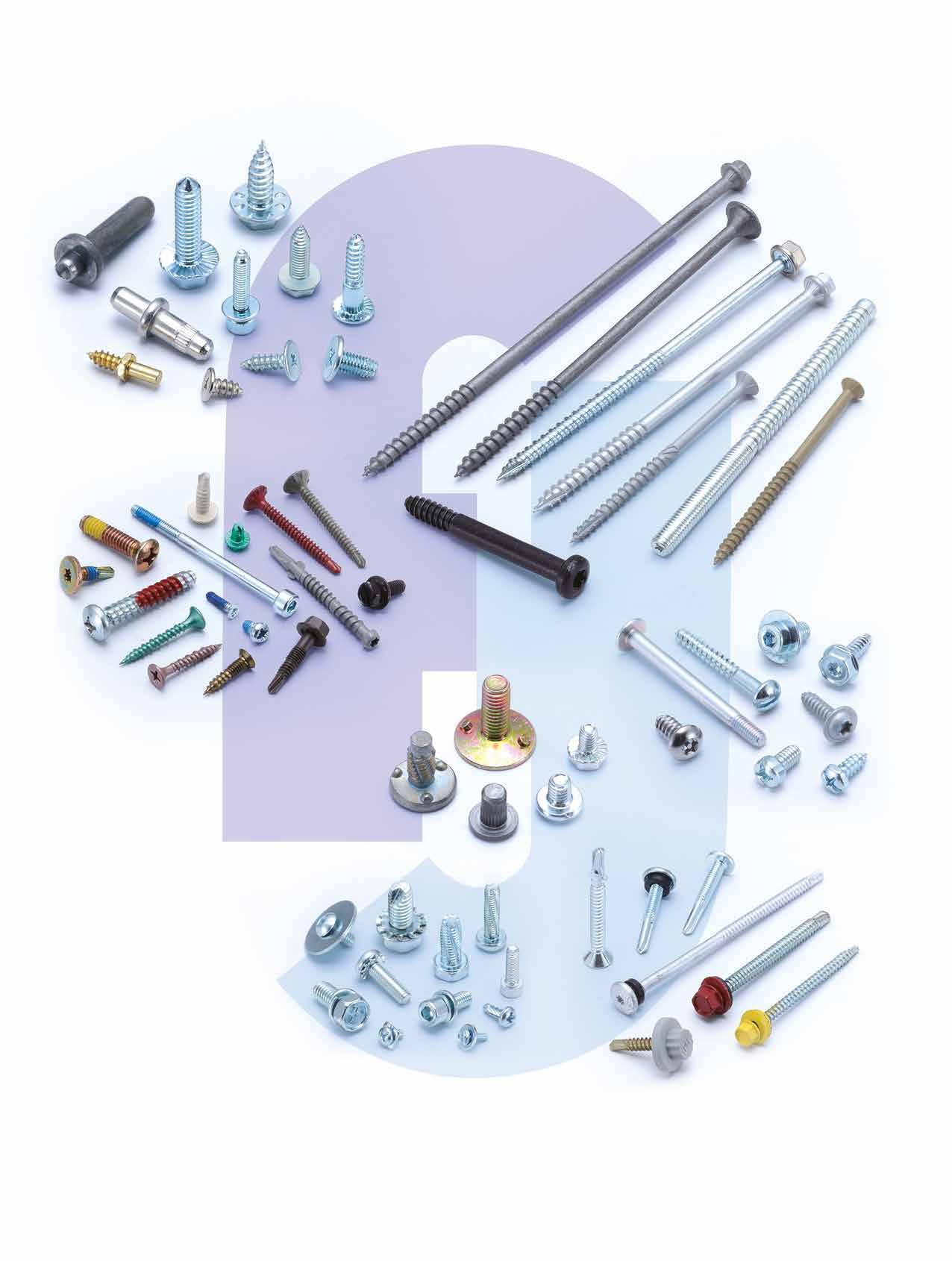
Chipboard Screws, Combined Screws, Machine Screws...
263 AN CHIAO MOLDS CO , LTD 安喬
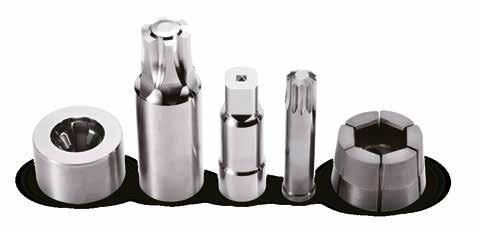
Dies, Punch Dies, Carbide Quill, Punches, Pins...
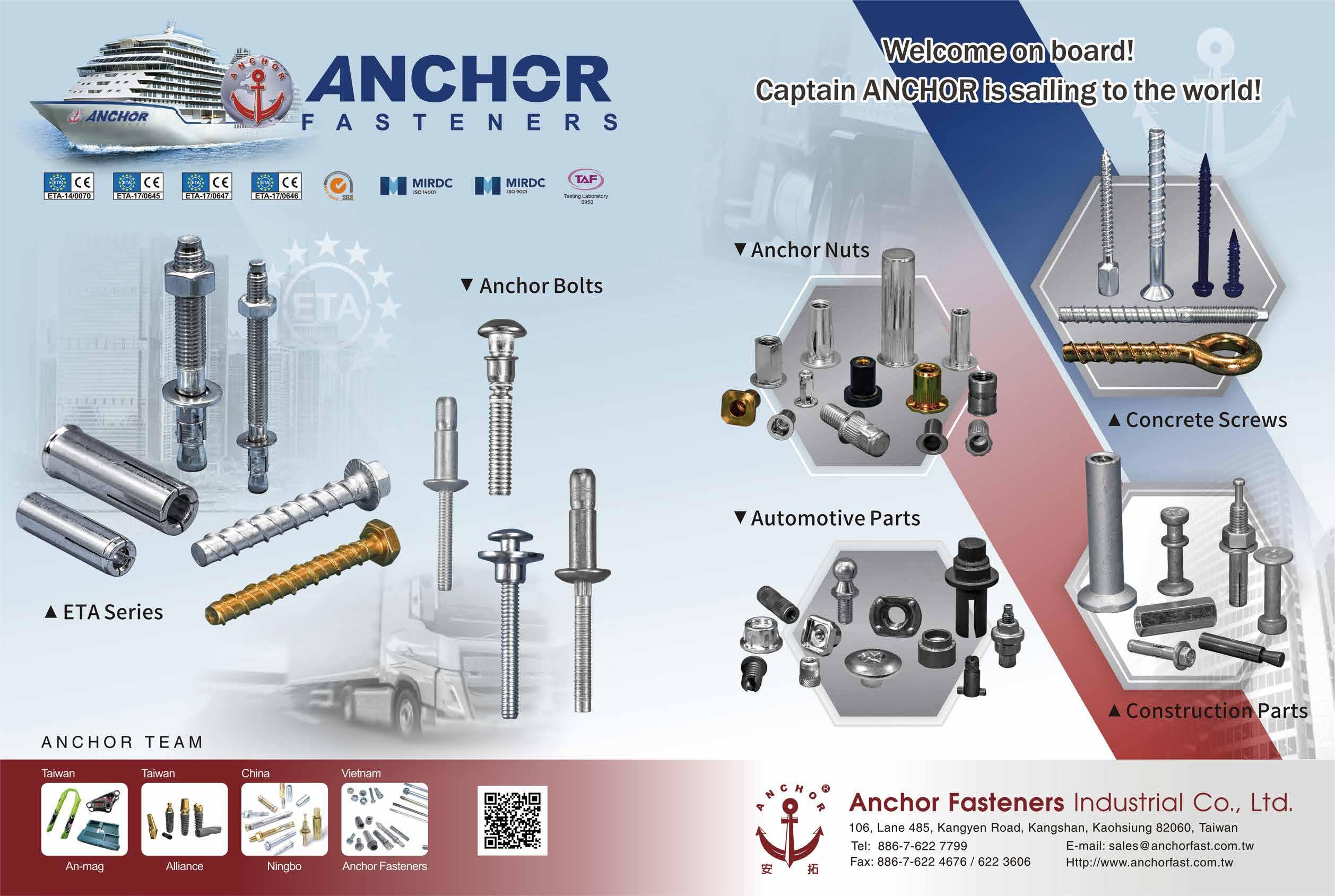
276 ANCHOR FASTENERS INDUSTRIAL CO , LTD 安拓
Drop-in Anchors, Expansion Anchors, Wire Anchors...
67 APEX FASTENER INTERNATIONAL CO , LTD 嵿峰
Nuts, Wing Nuts & Bolts, Turning Parts, Stamping Parts
92 ARUN CO., LTD.
Bi-metal Screws, Chipboard Screws, Drywall Screws...
鉅耕
60 AUTOLINK INTERNATIONAL CO., LTD. 浤爵
Automotive Screws, Machine Bolts, Flange Nuts...
66 BCR INC
Automotive Screws, Piston Pins, Weld Bolts (Studs)...
必鋮
108 BESTWELL INTERNATIONAL CORP. 凱壹
Eye Bolts, Flanged Head Bolts, Hanger Bolts...
258 BIING FENG ENTERPRISE CO., LTD. 秉鋒
Blind Nut Formers, Multi-station Cold Forming Machines...
32 BI-MIRTH CORP.
Carbon Steel Screws, Chipboard Screws, Concrete Screws...
6 BOLTUN CORPORATION
Automotive Screws, Bushes, Conical Washer Nuts...
吉瞬
恒耀工業
244 CHAN CHANGE MACHINERY CO., LTD. 長薔
Screw Head Making Machines...
218 CHANG BING ENTERPRISE CO , LTD 彰濱
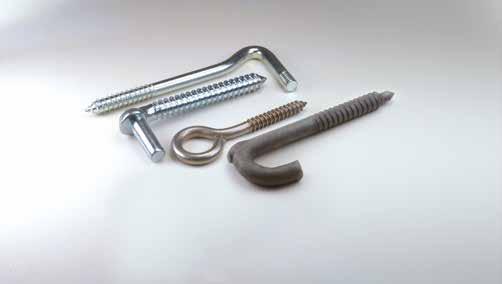
Hook Bolts, Holders / Hooks / Rings, Dowel Screws...
96 CHANG YI BOLT CO , LTD
6 Cuts/ 8 Cuts Self Drilling Screws, A2 Cap Screws...
長益
261 CHAO JING PRECISE MACHINES CO , LTD 朝璟
Cold Forging Bolt Formers, Thread Rolling Machines...
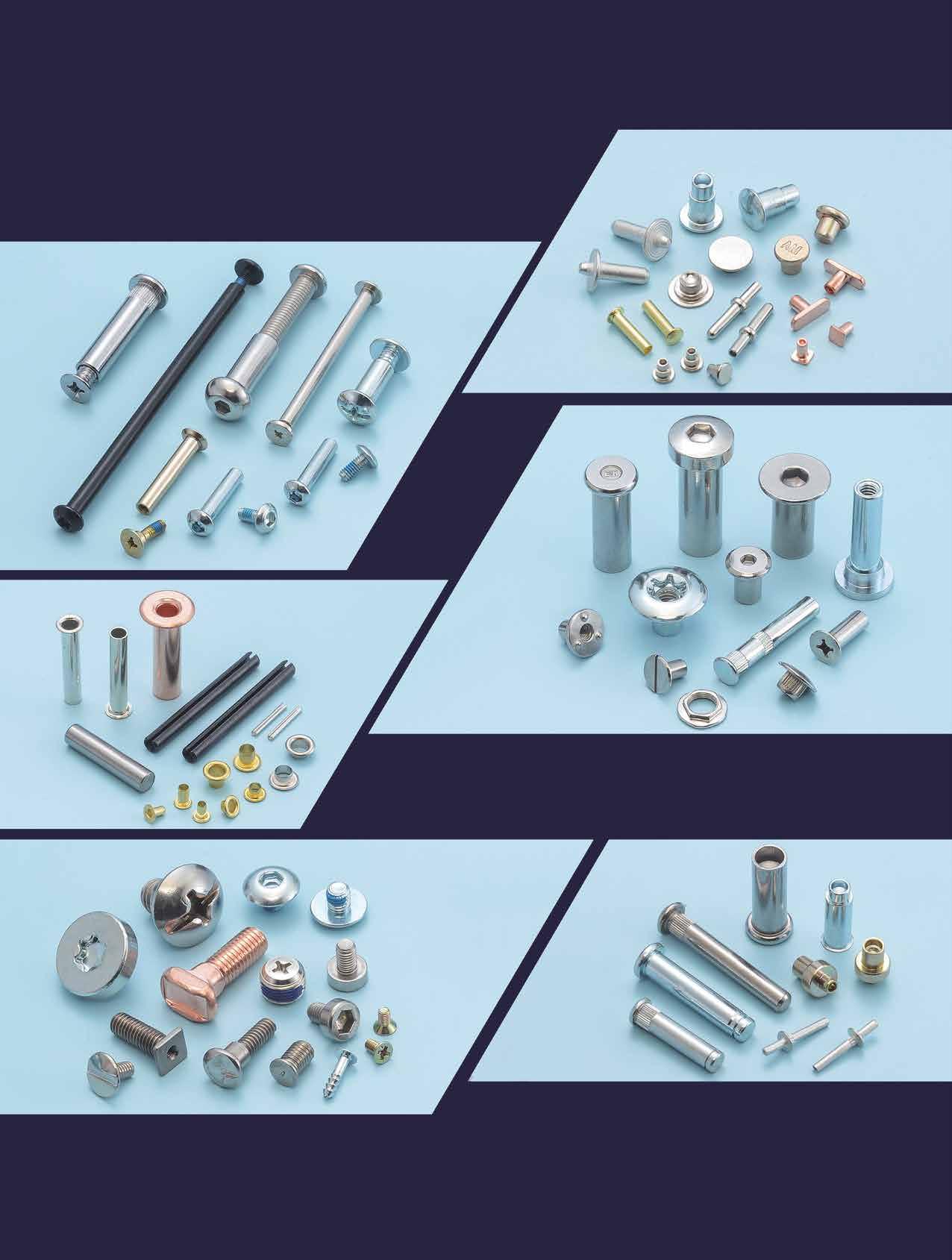
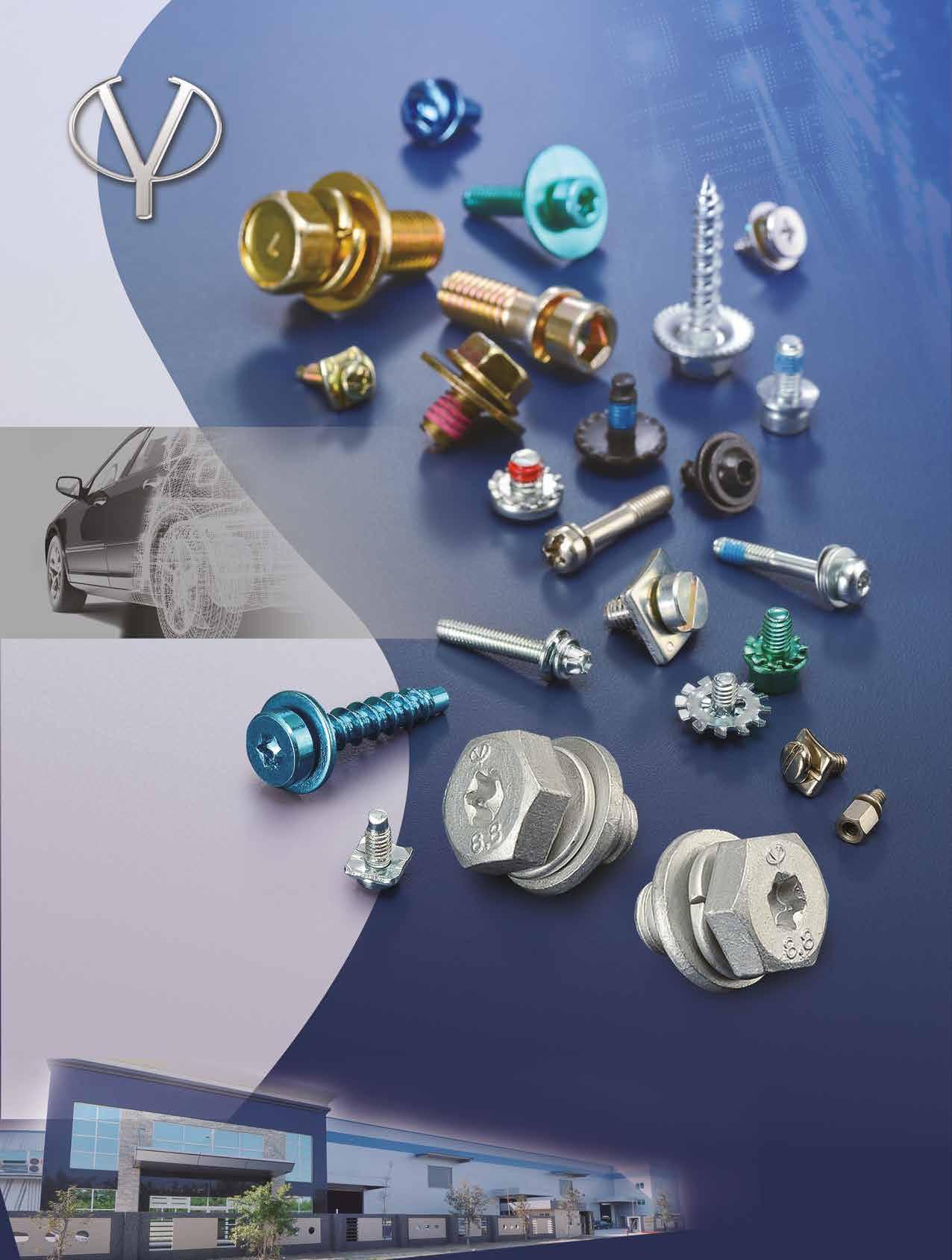
40 CHIAN YUNG CORPORATION 將運
SEMS Screws
260 CHIEN TSAI MACHINERY ENTERPRISE CO., LTD. 鍵財
Thread Rolling Machines
135 CHIH FU MECHANICS CO., LTD. 智富
Special Screws, Open Die Products...
80 CHIN LIH HSING PRECISION (CLH) 金利興
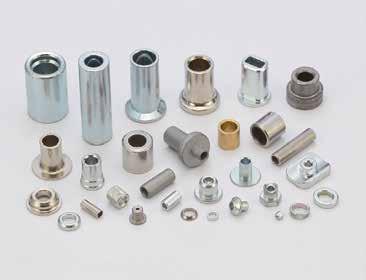
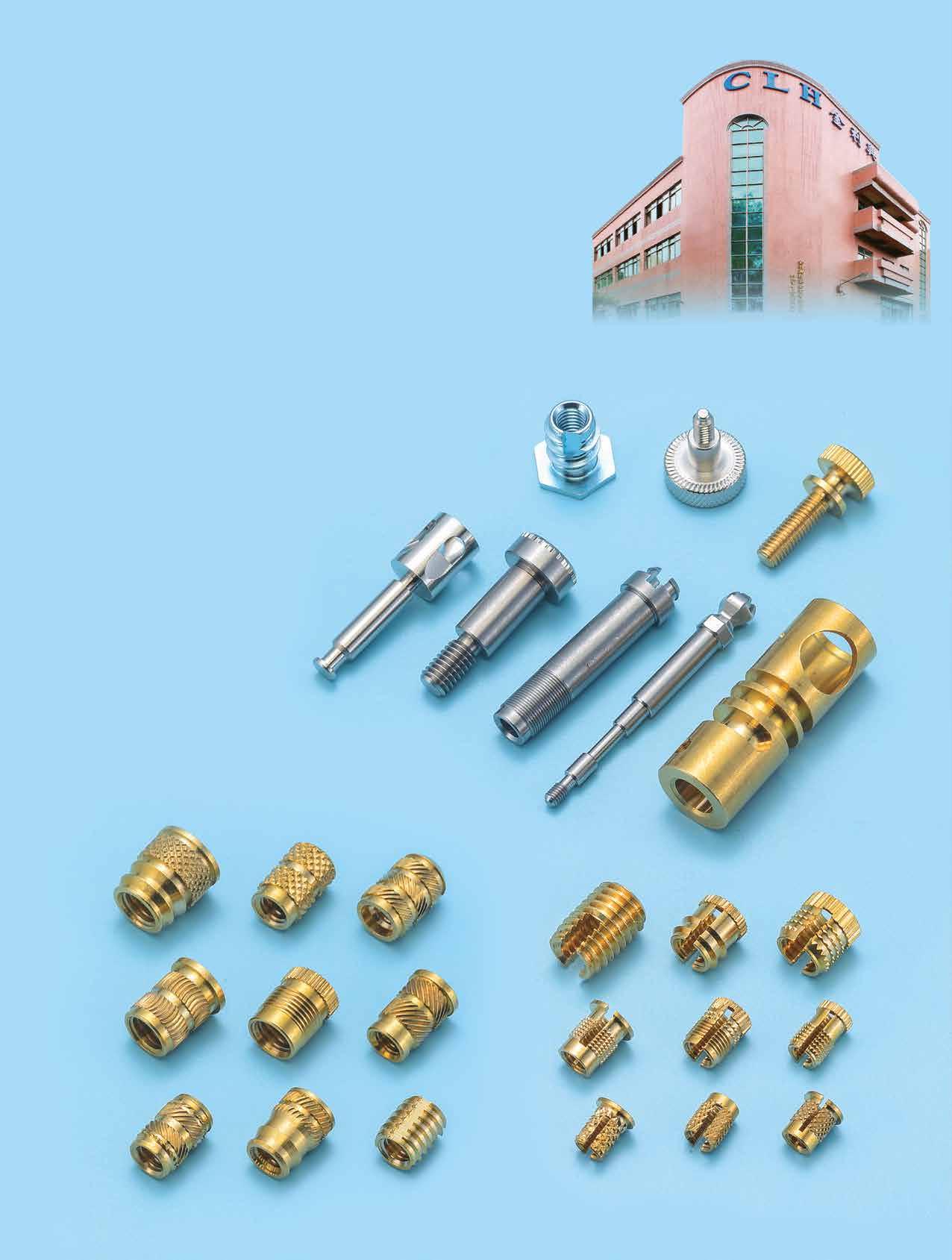
Automotive Nuts, Brass Inserts, Bushes, Bushings...
246 CHING CHAN OPTICAL TECHNOLOGY 精湛
Eddy Current Sorting Machines, Fastener Makers...
42 CHONG CHENG FASTENER CORP 宗鉦
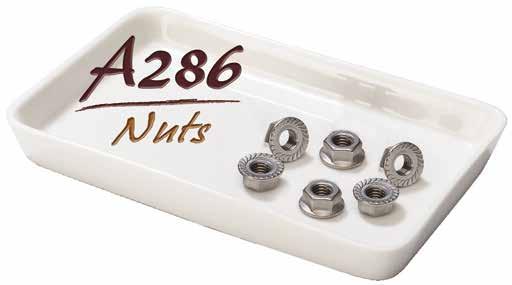
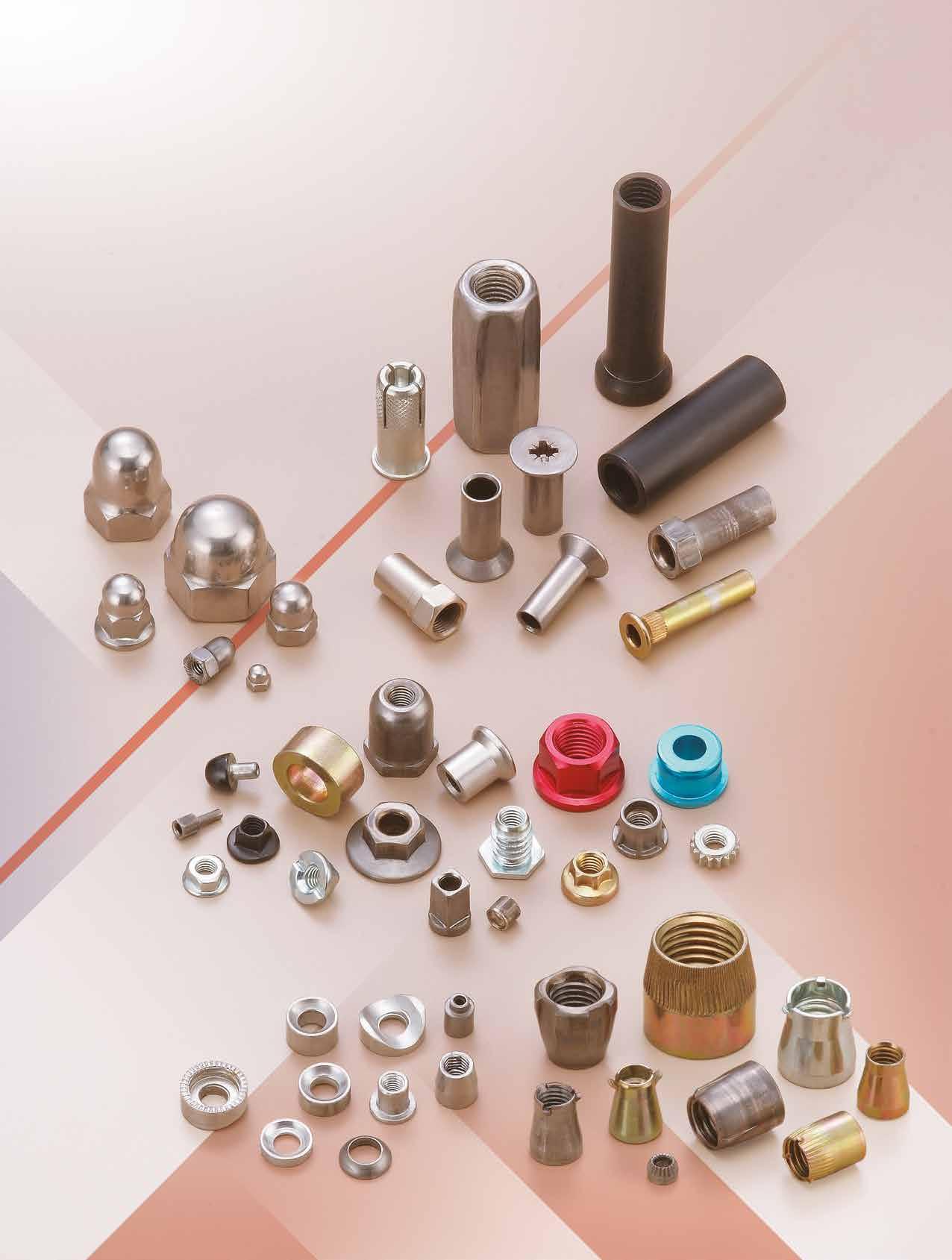
Cap Nuts, Coupling Nuts, Conical Washer Nuts...
248 CHUN ZU MACHINERY INDUSTRY CO., LTD. 春日
Cold Headers, Header Toolings, Heading Machines...
269 COPA FLANGE FASTENERS CORP. 國鵬
82
Hex Nuts, Hex Flange Nuts, Combi Nuts, Weld Nuts...
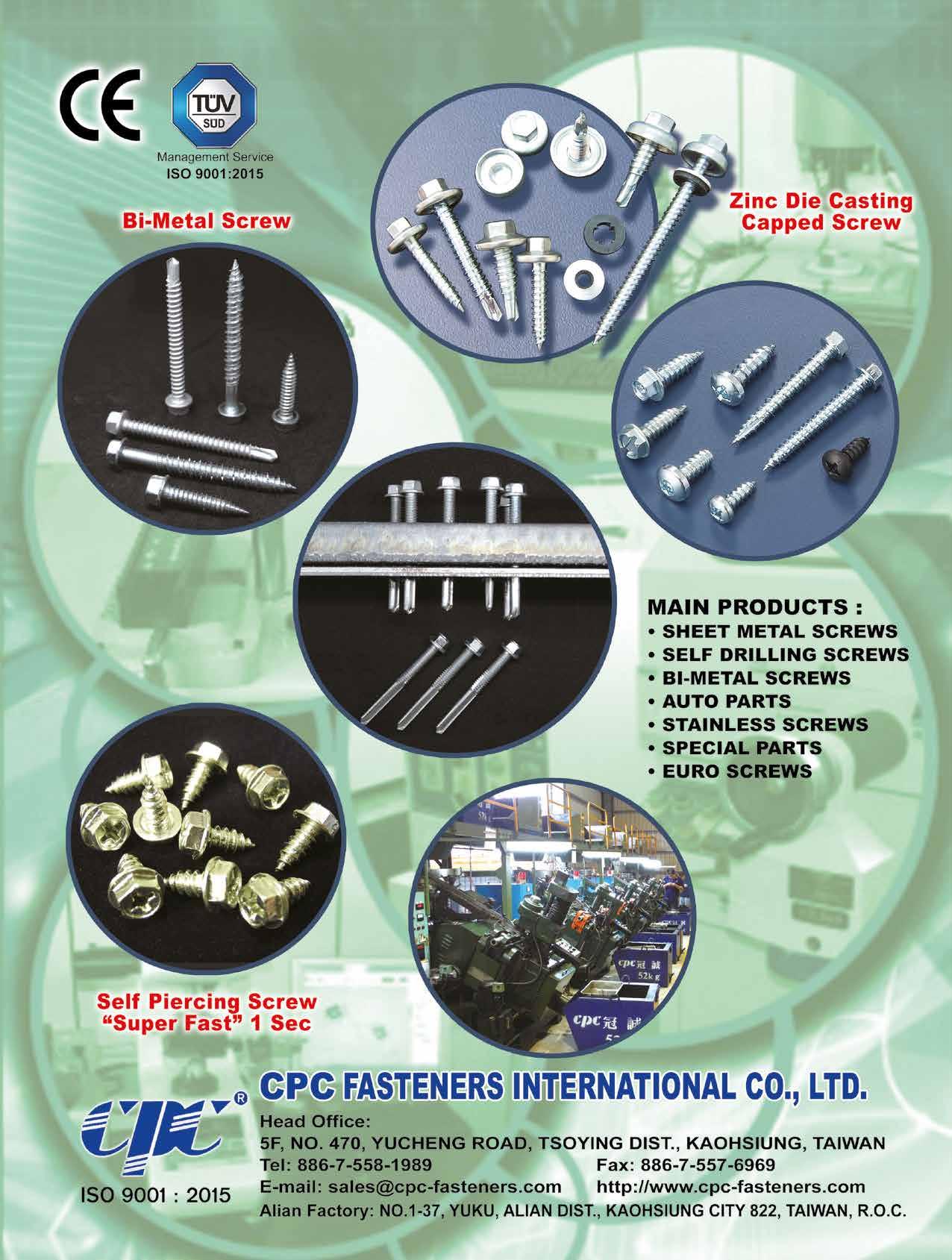
CPC FASTENERS INTERNATIONAL CO., LTD. 冠誠
Stainless Steel, Bi-metal Self-drilling Screws...
25 DA YANG ENTERPRISE CO., LTD. 大楊
Special Automotive Nuts, Special Weld Nuts...
58 DAR YU ENTERPRISE CO., LTD.
Chipboard Screws, Drywall Screws, Screw Nails...
98 DE HUI SCREW INDUSTRY CO , LTD 德慧
Drywall Screws, Decking Screws, Self-drilling Screws...
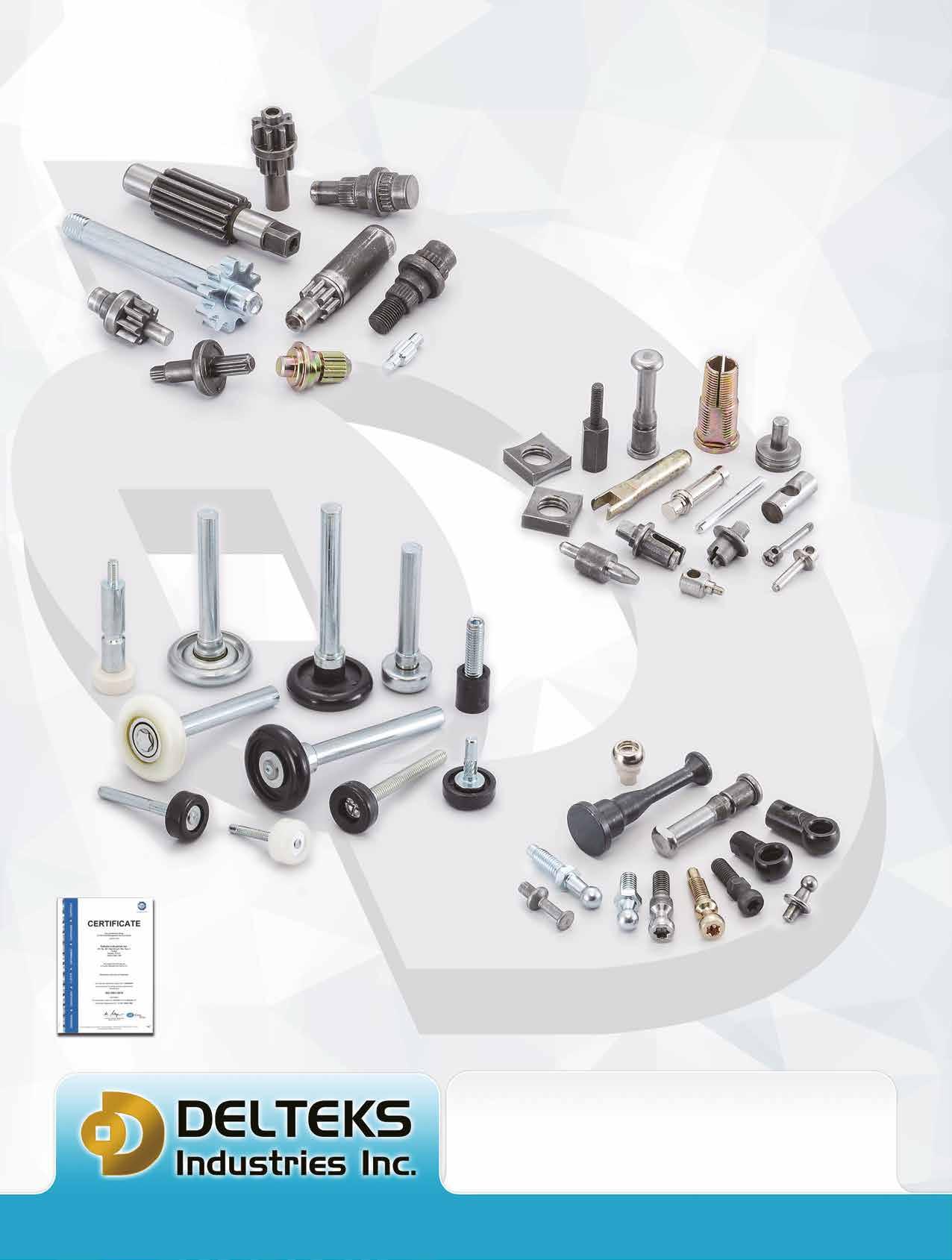
116 DELTEKS INDUSTRIES INC 見承
Wheel Bolts, Bushes, Thread Forming Screws, All Kinds of Screws...
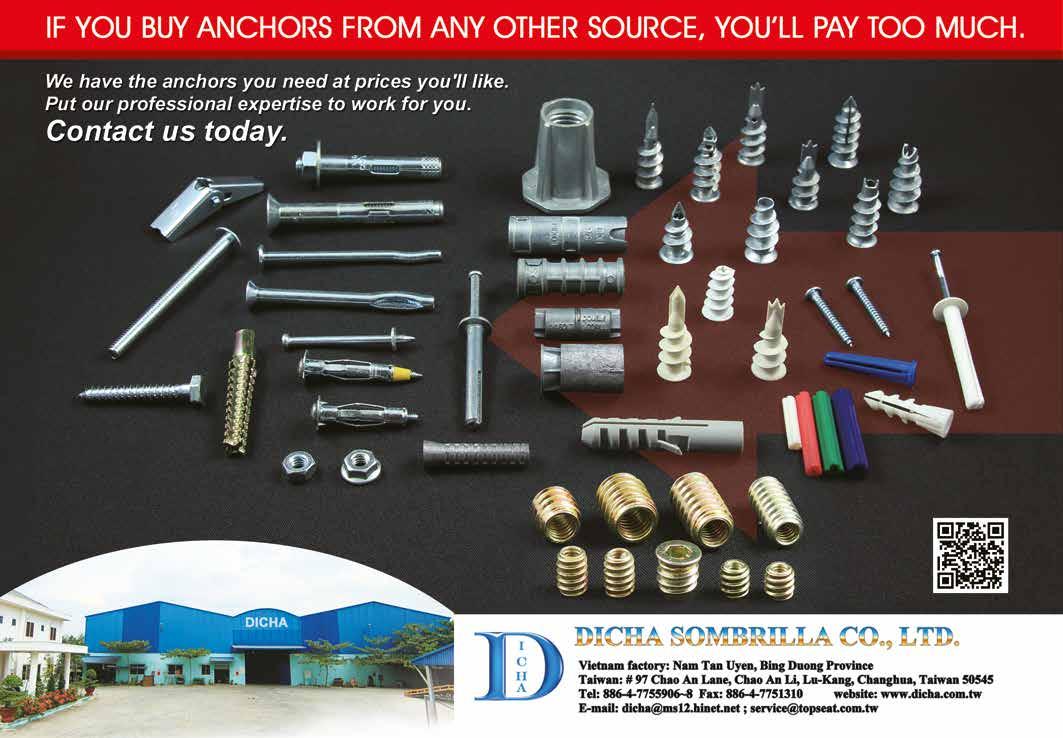
147 DICHA SOMBRILLA CO , LTD 集財
Expansion Anchors, Sleeve Anchors, Nylon Nail Anchors...
26 DIN LING CORP.
Chipboard Screws, Drywall Screws, Furniture Screws...
99 DRAGON IRON FACTORY CO., LTD. 龍昌
Bi-metal Self-drilling Screws, Sheet Metal Screws...
90 DRA-GOON FASTENERS INC.
Chipboard Screws, Phillips Head Screws, TEK Screws...
114 DUNFA INTERNATIONAL CO., LTD. 敦發
Bushes, Spacers, Automotive Parts, Tubes, Turning Parts...
113 EASON TECH INDUSTRIAL CO., LTD.
97
Spring Pins, Cage Nuts, Clip Nuts, Retaining Rings...
EASYLINK INDUSTRIAL CO., LTD. 易連
Automotive Nuts, Thread Forming Screws...
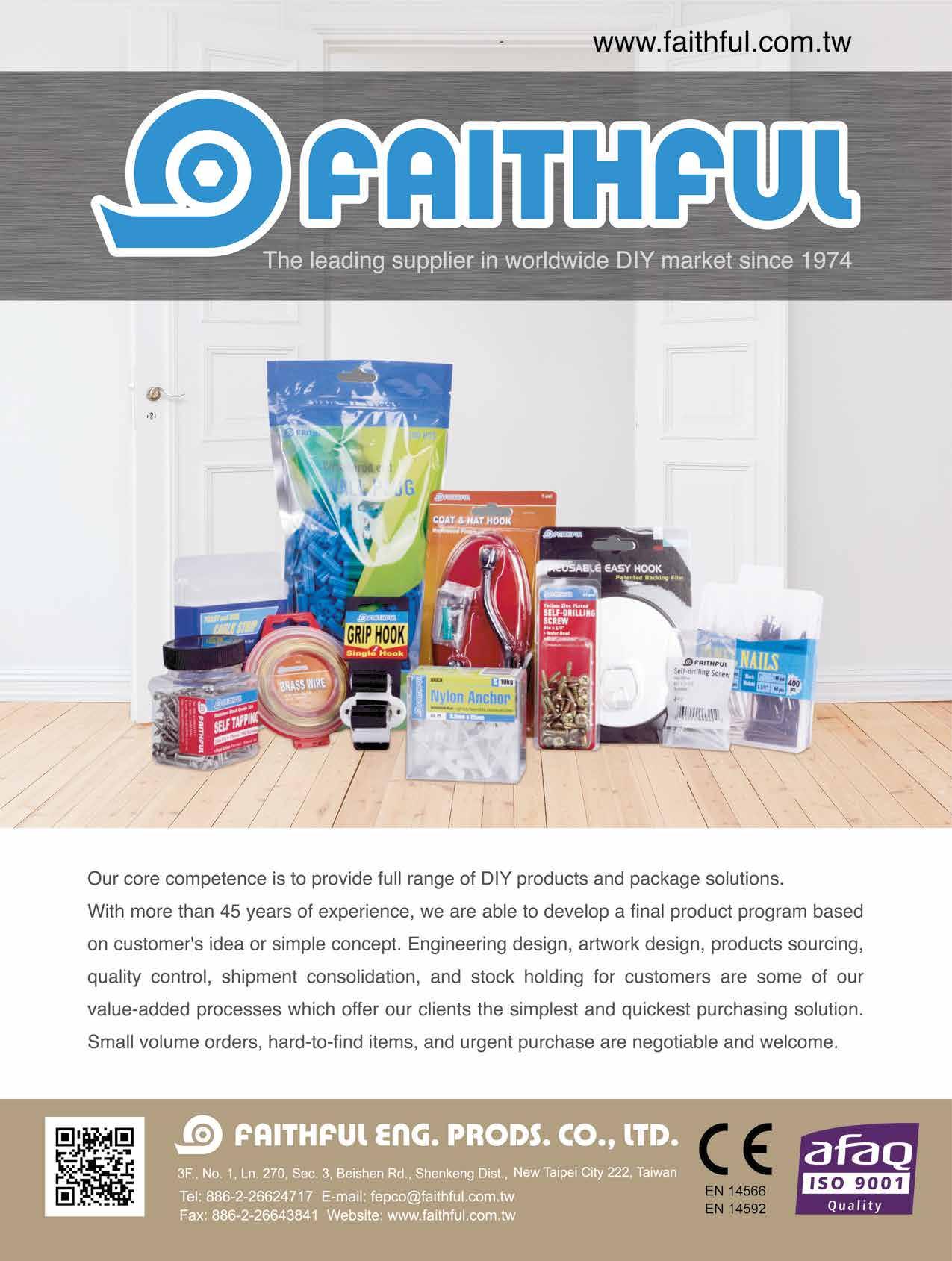
41 FAITHFUL ENGINEERING PRODUCTS CO., LTD.
Anchors, Box Nails, Door/Window Accessories...
79 FALCON FASTENER CO., LTD.
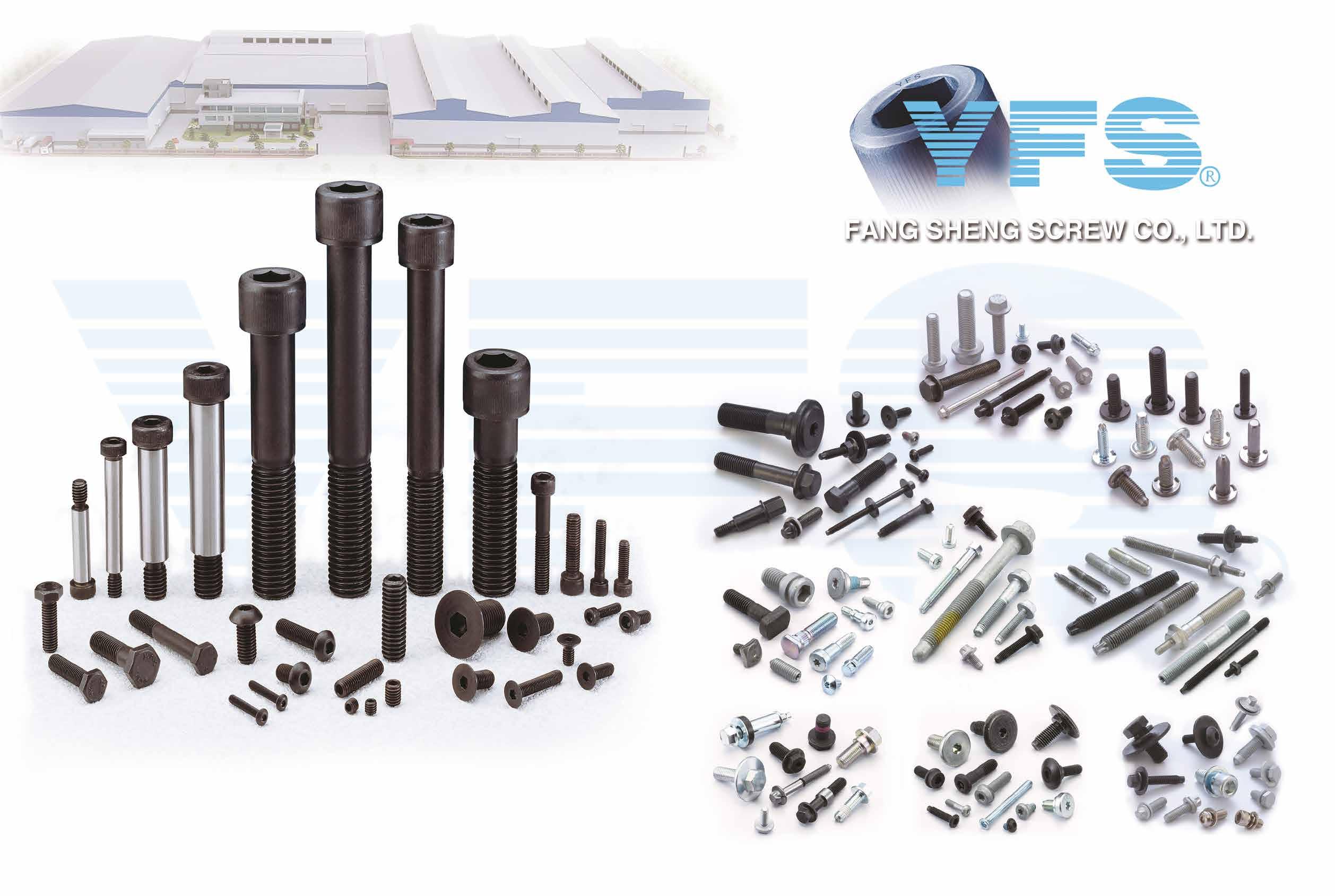
Automotive & Motorcycle Special Screws / Bolts... 2 FANG SHENG SCREW CO , LTD
Shoulder Bolts, Button Head Socket Cap Screws..
78 FASTENER JAMHER TAIWAN INC
Automotive Nuts, Blind Nuts / Rivet Nuts, Bushings...
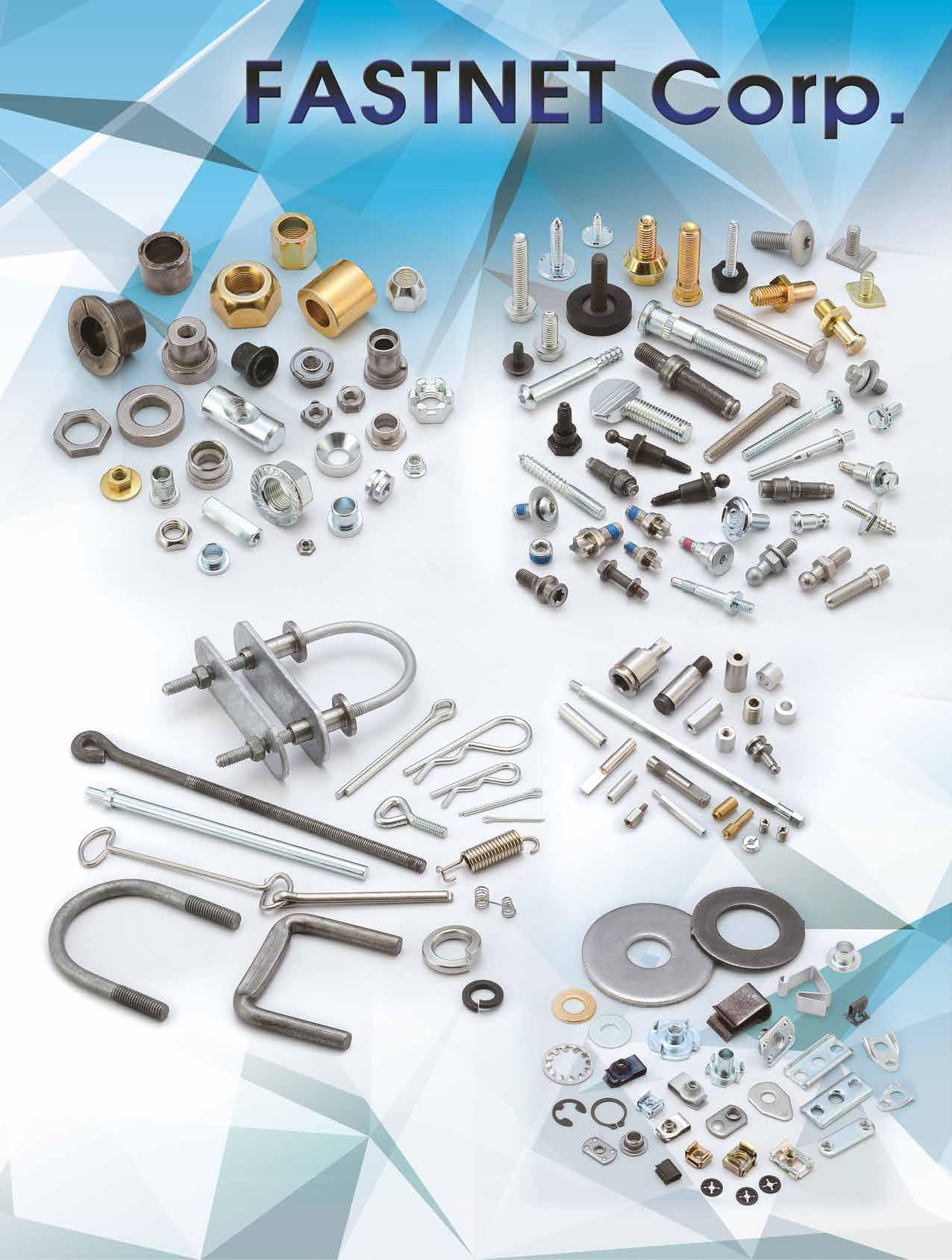
64 FASTNET CORP
Dowel Pins, Flange Nuts, Weld Nuts, 4 Pronged T Nuts...
122 FILROX INDUSTRIAL CO., LTD. 惠錄
Blind Nuts / Rivet Nuts, Tee or T Nuts, Blind Rivets...
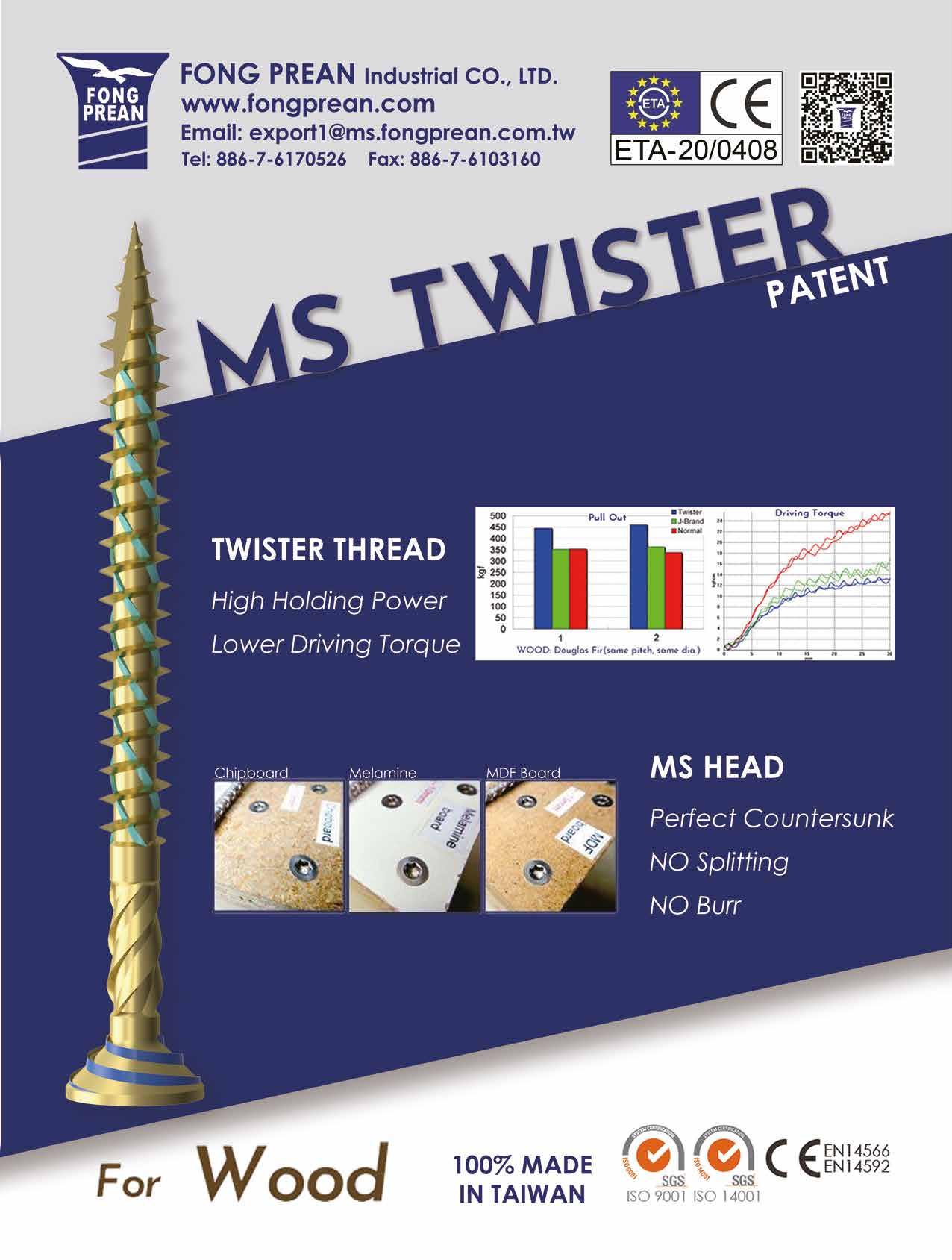
81 FONG PREAN INDUSTRIAL CO., LTD. 豐鵬
Automotive Screws, Bi-metal Screws, Brass & Bronze Screws...
56 FORTUNE BRIGHT INDUSTRIAL CO., LTD.
Cap Nuts, Dome Nuts, Nylon Cap Insert Lock Nuts...
76 FU HUI SCREW INDUSTRY CO , LTD 福輝
Automotive & Motorcycle Special Screws / Bolts...
125 FU KAI FASTENER ENTERPRISE CO , LTD 福凱
Precision Electronic Screws, Special Screws, Weld Screws...
118 FUSHANG CO., LTD. 甫商
Carbon Steel Screws, Chipboard Screws, Concrete Screws...
255 GIAN-YEH INDUSTRIAL CO , LTD 健業
Rivet Dies, Self-drilling Screw Dies, Screw Tip Dies...
193 GINFA WORLD CO , LTD 濟音發
Chipboard Screws, Countersunk Screws, Drywall Screws...
59 HAO CHENG PLASTIC CO , LTD 皓正
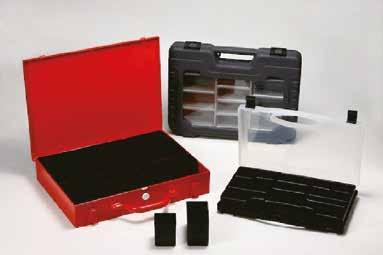
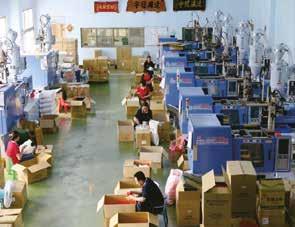
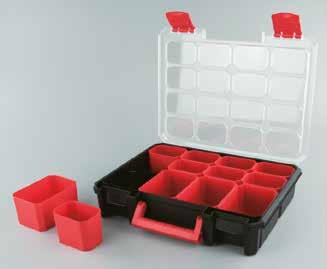
Plastic Box Maker for Fasteners
214 HAO MOU NUTS MFG CO , LTD 豪茂
Nuts and Spacers...
161 HARVILLE FASTENERS LTD. 豪威爾
Special Screws and Bolts, Sems Screws, Stainless Steel Fasteners...
179 HAUR FUNG ENTERPRISE CO., LTD. 豪舫
External Tooth Washers, Long Carriage Bolts, Roofing Bolts...
206 HEADER PLAN CO. INC.
Chipboard Screws, Collated Screws, Deck Screws...
143 HSIEN SUN INDUSTRY CO , LTD
Hexagon Nuts, Tubular Nuts, Spacers, All Kinds of Screws...
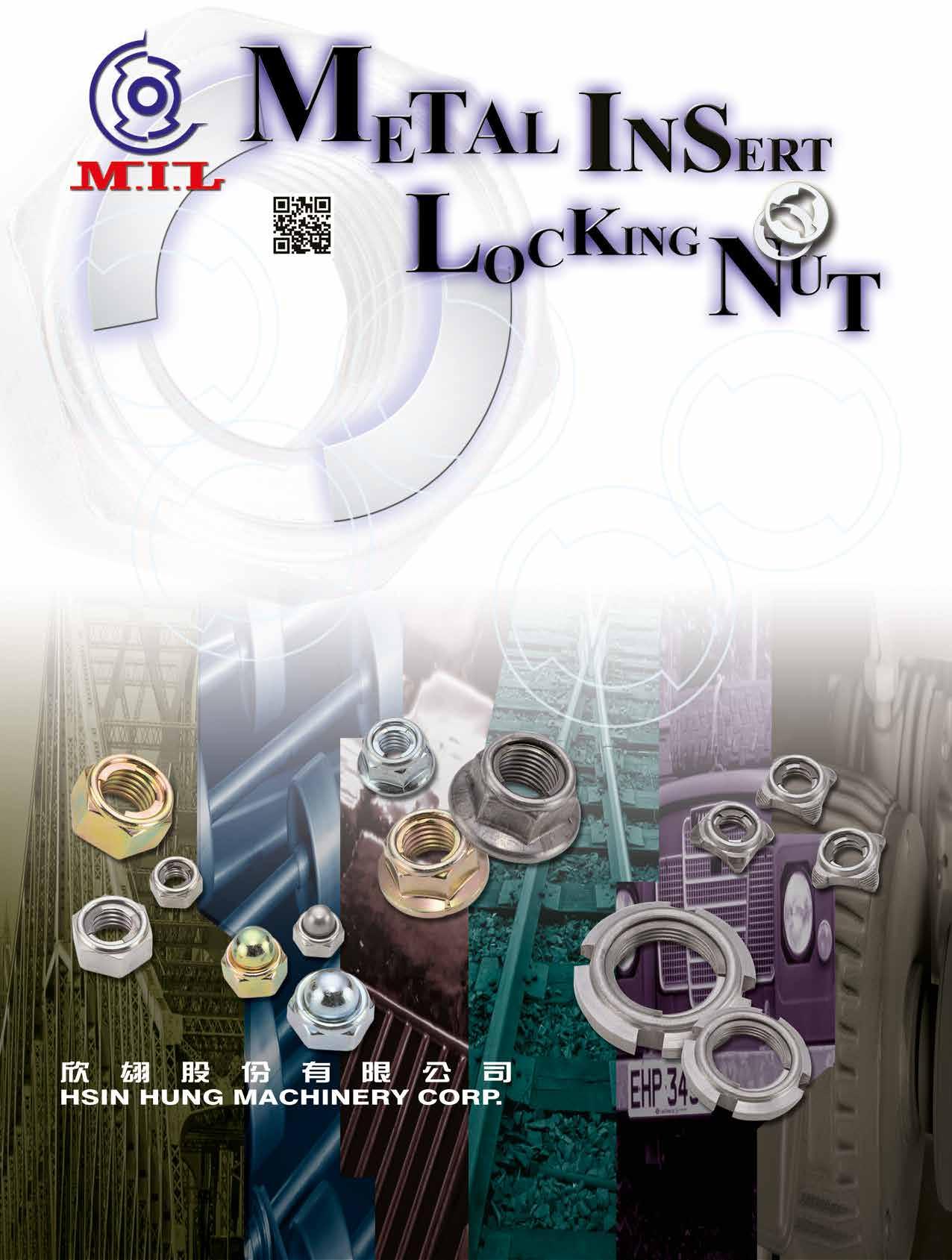
93 HSIN HUNG MACHINERY CORP 欣翃
Cap Nuts, Flange Nuts, Hexagon Nuts, Dome Nuts...
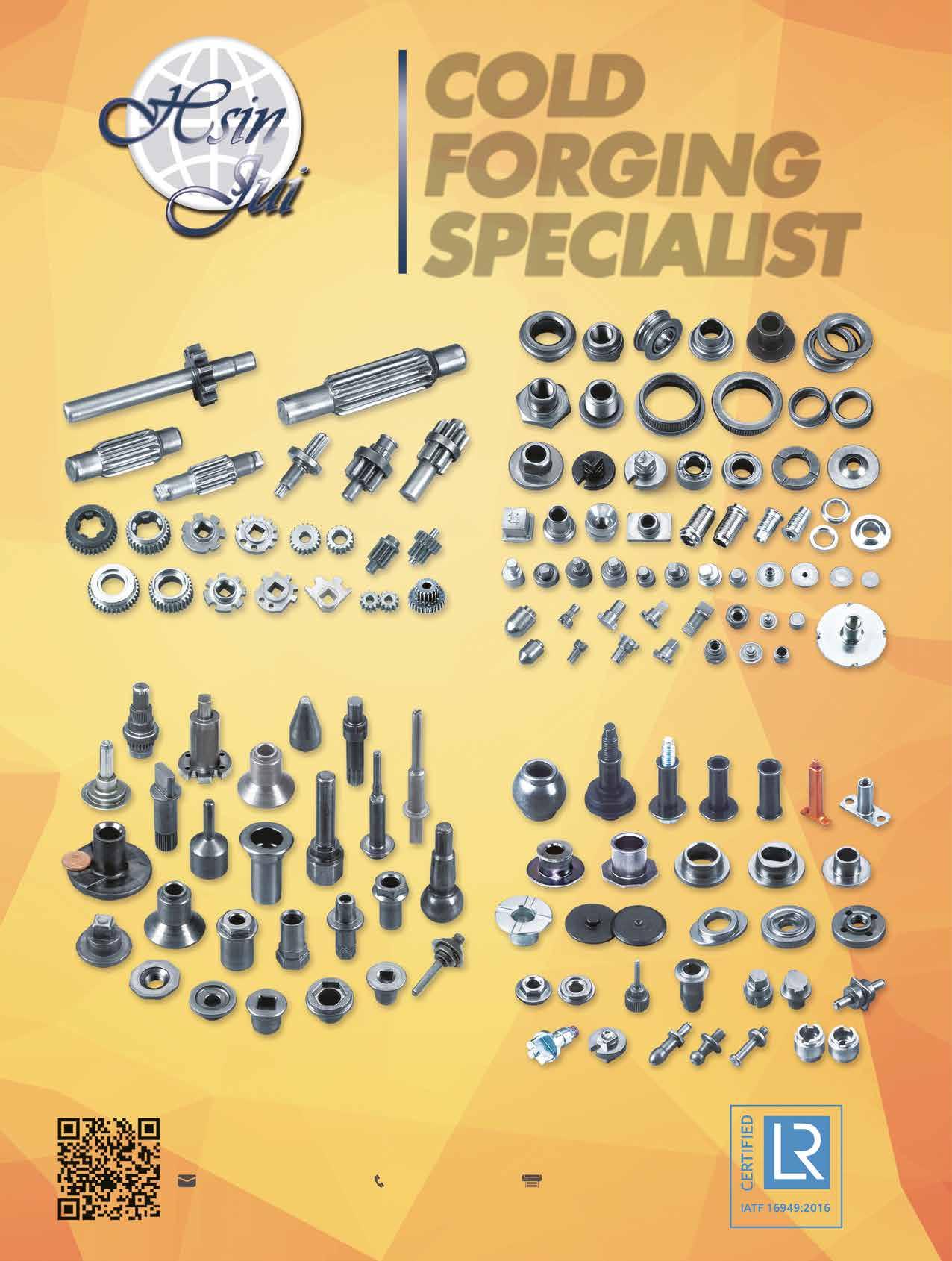
51 HSIN JUI HARDWARE ENTERPRISE CO , LTD 欣瑞
Bushes, Construction Bolts, Special Cold / Hot Forming Parts...
203 HSIN YU SCREW ENTERPRISE CO., LTD. 新雨
Acme Screws, Hexagon Head Cap Screws...
129 HUANG JING INDUSTRIAL CO., LTD. 皇晉
Custom Washers, Chipboard Screws, Drywall Screws...
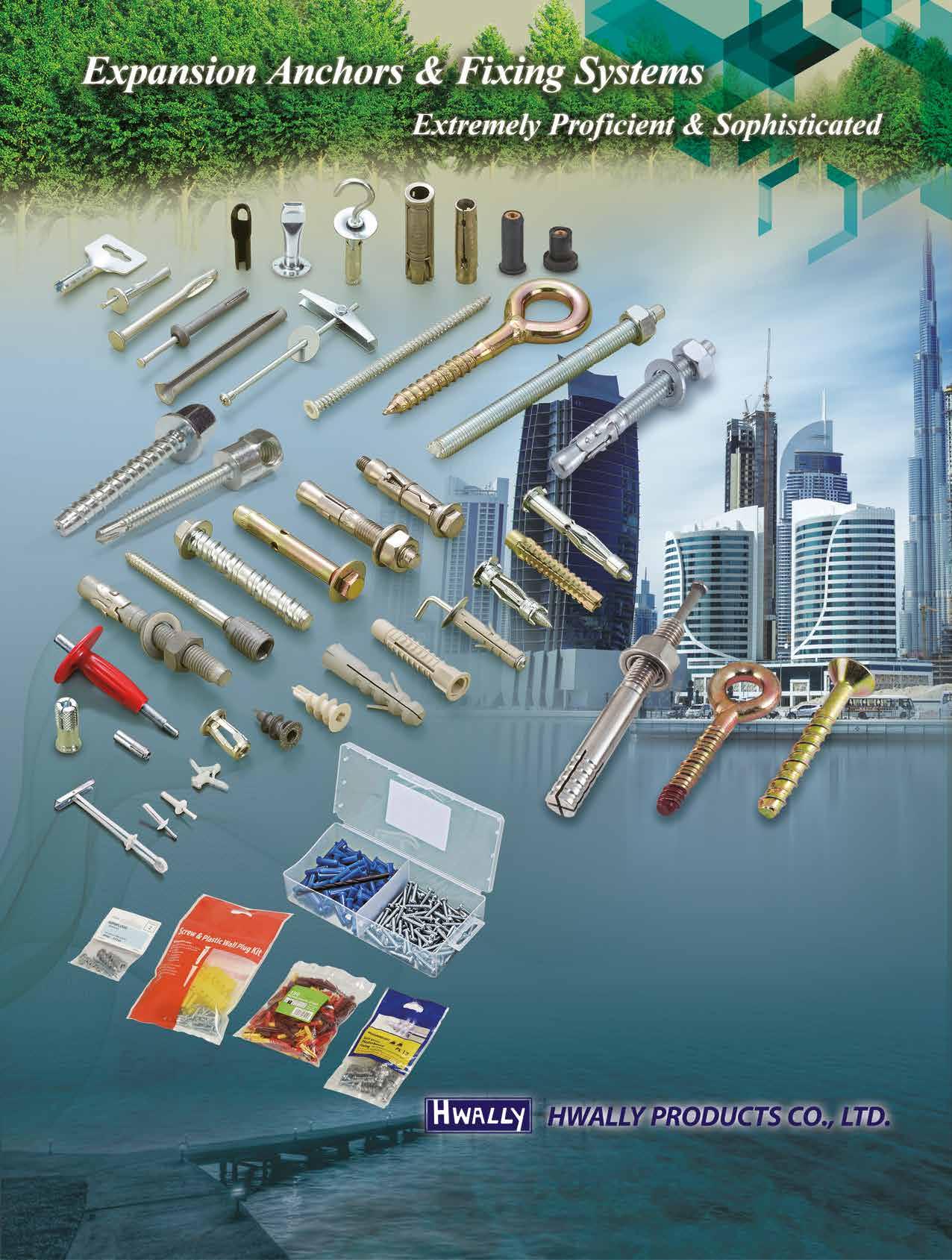
109 HWALLY PRODUCTS CO., LTD. 樺麟
Drop-in Anchors, Chipboard Screws, Anchors...
254 INFINIX PRECISION CORP. 英飛凌
Customized Punches and Dies
63 INMETCH INDUSTRIAL CO., LTD. 恆鉅
Flanged Head Bolts, Locking Bolts, Stud Bolts...
10 J C GRAND CORPORATION
All Kinds of Screws, Chipboard Screws...
218 JA DEN ENTERPRISE CORP, LTD
Drilling Screws
57 JAU YEOU INDUSTRY CO., LTD. 朝友
Chipboard Screws, Drywall Screws, High Low Thread Screws...
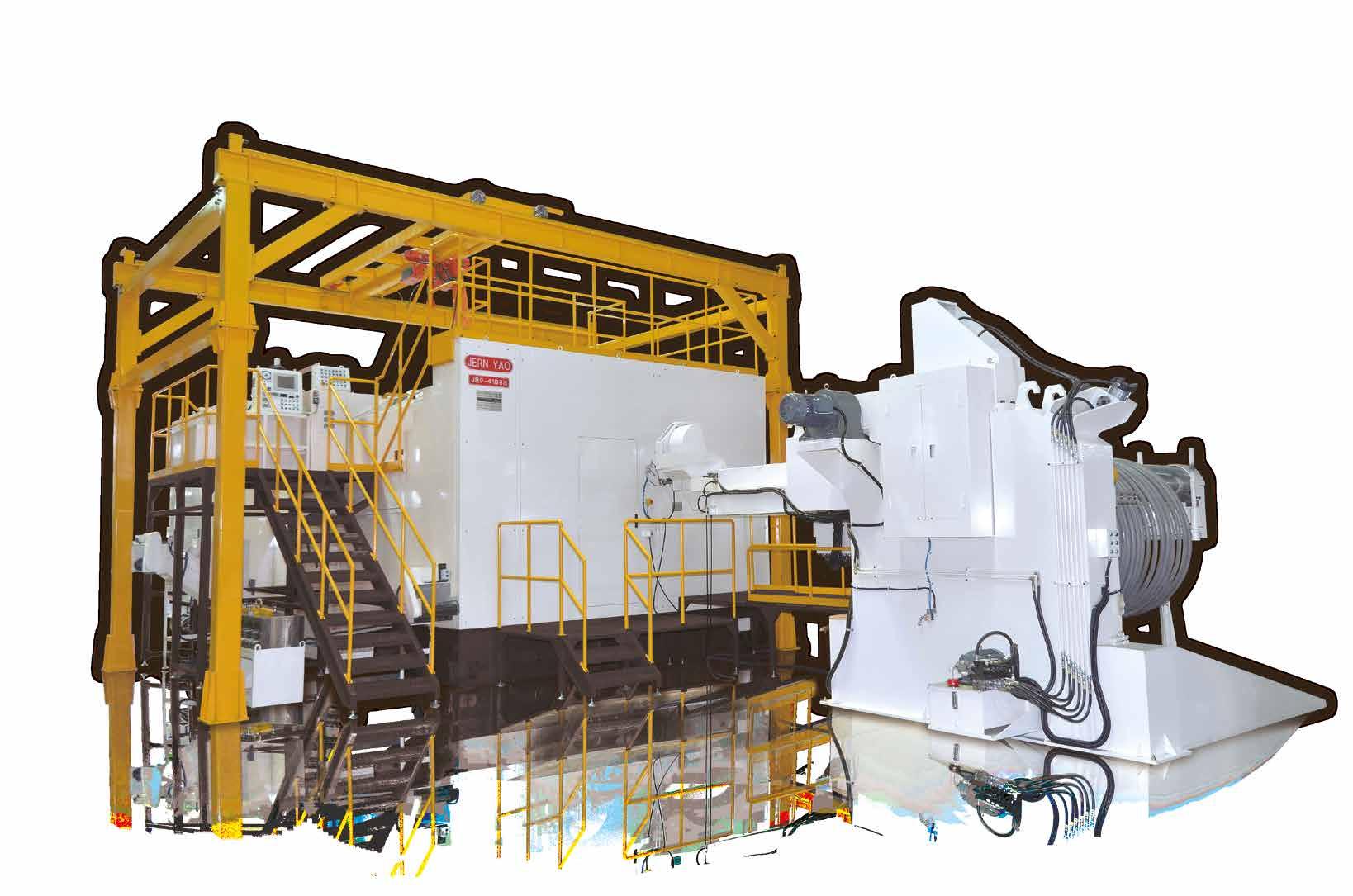
274 JERN YAO ENTERPRISES CO., LTD. 正曜
Multi-station Cold Forming, Parts Forming Machines...
38 JET FAST COMPANY LIMITED 捷禾
Blind Nuts / Rivet Nuts, Aircraft & Aerospace Washers...
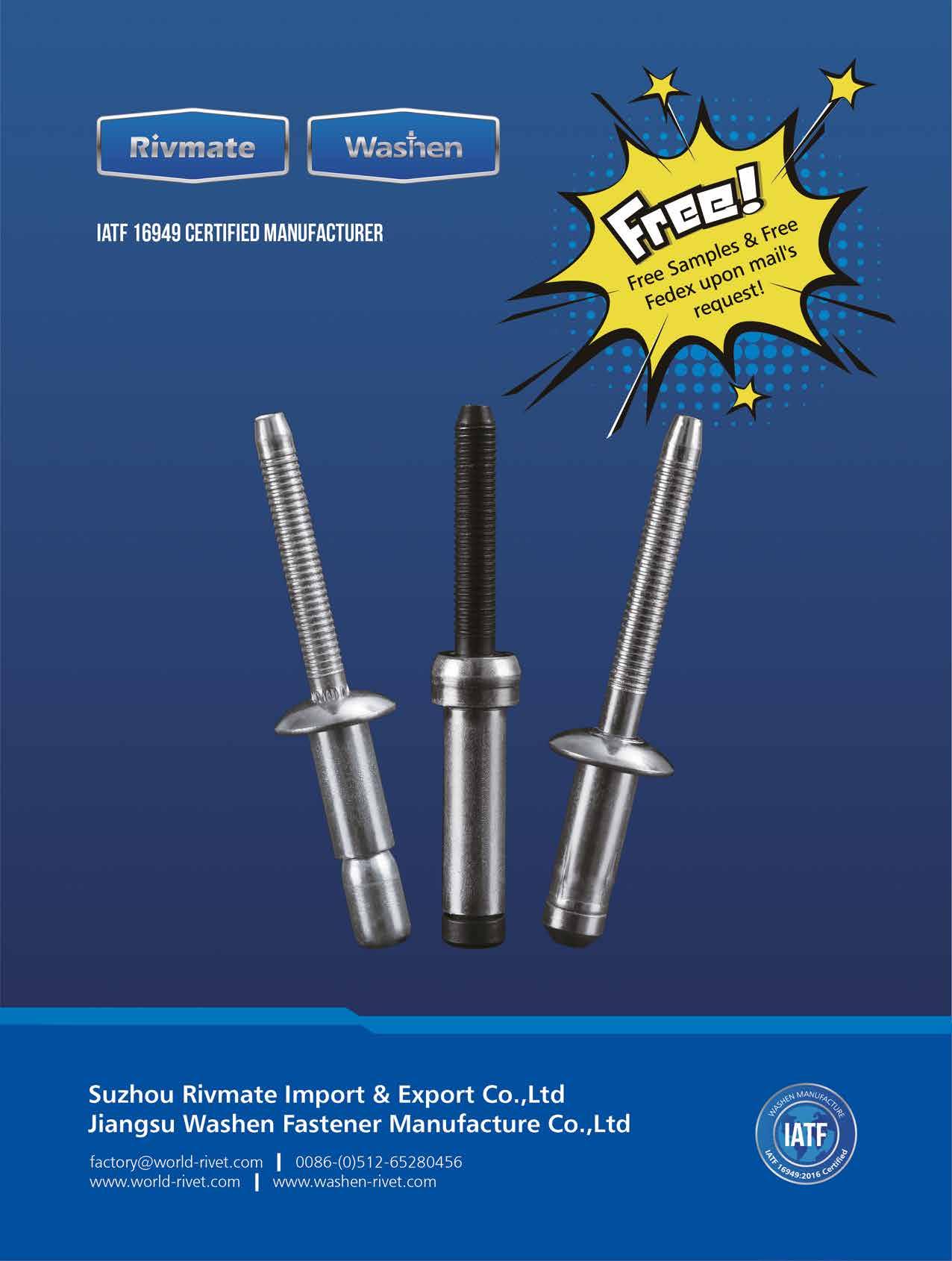
268 JIANGSU WASHEN FASTENER 華盛
Blind Rivets, Rivet Nuts & Riveting Tools...
new
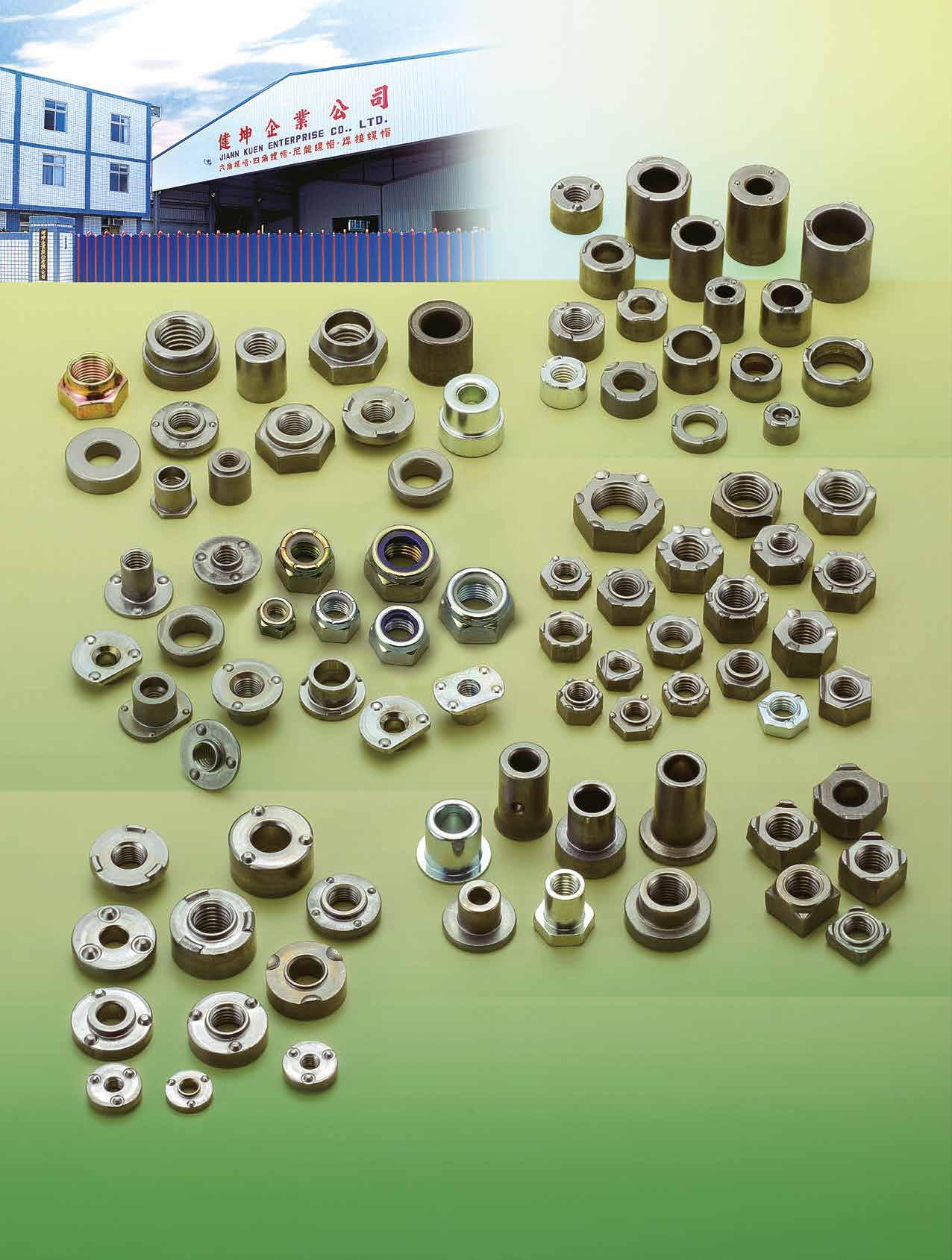
95 JIEN KUEN ENTERPRISE CO , LTD 健坤
Hexagon Nuts, Nylon Cap Insert Lock Nuts, Square Nuts...
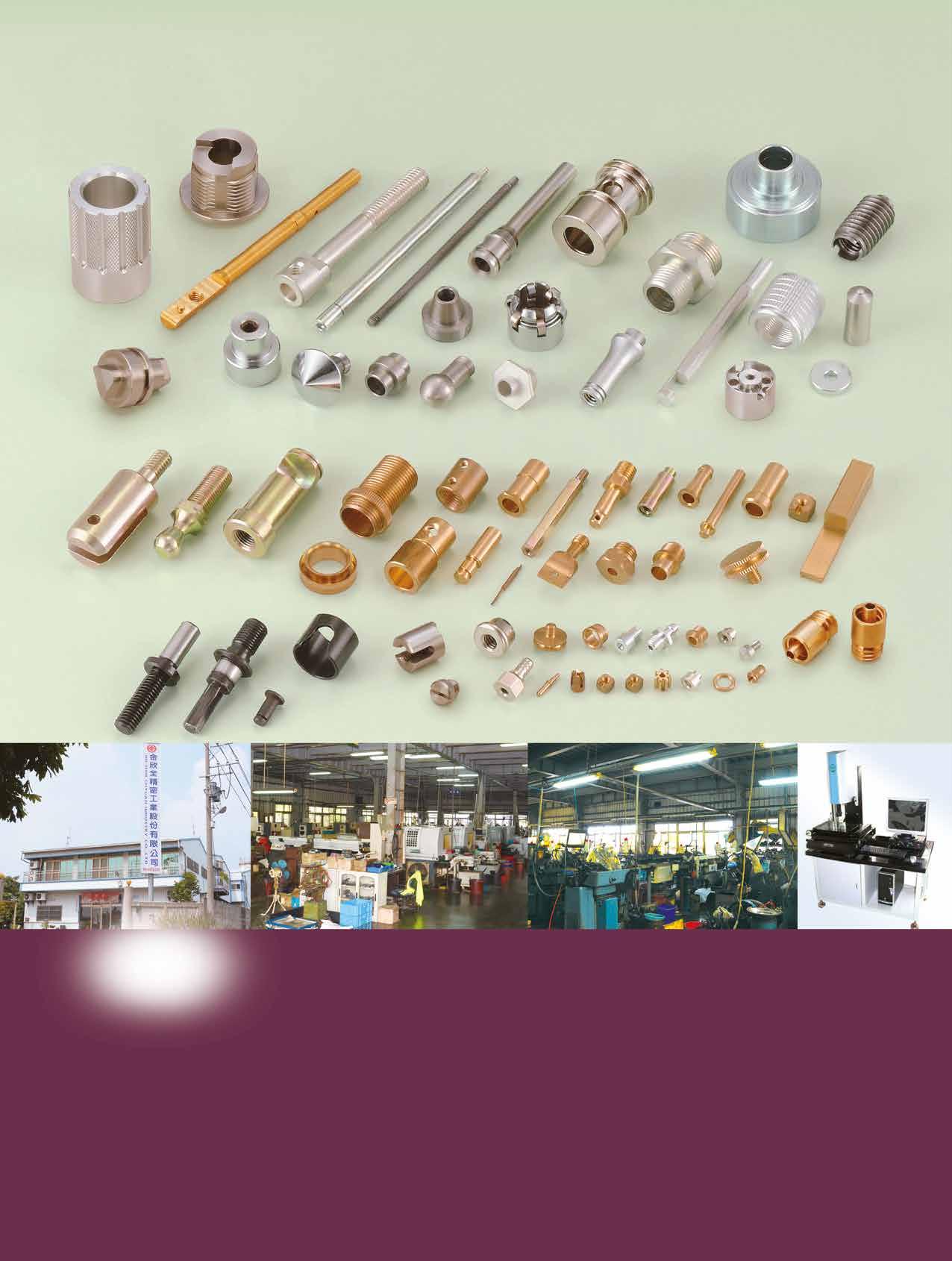
121 JIN SHIN CHYUAN INDUSTRY CO , LTD 金欣全
Automotive & Motorcycle Special Screws / Bolts...
110 JINGFONG INDUSTRY CO , LTD
Hex Nylon Insert Lock Nuts, Wing Nuts with Nylon Insert...
璟鋒
155 JIN-YINGS ENTERPRISE CO., LTD. 晉營
Special Custom Fasteners, Auto/Motorcycle Fasteners…
37 JOKER INDUSTRIAL CO., LTD.
Hollow Wall Anchors, Concrete Screws, Jack Nuts...
久可
100 KATSUHANA FASTENERS CORP. 濱井
Collated Screws, Drywall Screws, Roofing Screws...
120 KEY-USE INDUSTRIAL WORKS CO., LTD. 凱雍
Flanged Head Bolts, Milled Bolts, Rim Bolts, Round Head Bolts...
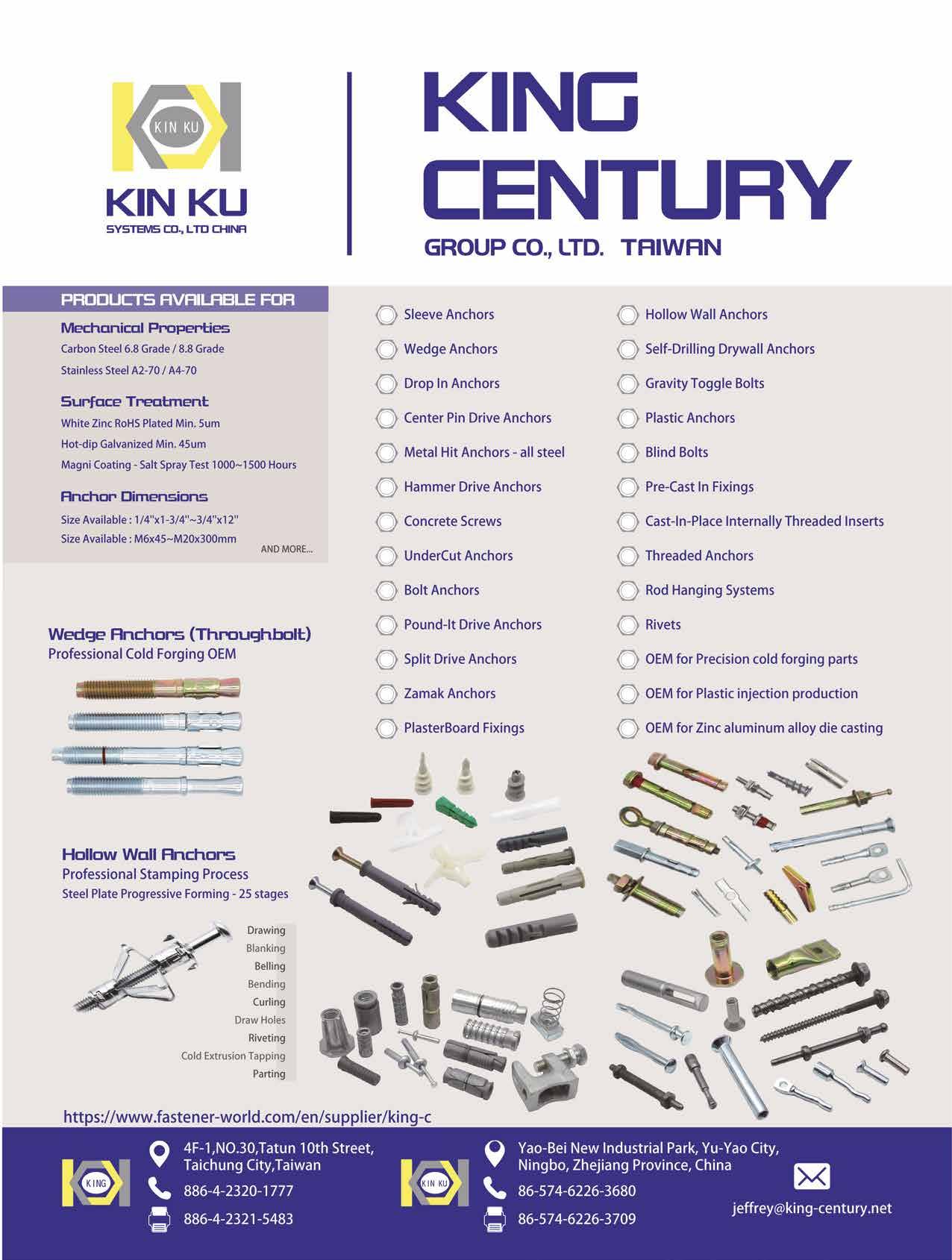
159 KING CENTURY GROUP CO., LTD. 慶宇
Drop-in Anchors, Self-drilling Anchors, Sleeve Anchors...
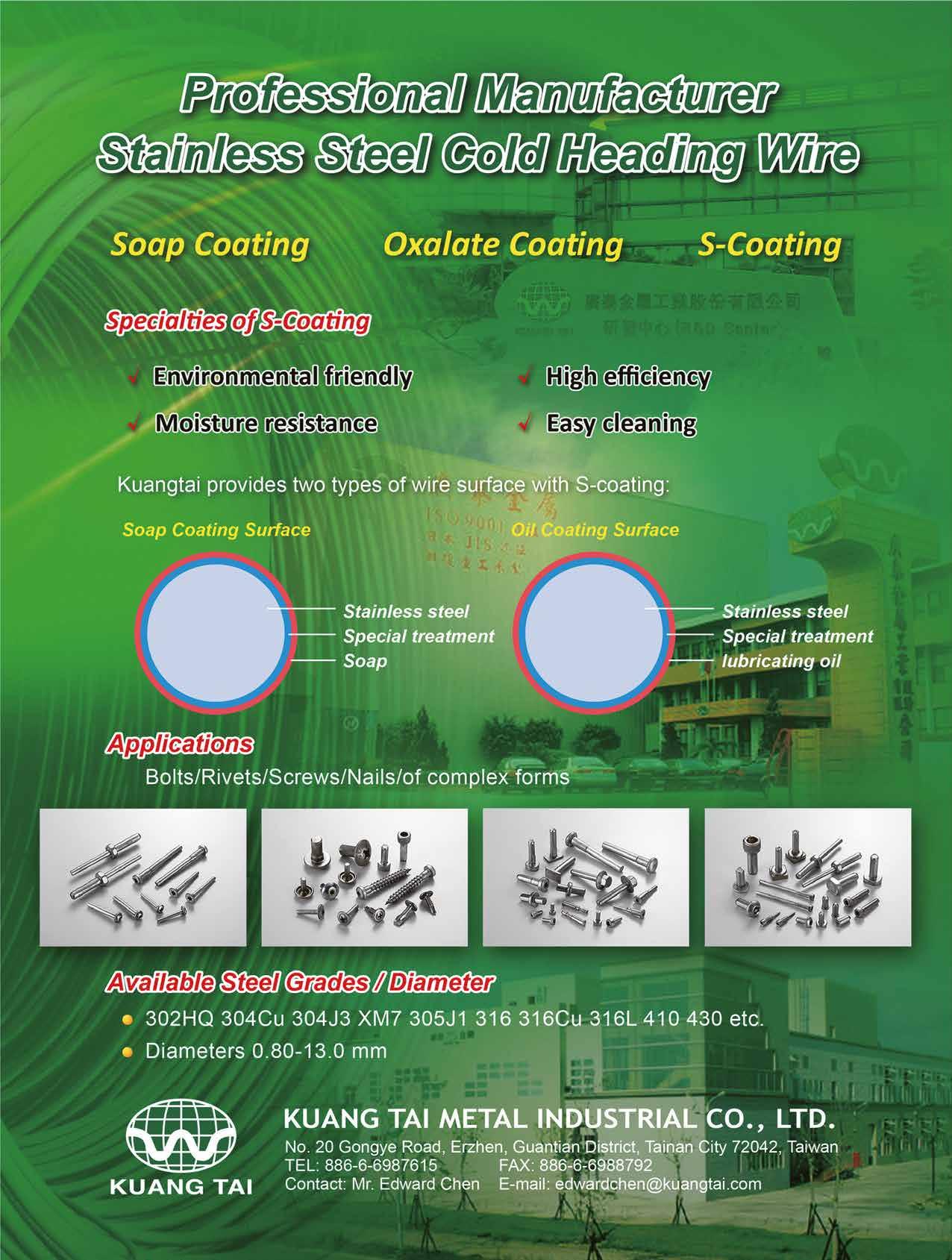
257 KUANG TAI METAL INDUSTRIAL CO , LTD 廣泰
Stainless Steel Cold Heading Wire
74 KWANTEX RESEARCH INC
Chipboard Screws, Drywall Screws, Furniture Screws...
124 L & W FASTENERS COMPANY
Construction Fasteners, Flat Washers, Heavy Nuts...
175 LIAN CHUAN SHING INTERNATIONAL
Weld Nuts, Special Parts, Special Washers, Flat Washers...

寬仕
金大鼎
連全興




270 LIAN SHYANG INDUSTRIES CO , LTD 連翔
Nut Formers, Nut Tapping Machines
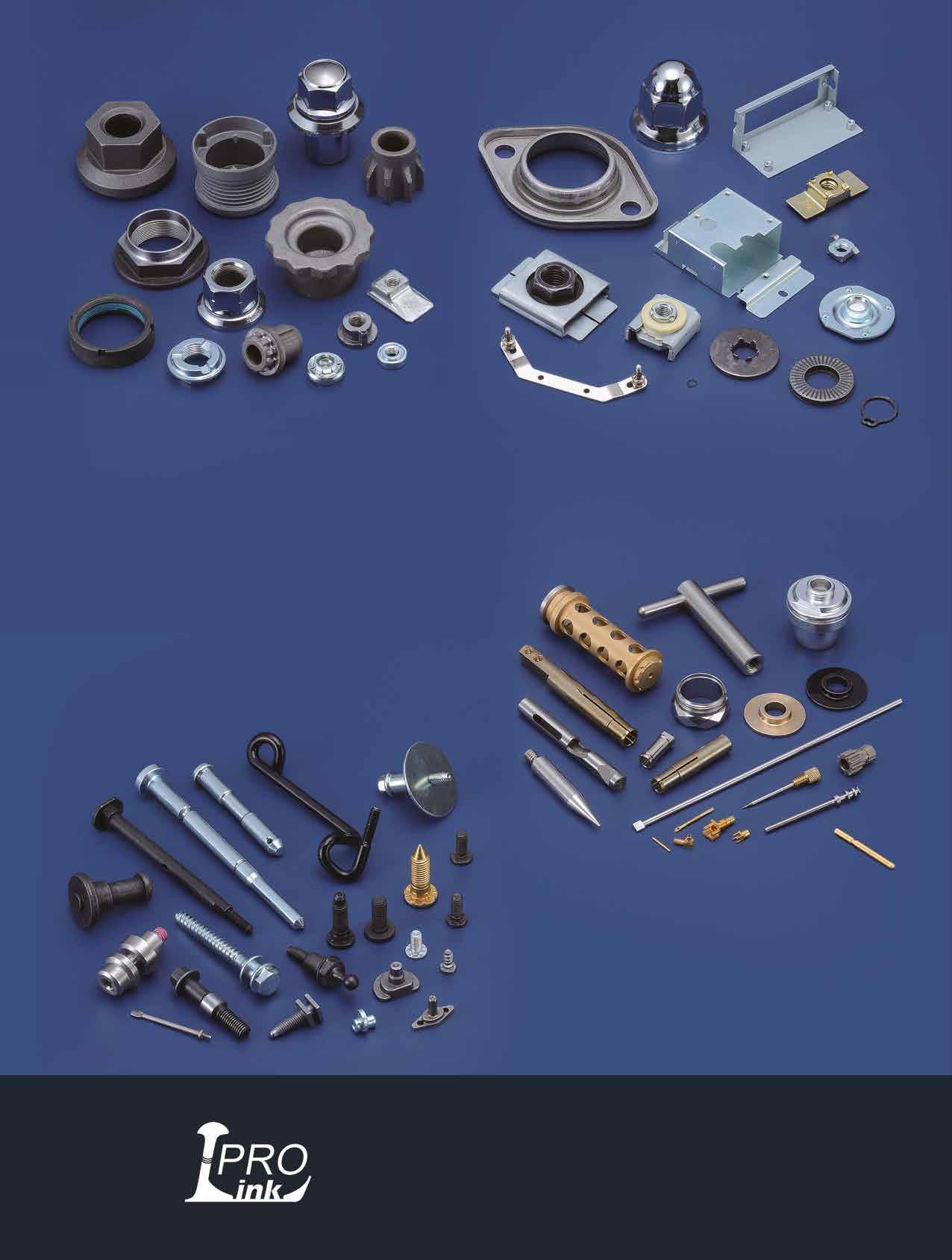
149 LINK-PRO TECH CO , LTD
Customized Screws/Nuts, Pressing & Deep Drawing...
超傑
278 LINKWELL INDUSTRY CO , LTD 順承
14
All Kinds of Screws, Automotive & Motorcycle Special Screws...
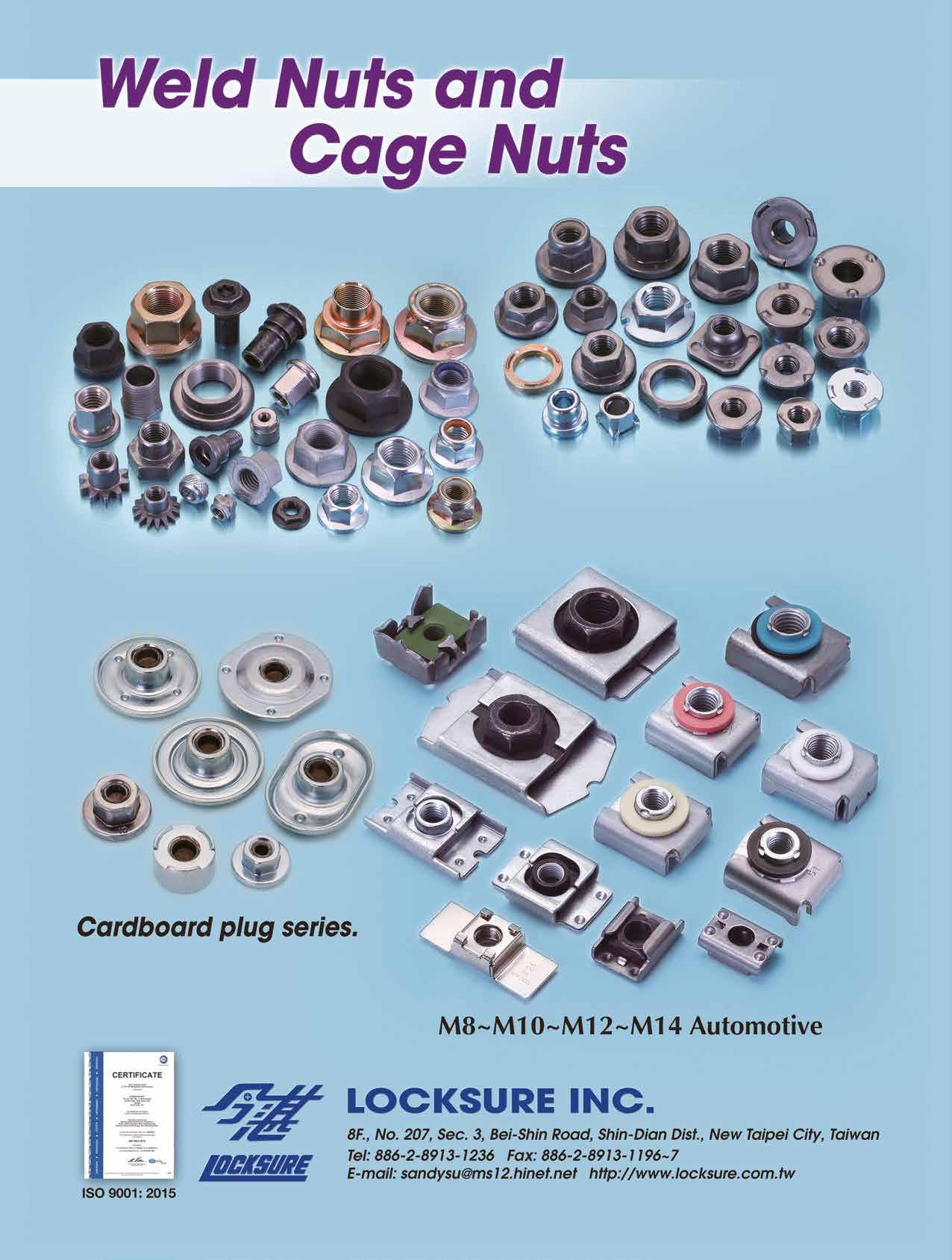
LOCKSURE INC.
Custom Washers, Flat Washers, Automotive Screws...
今湛
35 LONG THREAD FASTENERS CORP. 長隆順
Bi-metal Self-drilling Screws, Chipboard Screws...
83 MAC PRECISION HARDWARE CO. 鑫瑞
Turning Parts, Precision Metal Parts, Cold Forged Nuts...
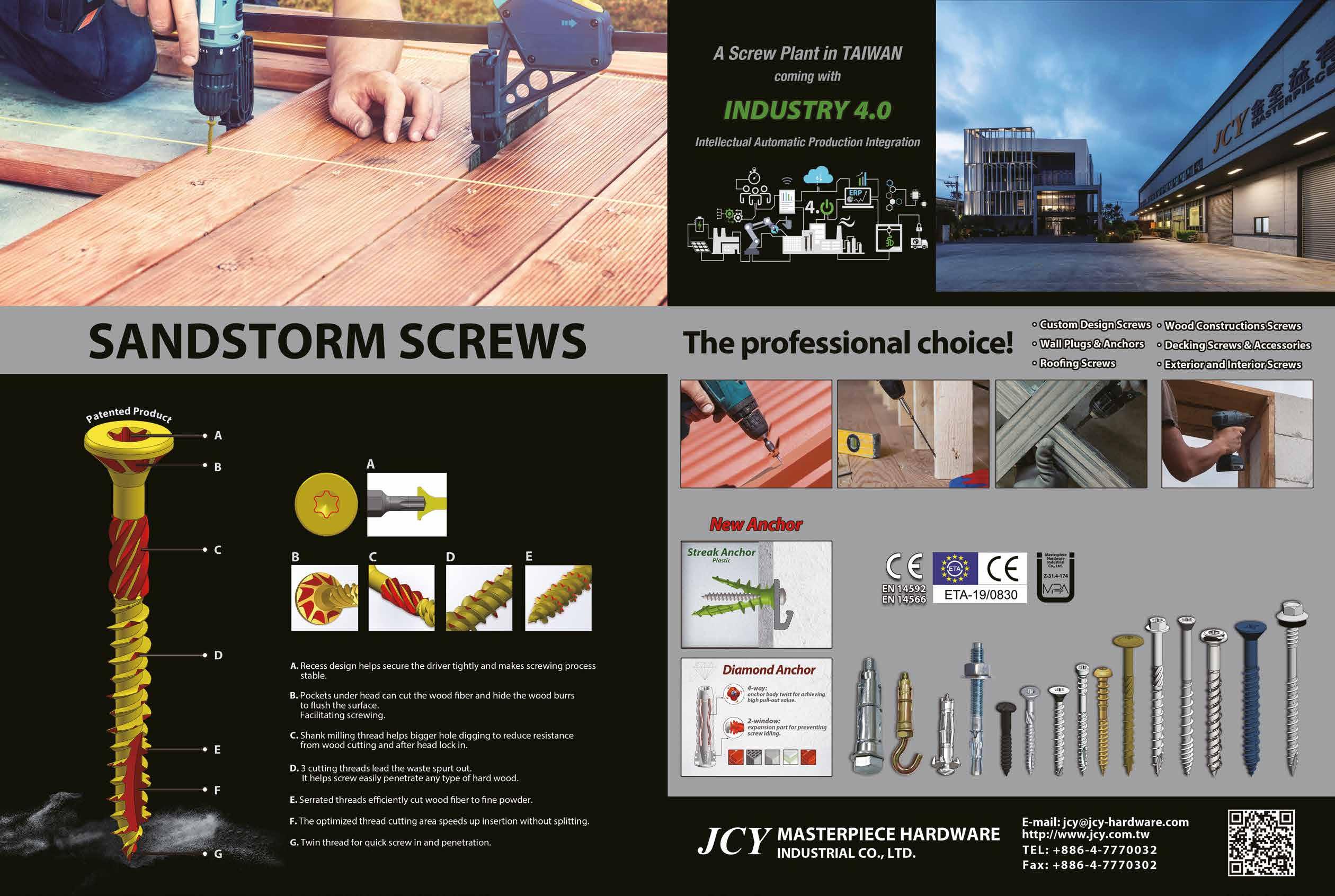
126 MASTERPIECE HARDWARE INDUSTRIAL 金全益
Brass Screws, Chipboard Screws, Deck Screws, Double End Screws...
172 MAUDLE INDUSTRIAL CO., LTD. 茂異
Button Head Socket Cap Screws, Flange Washer Head Screws...
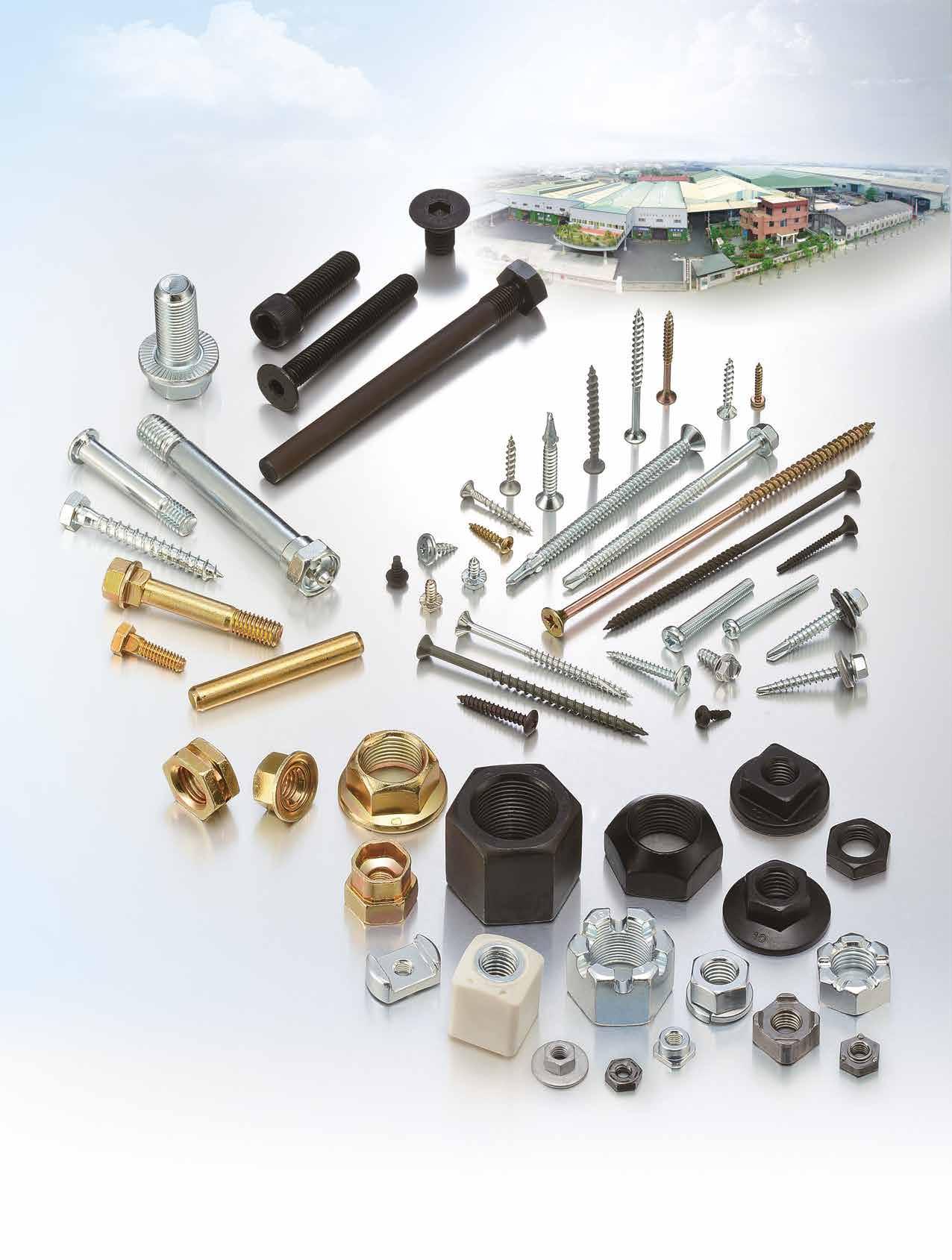
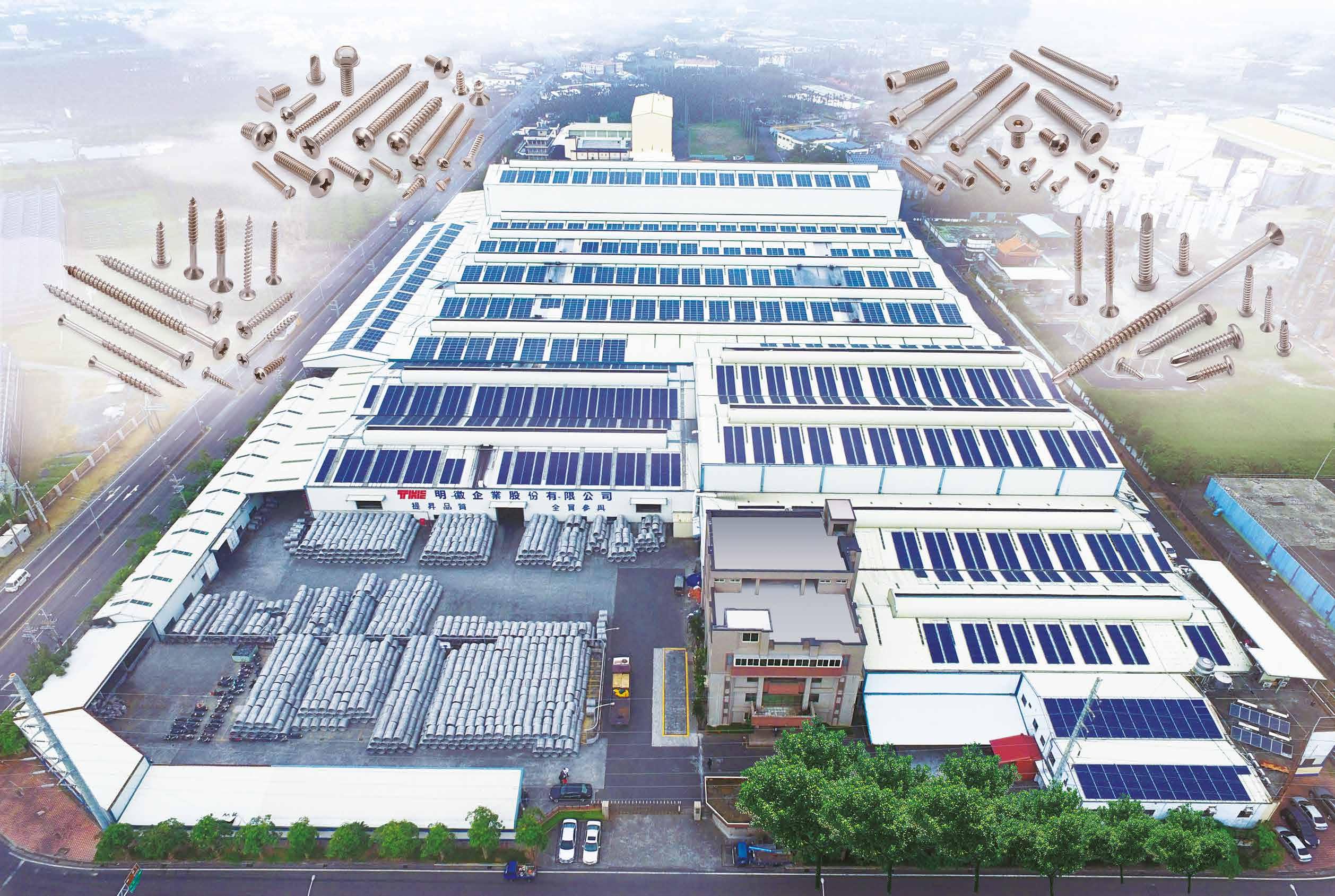
16 MIN HWEI ENTERPRISE CO , LTD 明徽
Button Head Socket Cap Screws, Chipboard Screws...
250 MING TANG MACHINERY CO , LTD (WEN YANG) 玟暘
Screw Head Making Machines...
48 MODERN ALLOY PLATING CO , LTD 頂吉興
Zinc Plating, Lubricants
141 MOUNTFASCO INC.
All Kinds of Screws, Alloy Steel Screws, Automotive Screws...
崎鈺
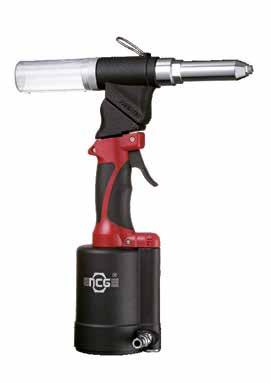
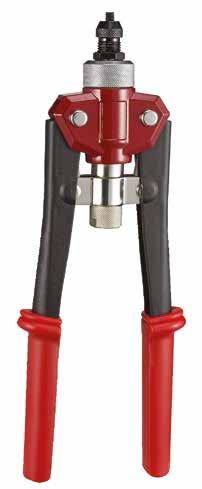
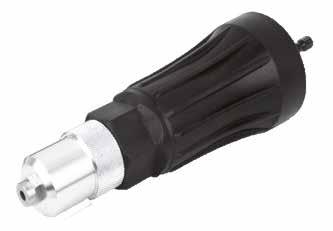
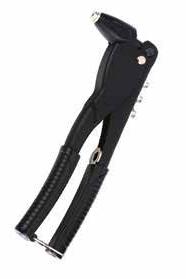
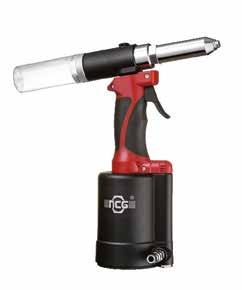
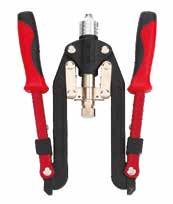
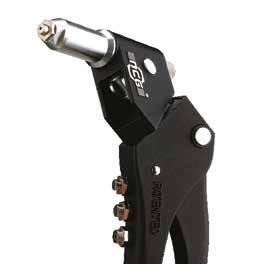
106 NCG TOOLS INDUSTRY CO , LTD 昶彰
Tools for Fastening Anchors, Blind Nuts / Rivet Nuts...
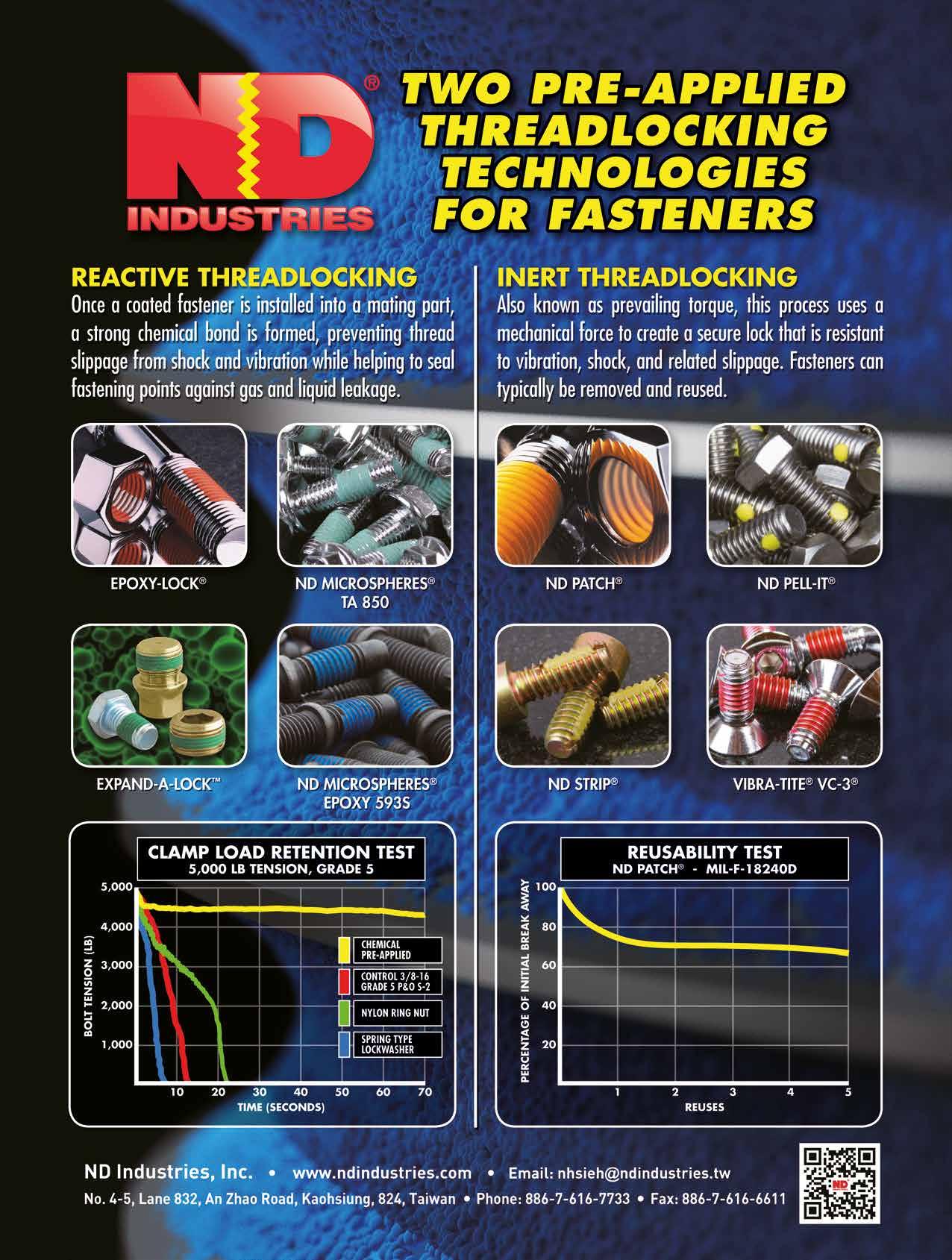
104 ND INDUSTRIES ASIA INC.
ND Pre-Applied Processes, Advanced Sealing Technologies...
145 NOVA. FASTENER CO., LTD.
穩得
鑫星
Hexagon Nuts, Square Nuts, Wood Screws, Chipboard Screws...
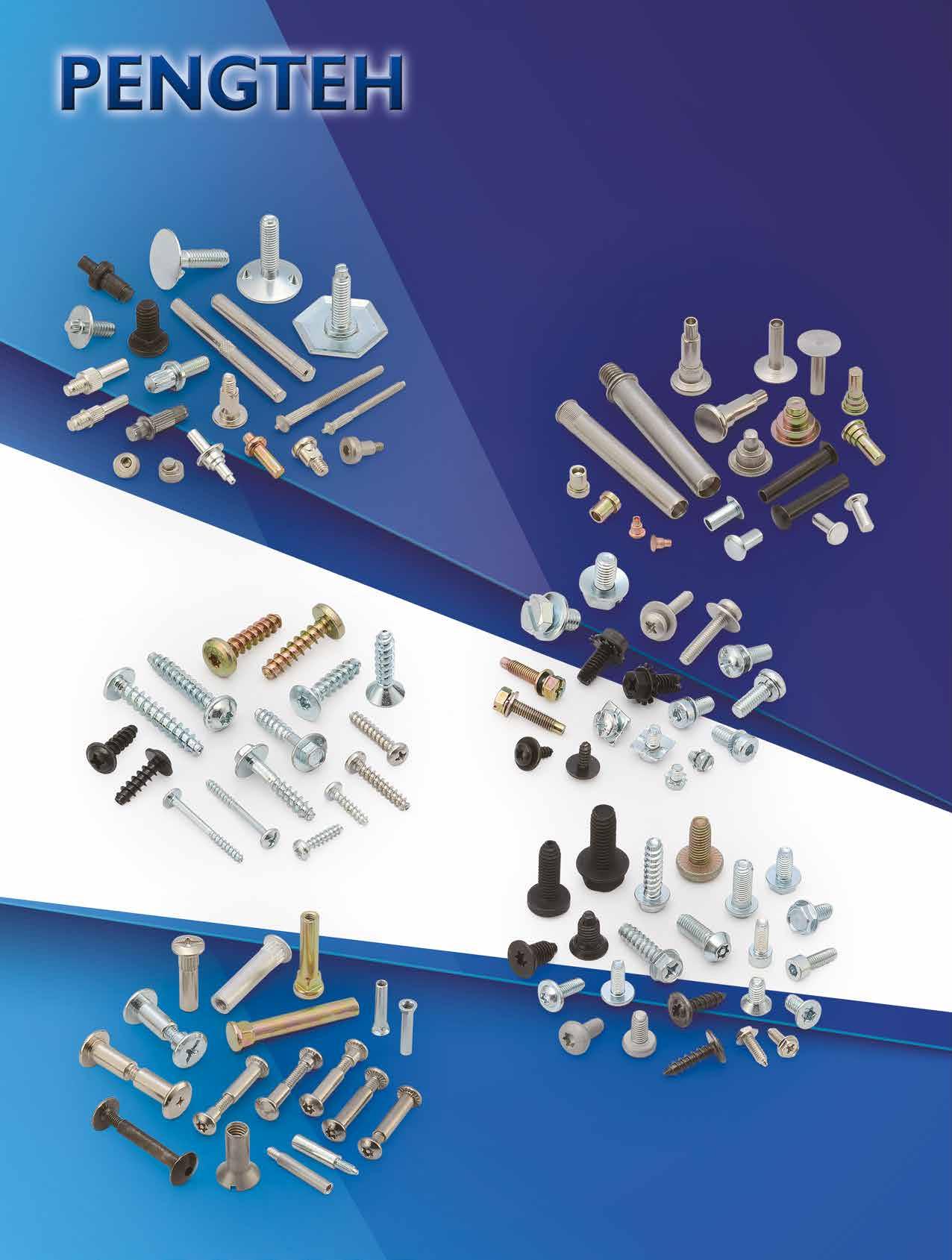
36 PENGTEH INDUSTRIAL CO., LTD. 彭特
SEMs Screws, Special Screws, Binder Screws, PT Screws...
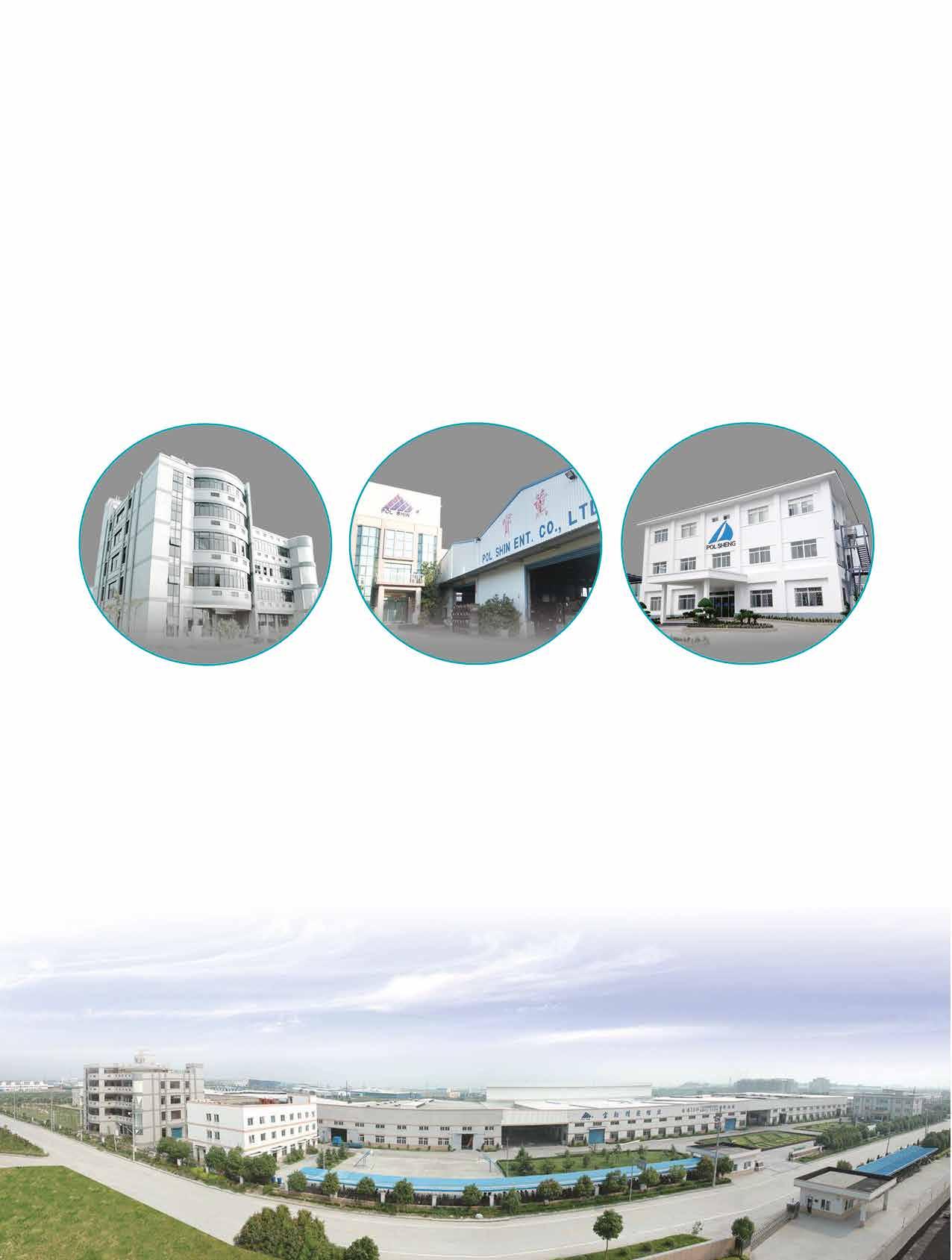
139 POL SHIN ENT. CO., LTD.
寶薰
Drywall Screws, Concrete Screws, Tapping Screws, Long Screws...
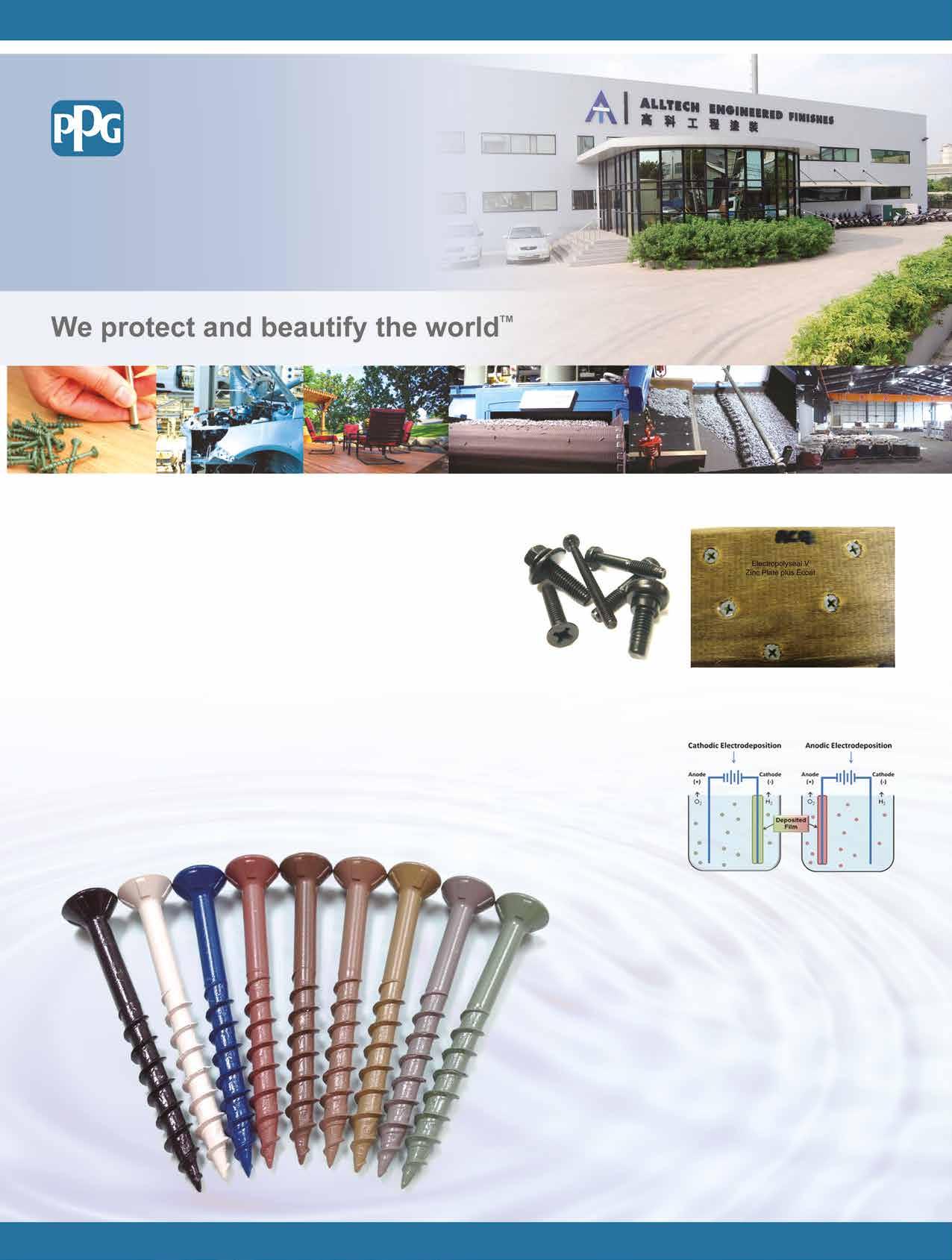
112 PPG INDUSTRIES INTERNATIONAL INC. 美商必丕志
Chromium-free Coating, ED Coating...
173 PRO POWER CO , LTD 鉑川 Screws, Bolts...
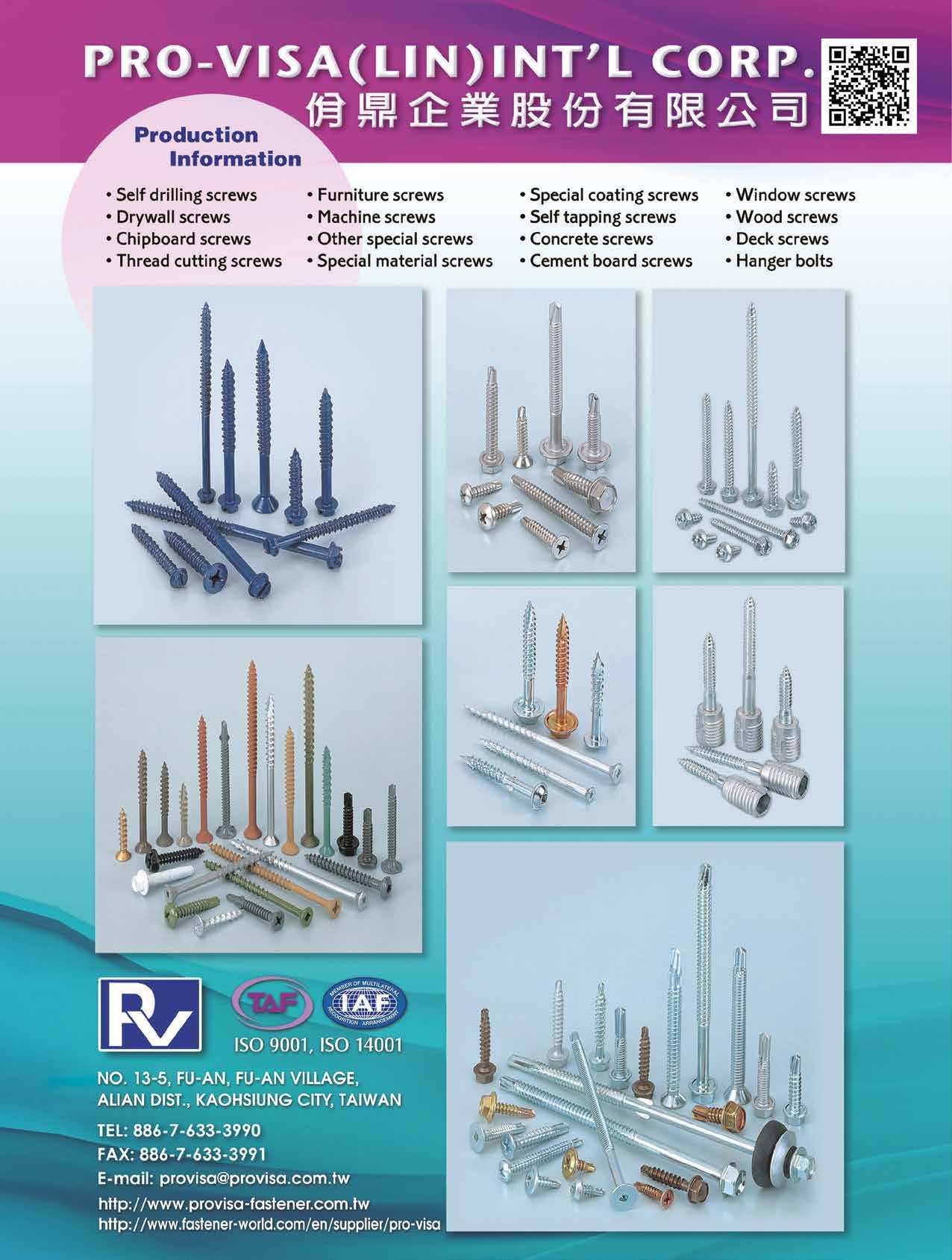
101 PRO-VISA (LIN) INT'L CORP 佾鼎
Self-drilling Screws, Stainless Steel Screws, Furniture Screws...
123 PS FASTENERS PTE LTD (Singapore) 汎昇
Washers, Socket Set Screws, U Bolts, Alloy Steel Screws...
54 QST INTERNATIONAL CORP 恒耀國際
Hexagon Head Bolts, Square Head Bolts, Weld Bolts (Studs)...
262 QUAN LIAN ENTERPRISE CO , LTD 全鏈
Weld Screw Machinery
8 REXLEN CORP 連宜
Clinch Nuts, Clinch Studs, CNC Parts, Stamped Parts...
253 SACMA LIMBIATE S PA (Italy)
Net-Shape Parts Former 4 SAN SHING FASTECH CORP 三星
Automotive Nuts, Automotive Parts, Carbide Dies...
91 SCREWTECH INDUSTRY CO , LTD 銳禾
Machined Parts, Thumb Screws, Micro Screws...
271 SEN CHANG INDUSTRIAL CO., LTD. 昇錩
Customized Special Screws / Bolts, Socket Head Cap Screws...
266 SHANGHAI FAST-FIX RIVET CORP. 飛可斯
Blind Rivets, High Shear Rivets, Closed End Rivets...
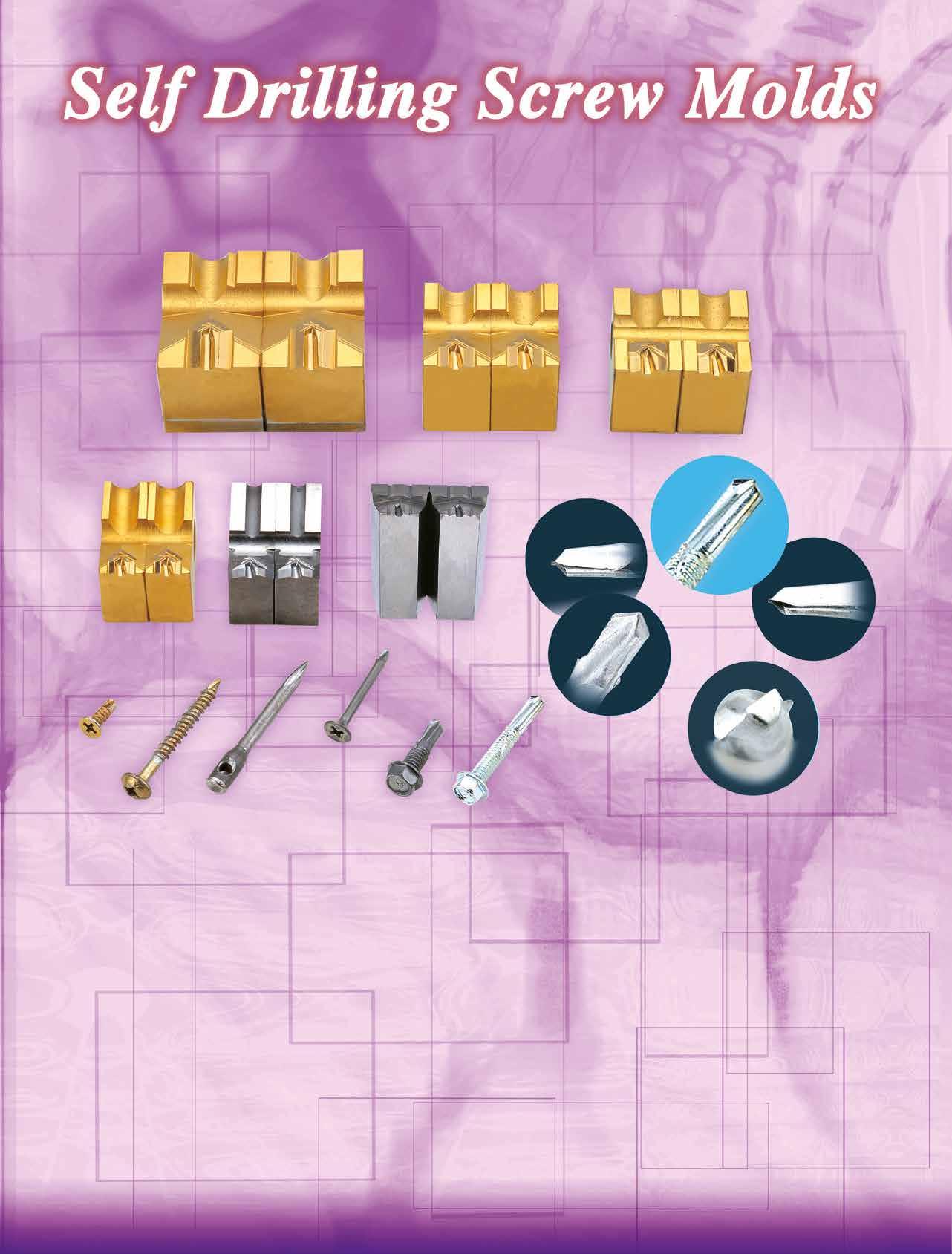
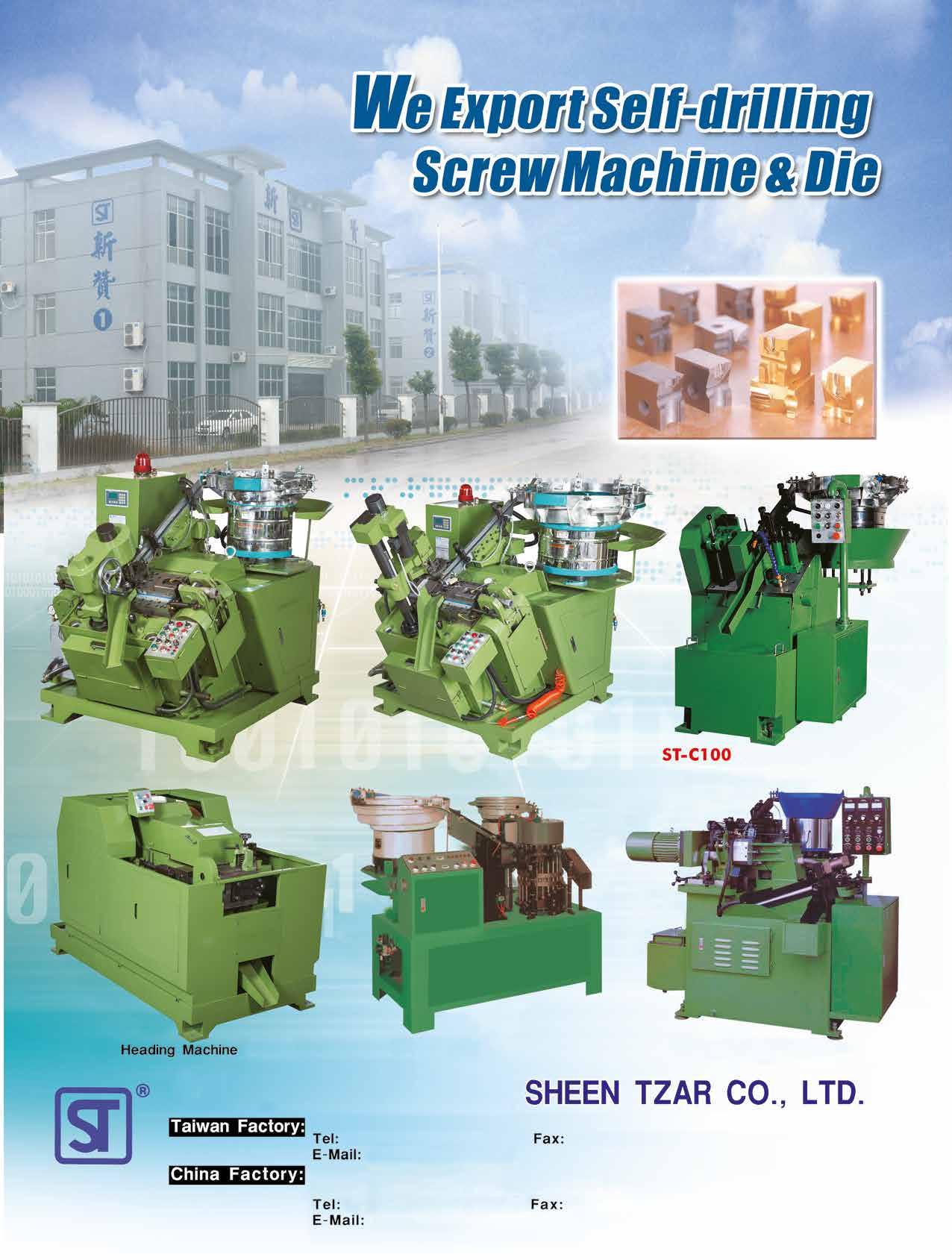
256 SHEEN TZAR CO., LTD. 新讚
Self-Drilling Screw Machines & Dies
226 SHEH FUNG SCREWS CO , LTD 世豐
Chipboard Screws, Countersunk Screws, Wood Screws...
224 SHEH KAI PRECISION CO , LTD 世鎧
94
Bi-metal Concrete Screw Anchors, Bi-metal Screws...
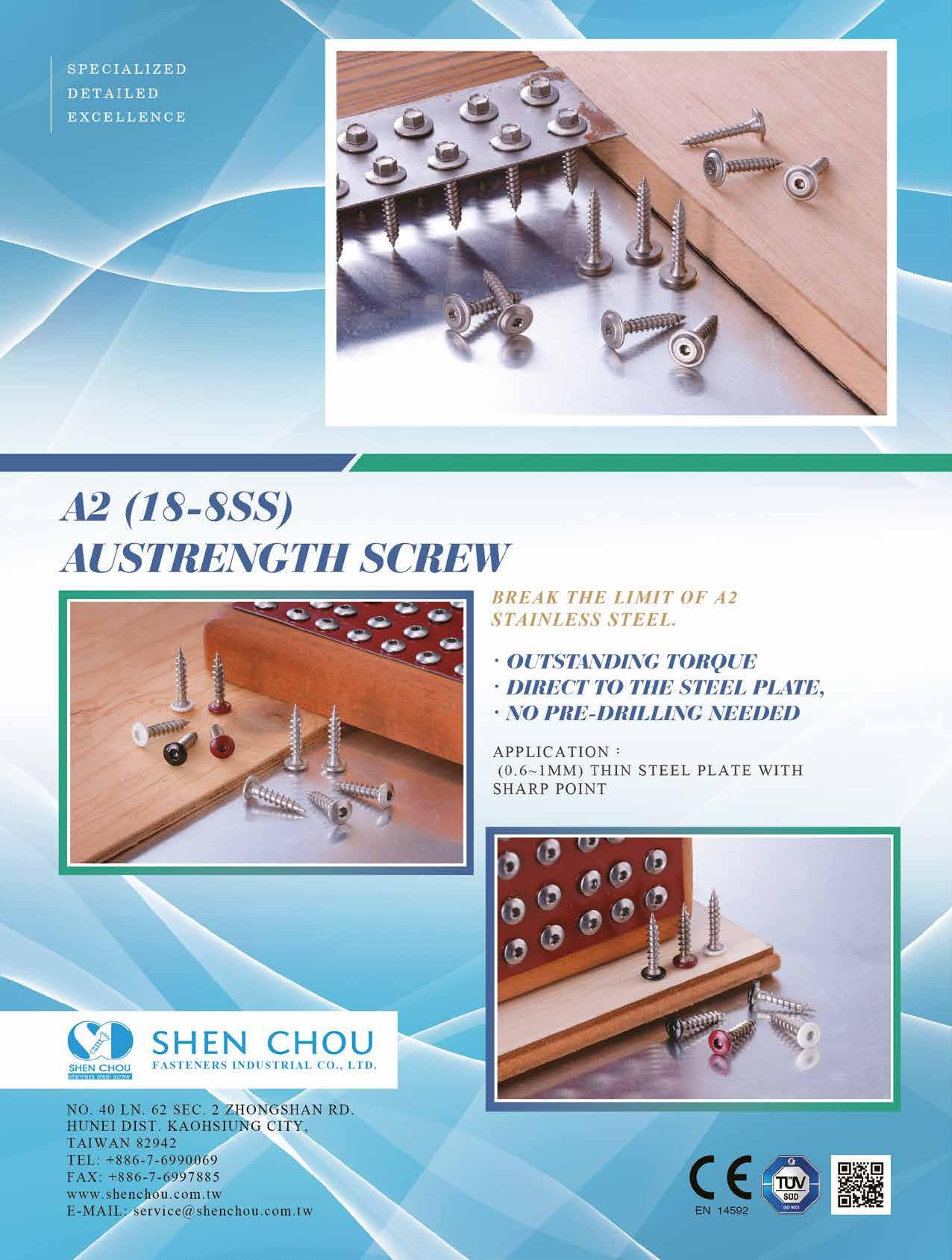
SHEN CHOU FASTENERS INDUSTRIAL 神洲
Button Head Cap Screws, Chipboard Screws...
28 SHIH HSANG YWA INDUSTRIAL CO., LTD. 新倡發
168
Flange Nuts, Flange Nylon Nuts With Washers...
SHIN CHUN ENTERPRISE CO., LTD. 昕群
Automotive Screws, Chipboard Screws, Customized Screws...
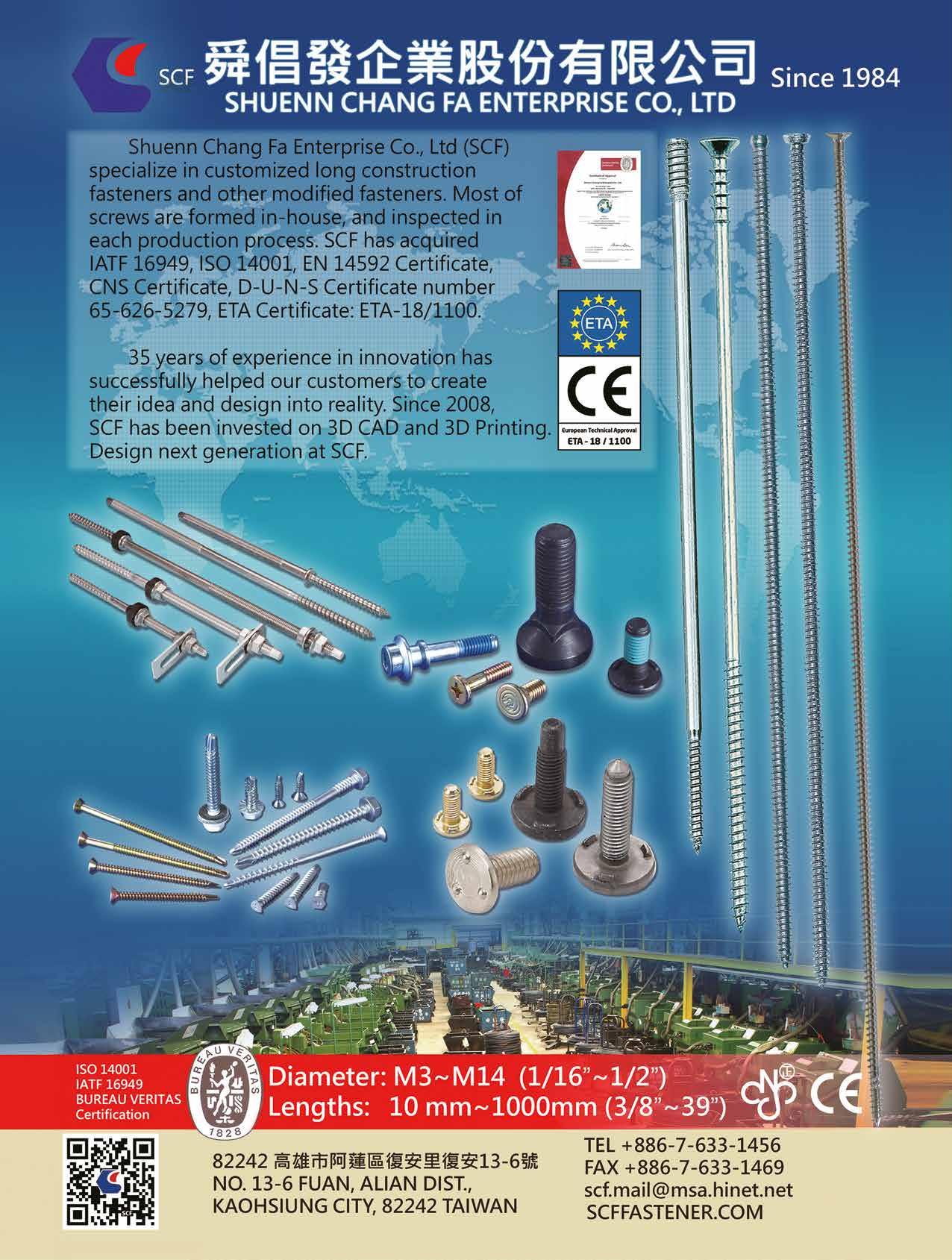
153 SHUENN CHANG FA ENTERPRISE CO., LTD. 舜倡發 Long Screws, Concrete Screws, Machine Screws...
137 SIN HONG HARDWARE PTE LTD (Singapore) 新豐
Hexagon Nuts, Hexagon Head Bolts, Blind Rivets...
22 SPEC PRODUCTS CORP 友鋮
12
Lincensee Fasteners, Turned/Machined Parts...
SPECIAL RIVETS CORP (SRC) 恆昭
Blind Nuts / Rivet Nuts, Blind Rivets, Air Riveters...
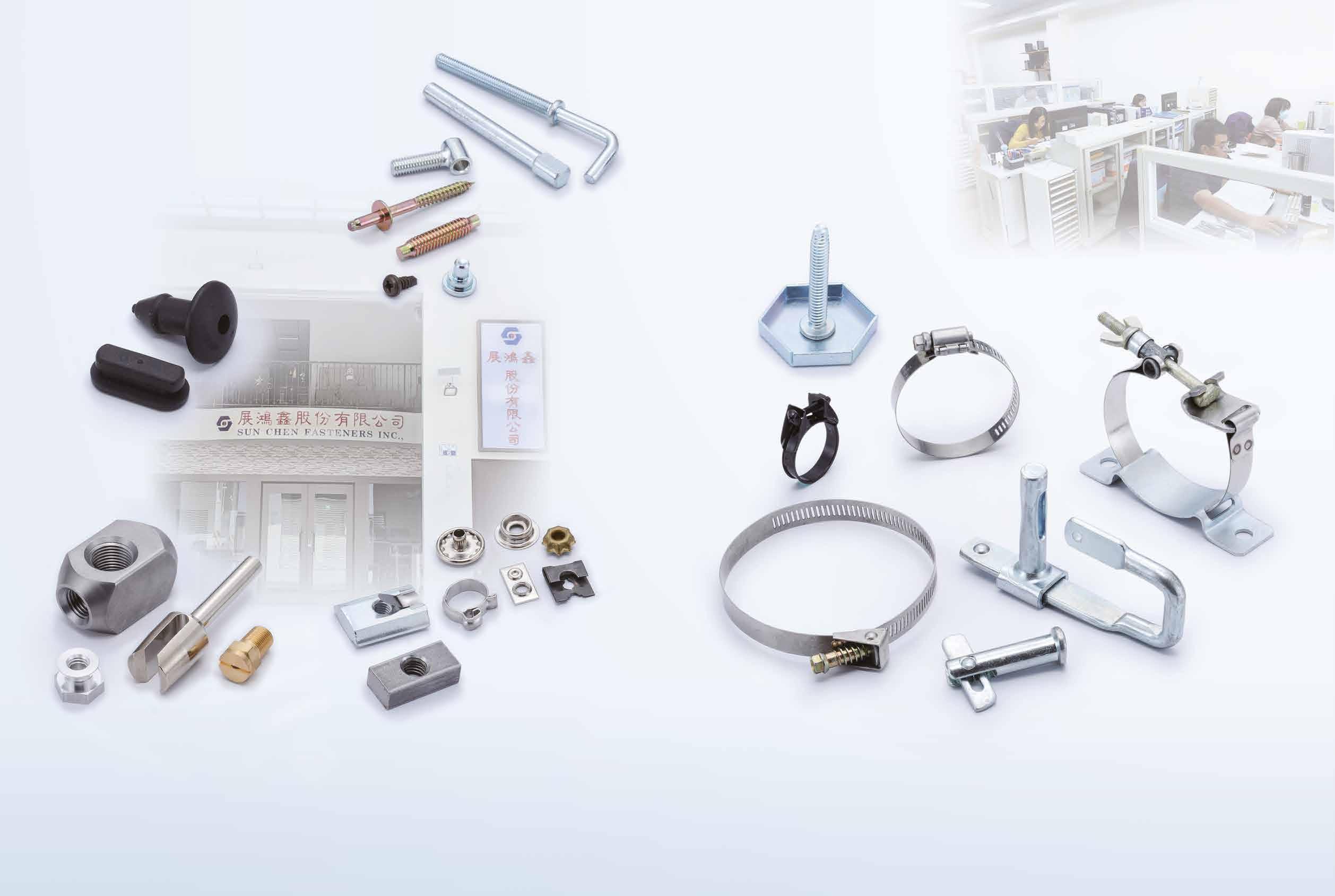
34 SUN CHEN FASTENERS INC. 展鴻鑫
Cup Washers, Flanged Head Bolts, T-head or T-slot Bolts...
85 SUPER DPD CO., LTD. 三御
50
All Kinds of Screws, Bi-metal Screws, Carbon Steel Screws...
SUPERIOR QUALITY FASTENER CO., LTD. 鑫程椿
Weld Nuts, Turning Parts, Long Screws, Spring Nuts...
213 TAIWAN NYLON WASHER CO., LTD. 東佑典
Rubber Washers, Silicone Washers, Plasterboard Nails...
44 TAIWAN SELF-LOCKING FASTENERS (TSLG) 台灣耐落
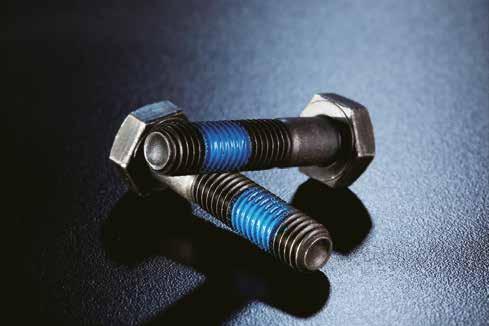
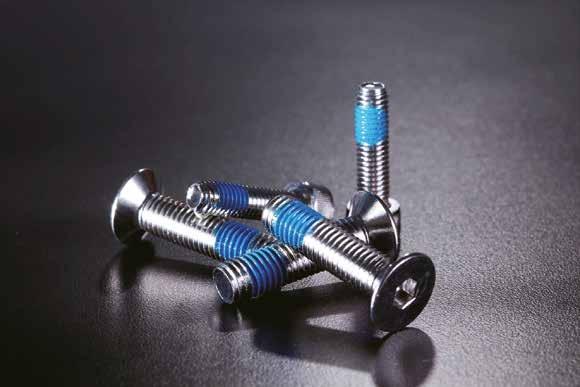
Nylok®, Precote®, Nycote®, Nyplas®, Loctite®
167
TANG AN ENTERPRISE CO , LTD 鏜安
Customized Automotive Parts and Special Fasteners
15 THREAD INDUSTRIAL CO , LTD 英德
Chipboard Screws, Flange Nuts, Heavy Nuts...
52 TONG HEER FASTENERS (THAILAND) CO , LTD 東和
Hex Bolts, Stud Bolts, Socket Cap Screws, Hex Nuts…
52
TONG HEER FASTENERS CO., SDN. BHD 東和
Stainless Steel Metric Screws, Stainless Steel Screws...
177 TONG HO SHING INTERNATIONAL CO., LTD. 桐和興
Hex Washer Head Screws, Indent Hex Head Screws...
18
53
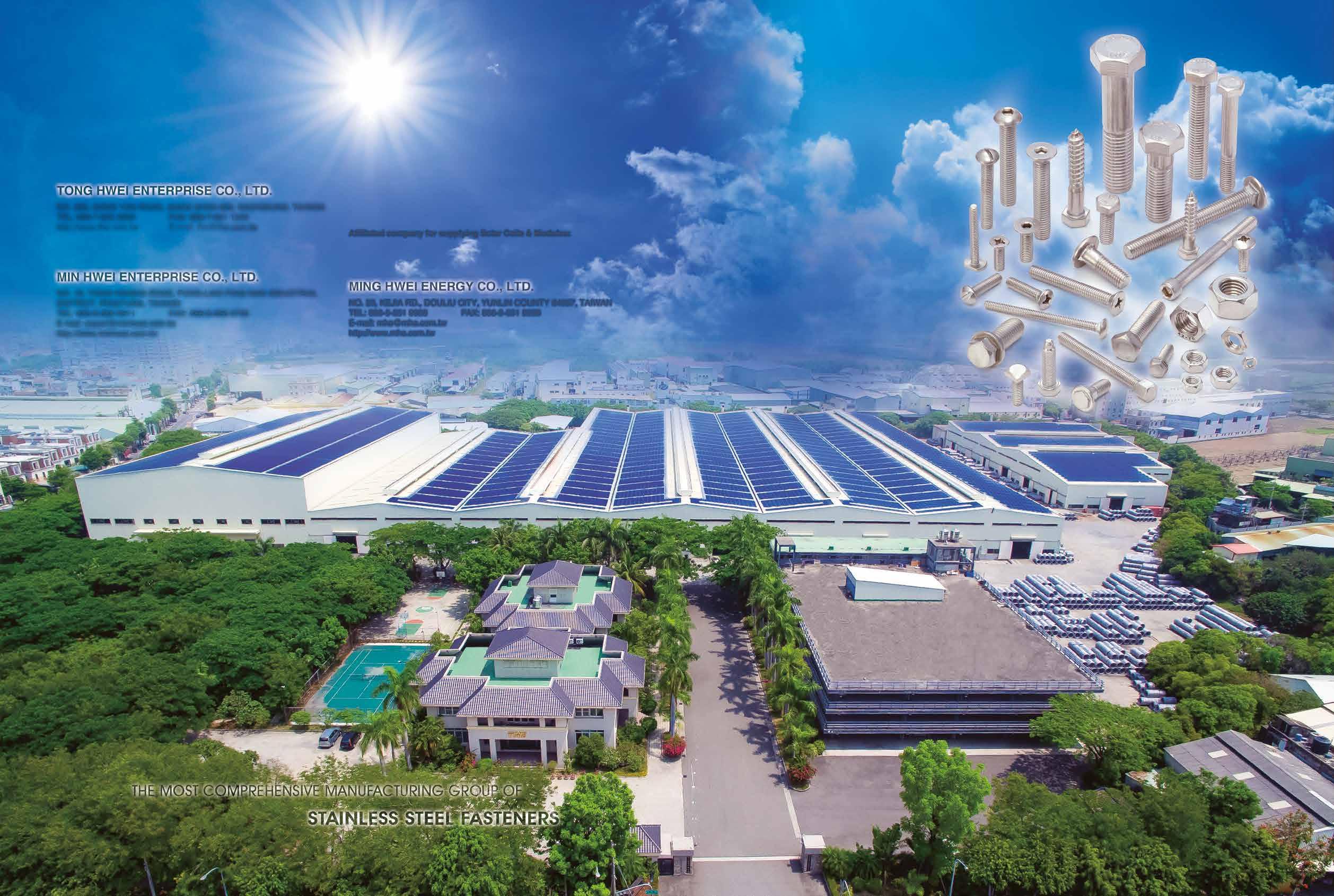
TONG HWEI ENTERPRISE CO., LTD. 東徽
A2 Cap Screws, Button Head Socket Cap Screws...
TONG MING ENTERPRISE CO , LTD 東明
Stainless Steel Fasteners, Wire Rods...
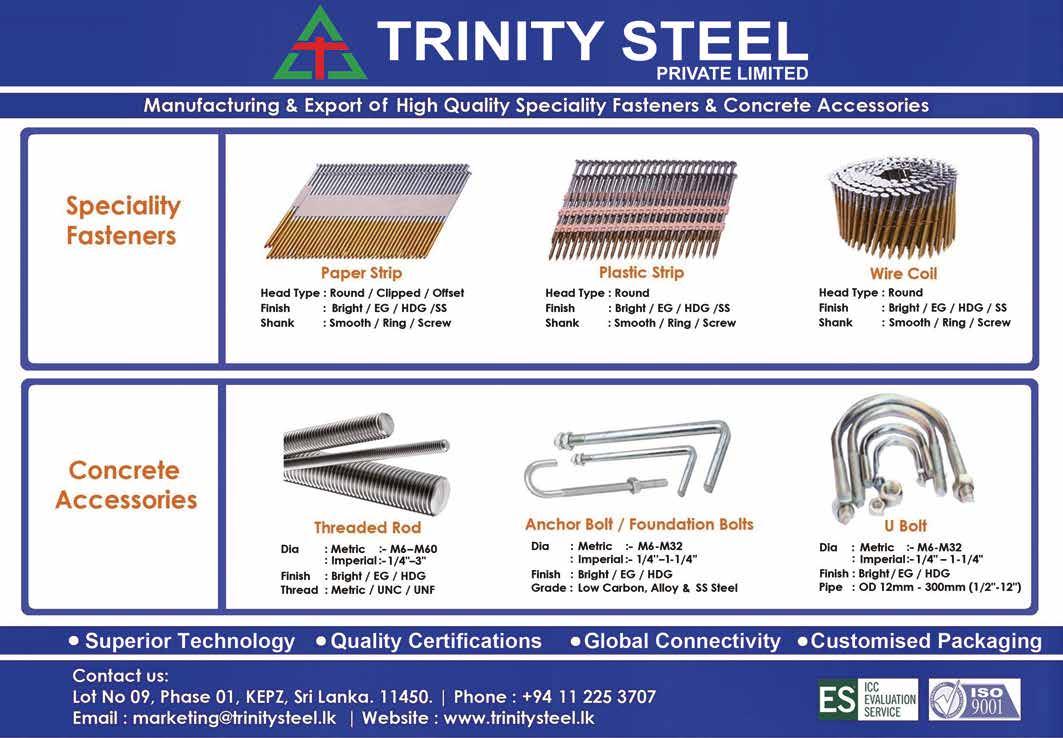
157 TRINITY STEEL PRIVATE LIMITED (Sri Lanka)
Paper Strip, Plastic Strip, Wire Coil, Threaded Rod...
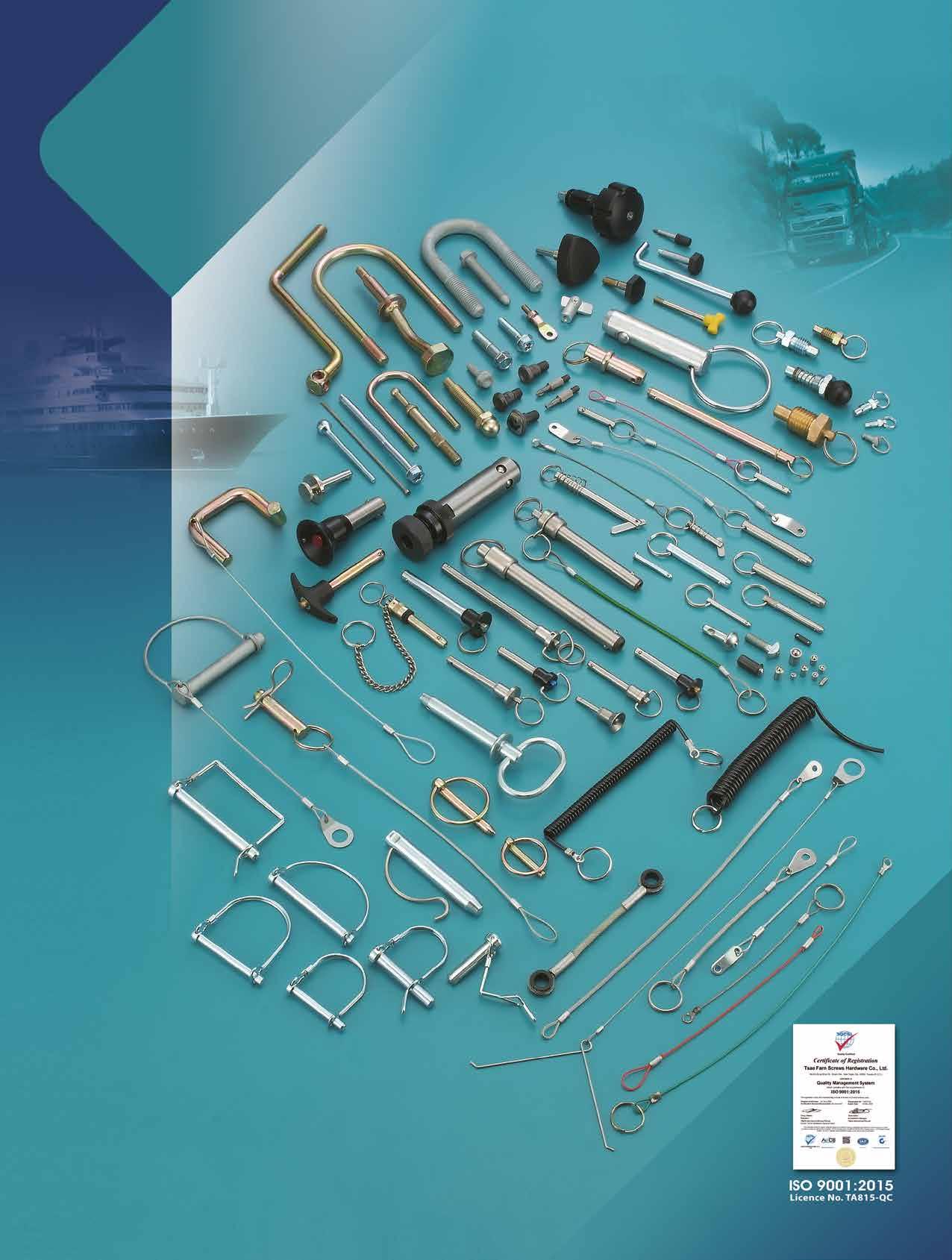
117 TSAE FARN SCREWS HARDWARE CO , LTD 采凡
2 Cap Screws, Aircraft Nails, All Kinds of Screws...
105 TSENG WIN 成盈
Ceiling Anchors, Cut Anchors, Drop-in Anchors...
169 VAJRA POWER INDUSTRIES, INC 金和鋼
Insert Bits, Power Bits, Bit Sets, Bit Holders & Adapters, Nut Setter...
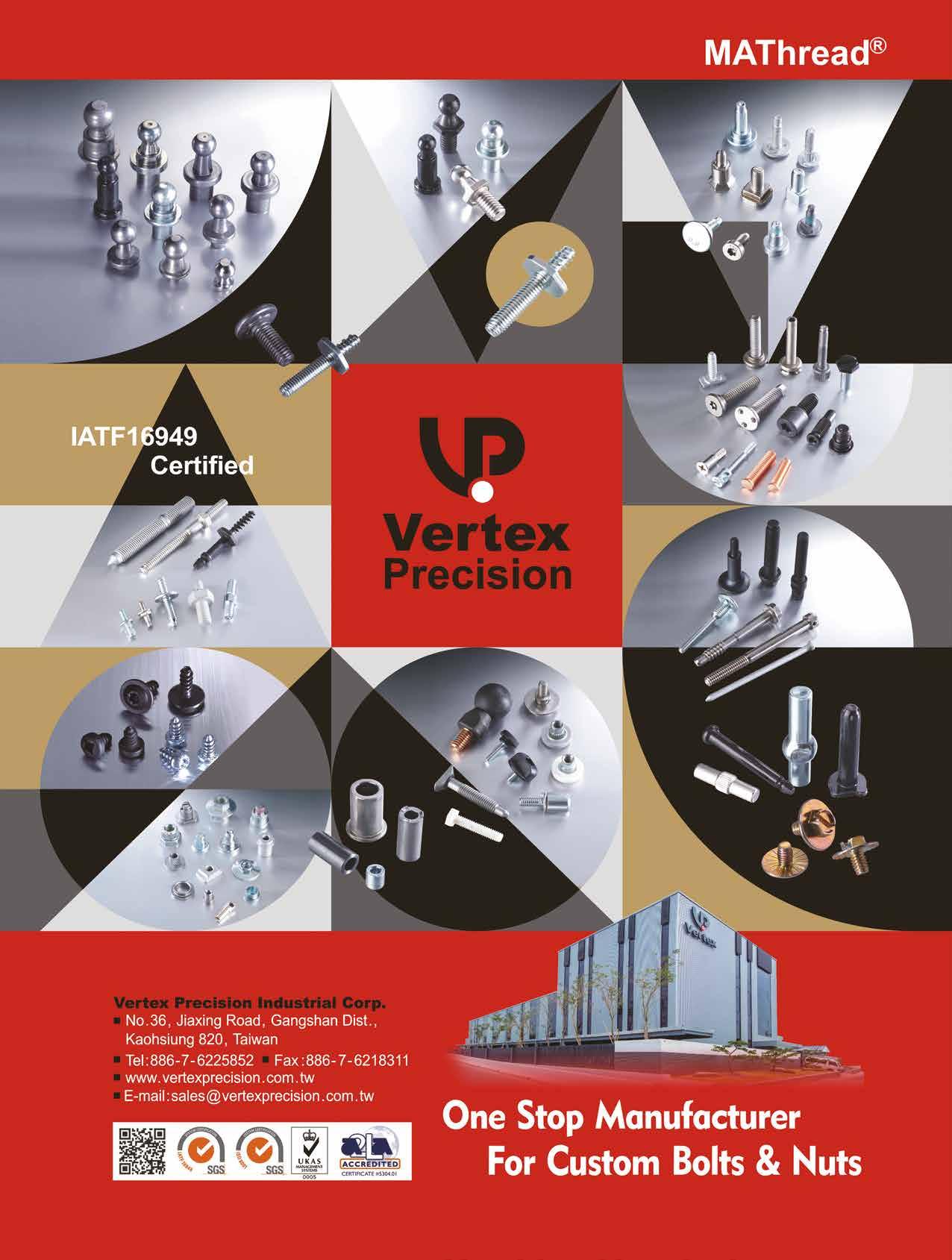
55 VERTEX PRECISION INDUSTRIAL CORP 緯紘
6 Cuts/ 8 Cuts Self Drilling Screws, Barrel Nuts, Cap Screws...
185 WAN IUAN ENTERPRISE CO , LTD 萬淵
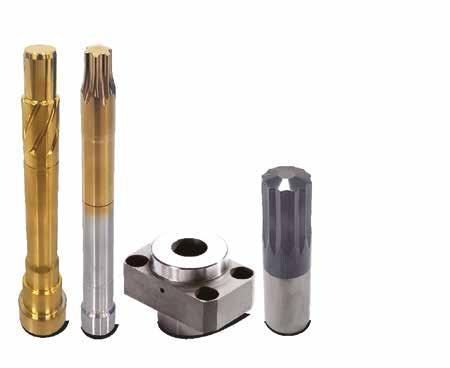
Punches/Dies of Various Nuts, Screws, Sleeves and Socket Boxes
46 WE POWER INDUSTRY CO , LTD 威力寶
Chipboard Screws, Concrete Screws, Drywall Screws...
259 WEI CHAN CO , LTD
Wire-drawing Dies, Nut Dies, Special Dies...
151 WEI ZAI INDUSTRY CO., LTD.
Anchors, Automotive Nuts, Cap Nuts, Flange Nuts...
62 WINLINK FASTENERS CO., LTD. 岡山東穎
Stainless Steel Screws, Flange Bolts, Security Bolts, SEMS Screws...
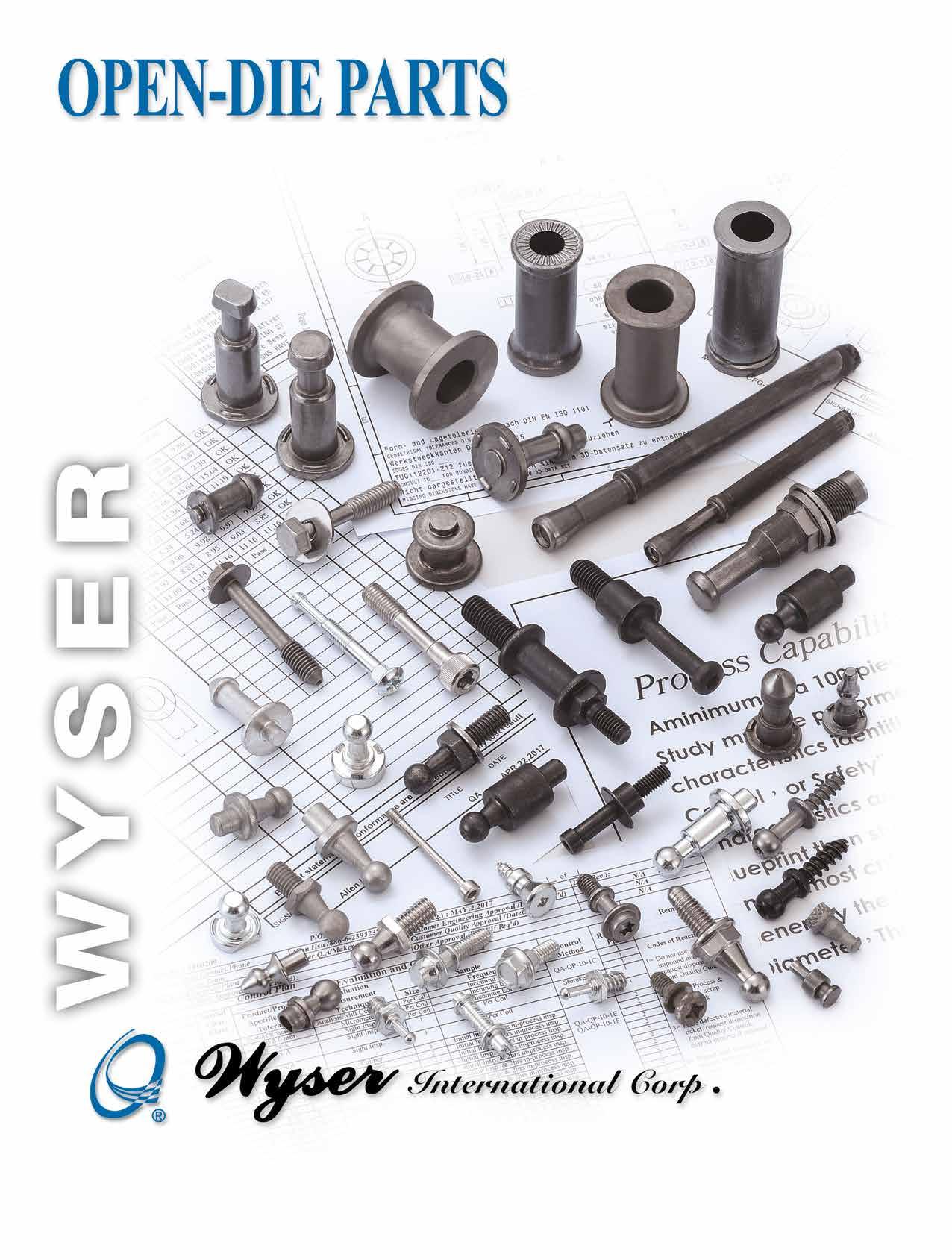
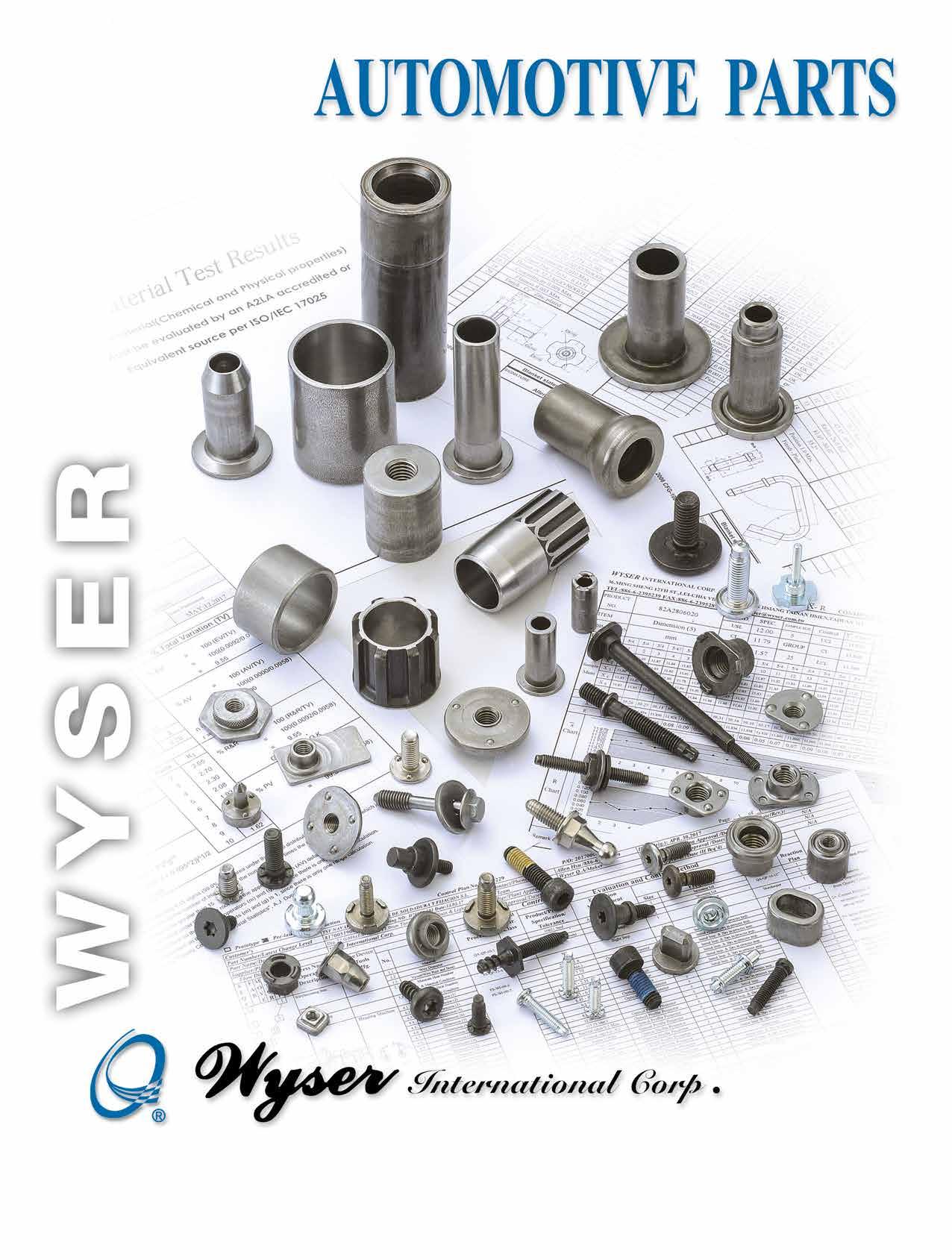
20 WYSER INTERNATIONAL CORP. 緯聯
Cage Nuts, Cap Nuts, Clinch Nuts, Acme Screws...
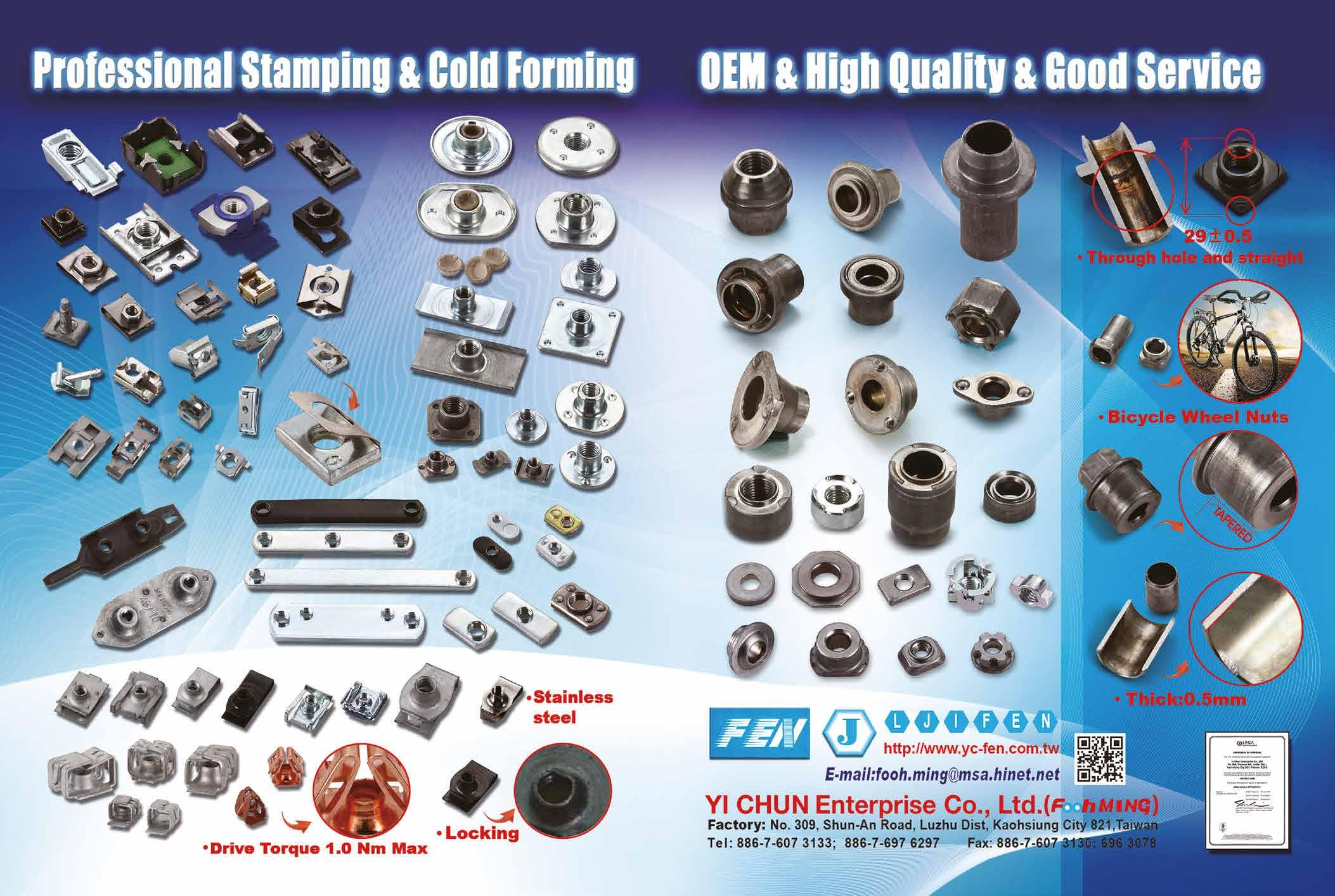
30 YI CHUN ENTERPRISE CO., LTD. 誼峻
Cap Screws, Socket Set Screws, Cage Nuts, Automotive Parts...
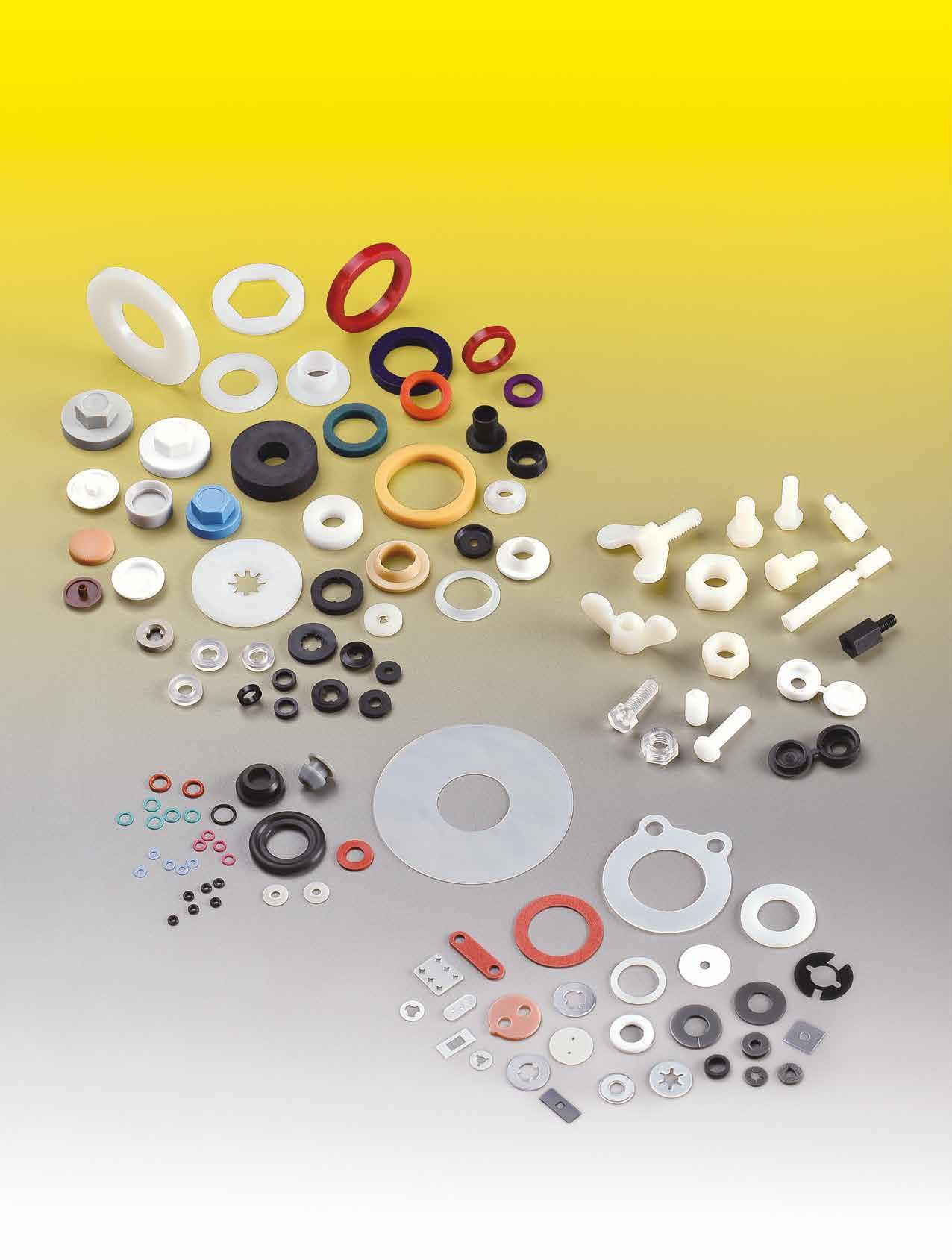
65 YI HUNG WASHER CO., LTD. 益弘
Rubber Washers, Plastic Screws, Custom Washers...
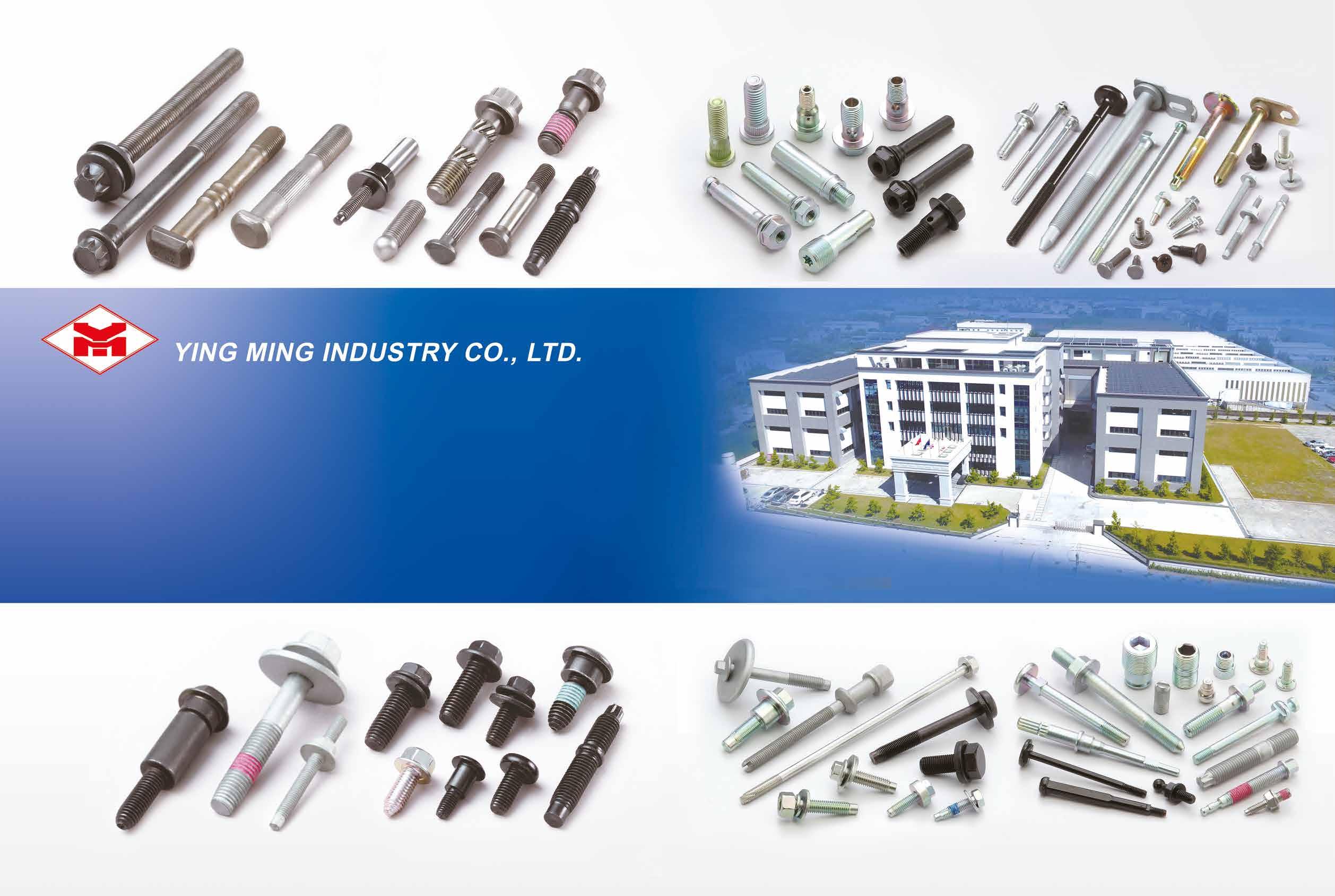
102 YING MING INDUSTRY CO , LTD 穎明
Automotive & Motorcycle Special Screws / Bolts...
272 YOW CHERN CO , LTD
Flanged Head Bolts, Chipboard Screws, Floorboard Screws...
84 YUH CHYANG HARDWARE INDUSTRIAL 鈺強
Automotive & Motorcycle Special Screws / Bolts...



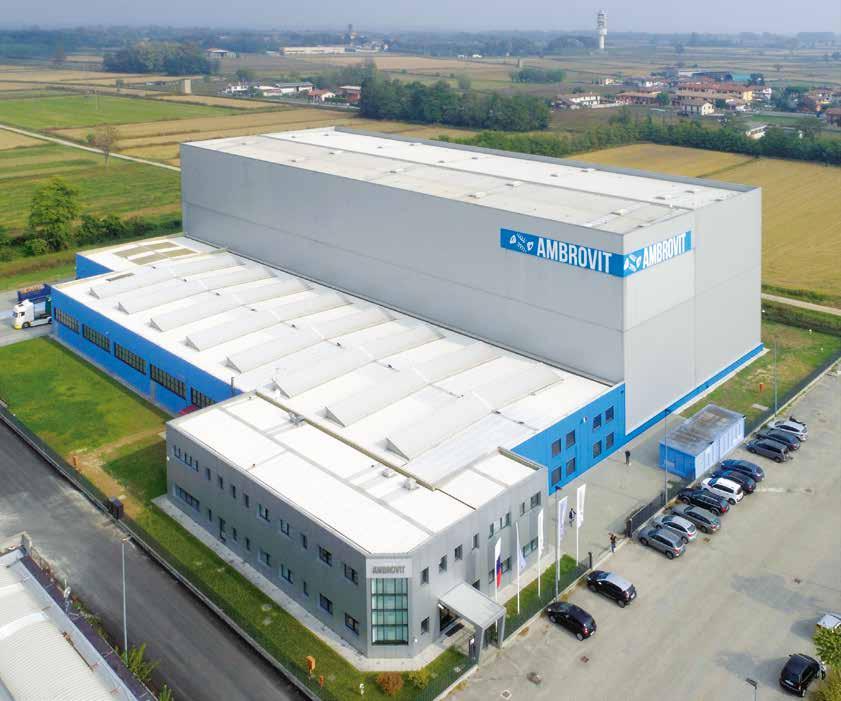









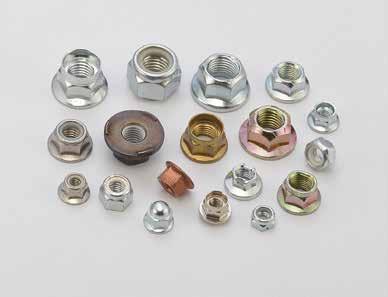
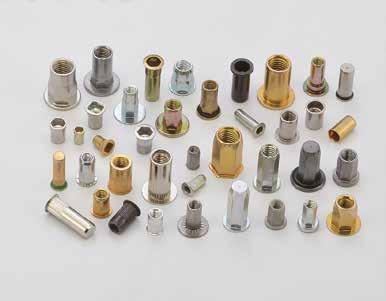
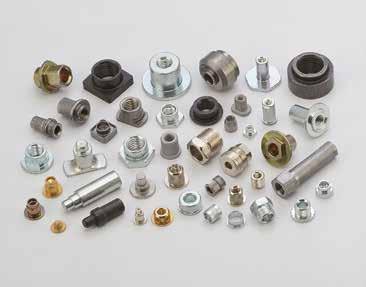


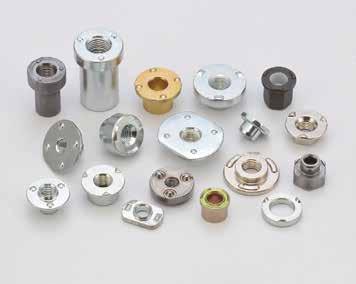











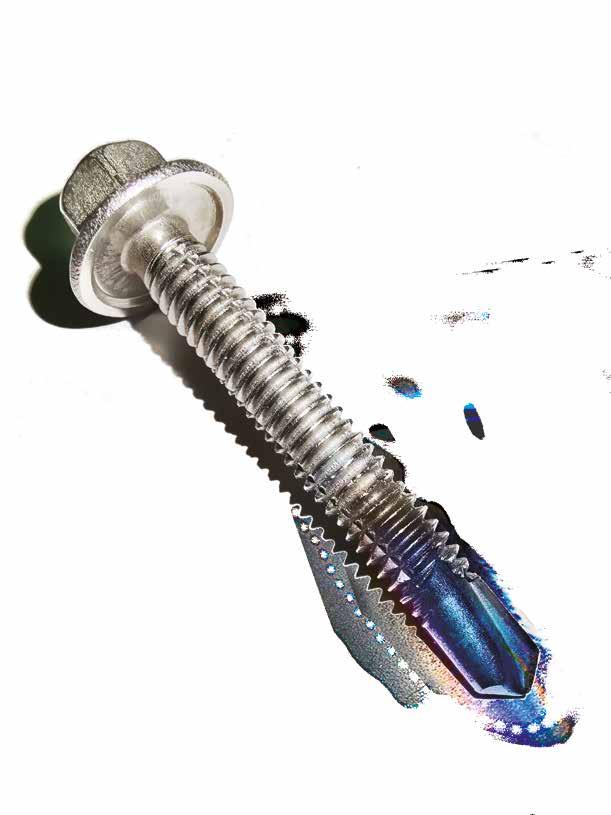
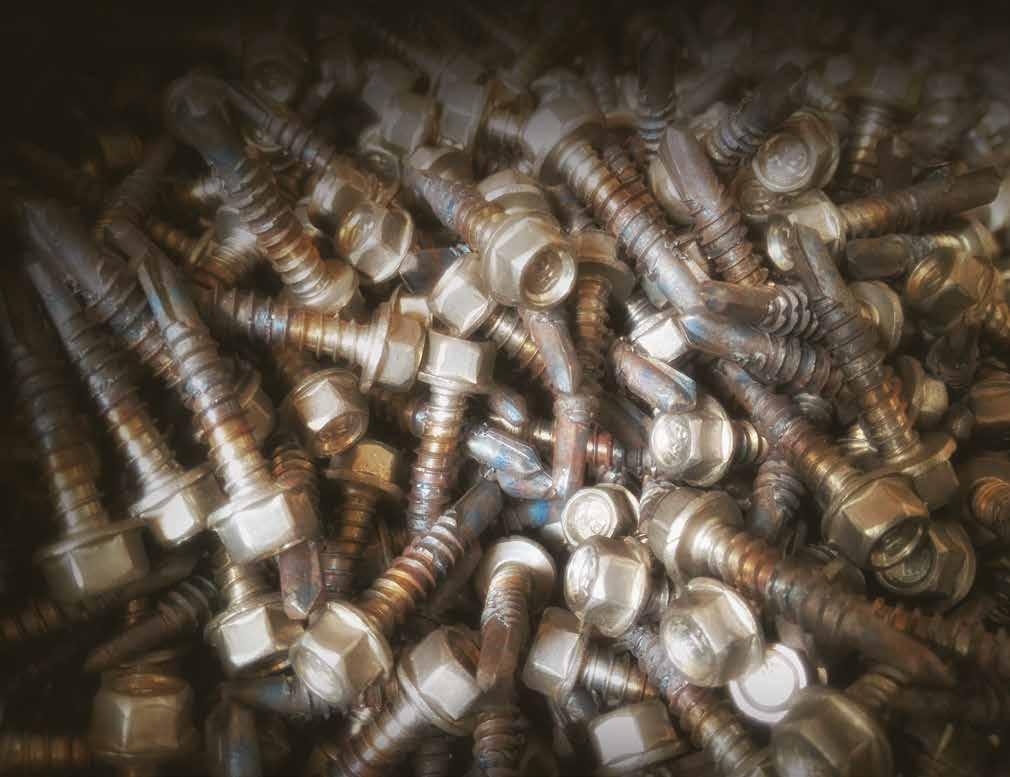

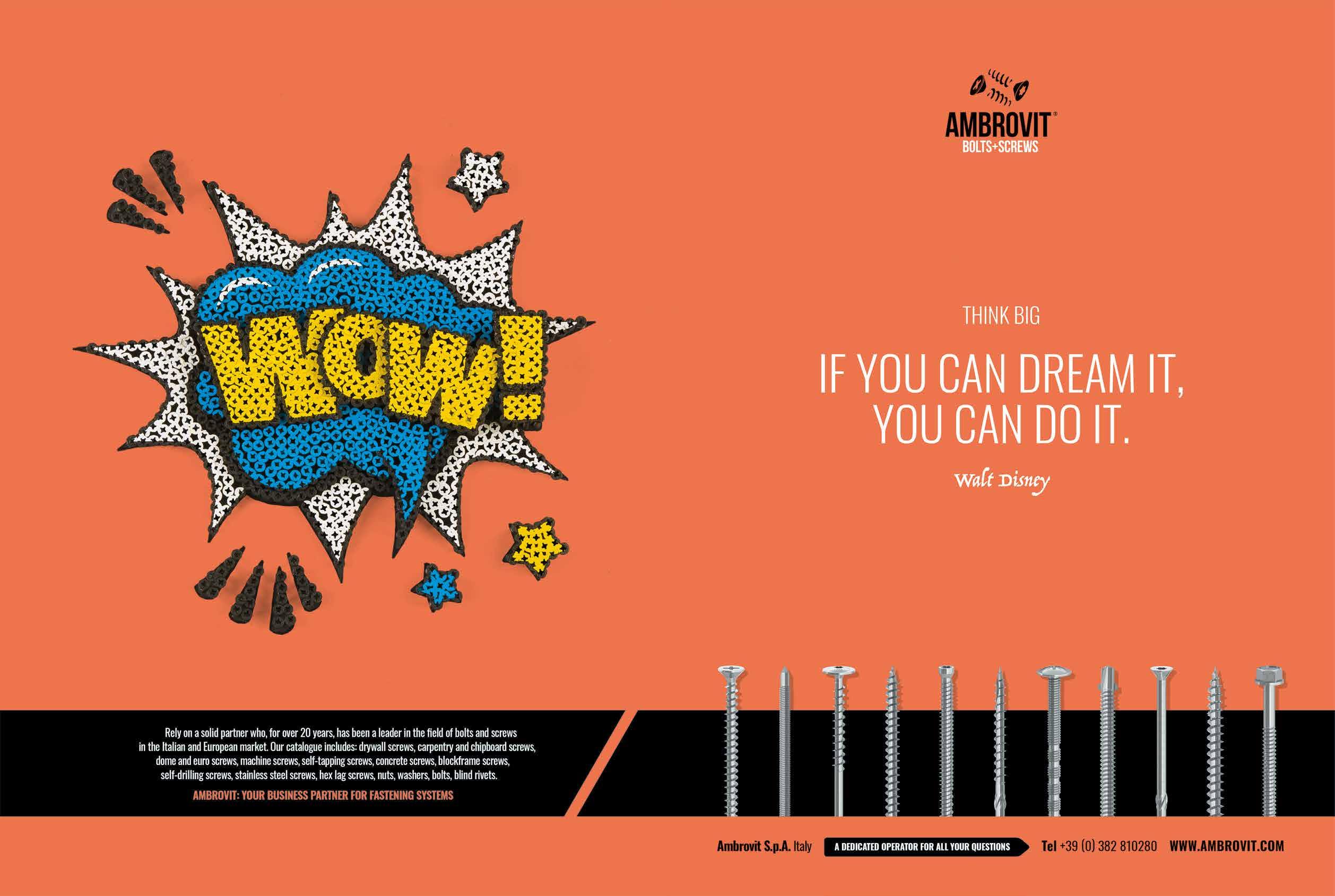
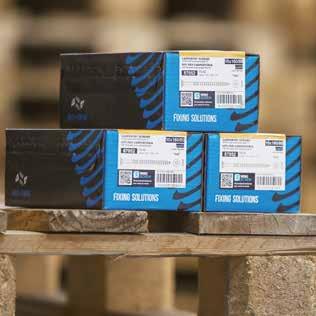
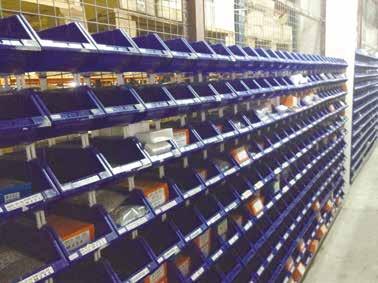
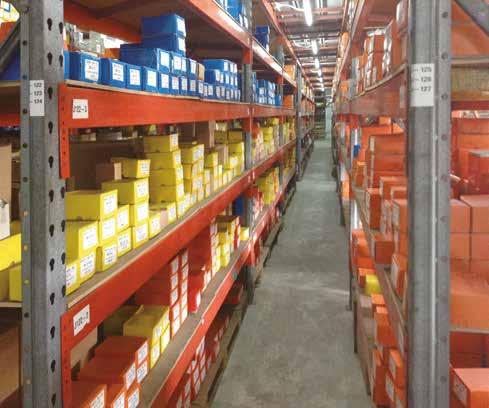
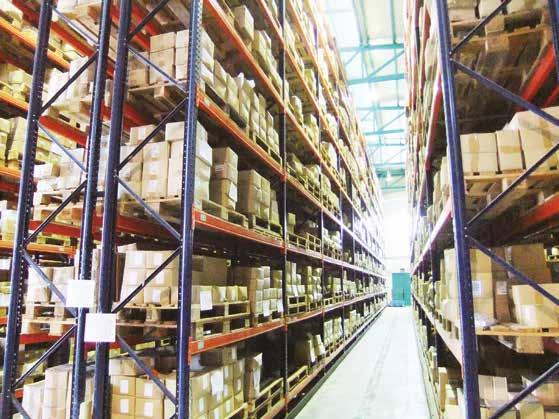
Ambrovit is a leading company in fastening systems, an Italian entrepreneurial reality that looks to the future with confidence, believes in the Italian and foreign market, with continuous development in technological research, product, growth, and adaptation in the automation, without leaving behind the adaptation to the new logics of communication and the quality of both our product and customer service.
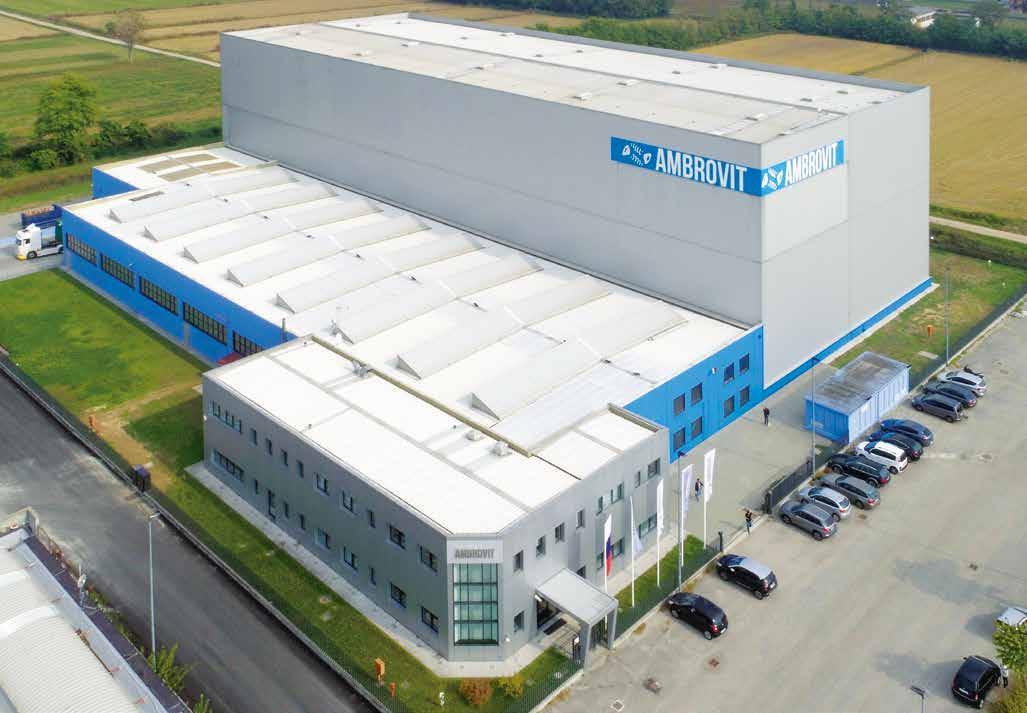
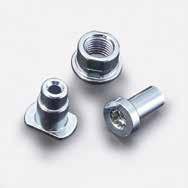
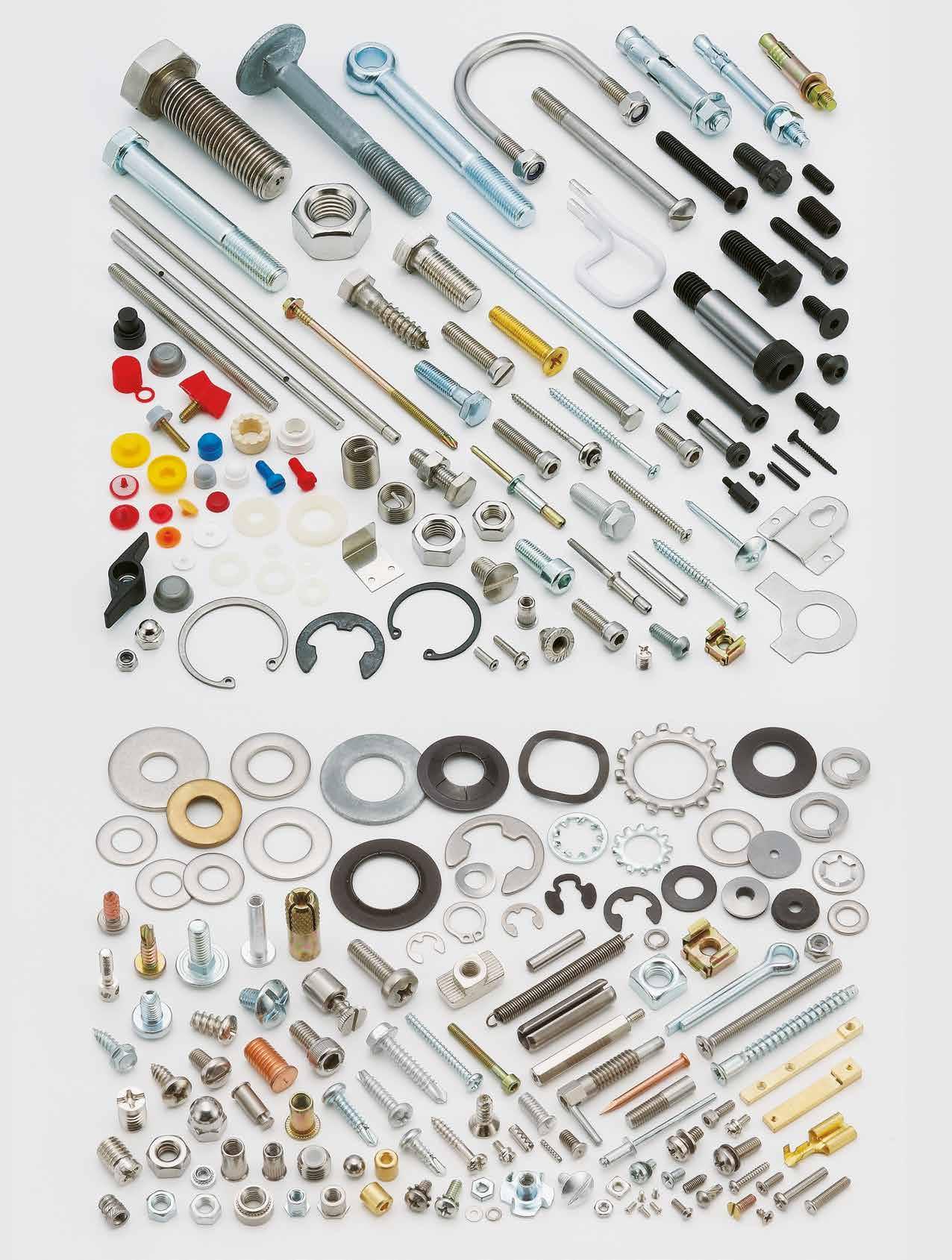
With an extremely wide catalogue of articles that are constantly being updated, Ambrovit offers products that are increasingly innovative in terms of both technology, materials and finishes.
Every professional sector can find in the catalogue what is necessary to carry out every job, from carpentry to construction, from mechanics to wood.
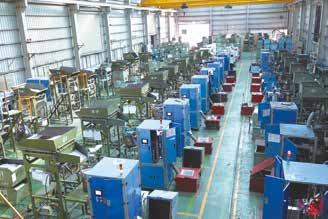
But if a high-performance, high-quality product is essential to be a market leader, the continuous adaptation of the infrastructure to make logistics quick and punctual is no less important. It is therefore a natural consequence that Ambrovit periodically adapts its automation lines to the constant increase in market demand, so that the customer can benefit from a perfect service, with fast delivery times, without inaccuracies, knowing that he can count on a reliable partner.
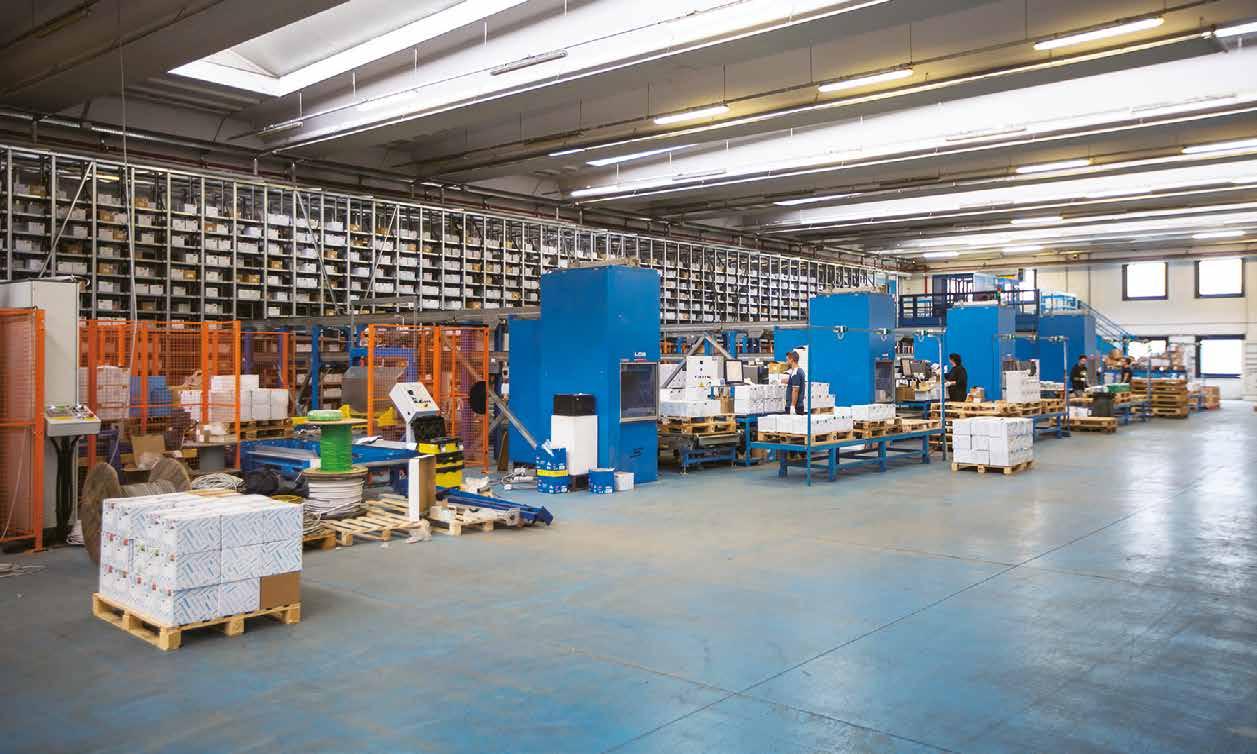
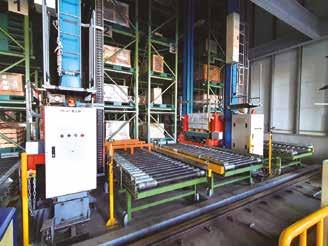
In order to have a catalogue of thousands of products ready for delivery, it is also necessary to have an adequate, easily accessible and perfectly organised warehouse.
For this reason, Ambrovit has doubled its warehouse and management robotics with the most up-to-date technology on the market today.
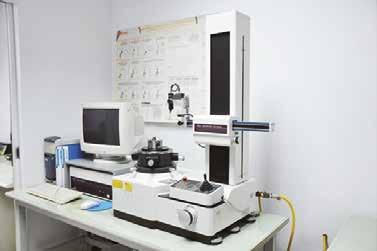
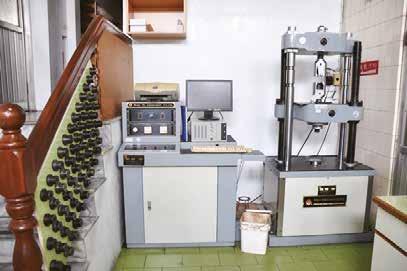
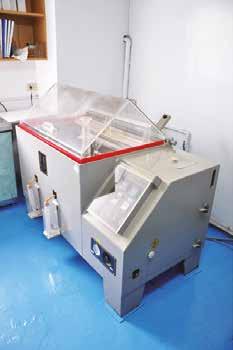
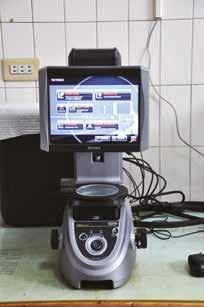
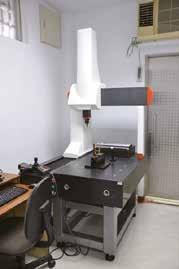
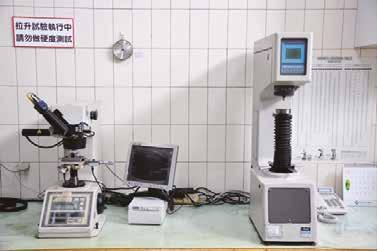
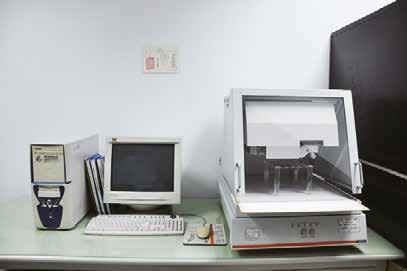
All the products in the catalogue are constantly tested in the renovated technical and experimental laboratory dedicated to quality control with the most sophisticated equipment, a further guarantee for the customer who can then interact with the company to obtain useful information for use, based on needs.

With a large market, which today includes almost all European countries in its portfolio, achieving international standards and having all the most important European certifications is an obligation and essential objective that Ambrovit has pursued in recent years. The certifications obtained are a satisfaction for Ambrovit, for its work and commitment.
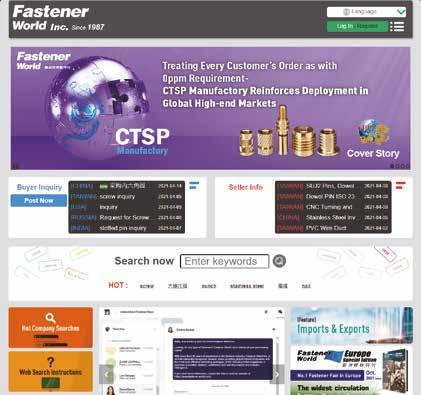
The ever-renewed portal www. ambrovit.com is an important working tool for dealers, where they can find all the technical information and types of Ambrovit products. The portal contains various topics and information, such as the interactive catalogue www.catalog.ambrovit. it/, which is clearly laid out and easy to consult, and is a fundamental working and sales tool for Ambrovit customers.
































































































by Gang Hao Chang, Vice Editor-in-Chief of Fastener World ,,
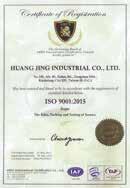
Founded 25 years ago, Huang Jing Industrial Co., Ltd. has grown from a small factory of around 330 sqm to a large plant with warehousing, packaging, and manufacturing operations in Kaohsiung (Taiwan). Much different from its industry peers, it started business first from accepting orders placed by Japanese customers wellknown worldwide for their strict quality requirements. Thanks to strict requirements of Japanese customers on compliance with int’l standards and years of collaboration with these customers, Huang Jing has not only obtained a wide knowledge of int’l standards and work procedures, but also has taken the lead in product manufacturing, quality & manufacturing procedure control, and customer service for years.
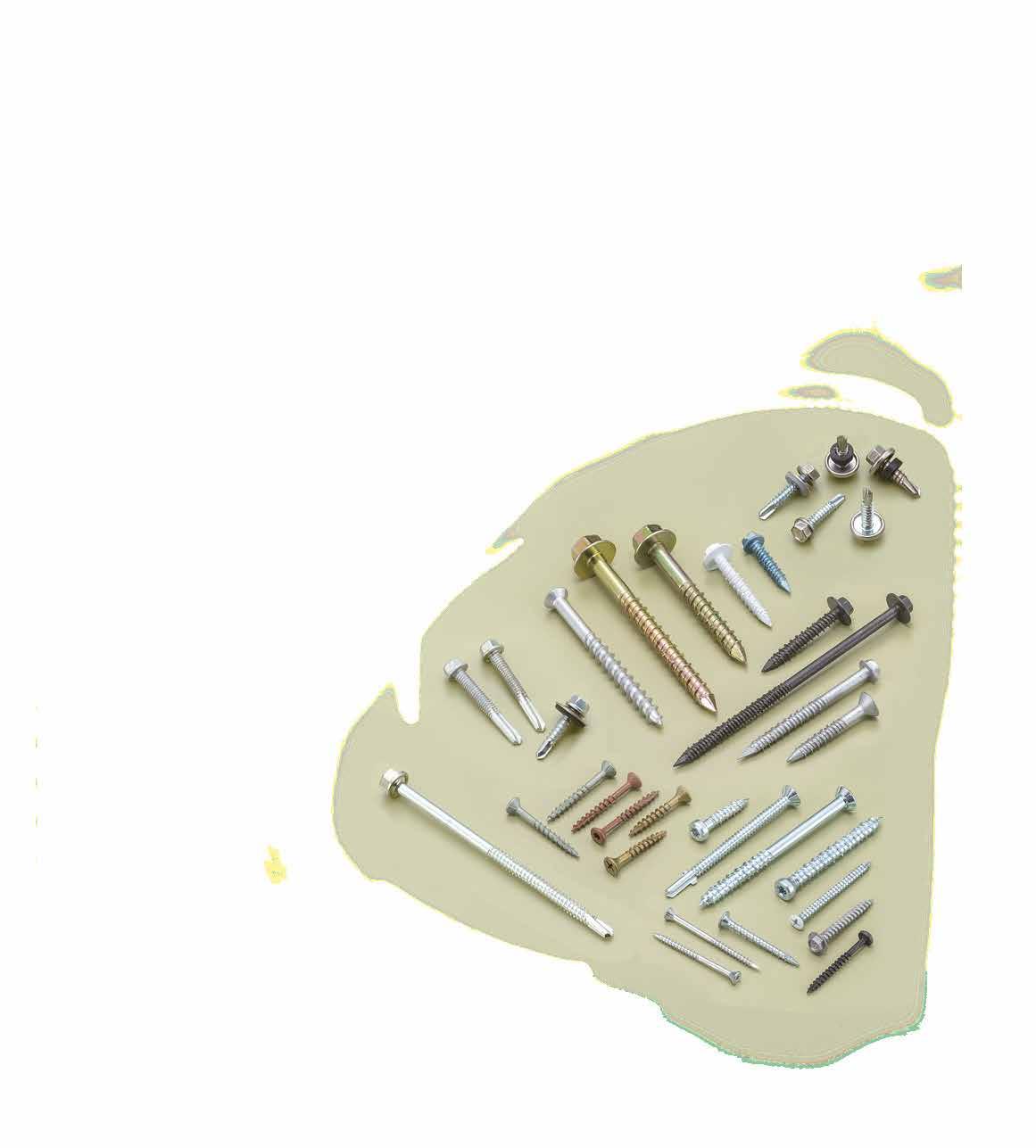
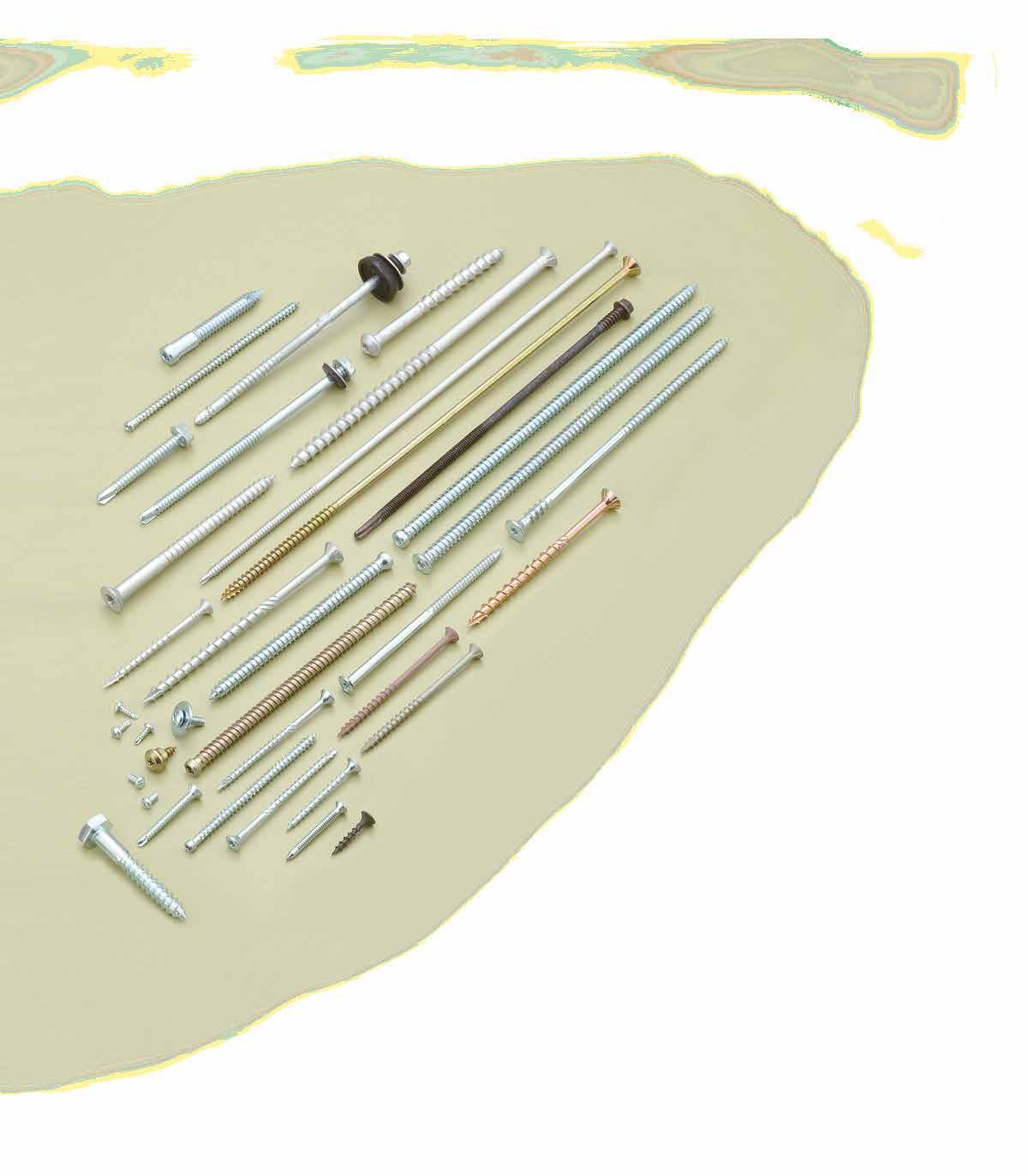
Dedicated to the OEM production of small construction screws, Huang Jing is capable of offering drywall, self-tapping, bi-metal, and many other small screws applied in construction. Besides those general specs, it can also produce as per customer’s drawing (available specs from M2.0 to M16.0). With the synergy between its own plant and associate factories, it has increased its average monthly capacity to 1,200-1,500 tons and maintained long-term collaboration with many Taiwanese traders. To look into the customers register of Huang Jing, it is not difficult to find a customer working with it for either 10 or 20 years, not to mention the fact that lots of them are from European, U.S., and Japanese markets. The loyalty of its customers is quite impressive and rarely seen these days when costs are always put in the first place.
“What customers care about the most are basically prices, quality, technology, and services. What makes us formidable is that we can always fully satisfy customers’ requests in these parts, or even go beyond market standards. The ongoing order placements and positive feedback are the best proof of our customers’ recognition,” said Jimmy Chen, Vice President of Huang Jing.
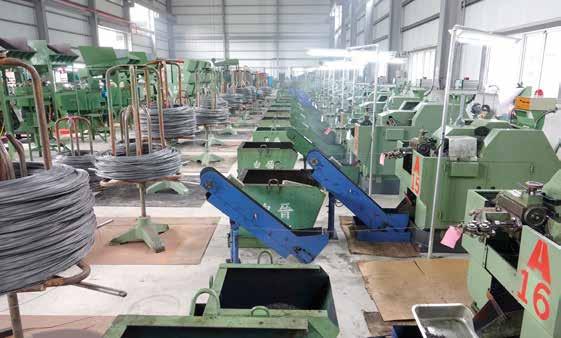
“If an int’l standard requires the tapping speed within 1-2 seconds, for certain customers we can even make it better to within 0.5 second,” VP Chen said with confidence. As construction screws are usually fastened by hand in most cases and places where they are being fastened may be insecure, so if the tapping speed can be faster, the safety for users will be also further ensured. All these words clearly demonstrate the fact that Huang Jing considers itself not just a purveyor, but a company highly committed to customers. Huang Jing even actively introduced straightening machines only for a customer’s long screw order in order to ensure screw straightness and avoid unsuccessful fastening, which has not only made it win the customer’s high rating, but also uplifted its competence in the market. It has also received a Supplier of the Year award from one of its customers in recognition of its outstanding services.

In addition to competitive prices, Huang Jing also works with associate factories hiring many senior technicians with 15+ years of experience, so it is capable of satisfying customers’ demands for various processes and post-manufacturing treatments. Maintaining good relationship with materials suppliers to ensure uninterrupted supply, Huang Jing only uses materials from Taiwan CSC and also invested heavily in replenishment in advance for certain longterm customers. “If a customer is in urgent need, we can ship in time and help alleviate the customer’s inventory burden, which is one of the added values we can offer. Despite high shipping cost, we can also help customers create the best balance between prices and quality,” said Chen.
He added, “For long we’ve been adhering to the strategy of keeping production in Taiwan and working with associate factories to fully satisfy customers’ demands. During these months we’ve seen continuous growth in orders from Europe, USA, and Japan, so we also hope to add more equipment to streamline our work efficiency and further improve our quality, service, and supply. Always stepping forward while facing challenges and working with associate factories to win customers’ trust and share risks have been our everlasting mission statement over the past years.”






by Dean Tseng, Fastener World
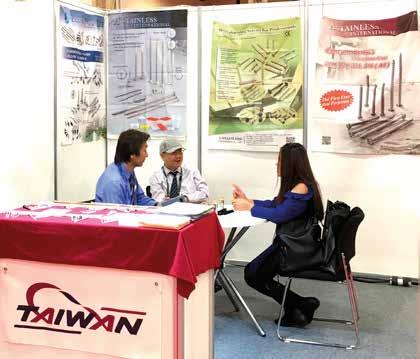
President Howard Tsai has had nearly 40 years of experience in the fastener industry. He co-founded A-stainless with General Manager Asser Liu in 1988 which mainly develops and exports special wood screws, industrial SEMs screws and construction screws. For more than 2 decades the company has served a wide array of clients. It can manufacture IFI/DIN/ISO/JIS/BSW-compliant standard products as well as customized products as per drawings. It can also develop patented products that are time-saving and fit for purpose with powerful functions.
The company’s special products are patented in Taiwan, the U.S., Europe and Japan. The thread design of its Square-Thread screws and Double-Spiral screws for instance lowers 40% of drive-in torque compared to chipboard screws, completes the job with less effort, and decreases the chance for head rupture due to insufficient hardness and torque as the stainless steel screw drives in the workpiece. The design is favored by clients and triggered mimicking by rivals.
Besides several patented wood screws, A-stainless develops and manufactures self-drilling screws. Since forged-point production which is ubiquitous across the industry in the past decade has had problems on unstable tapping speed, the company collaborated with machine companies to develop a special cut-off
General Manager Asser Liu
E-mail: astainless@hibox.hinet.net
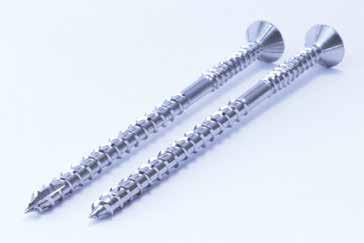
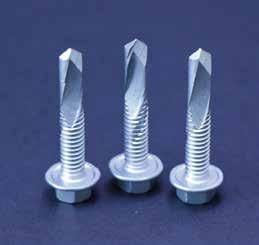
machine for manufacturing Milled-Point screws with a highly stable tapping speed. A drivethrough test confirms that the Milled-Point screw delivers more stable tapping speed, drives through more efficiently and through thicker workpieces as compared to forged-point screws.
Besides product development, A-stainless has been authorized by a world-renowned header punch company to manufacture the special patented ttap® header punch, empowering its products with more functions and competitiveness. Furthermore, the company invests in an wire drawing plant that manufactures 0.2-10mm stainless steel wire products including cold-headed wires for screws, spring wires, mesh wires, and EPQ Wires. It not only works on integrating upstream and downstream production to control screw material quality, but also provides clients with more diverse service.
The U.S./China trade war and the COVID-19 pandemic in 2020 turned the Taiwanese fastener industry into a state of chaos. In 2019, the trade war made American customers switch orders to Taiwanese and Southeast Asian countries and made the heyday for Taiwan fastener industry. In 2020, the outbreak of the pandemic made American and European customers withdraw orders and postpone shipment, causing piled-up cargoes and hiatus of production. Later on, the pandemic eased and American and European customers placed a myriad of orders to Taiwan that drove the capacity of local factories over the rooftop, and hence there was a chaos of material shortage. Thanks to vertically integrated production and clients’ trust, the company was able to tide over the crisis.

Looking ahead this year, A-stainless will continue to develop screws with new functions, increase capacity, train technical staff, and improve quality control to meet clients’ demand on service, quality, lead time and price.

In order to stimulate the economic development and industrial growth momentum of the domestic U.S. market, Biden’s administration has announced in late March 2021 the socalled “Infrastructure Plan.” This 8-year investment and employment improvement program which is worth US$2.25 trillion will be mainly focused on the infrastructure of railways, highways & bridges, electricity systems, and electric vehicles. Having been expanding its distribution network in U.S. market for more than two decades, TCI is also expected to become one of the major beneficiaries of the Infrastructure Plan.
TCI is said to be one of the best exemplary companies which has successfully transformed itself from a traditional manufacturer to a master distributor of industrial products. It is even called “the Amazon.com” among its industry peers. TCI is also proud to be the only stainless master distributor in the industry. Currently, TCI adopts a distribution strategy of “70% from domestic production and 30% from import” for stainless steel products in U.S. market.
In 2018 TCI officially expanded its business to aluminum distribution by acquiring Alumax Milled Products in the U.S. Compared to other suppliers importing products subject to high tariff rates, TCI not only has successfully consolidated its leading position in U.S. distribution network, but also has had the advantages of inventory available at lower prices and localized production. Since TCI started its deployment in U.S. distribution network very early and the Infrastructure Plan of U.S. administration has been under way, TCI is very likely to achieve a remarkable revenue growth this year.
This company with tremendous strength completed successful transformation and made gross profit equivalent to its net profit.
“
I felt the pulse of the traditional industry at TCI!
Photos/ar t icle s provided by TCI
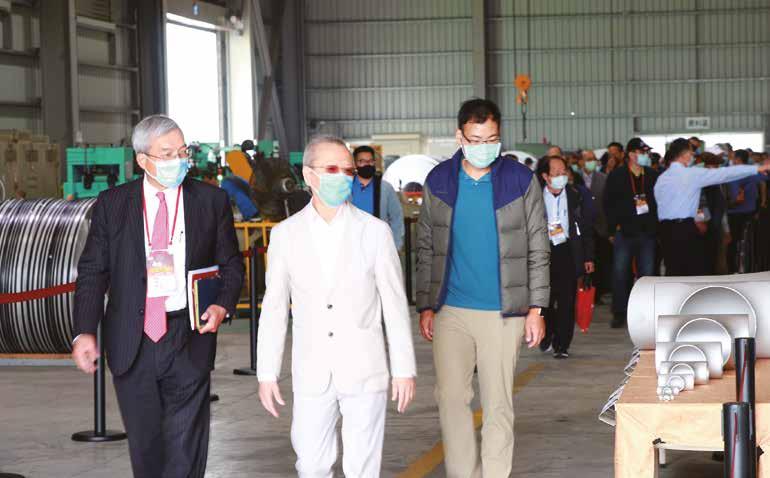
The main purpose of my visit to Tainan this time was not only to see the peripheral effects brought by TSMC located at Southern Taiwan Science Park, but also to call at some vibrant companies. During the visit, I arranged a special visit to Ta Chen Stainless Pipe Company Limited.
I received a cordial welcome from Ta Chen founder Mr. Robert Hsieh. Then, on a very early morning (at around 5:30 a.m.), he sent his nephew to the hotel I stayed to pick me up and drove me to Ta Kang Shan in Alian (Kaohsiung) for hiking. President Hsieh also invited all the directors and supervisors of the Group to go hiking with us. He spent his own money to maintain the cleanliness of the mountainous area and built 4 what he called the five-star public toilets, creating clean and tidy hiking trails for all people to enjoy. He goes hiking there on Saturdays and Sundays and appreciates the solemnity of Chao Feng Temple built 350 years ago.
I’d rather describe this trip as a walk with President Hsieh rather than a hike. It was a relaxing trip and we also had our breakfast together at a guest house of one of President Hsieh’s friends. Then, we drove back to the hotel and changed clothes for a factory tour and briefing at TCI.
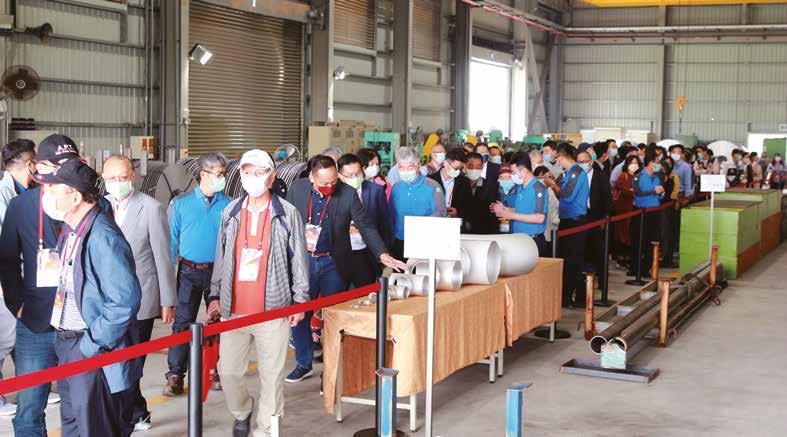
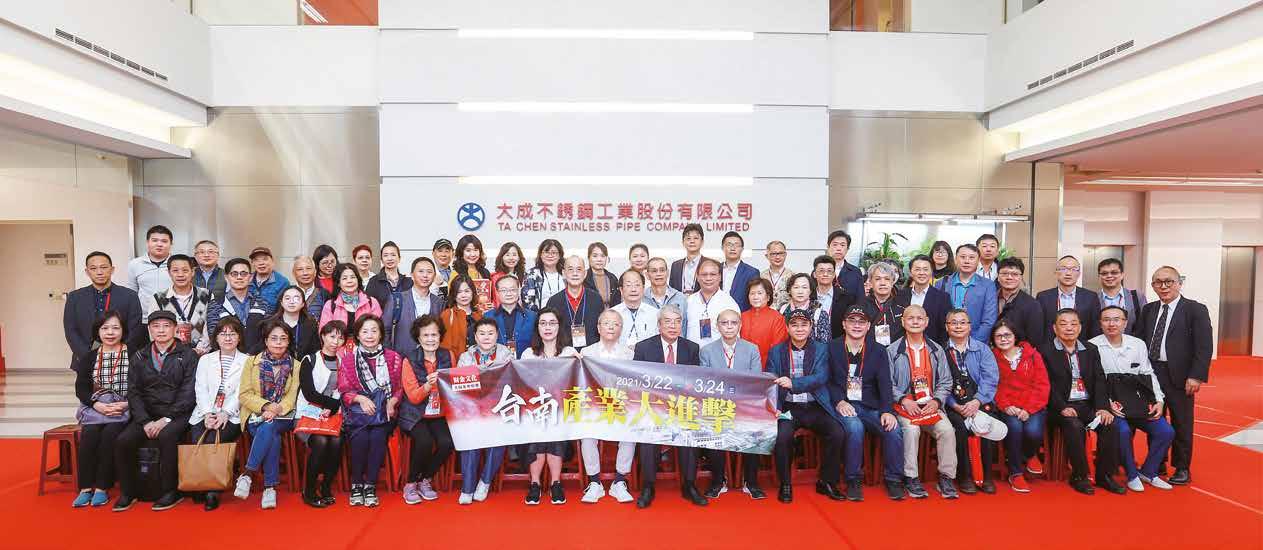
On a podium, President Robert Hsieh presented to the audience his corporate development strategy with very detailed figures. He told us that in the supply chain of industrial products, the profit margin of distributors is much higher than all the manufacturing cost of producers. As a result, Ta Chen spared no effort to expand its distribution network, making it large enough to reach an economy of scale and reaching the gross profit margin equivalent to its net profit. What he has adopted is a Quiet Managing Strategy to get the real-time intelligence updates of the Group’s global operations. President Hsieh once introduced this way to Taiwan President Tsai, Ing-Wen and was greatly praised by her.
At noon, President Hsieh invited all guests to enjoy lunch with him at Ta Chen’s staff restaurant serving vegetarian and healthy cuisine with very good taste. In this restaurant, staff can have their lunch for free and can even take some cuisine away after 12:30 p.m. This restaurant serving lunch to staff has been open for 8 years. Every staff there gives a big thumb to it.
The nearly 70-year-old President Hsieh founded TCI and BBI. He is fully dedicated to his work, treats all employees as his family members, and always stands in the forefront to lead the Group. Today, I witnessed the vibrant energy of Ta Chen and the implied meaning of how an ideal company to work for should be!
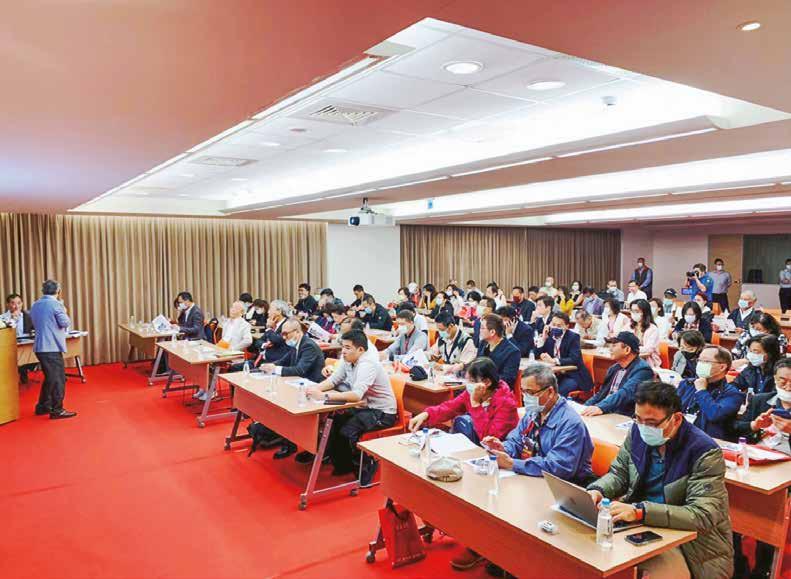


Ta Chen International, Inc. ("TCI" or "the Company") is a leading master distributor of stainless and aluminum coils, sheets, plates, long products, tubes and PVFs. TCI is an industry leader in inventory depth, breadth and availability and efficiently serves over 3,000 customers in the U.S. through 8 strategically located warehouses. Founded by Mr. Robert Shieh in 1989, TCI entered the US market as a newcomer to the stainless steel distribution business. Within 10 years, the Company has grown from a small operation in Los Angeles to become the largest and most recognized name in Stainless Master Distribution in the United States. TCI bought Brighton-Best Socket Screw Mfg. in 2008. Brighton-Best Socket Screw continued to open distribution centers in the USA, UK, Brazil, New Zealand, and Australia. Brighton-Best is currently located in 31 locations in 6 countries and supplies over 7,000 distributors throughout the world.
The founder of “BUSINESS TODAY”. He is currently the consultant of Taipei City Government and the guest professor of CTBC Business School.










2,468.61
20,125.39


























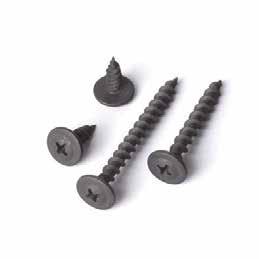
by Dean Tseng, Fastener World

The end of 2019 was a dividing line on Taiwan’s fastener sales. It was followed by the outbreak of COVID-19, and starting from the second quarter of 2020, we had been told by numerous fastener companies about their plummeting sales. This is something that will undoubtedly manifest in the annual revenues and EPS of public fastener companies. This author rounded up performance indicators of these public companies into the following chart, through which we will compare the numbers for a glimpse of what the chart has to reveal.
Source: mops.twse.com.tw
Tycoons dominated the ranking in 2019 with the highest revenue, but fell around 30% in the year of pandemic outbreak and was outpaced by Tong Ming. However, Tycoons’ EPS jumped dramatically from minus 1.42 to minus 0.39, greatly diminishing the company’s deficit. Tong Ming already made it to the revenue of NTD 8.8 billion in 2019, and continued progressing 4% to NTD 9.1 billion in 2020 when the pandemic became severe.
One of the entrants in the chart with the largest growth margin in revenue is OFCO, up 59% from NTD 1.1 billion to NTD 1.8 billion with the EPS increasing by nearly NTD 1. The next that follows is Sheh Fung growing 24% from NTD 1.8 billion to NTD 2.2 billion in revenue but with a smaller EPS growth margin. Sheh Fung was followed by Chen Nan Iron Wire with the revenue up 15.1% from NTD 1.5 billion to NTD 1.8 billion and the EPS increasing by nearly NTD 1.
The entrant with the largest revenue drop was the Asian aerospace fastener leading supplier NAFCO which plummeted by nearly 40% in revenue and was down NTD 5.5 in EPS but still managed to keep the EPS for 2020 at NTD 1.14, above the NTD 1 mark. It is no news that the world’s aviation industry was almost to the point of being beheaded by the pandemic last year. NAFCO managed to pull itself through and it still has the opportunity to turn the tables. Among the 17 entrants, 4 have increased their revenues and 13 have decreased their revenues, the majority of which took an impact on their revenues. Additionally, 9 out of the 17 entrants reported decreased EPS, which means half of the 17 lost pretty much profit margins last year. However, the EPS of the 9 entrants did not turn negative and it means they kept themselves resilient against the deficit during the pandemic.
Overall, Taiwanese public listed fastener companies shared a common impact on revenues and profits in 2020. Indeed, Taiwanese fastener industry was shrouded in a sentiment of market depression, but as we move into May 2021 and look back, we find ourselves as part of Taiwanese fastener industry are fortunate to have a stronger base and a continuously operating supply chain to weather the difficult time. The market sentiment now sings a different tune from last year’s. Steel demand and prices are surging, as are the inquires from abroad. The top priority now is to take back as much as what the virus has taken from us.







by Peter S tandr ing
In this author’s lifetime the population of the Earth has increased three and a half times to ~7.5 billion and is forecast to become close to 10 billion within a few years. Clearly, given the finite resources this planet has and the increasing demands placed upon it, logic dictates that to survive, the human population must work together.
As a boy, I was fascinated by old maps showing a patchwork of small countries some having unpronounceable names. Many of these, as I learnt later, consisted of regional populations which, for one reason or another, simply refused to acknowledge each other’s existence. One solution to the problem of people not sitting together to discuss their differences, is to sweep lots of similar groupings into one large gathering and to give them all a seat at the same very large table. Such Federations, Associations, Unions etc., exist around the world and have even broader examples within the International Institutions of the United Nations, The World Bank etc..
The British Isles is an archipelago consisting of over 6000 separate islands which are often coloured pink on maps. In days long gone, having the largest navy in the world and a very large Treasury where many other countries also kept their money for safe keeping, the British sought to paint other places on the map pink as well. The purpose, to establish trading monopolies. With the end of Empire, the only remaining pink places on the map outside the British Isles are tiny overseas Protectorates.
Great Britain, which is the largest island in the archipelago, consists of the kingdoms of England and Scotland together with the Principality of Wales. The second largest island is Ireland which includes the Irish Republic (Eire) in the south and the British Province of Northern Ireland in the north. Both England and Scotland are monarchies which currently have a Queen (Elizabeth II) as Head of State.
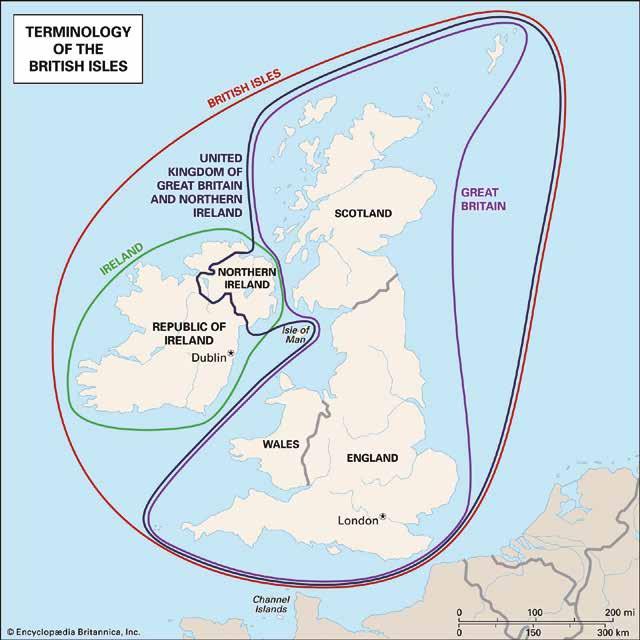



In 1973, the United Kingdom (UK), consisting of Great Britain (GB) and Northern Ireland (to give it its full title), joined the existing six nations which formed the European Economic Community (EEC). Over the resulting years, the EEC expanded to include 28 independent nations and was rebranded as The European Union (EU). This was to reflect its new Political as well as Commercial development.
On 31st December 2020, the UK became the first country to leave the EU. In so doing, it sought to end over 40 years of joint legal regulations and contracts relating to virtually all aspects of life.
As GB is an island, it has no direct borders with any countries of the EU. However, in the island of Ireland, there exists an unmanned border between the North and the South. Since the Brexit agreement ensures a, ‘free to travel’ border within the island of Ireland, it follows that all Customs checks must take place within GB and/or the sea ports of Northern Ireland. This is termed the Northern Ireland Protocol.
So, whilst many of the world’s leading trading economies are seeking to link their commercial activities to encourage the expansion of business, the UK appears to be moving in the opposite direction with regard to their closest and largest trading partner.
It is an interesting reflection on the topsy-turvy world in which we live that profound changes affecting the lives of millions of people can be made with just the stroke of a pen.
At the end of Empire, the UK, like other ex colonial nations, created a Commonwealth of those countries which had previously been within their judicial authority. This was and remains headed by the Monarch. However, in 1973, on joining the EEC, the UK was required to reduce its trading links with the former parts of its Empire. This author well recalls the Government pleas to UK business to create trading links with its new European Partners citing the large populations lying just off shore.
Post BREXIT, the same political pleas are now being made to develop trading links with any and everyone outside the EU trading bloc, particularly to those nations which continue to form part of the British Commonwealth. This is interesting given that many Commonwealth countries lost their largest trading partner when the UK joined the EEC.
Of course, the global Coronavirus Pandemic has had the effect of throwing virtually all human activities into slow motion.
The Big Tent terminology used to describe the home of a Circus, is very similar to the hypothetical table around which many political players are invited to sit and where their dissenting voices are rarely listened to.
In 1999, the UK Parliament passed legislation granting devolved powers to local administrations in Scotland, Wales and Northern Ireland. With the exception of Northern Ireland where the majority of the voting population wish to maintain their links to the British Parliament, the regions of Scotland and to a lesser extent Wales, see complete independence as a future political goal.
England does not have devolution and in terms of population, at over 80% of the UK is by far the largest grouping. Scotland has less than 10% population, Wales ~5% and Northern Ireland ~3%.
However, in this particular trading situation, the relative size and distribution of the population is perhaps of less importance than the respective regions of the UK which they occupy.
For BREXIT, this has had the very desirable effect of easing the demands on its roll-out. Given the apparent lack of preparedness of virtually everything, it is impossible to speculate what might have occurred if all travel, transport, communication, manufacture etc., had been functioning as it did in 2019.
But, as the saying goes, we are where we are and, like the Circus, the show must go on. So, the Ringmaster, consummately attired in his bright red coat and wearing a tall black hat, strides purposefully into centre stage and cracks his whip to attract attention. “Ladies and Gentlemen”, his rich voice intones, “Today, we have a show for you unlike any seen before. Our performers from around the World, consist of the biggest and best you have ever witnessed. So, I ask you all, to provide a huge round of applause for what is to come.”
In Scotland, which could vote to become an independent nation within a decade, the BREXIT vote was strongly in favour of the UK remaining inside the EU. This was also the case in Northern Ireland. However, in Wales and England, the popular vote was to leave the EU.
Were Scotland to vote for independence from the UK, then it is likely they will seek entry to the EU. Being located close to Scandinavian countries, it is clear that direct access by sea from and to Northern Europe would present no problem.
In such a scenario, there would have to be a new series of border customs posts at all land crossings between Scotland and England. This would also be the case with all the entry ports for local trade. The same would be true for Wales if the population there were to obtain independence from the UK.


This situation concerning what might happen if the UK were to be replaced by their individual component entities acting independently is currently being played out between Northern Ireland and The Irish Republic (Eire).
The Irish Republic and the UK joined the EEC at the same time in 1973. This of course meant that all trade between the two countries was regulation and tariff free.
Although borders were open for trade, the roads between the north and south of Ireland were controlled by the British Army. This situation continued until the Belfast Agreement was signed in 1998 ending the so called ‘Troubles’.
The BREXIT negotiations were conducted with the full agreement from all parties that there should never be a ‘Hard Border’ on the Island of Ireland. In essence, this meant that any goods could enter or leave The Irish Republic and/or Northern Ireland land borders without “customs” checks.
Clearly, to do this whilst maintaining cross border regulations would mean that any and all checks must take place before, or at the point of entry from GB into Northern Ireland.
This apparently simple requirement threw a huge spanner into the BREXIT negotiations. On the EU side, ‘free movement’ across the land border between the north and the south was a ‘red line’ situation. For the UK, since Northern Ireland was a part of the country, there could not be any borders between GB and Northern Ireland.
This seemingly insurmountable problem was finally resolved (in time for the BREXIT agreement to be signed) by introducing the Northern Ireland Protocol. The 63 page, closely argued text covers all aspects of trade in the special situation which exists in Ireland and Northern Ireland.
It naturally requires customs checks between GB and Northern Ireland which the UK Prime Minister stated could and would never happen. Just weeks after its rollout the First Minister of the Devolved Northern Ireland Government has called the Protocol “disastrous” and is demanding that it should be dismantled.
At the time of writing this article, litigation is being threatened by both the EU and UK in international courts relating to this situation.
An immediate physical consequence of the imposition of customs requirements between Northern Ireland and the GB mainland has been the very significant increase in sea ferry transport directly between EIRE and the EU, cutting out the previously favoured route into the EU through GB. Couple this with the growing cacophony of traders on both sides of the BREXIT borders bitterly complaining about unwanted documentation and unnecessary bureaucratic interference and the immediate fall off in business is not a surprise.
As in all new situations, over time, systems will develop to minimise the problems. However, in these early days, it is not unexpected to see people voting with their feet to circumvent what they view as obstacles.

So, into this apparent maelstrom of claim and counter claim often stirred by the political spin of hubris or predicted calamity, we have the real world of Fasteners.
As a move toward independence from the EU, the UK stated its intention to replace the EU, CE certification mark with its own UKCA mark. So, from 1 January 2021 the UKCA mark needs to be applied to goods being sold in the UK although a period of one year of grace has been extended before the CE mark is no longer valid. By a similar argument, the new UKCA mark will not be recognised within the EU. However, according to the BREXIT agreement, in Northern Ireland, products sold there must carry only the CE mark. Or, in other words, the UKCA mark is only accepted in GB not the whole of the UK!
At another level, UKCA and CE marks are obtained from Market Conformity Assessment Bodies. Those operating in the UK which for many years will also have served the whole of the EU, now find they are blocked from supplying the CE conformity marks they did before. In the same tit-for-tat manner, those companies working in Continental Europe which facilitate the CE mark are excluded from providing UKCA conformity.

The same situation also applies to Technical Approval Bodies which manufacturers use. A UK position is being considered by Government but has not yet been determined. For goods made in Northern Ireland, they can be sold within GB carrying a CE, UKCA or a CEUKNI mark which can be used when an approved body gives a certificate based on EU rules.
As the reader will have gathered at this stage, the whole area is like a new website displaying the sign, “under construction”. This author will make no attempt to enter this minefield. However, the following may be of help to those who need to?
First, determine if the product being ‘placed on the market’ requires a mark. This may relate to the manufacturer or a distributor selling further down the market.
Next, since the EU has spent years developing its regulations, begin with its Assessment and Verification of Constancy of Performance (AVCP) documentation. This includes, the Declaration of Performance (DoP) and the methodology required to obtain a CE mark. It follows, that until it gets its own act together, the UK will utilise the EU documentation it is familiar with until it is able to produce its own.
The reality of BREXIT is that in 1973 the UK needed the EEC more than the EEC needed the UK. For almost fifty years as a participating partner, the UK provided significant benefits to EU development. Not least of these were the mountains of documentation covering virtually all aspects of life.
As every business knows, you increase efficiency by sharing back office tasks. For a nation of ~65 million people, not all of whom agree with the national policy, to decide to rewrite, abbreviate, condense the documentation concerning how they should live simply to be seen to be different makes little apparent sense.
For goods manufactured in the UK and carrying a UKCA mark, the question to be asked is, will that provide a better marketing edge than they had before?
For the placement of goods into the UK requiring a UKCA mark, will that do more than increase cost?
And for the good folks who live in the no-mans-land of Northern Ireland, will they see more benefit in voting to join the south and remain in the EU as they voted to do during the BREXIT election?
The Covid Pandemic has had a dramatic effect on the UK economy not experienced since the 1940’s. However, in reducing demand, it has also decreased the possible strains which massive change always brings. What will follow is at the time of writing, anyone’s guess.
For those whose daily activities rely on stability, organisation and planning (particularly supply chain managers), it would appear that BREXIT has brought little to look forward to inside the UK. Change does bring opportunities but these always need to be identified and taken advantage of. Given the UK back office has yet to finish the selection/installation of much of its software programs, it would appear to be unlikely to hit the road running when the global economic recovery kicks in. For those unable to wait, the setting up of better supply chains inside GB may be the urgent answer? Unfortunately, a better crystal ball may provide a clearer picture but it can’t change what is in it!

Supply chain disruptions did not derail the FIN Fastener Stock Index in the opening quarter of 2021. The FINdex maintained its brisk pace during the quarter, climbing 9.6% compared to a 6.5% gain by an index of related industrial stocks.
Tree Island Steel achieved the highest stock gain during Q1, rising 72.4%. During 2020, Tree Island revenues increased 7.7% to $215.9 million due to higher shipped volumes. Gross profit increased to $25.9 million, and gross margin climbed to 12% from 8.9% in 2019.
Other fastener companies with rising share value during Q1 included Carpenter Technology (up 41.3%); Chicago Rivet (up 11.5%); Dorman Products (up 18.2%); Fastenal (up 2.9%); ITW (up 8.6%); Howmet Aerospace (up 12.6%); Lawson Products (up 1.9%); MSC Industrial (up 6.9%); Nucor (up 50%); Park Ohio (up 1.9%); Simpson Mfg. (up 11%); and Stanley Black & Decker (up 11.8%).
Fastener stocks losing value during the first quarter: EACO - Bisco Industries (down 4.5%); Grainger (down 1.8%); and TriMas (down 4.2%).
During 2020, the FINdex increased 10% during the year, lower than the 12.8% rise in stock value by an index of related industrial stocks.
The global industrial fasteners market is predicted to expand at over 4% CAGR through 2031, while the demand graph for threaded and plastic industrial fasteners is set to climb among diverse end-use sectors, according to a new report by Fact.MR.
“While the outbreak of COVID-19 affected industry growth temporarily in 2020, with the commencement of vaccinations and adoption of the new normal, the automotive, building & construction, and other key end-user sectors have started getting back on their feet since the last quarter of the year,” the report found. “As such, overall industry outlook has remained positive during the last 5 years from 2016 to 2020.”
With manufacturers of industrial fasteners incorporating advanced technologies and making heavy investments in various research & development (R&D) activities, the industry is projected to expand further over the coming years.
Fast and steady recovery of the automotive industry and growing adoption of industrial fasteners in commercial & residential construction projects are anticipated to increase supplier revenue in the U.S.
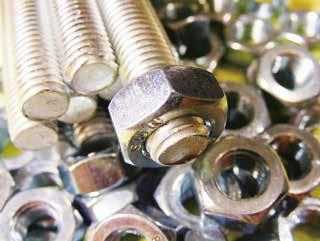
Germany’s advanced automotive sector and rise in the number of construction & building projects after overcoming hurdles due to the pandemic position that country for strong growth as well, according to the report.
Likewise, China is expected to register substantial growth in the coming years, with demand from the construction, automotive, and home appliance sectors boosting sales of industrial fasteners in that Asian country. As the world’s largest vehicle market, China expects automobile output will reach 35 million by 2025.
India has emerged as a lucrative country in terms of demand, sales, and production of industrial fasteners, and is expected to grow further through 2031. Abundance of raw materials and labor, and high demand from the construction sector are fueling sales in India.
Presently, plastic is gaining traction in terms of material for industrial fasteners. According to Fact.MR, this segment will gain further popularity owing to such advantages as: •
• Cost-effective • Flexible in terms of usage
Free from the drawbacks due to rusting
Non-threaded and aerospace grade industrial fasteners are expected to further fuel the sales of suppliers through 2031.
The automotive and construction industries have high demand for industrial fasteners. Other key end-use segments are aerospace and home appliances.

Würth Industry North America (WINA) formed Würth Additive Group, a new U.S. company incorporated in Delaware and based in Indianapolis to provide expanded 3D printing products and services, including financing and rental options on equipment.
WINA began providing additive products and services in 2017 with rapid prototyping and printing production tools. It now offers full digital Kanban solutions by integrating 3D printing technology in its existing vendor managed inventory programs.
“We are thrilled to bring innovative digital supply chain solutions to our customers,” stated WINA CEO Dan Hill. “By integrating industrial 3D printing technology with our existing inventory programs, we can offer faster time to market, lower inventory costs, and improved environmental sustainability practices. We’re able to cut out the sourcing, purchasing, and transportation costs and deliver the value directly to the customer.”
“We’re excited to offer rental and financing options and provide additive manufacturing solutions to a wider market,” said AJ Strandquist, newly appointed CEO of Würth Additive Group, said Würth can now provide additive manufacturing solutions to a wider market.
“Our mission is to enable, implement, and support a digital supply chain solution that is dependable and beneficial for our customers to operate,” Strandquist explained. “We do this by offering a clear implementation process, cost-saving options, ongoing support, a strategic supplier portfolio, and financial services for instant return on investment.”
Strandquist joined Würth in 2014 and most recently served as director of 3D product solutions for WINA before his promotion.
He is the son of Optimas Solutions CEO Marc Strandquist.
WINA signed a global distribution agreement with industrial metal and carbon fiber 3D printer provider Markforged in March 2020. Würth has added several strategic suppliers to its portfolio of additive solutions, offering a wide range of printers and materials for industrial applications. Its digital supply chain strategy includes additive manufacturing/3D printing, digital part files, and inventory assessment software that help customers cut costs and reduce operational risk.
WINA is a $1 billion division of the Würth Group, with 110 locations providing 420,000 fasteners and C-parts plus services.
It’s easy to assume that plating and coating options for fasteners are “set in stone.” But changes in regulations and standards require ongoing attention, according to Laurence Claus, founder of NNi Training and Consulting.
“You need to make sure that something doesn’t get dropped in on you that causes surprise,” stated Claus, who has almost 25 years of experience working in the fastener and automotive part supplier industries.
For example, cadmium has been gone for 30 years and it’s never coming back, but cadmium replacement remains a hot topic, especially in the Defense industry.
Likewise, hex chrome was severely limited 15 years ago.
“It’s been proven to be dangerous to people and the environment,” Claus explained.


EU efforts to ban hex chrome in cars forced the U.S. to follow suit. And it’s possible that a future initiative while ban hex chrome use altogether, he explained.
“We continue to see improvements in chromates and other plating alternatives to address the loss.”
In general, no regulatory changes are imminent, Claus noted.
“Nothing really new to report, but none of these regulations are going away. They evolve over time.”
For example, RoHS - the Restriction of Hazardous Substances Directive 2002/95/EC - has had several revisions since it was adopted in 2003.





“Keep these topics on your radar because things change. Every finish being applied to fasteners is a result of some standard, which can get revised.”
By design, industry standards are reviewed and often updated at least every five years. Examples include ASTM F1941/F1941M and ISO 4002, which have undergone significant changes in recent years.
“We will see a rebirth of the discussion about updating hydrogen embrittlement requirements,” Claus predicted.
There are also customer requirements that change, including accelerated corrosion testing, elimination of chrome products and the addition of new plating and coating standards or options.
“It’s really important that we chose platings and coatings based on solutions to the customer’s needs.”
Shipping logistics and other supply chain challenges are dominating the focus of fastener distributors and manufacturers, panelists of a National Fastener Distributor Association presentation stated.
Product availability is affected by raw material demand in Taiwan, which is causing delays as long as six weeks, according to Melissa Patel, supply chain director at Field Fastener.
Likewise, lack of shipping availability, coupled with domestic rail delays, have added weeks to deliveries, Patel noted.
And exchange rates have compounded the problems fastener companies face.
“I don’t recall another time when exchange rates have been so prominent in management discussions,” explained Patel, who has worked for Field for 18 years.
Optimas Solutions CEO Marc Strandquist echoed those concerns.
“Covid is an issue that makes it so difficult to run a business, both in terms of supply side and internally,” Strandquist stated. “Import orders are big right now. Everybody is ordering extra, creating a false demand.”
One manufacturer told Strandquist that one customer who generally orders 100,000 pieces just ordered 15 million.
“Some manufacturers domestically are in heaven.”
In response, steel prices are rising and there is speculation about allocations.
In addition to rising costs, there are quality issues as an uptick in business has led to less experienced workers producing questionable products, Patel said. Factoring in 301 tariffs that the Trump administration placed on Chinese fasteners and other products, Field constantly evaluates reshoring products, Patel noted.
“We are always looking to make sure we have the best total cost for any item we produce.”
While Optimas Solutions has a strong percentage of domestic products, global supply side issues have placed added pressure on reshoring.
“Customers are challenging us to reshore more because they’re worried about the length and financial stability of the supply chain,” Strandquist said.
There are two components of steel price: base price and surcharge, Strandquist pointed out.
“The surcharge is going up and down right now,” he said.
Despite all the uncertainty in the supply chain, OEM planning is not getting more accurate.
“I don’t anticipate that changing or improving,” Patel explained. “They’re paying us to manage this for them.”
Strandquist echoed that sentiment.
“There’s no appreciation. As far as customers are concerned, it’s just a bolt. You can go down to K-Mart for that.”
In response, fastener suppliers have been forced to use air freight to meet customer demands, Strandquist said. But that option is “cost prohibitive” because fasteners are lower value and quite heavy compared to computer chips.
“There is madness in the supply chain. Everybody is killing themselves to keep up with it.”

Semblex Corporation, Elmhurst, IL, USA, and parent company, Jinhap Company, Ltd., announce the following management changes effective on May 1, 2021. Jinsoo Kim, current President, has been promoted to lead the international businesses of Jinhap and oversee operations outside of Korea, which include Jinhap firms in China and Semblex in the USA. He will be relocating to Korea later this year. Kim has been at Semblex since it was acquired by Jinhap in 2014 and has served Semblex as Chief Operating
Officer and, most recently, as CEO and company president since March 2019. Gene Simpson, former Semblex’s Chief Operating Officer, has been promoted to replace Kim as CEO and company President. Prior to his COO role, Simpson served in several key management positions at Semblex over the last 29 years including Vice President of Quality & Engineering and Director of Engineering Services. Semblex Corporation, which was established in 1968, is a premier supplier of innovative cold-formed product solutions to the world’s leading manufacturers. These manufacturers look to significantly reduce their assembly-related costs or are challenged to find the best way to fasten new materials which are emerging in their industries. Semblex Corporation provides its customers with the latest fastening products and technologies, along with precision cold-formed and machined components, and special assemblies.

Optimas Solutions, Glenview, IL, USA, a global industrial manufacturer/distributor and service provider, announced it has added larger diameter (M12-M18) fastener production of the industry standard MATHread® and Taptite 2000® licensed products. The larger M12-M18 MATHread and Taptite 2000 diameters enhance Optimas’ licensed products manufacturing capabilities that already included smaller diameters of MATHread, Mortorq®, Phillips Square-Driv®, Remform® and Taptite 2000® brands. These enhanced, larger diameter capabilities complement existing smaller diameter offerings, and further support Optimas’ continued quest to deliver industry leading manufacturing solutions to distributors and OEMs directly. “We’ve been manufacturing licensed fasteners for smaller diameters for a number of years,” said Marc Strandquist, CEO of Optimas. “Now with technological upgrades made at our Wood Dale, IL, USA and Droitwich, UK manufacturing facilities, we can produce larger diameters of licensed products to make us more competitive in a variety of industries that require larger fasteners, such as automotive, heavy duty trucks, construction machinery and agricultural equipment.” By adding these larger diameter capabilities, Optimas can build on partnerships with reputable OEM brands wanting to onshore more manufacturing with licenses especially beneficial to industrial applications. These licenses allow Optimas to supply its customers next generation fastening solutions which guarantee measurable advantages, including improved performance, reduced installation times, and weight savings and cost savings. Optimas offers cold-forming manufacturing for a variety of fasteners at its Wood Dale and Droitwich facilities including self-threading designs for metals and a roll-forming design for plastics. “We continue to improve our manufacturing capabilities by working with high-quality, well-respected fastener licensers, such as MATHread, Phillips and Taptite,” said Strandquist. “As we continue to roll out our Manufacturing Solutions strategy that we announced in the third-quarter of 2020, it was a natural progression to add larger diameter licensed product capabilities for existing and new customer applications.”


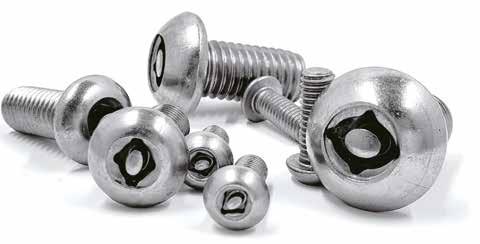
Tanner Bolt & Nut Inc., Brooklyn, NY, USA is pleased to announce an agreement has been reached with Parker Fasteners, Buckeye, AZ, USA, to become the exclusive master distributor in the United States for its Lock-Out® maximum security screw. Lock-Out is a new and innovative security fastener featuring a unique patented drive that is engineered to perform in high torque applications. The distinctive oval center pin and multiple drive/key combinations give customers the option to select higher levels of security in a tamper-proof fastener. Installation bits are not sold commercially. Installation bits will only be sold through Tanner. Lock-Out is available in a multitude of head styles, threads, diameters, lengths, materials and finishes. Diameters range from 1/4" to 5/8", M1.4 to M16, and #0 to #10, with lengths up to 12" for certain diameters. Materials available include carbon steel, stainless steel 302HQ, 304, 316, A286 and brass alloy steel 4037, 8740. For absolute maximum protection of the customer’s property or product, Lock-Out can be manufactured with a one-of-a-kind, drive pattern that is exclusive to the customer’s company. Tanner received its initial stock order in early March 2021 and will continue to bolster its inventory throughout the year. Made-to-order product typically will ship in eight to ten weeks. Tanner Bolt & Nut Inc. is a nationwide distributor of premium industrial and security fasteners, code compliant anchors, safety, and products as well as power tool accessories. For more than 40 years, Tanner’s knowledgeable sales and support staff has committed to a customer first approach, delivering innovative quality products. Tanner partners with over 50 well known quality brands that provide our customers with industry leading experience, innovation, and quality control. Parker Fasteners is a premier ISO & AS9100 Rev D-registered cold heading manufacturer, which sources all raw materials from American sources including DFARS compliance. Parker Fasteners takes great pride in manufacturing quality fasteners, engineered to meet customer product specifications and delivering on or before the promised due dates.
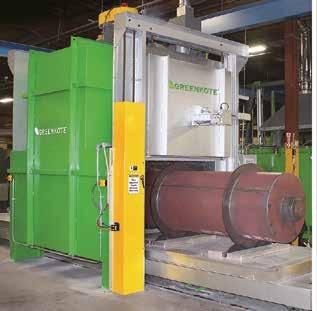

Greenkote, a global provider of advanced anticorrosion metal coatings, has announced a major expansion of production capacity at its headquarters facility in Brook Park, OH, USA. The expansion comes in response to an upsurge in demand for corrosion protection on environmentally exposed metal fasteners and hardware in several different industries. “I don’t know if climate change may be a part of it, but we’re seeing notable increases in anticorrosion coating orders for all kinds of different metal parts that are exposed to the elements,” said Greenkote CEO, Mark Gore. “The orders are coming from a range of sectors, including automotive, rail, electric power distribution, wind power generation and others. These are all applications that have fasteners, fixtures and other metal hardware exposed to long-term outdoor atmospheric corrosion.” “It’s also possible that we’re getting more than our share of this business because of a couple of other factors,” added Gore. “Number one, Greenkote coatings are actually diffused into the metal surface, making them damage resistant, longer-lasting and betterperforming than older treatments such as galvanizing and paints. Another factor is eco-friendliness. Many other coating processes involve acids and other polluting chemicals, so their use is increasingly restricted by environmental regulation. But, as the name implies, Greenkote is uniquely benign to the environment.” Gore stated that installation of the additional Greenkote coating equipment in Brook Park has been completed and the facility is now fully operational with significantly expanded capacity. Greenkote provides anticorrosion coating services for construction, automotive, rail, utilities and many other industries in which parts are exposed to weather or harsh and corrosive environments. Greenkote can be applied to a broad range of metal parts, from threaded fasteners to stamped and cast pieces, in sizes from 0.2" to 78". Proprietary Greenkote coatings have been replacing several older anticorrosion processes such as galvanizing, hot-dip, sherardizing and metal flake. In addition to increased corrosion protection, Greenkote technology provides superior adhesion, longer wear and more conformal coverage, which allows its use on complex geometries such as small threaded parts. Greenkote also eliminates metal failures that are caused by hydrogen embrittlement, an intrinsic problem with many traditional coatings. Greenkote is applied by a patented zinc-based dry thermal diffusion process that requires no hazardous chemicals and produces no toxic by-products. Consequently, it is uniquely friendly to humans and to the environment.
John Wolz, Editor of FI N (globalfa stener ne ws com) Mik e McNult y, FTI V P & Editor (w w w fa stener tech com)









The Russian automotive industry needs to restore the domestic production of components, in fact - to revive the whole industry of auto components.
In theory, requirements for the level of localization are constantly increasing in Russia. But no real incentives have emerged to create new component industries on the scale the industry needs. Experts estimate the losses from the loss of the auto component industry by the country, expressed in the cost of purchasing components abroad, at 1 trillion rubles a year.
“In most developed countries, the automotive industry is one of the main locomotives of the economy. Because the production of vehicles is an excellent generator of both budget revenues and jobs. But this is only if the national auto industry is an unified complex of assembly plants and factories for the production of components. In this case, the industry is confidently standing on two legs", - comments on the situation the Deputy General Director of “ASM-Holding”, and Honored Economist of Russia Alexander Kovrigin.
Car manufacturers and, in particular, “GAZ”, concerned about the fate of the industry, have developed their own plan not only to support, but to create a new industrial model that is sustainable in the face of global disasters and based on the creation of value chains within the country. The plan envisages, in particular, investing 240 billion rubles in auto component production for five years, while half of these funds are producers' own investments, and the other half is financed by the state, which then receives powerful returns in the form of increased tax revenues and the creation of new jobs.
Many countries have followed a similar path. At the same time, experts suggest giving an advantage to projects for creating critical components, and making targeted programs for creating such ones as a priority.


Leaders of the Russian online retail are becoming active players in the DIY & Household market. “Wildberries” and “AliExpress Russia” marketplaces reported more than two-fold growth in sales of household goods and repairs. New formats of interaction with suppliers helped them to attract new buyers to their sites.
"This winter the most popular categories of tools for repair and gardening on the local marketplace were sets of working tools, power tools for the garden, welding machines, electric drills and electric saws”, - clarified in "AliExpress Russia".
In the fall of 2020, “AliExpress” launched a new format of superstores, the first of which was “Big Home” - a hypermarket of local household goods.
The new sales scheme was also tested in “Wildberries” last year. The company began working on the FBS model, in which the seller is directly involved in storing, processing and packing orders.
Fasteners from the Oryol Steel Rolling Plant (part of Severstal-Metiz, the Severstal hardware group) were used in the construction of a new railway bridge across the Akhtuba River in the Astrakhan Region. Oil, sulfur, salt, metal, timber, building materials, grain and vegetables are transported along this section of the route. The new engineering structure will become an international transport corridor and will connect Siberia and Moscow with the ports of the Caspian, Azov and Black Seas.
The old bridge was built 85 years ago and was single-track. Up to 20 million tons of cargo will be transported over the new bridge per year.

This year the company will make a record investment of one billion rubles to the development of the Oryol Steel Rolling Plant (part of Severstal-Metiz, the Severstal hardware group), which is 11 times more than last year.
The company will modernize production. Cold heading and thread rolling machines, drawing lines and load-lifting cranes - more than 20 units of main equipment will be renewed to the maximum. All units will be equipped with modern electronic equipment: numerical software, LCD displays and control joysticks. At the same time, the workspace will be organized according to the highest international safety standards. Thanks to the investment program, 56 new jobs will be created.
The company's investment plans confirm the stable development of Oryol hardware production. Despite the pandemic, Oryol Steel Rolling Plant ended the year with growth. Shipments of finished goods rose 4 percent to nearly 69,000 tonnes, breaking a five-year record. More than a hundred new products were mastered.
“This is the first time we have received such a significant investment. All projects are quite large-scale, but we plan to complete most of them this year. The modernization of production is planned both for current tasks and for the implementation of projects for the development of new products”, - comments Alexey Erenichev, director of the Oryol Steel Rolling Plant.

Nord-Lock Group has made a large investment in its pivot business, Expander, to better serve the needs of its global customer base. The newly expanded facility in Åtvidaberg, Sweden, has increased by 130 percent to 3,500m² - making room for modern manufacturing, a premium technical centre, as well as high-volume order handling.
Expander is the original solution for expanding pivot axles – supplying the aftermarket. The innovative pivot solutions are installed directly into the existing machine mounting without the need for welding or line boring, providing a permanent solution to lug wear. The company’s production flow is completely digitised, enabling high quantities of customer-unique orders to leave the factory within 48 hours. Expander System has over 35 years of knowledge and experience as the original inventor of pivot pins with expanded sleeves. These pivot pioneers have now delivered over 1.5 million Expander Systems worldwide.
The factory expansion will allow Expander to increase its order volume by eight and the new Pivot Performance Technical Centre will further accelerate product development and support customer needs. The site will also become more sustainable due to the factory’s reduced energy consumption, improved worker environment and lower carbon footprint.

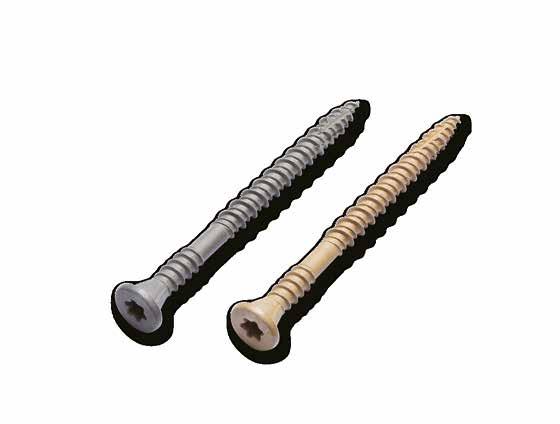
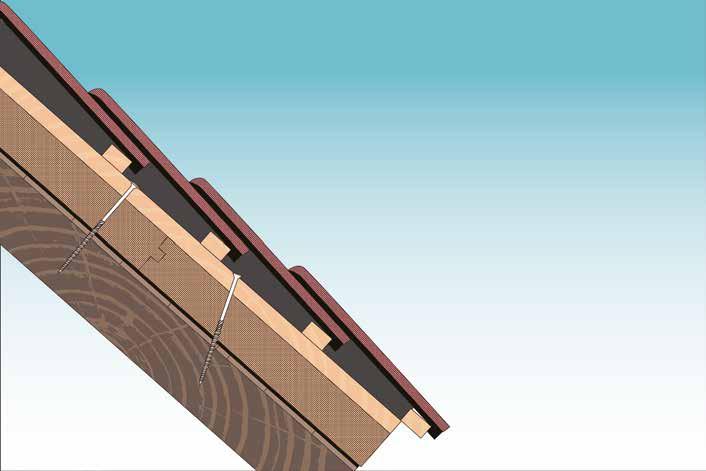
Eurotec GmbH is able to supply a wide range of wood construction screws that can be used for a number of different applications including load-bearing timber frame joints, timber engineering, multiple hall constructions or renovation of ceilings. The company points out its range of wood construction screws feature high corrosion resistance; applicability in service classes 1 to 3; as well as a good resistance to mechanical loading. The screws can also be utilised for carpentry work.
Eurotec’s range of wood construction screws includes the Paneltwistec range, which Eurotec mentions is known for being an ‘all rounder’ among screws. It is available in different steel grades, head shapes, and screw tips, and each screw has special properties that are suitable and necessary according to the application.
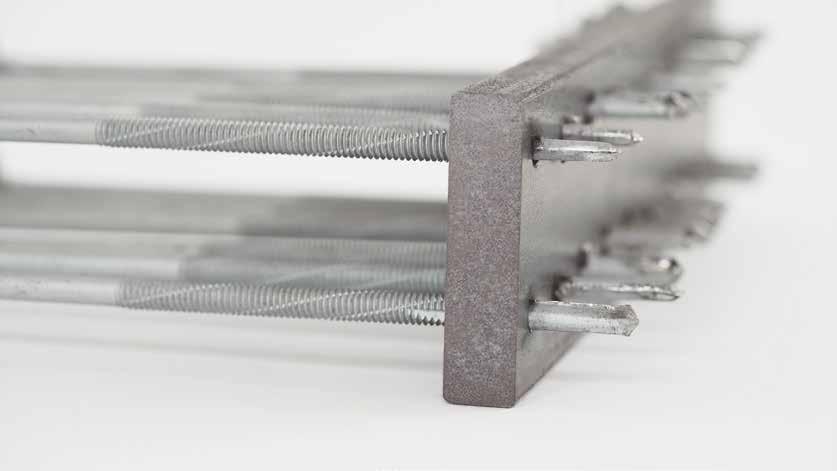
In load-bearing timber constructions, for connecting timber wood or steel wood joints, Eurotec offers its KonstruX screws. They are characterised by a full thread that increases thread extraction resistance in the components.

The patented DIRAK-SNAP-Technology (DST) creates high strength connections that are absolutely equal to screwbased solutions, but achieved with no tools at all, with installation in just seconds.
The idea behind DIRAK-SNAP-Technology is incredibly simple. It uses the operating principle of a slam-latch, which is commonly found in doors for houses or rooms. It is based on a guide with tapered clamping jaws and a spring positioned in a window inside the guide. If this fastener is then pressed through a cutout, the angled insert of the clamping jaws pushes the SNAP element back like a latch bolt in the guide channel and the spring is tensioned. As soon as the height of the clamping jaws is surpassed during the insertion process, the tensioned spring presses the SNAP elements back out of the guide channel. A distinctive SNAP sound can be heard as this happens. The result is a fastener now wedged in the cutout and holds the elements to be joined together with great strength.
DST withstands high strains and guarantees high strength and pull forces equal to screw connections in every regard. In addition, DST products are rattle, vibration and shock-proof. Numerous DST solutions have been tested for vibration and shock (DIN EN 61373) as well as earthquakes (GR-63-CORE, Issue 4).

Howmet Fastening Systems has developed the Huck® Range Force™ battery Tool, which it states is a portable powerhouse for multiple applications and industries including aerospace, solar, transportation, and construction.
The Huck® Range Force™ battery tool has an electronically adjustable pull force and long stroke of 1.18 inch (30mm) to enable installation of structural and non-structural blind rivets, as well as two piece lockbolts up to ¼ inch (6.4mm) in diameter.
With a quick nosepiece change and a simple one finger pull force adjustment, the tool is ready for the next style of fastener. Using a 18V lithium-ion 5.0Ah battery, the Huck Range Force industrial strength tool is highly portable, reliable and versatile. The tool is also lightweight weighing between 4.8lbs - 5.5lbs depending on battery used, as well as being ergonomic. Battery recharge time is approximately 45 minutes.

SFS Group achieved organic growth of 3.7% in the second half of 2020, driven by a distinct recovery in demand and seasonal effects. Sales for the 2020 financial year amounted to CHF 1.705 billion (€1.57 billion). SFS reports that higher production capacity utilisation and strict cost management as well as mixed effects supported profitability in the second half of the year. For the 2020 financial year an operating profit of approximately CHF 227 million was realised, which corresponds to an EBIT margin of 13.3%.
While demand in the first half of the year fell sharply in some areas due to the Covid-19 pandemic, there was a clear and sustained recovery in demand in various end markets and regions from the summer months onward. For instance, the automotive-related business areas, which had been heavily impacted by the collapse in demand and factory shutdowns at key customers during the first half of the year, showed a strong recovery. In the second half of the year, sales momentum also profited from successful product launches with customers from the electronics industry. Sales grew organically by 3.7% in the second half of the year compared to the previous year period. In the first half of the year, sales showed a decline of –10.4% in organic terms. For the full year, organic sales growth was -3.2%. Gross sales for the 2020 financial year amounted to CHF 1.7 billion. Sales in the Fastening Systems segment for the period under review amounted to CHF 489.7 million, which corresponds to a decline of -1.7% compared to 2019.
Despite signs of a recovery, Hilti Group’s 2020 sales of CHF5.3 billion were 9.6% below the level of the previous year. In local currencies the decline amounted to 4.3%. CEO Christoph Loos commented: “The signs of recovery further solidified over the last four months of 2020 and our sales figures have stabilised. Total sales are below the previous year's level, to the extent expected, which means that the downturn has been less severe than initially feared.”
Developments in the regions varied greatly, strongly influenced by the duration and extent of local lockdowns. In local currencies this resulted in only a slight overall decline in sales of 2.7% in Europe. There was a clear north-south divide, with growth in Scandinavia and Central Europe and upper single-digit declines in Southern Europe. North America was also pleasingly robust, with a local decrease of only 4.3%. Significant reductions were recorded in the Eastern Europe / Middle East / Africa region (-8.2%), Latin America (-8.1%) and Asia/Pacific (-7%), with major differences from country to country. For example, while encouraging growth was achieved in China and Russia, there was a larger slump in Southeast Asia and the Gulf States in particular. The Hilti Group expects a moderate economic recovery for the current year which will vary from region to region and depend heavily on the course of the coronavirus pandemic in the coming months.
Ne ws provided by: Fa stener + Fi xing Maga zine w w w fa stenerand fi xing com

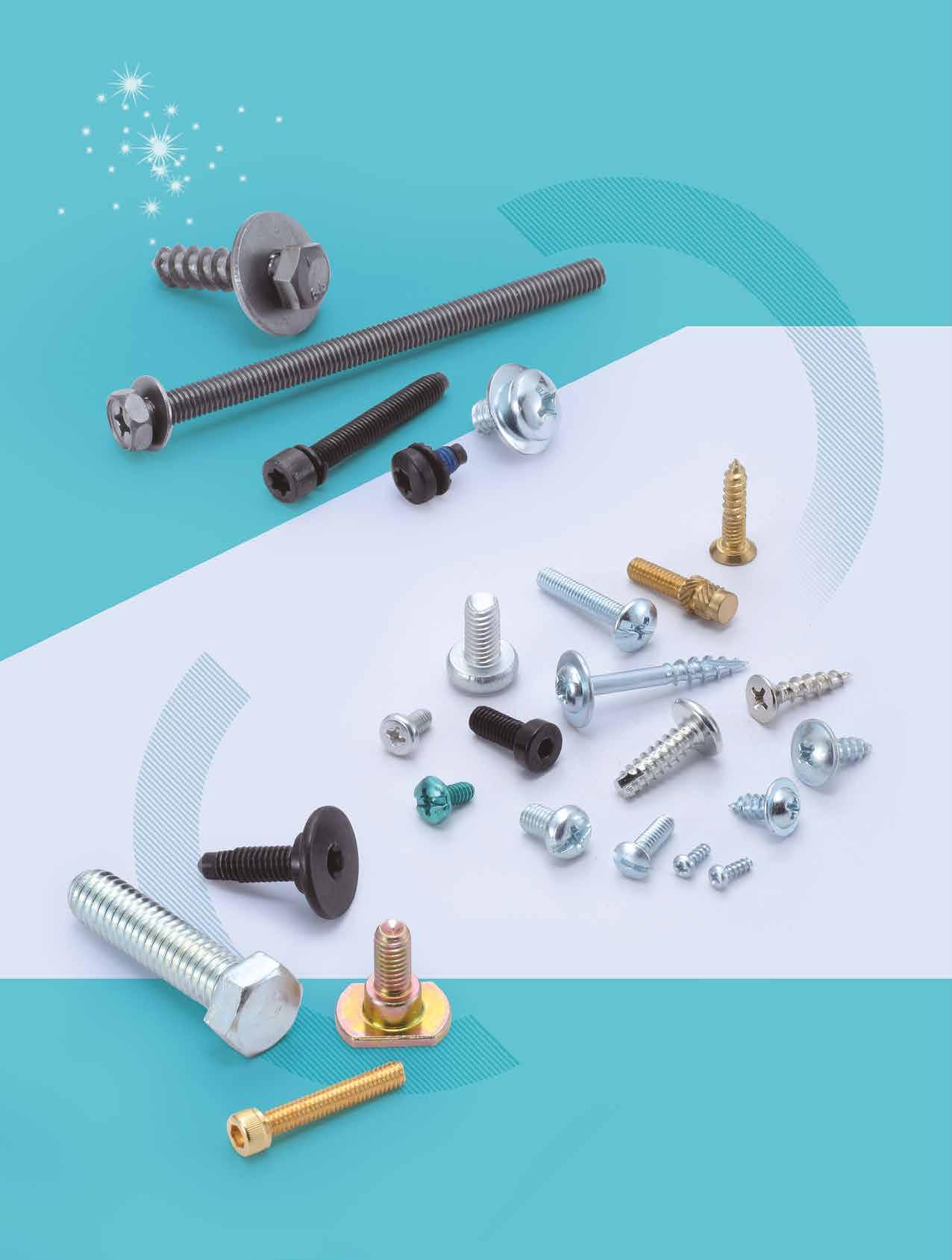

by Shervin Shahidi Hamedani
The industrial production index (IPI) which is sometimes called industrial output or volume index is a business cycle indicator (the ups and downs of economic growth over time) which measures monthly changes in the price-adjusted output of industry. In this article we will go through the industrial production index measured in the European Union (EU) last year.
In simple words, countries in order to analyse their IPI must have the details of their industry's gross output as well as the inputs used in the production of those outputs. For some countries those data may not be available on a monthly or even quarterly basis, and therefore, in practice, suitable alternative values for the measurement of the production index are used. Additionally, there are multiple industrial factors whose changes considerably impact the calculation of the industrial production index which should be taken into consideration. These factors include changes in type and quality of commodities, changes in materials of inputs, changes in stocks of finished goods and services, and work in progress, changes in processing tech, the technical relationships between inputs and outputs, and last but not least, services including assembly of production units, repairs and planning.
Within the industry, these factors consist of gross production values, production quantities data, turnover, work, raw material and energy input. These data can be different in sectors and verticals. For instance, in construction those data can be consumption of typical raw materials, energy and labour as inputs and production quantities, production values and sales values as outputs. It is notable that, all of these values must be deflated values.
In the last two decades, the total industrial output has been on a reasonably steady growth path. Before the financial and economic crisis, the average annual growth of the industrial production index between 2000 and 2007 in the EU-28 had been about 1.7%. The production level reached its highest value in April 2008 and then for one year it continuously went down by more than 22 percent points until April 2009. In Spain, for instance, the IPI dropped by nearly 27 percent point. Afterwards, a moderate dynamic recovery was placed only for about two years, but again in May 2011, IPI collapsed. The EU's average IPI for 2013 was almost equivalent to its level in 2003. Afterwards, the IPI had a slight but stable increment until the index value nearly reclaimed its pre-crisis position by the end of year 2017. The IPI has been stagnated for two years within year 2018 and 2019 until last year when the whole world faced the pandemic crisis.
The Covid-19 crisis in 2020 hit the whole world and caused an enormous fall in industrial production, globally and regionally especially for durable consumer goods and capital goods such as machinery and tools. Although in the subsequent months the industrial production index moderately recovered, in the first half of 2020, the production of durable consumer goods reduced by more than a quarter between February and April. The private sector economy fell in April where the region's four largest powers recorded depression extremely worse than those seen during the 2008 financial crisis. The EU's Industrial Production Index (IPI) for the last 2 years has been illustrated in the chart on the next page. This chart exhibits how Covid-19 crisis has drastically reduced the IPI value in March, April, and the following months.
In terms of the industrial groups, if we compare the 3 major industrial categories’ IPI during the Covid-19 crisis, the production of non-durable goods was slightly more stable than other groups. The production of capital and intermediate goods decreased tremendously in March and April but then recovered in the subsequent months. The third major industrial group, energy products, faced the recession but not to the same extent as other product groups did. However, the recovery of this group was comparatively slow.






sales@amproducts.com.tw
www.fastener-world.com/en/supplier/a&m






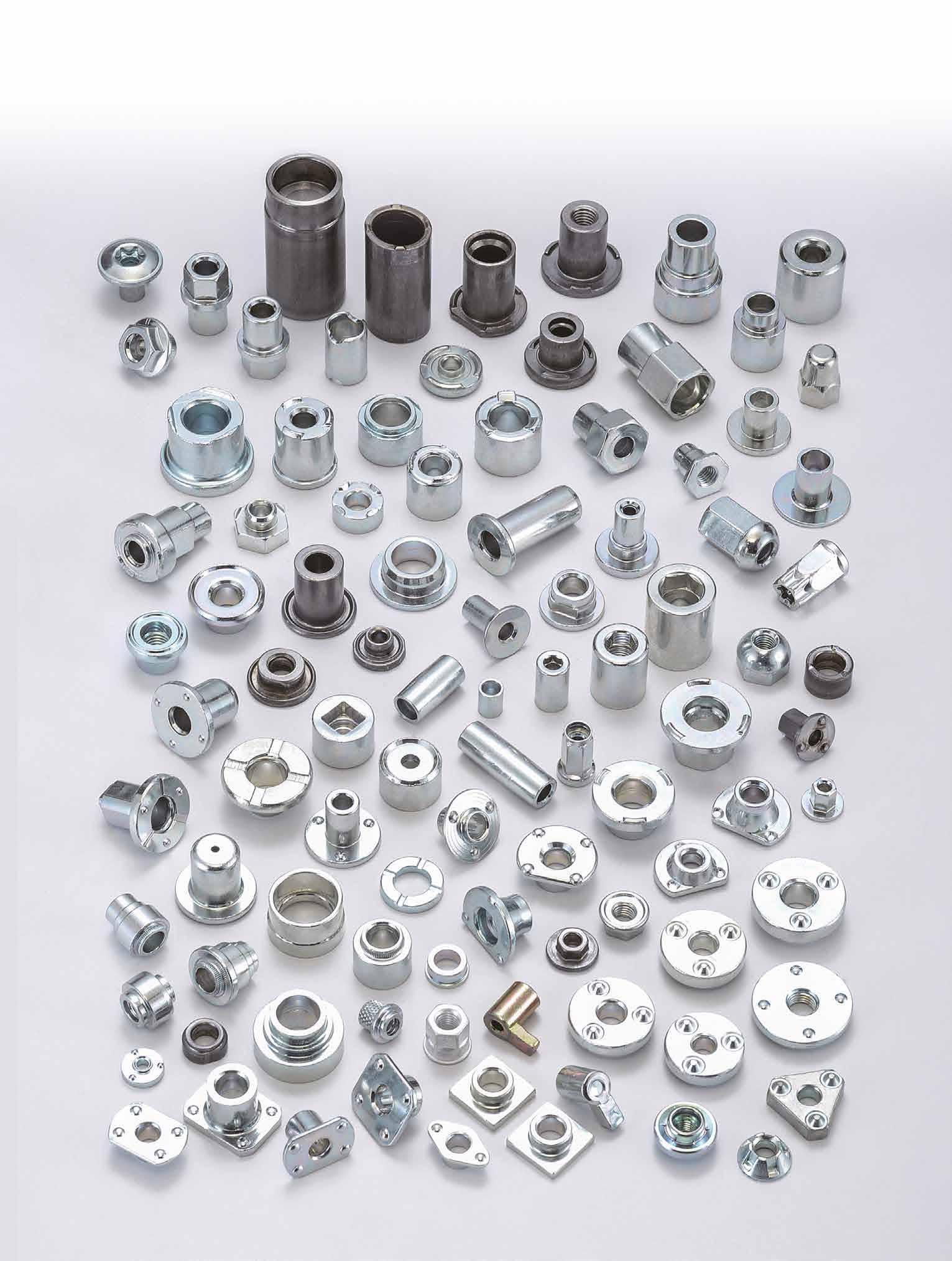

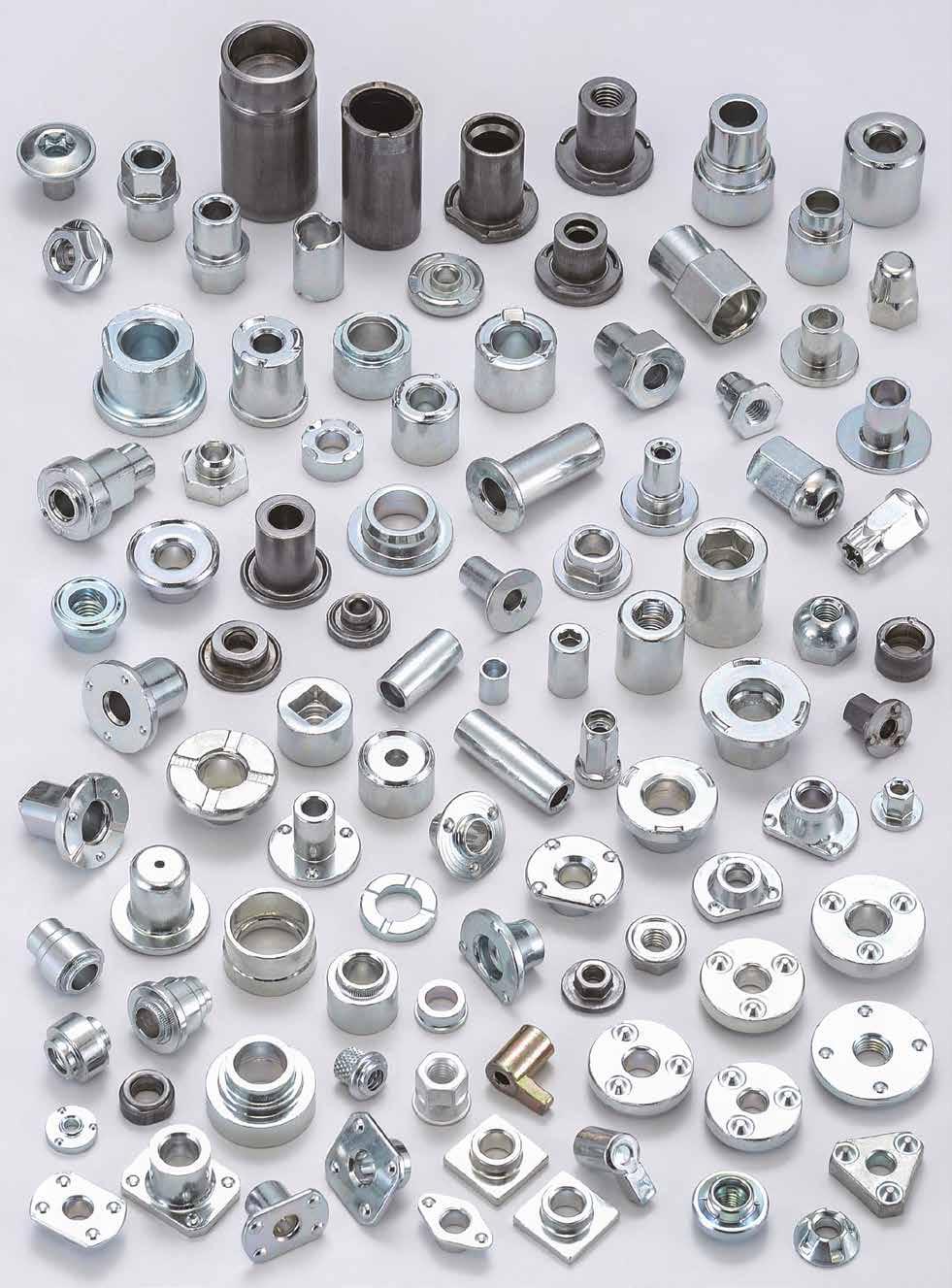
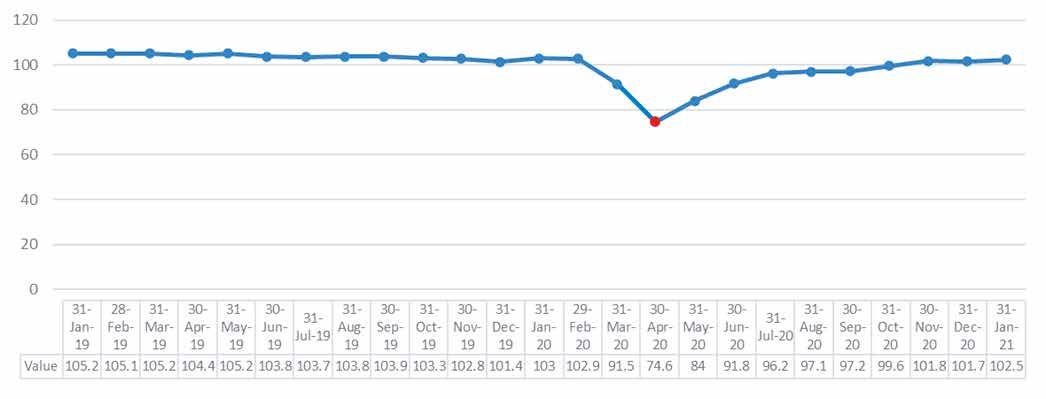
Since the Covid-19 control orders varied among countries in the region in respect of timing and severity, it was to be estimated that the effects on industrial production would also differ. During the peak months of the crisis, Italy, Slovakia, Cyprus, and Hungary faced enormously high negative rates of change. Subsequently these countries indicated high rates during the recovery months since May.
Last year, the general growth since May 2020 was largely adequate to recover most losses during the most serious stage of the crisis. Accordingly, ten countries consisting of Ireland, Greece, Lithuania, Poland, Belgium, Croatia, Lithuania, Slovakia, Denmark, and Sweden have regained and surpassed the production level before the crisis. Industrial production in Ireland was even one third higher than the pre-crisis. Several other countries were almost close to the 100% while countries like Malta, Bulgaria and Germany were still more than 5% away from the production level before the crisis. Overall, as stated earlier the recovery has been quite robust for durable consumer goods (103.3 %) and for intermediate goods (100.1 %) and capital goods (100.1 %). The production level for energy was close to recovery (99.2 %) while the level for non-durable consumer goods was still relatively low (96.3 %).
To wrap up this article, the Industrial Production Index of the world's fourth largest and the EU’s largest economy, Germany, has been studied. As a result of the Covid-19 crisis the country’s Industrial production fell by 3.8 % YoY in Jan 2021, following a rise of 1.2% YoY in Feb this year and similar to almost every other country in the EU, German Industrial Production Index (IPI) nosedived dreadfully in April last year, by 24.416% YoY, as explained in the previous section. The IPI collapse can be translated into poor performance of overall industrial sectors in Germany such as fasteners, machinery, tools, etc.
For a better illustration, the data from German fastener exports in year 2020 have been compared with the country’s IPI within the same year. The right figure contains a bar chart which shows the values of fastener exports from Germany to the global market (in million USD) and a line graph which exhibits German Industrial Production Index in 2020. As expected, the bar chart and the line graph follow a similar trend and both have their minimum values in April while facing steady growth between May and July.
As stated, the IPI is an important indicator of performance of the industrial sector and the economy as a whole. The above figures simply show how industrial performance in various sectors and the Industrial Production Index are inter-related.
Fastener Export IPI
Originally expected to reach the production mark of over 3 million units in 2020, Brazil actually finished the year of 2020 with the 3rd worst decline margin on the top 20 global automotive producers list.
After the recession in 2015-2016, an economic recovery in Brazil appeared and lasted for 3 years. Unfortunately, the Covid came later. However, the pandemic did not just affect Brazil.
To analyze the automotive sector, one of the main boosters for fastener manufacture, Brazil once had a better economic moment in 2019. During the year of 2019, the production of Brazil reached 2,984,988 units of motor vehicles, a rise of 2.2% from 2018. To view by percentage, its result was the biggest among the top 20 countries, while the other 17 countries respectively produced more than one million units in 2019.
To Brazilians, all perspectives were to finally break the “3 million units” barrier and get closer or break the 2014 result (which recorded the production of 3,146,386 units of vehicles).
Last year, China (top 1 among the top 20) also got a negative result in automotive production, but just down 2% to 25,225,242 units, while Iran (top 18) showed the highest growth of 7% to 880,997 units. However, Brazil (top 9) showed a decline of -32%, one of the worst. Also, Indonesia showed a fall of -46% to 691,286 units.
At the writing of this article, the local automotive production of Brazil in Q1 2021 closed with 597,700 units, up 1.99% compared to Q1 2020 (recording at 585,900 units) but down 13.35% compared to Q1 2019 (recording at 697,800 units) and down 14.64% compared to Q1 2018 (recording at 700,200 units).
Inox-Par Reported 11% Average Growth and is Searching for Partners Outside Brazil
With more 35 years of activities, the company has become a stainless steel fasteners expert.
In Portuguese, “stainless steel” means “aço inoxidável”, however, it is quite common to

hear Brazilians pronouncing these two words simply as "inox". Normally, when someone refers to fasteners, it is quite common for Brazilians to use the word “parafuso”.
Combining some of these words, in 1986 the Inox-Par Industry and Commerce Ltd. was founded. Currently, the InoxPar hires more than 70 direct employees and 30 indirect ones. Its operation (incl. industrial and storage units) measures more than 5,000m² in total and is only a 10-minute drive from the International Airport São Paulo, Brazil.
Co-founder and Commercial Operations Director Inox-Par, Eduardo Lopes told that the company handles a mix of activities and is acting as a manufacturer and importer of fasteners, mainly made in stainless steel.
Inox-Par executives participated in many most important fastener shows around the world to search for good supplier partners for increasing the distribution of its operation through the Inox-Par efficient system on the big and diversified markets in Brazil, mainly energy, window frames, food & beverage, and pharmaceutical sectors. Solar energy, in particular, has recently represented the share of more than 35% in all Inox-Par businesses.
"We’ve got an average growth of 11% since last year. However, as the Inox-Par can still go further, the way for us can be to get some international companies from Asia, Europe, or North America to form alliances to let us achieve a rise in operations and good results, not just in Brazil, but also in our South American neighbours,” told Lopes.
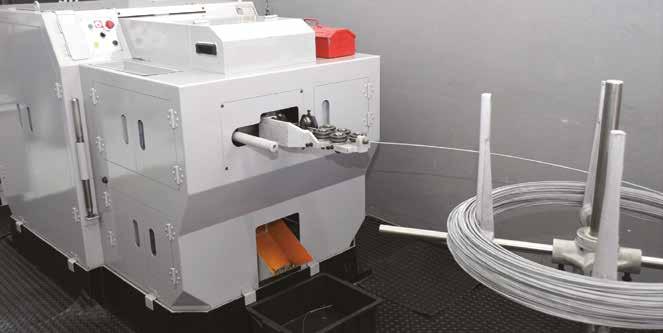
Yih Tieng Machinery, model from Spirafix show room, Brazil
According to the news of Brazilian Official Diary (Diário Oficial da União) published on 02/17/2021, the press machines for manufacturing fasteners and special parts are also included in the most recent import taxes reduction of Brazilian Government.
The current Brazilian economy officials have been more willing to lift barriers against certain product imports, such as machinery used by local fastener industries, mainly because of almost non-existence of similar machines directly manufactured in Brazil.
The Brazilian currency depreciation could have been the cause of the export rise in volume and a drop in revenue; however, the import was also on the rise.
In the first month of 2021, Brazilian fastener import reached US$52.27 million in value or 12,293.09 tons in volume. In February, the figure was US$ 54.31 million or 12,638.75 tons. Closing the Q1, the import in March reached US$ 121.28 million or 25,624.64 tons.
The total import in Q1 2021 reached US$ 227.86 million (53.81% higher than the US$ 148.14 million record in the same period of 2020) and 50,556.48 tons, 60.66% higher than the 31,467.34 tons of import last year.
The fastener export of Brazil in January 2021 was US$ 8.74 million, with the total volume at 2,258.77 tons; the fastener export in February was US$ 9.19 million, with the total volume at 2,202.12 tons; the fastener export in March was US$ 4.4 million, with the total volume at 1,491.42 tons.
The total export in Q1 2021 reached US$ 31.07 million (4.5% less than the US$ 32.54 million export recorded in Q1 2020) and 8,211.08 tons (56% higher than the 5,267.47 tons of export recorded in Q1 2020), which both resulted from the severe depreciation of ‘real’, the Brazilian currency.
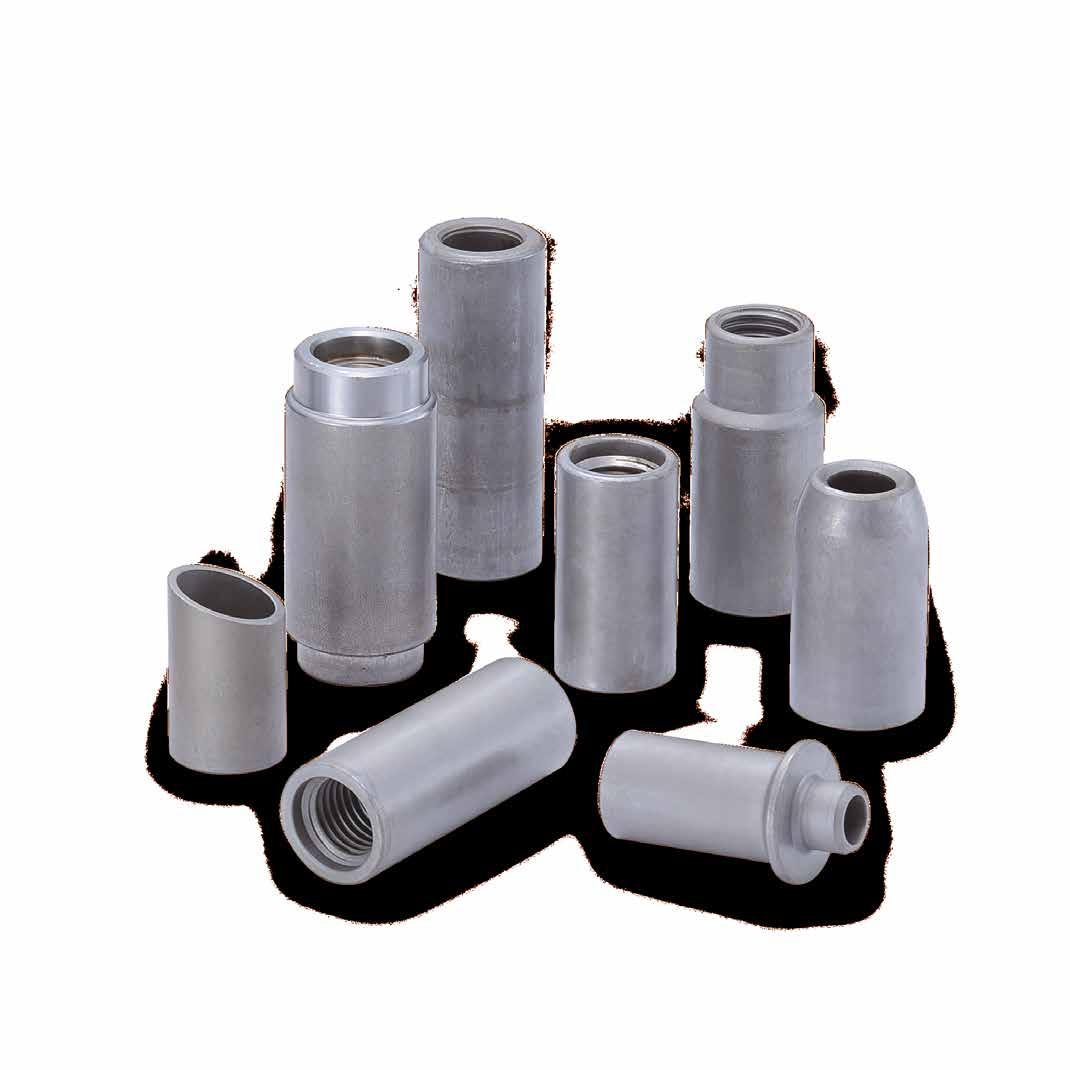








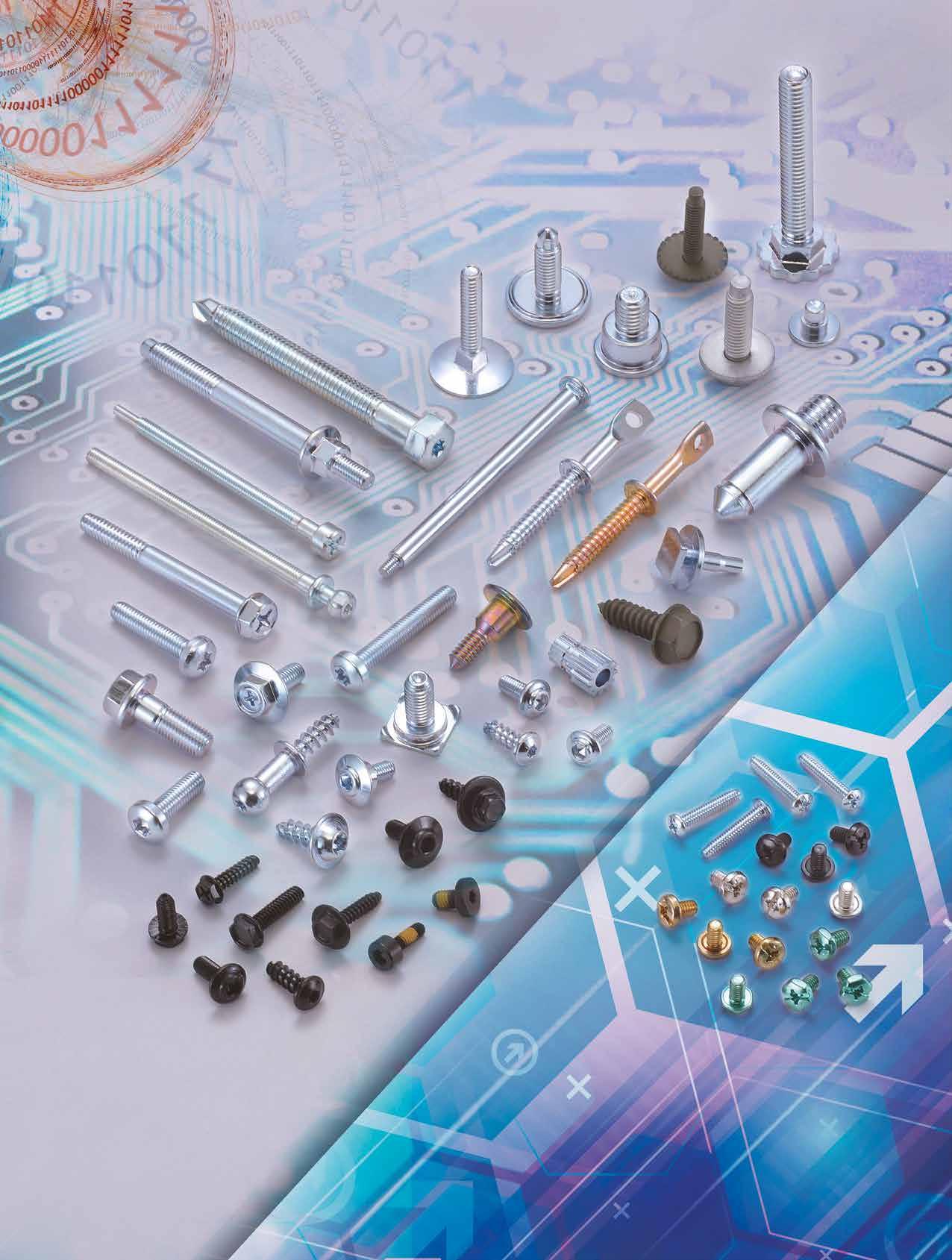


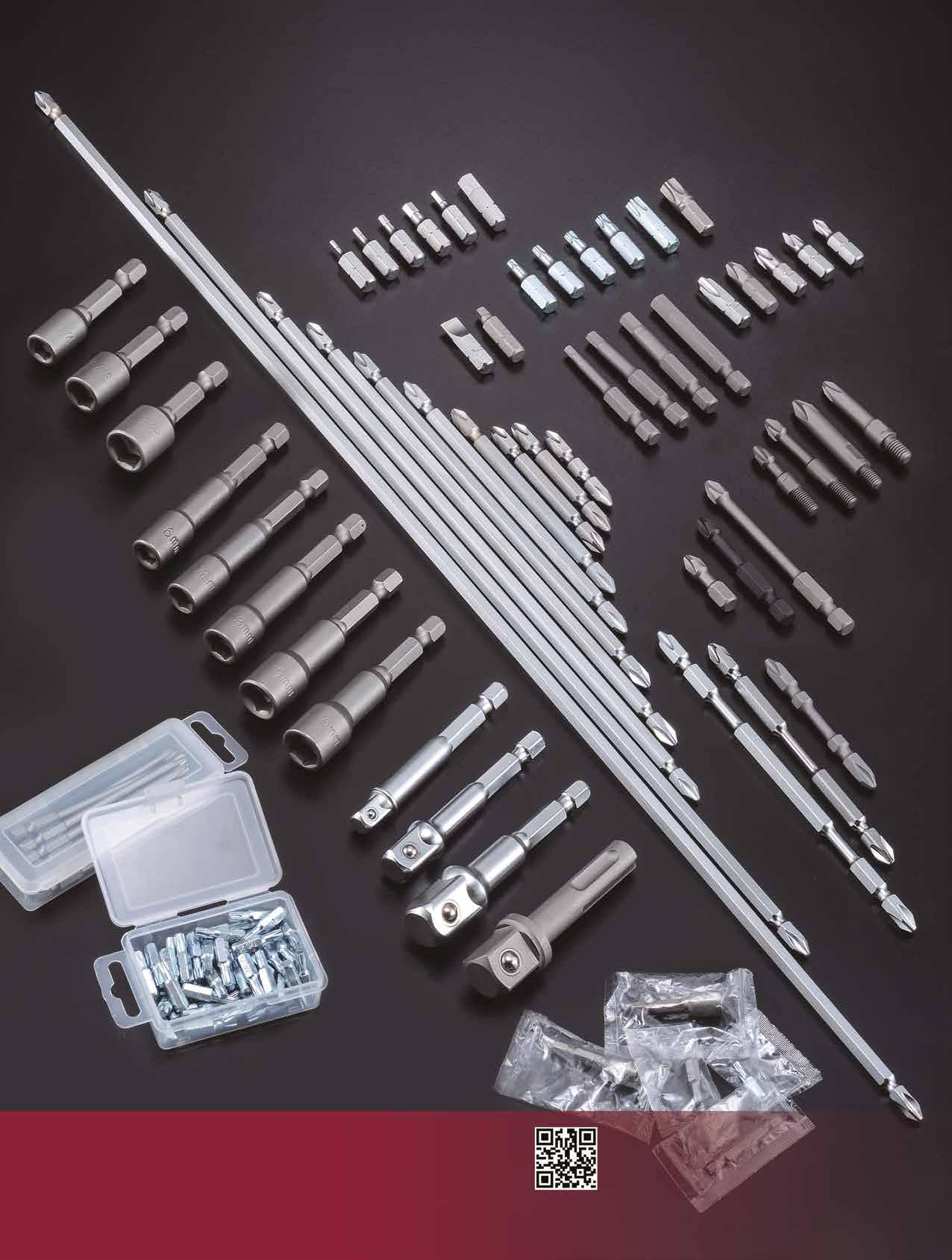
In response to the COVID-19 pandemic, Informa Markets Vietnam, the Organiser of MTA Vietnam, has introduced countermeasures to ensure business continuity in our marketplaces – allowing and assuring our buyers and sellers their ability to connect not only when trade exhibitions are permitted, but also when communication and commerce move online and when health and safety measures require social distancing. Wherever buyers and sellers may be located, using our online solutions, we ensure our trade events remain effective with extended reach via the internet.
The Machine Tool. Precision Engineering, Metal Working exhibition (MTA Vietnam 2021) is at the heart of introducing the advanced technology and modern machinery for Vietnam’s manufacturing enterprises. Not only serving as a national forum for manufacturers and operators to connect, network and go deep into the latest solutions, MTA Vietnam 2021 will be a one-stop platform of knowledge, insight, market trends and new opportunities for both local and international manufacturing players in the new era. 2021 is expected to be a great start for businesses after a tough year and we hope to support Vietnam’s manufacturers to withstand the impact of COVID-19 and encourage the recovery into the future.
MTA Vietnam 2021 which takes place from 7-10/7/2021 at Saigon Exhibition and Convention Center (SECC), Ho Chi Minh City will be organized by combining in-person and virtual elements (hybrid event). Technology has completely eliminated distance barriers that aims to facilitate the interaction of event participants and to minimize the impact of travel restrictions due to pandemic.
By choosing “Lean 4.0” as the theme of the event this year, we tend to emphasize the importance of the capability improvement for the recovery period. The pandemic has even accelerated trend to move supply chains away from China. Embracing the opportunities of factory move to Vietnam after the pandemic period, local enterprises need to be best prepared for changes by investing in high-quality equipment, improving the production line and enhancing workforce skills. Lean production is a well–known concept that must have been heard before but is continuing to be relevant at the heart of most manufacturing operations worldwide, especially in Vietnam, where its enterprises are still unfamiliar with the concept. The interrelation between the implementation of lean manufacturing and Industry 4.0 technologies will allow the Vietnamese enterprises to be enabled to improve flexibility and increase competitiveness.
With a packed programme line-up that includes fringe events, webinars, TechTalk, a diverse range of products, MTA Vietnam 2021 will bring together industry experts, investors, leading researchers and practitioners to exchange and share their experiences, their research results on all aspects of Lean Manufacturing in Industry 4.0. These series of events will play as the interdisciplinary platform for policy makers, top managers, manufacturers to present and discuss the most recent market trends, innovations, perspective as well as practical challenges encountered and solutions adopted in the new normal of Vietnam’s manufacturing industry.
MTA VIETNAM 2021 will kick off with the webinar on “Vietnam’s Manufacturing: Mapping the road to recovery” that will be held on 11/5, giving an overview of Vietnamese manufacturing industry in the current economy context, analyze opportunities and challenges that businesses will face when entering the restart phase as well as providing knowledge and trends to help them gain the momentum needed in the coming time.
Please register through this link: https://bit.ly/MW21Me For more details, please visit our website: http://mtavietnam.com/
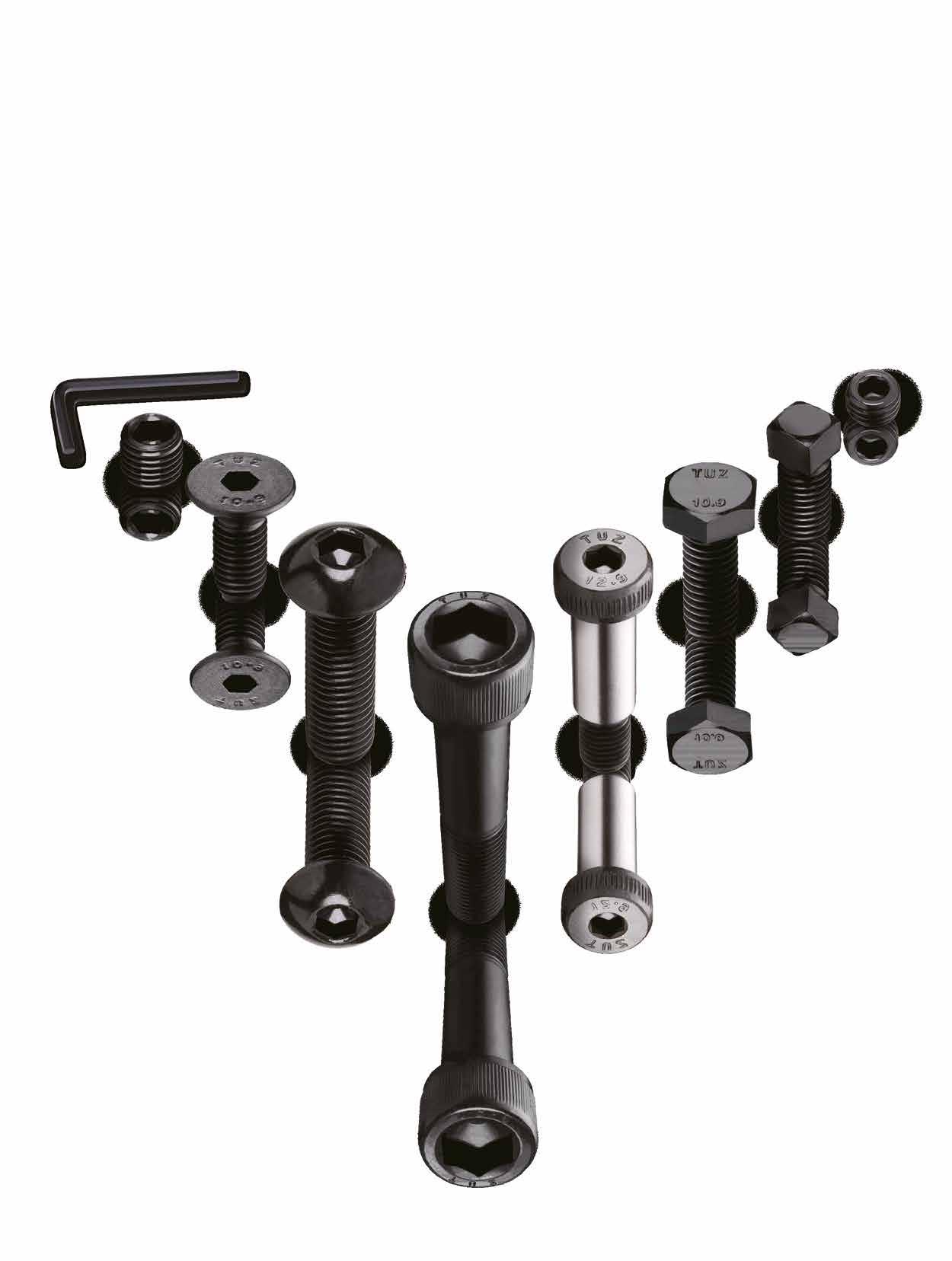

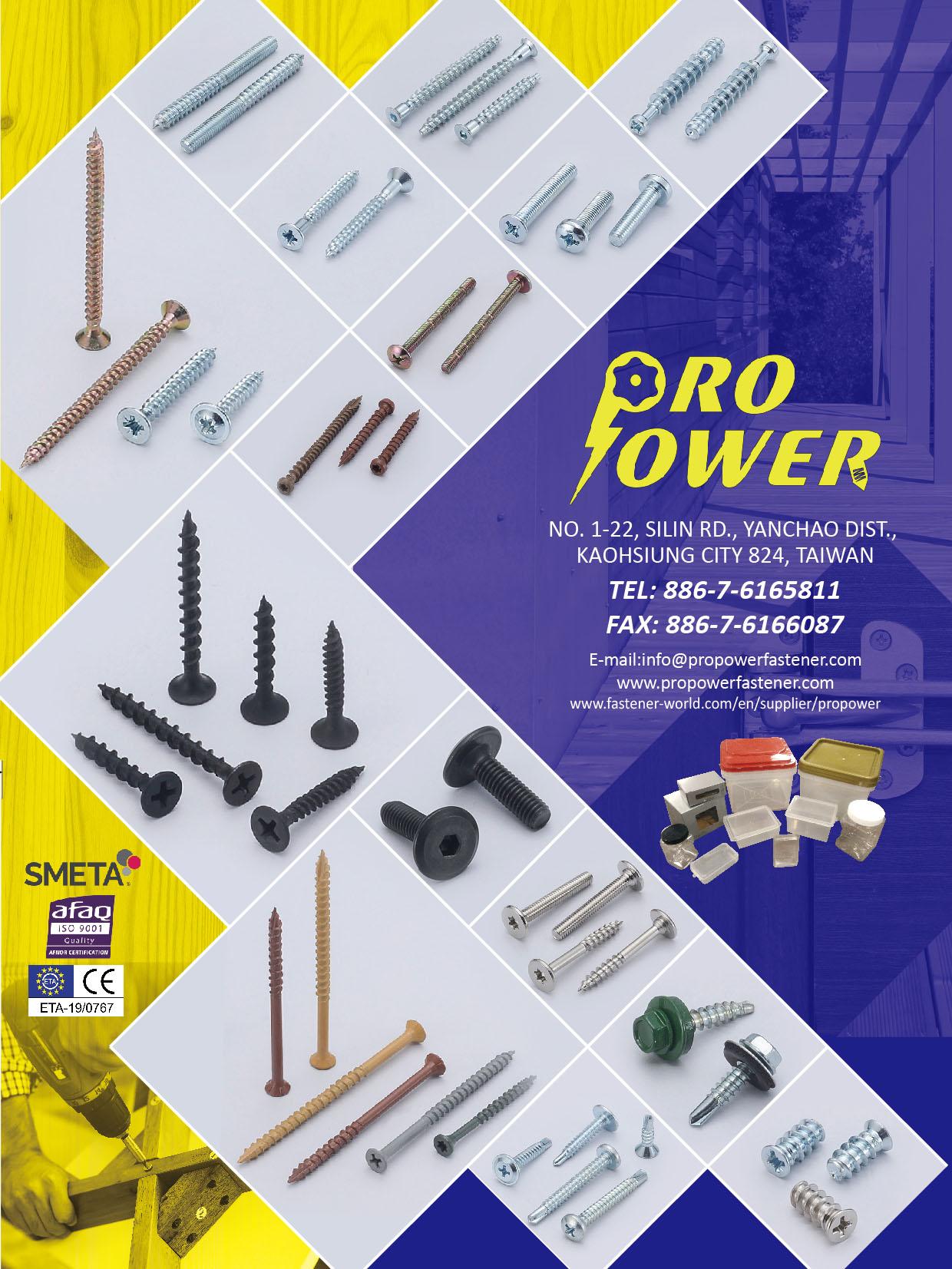








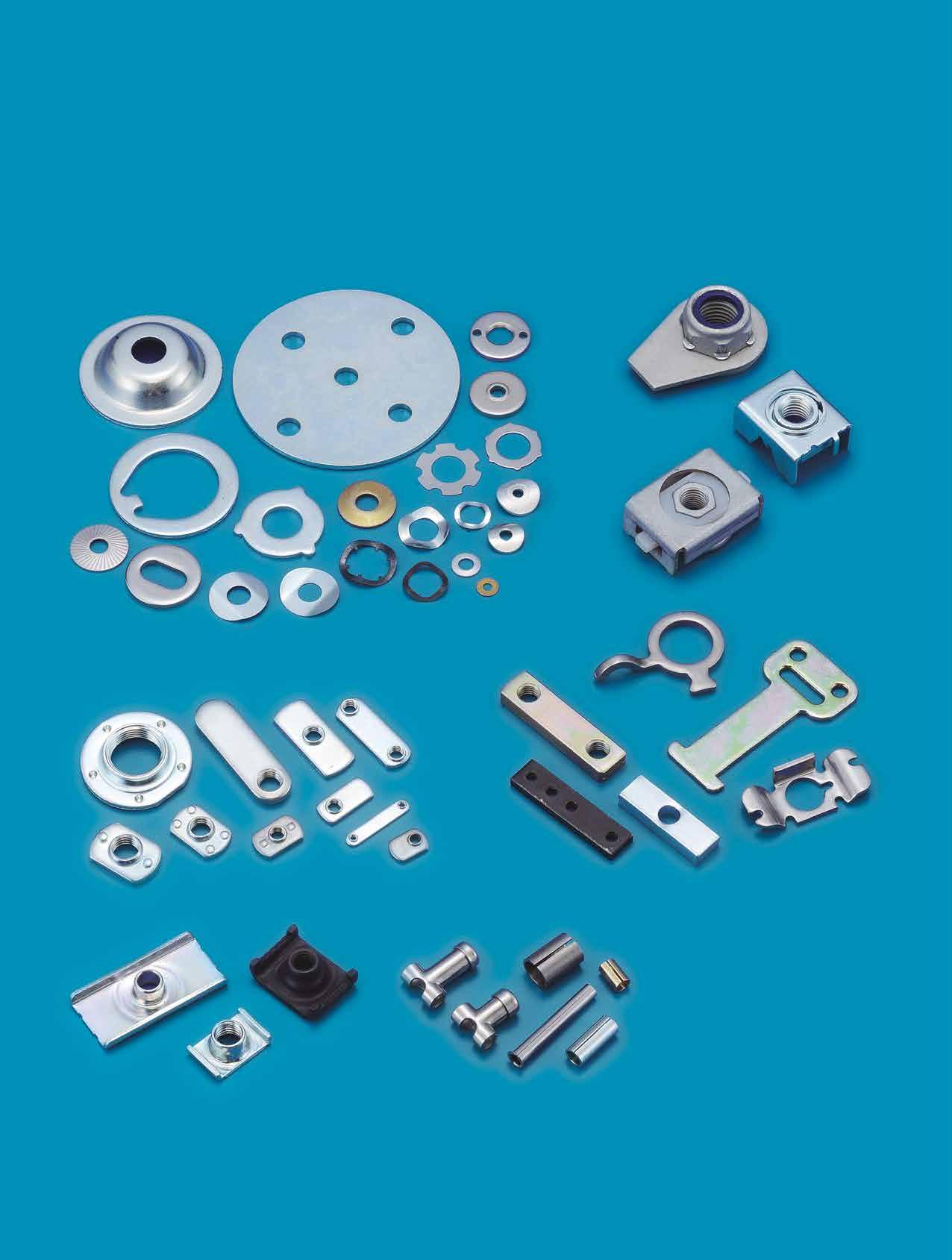
compiled by Fa stener World

World Steel Association (WSA) predicts that the global steel demand will increase by 5.8% to 1.874 billion tons in 2021 and go up 2.7% to 1.924 billion tons in 2022. Vaccinations in many countries worldwide have helped slow down the pandemic. Although some economic measures imposed by certain countries have taken effect, advanced countries are still expected to spend several years to recover to the pre-pandemic level.
On China alone, its local steel demand is expected to increase by 3% to 1.024 billion tons in 2021 and go up 1% to 1.035 billion tons in 2022. The effect of local market stimulus is waning, so the growth margin is on a downward trend. On the other hand, the steel demand in advanced countries is expected to increase by 8.2% to 371 million tons in 2021 and go up 4.2% to 386 million tons in 2022.
Indonesia has been devoted to developing a complete EV supply chain these years. The country seeks to collaborate with American, Japanese, South Korean and Chinese investors and sets goals to make 20% of cars produced in Indonesia be electric by 2025 and become a global EV and EV battery manufacturing hub. Indonesia Investment Coordinating Board announced LG Energy Solution will invest USD 9.8 billion to work with an EV battery group of 4 Indonesian companies (PLN, Pertamina, Aneka Tambang and MIND ID) to form a complete EV battery supply chain.

Battery production is the key to EV industrial development. Indonesia is rich in materials including cobalt, nickel, manganese and other rare metals that allow for establishing a price-competitive EV industry. Joko Widodo (President of Indonesia) has set goals for the nation to start producing EVs in 2022, make the proportion of components used in any EV produced in Indonesia reach at least 35% by 2023, and make EV account for 20% of all Indonesian car production by 2025.
Taiwan CSC held a meeting on March 12th to discuss the domestic sales prices of steel products for the 2nd quarter of 2021. The meeting closed with the decision to increase the price of wire rods by NTD 2,000 per ton and increase the price of automotive materials by NTD 2,800 per ton. According to Taiwan CSC, considering the price adjustment for Q1 this year, which was not sufficient enough to cover their raw material costs, the significant difference between their prices and their competitors’, and the cost fluctuations in Q2, they have decided to increase the prices of relevant steel products for Q2 with an average price increase of 8.3%.

Companies Development -
Chinese stainless steel fastener distributor Tong Ming Enterprise said on April 14 that its number of clients will increase by more than 25% to over 10 thousand companies. The monthly shipment is expected to keep at around 10 thousand tons and the annual shipment at an all-time high of 100-200 thousand tons. Despite the pandemic last year, the company benefits from increased demand in infrastructure, railway transportation, and automated equipment for intelligent manufacturing, and sees its Q1 shipment at above 10 thousand tons.
Tong Ming's clients increased from 5,000 to 8,000 companies and could continue this growth to breach 10 thousand companies. The company does not have enough capacity now as a result of a growing number of clients and stainless steel fastener applications. It expects to add 100 thousand tons to its capacity within 3 to 5 years.

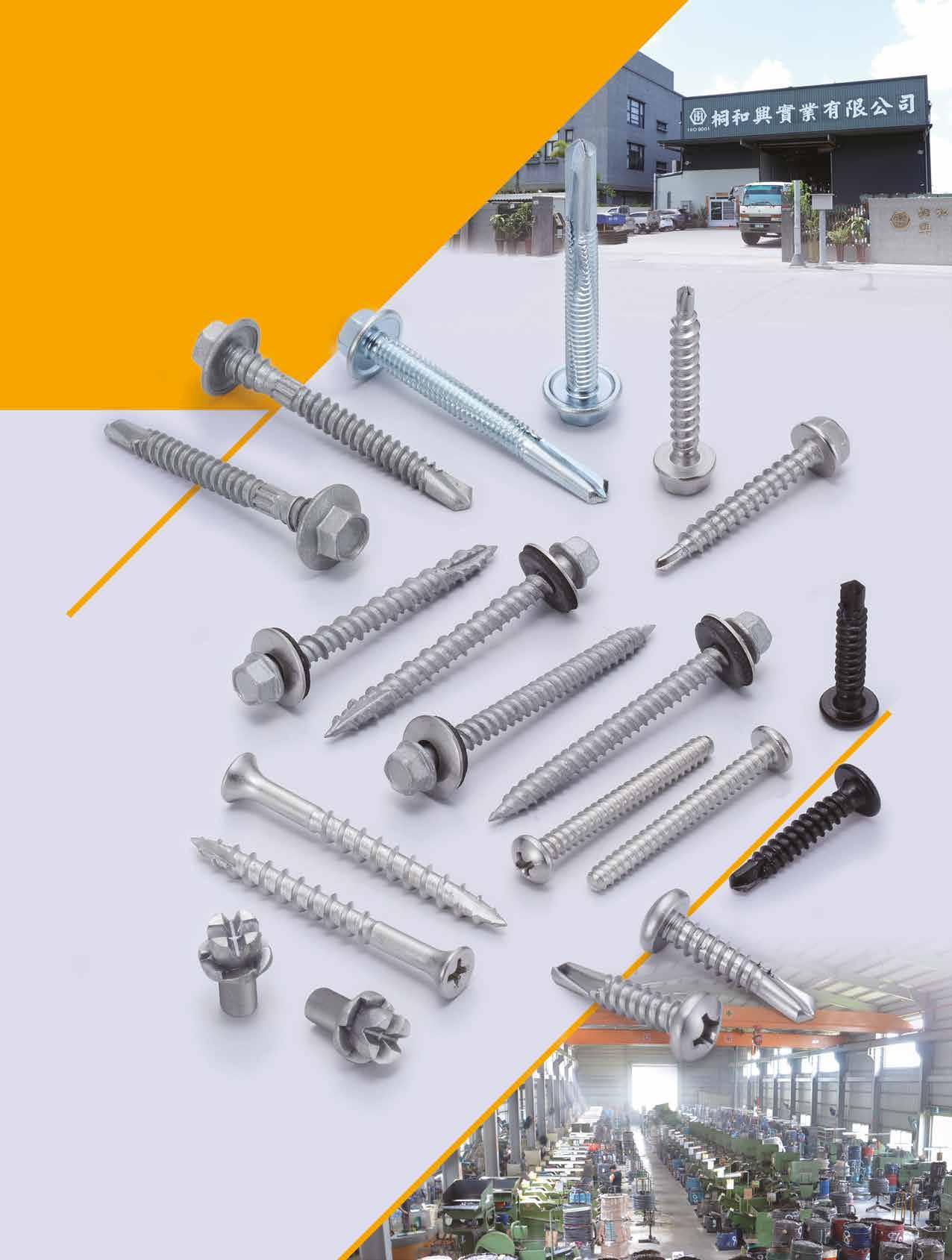



Sales for Q1 2021 are down 22.2 % compared to the same period of the previous fiscal year.
The global COVID-19 pandemic has further weighed on the Group's activity in varying proportions depending on the divisions:
• LISI AEROSPACE : - 38.5 %, the "Fasteners" business, which had benefited from a good level of sales in Q1 2020, is the most severely affected
• LISI AUTOMOTIVE : + 2.9 %, in line with the positive trend observed since the second half of 2020
• LISI MEDICAL : - 15.1 %, although sales are down, the outlook benefited from well oriented business
LISI AEROSPACE, a division of the LISI Group, has entered into an agreement with the Boeing company to extend its current contract. LISI AEROSPACE is delighted with this contract extension so that the aerospace market is preparing for a return to growth after the market downturn in 2020. Within the framework of this contract, LISI AEROSPACE will continue to supply in support of all Boeing commercial programs (737, 747, 767, 777 and 787).
LISI AEROSPACE is a global supplier of assembly solutions, as well as engine components and structure for aircraft.
Airbus and Malaysia Airlines have signed an extension of their Flight Hour Services Components (FHS-C) contract for the carrier's A330 and A350 fleets, as an outcome from Malaysia Airlines' recently completed restructuring exercise. The agreement was signed in Kuala Lumpur by Malaysia Airlines Chief Operations Officer Ahmad Luqman Mohd Azmi and Airbus President Asia-Pacific Anand Stanley.
The multi-year extension covers technical support by Airbus for the airline’s existing widebody fleet of A350s, A330s, as well as A330-200Fs operated by MASKargo. FHS-C provides component services including spare pool access, on-site-stock at the main base as well as components engineering and repairs. Through FHS-C, Airbus guarantees parts availability and secure aircraft technical performance thanks to high quality standards and component engineering.
“We are pleased to extend our partnership with Airbus and trust the brand to provide the vital technical support for our widebody fleet. As we move forward as an airline and share our Malaysian Hospitality worldwide, the Airbus aircraft we fly will become a symbol of reliability and consistency,” said Malaysia Airlines Chief Operations Officer Ahmad Luqman Mohd Azmi.
“We are pleased to continue our close relationship with Malaysia Airlines with the extension of this FHS agreement. Especially in these challenging times, Airbus strives to provide the highest quality, value-adds and tailormade solutions to our airline partners to support them and enhance the daily operations of their fleet,” added Anand Stanley, President Airbus Asia-Pacific.

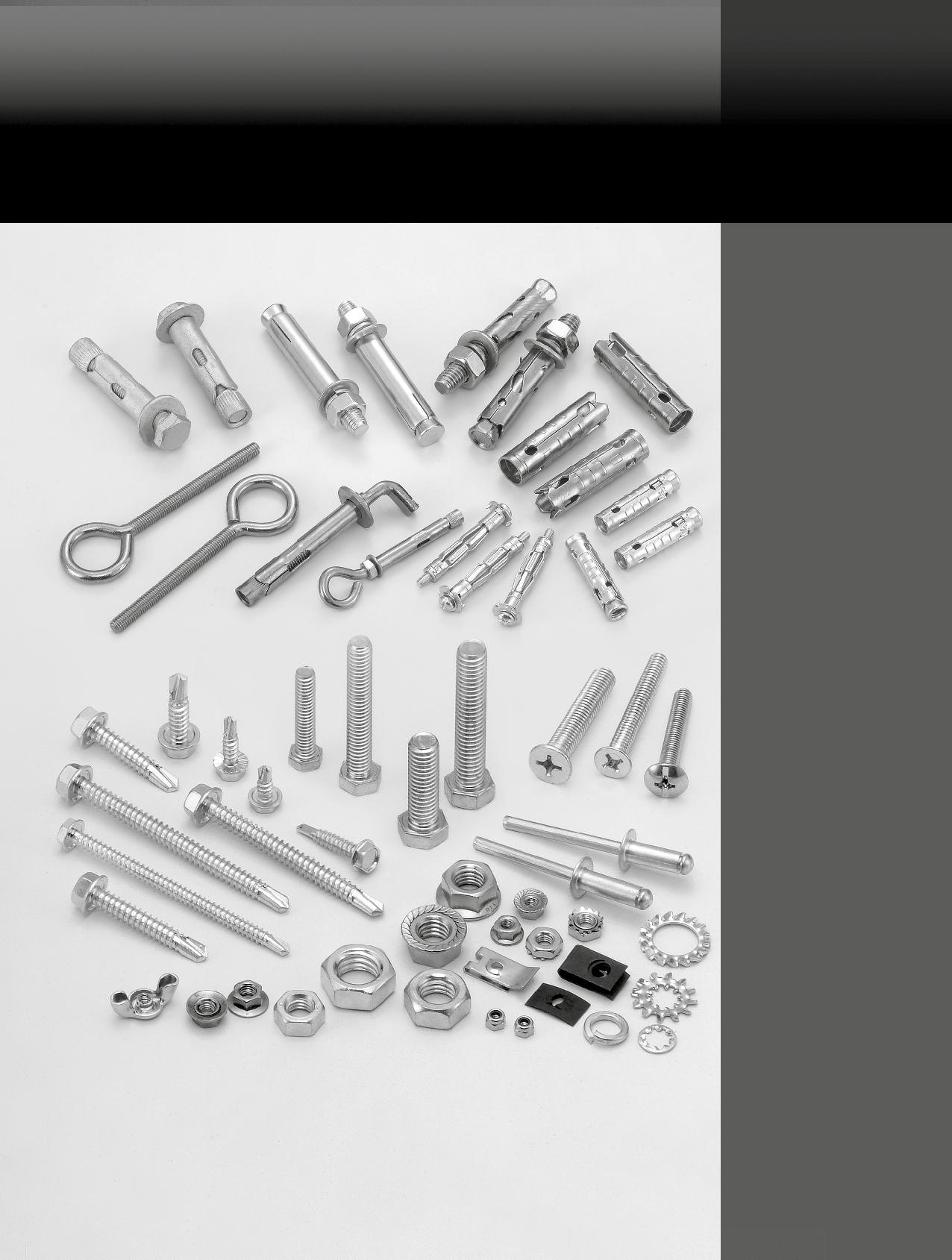

The wire rod giant Chun Yu reports its March unaudited revenue at NTD 912 million (up 20.89%) which is slightly lower than the highest record of NTD 915 million last December. The consolidated Q1 revenue is NTD 2.317 billion, up 19.63%.
Chun Yu says vibrant fastener demand is driving the momentum for the domestic construction fastener market. Thanks to better epidemic control in Taiwan and undisrupted domestic production and transport, overseas clients are willing to place orders for fasteners as well as wire rods to Chun Yu, thereby increasing shipment and unit price.
Automotive fastener company QST International reports its March revenue at NTD 910 million, the highest record over the last 5 months, up 42.16% from NTD 640 million last March. This indicates post-pandemic recovery of global automakers are driving a steady increase in orders to QST and that the company is walking out of depression. The positive outlook is expected to remain throughout this year.
Italian Growermetal is very pleased to announce that it has also achieved quality system certification according to the EN 9100:2018 standard for the aerospace industry. EN 9100 has been developed by the International Aerospace Quality Group (IAQG), which established a quality management system controlled directly by the aerospace industry itself.
Growermetal, thanks to the achievement of this certification has the great opportunity to be included in the Online Aerospace Supplier Information System (OASIS) database, from which the most important players of this industry can select their suppliers.

China Spacesat released a financial report for 2020 which shows the operating income at RMB 7.007 billion (up 8.42%), total profit at RMB 477 million (up 14.92%), net profit attributable to shareholders at RMB 354 million (up 5.34%), and EPS at RMB 0.3.

Jay-Cee Sales and Rivet Inc., a Master Distributor of Rivets and other threaded fasteners, announced that it has been approved for and issued a Certificate of Registration for ISO 9001:2015.
The International Organization for Standardization (ISO) maintains the ISO 9001:2015 certification for quality management and quality assurance. To achieve the certification, an organization needs to demonstrate its ability to consistently provide products and services that meet customer and applicable statutory and regulatory requirements. The certification aims to enhance customer satisfaction through the effective application of the system, including processes for improvement of the system and the assurance of conformity to customer and applicable statutory and regulatory requirements.
“We are very proud of this achievement,” says Greg Weitzman, Vice President of Jay-Cee Sales & Rivet, Inc. “The certification verifies the quality of our products and shows our dedication and commitment to our customers.”
Jay-Cee Sales and Rivet Inc. a family owned business since 1948 is a Master Distributor of Rivets and other threaded fasteners to many different industries including automotive, medical, and aerospace just to name a few.
The company specializes in aerospace manufacturing and satellite applications. It has R&D and manufacturing bases in Beijing, Shenzhen, Xi'an and other places, and is capable of developing critical systems and core components. In aerospace manufacturing, it provides navigation receivers and fasteners for spacecraft, including aerospace fasteners made of titanium alloy, high-temperature alloy, aluminum alloy and steel. It can also provide inspection, heat treatment and surface treatment. In satellite applications, the company focuses on satellite communication, navigation and remote sensing. The company has had 263 patents and has 2,983 people in charge of R&D and technology management who account for 73.17% of all employees.
Taiwanese aerospace fastener manufacturer NAFCO took a big blow from the COVID pandemic and lost 80% of its profit last year. Looking ahead, NAFCO says as its aerospace clients still have some inventory to be consumed and the demand for automotive fasteners continues to rise, the whole business is still working hard on laying its foundation. However, the company expects vaccine passports and travel bubbles to be gradually in place to rejuvenate sales in the second quarter. NAFCO's net profit last year was NTD 60 million, down 82.9% with the EPS at NTD1.14. As countries embark on massive vaccination and are successively pushing for vaccine passports and travel bubbles, the market is on the lookout for aerospace recovery.
NAFCO mainly supplies engine fasteners and other machined parts to primary clients such as GE and Rolls-Royce. The company says it doesn't sense an apparent upturn in purchase orders. The market situation may not be clear until mid-2021.
Despite a far cry from aerospace recovery, it is worth noting that NAFCO's industrial business segment sees an increase in demand. The company supplies fasteners mainly for the American and European automakers, but it also taps into lightweight fasteners for new energy vehicles. Thanks to the upturn in the American and European car markets and increased demand, the business segment's revenue proportion has risen to 20%-30% from the pre-pandemic 10%.

2020 kicked off a global race of electric vehicle (EVs) sales. Statistics by EVvolumes, a Sweden EV research institute, show a total global sales of 3.24 million EVs for 2020, up a whopping 43% from 2.26 million EVs recorded in 2019. In brand ranking, Tesla topped the chart at 499.6 thousand EVs and Volkswagen came in second at 220.2 thousand EVs, followed by Chinese EV giant BYD Auto at 179.2 thousand EVs.
In country ranking, China topped the chart at 1.3 million EVs, followed by Germany at 400 thousand EVs and the U.S. at 300 thousand EVs. France and UK both ranked 4th at 200 thousand EVs.

KPF announced on February 23rd, 2021 that it has completed the final acquisition of the ministerial certification for its high-power bolts from the Ministry of Land, Infrastructure, and Transport of Japan. KPF has proven expertise for fasteners and parts for construction, heavy equipment, and petrochemical plant since 1963. With advanced technology and experiences for forging, KPF entered the automotive part market. KPF also operates global affiliates in Vietnam and China.
Novaria is pleased to announce the acquisition of The Young Engineers, Inc. (TYE). TYE is an expert in the design and manufacturing of aircraft and aerospace hardware, with a primary focus on fasteners and inserts. The terms of the deal were not disclosed. This acquisition continues Novaria’s expansion into aerospace fasteners. “We have made several acquisitions since April 2020, all of which are unique contributors to our evolving business model,” said Novaria CEO Bryan Perkins. “The acquisition of TYE is an integral part of our strategy to expand our portfolio of proprietary and qualified products we offer customers.” TYE operations will continue at its Southern California facility with its tenured, skilled employees, including former owner and president Pat Wells.


A ssociations -
“It’s every bit as bad as it was”. Grimly taciturn but typifying responses to the BIAFD’s latest check with members on fastener cost and availability pressures, emanating from the ongoing sea freight crisis and escalating metals costs. The common theme running through global Purchasing Managers Index reports for February was the sledgehammer impact on manufacturing of rising costs driven by supply chain disruption and raw material shortages. As a vital supply-chain to UK and Irish manufacturing and construction industries, members of the British & Irish Association of Fastener Distributors confirm these pressures are at unprecedented levels - and that they show no signs of easing in the foreseeable future.

The outlook? With a massive backlog of all types of sea-going cargo, continued major congestion in global ports, and surging demand as economies recover from Covid-19, freight agents are warning importers not to expect any improvements until at least June and most likely well into Quarter Three.
BIAFD members have always invested heavily in inventory to smooth out the impact of the inevitable headwinds that beset long-range importing. However, these are not headwinds: overworked as the expression often is, ‘perfect storm’ really is an apt description right now.
Any hope of improvement in sea-container freight rates and availability, once the Chinese New Year holidays were behind us, has rapidly been dashed, according to BIAFD members. As February closed, the hope was the holiday respite in Asian shipments might allow recovery of containers to key export ports. However, there is no evidence of improvement on the ground. Cargo is piling up in Asian ports and any capacity gains will be rapidly eroded as global demand continues to surge. One thing is sure, there is no let-up in container freight rates, which BIAFD members continue to report as five to six times higher than a year ago. Importers are facing ‘all up’ costs of up to £6000 for a 20DC container shipped from Asia to the UK. Depending on the product involved that can equate to as much as a third of the value of the box contents. If anything, rates look set to harden as shipping lines apply $500 seasonal surcharges early and seek to recover increasing fuel costs.
With replacement inventory urgently needed to meet buoyant demand across many sectors, plus freight industry warnings of little better than 50/50 chances of containers sailing on schedule, importers are having to ‘bite the bullet’ and pay exorbitant rates to try to ensure earliest possible arrival. While Mainland China is at centre of shipment unreliability and escalating costs, BIAFD members report Taiwan being little better and arranging bookings from Vietnam ‘extremely difficult'.

There are unavoidable realities for fastener consumers in all sectors. Shortages are now appearing for particular, in some cases high demand, sizes of nuts, bolts or screws. The levels of freight cost inflation simply cannot be absorbed and is now having to be passed on as substantial cost increases, with more inevitably to follow.
The inflationary pressure from freight is further compounded by radical cost increases in steel and other key fastener manufacturing materials, including nickel, a major value element in stainless-steel fasteners. Carbon steel wire costs have escalated by more than twenty percent, with increases of ten percent or more already notified for Quarter Two. The picture is not unique to fasteners, as any steel buyer knows right now. Capacity is constrained and steel inputs, such as iron ore, are holding at historically high cost levels. Nickel market prices have escalated by more than forty percent year on year - driving sharp cost increases in wire for stainless steel fastener manufacturers. Equally concerning, wire lead-times are continuing to extend, with factories reporting real difficulty in sourcing all the material they need.
Whatever and whenever the eventual improvement in container availability, freight rates and material costs, it is clear they will not subside to anywhere near the levels enjoyed in previous years. Fastener importers and distributors have no choice to commit to the current extraordinary cost levels if they are to stand any chance of fulfilling their core role of providing supply continuity for industry and construction. With lead times upwards - in some cases beyond 30 weeks - those commitments are set to impact fastener costs in the UK and Irish fastener markets, indeed fastener markets throughout Europe, for the rest of 2021.
HAI is pleased to welcome Michael O’Donohoe, Country Director at Wavin Ireland, as its new President for 2021-2022. Well-known and respected in the industry, Michael has been on the board of HAI since early 2017 and he has been Country Director of Wavin for the last six years. Prior to joining Wavin, Michael worked for nearly 20 years in various sales and marketing roles in various sectors.
Aside from his role in HAI, Michael has other links to the construction sector through his chair of both the Building Materials Federation and the Irish Plastic Pipe Manufacturers Association, as well as membership of the Construction Industry Council. Michael has a B.Sc. in Applied Sciences from Trinity College, an M.Sc. in Executive Leadership from the University of Ulster and is also a member of both the Marketing Institute of Ireland and the Institute of Directors.

Nuts, bolts, and screws, are usually manufactured in high volumes, which necessitate high speed manufacturing processes. When these processes are working correctly everyone is happy, but they are complicated and subject to occasional problems and glitches. This month Dr. Fastener is going to answer some questions related to common manufacturing problems and concerns in nut processing.

Nuts, like screws and bolts, are, generally, a high volume commodity. As such, the most predominant method of manufacturing them starts with cold forming a blank. However, lower volume or large size nuts more often use hot forging or screw machining techniques. For the purposes of this article, we will limit our discussion to the cold forming manufacturing method.
Therefore, when comparing nut products to screw and bolt products, a couple of significant differences immediately present themselves. First, the Aspect Ratio (or relationship between height and thickness) of nuts is almost always very “short and squat”. This geometry is uniquely different than the “long and skinny” geometry of screws and bolts, and means that we are unable to use the same cold forming machines. Nut Formers are usually faster, more nimble, multi-station formers. They will almost always be designed with a short stroke, since they do not need to push long parts out of the dies. Secondly, nuts have either hollow blind or through-hole features. Although nut designs may incorporate all of the cold heading capabilities; upsetting, forward extrusion, reverse extrusion, and shearing, most standard nuts rely heavily or exclusively on reverse extrusion processes. This results in a very different engineering and progression process than utilized in making
screws and bolts. Thirdly, for ease of manufacturing, the reliance on reverse extrusion and hollow or through-hole features necessitate the ability to flip the part over to work each end from either the die or punch side of the machine. To facilitate this, nut formers are usually equipped with Universal Transfer Mechanisms rather than a straight across Bolt Maker Transfer. The Universal Transfer allows the part to be flipped between stations so that both ends can be alternatively presented to the punch and die. Lastly, with through-hole nuts a thin web of material must be pierced to achieve the through hole. Whereas with bolts that receive a trimmed head and pushed through the die, nut piercing involves shooting a pin through the part to pierce the web. The nut is carried back towards the punch on that pin, where it is stripped off and exits the machine.
Getting threads into nuts is also uniquely different than on screws and bolts. Nut threads are tapped by either plunging a tool in and out of the nut blank or by through-feeding the nut blank across the tap. Tapping can be either a cutting or forming process.
Nuts that are to function as “Lock Nuts” must have the locking feature incorporated. Most lock nuts utilize one of three different methods; Side Locking, Top Locking, or Top Locking Insert. Although there are some analogous locking mechanisms for externally threaded fasteners, they are fundamentally different than those used in nuts, making the manufacturing methods for nuts unique.
the number one problem experienced in forming by nut manufacturers is set-up. The Operator just can’t seem to get the machine set-up correctly to successfully make the part. These problems can stem from a number of potential issues including engineering, operator error, tooling, and tool materials.
Nuts are made in multiple, incremental steps. When the process is “engineered” the Process Engineer must figure out what he/she wants to accomplish with each step. These are called the “Progressions”. If the order isn’t correct or he/she is trying to do more than the operation is capable of producing, problems may ensue. Normally these issues are discovered during the PPAP or ISIR run and fixed then. However, it is possible that progressions which initially work or have worked for many production runs suddenly do not work on a particular run because some other variable has changed, exposing that one or more of the progression steps has exceeded an important boundary because it was designed near a functional limit.
There are many different possibilities for operator error. An operator may be inexperienced or simply having a bad day. One method that is helpful to address this, and often required by many customers, is to have a Process Control Plan for each operation. If these, and perhaps augmenting Work Instructions, are detailed enough, they can provide a powerful tool for operators to use to help get set-up right the first time.
Tools are not always made correctly or operators have “tweaked” them to a point where they are no longer capable of producing the part to specification. For new tools, having some system of incoming certification or developing suppliers can often prove helpful in solving chronic problems. Everyone likes to get a bargain, but working with a tool supplier that chronically supplies substandard tooling is no bargain at all. Therefore, developing and maintaining good tool suppliers is critical to problem free manufacturing. Additionally, tools are often “tweaked” to get them to work the way an operators wants them to. That “tweaked” tool which worked with one coil of wire may not work for the next one. Operators or Tool Room personnel should have some way to record changes that have been made to tooling, so that these they can be easily and quickly ruled out during troubleshooting.
Manufacturers find that different tool materials work better for some parts or in specific progressions than other materials. When the optimal material is performing sub standardly or is substituted with a different material,
problems often occur. With shortages due to the COVID pandemic, some manufacturers have been forced to substitute optimal tool materials with the next best alternative. This has created some industry problems.
Transfer Mechanisms on all cold heading machines preform a critical but intricate function. Universal Transfers are not any more prone to problems than other styles of transfer mechanisms. Once the mechanism is properly “dialed in” and working correctly, they are pretty problem free. This is not to suggest that an operator can get it working and just walk away from the machine, like all the moving parts of the machine, they must always be vigilant for brewing problems.
Like any transfer, the operator must get the Universal Transfer properly timed. The transfer mechanism must grab and hold the part at just the right moment, transfer without dropping the part, and release it at just the right moment. That can be an intricate “dance” and requires some experience by the operator or setup person to get right. However, once all of these variables are properly set, the transfer mechanism should run without many problems or glitches.
The best answer here is probably yes and no. There is no doubt that having multiple different equipment brands may mean having separate tooling and spare maintenance parts. It also requires more rigorous education needs as engineers, operators, and maintenance personnel all have to be trained and skilled in multiple machine formats and operation.
Therefore, the answer to this question strikes at the heart of a manufacturer’s personal philosophy or need. In other words, the manufacturer may adopt a philosophy that having all one brand of equipment is advantageous. Perhaps one of the best examples of this philosophy in practice is the U.S. regional air carrier Southwest Airlines. Not only do they only purchase aircraft from Boeing, but all aircraft are the same model, the Boeing 737. In setting up their operation this way, they significantly simplify training of personnel and maintenance of their fleet. However, a similar strategy may not prove feasible for all nut manufacturers, as they may need a machine to provide a specific capability that is not available with their preferred brand or model of machine. Therefore, it is probably fair to say that having a wide selection of machine brands complicates the overall manufacturing operation, but, when properly managed is not a problem.

It
should first be understood that these products which we refer to as “Lock Nuts” usually do not actually permanently “Lock” the nut in-place on the screw or bolt. These products are more appropriately categorized as Prevailing Torque nuts. This means that they generate some additional interference or friction which places an added torque in the system that makes it more difficult for the nut to spin off. There are three primary styles of these types of nuts: Side Locking, Top Locking, and Top Locking Insert. All three categories depend on a mechanical feature or component to provide the desired added interference. Most problems arise from variation in this desired interference spanning a range of little or no added prevailing torque, making it difficult to distinguish between a plain nut and a locking nut, and too much prevailing torque, making it difficult or sometimes even impossible to assemble.
These application problems and variability stem from the manufacturing process. In both the side locking and top locking variants, if the impressions made in the nut are over or under deformed or located in the wrong place (such as near the corner of the nut rather than the center of the flat) they will either generate a lot of application variation or simply not work correctly. These errors usually are a result of improper feeding, insufficient air or mechanical pressure, or broken and worn tooling. In top locking insert nuts, problems can stem from the insert component not being properly produced to the insert retention feature in the nut not being formed or pressed down correctly, allowing the insert to fall out. Additionally, most of these insert nuts use a Nylon insert. Nylon is hygroscopic, meaning that it absorbs or releases moisture depending on the moisture content in the surrounding atmosphere. The resulting swelling or contraction can dramatically impact the manufacturing results.
Perhaps the four most common tapping problems are:
1. Slivers and Debris in the threads
2. Broken Taps (Especially in blind hole nuts)
3. Worn-out Taps which result in rounded, chipped out, and undersized threads
4. Improper Feeding
Like all manufacturing problems, these all have solutions. If any of these are chronic problems to a manufacturer, they should engage in continuous improvement and problem solving activities to determine ways to reduce or entirely eliminate the problem.
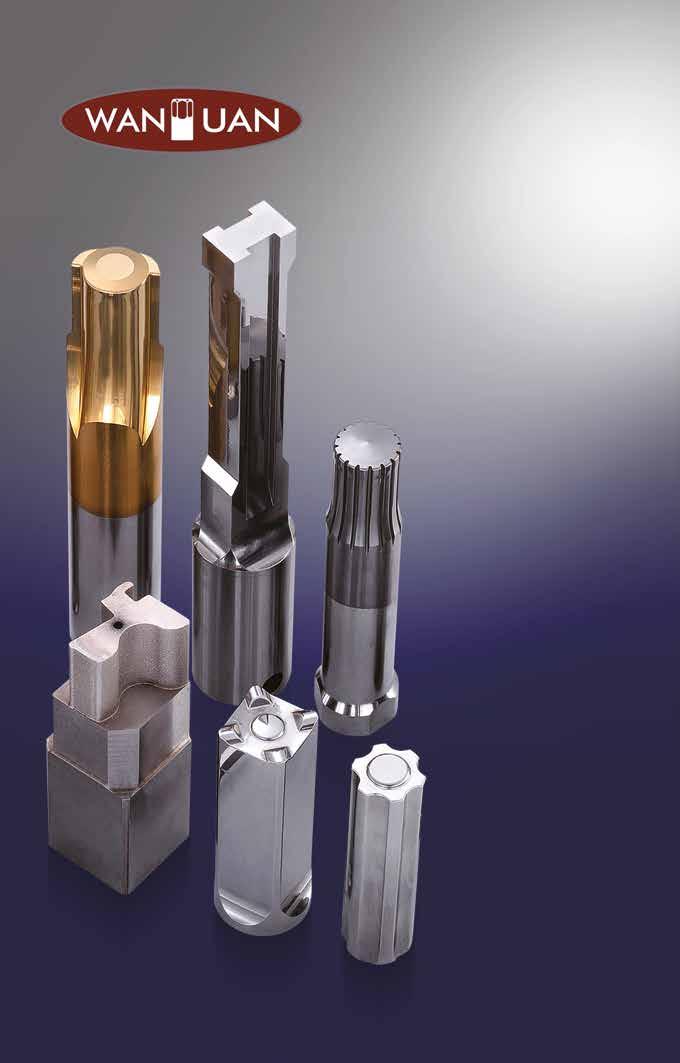

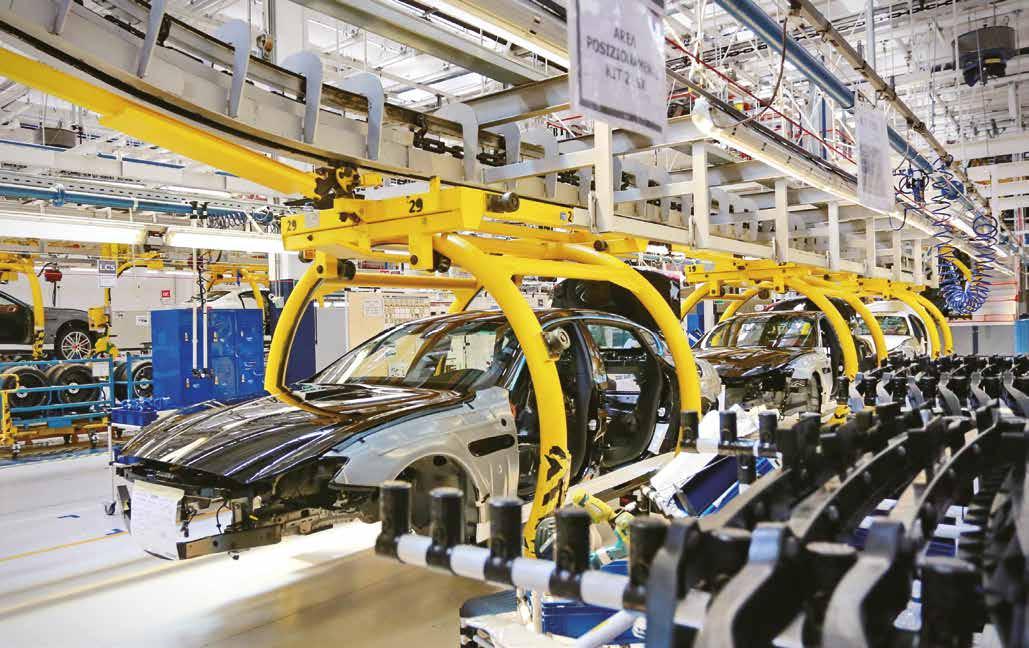
Many industries around the world have waved farewell to the year 2020 after a year-long depression. As a key factor that is able to impact on the supply and demand of the global relevant manufacturing, the automotive industry in many countries has also officially stepped into the year of 2021, accompanied by a series of news about production shutdown, lack of materials, and surging manufacturing costs. On the other hand, as the automotive industry has been gradually turning its focus from traditional fuel and hybrid powered vehicles to pure electric vehicles (EV) in recent 2 years, several car manufacturers have also begun to dedicate themselves to the R&D of EV, which means that the design of vehicle structure may appear a revolution in the next couple of years and is very likely to cause drastic impact on the supply chain of traditional automotive fasteners and components. However, as the technology of pure EV is still not fullyfledged, the supporting packages are not completely ready yet, and the public is still trying to adapt to the existence of EV, the fuel-powered vehicles won’t be completely replaced in the short term (at least in the next five years). To view objectively, although the production and sales did appear a short-term decline, with some positive developments such as market reopening, the lack of car chips being solved, and quick recovery of customer demand, there will be definitely another wave of prosperity for the traditional car manufacturers to enjoy.
This article will analyze the global car production and sales in 2020 as well as the detailed data for passenger cars, commercial vehicles, heavy trucks, and buses & coaches, for readers to get a clearer picture of the latest change in car production and change in certain countries.
According to the latest data released by OICA ( Table 1 ), the global total car production in 2020 reached 77,621,582 units, a significant shrinkage of 15.8% from 92,175,805 units in 2019. To view by continent, in 2020, Europe (incl. the UK) produced nearly 17 million units, down 21.6% from 2019; America produced nearly 16 million units, down 22.1% from 2019; Asia produced more than 44 million units, down 10.2% from 2019; CIS/Turkey produced over 3 million units, down 11.7% from 2019; Africa produced 0.7 million units, down 35.3% from 2019.
The production in each of the five continents all appeared a decline. Africa shows the most significant decline margin of -35.3%, while Asia shows the least significant decline margin of -10.2%. Asia, Europe and America remained the most important car manufacturing heartlands in the world, and over 50% of the global production was in Asia (with China alone representing over 25 million units). In terms of these 3 major manufacturing heartlands, the top 3 manufacturing countries in Europe were Germany, Spain, and France; the top 3 manufacturing countries of America were USA, Mexico, and Brazil; the top 3 manufacturing countries of Asia were China, Japan, S. Korea. If to view by country, only Uzbekistan, Kazakhstan, Belarus, Iran and Egypt remained growth, while the others all appeared a decline.
Table 2)
The global passenger cars production in 2020 reached 55,834,456 units, down 16.9% from 2019. Passenger cars represented 72% of the global vehicles production and the production of passenger cars was highly concentrated on Europe and Asia (more than 90% of the global passenger cars production). What’s worth mentioning is that America was also one of the major three car manufacturing heartlands in the world, but the passenger cars production represented merely 30% of its total production (which is a little bit low) On the other hand, the top 3 passenger cars manufacturing countries of each continent are basically similar to the top 3 vehicles manufacturing countries.
(See Table 3)
The global light commercial vehicles production in 2020 reached around 17.2 million units, down 16.1% from 2019. Light commercial vehicles represented around 22% of the global vehicles production and nearly 87% of the light commercial vehicles production were in America and Asia. America, in particular, represented over 10 million units (mainly in USA. Mexico, and Canada). More than 65% of the car production in America were light commercial vehicles, quite different from Europe where over 86% of the car production were passenger cars. In terms of this vehicle type, top 3 manufacturing countries in Europe were Spain, France, and Italy; top 3 manufacturing countries in America were USA, Mexico, and Canada; top 3 manufacturing countries in Asia were China, Thailand, and Japan.
) (See Table 4)
The global heavy trucks production in 2020 reached 4.3 million units, up around 5.0% from the same period of 2019. Heavy trucks was also the only one vehicle type showing production growth. Heavy trucks represented around 5.6% of the global vehicles production. To view by continent, the production in the world’s largest two manufacturing regions (Europe and America) appeared a respective decline of -21.5% (landing at 0.225 million units) and -30.0% (landing at 0.473 million units). The production in Asia appeared a 15.2% rise against the tides and reached around 3.64 million units (China alone reached a 34.2% growth from 2019). Asia not only played an essential role in pushing the global heavy trucks production ahead, but also was the world’s largest heavy trucks manufacturing country (representing over 83% of the global production). Major manufacturing countries of this vehicle type were: China, Japan, USA, Mexico, and India.
(
&
) (See Table 5)
The global buses & coaches production in 2020 reached around 0.22 million units, a significant decline of -36.8% from 2019. The production of this vehicle type represented only less than 0.3% of the global vehicle production and more than 70% of the buses & coaches production was in Asia. To view by continent, Europe, CIS and Turkey all kept their decline within -10%, but America, Asia, and Africa appeared a decline of -37.3%, -41.3%, and -25.4%, respectively. Major manufacturing countries of this vehicle type were China, India, Brazil, Russia, S. Korea, Turkey, Poland, and Czech Rep.
Confidential Confidential
Confidential Confidential
Confidential Confidential
Confidential Confidential
Confidential Confidential
aine Confidential Confidential
Produc tion of All Vehicles
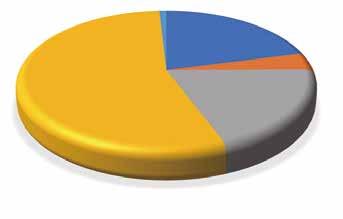
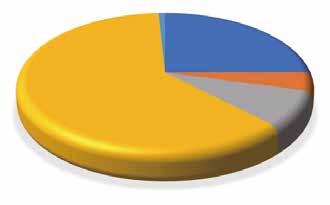
Produc tion of Heav y Truck s
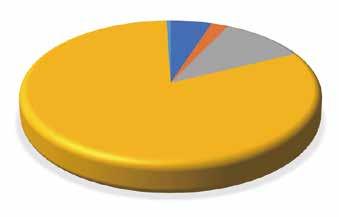
The global vehicles sales in 2020 reached 77,698,041 units, down 14.1% from 2019’s 90,423,474 units, a decline margin similar to the drop in production in the same year (see Table 6). To view by continent, in 2020, sales in Europe (incl. the UK) were around 16.7 million units, down 20.2% from 2019; sales in America were nearly 20 million units, down 19.6% from 2019; sales in Asia exceeded 40 million units, down 7.8% from 2019; sales in Russia/Turkey/Other Europe were around 2.6 million units, up 5.1% from 2019; sales in Africa were around 0.9 million units, down 22.6% from 2019.
Except for Russia/Turkey/Other Europe, other continents all appeared a decline in sales and the most significant sales decline was in Africa (reaching -22.6%). Most sales were in Asia, America, and Europe. Asia alone represented more than 50% of the global sales. In terms of these three major sales hotspots, countries with the top 3 sales in Europe were Germany, France, and the UK; countries with the top 3 sales in America were USA, Brazil, and Canada; countries with the top 3 sales in Asia were China, Japan, and India. Compared to 2019, Almost all countries reported a decline in car sales except for a few countries which even reported higher sales records (such as Turkey, Puerto Rico, S. Korea, Taiwan, Kazakhstan, and Egypt). Turkey was the one among these countries that reported the highest growth rate of 61.8%.
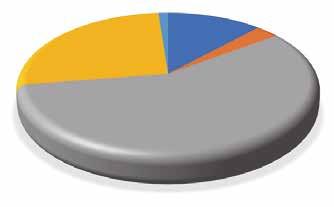
Produc tion of Buses & Coaches
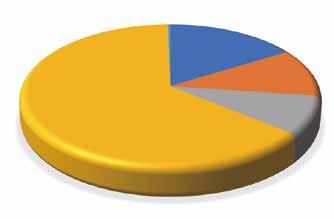
The global passenger cars sales in 2020 reached 53,594,372 units, down 15.9% from 2019. Passenger cars represented around nearly 70% of the global vehicles sales and sales of this vehicle type were mainly in Asia, Europe and America (more than 98% of the global passenger cars sales). What’s worth mentioning is that America was also one of the top 3 sales hotspots in the world, but its passenger cars sales only represented around 34% of its total car sales. In addition, countries with the top 3 passenger cars sales in each continent were almost the same as those with the top 3 cars sales.
(Commercial Vehicles) (See Table 8)
The global commercial vehicles sales in 2020 were around 24 million units, down 9.7% from 2019. Commercial vehicles represented around 30% of the global sales and nearly 88% of the commercial vehicles sales were in America and Asia. America alone represented more than 10 million units (mainly in USA, Canada, and Mexico). Over 66% of the vehicles sold in America were commercial vehicles, while more than 85% of the vehicles sold in Europe were passenger cars. In terms of this vehicle type, countries with the top 3 sales in Europe were France, Germany, and the UK; countries with the top 3 sales in America were USA, Canada, and Brazil; countries with the top 3 sales in Asia were China, Japan, and India.
Table 8. Global Sales (Commercial Vehicles)
(a par t of Table 8)
In 2020 we saw that the production and sales in various markets around the world roughly appeared a decline of -15-30%, but both still remained above the level of nearly 80 million units, which reveals that although the global automotive market was severely impacted, a certain level of capacity and demand were still there. However, it is still difficult for the global market to recover to the production and sales level in 2019 in the short term, as many external market factors (such as the progress of vaccination, when the borders will reopen, supply chain change, and customers’ demands) may continue to cause some impact on the market. Taking sales data into account to forecast the future possible automotive market momentum, we could see that sales in major markets like China, Japan, India, S. Korea, USA, Canada, Mexico, Brazil, and W. Europe continued to be strong, but also see that the potential Turkish market also appeared a marveling growth margin in sales. However, as the global car production lines are still facing problems like insufficient materials and chips supply, governments of certain countries should accelerate their steps to figure out solutions and help manufacturers weather these challenges, otherwise, not only car manufacturers will be impacted seriously, but also other relevant industries in close collaboration with car manufacturers will be mired in difficulties, too.
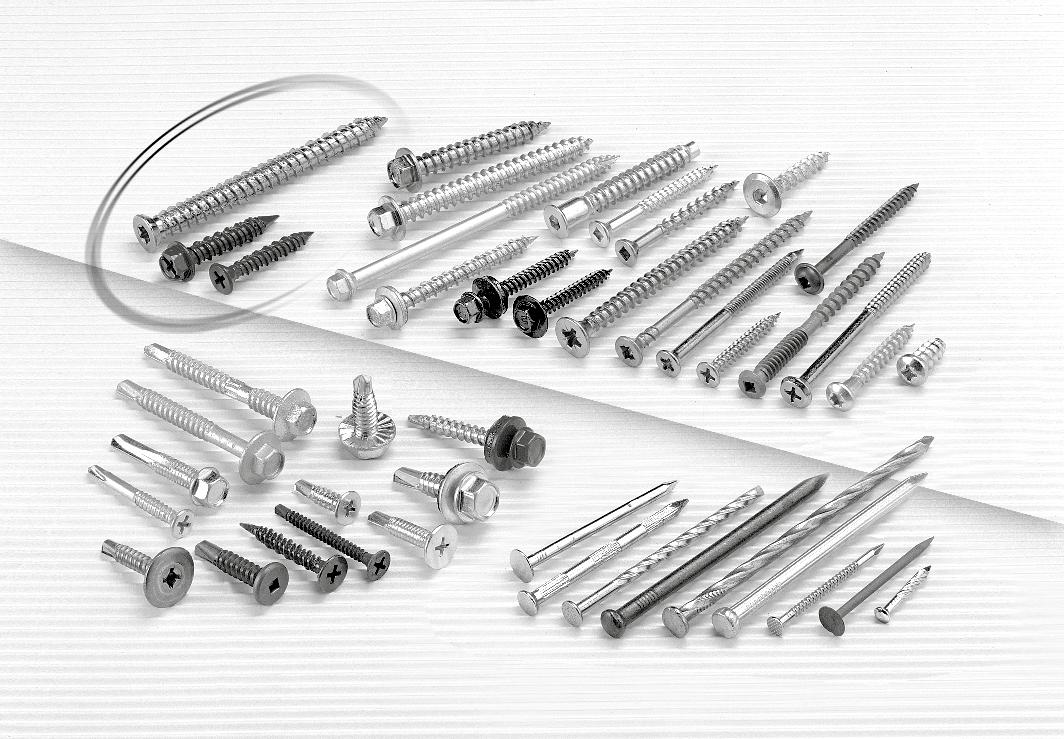

by Dean Tseng, Fa stener World
In addition to pointing out the economic status of a nation, GDP (Gross Domestic Product) provides us with a gateway to get a grasp of fastener market demand. GDP has become an important indicator for Taiwanese fastener business owners to measure market performance. Do you use GDP to evaluate each nation’s fastener demand? Fastener World Magazine has data from IMF and StatisticsTimes compiled into a chart of global top 100 GDP performers for a duration of 2018 to 2021 (projection), from which we picked up several signs of the economy briefly listed in the following table. ★
》》》 Listed in order based on GDP ranking in 2021.
》》》 Taiwan and China marked with asterisks are the least affected GDP performers by the COVID pandemic. China’s projected GDP growth is several times higher than Taiwan’s.
》》》 Other nations (mostly emerging nations) marked with asterisks have continual positive growth rates during the pandemic with no visible signs of impact on them.
》》》 Other nations without an asterisk are affected and mostly had GDP decline in 2020, but their projected GDP for 2021 rebound to the pre-pandemic level of 2019 and/or even surpass it.
》》》 The global total GDP dropped by around 4% in 2020 during the pandemic. However, it is projected to grow 5% to USD 91 trillion in 2021, even higher than the pre-pandemic USD 86 trillion.
b y G u y Avellon
There are many ways a fastener can fail but the majority of failures investigated have been due to installation or application errors. Less than 1% was the cause of a material defect. Therefore, it is imperative that a dialogue begins with the customer to determine the conditions of how the fasteners were used.
The following outlines the causes and effects of various installation errors. The most common failures come from fasteners being overloaded or underloaded but there are many ways to get there.
The term ‘overloaded’ means that the bolt or cap screw has been stretched past its yield strength. This type of failure can be identified visually by a ‘dog bone’ appearance of the threaded portion, much like taffy when pulled (Photo 1).
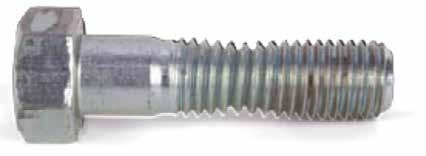
An overloaded fastener will also cause a loose connection. If the service loads exceed the proof load or yield strength, the fastener does become slightly longer, but remains in the connection. When the external service loads are removed, the joint returns to a relaxed condition but the bolt remains slightly longer and appears to be loose. The bolt may not have a ‘dog bone’ appearance but will have a change in thread pitch.
It is always best to check the thread pitch of the fasteners as the thread deformation may not always be visually apparent. Checking the thread pitch of a questionable fastener is done with a thread pitch gauge. However, when one is not readily available, the thread pitch may always be compared using a new bolt of the same diameter and thread pitch. Simply place the entire length of the new bolt on top of the entire length of the questionable bolt.
It is very important to check the entire length of the threads because there will be no thread pitch change of the threads where the nut held the bolt or the first five or so threads of a cap screw in a tapped hole. This is because all of the stretching in tension and thread deformation occurs between the nut and bolt head.
Causes:
• Improper Fastener Grades
o Here, the bolt is not strong enough for the applied loads and will yield.
o The bolt may fail or be loose when the external loads are removed.
o If the nut does not match the grade of the bolt, the nut will fail.
• Incorrect Torque
o This could mean that no measuring method was used and/or a lubricant was present.
o This could also mean that the proper torque was not applied for the conditions of the application; environmental, temperature, surface finish, lubricants, etc.
• Lubrication
o All torque charts cite values for ‘as received’ product, which is mostly ‘dry’.
o There are numerous lubricants on the market of which some are more efficient than others. Therefore, torque values must be adjusted for each type of lubricant.
o Lubricants reduce the friction between the mating threads as the bolt is torsionally tightened. Therefore, torque values are generally reduced to much lower values than on torque charts.
o Using a ‘dry’ torque value, or no torque at all, with a lubricated fastener will generally cause the fastener to be stretched into its plastic region well past its yield point.
• Power Wrenches
o Pneumatic or hydraulic power all rely on pressure. Unless regulated, there is no accurate method of applying torque.
o Air wrenches are much faster than hydraulic wrenches, but all seek friction to cause the wrench to stall. If a lubricant is present, there is little friction present to cause the wrench to stall. Therefore, the wrench continues to impact or turn until the fastener is beyond its yield point.
o As an example, an ordinary shop ½” unregulated impact gun has an initial impact of 425 lb-ft of torque. This will cause a ¾”-7/8” Grade 8 lubricated bolt to yield.
o Impact wrench abuse can be noted by the damage to the hex corners of the nut as the socket slams repeatedly into the nut corners causing visible deformation (Photo 2).
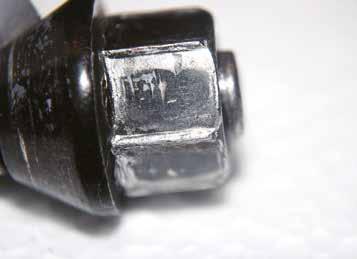
• Speed of Applied Torque
o Even a matching strength grade nut will strip its threads in the presence of intentional or accidental lubricant if the applied torque is too fast.
o The bolt is more likely to be stretched into yield, or fractured, if the speed of assembly is high as the speed also reduces friction until contact with the surface.
o Speed also causes an elastic rebound effect, which in some circumstances could cause the fastener to be stretched into yield as the joint material regains its shape from compression.
• Elevated Temperatures
o Joint materials expand with heat.
o If the fastener was tightened very tight in the connection, the joint expansion could cause the fastener to be stretched into yield.
o This will cause a loose bolt in the joint when it cools. Again, check the thread pitch.
If the cap screw is not tightened sufficiently to produce a clamping force greater than the load that will be applied to it, the fastener will fail from a phenomenon known as metal fatigue.
Fatigue failure occurs in heat treated metals and is most frequently encountered in heavy dynamic and fluctuating load assemblies where maximum loading does not occur during installation but later, when the equipment has been placed into service and when a heavy initial load impacts the joint. In this case, a cap screw may fail even though its tensile strength is much greater than the service loads it experiences.
The mechanism for this type of failure is similar to the repeated bending of a coat hanger wire. The metal becomes ‘tired’ or fatigues due to this repeated movement. A certain amount of ‘cold working’ occurs and the metal develops a stress rupture. This ruptured stress raiser continues to propagate through the grain boundaries of the metal until there is very little crosssectional area left to support the service load or next impact, and then it suddenly fractures. Such is the case when a cap screw is not tightened sufficiently to produce a clamp load greater than what it is being subjected to by the service loads.
Stresses can also initiate at other points which are voids (abrupt changes in size or shape), imperfections, scratches or discontinuities elsewhere on the metal surface. Once a crack initiates, it propagates through the core of the bolt with every additional shock or impact load, until the area of metal which is left can no longer support the next impact, at which point total fracture occurs instantly.
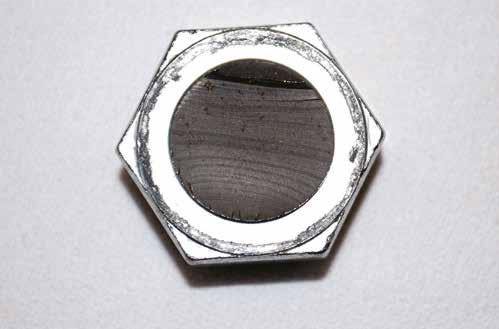
Typically, fatigue stress raisers develop at the last thread runout or at the first unengaged thread outside the nut. If the fillet radius under the bolt head becomes scratched or damaged, stress raisers develop and the bolt head separates in a dramatic manner.
A metal fatigue pattern consists of conchoidal markings or ‘beach marks’ as seen in P hoto 3
The fracture in Photo 3 initiated at the 7 o’clock position and continued through the body of the bolt until final fracture occurred at the heavy darkened area. The variance in dark to light bands indicate the frequency and intensity of the service loads.
Some fractures may have multiple stress initiation points as seen in P hoto 4
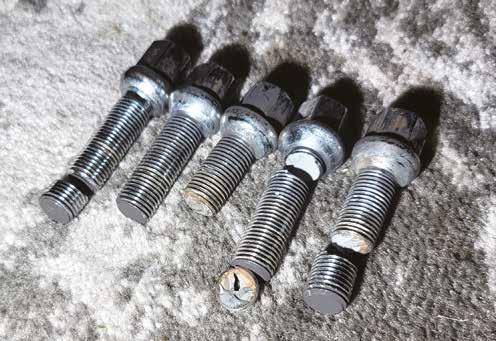
Causes:
• Non-Matching Fastener Components
o Check the grade markings on the nut and bolt to determine compatibility.
o A Grade 2 nut on a Grade 8 bolt only produces a Grade 2 connection.
• Embedment
o If the imprint of the bolt head and/or nut is visible in the joint surface or flat washer, clamp load has been lost.
o It only takes 0.001” of bolt relaxation, per inch of loaded length, to lose 30,000 psi of clamp load.
o Continued load impacts will cause further embedment and loss of clamp load.
• Debris in Threads or Tapped Hole
o Any amount of thread interference will increase thread friction, provide false torque readings and decrease clamp load.
• Burrs
o A burr is an uneven surface and may not allow the joint surfaces to lay flat and parallel.
o The extra metal will compress further during service and cause joint relaxation.
o The edge of the burr can dig into the fillet radius at the head of the cap screw causing a stress raiser or notch effect for metal fatigue.
• Inadequate Torque
o Too much torque will cause the fastener to yield. The fastener is now weakened and subject to higher service loads and increased thread stress.
o Too little torque will cause immediate stress in the threads.
o Heavy dynamic loads require the fasteners to be retorqued after experiencing the service loads. The service loads will settle the joint and cause some relaxation.
• Incorrect Torque Pattern
o Applying full torque to all fasteners, even in a criss-cross pattern, will cause some bolts to be tighter as well as loosen others.
o Proper procedure is to tighten the fasteners in increments in a criss-cross pattern.
• Reusing the Nut
o Nuts are softer than the bolts to which they mate so the threads can plastically flow to carry the load of the expanding threads of the bolt. This produces thread distortion and causes an increase in thread friction.
o Torque is a function of friction. Therefore, any increase in thread friction will decrease the amount of applied torque to the nut and bolt.
o The nut will continue to produce more thread friction and less clamp load each time it is reused, even when torqued at the same torque value.
o The exception is with using lubrication.
• Mixed Fastener Grades in the Same Connection
o The joint will produce less clamping force than that of the lower bolt grade.
o If the higher bolt grade is torqued the same as the lower bolt grade, the resultant clamp load will be less than that produced by the lower bolt grade. This is due to the strength of materials and torsion, not axial tension.
• Joint Relaxation
o All of the above.
There are ‘other’ less common reasons for fastener failures but none the less cause of dramatic failures, which we will explain in the next issue.

















by Sharareh Shahidi Hamedani
The largest economy in Southeast Asia, Indonesia – a diverse archipelago nation of more than 300 ethnic groups –has charted impressive economic growth since it overcame the Asian financial crisis of the late 1990s. Today, Indonesia is the world’s fourth most populous nation, the world’s 10th largest economy in terms of purchasing power parity, and a member of the G-20. Furthermore, Indonesia has made enormous gains in poverty reduction, cutting the poverty rate by more than half since 1999, to 9.78% in 2020. Prior to the COVID-19 crisis, Indonesia was able to maintain a consistent economic growth, recently qualifying the country to reach the upper middle-income status.
Indonesia’s industrial production rose 2.0% year on year in 2020, following a drop of 0.8% year on year in 2019. Indonesia’s industrial production index has been growing with an average rate of 4.0% yearly from 1999 to 2020. The data reached an all-time high growth of 34.5% in Jan. 2001 and a record low decline of 18.6% in Jan. 1999. In Year 2020, the coronavirus pandemic has bogged the growth rate of IPI. To compound matters further, measures that Jakarta itself has taken to combat the virus—restricting the movement of people and temporarily shutting down businesses—have also devastated domestic demand. The pandemic will not cause problems for the Indonesian economy in the short term. The decline in domestic demand is expected to be offset by a decline in imported goods, and even if the rate of decline in imports is higher than the rate of decline in domestic demand, domestic production will grow to meet national demand. In the long-term Indonesia’s economy will suffer because of weak demands and poverty.
The ease of restrictions at the beginning of the third quarter of 2020 has boosted manufacturing activities in Indonesia. But the return of restrictions has worsened the manufacturing numbers again after September. Exports of goods recovered in September but fell again in October 2020. Imports declined further in October to nearly 27% lower than a year earlier, bringing the January-October trade balance to a surplus of USD 17 billion (from a deficit of USD 2 billion in 2019). In year 2021-22, growth is projected to be driven by consumption as pent-up demand is met, but the level of GDP will remain far below its pre-pandemic trend, and therefore insufficient to prevent social distress.
The projected recovery of exports will contribute to a further significant narrowing of the current account deficit. Inflation is set to edge up to 3%, the mid-range of the manufacturing target, by year 2022. Moreover, the fiscal deficit is expected to shrink but will still exceed 3% of IPI in 2022.
Table Highlights:
• Year 2020 (we can call it as the year of pandemic) is a nightmare for Indonesian producers. A 31% decline in their export seems to be a tragedy.
• Vietnam is the only country whose import from Indonesia has increased by two times.
and Electronic Productions
as
I
Table Highlights:
• Pandemic could not stop the growth of Indonesia’s exports in this segment.
• Indonesia has reached a 10% growth, which is the highest rate since 2016.
• Japan is the only country whose import from Indonesia has reduced and the reduction margin is around 13%.
3- Furniture and other Wooden Products
I
Table Highlights:
• The problem of this sector has appeared since year 2019, which means it is not caused by the pandemic period.
• It is notable that the decline in Japan’s import has been offset by an increase in US import.
4- Iron and Steel Productions
It should be mentioned t hat i n t h is sector t he va lues for 2020 have not been up d at e d yet for I ndonesia; t herefore, Table 4 merely revea ls t he ma rket si ze before t he pa ndem ic per iod

















To sum up, we suggest that it is vital to build manufacturing clusters with the capability to better position Indonesia’s manufacturing sector in global competition. Moreover, fostering local innovation in design, marketing, process, and services, is crucial for extracting higher added value along the spectrum of manufacturing processes. In other words, expanding the manufacturing infrastructures for domestic and foreign customers would increase Indonesia’s resilience and strengthen its economic base. Besides, global demand for manufacturing goods and transforming a manufacturing sector to a service sector in developed countries are expected to grow Indonesia as a main player of this sector (especially Electric and Electronic Devices), but it will not happen before Indonesia improves its banking system. Finally, the inappropriate monetary policy response and handling of the banking sector exacerbated the crisis, leading to bank runs and capital outflows.










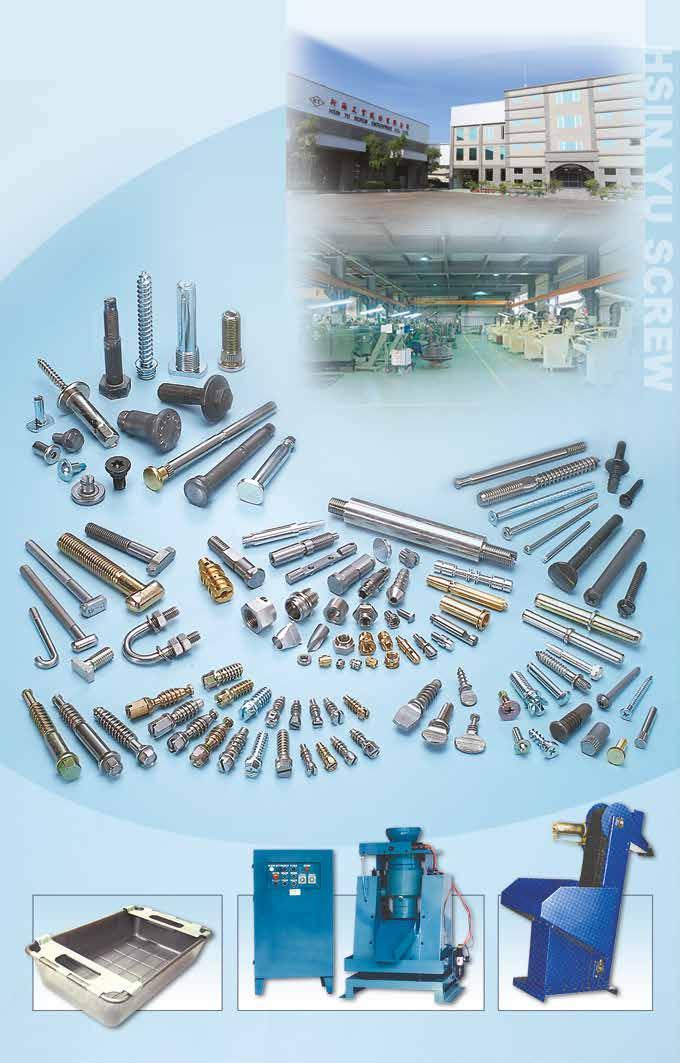


by Behrooz Lot fian

The manufacturing sector has played a key role in developing countries' efforts to grow and prosper. This has been the experience of Malaysian economy since the 1960s. However, since the late 1990s, the country's economy has become non-industrial. As most of Malaysia's production has been mainly export-oriented, the relative decline in the economy has also reduced its share in the global economy. Along with these developments, the service sector will increase. While the service sector has always been important to the manufacturing sector. 1
56.2 percent of Malaysia GDP comes through service, 36.8 percent (68% of this sector is manufacturing) of it comes through Industry and 7.0 percent of it comes through agriculture.
Understanding the real size of manufacturing is a key point for understanding the economic situation of that country. Industrial Production Index (IPI) is a measure of the rate of change in the production of industrial commodities in real terms over time for manufacturing, mining and electricity sectors. It is measured based on volume changes in production.
Malaysia is one of the few developing countries in the Asia Pacific region which has used its abundant natural resources to grow sustainably. From being a major exporter of raw materials the country has diversified into other aspects of the economy. Taking a major share in the export market is the manufacturing sector with 25% of its total GDP and almost 60% of its total exports. 2 Industrial Production Index in Malaysia grew 1.92 percent each year on average from 2007 to 2021. On a monthly basis, it reached an all-time high growth of 12.80 percent in March 2010 and a record low decline of -32 percent in April 2020.

Based on Department of Statistics, Industrial Production Index in Malaysia grew by 1.2 percent yearon-year in January 2021. This was the second straight month of increase in industrial output (1.7 percent growth in December 2020). As the economy recovered further from the coronavirus pandemic, factories resumed their operations. Manufacturing activity continued to grow 3.5 percent in Jan. 2021 versus the 4.1 percent growth in Dec. 2020.
1 https://www iseas edu sg/images/pdf/ISEAS%20EWP%20 2019-2%20Lee%20(003) pdf
2 https://www mordorintelligence com/industry-reports/ analysis-of-key-sectors-of-malaysia
Televisions, mobile devices and printed circuit boards are categorized as the electrical and electronics (E&E) products. The other products in this category are telecommunications, electronic components, appliances, industrial electronics and consumer electronics. The E&E industry is the main category in Malaysian economy, and it plays a vital role in Malaysia’s export sector.
The main buyers of Malaysia’s E&E industry are China, the US, Singapore, Hong Kong and Japan. The most significant products in this sector are semiconductors, which are popular all over the globe.
The growth of electrical & electronic products reached the highest point in January 2021, and it has grown 7.9 percent in comparison with the growth recorded in December 2020.
The chemical & petrochemical sector is the second largest contributor to Malaysia’s total exports of manufactured goods. The industry is linked to almost every other sector of the economy such as automotive, electrical and electronics, pharmaceutical and construction. The industry is divided into three sub-sectors:
• Chemicals and chemical products;
• Petroleum products; and
• Plastic products.
Petroleum, chemical, rubber & plastic products grew 4.5 percent in January 2021 in comparison with December 2020.
Malaysia is an important player in the international market for tropical wood and wood products, and is also the leading exporter of wooden furniture globally. For the past 20 years, Malaysia’s wood-based industry has become one of the major revenue contributors to the country’s economic growth, encompassing the production of sawn timber, veneer, panel products (plywood, particleboard, chipboard, and fibreboard), mouldings, and builder joinery and carpentry (BJC), as well as furniture and furniture components. The wood products, furniture, paper products & printing IPI grew 2.4 percent in January 2021 in comparison with December 2020.
In this sector, all industrial product like fasteners are included. This sector dropped by 3.9 percent in January 2021 in comparison with December 2020. However, COVID has effected this sector hard, but the problem of this sector is not a short-term one.
Risk-averseness is one of the main issues manufacturers in Malaysia have. The attitude and mind-set of manufacturers who are risk averse further impede innovation initiatives. Generally, manufacturers are reluctant to change their current operations due to fear of disruption on production and are comfortable with their current business operations. In addition, product innovation usually involves high risk, high cost and long duration, thus making it unaffordable and less attractive.
In addition, production of mining shrank by 4.5 percent in Jan. 2021, which is less than the decline of 5.4 percent in Dec. 2020, due to falls in crude oil & condensate index (-9.4%) and natural gas index (-0.5%). Meanwhile, electricity output contracted by 4.6 percent, after a 0.2 percent drop in December 2020.
According to the prediction of Trading Economics organization, the Industrial Production Index in Malaysia is expected to grow 5.20 percent in the 1st quarter of 2021 compared to the last quarter of 2020. Looking forward, they estimate that the growth of Industrial Production in Malaysia (compared to 2020) will stand at 5.00 percent in the whole year of 2021.
In the long-term, the Malaysian Industrial Production Index is projected to trend around a 5.00 percent growth in 2022 (compared to 2021) and a 4.80 percent growth in 2023 (compared to 2022).
If Malaysia wants to see the stability in its economy, then the manufacturing sector should be expanded and needs a spur. The key point of manufacturing is innovation but the current market for innovative products in Malaysia is zero. Malaysian managers must have the courage to enter the markets with a demand of 0 and of course must have the skills to build and grow this market.
According to the growth trend of Industry Production Index, it can be predicted that the domestic and foreign demand for Malaysian goods will grow in the coming years. In addition, with the growth in demand, the investment in production sector will increase and then by improving Malaysia's production capacity, they can respond to foreign demand with better conditions. Its consequence will be the boom in Malaysia's manufacturing sector and more stability in their economy after 2023.

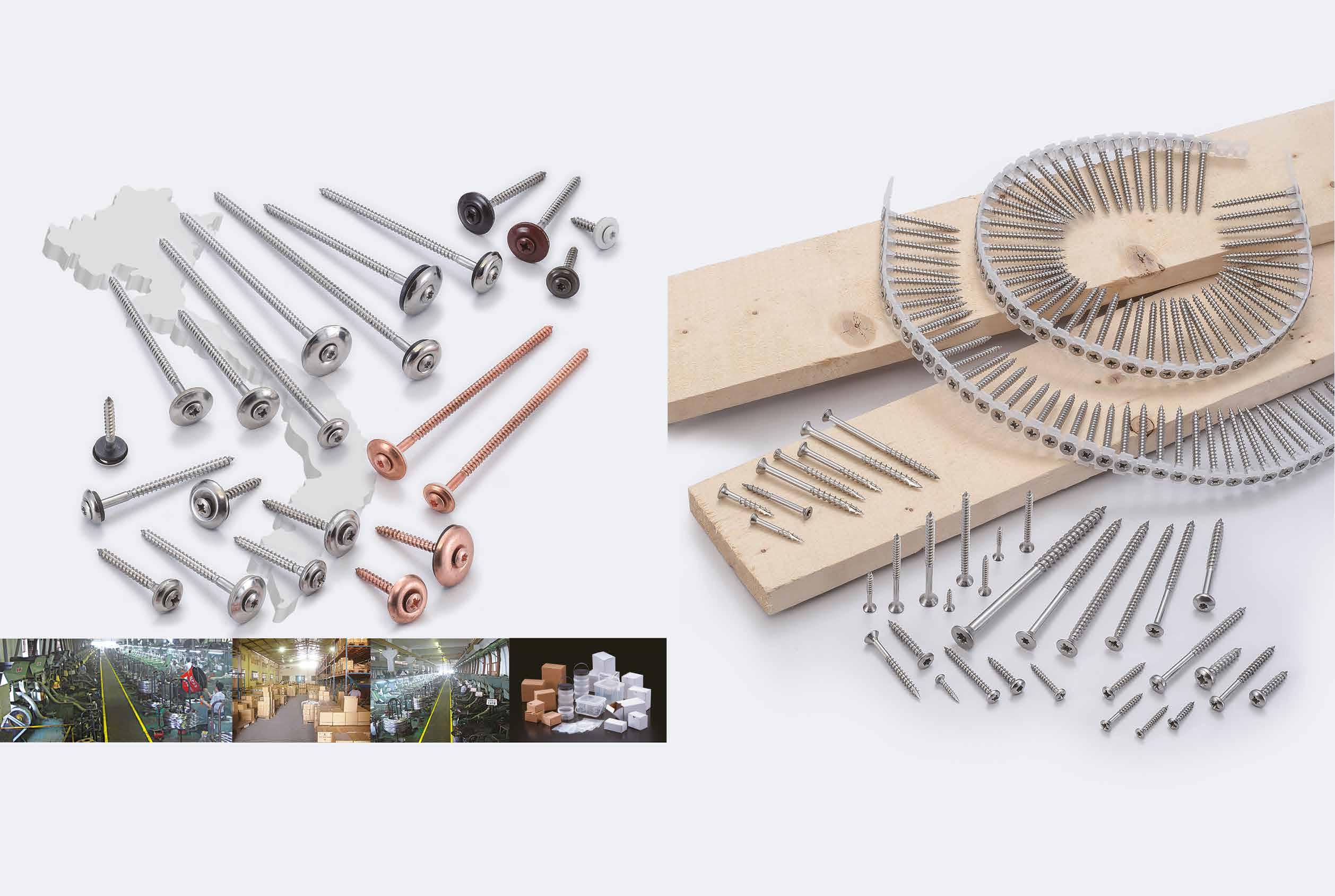


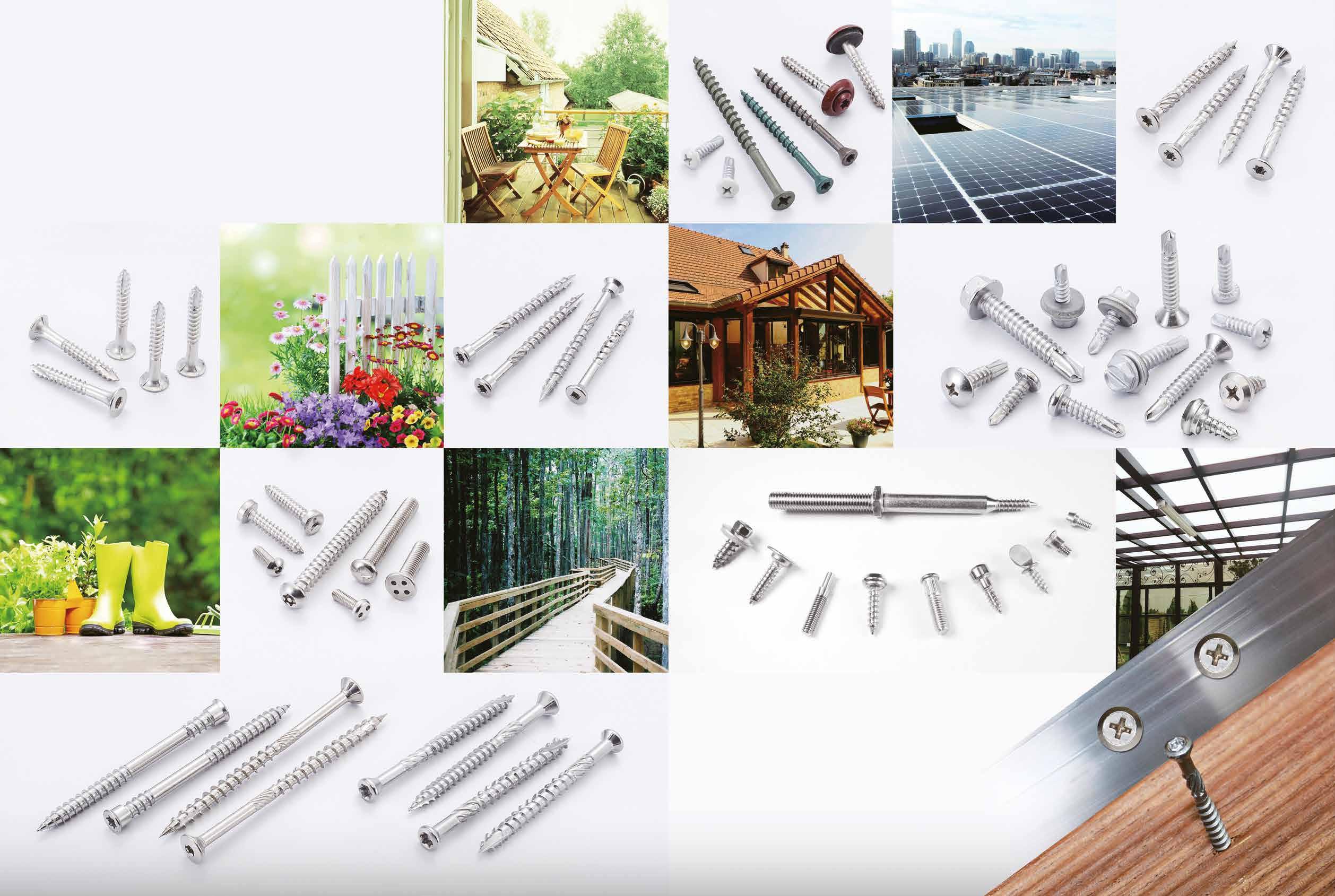






In the world’s downstream industries, fasteners are mainly used in automobile, electronics, construction and maintenance. The automotive industry is the largest fastener user demanding 23.2% of global fasteners. The industrial maintenance market and construction industry follow and take up 20% of the total. The electronics industry comes in third and takes up 16.6%. Thanks to a strong manufacturing base and improved technical capability, nearly 60% of China’s products have increased capacity in a nationwide statistics of sizable industries. Better control of corporate costs and a reform in the supply chain have brought the benefit of increased income and lower costs.
1. Passenger Cars Continued Reduction and Commercial Cars Increased Against the Backdrop
In 2020 19.99 million passenger cars were manufactured and 20.17 million passenger cars were sold, down 6.5% and 6% respectively. The drop shrank 2.7 and 3.6 percentage points respectively over 2019. Passenger car production and sales respectively took up 79.3% and 79.7% of all car types, down 3.7 and 3.5 percentage points respectively over 2019. In all four types of cars, sedans production and sales dropped by 10% and 9.9% respectively; SUVs grew by 0.1% and
0.7% respectively, surpassing sedans for the first time; MPVs dropped by 26.8% and 23.8% respectively; crossover passenger cars dropped by 1.7% and 2.9% respectively.
In 2020, replacement of cars pertaining to China’s Ⅲ Vehicle Emission Standards, government rectification on overloaded passenger cars, as well as the demand for infrastructure, boosted commercial car production and sales for the whole year. In 2020, 5.23 million commercial cars were manufactured and 5.13 million commercial cars were sold, up 20.0% and 18.7% respectively and setting a new record by breaching 5 million for the first time. Commercial car production increased by 18.1 percentage points, and sales growth turned from negative to positive.
In all car types, trucks are the mainstay of commercial car growth. 4.77 million trucks were manufactured and 4.68 million trucks were sold, up 22.9% and 21.7% respectively. 453 thousand passenger cars were manufactured and 448 thousand passenger cars were sold, down 4.2% and 5.6% respectively.
With years of development in the supply chain of new energy cars, the industry has gradually grown mature in every aspect. Various and diversified new energy cars continue to satisfy market demand and useroriented environment is being optimized and improved. With theses

measures, new energy cars are gaining more recognition from consumers. In 2020, 1.366 million new energy cars were manufactured and 1.367 million new energy cars were sold, up 7.5% and 10.9% respectively, and sales growth turned from negative to positive.
1.10 million pure electric vehicles were manufactured and 1.11 million of them were sold, up 5.4% and 11.6% respectively. 260 thousand plug-in hybrid electric vehicles were manufactured and 251 thousand of them were sold, up 18.5% and 8.4% respectively. 1 thousand fuel cell vehicles were both manufactured and sold, down 57.5% and 56.8% respectively. According to China Association of Automobile Manufacturers, new energy car sales took up 5.4% of the nation’s total car sales in 2020, up 4.7% (7 percentage points) from 2019. New energy cars are steadily gaining traction.
The COVID pandemic overseas resulted in decreased automotive export in 2020. The whole year saw 995 thousand vehicles exported from China’s automotive industry, down 2.9%. In car type, 760 thousand passenger cars were exported, up 4.8%; 235 thousand commercial cars were exported, down 21.4%.
According to China Association of Automobile Manufacturers, market shares of branded passenger cars had been declining since 2017 to 38.1% in 2020. The drop was 2.9% in 2019 and shrunk to 1.1% in 2020. In the Chinese automotive market in 2020, except for Japanese and American brands with increased market shares, brands from China, Germany, South Korea and France witnessed a certain degree of decline. Regarding their future development, Japanese brands have a chance to surpass German brands to be the second largest car brand in China.
In 2020, the top 10 automakers’ sales totaled 22.64 million vehicles, down 2.3%, taking up 89.65% of total vehicle sales, 0.4 percentage points lower than 2019.
Of the 10 largest automakers, SAIC remained as the top player selling 5.53 million units of vehicles in 2020, down 11.5% from 2019. SAIC, Chang'an Automobile, Great Wall Motor and Brilliance Auto exhibited growth in contrast to other automakers with decreased sales.
China kicked off 2021 with a good start in January this year where the main indicators such as new and second-hand car registration as well as scrapped car recollection rates
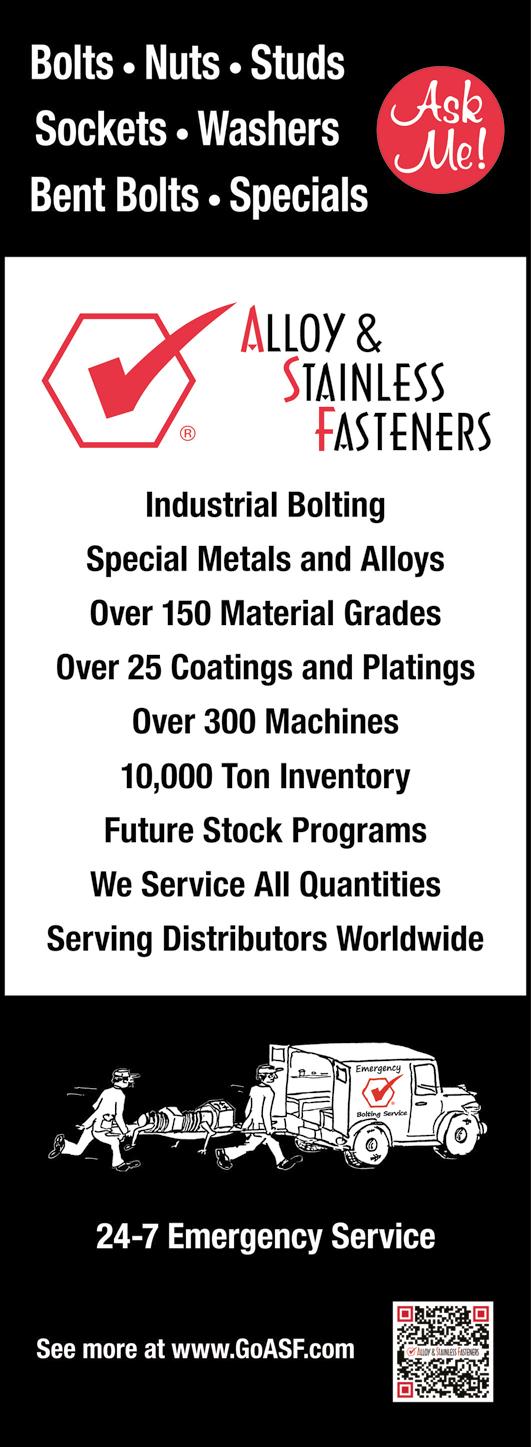
exhibited significant growth. The car production and sales of January 2021 increased around 30%. The total car production and sales in China were 2.38 million and 2.50 million vehicles respectively, up 34.6% and 29.5%. Among them, new energy cars stuck out with 194 thousand vehicles produced and 179 thousand vehicles sold, up 290% and 240%. Overall, the Chinese car production and sales were stable with a good start to kick off 2021 and huge growth in main indicators.
In the automotive manufacturing market, automotive fasteners can be used on virtually every sub-system, including engines, suspensions, chassis, airbags, and ABS.
In 2020, the COVID pandemic pressed the pause button on the automotive industry. All industries were on the same boat taking the challenge in the midst of the massive impact. China pushed for work/production resumption, sped up altering our marketing, and stimulated car purchase. The automotive market was on gradual recovery with steadily accelerated yet reduced annual sales, and was fundamentally free from the pandemic impact. The automotive industry on the whole exhibited robust endurance and inner momentum. In 2020, China manufactured 25.22 million units of cars and sold 25.31 million units of cars, down 2% and 1.9% respectively, and down 5.5 and 6.3 percentage points respectively over 2019.
The vast automotive market provides huge potential for the development of automotive fasteners. Fasteners account for 40% of all components used on a car. A light passenger car or sedan roughly uses 5,000 pcs of fasteners (in 580 types, weighing 50 thousand grams) on average. A medium or heavy truck uses 5,710 pcs of assorted fasteners weighing 90 thousand grams. On the basis that a car weighs 75 kilograms, the automotive fastener scale should have reached 1.7 million tons by 2020.
Furthermore, as Chinese automotive industry steps up the pace, the ever intensifying market coupled with elevated automotive requirements on fastener quality (lightweighting, environmental protection, longer service life) keeps automotive fastener companies on the track of upgrading and reinventing their equipment. As you see, automotive fasteners are a huge market.
Chinese automotive fastener companies can be roughly divided into two types: one being sizable with a unit dedicated to manufacturing, and the other being a specialized manufacturer of non-standard automotive fasteners. With a significant increase in demand, specialized companies are flourishing in China. This type of products have higher added values and have turned into a white hot territory of competition.
Statistics show there are 100 or so Chinese automotive fastener companies, among which are over 30 joint ventures. These companies with the total assets of around RMB 12.5 billion employ a total of 60 thousand people, and 80 companies or so are certified to ISO/TS16949. Only a few are granted to manufacture automotive fasteners for overseas
car brands, while most others are unable to tap into automotive fastener production, except for some who are OEMs. The main autotmotive fastener companies in China are Dongfeng Motor Fastener, Gem-Year Industrial, Fawer Automotive Parts (Fastener Division), Shann Xi Fang Yuan Auto Standard, Shanghai Teqiang Fastener Technology, Wenzhou Mingtai Si Standard Parts, Zhejiang Changhua Auto Parts, Shanghai Shangbiao Automobile Fasteners, Shanghai Autocraft, Hubei Youqian Auto Parts, Zhoushan7412factory, China Aviation Industry Standard Parts Manufacturing, Ying Ming (Fuzhou) Industrial, Zhejiang New Oriental Fastener Auto Parts, Chunyu (Dongguan) Hardware Products, Zhejiang Qiangli Fastener, etc.
Table 1. Characteristics of Chinese automotive fastener manufacturers
Char ac ter is tic s A naly si s
Costcompetitive
Abilit y to Provide Auxiliar y Produc ts
L ack of Break through in R&D
Technology from O ver seas
Among the automotive fastener companies in China, the domestic ones are cost-competitive in a por tion of the engine market and most of the noncritical fastener market.
B y optionally mimicking over seas produc ts, Chinese companies take in the know-how to quickly gain the abilit y to provide auxiliar y produc ts for the domestic market
Chinese companies l ack suf ficient abilities to develop high-tech engine fastener s as these abilities are mostly controlled by foreign companes
Most of the Chinese produc ts are those with lower v alues The core technology of these produc ts gener ally comes from over seas.
The competitiveness of Chinese automotive fasteners is largely attributed to the rise of domestic brands including BYD, Chery Automobile, China Young Man Automobile, Geely Auto, Anhui Jianghuai Automobile, as well as the novel development of PanAsia Technical Automotive Center, SAIC, Dongfeng Motor, Dongfeng Peugeot-Citroën Automobile, Ford, Zotye Auto, and
Qoros. As the automotive industry develops, requirements are stricter on fasteners. Threaded fasteners, cold forging medium-carbon steel, low alloy steel and ordinary surface treatment are not qualified to meet the requirements. The current methods to control thread fastening are the Torque Method, the Torque-angle Method, Yield Point Method, and Bolt Elongation Method. The installation process must include a check of static torque or a torque recheck to ensure that the static torque meets the technical requirement. Anywhere below or far above the static torque range will be deemed as a quality issue pertaining to fastening control. Automotive bolt fastening is to control the preload for bolt connection. For assembly quality, the fastening state of engaged threads must be strictly controlled to avoid slipping or gaps which result from the connection between the bolt and the fastened object and which further causes the engagement of threads to fail.
Trend
Stric ter Steel Requirements
Stric ter Qualit y Check
Diver sified Demand
Tr ansition to High Qualit y and
Dur abilit y
Analy sis
A s an automotive fastening component, bolts must adapt to the designed high stress and be light weight To that end, new func tions have been proposed for steel and special material s and technology continued to be introduced. This cannot reduce the cost of the components but may lower the total cost of the whole car or its components
Many countries require that high-strength fastener s used on engines must be repl aced af ter ten to t went y thousand hour s of use, regardless of their qualit y They cannot be shipped out of the fac tor y if they don’ t meet that requirement Elev ating produc t level requires a great deal of calcul ation, analy sis, tests and check s. Any fl aw s can lead to initial failure. Chinese companies are adding control methods for produc tion lines and using dies to ensure precise sizes and shape toler ances in mass-produc tion of highend fastener s
Depending on the components selec ted and the environment, automotive fastener s are diver sified in material and str uc ture Conventionally, low-alloy cold-forged steel is used to manufac ture automotive fastener s, but heat-resistant steel and stainless steel are increasingly applied where the environment is ex treme such as engine supercharger s, 3-w ay cataly tic conver ter s, exhaust manifolds, and tr ansmissions.
Technical improvement is essential in the tr ansition from conventional fastener s to high precision automotive components. The new er a of elec tric vehicles requires economical, eas y -to-use automotive fastener s that can repl ace mechanical fastener s and well connec t with colored aluminum, magnesium alloy, carbon fiber composites, r ubber and pl astic components.
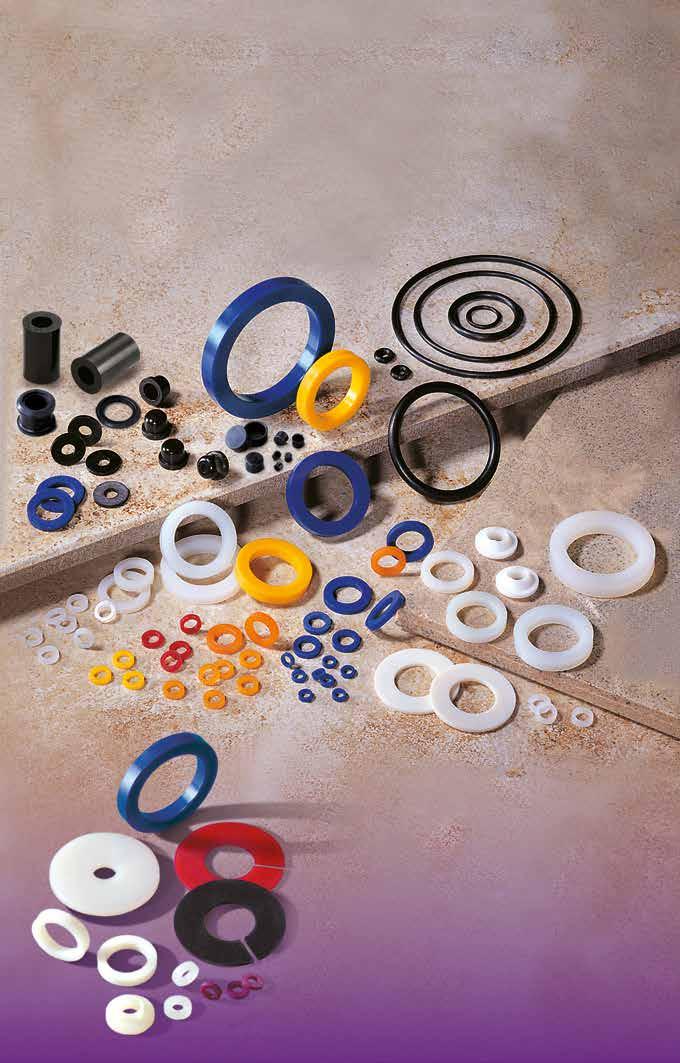

The heat-resistant fastener materials and operating temperature indicate that the operating temperature for heat-resistant steel is below 700°C, that the operating temperature for nickel-based alloy is up to 820°C but the cost is high, and that stainless steel has higher strength but features the lowest operating temperature and lower costs.
Therefore, material selection requires consideration on both performance and costs. Table 2 lists the expected development of future automotive fasteners.
Chinese automotive fastener industry is a huge, multi-layer and complex industrial system with many unignorable problems. 1. A large number of companies, huge capacity, multiple economic factors in existence, inconsistent quality. 2. Due to rising material prices and costs, the fastener industry is facing challenges from Southeast Asia, India, Brazil and other countries and regions. 3. Foreign companies are digging deep in Chinese fastener market, limiting the development of domestic brands. 4. Lacking innovation and critical high-end technology such as engine bolts. Falling behind in high-end product technology and low/ medium-end quality.
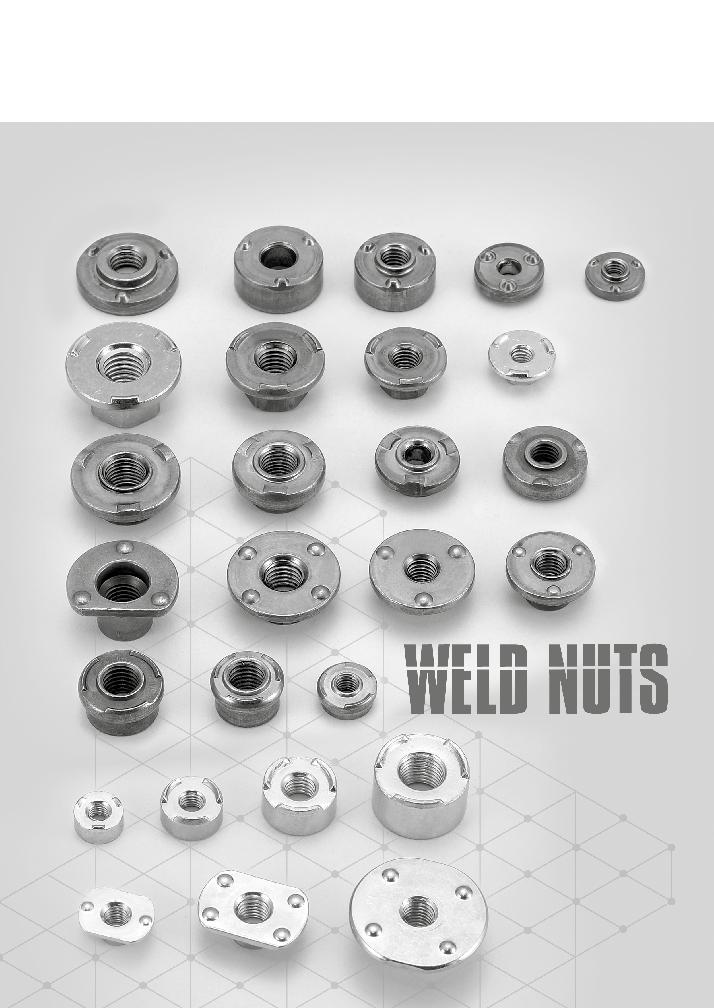
In the next couple of years, the continuous development of cars and fasteners remains as one of the main pillars for national economic development. Since 2015, Chinese government has been releasing its “Made in China” blueprint once every two years, elaborating on and analyzing the status of Chinese manufacturing. By 2025, China’s advanced railway transport systems, new energy powered cars, power generating infrastructure and construction are expected to be in line with the world’s top players. China is still way behind in operating systems, industrial software, and aerial engines. The next decade will be crucial for Chinese cars and fasteners to transform and upgrade, develop, and turn from a huge manufacturing country into a strong one.
Anyway, the development of automotive fastener technology and equipment is the cornerstone for advanced automotive manufacture. There is a lot of room for the development of Chinese fastener technology and equipment. It is still a long shot for China to narrow the gap with overseas top players. Despite that, the outlook is quite promising. It requires a mechanism for steady growth of various investment and R&D, increased financial support for innovating automotive manufacturing technology, and continuous investment in new products and technology for automotive companies.
Data note: The data for this article is derived from Descartes™ Datamyne's US Census trade statistics. US Import and Export Census trade statistics is based on all modes of transportation. That value is calculated in USD by CIF (imports). In this article fasteners are defined as any product under HS Code 7318 (screws, bolts, nuts, coach screws, rivets, cotters, cotter pins, washers and similar articles or iron or steel), as well as the subcategories of 7318. Additionally, data is derived from the New Residential Construction statistics published by The U.S. Census Bureau and U.S. Department of Housing and Urban Development.

by S abr ina Rodr ig ue z
While many Americans face economical hardships due to the global pandemic, is there a true demand for new housing? Did new Housing Start statistics increase in 2020 indicating even more growth in 2021? How will this influence the demand for fasteners?
The global pandemic has drastically impacted how we live our day-to-day routines. For example, a vast majority of us are adapting to working where we live and living where we work. For many, the thought of returning to an office setting seems unnecessary especially when you consider the number of hours per year wasted on commuting. Without the need to report to the once traditional office environment, families are exchanging their busy cities for less densely populated suburbs. Traditionally the cost of living is much more affordable for those that opt for more rural areas, however, living in these lesssuburban areas comes with a price tag. There is less availability of housing specifically single-family homes, and these areas offer less career opportunities. Large cities have always attracted the working-class population for the availability of jobs. With the decrease in commercial office settings, many companies have begun to offer their employees permanent remote work positions which is beginning to allow workers to move away from large, densely populated cities into less populated suburbs. Families are trading their small apartments and townhomes for larger single-family houses, many of which are larger in size allowing for designated office spaces and more amenities, like outdoor space for exercise and activities.
It is evident to understand how any new Housing Starts have already increased in 2021 to best predict whether there will be a high demand for fasteners in the coming months. The U.S. imports most fasteners from partner countries such as Taiwan, China, and Japan for the supply chain demands of the auto industry as well as the construction and manufacturing industries.
According to the U.S. Census Bureau and the U.S. Department of Housing and Urban Development, privatelyowned Housing Starts decreased by 9.3% in February 2021 when compared to February 2020. The February 2021 rate of 1,040,000 was also below the January 2021 rate of 1,136,000. When it comes to Building Permits, February 2021 rates were reported at 1,143,000 which is 10% lower than the January 2021 rate of 1,270,000. The high number of permits issued in January 2021 is promising since it ensures construction is either underway or about to begin. In February 2021 there
US Import from Top 10 Countries in Jan.
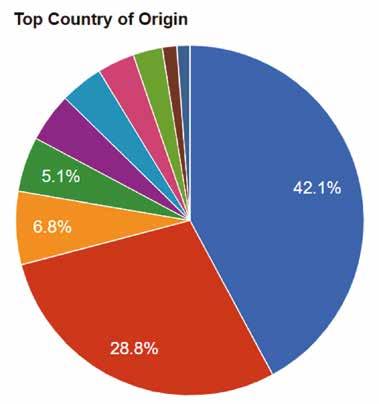
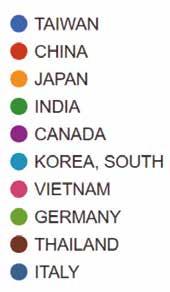
was an increase of 2.8% in Housing Completions when compared to January 2021. However, the February 2021 rate of 1,042,000 decreased from the February 2020 rate of 1,297,000.
In December 2020, housing starts were the highest reported rate in fourteen years increasing an entire 12% to the rate of 1,560,000 units. Homebuilding also increased in December 2020 by 5.2%. In general, Housing Starts had a total of 1,380,000 in 2020 which represented an increase of 7% from 2019. Overall, there was an increase in construction of single-family homes and a decrease in multifamily homes.
- S elf-Tapping
The end of 2020 was a pivotal point for aspiring homeowners as mortgage rates decreased. According to sources such as Freddie Mac, 30-year fixed mortgage rates were being offered with an average percentage rate (APR) of 2.79%. For many, home owning would have not been possible had the mortgage interest rates remained at upwards of 4% especially considering the high prices of single-family homes in large cities which often include
Top 10 Fastener Products of Import in Jan.
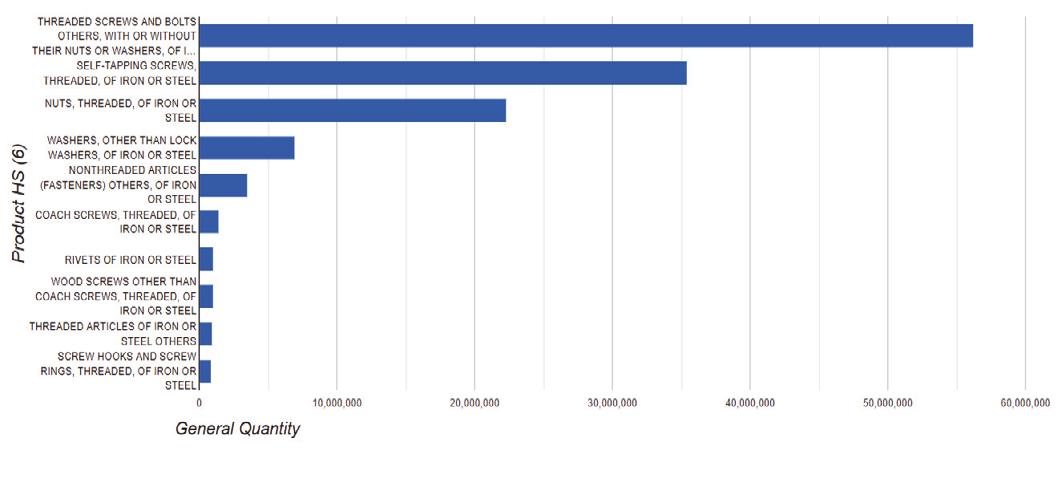
During the last quarter of 2020, the quantity of U.S. imports of fasteners was stable and growing, especially between the months of November and December. In December, the quantity of fasteners increased to nearly 134,000,000 USD from 122,705,000 USD in November. Taiwan and China increased their exports of fasteners to the U.S. in December which explains the increase in both the quantity and value. Even though much of the trade world was impacted in 2020 due to COVID-19, fastener imports in December 2020 increased by 9.4% in quantity and 4.6% in value when compared to December 2019.
Quantity of fasteners dropped by 6.3% in January 2021 when compared to January 2020, resulting in a cumulative value decrease of nearly 17 million USD. The demand for fasteners from countries such as China, Germany and Canada decreased significantly in January 2021. The top fasteners that were imported during January 2021 were 731815 (43% of the total), 731814 (27% of the total) and 731816 (17% of the total). As seen from
the increase in Housing Permits during the months of January, February and March 2021's demand for fasteners will likely increase to keep up with the new construction of homes.
According to the 2010 US Census report when a reported 310 million people were accounted for, 47% of the U.S. land is unoccupied. Of that unoccupied land, about 538 million acres are forests and 391 million acres are devoted to cropland. Only a mere 69 million acres are devoted to urban development. Of those developed urban acres are the 10 most populated metropolitan areas which contribute 40% of the total GDP in the U.S.
US Import from Top 10 Countries in Q4 2020
Product Hs : 7318 - Screws, Bolts, Nuts, Coach Screws, Screw Hooks, Rivets, Cotters, Cotter Pins, Washers and Similar Articles, of Iron or Steel
US Import from Top 10 Countries in Dec. Product Hs : 7318 - Screws, Bolts, Nuts, Coach Screws, Screw Hooks, Rivets, Cotters, Cotter Pins, Washers and Similar Articles, of Iron or Steel
All in all, we are seeing a shift in priorities. With the extended lockdowns and adapting to remote work, Americans are beginning to re-evaluate their priorities. While living in big cities is favorable, increased quality of life and more affordable housing prices have become a bigger priority for families. While it may have once been predicted that U.S. metropolitan areas would continue to grow at exponential rates, the recent pandemic seems to have begun shifting where the population is residing. Smaller rural areas are quickly booming with new construction development which continues to attract the masses. With smaller cities growing, the demand for residential construction increases as does commercial construction. With time, the demand for housing will ultimately increase the demand for fasteners from foreign trading partners.
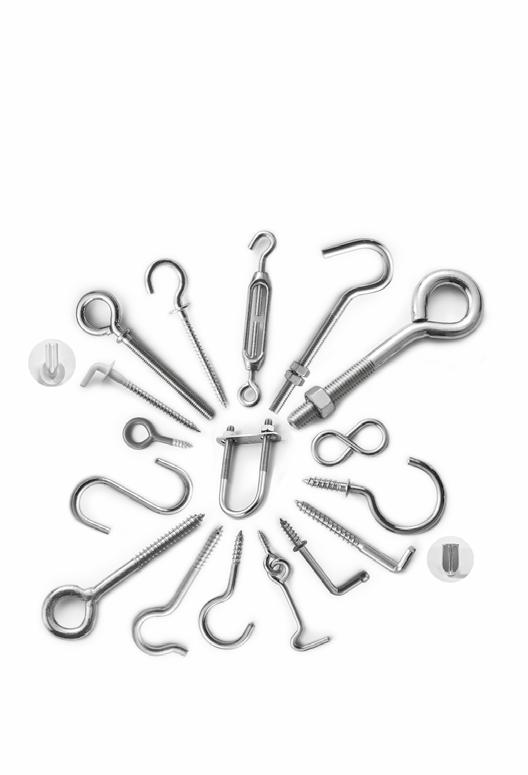


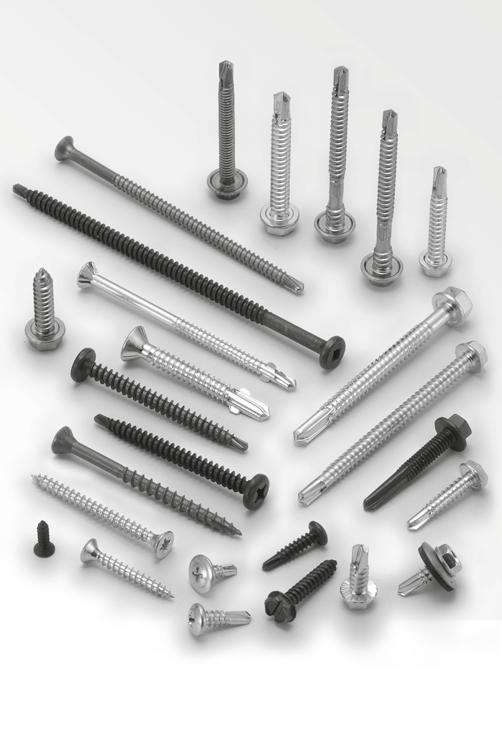
by Dr. Wayne Sung
The 2nd decade of the 21st century has come to its end along with the Covid-19 and U.S.-China Trade War, while Taiwan fastener industry, experiencing a “freeze” in H1 2020 and a recovery in H2 2020, has also reported a result that is not quite satisfying but acceptable. In 2020 Taiwan exported 1,363,250 tons of iron and steel fasteners (HS code 7318), down 7.84% (-116,042 tons) from 2019’s export volume recorded at 1,479,292 tons. In terms of value, Taiwan exported around 3.969 billion USD worth of fasteners, down 8.04% (-0.347 billion USD) from 2019’s export value recorded at around 4.316 billion USD. However, thanks to the in-time travel ban imposed by Taiwanese Government against foreign visitors and excellent island-wide pandemic control, the Covid-19 has not caused any significant damage to Taiwanese fastener manufacturers yet. The most significant impact on Taiwan fastener industry should be “the demand,” as Taiwan’s largest fastener export destination is the U.S., which is one of the Covid-stricken countries and whose positive tested number has climbed to 30 million +. Europe also has a bad story with 5 million + people tested positive in France, 4 million + in the UK, and 3 million + in Germany, all which have reported waning demand due to the pandemic, causing a significant impact over Taiwan’s fastener exports as well. At the same time, the direct challenge of U.S.China Trade War to the authoritativeness of WTO also implies the diminishing influence of WTO in the 21st century. On the other hand, regional economic agreements gradually demonstrate their influence, such as CPTPP signed in 2018 and RCEP signed in 2020. With the formation of more regional trade collaboration alliances as well as the temporary exclusion of Taiwan from them, Taiwanese fastener companies will face more difficult challenges.
This article is divided into three major parts. Part one includes the annual production of Taiwan fastener industry from 2001 to 2010 and its relevance to various changes in the world; part two includes the sales fluctuations of Taiwan fastener industry and its relevance to various changes in the world; part three includes a few strategies and suggestions for Taiwan fastener industry to confront the 3rd decade in the 21st Century.
In 2001, the 9/11 Attacks in the U.S. unveiled the chaotic era of the 21st century and the external factors were also changing fast. According to the article “Production & Sales Overview of Taiwan Fastener Industry” Taiwan’s DGBAS released in 2005 and relevant trade statistics, Taiwan’s fastener export greatly increased by 30.26% in 2004 and went up 5% again in 2005. Except for 2009, the rest of 9 years (from 2001 through 2010) all appeared growth. Table 1 shows the sales volumes, values, and main trade partners of Taiwan fastener industry from 2001 through 2010. Table 2 shows the record events in the world from 2001 to 2010. In 2002 Taiwan officially became a member of WTO under the name of “the Separate Customs Territory of Taiwan, Penghu, Kinmen, and Matsu,” which benefited the export of Taiwan fastener industry a lot. Then, in 2004 the tsunami hit the Indian Ocean and in 2005 Hurricane Katrina caused severe damages to the U.S, and the demand for post-disaster reconstruction accelerated the growth of Taiwan fastener industry. The inauguration of National Highway No. 3 of Taiwan and Taiwan High Speed Rail (THSR) both helped lead to the significant enhancement of Taiwan’s logistics and commercial shipment networks. Overseas clients could also plan their one-day factory visiting trips from Taipei to Kaohsiung. With all these positive factors, Taiwan fastener industry gradually regained its loss originally caused by factory relocations to China during the 1st decade of the 21st century. In the 1st
decade of the 21st century, the four major influencing factors were: WTO tariff agreements, natural disasters, domestic infrastructure, and Global Financial Crisis. With the combined influence of these 4 factors, Taiwan fastener industry grew 46.58% in 2001 and was “in heaven” of high growth.
To analyze by main export destinations, in 2001 the U.S. represented 47.80% of Taiwan’s fastener export, Germany represented 5.80%, Japan represented 4.90%, and China represented 0.40%. Then, after a decade of change, in 2010 the U.S. represented 36.72% of Taiwan’s export, Germany represented 8.87%, Japan represented 4.64%, and China represented 1.78%. According to the statistics, in the mentioned 10 years (2001-2010) Taiwan fastener industry was actively enhancing its product quality, diversifying market deployment, and developing new markets for high-quality fasteners. The percentage of its export to the U.S. dropped from 47.80% to 36.72%; the percentage of its export to Germany grew from 5.80% to 8.87%. The average price of fasteners per ton grew 61.01% from NTD 50,366 (calculated by the exchange rate on 01/01/2001) to NTD 81,096 (calculated by thew exchange rate on 01/01/2010). Meanwhile, Taiwan started to sell a large volume of fasteners to China, whose share in Taiwan’s fastener export rose from 0.40% to 1.78%. The effort which Taiwan fastener industry made over the past decade has proved to be very successful.
The 2nd decade of the 21st century set out with the 3/11 Earthquake and Tsunami in Japan, the heavy flood in Thailand, Sunflower Movement in Taiwan (the relationship across Taiwan Straits started to cool down since then, the Crimea Crisis, and Refugees swarming into Europe. In 2015, political issues such as the war in Afghanistan began to impact on economies. In mid-2018, U.S.-China Trade War was launched (the influence of WTO started to reduce and CPTPP was signed.) In 2020 RCEP was signed and BREXIT officially took effect. In addition to major disasters over the past decade, political issues, trade war, regional agreements, epidemic, political interference and regional tariffs integration actually caused bigger influence. Table 3 demonstrates the sales of Taiwan fastener industry in 2011-2020. Compared to 2011, the average fastener export volume of Taiwan in the 2nd decade merely rose by 3.9%. In terms of value, compared to 2011 (NTD 85,330; calculated by the exchange rate on 01/01/2011), the average price of fasteners per ton in the 2nd decade was NTD 85,171 (calculated by the exchange rate on 01/01/2020), a drop of 0.19%. In last 10 years the man-caused political issues generated extremely significant impact on Taiwan fastener industry. Although their capacities could still help maintain moderate sales, the prices were not reasonably increased. If the increase in product prices and labor cost were also taken into account, the profit of Taiwanese fastener suppliers was on a decline. That is to say, Taiwan fastener industry was working really hard to run business in 2011-2020.
On the contrary, China achieved a significant improvement in quality and quantity of fasteners over
the past 10 years. Vietnam also began fastener production over the past decade. With the launch of U.S.-China Trade War, some U.S. buyers started to switch their fastener orders to Taiwan and Vietnam.
According to the major destinations of Taiwan fastener exports and calculation by percentage, in 2011 the U.S. represented 34.33% of Taiwan’s total fastener export, Germany represented 10.69%, Japan represented 4.61%, and China represented 1.50%. With a decade-long change, in 2020 the U.S. represented 44.68% of Taiwan’s total fastener export, Germany represented 8.55%, Japan represented 4.64%, and China represented 1.77%. These statistics show that over the past decade, under the influence of U.S.-China Trade War, the percentage of Taiwan’s fastener export to the U.S. grew from the original 34.33% to 44.68% (+10.35%), the percentage of Germany with the demand for high quality dropped from the originally 10.69% to 8.55%, while the exports to Japan and China remained almost unchanged. The biggest factor that helped enlarge the percentage of the U.S. was U.S.-China Trade Dispute. As for Taiwan, the percentage of its fastener export to the U.S. increased substantially from 37.96% in 2017 to 44.68% in 2020, due to U.S. customers switching some of their orders from China to Taiwan. However, as the prices of orders placed by U.S. customers were often not quite high, the average price of exported fasteners in 2011-2020 continued to remain flat. On the other hand, the percentage of Germany in Taiwan’s total fastener exports dropped by 2.14%. The 10.35% increase in export to the U.S. also means a decline of 10.35% in other markets. With U.S. high-tariff sanction against China, China was actively developing non-U.S. regional markets and did see a significant result in 2019. The quality of Chinese fasteners has gradually kept the pace with that of Taiwanese fasteners. Compared to the 1st decade of the 21st century, the leading position of Taiwanese fasteners at the middle price range has been gradually caught up by their Chinese counterparts. Another factor worrying us is that CPTPP and RCEP bot have been signed before 2020, but the relationship between China and Taiwan seems to deteriorate further. Under the current international situation, it is highly difficult for Taiwan to become a member of these two regional economic frameworks (please refer to “CPTPP –The New Focus of Regional Economic Integration in 2021” published in Fastener World Magazine Issue No. 187). In the 2nd decade of the 21st century full of political, economic, and epidemic uncertainties, Taiwanese fastener companies were trying really hard to run their business.
4.
2011 The 3/11 Earthquake in Japan, the heavy flood in Thailand, civil war in Syria, civil war in Iraq
2012
Ma Yin-Jeou was elected the 13th President of Taiwan. Barack Obama was elected the 57th President of the U.S.
2013 Secretary General of Chinese Communist Party Xi Jinping was elected President of PR China.
2014 Sunflower Movement in Taiwan, Crimea Crisis, Refugees Crisis in Europe, Financial Crisis in Russia
2015 War in Afghanistan. Eurasian Economic Union took effect.
2016
Tsai Ying-Wen was elected the 14th President of Taiwan. The EU’s RoHs 2.0 Directives came into force. The Brexit Bill was passed. Donald Trump was elected the 58th President of USA.
2017 The then U.S. President Donald Trump announced U.S. withdrawal from Trans-Pacific Strategic Economic Partnership (TPP)and The Paris Agreement
2018 U.S.-China trade war was launched. CPTPP was signed.
2019 China and the U.S. both imposed high tariffs against the products of each other
2020 The Covid 19 pandemic. RCEP was signed. BREXIT took effect. Joe Biden was elected the 59th President of the U.S.
In the first 2 decades, Taiwanese fastener companies experienced benefits first and later faced several challenges. Luckily, thanks to the launch of U.S.-China Trade War after 2018, U.S. market could still maintain good capacity demand. In the 3rd decade of the 21st century, U.S. President Biden officially proposed the USD 2.25 Trillion, 8-Year Infrastructure Plan. This will be very favorable to Taiwanese fastener companies and may temporarily ease the impact of tariffs caused by regional tariffs agreements. However, outside U.S. markets, Taiwanese companies have to face the competition from their fastener counterparts in China and Vietnam and are also subject to certain restrictions from regional tariffs agreements, so they are actually facing more challenges. In addition to expecting Taiwanese Government to solve these difficulties , sign FTA with the U.S. and the EU, negotiate bilateral trade agreements, and become a member of CPTPP and RCEP, is there also any other strategy for Taiwanese fastener companies to adopt? Below are some strategies for the reference of Taiwanese fastener companies:
1. Large corporations should play a key role in vertically integrating the supply chain, especially in certain markets preferring well-known brands (e.g., Europe and the U.S.). It is suggested that such a strategy should be used in order to achieve rapid growth, establish fastener brands, tap into middle-price and high-price fastener markets, and quickly expand high-quality fastener business in overseas markets.
2. With various capital investments, Taiwanese publicly traded or OTC fastener companies can acquire leading fastener brands in Europe, the U.S., and Japan to quickly obtain benefits for their own brands.
3. Small-to-medium sized enterprises should also establish their own brands on the global stage in order to demonstrate their core value and unique corporate image. They should reconsider new supply chains and markets, relocate manufacturing of middle-end and highend products back to Taiwan, move manufacturing of low-end products to Vietnam, India, and Mexico, and value the future potential development in the Indo-Pacific Region as well.
4. The niche in product differentiation must be created. That is to say, the differentiation of materials, design, manufacturing technology, and quality should be created in order to leave other competing fasteners further behind and create the irreplaceable value of Taiwanese fasteners.
In the 3rd decade of the 21st century the change in Taiwan or out of Taiwan is expected to become more fierce than it was before. As a result, it is suggested that Taiwanese fastener companies should re-examine their business running including internal and external risks, reposition their products as per customer’s demand to establish their own brands and integrate with marketing activities, and make a differentiation between their products and others’, in order to consolidate existing customers, develop more customers and markets, and work together to face the 3rd decade in the 21st century.
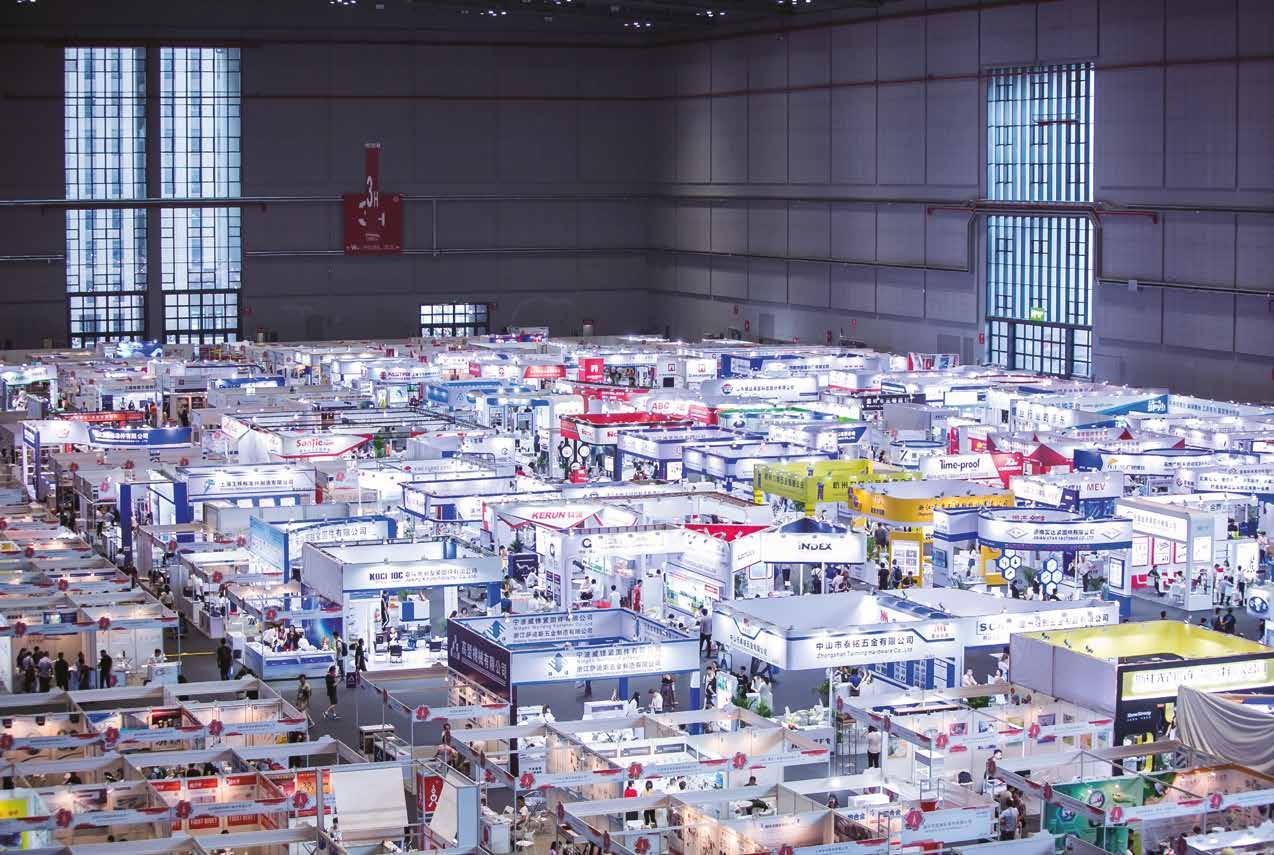
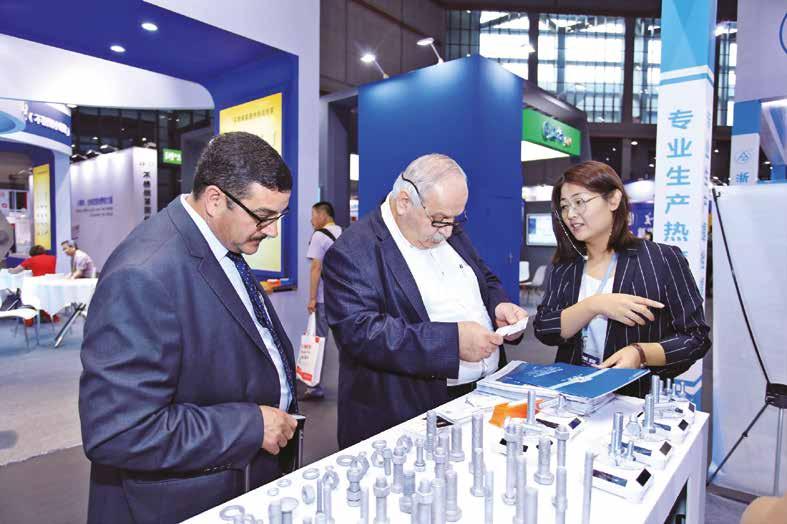





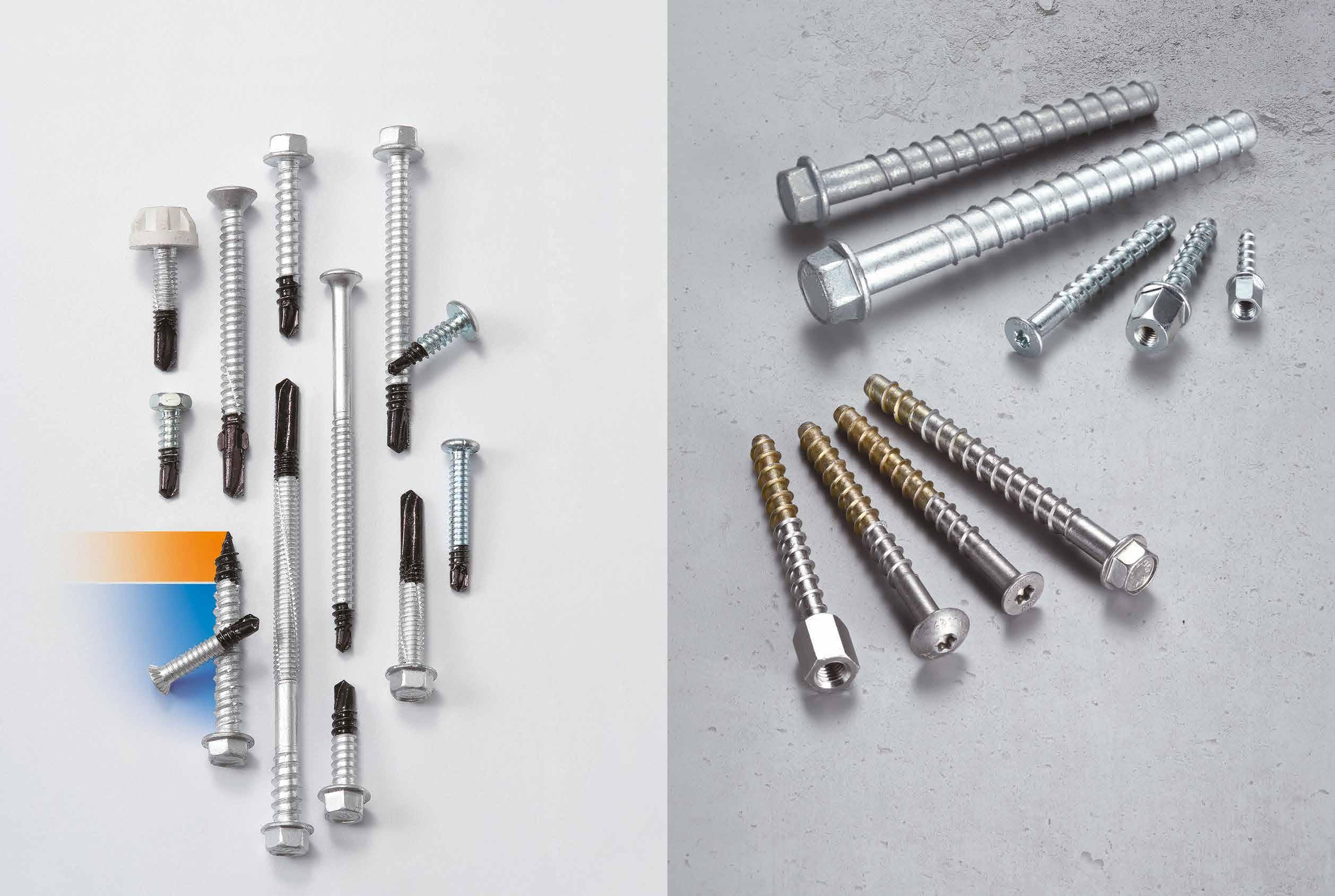




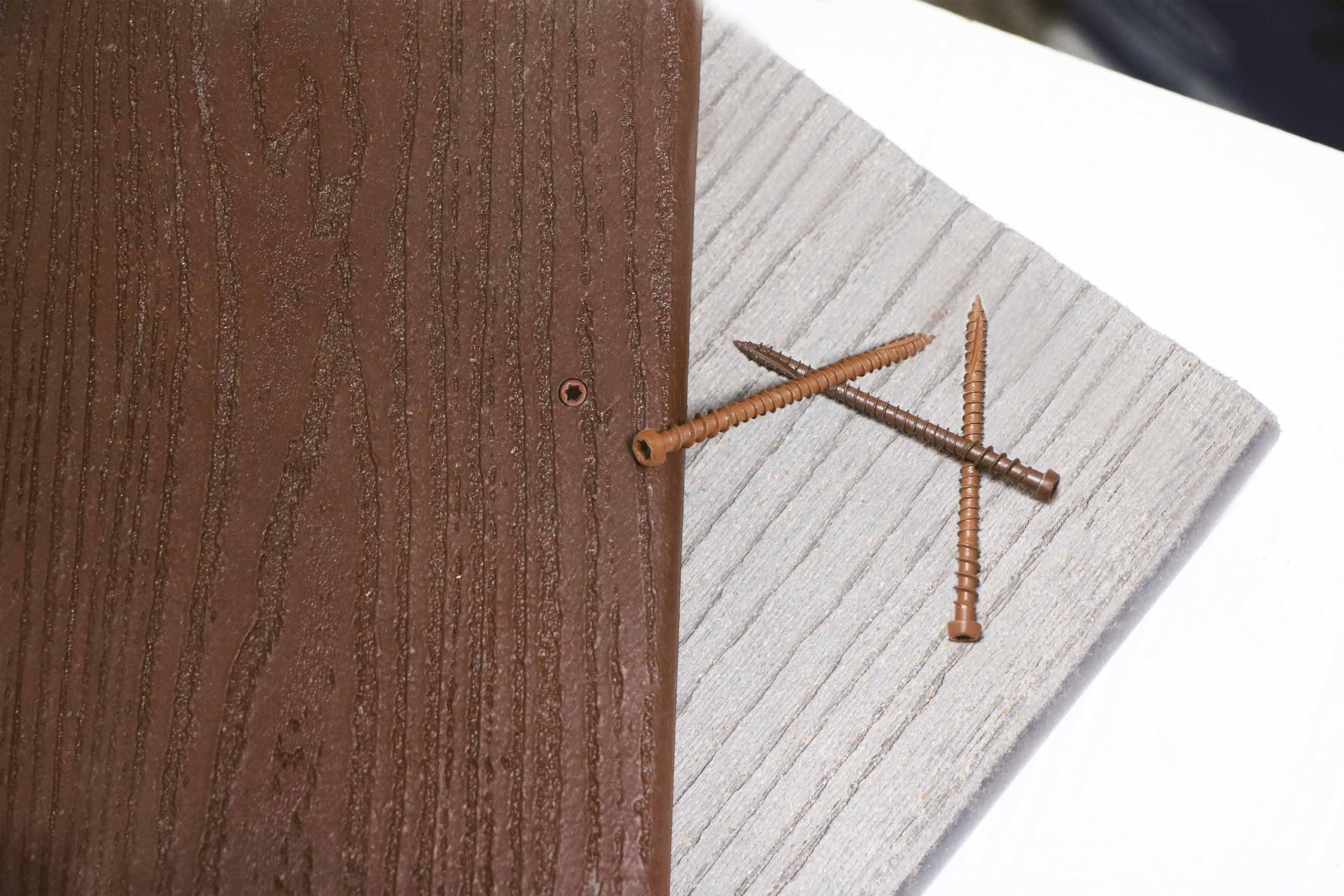




Autotechnika
Hungar yNearly 200 exhibitors from Europe, Hungar y, and other neighboring countries came to exhibit their automotive components and relevant peripherals

Modern Alloy Plating launched its new alloy plating factor yIt introduced the first passivating fluid recycling system in Taiwan and became a new rising force in Taiwan’ s high added value sur face treatment industr y

MashcompHeld in Solkoniki Culture and Exhibition Center, Mashcomp was an industr y leading trade event at that time

Ankiros-AnnoferTurkcastHeld ever y t wo years in Istanbul, the show drew the attendance of 600+ exhibitors under one roof
Homn Reen passed the TS16949 cer tificationWith the cer tification of TS16949, Homn Reen could offer standard-compliant automotive fasteners

From Sep 2006 to June 2007, Fastener World attended Autotechnika Hungary, Automotive Aftermarket Products Expo, Mashcomp, MIDEST, Ankiros-AnnoferTurkcast, National Industrial Fastener Show/West, Ukraine International Building and Interiors Exhibition, Ferroforma Bricoforma, and FASTTEC Exhibition
Automotive Aftermarket Products Expo, Las Vegas




MIDEST1,736 exhibitors from 39 countries came to par ticipate and showcased various industrial components
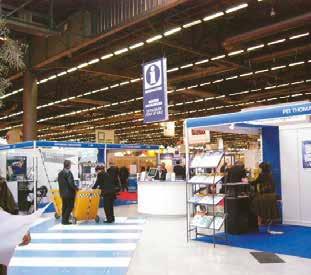

Yow Chern obtained the CNL A cer tification-
It was sequentially cer tified to ISO, QS9000, and TS16949 after 1998, and was again cer tified to CNL A in 2006.
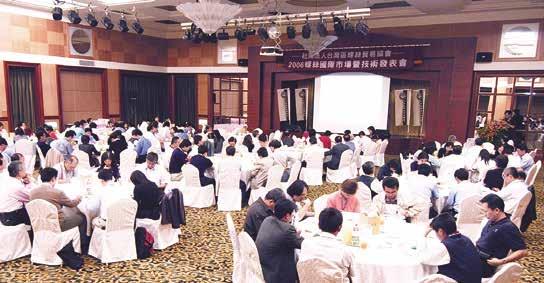






Int'l Fastener Market & Technology Forum-
Fastener professionals gathered together to explore issues including the automotive fastener market, automotive electroplating, and EU antidumping duties.
The 10th National Industrial Fastener Show/ West-
The world’ s largest fastener show at that time. It achieved a new record again in the numbers of exhibitors and visitors
















The 2nd Session of 14th TIFI General A ssemblyTIFI members from around Taiwan gathered at Cosmos Hotel Taipei EU Ad duties once again became the main issue for discussion

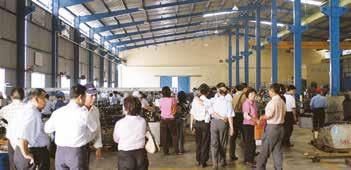
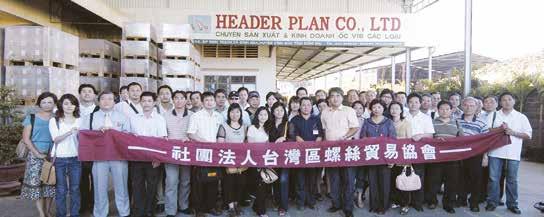
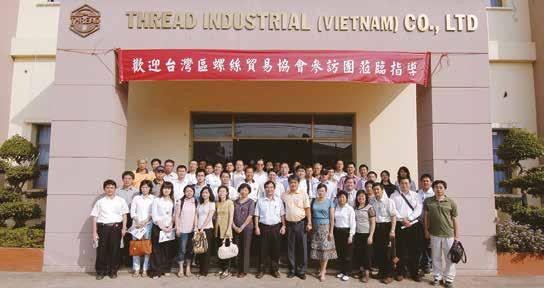
TF TA organized a 5-day business visit to Vietnam-
Over 50 Taiwanese fastener professionals visited many Taiwanese-owned plants in Ho Chi Minh Cit y during the 5-day visit.





Tong Hwei inaugurated a new plant in GangshanThe new factor y spanned the area of 100,000 sqm, demonstrating the stainless steel fastener giant’ s resolution to maintain manufacturing in Taiwan

Yi Chun inaugurated a new plant in LuchuThe total investment value of the newly built factor y in Luchu was nearly NTD 0 1 bn


Ukraine International Building & Interiors Exhibition-
Spanning the area of 26,000 sq meters, the show took place in 3 halls and exhibits included various building hardware
Taiwan Fastener A ssociation’ s 3rd and 4th chairmen handing-over ceremony, directors & super visors meeting, and the 2nd session of the 4th members assembly-
Witnessed by nearly 200 members in attendance, new Chairman Chin-Wan Chen received the credential from former Chairmen
Iou Good Jyi moved into a new plantSpanning the area of 1,990 sqm, the new plant offered more stable CNC par ts capabilities




TF TA new year receptionHeld at the Grand Hotel Kaohsiung, the event was joined with fastener professionals to present the steel market trend and wire costs.
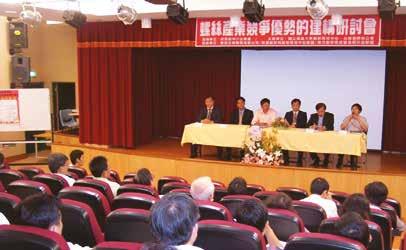


The Competitive Advantage Building-up Seminar of Fasteners Industr yOrganized by TIFI and NUK Advanced Business Incubation Center, the event was focused on the construction of an eco-friendly and high value added fastener supply chain with TS16949 and QC080000 qualit y systems
FERROFORMA & BRICOFORMA-
The show was held biennially Fastener World and 12 Taiwanese exhibitors in a group flied to Spain for fur ther business expansion

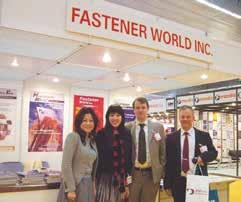

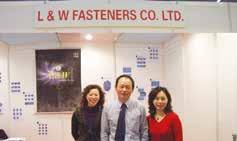





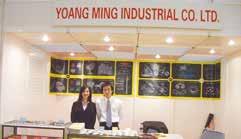
FA ST TEC Exhibition-
More than 200 exhibitors from 12 countries (incl Russia, Belarus, Ukraine, Taiwan and China) came to exhibit.




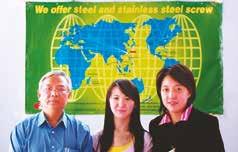



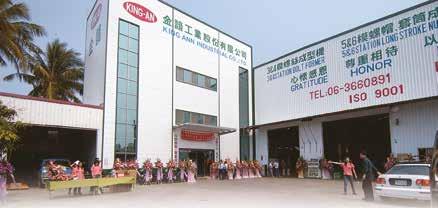


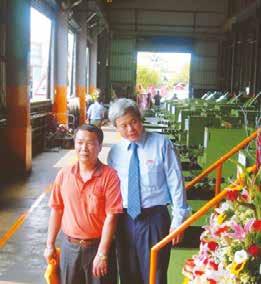
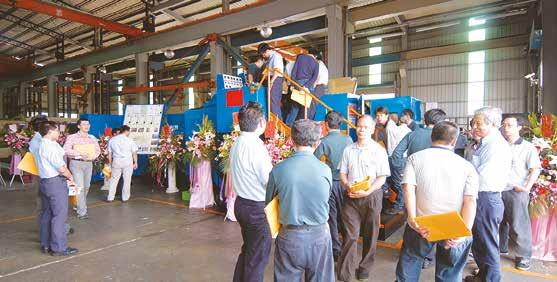
King Ann Industrial rolled out a new 6-station special bolt par t formerThis was a new eye-catching model after King Ann released the largest fastener former in Taiwan in 2000
Taiwan M-Fun inaugurated a new plantThis plant located at Benjhou Industrial Park was the subsidiar y of Ningbo Anchor Fasteners Industrial Co , Ltd , mainly for nuts manufacturing
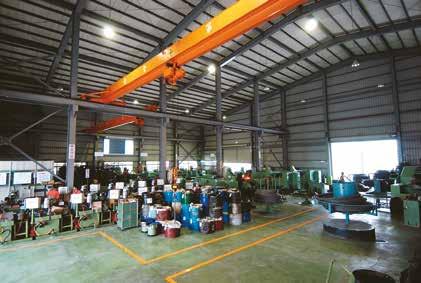





APR 25-28
NFDA annual spring meetingThe meeting took place at Disney’ s Contemporar y Resor t. In addition to the attendance of over 200 fastener professionals from the U S , former TF TA Chairman and Secretar y General were also present
















by Dean Tseng, Fastener World
Fasteners are ubiquitous in every manufacturing field. Fastener business owners mostly take an interest in automotive, construction and other primary fastener consuming industries. On the other hand, there are quite a number of owners supplying fasteners to motorcycle, bicycle and agricultural machine markets. How large are these markets? Besides, 2020 was a critical turning point for global industries. Did the pandemic and trade war in tandem impact these fastener-consuming markets? I’m going to walk you through detailed statistics sourced from several countries.
The Federation of Asian Motorcycle Industries consists of 7 motorcycle associations, from Indonesia, Japan, Malaysia, Philippines, Thailand, Taiwan and Vietnam. These associations provide local motorcycle production and sales data to the Federation on a regular basis, except for the fact that Indonesia does not provide data on production. According to the data for 2020 by the Federation, Indonesia (with the production data missing) delivers the highest sales at 3.66 million vehicles among the 7 countries, followed by Vietnam at 2.71 million, Thailand at 1.51 million, Philippines at 1.2 million, Taiwan at 840 thousand, Malaysia at 490 thousand, and Japan at 320 thousand vehicles (see Fig 2). It tells the fact that the market demand for motorcycles and motorcycle fasteners are multiple times higher in Southeast Asian countries than in Taiwan and Japan.
Now we are putting our focus on the 12 months in 2020 to look at the monthly sales trend in the 7 countries (Fig 4). As
a heads-up, Vietnam’s production data is listed quarterly instead of monthly, while the other 6 countries list their data monthly. We will find that all 7 countries’ sales hit the bottom during April to June when the pandemic went out of control, but were brought back up slowly in the third and fourth quarter. Indonesia and Vietnam as the two largest motorcycle markets had the largest gap between their growth and decline. There was a 96% gap between the peak
�on Sta�s�cs by 6 Associa�ons (Excluding Indonesia)
(Thailand)
TTVMA (Taiwan)
VAMM (Vietnam, quaterly)
(March) and bottom (May) of Indonesian sales, which equates to an 100% sales drop. In the second quarter last year, Vietnam sold almost 30% less than the first quarter. Other than Indonesia which was unable to rise back to the pre-pandemic level, other countries had rebounded to the prepandemic level roughly at the end of the year. Although the associations have yet to publish sales data for the first quarter this year, we can expect the motorcycle sales in the 7 countries will continue to grow as the world enters the post-pandemic era.
The Motorcycle Industry in Europe collects data on motorcycle registrations from 5 countries, namely, France, Germany, Italy, Spain, and UK (F i g 5 ), from which we can peek into the market scale of motorcycles and motorcycle fasteners in Europe. A total of 874 thousand vehicles were registered within the 5 countries in 2019. By 2020, the number reached 883 thousand vehicles, up 0.9%. Overall, we are seeing a minor growth here regardless of the pandemic impact. Germany was the least affected country with a 32% growth, whereas UK and France both dropped by 3%, Italy dropped by 6% and Spain dropped by 11%.
Adding up sales from each country gives us monthly registrations of each of the 5 countries ( F i g 6). April was the peak of the registrations in 2019, but hit the bottom with a 74% plunge in
2020. Fortunately, registrations rebounded significantly in May and peaked at 130 thousand vehicles July surpassing the 100 thousand vehicles mark recorded in 2019. This growth trend even continued to the end of 2020. Overall, the motorcycle market in the 5 European countries regained momentum soon after the pandemic burst out.
The same goes for the monthly registrations of each of the 5 countries (Fig 7 to 11). We will find polylines of 2020 and 2019 roughly walk the same path, besides both hitting the bottom in April. The numbers in the 12 months of 2020 were roughly higher than those in 2019. It means the pandemic was not much of a huge impact on the 5 countries.
F i g u r e 12 shows only a minor gap between Chinese motorcycle production and sales. The sales market scale was between 14 and 16 million vehicles. Looking at sales alone, we find sales were alternating between increase and decrease in the past 5 years, down 11% in 2016, up 2% in 2017, down 7% in 2018, up 8% in 2019, and down 2% in 2020. That is to say Chinese motorcycle sales were vertically swaying in the past 5 years. Judging from the rebound and vibrancy of the post-pandemic Chinese market, we can reasonably assume more apparent growth for 2021. However, in contrast to the sway in sales, export had been dropping from 2018 to 2020, three years in a row, hovering below the export volume in 2015, which is assumed to be the aftermath of the U.S./China trade war.
Mo t o r c y cl e Mo n t h l y R egi s t r a t io n s i n
10.
F i g 13 a n d 14 show Taiwanese bicycle export remained at 2 million vehicles in quantity or 1.3 to 1.4 billion NTD in value during 2016 and 2019. This can be taken as the pre-pandemic export scale of Taiwanese bicycles, though the pandemic in 2020 temporarily slashed 20% of its export volume and 18% of its export value due to lockdown and decreased cargo shipment. An interesting fact found in the Figures is the annual decrease in Taiwan’s export volume to the EU in the past 5 years. The export volume in the prepandemic 2019 was almost 40% lower than in 2016, and by 2020 the drop extended to 60%. On the contrary, Taiwan’s export volume to NAFTA was on a gradual rise annually. The volume in 2019 was 25% higher than in 2016. The volume dropped in 2020 but was still 17% higher than in 2016. In 2020, U.S. orders were switched to Taiwan placing Taiwanese sales to NAFTA even higher than the sales to EU. The sales to North America is expected to climb this year.
Minimizing the range to 2020 (Fig 15), we learnt the two largest export destinations for Taiwanese bicycles were North America (42%) and Europe (39%). The two dominant destinations in Europe were UK (9.6%) and the Netherlands (8.9%). Other primary destinations were Australia (5%) and Japan (3.9%). Taiwanese bicycles for export are high-end exquisite products mainly delivered to developed countries.
Fig 16 shows Japanese domestic bicycle sales were at 8 million vehicles before 2016, and were at 7 million vehicles onwards to this date. The export volume was roughly at 3 million vehicle each year, but dropped to 2.9 million vehicles only in 2020.
Minimizing to 2020, F i g 17 shows the 12-month total sales value was JPY 77 billion. The average monthly sales value was JPY 6.5 billion and the average unit price was JPY 47 thousand. Compared to the automotive market's free fall once appearing after the pandemic outbreak, the Japanese bicycle sales and unit prices had much less fluctuations and impact.
12. China's Motorcycle Produc�on & Sales (2015-2020)
13. Taiwan Bicycle Export Volume in Different Regions in 2016-2020
It is difficult to dig out an accurate data on production and sales from Japan, but we can use the delivery values listed in F ig. 18 to roughly figure out that the Japanese agricultural machine market scale was at JPY 400 billion before the pandemic. In 2020 the delivery value dropped by 12% to JPY 388.4 billion during the pandemic. A noteworthy phenomenon is the annual increase in Japanese agricultural machine market scale before the pandemic. If it were not for the pandemic, agricultural machines could have grown on a stable momentum in Japan. The same growth momentum is also seen in the import and export values. Furthermore, the export value was at around JPY 230 billion and the import value at JPY 68 billion. Given the existing momentum, the Japanese agricultural machine market is expected to be back above the level of 2016, if the pandemic cools down further this year.
Minimizing to 2020, Fig. 19 shows the top three export destinations for Japanese agricultural machines were North America (53%, JPY 117.8 billion), Asia (28%, JPY 62.6 billion) and Europe (14%, JPY 31.6 billion).
According to the data from National Bureau of Statistics of China, 537,600 vehicles were produced in China in 2020, in which there were 70,000 large farm tractors (up 56%), 289,000 medium farm tractors (up 17.7%), and 177,800 small farm tractors (down 47.2%). The three sizes added up to 1.07 million vehicles.
Fig. 18. Japanese Agricultural Machine Market Value in 2016-2020
Fig 19 Japan Agricultual Machine Export Value to Different Regions in 2020 (Unit: JPY Million; %)
Fig. 20. U.S.A. Agricultural Machine Sales in 2016-2020 Unit: Vehicle
Fig 20 shows the annual U.S. agricultural machine sales were 240,000 vehicles on average during the past 5 years, which can be regarded as the U.S. market scale. The sales climbed gradually every year with an average annual growth rate of 8%. 2020 had the highest growth rate among the 5 years, reaching 17%, doubling the average growth rate. It means the U.S. agricultural machines have strong and stable growth momentum and the sales outlook for 2021 is positive.
The motorcycle industry in Asia, Europe and China hit the bottom as the automotive industry did in April, but recovered soon after mid-2020. Taiwanese bicycles industry faced much less impact thanks to the well-managed epidemic control and increased orders from the U.S. Japanese bicycle sales were at around the same level as in previous years and did not drop as much as the automotive industry did. Japanese agricultural machine market has stable growth momentum and it is believed to be back to the level prior to 2019. The production of Chinese small farm tractors was cut in half in 2020, but the production of medium and large farm tractors exhibited obvious growth. U.S. agricultural machine sales were in a steady rise. Although there is limited published data from these countries, on the whole we can tell that the motorcycle, bicycle and agricultural machine markets quickly walked out of depression last year and we may expect to see an accelerated market growth in 2021.
Simpson Strong-Tie, the leader in engineered structural connectors and building solutions, announced the expanded availability of its popular StrongDrive CSV Construction screw to hardware and fastener suppliers in US markets. Available in 2½” and 3” lengths and coated with yellow zinc for protection against corrosion, the CSV Construction screw is a versatile, multipurpose fastening solution for a variety of wood-to-wood and engineered wood interior applications.
Featuring underhead nibs, low-torque threads and a fast-start point, the CSV Construction screw drives effortlessly and is designed for general-purpose fastening. Additional features of the CSV Construction screw include the following:
• Low-torque threads allow up to 35% more drives per battery charge
• Ribbed-head design countersinks easily and provides a clean, finished appearance
• High-low point provides fast starts
• Optimized threads are ideal for dimensional lumber
• T25 6-lobe driver bit included
Clinching stud bolts are commonly used in the automotive industry. Pressing clinching stud bolts into materials often causes materials to warp or develop burrs which impacts the precision and quality of products. Nitto Seiko's new clinching stud bolts can reduce warping and burrs and further decrease spinning. The inside of the lobe-shaped protruding part has a concave to house the deformed material. The deformed portion will stick out towards the male threads to prevent burrs as well as spinning. The product is pending for patent. The company

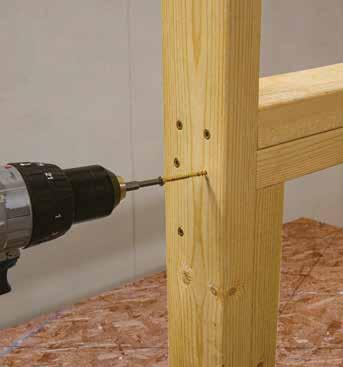
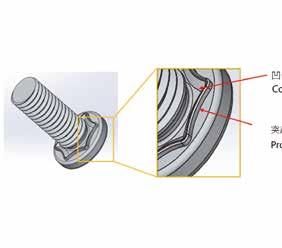
Plating processes often involves using a liquid agent, and therefore they are mostly termed "wet plating". The EMALUCE plating by the Emanak Gruop differs greatly from other plating processes in that it uses dry plating without a liquid agent.
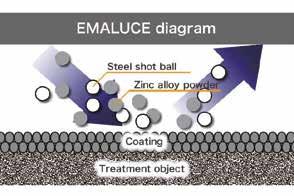
EMALUCE eliminates the risk of stress reduction caused by heat and hydrogen embrittlement, and provides a high-level anti-corrosion effect on products such as high-strength bolts that are difficult for plating.
Benefits:
1. Capable of treating both ferrous and nonferrous materials.
2. No stress reduction thanks to dry plating at room temperature.
3. Less acid treatment and electrolytic reactions; no hydrogen embrittlement.
"Prehold Washer" is used for temporary fixing and improves operating efficiency. Made of stainless steel, it is corrosion resistant and high strength. It allows a bolt to be inserted through its either sides and provides ease of bolt installation onto the automotive or machine components. The bolt and the components are fastened through spring reaction force.
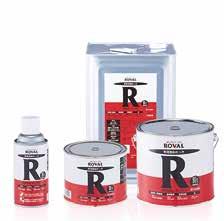

4. No sealing required.
5. Mechanical properties improved from the peening effect.
6. Environmentally-friendly.
Zinc depletion often goes faster than expected when using zinc-rich paint in a high-salinity environment. On the other hand, the silicon-based ZECCOAT coating tends to gradually lose effect as the zinc-based anti-corrosion layer wears off. Therefore, Roval and Hoden Seimitsu have joined forces to develop a rust prevention line which will incorporate the following features.
1. Suitable for iron and galvanized surfaces. Able to keep automated parking garages, iron stairs, pipelines and bridges from corrosion.
2. Heavy metal free, eco-friendly and highly corrosion resistant.
3. Reducing zinc depletion in high-salinity environments, inhibiting corrosion and lowering maintenance cost.
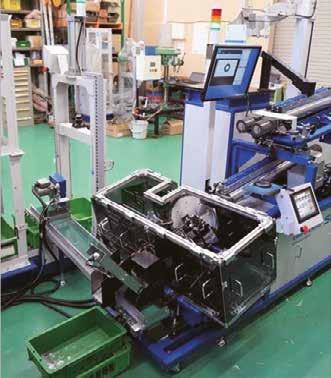
OSI is a manufacturer specialized in visual inspection machines whose products have been adopted by National Machinery from the U.S. OSI successfully developed a flat washer sorting machine called "Ultra View-SLD". The code SLD is short for "slide" which means by rolling the flat washers, the machine can check their front and back sides via its camera. The first generation of the machine can check flat washers in the outer diameters of 10 mm to 30 mm. Supply has been started since October 2020.
SPIROL is pleased to announce the expansion of their Solid Pin Product Line to include the new Series BP100 Press-N-Lok™ Pin. The new Press-N-Lok™ Pin was designed to permanently retain two plastic components to each other. The pin has opposing raised barbs on each end that are angled backwards opposite to the direction of insertion. As the pin is being inserted, the plastic backfills into the area around the barbs resulting in maximum resistance to axial force providing a secure, tamper resistant assembly. The Press-N-Lok™ Pin is manufactured from lightweight, lead free, corrosion resistant aluminum. One major advantage of the Press-NLok™ Pin is that assembly time is quicker and it requires lower assembly equipment costs as compared to screws and adhesives.
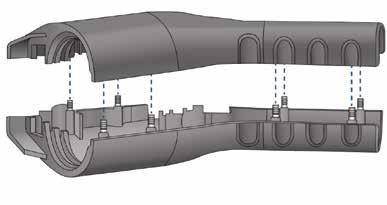
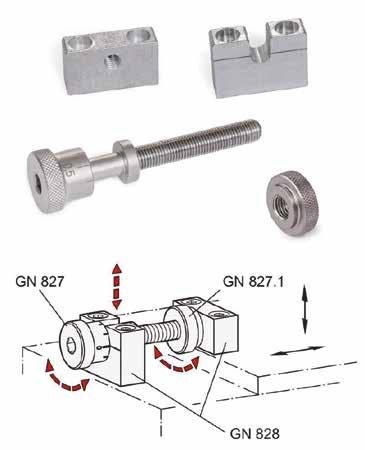
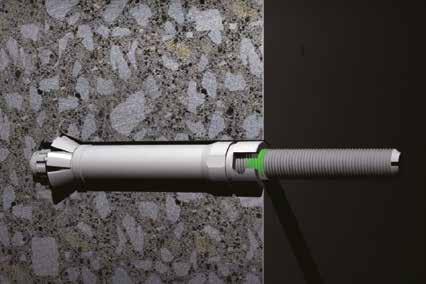
On production machines and mechanisms, it is often necessary to carry out repeated positioning operations as simply and reliably as possible. For precisely such secure and simple adjustments as well as for quick changing of mechanisms or tools, Winco now offers three new parts that complement each other perfectly: stainless steel adjusting screws with an adjustment scale plus matching bearing blocks and knurled nuts.
Sunco Techno's self-undercutting anchor creates and expands an undercut hole in the wall in the fastening process and thereby skips many steps. The anchor body as well as its dedicated fastening tool contains a color mark for visual check to confirm the installation. The anchor's tensile strength is 400N/mm 2 and the yield strength is 240N/mm 2 . It has a mortise-like design through which a dedicated removal tool working as a tenon can extract it from the wall. The anchor is currently used on metal stairs, tunnel light hangers, overpasses, and in machine installation. It is available in steel and stainless steel.
The innovative stainless steel adjusting screw GN 827 from Winco, the specialist of standard parts, is intended for use with bearing blocks GN 828 and simplifies the attachment of parts to various processing and assembly mechanisms in machines, installations and jigs. This means that processes that require the repositioning and adjustment of devices can be carried out much more quickly. The mechanisms are moved into or out of position using an adjusting screw with rotating knob and hexagon socket fitted with a scale with 0.1 mm graduations.
Depending on the application, the stainless steel adjusting screws are available in a variety of thread diameters and lengths and can be optimally fastened to the production machine in combination with bearing blocks GN 828 from Winco. Once the optimal setting has been found, the adjusting screw can be locked in place with a stainless steel knurled nut GN 827.1 designed specifically for this purpose. The bearing blocks are made of matte, smoothly polished aluminum which can be mounted from above or from the front.
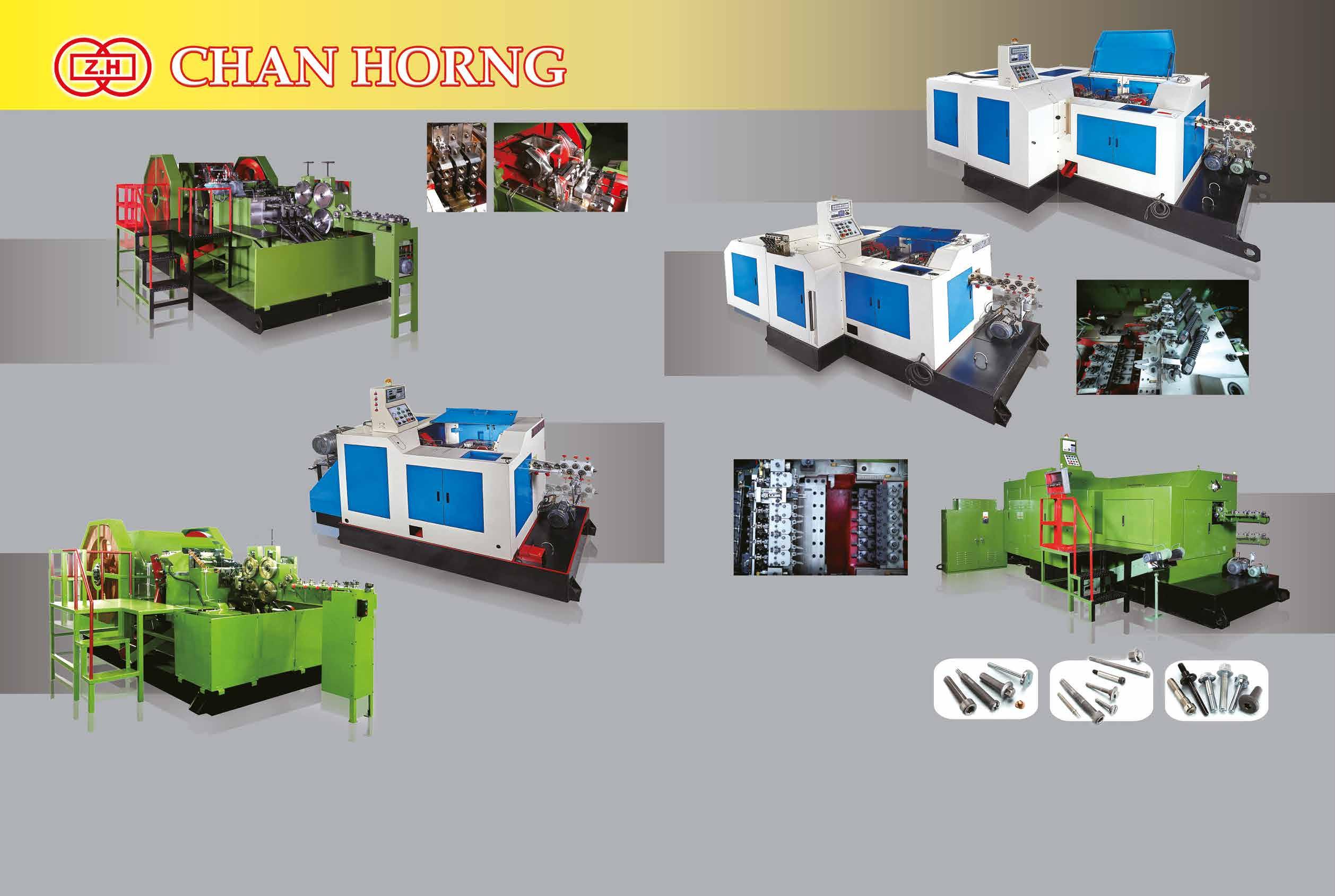









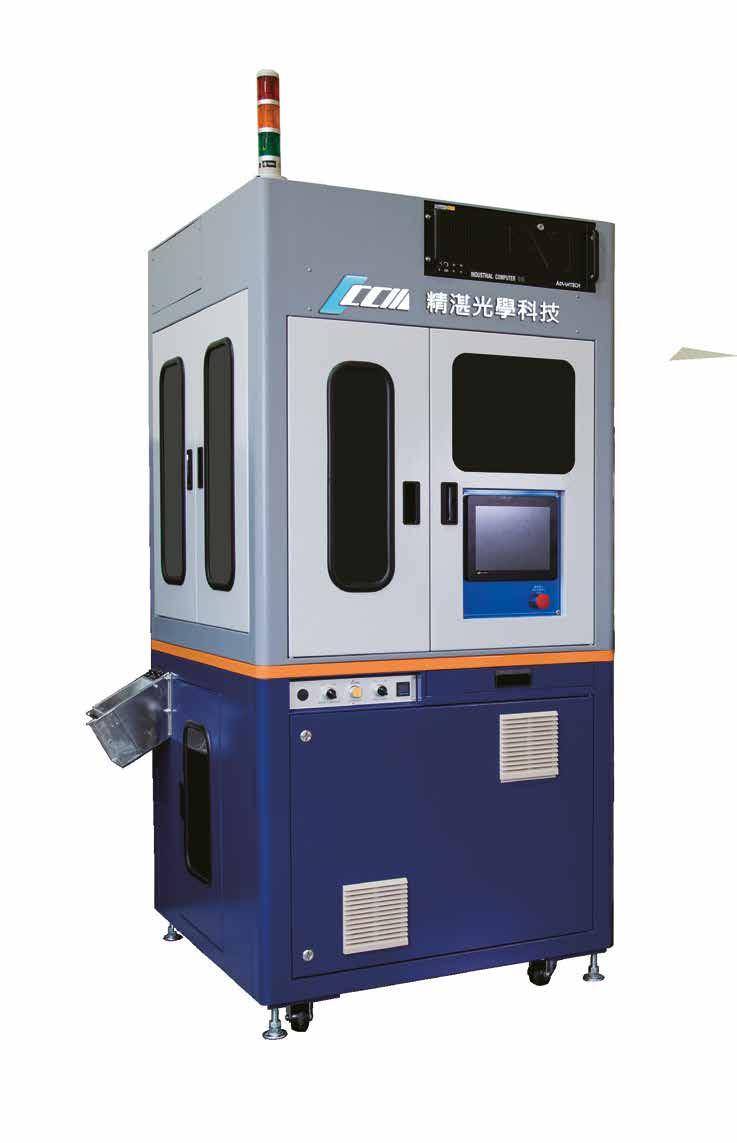

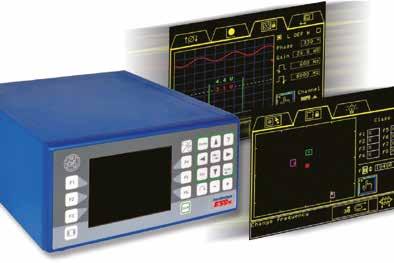
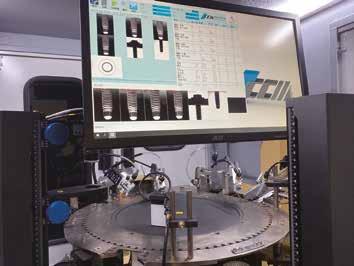
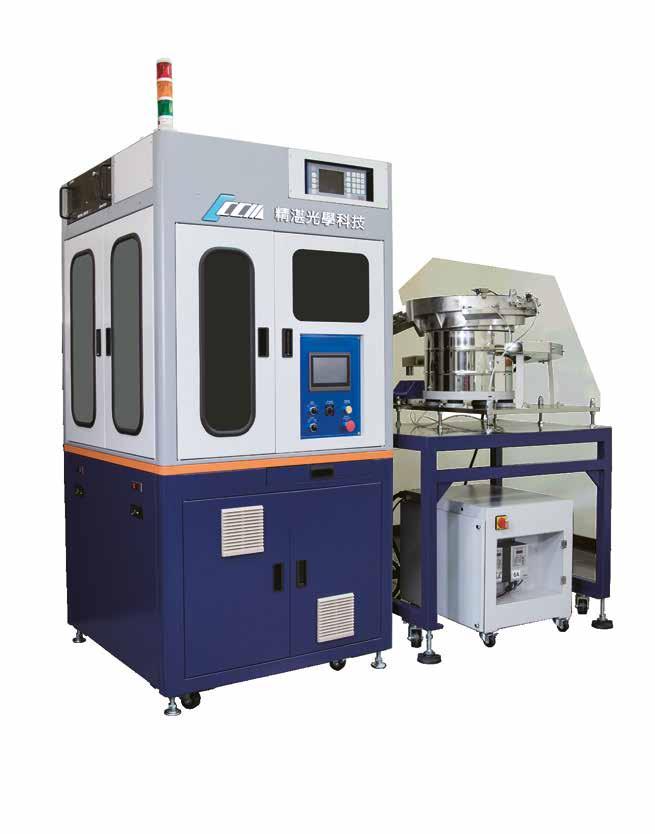
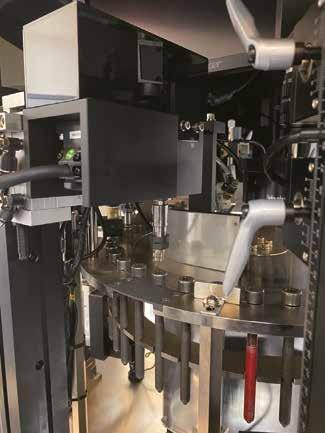
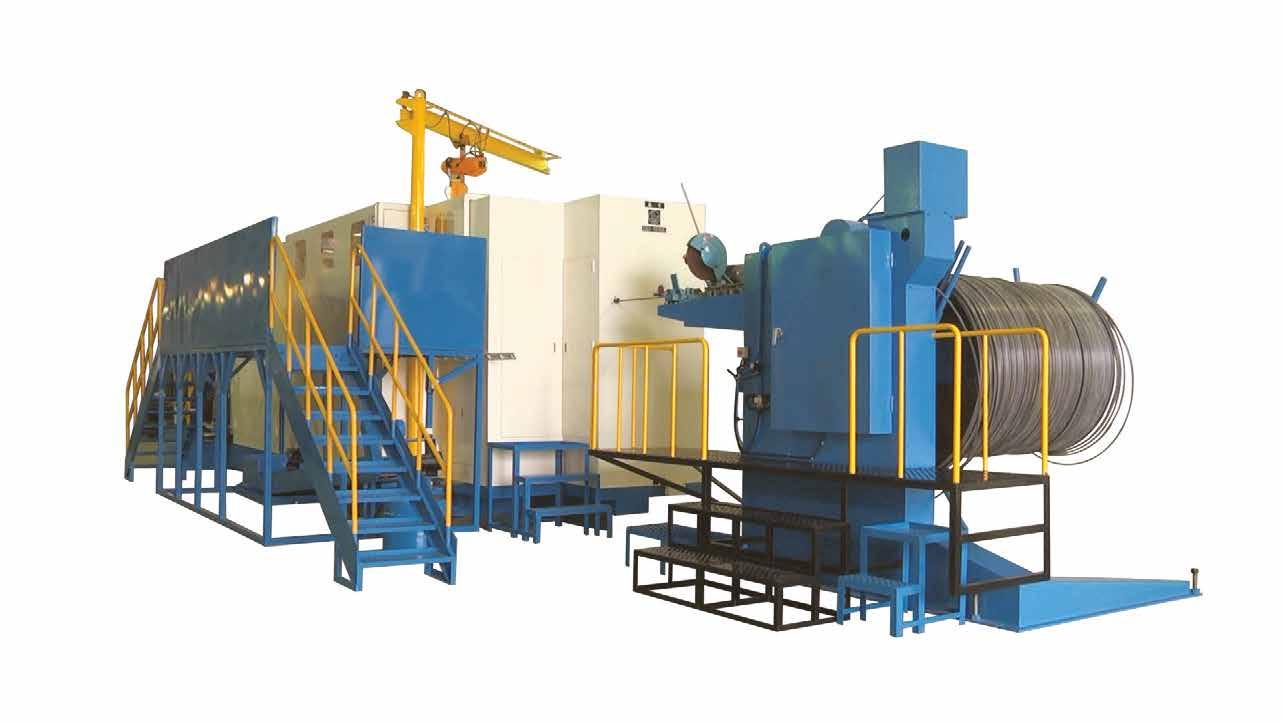
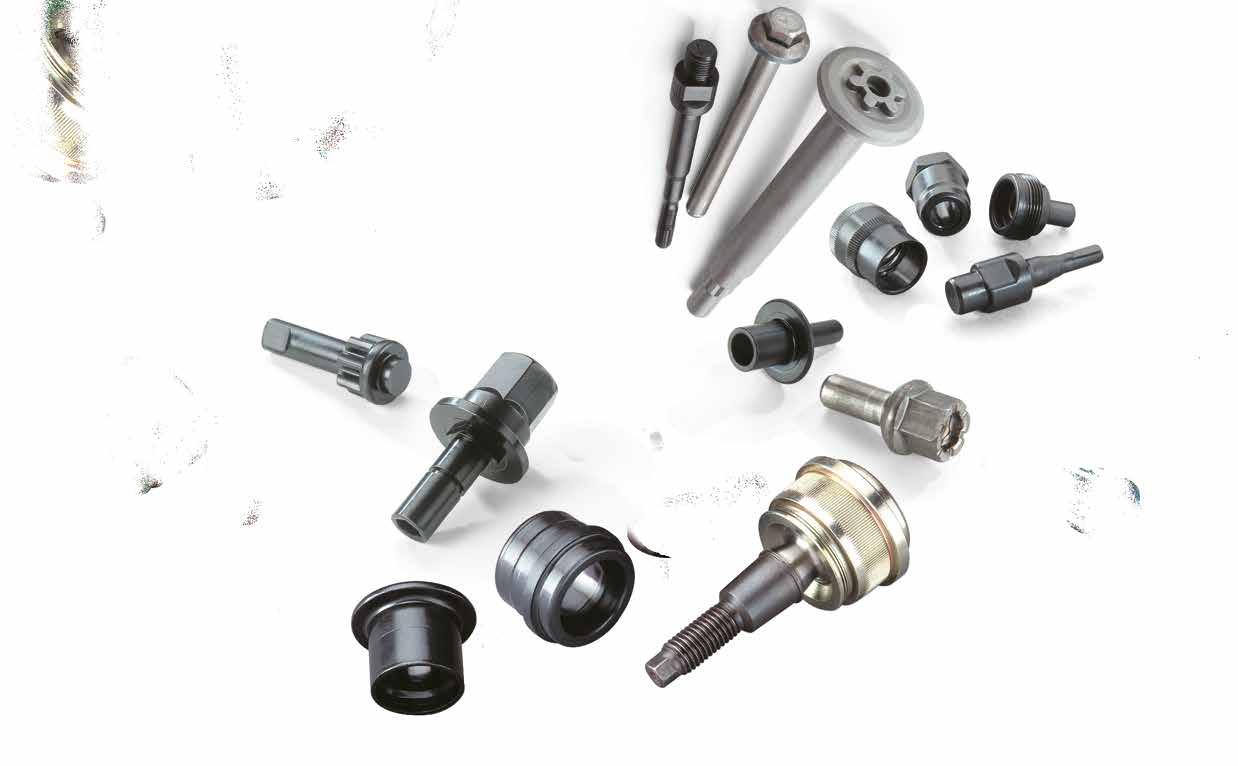
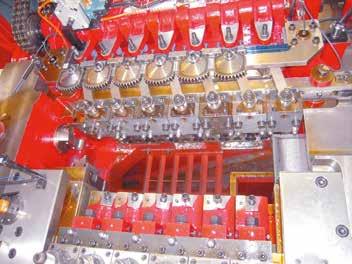

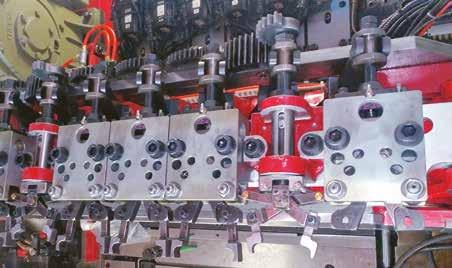


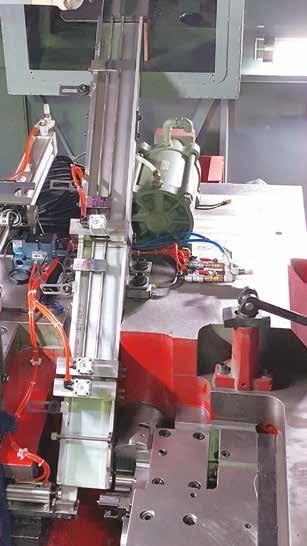
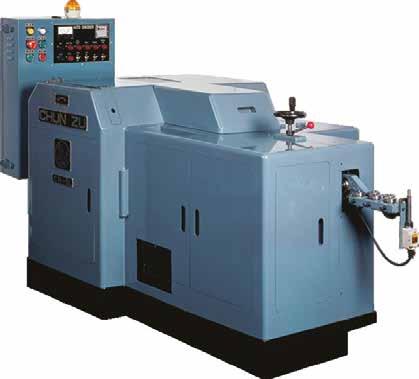
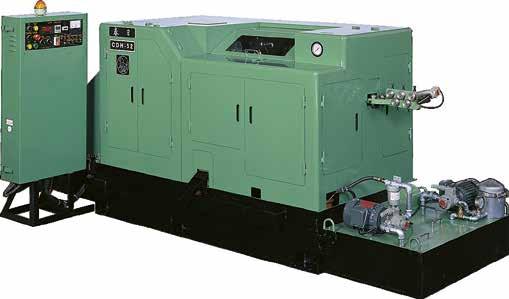
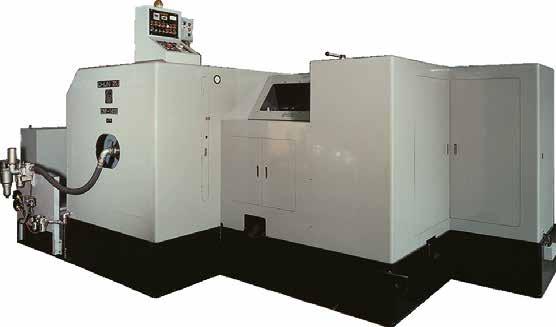
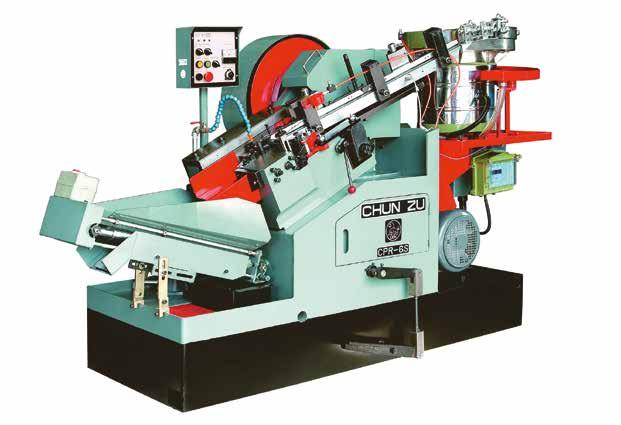
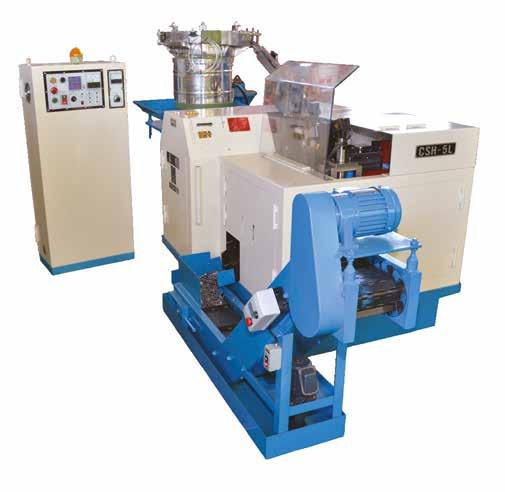

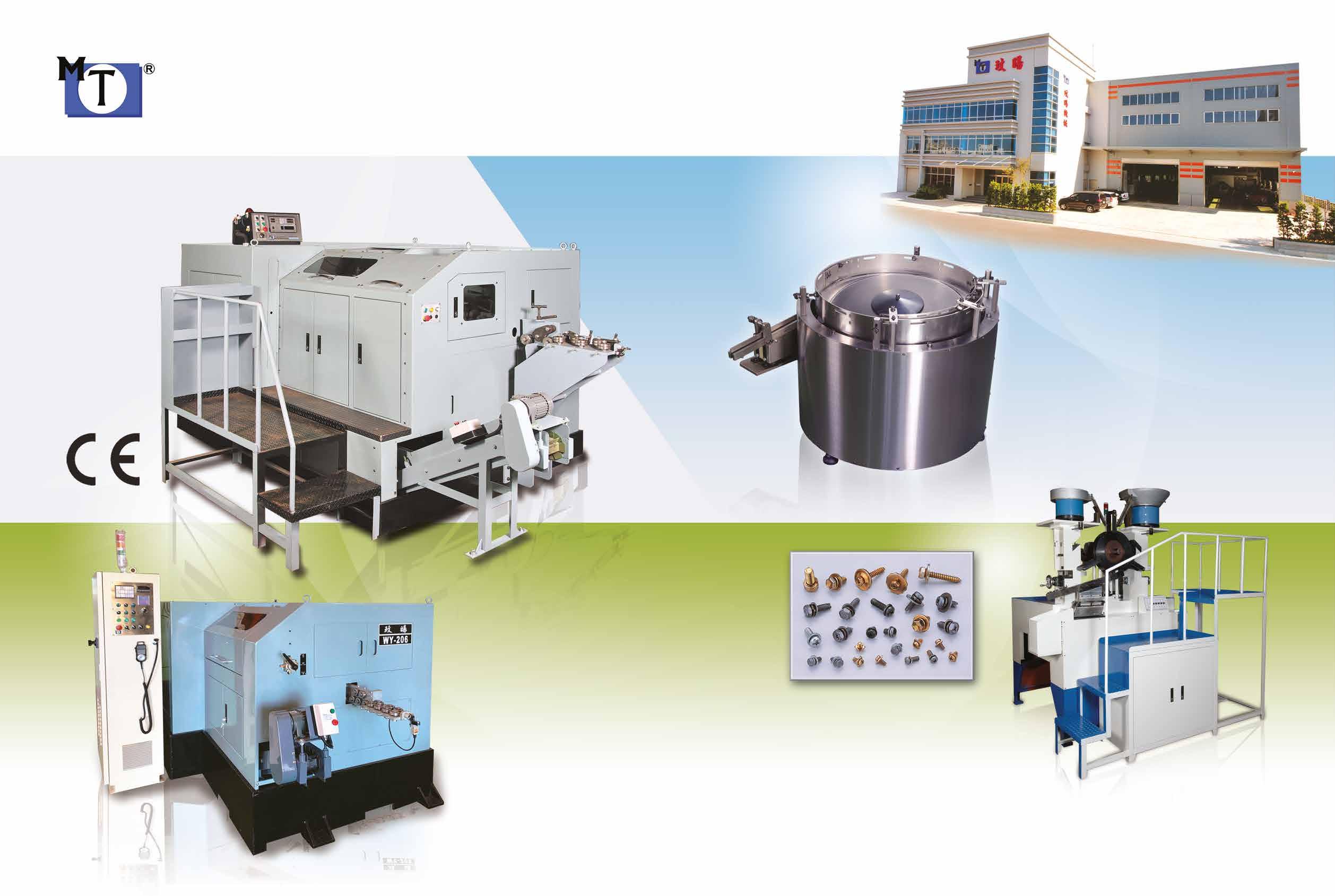



ar t icle provided by SACM A
Following the success of S-Feed , the wire feeder with servomotor, first mechatronic application of Sacma Group, the new S-Transfer is now ready and available for the 6 die progressive headers from size 4 to size 6.
The mechanical transfer Sacma is appreciated for precision, versatility and reliability. Its unique design, together with quality of materials and precise construction, allows to transport the widest range of parts, from shorter to longer ones, at high speed and assuring a constant performance over the years, with minor maintenance costs.
The S-Transfer is combining all those features with new important functions, improving production efficiency and ease of use .
After long time testing by R&D and industrial production, Sacma can guarantee for the S-Transfer the same reliability of the traditional version, combined with the flexibility and friendly use typical of mechatronic applications.
The S-Transfer is the natural evolution of a masterpiece that has become a worldwide benchmark for the multi station headers.
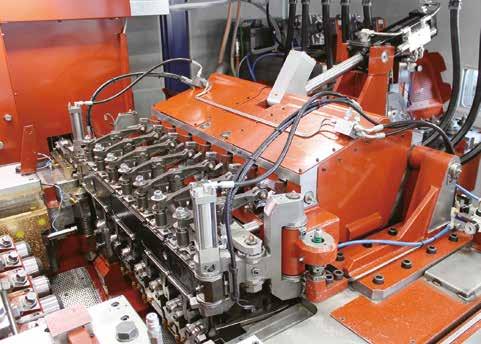
▲ The mechatronic S-TR ANSFER
About the user friendly predisposition of S-Transfer : just through the SC Matic control panel the operator is able to set individual opening and closing time and speed, clamping force, lateral motion timing, optimizing the transport conditions for any part shape and making the machine able to run the production at the highest possible speed.
Below are the main pluses of this new milestone product of Sacma Winning Technologies®
1) Reduction of change-over time. The setup of the transfer is done by loading the product code from the operator panel. Savings of about 20 minutes.
2) Easy and user-friendly of the set-up operations for new product, without manual intervention. The opening and closing angles of the fingers are set from the touch screen panel.
3) Versatility with all the opening and closing cams (normal, fast and ultrafast) available in the program menu.
4) Supervision of part presence in the finger. Same function of SC800 option of mechanical transfer.
5) Higher flexibility with the independent opening function of all the fingers included in the S-Transfer, which replace the option of pneumatic system to open the fingers in the mechanical transfer.
6) Safety thanks to the regenerative drive used for the flywheel; there are no problems of damage in case of black out.
7) The closing force of each pair of fingers is individually adjustable from the operator panel, replacing the traditional pneumatic system, where the closing force is the same for all the fingers.
8) Timing of the transversal movement defined from the touch screen panel, without any manual intervention to be done.
9) The stability and durability is also ensured by a chiller, keeping the temperature of the linear motors in optimal conditions.
All transfer settings are stored in the PLC and applied automatically when producing the same part in the future. The advantage of perfect repeatability and quick setup makes the transfer very easy and intuitive to be used by the new generation of technicians.
Tr ansfer adjustments made from the SC-Matic HMI
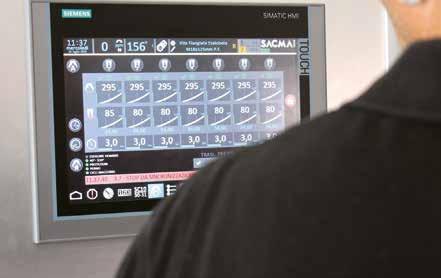
The S-Transfer is also the result of the synergy with Ingramatic experience in the application of servomotors for different functions; this shared experience reduces the ‘time to market’ of the new projects while ensuring product’s reliability from day one.
The S-transfer is initially available on 6 dies part formers model SP59, SP570 and SP570WF900.