











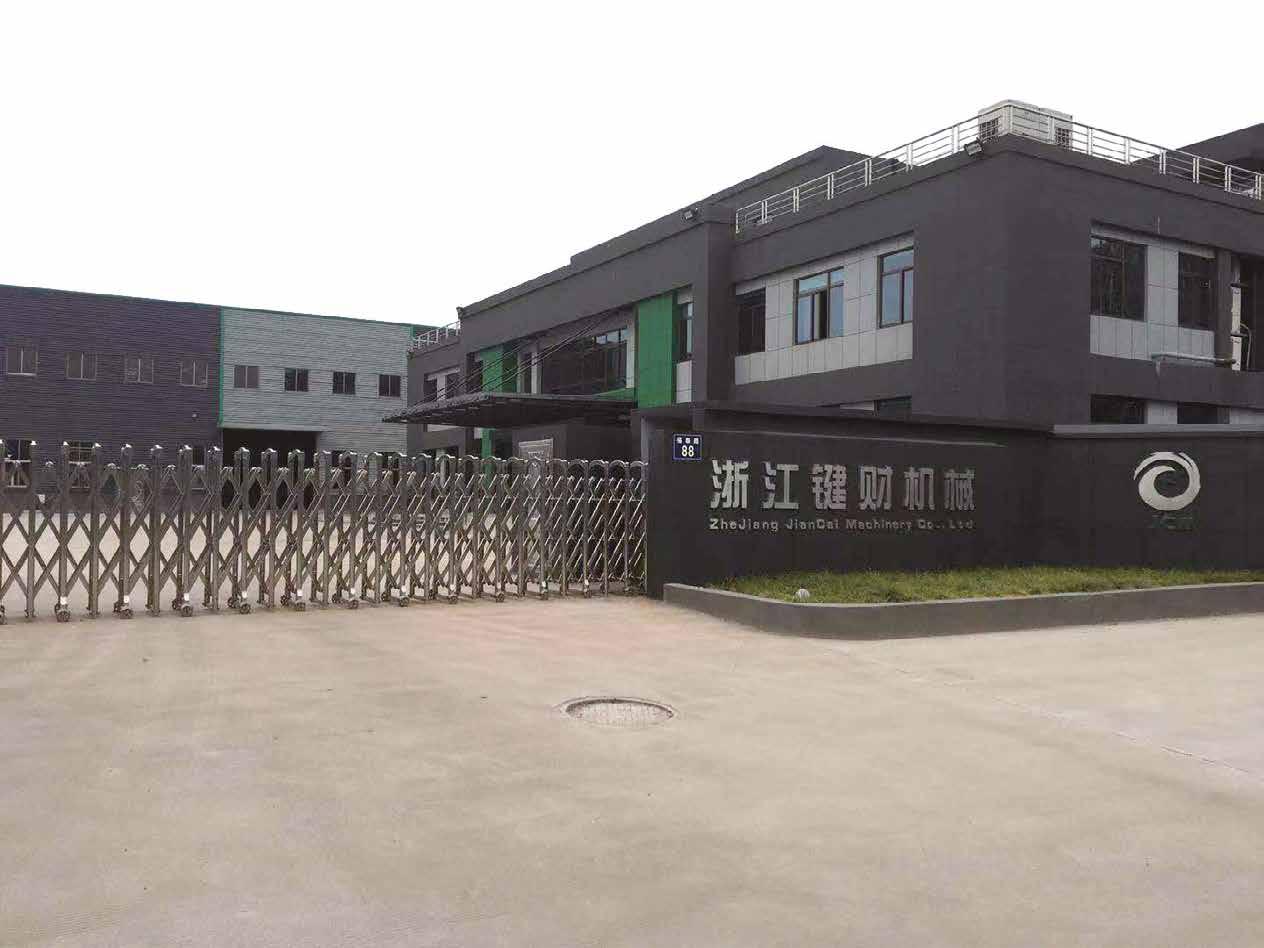


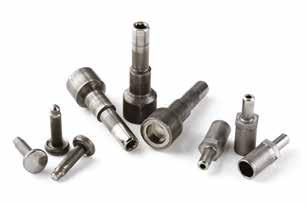

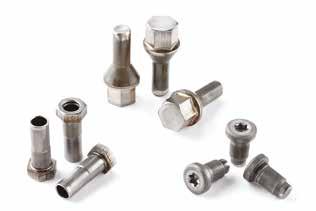
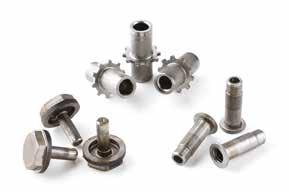
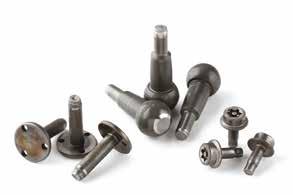
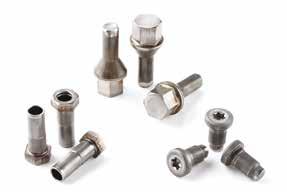
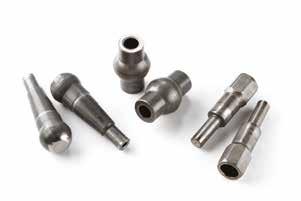
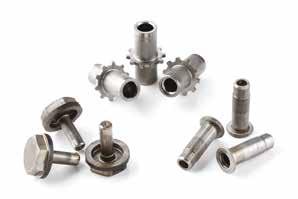
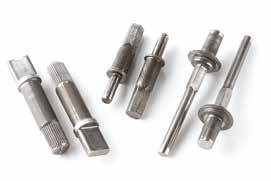
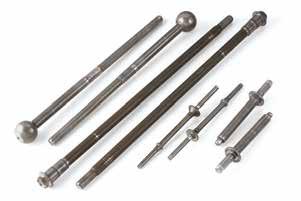
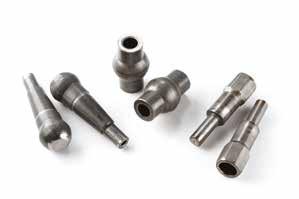
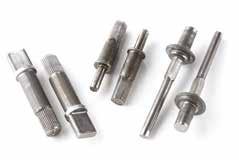
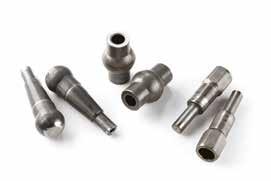
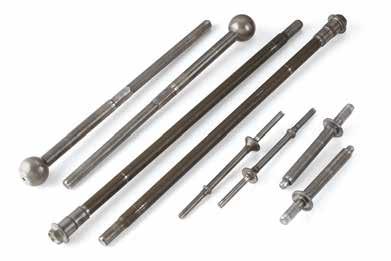










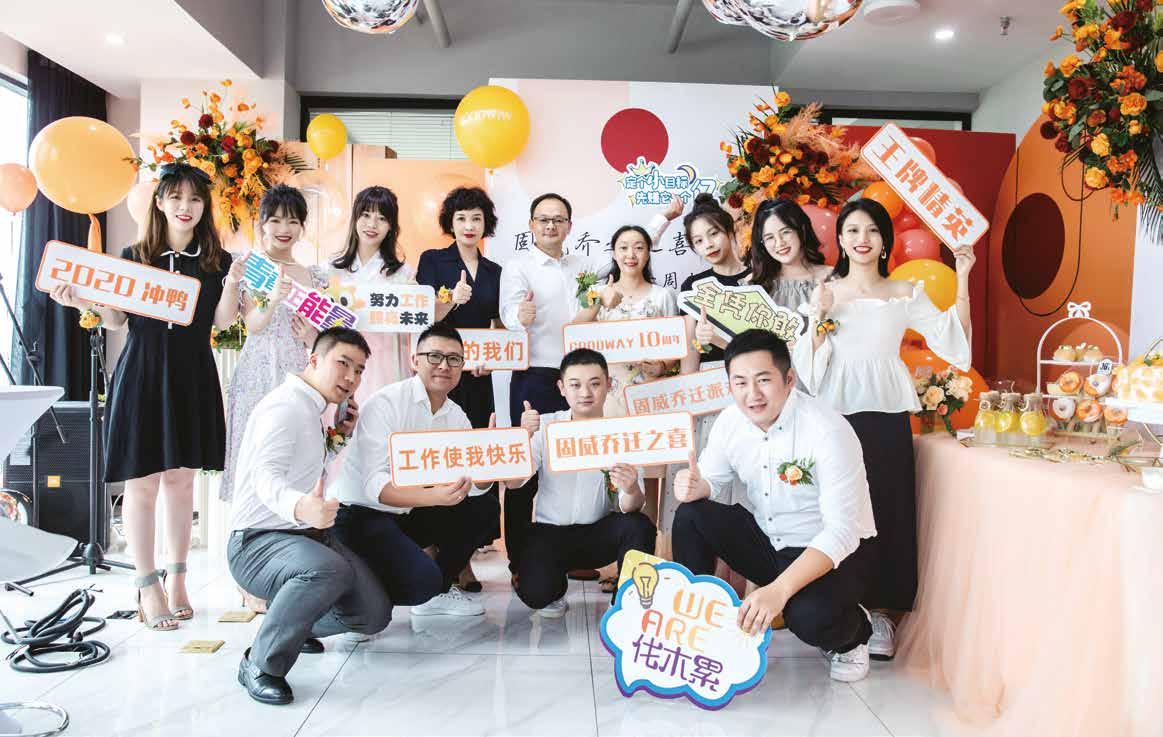
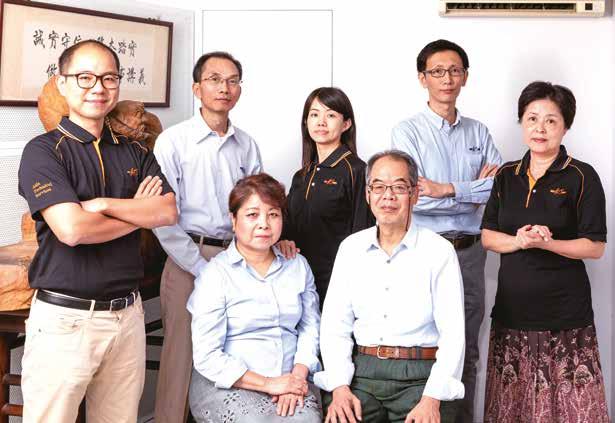
Founded only a decade ago, Jiaxing Goodway Hardware Co., Ltd. (“Goodway”) has successfully earned an excellent reputation for the supply of various highquality non-standard and customized fasteners. For years its professional team, diverse range of product portfolio, and flexible & efficient service have won the trust of many customers from the global market, and it has also kept improving its service to cater to the ever-changing customer demands. In order to enhance its topnotch corporate image and offer service that better corresponds to customer demands, Goodway moved to a new office (with a doubled area compared to that of its old site), located at Jiaxing International Business Park and near major transport hubs and fastener industry clusters in 2020, adding a new chapter to the growing history of Goodway.
Timesaving
The tidy and bright new office was divided into different departments, which include sales, quality inspection, purchase, finance, human resource, and general manager. The meeting room, areas serving tea and meals, and a rest corner were also added in order to provide all staff of the company with a comfortable work environment, helping to reinforce the cohesion within the company and offering complete service to customers more efficiently. What’s worth noting in the relocation this time is that a more spacious quality inspection room with the installation of extra sets of QC equipment was added, greatly enhancing the already seriously monitored quality management system in Goodway.
less than half an hour, due to its proximity to the main boulevard in Jiaxing (Nanhu Blvd.), high speed rail station, highway entrance, and major Haiyan and Jiaxing fastener manufacturing bases. In addition, it’ll be also convenient for our customers to get quick access to DIY packaging or optical sorting service. The well-arranged infrastructure around the office will also strengthen our ability to satisfy our customers,” said General Manager Jack Chang.
For years, products of Goodway have been designated by many European and American customers from automotive, aerospace, agricultural machinery, construction and DIY industries to be used in their products. Goodway has also dedicated itself to developing new customers from other countries/markets. Every year Goodway could generate a sales growth of around 10-15%. With the ISO 9001 quality management system, Goodway even passed the audit of German Würth and U.S. Fastenal within two years and established solid collaboration with them.
“Non-standard products have been always our main business items, which can be hardly replaced by other products in the market, so our customers show high dependence upon us. On the other hand, as our products are not only exported to Europe and America, but also other regions, the U.S.-China trade war does not cause too much influence on us,” said Chang.
Different from other manufacturers, Goodway, being a manufacturer and trader, shows the advantage of perfect integration of manufacture, quality control and service. “Manufacturers provide products, but Goodway also provides customization and vertically integrated service. In terms of quality control, Goodway has a group of well-experienced inspectors to carry out full inspection and guarantee good quality control. As for the most essential service, it also has a professional team of Englishspeaking sales for product inquiries. With all these soft powers, Goodway provides not only products, but also service that deeply touches the hearts of customers. Goodway values each customer very much and considers every visit the best chance to demonstrate its capabilities,” said Chang. Such a serious attitude, superior quality and lead time control have made quite a few buyers switch their collaboration to Goodway.
The drastic global market change in 2020 did cause various extents of impacts on Goodway’s customers. Through opening the new office, the connection between Goodway and its customers will be much more strengthened and it’ll be also easier for Goodway to keep track of customers’ inventory to help them weather the current challenges. Speaking of the outlook for markets and customer service, Chang noted, “Since the establishment, Goodway has faced many challenges and overcome them successfully. We all know that it is not easy. Customers from far away trust that we can satisfy their demands, so having their demands fully satisfied is our commitment.”
Contact: General Manager Jack Chang Email: jackchang@goodway-hardware.com











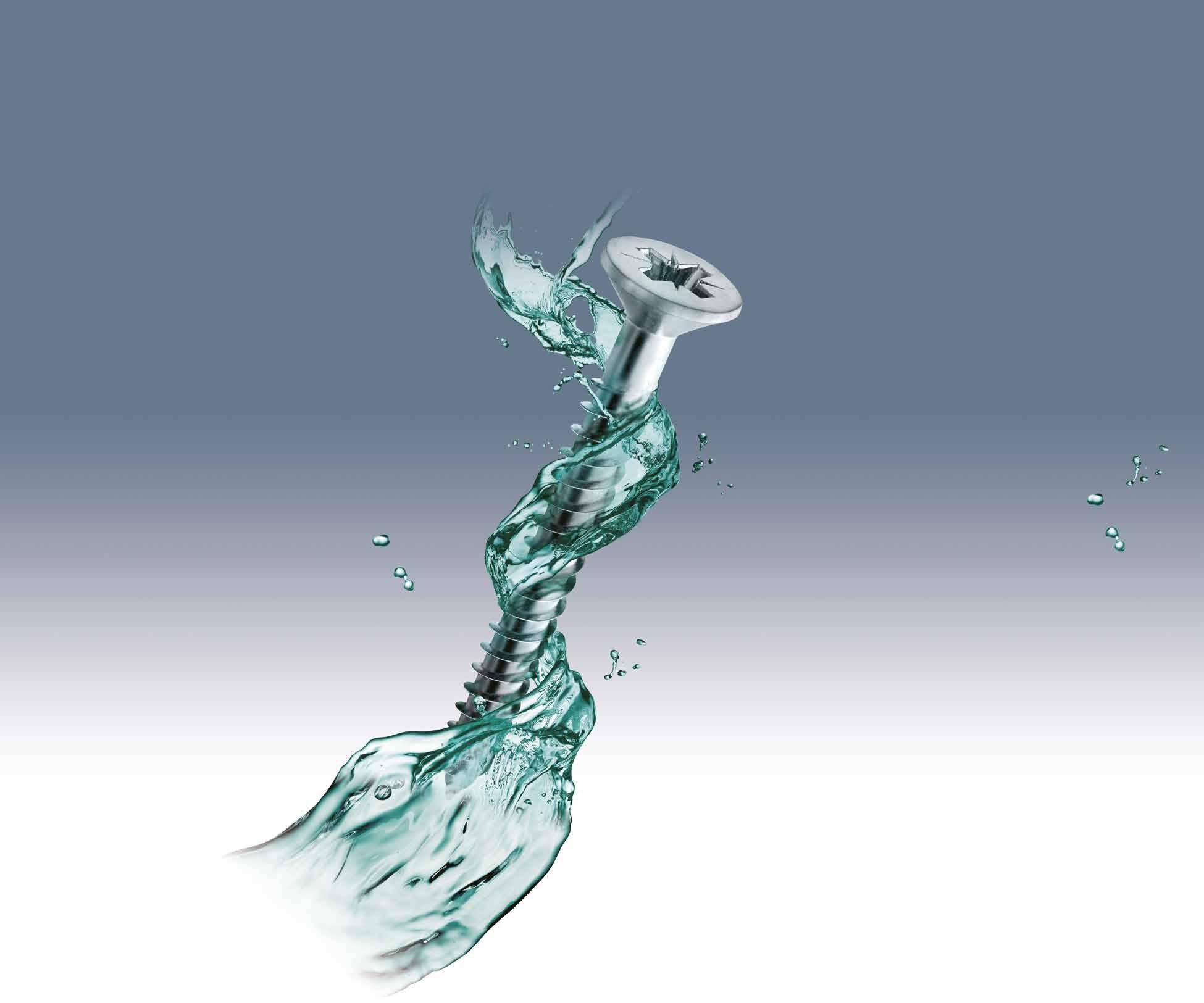








Various steps and precise details in production lines for engineered fasteners and industrial components will always need to be seriously considered to achieve the best product quality. As a result, lubrication and anti-lock required in product manufacturing, if proper processed, will assist the products with consistency and impressive performance. In this innovated fastener industry era, which relies on technology and service, one cannot ignore the existence of microGLEIT®, which is usually recognized industrywide as the leading supplier of water-based dry film lubricants.
by Gang Hao Chang, Vice Editor-in-Chief of Fastener World
Since its establishment in Germany, microGLEIT® has been dedicated to the R&D of various lubricants and anti-lock products for specific industrial use. Thus far, it has successfully developed lubricants for fasteners, gears, slides, pressed parts, chains, industrial components, etc., which have been widely used in automotive and construction applications. Besides the German HQ, its representatives in Asia – microGLEIT Technology Company in Taiwan and Geotech Enterprise Company in China, are also equipped with excellent technology and full knowledge of products supported by the German headquarters. The Taipei-based microGLEIT Technology Company is mainly committed to the development and support of customers in Asia as well as the handling of inventory, while the Shanghai-based Geotech Enterprise Company is focused on providing service to support the integral application and development of its Chinese clients. After the incorporation of microGLEIT® Germany into COVENTYA Group two years ago, it is believed that, with more accessible resources and comprehensive application, microGLEIT® will be able to fulfill all-inclusive solutions.


Since the outbreak of the pandemic in the beginning of this year, the global supply chain has been reorganized upside down, which has also influenced the whole industrial and customers’ behaviors. However, the core value of microGLEIT® to focus on stable performance and real-time support remains unchanged.
“Due to the adjustment of previous production line of global automotive manufacturers, our sales face a significant decline in the first half of this year, however, after the gradual recovery starting this May through June, we have gradually perceived the signs of increasing orders. Plus, the previous projects in other industries are reactivated, the demand for special lubricants is growing, the operation of microGLEIT® would continue to reach above previous level. On the other hand, as the pandemic has extensively impacted our original schedules for testing, discussion, visits, sales, and shipments, we thus have much more time to reconsider how to optimize our manufacturing to better correspond with customers’ limited lead times and related requirements, in order to ensure product stability and offer non-stop technical support and aftersales service,” says Michael Wu, Manager of microGLEIT Technology Company. “By keeping communication with customers, microGLEIT® can further understand the instantaneous status of customers’ inventory and order intake, as a result, we can focus resources on key products and combine shipment of lowdemanded products, avoiding unnecessary inventory preparation based on the low volume and diverse range principle.”
Having focused on the innovative applications of water-based dry film lubricants for long, microGLEIT® offers a diverse range of applications for products according to customers’ needs. The newly released DCP sealers series designed for satisfying both customers’ lubrication and corrosion protection demand are just one example. Features of this series include: 1. The best corrosion-protective layer, which can combine with zinc layers to form the ideal protective film; 2. It can be sprayed on localized areas, helping achieve stable performance and lower friction coefficients; 3. It’s transparent and colorless and will exhibit fluorescence under UV light; 4. It demonstrates high cohesion on different materials; 5. It causes no adverse impact on coated parts; 6. No residue will be left on surface, environmental and user friendly.
“Products of microGLEIT® comply with most friction coefficient requirements, which have been specified on relevant regulations. In respect to new application fields, we could always find out the most suitable solution via open discussion and technical support. With the resources from microGLEIT Germany, we could integrate various ideas in trial to satisfy customers’ demands within a limited timeframe, which is also why microGLEIT® has been considered “The Most Reliable Partner” for many years. Hoping everyone could create multi values of company and discover more applications for microGLEIT® lubricants,” says Wu.
>> Contact: Michael Wu, Manager Email: services@microgleit.com











by Gang Hao Chang, Vice Editor-in-Chief of Fastener World
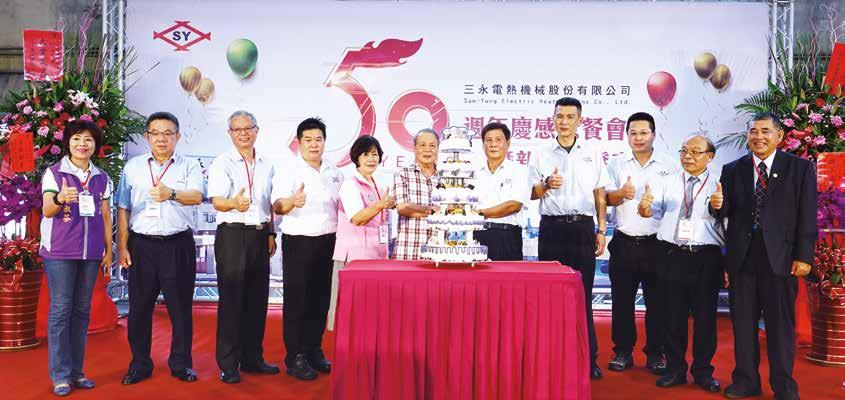
On August 7th, Taiwan’s largest professional heat treatment furnaces manufacturer, representing 90% of the market share in Taiwan and designated by several fasteners, hand tools, bicycle components, metal forging and heat treating industries, San Yung Electric Heat Machine (“the Company”), held its 50th anniversary celebration ceremony at its headquarters in Xizhou Township (Changhua), attracting hundreds of professionals, business partners and leading industries to witness its significant milestone. With powerful drumbeats in the opening performance, San Yung announced to the world that the Company has officially reached its 50th anniversary.
Founded in 1970 by the Yang’s three brothers, San Yung took a further step forward to set up Jiashan Sanyung Electric Furnace Industry Co., Ltd. in 1999 in China in order to serve more customers in the marketplace. For years it has been sticking to the mission statement of “Steady Growth,
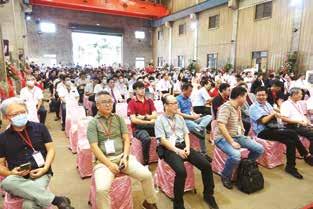
Customers First, and Professionalism.” With the effort of all divisions of the Company, San Yung continues to build up technical collaboration with partners in the U.S. and Japan and has successfully developed many feasible and durable machine models which most correspond to industrial demand, earning for itself a reputation for high quality and honesty. Some customers who used to use machines by other manufacturers even became the loyal customers of San Yung after deeply understanding and using San Yung’s products and technology. Some of the attendees of this event also told that “the brand of San Yung is a byword of high quality on customers’ minds and the brand can continuously help users create sustainable value.”
During the ceremony, San Yung Chairman Yung-Chi Yang also invited many high-ranking executives from the management and very important guests to be on the stage to divide the cake for the 50th anniversary together and share the happiness of San Yung with all guests at presence.
Manager Chien, on behalf of San Yung, also said, “Being originally a traditional machine manufacturer, San Yung has created its own legend on the world stage and its machines have been successfully sold to more than 30 countries. Over the past 5 decades, San Yung witnessed the surging economic growth of Taiwan and was also one of those contributors that helped Taiwan become a byword of pride and guaranteed quality. Without the support of every customer and good friend, San Yung couldn’t have made it this far. As a result, we absolutely won’t forget what we would like to achieve since the inception and will continue to stick to the principle of “keeping improvement on our furnaces and trying our best to satisfy customers,” which are also the core tenets the team of San Yung strictly abides by for achieving the goal of sustainable operation.”
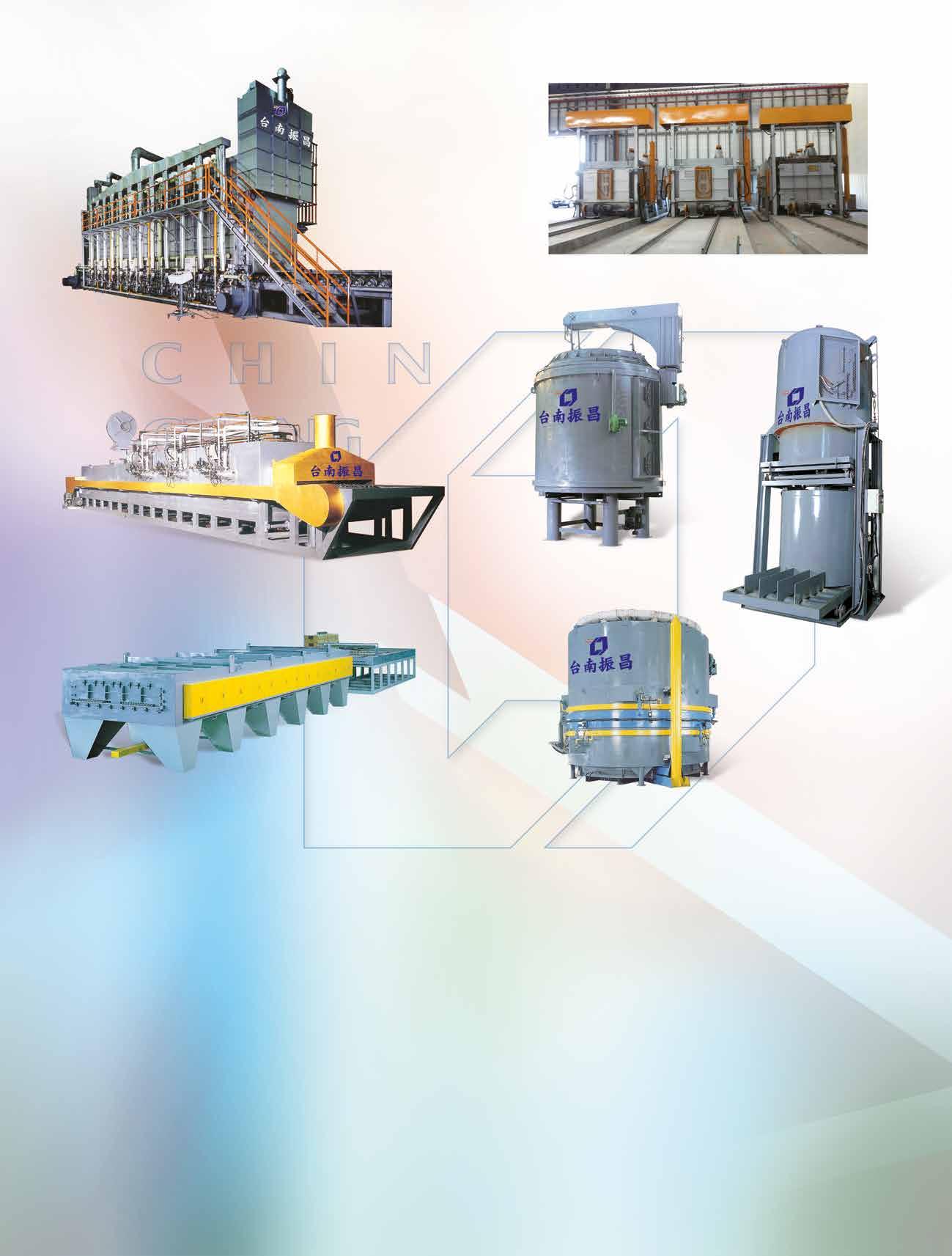
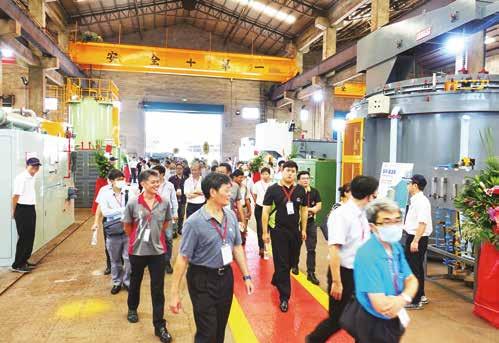
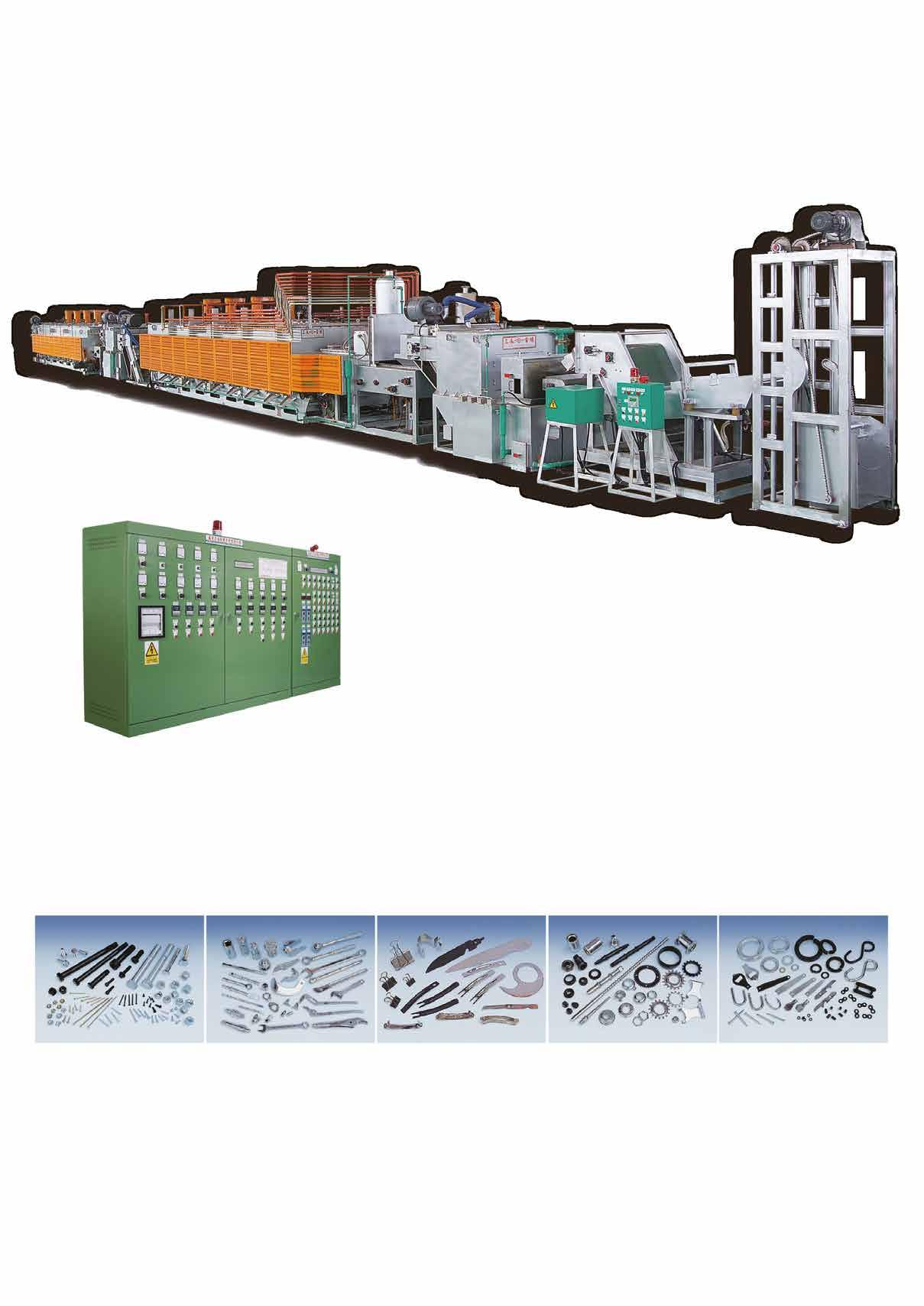
In addition to the 50th anniversary celebration, during the event, San Yung also rolled out many types of aluminum alloy treatment furnaces, such as: SY-508 batch type aluminum alloy T4 solid solution treatment furnace, SY-509 batch type aluminum alloy T6 aging treatment furnace, SY-511/SY-512 continuous aluminum preheating furnaces, SY-505 crucible aluminum alloy T4 solid solution treatment furnace, SY-506 crucible aluminum alloy T6 aging treatment furnace, and SY-501/SY-502/SY-503 continuous aluminum alloy T4/T6 solid solution & aging treatment furnaces. It also invited all attendees to visit its new furnace lines onsite and arranged technicians to introduce the more efficient and better features of each new type of furnace, hoping to create more added values for customers in the future with the use of these new furnaces. Manager Chien also noted, “We added many innovative ideas into the design of new furnaces released this time and we are confident that our customers will be fully satisfied with them. We sincerely hope that if any customer is interested in our new furnaces, please don’t hesitate to contact us to get more detailed product information.”

















































by Dean Tseng, Fastener World
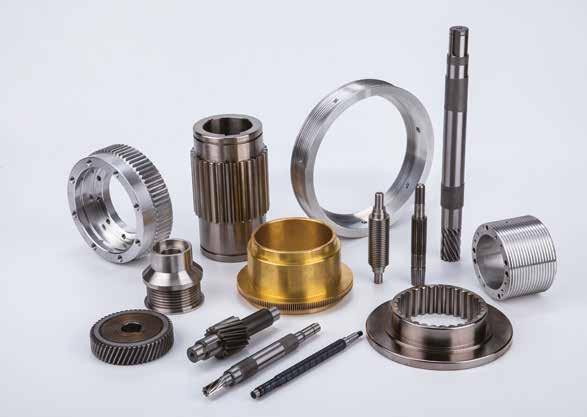
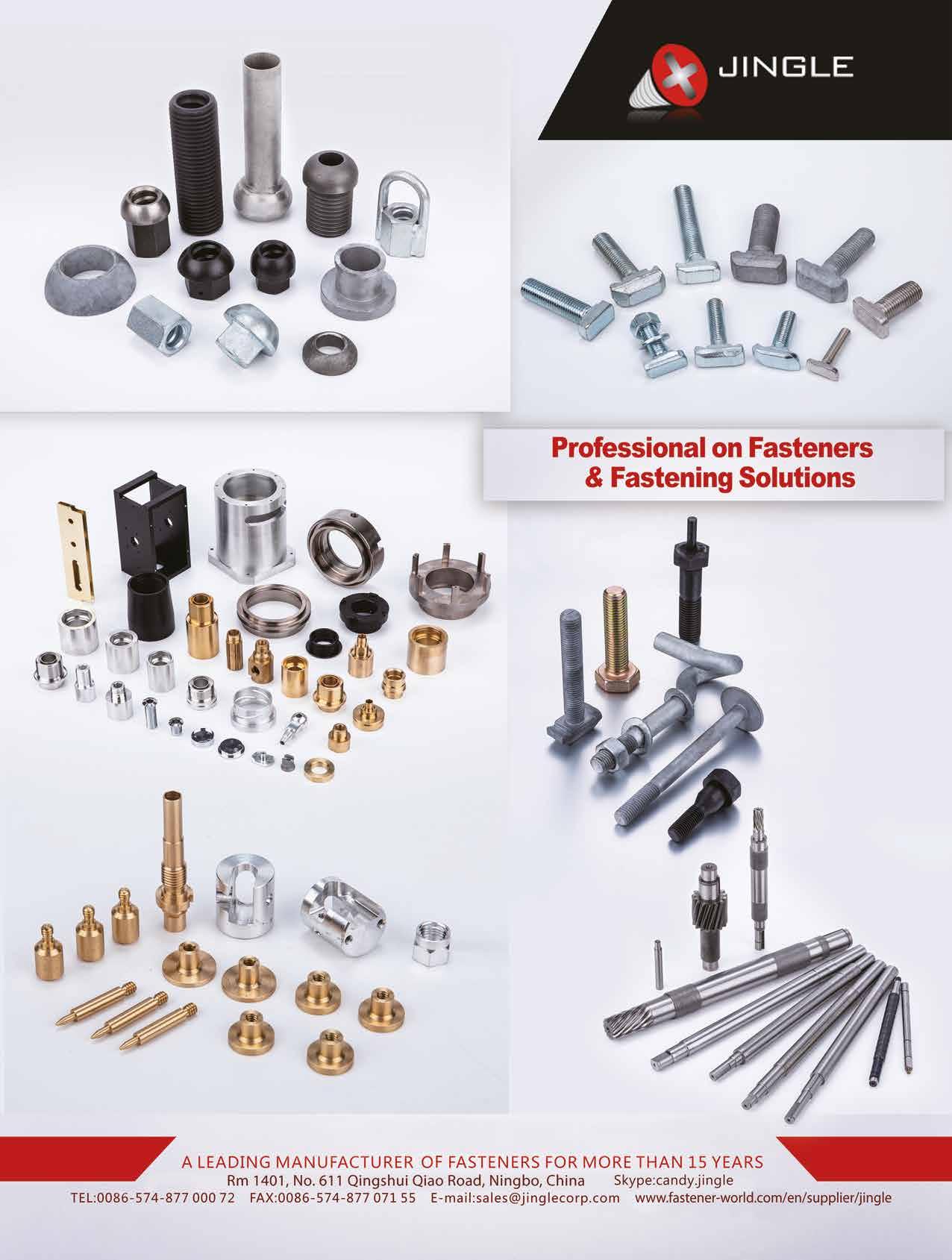
Jingle-Tech Fasteners in Ningbo City is a fastener trader plus manufacturer with a factory and export office, supplying to the industrial sector and construction industry. “Many overseas clients demand more and more complex types of fasteners. We hope to provide better one-stop service to help our customers quickly and conveniently purchase high quality products at lower prices, and that’s where we began to combine both our strengths in fastener manufacture and trading,” said General Manager Candy Wang in an interview with Fastener World. 20 years have past since the company was founded in 2007, now with footprints across northern and southern America as well as Europe. Besides having plenty of partners in its own supply chain, Jingle-Tech Fasteners provides various products including Fasteners, Stamping Parts and OEM CNC Machinery Special Parts and peripheral construction products in materials including carbon steel, stainless steel, alloy steel, brass and nylon to satisfy various customer demands.
Certified to ISO9001, Jingle-Tech Fasteners puts “6S” quality management methodology in force, namely Sort, Set in order, Shine (cleanup), Standardize, Sustain, and Safety for guaranteed quality. The company is stretching from standard fasteners to non-standard fasteners and peripheral products as detailed in the following categories:
Non-standard fasteners:
Production as per customers’ drawings. Available in all types of electroplating and materials on request.
Precision machinery components :
Also manufactured as per customers’ drawings. Compliant to higher requirements on tolerances and machine performance.
Precast construction accessories: With CE approved quality.
Fastener accessories for the mining industry: Offering quality-assured safety.
The manufacturing process complies with IFI, DIN, BS, ISO, JIS, and AS standards. The company also has a specialized technical division to provide customers with customized product drawings and 3D drawings for prior confirmation.
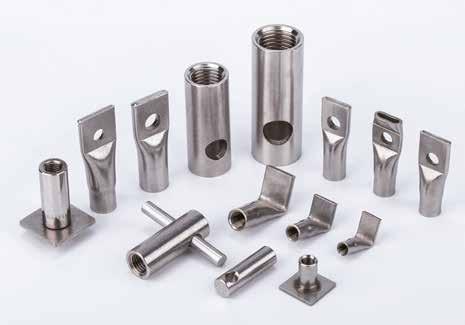
The City of Ningbo where Jingle-Tech Fasteners stands is the third largest port in terms of container transport volume, and has a competitive edge in export, efficient customs clearance and transportation cost. “I’m still looking forward to fastener market development during this autumn and winter.” Dubbed as the grain for industries, fasteners are indispensable for all walks of life. Fastener demand will not cease even if the whole world is confronting the same unprecedented challenge. Furthermore, Jingle-Tech Fasteners is expanding its plant to increase product items and opt for high end and non-standard products. With a monthly capacity of 2,000 tons and an annual revenue at USD 15 million, Jingle-Tech Fasteners hopes to do bigger business after the expansion!
Contact: General Manager, Candy Wang Email: sales@jinglecorp.com

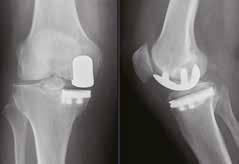
The Belebeyevsky plant "Avtonormal" (BelZAN) will start producing parts and components for endoprosthetics and traumatology. The implementation of the project will completely cover the needs of the national healthcare for such products within five years.
To implement it, it was necessary to sign an agreement with the “TREK-E Composite” company, as a result, BelZAN will implement a full cycle of production of components for endoprostheses, medical bolts and instruments.
“Today the enterprise is already 85% equipped with the necessary equipment. The production of components and fasteners in Russia will reduce the cost of prosthetics by 20%”, - said Oleg Yevtushenko, executive director of “Rostec”. Production of the first batch is scheduled for the end of this year.
In 2021-2022, the plant will begin the development of components for a knee prosthesis, launch the production of zirconium pins for dental prosthetics and expand the range of fasteners and instruments for operations from various types of metals. The volume of production will amount to 100 thousand blanks of ball-shaped heads for endoprostheses and 3 million rod products per year.
The general director of “RT-Capital”, Kirill Fedorov, believes that this market niche is extremely promising, since the share of the domestic producers, that apply for it, does not exceed 7 %. According to him, the capacity of the medical instrument market in Bashkiria itself exceeds 1 billion rubles.

Thanks to the investment program of 2017-2020, the newly installed equipment will expand the range of fasteners and increase production capacity for the popular types of products. For example, MMK-METIZ is currently working on the development of a screw for ventilated facades and already made a pilot batch of 7x105 mm screws. There are no Russian manufacturers producing this type of fasteners. Advanced technology and high-performance cold-heading, hot-heading, thermal, galvanizing equipment make it possible to obtain fasteners with a strength class from 3.6 to 10.9, coated and uncoated.
Also, the company started the production of high-strength bolt assemblies for the HR system according to EN 143991:2005 for pre-tensioning. The first batch of fasteners with a diameter of M20 and M24 with a bolt strength class of 10.9 were shipped to consumers. Currently, this high-strength fastener is in great demand in the assembly of metal structures and in bridge construction.
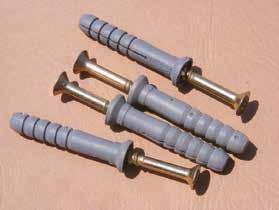
The most common fastener for installing windows is a frame anchor. Until now, this fastener has been imported to Russia from abroad. Currently, we can talk about the beginning of the process of import substitution in this segment of the fastening market. “VsV” company has mastered the production of a frame metal anchor for the installation of windows and doors.
According to the decision of the International Trade Council of Ukraine, the antidumping duty will protect PJSC "Druzhkovka Hardware Plant," which is a national producer with the total share of the steel fasteners production in Ukraine over 50%. Antidumping measures were applied for four months from the 28th of May by imposing an anti-dumping duty at a rate of 19.75 percent from customs value of the goods.

The specified decision of the Council affected threaded fasteners from ferrous metal: screws, bolts and nuts originating from the People's Republic of China. Mostly all of them were popular imported items like DIN 931, 933, 912 and others.

Yuri Medvedev, Director General of the BERVEL high-strength fasteners plant, gave an interview to Alexander Romanov, chief editor of “Metal Supply and Sales” magazine. Yuri Medvedev noted that the plant worked and is working continuously. Meanwhile, in April production indicators were slightly reduced due to the suspension of some large construction projects in Moscow and other regions. “Our industry does not belong to the victims,” said the general director of BERVEL. When he was asked about the implementation of the plans, Yuri Medvedev replied: “As for investment development plans, they are on pause. We are entrepreneurs and think by risks”. Speaking of tomorrow's situation, Yuri Medvedev emphasized: “Everything will depend on the state. Industry needs infrastructure projects to not stop”.

Magnitogorsk Hardware and Calibration Plant of MMKMETIZ is completing the implementation of a large-scale investment program, designed until 2020. Its funding amount is over 5 billion rubles.
Since 2017, more than 70 units of high-tech equipment for the production of fasteners, wire and ropes, calibrated steel were put into operation.
By 2019, as part of the import substitution program, the production of popular bolts and nuts according to DIN standards has been mastered, the production of self-tapping screws has been expanded. The purchase of a new quenching-tempering unit ensured high quality heat treatment of fasteners, including highstrength for bridge construction. The galvanizing line expanded the assortment due to the development of the production of largediameter galvanized fasteners, and the complex for the production of high-carbon wire and steel ropes - due to new types of ropes, including eight-strand, non-unwound, with plastic crimped strands.
This year a new line of continuous hot galvanizing for the production of galvanized wire with a diameter of 1 mm was launched. It is also planned to commission four production complexes more. A set of bell-type furnaces for spheroidizing annealing of calibrated rolled products will contribute to import substitution and an increase in the production of automotive components in the Russian Federation. Complexes of rewinding machines, as well as cold heading and thread rolling machines for the production of machine-building M16-M24 bolts will most fully meet the requirements of consumers.
The commissioning of a modern machine for the production of railway bolts and track screws will help to master new types of fasteners for high-speed highways.
Among the primary tasks of OJSC MMK-METIZ over the next five years is to increase investment attractiveness, strengthen and expand partnerships, increase industrial and environmental safety and develop the team. For their implementation, a program has been developed, in which the priority is given to the acquisition of high-tech equipment for the development of innovative types of products, including for the purpose of import substitution: fasteners, high-carbon wire and ropes, calibrated steel.
News provided by:

The Union of Manufacturers and Suppliers of Fixing Systems (Fixing Union) published on its website an open letter on the quality of the threaded rods offered on the Russian market. The letter is addressed to design, construction organizations and regulatory authorities. The letter says that currently on the Russian construction market there are a wide range of threaded rods, which also serve for use in conjunction with mechanical and chemical anchor systems.
Fixing Union draws attention to the quality of the proposed studs, since products with a reduced thread profile angle can be found on the construction market, which is visible to the naked eye when examining the product. Fixing Union strongly does not recommend the use of these defective products in construction because of the unpredictability of their technical and operational indicators, which extremely negatively affects the reliability and safety of the attachment points in which these products are used.

Sales of goods for home and repair are one of the few non-food industries that did not collapse during the period of self-isolation. Locked houses, the townspeople thought about improving housing and began to order goods for repair online. Those players who quickly increase their capacity for distance trading have won. The demand for home, garden and renovation products this year surpassed the traditional seasonal surge. After the suspension of offline stores, they were faced with unusually high demand.
“The assortment of DIY stores is one of the few categories that has received such a large increase that online platforms simply can’t cope with it - websites freeze, call centers have difficulties with processing orders”, says Ivan Fedyakov, general director of the agency INFOLine. Demand for goods for a summer residence has grown many times, including glue and fasteners among the highly demanded goods.
Alexander Ostashov, editor of “Fasteners, Adhesives, Tools and...” Magazine / Mariya Valiakhmetova, editor of “Metiz” Magazine
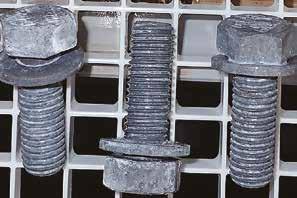
Japanese TONEJI CO., Ltd has announced a new innovative coating technology. The allnew Super Coat SST5000 applied on TONEJI's D-LOCK bolts on top of their hot-dip zinc-tin alloy plating is now available. SST5000 cleared a 5,000hour salt spray test and a combined cyclic test (150 cycles), with minimized white rust and no red rust. This new coating is ideal for rust prevention measures in salt-damaged areas.
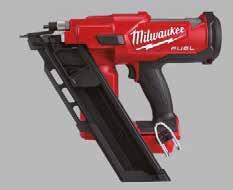
U.S. Milwaukee Tool continues to expand its line of cordless nailing solutions from frame to finish with the introduction of their very first cordless framing nailers, the M18 FUEL™ 21° Framing Nailer and M18 FUEL™ 30° Framing Nailer. Delivering the power to sink nails in engineered lumber, these framing nailers can also fire up to 3 nails per second with no gas cartridges required. Milwaukee is committed to improving productivity by providing performance-driven and tradefocused solutions so users can perform an entire day’s work on one battery system.
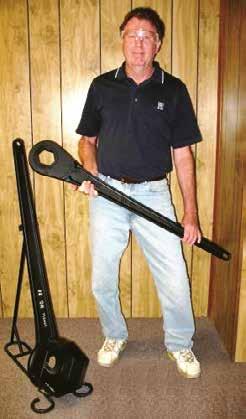
Companies in heavy machinery industries often face the dilemma: how do you increase productivity without sacrificing safety? U.S. Lowell’s extra-large wrenches can help. Too often, workers will use the wrong tool for the job, and as a result, they can risk damaged equipment or personal injury. Lowell Corporation’s 40 Series ratchet wrenches and 50 Series socket wrench sets provide workers the right tools for extremely demanding applications.
The cast malleable iron 40 Series wrenches are available up to 48" long with square, hex, or round/keyed openings up to 4-1/2". They include reversing controls in the head and enclosed replaceable gears. Additionally, the tools’ BoltThru design makes it easy to tighten nuts on any threaded length. Above all, Lowell designs its extra-large wrenches to be safe, accessible, and customizable to your needs.
compiled
by Fastener World

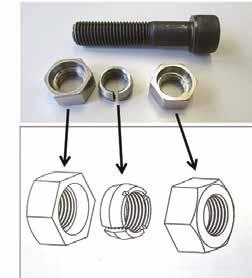
Japanese Takasho Gigen combines 3 nuts for a new 3-point anti-loosening bolt. The company puts a custom-shape nut between two nuts with their surface inclined inward to generate a strong fastening force. The new bolt can be used on steel towers and bridges and mass-produced at any time desired. The company is planning to provide manufacturing license.
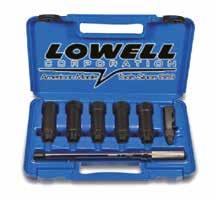
U.S. Lowell Corporation has introduced a new torque wrench kit that gives plumbers and utility workers greater flexibility in working with US-style No-HUB couplings. This compact kit gives plumbers and utility workers all the tools they need to properly tighten all standard fastening screws on No-HUB couplings to either 60 or 80 lb-in.
The key for generating a strong fastening force is the custom-shape nut which has an 11-degree inward declined circular surface containing notches. First, the stainless steel nuts and threads have different starting positions, which generates pressure to the side of the threads during the fastening process. Second, the notches on the iron nut will bend the circular inclined surface inward by 0.4 mm in diameter. The company makes use of these two phenomena to generate a fastening force. Lastly, the fastening force generated from the surface width of the two stainless steel nuts, together with the first two phenomena, form a 3-point vibration resistance feature.
Each kit comprises two Lowell T-Torker torque wrenches and three hex sockets (1/4", 5/16", and 3/8"). A durable carrying case is available. One of the wrenches in the torque wrench kit handles a max torque of 60 pounds while the other handles up to 80 pounds. When you reach maximum torque during the tightening process, each wrench will slip to prevent overrunning. The presets in this kit are static. Each wrench carries a label with its torque setting and a color-coded collar for easy identification, even in low-light conditions.
Based on Lowell’s ratchet technology, the torque wrenches offer fast, one-handed tightening in the right-hand direction to values that are accurate to ±10%. The spanners prioritize maximum efficiency, ease of use, compact size, and lightweight hand comfort. For example, the T-shaped handle gives users optimal leverage. Its flanged collar easily disengages the ratchet mechanism and locks the tool for effective reversing action without torque limitation. Furthermore, all devices come with a sealed die-cast handle and lubrication for increased longevity.
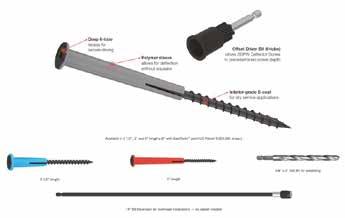
German Simpson Strong-Tie, the leader in engineered structural connectors and building solutions, has introduced the Strong-Drive® SDPW Deflector screw line of fasteners designed to connect nonload-bearing, full-height partition wall top plates to trusses or joists while allowing for vertical movement without associated connector squeaks.
Featuring an innovative polymer sleeve, the SDPW creates a strong connection that provides both lateral resistance and the ability for walls to deflect with the truss or joist. Atmospheric and loading conditions can put a variety of forces on a structure, and the SDPW permits vertical movement on the wall while preventing squeaks that are commonly associated with alternative hardware solutions.
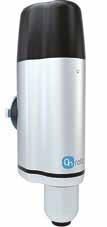
Denmark-based OnRobot introduced the OnRobot Screwdriver. Unlike conventional single-piece screwdriving systems, this all-new automated solution can work in various applications, and therefore, manufacturers can automate highly repetitive screwdriving process with speed, simplicity and flexibility, depending on actual needs.
To program the OnRobot Screwdriver, users only need to enter the screw length and torque value. It then automatically calculates the force and speed with which to drive in the screw. It detects screws for incorrect lengths to reduce waste and improve production quality. Its unique "z-axis" provides effective protection, and reduces parts collision during robotic arm movement. Screws up to 35mm long are retracted completely inside the screwdriver when moving, enhancing its collaborative capabilities.
The Screwdriver can handle a wide range of screw sizes and lengths, from M1.6 to M6, and up to 50mm long. The screwdriver can be quickly changed over to different screws in minutes, which reduces downtime and improves productivity.
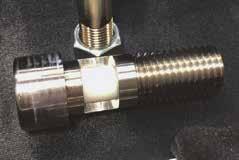
Japanese Design Part Corporation develops a bolt with resin embedded within to achieve antivibration and noise absorption. In a vibration test where a variable frequency of 90-350 Hz per minute is applied, the bolt is able to restrain vibration by 50% on average and 86% at most. The hollow hole diameter of the bolt and the fillers can be changed. A trial test is currently run at a ship-related company and a transportation vehicle component company. The bolt is expected to bring JPN 100 million in revenues in a year.
by Gang Hao Chang, Vice Editor-in-Chief of Fastener World
The Covid-19 pandemic burst out in the first half of 2020 continues to pose a huge challenge to almost every industry around the world. Except for certain industries benefiting from city lockdown orders and the increasing demands for medical PPE, almost every industry has been hard hit by the pandemic, especially air/sea transportation, automobile/motorbike, mechanical processing and basic components, which used to rely heavily upon the global supply chain. Taiwan fastener industry has been also influenced since Q1 2020. Sales of top 10 Taiwanese public listed fastener companies started to appear a sign of plunge, which even reached a drop of 15-30% in H1 2020 due to the serious outbreak in Europe and America. Lots of small-to-medium sized downstream factories mostly relying on orders released from big manufacturers have been also going into their “early cold winter” due to the chain effects. A similar result may be also observed in the latest financial report of Taiwan’s China Steel Corp., whose sales revenue in H1 2020 reached 15 billion NTD, a slump of at least 20%.
In the following paragraphs are the analysis of the sales revenue and earnings per share (EPS) of major Taiwanese public listed fastener companies in the first half of 2020.
According to the latest sales revenue reports in H1 2020, top Taiwanese public listed fastener companies are: Tycoons, Tong Ming, Chun Yu, QST, New Best Wire, San Shing, NAFCO, Rodex, Intai, Sheh Fung, Sumeeko, Chen Nan, Patta, Chun Zu, Sheh Kai, Ofco, and Ching Chan. The semiannual sales revenue of each of the first 8 largest companies
Source: mops.twse.com.tw
reached over 0.1 billion NTD. Except for New Best Wire and Chen Nan providing wire rod as well as Chun Zu and Ching Chan Optical supplying machines, all the other companies on the list are manufacturers of various standard and special fasteners or precision parts.
According to the fastener (HS code 7318) export data of Taiwan Customs, in the first 6 months of 2020 Taiwan exported around 57 billion NTD worth of fasteners to the global market and the aforementioned major Taiwanese fastener-related companies represented more than 50% of the total export (around 28.8 billion NTD). In the same corresponding period of 2019, Taiwan exported around 66.7 billion NTD worth of fasteners to the global market and the aforementioned major Taiwanese fastener companies represented more than 54% of the total export. This also means that Taiwan’s fastener export value in H1 2020 was down nearly 10 billion NTD if compared to the same corresponding period in 2019.
In H1 2020, almost all revenues of these Taiwanese leading fastener companies appeared a decline of over 15% (50% of them even appeared a decline of 20%). The company reporting the most significant decline was San Shing (-33.34%) and its EPS reduced by 0.53 NTD from 2019’s 1.45 NTD to 0.92 NTD. However, San Shing is still ranked the 6th largest Taiwanese fastener company in terms of revenue.
Among the list in which almost all companies reported negative growth, Sheh Fung was the only company in H1 2020 reporting a positive growth of 4.24% and the EPS of 1.68 NTD. However, although it reported an eye-catching revenue in the period, its EPS was still down 0.79 NTD from 2.47 NTD recorded in the same corresponding period of 2019.
In terms of the EPS of each company in H1 2020, almost all companies reported a positive and profiting value, though they did not perform well in revenue. Among these companies, only Tycoons, QST, Chen Nan and OFCO reported a negative value ranging from -0.24% to -1.48%. However, the EPS of each of these companies was lower than the record they achieved in the same corresponding period of 2019.
Source: mops.twse.com.tw
Now, let’s go back to Q1 2020 when the pandemic began to spread. In this period, many of these Taiwanese fastener companies reported a revenue drop of 10-30%. The company reporting the most significant drop was Tycoons (-33.33%), which also reported a revenue drop of 27.8% in H1 2020 and the loss of 0.2 NTD in Q1 2020 (Q1 2019: -0.01 NTD).
On the other hand, OFCO and QST were the companies respectively reporting the 2nd and 3rd most significant drop. The respective revenue of these two companies in Q1 2020, compared to Q1 2019, was down 27.84% and 21.48%. However, different from Tycoons and OFCO reporting a negative EPS, QST’s EPS remained the positive level at 0.01 NTD (lower than 0.73 NTD recorded in the same corresponding period of 2019).
NAFCO, Intai, Sheh Fung and Sheh Kai were the only four companies in Q1 2020 reporting positive growth. In addition to NAFCO, Intai and Sheh Kai reporting a revenue growth of around 3-5%, Sheh Fung even reached an incredible revenue growth of 25.02% and the EPS of 0.91 NTD, which is also higher than its EPS recorded in the same corresponding period of 2019.
In terms of the EPS in Q1 2020, only a few companies reported negative values, while the rest of companies remained the positive level.
Concluding the performance of these companies in Q1 2020 and H1 2020, we noticed that as these companies are export-oriented, and they are very susceptible to the global market fluctuations. On the other hand, the pandemic in certain markets around the world (e.g., USA, Brazil, India, etc.) is still not well under control, so whether the global industrial activities can be soon resumed to the previous normal condition remains unforeseeable. However, maybe companies can make the most of time to renovate and upgrade their in-plant facilities, improve manufacturing procedures and strengthen staff training in order to get fully prepared and quickly respond to the possible outburst of big and urgent orders in the post-pandemic period.
by Sharareh Shahidi Hamedani
• Enhanced productivity: Smart and connected systems help fastener factories improve throughput. In a connected enterprise, manufacturers have seamless visibility into bottlenecks, machine performance, and other operational inefficiencies. With this data, manufacturers can make adjustments to increase yields, improve quality, and reduce waste.



Another type of intelligent manufacturing in the fastener industry is “Additive Manufacturing”:






Additive manufacturing allows production costs to stay the same rather there are one or a thousand units. This has several implications: 2



Many experts have been recently encouraging industrial professionals to introduce smart manufacturing into their factories, which have been proved to be very feasible in some high-tech industries. However, the fastener industry is basically a very traditional industry and is not that high-tech as the IT industry, in this article I will explain whether smart manufacturing is suitable for the fastener industry or not and how it can be applied to the current fastener manufacturing procedures and supply chain integration?
Automation has always been a part of the factory to some degree, and even high levels of automation are nothing new. Historically, situations in which machines have made “decisions” have been automation based and linear, such as opening a valve or turning a pump on and off based on a defined set of rules. Automation increases output, quality, and consistency. Additional benefits include:1
• Streamlined and automated data: Intelligent technologies automate data collection for actors in the fastener industry and provide them with advanced production analysis, so the managers of fastener industry can make less defect decisions.
• Predictive maintenance: With a better view, fastener manufacturers can anticipate and resolve maintenance issues of their machines before they lead to breakdowns or product quality problems. For example, sensors on machines or devices can transmit status monitoring or repair data in real time, so screw manufacturers can identify problems more efficiently.
• Significant cost reduction: Fastener manufacturers can identify waste and have a better insight into supply chain issues such as inventory level and delivery status as well as the demand cycle. Using this information, they can reduce costs associated with excess inventory or unexpected production volumes.
• Reduce workforce challenges: Automation helps fastener manufacturers start and complete projects with fewer workers. Real-time access to data across multiple operating systems frees workers to focus on their core responsibilities. This allows manufacturers to innovate faster without investing in additional resources.
1. https://blogs.oracle.com/5-benefits-of-shifting-to-smart-manufacturing
• It makes production available to small businesses that don’t have access to expansive funding and don’t know in advance whether they will have many buyers;
• It reduces the time between conception and sale; it allows each piece to be customized and unique; it allows greater risk-taking by reducing the cost of failure.
• It reduces lead time for short production runs and permits the creation of very complex shapes without added costs.
The main point of Additive Manufacturing is still less competitive than traditional manufacturing when it comes to mass production, perfectly smooth finish, production of very large objects and the use of certain materials. Additive Manufacturing is more customizable, and more adaptable.
The above definition of technology era has a very clear message, all fastener factories’ production will have close quality with super competitive prices; and therefore how factories should sell their production in a super competitive market is their biggest challenge.
As high-tech fastener producers, buyers’ expectation would be increased. In this market-driven kind of situation, when the buyers bargaining ability has expanded, R&D, top managers and marketing department should be able to find a new category for winning the competition. Here, marketing’s role is more traditional. Advertisement, pricing and distribution are all important for a smart fastener producer; however, they are not considered as essential elements in order to be the winner in the competitive market. Moreover, all the other contestants act the same; therefore, this kind of traditional thinking does not really work, in other words, marketing should be more creative, and they should think like the entrepreneurs. In brief, niche marketing can be a pattern for the smart fastener marketing department.
If a Chinese company, which is active in the fastener industry, wants to be successful in the super competitive market, it must introduce itself as a leader in a specific category. The era of producing everything and selling everything has been finished. It is the professionalism era. In the professionalism era, every fastener producer needs a “rock” in order to leave a lasting impression in prospects’ minds of its consumers.
So, the question is how a Chinese company competing with other fastener companies in the countries better known for technology like Germany and Japan can introduce itself as a professional fastener producer?
There is a strongly-held perception in the minds of most consumers. The better brand wins in the marketplace. Being first makes this company the leading company, at least in the short term. When competitive companies are introduced, consumers think, they can’t be any better
2. https://www.sculpteo.com/blog/2016/05/25/when-is-3d-printing-the-best-solution-for-production/
because they’re not the leader. That’s why leadership is the most powerful position it can own.
“Fastener” is a business to business production, in this type of companies, it is better that they make their own categories and become a leader on information efficiency or risk reduction. The right image shows where you can make the category and depicts that how consumers opt to buy from different companies in the B2B sector including the fastener industry.
It is apparent from the information that 45% of fastener consumers prefer to purchase from a fastener producer which can decline their “usage risk.” In other words, if a fastener company aims to be fruitful in a competitive market, they can make a new category as a “guaranteed fasteners”.
Furthermore, 41% of fastener consumers tend to buy from a fastener producer which gives them “information efficiency”; hence, another fastener producer may create the category of “being 24/7 responsible for their fasteners.”
The last one is the “image benefit” on which 14% of fastener consumers tend to focus; therefore, the fastener producer may talk about “the biggest exporter to Germany,” which implies that it has a good quality; and therefore, German fastener users (Germany is the industry leader) purchase their products.
Many companies’ managers will see failure in the future, because they don’t take advantage of this basic positioning strategy. Why? Because many managers disagree with the concept. Being the first in the market is what many managers call “The first mover advantage.” And, there is almost universal agreement that “the first-mover advantage” is not an advantage at all. Rather, it’s a disadvantage because it gives potential competitors a target they can shoot at. What they confuse, however, is being “first in the market” as opposed to being “first in the mind.”
Being first in the market, “the first mover advantage,” is not necessarily an advantage if you don’t also get your brand into prospects’ minds.






compiled by Fastener World
The Canadian International Trade Tribunal, pursuant to subsection 76.03(3) of the Special Import Measures Act, has conducted an expiry review of its order made on January 5, 2015, in Expiry Review No. RR-2014-001, continuing, with amendment, its order made on January 6, 2010, in Expiry Review No. RR-2009-001, continuing, with amendment, its finding made on January 7, 2005, in Inquiry No. NQ-2004005, concerning the dumping of carbon steel screws that are used to mechanically join two or more elements, originating in or exported from the People’s Republic of China and Taiwan, and the subsidizing of such products originating in or exported from the People’s Republic of China, excluding carbon steel screws specifically designed for application in the automotive or aerospace industry and the products described in Appendix 1 to this order.
Pursuant to paragraph 76.03(12)(b) of the Special Import Measures Act, the Canadian International Trade Tribunal hereby continues its order in respect of the aforementioned goods, excluding the products described in Appendix 2 to this order.

Ukraine announced on September 26 a definitive affirmative determination to impose anti-dumping duties on certain steel fasteners originating in China starting September 29, based on the final decision stated in document AD-465/2020/4411-03.
The duty rate will be 32.47% for Haining Hisener Trade Co., Ltd. (Hisener Industrial Co., Ltd.), 38.37% for Ningbo Jinding Fastening Piece Co., Ltd., and 67.40% for other Chinese suppliers, effective for a period of 5 years, involving product codes falling within 7318156890, 7318158290, 7318158890, 7318159590, 7318169290, and 7318169990.
Ukraine initiated an anti-dumping investigation on certain Chinese steel fasteners on December 7, 2019. May 28, 2020, Ukraine announced a preliminary affirmative determination on involved Chinese products, according to the decision stated in document AD-447/2020/4411-03 that products involved would be subject to a temporary a 19.75% anti-dumping rate effective for 4 months.

Link to Appendix 1 and Appendix 2.
https://decisions.citt-tcce.gc.ca/citt-tcce/a/en/ item/484648/index.do
The British Government has announced its new tariff measures on May 19, 2020 after it officially broke up with the EU earlier this year. The new measures will come into effect since Jan/01/2021 and will make the calculation of import tariffs become more streamlined. New measures will be calculated in GBP.
Fasteners falling within the 7318 category were originally subject to the import tariff of 3.7%. With the new measures, the tariff for fasteners will be reduced to zero percent.

The British Government hopes importing merchandise will become easier through the adoption of these measures and local enterprises can also import merchandise at more favorable prices to support the British economy. British International Secretary of State Liz Truss said that this is the first time since 1970 that the UK could build an economic and tariff system that is suitable to the UK and the new tariff measures will help cut red tape and reduce the costs of tens of thousands of commodities, making consumers and families in the UK well benefited.

The 24.0% AD duty the EU imposed against wire rod originating in People’s Republic of China has expired on 16 October, 2020. As there is no written request for a review being submitted to reach the European Commission, Directorate-General for Trade, at any time from the date of the publication of the present notice the measure has been terminated.

On May 15 the South African International Trade Administration Commission announced to initiate a safeguard measure investigation against imported steel and iron hexagonal bolts. The application was lodged by South African Iron and Steel Institute. The HS code involved within the investigation is 73181543.
This is the third safeguard measure investigation launched by South Africa on certain steel and iron fasteners. The previous two investigations were:
(1) Investigation on hexagonal steel screws initiated on April 20, 2018. The HS code involved was 73181539. The products involved were charged an ad valorem tax for a period of 3 years as a safeguard measure. The tax rate was 50.54% for the first year, 48.01% for the second year, and 45.61% for the third year.
(2) Investigation on steel threaded fasteners initiated on March 1, 2019. The HS codes involved were 73181541, 73181542, and 73181630. The products involved were charged an ad valorem tax for a period of 3 years as a safeguard measure. The tax rate was 54.04% for the first year, 52.04% for the second year, and 50.04% for the third year.
Gem-Year Industrial's revenue in the first half of 2020 landed at RMB 1,011,185,581, down 38.55% over the last same period. Net profit at RMB 54,198,829, down 33.64%. Net assets at RMB 3,471,963,337, up 27.84%.
The downward revenues were mainly due to declined sales of railway fasteners. Additionally, Q1 revenue plummeted 71.59% as a result of the pandemic impact, but the revenue in Q2 grew 19.64% from resumed production. Railway fastener shipment in Q1 was subject to the pandemic but came back to normal in Q2.

Chun Yu's revenue in June was NTD 660 million, up 23.16% over May and down 13.3% over the same month last year. The consolidated revenue for the first half of 2020 was NTD 3.775 billion, down 18.35% over the last same period. Chun Yu says it took the brunt of the coronavirus impact in Q2. As the demand in Taiwan turns stable and overseas monthly sales pick up, the third quarter sales gradually turn upwards.
President Huei-Jeng Lin says domestic shipment of construction fasteners remains steady and robust while overseas demand is yet to be vitalized as a result of the pandemic. However, the company sees an uptick in overseas sales which pushes revenue in June up more than 20% over that in May. Lin says the revenue of his subsidiary in China bottomed up in May and went back on a growth track in June, gaining 7.1% over the last same month. Furthermore, work resumption after the reopening of economies in the U.S. and Indonesia brought the company's local revenues to increase over the ones in April and May.
Lin has turned optimistic about the business in the third quarter. He says Taiwan's China Steel Corp. lowered the third quarter steel prices at the end of May which should improve order intake. The pandemic mainly impacts the company's business in Q2, but there is hope for a gradual upturn in Q3.
Shanghai Prime Machinery (SPM) foresees a consolidated net loss of RMB 30 to 40 million for the first six months of 2020. The company says that COVID-19 escalating into a global pandemic has urged governments from around the world to enforce various measures which put a temporary stop to the manufacturing facilities of most SPM's automotive clients, especially those in China and Europe. SPM foresees a substantial loss in fastener business in the first half of 2020 due to the resulting slump of fastener production and sales. Furthermore, an additional non-recurring restructuring cost of around RMB11 million was generated from SPM for shutting down a factory in Berlin. SPM announced in November 2019 to close the factory, and shut it down completely in the 3rd quarter of 2020.
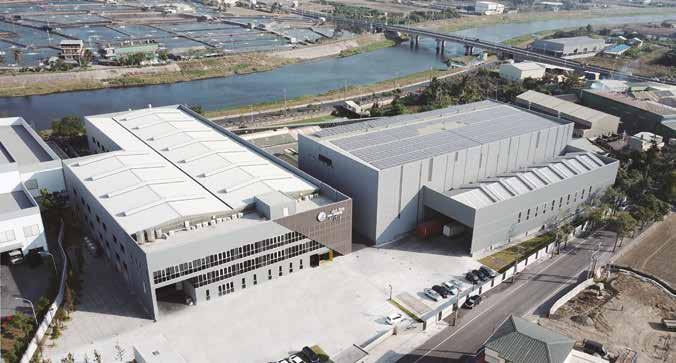
Sheh Fung General Manager, Kent Chen, says the pandemic keeps U.S. residents indoors and makes them unable to find anyone for doing home improvement works. They have to do by themselves and that in turn bumps up Sheh Fung's fastener shipment. Pressure from clients' incoming orders has been high lately and Sheh Fung already sees 3 months of pending orders ahead. The third-quarter revenue is expected to be a double-digit growth and the full-year revenue is very likely to land on the NTD 2 billion mark.
Sheh Fung's fasteners are mostly used on wooden houses, iron roofs, wooden footway, and indoor renovation. The U.S. tops the sales of Sheh Fung by 64%, followed by Australia (12%), Asia (12%), and Europe (7%). The company is not much subjected to the pandemic this year because of the sales growth of highly profitable long screws.
According to Sheh Fung, short screws share around 12%-17% profit, and long screws share 22%-27% profit. Long screws have just become the main requested category of customers recently. They are used to enhance wooden house structures and are time-saving with a great growth potential. They have become an important profit driver for Sheh Fung by an increased sales proportion from 10% to 30%.
Additionally, last year Sheh Fung decided to set up a base in Vietnam which will be launched in the first quarter of 2022 and focus on low-to-medium-profit screw manufacture.

World-leading specialist manufacturer of premium stainless steel fasteners BUMAX has been chosen to supply thousands of highstrength and corrosion resistant fasteners for the ELT, the Extremely Large Telescope, presently under construction.
BUMAX of Sweden has received an order for 11,000+ fasteners model BUMAX 109 for the construction of the European Southern Observatory Extremely Large Telescope (ESO ELT). The EUR 1bn ELT will be the world’s largest telescope by far when it goes operational in the dry Atacama desert in northern Chile in 2024.
The ELT is a reflector telescope, collecting universal light using a massive curved mirror that is 39 meters across, three times the area as the world’s second largest telescope. Such a giant mirror is much too large to be made from a single piece of glass, so it will consist of 798 individual hexagonal segments, each measuring 1.4 meters across and driven by electrical motors for fine tuning. The segments will work together as a single huge mirror to collect 100 million times more light than the human eye.
BUMAX fasteners are used to fix the nearly 800 telescope mirrors to all the segment supports. 12 pieces of 10mm long BUMAX 109 M6 bolts per segment are used for more than 900 segments in total (the 798 support segments plus an additional 133 segments for a continuous swapping process to allow the mirrors to be cleaned and coated while the ELT stays operational).
The ELT is presently under construction by the Dutch company VDL ETG Projects in the Netherlands:
“Standard stainless steel bolts lack the strength required for the ELT,” said Michael Evers, Project Manager at VDL ETG. “We required a 10.9 strength bolt, and with the corrosion resistance of stainless steel. BUMAX offered us the perfect solution.”

In the invitation to tender for Packages 2B and C as part of Stage 2 of the new railway construction project, Vossloh was again awarded the contract for the supply of rail fasteners. The customers are China Railway Construction Corporation Ltd. and Ghantoot Transport & General Contracting Company.
As already for Stage 1 and Package 2A of the project, Vossloh will deliver its heavy haul fastening system W 30 HH also for the 310 km long line between Tarif and Sharjah, which will connect the ports of Khalifa and Jebel Ali with Khalifa Industrial City (KIZAD). For the local requirements of the railway network, which will be operated by Etihad Rail after its completion, this reliable concrete sleeper solution for ballasted track ensures optimum load distribution. Thanks to the incorporation of an elastic rail pad (160 kN/mm), the W 30 HH is ideal for tracks for mixed traffic. In future, the line will be used for freight traffic with axle loads of up to 32.5 tonnes and speeds of up to 160 km/h as well as for passenger trains, which will travel at speeds up to 200 km/h. The maintenance-free rail fastening system permits safe travelling also under extreme conditions at temperatures ranging from -60 to +50 degrees Celsius.
The first lot of the rail fasteners was delivered in July, further deliveries to the United Arab Emirates will follow until the end of 2021.

Midland Industries, headquartered in Kansas City, Missouri, is excited to announce the opening of its newest distribution center, located at 5544 Armour Dr. Houston, TX 77020. This facility will stock a complete line of industrial, plumbing, waterworks, and irrigation products including, brass fittings, valves, malleable fittings, steel nipples, ductile iron gate and check valves, lead-free brass fittings, bronze fittings, brass nipples, stainless steel fittings and nipples, and much more. In addition to providing faster deliveries to its customers in the South, this facility features a will-call area supporting customers in the Houston area that wish to pick up.

TriMas announced that TriMas Aerospace has formed a strategic partnership with Kuehne+Nagel to establish a European logistics hub in Contern, Luxembourg. This expansion was driven by TriMas Aerospace’s new business growth in the region with customers like Airbus, Safran and Sonaca and the strategic positioning of parts to service its customer base.
Kuehne+Nagel was selected as a well-respected global third party logistics provider with a significant presence in Europe that provides the expertise to support strategic warehousing and logistics requirements. The European logistics hub provides TriMas Aerospace with the ability to pre-position product to support the region. This extends to recently secured long-term original equipment manufacturer (OEM) agreements, as well as urgent aftermarket requirements.
TriMas Aerospace designs, engineers and manufactures engineered fasteners, solid rivets, temporary fasteners and standard fasteners, and complex engineered components and subassemblies, for the global commercial and military aerospace industry under the Monogram Aerospace Fasteners, Allfast Fastening Systems, Mac Fasteners, RSA Engineered Products and Martinic Engineering brands.
TriMas anticipates supporting its European customers with product availability out of its Kuehne+Nagel partner location by the third quarter of 2020.
Maryland Precision Spring is pleased to announce its achievement of AS9100D and ISO 9100:2015 certification. AS9100 registration is an aviation, space, and defense quality standard, based on the ISO9001 quality management system and supported by the International Aerospace Quality Group (IAQG).
Maryland Precision Spring has been manufacturing custom components to the aerospace and general industrial markets for over 40 years. The company excels at application engineering support, consignment and KanBan inventory, EDM prototyping production, in-house heat treating/ tool shop and special packaging. This rapid response, combined with the quality assurance of the AS9100 certification, ensures the company’s continued position as a trusted supplier within the aerospace and defense industries.

TR Formac, part of Trifast plc with corporate world headquarters in East Sussex, U.K. has expanded its global presence by moving into larger premises in Prawet, Bangkok, in response to strong growth across Asia and winning new business from global OEMs. The new facility provides around 3000 sq. ft. of space enabling the company to trade more efficiently and to help further strengthen its position in the growing EV market.
Operations in Thailand are headed up by Country Manager David Ng, a knowledgeable and well connected individual who has witnessed the fast development of the automotive sector across the country. Chris Black, Global Director of Automotive Business Development, will be supporting David and the TR Formac team to increase their market share of the Automotive EV sector, sharing his experience and knowledge with the Thailand team.
David Ng David commented; “There are huge growth opportunities in Thailand with key focuses on technology and innovation of electric vehicles. With this in mind, and to collaborate with other companies, we decided to join the Electric Vehicle Association of Thailand (EVAT) which the Thai government was instrumental in launching.

Jergens’ state-of-the-art manufacturing facility in the U.S. has gained the approval of AS9100:2016 certification on July 2nd, 2020. Since its establishment, the Company continues to maintain the strict quality control of its processes from start to finish, making it possible to meet tight deadlines, control costs and guarantee the quality customers can depend upon.
Jergens, Inc. is a U.S. Government-approved manufacturer, providing MS, NAS, DFARS, QLSM and RoHS compliant parts. Its current specialty fastener series include Kwik-Lok® pins, threaded inserts, fastener hardware, spring plungers, handwheels, adjustable handles & knobs, etc.

In an effort to further enhance the efficiency of its operations, ARaymond is in the process of optimizing its North American metal footprint and streamlining its available manufacturing capacity. As part of this strategy, it made the difficult decision to close its Brunswick, OH plant and transfer the work to its other North American facilities.
According to ARaymond, “We deeply regret having to make this decision, because of the long-standing and excellent relationship we have had with our employees and the Brunswick community. While we have continued to persevere throughout a challenging economic climate, the time has come for us to take additional measures in order to advance the future sustainability of the company. This realignment is aimed at accelerating our cost competitiveness and better serving the needs of our customers . We remain a committed strategic partner to our customers, vendors and suppliers, with a focus on collaborative long-term success, just as we have for the past 155 years.”
AIS-All Integrated Solutions, an MSC Company, proudly announces its recent award for Outstanding Quality. It was awarded at the Motus Annual 2020 Suppliers Conference.
The award recognizes AIS for shipping over 10,000,000 pieces with zero defects. AIS was the only supplier to receive this award in 2020. Everyone from AIS’ quality, warehouse, sales, and account executive teams worked together to provide exceptional service to Motus---they deserve all the credit for the award.
“We are extremely proud of our entire team this year. They have truly come together to make sure our customers receive the highest quality services and products. Earning this award is confirmation that AIS’ focus on quality, company culture, and employee training is paying off for our customers,” stated Nick Ruetz, president of AIS-All Integrated Solutions.


Grainger, the leading broad line supplier of maintenance, repair and operating (MRO) products serving businesses and institutions, announced it has entered into a definitive agreement to sell its distribution business in China, Grainger China LLC (Grainger China), to a purchaser owned by the Grainger China management team and Sinovation Ventures, a China-based venture capital firm.
This divestiture will better enable Grainger to focus on its key businesses and geographies. To support this portfolio, the company will maintain its Global Sourcing operations based in China. Grainger's Global Sourcing provides the company with private label products in categories that include safety, cleaning, electrical, motors and tools.
This transaction is not subject to any financing condition but is subject to the standard regulatory approvals. The deal is expected to close later this year.


Midwest Fastener has acquired Hy-Ko Products. The combined companies will be led by the DeVries family (Midwest Fastener) and Bass/Kaufman (Hy-Ko) with the goal of superior customer care, long-term growth, and operational efficiencies. The cultural and business combination makes sense for both companies moving forward.
All employees will remain in place and the expertise of each enterprise will be retained and expanded to help serve the marketplace. The ongoing mission of providing quality products and service to their retail and distribution partners is first and foremost. Their global companies will focus on new products, R&D, innovation, supply chain optimization, sales support, and leadership.

L&W Supply Corporation, a leading distributor of top-quality building materials and specialty products in the United States, announced that it acquired the assets of Drywall Supply Inc. (“DSI”), a building materials distributor with locations in the north and western suburbs of Denver, Colorado.
Founded in 1996, DSI focused on residential and commercial markets, providing drywall, acoustical ceilings, insulation, steel stud and related products. The acquisition includes three DSI branches in Loveland, Lafayette and Golden, Colorado, that will remain open.
“We are excited to welcome the DSI associates to the L&W Supply family. With this acquisition, we can grow our footprint in Colorado and further expand our services to contractors in the greater Denver area,” said Charles Collins, Central Region Vice President of L&W Supply.
The Drywall Supply team has a long history of providing contractor customers with the support and expertise they need. As part of L&W Supply, they will join a company committed to being the go-to partner for contractors nationwide, recognized for an unparalleled level of service and top-quality products.

Adam Derry of Field (Machesney Park, Illinois) has been elected as the 2020-2021 president of the National Fastener Distributors Association. Keven Simmer of Wurth Des Moines Bolt Supply (Des Moines, Iowa) will serve as vice president, Kelly Charles of Sems & Specials (Rockford, Illinois) as associate chair, and Doug Ruggles of Martin Fastening Solutions (Florence, Alabama) will remain on the Board as immediate past president.
Jon Queenin of Specialty Bolt & Screw (Agawam, Massachusetts) has been elected to serve on the Board of Directors effective July 13, 2020.
Continuing on the NFDA Board are Don Haggerty, Craig Penland of Eurolink FFS (Greer, South Carolina), Scott Somers of Mid-States Bolt & Screw (Flint, Michigan), Jodie Thinnes of Copper State Bolt & Nut (Phoenix, Arizona), and Bryan Wheeler of Star Stainless Screw (Wood Dale, Illinois).
Kelly Cole (Hayes Bolt & Supply, San Diego, California) completed
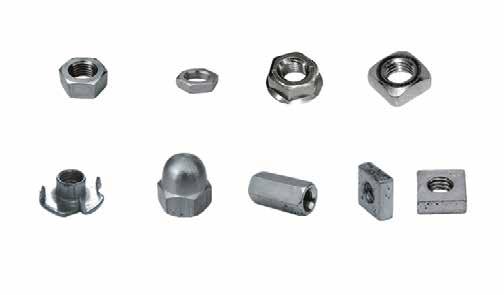



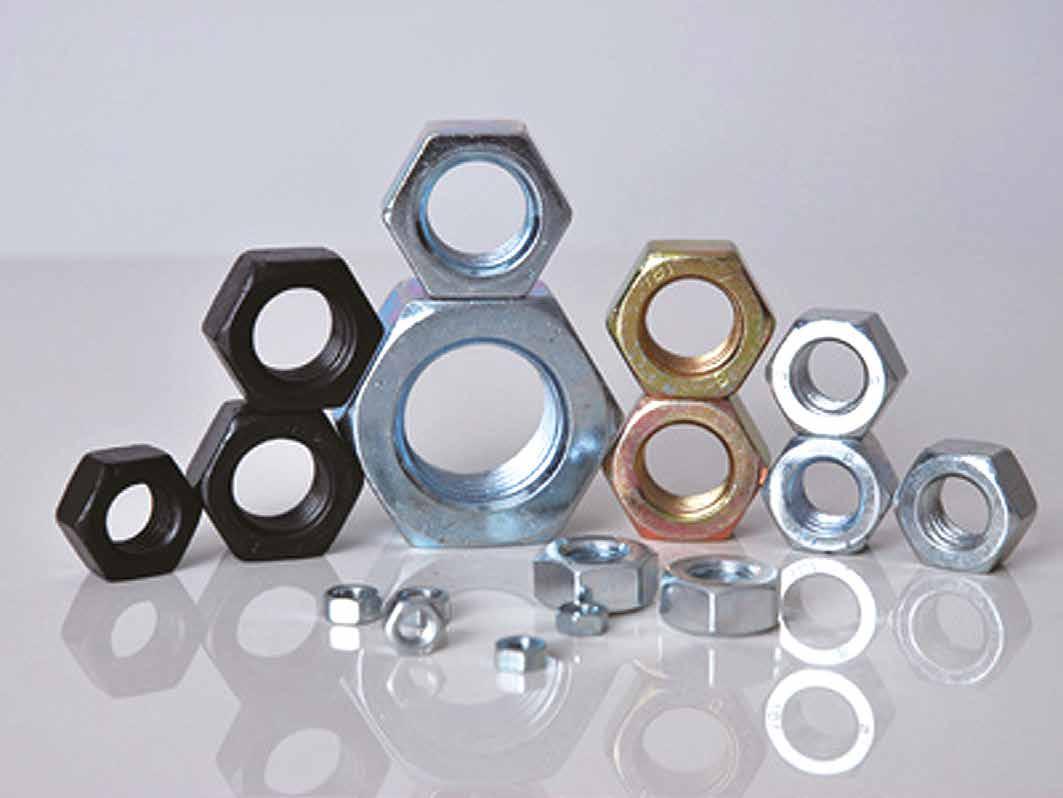
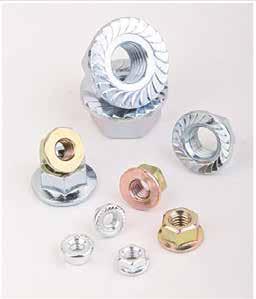
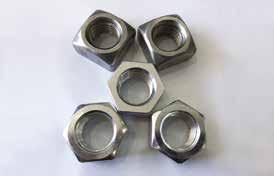

by Dean Tseng, Fastener World
Over the decade, Taiwanese fastener business successors (also known as the next fastener generation, hereinafter referred to as “the successors”) have expressed themselves at the forefront of business grounds. Some of them have taken the family's helm, while some are still new to steering the family business. We have interviewed fastener business owners for long, and noticed some of them are visionary and adventurous young-to-middle-aged successors who are gradually shaping up the characteristics and creativity of their generation. What interests us is an issue that calls for the attention of fastener forerunners and successors in Taiwan— “Will the successors set off a new trend in the Taiwanese fastener industry?”, which then raises your question— “What characteristics have we observed from these successors?”
There were already signs of fading boundaries of fastener business types in as early as the generation of forerunners. The global market competition propelled them to deploy in Southeast Asia, China and then the U.S. in early days. These highly admired forerunners have long notice what they call a trend of business shift to extend from manufacture to trade or vice versa, or to extend to managing of sales routes. Our finding indicates the business concept of “extension to other realms” has rooted ever more strongly on the minds of the successors. Through digital technology and global network, the successors have a keen perception of international affairs and global market trends, as well as strong awareness to the fact that “expertise in a singular business type” is no longer in sync with the world trend. By just owning production capabilities with no access to sales routes, or only having trading capabilities without a factory or inventory, it will be difficult to meet the ever-changing and ever-growing clients’ demand from around the world. Their new knowledge of the status quo is to break the boundaries set for themselves, and deploy in advance by “diversified business extension”, which in turn accelerates the fading of boundaries and brings the advent of a new type of fastener companies as stated below.
These are not some terms we just randomly made up, but a new concept that the successors came up with and told us. It is the fading of boundaries that opens up the possibility of providing integrated service. How so? Now think about this question— If a fastener forming machine specialist doesn't just sell forming machines, but also peripheral machines, tools and dies from his counterparts, and takes one step further to set up global sales bases to globally distribute products via logistics, what do you call this concept? Further, if a metal hardware OEM takes a leap of faith to include fastener manufacture and work as a middleman for purchase of hand tools and tooling, even to the extent of one-stop service that handles sales routes for clients, what do you call this concept? To satisfy direct fastener users and buyers from various industries as well as hardware and tools importers, currently a few Taiwanese fastener companies have succeeded in what they call “integrated service” through which they aim to become “comprehensive service consultants for fasteners and peripheral products”. You might be baffled to ask what these consultants are like. Simply put, any products and service you can think of that relate to fasteners, the consultants will do the best to bring to you whether by introducing or matching you to acquainted suppliers. And the purpose behind all this? Obviously, the consultants don’t expect you to reach out to other companies, but only expect you to purchase your whole desired production line in one go through one-stop service. They even hope to lead this trend and make it work in the macro-industry.
To become an integrated consultant will require laying the ground work on hardware. Think about the dozen processes in the production chain stemming from purchase of wire rods from China Steel Corp, to packaging and shipping to the hands of buyers, not excluding the slim profits earned from all of this work, and you will have to carefully count every dime and penny. To that, some successors turn their

focus to “digital technology”. They add intelligent sensors to their equipment on the production line. They hire engineers to develop software or outsource the development to acquire digital data which are later converted into visible and comprehensible information to visualize orders and production status. By doing so, global clients can have access to online customer management system to look up order status. Additionally, the data from the sensors will help the successors analyze configurations for the equipment to optimize capacity, speed and profits. This is one of the skills the successors are especially good at.
External changes always far precede the internal ones. The constant truth of this era is that everything keeps changing all the time. Taiwanese fastener industry doesn’t have a preemptive edge. It has to deal with import tariffs, anti-dumping duties, foreign exchange rates, competition from overseas companies and rising domestic manufacturing costs. The Taiwanese business owners can only fight for themselves to get through challenges. With that said, instead of fighting at close quarters, it is best for them to opt for buyers who place customized orders, provide them with customized products and offer special services that are not available from other counterparts.
A current phenomenon in development is the setup of overseas bases. In early years Taiwanese fastener companies didn’t suffer language barrier when they set up bases in China, and they were accepted by local markets fairly and quickly. That is not the case as of now when they are setting up bases in other countries. Language, workforce, financial & material resources are high hurdles and critical challenges.
Last but not least is another phenomenon we have observed. As a result of increasing pressure from workforce and transportation costs, some fastener companies are striving to break away from sharing profits with third-party business owners. They are building after-sale customer service centers to seek and serve direct clients, so that costs from both the fastener companies and customers can be reduced to create a win-win.
From the above analysis, we are confidenct and feel relieved to say that Taiwanese fastener industry is firmly evolving en route to digital and technological transformation, and a host of fastener successors could be the ones to lead this trend.
After tumbling 30.3% in the opening quarter of 2020, the FIN Fastener Stock Index rebounded in the second quarter, achieving a 26.7% gain during the period compared to a 19.6% gain by an index of related industrial stocks during the first full quarter of the pandemic.
Tree Island Steel achieved the greatest gain during Q2, more than doubling during the period. Other fastener stocks gaining share value included Carpenter Technology (up 17.3%); Dorman Products (up 21.3%); Fastenal (up 37%); Grainger (up 26.4%); ITW (up 23%); Lawson Products (up 20.7%); MSC Industrial (up 32.4%); Nucor (up 14.9%); Simpson Mfg. (up 36.1%); Stanley Black & Decker (up 39.4%); and TriMas (up 3.7%).
Fastener stocks losing value during Q2 included Chicago Rivet (down 1.8%); Bisco Industries (down 5%); and Park Ohio (down 13.6%). However, during the first six months of 2020, the FINdex lost 11.5% of its value, compared to a 7.1% decline by an index of related industrial stocks. Carpenter Technology saw its share value decline 54% during the period.
Other fastener companies with a share loss during the first half of 2020 included Chicago Rivet (down 19.4%); Dorman Products (down 11.4%): Bisco Industries (down 30.5%); Grainger (down 7.2%); ITW (down 2.7%); Lawson Products (down 38%); MSC Industrial (down 7.2%); Nucor (down 26.4%); Park Ohio (down 51.5%); Stanley Black & Decker (down 15.9%); and TriMas (down 23.7%).
During 2019, the FINdex gained 33.7%, besting a 24.4% increase by an index of related industrial stocks. Bisco Industries achieved the highest percentage gain, improving 84% during the year.
U.S. fastener executives report production and sales figures have dropped as much as 45%, according to an informal May 2020 survey conducted by GlobalFastenerNews. “If it wasn’t for the empty roads, I would barely notice the shutdown,” one fastener distributor observed. “Running the full crew full-time, but order quantities lower, so sales down around 10% vs. prior year.”
One distributor said his company sanitizes work surfaces and touch points, and work stations have been moved at least six feet apart. “I would guess that this is the new normal for a least 18 months until an inoculation is proven.” While face masks are optional, “anyone who sneezes or coughs goes home.” The distributor is moving some inside sales reps to home offices. But another distributor said he has made no safety changes such as distancing to his operation. Few problems working with customers or suppliers were reported.
“Most companies seem to have embraced working remotely to keep business functioning as smoothly as possible given the environment we are in,” one manufacturer found. Only one said one customer is “problematic,” but added that suppliers are “very cooperative.” But sales aren’t restarting: “Nothing ramping up,” said one. “Just managing expectations while end users are shut down.”
Most responded with “wait and see” plans to attend the International Fastener Expo in Las Vegas or the November 8-10 Specialty Tools & Fasteners Distributors Association convention in Anaheim. “Yes, unless there is a new wave of the virus,” a distributor responded to his company participating in the two events.
There also was flat rejection of trade show participation this year. “Not likely,” noted one. “No way things will be okay by then,” said one distributor close enough to drive to both events instead of fly.
The seasonally adjusted Fastener Distributor Index improved to 56.9 in June vs. May (45), “consistent with an improvement in last month’s forward-looking indicator.” Last month marked FDI’s return to expansionary readings for the first time since February. Additionally, the seasonally adjusted sales index showed very strong improvement, surging from 28.9 in May to 69.9 in June. “Sales trends were better than seasonally expected for a majority of respondents, the first time that has occurred since January,” R.W. Baird analyst David Manthey wrote. Pricing remained stable for most respondents.
The Forward Looking Index continued to improve, increasing to 52.6 from 43.9 the previous month. “Respondents are on balance once again feeling more optimistic than pessimistic about the six-month outlook, while employment has also started to return to more normal levels,” Manthey wrote. These two factors primarily accounted for the month-to-month improvement in the Forward Looking Index. “With the FLI improving for three straight months and the US economy continuing to reopen, we believe the FDI could see steady improvement in the immediate term, albeit conditional on widespread government-mandated shutdowns not re-occurring,” according to Manthey.
Hiring sentiment improved as well. The FDI employment index registered a 56.6 reading, also a significant improvement from last month (40.0). The percentage of respondents noting lower employment levels than seasonally normally decreased to just 11% vs. an average of 40% seen over the last three months. Respondent commentary remained uneven, however.
“Although June seems to have been better than expected for most respondents, and momentum is clearly improving, many participants still characterize the recovery as slow and somewhat uneven to this point,” Manthey noted. One respondent commented: “Slow recovery but at least positive trend after the shutdowns in April and early May.” Another commented. “Have experienced more customer demand [increases] but [some] don't believe our industry will see normal levels for some time. Too many variables especially related to the pandemic that can impact the economy.”
Attitudes about activity over the next six months compared to today are more positive than negative on balance, however, with 61% of participants expecting higher activity levels and just 11% expecting lower.
The FDI is a monthly survey of North American fastener distributors conducted by the FCH Sourcing Network, the National Fastener Distributors Association and Baird.

ITW reported Automotive OEM revenue, including fasteners, fell 54% to $361 million in the second quarter of 2020. Automotive OEM operating loss totaled $28 million, while operating margin plummeted to -7.8%.
“As expected, given that most of our automotive OEM customers in North America and Western Europe essentially shutdown in mid-March and only began to restart production in May, June,” stated CEO Scott Santi in a conference call transcribed by Seeking Alpha. “Our automotive OEM business was the hardest hit. “Overall organic revenues were down 53% year-over-year, although we did see a significant uptick in June that is continuing in July. North America was down 62%, Europe down 59% and China was the bright spot with organic revenue up 6%.”
Construction Products revenue, including fasteners, performed comparatively well, dropping only 11.3% to $376 million during the quarter. Segment operating income decreased 15% to $90 million, with operating margin rising to 23.7%.
Overall Q2 ITW revenue dropped 29% to $2.6 billion, with organic revenue down 27% and operating margin falling at 17.5%.
Six-month Automotive OEM revenue faired better, falling 32% to $1.06 billion, with operating income down 33.7% to $117 million and operating margin plummeting 1030 basis points to 11.1%. Construction Products during the first six months of 2020 dipped 4.6% to $766 million, while segment operating income slipped 7.1% to $181 million, producing an operating margin increase of 20 basis points to 23.6%.
Consolidated ITW revenue declined 19% to $5.8 billion, while operating income fell 29% to $1.21 billion and net income slipped 27% to $885 million.

Optimas Solutions promoted Randy Nelson to VP of supply chain and strategic sourcing, and Matt Kubbinga to supply chain director. “The expertise and knowledge of Randy and Matt enables Optimas to embrace continuous growth and future innovation,” commented Marc Strandquist, president of the Americas. “These promotions reflect the incredible leadership and hard work of the supply chain team to fulfill on Optimas's commitment to being a best-in-class industrial distribution and service provider.”
Fastener industry veteran Nelson has over 18 years of executive experience with Supply Technologies and Brighton-Best Intl. Kubbinga spent five years as demand planning manager at Univar Solutions.
Glenview, IL-headquartered Optimas Solutions is a global industrial distributor of fasteners and c-class components. Optimas has 1,600 employees in 16 countries. Optimas has 3,500 suppliers to distribute 130,000 SKUs to 10,000 customers in automotive, heavy truck, high tech, lawn & garden, medical, off-highway, power generation, powertrain, transportation and tunneling industries. Optimas manufactures in Illinois and the UK.
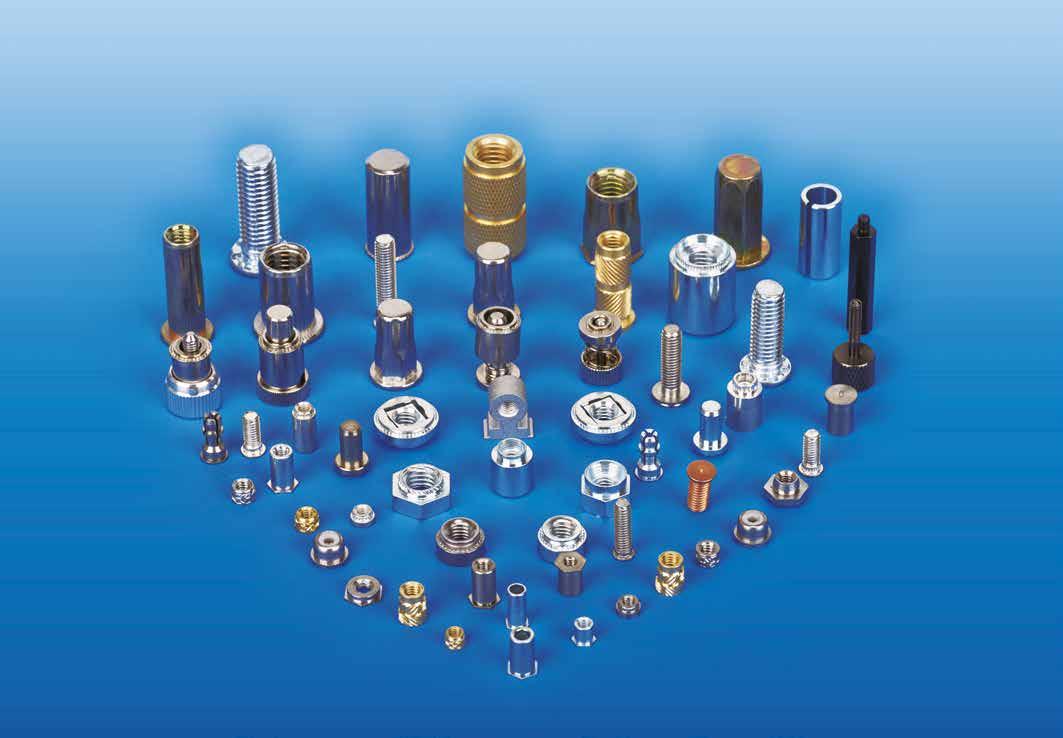

Stanley Black & Decker reported Engineered Fastening organic revenues fell 35% in the second quarter of 2020 “due to lower global automotive light vehicle and general industrial production.” Industrial segment sales, including Engineered Fastening results, declined 20% to $ 517.5 million in Q2 as CAM acquisition (+10%) was offset by volume (-29%) and currency (-1%). Segment profit plummeted from $95.1 million to $5.1 million.
Stanley Black & Decker agreed to acquire Consolidated Aerospace Manufacturing LLC (CAM) in February for as much as $1.5 billion cash. The deal is contingent on the Boeing 737 MAX returning to service and on Boeing meeting certain production goals. Brea, CA-based CAM, which manufactures aerospace fasteners and components, was launched by Tinicum in 2012 as a holding company for eight manufacturing firms active in aerospace component sector. Among CAM’s holdings are Bristol Industries, E.A. Patten, Aerofit, Voss Industries, 3V Fasteners, QRP and Moeller.
Consolidated Stanley Black & Decker sales dropped 16% to $3.1 billion during the quarter. Operating income declined 45% to $280.7 million, with a margin of 8.9%. Net income slipped 33% to $238.7 million. Industrial segment sales during the first six months of 2020 dipped 8% to $1.1 billion, with segment profit more than halved to $72.9 million.

ND Industries, Clawson, MI, USA, has named Paul Sundstrom General Manager of its Northbrook and Rockford, IL, USA facilities. He takes over the position from John Thramann, who has recently announced his retirement. Thramann has been at ND Industries since 1970 and has played an integral role in making ND one of the current leaders in the fastener locking and sealing industry. ND wishes John all the best in his retirement. For the past two years Sundstrom has been ND’s lead Sales Manager in Illinois.

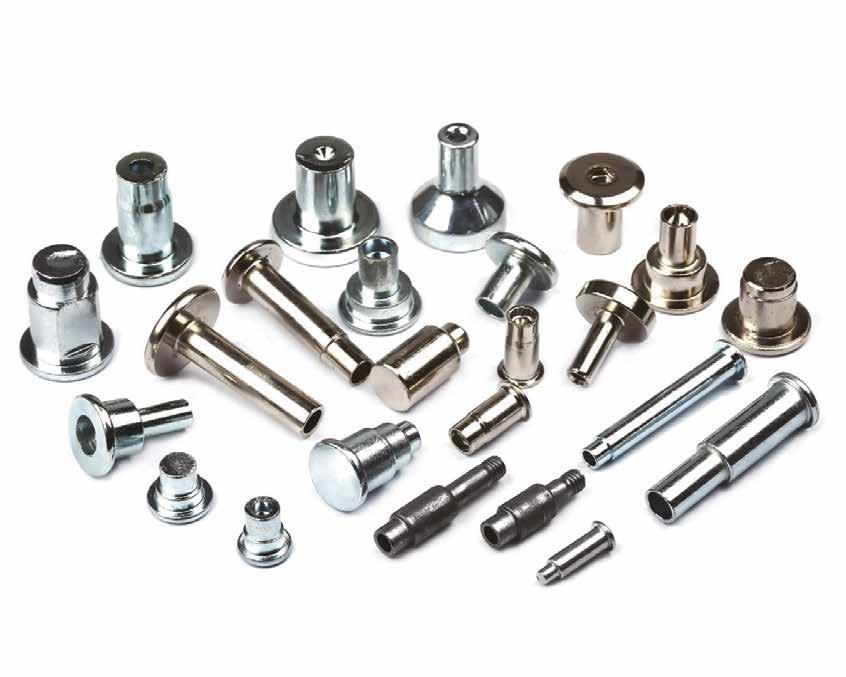
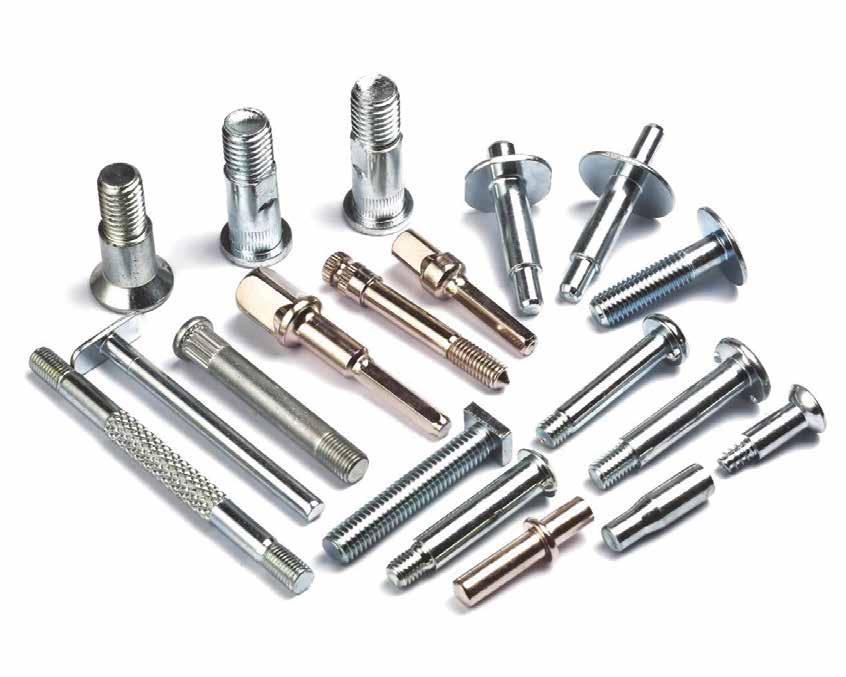
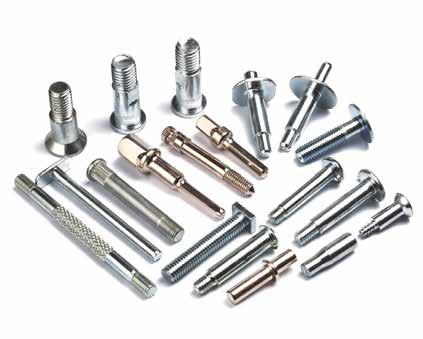
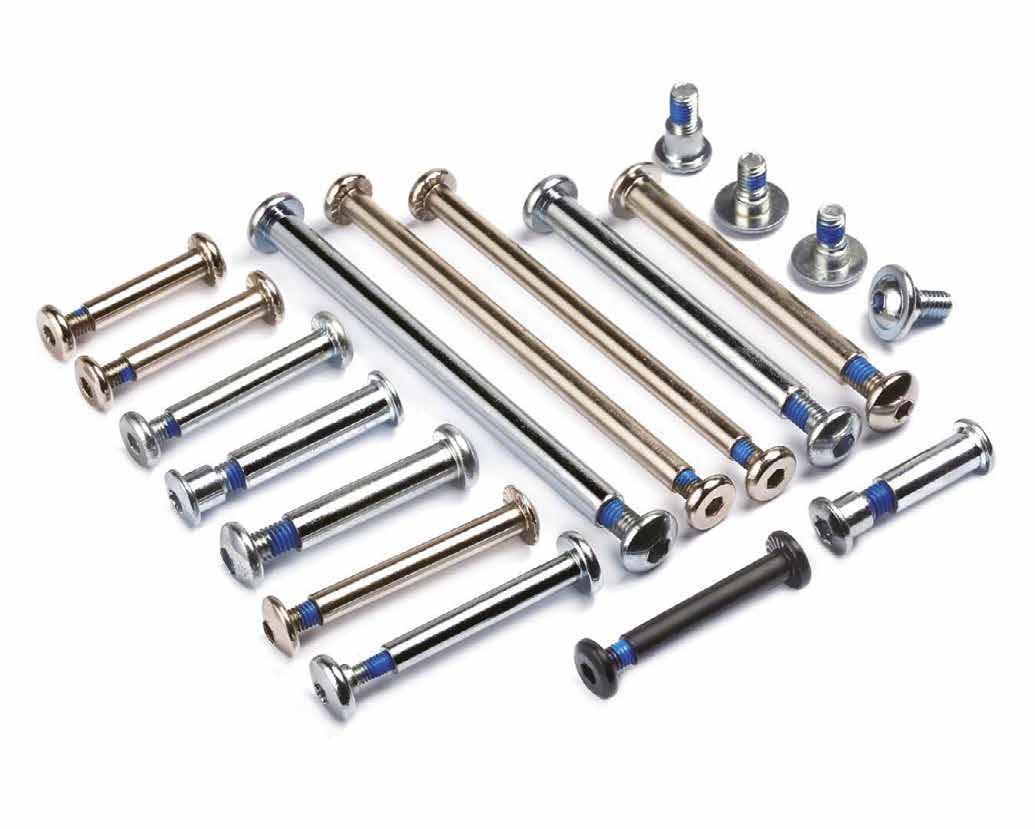

Grainger agreed to sell Fabory and its subsidiaries to Dutch capital firm Torqx Capital Partners for an undisclosed sum. Grainger acquired Netherlandsbased Fabory in 2011 for $346 million. Founded in 1947 as Borstlap & Sons, Fabory employs 1,100 to supply fasteners to more than 60,000 customers in EU markets through 44 branches in 13 countries. Torqx said it will support Fabory by investing in deep product and application expertise, in smart value-added services for its OEM and MRO customers, and in an efficient and high-quality supply chain.

Fastenal reported fastener sales dropped 15.3% in May, compared with a 22.5% rate of decline the previous month. Sales of other products (excluding safety supplies) fell 6%. Overall sales rose 4.4% to $491.5 million in May, while daily sales climbed 14.8% to $24.7 million during the month. U.S. sales gained 14.4%, while sales in Canada and Mexico fell 2.4%.
By end market, sales to manufacturing customers decreased 4.2%, and sales to non-residential construction customers were down 9.8% in May. During May, Fastenal trimmed 400 sales staff, with most of those cuts in branch and onsite personnel. The company’s overall workforce decreased 5.4% during the month to 21,034 employees. Distribution personnel shrank 14.3%% to 2,478 while manufacturing personnel fell 9.8% to 625 workers. In the opening quarter of 2020, fastener sales declined 2.6% to $449.7 million (32.9% of overall sales).
The Industrial Fasteners Institute (IFI), Independence, OH, USA, held its Annual Meeting in Clearwater Beach, FL, USA, March 7 to 10, 2020. The new IFI Chairman for the period 2020 to 2021 is Kevin Johnson of Birmingham Fastener, Inc. and the newly elected Vice Chairman is Edward Lumm of Shannon Precision Fastener, LLC.

In addition to Johnson and Lumm, the Board of Directors also includes: Manny DeSantis, Valley Fastener Group LLC; Pat Wells, The Young Engineers; Don Kubkowski, Sems and Specials; Paula Tognetti, MNP Corp.; Jeff Liter, Wrought Washer Mfg.; David Hebert, Freeway Corp.; Brian Stark, Rockford Fastener; Dan Curtis, MacLean-Fogg Co.; Richard Brittan, Tri Star Metals; Wayne Drysol, 3V Fastening.
2020 Division Chairs for IFI are: Division I – Industrial Products: Steven Sherman, Industrial Rivet & Fastener; Division II – Aerospace Fastener Products: Pat Wells, The Young Engineers, Inc.; Division III –Automotive Industry Fastener Group: Gene Simpson, Semblex Corporation; and Associate Suppliers’ Division: Richard Brittan, Tri Star Metals. IFI is an association of the leading North American makers of bolts, nuts, screws, rivets, pins, washers and custom formed parts.
Endries International Inc. acquired All-West Components & Fasteners Inc., a distributor to OEMs founded in 1978 in Seattle by CEO Rick Peterson. Terms of the deal were not disclosed. President Steve Endries commented that the “cultural and customer service philosophies that Rick & Mark have built aligns perfectly with the foundation at Endries. This acquisition will enhance Endries ability to grow our business with the combined expansion of our product offerings and geographic footprint that All-West brings in the Pacific Northwest.”
Peterson’s brother, Mark Peterson, joined All-West in 1982 and has been president since 2015. After eight years in fastener distribution, Rick Peterson founded All-West 42-years ago, adding up to make it a 50-year fastener career. That qualifies him as “a rusty bolt,” Peterson told GlobalFastenerNews.
Founder Bob Endries was the 1993 president of the Specialty Tools & Fasteners Distributors Association and Rick Peterson was the 2008 STAFDA president. Peterson also was the 2014-2015 president of the Pacific-West Fastener Association. Endries International is marking its 50th anniversary during 2020. The company has 825 employees across the U.S., Canada, Mexico, Europe, the Asian Pacific and China.


Birmingham Fastener and Supply Inc., Birmingham, AL, USA, has acquired Atlanta Rod and Manufacturing, a fellow domestic manufacturer of fasteners. John White will stay on as President of Atlanta Rod, joining the leadership team of Birmingham Fastener. “Atlanta Rod and Manufacturing has a long history of providing excellent service and value to its customers,” says Birmingham Fastener President, Brad Tinney, “I’m extremely excited to partner with John and his team.” “Brad and I have very similar backgrounds and share an unending passion for domestic manufacturing,” says White, “I look forward to the opportunities that joining these two companies will provide for our customers.” In the past two years, Birmingham Fastener has expanded its footprint across the USA, opening locations in New York, Iowa and Houston. Atlanta Rod, based in Lavonia, GA, USA, is the company’s latest acquisition. In these uncertain times, Brad Tinney also expresses the importance of domestic manufacturing capability.

Dyson Corp., Painesville, OH, USA, expands its manufacturing capacity and capabilities through the acquisition of the business assets of Accu-Tech Manufacturing & Support Corp., located in Mentor, OH, USA. Dyson plans to continue operations at the Accu-Tech facility through the remainder of 2020, when it will combine the assets and employees with the Dyson operations located in the same Ohio county. All equipment and employees of AccuTech are expected to remain with the combined company after the transition.
ZAGO Manufacturing produces high-tech sealing fasteners for ventilator manufacturers and is ramping up production to meet heightened demand during COVID-19. The company manufactures hightech sustainable sealing solutions and components from its headquarters in Newark, NJ, USA.
ZAGO hightech sealing screws, nuts, bolts and washers are also critical in the production of Extracorporeal Membrane Oxygenation Systems, akin to external blood pumps, and are in dwindling supply.

EFC International continues to expand, moving its Chicago branch office and warehouse to a new 64,000 ft 2 site at 4150 Chandler Dr., Hanover Park, IL, USA. Thomas Mansholt, VP of Operations states, “Our move enables EFC to enhance our service level by providing additional stocking programs with increased inventory space to meet both customer and supplier needs. With 4200 pallet locations, 26' clear height ceilings and a circular flow from receiving to inventory to shipping, we can ship product more efficiently and the facility allows for growth. The increased number of dock doors provides efficient flow for containers to be loaded for export, supporting customers for all EFC global locations.”

EU Prior Surveillance Import Licensing on fasteners and other steel and aluminium products expired on 16th May 2020. The regime is replaced by monitoring of actual import data collected from Member States' customs authorities.
Commission Implementing Regulation 2016/670 of 29th April 2016 introduced prior Union surveillance of imports of certain iron and steel products originating in certain third countries. Amongst the products cited in the regulation were fourteen CN codes for fasteners, covering the majority of carbon steel, but not stainless steel, threaded fastener products including nuts. Commission Implementing Regulation 2018/640 introduced similar surveillance of certain aluminium products.
Article 6 of both regulations stated:“This Regulation shall apply from the day following its publication in the Official Journal of the European Union until 15th May 2020.”The surveillance regimes therefore expired on 16th May 2020 and importers are no longer required to apply for import licences on the products cited in the regulations.
The European Commission did not make any announcement about the expiry of import licensing but import licensing and customs authorities in some EU states issued confirmatory notices to importers on 15th May.
The European Commission has replaced import licensing, which effectively captured intentions to import, with a new monitoring system based on actual import data transmitted by Member States' customs authorities. The monitoring reports are updated on a monthly basis, covering the steel and aluminium products previously subject to prior surveillance, with the addition of products subject to US Section 232 measures. The new system has been introduced within the framework of Article 56(5) of the Union Customs Code, by which the release for free circulation or the export of goods may be made subject to surveillance. Announcing the new system, the Commission said: “It will respond better to the needs of the industrial sectors concerned and is completely transparent. The new system is based on import statistics available two weeks after the actual imports, thus considerably earlier than the official Eurostat data. It offers a better assessment of the import situation as compared to the previous system, which was based on import intentions, not actual imports.” Further information and the first monthly data summaries are available on the Commission's website: https://webgate.ec.europa.eu/siglbo/post-surveillance
The original implementation of the prior surveillance regime proved extremely complex with some EU states able to rapidly implement highly automated systems and others using bureaucratic and often painfully slow manual reporting methods. The integrity of the data was also questionable, as it captured intention to import rather than what was eventually imported.
The European Fastener Distributor Association made regular submissions to the European Commission, arguing that the licensing regime created a significant and unnecessary administrative and financial burden for European fastener importers. EFDA succeeded in getting the Commission to raise the threshold for licensing of consignments of each CN code from 2,500kg to 5,000kg net weight, but not in having the system eliminated.

LISI Group has agreed to acquire the remaining 49% of the TERMAX LLC equity. This transaction, initially planned for the first quarter 2021, enables LISI Group to become the sole owner of TERMAX LLC through its US subsidiary, LISI Holding North America.
LISI Group is a global industrial group specialising in the manufacture of high valueadded assembly and component solutions for the aerospace, automotive and medical industries. Thanks to the commitment of its 11,171 employees in 13 countries over four continents, LISI generated sales of €1.7 billion in 2019.
François Liotard, chief executive officer of LISI AUTOMOTIVE, explains: "With TERMAX LLC, LISI AUTOMOTIVE has extended its global footprint in clip-fastening solutions in a lasting manner. The commercial and industrial synergies between our Clipped Solutions Business Group and Termax will continue to bear fruit. They will allow us to bring to a wider customer base the best development and production capabilities to offer innovative solutions in the areas of weight reduction, electrification and autonomous vehicle equipment.”
Effective as from 30th June 2020, the transaction does not have a material impact on the LISI Group financial statements in which TERMAX and the whole of the corresponding debt have been consolidated since 1st November 2017.

LISI AEROSPACE, part of the LISI Group, has signed its first long-term supply contract with Lockheed Martin, for F-35 fasteners. The award covers years 2020 –2022, with three one-year options to 2025, at an estimated (six-year) total value of US$60 million (€53.3 million).
The entire contract will be supplied by LISI AEROSPACE's North American platform and strengthen the company's position as a major supplier of fasteners for aerospace and military aviation.

Numerous fischer FireStop products have been used in the construction of the largest airport in the world, Istanbul Airport, to protect lives and infrastructure in the event of a fire. The range helps to prevent fire, smoke, and toxic gases from spreading in the event of a fire. All bushings for MEP applications (mechanical, electrical and sanitary work) such as cables and ventilation systems, as well as all types of pipes and lines were sealed with fischer FireStop products.
fischer states the products installed to seal off the lead-through openings include the FCPS panel system. The FCPS is designed to provide up to four hours of space and two hours of temperature resistance. Other products used include the one component, water-based acrylic emulsion fischer FiAM and the graphite-based fischer FiGM. The FiAM guarantees up to five hours of space closure; whereas FiGM foams under high pressure, expanding up to 20 times its own volume.
The fischer fire protection wrap FiPW for wrapping non-metallic pipes and ducts offers up to four hours of fire resistance and was also used along with the two component polyurethane foam FBS-EN and the fischer FFSC seal. FBS-EN is particularly suitable for use in openings that are difficult to access for electrical feedthroughs; and the FFSC seal is a formulated gypsum-based mortar suitable for filling voids and gaps in walls and floors – offering resistance and insulation for up to four hours.
Istanbul Airport currently handles around 90 million passengers a year and when construction is complete the passenger capacity is expected to more than double to over 200 million a year. Six runways on a total construction area of approximately 76.5 million square metres are intended to enable passengers to be transported safely to their destinations.
“Because this is a large-scale project with enormous HVAC systems, most of the ducts through fire protection walls and ceilings are built on a considerable scale, particularly the pipes and ventilation systems. Innovative conductor lines and large metallic and flammable pipes presented an enormous challenge in finding a technical solution, but we were able to successfully plan and implement them,” states Ant Güngör, technical marketing manager at the Turkish subsidiary of fischer.
fischer had to supply systems that have been tested, approved according to European standards, but also adhered to project specific requirements. "Construction progressed quickly on this prestigious project, which is why a reliable partner was required for its fire protection. We began supporting the project at an early stage and helped the client plan the FireStop solutions and provided on-site support,” stated Constantin Wiegert, product and market manager at fischer.
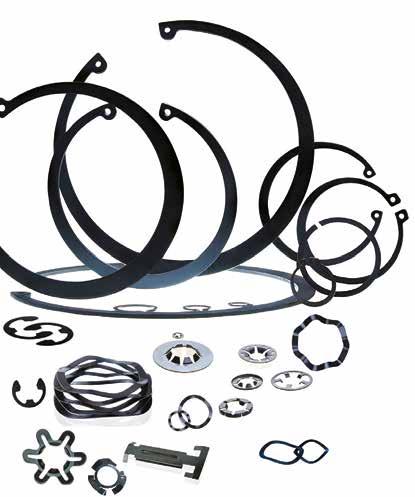

NORMA Group recorded an 8% decline in sales in the first quarter of 2020 to €253.6 million (Q1 2019: €275.6 million). Organic sales were down 8.9 %. Currency effects had a positive impact of 0.9% on Group sales. Dr. Michael Schneider, CEO of NORMA Group, commented: “The uncertain situation of the global market due to the corona pandemic had a negative impact on our business in the first quarter of 2020. To protect our employees and in response to the significant drop in customer demand, we decided to temporarily shut down or interrupt production at several sites in mid-March. In the current situation, our focus is on maintaining our supply chains and securing our financial flexibility in order to be able to bridge temporary sales shortfalls. Thanks to our broad product portfolio and the global orientation of our business activities, however, we are confident that we can cushion the consequences of the corona pandemic as effectively as possible.”
NORMA Group sales in all three regions – EMEA, the Americas and Asia-Pacific – declined in the first quarter of 2020. The main reason for this was the weak automotive business, which deteriorated even further as a result of the restrictions imposed by the corona pandemic since March 2020. As a result, demand for joining technology in this sector fell sharply.
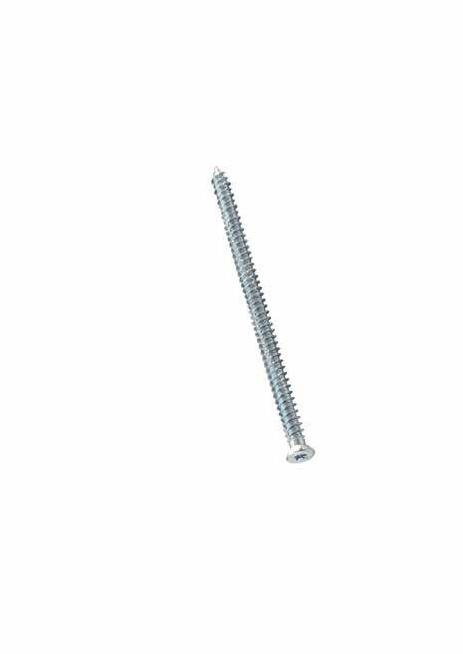
Arconic Inc has now been separated into two standalone companies - Howmet Aerospace Inc and Arconic Corporation. Howmet Aerospace, specialises in advanced engineered solutions and will start trading on the New York Stock Exchange under the ticker "HWM.” In 2019, the businesses comprising Howmet Aerospace generated more than US$7 billion in revenue, up 5% from the prior year, with more than 70% of Howmet's revenue derived from the aerospace market.

The new company will be led by co-Chief Executive Officers John C. Plant, who will also serve as Executive Chairman of the Board, and Tolga Oal, who previously served as President of Arconic Engineered Structures.

Howmet has been a trusted brand for over 90 years and has the technological capabilities to support the innovation and growth of next generation aerospace programmes. Composed of engine products, fastening systems, engineered structures and forged wheels businesses, Howmet Aerospace is transforming the next phase of more fuel efficient, quieter aerospace engines and sustainable ground transportation.
News provided by: Fastener + Fixing Magazine / www.fastenerandfixing.com

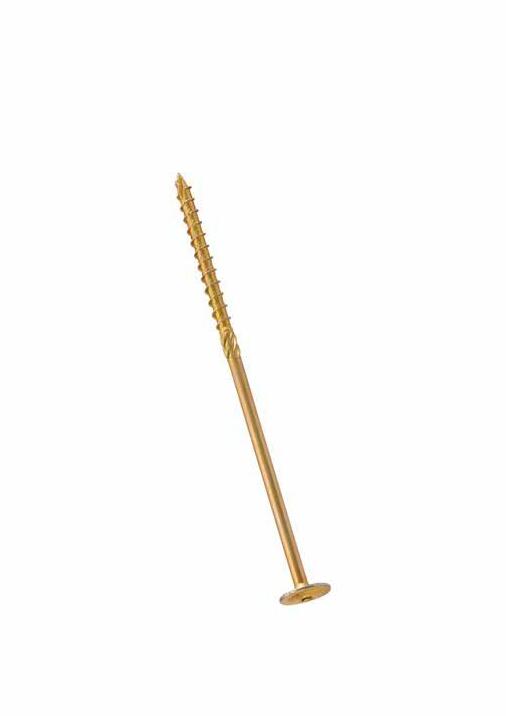
Held at the China Import and Export Fair Complex in Guangzhou, Asiamold – Guangzhou International Mould & Die Exhibition and the concurrent SPS – Industrial Automation Fair Guangzhou (SIAF) welcomed 655 exhibitors occupying 40,000 sqm of exhibition space and attracted 50,369 visits. Covering a variety of intelligent industrial automation solutions, mould-making, 3D printing, metalworking, foundry, die-casting, laser and bearing technologies, both fairs presented a one-stop sourcing platform for manufacturing industry players looking to recover and reconnect, following the suspension of numerous global businesses and production lines.
SIAF Guangzhou and Asiamold are the first Guangzhou fairs to be hosted by Messe Frankfurt since the beginning of the year. Both under the smart manufacturing cluster, the fairs served as an important tool for the resumption of business-to-business and in-person interactive events in China. The events were welcomed by the industries who depend on the platform for business exchange, market information and most importantly new found business opportunities brought forth by manufacturers who wish to upgrade their supply chain with the latest and most innovative automated technologies.
“As large scale events are gradually resuming in China, we are excited to be back to facilitating business interactions for the manufacturing industry, particularly within the South China region. The shows marked the first Guangzhou events to be held by Messe Frankfurt since January, when trade fairs were forced to be postponed due to the global pandemic. We are pleased that SIAF Guangzhou and Asiamold were able to go ahead as planned, offering a trusted one-stop platform for manufacturing industries and helping them resume their normal operations,” said Mr. Hubert Duh, Chairman of Guangzhou Guangya Messe Frankfurt Co Ltd after the conclusion of the fairs.
Mr. Duh added: “The overall positive response from participants has shown that the manufacturing industry is slowly recovering from the economic impact in the first two quarters of this year. Protective gear and other health equipment continue to be in high demand, and Asiamold’s new Mould and 3D Printing Epidemic Prevention Technology Display Zone, among various other thematic zones, proved to be popular. To further support the Chinese government’s new infrastructure and manufacturing development initiatives, this new zone along with other smart manufacturing solutions on display have reconfirmed strong business potential for exhibitors at the fairs.”
“With Asiamold 2020 successfully concluded, we look forward to preparing the 2021 editions on 3 – 5 March to further reactivate and reconnect international exhibitors and visitors once air travel becomes more accessible so they are able to participate,” Mr. Duh concluded.
As trade fair organisers, Messe Frankfurt’s top priority remains the health and safety of fairgoers. To ensure that visitors and exhibitors meet in a hygienic and safe environment, added measures were practiced at the fair. These included: real-name authentication at registration, onsite temperature checks, frequent sterilisation of public areas and distancing measures for conference / seminar audiences, amongst others.
The next edition of Asiamold – Guangzhou International Mould & Die Exhibition will take place on 3 – 5 March. Exhibitors or visitors with any queries should email asiamold@china.messefrankfurt.com for Asiamold.

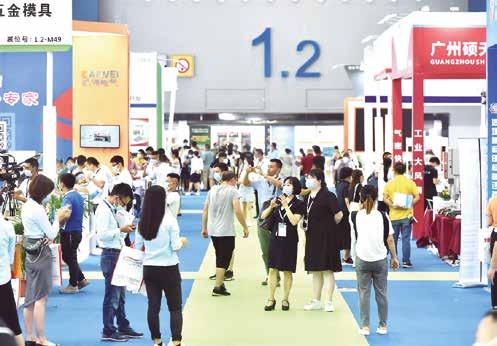
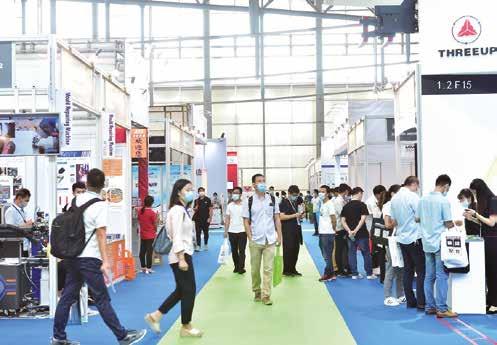
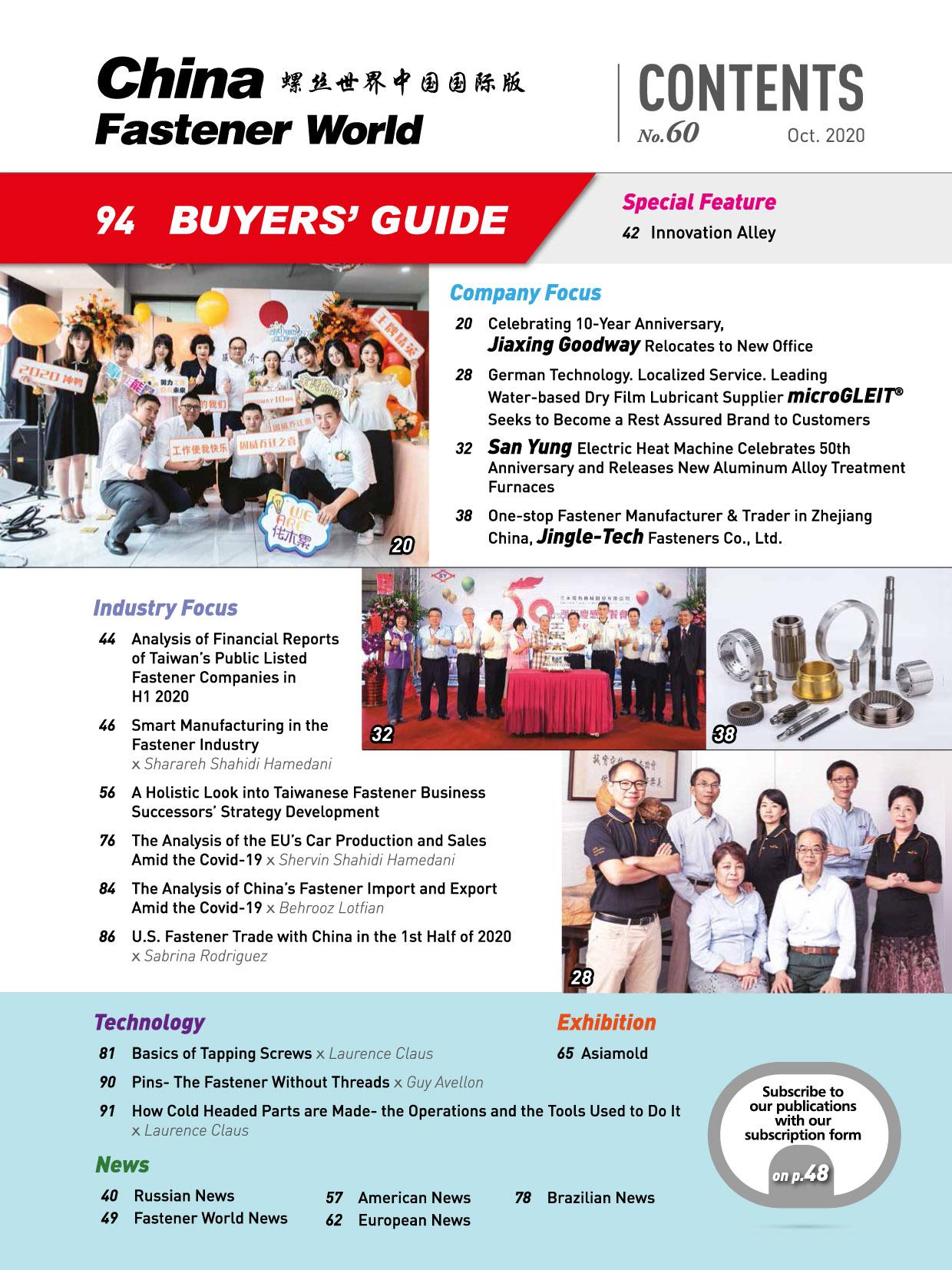
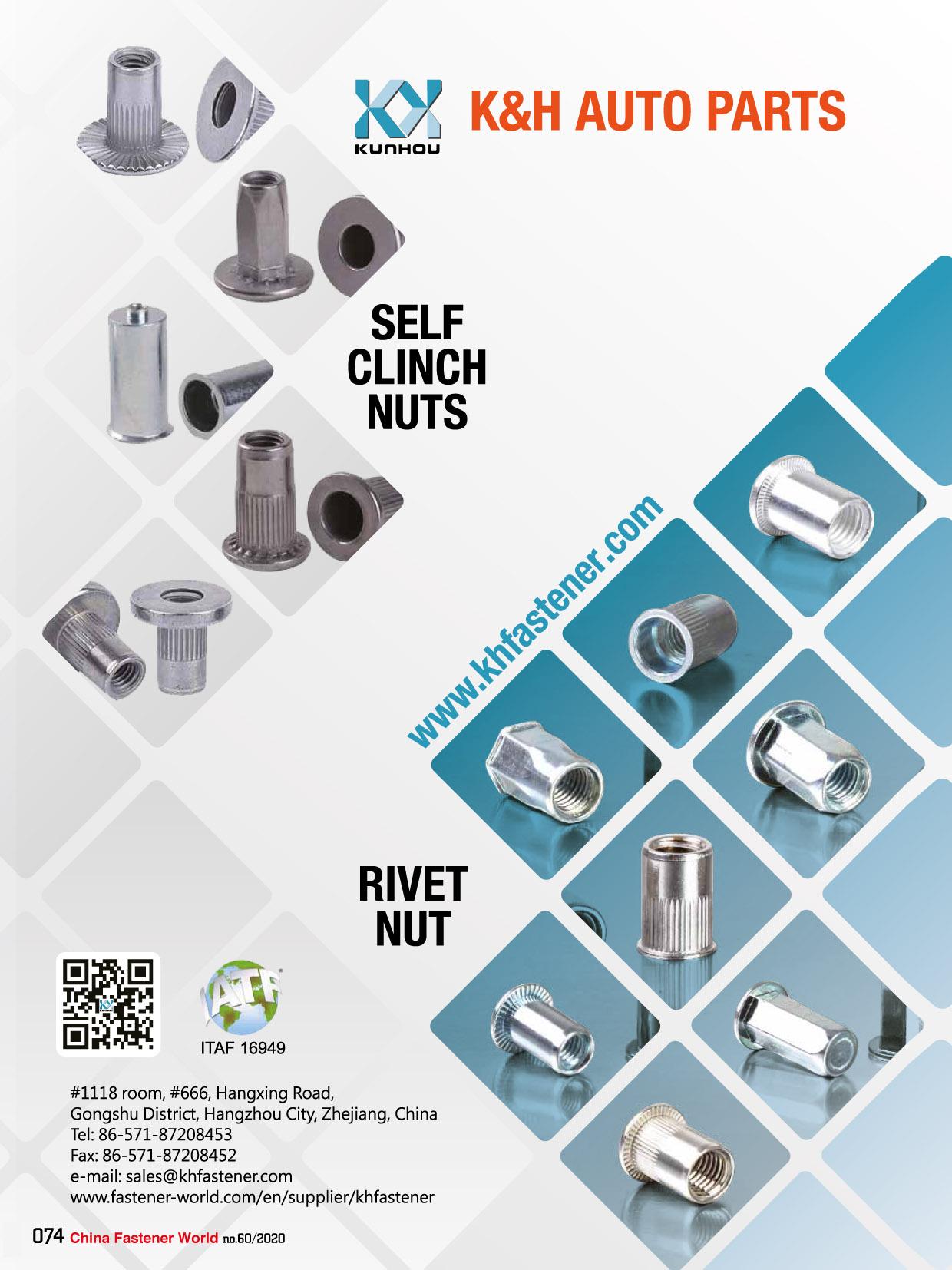
by Shervin Shahidi Hamedani
The automotive industry plays a vital role in the economy of the European Union (EU). The turnover generated by the industry contributes over 7% of EU's GDP. The EU is among the world's biggest producers of motor vehicles supported by its vast private investment in research and development (R&D), investing more than fifty billion euros annually. All major countries in the region are both key producers and consumers. This sector creates 13.8 million direct and indirect jobs to Europeans, which is about 6.1% of total EU employment. 8.5% of EU employment in the manufacturing sector belongs to motor vehicle manufacturing with 2.6 million direct jobs.
The automotive sector was doing well until the Coronavirus (COVID-19) officially became a pandemic. The impact of the pandemic on the society and the global economy is unprecedented, with its significant damages to the automobile industry. The pandemic financially impacted the industry severely, as both production and sales of motor vehicles came to a sudden standstill in the EU as well as other parts of the world. The sector is highly labour and capital intensive. As a result of the pandemic, the jobs of at least 1.1 million Europeans who were working in automotive manufacturing have been affected by factory shutdowns.
The EU car market took a big hit in March this year, especially Italy was hit hard in March, while other markets mainly in April, which is likely to be the worst month in terms of car sales in Europe for at least half a century. Car dealerships in most European countries have been forced to shut their doors for new car sales during the entire month
of April, only being permitted to supply cars already ordered before the lockdowns. Without new sales, many car manufacturers and suppliers faced substantial liquidity issues as the majority of the players in the market are too much dependant on regular refinancing to fund their operations. With the situation within the first half of this year, it has been so challenging for them to get new financing from investors.
The sales in the first quarter of this year were just over 3 million cars, 25% lower than the sales figure in 2019. In terms of sales, March has been always the biggest month of the first quarter, but this year, March recorded the lowest sales (870,300 cars) compared with January and February. The sales in Mar 2020 was fewer than half the number of new vehicles registered in Europe in March 2019. The UK market regularly takes a large share of March sales in Europe every year as buyers in the market defer their new car deliveries to the beginning of the year to claim for new license plates. Therefore, the UK share is often higher than 25% in March while their sales for a whole year is about 18%. This year, UK car sales were reduced to just below 255,000 in March, however, their market share was higher than previous years, with about 30% of the total market as the UK was restively slow to declare the lockdown. At the same time, Italy faced a drastic decline in sales by more than 85%. Italy registered only about 28,300 sales
in March 2020. That makes it the largest relative drop among all European markets, including the smaller ones. March sales also collapsed in France (-72.2%) and Spain (-69.3%). Germany recorded a less extreme decline compared with other major players in the market, but still, their new car sales dropped by more than 37%. That gives us the sales figure about 25% of the total market, higher than a normal Mar (19.5%) and a normal annual share (22.8%). In March and the first quarter of the year, Iceland, Finland, and Sweden were the best-performing markets as their governments were less strict in terms of lockdown and movement control order.
Car sales in April tumbled by more than 75% as car dealerships remained closed in most countries in the region while governments fought to hold the spread of coronavirus. May indicated some retrieval, and sales in June at 950,000 units proved that the increasing trend continues; however, the figure was still 22% lower than June 2019.
A glint of optimism for the sector came from France, where sales increased in June by 1.2%, year on year after the government accepted tax incentives to support low-emission vehicle sales at the beginning of the month. The increase in sales in France was exceptional among major markets, where data continue to paint a worrying picture; sales in Spain (-36.7%), Germany (-32.3%), and Italy (-23.1%) continued to be lower than in June 2019.
Interestingly, in Q2 2020, the market share of electrically-chargeable vehicles increased by three times to 7.2% of total EU car sales, compared to a 2.4% share during the same period in 2019. The overall decline in passenger car registrations as a result of the COVID-19 pandemic affected the diesel and petrol segments, in particular, these two segments together still representing more than 80% of car sales in the region. The right pie chart illustrates the new passenger cars by fuel type in the EU within the first half of this year.
Over the first half of the year, the car market in Spain has diminished by more than 50%. Consequently, the government passed its one billion Euro rescue package in June to support the petrochemicals industry. The package is expected to create new demands in the sector, as it includes some grants for consumers to buy vehicles. Italy’s sales over the first half of 2020 shrank by more than 46% while the government is considering a rescue package for the sector as well. Sales in France and Germany reduced around 39% and 35%, respectively.

As a result of the drastic decline in sales to date, the implementation of purchase incentives and other financial schemes are vitals all over the EU to generate much-needed demand for new cars. The necessary political and economic support both on the EU, as well as the member state levels, are required to reduce the production losses and unemployment in the near future.
1. ACEA, European Automobile Manufacturers Association
2. Automotive Industry Report by the European Commission



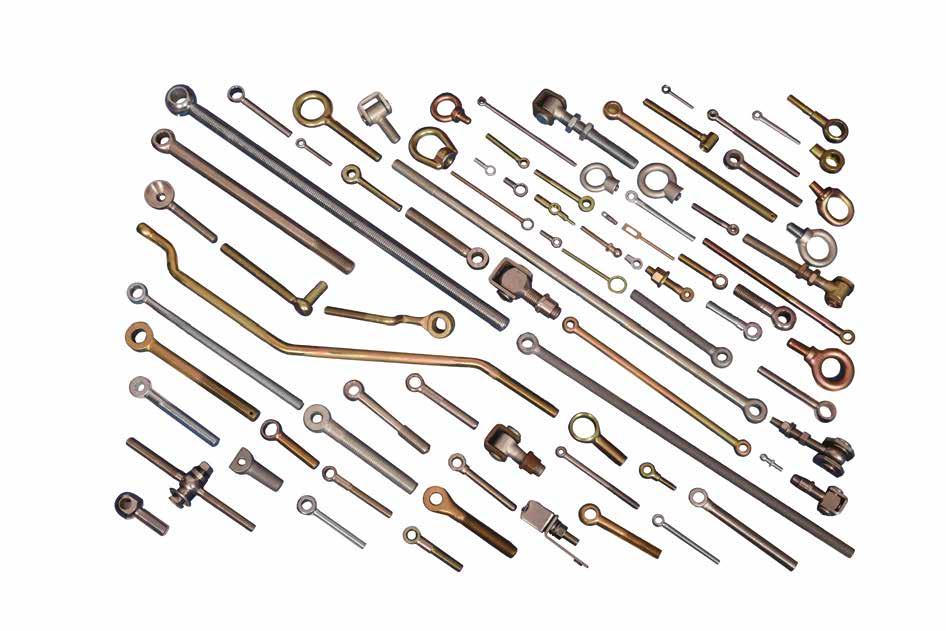
As one of the most important thermometers for the fastener industry, the Brazilian automotive vehicle production, in the first half of 2020, had a giant fall due to the pandemic, but the restart of industrial activities has returned some hope for the end of 2020 less disastrous than estimated in several economic analyses. Normally, the ideal way would be to show just the first half year, however it became essential to include July 2020 because it was the last complete month with normal activities in Brazil, since February.
Of course, the Covid-19 impact hit everybody, and the last result has shown a partial recovery. That is not a miracle, but already is a light at the end of a tunnel.
According to the Anfavea (the Brazilian Automotive Industry Association), the January-July 2020 period ended with 847,784 cars/ light commercial vehicles produced (1,658,279 units in the same period of 2019 / down 48.8%); 41,617 trucks (66,314 units / down 37.25%); 10,211 buses (16,704 units / down 38.80%) and 24,691 agricultural/road machinery (30,875 units / down 20.03%).
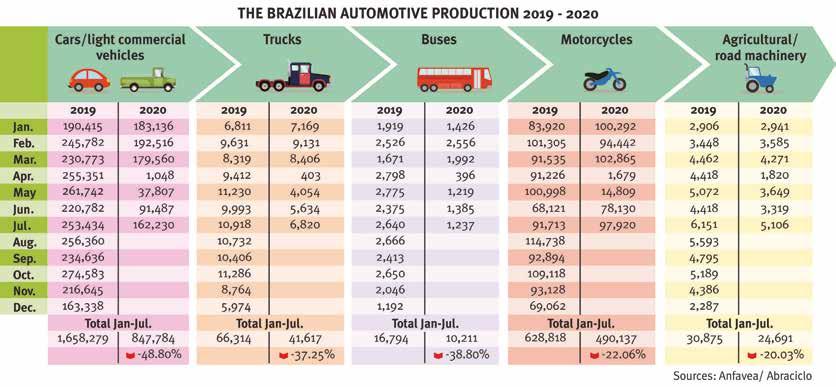
The crude steel production in Brazil fell 17.9% in the first half of 2020 compared to the same period in 2019, while domestic sales suffered about 10.5% drop from January to June, the same decreasing percentage of apparent consumption (-10.5%). Exports decreased 8.1% and imports decreased 17.0%.
The sector's negative performance in the 1st half of 2020 is likely due to the pandemic. However, the figures for June in relation to May were already the best, reflecting the beginning of a recovery path.
Domestic steel sales in June showed an increase of 29.6% compared to the previous month, while consumption was below 29.4% and an increase of 14.5%. Steel production in June, however, fell by 5.0% over the previous month.
Currently operating at only 48.5% of its installed capacity, that sector has 32 blast furnaces, but 10 of them are paralyzed. In the domestic market, the sector's expectation is that infrastructure and civil construction projects will be the main drivers for consumption of steel products.
Regarding the motorcycles sector, in the first seven months Brazil produced 490,137 units (628,818 units / down 22.06%), according to the Abraciclo (the Brazilian Motorcycle Industry Association).
A recall involving Volkswagen vehicles T-Cross, model 2020 started since July 2020. In a press release, Volkswagen Brazil reports that the possibility of fixing the upper nuts for fixing the belts on the front shock absorbers was found. The loosening of these components causes noise in the suspension and, in the case of continual use in this condition, a nut and a buckle can come loose, compromising the stability of the vehicle causing physical harm and fatality to the occupants of the vehicle. Such repair implies the replacement of nuts and application of chemical lock.
The Procon-SP (the local consumer protection entity) published in July 2020 a recall for failure in fastening on bicycle crank, from Sirrus and Sirrus X models, sold between 2019 and 2020. The responsible company is Specialized Brazil, which must provide any clarifications that are necessary, as determined by the law. In the statement, the company informs that the cranks may not have been fastened according to the factory specifications, which may come loose and result in a sudden loss of control and cause accidents.
Entering the 120th year from its founding (1901), Gerdau is the largest Brazilian steel producer and one of the main suppliers of long steel in the Americas and special steel in the world. Present in 10 countries with more than 30 thousand direct and indirect employees in all of its operations, Gerdau's shares are listed on São Paulo (B3), New York (NYSE) and Madrid (Latibex) stock exchanges.
The company ended the second quarter (Q2) 2020 with adjusted EBITDA (earnings before interest, taxes, depreciation, and amortization) around R$ 1.3 billion, with an EBITDA margin of 15.1%. The result was influenced by the gradual recovery of steel consumption levels in Brazil, after the impacts caused by the Covid-19 pandemic. In Q2, the sales of long steel rose 10% over Q1, thanks to the resilience from building construction and exports.
Between January and April 2020, Brazil imported around 38,800 tons of fasteners (bolts, screws, nuts, rivets, nails and others in iron, steel, copper, or aluminium). The metallic items "made out of Brazil" cost more than US$ 185 million during that period (11.5% lower than the same period in 2019). Among the top five supply countries were, China: US$ 42.3 million; USA: US$ 28.6 million; Japan: US$ 22.4 million; Germany: US$ 19.4 million, and Taiwan: US$ 10.8 million.
Throughout 2019, the total imports hit US$ 621.65 million (8.7% lower than 2018), accumulating 123.9 thousand tons (6.7% lower than 2018). The top five export countries were, China: US$ 130 million; USA: US$ 95.5 million; Germany: US$ 72.9 million; Japan: US$ 72 million and Italy: US$ 37.3 million.
On another note, in the same four months of 2020, the fasteners “Made in Brazil” achieved 6,726 tons on export (33.1% lower than the same period in 2019), totalling a revenue of US$ 45.42 million (30.8% lower than the same period of 2019), in which China bought only US$ 233 thousand (0.51%). The top five Brazilian customers were the USA: US$ 20.6 million; Argentina: US$ 5.71 million; Paraguay: US$ 2.8 million; France: US$ 2.11 million; and Mexico: US$ 1.87 million.
During 2019, Brazilian fastener export revenue reached US$ 193.93 million (20.7% lower than 2018), accumulating to 29,576 tons (13.4% lower than 2018). The top five customers were the USA: US$ 79.7 million; Argentina: US$ 22.6 million; Paraguay: US$ 13 million; France: US$ 7.86 million; and Mexico: US$ 6.64 million.

On May 29, 2020, the Belenus S/A (Vinhedo town, SP State) reported the official acquisition of Tellep, a renowned fastener brand owned by Metalac SPS Ind. e Com. Ltda. (Sorocaba, SP), a Precision Castparts Corp member group. The brand offers a line of hexagon socket screws with several head kinds (cylindrical, flat, bulging and others), made to application in fastening systems with high resistance demand.
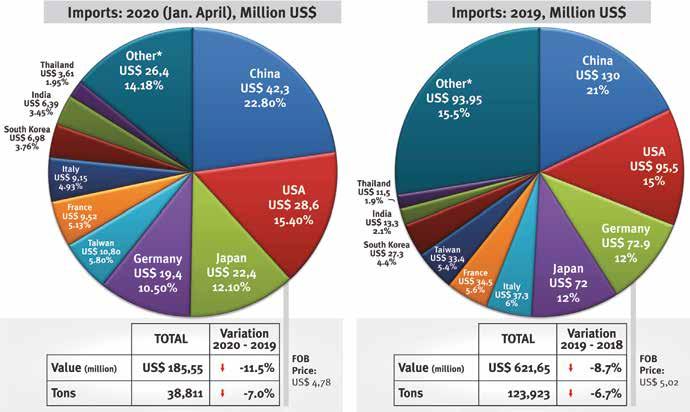
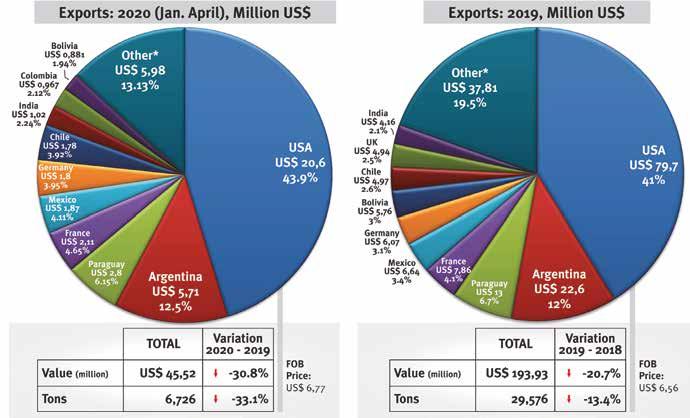
Source: The Brazilian Ministry of Industry, Foreign Trade and Services
*Info: In the infographics there are some discrepancies in percentage, due to added values conditions

"We are so proud and optimistic about this important investment that will bring great know-how and high quality for us and will be more solid and complete the name of Belenus on the fastener market. Meanwhile, we are going to keep the trading of Tellep lines produced by Metalac. Soon, we will start a process involving technology and knowledge transfer for us and get all conditions to produce in our modern industrial plant,” told Ezio Ruocco Jr., the Belenus Vice-President.
"The sale involves brand, technology transfer and current stocks, not including other assets, such as machinery and tooling. Tellep sale is totally aligned with Metalac business strategy which consists of growing business in the automotive industry, local and overseas, as well as settle the presence in the aerospace sector, both with ongoing investments despite the Covid-19 crisis", said, Rodrigo B. Egea, the Metalac General Manager.
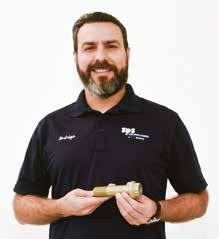
In the end of February 2020, the BRP Brazil Motorsports started a recall involving personal watercraft models, from Sea-Doo brand, due to the risk of a fastening on a grid coming loose while in use.
According to the BRP, if this vehicle was at a speed greater than 88 km/h (55 MPH) without its grid at the structure the driver may get problems to keep the control. The occupants can be ejected, resulting in serious injury or even death.
The Sea-Doo series involve three models: GTX, RXT and Wake PRO, model 2019 and equipped with engines 230 or 300 HP. The maintenance demands a replacement of the grid and the fasteners.
A tool for use in tightening and removing bolts and hex nuts, the "socket ratchet, 1/2 fit", telescopic, hinged head from Vonder provides greater agility and ease in fastening work due to its easy action in difficult spots. Made of chrome vanadium steel, it has greater resistance and durability, with a rubberized handle and 450 mm total ratchet length.
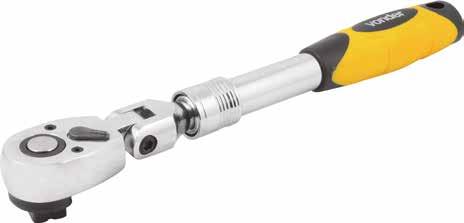
News provided by: Sergio Milatias, Editor / Revista do Parafuso (The Fastener Brazil Magazine) milatias@revistadoparafuso.com.br / www.revistadoparafuso.com

When the first tapping screws started appearing in the market, the inventors probably had no idea how radically their inventions would change the face of fastening history. Tapping screws refer, of course, to a broad family of screw types that do not rely on mating with a preexisting female thread because the screw is designed to form it. This innovation opened up new application pathways, particularly in construction applications where these screws were able to not only form threads but to pierce and fasten thin sheet metal together or connect wood products, often without the need of pilot holes.
by Laurence Claus
As time progressed many additional designs were developed and new applications fields introduced. In fact, there has probably been no time in history that surpasses the present day for the many and varied uses of tapping screws. These screws have evolved from several helpful construction applications to an important category of fasteners in industrial applications.
Self-tapping screws come in two varieties. There are versions that are intended to form or displace the material they are threading into and there are cutting versions that cut away material to form the internal threads. Both varieties work along similar principles as their respective threading taps would work in a tapping process. Thread forming varieties are continuous thread forms and rely on geometry to flow the material into the internal thread form. Cutting screws have grooves or slots that provide knife-like sharp edges that cut the thread path into the component.
The earliest tapping screws were derived from designs intended for wood or sheet metal. Unfortunately, these screws lacked tight tolerances and often had large thread profile angles, all of which conspired to make early self-tapping screws inconsistent and often unreliable in certain materials. They found thread forming varieties more difficult to work with and often favored the cutting versions. Although the thread cutters appeared to work alright in some applications, they, generally, remained unreliable and inconsistent and added a new complexity of how to handle the chips they formed.
In some application instances, neither thread forming or thread cutting screws worked well. Thermoplastics are one material type for which this was true, resulting in a great deal of user skepticism whether it was proper to use self-tapping screws in thermoplastics at all. As a result most early plastic threaded fastener connections were comprised of molded or pushed-in internally threaded metal inserts. These added significant cost and were not always that much more reliable than direct fastening methods.
With advancements and innovations in design the pendulum has turned and many of these early problems have been resolved and thread forming versions have replaced thread cutting versions in all but a few types of material. Regretfully, these early deficiencies resulted in a lot of skepticism and slow acceptance of thread forming varieties of tapping screws, but over the last thirty years, successful application has erased user hesitation to employ thread forming designs.
Although there are unique requirements for designing forming versus cutting applications much of the fastener engineering is the same. Regardless of screw type or application the primary concern is developing a joint where the screw is completely assembled, the threaded member is not stripped (or otherwise exhibiting a failure), and the joint has a modicum of clamp load to hold it together. Although this sounds straight forward, maybe even simple, it is not. There are many challenges that are faced, some of the more significant ones are:
• The material that will be threaded into is weak leaving it vulnerable to stripping.
• The material that will be threaded into is strong and brittle leaving the screw threads vulnerable to collapse or failure, the threaded material vulnerable to premature stripping, or cracking from excessive radial stress.
• The material that will be threaded into is very thin providing only a very small amount of thread engagement and making it highly vulnerable to stripping.
• Inconsistent pilot hole sizes result in less than optimum radial engagement.
• Inability to start with a pilot hole necessitates piercing or drilling and opens the door for initiating high radial stresses.
• Minimal clamp load retention.
• Stress relaxation results in clamp load loss.
• High driving torques and low stripping torques contribute to difficulty in achieving successful assembly or a meaningful clamp load.
• Installation equipment that is not capable to precisely install parts at the desired torque level (or other settings) required for successful assembly.
This list is only a partial one but represents a compilation of some of the more common challenges. Each particular category of tapping screw application, however, will experience its own unique and expanded list of challenges. Take for example the challenges of fastening very thin mild steel sheets. In addition to the self-tapping challenges, thin sheet joining poses a multitude of additional hurdles, and, although there may be some overlapping challenges with other tapping screw application fields, they fundamentally will be very different.
Since each category of application may be very different let me address in general terms two commonalities between them all.
In theory, a machine screw installed into a mating tapped hole has little or no driving torque because the internal mating thread has already been formed so that the only torque is generated by the minimal frictional interaction between mating threads. With tapping screws the conditions are very different and we need to exert torque to cut, form, and pierce. Since clearance is tighter there is also more friction between mating threads. In the case of both cutting and forming tapping screws we can influence this by the size of the pilot hole prior to thread creation. The larger the pilot hole the less the threads are radially engaged in the material and the lower the driving torque. Unfortunately, it is not so simple, as the reduced radial engagement initiates rapid stripping or necessitates long axial engagement which requires long screws, deep installation sites, and raises the driving torque defeating the goal to keep it low in the first place. The problem is further exacerbated when the fastener must pierce or generate its own pilot hole. Although some materials, such as soft wood species, can be pierced and a screw installed without a pilot hole, these tend to be more the exception than the rule. Most materials require pilot holes for successful installation. In these cases, a pilot hole can be formed or drilled, or the fastener can possess a feature, such as an integrated drill point, to bore a pilot hole. These features, however, require both torque and axial load to make the screw successfully work.
This outcome is important to many users of these types of fasteners because higher driving torque and axial load input equates to increased installation effort. This is likely not a significant issue to the homeowner that has two screws to install but is a serious issue to the assembler that has to install hundreds or even thousands of such screws each day.
Although most of these fasteners fail by the threads stripping due to the “weak” material they are being fastened into or because of limited engagement (thin sheet joining), I do not want to suggest that this is the only failure mode. In fact, other failure modes include screws breaking from torsional overload or joint components failing from warping, buckling, or collapsing. Whatever the actual failure mode, having it occur at a low torque value, i.e. one close to the driving torque value, is extremely undesirable.
One may ask why this is important, especially since there is bound to be some margin between where the driving stops this failure occurs. Although that is true and in a perfect world we would always be able to hit that sweet spot during installation, the reality is that conditions are always less than perfect. In other words, if we recorded driving and failure values over multiple trials we would discover that they don’t repeat the same
values every time. If we conducted an experiment and determined the statistical variation present we could establish a “safe”, statistical maximum driving torque where the screws are always installed and a “safe”, statistical minimum value where the screws will never fail. Unfortunately, these points often overlap communicating that under those conditions no truly “safe” installation conditions exist. Even if there is margin between these two points, if it is minimal we may not be able to produce an installation strategy with a driver or tool that is capable of meeting the required very narrow variation window.
In addition to the long list of general challenges for tapping screws, applications where thread forming screws are being considered may have some additional, unique considerations. The primary consideration is the material itself. Does the material possess the ability and tolerance to be deformed? Take for example, Polymethyl Methacrylate (PMMA), also known as Plexiglas. Anyone that has ever tried to drive a screw through this material has probably encountered difficulty, i.e. material cracking or crazing around the fastening site. This is because PMMA is a highly amorphous thermoplastic and extremely sensitive to stress. With a little heat or very high driving speed (to generate heat), however, thread forming tapping screws can be installed in PMMA without cracking it. PMMA, therefore, is technically capable of receiving thread forming tapping screws but, as we know, under normal conditions simply does not have the ability to tolerate them.
Thread forming screws require materials that will readily deform and are “weaker” than the forming tapping screws are strong. General categories of materials that fit these requirements well include mild steels, aluminums, wood, and thermoplastics.

Over the years many different varieties of cutting edges have been tried on cutting screws. The most popular, and probably most effective, continue to be those that possess a shank slot. A shank slot is little more than a slice out of the shank near the tip exposing a sharp edge along the affected threads. These sharp edged thread tips act like a knife to cut into the material and the geometry of the slot directs the waste material away from the cut. Other cutting features include axial slots, such as those found on a Type F tapping screws, or interrupted thread flanks turning the thread into a little saw blade.
In the early days, because forming tapping screws were pretty unreliable, often thread cutting screws got designed in. Unfortunately they were not much better and generally don’t do well in materials where forming varieties work. Therefore, thread cutting screws are best utilized in very hard and brittle materials such as thermosets, wood, and masonry.
An additional consideration that must be taken into account when using a cutting
tapping screw is provision for the chips and debris that are generated. Remarkably, a sizeable amount of debris can be generated and it needs a place to go. Therefore, when using a blind hole, additional space must be left at the bottom to catch the chips.
Although the original tapping screw variations are still around and some designs, like the Type AB, enjoy widespread usage, the future of tapping screws is in innovative designs that target unique applications. What I mean here is that instead of having one general all-purpose tapping screw that works in everything, users have learned and responded to using tapping screws designed for more narrow purposes, such as those specifically designed for mild steel, thermoplastic, thermoset, aluminum, thin sheet metal, magnesium, masonry, wood, and plastic/wood composite applications.
As more experience is gained and new materials come on the market, innovative designs emerge that allow tapping screws to be used where formerly they were not possible. As an example, in the last couple of years, one innovative company alone, EJOT Verbingstechnik of Germany, has developed new tapping screws for thread forming into carbon fiber reinforced thermoplastics (CFRP), Expanded Polypropylene Foam (EPP), and an improved and new version of their thread forming line of fasteners for plastics.
The application challenges facing tapping screws are wide and varied. They illustrate the challenges that engineers are up against and tell us that we cannot take the application of these fasteners for granted. When choosing a tapping screw, therefore, one cannot be willy-nilly and should investigate and understand the conditions of the application to make the best choice possible. The good news is that many innovative products exist today to help users solve these challenges and where solutions don’t exist today, they likely will in the future.

Read the following news published on 12 of August 2020 in a fastener press.
"More than 200 enterprises which engage in fastener manufacturing, equipment and mould, were participating in this online exhibition. Over 1,000 international buyers have also registered from 35 countries and regions including the United States, the UK, Germany, Italy, France, Brazil, Japan, Turkey, and Australia. During the online exhibition, a lot of activities will be held such as face-to-face purchase meetings, keynote speeches, cloud factory visits, and live broadcasts. In particular the "1 on 1" purchase meeting will reduce the impact from not being able to participate in offline exhibitions this year due to Covid-19. It is foreseeable that this will be a new industry cloud exhibition integrating exhibition, negotiation, communication and learning."
Numbers also prove that China fastener industry has recovered.
The right table shows that
• China’s import was zero in the first 2 months of 2020 because of its quarantine rule.
• The value of imported fasteners has reached 237.7 million USD in the 3rd month of 2020, which is 3% higher than the same month of 2019.
• The value of imported fasteners has decreased in the 4th and 5th months of 2020 because the “Virus” has spread to other countries and they adopted the quarantine rules.
• And at least in the 6th and 7th months of 2020 the value of imported fasteners went back to normal.
The Export Sector
In terms of exported fasteners, after the quarantine rules were over, China started to export its fasteners and its value showed a tangible increase in comparison with last year, except for August.
The value of China’s exported fasteners increased by an average of 17.8% per month!
Based on the above statistics, it seems that the fastener industry is one of the fastest recovering industries in China. It was able to adapt its supply chain in a highly flexible manner, otherwise, it couldn’t reach the growth of 17% per month in comparison with 2019. China now has the largest online market in the world. Quarantine measures imposed by the Chinese government have given a further boost towards online commerce; and therefore, by focusing away from offline to online channels, e-commerce, and smaller stores can increase their recovery process faster. (Note that transformation from offline to online would need some special process, which should be analysed in a separate article).
Fast recovery after a crisis needs an adaptive, bottom-up approach to complement topdown efforts. Rapid, coordinated responses require top-down leadership. But adapting to unpredictable changes, with distinct dynamics in different communities, also requires decentralized initiative-taking. Based on China’s abilities in the industry sector, its fastener manufacturers could effectively balance these two approaches. The above statistics can prove it.
It is certain that China will see greater trends towards omni- and multi-channel concepts. Existing business models will be replaced by digital services alternatively, both new and existing brands will create completely new business models (Michael Brandtner, Ries Global Partner, March 2020). The agile Chinese fastener industry should rapidly redeploy sales efforts to new channels both in B2C and B2B enterprises, then it can use the weaknesses of its competitors in other crisis-stricken countries for faster growth.
The Key Points that Chinese Fastener Producers Should Pay Attention to:
• Look for opportunities amid adversity. While the crisis in China impacted all sectors to some extent, the demand increased in many specific areas. These included B2C e-commerce (especially door-to-door models), B2B e-commerce, remote meeting services, social media, hygiene products, health insurance, and other product groups. Some Chinese players mobilized rapidly to address these needs.
• Adapt your recovery strategy by location. Regional public health policies, disease dynamics, and administrative guidance will create recovery dynamics that vary by location. This requires a flexible approach.
• Rapidly innovate around new needs. Beyond rebalancing your product portfolio, new customer needs also create opportunities for innovation. When threatened by a crisis, many companies will be focused on defensive moves, but some Chinese companies boldly innovated around emerging opportunities.
• Spot new consumption habits being formed. Some shifts will likely persist beyond the crisis, and many sectors will remerge to new market realities in China and elsewhere. Indeed, the SARS crisis is often credited with accelerating the adoption of e-commerce in China. It is too early to say for sure which new habits will stick in the long run, but some strong possibilities include a leap from offline to online trading, and an increase in B2B digital channels.
It is clear that the era after Covid-19 is an era that some of the offline customers go to the online channels; and therefore, if fastener manufacturers learn online trading, they can grow faster than they did previously, because step-by-step craftsmen understand how easy and convenient online trade is.
The key point of online trading is to open an online sales channel but with different names of your physical activity, and yes, you read it truly, with different brand names. To look to fastener manufacturers’ websites, most of them have online sales, too, but the main website in China for selling fasteners is Alibaba, why? Because in the platform, consumers can check different suppliers with different specifications, which is impossible on these companies’ online sales channels.
Fastener manufacturers, who’d like to work online, should pay attention to narrowing down their focus based on this concept; and therefore, they could gain two advantages:
1) They could promote their stores as a “specialist” in a few certain categories.
2) The stores could have a greater selection of a narrower product line.


by Sabrina Rodriguez

Have the recently imposed tariffs on Chinese exports to the US impacted fastener trade, or has COVID-19 impacted the fastener supply chain? Has China been able to maintain itself as the U. S’s number one trading partner despite the trade wars?
Data note: The data for this article is derived from the US Census trade statistics. US Import and Export Census trade statistics is based on all modes of transportation. That value is calculated in USD by CIF (imports) and USD by FOB (exports). In this article fasteners are defined as any product under HS Code 7318 (screws, bolts, nuts, coach screws, rivets, cotters, cotter pins, washers and similar articles of iron or steel).
As a result of COVID-19, today’s supply chain has faced an incredibly challenging year. Beginning in Wuhan China and quickly spreading across the globe, COVID-19 has impacted international trade on a multitude of levels. China has continuously ranked as one of the top producers of iron and steel in the world and one of the U.S.’s key trading partners. Most recently, the current U.S. administration-imposed tariffs on Chinese exports of steel and aluminum. The first obvious impact of high tariffs is a complete supply chain disruption, not only for the manufacturers, but also for the importers. Ultimately the trade wars will impact US importers and consumers, causing steel goods to be taxed at a higher rate.
U.S. automobile manufacturers, industrial supplies wholesalers and hardware distributors are amongst a few of the top industries sourcing fastener products from foreign manufacturers. While several large U.S. steel manufacturers continue producing fasteners, the vast majority of U.S. based companies are internationally procuring their supply to keep up with the steady demand. It could be said that the tariffs imposed on Chinese goods have caused U.S. fastener importers to shift their sourcing and product procurements to other countries. For
many, this could be a temporary shift in their supply chain until the current trade war comes to an end, but for others this could be seen as a permanent change in sourcing.
Fastener imports into the U.S. from China decreased a notable 30% during the first half of 2020 by comparison to the first half of 2019. ( Table 1) The first few months of the year proved to be the most fluctuating, possibly due to the COVID-19 lockdowns in Wuhan. April imports not only showed a promising increase, but also the beginning of a more stable trend in fastener imports. Interestingly enough, January has remained the month with the highest CIF value of 2020, followed by June with the second highest CIF of 2020.
By taking a closer look at the subcategories of fasteners, it is evident how 731815 (threaded screws and bolts) remained the top fastener import from China in both H1 2019 and H1 2020. 731815 imports during H1 2020 were nearly double that of 731816 (nuts, threaded or iron or steel). All but one fastener subcategory of 7318 showed a decrease in imports during the first half of 2020, and that subcategory is 731813 (screws hooks and screw rings). H1 of 2020 imports of 731813 increased by 22% by comparison to H1 2019. Once again, April 2020 appears to be the month with the biggest uptick of U.S. fastener imports from China, and only till June 2020 was there a slight decrease of $1,676,355 USD. ( Table 3)
Alternative to China, the U.S. is sourcing the most volume of fasteners from Taiwan. Despite the 13.5% decrease of imports during the first half of 2020, Taiwan remains as the number one trading partner of the U.S both during the first half of 2019 and the first half of 2020. Except for Vietnam, Spain and a few other countries, most countries supplying fasteners to the U.S. showed a significant drop during the first half of 2020 by comparison to 2019. Overall, the U.S. imported nearly 17% less fasteners during the first 6 months of 2020 which accounted for 510,565,943 USD by comparison to the first 6 months of 2019. (Table 2)
Fastener exports to China peaked in March 2020 and continued to fluctuate during the later months of H1 resulting in little signs of stability. Considering how the U.S. was first starting to experience lockdowns and port closures in April, the most significant decrease in exports was in April 2020. In March 2020 there was a total value of $18,994,711 USD of fasteners being exported, and then in April the total value dropped to $14,720,336 USD. ( Table 4)
Most subcategories of 7318 showed an increase in exports during H1 2020 by comparison to H1 2019. Of those subcategories, the most notable increases were 731812 (wood screws other than coach screws, threaded, of iron or steel) with an increase of nearly 500% in H1 2020, and 731811 (coach screws, threaded, or iron or steel) with a staggering increase of 802% in H1 2020. Other subcategories show a decline in exports during H1 2020, for example, 731823 (rivets of iron or steel) and 731816 (nuts, threaded, or iron or steel), and other subcategories remained relatively stable. ( Table 6)
Surprisingly enough, the U.S. remains as the 4th largest steel producing country and has over 160 global trading partners. U.S. exports of fasteners dropped by nearly 21% during the first half of 2020 by comparison to the first half of 2019, accounting for a total decrease of $463,430,836 USD. The U.S top fastener trading partner is Mexico, followed by Canada; however, US exports to these two countries dropped during the first 6 months of 2020. US exports of fasteners to China slightly increased during the first 6 months of 2020 by less than 1%, leaving China as the 4th largest fastener trading partner with the U.S. ( Table 5)
China will need to make strong efforts in the coming years to surpass Taiwan as the current number one fastener exporter to the U.S. Meanwhile, the U.S. will likely continue fastener trade with its closest neighbors, Mexico, and Canada, especially considering how the United States-Mexico-Canada Agreement (USMCA) became effective July 1, 2020. Given that the U.S. will be hosting a presidential election later this year, many trade relations are expected to be altered, whether a new president enters The White House, or if the current presidential administration remains in office. As we have witnessed over the last several years, trade negotiations can have significant impacts on trade, supply chain and the overall global market.
It is wildly unlikely to have predicted the current state of international trade and the global economy, much less the lasting impacts of COVID-19. The second half of 2020 will truly determine whether the trade war between the US and China will leave a lasting impact on the fastener market. Whether or not fastener trade becomes more stable in the second half of 2020 remains to be seen. Supply chain disruptions such as imposed tariffs and a global pandemic can have lasting impacts on international trade. Lucky for our generation, we are living in a digital era where data is constantly being collected to continuously monitor import and export global trends.
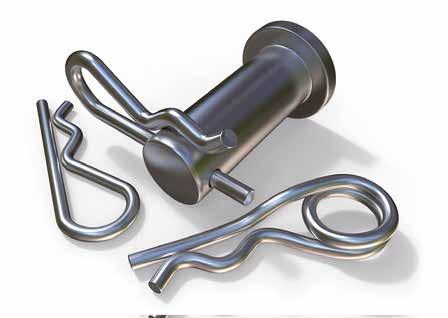
by Guy Avellon
Pins are a generic term for many products with unique applications. By knowing the differences, you can help your customer select the correct product for his application.
Pins are a mechanical device designed to hold parts that are not fixed, but may be subject to movement or other external force loads. This is in contrast to threaded fasteners which produce an adjustable compressive clamp load for heavy and thick materials; pins may only produce light radial loads.
Pins are generally made from steel wire or wire that has been flattened, then coiled or bent for specific applications. The steels vary in carbon composition and hardness. Pins may also be made from stainless steels, beryllium copper, brass or Monel™.
Categories for pins include; Clevis, Coiled, Cotter, Dowel, Grooved, Lynch, Slotted, Shear, Spring, Straight, and Taper.
Clevis Pins: Usually have a cold formed head on one end of a straight shank body. Close to the end of the shank, a hole is drilled through the body. The clevis pin is placed through other objects that do not necessarily have a receptor hole that is dimensionally toleranced to be close to the diameter of the pin, but is usually in a loose but not tight connection. To keep the clevis pin from falling out of the connection, a cotter pin is placed through the drilled hole at the end of the clevis pin. Clevis pins provide for shear resistance in all applications. Many will involve holding chains together. The materials are typically AISI 10101020 steel or 1211, which may be case hardened. (ANSI/ASME B18.8.1)
Cotter Pin: To be used with clevis pins and castle nuts, cotter pins are a flat folded wire that has a semi-circular cross section and is looped at the closed end to prevent the pin from falling through a hole. Some pins may have different shapes, such as an R Clip, which is shaped like the letter R and provides security from spring tension around the pin or cylindrical object. The length of one end of the cotter pin wire is slightly longer than the other to facilitate their opening and spreading. Once the two ends are through the hole of the clevis pin or drilled bolt, the ends are spread in opposite directions to prevent the cotter pin from falling out, or are wrapped around the castellated protrusions to prevent the castle nut from backing off the bolt. (ANSI/ASME B18.8.1).
Coiled Pins: In the genre of a spring pin, coiled pins, or spiral pins, are a straight, cylindrical pin manufactured from flat, hardenable materials that are coiled approximately 2 1/4 times to produce multiple walls. Designed to be press-fit into the holes of the several parts to be held together, the greater outwards spring tension produced by the multiple walls effectively prevent the pin from falling out of the hole. The coiled pins continually flex in service and minimize metal fatigue under dynamically loaded applications. Materials include, but not limited to; 1070-1095 carbon steel, 6150H hardenable alloy steel, 410420 and 302 stainless steels and beryllium copper.
Coiled pins are available in three classes: ISO 8751, for light duty; ISO 8750 for standard duty; and ISO 8748 for heavy duty applications.
Applications include: locks, latches, hinge pins, gear shafts, axles, pump shafts, motors, automotive doors and handles, etc. (ANSI/ASME B18.8.2)
Dowel Pins: Designed for precision fit parts, the straight, solid shank is ground to close tolerances with both ends chamfered. Dowel pins are to be press-fit into the applications. Uses include tool and die machinery. The materials are to be from any steel or alloy capable of being hardened to a minimum of Rc 50, which shall produce a shear strength of 130 ksi minimum. Non-hardened dowel pins shall have a minimum hardness of Rc 32, with a shear strength of 64 ksi for steel and 40 ksi for brass. (ANSI/ASME B18.2.2)
Grooved Pins: These pins have solid, unground shanks. The shank is a straight cylinder with three or more equally spaced swaged (flared) or extruded longitudinal grooves. The function of the grooves is to force metal from the side walls of the hole into the grooves which imparts a metallic bond and locking effect with the hole and subsequent parts.
Materials may be low carbon, alloy or corrosion resistant steel, brass or Monel™. These pins may be supplied either headed or straight groove. (ANSI/ASME B18.8.2)
Lynch Pins: An assembly consisting of a straight pin with an integral hoop-like retaining ring. The lynch pin is placed through holes in cylindrical parts, such as a round shaft or axle, then secured over the parts by the spring retaining ring to prevent parts from sliding or moving off each other. Also called a hitch pin, it is commonly used on tractors. The hoop ring provides an easy handle for quick removal.
Slotted Pin: Similar to a coiled pin, the slotted pin is not coiled in multiple layers. It is manufactured from flat metal that is rolled to almost being closed or touching its other side. Also known as a roll pin or ‘C’ pin. The sides are straight and both ends are chamfered as they are designed to be driven into a hole to provide a light, spring pressure against the parts. Materials include, but not limited to; 1070-1095 carbon steel, 6150H hardenable alloy steel, 410-420 and 302 stainless steels and beryllium copper. (ANSI/ASME B18.8.2)
Shear Pin: A term used for a straight pin made of low carbon steel. It is used between worm gears, drive gears or shafts. Its purpose is to fail before the parts encounter a resistance sufficient enough to cause damage to the parts. By failing first, the inexpensive part saves the more expensive parts from breaking.
Spring Pins: A genre of pins that includes coiled pins and slotted pins. These pins have a cylindrical shape with straight sides. One or both ends are chamfered to facilitate insertion as the body diameter of the pins are slightly larger than the hole diameter. The pin will compress as it is fitted into the diameter of the hole. As the spring wants to return to its normal shape, it exerts a continuous pressure against the walls of the hole. These springs are considered as being a self-retaining fastener. (ANSI/ASME B18.8.2)
Straight Pins: Are made from cold drawn wire with unground cylindrical sides. The ends may or may not be chamfered. For inexpensive, general applications; to secure shafts. (ANSI/ASME B18.8.2)
Taper Pins: Similar to straight pins with the exception that one end is tapered. These pins are designed to be driven into a hole of slightly smaller diameter than the body of the non-tapered end. This essentially provides a press-fit retention of the pin that is not expected to be removed. (ANSI/ASME B18.8.2)
I was twenty years old and taking a tour for the first time of the cold heading factory that would become my world for the next twenty-six years. I was enthralled by the activity going on all around me, the noise, the vibration, the smoke in the air, and the parts flying out of the headers like popcorn out of a popcorn popper. I vividly remember walking through the thread rolling department and simply being amazed at the thread rolling processI had never imagined that you could put a thread onto a screw that way.
Making fasteners, especially the cold heading part of the process is an exquisite and finely tuned dance that must all come together in just the right way for success. I would learn this after hundreds of hours invested with our header and roller operators working to make new, often very challenging parts go from our customer’s paper concept to three-dimensional reality. During this time with our manufacturing experts I would learn much about the process of finessing a part into production, how the process worked, and the tools that made it happen. Although my job required me to be a bridge between our production operations, the rest of our “office” staff, and our customer, so that I had to learn these things, I was surprised by the lack of others showing the same interest in learning how the product was made. I don’t think that has changed much and I must sadly say that it is highly likely we have many individuals in our industry that don’t really understand even the basics of how a part comes together.
This article is dedicated to those individuals that have always been curious but unable to really learn how coiled wire goes into the machine on one end and comes out the other the size and shape of a nearly finished screw, bolt, or nut. This article will look at the basics of what operations we do in a cold header, the basics of how the machine works, and the tools we use to pull it all off. I am hopeful that this will be a simple enough explanation that it will help those who have always wondered how a screw, bolt, or nut is made to fill the gaps in their knowledge and really come to appreciate the engineering marvel in cold heading fasteners.
How would you answer the question, “What is Cold Heading?” I often ask that in the training sessions that I do and, of course, there is always one engineer in the crowd that starts to describe it something like this, “it’s a high speed adiabatic forming process where…”. Although they may have a truly brilliant engineering definition, when I ask the question I am simply trying to tease out a simple explanation like we “we hit a piece of metal really hard so that it starts to take the shape defined by the tools…” And in reality, that explanation is pretty much right on target and can be understood by just about anyone.
As a metaphor, consider the child’s game of playing with Playdough. Many of us may recall hours of fun spent by us or our children modelling creations from this soft clay-like material. Often the Playdough set came with a device like a garlic press that you loaded the Playdough into, pressed, and squeezed out “ropes” through a shaped hole (See Figure 1) or the set had little “molds” you could press the Playdough into to make new shapes and play items. By comparison, at its core the cold heading processes are not very different.
Cold heading has a number of advantages over other manufacturing techniques that we could use to make fasteners. First and foremost, it is fast. That makes it more economical and considering the sheer number of fasteners consumed every year, more practical than any of the other competing manufacturing processes, which are all much slower. Unlike machining, it has very little or no waste and parts emerge from the process stronger than the raw material that went in.
Clearly there are some real advantages to utilizing this process, but just what exactly can one do? Cold heading allows us to accomplish three different operations. We are able to upset, extrude, and trim or pierce parts. In fact, most parts will combine two or all three of these processes to complete the finished part. So what are these three processes?
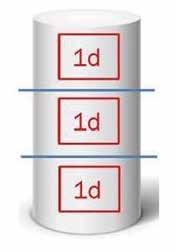
Upsetting is pretty much what cold heading derives its name from. It is the process used to form a head on a screw or bolt. At its simplest, upsetting is a process which accumulates material into a localized area of the part, like the head or a collar. In other words, in the areas that we are upsetting the diameter is getting larger. In cold heading lingo, we talk about the “number of diameters” that we can upset. Although that might sound pretty complex, it is really a relatively simple idea. Consider the shape that every part starts in. It is simple a cylinder cut from the long, continuous coil of wire being fed into the machine. For externally threaded parts (those that will become screws and bolts), this cylinder is long compared to its diameter. It is possible, therefore, to break this cylinder up into sections where each individual section is equal in height and diameter (See Figure 2). Each of these sections is called a “diameter”. Again, with parts that are long and skinny (bolts and screws) each starting piece of wire will be comprised of multiple diameter sections. Engineers have learned over the years that you can only squeeze (or move) a limited amount of material at one time before it begins to crack or burst. In the cold heading world, the limitation is about 2 ¼ diameters per strike. Most screw or bolt heads have more than 2 ¼ diameters of material in them, so that they must be hit more than once to achieve the desired
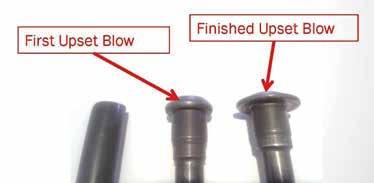
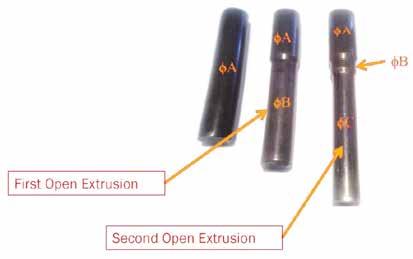
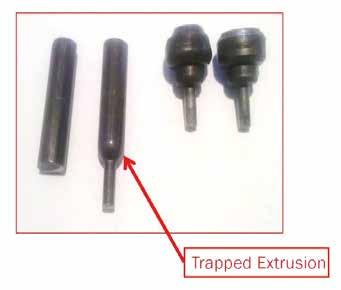
end result. On most parts it takes at least two strikes, so that we talk about a “first upset blow” and a “finish (or second) upset blow” to complete the head (See Figure 3). We will discuss the tooling in a little bit, but both the first and finish upset blows require different tools.
Extruding is a general term because relative to cold heading there are three distinctly different types of extruding processes. There are two forms of forward extrusion; Open and Trapped extrusion, where the material is being pushed out in front (or forward) of the tool. The third form of extrusion is Reverse Extrusion where the material is flowing backward against the direction that the tool is moving. Let’s consider each in a little greater detail.
Open extrusion gets its name from the fact that the majority of the part is not confined by any of the tools before entering the part of the tool where the extrusion happens. This allows the extruding portion of the tool to be located near the top of the die which maximizes the length we can extrude the part. The downside is that it takes pressure to push the part through the extruding part of the tool. If we push too hard, since the part is not being supported much by the tools it will buckle resulting in a catastrophic failure of the process. Therefore, open extrusions are limited to reducing the area by no more than about 35% (See Figure 4).
Trapped extrusions are pretty much the complete opposite of an open extrusion because the part must be completely confined in the tool before it begins to get pushed through the extruding part of the tool. This confinement allows us to push much harder so that we can now reduce the diameter by about 75% (See Figure 5 ). The drawback is that much of the tool gets consumed in making room for the part before extruding so that the length of the extrusion is much shorter and more limited than what can be achieved in an open extrusion.
Reverse extrusion is the primary process used in forming hollow parts such as nuts or bushings. In this case a pin is pushed into the part which is confined inside the die. There is clearance between the outside diameter of the pin and the walls of the die allowing material to flow backwards up along the pin. The result is an outside form beginning to take shape and the beginning of an internal hole or channel (See Figure 6 ). Reverse extrusion is also incorporated to form internal drive recesses in screw heads.
The final operations that can be accomplished in cold heading are trimming and piercing. Not every part will be trimmed or pierced. In fact, the majority of externally threaded screws do not receive a trimming operation. Both trimming and piercing are shearing operations. The speed, force, and design of the tools simply shear the subject area away. For externally threaded parts, we trim and the operation is almost exclusively reserved for finishing a head or collar shape. Perhaps the most common of all trimming applications is creating a trimmed hex head.
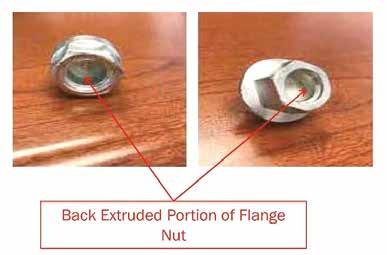
When internally threaded parts are made, most often reverse extrusion is occurring on both sides of the part. The blank, just prior to the last station, therefore, will have holes started but not going all the way through on both sides of the part. Separating the two holes is a thin web of material. The last operation in the sequence is, therefore, a piercing operation where a pin is thrust into the hole, shearing the web, and opening the hole continuously through the part.
In both cases, whether it is an external part being trimmed or an internal part being pierced, there is a small amount of offal. This is the only scrap, however, that will be experienced in cold heading and is only a small percentage of the entire amount of material that constitutes the part. Cold heading, therefore, is not a high scrap generator.
There are many different brands and designs of cold headers, so it is impossible to describe the way that one works and proclaim that this covers every possibility. However, most cold headers operate on similar principles, so that we can have a discussion here and it is likely to be relevant to many of the machines in a cold header’s shop.
Cold headers are essentially horizontal mechanical presses that feed raw material into an entry point, cut a piece off, and then transfer that piece of raw material through a series of strikes (more commonly referred to as blows) before emerging out the other side of the machine as a finished blank.
Cold headers are comprised of a stationary side that houses the “Dies” and a moving side that houses the “Punches” or “Hammers”. The machine comes together to strike the part in what is called a “blow”. Cold headers are defined by the number of blows that they provide. The simplest machines have one die but hit the part twice. More complicated headers can hit the part many times, although few commercial machines exceed more than six dies and blows.
Headers are classified or named by the number of dies they have and the number of blows they can inflict on the part. The simplest of machines is the one-die-two-blow (also known as a single-diedouble-stroke machine). This equipment has only one die but hits the part twice. For some that description may seem sort of counterintuitive. How can the machine only have one die but hit the part twice? In the simplest explanation, this means that the machine is designed so that the part gets struck by two separate punches while never moving out of the die. These machines are reserved for simple parts where almost all the work being done is to upset the head. The first blow creates an intermediate upset and the second (or final) blow completes the head. It is highly likely that little or nothing is actually happening in the die.
As parts get geometrically more complicated, this simple forming routine will no longer be successful and requires a machine with more dies and more opportunities to hit the parts. These upgraded machine types include two-die-three-blow machines (where the part gets hit three times) to multi-die parts formers and nut formers which may have as many as six dies in a line and hit the part six times. (Theoretically you can have an infinite number of dies in a line, but practically most commercial cold heading machine manufacturers don’t produce machines beyond six dies.) The more you can strike the part, the more complicated or geometrically unique you can form parts.
I have already mentioned the two primary tools used to make part, Dies and Punches. Each machine however, has a complete set of tools that can range from perhaps several dozen pieces to six station parts formers with several hundred tools. Let’s look at the primary components:
Cut-off Tools: Every cold header has to have a way to measure out and cut-off a piece of the continuous wire coil. The method of getting wire into the cold header and actually cutting it off will vary from brand to brand. In the end though, once it gets into the machine, they all will have a cut-off knife which strikes the wire from a transverse direction shearing a piece off. This system is usually comprised of a number of parts besides just the cut-off knife.
Dies: Dies are larger than the punches because they must withstand greater loading. Dies are located on the stationary side of the cold header. Each die is actually an assembly of a few to many pieces. The working tool is usually made in segments so that there are three or four separate segments that make up the working part of the die. These are all pressed under great pressure into a much larger diameter cylindrical canister called the “casing”. The inserts (working part of the die) are under extreme radial pressure with each blow. If they did not have some form of support they would quickly burst and fail. For this reason they are pressed into the casing, which is much larger and able to absorb and disperse the forming pressure providing integrity to the die for many thousands of parts (cycles). In fact, die casings can be used multiple times before they need to be retired.
All dies will have a hole central to the axis of the tool into which the part is pressed. Because of the extreme pressure being exerted on the parts, what prevents them from shooting right through the die and out the back of the machine? This is where the “knock-out pin” system comes in. There are a series of pins located at the rear of the die that perform two functions. First during the forming portion of the stroke, they prevent the part from being pushed out the back of the die. Secondly, at the end of the forming stroke, these pins are thrust forward pushing the part out of the die.
Punches: Punches are located on the moving side of the machine. The punches are smaller than the dies as they experience less pressure during the forming process. To prevent leaving the wrong impression, however, they, too, experience heavy loading and must also be contained inside punch casings. The punches usually define the shape of the head for screws where one punch will be the first blow and the second punch the final blow. They may also just support a pin that pushes the part into the die, especially in instances where the dies are facilitating open or trapped extrusions or recess pins that facilitate backward extrusion to form the drive recess in parts.
Transfer: The final tool/system that bears some discussion is the transfer mechanism. This is pretty simple on a one-die-twoblow machine, where the only transfer necessary is the sheared cut-off to the die. However, once you start stepping up to more and more dies in a multidie header, the transfer mechanism becomes an important component. The tooling piece of the transfer is usually just the “fingers” or the grips that actually grab and hold onto the parts as they move from one die to the other. These fingers are usually custom made for every part.
Transferring parts is a real art, especially as part geometry begins to play a factor. As parts begin to get top heavy from the upset head and occasionally a large shoulder, gravity takes hold and they begin to want to droop as they come out of the die. The operator, therefore, has to get the transfer timed just right so that it grabs and holds the part before it fully exits the die but doesn’t begin to actually move the part until the part is fully clear of the die. It’s a well-timed “dance” that often requires hours of experience and practice by the set-up technician to really hone the skill.
Like most things, cold heading machines are constantly being improved and getting better. Two tool related innovations that continue to evolve are:
1. Segmented Tooling: this is tooling that has been cut into segments and spring loaded so that the die can open up allowing parts with double collars or wasted shanks to be formed net shape and exit the die. It is impossible to form parts with this type of geometry in traditional tooling because they are unable to exit the die. There is significant interest in this innovation because it may allow the manufacturer to eliminate an expensive and time consuming secondary operation. Although quite interesting, this technology is not suited to everyday every cold header or every part. When employed the tooling is significantly complicated relative to traditional tooling and the expense of the tooling package rises dramatically.
2. Better Cut-offs: Much improvement has gone into the wire feeding and cut-off mechanisms of many machines providing wire cut-offs that are more square and tighter in tolerance. This is a real advantage because the more tightly controlled the volume is the better the end part. Additionally, the more square the ends the better condition the ends of the final part will be.
Cold Heading is a unique and exceptional manufacturing process. Few people who have ever just stood for the first time next to a header and marveled at how it runs really have an appreciation for all the variables and intricacies that go into the tooling, set-up, and machine timing to arrive at a successful finish. The next time you stand next to a header I hope you can now better appreciate what a finely tuned process it really is.
p2 AN CHEN FA 安全發
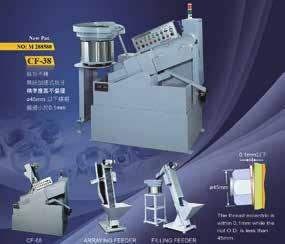
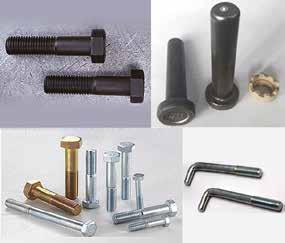
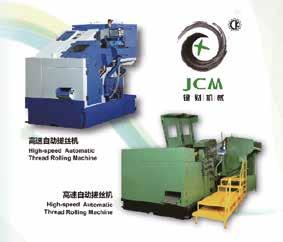
AN CHEN FA MACHINERY CO., LTD. www.anchenfa.com; www.anchenfa.com.tw anchenfa@ms10.hinet.net
ISO-9001
Wire Drawing Machine / Straightening Machines 伸線機/矯直機
886-5-2371127~9 886-5-2377088
安全發機械廠股份有限公司
BEIJING JINZHAOBO HIGH STRENGTH
FASTENER CO., LTD. www.bizhaobo.com info@jzbolts.com
CE, ISO-9001
Structural Bolts / Stud Bolts / Anchor Bolts / High Strength Bolts
建築用螺栓/螺樁栓/壁虎式螺栓/高強度螺栓
86-10-60553140, 86-15833010002 86-10-60553141
北京金兆博高強度緊固件有限公司
CHENG FANG YUAN MACHINERY INDUSTRIAL CO., LTD.
www.cfy.com.tw
cf6666@ms71.hinet.net
CE
Nuts Tapping Machines / Filling Feeders / Arraying Feeders
螺母攻牙機/填充式送料機/送料整列機 886-4-26991228 886-4-26992586
正方元機械工業有限公司
CHIEN TSAI MACHINERY ENTERPRISE CO., LTD.
www.jiancai.com.tw
jiancai@jiancai.com.tw
CE
Thread Rolling Machines 搓牙機
886-7-6225858 886-7-6233030
鍵財機械企業股份有限公司
CHITE ENTERPRISES CO., LTD. www.chite.com.tw bill@chite.com.tw
ISO-9001, ISO/IEC-17025, TAF, TÜV Hexagon Nuts / Chipboard Screws / Drywall Screws / Self-drilling Screws / All Kinds of Screws / Customized Special Screws & Bolts / Farmer Screws / Multi-stroke Special Screws/Bolts / Roofing Screws / Custom Bolts / Weld Nuts / Stamped Parts
六角螺母/塑板螺絲/乾牆螺絲/自鑽螺絲/各式螺絲/客製 化特殊螺絲(栓)/彩色烤漆螺絲/多沖程螺絲/栓/屋頂螺絲 /客製螺栓/焊接螺母/沖壓零件 886-6-2892423 886-6-2892290
尚余企業股份有限公司
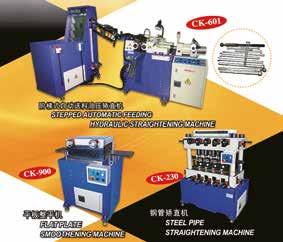

CHUN KAI MACHINERY CO., LTD.
www.chunkai.com.tw
ck23356525@chunkai.com.tw
CE
Straightening Machine / Smoothening Machines
矯直機/整平機
886-4-23356525 886-4-23359095
駿凱機械有限公司
CORTOOL MANUFACTURING GROUP www.cortool.cn denny.zhao@cortool.cn
ISO-9001, CE, ETA, TÜV, BSCI / ETA
Circular Saws, Non-powered / Saw Blades / Woodworking Tools In General / Tool Kits / Wrenches / Spanners in General / Bolt Cutters/Cutting Tools In General / Machine Parts/Wrench Sets / Building Tools / Files (Filing Tools) / Other Hardware Equipment' Accessories and Utilities
圓鋸/鋸片/一般木工用工具/工具組/一般扳手/扳鉗/小鐵 剪/一般剪切工具/機械零件/扳手組/建築工具/銼刀(銼用 工具)/其他建材設備五金、配件、用品 86-411-84390026 86-411-84390005
大連托福科技發展有限公司
COvENTYA ENvIRONMENTAL PLATING TECHNOLOGY (JIANGSU) CO., LTD.
www.coventya.com
h.li@coventya.com.cn
Surface Treatment and Related Equipment
表面處理及相關設備 86-512-67082628 86-512-67082618
科文特亞環保電鍍技術(江蘇)有限公司
DONGGUAN GRAND METAL MANUFACTORY
www.grandametal.com
zhuyb@grandametal.com
ISO-9001, IATF 16949
Blind Nuts / Rivet Nuts / CNC Parts, CNC Lathe / Automotive Parts / Special Cold & Hot Forming Parts / Stamped Parts / Special Parts/Machine Parts / Self-clinching Nuts / Spacers / Special Nuts / Weld Screws / Cage Nuts
拉帽/鉚螺母/ CNC 零組件/汽車零配件/特殊冷熱鍛零件/ 沖壓另件/特殊件/機械零件/自夾螺母/套管/特殊螺母/焊 接螺絲/浮動螺母 86-139-29204841 86-769-85161021
東莞市昕藝精密五金有限公司
DONGGUAN SANHEWLETT METAL PRODUCTS CO., LTD. www.sanhewlett.com.cn business@sanhewlett.com
IATF 16949, ISO-14001, ISO-9001
Screws, Nuts, Precision Lathe Parts
螺絲/ 螺母/ 精密車工件 86-769-8351 8248 86-769-8351 8243
東莞三合利金屬製品有限公司
FOSHAN CITY GUANGQINGCHANG
METAL PLASTIC CO., LTD.
www.qingchangrivet.com
sales@qingchang.com.cn
ISO-9001, IATF 16949
Blind Rivets
拉釘 86-757-86610511 86-757-86617867
佛山市廣慶昌金屬塑料有限公司
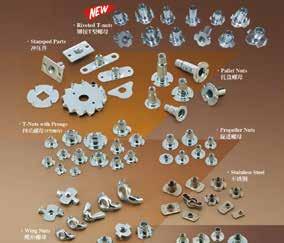
FOSHAN NANHAI XINGJIAN THREADING MACHINE MANUFACTURING CO., LTD.
www.fsxingjian.com
fsxingjian@163.com
Thread Rolling Machines / Standard & Non-standard Dies / Non-standard Thread Rolling Die Plates / Non-standard Taps / Circular Dies
各式搓絲機、標準件模具、非標模具、非標搓絲板、非標絲攻、 圓板牙
86-757-86311180 86-757-86311116
興健螺紋機器製造有限公司
H.K.C. RICH ENTERPRISE www.hkc-rich.com richard@hkc-rich.com
ISO-14001, ISO-9001, TAF, TÜV
Stamping Parts / CNC Parts / Plastic Injection / REACH or RoHS Available / Metallic Injection / Assembling Parts / Open Die Parts / Automotive Screws / Lathe & Milling
Machined Parts / PPAP Level III & IMDS Available
沖壓車工件/塑膠射出/金屬射出/組裝件/開模零件/車用螺 絲/車工件/REACH/RoHS/PPAP III/IMDS
886-7-2261988 886-7-2265789
南宇企業有限公司
HAIYAN WEISHI FASTENER CO., LTD.
www.wsfastener.com andy.huang@wsfastener.com
ISO-9001
Hexagon Nuts / Flange Nuts / Nylon Insert Nuts / Lug Nuts
六角螺母/凸緣螺母/尼龍內嵌螺母/車輪螺母 86-573-86110249 86-573-86112149
海鹽衛士標準件有限公司
HAIYAN GETE HARDWARE CO., LTD.
www.getehardware.com
yyp@getehardware.com
ISO-9001
Concrete Screws/Wood Screws/Self-Tapping Screws/ Self-drilling Screws/Chipboard Screws/Deck Screws/ Machine Screws/Stainless Steel Bolts/Stainless Steel Screws/Wing Nuts/Square Nuts/Furniture Screws
水泥螺絲/木螺絲/自攻螺絲/自鑽螺絲/塑板螺絲/甲板螺 絲/機械螺絲/不銹鋼螺栓/不銹鋼螺絲/翼型螺母/四角螺 母/傢俱螺絲 86-135 8636 7027
海鹽格特五金有限公司
HE BEI XINYU METAL PRODUCTS CO., LTD.
www.t-nuts.cn
xy@t-nuts.cn
ISO-9001
Forged and Stamped Parts / Tee or T Nuts / Wing Nuts
鍛件及沖壓件/T型螺母/翼型螺母 86-317-5675868 86-317-5676898
河北鑫宇金屬制品股份有限公司
HISENER INDUSTRIAL CO., LTD.
www.hisener.com
sales@hisener.com
CE, ISO-9001, OHSAS-18001
Deck Screws/Wood Screws / Roofing Screws / Chipboard Screws / Concrete Screws / Self-Tapping Screws / Machine Screws / Self-drilling Screws
甲板螺絲/木螺絲/屋頂螺絲/塑板螺絲/水泥螺絲/自攻螺 絲/機械螺絲/自鑽螺絲 86-573-87379615 86-573-87379616
海寧市海迅貿易有限公司
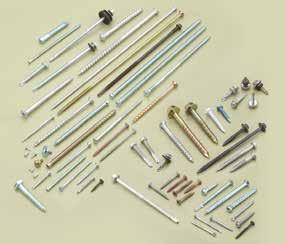
HUNAN LIANGANG 蓮港
HUAHUO METAL - TECH CO., LTD.
www.ydintl.com
sales@ydintl.com
Hex Nuts, Flange Nuts, Nylon Insert Nuts, Cap Nuts, Long Nuts, Counter Nuts, Demo Nuts, Weld Nuts, Wing Nuts, Ground Screw
六角螺母/法蘭螺母/尼龍埋入螺母/蓋帽螺母/長螺母/埋 頭螺母/焊接螺母/翼形螺母/地腳螺母
86-573-86087382 86-573-86087381
嘉興花火金屬科技有限公司
HUANG JING INDUSTRIAL CO., LTD.
www.fastener-world.com/en/supplier/huang-jing/ hj-export@umail.hinet.net
CE, ISO-9001
Chipboard Screws / Drywall Screws / PVC Screws / Bimetal Screws / Self-drilling Screws / PT Screws / Deck Screws / Wood Screws / A2 Cap Screw / Wire Rod / All Kinds of Screws
塑板螺絲/乾牆螺絲/ PVC 螺絲/複合螺絲/自鑽螺絲/三角 牙螺絲/甲板螺絲/木螺絲/ A2 蓋帽螺絲/線材盤元/各式 螺絲
886-7-6285366 886-7-6283531
皇晉工業有限公司
www.liangang.com laura.zhang@liangang.com
IATF 16949, ISO-9001
Blind Nuts / Rivet Nuts
拉帽 / 鉚螺母
86-731-57832017 86-731-57832018
湖南蓮港緊固件有限公司
HUNG-YIN ENTERPRISE www.honin.com.tw
hi.sales@msa.hinet.net
Straightening Machines 矯直機 886-7-6284773 886-7-6284779
鴻印企業行
JENN TAI MACHINE ENTERPRISE CO., LTD.
www.jenntai.com.tw chentai@jenntai.com.tw
CE
Vibratory Feeder Bowls for General Screws, Washers / Whole Set Feeding System for Nut Tapping Process / Scrap Sorting Machine / Roller Sorting Machine / Linear Feeder / Screw & Washer Assembling Machine / Automatic Metal Knurling & Letter Engraving Machine
自動化輸送系統/送料整列機/填充式送料機/自動倒料機/ 螺絲與華司組合機/金屬壓花刻字機 886-7-6210108~9 886-7-6216766
振太機械企業股份有限公司
JIAXING FASTEN FIX CO., LIMITED
www.fasten-fix.com sales@fastenfix.cn
IATF 16949
Blind Rivets / Blind Nuts / Rivet Nuts / Pneumatic/ Hydraulic Riveters / Welding Studs
拉釘/拉帽 / 鉚螺母/空(油)壓鉚釘機/焊接螺柱 86-573-82513798 86-573-82513098
嘉興捷固五金制品有限公司
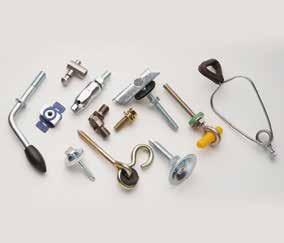
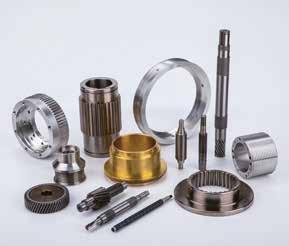
JIAXING GOODWAY CO., LTD.
www.goodway-hardware.com
info@goodway-hardware.com
ISO-9001
Blind Nuts / Rivet Nuts / Turning Parts / Anchors / Die Casting / Stamped Parts / Special Parts / Special Cold & Hot Forming Parts/Machine Parts / Forged and Stamped Parts / CNC Parts, CNC Lathe / Fastener Kits / Weld Parts
拉帽/鉚螺母/車床件/壁虎/壓鑄件/沖壓件/特殊件/特殊 冷熱成形零件/機械零件/鍛件及沖壓件/CNC 零組件/扣件組 /焊接零件
86-573-82765507 86-573-82765509
嘉興市固威貿易有限公司
JIAXING KINFAST HARDWARE CO., LTD.
www.kinfast.com
info@kfproduct.com
ISO-9001, CE
Concrete Screws / Wood Screws / Chipboard Screws / Drywall Screws / Machine Screws / Deck Screws / Eye Screws / Eye Bolts / Roofing Bolts / Socket Head Bolts / Special Bolts / U Bolts
水泥螺絲/木螺絲/塑板螺絲/乾牆螺絲/機械螺絲/甲板螺絲/ 環首螺絲/環首螺栓/屋頂螺栓/凹頭螺栓/特殊螺栓/U型螺栓 86-755-83479123 86-755-83459705
嘉興海德五金有限公司
JIAXING UPRIGHT IMPORT AND EXPORT
LIMITED COMPANY
www.zfastener.com
kellenhoo@hynut.com
Hexagon Nuts / Lug Nuts / Cap Nuts / Flange Nuts / Nylon
Insert Nuts / Tee or T Nuts / Blind Nuts / Rivet Nuts
六角螺母/車輪螺母/蓋頭螺母/凸緣螺母/尼龍內嵌螺母/ T 型螺母/拉帽 / 鉚螺母
86-573-86099268 86-573-86099028
嘉興市正上進出口有限公司
JINGLE-TECH FASTENERS CO., LTD.
www.jinglecorp.com
sales@jinglecorp.com
ISO-9001
T-head or T-slot Bolts / Eye Bolts/Special Bolts / U Bolts / Eye Screws / Machine Screws / Wood Screws / Drywall Screws / Chipboard Screws / Self-tapping Screws / Selfdrilling Screws / Special Screws
T 頭螺栓/環首螺栓/特殊螺栓/U型螺栓/環首螺絲/機械螺絲/ 木螺絲/乾牆螺絲/塑板螺絲/自攻螺絲/自鑽螺絲/特殊螺絲 86-574-87700072 86-574-87707155
寧波欣遠鈞固進出口有限公司
KUABIAO STAINLESS STEEL FASTENER
CO., LTD.
www.kjbscrew.com
kuabiao@xtke-sea.com
CE, ISO-9001
Stainless Steel Screws / Composite Screws / Colorcoated Screws / Self-drilling Screws / Stainless Steel Bolts / Stainless Steel Nuts / Stainless Steel Washers
不銹鋼螺絲/複合螺絲/塗料螺絲/自鑽螺絲/不銹鋼螺栓/ 不銹鋼螺母/不銹鋼華司 86-769-82913582 86-769-81198876
東莞市跨標不銹鋼緊固件有限公司
LEDA METAL COMPANY
www.ledametal.com
xiaomin@ledametal.com
ISO-14001, ISO-9001, ISO/TS-16949
Assembly Captive Screws / Insulating Washers / External Tooth Washers / A2 Cap Screws / Automotive & Motorcycle Special Screws & Bolts / Bi-metal Selfdrilling Screws / Carbon Steel Screws / Triangular Thread Screws / Slotted Set Screws / Sealing Screws / Security Screws / Self-locking Screws
裝配螺絲/絕緣華司/外齒華司/A2 有頭螺絲/汽機車特殊螺 絲(栓)/複合鑽尾螺絲/碳鋼螺絲/三角牙螺絲/開槽定位螺 絲/密封螺絲/安全螺絲/自鎖螺絲 86-769-87919756 86-769-87729835
利達五金公司
LINKFAST TECHNICAL CO., LTD.
www.linkfast.cc
info@linkfast.cc ISO-9001, CE
Flat Washers/ All Kinds of Nuts/All Kinds of Screws /Thread Rods / Rivets / Sleeve Anchors / Dropin Anchors / Wedge Anchors / Clamps in General / Stamped Parts / Tapping Screws / Hexagon Head Bolts
平頭華司/各式螺母/各式螺絲/牙條/鉚釘/套管(水泥)壁 虎/內迫壁虎/車修壁虎/一般夾具/沖壓件/自攻螺絲/六 角頭螺栓
86-573-82119831 86-573-82119706
嘉興銘承精工科技有限公司
microGLEIT TECHNOLOGY COMPANY
www.microgleit.com services@microgleit.com
Rust Preventative Oil / Water-based Sealer / Lubricant/ Surface Treatment and Related Equipment / Waterbased Lubricant / Aluminum Bolts / Industrial Robots & Accessories
防銹油/水性(五金零組件用)封口劑/水性潤滑劑/表面處理 及相關設備/水性(五金零組件用)潤滑劑(蠟)/鋁螺栓/工 業用機器人及週邊設備
886-2-27817892 886-2-27764387
摩特立科技有限公司
NINGBO ECHO FASTENER FACTORY
www.echofasteners.com sales@echofasteners.com
ISO-9001
Square Head Bolts / Eye Bolts / Spacers / Square Nuts / Flange Nuts / Castle Nuts / Nylon Washers / Spring Washers / Plastic Washers
四角頭螺栓/環首螺栓/套管/四角螺母/凸緣螺母/城堡螺 母/尼龍華司/彈簧華司/塑膠華司
86-574-86297378 86-574-86297377
寧波愛扣緊固件廠
NINGBO HUASHEN YULU SET SCREWS CO., LTD.
www.set-screw.com hs@hs-bolt.com
ISO-9001
Socket Set Screws / Socket Head Set Screws / Slotted Set Screws / Security Set Screws / Hollow Set Screws / Hollow Jam Socket Set Screws / Brass Tip Set Screws / Stainless Square Set Screws / Headless Set Screws
凹頭止付螺絲/內六角固定螺絲/開槽定位螺絲/安全固定螺 絲/空心固定螺絲/空心薄型止付螺絲/黃銅尖端固定螺絲/ 不銹鋼方頭固定螺絲/無頭固定螺絲 86-574-86900880 86-574-86021918
寧波華申羽路緊固件有限公司
NINGBO WEIFENG FASTENER CO., LTD. www.wf-fastener.com tony@wf-fastener.com
CE, ISO-9001
Nylon Nail Anchors / Self-drilling Screws / Self-Tapping Screws / Sleeve Anchors / Thread Rod / Eye Bolts / Hose Clamps / Nylon Screws / Spring Washers / Flat Washers
尼龍壁虎/自鑽螺絲/自攻螺絲/套管(水泥)壁虎/牙條/ 環首螺栓/管夾/尼龍螺絲/彈簧華司/平頭華司 86-574-2271 8666 86-574-2271 3377
寧波威鋒緊固件有限公司
NINGBO ZHISHANG SPECIAL FASTENERS CO., LTD. www.zsrivet.com sales@zsrivet.com
IATF 16949, ISO-9001
Blind Rivets, Multigrip Rivets, Solid Rivets, Drive Rivets, Hollow Rivets
拉釘/捶釘/中空鉚釘/雙鼓型鉚釘/實心鉚釘 86-574-58972303 86-574-58972300
寧波至上特種緊固件有限公司


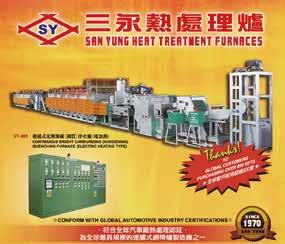
RUIAN DOUBLE-GOLD
ACCESSORY FACTORY
www.double-gold.com.cn shuangjin@china.com
ISO-14001, ISO-9001
Retaining Rings / Spring Washers
扣環/彈簧華司
86-577-65271838, 65276188 86-577-65273838
瑞安市雙金機械附件廠
SACmA LImBIATE S.P.A.
www.sacmagroup.com marketing@sacmagroup.com
ISO-9001
Cold Forming Machines And Headers for Production of Screws, Bolt, and Special Parts
螺絲、螺栓與特殊件成形機、打頭機/搓牙機/輸送機/升料機 /多主軸車床/動料斗/輸送帶/聯合機-螺絲機/二次加工機 /溫鍛機/溫搓牙機/攻絲機 +39 2 994521 +39 2 99050185
SAILUK RIVET CO., LTD.
www.sailuk-rivet.com
sales@sailuk-rivet.com
IATF 16949, ISO-9001
Aluminum Rivets / Stainless Steel Rivets / Blind Rivets / Multigrip Rivets / Rivets
鋁鉚釘/不銹鋼鉚釘/拉釘/雙鼓型鉚釘/鉚釘
86-757-8661 1136 86-757-86605695
佛山市南海區西河五金製品有限公司
SAN TZENG ENTERPRISE CO., LTD.
www.fastener-world.com/en/supplier/san-tzeng san.cheng@msa.hinet.net
ISO-14001, ISO-9001
Forming Oil / Tapping Oil / Bolt Stamping Oil / Nut
Forming Oil / Metal Working Oil
成型油/攻牙油/螺栓沖壓油/螺母成型油/金屬加工油 886-7-3222032~3 886-7-3210216
三城企業有限公司
SAN YUNG ELECTRIC HEAT mACHINE
CO., LTD.
www.sanyung.com
tsy@sanyung.com
CE, ISO-9001
Heat Treatment Furnace / Annealing Furnace / Quenching Furnace / Surface Treatment and Related Equipment
熱處理設備/退火爐/淬火爐/表面處理及相關設備 886-4-8896106~10 886-4-8896098
三永電熱機械股份有限公司
SANHUAN FASTENERS CO., LTD.
www.sanhuan-co.com info@sanhuan-co.com
ISO-9001
Brass & Bronze Screws / All Kinds of Nuts / All Kinds of Screws / Thread Rod / Anchors / Washers / Spring Pins/ U Bolts
黃銅/各式螺母/各式螺絲/牙條/壁虎/華司/彈簧插梢/U 型螺栓 86-573-86216555 86-573-86960023
海鹽三環進出口有限公司
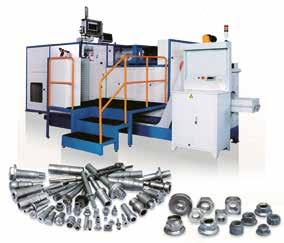
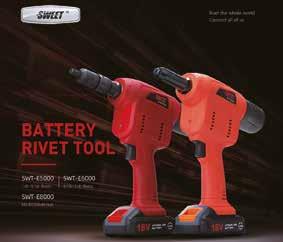
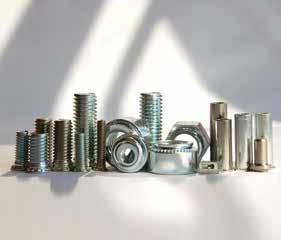
SHANGHAI CHUN ZU MACHINERY INDUSTRY CO., LTD.
www.chunzu.com.cn
chunzu@chunzu.com.cn
ISO-9001
Bolt Former, Nut Former, Bolt Type Part Former, Nut Type Part Former, One Die Two Blow Header, Two Die Two Blow Header, Flat Die Thread Rolling Machine, Rolling Dies And Cold Forging Toolings
螺栓成型機/螺母成型機/螺栓零件成型機/螺母零件成型機 /一模兩沖打頭機/二模兩沖打頭機/平板螺紋搓絲機/搓絲牙 板及冷鐓模具
86-21-59742888 86-21-59742882
上海春日機械工業有限公司
SHANGHAI DELON SPECIAL RIvET MANUFACTURE CO., LTD.
www.delonrivet.com
z.tao@delonrivet.com
ISO-9001
Blind Rivets / Blind Nuts / Rivet Nuts / Structural Rivets / Hand Rivet Tools / Hand Rivet Nuts / Rivet Bolt Tools / Air Hydraulic Rivet
拉釘/拉帽 / 鉚螺母/建築用鉚釘/手動拉釘工具/手動拉帽 /拉栓工具/氣動拉釘工具等 86-21-36130035 86-21-56860960
上海狄龍異型鉚釘製造有限公司
SHANGHAI QIANGYI FASTENER CO., LTD.
www.shqiangyi.com qiangyi@shqiangyi.com
ISO-9001, ISO/TS-16949
Nylon Insert Nuts / Cap Nuts / Flange Nuts
尼龍內嵌螺母/蓋頭螺母/凸緣螺母 86-21-57277525 86-21-57277526
上海強毅緊固件有限公司
SHANGHAI RIvET MANUFACTURE CO., LTD.
www.ret-global.com
sales@ret-global.com
IATF 16949, ISO-9001
Blind Nuts / Rivet Nuts / Weld Nuts / Clinch Nuts / Hexagon Nuts / Insert Nuts / Tee or T Nuts
拉帽 / 鉚螺母/焊接螺母/齒花螺母/六角螺母/嵌入螺母/ T 型螺母 86-21-37286522 86-21-37286066
上海銳拓五金製品有限公司
SHANGHAI TONE MACHINE CO., LTD.
www.sweet-tool.com
tone@sweet-tool.com
CE
Battery Rivet Tool / Hydraulic Riveters / Rivet Nut Tools / Automatic Riveting System
空(油)壓鉚釘機/電池驅動鉚接工具/鉚釘螺母工具/手動拉 釘工具/手動拉帽拉栓工具/氣動拉釘工具等 86-523-85432999 86-523-84981118
上海托恩機械有限公司
SHANGHAI YUANMAO FASTENER CO., LTD.
www.yuanmaosh.com
info@yuanmaosh.com
Blind Rivets/Rivet Nuts, Self-Clinching Fasteners, Cage Nuts, Self-Drilling Screws, Inserts
拉釘/拉帽/壓鉚緊固件/卡式螺母/鑽尾螺絲/鑲嵌件 86-21-57880835 86-21-57880835
上海元卯緊固件有限公司
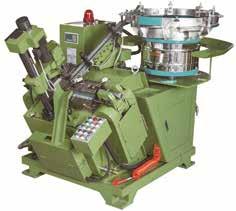
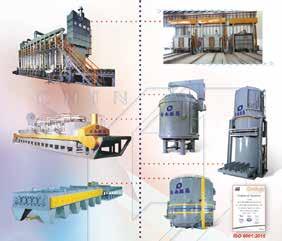
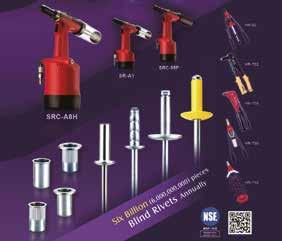
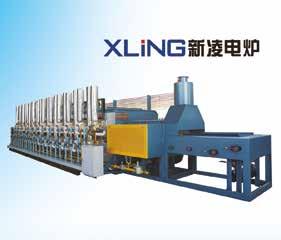
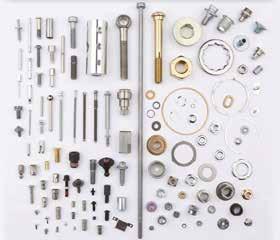
SHEEN TZAR CO., LTD.
www.sheentzar.com
info@sheentzar.com
CE, ISO-9001
Screw (Bolt) Formers / Self-drilling Screw Forming Machines / Cold Header / Thread Rolling Machines / Molds & Dies / Pointing Dies / Self-drilling Dies / Automatic Thread Slotting Machines / Screw Washer Assembling Machines / Drilling Test Machines
螺絲(栓)成型機/鑽尾螺絲成型機/冷鐓機/搓牙機/模具/鑽 尾模具/螺絲割尾加工機械/螺絲與華司組合機/鑽尾測試機 886-4-24060023 886-4-24060824
新讚興業股份有限公司
SPECIAL RIvETS CORP. (SRC) www.srcrivet.com srcrivet@ms12.hinet.net ISO-9001
Blind Rivets / Flat Head Rivets / Hand Riveters / Blind Nuts / Rivet Nuts / Closed End Rivets / Hand Rivet Tools / Hand Rivet Nuts / Rivet Bolt Tools / Air Hydraulic Riveters / Multigrip Rivets / Painted Rivets / Countersunk Rivets / High Strength Rivets / Rivet Nut Tools / Structural Rivets 拉釘/平頭鉚釘/手動鉚釘槍/拉帽 / 鉚螺母/封閉型鉚釘/手 動拉釘工具/手動拉帽拉栓工具/氣動拉釘工具等/雙鼓型鉚釘/ 塗漆鉚釘/埋頭鉚釘/高張力鉚釘/拉帽工具/建築用鉚釘 886-4-24623555 886-4-24621777
恆昭企業股份有限公司
SUZHOU XINLING ELECTRIC FURNACE
CO., LTD.
www.xl-sz.com
leo.shi@outlook.com
ISO-9001
Heat Treatment Furnace / Annealing Furnace
熱處理設備/退火爐
86-512-65013803 86-512-65022666
蘇州新凌電爐有限公司
TAINAN CHIN CHANG ELECTRICAL CO., LTD.
www.chin-chang.com.tw
d5782@ms63.hinet.net
ISO-9001
Annealing Furnace / Quenching Furnace
退火爐/淬火爐
886-6-2533019~20 886-6-2530696
台南振昌電機有限公司
TAIWAN SELF-LOCKING FASTENERS
IND CO., LTD. (TSLG) www.tslg.com.cn
tslg.ks@tslg.com.cn
ISO-9001, ISO-14001, IATF 16949
Screws and Nuts Locking and Sealing Process
扣件防鬆防漏預塗 86-512-57700888 86-512-57700988
台灣耐落螺絲工業股份有限公司
TIGGES TAIWAN
www.tigges-group.com
info@tigges-group.com
IATF 16949, ISO-14001, ISO-9001, ISO/IEC-17025, TAF, TÜV
Special Cold or Hot Forming Parts / Stamped Parts / CNC Machining Parts / Grinding
特殊冷熱鍛零件/沖壓另件/CNC 加工件 886-7-5366889 886-7-5365878
德商殷士諦股份有限公司台灣分公司
蘇州致韋
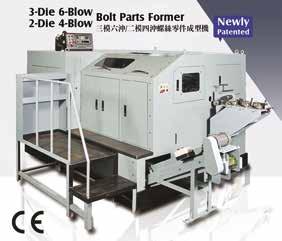
TONG
www.tongming.com.cn
export@tongming.com.cn
ISO-9001, ISO-14001, CE
Cap Nuts / Flange Nuts / Heavy Nuts / Hexagon Nuts / Hexagon Head Bolts / Hexagon Head Cap Screws / Machine Screws / Hexagon Washer Head Screws/Bolts / 6
Cuts & 8 Cuts Self Drilling Screws / Thread Rod / Steel Bar (Hex/ Round/ Square) / Stainless Steel Wire & Rod
蓋頭螺母/凸緣螺母/重型螺母/六角螺母/六角頭螺栓/六 角頭蓋帽螺絲/機械螺絲/六角華司螺絲(栓)/六刀、八刀自鑽 螺絲/牙條/棒鋼/不銹鋼線材及盤元及棒材 86-573-82203125 86-573-82207588
浙江東明不銹鋼製品股份有限公司
TZE PING PRECISION MACHINERY CO., LTD.
www.tze-ping.com
tpp.machine@msa.hinet.net
CE
Open Die Machines / Cold Headers / Multi-station Cold Forming Machines
開合模機/冷鐓機/多工位冷鐓机 886-7-633 3402 886-7-633 3313
智品精密機械有限公司
UAZNC SHANGHAI PRECISION TECHNOLOGY CO., LTD.
www.uaznc.com
yuezhankeji@163.com
Optical Sorting Machines
螺絲光學篩選機/非標光學篩選機 86-21-5776 9095 86-21-3772 0826
上海岳展精密科技有限公司
UNI-PROTECH FASTENERS (SUZHOU) CO., LTD. www.uni-protech.com.tw eli@mail.uni-protech.com.tw
ISO-9001, ISO/IEC-17025
Special Cold & Hot Forming Parts/Hot Forged Nuts 特殊冷熱鍛零件/熱鍛螺母 86-512-68361603 86-512-68361606
蘇州致韋貿易有限公司
U-WEEN ENTERPRISE CO., LTD. www.u-ween.com.tw alex@u-ween.com.tw
CE, ISO-9001
Impact Wrenches & Air Sockets / Air Ratchet Wrenches / Pneumatic Hand Tools in General / Hardware
衝擊扳鉗 & 氣動套筒/氣動棘輪扳手/一般氣動手工具/五金 零件
886-4-25223290#23 886-4-25223482
元穩實業股份有限公司
WEN YANG MACHINERY CO., LTD. (MING TANG MACHINERY) www.mingtang.com.tw wenyang@mingtang.com.tw
CE
Heading Machines / Open Die Machines / Parts Forming Machines / Screw Washer Assembling Machines / Centrifugal Feeders / Thread Rolling Machines / Fastener Makers / Screw (Bolt) Formers
螺絲打頭機/開合模機/特殊零件成型機/螺絲與華司組合機/ 離心式送料機/緊固件製造設備/螺絲(栓)成型機/高速自動 輾牙機 886-3-3286889 886-3-3272889
玟暘機械有限公司 (旻暘機械有限公司)
WUXI ANSHIDA HARDWARE CO., LTD.
www.anshida.com service@anshida.com
ISO-9001
Blind Rivets / Tubular Rivets / Solid Rivets
拉釘/管形鉚釘/實心鉚釘 86-510-88762491 86-510-88763742
無錫安士達五金有限公司
WUJIN LUOYANG YAOSHENGDA HARDWARE PRODUCTS FACTORY www.cz-ysd.com yongtuo_888@126.com; li@cz-ysd.com
ISO-9001
Cold Heading Moulds / Punches / Accessories 冷鍛模具/沖具/配件 86-180-18236888 86-189-15053777
武進區洛陽耀升達五金製品廠
YUSHUNG mETAL PRODUCTS CO., LTD. www.yushung.com info@yushung.com
ISO-9001
Brass & Bronze Screws / Brass & Bronze Nuts / Phosphor Bronze Washers / Copper Screws / Copper Bolts / Copper Nuts / Copper Nails / Countersunk Screws / Hexagon Head Cap Screws / Lag Screws / Metric Screws / Wood Screws
黃銅/青銅螺絲螺母/磷青銅華司/銅螺絲/銅螺栓/銅螺母/ 銅 釘/埋頭螺絲/六角頭蓋帽螺絲/木牙螺絲/公制螺絲/木螺絲 86-757-81813165, 81285289 86-757-81813931
宇聲金属制品有限公司
YUYAO AKF FASTENERS CO., LTD.
www.akffastener.com
sales9@anchor888.com
ISO-9001, CE
Wood Screws / Self-drilling Screws / Self-Tapping Screws / Machine Screws / Metric Screws / Metal Screws / Furniture Screws / Floorboard Screws / High Strength Screws / Combined Screws / Bi-metal Screws / Carbon Steel Screws 木螺絲/自鑽螺絲/自攻螺絲/機械螺絲/公制螺絲/金屬螺 絲/傢俱螺絲/地板螺絲/高張力螺絲/組合螺絲/複合螺絲/ 碳鋼螺絲
86-574-62757772 86-574-62757771
余姚奧可飛緊固件有限公司
YUYAO NO.2 STANDARD FASTENER FACTORY / YUYAO BIAOER TRADING www.biaoer.com
ruanlifei@biaoer.com
ISO-9001
Various Bolts & Screws / Eye Bolts (GB789, DIN444) / Window Hinges / Door Hinges
各式螺栓及螺絲/環首螺栓/窗戶鉸鏈/門鉸鏈 86-574-62003777 86-574-62003980
余姚市高中壓標準件二廠 / 余姚標二貿易有限公司
ZHEJIANG HYSTRON AUTO PARTS CO., LTD. www.hystron.com
chenzhen@hystron.com
ISO-9001, TAF
4 Pronged T Nuts / Weld Nuts / Sleeve Nuts / Spacers / Special Nuts / Barrel Nuts / Automotive Nuts / Flange Nuts / Hexagon Nuts / Knurled Nuts / Tee Nuts
四腳T帽/焊接螺母/套筒螺母/套管/特殊螺母/ 圓柱帽/車輛螺母/凸緣螺母/六角螺母/齒花螺母/ T 形螺母 86-573-86170988 86-573-86170658
浙江洪揚汽車零配件有限公司
ZHEJIANG K&H 坤厚
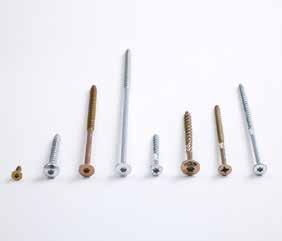
ZHEJIANG K&H AUTO PARTS CO., LTD.
www.khfastener.com
sales@khfastener.com
IATF 16949
4 Pronged T Nuts / Self-clinching Nuts / Tee Nuts / Blind Rivet Studs / Blind Nuts / Rivet Nuts / Fastener Maker
四腳T帽/自夾螺母/T形螺母/拉帽 / 鉚螺母/緊固件製造設備 86-571-8720 8453 86-571-8720 8452
坤厚汽車零部件有限公司
ZHONG SHAN CITY CHEHAN HARDWARE PRODUCTS CO., LTD.
www.chfastener.com chfastener@hotmail.com
ISO-9001
Alloy Rivets / Multi-stroke Rivets / Semi-tubular Rivets / Shoulder Rivets / Blind Nuts / Rivet Nuts / Hand Rivet Tools / Hand Rivet Nut / Rivet Bolt Tools / Air Hydraulic Rivet /Combined Screws / Customized Special Screws & Bolts / Furniture Screws / Machine Screws / Multi-stage Screw & Parts / Socket Head Cap Screws
合金鉚釘/多衝程鉚釘/半空心鉚釘/三層鉚釘/拉帽/鉚螺母/手動拉釘工具/手動拉帽拉栓 工具/氣動拉釘工具等/組合螺絲/客製化特殊螺絲(栓)/傢俱螺絲/機械螺絲/多衝程螺絲、 零件/內六角孔螺絲
86-760-22284520~2 86-760-22551223
中山市澄翰五金制品有限公司
ZHONGDA UNITED HOLDING GROUP CO., LTD.
www.zhongda.cn xyt@zhongda.cn ISO-14001, ISO-9001, OHSAS-18001, TÜV
Chipboard Screws / Drywall Screws / Roller / Chains / Self-drilling Screws / Construction Fasteners / Concrete Screws / Roofing Screws / Wing Nuts / Furniture Screws / Thread Rod / Eye Screws / U Bolts
塑板螺絲/乾牆螺絲/羅拉 / 鏈條/自鑽螺絲/建築扣件/水泥螺絲/屋頂螺絲/翼型螺母 / 蝶型螺母/傢俱螺絲/牙條/環首螺絲/U型螺栓 86-573-8677 0313 86-573-8677 9598
嘉興市中達進出口有限公司