RURAL INFRASTRUCTURE NUTRITION FORAGE AND ARABLE HORTICULTURE ANIMAL MANAGEMENT DAIRY MANAGEMENT


Plan 365 is a technical guide aimed at helping shareholders learn about best practice and the latest advancements in rural technology.

RURAL INFRASTRUCTURE NUTRITION FORAGE AND ARABLE HORTICULTURE ANIMAL MANAGEMENT DAIRY MANAGEMENT
Plan 365 is a technical guide aimed at helping shareholders learn about best practice and the latest advancements in rural technology.
A well-balanced diet is essential every day to ensure working horses receive all required nutrients for fitness, recovery and overall health. Plenty of forage and a wellformulated performance horse feed are a great start.
Deciding which supplements to include can be challenging, given the large number of products on the market. Most of these supplements offer considerable benefits and play an important role in the diet, but the first that should be considered for a working horse’s diet are electrolytes.
Electrolytes are salts that play an important role in maintaining osmotic pressure, fluid balance and normal nerve and muscle activity. The most important electrolytes are sodium (Na+), potassium (K+), chloride (CI-), and magnesium (Mg++). These are lost daily in sweat and urine, and are lost in vast amounts when the weather is hot and the horse is working hard, trying to dissipate excess body heat through sweat. The major losses are of chloride followed by sodium and potassium and therefore these are the most important electrolytes to replace.
All horses that work hard enough to break a good sweat will require electrolytes if they are to recover quickly and rehydrate. Travel and stress can also induce heavy sweating – a horse travelling a few hours to a competition on a hot day may lose up to 25 litres of sweat. If these losses are not replaced, the horse may start the competition already dehydrated.
Some horses sweat more than others,

so it’s important to monitor sweat losses to determine how much needs to be replaced. It is easy to underestimate sweat loss on hot dry days because even though there may be considerable electrolyte loss, the sweat may quickly evaporate from the horse’s skin.
Substantial loss of electrolytes causes fatigue and muscle weakness and can eventually decrease the thirst response. Research has also found that electrolyte deficiencies are a significant causative factor for muscle soreness and tying up in horses. The restoration of a correct dietary electrolyte balance can significantly improve this condition. Since most of the electrolyte loss in the horse occurs through sweating, one method of calculating electrolyte
requirements is to match the sweat loss. Body weight loss during exercise is a good way to estimate that, where 1kg of body weight loss equals 1 litre of body water and salt loss.
When choosing an electrolyte it is important to select a product that contains the correct proportions of the nutrients lost in sweat. Equine Electrolytes are available from Farmlands and have been formulated to mimic the composition of horse’s sweat, so all nutrients are replaced in the correct proportions.
For further assistance and advice on designing a diet for your performance horse, consult a reputable equine nutrition advisor.
The element sodium (Na) is essential for all animals. It functions as a major extracellular cation and is essential for maintaining osmotic pressure in the body as well as water regulation. It is essential for transporting nutrients around the body and removing waste from cells. It is also involved in nerve impulse transmission and muscle function.
Sodium is lost in milk, urine, faeces and sweat – this loss increases in high temperatures and during exercise. For ruminant animals, sodium has an added importance in saliva, which is produced in vast amounts daily to help to buffer the acid produced from fermentation
in the rumen. Production of the saliva is stimulated by the chewing of feed, particularly the process of rumination.
A dairy cow may produce up to 150 litres of saliva per day, depending on the diet it receives. This is a lot when compared to a monogastric animal of a similar size. Roughage/long fibre has the effect of increasing rumination activity, which in turn increases the amount of saliva that’s produced. Saliva contains sodium bicarbonate, which has a buffering effect and counteracts the acidic by-products of carbohydrate (fibre, starch and sugar) digestion. It also helps to keep the rumen pH at a level that is
optimal for the microorganisms living there to function. For this reason ruminant animals have a higher requirement for sodium, and a lack of it can depress rumen functionality.
Sodium is also linked to total feed intake, as ruminants tend to prefer salty foods over more bland foods. Water intake can also be affected by sodium, and adding sodium to the diet can help to stimulate that.
Sodium in forage
Sodium is found in forage because it is taken up by plants as they grow. However, sodium can leach from soils
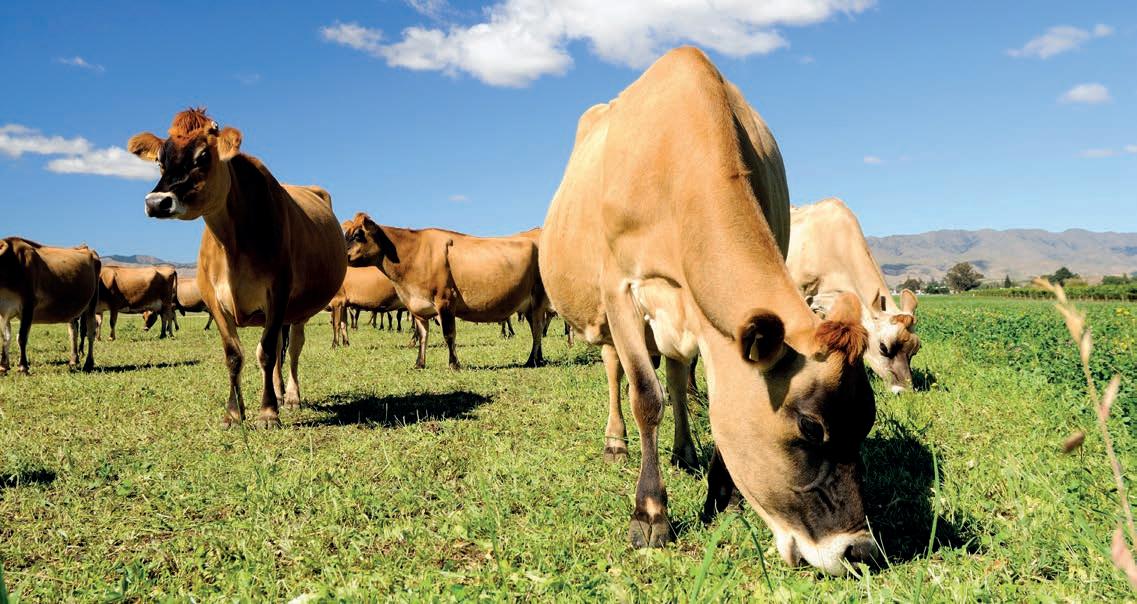
and the amount of sodium in the soil can vary depending on farm location. A coastal farm will have more sodium in the soil due to higher levels in rain, whereas an inland farm is more likely to be sodium deficient. Areas with high rainfall may be more prone to sodium leaching from soils. Some particular forage species are well known to not take up sodium from the soil even if present in adequate amounts. These include maize, lucerne and kikuyu. DairyNZ has put the recommended sodium level for lactating dairy cows at 0.2 percent of total dry matter. It also suggests that the sodium level of pasture ranges from 0.03 percent to 0.6 percent (Facts and Figures 2017). This means that at times pasture is deficient in sodium compared to animal requirements.
Of the last 43 pasture samples submitted by NRM for which sodium level was requested for analysis, the average sodium content was 0.25 percent; however, about 50 percent of the samples were below the recommended level of 0.2 percent for milking cows. Some concentrate feeds such as palm kernel and grain are also low in sodium, which makes supplementation even more important when these feeds are included in the diet.
Sodium deficiency
Sodium deficiency in ruminants can cause reduced appetite, reduced water intake, weight loss, reduced milk production and pica (an appetite for substances that are largely non-nutritive). Milk is 87
percent water, so a cow that is not drinking enough water will have a significant drop in milk production. With severe deficiency, animals may become dehydrated, uncoordinated when moving, shiver, and even die from arrhythmia of the heart.
Sodium supplementation
Sodium is not stored in the body in significant amounts, which means that it’s best to supplement it little and often. The most common form of supplementation for sodium is sodium chloride, more commonly known as salt. Sodium chloride contains 40 percent sodium. Salt can be applied to forage as a fertiliser, dusted on pasture or included in water, although these methods can often have high wastage (particularly dusting), be time consuming and unreliable. Offering salt to animals in blocks or free-access rock salt in troughs can work really well and it allows the animals to regulate how much sodium they need. One downfall of salt blocks is that animals may not be able to consume enough to meet requirements due to time constraints. Salt can also be included in compound feed and blends, which is a good way of ensuring each animal receives adequate sodium every day. The salt can help to increase the intake of feeds by increasing palatability. Ruminant diets that contain forages low in sodium (such as maize silage) will need to be balanced with higher levels of supplemented sodium each day and several routes of supplementation may be best.
SODIUM LEVELS IN COMMON FEEDS
Pasture silage 0.1-0.16
Maize silage 0.01
Barley grain 0.03
Maize grain 0.003
Wheat grain 0.01
Peas 0.01
Soya bean hulls 0.01
Palm kernel expeller 0.02
Dried distillers grain 0.30
Molasses 0.15
Chicory 0.20
Lucerne 0.06
Fodder beet 0.4
Kale 0.1
Turnips 0.28
The table shows that many supplementary feeds are low in sodium compared to requirements, which for lactating dairy cows is 0.2 percent of total dry matter.
While salt can help to increase the palatability of feeds, too much of a good thing is not always best and there is a point where too much salt can cause water/feed to become unpalatable, so caution is required. For more information, contact your local Nutrition Specialist.
Article supplied by Stacey Cosnett, Nutritionist.

Falling pasture quality over the coming months can dramatically affect the performance of milking animals and young stock, but countermeasures are available.
Spring calving cows should be “in their groove” by November – they will have peaked in production and now be gradually easing back while regaining condition as best they can. Carefully reared calves should be benefiting from increased rumen capacity to use as much of the leafy pasture on offer as they can. Unfortunately nature can throw some spanners in the works, with grasses slipping into reproductive mode and the sun slipping behind clouds that often bring shade rather than rain. If pasture fibre levels rise and sugar levels drop, cattle on a predominantly pasture-based diet are hit by a double whammy – higher fibre pasture takes longer to ferment so dry matter intake falls; and because digestibility falls, the metabolisable energy per kilogram also drops. If neutral detergent fibre (NDF) levels rise by 10 percentage points (say from 40 percent to 50 percent), ME falls by about 1MJ. A drop in ME from 12 to 11MJ/kg DM doesn’t sound very dramatic but if at
the same time DMI drops suddenly, milk production is dropping and cows that were holding their own are dropping condition. Young or thin cows are going to be harder to get in-calf and recently weaned calves are going to struggle to meet growth targets. Cattle can be full and appear content but are not fully fed to meet demands for production, growth and reproduction.
Maintaining high quality pasture through attentive pasture management to stop post-grazing residuals rising through late spring may help to keep leafy pasture available to stock but increasing sunlight hours is beyond the ability of even the most progressive farm manager.
Continuing supplementary feeding or even increasing levels is one way to help counter falling pasture quality. Continuing to feed 1kg pellets per day to calves can make a significant difference to those with a total dry matter intake of 3-4kg/day. Although there will be some substitution when “hard feed” (grains, compound feed or straights) rates are increased and pasture management will have to ensure the pasture not eaten is well used, energy intake by cows
should still increase and the risk of a negative energy balance reduced. The NDF in hard feeds is less rumen filling than the NDF in forages – imagine forage being like the volume of a hotel compared with hard feed being like a demolished hotel – the cells of fresh and conserved forages fill the rumen much more than fibre in hard feeds. Fonterra’s new Fat Evaluation Index is undoubtedly focusing some farmers’ interest in reducing palm kernel usage, with resurgence in demand for compound feeds and blends across New Zealand. Rumen-protected fats offer one way to supplement energy intake without compromising dry matter intake. Ionophores can help improve feed efficiency while helping to reduce the risk of bloat but interest is also growing in the use of yeast-based additives. Various sorts are available that can help fibre digestion by supporting fibre-digesting rumen microflora. Options are available when nature works against progressive farmers. For more information, contact your local Nutrition Specialist.
Article by Dr. Rob Derrick, Nutritionist, Farmlands.
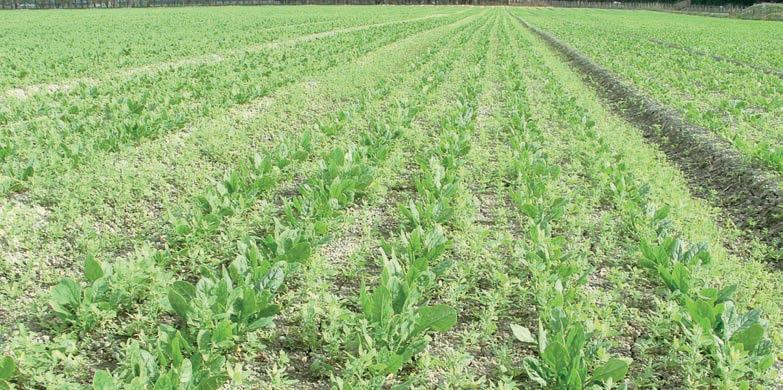
Growing crops is not just a case of sowing seed but requires a full understanding of the many factors involved in a very complex process. One of the most important of these factors is nutrition. Even a small deficiency, especially of a micronutrient, can lead to serious metabolic disorders and consequent reductions in yield and/or compromised quality. It is therefore vital that the balance between all nutrients is optimised. There are many reasons why foliar fertilisers are an effective solution for crop nutrition. These include slow mineralisation of elements applied as solid fertiliser, mineral imbalances (low and excess), soil type, soil pH, soil compaction, plant stress, leaching, drought and excess crop load. It is best to apply foliar fertilisers using a preventative approach, before a deficiency occurs. If a nutrient deficiency is visible in a crop, you have already suffered a yield penalty and production has been compromised. Correcting an existing deficiency is still a good idea, to mitigate further losses. Applications are best made in the early morning of a fine day, while there is moisture in the plant. Applying well-formulated nutrients through the foliage can alleviate the problem of element antagonism in the soil, e.g. boron uptake from the soil is antagonised by high soil calcium levels. UK-based company Headland has been developing and formulating foliar nutrient products for more than 30 years. Headland products
|
have been available and used by commercial growers in New Zealand for more than 25 years, the past 6 via New Zealand-based crop protection company Zelam. Headland’s parent company is global agribusiness FMC. The Headland range has been designed with tank mix compatibility and optimising plant uptake in mind. Single-element or combination foliar fertilisers are available for fodder beet, forage brassica, cereal or pasture. In building the knowledge base to help understand and target what nutritional issues may be encountered in a crop or site for the season ahead, the more background we can gain the better. Key information such as soil analysis (deficiencies and excesses, pH), soil type, paddock history (previous crops, yields), applied base fertiliser (quantities, form) and any foliar nutrient test results all helps in building an informed picture. During spring, rapid growth and
high nutrient demands can create shortfalls in optimum availability of nutrients at the root zone. Imbalances (excess or deficiencies) can inhibit the uptake or availability of other elements. Soil pH can also affect availability of the nutrients within the soil solution. Information on these two aspects provides a head start in identifying current issues and what lies ahead as the season progresses. Well-timed applications of foliar nutrients to match crop growth stages, combined with crop protection products, will meet demands. If intervening at a later stage, based on test analysis or visual symptoms, using a well-formulated foliar fertiliser makes it possible to correct a deficiency to mitigate any further yield penalty. For further information, contact your Farmlands Technical Field Officer or the friendly team at your local Farmlands store.
Article supplied by Zelam.
Internal parasite resistance is thought to cost New Zealand sheep, cattle, deer and goat farmers at least $20 million in lost production every year.
There are two main contributors: ineffective drenching and livestock management of animals bred on the property; and animals brought in from another property. Where a lot of stock, particularly lambs and calves, are brought in often from multiple sources, their drench history, worm genetics and resistance status is relatively unknown. Quarantine drenching, as the name suggests, is the practice of drenching brought-in animals on arrival with a triple-acting product likely to remove a high proportion of resistant parasites. Once the animals are drenched, they are held in a quarantine area, usually a yard, to allow the expulsion of these parasites before they are moved on to “clean” pasture.
The quarantine after drenching is to allow adult worms and immature larvae to be killed and pass out in the faeces in an area where they can’t develop or be consumed by other animals. Having dealt with the adult and immature resistant worms, there will potentially still be the eggs of some resistant worms not killed and these will take longer to pass out of the digestive tract. Therefore, it is recommended that recently introduced animals not be grazed immediately on the “cleanest” paddocks but rather on the most contaminated paddocks after the initial 24-hour quarantine. This will dilute the population of

worms surviving treatment with worms already present on the property. Ideally, this quarantine paddock should then be grazed with animals with a higher immunity (e.g adult ewes), a different species (e.g. cattle), closed up and conserved for supplementary feed (hay or baleage) or considered as part of the pasture renewal programme for the property. Finally, a word of caution. Lambs that have either been trucked long distances or held in yards without ready access to water may be dehydrated and therefore more susceptible to levamisole toxicity. Water must be made available to all stock in the quarantine area. Feed should be considered as well.
drench
The choice of drench should be based on the resistance of the animals being brought in. Of course, the whole process is predicated on not knowing what this is. In most instances a triple-acting drench that
contains members of the macrocyclic lactone (ML), benzimidazole (white) and levamisole (clear) families such as Evolve® Sheep HiMin or Evolve® Tape will be appropriate. The advantage of a triple-acting product is that parasites with a resistance to one or two of the actives will still be susceptible to at least one of the other actives, thus minimising the number of worms surviving treatment. For finishing, grazing or growing lambs, Evolve Tape and Evolve Sheep HiMin can be relied on to reduce the worm burden on your property without compromising your drench resistance status. Where the drench resistance status is known, a double-acting drench such as Saturn® can also be used. For more information, contact your Farmlands Technical Field Officer or the friendly team at your local Farmlands store.
Article supplied by Donaghys Animal Health.
If you’re growing crops for late summer feed, these tips will help you get the best results.
Good groundwork
Use soil test information to adjust pH and base nutrient levels for your chosen crop. Remember, it takes six months to a year to adjust soil pH, so if yours isn’t in the ideal range, take this into account when calculating potential yield.
Head start
A starter fertiliser that includes nitrogen and phosphorus (like DAP) will set up your crops well. Germinating seeds need a readily accessible phosphorus

supply to develop healthy root systems and the nitrogen will support early growth. The stronger the start, the better the chances of a good finish.
Brassicas and fodder beet may need boron to avoid brown heart and improve yield. Cropzeal Boron
Boost is a good starter option for this purpose. It has boron in every granule, which delivers the micronutrient more evenly to the crop than is possible by including boron in a mix.
Best dressed
Nitrogen side-dressings are the next crucial step and there are some key points to ensure you apply nitrogen to best effect.
• A feel for yield
Targeting nitrogen application to expected yield minimises waste and maximises the return on your nitrogen investment. Tools such as the AmaizeN calculator (for maize) or the Ballance Brassica Calculator can help refine your predictions.
• Weed watch Weed control will help stop invaders “stealing” applied nitrogen from your crop.
• Nitrogen in reserve?
Pay attention to Available N test information. This tells you how much nitrogen your soil will supply during the crop’s life, so you’ll know how much to top up from the bag. If you are cropping former pasture land, quite a bit of organic nitrogen may be unlocked from the soil when it is cultivated. Alternatively, if the land has been cropped over
a number of seasons, its organic nitrogen reserves may be low.
• Timing is everything Plants take up nitrogen only when they are growing. It is important that it is available when it will boost canopy growth, giving plants more power to convert sunlight into energy to improve yield. Brassicas need nitrogen 4 to 6 weeks after emergence and again around 8 to 12 weeks. Fodder beet requires a single application at canopy closure. Apply nitrogen to maize once it reaches knee height (technically, the 6-true leaf stage). Targeting application to high growth periods has another advantage. If you apply nitrogen too late in the season, close to grazing when growth is slowing, the crop’s nitrate levels may get too high, resulting in stock losses or reduced performance.
• Protect your nitrogen investment
Product choice is vital in cropping as you’re using large volumes of nitrogen and the potential for loss is high. Volatilisation losses can exceed 30 percent of nitrogen applied when urea is used for side-dressing crops. Using SustaiN keeps more of that nitrogen in the soil to support crop yield.
For more information, contact your Farmlands Technical Field Officer or the friendly team at your local Farmlands store.
Article supplied by Ballance Agri-Nutrients.

Wet conditions at the start of spring are likely to result in higher disease pressure earlier in the season in wheat and barley crops. In situations that further contribute to disease risk, such as early sown crops and those with less varietal tolerance to key diseases, it is important to ensure robust preventative fungicide programmes are in place early. This is particularly critical for diseases that may have built up over winter and will then thrive under high moisture levels.
One of the aims of disease control is to retain photosynthetic area on those leaves that make up the “engine room” of the plant – the critical Flag leaf in wheat and Flag-1 leaf in barley. By preventing fungal infections from penetrating the plant, subsequently destroying cells as they grow within the leaves, and stopping saprophytic diseases from robbing the plant of carbohydrates and nutrients, an effective fungicide programme is essential to protect the yield potential of the crop.
In these situations, DuPont™ Acanto® fungicide is well suited to the T1 spray timing, or around the GS 31 growth stage, as systemic, translaminar and vapour activity provides excellent protection for 4-6 weeks over this critical period. A follow-up spray is recommended when conducive conditions prevail. The timing of these two sprays should aim to reduce the disease load as the critical top three leaves are emerging and to capitalise on the strengths of the product to protect the Flag-1 and/ or Flag leaves. The strong activity of Acanto not just on moisture-driven diseases but on leaf rust, stripe rust and powdery mildew further contributes to the product’s flexibility. Acanto (picoxystrobin) is a broadspectrum fungicide in the strobilurin class of chemistry. Picoxystrobin has been shown to increase green leaf retention in cereal crops and provide excellent control of labelled diseases. Together, these factors contribute to improved yield potential compared with other strobilurin products.
When mixed with prothioconazole, the two modes of action offer a sound resistance management strategy, with excellent broadspectrum disease control in wheat and barley. This combination can be particularly useful for season-long resistance management, providing a rotational break from at-risk SDHI chemistry, which may have been used as a seed treatment or form part of a later fungicide programme. Effective longer-term management practices including crop rotation, stubble control and variety selection will help to reduce inoculum loads, contributing to an integrated approach that will help to reduce the pressure on fungicides. DuPont Acanto (and all other strobilurin chemistry) should always be applied in a mixture with another effective mode of action fungicide, never applied alone. For more information, contact your Farmlands Technical Field Officer or the friendly team at your local Farmlands store.
Article supplied by DuPont.
Weed control is important in forage brassicas both to minimise crop competition and to reduce soil weed seed content in advance of subsequent crops or pasture.
Forage brassicas are particularly susceptible to weed competition during establishment1. This is especially the case when sowing into scenarios with moderate to high weed seed loadings in the soil, such as previously cropped ground or run-out pastures with even just a low weed content. Cultivation can also bring long dormant weed
seeds to the soil surface, enabling germination within the crop.
Three important weed control aspects worthy of focus in your forage brassica cropping plan include cultural control, spray-out and seedbed preparation, and the use of pre- and post-emergent chemicals. Cultural weed control
Agronomic practices that contribute to the rapid development of a dense brassica leaf canopy have an important role to play in providing cost-effective weed control. Aside
from enhancing weed control, the pay-off is increased yield and quality forage for your livestock. Areas to address include soil testing and correcting soil pH and fertility, preparing a quality seedbed, planting at appropriate soil temperatures and moisture, placing fertiliser down the spout at sowing (e.g. DAP), ensuring good seed to soil contact and monitoring early for pests to maintain plant population. These practices contribute to rapid germination, establishment and canopy cover,
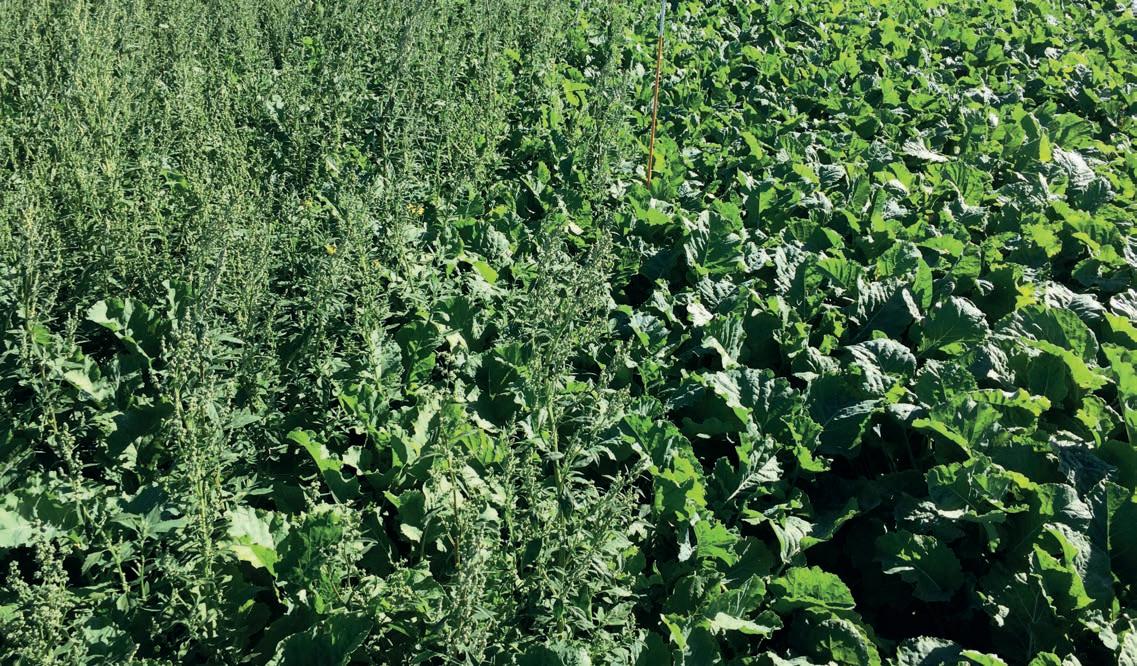
ensuring the crop gets a head start on weeds and then shades them out.
Spray-out and seedbed preparation
The principles involved here apply for both cultivated and direct drilling situations. An effective spray-out kills all existing vegetation, including rhizomes and roots. This reduces seedbed trash and assists with preparation of good soil tilth for sowing and rapid germination2. The basis of this application, or applications, is typically glyphosate. A tank partner appropriate for any hard-to-kill broadleaf weeds present, with a residue profile appropriate for subsequent crops, may be warranted.
Perennial weeds regrowing from root remnants (e.g. dock, Californian thistle or yarrow) can be difficult and more expensive to control selectively within the brassica crop, particularly under pre-emergence herbicide programmes, and so are best dealt with at spray-out.
Pre- and post-emergence weed control
Most brassica crops will still benefit from chemical weed control while the crop emerges and establishes. Effective control of weeds during brassica establishment relies on selecting a suitable approach for your scenario (pre- or post-emergence programme) and then selecting herbicides that best fit the weed spectrum and crop rotation.
A pre-emergence herbicide programme may be suitable where you have a reliable understanding of the weed spectrum that will affect the crop and can achieve the seedbed surface,
incorporation or moisture activation requirements of the specific chemical being considered. This offers the benefit of controlling weeds before they affect the crop, but it is a longer timeframe until the brassica reaches full canopy. It is important to get the preemergence approach right, particularly ensuring your weed spectrum is covered and seedbed preparation and any incorporation is of a high standard. Post-emergence weed control is all about spraying if and when weeds emerge and selecting a herbicide that best matches the weed spectrum affecting the crop. One of the benefits here is this often coincides with the need to control early season brassica pests, which can affect plant population – e.g. nysius, cutworm, diamondback moth and white butterfly. Suitable chemistry is available to control a wide spectrum of annual and perennial broadleaf and grass weeds in brassicas. RadiateTM is ideal for controlling weeds such as fathen, nightshade and thornapple, while T-MaxTM controls a broader spectrum including hard-to-kill weeds such as spurrey, redroot, water pepper and seedling or regrowth perennials such as docks and Californian thistle. Application timing is key as best results are achieved when weeds are treated at the 2-4 leaf stage. Delaying application often leads to poor control of some harder-to-kill weeds, by which time they are already competing with the crop and will not be suppressed by canopy. Control emerged weeds early and get your brassica canopy doing the rest.
Poor plant populations or crop establishment (e.g. due to unforeseen pest damage or adverse weather events) often leads to a poor canopy and exposes the crop to weed pressure throughout the growing season. These scenarios require careful assessment so talk to your Farmlands Technical Field Officer as soon as possible for advice.
Monitor your crop
Timing is critical for successful weed and pest control in brassicas. Walk your crops regularly and thoroughly to identify issues early for timely treatment. When assessing your brassica crop for weeds or applying herbicides, consider the need or opportunity to control pests that may be present or are building up in the crop. SpartaTM provides control of springtail, leaf miner, white butterfly caterpillar and diamondback moth while LorsbanTM is suitable for a broad range of pests including nysius and cutworm. Always read the product label before using agricultural chemicals to ensure suitability for your situation and understand directions for use.
For more information, contact your Farmlands Technical Field Officer or the friendly team at your local Farmlands store.
1 De Ruiter, J et al. 2009. Management practices for forage brassicas. Forage Brassica Development Group, pp38-40.
2 Ritchie, B et al. 2000. Successful No-tillage in Crop and Pasture Establishment – A field manual for NZ farmers and contractors. CINTRE, Feilding, NZ, pp37-39, 78.
™Trademark of the Dow chemical company. Article supplied by Dow AgroSciences.
If there’s one thing Pete Carswell has learned from designing over 1,600 stockwater systems, it’s the importance of good installation to longevity and performance.
Iplex Pipelines’ Rural Project Manager says coiled polyethylene (PE) pipe revolutionised rural water systems in the 1980s, offering fast, flexible, costeffective installation in 200m lengths, rather than metal or PVC “stick” pipe with a joint every 6m. The type of PE material has changed over the years, with high performance polyethylene (HPPE) pipe now the industry standard, due to its abrasion resistance, flexibility and superior flow performance. Whatever type of coiled PE pipe used, there are some installation do’s and don’ts:
Always bury the pipe, wherever practical. PE pipe is a relatively soft material and needs protection from damage, whether from farm machinery or stock. Direct exposure to UV light also causes embrittlement, eventually leading to pipe failure. Carbon black gives rural pipes their colour and is a natural inhibitor of this UV degradation; however the black colour causes the pipe to heat up in direct sunlight on hot days. This can lead to the classic overpressurisation “parrot-beak” pipe burst. When it’s impractical to bury pipe, run it along fencelines and let the pasture grow over.
Check coils prior to installation. Some negligible scuffing, scratching or slight kinking as an outcome of storage and transport is not uncommon due to the soft nature of PE and in no
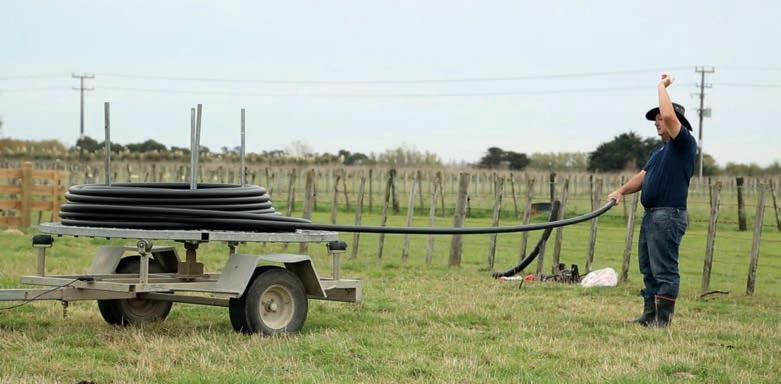
way lessens the pipe’s service life. The factor of safety is 10 percent – if scratches are more than 10 percent of the wall section or the kink is showing signs of yielding (slight whitening), this section should be cut out and the pipe rejoined with a coupler. Use a pipe dispensing trailer to uncoil pipe. This is fast and efficient and causes less pipe damage than rolling the coil over ground to uncoil. There are also health and safety issues in handling coils of PE pipe, with a 63mm x 200m coil of Greenline standing 2.5m high and weighing 120kg. The good news is pipe dispensing trailers are available on loan from most Farmlands stores.
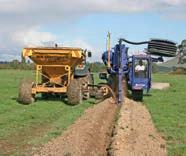
Trenching versus mole-ploughing. In general, open-cut installation is less harsh on PE pipe. The pipe is not subjected to stretching stresses and the nature of the ground into which the pipe is being laid can be observed, so large or jagged stones
can be removed. The downside is that trenching can be slower and more expensive than the alternatives.
In the right soil conditions, moleploughing is an excellent installation method, being both fast and cost effective. Your local rural contractor is the best person to seek advice from as to which installation method to use.
“My last piece of advice,” Pete says, “is to never deviate from the designer’s installation plan without consultation. A reticulation design is an outcome of a very precise survey followed by thorough flow and pressure calculations. Changing pipeline routes, pipe diameters or pressure classes can lead to suboptimal performance or even pipe failure.”
For more information on pipe installation, contact your Farmlands Technical Field Officer or the friendly team at your local Farmlands store.
Article supplied by Iplex.