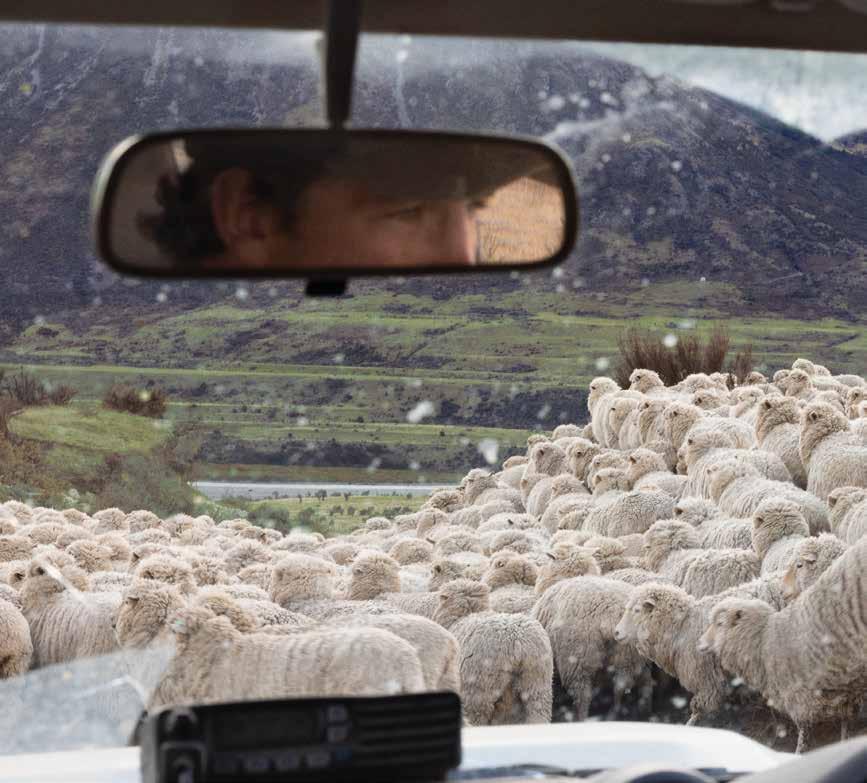
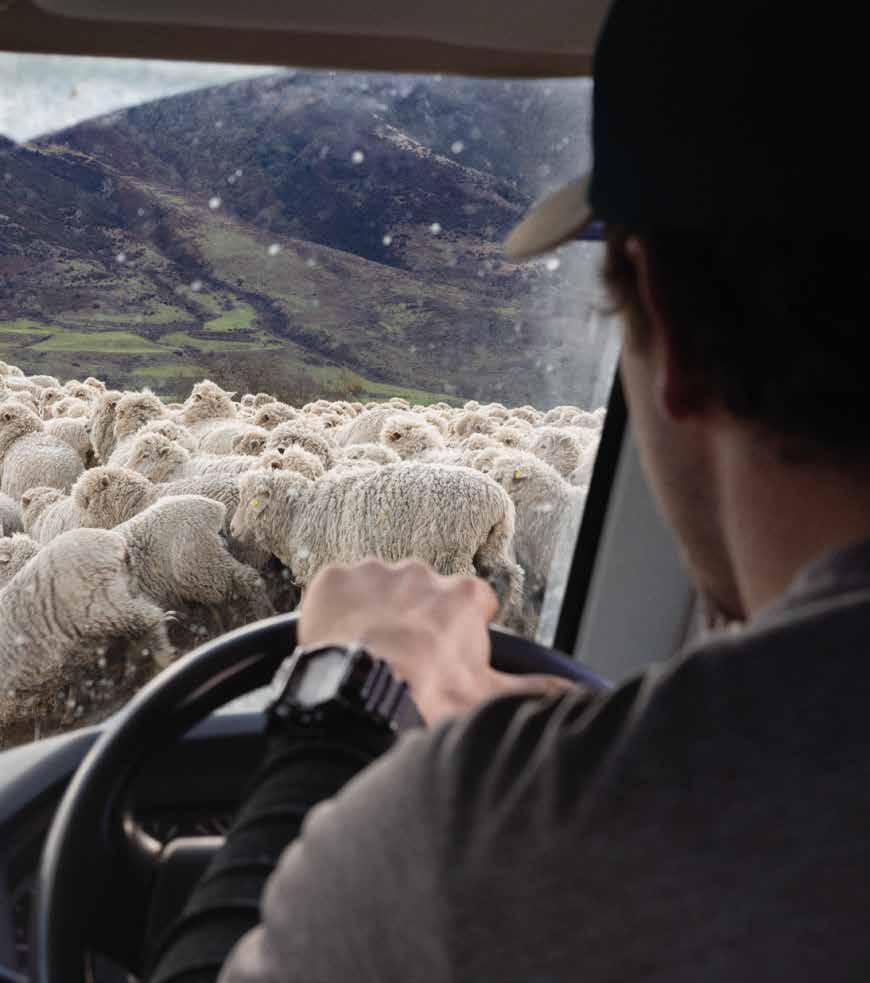
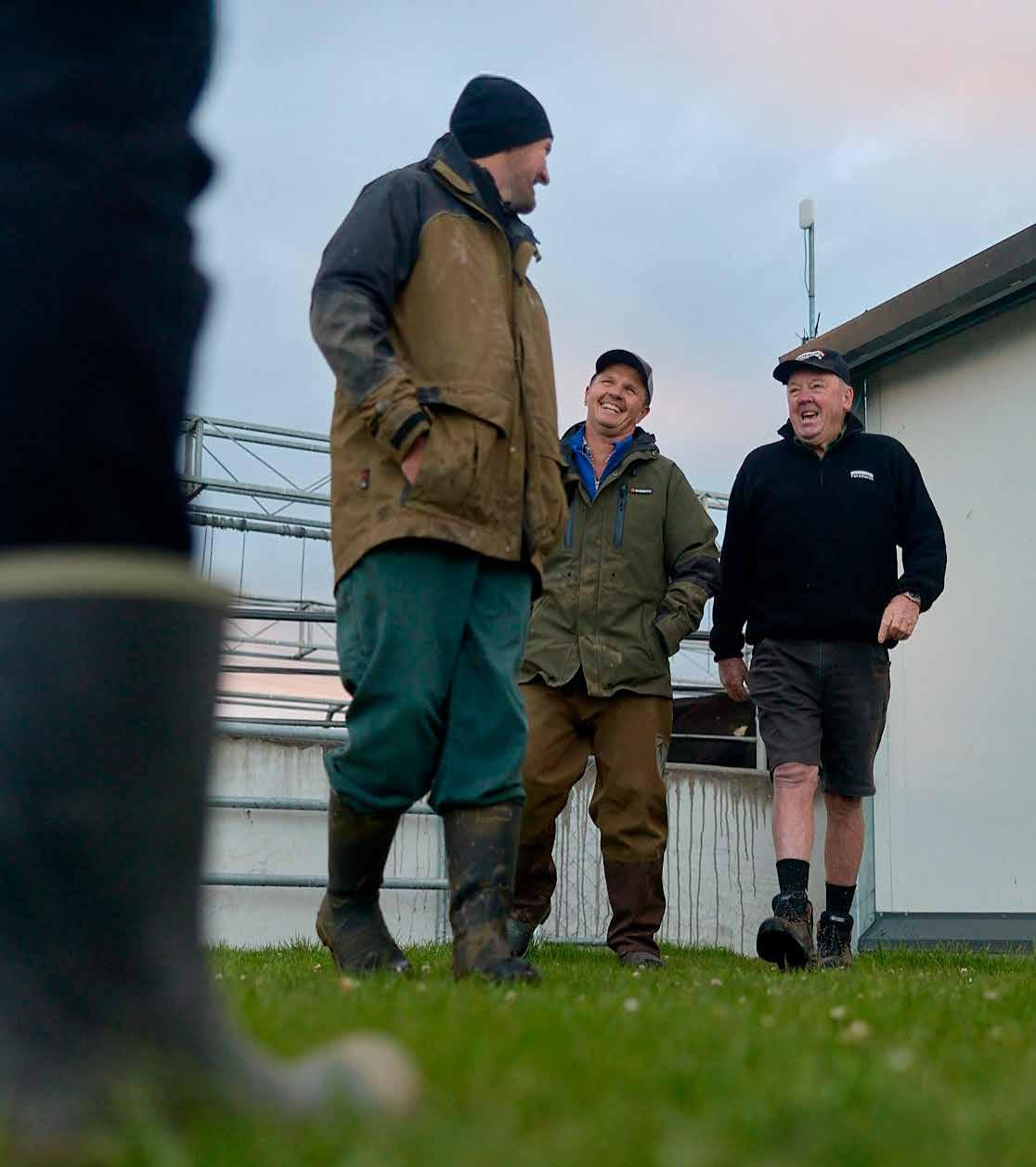
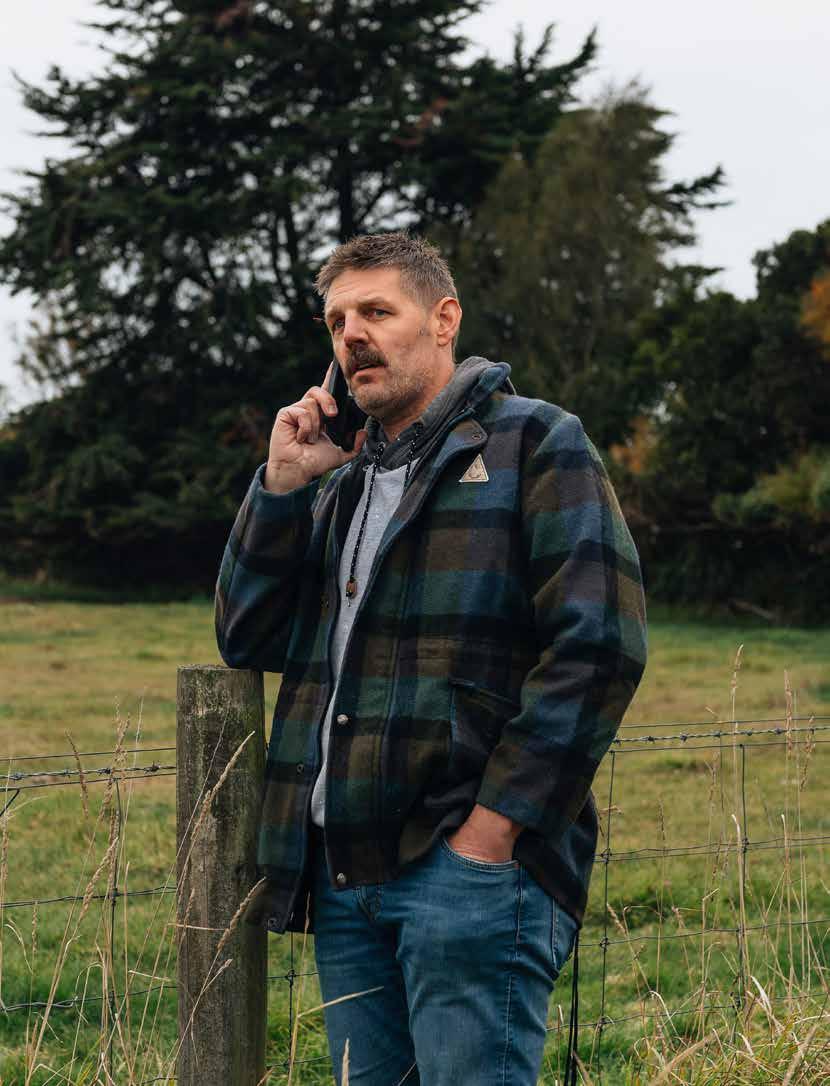
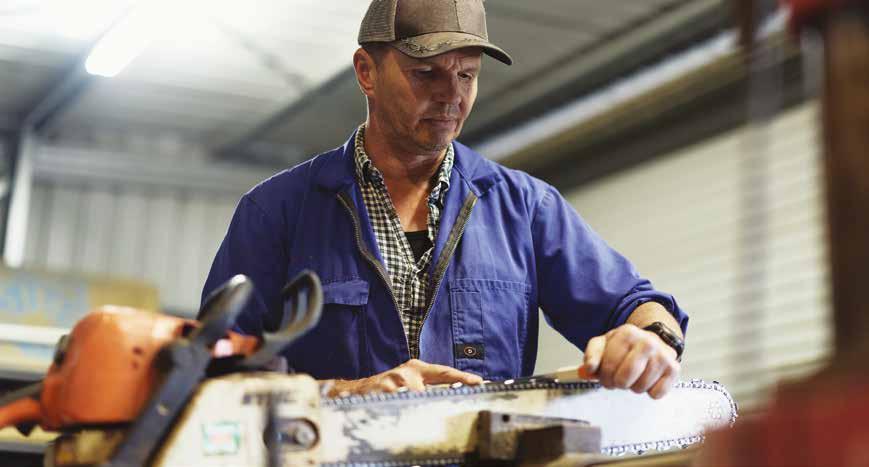
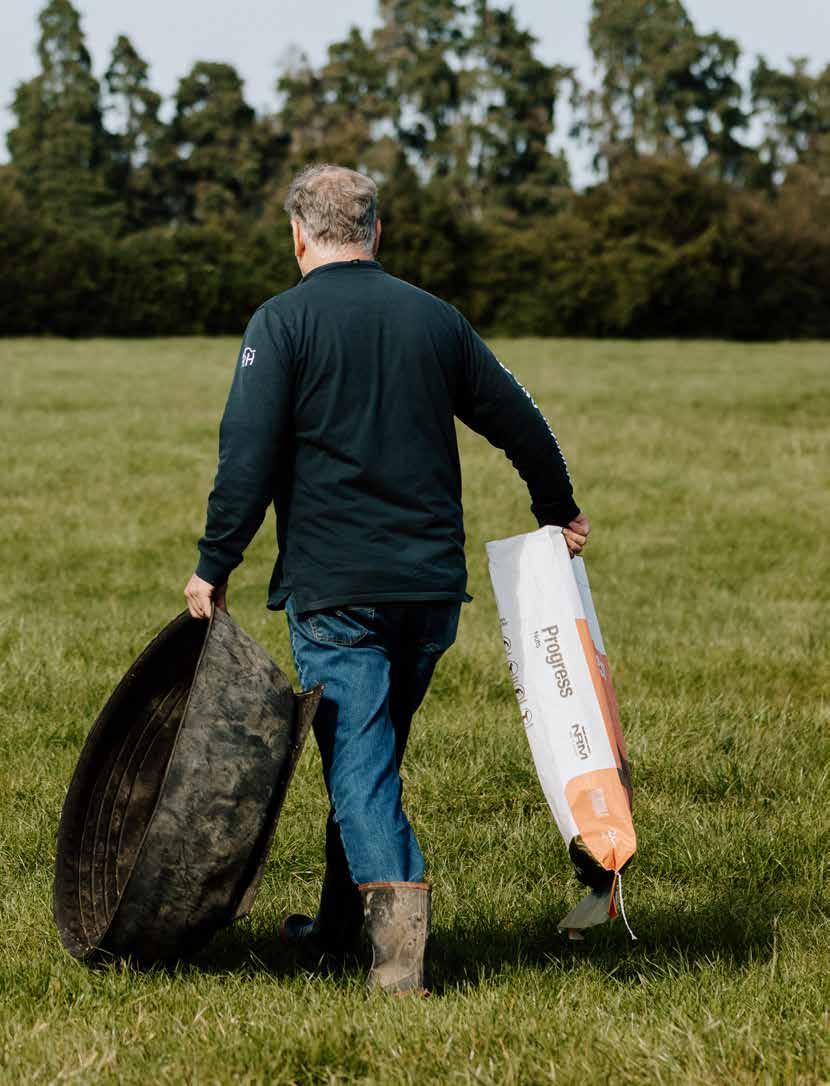
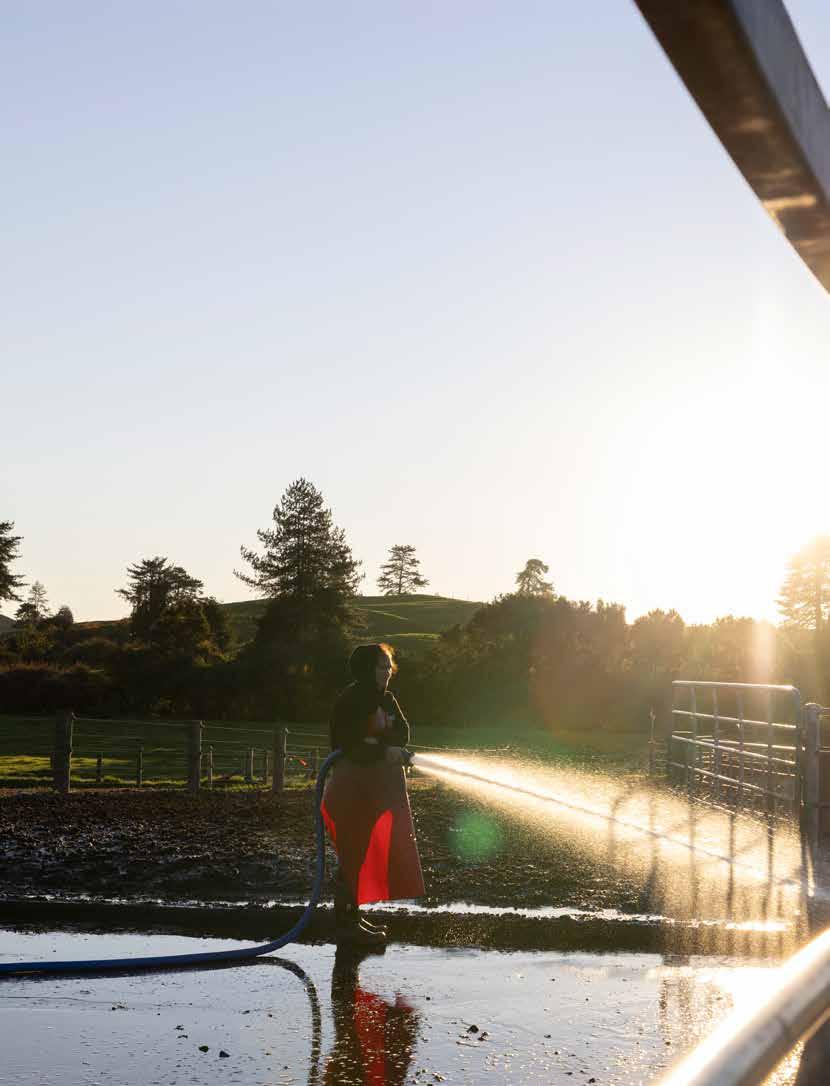
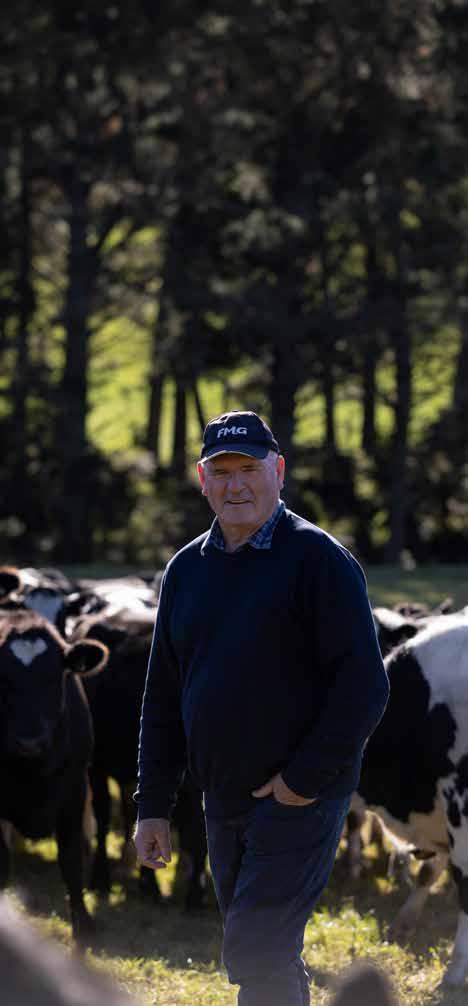
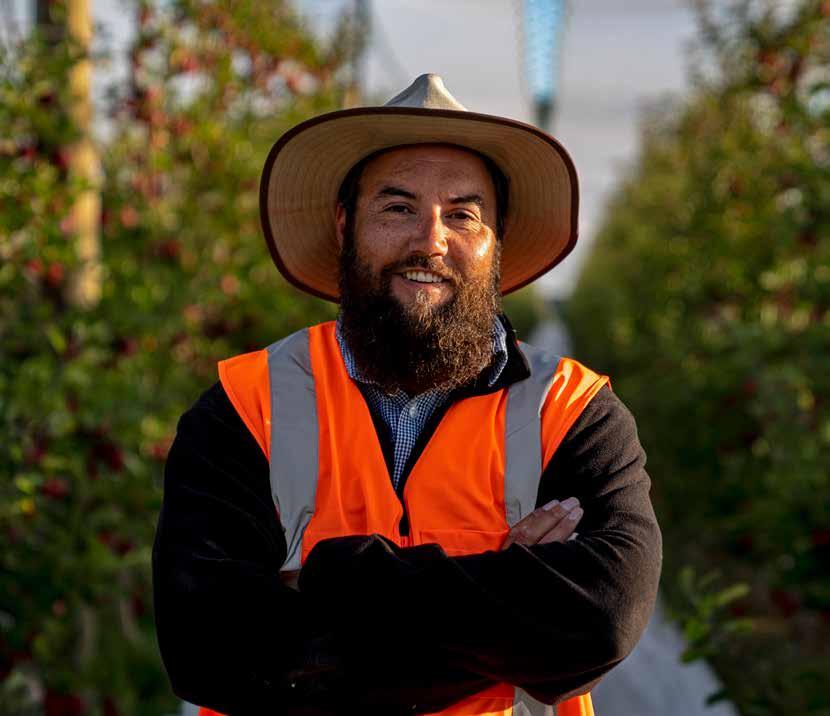
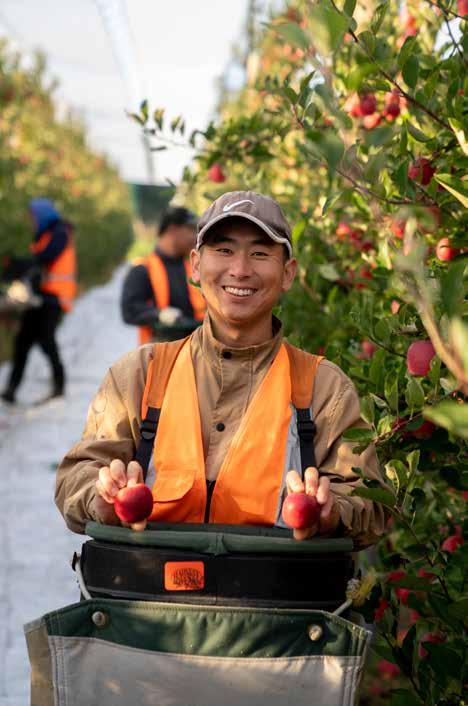
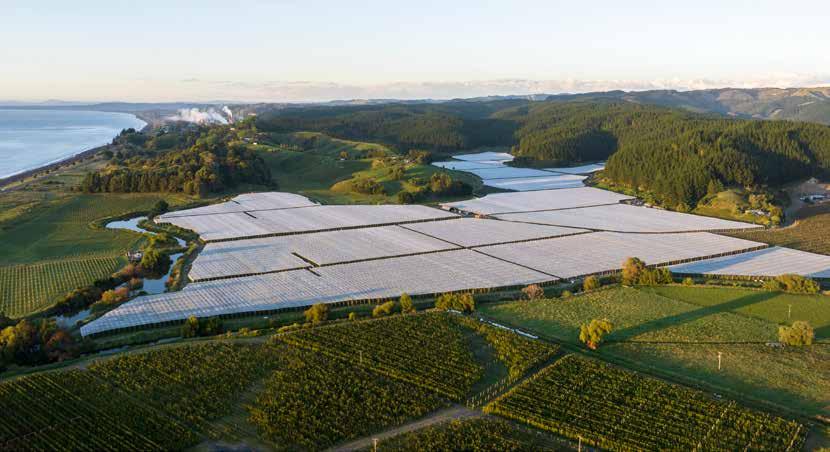
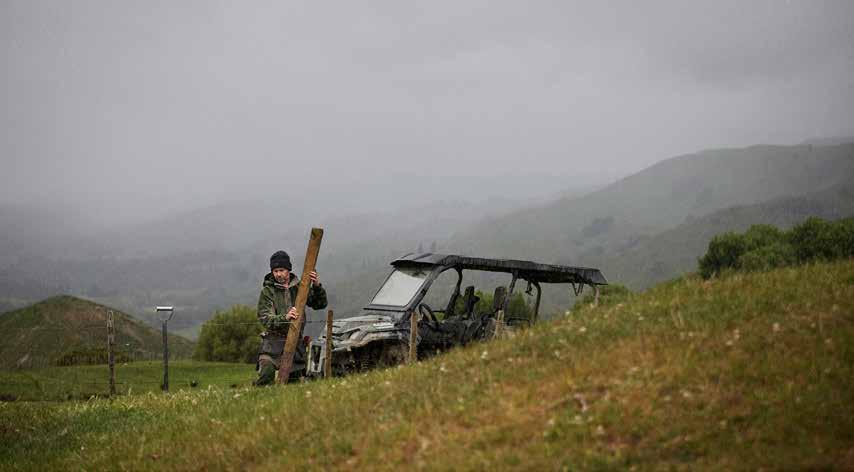
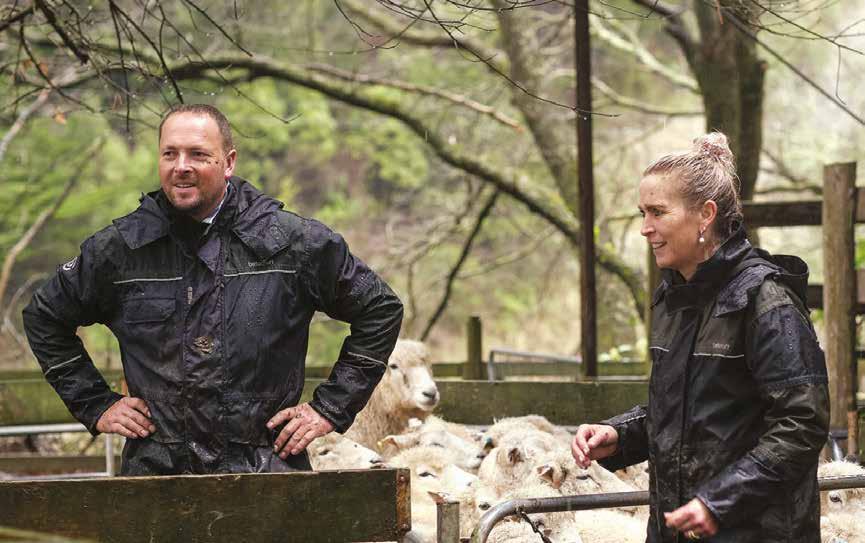
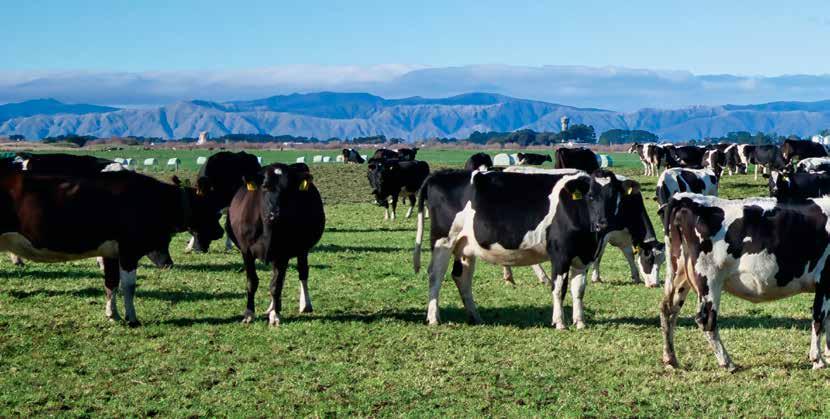
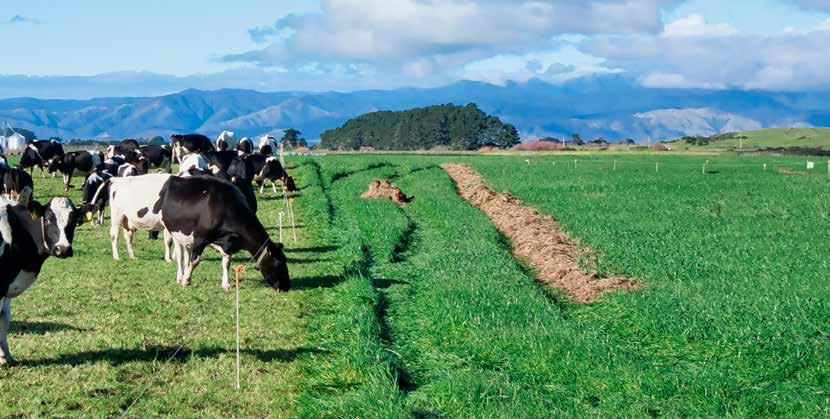
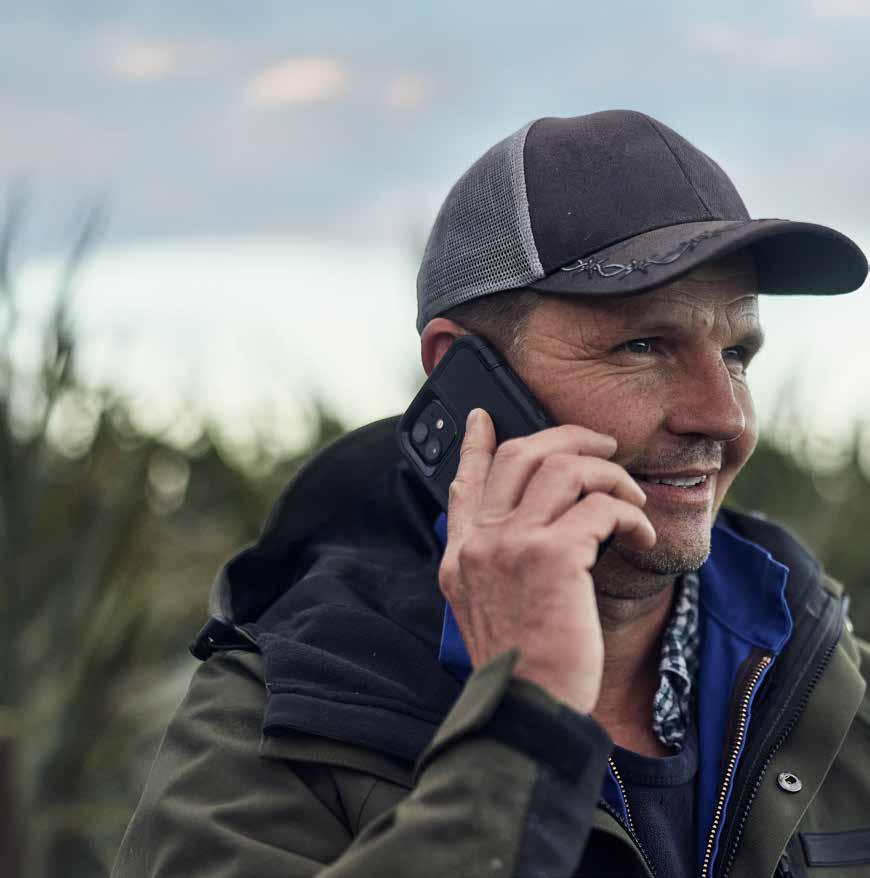
Out here, there’s no off switch. The day starts well before the sun rises, and work carries on long after it goes down. And you wouldn’t have it any other way. Because progress doesn’t wait. Ideas don’t stay still. And tomorrow doesn’t come with an instruction manual. We get it. Because we’re rural, too.
Farmlands is 100% owned by farmers and growers – always has been. So no matter what’s keeping you up, what’s sending you down to the paddock, whatever plan you have for your business, we’ll be right there with you because rural never rests.
THE BEST COVERAGE JUST GOT BETTER
Spark Satellite now live
As awarded by Opensignal in the October 2025 NZ Mobile Network Experience report. Check coverage: spark.co.nz/coverage. Requires line of sight to the sky, with an eligible phone, SIM and plan. Text and data only. Data can only be used on selected satellite-ready apps. App functionality and speeds may vary. Paid extras/add-ons may apply. T&Cs and fair use policy apply. See spark.co.nz/satellitetomobile for more information.
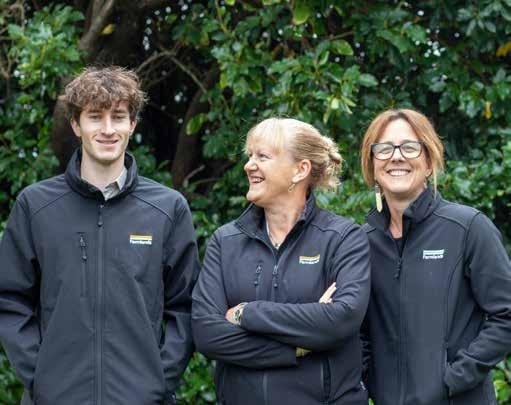
FARMLANDS PUBLICATION TEAM
Deborah Allan
Sally-Ann Fitzhardinge
Ben Zelas
CONTACT
Farmlands
535 Wairakei Road, Burnside, Christchurch
Ph: 0800 200 600
Email: farmlander@farmlands.co.nz
CONTENT & DESIGN BY SCG
Niko Kloeten
LauraGrace McFarland
Julian Pettitt
PRINTED BY: Webstar
ON THE COVER
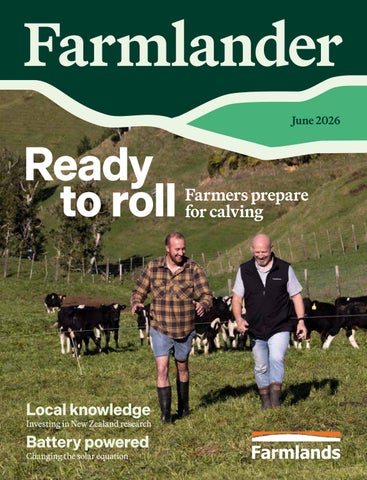
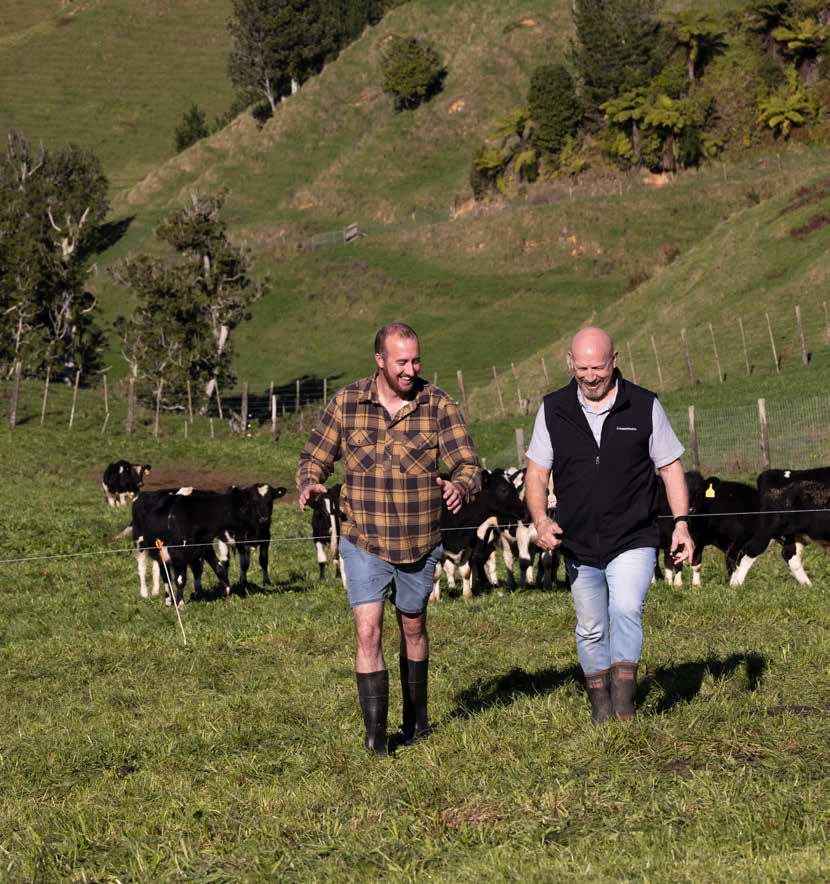
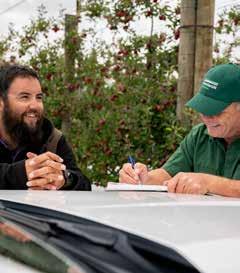
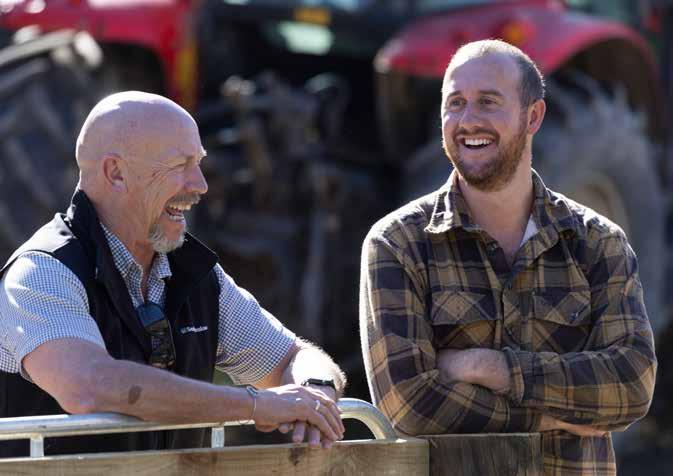
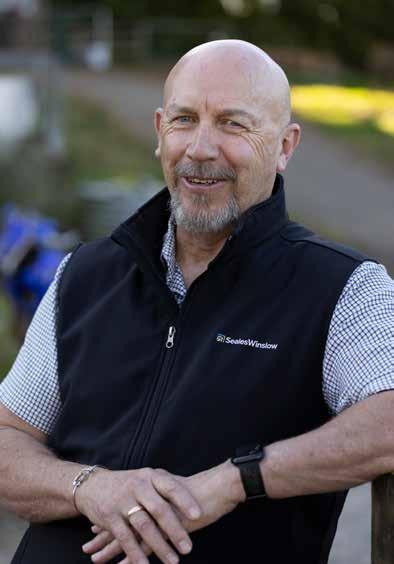
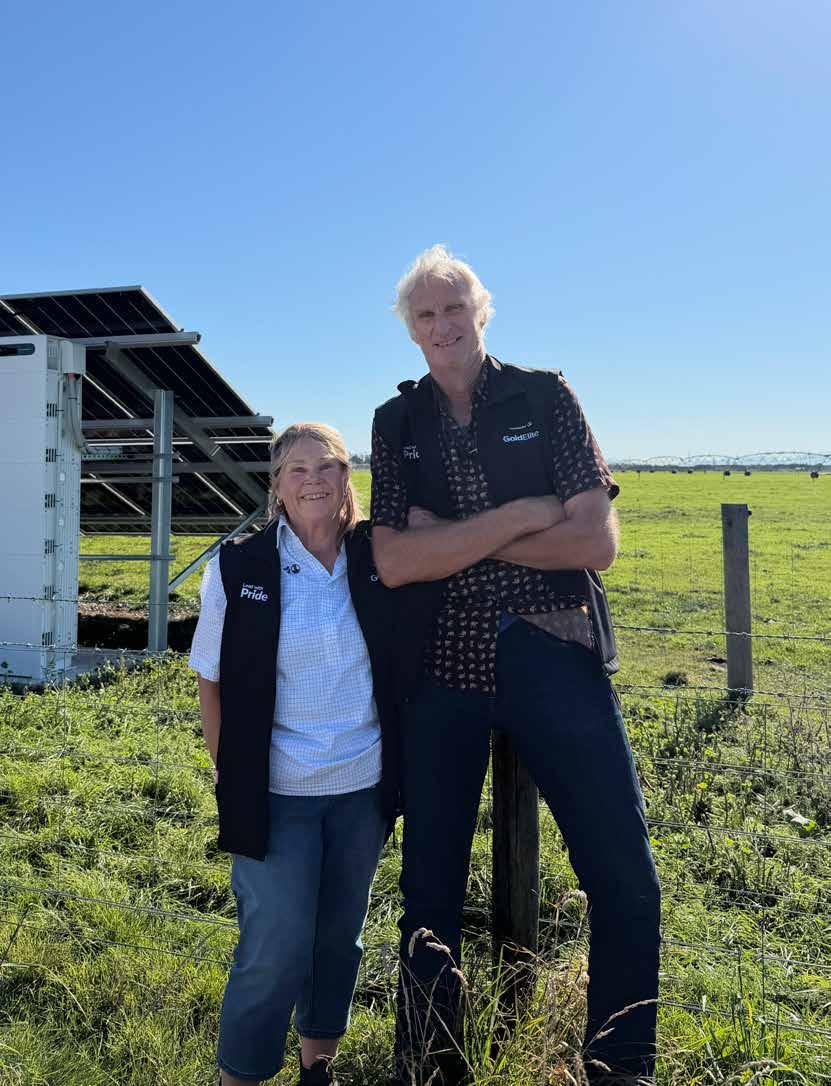
Beef farmer Blair Linton (left) on his farm near Te Puke with SealesWinslow Nutrition Specialist - Bay of Plenty, Mark Mellsop.
Photo by Paul Sutherland.
Design by Julian Pettitt
This publication is printed on paper made from pulp that is environmentally certified, and from renewable and sustainable sources. It is Elemental Chlorine Free (ECF) and manufactured under strict ISO 14001 Environmental Management Systems (EMS). The plastic wrap is 100% recyclable in the New Zealand soft plastic recycling scheme.
This publication has been printed by Webstar, a Toitū enviromark diamond certified company and a winner of a Green Ribbon Award “Minimising our Waste”.
The information contained in this publication is given in good faith and has been derived from sources perceived to be reliable and accurate. Whilst every effort is made to ensure the accuracy and correctness of the information, Farmlands gives no warranties, express or implied, regarding the information nor does it accept any liability for any opinion or information (including the accuracy or completeness thereof) or for any consequences flowing from its use. The information and views expressed in this publication are not necessarily the views or opinion of Farmlands, its editorial contributors, freelancers, associates or information providers. Independent advice is recommended before acting on information or suggestions contained herein. Readers who rely on this information do so at their own risk. Reference to any specific commercial product, process, or service whether by trade name, trademark, manufacture, or otherwise does not constitute an endorsement or recommendation by Farmlands. No part of this publication may be reproduced in any form without the prior written permission of the publisher. Prices and offers apply only in the time-period stated on the front cover of this publication and while stocks last. Not all products are available at all Farmlands stores. All prices include GST unless otherwise stated.
Big week, big energy
Rural never rests, and neither do we.
Welcome to the June 2026 edition of Farmlander, hitting stores as we head into National Fieldays. Big week. Big energy. Just the way we like it.
This edition is a special one. We’re proud to launch our new brand –Rural Never Rests – and there’s no better place to do it than at Fieldays, surrounded by the farmers and growers who embody exactly that spirit. It’s not a slogan. It’s just the truth.
Inside you’ll find great stories from across the Farmlands whānau –shareholder wins, product innovation, and the kind of practical know-how our team is known for.
This edition is full of shareholder stories – real people, real operations, real results. The kind of stories that remind us why we do what we do.
Got something to say? Good – we’re all ears. If there’s a story worth telling, a topic you want us to dig into, or feedback on what you’ve read, send it through to farmlander@farmlands.co.nz
To stay up to date with Farmlands and everything happening across the sectors, be sure to follow us on Facebook Farmlands Co-operative & Instagram @FarmlandsNZ
See you at Fieldays.
Sally-Ann, Deborah & Ben
Got something to share with the team at Farmlander?
Email farmlander@farmlands.co.nz
Keep up-to-date with the latest news from across the co-operative via our website and social media. @farmlandsnz @farmlandsnz
Farmlands Co-operative Society Limited
Inside our June 2026 issue
WORD FROM THE CEO
Rural never rests.
And neither have we.
The volatility of these past few months have tested us all. The price pressures on-farm have been real, and we've felt them alongside you. In testing times, innovation often follows, and gives us the chance to sharpen our strategy to keep delivering for rural New Zealand. Like you, we’ve navigated fuel price escalation and the risk of supply chain disruption. However, we’ve risen to the challenge and know the changes we have made will make us stronger.
In this edition, we’re launching our new brand. Rural Never Rests isn't just a line. It's the shared truth we live every day. It's the energy that gets you out the gate before dawn, and it's what drives Farmlands to be better for you, every single time.
We're also proud to announce our work with the Rural Support Trust, partnering with ignite to give rural New Zealand free access to mental health and wellbeing support through a new online platform. Because looking after your business starts with looking after yourself, and we wanted to make sure that help was easy to find in times when you really need it.
On the co-operative side, things are moving. We've brought Donaghys into the Farmlands Group, meaning innovative R&D in animal health continues, built by New Zealanders, for New Zealand conditions. We’ve also partnered with Techion on FECPAK, bringing independent animal health diagnostic testing direct to our customers. These are the kinds of investment a co-operative should be making – setting us up for future resilience and sustainability.
SealesWinslow is evolving into a fully optimised nutrition solution, backed by science and led by people who know the land. Our Top Paddock own brand range is growing - quality product, honest pricing, no compromise on performance, meaning we are providing products you need in the co-operative model you expect. The power of direct sourcing and bulk buying still rings true 63 years in.
Our job is simple: sharp pricing, reliable supply, and expertise you can count on. Not once a year but every day. We’ll keep showing up alongside you - down the paddock, up the hill, and on the road. If you’re at Fieldays, pop in for a cuppa – and if not, we look forward to continuing to serve you in store, on FarmlandsPRO, and at the farm gate.
Nga mihi nui,
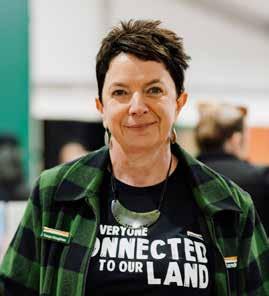
Tanya Farmlands CEO
Photo: Radlab
Rural never says no to a good yarn.
News from Farmlands and beyond Clippings
Field Days: the round-up
From Central to Wanaka, Northern to Southern, the regional field days delivered everything we love about rural New Zealand: big skies, great coffee, and a lot of friendly and familiar faces.
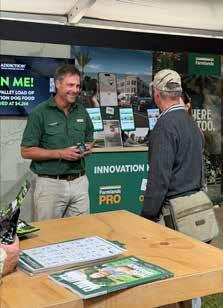
Our teams had a blast getting out on the road, handing out free samples of our new Addiction dog food range. Safe to say it was a hit; tails were wagging before we'd even opened the bag.
There's something very special about catching up with familiar faces, and dogs, who make rural NZ tick. Can’t wait for next year.
Welcome to the team, Rachel
We're thrilled to welcome Rachel Aldikacti to Farmlands as our new Chief Sales Officer. Rachel comes to us with over 25 years of senior commercial experience, having worked across some big names in the agri-food world — including Fonterra, Bidfood Limited, and most recently Golden State Foods, where she was Managing Director ANZ.
Rachel knows how to grow sales teams that deliver, and she's spent her career working in an industry that faces the same kind of seasonal ups and downs our farmers and growers deal with every year. That real-world commercial experience is going to be a great asset to our team and our customers alike.
She joined us in mid-May and is based in Christchurch, and we can't wait to properly introduce her in a future issue.
Our new website is live – and it's your co-op, front and centre
We've rebuilt farmlands.co.nz from the ground up. Not a place to order or shop (that's what FarmlandsPRO and the online store are for); a place to understand the full picture of what being a Farmlands shareholder actually means.
Whether you're new to the co-op or have been with us for years, the new site makes it easy to see the value you're part of. Get advice, connect with our specialists, learn what's on, and find out why 80,000+ farmers and growers back this co-op season after season.
It's cleaner, faster, and built to work on any device. Have a look around at farmlands.co.nz – your co-op hasn't changed, it's just easier to see.
Save more with your Farmlands Card
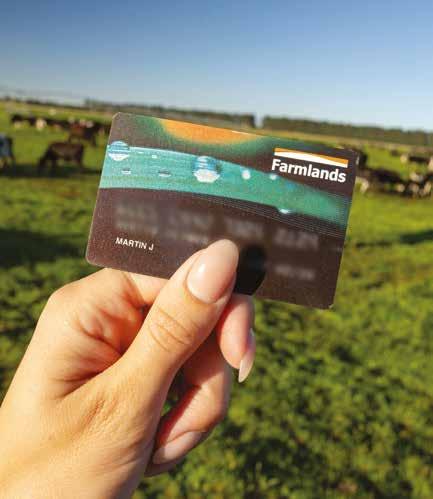
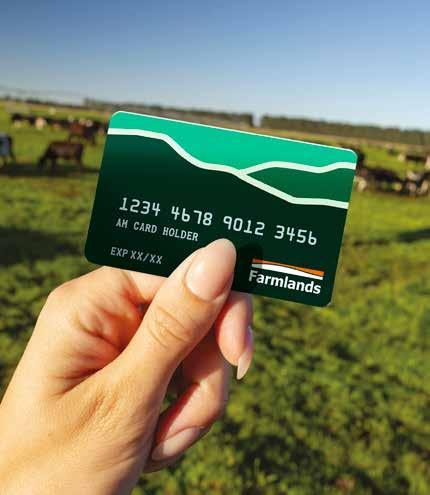
Farmlands customers can save hundreds of dollars on their regular shopping trips, just by shopping at Card Partners and using their Farmlands Card. With $1,000 on average saved per account in on-statement rebates*, make sure you get more back and don't leave savings on the table.
Make your everyday spending work harder with Farmlands.
Here’s how to make sure you're getting the most from your Farmlands Account:
• Put it on your Farmlands Card. Fuel, farm supplies, everyday expenses — thousands of Card Partners nationwide. You don't need to spend more to save more.
• One statement. Less admin. One IRD-approved monthly statement, ready for your accounting software.
• Cards for your team or family. One account, itemised by cardholder, with separate fuel summaries available.
• Manage it all in one place. Use FarmlandsPRO and MyFarmlands to shop, manage your account and view statements — anytime, anywhere.
*Average savings based on active Farmlands account holders.
Find all Card Partners at cardpartners.farmlands.co.nz
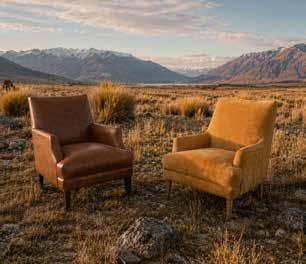
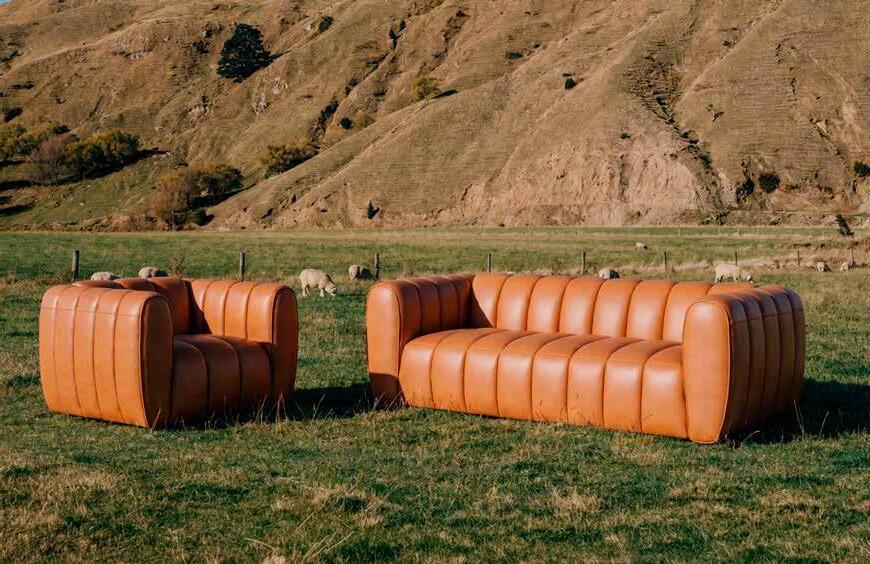
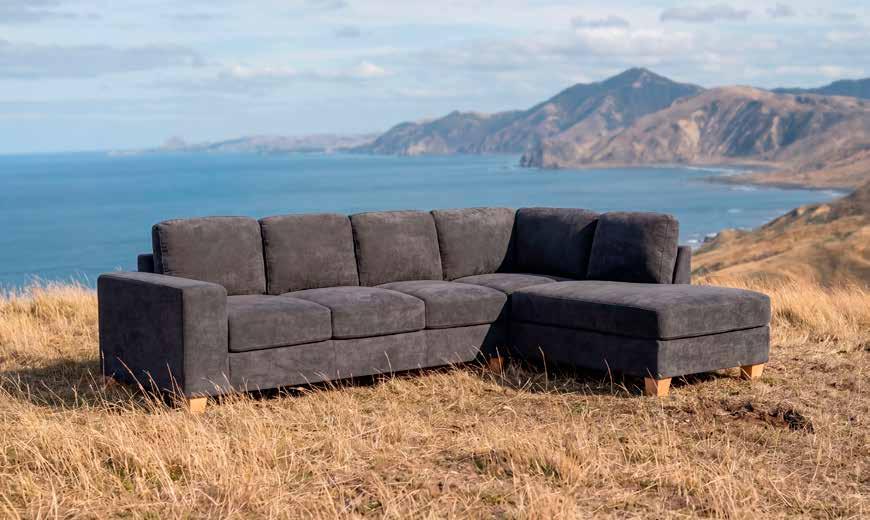
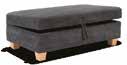
In Whanganui, Tasman Tannery transforms hides into premium leathers used by designers worldwide. In Christchurch, Montreux Furniture - a manufacturer with over four decades of experience— crafts high-quality furniture renowned for design, durability and comfort, found throughout the country in homes and hospitality venues as well as some of New Zealand’s most exclusive accommodation destinations.
Sharing a commitment to sustainability and excellence, the two companies have partnered to create the exclusive Scotswood range for Farmlands customers. The collection offers sofas and armchairs upholstered in Tasman’s richly varied leathers, inspired by New Zealand’s natural landscapes.
Enjoy 25% off with your Farmlands Card on Montreux’s Scotswood models.
montreux.co.nz
Grab a pair to save a pair!
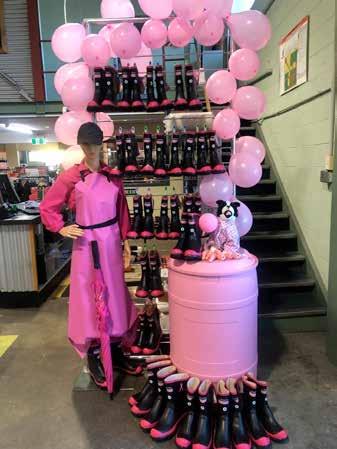
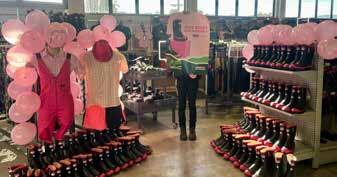
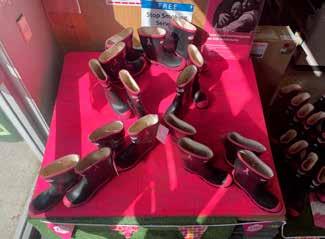
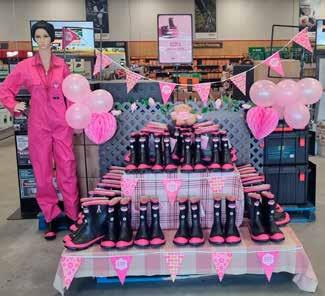
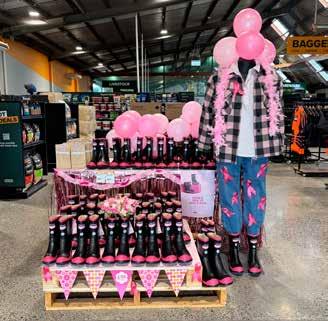
Nine New Zealanders are diagnosed with breast cancer every day. For women in rural communities, getting screened and treated is a whole lot harder. Distance, busy seasons, and time away from the farm make it a challenge that's uniquely rural. This year Farmlands proudly got behind the Pink Bands campaign again, partnering with Skellerup and the Breast Cancer Foundation NZ to raise awareness and drive early detection where it matters most. Our stores showed up in a big way, we loved seeing how a bit of friendly competition brings out great creativity. Congratulations to our store winners Hastings (North Island) and Invercargill (South Island) for the best in-store Pink Bands displays.
ABOVE: South Island store winner – Invercargill.
ABOVE: North Island store winner – Hastings.
COMPETITION
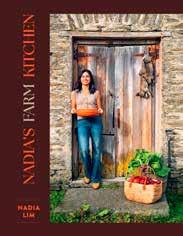
Nadia’s Farm Kitchen
One lucky Farmlander reader has won a copy of Nadia Lim’s new best-selling cookbook Nadia’s Farm Kitchen Nadia’s Farm Kitchen is a warm, inspiring, and deeply personal cookbook celebrating the rhythms of the seasons and the simple joys of life on the land. Featuring over 80 wholesome, seasonal recipes and eight short stories about life on the farm, this book offers a unique glimpse into the life of the beloved cook and TV personality as she raises her family and grows food on a working farm in rural New Zealand. Congratulations to Bogunia Moore of Waitati (north of Dunedin), who won our giveaway from the Autumn 2026 issue of Farmlander.
The Card that works as hard as you do.
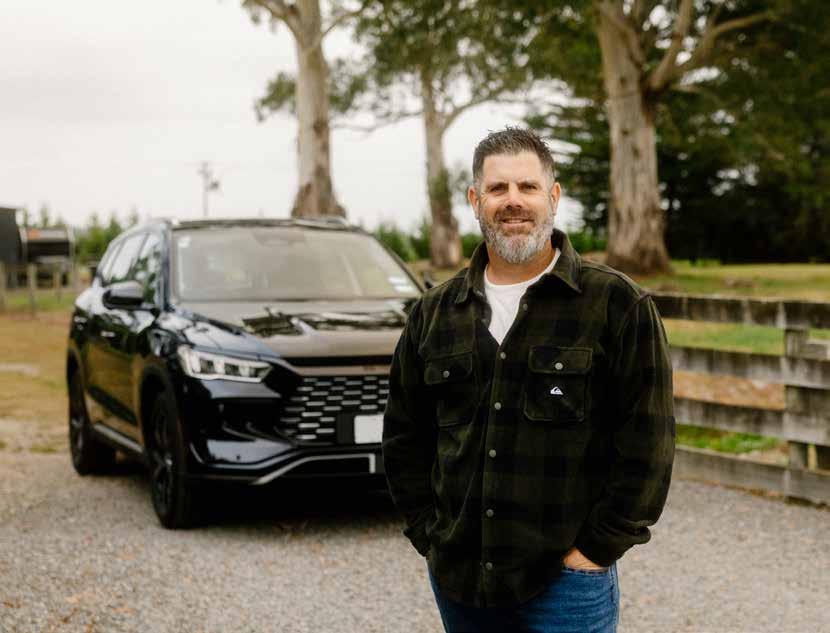
And it just got even better. Over the past year, we've welcomed a great bunch of new businesses to the Farmlands Card network right across New Zealand. Two worth calling out: BYD Auto NZ , bringing electric vehicles built for the road ahead, and Evo Cycles , for when two wheels make more sense. Every new Partner we add is another way your Card puts value back in your pocket — more
savings, more places, more reasons to swipe. Check out who's joined at farmlands.co.nz and make sure you're getting everything your Card has to offer.
New calf on the block
Get clear advice amongst the calving chaos. Check out our videos with tips and tricks from Karen Fraser, Farmlands' calving expert, as she covers all things cow to calf. Scan the QR code on page 61 to watch.
Supporting mental health in rural NZ
Farmlands has teamed up with Rural Support Trust and social enterprise ignite Aotearoa to make mental health services more accessible for rural New Zealanders.
Farmlands is funding the new partnership between Rural Support and ignite to enable a free specialist support service for rural New Zealanders, available through the Rural Support Trust website.
Ignite is a digital mental health and wellbeing platform backed by Emerge Aotearoa Trust, one of the largest nongovernment mental health providers in New Zealand.
“Our whole Kaupapa is around changing the mental health and wellbeing landscape in Aotearoa to be more accessible,” says ignite Director Sarina Finucane.
“Offering online support options for rural kiwis alongside Rural Support Trust provides communities with access to support that may have been previously hard to find. And they can access this from the comfort of their own homes without the need to travel.”
The partnership officially launched at Fieldays®, and Rural Support National Chair Michelle Ruddell says it will help to overcome the isolation that is a major barrier for rural people looking to access mental health services.
“Rural Support has facilitators who go and see people in the communities that have asked for help, but the key difference is that although we support them through the tough times, we are not the expert and we do not give them the advice,” she says.
“This platform allows our facilitators to connect their client with professional online mental health and wellbeing help and ensures that those in rural communities are able to access those services that they otherwise wouldn't.”
Sarina, who grew up rurally in Dannevirke, is well aware of the need, having seen first-hand the challenges of the traditional approach to getting mental health and wellbeing specialist support in rural communities.
“What we've worked to do with this partnership is offer greater choice for anyone who lives rurally to access quality nationwide support; a choice
in what support they access, and how they choose to access it through our platform,” she says.
“We're sitting alongside the really amazing mahi that Rural Support Trust do and giving their facilitators and coordinators a trusted platform to refer to where it's going to be funded and free for the rural sector, and there's a variety of specialist support available.”
Sarina says they have worked closely with Rural Support Trust to look at ignite’s provider network and to select the ones that would be relevant for rural communities.
“Having the partnership with Farmlands gives us an opportunity to make this access really equitable across the different regional areas of the Rural Support Trust. Regardless of whether you're a well-funded area or a low socioeconomic area, thanks to our partnership with Farmlands the access will be free.”
DIFFERENT PATHS
One of the features of the new partnership is that rural Kiwis will be able to access the services directly through the Rural Support website, even if they are not working with a Rural Support facilitator.
Rural Support Trust General Manager Maria Shanks says she believes there will be a mix of people going direct and those doing so with the help of their facilitators.
“What we've worked to do with this partnership is offer greater choice for anyone who lives rurally to access quality nationwide support; a choice in what support they access, and how they choose to
access
it through our platform.”
RIGHT: Rural Support's partnership with ignite Aotearoa will give rural New Zealanders more choice in how to access mental health and wellbeing services.
Sarina Finucane.
“Farmlands are obviously going to be helping promote it so that people are aware of it. It also allows people to come in from an anonymous perspective,” she says.
“If they're not necessarily comfortable talking to someone local, it doesn't mean that they don't still get that same access to that specialist treatment as well. It's what suits each person.
“The great thing for our team is the fact they can literally book it online while they're sitting there talking to the person. We've had the conversation, we don't have to phone up three different people to find out when they've got availability.”
The partnership allows rural people to choose their own specialist to work
LEFT: Rural people will now have access to specialists from across New Zealand at their fingertips.
“The great thing for our team is the fact they can literally book it online while they're sitting there talking to the person. We've had the conversation, we don't have to phone up three different people to find out when they've got availability.”
with, something Sarina says is a key aspect of ignite’s service approach.
She says part of the choice is being able to work with specialists across the country, and there may be cases where people prefer to talk to someone outside their local area.
“Coming from the rural sector myself, sometimes you are really comfortable with people locally to be involved in supporting you, and sometimes you like the confidentiality of working with someone that's not local.”
“I agree that it’s an important aspect,” says Michelle. “That's how we find it at our rural wellbeing events, when someone might come up to me and say, ‘Oh, can I just ask you a question about a friend?’ And that friend is them, but they actually want that anonymity and that separation.”
For Farmlands Head of Brand and Communications Loren Aberhart, supporting rural people goes well beyond the farm gate.
“We know rural people don't always ask for help easily. That's exactly why this matters. Making specialist support available, free and on your terms, wherever you are in the country. No barriers. No waiting. Just help when you need it.”
Scan now to book your free session.
Maria Shanks.
Get what you need without leaving the farm.
When life on the farm ramps up, making a trip into town isn’t always easy. That’s where your Farmlands Card comes in. Order the gear, supplies, and essentials you need online. Simple, convenient, and all at your fingertips. So you can focus on what matters most. View all online
BEST. EVER! START HERE holidays
FROM PADDOCK TO PARADISE
For almost 40 years, House of Travel has been helping Farmlands cardholders turn hard-earned breaks into properly sorted holidays. We know time off does not come easy when you live and work by the seasons. Getting away often takes planning, flexibility and good advice. That is where we come in. With stores from Kerikeri to Invercargill, House of Travel has specialists in communities right across New Zealand, ready to help you plan a holiday that works for your schedule, your budget and your bucket list. Whether you are after a quick recharge in Fiji or the Gold Coast, a cruise where everything is taken care of, or that long-awaited Europe holiday, we make it easy. We take care of the details, help you make the most of your time away, and match you with offers, packages and experiences that suit the way you like to travel.
A PARTNERSHIP BUILT ON SHARED ROOTS
House of Travel has been a Farmlands partner since the very beginning, tracing back to the days of the Combined Rural Traders co-operative in the South Island. It’s a long-standing relationship built on shared community roots, trusted partnerships, and a deep understanding of rural New Zealand. For many Farmlands cardholders, booking travel through House of Travel is not just convenient. It is smart. You can use your Farmlands Card for your travel with payment due by the 20th of the month following. That can be a real help with cash flow, especially when you are juggling the many moving parts of farm and family life.
Ready to get away?
WE GET THE FARMING LIFE
Our specialists work with farming families every day, so they understand that travel is rarely one-size-fits-all. Some customers want a simple shorthaul escape to switch off and recharge. Others are planning something bigger, like a family cruise or a Europe adventure. Some are travelling with a practical purpose, heading overseas to see farming operations, join smaller group journeys, or fit travel around narrow windows in the farming calendar.
And sometimes the trips are incredibly personal. We have helped customers book everything from a marathon trip to the United States to a highly specialised medical journey for answers that could change someone’s life. That is the value of working with real people who listen. You are not left to figure it all out on your own. You have someone in your corner who can talk through the options over a cuppa, understand what matters most, and help get it all sorted.
Over a cuppa, we’ll get you sorted
Why Book With House of Travel?
Valued partnership alongside the Farmlands community since 1987.
Travel specialists who understand rural life and seasonal schedules.
Access to great deals across the Pacific Islands, Australia, Asia, Europe, cruising, touring and more.
The convenience of booking with your Farmlands Card, with payment due by the 20th of the month following.
63 stores nationwide, from Kerikeri to Invercargill.
Farmlands cardholders enjoy the flexibility of being able to book now and pay later. We know farmers love to come into town on a rainy day just to have a chat over a cuppa and talk through ideas. This is often how the best holidays begin.
– Sam Hepburn, Owner Operator, House of Travel Masterton
Use your Farmlands Card with House of Travel and let’s swap your gumboots for jandals –you’ll be Fiji beachside in no time! Call into your nearest House of Travel store, phone 0800 713 715 or visit hot.co.nz to explore our latest great value deals.
The big picture
In this section
Life never stops for Kiwi farmers and growers. In this section we examine how Farmlands is supporting the rural sector’s evolving needs by investing in local manufacturing and research capabilities, and we meet Farmlands customers from all walks of life who are embracing innovation to help their businesses stay ahead.
PHOTO: Ruth Gilmour
What Farmlands’ Donaghys deal means for rural NZ. An iwi-owned pipfruit business has plans to expand.
Studs go high-tech to monitor their horses’ growth.
DONAGHYS DEAL GOOD FOR NZ INC
Farmers are welcoming Farmlands’ acquisition of agricultural products manufacturer Donaghys Agriculture, a move that ensures the company stays in local hands.
Headquartered in Christchurch, Donaghys is a specialist New Zealand agribusiness with expertise in animal health, agricultural chemicals and dairy shed solutions.
The acquisition brings together Donaghys’ technical capability, manufacturing and product development with Farmlands’ national rural supply network – expanding farmers’ access to locally developed products, specialist technical advice and practical on-farm solutions tailored to New Zealand conditions.
Farmlands Group CEO Tanya Houghton says the partnership represents a positive step for New Zealand farmers at a time when reliable supply chains, technical expertise and innovation are increasingly important.
“Farmers are facing more complex challenges – from animal health and parasite resistance through to productivity and environmental performance,” Tanya says.
“By bringing Donaghys and Farmlands closer together we can invest even more strongly in the research, innovation and technical capability that farmers rely on to meet those challenges.
“Importantly, it puts Donaghys’ expertise, product development and manufacturing capability in cooperative hands, supporting solutions that are designed for our farming systems and our conditions.”
Donaghys Chief Executive Jarred (Jed) Marfell has been working at the company for nearly 20 years. He says Farmlands was a “logical partner” for the next phase in Donaghys’ journey.
“We already have some exclusive products offered through Farmlands. This partnership probably made sense five years ago, but we only really started talking seriously 12 months ago,” he says.
“As a couple of our shareholders have come to the end of their investment, it was time for them to move on and let the next phase of Donaghys begin.”
Donaghys has a 150-year history, starting out in 1876 as a small family-owned rope-works operating out of Dunedin*, with its binder twine market products becoming popular among farmers.
It eventually expanded into agricultural technologies, led by the launch of Donaghys’ first stock markers in 1985.
Donaghys is a big player in the dairy hygiene market with several world-leading products including PureFlush, a dairy acid sanitiser made with highly concentrated active ingredients found naturally occurring in milk.
It also created UdderMAX, a teat spray formulated with half the amount of iodine used by traditional products existing on the market –while still providing the same effectiveness.
Another popular Donaghys product is N-Boost, launched in 2008, which doubles the pasture response to 40kg/ha of urea and can make a 15 percent reduction in nitrogen leaching on a typical 160ha Canterbury dairy farm.
“We compete a lot with products that are made overseas and directly imported in, whereas we've stuck to identifying areas where we can manufacture in the Donaghy's factory. Around 94 percent of our sales are products that are made in our factory,” Jed says.
“A lot of our competitors are multinational companies, and in the animal health space, they're mainly interested in companion animals
New partnership: TECHION AND FECPAK
Alongside the Donaghys acquisition, Farmlands has signed an exclusive partnership with Kiwi agri-tech company Techion for the rural merchant channel –bringing their FECPAK range directly to Farmlands customers.
• Helps you make smarter decisions about parasite management
• Directly addresses the growing challenge of drench resistance on New Zealand farms
• Puts the right tools in your hands, at the right time
For more on winter parasite pressure and why smarter testing matters, see page 25.
like cats and dogs. They're not so focused on the large animals like beef cows, dairy cows, and sheep, and they're not spending any money on the R&D side of things.”
INVESTING IN RESEARCH
Jed says R&D is crucial to the Donaghys business, with benefits for the wider New Zealand rural sector, and becoming part of Farmlands will enable Donaghys to invest even further in its R&D capabilities.
Often the impetus for developing new products comes from just talking to farmers about what they need, he says.
“We have a sheep spot-on product, which you can put a spot on the back of a sheep and you'll kill internal parasites. We're the only ones in the world that have that, and that R&D came out of [former Donaghys Chair] Jeremy Silva on the sideline at the Christchurch netball courts, talking to a farmer.”
Other categories of research include marketdriven R&D and cost-driven R&D, Jed explains.
“It’s vital to make sure we don’t have residues from farming inputs showing up in milk. One of our products, a dairy acid which is used to clean dairy sheds, is derived entirely from components of milk.”
On the cost side of the equation, Donaghys has developed a unique iodine teat spray in
BELOW: Donaghys invests heavily in R&D and manufactures most products in New Zealand.
OPPOSITE: Dairy farmer
Trevor Hamilton of TH Enterprises supports the Donaghys acquisition.
which they've removed half the amount of the iodine out of the product compared to what farmers usually use.
“We've teamed it up with a new system, and we've driven a lot of cost out of that product as well as taking iodine out of the environment,” Jed says.
“Also, our glyphosate technology is the only product registered in New Zealand where you can use a lot less active, which means less glyphosate in the environment.
“There's all sorts of areas where you can get the inspiration for new products. That's what I'm quite excited about at Farmlands: the breadth of the people and the ideas because that's where R&D comes from.”
SUPPORTING NZ MADE
Farmlands shareholders and Donaghys customers Trevor and Harriet Hamilton of TH Enterprises are happy to see Farmlands and Donaghys join forces.
The couple started the business 45 years ago with nil equity and have built it into a juggernaut, milking 8,000 cows and producing 3.25 million kg milk solids across six farms in the Central Plateau, Hawke’s Bay and Canterbury.
“We're a New Zealand Inc-based company and we would prefer to deal with New Zealand Inc based companies as well as service providers,” Trevor says.
“All our investments are in New Zealand, all our tax gets paid in New Zealand and we're a large New Zealand-based family company, so this is important to us.”
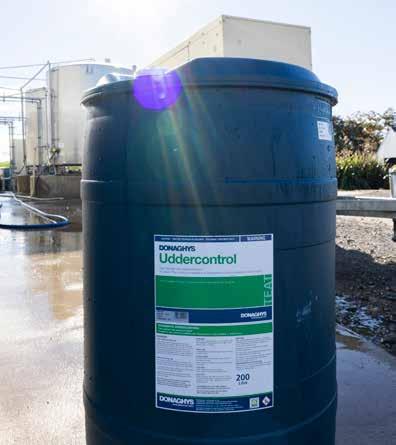
TH Enterprises uses a wide variety of Donaghys products, including dairy acid detergent/sanitiser G2, powdered alkali detergent Circomate, Uddercontrol teatspray, Emolan teat conditioner, Premium Bloat for the treatment of bloat in cattle, DairyMin® 5 Chelate mineral blend and Saturn Pour On.
“We contract Donaghys to supply through Farmlands. We did tender in the past, but we tend to just go with Donaghys currently based on pricing,” Trevor says.
“I'm very commercial and we focus on EBITDA per hectare because we know that's what drives the business."
TH Enterprises farms about 3,200ha in total, of which about 1730ha is in dairy and the rest is used for support blocks, wintering and for young stock.
“We try to be self-contained in all the regions, so in central Canterbury we bought two cropping farms this year to make ourselves self-contained around wintering going forward.
“We try to be self-contained in all the regions, so in central Canterbury we bought two cropping farms this year to make ourselves self-contained
around wintering going forward.”
ABOVE: TH Enterprises has dairy farms in the Central Plateau, Hawke’s Bay and Canterbury.
BELOW: Donaghys products are a common sight on TH Enterprises farms.
“We weigh our calves every month and heifers every two months and we aim to meet target weights. If we get a group of animals that aren't up to target weight, we immediately take remedial measures.”
Trevor says they are still in growth mode and looking for opportunities, but they are careful about where they buy, as they prefer freedraining soils due to their high stocking rate.
“We're a high system four, but we don't have bells and whistles. One of my favourite sayings is if you earn the profitability and then how you allocate that capital becomes extremely important.
“We will put tech in where we believe there’s some productivity and profitability upside, but we don't go down the tech route for the sake of it.”
LOCALLY RELEVANT
Another reason Trevor supports the Farmlands-Donaghys deal is what he sees as the importance of having locally-manufactured products designed for – and tested in – New Zealand conditions.
“Quite often you get products put on the market that are associated with trials in the USA or in the UK, but they don't have the same relevance as being trialed in New Zealand. We take some of the overseas results with a bit of grain of salt.”
Trevor says farming overseas is vastly different to New Zealand, not only in factors like climate conditions and soil but in the farming systems themselves.
“We're probably a good 70 to 80% pasture based. Not many other countries have that, so therefore it needs to be trialed in New Zealand conditions,” he says.
“One of my sayings is we're not prepared to be a guinea pig for an animal health manufacturer. So we want to know that the products we're buying are proven and going to get the results.”
To learn more about Donaghys and its product range, head to www.donaghys.co.nz
Winter parasite pressure and why smarter testing matters
While Kiwi farmers consider summer and autumn critical times for parasite management, the reality is parasite issues bite in winter too.
Supplied by Techion
Changing weather patterns and increasing drench resistance are impacting farms across New Zealand, meaning parasites are active all year round, which is why Farmlands and FECPAK have joined forces to offer a suite of animal health diagnostic tests at stores.
For more than 20 years, farmers have trusted FECPAK for Faecal Egg Counting (FEC) Tests and now the company is embracing new technology to expand the range of tests, giving farmers access to independent testing whenever they visit their Farmlands store.
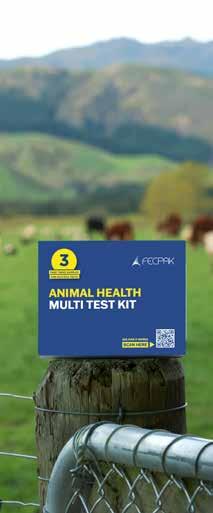
New FECPAK Multi Test Kits – in one and three sample options – allow farmers to choose multiple tests from one sample. FECPAK Multi Test Kits offer testing for FEC, Facial Eczema, Fluke, Lungworm and the new cutting edge, Worm ID test - which names parasites species present within hours of processing the sample. Multi Test Kits are simple to use, with video instructions and an easy submission that can be completed on a phone, with Farmlands cardholders having the cost of testing added to their account.
Among the expanded FECPAK test menu, Worm ID is a significant advance in parasite diagnostics.
Traditionally, identifying worm species present relied on larval culture—a slow, labour-intensive process taking up to two weeks. FECPAK Worm ID replaces this with a faster approach, digitally analysing eggs to identify the parasite Genus in the sample. Available now for sheep and soon for cattle too.
According to Founder and Managing Director of Techion and FECPAK Greg Mirams, Worm ID gives farmers and animal health professionals unprecedented speed to knowledge. “Knowing exactly which worm species are present enables targeted drench selection and treatment decisions rather than relying on broad-spectrum drenches.”
The speed of Worm ID results is possible thanks to FECPAK’s new Micro-I 300 digital microscope, deployed in North and South Island locations to ensure timely test processing and quick results.
A separate new product - but no less important - is FECPAK FECRT (Faecal Egg Count Reduction Test), a practical, independent tool to help farmers confirm the drench they are using is effective. Regular FECRTs identify parasite resistance before it leads to significant production losses. Delivered as a DIY on-farm testing kit, FECPAK FECRT removes the need for contractors, making resistance
testing accessible and cost-effective. Drench resistance is widespread and often invisible. Research undertaken in Aotearoa in 2017 by FECPAK in partnership with UK supermarket Sainsbury's demonstrated that undetected drench resistance cost New Zealand farmers 3.13kg carcass weight per head. In 2026, that’s $32.18 per head that could be being stolen using an ineffective drench. Beyond worms, winter brings risk from a range of parasitic and disease challenges. Facial Eczema can cause hidden liver damage that impacts growth and fertility long after exposure. Liver Fluke remains a serious issue in many regions, while Lungworm can significantly affect young stock, especially when animals are under stress. A single FECPAK Multi Test Kit offers testing for all these conditions, enabling farmers to build a clear picture of animal health and respond before production is compromised.
FECPAK kits are available in Farmlands stores nationwide or on FarmlandsPRO.
Get started in minutes
You’ll need a MyFarmlands account. Registering takes a few minutes.
STEP 1
Download the FarmlandsPRO app from the App Store or Google Play or click log in via your desktop browser at app.farmlandspro.co.nz
STEP 2
Log in with your MyFarmlands details. New? Register at account.farmlands.co.nz
STEP 3
Start ordering! Shop rural supplies, view previous orders, or plan ahead with a sales agreement.
Sorted. Every time.
Meet FarmlandsPRO – the tool your Co-op built for the way you really work.
Farmers and growers wear a lot of hats. You’re making split-second decisions on stock, juggling multiple accounts and cards, checking pricing, and squeezing the most out of every minute.
That’s why we built FarmlandsPRO, a single, streamlined platform that puts ordering, tracking stock, planning and account management all in one place.
Why farmers and growers are switching to FarmlandsPRO
Stock certainty. Pricing confidence. Time back.
KNOW BEFORE YOU GO
Check stock availability and shareholder pricing before leaving the farm.
LESS ADMIN. MORE TIME ON FARM.
Order 24-7. Easily reorder for pickup or delivery. Manage it all in one place.
PLAN AHEAD WITH CONFIDENCE
Lock in stock, pricing, and request quotes ahead of the season.
What farmers are saying
“Easier than phoning. You get certainty that products will be in stock, and it's well backed up in store.”
Dairy farmer, Waikato
“So easy to use. It makes it simple to roughly price items up and check availability before I head in.”
Horticulture grower, Otago
“Easy to organise online then pick up when I know the order is ready. Saves unnecessary trips when something's out of stock.”
Arable farmer, Hawke’s Bay
“Easy to find what you’re looking for and convenient right on your mobile phone.”
Sheep and Beef farmer, Manawatu
From the paddock
Download the app
From the home office
Log in on desktop
FarmlandsPRO is available to Farmlands shareholders with a MyFarmlands account.
Need help?
Talk to your local Farmlands team
Light on the horizon for rural NZ
The war in Iran is causing temporary pain for Kiwi farmers and growers, but global trends mean there are positive opportunities to consider writes rural commentator Jamie Mackay.
What has been the reaction from farmers to the Iran crisis?
Everything on farm has a fuel factor. Everything on farm has a fertiliser factor. The current fuel and fertiliser crisis is lifting inflation and, ultimately, interest rates.
Nothing good has come from this war in the Middle East for New Zealand farmers (as at time of writing).
Setting aside the crisis, what is the outlook for NZ’s rural sector?
The irony is, if it wasn’t for the crisis, I firmly believe the rural sector would be soaring to all-time highs. As it stands, we’re doing remarkably well on the income side of the ledger, but we’re paying the price of burgeoning onfarm costs. Just imagine how good it could have been!
However, if I ever feel I need a bit of inspiration, I talk to someone like Craig Piggott, the founder and CEO of Halter. Or Tim Dangen, Emma Poole, George Dodson or Hugh Jackson –the past four Young Farmers of the Year. The outlook for the rural sector has never been better.
What are some positive trends for NZ farmers and growers?
I’m really buoyed by the worldwide protein boom, which is great for Kiwi farmers, especially the dairy farmers,
our biggest sector. And believe it or not, we’ve got overweight Americans to thank, courtesy of probably eating too many hamburgers (with our “lean” grinding beef in them).
A boom industry has developed around supplying high-protein calories for those who are losing muscle mass from taking weight loss drugs such as GLP1. Up to 20% of US adults are already customers and we haven’t even scratched the surface in Europe and other overweight Western countries.
As a former sheep and beef farmer, I’ll always go into bat for a lamb rack or a sirloin steak, but the other industry I’m really excited about is horticulture, particularly kiwifruit. And I’ve put my money where my mouth is by investing in the industry.
To me, it’s a ready-made, selfpackaged, super food. Discerning consumers want healthy food. Kiwifruit is uber-healthy and, a bit like our pasture-produced protein, we grow it better than anyone else in the world.
How important are NZ’s rural industries to our economic recovery? Without wanting to overstate the bleeding obvious and pigeonhole our nation as a one-trick pony, without the primary sector we are buggered (to quote the dog in the Hilux commercial).
To quote one of my smartest correspondents, Dr Jacqueline Rowarth:
“The latest productivity data from Stats NZ make it quite clear that without agriculture, New Zealand would be severely in the doldrums. Similar statements were made during Covid when the economy didn’t crash as expected because the primary sector, from which New Zealand’s wealth stems, kept going. The latest data suggest that it is going “better than ever”.
“For the year to March 2025, New Zealand labour productivity increased 0.8%, capital productivity fell 3.0% and multifactor productivity fell 0.9%. In considerable contrast, agricultural productivity was 11.5% (labour), 7% (capital) and 9.3% (multifactor).
“Without the agricultural sector, the average figures would look even worse. Indeed, a case could be made that the rest of the country might be holding agriculture back – we are trying to boost ailing sectors while not supporting agriculture to the max.”
What are some under-the-radar feelgood stories happening in rural NZ?
I’ve already talked about Halter which, far from flying under the radar, is shooting for the stars! But there’s lots of small-to-medium Kiwi companies flying under the radar in the ag-tech space.
I’m really excited about some of the stuff we’re doing with strong wool. Unlike dairy, red meat and the likes of kiwifruit, strong wool has been a perennial under-achiever. But hopefully for not much longer. Wool is back baby!
What does rural NZ need to do to take advantage of its opportunities? We have some huge geographic
We have some huge geographic advantages and disadvantages. We are a long way from many of our markets, but that geographic isolation is a biosecurity blessing, and our temperate, maritime climate means we are world-best at converting grass to protein.
advantages and disadvantages. We are a long way from many of our markets, but that geographic isolation is a biosecurity blessing, and our temperate, maritime climate means we are worldbest at converting grass to protein.
The future for that protein is almost limitless. What rural NZ needs to cash in on that endless potential, is a supportive environment in which to do business and grow business.
That starts right at the top with the government. I would not be so brazen as to suggest to farmers how they should vote, but come November 7, a vote for a farmer-friendly party is a no-brainer. And I can think of three of them.
What role can Farmlands play in supporting New Zealand’s rural industries?
Farmlands, courtesy of its size as New Zealand’s biggest farm supply and servicing co-operative, has a huge role to play, through its bulk-buying, spending power and its ability to share profits through its suppler rebates. It’s also notable that Farmlands is casting its rural net with strategic investments in Ag Tech companies, diversifying its rural portfolio.
As I see it, as a former shareholder in a past life as a farmer, Farmlands has effectively two key reasons for its very existence. Firstly, to offer expertise and expert advice in the store and in the field. Secondly, to be the most cost-effective supplier of goods and services to Kiwi cockies. From where I’m sitting, they’re doing a pretty good job of both.
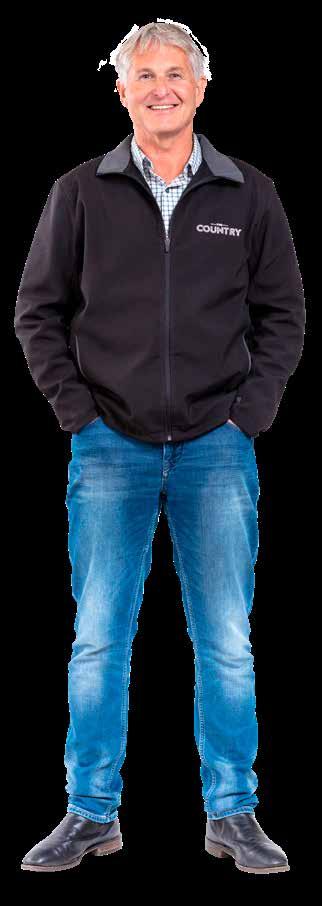
Jamie Mackay is New Zealand’s best-known rural commentator and host of popular Newstalk ZB show The Country. He is an equity partner in a Southland dairy farm and is involved in a wetland restoration project on his home farm, where he also enjoys duck hunting with a few old schoolmates. In 2024 he was recognised in the King's Birthday Honours (ONZM) for services to broadcasting and the rural community and, to top off a great year, was awarded life membership of his beloved Riversdale Rugby Club.
Northern Hawke’s Bay iwi Ngāti Pāhauwera’s pipfruit operation is showing early signs of success, in both the apple and human aspects of the business.
RICHARD BRIMER
The iwi has over 50ha of apples planted at its Pākuratahi Orchard in Tangoio (north of Napier), and it is also developing a new 60ha site at Raupunga, west of Wairoa.
Operated by the Ngāti Pāhauwera Development Trust (NPDT), the orchards serve a dual purpose: achieve a return on the iwi’s treaty settlement, and create jobs and career development for iwi members in a part of the country with limited employment opportunities.
Orchard Manager Pauly Douglas grew up in Hawke’s Bay and is experienced at growing apples in the area. He took up the role three years ago, after the orchard he previously worked at was hit hard by Cyclone Gabrielle.
Although he is not from Ngāti Pāhauwera, Pauly does have iwi heritage in the area; his grandfather is Ngāti Kahungunu (Wairoa) and his grandmother is Rongomaiwahine (Mahia).
“Our oldest trees are in their fifth leaf. They're just getting into full maturity now and this year we've seen some big yields off them,” he says.
“This (Pākuratahi) orchard was converted over from oranges; there were 60 hectares of them and there's only five hectares left now, and then the rest is all pipfruit, and six hectares’ worth of nursery trees, which are destined to go up to Raupunga for the next part of the development.”
Pauly says their Mautaua Orchard in Raupunga has a different climate to their spot in Tangoio, which is right on the coast. They are planting 30ha at their new site this year, with the remainder to go in next year or in 2028.
“Strategy-wise, we're trying to go for early varieties, such as Royal Gala strains. It also makes sense logistics-wise as well, having staff to be able to harvest up there and then we can bring staff down here after we've done those varieties,” he says.
“Also, with the weather conditions there being a bit damper, we're looking at less russetprone varieties, which seem to be the early royal gala strains. We've still got a little bit of development down here in (in Tangoio) as well.”
UNIQUE SETTING
Varieties currently grown at their original site include Rockit, Tarzi, Dazzle, Envy, Galaxy, and Jugala. Pauly says Dazzle is their star performer, with the returns well worth the cost of the licensing fee to grow it.
“We're actually lucky we've got Dazzle. We got in early when Dazzle was coming out, so that variety's bringing in double the price of
our other varieties, but we've only got three hectares of it,” Pauly says.
“They've stopped any more licenses for the market, which is a good thing, but it means we can't get our hands on any more.”
The coastal setting in Tangoio makes for a unique climate and growing environment. Unlike many apple orchards further south in Hawke’s Bay, it was spared the worst when Cyclone Gabrielle struck in 2023.
“We're in a little channel, because there's a big forest side on our western side, which is the prevailing wind, and it does affect the temperatures,” says Pauly.
“We don't have the really cold westerly cross because of the sea, but then we don't have the really hot days as well. So we do end up with really good fruit colour.”
ABOVE: Several varieties are grown at the Tangoio site including Rockit, Tarzi, Dazzle, Envy, Galaxy and Jugala.
OPPOSITE: Orchard Manager Pauly Douglas has his own iwi heritage in the Hawke's Bay.
Although the coastal location has its advantages climate-wise, it does comes with a risk of hailstorms. To keep the fruit safe, they have invested in extensive netting across their site at Tangoio.
“We've gone through in stages as it's been planted over the last five years. Whichever blocks are coming into their second-year crop, we'll put a cover over the top,” Pauly says.
“We were lucky this year. We spent about 10 weeks covering six hectares of Jugala, which was about to have its first decent crop off it, and we just got the hail net on before we had a big hailstorm come through. It’s paid for itself three times over.”
LUCRATIVE MARKETS
All of their apples are currently sold overseas, mainly in China and Taiwan, although they are working with their marketers on other destinations in Asia. One of these is Japan, which comes with some different requirements for apple exporters, Pauly says.
“After they've been packed, they've all got to get fumigated for bugs, which is another cost, and then that sometimes has problems; the apples react to it, and then you repack everything. So, it's a bit more of a risk to do that, but price-wise you get a bit more.
“They've tested sending some of our fruit to the India market this year as well. India likes the really dark fruit, and our fruit is actually darker than everybody else's.”
The NPDT doesn’t yet have its own packhouse facilities, although it still has an orange packhouse that hasn’t been used since they converted the site over to pipfruit.
“It’s probably what the apple packhouse looked like 30-40 years ago,” Pauly says.
“There was talk about looking at possible coolstores in Raupunga in case anything did happen to the road and because it's just so far away. If we came to harvest time and something happened, we'd be pretty stuck.”
GROWING THE PEOPLE
Between the two orchards they currently have 25 permanent staff – including 10 who carpool from Raupunga to Tangoio each morning – and 45 contractors who come in during harvest time.
TOP: The Tangoio orchard's coastal location makes for a unique growing climate.
ABOVE: The new site at Raupunga (west of Wairoa) will focus on less russetprone varities.
Unlike previous orchards Pauly has worked for, most of the permanent staff don’t have a horticulture background.
However, the NPDT has invested significantly in upskilling the team, putting several workers through the Horticulture Apprenticeship Programme (Level 3-4) at the Eastern Institute of Technology.
“We’re probably punching above our weight in terms of putting people through training programmes,” Pauly says.
“We have to just see which jobs are suitable for which people, and where their strengths might be. Also, some people will just naturally step up to supervise and lead the others.
“We also try and do as much as we can ourselves with development. We've invested in our own diggers and machinery and then trained the staff to operate the machines ourselves, doing our own posting and wiring.”
This attitude of self-sufficiency is especially important out at Raupunga, where good help can be a long drive away.
“If something breaks down, it's not just a five minute trip to fix anything.”
AN ‘ENVY-ABLE’ RECORD
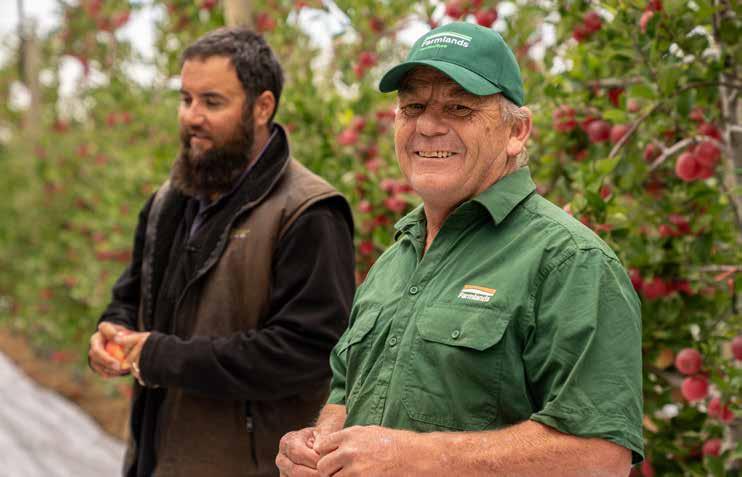
When Pauly needs advice, he will often turn to local Farmlands Technical Advisor Roland Martin, who had an extensive career as an apple grower before joining the Farmlands team. The two have known each other for around five years, and Pauly says Roland has helped him get good deals from Farmlands for the development of the orchards.
“We recently bought 1,000km of wire, which is enough to get us all the way to Auckland and back!
“Roland's also got a background in Envy, which we grow as well. He’s grown award-winning Envy crops, so it's good having that reassurance of him coming in and having a look over them.”
Roland says he has enjoyed working with Pauly and his team, and helping them with the development of their orchards.
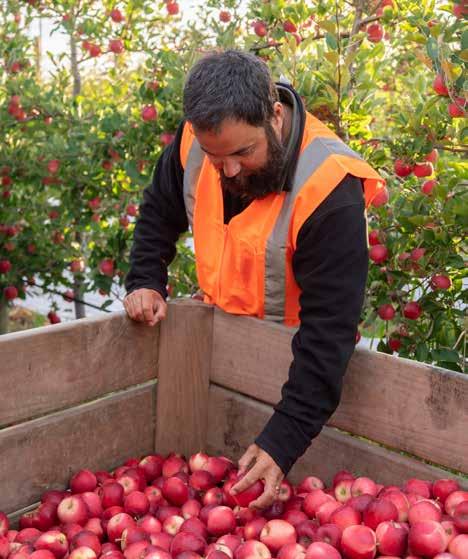
BELOW: Farmlands Technical Advisor Roland Martin inspects the harvest with Orchard Manager Pauly Douglas.
When Pauly needs advice, he will often turn to local Farmlands Technical Advisor Roland
Martin, who had an extensive career as an apple grower before joining the Farmlands team.
“Supporting the growing team at NPDT is a focus of mine, sourcing the right product at the right time is crucial for their success. Whether this is the right grass seed for the new block or high analysis fertiliser for post-harvest nutrition, understanding what is required at the right time is essential.”
Roland also enjoys getting to visit the “beautiful” Tangoio orchard site and chat with the friendly staff.
“There’s some really nice land out there; it's just a bit more exposed, being so close to the coast. They even get a little bit of salt burn on some of their trees in these big swells.”
As for the new site at Raupunga – which used to be an olive block – Roland says it’s too early to say what the results will be from growing apples in the area.
“There's a big kiwifruit block next to it, but it's very unknown about apples up there. It could
be early in the season, it could be late. We'll find out in the next couple of years.”
WATCHING THE FORECAST
While each site is different, Roland says managing moisture – and fungi – is one of the keys to successful apple growing
“With apples, the fungicide use is quite intensive if we have a wet spring. A lot of the time you're looking at the weather forecast as well. If you know you've got rain coming, you need to apply something before that weather event hits.”
However, Roland says pest-related spraying is done on a strict schedule managed by industry group New Zealand Apples & Pears.
“It’s a lot more targeted than it used to be. If you have to spray, you have to spray, because if you don't do what you're meant to do, you can get kicked out of markets.”
Roland says one of the differences between apples and some other types of fruit is the big gap between a young tree being planted in an orchard and when it actually starts producing.
“You'll get a tree out of the nursery, they're only one year old, and then if you're planting that straight out into the orchard. It's not like they grow in the nursery for three years, you plant it, you get a crop.
“You plant the small tree and you look after that tree until it is producing, which with some varieties is in year two, but mostly year three.”
GROW A TREE FIRST
Roland also has some advice for growing his specialist variety Envy: “You've got to grow a tree first,” he says.
“That's the main thing, or else they will spur up and they will crop hugely and it'll just slow the tree down. Dryer conditions are better as well because they are a russet-sensitive variety. You don’t want to spray it in the morning, when it's foggy or cold, you want to spray it later so it's quick drying.”
Meanwhile, Pauly and the team have had to deal with a different threat to their apples, of the large mammalian kind.
“I was up at Raupunga recently and there were a couple of wild pigs. I don't know how they got in there, but when we first started development, it would be at least a couple of times a week. I'd get there and they'd have a pig hanging up in the lean-to,” Pauly says.
“Down here we’ve got deer that come over from the forest too. They've eaten about three rows of apples a few weeks ago, so there'll be some very full deer walking around here somewhere.”
ABOVE: Production at the Tangoio orchard has exceeded expectations.
The legend goes on
ELF MOTO4 ROAD 10W-40 is a synthetic-based 4-stroke motor oil, particularly recommended for all types of 4-stroke engine motorcycles, compliant with API SN and JASO MA2 standards. Perfectly compatible with catalytic converters and lead-free fuels, it meets the severe requirements of urban traffic and long-distance runs.
Available from Farmlands stores nationwide.
Farmlands Horticulture boosts research capabilities
Farmlands Horticulture has strengthened its offering with a new partnership that gives it dedicated, independent field research capability across New Zealand.
The partnership with Hawke’s Bay-based Ranui Field Research and Canterburyheadquartered Field-Tek brings a number of benefits for Farmlands Horticulture and its customers.
These include strengthening Farmlands Horticulture’s technical performance in the field, supporting product innovation and delivering credible research for supplier products and Farmlands’ own brand Agstar.
“It means that we can partner with companies to bring innovative new products to market, develop our own solutions, and ultimately shape our own future” says Andy Davis, Technical Manager – Horticulture at Farmlands.
“In horticulture, growers expect products that deliver proven efficacy while maintaining a high standard of crop safety.”
“Crops such as kiwifruit and apples have significant export value, so any product we bring to market must be supported by robust crop safety work. Growers need confidence that the product is not only effective, but also safe to use on high-value export crops.”
Both Ranui and Field-Tek have extensive experience in contracted trial work and perform research for global companies such as Bayer, Syngenta, and Nufarm.
Ranui and Field-Tek already work as partners to offer high-quality research across New Zealand. They both have EPA containment approval, which enables them to manage actives that are not registered in NZ.
Andy says the two companies have expertise across a range of horticulture crops as well as arable
LEFT: Holding trials in different areas is important for proving the efficacy of a product.
field research, and they have wide geographical coverage which is important when researching the performance of ag-chem products.
“When you’re doing fruit finish work, such as russet control in apples, it’s not enough to generate data from just one region. You need trials across both the North and South Islands to ensure the results are robust and representative of different growing conditions,” he says.
“You really want to look at what a product performs like in different conditions. It might perform well in the North Island because it's a bit warmer and the climate's different, but the results might be different in Central Otago or Tasman.”
Andy says another key component of the partnership is that Ranui and Field-Tek will help the Farmlands Horticulture team to design their research calendar for the year.
“They’ll be helping us designing trials to get the best results. It's not just a relationship where we go, here, do these trials.’ They're an integral part of the whole process.”
FAMILY CONNECTION
For Ranui Field Research owner
Tim Robinson, the partnership with Farmlands Horticulture has special significance: his grandfather Bob Skelton co-founded Skelton Ivory, which would go on to become Farmlands Horticulture.
Tim Robinson.
Andy Davis.
“It’s pretty cool to have that family connection to Farmlands Horticulture,” he says.
Ranui has a research station on the outskirts of Hastings that features 4ha of research orchard and 2.5ha hectares of research grapes. It also conducts research in other parts of the North Island like the Bay of Plenty.
“The property that I have now was my family orchard,” Tim says. “My dad still struggles with me being very happy when the orchard has high disease for the trials… he always wanted the orchard nice and clean!”
Tim had an extensive career in crop research before founding Ranui. He says he wanted to be in control and be able to deliver for clients, rather than being answerable to a big overseas corporate.
“I just felt that we wanted to be able to focus on the key things to make sure that our clients were satisfied and happy. New Zealand is unique, and it’s hard when you're owned or operated
under management that doesn't understand the nuances.”
Tim says multinational ag-chem companies still play a very important role in the New Zealand market, but there are gaps that Farmlands Horticulture can help to fill with this new partnership.
“I think that's where the likes of Farmlands need to pick that up, because it's just not economical for these multinationals to do certain products. They can source that product, they can test it – which is where we come in – and then they can get it through and into the market and meet those needs. The scope is huge.”
VITAL FOR THE INDUSTRY
Field-Tek has the South Island covered, with a presence in Southland, Central Otago and Marlborough as well as its Canterbury base.
Its expertise goes well beyond the ‘big three’ of grapes, apples and
kiwi fruit, covering everything from cherries and apricots to arable crops, cereals and pasture.
Field-Tek owner Sean Lange says the new Farmlands Horticulture partnership is good news not only for Farmlands and Field-Tek customers, but for the wider horticulture industry as well.
“It's getting harder for agrochemicals companies to bring new products into the country and way more costly, so there's a bit of a downturn in that department,” he says.
“This partnership is helping the resellers and at the end of the day, the growers and farmers to have more products available to them.”
Sean says all crops in New Zealand are suffering from a lack of new products coming through.
“Worst case scenario, they'll be stuck with the chemistry that they've got at the moment, which could end up becoming resistant and the products start not working if that's all they're using, and then how do they control their insects, pests and diseases?”
Looking at his own backyard, Sean is confident Farmlands’ support will allow Field-Tek to expand its research capabilities further and potentially hire more staff.
“It definitely is going to strengthen our position. We've got a really big core base of global agrichemical companies already, but keeping things more local with a nationwide co-operative, that's important to us as well.”
LEFT: Ranui Research has a research orchard in Hastings.
Sean Lange.
Comfort and warmth in every step.
Quatro by Skellerup is a premium gumboot range handcrafted from durable natural rubber, designed to perform through long days where comfort and reliability matter most. An ergonomic fit with secure ankle support helps minimise heel slip, while multi-layer insulation works to retain warmth.
Support where you need it, comfort where it counts – Quatro by Skellerup is made for the demands of the working day.
15% OFF QUATRO GUMBOOTS*
THINKING OUTSIDE the lifestyle box
Lifestyle farmers often do little more with their land than run a few animals, but Manawatu couple Stu and Jules Bradbury have a grander vision.
Growing blueberries and olives and planning an agritourism venture would be an ambitious undertaking even for full-time farmers, but the Bradburys also have day jobs.
They both work from home on their 20ha farm in Colyton near Feilding; Jules runs her own accounting practice while Stu works remotely for irrigation specialists Lindsay Corporation.
The US-based company acquired a previous business that Stu was a co-founder of, which patented the world's first individual sprinklercontrolled variable rate irrigation system for pivot irrigators.
Free from the daily commute that many lifestyle farm owners endure, Stu and Jules have had the time to think about what to do with the property they have owned for 15 years.
They initially ran heifers and a handful of sheep “just because you do”, Stu says. “But for a long time, it had niggled at us that there must be something more we could do with this block of land that's a bit more interesting than just running a few heifers around.”
EXPANDING PROJECT
Besides being a tech whizz, Stu also loves planting trees, and has been developing shelter belts to protect them from the harsh winds that are a fact of life so close to the Manawatu Gorge.
They also identified an area between their race and their driveway with a couple of small paddocks that they thought would be ideal for horticulture, and they eventually decided on blueberries.
“Blueberries just seemed to be an option that they didn't harbour too many diseases,” Stu says.
“We like the idea of having to pick your own, so not having to employ labour to come and harvest. We can just get people to come and pick their own and we can have a little ice cream shop and all the rest, so that all appealed.”
Although they planned for a small site, “one thing led to another” and the project got a lot bigger. They shifted it to another, more sheltered part of the farm and ended up putting in more than 2,300 blueberry plants – which they have now fully netted – on over a hectare. They also planted some raspberry bushes.
“Before we'd done that though, Jules was like, ‘I really like olive trees. Why don't we plant some olives as well?’” Stu says.
“Right next door to us, we've got an area that was a 100-acre block that's being subdivided into 70 houses, so we thought we could put olives all along that side of the farm and maybe
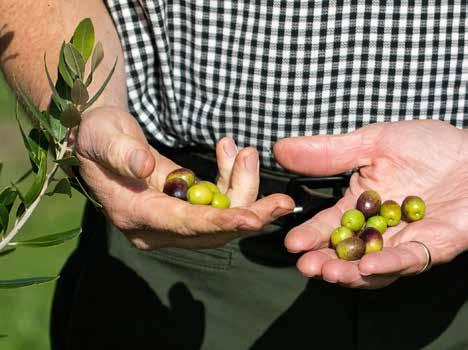
make some olive oil down the track. So we planted 700 olive trees as well."
Stu admits he and Jules have a habit of their projects ending up much bigger than they originally planned.
“When we take on projects, we bite off more than we can chew… and we chew really hard.”
BLANK CANVAS
Fortunately they had the help of Farmlands Technical Advisor Laurence Frost, who they first met at the Central Districts Fieldays in March 2024.
“We hadn't done anything yet, and so he said we need to put in a cover crop and we need to do this and that, and he was just a wealth of information,” Stu says.
One of the first things Laurence helped the Bradburys with was sowing a cover crop of caliente mustard before they had done anything else to the soil. The purpose of the mustard was to ‘biofumigate’ the soil and adjust the levels of nitrogen.
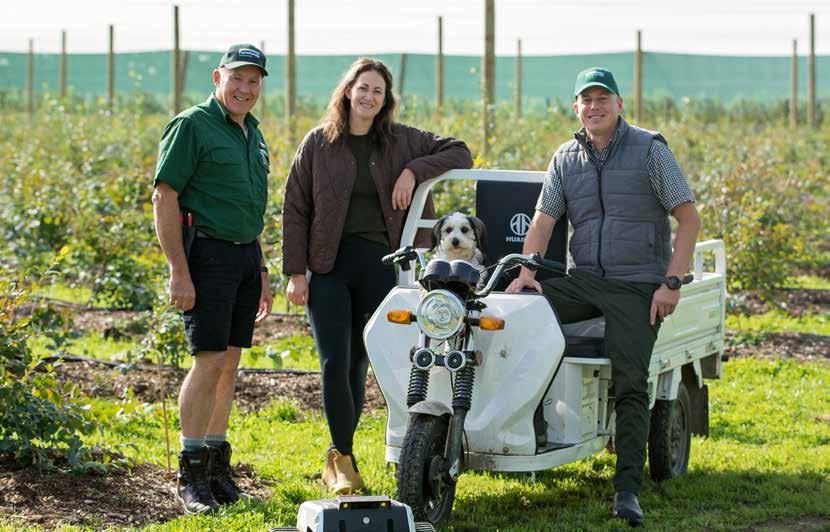
OPPOSITE: Jules and Stu Bradbury out on the farm with Farmlands Technical Advisor Laurence Frost (left) and their dog Gin.
BELOW: Stu has used his tech background to develop innovative on-farm solutions.
NIKO KLOETEN
RAY BARNETT
“We put that all in, and then I worked with him on the design for how we were going to mound up all the rows,” Stu says. “He advised us on the trees to get down the sides and hooked us up with the people that could supply the trees.”
Stu says Laurence has also been quick to come to their aid with any issues, such as when rabbits started ring-barking their olive trees.
“He made some calls and we had 700 cardboard tree protectors turn up that we could stick around the trees. That was a mission putting all of them on, but we got the rabbits away from them.”
Laurence says it makes a big difference being able to work with customers from the moment they start thinking about a project, as he can help prevent mistakes that could cause major problems later on.
“The neat thing with Stu and Jules is they presented me with a blank canvas. ‘This is what we'd like to do. What do you reckon we should do?’” he says.
“For a long time, it had niggled at us that there must be something more we could do with this block of land that's a bit more interesting than just running a few heifers around.”
“For me as a horticulture specialist, it's really important because the crop doesn't start until you've prepared everything.”
Laurence likens the process of preparing land for horticultural purposes to building a house.
“Imagine if you slap up a house and they go, ‘So where's your sewage going?’ ‘Oh, we haven't thought about sewage.’ ‘Where's your power coming from?’ ‘Oh, I suppose you’ve got to dig a trench for that.’”
LOOKING LOCALLY
Prospective growers also need to ask whether the plants they are planning to grow are suitable for their property and region. Laurence says the “golden rule” is to look at what else is grown in your local area.
“If people are growing blueberries locally, chances are it will work for you. If they're not growing these things locally, chances are it won't work for you. And if you wish to try, please understand there's going to be a degree of pain, be it fiscal or mental pain or both.”
Laurence says prospective growers also need to think about how they are going to harvest, pack and distribute their product.
If a fruit is commonly grown in an area, this will likely make it easier to access local
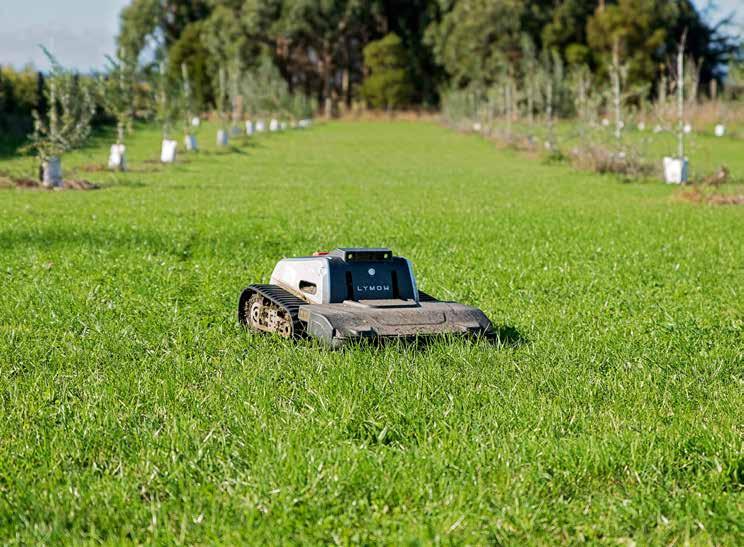
ABOVE: Stu is part of a trial for a new robotic lawnmower that has saved him hours of work each week.
packhouse and coolstore facilities, labour and even specialist harvesting equipment, he says.
“The kiwifruit customers in Whanganui suffer because most of them have to truck their kiwifruit up to the bay. Taranaki once had five packhouses, but the climate wasn't favourable and Cyclone Bola was the final nail in the coffin.”
For lifestyle farmers there is another key consideration: time.
“The biggest limitations for lifestylers are fiscal and time-related,” Laurence says. “They need to really be honest and identify how much time they're prepared to throw in.”
TIME-SAVING TECH
Stu has tackled that time equation with technology, using his tech background to create solutions that have saved him hours of work each week.
He says one of the most time-consuming aspects of developing their blueberry and olive orchards has been the mowing.
“While the olive trees are little, you need to keep on top of the grass. I was out there on a large ride-on mower, and that took me eight hours to mow the olive grove and two hours to mow the blueberry area.”
This has all changed, thanks to the introduction of robotic lawnmowers. Stu is a beta tester for a company called Lymow, and got to try out the first Lymow mower to be brought into New Zealand.
“I've got four of them at the moment running around, and one of the engineers from Lymow is going to be calling in here next month to work on some stuff with me.
“I've got this two-and-a-half hectare area of olives that's all mowed by robot mowers, and the blueberries will be mowed by robot mowers too, when we get a few bugs fine-tuned.”
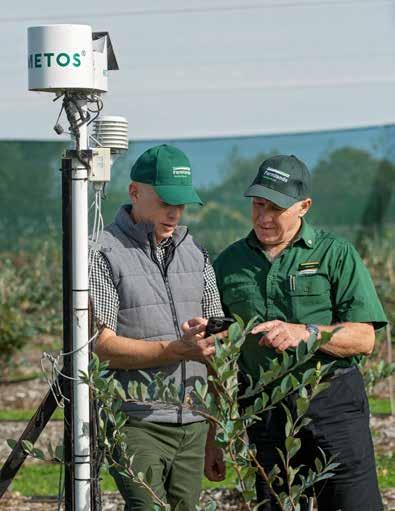
Stu has also put his irrigation expertise to good use, not only building the irrigation controller himself, but writing the code for a server that connects data from probes in the ground with ChatGPT, giving him up-to-theminute recommendations.
“I built the system that could measure the probes and interface with ChatGPT, which would go and check the weather and the forecast. I can upload some photos and ChatGPT analyses the colours of everything and sees how things are going.
“Once you get some tools like that, then it frees up a lot of headspace and then you can do other things.”
TOURISM TEAM-UP
An important part of the equation for Stu and Jules is tourism, and they accidentally did a trial run for the ‘pick your own berries’ aspect this year, ahead of schedule.
“We weren’t supposed to have any blueberries this season. We tried to pick all the flowers off, but as it turns out, we sort of failed a bit on getting all the flowers and we ended up with quite a few blueberries,” Stu says.
“So we opened up ‘pick your own’ days for a few early followers. We put it out on social media to pre-buy a punnet on our website, and that went really well. We had quite a few people come and pick blueberries.”
Stu and Jules are also part of a Manawatu agritourism group, including their neighbours Mat and Jana Hocken who recently added an agritourism element to their dairy farming operation. “There's a guy down the road that does robotic milking and he's setting up a vending machine milk bar at his place,” Stu says.
“And then there's other people that provide accommodation. And just down the road from us, there's a place with beautiful garden that’s perfect for events.
“So we're all working together, talking about how we can encourage more people to come to Manawatu and see the variety of things that you can do. Rather than just being about us doing something, it's more about: ‘We've got a cool farm, they've got a cool farm and they've got a cool farm.’ Make it an experience.”
BELOW: Stu and Jules are planning to develop their own olive oil brand.
Bountiful harvest from India FTA
New Zealand growers are set to enjoy increased access to the Indian market, with horticulture being one of the big winners from the new free trade agreement (FTA).
Despite being the world’s most populous country, India has been a tough market for New Zealand’s horticulture sector to crack, with one of the barriers being high tariffs.
New Zealand exported approximately $6.6 billion of horticultural products (excluding wine) in 2025, with a big chunk going to Asian markets like China ($1.7 billion) Japan ($757 million) Taiwan ($453 million), the Republic of Korea ($294m) and Vietnam ($198m).
India is currently our 11th largest horticulture export market with $118 million of goods sent there in 2025, although this was nearly three times the $40 million we exported in 2023. Industry leaders believe the new trade deal will unlock further growth potential.
New Zealand Horticulture Export Authority CEO Simon Hegarty says the FTA is warmly welcomed across the New Zealand horticulture exporting landscape.
“The phased reduction or removal of tariffs on trade with India under the FTA will provide an estimated benefit of $20m to $30m annually. This equates to the removal of approximately 30 percent of our entire annual horticulture tariff costs globally.”
New Zealand’s horticulture exports to India were dominated by apples (66 percent) and kiwifruit (30 percent) in 2025 and both sectors have achieved significant gains in the FTA (see the graphics for more info).
One horticulture export that has been under-represented in our trade with India is wine. Despite being second only to kiwifruit in export value at more than $2 billion a year, our winegrowers have been largely kept
out of the Indian market by a punishing 150 percent tariff.
This will be reduced by at least two-thirds over the next decade (depending on the value of the wine), and any future improvements applied to other Indian trade partners will also apply to New Zealand.
Other horticultural products including cherries, avocados, blueberries and persimmons will also see tariffs phased out over time.
GOOD NEWS FOR GROWERS
Chris Binns, Farmlands General Manager – Horticulture, says the India FTA is good news for many Farmlands Horticulture customers.
“Horticulture is New Zealand’s fastest-growing primary industry, having grown from 8 to 14 percent of our primary exports since 2005,” he says.
“Asia is a crucial market for our growers, with a large and expanding middle class driving demand for the high-quality produce New Zealand is renowned for. The shorter shipping times are also important for certain highly perishable types of fruit.
“Although the FTA won’t change the game overnight, it will add India to the mix for many of our exporters, giving them more options and ultimately helping them to achieve better returns.”
Chris says the ‘big three’ of kiwifruit, wine and apples all have something to celebrate from the trade deal, while other niche but growing sectors like cherries and avocados are also set to benefit.
“Each country has its own unique consumption patterns and preferences, and understanding these in the Indian context will be critical to making the most out of the FTA,” he says.
“For some growers, this may mean switching to varieties that are popular with Indian consumers. Farmlands Horticulture has a team of expert Technical Advisors across the country ready to help them get the most out of these new plants or crops.”
LONG-TERM TREND
While the Indian FTA will provide a boost to the sector, Chris says horticulture has long been one of the success stories of the New Zealand economy.
“Horticulture is also becoming increasingly sophisticated and hightech, so Farmlands has invested in our offering to meet the evolving needs of growers around the country,” he says.
“This has included bolstering our team of Technical Advisors, launching dedicated horticulture hubs – starting with Hawke’s Bay – and making it simpler for growers to order the products they need via FarmlandsPRO.
“It’s not easy being a grower, and there is nothing the Farmlands Horticulture team enjoy more than seeing our customers succeed.”
Chris Binns, Farmlands General Manager – Horticulture.
Kiwifruit
Wine Wine Other fruit
Tariffs on wine reduced from 150 per cent to either 25 or 50 per cent (depending on the value of the wine) over 10 years.
Most Favoured Nation (MFN) status: any better deals applied to other India FTA partners are extended to New Zealand.
Tariff reduced from 33 percent to zero for 15,000 tonnes per year.
A 16.5 percent tariff will be applied above that quota.
Phased tariff elimination on other horticultural products including cherries, avocados, blueberries and persimmons.
Apples
Tariff reduced from 50 percent to 25 percent for 32,500 tonnes per year.
Quota rises to 45,000 tonnes by year six.
Applies to apples arriving in India between April 1 and August 31.
A 50 percent tariff still applies outside this period.
A 50 percent tariff also applies to apples with an import value under US$1.25/kg.
Preparing to breed FUTURE CHAMPIONS
Horse studs across New Zealand are in preparation mode for breeding season. We visited a leading Waikato stud with a Melbourne Cup-winning pedigree to learn their secrets to horse breeding success.
Saturday, March 28 was a very good day for Rich Hill Stud near Matamata.
A star filly they race, She’s A Dealer, won the $600,000 Group 1 NZTBA Breeders’ Stakes at Trentham, while in Australia another homebred, Aeliana, claimed the rich $1.5 million Group 1 Tancred Stakes at Rosehill.
While those results are worth savouring, owner John Thompson is already turning his focus back to the crucial breeding window beginning in September – one that could shape the next generation of champions.
Preparation is well underway, and like any farming business, success starts with understanding your stock.
“You’ve got your young horses that are just being weaned – they’ll be next year’s yearling sales horses,” John says. “Then you’ve got broodmares in foal, and broodmares that are empty, all with different nutritional needs. And then we’ve got four stallions, which are different again.”
WATCHING CONDITION AND HEALTH
Over the coming months, health is a major focus. Horses are particularly prone to respiratory infections, and early detection is key.
“If one’s not doing well, checking its temperature is the first thing,” John says. “But you can also get your vet to run bloods – there could be an infection you don’t even know about.”
Weight is monitored just as closely. Horses must grow steadily, but not too quickly, as rapid gains can lead to joint problems in young horses and complications for broodmares.
To track development – particularly in weanlings – Rich Hill uses Gro-Trac, an equine growth monitoring system developed by Kentucky Equine Research and available in New Zealand through NRM.
Even with technology, individual variation remains a constant challenge.
“It’s a bit like humans,” John says. “You can feed people the same balanced diet and get completely different results—some put on weight, some lose it, some stay the same.”
That variability means horses are grouped by condition to better manage feeding – those needing to slim down, those needing to build up, and those in ideal shape.
“We’ve got all the ‘fatties’ in one group, the ‘fitties’ in another, and the normal-condition horses in others,” he says.
OPPOSITE: Rich Hill Stud owner John Thompson (left) and NRM Nutrition Specialist Dougal Scott (right) with champion stallion Satono Aladdin.
NIKO KLOETEN
RUTH GILMORE
SERIOUS STALLIONS
Attention to detail matters, but in thoroughbred breeding, stallions are the cornerstone of success.
Rich Hill has built a strong reputation since its establishment in 1994. Originally an agistment farm – grazing and caring for other people’s horses – it evolved once John began investing in stallions.
“You realise pretty quickly that if you want to get ahead, you need a good stallion, which isn’t easy,” he says.
His first sire, Pentire, proved a standout, producing 16 elite Group 1 winners, including Melbourne Cup champion Prince of Penzance in 2015. That win was historic, with Michelle Payne becoming the first female jockey to win the Cup – a story later told in the film Ride Like a Girl
Today, the industry is increasingly global. One example is the “shuttle stallion” – horses that breed in the Northern Hemisphere before travelling south for the New Zealand season.
Rich Hill stands Satono Aladdin, sourced from Japan under a lease arrangement. “If we had to buy him, it would cost many millions,” John says. “And because there’s no artificial insemination, you can’t just send semen – you have to fly the horse.”
GETTING THE TIMING RIGHT
Alongside genetics, timing plays a critical role in breeding success.
NRM nutrition specialist Dougal Scott, who has worked with Rich Hill for 15 years, says much of their success comes down to selecting the right stallions—and getting the timing right for their markets in New Zealand and Australia.
Breeders aim to have foals born early in the season. To be competitive as yearlings, they ideally need to arrive no later than November.
“That’s their biggest revenue stream,” Dougal says. “If they’re born later, they’re smaller when it’s time to sell.”
To improve conception rates early in the breeding window, farms use a strategy known as a “calorie flush” – gradually increasing feed intake from late June to mimic the natural rise in nutrition that comes with spring pasture growth.
“They need to feel like they’re going into spring,” Dougal says. “More feed signals it’s the right time to get pregnant, just like it would in nature.”
Feed choices are tailored accordingly. NRM Evolve provides extra calories where needed, while NRM Progress helps manage weight without compromising essential nutrients for bone and tendon development.
Even in grass-rich regions like the Waikato, pasture alone isn’t enough.
“The way we farm thoroughbreds now, we need them at optimal,” Dougal says. “We can’t rely on grass alone to deliver everything.”
A LIFELONG PASSION
John’s connection to horses began early. His father, Colin, now 97, was an equine veterinarian who worked with stud farms, and the family bred a small number of horses themselves.
“That’s where I got my first love of horses,” John says.
As a student at Massey University, he worked in yearling preparation during holidays – a rhythm that aligned perfectly with the academic calendar. Today, Rich Hill continues that tradition, hosting veterinary students for practical experience.
ABOVE: Rich Hill Stud uses NRM Progress as a lowercalorie feed option.
After graduating in agricultural science, John gained experience overseas in England, Ireland and Kentucky.
He notes that Northern Hemisphere systems are often more labour-intensive, with horses housed through harsh winters. While this leads to more handling, he believes New Zealand horses benefit from spending more time outdoors.
Returning home, John moved into stud management before the 1987 sharemarket crash reshaped the industry, creating the opportunity to purchase what is now Rich Hill Stud.
Originally known as Evergreen Lodge, the property was renamed after his grandfather’s birthplace in County Armagh, Northern Ireland.
THE INTANGIBLE FACTOR
While breeding, nutrition and management can all be refined, John believes there is always an element that cannot be measured.
Thousands of foals are bred each year in New Zealand and Australia. Many look the part, but only a select few succeed at the highest level.
“It’s what’s in the heart and the head,” he says. “You can’t see that in a horse.”
BELOW: Rich Hill Stud uses Kentucky Equine Research's Gro-Trac system to monitor its horses' growth.
Building on strong foundations
SESQUICENTENNIALFARM
NEW ZE ALAND CARTWRIGHT TIMARU, CANTERBURY 1875
The Cartwright farming story began in 1875. This was the year Mary Cartwright arrived in Timaru, South Canterbury from Ireland with her six children.
Recently widowed, Mary showed remarkable resilience as she settled at Pleasant Point. Alongside her youngest son, James, she began what would become more than 150 years of continuous family farming. The farm started as a mixed farming operation, with cropping and livestock
forming the backbone of the early years. James took on the farm, purchasing his first 30 acres from his brother Edward. Through determination and hard work, he gradually expanded the holding and established a viable mixed farming enterprise. James married Elizabeth Blair, and together they raised
nine children, initially living in a small cob cottage. To support the family, James supplemented farm income with roadwork and construction, while continuing to develop the land. The farm passed from James to the third generation, Arthur, who continued to strengthen the operation before passing it on to Roger, the fourth generation. Each generation built on the foundations laid before them, ensuring the land remained in family hands.
As farming practices and markets evolved, so too did the operation. Over time, the farm transitioned from mixed farming, cropping and bull beef before eventually developing into a dairy farming operation, reflecting the family’s willingness to adapt while remaining deeply connected to the land.
Today, the farm is run by Roger and Hayden, proudly representing the fourth and fifth generations farming together. The family now owns approximately 1,000 acres of freehold land and leases an additional 175 acres nearby. With ongoing development, irrigation, and environmental planting, the farm continues to grow as a productive and sustainable dairy operation. With a sixth generation now coming through, there is strong hope that the opportunity to farm will continue. It carries forward a legacy that began with Mary’s courageous journey from Ireland, which has endured for more than a century and a half.
The New Zealand Century Farm and Station Awards aims to capture and preserve the history of our country’s farming families. We share stories from Farmlands shareholders who have worked their land for 100 years or more.
2024.
FAR LEFT: James, Elizabeth and family, 1919.
LEFT: Arthur, Julie and family, 1955.
TOP: Roger, Karin with Hayden (4th generation) and daughters,
Lay of the land
In this section
The cows might be dried off and the fruit might be off the tree, but this is still a busy time of year for farmers and growers. In this section, we help you prepare for next season with expert advice on everything from calf rearing to equine nutrition, agronomy and how to save on energy costs with smart solar investment.
PHOTO: Paul Sutherland
Farmlands simplifies CALF FEED RANGE
Farmers have reacted positively to the new-look Farmlands bagged calf feed line-up. We spoke to Farmlands Head of Merchandise – Nutrition Sam Heveldt about the changes.
Farmlands is always looking for ways to be more efficient, and saw an opportunity to optimise its bagged calf feed range.
This involves streamlining the range from 18 products to eight and three brands to two. Sam says performance won’t drop, farmers won’t see an impact on their calves and the Farmlands and SealesWinslow teams will help them through the process.
“It was about making sure we had the right range for our customers at the right price, and ensuring that we put the right products on our shelf. We also did a bit of range rationalisation in some spaces, to ensure that we had competitive offers that were compelling for our customers and met all their needs.
“We've got a better offer and slightly different coloured bags. At the end of the day, we'll still be here to help you feed your calves.
“Our Farmlands store team, field teams and the SealesWinslow Nutrition Specialist team are here to support and share info about this change and support with your farm’s calf feed needs for the season ahead.”
REMOVING COMPLEXITY
Sam, who joined Farmlands in January, is leading the roll-out of the new calf nutrition product range.
The process traces back to Farmlands’ acquisition of animal feed brand SealesWinslow, which significantly enhanced the co-operative’s manufacturing capabilities and broadened its product range in the nutrition space. However, it is possible to have too much of a good thing. The merger saw Farmlands offering a huge range of calf feed options under three different brands: SealesWinslow, NRM and its own brand Reliance.
OPPOSITE: Beef farmer Blair Linton of Te Puke is a longtime SealesWinslow customer.
NIKO KLOETEN
PAUL SUTHERLAND
“We wanted to simplify the offer in the market, remove the complexity and just make it easier for our customers to shop, whether instore, out on the farm through FarmlandsPRO, through their local TFS or SealesWinslow Nutrition Specialist,” Sam explains.
“It also gives farmers more confidence they’re choosing the right product without having to navigate a complex range.”
THREE BECOMES TWO
One aspect of the change is NRM moving out of bagged calf feed, although the iconic brand will continue to offer a wide range of animal nutrition solutions including for sheep, equine, poultry and other lifestyle animals.
The good news for those who previously bought NRM calf feed, or any of the other discontinued products, is that there is an equivalent option in the new range (see chart for more info).
“When we look at the range, every customer need is still met, and if you were purchasing something before, there's a specific product that you should be moving into,” Sam says.
“In fact, a lot of the times you'll get a better product at the same offer. We’ve ensured that we've got good quality products in our range and that they all match up to what the customers were purchasing before.
“Our teams in store and on-farm will help guide that transition, so farmers can be confident they’re making the right call.”
THREE-TIER RANGE
To keep things simple, Farmlands has also divided its calf feed range into three tiers: premium, standard and value.
At the premium end is the SealesWinslow Calf Max range, which features additives such as essential oils and prebiotics to support gut health.
In the standard tier is the Reliance Calf range, which is exclusive to Farmlands but doesn’t contain the gut health additives.
Meanwhile, in the value tier SealesWinslow Value Calf products are lower priced but have less starch and higher fibre content. They are available direct to farm and in selected stores.
“We've done a lot of work to ensure that each of the NRM products that has come out has got a direct replacement, mainly under the SealesWinslow brand,” Sam says.
“We've got Reliance still sitting there in the standard tier, and then the value products are a really good alternative to what we previously had with Reliance Nifty 50 and the NRM Sweet 16 pellets.”
Bagged calf hard feed: quick guide
Premium
The cream of the crop of calf feed for early rumen development and with the benefit of gut health additives for supporting increased feed intake and optimum calf health.
SealesWinslow
Calf Max 20%
Moozlee
12.8 MJ ME
20% Crude Protein
38% Starch
<4% Crude Fat
<15% NDF
SealesWinslow Calf Max 20%
Pellets
13 MJ ME
20% Crude Protein
38% Starch
<3.5% Crude Fat
<15% NDF
SealesWinslow
Calf Max 16%
Pellets
12.5 MJ ME
16% Crude Protein
38% Starch
<3% Crude Fat
<20% NDF
COMPARABLE SWAP FOR THESE DISCONTINUED PRODUCTS
NRM Moozlee
Reliance Calf 2000
Pellets
High starch and low fat for optimum rumen development.
• Free from PKE and copra.
• All include NuStart® Evolution- a combination of essential oils and prebiotic to boost the immune system, digestive health and appetite of calves. Helps to support calves through transition, supports gut health and enhances rumen development for more robust calves that are better equipped to deal with disease challenge in their environment.
• Acid Buf for optimum rumen health and gut protection.
• Calf specific trace elements and vitamins including a comprehensive range of B vitamins.
• Bovatec® coccidiostat to aid in the prevention of coccidiosis.
Standard
High powered for supporting optimum rumen development, but at a slightly lower cost as they don’t contain gut health additives. Exclusive to Farmlands.
Reliance Calf Grower 20% Pellets
12.5 MJ ME
20% Crude Protein
35% Starch
<3% Crude Fat
<20% NDF
Reliance Calf Finisher 16% Pellets
12.5 MJ ME
16% Crude Protein
35% Starch
<3% Crude Fat <20% NDF
COMPARABLE SWAP FOR THESE DISCONTINUED PRODUCTS
SealesWinslow Rumatain 19% Pellets
SealesWinslow Rumatain 17% Pellets
Reliance Kiwi Calf 19% Pellets
12 MJ ME
19% Crude Parotein
39% Starch and Sugar
<2.5% Crude Fat <21% NDF
• High starch and low fat for optimum rumen development.
• Free from PKE and copra.
• Calf specific trace elements and vitamins including a comprehensive range of B vitamins.
• Deccox® coccidiostat to aid in the prevention of coccidiosis, but with less risk to non-target animals such as dogs and horses and also the preferred coccidiostat for some premium niche markets.
• Does not include the gut health additives found in the SealesWinslow Calf Max Range, apart from Kiwi Calf 19% which contains essential oils for supporting gut health.
Value
Value range, with economy being made due to the lower starch and high fibre (NDF) level.
SealesWinslow
Value Calf 19% Pellets
12 MJ ME
19% Crude Protein
> 25% Starch
< 3.5% Crude Fat < 25% NDF
COMPARABLE
SWAP FOR THESE DISCONTINUED PRODUCTS
Reliance Nifty Fifty 18%
SealesWinslow
Value Calf 16% Pellets
11.5 MJ ME
16% Crude Protein
> 25% Starch
< 3.5% Crude Fat < 30% NDF
NRM Sweet 16 Pellets
SealesWinslow Calf Rearing 19% Pellets (bulk bags or bulk in silo)
SealesWinslow Calf Rearing 16% Pellets (bulk bags or bulk in silo)
• High starch and low fat for optimum rumen development.
• Free from PKE and copra.
• Calf specific trace elements and vitamins including a comprehensive range of B vitamins.
• Deccox® coccidiostat to aid in the prevention of coccidiosis, but with less risk to non-target animals such as dogs and horses and also the preferred coccidiostat for some premium niche markets.
• Does not include the gut health additives found in the SealesWinslow Calf Max Range, apart from Kiwi Calf 19% which contains essential oils for supporting gut health.
All product specs displayed in this graphic are the Typical Analysis and on a dry matter basis.
Farmlands has canvassed the changes with a selection of farmers ahead of the rollout and the response has been positive, Sam says.
“The feedback has been really good overall. As expected, there were a few questions initially, but once we walked through the changes, farmers were comfortable with the direction.”
NEW INDUSTRY, SAME MINDSET
Prior to joining Farmlands, Sam spent the past decade in grocery retail and is enjoying getting to know the nuances of the rural sector. He was drawn to the role because farming is a “fascinating industry”.
“It's such an important industry in New Zealand, and it is the lifeblood of New Zealand and what drives our economy.”
With farmers having vastly different farming systems, farm sizes and budgets, Sam says it is important for Farmlands to offer them a choice of nutrition products to meet their individual needs.
“We've got to ensure that there is that choice there and that goes with any kind of category decision, whether it's across nutrition or back in my old role in a supermarket, it's the same thing.”
Sam Heveldt, Farmlands Head of Merchandise – Nutrition.
ABOVE: Blair Linton of Te Range Farms (right) works closely with SealesWinslow Nutrition Specialist - Bay of Plenty, Mark Mellsop (left).
As well as learning the ins and outs of rural New Zealand, Sam says he is also relishing getting to know his colleagues in the Farmlands nutrition team and broader co-operative, as well as suppliers and farmers.
“I love talking to people and having those conversations to ensure that we've got the right thing for our customers.”
FARMERS SUPPORT SIMPLICITY
One of those customers is Te Puke-based beef farmer Blair Linton of Te Ranga Farms. He agrees with the changes to Farmlands’ range of bagged calf feed products, saying it will make things easier for farmers to work out which product they need.
“You don't want to be overrun with choices because when you get that many products, a lot of them are pretty much the same. I think it makes it easier, and you’re not going to scare people away by having too many things to choose from.”
The Linton family have owned the 296ha property since 1973, and Blair has leased it from his parents Robert Linton and Linda Ellison since 2022.
He runs Friesian bulls on the property, with the numbers jumping from just over 500 heading into winter up to over 1,000 a couple of months later when the calves arrive, and SealesWinslow Calf Max® 20% Pellets are a key part of their diet.
“We get a tonne of that in 20kg bags to start and then we get it just dropped in 12-tonne drops throughout the season,” he says.
“Our first calves are in about mid-July, so we get our first tonne usually in the first week of July and it lasts us most of the month. And then we use the bulk stuff from about August until the end of November, when we get our last drop.”
The property has rough terrain – around 50 per cent of it is steep hills – and it is wet, with average annual rainfall of around 2.5m.
“We start selling the first of the bulls in November, so that's another reason why they eat so much meal: we can’t feed all the grass to the calves,” Blair says.
“Sometimes with our balance date, especially our last couple of years, you think grass is going to start growing and then two weeks later it finally kicks in, but you've already lost. We can't hamstring the older ones too much, but as soon
ABOVE: The first calves arrive on the farm in July.
as the calves go out, they go in front and they get all the fresh grass.”
Blair says he has been impressed not only with the quality of SealesWinslow’s products but also the support of its team, including Nutrition Sales Specialist – Bay of Plenty, Mark Mellsop.
“A couple of years ago we were having issues with meal bloat, which can happen when the calves eat too much meal,” Blair says.
“When you get a cold night, they'll just gorge themselves and start blowing up. We got the SealesWinslow nutritionist down and she suggested making the hay trough more accessible to reduce meal bloat. And we didn't lose a single one after that.”
SOLID SYSTEMS
Mark has been working with Blair for about five years, but he has known the Linton family – including Blair’s parents, uncles and cousins – for about 20 years, dating back to Mark’s earlier role at Farm Source.
“I’ve known them from when Blair was only little. He's very, very regimented in who he buys his calves from; he knows the guys he trusts and he doesn't just go to the sales and buy them,” he says.
“He's also got very good systems. The calf pens are always clean and tidy and well looked after and you don't have random people just walking on, potentially spreading diseases.”
Mark covers a large area with mostly dairy customers, although he also works with several beef farmers like Blair who use SealesWinslow to accelerate the growth of their calves.
“A lot of those guys have got a contract that they get the calves to 100kg, then they'll go down to someone who'll take them from that to killing weight,” he says.
“They want to get them to that 100kg as quick as they can, so the quicker they get there, the sooner they're out of their hands and they get paid. Most of my big rearers go for the higher protein pallet with 20% because they know they grow faster and get better development.”
Mark says farms will often have a specialist calf rearer, and many of their facilities for looking after the calves are state of the art.
“There's some amazing calf rearing sheds on dairy farms as well; they've got them beautiful. They talk about the setup, sunlight, airflow and how they clean them out.
“You go in and they’ve got the calf pen with the chips all ready to go in or sawdust or river rock as they use in some areas. They’re ready to get started and they've got good systems.”
CALVES CAN’T READ
Mark says SealesWinslow has built up a dominant position in the calf feed market over the years, especially with its Calf Max range.
However, he says customers have been relaxed about the changes to the Farmlands bagged calf feed range, with their focus being on the quality of the product and the results rather than the name on the bag.
“We spoke to one of our biggest rearers and he said ‘As long as it's pelletised, it's all right.” It’s the same one they've been using for years and that’s all they want to know,” Mark says.
“I've got another rearer who lives next door to me who I've known for 25 years. I went in with my little brochure about the calf feed. He said, ‘Mark, the calves can't read. As long as they eat it, you deliver it on time and they grow, I don't care.’”
Your local Farmlands store team, field team and SealesWinslow Nutrition Specialists are available and are here to support you through these changes.
ABOVE: Farmers are relaxed about the changes to the calf feed range, Mark Mellsop says.
Rural’s always rearing to go.
We’re here to help when the season gets busy…er!
Check out our videos with tips and tricks from Karen Fraser, Farmlands’ calving expert, as she covers all things cow to calf. Whether you’re a seasoned pro or keen beginner, we’re sure you’ll learn something new.
How to ace the basics of calf rearing
There are many different systems, hygiene ideas, sheds and nutrition options, but there is only one reliable way to keep calves healthy, growing, and performing long-term: you must always do the basics extremely, consistently and meticulously well.
The cow is the calf’s first “rearing system”. From conception right through to the last trimester, she is responsible for building the calf you will be working with. Your responsibility as a farmer is to give her everything she needs to deliver a strong vigorous calf and high quality colostrum.
This means paying close attention to late lactation body condition, maintaining accurate mineral and trace element status, ensuring vaccinations are timed to maximise immunity transfer and providing well balanced nutrition.
COLOSTRUM: THE 5 QS
When it comes to calf rearing, nothing matters more than colostrum. We work firmly by the ‘5 Qs’: Quality, Quantity,
Quickly, sQueaky clean, and Quietly. Each of these is essential, and leaving out even one can compromise the calf’s early life immunity. No matter the rearing system, nothing influences early calf health more than colostrum. Day one colostrum management can still be hit and miss on many farms, and the challenges begin the moment the cow calves. As the cow’s antibodies (IgG) levels drop rapidly after she calves, by around 3.5 percent per hour, the first milking as close to her calving is the best chance of harvesting true gold colostrum that will test >22 percent Brix.
But once collected, another race begins. Bacteria counts can double every 20 minutes, especially in warm, or ‘topped up pooled’ colostrum. These bacteria do not just add pathogen pressure; they scavenge IgG, reducing the number of usable antibodies available to the calf.
At the same time, the calf’s gut is closing rapidly and by 12 hours of age, it can only absorb 5 percent of the antibodies fed. Combine declining IgG, rising bacteria in mishandled colostrum, and the calf’s shrinking absorption window, and the importance of speed in giving a new born their colostrum feed and its hygiene becomes crystal clear.
For these reasons, improperly stored colostrum should never be
mixed with fresh collections. Fresh, clean colostrum fed immediately remains the single most effective tool for protecting calves. In short, harvest colostrum early, handle cleanly, feed at least 10-15 percent body weight as soon as possible after birth as two feeds, ideally within 12 hours of birth, the first feed being 2-3L either tubed or suckled in a measured way. These basics have a massive lifetime impact.
By around three weeks into calving, pathogen pressure on most farms is already climbing, exactly when newborns are least equipped to defend themselves. Re-assessing the basics every day avoids things spiralling downhill.
Most scour cases involve multiple pathogens at once. The most effective prevention isn’t complex, it is simply doing ALL basics well and having consistently great management.
STRESS: THE HIDDEN THIEF
One of the least talked about but most damaging factors in calf rearing is stress. This drives the fifth Q (Quietly) and plays a surprisingly large role in whether calves (and people) thrive or struggle. When a calf is stressed, whether from separation, relocation, cold, rough handling, loud noise, sudden diet changes or agonistic behaviour, it goes into fight-or-flight mode. Blood moves away from the gut and towards the limbs, leaving far less available for digestion and immunity.
Pathogens gain the upper hand, and growth slows immediately.
Studies on lairage (a time to settle after any travel/relocation) show that while cortisol should drop back to normal within 12 hours of arrival, it can remain elevated for up to nine days in some high-stress situations.
Prolonged stress is closely linked to increased disease susceptibility of respiratory and gastrointestinal disease, dehydration, inflammation, growth setbacks, higher morbidity and mortality.
Transporting young calves (either day one pick-up or for the four-day-old markets), is particularly taxing and can cause dehydration even before
LEFT: Getting the basics right consistently is the key to successful calf rearing.
Electrolytes are essential when calves are stressed. They should be on hand before the season begins, not purchased in a panic once calves are already dehydrated.
they reach a calf shed. This underlines the need for calm handling, warm environments, clean colostrum or milk, and minimal pressure during the first few days of life. How the calf experiences the first 24 hours of life can shape its performance for months to come.
ELECTROLYTES FOR STRESS
Electrolytes are essential when calves are stressed. They should be on hand before the season begins, not purchased in a panic once calves are already dehydrated. Home made brews are never recommended, as incorrect concentrations make dehydration worse, not better.
When doing electrolyte therapy on stressed calves, milk is still needed for energy. Keep electrolytes seperate and do not add electrolytes to the main water supply. Our favourite is Reliance Blue Boost from Farmlands, formulated by in-house calf nutrition experts for rapid hydration and containing helpful extras to support faster stress recovery.
HOUSING, BEDDING AND COMFORT
Even if colostrum and feeding programmes are perfect, poor housing can undo the season. We see so many sheds poorly positioned, not making the most of the spring sun, or just not enough infrastructure to house half the calves born in the first three weeks of calving.
Calves need dry bedding, no draughts at calf height, plenty of airflow above them, and at least 1.52.2m² of space per calf. Damp bedding
rapidly increases energy loss, bug load and creates perfect conditions for respiratory disease. Using absorbent products underneath bedding and between bedding top ups, such as MS DryCare Des, helps maintain dryness, keeps airways clear, and reduces bacterial activity. It is one of the simplest ways to reduce stress and protect calf health. Don’t wait for bedding to become saturated.
MILK, MEAL, AND THE MAKING OF A RUMINANT
Calves begin life digesting like a monogastric, and the rumen is tiny, so the first week’s focus is supplying enough nutrition through milk. Whether you use volume feeding, adlib, restricted or fortified programmes, success still relies on consistency and protein. We find that throwing a heap of low protein calf milk replacer won’t support high levels of growth like a higher (26% protein, 20% fat) protein one will, especially early on.
Kicking that tiny rumen into gear early on is also key for successful weaning later without a big check. This is why we start forming good habits early by offering calf hard feed from day two of life. Small fresh amounts are
offered daily as initially they are just tasting and learning, but it is important for early rumen development.
Calves also need long fibre for practising rumination, but only 5-10% of the diet should be restricted hay/ straw. By six weeks it is important to gradually step down milk and we increase solid feed amounts before weaning off milk fully.
Starch from processed grains is the key driver of early rumen papillae growth. We see weaning checks if rumen development is delayed or if insufficient supplement for the right amount of time is provided to help calves through the transition.
Premium textured and pelleted starter feeds can turn out to be the most cost-effective options. Fine dusty blends attract birds and rodents, irritate airways, and encourage selective feeding where calves pick out the highfat bits and miss essential minerals and starch. Starting with the right feed saves money and prevents setbacks later. Clean, accessible water is also a vital nutrient that aids in digestion and growth.
We recommend the Reliance and SealesWinslow calf feed ranges. We trust the science behind them, and they consistently deliver the starch quality, palatability and essential
LEFT: A high-protein calf milk replacer can help support growth in young calves.
mineral balance young calves need for smooth transition, healthy rumen development and supporting balanced nutrition for growth.
COCCIDIOSTATS
Because calves can pick up coccidia from the day they are born, a preventative approach is best, with coccidiostats in both milk and meal. Meal alone cannot provide adequate preventative levels early on because young calves may only consume 50 grams per day initially. If using whole milk with no coccidiostat, we helped develop a proactive product to balance out specific needs of young calves with essential nutrients and additives to support gut health to have a successful season. Talk to your local Farmlands store, or Technical Fields sales rep about Reliance Level Up, which contains a coccidiostat.
FINAL THOUGHTS
There are 100 different systems to rear a calf, but the farms with the healthiest, fastest growing, best performing calves all have one thing in common: they get the basics right, every single day. There are no shortcuts and no substitutes for meticulous consistency. There is far more to say than fits in one article, so keep an eye out for our upcoming spring calving content series, where we will break down the basics of calf rearing to give you the tools to build healthy, resilient calves from day one.
Hard blocks make supplementation easy
Molasses-based lick blocks are an increasingly valuable tool in New Zealand grazing systems, offering a practical, easy and effective way to support animal performance with minimal labour.
Products such as the SealesWinslow molasses blocks and the Crystalyx range have evolved well beyond simple mineral supplements and now play a broader role in nutritional management across all animals from dairy cows and other cattle to sheep, horses and lifestyle animals.
An important benefit of molasses blocks is their alignment with the principle that “little and often” supplementation in pasture-based environments is more effective than reactive treatment.
Regular, low-dose intake of minerals and trace elements helps maintain adequate body reserves and supports ongoing metabolic function.
This reduces the likelihood of animals slipping into deficiency and avoids the production losses often associated with delayed intervention.
Preventative nutrition is typically more efficient and cost-effective than remedial treatment.
Both SealesWinslow and Crystalyx blocks can be used to compliment other mineral plans. Unlike salt blocks, they can deliver meaningful levels of
major minerals without the sodium levels inhibiting the animal's ability to consume adequate levels.
They also provide the option of keeping drinking water unadulterated with minerals, and they supply shy feeders their fair share.
SealesWinslow blocks are widely used to supply essential macro minerals, calcium, phosphorus, magnesium, and sodium alongside critical trace elements such as zinc, copper, selenium, and iodine.
In higher-risk periods, magnesiumfortified options provide a convenient way to help reduce the incidence of Hypomagnesaemia and milk fever over calving, particularly when intakes are reduced during wet conditions.
Winter grazing and fodder beet specific formulations also help correct nutrient deficiencies commonly seen in crops such as fodder beet, swedes, and kale, as well as helping counter reduced copper uptake caused by high soil iron levels.
The Crystalyx range builds on this concept through its low-moisture, cooked molasses technology, which allows for higher nutritionally meaningful intakes anywhere from 100-300g per head per day, especially for mature cattle.
This unique manufacturing process makes the Crystalyx range more than just a mineral delivery block.
The increased sugar intake provides a readily fermentable energy supply that complements an inclusion of non-protein nitrogen, the two crucial ingredients required for a rumen microbial population to thrive.
In practical terms, this can translate into improved feed conversion
efficiency, better body condition, and, in some systems, a lift in milk production or liveweight gain.
Dry cows on winter crops, young stock on runoff blocks, and beef/sheep in extensive systems all benefit from the steady and accessible nutrient supply.
While some variation in intake between animals is inevitable, modern formulations and good management such as appropriate block placement and stocking density can improve consistency of use across the mob.
In pasture-based systems where labour efficiency and animal performance must go hand in hand, molasses blocks represent a practical and effective nutritional tool.
By supporting rumen function, delivering essential minerals, and enabling a proactive approach to supplementation, products like SealesWinslow and Crystalyx blocks can make a meaningful contribution to animal health, productivity, and overall farm or backyard small farms performance.
Simon Butler
SealesWinslow Nutrition Extension Specialist
SavourLife Essentials
A better feed for farm and family dogs.
Across New Zealand, dogs play an important role in everyday life.
On farms, they are hard-working companions helping manage livestock and support daily operations, while in town they are part of the family, at home, in the car or at the local café. Wherever they are, dogs are woven into the rhythm of Kiwi life.
SavourLife, an Australian-made pet food brand with a strong social mission, has recently launched in New Zealand and is now available through Farmlands stores. Known for its highquality, natural dog food, SavourLife is built on a simple idea: every dog deserves good nutrition, and every purchase can make a difference.
At its core, SavourLife is purposedriven, donating 50% of profits to support rescue organisations. This model has already helped provide millions of meals to rescue animals and support shelters and volunteers. With its expansion into New Zealand, SavourLife aims to extend that impact locally and work with rescue groups on the ground.
For Farmlands customers, this offers a point of difference beyond nutrition. While many dog foods focus on ingredients alone, SavourLife ensures every bag purchased directly supports rescue efforts. This allows customers to care for their own dogs while helping those still waiting for a home. It is a simple way to make an everyday purchase more meaningful.
The SavourLife Essentials range is designed as a reliable, everyday option for a wide range of dogs. Made with Australian meat as the number one ingredient and balanced with essential vitamins and minerals, it supports energy, digestion and overall health. This makes it a practical choice for dogs working on the land or living at home. By combining quality with purpose, SavourLife offers something more meaningful. It is a practical way to support your dog’s health while also helping dogs in need across New Zealand.
Are hidden mycotoxins costing you?
Mycotoxins pose a real and often overlooked threat to livestock because they are frequently hidden, hard to detect, and capable of causing substantial production losses.
When animals consume contaminated feed, the consequences can be wide ranging and costly. Reduced feed intake and weight loss are common, as are drops in milk yield, poorer fertility and compromised reproductive performance.
Herds and flocks may also show increased lameness, erratic behaviour or neurological signs. These effects can be subtle, so producers may not immediately link them to mycotoxins, yet the cumulative financial impact can be significant.
All classes of livestock are vulnerable. Ruminants such as cattle and sheep
and monogastrics including horses, pigs and poultry can all be affected.
Mycotoxins are produced by fungi and once formed, are chemically stable; some resist heat up to 400°C. They enter the food chain through grazing pasture and conserved forages such as hay, baleage and silage, with maize silage particularly at risk.
Grain-based feeds including cereals, palm kernel and copra are also common sources. Environmental stresses that damage plants, warm humid conditions or persistently cold damp areas increase the likelihood of fungal growth and toxin formation.
NIWA’s climate forecasts indicating warmer, wetter seasons across our motu suggest conditions favourable to fungal growth will increase and persist for longer, making higher mycotoxin levels in feed more likely.
Detecting mycotoxins is challenging. Production can be sporadic, visible mould may no longer be present while residues remain, and there are more than 300 known mycotoxins, each capable of different health effects.
Laboratory testing is useful but costly, and results depend on sampling, storage and local conditions. When multiple mycotoxins occur together their effects can be cumulative, producing more severe and prolonged impacts than a single toxin alone.
Given these risks, prevention is better than cure. On a production checklist mycotoxins may sit lower than more obvious constraints, but they should not be ignored once other limitations have been addressed. Fortunately, there are practical steps farmers can take to reduce exposure and protect performance.
• Avoid grazing high-risk areas during periods of elevated mycotoxin pressure, especially where facial eczema or ryegrass staggers have occurred.
• Use silage inoculants and maintain good silage face management to limit fungal growth.
• Incorporate a mycotoxin binder either continuously or during known high risk periods. Binders vary in complexity and cost, and sometimes finding an effective binder is more urgent than identifying the exact toxin.
• Limit animals’ access to contaminated feed by offering alternative forages such as hay or baleage and ensure supplementary feeds contain a proven binder, whether in a mixer wagon or via Farmlands manufactured dairy blends or pelleted feeds.
Remember that binders are a supportive tool, not a cure. They reduce harm but do not remove the source of contamination. With
Effects of Mycotoxins
DON (Deoxynivalenol)
ZEN (Zearalenone)
AFB 1 (Aflatoxin B 1 )
ERGOTS (Ergot Alkaloids)
ENDOTOXINS
T-2 TOXIN
ZEN, ERGOTS
• Embryonic loss
• Irregular heats
• Abortions
• Ovarian cysts
• Low testicular development
• Low sperm production
• Low conception rates
T-2 TOXIN, DON, AFB 1
• Diarrhoea
• Ketosis
• Gastroenteritis
• Intestinal haemorrhages
• Imparied rumen function
AFB 1 , T-2 TOXIN, DON
• Mastitis
• Milk contamination
• Decreased milk production
All classes of livestock are vulnerable. Ruminants such as cattle and sheep and monogastrics including horses, pigs and poultry can all be affected.
ERGOTS
• Convulsions
• Impaired themoregulation
T-2 TOXIN, DON, ERGOTS
• Decreased feed efficiency
• Decreased feed intake
DON, ERGOTS, ENDOTOXINS
• Laminitis (lameness)
awareness, proactive feed strategies and targeted binders, farmers can significantly reduce the negative effects of mycotoxins and maintain herd and flock performance.
For further advice, contact your local Nutrition Sales Specialist or your local Farmlands store. Expert guidance and regular monitoring will help safeguard productivity and protect farm profitability today.
Beat the summer feed gap with sorghum
Sorghum (Sorghum bicolor) is a summer-active annual grass that has built a strong reputation in New Zealand's warmer cropping regions, due to its reliability and versatility.
Elena Duter
Native to Africa, it thrives where heat and periodic moisture stress would slow many other forage crops, particularly in seasons when maize struggles to keep up through a hot, dry summer.
Sorghum's ability to produce bulk, high-quality forage with limited moisture is impressive. Initial grazing can be achieved within 45 days post-sowing under good growing conditions, and sorghum can push
10 to 20 tonnes of dry matter per hectare across a single growing season, giving it genuine firepower as a summer feed tool.
What makes it especially attractive to Kiwi farmers is the sheer number of ways it can be harvested and utilised – grazed off directly, cut and shifted, sealed into silage, or held standing –with every option suiting a different farm type or seasonal need.
Sorghum earns its place on the dairy platform by tackling the summer feed pinch head-on, while beef operations get strong mileage from sorghum as a dedicated finishing tool.
Sheep farmers – especially those managing breeding ewes alongside a lamb finishing operation – find sorghum a practical summer tool. Weaned ewes graze it comfortably, and older lambs build condition quickly on a well-grown crop. Care is needed with very young lambs (see the HCN caution across the page), though adult sheep handle sorghum without concern.
CROP ESTABLISHMENT: SEED RATE AND VARIETY SELECTION
How much seed you put in the ground depends on the variety group and what the crop will be asked to do. The table below sets out practical seed rates for New Zealand conditions:
Sorghum-sudan hybrids have become the go-to choice across most New Zealand forage programmes, valued for their vigorous regrowth between cuts, high seasonal yield, and the ability to swing between grazing and ensiling as conditions demand.
Farmlands Head of Agronomy –Technical Field Growth
Row spacings of 25-50cm are standard — tighter rows suit silage crops where canopy closure and yield matter most, while wider spacing lets air and light through for standing-crop grazing.
SOWING TIME
Getting the timing right at sowing is critical — sorghum seed sits dormant in cold soil and rots if pushed in too early. Watch the thermometer, not the calendar, and target these windows for New Zealand regions:
• Soil temperature measured at 10cm must sit consistently above 15°C-18°C or warmer to give the best strike
• Northland and Waikato: late October through to mid-November is generally reliable
• Hawke's Bay, Manawatu, and Canterbury: hold off until midNovember, with early December still viable
• December sowings can still produce well, however, the number of grazing rotations before autumn could be reduced
FERTILISER REQUIREMENTS
Sorghum has a substantial appetite for nitrogen and will only hit its yield ceiling when nutrition is managed actively across the whole season.
Nutrient / Timing Recommendation
Nitrogen at sowing
Nitrogen after each grazing/cut
Phosphorus (P)
Potassium (K)
Sulphur (S)
to parts of Hawke's Bay and the Wairarapa, potassium and sulphur frequently emerge as the real yield limiters even when nitrogen is plentiful. Farmers operating under nitrogen loss limits set by the NPS-FM should factor in regional caps early when planning their seasonal fertiliser programme.
THE MANY USES FOR SORGHUM
1. Rotational strip grazing
This is how most New Zealand farmers get the best out of forage sorghum. Stock are given a fresh break each day using portable electric wire, working across the paddock in an orderly fashion while the grazed area rests and recovers behind them.
2. Whole-crop silage
Sorghum makes a solid silage that stores well and comes out in good condition when made correctly. For forage varieties, aim to cut when the crop is approaching flowering and still has plenty of green leaf.
3. Baleage (wrapped bales)
For farms without access to a bunker or stack silo, wrapping sorghum as baleage is a practical alternative. Cut and leave the crop to wilt in the windrow until it reaches 30 to 40 percent dry matter before baling — this prevents effluent loss and gives the fermentation a good starting point.
4. Standing crop/deferred grazing
On beef and sheep farms with more flexibility in how they manage feed,
25–75 kg N/ha (e.g. urea at 110–175 kg/ha)
25–50 kg N/ha to drive regrowth
20–50 kg P/ha if soil Olsen P is below 20
20–100 kg K/ha on light or depleted soils
5–20 kg S/ha on responsive soils
Soil pH target pH 5.8–6.5 for optimal nutrient uptake
A pre-season soil test is the smartest investment you can make before sowing. On sandier soils common
PRUSSIC ACID (HCN)
What makes it especially attractive to Kiwi farmers is the sheer number of ways it can be harvested and utilised – grazed off directly, cut and shifted, sealed into silage, or held standing.
sorghum can be left to bulk up and grazed later in the season as a standing reserve. Feed quality will drop as the crop matures and stems become more fibrous, but the sheer tonnage of dry matter available can be very useful as an autumn buffer when pasture covers are tight before the break.
5. Cut-and-carry
Where it is not practical to graze the crop in situ – whether the paddock is too far from the shed, or the crop is too leafy and lush for efficient grazing –sorghum can be cut and carted daily to a feed pad or yard. This approach gives precise control over how much feed each mob or herd receives and keeps wastage from poaching and selective grazing right down.
ROTATION FLEXIBILITY
Sorghum slots into a cropping rotation with very little fuss. Unlike some crops that have strict sequencing requirements or disease carryover concerns, sorghum is genuinely adaptable — it can step in after perennial pasture, follow a winter forage crop, or precede an autumn cereal sowing without complication.
Know the Rules Before You Graze
• Sorghum plants shorter than 50cm can carry dangerously elevated levels of prussic acid – always let the crop reach a safe height before opening a break.
• Never introduce stock to sorghum straight after frost, prolonged dry stress, or chemical application – hold off for at least 7 to 10 days until the plant is growing strongly again.
• Both cattle and sheep are vulnerable – wilted, frosted, or droughtstressed sorghum should be treated as off-limits until the plant is visibly recovering.
• When in doubt, move animals off and talk to your vet or local agronomist before returning them to the paddock.
Impact of changes to Bovatec ® labelling
Recent changes have been made to the range of Bovatec® products (Avatec Bovatec Technical, Bovatec 20 Liquid and Bovatec 20CC) which will impact how dairy farmers and calf rears in particular can use the products.
Dr Rob Derrick Farmlands Technical Product Nutritionist
The changes have been made because of trade considerations including a requirement from the EU. From 3 September 2026, antimicrobials including coccidiostats such as Bovatec® should only be used for therapeutic purposes such as the control or prevention of coccidiosis or reduction of bloat and may not be used for growth or yield promotion.
The biggest change resulting from a review of maximum residue limits (MRLs) in meat and milk. The Maximum Residue Limit is legally enforceable – not the withholding period - but the cattle milk withholding changes from Nil days to 35 days which will effectively stop the use of Bovatec® for lactating and springer cows.
The withholding period for cattle and goat meat will also change from Nil days to 5 days meaning that Bovatec® will have to be removed from the diet of finishing stock at least 5 days prior to being sent to the works.
Calf rearers will see changes on the calf feed bags by the replacement of the statement “this product must not be used for growth promotion in ruminants intended for human consumption” with the statement:
“BY LAW, THIS PRODUCT MUST NOT BE USED FOR THE PURPOSE OF PROMOTING GROWTH OR INCREASED YIELD IN RUMINANTS”.
The Bobby calf statement “Not for use in bobby calves” will be replaced with the following, in bold:
“NOT FOR USE IN BOBBY CALVES, MILKLAMBS, AND DAIRY KIDS INTENDED FOR SLAUGHTER”.
Bobby calves are rather unique in that specialist products such as rennet may be harvested from very close to the digestive tract so for a long time coccidiostats have not been permissible for bobby calves – including male calves that are discovered in the heifer pens and heifers that don’t thrive after being moved out of the colostrum pens where they may have access to medicated hard feed and milk replacers.
The Bovatec20 Liquid and Bovatec20CC labels will no longer include the 2mg/kg“severe challenge” use guidance for calves.
IMPLEMENTATION
Bovatec may only be used (off label) for lactating cows for the remainder of the 2025/26 milking season, ahead of
initiation of certification requirements of the EU Commission Regulation 2023/095 but should not feed to milking cows after that 31 May 2026. Monensin, the active ingredient in a range of additives including Rumensin and Rumenox, can still be used for lactating dairy cows and may the preferred option to aid in the prevention of ketosis and reduction in bloat. Farmlands has taken the opportunity to increase the coccidiosis options available to calf rearers once we use up existing packaging. The SealesWinslow Calf Max range will continue to include Bovatec, the economy Seales Winslow option of Value Calf will move to Rumensin at a rate designed to support higher levels of feeding, the Reliance calf feed range will move in time to Deccox later in 2026.
As the Farmlands manufactured calf feed and milk replacer range transitions to the new bags through 2026, they will give calf rearers greater choice to decide the option best suited to their calves, budget and system.
For more on the positives and negatives of each type of coccidiostat, check out Dr Rob's online story here:
Winter feeding: tips for warmth and conditioning
As the daylight hours get shorter and the temperature drops, now is the perfect time to start thinking about your horse’s daily nutritional requirements over the winter months.
Luisa Wood NRM Equine Nutritionist
Because the colder weather puts extra demands on the horse’s metabolism, meaning more energy is required for daily activities, most horses will need additional calories to maintain optimum condition over this time.
Making dietary adjustments according to condition over winter is important for ensuring he or she stays in tip-top condition until spring.
Some horses, particularly ponies, do just fine in winter and need no real change in management. Other types, such as thoroughbreds or older horses, may be poor doers and require extra calories to maintain condition over the colder months.
Increasing dietary calories can be achieved through various ways, and the following dietary examples give options for various types of horses.
Forage should be the basis of all horses’ diets and each horse should consume at least 1.5% of their body weight in pasture and/or hay daily. If pastures are low, supplementary hay will be required and chaff and other fibre sources are also ideal.
Legume forages such as clover or lucerne generally contain more energy
than grass hays, and well-made grass/ clover or grass/lucerne mixes can be terrific for horses in winter.
Additional fibre sources such as beet pulp and soy hulls are ideal for winter feeding, as the highly digestible fibre helps to keep the hindgut healthy and the horse warm.
High-fat feeds can also be a real advantage in the cold weather for preventing weight loss. Fat contains two and a half to three times the energy of grain, so it is a great way of increasing calories in the diet without feeding large amounts.
Good fat sources are vegetable oils such as cold-pressed canola, sunflower seeds (25-30 percent fat) and rice bran (15-20 percent fat).
McMillan Grain Free is a blend of super fibres beet pulp and soy hulls, and is a great option for a high fibre complete feed that is low in starch and sugars, perfect for maintaining weight for horses that are prone to certain metabolic conditions and laminitis.
It also contains high quality cold-pressed canola oil for a highly digestible fat source. KER EquiJewel® is a high-fat, low-starch energy
supplement that is one of the most effective and safest ways at achieving weight gain. Equi-Jewel is a fabulous addition to any diet for winter to increase the energy density.
McMillan Rapid Gain is a high protein textured muesli that is another fantastic feed for achieving weight gain over winter.
It contains steam flaked grains for maximum digestibility, high quality protein sources, cold pressed canola oil and high amounts of organic trace minerals and natural vitamin E.
For a lower starch, higher fat option, breeding feeds like NRM Evolve are also ideal. Evolve has the added benefit of containing Buffered Mineral Complex from Kentucky Equine Research for additional digestive support.
Whichever feed you use, monitor your horses’ body condition carefully and make dietary changes at the first sign of bad weather or weight loss.
For more information on feeding horses over the colder months, or for a custom made diet designed specifically for your horse, contact your local Nutrition Specialist.
Heard it through the grapevine: Re-engineering the vineyard floor
New Zealand vineyards are undergoing a quiet but significant transformation. What was once a strip of grass between vine rows—mown regularly, sprayed often, and largely overlooked—is now being reimagined as a productive forage platform.
Elena Duter Farmlands Head of Agronomy –Technical Field Growth
Across Marlborough, Central Otago, Hawke’s Bay, and North Canterbury, growers are sowing clover swards, experimenting with brassica crops, and running finishing lambs through blocks that previously offered little more than maintenance costs.
This shift isn’t a fad; it reflects a deeper change in how viticulturists think about soil, inputs, and the economics of land use. And for many Farmlands shareholders, it represents a practical way to integrate pastoral and horticultural systems without compromising vine performance.
A NEW ROLE FOR THE VINEYARD INTER-ROW
For decades, inter-rows were managed with a simple objective: keep the grass down. But as input costs rise and regenerative principles gain traction, growers are asking a different question – what else can this space do for the farm system? The answer, increasingly, is feed livestock, build soil, and reduce operating costs.
Inter-row pastures are being designed with the same care once reserved for productive pasture paddocks. Species selection, sowing timing, grazing pressure, and nutrient cycling are now part of vineyard planning conversations. The result is a system where vines and livestock coexist, each contributing to the productivity of the other.
LEGUME SWARDS: THE ENGINE ROOM OF INTER-ROW NUTRITION
Clover has become the backbone of many vineyard forage systems. Its advantages are well understood in pastoral settings, but its performance between vines is proving equally valuable.
Technical advantages
• Biological nitrogen fixation: Legumes can contribute meaningful nitrogen inputs to the soil profile, reducing the need for synthetic N in systems where fertiliser use is already tightly scrutinised.
• Low growth habit: Its prostrate form reduces interference with vine airflow and canopy microclimate.
• High nutritive value: Clover-based pastures consistently deliver metabolisable energy and crude protein levels suitable for finishing lambs.
• Rapid recovery: After grazing, clover rebounds quickly, maintaining ground cover and suppressing annual weeds.
In vineyards with lighter soils – such as parts of Central Otago – clover’s ability to improve moisture retention and soil aggregation is particularly valuable.
FORAGE HERBS: ADDED FEED QUALITY AND VARIETY
Forage herbs provide specific qualities to an inter-row grazing sward. Both Plantain and Chicory are regarded as crucial drivers of weight
gain and production in any productive grazing pasture.
• High food value: Grazing herbs have exceptional ME content and palatability, adding great value as a legume partner.
• Dryland tolerance: Both Plantain and Chicory have good drought tolerance.
• Low growing: Grazing herbs have low growing habits.
• Winter activity: Plantain particularly, is relatively cool season active.
Winter active grass varieties
Grass cultivars such as Prairie Grass & Mediterranean Fescue give winter activity and quality feed during timeframes when inter-row grazing is most likely to be utilised.
• Cool season active: Production when seasonal grazing value is most required.
• Durable: Hardy. Grazing management and treatment not so crucial.
GRAZING MANAGEMENT: WHERE VITICULTURE MEETS STOCKMANSHIP
Running sheep in vineyards requires a blend of pastoral skill and viticultural awareness. The most successful systems treat grazing as a planned operation, not an opportunistic one.
Timing around vine growth
The key is aligning grazing windows with vine phenology. Most vineyards allow sheep access:
• During winter dormancy, when vines are least vulnerable
• Before budburst, provided shoot development has not begun
• After harvest, once fruit is removed and the disease risk is low This approach protects young shoots while still capturing the benefits of grazing.
Infrastructure and stock flow
Technical considerations include:
• Subdivision: Blocks are often broken into smaller grazing units to control utilisation.
• Fencing: Temporary or semipermanent fencing protects irrigation infrastructure and other assets.
• Water systems: Portable troughs or modified vineyard lines ensure stock have reliable access.
• Breed selection: Smaller framed/ younger sheep reduce the risk of rubbing or reaching foliage. These details determine whether grazing becomes a smooth, repeatable practice or a source of frustration.
ANIMAL HEALTH AND COMPLIANCE
Because vineyards use agrichemicals, growers must maintain strict adherence to withholding periods. Lambs exposed to treated foliage or residues must be held off slaughter for the required duration. Avoiding access to fallen fruit is also essential, as high sugar intake can trigger rumen disorders. Some vineyards may have restrictions around livestock treated with certain anthelmintics and their specific withholding periods post treatment.
SOIL AND ENVIRONMENTAL OUTCOMES: THE HIDDEN PAYOFF
While the visible benefits – reduced mowing, lower herbicide use, and lamb growth – are compelling, the long-term soil improvements may be even more significant.
Soil structure and biology
Inter-row pastures contribute to:
• Increased root biomass
• Improved aggregate stability
• Enhanced microbial diversity
• Greater water-holding capacity These changes support vine resilience, particularly during dry summers or high-rainfall events.
CARBON AND ENERGY EFFICIENCY
Replacing machinery with livestock reduces fuel use and lowers emissions associated with repeated mowing. Pasture roots and grazing residues contribute to soil carbon accumulation, aligning with industry sustainability targets.
NUTRIENT CYCLING
Sheep redistribute nutrients across the block, returning nitrogen, phosphorus, and potassium in plant-available forms. This natural cycling reduces the need for imported fertiliser and supports long-term soil fertility.
CHALLENGES AND REALITIES
No system is without its limitations. Vineyard grazing requires:
• Vigilant monitoring to prevent vine damage
• Awareness of regional biosecurity threats such as Chilean needle grass
• Accurate spray diaries and compliance with meat industry regulations
• A willingness to adapt grazing plans to seasonal conditions
However, growers who commit to the system often find that the benefits outweigh the complexities.
A NEW CHAPTER FOR VINEYARD LAND USE
The inter-row is no longer a forgotten strip of grass. It is becoming a productive, biologically active, and economically valuable part of the vineyard landscape.
For Farmlands shareholders, the integration of legume swards, forage herbs, winter -active grasses and lamb finishing offers a practical pathway to reduce costs, diversify income, and build more resilient farming systems.
As more growers share their experiences and refine their methods, the vineyard floor may become one of the most important contributors to the future of New Zealand viticulture.
Photography: Aron O’
Donnell, Tasman TFS
From our farm to your home
At Big Save, we’ve proudly been supplying New Zealanders with the country’s best value furniture and beds since 1973. Today, more customers are asking what’s inside their sofas and beds and whether those materials are sustainably sourced.
These questions have prompted us to rethink how we operate. We’ve always believed that real change comes from taking responsibility for the materials we use, going beyond the showroom and right back to the source.
To achieve this full traceability, in 2021 we invested in two sheep and beef stations in Akitio on the East Coast of
the North Island. Spanning more than 4,000 hectares, these farms are now proudly operated as Big Rural.
From this land, we produce New Zealand strong wool. Each year, around 50,000 kilograms of wool are grown on our farms, with an additional 50,000 kilograms sourced from neighbouring properties. This wool supply feeds directly into Big Wool — our fully traceable wool programme that ensures every fibre can be tracked from the farm to finished product. Big Wool represents more than just a material. It’s a mark of origin, quality, and accountability found in
our furniture and beds, both in New Zealand and internationally.
At the heart of it all is strong wool, a natural, renewable fibre that plays a vital role in our sofas and beds that our customers use every day.
As a family-owned New Zealand business, we are committed to doing what’s right for our customers, our beautiful environment, and our future. By supporting the strong wool industry from farm to your home, we’re helping build a more sustainable path forward.
Read more at bigwool.co.nz
McQueen Swivel Armchair $1399, save $600 | McQueen 3 Seater $2199, save $1000 100% leather and made with NZ Strong Wool by Big Wool.
Hightown 4 Seater Chaise $1999, save $900 Made with NZ Strong Wool from Ākitio, East Coast of the North Island Prices
Ideas from the lifestyle shepherd
I have a weight problem, which probably like most weight problems crept up on me.
Dr Rob Derrick Farmlands Technical Product Nutritionist
Our mature ewes normally lose condition supporting their lambs and then regain condition slowly over the summer weaning, boosted by a flush through mating. Their weight gain is held back by our usually hot, dry summers here in Canterbury. Like a lot of places, a damp New Year was unexpectedly followed by regular downfalls that left normally dry paddocks lush and green. It wasn’t until I started to turn the ewes over for a hoof trim en route to the tup that I realised they had the constitution of baby pygmy hippos and would probably not benefit from flushing with NRM Sheep Nuts over mating.
Supplementary feeding gives the option to support stock when the quality or quantity of the forage on offer fails to support the weight gain or fertility required. At least with bagged feed you have the option not to purchase any when not required, whereas conserved forage (hay or baleage) normally has to be stockpiled when harvested or risk paying higher prices if supplies tighten.
Our non-Texel ewes and lambs had access to Summit Multi Mineral Salt
Typical nutrient intakes based on typical block consumption rates
intakes for adult sheep g/h/day
Blocks over the summer – the extra salt being helpful when stock are hot. Before tupping they were upgraded to a SealesWinslow Sheep Mineral block to help boost some trace minerals that can be important for fertility even when stock are otherwise in good condition.
The higher intakes of molasses blocks needs to be considered when reviewing what livestock might consume per day (see table above). Farmlands has a good range of blocks for sheep, so that customers can supplement according to their budget and how well they want to safeguard the
Summit Multi Mineral Salt Block
SealesWinslow Sheep Mineral Blocks Crystalyx Extra High Energy Typical
Farmlands has a good range of blocks for sheep, so that customers can supplement according to their budget and how well they want to safeguard the health and fertility of their flock.
health and fertility of their flock. I think it can be a false economy to let minerals hold back the performance of a flock.
Just like reducing one’s own weight can be challenging, managing these overweight ewes over winter won’t be easy. Our goal will be to manage pasture supply better over the winter so that our mature ewes lose some condition in the second trimester (roughly 50 to 100 days of pregnancy).
Fat ewes are more prone to metabolic disorders (pregnancy toxaemia or twin lamb disease) at lambing and single bearing ewes can have more lambing difficulties if over fat but with such a small flock scanning is not feasible. It will be important not to underfeed ewes close to and through lambing, so we can’t limit intake too much during this period.
Feeding ewes to support milk production or even rearing surplus lambs on the bottle is likely to be more financially rewarding now, given the buoyant red meat markets. As lambs in the womb limit the ewe’s rumen capacity and dry matter intake in late gestation, more concentrated nutrition can help meet needs.
Depending how the winter goes we might still favour feeding some nuts at lambing time, simply as a management tool to show that all stock are mobile and have good appetites. For those that want to rely on blocks but want to deliver a little bit more than a molasses mineral block will, the Crystalyx Extra High Energy Block offer a bit more energy from sugar, fat and protein in a typical dose and the added benefit of vitamins that can be lacking in the spring.
They can help to reduce the incidence of sleepy sickness in ewes at lambing time, because they lack the rate limitation of sodium. Low copper causes swayback (enzootic ataxia) in lambs at birth which seems quite unusual in New Zealand.
If you have had lambs with swayback, copper supplementation
of ewes during pregnancy should be considered but is unlikely to be recommended for some breeds like Texels which are efficient at absorbing copper and are more susceptible to toxicity.
Clostridial vaccination of ewes just prior to lambing maximises antibody levels in colostrum – the more antibodies lambs receive, the higher their chances of survival if faced with clostridial disease challenge.
Therefore, vaccinating ewes two weeks prior to lambing is ideal, with a 5 in 1 vaccine like MULTINE® to provide protection for the lambs for up to 12 weeks. For any ewe not previously vaccinated, they require two vaccinations (sensitiser and booster) 4-6 weeks apart just prior to lambing, and then an ongoing annual pre-lamb booster vaccination.
Later, creep feeding offers the potential to direct high quality nutrition directly to the lambs especially as milk production wanes and support growth early just in case next summer turns out a bit drier than the last.
Every year throws up new challenges so don’t be afraid to reach out for advice.
The C-Dax you know, now called Yelo
Eliminator Weed wipers and C-Dit spreaders are now called YELO.
For many farmers across New Zealand, C-Dax equipment has long been part of the toolkit. Whether it is a weed wiper taking care of problem weeds or a spreader keeping nutrients moving, these machines have earned their place through simple, reliable performance. Now, a new chapter is underway for part of that range.
The weed wipers and spreaders previously sold under the C-Dax name are now being manufactured in New Zealand by RGL Group and released under a new brand, Yelo. Other C-Dax products, including sprayers, remain unchanged and continue under the C-Dax brand.
For farmers, the change is straightforward. The machines themselves have not been reinvented. They are the same proven designs, now built by a local manufacturing business with a strong focus on long term support.
RGL Group invested in this part of the range with a clear goal. To keep trusted equipment in production while strengthening the backup behind it. That includes ongoing support for existing machines, with parts and service available to past customers.
Under Yelo, the range includes the familiar Eliminator weed wipers, compact 12V spreaders, C-DIT trailed and linkage spreaders, and specialist magnesium spreading options. The aim is not to reinvent the machines, but to keep the proven range available, practical and easy to access.
The move to Yelo was a light touch change. A refreshed identity, with only a subtle shift in colour while keeping the machines themselves familiar. It reflects continued investment in the range across New Zealand, Australia and the United Kingdom, with a clear focus on long term availability and support.
An important part of this transition is the continued relationship with Farmlands. Having supplied C-Dax weed wipers and spreaders through Farmlands for many years, the move to Yelo ensures farmers can still access these machines through the same trusted network of stores and local expertise.
For farmers, it is a simple message. The weed wipers and spreaders you know are still here. Same machines. New name. Built to work.
Yelo products are available at your local Farmlands store or on FarmlandsPRO.
Farmers reaping the BENEFITS OF BATTERIES
As Farmlands FLEX’s solar offering gains popularity, farmers are learning the importance of installing batteries
Leeston dairy farmers Chris and Pauline Prattley were among the first customers to get solar installed through Farmlands FLEX last year, and batteries were part of the discussion from the start.
The Prattleys have a 196ha dairy farm they purchased back in 2000, as well as two run-off blocks of 24ha and 54ha. The farm is managed by a sharemilker.
Solar is something they have been looking into for a while, and a discussion with their local Farmlands rep about the new FLEX offering resulted in them having 216 panels –capable of generating 108 kilowatts – installed near their dairy shed.
“It's on its own patch of ground, on a bit that doesn't get irrigated,” Chris says. “When it's wet and raining, it grows grass, but in the summertime it dries out. It had to be close to the dairy shed, because that's where the transformer is.”
The solar panels play an important role in generating power for the farm, not only supplying the dairy shed but also the irrigation pivots and effluent system.
to get the most out of their investment.
Chris says the best decision they made was to install a battery at the start, to help store the solar-generated power and manage its use to line up with the daily energy spikes associated with milking.
“Originally they did a price without the battery and we were only going to be getting around 45 percent usage out of it, so I went back and said, ‘What if we put a battery on? Is that going to make a difference?’ They did the feasibility assessment, and we're doing about 70 percent now, so it was a no-brainer not to put the battery in.”
Pauline says there has been a big drop in their power bills since having their Farmlands FLEX solar panels installed.
“We've had a meter put on to monitor how much it's using, and we invoice the sharemilker for the power from the milking shed. This month (April), it was basically just about selfgenerating that supply.”
They are now looking at getting a second battery installed, to improve the efficiency of their solar generation even further.
Pauline says this would allow them to use stored solar power for the morning milkings, which take place before the sunrise.
OPPOSITE: Dairy farmers Pauline and Chris Prattley from Leeston were among the first Farmlands FLEX customers.
NIKO KLOETEN
“We've just gone back and said, ‘Can you give the feasibility of another battery?’ Because at the moment we're still importing the power for the morning milking.”
BATTERY-LED, SOLAR ENABLED
Farmlands FLEX co-founder Andrew ‘Pegs’ Pegler, who visited Chris and Pauline’s farm when they were first considering FLEX, says the conversation with farmers has shifted in the last six months.
“We still talk about solar, but it's batteryled and solar-enabled. When we started, we wanted one panel to half a battery. Right now we're one to one and I'd say in the next six months, we'll go to two batteries per one solar panel. So the ratio's going to flip.”
Pegs says there are a number of reasons why batteries are beginning to take centre stage for Farmlands FLEX customers.
“The batteries are the thing that move us from dark to light, and give us the ability to
monetise when the market needs it, because the market needs the electricity not in the middle of the day, but in the shoulders [early in the morning and late in the afternoon],” he says.
“Resiliency is also becoming more of a thing, with our once-in-every-30-year storm every other week. Whether it's wind, snow or rain, these guys are getting absolutely smashed, and on a dairy farm, batteries and solar will help keep your dairy shed running. You will still need a diesel generator, but a smaller one.”
Pegs says it’s not the farm type but the usage profile that matters when determining the strategy for each FLEX customer.
“If you think about dairy, there's two peaks in a day if they're milking twice, or one big peak if they're milking once. And then there's a seasonal peak because often they're running some sort of water pumping or irrigation,” he says.
“In a horticulture business you can get more of an optimisation with your solar, because that peak runs during the day. The batteries
ABOVE: The Prattleys use the solar panels to help power their dairy shed, irrigation pivots and effluent system.
give you an opportunity to then monetise what you're doing with the way the market works, because your peak stays the same.”
AVOIDING THE AUSSIE SITUATION
Pegs says solar is useful for individual farmers and growers, but batteries are crucial for getting the most value for Farmlands FLEX customers in aggregate. He points to Australia as an example of what can happen without investment in batteries.
“The value of solar in Australia on any given day during the middle of the day is 1-2c per kilowatt because there's too much solar and there's no batteries and there's no control,” he says.
“That will happen in New Zealand. There'll be a tipping point in the next 10 years if we just put unconstrained solar out; the sun comes up, solar generates, the market won't be able to cope with it because there'd be too much.”
Pegs and Farmlands CEO Tanya Houghton have set an ambitious goal of getting 10,000
customers signed up to Farmlands FLEX, which would give them a powerful presence in the New Zealand energy market.
“We've done a bit of modelling and we know two kilowatt hours of solar to one kilowatt of battery across 10,000 farms will put the Farmlands FLEX customer base as it's aggregated into a really valuable situation,” Pegs says.
In an energy landscape defined by volatility and rising demand, certainty matters. Working with Farmlands FLEX means investing in a smarter, battery-backed solution that’s actively managed, continuously optimised, and supported for the long term.
For operations who see energy as a strategic advantage rather than a sunk cost, FLEX delivers more than technology, it delivers a partnership. A smarter system. A long-term ally. And energy that works as hard as you do.
To find out more, visit www.flexenergy.co.nz
generation.
ABOVE: Batteries are key to unlocking the market potential of FLEX customers' power
Itʼs time to start powering your farm smarter to become energy independent.
Cut energy costs, take control, and gain long term confidence with a fully integrated solar, battery and optimisation solution. Backed by 25 years of continued support and performance monitoring.
Enquire today at flexenergy.co.nz or chat to your Farmlands rep to learn about this agri-solar offering specifically designed for your land.
Farmlands’ electrifying partnership with BYD
Farmlands has jumped on board the electric vehicle revolution with a partnership with BYD, the global leader for the New Energy Vehicle (NEV) brand.
Vehicle expenses are front of mind for many right now, and you may be considering a switch to EVs or hybrids. With your Farmlands Card and our partnership with BYD, we want to make it easier to find the right vehicle at a great shareholder price through your local dealer.
Choosing a vehicle is a big decision for shareholder families and businesses. With BYD, there’s a full range of vehicles to suit different needs. Using your Farmlands Card, you’ll get access to some of the best pricing available in the country.
Simply head into your local BYD dealership, let them know you’re a Farmlands shareholder, and talk through pricing and the model that’s right for you.
Farmlands shareholder Andy Clark is one of the first to take advantage of
this new partnership, buying a brandnew BYD Sealion 5 Premium earlier this year.
“Choosing BYD was about the economics of it. I wanted something that would give a really good return, but also deliver great mileage and day-to-day usability. The performance is pretty impressive. When you hit the accelerator, it just goes.”
Andy says the shareholder benefits were great: “The moment I said I was a Farmlands shareholder at BYD, they were really supportive.”
So what’s Andy’s advice to anyone on the fence about going electric?
“BYD may be new to New Zealand, but it’s not new globally. There’s plenty of evidence of its performance.”
One of the best features of BYD vehicles is the charging capability. There’s charging available from the rear, meaning you’ve got access to power wherever you are.
NEW MODELS ARRIVING
Farmlands shareholders considering BYD need to take a look at a couple of brand-new BYD models arriving on these shores.
One is the BYD Shark 6 Performance Ute, arriving in June, which offers ‘More Muscle Where Kiwis Need It’. Its power output increases to 350kW, an increase of 30kW from the Shark 6 Premium, while torque rises to a massive 700Nm, an additional 50Nm.
The result is stronger off-road capability, greater confidence underload, and improved performance in demanding terrain with a towing capacity of 3,500kg.
Also, BYD NZ has announced the arrival of the BYD Seal 06 Touring Premium, a highly efficient plug-in hybrid wagon that redefines long distance driving for Kiwi families and businesses.
Powered by BYD’s latest DM 5.0 Super Hybrid technology, the Seal 06 Touring delivers a projected driving range of over 1,000km.
Create your perfect winter retreat
|Scandia Range
Whether you’re fitting out a new build, upgrading a farm worker’s quarters, refreshing an investment property, or getting your rural home winter-ready, now’s the perfect time to explore our indoor heating range. From statement fireplaces to log splitters, axes, and firewood storage, we’ve got everything you need to create a warm, inviting space.
Explore our range
Protect and maintain your fireplace setup
From durable log splitters and axes to firelog accessories, and storage solutions, you’ll find a practical range designed to help maintain a clean and efficient fire area.
Shop Fireplace & Heater accessories
Shop with your Farmlands card
Shop in-store with your Farmlands card or log in with your MyFarmlands account on the Bunnings Trade website to shop online with access to shareholder pricing.
Login with MyFarmlands
Food & history at AWAKINO STATION
AYear at Awakino Station features a collection of familyfriendly recipes and a slice of history from the spectacular farm in North Otago. Author Jaz Mathisen is station cook at Awakino, which is managed by her husband Dan. Jaz spoke to Farmlander about writing her first book, and offered some winter cooking tips.
How did you end up writing a book? It all started three years ago. After I featured on the Shepherdess TV series, Allen & Unwin asked if I’d ever considered writing a book. With three young daughters (Ava, Ida and Betsy) I didn’t have a lot of spare time and was a little hesitant, but after a chat with Dan I decided to make the most of the opportunity. I wanted to share an insight into station living and raising girls on the land, especially our little strong, independent farm girls.
How did you find the writing process?
I don’t normally do a lot of writing, but I loved English at school and found the process quite therapeutic. I would hop into bed each night with my laptop and just write. Some days I might write a whole page, others it might be five lines, but it all added up and at the end of the year, I had a 60,000-word manuscript to send away. I found the editing side a lot trickier though, with much shorter deadlines during a busy spring period.
What research did you do on Awakino Station’s history?
I had to do a lot of research, and that was one of my favourite aspects because I really enjoy learning about the history of farms and that whole pioneering stage. Dan’s mother (Alison) put me in touch with Anna
Chapman from the chapter ‘Anna’s Story’, who grew up on Awakino Station. Those older generations have so many incredible stories, and we need to write them down as when they pass, those stories go with them.
How did you decide which recipes to include, and which to leave out? It was so hard. I tried to sync the main meals to the meat that we have in the freezer for each season, so in summer you have lamb chops and in winter you get into your hearty beef stews. As we cooked our way through the seasons, I looked at what I was putting
on the table the most. I also focused on recipes that my girls like to ensure they are family friendly.
What’s your top cooking tip for winter?
I always have tins of protein in the pantry. Adding lentils to a spag bol or some baked beans to a chili con carne is a cheap way to bulk up a meal, especially if you suddenly have unexpected mouths to feed. As you’re going into the winter, you do have a lot more of those slow cooked meals too, so it’s a great way to still have a bit of meat, but to bulk it up with something else that’s a filling protein.
Slow-Cooked Lamb Shanks
Tender lamb shanks slow cooked in a rich sauce and served on a bed of mash is the perfect comfort food.
Prep time: 20 minutes
Cook time: 2½–3 hours
Serves: 6
Storage: Store in an airtight container in the fridge for 3–4 days, or in the freezer for 2–3 months.
Ingredients
6 lamb shanks
2 tablespoons oil for frying
50 g (1¾ oz) butter
2 carrots, diced
1 onion, diced
2 stalks celery, sliced
4 cloves garlic, crushed
2 teaspoons fresh thyme leaves, or 1 teaspoon dried thyme
2 bay leaves
3 tablespoons tomato paste
2 tablespoons balsamic vinegar
2 cups beef stock, or 1 cup beef stock and 1 cup red wine for a richer sauce
1 x 400 g (14 oz) can crushed tomatoes
2 tablespoons runny honey or brown sugar
To serve
¼ cup finely chopped fresh parsley or thyme
1.5 kg (3 lb 5 oz) potatoes, peeled, boiled and mashed with butter and milk
Preheat the oven to 150°C (300°F).
Method
• Heat a frying pan over a high heat and season the lamb shanks well with salt and pepper. Add the oil and brown the lamb shanks in 2 or 3 batches, then set aside on a plate. Browning is the key flavour base for slow-cooked meals, so try to brown the shanks evenly all over.
• Turn the heat down to medium, add the butter to the pan and sauté the carrots, onion, celery and garlic for 5 minutes until the onion is golden and starting to caramelise.
• Add the thyme, bay leaves, tomato
paste, balsamic vinegar, beef stock, red wine if using, and crushed tomatoes and stir to combine. Either add the lamb shanks back to the pan if ovenproof or transfer to a casserole dish and pour over the sauce.
• Drizzle the honey over the shanks, cover with a lid and cook in the preheated oven for 2.5–3 hours, spooning the cooking liquid over the shanks several times, until the meat is extremely tender and falling off the bone.
• To serve, pile each plate high with mashed potato, gently remove a
shank using tongs and place on top of the potato. Spoon over plenty of the rich tomato sauce before sprinkling with parsley or thyme.
Notes
These lamb shanks can also be transferred to the crockpot and slowcooked on low for 6–8 hours. If the sauce needs thickening, strain into a saucepan and boil steadily until it is a pourable consistency.
Any leftover sauce can be stored in the fridge or frozen to add to a quick spaghetti Bolognese.
Fruit Sponge Pudding
This fruit sponge pudding is a great way to use the jars of preserved fruit that line the pantry shelves. Some of my preferred fruit combos are bottled pears, sanguine peaches and nectarines. It’s common to see Ava sneaking back into the kitchen to refill her pudding bowl for a second or even third time after I dish this up.
Prep time: 10 minutes
Cook time: 40 minutes
Serves: 4–6
Storage: This pudding will last in the fridge for up to 2 days, but is best enjoyed fresh.
Ingredients
3 cups fruit (bottled, canned, frozen or stewed)
25 g (4½ oz) butter at room temperature
½ cup sugar
1 teaspoon vanilla extract
2 eggs
1 cup self-raising flour
2 tablespoons milk icing sugar for dusting
Method
• Preheat the oven to 180°C (350°F).
• Add the fruit to a pie or baking dish and place in the oven to warm as you make the sponge.
• Cream the butter, sugar and vanilla extract for 5 minutes or until it becomes light and fluffy.
• Add the eggs one at a time, beating well after each addition, then fold in the flour and milk.
• Carefully spread the sponge on top of the warmed fruit and place back in the oven to bake for 40 minutes. The sponge should be soft and spring back when lightly touched.
• Allow to cool for 5 minutes, dust with icing sugar, and serve warm with cream, ice cream or custard.
a copy of A Year at Awakino Station
We have a copy of Jaz Mathisen’s new book A Year at Awakino Station to give away. To go into the draw, please email your name and shareholder number with the subject line “Awakino Station” to farmlander@farmlands.co.nz. Entries close 31 August 2026.
Images and text from A Year at Awakino Station by Jaz Mathisen, photography by Chlöe Lodge, published by Allen & Unwin Aotearoa New Zealand, RRP $45.00.
Hidden economic positives for farmers
The Iran war has put further pressure on the New Zealand economy, but it’s not all bad news for farmers, writes ASB Wealth Senior Economist Chris Tennent-Brown.
The crucial Strait of Hormuz has been effectively closed by the conflict, leading to higher petrol and especially diesel prices, but rural New Zealand needs to keep an eye on the secondary economic effects.
One factor to watch is interest rates. The current economic situation is a central bank’s nightmare: we have a lot of inflation pressure coming through because of higher oil prices, but we also have growth threats that go handin-hand with that.
Higher energy prices are a tax on an economy like New Zealand’s, because farmers are paying a lot more for diesel and consumers are paying a lot more when they fill their cars up, so that's less money to spend in other parts of the economy.
That's negative for economic growth, but we're also going to have very high inflation over the year ahead, and central banks all around the world are trying to avoid letting the inflation genie out of the bottle like we saw during Covid.
We think the Reserve Bank will move away from a very low official cash rate setting to a neutral setting over the
next year, but that's already priced into wholesale markets.
I don't think farmers need to watch RBNZ meetings blow by blow. They just need to be aware of their debt outlook and make sure that they're hedged or fixed appropriately.
Fertiliser is another interesting part of the equation, as so many of the ingredients for fertiliser come out of that same part of the world affected by the Iran conflict.
If fertiliser prices go up and stay high, that will impact decision-making on farms here and all around the world.
Farmers will probably respond by fertilising a bit less, and in turn, production growth will not be as strong as what we've seen over the past year, but that is quite positive for prices of products like milk and meat.
This means that farmers can likely look forward to another strong milk price next season, although I'm expecting Fonterra to have a wide forecast range given all the uncertainty.
Something starting with $9 seems reasonable as a midpoint given what we're seeing in the futures markets for dairy prices and at the Global Dairy
Trade auctions, but they're very early indicators for what's going to happen next season.
The other positive for farmers and growers is that the exchange rate is doing its part. The New Zealand dollar is fairly weak, which is helpful for farmgate incomes.
It makes our overseas holidays expensive, but it's great for export receipts to see the New Zealand dollar trading sub US60c whilst we're seeing such good commodity prices.
Nobody knows when the Iran situation will be resolved, but even though the economic effects may linger, there are still positives for rural New Zealand amid the gloom.
Chris has worked as an economist for ASB and Commonwealth Bank of Australia since 2005, his work involving monitoring and forecasting trends in the New Zealand economy. He has also spent several years farming, and was a New Zealand representative cyclist.
Chris Tennent-Brown.
The Card that works as hard as you do.
You can now access free, online wellbeing and mental health support.
Scan the QR code or visit rural-support.org.nz It’s easy to connect