













Don't miss a thing! Tune in to our Farming Monthly Podcast every month for in-depth discussions on all the topics found in this month's magazine, available on all major podcast platforms listed below.


















Don't miss a thing! Tune in to our Farming Monthly Podcast every month for in-depth discussions on all the topics found in this month's magazine, available on all major podcast platforms listed below.
Agriculture. Covered.
EDITOR
editor@farmingmonthly.com
EDITORIAL ENQUIRIES
editorial@farmingmonthly.com
ADVERTISING ENQUIRIES
Tel: +44 (0) 2476 353537
DIRECTOR
Shona Beedham
shona@farmingmonthly.com
ACCOUNT EXECUTIVE
Jennifer Mills
jennifer.mills@farmingmonthly.com
ACCOUNT EXECUTIVE
Vicky Smith
vicky.smith@farmingmonthly.com
PRODUCTION production@farmingmonthly.com
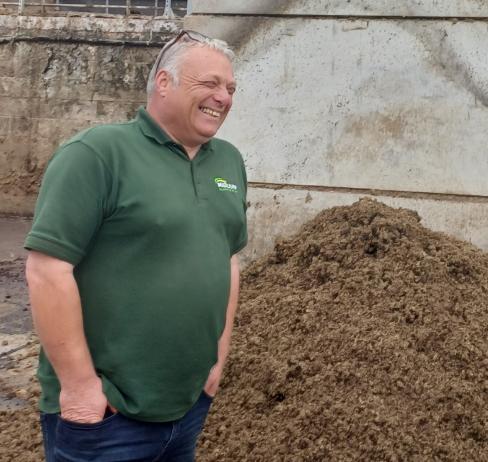


Front cover credit: Rebecca Wilson: Beyond Resilience



For editorial, general enquiries or to advertise please call +44 (0) 2476 353537 or email sales@farmingmonthly.com
Farming Monthly National is published monthly in the UK by Farming Monthly Ltd, Tel: +44 (0) 2476 353537 UK based Digital Farming Magazine.
No part of this magazine may be reproduced without permission from the publisher.
Whilst every attempt is made to ensure accuracy, the opinions expressed in the magazine are not necessarily those of the Editor or publication. The Editor also reserves the right to alter or edit material as required and no responsibility is accepted for inaccuracies.
Full copyright applies. All rights reserved. ISSN 2044-0190 (print) ISSN 2044-0200 (digital)


The CEA (Construction Equipment Association) has commenced the formal process to retender the delivery contract for the CESAR Scheme, which is due for renewal in early 2028.
CESAR is the official construction and agricultural equipment security and registration scheme owned by the CEA. Since its launch, it has become widely recognised across the industry as a proven deterrent against theft, helping to protect machinery, support police identification and recovery, and give owners, manufacturers, dealers, insurers, hirers and equipment users greater confidence in equipment security.
More recently, the scheme has been extended with the optional addition of ECV (Emissions Compliance Verification), helping owners and operators clearly identify a machine's engine emissions stage.
The existing CESAR delivery contract is due to expire in early 2028. As the contract is for a fixed term, the CEA is required to retender the delivery of the scheme in line with good governance and procurement practice. The current delivery arrangements remain in place throughout the process.
The full process, including any transition period, is not expected to conclude before the summer of 2027.
Viki Bell, CEO of the CEA, said: "CESAR is an important scheme for our sector, and its value is increasingly recognised across adjacent industries, from agriculture and power generation to powered access and beyond. It is essential that the renewal process is handled properly from the outset. We are starting early because we want to give the process the time it deserves, including engagement with stakeholders, technical discussions, and a clear route for interested parties to participate.

The process is being started well in advance to allow sufficient time for expressions of interest, technical discussions, stakeholder engagement, questions from interested parties and a full, structured review of the market.
The CEA will approach selected suppliers in due course, inviting organisations identified as having the capability to deliver the service, or key aspects of it, to take part in the tender process.
To support this, the CEA has appointed independent procurement specialist PLG Procurement Solutions Limited to run the tender process and ensure it is managed in a fair, transparent and impartial way.
A key part of the process will be impartiality. The tender platform will be structured so that, at the scoring stage, submissions are assessed without the review panel knowing the companies' identities. This will ensure responses are judged on merit, capability, value, technical strength, and suitability for the scheme's future.
The CEA will also speak with key stakeholders as part of the process, with interviews expected to help shape the requirements and priorities for the next phase of CESAR.
"The current contract runs until early 2028, so it is right that we begin the retender process now and give it the time and structure it needs. The current delivery arrangements remain in place, and this process is about good governance, transparency, and ensuring CESAR continues to serve the industry effectively.
"Independence and impartiality are central to this tender. By appointing an external procurement specialist and using an anonymised scoring process, we are taking a considered approach, looking carefully at evidence, capability, and what will best support the future of the scheme.
"CESAR has built a strong reputation over many years, and as we look ahead to the next contract period, the CEA has a responsibility to ensure the scheme continues to serve the industry, the police, insurers, manufacturers, dealers, hirers and equipment owners effectively.
We also want to recognise the important role Datatag has played as our delivery partner under the current and previous contracts. Their work has helped CESAR grow into the scheme it is today, and that contribution is fully acknowledged as we consider how the scheme continues to meet the needs of the sector in the years ahead."
Paul Baker of PLG Procurement Solutions Limited said: "We are pleased to be supporting the CEA with this important procurement process. CESAR is a well-established scheme with a significant role in equipment security, and the tender will be structured to ensure fairness, clarity and impartiality throughout.
"Our role is to help the CEA run a robust process that gives interested parties the opportunity to present their capabilities while giving the review panel a clear and consistent basis for assessment."
Further details on the expressions of interest process will be announced in due course.
nvironment Secretary Emma Reynolds is visiting Northern Ireland this week to meet farmers, growers and businesses at the heart of its agri-food sector and discuss the benefits of the new UK–EU food and drink deal.
Northern Ireland already benefits from full EU market access, thanks to its unique position under the Windsor Framework. But for the first time since EU Exit, most food and drink goods moving from GB to NI will no longer require checks, including regulatory certificates that can cost between £80 and £200 each, saving businesses millions every year. Over the last three years, these charges for Export Health Certificates have cost businesses between £13m and £32m.
By cutting "paperwork tax" an SPS agreement will make trade easier for businesses, help British produce reach European markets and could help bring down the cost of food and drink.
The new SPS agreement is part of rebuilding the UK's relationship with Europe in a way that strengthens the economy and supports trade, with the potential to boost UK GDP by up to £5.1 billion a year.
Environment Secretary Emma Reynolds said:
"We are cutting red tape and scrapping unnecessary checks, making it easier and cheaper to keep goods moving between Great Britain and Northern Ireland.
"Northern Ireland's food and drink businesses deserve a better deal. That means protecting the UK internal market, supporting businesses and giving families more choice, availability and value across Northern Ireland."
At the Balmoral Show on Thursday 14 May –Northern Ireland's premier farming event – the Environment Secretary will meet stallholders and sector representatives from across the farming and horticultural communities, who will benefit from the removal of certification requirements for plants, seeds and used agricultural and forestry machinery.
Northern Ireland Office Parliamentary Under Secretary of State Minister Matthew Patrick will also meet with farming community
representatives and businesses at the Balmoral Show. He said:
"Northern Ireland's agrifood sector is of great importance to the UK economy and to our food security, and I've been hugely impressed by the high-quality produce on offer at the Balmoral Show.
"It's great that this deal will provide real benefits for consumers, helping to ensure availability and cut costs at a time when many are facing cost of living pressures."
The Environment Secretary and Borders Minister Baroness Hayman will also chair a roundtable discussion with members of the Confederation of British Industry, ensuring Northern Ireland businesses are represented in a deal that will cut paperwork, support choice and availability on supermarket shelves, and help ease food price inflation for families across Northern Ireland and Great Britain.
Eddie Murphy, Country Director for M&S Ireland and Northern Ireland, said:
"We have over 20 stores and work with nearly 2,000 Select Farm partners in Northern Ireland.
"This deal will remove unnecessary bureaucracy and reduce cost pressures, helping us to go further in offering Northern Irish customers the very best of M&S by speeding up the flow of goods and access to fresh produce."
The visit comes as the European Partnership Bill was announced at the State Opening of Parliament yesterday, kickstarting the legislative framework needed to implement the agreement and allow businesses to start realising its benefits from mid‑2027.
Along with the removal of the vast majority of food and drink checks, the new agreement will also dramatically reduce costs, paperwork and checks on flowers, plants and seeds moving between Great Britain and Northern Ireland, while final restrictions on the movement of certain tree species will disappear.
Together, these changes will support Northern Ireland's farmers, gardeners, garden centres, environmental projects and rural businesses, ensuring they can benefit fully from smoother trade with Great Britain.
group of MPs have taken a tour of a farm that is driving efficiency to learn first-hand how sustainable and affordable food gets from field to fork.
Six MPs from across the political spectrum visited ABP (Anglo Beef Processors) UK's demonstration farm, a mixed livestock, grassland and arable business spanning 380-acres on the Shropshire/Staffordshire border.
ABP specialises in the supply and development of award-winning British and Irish beef and lamb products for retail, foodservice and wholesale and works with farming businesses across the country. Thevisiton Friday, 24 April formed part of the NFU's Food and Farming Fellowship Scheme, which showcases the industry to MPs and provides the opportunity to better their understanding ofUK farming and food.
Discussion coveredthe impacts of the conflict in the Middle East on production costs for UK farmers and growers, as well as government plans to reform rules around castrating and tail docking lambs.
The MPs also went out onto the fields to speak about the government's SFI (Sustainable Farming Incentive) scheme, which sees farmers receive
funding for carrying out environmentally beneficial practices on farm while allowing them to continue running their businesses.
They discovered how ABP is driving suitability and watched a live butchery demonstration before tucking into a barbecue lunch.
NFU Livestock Vice-chair Clare Wisesaid: "It is great to get MPs out on farm so they can get a better understanding of the farming industryand see for themselves the essential role farmers play in feeding the nation.
"It is crucial we remain in discussion with politicians so they have the knowledge they need to support UK farmers and growers, both in times of crisis as we are now with the war in the Middle East, and to create the right policy framework to underpin productive agriculture for the longer-term."
TheNFU's Food and Farming Fellowship schemelaunched in 2024 in collaboration with ABP UK, AIC (Agricultural Industries Confederation), Arla Foods, Barfoots, BEIC (British Egg Industry Council) and Fareshare.
Phil Hambling, Director of Agriculture and Sustainable Sourcing at ABP UK, said: "We're pleased to support the NFU Food and Farming Fellowship Programme, showcasing ABP's leadership in the beef and lamb sector and highlighting the importance of our industry to national food resilience, the rural economy and sustainability.

"Through a full day of practical demonstrations and storytelling, we're shining a light on the talent, expertise and passion behind producing high‑quality beef and lamb from farm to fork.
"We know Westminster can sometimes feel far removed from the farm gate, and this programme helps strengthen connections between those shaping policy and the day‑to‑day realities faced on farm and in our factories."
he UK will soon start to see real impacts of the crisis in the Gulf, and the Government needs to act now to ensure continued access to food.
That’s according to the Central Association of Agricultural Valuers, which warns that access to fuel may need to be prioritised to avoid crops rotting in fields this summer and enable autumn sowing.

“Reviews of the oil market by sector experts point to a tipping point in supplies in early June, with critically low global levels by the end of May and stocks exhausted by the end of June,” says Jeremy Moody, secretary and adviser to the CAAV.
“So far, the major impacts have been on SouthEast Asian manufacturing, but the seismic waves are coming towards us. We all need to be thinking now how to make the best of remaining supplies as fuel and other goods come to be limited by price, shortages or controls.”
Harvesting, processing and delivery of field vegetables and arable crops is highly fuel dependent, and the UK’s complex food supply chains are extremely vulnerable – as seen by the bare supermarket shelves during the Covid pandemic. And it’s not just fuel that’s affected –it’s also access to raw materials for plastics and CO2 for packaging. Restriction of supplies will, in the first instance, push food prices higher, and subsequently, risk halting them altogether.
Even if the war were to be ended quickly –which is looking increasingly unlikely – there will be a time lag before normality can resume, says Mr Moody. “Physically blocking 20% and more of world supplies of oil and other commodities for months will inevitably have major consequences. The prospect of a long blockade extends that timetable, with long-term consequences for UK farming and food supply.”
Domestic production of wheat and barley could be severely curtailed this autumn as arable farmers, following three years of financial losses and facing another two loss-making years, may opt not to plant some or more of their land this autumn. Low commodity prices
and extreme weather meant arable producers lost money in 2023, 2024 and 2025, and now soaring input costs have added to the mix when looking ahead to 2027.
Red diesel costs have soared from 65ppl, at one point to almost 140ppl, with nitrogen fertiliser up 53% on last year. Harvest 2026 is predicted to lose an average of £56/acre, rising to a loss of £139/ acre for harvest 2027. “Across a 500-acre farm that equates to losses of £28,000 and £69,500, respectively,” says Mr Moody. “The cumulative losses point to a significant strain on cash flow and credit, limiting farmers’ ability to plant even where they are minded to do so.”
It is possible that the impact of the war constitutes ‘exceptional circumstances’, warranting official intervention under s.20 of the Agriculture Act 2020, he suggests. “The situation should be under close review by the UK Government’s Market Monitoring Group, and appropriate options identified.”

The long-awaited Crime and Policing Bill received Royal Assent today, granting police new powers to enter premises without a warrant to recover electronically tracked stolen agricultural equipment.
With agricultural vehicle thefts reported to NFU Mutual in 2024 costing £7 million, the scale of the problem facing farming businesses is clear.1 Time is critical in cases of machinery theft and enabling police to act immediately when the location of stolen equipment is known should improve recovery rates, disrupt organised rural crime and provide farmers and
growers with the much-needed confidence that these crimes are being taken seriously.
While the legislation also gives ministers greater powers to issue statutory guidance to councils in England on the enforcement of fly‑tipping, it does not go far enough to address the undue burden waste crime places on farmers and growers.
Private landowners are currently left to bear the cost and responsibility of clearing illegally dumped waste, leaving victims to deal with the financial, emotional and logistical consequences of a crime they did not commit.
NFU Vice-president Robyn Munt said:
"These new police powers are a welcome step in the right direction, providing some much‑needed peace of mind for farming families impacted or worried about equipment theft.

"Farmers are nothing if not resilient. Every day we deal with pests and diseases, changing weather and volatile markets and yet every day we get up and produce food for our nation. But rural crime chips away at that resilience. It leaves farmers and growers scared to go to work, worried in their own homes and feeling powerless in the face of dangerous criminal activity.
"From equipment theft to hare coursing, waste crime to livestock worrying, rural crime has unfortunately become an everyday reality for farmers and just something else they need to adapt and be resilient to.
"The government must do more to address the unfair burden of clearing illegally dumped waste as well as ensure rural police forces and councils are properly resourced to implement new powers effectively, as enforcement without adequate funding risks limiting their impact on the ground."
In response to the King's Speech NFU
President Tom Bradshaw said: "With a new legislative programme set out in Parliament today, there are several areas where we can work in partnership with government to shape policy on behalf of farmers and growers.
"From the European Partnership Bill, Energy Independence Bill and Police Reform Bill to the Clean Water Bill, there are clear opportunities to help create the right policy framework for resilient, sustainable and profitable farm businesses that both produce food and protect the environment.
"Farmers and growers are the foundation of the country's largest manufacturing sector - food and drink - worth £153 billion to the economy and supporting four million jobs. However, confidence remains extremely low, with repeated global shocks from the wars in the Middle East and Ukraine to increasingly volatile weather making producing food highly risky.
"Through this legislative agenda, government has the opportunity to boost confidence and strengthen
resilience across the industry. In the short term, it can take action to ensure farmers and growers remain profitable and resilient by tackling the current spiralling costs of fertiliser, fuel and energy1because of the war in the Middle East. There's also an urgent need for clarity on the Sustainable Farming Incentive (SFI 26) with little information available ahead of the first application window opening in June. Ensuring a sanitary and phytosanitary (SPS) agreement with the EU that minimises disruption to UK farmers and growers, protects innovation and ensures necessary transitional and technical adaptations is also vital.
"In the longer term, as part of the Police Bill ensuring fairer funding for police forces to tackle rural crime is key and meaningful consultation with the sector on the Clean Water Bill will be essential to building trust and securing support for future policy which understands the importance of water availability for food production.
"We will continue to work with government to ensure the voices of farmers and growers are represented at the heart of Westminster."
Local councillors have an important role to play in shaping the future of British farming.
From planning bureaucracy, to tackling rising crime rates and a lack of broadband and mobile connectivity, decisions taken by local authorities can have a lasting impact for farm businesses and the communities they support.
As some fresh faces take up office and re-elected councillors begin another term following voting yesterday, the NFU is calling on all these newly elected representatives to work with farmers and growers and to back the industry through the challenges it faces.
Key areas identified wherelocalgovernment support is most impactful include:
• Planning:Ensuringlocalplanning officers are trained in agricultural operations and farm needs, ensuring consistent, informed decisions that support modern farming practices and diversified rural enterprises.
• Rural crime:Providingaccessible waste disposal sites to help reduce fly-tipping. Ensuringmarkets operating under thelocalauthority are sufficiently regulated and licensed to prevent the sale of stolen goods
• Rural connectivity:Targetingpersistent rural 'notspots' and underserved rural communities and avoid clustering of investment in already wellserved areas.
• Food procurement:Procuringat least 50% of the food the council requires fromlocalfarmers and growers.
NFU President Tom Bradshaw said:"Farming sits at the very heart of our rural economy and communities. Our farmers manage more than 70% of the landscape, play a vital role in protecting and enhancing the environment andthey work each and every day, whatever the weather, to produce the food to feed our nation.
"However, this is an extremely difficult time for the sector. Successive global shocks - from the war in Ukraine to the conflict in the Middle East - mean farmers are shouldering increased fuel, fertiliser and energy costs and facing growing uncertainty as they begin to plan for the year to come. Farmers and growers are also contending with increasingly volatile weather conditions and with the reduction of support payments – which provided a layer of resilience for many – are more exposed than ever.
"While many of these challenges need to be solved at government level, local authorities can make a difference for farm businesses and the communities they support - by championing pro-farming policies on areas like planning and rural crime, theycan help to shape the future of our industry.
"We look forward to working with all newly elected representatives to help support a thriving and profitable British farming industry."
The famous metal bison statue outside Rhug Estate has been transformed into a striking gold feature.
And for a sustainable business on a remarkable run of form, it couldn't be more fitting.
Standing proudly outside the awardwinning Farm Shop on the A5, near Corwen, for more than 15 years, the much-loved bison statue has become a familiar sight for travellers, visitors and locals alike.
Originally finished in a dark metal tone, the sculpture now shines in gold - a bold statement from one of the UK's most prestigious organic estates.

Over recent years, Rhug Estate has celebrated a series of major milestones: receiving a Royal Warrant of Appointment by His Majesty King Charles III, being recognised as home to the largest bison herd in the UK, and continued growth across its award-winning food, retail and visitor operations.

Lord Newborough, owner of Rhug Estate, said: “The bison statue has stood proudly on its plinth on the A5 for over 15 years, marking the entrance to the Farm Shop.
“This stretch of the A5 is known as the Golden Two Milesthe gateway into North Wales - so it felt only right that our bison should be transformed to gold. I hope it will become one of North Wales's most talked-about landmarks.”
He added: “Receiving a Royal Warrant from His Majesty the King was a tremendous honour, and watching the Estate grow - the herd, the Farm Shop, the restaurant, the visitors - has been remarkable. The gold finish is our way of marking that without taking ourselves too seriously.”
Positioned at the entrance to the Estate's popular
Farm Shop and the starting point of the well-loved Bison Walk, the statue symbolises Rhug's unique North American bison herd, first introduced by Lord Newborough in 2007.
What began as a visionary idea has flourished into more than 60 of the animals, following the arrival of 20 additional bison in 2024.
Visitors can enjoy a free 45-minute circular farm walk through the Estate to see them grazing in the fields, an unforgettable experience that has become one of Rhug's standout attractions.
Lord Newborough added: “When we introduced North American bison nearly two decades ago, people thought it was eccentric. Now we have the largest herd in the UK and we're supplying some of the finest restaurants in the world.”
Beyond their visual appeal, the bison play an important role in Rhug Estate's sustainable farming model, providing a supply of premium, high-quality meat renowned for its flavour, nutritional value and exceptional welfare standards.
From field to plate, Rhug oversees the entire journey, supplying leading restaurants worldwide as well as customers through its Farm Shop, Bison Grill restaurant and On the Hoof takeaway. For more news and information, visitwww.rhug. co.ukand follow the Estate on social media @rhugestate.
For more information on Rhug Wild Beauty, visitwww.rhugwildbeauty.comor follow @rhugwildbeauty
The
Minister, Keir Starmer, has announced landmark new government plans to treble the amount of surplus food made available for redistribution in the UK
The move aims to tackle both food waste and food poverty at a time when many households continue to face cost-of-living pressures.
Catherine David, CEO WRAPsaid,
"The Prime Minister's announcement of a national programme to treble the redistribution of surplus food to people and communities across the UKis a vital step forward. WRAP supports the organisations on the front line of this critical work, as well as the incredible work of the King's Coronation Food Project.
"I'm delighted WRAP was part of the discussions helping to shape this national ambition. Redistribution has a critical role to play, supporting stretched householdswhile reducing the enormous financial and environmental cost of good food going to waste. We must also recognise the huge opportunity to prevent food waste from happening in the first place, particularly in our homes. Home is where most of the UK's food waste occurs, which can cost a family of four an average of £1,000 –and we know that over 70% of people are worried by rising food prices.
"At a time when households are under growing financial pressure, tackling household food waste is one of the most immediate ways we can help people save money, strengthen food security and build resilience for the future.
"Today, with supply chains straining under geopolitical disruption and the cost of living continuing to rise, we must treat food as the precious resource it is. We cannot afford, economically, environmentally or socially, for wasting food to remain the norm.Whether in the fields, factories, shops, restaurants or our own kitchens, reducing food waste must become a shared national effort.
"As ourworld becomes an ever more unpredictable place, wasting food is a cost we can no longer afford to ignore and we are talking with key partners in government, the food sector, the media, philanthropists and innovators to tackle the food bills crisis in people's homes. We call on all partners to step forward and step up their efforts in the weeks and months ahead."
Defra’s latest figures show a 7.3% increase in organic land area and a momentous 63% rise in UK land entering organic conversion, creating a strong pipeline for future production. However, the comparison with data for England is telling.
“While England remains the largest organic land base, its conversion area has grown by just 24%, with fully organic land remaining broadly static. This must be a wake-up call for government. We’ve repeatedly seen in the devolved nations that when organic farming is backed with clear policy intent, farmer confidence follows suit as reflected in 2025’s statistics.
“England cannot afford to lose ground. Farmers are looking for certainty, consumers want food they trust, and the evidence base for organic’s environmental, economic
and societal benefits would help meet multiple policy objectives. What’s missing is a clear plan to tap into organic’s full potential.
“We urgently need a political commitment to organic farming in line with the measures seen in Scotland and Wales. OF&G recommends addressing three clear objectives. Firstly, a robust framework to support farmers through conversion. Secondly, the introduction of effective measures that strengthen organic supply chains. And lastly, a vision to grow domestic production and capitalise on rising consumer demand that has seen 14 years of consecutive growth.

“We know that the demand for organic is there. The question is whether England’s agricultural policy will help farmers meet it.”
Quotes to be attributed to Steve Clarkson, chief executive, Organic Farmers & Growers.
collaborative hub will feature the Sustainable Farmer of the Year Awards and showcase innovative climate responses from over 3000 Scottish farmers and crofters.
The Scottish Agroecology Partnership (SAP), in collaboration with Smallholding Scotland, will host its first-ever dedicated Sustainable Agriculture Tent at the Royal Highland Show this year.
The SAP is a coalition of eight organisations including Nature Friendly Farming Network, Scottish Crofting Federation, Pasture for Life, Soil Association Scotland, Nourish Scotland, Landworkers' Alliance, Propagate, and its new member - Rare Breeds Survival Trust.
The group is funded by Farming the Future and has come together as a shared voice for agroecology in Scotland.
At a time when agricultural policy in Scotland has largely stagnated, farmers and crofters across the country are leading the way in developing innovative responses to the farm profitability, climate and biodiversity crises.
The membership of SAP organisations has now grown to over 3000 farmers and crofters, many of whom are actively working at the forefront of this transition.
The new tent will showcase the breadth and diversity of sustainable farming practices being developed on-farm across Scotland, through a programme of displays, interactive activities, talks, workshops and events.
It will offer a space to highlight how farmers and crofters are responding to the challenges of climate change, biodiversity loss, and building resilient local food systems.
A key feature of the programme will be the Sustainable Farmer of the Year Awards, led by the Rare Breeds Survival Trust, with nominations opening shortly.
The tent will also provide a platform for SAP's ongoing policy and campaigning work, calling on the Scottish Government to deliver meaningful support for a just transition: improving fairness across the agricultural sector and removing the barriers and risks that farmers face in transitioning to agroecological practices.
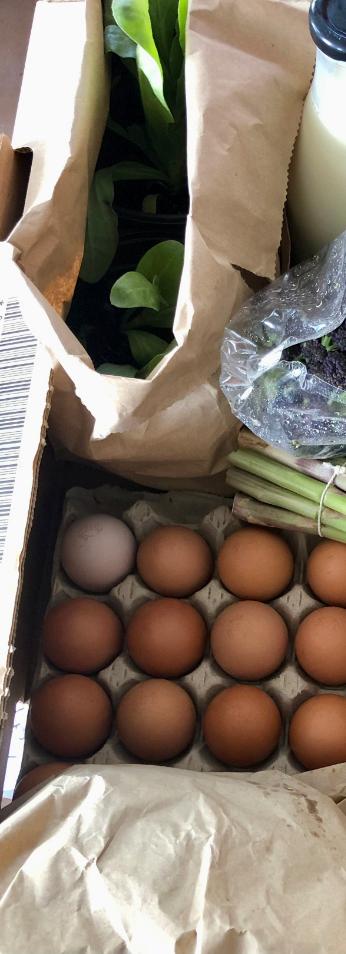

Importantly, the space will bring together and showcase the work of smaller-scale producers and crofters alongside medium and larger-scale farms, reflecting the full diversity of Scotland's agricultural landscape and the shared role all producers play in delivering a sustainable future.
Smallholding Scotland will also use the space to raise the profile of the Scottish Smallholding and Countryside Festival, another key event in the farming calendar, which will take place on 17 October of this year.
The Scottish Agroecology Partnership and its partners are delighted to be creating this space for the first time. The Sustainable Agriculture Tent will be open throughout the four days of the Royal Highland Show near the main ring.
Denise Walton, livestock farmer and member of Soil Association Scotland, Nature Friendly Farming Network and Pasture for Life said: "I am looking forward to a farmerled space dedicated to exploring new practices with a sense of openness, fun, and camaraderie.
"While the weekdays will focus on farmers and crofters sharing their lived experiences, the weekend will showcase the wonderful food and fibre produced for the public attending this year's show.
"Underpinning all of this is a commitment to the benefits for nature, wildlife, soil health, and rural communities that our farmers bring to Scotland."
Judith Hutchison, beef and sheep farmer at Chapel Farm said: "As weather patterns grow increasingly unpredictable and input costs continue to rise - from fertilisers and fuel to feed - interest in sustainable agriculture has never been greater.
"Farmers want to see for themselves how others are putting these ideas into practice, and whether they can make them pay. The Sustainable Agriculture Tent at the Royal Highland Show is the perfect place for exactly those conversations."
Donald Armstrong, organic dairy farmer at Langbarns farm said: "As the premier event in Scotland's agricultural calendar, the Sustainable Agriculture Tent is the ideal setting for face-to-face knowledge sharing — connecting farmers already practicing more sustainable methods with those looking to follow in their footsteps."
Soil Association Scotland looks forward to welcoming farmers, crofters, policymakers and members of the public to join us for conversations about what a truly just, farmerled transition in Scottish agriculture could look like.
Plans to strengthen protections for pig farmers and industry have been stepped up as the government introduces new measures in the event of a swine fever outbreak (14 May).
African SwineFever (ASF)isa disease which affects pigs and wild boar and in recent years it has been circulating in parts of Asia and Africa, leading to the deaths of millions of pigs worldwide and causing significant disruption to the meat trade. The disease has also spread to parts of Europe through the movement of wild boarandhuman actions including moving infected meat.
Whilst there has never been an outbreak of ASF in the UK, the updated control strategy is an important part of thegovernment'splans to prevent and respond to a potential future outbreak.
Therevised strategy introducesa more flexible, riskbased framework designed to control disease effectively without imposingsevererestrictions on famers and producers. It reflects the latest scientificandveterinaryevidence and aligns with international best practice.
A central feature of the update is the introduction ofadditionalrestricted zones (Restricted Zones 1, 2 and 3), which can be deployed depending on the situation. This will help farmers avoid blanketmovementrestrictionson livepigsandporkproducts, reducing pressures such as overcrowding and enabling day-to-day operations to continue more smoothly.
The strategy, developed jointly with Scottish and Welsh Governments, also strengthens surveillance requirements. Veterinary inspectors will carry out visits to premises within disease control zones to verify compliance, while enhanced testing will support earlier detection of infection. These measures are expected to provide greater confidence in disease freedom, allowing restrictions to be lifted sooner.
Risk-based movement licensing has been expanded to support both welfare and business continuity. Underveterinary oversight, pigs may be moved within zones for welfare reasons or to complete production cycles, helping to prevent overcrowding andmaintainappropriate housingconditions.
Biosecurity Minister Baroness Hayman said:
"This updated strategy reflects our commitment to working in partnership with farmers and the wider pig industry to manage disease risks effectively andprotect asectorworth over £8 billion.
"These changes will help reduce unnecessary pressures on farmers and producers, maintain high standards of welfare, and ensure we are well prepared to respond quickly and confidently to any outbreak."
UKChiefVeterinary Officer, Christine Middlemiss, said:
"Our updated swine fever disease control strategy will ensure that we are better prepared than ever before to respond swiftly and effectively to a potential outbreak ofAfrican and classical swine fevers.
"Enhanced surveillance and flexible movement licensing will help us detect disease earlier andprotect our national herd whilst maintain essential farming operations in a biosecure manner. Whilst the disease is not present in Great Britain, we encourage all farmers tomaintainstrong biosecurity standards and familiarise themselves with the new measures."
Further updates include:
• A clearer framework for implementing a national movement ban, ensuring restrictions are proportionate and lifted as soon as conditions allow.
• Greater flexibility in meat controls, allowing certain products from restricted zones to remain commerciallyviableunder specific conditions.
• Detailed guidance on cleansing and disinfection procedures, helping producers plan for safe andtimelyrestocking.
The duration of disease control zones has also been revised. For example, theminimumperiod for protection zones has been reduced to 15 days, down from 30-45, following initial cleansing and disinfection, subject to surveillance outcomes. This is expected to significantly reduce welfare pressures on farms whilemaintainingrobust disease safeguards.
The updated framework also strengthens the UK's ability to apply regionalisation principles, helping to protect trade by enabling disease-free areas to continue exporting safely during an outbreak.
ASFposes no risk to human health as it only affects pigs and related animals. Everyone can help to stop the spread of ASF to the UK by doing the following:
• If you have visited ASF-affected areas in Europe, or elsewhere in the world, you must not bring any pork or pork products back to the UK.
• Disposing of leftovers or food waste in secure bins that pigs or wildlife cannot access.
• Farmers, the public and members of the food industry should practise high biosecurity standards, including never feeding catering waste, kitchen scraps or meat products to pigs which is illegal and can spread the disease.
The Government continuallymonitorsdisease outbreaks around the world to assess whether there may be risks for the UK andtakes action to limitthe risk of the disease reaching our shores.
gricultural co-operative BATA, based in North Yorkshire, has announced that The Farming Community Network (FCN) will be its official charity partner for 2026.
The partnership will see BATA colleagues receive specialist wellbeing awareness training from FCN, alongside opportunities to support the charity through volunteering and fundraising initiatives across the region. The business will also raise funds throughout the year at events and county shows, to support FCN’s vital work helping farmers, farming families and rural communities facing hardship or change.
Colin Bailey, Chief Executive Officer at BATA, said the partnership reflects the company’s longstanding commitment to the people behind the agricultural industry.
FCN supports thousands of people across the farming community each year through its confidential helpline and network of volunteers, supporting and ‘walking with’ people during periods of stress, illness or change.

“BATA has been part of the farming community for generations, and we see first-hand both the resilience and the challenges faced by those living and working in rural areas,” he said.
“FCN provides an essential lifeline for farmers and their families during difficult times. The charity’s work is incredibly important to the wellbeing of the rural community we serve, which is why supporting FCN as our charity partner is something that strongly resonates across our business.”
Throughout the year, BATA teams will take part in fundraising events and community initiatives designed to support FCN’s outreach and raise awareness of the charity’s services.
Colin added that the partnership also provides an opportunity for BATA colleagues to better understand the pressures faced by the agricultural community and how they can help.
“As a business that works closely with farmers every day, it’s important that our teams are aware of the challenges people may be facing behind the scenes,” he said.
“Working with FCN will help equip our colleagues with greater awareness and understanding, while also allowing us to give something meaningful back to the communities that support our business.”
Georgina Lamb, Head of Partnerships at the Farming Community Network, said “we are delighted to be working in partnership with BATA and recognise the importance of raising awareness about the support FCN can provide to the farming and rural community through this vital connection. We look forward to reaching out to supporters old and new and look forward to collaborating with the team at BATA”.

ull choices, data for decision making, EFA in practice and farm business planning are on the agenda at theStrathspey Monitor Farmsummer open meeting at Auchernack, Grantown on Spey on Wednesday 3 June.
Nowopen for booking, the meeting, 'Trusting
The Process' will see Calum and Hamish Smith discuss how the right processes bring confidence to their decision making as they gradually succeed their parents, Malcolm and Sammie.
The Smiths have a 90-year history at Auchernack, but family business planning is rarely easy and usually involves tough choices. The meeting will cover options and highlight why the Smiths are addressing this now.
The family has been using data and information from Shearwell for several years, and a new interface and data package is allowing Hamish and Calum to understand more about the cattle choices they make.
Ellie Mann from Shearwell Recording will discuss using data for decision making and demonstrate how the system helps.
The Smiths have also been working with a consultant for over a year discussing succession, farm planning and collaboration. Independent consultant Kirsten Williams will explain why this process can be vital for the survival and development of family farms, particularly where the next generation increasingly manages major business decisions.
Jenny McCallum, agricultural consultant and sheep farmer will be discussing EFA options after talking about the issue at the Monitor Farm open meeting in November. The Smiths followed her recommendations, sowing a field with neeps and forage rape. Was it the right choice? Visitors can find out how EFA can fit into current systems and ask Jenny where she thinks the options bring benefits.
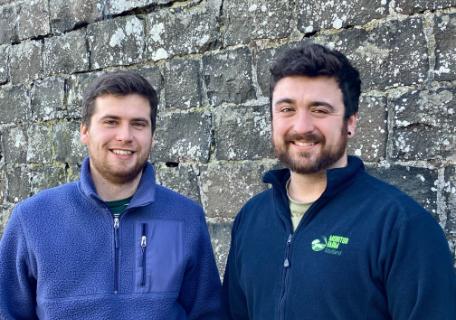
Attendees will spend time discussing the benefits of short and long-term planning in cattle choices, how livestock data collection helps decision making, and why taking advice on EFA options for Auchernack in autumn has made crop choices simpler this summer.
Morayshire Shorthorn breeder Grant Stephen will join Calum to discuss the breeding choices made at Auchernack as the Smiths build their herd of Shorthorn heifers.
Monitor Farm regional adviser
Peter Beattie says: "Hamish and Calum are increasingly making the major decisions at Auchernack and their other unit at Congash, while Malcolm builds on his agricultural role within the National Park. The family understands the importance of processes, and this meeting will look at how they are helping in the development of this farm business at a time of change."
Strathspey Monitor Farm summer open meeting – 'Trusting the process' on Wednesday 3 June, 4.30pm for 5pm start, finishing at 8pm at Auchernack, Grantown on Spey, PH26 3NH. Catering is provided, so booking is essential: https://TrustingtheprocessMF.eventbrite.co.uk
Proactive efforts to identify stolen plant and farm machinery across the county continue, with officers conducting another operation based out of the DVSA site off the M3 in Chilcomb.
The operation was led by the Country Watch Rural Crime Task Force in collaboration with the western Neighbourhood Enforcement Team (NET), Roads Policing Unit, Commercial Vehicle Unit, DVSA and Data Tag.
The theft of agricultural machinery is an issue for rural communities both locally in Hampshire, as well as across the UK. This type of machinery is high value, and we know it is transported throughout the country and overseas by organised criminals.
Between June last year and March this year, the rural task force alone has recovered an estimated £574,550 worth of goods. Of this, £463,300 relates to stolen goods such as plant and farm machinery, much of which has been returned to the rightful owners. The remaining seizures relate to equipment or vehicles believed to have been used in crime.
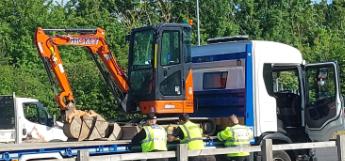
On Thursday 7 May, teams basing themselves at the DVSA enforcement site conducted stop checks on vehicles towing heavy loads, with a particular focus on vehicles carrying plant and agricultural vehicles and machinery.
Vehicles and their drivers were subject to checks, and officers worked with a representative from Data Tag to verify the identity of any plant or equipment being transported.
In the morning, more than 30 vehicles were brought into the site and checked, and more than 20 pieces of plant or farm machinery was examined.
On this occasion, no stolen equipment was located, however two men aged 35 and 53 were arrested on suspicion of drug driving.
Efforts to combat farm machinery and plant theft
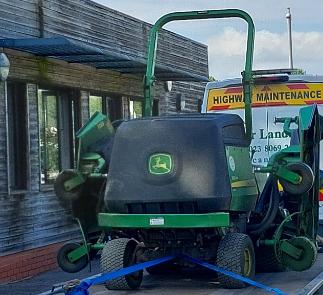
continue, and Thursday's operation follows recent efforts, including an op at the same site on 12 March, and a number of warrants in Southampton on Wednesday 6 May in which five people were arrested as part of a half a million pound organised burglary conspiracy investigation.
You can read more about those efforts in the links below:
https://www.hampshire.police.uk/news/hampshire/ news/news/2026/may/five-arrested-for-allegedplant-machinery-thefts-across-hampshire/ https://www.hampshire.police.uk/news/hampshire/ news/news/2026/march-2026/police-stop-andcheck-plant-and-farm-machinery-to-identifystolen-goods/
We urge people to keep reporting crimes and suspicious incidents in rural areas to us. This includes details and descriptions of any people or vehicles you see, or abandoned and burnt out vehicles that have been left on farmland, for example.
If you have information about crime or suspicious activity in your area, please report this to police on 101, or via the report tool atwww.hampshire. police.uk
Alternatively, you can contact the independent charity Crimestoppers 100% anonymously on 0800 555 111, or via their anonymous online form at crimestoppers-uk.org
Dial 999 if a crime is in progress, or in the event of an emergency.
Farmer, TV presenter and conservationist Jimmy Doherty is among the line-up of judges that will help to judge the National Federation of Young Farmers' Clubs' YFC Achiever Awards.
With nominations open for a seventh year, the awards champion ambition, innovation and commitment among rural young people and their supporters.
A national awards ceremony will be held in Birmingham at the National Conference Centre on 12 December 2026 to reward and recognise the finalists and winners.
Jimmy, who owns Jimmy's Farm and Wildlife Park in Suffolk and co-hosts on ITV 1, will help to judge the Young Farmer of the Year Award, alongside Jill Hewitt, the CEO of the National Association of Agricultural Contractors (NAAC), and NFYFC's Vice Chair Luke Brignall.
The trio will help to select a standout individual who champions best practice in agriculture and actively promotes safe farming.
Jimmy Doherty said:
"It's a real privilege to be involved with the National Federation of Young Farmers' Clubs' YFC Achiever Awards. Young farmers represent the future of our countryside, and it's incredibly inspiring to see the passion, innovation and resilience coming through in the next generation.
"Having built my own career in farming and food, I know just how important it is to support and celebrate those who are pushing the industry forward. I'm really looking forward to meeting the finalists and hearing their stories — it's initiatives like this that give young people the confidence to grow, develop and shape the future of British farming."
Farming influencers
Among the leading names from the farming industry helping to choose winners are podcaster and farming influencer David Wheatley (@petitepeonys), farmer and content creator Zoe Colville (@thechiefshepherdess), podcaster and content creator Rebecca Wilson(@rebeccawilsonfarming), farmer and co-founder of We Are Agriculture and part of the Hawkstone Farmers' Choir Ben Brooke (@farmerbenbrooke), and Tom York, Agricultural Management Consultant and fitness content creator (@tomyorkfit).
The highly contested Club of the Year category, which is sponsored by CFMOTO UK, seeks to find a Young Farmers' Club that is living the YFC values and demonstrating inclusivity, as well as showing their strengths in club programming and safeguarding.
David Wheatley, who grows peonies on his farm in Peterborough, is a former member of March YFC in Cambridgeshire and said: "I want these Young Farmers' Clubs to be shameless in showing off why they are the best."
CFMOTO Marketing Manager Jasmine Kent said the business was "honoured" to sponsor the Club of the Year Award for a fourth year.
"Supporting Young Farmers means backing the future of our food, our countryside, and our communities. This award celebrates the power of teamwork – and we're proud of every single member flying the YFC flag."
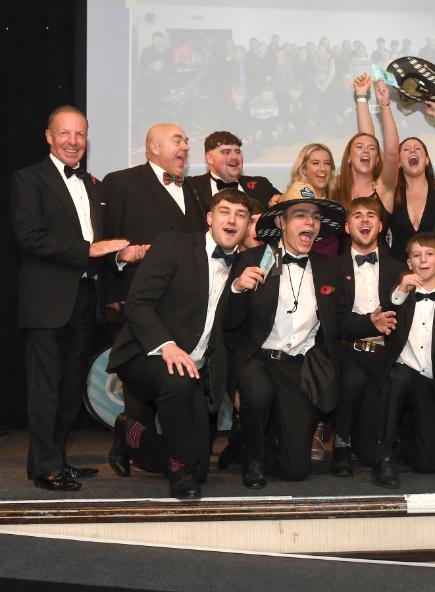
In 2025, NFYFC measured its social value and analysis showed that YFCs generate£4.51 of social good for every £1 NFYFC invests, totalling£10,024,953.
Young Farmers' Clubs raise an estimated £5.75m for good causes every year as well as commiting hours of support towards their rural communities in projects from litter picks to community gardens.
The Community Spirit Award recognises the generosity of YFCs across England and Wales and farmer Ben Brooke will be helping to judge the award.
As a performer in the Hawkstone Farmers Choir, which involves some former NFYFC members, Ben is aware of how important rural communities are.
Ben Brooke said:
"I'm really proud to be asked to judge NFYFC's YFC Achiever Awards, especially the Community
Spirit Award, an area of the industry that shines such a bright light on it and is crucial for its survival.
"Farming can be a tough and often isolating industry, so seeing the work clubs and communities are doing to support the next generation of farmers, as well as raising awareness and bringing everyone together, is incredibly important. It's something I care a lot about personally, through my work with the Hawkstone Farmers' Choir and beyond, and I'm looking forward to bringing my experience from being on the other side of the panel with Britain's Got Talent to this year's awards!"
The outcome of one the awards categories will be determined by members of the YFC community. An online vote will be held for the Heart of YFC Award, and the results will be combined with the judges' scores to determine the winner.
NFYFC's President John Lee OBE DL is among the judging panel for the Heart of YFC Award and will help present the awards at the ceremony in December.
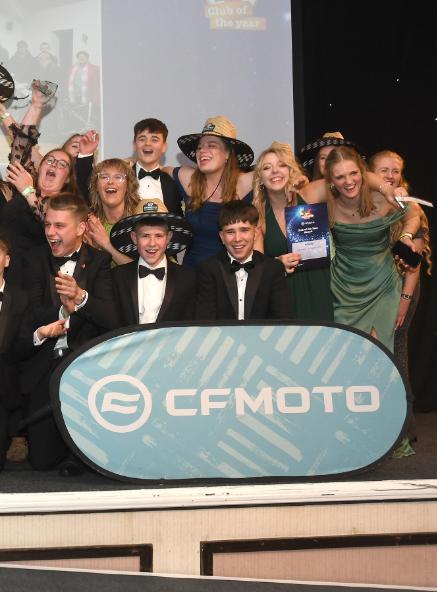
John Lee OBE DL said:
"It's incredibly exciting to once again open nominations for the YFC Achiever Awards and shine a light on the outstanding YFC members, clubs and supporters who make such a difference.
"Across our more than 560 Young Farmers' Clubs in England and Wales, we are developing future leaders, entrepreneurs and compassionate citizens who strengthen our rural communities, and these awards give us a fantastic opportunity to recognise that impact.
"I'd encourage everyone to submit their nominations before the 31 May deadline. I'm really looking forward to meeting this year's finalists and celebrating their achievements in December."
The award categories are:
• Club of the Year, sponsored by CFMOTO
• Young Farmer of the Year
• Entrepreneur of the Year
• YFC Supporter of the Year
• Aspiring Rural Leader of the year
• New Member of the Year
• Community Spirit award
• The Heart of YFC Award
new publication ‘Novel proteins and feed efficiencies; A Bitesize Guide’ is being launched by the Nuffield Farming Scholarships Trust and the Royal Agricultural Society of England (RASE) at the Pig and Poultry Fair at Birmingham’s NEC last week (13-14 May).
With an increasing focus on sustainability, soya, in particular, has come under scrutiny, with livestock producers seeking alternative protein sources. This Bitesize Guide covers a wide range of options, including home-grown proteins such as peas, beans and lupins and newer choices such as fava beans and insect meal.

Part of the ongoing Bitesize Guide series, it highlights key findings, discussions and ideas from 13 Nuffield Farming scholar reports and is available as a free download. Visitors to the Pig and Poultry Fair can visit the RASE stand (20-370) to find out more.
The guide’s to-the-point information includes
practical advice, case studies, talking points and action plans, including an additional section of useful links. QR codes and links allow readers to access the relevant Nuffield Farming report for more information.
Nuffield Scholar and RASE Technical Director Stephen Briggs said: “Feed is such a high proportion of costs for livestock producers and, coupled with a move to seek alternatives to soya, this guide is timely and relevant. The scholars featured in this Bitesize Guide have travelled the world studying these topics, and their reports provide inspiration, advice and case studies for anyone looking to address feed costs and sourcing.”
Each year, up to 25 people aged 25-45 are selected as scholars and sponsored by the Nuffield Farming Scholarships Trust to travel, research and report on subjects they are passionate about and which contribute to advancing farming, food, horticulture, forestry and ancillary industries. Scholars travel for at least eight weeks, presenting their findings at the Nuffield Farming conference and publishing a report on their travels and recommendations, available on the Nuffield Farming website.
Rupert Alers-Hankey, Director of the Nuffield Farming Scholarships Trust said: “These studies bring new thinking, technology or management approaches from across the globe to the UK. There is a huge knowledge base that can be accessed via the Nuffield Farming library, and the Bitesize Guides –which now number eight – will make accessing that information much more straightforward.”
The Bitesize Guide series is supported by the Elizabeth Creak Charitable Trust, Central Region Farmers Trust and Gloucestershire Agricultural House Foundation.
‘Novel proteins and feed efficiencies; A Bitesize Guide’ can be downloaded here https:/ /www.rase.org.uk/reports/
ssociate Sophie Ashford, in law firmBlandy & Blandy'sWills, Probate, Tax & Trusts team, provides an update on what is changing in relation to Agricultural Property Relief following a series of announcements by the government.
The Autumn Budget in October 2024 sent shockwaves through the farming community by announcing that the government plans to significantly reform the Inheritance Tax (IHT) reliefs - Agricultural Property Relief ("APR") and Business Property Relief ("BPR") - from 6 April 2026. These reliefs have long been essential in helping to ensure that working farms can be passed down through generations without triggering unaffordable tax liabilities.
Agricultural Property Relief - What is Changing?

Qualifying agricultural and business assetsexceeding £2.5 millionwill receive50% APR/BPR- an effective Inheritance Tax rate of 20% on those assets based on current rates.
Unused allowances are transferrablebetween spouses and civil partners, resulting in a potential combined allowance of£5 millionon the second death.
Where the first spouse/civil partnerdied before 6 April 2026, the full allowance is deemed to be automatically available to be transferred.
Any Inheritance Tax due on qualifying agricultural and business assets can be paid inequal annual instalments over 10 years, interest free.
The original government proposals introduced a cap of £1 million of qualifying agricultural and business assets (combined) on the availability of 100% relief (previously unlimited), with remaining qualifying assets receiving a reduced 50% relief.
Following extensive lobbying by various farming organisations, including the NFU and CLA, the Autumn Budget a year later in November 2025, brought a partial concession - the £1 million cap would be transferrable between spouses and civil partners if unused on the first death (mirroring the rules for the Nil Rate Band and Residence Nil Rate Band). Whilst a welcome move, many farmers felt that this change was still not enough.
In a surprise announcement on 23 December 2025, the government made a major amendment to the proposed changes - the £1 million cap would be increased to £2.5 million.
For many farming families, this change offers significant reassurance. However, the reforms still represent a major shift in the tax landscape, and it remains crucial for farmers to review their affairs to ensure reliefs are maximised, Inheritance Tax exposure is minimised, and the long‑term succession of the family farm is protected.
The current position - A brief overview
The first£2.5 millionof qualifying agricultural and business assets (combined) will receive100% APR/BPR.
Review Wills and succession planning
Existing Wills may no longer be tax‑efficient under the new rules. Reviewing your Will is essential to ensure reliefs are fully utilised and your wishes for the future of the farm are protected.
Understand the impact of the changes
Every farm is different. It's important to assess how the new rules affect your specific circumstances and take practical steps to mitigate any potential tax liability.
Review valuations
Accurate, up‑to‑date valuations of land, buildings, and live and dead stock are now more important than ever.
Plan for how any tax will be paid
Consider cashflow planning or insurance options to ensure that any Inheritance Tax liability can be met without jeopardising the farm's operations.
Blandy & Blandy is recognised as one of the leading law firms in the Thames Valley, with offices in Reading, Henley-on-Thames and Wokingham. The firm is highly recommended in the UK's leading guides to the legal profession, Chambers High Net Worth (HNW) Guide and The Legal 500.
For further information or legal advice, please visitwww.blandy.co.uk
Introducing
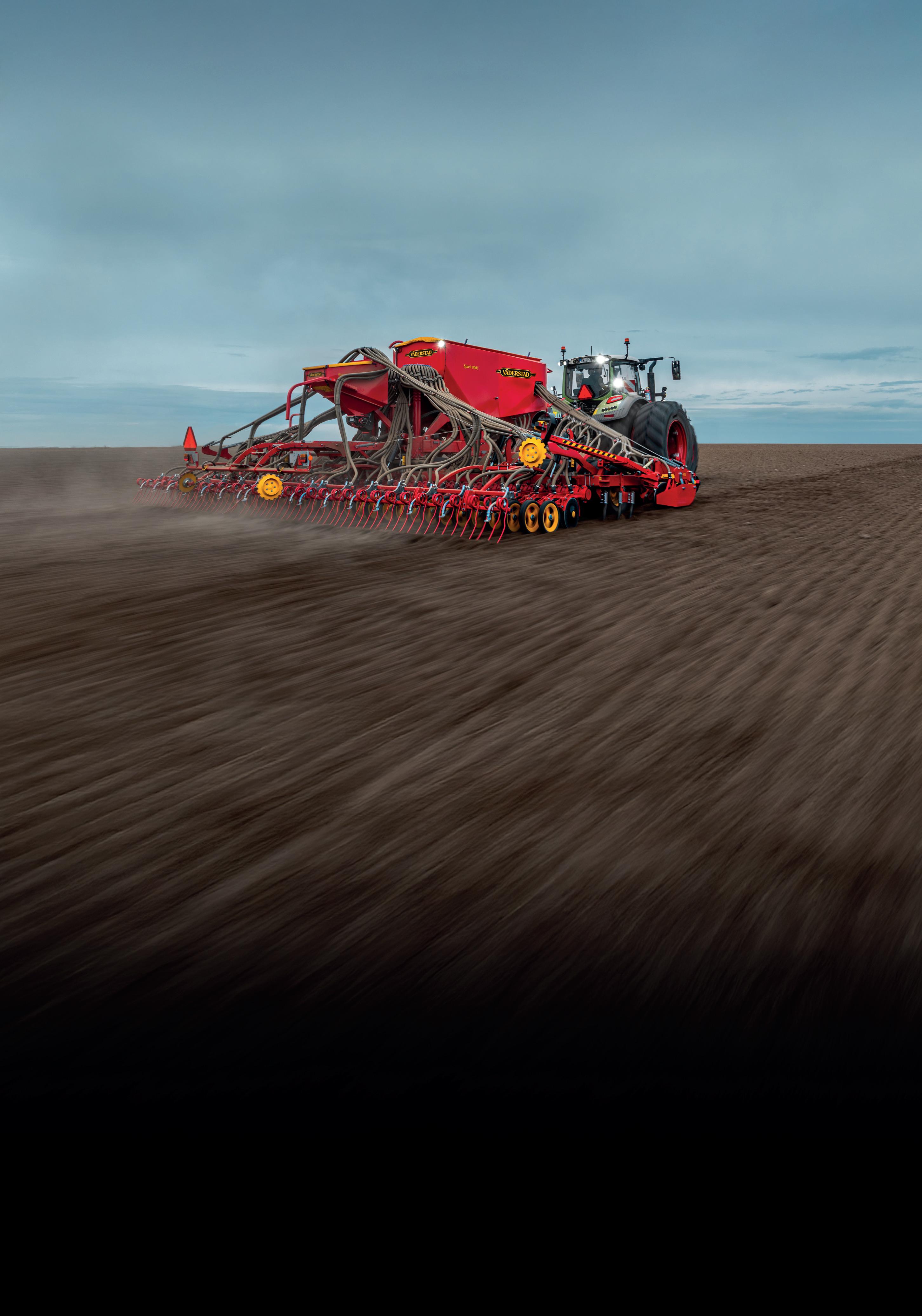
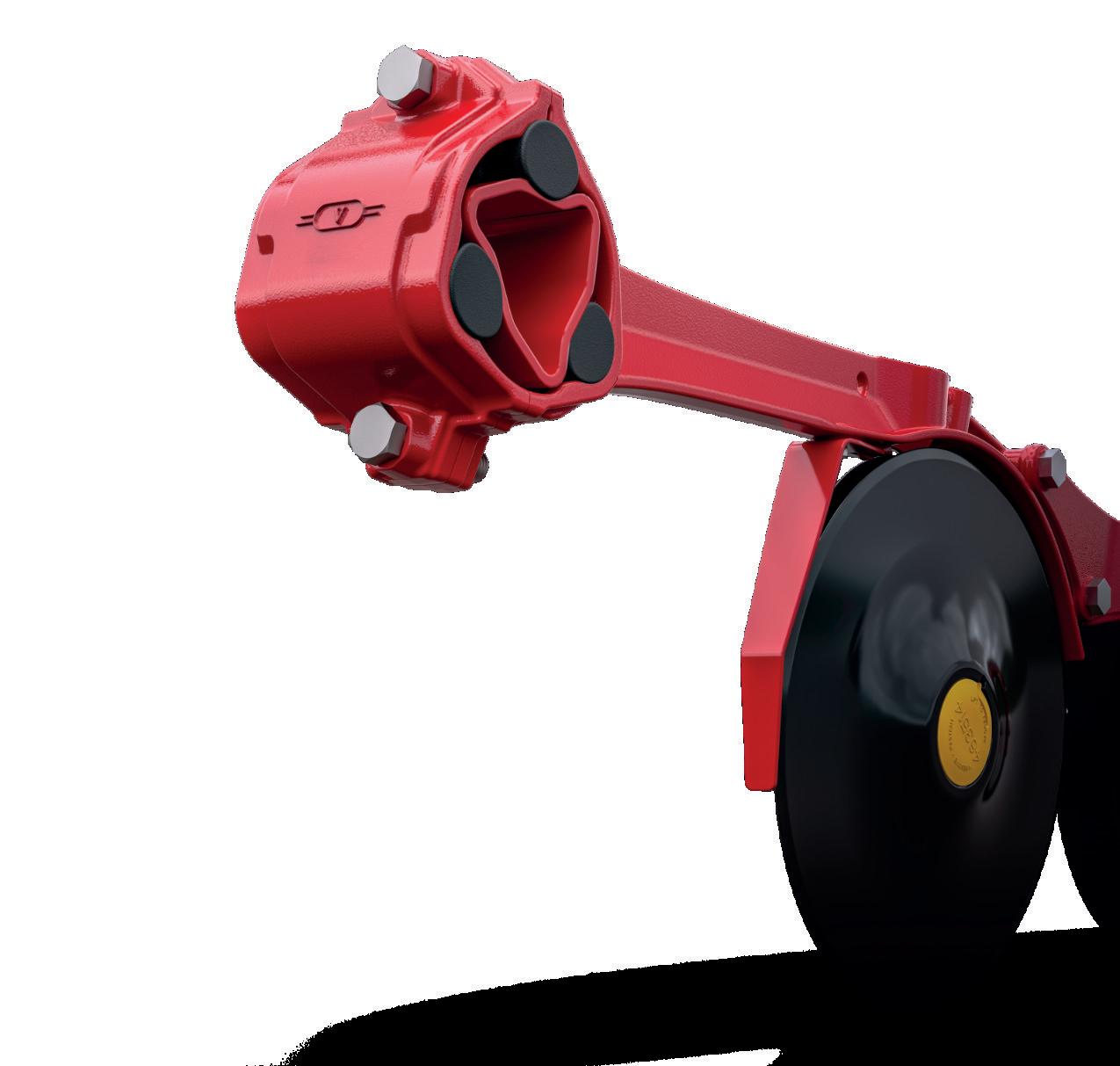
The new patented TriForce II coulter arm suspension brings an unmatched ability to maintain set coulter pressure when stressed by field irregularities. The result is seen in a more consistent seed depth, leading to an even germination and more uniform crop emergence.
Introduced on Spirit and Inspire seed drills.

Vita-Grass delivers nine nutrients in one application for comprehensive grassland nutrition
Origin Soil Nutrition has increased its range of Enhanced Efficiency Fertilisers (EEF) with the introduction of Vita-Grass prescription fertiliser, providing farmers with an alternative form of livestock nutrient supplementation.
Origin’s Vita-Grass has been specially formulated to supply several vital micronutrients for improved grassland performance and animal health benefits. The 24-3-3 + Mg, S, Ca, Co, I, and Se formulation, which contains polysulphate, offers the right combination of nutrients to improve forage quality and long-term soil nutrient levels. Abby Kellet, nutrition agronomist at Origin Soil Nutrition, explains why a Vita-Grass grade with polysulphate provides nine key nutrients at an equivalent price of a standard fertiliser.
“Vita-Grass packs more animal-essential nutrients into a bag of fertiliser at a similar price to a standard 25-5-5, which contains fewer nutrients. By choosing this more nutrient-dense grade, farmers can supplement livestock cost-effectively with no extra time, labour or animal handling, while also building soil nutrient reserves for the future.”
Vita-Grass contains selenium and cobalt – also present in Origin’s SweetGrass Plus product –along with a new nutrient for 2026, iodine. The inclusion of iodine means all three nutrients are now available in one fertiliser. Abby explains why this is important.
“Animals require iodine to produce thyroid hormones, which help to regulate metabolism, growth and foetal development. However, many soils and pastures are naturally low in iodine, so grazing animals often become deficient without supplementation. For example, most forages typically contain around 0.2mg per kg dry matter, whereas the optimum for grazing cattle and sheep at pregnancy and lactation is around 0.5mg per kg dry matter.”
Some Vita-Grass grades contain Polysulphate, a prolonged release, multi-nutrient fertiliser that’s mined in the UK. It features sulphur to improve nitrogen use efficiency; magnesium for energy, lactation and reproduction; and calcium for healthy teeth and bone formation. The low formulations of potassium and phosphorus in Vita-Grass make it suitable for grazing areas, as well as silage ground, where high quantities of manures are applied, and soil P and K levels are adequate.
“The package of essential micro-nutrients in VitaGrass – selenium, cobalt and iodine – is also available in our Sweetgrass Plus range. These products also contain sodium which consistently improves forage palatability driving increases in dry matter intake, grass utilisation and animal performance. Changing from a standard grazing fertiliser to either Vita-Grass or Sweetgrass Plus is a highly cost-effective way of increasing both the nutrient density and intake of forage.” concludes Abby.
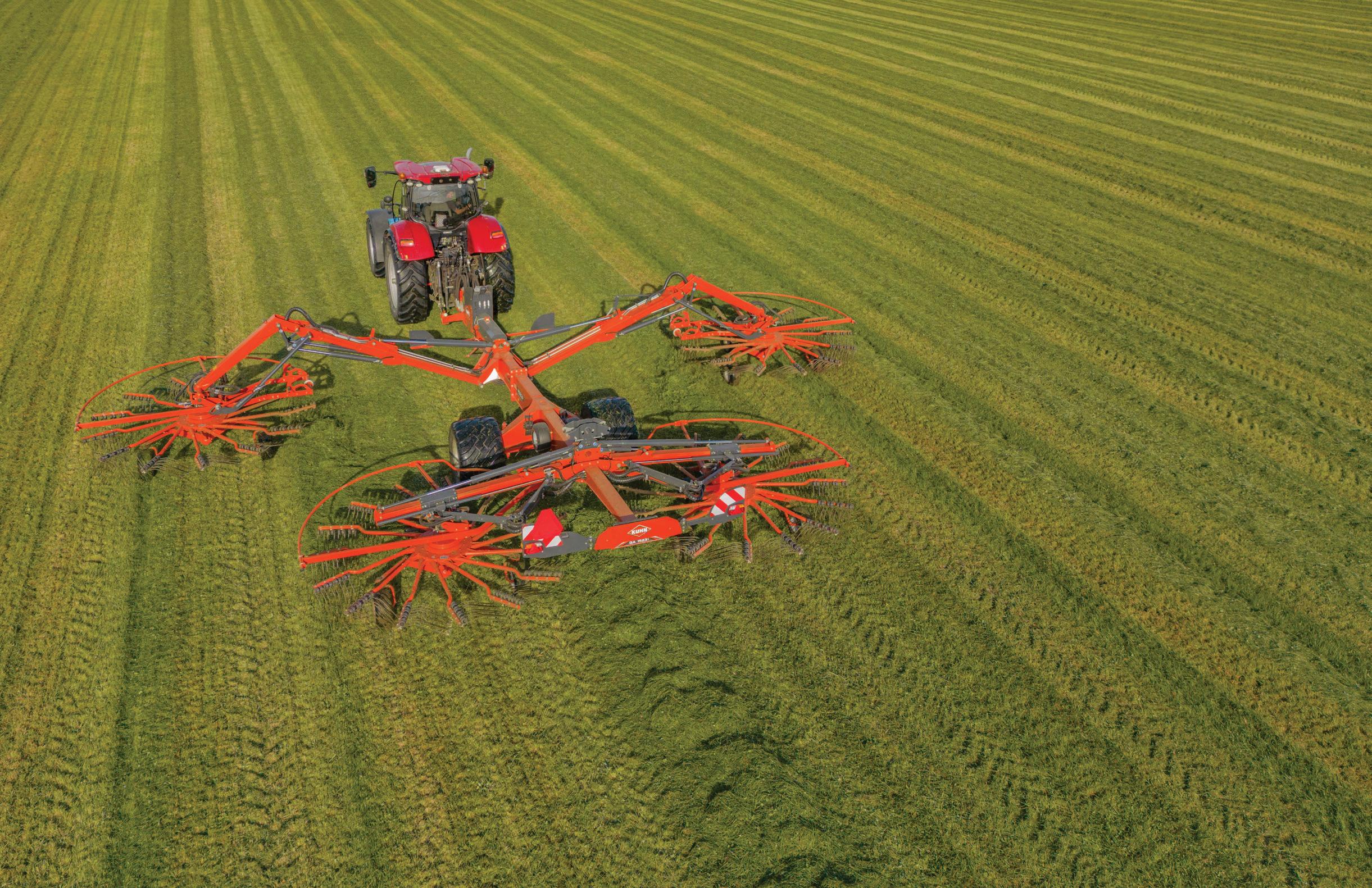
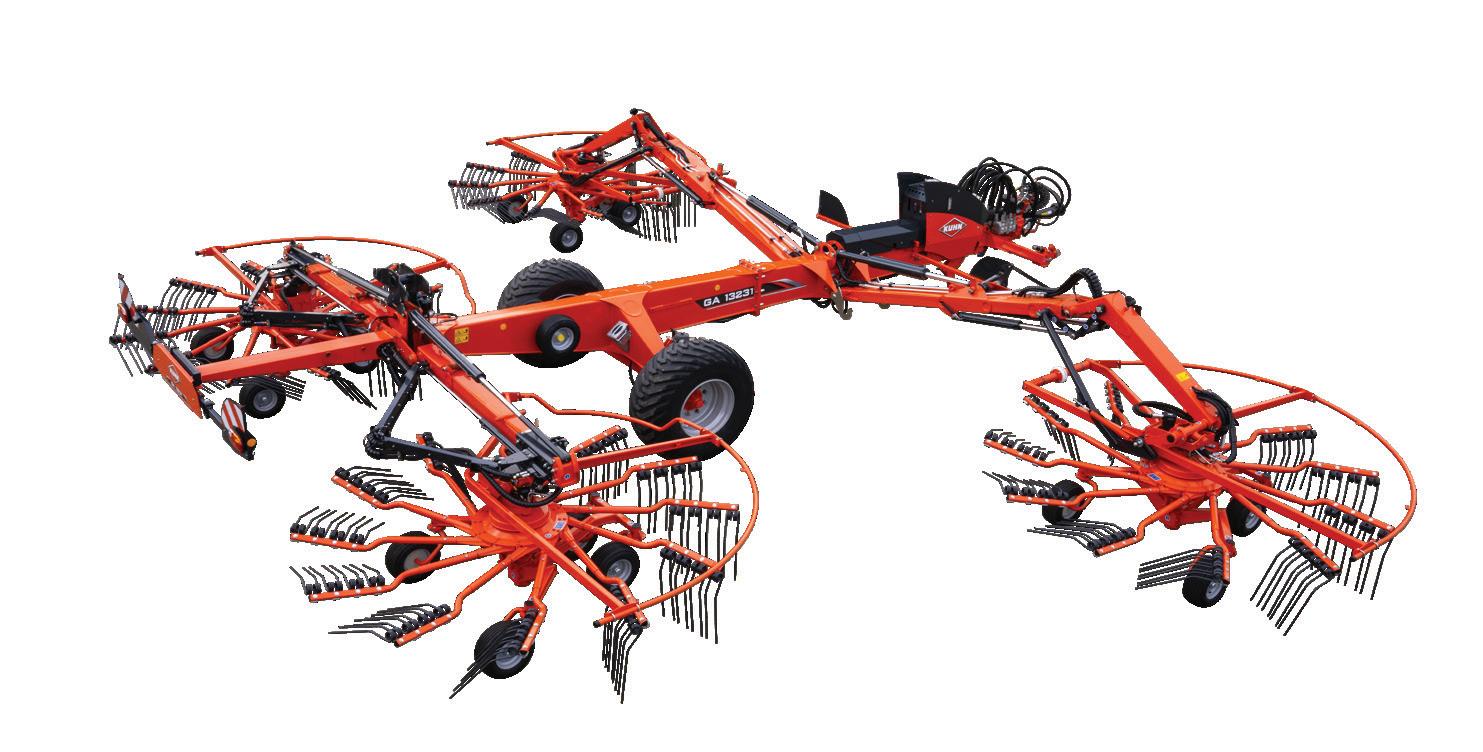
• Improve swath formation with rotor boost function
• ISOBUS Control with CCI terminal and CCI A3 Joystick



ny fertiliser, regardless of its composition, must meet two key criteria. First, it must deliver vital nutrients to the plant and support growth to its full potential. Second, it should be easy to handle, store on farm and apply using conventional equipment without the need for specialist contractors or additional cost. SoilWorx organic fertiliser pellets are designed to meet both requirements.
"Walk into an agricultural merchant today and there will be a range of organic fertiliser pellets on offer," says Dr Paul O'Hora, SoilWorx sales director. "On paper, many look similar, with the same nutrients listed, same bag weight and a similar price point. But talk to any agronomist or experienced grower and they'll tell you that's only half the story. The thing to really scrutinise is the pellet itself."
growth patterns visible weeks after application, or dusty, caked product that clumps in the hopper and won't flow. These are more than inconveniences. They translate directly into wasted input costs, lost time, and uneven crop or grassland performance.
Lower-quality pellets are often characterised by high dust content, variable sizing and softness, so they compress in the bag, cake together and may disintegrate either before they reach the spinner or actually in contact with it. On the other hand, pellets with high moisture content can turn sludgy in storage, and their inconsistent density means a single pass of the spreader delivers wildly different nutrient loads across the field or worse can turn mouldy in the bag. The result is patchy growth or under-fed areas - the very outcomes a farmer is trying to avoid.
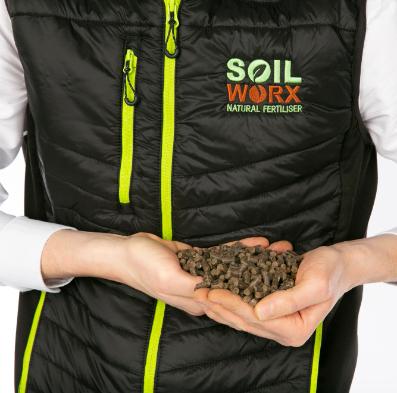
In particular, Paul suggests that pellet size, density, hardness, and how consistently those characteristics hold from one batch to the next are things to look out for, which is, he says, where SoilWorx really stands out from the competition.
Poor pellet quality isn't always easily identifiable at the point of purchase. It shows up later in the field, and usually at a bad time. A blockage in the spreader during a tight fertilising window, striped
Made differently to perform differently "SoilWorx crop nutrition pellets have a major advantage that begins with the quality of their raw material," continues Paul. "By sourcing chicken manure exclusively from selected poultry farms across Ireland, pellets automatically have a higher nutrient loading and a more potent and reliable end product."
At SoilWorx's 40,000-tonne-per-annum production facility, fully automated largebatch pelleting ensures each pellet meets the same physical standard. Every batch is analysed by the production team before it leaves the line. The result is a pellet that is 4–5mm in diameter and under 10mm in length, with 95%+ of production falling within this specification.
Density is also consistent at 0.62kg/L. Dry matter content sits above 90%, eliminating the risk of mould or product breakdown in storage. Critically, the heat treatment and sterilisation process means SoilWorx pellets are also pathogen-free which is an important consideration for responsible land management.
"Dust and fines are actively removed during production through dedicated sieving and extraction stages on the bagging line. Likewise because our pellets are consistently >90% dry matter you won't find mould and pellet breakdown that causes sludge in our products."
What arrives at the merchant, or direct to the farm, is clean, uniform and ready to perform." Paul emphasises.
Spreading that works first time, every time
For an organic fertiliser to be included in a hybrid approach, it needs to work in the same equipment that's already in the yard. Farmers don't want specialist contractors, modified machinery or extra cost. SoilWorx pellets are engineered to flow cleanly through conventional spreading equipment, from small farm spreaders to professional-grade machines like the Kuhn Axis.
Independent spreading trials conducted by SCS Speciality Agriculture demonstrated that SoilWorx pellets achieve a Coefficient of Variation (CoV) of just 11.2% at a spread width of 36 metres. This is an outstanding result that reflects both the uniformity of the pellet and its structural integrity. Pellets remained intact after contact with the spinner vane, meaning spread pattern accuracy is maintained even at wider working widths.
Crush strength testing recorded 7.6kg of force required to break a single SoilWorx pellet. This is significantly harder than some competing organic pellets that recorded just 2.5kg/force and easily compares to a traditional mineral fertiliser.
Soft pellets fragment on the spinner, generating dust and destroying spread accuracy before the product even reaches the ground.
The practical benefits are straightforward: no blockages to dig out, no bridging, no downtime.
Uniform pellets deliver a uniform nutrient profile. Because every SoilWorx pellet carries the same composition, every pass of the spreader deposits the same blend across the field. There are no nutrient hotspots, no underfed zones and no guesswork in planning. Growers can calibrate their equipment with confidence and rely on the spread to match the plan.
Agronomically, the release profile of SoilWorx pellets is equally well-considered. Pellets are hard enough to survive the spreading process intact, yet begin to activate as soon as they contact soil moisture — swelling and breaking down progressively over four to six weeks depending on weather conditions. This phased release means readily available nutrients support immediate crop uptake, followed by the slower mineralisation of organic nutrients across the growing season.
"Getting the sweet spot for fertiliser breakdown is key to getting good growth," Paul explains. "SoilWorx pellets are hard enough to withstand spreading but will start to activate as soon as they are in contact with the soil. For SoilWorx's organomineral fertiliser range, mineral components provide instant availability while the organic portion delivers sustained long-term nutrient release. That's supported by independent data from
Rothamsted Research trials."
In laboratory trials, a 19% improvement in soil health index from a single application of SoilWorx Dynamo product was seen. The test, equivalent to 350kg/ha of Dynamo applied to a clay loam soil, also showed improvements in the Solvita burst, indicating increased microbial activity postapplication.
"This is a compelling indicator that consistent, highquality pellets do more than feed the crop; they build the foundation for long-term productivity." Paul stresses.
Paul believes anyone handling SoilWorx products for the first time will notice the same thing: "The hardness and uniformity of the pellet is immediately apparent. And that physical quality is not cosmetic, it's the mechanism through which every other performance claim is delivered," he says.
"Pellet quality determines whether a fertiliser can actually be used efficiently in the field. Whether nutrients reach the right parts of the field in the right quantities. Whether the spreading operation runs smoothly or costs an operator hours of frustration and downtime. And ultimately, it determines whether the investment in fertility pays back in the way the bag label promises."

UK-based crop biostimulant venture
SugaROx has secured a £2.5 million investment from The Mosaic Company as part of its ongoing Series A funding round, strengthening its path to commercialisation of a firstin-class crop biostimulant.
The strategic investment will enable SugaROx to expand its research and development of biostimulant technologies. It will also support a significant increase in field trials across key global markets for the company's lead product – a biostimulant based on a proprietary form of the natural plant sugar trehalose-6-phosphate (T6P), developed from patented technology from Oxford University and Rothamsted Research.
cells using standard agronomic practices, such as foliar sprays.
SugaROx addresses this challenge through a patented delivery technology that enables these molecules to be absorbed by plants and then cross cell walls and membranes, supporting more reliable field performance.
All molecules targeted by SugaROx have wellcharacterised roles within plant cells. The first molecule in its pipeline inhibits a famine-signalling enzyme, stimulating the movement of carbon and nutrients towards grain filling, improving yield and quality.

The Mosaic Company invested £400,000 in SugaROx's seed round in 2025, supporting the scale-up of its proprietary biostimulant synthesis from laboratory to pilot facility in the UK. This enabled field testing to be extended across five markets.
With this new funding, SugaROx will significantly expand its trial programme to validate product performance and generate the data required for regulatory approval and commercial launch in the UK, EU and US.
Achieving consistent performance under real-world conditions has been a key challenge for biostimulants, as many biologically active plant molecules cannot be effectively delivered into plant
Mark Robbins, Chief Executive Officer of SugaROx, said:"We're delighted to deepen our collaboration with The Mosaic Company as we move closer to commercialisation. Their continued support is a strong validation of both our science and our ability to deliver a differentiated product in a fastgrowing market."
The venture is targeting a UK product launch in 2027-2028, followed by expansion into the EU and US in 2028-2030. Initial focus crops include wheat and barley in the UK and Europe, and soybean and maize in North America. Work is also underway on horticultural crops.
Jeff Wheeler, Vice President –Biosciences at The Mosaic Company, added:"SugaROx is advancing a new category of precision biostimulants that aligns closely with our approach at Mosaic Biosciences, where we are building a science-backed portfolio of solutions that support the biology of plants and soil. We are pleased to support the team as they expand field validation and progress towards commercialisation."
Biostimulants are among the fastest-growing segments in crop inputs, with an estimated compound annual growth rate of around 12%. SugaROx is now focused on securing the remaining investment required to complete its Series A round and bring its proprietary biostimulant molecules to market.
For more information, visit:https://sugarox.co.uk/
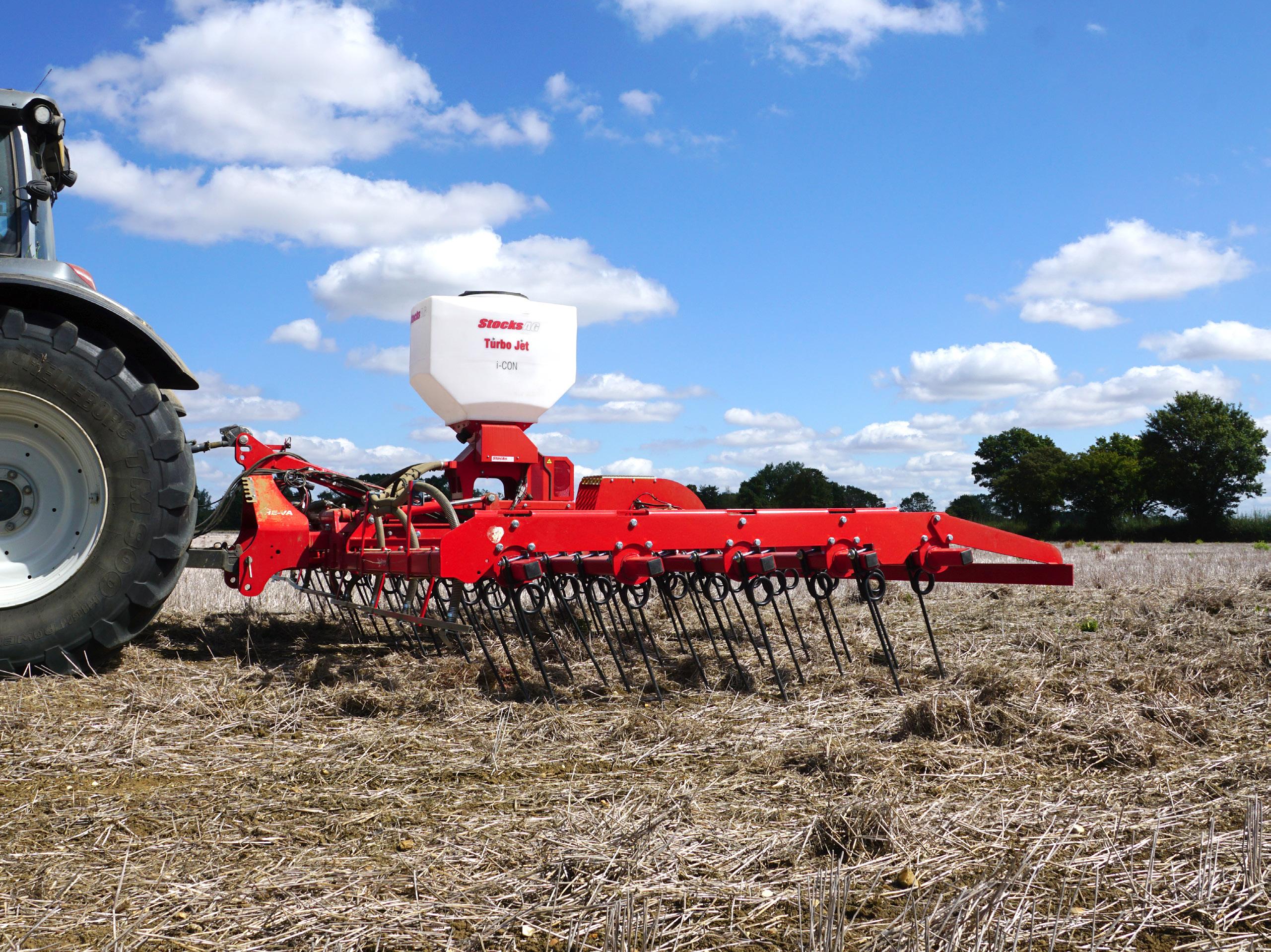
15 - 25kph
The Top Strigle straw harrow spreads straw evenly across the field to assist with drilling and slug control. The harrow also creates a micro tilth to generate a weed chit, assisting in the fight against grass weeds.
• 16mm hydraulically adjustable tines
• Central longitudinal chassis
• Heavy duty ladder-frame
• Hydraulic folding
• Seeder/applicator option

HE-VA range of Grant eligible products for FETF 2026:
FETF44 - G-Drill (1000L hopper)
FETF110 - Top Cutter Solo
FETF112 - Stealth
FETF207 - Stocks Ag Turbo Jet
FETF208 - Top Strigle
Across Northern Ireland, around 40% of farm fields already have adequate or high levels of soil phosphorus. That's a lot of farmers adding a nutrient their land doesn't need, and paying for the privilege. Yara's grassland agronomist Philip Cosgrave says it's time to look at what's actually missing.
Decades of intensive fertiliser applications, combined with phosphorus inputs through animal feed, have left many fields at or above the adequate soil phosphate index. For farmers still choosing fertiliser products that contain phosphate, that decision is worth revisiting. "There's no benefit in applying a nutrient the soil already has enough of. It costs money, and it increases the risk of phosphorus being lost into waterways," says Philip.
The consequences are already showing up in the water. There is an excess of approximately 7,000 tonnes of phosphorus going onto Northern Irish farm each year – a figure that has contributed to the water quality problems visible in Lough Neagh and other water bodies. While fertiliser is far from the only source, farmers applying phosphate to soils that don't need it are adding to a problem that the whole sector is being asked to help solve.
very likely still need potash, and that's where the yield response will come.
Grassland nutrition comes down to four nutrients: nitrogen, phosphate, potash, and sulphur. The key is applying the ones that are actually needed, in the right amounts, based on what the soil analysis says and what the crop is being asked to produce. In practice, that means choosing the product that fits the field, not the farm as a whole.
Yara's zero-phosphate range has been developed for exactly the conditions found across much of Northern Irish farmland. For silage fields with high potash offtake, YaraMila Zero P Cut delivers higher potash levels within a zero-phosphate formulation. For grazing, YaraMila Zero P Sward is a better fit, though it can also be used on silage fields where the potash requirement is lower. Where nitrogen and sulphur are the only two nutrients required, that solution exists too.
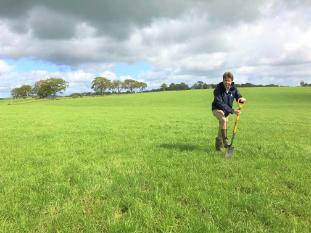
"In most situations, we can match what's needed to one of our products," says Philip. "The point is that farmers shouldn't be paying for nutrients their soils don't require, and they shouldn't be missing out on nutrients that would actually make a difference to yield."

The nutrient you are probably short of Potash doesn't attract the same attention as nitrogen or phosphorus. On many Northern Irish farms, it probably should. On grassland farms it can be the biggest limiting factor on yield.
Grass contains nearly as much potash as it does nitrogen. If you're applying 100kg of nitrogen per hectare, the crop likely needs a similar quantity of potash to match it. Every silage cut strips significant amounts of potash from the soil, and while organic manures and slurry can replace some of it, they rarely replace all of it. The result is a gradual depletion that shows up in yield figures long before it becomes obvious elsewhere. Soil analysis will tell you where potash levels currently stand, and for most farmers in Northern Ireland, those results are already there to be looked at.
Reviewing those results and grouping fields with similar fertility profiles together is the starting point for a fertiliser plan that reflects what the soil actually needs. Fields sitting at phosphate Index 3 or above don't need a phosphate input, but they
What the regulations require and what good agronomy requires are now the same thing The regulatory pressure isn't going away. Northern Ireland's Nutrients Action Programme (NAP) has clear goals: reduce nutrient losses, improve balance, and protect water quality. The ambition is a farming sector where nutrient applications are driven by crop need rather than convenience or assumption.
For most farmers, it's also the logical approach. Phosphate that sits in a soil already well supplied with it doesn't grow more grass. It's an expense with no return. Redirecting that spend to the nutrients that are genuinely deficient – potash in particular – is both agronomically sound and commercially sensible.
The soil analysis is already there and the products are available. The only question is whether farmers are making fertiliser choices that reflect the actual state of their soils, or whether old habits are making that decision for them.
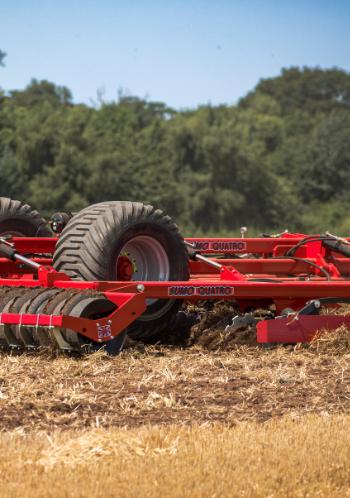
Increased longevity –built for tough environments.
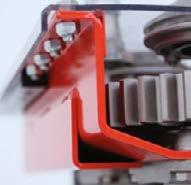
Makes maintenance easier, increases safety.
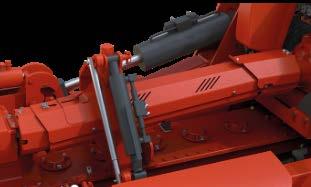
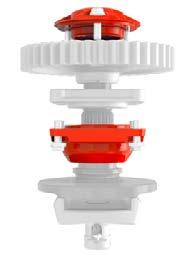
Top and bottom bearings provide high load capacity, top bearing retainers prevent expensive repairs.
Connected to the packer so adjusts with you – aids soil refinement.

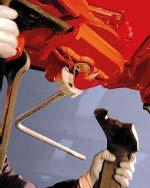


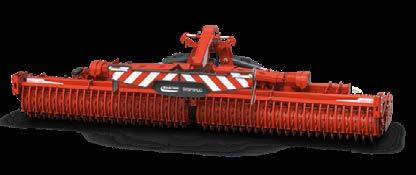
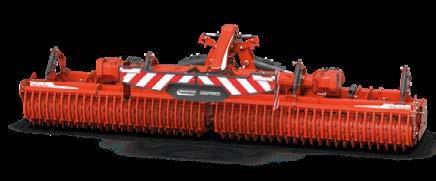

With over 220 years of experience serving the agricultural world, Grégoire Besson offers a complete range of machines dedicated to soil tillage. Ploughs, disc implements, tine implements, soil preparation machines and subsoiling equipment: our range covers all the needs of the most demanding farmers.
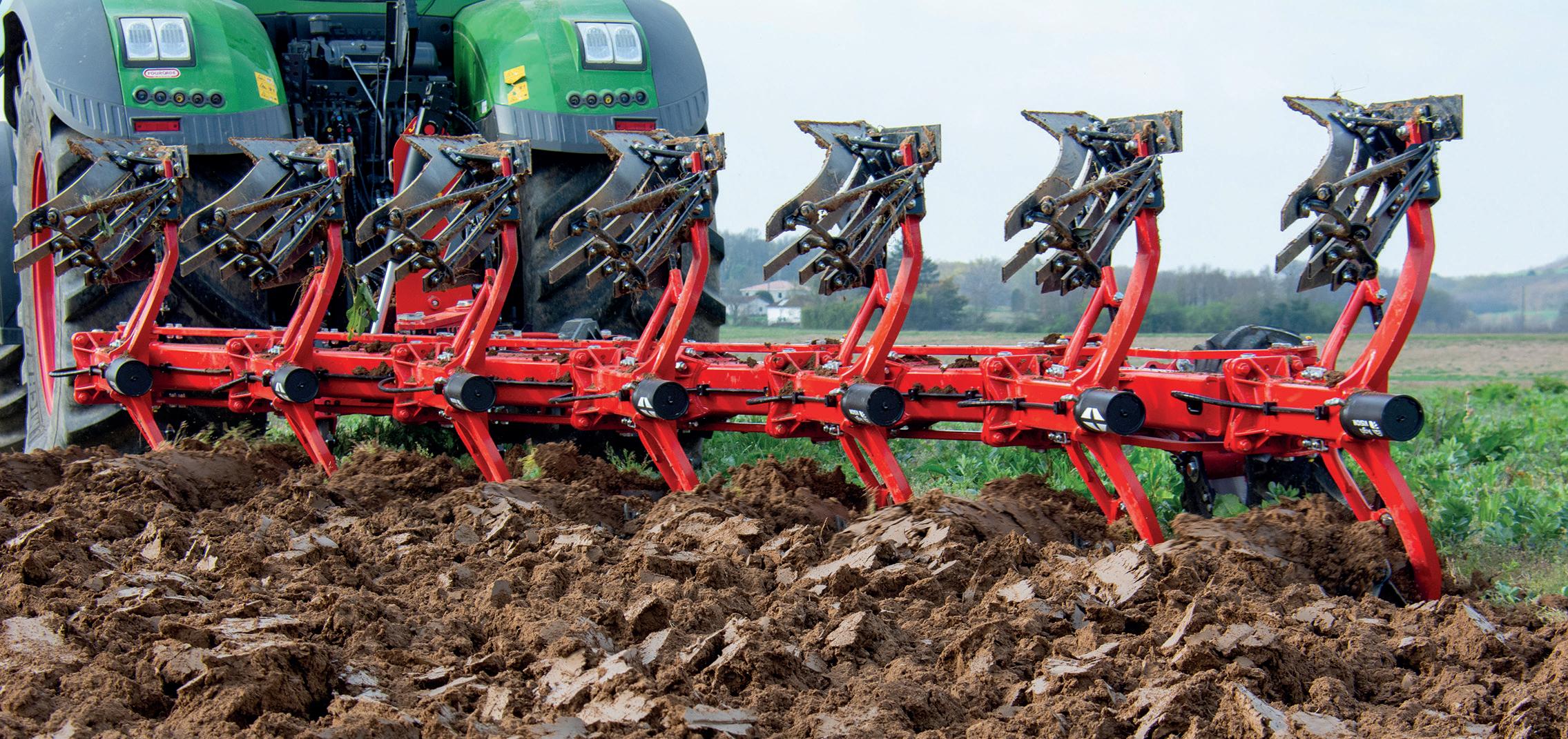
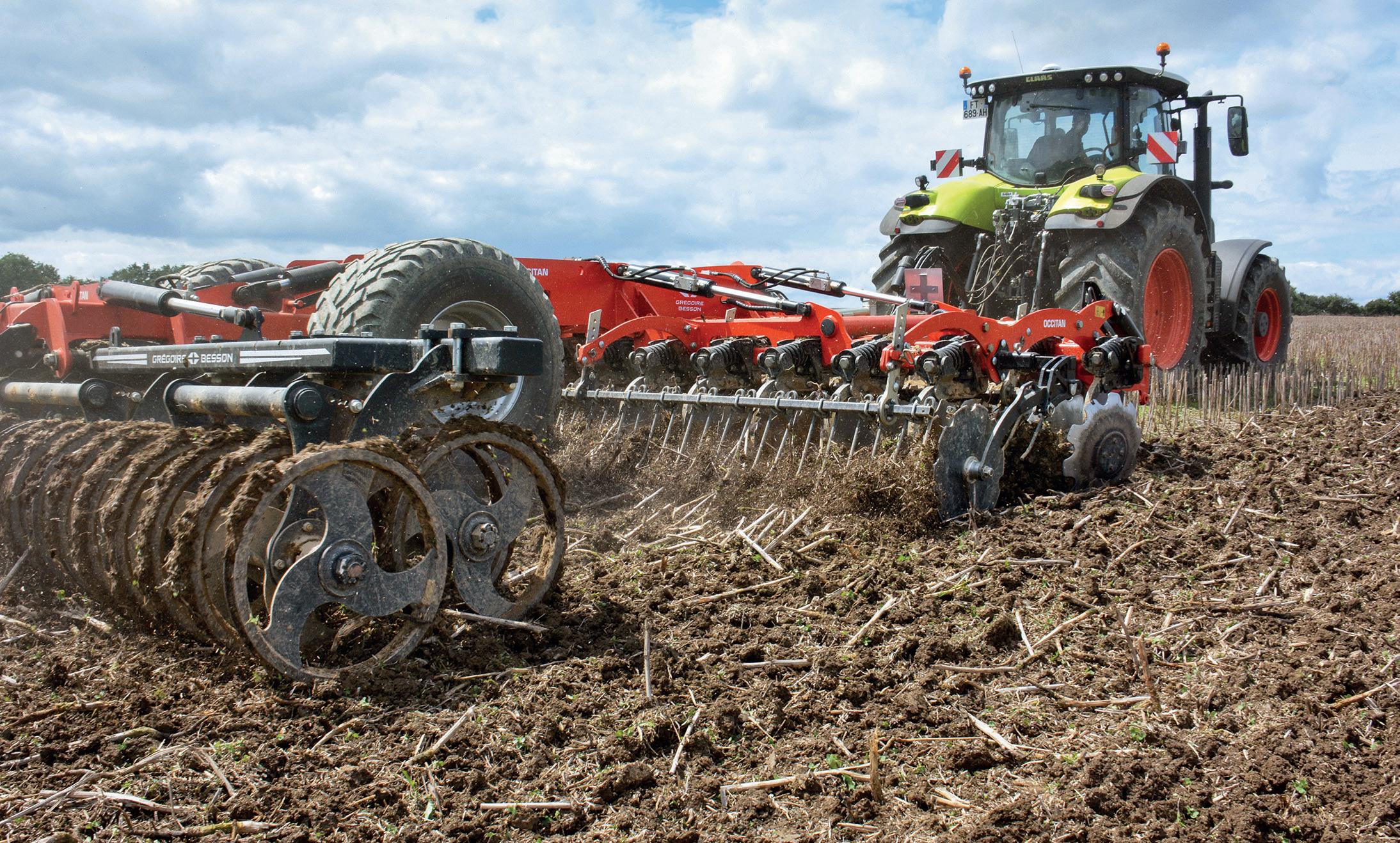
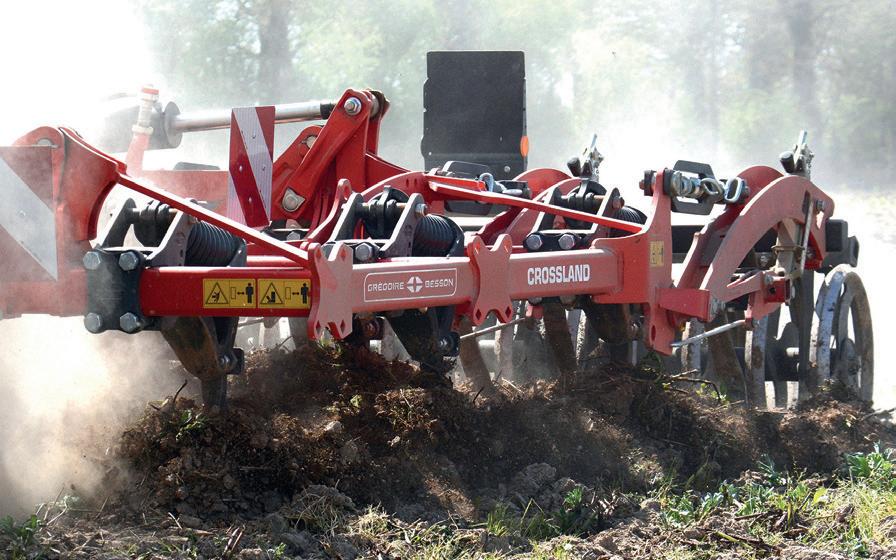
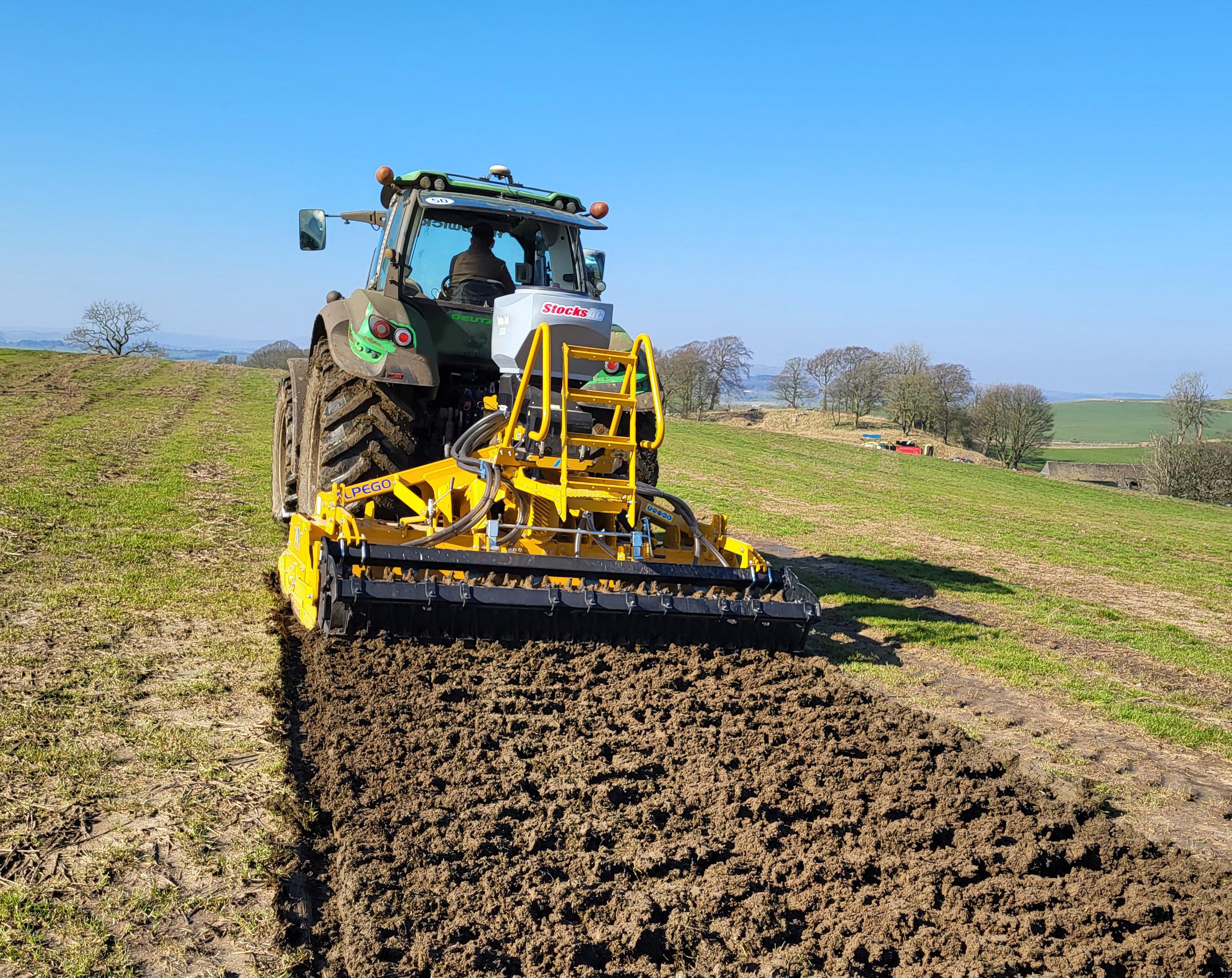
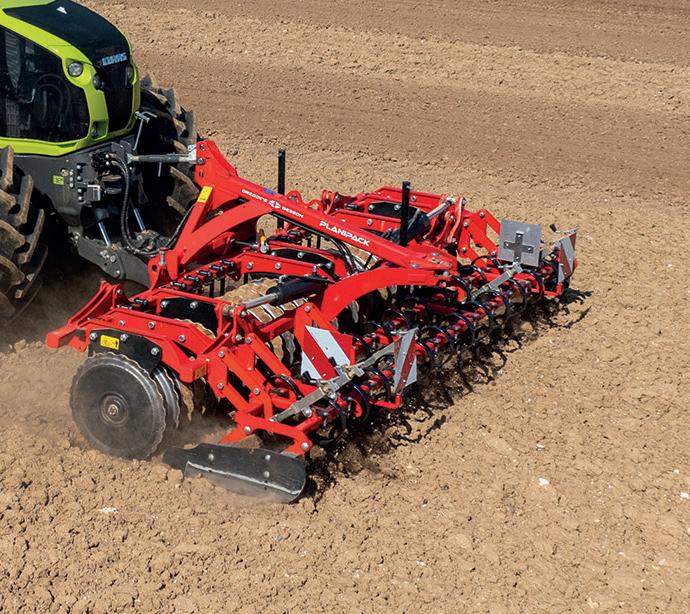
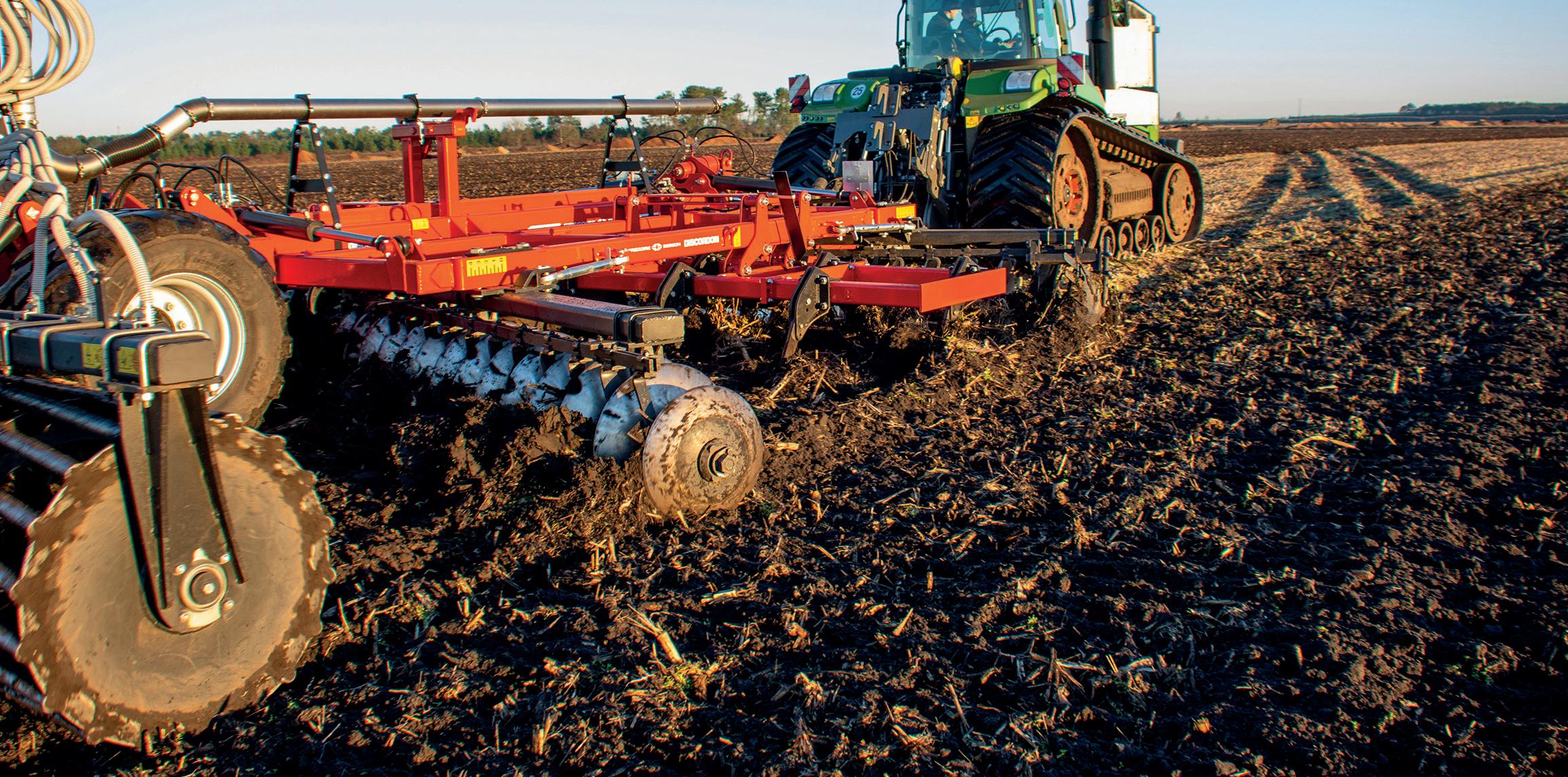
Grégoire Besson machines and parts
Kingdom by Maschio Gaspardo UK. For
nearest Maschio Gaspardo

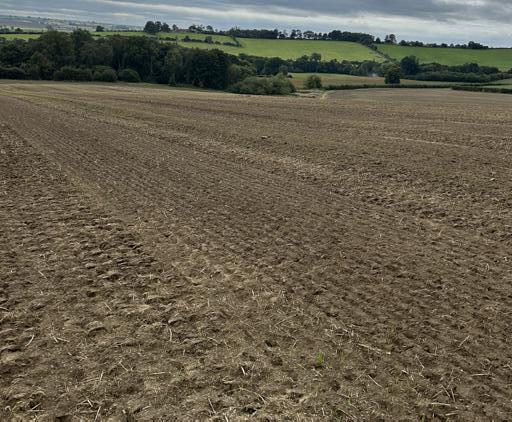
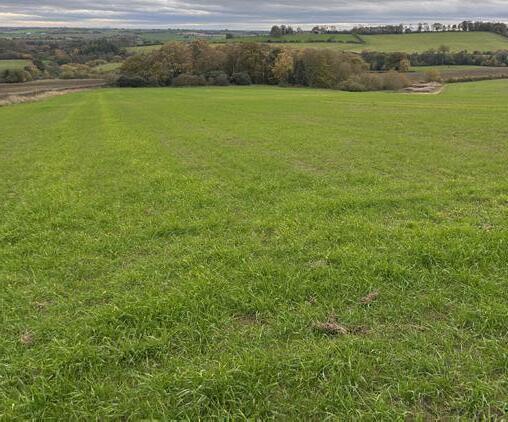
Independent trials have shown an organo-mineral fertiliser (OMF) delivering a 27.7% grain yield increase over mineral nitrogen. The headline figure – OMF plots delivering 9 t/ha versus 7.05t/ha on mineral equivalents at the same nitrogen application rate of 160kg N/ha – was achieved in spring barley trials conducted at Rothamsted Research in Harpenden, as well as its sites in Suffolk and Devon. At current grain prices (AHDB April 26) that represents an increase in revenue of £205/ha.
With results from three geographically distinct locations (with different climates and soil types) and spanning two contrasting seasons, farmers considering a change of approach now have credible data to base their decisions on. The full results, including N-dose curve data, Nitrogen Use Efficiency figures (NUE) and full ROI will be presented at Cereals 26 and Groundswell. "Two bookends in a cropping cycle" and one clear direction
The OMF trialled at Rothamsted was developed by SoilWorx with an NPK of 10-4-4. It compares closely with the 10-1-3 SoilWorx has produced in the Agrii-Fortis OMF product range, in partnership with agronomic advisory company Agrii. What makes the trial data particularly compelling is that years one and two represented near-opposite growing conditions. Year one was characterised by high rainfall, prompting some initial commentary
that the OMF advantage may have simply reflected mineral nitrogen being leached from the soil. Year two answered that question directly: a notably dry spring, and yet the OMF plots still outperformed the mineral treatment.
"It's really important for farmers to know that we've now got two bookends in a cropping cycle," says Dr Paul O'Hora, SoilWorx Sales Director. "We're not getting a typical year anymore. We're getting extremes of weather, and it's possible that very dry springs may actually be the future. So it's important that we've been able to show in two seasons that it works regardless of conditions."
Pre-harvest visual assessment during the dry 2025 season reinforced what the data later confirmed. Paul visited the plots in the weeks before harvest and noted the OMF-treated areas were visibly holding their own against the mineral plots, with no signs of the crop stalling under moisture stress. "It's proof that if you get the soil foundation right, you'll see it in the crop," he says.
The practical significance of achieving nine tonnes per hectare against 7.05t/ha is straightforward. More grain, more income, achieved with no change in agronomy. According to AHDB grain prices for April 26, SoilWorx OMF delivers £939/ha gross income compared to £734/ha for standard mineral nitrogen. A difference of £205/ha.
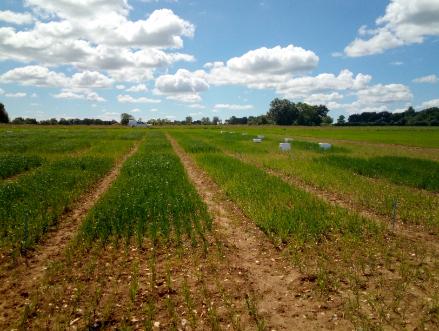
The fertiliser was applied as a top dressing in two applications: one just after drilling, one later in the season in exactly the same way conventional mineral fertiliser would be used. There were no additional passes or changes to tillage system. "All we did was replace the fertiliser," says Paul. "Like for like. You can put it out in the same spreader at the same timings. There's no need for going out and doing something completely different."
The yield uplift also presents farmers with a genuine choice about how to realise the benefit. "Either take the additional yield and the associated revenue, or apply the findings to reduce fertiliser input and cut costs,"
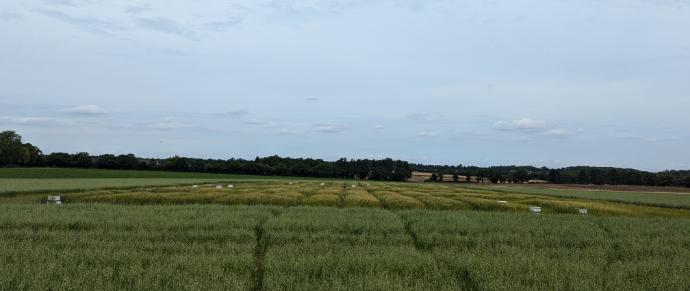
says Paul. "Either route, points in the same financial direction."
Soil biology: a 272% increase in microbial biomass Alongside the yield data, the trials recorded a 272% increase in microbial biomass from a single application. For Paul, this figure matters as much as the headline yield number, because it speaks to the mechanism underlying longer-term performance. Bacteria fix nitrogen, which is then released slowly back into the soil rather than being lost to leaching or the atmosphere. More microbial activity supports better soil structure, improved drainage and aeration, and greater root development — all of which feed into crop resilience.
"Once you start getting that root rhizosphere area working together harmoniously, that's where you start to see the exchange of nutrients, cycling, nitrogen fixation," he explains. "And that's why you see differences between soils that are in a poor state and possibly a neighbour whose land may have had time to recover and become healthy," Paul explains.
The significance of this for the longer-term picture is that the benefit compounds. Year three of the Rothamsted trial is already in the ground, and Paul is optimistic that the data will show further improvements as the soil biology continues to build. "This is a long-term game," he acknowledges. "Even after year three, we'll only just start seeing some of those benefits coming through. We may not know the full story until year five."
Year three will also introduce the standard organic product range alongside the OMF, providing a direct comparison between the two approaches under the same independent trial conditions.
The results also shed light on the agronomic 'mechanics' behind the yield increase. SoilWorx
OMF operates as a hybrid, with a mineral component providing immediately available nutrition, and an organic portion requiring mineralisation, which delivers a slower, sustained release across the growing season. This means that as the mineral fraction diminishes, the plant continues to receive nutrients rather than drawing down on what little remains in the soil.
There is also an emerging hypothesis around root development. Where synthetic fertiliser makes nutrients immediately and abundantly available, there is evidence to suggest the plant has less incentive to extend its root system. With a hybrid approach, the plant is encouraged to reach deeper and work with soil microbes to access nutrition.
This builds a stronger foundation that delivers longterm resilience rather than short-term availability. Building the evidence base across crops and sites The current Rothamsted trials cover spring barley across three sites, maintained in the same plots from year to year for consistency. But SoilWorx is actively extending its evidence base. Trials across the UK and Ireland now include potato, grass and winter wheat. "We would be very open to discussions with growers interested in trialling the product in other parts of the UK, in alternative systems," Paul adds.
But with arable margins under sustained pressure, and interest in alternative fertiliser sources rising in the context of global supply volatility, Paul is clear about what the Rothamsted data already offers farmers sitting on the fence.
"Farmers can't afford to invest in 'niceties'," he says. "They need to know it works. And we've now got results that show SoilWorx OMF works, and that you can easily apply it in place of a standard synthetic alternative. As always, our advice is talk to your agronomist about the opportunities available for you."
Rising fertiliser costs, sustainability concerns and consumer demand are driving a surge in organic farmland in the UK, according to Soil Association Certification.
Figures released by Defra this week show that organic land rose by 7.3% in 2025 reaching 540,000 hectares (ha) – the highest total in more than a decade.
This has largely been driven by Scotland, where land in conversion increased by 115%, rising from 26,000ha in 2024 to 56,000ha in 2025.
Scotland is now at 3.3% organic land share, up from 1.8% in 2021 – just 0.3% shy of hitting the Scottish Government's target to double organic farmland by this parliamentary term, which has just come to an end.
were rising even before the Iran war, so it is unsurprising that farmers are looking for a system that doesn't depend on gas from conflict zones. And with increasingly extreme weather, farmers need the healthy soils that organic delivers, to be more resilient to drought and flooding."
Although Scotland has seen a big rise in land in conversion, this is significantly higher than the figures for the rest of the UK and the Soil Association is therefore calling for Organic Action Plans for England and Wales, to follow Scotland's example.
England's land in conversion increased by 23%, rising from 19,600ha in 2024 to 24,200ha in 2025. This is the largest area of land in conversion since 2021, though is still lagging behind Scotland, with the West Midlands seeing the largest increase in land in conversion.
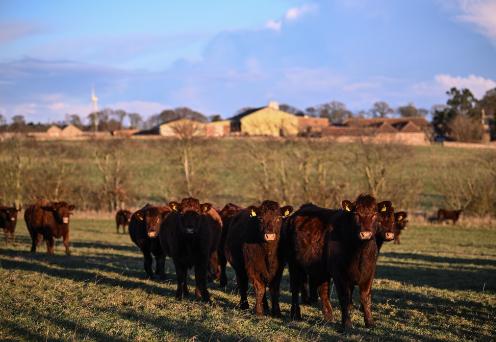
The figures published this week cover the calendar year for 2025, meaning this target is likely to have been hit or exceeded once early 2026 data is available.
Soil Association Certification Senior Commercial Manager Alison Muirhead said:"Farmers are turning to organic as not only does it provide huge benefits for the environment and wildlife, it also makes good business sense. Even amid cost-ofliving pressures, sustainability and health is a big concern for shoppers and consumer demand for organic has been rising for the last 14 years.
"It's great to see farmers responding so we can better meet that demand with British products instead of imports. Furthermore, fertiliser costs
Wales saw a four per cent increase in land in conversion, but fully organic land that has completed the two-year conversion period was down by six per cent.
Alison added:"It is great to see a rise in organic land across most of the UK, but the increase is largely being driven by the appetite in Scotland. England and Wales are lagging way behind as Westminster and the Senedd are not showing as much commitment as the Scottish Government.
"In Scotland, ministers are actively championing organic for the benefits it can deliver for soils, nature and climate by avoiding harmful, fossil-fuel based inputs. In addition to the target to double organic land, the government has also rolled out a funded Organic Action Plan, which is bringing the supply chain together to break down barriers to making local organic food and drink accessible.
"Scotland is a great example for how with the right backing from politicians and supply chain experts, we can produce nature-friendly food and drink on healthy, home soils. We therefore urgently need Organic Action Plans for England and Wales so the whole of the UK can feel the benefits organic delivers."
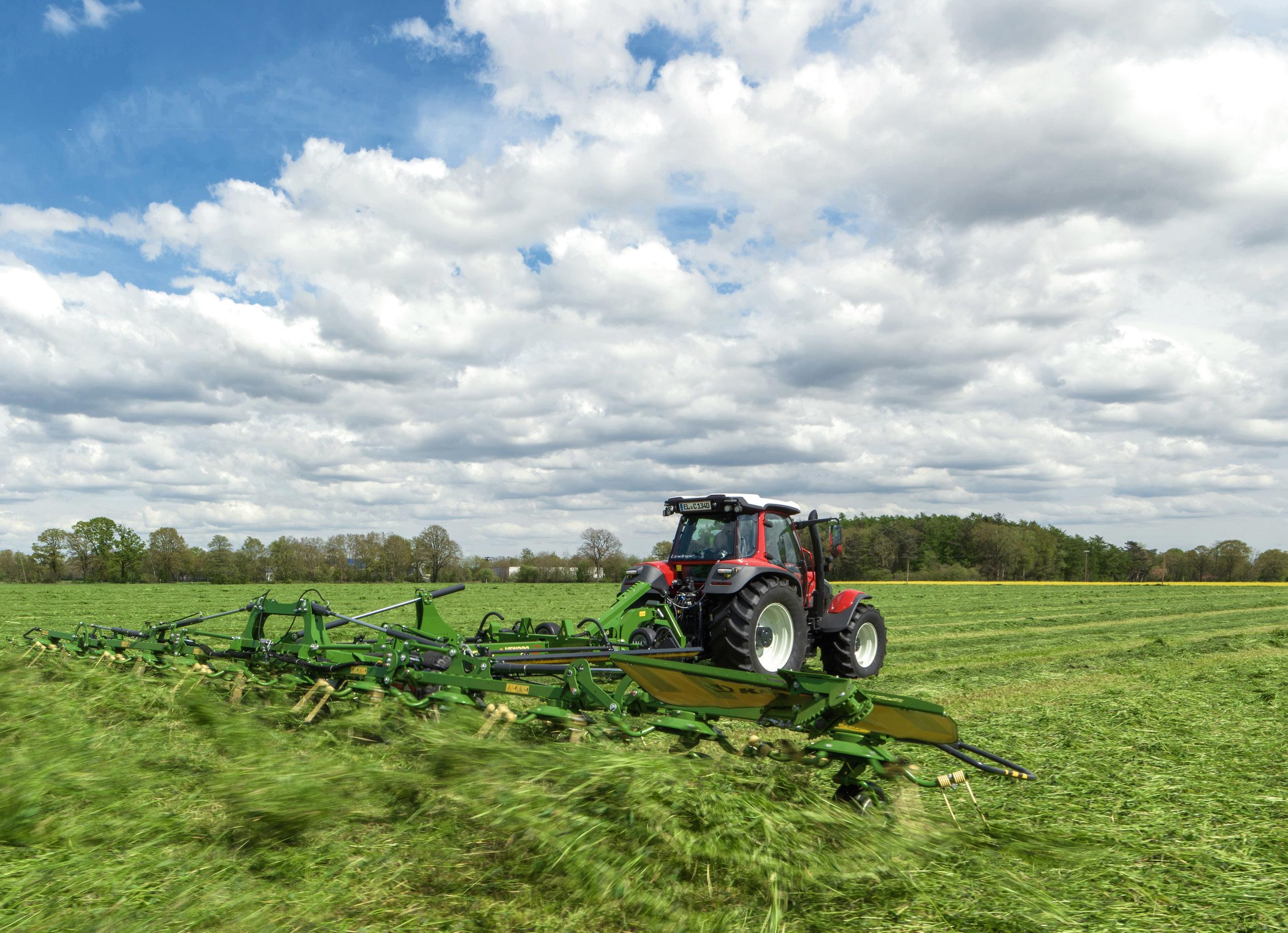
4+40 months on selected Tedder models:
Vendro 1020 · Vendro 1120 · Vendro 1120 C Vendro 1340 C · KWT 1600 · KWT 2000

*Valid until 31 July 2026, exclusions, terms and conditions apply
Scan to find your local Krone dealer to get a quote

*All finance is available on a maximum of 50% of the retail price or balance, whichever is lower. A 4+40 months promotion (44‑month hire purchase agreement with four instalments payable upfront followed by 40 monthly instalments) is available on the following Krone Tedder models: Vendro 1020, Vendro 1120, Vendro 1120 C, Vendro 1340 C, KWT 1600 and KWT 2000. Other Krone Tedder models are available on a 3+30 months promotion (33‑month hire purchase agreement with three instalments payable upfront followed by 30 monthly instalments). The promotion is available on all new Krone Tedder models for deliveries up to 31 July 2026, subject to availability. Pricing information is a representative example only and is based on the applicable hire purchase agreement as outlined above. Unless specified, the price quoted does not include VAT or any fees. The financing referred to in this document is available only through Krone Finance, a trading name of De Lage Landen Leasing Limited (“ DLL”) via participating dealers. The indicative finance rate may increase between
and funding to reflect changes in DLL’s cost of funds. This does not constitute an offer and is not binding on DLL. All applicants must be 18 or
and
Farming
As part of its commitment to bringing its new fungicide active ingredient to the UK, ADAMA will be hosting a series of regional field demonstrations to show how Gilboa’s innovative mode of action helps to protect winter wheat against the ever-present threat of disease.
The ‘ADAMA in Action’ demonstration days – which are free to attend and open to all – will give visitors the opportunity to find out more about how Gilboa works, not only as a standalone product, but also as a partner in wider fungicide programmes.
Gilboa is the trade name for flumetylsulforim, an imino-tosylpyrimidinone chemistry which has been classified as having a unique mode of action for cereals (FRAC Group 32).
This new mode of action inhibits fungal growth by blocking nucleic acid synthesis within pathogens, and as such works against a biochemical pathway that has never previously been targeted by cereal fungicides. This significant innovation provides valuable protection against key diseases in cereals and oilseed rape, including septoria and sclerotinia, offering UK farmers an additional form of defence in the fight against crop diseases and a powerful tool for disease resistance management.
Gilboa is currently progressing through the regulatory approval process with product availability expected for the 2027 season.
"Gilboa represents the next generation of fungicides and is therefore an incredibly exciting and important new molecule for the crop protection industry,” explains Jonny Oosthuizen, Portfolio and Campaign Manager – Cereals, ADAMA UK.
“To be able to develop and bring to market a new mode of action that is performing on a level with market leading products really proves ADAMA's commitment to UK arable farming.
“We're privileged to be leading the next generation of fungicides by introducing the first DRSP (DNA/RNA Synthesis Proposed) mode of action in cereals, and we look forward to sharing more about how Gilboa’s game-changing molecule works at our ADAMA in Action trials sites across the UK in the summer."
With ADAMA in Action trials sites in Herefordshire, Nottinghamshire, Yorkshire, Norfolk, Wiltshire and Scotland, growers and agronomists from all parts of the UK will have the opportunity to see the benefits of Gilboa in the field, and to quiz ADAMA’s technical team about how and when it can be used to improve cereal disease control.
For more information, and to register your interest in attending, please scan the QR code below.

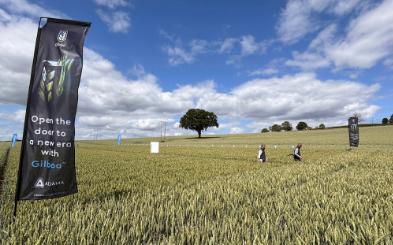

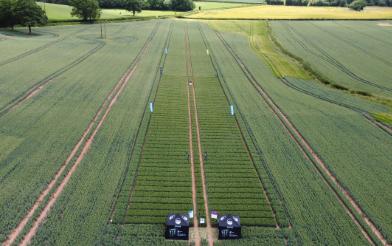
New research from theSeed Sovereignty Programme,highlights the potential of machinery cooperatives, sometimes known as machinery rings, to support growers, cut costs and strengthen local food systems. The research was commissioned by The James Hutton Institute, the internationally renowned scientific research centre that aims to provide scientific solutions to the challenges faced by the agriculture industry.
Interest in small‑scale grain production is growing rapidly across Scotland, particularly for food‑grade cereals such as wheat, barley and rye. From crofters and community growers to estates experimenting with heritage varieties, more people are producing grain for baking, malting and local food markets. However, a lack of access to appropriately scaled machinery is emerging as a major barrier to the sector's viability.
Professor Tim George is Director of the International Barley Hub (IBH), the Hutton's innovation centre dedicated to promoting scientific discovery to future-proof barley and funded as part of a £62m investment through the Tay Cities Region Deal (TCRD) a partnership between local, Scottish and UK governments and the private, academic and voluntary sectors. Professor George said of the initiative, "Producers growing between one and twenty hectares find that manual methods are no longer viable, yet modern commercial machinery is too large, expensive, or unavailable for small contracts.
"A survey of Scottish grain producers, undertaken by the Seed Sovereignty Programme in 2025, found strong demand for machinery sharing, with 67% of respondents identifying harvesting machinery as their top need. There was also high demand for grain drying, cleaning and drilling equipment. Most growers wanted to improve efficiency and viability, rather than expand production."
In response to these findings, the IBH passed on three of its old stock small threshers to farmers in distinct regions of Scotland with different scales and intended uses to test their practical value and act as catalysts for machinery-sharing hubs in these regions.
Professor George explained the next step: "We're now mapping existing small- and medium-scale grain equipment to pinpoint where we might be

able to support the formation of machinery rings and to identify gaps in equipment necessary for production and processing of grain in Scotland.
"If you're currently growing grain and have machinery that you would be happy, in theory, to include in a machinery sharing ring please fill out thisformhttps://forms.gle/nNU7s28uDA317Z6D8 This will populate a map that will show the current network."
International examples show the potential of this approach. In France, Coopératives d'Utilisation de Matériel Agricole (CUMAs) have been operating since the 1940s. These groups share equipment, infrastructure, best practices, ideas and knowledge and sometimes staff. Today there are around 10,000 CUMAs, with nearly half of all French farms participating. On average, members reduce overall operating costs by around 20%.
This research, funded through the EU's RADIANT project funding and Scottish Government's RESAS research programme, concludes that machinery co‑operatives could offer a viable and cost‑effective solution, if supported by the right policy and organisational frameworks. Targeted funding from future rounds of the Scottish Government's Small Producers Fund, which has already committed £1.5 million, alongside advisory support and international knowledge exchange, could help establish regional co-operatives and unlock growth in the sector, delivering economic, social and environmental benefits for Scotland's rural communities and strengthening Scotland's local and regional food systems.
CL Growing solutions has opened a huge new fertiliser plant in India, helping to improve food security for millions of people at a time when crop production is under serious threat.
The seven-acre facility in Supa, Maharashtra, will produce 30,000t of water-soluble fertiliser a year, helping local and international farmers to adopt more efficient and sustainable growing practices, while increasing yields and strengthening long-term food security.
“With geopolitical tensions disrupting global trade routes and delaying fertiliser shipments through a key corridor as the Strait of Hormuz, building local production capacity is essential,” says Nir Ilani, President of ICL Growing Solutions. “This facility enhances India’s supply resilience and ensures farmers have consistent access to high-quality solutions.”
Agriculture contributes over 20% to India’s gross domestic product and employs more than half of its workforce, making it the largest producer of rice and second largest producer of wheat globally. It is the world’s second largest consumer of fertilisers, and the government is encouraging farmers to adopt more efficient and environmentally sustainable practices.
The launch therefore comes at a critical time, as the country relies heavily on fertiliser imports and is
facing supply disruptions due to geopolitical tensions. “These delays are already affecting fertiliser availability worldwide and could pose long‑term risks to food security if not addressed,” says Mr Ilani.
“This new facility also supports the Government of India’s ‘Make in India’ initiative and reflects ICL’s strategy to expand local production in high-growth markets. By manufacturing water soluble fertilisers within India, we aim to reduce dependence on cross-border supply chains, diversify production routes and ensure more reliable access to essential agricultural inputs.”
Water soluble fertilisers enable precise nutrient delivery and higher agronomic efficiency.
“Designed to deliver the same high-quality specialty products currently exported from Israel, the plant combines cutting-edge technology with local expertise to deliver more sustainable farming.”
The investment also reflects ICL’s long-term commitment to India’s agricultural market, and its belief in the role specialty fertilisers can play in supporting food security, Mr Ilani adds. “This is an important step forward in our mission to help farmers produce more, improve quality, and use resources more efficiently.”
For more information visit: www.icl-growingsolutions.com
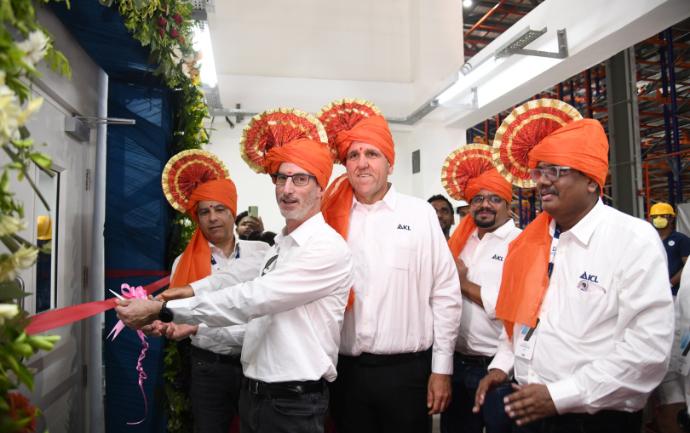
With a gross output of 108%, 2% higher than its nearest rival, the AHDB Recommended List (RL)
OSR Candidate variety
RGT Eros is one to watch, says Kirsty Richards, national technical manager for seeds at Frontier Agriculture. It is one of five varieties selected for Frontier’s oilseed rape derisking partnership, and this year it is the only variety advanced from the RL candidate stage on the list.
“The Frontier OSR derisking partnership has run for several years and is due to run again for this drilling season,” says Kirsty. “We began it in 2024 when cabbage stem flea beetle was at its peak.

“Frontier sits at both ends of the chain as an input and advice supplier and grain buyer, which places us in a good position to minimise the risk for growers. It means that growers that sign-up to the scheme have the cost for the seed and accompanying companion crop waived if the crop fails to establish.
“Therefore, to give growers the best opportunity to succeed, we only place the best possible varieties in the derisking partnership.”
As well as the headline yield, RGT Eros has agronomics similar to other RAGT varieties, such as RGT Kanzzas, including strong foliar disease resistance with 8s for Phoma and light leaf spot. “It has good oil content, which is attractive for the oil bonuses,” adds Kirsty.
With Frontier operating nationwide, Kirsty also looks for varieties that provide consistent performance across all regions. It has yielded equally well across all of Frontier’s trial sites, which is supported by similar results in the AHDB trials.
RAGT cereals and oilseeds product manager Ed Stanford says that their expectations for sales this coming year are managed by RGT Eros still being a candidate, but that this year is an ideal chance for farmers to try a percentage of their acreage to see how it performs against their existing varieties.
“We are expecting RGT Eros to be well placed to come onto the new RL in the winter, and for it to be a variety that takes a decent market share,” explains Ed. “With prospects for the crop appearing so good at the moment, it is the perfect opportunity for OSR growers to see how much further they can push yields with the latest genetics.”
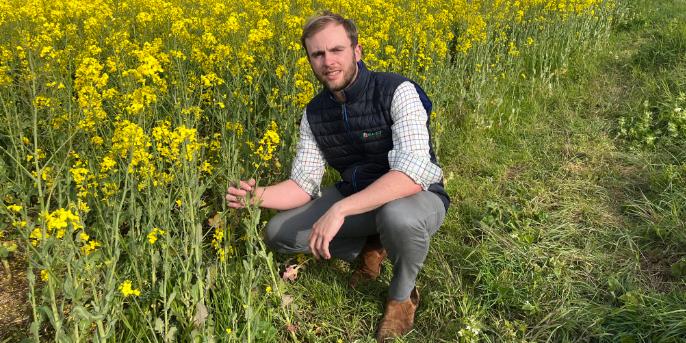
Working with Capstan and Case, BfS has developed a low drift nozzle for use with Pulse Width Modulation (PWM) nozzle bodies.
Since the early days of the introduction of PWM, BfS have been marketing PulZar nozzles throughout north America and Canada and now the PulZar nozzle systems are being offered on machines coming onto the UK market.
PWM controls each nozzle separately, and the flow rate from each nozzle is managed by rapidly switching the nozzle control solenoid on/off. The duration that the nozzle is “on” is called the Duty Cycle and varying this duty cycle provides the
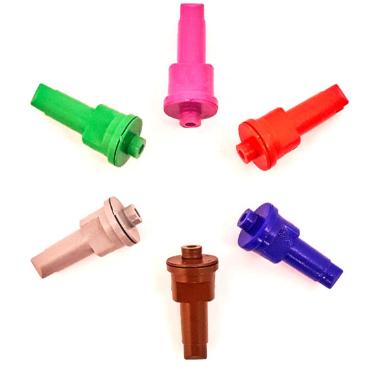
Flowgro Ltd
Barton Tumns Farm Lichfield Road, Burton upon Trent, DE13 8ED
TEL: 01283 712172
www.flowgro.co.uk
operator with the ability to control the volume output from each nozzle.
The system pressure, spray quality and fan pattern remain consistent.
The system can cope with a five-fold change in forward speed without affecting output.
PWM bodies will enable the correct application from each nozzle even when going around a corner where the outer edge of the boom is ravelling much faster than the inner edge, so giving a lower rate of application. PWM corrects this by changing the duty cycle at each nozzle to compensate accordingly.
For more information phone 01268 710237 or email stores@bfs.uk.com
Credit: Simon Nichols– BFS www.bfs.uk.com
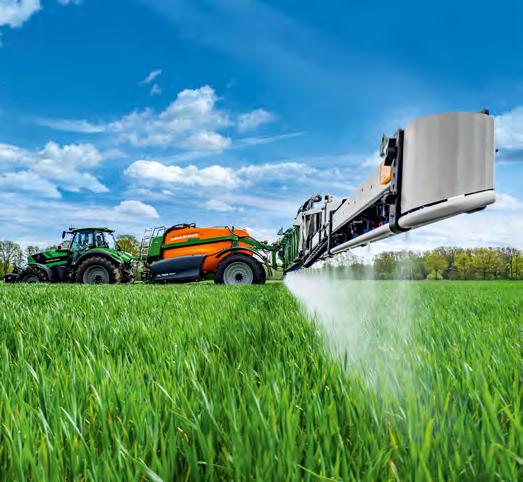
The Sustainable Use Directive (SUD)* requires all pesticide application equipment to be tested by the relevant dates.
Legal requirements
First test due before the machine is 5 years old
1. Boom sprayers over 3 metres, air blast sprayers, train and aircraft sprayers
Re-test every 3 years
2. Booms 3 metres and under, slug pellet & micro-granular applicators, weed wipers, seed treatment, manually propelled or self-propelled trolley type equipment with 3 or more wheels & a motorised pump, and other specialist equipment
Re-test every 6 years
3. Knapsack, handheld and pedestrian* equipment
a. Must be checked on a regular basis by a competent person
b. Make any repairs necessary
c. Keep a record
* Maximum 2 wheels or with a manually pressurised pump
Farmstar Limited
Grove Farm, Church Lane, Marr, Doncaster, South Yorkshire, DN5 7AU
Agrifit Machinery Ltd
Crop assurance scheme requirements
a. Annual testing for sprayers over 3 metres and air blast sprayers
b. Annual testing of granular nematicide applicators
c. All other equipment to SUD timescales
* The legal requirements are contained in the Plant Protection Products (Sustainable Use) Regulations 2012
Flowgro Ltd
Bavenhill Mechanics

Dave Lightowler
Present in Yorkshire & Lincolnshire
Tel: 01302 786786
www.farmstar.co.uk

Arglam Dairy Farm Arglam Lane Holme on Spalding Moor YO43 4HG
Tel: 07966 112629
www.agribuggy-yorkshire.co.uk
Barton Tumns Farm, Lichfield Road, Burton upon Trent, DE13 8ED
Preston Cross, Ledbury, HR8 2LJ
www.nsts.org.uk
Tel: 01283 712172
www.flowgro.co.uk
Tel: 01283 712172
www.bavenhill.co.uk

heat futures increased after the USDA's World Agricultural Supply and Demand Estimates (WASDE) report on 12 May offered an initial insight into expectations for the 2026/27 season.
Chicago wheat futures were the main driver, with the Dec-26 contract gaining 6.0% by the close of trading on 12 May. Meanwhile, Paris milling wheat futures (Dec-26) increased by 3.6%. UK feed wheat futures (Nov-26) increased by 2.7% and reached the contract’s highest level since February 2025.
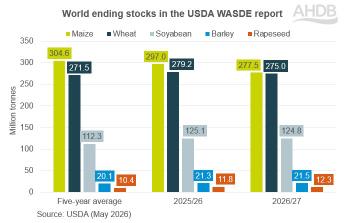
Estimated world wheat ending stocks for the 2025/26 and 2026/27 seasons were lower than the average trade estimate, by 3.7 Mt and 5.5 Mt, respectively, supporting prices (Table 1).
The USDA’s projected ending stocks for 2026/27 are 4.2 Mt lower than 2025/26, at 275.0 Mt. The largest reduction is in the US (-4.7 Mt), although stocks also decreased in the EU (-2.3 Mt), Australia (-1.4 Mt), Canada (-1.3 Mt) and Russia (-0.9 Mt).
According to the USDA's forecast, US wheat production in the 2026/27 season could be the lowest in fifty-three years, also adding support to prices. This is due to a smaller planted area in the US, together with drought in the US Plains, which will reduce wheat yields.
The forecast for smaller stocks in 2026/27 will make markets more sensitive to threats to global supply in the weeks ahead.
However, compared to the five-year average, the USDA’s May forecast of global wheat ending stocks for the 2026/27 period was still up by 1.3% (Figure 1). This could limit the market reaction, unless the supply risks increase further.
The USDA’s forecasts for global ending stocks in 2026/27 were also lower than the average trade estimate for maize (Table 2) and soyabeans (Table 3).
Global maize ending stocks for the 2026/27 season could be 6.5% lower than in the previous season and 8.9% lower than the five-year average. If confirmed, this would also be the lowest level of global maize ending stocks since the 2013/14 season.
Although global ending stocks of soybeans and rapeseed for the 2026/27 season are higher than the five-year average, current prices are being supported by higher crude oil prices and biofuel demand.
Weather impacts will be key in the coming weeks. Winter wheat conditions in the Northern Hemisphere, and particularly the US, will be a key driver of price movement. While for maize, developments in Brazil's second maize crop (impacting 2025/26 stocks) and maize planting in the US, the EU and Ukraine are watchpoints.
Following the USDA’s WASDE May report, Chicago and Paris maize futures showed lower price increases compared with wheat, as the 2025/26 world ending stocks were higher than the average trade estimate. Maize prices have limited the increase in UK feed wheat futures to a certain extent, compared to other wheat futures.
In the UK, the price difference between milling wheat and feed wheat is influenced by the UK crop size and quality, plus global price trends. Poor conditions for US winter wheat are underpinning global futures prices for milling-quality wheat, whichmay have knock-on impacts.

rontier Agriculture is rolling out digital monitoring technology across its grain storage network, working with agtech providerJavelotto deploy the system across key UK sites as part of a threeyear programme to strengthen grain storage and improve visibility of grain condition for growers and grain customers.
The system was first introduced during the 2025 harvest across three locations and is now being extended to a further seven sites in 2026. Once complete, around 500,000 tonnes of grain across Frontier’s storage network will be monitored continuously using the digital system.
Enhancing visibility for customers whilst modernising Frontier’s storage network

As the UK’s leading crop production and grain marketing business, Frontier continues to modernise its infrastructure and operations to support the reliability and efficiency of the UK grain supply chain.
The adoption of Javelot’s digital platform provides far greater visibility of grain condition than legacy systems. The technology enables deeper monitoring within the bulk and captures multiple temperature points, helping Frontier teams identify trends earlier and manage sites more efficiently. This gives growers greater confidence in how their crops are managed in store and provides improved assurance to food, feed and drink manufacturers who rely on consistent, well-maintained grain.
David Alliston, group operations and supply chain director at Frontier Agriculture, said: “Digital monitoring gives our teams much better visibility of grain in store, helping us manage quality and energy use more effectively. Rolling the system out across more of our network is an important step in modernising our
operations and ensuring we continue to deliver a reliable service for growers and the food, feed and drink manufacturers we supply.”
Frontier’s early modelling indicates that digital monitoring will support meaningful energy efficiencies, particularly on sites where automation has previously been limited. As the system expands across the network, it will provide a centralised view for operational, trading and quality assurance teams, reducing administrative burden and supporting more informed decision-making.
Improved energy use also supports the wider resilience and sustainability of the UK food supply chain, reflecting Frontier’s commitment to modern post-harvest infrastructure the sector depends on.
Supporting supply-chain transparency and reliability
With increasing focus across UK agriculture on transparency, data and consistency, the enhanced visibility provided by digital monitoring supports wider industry expectations for a fair and well-functioning supply chain. Clearer, real-time information helps reduce uncertainty for growers and end users and contributes to smoother movement of grain from store to market.
Frontier was among the first UK businesses to install Javelot’s digital monitoring system, with the initial rollout during the 2025 harvest helping shape the next phase of development and deployment. The approach Frontier is taking represents one of the earliest examples of digital grain monitoring being deployed at this scale in the UK.
Already monitoring over 25 million tonnes of grain in France, Javelot sees this partnership as a strategic step in its European expansion.
“Frontier is an ideal partner for us in the UK. Their leadership in grain marketing and strong commitment to sustainability make this collaboration a perfect match for our mission: to make the post-harvest process simpler, more efficient and more responsible by transforming it digitally,” said Félix Bonduelle, CEO of Javelot.
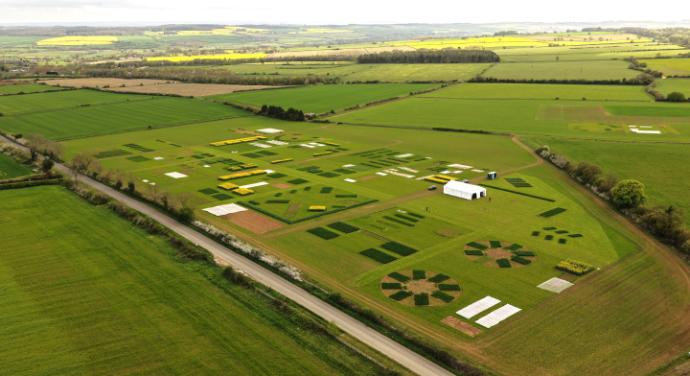

eremy Clarkson has said he is “genuinely and properly looking forward” to hosting one of Britain’s most prestigious farming events when Cereals takes place at Diddly Squat Farm on 10-11 June 2026.
The broadcaster & journalist turned farmer also admitted he was most looking forward to learning more about farming at Cereals as he joined Kaleb Cooper and Charlie Ireland to tour the site ahead of the event.
Speaking at a press conference during the Cereals Crop Plot Day in Oxfordshire, Clarkson admitted that when the event was first explained to him, he struggled to understand its appeal.
“I’ve got to be honest with you, I couldn’t see why it was prestigious,” Clarkson said. “I was thinking, so who’s going to come all the way here to look at root structure?”
But after seeing the scale of the preparations at Diddly Squat for himself, he said his view had changed.
“Today’s the first time I’ve been out and actually seen this properly and I’ve found myself going, ‘Oh look at that oilseed rape.’ I’m really starting to understand it,” he said. “I think it’s an amazing show. I can’t wait for it now.
“Charlie has made it clear this is as prestigious as it gets. I’m thrilled to bits to be hosting it, and it does look good out there.”
Clarkson added that one of the biggest draws for him is the chance to keep learning.
“Every day is a learning day for me,” he said. “I learn something new from these guys or from reading books, and then when Cereals comes here and there’ll be 25,000 farmers. I’m going to learn a lot.”
The show’s arrival in the Cotswolds marks the furthest west the event has been staged in almost 50 years since its inception as Barley ’79 held in Cirencester.
Charlie Ireland said bringing Cereals to Diddly Squat was about showing farming in a real-world setting and would be key to helping farmers navigate the next 12 months as they grapple with volatile markets, fuel costs and input prices.

Charlie said: “For a lot of arable farms the first impact of the Iran war has been the cost of fuel, and we will certainly feel that over the summer. Uncertainty now is centred on supply of fuel and fertiliser, more so now than in the past with Ukraine. This conflict has the potential to stop supply of gas which will have dire consequences.
“When you walk around a show such as
Cereals, you need to have your eyes and ears open,” he said. “Look at what is going on, what new techniques are out there, what opportunities to mitigate the need for as much fertiliser use, what technology can be used and there’s lots of that about.”
Kaleb Cooper said one of the most important parts of the event is its potential to inspire younger and first-generation entrants into farming.
He added the industry offers far more than the stereotype of simply driving tractors or inheriting a family farm and explained: “We need a farmer three times a day – breakfast, lunch and dinner. You can go in to be the actual farmer, or there’s other careers in farming, whether that be the agronomist, whether that be a GPS specialist, whether that be a journalist.
“So, there is definitely a future in farming and it’s so important to open up people’s eyes and opportunities in our industry.”
Charlie Ireland confirmed the crop plots, growing onsite since August of last year, were performing well and he hoped they may look even better in the Cotswolds in June than the plots that are traditionally grown in the east.
He explains: “The comments about the crops have been very positive today. I know everybody's aware of where we are but we're 650ft up here, so everything's a bit slower than it might be. That's only a good thing because I think crops can be burnt up a bit when Cereals opens in the East in June, but here I think most crops will be looking at their finest.
“Plus, the team think this land has got a bit more body in it than most of the soils that have in the East. The crops are proof of this and they’re looking good.”
In addition to the Agronomy Zone, visitors to Cereals at Diddly Squat will have full access to all of Cereals’ informational features like the Seed to Shelf Stage sponsored by KWS, BASE-UK
Regenerative Ag Stage sponsored by Tees Law, Young Farmers Programme sponsored by Michelmores and the Farmers Weekly/ Transition Live Stage. A wide variety of machinery demonstrations will also take place throughout both days including a full sprayer & drone demonstration schedule in the Syngenta & CropLife Sprays & Sprayers Arena.
New for 2026 is the Livestock Zone sponsored by Nofence. Kaleb Cooper said he welcomed the new feature and argued the Livestock Zone was an important addition as the continuing volatility facing farming meant we need to spread risk. He explained: “If your wheat price is down, unfortunately you’re going to make a loss that year.
“But if you have beef added to your farm – and the beef price is really good at the moment, as we all know – all of a sudden, your books then get balanced.”
He then wryly added: “And I’ve always said this, you can’t farm without an a***hole.”
You can now register for tickets at www. thecerealsevent.co.uk or enquire about exhibiting at the event.
This is a trade only event and to ensure only the industry attends, there are a number of approval methods in place and registrations will go through a vetting process.
Members of organisations including NAAC, Farmers Weekly, the NFU, Young Farmers and BASE will be automatically approved with a membership number.
To manage traffic there will be a number of traffic flow measures in place and visitors are being asked to select an entrance time.
New for 2026, you can now also book a seat on a Cereals Bus from key locations across the UK, giving you priority access on arrival and helping to reduce traffic further.
For more information, visit www.cerealsevent.co.uk
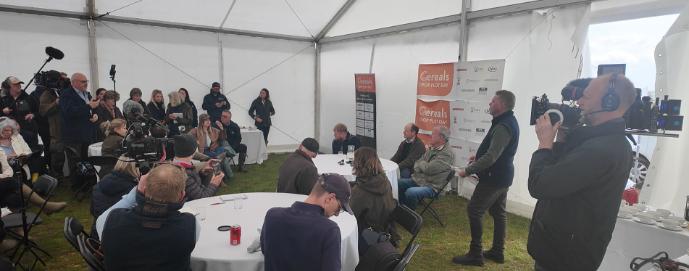

UHN returns to Cereals 2026 debuting its innovative Karan high-capacity trailed sprayer alongside several other updated products aimed at arable farmers and contractors.
The Karan was launched last summer as KUHN’s flagship trailed sprayer providing high daily outputs and premium levels of comfort and accuracy. The mid-range Power 6000 model at Cereals features 36m aluminium booms and a tank capacity of 6,000 litres. John Hulland, UK sales manager at KUHN, says:
“Cereals is the ideal platform to showcase our arable focussed machines, especially the premium Karan trailed sprayer for operators requiring high accuracy and rapid filling times,” says John. “The Karan has been four years in development, driven by extensive research into operator requirements for high output trailed sprayers. It’s a well-used phrase, but the Karan is 99% new and is specifically aimed at maximising spraying time and accuracy.”
A key focus on the Karan is the advanced Eagle boom technology package, which uses ultrasonic sensors to constantly monitor and adjust boom position in relation to the spray target. Operators can achieve accuracy up to 25kph and boom heights are stable from 30cm. It’s also compatible with 25cm nozzle spacings and KUHN’s I-Spray spot application system. Other features include a Track-Matic steering angle of 28 degrees, an integrated winch for pump removal in 15 minutes, and KUHN’s Autospray PWM technology for accurate dosing.
KUHN will also be showing its updated range of Espro drills. The 4002 R model on stand now features a full-
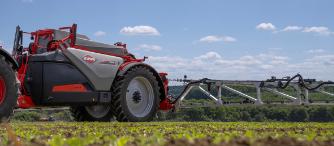


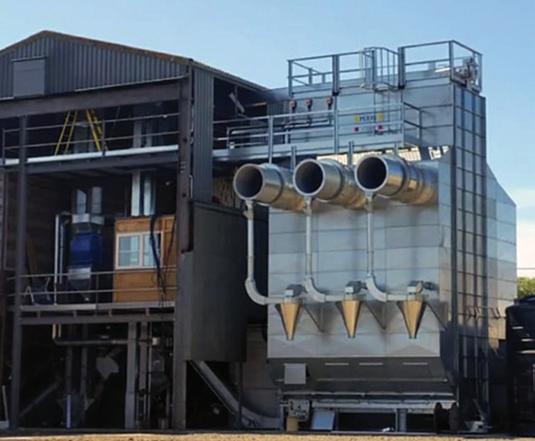
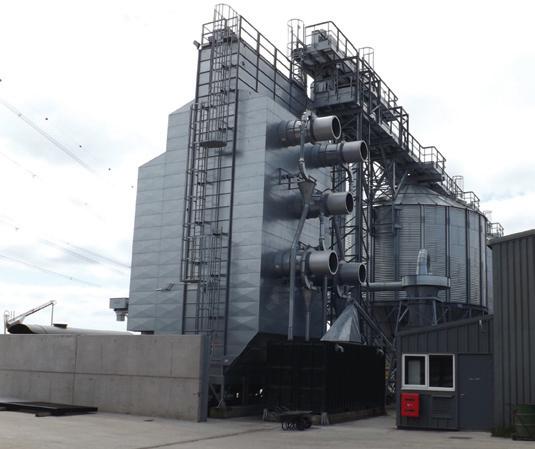
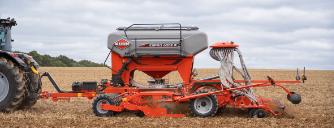

length, mid-height operator platform for improved safety and hopper access, while the drill can be half folded for easier loading. New Espro models – 3m, 4m and 6m –have a straight disc option for reducing soil movement, while the 6m Espro 6002 drill is 700kg lighter than its 6m predecessor.
“Other machines on display include the largest Axis 50.2 H EMC W mounted fertiliser spreader, Optimer and Cultimer stubble cultivators and a trio of CCI screens (CCI 60, CCI 800 and largest CCI 1200) all offering versatile interfaces that can be switched between tractors and connected to Isobus implements from various manufacturers. We’re looking forward to meeting new and existing customers at what promises to be a busy and positive show.”
KUHN will be on stand 634.


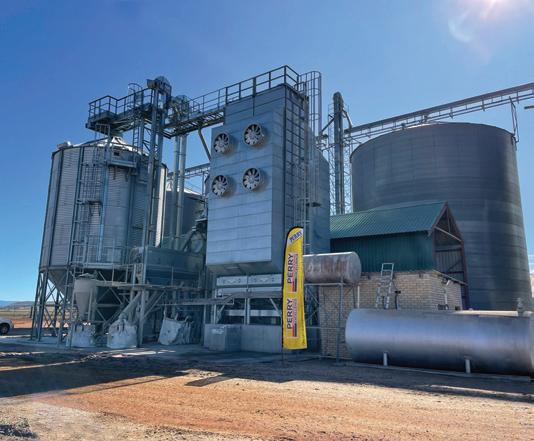
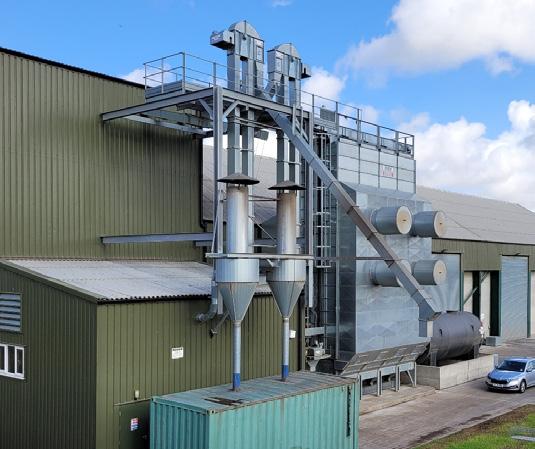
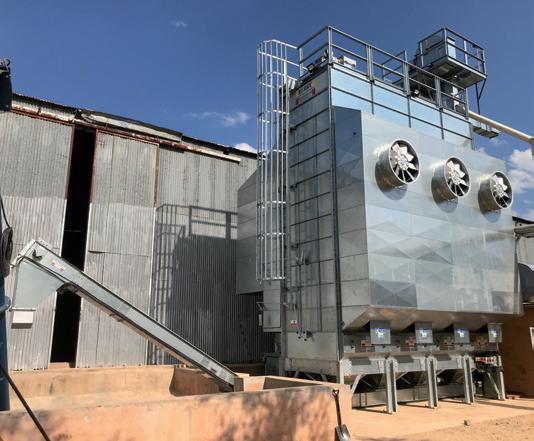
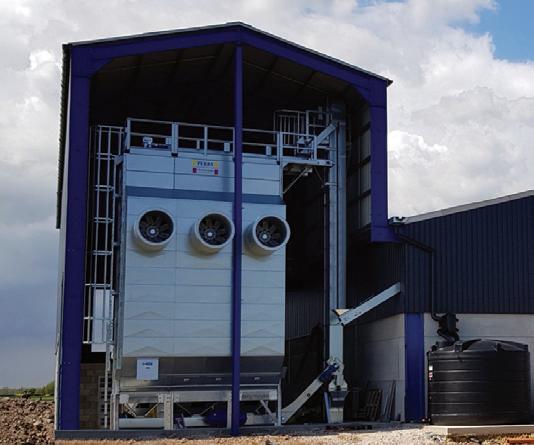
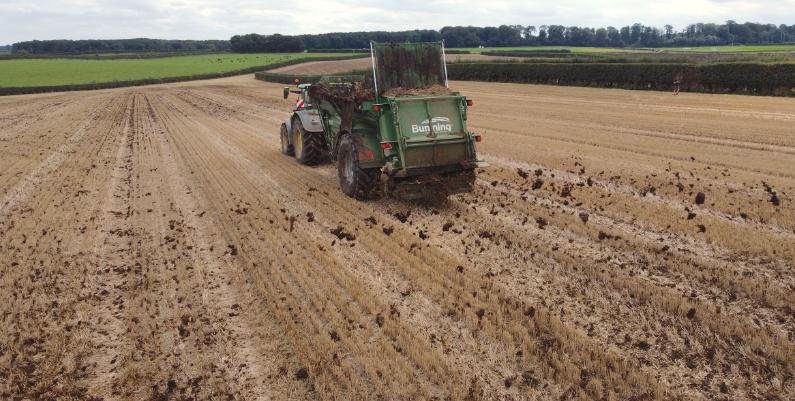

unning will head to Cereals with two high specification manure spreaders to help promote the Back British Farming message that has been excellently communicated by Jeremy Clarkson, whose farm plays host to this year’s show.
Cereals’ new location of Diddly Squat Farm is likely to draw thousands of showgoers, making it one of the most popular Cereals shows in recent years. Bunning will show two spreaders at Cereals to highlight the benefits of accurately applying a wide range of organic manures.
A Lowlander 150 Hybrid Twin Vertical Auger (TVA), and a Lowlander 175 Horizontal Beater and Spinning Disc (HBD), both fitted with weigh cells and Isobus rate controller, will demonstrate how high outputs and accuracy are possible. Ben Johnson, UK and Ireland sales manager, says the two machines are suited to the audience.
“These two models are popular with arable customers and contractors alike, as they offer a mix of manoeuvrability and output, coupled with technology options that improve load-toload accuracy and recording. Displaying both a TVA and an HBD model allows us to demonstrate the benefits of both designs and discuss requirements with end users to ensure they get the right model for their farm.
“There’s strong demand for high quality spreaders as growers and contractors are looking to organic manures such as chicken litter, sewage cake, digestate, and traditional farmyard manure, to offset the high artificial
fertiliser costs. Our machines are spreading a valuable product so require a high degree of accuracy to ensure the materials are applied correctly and to the right areas of the field and crop,” adds Ben.
Bunning will be on stand 641, which is next to the Diddly Squat arena.

Twin Vertical Auger
| 6 – 40 tonnes Horizontal Beater & Spinning Disc
| 8 – 40 tonnes
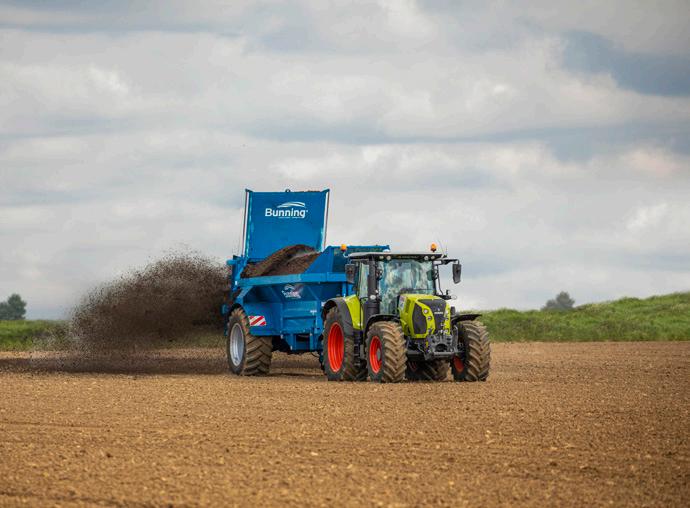

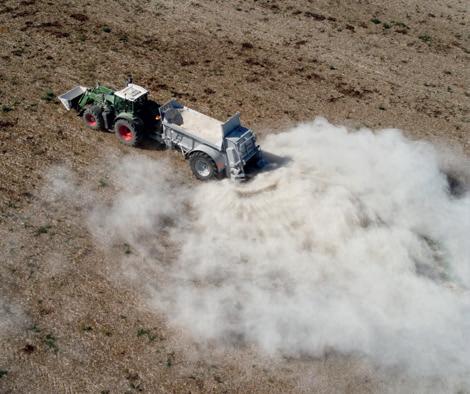
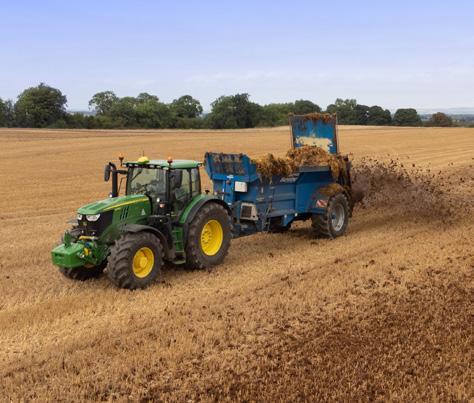



ick Young Tractor Parts is set to make its Cereals 2026 debut as headline sponsor of Kaleb’s Korner, bringing a bold new presence, interactive experiences and a first look at its evolving brand.
Taking place on 10–11 June 2026, Cereals 2026 is one of the UK’s leading arable farming events, attracting thousands of farmers, agronomists and industry professionals each year. For Nick Young Tractor Parts, this year marks a significant moment, not just in terms of presence, but in how the business is showing up.
As headline sponsor of Kaleb’s Korner, the business is set to create a standout destination within the event, designed to bring energy, interaction and a sense of community.
Visitors to the Nick Young stand can expect:
• A farming simulator challenge, complete with a live leaderboard across the two days
• A selection of exclusive branded merchandise
• Launch of the Nick Young trailer, with beer tokens adding a social edge to the experience
• A welcoming space to connect with the team and explore the full parts offering
The simulator challenge is expected to be a key draw, giving visitors the chance to test their skills, compete with others and see their name climb the leaderboard across the event.
As part of its presence at Cereals 2026, Nick Young Tractor Parts will also feature a dedicated showcase display at the entrance to the event itself.
Alongside the activity on the stand, Cereals 2026 will also offer a first look at what is next for Nick Young Tractor Parts.
The team will be showcasing its new brand identity and the launch of a new e-commerce platform, designed to make it easier than ever for customers to find and order parts.
CEO James Young said:
“Cereals is set to be an important event for us. It brings together the people we work with every day, and it gives us a chance to have proper conversations, face to face.
This year is a huge one for Nick Young. We are not just turning up, we are showing where the business is heading and what that means for our customers.”
Emma Watson, Head of Marketing added: “We wanted to create something that people genuinely want to be part of. The simulator, the space, the atmosphere, it is all about making our stand somewhere people come back to across the two days.
At the same time, it is a chance to start sharing what is coming next for Nick Young Tractor Parts. There is a lot happening behind the scenes and Cereals felt like the right place to begin that conversation.”
Looking ahead to June
With strong footfall expected once again at Cereals 2026, Nick Young Tractor Parts is set to use the event as both a celebration of its heritage and a signal of its future direction.
From interactive experiences to early glimpses of a new brand and digital platform, the message is clear. This is a business that continues to evolve, while staying firmly rooted in the needs of the farming community it serves.

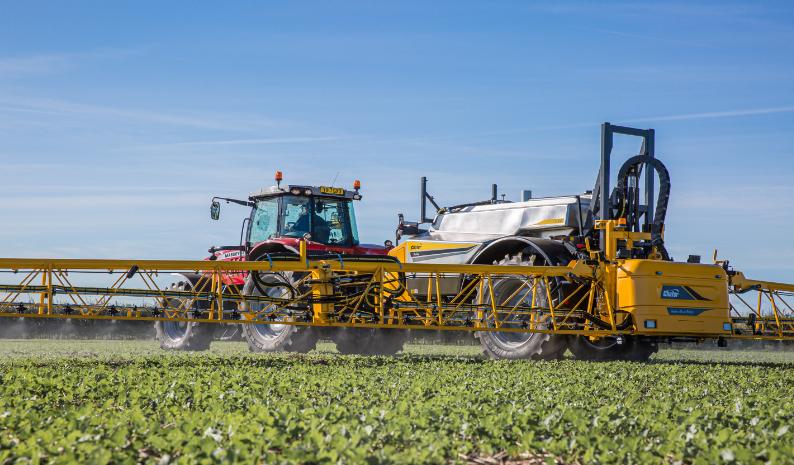

isitors to this year's Cereals event will be the first to see the impact that Chafer Machinery's new owners have had on its class-leading crop sprayers.
Nexus Chafer Ltd, owners of the historic brand, will reveal several new enhancements on stand 860, including a new e-plumbing system that offers better performance, increased reliability, and easier maintenance than previous versions and animproved and safer steering system with greater accuracy, an enhanced rate and section control system.
Developed by Peter Chantry, one of the directors of Nexus Chafer, which bought the Chafer and Horstine brands out of administration at the beginning of 2026, all of the new features deliver efficiencies through simplicity.
Chafer's new e-plumbing system has been redesigned to use the fewest working parts possible, resulting in 11 valves being replaced by just four. Furthermore, the four valves can be serviced individually, thereby significantly reducing the need to service or replace motorised components.
"Before buying Chafer Machinery, Nexus was close to launching its own range of crop sprayers featuring new technologies and engineering that we've developed completely in-house," says Peter. "Obviously, launching a new brand with groundbreaking designs was going to be a significant amount of work and so, when the chance to buy the Chafer business arose, it made complete sense and delivers the perfect way to launch our new approach into the market by
incorporating it into an already highly successful, popular and respected brand with lots of loyal customers and the support of a strong dealer network.
"We've listened to Chafer owners and have acted on their feedback. The new plumbing system, which is available in both electronic and mechanical configurations, and the new steering system respond to what users want to see in their next Chafer crop sprayer, and we are very excited about revealing them to visitors to our stand at Cereals."
As well as the new steering and e-plumbing system, people visiting Nexus Chafer's stand will also be the first to see the new Sentry 8000 trailed crop sprayer with Chafer's largest ever tank, with an 8,000-litre capacity.
"The Sentry trailed crop sprayer is engineered to offer excellent spraying output and performance, combined with absolute precision and control," says James Bilson, sales and marketing director at Nexus Chafer Limited. "As with the improvements to the e-plumbing system and steering system, we've listened to our customers and what they wanted to see added to the range. A larger tank was one of those things, and we've responded by doubling the size of the Sentry's largest tank. Having an 8,000-litre capacity will double the amount of time that farmers can be spraying, which should make a significant difference."
To find out more about Nexus Chafer Ltd, the new e-plumbing, steering system and the Sentry 8000, visit stand 860 at Cereals or www.cropsprayers.com

he distributor of one of the UK's most popular and effective biostimulants will have four fantastic offers on its stand at Cereals 2026.
MJP Supplies will mark its fourth appearance at Cereals with special show offers on Algifol, tanks, heavy-duty pressure washers and vacuum cleaners, and selected Portek products.
"We are really looking forward to our trip to Diddly Squat Farm which will be our fourth time of attending Cereals. We will mark the occasion by unveiling our Fantastic Four special offers, which will only be available on stand 727!" says Marcus Palmer, owner of MJP Supplies.
Like last year, MJP Supplies has taken a large stand at Cereals, allowing Marcus to showcase the latest Portek products, including bird scarers, sprayers, wood processing and workshop tools, alongside rainwater harvesting tanks, agricultural diesel and AdBlue dispensing tanks from Enduramaax, Tuffa and Atlantis, V-Tuf pressure washers and vacuum cleaners alongside Algifol.
Established in 2005, MJP Supplies is a family-run company that has represented Algifol in the UK for 25 years.
Developed in Germany by Neo-Med Pharma, Algifol is concentrated brown algae gathered from the North Atlantic. It is dried and refined to maximise its wealth of trace elements, vitamins, enzymes, amino acids, carbohydrates, polyuronides and growth-regulating plant hormones.

"Algifol has grown in popularity, particularly in the last six years," says Marcus. "I think this is partly down to the impact that the pandemic, war in Ukraine and now the situation in the Middle East have had on fertiliser prices. Growers are looking for the most cost-effective way to give their crops the best chance, and Algifol is proving to deliver excellent rooting, growth and stress resistance against both heat and rain. And with a twoyear shelf life, our customers can spread their investment over two seasons and reduce their nitrogen use at the same time."
To find out more about Algifol and MJP Supplies, look atwww.mjpsupplies.co.uk, call 07702 293 727 or visit stand 727 at Cereals.

ereals 2026 provides an ideal platform for Avon Tuning HD (ATHD), and automotive division Avon Tuning, to further highlight the performance benefits and potential fuel savings of remapping agricultural machinery, cars, trucks and vans.
The large stand at Cereals will feature Avon Tuning HD’s remapped New Holland T5 tractor, which is used for training new and existing agents on remapping agricultural machinery, along with a selection of vehicles remapped by the automotive team. These include a modified BMW M3, along with some of the latest generation of Land Rovers – Defender, Discovery and Range Rover – that can now be remapped by the Avon Tuning engineers.
maps on these vehicles as we speak. These models are popular in the agricultural world and spend a lot of time towing trailers. If we can apply a new map to these vehicles that provides greater performance and efficiency when towing, then this will be of great benefit to farmers and growers.”


ATHD’s agricultural agent network now exceeds 175, with more dealers and engineers offering the remapping and diagnostic service to their customers. Cereals 2026 will promote opportunities for new agents to join the network, with the option to demonstrate how some of the software works.
Gareth Jones, director of both divisions, says the show represents a chance for our full skill set to be shown. “The ECUs on the latest generation Land Rover models have just been cracked so we’re carrying out extensive research and developing
“This is our second year at Cereals and the new venue is the perfect opportunity for us to show our entire service. We’ve also sponsored every lanyard at the show and our stand position on the main avenue puts us in prime position to talk to farmers and growers about increasing machine efficiency through professional remapping.”
Avon Tuning HD and Avon Tuning will be on stand 613.


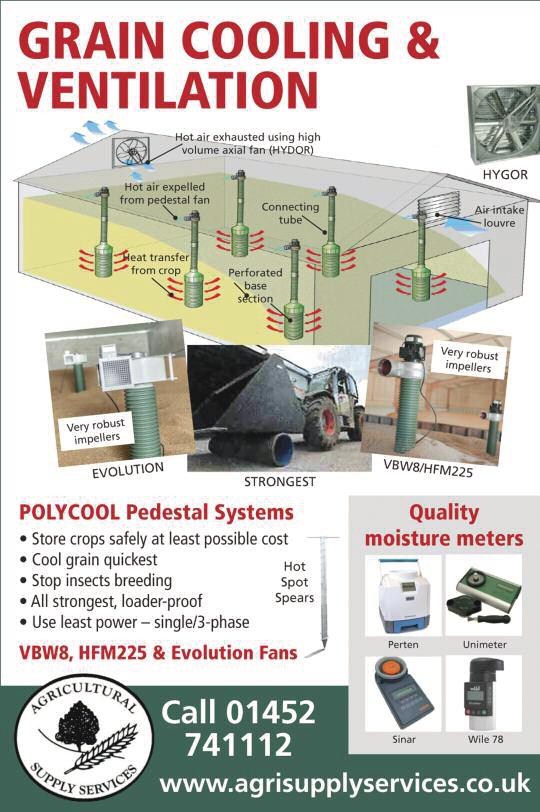
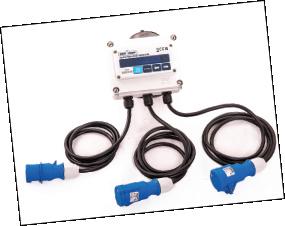

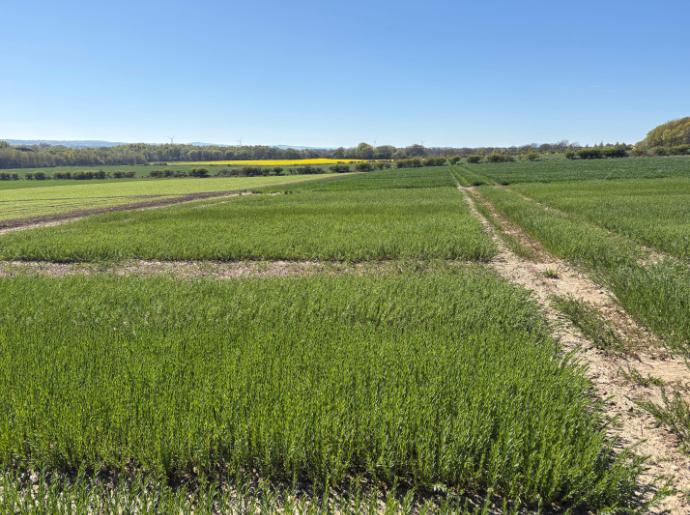

ith oilseed rape under mounting pressure from volatile margins, rising input costs and pests, specialist seed supplier Premium Crops says the time is right for winter linseed. And it will be making a compelling case for the break crop at this year's Cereals event.
For nearly a decade, Premium Crops has been evolving and refining its winter linseed to produce Atilla, the variety available today. On the back of years of successful crop trials, it believes a number of factors now make it an irresistible alternative to OSR.
"It's a convergence of market forces, agronomic advances and farmer experience that have created this moment," says Nigel Padbury, Premium Crops Seeds and Marketing Manager. "From the stubborn flea beetle risk in OSR, to a contract value of over £500/t for linseed, the case for making the switch is hard to ignore."
The pressure is building on oilseed rape
Rapeseed currently trades at around £425/t ("Not a record-breaker" in Nigel Padbury's words) and the cabbage stem flea beetle (CSFB) threat continues to shadow every drilling decision. Although the sharp, year-onyear decline in OSR coverage has now tailed off, many UK farmers are still questioning whether OSR remains a worthwhile proposition.
This spring, there are reports of growers who drilled OSR between mid-August and midSeptember last year seeing up to 20–30 flea beetle larvae per stem. "Those crops are coping for now," says Nigel Padbury, "But if there's a long period of dry weather like last year then as soon as any stress kicks in those plants with flea beetle are just going to curl up and die."
The problem is compounding the unpredictability farmers already face: CSFB adults fly at different times each year, forcing many to spread drilling across multiple dates just to manage the risk. It's a compromise
that's understandably driving growers to look for creditable, profitable alternatives.
"Winter linseed sidesteps many of the disease pressures that have made OSR so difficult to manage." Says Hannah Foxall, Premium Crops Agronomist. "It's unaffected by CSFB, removing one of the most significant and costly threats facing oilseed rape crops today and the chance of crop loss to pests are significantly lower."
Minimum contract values over £500/t
Premium Crops will be launching a new winter linseed contract at Cereals with a contract values over £500/t. Historically, average prices have settled around £550/t – some way above current OSR values. Winter linseed typically yields 2.5–3.5t/ha. At £550/t that puts it well within range of an average rapeseed crop on a gross return basis, and ahead of it input savings such as nitrogen.
"We're basing contracts on paying £500/t, but that's the minimum," says Padbury. "It could be another 10% above that. And unlike drilling a wheat crop and hoping the price is okay at harvest, a contract gives you certainty from the start, not an unpredictable spot price."
The nitrogen factor: lower inputs and improved cashflow
With the Middle East war, fertiliser costs are firmly back in the spotlight. According to the AHDB fertiliser tracker Ammonium nitrate is now trading above £525/t. Up by over 30% against pre-conflict prices. This makes winter linseed's nitrogen requirement of just 80–120 kg N/ha compare very favourably with the 190–200 kg N/ha typically applied to OSR. That difference represents£150/ha in saved input costs. That's equivalent to needing to grow an extra1/3tonne of rapeseed per hectare just to break even on fertiliser alone.
"It's not just about the contract price or margin achieved on the crop," says Padbury. "Winter linseed has other benefits for cash flow across the farm because of the significant savings that can be made on nitrogen. With uncertainty still surrounding farm support payments, such as the new arrangements for SFI, and the current hight cost of borrowing, keeping cash flowing on the farm is critical."
A
Historically concerns about winter hardiness and harvestability have held linseed back. That's all changed.
Premium Crops' variety, Attila, has delivered yields of 3t/ha or more across three consecutive seasons in Scottish trials run with Scottish Agronomy. Proving it can thrive in some of the most challenging growing conditions in the UK.
Iain Grant, who farms near Elgin in Moray, grew 50 acres of Attila last season and harvested 3t/ha without difficulty. "The crop went into winter strong. It proved it can stand a wet winter better than rape and wasn't too bothered by birds. It's not too costly to dry, and some of it didn't get dried at all. It was a full-on drought last year, and you could see stress, but it coped well.This isn't the same stuff we grew in the 1980s for subsidies," he says. "As long as it doesn't stand too long after spraying off, or get too tall, it goes through the combine just fine."
Beyond weather resilience and pest resistance, linseed actively benefits the farming system. Its fibrous, vigorous root structure conditions the soil, creating excellent seedbed conditions for the following winter wheat crop. YEN data supports this, showing a 1.1 t/ha yield uplift in first wheat following a break crop like linseed.
"In addition, as linseed is not as attractive to slugs as OSR, the slug burden is lowered in the following wheat." Continues Hannah Foxall. "These benefits, combined with linseed's flexible sowing window – with winter linseed drilled up to the end of September – allow more time to create stale seedbeds before sowing. Linseed, unlike OSR, forms relationships with mycorrhizal fungi which again, are present for the following wheat to associate with, aiding crop growth. There's a reason linseed is included in cover crop mixes, and it is because it has recognised soil health benefits and has wider benefits to the rotation as a whole."
Premium Crops will be on stand#942at Cereals this year, where the team will be available to talk through winter linseed contracts, the agronomic story and the farm economics in detail.
"Everything is coming together," says Nigel Padbury. "The market, the variety, the agronomy, the contract price – this is winter linseed's time. Come and talk to us at Cereals and we'll show you exactly why."

t this year’s Cereals Show, Ascenso Tyres will be returning on stand 303. There at the event the team will be able to discuss with you our range of Ascenso agricultural tyres and demonstrate first-hand the premium quality of the tyres. They can then talk through how choosing to fit Ascenso Tyres can, due to their innovative design and engineering, improve efficiency and product yields on your farm.
At Ascenso we understand that efficiency is key to your businesses’ success, and choice of tyre plays a particularly significant role in that.
Modern tyre design and technology has led to several major breakthroughs. Very High Flexion Tyres or VF tyres atop the list of major tyre innovations.
VF tyres are engineered to operate at much lower inflation pressures than standard non-VF tyres. The use of low-pressure VF tyres has many significant advantages. High load capacity, low-pressure VF tyres have flexible yet robust casings capable of carrying heavy loads, allowing the use of larger sprayer tanks and wider booms.
Working at pressures as low as 0.8 bar, VF tyres help avoid soil compaction and the formation of ruts during soil preparation. VF

tyres do not require pressure adjustments during cyclic operations and can operate at the same inflation pressure with a full or empty sprayer tank.
Standard non-VF tyres are not suitable for spraying during the wet season, as compaction to the lower layers of soil will be significant and it will then be necessary to repair the damaged soil.
You can avoid these additional costs and loss of time with the use of tyres more suitable for spraying in wet conditions. The effect of a lowpressure VF tyre working at 0.8 bar will be very different from that of a standard tyre which will require inflating to at least 1.6 bar to carry the thousands of litres of liquid transported in the sprayer tank, or more if the sprayer is equipped with wide booms.
Our Ascenso VDR2000 VF tyres comes in a range of sizes and widths which are suitable for self-propelled sprayers, trailed sprayers and tractors. Featuring an advanced tread design, the footprint is extended front to rear (in an oval shape), within the committed trackway of the tyre therefore achieving a larger footprint.
The VDR 2000 reduces soil stress and soil compaction at the same time offering improved yields. Reducing environmental impact whilst maximising crop yield surely is a win win.




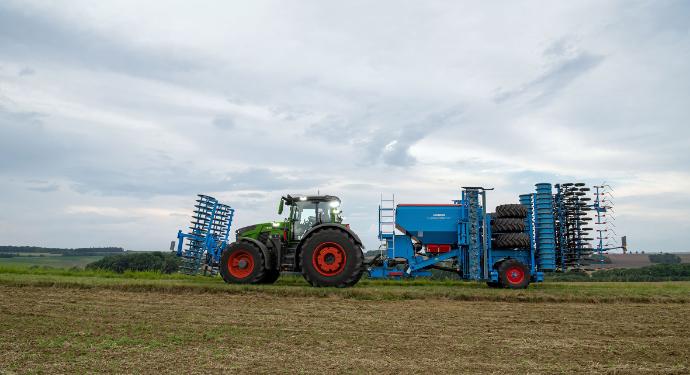

or the first time, Cereals visitors will be able to see the new Fendt 800 series tractor and the latest Rogator 645 Gen 2 self-propelled sprayer, with one model demonstrating in the spraying arena and a second on the Fendt stand.
“Fendt has launched new 500, 700, 800 and 1000 series models in the last 12 months and the Cereals crowd will be able to get their hands on the
latest 826 if they visit the Fendt stand. There will also be an MT943 on the stand to demonstrate Fendt’s commitment to offering tracked tractors for heavy draft work,” says Fendt’s Ed Dennett.
Cereals 2026 will be the first chance to see the updated Fendt Rogator Gen 2. The self-propelled sprayer features improved electronic, pneumatic nozzle bodies, Banjo plumbing connections and valves, and the ContiRinse system to improve accuracy and reduce downtime.

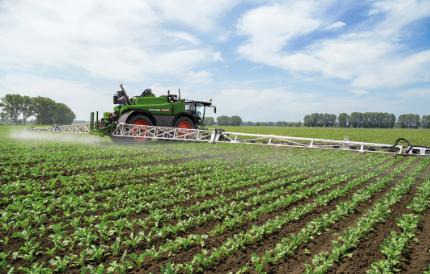
The updates are available on the latest 645, 655 and 665 Rogator, with the top model boasting a 6000-litre tank capacity and 307 horsepower engine to operate a 24 or 36 metre working width. All models in the range come with the option to automatically select nozzle combinations relative to forward speed, which enables optimum nozzle pressure. This, in turn, reduces drift, which is also maintained as forward speed changes.
“There have been feature updates on the boom height control which means that spray height is optimised at 50 centimetres through the Rogator’s OptiSonic ultrasonic boom,” adds Mr Dennett.
The fifth generation 800 Vario includes three models: the 826, 829 and 832 with Power+, Profi and Profi+ specifications available. The range features Fendt’s DynamicPerformance (DP) added power concept which offers a boost of 23 horsepower (17 kW).
maximise power and reduce fuel consumption. The CORE80 engine is approved for HVO100 and other fuels according to DIN 15940, which can significantly reduce the machine's CO2 footprint. Fendt’s iD concept saves fuel during high torque, low speed work and also on the road, meaning at 40 km/h the engine works at 950 rpm, 50 km/h at 1,200 rpm, and the top speed of 60 km/h at 1,450 rpm.
“The 800 Vario range appeals to both arable and mixed farms and is likely to prove popular with contractors looking to optimise power to weight ratios and improve fuel efficiency. All Fendt tractors and the Rogator range operate FendtONE which has also seen recent updates and is now free to download for all Fendt customers,” says Mr Dennett.
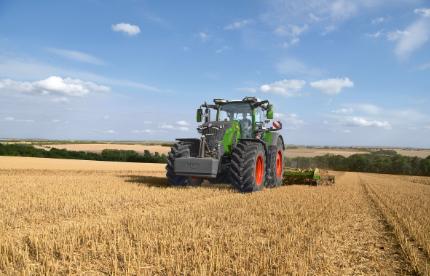
Fendt’s latest VarioDrive has been paired with an efficient 8.0 litre, 6-cylinder CORE80 engine to
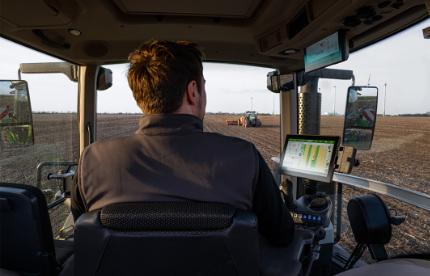
The FendtONE operating concept is intuitive to operate for operators who have not experienced a Fendt before and enables tractors to share operational data with other machines like the Rogator to reduce set up time and setting field boundaries. Operational data can subsequently be captured using the FendtONE offboard system to report on the efficiency of tasks and save this data to improve future applications.
“Cereals is a perfect opportunity for Fendt to demonstrate how technology and data has become as important as horsepower and the operational capacity of machinery. FendtONE is the key to optimising Fendt machines and harnessing vital information that can help operators and managers work more efficiently,” concludes Mr Dennett.

K agricultural machinery manufacturer Claydon, the European market leader in direct drilling technology with ITS Opti-Till® crop establishment system, will exhibit its latest range at Cereals 2026 (10 - 11 June at Diddly Squat Farm, Chadlington, Chipping Norton, Oxfordshire).
The Claydon stand (Number 760) will feature a 3m Evolution 3MF Grain & Fertiliser Drill, 4m Evolution Drill Tool Bar with Twin Front Hopper, Hybrid Trailed Drill, 7.5m Claydon Straw Harrow fitted with Claydon NutriSeeder, Claydon NutriSeeder showing different application points, and a 4m Claydon TerraBlade FrontMounted Inter-Row Hoe.
David Furber, Claydon’s Sales Manager - UK and ROI, states: “We will showcase our range of flexible seed/fertiliser placement options which benefit soil structure and crops, meet the requirements of Sustainable Farming Incentive (SFI) schemes and are ideal for those growing companion crops.”
and a 4-channel drill computer, this model has a 2,500-litre hopper which can be used for seed only or have a 50:50 split configuration to allow fertiliser application at the time of drilling, either above the seed or below it. The twin fertiliser option also allows farmers to establish a companion crop, such as beans, by directing seed down the leading tine.
Fitted with nine seeding tines, the M3F can be specified with a full range of rear toolbar and seeding options. A drawbar may be fitted to transform the M3F into a trailed drill, the leading tine can also be swapped for the “LD” lower disturbance set-up, while second and third hopper options allow multiple types, varieties and sizes of seed to be applied when the main crop is drilled, further enhancing versatility and efficiency.
Central to the Opti-Till® system are the company’s Evolution M mounted drills with working widths of 3m, 4m, 4.5m, 4.8m, 5m and 6m, together with its 4m, 4.8m, 6m and 8m Hybrid T trailed drills. Designed for direct seeding into stubbles, they are effective in min-tilled or fully cultivated soils post-consolidation, handle autumn or spring sowing and can apply fertiliser during drilling, providing versatility and reliability across all climates, soil types, and crops.
The most popular model, the 3m Evolution, is also available in Grain and Fertiliser form. Increasingly popular with farmers in the UK, the Evolution M3F has a typical output of 20ha per day, low running costs, and can be operated behind a 150-hp tractor.
Equipped with dual metering, GPS speed sensing
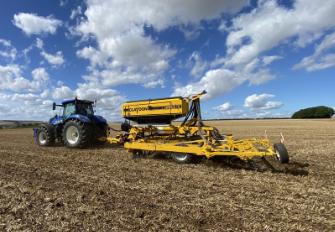
Claydon Evolution Drill Toolbar / Evolution Front Hopper.
This combination showcases Claydon’s ability to offer flexible multi-seed and fertiliser placement options in line with the increasing popularity of cover and companion cropping.
Available in rigid 3m or 4m versions, or as folding models with 4m, 4.5m, 4.8m, 5m or 6m working widths, the Evolution Drill Toolbar includes one distribution head with 38mm seed delivery hoses. A second distribution head with tramline valves can be optioned, allowing fertiliser or companion crops to be supplied to the leading tine or rear seeding tine, or split between the two.
With a total capacity of 2750 litres and a 45/55% split the pressurised Evolution Front Hopper ensures reliable high-volume material delivery to the rear distribution heads. Twin metering units deliver either mixed or separated seed/fertiliser flows to the rear-mounted drill, a simple airline box selector diverting the flow of material to the
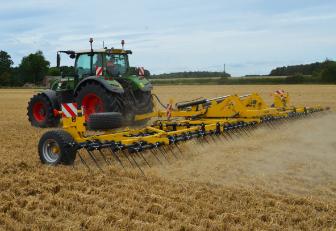
distribution pipes or combining the total output into one pipe. An ISOCAN terminal controls all front hopper functions and allows variable rate seeding, depending on the task controller and licence key.
ISOBUS compatible, the Evolution Front Hopper is supplied with small, medium or large diameter interchangeable metering wheels to suit a wide range of seeds and fertilisers. Weighing 730kg, it measures 2476mm wide, 1803mm high and 1619mm long, incorporates two hopper sensors providing ‘low level’ and ‘empty’ warnings, work lights, two road vision cameras, a toolbox and foldable front footstep. Options include 550kg of ballast, packer wheels with passive steering, wheel scrapers, blockage sensors and marker arms.
With weeds becoming increasingly resistant to herbicides the Claydon TerraBlade provides a low-cost, mechanical method of controlling them in combinable, band-sown crops. Increasingly popular with farmers wanting to operate more effectively and efficiently, it is also being used by organic and regenerative farmers to reduce weed burdens and costs. Keeping the area between the seeded bands clear of weeds during the early stages of crop growth reduces competition for nutrients, light, air and water, so young plants grow strong and healthy.
Claydon range given the increasing take up of Sustainable Farming Incentive (SFI) schemes and cover crops.
Two versions are available for the 7.5m Claydon Straw Harrow; a single 200-litre hopper with a single metering mechanism, or twin-hopper design with dual metering systems. The latter allows two types of seed to be applied at the same time and mixed in the distribution head, providing increased seed capacity and more accurate metering, whilst avoiding seed separation in the hopper. Both incorporate a hydraulic fan and electronic control with forward speed rate mechanism. Fitting different metering wheels/sections enables seed rates to be adjusted, up to 30kg/ha for wheat, 15kg/ha for grass seed and 25kg/ha for cover crop mixes, at a forward speed of 15kph.
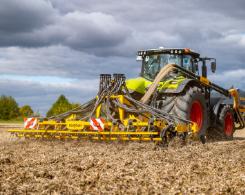
Available in mounted (3m, 7.5m, 9m) or trailed (12.5m, 15m) form the Claydon Straw Harrow is a fast, effective tool which can be used before or after cultivations to level soil and create a micro tilth in the top 30mm of soil, using the retained moisture for fast, even weed germination. Typically using just 2 litres of fuel per hectare, it rakes out and destroys weeds at the cotyledon and one‐leaf stage, removing a food source for slugs, breaks up slug nests and desiccates their eggs by mixing up and exposing damp chaff and straw to sunlight.
Available in 3m, 4m, 4.8m, 6m and 8m forms to match the working widths of Claydon Evolution and Hybrid drills, the TerraBlade drastically lowers the potential for carry-over of weed seeds, reduces the risk of more resistant types developing and has the potential to improve crop yields. Although designed for the Claydon Opti-Till® System, the inter-row hoe can be used in any band-sown crops.
Claydon NutriSeeder
Allowing cover crops to be established quickly, accurately, reliably and economically, the NutriSeeder has been a popular addition to the
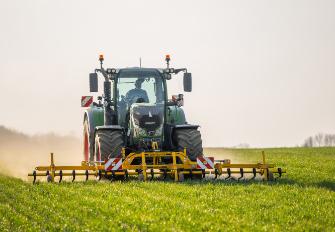
Robustly constructed, this versatile machine has been designed for fast action and maximum effect. Operating at up to 25km/h, it incorporates wraparound 14mm or 16mm spring tines which shatter straw and break it up for faster decomposition.
Further details about Claydon products are available from authorised dealers, a list of which is available on the Claydon website (claydondrill.com/ dealers-distributors). Alternatively, visit claydondrill. com and click on the product of choice.
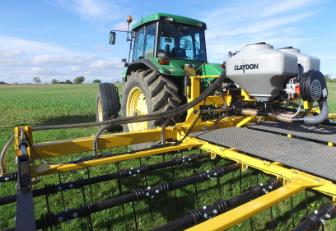

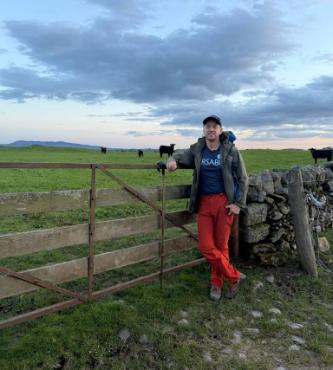

recent trial at J & J Burnett Ltd.’s Farm near Newark has delivered promising results for potato growers, showing that targeted nutrient applications can significantly increase both yield and tuber size. The trial, conducted on Innovator potatoes under the guidance of root crop agronomist Howard Hinds from Agronomy Connection, tested the effect of Wholly K on potato bulking.
The trial tested how the nutrient Wholly K affected potato bulking. “This was the first potato trial I’ve conducted personally with Unium Bioscience products, although I’ve seen plenty of strong results from other trials,” said Howard. “It was important to run a small, controlled trial to see how Wholly K could influence potato bulking here at Burnett Farm.”
Wholly K is a potassium metabolite complex designed to deliver K when conditions may limit soil uptake and the trial was a randomised small plot (four replicate) design, with treatments applied twice: in May and June. Yield assessments were made after the crop was burned off at the end of August. “Digs along 3-metre stretches of the bed were made for all plots, with tuber number and yield assessed for size and length,” said Howard.
Trial results:
• Treatment: Wholly K, 2.0L/ha, applied twice on 30 May & 24 June
• Yield: 49.44t/ha
• Effect: Increased yield by 5.07t/ha compared to untreated (44.37t/ha)
• Summary: Twice-applied Wholly K boosted

potato yield by ~11.4% over the control.
“The results were very encouraging,” Howard explained. “Across the trial, we saw over 10% of an increase in yield, and the tubers were larger and longer – which is particularly important for chipping potatoes.”
The trial findings are consistent with previous studies showing that these products can improve both total yield and tuber number. In a farming environment where fertiliser costs remain high and essential nutrients like potash and phosphate are not always fully available, targeted nutritional inputs like Wholly K can help fill these gaps.
“Even with high phosphate indices, nutrients can become locked up in the soil, limiting availability,” Howard noted. “These products help the plant access nutrients when it needs them most, supporting steady growth and bulking.”
The Burnett Farm trial represents a first step, with plans to extend the trial in future seasons to confirm and build upon these initial findings. For growers, the results provide practical evidence that Wholly K can complement standard fertiliser programmes, enhancing yield and tuber size without changing regular management practices.
“In the end, it’s about giving the crop the best chance to reach its potential,” said Howard. “Even small improvements in yield and tuber size can make a real difference for growers.”
This trial highlights the potential of targeted crop inputs to complement traditional fertilisers. Continued testing will help growers gain confidence in products like Wholly K as part of a comprehensive, practical strategy for root crops.


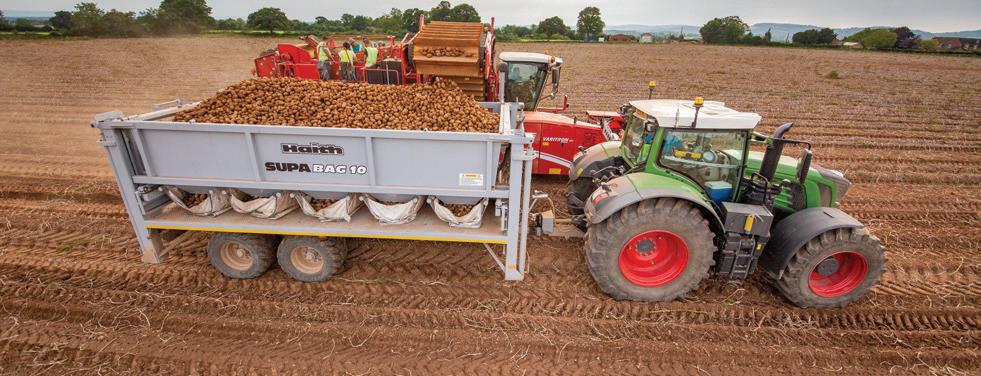
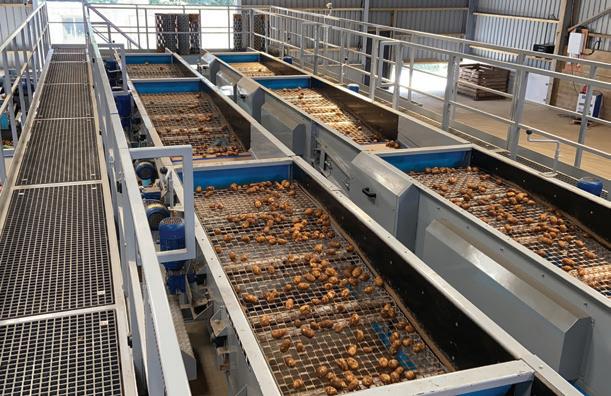
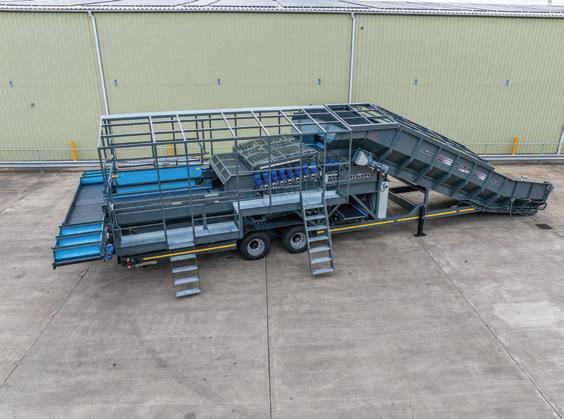

Scottish seed potato grower has doubled productivity after installing a fully integrated grading line from Tong Engineering, combining advanced optical sorting technology with highperformance grading and handling systems.
WW Martin and Son, high-grade pre-basic seed potato producers based in North Scotland, have now processed more than 4,000 tonnes through the new system, reporting significant gains in efficiency, throughput and grading consistency.
The business decided to invest in a new grading line with a clear brief; achieve four precise size splits, improve box and bag filling efficiency, increase throughput, and integrate optical sorting technology to remove defects.
After reviewing four suppliers, Tong Engineering was selected to deliver the project. “From the very beginning Tong stood out from the others. The sales team, insightful and knowledgeable, couldn’t have been more helpful. They didn’t force a sale but listened to our brief,” explained Jonnie Martin.
Working closely with the customer, Tong engineered a fully integrated grading line incorporating Tong conveyors, EasyGrade sizing modules, a dry brusher and UniFill big bag and box filling system, designed to optimise flow and efficiency across the operation.
adjustments were made and the entire line was then delivered North and assembled on site,” said Jonnie.
Since installation, the results have exceeded expectations, with significant gains in operational efficiency. Jonnie reports; “Having now graded 4,000 tons of high-grade seed over the Tong line, we couldn’t be happier. Productivity per labour unit has doubled from our previous grading line, which is more than we anticipated.”
At the heart of the system is an optical sorting unit from Flikweert Vision, fully integrated into the line to ensure consistent, high-throughput defect removal. The Flikweert Vision system uses high-resolution camera technology and intelligent image analysis to detect both external and internal defects in real time, removing substandard product without disrupting flow and maintaining gentle crop handling throughout.
“After several site visits and configuration tweaks, we settled on a final design. Charles assured us that the Flikweert Vision optical unit would be incorporated seamlessly into the line and gave us a specific delivery and install date,” said Jonnie. Prior to installation, WW Martin and Son visited Tong’s Spilsby manufacturing facility to review the fully assembled line. “We were hugely impressed with Tong’s engineering facility. The attention to detail and skilled and happy workforce was a joy to witness. The new line looked fantastic, minor
Tong’s engineering and technical teams continue to support ongoing optimisation of the system to maximise output and efficiency. “Throughout the whole process, and now in the aftersales phase, the team at Tong Engineering have been particularly helpful in offering support and advice to help us maximise output of our new line. I’m delighted that I placed my business with Tong and proud to be associated with a British success story.”
The project at WW Martin and Son highlights Tong Engineering’s ability to deliver fully integrated grading solutions with advanced optical sorting technology. The new system delivers higher throughput with consistent grading accuracy, reduced labour dependency, improved crop quality and marketable yield, complete with seamless operation across the grading process. As demand for automation and quality assurance continues to grow, Tong Engineering remains at the forefront of delivering integrated, future-ready solutions for modern root crop handling.

he 2025 crop in store seems to have bumped into almost every factor designed to create a difficult storage season. Early planting and emergence, followed by a (mostly) hot dry summer saw crops arriving in store in a state of considerable physiological age. The weather was also less than ideal for the application of MH for much of the key window. Harvest conditions were good (or perfect) for nearly everyone, so stores filled early, quickly and were warm. The weather kept them from cooling as swiftly as desired, and those crops, which had not sprouted in the field (plenty did), were opening their eyes much earlier than would normally be expected. Growers planning for early movement, and who would not normally expect to use a sprout suppressant, were scrambling for advice.
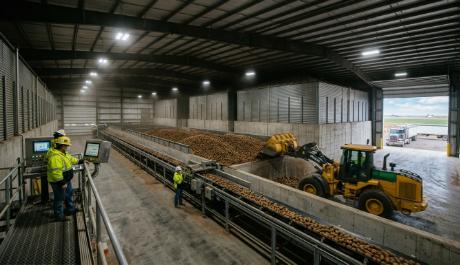
On top of the physical challenges of a sprouting crop was a hangover of crop in store from the 2024 harvest, some of it still finding a way to a generally weak market. And then came the French and the Germans. In 2024, it is reported that the French grew their first 9m tonne crop, and then went one better in 2025, with a first 10m tonne crop. The German 2025 crop is reported to be the largest for a quarter of a century. The continent was (is) awash with potatoes – free-buy crops were bid at €15/t during the autumn. There are reports of large areas in Poland being ripped up with a chisel plough, rather than being harvested.
Crops were sprouting and customers delaying movement, not just in the UK but across much of the continent. Significant (and early) demand for sprout suppressants put supply chains under pressure, with occasional reports of demand for product overwhelming availability.
The situation in the UK has not improved much in the new year. Crops are still in store, some with limited prospect of finding a market. Free buy is well-nigh impossible in the absence of strong relationships with end users. Crop quality in many stores, even with the good harvest, is deteriorating and sprouting continues apace. The season is proving to be hard for many growers, and now the weather seems to have turned in favour of some early planting on very light land.
The relatively flexible timing of application for BioxM places the product in a strong position to deal with most situations and keep crops secure. Early
sprouting was addressed, some requiring a full 90ml/t first application to do so. For more fortunate growers, with sprouts coming slightly later in cool and well-cured crops, Biox-M has worked effectively to keep control. Growers, who have been obliged to hold crops in stores destined to receive seed for 2026, also have the reassurance that treatment of the preceding ware crop with Biox-M in the store will not cause a problem.
Biox-M is the only 100% natural and sustainable sprout control for potatoes.
• Is a naturally occurring and truly sustainable product, in widespread use in the food industry
• Is approved for use on organic potato crops,
• Has no harvest interval or MRL beyond the one-day mandatory withholding period after treatment, and is thus ideal for use on crops for which the date of movement is uncertain,
• Has substantial flexibility of timing of application,
• Results in minimal weight loss in store,
• Does not leave persistent residues in the fabric of stores and boxes used for storage,
• And is therefore suitable for use in stores, which may subsequently be used for the storage of other crops or seed potatoes,
• Is effective at higher storage temperatures, reducing the risk of acrylamide development when crop is processed,
• Sequesters carbon during growth, removing 1t of CO2 for every 1,000t of potatoes treated,
• And should be a component of the sustainability plan for every farm and every customer; effectively carbon neutral.


The


Sequesters carbon during growth. Flexibility of timing.
Minimal weight loss in store. Curative and preventative. No MRL.

The

otatoes in Practice 2026, Scotland's largest field-based potato event, will take place a week later than usual, on Thursday 13thAugust at The James Hutton Institute's Balruddery Farm in Invergowrie, near Dundee.
With a strong focus on future-proofing the potato industry, it offers an unmissable opportunity for growers, agronomists and industry professionals to engage directly with scientists, breeders and fellow farmers. Visitors will be able to explore the latest research,innovation and crop developments shaping the future of potato production.
Potatoes in Practice is hosted by The James Hutton Institute, through the National PotatoInnovation Centre (NPIC), in partnership with SRUC and Agrii. The event aims to foster collaboration, knowledge exchange and agricultural innovation within the potato industry.
The event will feature a comprehensive programme of exhibitors, field trials andtechnical seminars, providing practical insights into current challenges and opportunities across the sector.

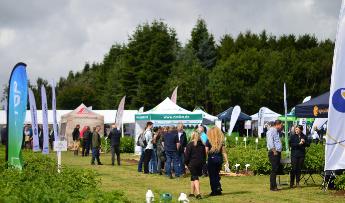

Additionally, Potatoes in Practice 2026 will include a live cookery demonstration by Sarah Rankin, formerMasterCheffinalist and now a wellestablished food writer, broadcaster and private chef. A passionate advocate of local produce and food made with love, Sarah's potato-based dishes promise to inspire visitors and highlight the versatility and value of this staple crop.
The James Hutton Institute is a world-leading scientific organisation encompassing a distinctive range of integrated strengths in land, crop, waters, environmental and socio-economic science. It undertakes research for customers including the Scottish and UK Governments, the EU and other organisations worldwide. The institute has a staff of nearly 500 and 150 PhD students.
The Institute takes its name from the 18thcentury Scottish Enlightenment scientist, James Hutton, who is widely regarded as the founder of modern geology and who was also an experimental farmer and agronomist. More information atwww.hutton. ac.uk
TheNational Potato Innovation Centre(NPIC) is one of several crop centres developed by the James Hutton Institute in Invergowrie, just west of Dundee. The role of the NPIC is to bring together scientists and the potato industry across Great
Britain and beyond to develop solutions that will help ensure the future of potato as a sustainable and profitable crop that provides nutritious food for all and supports the British economy.
Scotland's Rural College (SRUC) was established in 2012 through the merger of the Scottish Agricultural College (SAC) with Barony, Elmwood and Oatridge Colleges. Through these institutions, we can trace our lineage back over 100 years. Today, SRUC is on a journey to become Scotland's enterprise university at the heart of our sustainable natural economy.
Its mission is to create and mobilise knowledge and talent – partnering locally and globally to benefit Scotland's natural economy. To achieve this, we draw upon SRUC's longstanding strengths in worldclass and sector-leading research, learning and teaching, skills and training and consultancy (through SAC Consulting).
As part of SRUC, SAC Consulting provides independent, research-driven, industry-leading expertise, advice, and solutions for agricultural, food, and land-based businesses. With 24 offices and an experienced, expert team, it provides local support, tailored to its customers, nationally.
www.sac.co.uk/potatoes
As a leading provider of agronomy services, technology and strategic and sustainability advice, Agrii combines excellence and innovation with the latest research development to ensure our customers can meet today's sustainable farming challenges with knowledge and confidence.
Advancing sustainable farming with expert agronomy | Agrii


ew for the 2026 season the acclaimed Syngenta BlightCast infection risk forecasts will now be incorporated with the company’s highly popular Cropwise Spray Assist App.
Now potato growers and agronomists will be able to receive up to 7-days advance warning of localised blight risk, including notifications, along with integrated application advice indicating opportunities to spray, nozzle recommendations and tank mix advice.
This will ensure effective blight protection, before the risk of blight infection occurs. Assessing levels of sustained blight risk can also help with decision making on product choice and timing.
Syngenta Spray Assist enables growers to quickly create a plan of their whole farm’s cropping and field area, which then provides relevant crop agronomy and management support advice.
Importantly, for agronomists and farmers operating across a wide geographical area, the system allows you to switch between multiple farms, to ensure BlightCast forecasts
and other advice is accurate to the chosen location.
Adding details of the farm’s spray equipment into the App enables it to recommend the best available option for any application, based on the treatment target and weather conditions at any selected spray window. It also provides tank mixing recommendations and planning.
Product details and best use advice is quick and easy to use in one place, with a simple one click process to create a spray task for practical field operation.
The Cropwise Spray Assist App will also include the Quantis Heat Stress forecast, bringing these important tools to support potato crop management decisions in one place.
Farmers and agronomists already using the Syngenta Cropwise Spray Assist App will find BlightCast is automatically available with the latest update. Simply go to ‘Farm Insights’ in the menu to view the data.
Download the Syngenta Spray Assist App for free on Google Play or the App Store.

uilt to Perform When It Counts
In the world of professional lawn care, downtime isn’t just inconvenient – it’s expensive. Missed appointments, delayed contracts, and idle teams can quickly eat into your margins. That’s why the new Ariens SUMMIT PRO Series zero-turn mowers are engineered with a clear goal: deliver maximum performance, every single day, with minimal interruption.
Developed specifically for commercial landscaping professionals, this heavy-duty mower series combines unmatched reliability, high-speed mowing efficiency, and precision cutting in one robust package. Whether you’re maintaining sports fields, municipal grounds, or high-demand private estates, the SUMMIT PRO ensures you stay productive and profitable.
These machines are built for long seasons, tough terrains, and the real-world pressures of the professional market – because when the grass keeps growing, your mower can’t afford to stop.
Across the globe, Ariens SUMMIT PRO models have earned a reputation as fleet favorites. Built to handle between 500 and 1,000 hours of operation per season, these machines are the go-to choice for high-output, high-reliability mowing. For landscape contractors, municipal services, and groundcare professionals, the SUMMIT PRO keeps running when others stop – even under extreme working conditions.
What truly sets the SUMMIT PRO apart is that it was developed from the ground up based on real-world input from service providers. That means every component – from the heavy-duty chassis to the suspension seat – was designed with robustness, efficiency, and comfort in mind. The result: a zeroturn mower that’s not just tough, but built to last.
Key requirements from the field, now met in full:
• Extreme durability thanks to a reinforced heavyduty frame
• Outstanding operator comfort with ergonomic, suspended seating
• Extended service intervals and long life-cycle components
• Minimal downtime, even during peak season
• Extended commercial warranty – up to 5 years or 1,500 hours
The ARIENS SUMMIT PRO 300 models come with a manufacturer’s warranty of 5 years or 1,250 hours*, while the SUMMIT PRO 500 models include a 5-year or 1,500-hour* warranty. Importantly, there’s no hour limit for the first two years. This extensive coverage reflects Ariens’ confidence in the reliability and commercial-grade quality of its equipment.
*The general warranty conditions of AriensCo GmbH apply.
With an Ariens zero-turn mower, you save time at every turn and every obstacle. Grass collection and disposal are not necessary, significantly reducing overall work effort. The advanced maneuverability allows you to cut faster and smarter – leading to more jobs done in less time.
Maximum area performance per model at full speed:
• Model 348 at 14.5 km/h: 17,800 m²/hr
• Model 352 at 14.5 km/h: 19,000 m²/hr
• Model 360 at 14.5 km/h: 22,200 m²/hr
• Model 560 at 21.3 km/h: 32,460 m²/hr
• Model 572 at 21.3 km/h: 38,960 m²/h
Which cutting deck size is right for you?
• 48” – Compact and transport-friendly; ideal for tight, structured or undulating terrain with narrow access points.
• 52” – The universal solution offering an optimal balance of precision and area performance.
• 60” – High area output and superior coverage around edges and under shrubs.
• 72” – Maximum output for large-scale mowing.
No matter which model you choose in the SUMMIT PRO Series, every machine represents the same promise: unmatched cutting performance and classleading productivity. With powerful Kawasaki FX engines, advanced transmission systems, and Ariens’ signature precision handling, you get commercial-grade output from start to finish.
The SUMMIT PRO isn’t just another mower – it’s a fleet workhorse that your team will trust day in, day out. With options tailored for every application, you can’t go wrong – one of them is sure to be the perfect fit.


n a year where investment decisions are under closer scrutiny than ever, timing and value matter. The current campaign from Cramer Tools speaks directly to both, offering clear, timebound incentives across its professional and residential ranges, without overcomplicating the message.
At the top end of the range, the standout headline is simple: up to £6,000 savings on Optimus zeroturn models, available until 30 June 2026. For contractors, estates, and larger farming operations, that’s a direct reduction on highcapacity mowing equipment; no conditions beyond speaking to a local dealer.
Alongside this, Cramer has built much of its campaign around a consistent theme: free additional battery capacity.
Across multiple product platforms, the structure is straightforward. Buy a qualifying tool, battery, and charger, and receive an identical battery free. This applies to the Optimus CORE system, as well as the 82V and 48V ranges, with all three promotions
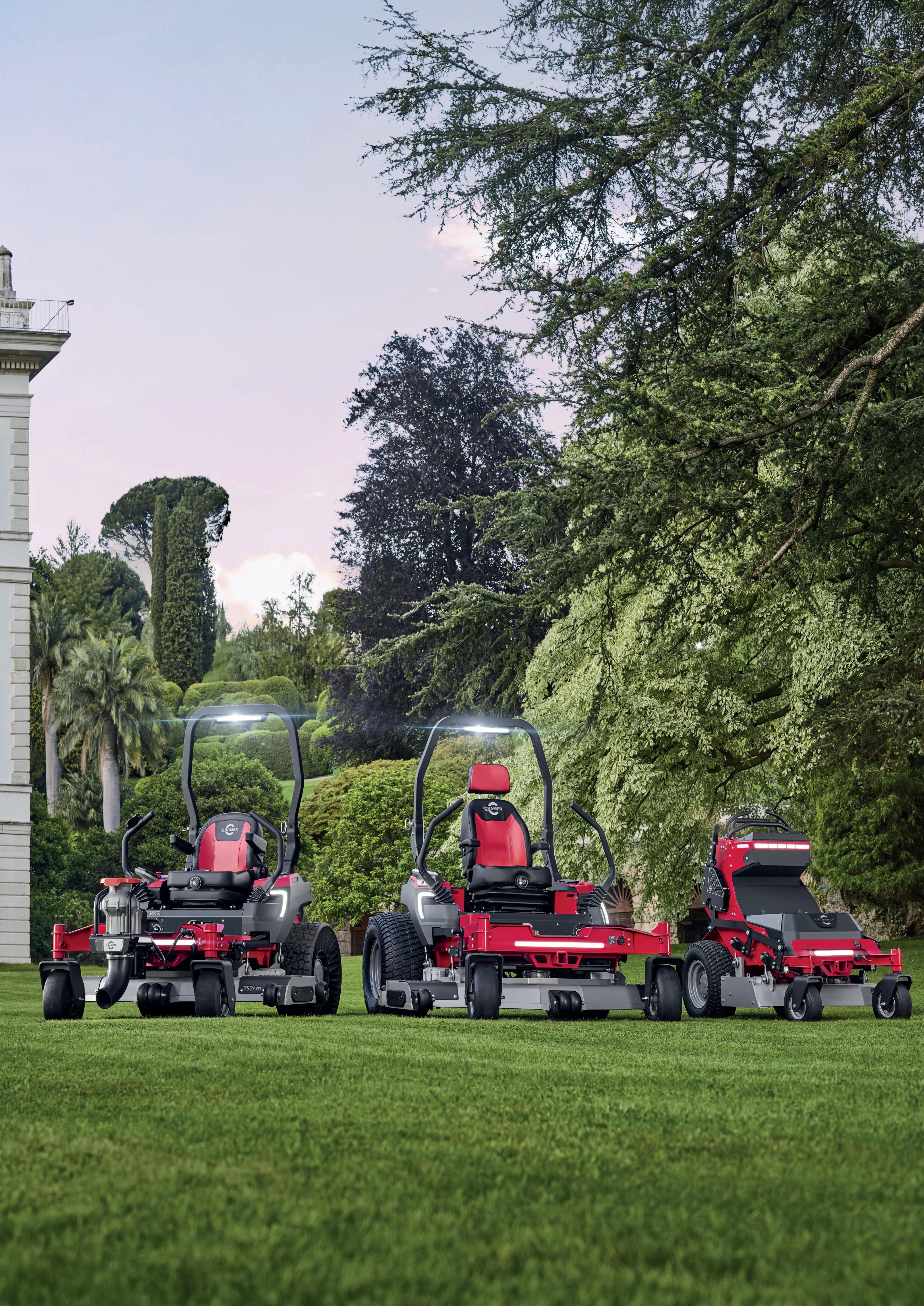



running from 1 March to 30 September 2026.
In practical terms, the offer is exactly what it sounds like. For example, within the 82V range, purchasing a product alongside a battery and charger results in a second matching battery at no extra cost.
The Optimus CORE promotion follows the same principle, either through tool bundles or multibattery purchases, again delivering an identical battery free through participating retailers.
There’s no ambiguity here, these are direct offers designed to increase available runtime from day one.
The same clarity extends to robotic mowing. Buyers of selected AiConic models (5, 8, or 12) receive a free RTK reference antenna, with the promotion running for the full calendar year until 31 December 2026.
It’s a single, defined addition tied to specific machines, rather than a vague bundle, again keeping the proposition clean and easy to understand.
For farming and land management professionals, that clarity matters. Whether it’s a significant saving on a zero-turn mower or an immediate increase in battery capacity, the benefit is visible upfront.
All offers are tied to purchases made through participating UK retailers within the stated periods.
In short, this is a campaign built on straightforward value. No layered rebates, no delayed rewards, just defined savings and tangible extras, available now and running through much of the 2026 working season.
For those already considering investment, that kind of timing can make all the difference!
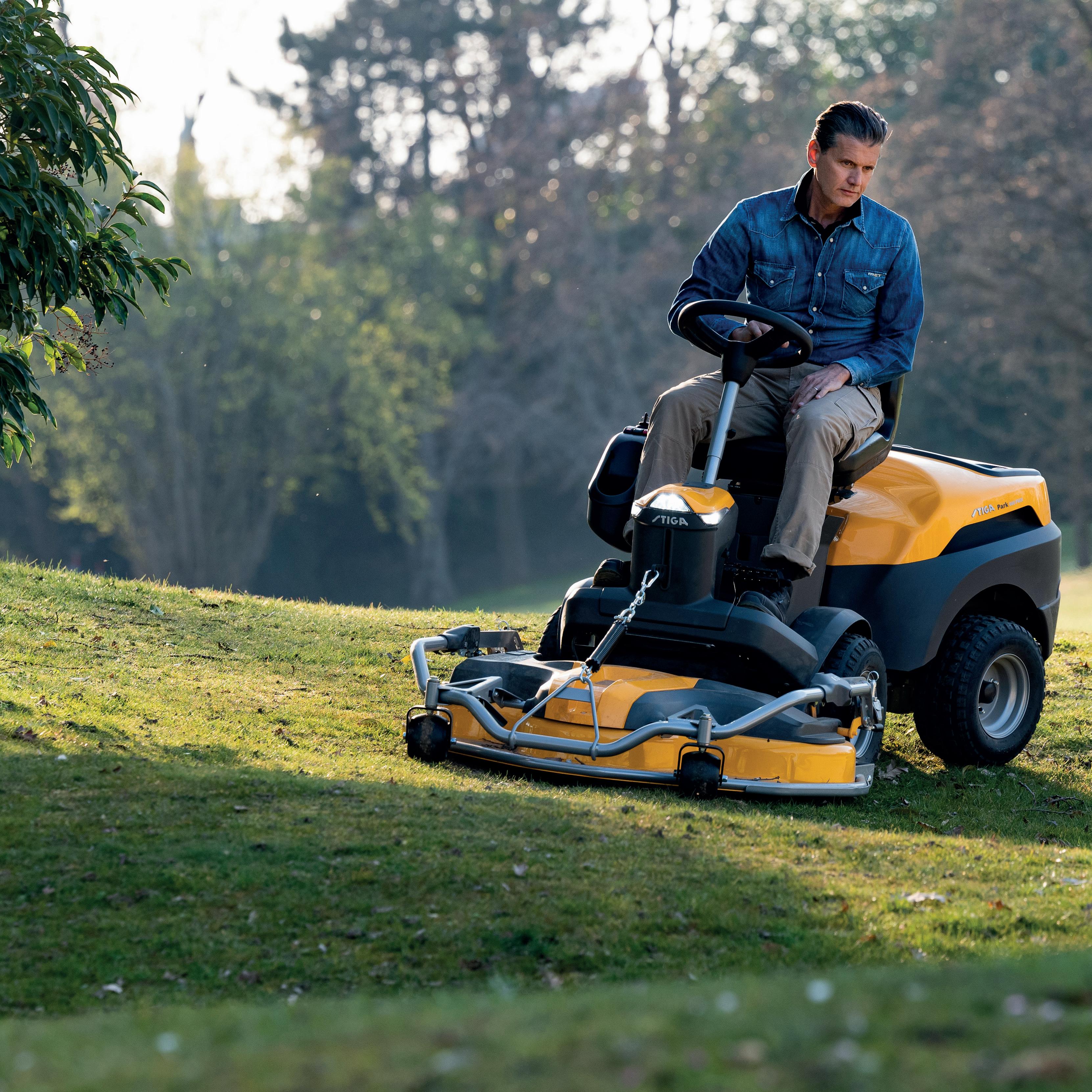
•
Jim Price Machinery Ltd
Farmore Mills, Craven Arms, Shropshire
SY7 9QG
01588 673746
www.jimpricemachinery.com
Southam Agricultural Services Station Road, Southam, CV47 2DH 01926 813426
www.southamagri.co.uk
Veryard Machinery Sales Blackworthy Road Castle Cary, Somerset 01963 351089 / 07860 479700 richardveryardmachinery.co.uk
The ultimate combination of raw power, versatility and precision.
Easy to manoeuvre, delivering best-in-class cutting performance, STIGA Park can handle large multi-level grass areas with ease. The position of the deck ensures control and visibility around every corner

rade media spanning sports turf, landscaping and amenity recently spent two days at the Kubota UK facility in Thame, Oxfordshire, to learn more about the exciting expansions of two popular mower ranges. Together with getting ‘hands-on’ with the latest additions in both the FC and zero-turn portfolios, press were updated on the ongoing investment and growth of the product offering and wider brand across the globe.
The group were welcomed by Henry Bredin, division manager, who discussed Kubota’s new global leadership changes – including a new CEO, President of Europe, and President of the Tractor Business Unit (TBU). Who has all been tasked with steering the company to find solutions to the environmental challenges posed by the modern world. Among these solutions, Henry focused on the exciting developments in the autonomous arena, with Kubota working on auto-steer systems which they hope will go some way to address issues associated with labour shortages and field productivity.
Press were then treated to a tour of Kubota’s UK headquarters. With questions regarding global supply chains, export markets and power sources answered, the day concluded with a ‘battery challenge’ – demonstrating the simplicity and speed of switching between batteries in the field.
Matt Wilson, product manager for groundcare, took charge for day two, focussing on the rationale behind the expansion of Kubota’s mower range which now spans across three power sources: diesel, petrol and electric. He cited changes in operator requirements as the main driver for the new FC and zero-turn models, explaining how the bigger range now offers greater choice, confidence
and continuity for customers across all key sectors.
New products include the FC4-441, designed to deliver versatile cut and collect performance on large areas such as parks and sports facilities. A true multi-tasker, the FC4-441 is fully customisable with different attachments and a choice of rotary or flail mower deck, meaning it’s as comfortable leaving a fine cut quality throughout the growing season as it is collecting leaves or shovelling snow.
The FC4-441 forms part of a comprehensive lineup of machines available for the media to ‘test drive’, giving everyone the ability to discover firsthand the comfort, control and outstanding manoeuvrability offered across the Kubota range. Driving skills were put to the test on a zero-turn obstacle course, bringing proceedings to a close with some friendly but ever-competitive rivalry!
Commenting on the event, Matt Wilson extended a big thank you to all of those who attended. “It was a pleasure to present the range evolution in line with the market needs and share exciting changes which ensures that Kubota remain at the forefront of delivering the right solutions for todays turf professionals.”

UHN Farm Machinery will demonstrate some of its most recent product launches at Scotgrass 2026, including its GMD 15030 14.5m mounted mowers, new generation MergeMaxx 952, and updated VBP 7160 OC 14 combination round baler wrapper.
Capturing the attention of showgoers will be the GMD 15030 – the widest mounted mower on the market. Folding to under 3m for road transport, the non-conditioner model is suited to lighter crops or multi-cut systems, and features four 3.1m, sevendisc beds for a 14.5m one pass cutting width. The patented 180-degree gearbox design allows each pair of beds to fold without breaking the driveline, with outputs up to 20ha/hr possible when used with KUHN’s 3.1m GMD front mower.
Sam Alford, KUHN’s grassland product specialist, says the GMD 15030 will be a popular machine at the show. “Dropping 14.5m of grass in one pass offers significant output per day to cut crops at the right time to preserve the highest quality. Existing KUHN features such as OPTI-DISC ELITE, LIFT-CONTROL and FAST-FIT knives are all available, while operation through Isobus is also possible.”
Following the GMD will be the new generation MergeMaxx 952 model with significant design changes and strengthening of the pickup units and running gear for improved longevity and reliability. Modifications to the conveyor belt design will help reduce impurities and maintain reliability when handling a wide range of forage types. Forage in hard-toreach areas can be picked up with the conveyors paused, allowing it to be moved to a more favourable part of the field.
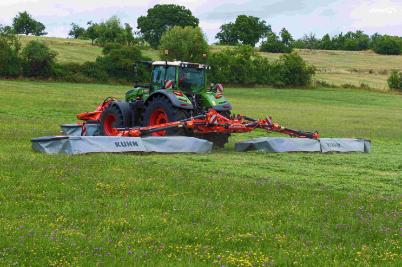

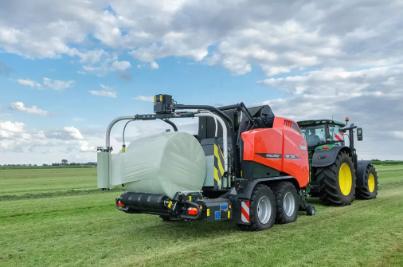
KUHN’s latest VBP 7160 OC 14 will also be working with a redesigned bale weighing system integrated into the wrapping table for greater accuracy. The addition of the weigher on the table means only the bale is weighed and not the whole machine, with bales between 1001500kg precisely measured. Standard VB 7100 models now have the weigher integrated into the bale kicker. Slope compensation is included for greater precision, with various Task Controller options for integration with farm management systems and recording locations of each bale for accurate yield measurements.
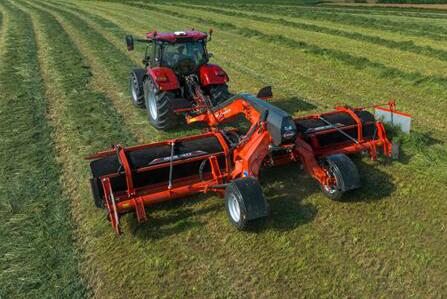
The practical demonstrations at the show will allow visitors to see how machines perform, with KUHN’s UK and European technical experts on hand to discuss requirements.
Scotgrass is taking place on the 13th May 2026 at Slacks Farm, Lochmaben, DG11 1RY.
By


s Farming Monthly continues its UN Year of Women in Agriculture series, the conversation increasingly moves beyond celebration alone and into something more important: honesty.
Women have always been central to agriculture, not simply as supporters of farming businesses, but as decision makers, innovators, livestock managers, land custodians and increasingly influential voices shaping the future of food production itself. Yet despite growing visibility across the industry, the realities facing women in farming, and the wider pressures facing agriculture as a whole, are often far more complex than the narratives used to describe them.
Rebecca Wilson was a compelling choice for Farming Monthly’s UN Year of Women in Agriculture series not simply because she is one of the most recognisable young voices in British farming today, but because she represents a generation navigating agriculture at a moment of enormous transition. As a fifth-generation farmer operating within a modern commercial farming business, while also speaking publicly about policy, innovation, sustainability and the pressures facing the sector, Rebecca occupies the intersection between tradition and change. Her perspective carries particular weight because it combines practical farming credibility with a willingness to challenge some of the industry’s most comfortable narratives, including how agriculture talks about women, resilience and progress itself.
For generations, agriculture has celebrated resilience.
It is woven into the identity of farming itself, long days, hard seasons, financial uncertainty and the quiet expectation that no matter the pressure, farmers simply continue. Increasingly, that same language now surrounds women in agriculture too. Resilient. Inspirational. Empowering. Barrierbreaking.
But for Rebecca Wilson, one of TIME Magazine’s Power List 2025 and an increasingly influential voice within British agriculture, those narratives often fail to capture the reality of what modern farming actually demands.
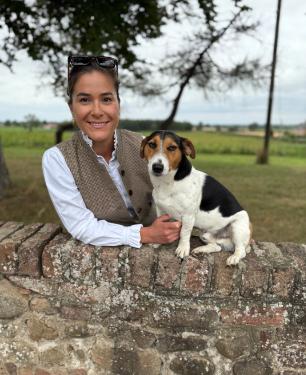

“The narrative around women in agriculture is often very carefully framed,” she says.
“Resilience, empowerment, ‘breaking barriers’. But I think a lot of the narrative still treats women in farming as something slightly unusual and therefore without meaning to, the idea of ‘resilient’ or ‘inspirational’ farming women can become patronising.”
Rebecca is proud to be a woman in agriculture, but she is equally clear that farming itself remains the defining reality.
“The reality is that most women in agriculture aren’t trying to ‘break barriers’ every day, they’re just trying to run businesses, make decisions under pressure, manage livestock, people and finances, and keep farms moving forward like everyone else.”
At a time when farming faces mounting economic, political and environmental uncertainty, Rebecca’s reflections offer not only an important insight into the experience of women in agriculture today, but also a wider commentary on the future sustainability of the industry itself.
That distinction matters because agriculture is not an abstract conversation. It is practical, relentless and deeply exposed to risk. Credibility is not awarded through rhetoric, but earned through judgement, knowledge and consistency.
“It doesn’t matter if you are described as a resilient woman, or a woman empowering others, if you don’t have high standards of knowledge and care when it comes to your livestock, or your business decisions don’t stack up.”
For Rebecca, this is where discussions around women in agriculture sometimes become disconnected from the realities of the sector itself.
Farming does not pause for narratives. Animals still need caring for. Margins still tighten. Weather still changes everything.
And resilience, she argues, is too often misunderstood entirely.
“Sometimes resilience just means carrying on because there isn’t another option,” she says. “It’s not always empowering, sometimes it’s exhausting.”
It is one of the most striking reflections to emerge from Farming Monthly’s UN Year of Women in Agriculture series so far because it strips away the polished language so often attached to modern farming and replaces it with something more honest: endurance.
progressive while still often defaulting to traditional ideas of credibility underneath.”
That credibility, she explains, is still frequently tied to familiarity, who people know, who they instinctively trust, and who fits the traditional image of a farmer. While this can affect women, it also impacts younger farmers, new entrants and anyone operating outside established expectations.
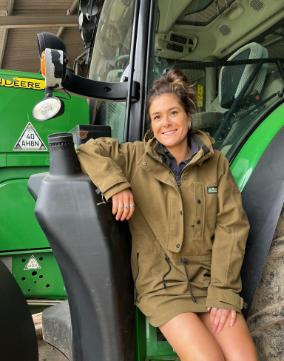

“The difference now is that people are more aware of the conversation, even if behaviour hasn’t fully caught up yet.”
What makes Rebecca’s perspective particularly powerful is that she avoids simplistic conclusions. Her reflections are measured rather than accusatory. She acknowledges the importance of collaboration across generations and recognises the support she has experienced within farming itself.
But she is also realistic about the pressures women can still face when operating commercially within the industry.
Agriculture today speaks confidently about innovation, inclusion and progression. Across social media, conferences and industry campaigns, the sector increasingly presents itself as modern, adaptive and forward-thinking.
Rebecca believes some of that progress is absolutely real.
“Younger generations are far more accepting of women leading businesses, managing farms, speaking publicly or operating commercially,” she says. “Twenty years ago, there were still assumptions about who the ‘farmer’ was in a room. That has shifted.”
Yet she also believes the industry has become highly skilled at appearing more progressive than it sometimes behaves underneath the surface.
“If I’m being cynical,” she says, “agriculture has become very good at presenting itself as
“Sometimes when women make firm commercial decisions in farming, they’re interpreted differently,” she explains. “A decision that might be described as decisive or business-minded from a man can occasionally be viewed as emotional or overly ambitious from a woman.”
Over time, she has become increasingly aware that confidence itself is judged differently depending on who expresses it.
Yet farming rarely allows space to dwell on perception for long.
“Livestock, weather and margins don’t wait for their approval.”
Few words dominate modern agricultural conversation more than “innovation.” Across policy discussions, corporate campaigns and industry strategy, the future of farming is increasingly framed around technological advancement and transformation.
By
Rebecca sees enormous opportunity within that future, particularly around artificial intelligence.
“I don’t think we’re even halfway to the innovations AI could bring about in agriculture,” she says. “Sometimes scary, yes, but if we don’t adapt with innovation, we’ll be left behind.”
Yet she also believes farming has started to confuse visibility with genuine progress.
“The most genuine innovation I see is often happening more quietly than people imagine,” she explains. “There are changes and adaptations being made in trials across real farms as practical people try to solve practical problems because margins demand it.”
For her, real innovation is rarely glamorous. It happens incrementally through improved genetics, grazing systems, labour management, animal health and efficiency. It is measured not by publicity, but by whether it genuinely strengthens resilience, profitability and sustainability over time.
“A lot of innovative language now is built around looking progressive, looking sustainable, looking technological,” she says. “Real innovation usually looks less glamorous.”
Her comments reflect a wider tension currently shaping agriculture: the pressure to publicly appear innovative while simultaneously operating within extremely tight economic realities.
Perhaps the most profound part of Rebecca’s reflections lies in her discussion of the emotional and psychological burden modern agriculture places on people.
“I think people still underestimate how emotionally and mentally demanding farming is as a way of life, not just a profession,” she says. “We forget about the people at the heart.”
While farming is often publicly associated with space, nature and independence, Rebecca believes those perceptions frequently obscure the relentless pressure operating beneath the surface.
“There’s this assumption that because farming families have always coped with pressure, they’ll continue to absorb unlimited uncertainty indefinitely.”
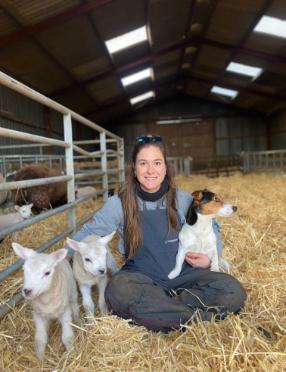

“Unfortunately, in farming, there is not always much incentive to be an early adopter, or the capital available to make the investment,” she says.
What matters most, she believes, is collaboration and knowledge exchange between farmers themselves.
Interestingly, she notes that female farmers can sometimes approach this differently.
“I have seen in some areas that female farmers seem to have a more empathetic and supportive approach as opposed to innovation being seen in terms of competition.”
Modern farmers are now expected to be livestock experts, environmental stewards, accountants, mechanics, business managers and public communicators simultaneously, all while operating within volatile markets and constantly shifting policy landscapes.
Even within the industry itself, she believes the cumulative weight people carry is still underestimated.
This pressure becomes particularly visible in agriculture’s relationship with work itself.
“I think the industry still quietly reinforces the idea that farming has to consume absolutely everything in your life to prove commitment,” she says.
“There’s still an underlying culture that exhaustion equals dedication, that saying no means you care less, or that struggling privately is preferable to appearing incapable publicly.”
Although conversations around wellbeing have improved, Rebecca is not convinced the culture itself has fully caught up.
“Agriculture talks far more openly now about wellbeing and sustainability, which is positive,” she says. “But culturally, I’m not sure we’ve fully moved past glorifying overwork and self-sacrifice yet.”
Importantly, she also highlights the economic realities driving that pressure. Low profitability and shrinking safety nets often leave farmers pushing themselves simply because they cannot afford not to.
“It’s not just about the glorification,” she explains. “It’s about the need for farmers to push themselves to the brink.”
As a fifth-generation farmer working alongside her twin sister, Rebecca understands both the privilege and pressure of inheritance within agriculture.


“One thing people avoid discussing openly is how much access and opportunity in farming are still shaped by background, networks and inheritance,” she says. “Land access, capital, introductions and trust are incredibly influential.”
Hard work remains essential, she emphasises, but not everyone begins from the same starting point.
At the same time, she worries that younger farmers are increasingly expected to absorb endless change without adequate support structures around them.
“There’s a growing assumption that younger people entering farming will simply absorb constant policy change, market pressure, climate pressure, public scrutiny and technology shifts indefinitely.”
Adaptability matters, she says, but resilience cannot become an excuse for governments or industries to continually withdraw support while expecting individuals to carry increasing levels of uncertainty alone.
is automatically better simply because it’s new.”
Experience itself often comes through getting those judgements wrong and learning from them.
“I don’t think there will be many farmers that can say they’ve always got the balance right,” she reflects.
In many ways, Rebecca Wilson represents exactly why the UN Year of Women in Agriculture matters.
Not because she fits neatly into a celebratory narrative, but because she challenges agriculture to move beyond symbolism and confront the realities women in farming are actually living every day.
Her reflections expose the gap between visibility and credibility, between performative progress and structural change, between celebrating resilience and understanding the personal cost behind it.
They also remind us that women in agriculture have never simply been supporting voices within farming. They are decision makers, business leaders, innovators, livestock managers, custodians of land and increasingly important voices shaping the future of food production itself.


As agriculture faces mounting economic, environmental and political pressure, Rebecca’s perspective asks the industry to think more honestly about what support, sustainability and progress truly mean, not only for women in farming, but for the future resilience of agriculture as a whole.
Despite the challenges, however, Rebecca’s perspective is not pessimistic. It is realistic.
Farming, she believes, constantly requires balancing tradition with adaptation, openness with practicality and ambition with realism.
“There are some occasions when how something has always been done simply fits the farming system,” she says. “But equally, not every new idea
And perhaps that is the real significance of this moment. The UN Year of Women in Agriculture is not simply about celebrating women in farming. It is about finally listening to what their experience reveals about the industry itself.
Follow Rebecca on Instagram: @rebeccawilsonfarming or find the podcast on @wilsonandashley

tep into the future of sustainable energy at theWorld Biogas Expo 2026 –the only international trade show dedicated entirely to the anaerobic digestion (AD) and biogas sector.
Bringing together industry leaders, policymakers, innovators and investors from across the globe, this is where ideas turn into action and partnerships power progress.
Gain exclusive access to theEngine Roomtechnical theatre and theSummitthought leadership theatre, where experts share the latest on global market trends, policy updates and technological advancements.
Walk the exhibition floor and connect with leading companies showcasing cutting-edge products, services and solutions shaping the future of biogas.
Meet decision-makers, suppliers and pioneers from across the AD and biogas value chain – all in one
Join us on the evening of8 Julyfor a prestigious gala dinner where the winners of theAD & Biogas Industry Awardswill be announced.
Don't Miss Out: Industry Insights and Your Free White Paper
We're excited to share highlights from the World Biogas Expo's Engine Room Theatre, Summit Theatre and seminar sessions, where industry leaders are shaping the conversations that matter most.
TheEngine Room Theatredelivers practical, handson insights into system optimisation, emerging technologies and real-world implementation strategies.
TheSummit Theatreexplores the bigger picture, with forward-looking discussions on industry trends, innovation roadmaps and leadership perspectives shaping the future.
Alongside this, ourseminar sessionsprovide focused deep dives into specialist topics, offering technical knowledge and actionable insights you can apply immediately.
Together, these sessions, on 8-9 July in Birmingham, UK, bring a balanced mix of practical expertise and

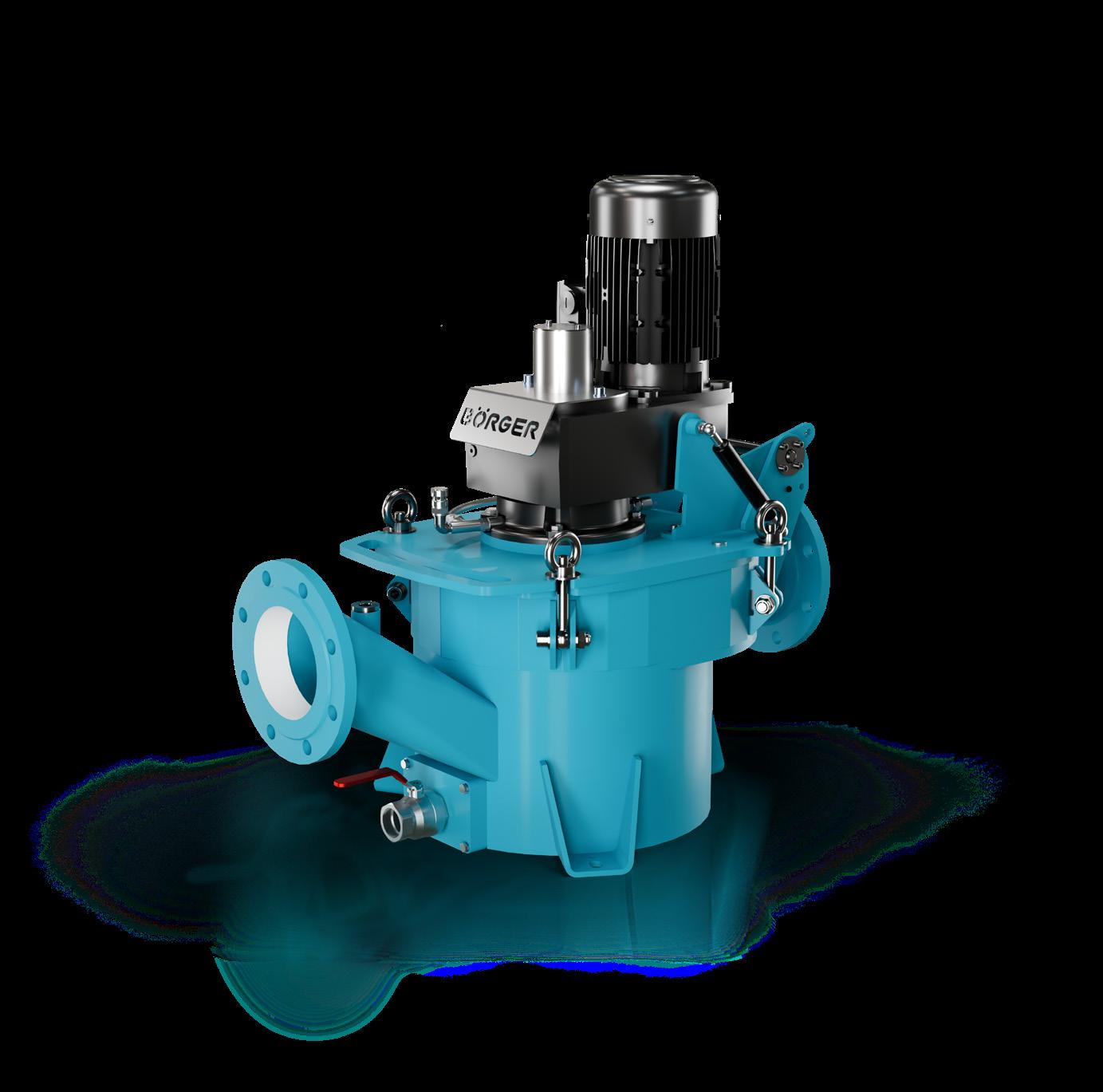


he new website showcases WELTEC BIOPOWER‘s 25 years of experience as one of the world’s leading manufacturers of biogas and biomethane plants. In order to increase visibility of its service portfolio and improve access to information, the company has completely overhauled its website. The new website, www.weltec-biopower.com, is a modern, clearly structured, international platform offering users quick, intuitive access to information on technologies, projects, and current developments.
The focus of the relaunch was on developing a clear and user-friendly website. The completely redesigned, contemporary layout ensures an improved user experience, whilst clear and intuitive navigation guarantees short click paths. Content has been systematically structured according to different target groups, including energy suppliers, agriculture, industry and investors, so relevant information can be found quickly. Furthermore, the website is fully responsive, offering an optimised display on all devices, from desktops and tablets to smartphones.
One of the key features of the new website is the structured presentation of the company’s areas of expertise. The portfolio is organised along the process chain, covering everything from planning and plant construction to after-sales services. Particular emphasis is placed on WELTEC’s proven
technologies, especially its stainless-steel biogas plants.
The website also provides insights into biomethane production and the generation of electricity and heat. A special feature is the 360° virtual tour of a biogas plant, which provides users with a realistic impression of its layout, technology and dimensions.
The platform showcases a selection of international reference projects and completed plants, demonstrating WELTEC BIOPOWER’s extensive experience and global presence. This section is continuously expanded and updated. At the same time, the relaunched website serves as a central communication platform for news and project updates.
As part of the relaunch, the employer branding aspect has been significantly expanded. WELTEC BIOPOWER is therefore strengthening its position as an attractive potential employer, offering prospective candidates a comprehensive insight into career opportunities and company culture. The new website sets the course for future-oriented, digital communication: it is clearly structured, internationally focused, and consistently tailored to the needs of its target groups.
You can find a Screencast of the new Website at: https://youtu.be/nm5u6p9uhHo


he finalists for the AD and Biogas Industry Awards 2026 have been announced.
Run by the Anaerobic Digestion and Bioresources Association (ADBA) and theWorld Biogas Association(WBA), the Awards celebrate excellence and innovation in the global anaerobic digestion (AD) and biogas sector across 10 categories.
The winners will be announced at a prestigious gala ceremony on 8 July at the Vox, in Birmingham, UK, with Miles Jupp as the host for the night.
The ceremony will conclude Day 1 of theWorld Biogas Expotaking place at the nearby NEC on 8-9 July, also organised by ADBA and WBA.
Congratulations to all the shortlisted entries and good luck to them all for the final!
The AD and Biogas industry Awards 2026 finalists are:
AD Hero of the Year Award supported by Future Biogas
Andre Le Roux, Santec, UK
David Payne, Zebra EM, UK
Lazarous Chewe, Retist, Zambia
Phil Moffat, Biogen, UK
GEF Biogas Brazil Project, MCTI, UNIDO, GEF, CIBiogás Brazil
Dr. Vanita Prasad, REVY Environmental Solutions, India
Women In Biogas
Kate Lister, Biogen, UK
Naiara Ortiz de Mendíbil, Sedigas, Spain
Simona Amerio, Ferrero, Italy
ADBA UK Biogas Plant of the Year
Preston Biogas Plant, Fylde Fresh and Fabulous
Tully Biogas Plant, Stream BioEnergy
Warrens Emerald Biogas Plant, Bio Capital
Education Campaign of the Year Knowledge and Education Initiative, Amplum Biogás, Brazil
Biomethane for Carbon and Community (BCC) Project, Technological University of the Shannon (TUS), Republic of Ireland
C-CHANGE: Grass2Gas Project, Iowa State University and Penn State University, USA

Celebrating 10 Years of Green Gas in Nether Stowey, Somerset, Wales & West Utilities, UK, in partnership with Cannington Enterprises and RocketGro Ltd, UK
FSM Education Programme, Sguazzi in partnership with Anaergia, Italy
Upishi Bora Afya Bora Influencer
Campaign, Ministry of Energy, Republic of Kenya, Kenya
AD Biogas Support of the Year
agriportance GmbH, Germany
DAH Renewable Consulting, UK
NORTH-TEC, Germany
REVY Environmental Solutions Pvt. Ltd., India
SciCorp International Corp, Canada
AD Solution Provider of the Year
Supported by TEDOM Yanmar Group
Micro-AD for India's Smallholders, National Dairy Development Board, India
RES-CIRCULAR project, ULS "King Mihai I" Timișoara, Romania
Research and Innovation Project of the Year
Advancing Biological Insight and Process Optimisation, RAFT Energy, UK
BGE M – An Advanced Methanogenic Technology, Ecological Laboratories Inc., USA
BIOLOGIC™ SR2 — Micronutrient technology, SciCorp International Corp, Canada

Agriportance software, agriportance, Germany
AD Solutions for Complex Organic Waste Streams, Anaergia, Canada
Anessa Software, Anessa, Canada
BGE M – An Advanced Methanogenic Technology, Ecological Laboratories, USA
CCS Systems for Large Scale Bio-Methane Plants , NORTH-TEC, Germany
Decarbonising Poland's Sugar Production, Krieg & Fischer Ingenieure, Germany
When Hydrolysis Stops Being the Bottleneck: Redefining AD Performance at Plant Scale, Clinty Bio, UK
Operational Resilience and Maintenance
Solutions, Circular Renewables, UK
Mobile Carbon Filtration Service, Puragen, UK
Rebuilding the Transaction Layer for AD Generators, tem, UK
Vent-Less Test Bench, Assentech, UK
Micro and Small Scale On-Farm AD of the Year
Supported by tem
FlexiTech Domestic & TRex Large Capacity OnFarm Biogas Units, Biogas International Limited, Kenya
Nanoparticle-Enhanced Bioaugmentation, Agricultural Research Council, South Africa
SGN – Propane Mitigation through Biomethane Blending, Bohr/SGN, UK
Research and Innovation in Action, National Dairy Development Board, India
Net Zero Circular Solutionof the Year
Bio Energy Complex Powering the Net Zero Circular Transition, Thai Eastern Bio Power Public Company Limited (TEBP), Thailand
ELOVAC® vacuum, ELIQUO HYDROK, UK
'Trash 2 Resource' model, Biogas International Limited, Kenya
Ultra‑Low‑Carbon Sustainable Aviation Fuel (SAF), Syzygy Plasmonics, USA
WBA Biogas Plant of the Year
Agthala, Gujarat Biogas Plant, National Dairy Development Board (NDDB), India
Gujarat's Largest Integrated Biogas Plant, Govardhannathji Energies LLP, India
Paraguaçu Paulista Biogas Plant, Cocal, Brazil
Tully Biogas Plant, Stream BioEnergy, UK


tour of a leading research and manufacturing tech company will headline the RIDBA Industry Day 2026 this autumn.
The Manufacturing Technology Centre (MTC), in Coventry, will host the event which will bring together RIDBA members, partners and stakeholders from across the UK.
The MTC is a world-class research and technology organisation at the forefront of manufacturing innovation. Working with SMEs and major organisations, it helps tackle complex manufacturing challenges anddrive technological advances.
As part of the day, attendees will be able to go behind the scenes for an exclusive tour and see the centre’s cutting-edge capabilities in action.
In addition to the tour, there will be a series of speakers who will tackle some of the challenges faced by members.
There will also be an update on RIDBA’s work and, in the association’s 70th year, a celebration of its history.
Opportunities for networking and catching up with industry colleagues will be available at points during the day with lunch provided for attendees.
RIDBA chairman Simon Pelly said: “Our Industry Day is always a fantastic event and a great opportunity for our members to hear new ideas, meet up with industry friends and see their RIDBA membership in action.
“The Manufacturing Technology Centre is the perfect venue to host the day and I’m sure attendees will enjoy visiting and having the chance to look around.
“It’s just one day away from your business and you stand to gain and learn so much by joining us. Don’t miss out – I’ll see you in September!”
RIDBA’s AGM will take place during the day. The Manufacturing Technology Centre, in Coventry, will host the event on Thursday, September 10.
This event is free for RIDBA members to attend. Click here to book.
See information on how your business can sponsor the Industry Day here



aunched at the British Pig & Poultry Fair, the latest Farm of the Future report from the Royal Agricultural Society of England (RASE) explores how farm building design can reduce emissions, improve energy efficiency and support animal performance.
‘Rethinking farm buildings: Optimising efficiency and reducing emissions’ examines how agricultural infrastructure influences energy use, manure emissions and the carbon intensity of production. The report also explores practical ways to reduce emissions across pig, poultry and cattle housing, grain drying systems and root vegetable storage.
Holly Shearman, head of livestock and Farm of the Future programmes at RASE, says farm buildings should be viewed as long-term investments in emissions reduction and resource efficiencies.
“Farm buildings are often overlooked in net zero discussions, yet they can deliver lasting emissions reductions across every agricultural sector,” she says. “This impact is driven by the construction materials used and operational energy use across a building’s lifetime.”
In addition to these direct sources of emissions, Ms Shearman explains that building design impacts animal health and productivity, with optimal ventilation, temperature control, hygiene, space and comfort reducing emissions per unit of production. “Building infrastructure also influences emissions from slurry and manure management,” she adds.
The report advocates for a whole farm approach to decarbonising agricultural buildings, beginning with implementing solutions to reduce embodied carbon and energy demand, before adding renewable energy systems.
The report also highlights renewable energy opportunities, including rooftop solar PV systems or considering anaerobic digestion, that could help farms generate their own energy and reduce longterm costs alongside lowering their carbon footprint.
As well as setting out options to decarbonise farm buildings, the report calls for policy reforms to accelerate investment in low-carbon farm infrastructure, including support for retrofitting existing buildings, renewable energy integration and improved manure management systems.
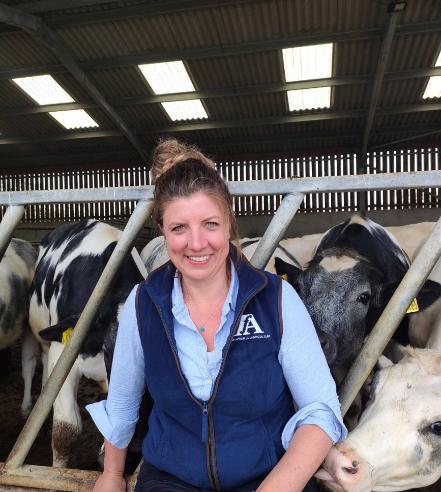
“Using lower-carbon construction materials alongside energy-efficient systems such as LED lighting can reduce a building’s environmental impact for decades, while also lowering operating costs,” says Ms Shearman.
“Policy must create a clearer pathway for lowcarbon farm infrastructure,” says Ms Shearman. “That includes faster planning approval for on-farm renewables, better support for low-carbon construction materials and a more strategic approach to manure management.”
Rethinking farm buildings: Optimising efficiency and reducing emissions’ is available to download at: https://www.rase.org.uk/reports/
t this year’s DairyTech, IAE unveild Agri-Comfort, a comprehensive new range of cattle cubicles dedicated to improving cow welfare while directly supporting higher milk yields.
Agri-Comfort represents a shift in dairy housing design. By combining Agricultural expertise with specialist partnerships, IAE is positioning cow comfort not as an optional extra, but as a core driver of farm profitability.
Comfort as a Performance Strategy
For progressive dairy farmers, the link between welfare and yield is no longer debated it is measured.
Cows that spend more time lying down typically:
• Produce more milk
• Experience improved rumination
• Maintain better hoof condition
• Show reduced stress-related health issues
• Require fewer veterinary interventions
Agri-Comfort has been developed around this
biological principle: design housing systems that work with the cow’s natural movement and behaviour, and productivity will follow.
SuperFlex Cubicles: Engineering That Moves with the Cow
As part of the range, IAE announced a UK partnership withSpeedGroupto introduceSuperFlex cubicles a design that rethinks the traditional rigid stall.
Unlike fixed cubicle frames, SuperFlex systems are manufactured to flex in response to the cow’s natural lunging and rising motion. This flexibility reduces pressure points and abrasions commonly associated with conventional dairy housing.
The design achieves a carefully balanced outcome:
• Flexibilityto reduce injury risk
• Structural stabilityto prevent bed sharing
• Improved stall usageby increasing cow comfort
The result is greater lying time a key metric in maximising milk output. By minimising discomfort during transitions between standing and lying, SuperFlex cubicles actively support both welfare and production performance.
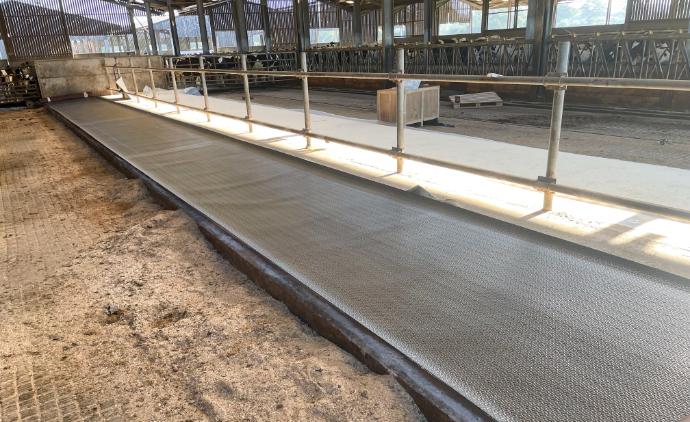
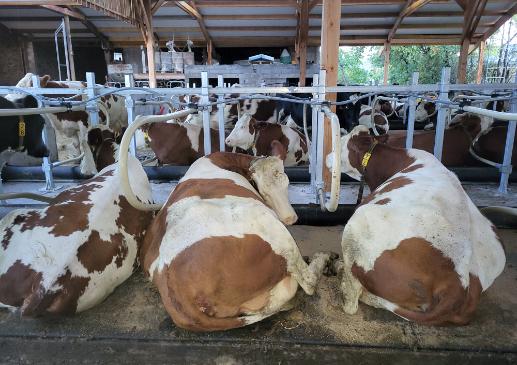
To complement the adaptive cubicle system, IAE continues its long-standing collaboration withHuber Technik, a specialist in 100% new tyre rubber mattress systems.
The partnership, spanning 15 years with zero warranty claims, reflects a shared commitment to durability and quality. Huber Technik offers a 10year warranty on its mattress systems — a testament to confidence in its materials and manufacturing standards.
• Manufactured usingunvulcanised rubber, preserving elasticity and reducing cracking associated with heattreated alternatives.
• PAH-tested for harmful and carcinogenic substances surprisingly not a standard requirement for dairy mattresses.
• Installed as acontinuous roll, minimising seams where debris and bacteria can accumulate.
Laid over30-40mm foam cushioning, designed to mimic natural pasture surfaces.
By distributing weight evenly and supporting correct posture, the mattress system
plays a vital role in tackling lameness one of the most significant cost and welfare challenges in modern dairy farming.
Built on Partnership, Backed by Expertise
Whether upgrading existing facilities or planning a complete renovation, farmers can work directly with the IAE sales team to ensure every agricomfort project is tailored to their herd’s needs. From initial consultation and expert advice to onsite measurements and layout guidance, IAE provides comprehensive support throughout the design and installation process.
By combining practical farm experience with engineering expertise, the team helps farmers maximise space, improve cow flow, and implement comfort-led solutions that deliver long-term productivity benefits.
With Agri-Comfort, IAE is not simply supplying equipment it is partnering with farmers to build the next generation of high-performance dairy housing.
Contact IAE about the Agri Comfort range:
sales@iae.co.uk
+44 (0)1782 399320
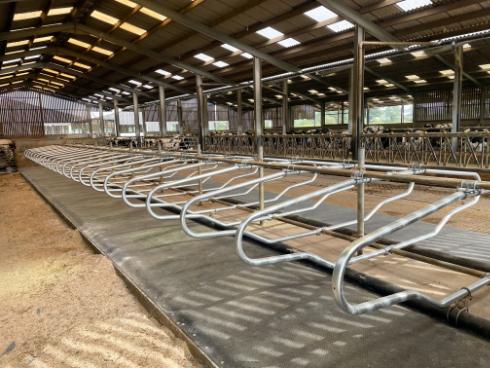
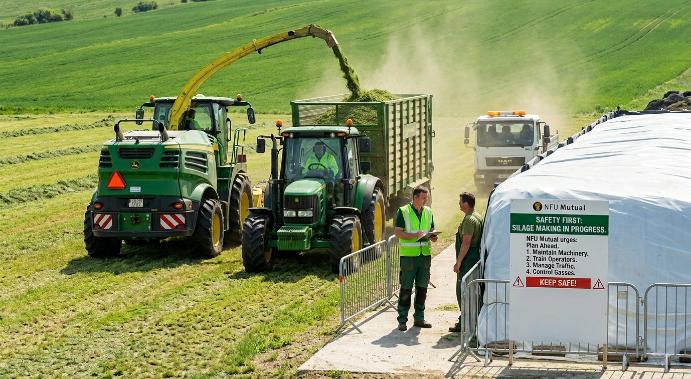
Thorough machinery servicing can reduce the risk of accidents and breakdowns during first-cut silage making says NFU Mutual.
The UK's leading rural insurer has issued a safety checklist to help farmers have a safe, breakdown-free and efficient harvest as silage season gets underway.
Health and Safety Executive (HSE) figures also show the risks attached to activities like silagemaking: latest figures show that being struck by a moving vehicle accounted for 23% of deaths in 2024-2025 and contact with moving machinery a further 16%*.
Bob Henderson, NFU Mutual's Head of Engineering, said:"On most farms the forage harvesters, mowers and trailers won't have been used for six months, so it's vital that kit is thoroughly overhauled, serviced and checked for safety. Accidents tend to happen when people are tired, machinery is pushed too hard, or work continues in unfavourable conditions.
"This year, war in the Middle East has led to red diesel prices roughly doubling, adding to the financial pressures that farmers are facing.
"In these circumstances there's an understandable
desire to keep costs down – but skimping on maintenance can put safe working at risk and increase the likelihood of time-consuming breakdowns."
Evita Van Gestel, of NFU Mutual Risk Management Services, added:"First cut comes at a time when many farmers are exceptionally busy with lambing or preparing to put cattle out to graze.
"However, it's important to find time to get machinery ready and walk the fields to check for wet patches and hidden objects which can damage mowers and harvesters.
"Briefing your silage team on farm, field and local road hazards and making sure they are familiar with the machinery they will be using is equally important."
NFU Mutual silage safety checklist
Before silage harvesting:
• Make sure you have identified and assessed the hazards on the farm, in the field and the tasks that will be conducted during silage harvesting, and know how to manage the risks
• Walk silage fields before cutting to identify wet spots and any potentially dangerous slippery slopes
• Put in place a system for keeping in contact with lone workers
• Make sure new staff are properly inducted and trained for the work you give them – in particular the dangers of working with and around farm machinery
• Teach staff about the principles of "Safe Stop": make sure the handbrake is fully applied; controls and equipment are left safe; stop the engine; and remove the key, before leaving the vehicle or accessing the moving parts in any machine
• Put in place measures to ensure children are kept away from working areas
• Make sure staff know the safe working loads of trailers and don't allow trailers to be overfilled
• Ensure vehicles and trailers are road legal with fully maintained and working brakes, lights, indicators and flashing beacons
• Regularly check the age, condition and pressures of tyres
• Consider using a third party to inspect trailers, with accreditation such as the 'Tilly Your Trailer' scheme
• Consider letting local people know when you will be taking silage trailers on local lanes via neighbourhood social media sites, to help people reroute journeys. This will cut delays and incident risks.
• Make sure tractors have sufficient power and braking capacity to control trailers on slippery hill fields
• Regularly check moving parts of mowers, tedders, forage harvesters and balers, including guards and PTO shafts for wear or damage
• Switch off engines and ensure parts have stopped before clearing blockages or carrying out maintenance - remove keys as well to prevent accidental starting (Safe Stop!)

• Make sure drivers are aware of the locations and heights of overhead power lines and check that your machinery will safely pass under wires and obstructions, especially where there is a risk of overturn with vehicles potentially being at a different angle
• Take special care to check for vehicles following behind before turning right into fields or yards, as this is a common cause of accidents
• Regularly clear up any mud deposits from roads – to alert drivers with signage where mud may be present
• Be aware of potential walkers in fields with public rights of way and stop the vehicle if people are in close proximity
• Keep a mobile phone on you at all times - not left in a tractor or pick-up cab
• Take regular breaks to eat, drink and rest, to stave off tiredness.
Working on silage clamps:
• Keep people away from moving vehicles
• Ensure a filling plan is followed and that sight rails are visible at all times
• Never overfill a silage clamp as this increases the risk of vehicles overturning when rolling or filling
• Only use vehicles that are suitable for the task fitted with an approved safety cab or Roll over Protection Structure (RoPS), well-lugged tyres, suitably weighted etc.
• For indoor clamps, keep away for the first 72 hours, as this is when dangerous nitrogen dioxide gas can form in large quantities
• Keep clear of the edge of the clamp (at least 1m) when (un)sheeting or removing tyres. If possible, use a mobile working platform or a hook on a pole to keep away from the edge of the face.

HSENI, in partnership with the Farm Safety Partnership (FSP), is reminding farmers and agricultural workers to take extra care during grass cutting and silage making operations.
With the silage season just around the corner the message to all involved is to plan ahead, stay alert and make safety a top priority.
HSENI Deputy Chief Executive Bryan Monson, also warned farmers and contractors about not letting children onto the machinery.
“Silage making is an essential job, but it can also be one of the most hazardous times of the year on the farm. High-powered machinery is moving quickly, trailers are travelling on public roads and people become tired when trying to make the most of the good weather.

Speaking at the latest FSP meeting Chair, Harry Sinclair said:
“Silage operations often require the use of high powered, fast-moving machinery often on challenging ground conditions and in unpredictable weather.
“When long hours are added into the mix, fatigue can quickly become a serious risk factor. This increases the likelihood of mistakes and potentially life-changing incidents.
“Breakdowns, often due to poor maintenance, can lead to delays and extra pressures in what is an already busy schedule. Farmers and contractors should be carrying out pre-use checks on the machinery before use and rectifying any issues before putting the machine into service,”he added.
Farmers must ensure:
• all machinery is in good working order and well maintained;
• all brakes must be working effectively,
• all PTO’s and moving parts need to be fully guarded.
Blockages occur frequently and these should only be cleared after the machine has been stopped and the tractor keys removed.
“But shortcuts can lead to tragedy so we are urging farmers to slow down, watch out for each other and keep any children and visitors to the farm safe. No child under the age of 13 should be driving or carried in any vehicle involved in silage making.
“The potential for children to be run over is also high so you must ensure that mirrors and cameras are working, anyone operating the machinery is trained and competent to do so and children are excluded from areas where vehicles are operating”he added.
HSENI and FSP are reminding all farmers and contractors that:
• Extreme care should be taken when filling and covering the silage clamp.
• Clamps must never be overfilled as this greatly increases the chance of a tractor or loading shovel overturning.
• Care should be taken to avoid people falling from height and also from being trapped beneath the silage cover. The fermenting grass uses up the oxygen under the cover very quickly and the level of harmful gases increase rapidly.
• Overhead powerlines pose a significant risk to machinery that requires a lot of headroom, such as self-propelled harvesters and tipping trailers.
• They should inform any contractor or driver with their location prior to any silage operations commencing.
Bryan Monson added:
“It’s easy to dismiss safety messages as over‑cautious, but serious and fatal accidents continue to happen, often with devastating consequences for farming families. Please take a moment to stop and think “is it safe?” and help ensure everyone returns home safely this silage season.”
The long-awaited Crime and Policing Bill received Royal Assent today, granting police new powers to enter premises without a warrant to recover electronically tracked stolen agricultural equipment.
NFU Vice-president Robyn Munt said the new powers are a “welcome step in the right direction, providing some much-needed peace of mind for farming families impacted or worried about equipment theft”.
Currently, officers must apply to the courts for a warrant; the new powers will enable them to act immediately and enter a property.
Time is critical in cases of machinery theft and enabling police to act immediately when the location of stolen equipment is known should improve recovery rates, disrupt organised rural crime and provide farmers and growers with the much-needed confidence that these crimes are being taken seriously.
“From equipment theft to hare coursing, waste crime to livestock worrying, rural crime has unfortunately become an everyday reality for farmers and just something else they need to adapt and be resilient to.
“The government must do more to address the unfair burden of clearing illegally dumped waste as well as ensure rural police forces and councils are properly resourced to implement new powers effectively, as enforcement without adequate funding risks limiting their impact on the ground.”
NFU Chief Land Management Adviser Sam Durhamgave evidenceto the Crime and Policing Bill Committee last year, covering the impact of rural crime on farmers. He said:

NFU Mutual’s latest reporton the cost of rural crime found that claims cost for agricultural vehicle thefts totalled £7 million in 2024.
Quad bikes and ATVs remained top targets for thieves in 2024, despite falling by 16% to an estimated £2.7m.
While the legislation also gives ministers greater powers to issue statutory guidance to councils in England on the enforcement of fly-tipping, the NFU has said it does not go far enough to address the undue burden waste crime places on farmers and growers.
Private landowners are currently left to bear the cost and responsibility of clearing illegally dumped waste, leaving victims to deal with the financial, emotional and logistical consequences of a crime they did not commit.
NFU Vice-president Robyn Munt added: “Farmers are nothing if not resilient. Every day we deal with pests and diseases, changing weather and volatile markets and yet every day we get up and produce food for our nation. But rural crime chips away at that resilience. It leaves farmers and growers scared to go to work, worried in their own homes and feeling powerless in the face of dangerous criminal activity.
“We feel that the ability to search without a warrant for electronic goods – that was mentioned by the previous speaker – could have benefit for agricultural theft.
“We encourage our members, wherever possible, to fit tracking devices to their vehicles and machinery. Having talked to some of the national police chief leads I have contact with, they would welcome the ability to track a stolen tractor or quad bike and then enter the premises where they believe it to be.”
Forensic markings for farming kit
Minister for Crime and Policing Sarah Jones said: “Theft causes real harm to real people, whether that’s a phone snatched from their hand or a farmer’s livelihood driven away in the night.
“These new powers will mean officers can act fast to recover more stolen property and reunite them with their owners.”
Last year, the Home Office committed to introducing regulations requiring all new ATVs and GPS units to haveforensic markingsand for the details to be registered on a property database. The NFU worked closely with Greg Smith, MP for Mid Buckinghamshire, and the National Rural Crime Unit on theEquipment Theft Act, which became law in 2023, giving the Home Secretary the power to make regulations that deter the theft and resale of quads and ATVs.
The NFU has expressed disappointment however, that this legislation will not cover fitting immobilisers to new ATVs and will not extend to other large agricultural machinery. We will continue to lobby for improved security for farm equipment.
The GEA IQ's revolutionary fourway technology ensures that you always have maximum milk quality, quantity and udder health. Using it is incomparably easy! Easier attaching, milking and maintenance.

The new milk guide piece has been designed following the natural structure of a cows udder. It is sub-divided into four guide chambers. The milk flows directly and quarter individual to the outlet. Thanks to the incline in the respective cluster chamber this process is faster and much more gentle.
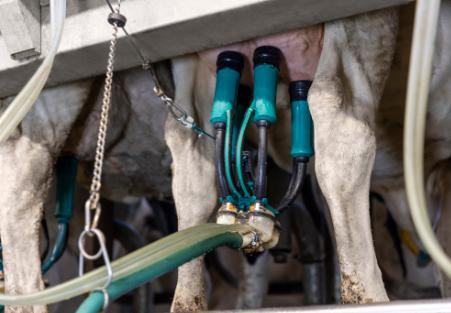

clean your milk filters are with the IQ Milking Unit.
Maximum milk quality - smarter vacuum control significantly reduces milk contamination. Vacuum is greatly reduced when the liner is not attached, which means less manure and other soil/debris is sucked into the milk line. You won't believe how
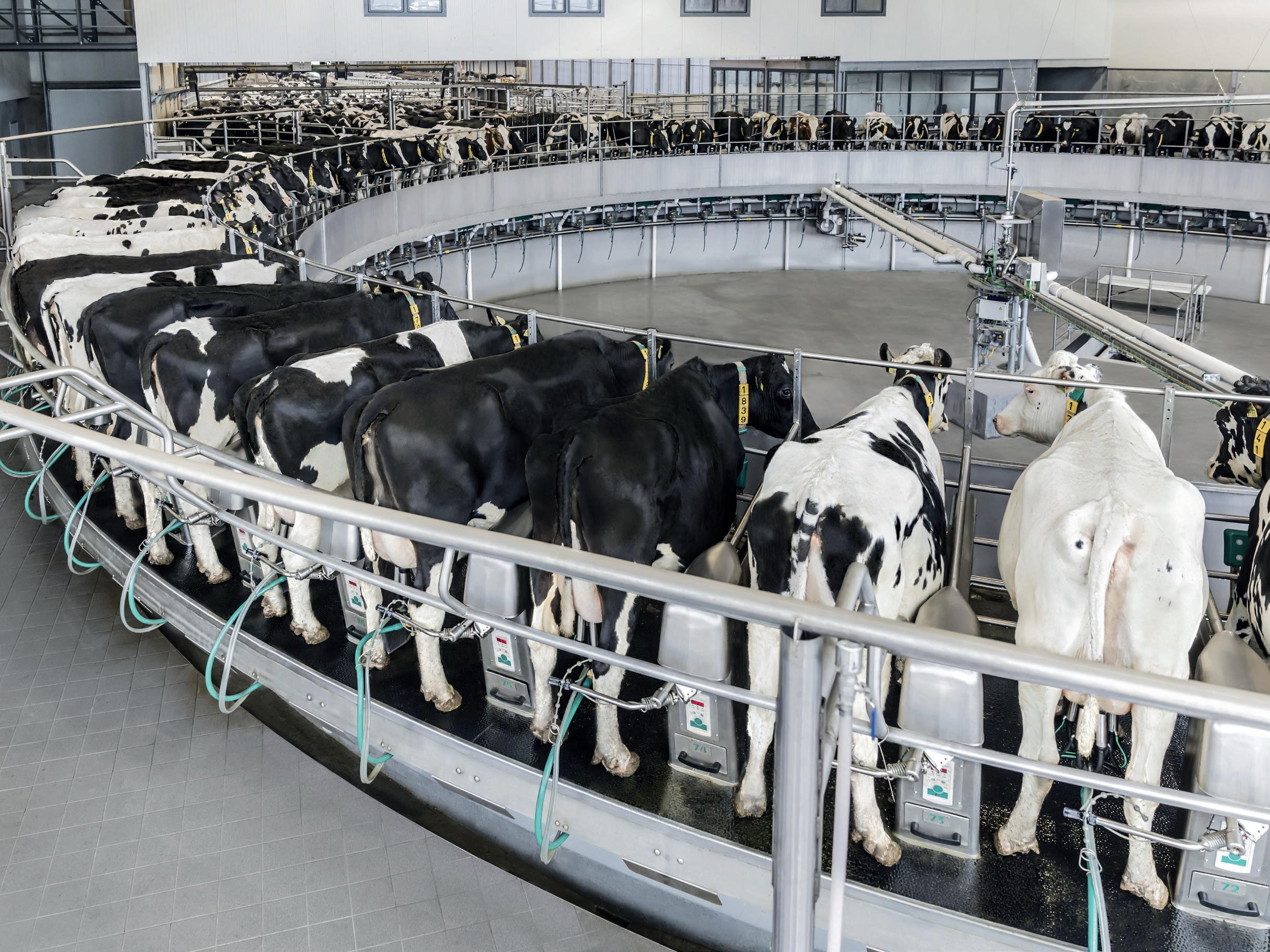
Improved udder health - with four separate guide chambers there is no threat of teat-to-teat cross contamination of mastitis-causing bacteria. Unlike conventional milking units, the new IQ unit is subdivided into four quarters, and milk from each


quarter is kept separate.
Holds on any shaped udderthe short milk tubes are longer which allows proper placement on virtually any udder shape. The unit weight is ideally distributed 80% on the teat and 20% in the claw. Plus, better unit alignment means fewer unit slips and squawks.
Easy maintenance - unique and patented liner connection makes liner changes quick and easy. Shells, liners, and air dividers can be preassembled to allow liner changes in minutes instead of hours.

Faster milk-out times - improved vacuum stability

increases flow rates and the sharper angle of the milk chamber speeds flow to the milk line.
Quieter operation - the automatic vacuum shifting system makes for virtually noise-free milking - even during attachment or during a kick-off.
More reliable performancethe slim profile of this unit is harder for cows to kick-off.
For the milkers of today and tomorrow: The GEA IQLiner is
unique in that it is fitted individually onto the IQ cluster! Take advantage of the optimum adhesion and flexibility on the udder! The well thought-out benefits of our IQLiner ensure animal-friendly milking together with the best possible teat conditions and the well proven rubber and silicone material works as reliably as ever.
GEA and local GEA Dealers are offering a special offer on the IQ Milking Cluster this Autumn until 31st October 2025. Benefits from four-way technology to ensure you always have maximum milk quality, quantity and udder health by contacting GEA today for the special offer price. Contact your local GEA Dealer or visit www.gea. com for further information.
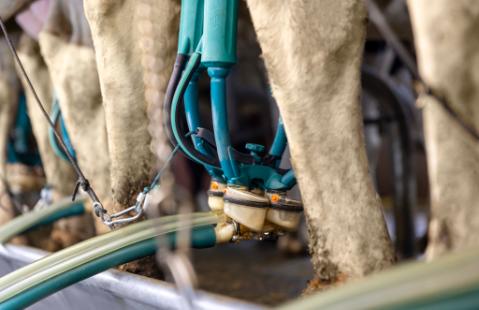

Turn every milking into a milk‑solids check no sampling, no consumables.
DeLaval continues to expand its BioSensors portfolio with Milk Solids Analysis, a new biosensor for the DeLaval VMS™ V300. Using near‑infrared spectroscopy, the system automatically measures fat, protein, and lactose during milking, with high accuracy and without the need for manual sampling or consumables such as chemicals or test reagents.
The product will be launched in autumn, a time when feeding transitions such as changes in forage or rations can make milk solids more difficult to manage. However, feeding management challenges exist all year round, with different factors affecting milk composition in each season. Ongoing insight therefore remains important well beyond any single period.
How the DeLaval BioSensors Milk Solids Analysis supports feeding, herd health and milk quality
Using near-infrared spectroscopy, the sensor directly measures the major milk solids at every milking without requiring manual sampling or consumables. Mounted directly on the milk pipe of the DeLaval VMS V300, the BioSensor operates continuously, is cleaned automatically, and provides daily data. This data is analysed and then presented as clear daily and weekly averages on DeLaval Plus, DeLaval’s digital farm management portal. This allows farmers to track performance over time, detect deviations at cow, group and herd level early, and respond quickly to changes in feeding or health status.
Martin Brandsma, farmer and feed advisor from the Netherlands, is already successfully using Milk Solids Analysis on his farm

• Improve milk quality, supporting milk payments based on component values
Together, these insights enable more proactive herd management, helping reduce health‑related losses linked to metabolic disease and supporting the overall efficiency and resilience of the farming system.
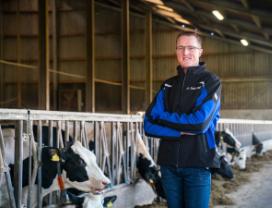
Key features
Guillaume Bailly, Cluster Solution Specialist for Farm Management Support and Digital Services at DeLaval, says: “With the DeLaval BioSensors Milk Solids Analysis, we are providing farmers with accurate and actionable information that supports more efficient feeding, early detection of metabolic imbalances and improved milk quality. The seamless integration into the VMS V300 means that this technology fits easily into everyday routines, helping dairy farmers make informed decisions that support animal health and long‑term farm profitability.”
• Direct, high‑precision measurement of fat, protein and lactose
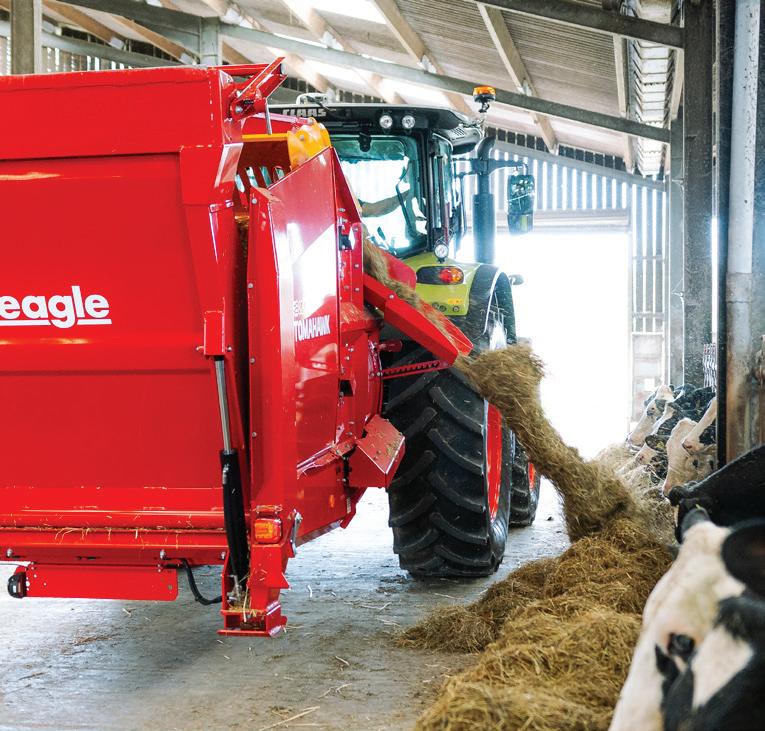
Milk composition plays a central role in herd performance, reflecting how efficiently cows convert feed into milk, how stable rumen function is, and how early health issues may be developing. Continuous monitoring turns these indicators into actionable insights that support better feeding decisions, earlier detection of metabolic imbalance and improved rumen health.
This level of visibility is designed to help farmers:
• Optimise feeding strategies using consistent milk composition insights collected at every milking, rather than relying on periodic sampling
• Identify potential indicators of metabolic disorders early, such as subclinical ketosis or acidosis, supported by changes in the fat‑to‑protein ratio
• Monitor rumen stability, detecting digestive imbalances earlier than with monthly milk recordings
• In‑line analysis at every milking
• Milk‑solids insights presented as clear daily and weekly averages in DeLaval Plus
• No reagents or consumables, helping keep operating costs low
• Fully automated calibration, with no specific maintenance required
• Automatic cleaning, integrated into the VMS™ workflow
Seamless integration for existing and new VMS V300 Milk Solids Analysis is available both as an optional feature on a new DeLaval VMS V300 and as an upgrade for existing VMS V300 milking robots. Designed as part of the DeLaval BioSensors portfolio, it complements other in‑line sensors and strengthens the role of automated milking as a data‑driven management tool.
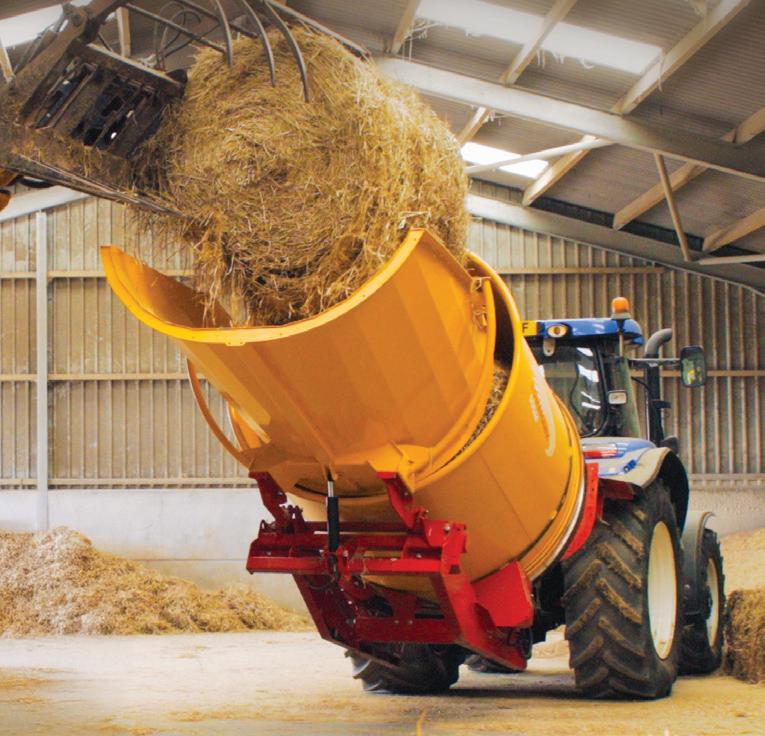
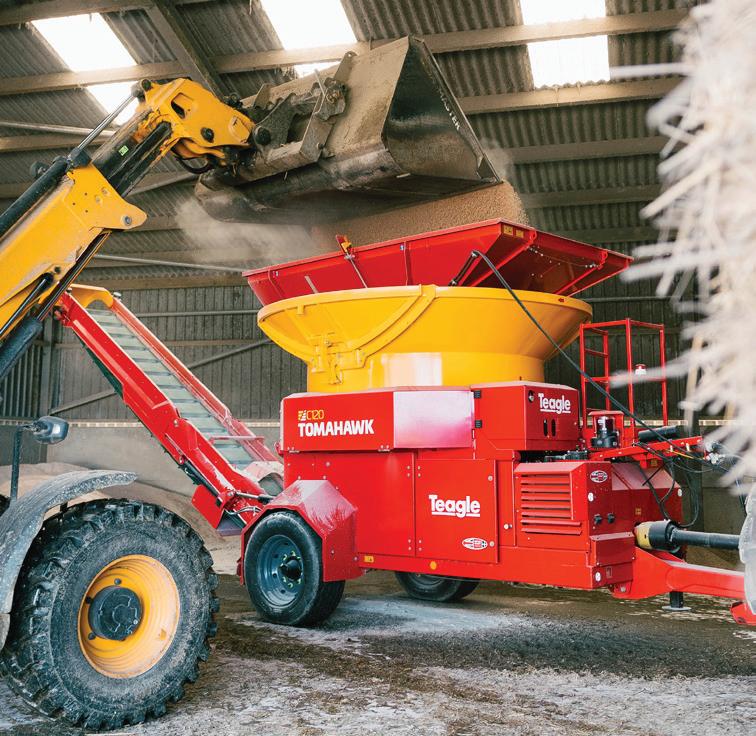
Up to 30% straw saved | As reported by users of our TOMAHAWK bale processors.
Consistently even chop | Proven to reduce waste, improve TMR and boost yield.
Improved cow health and happiness | Uniformly chopped straw in TMR supports rumen activity, fertility, and butterfat production.
Biomass pre-processing | Reliable, efficient performance for biofuel applications.
Bruce Hopkins Ltd Shenington Airfield, Banbury, Oxon, OX15 6NW
01295 680711
RVW Pugh Mellington, Churchstoke, Montgomery Powys, SY15 6TQ Tel: 01588 620545 www.rvwpugh.co.uk
RVW Pugh Oakwood Park, Holmes Chapel, Cheshire, CW4 8AX Tel: 01477533560 www.rvwpugh.co.uk
Value for money | Proven to reduce waste, improve TMR and boost yield.
2 year warranty* | Comes standard with all Teagle manufactured products.
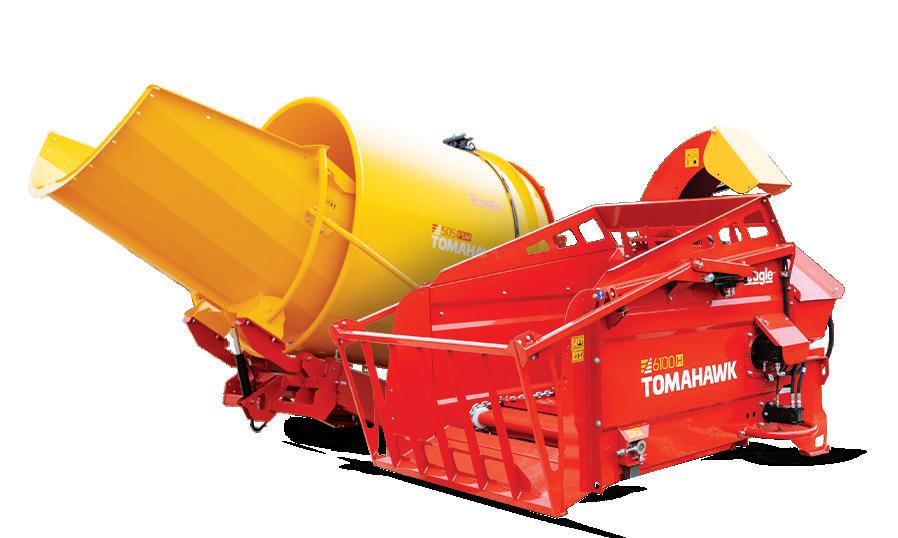
TR Machinery Ltd Oak Tree Works, NI Park, Newport, Shropshire, TF10 9LH Tel: 01952 936900 www.trmachinery.co.uk
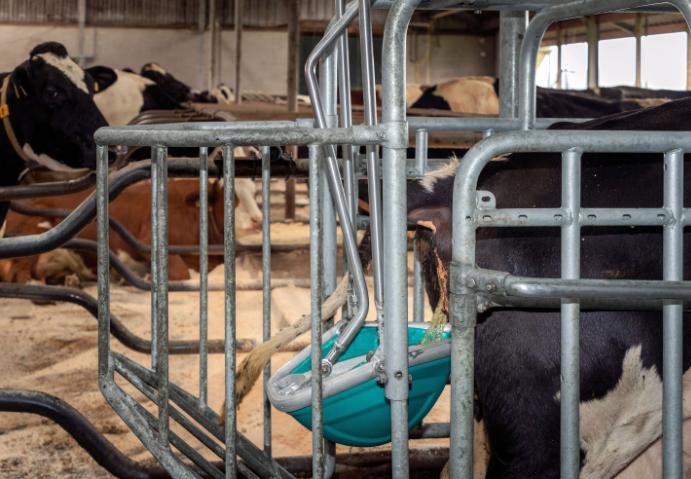
Agroundbreaking new technology, the CowToilet, is set to make its UK debut at Lamma 2026, offering dairy farmers a practical way to reduce ammonia emissions by up to a third, improve nutrient use, and enhance sustainability on-farm.

Developed by Dutch agri-tech company Hanskamp, the CowToilet offers a unique solution for reducing on-farm emissions by separating cow urine and faeces, which, when combined, produce ammonia.
Using the simple fact that cows never urinate and defecate at the same time, the CowToilet collects urine directly from under the cow’s tail before it mixes with solid manure.
The CowToilet integrates seamlessly into a free-access out-of-parlour feeding station which can be installed in most cattle sheds. As a cow enters to eat, the CowToilet gently rubs against the suspensory ligament of the udder, triggering a natural nerve reflex that encourages urination. The urine is then collected in a sealed receptacle, removed by suction, and stored in an airtight tank.
Research by Wageningen Livestock Research shows that keeping urine and manure separate can reduce ammonia emissions by up to 38%, total nitrogen by 33%, and nitrous oxide by 18% compared with conventional housing systems
“Ammonia is one of the biggest
environmental challenges facing the livestock sector,” explains Hanskamp founder Henk Hanskamp. “We wanted to create a system that works with nature, not against it – improving animal welfare and helping farmers meet environmental targets without adding to their workload. The CowToilet achieves this in a simple, natural, and effective way.”
In addition to reducing emissions, the CowToilet transforms waste into a resource. Nitrogen-rich urine can be reused as a natural fertiliser or even sold, while the remaining solid manure retains phosphate and organic matter for soil health. This separation allows farmers to apply nutrients more precisely, improving crop performance and reducing reliance on artificial fertilisers.
Separating cow faeces and urine also keeps housing cleaner and improves air quality, contributing to improved animal health and hygiene.
Developed in close collaboration with Dutch livestock farmers, engineers, and researchers – including Wageningen University’s Paul Galama – the CowToilet is already successfully operating on over 35 dairy farms in the Netherlands, delivering strong results and positive farmer feedback.
Each CowToilet unit is designed to serve 25 cows, and costs approximately £28,000 per unit (excluding installation).
“This technology is about more than compliance,” adds Mr Hanskamp. “It’s about giving farmers tools that make sense – improving the environment, animal health, and profitability. The CowToilet shows that innovation and sustainability can go hand in hand.”
To see the CowToilet in action, visit: https://hanskamp.com/en/solutions/ cowtoilet/
Watch the demo video: https://www. youtube.com/watch?v=c7duvrYtEmk
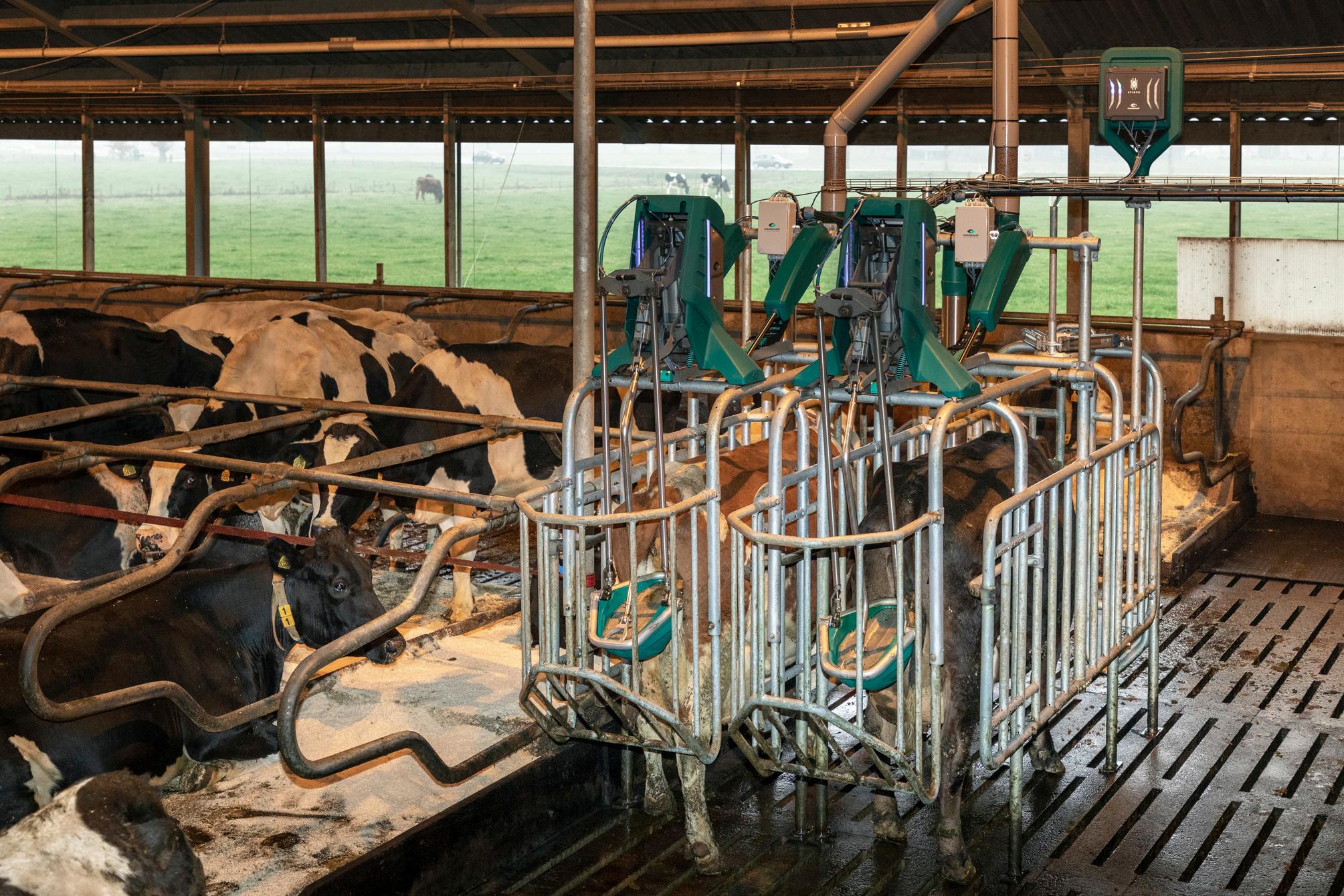
Mid-Ulster Dairy Services
21a Donaghrisk Road, Tullyhogue Cookstown, County Tyrone, BT80 8UU
Tel: 028 8676 5098
www.midulsterdairyservices.co.uk
Mcknight Dairy Services Ltd
Glenmaquin, Letterkenny, Co. Donegal, Ireland, Eir F92 X8C1
Tel: +353 8764 81124
www.mcknightdairyservices.com
Clarkson Dairy Services
East Witton, Leyburn, North Yorkshire, DL8 4SQ
Tel: 01969 623522 / 07703 535043 www.clarksondairyservices.co.uk
Wessex Farm Installations Ltd
The Old Cobblers, Langport, TA10 9DJ
Tel: 07867 507711
www.hanskamp.com

lanco Animal Health announced it has closed its acquisition of AHV International, a Dutch innovator in farm animal health.
The acquisition advances Elanco’s presenceintothe growing global dairy market, offering dairy producers an expanded portfolio of products that support transition cow health, wellbeing and improve productivity.
Dr. Ramiro M. Cabral, executive vice president of Elanco International says: “The AHV addition is a strategic fit for Elanco by providing innovative tools for producers and veterinarians to improve the wellbeing of dairy cows.
“AHV's portfolio meaningfully expands our solutions for sustainability, animal welfare and transition cow health, as well as for retail packaged goods.
“Together with our dedicated scientific and technical Elanco team, the integration will unite the strengths of both organizations to deliver a comprehensive solution portfolio for our customers.”
While consumer demand for milk and dairy products continues to rise globally, dairy producers worldwide face significant challenges.
Increasing accessibility and affordability of dairy products hinges on healthy and productive cows.
The World Organization for Animal Health reports 20% of livestock productivity is lost to death and disease annually, impacting global food security and producer profitability.
This acquisition allows Elanco to offer more proactive nutritional health interventions that can be tailored to the individual health of each cow to meet their health and disease prevention needs whenthey’remost susceptible.
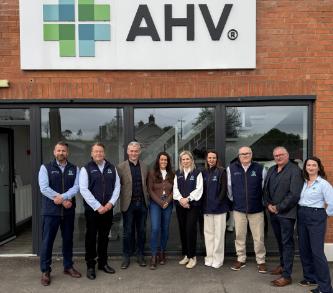
For example:
• StopLac is designed to reduce milk production in dairy cows during the dry-off process at the end of a lactation cycle.
• Additionally,AHV’s Quorum Sensing Technology,based on plant-derived extracts disruptsbiofilm formation,exposing pathogens to the animal’s natural immunesystem. Helping the animal’s own immune system better fight disease reduces the need for antibiotics.
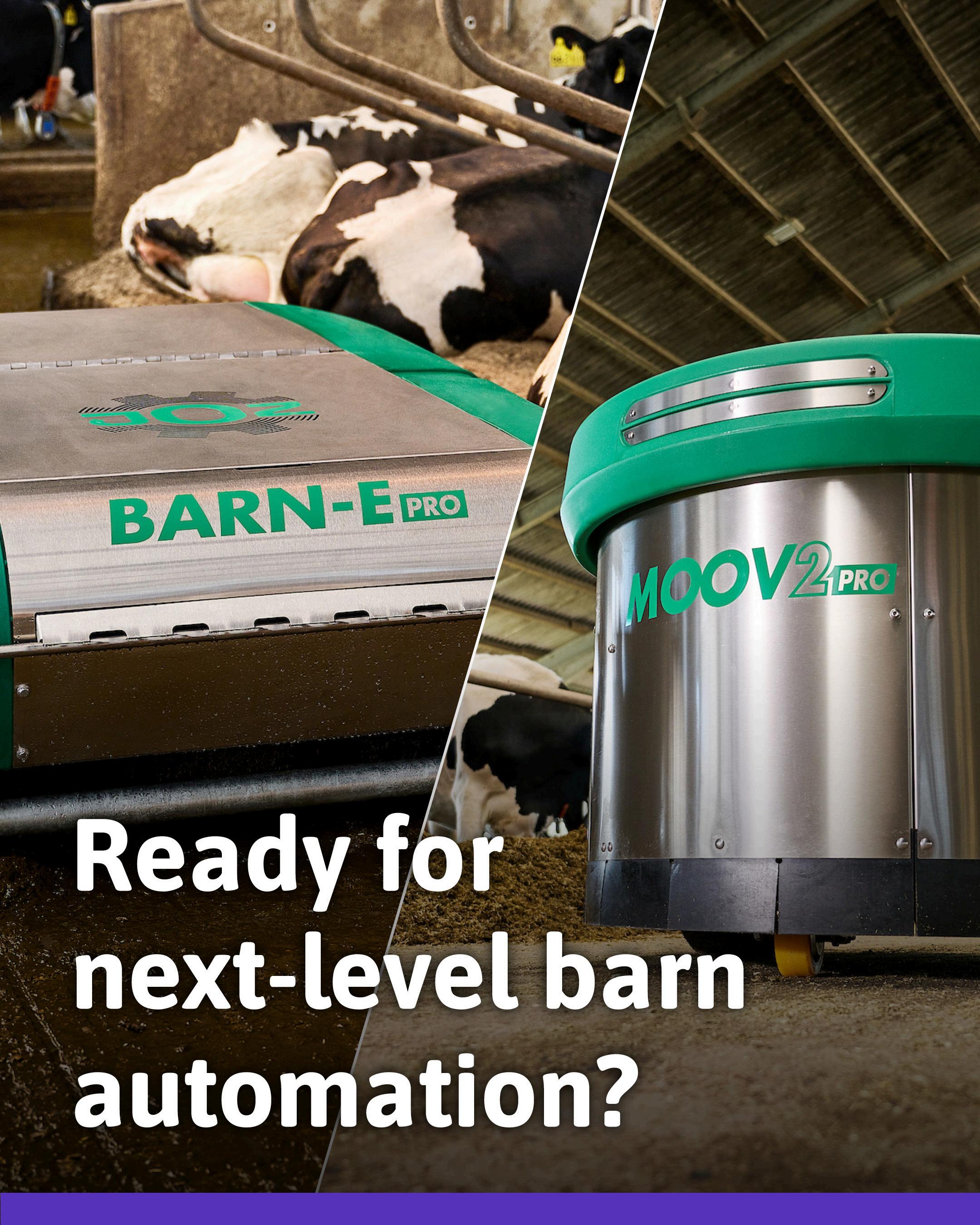
Elanco aims to enhance global accessibility of these innovations. By combining Elanco's scientific rigor, technicalteamsand strong distribution experience, these have the potential to
become essential tools for the dairy industry, leading to improved animal well-being and further reducing the need for antibiotics on farms.
To learn more about this expanded portfolio of solutions, visit: https://ahvint.com
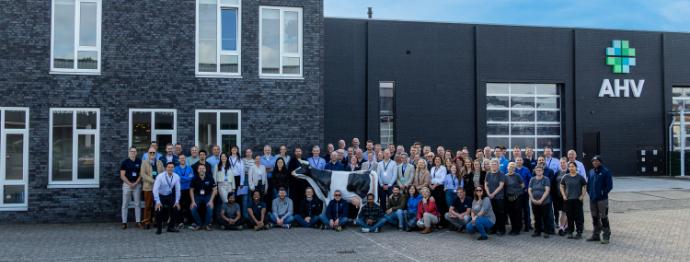

James Holding Dairy Engineering
Unit 18, The Gardens, Malton Road, York, YO32 9TN
Office Tel: 01904 400449
James: 07807704884 info@jamesholdingengineering.com
Mcknight Dairy Services Ltd
Glenmaquin, Letterkenny, Co. Donegal, Ireland, Eir F92 X8C1
Tel: +353 8764 81124 www.mcknightdairyservices.com

Unit 17, Stainton Grove industrial estate, Barnard Castle, DL12 8UJ
Office Tel: 01833 625361 Mobile: 07828532868 www.gawengineers.com

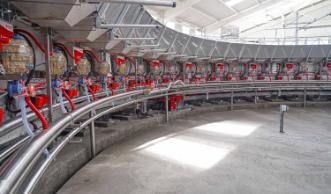
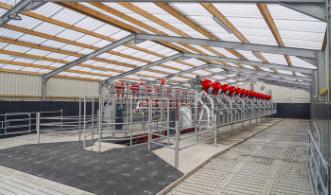
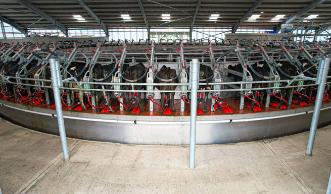
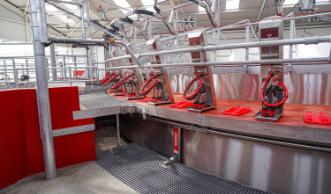
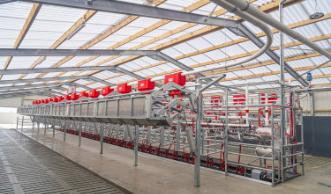
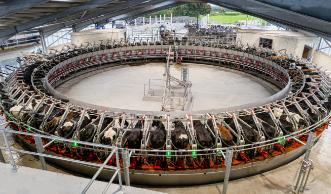
Established in 1948,Pearson Milking Technologyis a third-generation Irish engineering company with over 76 years of experience designing and manufacturingmilking parlours and dairy automation systems. From its headquarters inAthy, Co. Kildare, Pearson suppliesherringbone, double-up, rotary, and rapidexit parloursto dairy farms in over20 countries worldwide.
At the heart of every Pearson system is a commitment toengineering excellence, cow comfort, and milking efficiency. The company combines decades of craftsmanship with the
latestsmart technology and data-driven innovationto help farmers improve herd performance, reduce labour, and enhance overall dairy efficiency.
Through continuous product development and close collaboration with farmers, Pearson ensures that each system is tailored to meet the demands of modern dairy farming — balancing technology with reliability in every design.
Built on heritage, powered by innovation, and trusted by farmers globally, Pearson remainsthe farmer’s partner of choice — and The Smart Dairy Choice.
Average carcass weights have increased steadily at Newford Suckler Demonstration Farm due to continued improvements in genetics, grassland management and overall system efficiency, according to a new report.
The reportBreeding Efficient & Profitable Sucklerswas released as part of Newford's Suckler Breeding Open Day on Wednesday, April 22.
It shows that the average carcass weights being achieved at the farm in Athleague in Co Roscommon have increased steadily over time, rising from 341kg in 2017 to 372kg in 2025 for steers and 291kg in 2017 to 331kg for 2025 in heifers.
The report, produced by Tegasc, the agriculture and food development authority, in partnership with Dawn Meats and with the support of McDonald's, shows that both steers and heifers have consistently achieved R= conformation and 3= fat score over the last eight years at Newford while being fit for slaughter and meeting market specification at between 18 and 22 months of age.
farm, it seeks to demonstrate sustainable and profitable suckler-to-beef production. Founded in 2015 in Athenry in Galway, it moved to Scrine in Athleague in Co Roscommon in 2024.
TheBreeding Efficient & Profitable Sucklersreport was released yesterday as farmers, members of the media, students and other stakeholders, attended Newford's Suckler Breeding Open Day. The practical, on-farm event featured demonstrations and talks on improving herd performance and reducing labour through smarter tools and management plans.
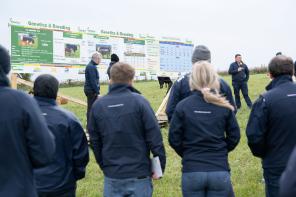

Attendees learned how the Newford herd is composed of high replacement index cows comprised of Angus x Friesian, Hereford x Friesian, and Aubrac x Friesian crosses. These specific genetics were selected to ensure optimal milk yield, high fertility, docility, and a moderate mature frame.

It says the consistent ability to meet market specification maximises carcass values, avoids price penalties and improves predictability of Newford's returns. It also allows cattle to be finished efficiently off grass-based diets, reducing reliance on concentrate feed, lowering production costs and improving labour efficiency while allowing for a clear and repeatable finishing strategy.
This performance, according to the report, is underpinned by fertile and efficient cows, the use of 5-star terminal AI sires and a tight and compact breeding season, all of which ensure uniform batches of cattle that are easier to manage, finish and market successfully year after year.
On farm improvements, the report details a number of water protection works carried at Newford under the Farming for Water European Innovation Programme (EIP). In total, Newford received just over €18,000 in EIP funding and this was invested in two farmyard settlement tanks, three constructed wetland ponds and farm roadway rain bars, with each playing a specific role in improving the farm's overall water‑management system.
Newford Suckler Demonstration Farm is a joint project operated by Dawn Meats and Teagasc with support from McDonald's. A commercial research
According to the new report, 81 cows and heifers calved at Newford in 71 days in 2025 from January 31 to April 11, with an average calving score of 1.5 out of 4 - the vast majority unassisted or needing only minor help. A total of 85% calved within the first six weeks, compared to a national average of just 56%. Of the replacement heifers that scanned in-calf, all calved at 24 months of age, compared to a national average of just 19%.
The report also shows that 2025 gross output at Newford was significantly higher than in previous years, driven by a combination of stronger beef prices and improved weight gain. As variable and fixed costs remained broadly stable, the farm achieved its highest-ever net margin.
Niall Browne, CEO of Dawn Meats, said:"We are pleased to partner with Teagasc and McDonald's on another successful open day at Newford Farm and to release our Breeding Efficient & Profitable Sucklers report. At Newford, we are seeking to both achieve and demonstrate sustainable and profitable suckler-to-beef production, so it's great to have the opportunity to share our latest results and findings with farmers, students and the wider farming and agriculture community. Our new report shows that Newford continues to highlight how targeted management decisions, smart technologies and data-led practices can achieve mensurable improvements in herd performance, labour efficiency and overall financial returns."

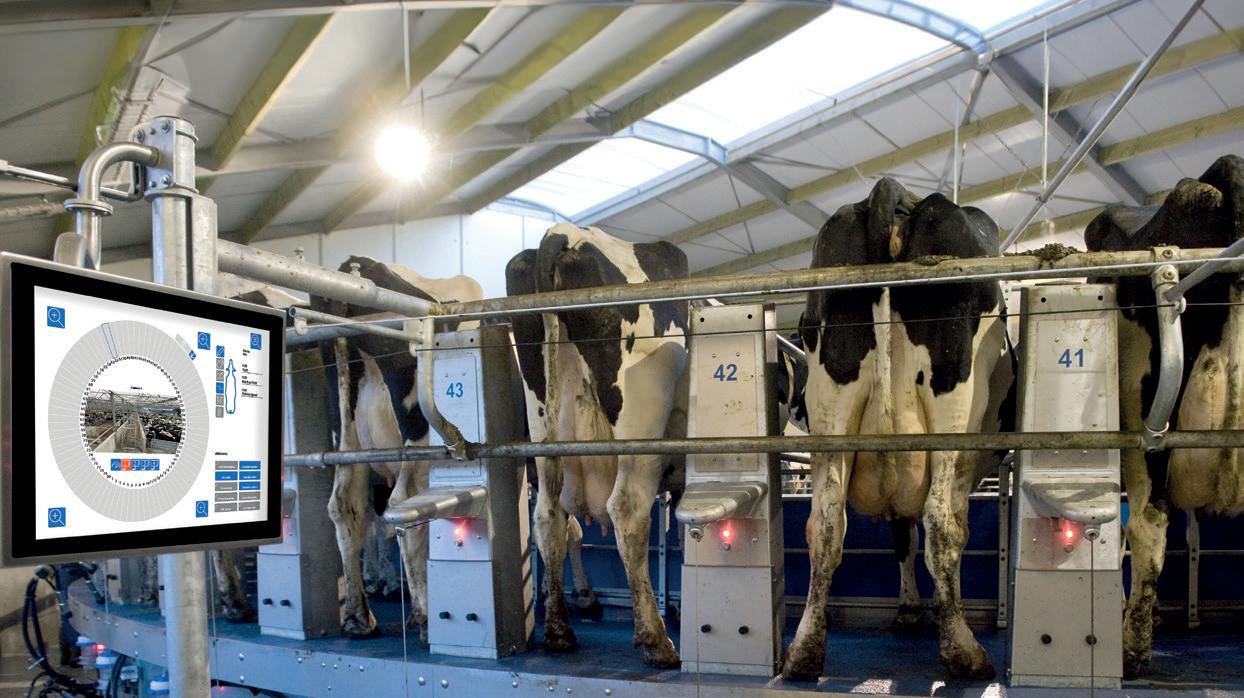

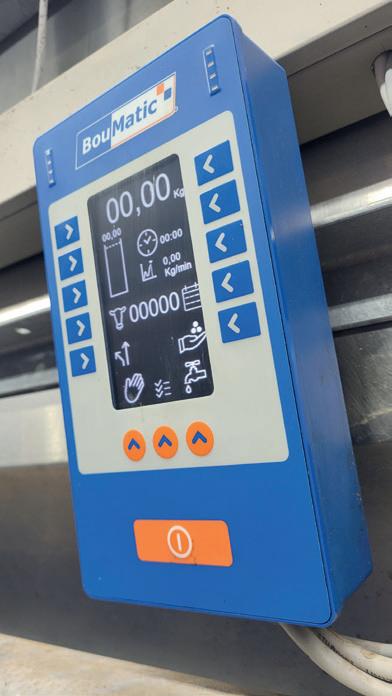
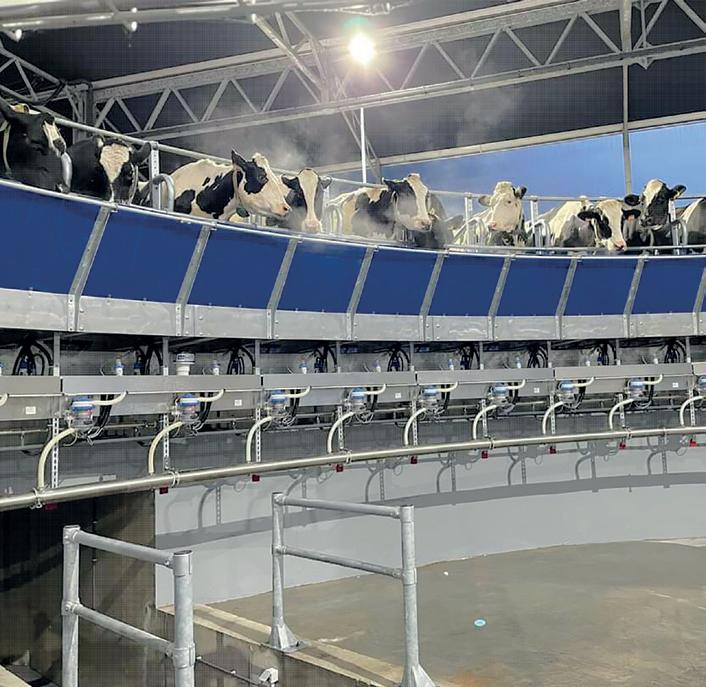
Continuing low slaughter through the final quarter of 2025 supported prime cattle availability in Scotland at the start of 2026, with the latest population data pointing to early signs that supply‑side pressure may be easing slightly, albeit from a very tight base.

The number of males and beef‑sired females aged 12–30 months in Scotland was up 0.8% year on year, marking the first quarterly increase since July 2024. This improvement reflects subdued slaughter rather than any fundamental loosening of supply but nevertheless represents a notable shift after an extended period of decline.
particularly tight. Numbers of cattle under six months were down 2.8% in January, suggesting constrained volumes at spring sales. While improved calf availability in England and Wales may soften competition from English buyers, limited Scottish numbers are likely to remain the dominant feature.
Under‑30‑month slaughter in Scotland fell faster during 2025 than population data alone would suggest, signalling reduced slaughter rates as producers responded to tight numbers and firm prices. Any partial rebound in slaughter rates during 2026 is expected to have only a limited impact, with modelling indicating that any increase in Scottish kill would be capped at under 1%. Reduced heifer kill, as producers focus on stabilising breeding herds, continues to restrain slaughter throughput.
Commenting on the latest position, Iain Macdonald, Quality Meat Scotland's Market Intelligence Manager, said: "We are starting to see some marginal improvements in the headline population data, but it's important to stress that this is coming off a historically tight base. The market remains very finely balanced, and while the pressure has eased slightly, cattle availability through 2026 will continue to feel restricted."
Tightness remains evident in older prime cattle, although the rate of contraction has slowed, with numbers aged over 30 months down 2.7% from a year earlier. Availability in the key 18–24 month category was effectively stable for a second consecutive quarter, declining by just 0.1%. More positively, a 3.6% uplift in cattle aged 12–18 months should help support prime supplies in the second half of 2026, if current trends are maintained.
Store cattle markets remain finely balanced. Prices have made a strong start to the year at Scottish auctions, but availability of longer‑keep stores looks
Net outflows of cattle from Scotland remained elevated last year but eased slightly, helping to moderate the decline in kills at Scottish abattoirs. Lower movements to English farms and auctions in the second half of 2025 suggest that net outflows are unlikely to increase again in early 2026.
The breeding herd remains under pressure, although the pace of decline is slowing. In January 2026, there were 395,000 beef‑sired females aged 30 months and over on Scottish holdings, down 1.7% year on year, the smallest reduction since October 2022. Early‑March data points to a further easing in the rate of decline, although reduced numbers of beef‑sired females aged 24–30 months continue to limit short‑term recovery.
At a GB level, near‑term supply remains extremely tight. Numbers in the most important slaughter age groups were down 3% at 18–24 months and 6% at 24–30 months, driven largely by sharper declines in England & Wales. A stronger calf crop in spring 2025 is expected to support availability by summer 2026, but reduced heifer slaughter and ongoing herd contraction mean supply conditions will remain constrained in the meantime.
Overall, the latest indicators point to marginal improvement rather than recovery. While productivity gains and easing outflows have slightly improved the balance, beef cow numbers remain critically low, and supplies through 2026 are expected to stay tight, with any easing likely to be gradual rather than immediate.
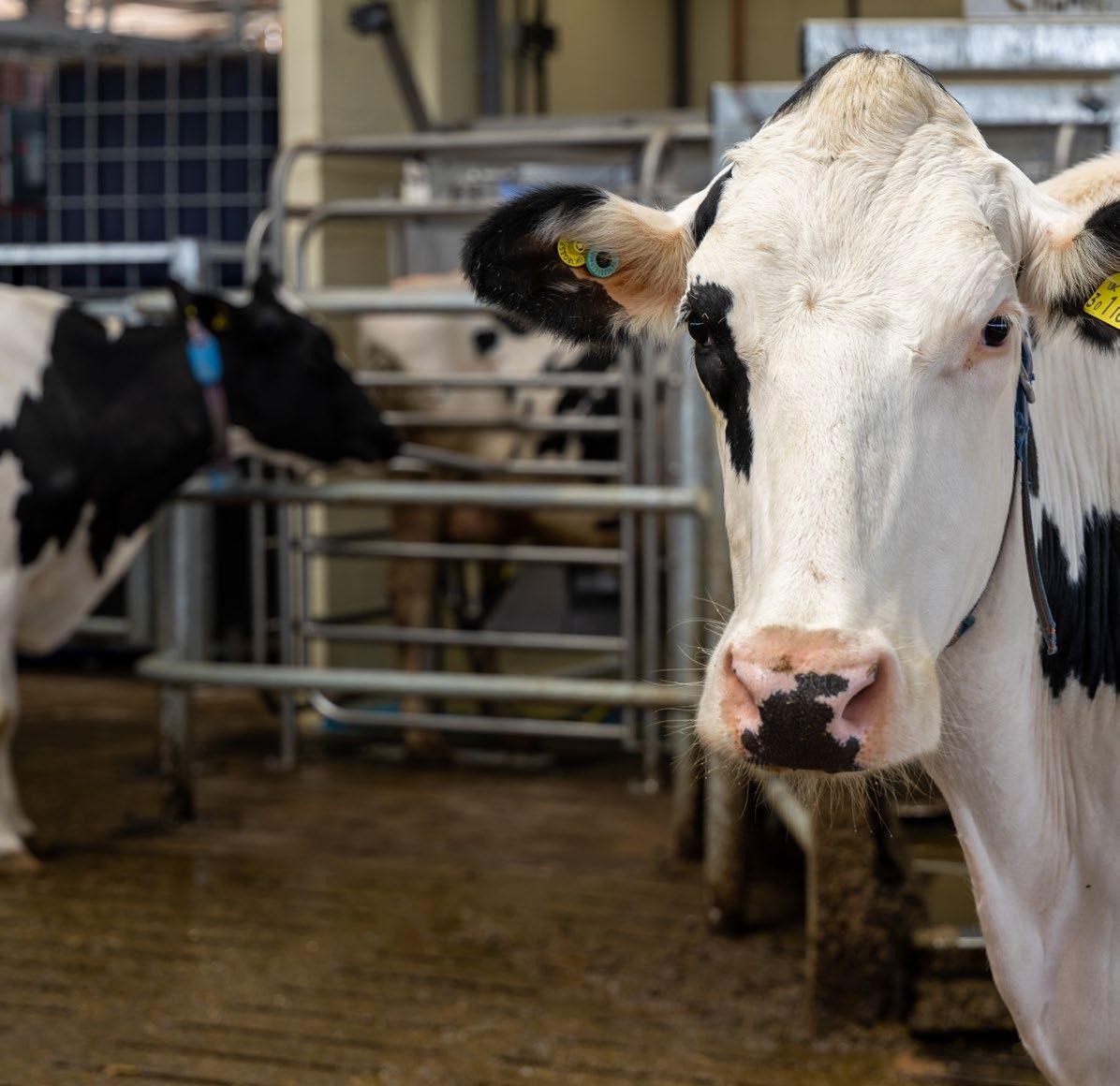
Churchill Dairy & Parlour Services
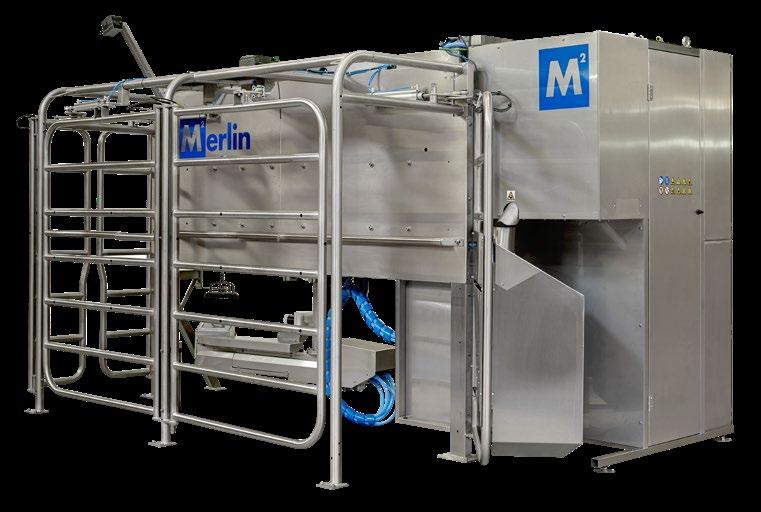
Goddards Farm, Sturminster Newton, DT10 2AZ
Tel: 07885371731
office@churchillsdairyandparlour.co.uk
Holding Dairy Engineering Unit 18, The Gardens, Malton Road, York, YO32 9TN
Office Tel: 01904 400449 James: 07807704884 info@jamesholdingengineering.com Fernshire Ltd
Chapmans Farm
Pristling Lane, Staplehurst, TN12 0HH
Tel: 01580 891199 www.neguschaseltd.co.uk
Wallace Engineers Ltd Unit 17, Stainton Grove industrial estate, Barnard Castle, DL12 8UJ
Office Tel: 01833 625361 Mobile: 07828532868 www.gawengineers.com
CalfExpert is a calf feeder that has been developed to meet the latest standards in calf feeding. State-of-the-art feeding technology ensures that the milk for the calves is always freshly mixed. It does not matter whether milk replacer or pasteurised whole milk is used. CalfExpert prepares the milk automatically and individually for each animal.
You, as farmer, remain completely flexible in your work schedule while calves are fed 24/7. The calf feeder takes your calf rearing management to a whole new level.
Intuitive operation via the graphic display and the link to the CalfGuide mobile app make it easier for you and your team to monitor your animals. All the information about your calves, status reports and alerts are at your fingertips in the app and directly on the calf feeder at all times.
Different feeding programmes form the basis of successful and performance-oriented calf rearing in automatic calf feeding. Labour savings and complete supervision included.
Individual animal feeding
Feeding a large number of calves with a fresh mix adapted to each individual calf is a major challenge. CalfExpert makes it child's play.
Always freshly mixed
The CalfExpert calf feeder mixes the milk fresh for each calf. Any residual milk is kept warm and flushed out of the system following longer drinking breaks. Other calf feeders work with a central milk supply. In milk stored this way at 40 °C, the bacterial count doubles every 20 minutes. In contrast, the CalfExpert guarantees maximum hygiene and feeding suitable for every individual animal.
Individual adaptation
A central milk supply has another major disadvantage:
Feed calves automatically.
Organise feed changes gently: milk mixed freshly and precisely matched to the calf.
For healthy and productive calves.
modern feeding programmes (e.g. metabolic programming) require a higher CMR concentration (e.g. 160 g/l) at the beginning of rearing to stimulate performance. However, a lower milk replacer powder concentration (130 g/l) is necessary in the weaning phase. This individual animal feeding can only be achieved if the mix is prepared individually for each calf, as is the case with CalfExpert.
We have accelerated the mixing process and the change of calves in the CalfExpert, thereby optimising utilisation of the HygieneStations.
Milk is mixed quickly and can be called up at the feeding station after just 3 seconds. Once the milk meal is finished, a switch is immediately made to the second feeding station. Here, a second calf can be fed immediately while the first is still satisfying its need to suckle.
In addition, priorities can be specified in the CalfExpert menu so that young or sick calves are given preferential treatment. The tried and tested flexitime programme ensures that meals are distributed very evenly throughout the day without clusters of visits to the stations. The result is reduced waiting times with high animal occupancy and a positive "visiting experience" for the calves.
Since CalfExpert does not restrict feeding to certain times of day, calves can come and feed at any time. Your calves will no longer see you as a nurse and will therefore remain calm when people enter the barn. Younger and weaker calves have all the time they need to consume their full ration.
As the CalfExpert also works with an intelligent credit logic, all calves have a feeding credit at a different time. As a result, fewer animals crowd around the station. The anti-pirate milk valve ensures that stronger calves do not steal milk. The result: extremely uniform, relaxed groups
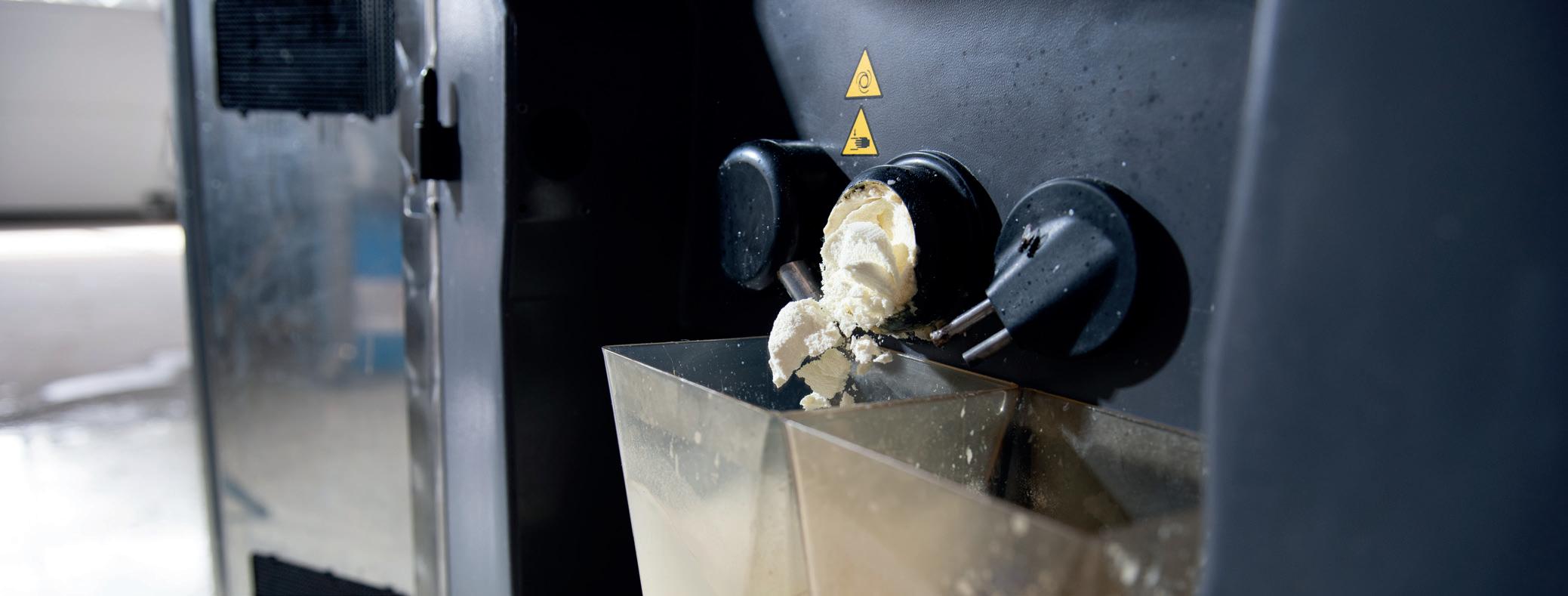
of calves.
QuadroFlex: simultaneous and yet flexible feeding
With the new QuadroFlex system, four calves can feed at the same time at two PowerMixers. The CalfExpert mixes the milk freshly when calves wish to drink. This means no tank supply system is required. The feeding quantity is determined precisely for each calf by maintenance-free sensors. If a calf requires a special mix e.g. including medicine or electrolytes, only the sister stall at the same PowerMixer is switched off. Feeding continues at the second Power Mixer at both stations. This allows 120 calves to be fed at 4 HygieneStations. Thus the capacity of the CalfExpert has been increased by approx. 20 – 30 % compared to its predecessor H&L100.
Flexible feeding programmes
Modern feeding programmes should always adapt to the age and breed, personally set rearing goals and state of health of the calves. CalfExpert allows you to do all this in the optimum way.
Weaning process
CalfExpert prepares your calves in a particularly gentle way for the intake of concentrate and roughage. It reduces the amount of feed at the end of rearing in small steps of 0.1 l per day and thus stimulates the development of the forestomach system.
8 feeding curves
CalfExpert can be used to turn any feeding programme into reality. Feeding curves can be adjusted very flexibly in each of the 8 groups. Up to 16 "turning points" allow you to fine-tune your personal feeding concept down to the last detail. Or you decide in favour of one of the proven and pre-set CalfExpert feeding programmes.
Metabolic programming
Intensive feeding in the first few weeks of a calf's life will usually lead to significantly higher milk production later. However, the correct weaning of calves, for example after an ad libitum phase, poses particular challenges for every calf breeder. With CalfExpert, each calf is slowly weaned off high milk intake, in terms of volume as well as concentration.
Effective mixing of milk replacer powder
Flexible feeding also means that a wide range of CMRs and additives have to be prepared in an optimum and lump-free way. The continuously variable PowerMixer ensures a soft start to avoid splashing and then stirs the milk replacer powder thoroughly. This means the calf receives its freshly mixed milk directly at the teat in just 3 seconds.
The feeding process can sometimes take longer where young or weak calves are involved. We prevent the separation of the milk replacer powder by slow permanent stirring. And if it gets colder, the heater in the mixer always ensures the mix is kept at a constant temperature, for no matter how long the calf needs.
Second milk powder chamber
The new option allows the CalfExpert to feed two different types of milk replacer (CMR).
The milk powder compartment is at a 90° angle to the CalfExpert and feeds milk powder into the PowerMixer of the machine via a dosing augur on the side. The volume of 50 kg of CMR can be supplemented by a further 25 kg via the additional powder chamber. This gives the CalfExpert the largest milk powder storage capacity of any automatic feeder on the market, with a maximum powder storage capacity of 150 kg (2 x (50 + 25 kg)). Ideally, this is done in such a way that one type of milk replacer slowly takes the place of the other. This can make sense, for example, if a high-quality skimmed milk replacer is to be used in the first few weeks of life in order to promote the early development of the calves with highly digestible CMR.
Later, cheaper milk replacers can be used, whose ingredients (e.g. certain proportions of high-quality vegetable proteins) are intended to support the transition to ruminant.
Specific additive feeding
Minimal doses of feed additives can be added to the milk diet in order to stabilise the gastrointestinal system. Sick calves can be treated with medicines in the milk. You can use two powder dosing units and two liquid dosing units. As with the milk programme, you can set different feeding curves for these additives as well. This means maximum flexibility for top calf health.
EvenMilk: intelligent whole milk feeding
Whole milk is digested perfectly by the calf and results in the best performance. With the CalfExpert whole milk programme you can set whole milk proportions or supplement the whole milk in the feeing programme flexibly. What happens with your feeder when the whole milk supply has been used up? Does it then feed powdered milk? This causes changeover stress with your calves and is likely to cause digestion problems. "EvenMilk", our intelligent whole milk control, knows how much whole milk is available and how much is to be fed. It makes sure that whole milk and CMR are mixed in balanced proportions even when whole milk quantities fluctuate daily.
Clean and reliable
A calf feeder is designed to make your work easier and perform continually for 24 hours. To achieve this it has to work reliably under the rough conditions of a calf stall, like the CalfExpert does.
Hose cleaning including the teat
All hose systems used to have deposits of contaminated milk because they had not been cleaned often enough or thoroughly enough. The HygieneStation rinses the entire milk hose through to the teat during longer drinking breaks. In addition, the complete milk system is cleaned several times every day. If theDoubleJugmilk tank is used, the supply line to the CalfExpert is also cleaned automatically. This will reduce a calf’s exposure to bacteria, improve the health of the calves and save on manual cleaning.
Two cleaning agents
To optimise cleaning even further, the CalfExpert can use two different cleaning agents: either alternate with each cleaning cycle or combine in one cleaning cycle (alkaline, rinse, acid, rinse). The cleaning agent pumps are fitted on the outside. They can thus draw directly
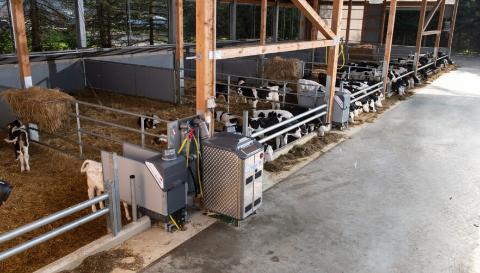
from the tanks. This is safe and convenient. In addition, the CalfExpert generates automatic messages as soon as a canister is empty.
Fly shield as standard
Two large doors protect the critical area where the mixer bowls are located. This keeps flies away from the milk and avoids problems in the milk system. The doors can be locked so children cannot be harmed or injured.
The 7″ graphic display not only allows all calf data to be conveniently viewed. Pressing the key with the book icon opens help texts and information from the operating instructions at every level of the application.
always surethat the calves have been fed correctly.
Smarter work – better performance
Kill two birds with one stone: CalfExpert not only frees you up from tedious and strenuous work. Intelligent software and smart operation also increase feeding quality.
We deliberately avoid the use of touch technology and rely instead on the use of SmartKeys, meaning that a CalfExpert can be operated reliably even in frost, rain, with gloves or even dirty fingers. The illuminated SmartKeys guide you through the programme.
The completely new control software offers maximum clarity and simple CalfExpert operation. All calf data with individual feeding curve, alarm lists, technical parameters etc. can be viewed on the 7" display. The Wi-Fi connection also allows you to retrieve individual items of data on mobile devices and to receive push notifications in the event of error messages.
Higher income thanks to improved performance

Calves love the outdoor climate, your CalfExpert does too. It comes with a frost protection programme that is activated automatically as soon as there is a risk of frost. Sensors in every HygieneStation and in the CalfExpert mixing chamber measure the ambient temperature and then adapt the mixing temperature and intensity of the frost protection programme accordingly. You can clean the outer surfaces of the automatic feeder with water, since all the sensitive components are water spray-proof.
Regular inspection of the technology is easy: you can test all the important CalfExpert components quickly and easily in the maintenance menu. You can also carry out calibration quickly yourself, because the software always tells you exactly what to do. We recommend that you have your CalfExpert serviced by a qualified technician at least once a year. This provides you with the peace of mind that the automatic feeder will be ready for the next rearing cycle.
The CalfExpert checks the flow rate of milk and water at regular intervals. ensuring a consistent amount of water for the calves without your needing to actively worry about it. Although this unfortunately does not apply to the amount of powder, the machine will remind you as soon as calibration needs to be performed. However, with its Brix-TS option, CalfExpert compensates for deviations in the mix concentration, so that you are
Calves supplied with a lot of energy start lactation at an earlier age and produce more milk later on. CalfExpert also provides you with the best prerequisites for optimum animal health. This means a lower death rate and more animals in the herd reared from your herd offspring. This in turn gives you the opportunity to select the offspring in a targeted manner and to sell surplus heifers at a profit. And last but not least: by saving working time, you are freeing up capacities on your farm that can be used profitably.
CalfExpert comes with a WiFi interface as standard. The CalfGuide app allows you to access important information directly on your mobile phone. This includes the general calf feeder data and details of the calf lists with the entire calf history. You can easily modify calf information and feeding curves in the app. The CalfExpert also sends messages when the cleaning containers are empty, for example. A particularly practical feature is a health check, which allows you to objectively assess the health of your calves.
Ammonia irritates the mucous membranes of calves, even in small doses. This can lead to bronchitis in the long run, which can soon turn into pneumonia. Ammonia is only perceived as an odour when it is already in the harmful range. AmmoniaDetect is an electrochemical sensor that permanently measures ammonia levels in the barn air. It is installed directly in the lying area, protected from the calves by a pipe. CalfExpert analyses the measured values continuously and documents them in a chart. This enables you to optimise the ventilation of the calf barn and determine the best time for mucking out.
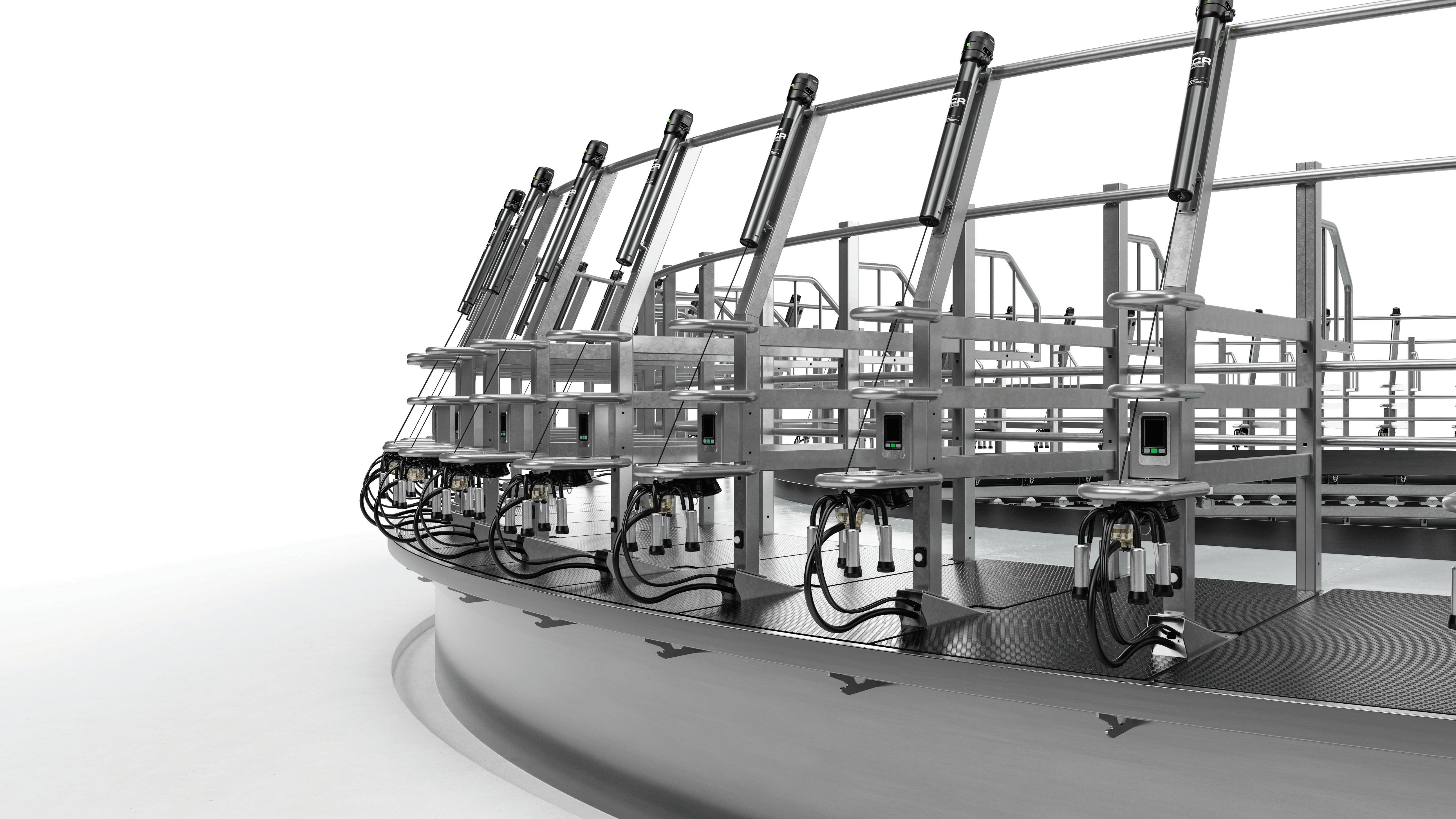

James Holding Dairy Engineering
Unit 18, The Gardens, Malton Road, York, YO32 9TN
Office Tel: 01904 400449
James: 07807 704884
The Old Cobblers, Langport, TA10 9DJ
Tel: 07867 507711

Getting heifers developed, inseminated early and confirmed pregnant plays a significant role in the lifetime productivity of beef and dairy cows.
"Replacement heifers are an investment in the future of beef and dairy operations," says Joe Dalton, Ph.D., professor and extension specialist in dairy cattle reproduction at the University of Idaho. "It takes two years to raise a heifer before she starts generating returns."

Achieving a successful pregnancy from first service breeding, especially when practicing artificial insemination (AI), has the most potential to realize the greatest return on investment for their development.
"There is a difference between an animal that calves at 23 months versus 29 months of age," says Dalton. "The longer it takes to get a heifer bred, the more it increases management costs and lowers their lifetime potential."
Age at first calving directly impacts the productivity and longevity of beef and dairy replacement heifers. With current calf values, early calving heifers offer greater profit potential for beef and dairy producers.
"Earlier first calving in beef herds brings greater longevity and more lifetime weaned pounds," says Dalton.
Ideally, beef heifers are selected from cows that calve early in the breeding season so they have more time to develop and can then be bred on first service to calve at the start of their first calving season.
"Heifers that calve early tend to keep calving early and produce more weaned pounds," says Dalton. "Late-calving heifers rarely catch up or pay off on their $1,500 to $2,500 development costs."
Most dairy farms don't have the same seasonality as beef herds, since calving occurs year-round to keep a steady stream of cows in milk, but the same thinking holds true.
"The goal for dairies is to develop heifers that are approximately 22 to 24 months of age at calving," says Dalton. "The data shows that dairy heifers calving in that age range have more longevity and
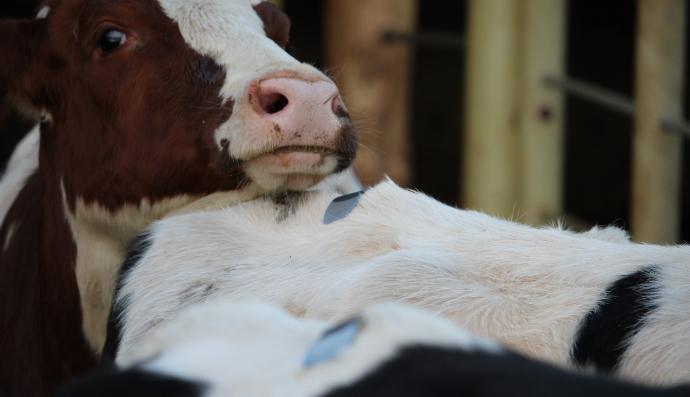
produce more lifetime milk than older heifers at first calving, which can help sooner recoup development costs that can exceed $2,500."
Set up for reproductive success
For heifers to conceive on first service and stay productive, it begins with good management practices early in life.
"It all starts when the heifer is born," says Dalton. "And that sounds like a cliche, but it's not, because that heifer will carry all of her life experiences with her."
Beef and dairy heifers require high-quality colostrum after birth to support their immune systems. Then health must be maintained through vaccinations, deworming and timely treatment of illnesses. Ensure nutrition supports growth to at least 55% of mature weight by breeding at 13 to 15 months of age.
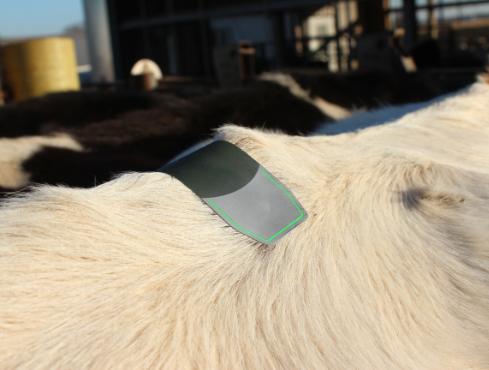
"Data has revealed that high estrus intensity leads to increased pregnancy and decreased pregnancy loss for cattle."
"With nutrition, heifers need to stay in appropriate condition to have the best reproductive outcomes," says Dalton. "Fertility is lower when they are under- or over-conditioned. It needs to be just right."
Dalton recommends that dairies have heifers at a body condition score (BCS) of 2.75 to 3.25 on a 5point scale. Beef operations should have heifers at a 5 to 6 BCS on a 9-point scale.
"Having heifers at those benchmarks is really beneficial for overall fertility," says Dalton.
Breed heifers on time
Once heifers are developed to their target size goals, it's time to begin a breeding program. There are some variances in AI breeding protocols between mature cows and heifers.
"The difference is that while heifers respond to synchronization protocols the same as cows, there's a little bit of variation in heifers in the number of follicular waves," says Dalton.
A vital component of a breeding protocol to ensure success is to utilize estrus detection through tools, such as an ESTROTECT Breeding Indicator, to accurately gauge estrus intensity.
"Determining when estrus intensity is at its highest is incredibly important to fertility because the pieces of the puzzle are all where they should be when it comes to hormones and the reproductive tract being ready for insemination," says Dalton.
Estrus detection aids, such as breeding indicator patches, help monitor estrus activity and provide a quick visual indication when heifers reach high estrus intensity.
"Accurate estrus detection tells us a heifer is ready to breed," says Dalton. "Synchronization protocols can combine estrus detection and AI or timed-AI for better pregnancy rates."
Heifer-specific protocols have been developed by theDairy Cattle Reproduction Council (DCRC)and theBeef Reproduction Task Force (BRTF)that can be accessed on their websites for specific details. A cattle reproductive specialist can also help identify which protocol will work best to breed heifers.
"By implementing quality management protocols, you're better controlling the investment in developing heifers so they can become productive members of the herd," says Dalton. "For both beef and dairy producers, earlier age at first calving results in lower costs and higher lifetime productivity."
For more information on accurately breeding heifers with breeding indicator patches, visitESTROTECT.com
The ESTROTECT Breeding Indicator is the industry standard for optimizing cattle breeding efficiency and economics. With millions and millions of units sold around the world, ESTROTECT is the only breeding management tool tested in a multitude of university studies by researchers.

Dairy producers from across the UK are invited to one of the year’s standout on-farm events, as the RABDF NMR Gold Cup Open Day heads to Cornwall on 30 June 2026.
Hosted by 2025 Gold Cup winners Treveale Farm, the event offers a rare opportunity to step inside a high-performing, progressive dairy business and take home practical ideas ready to implement.
Far more than a traditional farm walk, the Open Day will feature a packed programme of interactive talk stations, live demonstrations and more than 30 trade stands.
RABDF Chairman Robert Craig said: “Treveale Farm is a fantastic example of a business continually evolving and investing for the future. Visitors will see how the system works and, with so much to explore, there is something for everyone.”
Treveale Farm has undergone significant transformation in recent years, including a new dairy in 2018 and a purpose-built youngstock facility completed in 2023. Run by Paul and Wendy Broad, alongside sons David and Philip and Wendy’s brother Irwin Morrow, the 280ha unit is home to the 471-cow Maymor Holstein herd, plus 461 youngstock.
The day will open with an update on milk market trends from industry analyst Chris Walkland,
followed by insights from the Treveale team on system design, investment and long-term planning.
Technical sessions throughout the day will bring key topics to life, from slurry management, including seeing the farm’s slurry separator in action, to herd health and Johne’s management, nutrition, and business and tax planning.
Alongside the technical programme, the event will have a strong social element, with complimentary food and drink throughout the day, including a whole ox roast from The Whole Ox Roast Company, Cornish cream teas and free ice cream.
Entry is free, but advance registration is required at 2026 RABDF/NMR Gold Cup Open Day Tickets, Tuesday 30 June • 10 AM - 4:30 PM | Eventbrite

eeding dry cows correctly is a critical factor in dairy herd health, productivity and profitability, and there is a fine balance to be found, according to leading research.
Speaking at a nutritional masterclass organised by Mole Valley Feed Solutions, Professor James Drackley of the University of Illinois highlighted the risks of overfeeding dry cows, even when body condition score (BCS) appears unchanged. This ‘hidden overfeeding’ can lead to metabolic diseases, reduced feed intake after calving, and lower milk yields at a time when dairy producers face increasingly tight margins.
Promoting what he terms the “Goldilocks” approach, Prof Drackley emphasised the importance of balance. “You want to provide 90-110% of cows’ energy requirements consistently, and with adequate other nutrients,” he said. The aim is to calve cows at a BCS of three, avoiding excessive energy intake throughout the dry period.
Research showed that cows fed 100% of their energy requirements outperformed both underfed and overfed groups, producing 29.7kg/day of milk in the first 10 days post-calving, compared to just 26kg/day in overfed cows. Overfeeding also resulted in insulin resistance, reduced dry matter intake (DMI), and increased risk of subclinical ketosis.
Further findings showed that controlling energy intake can significantly reduce health risks, including a fivefold decrease in displaced abomasum and a 2.1-times lower risk of ketosis, while also shortening time to pregnancy by 10 days. “It’s a win-win,” Prof Drackley noted.
particularly for close-up cows. “Close-up cows will need a 13% (7.8% MP) crude protein diet – but might need more,” said Prof Drackley.
Attention is also turning to amino acid balance, particularly lysine and methionine.
Supplementation in rumen-protected form has been shown to increase milk yield by up to 2kg/day and improve milk fat and protein content.
Research commissioned by Mole Valley Farmers demonstrated that targeted feeding strategies with rumen-protected amino acids can deliver measurable financial returns. Improvements in milk components translated into an additional £60/cow over 12 weeks after calving, delivering a 2:1 return on investment.

High-energy diets increase visceral fat deposits, which release inflammatory compounds known as cytokines. These contribute to chronic inflammation, impaired liver function and weakened immunity. “Modest overfeeding could lead to a >75% increase in visceral adipose tissues that drain directly to the liver.”
Alongside energy management, updated guidance on protein nutrition suggests significantly higher metabolisable protein (MP) requirements,
Dr Chris Bartram, Head of Nutrition at Mole Valley Farmers, said the findings have already informed new product development. “As a result of this research and work with James, we have developed a bespoke new feed range for feeding both pre and post calving,” he said.
With metabolic health, milk quality and profitability closely linked, the message is clear: Achieving the right nutritional balance during the dry period is essential for modern dairy success.
For more information visit www.moleonline.com
armers are being urged to take a preventative approach to mycotoxin management to protect herd performance following findings which identified the toxins in over 90% of feed and forage samples.
776 animal feed and forage samples were tested in the UK & Ireland in 2025 as part of Volac’s Mycocheck service, with 93.2% of those positive for one or more mycotoxin.
Mycotoxins are produced by certain moulds which can grow on bought-in feeds and home-grown silages. These invisible toxins have wide-ranging effects including reduced feed efficiency, suboptimal yields, poor fertility and mastitis.
Mycocheck tests for 31 different mycotoxins and assigns a risk score to each based on how likely they are to impact the cow so mitigation strategies can be put in place.

Rob Furmage, Scientific Services Manager for Volac says the results show that mycotoxins could be “silently eroding profits” on many farms.
“The data is quite stark and highlights that nearly all farms could be facing a hidden mycotoxin challenge,” he explains. “Even at low levels they can cause depressed milk yields, you might not even know cows could be achieving more. With low milk price, farmers can illafford any drain on performance.”
Wholecrop and concentrates were found to be particularly high risk with 100% of samples testing positive, followed by 99% of maize silage samples (see table).
Deoxynivalenol (DON) and Zeralenone (ZON) mycotoxins, which are produced by Fusarium moulds, were found most frequently (71% and 49% of samples respectively). Both have wide-reaching impacts, for example DON can cause immunosuppression or immunostimulation, whilst ZON can lead to reduced fertility.
The results also highlight the variability in mycotoxin risk both within the same year and between farms. Analysis showed that various high risk geographical “hot spots” emerged through the year, which could have been linked to buying-in high risk imported maize-based feeds or environmental stress in a particular region, for example. Mr Furmage says it underlines the unpredictability of mycotoxins.
“Not all moulds will produce mycotoxins, but a mould is more likely to produce a mycotoxin if it is stressed. That means they can rapidly become an issue, for example very wet or very hot weather might trigger them. This means herd challenge can very quickly escalate leading to herd level issues such as poor fertility and reduced feed intakes,” he explains.
This underlines the value of taking a preventative approach and including the triple-action mycotoxin remediator and endotoxin binder, Ultrasorb in diets at feed-out.
“Unlike a straight clay binder which simply binds a small number of mycotoxins, Ultrasorb binds, transforms and degrades a wider range using a combination of specifically selected clay binders, yeast fractions and biological active agents. This makes it effective against mycotoxins that are difficult to bind such as DON and ZON,” Mr Furmage explains.
It is available through Trident MicroNutri in the UK and can be incorporated into the diet in multiple ways including in blends, minerals or as part of a farm pack.
Mr Furmage adds: “Any drop in milk production because of mycotoxin challenge can be hugely costly and take time to recover compared to feeding Ultrasorb preventatively which costs pennies per cow per day. It’s a no brainer, particularly in the current market.”
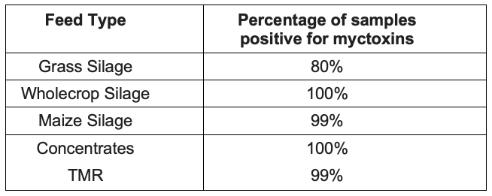
Feeding garlic to cattle and sheep as a natural insect repellent can help to reduce problems caused by flies, midges and ticks, according to Rumenco Technical Services Manager Dr Alison Bond.
Including it in mineral and vitamin licks, she says, could in many cases be a costeffective addition to livestock farms’ pest control strategy, especially given the increasing threat resulting from climate change.
“The warmer and wetter conditions that we are seeing in the UK are undoubtedly increasing the threats posed by flies and other biting insects,” she adds. “The length and intensity of risk periods is becoming greater, so farmers need to challenge their traditional control methods and consider what else they can do to combat the challenges.
mineral, vitamin and trace element bucket range with garlic included, specifically to help reduce the impact of flies and other biting insects.
“Livestock farmers will be all too familiar with the range of diseases that are caused by flies and other insects, whether it’s longstanding issues like flystrike in sheep or summer mastitis in cattle, or newer threats such as Bluetongue and Schmallenberg. There is also the nuisance element to consider, which is known to affect feed intakes and performance.
“Research has been done on the effects of ‘fly worry’, with liveweight gains in growing cattle shown to be reduced by 0.3kg/day and milk yields in dairy cows dropping by as much as 0.5l/day as a result of fly-related stress and disruption.”
Rumenco now includes an option within its Supalyx
“We include a garlic oil extract in Supalyx Garlic because it has been proven in research to deter flies, midges and ticks, potentially reducing infestations around livestock,” explains Dr Bond. “Firstly, the garlic will minimise the attraction of flies and other insects to the buckets, despite them being molasses-based. The animals then spread the garlic with their muzzles, through grooming of themselves and others, and there is then a degree of garlic secretion, all of which acts as an effective deterrent.
“The full economic impact of flies, midges and ticks is difficult to evaluate and will vary from farm to farm, but there’s little doubt that it can be significant and is increasing. Conventional control methods, such as pour-ons, are important, as are management priorities around farm hygiene and grazing site selection, for example, but there will be a place on most farms for the addition of garlic as a natural deterrent.

“Including garlic as part of a feed bucket that is also providing essential minerals, vitamins and trace elements is an efficient and cost-effective solution, requiring no additional labour input or stock handling.”
Rumenco’s Supalyx Garlic buckets provide an optimal balance of minerals, vitamins and trace elements, to complement grazing or conserved forage, and are suitable for all classes of cattle and sheep.
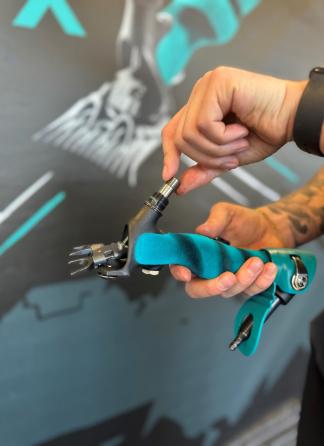
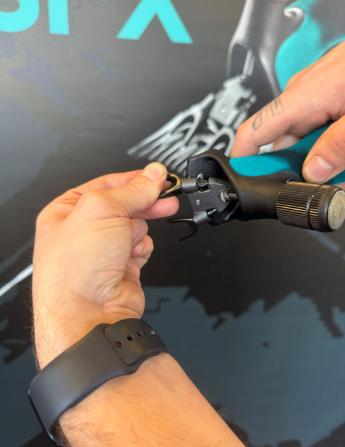
As temperatures rise, shearing sheep becomes a priority. But when dusting off your handpiece, what do you need to consider before shearing your first sheep? We got some tips from Heiniger’s Hefin Rowlands:
“There is no substitute for good maintenance when it comes to a shearing handpiece. Checking combs, cutters, greasing, oiling and tensioning are all vital to making sure you get a close, clean cut,” says Hefin.
“After last year’s hard work, your handpiece is likely to need a thorough check over. Start with the chicken feet at the top and make sure these are loose and free moving. Take the tension knob off and make sure the sliding sleeve is also free moving. Take out the fork body and give it a good clean before greasing the tension pin cup and fulcrum cup. However, beware not to change the fulcrum post height. This should be left in its factory position,” he says.
2. Cleaning
“Some parts of a handpiece can be cleaned with just hot water. Make sure to channel water down the barrel of the handpiece so that water doesn’t get into the bearings. There are two bearings at the back of most handpieces, and these are
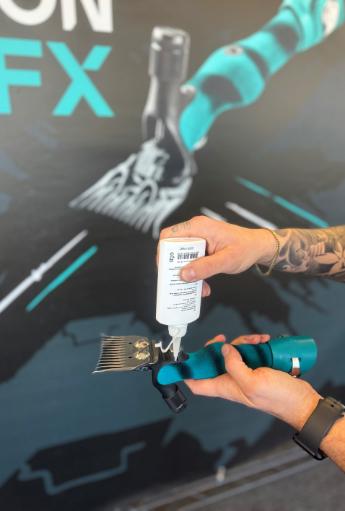
better cleaned with an airline to blow out any dust and dirt. After this, a good regrease and oil will help to lubricate the moving parts,” he says.
3. Cutters and combs
“It goes without saying that any comb and cutter need to be sharp. Heiniger offers free shipping for routine maintenance and we have a UK based facility to resharpen combs and cutters. It is important to check the lead is not going over the scallop. Align the cutting edge of the cutter and the cutting edge of the comb, both should always be touching each other at the same time. It is worth checking the gap at the back of the comb to allow for a small space, but also check that the comb is straight and not biased to one side which will leave an uneven gap from one side to the other,” he adds.
4. Tension
“It is common to see handpieces that have been over tensioned. Rather than turning the tension knob, I like to use the weight of the handpiece to help find the right tension. By holding the tension knob and allowing the body of the handpiece to fall, the weight of the handpiece will be sufficient to apply the tension. This is a good starting point and you can always apply a little bit more tension if required. Rather than starting off with an over tensioned handpiece,” he says.
“Oiling the handpiece is essential. Release the tension to enable oil to get into the fulcrum cup and post, most handpieces will have a small hole located underneath the handpiece to allow oiling. It is also good to put a dab on the cogs, down onto the ball race through the oiling hole in the middle of the handpiece and another down the ferrule. And lastly, a small amount across the face of the comb and cutter,” he explains.
“We have seen an influx of lower priced clippers and handpieces hitting the market in recent years. Whilst these may be a seemingly attractive option for some, I would preach caution and suggest that over time it will be more cost-effective to invest in a better quality handpiece. Heiniger takes pride in being a premium option, but, in my opinion, you get what you pay for, and the longevity of a good handpiece will make it more cost-effective over time if it is well serviced and kept sharp,” he concludes.
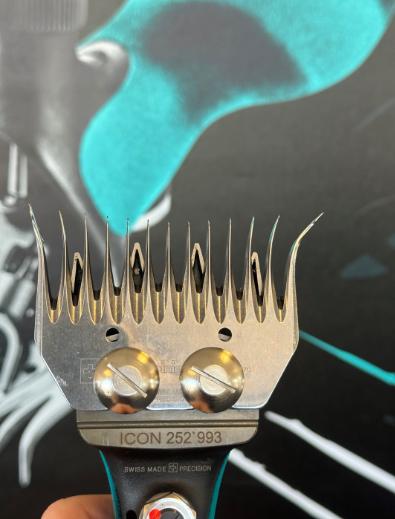

British Wool recently reported that fleece value is at its highest for 10 years. With the shearing season underway for 2026, Heiniger’s Hefin Rowlands suggests that there has never been a better opportunity for farms to realise the best price for wool.

“The average payment increased to 68p per kilo last year, which was up from just 40p. Higher grade wools from breeds such as Cheviots are returning 85p per kilo. This makes the preparation for shearing and the shearing process all the more important,” he says.
Mr Rowlands points to the need for preparation to make the process better for shearers and sheep.
“Fasting, dagging and separating ewes from lambs will help, whether a farm is bringing in professional shearers or not. Straw, dirt and dung in fleeces seriously detracts from wool value, so both sheep and the area being used to shear should be as clean as possible,” he says.
we know how important the right shears are to getting the best cut. But even the best shears need to have clean, sharp combs and cutters, which is why we offer free postage for servicing our equipment,” he says.
British Wool suggests that returns for the 2026 cut could rise by a further 25p-30p per kilo, meaning some wool will realise prices in excess of £1 per kilo.
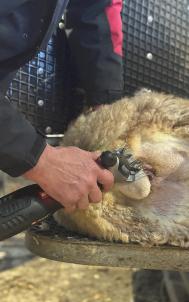
He suggests that using the best quality equipment will also play a big part in how efficient the shearing process is.

“Factory sharp blades and the correct clothing are essential to any shearer. Heiniger has been manufacturing world-leading shears since 1946, so
“There is strong demand and it pays to meet this with the best quality wool. Investing in equipment and a good set of shears has never been more important for farms looking to take advantage of rising wool prices. However, nothing beats experience and this is where professional shearers can help make all the difference,” he says.
Above all, Mr Rowlands advocates that farms give shearing the attention it deserves, especially in a year when returns are projected to be high.
“Spending on the right equipment, preparing sheep well and working carefully to produce a clean fleece will pay dividends. The average fleece weight is around 4 kilos which means a flock of 250 ewes could return upwards of £1000 this year, and that makes investing time and effort in shearing a worthy choice to maximise returns,” he concludes.
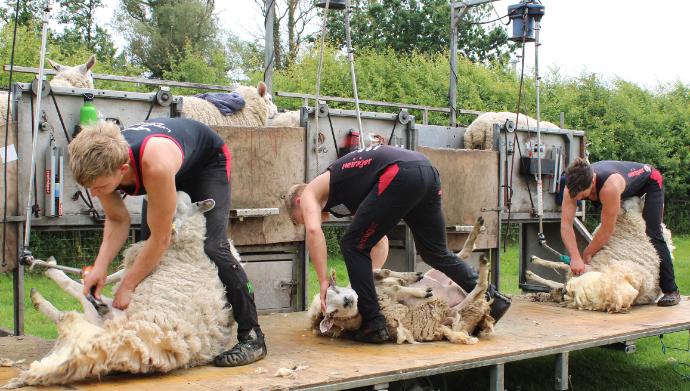
Data from a recent survey carried out by Elanco suggests early shearing and treatment will help lower blowfly numbers and cases in sheep this spring and summer. 70 percent of farms surveyed had seen blowfly cases pre-shearing suggesting that shearing could be brought forward for many and that if farms were shearing later, that a pre-treatment would be beneficial.
“The season for blowfly strike has elongated in recent years, with emergence starting as early as March and extending through to October and even November. This presents the need to use a treatment such as CLiKZiN before shearing to protect ewes for up to eight weeks. Following shearing, an application of CLiK Extra is then advised to provide up to a further 19 weeks of protection,” says Elanco’s Carolyn Hogan.
The survey of 360 farms also found that both the level and timing of parasite burdens is changing. 87 percent of farmers agreed that changing weather conditions were impacting blowfly risk, with 21 percent applying preventative treatments ahead of shearing. These findings are consistent with an earlier survey in which 82 percent of farmers said the blowfly season is getting longer.
level of protection to ensure blowflies are kept to a minimum,” he says.
He also emphasises the importance of achieving a clean, close shear. This not only helps produce a high-quality fleece but also ensures the wool is short enough for effective application of an IGR treatment straight off shears.
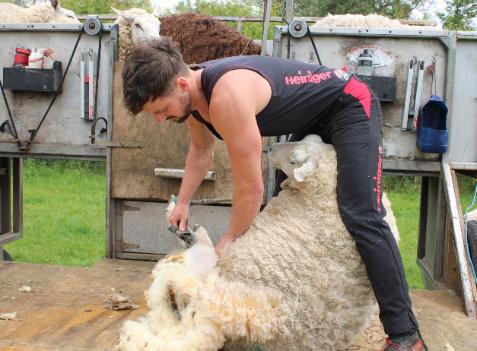
“Last year's rapid temperature increases delivered a harsh warning about the speed at which blowfly numbers can rise. This makes waiting until ewes are sheared an increasingly risky option, especially in the south of the UK. Already in April, the new SCOPS Blowfly Emergence Forecast shows many regions hitting its 'red' category, meaning that blowflies have emerged or are emerging, and therefore that sheep are at risk of strike“ she says.
The new SCOPS online forecast shows four levels of blowfly emergence, from grey, when blowfly occurrences are rare, to red, when flies are emerging. In response to this forecast threat, experienced sheep shearer and Heiniger national sales manager, Hefin Rowlands believes that farms can help control blowfly numbers and protect sheep by thinking fleece first.
“Wool values are increasing and animal health is always of paramount importance. Therefore, shearing early is likely to benefit most farms. However, for those looking to see the highest value for their flock’s fleeces, shearing later will require a
“This is why using quality shearing equipment is so important. It allows both professional shearers and farmers to achieve the best possible results. It’s also advantageous to have an option of a batterypowered machine like the Heiniger Xcell. These are particularly useful for smaller jobs and tasks like dagging dirty ewes and lambs to further prevent blowfly issues,” he explains.
He further suggests that shearing is beneficial to lambs as well as ewes and can improve growth rate by encouraging higher dry matter intake.
“Shearing when lambs are below 35 kilos can increase growth rates by around 20 grams per head per day, which will have a significant benefit to overall dead/live weight gain,” he says.
The message from the survey is that blowfly strike is becoming a greater burden for many farms and both Hefin and Carolyn agree that prevention is better than cure.
“Animal health is always going to be the priority for stock farmers, and using a combination of practical and pharmaceutical methods to reduce the threat of parasites like blowfly is a responsible option that will not only benefit one farm’s flock, but will help to reduce numbers throughout the UK,” concludes Carolyn.
Orf is present on almost nine in 10 UK sheep farms, with significant cost and welfare implications, according to new research from the Royal Veterinary College (RVC)1.

A survey of 421 sheep farmers found that 88.8% had experienced the highly contagious zoonotic disease in their flocks, with farmers reporting a median treatment cost of £5 per affected lamb and £100 per flock, underlining its ongoing economic impact.
Despite its prevalence, the study highlighted limited veterinary input and pain management, with fewer than a quarter of farmers (23.8%) consulting a vet for diagnosis and only 34.5% using pain relief in affected animals.
A wide range of management options are currently being used, including antibiotics (both topical and injectable), as well as salt licks, gels and lotions, despite there being no cure for the viral disease.
The findings also raise concerns around human health, with nearly a third of respondents reporting they had contracted orf. However, farmers who wore gloves when handling animals were significantly less likely to become infected.

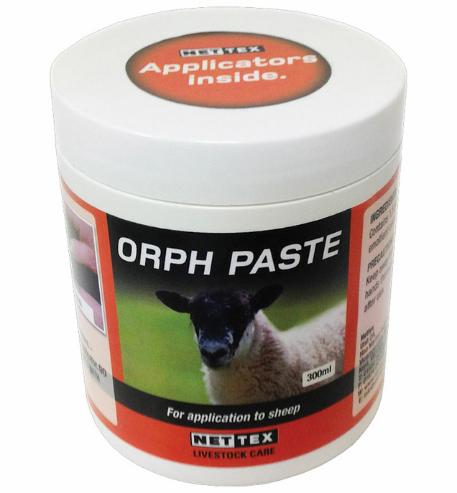
Nia Williams, livestock specialist at Nettex, said the findings highlight the need for a more proactive approach to managing the disease.
“The data clearly shows how widespread orf is on UK sheep farms and the impact it is having on both welfare and productivity,” she said.
“Farmers should speak to their vet if orf is suspected, to put in place the most appropriate control measures and reduce the risk of secondary infections.”
She added that while the virus is self-limiting, meaning it
will eventually clear up on its own, the report highlights the need for further research into newer topical products, as well as the potential therapeutic effect of providing rock salt. There are some products available that can help ease symptoms and reduce the risk of secondary infections.
Ms Williams added: ‘Products such as Nettex Orph Paste are formulated as a soothing, protective emollient designed to support the management of orf (scabby mouth) in sheep and goats. It helps to soften scabs and condition the skin around affected areas, forming a protective barrier to maintain skin integrity and support recovery.”
“The most important thing is that farmers don’t overlook the disease, given the welfare impact it can have in flocks, both in lambs, where research highlights knockon impacts on daily liveweight gains, and in ewes if they develop lesions on their udder.
“It’s also worth remembering that it can be passed to humans as it is a zoonotic disease, so the use of gloves when handling infected sheep is paramount, along with good hygiene,” added Mrs Williams.

Young handlers and livestock competitions remain a cornerstone of the Royal Bath and West Show, with exhibitors across the country now gearing up for another busy show season.
Among them is 15-year-old Sophie Long, who is preparing to take her Littlebrook pedigree Southdown and Blue Texel flocks on the showing circuit. And the Bath and West Show has played a pivotal part in her showing career from an early age.
“I first took part in a young handlers’ class at the Bath and West when I was five,” says Miss Long. “I borrowed a quiet Blue Texel ram lamb from Vicky Smith and Jess Maynard, with the only ambition of winning a pink rosette; luckily I got one!”
Alongside sheep showing – in which she is now stepping into a judging role - Miss Long has added another string to her bow, by picking up rosettes in the egg pavilion. “I breed Pekin Bantams and I love to show the eggs, particularly in years where avian flu has restricted live bird showing,” she says. “To date, the Bath and West has been my most successful; winning champion contents and reserve overall champion of the show.”
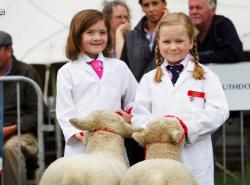
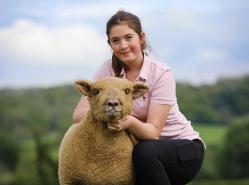
From then on, the desire for pink rosettes turned in to winning top ones, and young handlers’ accolades followed, with championship wins at Royal Three Counties, Royal Norfolk, Ashby Show and the Welsh Winter Fair. Miss Long also scooped reserve champion wins at Tenbury and the Bath and West. “The Blue Texel Society is great at encouraging the younger generation in to showing, by having young handlers’ classes at some shows, and I’ve been fortunate to be champion twice,” she says.
“Young handlers’ classes have been a great way to boost my confidence for showing my own sheep in pedigree classes. The camaraderie at these shows is great and I’ve made fantastic friends.”
Growing up with the sheep has enabled Miss Long to see both sides of sheep farming, from breeding management and lambing to preparation for showing and selling. “But you don’t have to be a farmer to compete at shows; the young handlers’ are ideally placed to get practice and build confidence. If you’re keen, simply contact someone you know who shows, ask if you can borrow a lamb and have a go!”
The Bath and West Show will always be her favourite. “It’s a great environment for families as it falls in half term, and the team that run the sheep section are the best; it’s always the one I get most excited about exhibiting at.”
Work on the show team starts about a month before the first event, selecting the best sheep from the flock, clipping, washing and trimming them.
Having washed 22 sheep to choose from, Sophie’s team will consist of 10 across both her flocks. One Southdown ram lamb – Gavin - she thinks a lot of, and he will likely remain as a stock ram after the show season. “It will be nice to get him out for other breeders to see. I’ve had reserve breed champion at the Bath and West, so who knows, I’d love to go one further!”
Looking to the future, Miss Long is keen to combine her love of sheep farming, alongside following her inherited passion of livestock photography. “I’d like to go to Hartpury College and have a year out working somewhere else to gain more experience, and hopefully bring some thoughts to the home farm and marketing business.”
And while she adores the Blue Texel flock, it’s clear her true passion lies with the Southdown breed. “The Blues have been a fantastic breed to gain confidence and knowledge, but I’m keen to cement the family’s heritage in the breed.”
The Royal Bath & West Show will take place at The Showground, Shepton Mallet, Somerset BA4 6QN, from 28–30 May. Buy tickets at https://www. bathandwest.com/tickets-3


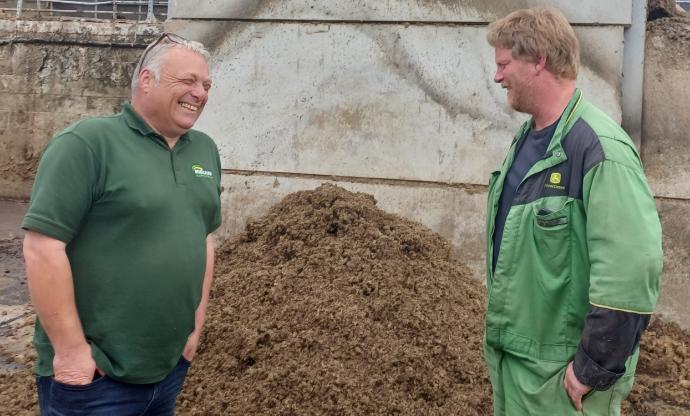

new separator, pump and mixer have greatly improved slurry handling at a popular village-based dairy farm in Warwickshire.
Slurry from 105 Holsteins had become an ongoing challenge at Chesterton House Farm in Harbury, near Royal Leamington Spa, with it typically being too runny to put into spreaders and too thick to pump.
George Clarke who is in a business partnership with Louise Trice who owns the farm, said:
“To be fair, what we had before was just a pit that all the scrapings and everything went into, so it was a mess. We could see the compaction in the fields (200 acres) at silage time, with all the wheel marks from the spreader, where the grass hadn’t grown as it should have.”
George contacted Midland Slurry Systems of nearby Shipston-on-Stour, who have been working with Chesterton House Farm since before 40-year-old George was born.
He added: “Seeing big puddles being made everywhere from the spreader wasn’t good at all, so as part of us wanting to keep the farm moving forward, we knew it was time to make changes.”
Looking for a simple, cost-effective system that would largely take care of itself, George worked closely with Giles Russell at Midland Slurry Systems to introduce an EYS separator to mechanically separate the solid and liquid fractions of the fibre-rich slurry.
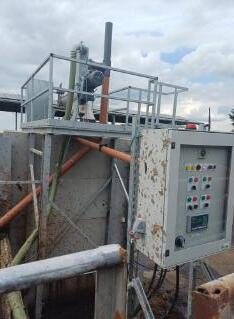
An integral part of the package also includes a 7.5kW Landia Chopper Pump to continuously reduce particle sizes as it transfers slurry up from the new 4m x 4m, 2m deep reception tank, that receives slurry through a new sewerage channel. The slurry (approximately 10% dry matter) in this vessel is kept fresh and homogenised by a 5.5kW Landia mixer. Installation, which was completed within three days, also included an ultrasonic
level sensor for the reception tank, so that the new slurry system can work automatically, processing about 9m3 of slurry per day.
‘Good job of uniformly homogenising the slurry’
Giles Russell from Midland Slurry Systems, said:
“Because the Landia mixer does such a good job of uniformly homogenising the slurry, the fibre portion rides along the front of the auger and slides along the screen, keeping it clean. We’ve also developed a way of programming the separator, so that it is reversible, which prolongs its lifetime. We also know that Landia pumps and mixers will keep on running and running.”
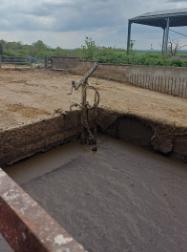
week) has seen George and Heather add a coffee machine, as well as sell products such as eggs, yoghurt and cakes at what has become a very popular hub and meeting place.
George Clarke, who began working on the farm at weekends when aged 13, continued; “The only thing that will cause a problem is incidental solids

“It’s definitely improved our relationship with the village,” said George. “People now have much more of an idea of the work we do.”

www.landia.co.uk
www.midlandslurrysystems.co.uk
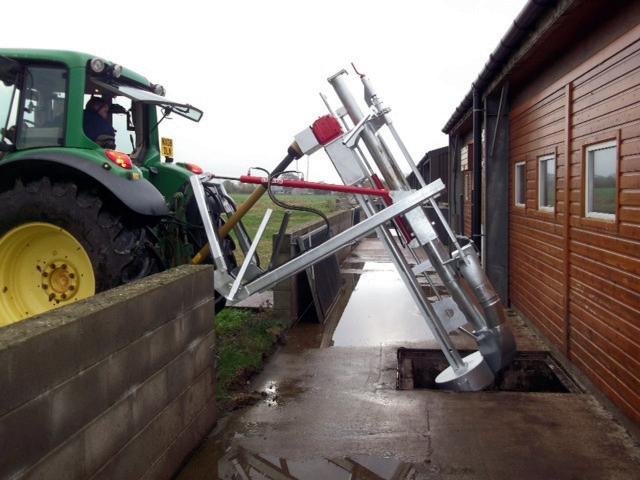
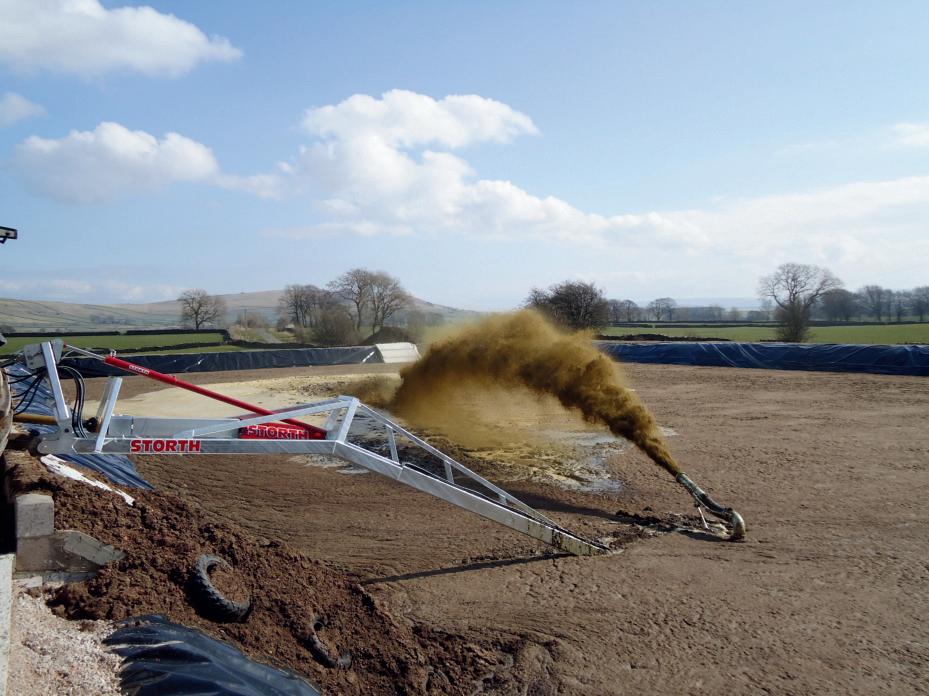
StorthMachineryareexpertsinslurrymanagement withover30years'experienceandwithaclear missiontodesign,manufacture,anddeliverhighqualityslurrymachinerythatmeetsandfulfilsthe evolvingneedsoftoday'smodernfarmers.
Wearecommittedtodeliveringrobust,reliable solutionstailoredtotheneedsofallagricultural farms. These solutions are: scrapers, pumps, separators, storage systems, mixers, full applicationequipmentandanaerobicdigestersproviding for the whole cycle of slurry management.
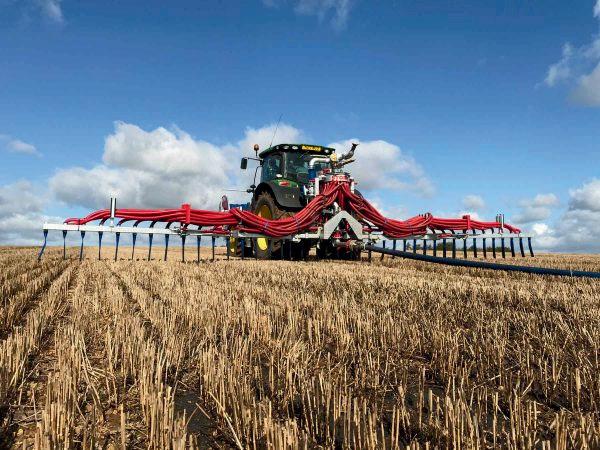
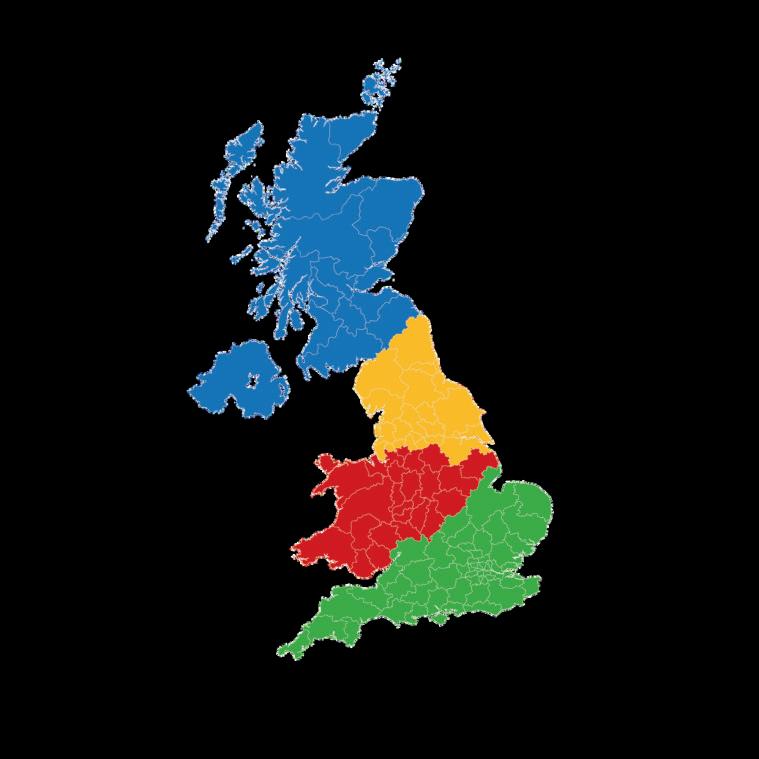



torth Machinery has added a new heavyduty machine to its slurry handling range with the launch of the King Cobra chopper pump, a unit designed to take on some of the most demanding slurry conditions found on modern livestock farms. Built for thick, fibre-rich material and troublesome pumping jobs, the new pump reflects the growing need for equipment that can keep pace with larger stores, bigger herd sizes and tighter environmental expectations. Storth says the King Cobra has been developed to offer dependable performance where blockages, uneven flow and difficult access can quickly slow down the job.
For farmers and contractors, slurry handling is no longer just about moving material from A to B. With more emphasis on storage capacity, cover systems and lowemission application, farms need machinery that can manage slurry efficiently at every stage of the cycle. That broader pressure is helping drive investment in better mixing, pumping and agitation kit, especially where crusted stores, deep pits and lagoons can create headaches at busy times of year. In England, the Slurry Infrastructure grant has also encouraged many businesses to improve or expand storage and invest in associated equipment, underlining how central slurry management has become to farm planning.
The King Cobra has been built with that practical farm reality in mind. Its fully galvanised heavy-duty frame, feed arm and Cobra pump are designed to cope with hard use, while the high-capacity chopping system is intended to reduce the risk of blockages and keep material moving at a steady rate. The machine can be operated entirely from the tractor seat, giving the operator better control and reducing the need for repeated manual adjustments during work.
One of the most useful features for livestock units is its ability to handle difficult slurry that has formed a crust or contains plenty of long fibre. That matters because thick slurry can be slow to agitate, awkward to pump and disruptive to spreading plans if it is not properly broken down first. The King Cobra can be used alongside Storth’s hydraulic Jetter mixing system, allowing a strong slurry jet to be directed vertically and horizontally to help break up stubborn surface material and improve agitation inside stores and lagoons.
Storth has also focused on access, which is often where slurry equipment proves its worth. The articulated boom
design gives the machine more reach and flexibility, making it easier to work in larger stores, lagoons and tighter or more awkward sites such as deep pits and slats access points. Depending on the set-up, operators can choose a suction hose or suction arm configuration, and the King Cobra is compatible with both DODA and Bauer pump systems.
That adaptability should appeal to contractors in particular, especially those moving between different farms and tank designs. Working outputs vary with specification, but Storth notes that a 170 to 200hp tractor can drive the DODA pump to generate 12 to 15 bar pressure and pump 90 to 300m3/hr in water, showing the scale of performance the unit is designed around. The pump also features Storth’s triple seal pack, which is intended to protect the motor and tractor from contamination and help improve durability in harsh slurry environments.
The launch also reflects the way slurry equipment has evolved in the UK. Storth itself was established in 1999 and has grown into a recognised British manufacturer of slurry handling equipment, based on the CumbriaLancashire border and exporting to more than 30 countries. The company says it has more than 30 years of experience in the sector and continues to develop machinery for modern farming, as well as for industrial, water treatment and anaerobic digestion applications.
For farmers, the message is clear: slurry is becoming a more valuable resource, but it is also more challenging to manage well. Rising fertiliser costs have made nutrients in slurry more important, while tighter rules around storage and spreading have pushed farms towards more efficient systems. Low-emission slurry spreading and better store management are now central to many businesses, and that means pumps, mixers and applicators need to be robust enough to support the full process, not just the final spread.
In that context, the King Cobra is positioned as a practical answer to a very familiar problem. It is not a lightweight general-purpose pump, but a specialist tool for farms and contractors who need reliable agitation, strong chopping action and flexible handling in tough conditions. For bigger units in particular, where downtime, blockages and poor flow can quickly become costly, a machine built for heavy slurry work could prove a worthwhile addition to the kit list.

nternational tariffs and import costs are likely to push fertiliser prices up, following a period where prices had been reducing from the 2022 peak. For farms looking to guard against spending unnecessarily, a well-researched nutrient management plan to make best use of slurry is essential.
Eurofins Agro testing, soil health specialist, Shane Brewer, and Vogelsang’s Andy Hayhurst, offer advice to farmers looking to save by making better use of existing nutrients.
1. “Soil testing, prior to slurry application, can establish the total microbial biomass, fungi, bacteria and protozoa present, and this represents the baseline from which to work. Once the pH and biological health of the soil has been established, an accurate assessment of what needs to be added to improve soil health can be made,” says Mr Brewer.
Whether using natural or artificial fertilisers, he suggests it is important to first understand what the soil needs to support the crop.
2. “Good chemical and physical soil health are crucial to stimulating grass growth. Once a soil test has been taken, the Eurofins Fertilisation Manager test can highlight the plant available nutrients, soil stock nutrients and supply capacity of the soil in relation to the crop,” he says.
If growing conventional grass mixtures including fast growing rye varieties, a pH of at least 5 is considered a suitable benchmark. This can be higher, 5.5, if clovers or legumes are included.
3. “It is possible to monitor grass during the season using Soil Crop Monitor. This test measures the nutrients in the crop and compares it to what is left in the soil to offer advice on what level of additional fertiliser would be beneficial throughout
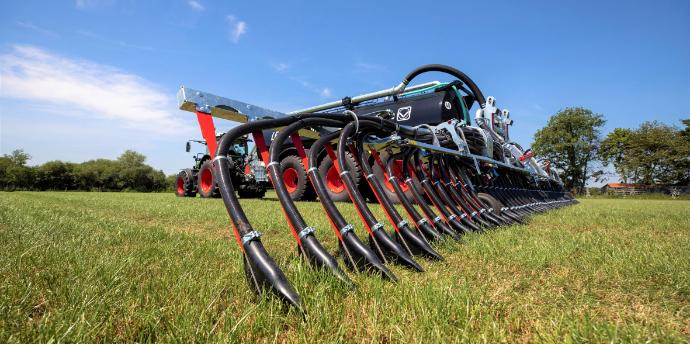

the growing season. This is especially important for farms in a multi-cut system looking to make best use of slurry before the winter,” says Mr Brewer.
Vogelsang’s Andy Hayhurst suggests that making best use of slurry can both improve grass quality and reduce farm costs.
4. “Testing slurry to accurately measure its nutrient value to the soil and the crop is essential. Equally important is the use of a separator to make a more homogenous slurry that can be applied more evenly and accurately. This also prevents dry matter being left on top the grass. Using a slurry meter will enable operators to apply the right volume of slurry based on calculations made using soil and slurry test data.”
He suggests that to balance speed and accuracy of application; a trailing shoe is the best option for grassland.
5. Trailing shoes separate the crop and prevent slurry from contaminating the leaves, which also enables more nutrients to be absorbed by the soil and reach the roots. Vogelsang’s lightweight unique trailing shoe hose layout ensures the same amount of slurry is distributed regardless of the distance from the distributor. Whether using a UniSpread for smaller working widths, or the 12, 15 or 18 metre BlackBird, the same goal of efficiently applying slurry with minimal nutrient losses can be achieved with a trailing shoe,” says Mr Hayhurst.
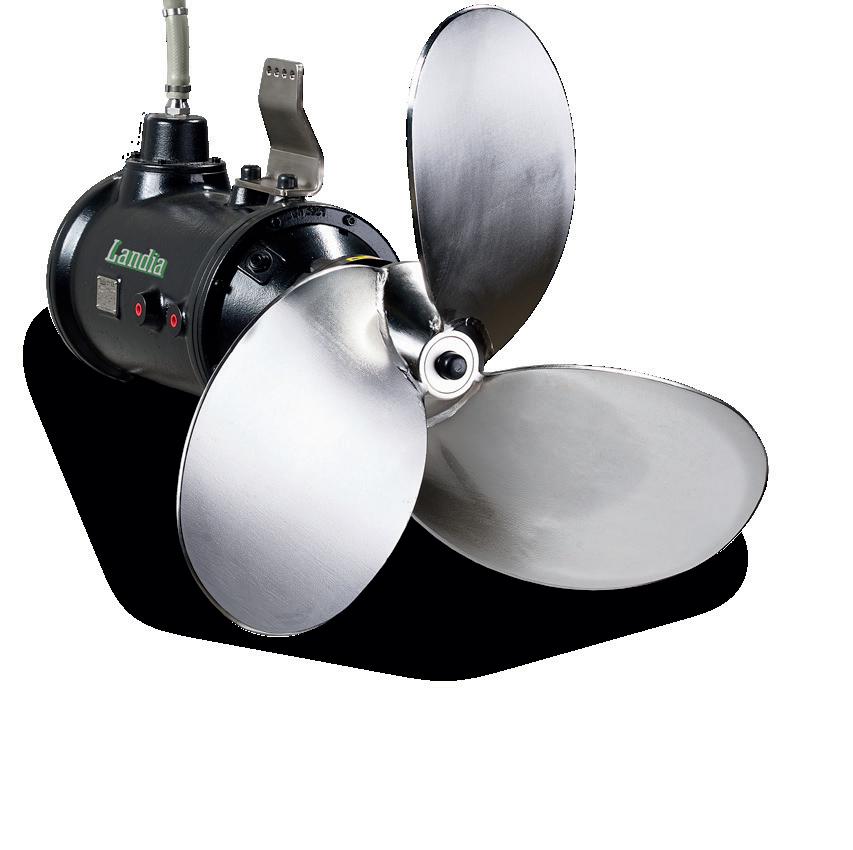
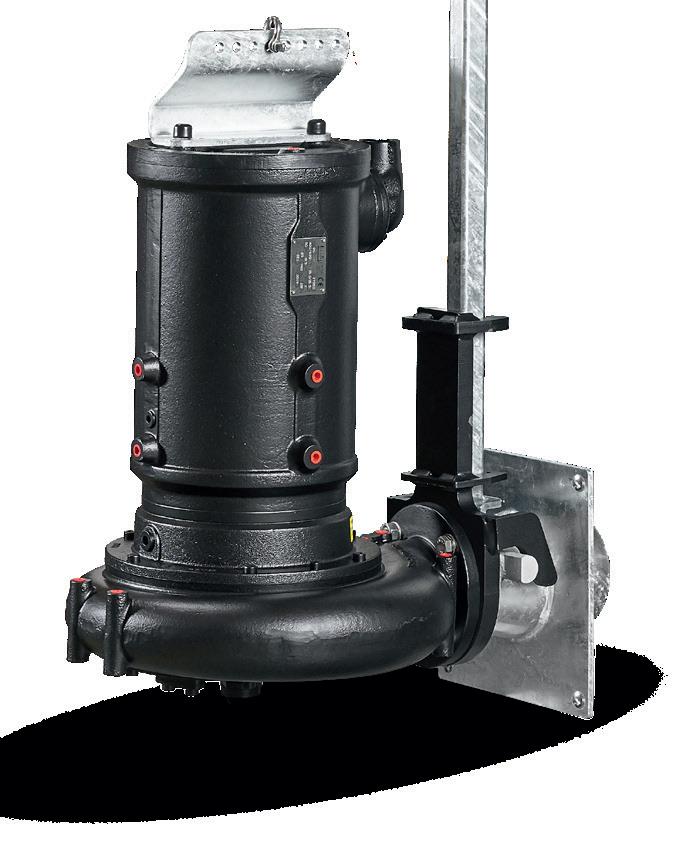



The first Cheffins’ collective sale of 2026 saw a massive 3,500 lots go under the hammer including vintage tractors, cars, motorbikes and collectors’ items on 24th and 25th April. The sale grossed £2.4 million as bidders from throughout the UK, Europe, New Zealand, USA and Canada helped to push up prices for tractors, classic cars and ephemera.
MF 5711M
Dyna 4 Essential 2021, 115hp, 986hrs 11024187
Of the 400 classic and vintage tractors consigned from collectors nationwide, a 1962 Matbro Mastiff achieved the highest price when it sold for £68,608 to a buyer from Cheshire. One of only six remaining original examples it was bought from the Cheffins Machinery Sale in the early 1980s for £325. Other highlights included a 1987 Ford TW-35 which achieved £61,004 and a 1996 Massey Ferguson 399 with only 2,800 hours which sold for £48,240.
a strong sale. We welcomed thousands of buyers over the two days and saw exceptional results across every category, with standout prices achieved for the very best examples.”
MF 5S.125
Dyna 4 Essential 2022,125hp,1622hrs 11025483
“The remarkable growth in values for classic and vintage tractors was clearly demonstrated by the Matbro Mastiff, which sold well above expectations. The sector remains highly competitive, with collectors from around the world seeking the finest machines. The increase in value from £325 forty years ago to more than £68,000 today highlights the long-term investment potential of this niche market.”
MF 6S.155
Dyna 6 Essential 2025,155hp, 274hrs 11026717
Cheffins also continues to make its mark on the classic car market, with a BMW E30 3-series convertible which was consigned from a deceased estate achieving over four-times its presale estimate and selling for £16,688 to a collector from Shropshire. In addition, a Yamaha FZR750R motorcycle sold for £10,976 and amongst the large automobilia section, an Associated Motorways enamel sign fetched £6,720.
Fendt 516 Power+ 2018,160hp, 6945hrs 31023814
MF 7718S Dyna 6 Efficient 2020,180hp, 505 21025136
“We are also continuing to make significant progress in the classic car market. As a compelling alternative to other auction houses, Cheffins is proving its ability to achieve strong results for vehicles from both early and modern eras. We were particularly pleased to welcome a number of new buyers in the car market to the saleground.”
Fendt 720 Profi+ 2016,200hp,6006hrs 31023950
“The atmosphere across the weekend was vibrant, with a real sense of anticipation as both seasoned and new collectors prepared for the upcoming rally season.”
Fendt 724 S4 2017,240hp,9099hrs 31023485
Fendt 824 Profi+ 2018,240hp,740 31027127
Tom Godsmark, Director at Cheffins said: “It was fantastic to launch the vintage season with such
The next vintage collective sale at Cheffins will take place on the 17thand 18thof July, while a series of onsite sales in the meantime will offer vintage items. To view the calendar of sales atwww.cheffins.co.uk

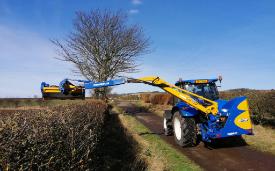
MF 5711M
Dyna 4 Essential
2021, 115hp, 986hrs 11024187
Fendt 516 Power+
2018,160hp, 6945hrs 31023814
MF 5S.125
MF 6S.155
Dyna 4 Essential 2022,125hp,1622hrs 11025483 Fendt 724 S4
Fendt 720 Profi+ 2016,200hp,6006hrs 31023950
Dyna 6 Essential 2025,155hp, 274hrs 11026717
5506hrs 11022938
MF 7718S
Dyna 6 Efficient 2020,180hp, 5050hrs 21025136
MF 8S.225
Dyna 7 Exclusive 2021,225hp,4572hrs 11024977



Case IH is once again recognised on the international design stage, with the new Puma® series tractor earning a Red Dot Product Design Award, one of the world’s most respected seals of quality for outstanding design.
Judged by an independent jury of international design experts, the Red Dot Product Design Award is presented only to products that excel in aesthetic appeal, functionality and innovation. The award recognises how the new Puma series tractor delivers practical, operatordriven design.
Unveiled at Agritechnica 2025, the new Puma series tractor combines bold Case IH family styling with a significantly enhanced cab environment designed to support long working days. Improvements include easier access, revised interior styling, increased storage and upgraded in-cab displays, all developed to enhance operator comfort, and everyday ease of use. Externally, a redesigned hood and lighting package improve forward visibility, while new LED fender tail-lights integrate safety with a distinctive visual signature.
In the field, design serves performance. A tighter turning radius improves manoeuvrability, while integrated technology enhances ease of operation and efficiency. This includes the Pro 1200 display, seamless connectivity with Case IH FieldOps™, ISOBUS compatibility for intuitive implement control and Tractor Implement Management (TIM) compatibility.
What particularly caught the eye of the Red Dot judges
was how these features are unified by the latest evolution of Case IH family styling. The new Puma tractor mirrors the clear design language introduced across the Case IH tractor portfolio, with consistent hood architecture and lighting signatures developed by the inhouse Case IH industrial design team based at the CNH Design Centre in Oak Brook, Illinois, USA.
“Design at Case IH always starts with the operator and the job the machine has to do,” says Eric Jacobsthal, CNH, Industrial Design Operations Manager.
“The new Puma tractor shows how strong, confident design can also make a real difference in comfort, visibility and ease of use. This Red Dot award is a great recognition of how our design and engineering teams continue to work together to deliver tractors that customers are proud to own and enjoy operating every day.”
Case IH is a global leader in agricultural equipment and solutions, with over 180 years of heritage and a commitment to delivering purposeful innovations that make all operations more productive, efficient and profitable. With a presence in more than 170 countries, Case IH supports professional producers through a dedicated network of experienced dealers and distributors. Case IH offers advanced equipment, integrated precision technology and dependable support— all designed to help customers maximize productivity and performance. In Europe, Case IH offers a complete portfolio to optimize operations including tractors, harvesting, application and hay equipment.



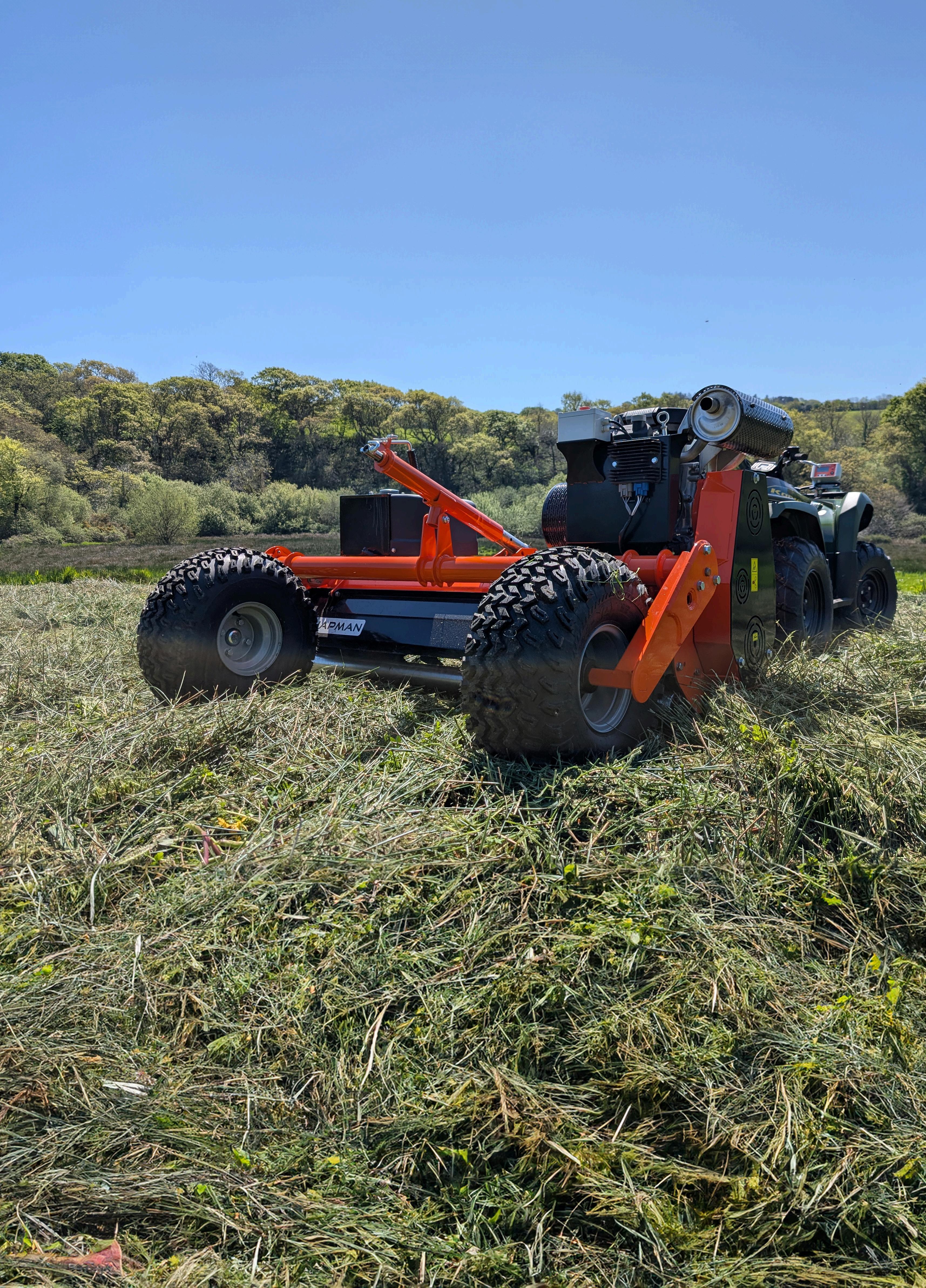

The STEYR®Cervus CVT has added another design accolade to its growing list of honours, with the new 360–435 hp flagship tractor range winning in the Product Design category of the internationally renowned Red Dot Design Awards.
Each year, the Red Dot Design Awards’ Product Design jury seeks out the world’s most outstanding products, assessing entries against criteria that include aesthetic appeal, functionality,
sustainability and innovation. The winners will be celebrated at the official award ceremony on 7 July 2026 at the Aalto Theatre in Essen, Germany.
Taking STEYR into 400hp+ territory, the Cervus CVT was first previewed to the international public at Agritechnica 2025. Its core design principle is a package that blends a high power output with compact dimensions, to provide maximum flexibility and the ability to handle a full suite of tasks, whether ballasted heavy draft cultivations, jobs combining front and rear implements, or unballasted high-speed road travel and haulage.
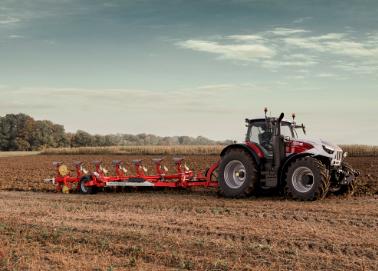
Built at the home of STEYR in St. Valentin, Austria, the completely new design has at its heart an 8.7-litre FPT Cursor 9 engine, paired with a new 4x2 range 60kph CVT. Soil preservation and fuel efficiency are aided by optional central tire inflation, while the operator benefits from a cab with one of the lowest noise levels in its class, plus the high comfort delivered by a combination of semiactive cab suspension and a new independent suspended front axle.
The distinctive new STEYR styling, mirroring the look established across the range in recent years, incorporates practical features

such as easy service access and an advanced lighting concept, including high‑intensity hood and taillights. The STEYR logo is now seamlessly integrated into the rear lights, while daytime running lights complete the modern, unmistakable design.

Precision farming features further enhance the concept, with three configurable Tech Packs offering ISOBUS and TIM for implement control, GPS‑based headland automation and full steering management, complemented by Connectivity Included with subscription-free access to FieldOps™ for real‑time monitoring and smarter decision‑making.
“This Red Dot Design Award for the new Cervus CVT is a further strong endorsement of STEYR’s long‑standing reputation for combining innovative design with a distinctive, purpose‑led tractor identity,” says Franz Josef Silber, global product marketing at STEYR.
“The STEYR team is known for designs that successfully blend practical, customer‑focused features with striking styling. Following the preview at Agritechnica, we are now looking forward to bringing these tractors to STEYR dealers and customers in the near future."

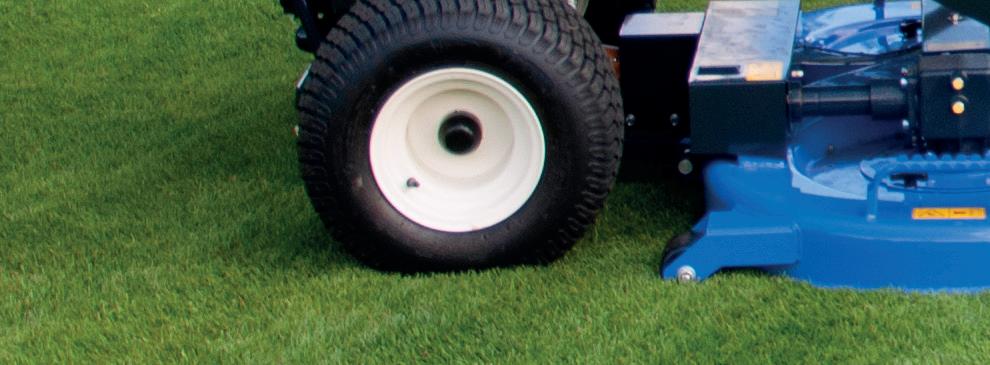
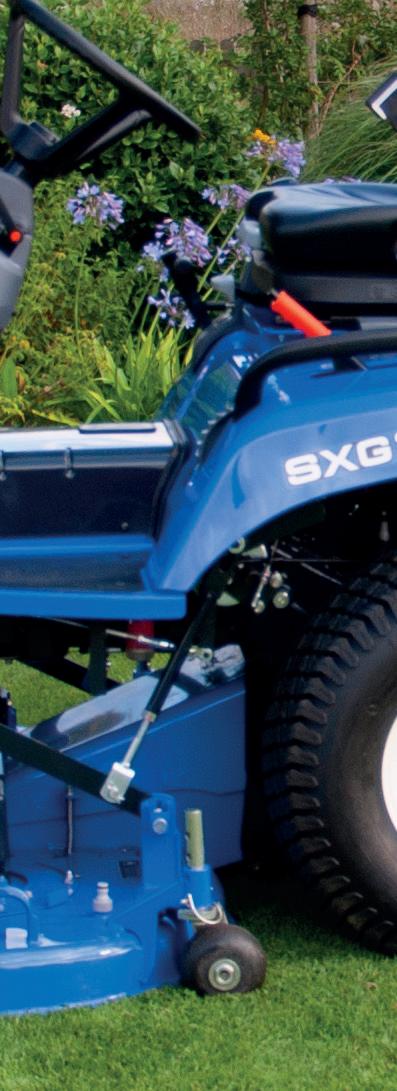

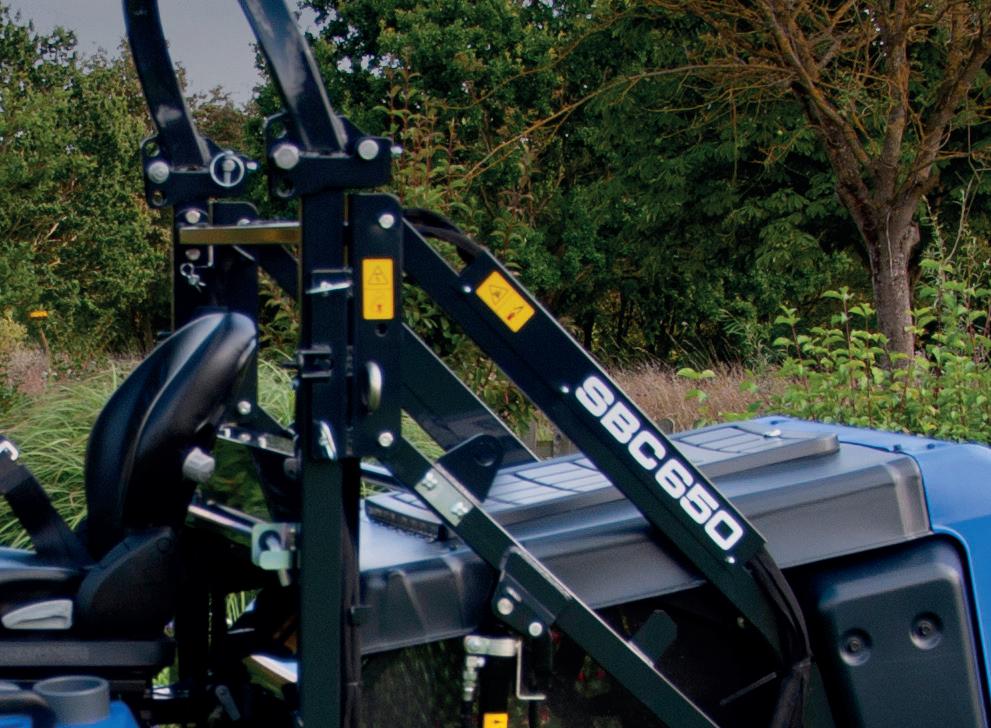
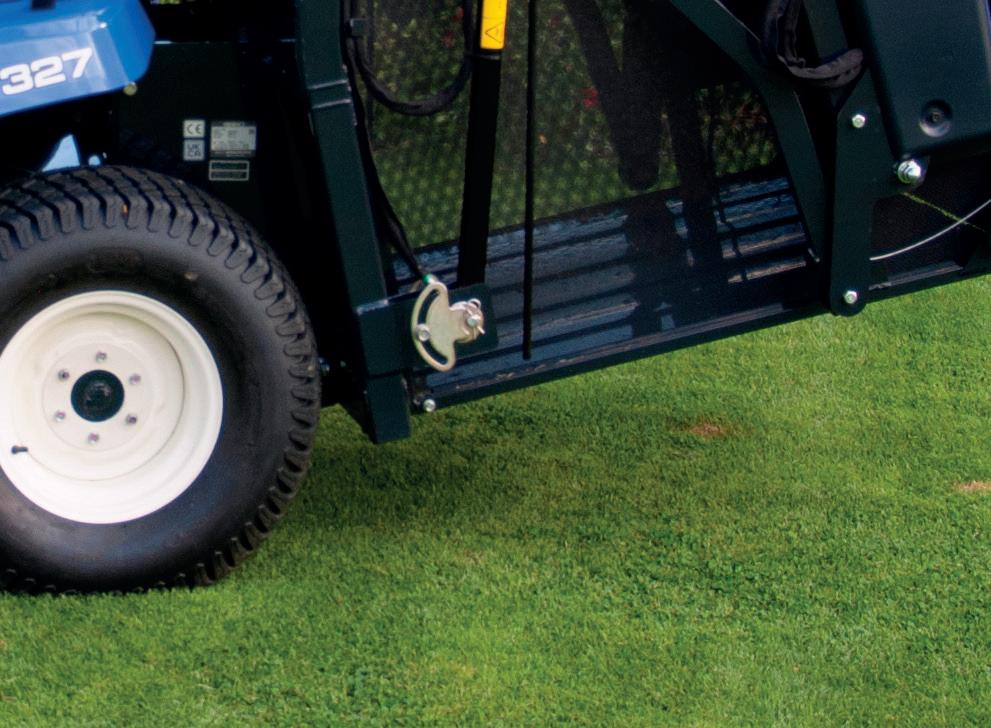

RVW Pugh Mellington, Churchstoke, Montgomery, Powys, SY15 6TQ
Tel: 01588 620545 Web: www.rvwpugh.co.uk
RVW Pugh Oakwood Park, Holmes Chapel, Cheshire, CW4 8AX
Tel: 01477 533560
Web: www.rvwpugh.co.uk
RVW Pugh Unit 2, Holland Business Park, Spa Lane, Lathom Lancashire, L40 6LN
Tel: 01695 816444
Web: www.rvwpugh.co.uk

Merlo UK is making it easier than ever for businesses to invest in premium agricultural equipment with its latest Retail Finance Schemes. Designed to help spread the cost while keeping cashflow healthy, the offer includes 0% APR options on selected agricultural telehandlers, so you can fix your finance and plan for growth with confidence.

Under the new terms, customers can choose from flexible payment options such as 1 + 2 annual payments or 4 + 20 monthly payments at 0% APR, available on up to 40% of the recommended retail price (RRP) on eligible models. There’s also an alternative 3 + 33 monthly payment plan at a competitive 1.99% APR for even greater flexibility.
For smaller machines like the CINGO range, the finance deal is equally attractive, with low-deposit plans and 0% interest spread over simple instalments.
Whether you’re expanding your fleet or upgrading to the latest Merlo technology, these retail finance options could make ownership more accessible and affordable than you think. Speak with your local Merlo dealer to explore the best package for your operation and see how you can benefit from this limited-time opportunity.
Finance Terms & Conditions
Retail customers only. Maximum balance
financed is 40% of RRP, subject to DLL terms and conditions. Finance offers exclude fleet deals of three or more machines.
Model eligibility:
• P27.6 and TF27.6 models are eligible only for the 4 + 20 payment plan at 0% APR.
CINGO Retail Finance Schemes (0% interest):
• CINGO M500DM: £500 deposit, 50% payable after 6 months, 50% after 18 months
• CINGO M700TD: £700 deposit, 50% payable after 6 months, 50% after 18 months
Finance for Merlo agricultural models is available through Merlo Finance, a trading style of De Lage Landen Leasing Limited (DLL). All finance is subject to status and approval. Applicants must be UK-registered businesses and aged 18 or over. VAT is excluded unless stated. Fees may apply. Finance cannot be combined with other campaigns.
DLL is authorised and regulated by the Financial Conduct Authority in respect of agreements regulated by the Consumer Credit Act 1974.
Merlo Finance Sales Desk: Agricultural: 01923 810078 Construction: 01923 810946

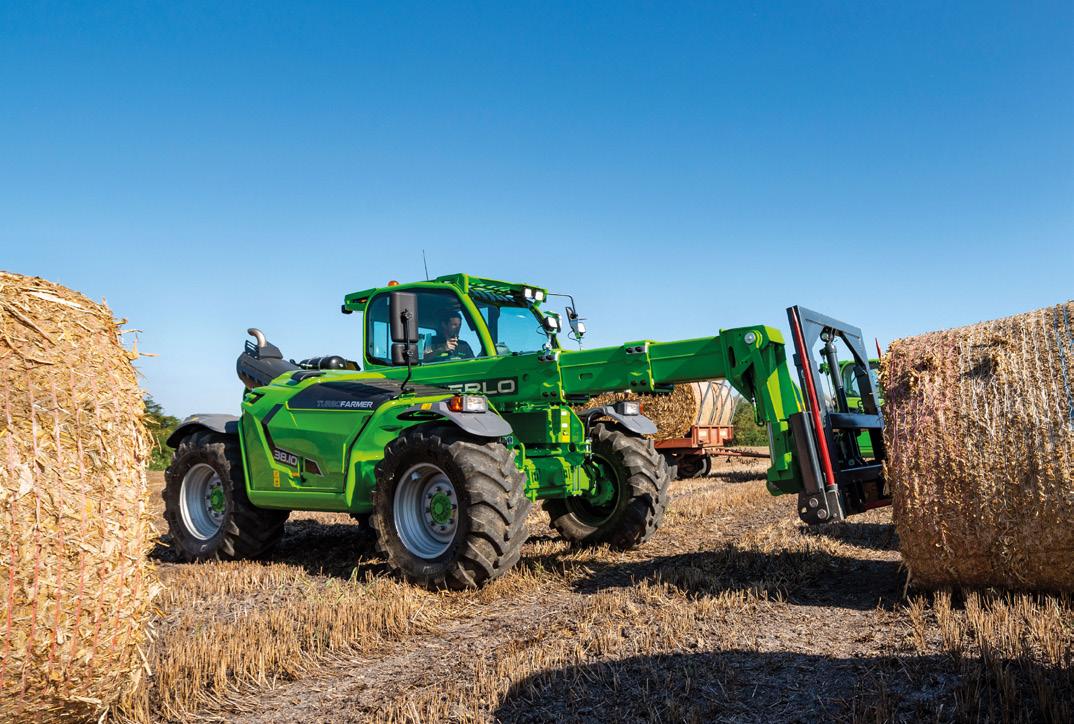
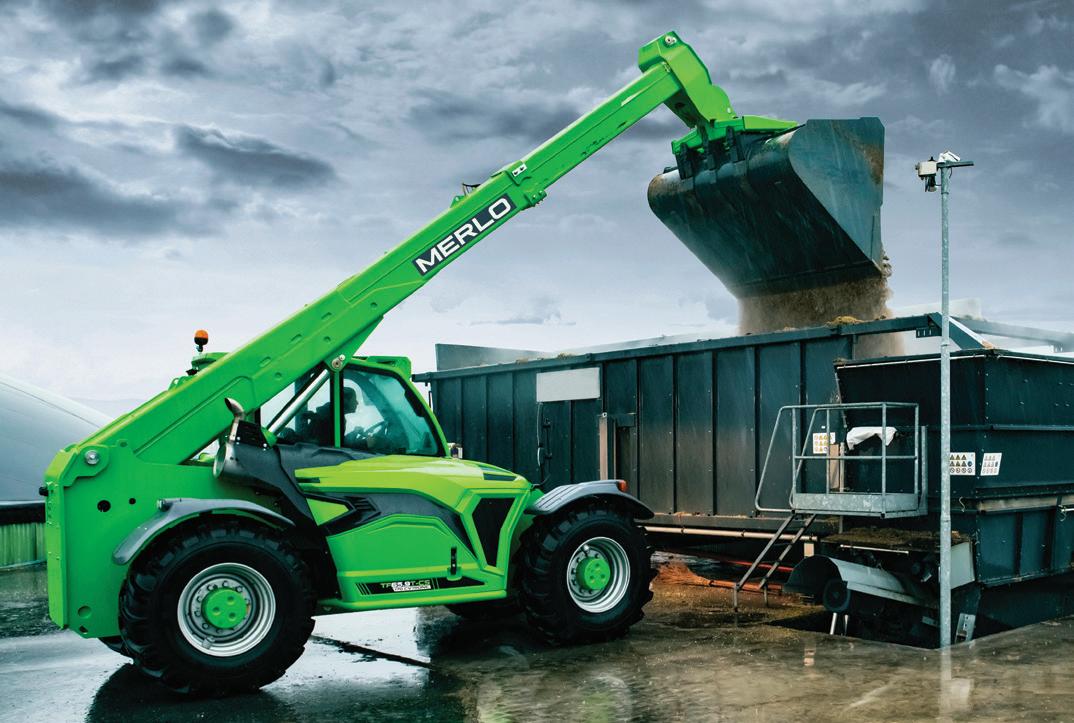
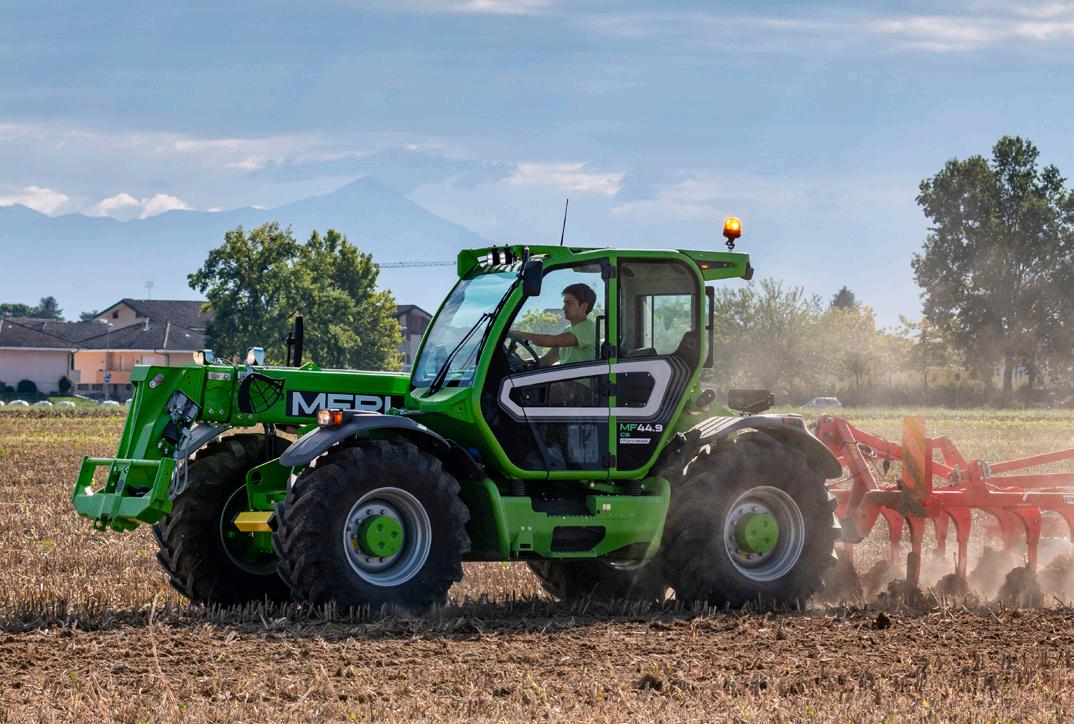
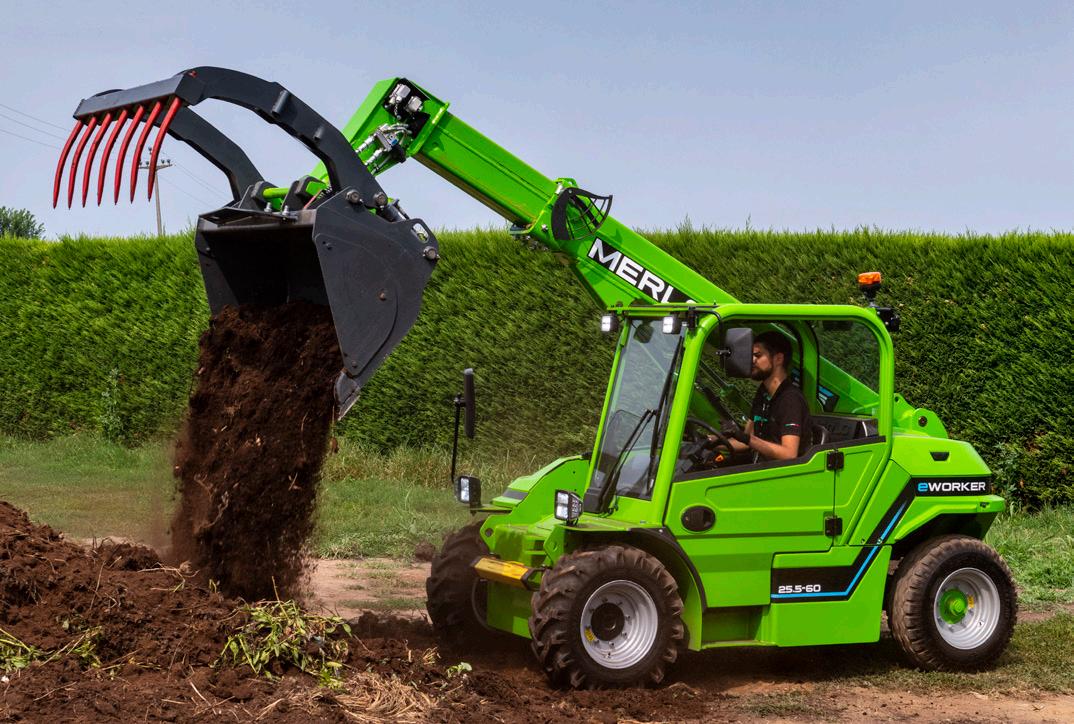
Stubbings Bros Ltd.
TR Machinery Ltd
Ventnor Isle of Wight PO38 2JN
TRMachinery Ltd
Oak Tree Works, NI Park, Newport, Shropshire
Phone : 01983 551443
TF10 9LH
www.stubbings-bros.co.uk
Phone: 01952 936900 www.trmachinery.co.uk
Turney Agriculture
Burnside Business Park Market Drayton Shropshire
Middleton Stoney Bicester Oxfordshire
TF9 3UX
D.A. Forgie Lisburn
BT27 5QB Phone: 02832 677736 www.forgie.com
OX25 4AB Phone: 01869 343333 www.turneygroup.com
Phone : 01630 653801 www.trmachinery.co.uk
Turney Agriculture Unit 8 Woodway Princes Risborough Buckinghamshire HP27 0NN Phone: 01844 346690 www.turneygroup.com
D.A. Forgie Co Londonderry
BT49 9DW Phone: 02877 722375 www.forgie.com
Turney Agriculture, Groundcare & Country Store Fleet Lane, Brendon Gloucestershire Tewkesbury, GL20 7EF
Phone: 01684 772912 www.turneygroup.com
RVW Pugh, Mellington, Churchstoke, Montgomery Powys.
RVW Pugh, Mellington, Churchstoke, Montgomery Powys. SY156TQ
SY15 6TQ
Phone: 01588 620545 www.rvwpugh.co.uk
Phone : 01588 620545
www.rvwpugh.co.uk
RVW Pugh
Spa Lane, Lathom, Unit 2, Holland Business Park, Lancashire, L40 6LN
Phone: 01695 816444
www.rvwpugh.co.uk
D.A.Forgie Lisburn,
RVW Pugh, Oakwood Park, Holmes Chapel, Cheshire
CW4 8AX
Phone : 02892677736 BT27 5QB www.forige.com
Phone : 01477 533560 www.rvwpugh.co.uk
RVW Pugh, CW4 8AX Chapel, Cheshire Oakwood Park, Holmes

Phone : 01477533560
www.rvwpugh.co.uk
D.A.Forgie Co Londonderry, BT49 9DW
RVW Pugh, Unit 2, Holland Business Park, Spa Lane, Lathom Lancashire, L40 6LN
Phone : 02877722375 www.forige.com
Phone : 01695 816444 www.rvwpugh.co.uk
Brian Robinson Machinery Ltd Birkby Lane East Cowton, Northallerton North Yorkshire
Cooks Midlands Ltd. Unit 10 Horsepool Grange Elliotts Lane, Markfield LE67 9TW
DL7 0DX
Phone: 01325 378552
Phone : 01530 249191
www.brianrobinson.co.uk
www.cooksmidlands.co.uk

Management of the Kioti dealer network has transferred from Pols Group in the Netherlands to SMT GB in the UK, promising improved operational efficiency and localised backing for the brand’s 58 independent dealers.
SMT GB has completed the acquisition of Kioti UK, bringing the distribution and technical support for the compact tractor, utility vehicle (UTV), and zero-turn mower brand onto British soil after 25 years operating in the UK.
Previously a subsidiary of the Netherlandsbased Pols Group, Kioti UK will now
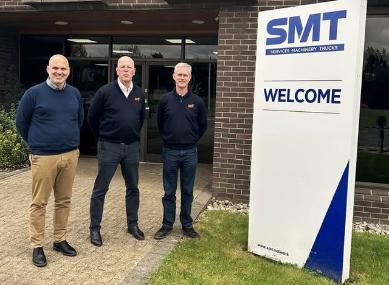
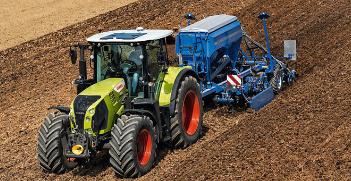
leverage SMT GB’s domestic resources. The move is designed to streamline the supply chain by handling machine preparation and administrative support from within the UK, rather than from overseas.
Kioti UK further benefits from SMT GB’s logistical, financial, and technical strengths as part of the global SMT Group, which employs more than 2,000 people in 30 countries.
Kioti customers will continue to receive equipment, parts, and technical support as usual through the established network of 58 independent dealers in the UK. However, they will start to see the SMT GB name on transactional documentation, such as invoices and warranty claims.
Ryan Hollebone, director of compact equipment at SMT GB, said: “The same Kioti team will support their dealer network exactly as they always have, while gaining the additional resources and stability that come with being part of the wider SMT organisation. Ultimately, SMT is here to help all of our partners grow their businesses.”
Patrick Desmond, general manager of Kioti UK, added: “As we celebrate 25 years of Kioti in the UK, it’s the perfect time for our next chapter. Our customers will still deal with the same team they know and trust, but with the added weight of SMT’s infrastructure behind us.”


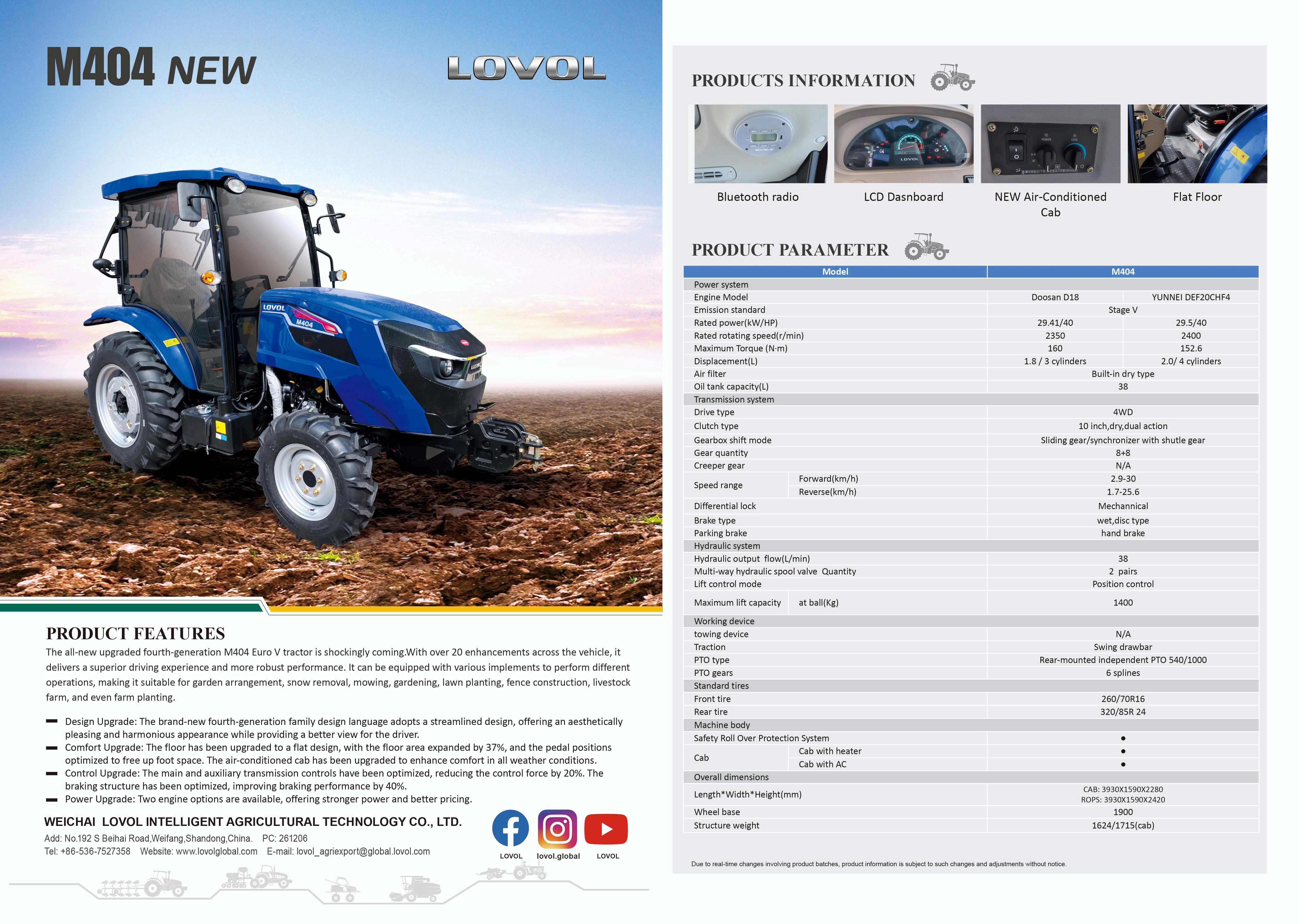


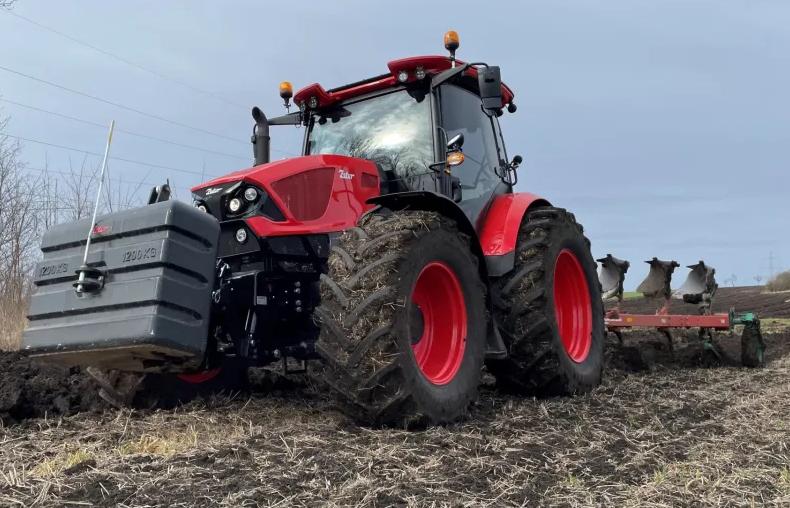

New Holland hasreceivedtheRed Dot Design Awardfor itsT7 Standard Wheelbase tractor, one of the world’s most respected international recognitions for product design. The jury praised the tractor’sholistic redesign, which seamlessly combines style,functionalityand advanced technology in the highly competitive 180–225 hp segment.
Established in 1955, theRed Dot Design Awardis internationally recognized as a benchmark for outstanding design quality. Each year, an independent jury of global design experts evaluates thousands of products based on criteria including innovation, functionality, ergonomics,durabilityand aesthetic appeal. Winning a Red Dot signifies excellence not only in form, but also in purpose-driven industrial design.
TheT7 Standard Wheelbasestands out for itscompletely renewed design language, reflecting New Holland’s strategic focus on design as a key differentiator and value driver for customers.
Its compact proportions, more dynamic stance and carefully integrated functional elements deliver improved visibility,maneuverabilityand operator comfort, while reinforcing a strong and modern visual identity.


The tractor also debuts New Holland’sDynamic Bluecolour, which will be progressively introduced acrossits product portfoliounderlining the brand’s commitment to a distinctive and consistent design language. Styling details such as the new hood shape, integrated cab access, LED lighting and refined rear design blend aesthetics with practical benefits for everyday farming operations.
“When designing the T7 Standard Wheelbase, our goal was to give the tractor a strong, instantly recognizable presence that reflects bothstrength andprecision,” saysAlessioCadalora, Industrial Designer at CNH. “We built on the ‘connective flow’design languagefirst introduced on ourcombineharvesters, translating fluid,sinuouslines into the tractor’s volumes and surfaces. As the design moves toward the front, those flowing forms become sharper and more assertive, expressing energy,controland technologicalconfidence.The result is a bold, modern design thatthat looks purposeful and precise,andremainsunmistakably New Holland.”
Beyond its appearance, the T7 Standard Wheelbase integrates design with performanceenhancing solutions: a new front axle improving ride comfort and reducing the turning circle, a redesigned Horizon™ cab with SideWinder™ armrest for intuitive control, and transmissions that deliver class-leading efficiency – including the T7.225 Dynamic Command™, which set a best-inclassDLGPowerMixfuel efficiency benchmark.
This award further strengthens New Holland’s longstanding relationship with the Red Dot Design Award, which has recognized the brand multiple times for its ability to combine innovation,usabilityand distinctive styling across agricultural machinery.
This recognition reflects a design approach shaped around the people who use New Holland machines every day. Beyond aesthetics, design is a strategic element that helps farmers work more efficiently,sustainablyand comfortably.
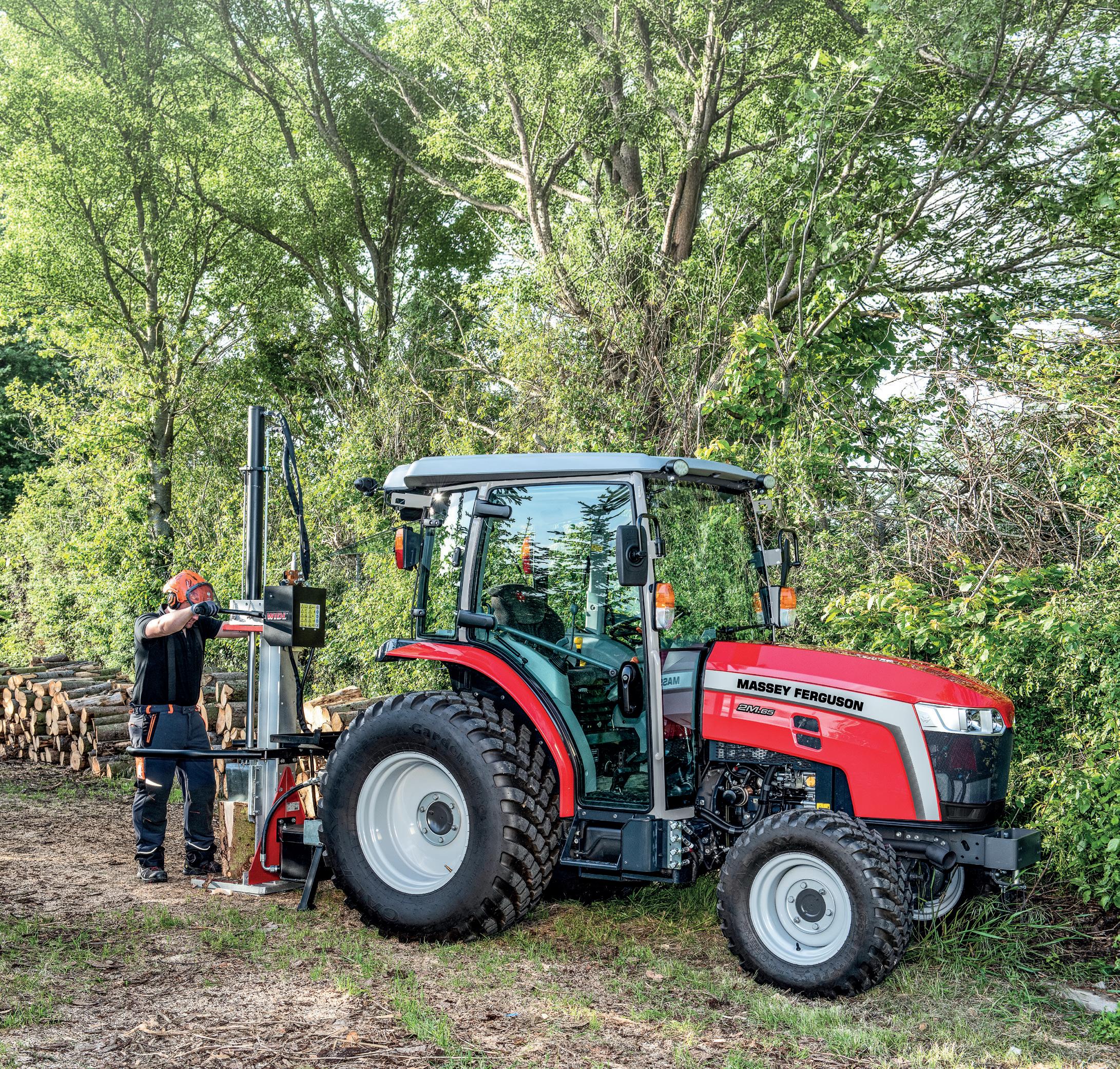

Kubota (UK) Ltd is adding to its agricultural and ground care dealer network with the appointment of Hughes Agri Oswestry with immediate effect. The Shropshirebased dealer will strengthen coverage throughout the north of the county, and the north/mid-Wales border region.

“We are pleased to welcome Hughes Agri into the Kubota dealer network as we continue to develop our business based on past successes,” said Henry Bredin, division manager of Kubota (UK)’s agricultural and ground care machinery business.
“The appointment of Hughes Agri as a full-line Kubota tractor dealer will provide on-going support to existing customers operating in these areas, in addition to delivering sales, service and aftercare for Kubota’s agricultural and ground care product portfolio.”
Established in April 2025 as a spares and repairs business following the closure of the family-run Hughes Bros operation, Hughes Agri Oswestry has continued to provide after sales service, spares and warranty support for existing Kubota customers in the area.
Run by a co-operative of six equal partners and employing two additional members of staff, the firm has been structured to make the most of each partner’s individual strengths, as dealer principal Tim Hughes explained.
“This really is a team business that continues to grow, while remaining totally focussed on looking after customers – both new and existing,” he said. “We have some very experienced partners in the business with their own specialist areas, and one was previously a Kubota apprentice. All have prior experience of a dealership business and the Kubota brand, and we all share a common vision, direction and customer-led focus.”
In addition to M-series tractors, Hughes Agri will be handling Kubota implements and ground care equipment, including the new EK1 compact tractor and FC4 series of out-front, commercial ride-on rotary mower.
“It’s certainly an exciting time for us, as we push forward with a new business venture backed up by a very experienced and knowledgeable team,” said Tim Hughes.
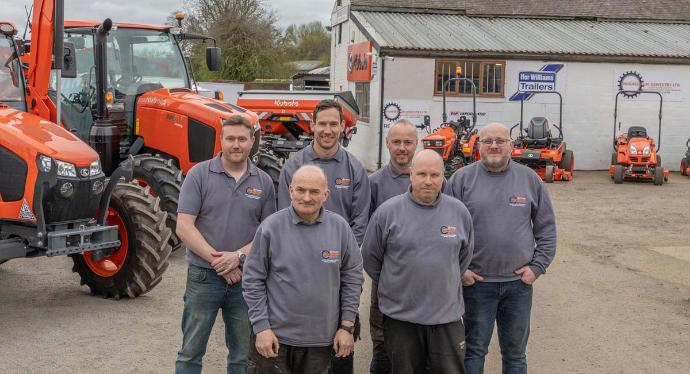
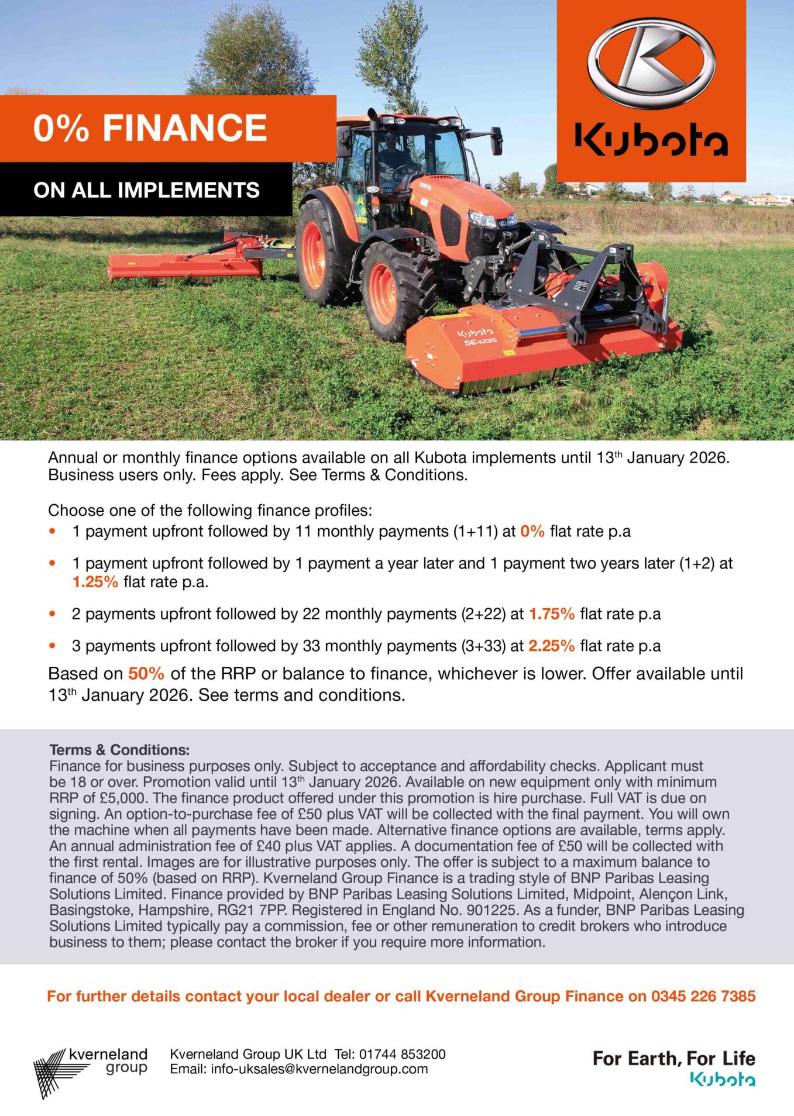




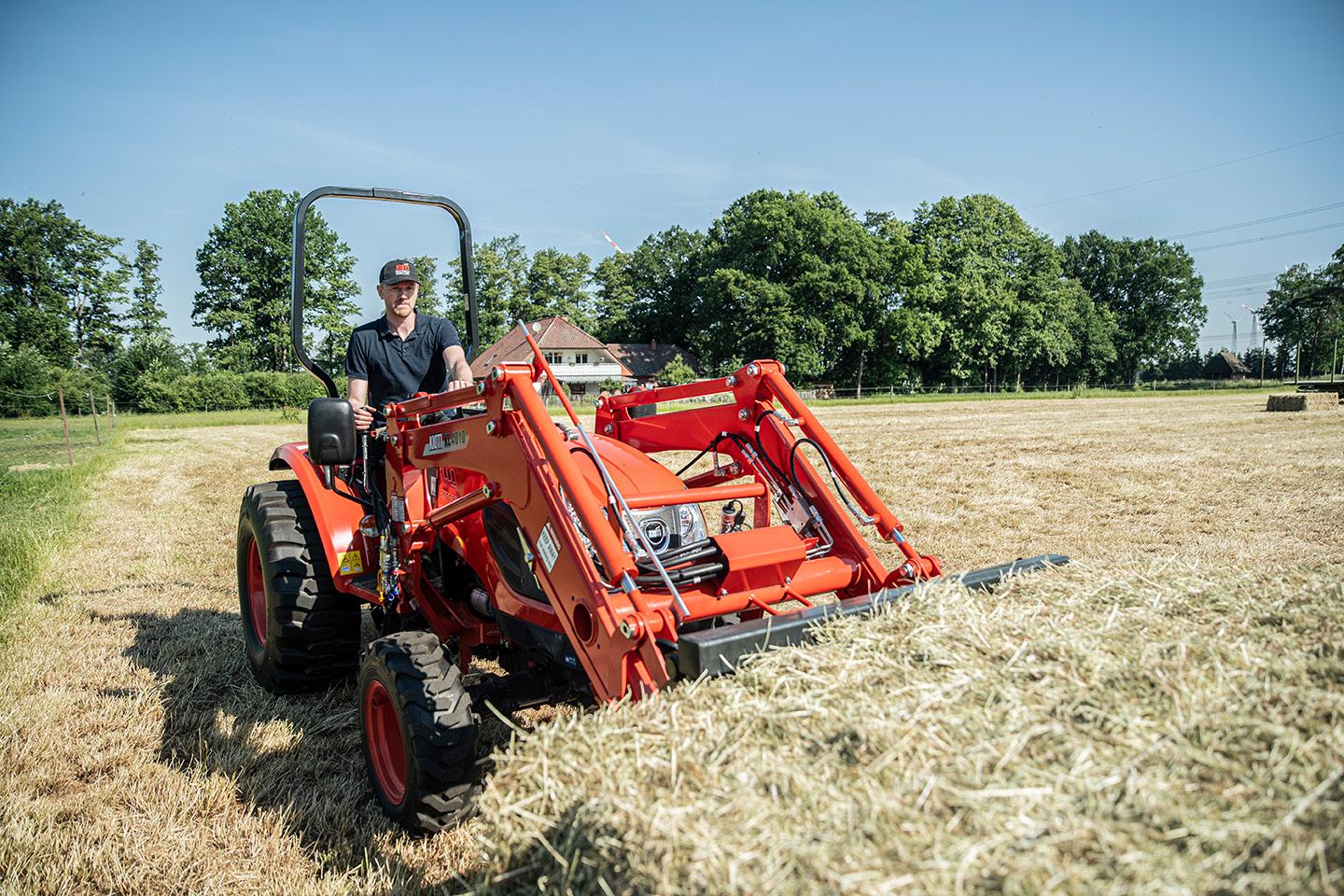
Garford Farm Machinery opened its gates to welcome a group of agricultural journalists for an in-depth look at the company's Electric Weeder, offering visitors the opportunity to see the machine in action and discuss the future of non-chemical weed control.
The event, at Garford HQ near Peterborough, provided a valuable chance for open conversation away from day-to-day communication, allowing the Garford team to share more about the development of the Electric Weeder, its practical applications in the field, and the wider challenges currently facing the industry.
The morning began with a presentation from

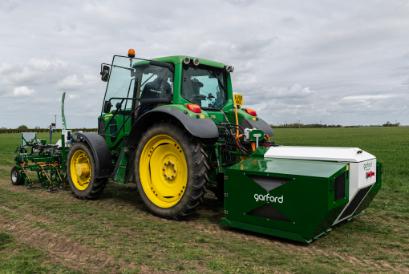
Garford Managing Director Jonathan Henry, who outlined the thinking behind the Electric Weeder and the role it can play for growers seeking to reduce reliance on chemical inputs without compromising on effective weed control.
As part of the presentation, visitors were given a detailed explanation of how the technology works in practice. Garford demonstrated the principle of "contact transfer" weed control technology, developed in partnership with RootWave, where an electrode makes direct contact with the plant at the soil surface. The electrical current then passes through the plant and root system, using the soil as a return path to either a ground contact device or a second grounding electrode.
The theory behind electric weed control is based on high-frequency alternating current (AC) passing through the fluid between plant root cells. As the current moves through the plant, the fluid inside the cells heats until the cell membranes are damaged, resulting in rapid desiccation and ultimately effective weed control.
Journalists also heard how the system has been designed to work sympathetically with the wider soil environment. Independent tests have demonstrated that soil biology is preserved, with electricity as the active agent causing no damage to soil macrofauna, nematodes, bacteria or fungi. The concentrated current flow passes directly through the plant cells, while multiple pathways through the soil act as the return conductor, helping to minimise wider soil impact.
The presentation also highlighted several areas where the technology is considered generations ahead of competing systems. Operating at 18kHz alternating current, the Electric Weeder offers significantly enhanced safety compared with DC or lower-frequency AC systems. The machine also features software-controlled power management, industry-leading power density, organic certification, and patent-protected technology.
Following the presentation, guests were taken into the field for a live demonstration of the machine
operating in real working conditions. Seeing the technology first-hand prompted extensive discussion, with visitors able to explore the finer details of the system and ask questions directly to the team throughout the demonstration.
The event also provided important feedback opportunities for Garford, with conversations helping to shape the ongoing development of the company's machines and future support for growers.
Reflecting on the day, the Garford team described the event as a highly positive experience and welcomed the opportunity to engage with journalists who are genuinely interested in the direction agricultural technology is taking.
"We always value the chance to have proper conversations about the realities growers are facing and how technology can support them," said Jonathan Henry. "It was great to see such strong interest in the Electric Weeder and to demonstrate how the machine performs in real field conditions."
The Electric Weeder forms part of Garford's continued focus on practical, sustainable solutions designed to help growers adapt to changing agricultural demands while maintaining effective weed management strategies.


THE LEADERS IN HEAVY DUTY ECU REMAPPING YOUR MACHINERY HAS GOT UNTAPPED POTENTIAL


Explore Our Exclusive Finance Offers Today!
MLT RANGE
MANITOU LOADER TELESCOPIC
MLA 533
MANITOU ARTICULATED LOADER

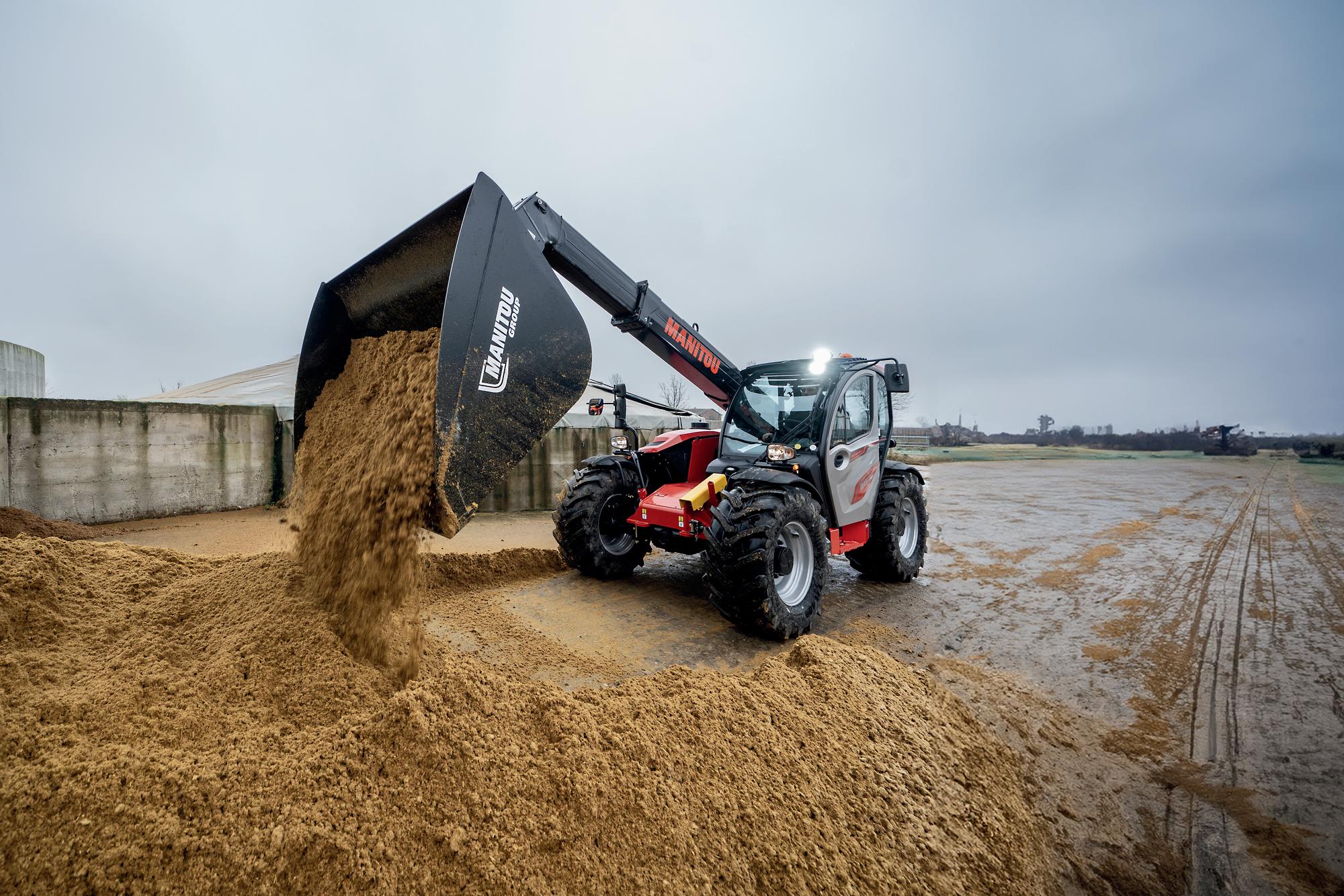
operation highlighted by Manitou. On a wet

Experience the new Manitou: Where brute strength meets intelligent design. Limited offer for business users only, terms & conditions apply*
With our reinforced octagonal boom and fuel-slashing Stop & Start technology, you’ll tackle the heaviest loads in less time, using less fuel, and with total precision thanks to the Smart Counting System that tracks every bucket for you
Millfield, Whitland Carmarthenshire, SA34 0QQ
Tel 01994 240644
RIVERLEA - CRYMYCH
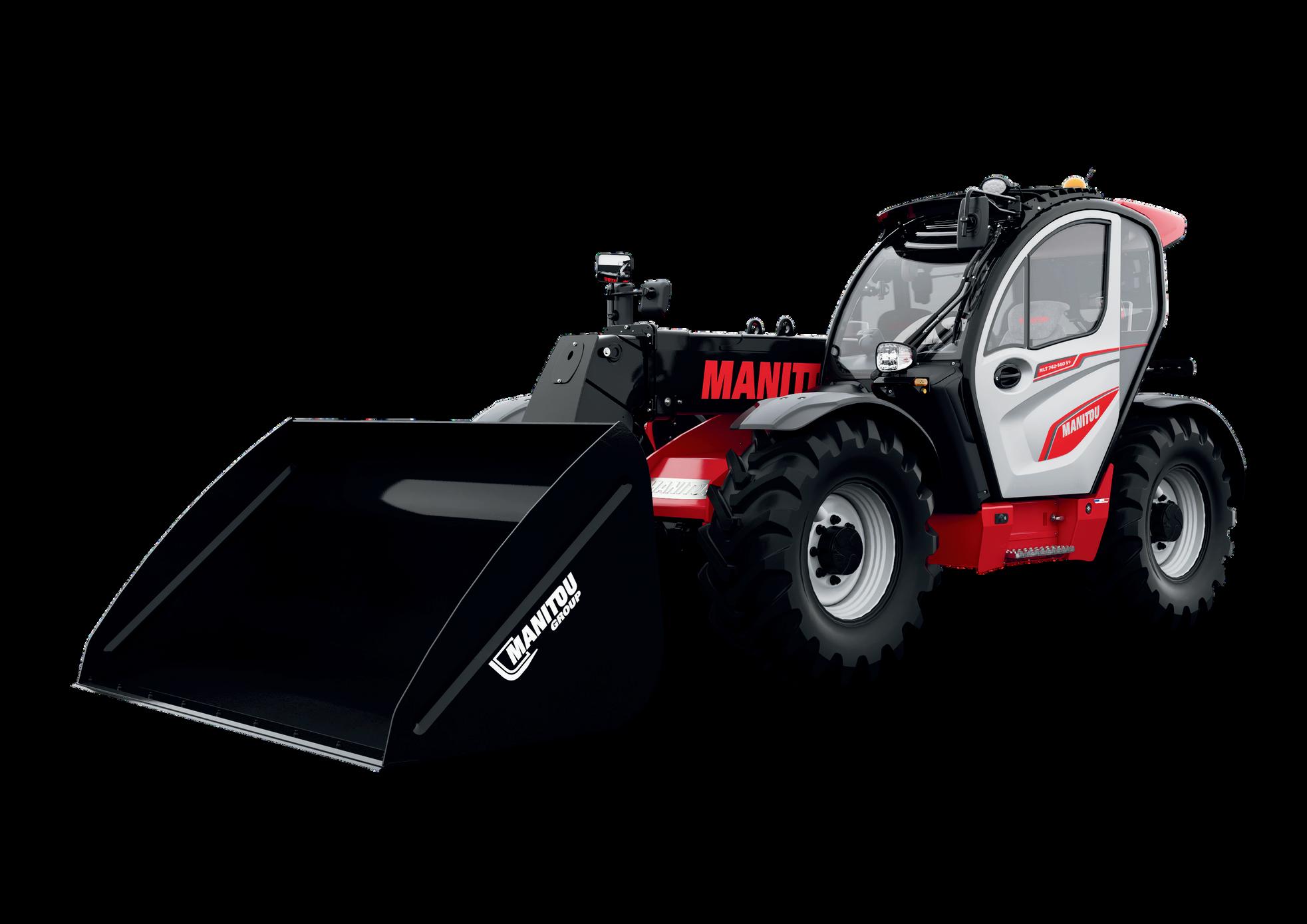
Unit 30, Vale Business Park Llandow, Vale of Glamorgan, CF71 7PF
Tel 01446 775602
*Terms and Conditions: Available for business purposes only, subject to acceptance and affordability checks. United Kingdom Applicants must be 18 or over and valid for units delivered and warranty registered by 30 June 2026. The offer is available Manitou MLT and MLA533 models only. The finance products available under this promotion are Hire Purchase and Finance For Hire Purchase, full VAT and 3 equivalent rentals are due on signing followed by 33 monthly rentals. An option-to purch £100 (plus VAT) will be collected with the final payment. You will own the machine when all payments have been documentation fee of £150 (plus VAT) will be collected with the first rental. Alternative finance products are available, conditions apply. The maximum balance to finance is £50,000 per unit for UK transactions. Images are for illustrative purposes and specifications may vary. Finance provided by Manitou Finance Limited, Midpoint, Alencon Link, RG21 7PP. Registered No. 2308212. As a funder Manitou Finance Limited typically pay a commission, fee or other remuneration to credit brokers introduce business to them, please contact the broker if you require more information. Manitou Finance is authorised and the Financial Conduct Authority (662409). th
Cardigan Road, Crymych, SA41 3QX
Tel 01239 831733
0345 226 7382

High House, Bryngwyn, Raglan, Monmouthshire, NP15 2BS
Tel 01291 691005
Explore Our Exclusive Finance Offers Today!
MLT RANGE
MANITOU LOADER TELESCOPIC
MLA 533
MANITOU ARTICULATED LOADER
Experience the new Manitou: Where brute strength meets intelligent design.
With our reinforced octagonal boom and fuel-slashing Stop & Start technology, you’ll tackle the heaviest loads in less time, using less fuel, and with total precision thanks to the Smart Counting System that tracks every bucket for you
Limited offer for business users only, terms & conditions apply*
*Terms and Conditions: Available for business purposes only, subject to acceptance and affordability checks. United Kingdom only. Applicants must be 18 or over and valid for units delivered and warranty registered by 30 June 2026. The offer is available on new Manitou MLT and MLA533 models only. The finance products available under this promotion are Hire Purchase and Finance Lease. For Hire Purchase, full VAT and 3 equivalent rentals are due on signing followed by 33 monthly rentals. An option-to purchase fee of £100 (plus VAT) will be collected with the final payment. You will own the machine when all payments have been made. A documentation fee of £150 (plus VAT) will be collected with the first rental. Alternative finance products are available, terms and conditions apply. The maximum balance to finance is £50,000 per unit for UK transactions. Images are for illustrative purposes only and specifications may vary. Finance provided by Manitou Finance Limited, Midpoint, Alencon Link, RG21 7PP. Registered in England No. 2308212. As a funder Manitou Finance Limited typically pay a commission, fee or other remuneration to credit brokers who introduce business to them, please contact the broker if you require more information. Manitou Finance is authorised and regulated by the Financial Conduct Authority (662409).

Sitting firmly at the top of Kawasaki’s ATV hierarchy, the Brute Force 750 range embodies everything the brand is known for: performance, real-world capability, and a no-nonsense, can-do attitude. Powered by a 749cc V-twin engine and equipped with electronic power steering, these flagship machines are designed to work hard, go further, and do it all with ease.
With an impressive 37.3 kW (51 PS) on tap and a class-leading 58.1 Nm of torque, the fuelinjected V-twin delivers relentless pulling power and effortless acceleration. Whether towing, climbing, or pushing through challenging terrain, the Brute Force 750 feels unflappable.
For 2026, Kawasaki expands the lineup with the introduction of the Brute Force 750 SE, a model that raises the bar on standard
equipment and everyday practicality. Hand guards come fitted as standard, alongside a robust front brush guard and a chassismounted Warn VRX 25-S winch, providing serious pulling power when conditions turn demanding. It’s a specification that underlines the SE’s all-season, all-terrain credentials.
Both standard and SE models benefit from electronically selectable two- and four-wheel drive, paired with double wishbone suspension at both ends. The result is a machine that


For more information and to find your local Kawasaki dealer, visit
combines automotive-style control with the compact agility only an ATV can offer.
Thoughtful details elevate the experience further. Variable front differential control improves traction in the toughest situations, while a practical handlebar-mounted LED light is a small but telling example of Kawasaki’s attention to real-world usability.
When it comes to allround performance, durability, and sheer capability, the search for the ultimate ATV begins—and ends— with the Brute Force 750.
The Brute Force 750 is available in Grayish Blue, while the Brute Force 750 SE is offered in camouflage colourways.
Kawasaki’s current UK ATV range includes the Brute Force 750/SE, Brute Force 450 T-Cat, and the KFX90 ATV. For more information, visit www.kawasaki.co.uk or contact your local Kawasaki Utility Dealer.




s newly appointed Main Dealers for Yamaha ATVs for North Yorkshire, Tom Taylor ATV can offer you a wealth of choice with their extensive range of New ATVs to suit your individual needs. All pre-owned ATVs are fully serviced in our own workshops to the highest standards, we aim to give you, the customer, that all important “peace of mind”. When your machine requires service or repairs, pick-ups and drop-offs can be pre-arranged. It’s just a phone call away. Specialists servicing Yamaha, Honda and Can-Am ATVs. Come and see us to

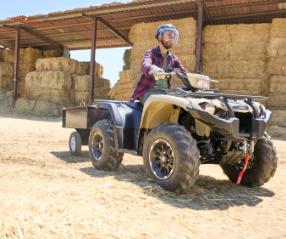
view new machine in our showroom, deals always available or call Tom Taylor for a demo on 01904 758105
With over 40 years ATV experience, Tom Taylor knows how provide the best possible service and support to the industry. We have a comprehensive selection of ATV Accessories and Equipment available from • C-DAX ATV Equipment • LOGIC ATV Equipment • TFM TRAILERS • Longdog ATV Equipment • Chapman Machinery • Moose ATV Products • Data Tool Tracker Recovery Systems.
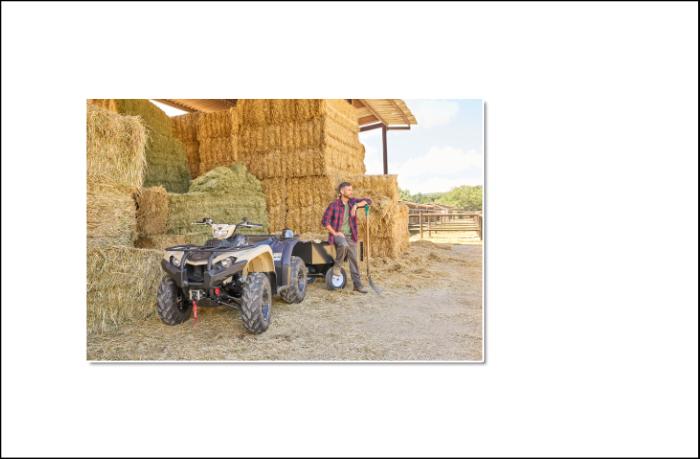
RVW Pugh Ltd
Oakwood Park, Holmes Chapel Cheshire, CW4 8AX Tel 01477 533560 www.rvwpugh.co.uk
Stirling's Powersports
East Fulton House, Darluith Road, Paisley, Linwood, PA3 3TP Tel 01505 382222 www.stirlingspowersports.com
RVW Pugh Ltd
Mellington, Churchstoke Montgomery, Powys SY15 6TQ Tel 01588 620545
Suzuki is pleased to continue offering the European All-Terrain Vehicle Safety Institute’s (EASI) ATV RiderCourse free of charge with the purchase of every new KingQuad ATV. Held in training centres throughout the UK, the EASI ATV RiderCourse helps ATV owners develop their riding skills and safety awareness through a practical, hands-on learning experience.

Riding and operating an ATV is very different to a car or motorcycle. The positioning of rider weight, off-road working environment, clothing and other factors all affect a rider’s potential safety. It is important that all ATV owners are aware of the risks related to operating ATVs and take the necessary steps to mitigate potential harm to themselves or other people.
EASI, a non-profit organisation, tackles the need for safe riding skills and awareness by providing valuable training courses, such as the ATV RiderCourse.
Redeemable through Authorised Suzuki Dealers, this course helps to support the safe operation of a newly purchased KingQuad. Areas such as pre-ride checks, riding in different conditions, and
negotiating obstacles are covered in the approximately five-hour course.
Each course ends with a wrap-up and review session where Student Performance Evaluation Forms are provided to all participants. These evaluate the riding skills of each student and detail any that require further practice or work in future.
Suzuki’s Partnership with EASI Suzuki is proud to have partnered with EASI for many years. Besides providing training to Suzuki customers, Suzuki trusts EASI to contribute to the training of its own staff, with an ATV RiderCourse forming part of the learning Suzuki staff undertake when working with KingQuads.
Mark Beeley, Head of ATV & Marine at Suzuki GB, said, “Our partnership with EASI has helped many of our customers to ride their KingQuads more safely. The ATV RiderCourses I’ve taken have been invaluable for maintaining my own skills, thanks to the experience the instructors have and the quality of teaching they provide.We highly recommend taking advantage of the free rider training available with every KingQuad”.
KingQuad owners can claim their place on an EASI ATV RiderCourse by contacting the Authorised Suzuki Dealer from whom the ATV was purchased.

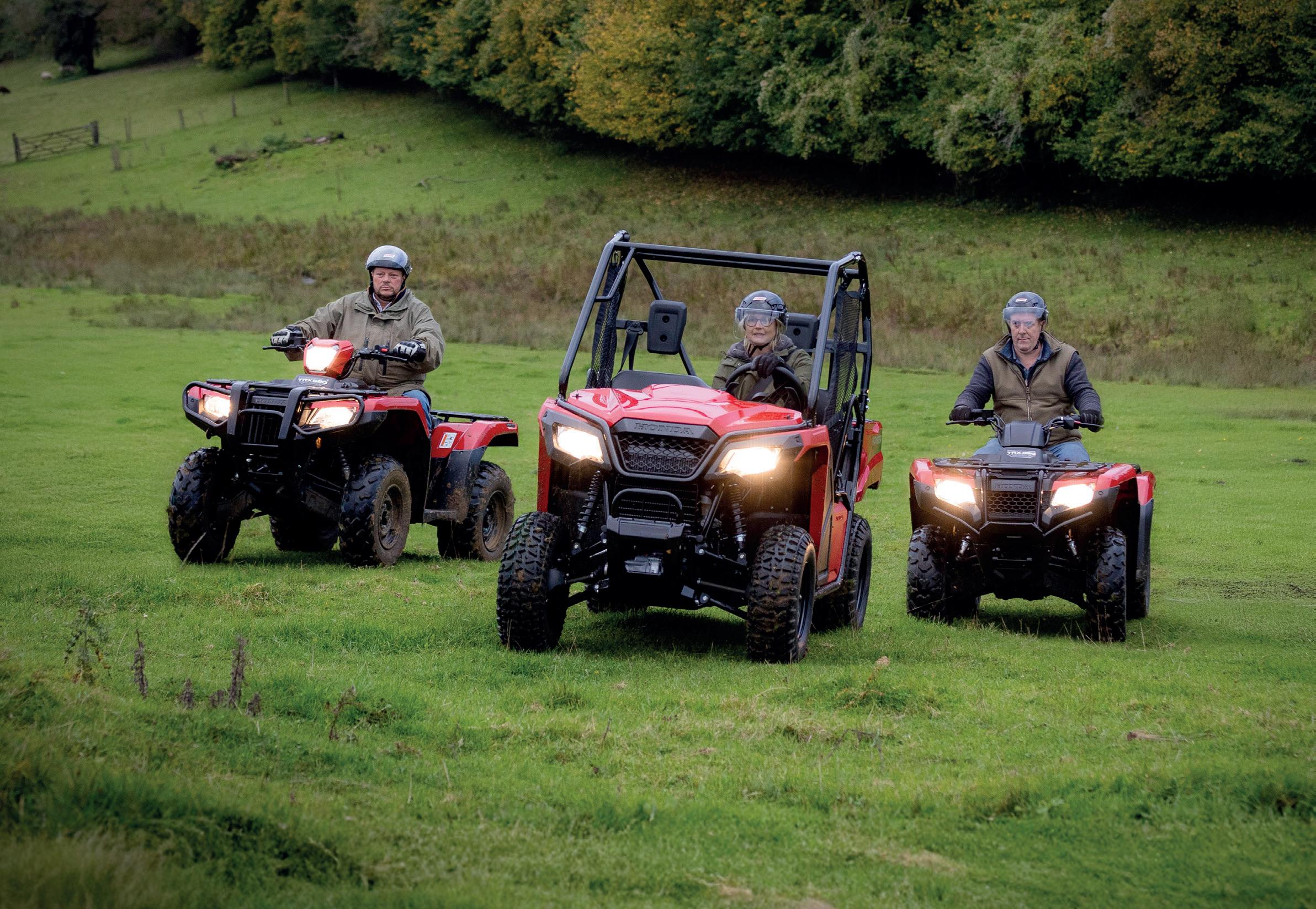
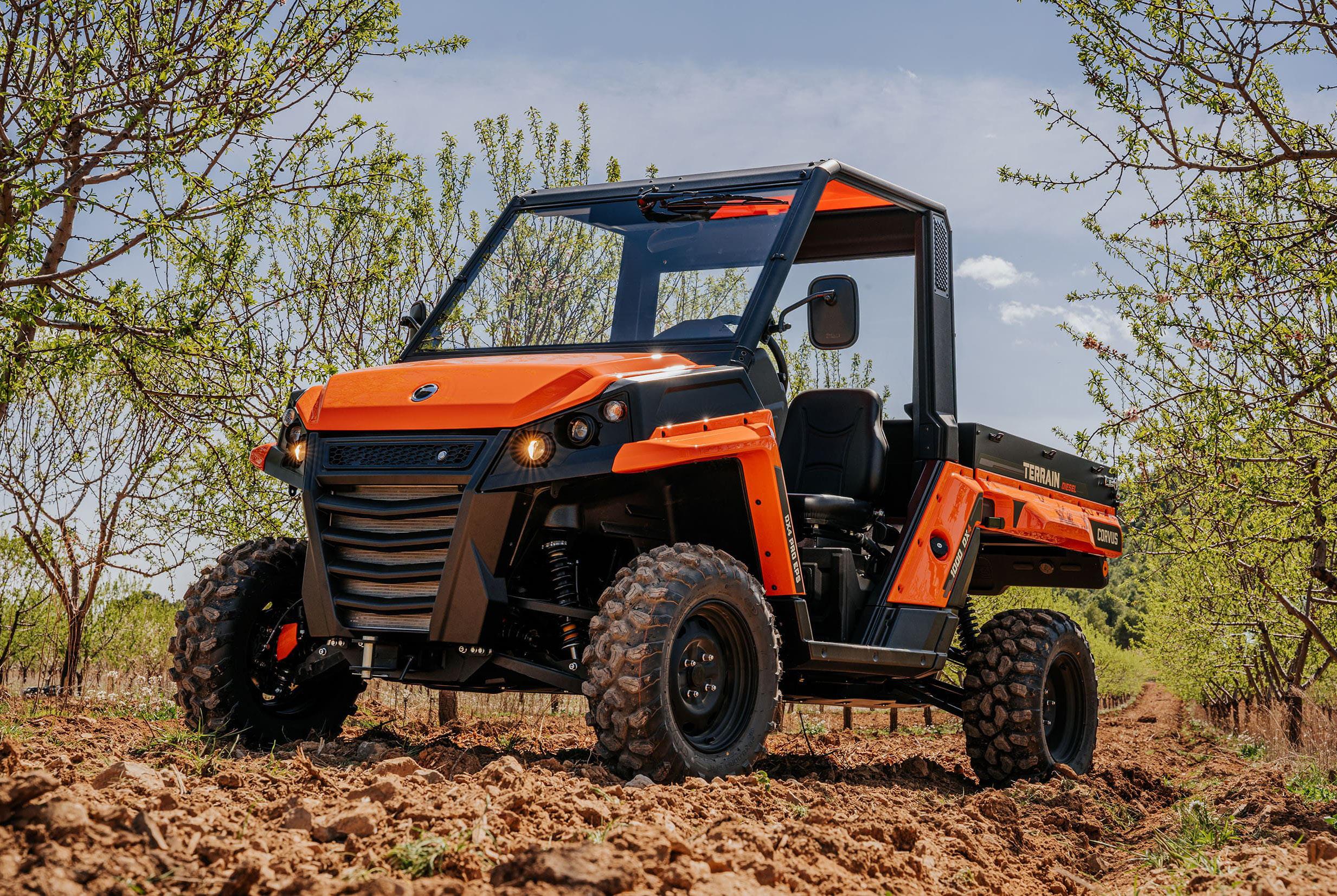
Corvus Terrain DX4 and DX2. The first UTVs made in Europe bring together pioneering sustainability and advanced technology. Constructed for the hardest off-road work in agriculture, livestock, forestry, groundscare and construction.
Highly adaptable, the Terrain features a 3-cylinder 24hp Yanmar Diesel engine for excellent fuel efficiency and range.
• St ag e V emission compliant
• Road legal to T1a/T1b tractor regulation with top speed of 40mph/65kph
• Power steering
• Full cab and heater options, including air conditioning
Supported by a specialised dealer network throughout the UK and Ireland.
To find your local dealer, visit www.bossorv.co.uk
ABREY AGRICULTURAL
Pamphillions Farm, Purton End, Debden CB11 3JT 01799 543208
ACE ATV
Woodgate Road, Stoke Prior, Woodgate, Bromsgrove B60 4HB 01527 578668
DAVID TAYLOR GARAGES
Granada Park Motors, A4077, Llangattock, Crickhowell NP8 1HW 01873 810304
TOM TAYLOR ATV
Unit 16/17 Windmill House Ind Est, Sutton Road, York YO32 2RA 01904 758105

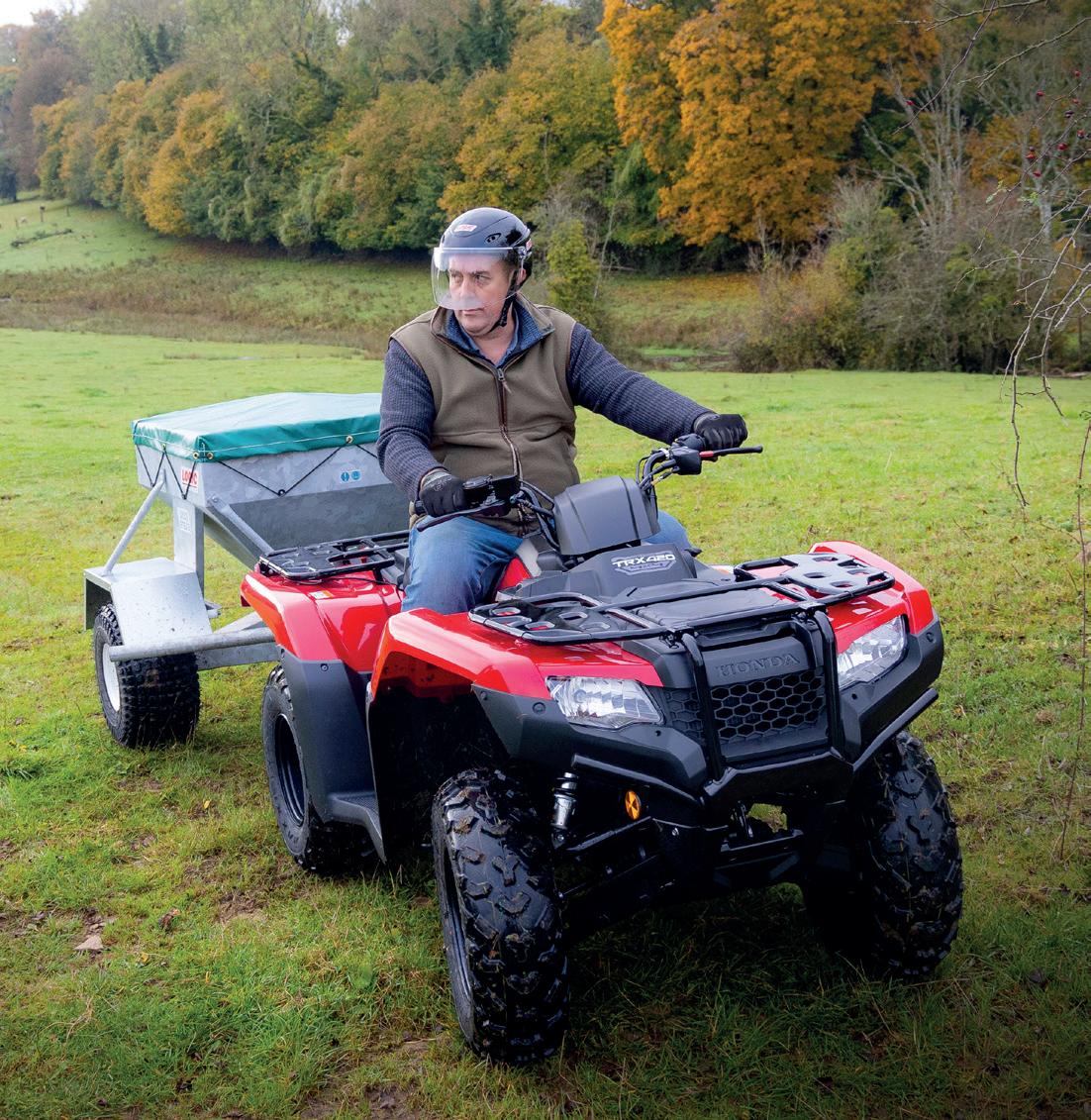
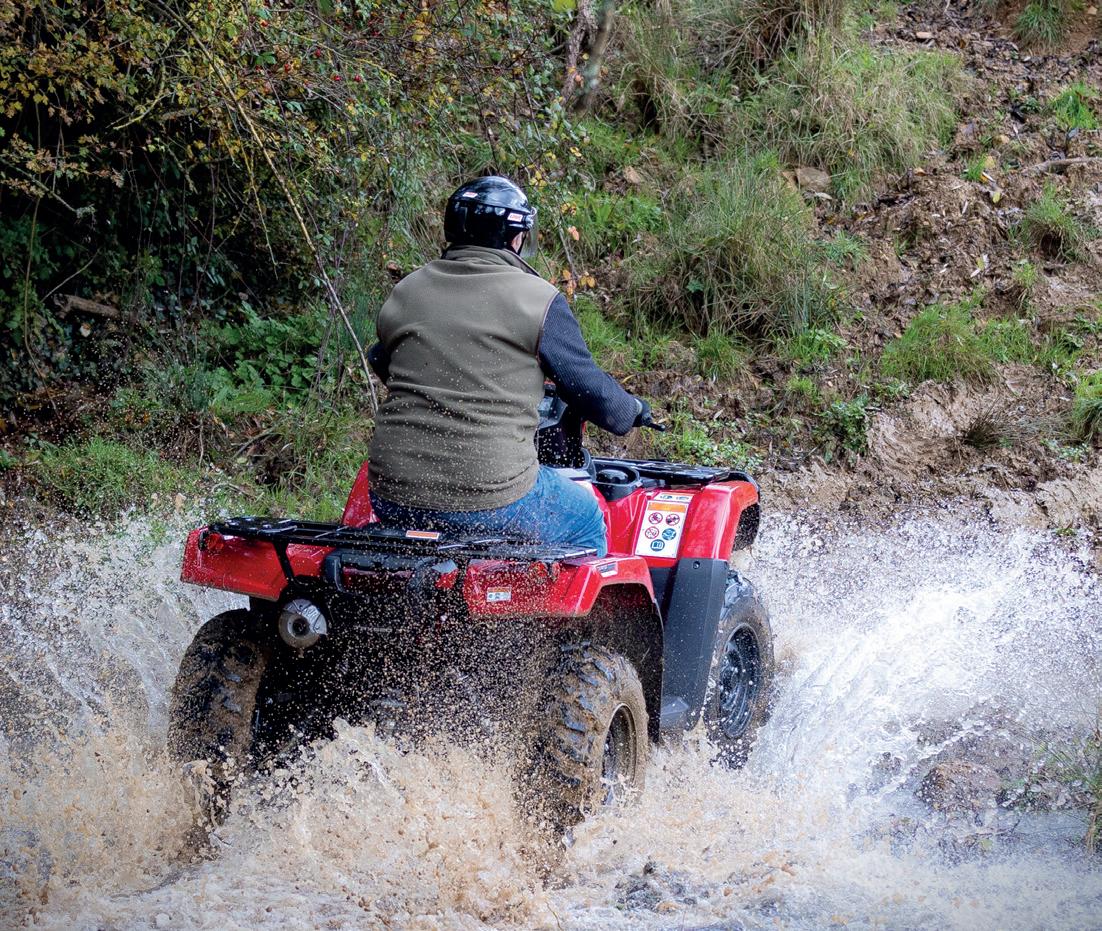

• Fuel-injected 420 cc OHV engine
• Auto clutch with manual shifting
TRX420FM1/FM2: £420 off (excl. VAT)
• Swing-Arm Suspension (Fixed Rear Axle)
• Power Steering (FM2)
• Fuel-injected 420 cc OHV engine
• Sturdy front and rear racks
• Auto clutch with manual shifting
• 1.9L water resistant utility box
• Swing-Arm Suspension (Fixed Rear Axle)
• TraxLok® switchable 2WD/4WD
• Available in Red or Green
• Power Steering (FM2)
• Sturdy front and rear racks
• 1.9L water resistant utility box
• TraxLok® switchable 2WD/4WD
• Available in Red or Green

• Fuel-injected 518 cc OHV engine
• Auto clutch with manual shifting
TRX520FM2/FM6: £520 off (excl. VAT)

• Fuel-injected 518 cc OHV engine
• 204 kg cargo bed capacity
• Independent Rear Suspension (IRS)
TRX520FM2/FM6: £520 off (excl. VAT)
• Swing-Arm or Independent Rear Suspension (IRS)
• Power Steering
• Fuel-injected 518 cc OHV engine
• Sturdy front and rear racks
• Auto clutch with manual shifting
• 1.9L water resistant utility box
• TraxLok® switchable 2WD/4WD
• Swing-Arm or Independent Rear Suspension (IRS)
• Available in Red or Green
• Power Steering
• Sturdy front and rear racks
• 1.9L water resistant utility box
• TraxLok® switchable 2WD/4WD
• Available in Red or Green
• Impressive 454 kg towing capacity
SXS520 PIONEER: £520 off (excl. VAT)
• Five-speed auto transmission with optional manual shifting
• Fuel-injected 518 cc OHV engine
• 204 kg cargo bed capacity
• TraxLok® switchable 2WD/4WD
• Independent Rear Suspension (IRS)
• Side-by-side seating with easy access
• Impressive 454 kg towing capacity
• Five-speed auto transmission with optional manual shifting
Honda ATVs & UTVs—Built to Work as Hard as You Do. Honda ATVs and UTVs deliver the performance and reliability professionals trust every day. From farming and forestry to gamekeeping, equestrian work, and snow clearing, these machines handle any terrain, any weather, and countless tasks with ease. Known for robust build quality and exceptional dependability, your Honda quickly becomes an essential part of your routine. Backed by a 2-year manufacturer’s warranty† as standard, your Honda ATV or UTV is ready whenever you are. The Power of Dreams.
• TraxLok® switchable 2WD/4WD
• Side-by-side seating with easy access
Honda ATVs & UTVs—Built to Work as Hard as You Do. Honda ATVs and UTVs deliver the performance and reliability professionals trust every day. From farming and forestry to gamekeeping, equestrian work, and snow clearing, these machines handle any terrain, any weather, and countless tasks with ease. Known for robust build quality and exceptional dependability, your Honda quickly becomes an essential part of your routine. Backed by a 2-year manufacturer’s warranty† as standard, your Honda ATV or UTV is ready whenever you are. The Power of Dreams.


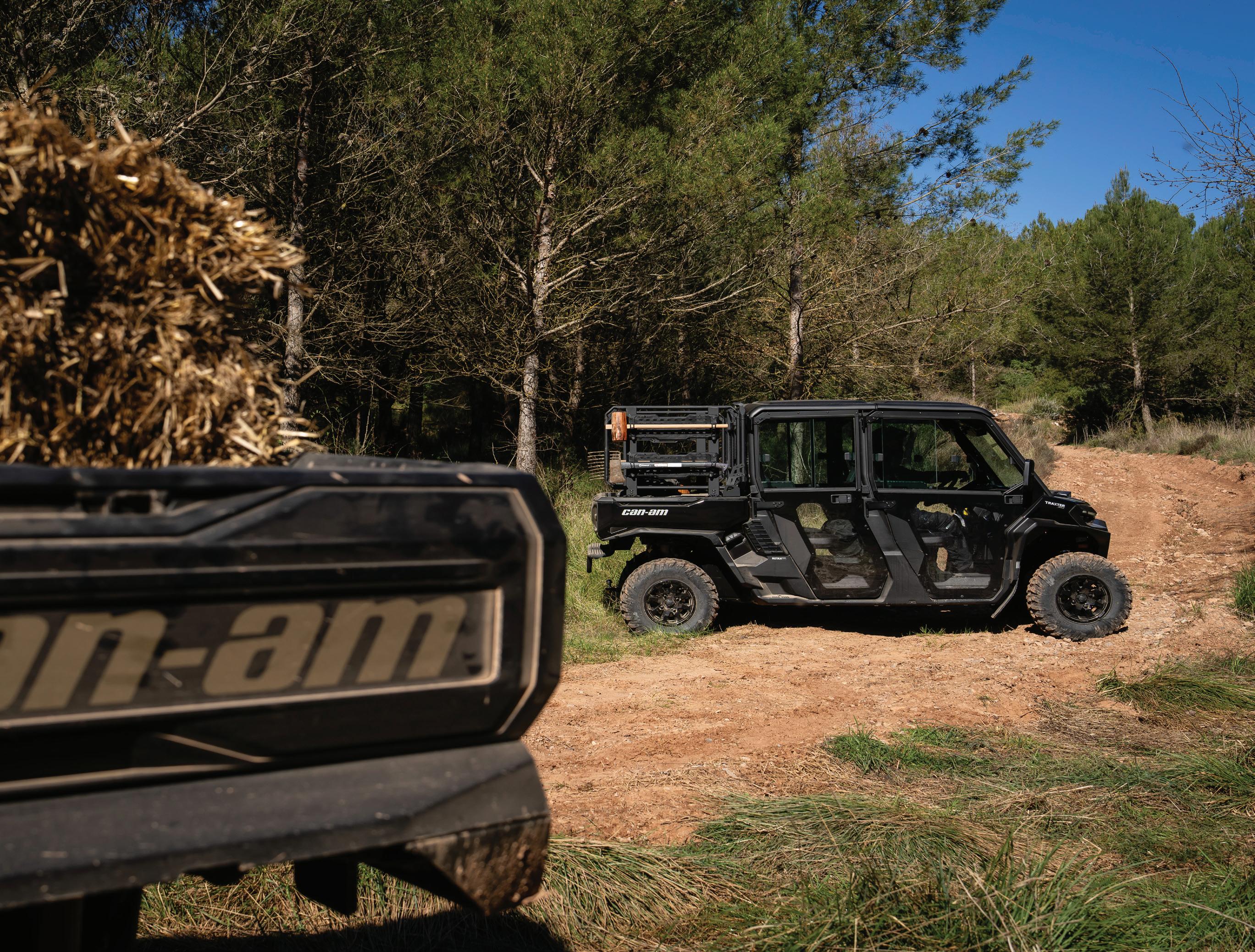
ELECTRIC).


Choose the Pathcross ATV 525/650/800/1000cc
Discover the exceptional from a global leading powersports manufacturer. Unleash the power with V-Twin engines. Tackle the most rugged trails and rough terrain. Enhance your ride with advanced suspension and electronic fuel injection. Enjoy the comfort with a cab, heating and air conditioning.
Satisfy all your expectations with the Workcross 525/650/800/1000cc



ANorthamptonshire-based business has received a prestigious national award at the Polaris UK Dealer Awards.
Day and Coles (Agricultural) Ltd, based in Wellingborough, who have been trading for more than 80 years, was named winner of the Service Award, recognising excellence in both technical servicing and customer care across the Polaris dealer network.
The family-run business has forged a close partnership with Polaris, the global off-road vehicle manufacturer, supplying and supporting the Polaris RANGER, RZR, GENERAL and Sportsman vehicles to customers across agriculture, land management and private estates.
“We are extremely proud to be recognised by Polaris for the standards we set in both service and customer care.”
Matt Underwood, Workshop Manager, Day and Coles
“Our focus has always been on building long-term relationships by delivering reliable support, expert workmanship and a consistently high level of service. This award reflects the commitment of our entire team who consistently go the extra mile for
our customers.”
Day and Coles serves a diverse customer base, including farmers, gamekeepers and private estate owners, and is known for its personalised, relationship-led approach to aftersales support. This ethos has enabled Day and Coles to grow a large, loyal customer base who rely on their teams’ extremely high level of knowledge, skills and passion for the industry.
Richard Coleby, Polaris Regional Sales Manager for Central Europe, said: “We make high demands from all our dealers, but we also work hard to support them and deliver the valuable leads they need. These awards help to celebrate the exceptional strides our entire dealer network has made over the past year.
“Day and Coles are well renowned for the quality of their customer care and after sales support. Matt and his team always go above and beyond to keep customers moving and this award honours that approach.”
To learn more about Day & Coles, visitwww. dayandcoles.co.uk
For more information about Polaris and to browse the full range of vehicles, please visit polarisbritain.com

Victories. Having sustained its position as the market leader since its inception, the Polaris RZR platform now adds street legality to the 2026 RZR Pro XP Ultimate model with Tractor (T1b) homologation, expanding the horizons of what this platform can do and ensuring that the adventure never has to stop where the pavement begins.
"Bringing Tractor Homologation to the RZR Pro XP Ultimate is a direct response to our customers who demand a machine without compromise”, commented Nuno Fujo, International Market Manager, Global Recreation. “They want the performance that defines the RZR DNA, but they also need the practical versatility to travel from their garage to the trail. By integrating road legality, we are expanding the horizons of what this platform can do, ensuring that the adventure never stops, no matter the surface.”
UFORCE from£9, UFORCE from£9,


XP Ultimate, Polaris offers a comprehensive range of accessories engineered to allow riders to customise their vehicle to their exact needs.
Riders can shield themselves from the elements with a
Tractor homologation enhances the RZR Pro XP Ultimate by meeting the required EU homologation standards, which ensure road readiness through a suite of integrated safety features. These include a full LED signalling system with turn indicators, mirrors, and a horn, all incorporated into the vehicle's design alongside RZR Fang Accent Lighting. This classification, therefore, provides owners with the flexibility to travel legally between roads, trails, or work sites, unlocking new potential for both recreational and utility use with the world’s leading Sport SXS platform.
The RZR Pro XP Ultimate retains the race-bred performance that has underpinned the model’s success. Its 868KG chassis is powered by a 4-stroke DOHC twincylinder turbocharged twin-cylinder engine that delivers optimised corner-to-corner acceleration. This power is distributed across a 244CM (96-inch) wheelbase, measuring 162CM (64-inch) in width, providing a planted feel while maintaining the agility needed for tight trails through Xtreme Performance true on-demand AWD/ 2WD.
The vehicle’s suspension architecture is designed to handle the most demanding off-road environments, offering 56CM (22 inches) of travel in the rear and 51CM (20 inches) in the front. Damping is controlled by the DYNAMIX 2.0 semi-active suspension system, which adjusts the FOX® 2.5 Podium Live Valve shocks in realtime to give you ultimate control on any surface on 30” tyres. This technology stiffens the outside shocks during cornering to reduce body roll and softens them for straight-line comfort, ensuring that the machine's on-
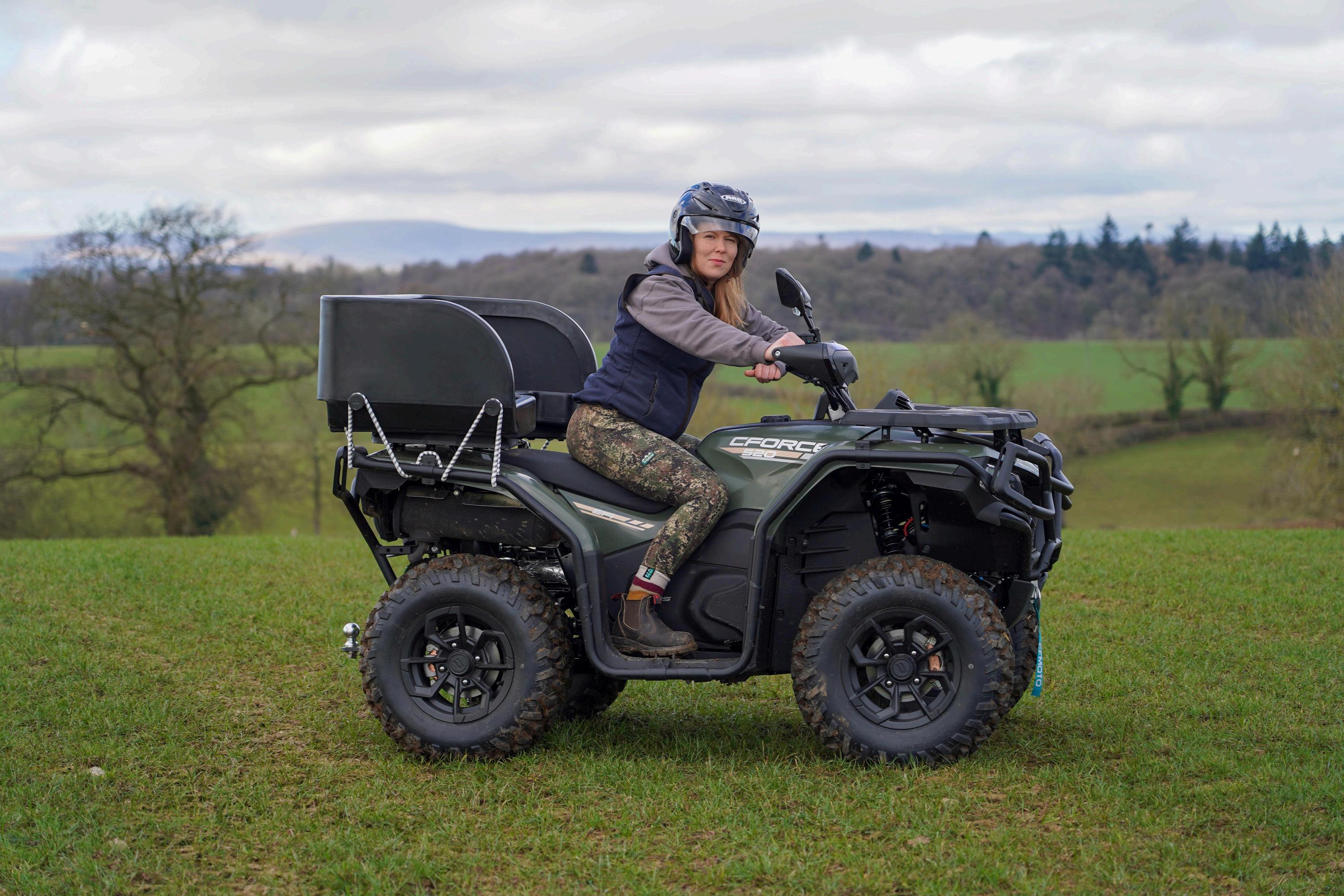

*Terms and Conditions apply
CFORCE ATV’s from £4500 + VAT
CFORCE ATV’s from £4500 + VAT
illumination. Additionally, riders can mount the 84cm ProArmor Single-Row Combo LED light bar, which features aluminium housing and high-output LEDs for dependable brightness on the trail.


Highland Leisure Sport
Unit 20, Cromarty Firth Business Park
Invergordon, IV18 0LT
Tel 01349 854620
www.highlandleisuresport.co.uk
Duncan Brassington Agricultural Sales Service Ltd
Banbury Lane, Burwarton, Bridgnorth, WV16 6QN
Tel 01746 787983
www.brassingtonagri.co.uk
When investing in a quad for farm use, the upfront price is only part of the equation. Farmers are increasingly looking for long-term value, considering factors like standard specification, durability, and crucially, resale value. This is where CFMOTO quads truly stand out.

years becomes a genuinely viable option for modern farmers.
From a farm business perspective, secondhand value is about actual cash lost, not badge perception. Most working ATVs, regardless of brand, reach a similar value at the end of their working life, typically around £2,000. If a new Honda costs £10,000 and is worth £2,000 later on, that is £8,000 in depreciation. If a CFMOTO costs £6,000 and ends up at the same £2,000, the depreciation is £4,000. You cannot lose £8,000 on a machine that only cost £6,000 to begin with. The lower purchase price simply reduces overall financial exposure while delivering the same end of life value bracket.

Unlike competitors, CFMOTO models come with a much higher standard specification straight from the box. Features like winch, tow bar, independent rear suspension, disc brakes, and road-legal brake lights and indicators are all standard with CFMOTO. Many models also come with ABS and Power Steering. This means farmers don’t have to pay extra for necessary features, offering a superior package from day one.
Interestingly, the used quad market places a high premium on these specifications. Road legality, power steering, and winches are among the first questions asked. CFMOTO’s commitment to including these features as standard ensures their quads maintain desirability, leading to stronger resale values.
Furthermore, considering the base value of wellmaintained quads, the step from a lower priced CFMOTO to the market base is significantly smaller than with more expensive brands. This translates to a much lower true cost of ownership. Combined with attractive finance packages, upgrading to a brand new CFMOTO every few
A machine that costs less to buy, remains reliable and holds its value can end up being the most economical choice over three to five years of use.
Several factors play a role in keeping second-hand prices strong for CFMOTO. The most important ones are:
• Next day parts availability and strong dealer support Unlike many other Chinese brands that have appeared in the UK, CFMOTO has an established dealer network and next-day parts availability.
• Consistent pricing on new models – A new CFMOTO is consistently the same price across the dealer network.
• Real demand in the used market – do your research and look up the resale value of a used CFMOTO yourself
• A proven reputation in working environments –CFMOTO has become the #1 best-selling ATV in the UK for a reason.
When buyers know they can get parts quickly and speak to a local dealer for advice, it makes a used machine far more attractive. Consistent new pricing also helps protect owners from sudden drops in resale values.
Second-hand value is often the clearest indicator of real-world trust in a product. A strong resale market usually means the machine is proven, the support network is reliable and there is genuine demand beyond the first owner. According to recent industry figures, CFMOTO has grown rapidly in the UK and has even reached the number one position in the ATV and UTV market, reflecting increasing adoption across farming and rural sectors.
That level of presence helps create confidence in the used market. Buyers are more comfortable purchasing second-hand machines when they know the brand is established, parts are available and dealers are familiar with the product.
Will a CFMOTO still be reliable after a few years?
Reliability is one of the biggest factors affecting resale value. A machine that starts easily, tows confidently and copes with poor weather conditions will always be easier to sell on. Feedback from farmers highlights what’s most important for a farm quad:
• The bike starts when it’s cold
• Grips when it’s wet
• Tows when it’s loaded
value of part exchange will depend on the machine’s mileage, service history, and condition of the machine.
There is little demand in the used market – Do your own research and check the current demand in the online used market for CFMOTO – our research shows strong demand for second-hand CFMOTO ATVs and UTVs.
Reliability is poor – A looked after, well maintained and serviced CFMOTO machine is reliable. There’s a reason CFMOTO has become the #1 best-selling ATV/UTV in the UK.
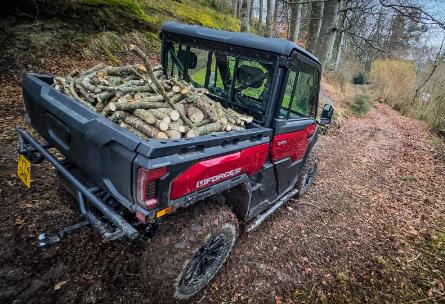
• Doesn’t turn a working day into a repair job
Machines that consistently do those core jobs well tend to hold their value because the next owner knows exactly what they are getting.
Is buying cheaper upfront a false economy?
It could be a false economy, but only if the machine is unreliable, difficult to maintain, or hard to sell on. With a quick Google search, you can see for yourself that a CFMOTO with a full service history holds its value well and is far from difficult to sell on.
A lower purchase price only becomes a problem when:
Parts are hard to source – this is not the case for CFMOTO. CFMOTO have online warranty systems and parts availability, but this may not be the case for alternative “cheaper” Chinese brands.
Dealers won’t take it in part exchange – CFMOTO dealers will take a CFMOTO part exchange. This
Strong resale values usually suggest the opposite of a false economy. They indicate that the product is trusted, widely used and supported by a proper dealer network.
So, do CFMOTO ATVs and UTVs hold their value?
Real-world examples online suggest that many CFMOTO work machines depreciate at a steady rate. Combined with a lower purchase price, growing market presence and established dealer support, this helps keep the true cost of ownership competitive.
For many owners, the most useful question is not “what does it cost today?” but “what will it cost me per year over the next few seasons?” In many cases, the numbers make strong sense when looked at that way.
If you are considering a new or used CFMOTO, the best approach is to speak to your local dealer, look at current used listings and work out the cost per year. The most valuable machine is the one that earns its keep in the field and still makes financial sense when it’s time to sell or trade in.

Polaris Off Road announces the arrival of the RANGER 500 in Europe, expanding its RANGER lineup with a compact and capable utility side-by-side designed to make work easier and ownership more accessible.
Launched in North America last year, the RANGER 500 now brings its proven performance to European customers under the philosophy of“Right Tool, Right Price”,backed by Polaris’ 70-years of powersport innovation.
Built to deliver value and versatility, the RANGER 500 combines trusted Polaris engineering with intuitive usability and essential work-ready features to help make outdoor chores easier. Whether maintaining land, managing livestock, or tackling jobs around small to medium-sized properties, it offers a practical and approachable solution for a wide range of new and existing UTV owners.
“We’ve seen strong demand for the RANGER 500 from customers who value a dependable, easy‑to‑use machine at an accessible price,” said Chris Judson, Vice President, Polaris Off Road Vehicles, International. “Expanding this proven model into Europe allows us to meet more customers where they are, with a straightforward mid‑size utility vehicle that delivers trusted capability, real value and the off‑road performance Polaris is known for.”
Enhancements and key features of the RANGER 500 include:
• Smooth, predictable powerfrom the ProStar 567cc engine, tuned for low-end torque to handle hauling and climbing with ease
• Compact, agile design, measuring under 150cm wide, ideal for navigating tight gates, narrow paths, barns, and garden spaces
• Factory-installed roof, 1,134kg winch and LED headlights as standard, providing weather protection and enhanced visibility from early mornings to late evenings, and added capability for tasks like clearing debris, pulling logs, or general property maintenance
• Simplified controls and intuitive operationmake it approachable for both new and experienced UTV users, along with auto-locking front drive that requires no user input to engage 4WD, providing the driver with constant traction in changing scenarios
• Selectable VersaTrac Turf Modeis ideal for driving on delicate surfaces or manoeuvring around tight spaces
• Gas-assist tipping cargo bedwith a 227kg capacity makes light work of transporting materials such as mulch, tools, or feed
• 680kg towing capacity with standard tow hitchenables efficient handling of trailers and heavier loads
• Easy-access maintenance pointsensure routine checks like oil, air filter and fluids are quick and straightforward
• Smart interior storage solutions, keeping tools and essentials within easy reach throughout the working day
Designed with practicality at its core, the RANGER 500 is built to support a wide range of everyday tasks with minimal effort. Its compact size and responsive handling make it particularly well-suited to properties where space is limited, but productivity is essential.
Polaris’ ProStar 567cc engine focuses on low-end torque for smooth, controlled power delivery when towing equipment or carrying heavy loads, paired with the Polaris CVT transmission, for consistent performance in all working conditions.
The RANGER 500 is equipped with a gas-assist tipping cargo bed capable of carrying up to 227kg – a practical alternative to manual handling tasks. Combined with its 680kg towing capacity, it is well-equipped to manage a variety of maintenance jobs.
Ease of use is central to the RANGER 500’s design with intuitive controls and a straightforward drive system, making it accessible even for first-time UTV owners. Maintenance is also simple, with easily-accessible service points to help reduce downtime, backed by a 2year warranty as standard.
Shaped by real-world customer needs, RANGER 500’s standard features include a factory-installed roof, LED headlights, and a front-mounted 1,134kg winch, so the RANGER 500 is ready to work straight from the dealership.
For extra customisation, an assortment of accessories is available, such as a front windshield and rear panel*, extra lighting options using Polaris’ easy-to-use plugand-play Pulse system, and storage solutions in collaboration with Kolpin Outdoors. A chassis-integrated plow mount plate adds year-round utility for snow removal or landscaping.
The RANGER 500, available in Stealth Grey (Tractor T1b homologation), will arrive in dealerships across Europe in late Spring.
* Off-road use only.
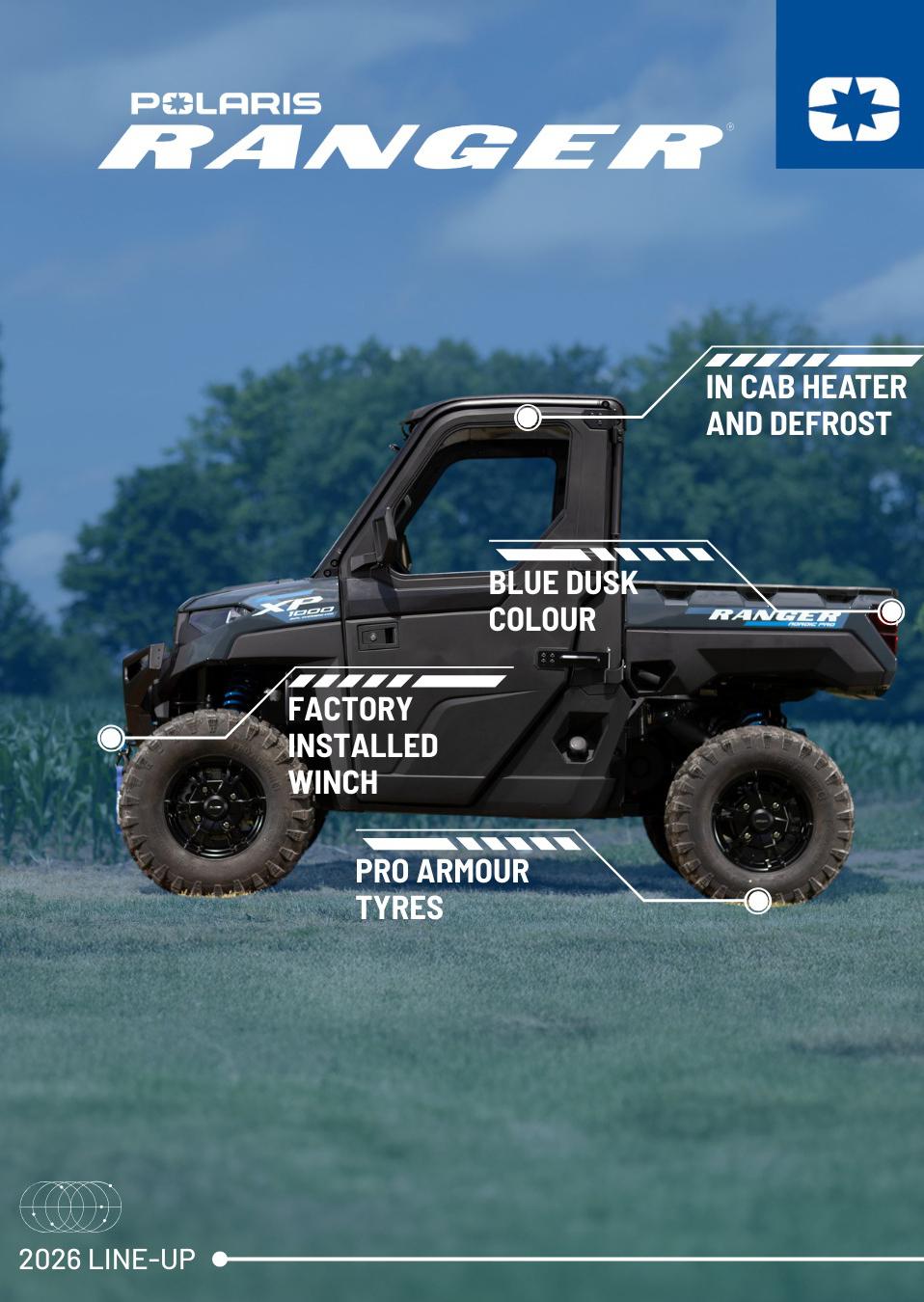







The chance to put the latest Polaris Ranger XP 1000 Nordic Pro through its paces doesn’t come around every day, and after spending time with the machine in real farm conditions, one thing became clear very quickly; this is a seriously refined bit of kit.

also earned praise, offering plenty of warmth and making the cab feel genuinely usable during colder mornings or late evenings. Cargo capacity was another plus point, with the load bed offering ample space for tools, feed, and general farm essentials.
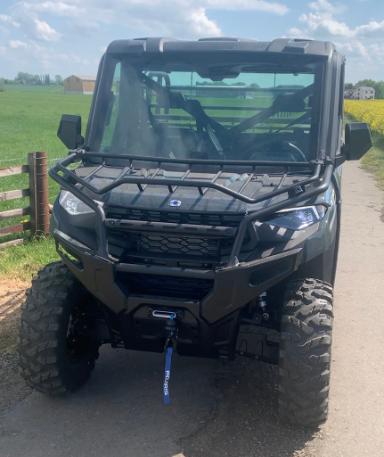
From the outset, the Ranger made a strong impression. Build quality felt solid throughout and, perhaps more noticeably, the ride comfort stood out immediately. Even over uneven ground, the suspension soaked up bumps with ease, creating a smooth, quiet driving experience that felt a cut above many utility vehicles currently on the market.
Testing took place mainly in dry, mild weather on relatively flat terrain, so this wasn’t a mud-plugging endurance trial. That said, it provided a good opportunity to focus on day-to-day usability, the sort of conditions many farms actually operate in for much of the year.
The feature that consistently impressed most was the ride quality. Long hours behind the wheel were no hardship at all, with the cabin remaining comfortable throughout extended use. The heater
Where the Ranger really distinguished itself was in the finer details of the driving experience. Steering felt light and responsive, while the turning circle was excellent, making it particularly useful around tighter yards and buildings. Performance was described as “nippy”, giving the machine enough urgency to move quickly between jobs without ever feeling harsh or overly aggressive.
One especially useful feature was the opening windscreen, which proved ideal for tasks such as night-time vermin control, where visibility and airflow can make a real difference.
No machine is perfect, however, and there were a handful of criticisms during the test. The doors, while sturdy, could be awkward to close if allowed to swing fully open. Shorter operators may find themselves needing to step out slightly to pull them shut comfortably. Wing mirror adjustment could also be improved, particularly for drivers of different heights.
The load bed itself was well-sized, although lifting heavier items into it may prove more challenging for shorter users due to the height. Inside the cab, there was also a feeling that storage could have been better thought out. Useful space exists beneath the passenger seat, but an enclosed compartment with easier access would make it far more practical for storing smaller items securely.
Despite those minor frustrations, the overall verdict remained overwhelmingly positive. Compared with other off-road utility vehicles, the Ranger XP 1000 Nordic Pro ranked extremely highly for comfort, manoeuvrability, and refinement. It was seen as particularly well suited to gamekeepers, estate work, and lighter feeding duties around the farm — although the tester admitted he’d happily keep it for himself given the chance.
After several days behind the wheel, the conclusion was straightforward: this is a capable, comfortable and very well-rounded machine with only a few small ergonomic niggles preventing perfection. Overall score? A strong 9 out of 10.
In a farming sector defined by tighter margins, environmental pressure and the constant demand to do more with less, machinery that delivers both efficiency and precision is no longer a luxury. It is essential. Against that backdrop, Northern Ireland manufacturer Quad-X has launched a new liquid fertiliser application system for ATV and UTV users, positioning it as a practical and forward-thinking answer to the realities of modern livestock and grassland farming.
Unveiled at Balmoral Show 2026, the new range has already attracted strong interest from farmers searching for a more accurate, efficient and environmentally responsible way to apply nutrients. The appeal is easy to understand. With fertiliser costs rising and pressure mounting to reduce waste, growers are increasingly looking for systems that improve nutrient use efficiency while lowering the risk of loss.
Quad-X is already recognised as one of the world’s leading manufacturers of ATV, UTV and compact agricultural machinery, and this latest launch reflects more than 30 years of engineering experience. The company has built its reputation on practical design, robust construction and close attention to feedback from working farmers. That same approach has shaped the new liquid fertiliser system, which is designed not only to perform well, but to fit naturally into the way farmers actually work.
At the centre of the range is a 700-litre commercialcapacity sprayer, available with 4m, 6m, 8m and 10m fertiliser booms. The result is a machine that brings serious working capacity to ATV and UTV operation, while retaining the low running costs, flexibility and low ground pressure advantages that smaller agricultural vehicles offer. For farmers working on grassland or in softer conditions, that combination could prove especially valuable.
As quads and UTVs continue to become more capable on farms, the new system allows operators to work in conditions where heavier machinery may struggle. That gives users greater flexibility during narrow application windows and helps reduce soil damage and compaction, particularly on sensitive ground. In a season where weather windows are increasingly unpredictable, that kind of responsiveness matters.
Liquid fertiliser has long been established in cereal production, but it is now gaining momentum in livestock and grassland systems too. Research continues to support its role as an efficient method of delivering crop nutrition, especially where accurate placement and reduced nutrient loss are priorities. Quad-X says this growing interest is being driven by
tighter margins, increased environmental awareness and the wider move towards regenerative farming.
The new sprayer range is designed with those priorities in mind. Built on a fully galvanised chassis for durability and corrosion resistance, it features Quad-X’s SuperPump for reliable performance and consistent application rates. An integrated pressure gauge helps operators monitor output accurately, while return agitation keeps the tank contents well mixed throughout use.
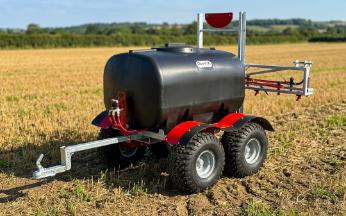
Other design details reinforce the machine’s practical appeal. The UV-stabilised tank is made to withstand long exposure to sunlight and harsh conditions, while boom suspension improves stability over uneven ground. The adjustable 50mm ball hitch offers broad compatibility with ATVs, UTVs and 4x4 vehicles, and heavy-duty low-friction tyres have been selected to minimise vegetation damage and ground disturbance.
Every machine comes with an aluminium hand lance and 5m hose for spot spraying, while a range of optional extras allows farmers to tailor the system to their needs. The boom range includes specialist nozzles designed specifically for liquid fertiliser application, with break-back protection and multiple shut-off sections helping improve accuracy and reduce overlap.
Quad-X also offers a smaller 230-litre towed model with a 3.5m boom, along with chemical spray boom options for weed control applications. This flexibility broadens the machine’s appeal across different farm sizes and operating requirements.
At its core, the launch reflects a wider shift in agricultural thinking. Precision, efficiency and lowerimpact machinery are becoming central to the future of farming, and liquid fertiliser systems are increasingly seen as part of that transition. For farmers looking to protect soil, improve nutrient delivery and work smarter across the season, QuadX’s new system arrives at exactly the right time.
TIA Agri has formed a strategic partnership with Goodyear Farm Tires to become the principal stockist of the popular long-standing brand to the UK and Irish agricultural market.
From its headquarters in Telford, wholesaler TIA Agri will stock and supply the full range of Goodyear Farm Tires, part of Titan International.
Goodyear Farm Tires re-entered the UK and European market in 2019, drawing on more than a century of agricultural innovation that began in 1898.
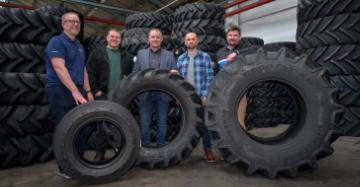
Its legacy remains a defining strength, particularly through its vintage tractor tyre range, which continues to support restorers, collectors and farmers maintaining classic machinery.
Alongside this heritage offering, TIA Agri will be expanding its product availability with the complete modern, high-performance ranges including the popular Optitrac tyres and the advanced Low Sidewall (LSW) Technology line.
Designed to tackle some of the everyday challenges farmers face, Goodyear's Low Sidewall (LSW) tyres feature a larger rim and shorter sidewall, giving machines greater stability both in the field and on the road.
All products will be available on a next-day delivery basis to TIA's extensive network of dealers across the UK and Ireland.
Gordon Hamilton, Sales Manager for TIA Agri, said: "We are extremely proud and excited to have launched our new partnership with Goodyear Farm Tires.
"Being able to offer Goodyear Farm Tires is another crucial part of the jigsaw as we develop TIA Agri because it's a brand which has such a fantastic heritage and product range.
"I've worked in the tyre industry for a long time, beginning life in the depot, and Goodyear was our premium offering going back over 20 years now. It has truly stood the test of time when it comes to manufacturing quality and a manufacturer you can trust.
"Initially, our focus will be on building stock for the core day-to-day offering but, very quickly over the coming months, we will have the entire range in stock and ready to be delivered, via dealers, to farmers the length and breadth of the UK and Ireland.
"We also have the knowledge and expertise to offer technical support to farmers so we will be working with Goodyear Farm Tires to provide the very best all-round package to customers. Our customers have high expectations of us and it's a mantle we strive to uphold."
TIA Agri was formed in the UK in 2023, and after laying the foundations in its first year, the company has built on its offering and achieved rapid growth throughout 2024 and 2025, thanks in large part to a service-based approach that goes far beyond the initial sale.
The company provides hands-on aftersales support designed to help farmers get the very best performance from their tyres. This includes on-farm visits for pressure checks, weight distribution analysis and tailored technical advice.
Lindsay Hart, European Sales Director for Goodyear Farm Tires, said: "TIA Agri has a fantastic reputation and excellent experience within its team, so this is an exciting opportunity for us to further enhance the Goodyear Farm Tires offering within the UK market.
"Having all the products available in the UK and on a next day delivery basis has been a key objective since our return to the UK, and we are now able to deliver that to farmers through TIA.
"We have exciting new product launches coming imminently and we will be working with TIA Agri to maximise that, as well as the existing modern and our ever-popular vintage range.
"There is real synergy between Goodyear Farm Tires and TIA Agri, with quality, excellent service and reliability at the heart of both organisations."
TIA Agri is a subsidiary of TIA (GB) Limited, a firm that within its quarter-century in the business has grown to become the largest family-owned business in the UK tyre trade industry, stocking a comprehensive range of tyres and commercial wheels.
The company has established a strong international footprint, supplying customers in more than 78 countries, and continues to grow its reputation for dependable transport solutions.
For more information on the partnership and products available, visit www.goodyearfarmtires.eu andwww.tiaagri.co.uk

oodyear Farm Tires will mark its return to The Tire in Cologne this summer by showcasing the world's largest tyre and the versatility of the product range of parent company Titan International.
Goodyear Farm Tires will take its place in Hall 6, stand CO19 at the German showpiece event which will run from June 9 to 11.
The stand will feature the largest commercially available agricultural tyre in the world, the Goodyear Farm Tires LSW1400/30R46, which received the green light to be used on British and European soil earlier in the year after being granted ECE accreditation.
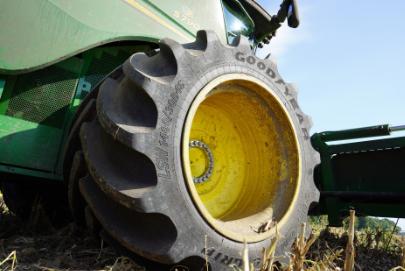
range which makes us a one-stop shop for our customers, whatever their agricultural or other offhighway requirements.
At the heart of the tyre's benefits is Titan's exclusive Low Sidewall (LSW) Technology. Featuring a larger rim diameter and smaller sidewall than a conventional tyre, LSW tyres possess exceptional flotation properties, enabling easier travel on wet soil as well as reduced power hop and greater stability which minimises road lope.
The Titan stand will also feature the latest introductions to its expanding industrial range, offering farmers new options for demanding environments, as well as a selection of products from associated companies under the Titan International banner.
Lindsay Hart, European Sales Director for Goodyear Farm Tires, said: "It's an exciting time for both Goodyear Farm Tires and the wider Titan family so we are delighted to be heading to Cologne to showcase our wheel and tyre offering.
"We can offer a versatile and high-performance
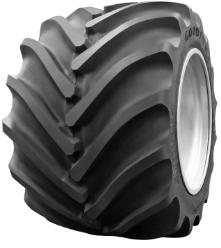
"The start of 2026 has seen significant progress for Goodyear Farm Tires in Europe, with the accreditation of the LSW1400/30R46 backed up by two new industrial product launches and we look forward to speaking to customers at the show to tell them more."
The two new Goodyear Farm Tires' industrial tread patterns feature reinforced lugs for durability, deeper grip, stability and outstanding traction across all conditions.
Elsewhere on the stand, visitors can learn more about Diamondback branded OTR tyres with detailed information available and experts on hand to discuss the range.
Nearly 40 Diamondback tyre sizes are available across 11 tread patterns following the agreement of a 10-year-partnership between Titan International and Triangle Tire Sales Company, LLC. These can be used on a range of applications including graders, loaders, articulated dump trucks, rigid dump trucks and underground mining vehicles.

The stand will also provide an insight into the wheel and tyre products of Carlstar Group, another member of the Titan family and a leading provider of wheel and tyre solutions to the offhighway sector.
Carlstar products on display will include ITP wheel and tyre assemblies for ATV, Carlstar Outdoor Power Equipment (OPE) and agricultural applications including the new AgriSpecialist AGT+ flotation tyre.

At DEUTZ-FAHR’s Powerdays 2026, the multinational BKT takes the field with its AGRIMAX VFLECTO tires delivering a perfect blend of performance and technology.
Lauingen, Germany, April 28, 2026, Balkrishna Industries Ltd. (BKT), the world’s leading multinational Off-Highway tire manufacturer, is proud to announce its participation in the DEUTZ-FAHR Powerdays 2026, that are kicking off in Lauingen, Germany, today and will engage key stakeholders and the European dealer network over the next two months.
On this occasion, BKT enters the field as a Technical Partner of DEUTZ-FAHR with its premium tires from the AGRIMAX V-FLECTO range to equip the new DEUTZ-FAHR tractor SERIE 8 TTV, which was presented as a preview at Agritechnica 2025 in Hanover.
Featuring advanced VF technology, AGRIMAX V-FLECTO is BKT’s ideal solution for soil tillage applications where reduced soil compaction and self-cleaning capabilities are essential. The tire represents a blend of
performance, efficiency, and sustainability that is perfectly aligned with DEUTZ-FAHR’s philosophy, which will mark the beginning of a new era centered on technology and innovation at the Powerdays 2026.
“By taking part in this initiative, BKT reaffirms its commitment alongside DEUTZ-FAHR, a partner with whom we have shared a 20-plusyear journey based on performance, innovation, and a genuine focus on the needs of the agricultural sector,” says Lucia Salmaso, Managing Director, BKT Europe. “Over time, this cooperation has evolved steadily, turning common challenges into development opportunities, and ideas into increasingly targeted and effective solutions.”
Live field demonstrations will also take place during the Powerdays, allowing attendees to test both tractor and tire performance under real operating conditions. On this occasion, BKT’s Field Engineering team will hold training sessions dedicated to the tires of the brand, providing participants with in-depth technical insights into the solutions developed to meet the ever-evolving operational needs of the farming sector.

ridgestone, a global leader in tyres and sustainable mobility solutions, is expanding its premium agricultural offering to meet the demands of the latest generation of high horsepower tractors. The Bridgestone VTTRACTOR range now includes six additional extralarge (XXL) sizes, spanning 38–46-inch rim diameters and introducing enhanced features and performance.
Bridgestone’s new VT-TRACTOR XXL tyres deliver exceptional traction, extended wear life and enhanced durability. The expanded range also delivers an optimised rolling circumference for ideal lead percentage across front and rear tyre combinations.
“Today, farmers operate larger, more powerful tractors and need tyres that can keep up – doing more and going further in demanding conditions,” said Andrea Marconcini, Director Agriculture at Bridgestone EMEA. “Our updated VT-TRACTOR range is engineered to enable faster, more efficient work in the field, together with a longer service life that reduces long-term costs.
Underpinned by Advanced Tyre Engineering
The performance benefits of Bridgestone’s new VT-TRACTOR XXL tyres are enabled by a range of advanced design features.
Developed using robust Bridgestone design criteria and virtual 3D simulation, the tyres incorporate a deeper tread depth and wider tread width, ensuring excellent cooperation between traction and wear. A patented involute lug design delivers up to 12 per cent more lug volume than competitors1, maximising traction while minimising energy loss and maintaining performance over time.
loads, and preventing rim slip. The strong bead profile combines with a high durability casing construction that ensures even pressure distribution over soil footprint, improving both field performance and tyre longevity, and preventing both circumferential and shoulder cracks. The new XXL range’s optimised rolling circumference ensures proper traction, reducestyrewear, prevents drivelinestressand improves fuel efficiency, whilemaintainingsteering precision and overall vehicle stability.
The XXL tyres are compatible with Central Tyre Inflation Systems (CTIS), allowing operators to adjust pressure easily for different applications.
VT-TRACTOR’s XXL sizes will be produced in Bridgestone’s Puente San Miguel plant in Spain, following recent enhancements to the site’s manufacturing capabilities. This includes advanced production technology and specialised equipment to produce large-diameter tyres, enabling Bridgestone to expand its portfolio into the 44- and 46-inch segment.
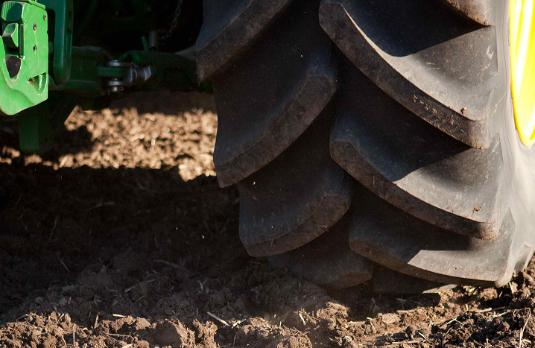
Bridgestone’s new VT-TRACTOR XXL sizes will be introduced progressively from April 2026, expanding coverage for high-horsepower tractors and ensuring compatibility with a wider range of modern agricultural machinery.
The enhanced durability of the expanded range is enabled by Bridgestone’s unique S-LINE bead profile. This provides greater flexibility at lower pressures, helping to reduce soil compaction while maintaining durability under heavy and changing
1Based on Bridgestone measurement tests conducted on Bridgestone VT-TRACTOR, Michelin AXIOBIB2 and Trelleborg TM1060 VF750/70R44 and VF900/65R46 tyres.
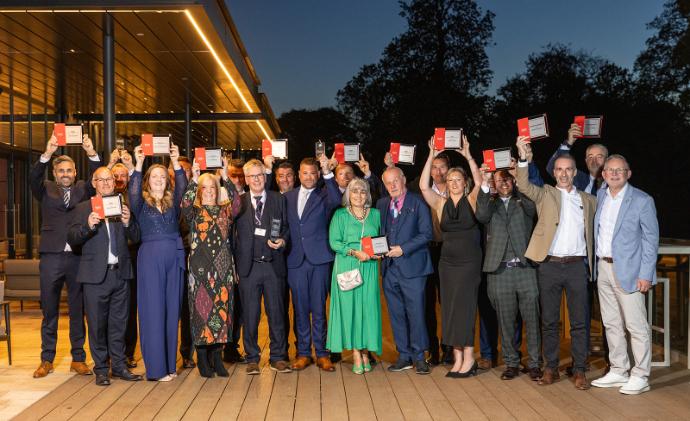

suzu UK held its 15th annual dealer awards on 30 April, with 15 categories recognising outstanding achievements from across its dealer network. More than 140 guests joined Isuzu UK management at its annual conference and dinner to recognise exceptional performance across not only sales and aftersales but also individuals’ contributions within Isuzu dealerships.
York Van Centre, consistently a high achiever across many aspects of its Isuzu business, was announced as overall Dealer of the Year, also taking the top award in its area and completing a triple haul with the Finance Dealer of the Year title. Eaglesham Garage in Glasgow was announced Dealer of the Year for Excellence in Customer Service, recognising the team’s professionalism throughout the business and the commitment to customers by every department.
The Isuzu UK Special Recognition Award was presented to George Mackenzie of Corrie Motors Isuzu in Inverness. George started working in the Mackenzie family garage in 1968 while still at school, with Isuzu added to the franchise portfolio in 2014. The award celebrated George’s passion
for the automotive industry and his partnership with Isuzu, as well as his dedication to customers and staff with some employees spanning decades.
Other individuals recognised for their commitment and contribution to Isuzu’s UK network representation were Jason Ditchburn of Ditchburn Truck Services in Merseyside; Dave Matthews of Startin Tractors Isuzu in Atherstone; and Mark Bond of Roger Young Isuzu in Saltash, Cornwall. Each was nominated by Isuzu UK’s regional managers as Heroes of Isuzu UK.
Parts Dealer of the Year went to Roger Young: the third consecutive year the dealership has won the award. Accessories Dealer of the Year was presented to S&S Services in Ayr, with the Marketing award going to David Taylor Garages in Crickhowell.
Retailers in each of Isuzu UK’s sales regions were recognised with area Dealer of the Year awards, which were presented to Startin Tractors of Twycross, Roger Young, and Antrim’s John Barr Cars, along with area and overall winner, York Van Centre.
The conference and awards were held at The Belfry, Birmingham under the theme ‘Power Through’. Alan Able, Managing Director of Isuzu UK said: “We thank all our dealers for their ongoing enthusiasm and commitment to Isuzu UK. We have an exciting period ahead, with the launch of the recently showcased Isuzu D-Max 2.2 diesel pick-up and the first all-electric D-Max EV. These awards highlight the passion shared for the Isuzu brand as well as formally recognising dealers who have delivered exceptional performance within their businesses. We congratulate our winners and recognise all our Isuzu UK partners, as we power through the next 12 months with new products and a strong retail network.”
Tony Huggins, owner of York Van Centre, said: “Wow. I can only say ‘happy days’! We are very
committed to Isuzu and we’ve won our fair share of awards, but to take three big titles this year is very special. Of course it’s the whole team that deserves the recognition: it simply wouldn’t happen without them, and after celebrating we’re all looking forward to another exciting year ahead.”
George Mackenzie, owner of Corrie Motors Isuzu in Inverness, said, “I’m just stunned, this award was so unexpected but of course, whilst it’s me who has been singled out it’s the team behind me that’s made this happen. There is a real family feel, both in our dealership and within Isuzu UK. It’s a great brand to be involved with and I’m incredibly honoured.”




he Farizon SV has won ‘Best Technical Innovation’ and ‘Best Large Zero Emission Van’ at the 2026 Trade Van Driver Awards.
Now in their 14th year, the Trade Van Driver Awards recognise the vans that best meet the needs of tradespeople and small businesses. Winners are chosen by a panel of Trade Van Driver magazine’s journalists alongside readers who rely on vans in their day-to-day work.
The two accolades highlight the Farizon SV’s ability to deliver strong performance and practicality across multiple segments. Trade Van Driver were particularly impressed with the SV’s innovative hiddenB-pillar.
Integrated in the passenger door so as not toimpede accesson the nearside,the pillarlessbody sidecombined with a1,000mmsliding side door openingon theL1 model anda1,300 mmsliding side door openingon the L2 andL3 modelspresentsuserswith a 1.8metre-widesideopening onL1 and L2modelsand a 2.1metre-wideopening ontheL3model.
operators, as more businesses recognise that now is the right time to make the switch to electric.
“To receive recognition in both categories is a fantastic achievement and demonstrates the versatility of the Farizon SV across different parts of the van market.”
The recognition continues a strong run of industry success for the Farizon SV, which has already been honoured at the GREENFLEET Awards and the What Van? Awards 2026, as well as scooping the runner-up spot in the International Van of the Year 2026.
Farizon Auto UK has also continued to expand its retail presence. The UK network now comprises nine sites across London, the South West and the Midlands, with recent additions including Pentagon Derby, Farizon Bridgend, and CPD Bodies in Stocktonon-Tees.


Matthew Eisenegger, Editor of Trade Van Driver, said: “To drive the van industry forward, manufacturers need to push the boundaries. Farizon has done something unique in hiding the Bpillar, redefining what’s possible in the van’s configuration. This innovative enhancement assists access for both cargo and passengers, opening up significant new possibilities. A fantastic engineering feat and worthy of the Technical Innovation award.
“Farizon is also a worthy winner of the Best Large Zero Emission Van award. It is recognition that in this rapidly changing zero emissions sector, Farizon has managed to package new design, extreme cab comfort and, importantly, impressive range. A worthy winner indeed.”
Kate McLaren, Head of Marketing and Sales Operations for Farizon Auto UK, said: “The growing number of awards for the Farizon SV reflects the strength of its overall proposition, combining capability, high specification and value at an attractive price point. We’re seeing this translate into increasing demand from SMEs and fleet
The Farizon SV features a range of advanced innovations, including driveby-wire technology and cell-to-pack battery packaging, which combine to deliver marketleading real-world versatility and performance. With a payload of up to 1,350 kg, load space of up to 13 m³ and an ultra-low loading height of just 550 mm, the SV sets a new benchmark in the medium-tolarge van sector.
Two highly specified trim levels include several premium features as standard, including heated seats, a heated multifunction steering wheel, 360degree surround view, and a comprehensive suite of ADAS safety systems. The SV has also achieved the highest five-star safety rating from Euro NCAP.
The Farizon SV line-up starts from £39,000 + VAT, excluding delivery, ZEVG, first registration fee and VED. It is available with 67 kWh, 83 kWh or 106 kWh battery options, offering a WLTP combined range between 177 miles and 247 miles, subject to version. Its efficient all-electric powertrain produces 170 kW (231 PS) of power and 336 Nm of torque. Recharging speeds of up to 140kW mean a 20-80 per cent recharge is possible in as little as 36 minutes.
eam England has today announced a major new partnership with Geely Auto UK, who join as Official Automotive Partner as the team builds towards the Glasgow 2026 Commonwealth Games.
The collaboration brings together one of the world’s most forward-thinking automotive groups with the ambition, pride and performance of Team England as our athletes prepare to take on the Commonwealth’s best.
Additionally, Geely Auto UK will play a key role in Team England’s King’s Baton Relay leg (26th –31st May 2026), with Team England branded electric Geely EX5 vehicles transporting the King’s Baton, athletes and guests across the country, supported by an integrated digital and content strategy. The activation will also include exclusive rights to power the campaign’s flagship Beach Clean event
Geely Auto UK will also be a supporting partner of Team England’s National Weekend of Sport in July 2026 - a nationwide open weekend delivered in partnership with GLL, theUK's largest leisure and cultural trust, offering free access to more than 280 sports and leisure facilities. With participation expected from 350,000 community members, Geely Auto UK will feature across campaign branding, promotional materials and onsite activations, helping inspire people of all ages to try new sports and get active.
Speaking on the announcement, Mark Osikoya, CEO of Commonwealth Games England, said:
“We are delighted to welcome Geely Auto UK as Team England’s official automotive partner. This is a partnership built on shared ambition — innovation, excellence and a commitment to inspiring communities across the country. Geely Auto’s support will elevate our athletes’ journey to Glasgow 2026 and help us create unforgettable experiences for fans, families and future talent.”
Michael Yang, General Manager at Geely Auto UK, added:
“We’re incredibly proud to partner with Team England as they prepare to shine on the global stage this summer. Team England embodies ambition, resilience, and community—values that sit at the heart of Geely Auto UK. Supporting these athletes as they chase their goals is an honour, and we look forward to celebrating their achievements alongside fans across the country. Join us in cheering on Team England!”
With Glasgow 2026 fast approaching, this landmark partnership will help drive Team England’s Ready to Win campaign, bringing fans closer to the athletes and creating powerful moments of connection across the country.

he electric pick-up market has promised a lot over the years, but until now there has usually been a catch. Either the towing capacity was compromised, the payload too low, or the vehicle simply didn’t feel tough enough for genuine working life. For farmers and rural businesses, that has made the switch from diesel difficult to seriously consider.
The new Isuzu D-Max EV changes that conversation.
payload and, crucially, a 3.5-tonne towing capacity. Those are serious numbers for an EV and, importantly, they match what buyers already expect from a diesel-powered working truck.
That lack of compromise is what makes the D-Max EV genuinely interesting for agriculture. Farmers cannot afford vehicles that struggle with livestock trailers, feed loads or equipment. Too many electric pick-ups so far have felt designed for urban image rather than rural practicality. Isuzu appears to understand its customer base far better than most.

We were invited to International Motors Group headquarters for one of the first media drives of the new electric D-Max, giving us the opportunity to experience the vehicle ahead of its official launch. After a technical briefing from the Isuzu team, we headed out for a one-hour drive route covering countryside lanes, faster A-roads and motorway stretches; exactly the kind of mixed driving many agricultural users deal with every day.
What became clear very quickly is that this is not an electric lifestyle truck pretending to be a workhorse. The D-Max EV has been designed first and foremost as a proper pick-up for people who genuinely rely on their vehicles. For farmers, estate managers and rural contractors, that matters.
The headline figures alone immediately stand out. Isuzu is calling this the first “fully capable” electric pick-up, and on paper it backs that claim up convincingly. The D-Max EV retains a full-time fourwheel drive system, more than one tonne of
Out on the road, the first thing you notice is the refinement. The dualmotor electric setup transforms the driving experience compared with a traditional diesel pick-up. There’s no engine vibration through the cab, no diesel rattle and power delivery feels incredibly smooth. The instant torque is especially noticeable when pulling away or accelerating onto faster roads, giving the D-Max EV a surprisingly responsive feel for such a substantial vehicle. With 203PS available and 347Nm of torque, it never felt short of performance during the drive route.
That smoothness could actually become a major advantage around farms and estates. Whether checking livestock early in the morning, moving around yards or driving through villages before sunrise, the near-silent operation feels far less intrusive than a conventional diesel engine.
The route also highlighted how usable the vehicle feels in real-world conditions. On tighter country lanes, the D-Max EV remained composed and predictable, while motorway driving felt quiet and relaxed. Isuzu’s revised rear suspension setup also helps improve comfort noticeably without losing the solid, durable feel D-Max owners will already be familiar with.
Importantly, the off-road capability still feels very much intact. The D-Max EV comes equipped with Rough Terrain Mode, 210mm of ground clearance and a 600mm wading depth. For muddy gateways, uneven tracks and wet winter field conditions, it still feels like a proper working pick-up rather than a softened SUV alternative.
The eV-Cross trim we drove was also impressively

well specified. Jumping behind the wheel felt intuitive straight away. Wireless Apple CarPlay connected quickly, the controls were straightforward to set up and the overall cabin layout remained practical and easy to use. That simplicity matters in a working vehicle. Farmers spending long hours behind the wheel do not want overly complicated systems getting in the way of everyday use.
There are also useful touches throughout the cabin that suit rural life well. The surround-view camera system and parking sensors may sound like luxury additions, but when manoeuvring around tight farmyards, sheds or livestock markets, they quickly become genuinely practical features. Heated seats, dual-zone climate control and the upgraded

infotainment system also give the DMax EV a more premium feel than many older working pick-ups ever offered.
Of course, range will still be the biggest question for many rural buyers. The official WLTP range sits at 163 miles, which may still concern users regularly covering huge distances while towing. However, for many farms, estates and agricultural businesses where daily mileage is predictable and vehicles return to base each evening, the D-Max EV could fit surprisingly naturally into existing routines. Overnight charging on a farm workshop or yard setup would likely suit many operations perfectly.
What stands out most about the D-Max EV is that Isuzu hasn’t tried to reinvent the pick-up. This is still very much a D-Max: tough, practical and designed for work, just powered differently.
The move towards electrification in agriculture will not happen overnight, and diesel still has an important role to play in many parts of the industry. But after spending time behind the wheel of the new D-Max EV, this genuinely feels like one of the first electric pick-ups capable of earning its place on a working farm without asking owners to sacrifice the qualities that matter most.
Jennifer Mills Farming Monthly National





HERY UK will provide a vehicle convoy for Olly Murs: Into The Unknown, as the multi-platinum singer and Heart presenter takes on a gruelling 400km endurance challenge for Soccer Aid for UNICEF.
Taking place from Monday 11th May to Friday 15th May, the challenge will see Olly run, row and ride from Manchester’s Old Trafford, where Soccer Aid first kicked off two decades ago, to London Stadium, home of this year’s landmark 20th anniversary match.
As Principal Partner of Soccer Aid for UNICEF 2026, CHERY UK will support Olly throughout the five-day challenge with a convoy of TIGGO SUVs, including CHERY TIGGO 9 CSHs as the main support vehicles for Olly, alongside CHERY TIGGO 8 and TIGGO 7 models as additional support across the route.
the matchday show on ITV1 and STV.
Parent company Chery International is also a major global partner of UNICEF, having committed 12 million USD since 2023 to support global education programmes.
Farrell Hsu, Country Director at CHERY UK, said: “We are very proud to support Olly Murs as he takes on this extraordinary challenge for Soccer Aid for UNICEF.
“Olly’s determination to push himself further than ever before in support of children around the world is hugely inspiring. As a Principal Partner of Soccer Aid for UNICEF 2026, we are delighted that our TIGGO SUVs will play a practical role in helping his team complete this demanding journey from Old Trafford to London Stadium.
“This challenge perfectly reflects the spirit of Soccer Aid for UNICEF — bringing people together, creating moments of joy and supporting vital work that helps children grow up safe, healthy and able to play.”

The challenge will see Olly tackle some of the UK’s toughest terrain with little knowledge of what lies ahead each day, as he takes on demanding running, rowing and cycling stages in support of UNICEF’s vital work helping children grow up safe, healthy and able to play.
CHERY UK’s support for Olly Murs: Into The Unknown builds on the brand’s Principal Partnership with Soccer Aid for UNICEF 2026, which will also see CHERY act as Official Car Partner and Official Broadcast Partner throughout
John Zhong, CHERY UK Brand Director, added: “CHERY is a brand built around family, shared experiences and everyday support, which makes our involvement in Olly Murs: Into The Unknown especially meaningful. Across five demanding days, our TIGGO models will support Olly and his team every step of the way.”
Olly Murs: Into The Unknown forms part of the 20th anniversary celebrations for Soccer Aid for UNICEF, the world’s biggest charity football match. Olly first took part in Soccer Aid for UNICEF in 2010 and will return to play in this year’s match at London Stadium on Sunday 31st May.
To follow along, find out more and donate to UNICEF and Olly Murs: Into The Unknown for Soccer Aid, visit: www.socceraid.org.uk/challenge

raising its ‘impressive refinement and efficiency’, the new MG ZS Hybrid+ has won the Best Small Fleet SUV category in the 2026 Great British Fleet Awards, Fleet World Manufacturer Awards.
In addition, two other MG models, the MG HS and MGS6 EV, were shortlisted as finalists for the Best Medium Fleet SUV and Best EV Medium SUV awards, respectively.
These prestigious and highly competitive awards recognise vehicles that deliver value, performance and practicality for fleet operators and business drivers who typically do higher than average annual mileages and see a car as a vital business tool.

Simon Harris, Editor of Fleet World and EV Fleet World, and chair of the judging panel, commented: “The MG ZS Hybrid+ secured its win by perfectly balancing affordability with a high-voltage punch. Its sophisticated powertrain delivers impressive refinement and efficiency, proving that choosing a budget-friendly small SUV no longer requires compromising on drive quality.”
The MGZS Hybrid+ utilises a 102PS 1.5-litre petrol engine with a 136PS/250Nm electric motor for a total output of 196PS. Its 1.83kWh battery helps to boost the performance, making 0 to 62mph possible in just 8.7 seconds, and improves fuel efficiency up to 55.4mpg (WLTP combined) with low emissions of 115gkm.
Offering a choice of SE and Trophy trim levels, the MG ZS Hybrid+ is available from £22,995 and £25,495 (on the road) respectively, with generous standard specifications on SE models including LED daytime running lights, a 12.3” HD infotainment display with Apple CarPlay™ and Android Auto™, satellite navigation, a 7” virtual driver display, automatic headlights, keyless entry and rear parking sensors with camera. Trophy models add leather-style upholstery, heated front seats and steering wheel, a 6-way electrically adjustable driver’s seat with manual lumber support, 3600 HD camera, rear privacy glass and 18in alloy wheels.

Geraint Isaac, Deputy Director of Fleet, MG Motor UK said: “We are particularly proud that the MG ZS Hybrid+ has been awarded Best Small Fleet SUV. This recognition underscores the strength of our Hybrid+ technology, which is designed to deliver exceptional efficiency, refinement and real-world useability. It also reflects our continued commitment to placing customers at the heart of everything we do as we advance our electrified powertrain technologies to provide an outstanding ownership and driving experience.”
Customers also have the reassurance of MG Pilot’s comprehensive range of safety assistance technologies, including adaptive cruise control, active emergency braking with pedestrian and bicycle detection, lane keep assist, lane departure warning, rear cross traffic alert, blind spot detection, forward collision warning and traffic jam assist.
Full details of the efficient range of MG Hybrid+ and electric cars are available at: https://www.mg.co.uk
ritish fine-art photographer and adventurer, John Balsdon, has completed the legendary 20,000km Cape to Cape road challenge in record-breaking time, at the wheel of an INEOS Grenadier.
Balsdon and his five-strong support team achieved the feat in just 28 days and 13 hours, breaking the previous record, set in 1984, by five hours. Driving two Grenadiers in convoy, the intrepid crew crossed 25 borders spanning two continents, starting from Nordkapp in Norway - the most northerly point in Europe - and ending at Cape Agulhas, South Africa - the most southerly point in Africa.
During the four-week journey, Balsdon and his team overcame punishing driving conditions and extreme temperatures ranging from –28 degrees C to +48 degrees C. Beating the record meant driving across the African continent with very few breaks, including the gruelling final 3,500 km through Angola, Namibia and finally South Africa – covered in just over two days.
featuring many of the people and places they encountered along the route. The film is set to premiere later this year.
Balsdon said: “Our Grenadiers took us from the coldest place in Europe to the hardest and hottest places in Africa. They were heavily laden, with one of them towing an expedition trailer for nearly 24,000 kilometres. It was tough on us but much tougher on the cars - but they performed and were reliable no matter the environment or our demands. Being with them across this journey showed us the character of these cars and they endeared themselves to all six of us!”
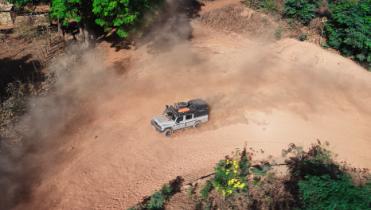
INEOS Automotive provided assistance to the team, including full expedtion prep and kitting out their Grenadiers prior to departure.
Two additional records were set in achieving the feat: completing the journey while towing an expedition trailer; and tackling the route with two cars simultaneously. Balsdon also becomes the first person to fully document the historic long distance challenge on film, with a documentary
Lynn Calder, CEO at INEOS Automotive, commented: “The Cape to Cape challenge remains one of the world’s most challenging long distance driving events and is exactly the kind adventure we envisaged Grenadier owners taking on when we developed the vehicle. The success of the four-week mission is testament to the fortitude of John and his team and the capability of the Grenadier.”
Further details about the expedition can be found at alwayslooktwice.com/cape-to-cape/. To find out more aboutthe Grenadier, visit www.ineosgrenadier.com


YD, the world’s leading manufacturer of New-Energy Vehicles (NEV), has confirmed UK pricing and specifications for the ATTO 3 EVO. Starting from £38,990, the modest step up in price on the outgoing model comes despite the significant increase in both technical specification and standard equipment levels.
Many of the improvements for the ATTO 3 EVO were inspired by customer feedback of the existing model. In addition to a refreshed exterior design and a more streamlined interior, the ATTO 3 EVO benefits from more power, a bigger battery, longer range, faster charging, improved practicality and increased standard equipment within a simplified trim structure.


The new ATTO 3 EVO is available in two trim levels. The Design, priced at £38,990, comes comprehensively equipped with a new 8.8-inch digital instrument panel, a 15.6-inch touchscreen infotainment system with integrated Google features including Google Maps, Google Assistant and Google Play Store, four USB-C ports (2x 60W, 2x 18W), wireless smartphone charging with cooling, front and rear parking sensors, a 360° surround-view camera, Vehicle-to-Load, a heat pump, 18-inch alloy wheels, electrically adjustable heated front seats and ambient cabin lighting. The Excellence costs £42,730 and builds upon the standard specification of the Design by adding a head-up display, heated rear seats, and a panoramic sunroof with electric sunshade.
In addition to the enhanced levels of standard specification, the ATTO 3 EVO gains a significantly uprated powertrain over its predecessor. By adopting the latest E-Platform 3.0, the ATTO 3 EVO switches from a front-wheel drive layout to a choice of rear-wheel drive (Design) or all-wheel drive

(Excellence). In both instances, power and performance have taken a significant step forward; the Design’s single motor offers 309bhp and 380Nm of torque, enabling a 0-62mph time of 5.5 seconds. Thanks to an additional motor on the front axle, the total output of the Excellence climbs to 443bhp and 560Nm, which slashes the 0-62mph time to just 3.9 seconds.
Both range and charging have been significantly improved over the ATTO 3 which launched in 2023. BYD's proprietary lithium iron-phosphate (LFP) Blade Battery offers a capacity of 74.8kWh, allowing for a WLTP range of up to 316 miles. The ATTO 3 EVO’s charging speeds have doubled compared to its predecessor; a 220kW maximum rate means that a 10% to 80% charge takes just 25 minutes.
BYD's Cell-to-Body construction means that the Blade Battery forms a structural part of the car’s chassis, bringing several benefits. This increase in strength allows a more secure platform from which the suspension can operate; the introduction of a five-link suspension arrangement at the rear works with this new base to deliver more sophisticated ride and handling.
In addition to the uprated driving experience, Cellto-Body has allowed the ATTO 3 EVO to offer more storage space than its predecessor. This comes in the form of a boot which, at 490 litres, is 50 litres larger than before, plus a new ‘frunk’ which offers a further 95 litres of capacity under the bonnet.
As with the rest of the BYD lineup, the ATTO 3 EVO is backed up by a six-year, 93,750-mile warranty, plus a battery cover of up to eight years or 155,350 miles.
For more information, please visit https://www.byd. com/uk/electric-cars/atto-3-evo




he AION V all-electric family SUV sets a new standard with a distinctive exterior, a spacious and luxurious interior fully loaded with comfort and convenience features, and classleading range and charging speed. Every AION V will include the ‘AION Great 8’ effortless ownership proposition, which provides eight years of confidence-inspiring support across the vehicle’s warranty, servicing, roadside assistance and MOT.
Prices start from £36,450 OTR, with flexible PCP offers over 18 - 48 months starting from £379 per month (2.9 percent APR Representative)* through AION Financial Services.
Pre-orders start on 23 April through a dedicated UK-based concierge customer contact centre. The concierge team will be available Monday-Friday 9am-5pm to answer customer queries, discuss finance options, and share customised finance quotes
A Jameel Motors flagship AION retail showroom in Slough will open at the end of May along with the first wave of sites that will grow to make a nationwide franchised retail network.
The AION V features a powerful design with distinctive front and rear light clusters, a strong profile, tough-looking stance, and attractive 19-inch alloy wheels. It’s available in either Wilderness Sand metallic or Arctic White pearlescent paint as standard, with a choice of three further metallic colours (Galaxy Blue, Night Shadow Black and Sea Fluorescent Grey) for an additional £675.
A surprisingly spacious and refined business-class interior features luxury-grade soft-touch surfaces and is fully loaded with convenience, infotainment and comfort features. As standard, the AION V includes a full-length panoramic roof, doubleglazed front windows, and multi-shade ambient lighting; electrically-adjustable heated and ventilated front seats and heated reclining rear seats; wireless smartphone charging and wireless Android Auto and Apple CarPlay; a 14.6-inch touchscreen infotainment system powered by the latest ultra-fast Qualcomm Snapdragon processor, with permanent soft keys for instant access to climate, seating and volume buttons; a virtual assistant offering zonal voice control of key settings and functions; and a nine-speaker 360watt premium audio system.
A Premium Pack (£1,495) adds leather seating, a 6.6-litre CoolHot Box, massage front seats, and a
sturdy rear seatback tray table, plus the option to upgrade to an additional exterior paint colour (Holographic Silver; £675), or one of two additional interior colour themes (French Cream or Bright Tan; both £195).
Practicality and versatility are built-in, with wide opening doors, smart tailgate opening, a three-tier boot system that can swallow up to 472 litres of cargo (rear seats up, VDA standard), and even a Lounge mode for chaise-longue seating.
The 75.3kWh LFP battery gives the AION V an impressive 317 miles of range – class-leading for a standard-fit battery – and can charge from 30-80 percent in a class-leading 18 minutes. A superefficient heat pump helps keep the battery at optimal operating temperature.
The driving experience has been optimised for the UK with specially calibrated and refined suspension set-up for British driving habits and roads.
Launching in conjunction with the AION V, the ‘AION Great 8’ customer proposition provides eight years’ peace-of-mind on warranty, servicing, MOT and roadside assistance. The comprehensive package is locked to the car’s VIN, so whether registered to a fleet, privately purchased or leased, each AION V registered in the UK will be covered by the same industry-leading support. The package
is fully transferable, meaning that the value of the package extends up to the eighth year from first registration, regardless of ownership cycle.
While AION’s retail network develops, customers will be supported wherever they are in the UK through a partnership with the AA. This will give customers access to the AA’s nationwide network of accredited workshops and over 100 mobile service technicians for servicing, maintenance and repair. A collaboration with DHL gives the assurance of nationwide next-day delivery from AION’s Bury St Edmunds parts hub.
“The AION V is a segment-busting product in its own right with fantastic space, quality, and features, and class-best range and charging,” said Jon Wakefield, Managing Director at AION Auto UK. “But we know that trust is hard-earned, so we’ve worked tirelessly to wrap the product in a confidence-inspiring package that makes for effortless purchase and effortless ownership.
“With an exceptional car, expert partners and the best customer experience, our commitment to driving a new standard will attract customers to the AION brand. The AION V is an incredibly strong first step on our journey.”
(* For full terms and conditions, visit: www.aionauto.co.uk)




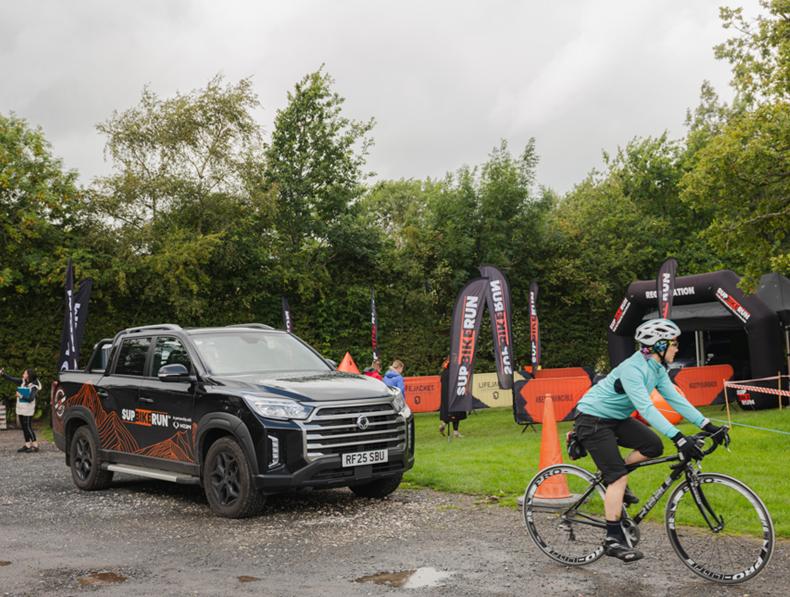

GM Motors UK is proud to confirm its continued partnership with SUPBIKERUN as the UK’s only adventure triathlon event series returns for 2026 with a standout Mid-Wales event at Fforest Fields. Taking place on 16th and 17th May, the first SUPBIKERUN weekend of the season will be hosted in Hundred House, Llandrindod Wells. Set on a 500-acre working farm in the uplands of Radnorshire, participants can expect a beautiful rural landscape that not only feels a million miles away but invites adventure from every direction.
Building on the strategic partnership announced in 2025, KGM will again support SUPBIKERUN’s nationwide operations, helping the team deliver a consistent, highquality experience across three premium UK locations with the help of the multi-award-
winning Musso pick-up truck. The series heads to Devon’s Roadford Lake on 11th and 12th July, before the season finale in the Lake District at Ullswater Lake on 12th and 13th September.
Sam Pauc, Director of SUPBIKERUN, said “We are delighted to bring SUPBIKERUN back for 2026 and to continue our partnership with KGM. When you are delivering events in some of the UK’s most spectacular locations, logistics can make or break the experience. Having KGM alongside us again gives us the confidence that we can transport what we need efficiently, set up effectively, and keep our focus where it belongs, on giving every participant an outstanding weekend of adventure.”
KGM’s ongoing support will continue to focus on the practical demands of delivering a
premium multi-sport series across remote venues. With essential kit including paddleboards, bike racks, marquees, inflatables, barriers and registration equipment, reliable transport remains central to SUPBIKERUN’s delivery model, ensuring smoother set-up operations and a stronger participant experience at each location.
Vanessa Cox, Director of Communications at KGM Motors UK, added “SUPBIKERUN is a brilliant event that reflects the spirit of determination, versatility and capability that matters to our brand and our customers. We are proud to continue supporting the team and participants in 2026 as they deliver and partake in three unforgettable events.”
SUPBIKERUN 2026 event dates and locations are as follows:
• 16th and 17th May 2026, Fforest Fields, Radnorshire
• 11th and 12th July 2026, Roadford Lake, Devon
• 12th and 13th September 2026, Ullswater Lake, Lake District
For more information, visit: www.supbikerun. co.uk/2026-events/



issan today announces updates to the Nissan Ariya for model year 2026, further enhancing the brand’s flagship electric crossover.
Since its launch in 2021, the Nissan Ariya has symbolised Nissan’s vision for electric mobility, combining strong performance, a smooth and quiet ride, and a spacious, lounge-like interior. The latest model year update builds on these core strengths, delivering a refreshed exterior design, enhanced ride comfort and new features to support everyday electric driving.
The 2026 Nissan Ariya evolves Nissan’s ‘Timeless Japanese Futurism’ design philosophy with a redesigned front appearance, creating a cleaner and more seamless look. The body colour front panel and reinterpreted V-Motion signature give Ariya a strong yet minimalist presence, reinforcing its confident character as a next-generation electric vehicle.
The exterior colour palette is expanded with a new Plasma Green colour, inspired by natural light phenomena. A range of monotone and two-tone body colours is available.
Inside, a redesigned central console increases the storage space up to 3.2l and incorporates the latest generation 15W wireless charger.
For 2026, Ariya is equipped with the latest generation of NissanConnect with Google built-in, offering enhanced connected experience inside and outside of the car.
Experience effortless travel with the In-Car Route Planner by Google Maps (available as standard across the line-up). Simply say, “Hey Google, navigate to Edinburgh Castle” and Google Maps automatically plans the most efficient route, integrating any necessary charging stops based on your real-time battery level.
Newly designed 19-inch wheels, combining aluminium and resin elements, add a refined visual contrast that enhances Ariya’s premium stance.
To save time, the car intelligently pre-conditions the battery as you approach a station, ensuring it reaches the optimal temperature for the fastest charge. The dedicated Connectivity app

(NissanConnect Services app) monitors battery levels, manages charging sessions, adjusts climate settings and tracks tire pressures directly from your phone.
The 2026 Nissan Ariya offers AC charging via an 11-kW bi-directional on-board charger, supporting Vehicle-toLoad (V2L). For DC rapid charging, Ariya supports speeds of up to 130kW, enabling efficient long-distance travel and reduced charging times.

The new V2L functionality allows compatible external electrical devices to be powered directly from the vehicle via a dedicated connector, providing up to 3kW of output when stationary – to do things like power an electric cooker or charging a laptop.
Ride comfort is further enhanced through updated suspension tuning, delivering improved stability, reduced vibrations and a smoother driving experience, particularly over long distances.
Ariya also features ProPILOT advanced driver assistance systems, including adaptive distance control functions, supporting relaxed driving in stop-and-go traffic by assisting acceleration, deceleration and stopping, helping to reduce driver fatigue. These technologies have been enhanced to ensure faster response times and better, smoother adjustments.
With its refreshed design, enhanced comfort and intelligent EV technologies, the 2026 Nissan Ariya adds to its winning combination of confident styling, refined driving performance and everyday usability.
Ariya will go on sale from June, with price starting from £37,000. First deliveries are expected from September.
Ariya Engage+ is expected to qualify for the UK government Electric Car Grant - this is subject to confirmation by the Office of Zero Emission Vehicles. The above prices do not include the anticipated government grant.

he first OMODA 7 SHS-P models have now been delivered to customers across the UK, marking the nationwide arrival of the brand’s latest model – bringing together luxury, technology, efficiency and standout design on British roads, all of which OMODA considers essential for today’s UK drivers.
Positioned between the compact OMODA 5 and the flagship OMODA 9 SHS-P, the OMODA 7 introduces a premium mid-size SUV tailored specifically for British driving. The third model to be introduced in the UK, the OMODA 7 is offered in proven powertrains from parent company Chery International, each paired with generous specification grades – Knight and Noble. Now available through the brand’s growing network of over 124 retailers nationwide, the model is priced from £29,915 OTR* for the ICE and £32,000 OTR* for the SHS-P, with deliveries of the SHS-P starting first, and ICE towards the end of Q2.

Confident in its design, technology and real-world usability, the OMODA 7 is a car shaped by OMODA’s “Art in Motion” design philosophy. With aerodynamic lines and a poised, road-ready presence, the sculpted exterior design is matched by a calm, spacious and carefully considered cabin, created to feel intuitive and comfortable from the moment occupants’ step inside.
Offered in Knight and Noble specification grades, the OMODA 7 places a strong emphasis on comfort and usability. Eco-leather finishes, SONY audio, dual digital displays and wireless smartphone connectivity as standard contribute to an environment designed to feel modern, airy and refined, while still delivering the practicality expected of a five-seat SUV. The Noble trim takes luxury further, adding six-way electric adjustment for driver and front passenger, a 1.45-metre panoramic sunroof, and, for the first time for any UK-delivered OMODA, an air-conditioning fragrance system and fourzone voice control.
Customers can also choose between a 1.6-litre TGDI petrol engine or OMODA&JAECOO’s proprietary Super Hybrid System (SHS). The plug-in hybrid- SHS-P pairs

an 18.3 kWh battery with a 1.5-litre engine to deliver a WLTP range of over 700 miles, including up to 56 miles of pure electric driving, alongside fast charging capability and a Vehicle-to-Load (V2L) functionality for added everyday versatility. With CO₂ emissions as low as 23 g/km, and capable of replenishing from 30% to 80% in just 20 minutes, it delivers a rare combination of efficiency, refinement and performance.
Victor Zhang, UK Managing Director, OMODA UK, said: “The OMODA 7 was designed to be a popular model for us in the UK. Seeing the first cars now with customers is a genuine milestone, because this is where the brand really starts to be experienced day to day on British roads. It’s a car that quietly demonstrates what OMODA stands for in terms of design, comfort and technology, and we’re very pleased to see it begin its journey with owners.”
The start of OMODA 7 customer deliveries follows a successful 2025 for OMODA in the UK. Since launching in August 2024, OMODA UK has rapidly expanded its retailer network and broadened its model line-up to meet growing demand. January also saw the arrival of OMODA’s first full-hybrid model, the OMODA 5 SHS-H, further strengthening the brand’s electrified offering for British drivers.
With additional model introductions planned before the end of the year, including the hotly anticipated OMODA 4, OMODA’s UK presence is set to continue expanding across multiple SUV segments as the brand builds on this momentum.
The OMODA 7 is now available through OMODA&JAECOO’s UK-wide dealer network, priced from £29,915 OTR* for the petrol variant and from £32,000 OTR* for the SHS. All models include a 7-year/ 100,000-mile warranty, an 8-year battery warranty for SHS variants, and RAC Home Start as standard for the lifetime of the warranty.**
* All prices quoted are correct at time of writing ** Subject to servicing within the OMODA&JAECOO network, in line with the maintenance schedule


ROOF NOW AVAILABLE TO ORDER FROM £27,445 OTR

he Renault 4 E-Tech electric ‘Plein Sud’ with its distinctive full-length electric opening canvas roof is now available to order in the UK, with prices starting from £27,445 OTR after the Electric Car Grant.
Available in techno+ and iconic+ trim levels, the ‘Plein Sud’ version adds a new open-air dimension to Renault’s fully electric reinvention of one of its most iconic models, while retaining the practicality and versatility that have come to define the multiaward-winning Renault 4 E-Tech electric.
A contemporary interpretation of a signature feature of the original Renault 4, the electrically operated ‘Plein Sud’ canvas roof brings the spirit of opentop versatility into the modern era.
It also brings something entirely unique to its segment, being the only electric car in its segment that offers a fully opening roof.
The two-level specification mirrors that of the fixedroof version, with the only differences being the necessary removal of roof bars and the shark-fin antenna on ‘Plein Sud’ models, in order to maximise the opening.
Like the Renault 4-Tech electric it is based on, the Plein Sud version also qualifies for the full £3,750 Electric Car Grant. It joins the Renault 5 E-Tech electric and Scenic E-Tech electric in attracting the maximum ECG, while the entire Renault electric passenger car range is also eligible for ECG support.

R Pass customers can order from today, securing their position as one of the first to take delivery, with the wider public able to order from 14th May.
Modern open-air experience, designed for everyday use
The ‘Plein Sud’ canvas roof has been engineered to deliver the joy of open-air
driving without compromising refinement or practicality. Operated via a one-touch button or voice control using Renault’s Reno digital assistant, the roof opens smoothly to create a wide 80x92cm aperture, allowing both front and rear passengers to enjoy an open, panoramic view of the sky above.

The canvas roof, which gathers cleanly into three folds, can be opened in several intermediate positions to suit the occupants’ mood. When closed, its multi-layer construction ensures excellent acoustic and sealing qualities with no trade-off in weight, while there is also minimal impact on headroom compared to the fixed-roof version.
Unlike traditional canvas roof systems, the mechanism has been designed to preserve the Renault 4 E-Tech electric’s generous luggage capacity. Boot space remains unchanged at up to 1,350 litres with the rear seats folded, ensuring the same versatility that has already earned praise from customers and industry experts alike.
A low loading sill of 607mm and a wide-opening tailgate (power-operated on iconic+ models) make access easy, while thoughtful storage solutions support day-to-day convenience.
With up to 181mm of ground clearance and suspension optimised for a smoother, more comfortable ride, the Renault 4 E-Tech electric continues the original Renault 4’s sense of goanywhere practicality.
Inside, the OpenR Link system with 10” central touchscreen and Google built-in provides seamless connectivity, including Google Maps navigation with charging optimisation and access to a wide range of apps. This is paired with a 10.3” digital instrument display for a full range of driving information.
All versions continue to use a 52kWh battery and 150hp electric motor, offering a driving range of up to 242 miles (WLTP) depending on specification.
Rapid charging capability of up to 100kW DC enables a 15–80% charge in approximately 30 minutes, helping to make longer journeys simple and convenient.
One-pedal driving functionality, standard on both
techno+ and iconic+ ‘Plein Sud’ models, further enhances ease of use, particularly in urban environments.
With the introduction of the ‘Plein Sud’ version, Renault 4 E-Tech electric also incorporates the latest GSR2.3 safety standard. This brings the total number of advanced driver assistance systems available to up to 28, further strengthening safety and driver support across the range.
A new advanced driver monitoring system uses a camera installed in the windscreen pillar to detect driver fatigue, with alertness included in the Safety Score displayed after each journey.
The new emergency stop assist function works in conjunction with active driver assist, slowing the vehicle to a stop where possible if the driver becomes inactive. The eco-driving assistant, meanwhile, is now predictive, using onboard maps to analyse the road ahead so as to warn of upcoming bends, roundabouts, etc., allowing the driver to ease off the accelerator to save energy.
A number of new personalisation options are also now available across the whole Renault 4 E-Tech electric range, from subtle wing-mounted graphics to a striking central stripe, ensuring there is a Renault 4 E-Tech electric for everyone.
Six body colours are available, including Hauts-deFrance Green, which pays tribute to the Île-deFrance Blue of the 1960s. It joins Glacier White, Urban Grey, Diamond Black, Carmin Red, and Cumulus Blue, along with the option of a contrasting Diamond Black bonnet. All models in the range wear 18-inch diamond cut alloy wheels as standard.
The ‘Plein Sud’ canvas roof is available exclusively in techno+ and iconic+ trim levels, priced at £1,500 above the equivalent fixed-roof models.
Order books are scheduled to open on 8th May 2026, with first customer deliveries expected from Q3 2026.
For more information, please visit https://www. renault.co.uk/electric-vehicles/r4-e-tech-electric. html

koda is set to broaden the appeal of its best-selling Karoq by adding a new, value packed trim level. The new Karoq Design Edition features a striking exterior design package along with a high standard specification to give buyers even better value for money.
Available to order at Škoda retailers from Wednesday 1 July, the new Design Edition sits between the existing SE Edition and SE L Edition models in the revised model range. Priced from £31,610, the new Design Edition is just £650 more than the SE Edition, yet comes with a host of additional equipment.
The Karoq Design Edition is distinguished by its dynamic exterior styling which features a host of elements designed to give it a strikingly dynamic look. In addition to new 18-inch Hydrus black alloy wheels, the Design Edition also features black door mirrors and radiator grille, black roof rails, extended rear spoiler and black Škoda and Karoq lettering on the tailgate.
to expect from Škoda. The new trim grade also comes with Drive mode select with ECO function as standard. In terms of other equipment, the Design Edition features an Amundsen touchscreen satellite navigation system with 8-inch screen, along with an eight-speaker sound system and a 10.25-inch Virtual cockpit driver display. Heated front seats, a two-spoke heated leather multifunction steering wheel (with paddles for DSG), rear view camera and a Keyless entry and start/stop system are also included as part of the Design Edition’s standard specification.
Customers ordering the new Karoq Design Edition can choose from two powertrain options: a 1.0 TSI 116PS or a 1.5 TSI 150PS unit. Both are equipped with a sixspeed manual gearbox with the 1.5 TSI 150PS additionally available with a sevenspeed DSG transmission.


Prices for the new Karoq Design Edition from £31,610 OTR for the 1.0 TSI 116PS manual variant to £34,235 OTR for the 1.5 TSI 150PS DSG variant. Order books open on 1 July 2026 with first deliveries expected end of July.
Inside, the Design Edition features a Lodge interior design selection with black fabric upholstery, along with all the technology features buyers have come
A full database of downloadable media assets for the full Škoda product range is available at www.Škodamedia.com

he game changer is rolling: Volvo Cars today started production of the new, fully electric Volvo EX60, with customer deliveries starting in early summer.
The game changer is rolling: Volvo Cars today started production of the new, fully electric Volvo EX60, with customer deliveries starting in early summer.
The fully electric mid-size SUV is built at Volvo Cars’ manufacturing plant in Torslanda, just outside the company’s headquarters in Gothenburg, Sweden. Last month, Volvo Cars already announced it is increasing its EX60 production volumes for 2026 thanks to strong demand.
As the first fully electric car to be designed, developed and built in Sweden, the EX60 highlights Volvo Cars’ long-term commitment to its home country as a centre for premium electric car development and manufacturing.
The EX60 will also help to boost the Gothenburg and Swedish economy, as Volvo Cars’ future volume ambitions for the EX60 set it up to be one of Sweden’s largest export products in terms of value.
build more EX60s in 2026. The aim is to keep the Torslanda plant open for one extra week this summer, which would be the first time in history.
The EX60, revealed to universal acclaim in January, is designed to be a game changer for Volvo Cars and its customers. It delivers classleading range of up to 810km, charges from 10-80 per cent in 16 minutes, and is priced in line with the company’s best-selling XC60 plug-in hybrid. Read more about the EX60 here.


As such, the EX60 supports economic growth and underpins the position of the Western Sweden region as an automotive development and manufacturing hub.
“Today is an important milestone for our company and for Sweden as a whole, as we start to build the first EX60 customer cars,” said Håkan Samuelsson, Volvo Cars CEO. “We are now focused on a steady ramp-up of high-quality EX60 production, making sure this game-changing car will be a profitable growth driver in the coming years.”
The decision to increase production volumes for 2026 followed strong initial customer demand for the car in key markets such as Sweden and Germany, as well as retail orders that were considerably higher than internal forecasts in nearly all major European markets.
Following such a strong order intake in Europe –and order books for the US and Asian markets opening later this spring – Volvo Cars decided to
The Torslanda plant has been heavily upgraded in recent years in preparation for production of the EX60 and other next-generation electric cars. As part of a significant investment of around SEK 10 billion, Volvo Cars has introduced mega casting capabilities, a new battery assembly plant as well as a fully refurbished paint shop and final assembly at the Torslanda site.
The small print
• Range figures are preliminary and based on WLTP testing standards obtained under specific testing conditions for the Volvo EX60. Actual range can vary depending on charge level, car specification, outdoor temperature, battery temperature, weather, topography, driving style and car speed.
• Charging times can vary and depend on various factors such as outdoor temperature, battery condition and car condition. Charging times are based on testing at 400 kW charging facilities.
he Renault Master has been named ‘Van of the Year’ at the Motor Trader Commercial Industry Awards 2026, building on its reputation as the go-to large van for fleets and businesses looking for a versatile LCV that works in every sense.
This latest award underlines the Renault Master’s hard-working character, refined for the needs of modern operators. Built on a foundation of durability, it features efficient performance, smart design and a strong focus on driver usability.
Highlighting the factors that made the Renault Master the stand-out choice, the judging panel said: “What’s not to like? The Renault Master continues the legacy of being a great workhorse but a huge amount of work has gone into the design of this van. From aerodynamic styling to an exceptional turning circle and that excellent visibility from the cab, the van has been created with the driver in mind, but also with a focus on productivity.”
Seb Brechon, Head of LCV and Brand Performance, Renault UK, said: “Renault Master has built its reputation on delivering exactly what operators need day in, day out, and this award recognises how far that capability has been taken with the latest generation. From its efficiency and manoeuvrability to the quality of the driving
environment, it’s a van designed to help businesses get more from every working day.”
The Renault Master is available with loadspaces ranging from 11 to 14.8 cubic metres, and in multiple lengths and heights, ensuring it provides a solution for a wide range of trades and operational requirements.
The Master’s appeal is further strengthened by its advanced connectivity, high levels of standard equipment and up to 20 driver assistance systems, supporting safety, comfort and efficiency in everyday use. Its cabin combines a durable, premium feel with practical storage solutions, ensuring it works as a true mobile workspace.
For fleets transitioning to electric, the Renault Master E-Tech electric offers a compelling proposition, providing a driving range of up to 285 miles (WLTP) alongside low running costs and zero tailpipe emissions.
The Renault Master range starts from £33,500 plus VAT, with Master E-Tech electric models available from £37,500 plus VAT after PiVG.
For more information on the Renault Master, visit https://business.renault.co.uk/master-range/renaultmaster.html



s yet another example of the renowned and much awarded reliability of the Suzuki range of cars, a customer of dealer Hilton Suzuki Bedford has just completed an incredible 436,500 miles in his Vitara SZ-T with 1.6-litre petrol engine - and in less than 10 years.
Purchased new in 2017, the owner has had the car correctly dealer serviced every few months and used it daily including for multiple trips travelling right across Europe. It has proved to be faultless in use over this time and still running its original engine, gearbox and exhaust system.
The Vitara runs perfectly and with no oil leaks
noted either after covering this huge mileage with the only wear and tear components needing regular replacement being brake pads and around 15 sets of tyres plus renewal of just one driveshaft rubber boot.
The further good news is that the owner has recently traded in his trusted Suzuki for a 2024 Approved Used Vitara Hybrid and will perhaps continue to travel these staggering distances with the brand in the coming years.
This latest durability result also further reinforces Suzuki’s reputation and four easy to understand product pillars across its range which are Tech, Efficiency, Quality and Trust.