









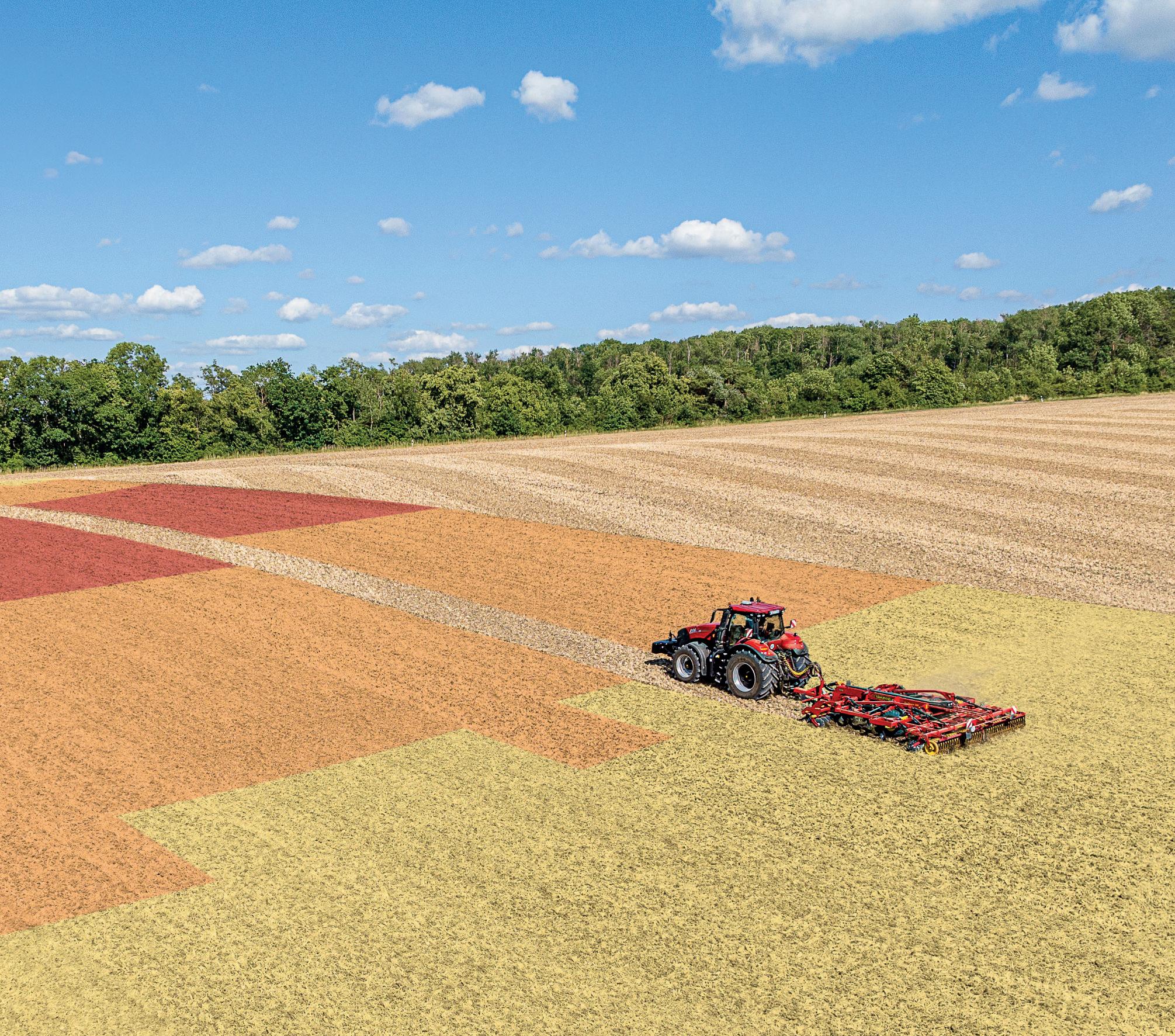


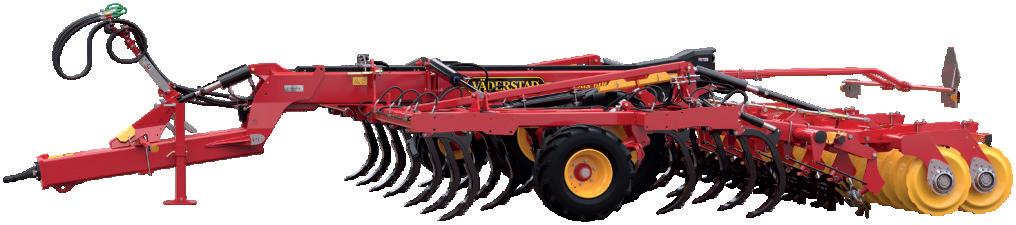
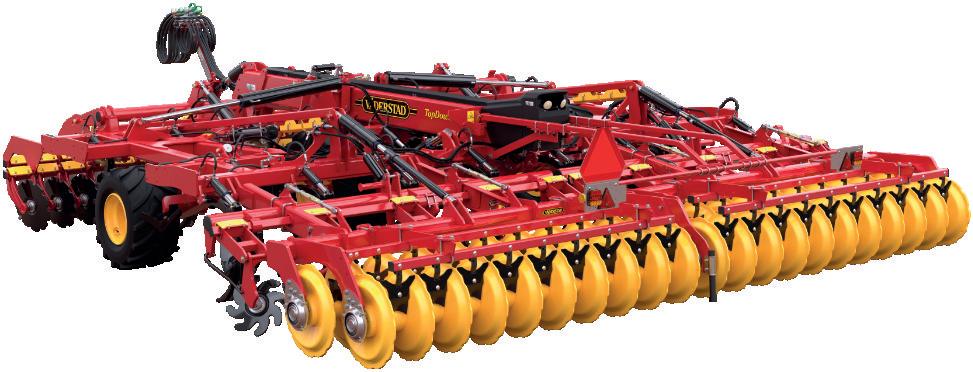
Experience precision farming like never before with the introduction of E-Services for TopDown and Opus.
Now these machines can seamlessly utilise prescription maps for automatic, in field machine adjustments.
Alternatively, with a touch of a button the driver can dynamically adjust the working depth or intensity of the discs, tines, levellers or packer while in operation.














EDITOR
editor@farmingmonthly.com
EDITORIAL ENQUIRIES
editorial@farmingmonthly.com
ADVERTISING ENQUIRIES
Tel: +44 (0) 2476 353537
ADVERTISING DIRECTOR
Shona Beedham
shona@farmingmonthly.com
ACCOUNT EXECUTIVE
Jennifer Mills
jennifer.mills@farmingmonthly.com
ACCOUNT EXECUTIVE
Vicky Smith
vicky.smith@farmingmonthly.com
SUBSCRIPTIONS subscriptions@farmingmonthly.com
PRODUCTION production@farmingmonthly.com
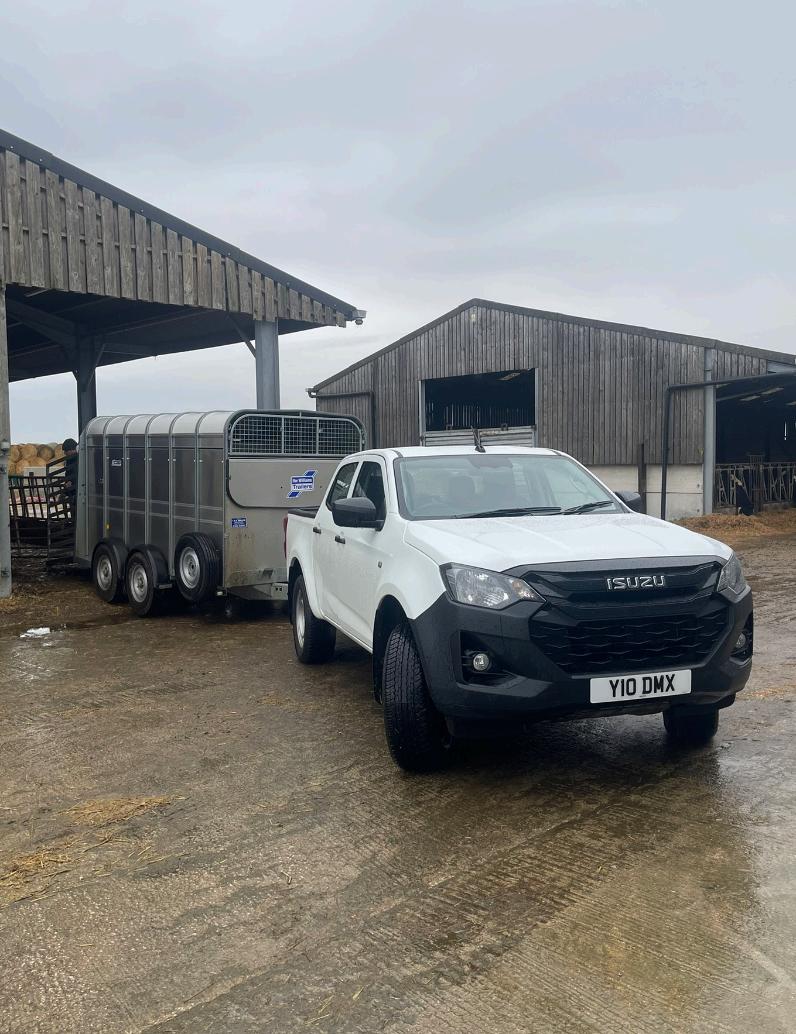
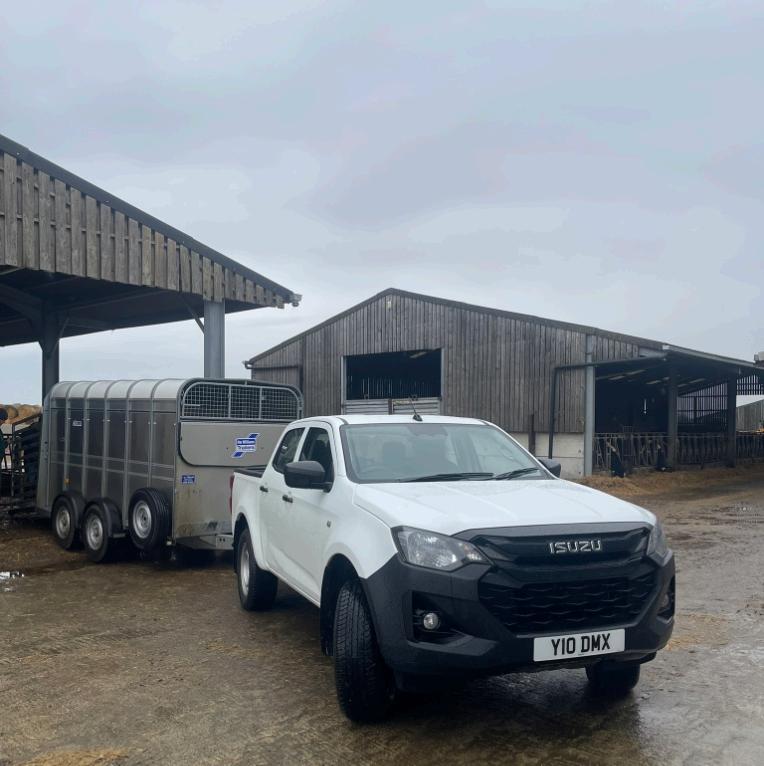
Front cover credit: ISUZU by Jennifer Mills



For editorial, general enquiries or to advertise please call +44 (0) 2476 353537 or email sales@farmingmonthly.com
Farming Monthly National is published monthly in the UK by Farming Monthly Ltd, Tel: +44 (0) 2476 353537 UK based Digital Farming Magazine.
No part of this magazine may be reproduced without permission from the publisher.
Whilst every attempt is made to ensure accuracy, the opinions expressed in the magazine are not necessarily those of the Editor or publication. The Editor also reserves the right to alter or edit material as required and no responsibility is accepted for inaccuracies.
Full copyright applies. All rights reserved. ISSN 2044-0190 (print) ISSN 2044-0200 (digital)




The fuse is burning down on the government’s inheritance tax (IHT) time-bomb for farmers, experts from UK top 10 accountancy and advisory firm Azets have warned.
The unprecedented way the changes were announced has caused great frustration for professionals and farmers alike.
Under legislation to be introduced by the Finance Act 2026 new restrictions will apply to the amount of Agricultural and Business Property Reliefs available to farmers dying after 5th April 2026.
It could see rural families forced to sell land that might have been theirs for generations.
The changes mean that 100 per cent Agricultural Property Relief and Business Property Relief will only apply to £2.5m of qualifying assets, per individual, with 50 per cent relief applying to the balance.

spouses, followed in December by the announcement that the £1m limit was to be increased to £2.5m per individual.”

Robert Anderson, an Azets’ Partner based at its Coventry office, added: “We meet farmers every week and the stress and worry the policy is causing is undeniable.
“Most viable farming enterprises have a value per head in excess of £2.5 million and we have a lot of clients impacted by this change.
“Some of the older famers feel guilty that if they live beyond April 5ththey are somehow letting their families down and consider it unfair that they haven’t been allowed time to do any planning.
“Many are asset rich but cash poor and so acknowledge that parts of their farms may need to be sold to fund the inheritance tax liabilities.
Rebecca Colmey, Director of Tax Advisory, Farming and IHT at Azets and based at its Tamworth office, said: “The problems began immediately following the 2024 budget when the restrictions were announced without any detail.
“The restrictions were effective immediately for gifts made post budget day, if the farmer were then to die post 6 April 2026 but within seven years of their gift, and so prompted the need for advice and action.
“But there was no certainty as to the legal form of the changes until the draft legislation was finally made available on 21July 2025.
“Our team were surprised that the draft legislation ignored the recommendations within the House of Commons’ Report of 16 May 2025 - The Vision of Farming.
“It recommended a more generous level of Agricultural Property Relief to be made available to genuine farmers rather than a blanket lower level of relief to all including investors in agricultural land.
“We then had changes in the 2025 budget allowing the transfer of unused allowances between
“This is a complicated issue and it’s not as easy as just giving some land away and then hoping you live beyond the seven-year rule when it is free from IHT.
“Trusts have been proposed as a planning option, but they won’t suit all farms and are complex –every single case is different and there is no offthe-shelf solution.
“Careful planning must be undertaken with consideration given to the current and intended future use of each part of the farm.
“We recommend that, if they haven’t already done so, farmers seek good financial and legal advice as soon as possible in order to get proper planning in place and to best mitigate against the tax.
“One of our fears is that there are farmers out there who are tempted to just bury their heads in the sand and hope the problem goes away.
“Whilst we understand the uncertainty caused by the way the restrictions have been introduced may make farmers hopeful that further changes could be announced, time is running out.
“Farmers need to understand how this will impact them, their families and their farms and how best to manage this, and the best way is to get expert advice that is tailored to their situation and circumstances.”
Azets has branches across the country.
With strong organic milk prices and continued undersupply, ForFarmers is encouraging organic dairy farmers to respond proactively to current market conditions.
Demand for organic milk is forecast to grow by 1–2% year-on-year, and while this remains positive, the market is finely balanced. Processing capacity constraints mean that overall volumes need to be managed carefully in the short term, especially ahead of the spring milk flush.
Against this backdrop, any increase in a herd's production must be achieved efficiently and in line with milk buyer requirements to protect margins and longterm herd performance.
"Forage will always be the cornerstone of organic milk production, and that won't change," explains Ben Trott, Organics Product Manager at ForFarmers. "But with milk prices where they are, now is a sensible time for farmers to strengthen their position and reassess how organic concentrates and raw materials can be used to support yield and margin.
"We're working with a range of organic dairy farms - including robotic systems - achieving yields in excess of 9,000 litres by ensuring rations are balanced optimally to make the most market conditions," continues Ben. "In organic system, up to 40% of dry matter can come from concentrates, and that portion of the diet needs to work hard."
With stronger milk prices, now is a sensible time to review how concentrates are being used on farm to provide the energy and nutrients needed to drive performance.
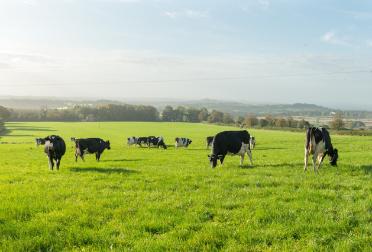
"Where it fits with processor requirements, there may be scope to lift output, and being in a strong position now means producers are also ready to push on further when the market allows."

Organic systems require at least 60% of dry matter intake to come from forage, placing huge importance on forage quality, consistency and utilisation. However recent seasons of challenging and unpredictable weather have put pressure on forage stocks, with many farms struggling to achieve the consistency and feed value needed to support higher levels of production and make the most of market conditions.
"There were periods of good grazing last year, particularly in the autumn, but many farms are still feeling the effects of difficult growing seasons," Ben explains. "It's essential to use forage effectively by supporting with the right supplementary feeding, rather than asking it to do too much and yields suffering as a consequence."
Targeted use of organic concentrates can help relieve pressure on forage supplies, while also supporting milk yield and cow performance.
"Our scale allows us to forward buy organic raw materials and secure them at the right time and in the right place," Ben explains. "That gives farmers confidence when reassessing concentrate use and helps ensure rations are built on consistent, reliable ingredients, even in a volatile market."
However, getting the balance right is critical.
Organic producers do not have access to the same range of nutritional products compared to conventional systems, such as synthetic amino acids. This makes protein efficiency, raw material choice and ration formulation even more important.
"That's where specialist advice really adds value," Ben concludes. "At ForFarmers we can tailor organic rations to individual forage analyses, herd performance and system goals. We can help farmers use concentrates strategically and support yield and margins without undermining the forage foundations of a system."
abour is trailing in fourth place in rural Wales ahead of the next Senedd election, according to a Censuswide poll commissioned by the Country Land and Business Association.
Polling of more than 1,000 people across Wales's most rural seats shows Labour in fourth place (13.5%), behind Plaid Cymru (22.3%), Reform (16.7%) and the Green Party (14.5%). Those seats are home to roughly a third of the population.
The problem starts with Labour's own voters. Nearly one in three traditional Labour voters say they will not back the party at the next Senedd election. Fewer than half (47%) of Labour voters say they are "happy" with how they voted at the last election.
Among respondents who say they would not consider voting Labour, 20 per cent cite the party's performance in Westminster as their main reason, level with concern over the cost of living. Farming and rural policy follows at 15 per cent.
Trust on economic growth is fragmented, suggesting gains to be made by any party with an ambitious plan for the countryside. Plaid Cymru leads on 27 per cent, with Reform on 19 per cent, while Labour, the Conservatives and the Greens are tightly grouped in the low teens.
Victoria Bond, Director CLA Cymru, said:
"Rural Wales is not being listened to. A third of the country lives outside the cities, yet too many feel shut
out of the decisions that shape their lives.
"Families are being priced out of their own villages. Long-standing businesses are under strain. Planning rules block growth before it begins. It is getting harder to stay and harder to build a future.
"The countryside is not owned by any party. It is there to be won. Any party with a serious plan for rural Wales will find support. Those who treat it as a nice place for a walk will not."
The cost of living tops rural voters' concerns, cited by 37 per cent. In the countryside, distance costs money. People drive further for work, school and shopping. Public transport is more limited and fuel bills are higher.
Almost as many point to a lack of jobs and opportunities. In many parts of rural Wales, work is concentrated in farming, tourism and small local firms, leaving fewer routes into stable, well-paid employment.
Affordable housing follows at 33 per cent,where demand pushes prices beyond local earnings.And around a quarter of those polled cite planning delays, rural crime and weak broadband connectivity. Taken together, the results centre on jobs, housing and infrastructure rather than party politics.
The polling also reveals mounting frustration with parties' understanding of rural areas. Less than half of voters say Labour (45%), Reform (45%) and the Green Party (49.6%) understand and respect rural areas. Plaid Cymru, which performs best, is trusted by 63%.

Ahead of the Senedd election in May, the CLA is calling for a cross-government Rural Economic Strategy, to unlock growth across agriculture, planning, skills and tourism.
This includes expanding permitted development rights to accelerate new homes and business space, guaranteeing long-term funding for the Sustainable Farming Scheme so farmers can invest with confidence, and setting a National Rural Tourism Strategy that drives year-round demand and supports local jobs beyond the summer peak.
The CLA is also calling for a Rural Development Unit to lead this work, with statutory powers to align long-term funding, regulation, planning and skills to kickstart the rural economy.
The government is set to unveil details of its long-awaited Land Use Framework on Wednesday 18 March, setting out how England uses its land.
The Soil Association welcomes this news and is hoping to see nature-friendly faming prioritised with this and other upcoming policies.
Soil Association Policy Director Brendan Costelloe said:“It is great news that we finally have a Land Use Framework. Our food system is dangerously vulnerable to shocks like war and climate change, and this is a step towards greater resilience.
“Wildlife in the UK is in crisis so nature must be given space to recover. But for the land that will remain farmland, it’s vital the government recognises that food production does not have to stop to create space for nature. We can, and must, make sure the land that’s producing food is doing so in a nature-friendly way. We know multifunctional land management is possible, with 30% more biodiversity on organic farms.
“The government also need to set a strategic direction for the kind of food we produce, so we can create more space for habitats and nature-friendly farming. This means less land growing food for industrial livestock and more fruit, veg, beans and pulses, which is a far more efficient and healthier way to feed humans.
“The government’s Farming Roadmap and Food Strategy are the perfect opportunity to do just that.”
The Soil Association calls for:
An increase in homegrown fruit and veg, grown agroecologically with a shift away from growing on peatlands.
A reduction in input-reliant farming, with support for farmers to grow more peas and beans, which naturally fix nitrogen in the soil, as well as planting trees for additional forage, human food crops, and resources. This could create a more resilient food system that
doesn’t rely on increasingly expensive inputs, while also boosting consumption of homegrown healthy produce.
A reduction in intensive livestock production, particularly poultry with a ban on new intensive poultry units.
A shift away from growing crops for energy and more broadly from growing high-soil disturbance crops like maize and potatoes on slopes and on flood plains.
Stronger local food chains and more British food in public settings like schools and hospitals.
An Organic Action Plan with a 10% organic farmland target, to tap into booming consumer demand.

The government has published England's first ever Land Use Framework – a plan for delivering new homes, nature restoration, clean energy and food security. It demonstrates clearly that there is enough land to deliver the government's objectives provided we use land more efficiently and for multiple benefits.
For too long, fragmented decision-making has led to inefficient land use and left us exposed in the short term and vulnerable to climate change. Three of the five worst harvests on record were in the last five years and a third of our farmland is now at high risk of flooding.
Based on the most advanced land use analysis ever undertaken, the Framework will support food security and national resilience, making a clear, long-term commitment to maintaining food

production in England. At the same time, it will also support farmers to diversify and remain profitable in the face of extreme weather and market shocks.
Farmers, who have just experienced one of the wettest winters on record, will benefit from sophisticated new modelling to help them futureproof their businesses. The Framework sets out how incentives will be optimised to deliver for nature and resilient food production. It will also give more rights and greater certainty to tenant farmers, who manage a third of England's farmland, by reforming the Farm Tenancy Forum to give them a greater role in policy making.
The Framework gives the long-term clarity needed to meet our environmental commitments and the policy to back it up, with a single spatial map of England's natural assets showing where nature recovery can have the greatest impact. This means by 2030, we will see restored peatlands, healthier coastal habitats, expanded wetlands, and canopy cover lining our urban streets.
For families waiting on a new home, the Framework will help steer development to the most suitable locations, away from flood plains – helping to accelerate delivery of the government's promise of 1.5 million new homes while protecting critical habitats.
Environment Secretary Emma Reynolds, in a speech at the Royal Institute of Chartered Surveyors, said:
"Our land is a vital national asset, but it is finite. We cannot be held back by the false choices between building homes and producing food, restoring nature and supporting farmers, or delivering clean energy and protecting landscapes.
"With better data, smarter tools and strategic planning, we can meet all these needs. This ensures people can manage their land in the way that works best for them while unlocking growth, strengthening food security and protecting our environment."
The government's new Framework givesdecision-makers a single, shared vision for how we can play to the strengths of our diverse landscapes. This will help landowners, planners and energy providers to make effective decisions about where we locate new infrastructure, bolstering the country's resilience to both short-term shocks and long-term vulnerability to climate change.
This comes as the Department for Energy Security and Net Zero today (March 18) announces plans to cut red tape and allow farmers, as well as businesses and public sector organisations to install a single small onshore wind turbine without needing to apply for planning permission. This could cut energy bills, making it faster and cheaper to generate clean homegrown power on site, as part of the government delivering the clean power mission and protecting businesses against volatile fossil fuels markets.
Over the next year, the government will establish a dedicated Land Use Unit to drive delivery of the Framework and produce England's first single map of national spatial priorities for Defra. Alongside more effective spatial planning for infrastructure and growth, this will align national and local strategies, accelerate decision-making and give more certainty to investors and developers.
The Land Use Framework was developed after extensive public consultation, which began last January, and including regional roadshows as part of a national listening exercise.
Energy Secretary Ed Miliband said:
"This landmark blueprint shows decisively that our drive for clean, homegrown power goes hand-in-hand with food security and our natural environment.
"We are ensuring that the countryside continues to feed the nation, while delivering the clean homegrown power that we need to protect household energy bills from volatile fossil fuel markets."
The Framework will provide the principles, advanced data and tools for national and local government, landowners, and developers to
make the right decisions to meet the demands of the land. This will support better outcomes for nature, to boost our food security, help us combat climate change, and deliver the homes and infrastructure we need.
Housing Secretary Steve Reed said:
"We've been clear from the outset that our planning reforms will achieve a win-win for both housebuilding and nature recovery.
"The first of its kind in England, this Framework will ensure we make smarter decisions on land used to build the homes and infrastructure we need, while protecting and enhancing our natural environment and wildlife."
Henry Dimbleby said:
"The Land Use Framework arrives in a week when the Iran conflict has pushed up fertiliser prices and reminded us how exposed our food and energy systems are to global shocks.
"The case for using our land more intelligently –reducing dependence on imported inputs, building a more resilient food system and accelerating the shift to clean, homegrown power – is no longer theoretical. It's urgent.
"This framework provides the evidence base to do it. It is an excellent piece of work. Now we need the implementation to match."
Jake Fiennes, Director Conservation, Holkham Estate said:
"How we use our land has never been more important. As we balance the needs of nature, food production, energy, housing and infrastructure, Defra's Land Use Framework is an important step towards a strategic approach.
"I am pleased to see Defra's Land Use Framework published today and am fully supportive of its ambition.
"This framework should act as a helpful guide to use land is the most efficient and effective way.
"The Land Use Framework provides the opportunity for change and a new way of thinking about how we best use our land."
Farmers' fields and country lanes are being buried under piles of waste, with new figures showing fly-tipping in England has hit record highs.
From sofas and fridges to large-scale builders' waste, illegal dumpers are turning farmland into rubbish tips — leaving their victims paying to clear up the mess.
The lateststatistics, released today, revealcouncils dealt with1.26 million fly-tipping incidents in 2024/2025, though these figures only account for waste illegally dumped on public land that has been reported to the authorities. It is a nine per cent increase on the year before.
There have been several high-profile incidents recently, from the 30,000 tonnes of waste dumped in ancient woodland at Hoad's Wood in Kent, to 20,000 tonnes next to the River Cherwell and A34 in Kidlington, Oxfordshire.
The CLA is also calling for:
• The appointment of a national fly-tipping commissioner to co-ordinate agencies, monitor incidents on private land and benchmark enforcement performance.
• The enforcement of fines for businesses and homeowners whose waste is found dumped.
• More support for victims via anewpermitschemeto allow farmers who did not cause or knowinglypermitthefly-tippingto dispose ofitatawaste disposal sitefree of charge.
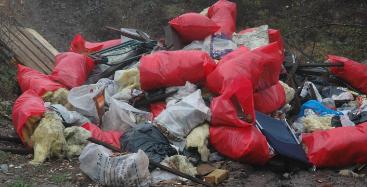
Many fly-tipping incidents occur on privately-owned land, painting an even more damaging picture of the financial burden and environmental impact flytipping brings.
The Country Land and Business Association (CLA) represents farmers and rural businesses. President Gavin Lane said:"Farmers and land managers have had enough.The countryside is increasingly being targeted by organised crime gangs – often violent – who know that rural areas are underpoliced and resourced.
"It's not just litter blotting the landscape, but tonnes of household and commercial waste which can often be hazardous – even including asbestos and chemicals – endangering wildlife, livestock, crops and the environment. Farmers are victims yet have to pay clean up costs themselves.
"We need to see penalties being enforced that better reflect the severity of the crime, and the seizureofvehiclesmust be the default penaltyto senda clearsignal that criminals will facereal consequences iftheyare caughtfly-tipping."
A CLA survey found almostthree quartersof farmers who responded are affected each year, with sometargeted multiple times each month. Each incident costs on average £1,000 to clear up, with 85% saying they have invested in measures such as CCTV, lighting and other security.
CLA members speak out
Colin Rayner, whose family farm in Berkshire, Buckinghamshire and Surrey, said: "We have been experiencing ongoing fly-tipping every week, highlighting the persistent nature of the problem and the need for urgent action.
"Fly-tipping is out of control in the countryside. We wake up to loads of rubbish in the field or farm gateways. From car tyres to household waste, hazardous waste is often found.
"Our public footpaths that cross our fields are another source of unsightly littering. Our verges are used to dump garden waste and abandon white goods and even dead dogs.
"We just clear up the fly-tipping waste and bear the high disposal costs at the registered landfill site, which significantly impact our farm's finances. My team must litter pick the footpaths weekly, adding to our ongoing expenses."
Cambridgeshire farmerGeorge Hurrellsaid: "Flytipping is a constant problem for us with waste
frequently dumped in our fields and gateways. We get everything from washing machines, mattresses and builders' rubble to large scale processed waste.
"Not only is it a hazard for people and wildlife, but we also incur significant costs in having to clear the fly-tipping on our land. If we don't remove it, we face being prosecuted. How can it be a fair to have a system that punishes those who are victim of a crime?"
James Guernsey, of the Packington Estate in Warwickshire, said:"Fly-tipping continues to place a growing strain on private landowners across the country, as weare left responsible for clearing the waste that is dumped illegallyon our land.
"We, as landownersare guardians and play an important role in protecting the environment for all to enjoy, but the current system is broken, allowing criminal gangs to dump waste all over the countryside with little to no enforcement.
"This frequently leaves us bearing the financial and practical burden of clearing potentially hazardous waste weekly. We need greater support, clearer accountability and stronger enforcement to ensure this blight on the rural environment is stopped." A spokesperson forColesbourne Estatein Gloucestershiresaid: "We have experienced regular fly-tipping for several years, but we have suffered particularly over the last few months. Since November we have had three lorry loads of cannabis waste – mostly soil and roots – as well as household waste tipped on our land. This isn't just small amounts – it's been 75 bags each time. "We've also had three lots of old motor tyres discarded, which were taken into the far end of the fields. Again, this was between 50 and 60 tyres dumped on each occasion. There's also been a lot of building waste, particularly plaster board, which gets dumped because skip hire companies will no longer take this, and a large amount of damaged plastic car body work.
"It costs a lot of money for us to clear it up each time. The problem is aggravated because you need an appointment to go to the local authority recycling centres and they are closed for longer periods during the winter months.The long, dry period last summer made it easier for lorries to get on the field. We aren't always able to put barriers in gateways where access is frequently needed to stop people from gaining getting on the fields."
Francis Fitzherbert-Brockholesfrom Claughton Hall in Lancashire said: "Our most recent fly-tipping incident was a trailer load of old roofing timbers dumped in a gateway.It took one of our estate workers and I – with the aid of a JCB Load – about three hours to remove and dispose of the rubbish properly.
"These fly-tipping figures barely scratch the surface of a crime that's blighting rural communities, with incidents on private land going unrecorded on a mass scale. We are calling for local authorities to help clear fly-tipping incidents on private as well as public land, while the various enforcement agencies must be properly trained and resourced."
Beilby Forbes Adamfrom Escrick Park in North Yorkshire said:"We usually experience between 20 and 30 fly-tipping incidents per year, which, aside from being an annoyance, is costly to clear up. It ranges from trailer loads of garden waste to vanloads of rubble and rubbish from house renovations to smaller loads gas canisters and tyres.
"Our team at Escrick Park collects fly-tipped materials, and once a skip is filled, we would pay for the disposal of it. Fly-tipping is particularly frequent on Skipwith Common, a National Nature Reserve.
"With the current government increasing the Landfill Tax Standard Rate by 26% and the Lower Rate by 162% since entering power, an unfortunate byproduct of the policy is that fly-tipping in the countryside will only increase.
"Ministers should look urgently at making it easier for councils to crack down by meting out proper penalties for convicted fly-tippers and providing funding for them to take on the responsibility of clearing up fly-tipping."
Ralph Rayner, a landowner in Devon, says he experiences at least one incident of fly-tipping every month, ranging from household, garden and builders waste to white goods. He says it often results in hours of work for two people to clear away as well as the cost of security and recycling.
He said: "Illegal dumping has worsened dramatically following tighter recycling rules, which have effectively shifted the burden onto private landowners. No one accepts injustice lightly, yet entirely innocent victims are now routinely held responsible for the actions of criminals.
"Many landowners will recognise the indignity of receiving a threatening letter from their local authority warning them of prosecution for 'unlicensed waste storage', when in fact they are the victims of illegal dumping on their own land. Unfortunately, the law and its enforcement remain poorly aligned.
"At the very least, landowners should be permitted to load dumped waste into a trailer and take it to recycling centres free of charge. Yet this proposal is dismissed on the grounds that it might encourage farmers and landowners to dispose of their own waste there. Until government makes a genuine effort to work with landowners and develop practical solutions, fly-tipping will only continue to increase."
The British & Irish Cheese Awards has received a record breaking number of Irish entries into this year's competition, with 48 Irish cheeses set to be judged in a field of over 600 entries. Highlighting a growing renaissance for Irish cheese in the UK, this significant landmark comes a decade after the Brexit referendum, which led to many Irish cheeses disappearing from British cheese counters.
As a central focus of the British & Irish Cheese Awards' 30thanniversary celebrations, taking place as part of the Bath & West Food & Drink Festival on Friday 20 March, organisers, The Royal Bath & West Society, have worked alongside CÁIS - The Association of Irish Farmhouse Cheesemakers, Bord Bia – The Irish Food Board, and the Specialist Cheesemakers Association in the UK, to improve logistics around entry consolidation and transport.
As part of a wider drive to establish more reliable trade routes for Irish cheese, the initiative aims to reintroduce a plethora of Irish cheeses back into British retailers, while also working to reconnect two cheese cultures with shared traditions and history. Obstacles to free trade following Brexit, including increased bureaucracy and heightened biosecurity rules, led to a gradual distancing between the cheesemaking communities of Britain and Ireland, but with trade networks finally improving and ties gradually being re-established, this year's Awards will provide a major showcase for Irish cheese in the UK. Tim Rowcliffe, vice-chairman of the British & Irish Cheese Awards and ambassador to Ireland for the Specialist Cheesemakers Association, commented: "It's shocking to think that a decade has passed since Irish cheese began losing its presence in the UK, but I'm really excited by the progress we've made in putting this right. It's been a huge team effort to overcome the complex bureaucratic hurdles and rekindle our once strong ties with Irish cheese - I thank our partners at Bord Bia, CÁIS, the SCA and the British & Irish Cheese Awards for their ongoing commitment to the cause. The number of Irish entries into this year's competition are not only a reflection of our progress, but also the renewed confidence and enthusiasm for the project among Irish cheesemakers."
Ireland's dynamic community of farmhouse cheesemakers."
Sarah Furno, owner of Cashel Farmhouse Cheesemakers and CÁIS committee member, adds: "British and Irish specialty cheesemaking shares cultural DNA. Creating opportunities to bring together cheese cousins from across the Irish Sea is a powerful dynamic, CÁIS, The Association of Irish Farmhouse Cheesemakers is very excited by the new energy in this long-standing relationship."

All entries will be judged at The Bath & West Showground near Shepton Mallet, Somerset, on Friday 20 March, by 60 experts from across the industry, including cheesemakers, cheesemongers, cheese experts, buyers and commentators. Gold, Silver and Bronze awards will be decided in Round 1, before all Gold winners are judged again to identify the category winners. Following a final round of judging with the category winners, the 2026 Supreme Champion will be selected and revealed during the British & Irish Cheese Awards Dinner on the evening of Friday 20 March. Visitors to the Bath & West Food & Drink Festival will be able to view the British & Irish Cheese Awards judging hall, and even sample some of the trophy winners as part of the expanded Guided Cheese Tours running throughout the weekend. Away from the judging area, the Festival will also celebrate growers, producers and purveyors from the South West and beyond, featuring demonstrations, presentations and entertainment.
Tickets for the Bath & West Food & Drink Festival, open from 21-22 March, are available to purchase fromwww. bathandwest.com/food-and-drink-festival.
British & Irish Cheese Awards 2026 – in numbers:
• 30th anniversary edition of the competition
• Over 600 cheese entries:
• England – 405
• Ireland – 48
• Wales – 29
• Scotland – 17
• UK retailer – 104
• Categories including:
• Cheddar –61
• Other territorial cheeses –29
• Blue cheeses –52
Estelle Alley, UK Market Specialist at Bord Bia, added: "As Ireland's farmhouse cheese category continues to go from strength to strength and UK trade interest rises year after year, Bord Bia plays a central role in fostering long-term partnerships by connecting British buyers with the latest innovations and distinctive flavours from
• Soft white cheeses –33
• Added flavour cheeses –66
• Fresh cheeses –41
• Modern cheeses –67
• New cheeses –15
• 60 judges
The government’s long-awaited Land Use Framework, due to be published on Wednesday, will underline a stark reality: pressure on England’s finite land has never been greater.
With 1.5 million homes to build, renewable energy targets to meet, nature in decline and food security under strain, every hectare is being pulled in competing directions.
Yet which priorities take precedence and what is sacrificed is too often decided by accident rather than design.
The consequences are already visible. Homes are built on floodplains, solar panels spread across the country’s most productive farmland, and protected areas risk being reclassified as “grey belt” to enable development.
According to a new report from CPRE, the countryside charity, the problem is not a lack of policy tools. Instead, it is how they are used.
The report identifies six existing mechanisms including Spatial Development Strategies, Local Nature Recovery Strategies and the Climate Adaptation Reporting Power that could support more strategic, coordinated decisions on land use.
But in practice, these tools operate in silos. Developed across different government departments, they form a fragmented patchwork that can overlap, conflict and, at times, cancel itself out.
The forthcoming Land Use Framework is unlikely to resolve this on its own.
While it may provide direction, competing departmental priorities will remain. Crucial questions are still unanswered: where should 1.5 million homes be built? Which land should be reserved for food production, and which for nature recovery or renewable energy?
Of the mechanisms assessed, Spatial Development Strategies set to be introduced through the English Devolution Bill stand out as the most promising. They offer a way to balance housing demand with
environmental and agricultural priorities.
However, there is a risk they will be reduced to little more than tools for distributing housing targets.
With planning reforms under consultation and the Devolution Bill moving through Parliament, CPRE is calling for a more fundamental shift: a statutory national land use plan, a fully integrated spatial framework, and stronger support for Strategic Authorities to deliver across housing, climate and nature.
Roger Mortlock, CPRE’s chief executive, warns that time is running short.
“England’s land is finite, but the demands upon it are multiplying. Many government targets require land, yet we still plan in silos,” he said.
“Without a coherent national strategy and clear delivery mechanisms, we risk fragmented development, unnecessary loss of countryside, and missed opportunities to align housing, energy, food, climate and nature goals.”
The scale of the challenge is significant. By 2050, an area of land twice the size of Wales will be needed to meet the UK’s net zero and biodiversity targets alone, according to the report.
Add the government’s housing ambitions, and the pressure intensifies.
Ellie Brodie, the report’s author and founder of Grounded Insight, argues that solutions are already within reach.
“Our report shows what is possible not just in the future, but now, using tools that already exist,” she said.
Better coordination, she suggests, could link nature recovery strategies with farm payments, while spatial planning could help bridge longstanding divides between urban and rural priorities.
“There is still time just to act differently, to be ambitious, and to make better choices about how we use land,” she said.
Responding to the government's announcement of reforms to the UK's nuclear power system, CPRE chief executive Roger Mortlock said:
'CPREwelcomesthe government's decision to stepawayfromadopting theflawedFingleton recommendations in fullfollowing sustainpressurefromenvironmental campaigners.
'TheBritish publiccould not be clearerin its
support for nature. A recent poll commissioned by CPRE found thatmore than 98% of Britons want to seeprotections for the countrysidemaintainedor enhanced.
'Butgovernmentcan'tclaim tosharethis viewwhileleaving open the door toweakersafeguards fornature andprotected landscapes.Instead of principled policymaking, today's announcementhas thering of anotherpolitical fudge.'

ore John Deere dealers have signed the Armed Forces Covenant in support of service leavers who can resettle into roles within the agriculture and turf industries.
At a ceremony held at the National Transition Event at Silverstone Circuit, Hunt Forest Group and Ripon Farm Services added their names to the covenant, which had already been adopted by Ben Burgess and Tallis Amos Group, as well as John Deere itself.
Signatories pledge to ensure that those who serve, or have served, in the armed forces, and their families, are treated fairly and should face no disadvantage compared to other citizens in the provision of public and commercial services.
The move complements John Deere's Military Hiring Programme, which offers service leavers new career opportunities to work on some of the world's most advanced machinery used by farmers and turf professionals.
Members of the armed forces have been identified as ideal candidates to bring their unique skill sets and experience to technician roles within UK and Ireland dealerships.
Those who enrol in the programme are given free, tailored training and are supported to fill vacancies within the dealership network.
"We are passionate about finding a way to give back to those who have served our country," says Allan Cochran, John Deere Branch Training Manager. "The armed forces produce people who are highly skilled, motivated and extremely competent, and many already have the engineering skills needed to become qualified technicians.
"It's the perfect fit for John Deere – we are able to play our part in supporting those resettling following careers in the armed forces while also attracting a different pool of people into the business."
Interested service members and ex-service members can learn more and fill out a contact card by visitingwww.deere.com/JDMHP.
After making contact, they will be put in touch with an individual from the John Deere network who has resettled following a career in the armed forces to discuss all potential options.

"We are incredibly proud to support people transitioning from military service into new careers with us," says Phil Gregg, Director of Ripon Farm Services. "Service leaders bring exceptional skills, dedication, and technical expertise that align perfectly with the needs of our industry, and our commitment to the Armed Forces Covenant reflects our belief that they deserve clear, meaningful pathways into civilian employment.
"We look forward to supporting them build successful careers with us and through the John Deere Military Hiring Programme."
"It was a privilege to represent Hunt Forest Group on the John Deere UK stand at the recent military hiring event at Silverstone," says Nick Hill, Group Service Manager at Hunt Forest Group. "Meeting so many talented service personnel was a highlight and gave us a great opportunity to showcase our business and the career pathways available through the John Deere Military Hiring Programme.
"We were especially encouraged by the strong interest in technician roles from individuals bringing exceptional experience and technical discipline from their military careers."
"After signing the Armed Forces Covenant more than a year ago, Tallis Amos Group continues to reap the benefits of offering resettlement pathways to service leavers who are often ready-made for our business," says Guy Bunting, Recruitment Coordinator at Tallis Amos Group. "We are proud to offer opportunities to service leavers that include training and development further aiding their transition into civilian life."
"Signing the Armed Forces Covenant reflects our core values as a business," says Ben Turner, Managing Director at Ben Burgess. "We're proud to support those who serve and have served, and we're fortunate to have veterans already working across Ben Burgess whose skills and experience make a real difference every day."



The Lincolnshire Rural Support Network (LRSN) has been named Charity of the Year by Savills Lincoln, marking a significant recognition of its work supporting the county’s agricultural and horticultural communities.
Operating across Lincolnshire, LRSN provides vital assistance to individuals and families living in often isolated rural areas. Many within these communities face challenges linked to both physical and mental wellbeing—issues that are frequently compounded by the nature of rural life. Through a dedicated team of more than 70 staff and volunteers, the organisation supports over 160 families each year and conducts in excess of 1,000 health checks annually.
Emma Billings, Partnership Coordinator at LRSN, welcomed the announcement, describing it as a reflection of the organisation’s collective effort. She noted that the recognition reinforces the team’s commitment to delivering essential support to those most in need.
As part of the partnership, Savills Lincoln will collaborate with LRSN throughout the year on a programme of fundraising and awareness initiatives. Planned events include a sponsored sleep-out, a charity walk through the Lincolnshire Wolds, a bake sale, and a Christmas quiz aimed at engaging clients and the wider community.
The timing of the partnership is particularly significant. In recent years, the agricultural and horticultural sectors have faced mounting pressures, placing increased strain on those working within them. Against this backdrop, LRSN has continued to expand and adapt its services, ensuring they remain accessible, compassionate, and effective.
Johnny Dudgeon, Director and Head of Office at Savills Lincoln, emphasised the importance of the organisation’s work. He highlighted the direct insight Savills’ rural teams have into the challenges faced by farming families and reaffirmed the company’s commitment to raising both awareness and funds to support LRSN’s mission.
At its core, LRSN aims to provide a lifeline to individuals across Lincolnshire’s rural industries. By delivering personalised and accessible services, the charity seeks not only to address immediate needs but also to help communities build resilience—enabling them to live well in the present and thrive in the future.
Savills, a global real estate services provider founded in 1855, operates more than 700 offices worldwide and employs over 40,000 people. Its partnership with LRSN underscores a broader commitment to supporting rural communities and the industries that sustain them.
For further information about the Lincolnshire Rural Support Network and its work, visit www.lrsn.co.uk
Farmersinterested intaking part inthis year’sOpen Farm Sunday (OFS)on 7 Juneare beingurgedto sign up for one of two free of charge training days.
OFS is celebrating its 20thanniversarythisyearand thetraining days are open to those looking to open their farm gates to visitors for the first time, or established OFS participants who want a refresher when it comes to public engagement.
Event organiserLEAF (Linking Environment And Farming)is running the training days on 18 March atHuntapac, Lancashire and 24 March at Strawberry Hill Farm in East Sussex. Both events run from 10.30am to 3.30pm, including a complimentary lunch.
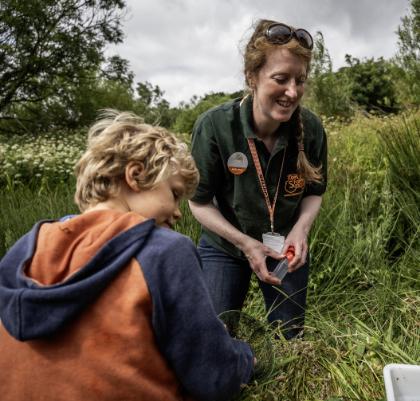
Developed by LEAF education specialists and the OFS team, the training days willprovidevaluable insights into how to run an OFS event, connect withvisitorsand share your farm’s story in engaging and memorable ways.
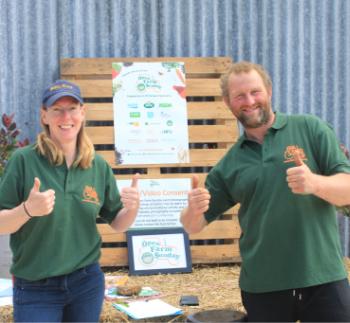
Topics will include managing visitor numbers using online ticketing services, and promotion, through to health and safety considerations.The events also offera valuable chance for farmers to network and learn from each other.
LEAF’s Open Farm Sunday manager, Annabel Shackleton, says:“Farmers who attend can also pick up some fabulous resources, including our new sector specific host farmer booklets developed with funding from AHDB, plus activity workbooks, posters, signage and other educational materials to help make your Open Farm Sunday a success.”
To register to attend the free training day, visit:
• Huntapac (Lancashire): 18 March
• Strawberry Hill Farm (East Sussex): 24 March
• Register to host Open Farm Sunday: 7 June 2026
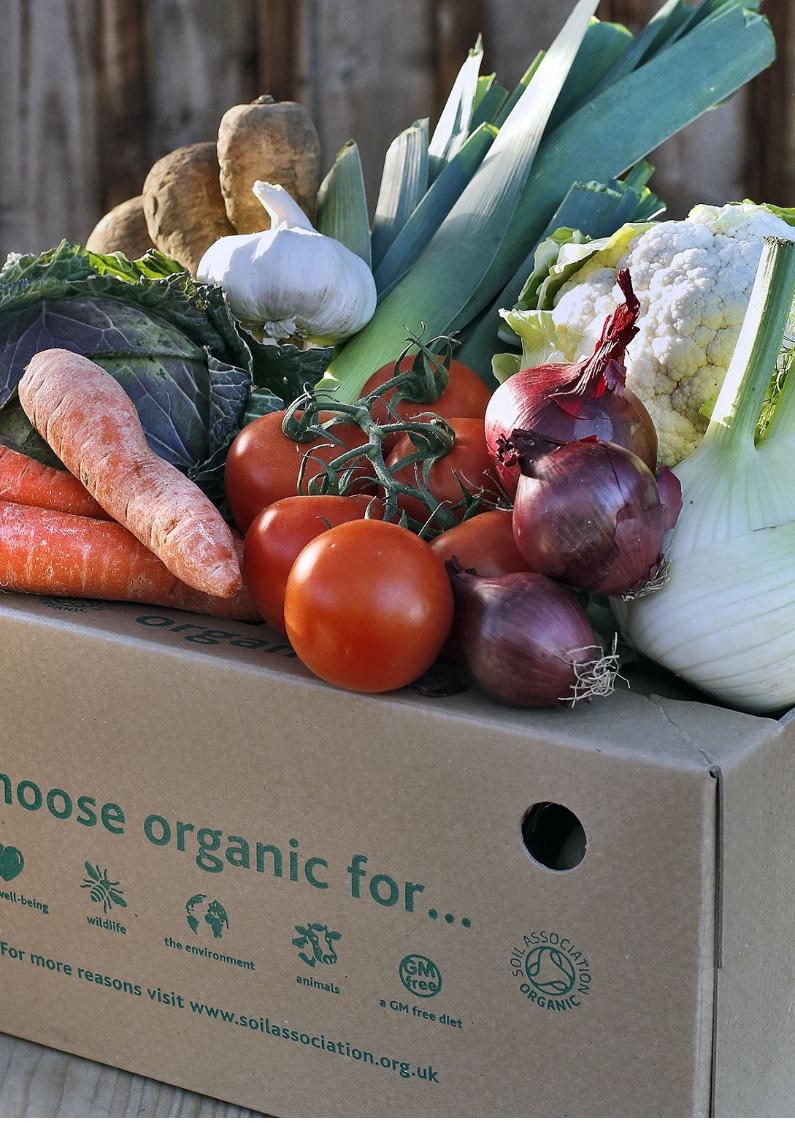
British organic products are "in high demand" as the UK organic food and drink market enters its 14th year of consecutive growth, figures released today by Soil Association Certification reveal.
The latest Organic Market Report, out on Wednesday 4 March covering trends from 2025, shows that the market has doubled in value over the last decade to reach £3.9bn.
The data shows that 83% of households are buying organic1and that shoppers are "seeking to back British farmers" when they do, with strong growthin organic milk,eggsand carrots which are predominantly produced in the UK.
In 2025 overall sales of organic increased by +4.2%,with the major driver of this growth in supermarkets where there was a sales uplift of +7%.Organic is also outpacing non-organic with the unit growth of organicinsupermarkets four times that of non-organic.2
Dairy has been one of the biggest drivers of growth, particularly organicmilkand eggs which both returned a volume sales uplift of over 8%.2
Produce and dairy continue to be the largest sectors for the organic market, with bananas, carrots and salad boosting sales in the latter category.
Most organic farmers (85%) report sales either growing or staying stable with less than 10% experiencing a sales drop, according to a farmer survey conducted as part of the Organic Market Report.
The report also revealed that thefrequency of organic purchases has increasedinsupermarkets, withshoppers onaverage buyingorganic once every 3 weeks.1
Organic farmer and Soil Association farming advisor Adrian Steele said:"The continued growth of the organic market reflects the strong consumer demand for naturefriendlyfood.
"With high demand for organic products that are predominantly produced in the UK, we can also be encouraged that shoppers looking for organic's environmental and welfare benefits also seem to be seeking to back British farmers.
"Supermarkets have been taking note and havereacted withrebrands and expansions to their organicranges,along with morepricepromotions and loyaltydiscounts.
"This presents a key opportunity for our farmers to tap into demand from both consumers and retailers."
Action needed to stop imports meeting high consumer demand
While consumer demandremainsstrong,this is still largely being met by imports becausethe UK's overall organic productionremainsstagnant.
The latest government figures, covering2024,show the overall percentage of UK farmland stuckat3%. While there was an increase in land in-conversion inEnglandlast year, this dramatically slowed when the Sustainable Farming Incentive (SFI) closed abruptly.
But last week the government revealed details for the revised SFI and this included a renewed commitment to organic.
Support for converting to organic and ongoing management of organic land will be included in the new scheme, which is set to reopen via two application windows in June and September.
But England has yet to set any targets to increase organic production, unlike Scotland which is aiming to double its organic farmland. The EU has also committed to achieving at least 25 per cent organic farmland by 2030.
Somerset organic dairy farmer Sophie Gregory, chair of the newly-formed UK Organic Dairy Roundtable, said: "The opportunities for organic dairy are huge, especially around animal health, environmental delivery and meeting the growing demand for natural food. But we also know the challenges have never been greater, from volatility to processing bottlenecks and the need for long term confidence."
Steele added: "Wehavefought hard to ensurethat organicwasincludedin therenewed SFI and it is heartening to see organic recognisedfor its high environmental standards. But there is still a need for a longer-term vision to enable farmers to commit to more nature-friendly farming methodswith the security of knowing support and fairer access to markets will be there.
"An English Organic ActionPlan, like Scotland have just launched, wouldcatalysethepublic and private partnerships that will give farmers assurance in committing to organic conversion. Consumer demand is there for the taking – we should not allow it to continue to be met by imports. Our farmers, wildlife and the environment would all benefit from a clearer vision from government to grasp these opportunities."
TheScottish Organic Action Plan,launched in January 2026, saw Holyrood commit to a three-year, £200,000invested strategy aimed at expanding organic land, increasing production, and boosting demand for Scottish organic products, with strategic routes to market support such as public procurement.
Responding to the Defra Secretary of State Emma Reynolds' speech at NFU Conference1today, the NFU has welcomed her commitment to farming and recognition of the need for investment in the industry.
NFU President Tom Bradshaw said: "It's encouraging to hear the Defra Secretary of State reaffirm her commitment to working in partnership with farmers and growers. Today's announcement on investment in productivity demonstrates that she recognises the vital contribution our nation's food producers make to the economy and to our national security."
At the conference, Ms. Reynolds confirmed funding for the Farming Innovation Programme and the Farming Equipment and Technology Fund, further detail on the reformed Sustainable Farming Incentive (SFI) scheme and announced that the first meeting of the new Farming and Food Partnership Board will take place in March.
Mr Bradshaw continued: "I said today that stopping the decline of UK food production would be good for our economy, good for our national security and
good for our natural environment. If government agrees, we can collectively deliver.
"The reformed SFI scheme announced today appears to strike the right balance between simplifying the process and maintaining flexibility, while still retaining preferable actions for farmers and growers. It's good to see the recognition of the uplands by maintaining actions that support the much‑loved landscapes in which they work, but we'll need to work through the wider detail of the scheme.
"What is pleasing is that Defra has taken the NFU's feedback on board in a number of areas where we were concerned about early plans for the new SFI.
"The Secretary of State said today that the 'government is serious about partnership' and is 'committed to giving [the industry] clarity and stability'. I welcome that butkey to this must be transparency around the farming budget, as well as a long-term plan for food and farming. The resilience of our food system can't be taken for granted, underlying profitability is essential to driving the investment needed and the resilient food system that society needs."
The government has announced proposals to relax planning rules, making it easier for farmers to install small-scale wind turbines.
The move by the Department of Energy Security and Net Zero (DESNZ) comes after sustained campaigning by the NFU, and a promise by government to streamline the planning process and bring forward proposals to cut red tape and speed up applications to better support farm productivity and UK food security.
NFU President Tom Bradshaw said: "For too long, we have faced unnecessary barriers to upgrade infrastructure on farm. It's why we have been working with government to revise planning policies to include enhanced "permitted development rights" for small-to-medium wind turbines to make it easier for farmers to invest in and benefit from on-farm renewable energy.
"In the NFU Blueprints for Growth, we highlight the precedent that was set in 2022 when permitted development rights were revised for mobile phone masts of a similar size.
"We are pleased that government has listened and will allow farmers to put up a turbine of up to 30 metres² – no bigger than an oak tree – without having to submit complex planning proposals. This will help cut energy costs at a time when margins are extremely tight and provide long-term business resilience, so farmers can continue to produce food for the nation alongside their work in protecting and enhancing the environment.
"The NFU will continue to work with the government to help deliver on its missions for growth. Our Blueprints can help ensure this is achieved, as by following them, government can lay firm foundations for a sustainable and profitable future."
Warwickshire dairy and arable farmer Charles Goadby has been recognised by the NFU for his hard work and commitment, receiving the prestigious Meurig Raymond Award at this year's NFU Conference.
Named after the NFU's former President, the award celebrates exceptional service to the NFU and wider farming sector. Charles, who farms near Nuneaton, was selected from nominees representing each of the NFU's four English regions and NFU Cymru.
Over the past year, Charles has become a leading voice on the family farm tax, working to ensure the serious implications for family farms were clearly understood at the heart of local and national government.
He helped organise major gatherings outside Warwickshire County Council and was subsequently invited to address the councillors ahead of a motion of no confidence on the reforms. That discussion led to the leader of the council writing directly to the Treasury and the Chancellor to set out the county's concerns. Charles has also worked closely with his local MP, Jodie Gosling, through on-farm meetings, constituency walks and practical demonstrations of the real-world impact of the family farm tax. His work has brought together different farmer groups, ensuring that NFU positions were better understood and that the wider farming community presented a more united voice.
Charles Goadby said:"I'm flabbergasted. To be recognised for standing up for something I believe in so strongly is incredibly humbling.
"The thought that you can actually win an award for doing something that so many farmers and growers do day in and day out - and for something that you love doing - is mind boggling."
NFU Director General Terry Jones said:"I'm absolutely delighted that Charles has won this year's Meurig Raymond Award after being nominated alongside four other fantastic members from across England and Wales.
"What has particularly stood out is his ability to break down complex topics in ways that resonate – including a memorable Lego-based explanation of potential APR and BPR losses which made an often-impenetrable topic accessible to a wider audience and helped bring new supporters into the conversation.
"Charles has made an outstanding contribution to raising the profile of British farmers and the vital work they do, making a demonstrable difference to the political understanding of key agricultural issues and making him a very worthy winner of this year's award."
Agroup of MPs have toured theUK's biggest fresh milk plant and a nearby farm to witness firsthand the cutting-edge technology and sustainable practices driving the future of the British dairy industry.
The visit, part of the NFU's Food and Farming Fellowship Scheme, provided parliamentarians with a comprehensive 'field-to-fork' insight into how the sector is supporting food security and the rural economy.
The MPs toured the Arla Innovation Farm near Princes Risborough before heading to Arla Foods's Aylesbury Dairy, which processes more than 1.75 billion pints of milk per year, using the latest robotics and automation.
NFU Deputy President Paul Tompkins, who joined the visit, said:"It's great to get MPs out on farm and around a major processing facility so they have a better
understanding of the importance of the dairy sector and the wider supply chain and its contribution to food production, the environment, jobs and rural communities.
"Providing valuable knowledge and information to our politicians on visits like this can go a long way in helping to create a more resilient, sustainable and profitable industry."
Paul Dover, UK Agriculture Director, Arla Foods said: "This is the second year that we have supported the NFU Parliamentary Fellowship programme by hosting a visit on farm and to Arla Aylesbury.
"It is really valuable to showcase our role as the UK's biggest agricultural co-operative and the commitment of our farmers and colleagues to underpin food security. We are looking forward to continuing to work with the Fellowship programme in the future."
new £150,000 partnership between the NFU Mutual Charitable Trust and FareShare is set to expand food redistribution efforts across the UK, with a particular focus on rural communities.
Announced for 2026–27, the funding will enable FareShare—the UK’s leading food redistribution charity—to deliver 857 tonnes of surplus food to charities and community groups nationwide. This equates to more than 2 million meals, providing nutritious, good-to-eat food to people experiencing food poverty.
The initiative forms part of NFU Mutual’s broader charitable commitment, delivered through its Charitable Trust, which supports national organisations aligned with its rural roots and community focus.
relationship between the two organisations. Since 2021, the NFU Mutual Charitable Trust has contributed £500,000 to FareShare, helping redistribute the equivalent of 1.7 million meals. Beyond financial support, NFU Mutual has played an active role in raising awareness of FareShare’s mission, particularly within the farming sector, helping to unlock new sources of surplus food. Staff have also contributed through volunteering at distribution centres and supporting food collection initiatives.
Volunteering is expected to remain a key element of the renewed partnership, offering NFU Mutual employees deeper insight into the operational impact of food redistribution and strengthening ties between the organisations.
Looking ahead, the scale of operations is set to grow further. In September 2025, FareShare announced plans to merge with The Felix Project, forming a larger organisation with increased national reach. From 2026, the combined entity will operate seven depots across London, Suffolk, Merseyside and Hampshire, while continuing to collaborate with 16 network partners across the UK. A new brand identity is expected to be unveiled later in the year.
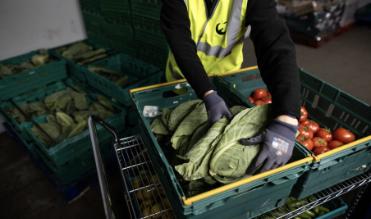

Funding will primarily support FareShare’s National Logistics Project, facilitating the transportation of surplus food from nearly 700 suppliers to distribution hubs across the country. From there, food will be sorted and delivered to more than 8,000 local charities and community organisations, ensuring it reaches those most in need efficiently and safely.
A significant proportion of this effort will target rural areas, where access to affordable, nutritious food can be more limited. Of the communities supported, 425 are located in rural Local Authority Districts. The partnership is expected to increase rural food provision by 10% in 2026 and a further 10% in 2027, ultimately reaching close to 100,000 people in these areas.
The collaboration builds on a longstanding
Paul Amadi, Executive Director of Income Generation at FareShare and The Felix Project, highlighted the importance of the partnership, noting that the organisation already redistributes enough surplus food daily to create hundreds of thousands of meals. He emphasised that the funding will ensure food reaches a wide range of community settings—from schools and lunch clubs to refuges—while also strengthening local support networks and reducing waste.
Nick Turner, Group Chief Executive at NFU Mutual, reinforced the organisation’s commitment to rural communities, acknowledging the unique challenges they face. He described the partnership as part of a long-term effort to ensure that surplus food is redirected to those who need it most, particularly in remote areas.
As food insecurity and waste continue to present parallel challenges, this partnership represents a targeted, logistics-driven approach—one that connects surplus supply with urgent demand, while reinforcing the resilience of communities across the UK.
FU Mutual is urging farmers and rural homeownersto check fuel tank security measures, in case soaringoil prices lead to a surge in diesel and heating oil theft.
Past incidents have seen fuel thieves fit out panel vans with containers and a pump who then scour the countryside looking for farm fuel tanks, parked vehicles and home heating oil tanks to empty and sell on the contents.
Hannah Binns, Rural Affairs Specialist at NFU Mutual, said:"Thieves steal whatever they can get their hands on and sell on for a profit, and high diesel and heating oil prices often trigger an increase in thefts from farm fuel tanks.
"Since the conflict in Iran began, oil prices have risen to over $103 a barrel*. Farmers are reporting that red diesel for use on the land has increased from 77.95ppl to 135.98ppl and heating oil for homes has doubled**.
vulnerable if they can't be seen by occupants.
• Ideally tanks should be within an enclosed compound with secured access.
• Fit a fuel tank alarm to notify you of a theft. Remote electronic fuel level gauges will set off an audible or monitored alarm if the fuel level in the tank suddenly drops or falls below a defined level.


"Fuel theft is a crime which often leaves a trail of destruction as thieves frequently smash valves and even drill into tanks to get the oil out. This can lead to pollution as any remaining oil seeps into the ground.
"There are a number of measures farmers and homeowners can take to reduce the risk of becoming victims of fuel theft and we have produced a guide to help people protect their tanks."
NFU Mutual Fuel tank security checklist:
Tank, contents and location
• Record the number, location, tank storage capacity and the date/times when tanks are filled and regularly check levels.
• Where possible locate the tank where it can be viewed from the farmhouse. Fuel tanks located away from buildings or dwellings are more
• Keep field and farmyard gates closed and locked, and block exit points that aren't used.
• Activate intruder alarm systems, which may have a local sounder or remotely monitored signalling.
• Install security lighting to illuminate any suspicious activity.
• Use locking fuel tank caps
• Keep tractors and powered machinery locked up and out of sight from public roads and footpaths when not in use to prevent thieves draining their fuel tanks.
• Check your fuel gauge is not showing irregularities in fuel levels.
For more information on rural crime trends and advice, visit:www.nfumutual.co.uk/ruralcrime
Across UK farms, a consistent pattern is emerging in soil health: declining organic matter and carbon levels, increasing compaction, and crops struggling to cope with extreme weather events. These issues can be attributed to not monitoring your soil health.
Recognising the signs of poor soil health – and having the right solutions to improve and maintain it – can help make farms more resilient. Yet many farmers still think about soil health in narrow nutritional terms, like NPK values.
For Dr Paul O'Hora, Sales Director at SoilWorx, the reality goes much deeper. Which is why SoilWorx is committed to making the organic matter and complete nutrition needed to build healthier, more productive soils available to every farmer through its range of organic and organo-mineral fertilisers.
Soil: a farm's biggest asset
Understanding how soil functions isn't a luxury for organic purists. It's practical agronomy that every farmer and grower needs to understand.
"Without adequate soil maintenance the consequences are there for everyone to see in the fields," says Dr Paul O'Hora. "Areas that underperform year after year. Crops struggling in

drought whilst maybe neighbouring fields cope. Waterlogging after heavy rain. Increasing reliance on inputs for the same yields. These are all symptoms of declining soil function – and every farmer already knows which parts of their farm are affected."
Soil health encompasses three interconnected pillars: chemical (nutrient availability and pH), physical (structure and water management), and biological (the living organisms that make soil work). "When farmers understand how these interact, they can see why their soil behaves the way it does – and what needs to change," explains Paul.
"Having the wrong pH locks up nutrients even when they're abundant. Micronutrient deficiencies –limit yields regardless of adequate NPK. Physical health determines whether water infiltrates or runs off, whether roots can penetrate or hit compaction. Biological health – the microbes and earthworms working in your soil – determines whether organic matter breaks down and releases nutrients, or whether it sits inactive," he says.
Critically, all these pillars work together. Good structure supports biology. Healthy biology improves nutrient availability. You can't optimise one whilst ignoring the others – which is why SoilWorx believes NPK-only programmes increasingly fall short.
The limitations of NPK-only thinking
"Synthetic fertilisers deliver exactly what's on the bag – nitrogen, phosphorus, and potassium. What they don't deliver is organic matter, micronutrients, or any support for soil structure or biology. They do nothing to improve your soil's ability to hold water, resist compaction, or cycle nutrients naturally," Paul says.
When soil biology is weak, the soil can't unlock nutrients already present. Soil bacteria mineralise organic matter, converting stable nutrients into plant-available forms. Without active biology, this natural process stalls. Farmers end up applying more synthetic fertiliser to compensate for what the soil should be providing – increasing costs whilst doing nothing to solve the underlying problem.
"Research demonstrates the physical impact dramatically: a raindrop hitting exposed soil can send particles flying a few feet away, blocking surface pours accelerating erosion and surface runoff. The same raindrop hitting well-structured
soil with a cover crop with good organic matter barely disturbs the surface and drains. That difference – between soil that works for you and soil that works against you – comes down to organic matter and structure, things synthetic NPK alone cannot provide," Paul explains.
Giving every farmer access to improved soil health
For years, easy access to organic matter has been limited to certain farm types, like those with their own livestock. SoilWorx is committed to changing that by giving every farmer, regardless of system or scale, access to the organic matter their soil needs. For example, SoilWorx Dynamo organic pellets deliver approximately 75% organic matter in pelleted form that spreads with conventional equipment. This is complete nutrition: NPK, essential micronutrients and substantial organic matter in one product. SoilWorx organo-mineral fertiliser combines organic matter with synthetic nutrients in a single pellet for immediate nutrient availability plus long-term organic benefits.
"Plants need more than NPK, and SoilWorx Dynamo products deliver the full nutrient spectrum including micronutrients that synthetic programmes miss. This eliminates hidden deficiencies that limit yield potential. The 75% organic matter builds structure, improves water-holding capacity, reduces the risk of compaction and creates the porous framework that helps nutrients bind rather than leach. This is physical soil health that synthetic fertilisers cannot provide," Paul enthuses.
The importance of soil testing
February and March represent ideal times for soil testing as it provides an accurate snapshot of what the crop will encounter when it's ready to grow. This timing allows informed decisions for the coming season's nutrient management plan.
Comprehensive soil profiling, including biological assessment, establishes baselines and enables meaningful comparison over time. "When you understand your starting point, you can measure the impact of your organic interventions and demonstrate return on investment," says Paul.
"When soil biology starts functioning well, multiple benefits emerge. Healthier crops that require fewer inputs. Better soil structure and field conditions. Improved monitoring indicators including increased earthworm counts – a simple but effective measure any farmer can conduct simply by digging down with a spade."
Independent laboratory testing shows a single application of SoilWorx natural fertilisers can increase the Soil Health Index by 19% – measuring microbial activity and respiration. More active biology means better nutrient cycling, more
earthworms, and soil that increasingly works itself. Unlike synthetic fertilisers delivering one spike and risking leaching if not immediately used, organic matter breaks down progressively. Plants take what they need when they need it which is a more efficient use of investment.
Soil health a primary climate change defence
Soils buffering capacity is declining just when UK farmers most need it. The 2024 season saw abnormal rainfall and flooding. The 2025 season brought drought. These swings are becoming more common – and soil health is the primary defence. "Soil with good organic matter has genuine resilience. In drought, improved water-holding extends time before stress. In heavy rainfall, better infiltration reduces runoff and waterlogging. Deeper root systems – enabled by better structure –access water and nutrients shallow roots cannot reach. The result is yield stability across varying conditions. Not necessarily higher peaks, but consistent performance year after year. In unpredictable weather with tight margins, that consistency has real economic value," explains Paul.
There's no better time to improve soil health
SoilWorx products like Dynamo and OrganoMineral fertilisers integrate into existing programmes using spreading equipment farmers already own. For crop nutrition, early March applications work well – ploughed in or drilled with seed, giving organic matter time to break down whilst making nutrients immediately available. For soil conditioning, post-harvest applications offer advantages such as accessible fields without compaction risks and time for integration before next season.
Year-on-year applications create cumulative benefits. Over time, soil organic matter builds, progressively reducing reliance on synthetic input. Eventually farmers reach maintenance phase where smaller applications protect the gains made. Understanding realistic timeframes is important: meaningful soil health improvements typically emerge over three to ten years of consistent organic matter additions. Some benefits appear quickly, but structural and biological changes take time. However, farmers can track progress against their baseline to provide evidence that investment is working.
"Your soil is your biggest asset. Understand it. Feed it. Support it. And it will deliver – not just this season, but for seasons to come," concludes Paul. "The traditional barrier to soil health was access to organic matter. That barrier no longer exists. Every farmer, regardless of their system, scale, or location, can now access the organic matter they need for complete nutrition, conditioning and better soil health."
Action to tackle the "interlinked" climate, nature and dietary health crises must be a priority for the next parliamentary term, according to Soil Association Scotland.
The charity has launched its manifesto ahead of the 2026 Holyrood election, focusing on three key themes – investing in sustainable farming, delivering a 'Good Food Nation' and stepping up action on climate adaptation and nature restoration.
Soil Association Scotlandoutlines the need to support a transition to low input, agroecological and organic farming and crofting, using public procurement to drive demand for sustainable and organic Scottish produce,and encouraging reduced consumption ofultra processed foods.
The manifesto also calls for a scaling up the restoration of degraded peatland, incentivisingregenerative forestry practices,encouraging landowners to collaborate at landscape and catchment scale and ensuring natural capital opportunities are available to small and medium sized farms as well as larger farms and estates.
There are costed examples such as a £10m fund for low-density agroforestry, developing in partnership with Woodland Trust Scotland, and specific targets for delivery, including a 10% target for organic ingredients in public procurement and a 10% land share for organic farming.
Soil Association Scotland also calls for the next government to make Food for Life Served Here Bronze certification mandatory for all local councils, putting Scottish produce and sustainable school meals at the heart of this urgent call.FFLSH bronze
certification prioritises farm assurance schemes such as Quality Meat Scotland red meat and Red Tractor chicken.
Soil Association Scotland Co-Director David McKay said: "The new parliamentary term offers an opportunity to refresh the policy agenda, with a greater focus on the interlinked climate, nature and dietary health crises.
"Agricultural policy must incentivise farmers and crofters to adopt low input, nature friendly approaches, building farm business resilience in the face of a changing climate.
"And more broadly, there is scope to go further and faster on peatland restoration, regenerative forestry as well as the careful integration of trees on farms and crofts."
Soil Association Scotland Co-Director Sarah Duley said: "There is a huge opportunity to use the power of public procurement to deliver on the objectives of the Good Food Nation.
"Investing in public sourcing can address multiple policy challenges at once, supporting local economic growth by getting more sustainable Scottish food on the table, improving children's dietary health, and protecting the environment.
"Rebalancing diets away from the current over-consumption of Ultra Processed Foods should also be a public health priority in the next parliament."
To read the full Soil Association Scotland manifesto:https://www.soilassociation.org/ our-work-in-scotland/our-policy-work/soilassociation-scotlands-2026-manifesto/

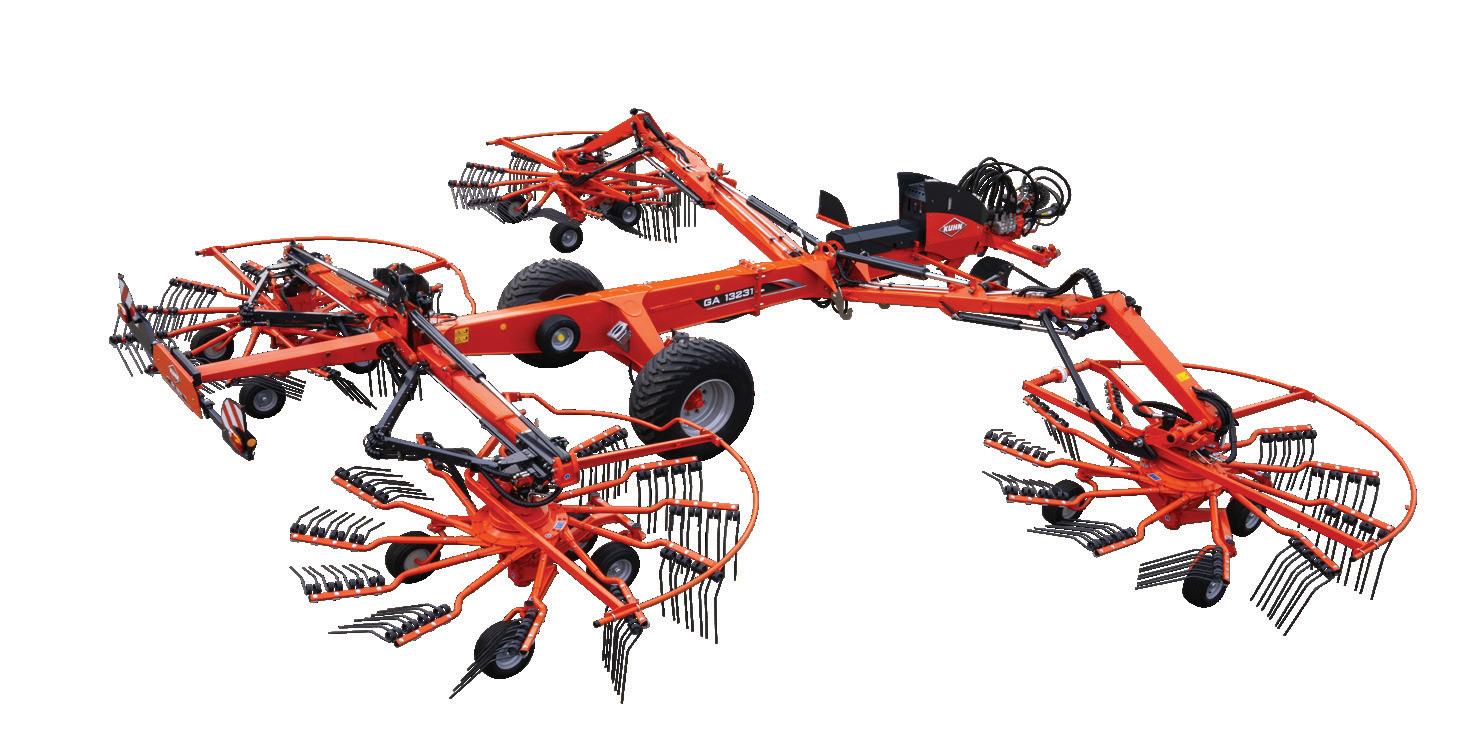
• Improve swath formation with rotor boost function
• ISOBUS Control with CCI terminal and CCI A3 Joystick



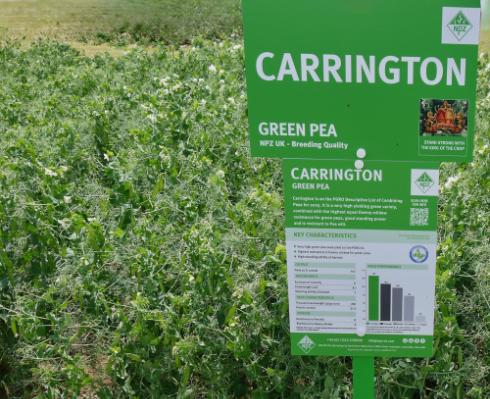
NPZ UK Green pea Carrington is a wellestablished variety on the PGRO
Descriptive list (DL). It is a very high yielding green pea variety with a strong agronomic package and, importantly, heads the ratings on the list for Downy mildew resistance.
First recommended on the PGRO DL in 2022, Carrington continues to top the Downy mildew resistance ratings for Green Peas with the highest possible rating of '9'. This is added to high seed yield and a strong set of agronomic characters including early maturity, resistance to pea wilt - and good standability for good harvestability.
Grower comments are equally positive, with remarks made that Carrington is a reliable choice thanks to its Downy mildew resistance and that crops show excellent standing ability at harvest.
The UK is an important Green pea market and Carrington's protein content and grain size meets market needs. Itsgood colour, and colour retention makes it suitable for premium end markets and for human consumption.
Carringtonis one of five NPZ UK Green pea varieties on the PGRO DL, emphasising the breeder's strong portfolio in combining peas for growers. It shares its DL recommendation withPangea,ButterflyandBluetime.These were joined on the latest list byBullet, a new high yielding variety,
Edina Kare, NPZ UK Pulse Breeder, ends by summing up her views on Carrington: "This is a variety with a very good standing ability, tall plant length, late flowering day, early maturity and very high Downy mildew resistance."
Following one of the wettest winters in recent years, dairy farmers across the UK are facing a critical decision about how to manage heavy grass covers in the run-up to silaging season.
Persistent rainfall has limited field access on many farms, while relatively mild soil temperatures have allowed grass growth to continue through the winter months. The result heading into spring is grass leys with lots of bulk, but not necessarily the quality needed to drive high milk from forage yields.
According to Mel Digger, ForFarmers Forage Product Manager, how these grass covers are managed over the next few weeks will be pivotal.
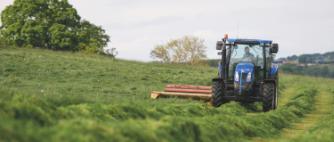
"We've had a very wet end to 2025 and over the winter, but soil temperatures have remained relatively mild," Mel explains. "As a result, grass hasn't stopped and this means a lot of dairy farmers are looking at heavier covers, but the quality of that grass will not be where we need it to be for first cut.
"Attention now turns to how best to reset swards ahead of the main silage season."
Where ground conditions allow, taking a light prefirst cut ahead of the main first cut may prove a valuable strategy.
"If possible, taking a pre-first cut could be one of the best decisions you make this spring," Mel says. "The current grass is likely to be stemmier and lower in quality and by removing that bulk, you reset the sward and allow fresh, leafy regrowth to come through for your true first cut."
Although some farms may still struggle to travel due to wet ground, for those that can take a precut, the longer-term gains outweigh the short-term yield sacrifice.
"Farmers might sacrifice a bit of yield from their first cut, but what they'll gain is a significantly higher quality silage, with higher digestibility, better
energy, and ultimately more milk from forage," Mel explains.
For some producers, this extra cut could be extremely useful in bridging a forage gap and helping extend remaining clamp supplies. If this grass quality is variable, preserving its feed value is critical.
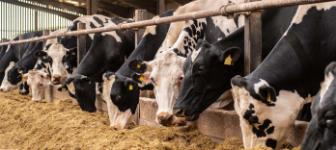
"Inoculants don't turn poor grass into perfect silage," concludes Mel. "But they absolutely help preserve what feed value is there.
"We recommend using inoculants on all grass silage. Research also shows that silage inoculants can help increase milk yield by up to 1.5 litres per cow per day when used on good quality grass."
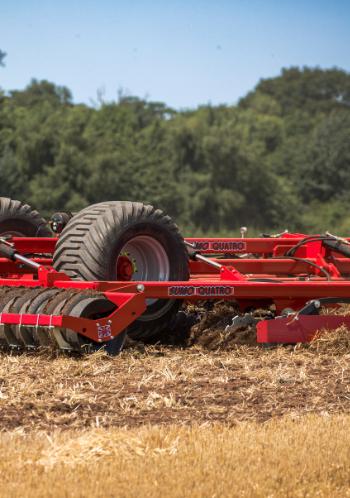

New independent disease modelling has reinforced the need for winter wheat growers to use a range of fungicide actives to avoid exacerbating resistance created by the repeated use of SDHI and azole chemistry.
Using an SDHI and an azole in sequence at the T1T2 timings has been standard practice on many farms for years, butrepeated use has made septoria strains less sensitive to these chemistries.
To prevent the situation from worsening, using effective fungicides with different modes of action in mixtures, or as alternate sprays, will be best practice moving forwards.
New ADAS modelling work shows that replacing one SDHI with a picolinamide at the T1 or T2 timing and adding a multisite in the fungicide programme will treble the lifespan of SDHIs.
To understand how adjustments to a fungicide programme influence the development of resistance, ADAS ran modelling work to follow resistance trends in wheat under a range of different approaches.
The baseline was a 'standard' programme using an SDHI and azole mix at both T1 and T2.
Two alternative strategies were then assessed. In each case, one SDHI + prothioconazole application was swapped for Univoq, which contains Inatreq active (a picolinamide), and has a different site of action. All scenarios were assessed with and without Folpet at both the T1 and T2 timings.
Scenario 1 (Baseline)
T1 1.12 litres per hectare isoflucypram plus azole
T2 1.46 litres per hectare pydiflumetofen plus azole
Scenario 2
T1 1.2 litres per hectare Univoq (includes azole)
T2 1.46 litres per hectare pydiflumetofen plus azole
Scenario 3
T1 1.12 litres per hectare isoflucypram plus azole
T2 1.2 litres per hectare Univoq (includes azole)
Where isoflucypram was replaced at T1 with Univoq, the model indicated a 0.8 times extension in SDHI lifespan. The impact was more pronounced when pydiflumetofen was replaced at T2, with the projected SDHI lifespan effectively doubling.
Dr Mike Grimmer, Principal Consultant at ADAS, said that including the multisite folpet at both T1 and T2 in scenario 3 extended the projected SDHI lifespan by 50%, resulting in a threefold increase in SDHI longevity overall.
In summary, Dr Grimmer says that substituting one SDHI with Univoq lowers selection pressure and helps prolong the working life of SDHIs. The addition of a multisite strengthens resistance management further and highlights the importance of varied fungicide programmes.
Corteva Agriscience's category marketing manager Mike Ashworth, said: "SDHI resistance already exists, so when new SDHIs come onto the market they're already entering an environment with an existing resistance mechanism, which will immediately start working away on that new chemistry."
Last December, experts at the AHDB Agronomists conference warned that there were early signs that two new-generation SDHI fungicides –pydiflumetofen and isoflucypram – can develop cross-resistance.
Mike said: "When both are used in a programme you are, on two occasions, using very strong chemistry of the same mode of action, which will inevitably put a selection pressure on septoria that is likely to be resistant to SDHI chemistry.
"As time goes by, stronger and stronger SDHIs have been introduced to the market, and each time it creates a greater selection pressure, and the level of resistance will move up."
"To date, resistance has been a gradual reduction in the levels of efficacy as time has gone by," he adds. "But there will come a time at which effective control may be lost."
Corteva's Univoq™ cereal fungicide features a novel mode of action via the active ingredient Inatreq™, which targets septoria and other diseases at a unique site with no cross-resistance to existing chemistries. The company deliberately registered the product for a single application to minimise the risk of resistance.
Safeguarding all existing chemistries benefits growers and the wider industry, Mr Ashworth says.
"The value of Univoq is that by using one application to take the pressure off SDHIs you get the same, if not better, disease control than you would have done by maintaining two SDHIs," he explains.
"And you've increased the effective life of SDHIs, because all chemistries going forwards need as many modes of action to support them as possible. We all need each other's modes of action to prop each other up throughout our resistance management journey."
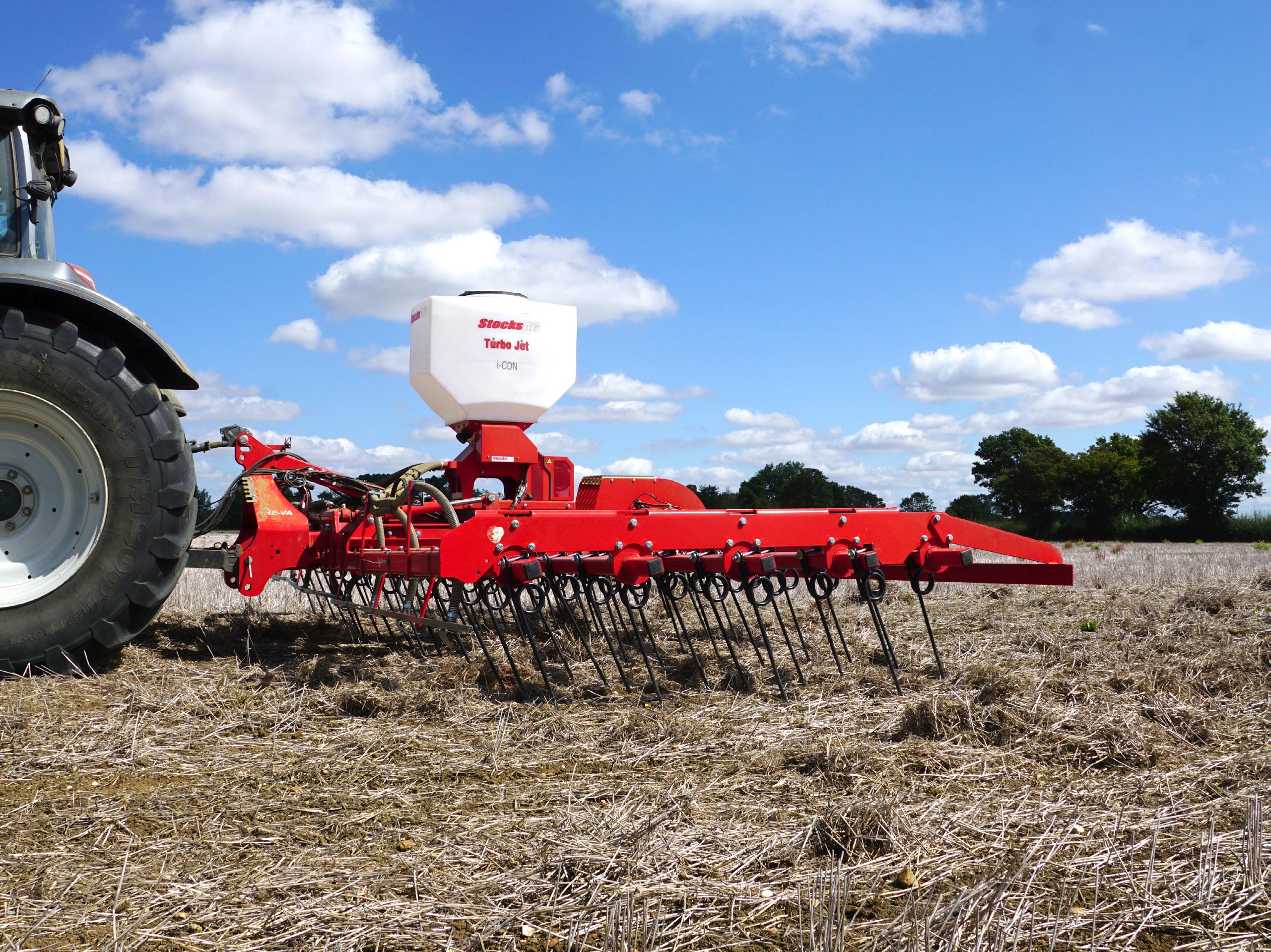
15 - 25kph
The Top Strigle straw harrow spreads straw evenly across the field to assist with drilling and slug control. The harrow also creates a micro tilth to generate a weed chit, assisting in the fight against grass weeds.
• 16mm hydraulically adjustable tines
• Central longitudinal chassis
• Heavy duty ladder-frame
• Hydraulic folding
• Seeder/applicator option

HE-VA range of Grant eligible products for FETF 2026:
FETF44 - G-Drill (1000L hopper)
FETF110 - Top Cutter Solo
FETF112 - Stealth
FETF207 - Stocks Ag Turbo Jet
FETF208 - Top Strigle
new farmer-led research project backed by Defra's ADOPT fund will put modern vining pea agronomy to the test under real farm conditions with the aim of updating plant population guidance for today's varieties and drilling systems.
The initiative from Fen Peas, in partnership with the Processors and Growers Research Organisation (PGRO) and Dyson Farming Research, will work with growers to reassess optimum plant densities in vining peas for the frozen food market.
dates back to 2006, and both the varieties being grown and the precision drilling technology used by farmers have moved on considerably since then," says Erin Matlock, PGRO Research Agronomist.
Through the ADOPT programme, which supports farmer-led innovation, the new project will test whether those long-standing recommendations still hold true under modern commercial conditions.
ADOPT funding is designed to help farmers trial new ideas, practices and technologies on their own farms while reducing the risks associated with innovation. ADOPT is part of Defra's Farming Innovation Programme, delivered in partnership with Innovate UK.
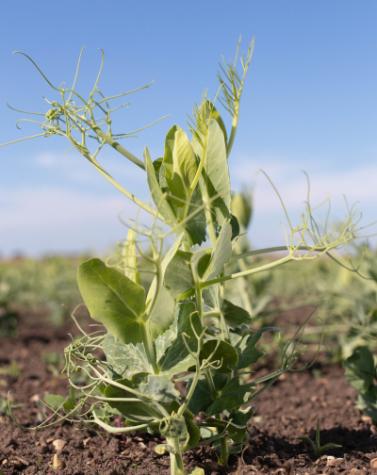
The crop remains a key part of arable rotations across eastern England and Scotland, covering around 35,000 hectares each year.
Despite significant advances in genetics, drilling accuracy and crop management, recommended plant populations for vining peas have changed little in almost two decades.
"The most recent UK research into plant density

By supporting projects facilitated by approved organisations such as PGRO, the scheme aims to generate practical results that can be quickly shared across the industry.
The new study will run as a series of farmscale strip trials over two seasons at Fen Peas in eastern England, and Dyson Farming Research. A range of current vining pea varieties from across the PGRO Descriptive List will be grown at different plant populations to assess how density affects crop performance.
Researchers will monitor yield and maturity alongside a wider set of agronomic and economic measures, including seed costs, gross margins, and levels of pest, disease and weed pressure.
The trials will also examine the wider sustainability impacts of plant population decisions. Water and nutrient use efficiency will be assessed alongside tissue analysis and local weather data, helping to build a clearer picture of how plant density influences crop resilience and resource use.
Erin adds: "By bringing together modern varieties, precision drilling systems and commercial-scale trial work, the project aims to refine plant population guidance so that growers can achieve more uniform crops, stronger margins and improved resilience in vining pea production."
Findings from the trials will be shared with growers and the wider industry as the work progresses, ensuring that the results can be quickly applied in practice.
Increased longevity –built for tough environments.

Makes maintenance easier, increases safety.

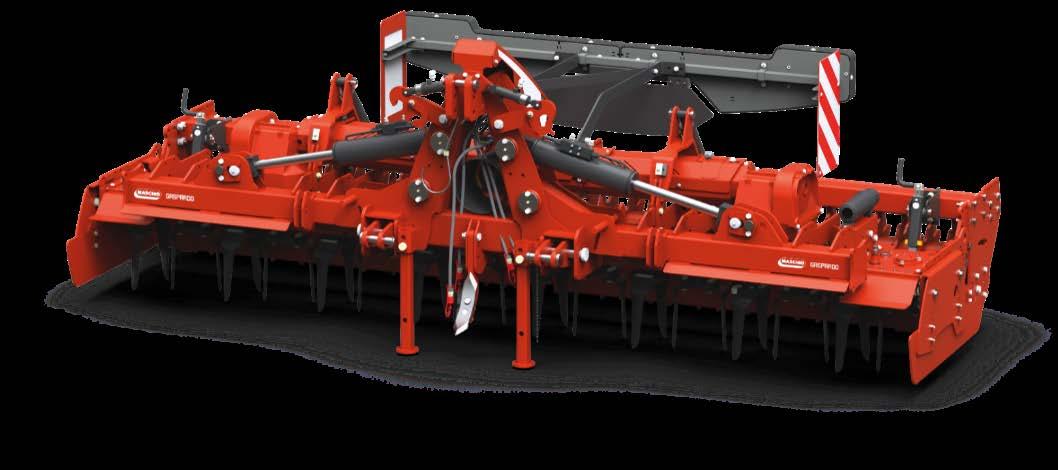
Top and bottom bearings provide high load capacity, top bearing retainers prevent expensive repairs.
Connected to the packer so adjusts with you – aids soil refinement.

Only one tool required, no pins or bolts to lose.


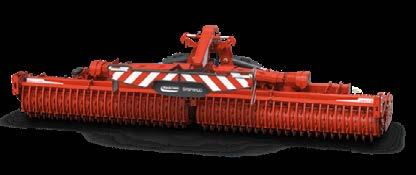
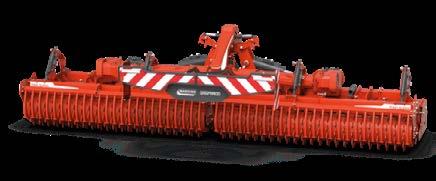

Founder and President Reuben Rampersad continues to drive product innovation as the company scales its molecular fertilizer platform.
Stimera™, the crop science company formerly known as BioAge, today announced the appointment of Lon E. Kreger as Chief Executive Officer. The leadership transition marks an important step in the company’s evolution as it moves from product validation and early market traction toward broader commercial scale.
Stimera is developing patent-pending molecular foliar fertilizers designed to make nutrients behave like biostimulants. Its flagship product, Nitro-Gro, is engineered to alter the molecular structure of nutrient inputs, allowing them to enter leaves rapidly, activate electrochemical nutrient transport, and accelerate plant metabolism. In current company materials, Stimera positions the platform around independently validated, customer-proven results, targeting roughly 30% higher yield, crop cycles shortened by up to two weeks, and up to 5x same-season ROI.
“At Stimera, we are focused on delivering products that drive measurable results,” says Kreger. “Growers need solutions that are effective, reliable, and economically sound. By helping growers maximize yield and efficiency, we strengthen the entire supply chain and support the production of high-quality food.”
Kreger's appointment comes as Stimera expands from regional product development to global commercialization. Designed to serve the grower, the company’s multi-channel strategy leverages trusted agricultural retailers, distributors, and manufacturing partners to bring its solutions directly to market.
“Stimera technology was built to solve real problems - helping growers achieve more predictable yields, better crop timing, and stronger returns from their fertility spend,” says Kreger. “Stimera has the kind of foundation that investors and commercial partners look for in a differentiated product with superior, early-season performance, and a model that can scale through established channels.”
Stimera’s technology was developed by Reuben R. Rampersad, Founder and President, who holds a Ph.D. in plant physiology from the University of KwaZulu-Natal. Rampersad brings deep expertise in formulation science and agricultural strategy, focusing on solutions that accelerate growth, improve nutrient efficiency, and unlock commercial-scale farming across international markets.
“Using scientific rigor, Reuben created a new category of crop inputs - molecular fertilizers - to develop the next generation of plant nutrition,” Kreger adds. “Reuben is a visionary scientist who realized an impactful change was needed. My role is to put this technology into the hands of the grower – who it was designed to benefit.”
Rampersad will continue as Founder and President, leading product development, formulation strategy, and pipeline expansion.
Current company materials indicate Stimera has roughly 20 products in development, with about 30% at or near commercialization.
“Stimera was built on the belief that crop nutrition can do more than correct deficiencies - it can actively improve how the plant performs,” says Rampersad. “We have worked hard to develop products that help nutrients move faster, work harder, and deliver meaningful economic value to growers. Bringing Lon in as CEO gives us the commercial and operational leadership to scale that vision.”
With Kreger leading global business efforts and Rampersad driving product innovation, Stimera is poised for the next stage of growth: expanding trials, strengthening channel partnerships, and scaling a new category of molecular fertilizer products. The company’s go-to-market model includes branded products, retailer private label programs, and manufacturer partnerships designed to accelerate adoption and create scalable, high-margin growth.
Stimera will showcase its breakthrough molecular fertilizer technology at the World AgriTech Innovation Summit in San Francisco, California, on March 17–18, 2026. Attendees can learn more and experience the platform firsthand by visiting Booth #40.
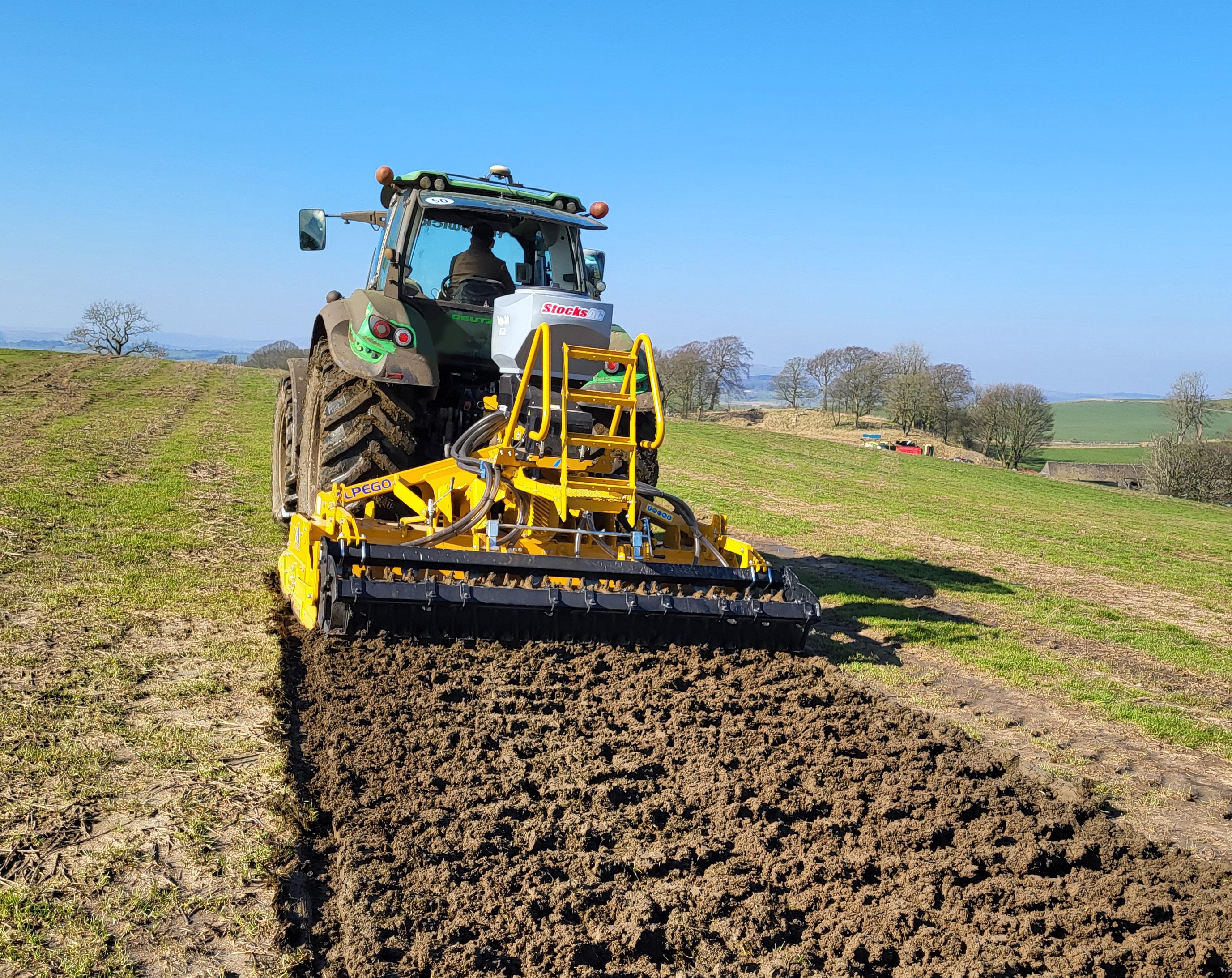

Atwo-stage approach to weed control is essential to maximising maize yields according to ProCam agronomist Justin Smith, who explains that a preemergence application of pendimethalin followed by a two or three-way combination of post-emergence active ingredients can make the difference between acceptable and exemplary crop performance.
“As recently as less than a decade ago, growing maize in the UK was almost perceived as a much less technically involved process,” Justin describes. “Many crops received little in the way of agronomic care beyond a decent amount of farm muck and a basic application of a post-emergence herbicide, after which the crop would be left to its own devices until harvest.
“However, as inputs including seed, diesel and labour have increased in price, and the value of home-grown forage has risen, maize crops must now produce a much greater yield to cover return on investment.
“As a result, most maize is now grown with a professional level of detail, with close attention being given to the creation of a fine, firm, but not overly compacted seedbed and a greater focus on nutrition including the use of starter fertilisers. Professional maize growers also have a better appreciation of the value of applying a range of herbicides at both the preand post-emergence timings.
“But, in a year when there’s a lot of talk about reducing inputs to offset the effects of recent weather patterns and suppressed farm incomes, there’s a danger this year’s crops might be subjected to corner cutting. That, in my opinion, is a precarious strategy, especially as maize is such a fickle crop when it’s in its infancy, with a decent amount of TLC needed to ensure crops go on to produce a high yielding and reliable source of roughage, dry matter and energy.”
Justin explains that a frequently used cost-cutting tactic is to exclude early season weed control. “Omitting the pre-emergence herbicide spray can be an easy decision to make, with growers often reticent to spend any additional money until the crop has fully emerged. But a recent ProCam trial indicates that a residual herbicide application is vital to helping to achieve a sustainable, high-yielding crop.”
According to Justin, a pre-emergence application of Anthem (400g/l pendimethalin) is a reliable and costeffective insurance policy in the fight against a wide range of grasses and broad-leaved weeds. He rationalises this by explaining that the 2025 trial showed that even during the year’s dry spring, pendimethalin delivered good levels of efficacy.
“Using pendimethalin at the pre-emergence timing won’t give 100% control of every weed or species, but it does buy a bit of time and crop security by holding back weeds, so they don’t out-compete the vulnerable young crop,” Justin continues. “And, with the threat of early season weeds reduced, there’ll hopefully be less need to rely on a large chemical stack at the post-emergence
timing which could put undue pressure on the crop at a vital time in its development. There’ll also be less for growers to worry about should the weather take a turn for the worse or if the spray contractor is unexpectedly delayed as the crop will already have received some protection.”
In terms of post-emergence weed control, Justin recommends using a product with two or three active ingredients to mop up any weeds not controlled by the pre-emergence treatment. “Spandis (40 g/kg prosulfuron, 400 g/kg dicamba and 100 g/l nicosulfuron) or Dragster (148.15 g/k rimsulfuron and 92.5 g/kg thifensulfuron-methyl) are good options as their inclusion of multiple active ingredients provides better control of grasses and broad-leaved weeds and also reduces the risk of resistance building against any individual chemistry.”
Justin also advocates the use of partner products at both herbicide timings: “An adjuvant such as Velomax will enhance the performance of residual chemistry by improving the distribution of the herbicide on the soil surface. It also helps to hold the residual product in the ‘active zone’ for longer during periods of drought or heavy rainfall, ensuring better herbicide efficacy and reducing the risk of crop phytotoxicity.”
To improve the efficacy of post-emergence treatments, Justin recommends the inclusion of a nutrient growth promoter and biostimulant such as Hadron which delivers foliar-applied nitrogen and zinc to the crop to enhance root development, improve nutrient uptake and help the crop grow away from any checking that the herbicide might impart.
“Hadron proved very effective during last year’s drought, enabling crops to tolerate the dry conditions more efficiently. It’s another cost-effective way of insuring the crop’s performance against environmental stresses, and another tool that growers can use to ensure their forage clamps are adequately stocked.”

A 2025 ProCam trial clearly demonstrated the benefit of applying a pre-emergence treatment of pendimethalin to maize.
Left: Anthem (400g/l pendimethalin) applied at 2.75l/ha at the pre-emergence timing.
Right: no pre-emergence herbicide treatment applied.
With over 220 years of experience serving the agricultural world, Grégoire Besson offers a complete range of machines dedicated to soil tillage. Ploughs, disc implements, tine implements, soil preparation machines and subsoiling equipment: our range covers all the needs of the most demanding farmers.
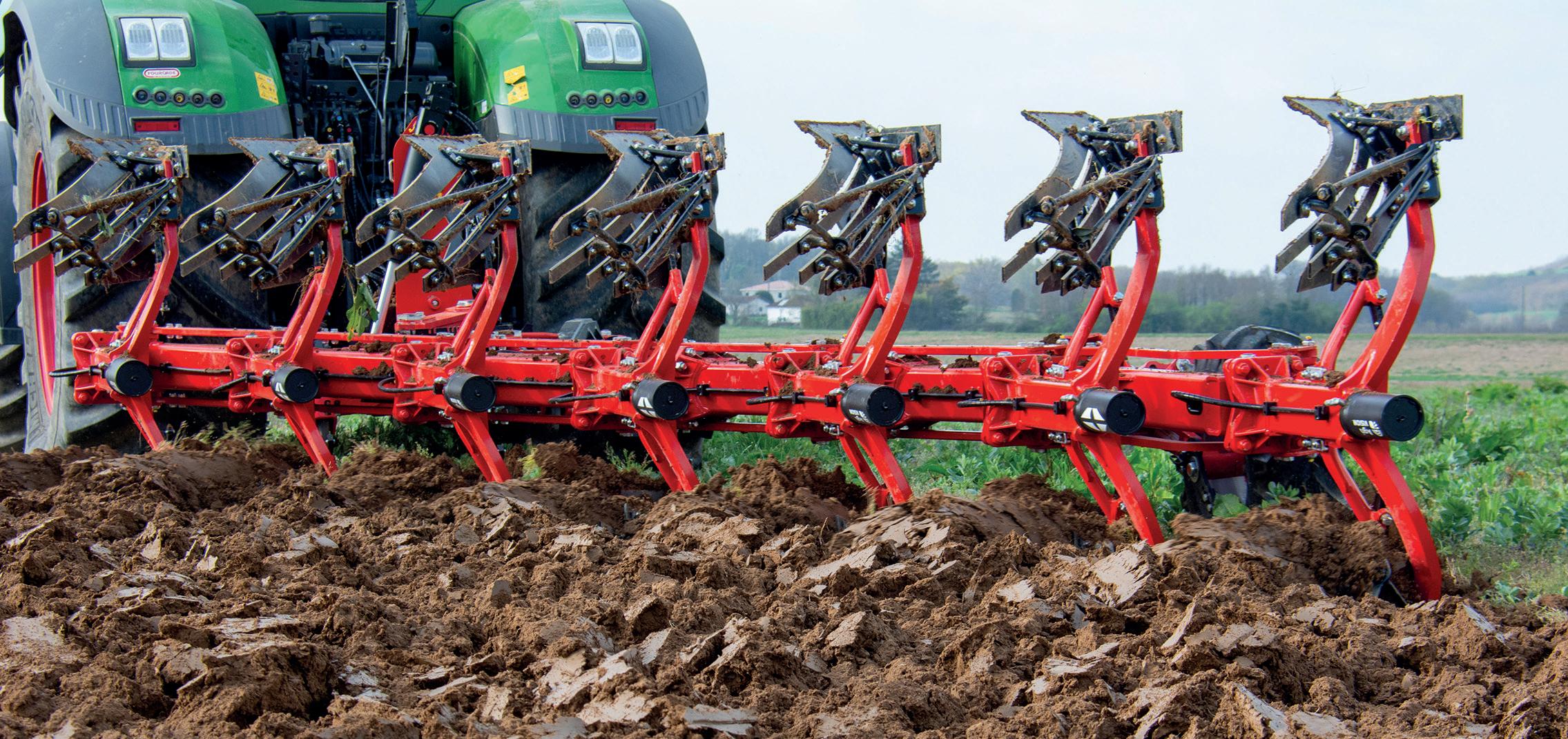
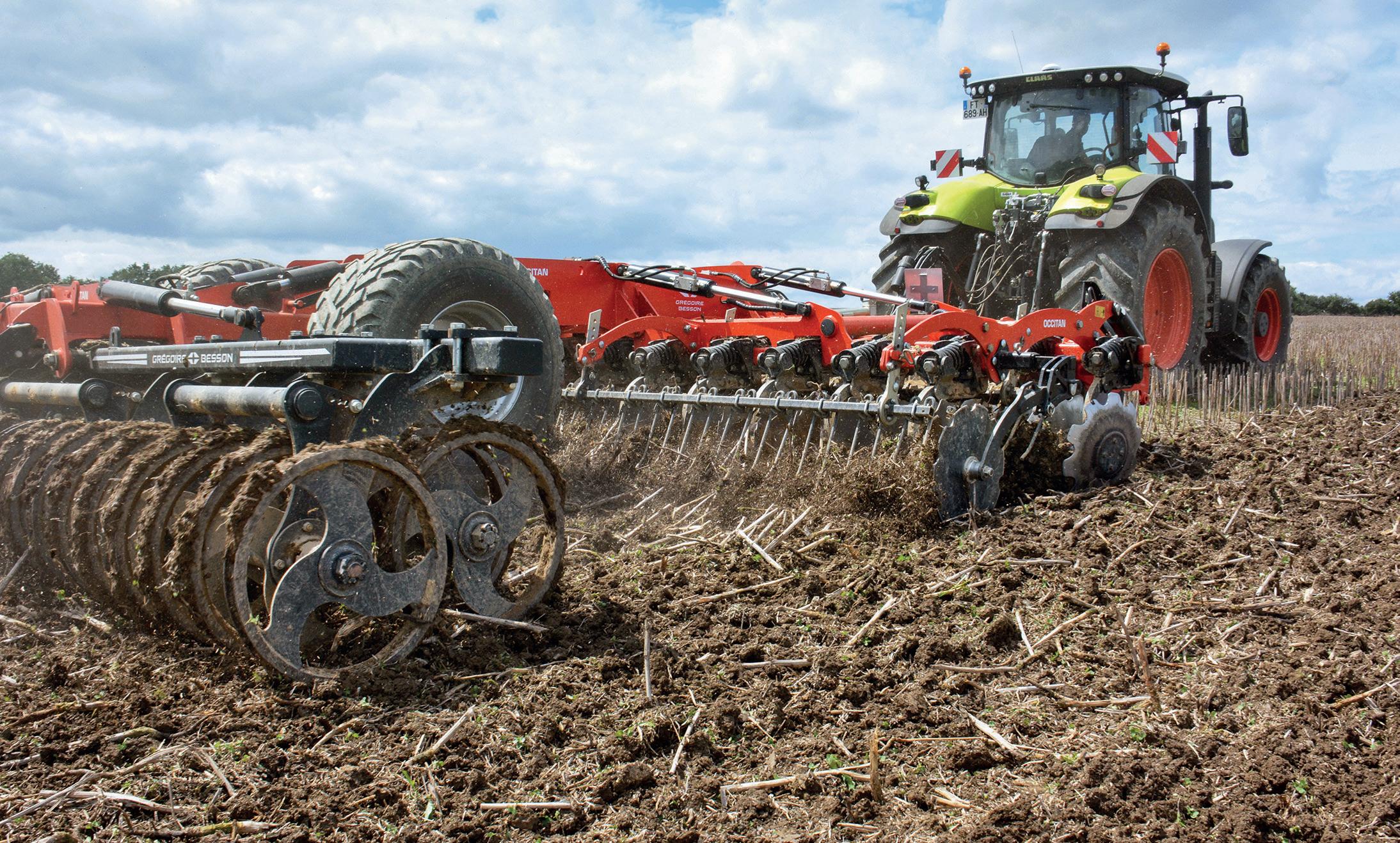
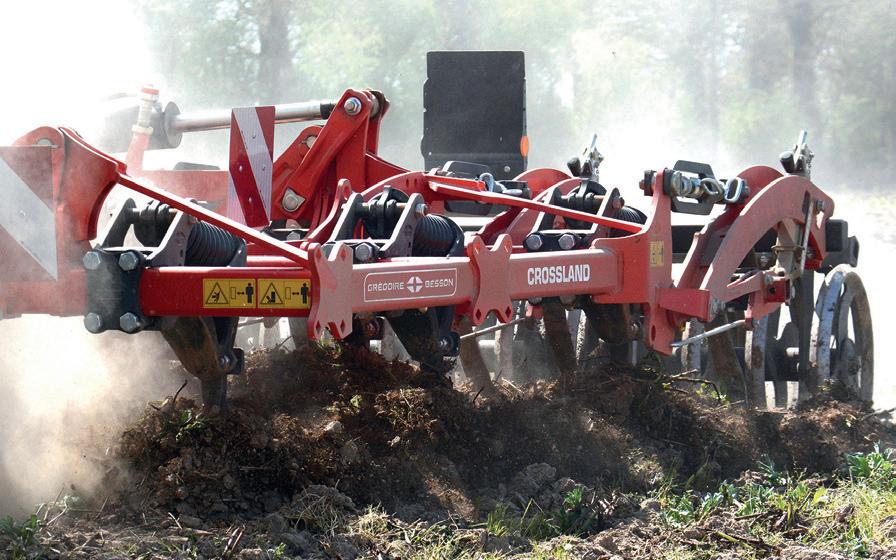
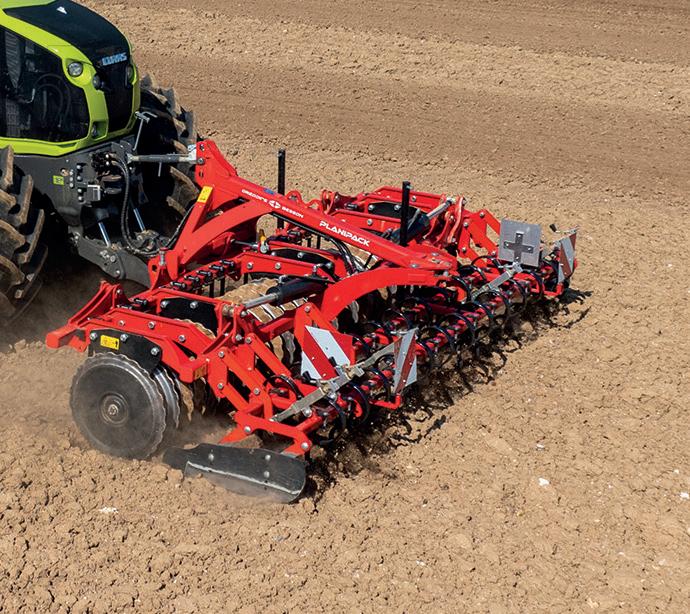
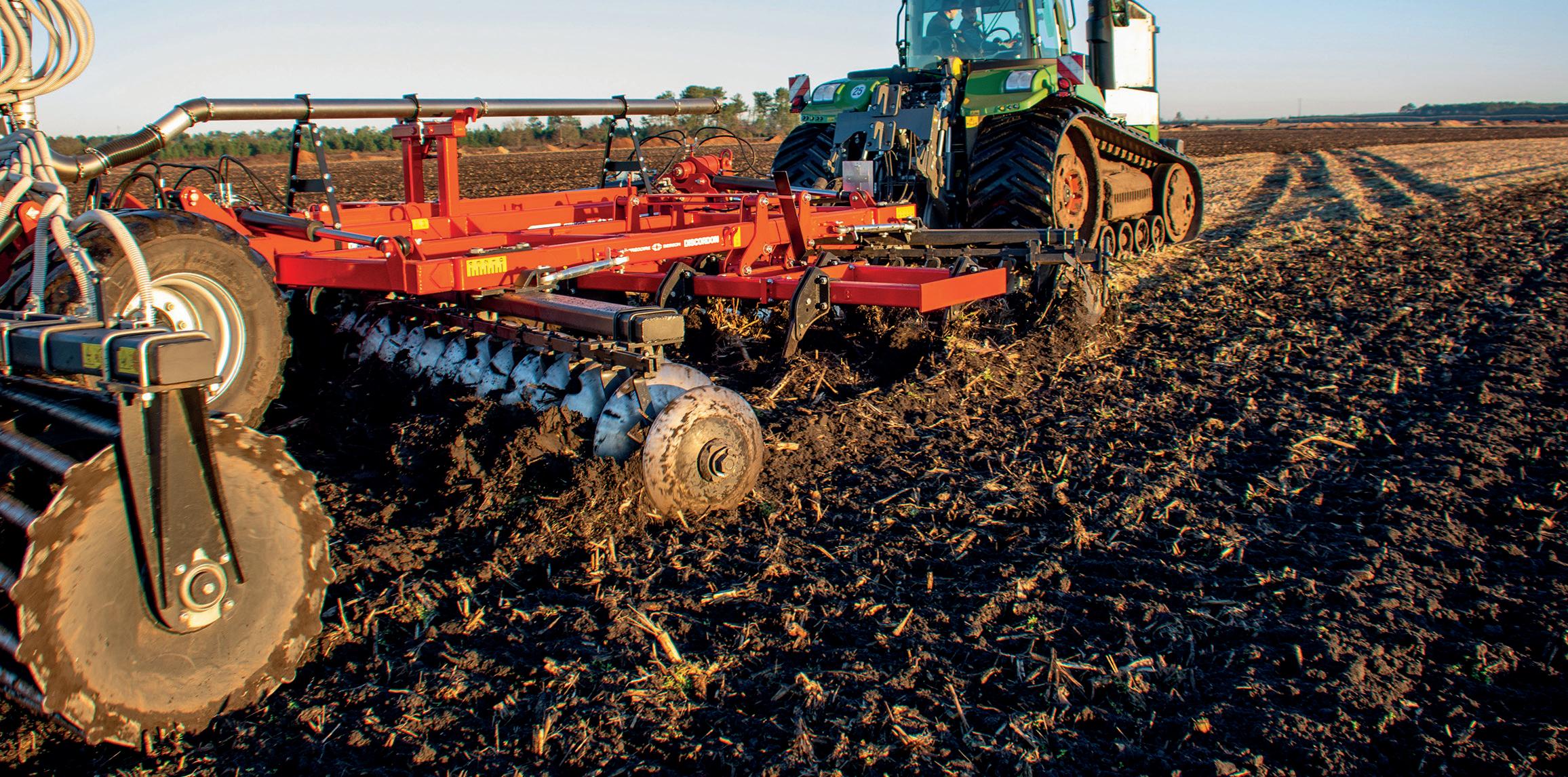
Grégoire Besson machines and parts are
into
United Kingdom by Maschio Gaspardo UK. For
nearest Maschio Gaspardo

Working with Capstan and Case, BfS has developed a low drift nozzle for use with Pulse Width Modulation (PWM) nozzle bodies.
Since the early days of the introduction of PWM, BfS have been marketing PulZar nozzles throughout north America and Canada and now the PulZar nozzle systems are being offered on machines coming onto the UK market.
PWM controls each nozzle separately, and the flow rate from each nozzle is managed by rapidly switching the nozzle control solenoid on/off. The duration that the nozzle is “on” is called the Duty Cycle and varying this duty cycle provides the
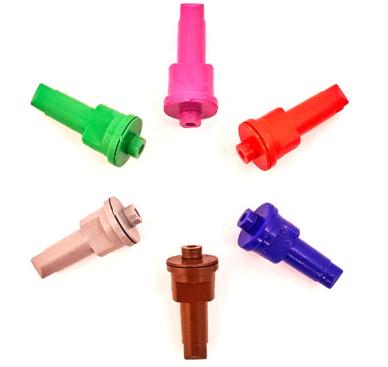

Flowgro Ltd
Barton Tumns Farm Lichfield Road, Burton upon Trent, DE13 8ED TEL: 01283 712172 www.flowgro.co.uk
CW Sprayers Ltd 14 Garden Village Micklefield, Leeds, LS25 4AB TEL: 0113 287 7674 / 07931 582713 www.cwsprayers.com
operator with the ability to control the volume output from each nozzle.
The system pressure, spray quality and fan pattern remain consistent.
The system can cope with a five-fold change in forward speed without affecting output.
PWM bodies will enable the correct application from each nozzle even when going around a corner where the outer edge of the boom is ravelling much faster than the inner edge, so giving a lower rate of application. PWM corrects this by changing the duty cycle at each nozzle to compensate accordingly.
For more information phone 01268 710237 or email stores@bfs.uk.com
Credit: Simon Nichols– BFS www.bfs.uk.com

The Sustainable Use Directive (SUD)* requires all pesticide application equipment to be tested by the relevant dates.
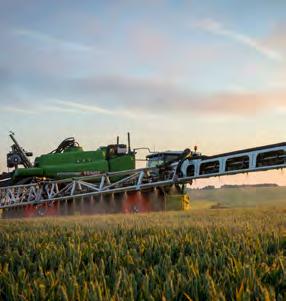
Legal requirements
First test due before the machine is 5 years old
1. Boom sprayers over 3 metres, air blast sprayers, train and aircraft sprayers
Re-test every 3 years
2. Booms 3 metres and under, slug pellet & micro-granular applicators, weed wipers, seed treatment, manually propelled or self-propelled trolley type equipment with 3 or more wheels & a motorised pump, and other specialist equipment
Re-test every 6 years
3. Knapsack, handheld and pedestrian* equipment
a. Must be checked on a regular basis by a competent person
b. Make any repairs necessary
c. Keep a record
* Maximum 2 wheels or with a manually pressurised pump


Crop assurance scheme requirements
a. Annual testing for sprayers over 3 metres and air blast sprayers
b. Annual testing of granular nematicide applicators
c. All other equipment to SUD timescales
* The legal requirements are contained in the Plant Protection Products (Sustainable Use) Regulations 2012


rable farmers are being urged to prepare grain stores well in advance to avoid being caught out by the trend towards ever earlier harvests, a shift many are calling ‘the new normal’.
As changing weather patterns continue to pull harvest dates forward, Ken Black, account manager at environmental protection firm Envu, warns that compressing the window for essential grain store cleaning, proofing and pest prevention could leave the door open to grain store pests.
“Last year's early
harvest saw many growers experiencing increased pressure from grain store pests, but in most cases, this problem can be avoided,” he says.
“Simply accepting that harvest patterns have shifted and reflecting this by planning earlier grain store preparation is a simple shift you can make to safeguard your grain, as we navigate this new normal.”
Mr Black says grain stores are likely to face an increased threat from pests this summer due to last year's prolonged warm weather, allowing pests to continue breeding into the autumn.
“We’re also experiencing fewer cold snaps during the winter months, which historically served as a natural barrier against pests, meaning greater numbers are surviving the winter,” he says.
“Pests like weevils and saw tooth beetles, commonly found in grain stores, thrive in
temperatures of 12 degrees and above,” he explains.
“As a result, milder weather means we could begin to see higher pest pressures going forward, increasing the emphasis on the importance of effectively cleaning out grain stores to the highest standard possible and earlier than usual.
Ross Goodman, technical director at Lodi agrees with Mr Black’s advice but warns that simply bringing grain store preparations forward is not enough alone to control pests – farmers need to ensure their cleaning protocols cover all bases.
Mr Goodman says: “Your protection against grain pests is only as good as your prep, and failure to cover all areas leaves you vulnerable.
“The addition of ENVU’s Actellic® smoke to the Lodi portfolio means there’s a fully comprehensive grain store protection range on offer.”
Mr Goodman explains: “The smoke is used as a ‘belt and braces’ approach, drawing pests out of cracks and crevices which may have been missed in the liquid insecticide application of the store.
“Pests are killed when they emerge and
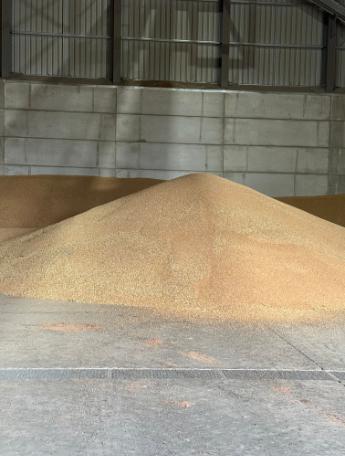
make contact with the insecticide on the surface of the building, safeguarding your store from every angle.”
For further advice on protecting grain this season, contact Lodi UK or visit their website.
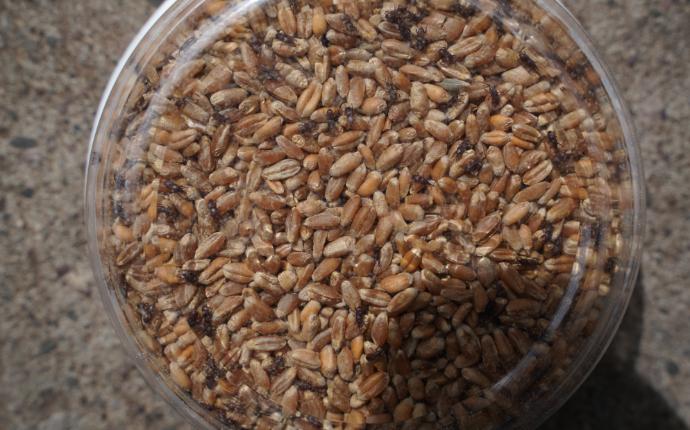

aubrink Farm GmbH, near King’s Lynn, Norfolk, has expanded its postharvest capacity and streamlined operations with a new on-farm grain drying, storage and handling plant designed and installed by McArthur BDC. The 11,000-acre business grows winter wheat and barley and spring barley, sugar beet and beans.
Farm Manager, Leopold Stolberg, contacted McArthur BDC as Eaubrink Farm needed to expand its drying and storage capabilities and he had not been completely satisfied with the previous supplier of post-harvest equipment.
“In recent years, we simply didn’t have enough capacity and didn’t want to keep relying on outdated facilities,” explained Stolberg.
Stolberg also wanted to make harvest operations simpler by having a drying and storage plant situated closer to where crops were being harvested. Previously, grain had to be transported to a drying facility some distance away, and then brought back to the farm to be stored. A new onfarm plant would result in a significant reduction in transport costs and manpower hours.
“McArthur BDC was selected as the preferred supplier for this project because from day one, I had a feeling that working with its team, we would
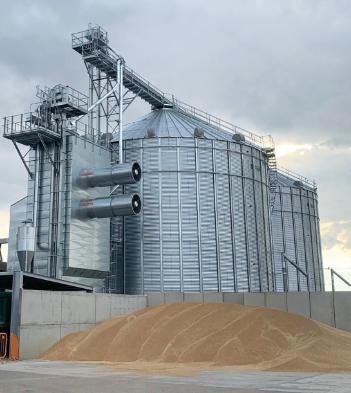
be in very professional hands,” said Stolberg.
“The McArthur BDC team also worked very closely with the other contractors on site, civil contractor, DG Scales, and Neil Whicker Electrical Services. This collaboration played a key role in bringing the project together.”
McA BDC also arranged for Stolberg and DG Scales to visit two of McArthur BDC reference sites so they had sight of different grain processing systems.
Following site visits and detailed design meetings, McArthur BDC supplied and installed a bespoke grain processing system comprising:
• Svegma 54t/hour continuous flow grain drier
• 2x 3,300t Sukup aeration silos
• Skandia Elevator handling equipment, including:
Below-ground trench intake (100t/hour)
2x belt and bucket elevators
4x chain and flight conveyors
2x paddle sweepers
Dust and chaff remover
PLC touchscreen control panel, integrating automatic drier control, remote monitoring, live access, and email/text alerts
McArthur BDC also optimised the site layout to keep harvest traffic flowing. The trench intake is positioned next to the weighbridge and new plant office so that loads can be weighed, tipped and turned around quickly without disrupting other farm operations.
Grain enters the plant via the 100t/hour trench intake conveyor which can either:
• Feed the drier line – via the Skandia belt and bucket elevator, through the dust/chaff remover, grain is then transported to a Skanda chain and flight conveyor into the Svegma drier. Once dried, grain is emptied via another conveyor into a second elevator, which feeds a conveyor which distributes grain to one of the two Sukup silos.
• Bypass the drier – the trench conveyor feeds directly into the drier discharge conveyor, allowing grain to be transferred straight into storage aeration silos.
Additionally, a secondary conveyor allows grain to be taken directly from the silos into the adjacent store. This conveyor also enables lorry/trailer loading through a centrally positioned outlet along the new roadway between the silos and the existing store.
When emptying the silos, each silo is fitted with a Skandia paddle sweeper and grain is discharged into the outloading system, feeding into a vertical auger that allows grain to be loaded directly into lorries for simple and efficient bulk loading.
The new plant has successfully met Eaubrink Farm’s post-harvest requirements:
• Additional 6,600t of storage capacity.
• The Svegma drier handles peak harvest volumes, minimising downtime and bottlenecks.
• Direct discharge into either silo or the existing store, giving full crop flow flexibility.
• Quick grain movement between drier, silos and store, maximising storage utilisation.
• Safe drying and storage under optimum conditions, reducing post-harvest losses.
“The plant delivers significantly improved operational efficiency with reduced handling times,” said Stolberg. “We can now maximise throughput during the short harvest window and reduce bottlenecks, enabling better use of labour and machinery. Its design also gives us the flexibility to expand in future.”
Stolberg advises other farmers considering similar investments not to rush the process.
“It’s important to make the right choice of partner, and that can take time. Although my first impression when meeting McArthur BDC was that working with them, we would be in professional hands, I met its team several times before making the final decision. The wrong decision can be expensive and impossible to rectify.
“It also helps to keep a close eye on progress during construction, because designs can look very different once they move from paper to reality. By walking around the site daily, or every other day, you can spot opportunities to make adjustments in good time,” Stolberg continued.
“Above all, it is key that you have the right partners, and not too many, and that they are the right fit for you. For Eaubrink Farm, there is no question that McArthur BDC was the right fit.”

he Agriculture and Horticulture Development Board (AHDB) has appointedAnthony Hopkinsas its new Cereals and Oilseeds Sector Director.
Anthony, who will join AHDB on 29 June, has extensive experience in agriculture, policy and levy-funded organisations.
Raised on a mixed beef,sheepand arable farm in Worcestershire, he holds an undergraduate degree and PhD from the University of Birmingham. Aftera number ofyears working in academia, Anthony joined the NFU in 2018, initially working for NFU Sugar before moving into plant health and later becoming the NFU's Chief Crops Adviser. In that role he led work on key issues including urea, Farming Rules for Water and the Digital Grain Passport.
Most recently, Anthony has been joint Head of Policy and Business Development at the British Society of Plant Breeders, focusing on trade, seed movement, EU reset and precision breeding.
Anthony will be replacing Sarah Woolford as Sector Director, with MikeGooding,AHDB's Farming Systems Director,temporarily stepping into the roleduring the interim period.
Commenting on the appointment,Helen Herniman, Chief Executive of AHDB, said:"I am delighted to welcome Anthony to AHDB. He brings a strong understanding of both farming and policy, and a clear focus on delivering practical value for levy payers.
"Iwould also like to thank Sarah for her leadership of the Cereals and Oilseeds sector and for the contribution she has made during her time in the role."
Anthony said:"I'mvery much looking forward to joining AHDB as Cereals and Oilseeds Director. At a challenging time for the sector, the research,evidenceand insight AHDB provides is more important than ever, andI'llbe focused on ensuring that we deliver for levy payers."
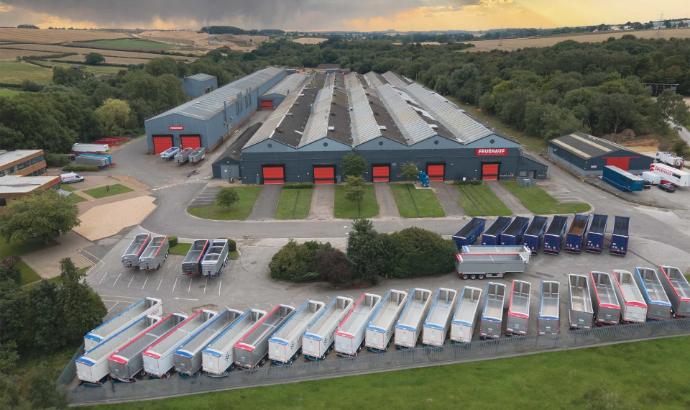

ore than 25,000 farmers and over 650 exhibitors will be at Cereals 2026 when it opens at Jeremy Clarkson’s Diddly Squat Farm this June.
The move to a new venue will also see a host of new features being added to the flagship arable event.
Anchoring a roster of new exhibitors will be trailer manufacturer Fruehauf who is exhibiting at the event and are also co-host and main sponsor for Cereals on June 10 and 11.
The company, which has more than 100 years of history producing agricultural trailers, will be joined by a wide variety of new exhibitors that include CropLife UK, Cotswold Seeds, Graintek, INEOS Grenadier, JCB, Mzuri, Secobra Research, Shearwell Data, Trelleborg Tyres, UAVAGRI Drone Application services and many more.
The full exhibitor list is now available on the website.
David Lewington, head of sales, said Fruehauf is aiming to connect with customers directly at Cereals and welcomes the “Clarkson effect”. He said: “With the event being held at Diddly Squat, the event should draw more attention to the major issues that UK farmers are facing and to the
important role British farmers play in the UK and global economy.
“Two thirds of our customers are part of the agricultural sector, from individual farmers making a one-off purchase of a tipping trailer every 12 years, to large agricultural businesses operating hundreds of trailers that move produce for thousands of farms.
“Being involved in Cereals gives us a chance to catch up with existing customers, meet potential new customers and listen to their feedback.”
In addition to new visitors and exhibitors, Cereals 2026 will also boast a range of new features. These include the Nofence Livestock Zone which will see animals and associated products at the event for the first time alongside the Clarkson goats. In a nearby area, there is also an area focused on young farmers and contractors called Kaleb’s Corner sponsored by Nick Young Tractor Parts and presented in association with the Young Farmers Programme sponsored by Michelmores.
A heat of Britain’s Fittest Farmer will take place at Cereals, ahead of the finals at The Farmer’s Dog Pub.
If fitness is not your focus on the day, there will be ample food, drink, music and networking available
in The Farmer’s Dog pop-up pub, Hawkstone Hops & Harmony sponsored by V12 and The Farmer’s Gin Bar sponsored by Barclays & Propel Finance. And for the first time in recent history at Cereals, there will be retail in the Diddly Squat Farm Shop. Both the main shop and a pop-up shop at the lowland barn will be open on the event days.
These new features will sit alongside regular attractions like the Seed to Shelf Stage sponsored by KWS, BASEUK Regenerative Ag Stage sponsored by Tees Law, Young Farmers Programme sponsored by Michelmores, the Syngenta & CropLife Sprays & Sprayers Arena and other working demonstrations.
A key technical focus this year will be on how the individual crop plots perform on Cotswold Brash compared to previous years.
Fruehauf, based in Grantham in Lincolnshire, will also be showcasing its newest innovation at the event: a Hydraulic Drive Bulk Blower Trailer.
This is primarily used in the animal feed and wood pellet sectors and customers have experienced challenges delivering these products on narrow or tight roads.
The advantage of this trailer is its internal hose delivery system, which allows material to be delivered several meters away directly from the trailer, improving efficiency and accessibility.
Its development has been a direct result of customer enquiries looking for Fruehauf to provide a new solution for the market space.
David said: “We want to listen to the farmer or agricultural business and build the best product for them. We want to hear feedback from our customers on how our products work for them, and how we can adapt and develop to meet the everchanging challenges of the industry. For potential new customers, we want to understand their business, how they operate and what we can do for them.”
A prime example of Fruehauf’s ongoing product development is introduction of rear steering back axels on its tipping trailers and bulk blower trailer. This allows drivers to complete tighter turning circles when delivering to sites with limited access, space restricted areas and narrow country roads.
David added: “This is saving a lot of time on deliveries as the farmer doesn’t have to move backwards and forwards as much to turn. We don’t just build, we listen to customers, understand a
problem and build the trailer in a way which will benefit.”
Also, on the Fruehauf stand this year will be a range of customer trailers in their own liveries and their very own BTRC race truck which takes part in the British Truck Racing Championship.
Visitors will be able to chat with Fruehauf’s industry specialists about technical and product related questions. They will also be treated to a food and drinks reception with Hawkstone beers and ciders.
“The agricultural industry has been suffering the worst prices in years, input costs such as fertilizer and feed have increased by many multiples and the introduction of IHT has cause a lot of pressure”, said David. “The industry clearly has a lot of headwinds and we want to make sure the time spent away from the farm at this show is enjoyable and productive.”
Jeremy Clarkson says he is looking forward to speaking to farmers at the event to explore the challenges facing the agricultural sector. He adds: “Farmers are facing so many issues at the moment and hosting Cereals was our chance to do something positive for the industry and showcase some practical advice and ideas for food producers. We hope to shine a spotlight on farming in the UK and educate people about the challenges farmers face.
“Cereals is an opportunity for us to come together and find the solutions we all need. We’re really looking forward to welcoming farmers from across the UK.”
Farmers can now register for tickets at www. thecerealsevent.co.uk and applicable trade can enquire online about exhibiting at the event. This is a business-to-business event and so registrations will go through an approval process. Members of organisations including BASE-UK, Farmers Weekly, the National Association of Agricultural Contractors (NAAC) and the National Farmers Union (NFU) will be automatically approved and receive a discount with their membership number.
To manage traffic, there will be comprehensive traffic measures in place and visitors are being asked to choose a preferred entrance date & time. New for 2026, visitors can also book a seat on a Cereals Bus from key locations across the UK including, but not limited to, Elveden Farms, Roy Ward Farms Ltd & Law Farming giving farmers priority access on arrival and helping to reduce traffic further.
For more information, visit: www.thecerealsevent.co.uk
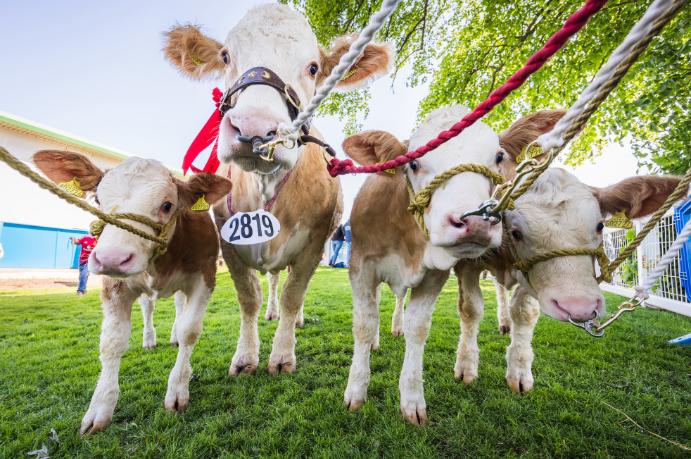

ith just three months to go until RHASS' biggest fundraising event, the Royal Highland Show, entries for competitors are now open
Competitors can submit their entries for the following sections:
• Beef Cattle
• Dairy Cattle
• Sheep
• Goats
• Heavy Horse
• Light Horse
• Farriery
• Shearing
• Fleece
• Scottish Honey Championship
• Scottish Dairy Products Championship
• Scottish Handcraft Championship
The closing date for Livestock and Equine is 15thApril and Farriery and the Scottish Championships (handcrafts, dairy produce and honey), 11thMay. Shearing and Fleece close on 12thMay.
Entries for the Showjumping section will open mid-April.
Exciting changes for this year include updates to the judging days for the Dairy Cattle and Shearing categories, the introduction of new classes in certain Sheep breeds, some changes to the Dairy Produce Schedule to make classes more relevant and a new
Donkey Young Handler class.
In a bid to showcase and expand the scope of competitions for the public, additional livestock and competition demonstrations for event visitors will take place on the Sunday.
Entries will once again be made via Entrymaster, which is a new entry system that was introduced last year.
Catriona Brown, Competitions Manager at RHASS,said: "When our competition entries open for the Show, it really does mark a countdown moment and means the Show isn't far away which is very exciting. Each year, we absolutely love working with competitors to finalise their entries and make sure they have everything they need to make their Show experience the best it can be. As always, our competitions team is ready and waiting to help answer any questions or assist with the entry process. We wish everyone the very best of luck at this year's Show!"
Kay Adam,Chair Designate for the RHASS Royal Highland Show board for
2026, said:"The Show celebrates the very best exhibits from across the country, and we look forward to another year of outstanding entries. Each year, the competitions team works hard to ensure the sections reflect demand, introducing new classes where possible while maintaining the traditions that return year after year. It's particularly encouraging to see entries in our young handler categories continuing to grow, and we hope that trend continues this year. We look forward to welcoming competitors to the Royal Highland Centre very soon."
Entries must be submitted through the online portal atwww.royalhighlandshow. orgno later than the stated deadlines. Full details including entry requirements and competition schedules are now available to view on the Royal Highland Show website.
For assistance with competition entries, please contact the competitions team oncompetitions@RHASS.org.ukor call 0131 335 6164.
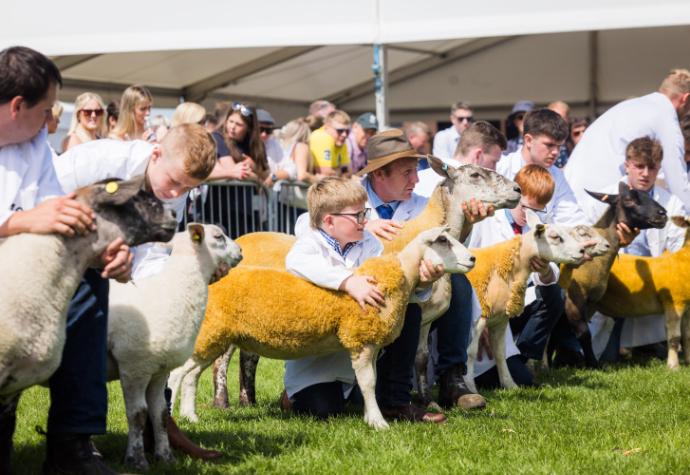

s potato‑growing regions around the world are expanding their storage capacities—driven by year‑round quality requirements and supported by favorable price developments during the sales season—the professional management of modern potato storage facilities has gained increasing importance. This topic will be explored at PotatoEurope 2026 exhibition, on 9 and 10 September, 2026, at Rittergut Gestorf 1 (English Ritter Estate Gestorf 1) in Springe near Hannover, Germany.
Loose bulk storage remains the standard for potatoes destined for industrial processing. In contrast, table and seed potatoes are now stored almost exclusively in boxes. A range of ventilation systems is available for both bulk storage and box storage, ensuring optimal air distribution and consistent quality throughout the storage period.
Producers supplying fresh, processing, and seed markets today face rising expectations to deliver consistent quality over extended periods. In many cases, storage investments have proven economically viable, strengthening interest in controlled ventilation systems and efficient storage management. These developments will be highlighted throughout PotatoEurope’s event program, which brings together growers, processors, technology providers, and marketers from across Europe and beyond.
In industrial processing such as French fries, chips, starch, and convenience products, bulk storage remains the predominant method due to low storage costs and high handling efficiency for loading and unloading. However, long‑term bulk storage can increase the risk of pressure damage, especially at large stack heights, potentially limiting marketability.

Bulk storage ventilation systems differ mainly in air movement from fans and in how airflow is distributed through ducts within the potato pile.
Above‑floor duct systems are often used when storage spaces must be built cost‑effectively or remain flexible for other uses, such as temporary grain storage, while meeting food safety regulations. They are also a practical solution for short‑term storage or for retrofitted buildings. Metal half‑round and wooden triangular ducts are commonly deployed.
Under‑floor systems create a flat floor surface that greatly simplifies handling compared with above‑floor ducts. Though more costly to install, they require minimal maintenance and do not reduce storage volume. Ideally, ducts should be placed perpendicular to loading direction to limit duct length and enable more intensive ventilation of freshly harvested potatoes.
Fully slatted floors use perforated concrete panels supported by structural beams, allowing air to move evenly from below. Panels up to 3 meters long provide wide duct widths. Air distribution from fans typically runs through walkable ventilation walls, and individual ducts can be closed using adjustable flaps when necessary.
Box storage enables precise separation of lots, such as seed potatoes or small batches destined for direct sales. Boxes can be filled either in the field via harvesters or on the farm using dedicated filling equipment. This approach also facilitates unloading of small quantities or individual lots.
Natural convection


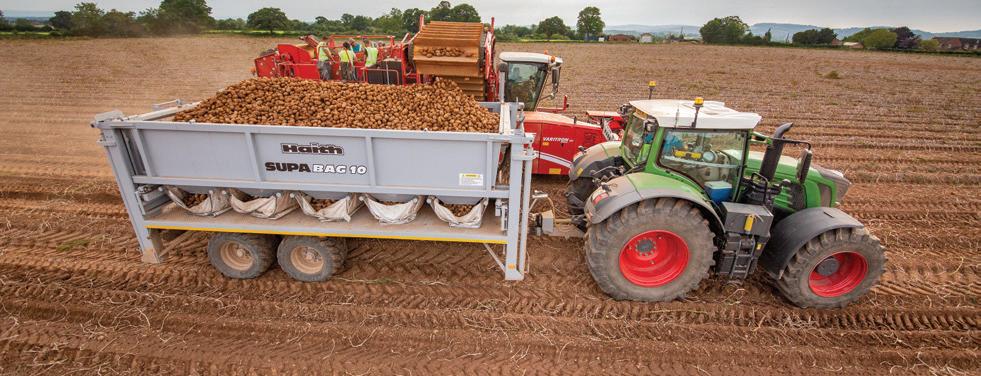
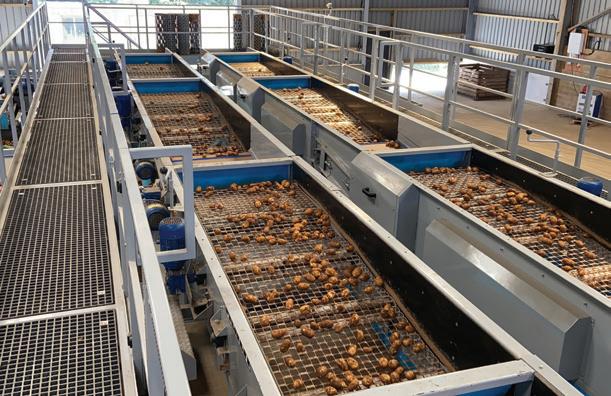
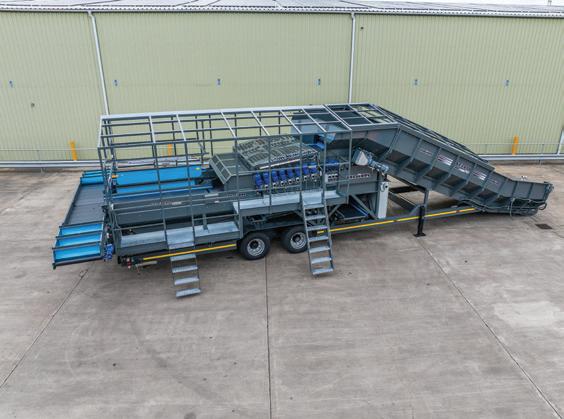

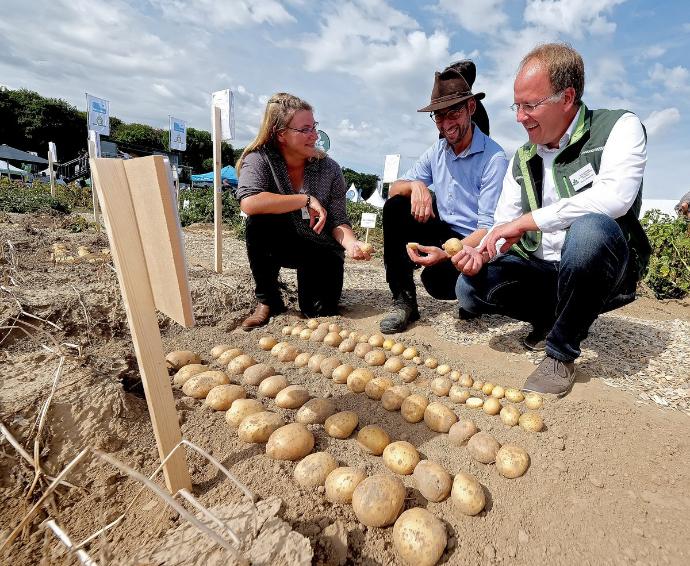
The simplest approach uses natural airflow through vents without mechanical assistance. While energy‑efficient and quiet, this system offers limited control over temperature because it depends on ambient weather.
ventilation (“throw ventilation”)
The most common system in box storage uses ventilation towers that blow supply air at high speed across stacked boxes. Air then passes through the boxes and exits through exhaust vents. Boxes are placed tightly in rows, with a 10–20 cm gap between rows.
Forced‑air ventilation in closed boxes typically follows the single‑layer system. A horizontal axial fan supplies air through outlets into the pallet base of each box. To ensure consistent airflow across stacked boxes, the airspeed at the pallet floor should not exceed 5 m/s.
Systems for open boxes operate either under pressure or suction, each yielding different storage effects. Boxes are arranged in double rows facing a
ventilation wall, with a gap of 0.4 to 0.6 meters. Suction systems create underpressure; pressure systems generate overpressure in the opposite direction.
Technical program: insights for modern potato production
The PotatoEurope 2026 technical program will offer a broad range of expert‑driven content, featuring DLG Spotlights, Expert Stages, technical forums, expert talks, and practical discussion formats. Central challenges and forward‑looking solutions for modern potato cultivation will take center stage.
Visitors will have access to the latest research, technology trends, and best practices from agricultural operations. Demonstrations will include new varieties and breeding lines in trial fields, innovative machinery and equipment, and live robotics showcases.
Incepted in 1987, PotatoEurope alternates among the four partner countries Germany, Belgium, the Netherlands and France, returning to Germany every four years, where it is organized by DLG; the Dutch edition is coordinated by DLG Benelux, the Belgian edition by FEDAGRIM while the French edition is hosted by ARVALIS.

he 2025 crop in store seems to have bumped into almost every factor designed to create a difficult storage season. Early planting and emergence, followed by a (mostly) hot dry summer saw crops arriving in store in a state of considerable physiological age. The weather was also less than ideal for the application of MH for much of the key window. Harvest conditions were good (or perfect) for nearly everyone, so stores filled early, quickly and were warm. The weather kept them from cooling as swiftly as desired, and those crops, which had not sprouted in the field (plenty did), were opening their eyes much earlier than would normally be expected. Growers planning for early movement, and who would not normally expect to use a sprout suppressant, were scrambling for advice.
On top of the physical challenges of a sprouting crop was a hangover of crop in store from the 2024 harvest, some of it still finding a way to a generally weak market. And then came the French and the Germans. In 2024, it is reported that the French grew their first 9m tonne crop, and then went one better in 2025, with a first 10m tonne crop. The German 2025 crop is reported to be the largest for a quarter of a century. The continent was (is) awash with potatoes – free-buy crops were bid at €15/t during the autumn. There are reports of large areas in Poland being ripped up with a chisel plough, rather than being harvested.
Crops were sprouting and customers delaying movement, not just in the UK but across much of the continent. Significant (and early) demand for sprout suppressants put supply chains under pressure, with occasional reports of demand for product overwhelming availability.
The situation in the UK has not improved much in the new year. Crops are still in store, some with limited prospect of finding a market. Free buy is well-nigh impossible in the absence of strong relationships with end users. Crop quality in many stores, even with the good harvest, is deteriorating and sprouting continues apace. The season is proving to be hard for many growers, and now the weather seems to have turned in favour of some early planting on very light land.
The relatively flexible timing of application for BioxM places the product in a strong position to deal with most situations and keep crops secure. Early
sprouting was addressed, some requiring a full 90ml/t first application to do so. For more fortunate growers, with sprouts coming slightly later in cool and well-cured crops, Biox-M has worked effectively to keep control. Growers, who have been obliged to hold crops in stores destined to receive seed for 2026, also have the reassurance that treatment of the preceding ware crop with Biox-M in the store will not cause a problem.
Biox-M is the only 100% natural and sustainable sprout control for potatoes.
• Is a naturally occurring and truly sustainable product, in widespread use in the food industry
• Is approved for use on organic potato crops,
• Has no harvest interval or MRL beyond the one-day mandatory withholding period after treatment, and is thus ideal for use on crops for which the date of movement is uncertain,
• Has substantial flexibility of timing of application,
• Results in minimal weight loss in store,
• Does not leave persistent residues in the fabric of stores and boxes used for storage,
• And is therefore suitable for use in stores, which may subsequently be used for the storage of other crops or seed potatoes,
• Is effective at higher storage temperatures, reducing the risk of acrylamide development when crop is processed,
• Sequesters carbon during growth, removing 1t of CO2 for every 1,000t of potatoes treated,
• And should be a component of the sustainability plan for every farm and every customer; effectively carbon neutral.


The


Sequesters carbon during growth. Flexibility of timing.
Minimal weight loss in store. Curative and preventative. No MRL.

The


efra's revamped Sustainable Farming Incentive offers a leaner, more accessible scheme with 71 actions, a new £100,000 cap and a phased window system designed to bring more farms into the fold.
After months of consultation, workshops and stakeholder engagement, the government has laid out its vision for the Sustainable Farming Incentive in 2026. The new scheme known as SFI26 arrives with a clear message: simpler, fairer and designed to reach more farms across England. Whether you are managing a few dozen acres of upland moorland or a large mixed holding in the lowlands, Defra says there will be something in the offer for you. But the changes are significant, and farmers would do well to understand exactly what has shifted before the first application window opens in June.
The headline change in SFI26 is a significant reduction in the number of available actions. Where the 2024 offer contained 102 actions, the new scheme brings that down to 71 a cut of nearly a third. Defra has been candid about the reasoning: actions with poor uptake, those that delivered limited environmental value, and planning-type actions that generated paperwork rather than tangible outcomes have been pruned away.
Among the casualties are the nutrient management assessment (CNUM1), the integrated pest management plan (CIPM1), the soil management plan (CSAM1) and the moorland assessment (CMOR1). While these actions were popular with applicants some had very high uptake Defra argues they did not deliver direct environmental benefits and therefore offered poor value for public money. The message is clear: the government is prioritising actions that deliver measurable outcomes on the ground.
What remains covers 14 broad themes: agroforestry, boundary features, buffer strips, farmland wildlife on arable and grassland, heritage, integrated pest management, moorland, nutrient management, organic, precision farming, species recovery, soil health, and waterbodies. The diversity of the offer means that most farm types from upland graziers to horticultural producers to organic converters should find relevant actions.
The scheme will operate through two application windows, and eligibility for each is carefully defined. To apply at all, a farm must have at least three hectares of agricultural land — a threshold set partly in response to the recommendations made by Baroness Batters in her Farming Profitability Review.
Window 1 opens in June 2026 and is reserved for
two groups: small farms (defined as those with up to 50 hectares of agricultural land) and farms that do not currently hold an RPA-administered Environmental Land Management revenue agreement. This includes farms without existing SFI, Countryside Stewardship Mid Tier or Higher Tier, or Higher Level Stewardship agreements. Small farms with existing ELM agreements are also eligible to apply in Window 1.
The window will remain open for approximately two months, though it may close sooner if demand is high and the allocated budget is used up. Window 2 follows in September 2026, open to all farms meeting the minimum land threshold. Farmers are advised to plan ahead and monitor Defra's communications closely, as budget limits could curtail the earlier window unexpectedly.
Perhaps the most significant structural change is the introduction of an annual agreement cap of £100,000. No single SFI26 agreement may be worth more than this sum per year, and each farm business may hold only one SFI26 agreement. Defra is explicit that the purpose of these measures is to redistribute funding so that a greater number of farms can benefit the ambition is to double the number of farms delivering for wildlife by December 2030, compared with 2025 levels.
There are also new restrictions on rotational actions. Farmers will not be able to increase the area or value of rotational actions beyond what they include in Year 1 of their agreement, though they can move such actions between fields to accommodate their crop rotation, and they can reduce and return to the Year 1 level in subsequent years. The intent is to prevent agreements from expanding significantly after the initial application.
Additionally, a group of ten actions that remove land from productive use including pollen and nectar mixes, winter bird food strips, grassy field corners, and the newly area-capped enhanced overwinter stubble may not collectively exceed 25% of a farm's total agricultural area. This rule is designed to protect food production by preventing too much farmland from being taken out of cultivation.
Payment rates have been reviewed across the board, and the direction of travel varies considerably depending on the action. Upland farmers will welcome meaningful increases to moorland grazing and shepherding payments. The moderate livestock grazing rate (UPL1) rises from £20 to £35 per hectare, low livestock grazing (UPL2) increases from £53 to £89 per hectare, and limited livestock grazing (UPL3) jumps from £66 to £111 per hectare. Shepherding rates have also risen substantially. Crucially, these uplifts apply to
existing SFI agreements as well as new SFI26 ones recognition, says Defra, of the economic pressures upland farmers have faced following changes in livestock prices.
By contrast, three actions are seeing payment reductions. Herbal leys (CSAM3) will fall from £382 to £224 per hectare, winter bird food on arable land (CAHL2) drops from £853 to £648 per hectare, and legume fallow (CNUM3) reduces from £593 to £532 per hectare. Defra says the original rates for these actions were simply set too high, making it overly attractive for farmers to take highly productive land out of food production. The reductions are intended to recalibrate the incentive without eliminating it entirely. Importantly, existing SFI23 and SFI24 agreements will not be affected the cuts only apply to new SFI26 agreements.
The SFI management payment a flat top-up introduced to smooth the transition into the scheme will not be offered under SFI26. It was always described as time-limited, and its removal is intended to release more budget for actual agreement payments.
Two other changes are worth highlighting for tenant farmers and those planning longer commitments. First, actions that previously ran for five years will become three-year actions under SFI26. This is a deliberate move to make the scheme more accessible to short-term tenants who may be reluctant to commit to longer agreement periods. Second, supplemental actions those which build on a 'base' action to deliver more targeted outcomes can only be applied for alongside their corresponding base action, in the same agreement and at the same time. Defra says this aligns their timescales and improves both value for money and environmental outcomes.
Full guidance for SFI26 will be published before Window 1 opens in June, and Defra has committed to publishing the budget for the first window at that point. The department also says it will provide clear updates as funding is committed in each window, offering farmers and their advisers more visibility over scheme finances in real time a response to longstanding concerns about applications being submitted without certainty over funding availability.
Defra has described the core design of SFI26 as a stable framework for the rest of this Parliament, though it expects to make refinements where possible. For farmers, advisers and land managers, the message is to begin planning now: study the 71 available actions, assess which fit your farm system, and be ready for the June opening if you qualify for Window 1. The clock is ticking.
Tony Cochrane

he construction sector has lived with the VAT Domestic Reverse Charge ("DRC") since March 2021, but lately, HMRC's attitude towards compliance has changed dramatically.
What began as a regime introduced to combat VAT fraud, with a promise of "light‑touch" enforcement, is now an area where HMRC teams are actively identifying errors, issuing assessments, and applying penalties with increasing confidence.

Many honest contractors and subcontractors are still grappling with the rules, and HMRC has clearly run out of patience. For businesses operating anywhere in the construction supply chain, now is the moment to get DRC compliance in order.
So, what exactly is the VAT Domestic Reverse Charge? In short, the DRC shifts the VAT accounting obligation from the supplier, typically the subcontractor, to the customer, typically the contractor, but only where certain conditions are met.
Under the DRC the subcontractor invoices without VAT, reporting only the net sale. The contractor accounts for VAT on their own VAT return, both the output and input VAT, and records the net purchase as normal. This mechanism was introduced as an anti‑fraud measure within supply chains considered high‑risk by HMRC.
The DRC applies when all the following conditions are satisfied:
• Supplier and customer are UK VAT‑registered
• The supply is standard‑rated or reduced‑rated
• The work is within the Construction Industry Scheme (CIS)
• The customer is registered for CIS
• The customer has not confirmed they are an end user
• The customer has not confirmed they are an intermediary supplier
It applies widely to supplies classified as "construction operations" for CIS purposes, including alteration, repair, extension, demolition and installation works, and includes goods supplied as part of those services.
It's useful to know when the DRC does not apply, namely:
• The customer is not VAT‑registered or not CIS‑registered
• The customer has formally declared they are an end user or intermediary supplier
• The supply is zero‑rated, e.g. new‑build housing
• The supply is between connected landlords and tenants or group companies, where the correct notifications are in place
Everyone agrees that DRC is a challenge. Even businesses acting in good faith continue to struggle with implementation.
Common issues include:
• Misinterpreting the rules
• Assuming the "other party" will determine the correct VAT treatment
• Missing key details such as end‑user notifications
• Incorrect invoicing that fails to flag the application of the DRC
• Suppliers knowingly charging incorrect VAT to boost short‑term cash flow
These errors cause disputes, payment delays, poor cash forecasting and, increasingly, HMRC intervention.
Over the last few years, I've helped contractors and subcontractors with the following: resolve disputes; set up robust DRC controls; deliver team training; and challenge unfair HMRC assessments. Here are some practical issues we see daily followed by some tips to help navigate the DRC minefield.
1. Late Payments Caused by VAT Disputes
Uncertainty around whether the DRC applies can lead to invoice disputes, and contractors may refuse to pay until the VAT treatment is resolved.
This is particularly common where:
• CIS status is unclear
• End‑user notifications are missing
• Parties have made differing assumptions about the same service
The effect on cash flow is immediate and painful.
HMRC has moved far beyond its gentle, educational approach.
We are seeing:
• More enquiries targeting errors in reverse charge accounting
• Assessments where VAT has been incorrectly charged
• Penalties and interest where systems or processes are inadequate
Worryingly, HMRC's public webinars have not been updated to reflect this change, they still cover introductory points, while compliance teams on the ground are taking a far stricter stance.
It is essential that businesses have robust systems, accurate records and the ability to demonstrate correct decision‑making.
A recurring issue is uncertainty over whether an activity qualifies as a "construction operation" for CIS. For example:
• Businesses assume an activity is within CIS when HMRC views it as marginal or outside scope
• Activities are mis‑classified because the terms used in the contract do not reflect the actual work
Getting CIS classification wrong often means getting the VAT wrong too.
Under the DRC, subcontractors no longer receive VAT from customers, removing a buffer many relied on for working capital. Some still feel the shock several years on.
Accurate DRC application is key to realistic cash flow forecasting.
End users and intermediary suppliers must confirm their status in writing. Without this:
• Suppliers apply the DRC
• Customers risk incorrect VAT reporting and HMRC disputes
A simple written declaration is enough, no complex contracts required, but record‑keeping must be watertight.
Where a supply contains both DRC and non‑DRC elements, the default is that the entire supply is subject to the DRC. The only exception is if the DRC element is 5% or less of the total value and both parties agree otherwise.
Documenting the rationale is essential.
Invoices must clearly state that the DRC applies and show the applicable VAT rate or amount. System limitations often create risk, including:
• Software that cannot flag DRC services
• Staff issuing standard VAT invoices to "get things out the door"
• Inconsistent wording in templates
These errors attract HMRC attention.
The DRC applies to labour‑only subcontractors where the subcontractor is responsible for the work and its outcome. It does not apply to employment businesses supplying staff. The distinction depends on substance, not labels, and misclassifications are common.
• Check customers' VAT and CIS status before invoicing
• Get written confirmation of end‑user or intermediary status
• Train staff on when the DRC applies
• Update contracts and terms to include DRC obligations
• Review subcontractor cash‑flow forecasts
• Maintain clear records for audit and HMRC enquiries
• Get advice early - DRC issues escalate quickly if left unresolved
In summary, the VAT Domestic Reverse Charge is now embedded in the construction sector and HMRC is clearly determined to enforce it.
While the rules aim to prevent fraud, they create real‑world challenges for compliant businesses. The best protection is clear communication, strong processes, and a willingness to seek proven professional guidance where needed.

arming is a long-term business. Decisions about business planning, infrastructure, environmental improvements and farm systems often take many years to deliver results.
Recognising the benefits that longer agreements can bring, the Farm Tenancy Forum has published new guidance on long-term Farm Business Tenancies.
The guidance was developed by the Farm Tenancy Forum and is available through the websites of forum member organisations, including the National Farmers Union (NFU), Tenant Farmers Association and Country Land and Business Association.
This new guidance will help landlords, tenants and their advisers think through the main considerations involved in agreeing a long-term tenancy.
Farming businesses, estates and landholdings all have different circumstances, and the guidance aims to support discussions that lead to agreements that are fair, practical and suited to the needs of both parties.
The guidance covers several areas that are often important when putting long-term agreements in place, including:
• setting clear intentions and expectations from the outset
• agreeing approaches to rent reviews
• clarifying responsibilities for repairs, maintenance and fixed equipment
• planning for improvements
• clarity on the end of tenancy process
• how to develop management plans for long-term farming and environmental objectives, while retaining flexibility to manage events
As every agreement is different, landlords and tenants should seek independent, professional advice before entering or changing a tenancy agreement.
Long-term Farm Business Tenancies can help provide confidence to those who rent agricultural land or buildings to run a farm business and the landlords who own them.
Taking time to discuss issues early can help avoid

misunderstandings later and support a strong working relationship over the life of the tenancy.
Adopting long-term agreements can give tenant farmers the security to plan ahead, invest and build resilience in their businesses. They allow landlords to secure long-term management and stewardship outcomes for their land. The Forum’s new guidance is intended to help more landlords and tenants consider how long-term agreements could work for them.
The Farm Tenancy Forum brings together organisations representing both landlords and tenants, alongside professional advisers and government, to work on issues affecting the tenanted sector.
By bringing different perspectives together, the Forum helps encourage better understanding between landlords and tenants and supports stronger, more constructive working relationships. You can learn more about its membership and ways of working on GOV.UK.
Alan Laidlaw was appointed in September 2025 as the first Commissioner for the Tenant Farming Sector in England. Acting as an independent champion for the sector, he works to strengthen relationships between landlords and tenants.
Working with Defra and the Farm Tenancy Forum, he promotes the Agricultural Landlord and Tenant Code of Practice to improve fairness across the sector, investigate complaints and provide guidance.

riensCohasentered intoapartnership with Henton &Chattellto expand its spare parts supply in the United Kingdom.Thiswill increasetheavailability of original spare parts forAriens, ASMotor,Countaxand Westwoodnationwide.
Henton &Chattellisnowanofficial UK distributor for spare parts for thefourbrands. TheNottinghambasedcompany hasmany yearsof industry experience, establishedlogisticsstructuresandas trongreputationforspecialist dealer support.
Dealers in the United Kingdomwillbenefitfromtwosupply channels in future: spare parts can stillbeordered via theAriensCoExchange portal
orpurchaseddirectlyfrom Henton &Chattell.Local warehousing shortens delivery times and increases machine availability during the season.
In the highly service-oriented lawn and turf market, any downtime has a direct impact on sales and service quality. Rapid availability of original parts ensures uptime and strengthens the position of specialist retailers vis-à-vis professional and private customers.
Sam Lewis, General Manager ofAriensCoUK, explains: “This partnershipstrengthensour operational support for our dealers in the United Kingdom. Shorter delivery times and higher parts availabilityhelpour partnerskeepmachinesin operation without unnecessary downtime.”
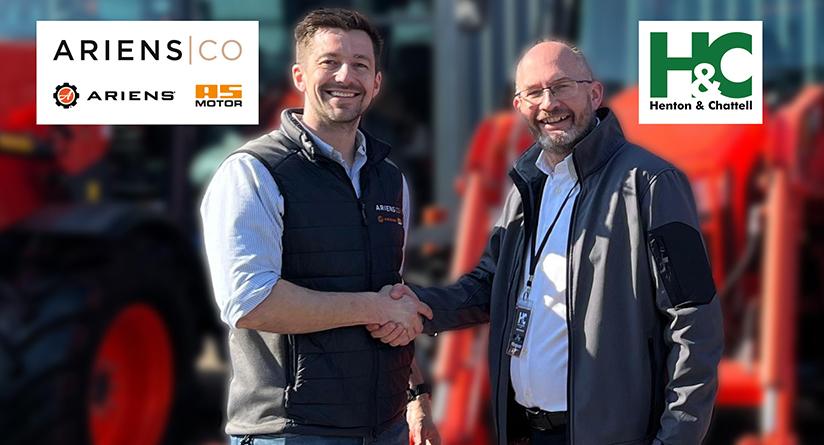
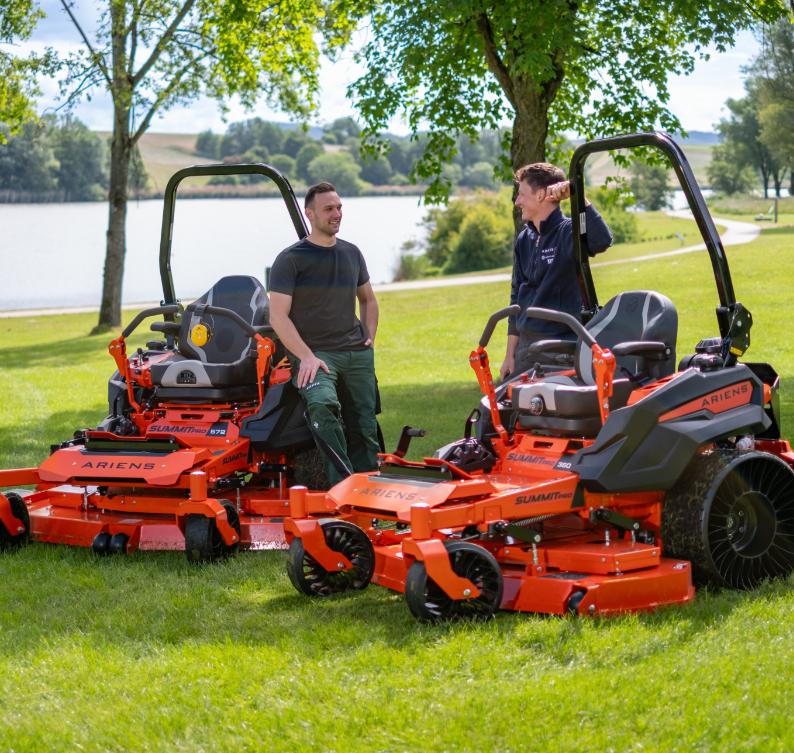

TIGA S.p.A., the leading European manufacturer and distributor of garden machinery and equipment, and SiMa Technologies Inc., the Physical AI company, today announced a strategic partnership to bring AI-powered solutions to robotic lawnmowers. STIGA will lead the industry with real-time decisionmaking on an ultra-low latency and power draw platform from SiMa, providing a scalable solution architecture for all robotic lawnmower products –domestic and commercial.
learning system-on-chip (MLSoC) platforms and software that enable intelligent edge devices to run advanced AI workloads efficiently, without the need for high power consumption — a key requirement in a consumer device.
“This partnership represents a major step forward in delivering real-world AI to edge devices,” said Krishna Rangasayee, Founder and CEO of SiMa. ai. “By joining forces with STIGA, we’re removing the traditional complexity of edge AI and empowering STIGA with solutions that perform effortlessly—without compromise.”
STIGAhas established itself as a leader in lawn and garden technology, known for combining engineering excellence with practical, user-friendly design. From classic lawn mowers to state-of-theart autonomous robotic solutions, STIGA continues to push the boundaries of innovation, delivering products that set the standards for precision, performance, and reliability in the industry. Emerging technologies like Physical AI are transforming the capabilities of autonomous devices. By embedding intelligence directly into machines, Physical AI enables devices to perceive, decide, and act independently in real-world environments. For STIGA’s robotic lawn mowers, this represents the potential for even smarter, more adaptive, and highly efficient operation.SiMa.aiis a leader in this field, providing low-power machine-
STIGA’s leadership in autonomous garden solutions, combined with the advancements of Physical AI and the sophisticated hardware and software platforms from SiMa.ai, is shaping the next generation of smart outdoor equipment. These technologies demonstrate how autonomous devices can operate with greater precision, responsiveness, and efficiency, setting a new standard for intelligent machinery.
“At STIGA, innovation is at the heart of everything we do,” commented Sean Robinson, CEO of STIGA S.p.A. “Partnering withSiMa.aiallows us to push the boundaries of what autonomous machinery can achieve. By integrating Physical AI into our robotic lawn mowers, we’re delivering a new benchmark of intelligence and performance. How the robot senses, decides, and operates lies firmly within STIGA’s capabilities and expertise. The way these operations are delivered with low power consumption is whereSiMa.aitechnology truly excels — allowing the robots to achieve much more with the battery power available. This results in lighter, more efficient, and cost-effective intelligence. It’s a great example of what two experts in their fields can achieve through engineering-driven collaboration. And the real winner is the robot owner, who gets significantly more use from their machine”.
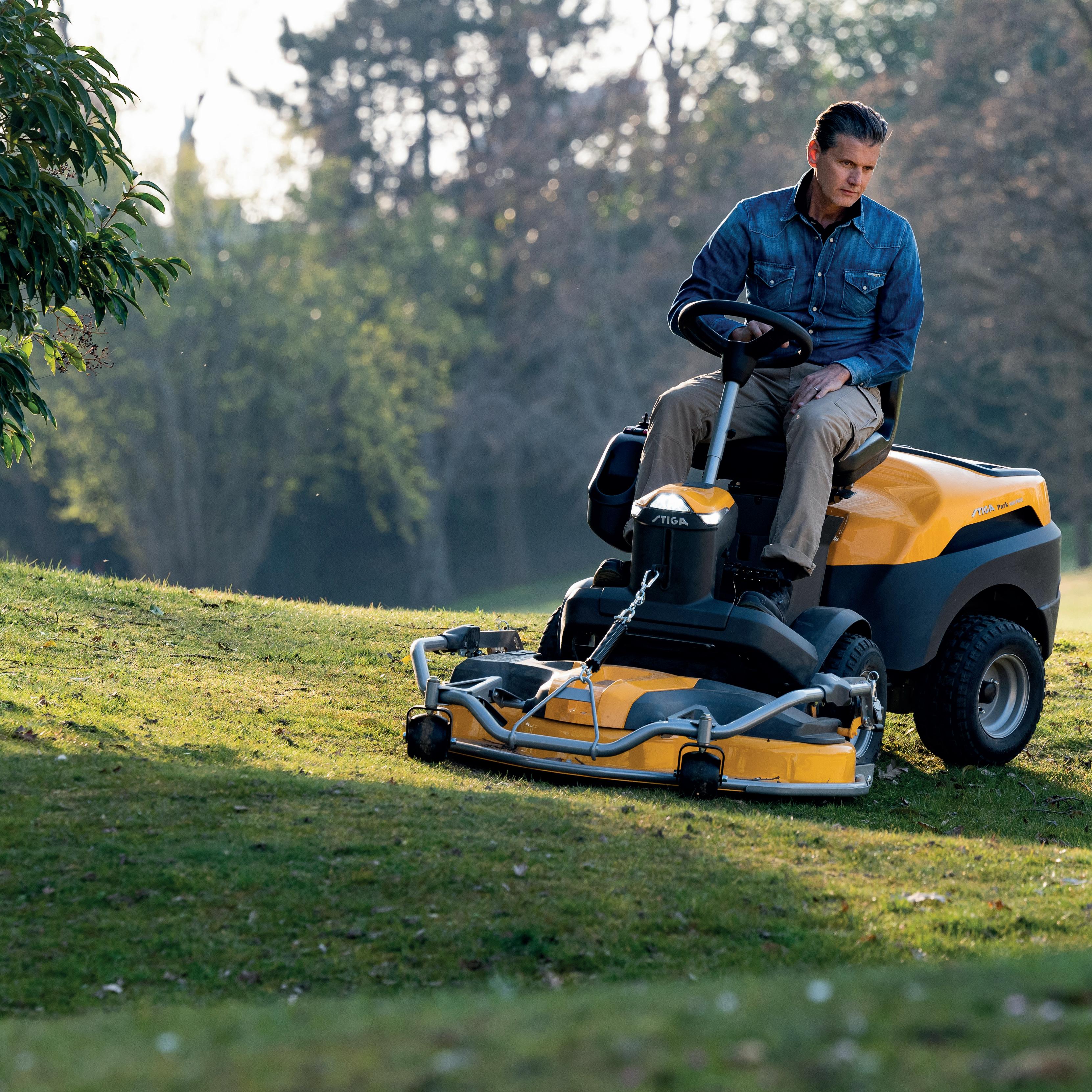
Farmore Mills, Craven Arms, Shropshire
SY7 9QG
• Jim Price Machinery Ltd
01588 673746
www.jimpricemachinery.com
Southam Agricultural Services Station Road, Southam, CV47 2DH 01926 813426 www.southamagri.co.uk
Readman Mowers
The Shed, Sand Lane,Wilberfoss, YO41 5PB 01759 380 231 or 07860 684 597 www.readmanmowers.co.uk
Veryard Machinery Sales
Blackworthy Road Castle Cary, Somerset 01963 351089 / 07860 479700 richardveryardmachinery.co.uk
The ultimate combination of raw power, versatility and precision.
Easy to manoeuvre, delivering best-in-class cutting performance, STIGA Park can handle large multi-level grass areas with ease. The position of the deck ensures control and visibility around every corner

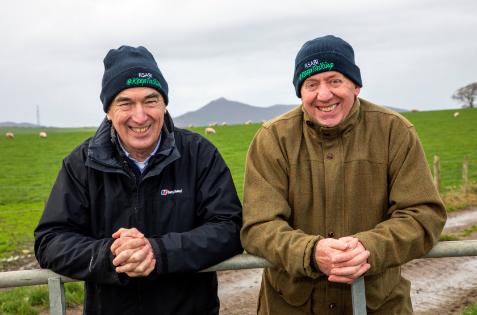





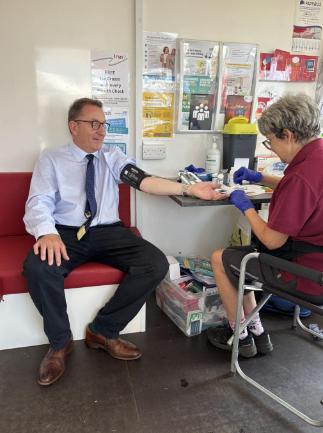

By


n the rolling landscapes of England, where soil, livestock, and legacy intersect, women quietly shape the future of farming. Among them stands Abby Allen, co-founder of Pipers & Co, a visionary in regenerative agriculture whose work demonstrates that leadership in farming is as much about care as it is about production. In 2026, the UN celebrates the Year of Women in Agriculture, and Abby’s story embodies this theme: a woman redesigning the system while cradling its future.
“Regeneration is not a trend. It is a maternal instinct, to leave the land better than you found it,” she says, and her words resonate across soil, flock, and community.

nourishing future generations, goals that are radical in their simplicity, yet monumental in impact.
Abby’s journey into regenerative farming grew from a deep discomfort with industrialised systems. “I could see how extractive models were eroding soil health, animal welfare, rural livelihoods and ultimately the integrity of our food,” she explains. Farming, in her eyes, had been pushed into a corner, asked to produce more for less, at the expense of the ecosystems on which it depends.
At Pipers & Co, she chose a different path. Regeneration wasn’t a trend; it was common sense. It meant building soil rather than depleting it, working with native breeds suited to the landscape, allowing animals to express natural behaviours, and valuing flavour and nutrition over speed and volume. “It’s slower and more complex,” she says, “but infinitely more hopeful.”
Hope, for Abby, is tangible. It lives in revived soil structure, thriving biodiversity, herbal leys, and returning birdlife. It is present in the people she works with:
farmers who share her vision, customers who choose ethically produced meat, and a growing movement of people who believe that food can heal rather than harm. Above all, her motivation lies in restoring climate stability, rebuilding rural economies, and
Becoming a mother has transformed the way Abby approaches her work. Farming has always carried the weight of legacy, but parenthood makes it immediate and visceral. “When I look at my daughter, I see her future with far more clarity than my own,” she says. Every decision, from soil health to livestock management, is now measured against the kind of countryside and food culture she wishes to leave behind.
Motherhood sharpens her sense of responsibility. Decisions are no longer just about the next season or decade, but about generations to come. It has deepened her empathy, enhancing the care she shows to her animals, her land, and the people she works with. “There’s a powerful parallel between nurturing a child and nurturing land,” Abby reflects. “Both require patience, protection, and trust in natural processes.”
Her dual role as farmer and mother gives her a perspective that is simultaneously pragmatic and visionary. She understands that regenerating farmland is not just a scientific challenge but a moral one, the land she tends today will shape the lives of her child, and countless others, tomorrow.
Abby draws inspiration from women who have long been custodians of the land, even when history overlooked them. Among her heroes is a figure who might surprise some: Beatrix Potter, celebrated for her tales of Peter Rabbit but also a serious farmer, landowner, and conservationist.
Potter purchased farms in the Lake District not as retreats, but as functioning holdings, preserving
landscapes and farming practices at a time when commercial pressures threatened them. She worked to protect the native Herdwick sheep, maintaining knowledge and livelihoods within the community. When she passed, she bequeathed thousands of acres to the National Trust, ensuring long-term protection of both land and culture.
“Historically, women have always been custodians of seeds and nourishment, even if the narrative of agriculture has centred around men,” Abby says. She also cites contemporary women in regenerative and agroecological movements, quietly reframing agriculture as a relational practice, embedding ecological literacy and systems thinking into the very heart of farming.
Through these influences, Abby positions herself within a lineage of women whose work safeguards the future, a reminder that her story, while modern, is part of a continuum of female stewardship.
At Pipers & Co, Abby’s philosophy comes to life. Every field, every grazing rotation, every animal represents a carefully considered system. Soil tends to enhance fertility and structure. Native breeds are prioritised for resilience and adaptability. Livestock are allowed natural behaviours, with welfare at the forefront.
She values taste and nutrition above speed or volume, reclaiming the narrative that food production can be beautiful, ethical, and restorative. Each decision connects directly to a broader ecosystem, linking climate resilience, biodiversity, and community. The farm becomes more than a business; it becomes a living laboratory of what sustainable agriculture can achieve.
In this work, Abby embodies the modern custodian: a woman shaping the system from soil to supper, with foresight and integrity. Her approach challenges traditional notions of productivity, demonstrating that care, patience, and respect for natural processes are the true measures of success.
Abby Allen may be one voice in the chorus of women transforming agriculture, but her chapter is vital. In a year dedicated to recognising women’s contributions to the land, she represents the future-facing steward, balancing ecological wisdom, ethical production, and motherhood. Her story complements those of leaders like Abi Reader, whose work honours heritage and continuity, and echoes the resilience of historical figures such as Hannah Hauxwell.
The UN Year of Women in Agriculture is not just about recognition; it is about amplifying visionaries who shape our food systems, preserve biodiversity, and nurture communities. Abby’s work exemplifies all of this: she is an architect of change, a protector of the land, and a mother instilling hope for generations yet to come.
Abby’s story reminds us that agriculture is both poetic and practical, creative and systemic. Every decision made on the farm reverberates through the land, the animals, the food system, and the people it feeds. In the act of nurturing soil and livestock, she nurtures a vision of the future, one where women are recognised as central to sustaining both culture and ecology.
“When soil structure improves, when biodiversity increases, when birds return and herbal leys thrive, it’s tangible proof that farming can be restorative,” Abby reflects. It is a belief that what is done today shapes the world of tomorrow, a philosophy that underpins her work as a farmer, entrepreneur, and mother.

Her story is one of purpose, vision, and care, a living testament to the impact women have in shaping the landscapes, food systems, and futures we all rely upon.
Photography Credit: Matt Austin Images Instagram: matt_austin_ images
Join the flock on Instagram: @pipers.co or visit Abby @abbyallen Website: Click here

ndustry says taking the brakes off domestic biomethane production could cut imports and insulate consumers from supply and cost shocks.
Britain could reduce the impact of rising global gas prices and supply concerns caused by the conflict in the Gulf by rapidly increasing domestic green gas production, according to the UK's anaerobic digestion industry.
TheAnaerobic Digestion and Bioresources Association(ADBA) says existing biomethane plants could increase production by almost a third within months if government removes several regulatory barriers, boosting UK gas supply before next winter.
Biomethane - a purified form of biogas produced from domestic food waste, farm residues and other organic materials - is chemically identical to natural gas and can be injected directly into the UK gas grid. Additionally, biomethane is a net zero energy source - meaning our clean energy ambitions will not be sacrificed for the sake of energy security.
Currently the UK produces around 7 TWh of biomethane each year, enough to heat roughly two third of a million homes. Industry estimates suggest output could rise to around 9 TWh by next winter.
The sector says that increase alone would be enough to replace the entire volume of gas Britain imported from Qatar in 2024.

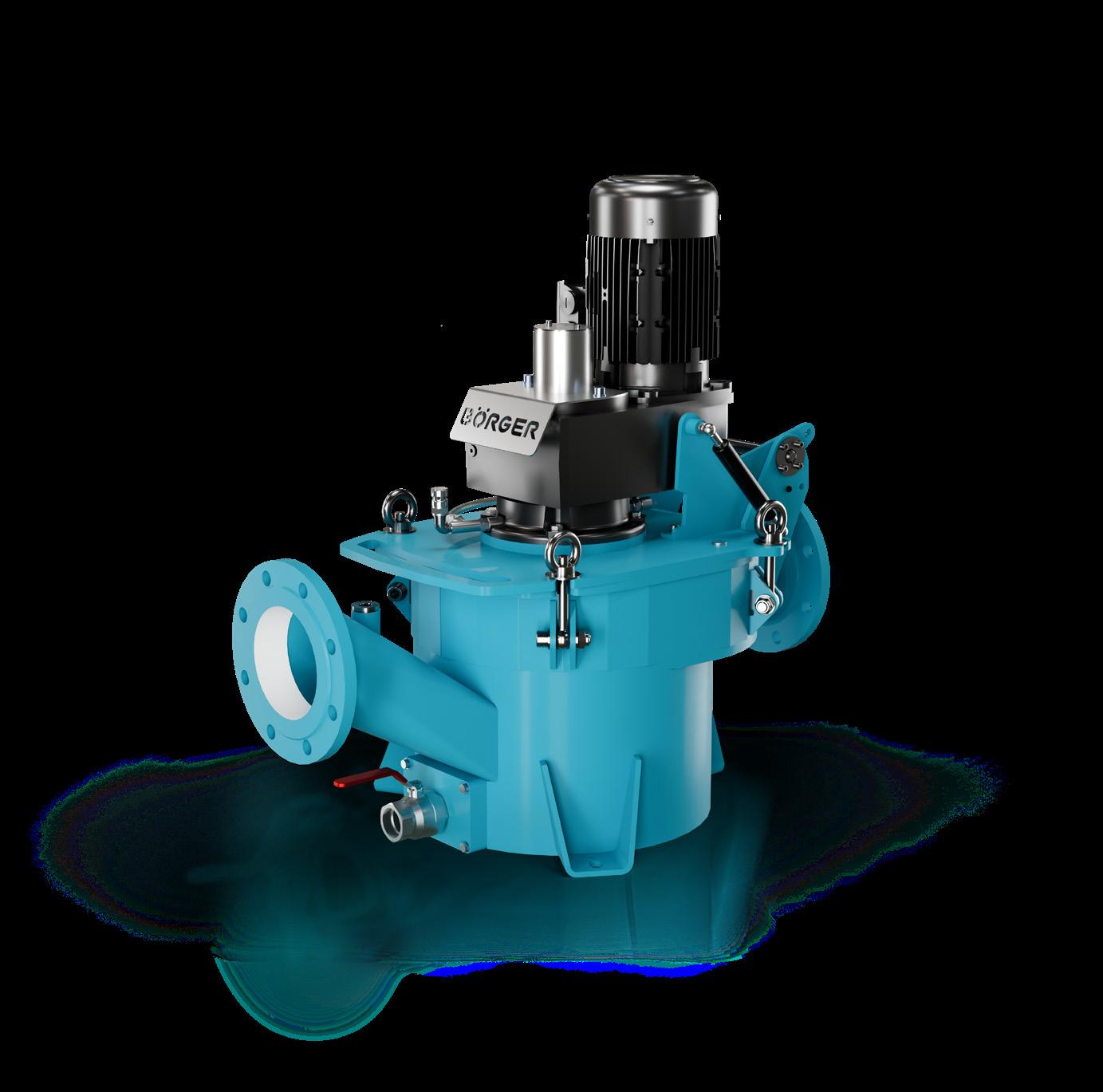
Disruption in the Gulf has pushed up prices worldwide as shipments are redirected to the highest bidders.
That means British households and businesses ultimately pay the global price for gas.
ADBA Chair and Former Energy Secretary Chris Huhne said:
"Britain cannot control global gas markets, but it can control how much of its energy it produces at home.
Biomethane is ready to go today. With a handful of swift policy changes we could rapidly increase domestic gas production within months, cutting imports and helping protect households from the worst of global price and supply shocks."
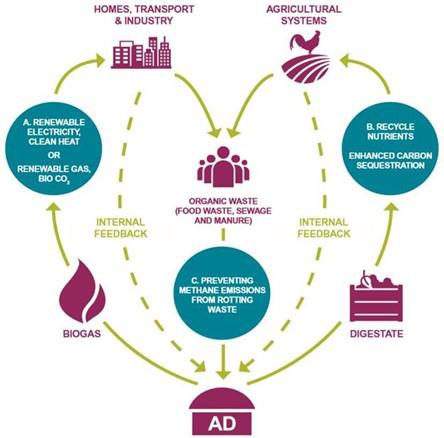
Gas demand will fall during spring and summer, but the industry says decisions taken now will determine how resilient the UK energy system is next winter.
The UK currently has far less gas storage than comparable European countries and remains heavily exposed to volatility in global markets.
During the 2022 energy crisis, following Russia's invasion of Ukraine, the European Union made biogas and biomethane a central part of its energy security response.
Countries such as Denmark now meet around 40% of their gas demand from biomethane, while France has rapidly expanded production.
Industry leaders say the UK has the resources to go much further. Studies suggest biomethane could eventually produce around 120 TWh of gas annually, potentially supplying between 20 and 50% of long-term UK gas demand.
The sector says several targeted policy changes could unlock additional production quickly.
These include
• removing production caps within the Green Gas Support Scheme,
• reforming gas grid injection limits so plants can operate at full capacity instead of being artificially constrained,
• prioritising injection and use of this local green gas production over foreign imports,
• investing in technology that allows gas to move more freely through the network, and
• removing outdated regulations requiring propane to be added to biomethane before it enters the grid.
Industry leaders say boosting domestic biomethane would keep energy spending inside the UK economy rather than flowing overseas through LNG imports.
With energy security again under pressure, the industry says expanding Britain's green gas sector would provide one of the fastest ways to strengthen domestic supply before the next global shock hits.
There are currently over 750 biogas plants operating across the UK, processing around 36 million tonnes of organic waste each year. Fully developed, the sector could produce enough renewable gas to heat nearly seven million homes while supporting tens of thousands of jobs across farming, waste management and energy infrastructure.
Sector couldhelp shieldthe UK fromhighpricesandimportdependence

heAnaerobic Digestion and Bioresources Association(ADBA), representing the UK biogas industry, has today written to Prime Minister Keir Starmer urging him to lift barriers to home-grown biomethane production to shield the country from the impacts of the Iran energy crisis.
The letter, also shared with Energy Secretary of State Ed Miliband and DESNZ Ministers Lord Whitehead and Michael Shanks), sets out how the UK government could increase its production of biomethane by almost a third by next Winter just by removing regulatory barriers.This would ensure that Britain reduces its reliance on imports to meet its domestic energy demand. According to ADBA, the sector alone could replace the entire volume of gas imported from Qatar in 2024.
Former Secretary of Statefor Energy and Climate Change, Chris Huhne, now Chair of ADBA,says:
"As the warinIranand the Middle Eastcontinues to place pressure on global energy markets, theUKfaces the prospect ofdevastatinggas prices,potential disruption to international supplyand a blow to the economic recovery."
"The British biogas sectorcan and shouldhelp shield the country from this crisis, but government action is needed to remove the production caps and regulatory barriers that currently artificially constrain output."
Biomethane isa green gasproduced through anaerobic digestion of organic materials such as food waste, agricultural residues and crops grown in rotation. Once upgraded,itcan be injected directly into the gas grid.
Thesectorcurrentlyinjectsroughly 7TWh of gas annually into thenetwork-thisequatestoheating around three quarter of a million homes. With policy adjustmentsallowingexisting plants tooperateat their full capacity,production could increase to approximately 9 TWhwithin months.
The letter goes on to explain:
"Current policy arrangements unintentionally constrain the sector's ability to
respond.Production capsmean that some biomethane facilities cannot increase output even when they have the technical capability to do so.
In some cases, producers are financially discouraged fromoperatingabove a certain level. Removing these caps would allow the existing fleet of plants to maximise production during a period of heightened national need."
"By removing unnecessary production caps and regulatory barriers, the Government could allow the sector to deliver additional domestic gas quickly and affordably."
• There are currently over 750 AD plants operational across the UK
• The entire industry digests approximately 36 million tonnes of organic material each year –organic material that would otherwise emit greenhouse gases including highly potent methane, if left untreated in landfill.
• An estimated 21TWh of biogas is produced each year by the AD industry – this green gas is either used to generate electricity and heat via a combined heat and power (CHP) unit or upgraded to biomethane and injected directly into the national gas grid.
• The industry currently delivers savings of 1% off the UK’s greenhouse gas emissions every year.
• An estimated 4,800 people are currently employed in the AD and biogas industry in the UK.
• Overall, the industry grew by 5 per cent last year as the closure of older, smaller plants was outweighed by big-scale units feeding into the gas grid.
• Fully deployed, by 2050, the UK AD and biogas industry is expected to:
• produce over 100TWh of biomethane
• provide between 20% and 50% of UK gas demand
• create 60,000 jobs (30,000 direct and 30,000 indirect).
• save the UK 27 million tonnes of CO2 equivalent – equivalent to taking 1/3rd of all cars off the road
• heat 6.8 million UK homes with the 8 billion m3 of biomethane generated

IOGEST and LOCAL
POWERannounce a strategic partnership aimed at accelerating the development of agricultural biomethane projects across Ireland. The partnership reflects the shared commitment of both organisations to promote high‑quality, sustainable green gas solutions and to support the expansion of Ireland’s biomethane production capacity.
Pat Smith, Managing Director of Local Power Ltd,welcomed the collaboration, stating:“Local Power is delighted to work alongside BIOGEST, a company with an exceptional global record in agricultural anaerobic digestion technology. With all major development milestones achieved for our Curragh Biogas project in County Meath, this collaboration brings together the technical strength and project experience needed to deliver a high‑quality biomethane facility for Ireland. BIOGEST’s proven technology will provide real confidence to farmers and developers and we see this partnership as an important step toward building a robust and sustainable biomethane industry.”
The first joint project under the partnership, Curragh Biogas in Carnaross, Co. Meath, is a ready‑to‑build facility designed for 599 Nm³/h of biomethane production based on a poultry, cattle and pig slurry and grass, maize and rye silage feedstock mix. Once operational, the Curragh Biogas project will reduce annual emissions by an estimated 25,000 tonnes of
CO2 equivalent.
"BIOGEST is pleased to collaborate with Local Power on bringing high‑performance biomethane solutions to Ireland,”saidMartin Schlerka, CEO of BIOGEST.“Local Power brings extensive project development expertise, having successfully developed hundreds of renewable projects across Ireland in the last 10 years. Ireland offers a very promising environment for biomethane development, and we look forward to contributing our expertise to support the sector’s growthprovided a stable and effective policy framework is in place.”
BIOGEST’s PowerRing technology, deployed globally, has demonstrated efficiency, reliability and strong performance in agricultural feedstock processing. Combined with the company’s experience in designing, constructing and operating AD plants, the technology provides a strong foundation for the Irish market’s ambitions in renewable gas.
This collaboration builds on Local Power's deep experience in renewable energy project development in Ireland and represents a major step towards scaling a farmer-inclusive model of biomethane production.
By combining BIOGEST's global technology leadership with Local Power's market knowledge and project development capabilities, the partnership aims to contribute significantly to Ireland's renewable gas ambitions.
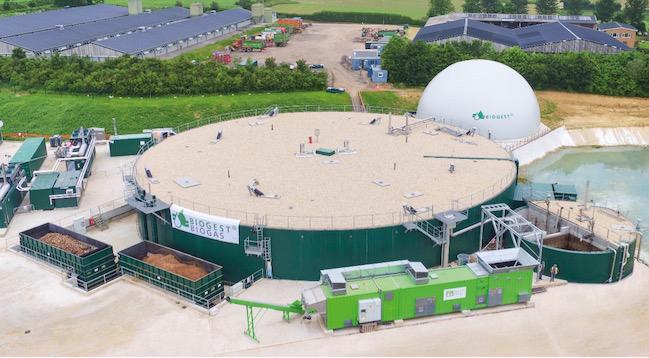

n today’s agricultural landscape, efficiency, durability and environmental responsibility are more important than ever, especially when it comes to infrastructure. From farm tracks and yards to silage bases and access roads, the quality of groundworks can make a lasting difference to day-to-day operations. That’s where Agri Plant Solutions, a family-run business based in Warwickshire, is making its mark.
Founded in 2009 and led by Marcus and Helen Sutton, Agri Plant Solutions builds on a longstanding family connection to agriculture, civil engineering and project management. Their approach is rooted in understanding the realworld challenges farmers face, particularly the need for cost-effective, reliable surfaces that stand up to heavy use and unpredictable weather.
At the core of the business is cement and lime stabilisation, a process that transforms weak or waterlogged soils into strong, durable surfaces. For farms dealing with muddy tracks, worn-out yards or areas prone to flooding, this method
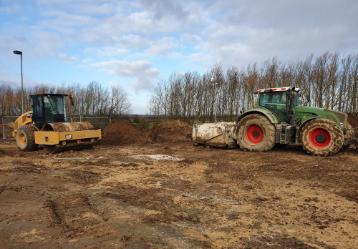
offers a practical and often more affordable alternative to traditional materials like concrete or tarmac.
“Across the UK, we see large areas where conventional construction methods can be prohibitively expensive,” explains the team. “Ground stabilisation allows us to work with the materials already on site, improving them rather than replacing them. That leads to significant cost savings and a much lower environmental impact.”


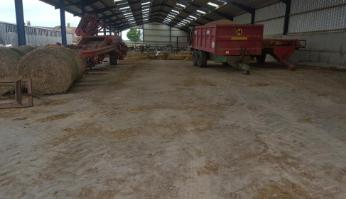
This reduced environmental footprint is an increasingly important factor, particularly in rural or protected landscapes where planning restrictions may limit the use of hard surfaces. By modifying existing soils and aggregates, Agri Plant Solutions provides a solution that not only meets regulatory requirements but also aligns with the sustainability goals of modern farming.
The benefits extend beyond cost and compliance. Stabilised surfaces are designed to last, reducing ongoing maintenance and improving access for machinery and livestock alike. From haul roads and farmyards to spoil heaps and stockpile areas, the company’s work supports smoother, more efficient farm operations.
Agri Plant Solutions also offers a full range of services including earthworks and site material modification, helping turn problematic ground into usable, high-quality fill. For farmers looking to upgrade infrastructure without excessive disruption or expense, this integrated approach is a major advantage.
As pressures on the agricultural sector continue to grow, practical innovations like ground stabilisation are becoming essential tools. With its blend of experience, technical expertise and agricultural insight, Agri Plant Solutions is helping farms across the UK build stronger foundations, literally and economically, for the future.

The latest phase of a major quad bike safety campaign will see more than 100 helmets distributed to farmers and crofters in Scotland in the coming weeks.
The move will see a quad bike helmet given away each day for 100 days from today (March 9) to the Royal Highland Show in June in the next phase of the #UseYourHead campaign run by Scottish agricultural charity RSABI and the Farm Safety Foundation (Yellow Wellies).
"My head felt like it was going to explode but my biggest worry was 'how is the work going to get done? Who is going to do it? Will I still be able to farm?'" he recalls.
Callum is now 100 per cent committed to the importance of wearing a helmet and to urging others to do the same.
Along with other campaign ambassadors including former NFU Scotland President Martin Kennedy and former SAYFC Chair Ally Brunton, he is encouraging everyone to take quad bike safety seriously and to recognise the dire impact an accident can have not just on the quad rider but also on their family and farm business.
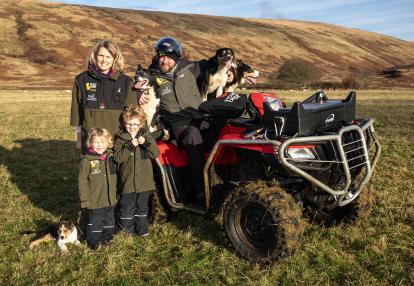

The high impact campaign, launched a year ago, is driving home the importance of wearing a helmet every time you get on a quad bike. It is backed by a range of ambassadors, including Arran farmer Callum Lindsay, one of the stars of the new series of BBC's This Farming Life.
This week's episode of the hugely popular series features Callum and his wife Zara describing what happened on the day of the accident and the devastating impact it had on their family and farm business.
Callum sustained major head injuries after being propelled off his quad bike when it hit a stone out on the hill and had to get back on the bike to ride to an area with signal to be able to call for help. He was transferred to the mainland in terrible weather via air ambulance and found the helicopter journey – when the pain really kicked in and he was unable to move – incredibly difficult, mentally as well as physically.
"I don't go on a bike without a helmet now. It only takes seconds to put it on and now I feel more comfortable wearing a helmet than without it. It's a lifeline tool and I don't think about putting it on now, it is just part of my daily routine. It's something everybody should be doing."
A series of videos has been produced to drive home the campaign message to wear a helmet, including one film showing it takes less than five seconds to put on a helmet and attach the chin strap.
"Use Your Head" is being supported by organisations throughout the Scottish farming community, including NFU Scotland, the Scottish Tenant Farmers Association, the Scottish Association of Young Farmers Clubs, Institute of Auctioneers and Appraisers Scotland, Quality Meat Scotland and NSA Scotland.
"We are really encouraged with the success of the campaign so far and the conversations we are having with farmers and crofters around the country about the importance of quad bike safety," said Carol McLaren, CEO of RSABI.
"Too often the RSABI team see at first hand the impact of terrible quad bike accidents, not only on the injured individuals, but also on their families, the farm business and the wider farming community.
"We need to see a momentum continuing to grow behind and our hope is to follow a similar trajectory to that seen in the ski-ing industry where a cultural
shift has meant that it is very much the norm to wear a helmet now.
"Our hope is that our 100 day helmet giveaway will help to continue this momentum and also prompt farmers to "think safety" especially at this time of year when the tresses and strains of spring work too often leads to judgement errors which can be life-changing.
"Our call to action is to take a few extra moments to consider the terrain, weather and other risk factors, especially when there is so much work going on with livestock and machinery at this time of year."
Stephanie Berkeley, Manager of the Farm Safety Foundation (Yellow Wellies) added: "We are proud to continue our support for RSABI's #UseYourHead campaign and to partner in the 100‑helmet giveaway, which is another important step in encouraging safer working practices across Scottish agriculture.
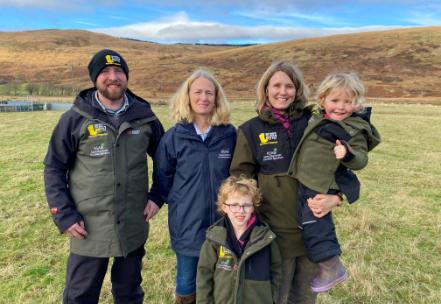

RSABI's websitewww.rsabi.org.uk.
Image captions: Callum Lindsay pictured with his quad and helmet on the farm in Arran and with his wife Zara and their girls Lottie (5) and Lucie (3).
"This year, we have already funded 20 Lantra‑accredited ATV training courses in Scotland, helping upskill those working in farming and crofting communities throughout Scotland.
"By empowering people with both the right equipment and the right training, we hope to play a small but meaningful part in keeping more workers safe while they go about their daily tasks."
Information about how to apply to RSABI for a free Logic Manufacturing helmet can be found on RSABI's website -https://www.rsabi.org.uk/100free-quad-bike-helmets-for-useyourheadcampaign/- and via the charity's social media platforms.
RSABI offers free practical, financial, and emotional support including counselling services, delivered quickly after receiving the initial enquiry. Its free confidential support service is available 24 hours a day, every day of the year, by calling 0808 1234 555 (calls won't show up on phone bills) or through a confidential webchat service, available on

RSABI CEO Carol McLaren appears in one pic with the family.
Links to videos:
• #UseYourHead Callum's Story: https://www. youtube.com/watch?v=wLQBeLE5NdA
• #UseYourHead Martin Kennedy: https://www. youtube.com/watch?v=RlDgSPGqBnc
• #UseYourHead Ally Brunton https://www. youtube.com/watch?v=phs1K7KgXnU
• Five seconds to put helmet on: https://www. youtube.com/watch?v=Qk10YbtaDT8
Request re media/social media: We would be grateful for your support with farm safety and in the spirit of the #UseYourHead campaign and reducing the devastation to farming and crofting families caused by quad bike accidents, we would be very grateful if you would please avoid using imagery of people on quad bikes without helmets. Many thanks.

Dangerous goods are materials or items with hazardous properties which, if not properly handled, present a potential hazard to: • human health and safety • the environment • infrastructure
Look out for these symbols on any products you are using and check if your activities come within the scope of ADR:









1 2 3 4 Ask yourself:
Are the goods you wish to carry classified as dangerous?
Is the vehicle you are using exempt from the regulations?
Is the journey you are planning exempt from the regulations?
Does the type and quantity of goods you are carrying qualify for partial exemptions?
If you are not sure whether your goods are dangerous, contact the manufacturer.

Police have been checking farm and plant machinery being transported on the Hampshire road network as part of efforts to identify stolen goods.
The theft of agricultural machinery is an issue for our rural communities in Hampshire, as well as across the UK. This type of machinery is high value, and we know it is transported throughout the country and overseas by organised criminals.
In the last nine months, the Country Watch Rural Crime Task Force has recovered hundreds of thousands of pounds worth of stolen goods and vehicles, much of which has been returned to its rightful owner.
On Thursday 12 March, the Task Force led a proactive operation at the DVSA site off the M3 in Chilcomb, with support from roads policing, the Lyndhurst Neighbourhood Enforcement Team, the Commercial Vehicle Unit, and our partners in Data Tag and the DVSA.
Checks were conducted on vehicles towing heavy loads, with a particular focus on vehicles carrying plant and agricultural vehicles and machinery.
No stolen goods were identified on this occasion, however two people were arrested at the site in Chilcomb – a man was arrested on suspicion of drug driving, and another was arrested for an outstanding warrant.
A number of drivers carrying loads were also fined for their vehicles being overweight.
Sergeant Kevin Pearson, from the Country Watch Rural Crime Task Force said: "As part of this operation, police have been specifically targeting lightweight commercial vehicles – anything that is towing something, or is articulated, and anything which is loaded. We're checking their loads and the conditions, and we're checking the plant machinery that is on them.
"A representative from Data Tag has been working with us who is checking the machinery against the national databases for stolen plant, so we're making sure that we achieve our due diligence with regards to anything passing through here or anything suspicious.
"The issue isn't one that's just restricted to Hampshire, it's a national issue. Farm machinery and plant theft is a particular problem for our rural communities – our farms are continually targeted by criminality and a lot of this equipment is difficult to trace, but easy for criminals to transport."
We urge people to keep reporting crimes and suspicious incidents in rural areas to us. This includes details and descriptions of any people or
vehicles you see, or abandoned and burnt out vehicles that have been left on farmland, for example.
If you have information about crime or suspicious activity in your area, please report this to police on 101, or via the report tool atwww.hampshire.police.uk
Alternatively, you can contact the independent charity Crimestoppers 100% anonymously on 0800 555 111, or via their anonymous online form at crimestoppersuk.org
Dial 999 if a crime is in progress, or in the event of an emergency.
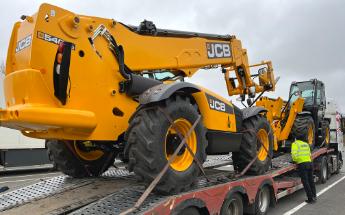
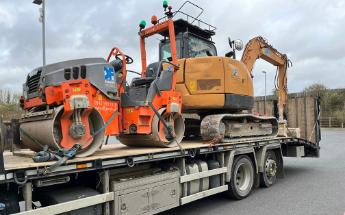
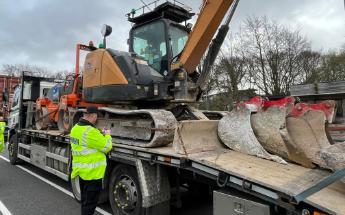
In a historic win for farmers, a new law that aims to tackle livestock worrying has come into force, unlocking greater police powers with unlimited fines for dog owners if they are convicted.
The new amendment to The Dogs (Protection of Livestock) Act empowers police to take advantage of the technological and scientific advancements that have been made since it was first passed into law in 1953.
The NFU has been campaigning for this change to this legislation since 2019. Through sheer persistence and the unwavering support of MPs and Peers and the public, we have now secured a change that gives police more enforcement powers, encourages responsible dog ownership, and provides justice for farmers and their livestock when they do sadly fall victim to livestock worrying.
Government plans to strengthen the law on livestock worrying were stalled when the Animal Welfare (Kept Animals) Bill was withdrawn in 2023. More than 10,000 people signed an NFU open letter, calling on the government to strengthen the Dogs (Protection of Livestock) Act 1953. The open letter called for an increase in fines and enhanced police powers to tackle the increasing incidence of dog attacks on livestock.
NFU Vice-president Robyn Munt said this marked “a moment of huge relief and a big victory for the farming community, as their concerns have been heard and acted upon”.
“Livestock worrying takes a significant emotional and financial toll on farmers, and
this Act will make a massive difference in giving farmers greater confidence and safeguarding their livestock,” she added.
The new law came into effect today (18 March) and applies to England and Wales. Scotland and Northern Ireland already have their own livestock worrying legislation.
How will the new legislation help tackle livestock worrying?
The Act has several important provisions that make the law fit for the 21st century.
The Dogs (Protection of Livestock) Act was first passed into law in 1953. Since then there have been a lot of technological and scientific
advancements that police can use to better tackle crime. The Act now gives police new powers to take advantage of this, allowing them to take DNA samples or mouth impressions from dogs they suspect of worrying livestock.
Police will now be empowered to detain dogs they suspect of worrying livestock where there’s nobody present to accept responsibility of the dog. Courts can now order offenders to pay the costs incurred by seizing and detaining a dog.
There will be harsher punishments for offenders. Recognising that livestock do not live their entire lives within the confines of a field, the legislation will make incidents that happen on roads and paths against the law. Camelids will now be protected by the law. Justices of the Peace will also now be able to issue warrants authorising police to use all these new powers.
Importantly, the new police powers can be used to investigate incidents of livestock worrying that happened before the Bill was passed into law.
Farming Minister Dame Angela Eagle said: “Farmers can now have greater peace of mind knowing that proper penalties are in place for people who carelessly let their dogs worry livestock.”
“Dog attacks have devastating consequences and this new law reflects the government’s strong commitment to our farmers and animal welfare.”
Farmers should report, record and retain any information or evidence relating to a livestock worrying incident where available, and share it with the police.
The GEA IQ's revolutionary fourway technology ensures that you always have maximum milk quality, quantity and udder health. Using it is incomparably easy! Easier attaching, milking and maintenance.

The new milk guide piece has been designed following the natural structure of a cows udder. It is sub-divided into four guide chambers. The milk flows directly and quarter individual to the outlet. Thanks to the incline in the respective cluster chamber this process is faster and much more gentle.
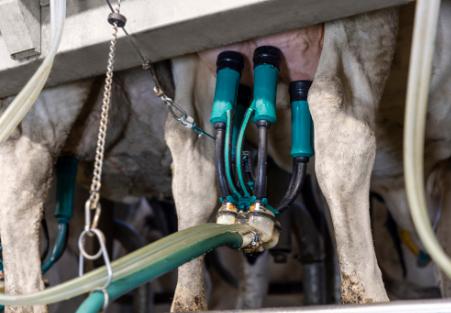

clean your milk filters are with the IQ Milking Unit.
Maximum milk quality - smarter vacuum control significantly reduces milk contamination. Vacuum is greatly reduced when the liner is not attached, which means less manure and other soil/debris is sucked into the milk line. You won't believe how
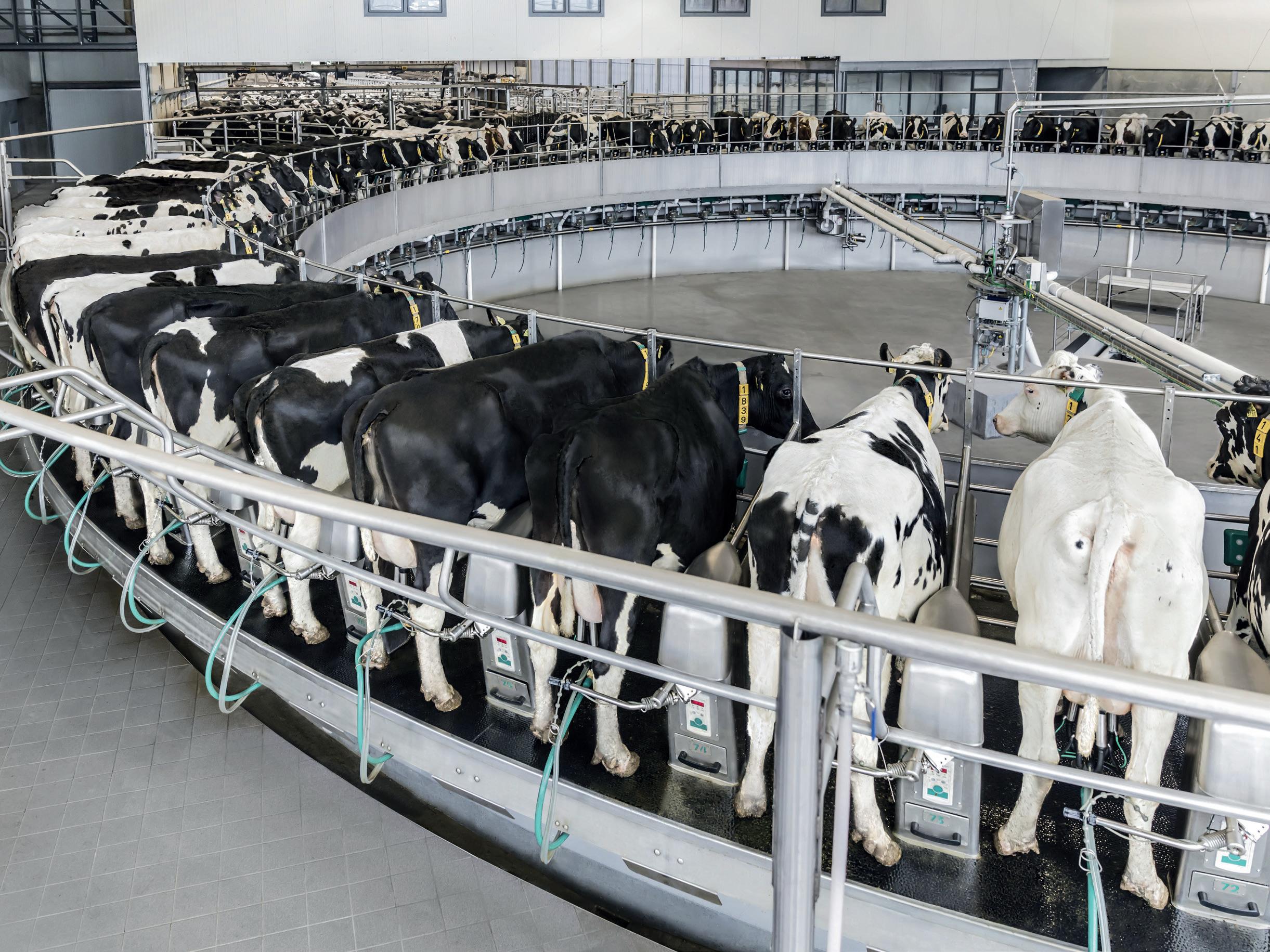
Improved udder health - with four separate guide chambers there is no threat of teat-to-teat cross contamination of mastitis-causing bacteria. Unlike conventional milking units, the new IQ unit is subdivided into four quarters, and milk from each


quarter is kept separate.
Holds on any shaped udderthe short milk tubes are longer which allows proper placement on virtually any udder shape. The unit weight is ideally distributed 80% on the teat and 20% in the claw. Plus, better unit alignment means fewer unit slips and squawks.
Easy maintenance - unique and patented liner connection makes liner changes quick and easy. Shells, liners, and air dividers can be preassembled to allow liner changes in minutes instead of hours.
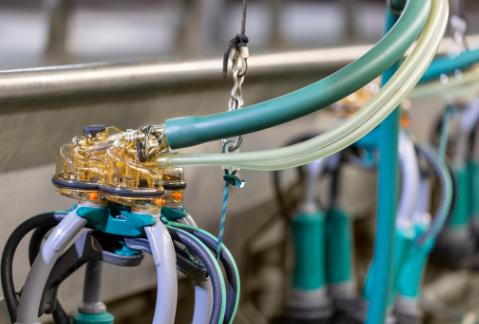

Faster milk-out times - improved vacuum stability
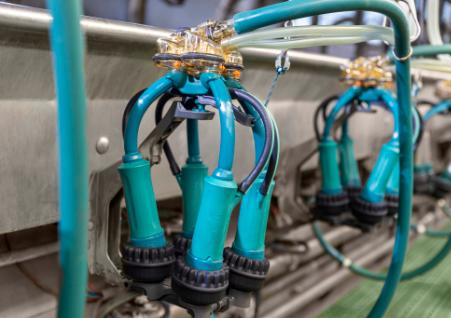

increases flow rates and the sharper angle of the milk chamber speeds flow to the milk line.
Quieter operation - the automatic vacuum shifting system makes for virtually noise-free milking - even during attachment or during a kick-off.
More reliable performancethe slim profile of this unit is harder for cows to kick-off.
For the milkers of today and tomorrow: The GEA IQLiner is
unique in that it is fitted individually onto the IQ cluster! Take advantage of the optimum adhesion and flexibility on the udder! The well thought-out benefits of our IQLiner ensure animal-friendly milking together with the best possible teat conditions and the well proven rubber and silicone material works as reliably as ever.
GEA and local GEA Dealers are offering a special offer on the IQ Milking Cluster this Autumn until 31st October 2025. Benefits from four-way technology to ensure you always have maximum milk quality, quantity and udder health by contacting GEA today for the special offer price. Contact your local GEA Dealer or visit www.gea. com for further information.
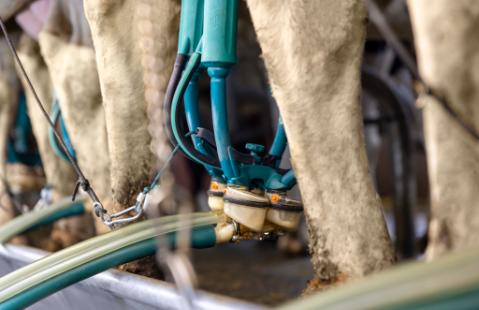

The UK Agri-Tech Centre is launched the Global Growth Accelerator, an international programme designed to fasttrack UK agri-tech businesses by validating technologies for dairy and livestock in New Zealand's innovationdriven farming systems.
The programme is delivered in partnership with Agnition Ventures (Ravensdown's innovation arm), and AgriTech New Zealand, and provides structured access to over 500 early-adopter farms for third-party validation, farmer feedback and investment opportunities.
rapid, multi-sector testing and positions UK technologies for scaleacross New Zealandand the widerAustralasia.
By leveraging New Zealand's agile ecosystem and counter-seasonality, the initiative offers
This initiative strengthens UK–NZ collaborationand accelerates export readiness through market immersion, pilotdeploymentand strategic engagement at leading Australasianagri-tech events.
Competing in high-value international markets requires more than innovation—it demandsmarket understanding,local validation, trustednetworksand strategic partnerships.
The Global Growth Accelerator co-creates in-country pilot projects thatvalidateUK-developed solutions with real end-users.
Through this initiative, we:
• Scope and prioritise key global market challenges and opportunities
• Map and build partnerships with influential stakeholders in target regions
• Co-design tailored pilot projects to prove market readiness, investment potential and export viability
By embedding UK businesses into local ecosystems, we remove barriers to investment and open commercial pathways, helping you compete and thrive globally.
Dr Jenna Ross OBE, Senior International Development Manager at the UK Agri-Tech Centre, said: "The Global Growth Accelerator is about backing the UK's most promising agri‑tech businesses with the real‑world validation, building on partnerships with Agnition Ventures and AgriTech New Zealand, and driving market access to scale on the global stage.
"By embedding our innovators directly into high‑value
international ecosystems, we're not just opening doors we're accelerating commercial success, strengthening UK leadership in agri‑tech and helping deliver the solutions the world's farming systems urgently need."
Your innovation must:
• Address one of these four challenges:
• Biosecurity, animalhealthand traceability
• Farm system productivity
• Climate volatility,droughtand water security
• Environmental compliance and nutrient efficiency
• Be at technology readiness level 9, and ready to bedemonstratedin a relevant environment
• Be from a UK registered business of any size
If your application is successful, any support you receive is expected to count as Minimal Financial Assistance under UK subsidy rules (UK Subsidy Control Act 2022)
Example technologiesof interest:
• Early detection and monitoring (health, mobility, reproduction)
• Traceability automation
• Pasture monitoring,managementand forecasting
• Animal genetics
• Reproductive decision support
• Early climatic warning and forecasting
• Water monitoring and management
• Methane reduction
• Feed and supplement management
Brendan O'Connell, Chief Executive at AgriTech New Zealand, said: "The Global Growth Accelerator reflects the spirit of our Memorandum of Understanding with the UK Agri-Tech Centre, connecting trusted partners across two highly complementary agri-tech ecosystems.
"By welcoming UK innovators to engage with New Zealand, we are building the relationships needed to accelerate solutions that support farmers and help address global food challenges."
We welcome and encourage applications from people of all backgrounds and are committed to making our application process accessible to everyone.
This includes making reasonable adjustments, for people who have a disability or a long-term condition and face barriers applying to us.
To find out more about how to accelerate your global impact, or to register, visithttps://ukagritechcentre.com/ global-growth-accelerator/.Applications close on10 April 2026.
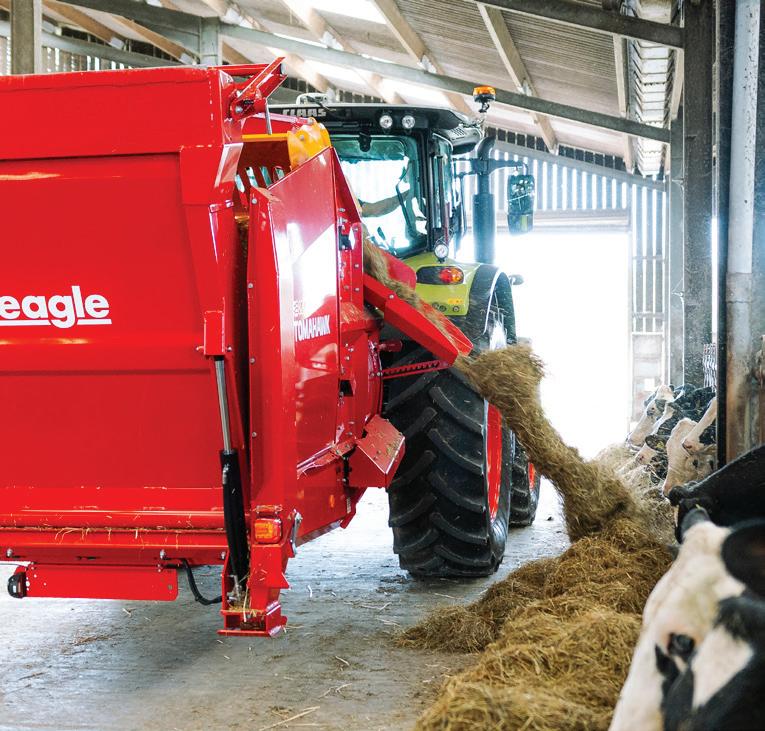
UK’s market leading bale processor range. | INTRODUCING
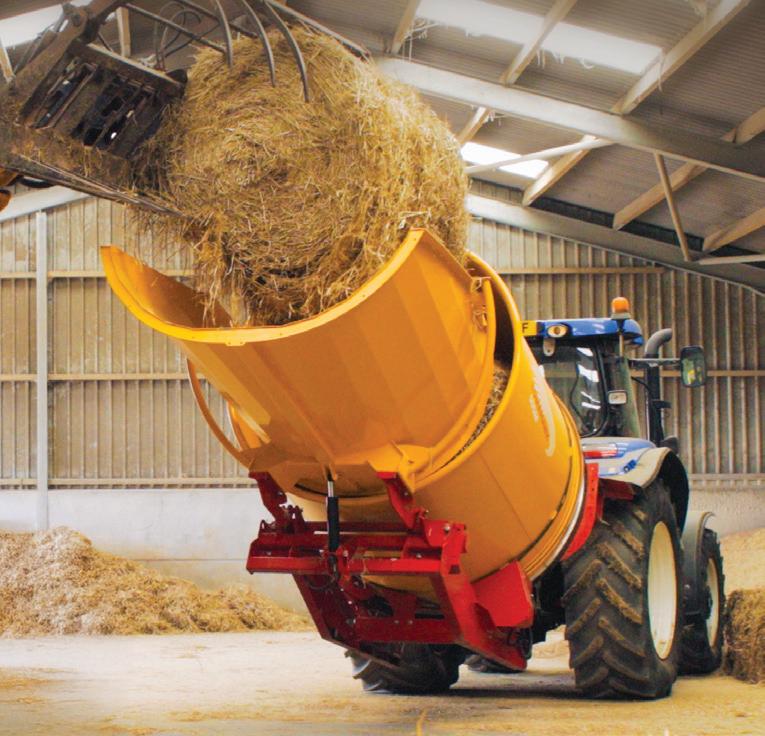
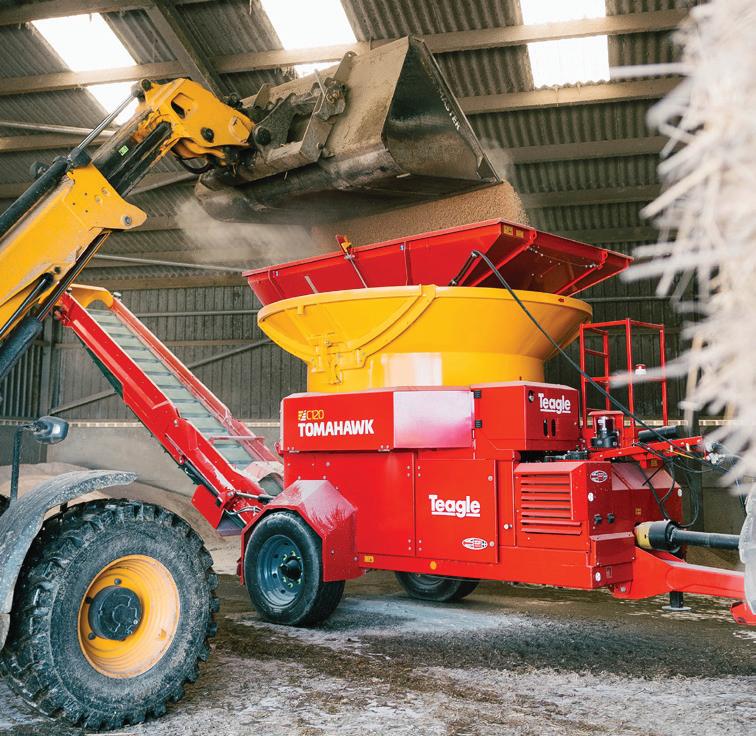
Up to 30% straw saved | As reported by users of our TOMAHAWK bale processors.
Consistently even chop | Proven to reduce waste, improve TMR and boost yield.
Improved cow health and happiness | Uniformly chopped straw in TMR supports rumen activity, fertility, and butterfat production.
Biomass pre-processing | Reliable, efficient performance for biofuel applications.
Value for money | Proven to reduce waste, improve TMR and boost yield.
2 year warranty* | Comes standard with all Teagle manufactured products.
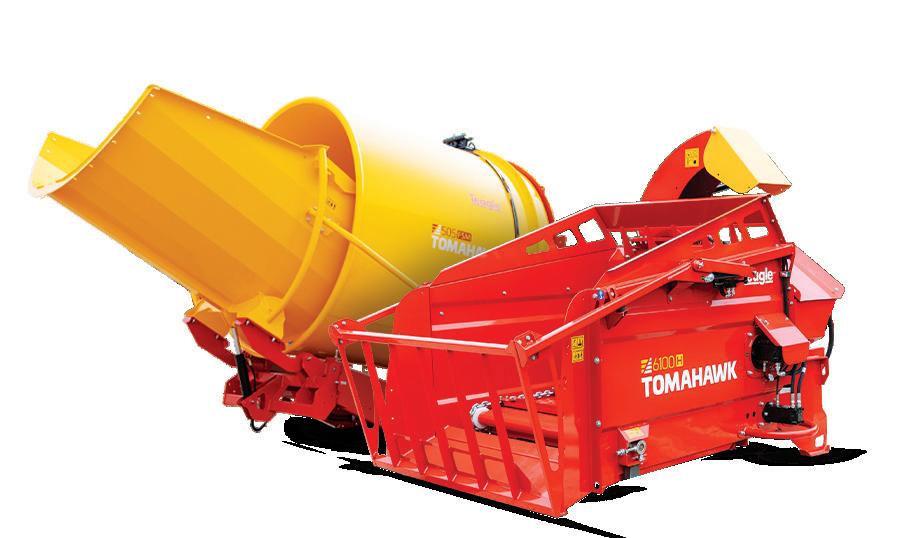
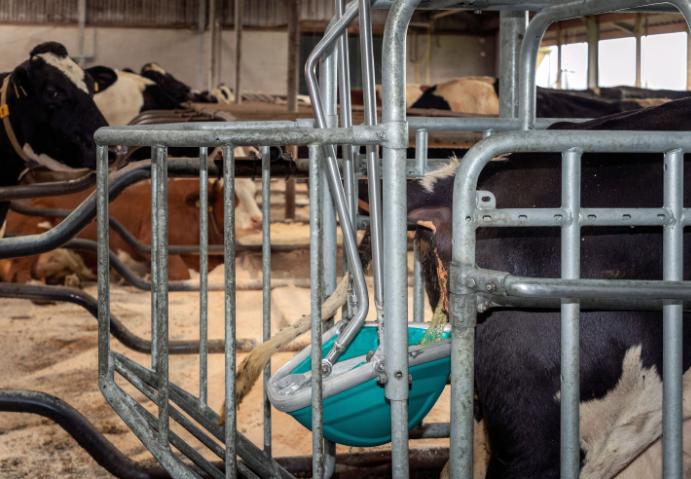
Agroundbreaking new technology, the CowToilet, is set to make its UK debut at Lamma 2026, offering dairy farmers a practical way to reduce ammonia emissions by up to a third, improve nutrient use, and enhance sustainability on-farm.

Developed by Dutch agri-tech company Hanskamp, the CowToilet offers a unique solution for reducing on-farm emissions by separating cow urine and faeces, which, when combined, produce ammonia.
Using the simple fact that cows never urinate and defecate at the same time, the CowToilet collects urine directly from under the cow’s tail before it mixes with solid manure.
The CowToilet integrates seamlessly into a free-access out-of-parlour feeding station which can be installed in most cattle sheds. As a cow enters to eat, the CowToilet gently rubs against the suspensory ligament of the udder, triggering a natural nerve reflex that encourages urination. The urine is then collected in a sealed receptacle, removed by suction, and stored in an airtight tank.
Research by Wageningen Livestock Research shows that keeping urine and manure separate can reduce ammonia emissions by up to 38%, total nitrogen by 33%, and nitrous oxide by 18% compared with conventional housing systems
“Ammonia is one of the biggest
environmental challenges facing the livestock sector,” explains Hanskamp founder Henk Hanskamp. “We wanted to create a system that works with nature, not against it – improving animal welfare and helping farmers meet environmental targets without adding to their workload. The CowToilet achieves this in a simple, natural, and effective way.”
In addition to reducing emissions, the CowToilet transforms waste into a resource. Nitrogen-rich urine can be reused as a natural fertiliser or even sold, while the remaining solid manure retains phosphate and organic matter for soil health. This separation allows farmers to apply nutrients more precisely, improving crop performance and reducing reliance on artificial fertilisers.
Separating cow faeces and urine also keeps housing cleaner and improves air quality, contributing to improved animal health and hygiene.
Developed in close collaboration with Dutch livestock farmers, engineers, and researchers – including Wageningen University’s Paul Galama – the CowToilet is already successfully operating on over 35 dairy farms in the Netherlands, delivering strong results and positive farmer feedback.
Each CowToilet unit is designed to serve 25 cows, and costs approximately £28,000 per unit (excluding installation).
“This technology is about more than compliance,” adds Mr Hanskamp. “It’s about giving farmers tools that make sense – improving the environment, animal health, and profitability. The CowToilet shows that innovation and sustainability can go hand in hand.”
To see the CowToilet in action, visit: https://hanskamp.com/en/solutions/ cowtoilet/
Watch the demo video: https://www. youtube.com/watch?v=c7duvrYtEmk
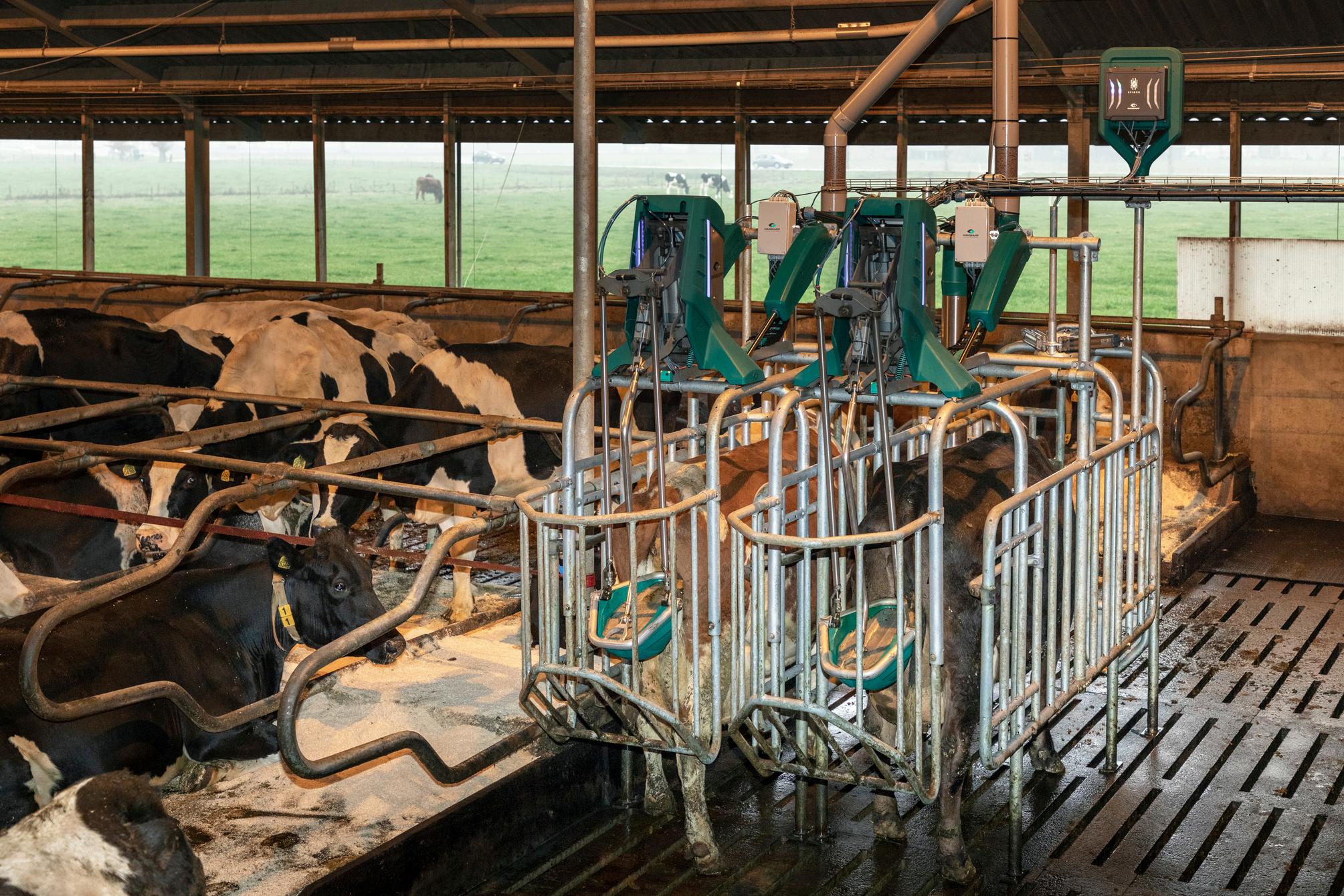
Mid-Ulster Dairy Services
21a Donaghrisk Road, Tullyhogue Cookstown, County Tyrone, BT80 8UU
Tel: 028 8676 5098
www.midulsterdairyservices.co.uk
Mcknight Dairy Services Ltd
Glenmaquin, Letterkenny, Co. Donegal, Ireland, Eir F92 X8C1
Tel: +353 8764 81124
www.mcknightdairyservices.com
Clarkson Dairy Services
East Witton, Leyburn, North Yorkshire, DL8 4SQ
Tel: 01969 623522 / 07703 535043 www.clarksondairyservices.co.uk
Wessex Farm Installations Ltd
The Old Cobblers, Langport, TA10 9DJ
Tel: 07867 507711
www.hanskamp.com

Dairy farmers are being urged to prioritise balanced nutrition this spring, as delayed turnout and highly variable forage quality threaten to undermine herd performance.
Delayed turnout caused by persistent wet weather, coupled with reduced forage stocks after a difficult winter, has created a “double whammy” for dairy farmers heading into the grazing season.
Emily Keep, ruminant nutritionist at Duynie, says maintaining balanced diets is essential, even with milk prices under pressure.
grass presents nutritional challenges. Young grass is high in sugar and rapidly degradable protein but low in structural fibre, meaning it ferments quickly in the rumen and can increase the risk of acidosis. Metabolic disorders such as hypomagnesaemia (grass staggers) are also more common.
Buffer feeding is key to maintaining rumen stability and ensuring adequate dry matter intake.
“The high rumen degradable protein in grass needs balancing with digestible undegradable protein and effective fibre,” explains Ms Keep. “When protein sources are balanced correctly, rumen health and milk production are maximised.

“While low milk prices may tempt some to cut back to ease cash flow, the last thing we want is for diets to be reduced,” she explains. “We’ve seen this happen before, and the long-term consequences, particularly for fertility, can be significant.”
Balanced nutrition underpins every stage of reproductive performance, from transition cow management through to heifer rearing.
“Energy density, protein balance and mineral supply all need to be correct,” adds Ms Keep. “If cows don’t receive enough energy, the impact is first seen in milk production, but longer-term effects show up in body condition, fertility and ultimately longevity. It’s vital farmers don’t scrimp on feed, as even small drops in conception rates or extended days open can have significant financial implications,” she adds. “Protecting nutrition now protects margin later.”
Managing lush spring grass
Even where early turnout is possible, lush spring
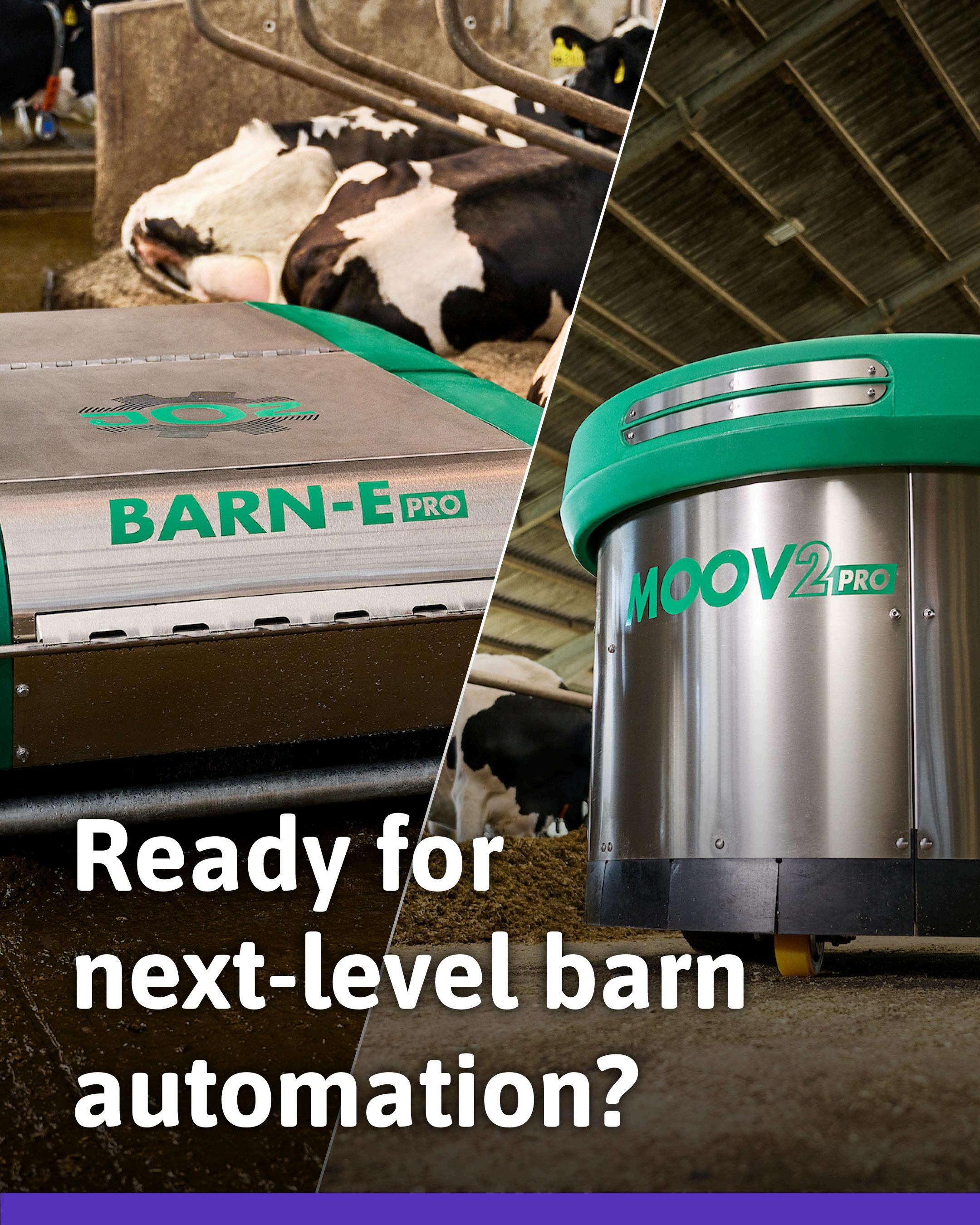
Supplementing grazing diets with coproducts such as brewers’ grains or C*TraffordGold, a moist wheat-based distillers feed, can help provide good digestible fibre (NDF of 50-60% and 25% respectively), protein contents of about 20-24%, additional energy and slow passage through the rumen. Their high palatability also encourages voluntary feed intake, helping cows achieve the dry matter needed for milk production and fertility.
“Including co-products such as brewers’ grains and C*TraffordGoldin spring rations helps ensure grass protein is fully utilised and supports efficient digestion,” says Ms Keep. They can also help counter the butterfat drop commonly seen at turnout. Because of their shorter particle length, they should be fed alongside longer fibre sources such as straw or lower-quality silage. Suggested inclusion rates are typically 5–8kg per cow per day, with oil levels carefully balanced within the ration.
Strong spring availability allows co-products to be clamped under anaerobic conditions and stored for up to six months, giving farms a practical buffer against later-season forage pressure, while fresh product remains usable for around six weeks.
“Co-product feeds are an effective way to bridge the dry matter intake gap at turnout,” adds Ms Keep. “As a buffer diet, they provide essential energy, encourage voluntary intake, and support both production and fertility. By carefully managing spring nutrition and including the right supplements, farmers can cost effectively protect cow health, maintain fertility, and make the most of their grazing season, ensuring long-term herd performance and profitability.”

James Holding Dairy Engineering
Unit 18, The Gardens, Malton Road, York, YO32 9TN
Office Tel: 01904 400449
James: 07807704884 info@jamesholdingengineering.com
Mcknight Dairy Services Ltd
Glenmaquin, Letterkenny, Co. Donegal, Ireland, Eir F92 X8C1
Tel: +353 8764 81124 www.mcknightdairyservices.com

Unit 17, Stainton Grove industrial estate, Barnard Castle, DL12 8UJ
Office Tel: 01833 625361 Mobile: 07828532868 www.gawengineers.com

Top pedigree Beltex and North Country Cheviot breeders
Katy Davies and Dafydd Owen, Dyffryn Livestock, Conwy, North Wales, take no chances when it comes to managing ewe health in the run up to lambing.
With around 200 ewes lambing indoors between February and March, including pedigree Beltex, North Country Cheviot and Welsh Mountain ewes, the couple remain highly alert to the risk of calcium deficiency, particularly given the financial investment in their breeding programme.
This year’s first batch of lambers includes recipient ewes carrying Beltex embryos, making close management in late pregnancy even more critical.
“It is not a cheap exercise to flush a ewe and implant an embryo into a recipient,” explains Katy. “We need to ensure survival of both ewes and lambs, and careful management, particularly in the last four weeks of pregnancy, is vital.”
Calcium deficiency most commonly occurs during the final weeks of pregnancy, when rapid foetal growth and colostrum production places significant metabolic pressure on the ewe. At this stage, demand for calcium can exceed the body’s ability to mobilise sufficient reserves from bone.
Katy says ensuring correct body condition at tupping, providing balanced nutrition throughout pregnancy and closely monitoring ewes in the final weeks before lambing are key preventative measures.
“We are always alert to signs of calcium deficiency and twin lamb disease,” she says. “If a ewe looks peaky, has rapid
breathing, tremors, seems uncoordinated or does not come to feed, that’s when we act.”
At the first signs of a calcium deficiency, their go-to solution is CalciEwe+, an oral calcium drench containing added energy, magnesium and niacin to support recovery from pre lambing exhaustion. “It’s a key tool in our pre lambing kit,” she says.
The couple previously relied on injectable calcium but switched to the oral drench three to four years ago.
“It’s much easier to administer and, because it also contains magnesium, energy and niacin, we find it helps the ewe recover more quickly.”
Dafydd, who also works on a neighbouring

farm lambing more than 550 Welsh Mountain ewes outdoors, says calcium related issues are often identified quickly when ewes fail to come forward to feed.
“When I see a ewe not come to her feed, I know something is wrong. I then identify the issue and administer either CalciEwe+ for calcium deficiency or MultiLamb Rapid for ewes suffering with twin lamb. I quite often administer both, as it can be difficult to distinguish between calcium deficiency and twin lamb disease,” he explains.
“Having these products to hand in the Gator to administer straight away is critical, as time is of the essence when treating downer ewes. Once administered, the impact is almost immediate. Within 20 minutes, she is often back up and behaving normally.”
The couple have enjoyed considerable success in the show and sale ring, topping 7,500gns at the Premier Sale in Carlisle last year with a tup lamb from their Smart Ass Beltex flock. They also topped the NSA North Country Cheviot Sale at Builth Wells with a tup from their Pen-Y-Bont flock, achievements that underline the importance of safeguarding ewe and lamb health.
“The secret to a good lambing is ewe health,” says Katy. “It has to be right from the start, correct body condition at tupping and correct nutrition throughout pregnancy. We also bolus at tupping which has a positive impact on scanning rates.”
Ewes typically scan at around 170 percent, although this scanning was down slightly on previous years, which the couple attribute to variable forage quality and weather-related stress.
Management does not stop once lambs are born. Every ewe has colostrum stripped and tested using a Brix refractometer. Colostrum measuring 26.5 percent Brix or above is fed either naturally or via stomach tube. If quality is insufficient, colostrum is sourced from another ewe or
supplemented with a high-quality powdered supplement. .
Katy says products such as CalciEwe+ and MultiLamb Rapid not only support ewes during periods of stress but can also help maintain milk let down.
“If a ewe has suffered from calcium deficiency or twin lamb disease, she can be reluctant to drop milk. But with the ewes we’ve drenched, you would not know the difference, they milk normally.”
She also highlights the cost benefits. “We often only need to administer CalciEwe+, as it contains available calcium, magnesium, energy and niacin. Acting quickly with the right products helps us to keep costs under control.”
Nia Williams, Commercial and Technical Manager at Nettex, says prompt action is essential.
“If calcium deficiency is identified or suspected and supplementation with a bioavailable calcium source is given quickly, ewes often recover within an hour,” she explains.
Because calcium deficiency and twin lamb disease are difficult to distinguish and can occur simultaneously, she advises a belt and braces approach, administering CalciEwe+ alongside a high energy supplement such as MultiLamb Rapid.
“With so many uncontrollable variables that can trigger these conditions, it pays to have products on hand ready to use at the first signs. Fast acting solutions can offset ewe exhaustion and support rapid recovery. When a ewe is suffering from a severe energy deficiency, she will benefit from the multiple energy sources provided by MultiLamb Rapid, in addition to the glucose precursors in Calci-ewe+”.
For Katy and Dafydd, preparation and vigilance remain central to a successful lambing season. “If we protect ewe health, everything else follows,” adds Katy.
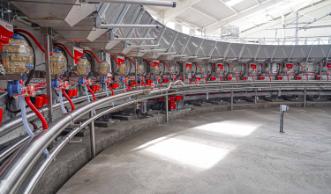
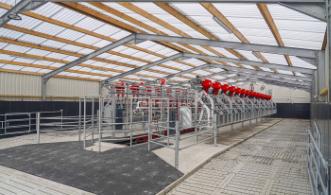
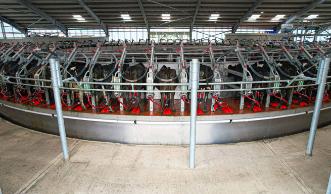
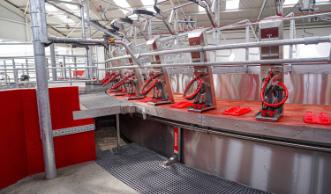
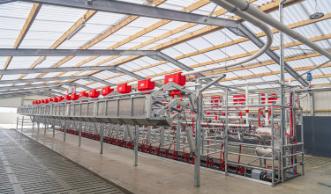
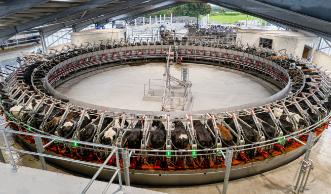
Established in 1948,Pearson Milking Technologyis a third-generation Irish engineering company with over 76 years of experience designing and manufacturingmilking parlours and dairy automation systems. From its headquarters inAthy, Co. Kildare, Pearson suppliesherringbone, double-up, rotary, and rapidexit parloursto dairy farms in over20 countries worldwide.

At the heart of every Pearson system is a commitment toengineering excellence, cow comfort, and milking efficiency. The company combines decades of craftsmanship with the
latestsmart technology and data-driven innovationto help farmers improve herd performance, reduce labour, and enhance overall dairy efficiency.
Through continuous product development and close collaboration with farmers, Pearson ensures that each system is tailored to meet the demands of modern dairy farming — balancing technology with reliability in every design.
Built on heritage, powered by innovation, and trusted by farmers globally, Pearson remainsthe farmer’s partner of choice — and The Smart Dairy Choice.

Farmers are being urged to utilise bolus technology during one of the most important stages in a dairy cow’s production cycle, the transition period.
According to smaXtec, which produces a bolusbased health management system, supporting cows more effectively from drying off through to the first days in milk can unlock significant health, labour and performance gains.
By using continuous internal monitoring technology, farmers can highlight disease concerns earlier, intervene sooner and streamline herd management. This is particularly important during a time of falling milk prices when farmers are looking for key efficiencies where they can.

For block-calving herds, she says the benefits are magnified. Calving alerts and health notifications reduce the need for constant visual observation, easing pressure during peak workload periods and enabling calving space to be used more efficiently.
Loretta Holder, customer success team lead at smaXtec, says: “The transition period is the highest risk stage of each lactation.
“The cow is going through huge physiological changes, there are feeding adjustments, group moves and management tasks all happening at once. It is a high-stress time for the cow and a very busy period for the farm team.”
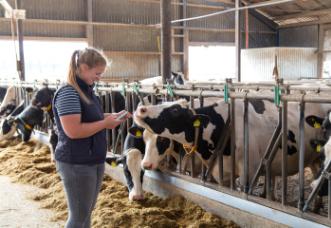
“Conditions such as ketosis and milk fever are often associated with freshly calved cows,” she explains. “But quite often, those metabolic instabilities begin before calving. By identifying temperature changes and rumination drops early, farmers can step in with nutritional or management support before the problem escalates.”
After calving, close monitoring of rumination and temperature can help ensure cows return to normal quickly. Early detection of retained placentas, metritis, mastitis or subclinical milk fever reduces the risk of long-term impacts on fertility and peak yield.
“Those first five days in milk are crucial,” Ms Holder adds. “If a cow does not get off to the right start, she will not reach her full production potential.”
That targeted approach is particularly valuable given ongoing labour shortages in the dairy sector.
Ms Holder says: “This technology is not a replacement for good stockmanship, it is a tool to help make the best use of skilled labour. Instead of checking every fresh cow as routine, farmers can concentrate on the individuals that data shows need support.”
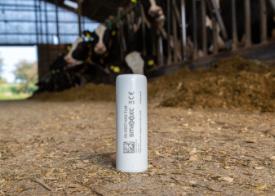
smaXtec’s rumen bolus technology continuously monitors internal body temperature and rumination, enabling farmers to detect subclinical issues before outward signs appear. Changes in rumination can flag reduced or variable feed intake, which in turn may signal the early stages of metabolic disorders.


Beyond individual cows, smaXtec also provides a whole-herd overview, enabling farmers and advisors to spot trends within transition groups.
“It’s not just about single alerts,” she explains. “If we see group rumination becoming unstable, that could indicate a feeding or management issue that needs addressing before it affects performance. Making small, practical changes and seeing their impact quickly helps farms keep improving.”

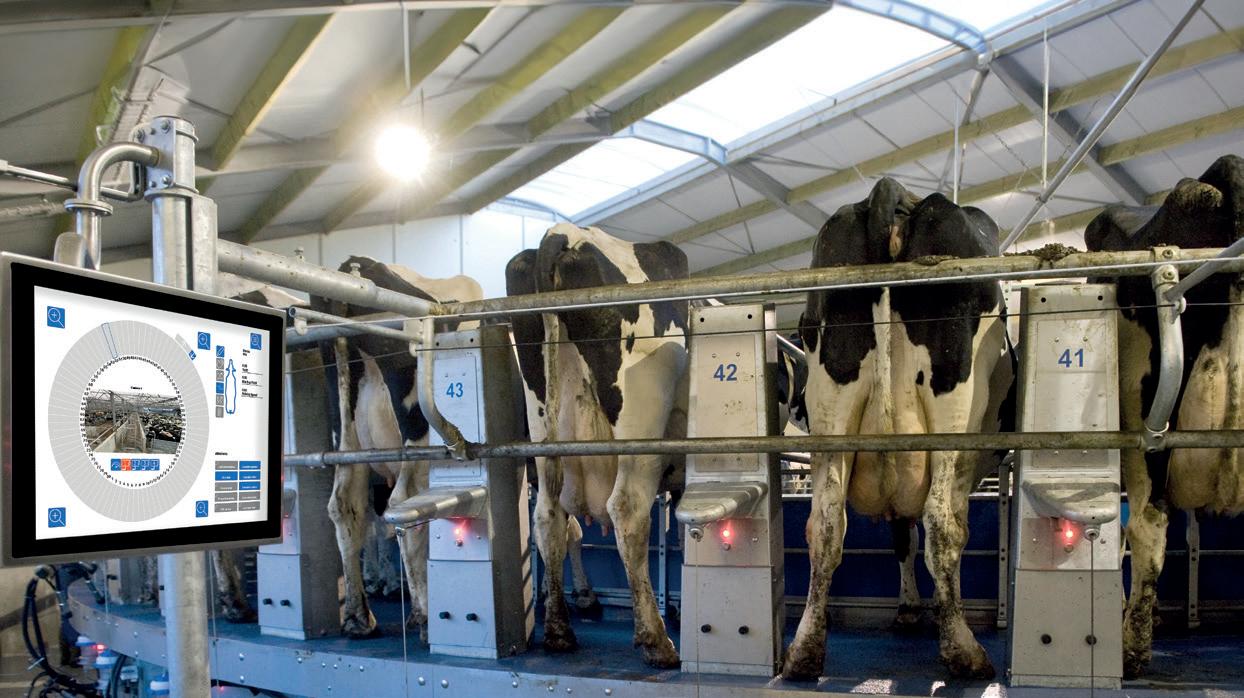
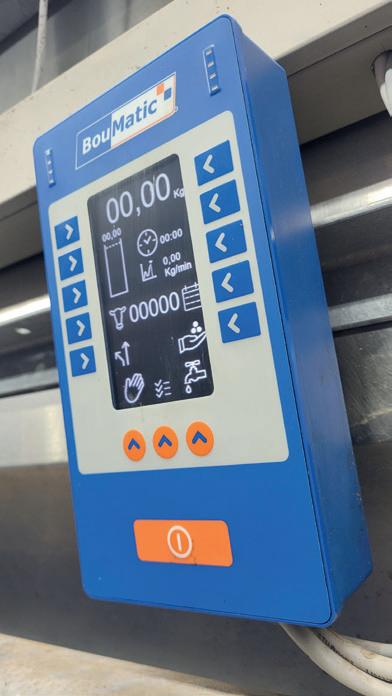
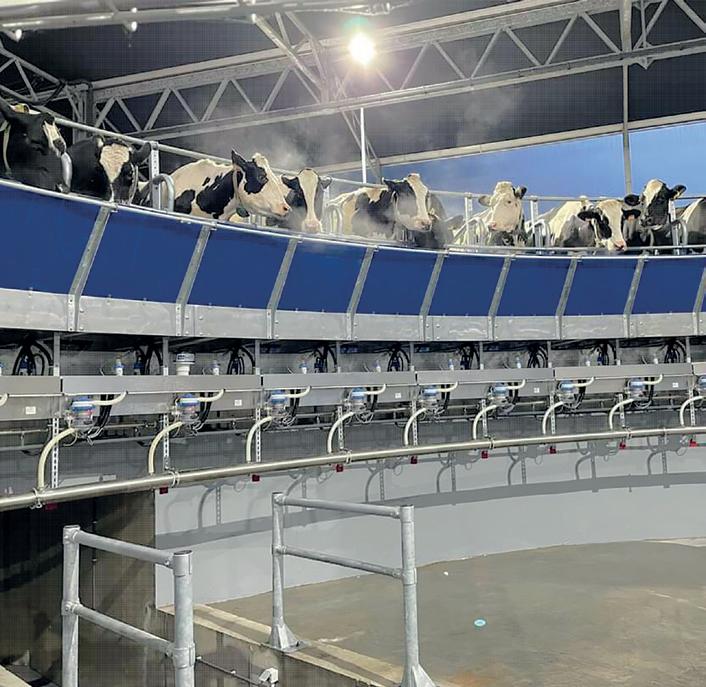

RUMA Agriculture has appointed James Russell as its new Chair, succeeding Cat McLaughlin, who steps down after six years in the role and more than a decade of service to the organisation.
RUMA Agriculture is one of the UK livestock sector's most influential voices on responsible veterinary medicine use, bringing together the full farm‑to‑fork supply chain to champion high animal health and welfare standards across the UK livestock industry. Its collaborative, evidence‑led approach has positioned the UK as a global leader in responsible antibiotic use and wider medicine stewardship.
For over ten years, RUMA Agriculture has driven major progress on antimicrobial resistance (AMR) with its Targets Task Force (TTF) —a model of sector‑led improvement—uniting vets, farmers and food businesses behind clear, measurable goals across all major livestock sectors. The TTF has recently entered its third phase of targets marking yet another important chapter in the AMS journey.
James Russell FRCVS is a highly respected veterinary surgeon, consultant, and professional leader with more than two decades of experience in clinical practice, veterinary policy, and animal health governance.
Commenting on his appointment as the new Chair of RUMA Agriculture, he says: "RUMA Agriculture has cemented itself as one of the UK's most authoritative voices on responsible veterinary medicine use. Its ability to bring the whole supply chain together ensures that animal health, welfare, and responsible medicine stewardship, remain central to UK agriculture.
"I'm honoured to take on this role and look forward to building on the strong foundations already in place. There is still much to do—both in maintaining our focus on AMR but also ensuring stewardship across other medicine classes.
"Cat leaves an exceptional legacy. Her skills, experience, wisdom and collaborative leadership have shaped RUMA Agriculture into the trusted, respected organisation it is today."
RUMA Agriculture's Officeholders (Bryan Lovegrove - Deputy Chair, Chris Lloyd - Secretary General, Tim Brigstock - Treasurer and Mary BawnCommunications Lead) summarised the achievements of Cat as RUMA Chair as follows:
'Cat McLaughlin has played a pivotal role in RUMA Agriculture's development, serving as Deputy Chair before becoming Chair, and contributing significantly to the organisation's strategy and influence.
Under her leadership:
• The RUMA Targets Task Force (TTF) which she chaired, has become a defining example of positive stewardship across UK agriculture and aquaculture.
• The organisation successfully navigated the challenges of COVID‑19, transitioning its biennial conference online and expanding RUMA's reach both in the UK and internationally.
• RUMA Agriculture continues to strengthen and modernise its communications and awarenessraising activities on responsible veterinary medicine use and driving reach and engagement both in the UK and beyond, to drive influence and engage with more stakeholders.
• The organisation provided substantial input into the first major UK‑focused changes to the Veterinary Medicines Regulations in decades.
• Cat has brought national attention to growing pressures around vaccine and medicine availability, now recognised as a key challenge for future stewardship.
• Work has begun to explore the environmental footprint associated with responsible medicine use an area that will continue to grow in importance.
Cat leaves a legacy of stability, progress and lasting impact, with many of the initiatives she championed now forming the foundations of RUMA Agriculture's future direction.'
In her final meeting this week at the organisation's AGM, Cat said: "It has been an absolute honour and privilege to Chair RUMA Agriculture for all these years. I am full of praise for the hard work and achievements of the Alliance which unites farmers, vets, food businesses, and policymakers around a shared mission: protecting animal health while preserving the effectiveness of vital medicines. This is a truly unique infrastructure – completely voluntary and incredibly effective.
"Responsible medicine stewardship has, and always will be, a multi-sector, multi-industry, team effort. I just hope that I have played even a small part in guiding the progress and journey of the organisations, sectors and industries that day in, day out, are committed to responsible use and delivering high health and welfare standards in UK livestock that are globally praised and respected.
"I congratulate James on his appointment. Under his leadership I know he will work hard to ensure the UK remains a global exemplar in responsible medicine stewardship, safeguarding the effectiveness of vital medicines while supporting a resilient, high‑welfare livestock industry."
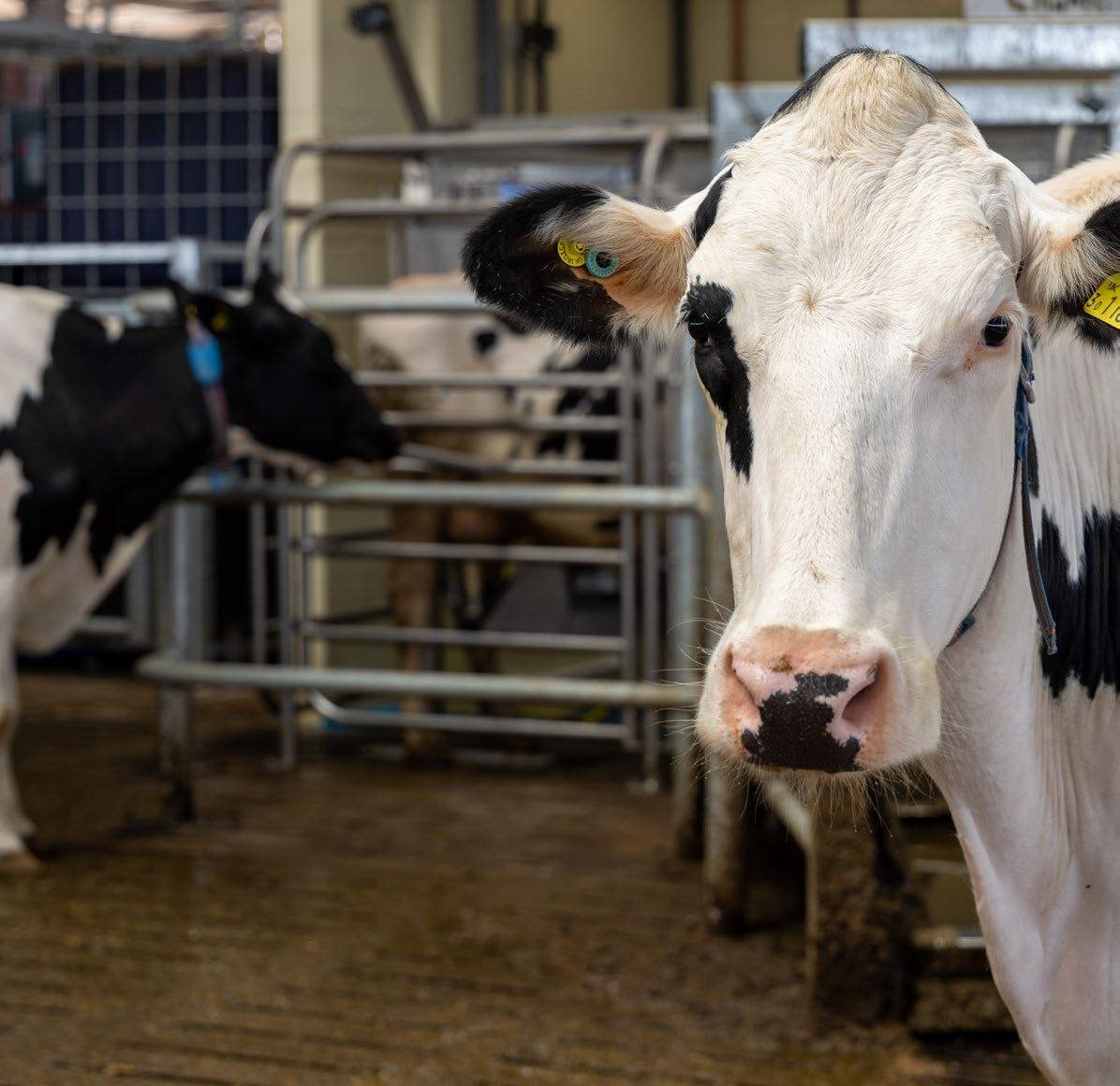
Churchill Dairy & Parlour Services
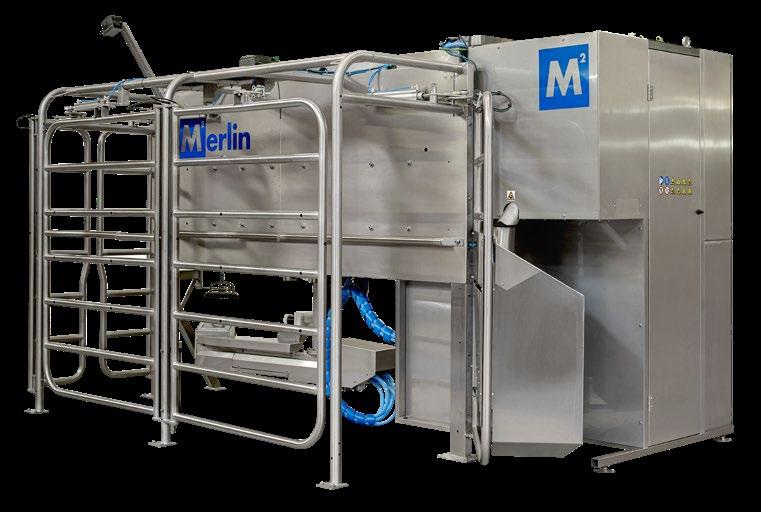
Goddards Farm, Sturminster Newton, DT10 2AZ
Tel: 07885371731
office@churchillsdairyandparlour.co.uk
Holding Dairy Engineering Unit 18, The Gardens, Malton Road, York, YO32 9TN
Office Tel: 01904 400449 James: 07807704884 info@jamesholdingengineering.com Fernshire Ltd
Chapmans Farm
Pristling Lane, Staplehurst, TN12 0HH
Tel: 01580 891199 www.neguschaseltd.co.uk
Wallace Engineers Ltd Unit 17, Stainton Grove industrial estate, Barnard Castle, DL12 8UJ
Office Tel: 01833 625361 Mobile: 07828532868 www.gawengineers.com
CalfExpert is a calf feeder that has been developed to meet the latest standards in calf feeding. State-ofthe-art feeding technology ensures that the milk for the calves is always freshly mixed. It does not matter whether milk replacer or pasteurised whole milk is used. CalfExpert prepares the milk automatically and individually for each animal.

You, as farmer, remain completely flexible in your work schedule while calves are fed 24/7. The calf feeder takes your calf rearing management to a whole new level.
Intuitive operation via the graphic display and the link to the CalfGuide mobile app make it easier for you and your team to monitor your animals. All the information about your calves, status reports and alerts are at your fingertips in the app and directly on the calf feeder at all times.
Different feeding programmes form the basis of successful and performance-oriented calf rearing in automatic calf feeding. Labour savings and complete supervision included.
Feeding a large number of calves with a fresh mix adapted to each individual calf is a major challenge. CalfExpert makes it child's play.
The CalfExpert calf feeder mixes the milk fresh for each calf. Any residual milk is kept warm and flushed out of the system following longer drinking breaks. Other calf feeders work with a
Feed calves automatically.
Organise feed changes gently: milk mixed freshly and precisely matched to the calf.
For healthy and productive calves.
central milk supply. In milk stored this way at 40 °C, the bacterial count doubles every 20 minutes. In contrast, the CalfExpert guarantees maximum hygiene and feeding suitable for every individual animal.
A central milk supply has another major disadvantage: modern feeding programmes (e.g. metabolic programming) require a higher CMR concentration (e.g. 160 g/l) at the beginning of rearing to stimulate performance. However, a lower milk replacer powder concentration (130 g/l) is necessary in the weaning phase. This individual animal feeding can only be achieved if the mix is prepared individually for each calf, as is the case with CalfExpert.
We have accelerated the mixing process and the change of calves in the CalfExpert, thereby optimising utilisation of the HygieneStations.
Milk is mixed quickly and can be called up at the feeding station after just 3 seconds. Once the milk meal is finished, a switch is immediately made to the second feeding station. Here, a second calf can be fed immediately while the first is still satisfying its need to suckle.
In addition, priorities can be specified in the CalfExpert menu so that young or sick calves are given preferential treatment. The tried and tested flexitime programme ensures that meals are distributed very evenly throughout the day
without clusters of visits to the stations. The result is reduced waiting times with high animal occupancy and a positive "visiting experience" for the calves.
Since CalfExpert does not restrict feeding to certain times of day, calves can come and feed at any time. Your calves will no longer see you as a nurse and will therefore remain calm when people enter the barn. Younger and weaker calves have all the time they need to consume their full ration.
As the CalfExpert also works with an intelligent credit logic, all calves have a feeding credit at a different time. As a result, fewer animals crowd around the station. The anti-pirate milk valve ensures that stronger calves do not steal milk. The result: extremely uniform, relaxed groups of calves.
QuadroFlex: simultaneous and yet flexible feeding
With the new QuadroFlex system, four calves can feed at the same time at two PowerMixers. The CalfExpert mixes the milk freshly when calves wish to drink. This means no tank supply system is required. The feeding quantity is determined precisely for each calf by maintenance-free sensors. If a calf requires a special mix e.g. including medicine or electrolytes, only the sister stall at the same PowerMixer is switched off. Feeding continues at the second Power Mixer at both stations. This allows 120 calves to be fed at 4 HygieneStations. Thus the capacity of the CalfExpert has been increased by approx. 20 –30 % compared to its predecessor H&L100.
Flexible feeding programmes
Modern feeding programmes should always adapt to the age and breed, personally set rearing goals and state of health of the calves. CalfExpert allows you to do all this in the optimum way.
Weaning process
CalfExpert prepares your calves in a particularly gentle way for the intake of concentrate and roughage. It reduces the amount of feed at the end of rearing in small steps of 0.1 l per day and thus stimulates the development of the forestomach system.
8 feeding curves
CalfExpert can be used to turn any feeding programme into reality. Feeding curves can be adjusted very flexibly in each of the 8 groups.
Up to 16 "turning points" allow you to fine-tune your personal feeding concept down to the last detail. Or you decide in favour of one of the proven and pre-set CalfExpert feeding programmes.
Intensive feeding in the first few weeks of a calf's life will usually lead to significantly higher milk production later. However, the correct weaning of calves, for example after an ad libitum phase, poses particular challenges for every calf breeder. With CalfExpert, each calf is slowly weaned off high milk intake, in terms of volume as well as concentration.
Flexible feeding also means that a wide range of CMRs and additives have to be prepared in an optimum and lump-free way. The continuously variable PowerMixer ensures a soft start to avoid splashing and then stirs the milk replacer powder thoroughly. This means the calf receives its freshly mixed milk directly at the teat in just 3 seconds.
The feeding process can sometimes take longer where young or weak calves are involved. We prevent the separation of the milk replacer powder by slow permanent stirring. And if it gets colder, the heater in the mixer always ensures the mix is kept at a constant temperature, for no matter how long the calf needs.
The new option allows the CalfExpert to feed two different types of milk replacer (CMR).
The milk powder compartment is at a 90° angle to the CalfExpert and feeds milk powder into the PowerMixer of the machine via a dosing augur on the side. The volume of 50 kg of CMR can be supplemented by a further 25 kg via the additional powder chamber. This gives the CalfExpert the largest milk powder storage capacity of any automatic feeder on the market, with a maximum powder storage capacity of 150 kg (2 x (50 + 25 kg)). Ideally, this is done in such a way that one type of milk replacer slowly takes the place of the other. This can make sense, for example, if a highquality skimmed milk replacer is to be used in the first few weeks of life in order to promote the early development of the calves with highly digestible CMR.
Later, cheaper milk replacers can be used, whose ingredients (e.g. certain proportions of high-quality vegetable proteins) are intended
to support the transition to ruminant.
Minimal doses of feed additives can be added to the milk diet in order to stabilise the gastrointestinal system. Sick calves can be treated with medicines in the milk. You can use two powder dosing units and two liquid dosing units. As with the milk programme, you can set different feeding curves for these additives as well. This means maximum flexibility for top calf health.
Whole milk is digested perfectly by the calf and results in the best performance. With the CalfExpert whole milk programme you can set whole milk proportions or supplement the whole milk in the feeing programme flexibly. What happens with your feeder when the whole milk supply has been used up? Does it then feed powdered milk? This causes changeover stress with your calves and is likely to cause digestion problems. "EvenMilk", our intelligent whole milk control, knows how much whole milk is available and how much is to be fed. It makes sure that whole milk and CMR are mixed in balanced proportions even when whole milk quantities fluctuate daily.
A calf feeder is designed to make your work easier and perform continually for 24 hours. To achieve this it has to work reliably under the rough conditions of a calf stall, like the CalfExpert does.
All hose systems used to have deposits of contaminated milk because they had not been cleaned often enough or thoroughly enough. The HygieneStation rinses the entire milk hose through to the teat during longer drinking breaks. In addition, the complete milk system is cleaned several times every day. If theDoubleJugmilk tank is used, the supply line to the CalfExpert is also cleaned automatically. This will reduce a calf’s exposure to bacteria, improve the health of the calves and save on manual cleaning.
To optimise cleaning even further, the CalfExpert can use two different cleaning agents: either alternate with each cleaning cycle or combine in one cleaning cycle (alkaline, rinse, acid, rinse). The cleaning agent pumps are fitted on the outside. They
can thus draw directly from the tanks. This is safe and convenient. In addition, the CalfExpert generates automatic messages as soon as a canister is empty.
Two large doors protect the critical area where the mixer bowls are located. This keeps flies away from the milk and avoids problems in the milk system. The doors can be locked so children cannot be harmed or injured.
The 7″ graphic display not only allows all calf data to be conveniently viewed. Pressing the key with the book icon opens help texts and information from the operating instructions at every level of the application.
Calves love the outdoor climate, your CalfExpert does too. It comes with a frost protection programme that is activated automatically as soon as there is a risk of frost. Sensors in every HygieneStation and in the CalfExpert mixing chamber measure the ambient temperature and then adapt the mixing temperature and intensity of the frost protection programme accordingly. You can clean the outer surfaces of the automatic feeder with water, since all the sensitive components are water spray-proof.
Regular inspection of the technology is easy: you can test all the important CalfExpert components quickly and easily in the maintenance menu. You can also carry out calibration quickly yourself, because the software always tells you exactly what to do. We recommend that you have your CalfExpert serviced by a qualified technician at least once a year. This provides you with the peace of mind that the automatic feeder will be ready for the next rearing cycle.
The CalfExpert checks the flow rate of milk and water at regular intervals. ensuring a consistent amount of water for the calves without your needing to actively worry about it. Although this unfortunately does not apply to the amount of powder, the machine will remind you as soon as calibration needs to be performed. However, with its Brix-TS option, CalfExpert compensates for deviations in the mix concentration, so that you are always surethat the calves have been fed correctly.
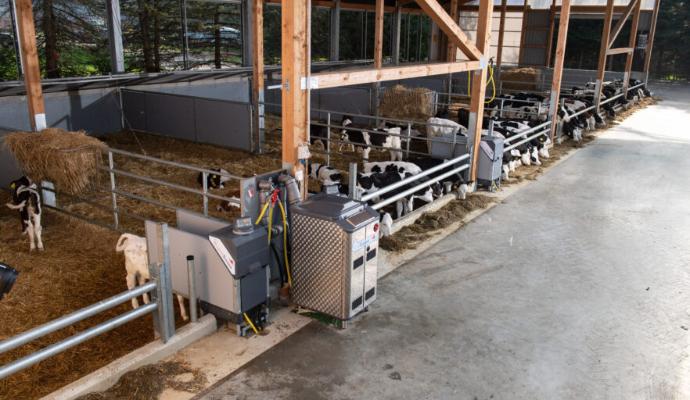
Kill two birds with one stone: CalfExpert not only frees you up from tedious and strenuous work. Intelligent software and smart operation also increase feeding quality.
We deliberately avoid the use of touch technology and rely instead on the use of SmartKeys, meaning that a CalfExpert can be operated reliably even in frost, rain, with gloves or even dirty fingers. The illuminated SmartKeys guide you through the programme.
The completely new control software offers maximum clarity and simple CalfExpert operation. All calf data with individual feeding curve, alarm lists, technical parameters etc. can be viewed on the 7" display. The Wi-Fi connection also allows you to retrieve individual items of data on mobile devices and to receive push notifications in the event of error messages.
Calves supplied with a lot of energy start lactation at an earlier age and produce more milk later on. CalfExpert also provides you with the best prerequisites for optimum animal health. This means a lower death rate and more animals in the herd reared from your herd offspring. This in turn gives you the opportunity to select the offspring in a targeted
manner and to sell surplus heifers at a profit. And last but not least: by saving working time, you are freeing up capacities on your farm that can be used profitably.
CalfExpert comes with a WiFi interface as standard. The CalfGuide app allows you to access important information directly on your mobile phone. This includes the general calf feeder data and details of the calf lists with the entire calf history. You can easily modify calf information and feeding curves in the app. The CalfExpert also sends messages when the cleaning containers are empty, for example. A particularly practical feature is a health check, which allows you to objectively assess the health of your calves.
Ammonia irritates the mucous membranes of calves, even in small doses. This can lead to bronchitis in the long run, which can soon turn into pneumonia. Ammonia is only perceived as an odour when it is already in the harmful range. AmmoniaDetect is an electrochemical sensor that permanently measures ammonia levels in the barn air. It is installed directly in the lying area, protected from the calves by a pipe. CalfExpert analyses the measured values continuously and documents them in a chart. This enables you to optimise the ventilation of the calf barn and determine the best time for mucking out.
Feeding biologically active nutritional supplements that have been proven to reduce scours and BRD in calves could help bolster disease prevention strategies on many UK dairy and beef units.
So says Rumenco Technical Services Manager Dr Alison Bond, who highlights the continuing impact of these two most damaging diseases whilst stressing the importance of a preventative approach.
“Scours is responsible for over half of all calf mortality in the first four weeks of life, and then as calves grow older it is respiratory diseases that become the greatest threat,” she says.
“The losses associated with mortality, treatment, veterinary intervention and the impact of reduced performance are considerable in both cases, so it will always be better if disease can be avoided in the first place.
“Managing to minimise the external risks is the first step, with general hygiene, optimum stocking densities, good building ventilation and the avoidance of unnecessary stress being paramount. It is then as important to build resilience on the inside, by ensuring calves are equipped with the best possible gut health to tackle any challenges, and there are proven and cost-effective feeding solutions to help achieve this.”
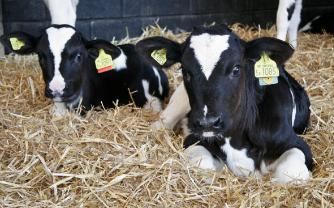
Rumenco now includes the feed supplement Celmanax in its Maxx Calf Health and Maxx Cattle Booster buckets, because of its proven ability to reduce the incidence and impact of scours and BRD. Produced from yeast culture and yeast cell wall extracts, Celmanax contains refined functional carbohydrates (RFCs), which are biologically active prebiotics and postbiotics that deliver a host of gut health benefits that give livestock the capabilities to fight off a broad range of challenges.
“Including a fermented yeast culture in rations is now quite well understood in terms of stabilising the rumen environment, improving dry matter and protein digestion, and boosting intakes,” explains Dr Bond. “However, with Celmanax, there are specific benefits in relation to the refined functional carbohydrates, with mannan oligosaccharides (MOS), for example, supporting the growth of beneficial bacteria, and mannose able to bind to pathogenic bacteria to minimise their impact. Other elements, like beta glucans, will support the immune system and minimise the effect of stress factors such as mycotoxins.”
Rumenco’s inclusion of Celmanax in key products is based on robust data from large scale trials, including a number conducted in North America.
“Extensive research has been carried out, looking at how feeding Celmanax impacts on the incidence of scours and BRD, and how this translates into key parameters like growth rates.
“In one large scale trial that monitored 160 calves from 3 days of age through to 8 weeks, groups receiving Celmanax (at 2g/head/day) showed a significantly reduced probability of shedding Salmonella and rotavirus. The treated calf groups were 2.5kg heavier at 50 days compared with the control group.
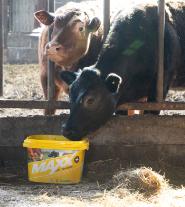
“In another study involving a total of 3,000 older cattle, the impact of feeding Celmanax (at 2g/head/ day) on BRD was monitored over a period of 66 days. This trial showed a significant reduction in BRD cases, with 32.4% in the treatment group compared to 42.4% in the controls. This translated into improved growth rates over the period, with the cattle receiving Celmanax achieving 1.37kg/day compared with 1.25kg/day in the control groups. At the end of the feeding period, the treated cattle were on average 9.7kg heavier. When both the reduced treatment costs and the improved weight gains were taken into
account, this trial demonstrated a 19.5:1 return on investment when feeding Celmanax.”
In addition to its inclusion in Maxx Calf Health and Maxx Cattle Booster buckets, Celmanax is also available as a 25kg Farm Pack, suitable for inclusion in total mixed rations or as a feed dressing.
Full details of the trial work carried out on Celmanax are available through Rumenco.
Farmers are being encouraged to adopt season-long worm and fly protection strategies in their dairy and beef herds to help prevent significant production and economic losses during the grazing season, while easing the animal stress and labour costs of gathering and handling them several times.

Studies have shown worms can cause up to a 30% reduction in growth rate in youngstock1 and there is a significant difference in the impact of moderate vs high worm challenges during the grazing season. Moreover, fly worry can affect cattle of all ages, causing growth rate losses of up to 0.3kg a day and 0.5 litres per cow per day milk loss2 in dairy cows.
Patricia van Veen, veterinary surgeon and national veterinary manager at Zoetis, comments: “First and second season grazing youngstock are at particular risk as they are naive and therefore vulnerable to worms due to pasture worm burdens from overwintering larvae or eggs passed by previously infected animals. Spring and early summer offer ideal conditions for worm larvae to develop and pasture burdens to build to levels that may cause disease and production losses in grazing livestock.
“Flies can lead to problems in cattle of all ages, like fly worry and diseases such as pink eye and summer mastitis, which have the potential to spread among batches and seriously impact animal health, welfare and future productivity. Early intervention from the start of the grazing season will help manage flies before their numbers escalate as they can rapidly multiply.”
Andrew Venables from Hills Green Farm near Macclesfield, Cheshire has previously found gut and lungworm a challenge in his dairy herd.
“In the past, when we used drenches and pour-ons, we would have to treat every three to four weeks,” recalls Andrew. “Youngstock are now injected with the long-acting injectable wormer CYDECTIN 10% LA Solution around turnout which helps avoid the additional stress of gathering and handling them multiple times at grass and enables us to hit our growth targets.
“The strategy is much less labour-intensive and reduces animal stress, which works for this group of animals, grazing away on the farm.”
CYDECTIN 10% LA Solution is a single-shot
injection containing moxidectin to treat and control gastrointestinal roundworms and lungworm in cattle. It allows animals to develop a natural immunity when exposed to larvae passing through the gut wall, initiating an immune response before being killed by the wormer.
“Faecal egg counts are also taken to monitor roundworm levels, and future field burdens. Although faecal samples are less useful to diagnose lungworm in acute disease, it is still important to know it is present on the farm,” adds Andrew.
“Since using the injection we have had more consistent growth rates during the grazing season, whereas we had a lot of ups and downs with the previous worm control strategy. The youngstock have been ready to serve earlier, reaching our target of 350kg liveweight easily by 15 months.”
Andrew also trialled FLECTRON ear tags in a block of first season grazing heifers and second grazing season bulling heifers during the 2025 grazing season, having previously had one or two cases of pink eye, mastitis and blind quarters each year due to flies.
“We noticed very little fly activity and related behaviour like fly-worry, in the two groups that were tagged with FLECTRON, throughout the season; there were a lot more flies and fly worry in the batches that were treated with a spot-on treatment, as there were clearly some gaps in coverage,” comments Andrew. “We saw no cases of pink eye or summer mastitis in those fly-tagged animals and no blind quarters after calving and milking, which was an excellent season outcome!”
Andrew adds: “One tag per heifer, applied early, carried us right through to the end of the grazing season and once they were in, they were in! While the cost of the tags is similar to spot-ons, we saved on handling, animal stress and mid-season interventions, and tag retention was excellent.”
FLECTRON tags offer five months protection against nuisance and biting flies and have a zeroday meat and milk withdrawal. They work by slowly releasing the active ingredient, cypermethrin, onto the tag’s surface which acts as a constant reservoir throughout the season.
For further information contact your local farm vet or qualified animal medicine advisor or visit www. zoetis.co.uk
Balanced energy and rumen stability at turnout are vital to protect butterfat levels and fertility. Rumen-protected fat supplements offer a proven way to overcome seasonal challenges while maintaining milk quality and herd performance.
Each spring, dairy producers face the familiar challenge of balancing rumen function and energy supply as cows transition from winter rations to lush, early-season grass. This period, known for unpredictable grazing conditions, often brings the double blow of butterfat depression and reduced fertility.
According to Dr Richard Kirkland, Global Technical Manager for Volac Wilmar Feed Ingredients, rumen-protected fat supplements have proven to be an effective solution for maintaining both milk quality and herd performance.
“Rumen-protected fats provide energy without adding to the acid load in the rumen, helping to stabilise rumen conditions while supporting fertility and milk fat production,” explains Dr Kirkland. “This makes them a valuable tool for producers who
want to mitigate butterfat depression while also optimising cow performance.”
Butterfat depression at turnout is the result of the rapid dietary shift from controlled, higher-fibre winter rations to varying intakes of grass that is low in fibre but high in sugar and oil. This highly fermentable forage speeds passage through the rumen, upsetting pH balance and altering rumen function in a way that specifically reduces milk fat production.
“The rumen is being challenged by a switch from a more controlled and consistent winter ration to grazed grass,” says Dr Kirkland. “The drop in rumen pH is a huge risk factor to acidosis, feed efficiency and compromising energy supply.”
Spring turnout coincides with early lactation for many – a period when cows’ energy demands are at their peak, but feed intakes are limited. As a result, cows mobilise body fat to fuel milk production, slipping into negative energy balance.
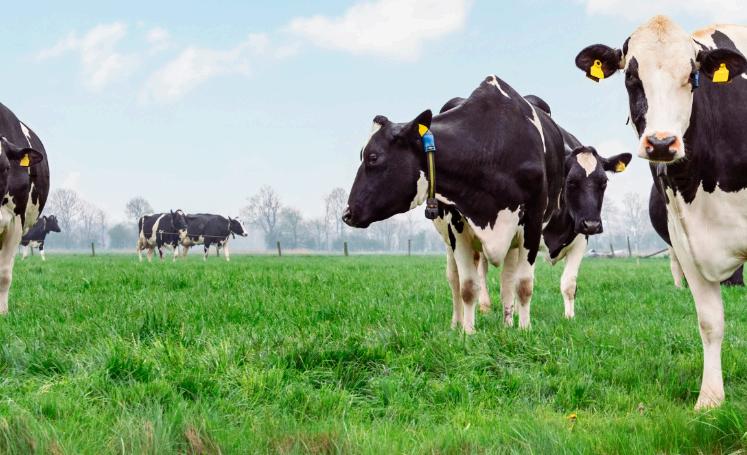
Research from the University of Nottingham shows that every 0.5-unit loss in body condition can reduce conception rates by around 10%.
Variable grazing conditions compound this challenge. Wet, overcast weather can reduce dry matter intake and restrict energy supply.
According to Dr Kirkland, only part of this energy gap can be safely filled with cereals. Instead, producers should use a rumen-safe energy source like a rumen-protected fat manufactured to pass through the rumen and minimise rumen disruption.
“Cereals offer rapidly fermentable starch, which overloads the rumen with acid and pushes down rumen pH,” says Dr Kirkland. “Rumen-protected fat supplements not only support rumen function and deliver nutrients much more efficiently to the small intestine, but they also carry an energy density 2.5times greater than cereals.”
Supporting fertility and milk quality
While butterfat depression is a huge focus at spring turnout, dairy farmers also need to prioritise meeting energy demand for fertility.
Fatty acids supplied through rumen-protected fat supplements not only help meet energy needs, but depending on type, also influence nutrient partitioning to body condition, conception and embryo development.
“The oleic fatty acid (C18:1) helps improve body condition and supports the development of fertilised eggs,” explains Dr Kirkland. “Meanwhile,
the palmitic fatty acid (C16:0) drives milk fat synthesis. A balanced supplement delivers the best of both worlds – protecting fertility while lifting milk fat production.”
Mega-Fat 70 is a balanced rumen-protected fatty acid supplement, providing a higher level of C16:0 than standard calcium salts while still supplying the important rumen-protected source of C18:1.
Ultimately, rumen-protected fat supplements should be selected based on the blend of fatty acids they contain, depending on the stage of lactation, individual farm challenges and requirements to maximise returns from specific milk contracts.
To help producers get more value from rumenprotected fat supplements, Volac Wilmar Feed Ingredients has launched the Fat Supplements Return on Investment Calculator 2.0. This free tool analyses herd-specific data such as milk yield, milk composition, fat percentage, feed rates, ration fat content, and milk contract type. It then calculates which rumen-protected fat supplement delivers the best return, helping farmers improve feed efficiency, profitability, and overall herd performance.
“Rumen-protected fat supplements are a proven way to support both fertility and milk quality at turnout,” concludes Dr Kirkland. “By selecting the right fatty acid balance and using tools like the ROI Calculator 2.0, farmers can make data-driven decisions that protect herd health and deliver maximum returns.”
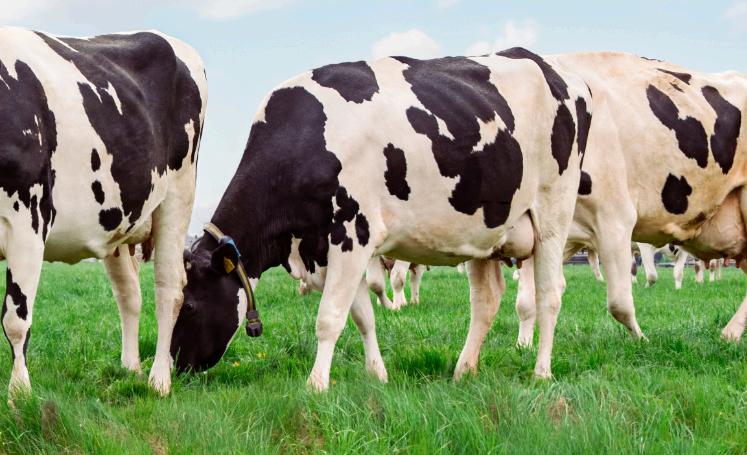
With milk prices under pressure and margins tightening, many dairy farmers are focusing on maximising milk from grass. However, the transition from winter diets to grazing must be managed carefully to maintain cow health and performance.

Managing diet changes at turnout is key to optimising rumen function and avoiding production setbacks, says Dr Colin Byrne, ruminant technical and deployment manager at Lallemand Animal Nutrition.
“Rumen pH is everything,” says Dr Byrne.
“To ensure efficient rumen fermentation, the rumen needs to remain above pH 5.8 to maintain a stable microbial environment. Lush spring grass ferments very quickly in the rumen, which can cause pH to drop if cows aren’t properly adapted.”
Introducing a rumen-specific live yeast ahead of and during the grazing season can help support cows through the dietary transition.
“It helps cows cope with dietary changes at turnout by supporting fibre-digesting microbes and stabilising rumen pH,” he says.
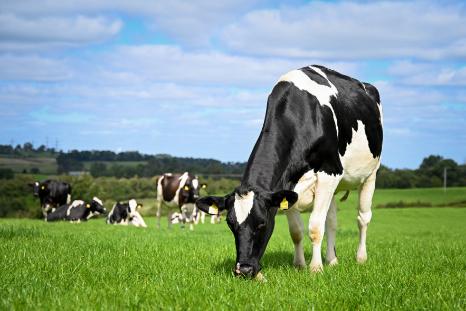

“With milk prices where they are, farmers are understandably looking to make the most of lowercost feeds like grass,” says Dr Byrne.
“But the move from winter diets to grazing can cause rapid changes in the rumen environment if it isn’t managed properly.”
Fresh grass differs significantly from conserved forage in terms of fibre levels, sugar content and fermentability.
These differences can disrupt rumen microbial balance and increase the risk of sub-acute ruminal acidosis (SARA), which can reduce feed efficiency and cow performance.
“When cows move from a conserved forage diet onto lush grass, the rumen microbial population needs time to adapt,” he explains.
Research has shown that cows fed diets containing the rumenspecific live yeast Saccharomyces cerevisiae CNCM I-1077, known as Levucell SC, spend significantly less time under SARA.
In trials, rumen pH dropped below the critical threshold for around 240 minutes per day on control diets, compared with just 78 minutes per day when the rumen-specific live yeast was included1
But good grazing management remains essential, says Dr Byrne.
Gradual turnout is still best practice when introducing cows to grazing, allowing the rumen microbiome time to adapt.
“Most dairy farmers want cows out at grass day and night as soon as possible, particularly when they are looking to maximise milk from forage,” adds Dr Byrne.
“But protecting rumen function ahead of turnout helps minimise production blips and keeps cows performing consistently.”
For herds supplementing grazing diets with concentrates, Levucell SC TITAN can be incorporated into compound feed formulations to ensure live yeast stability, providing an additional tool to support rumen function during periods of dietary change.
1 Bach et al., 2007. Anim. Feed Sci. 146-153
new sunshade from Contented Products provides comfortable respite for hot sows in outdoor paddocks –reducing stress and maintaining productivity.
Climate shift that’s creating prolonged periods of intense sunlight poses a serious risk for outdoor pigs. Last summer’s maximum UV Index in eastern counties recorded ‘Very High Risk’ of harm every month from May to August, while experience in 2024 also revealed that periods of ‘Very High’ levels can occur as early as March.
In Essex last year, ‘Very High Risk’ warnings were issued on 37 days (61%) of June and July – with one period of 22 days in June when the max daily UV never dropped below High Risk. Under such intense conditions outdoor sows can suffer adverse effects from sun, as well as productivity losses in hot conditions.
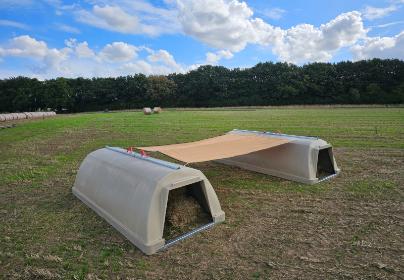

Rob advocates a reduced reliance on wallows to cool sows delivers savings in water, labour and machinery, while reducing hygiene risks.
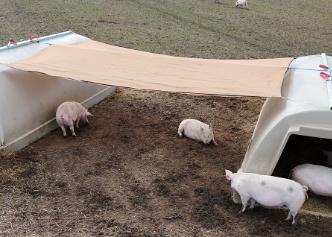

Norfolk outdoor pig farmer and Con-Tented Products consultant, Rob McGregor, highlights that productivity losses from heat stressedsowscan adversely affect conception rates,litter sizes and potentially create spikes in mortality. Boars are also highly susceptible to heat stress affecting activity and fertility.
“Stock seeking to escape the heat of the day in huts and wallows creates greater stress on individual sow behaviour and disharmony across the herd – which inevitably impacts on productivity,” he advises.
“Providing effective shade in dry sow paddocks improves comfort for sows and boars during hot weather. That helps to reduce heat stress and encourage animals to spread more evenly across the paddock.”
This season Con-Tented Products has introduced a new sunshade to span between the company’s large dry sow arcs. Constructed from durable shading fabric, it creates a generous shaded sleeping area.
The shade fabric blocks UV light, while allowing heat to escape. Furthermore, the fabric and the design prevent water pooling in the event of heavy summer rainstorms. The rip-stop construction offers a long service life and reduced waste.
Con-Tented pig specialist, Jamie Macdonald, highlighted the quality of the shades assures they are not single season use that would end up in landfill after one summer.
“They offer incredibly good value when measured against returns. Pig farmers are often accustomed to investing large sums to make small gains in welfare andherd performance. The cost per sow or per litter produced from a paddock of up to 30 sows sharing a 4 m x 6 m shade can berecovered in no time at all,” he says.
Typically, 30 - 40 shades are used on a large 1000+sow commercial breeding unit during gestation in the service and dry sow group housed paddocks.
Con-Tented Products will be on show at the Cereals Event on Jeremy Clarkson’s Diddly Squat Farm in June – including the revolutionary Clarkson’s Ring; designed in conjunction with Jeremy and Kaleb Cooper to protect newborn piglets in the farm’s Con-Tented farrowing arcs. Or visit the website: https://contentedproducts.co.uk
t Quadcrate, we design and build ATV equipment that keeps farmers moving — even when the wind bites, the rain lashes down and the ground turns rough.
Our attachments are trusted across the UK and Ireland to help carry lambs, feed, fencing gear and daily essentials safely and efficiently. Built and tested on our own family farm, Quadcrate products are made for real agricultural work — not showroom floors.
But this year, we’ve taken things further.
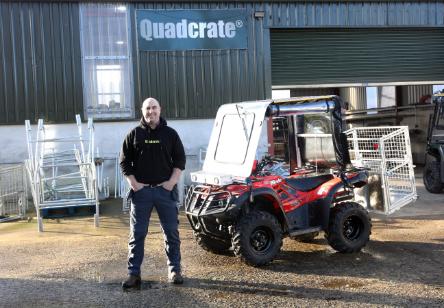
• Stay dry during lambing and winter feeding
• More comfort on long days
The Bubble Cab is designed to stop bad weather holding farmers back.
• Full protection from wind and rain

• Two sizes available – Standard & Big Bubble
When the forecast turns against you, the job still needs done. The Bubble Cab transforms your ATV into a practical, all-weather working machine — helping you stay out longer and get more finished.
Farmers who’ve fitted our Bubble Cab say it’s a game changer during harsh conditions — making everyday tasks quicker, more comfortable and more productive.
✔ Save Time
✔ Reduce Labour
✔ Increase Efficiency
✔ Improve Comfort
✔ Work Through the Weather
If you rely on your ATV every day, why let the weather dictate when you stop?
Dealer opportunities available. 07736 177 626
info@quadcrate.co.uk
www.quadcrate.co.uk
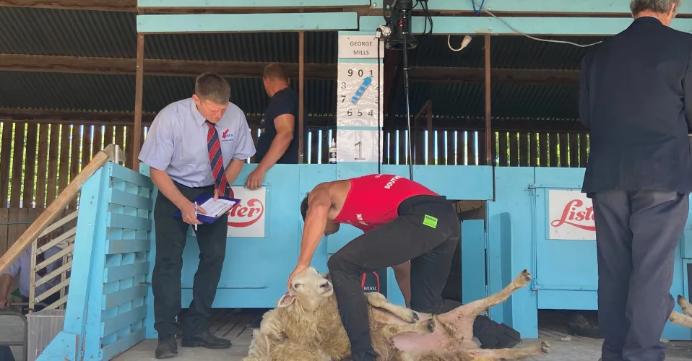
Farmers, shearers and industry professionals from across Scotland and beyond will gather at Wedderlie Farm, by kind permission of the Tilson family, for the muchanticipated NSA Scotsheep 2026 event, organised by the National Sheep Association (NSA) Scottish Region. Among the many exciting highlights will be the Team Shearing Competition, showcasing the skill, efficiency and teamwork of competitors from across the region.
The Team Shearing Competition will be a singleclass format, with all teams competing together. There will be no separate Open or Intermediate sections, ensuring a straightforward and competitive structure. Entry will be limited to 10 teams, each consisting of two shearers and one woolhandler.
Teams will be required to register at 12pm and be signed in and ready to compete by midday. The competition will begin at 12.30pm, with proceedings expected to conclude at approximately 4pm.
An entry fee of £20 per team will apply.
Teams will be judged on the quality and consistency of their shearing, presentation of the sheep and adherence to the highest standards of animal welfare. The event promises to deliver a competitive and engaging display of teamwork and professional skill.
Competition Details
Format: One class only, with all 10 teams competing together.
To Enter: Up to 10 competitor entries are welcome, on a first come best served bases and theentries close on Monday 1stJune. You can register to enter by contactingevent organiser Julia Bell, on 07708 114380 orscotland@nationalsheep.org.uk.When registering,please provide your name, email and mobile number.
Entry Registration & Fees:Competitors, on the day of the event, must register by 12 Noon at the sheep shearing building and pay an entry fee of £20. All competitors will have to buy admission tickets to the event - £20 for adults, free for NSA members.
Team Composition:Maximum of 10 teams, each consisting of two shearers and one woolhandler.
Timing: Registration at 12pm. Competition begins at 12.30pm and is expected to finish at approximately 4pm.
Entry Fee:£20 per team.
Entry Limit:10 teams (first come, first served unless otherwise stated).
Prizes:1st prize: £300 each, trophy and sash, 2nd prize: £150 each and sash.3rdprize: £75 each and sash
NSA Scotsheep 2026 at Wedderlie Farm is set to deliver a vibrant and informative day for the sheep industry, with the Team Shearing Competition providing one of the key highlights of the event.
dding value, protecting against disease threats, and boosting efficiencies are at the top of many pig and poultry producers’ agendas. And such topics will be firmly in the spotlight at this year’s British Pig & Poultry Fair, with expert speakers taking to the stage to explore how farmers can make the most of their pig, broiler and laying units.
In the specialist Pig and Poultry Forums, visitors can hear about the market outlook for eggs, poultry meat and pork, including national and global trends. Ralph Bishop at Premier Nutrition, who will be chairing the poultry outlook, says: “With favourable consumer trends alongside the industry’s most damaging disease challenges in recent times, this forum will be a fantastic opportunity to hear from different parts of the supply chain and gain their perspectives on the road ahead.”
Disease threats are front-of-mind right now, and there will be two sessions on African Swine Fever (ASF), encompassing both practical, on-farm measures and wider supply chain approaches to protect against the disease, including lessons learned from the recent outbreak in Spain.
Learning lessons will also be part of the avian influenza (AI) session, with an opportunity to hear from Gordon Hickman, exotic disease policy lead at DEFRA. And in the Innovation Forum, producers can hear more about steps to reduce the risk of AI and ASF year-round. “Farmers are under increasing pressure to strengthen biosecurity, improve preparedness and make more data-driven decisions,” explains Julian Sparrey, Technical Director at Livetec.
“This panel brings together vets, producers and biosecurity specialists to explore practical, yearround approaches to managing disease threats, covering cross-sector learnings and improvements in predictive modelling.”

When it comes to efficiencies, Phileo by Lesaffre will be leading a session on how managing the gut microbiome can help maintain animal health, productivity and profitabilityas part of the 'new normal’ — with fewer traditional inputs available to farmers. “The gut microbiome is a central driver of immunity, reproduction and lifetime performance,” says Georgina Phillips, monogastric specialist at Phileo UK & Ireland. Using recent research, the session will highlight management tips and newtools to improve growth rates, feed conversion ratio and CO2 emissions.
Animal health is also intrinsically linked to the housed environment, and a team of experts will consider how to both design new buildings and retrofit existing sheds, to improve air quality, energy efficiency and animal welfare. “With buildings being a primary source of emissions and a major capital expense, producers need a net zero roadmap and an understanding of the latest low emission technologies,” says Fair organiser Alice Bell at RASE.
Renewable energy is a key part of achieving this, and producers can learn all about the economic viability of pairing solar panels with battery storage. “By walking through live case studies, we’ll highlight the scenarios where battery storage delivers the strongest financial returns, from managing peak demand to improving resilience during outages,” says Jack Gawthrop, commercial manager at East Green Energy.
With more than 340 exhibitors set to attend, the Fair will give visitors the chance to explore the latest thinking, technology and practical solutions, says Jonny Lester, general manager at event partner ABN. “The whole industry will be under one roof, making it a great chance to exchange ideas, explore new opportunities and take-home insights that could make a real difference to your business.”
The British Pig and Poultry Fair is free to attend and takes place on 13-14 May at the NEC, Birmingham. For more information and to register for your FREE ticket visit www.pigandpoultry.org. uk.

UK pig producers are being urged to take part in a short industry survey designed to assess how prepared farms are to deal with major disease threats such as African Swine Fever (ASF).
The five-minute survey, launched by Roam Technology, a global, science-driven specialist in hygiene, disinfection and performance solutions, aims to build a clearer picture of current biosecurity practices on UK pig farms and identify areas where further support may be needed.
With the threat of transboundary diseases increasing across Europe, the survey comes at a critical time for the UK pig sector.
Nigel Bennet, Biosecurity Specialist at Roam Technology, says the risks facing the industry are very real.
“External disease threats such as African Swine Fever (ASF) present one of the biggest risks to the UK pig sector. While the UK remains free from ASF, the disease continues to circulate across Europe, with the most recent cases in Spain, highlighting the importance of maintaining the highest possible biosecurity standards,” he explains.
“By understanding what producers are currently doing well, and where there may be gaps, we can help ensure the industry has the tools, knowledge and support needed to strengthen farm biosecurity and reduce the risk of disease entering the country.”
Recent disease developments in Europe have demonstrated how unpredictable the spread of ASF can be. In September 2023 the virus jumped more than 400km across the Baltic Sea to Sweden from infected areas in Latvia and Poland, underlining the role that human activity can play in disease transmission.
“Events like this demonstrate that the most likely route of transmission is human-mediated,” adds Mr Bennet. “A disease incursion
into Great Britain could only occur through a breach in biosecurity, and the consequences for the UK pig industry would be significant in terms of both economic and trade impacts.”
Concerns about the UK’s vulnerability to external disease threats have also been raised by the National Pig Association (NPA), which last year gave evidence to the Environment, Food and Rural Affairs (EFRA) Committee highlighting biosecurity lapses at UK ports.
The organisation reported evidence suggesting illegally imported meat is entering the country through both personal and commercial routes. The NPA has also expressed concern that enforcement resources for existing control measures may not be sufficient.
Mr Bennet says industry awareness and preparedness remain key. “Strong on-farm biosecurity remains the UK pig sector’s first line of defence. By taking just a few minutes to complete the survey, producers can help contribute to a clearer understanding of the industry’s readiness and ultimately help strengthen protection for the entire sector.”
The survey takes around five minutes to complete and is open to all UK pig producers. Farmers completing the survey can be in with a chance of winning a £100 voucher of their choice.
Complete the survey here: https://www. surveymonkey.com/r/5DLCQLJ


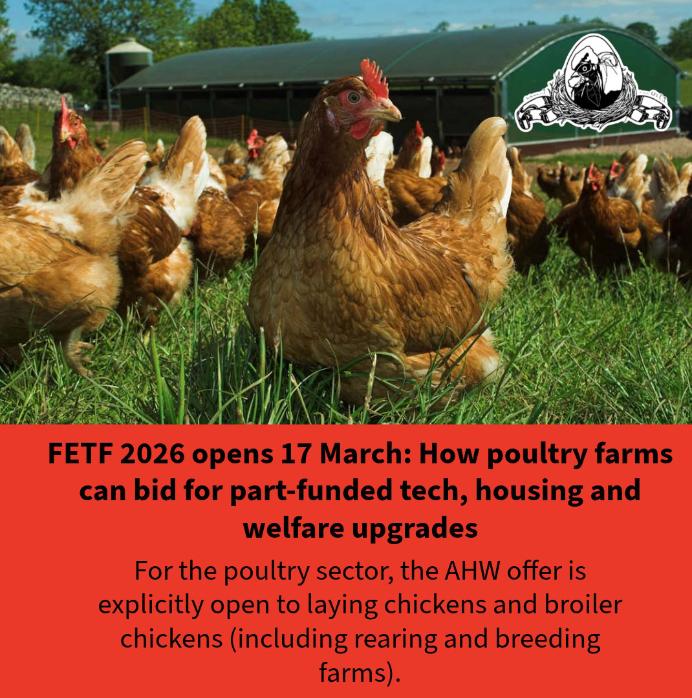
Anew round Farming Equipment and Technology Fund (FETF) 2026 opens for applications on 17 March 2026, offering grants to help farm businesses invest in equipment to improve productivity, manage slurry, andimproveanimal health and welfare (AHW).
For the poultry sector, the AHW offer is explicitly open to laying chickens and broiler chickens (including rearing and breeding farms).
Other poultry species, including ducks, turkeys, geese and gamebirds, are not eligible.
Speaking at the NFU conference,Defra’sEnvironment Secretary Emma Reynolds framed thegovernment’sdirection as backing a more resilient farming base:“I am determined to give British farming the foundation it needs togrow
“We want farm businesses that are productive, profitable, and resilient.”
What’savailable: 3 grant themes, one application per theme
Applicants can apply across the three themes — Productivity, Slurry and Animal Health and Welfare — but canonlysubmit one application per theme.Each application must be for between £1,000 and £25,000.
FETF 2026 is competitive, and applicants may not receive any (or all) of the funding requested.
Fundingis allocatedafter applications are received and scored, with awards made from the highestscoring applications until budgets are exhausted — establishing a minimum scoring threshold for each theme.



The Rural Payments Agency (RPA) will pay a grant worth 40% or 50% towards either:
• the expected average cost of an item (if your purchase cost is the same as, or higher than, the expected average), or
• the actual cost you pay (if the item costs less than the expected average).
The grant does not cover the full cost of items: the business must fund the remainder.
All applicants must be financially viable.RPA will request a Spotlight check (thegovernment’sonlinedue-diligencetool for grant management) and may alsoask foranaccountant’scertificate or equivalent.
Eligibility: England-based, chickens only (for poultry)
You can apply if your business is based and registered in England andyou’rea farmer, horticulturalist, forestry owner, or a contractor carrying out services to those sectors.
For the AHW theme, eligibility includes farms with:
• Laying chickens (including rearing and breeding farms)
• Broiler chickens (including rearing and breeding farms)
The guidance states that goats, ducks, turkeys, geese and gamebirds are not eligible for funding under the livestock/poultry criteria.
If you left farming through the Lump Sum Exit Scheme, you are not eligible — although the guidance notes that if you have been paid a lump sum but are continuing as a contractor, you can apply.
Government departments, executive agencies and non-departmental public bodies cannot apply.
Applicants should note several process changes, including:
• RPA will use the contact details registered in the Rural Payments service (no separate correspondence address option).
• Bank statements sent with claims must be redactedto remove sensitive information.
• The Productivity and Slurry scoring uplift hasbeen removed.
• The AHW scoring uplift hasbeen removed.
• Grant Funding Agreements (GFAs) willbe sentfrom a different RPA email address: no-reply@rpagrants.org.uk (to the email
linked to your SBI, with a copy to your CRN email address).
Applications open 17 March 2026 and close at midday on 28 April 2026, via the Farming Investment Fund service.
Before applying, businesses must:
1. Be registered in the Rural Payments service and have an SBI.
2. Ensure SBI and CRN email addresses are correct (RPA can only use registered details).
3. Have the correct permission level in Rural Payments:“make legal changes”or“full permissions”for the SBI applying.
4. Register separately for the Farming Investment Fund service (a separate registrationtoRural Payments).
5. Check items against the 2026 items and specifications lists (specifications may have changed).
A refundable deposit is only claimable if:
• It is no more than 50% of the item cost (excluding VAT)
• Itis not paidbefore 24 February 2026
• Invoices are marked to showarefundable deposit wasused
Items must be new (or strictly“ex display”)
All grant-funded items must be new orexdisplay.
Ex displayitems must only have been usedfor showroom display, must not have left thesupplier’spremises, and must not havebeen usedfor any other purpose.
Items bought via part exchange, second-hand/exdemonstration/“try before you buy”,hire purchase/ lease, or already bought items are not eligible, among other exclusions listed in the guidance. Delivery and installation costs are not eligible.
Grant-funded items must be keptfor 5 years from the datethe claim was paid.
Poultry-eligible equipment: snapshot of listed items and grant amounts
Below is a selection of the poultry-relevant items included in the list provided:
Housing environment, ventilation,lighting
• FETF258A Automatic curtain system for poultry housing — Avg £81 / Grant £40
• FETF274POU Blinds for livestock housing — Avg £61 / Grant £30
• FETF275POU Chimney ventilation unit — Avg £1,268 / Grant £634
• FETF288POU Tunnel ventilation fan — Avg £508 / Grant £254
• FETF326POU Ultrahigh-pressure evaporative cooling mist line system — Avg £9,937 / Grant £4,968
• FETF316POU LED light for poultry housing — Avg £52 / Grant £26
Monitoring, sensors and decision-support
• FETF259A Automatic monitoring system (main unit) for poultry housing — Avg £2,301 / Grant £1,150
• FETF260A Automatic weigh scale for poultry — Avg £1,362 / Grant £681
• FETF270A 3D weighing camera system for poultry — Avg £2,562 / Grant £1,281
• FETF271A Precision water meter for poultry chicks — Avg £943 / Grant £471
• FETF277POU Temperature and humidity sensor — Avg £164 / Grant £82
• FETF283POU Ammonia sensor — Avg £917 / Grant £458
• FETF284POU Carbon dioxide sensor — Avg £421 / Grant £210
• FETF285POU Dust sensor — Avg £89 / Grant £44
• FETF332POU Visual or acoustic monitoring system — Avg £8,240 / Grant £4,120
Feeding and water
• FETF261A Feed bin weighing system for poultry — Avg £593 / Grant £296
• FETF268A Spin feeder — Avg £4,477 / Grant £2,238
• FETF269A Poultry feed system for split feeding — Avg £11,826 / Grant £5,913
• FETF266A Nipple drinker system — Avg £25 / Grant £12
• FETF324POU Nipple drinker water tank — Avg £250 / Grant £125
• FETF286POU Water dosing pump — Avg £254 / Grant £127
• FETF282POUVermin prooffeed storage (portable) — Avg £402 / Grant £201
• FETF281POU Water heater (handwashing facilities) — Avg £105 / Grant £52
Enrichment, access and internal movement
• FETF262A Poultry perches — Avg £50 / Grant £25
• FETF263A Broiler perch — Avg £31 / Grant £15
• FETF264A Enrichment feeder for poultry — Avg £290 / Grant £145
• FETF265A Freestanding platform with ramps — Avg £270 / Grant £135
• FETF267A Housing platforms and ramps — Avg £108 / Grant £54
Biosecurity and medicine handling
• FETF312POU Boot disinfection system — Avg £232 / Grant £116
• FETF279POU Vaccine refrigerator with external monitor — Avg £559 / Grant £279
• FETF309POU / 310POU / 311POU Sheeted gates (small/medium/large) — Avg £306/£387/£599 / Grant £153/£193/£299
• FETF323POU Steel wire mesh for poultry run — Avg £6 / Grant £3
Range/outdoor protection and ground management
• FETF273POU Protective matting for range or pasture — Avg £11 / Grant £5
• FETF307POU Shade material — Avg £7 / Grant £3
• FETF308POU Field shelter — Avg £2,396 / Grant £1,198
• FETF287POU Mobile livestock shade — Avg £14,899 / Grant £7,449
Support and contact
Queries canbe directedto RPA via:
• Email: FETFenquiries@rpa.gov.uk (include SBI and FETF reference number in the subject)
• Telephone: 03000 200 301 (Mon–Fri,8.30am–5pm, except bank holidays)
• Post: PO Box 324, Worksop, S95 1DF
For businesses planning to apply, the immediate priorities are to check Rural Payments contact details, confirm permissions, confirm item availability with suppliers (without purchasing), and work against the 17 March to 28 April (midday) application window.
Credit: www.poultry.network
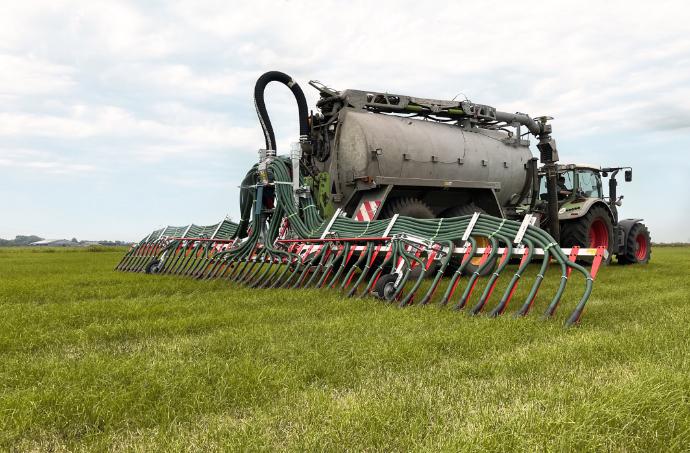

he latest round of Farming Equipment and Technology Fund (FETF) grants have been released, including new contributions of almost 50 percent towards both fixed and mobile slurry separators, applicators and equipment such as scrapers, nurse tanks and pumps.
Vogelsang’s Andy Hayhurst explains how this could make separation a more popular proposition and how farmers can benefit from improving their slurry equipment.
“FETF grants have covered separators in the past, but this latest round is offering £25,000 towards a mobile separator with an estimated average value of £54,580, and £9,516 towards a fixed separator with an average value of £19,033,” explains Mr Hayhurst.
Mobile separators represent a new opportunity for contractors and farms with multiple sites to manage slurry more efficiently. The grants dictate that the separator must be capable of producing a stackable fraction with a dry matter of 25 percent or more.
“The Vogelsang XSplit is capable of achieving a dry matter of 40 percent, which also makes the dry
product suitable for green bedding. Whilst the grants don’t expect this level of separation, green bedding is a sustainable and cost-effective system that is used widely in Europe and is starting to gather momentum in the UK too,” he says.
Higher than average rainfall during winter has put pressure on slurry store capacity. The national trend is also seeing herd sizes growing so many farms can reduce capital outlay on larger slurry storage by opting to separate.
“Many farms come very close to reaching storage capacity, especially over winter. Having a mobile separation service offered by a contractor, or investing in a fixed separator, could be a cost-effective option if farms intend to maintain or slightly increase cow numbers,” says Mr Hayhurst.
He suggests there may be ways for farms to share a mobile separator or to work with a contractor on a rota basis to reduce the pressure on storage.
“The key benefit of the mobile separator is that it can be operated almost anywhere to reduce the amount of liquid being stored. The size of grant towards a mobile unit is almost 50 percent, which will no doubt increase

demand for farms that want to cooperate or contractors looking to offer an additional service,” he adds.
Beyond the storage benefits that separators offer are the advantages when it comes to applying slurry. Applying a separated liquid is far less wearing on machinery and requires less pumping power for umbilical application.
“There are multiple grants offering a 50 percent contribution towards dribble bar, trailing shoe and shallow injection systems. All of these applicators work more efficiently when the slurry being pumped is homogenous. The use of a separator will take the strain off pumps, macerators and applicators by removing dry matter that can clog and wear machinery,” he says.
The focus of the grants is on smaller dribble bar, trailing shoe and injection applicators, which shows a move to encourage smaller farms to invest and move away from splash plates which have been banned in some countries and are likely to be phased out altogether in the UK.
Included in the list of grants are dribble bars with working widths of at least 6 metres and a separate grant for units with a minimum working width of 10 metres. However, no maximum working width has been stated.
“There are two grants for trailing shoe applicators, with
the first for widths above 6 metres and the second for working with at least 8 metres. The lack of a maximum working width suggests that these grants could be used to gain funding for larger 12, 18, 24 and 36 metre applicators. However, with a maximum amount of £8,016 available this will be a smaller contribution to a larger applicator,” he says.
Regardless of what investment farms are willing to make, the message from DEFRA is clear: slurry management needs to become more efficient to reduce emissions and make it more sustainable.
“It is ironic that the use of slurry is one of the most sustainable ways to fertilise the land, yet it has become a problem waste product. If managed well, separated, applied directly to soil at the optimum time, slurry is a valuable and sustainable resource,” says Mr Hayhurst.
The application window for the latest round of FETF grants runs from March 17th to April 28th. Farms and businesses wanting to apply for a grant should check the specifications of the equipment that is covered and use the online scoring system.
“For anybody looking at separators or application equipment such as trailing shoe machinery, Vogelsang has open days planned for 2026 and is always on hand to discuss what farms are looking to achieve and what the options are available. As ever, when these grants are made available, we see a sharp rise in demand which can only be a good thing for agriculture as a whole,” he concludes.
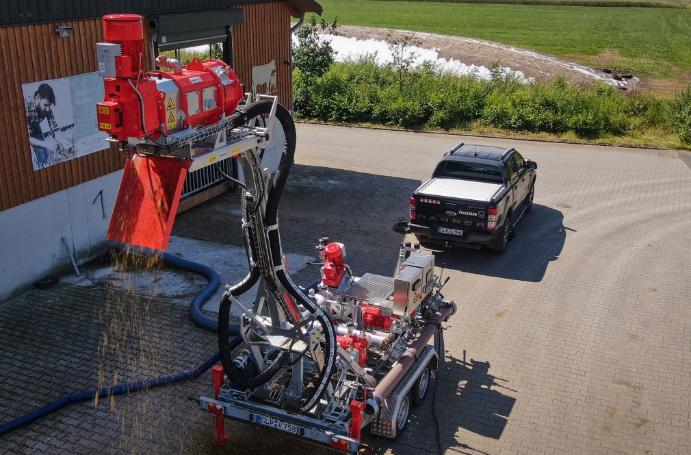
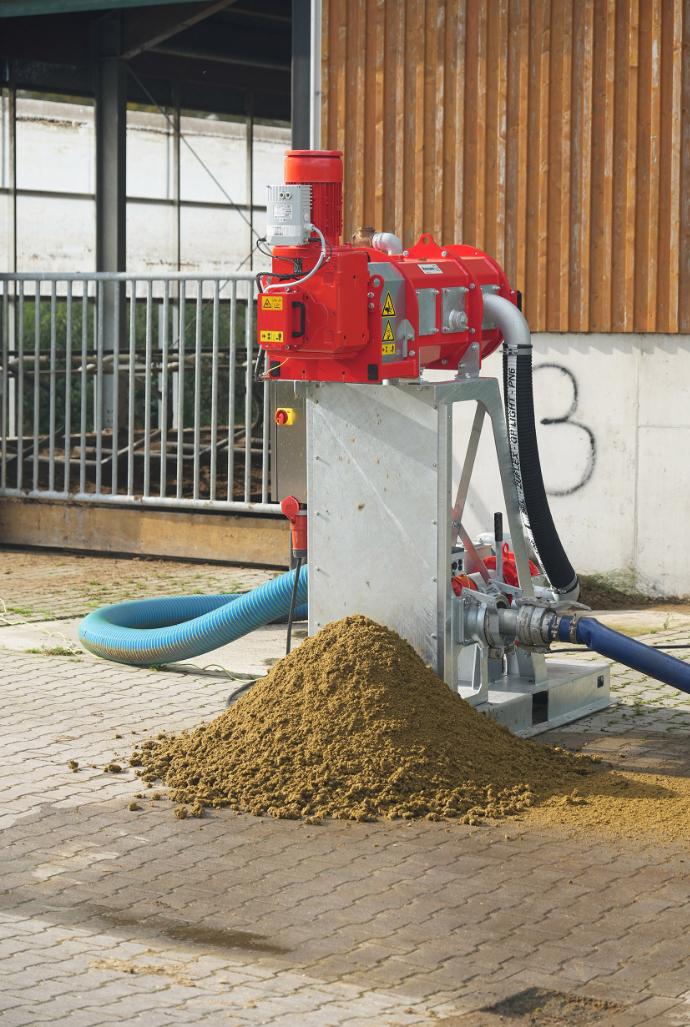
Farmers should apply for the recently announced Farming Equipment and Technology Fund (FETF) and Sustainable Farming Incentive (SFI) grants as soon as applications open to maximise the likelihood of a successful claim, agricultural machinery manufacturer Claydon advises.

“FETF26 grants will still provide a substantial contribution towards the cost of new qualifying machinery, even though the levels are unchanged from last year. Applications open on 17 March, and close on 28 April, so farmers should give it their immediate attention,” says David Furber, Claydon’s UK Sales Manager.
“The first round of the SFI26 will open in June for small farms with up to 50ha of agricultural land and those without an existing Rural Payments Agency (RPA) administered Environmental Land Management (ELM) revenue agreement. The second round of SFI will open in September 2026 for all farms, although no fixed end date has been set as this will depend on how many apply. This is good news for larger farms which do not currently have an SFI scheme in place and are not now receiving BPS payments, although the maximum amount per agreement will be capped at £100,000.”
Claydon machinery which qualifies for a Farming
Equipment and Technology Fund grant includes the company’s Evolution mounted direct drills from 3m to 6m wide and Hybrid trailed direct drills from 3m to 8m wide. These qualify for a grant (FETF44 - Direct Drill) of up to 50% of the on-farm price, with a maximum value of £15,067. Claydon’s twin-hopper NutriSeeder is also eligible (FETF207 – Air Drill for establishing cover crops) for a grant which covers 50% of the on-farm price, up to a maximum of £1,575. Claydon Straw Harrows from 6m to 15m wide are eligible for a 40% grant, up to a maximum of £6,720 (FETF208 - Tractor Mounted Stubble Rake).
With over twenty years’ experience Claydon is the European market leader in direct drilling technology with its Opti-Till® system. This holistic approach of crop establishment eliminates unnecessary cultivations, allowing consistent, high yielding crops to be established at approximately one-third the cost of plough-based methods and half that of min-till, providing maximum profitability whilst improving soil health. The availability of FETF grants further increases the attractiveness of this approach, which is why Claydon is advising farmers who are considering updating their machinery to do so without delay.
“The most important management action in farming is to control the controllables,” David Furber adds.

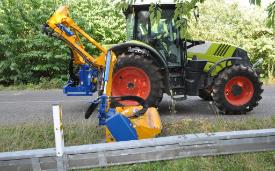
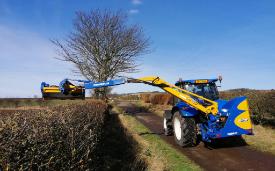
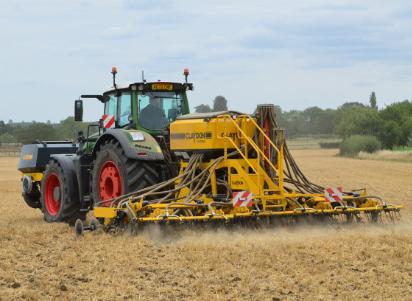
“Lacklustre grain prices are encouraging farming businesses to move away from traditional crop establishment methods which are slow and expensive. With machinery and labour accounting for up to 60% of fixed costs the need to adopt more efficient ways of working will accelerate, with direct drilling’s significant financial and ecological advantages becoming even more advantageous.
“Whilst the FETF and SFI grants are great to have, Claydon Opti-Till® makes it possible to farm profitably without them, allowing any additional income from this source to be regarded as a bonus. So if you wait for months until your grant application has been approved, then incur further delays before your new Claydon machinery arrives, you will miss out on months of financial, agronomic, soil and time-saving benefits.”
Opti-Till® has been used on the Claydon family’s arable farm in Suffolk since 2002 and the results get better every year.
Instead of the 150-180 litres of fuel/ha that was once used to establish crops using a plough-based approach, with Opti-Till® it now averages 12l/ha, including all stubble management and drilling. Overall fuel use last season was just 40 to 50 l/ha, including stubble management and drilling, spray and fertiliser application, inter-row hoeing with a 6m Claydon TerraBlade, harvesting and corn carting.
Tractor hours have fallen by 80%, and in three years the main drilling tractor, a 2022 Fendt 942 Vario, has only just passed 1200 hours, even though in 2025 it drilled the farm two and a half times with a 6m Claydon Evolution to sow catch, companion and main crops. Wear and tear, servicing costs and depreciation are significantly lower and at £3-£4/ha the cost of wearing metal is negligible.
The benefits have been reflected in the farm’s bottom line; excluding support payments, the business has made a profit every year since it began using OptiTill®. Given governments of all political persuasions have a habit of changing direction with little warning being financially independent of them is a good position to be in. Profits are largely reinvested in the farm, whether to keep machinery up to date or in longer-term projects such as field drainage, putting the
business on a sound footing for the future.
The massive changes to the Basic Payment System in England reduced the Claydon farm’s annual income by approximately £60,000, forcing the business to consider the options. Having invested time and resources it identified over £94,000 in potential gains, equivalent to £370/ha, under the Sustainable Farming Incentive (SFI). Whole Farm Management Payments (WFMP) worth £5408 have been dropped from SFI26 so has fallen to £88,995. Further information is available at claydondrill.com/grantfunding
“In the future it will be difficult for farming businesses to remain viable using traditional establishment methods because there will be more time pressure to do all the cultivations, produce cover crops and establish cash crops in the autumn,” says owner Jeff Claydon. “In the current environment the saying ‘If you don’t change anything, nothing changes’ is very appropriate because if you keep doing the same things that you’ve always done, you will keep getting the same results.
Further details about Claydon products are available from authorised dealers, a list of which is available on the Claydon website (claydondrill.com/dealersdistributors). Alternatively, visit claydondrill.com and click on the product of choice.
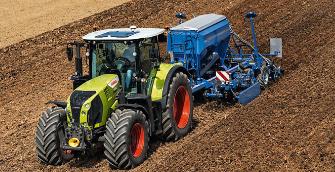

Case IH has announced the winners of its UK and Ireland Dealer of the Year Awards for 2025, celebrating dealer performance, customer service and commitment across its dealer network.

Farmstar Ltd, covering Yorkshire and North Lincolnshire, was named Overall UK Dealer of the Year, whilst All Ireland Dealer of the Year was Tobin & Cantwell Ltd, based in Co. Tipperary. Additional category winners were recognised across sales, service, parts and precision farming, highlighting the dedication of Case IH dealers delivering outstanding value to farmers and contactors across the region.
Case IH Dealer of the Year 2025 Category winners:
• Overall UK Dealer of the Year – Farmstar Ltd
• All Ireland Dealer of the Year – Tobin & Cantwell Ltd
• Farmlift Dealer of the Year – Cotswold Farm Machinery Ltd
• Precision Farming Dealer of the Year –Pontesbury Tractors Ltd
• Parts Dealer of the Year – GCS Agricentre
• Customer Experience Dealer of the Year –Pontesbury Tractors Ltd
• Over 260 TIV best market share growth –T H White ProAgri
• Under 260 TIV best market share growth –R.C. Dalgliesh Ltd
• Data Quality & Sales App Dealer of the Year – Stalham Engineering Co Ltd
“These awards reflect the exceptional work carried out across our dealer network throughout the year. Our dealers play a vital role in supporting customers, providing expertise, and representing the Case IH brand with professionalism and passion,” said David Rapkins, CNH Commercial Business Unit Director UK & ROI. “We are proud to recognise their achievements and ongoing commitment to delivering outstanding service across the UK and Ireland.”
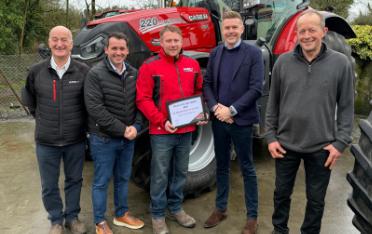
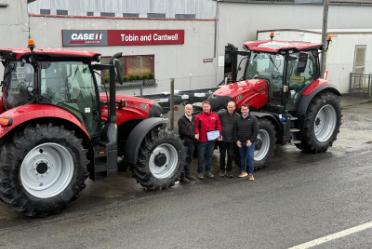
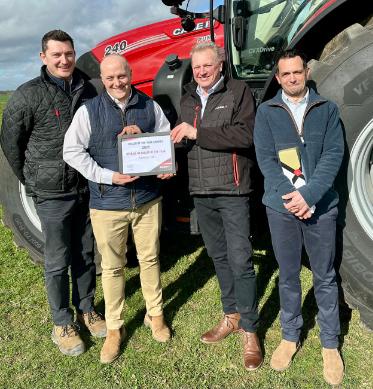


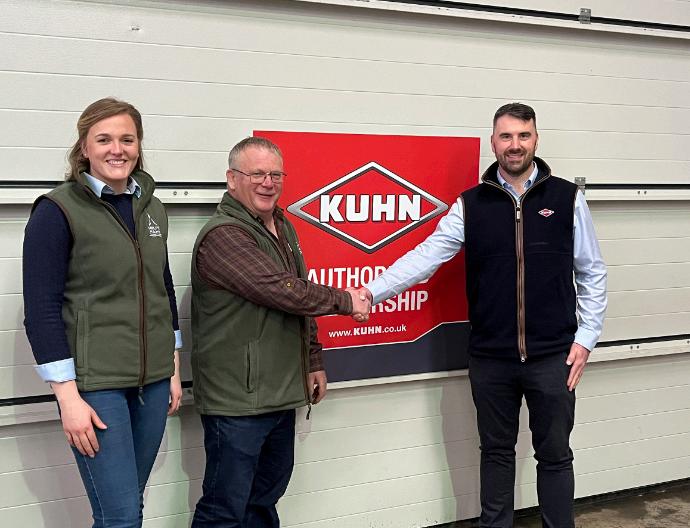

KUHN Farm Machinery has appointed Watson Machinery to strengthen its coverage and product accessibility for farmers in the North of England.
Based at Tow Law, west of Durham, Watson Machinery is run by father and daughter Mark and Emily Watson. The outlet will be a full product line KUHN dealer, with a focus on retailing KUHN’s extensive grass and forage machinery, along with the bedding and feeding ranges. To help with this, a KUHN VB 3260 variable chamber round baler will be a demonstrator unit throughout the spring period to Watson Machinery customers.
The Watson Machinery area for KUHN products will cover Durham and surrounding areas, to Sunderland on the coast, extending westwards to meet the Cumbrian border.
Speaking on behalf of Watson Machinery, Emily Watson says: Taking on KUHN opens a vast range of products that we haven’t been able to offer customers before. Our business has grown very organically since dad started it 35 years ago and this is the next step for us. The feeding and bedding machines are a new product offering and we’re excited to grow the baler and grass machinery coverage in the area. We’re a family firm and everyone helps to ensure customers are fully supported.”
Karl Ridsdale from KUHN says: “The appointment of Watson Machinery strengthens our dealer coverage in this area and provides the brand with a more direct route to market than before. Its strong local presence and focus on grassland and livestock machinery make the dealership a perfect partner to drive KUHN forward in the region.”
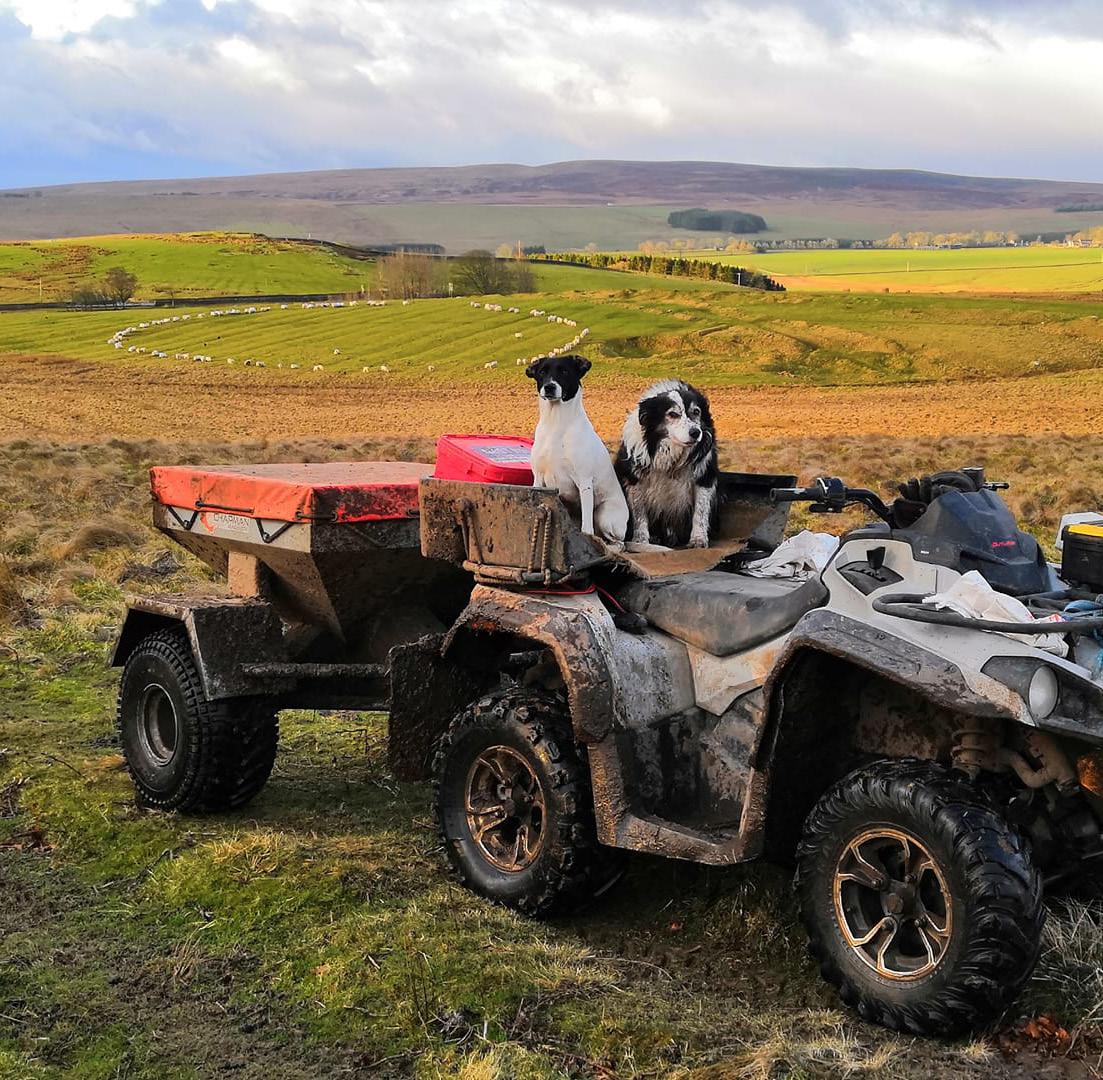
The TF350 Trailed Stock Feeder (Sheep Snacker) features fully galvanised all-steel construction & electronic operation with high visibility digital counter ensure the right amount of feed is dispensed, exactly where you want it.
Timberlake, Week St Mary
Devon. EX22 6XG
Phone: 01288 341326
Valley Farm, Thorncliffe Rd, Leek, ST13 8TG
Phone: 01538 224228
www.yorkshireatv.com Cornish Tractors
Yorkshire ATV
Unit 3, Tong Park Ind Est, Baildon, BD17 7QD
Phone: 07701 070156
www.cornishtractors.co.uk
www.jbournetractors.co.uk


New Holland’s reputation for innovative design with practical benefits has been recognized once more with one of the design industry’s most important global prizes, an iF Design Award 2026, granted to the advanced Hybrid Telehandler prototype that made its world debut at Agritechnica 2025.
iF Design was founded in 1953, and just one year later the inaugural iF Design Award - now one of the world’s oldest and most prestigious design prizes - was given for the first time as a symbol of outstanding design.

Organized by the by the German-based iF International Forum Design, several thousand global professionals and businesses enter the Award annually, submitting their work for evaluation by an independent panel of experts.From almost 5,000 participant companies entering over 10,000 items into the internationally-recognized iF scheme, the New Holland Hybrid Telehandler was picked out by the judges for the unique form, function
and differentiation it possesses over standard machines.
The striking styling created for the Hybrid Telehandler prototype blends New Holland’s distinctive lines with a compact design that integrates innovative hybrid propulsion technology, using both electric drive and compressed natural gas as power sources, to minimize emissions and maximize autonomy.
“New Holland places great importance on


purposeful design with practical benefits for customers, and the Hybrid Telehandler concept is a true example of that.”, says Giampiero Vietti, Senior Designer at CNH.
“The primary design challenge lay in seamlessly integrating the specially developed technical layout of this hybrid prototype with

New Holland’s evolving design DNA – a language already established across the latest generation of combines, forage harvesters and tractors, and strongly aligned with sustainability and smart solutions.
“The design team focused on creating modern, functional styling that elevates the operator experience, ensuring exceptional driving comfort, visibility and overall control.
“What initially appeared a complex integration exercise ultimately became an opportunity to redefine proportions and express a distinctive new character. The precise, chiselled surface styling gives the Hybrid Telehandler a robust and contemporary presence, making it stand out as a true statement of New Holland innovation, with style and functionalitythat ensure this machine has an unmistakable presence.”

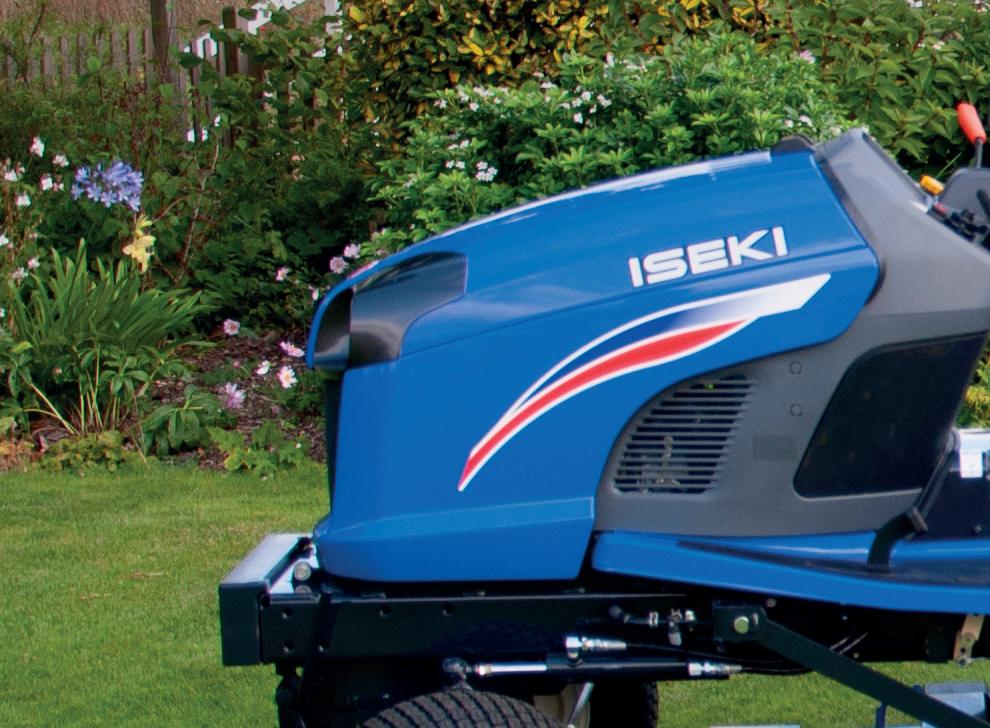



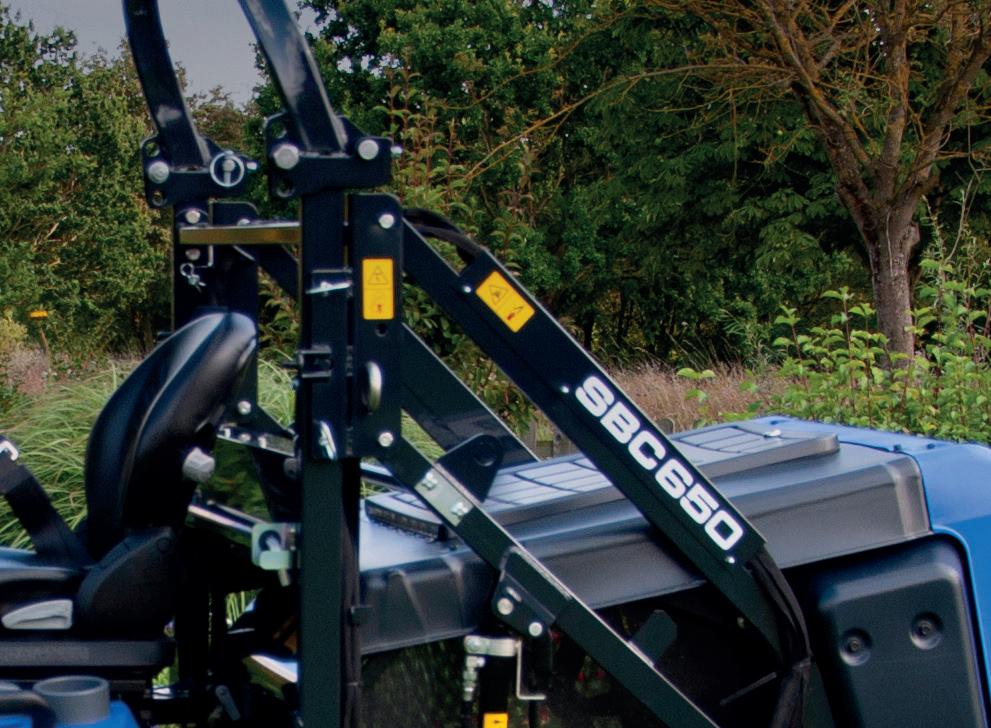
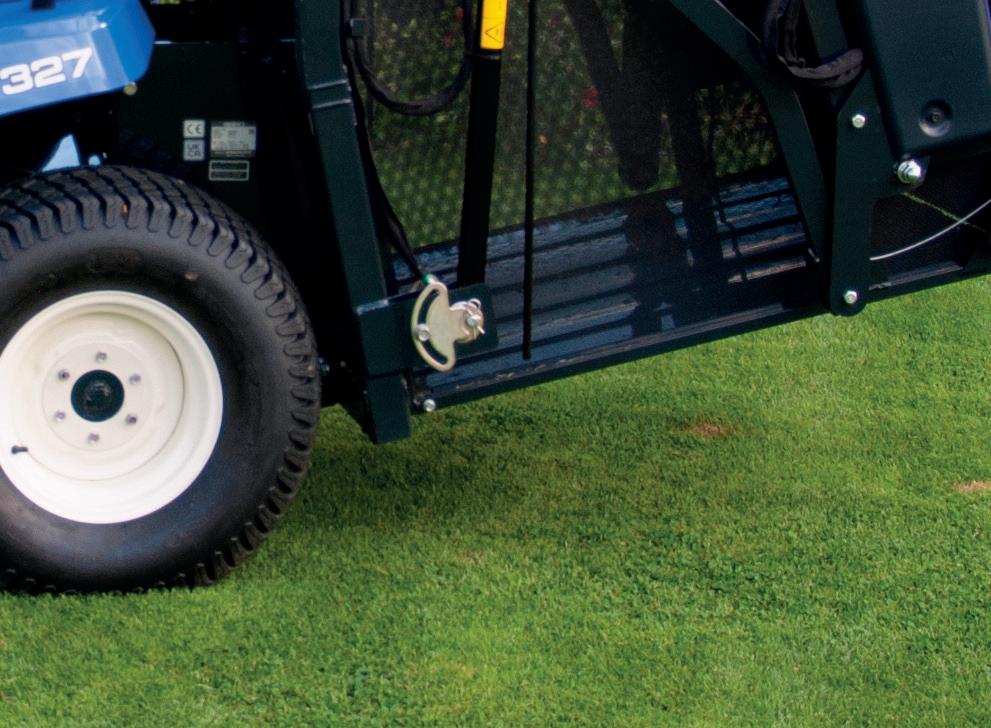

RVW Pugh
Mellington, Churchstoke, Montgomery, Powys, SY15 6TQ
Tel: 01588 620545
Web: www.rvwpugh.co.uk
RVW Pugh
Oakwood Park, Holmes Chapel, Cheshire, CW4 8AX Tel: 01477 533560
Web: www.rvwpugh.co.uk
RVW Pugh
Unit 2, Holland Business Park, Spa Lane, Lathom Lancashire, L40 6LN
Tel: 01695 816444
Web: www.rvwpugh.co.uk

Merlo UK is making it easier than ever for businesses to invest in premium agricultural equipment with its latest Retail Finance Schemes. Designed to help spread the cost while keeping cashflow healthy, the offer includes 0% APR options on selected agricultural telehandlers, so you can fix your finance and plan for growth with confidence.

Under the new terms, customers can choose from flexible payment options such as 1 + 2 annual payments or 4 + 20 monthly payments at 0% APR, available on up to 40% of the recommended retail price (RRP) on eligible models. There’s also an alternative 3 + 33 monthly payment plan at a competitive 1.99% APR for even greater flexibility.
For smaller machines like the CINGO range, the finance deal is equally attractive, with low-deposit plans and 0% interest spread over simple instalments.
Whether you’re expanding your fleet or upgrading to the latest Merlo technology, these retail finance options could make ownership more accessible and affordable than you think. Speak with your local Merlo dealer to explore the best package for your operation and see how you can benefit from this limited-time opportunity.
Finance Terms & Conditions
Retail customers only. Maximum balance
financed is 40% of RRP, subject to DLL terms and conditions. Finance offers exclude fleet deals of three or more machines.
Model eligibility:
• P27.6 and TF27.6 models are eligible only for the 4 + 20 payment plan at 0% APR.
CINGO Retail Finance Schemes (0% interest):
• CINGO M500DM: £500 deposit, 50% payable after 6 months, 50% after 18 months
• CINGO M700TD: £700 deposit, 50% payable after 6 months, 50% after 18 months
Finance for Merlo agricultural models is available through Merlo Finance, a trading style of De Lage Landen Leasing Limited (DLL). All finance is subject to status and approval. Applicants must be UK-registered businesses and aged 18 or over. VAT is excluded unless stated. Fees may apply. Finance cannot be combined with other campaigns.
DLL is authorised and regulated by the Financial Conduct Authority in respect of agreements regulated by the Consumer Credit Act 1974.
Merlo Finance Sales Desk: Agricultural: 01923 810078 Construction: 01923 810946

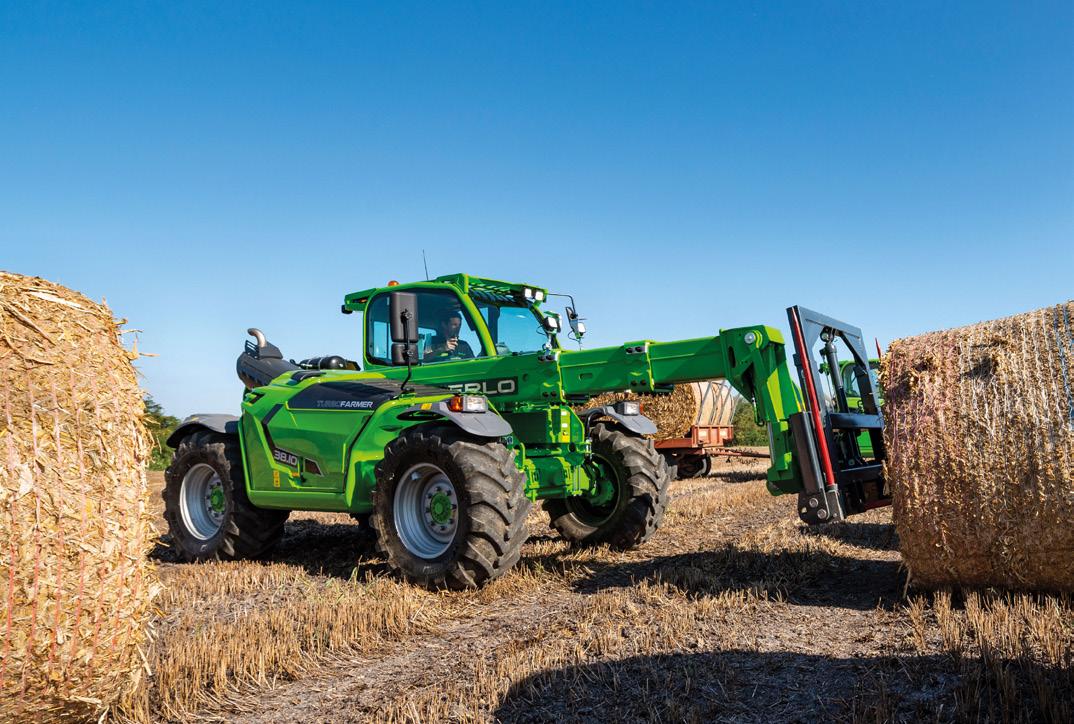
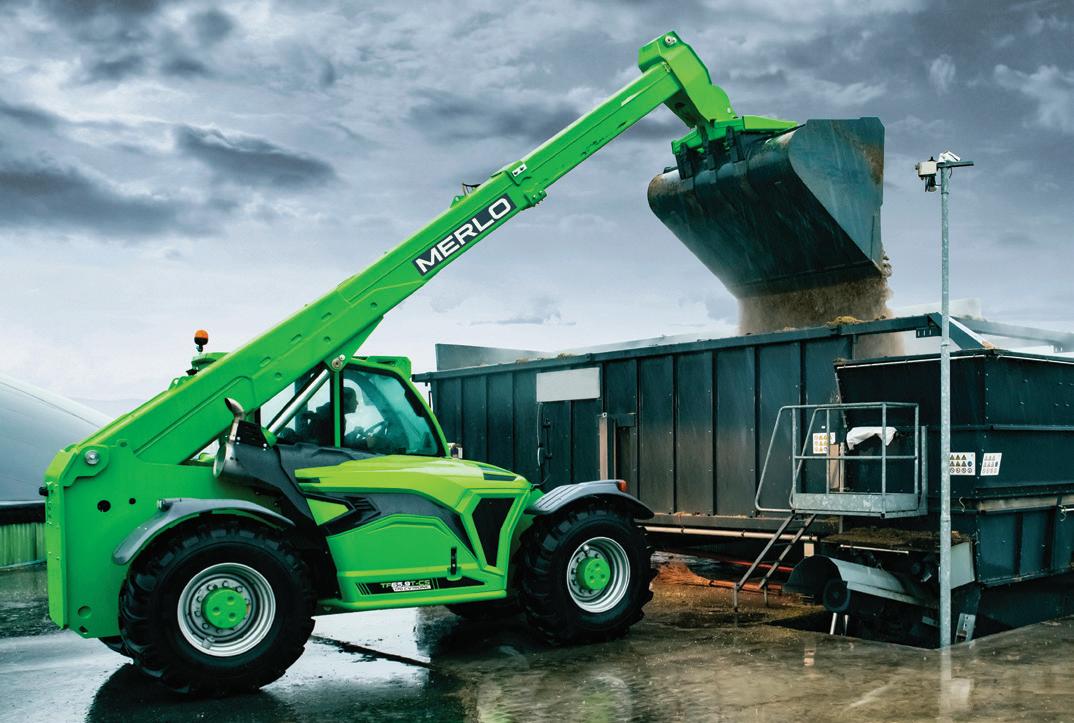
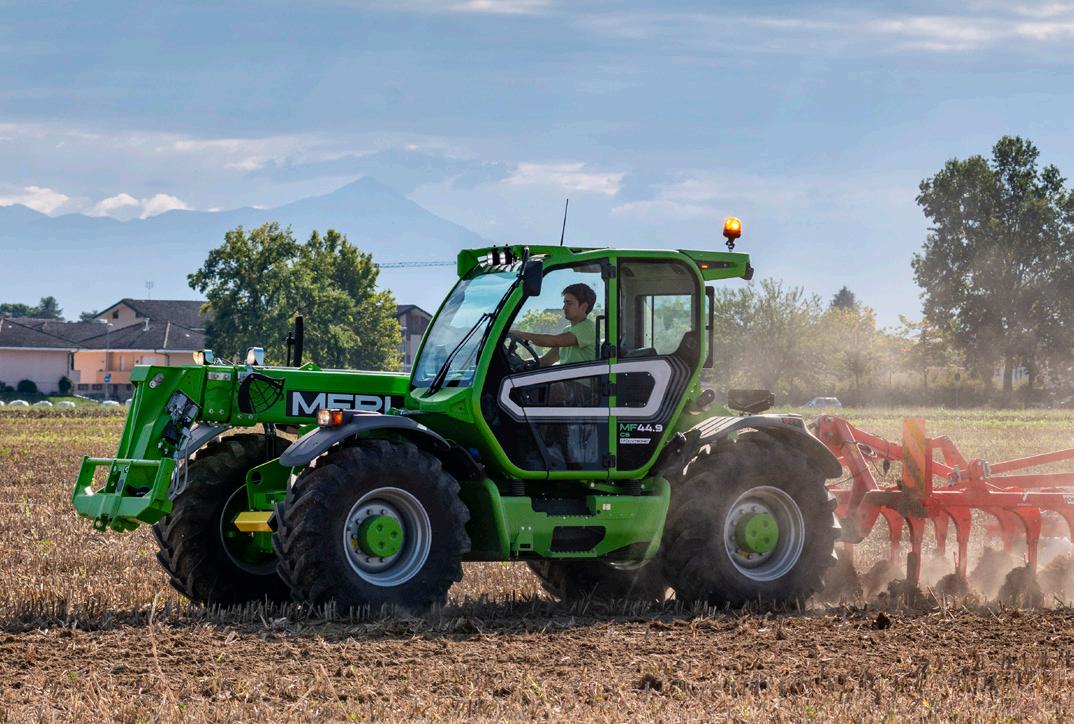
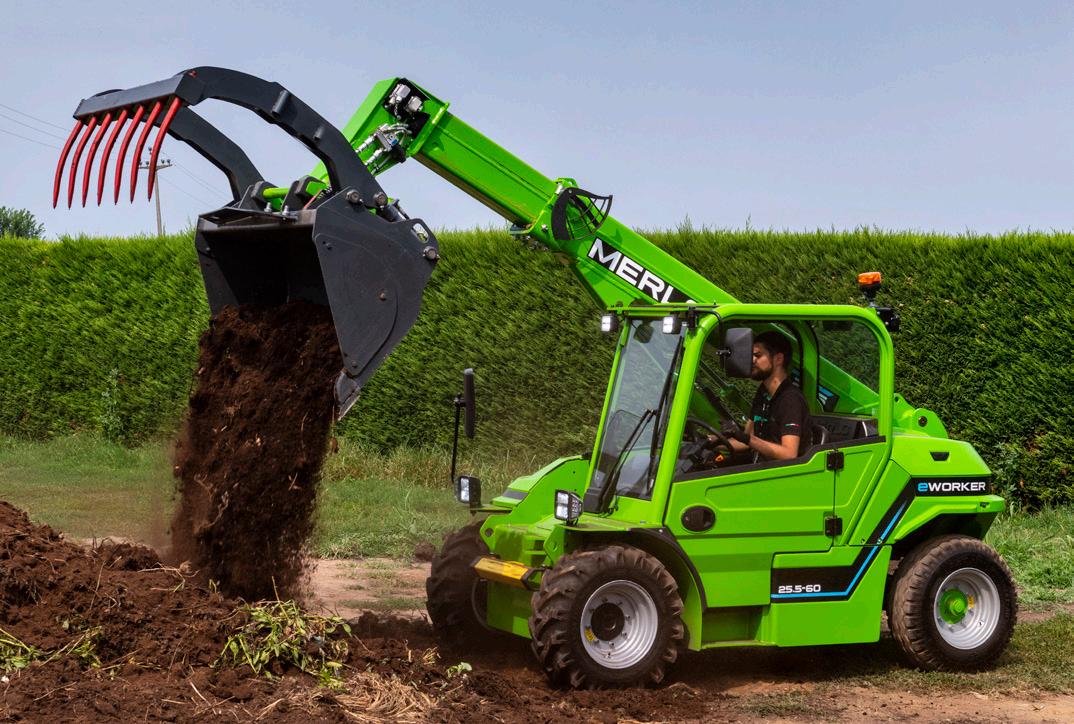
Stubbings Bros Ltd.
TR Machinery Ltd
Ventnor Isle of Wight PO38 2JN
TRMachinery Ltd
Oak Tree Works, NI Park, Newport, Shropshire
Phone : 01983 551443
TF10 9LH
www.stubbings-bros.co.uk
Phone: 01952 936900 www.trmachinery.co.uk
Turney Agriculture
Burnside Business Park Market Drayton Shropshire
Middleton Stoney Bicester Oxfordshire
TF9 3UX
D.A. Forgie Lisburn
BT27 5QB Phone: 02832 677736 www.forgie.com
OX25 4AB Phone: 01869 343333 www.turneygroup.com
Phone : 01630 653801 www.trmachinery.co.uk
Turney Agriculture Unit 8 Woodway Princes Risborough Buckinghamshire HP27 0NN Phone: 01844 346690 www.turneygroup.com
D.A. Forgie Co Londonderry
BT49 9DW Phone: 02877 722375 www.forgie.com
Turney Agriculture, Groundcare & Country Store Fleet Lane, Brendon Gloucestershire Tewkesbury, GL20 7EF
Phone: 01684 772912 www.turneygroup.com
RVW Pugh, Mellington, Churchstoke, Montgomery Powys.
RVW Pugh, Mellington, Churchstoke, Montgomery Powys. SY156TQ
SY15 6TQ
Phone: 01588 620545 www.rvwpugh.co.uk
Phone : 01588 620545
www.rvwpugh.co.uk
RVW Pugh
Spa Lane, Lathom, Unit 2, Holland Business Park, Lancashire, L40 6LN
Phone: 01695 816444
www.rvwpugh.co.uk
D.A.Forgie Lisburn,
RVW Pugh, Oakwood Park, Holmes Chapel, Cheshire
CW4 8AX
Phone : 02892677736 BT27 5QB www.forige.com
Phone : 01477 533560 www.rvwpugh.co.uk
RVW Pugh, CW4 8AX Chapel, Cheshire Oakwood Park, Holmes

Phone : 01477533560
www.rvwpugh.co.uk
D.A.Forgie Co Londonderry, BT49 9DW
RVW Pugh, Unit 2, Holland Business Park, Spa Lane, Lathom Lancashire, L40 6LN
Phone : 02877722375 www.forige.com
Phone : 01695 816444 www.rvwpugh.co.uk
Brian Robinson Machinery Ltd Birkby Lane East Cowton, Northallerton North Yorkshire
Cooks Midlands Ltd. Unit 10 Horsepool Grange Elliotts Lane, Markfield LE67 9TW
DL7 0DX
Phone: 01325 378552
Phone : 01530 249191
www.brianrobinson.co.uk
www.cooksmidlands.co.uk

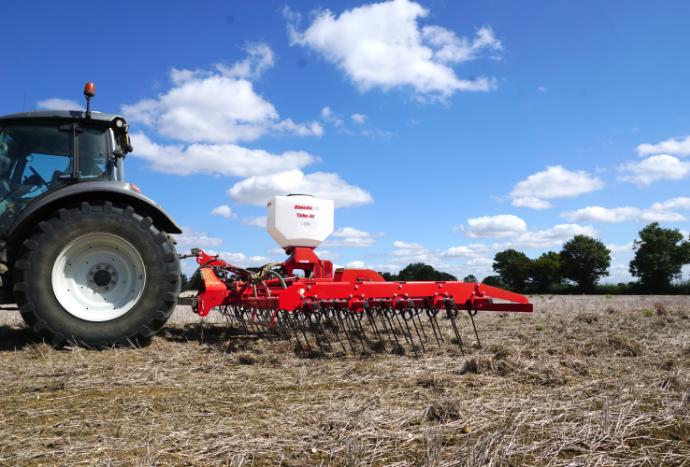
The FETF 2026 applications are open! Applications opened on 17th March 2026 and close at midday on Tuesday 28th April 2026. As this is the last scheduled round of FETF funding, Stocks Ag are encouraging farmers and contractors to apply as soon as possible in order to avoid disappointment.
Applications are made online via the Farming Investment Fund service - https://rpagrants. defra.gov.uk/welcome/
“Previously we have seen a huge demand for Stocks Ag seeders through the FETF grants and we are expecting this year to be no different!” said Sean Stanfield Stocks Ag Sales Manager
“Farmers trust the tried and tested Stocks brand. All machines are designed and manufactured in the UK, hence the availability

of parts and technical advice is a huge advantage to our UK farmers.”
The FETF funding covers 50%* of the expected cost, meaning farmers could receive £1,575 towards their new applicator. Act now and apply today!
FETF207 – Air drill for establishing cover crops
• Turbo Jet 8 (400L hopper)
• Turbo Jet 10 (400L hopper)
• Turbo Jet 10 Hydraulic (400L hopper)
• Maxi Jet 2 (400L hopper)
• Maxi Jet 4 (400L hopper)
*percentage based on RPA expected average cost of the item, £3,150.


Duncan Brassington Agricultural Sales & Services Ltd
A1 Tractor Parts & Quads
Banbury Farm House, Bridgnorth, WV16 6QN
Tel: 01746 787983 - 07970 283674 www.brassingtonagri.co.uk
West View, Scales, Wigton, Cumbria, CA7 3NL
Tel: 01697 321758
Ian: 07873 737 562 - David: 07873737 538 www.a1tractorparts.co.uk


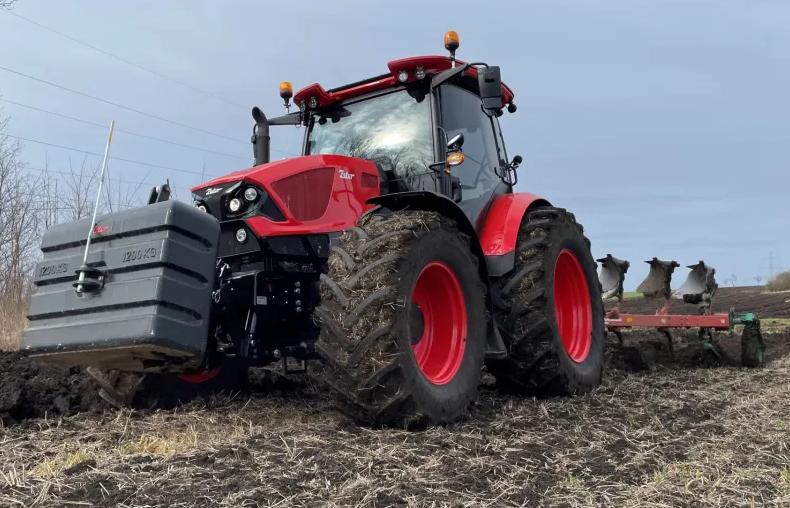
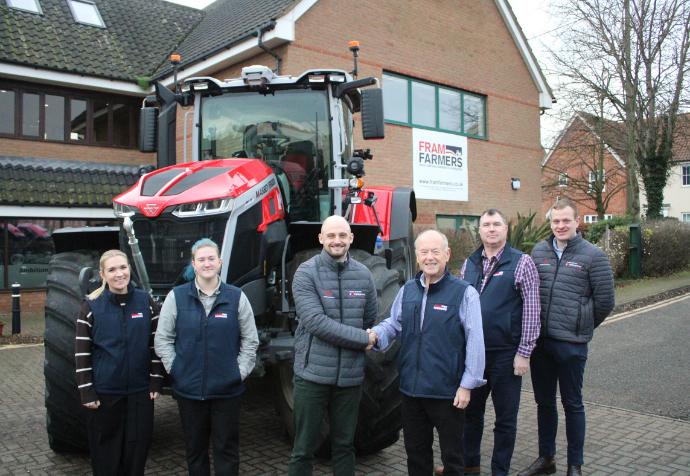

Massey Ferguson has agreed a partnership with buying cooperative Fram Farmers to provide members with exclusive discounts on a range of new MF tractors.
Based in Framlingham, Suffolk, Fram Farmers has been running for over 60 years and is the oldest farmers’ cooperative in the UK. It supports nearly 1600 farm businesses, across 39 counties, with input purchasing, grain marketing and administrative works.
The partnership will allow all members access to an exclusive discount when buying MF tractors through Fram Farmers, on top of any central MF finance offers. The discounts will be available on any Beauvais-built MF tractors, which start with the MF 5M, inclusive of all models up to the flagship, MF 9S.
Speaking on behalf of Massey Ferguson, Ben Prouse, Area Sales Manager, says the partnership will show the benefits of MF tractors to more customers. “This provides MF with greater coverage across the country and increases brand awareness with farmers that might not have
considered MF tractors in the past. Sometimes it’s worth looking at what else the market can offer and we’re hoping this affiliation will do just that. We’re delighted to be partners with Fram and deliver savings for their members.”
Darren Bantick, Head of Machinery and Building Materials at Fram Farmers commented: “Our relationship of 25 years with another brand recently ended and we approached Massey as we felt its product range would be a great fit for all our members. MF has an extensive UK dealer network and is a respected and reliable brand with a good warranty package.
“A key point for interested farmers is that the discount is applicable to invoice price, which means the full spec of the machine is considered, and not just the base unit price. Enquiries must come through Fram Farmers first with the discount applied at quoting and not after. Our customer base is split between livestock and arable, so the MF range is an ideal fit.”
Fram Farmers members are already receiving quotes for MF tractors as part of the new relationship.
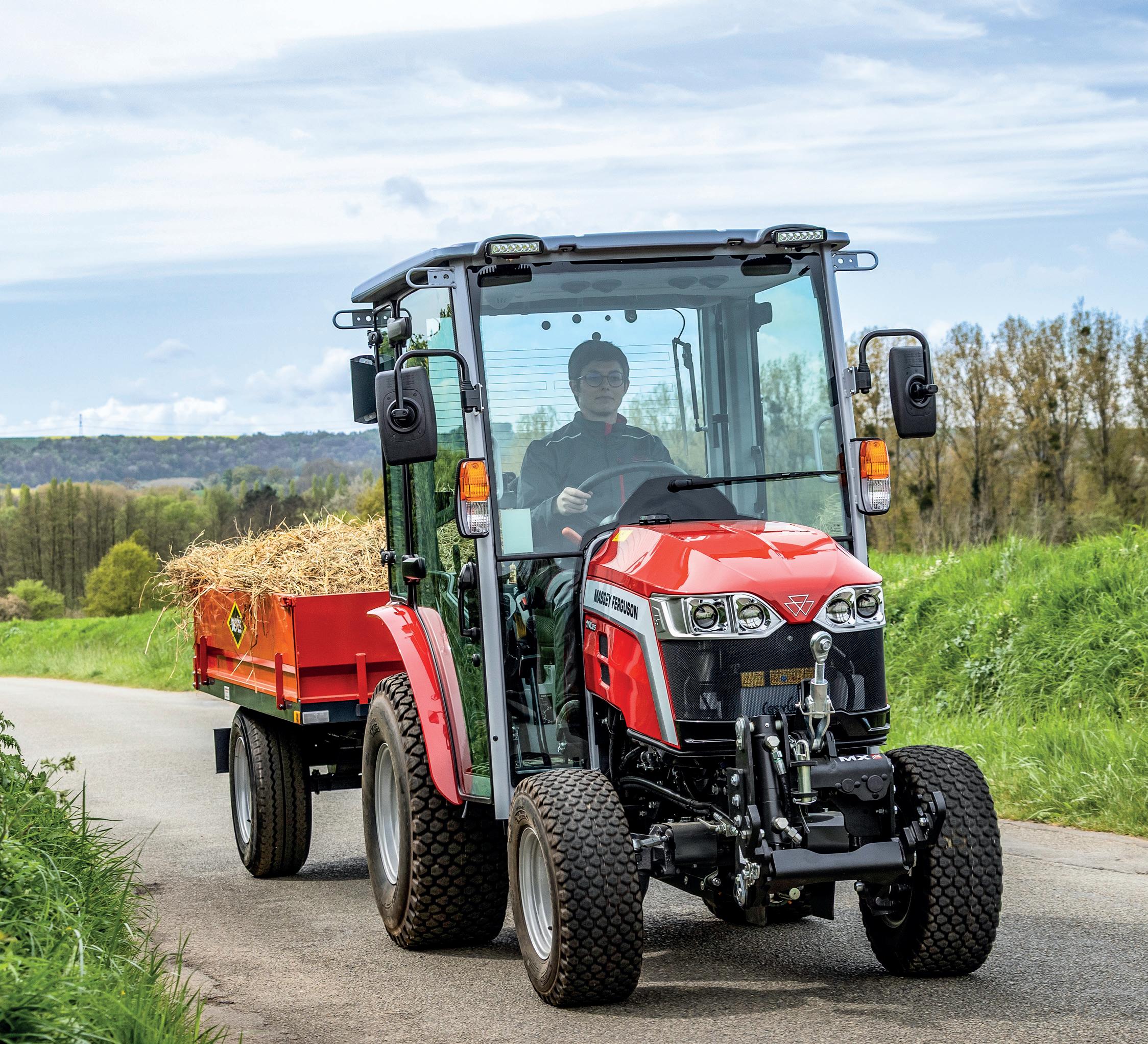
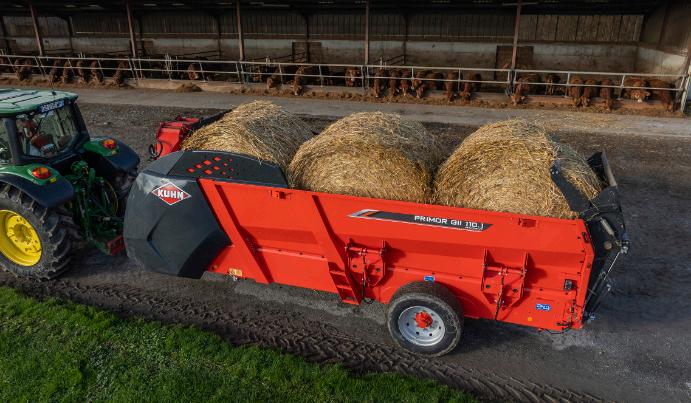
KUHN Farm Machinery has increased its Primor straw bedding and feeding range with the introduction of the Primor GII 110.1 Polydrive, aimed at users requiring a high-capacity machine in restricted height buildings.
The new model features an 11m3, 5.5m long bale bed, allowing it to carry two, 2.7m square bales, with the tailgate closed, and up to four, 2m round bales with the tailgate lowered. The compact 2.6m transport height extends to just 2.9m high during spreading, to ensure complete coverage in low slung buildings.
many farmers. “Restricted height sheds are still essential infrastructure for many small and medium sized livestock units, and machines that can easily move through these buildings, whilst improving carrying and output capacity, are essential to users. The new Primor offers a high area covered per load in low buildings.”
The new model features KUHN’s renowned POLYDRIVE hydraulically controlled feed rotor system, providing the mechanical power of the transmission and the flexibility of hydraulic operation. The large-diameter feed rotor prevents long fibres wrapping around it, while a hydraulic tine bank adjusts feed rotor power depending on the fodder.
Rhodri Jenkins says the compact working height coupled with high carrying capacity will appeal to
A two-speed gearbox powers the turbine rotation speed (310-620rpm) and a patented UNROLL SYSTEM, with hydraulic clamps inside the body, secures waiting round bales during straw-blowing. To improve longevity, KNOX treatment has been applied to the bottom of the turbine to offer superior resistance to silage acids and abrasion. KUHN has also added new tailgate kinematics to improve bale loading.
The model joins KUHN’s Primor straw blower and feeder range that includes mounted, semi-mounted and trailed models, from single bale 2m3 capacity on the mounted Primor 2060 M, up to the trailed Primor 15070 M 15m3 model.




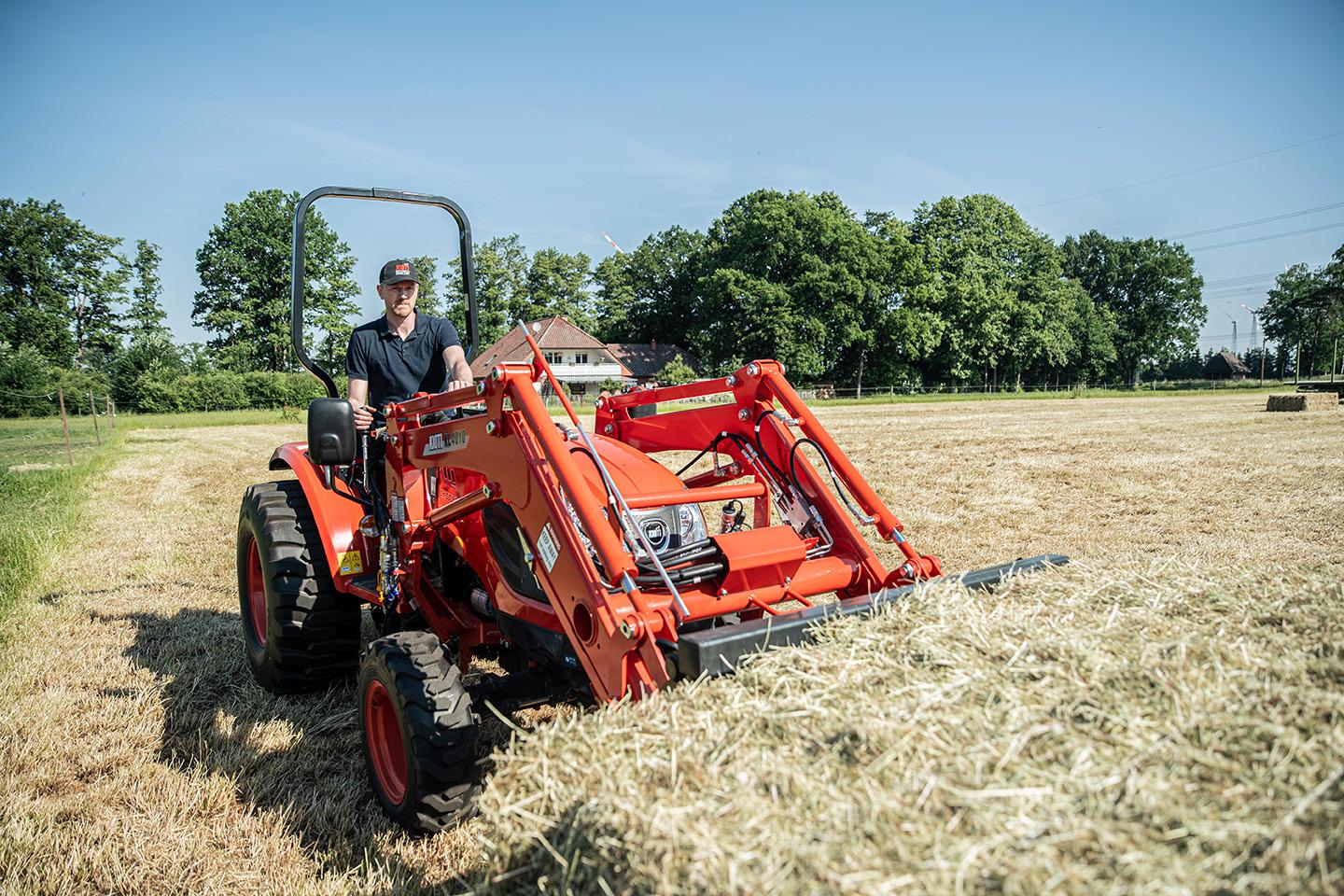

e are delighted to announce the appointment of Conagri-Sales as an authorised McCormick dealer.
This partnership strengthens our presence in the region and supports our commitment to providing customers with high‑quality machinery, expert knowledge, and outstanding service.
Conagri Limited brings an impressive breadth of agricultural equipment
experience, making them a fantastic addition to our dealer network.
We look forward to working closely together and supporting farmers and contractors with the power, reliability, and innovation that McCormick is known for.
Welcome to the McCormick family, Conagri Limited!
https://dealers.argotractors.com/en/dealer/ conagri/

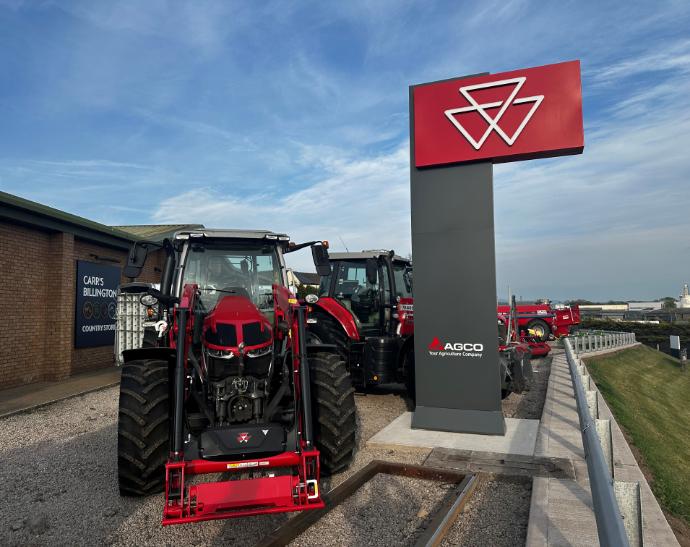
Massey Ferguson has announced changes to its dealer network in South East Scotland, with Carr’s Billington extending its trading area to include the borders and Lothian regions. The move increases the Carr’s trading area for Massey products by around 10%.
Tom Jobling, Machinery Director at Carr’s Billington, says: “We’re delighted to increase our coverage with MF products in South East Scotland. We’ve been a Massey Ferguson dealer for over 30 years and already operate with the brand across eight depots in northern England and Scotland. Our existing team is well placed to support the new customers as we take on the bigger area, with further staff additions planned as the changes take effect.
“The business, under our feed and rural
supplies division, already has four sites across the new area, so we’re already known and can support farmers and growers as required. The machinery sales and support will be handled from the Morpeth depot initially, and a formal announcement on a permanent location in the new area will follow soon.”
Tim Walters, brand manager for Massey Ferguson UK and Ireland, says: “Carr’s Billington is steeped in MF heritage and is purely focussed on selling the brand, so we’re delighted to increase its area and improve MF’s visibility in a key location.”
MF’s South East Scotland area was previously run by Scot Agri, who remains an MF dealer across Angus, Aberdeenshire and parts of Moray. Its Kelso depot will remain active on AGCO’s system until 30th June to facilitate a smooth transition for customers.
John Deere is adding three new highhorsepower tractor models to its 8R and 8RX series, with rated engine outputs of 440 hp, 490 hp and 540 hp. The models are designed for the demands of heavy draft applications and long working days typical of large European farm operations. All models are equipped with the JD14 13.6 l engine, which can deliver up to 634 hp through Peak Power Intelligent Power Management (PP IPM). This makes the top model 8R/8RX 540 the world’s most powerful standard-design tractor.

“The new additions broaden the capability of the 8series to support large farms focused on continuous operational optimization, achieving higher productivity with fewer, more reliable machines while maintaining the flexibility of a standard tractor,” said Marcus Luchmann, Go-toMarket Manager for Tractors 150+ hp in Europe & CIS. “They also address the needs of expanding farms that intend to manage more hectares with the same workforce.”

The JD14 engine in the 8 series high-horsepower line-up provides up to 2,695 Nm maximum torque and a constant power range from 1,450 to 1,900 rpm. PP IPM provides an additional 40 hp across the main engine speed range down to 1,600 rpm, delivering extra power in demanding applications with high‑load PTO and electrically or hydraulically driven implements.
The new 8R tractor models are available with tyres up to 2.30 m at the rear and 1.85 m in the front. Both the single‑ and dual‑wheel configurations, including dual front tires up to 710 mm wide, can be equipped with the John Deere single‑line Central Tyre Inflation System (CTIS), which automatically adjusts tyre pressures at any speed and temperature. Its simplified layout allows the axle
hub to incorporate heavy-duty sealing components, which are covered by the protection plan PowerGardTM. The new 8RX models use an updated four-track system with redesigned undercarriages and Soucy CustomFitTM P series belts. Their low-tension belt design aims to reduce belt stress and extend operating life. Depending on configuration, the track system provides a contact area of up to 4.87 m² and thus ground pressures as low as 0.4 kg/cm², helping to minimise soil compaction.
The stepless eAutoPowrTM transmission is in base for all new 8R/8RX models. The system uses an electro-mechanical split-path layout that replaces hydrostatic components with maintenance-free electric motor generators, improving energy flow efficiency in the transmission by up to 8%* compared to conventional hydrostatic solutions.
The new Heavy-Duty Independent Link Suspension (HD ILS) front axle ensures efficient power transfer and a turning radius of around 7m, supporting smaller headlands and precise path-to-path operation. The HD ILS features automatic as well as manually adjustable load-based suspension adaptation for a more comfortable and personalised cab experience.
Fuel tank capacities of 936litres on the 8R models, and up to 1,123litres on 8RX machines, support long working days, with operating times of up to 14 hours at 85% load, eliminating refill stops in 12hour shifts.
The CommandViewTM4 cab is equipped with a redesigned CommandARMTM with integrated Convenience Display, allowing operators to recall seat settings and personalise the cab environment by controlling, for instance, radio, A/C or phone. Furthermore, the new CommandARMTM features two new joystick options: the CommandX Plus for basic operation, or the advanced CommandX Pro for expert-level control. Both provide enhanced configurability, including new phone and infotainment control, new G5Plus display navigation, and extended Precision Ag functionalities. Further cab refinements include inductive phone charging, a 330° front wiper, righthand side door wiper, push-button-start with pin code protection and door cinch soft closing. Additionally, the CommandViewTM 4 Plus cab on the new 8RX high-horsepower models offers 15% more legroom and a 20% wider panoramic field of view in comparison to the 8R standard series cab. The Premium and Ultimate seats now include onscreen adjustments with electronic independent forwards/backwards and up/down
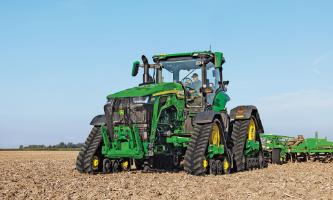
CommandARMTM positioning and full-width cushion length control. A top-mounted seatback vent in the Ultimate seat circulates cabin air, delivering extra airflow around the operator for a cooler, more comfortable ride.
All new 8R and 8RX models are equipped in-base with a StarFireTM 7500 receiver, a G5Plus CommandCenterTM display and JDLinkTM connectivity. With flexible licence options, operators can access supervised autonomy features that support consistent work quality and reduce operational mistakes. Features like AutoPathTM Rows and Boundaries create guidance plans for the entire field and all seasonal operations, while AutoTracTM Turn Automation delivers precise turns in any field shape. Passive Implement Guidance ensures centimeter‑level accuracy by reducing implement drift, and AutoTracTM Implement Guidance In Reverse enables precise maneuvering of wide implements, regardless of operator experience. In-Field Data Sharing and seamless data transfer to the John Deere Operations CenterTM offer coordinated operation without manual data exchange.
“Thanks to its non-position-indicating digital controls, the 8R/RX high-horsepower tractors are inherently prepared to retrofit future Autonomy components,” explained Marcus.
The 8 series high-horsepower line-up delivers articulated‑level pulling power with standard‑tractor versatility, enabling quick field‑to‑field moves while handling the largest implements. With up to 418l/min hydraulic flow large drills are easily powered. The tractor comes with an optional Category5 drawbar and a double‑acting rear hitch with up to 10.8t lift capacity at 610mm, while two new double‑acting front hitch options offer up to 4.8t at 610 mm. Together with a 130 kW front PTO the new 8R and 8RX models are designed to handle all heavy-duty implements from large-scale mulchers to PTO-driven silage distributors. The Type 4 rear PTO with 1000, 1000E, and 1300 speeds and up to 548 hp maximum PTO power even in stationary applications, offers surplus power for demanding jobs.
The new 8R/RX tractors feature an optional Jake Brake engine brake with up to 300 kW of brake
power. When engaged, it automatically responds whenever actual speed differs from pre-selected speed, delivering smooth deceleration with one pedal ease, while protecting the main brake for longer life.
Three selectable operating modes allow operators to tailor engine and transmission performance to specific tasks:
ECO mode: prioritises fuel efficiency and comfort with reduced engine speeds, ideal for transport or light-duty work.
STANDARD mode: Balances power, efficiency, and responsiveness for most field operations.
MAX mode: Unlocks full engine potential and fastest response for heavy draft applications and dynamic load changes

Transport speeds of 60 km/h at 1,440 rpm or 50 km/h at 1,200 rpm are available on wheeled versions, depending on market regulations. The new ILS Roll Control automatically adjusts front axle suspension stiffness during cornering and higher transport speeds, reducing leaning to curves and minimising forward dip under heavy braking. Reactive Command Steering provides precise, carlike handling with a self-centering steering wheel to handle intersections smoothly and for convenient line-holding. The new function comes additionally with Variable Ratio Steering, reducing steering wheel turns at higher speeds, while adjustable return-to-centre force and steering resistance allow the system to be tailored to operator preference, particularly during repeated headland manoeuvres.
With additional innovations planned to be launched throughout 2026 and further features of the 8 series high-horsepower tractors soon to be integrated into the current 8R/RX/RT standard series models, John Deere will gradually introduce its large farm optimisation concept in 2026. This new approach brings together powerful equipment, advanced automation and connected fleet management to support large farms elevating their productivity even with shrinking available labour, reducing cost per hectare and maximising uptime within one integrated system.

Sitting firmly at the top of Kawasaki’s ATV hierarchy, the Brute Force 750 range embodies everything the brand is known for: performance, real-world capability, and a no-nonsense, can-do attitude. Powered by a 749cc V-twin engine and equipped with electronic power steering, these flagship machines are designed to work hard, go further, and do it all with ease.
With an impressive 37.3 kW (51 PS) on tap and a class-leading 58.1 Nm of torque, the fuelinjected V-twin delivers relentless pulling power and effortless acceleration. Whether towing, climbing, or pushing through challenging terrain, the Brute Force 750 feels unflappable.
For 2026, Kawasaki expands the lineup with the introduction of the Brute Force 750 SE, a model that raises the bar on standard
equipment and everyday practicality. Hand guards come fitted as standard, alongside a robust front brush guard and a chassismounted Warn VRX 25-S winch, providing serious pulling power when conditions turn demanding. It’s a specification that underlines the SE’s all-season, all-terrain credentials.
Both standard and SE models benefit from electronically selectable two- and four-wheel drive, paired with double wishbone suspension at both ends. The result is a machine that


For more information and to find your local Kawasaki dealer, visit
combines automotive-style control with the compact agility only an ATV can offer.
Thoughtful details elevate the experience further. Variable front differential control improves traction in the toughest situations, while a practical handlebar-mounted LED light is a small but telling example of Kawasaki’s attention to real-world usability.
When it comes to allround performance, durability, and sheer capability, the search for the ultimate ATV begins—and ends— with the Brute Force 750.
The Brute Force 750 is available in Grayish Blue, while the Brute Force 750 SE is offered in camouflage colourways.
Kawasaki’s current UK ATV range includes the Brute Force 750/SE, Brute Force 450 T-Cat, and the KFX90 ATV. For more information, visit www.kawasaki.co.uk or contact your local Kawasaki Utility Dealer.




s newly appointed Main Dealers for Yamaha ATVs for North Yorkshire, Tom Taylor ATV can offer you a wealth of choice with their extensive range of New ATVs to suit your individual needs. All pre-owned ATVs are fully serviced in our own workshops to the highest standards, we aim to give you, the customer, that all important “peace of mind”. When your machine requires service or repairs, pick-ups and drop-offs can be pre-arranged. It’s just a phone call away. Specialists servicing Yamaha, Honda and Can-Am ATVs. Come and see us to

view new machine in our showroom, deals always available or call Tom Taylor for a demo on 01904 758105
With over 40 years ATV experience, Tom Taylor knows how provide the best possible service and support to the industry. We have a comprehensive selection of ATV Accessories and Equipment available from • C-DAX ATV Equipment • LOGIC ATV Equipment • TFM TRAILERS • Longdog ATV Equipment • Chapman Machinery • Moose ATV Products • Data Tool Tracker Recovery Systems.
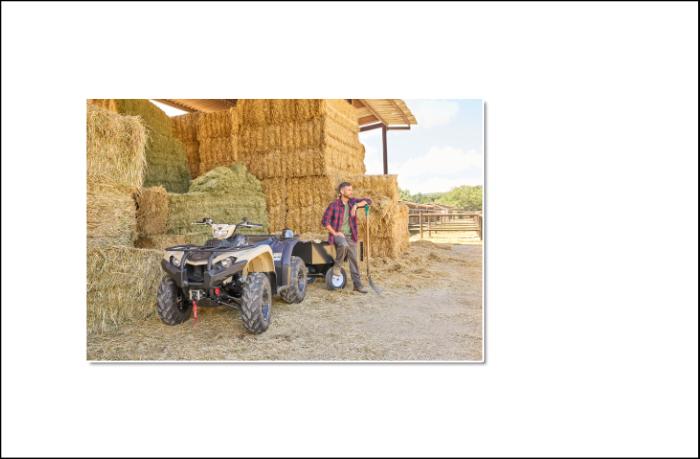
RVW Pugh Ltd
Oakwood Park, Holmes Chapel Cheshire, CW4 8AX
Tel: 01477 533560 www.rvwpugh.co.uk
Stirling's Powersports
East Fulton House, Darluith Road, Paisley, Linwood, PA3 3TP
Tel: 01505 382222 www.stirlingspowersports.com
RVW Pugh Ltd
Mellington, Churchstoke Montgomery, Powys SY15 6TQ
Tel: 01588 620545

The National Sheep Association (NSA) is reminding sheep farmers across the UK of its fantastic 2026 prize draw, offering the chance to win a brand-new all-terrain vehicle (ATV) designed to make day-to-day farm work easier.
The prize of a Yamaha Kodiak 450 ATV is worth more than £8,600 and is kindly provided by leading manufacturer Yamaha Motor UK. The exciting NSA competition will remain open for entries throughout this year both online and in person, and with a busy summer of activity ahead for NSA there will be lots of opportunity to enter the draw.
Farmers attending NSA events will get chance to view the Yamaha ATV including at the association's flagship event, NSA Sheep Event 2026, and Scotland's major sheep farming event, NSA Scotsheep 2026.
These events will bring together sheep farmers, industry experts and leading agricultural businesses for a full programme of demonstrations, trade stands, seminars and networking opportunities. Alongside the opportunity to explore the latest innovations in sheep farming, visitors will be able to find out more about the prize draw and submit their entry.
NSA Chief Executive Phil Stocker says:"NSA has built a strong reputation for offering practical prizes that genuinely support sheep farming businesses, and the chance to win a Yamaha Kodiak 450 ATV is certainly one not to miss.
"The prize draw has already been really well received by sheep farmers this year as NSA has met with prospective winners at events such as Lamma and NSA regional Annual Members' Meetings across the UK, but we want to remind farmers that there is still plenty of time to enter. Whether online or at one of our summer events, we encourage people to get involved for their chance to win."
Yamaha Motor UK has a long-standing relationship with the agricultural sector and is widely recognised for producing robust, reliable machinery suited to demanding farm environments.
The Kodiak 450 ATV is designed with easy-to-use technology alongside the durability and reliability needed to tackle tough farm tasks and challenging terrain. The model features Yamaha's On-Command drive system, allowing operators to switch between 2WD and 4WD at the push of a button, while the Ultramatic automatic transmission is designed to make daily work more efficient and comfortable.
Mr Stocker adds:"For sheep farmers across the UK, having reliable machinery that can cope with long days and difficult ground conditions is essential. A vehicle like this can make a real difference to day-to-day flock management."
Dan Palmer, Manager RVGC at Yamaha Motor UK, says:"NSA is an important voice within the UK farming community and we are delighted to be collaborating with them on this competition. The Kodiak 450 is a true workhorse built for reliability, and we know it will be an invaluable tool for one lucky winner."
Farmers can find further information and submit their entry online via the NSA website: www.nationalsheep.org.uk/draw/yamaha-giveaway-2026/ NSA Scotsheep takes place on Wednesday 10thJune at Wedderlie Farm, Gordon, Berwickshire, TD3 6NW, whilst NSA Sheep Event takes place on Tuesday 28thJuly at the Three Counties Showground, Malvern, Worcestershire, WR13 6NW. For more information on both events visitwww. nationalsheep.org.uk/events.



Corvus Terrain DX4 and DX2. The first UTVs made in Europe bring together pioneering sustainability and advanced technology. Constructed for the hardest off-road work in agriculture, livestock, forestry, groundscare and construction.
Highly adaptable, the Terrain features a 3-cylinder 24hp Yanmar Diesel engine for excellent fuel efficiency and range.
• St ag e V emission compliant
• Road legal to T1a/T1b tractor regulation with top speed of 40mph/65kph
• Power steering
• Full cab and heater options, including air conditioning
Supported by a specialised dealer network throughout the UK and Ireland.
To find your local dealer, visit www.bossorv.co.uk
ABREY AGRICULTURAL
Pamphillions Farm, Purton End, Debden CB11 3JT 01799 543208
ACE ATV
Woodgate Road, Stoke Prior, Woodgate, Bromsgrove B60 4HB 01527 578668
DAVID TAYLOR GARAGES
Granada Park Motors, A4077, Llangattock, Crickhowell NP8 1HW 01873 810304
TOM TAYLOR ATV
Unit 16/17 Windmill House Ind Est, Sutton Road, York YO32 2RA 01904 758105

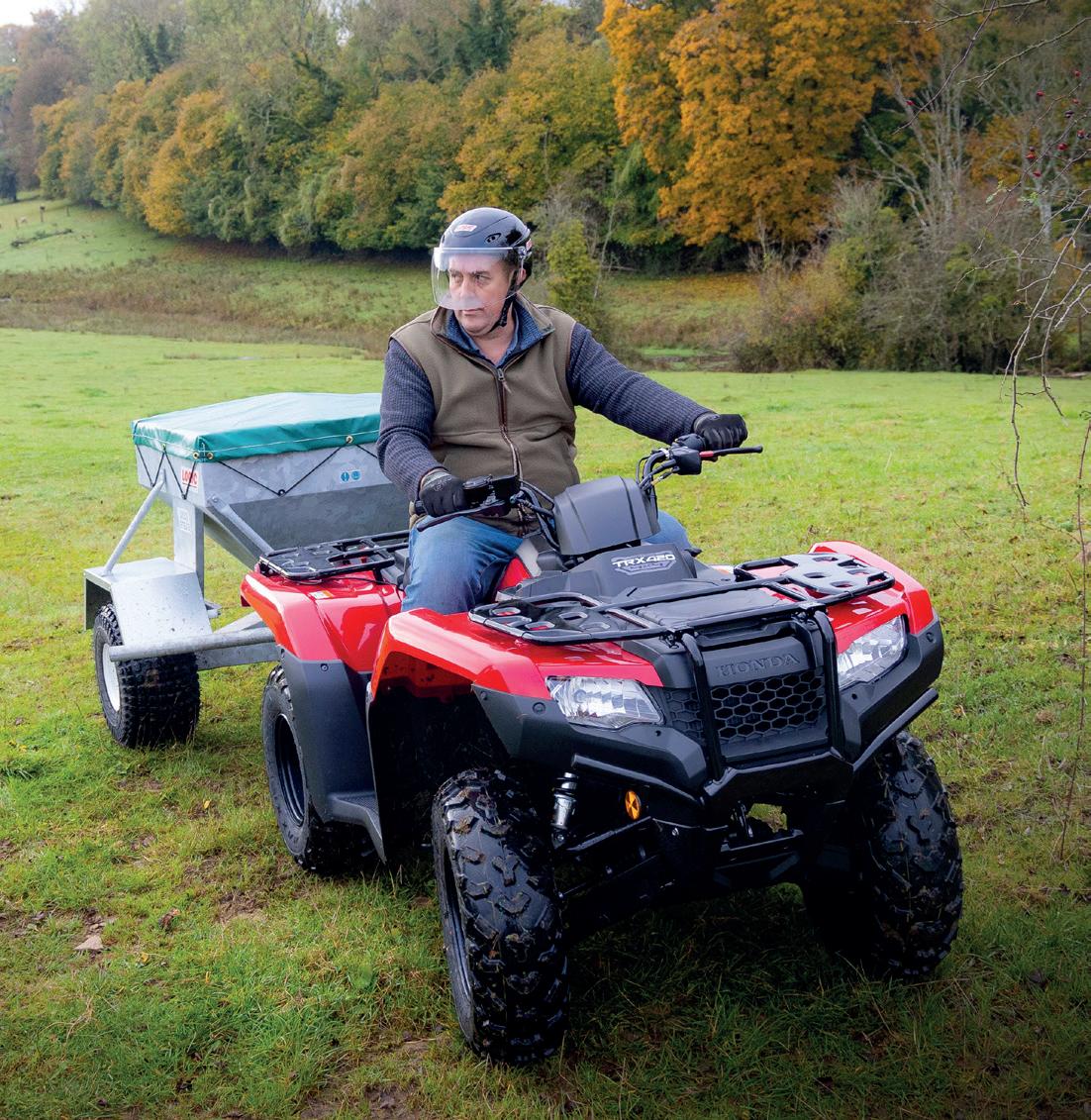


• Fuel-injected 420 cc OHV engine
• Auto clutch with manual shifting

£520 off (excl. VAT)
• Fuel-injected 518 cc OHV engine
• Auto clutch with manual shifting

• Fuel-injected 518 cc OHV engine
• 204 kg cargo bed capacity
TRX420FM1/FM2: £420 off (excl. VAT)
• Swing-Arm Suspension (Fixed Rear Axle)
• Power Steering (FM2)
• Fuel-injected 420 cc OHV engine
• Sturdy front and rear racks
• Auto clutch with manual shifting
• 1.9L water resistant utility box
• Swing-Arm Suspension (Fixed Rear Axle)
• TraxLok® switchable 2WD/4WD
• Available in Red or Green
• Power Steering (FM2)
• Sturdy front and rear racks
• 1.9L water resistant utility box
• TraxLok® switchable 2WD/4WD
• Available in Red or Green
• Independent Rear Suspension (IRS)
TRX520FM2/FM6: £520 off (excl. VAT)
• Swing-Arm or Independent Rear Suspension (IRS)
• Power Steering
• Fuel-injected 518 cc OHV engine
• Sturdy front and rear racks
• Auto clutch with manual shifting
• 1.9L water resistant utility box
• TraxLok® switchable 2WD/4WD
• Swing-Arm or Independent Rear Suspension (IRS)
• Available in Red or Green
• Power Steering
• Sturdy front and rear racks
• 1.9L water resistant utility box
• TraxLok® switchable 2WD/4WD
• Available in Red or Green
• Impressive 454 kg towing capacity
SXS520 PIONEER: £520 off (excl. VAT)
• Five-speed auto transmission with optional manual shifting
• Fuel-injected 518 cc OHV engine
• 204 kg cargo bed capacity
• TraxLok® switchable 2WD/4WD
• Independent Rear Suspension (IRS)
• Side-by-side seating with easy access
• Impressive 454 kg towing capacity
• Five-speed auto transmission with optional manual shifting
Honda ATVs & UTVs—Built to Work as Hard as You Do. Honda ATVs and UTVs deliver the performance and reliability professionals trust every day. From farming and forestry to gamekeeping, equestrian work, and snow clearing, these machines handle any terrain, any weather, and countless tasks with ease. Known for robust build quality and exceptional dependability, your Honda quickly becomes an essential part of your routine. Backed by a 2-year manufacturer’s warranty† as standard, your Honda ATV or UTV is ready whenever you are.
• TraxLok® switchable 2WD/4WD
• Side-by-side seating with easy access
Power of Dreams.
Honda ATVs & UTVs—Built to Work as Hard as You Do. Honda ATVs and UTVs deliver the performance and reliability professionals trust every day. From farming and forestry to gamekeeping, equestrian work, and snow clearing, these machines handle any terrain, any weather, and countless tasks with ease. Known for robust build quality and exceptional dependability, your Honda quickly becomes an essential part of your routine. Backed by a 2-year manufacturer’s warranty† as standard, your Honda ATV or UTV is ready whenever you are. The Power of Dreams.




*Terms and Conditions apply
T£500 off the recommended retail price.
The 576cc single-cylinder, 4-stroke, DOHC, liquid-cooled engine delivers a maximum of 44hp, producing 48Nm of torque and impressive performance in all conditions. With on demand 2/4-wheel drive, and the electronic fuel injection, the powertrain has good adaptability in any high/low temperature environment.
CFORCE ATV’s from £4500 + VAT CFORCE ATV’s from £4500 + VAT UFORCE600 from£9,999+VAT UFORCE600 from£9,999+VAT
Selectable power steering, a 2500lb winch, steel wheels and metal racks are amongst many features that make this mid-range roadlegal ATV a competitive utility vehicle.

For model information, and local stockist details, visit www.dualways.com or www. segwaypowersports.uk



Highland Leisure Sport
Unit 20, Cromarty Firth Business Park
Invergordon, IV18 0LT
Tel: 01349 854620
www.highlandleisuresport.co.uk
Duncan Brassington Agricultural Sales & Service Ltd
Banbury Lane, Burwarton, Bridgnorth, WV16 6QN
Tel: 01746 787983
www.brassingtonagri.co.uk
158 Performance
Unit 1/2, Tallington Services, Main Road, Tallington, Lincolnshire, PE9 4RN
Tel: 01778 341144
www.158performance.co.uk
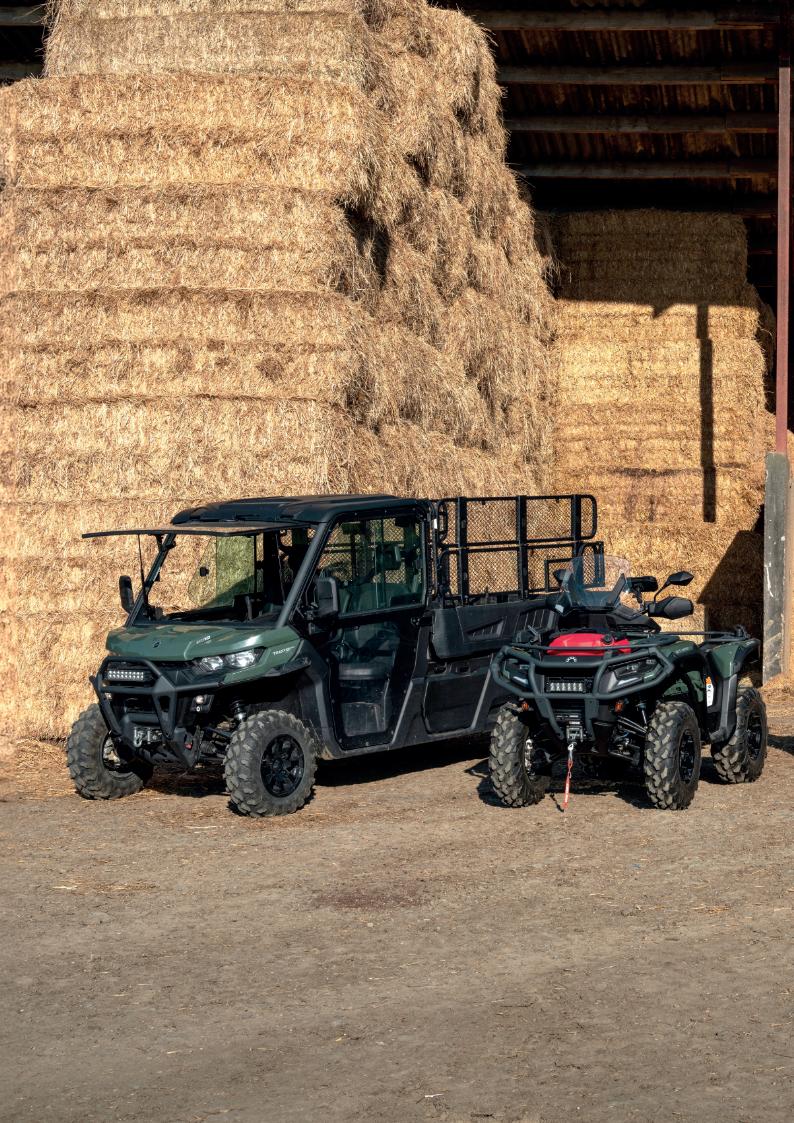
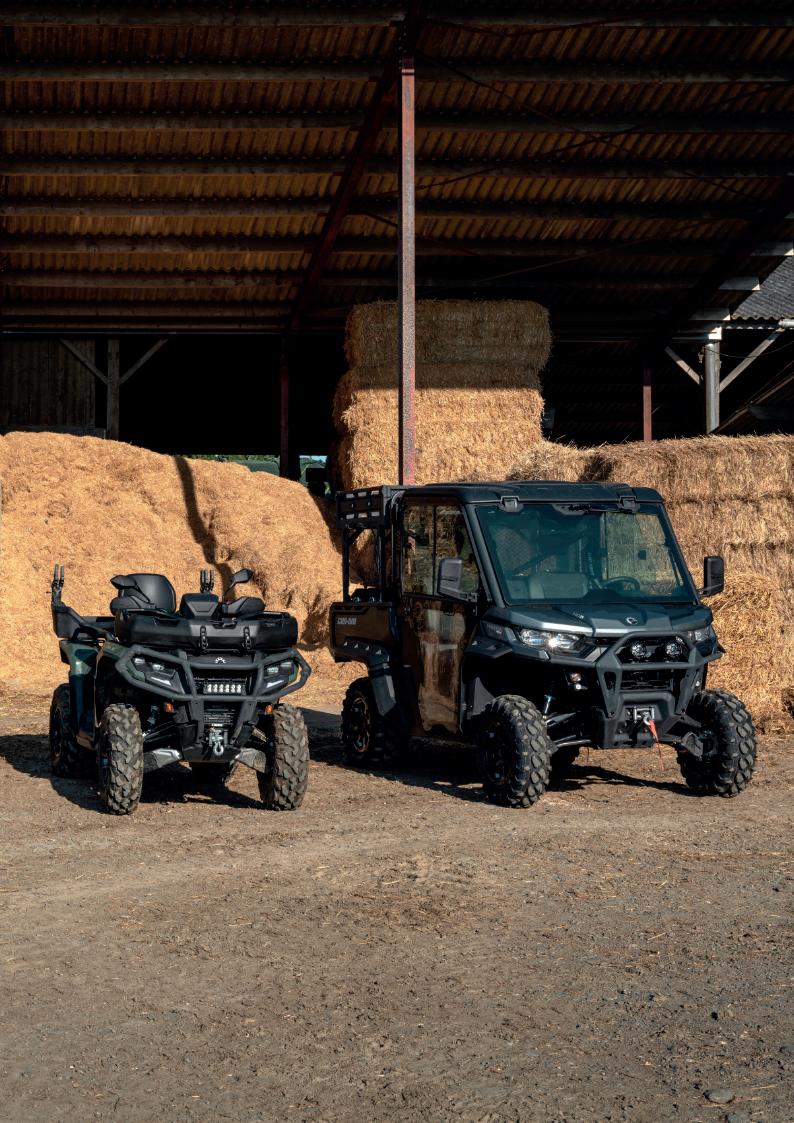

After three very successful years as Managing Director of Suzuki GB PLC and Republic of Ireland, Takanori Suzuki will be retiring from the company and returning to Japan towards the end of May.
This has been Takanori’s second term as Managing Director having first headed up the company headquarters in Milton Keynes from 2005-2010 before moving back to Japan to lead Suzuki Europe, Suzuki Oceania and Suzuki Latin America.
Takanori Suzuki’s career with Suzuki Motor Corporation has spanned over four decades.
Takanori’s successor is Kazuyuki Yamashita who joins in April from Suzuki Deutschland where he held the position of Managing Director for the last five years and brings a wealth of experience to the brand.
Joining Suzuki Motor Corporation in 1987, Mr. Kazuyuki Yamashita worked in different capacities with its Hamamatsu head office as well as Japanese domestic and overseas subsidiaries.He worked as Director, Automotive Sales of Suzuki Canada from 2001 to 2006, as Managing Director of Suzuki Auto South Africa from 2007 to 2013, and as Managing Director of Suzuki Deutschland from 2021 to 2026.
We look forward to welcoming Kazuyuki Yamashita to the UK and from all of us at Suzuki, we wish Takanori a long, happy and healthy retirement.





Discover the exceptional from a global leading powersports manufacturer. Unleash the power with V-Twin engines. Tackle the most rugged trails and rough terrain. Enhance your ride with advanced suspension and electronic fuel injection. Enjoy the comfort with a cab, heating and air conditioning. Choose
Satisfy all your expectations with the Workcross


HOne of Scotland’s most prestigious off-road vehicle dealers, ATV Services Scotland Ltd., has been appointed as an AODES dealership. AODES’ UK distributor, BOSS ORV, has made the announcement, saying it is a major advantage for the AODES dealer network to have such a historic ATV dealer join the AODES dealer network. ATV Services was founded in 1989 by director John Yuille Snr., originally as a service operation. He was joined by his son less than two years later, and today the business is the largest supplier of utility ATVs in the UK. The company has four depots and thirtyseven operating staff and has recently been awarded the King’s Royal Warrant for ‘Supply and Servicing of All-Terrain Vehicles’. Their headquarters is a newly built premises at Whitefordhill, Ayr. ATV Services Scotland Ltd. is now solely owned by the founder’s son, John Yuille, and his wife Janis, and they are joined by their son, Billy, as the business’s third-generation family. Initially, the AODES range of ATVs and utility vehicles will be sold and supported by the Newton Stewart depot to cover Southwest Scotland.

“We are delightedto further our relationship with BOSS ORV by adding AODES to our customer offering,” says John. “Although a newer brand to the UK, we have watched its development over the years and feel this is a great time to get involved.Regardless of any brand we represent, our company is totally committedto providing our customers with the highest quality after-salessupport,and this is exactly what we shall do with AODES. We look forwardto developing our company further with thebrand.”
The AODES brand dates back thirty years when it was established as ODES in China, with a USA R&D and distribution centre in California. The range comprises ATVs and UTVs, featuring 525cc and VTwin engines in 650cc and 1000cc displacements. Described as being developed for work or play, they are designed to navigate off-road terrain with ease, seamlessly merging professional utility with outdoor comfort.
BOSS ORV National Sales Manager, Neil Everett says, “AODES are sold in over 100 countries and offer highly competitive, quality alternatives to more well-known brands while providing an exceptional range of functional features and benefits. We’re so pleased to welcome ATV Services Scotland as an AODES dealership for sales and support, and look forward to working with John and the team to offer AODES to Scottish ATV and UTV users.”
For more information about BOSS ORV distributed machinery, you can call 01785 561046
E-mail: sales@bossorv.co.uk Web: www.bossorv.co.uk








Huw: 07967 755256
Matt: 07794 335728 Dan: 07816 512059 https://www.huwevansandsons.co.uk/
With an ever-increasing need for tractors and trailers to carry greater loads, operate at higher speeds, and work for longer hours, today’s heavyduty trailers require wheels engineered for enhanced performance that work seamlessly with the evolution of todays’ VF tires. Profi-Max is the new high performance flotation wheel from moveero and has been developed specifically to meet these challenges and to optimize the performance of the next generation of tires. The new Profi-Max wheel delivers a 20% increase in load capacity over previous wheel designs, the ability to operate at higher speeds, and with an extended operating life.

Manufactured using improved welding processes for higher load discs, ensuring best in class quality, the Profi-Max wheel is manufactured from high strength steel, yet is still the lightest wheel in its class, with a 10% reduction in weight. Providing exceptional load bearing capability along with enhanced durability, the wheel’s advanced design provides multiple in-field operational benefits, including lower fuel consumption, greater tire protection, optimised in-field stability, and extended service life.
Developed and tested to meet the requirements of modern high load-bearing flotation tires, ProfiMax provides OEMs and machine operators with the ability to travel at speeds of 80km/h, with options available within the range for speeds up to 100 kilometres per hour (62 mph).
Designed to work seamlessly with the latest CT and VF tires from major tire manufacturers, the Profi-Max design features a wide flange for enhanced tire protection, alongside a wider bead area and symmetrical rim profile that increase fatigue life, offer a 40% reduction of stress in key
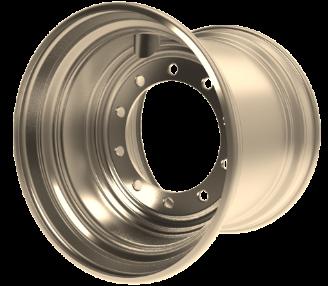
rim areas, and raises the load‑bearing capability.
Customers can also specify additional features such as valve guards, stronger discs, and connection to a Central Tyre Inflation Systems (CTIS), if required. Each wheel is backed by a five‑year warranty, offering long-term confidence for OEMs, distributors and machine operators.
As with all moveero Off-Highway wheels, the ProfiMax range benefits from the company’s industryleading C5 corrosion resistant paint system, delivering a high-quality finish which is able to withstand aggressive working environments. The coating is salt spray tested for up to 1,400 hours, ensuring long term protection and durability.
Further information about Profi-Max, and moveero’s full product portfolio, can be found at www.moveero.com

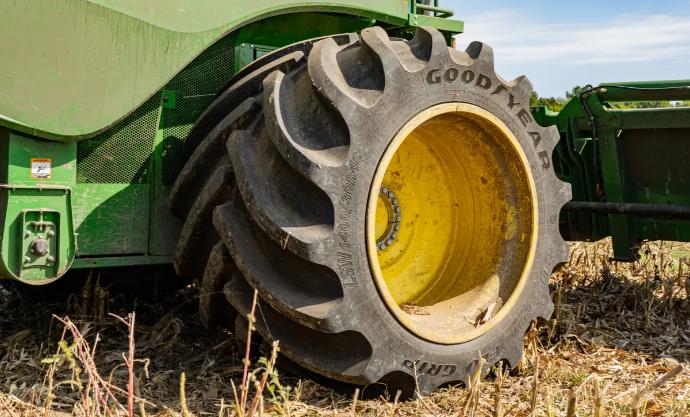
The largest agriculture tyre in the world has received the green light to be used on British and European soil.
Goodyear Farm Tires, part of Titan International, has been granted ECE accreditation for the LSW1400/30R46, the largest commercially available agricultural tyre in the world.
Designed for the largest-scale vehicles in farming, the LSW1400/30R46 is available in the Custom Flo Grip tread pattern and particularly excels when utilised in wet and muddy conditions due to its maximum traction and flotation credentials.
At the heart of the tyre’s benefits is Titan’s exclusive Low Sidewall (LSW) Technology. Featuring a larger rim diameter and smaller sidewall than a conventional tyre, LSW tyres possess exceptional flotation properties, enabling easier travel on wet soil as well as reduced power hop and greater stability which minimises road lope.
Natalie Dukes, marketing manager for Goodyear Farm Tires Europe, said: “We are delighted to have received accreditation for one of the jewels in the crown of our range.
“The LSWs are a true flagship of the Goodyear Farm Tires offering and to have approval for the European market for the biggest tyre of them all is fantastic
news.
“Those farmers who have the machinery to utilise the LSW1400/30R46 will see a long list of unrivalled benefits, with the size and scale of the tyre combining with the exceptional technology of the LSW.
“With our new Low Sidewall Technology Development Centre opening in France two years ago and another string being added to the bow for the European range, distributors and customers now have access to one of the most innovative products on the market.”
The LSW assemblies have been a huge success for farmers across the world. Operating at up to 40 per cent lower inflation pressures than standard tyres, they provide increased crop yield thanks to reduced soil compaction.
Combined with the deep R-2 tread, the Custom Flo Grip tread andLSWdesign provide an ideal balance of flotation and traction by spreading machine weight across a wider footprint to help prevent sinking and soil damage.
Despite their wider footprint and lower operating pressures,LSWtyres offer strong, consistent traction, helping farmers balance soil health with the pulling power required for today’s large-scale agricultural operations.
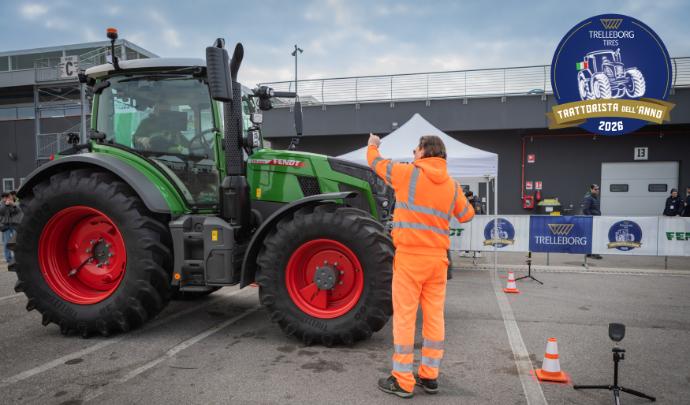
Trelleborg Tires, a global leader in agricultural tires, successfully concluded the 7th edition of its exclusive "Tractor Driver of the Year" competition, held on February 28, 2026, at the Cremona Circuit in Italy.
Confirmed as one of the most anticipated events in the agricultural sector, the initiative brought together 50 tractor drivers from across Italy, ready to test their expertise and experience the performance of Trelleborg tires in real operating conditions, both in the field and on the road. The Cremona Circuit, a renowned professional track, provided the ideal setting for a high-level competition, further strengthening the event's role as a key industry benchmark.
Participants competed in four core challenges — maneuvering skills, loader handling, reverse driving and trailer handling — followed by a final infield regularity test. Throughout all trials,
drivers were able to fully witness first-hand Trelleborg's high-performing tires, particularly ProgressiveTraction® technology, designed to maximize traction, reduce soil compaction and optimize operational efficiency in any condition.
For the 2026 edition, Trelleborg Tires partnered with Fendt as the event's technical partner.
Fendt supplied the tractors used during the competition, ensuring high standards of technology, comfort and performance both in the field and on the road. The machines featured at the event — including some of the new tractor series launched in 2025, such as the Fendt 300 Vario Gen5, Fendt 500 Vario Gen4 and Fendt 800 Vario Gen5 — demonstrated how advanced agricultural technology enables operators to handle every task with maximum efficiency and ease.
Daniela Gambatesa, Marketing Manager Italy, stated: "The "Tractor Driver of the Year" once again confirms its position as a landmark event for the agricultural sector: a unique opportunity to celebrate expertise, innovation and professionalism. This 7th edition recorded a remarkable participation of tractor drivers, highlighting the growing importance of the initiative. A key highlight of the event was the new '5,000 Hours of Guaranteed Performance' campaign dedicated to ProgressiveTraction® treads, originally launched in July 2025 and now featuring a customized look for Fendt tractors equipped with VarioDrive technology. This initiative allows us to prove in real working conditions the long-term durability and efficiency of our tires, offering tangible support to agricultural professionals in their daily operations. The collaboration with Fendt as technical partner further reinforces our shared commitment to excellence, combining advanced technology with highperforming solutions for the industry."

Silvia Uderzo, Advertising & Sales Promotion Specialist at Fendt Italia, commented: "Fendt has believed in the "Tractor Driver of the Year" project since its early editions, reflecting the trust and importance we attribute to this initiative. Taking part again this year represents a valuable opportunity to enhance the skills of tractor drivers and to demonstrate how the technology, performance and comfort of our machines play a decisive role in improving operational efficiency. The partnership with Trelleborg Tires confirms our shared commitment to delivering increasingly highperforming and sustainable solutions to agricultural professionals, combining innovation with close attention to their real operational needs."
After an intense and challenging day, Francesco Coppe was crowned winner of the 2026 edition, standing out for precision, skill and adaptability across all tests.

Spending time with the D-Max Utility on a working farm in the Vale of Belvoir is about as honest a test as it gets. With dairy farmers Phillipa and Mark Hornbuckle putting it through daily duties, this wasn’t a gentle road review, it was proper, muddy, load-bearing reality.
What stood out wasn’t just what it could do, but how it fit into the rhythm of real farm life.
Let’s start with the toughest job. Towing livestock.
The 1.9-litre diesel in this Utility model did manage the job. It hauled a livestock trailer with cattle between farms and handled short journeys without issue. But when pushed, especially with heavier loads like two fully grown cows, it started to feel stretched.
That doesn’t make it a failure. In fact, it highlights something important about the D-Max range.
This entry-level engine is perfectly capable for lighter towing, general hauling, and everyday work. But for farmers regularly moving heavier livestock or tackling hilly routes, stepping up to a higherpowered version in the D-Max lineup would unlock the vehicle’s full towing potential.
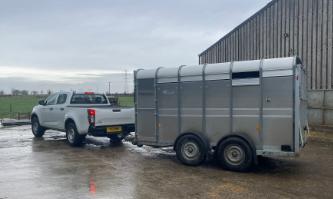
It’s worth remembering the platform itself is built for serious work. With a 3.5-tonne towing capacity across 4x4 models and features like Trailer Sway Control and a heavy-duty towbar setup, the foundations are strong. The version tested simply sits at the more accessible end of that spectrum.

Away from outright pulling power, the D-Max really found its stride.
Day-to-day farm work is relentless. Mud, wet gear, constant climbing in and out of the cab, tools, feed, and everything in between. This is where the Utility trim makes a lot of sense.
The interior is simple, but that simplicity works in its favour. Surfaces are easy to wipe clean, and the vinyl flooring and durable materials mean you don’t feel precious about using it properly. After a week of real use, it held up exactly as you’d want a working vehicle to.
Comfort was another pleasant surprise. Even after repeated short trips between farms and runs into town, it remained a relaxed and easy place to sit. The layout is straightforward, controls are intuitive, and features like automatic headlights and Apple CarPlay make everyday driving feel modern without being overcomplicated.
There was one clear limitation raised. Cloth seats aren’t ideal in a muddy farm environment. It’s less a flaw and more a reminder that higher trims such as the DL40 and V-Cross, with leather seating, are better suited if you want something easier to keep spotless long-term.
Tight farmyards, awkward gates, reversing with trailers, this is where a pickup either earns its keep or becomes a headache.

The D-Max handled it with ease.

Low-speed control was smooth and predictable, and manoeuvrability stood out as a real strength. Whether reversing into tight spaces or navigating confined areas, it felt composed and confidenceinspiring.
The reversing camera and sensors made a noticeable difference too, especially when working in tighter spots like station car parks or narrow farm entrances. For a working vehicle, that kind of visibility isn’t just a convenience, it’s a genuine asset.
Utility Spec: Simple, Practical, and Well Equipped Where It Counts
The Utility trim keeps things focused, but it’s far from basic.
The test vehicle came equipped with a range of practical additions that genuinely enhanced its usability:
• Lazer Utility-25 work lamp for visibility in low light
• Over-rail bed liner protecting the load area
• Tailgate assist making access easier
• Load bed 12V socket and lighting for added versatility
• Heavy-duty towbar with 13-pin electrics ready for serious towing
• Wireless charging and 3D floor mats adding everyday convenience
These aren’t flashy extras, they’re the kind of
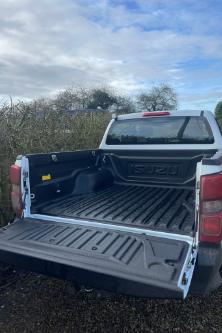
features that make a difference when you’re using the vehicle properly, day in and day out.
Usability: More Than Just a
What’s interesting is how well the D-Max blended work and normal life.
It wasn’t just used for towing or farm duties. It handled trips to Mole Valley, station runs, and general errands without ever feeling out of place. That dual-purpose nature is where it really shines.
For anyone balancing rural work with everyday driving, it feels like a vehicle that can comfortably do both.
Final Thoughts: A Strong Base With Clear Upgrade Paths
The week with the D-Max Utility made one thing clear. This is a tough, dependable, and wellthought-out pickup that’s genuinely built for work.
Its only real limitation in this test came down to engine choice. For lighter duties, mixed use, or farms without heavy livestock towing, the 1.9D Utility makes a lot of sense. It’s comfortable, practical, and easy to live with.
But the beauty of the D-Max range is flexibility. If your work demands more pulling power or added comfort like leather interiors, moving up the range solves those issues without losing the core strengths.
In simple terms, the D-Max proved itself where it matters most. It works hard, it handles real conditions, and with the right spec, it can be tailored to suit just about any farm.






Just weeks after announcing its UK plans, LEPAS has confirmed the flagship L8 will go on sale in Q3 2026, signalling the brand’s arrival and ambition in the UK market.
LEPAS is built around a clear mission: to define elegance in the new energy era, combining sophisticated design, advanced technology, and uncompromising safety to deliver a refined and confident driving experience for UK customers.
The LEPAS L8 brings this vision to life through the brand’s signature design language. Its exterior takes inspiration from the agile, muscular contours of a running leopard, while the distinctive LED headlights are styled to echo the focused intensity of a leopard’s eye.
Paired with a calm, generously proportioned fiveseat cabin, the LEPAS L8 is built on Chery International’s all-new New Energy Vehicle (NEV) modular platform, engineered to balance assured performance with a smooth, comfortable driving experience.
Technology and safety sit at the core of the LEPAS proposition, with a globally intelligent architecture that integrates advanced in-cabin features, comprehensive driver assistance systems and engineering designed to meet global five-star safety standards.
LEPAS, which combines “Leopard”, “Leap" and “Passion”, has been created to resonate with those seeking authenticity, intelligent design, and a bold, elevated everyday experience. Beyond mobility, it also aims to connect with creative and culturally progressive communities who value craftsmanship, aesthetic integrity, and expressive identity.

With the LEPAS L8 confirmed as the first chapter of its UK story, the brand signals a long-term commitment to the market. Further product details, technology highlights, dealership network expansion, and future model plans will be revealed in due course as LEPAS builds momentum toward a new era of elegant mobility.


The automotive world will return to the capital in early 2027 with the launch of the London International Motor Show, taking place at ExCeL London from 26–28 February 2027. The event will bring together leading manufacturers, cutting-edge technology, and thousands of visitors for a major celebration of the industry’s past, present, and future.
Positioned at the heart of one of the world’s most influential cities, the show will offer a traditional motor show experience enhanced by modern, interactive features. Visitors will be able to explore the latest models from major brands, experience new technologies, and take part in live demonstrations and test drive opportunities.
The 2027 edition will place particular focus on the industry’s transition from internal combustion engines to hybrid and fully electric vehicles. Exhibitors will showcase the newest hybrid, plug-in hybrid, and battery-electric models, alongside innovations in software, connectivity, and mobility services.
In addition to brand exposure, the show will provide a powerful leadgeneration platform for manufacturers. With thousands of engaged visitors, fleet buyers, and business decision-makers in attendance, exhibitors will be able to capture qualified customer data, generate test drive bookings, and convert interest into measurable sales opportunities.
Located at ExCeL London, just minutes from London City Airport and with direct transport links to central London, the show provides easy access for international exhibitors, media, and visitors. Its strategic location is expected to attract a diverse audience from
across the UK and around the world.
The London International Motor Show will also be co-hosted alongside two other major motoring events at the same venue, including Motorsport Expo, the UK’s largest motorsport exhibition. This combined format will significantly increase overall attendance and broaden the demographic reach, attracting enthusiasts, families, fleet buyers, and industry professionals.
Organisers expect the event to deliver a highimpact, cost-effective platform for manufacturers and mobility companies to present their latest vehicles and technologies to both consumers and the global automotive community.
More details, including exhibitor announcements and ticket information, will be released in the coming months.



Moving home may mark a fresh start, but for most Brits it comes with stress, strain and far more car journeys than expected. New research from Isuzu UK reveals just how demanding moving house is on people, relationships and vehicles alike, and why more drivers are realising that a pick-up truck could make one of life’s biggest upheavals far easier.
A new survey of 2,000 UK adults by Isuzu has revealed the sheer scale of Britain’s lifetime housemoving habits, and the pivotal role vehicles play in getting us, and our belongings, from A to B.
According to the findings, the average Brit will move home five times over the course of their life, shifting an astonishing 36 loads’ worth of possessions in an average family car between properties, over 25 trips.
In fact, Brits regularly play Tetris with their boxes and vehicles, trying to squeeze in as many as 36 every time they move, leading to at least three arguments, three bouts of tears and screaming
they wished they hadn’t decided to move three times. It also results in an average of three items being broken.
It’s no surprise that 77% say they always end up making more trips to their new home than they thought they would - an average of five per move.
With so much heavy lifting, cramming and numerous round trips, the survey highlights why many drivers wish they had a more capable vehicle during their moves, with eight in ten (83%) of those polled saying that moving day would be “significantly easier” with a pick-up truck, thanks to its ability to transport bulky items like furniture, white goods and garden equipment in fewer journeys.
Isuzu says the findings underline how pick-up trucks are increasingly being seen as practical, everyday solutions rather than purely workhorse vehicles.
Head of Marketing at Isuzu UK, George Wallis, said: “The survey shows that moving remains one

of the most stressful things you can do in life, putting pressure on relationships, finances and even your vehicle. It’s probably one of the most demanding loads you’ll ever carry.
“The D-Max is built to shoulder that burden, big loads, awkward items, rough ground, no fuss. It’s why so many people now see pick-ups as everyday tools, the Isuzu D-Max is the smarter move.”
The survey also revealed a growing frustration with the limitations of smaller cars when it comes to transporting personal belongings, with one in six (17%) admitting that trying to get as much as possible in their vehicle, despite it being unable to cope with the volume, is one of the most stressful things about moving.
In addition to trying to get as much as possible in your car, seven in ten (70%) hate packing everything up, 46% feel their blood pressure rise when deciding what to keep and what to throw away, and 42% dislike leaving a home full of memories.

It’s no wonder that one in three (32%) hate trying to move everything themselves, with a WHOPPING 93% going a step further and saying that moving home is one of the most stressful things you can do in life.
With the cost and stress of moving already high, it’s clear that many Brits would love to have access to a pick-up truck to cut time, fuel and hassle, enabling them to haul more in one go and reduce reliance on rentals or professional movers.
• 5 moves
• 25 trips between your old and new home
• 36 carloads of belongings
• 180 boxes squeezed into the car
• 45 days spent packing everything up
• 20 times spent scratching your head about how you’re going to get everything in the car

• 15 arguments with your partner
• 15 bouts of tears
• 15 broken items
• And 15 times you wish you never bothered to move
The findings presented in this release are based on a nationally representative online survey conducted for Isuzu via research and insights agency Perspectus Global in January 2026.





Subaru UK is marking ‘National Walk Your Dog Day’ by organising a test drive event with a difference: you can bring your dog along, too.
A new national survey conducted by Subaru UK found that while 80% of dog owners’ car purchasing decisions were driven by their pet’s needs, only 20% had tried out a car with their dog before buying. Subaru UK is looking to equip customers with the tools to make more informed buying decisions, taking their dog’s requirements into account.
Over the course of the campaign, Subaru’s dogfriendly retail network will offer guests, both human and canine, the opportunity to try out the latest Subaru models and see if they pass muster for both parties. Subaru’s ‘safe, tough and fun’ model lineup has long had a loyal following among dog owners who value the range’s go-anywhere ability, practicality and award-winning durability.
The fun initiative also has a serious goal: educating the public on how to legally and responsibly transport dogs in cars - a critical but often overlooked area of road safety. Subaru UK commissioned a survey of UK dog-owning drivers across all vehicle brands to establish their practices and behaviours when transporting their dogs. It revealed that a significant proportion were unaware of the basic laws and best safety practices surrounding transporting dogs in their vehicles, and that more needs to be done to urgently close this knowledge gap.


Lorraine
Bishton, Managing Director of
Subaru UK
&
Ireland, said: “We’re pleased to launch our initiative, inviting potential customers from around the UK to visit retailers, and try out Subaru’s model range with a four-legged friend in tow. We’re looking to empower people to make more informed car-buying decisions, helping them to find a vehicle that works for them and their pet.”
“The initiative aims to shine a spotlight on the critical area of dog transport safety. Following the results of a survey we commissioned, it is clear that more needs to be done on education in this area, to ensure dog owners comply with the law, and keep pets safe when out on the road. Throughout the campaign, our knowledgeable retailers will be on hand to offer dog-transporting safety advice, a refresher on the relevant sections of the Highway Code, and a healthy supply of dog treats as well. We are determined to do our bit to drive awareness of how to keep all occupants safe, including dearly loved four-legged friends.”
The survey revealed that 1 in 5 dog owners are currently breaking the law by failing to secure their pet behind a guard or cage in the boot, or in a tethered harness when travelling in the cabin. The contravention of these laws can lead to a £5000 fine and can invalidate a driver’s car insurance - something that a third of dog owners surveyed were not aware of.


the car; the failure to do so can put pets’ safety at risk.
Additionally, a third of respondents were unaware of the existence of crash-tested dog harnesses. A similar proportion were unaware that it was best practice to secure your dog either in a crate or behind a dog guard in the boot of an estate or SUV. Worryingly, half of those surveyed did not know it was a legal requirement to deactivate airbags when dogs are travelling in the front seat of
The test drive opportunity will address these important elements of dog safety in an environment that is casual and fun for both owners and pets alike. Participating Subaru retailers' staff will be on hand to offer refreshers, general advice on how to transport dogs safely and comfortably, as well as pointers on which Subaru model may be most suitable for their type and size dog, from the Outback estate and Forester SUV to the slightly more compact Crosstrek.








KGM Motors UK, formerly SsangYong, is proud to welcome Quay Auto Centre to its expanding dealer network. Based in Kingsbridge, Devon, Quay Auto Centre brings more than a century of automotive expertise and community trust to the KGM brand.
Founded in 1914 as Quay Garage Co. Ltd, the business has remained in the same family since 1932 and has served the South Hams community for more than 110 years. Over the decades, the dealership has built a strong reputation for dependable service, expert repairs, and customer care.
Now operating from modern premises on Higher Union Road, Quay Auto Centre offers customers in Kingsbridge and the surrounding areas access to the full KGM range. This includes the flagship Rexton 7-seater SUV, multi-award-winning Musso pick-up, compact Tivoli, and family-ready Korando, along with the all-new Actyon and Torres Hybrids, and electric Torres EVX.
Michael Trembath, Dealer Principal at Quay Auto Centre, said: “We’re proud to represent KGM and to bring such a dynamic, capable range of vehicles to our customers in South Devon. Our long-
standing history in the town is built on quality service and local trust. Values we see reflected in the KGM brand. We’re excited for this next chapter in our journey and for all customers, new and old, to come and see the KGM range for themselves.”
The appointment of Quay Auto Centre comes as KGM UK continues to expand its nationwide presence and product line-up. Following its rebrand from SsangYong in January 2024, KGM has launched an exciting portfolio of new models, including the striking Actyon, a bold, coupe-inspired SUV available exclusively in high-spec K50 trim, and the first model launched under the KGM name as part of the brand’s 70th anniversary.
Kevin Griffin, Managing Director at KGM Motors UK, added: “We’re delighted to welcome Quay Auto Centre to the KGM family. Their long-standing service to the community and proven track record makes them a valuable addition to our network. Their appointment strengthens our coverage in the South West and ensures more customers can experience the quality, value and practicality KGM vehicles offer.”
For more information or to book a test drive, visit: www.kgm-motors.co.uk-


KGM Motors UK, formerly SsangYong, is delighted to welcome Dicksons of Inverness to its growing dealer network. Located at 28/34 Carsegate Road, Telford Retail Park, Inverness, Inverness-shire, IV3 8EX, the established Highland retailer brings more than three decades of local expertise and a strong reputation for customer care to the KGM brand.
Dicksons of Inverness first opened its doors in 1992 and has continued to grow to serve the needs of an ever-expanding client base across Inverness and the wider Highlands. Known for its friendly, professional approach, the business places long-term relationships at the heart of everything it does, supported by a highly trained team, with many colleagues having been part of the Dicksons family for well over a decade and welcoming repeat customers year after year.
As a newly appointed KGM dealer, Dicksons of Inverness will showcase the full KGM line-up, including the multiaward-winning 7-seater Rexton and Musso pickup, the versatile Korando and stylish Tivoli, the all-new Torres Hybrid and Actyon Hybrid, and the fully electric Torres EVX. Customers will also benefit from comprehensive aftersales support, including servicing, MOTs, parts and accessories, delivered from high-quality workshop facilities using genuine parts designed specifically for each vehicle.
Beyond the showroom, Dicksons of Inverness is proud to support its local community, including ongoing involvement with Ness Academy, Highland Hospice, MFR Cash for Kids, and the Highland and Islands Blood Bikes.
Fraser Bryce, Managing Director at Dicksons of Inverness, said: “Becoming a KGM dealer is an exciting step for us. We pride ourselves on delivering the kind of service that builds genuine, long-term relationships, whether that’s helping customers choose their next vehicle or supporting them with aftersales care. We’re looking forward to welcoming customers, both new and old, to experience the quality and capability of the KGM range.”
Kevin Griffin, Managing Director at KGM Motors UK, added: “We’re delighted to welcome Dicksons of Inverness to the KGM dealer network. Their strong local presence, customer-first culture and commitment to the community make them a fantastic partner for the brand. This appointment strengthens our representation in Scotland and helps more customers discover our excellent product line-up and ownership experience.”
Customers can find more information or book a test drive, here: www.kgm-motors.co.uk



OMODA marks the dynamic UK debut of the OMODA 7 at London Fashion Week (LFW), placing the brand’s latest midsize SUV at the heart of one of the capital’s most influential cultural moments. Appearing as Principal Partner for the event, and ahead of its arrival at UK dealerships in March, the OMODA 7 is the third model to join OMODA’s growing UK line-up, priced from £29,915 OTR*.
The dynamic debut signals a confident step forward for OMODA in the UK, aligning the brand with creativity, innovation and contemporary culture through its presence at London Fashion Week. In this context, the OMODA 7 reinforces the brand’s “Art in Motion” philosophy, and fashion-focused ethos, highlighting a design-led approach that translates naturally into everyday British driving.
Positioned between the compact OMODA 5 and flagship OMODA 9, the OMODA 7 signals a confident new chapter for the brand in the UK, making its debut as The British Fashion Council’s official VIP transport during London Fashion Week as part of OMODA’s Principal Partnership, supported by static displays outside the OMODA Lounge at 180 Strand and an exclusive dinner in collaboration with ROKSANDA.
Victor Zhang, UK Country Director, OMODA UK, said: “For OMODA, partnering with British Fashion Council at London Fashion Week represents a meeting point between design, creativity, and technology. Those values are already central to how we think about modern mobility and a more sustainable way of living. The OMODA 7 is a car built around those same principles, and its dynamic
debut here reflects our confidence in its relevance to contemporary British life, and fashion-forward status.”

Laura Weir, Chief Executive, British Fashion Council, added: “OMODA’s commitment to design and innovation makes them a powerful partner for LFW. Together, we’re championing individuality and creativity, while shaping and supporting a February schedule that reflects the energy, diversity and ambition of London fashion.”
OMODA UK’s presence at London Fashion Week extends beyond the debut of the OMODA 7, with the brand supporting a programme of designerfocused initiatives, curated events and digital activations throughout the week as part of its Principal Partnership, reinforcing its long-term commitment to creativity, innovation and British culture.

The London Fashion Week appearance marks the first public UK showcase of the OMODA 7 ahead of its arrival in dealerships nationwide from March. Priced from £29,915 OTR* for the petrol variant and £32,000 OTR* for the SHS, all models are supported by the brand’s comprehensive 7-year/ 100,000-mile warranty, an 8-year/100,000-mile battery warranty for the SHS variants, and RAC Home Start as standard for the lifetime of the warranty.**
* All prices quoted are correct at time of writing

** Subject to servicing within the OMODA&JAECOO network, in line with the maintenance schedule


Polestar announced the largest model offensive in its history, with four new cars planned in the next three years. The Company also announced that with a disciplined approach, in 2026 it expects low double-digit volume growth and a continued retail network expansion of 30%.
By 2028, Polestar plans to bring the following four new models to the market:
• Polestar 5 – the four-door Grand Tourer (GT) presented in 2025, with deliveries expected from summer 2026.
• Polestar 4 – a new variant of Polestar’s current best-seller based on same great technology, targeting a wider customer base by offering more versatility. To be launched later this year, with deliveries expected to start in the fourth quarter of 2026.
• Polestar 2 – the next generation of the sedan that built Polestar’s brand, a completely new successor with a planned launch early in 2027.
• Polestar 7 – the compact, premium SUV, planned to be launched in 2028.
Michael Lohscheller, Polestar CEO, says:
“Following our best sales year ever, we are now launching the largest model offensive in our history, with four premium EVs coming to market within three years. We are targeting the heart of the EV market, where customer demand and profit pools are high. Combined with our continued retail sales network expansion and a growing customer base, we are setting the foundations for profitable growth and operational improvement.
“Polestar 5 is our brand halo car, bringing a new level of performance and luxury to the grand-tourer segment. With incredible handling and a lightweight bonded aluminium platform, the fourdoor GT has already received fantastic reviews, as part of its launch tour across Europe.
with the dynamic performance that is Polestar.

“Polestar 2 is the foundation of our brand, with over 190,000 cars sold and an enthusiastic community of customers. Bringing the next generation of this iconic car in record speed, by the start of next year, is very exciting. The car that we became known for will play a key role of our future success.
“With Polestar 7 we are entering the largest EV segment in Europe, the compact SUV segment, which accounts for approximately one-third of total BEV volumes in 2025. We are convinced that we can offer customers a progressive performancedriven car for a very attractive price point, built in Europe.
”2025 was a year of continuous operational progress and delivery. With our attractive model line-up, strong shareholder support and partners with access to the latest technology, Polestar is set to become one of the winners of the automotive industry’s transformation.”
Despite a challenging geopolitical and economic environment, Polestar delivered its best year ever in terms of retail sales in 2025.
“Polestar 4 coupé is our current best-seller. Already by the end of this year, we will launch a new variant of Polestar 4, based on the same great technology. With this car, Polestar will once again set new standards. Sweden is famous for its estate cars, and its SUVs are world-class. We are combining the space of an estate and the versatility of an SUV
In 2026,with a disciplined approach, the Company expects to deliver low double-digit retail volume growth. The sales mix is expected to continue to evolve with an increasing share of Polestar 4. Further, the Company aims to focus more on the retail channel, supported by the continued expansion of the network and its attractive model line-up, to drive quality sales growth.
Financial guidance will be provided in conjunction with the publication of Polestar’s full-year results for 2025.


The Volvo EX30 has added another prestigious award to its long list of accolades, as Volvo Cars’ small fully electric SUV has been awarded the prestigious Good Design® Award 2025.
As one of the company’s most popular models, the EX30 combines stylish Scandinavian design with a special emphasis on sustainability principles. The EX30 has the lowest carbon footprint of any fully electric Volvo and is packed with recycled and natural materials, making it a winner of the Good Design Award in the Transportation category.
The Good Design Awards are among the world’s oldest and most respected design accolades, and recognise excellence in design, innovation and sustainability. Established in 1950 by the Chicago Athenaeum: Museum of Architecture and Design, the awards are an annual celebration of products that combine aesthetic quality, functionality and social responsibility.
“We are honoured to see our small electric SUV recognised by the jury,” said Rekha Meena, Head of CMF Design at Volvo Cars. “The EX30 is designed to be our most sustainable car to date, without compromising on the premium experience and safety that our customers expect. Small yet mighty, the EX30’s smart Scandinavian design projects confidence, maturity and versatility, while making it instantly recognisable as a Volvo.”
premium experience, an accessible price point and high sustainability performance, Volvo Cars designers had to rethink everything with the EX30. The guiding principle was how to do more with less; to try and get more than one use out of as many components as possible, thereby reducing the materials needed.
This allowed designers to help reduce the carbon impact of EX30, increase interior space for roominess and comfort, and reduce costs. The result is an electric car with classic Volvo principles around design, safety and sustainability, accessible to a wide array of customers.


While the EX30 is smaller than any other Volvo car, it retains the confidence, maturity and Scandinavian simplicity of its larger siblings.
Revealed to the world in the summer of 2023, the EX30 has become an instant classic. Volvo Cars’ first small SUV immediately became a bestseller, expanding the company’s appeal to new customer groups and further growing its fully electric portfolio.
With a range of up to 475km and exciting driving dynamics, Volvo Cars has sold close to 200,000 EX30s so far.
Recently, Volvo Cars announced a number of updates to the EX30, including a new entry-level powertrain option.
Tasked with creating a car that combines a
To maximise interior space and versatility, the EX30 has proportions to match. The wheels are pushed to the corners, with short and equal overhangs, which creates a long wheelbase and a visually planted stance. It also has qualities that attract customers to SUVs in the first place: versatility, a high seating position and a robust look.
The Good Design® Award 2025 is only the latest feather in the EX30’s cap. In recent years, the EX30 has won dozens of major awards, including World Urban Car 2024; The Sun Car of the Year 2023; Red Dot Best of the Best Award 2024; Car Design Award 2024; and Top Gear Magazine Eco Warrior of the Year 2023.


For 25 years, the Nissan X‑Trail has been one of Nissan’s most successful global SUVs. Launched in 2001 and later introduced in the United States as the Rogue, the model has evolved from a rugged, practical SUV to an electrified, technologically advanced crossover without losing its core DNA of robustness and versatility.
The name reflects its purpose: “X” for extreme activities and “Trail” for capability on rough terrain. At launch, Nissan positioned X‑Trail as “a true SUV, combining sportiness with exceptional versatility.” The original press material highlighted how it offered an alternative to traditional off‑road 4x4s, with lower fuel consumption, better maneuverability, and a more accessible price point.
“With its simple, practical, and robust design, it strongly appealed to young families who enjoyed outdoor activities and to customers with active lifestyles” recalls Shinchiro Irie, Program Design Director.


Since spring 2001, the X‑Trail formula has remained consistent: functional design, everyday usability, and capability on any road.
“The X‑Trail must be a functional crossover that adapts to every stage of life. Its design never sacrifices functionality, and functionality never compromises design,” explains Satoru Tanaka, Chief Product Specialist.
Over four generations, the model has built a strong global footprint, achieving success across Africa, Oceania, Asia, and South America. From the 3rd generation onwards, it entered the US market under the name Rogue, where it became and remains Nissan’s best‑selling vehicle.
Today, the X‑Trail continues to build on this legacy with Nissan’s e‑POWER hybrid technology and the e‑4ORCE all‑wheel‑drive system, delivering smooth, efficient and confident performance in all conditions.
The X-Trail is sold in 95 countries and to date, Nissan has sold over 8 million units worldwide. In the UK, Nissan has registered more than 167,400 X-Trails since 2001.


MG Motor has confirmed today that it has delivered its one millionth customer car in Europe. MG returned to its UK home market in 2011 with the MG6 and since then has become an increasingly prominent and popular brand across Europe with over 1,300 dealer partners and representation in 34 markets.
A major factor behind MG’s ascent has been the brand’s ability to offer truly affordable, stylish, and fun to drive electric and advanced hybrid vehicles which were available ahead of many other marques, with the original and much-acclaimed MG4 EV proving to be a notable success. MG has now delivered 317,000 electric vehicles in Europe and has just launched the 2026 MG4 EV and allnew MG4 EV Urban.
The company has also spearheaded the introduction of performance-focussed electric vehicles with the dramatically styled MG Cyberster


offering a forward-looking way to experience opentop motoring. Envisioned at the company's London design studio, the award-winning Cyberster played a leading role at MG’s 100th anniversary celebrations at the Goodwood Festival of Speed.
MG also achieved a significant surge in orders during 2025 with its highly efficient and practical Hybrid+ cars with 139,000 deliveries further propelling the brand’s growth. Guy Pigounakis, Commercial Director at MG Motor UK, who has helped steer MG’s return to a top 10 position in the UK market and a total of 386,000 sales comments:
“MG has successfully returned to Europe’s motoring mainstream with its one millionth customer delivery. The underlying affection for MG, the iconic British sportscar brand, which includes a flourishing classic car culture and many passionate owner groups, is valuable and greatly appreciated. This heritage continues to shape our strategy direction and reinforces our commitment to electric performance cars.”
“However, the MG of today has also returned to prominence by offering customers an extensive choice of cars and adopting a forward-looking approach and especially to hybrid and electric vehicles, often ahead of others, as well as investing in relevant and attainable technology. We’ve also made an engaging and consistent case for overall value which many customers have responded to.”
MG Motor will make several key announcements, covering technology and design, in the first half of 2026 which will emphasize its commitment to European customers.

Horse Powertrain, a global leader in innovative and low-emission powertrain systems, has made the global debut of its groundbreaking “Amorphous Motor” technology. This dedicated hybrid transmission motor achieves industry-leading efficiency of 98.2%, enabling a 1% reduction in wholevehicle fuel consumption.
First showcased at IAA Summit 2025, the Amorphous Motor uses amorphous steel –a steel alloy with incredibly high durability, strength, and magnetic permeability.
By leveraging these properties of amorphous steel, Horse Powertrain has been able to dramatically reduce the thickness of the steel layers required that make up a motor stator. As a result, the sheets used to assemble the Amorphous Motor are just 0.025mm thick – one tenth the thickness of steel used in traditional motors.

Using this highly conductive material, the Amorphous Motor’s losses to stator iron are reduced by 50% compared to equivalent designs. This allows the motor to achieve industry-leading efficiency of 98.2%. This is achieved while outputting a maximum power of 140kW at 360Nm.
These efficiency gains mean that hybrids using the Amorphous Motor in their powertrains will see a
1% reduction in fuel and power consumption compared to those using existing motor designs, helping automotive OEMs deliver a new generation of low-emission vehicle models.
Ingo Scholten, Deputy Chief Technology Officer of Horse Powertrain, said: “This latest innovation demonstrates Horse Powertrain’s continued commitment to research and development, providing suppliers and OEMs with the tools to raise the bar on when it comes to fuel economy and emissions performance. The Amorphous Motor is an ideal tool to power a new generation of highefficiency range extended EVs, hybrids, and plug-in hybrids, ensuring these technologies continue to play a substantial role in automotive’s decarbonization journey.”

Horse Powertrain’s continued innovation across the hybrid and combustion component stack is powered by a global footprint of 17 manufacturing plants, five R&D centers, and 19,000 employees. This latest innovation follows the recent announcement of several new highefficiency technologies that form part of Horse Powertrain’s global strategy, focusing on a technologically neutral approach to decarbonization.

Lotus today announces a landmark moment in its electrification strategy: the introduction of Europe’s first and only hybrid technology capable of delivering 952 PS, paired with a combined driving range exceeding 1,200 km and up to 350 km of pure electric range. This breakthrough platform—called X Hybrid—will make its European debut in the upcoming Lotus ELETRE X, expanding the Eletre family and setting a new benchmark for electric‑first performance mobility.


The X Hybrid system made its global debut in China within the local‑market SUV known as Lotus FOR ME, which serves as the reference prototype for the technology. All technical data referenced in this release relates exclusively to the FOR ME model. European specifications for ELETRE X will be published at a later date closer to the official European launch in June 2026. Delivery expected in Q4 2026. UK customer delivery expected shortlyafterwards.
The Meaning of ‘ELETRE X’ signifies the convergence of electric performance, hybrid versatility and Lotus engineering purity. The letter X signals breakthrough innovation and the next chapter for the brand.
A New Electrified Philosophy: Electric‑First, Hybrid‑Empowered
The Lotus X Hybrid platform has been engineered to deliver the immediacy and refinement of an EV with the long‑distance capability of a hybrid drivetrain. It seamlessly switches among pure EV, series hybrid, and parallel hybrid operation to ensure optimum performance, efficiency and real‑world range.
Mr. Qingfeng Feng,ChiefExecutive Officer of Lotus Tech, commented“With For Me, we are proving that advanced technology must serve the drivers,
not replace them — delivering constant performance, total control, and real safety in every condition, so that consumers can enjoy the emotion of driving and the confidence of protecting what matters most. “Quoting the famous Pirelli campaign: ‘Power is nothing without control”. That is why our electricfirst hybrid pairs supercar figures — up to 952 PS and 0–100 km/h in 3.3 seconds — with a 900V architecture, ~9 minutes 20–80% fast charging and a 150 kW generator, enabling ~400 km (*) of pure electric freedom and over 1,400 km(*) combined range. The result is effortless performance without range anxiety, every journey, every day.”
X Hybrid is founded on four core pillars: Next Technology, Extra Power, Extreme Charging, Extended Range. ELETRE X will embody the same purpose for European customers: electric for daily use, hybrid for limitless distance, performance everywhere.
(Global technology; figures refer to Lotus FOR ME — China)


The Industry’s Most Powerful Hybrid Generator: 150 kW for Continuous High Performance
At the core of the X Hybrid system is an exceptionally strong 150 kW generator, capable of producing up to ~25 kWh per hour in suitable conditions. It can replenish the battery on the move, sustain charge during cruising and support sudden power demands—helping keep performance consistent on long journeys.
Additional Next‑Technology Highlights:
• Multi‑mode, electric‑first powertrain with six operating scenarios adapting to speed, SOC and driver demand (BEV AWD; Parallel AWD; Idle Charging; Series Discharging; Series Power Generation; Parallel Power Generation).


• System intelligently shifts between pure EV, series hybrid (range extender), and parallel hybrid (hybrid) modes to ensure optimal efficiency, responsiveness and real-world usability in every scenario.
• 900V high‑voltage architecture enabling extreme charge/discharge capability and high‑speed performance.
• Advanced thermal management engineered to preserve stable performance in temperature extremes.
Unmatched Dual‑Motor Power: The Industry’s Largest 952 PS PMSM System
The reference platform features front and rear PMSM motors for a combined system output up to 700 kW / 952 PS and 935 Nm, enabling 0–100 km/h in 3.3 seconds. Even around 20% battery SOC, the system can deliver up to ~550 kW— supporting demanding scenarios such as mountain‑pass overtakes.
The platform supports ultra‑fast DC charging from 20% to 80% in approximately 9 minutes thanks to the 900V / 6C architecture, complemented by four levels of regenerative braking to recoup energy in everyday driving. (Actual charging times depend on charger capability, temperature and initial SOC.)
Working together, battery and fuel unlock a combined driving range well above 1,200 km. The EV‑only range is up to ~350 km, allowing most daily journeys to be completed in full‑electric mode. The system is underpinned by a 70 kWh battery and a 52 L fuel tank.
5) Handling & Chassis: True Lotus Dynamics
Technology showcased in FOR ME demonstrates the platform’s ability to deliver unmistakable Lotus handling:
• 48V active anti‑roll bar delivering up to 1,400 Nm with ~10 ms response and a target roll angle <1.5°/g.
• Active rear spoiler with four positions (Closed / 18° / 32° / 34°), generating up to 120 kg of downforce depending on mode (Aero, Downforce, Braking).
• Brembo 6‑piston front brakes, 33.9 m 100–0 km/h stopping and rapid thermal recovery.
• Dual‑chamber air suspension with dual‑valve dampers reacting in as little as 2 ms, balancing comfort with sharp dynamic control; front double wishbone layout.
• Lotus‑developed tyres tuned for wet adhesion and high‑speed stability to harness the platform’s up to 952 PS potential.
6) Interior & Technology: Crafted Luxury
• Optional full Nappa leather interior (~40 m², 9 hides), exemplifying material richness and craftsmanship.
• KEF Reference audio: 23 speakers, 2,160 W, 7.1.4 architecture for immersive fidelity.
• PDLC dimming panoramic roof: 10 transparency levels, ~2.4 m² area and +30 mm headroom benefit vs traditional structures.


Full European technical specifications for ELETRE X—including confirmed outputs, charging performance, WLTP range and chassis configuration—will be confirmed closer to market introduction. All figures in this release reference the China‑market FOR ME technical documentation and are not final European specifications.
More information on www.lotuscars.com
(*) Data expressed in WLTC. 350km WLTP pure electric range, and 1200km WLTP


Dacia is set to build on Duster and Bigster’s go-anywhere capability, making everyday adventure even more accessible, with the introduction of a new hybrid 150 4x4 powertrain on its pair of popular SUVs later this year.
Built for drivers who want the freedom to take the long way home, head off the beaten track and make the most of every weekend, the upcoming hybrid 150 4x4 will strengthen what Dacia does best: rugged, robust SUVs with the kind of dependable usability that makes adventure part of everyday life.
From school runs and commutes, to muddy tracks, winter roads and spontaneous escapes, the new powertrain will bring together electrified efficiency, confident allwheel drive traction and automatic convenience. It makes Duster and Bigster even more versatile for the journeys that matter most.
The hybrid 150 4x4 will feature a new generation 48V mild hybrid system with EV driving capability, delivering 150hp and 230Nm from the combustion engine, supported by an additional 87Nm from the electric motor.
Power will be delivered through a responsive 6speed dual-clutch gearbox, with paddles enabling manual override when drivers want more control, whether tackling challenging terrain, towing, or simply enjoying the drive.
Full details, including UK specifications and availability, will be confirmed in the coming months, ahead of launch later this year.


GM Specialty Vehicles has officially launched in the UK. For the first time, buyers in the UK can order some of General Motors’ most desirable and powerful vehicles direct from the manufacturer. The move sees premium models such as the Cadillac Escalade‑V, GMC Yukon Denali, and Chevrolet Silverado available to UK customers with full UK homologation and comprehensive warranty, financing, aftersales, and service support.
Jean-Pierre Diernaz, Managing Director GM Europe: “We're excited to be working with Clive Sutton to bring to UK customers our iconic North America vehicles. We've selected incredible vehicles from our global brands – Cadillac, GMC and Chevrolet –through a dedicated GM facility in North West London and the nationwide network of retailers that is set to follow.”

For UK fans of the biggest, most luxurious, and highest-performing GM vehicles, the launch represents the most accessible route yet with a full retailer experience. Vehicles will be supplied directly by GM and delivered either via Clive Sutton’s new London premises, or through the wider retailer network as it is established.
Each of the UK-market models includes a comprehensive three‑year, unlimited‑mileage warranty with two further years’ cover as an optional extra. UK customers can place orders immediately via the GM Specialty Vehicles website – GMSV.uk – or through retailers as they come online.
Clive Sutton, Founder and CEO: “This is an
exciting moment for UK customers who have long admired GM’s premium and performance lineup. For the first time, buyers in the UK can view vehicles such as luxurious Cadillac Escalade and GMC Yukon Denali SUVs, or US favourite pickup trucks including the popular Chevrolet Silverado and GMC Sierra – with, warranty, finance, UK homologation, and nationwide servicing. We are delighted to be the first GM Specialty Vehicles franchise in the UK and to lead development of the nationwide network.”
All now available to order, with deliveries starting this spring, the core GM Specialty Vehicles line-up includes:
Cadillac: Escalade, Escalade ESV, Escalade-V
GMC: Yukon Denali, Sierra 1500 Denali, Sierra 1500 AT4

Chevrolet: Tahoe, Suburban, Silverado
With the rollout of a nationwide dealer network, customers will enjoy transparent pricing, nationwide GM‑approved servicing, finance options, and the choice to commission a bespoke build or purchase from available stock. Retailers will also offer accessory packages, paint protection film, specialist finishes, paint treatments, tracker and security installations, and part‑exchange services.
The initial phase of the UK launch centres on GM’s most in‑demand large SUVs, all of which are available to order now through Sutton London (020 7483 6500) and via GMSV.uk

BYD, the world’s leading manufacturer of New Energy Vehicles (plug-in hybrid and fully electric), is proud to announce that it is the headline sponsor for the British Vehicle Rental and Leasing Association Annual Dinner for the third year running.
The BVRLA Annual Dinner is the highlight of the rental, fleet management and leasing calendar, and this year it will be hosted at the prestigious JW Marriott Grosvenor House Hotel on Park Lane, London on 4th March.
In supporting the flagship industry event since 2024, BYD is again acknowledging this key sector of the UK market. In 2025, several new introductions, including the SEALION 7, DOLPHIN SURF, SEAL 6 Saloon and Touring, and the ATTO 2 all bolstered BYD’s range, contributing to 21,824 fleet sales and 5,964 rental units. The SEALION 5 DM-i just launched in 2026, and the ATTO 2 DM-i and ATTO 3 EVO are set to arrive imminently. The brand is backed by a dedicated UK fleet team of 11 people, providing product and service expertise.
The BVRLA has 1,000 organisations in membership, all of whom operate in, or engage with the UK vehicle rental, leasing and fleet sectors. From small and medium-sized businesses to large PLCs, the BVRLA welcomes all those who are committed to delivering excellence. By consulting with government and maintaining industry standards, we help our members deliver safe, sustainable and affordable road transport to millions of consumers and businesses. The Annual Dinner includes the presentation of the Industry Hero Awards, while award-winning stand-up comedian Tom Ward will be entertaining guests on stage.