


April 2026

Don't miss a thing! Tune in to our Farming Monthly Podcast every month for in-depth discussions on all the topics found in this month's magazine, available on all major podcast platforms listed below.

















April 2026
Don't miss a thing! Tune in to our Farming Monthly Podcast every month for in-depth discussions on all the topics found in this month's magazine, available on all major podcast platforms listed below.
MONTHLY National
Agriculture. Covered.
EDITOR
editor@farmingmonthly.com
EDITORIAL ENQUIRIES
editorial@farmingmonthly.com
ADVERTISING ENQUIRIES
Tel: +44 (0) 2476 353537
DIRECTOR
Shona Beedham
shona@farmingmonthly.com
ACCOUNT EXECUTIVE
Jennifer Mills
jennifer.mills@farmingmonthly.com
ACCOUNT EXECUTIVE
Vicky Smith
vicky.smith@farmingmonthly.com
PRODUCTION production@farmingmonthly.com


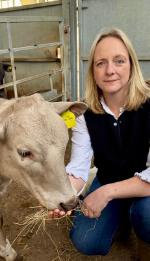
Front cover credit:
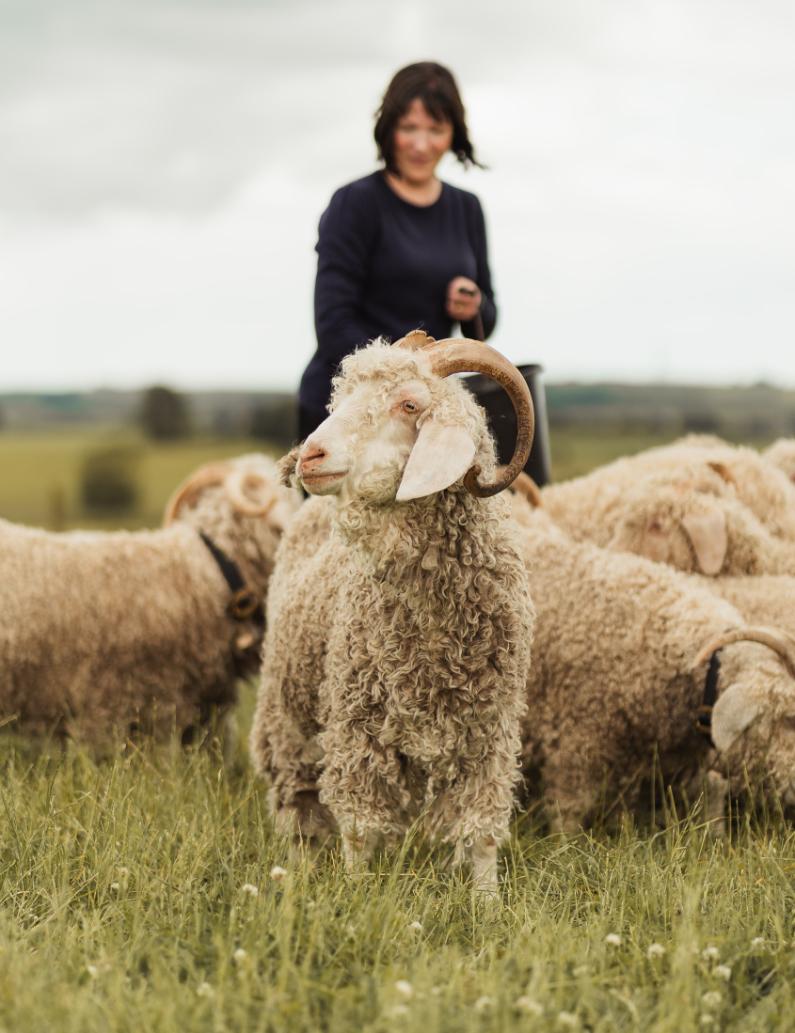
Polly the Goatherdess: A Life Woven from Land, Fibre and Purpose by Olivia Shave



For editorial, general enquiries or to advertise please call +44 (0) 2476 353537 or email sales@farmingmonthly.com
Farming Monthly National is published monthly in the UK by Farming Monthly Ltd, Tel: +44 (0) 2476 353537
UK based Digital Farming Magazine.
No part of this magazine may be reproduced without permission from the publisher.
Whilst every attempt is made to ensure accuracy, the opinions expressed in the magazine are not necessarily those of the Editor or publication. The Editor also reserves the right to alter or edit material as required and no responsibility is accepted for inaccuracies.
Full copyright applies. All rights reserved. ISSN 2044-0190 (print) ISSN 2044-0200 (digital)


armers are being urged to get their applications in for the Farming Equipment and Technology Fund (FETF) as the entry deadline looms.


Robert Kirk, UK country sales manager at smaXtec, which produces a bolus-based health management system for cattle, says with farmers able to receive up to 50 per cent of grant funding towards equipment or technology purchases, applying for the fund can provide major benefits.
Split across three themes – productivity, slurry and animal health and welfare – the Defra funding is open to farmers in England and they can apply for between £1,000 and £25,000 in each theme.
The bolus technology from smaXtec is applicable for grants under the animal health and welfare theme and Mr Kirk is encouraging farmers to get their applications in before the April 28 deadline.
He says: “It’s great to see the government supporting farmers by pushing forward with this technology grant.


“I would urge farmers to submit their applications as soon as possible. Once funding is approved, they can then choose the system that best suits their business,” he explains.
“At smaXtec, we are happy to discuss their technology needs before or after an application is submitted, but the priority is making that submission to Defra.”
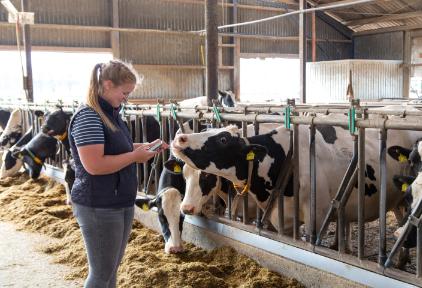
smaXtec bolus technology supports dairy and beef farmers with continuous, real-time monitoring of key animal health indicators, helping them detect disease earlier, respond more quickly to health issues and make better-informed herd management decisions.

“To see them acknowledging efficiency and how technology can have such a big impact on the dayto-day running of a farm is really encouraging; hopefully this will give farmers the motivation and confidence to invest.”
Mr Kirk is keen to stress that farmers can apply for the funding before making specific decisions about the sort of technology they invest in.
And with ongoing milk price fluctuations impacting the dairy sector, and beef cattle prices at near record levels, now is the time for farmers to invest in the long-term health and efficiency of their herds, according to Mr Kirk.
He says: “It is about understanding what your pain points are and how this impacting your wider profitability. There are always efficiency gains to be made when you really focus on those key areas of animal health and welfare.
“Our smaXtec health management system can play a key role in that deeper understanding of your herd and, with FETF grants now available, it is a good time to invest.”
More information about the FETF grants is available via the Defra website by clicking here: www.gov.uk/government/publications/farmingequipment-and-technology-fund-fetf-2026
The next Senedd election must stop diet-related ill health impacting poorer communities in Wales while bringing "seismic change" to the landscape for nature, according to Soil Association Cymru.
This year, the number of Senedd members is increasing from 60 to 96, creating a significant opportunity for targeted focus on nature, food and farming policy.
The charity has launched its manifesto ahead of the 2026 election, focusing on three key themes: prioritising healthy and sustainable food, investing in nature-friendly farming, and stepping up action on climate and nature.
Soil Association Head of Policy (Wales) Andrew Tuddenham said: "The upcoming Senedd election on 7 May 2026 must bring seismic changes to the climate, nature and dietary health crises in Wales.
"Thestakes for food, farming and nature could not be higher. Wales is already offtrack to meet its 2030 climate and biodiversity targets. Poor access to healthy food is causingdisproportionate levels of obesity, diabetes and diet-related illness in our most deprived communities.
"Whoever forms the next government must put nature recovery and public healthat the forefront of decisions that will shape Wales for a generation."
Public procurement could open new markets for local, sustainable produce, supporting rural livelihoods and meeting the duties placed on public bodies under the Environment (Wales) Act and the Well-being of Future Generations (Wales) Act.
But Wales also faces a public health crisis: ultraprocessed foods now make up over half of shopping baskets, fuelling obesity, chronic disease and early death, while one in three children live in poverty with many families reliant on cheap, calorie-dense products.
The Soil Association is calling for a national food resilience plan to secure access to affordable, healthy and sustainable diets for future
Soil Association Cymru is calling for effective delivery of the Sustainable Farming Scheme (SFS), backed by investment in robust systems to streamline applications, monitoring and payments.
This is to support a transition to resilient regenerative farming systems that can cut agricultural emissions, improve animal welfare and put Wales on a path to halt and reverse nature loss.
An Organic Action Plan committing to a target of 10% organic land by 2030, with SFS financial support for organic conversion, would reduce chemical inputs and meet growing demand for sustainable produce.
The charity is pushing for industrial livestock systems to be more effectively regulated in Wales through extending environmental permitting to large dairy and beef farms, continuing the current pause on new intensive poultry units across Wales, and creating clear planning guidance for intensive livestock farming.
generations, and for Welsh Government dietary guidelines to be updated with a clear percentage reduction target for ultra-processed foods consumption.
Andrew Tuddenham continued: "We're calling on the next Welsh Government to properly fund nature-friendly farming and give farmers the support they need to transition to more sustainable ways of working, cut emissions, and genuinely begin to turn around Wales' nature crisis.
"Sustainable farming is only part of the picture. The way food is grown, bought and eaten in Wales are all interconnected, and real change requires ambition across the entire chain.
"We need to make healthy, sustainable food a reality for everyone in Wales - tackling the rise of ultra-processed foods, making healthy food available and affordable for everyone and using the power of public spending to back local, nutritious produce."
To read the full Soil Association Cymru manifesto:https://www.soilassociation.org/causescampaigns/2026-cymru-election-manifesto/
new, research driven Quality Meat Scotland (QMS) marketing campaign designed to connect consumers with their local butcher who proudly stock Scotch Beef, Scotch Lamb and Specially Selected Pork has exceeded industry benchmarks across radio, digital, social and print, driving thousands of shoppers to seek out quality assured Scotch meat.
Launched in February, the campaign was developed to support members of the Scotch Butchers Club and to encourage customers to consider the benefits of shopping with independent butchers when buying Scotch Beef, Scotch Lamb and Specially Selected Pork.
The work marked a step change in approach which was shaped by independent consumer research, commissioned to understand evolving red meat shopping behaviours. The findings reinforced the enduring appeal of local butchers – notably quality, trust and specialist expertise – while also combating some of the barriers and myths of shopping at a local butcher such as perceived high cost and lack of shopper confidence knowing what to ask for at the counter. These insights informed a refreshed marketing strategy using media channels to serve creative which focused on reassurance, accessibility and value.
including broadcast radio, Facebook and Instagram, digital advertisements and newspaper adverts, ensuring strong reach and repeated exposure to campaign messages at both Scotlandwide and more local levels.
Advertising aired across Bauer's Hits Radio Network, including Forth 1 and Clyde 1, which delivered particularly strong results and on average, listeners heard the message up to five times, supporting message cut through and recall.


Adverts across Facebook and Instagram performed strongly, showing the effectiveness of targeted localised messaging and demonstrating a strong appetite for butcher led storytelling, whilst digital display advertising on BBC Good Food also worked well in driving engagement. Print advertising provided dependable coverage by reinforcing campaign messages in trusted local titles.
Across the whole campaign that ran for just under four weeks, advertising encouraging footfall to local Scotch Butchers Club members was seen or heard 13.6 million times, driving over 6,000 visits to theFind a Butcher page on makeitscotch.com.
The campaign ran across a carefully planned media mix to achieve high awareness levels,

Emma Heath, Director of Marketing at Quality Meat Scotland, said: "This campaign shows what's possible when strong consumer insight is combined with the right cost-effective media mix and clear, confident messaging. Independent butchers already offer exceptional quality and expertise, and are known for showcasing fresh red meat that is quality assured, locally sourced and farmed with care. So our job for this campaign was to challenge perceived barriers and remind shoppers why their local butcher remains such a valuable part of the retail landscape for everything from a midweek dinner to a show-stopping Sunday roast or meat for a special occasion. The results demonstrate real momentum and tangible value for our Scotch Butchers Club members as we seek to drive footfall into stores, and is another good example of the marketing that QMS do for Scotch Beef, Scotch Lamb and Specially Selected Pork that has delivered measurable impact for the red meat supply chain"
Candidates standing in next month's local elections have a big part to play in helping to shape the future of British farming, the NFU said today.
Voters in England go to the polls on 7 May with more than 4,850 council seats across 134 local authorities up for grabs.
The elections provide an ideal opportunity to shine a light on some of the huge challenges facing farmers in rural Britain such as rising crime rates, planning bureaucracy and a lack of broadband and mobile connectivity.
Key areas identified where local government support is most impactful include:
• Planning: Ensuringlocal planning officers are trained in agricultural operations and farm needs, ensuring consistent, informed decisions that support modern farming practices and diversified rural enterprises.
• Rural crime: Providingaccessible waste disposal sites to help reduce fly-tipping. Ensuringmarkets operating under the local authority are sufficiently regulated and licensed to prevent the sale of stolen goods.
• Rural connectivity: Targetingpersistent rural 'not-spots' and underserved rural communities and avoid clustering of investment in already well-served areas.
• Food procurement: Procuringat least 50% of the food the council requires from local farmers and growers.
NFU President Tom Bradshaw said:"Farming is the backbone of our rural economy and lifeblood of rural communities. Our farmers manage over 70% of the landscape, protect and enhance the environment and produce food for 70 million people.
"However, confidence within the sectorremains severelylow.Farm businesses are under extreme costpressures for feed, fuel and fertiliser, exacerbated bygeopolitical tensions, starting with the invasion of Ukraine and most recently the war in the Middle East, coupled withunpredictable climate andextremeweather all impacting on our ability to produce food.
"Decisions being taken by local authorities can have a direct and lasting impact on farm businesses and the communities they support. By championing pro-farming policies on areas such as planning, rural crime and the procurement of more British food, councils aren't just supporting individual farming businesses — they can help turn the tide and shape the future of our industryby increasing our collective resilience.
"We are engaging withcandidatestohighlight the NFU'sBlueprintswhich outline the urgent need to invest in our farmers and growers at a local level to deliver jobs, kickstart rural economic growth and ensure UK food security.
"It's never been more important to have a resilient British foodand farmingsystem with farmers and growers at its heart. We look forward to working with all newly elected representatives to help create an environment for a thriving and profitable British farming industry."

ichard lived his whole life at The Howes Farm near Calthwaite. He attended Ivegill Primary School and Caldew Secondary School. From a young age he was passionate about farming and keen to help his parents, Will, and Meg, on the family farm. Throughout his teenage years Richard was an active and enthusiastic member of Raughton Head Young Farmers, where he made many lifelong friends. Fiercely proud of his farming roots, he loved representing the club at events and competitions. He fully embraced the social side of Young Farmers and could keep the party going long after most had called it a night!
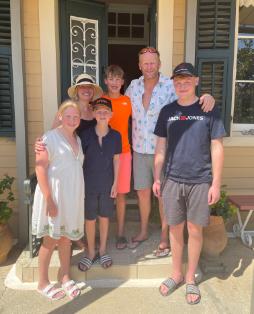

Richard met the love of his life, Elisabeth, in 2003, she shared his fun-loving attitude and sociable nature. They loved spending time with their many friends and travelling. Together they created a warm and welcoming family home.
Richard was immensely proud of his children — Will (18), James (16), Emily (14), and Eddie (12). He was delighted that they all shared his love for the farm and he enjoyed having a tribe of helpers. He had a wonderful way of turning even the most ordinary jobs into something fun, often filling everyday tasks with laughter, stories, and a bit of mischief.
Richard enjoyed seeing the children follow in his footsteps competing for Raughton Head YFC, cheering them on in everything they did. The family were honoured to host two Young Farmers Field Days at Howes Farm, most recently in 2025, when all four children contributed to Raughton Head winning the team cup, it was a special day for everyone involved.
Richard was a progressive and astute business man, understanding that the dairy market was changing he worked hard to develop Howes Farm. He spent time farming in Western Australia as a young man and later travelled across the UK and Europe visiting farms, always eager to learn and explore new dairy practices. He was an active member of the Grassland Society and a long-time supporter of Dalston Show.
He developed a 470 head, block calving herd of cross bred dairy cattle at Howes Farm, implementing a paddock grazing system. Creating a healthier, lower cost, high yield herd which proved a real business success with enviably low costs of production. Richard cared passionately about the health and husbandry of the herd and about creating a more sustainable system, investing in renewable energies.
He won multiple industry awards including the First Milk Regenerative Farmer of the Year award in 2025 and the Grassland Society Silage Cup in 2026.
Richard genuinely cared for his farm team, who loved working for him—and often teased him for his habit of bringing home ‘bargains’ from
machinery auctions. He was grateful to everyone who worked and helped at The Howes, but especially thankful to Amy Wilson for keeping the farm running throughout his illness.
Richard was determined to approach MND with the same positive attitude that characterised his whole life, he threw himself into many adventures such as e-biking the coast to coast in a day and enjoying several precious family holidays.
The love and support Richard had shown to friends and the farming community was returned in abundance. Over £300,000 has been raised for MND in his name.
Raughton Head Young Farmers Club organised an epic ‘Many Miles for MND’ fundraiser in which members of the club ran, biked, and rowed 1222 miles, the equivalent of John-O-Groats to Lands’ End in a day. The club then planned and completed ‘Many Mountains for MND’ in which they conquered all 214 Wainwrights in 24hrs.
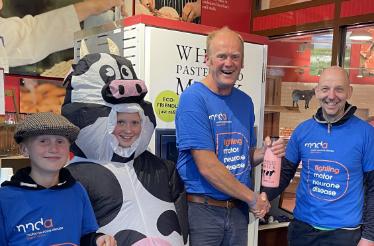
Other MND fundraisers included his dairy farming friends donating a % of their milk cheque each month, Crummock Bank Farm’s sunflower field, charity auctions at H&H Carlisle and Hopes Auction, a charity movie night at Rheged, Ralph Messenger’s vintage car drive from Land’s End to John-O-Groats and ‘Messy’s Moo’s,’ a herd of fancy dress cows completing the Rob Burrow’s Leed’s marathon, making the BBC news!
Richard was enormously grateful for the support shown to him by his community and humbled by all the fundraising events. He was thankful for the incredible care and empathy shown by the team at Caldbeck Doctors Surgery. Above all he was proud of the strength, love and care his many wonderful friends, wife Elisabeth and children Will, James, Emily, and Eddie surrounded him with. They in turn felt it was an honour and privilege to look after him.
Richard bore his illness with great dignity. He left the world peacefully, at home, surrounded by his wife and children. While he will be deeply missed his legacy lives on through his family and the
lasting impact he made on the local farming community.
Cumberland news extra farming info provided by Amy Wilson who works on the farm for you to add in and make it more farm focused for ‘Farmer’
Howes farm is a 470-autumn block calving herd. Built up of 3 main breeds Holstein Friesian, Norwegian red & Fleckveih / Monty’s. Rolling yield for the herd is 9000L with 4000L coming from forage. Solids are running at butter fat 4.4% and protein 3.4% SCC 120 and Bactoscan 19.
We breed all the replacements ourselves with this year having 150 in calf heifers and 170 followers. It is a paddock grazing system from April - October.
Richard was someone who loved a farm walk going to them and having them at howes. From friends, breeding companies, and schools. Not to mention taking the time last year for the farm to be used to host the young farmer’s field day!
Richard always focused on having a high health dairy herd and always maintained the highest animal husbandry standards.
He was never afraid of making big decisions, such as the move to autumn block calving. He was passionate about creating an environment that worked for the cows, but also for the people who worked at Howes. The move to block calving allowed people to have a relaxing spring and summer, so you could take time off to recharge and travel.
He also invested in renewables with the turbine and solar, which highlighted his passion for the environment. His farming practices and his care for the surrounding environment went hand in hand.
He was also a very astute business man, with a strong control of costs, which lead him to have one of the lowest costs of production in the sector. This allowed him to build a successful business, which is incredibly robust for the future.
Richard had so many favourite phrases that we will forever remember at howes the best one will have to be ‘’I’ve had a brain wave, no stop it’s a double brain wave.’’
Rich always loved an online auction if he wasn’t coming back with a stack of gates or a transport box he was buying many water tanks. Or he was taking Elizabeth away for a romantic weekend away with the flatbed trailer following to bring a snow plough back he had bought! He would never worry because he would just say ‘’it’s okay, it has potential, put it in the stores’’.
leading property consultancy is strengthening its rural expertise with the appointment of a new partner as it looks to support farmers and landowners through a period of significant change.
Fisher German has welcomed back Anna Collins to its Market Harborough office to help grow the firm’s offering across the country.
With the rural sector facing ongoing pressure, her appointment comes as Fisher German continues to expand its support for clients managing increasingly complex estates and businesses.
Anna said: “I’m very happy to be returning to Fisher German and to be working with such a knowledgeable and supportive team once again.
“There’s a real sense of momentum within the business, and I’m looking forward to helping farmers and landowners navigate what is a challenging environment, while also making the most of the opportunities that are emerging.
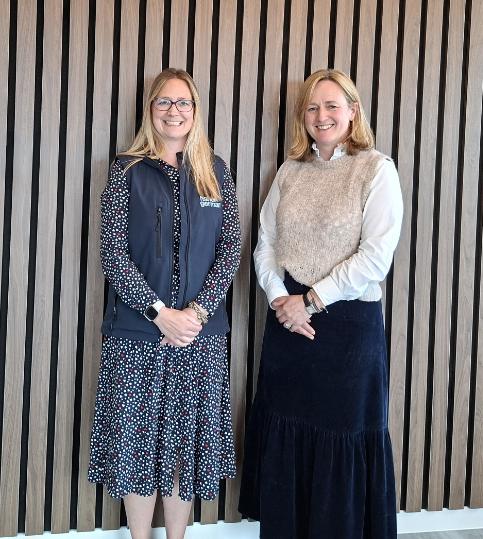
Anna rejoins the business after three years, having previously spent a total of 11 years at Fisher German earlier in her career, with experience at both Knight Frank and Carter Jonas.
In her new role as a Partner, Anna will work alongside Head of Rural Property Management Rebecca Ruck-Keene on delivering strategic land management services for landowning clients, helping them to maximise the value of their assets while navigating an evolving rural landscape.
“Having spent so much of my career here, it feels like coming back to a place where I can make a real difference to clients and be part of a team that truly understands the rural sector.”
Anna will play a key role in developing the firm’s rural property management services nationwide, supporting a wide range of clients from traditional farming businesses to larger estates and corporate landholdings.
Rebecca Ruck-Keene added: “We are delighted to welcome Anna back to Fisher German. Her return is a real testament to the strength of our peoplefocused approach and the culture we have built across the business.
“She brings a wealth of experience and a deep understanding of the challenges our clients are facing, and her appointment strengthens our ability to deliver the high-quality, tailored service that our clients expect.
“As the rural sector continues to evolve, it is vital that we have the right expertise in place to support our clients, and Anna will play a key role in helping us achieve that.”
Mandatory housing measures for poultry and flocks of more than 50 captive birds will be lifted from Thursday 9 April in England and Wales, the Deputy Chief Veterinary Officer has confirmed today.
The measures were introduced across the whole of England on 6 November last year to prevent the spread of bird flu. The latest risk assessment supported by the best epidemiological and scientific evidence shows that the risk of highly pathogenic avian influenza (HPAI) levels in wild birds and poultry has reduced.
This means poultry and other captive birds will no longer need to be housed and can now be kept outside.TheAvian Influenza Prevention Zonemandatory biosecurity measures will remain in place until the wild bird risk falls further.
The lifting of housing measures applies to all areas unless keepers are in a Protection Zone orCaptive Bird Monitoring (Controlled) Zone- these are areas where there has been a recent HPAI outbreak.
Bird gatherings, such as fairs and markets, remain subject to either a general or specific licence.
Deputy UK Chief Veterinary Officer, Jorge Martin-Almagro, said:
"With the threat of Avian Influenza receding, birds can now be allowed access to ranges and outdoor areas.
"Although the risk to poultryhas reduced, there remains a risk that poultry and other captive birds can still contract bird flu.
"I urge keepers to take steps to prepare outdoor areas before letting birds out. It is still essential that bird keepers remain vigilant and implement rigorous and strict biosecurity".
Chief Veterinary Officer for Wales, Richard Irvine said:
"The lifting of the Housing Order will be welcome news for bird keepers.
"It's important to get ready for lifting the Housing Order on 9 April, including to check and prepare ranges and outdoor areas. Whilst we are seeing risk levels reducing, bird flu has not gone away. Please continue to practice scrupulous hygiene and biosecurity to protect your birds.
"Stay vigilant for signs of disease and report any suspect cases to APHA immediately."
Scrupulous biosecurity is the best way to prevent and stop the spread of avian influenza. Birdkeepers are legally required to adhere to the highest biosecurity standards with an Avian Influenza Prevention Zone (AIPZ) mandating strict biosecurity remaining in place in England, Scotland and Wales. This includes measures such as disinfecting footwear, clothing and vehicles and equipment before and after entering premises.
Those who intend to allow their birds outside are advised to use the upcoming days to prepare their outside areas for the safe release of their birds, as ranges and outdoor areas may still be contaminated with avian influenzas virus. This will include cleansing and disinfection of hard surfaces, fencing off ponds or standing water, the removal of grazing livestock and reintroduction of wild bird deterrents.
As birds have been housed for several months, it may be necessary for birds to be acclimatised and gradually released over a period of days to minimise welfare issues. Guidance is available onpreparing to let your birds outside again.
The public can check if they are in abird flu disease zoneon the mapandcheck details of the restrictionsfor further advice and information.
The public is also reminded that you must register within one month of keeping poultry or other captive birds at any premises in England or Wales,further informationis available.
The winners of the 2026 Farm Shop & Deli Retailer Awards were revealed on the 13th April, and leading the celebrations was Aubrey Allen of Leamington Spa, proudly named this year’s Retailer of the Year. At a lively ceremony during the Farm Shop & Deli Show at the NEC Birmingham, the acclaimed business also secured Butcher of the Year and Midlands Regional Winner, making it a remarkable trio of achievements.
This year’s event, delivered in partnership with The Grocer and championed by Fieldfare -brought together the finest examples of independent retail across the UK and Northern Ireland. Ten category winners and nine regional champions were honoured, alongside special achievements including Highly Commended distinctions and the sought-after Newcomer of the Year award. Enthusiastic crowds of finalists, exhibitors, and attendees cheered on as Aubrey Allen emerged at the forefront of exceptional competition.
Aubrey Allen captured the judges’ attention throughout the process, earning praise for its exemplary standards and forward-thinking approach. Judges commented:
• "A really top class shop. They demonstrate so much of what a retail food businesses needs to be doing to survive and thrive in today’s challenging retail land scape. The diversity and lengths they go to keep and retain staff is why they are such a great business.”
• "Very impressed with the work in the community and care of employees.”
• “Stunning business, the bike outside, drawing you in. Dry aged beef, amazing dining experiences, and incredibly rang business, professional, good looking business”
In addition to Aubrey Allen’s accolades, we celebrateDunston Hallfrom Chesterfield, Derbyshire, as our2026 Newcomer of the Year. The category saw strong contenders across the country, with Butcher Farrell’s Meat Emporium (Ormskirk, Lancashire), Flourish at Farleigh Road (Avon, Bristol), and Mouse & Grape (Middlesex, London) all receiving Highly Commended recognition.
Congratulations to all our deserving winners!A complete list of winners and Highly Commended recipients is included at the end of this release.
Nominations are now open for next year’s Farm Shop & Deli Retailer Awards. If there’s a specialist retailer you believe is making a real impact, we’d love you to nominate them and help celebrate their achievements. To nominate a specialist retailer.
Nominations will close on 27th July 2026.
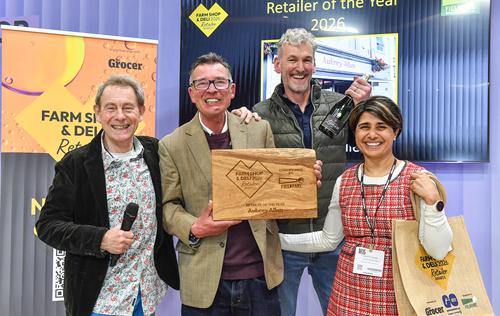
The awards follow an extensive evaluation process. Entries underwent detailed online assessment by industry experts, followed by a November in-person judging session to determine the shortlist. Secret visits conducted in January and February provided judges with an authentic insight into the business, ultimately shaping the list of this year’s winners.
The coveted accolades celebrate the best specialist independent retailers with judges recognising retailers’ achievements in the independent sector.
Nigel Barden, Chairman of Judges and Food and Drink Journalist and Broadcaster, says:
“Even in a year where many retailers have approached things carefully, the Farm Shop & Deli Awards have continued to thrive. We’ve been hugely encouraged by the exceptional standard of entries, and we truly appreciate every retailer who made space in their busy schedules to get involved. Our outstanding judging panel remains a major strength of the awards, and welcoming new judges added even more expertise to the process. To ensure our results reflected real excellence, we carried out additional visits - including assessments of online retailers - so every winner was chosen with absolute clarity. Alongside our category honours, we were delighted to celebrate regional winners, an impressive newcomer, and several Highly Commended businesses in tightly contested areas.
Our Retailer of the Year, Aubrey Allen in Leamington Spa, Warwickshire showcases what dedication over 46 years can achieve. The diversity of opportunities they offer their team, and the lengths they go to in supporting and retaining their staff play a huge part in what makes them such an outstanding business.
Dunston Hall Estate Food Hall in Chesterfield, Derbyshire earned Best Newcomer, demonstrating exactly what a modern, forward thinking food retailer can be. Their rapid growth, clear vision, commitment to quality and strong customer appeal make it evident why they stand out as an exceptional new addition to the industry.
It has been incredibly uplifting to see the creativity, determination, talent and graft of so many remarkable retailers recognised and celebrated.”
Award sponsors and supporters
The Awards are championed for the second year by Fieldfare, a family-owned business based in Kent that started over 40 years ago. Fieldfare supplies delicious premium loose frozen food to farm shops, garden centres and independent stores across the UK and a perfect partner for the Retailer Awards.
In 2026 the Awards are also proud to work with our sponsors: Fieldfare, Go Jute, Mudwalls Food Group and The EPOS Bureau, along with our supporters including Cotswold Fayre, Cress Co, Diverse Fine Food, Fabulous Farm Shops, Farm Retail Association and The Gorgeous Food Company. We thank Fieldfare and all our supporters for joining with us this year.
Farm Shop & Deli Awards 2026 – full list of category and regional winners and highly commended finalists.
Anglia Regional Winner: Goat Shed, Norwich
Baker of the Year: Nice Buns NI, Craigavon
Butcher of the Year, Midlands Regional Winner and overall Retailer of the Year: Aubrey Allen, Leamington Spa
Cheesemonger of the Year & Highly Commended Newcomer of the Year: Mouse & Grape, London.
Delicatessen of the Year & Wales Regional Winner: Dylan’s Baked Goods & General Store, Llangefni
Farm Shop Large of the Year: Ludlow Farmshop, Ludlow
Highly Commended in Farm Shop Large: Denstone Hall Farm Shop & Café from Uttoxeter, Oakchurch Farm Shop from Staunton-on-Wye and Welbeck Farm Shop from Worksop.
Farm Shop Small of the Year: Mains of Glassaugh Vegetables, Portsoy
Food Hall of the Year & Highly Commended Newcomer of the Year: Flourish at Farleigh Road, Bristol Highly Commended in Food Hall: Dunston Hall, Chesterfield
Greengrocer of the Year: Elaines Fruit & Veg, Leicester Independent local shop/Village store & South East
Regional Winner: The Seasons Wholefoods, Forest Row
Online business & South West Regional Winner: Riverford Organic Farmers, Buckfastleigh
Newcomer of the Year: Dunston Hall, Chesterfield
Highly Commended Newcomer of the Year: Butcher Farrell’s Meat Emporium, Ormskirk, Flourish at Farleigh Road, Saltford and Mouse & Grape, London.
North East Regional Winner: George & Joseph Regional Winner, Leeds
North West Regional Winner: Roast Mutton Kendal (Butchers), Kendal
Northern Ireland Regional Winner: O’Kane Meats, Derry
Scotland Regional Winner: The Glenelg Shop, Glenelg
The latest Environmental Focus Area options 'lend themselves beautifully' to arable and livestock sectors working together, with grazing and cover crop options helping to boost arable fertility and income, while providing much needed grazing for stock producers.
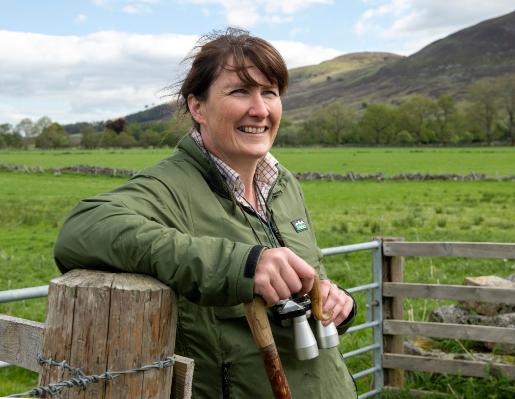
That's according to Inverness-shire based farm consultant Jenny McCallum, who has worked through the 11 EFA options ('interventions') listed on the Rural Payments website for theStrathspey Monitor Farm, and discussed them at a recent open meeting.
She believes the options available will encourage many arable units to consider the value of running livestock on their units. "I'm not encouraging arable farmers to keep stock themselves if it's not their thing. But it could provide an opportunity for them to collaborate with livestock farmers and particularly for sheep wintering."
She said there are 'many advantages' of introducing livestock to an arable enterprise. "The EFA options are perfect for sheep, and having them in on an arable unit will reduce weeds, return
manure to the soil which boosts fertility, and bring money in."
This year, many mixed farms will be introducing Ecological Focus Areas (EFAs) for the first time. The previous exemption for farms with more than 75% forage has been removed, so any business which grows 15ha of arable or more, including temporary grass, must undertake greening measures, although certified organic land remains exempt.
For businesses like the Smith family who farm at Auchernack near Grantown on Spey and host the Strathspey Monitor Farm,identifying the best greening measures for their situation can seem a daunting prospect, but Jenny said there is 'nothing to fear'.
Jenny said: "Arable farmers have had to do this for some time, but this year, the exemption for anyone with more than 75% forage has gone. Many mixed farms will be back in the game now and will need to rethink what they do."
EFA rules mean that fields marked as TGRS (temporary grassland) are included along with fodder and combinable crops under the 'arable'
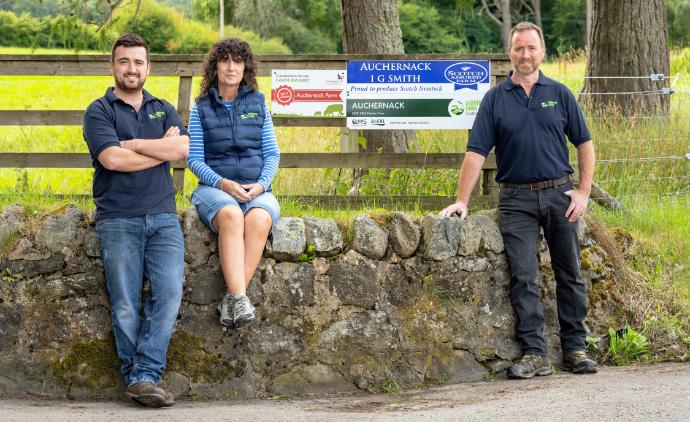
category. Land which does not count towards the Smiths' arable area includes open woodland which is grazed, rough grazing, roads and buildings and, crucially, PGRS, she explained.
"There are a lot of folk thinking they'll have to do greening as they have permanent grass and may reseed it, but permanent grass doesn't count as arable. If you had it in PGRS on your SAF [Single Application Form] last year, ploughed it in the back end and put in a break crop such as kale, and then it was back into grass in spring, keep it as PGRS on this year's SAF and it doesn't count – EFA won't affect you.
"Conversely, if you were needing your PGRS to come into arable to perhaps use as TGRS fallow or go onto future herb and legume option, then keep evidence of the back-end cropping, such as the seed label and take a photo of the crop to then use TGRS1 on the subsequent SAF. It can work both ways."
For the Smiths, and anyone else facing greening for the first time, her main advice is 'don't panic'. "If you are a livestock farmer, there are actually lots of cool options which can help you – this is not a bad change. But think about it now – don't wait until the IACS deadline.
"If you are an arable farmer, collaborating with a livestock producer could bring many advantages as well as bringing in more income. You may feel you don't have theinfrastructure to take sheep, but electric or temporary rylockfencing, portable water supply and moveable shelter such as bales or tattie boxes can make a field perfectly accessible. The sheep can also do a great job running over winter
cereals for a while to aid tillering and remove any diseased leaves.
"Overall, the 2026 EFA options are really useful. It's made EFA much more versatile and practical - there's something in there for everyone," said Jenny.
Beth Alexander, Monitor Farm Scotland manager added: "The opportunity for collaboration between arable and livestock sectors is good news. It builds on the work we have been doing with the East Lothian Monitor Farm looking at grazing options on arable units and how they work best in practice for both parties."
Jenny will be discussing the EFA choices made by the Smiths at the Strathspey Summer Open Meet from 4.30pm on Wednesday 3 June at Auchernack Farm, Grantown on Spey.

cow named "Beau Vine" has been legally approved to dispose of people's rubbish, in a license scandal exposed by the Country Land and Business Association (CLA).
Fly-tipping in the countryside has reached record highs. One reason is that it's much too easy to get a waste carrier license. Criminal gangs are now milkingthe system, using permits to appear legitimate before illegally dumping people's waste.
To test the system, the CLA applied for an upper tier waste carrier and dealerlicensein Beau's name, only to be approved in under three seconds, no checks or questions asked.
Under the current system, all that is needed to apply is a name, address, email contact and a small fee, with no verifications, driving license details, or photos needed.
Ann Maidment, Director of CLA South West and owner of Beau Vine said:
"Beau Vine excels at eating grass, lounging in the sun and a leisurely moo. Waste management, however, remains stubbornly beyond his remit."
"That he should be approved for a license in under three seconds reveals something alarming: not even the most basic background checks are being done. And it raises a worrying question: if a cow can get a license, who is the government actually turning away?
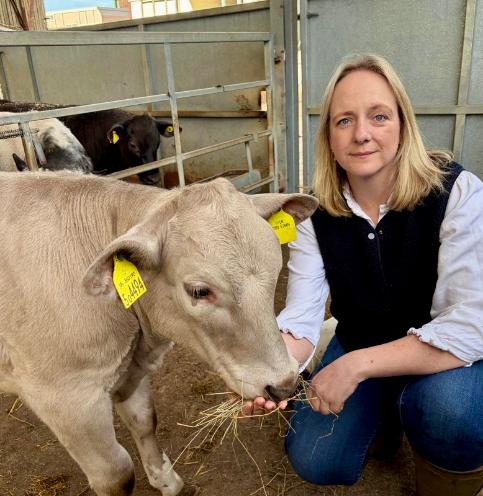
And it wasn't a fluke. A second application under the name 'Lawrie Load' was also rubberstamped by government, raising further concerns that even the most basic checks are missing.
"Criminals know this. They exploit these licenses to appear legitimate, then go on to fly-tip tonnes of waste, some of it hazardous, endangering the livelihoods of rural communities.
"A system that approves applicants instantly and without scrutiny is not regulating waste. It is smoothing the path to dump it. Government must introduce proper checks, verification, and standards to stop rubber-stamping flytippers and start protecting the communities they harm."
The results come as countryside communities continue to suffer from regular fly-tipping. A CLA survey found almostthree quartersof farmers are affected each year, with sometargeted multiple times each month. Each incident costs on average £1,000 to clear up, with 85% saying they have invested in measures such as CCTV, lighting and other security.
To strengthen fairness across the UK’s food supply chain and better support farmers and food producers, responsibility for the Groceries Code Adjudicator (GCA) will transfer from the Department for Business and Trade (DBT) to the Department for Environment, Food and Rural Affairs (Defra) from 1 July 2026.
Moving GCA sponsorship under Defra aligns the regulator’s work with the department’s wider role. The change also implements a key recommendation from Baroness Minette Batters’ landmark Farming Profitability Review to streamline oversight of the grocery supply chain and strengthens links to the Agricultural Supply Chain Adjudicator (ASCA).
Farming Minister Dame Angela Eagle said: “We are backing our farmers by creating a level playing right across the supply chain to ensure productive and profitable businesses can flourish.
“Moving responsibility for the Groceries Code Adjudicator to Defra will support a more joined-up approach to fairness across the food supply chain, while fully protecting its independence and statutory role."
RGroceries Code Adjudicator Mark White said: “I am looking forward to working more closely with Defra to continue to ensure fair treatment of direct suppliers to the designated retailers.”
The GCA regulates the relationship between the UK’s largest grocery retailers and their direct suppliers by encouraging, monitoring and enforcing compliance with the Groceries Supply Code of Practice.
Its transfer builds on wider action taken by government to ensure supply chains in the food sector are fair and transparent, including already introducing Fair Dealing rules for dairy and pigs.
The GCA will remain fully independent. There will be no changes to its statutory role or enforcement powers, and the Groceries Supply Code of Practice will continue to be owned by the Competition and Markets Authority.
The transfer forms part of the government's commitment to smarter, more joined-up regulation. Further detail on implementation will be set out by the July transfer date.
esponding to Ofgem's decision to withdraw support for the Cotswolds Visual Impact Provision scheme, CPRE head of policy Paul Miner said:
'Ofgem's decision ignores both public support for undergrounding power lines and its own duty to conserve and enhance protected landscapes.
'After almost five years of consultation and investment, today's news represents a missed opportunity to improve one of the UK's most iconic and well-loved landscapes – as well as a huge waste of public money.
'The new, greener energy infrastructure this country desperately needs will be with us for generations to come. Building it should not be a race to the bottom for the cheapest possible solutions.'
“
The expansion of support to energyintensive industries is a step in the right direction and reflects the pressures many manufacturers are facing.
However, with the scheme not coming into operation until 2027, businesses are effectively being asked to carry high energy costs for another year before meaningful relief arrives. For many, that is a significant challenge at a time when margins are already under pressure.

Energy costs are not just an issue for a small number of qualifying firms. They are being felt right across the construction equipment supply chain, from manufacturers through to hire companies and SMEs, many of whom fall outside the scope of this support.
Without more immediate measures, there is a real risk that these pressures will continue to influence investment decisions, pricing and competitiveness in the near term. A broader and more timely approach will be needed to support the full industry."
lamb creep feeder with shelter (item FETF238A). This item is eligible for funding under the animal health and welfare theme of the Farming Equipment and Technology Fund.
Investing in new equipment or technology can make a real difference to farm businesses. The Farming Equipment and Technology Fund (FETF)(FETF 2026)is designed to help make those investments more accessible.
The window to apply closes at midday on 28 April 2026.If you are planning to invest in equipment or technology for your business this year, apply now.
ThroughFETF2026, £50 million is available to help farmers, growers, forestersand contractors invest in equipment and technology.
Funding is divided between 3 themes: productivity, animal health and welfare, and slurry management. Each theme includes a list of eligible items you can apply for.
An irrigation controller for rain guns (item FETF415) helps automate and control how water is applied to crops.Photo supplied by grant recipientE C & S J Alton.Read their case study.
The productivity theme includes a wide range of equipment and technology to help improve efficiency and reduce input costs acrossdifferent typesof farm businesses.
For example, you can apply for funding towards camera-guided inter-row sprayers, which target weeds more precisely, reducing chemical use and input costs.
There is also support for rainwater harvesting tanks, which collect and store rainfall for use on farm, lowering reliance on mains or abstracted water and helping build resilience during periods of drought.
You can also apply for items such as robotic silage pushers, which automatically move feed towards livestock throughout the day, improving feed access and reducing waste.
Under this theme, £20 million is available.
Automatic weighing and drafting crates(itemFETF72)help farmers manage livestock more accurately. It also saves time and reduces the need for manual handling. Overall, it makes livestock management quicker, morepreciseand less stressful for both animals and handlers.Photo supplied bygrant recipientN L Pugh and Co.Read their case study.
The animal health and welfare theme includes a wide range of equipment to support better livestock management.
For example, you can apply for funding towards mobile sheep handling systems, which make it easier to gather, handle and treat animals in the field.
There is also support for hydraulic or pneumatic cattle crushes, which help improve safety for both farmers and livestock during handling.
You can also apply for smaller items, such as static cow brushes, which support animal comfort and dayto-day welfare in housed systems.
Under this theme, £20 million is available.
A slurry chopper pump(item FETF203)helps by making slurry easier to handle, move and apply. It works by chopping up fibrous material and mixing theslurryso it has a more even consistency.Photo supplied by grant recipientAplinsFarm Ltd.Read their case study.
The slurry management theme includes equipment to help improve how slurry is collected,storedand applied.
For example, you can apply for funding towards robotic slurry collectors, which automatically remove slurry from livestock housing, improving hygiene and reducing labour.
There is also support for mobile slurry separators, which process slurry into solid and liquid fractions, making it easier to store, transport and make better use of nutrients. This can help to reduce reliance on bought-in fertilisers.
You can also apply for items such as low-emission spreading equipment, including dribble bars, which apply slurry closer to the ground to reduce ammonia emissions and improve nutrient uptake by crops, further increasing the value of slurry as an alternative to synthetic fertilisers.
Under this theme, £10 million is available.
Funding, guidance and how to apply
You can apply for grants between £1,000 and £25,000 per theme. If you apply across all 3 themes, you can receive up to £75,000 in total.
This is the final standalone round of FETF in its current format.
We are reviewing how some innovative equipment may continue to be supported from 2027 through a simpler, more streamlined grant offer.
The FETF 2026 guidance is available on GOV.UK. This includeseligibility criteriaandhow to apply.
Background
ou can now applyforaLowlandPeat Water Discovery Grant.Upto £4.5 million is available to help farmers and local partners explore more sustainable ways of managing water in lowland peat areas.
Peatlands hold over half of England’s land-based carbon. Whenthey’rehealthy and wet, they lock in carbon and support wildlife, cleanerwaterand natural flood protection.
But most of our lowland peatlands have been drained over the past few centuries to make them suitable for farming.
As the peat dries, it breaks down,the soil is lost,the land sinks and carbonisreleased into the atmosphere. Today, only a small fraction of lowland peatremainsin a near-natural state.
These soils are home to some of our most productive farmland, but without changes to how water is managed, we risk losing them. In some areas, there may only be enough peat left to enable us tofarm in the same way for another 20 to 50 years.
The grant
DeliveredbytheEnvironment Agency,the grant will encourageandenable groups of local stakeholdersto workwithfarmersorlandowners.
Together, they will explorewhat changes to water managementcouldmean forfarmlandonlowland peat.Projects can receive between £50,000 and £300,000 in funding.
areas where the lead applicant is part of, or has brought together, a local group.
To be eligible to apply, the lead applicantmust be a:
• charityor not-for-profit organisation
• public body(including local authorities and internal drainage boards)
• land manager
• businessor commercial enterprise
Grants will be awarded competitively,tothe highest scoring applicants.
Alongside other criteria, higher scores will be given to applications from suitable groups of local interested parties that include a farmer or landowner.

Aprojectcould,forexample,bringtogetherneighbouri ng farmers or land managers,internal drainage boards, wildlifetrustsorpeatlandpartnerships.
Each project will produce a practical plan to show how water tablescould be raised safely and sustainably. This will considerland used for conventional farming, wetter farming andpaludicuture, or peatland restoration.
It will also look at the wider environmental benefits and risks.For example,cuttingemissions and supporting wildlife, as well asimprovingflood and drought resilience.
This plan will set out the systems and infrastructure needed to manage higher water tables in the project area.
When projects finish in 2028, they will be well placed to apply for a Water Implementation Grant. This funding can help pay for installing the infrastructure set out in their plan.
We are looking for applications from lowland peat
If you manage lowland peat and are interested in joining or leading a group application, you can register your details in thisconsortium-building database. This is hosted byDefra’sdelivery partner,Niab.
Further details, including a link to a dedicated SharePoint site hosting the grant handbook and application form can be found on theFind a Grantsite. The deadline to apply is26 June 2026.
The Environment Agency Peatland Team will hostawebinaron12 May at 11amto helppotential applicants preparetheir applications.
Thewebinarwill provide an overview of the grant, how to apply, and offer an opportunity forapplicantsto put questions to the team.
To sign upfor thewebinar, please email peatwatergrants@environment-agency.gov.uk.If you can’tmake thewebinar,oryou have questionsnot answered by the guidance,you cancontactthe team using thisemailaddress.
The UK government is working on a new food trade agreement with the European Union (EU) to make it easier for farmers and food producers to trade.
This agreement is called the Sanitary and Phytosanitary (SPS) agreement. It aims to simplify the checksrequiredfor agri‑food products moving between the UK and the EU. This includes goods traded with Northern Ireland.
The aim is to cut unnecessary paperwork, reduce costs for exporters, and help businesses keep supplying the high‑quality food the UK is known for.
This post explains the background to the SPS agreement, what it is meant to do, and how you can keep up with progress.
UK exports of food and agricultural goods to the EU have fallen by 22%since 2018.
Thisrepresentsalmost £4 billion in lost trade.
The new SPS agreement is intended toboost this trade,by cutting paperwork, removing unnecessarychecksand helping fresh produce move more quickly across borders.
The agreementshouldcome into force in mid‑2027, so we want every business in the farming sector to start preparing now.
All UK businesses will need to follow the relevant EU rules covered by the agreement, whether they trade with the EU oroperateonly within the UK.
As a result, farming businesses may need to make changes to how they work to ensure they meet these requirements.
We want to understand how the agreement will affect businesses and what support they will need to get ready for these changes.
We havelaunchedacall forinformation to gather viewsfrom the farming and agri‑food sector.
Farmers can use this to explain what support they need and what challenges they currently face when trading with the EU.Wewill use these responses to design guidance andassistanceahead of the deal coming into force.
The call for information closes on 23 April, so please share your feedback before then.
Benefits
Reducing costs for businesses
The agreement is expected to lower costs for businesses. Companies trading with the EU may spend less on complex border paperwork if current requirements are simplified. Export Health Certificates (which can cost up to £200 per consignment) would no longer be required under the proposed approach.
Routine border checks by Port Health Authorities on products such as dairy, fish, eggs and red meat would also be removed. This could reduce fees, cut delays, and lower the risk of goods spoiling.
The agreement is expected to speed up trade, helping fresh produce move through supply chains more efficiently. This could strengthen supply‑chain resilience and support food security in both the UK and Europe.
The agreement is expected toopen upnew market opportunities. It would allow trade in products such as fresh sausages,burgersand seed potatoes to resume, enabling these goods to re‑enter EU markets. This could boost production for UK businesses and increase product choice for consumers on both sides of the Channel.
Small and medium‑sized enterprises are among the businesses most affected by current paperwork and certification requirements. Some have stepped back from EU trade because the administrative burden outweighed the commercial benefit. The proposed changes may also help businesses that import food products for processing or distribution. By reducing these barriers, the agreement aims to make it easier for firms to restart or expand their trade with the EU.
The costs to businesses expected to be removed by the deal include:
• Export Health Certificates costing up to £200 for agri-food goods
• Phytosanitary Certificates costing approximately £25 alongside inspection fees of at least £127.60
• Organic Certificates of Inspection,requiredfor the export of organic lamb and cheese, costing on average £35
• Identity check fees on meat and dairy exports adding £31 per load on average
Sampling which can add approximately £1,200 to a cheese load, £1,400 to a salmon shipment, £440 to a load of apples, and £1,200 to a beef load
These costs have made it harder for farmers of all sizes to remain competitive. The new deal is intended to address that challenge.
NFU Mutual, the UK's leading rural insurer, shared £74m amongst eligibleWith-Profits customers in 2025 through itsMutual Investment Bonus.
Mutual Investment Bonus is applied as an uplift to investments,representinga 1.85% increase for 2025 and isadditionalto anyannual bonusreceived by customers.
Customers who invest in the With-Profits fund are entitled to the Mutual Investment Bonus –more than 55,500 policiesareeligible.
As a mutual with no shareholders, eligible customers who invest in theWith-Profitsfund benefit directly from its success, reflecting both strong past performanceand the potential for continued future growth.
Thanks toNFU Mutual's financial strength, over £281m has been added to investmentsof eligibleWith-Profits customers through Mutual Investment Bonus over the past five years. The 2025 figure is up from the £71m shared with customers in 2024 through Mutual Investment Bonus and theadditionalreturns from the bonus have more than offset the investment charges paid by customersin recent years – delivering a strong outcome for members.
With-Profits is a long-term investment for those investing money for five years or more. Returns on investments are smoothed out over time, allowing customers to reduce the impact of the peaks and troughs of volatile stock markets. Mutual Investment Bonus is anadditionaluplift given on top of this smoothing process.
Saurabh Agrawal,Head of With-Profits at NFU Mutual, said: "We'redelighted to continue to share the benefits of our strong financial position with our eligibleWith-Profits customers throughMutual Investment Bonus.
"As a mutual without shareholders, we can share our success with our customers, whether they buy general insurance policies with us or invest in our with-profits funds."
Despite continued market volatility, NFU Mutual's robust financial position has enabled it tomaintaina high levelof solvency and resilience to current market fluctuations.
This strength providesreassurance to members and underpins NFU Mutual's ability to continue investing for the long term whilst supporting its customers through changing market conditions.
There is further good news forWith-Profits customers, as Mutual Investment Bonus has been increased to 1.90% for 2026. This means that by the end of 2026, the fundis expected tobenefitfrom anadditional8.6% return over a five-yearperiod due to the Mutual Investment Bonus.
Saurabh Agrawal added: "After sharing £74m of Mutual Investment Bonus in 2025, we are pleased to announcewe are increasing the uplift to 1.90% in 2026.
"We are committed to delivering long-term growth for our members, while ensuring fairness across generations and maintaining the financial strength needed to keep our promises through periods of market volatility."
He continued: "TheWith-Profits funds enable customers to invest in a variety of assets, including equities in companies based inboththe UK and overseas, as well as commercial property in the UK and both corporate and government bonds."
During 2025, NFU Mutual enhanced theWithProfits funds for customers by expanding the range of assets held within the fund,including the additionof overseas property and infrastructure assets.
"Investing in a diversemix of assets helps to reduce riskas they tend to perform differently in different market conditions which can help reduce the overall volatility of the fund," he added.
NFU Mutual offerswith-profits funds to its ISA,pensionand investment bond customers.
NFU Mutual'sWith-Profits fund has delivered strong returns over the past decade. Thewithprofitspension provided returns of 81.1 % in the 10 years between the start of 2016 and the end of 2025. TheWith-Profits ISA returned75.4% over the same period.
NFU Mutual has a proud history of sharing success with members. It also provides a separate Mutual Bonus to itsgeneral insurance customers through a saving on their renewal premium.
hen Callum and ZaraLindsaytook a leap of faith and moved to the Isle of Arran to take on a farm tenancy in 2023,they couldn’t have imagined how different theirlives would be, only a few years later.
The coupleand their two daughters, who are currently starring in thelatestseries of the BBC's This Farming Life, had to learn a new way of life inmoreways than oneafterCallum suffered a quad bike accident just five months into their tenancy. The accident left him with life-changing injuries and a long road of recovery;onehe'sstill navigating today.
Callum admits that before his accident he gave little thought to his own wellbeing, butit'sthe focus on those small daily habits that he credits with getting him through the last few years.
"The reality of recovering from a brain injury is that no one can tell you how long it will take. If you break a bone,generally youknow in six or eight weeks it will have healed and normality willmore or lessresume,but with a head injuryit'sdifferent. Nobody can give you that timeline."
The frustration of that uncertainty was something Callumhadn'tanticipated. "Things like tirednessand brain fog,and then not knowing whatmynew normal evenwas.And the ripple effect of all of thatdidn'tjust affectme, it affectedeveryone aroundme. IfI'dhad a tough day andwasexhausted, not getting round to
jobsIshould be doing,I'dend up beingirritable with thepeople Ilove most. That was probably the hardest part to come to terms with."
The turning pointwasn'ta sudden realisation but a gradual one,a slow shift towards noticing what wasactually helping.
"It took a while to see that it was the little things making the most difference.To passtimeI startedto take photos. I would thenlook back on ones from a few weeks or months beforeand I could see the change in the season,the progression on the farmandat the same time,in my recovery. Those things gave me a real boostsmall positives, but they kept me motivated." "Recovery isn't linear. SometimesI'dtake four steps back, but I still knew the direction I was heading. I just had to stay aware of my mindset and not expect too much of myself too soon."
Being more forgiving of hischangingcapabilities also helped. "Once I accepted that I couldn't do what I used to, and stopped putting pressure on myself, Ifelt I hadpermission to slow down and thatmade things easier."
Nearly threeyears on, Callum describes his recovery as finding a new normal.He'sback working full time on the farm but has learned to read his body and his mind in a way he never did before.
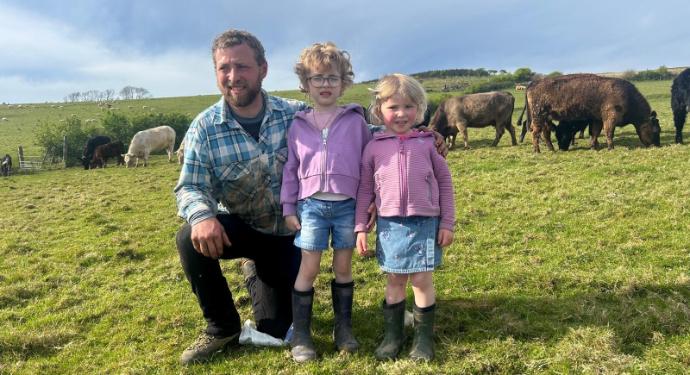
"If I have a big day, the tiredness is still there. ButI'mmore settled within myself now, more positive about where I am. The farm is more active as a business andwe'removing forward,thatdoesa lot for your wellbeing."
Zara works off farm a couple of days a week, which brought an unexpected benefit. "I get the girls up and do the school run, and those slower mornings spending time with them,picking them up in the afternoon, doing farm jobs together after school,is time I really value now. Idon'tget as much done as Iwould on my own, but theywon'tbe little again. Changing my mindset has made me appreciate how important it is to take that family time and really soak it up."
That more appreciative outlook has gradually become part of how Callum approaches every day on the farm, rather than something hehas toconsciously work at.
"I look for what I call yearly boosts.The first lamb born(and the last!), the first calf,letting the cows out after winter,the first cut of silage, even opening the first bale. Some people might think that soundsdaft, but when you think about everything that goes into getting to that point,all the work, the weather, the worry,and then you get to that moment, it means something. Those things give me a lift,every single time."
and it changes the mindset of even two or three people, helps them stay in the industry and look after themselves a bit better, thenI'vedone my bit. I've taken something negative and made it positive."
"Farming can be incredibly isolating and there are so manyelementsoutside of your control-the weather, markets, regulations. That weight builds up and peopledon'talways talk about it. If someone reads this and thinks, right, I'll try that, or even just feels less alone in what they're going through, that matters."
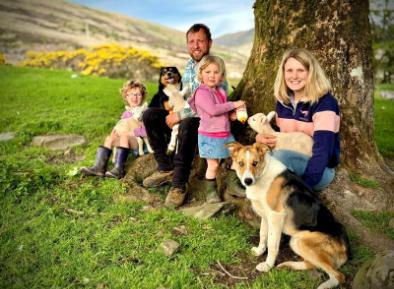
"It's about appreciating the markers that farming gives you naturally throughout the year. They're always there, you just have to notice them."
Callum is also keen to highlight the importance of safety on the farm, particularly when it comes to wearing a helmet on a quad bike,something he admits he never used to do.RSABIand Yellow Wellieshave beenhighlighting Callum's accidentas part of their helmet safety campaign.
"Before my accident I never wore a helmet on the bike, it just wasn't something I thought about. Now Idon'teven noticeI'mputting it on,it'sbecome second nature, like wearing a seatbelt in a car. Nobody thinks twice about that, but there was a time when people thought that wouldn't catch on."
Thedesire to help others is what drove Callum to reach out toFarmstrongScotland-to turn his experience into something useful.
"I never wanted sympathy. What happened, happened, andI'venever been someone who dwells on that. But if I can share my experience
Callum and Zara made the decision to take part in This Farming Life toshowcasethe reality of upland farming and hopefully inspire the next generation to consider a future in agriculture at a time when the industry needs new blood more than ever. But watching it back has brought something unexpected and personal-a vivid record of just how farthey'vecome.
"There are aerial shots of the yard, and I look at them and think, that looks fantastic from where it was to where it is now. That's the thing about looking back,it givesyouperspective that you just can't have when you're in the middle of it."
For Callum, that quiet realisation sums up everythinghe'slearned since 2023-that progress is always happening, even when itdoesn'tfeel like it.
"You're never going to change anything overnight and nobody's going to say something that makes you feel instantly better. But small steps, looking back at where you were,appreciatingwhat'saround you-those things add up."
To find out more aboutFarmstrongScotland and the resources available, gotowww. farmstrongscotland.org.uk
nalysis of official government data –launched today by PAN UK – reveals that the amount of glyphosate being applied to UK crops has risen from 200 metric tonnes per year in 1990 to more than 2,200 tonnes in 2024. Major increases have been seen on a wide range of crops. For example, more than 66 tonnes of glyphosate were applied to British potatoes in 2024, up from 1.5 tonnes in 1990. During the same time period, the area of UK farmland treated with the toxic herbicide increased tenfold to over 2.6 million hectares in 2024, sixteen times the size of Greater London. The vast majority of these increases took place within the arable sector, with cereals (wheat, barley, and maize) leading the way.
While the data outside of farming is much patchier, the use of glyphosate by local councils in public spaces such as parks, playgrounds and streets also appears to have grown dramatically. According to official UK government statistics, local councils used roughly 60 tonnes of glyphosate-based products in 2020.However, the largest ever survey on pesticide use by councils, published last year, revealed that they used at least 354 tonnes of pesticides in 2024, the vast majority of which contained glyphosate.
These huge increases will be put under the microscope later this year, as the UK government must decide whether to reapprove glyphosate by mid-December. If they choose to grant the maximum 15-year license, there is unlikely to be an opportunity to review the decision until 2041. Nick Mole from PAN UK said,"Today's figures reveal that the UK's glyphosate addiction has spiralled out of control. Our overuse of this toxic chemical is leading to a whole host of problems, yet we continue to spray it on the food we eat and places where our children play. We know that glyphosate has links to a range of cancers and other life-threatening diseases. And that it damages the environment, polluting our waters and harming wildlife. The government urgently needs to commit to phase out – and ultimately ban – glyphosate and support farmers and local councils to adopt safe and sustainable alternatives. Otherwise, we will all continue to pay the price."
Glyphosate – often known by its most common brand name, Roundup – has been the cause of controversy for many years due to the ever-growing body of evidence that it has the potential to cause irreversible harms to both human health and the environment. In the US, it has been the subject of a spate of court cases which has seen the manufacturer pay out $11 billion to cancer-suffers who claim that the herbicide caused their nonHodgkin lymphoma or related cancers.The French government has acknowledged the link between Parkinson's and glyphosate and has been paying out compensation to farmers.(5)
The chemical has also been shown to have wideranging negative environmental impacts, from contaminating water to directly and indirectly harming a range of wildlife including amphibians and bees and other pollinators.(6)While touted by some as a solution to climate change, glyphosate is based on fossil fuels and produces 31.29 kilograms of CO2e per kilogram of chemical produced.(7) Due to overuse, weeds in the UK are now becoming resistant to glyphosate. The first instances of resistance were confirmed in 2025, and cases are now becoming more commonplace. (8)Resistance has long been a problem in the US where glyphosate is used in vast quantities. In 2023, the EU banned the use of glyphosate in pre-harvest desiccation, a practice which involves dousing a crop in chemicals just before harvest to dry it out.(9)However, the UK continues to allow glyphosate to be used as a pre-harvest desiccant, despite it often leading to high residue levels in food.
Martin Lines, arable farmer and CEO of the Nature Friendly Farming Network said,"Clear evidence of the rise in glyphosate use at this scale should be a wake-up call. It shows we've been too reliant on one chemical, particularly in our arable systems. We need to drive down use of glyphosate, and we could start with its use as a pre-harvest desiccant on crops going into the food supply chain. We should also move away from multiple applications on the same field in the same season. Farmers need practical alternatives, good advice, and proper incentives from government and the supply chain to drive down pesticide use. And we must avoid simply pushing farmers towards another product, or into excessive cultivation systems that lead to poor outcomes for nature and our soils."
The UK and EU are currently negotiating a new SPS Agreement which is likely to see the UK adopt the ten-year license granted to glyphosate in 2023 by the EU. Meanwhile, the UK government must make its own decision on glyphosate by 15thDecember 2026, and has said that it will launch a 60-day public consultation in June.
PAN UK is calling for glyphosate not to be reapproved. However, if it is granted a new license then it should be with an accompanying set of restrictions designed to both reduce overall use and limit the impact of glyphosate exposure on human health and the environment, including:
• Ban on sales to non-professional users, such as amateur gardeners.
• Ban on use in public spaces, such as parks, pavements, playgrounds, schools and hospitals.
• Ban on use in pre-harvest desiccation – this would go a long way in helping the UK government to meet its target to reduce pesticide use and harms in the arable sector by 10% by 2030.
Farmers registering to host Open Farm Sunday on 7 June 2026 can now access a wide range of free assets via the online shop to help celebrate the initiative’s 20th anniversary.
Open Farm Sunday organiser LEAF (Linking Environment And Farming) is supporting first-time and experienced hosts, giving them confidence to put on events that are practical to deliver and engaging for visitors.
Open Farm Sunday manager Annabel Shackleton is excited about the growing number of event registrations for 2026 and encourages more farms to take advantage of the support on offer.
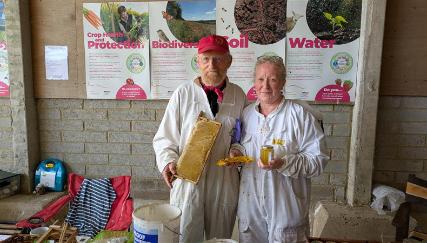
“This summer we are marking two decades of connecting farmers and the public – and now is the perfect time to sign up,” she says.
“Thanks to our incredible sponsors there is a wealth of promotional materials that will equip farmers with the right tools to make a big impact on the day.
“Open Farm Sunday continues to provide a unique opportunity to make a lasting, positive impressionand build a legacy of pride and trust in farming. In this milestone year, we want to help farms of all types and sizes to celebrate in ways that are achievable and enjoyable.”
The online shop provides ready-to-use assets including posters, banners, activity kits and stickers. Alongside these resources, farms can seek guidance via the Open Farm Sunday handbook, webinar recordings, FAQ sheets, or log a call to speak to the team.
Whether hosting a small farm walk for 20 people or a larger event for thousands, there is practical advice to help farmers promote their event, enhance the visitor experience and communicate key messages around biodiversity and sustainability.
As the UK’s leading on-farm initiative, Open Farm Sunday connects consumers with how their food is produced,showcasingfarming with nature andinspiring the publictomake more informed, environmentally conscious food choices.
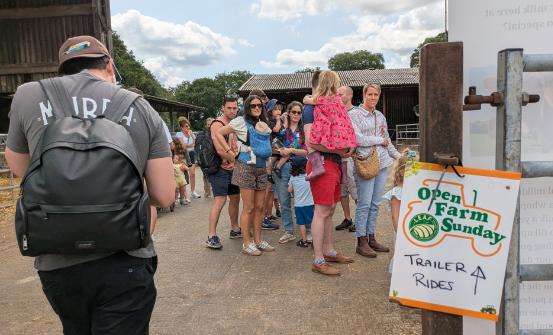
“Our aim is to make it easier for farmers to host with confidence. We want as many farmers as possible totake advantage of the tools available, open their gates andwelcome visitorsto join the 20th anniversary celebrations,” adds Mrs Shackleton.
Visit theOpen Farm Sunday websitewww. farmsunday.orgfor more information and to register.
rowers are being urged to pay particular attention to effectiveness of sulphur applications this spring following one of the wettest starts to any year on record for many UK regions.
Solubility, duration of nutrient release and accuracy of rates are of particular importance with many applications potentially going on to very wet soils, says Richard Ward of ICL Growing Solutions.
"Sulphur fertilisation is essential to drive optimum levels of nitrogen utilisation efficiency (NUE), crop quality and yield," he points out.
"But with many different sulphur products on the market, understanding how the different forms work is key to achieving the best results in any individual farming business.
simply takes longer to dissolve into the soil than industrially manufactured or re-constituted fertilisers.
"Polysulphate is a fully water soluble fertiliser, but with an extended release of nutrients making it ideal for the UK, particularly in the more challenging weather conditions we now face.
"Proven in the market over the last ten years, University of Nottingham trials have shown about 50% of the sulphur contained in polysulphate is available in the first 12 days after application with the remainder released in the following 6 - 8 weeks.
"This gives crops the best chance of utilising the sulphur as its release is more precisely matched to crop needs through the growing cycle, in contrast to other products where all the sulphate can be released within days after application."
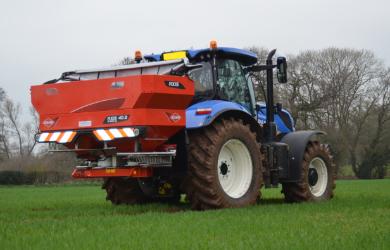

"The term solubility is often misused. Plantmanufactured and granulated sulphur containing fertiliser products, including ammonium sulphate (AS) and other nitrogen sulphur (NS) products, break down in the soil and release nutrients relatively rapidly.
"This is especially the case in wet conditions, with nutrients available more quickly and over a shorter period of time for crops to take them up. As a result, the likelihood of nutrient losses and potential environmental problems is increased."
Polysulphate (48% SO3, 14% K2O, 17% CaO and 6% MgO), in contrast, is a natural granule mined from under the North Sea off the coast of Yorkshire with minimal subsequent processing, he says.
“This separates polysulphate from all other types of sulphate, with its raw granular form meaning it
A further benefit of this extended release is that Polysulphate has a wider application window and can be applied earlier than other products, usually ahead of the first nitrogen if being used as a straight, Richard Ward explains.
"An additional benefit of being a natural product is that polysulphate also has the lowest carbon footprint of all equivalent fertilisers at just 0.0029 kg per CO2e which is much lower than plant manufactured alternatives with high energy requirements.
"This makes it virtually carbon free and allows it to be used in many low carbon food production schemes."
There is also the flexibility of being able to decouple nitrogen and sulphur applications if needed, which is not possible with traditional NS products, he adds.
"This is particularly beneficial for legumes that fix their own Nitrogen and also in crops like oilseed rape, for example, where a different N:S ratio to a cereal crop is required.
"Whether applied as a straight product or as part of a blended fertiliser, polysulphate gives agronomists and farmers the flexibility to match the sulphur needs to those of the specific crop.
"At the same time it provides valuable calcium, magnesium and potash and all in a low chloride form, making suitable across all crop types."
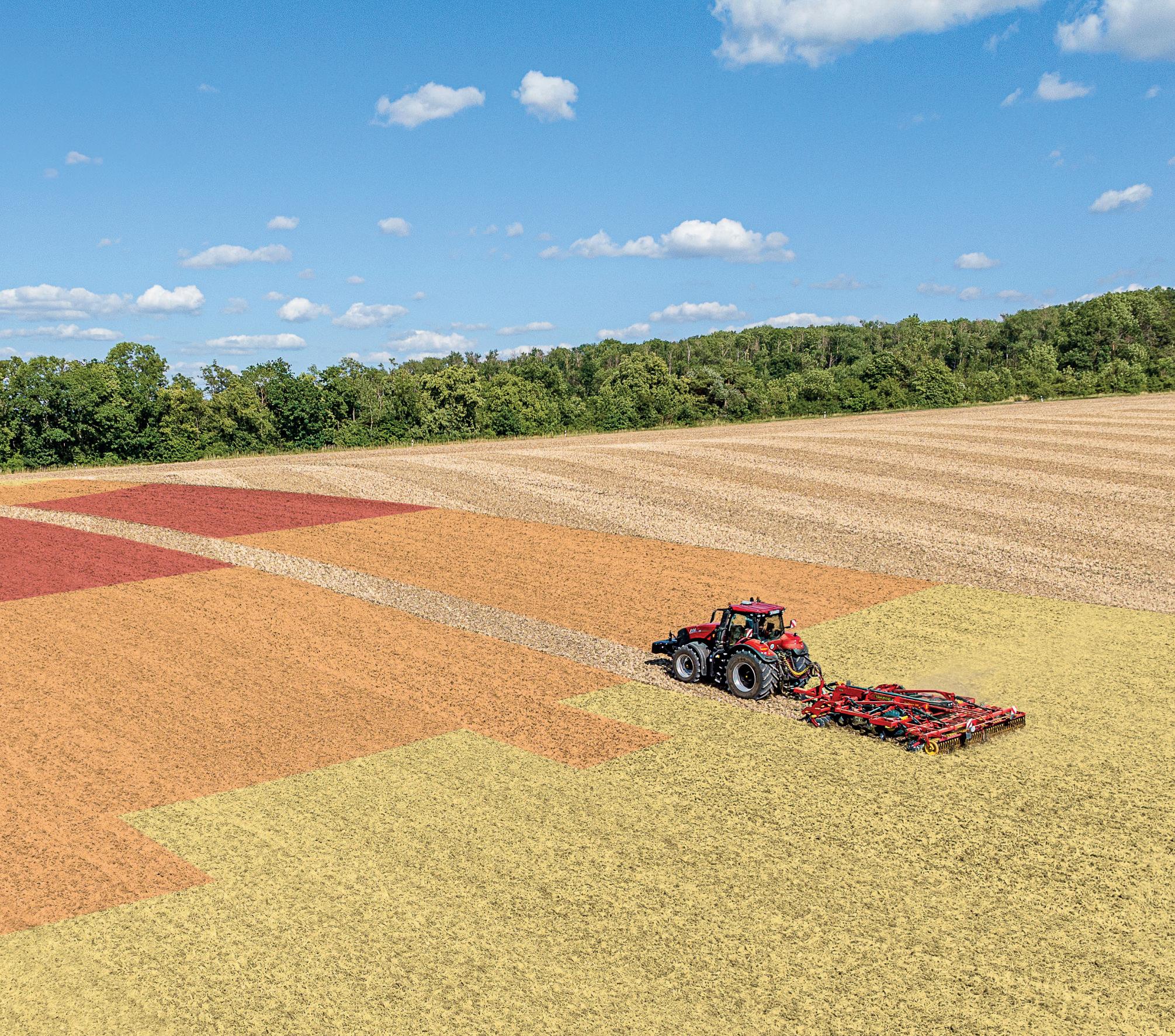
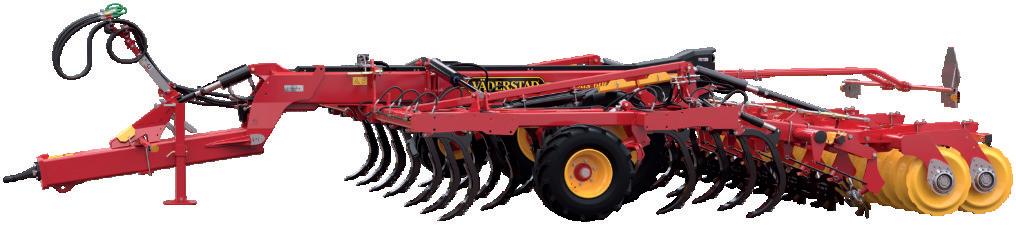
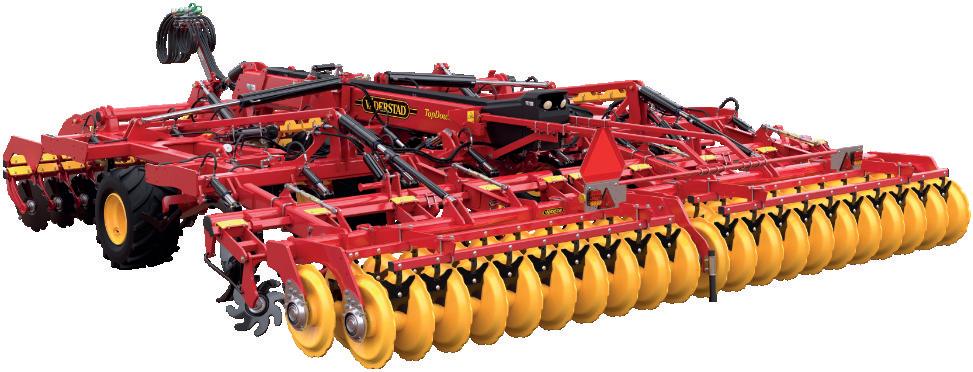
Experience precision farming like never before with the introduction of E-Services for TopDown and Opus.
Now these machines can seamlessly utilise prescription maps for automatic, in field machine adjustments.
Alternatively, with a touch of a button the driver can dynamically adjust the working depth or intensity of the discs, tines, levellers or packer while in operation.
After unprecedented severe attacks of chocolate spot in beans earlier this season, that has seen some fields decimated, most crops that received an early fungicide treatment have started to recover, with clean growth emerging in warmer drier conditions.
Significant levels of inoculum are still present on lower diseased leaves, however, with ongoing fungicide protection still required on emerging leaves, and especially as crops reach the allimportant first pod stage, advocates Syngenta Technical Manager, Simon Jackson.
“Treatment timings are a balance between managing costs and necessary disease control,” he highlights. “Current crop growth would indicate the first pod stage will be earlier than normal. Timing
root to fix further atmospheric nitrogen into ammonium, which is readily available to the plant,” explains Simon.
“This can be especially beneficial where soils are inherently low in rhizobial bacteria, or where the nodules have been damaged by pea and bean weevil larvae.” Syngenta recommend a Vixeran application from the 6 true leaf stage (BBCH16), through to early flower.
“Application conditions are more crucial than timing,” says Simon. “The crops should be actively growing. Avoid application just before or after frost events, and aim to avoid treatment if periods of bright sunshine are forecast immediately after application.”


for Elatus Era application, from first flower buds visible (BBCH51), could potentially happen as early as late April this season.”
The key bean fungicide timings, as shown by research at PGRO, are first pod set, with a final application 21 to 28 days later.
Recent trials work with PGRO has shown that Vixeran treated crops retained more pods per plant and improved bean weight - the crucial components that lead to increased yields.
Simon points out that bean crops also respond especially well to sulphur supplements, which should be considered at the April timing along with magnesium. Trace elements such as


“Syngenta trials have shown that controlling rust early with Elatus Era reduces rust incidence later. Given the high level of inherent disease risk this year, a robust rate of 0.66 l/ha will also give good control of chocolate spot, as shown in trials,” Simon advises. “Elatus Era has proven a good option to build a strong base for rust control.”
Mid-April is also a good time to think about nutrition in beans, he suggests. The YEN project has highlighted the importance of applying nutrients in bean crops.
“Trials for the last three years have shown that Vixeran, a unique bacteria solution which fixes atmospheric nitrogen, helps to improve yields. Bean plants are naturally set up to work with symbiotic rhizobium bacteria they host in root nodules; Vixeran lives in the leaves and around the

manganese, boron and zinc should also be assessed, with leaf tissue analysis giving an indication of crop nutrient status.
As the season progresses, Simon outlines an application of Amistar fungicide 21 to 28 days after the Elatus Era treatment will provide good control of rust later in the crop. “It will also give broad spectrum protectant disease control with a good contribution to downy mildew which may appear late,” he advises. “We would recommend mixing Amistar with a triazole if rust pressure is high, or there is still chocolate spot is still present.
“The aim to help make bean yields more consistent, resulting in a more sustainable return from this important crop,” he adds.
• Improve swath formation with rotor boost function
• ISOBUS Control with CCI terminal and CCI A3 Joystick



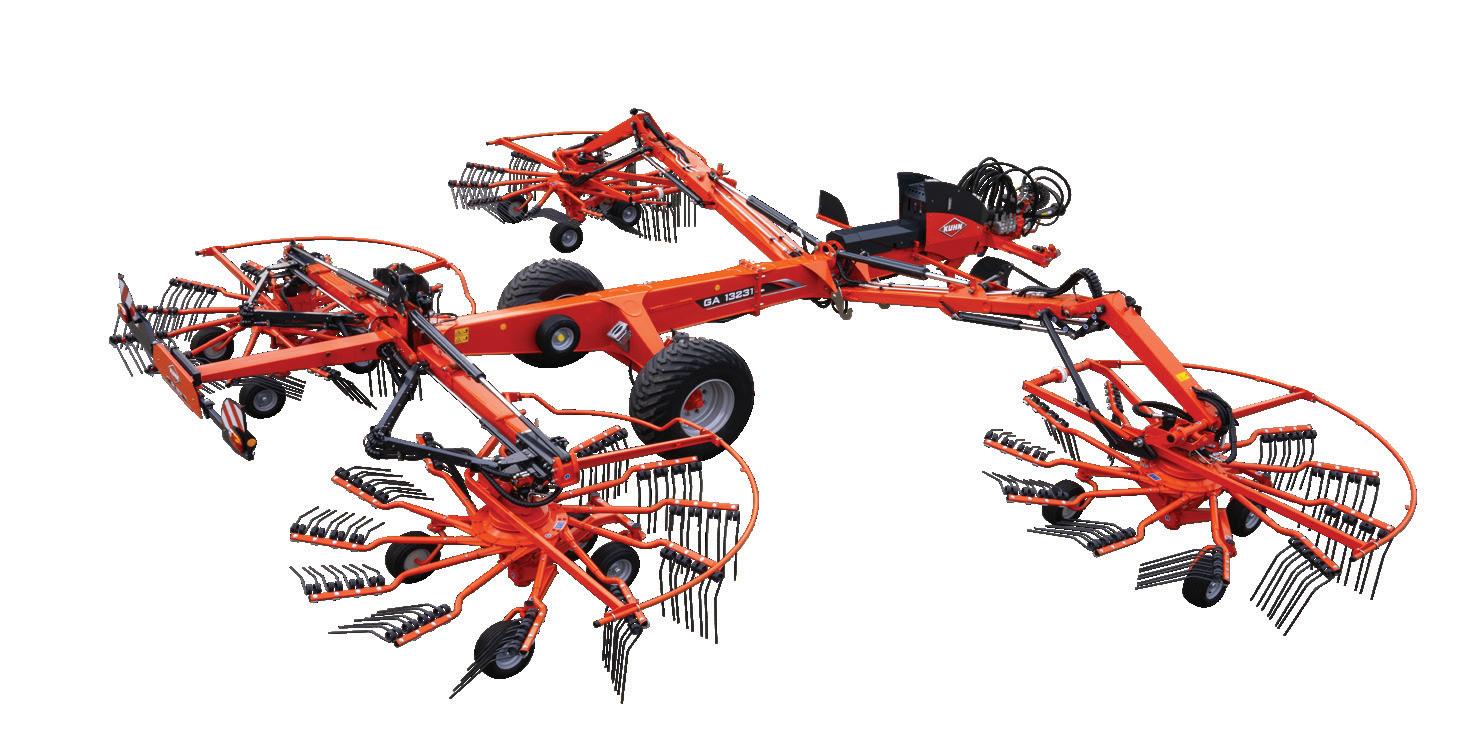

With recent springs becoming increasingly arid, barley growers will need to ensure weed control programmes provide effective protection in dry conditions.
That is the advice from ProCam’s head of crop production, Mike Thornton, who explains that with as little as 110 days between spring barley being drilled and harvested, it is important to ensure crops aren’t held back by weeds which will deprive crops of light, water and nutrients, and which could also reduce the number of viable shoots a plant puts down at early tillering.
“The majority of spring barley will hopefully go into a stale seedbed which is devoid of any active grass or broad-leaved weeds,” Mike describes. “However, whilst that’s the ideal scenario, it won’t be representative of all situations. Therefore, where blackgrass or annual meadow grass are problematic, a preemergence application of a multi-active product such as Tower (chlorotoluron, diflufenican and pendimethalin) will be essential as there are limited post-emergence options to control these difficult weeds.”
For weeds that can be controlled by postemergence treatments, Mike recommends these should be applied sooner rather than later, with a series of 38 ProCam trials showing that applications made between GS13 (three leaves unfolded on the main shoot) and GS24
(main shoot and three tillers) will provide the best level of weed control.
“ProCam’s independent trials have shown that treatments made at GS13 can deliver an average yield increase of 2% compared to applications which are delayed until GS24 or later. It therefore pays to protect crops earlier, but it’s also important to remember that different weed species will be more or less competitive depending on their growth habit and germination timing. For example, weeds which grow from depth will be less effectively controlled by residual herbicides, making the need for early post-emergence treatments even more important. Meanwhile, any weeds which germinate after the crop has gone beyond GS24 will generally be over-shadowed and smothered by the developing crop.”
Mike also explains that the weather will impact the efficacy of herbicide programmes, with last year’s dry conditions causing weeds to develop a thick wax layer and keeping stomata closed for longer, both of which prevented herbicide uptake. “The dry conditions also reduced metabolism rates which slowed the translocation of herbicides within weeds,” he adds. “That’s another reason to control weeds while they are small. Herbicides should also be applied first thing in the morning when stomata are more likely to be open and don’t be tempted to reduce application rates. An adjuvant oil should also be used to help the herbicide penetrate target weeds.”
Herbicide recommendations
Mike explains that Quelex is the product of choice in many post-emergence situations “as its twin active ingredients (haluxifen methyl and florasulam) provide strong activity against a wide range of weeds, including some that are resistant to ALS chemistry.
“DP911 SX (metsulfuron-methyl and tribenuronmethyl) broadens the range of weeds and persistency, but growers should be careful when using metsulfuron as its half-life can range from 30 to 180 days which could impact a following crop of OSR.”
A third option is Supreme Max (florasulam and tribenuron-methyl) which brings in a different spectrum of weed control including field pansy and speedwell species. “It also has less of an effect on sensitive following crops such as brassicas and is an extremely flexible tank mix partner,” Mike describes.
For growers anxious to avoid ALS chemistry completely, Mike recommends Pixarro (halauxifen-methyl and fluroxypyr) which can be coupled with a phenoxy hormone containing product to eliminate any following crop issues. And in situations where ryegrass and/or wild oats are to be targeted, Mike advocates the inclusion of Kanaster (pinoxaden) which he recommends should be used at full-rate and can be applied one week prior to, or three weeks after, a broad-leaved weed treatment. “The latest timing for Kanaster is GS41,” he explains, “so work plans will need to be managed carefully. Alternatively, Foxtrot (fenoxaprop-p-ethyl) can be applied a week either side of a sulfonylurea herbicide, but it has an earlier cut off of GS31 and must be applied on its own.”
Mike concludes by explaining that growers shouldn’t be afraid to spray off any patches of poorly controlled weeds before seed is set. “If all else fails, herbicide resistant weeds such as poppy, chickweed and mayweed may need to be taken out with glyphosate. Destroying them before they have a chance to shed another consignment of seed will pay dividends in future years, especially as some weed seeds can persist for 10 or more years.”
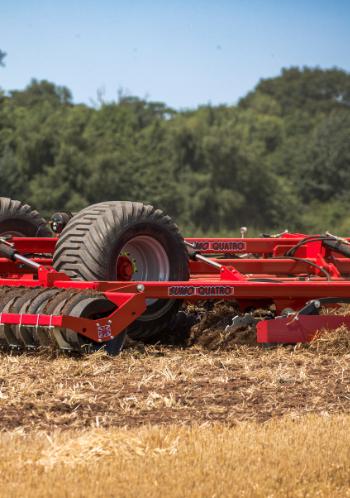

new research project backed by Defra's ADOPT fund will investigate the growing threat posed by viruses in UK vining pea crops, with the aim of giving growers clearer evidence on when and how control measures are justified.
Virus infection is becoming an increasingly costly and unpredictable challenge for the sector, with farmgate losses estimated to reach as much as £65 million each year.
The new ADOPT-funded project will bring together the Processors and Growers Research Organisation (PGRO) and growers from the Green Pea Company network to generate clearer, fieldbased answers.
Researchers will begin by using high-throughput sequencing to identify the full range of viruses present in vining pea crops. This approach will allow them to detect not only well-known viruses but also those that may be present without causing obvious symptoms in the field.
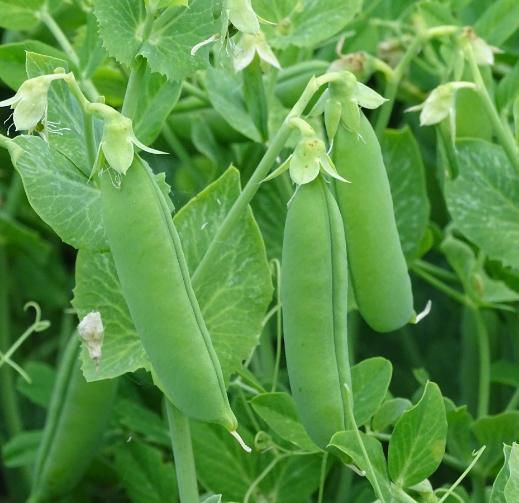
Turnip Yellows Virus – one of the key threats to peas – is just one known to reduce yields significantly, with some studies suggesting losses of up to 40%. However, many of these figures are based on modelling rather than direct evidence from commercial crops.
At the same time, shifting weather patterns are increasing the risk of infection. Earlier aphid migration, linked to climate change, is exposing crops to virus pressure sooner in the season, particularly where peas are drilled later in the spring.
Erin Matlock, PGRO Research Agronomist, said: "Alongside this diagnostic work, a series of farm-scale tramline trials will be established to test different aphicide programmes and, crucially, the timing of applications across crops drilled on different dates.
"By comparing treated and untreated tramlines, the trials will provide practical evidence on when intervention is justified and when it may not be necessary. The results are expected to support more precise integrated pest management decisions and help growers target control measures more effectively."
The virus project forms part of a wider programme of farmerled research supported through ADOPT funding. By enabling growers to test ideas directly on their own farms, the scheme is helping to generate robust, practical evidence that can be quickly applied across the industry.
ADOPT funding is designed to help farmers trial new ideas, practices and technologies on their own farms while reducing the risks associated with innovation.
ADOPT is part of Defra's Farming Innovation Programme, delivered in partnership with Innovate UK.
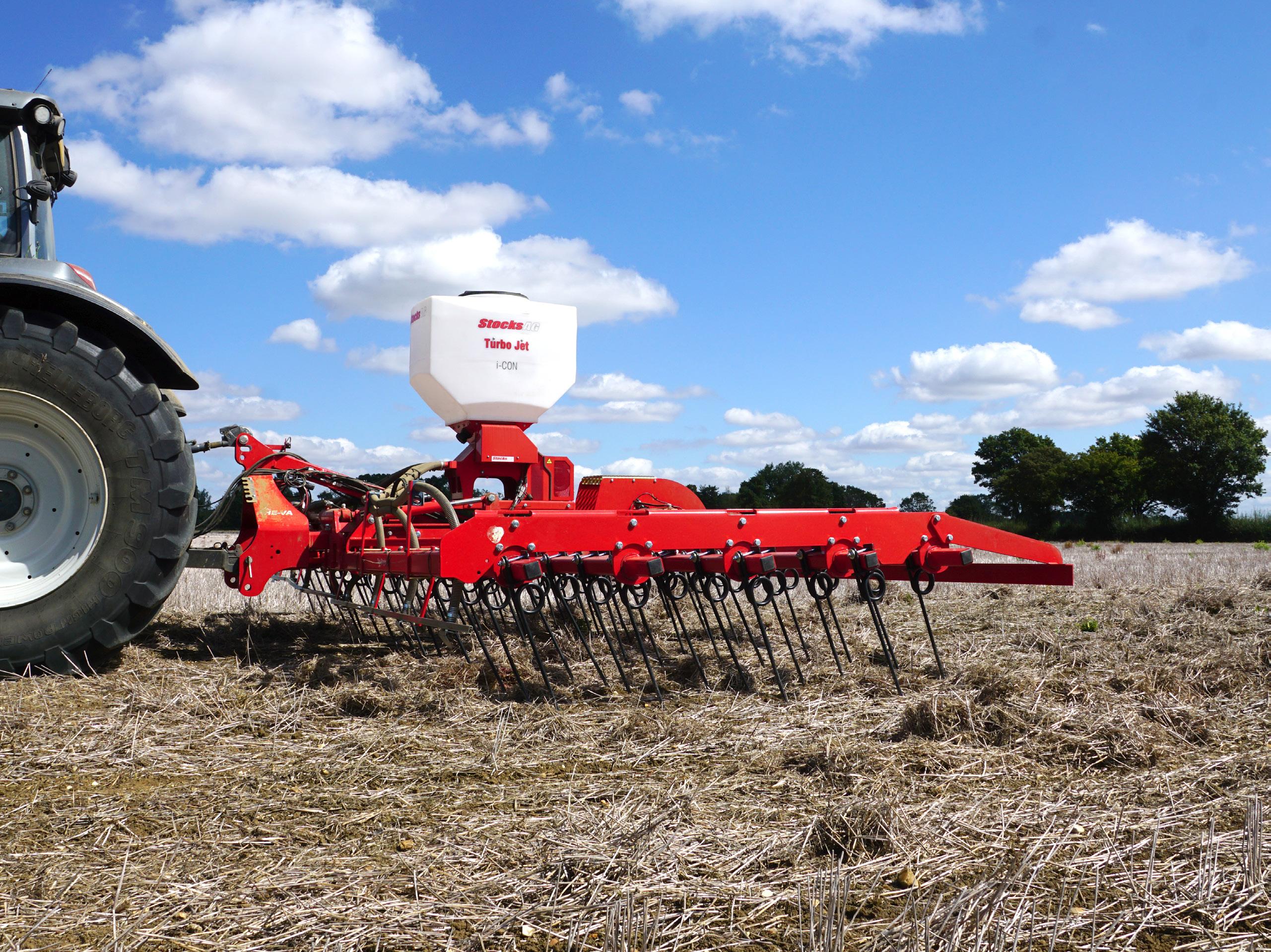
15 - 25kph
The Top Strigle straw harrow spreads straw evenly across the field to assist with drilling and slug control. The harrow also creates a micro tilth to generate a weed chit, assisting in the fight against grass weeds.
• 16mm hydraulically adjustable tines
• Central longitudinal chassis
• Heavy duty ladder-frame
• Hydraulic folding
• Seeder/applicator option

HE-VA range of Grant eligible products for FETF 2026:
FETF44 - G-Drill (1000L hopper)
FETF110 - Top Cutter Solo
FETF112 - Stealth
FETF207 - Stocks Ag Turbo Jet
FETF208 - Top Strigle
xbo, a global leader in specialty harvesting and controlled application equipment,will celebratethe grand opening of its new,200,000 square footadvanced manufacturing facility in Bergen, New York, on Thursday, April 16, 2026.The new site strengthens Oxbo’s long-term commitment to North America and supports continued growth in high value crop equipment, production, and customer support.
The Bergen facility designs and manufacturers harvesters for specialty crops such as seed corn, sweet corn, green beans, and peas. The site includes a fully integrated laser-based fabrication center, robotic & manual welding, powder & liquid finishing systems, and multiple mixed model assembly lines. The new facility also has a large product showroom, an outdoor test track, providing customers, dealers, and employees with hands-on demonstrations, technical training, and equipment testing.




and even stronger support to our customers. We are proud to be part of the Bergen community and excited about what lies ahead."
Duringthe opening ceremony, Oxbo will welcome state and local leaders, community partners, customers, and(retired)employees to a celebration featuring a ribbon cutting and guided tours of the new facility.The festive event brings people together to mark this important milestone and to celebrate the teams, partnerships, and shared pride behind the new Bergen location.
"This new facility marks an important milestone for Oxbo," said Joe Perzia, President of the High Value Crop Division. "By transitioning operations from our former Byron, NY facility into a purpose‑built, highly efficient facility in Bergen, NYweare able toprovide moreinnovative,high-quality products
The Bergen location is designed to support both current operations and future growth. It will house approximately 250employees, spanning manufacturing, engineering, training, and administrative functions, reinforcingOxbo'srole as an employer of choice in advanced manufacturing and agricultural technology.
"The opening of our Bergen facility reflects our continued focus on sustainable, long-term growth," said Roel Zeevat, CEO of Oxbo. "This site is a major step forward for our U.S. operations and provides the space, capabilities, and environment needed to support innovation, collaboration, and customer success. We are grateful for the strong partnerships in the region and pleased to further strengthenOxbo'spresence in New York State." Designed to support customers and innovation The new facility brings multiple functions together under one roof, creating a central hub for the design andproduction of advanced machines for specialty crops, customer and dealer training programs, and equipment testing and development at the outdoor test track. Byconsolidatingthese capabilities, Oxbo aims to improve efficiency, shorten feedback loops between engineering and production, and deliver even greater value to customers.
Careers atOxbo: Oxbocontinues to grow its team in Bergen and is actively hiring skilled professionals across several disciplines. Interested candidates can explore career opportunities at:https://www.oxbo.com/ careers-at-oxbo/
Increased longevity –built for tough environments.

Makes maintenance easier, increases safety.

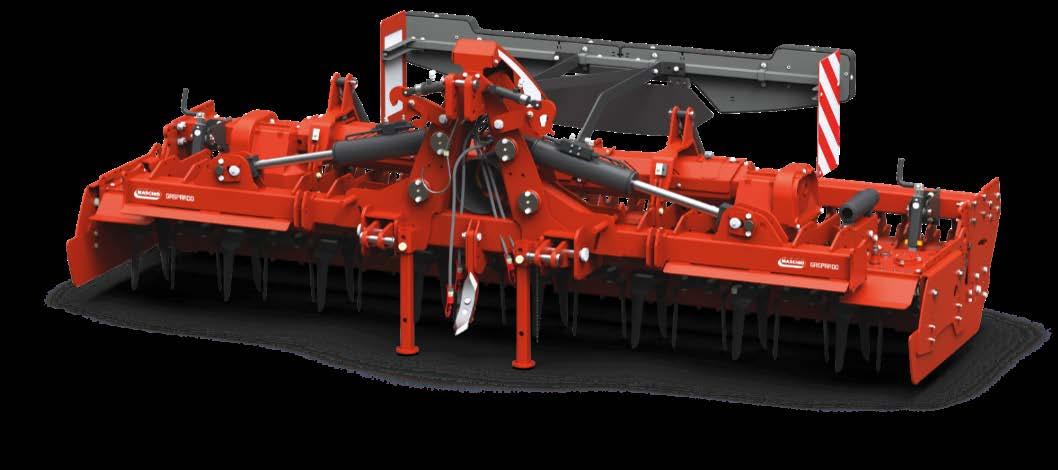
Top and bottom bearings provide high load capacity, top bearing retainers prevent expensive repairs.
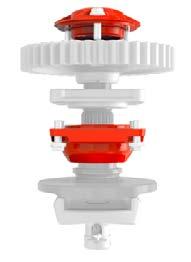
Connected to the packer so adjusts with you – aids soil refinement.

Only one tool required, no pins or bolts to lose.
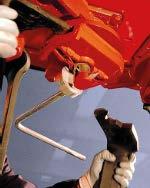


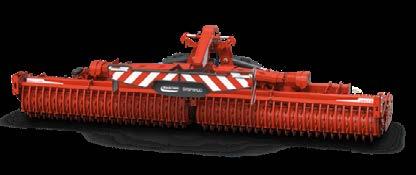
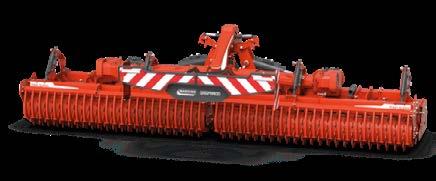

With over 220 years of experience serving the agricultural world, Grégoire Besson offers a complete range of machines dedicated to soil tillage. Ploughs, disc implements, tine implements, soil preparation machines and subsoiling equipment: our range covers all the needs of the most demanding farmers.
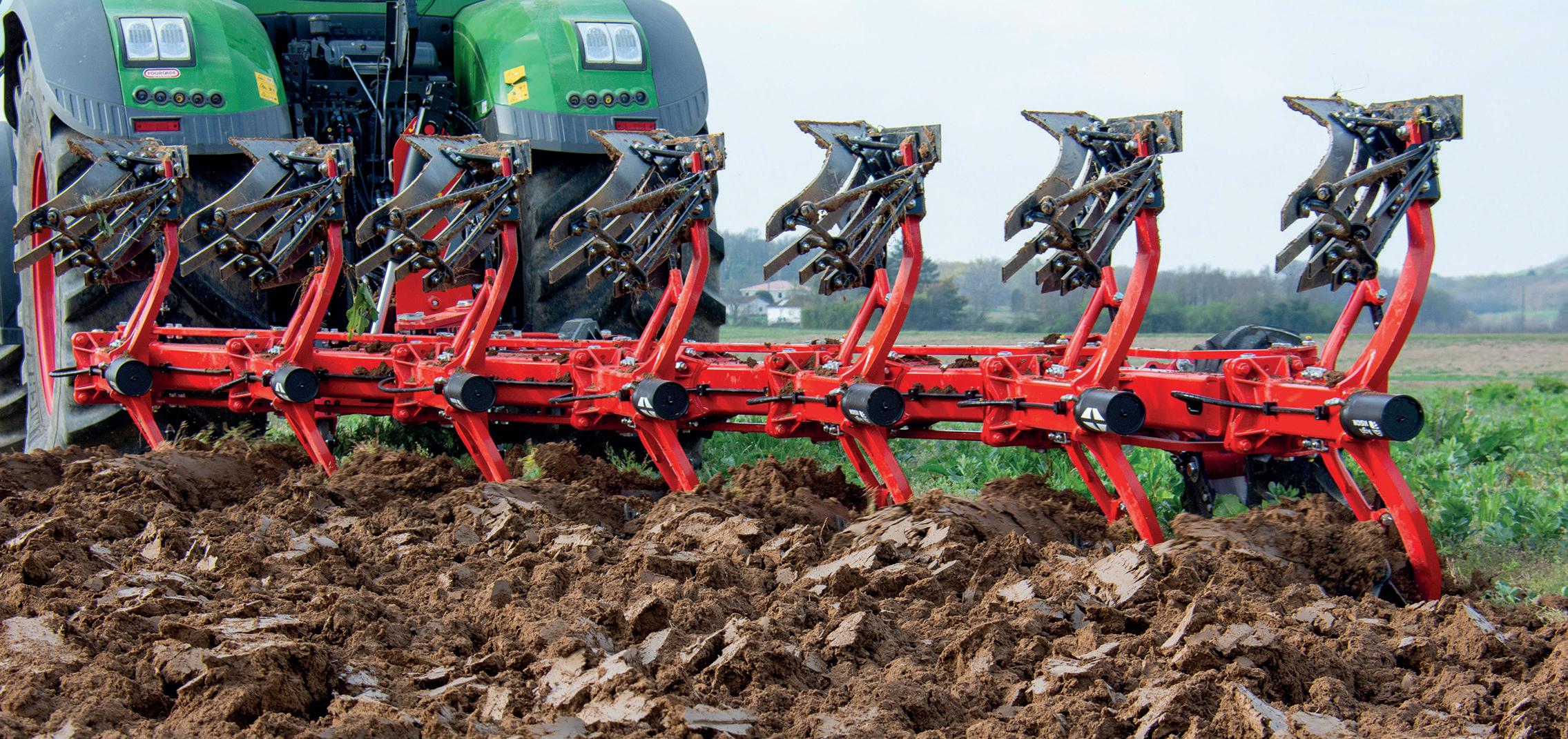
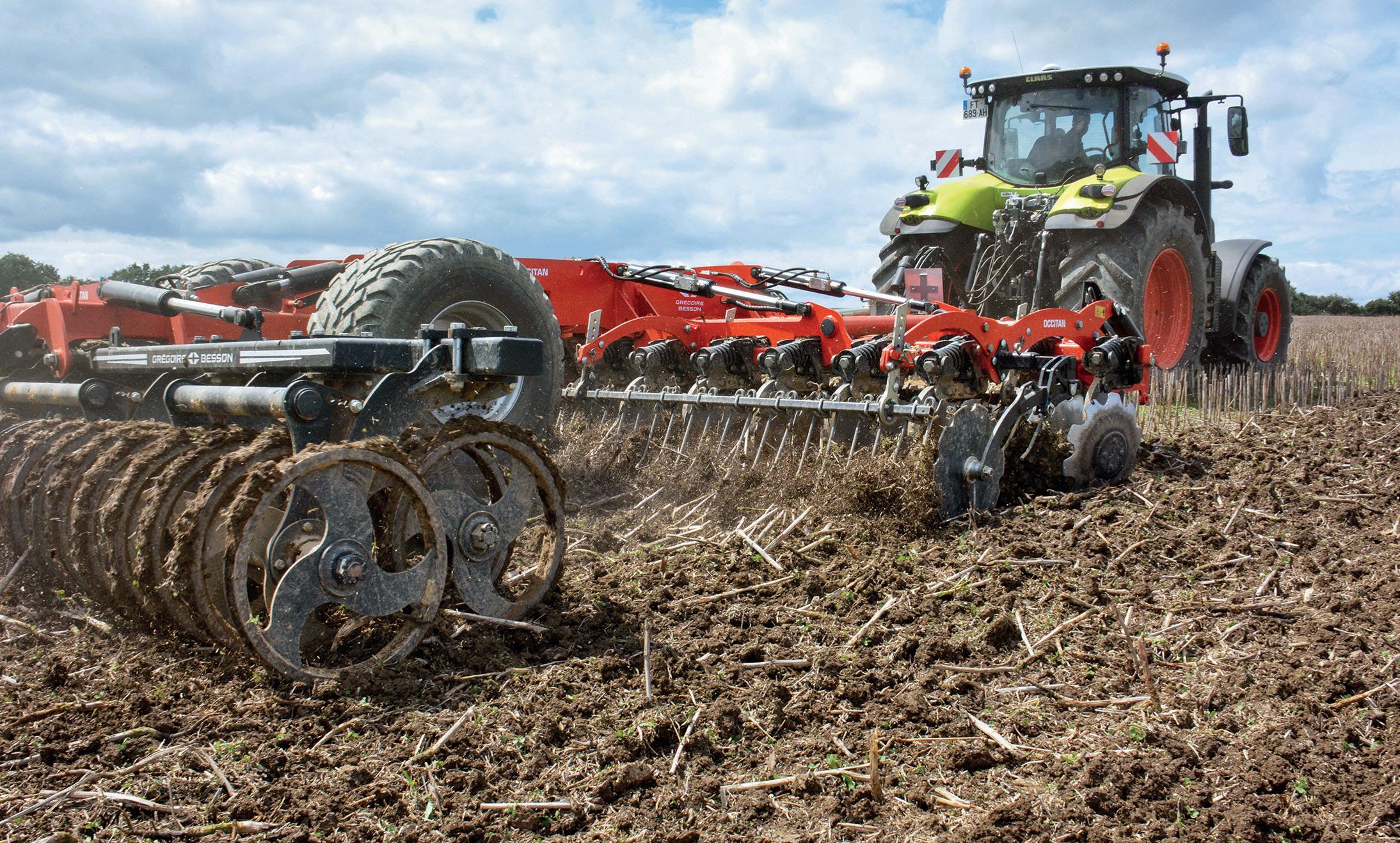
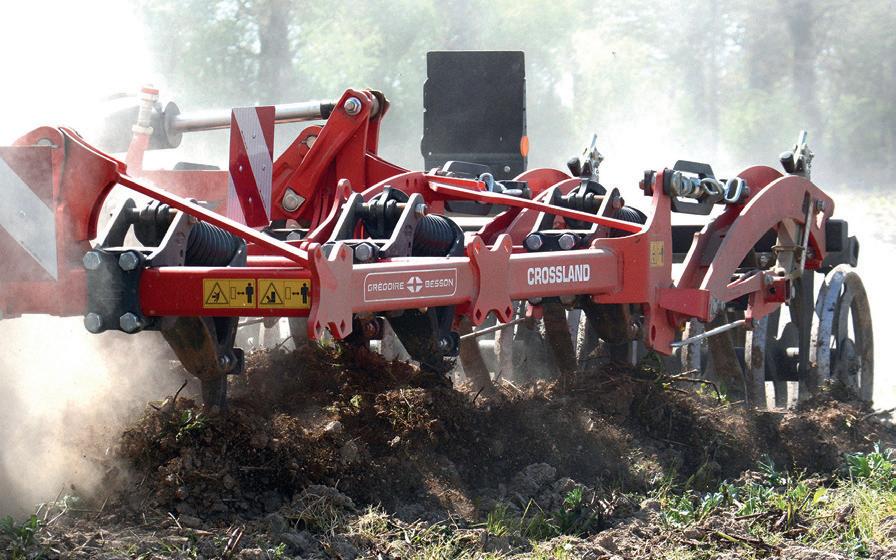
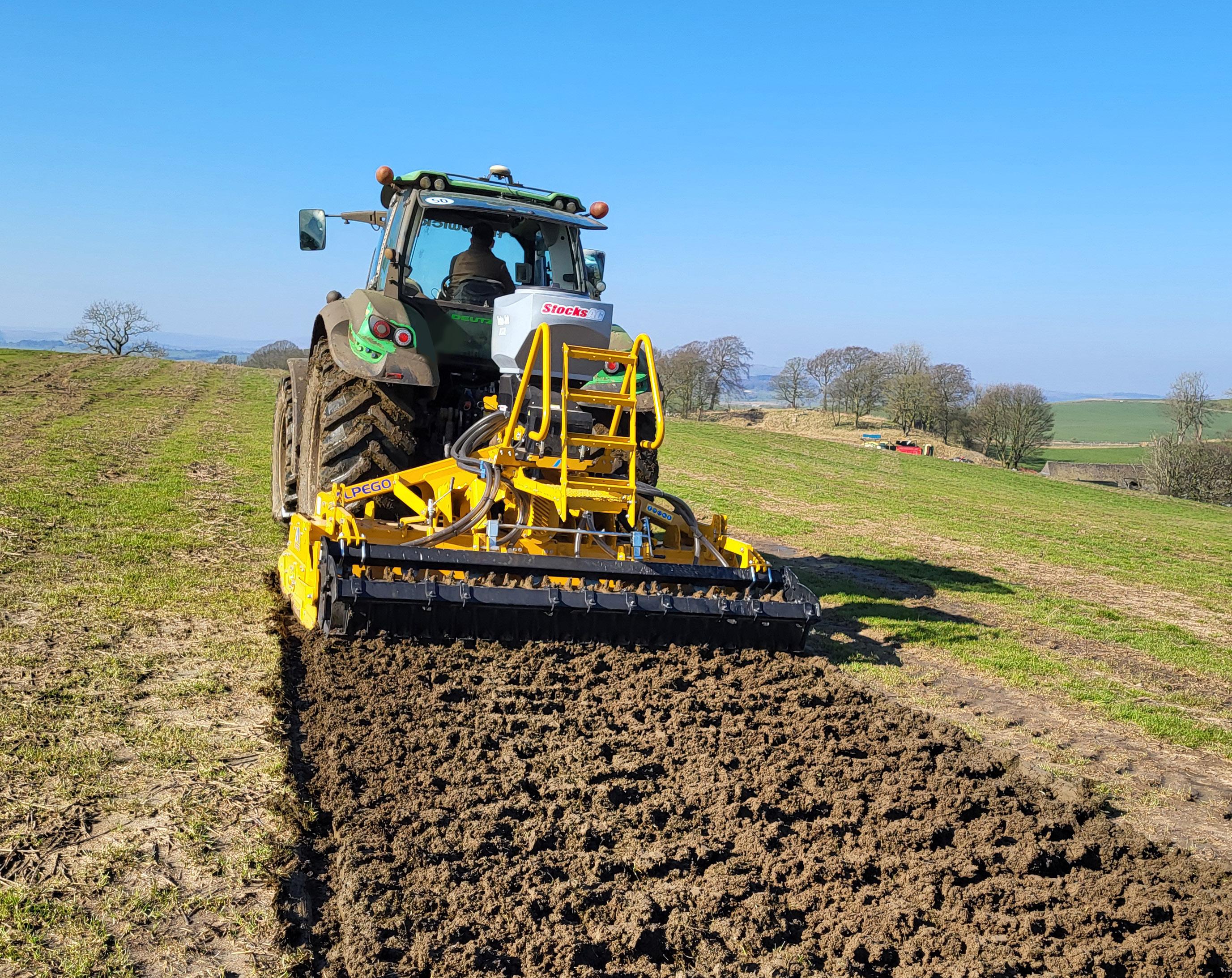
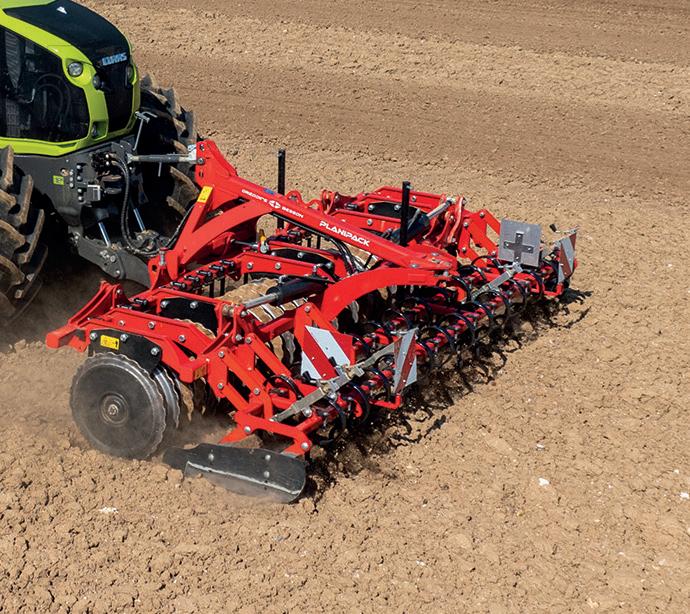
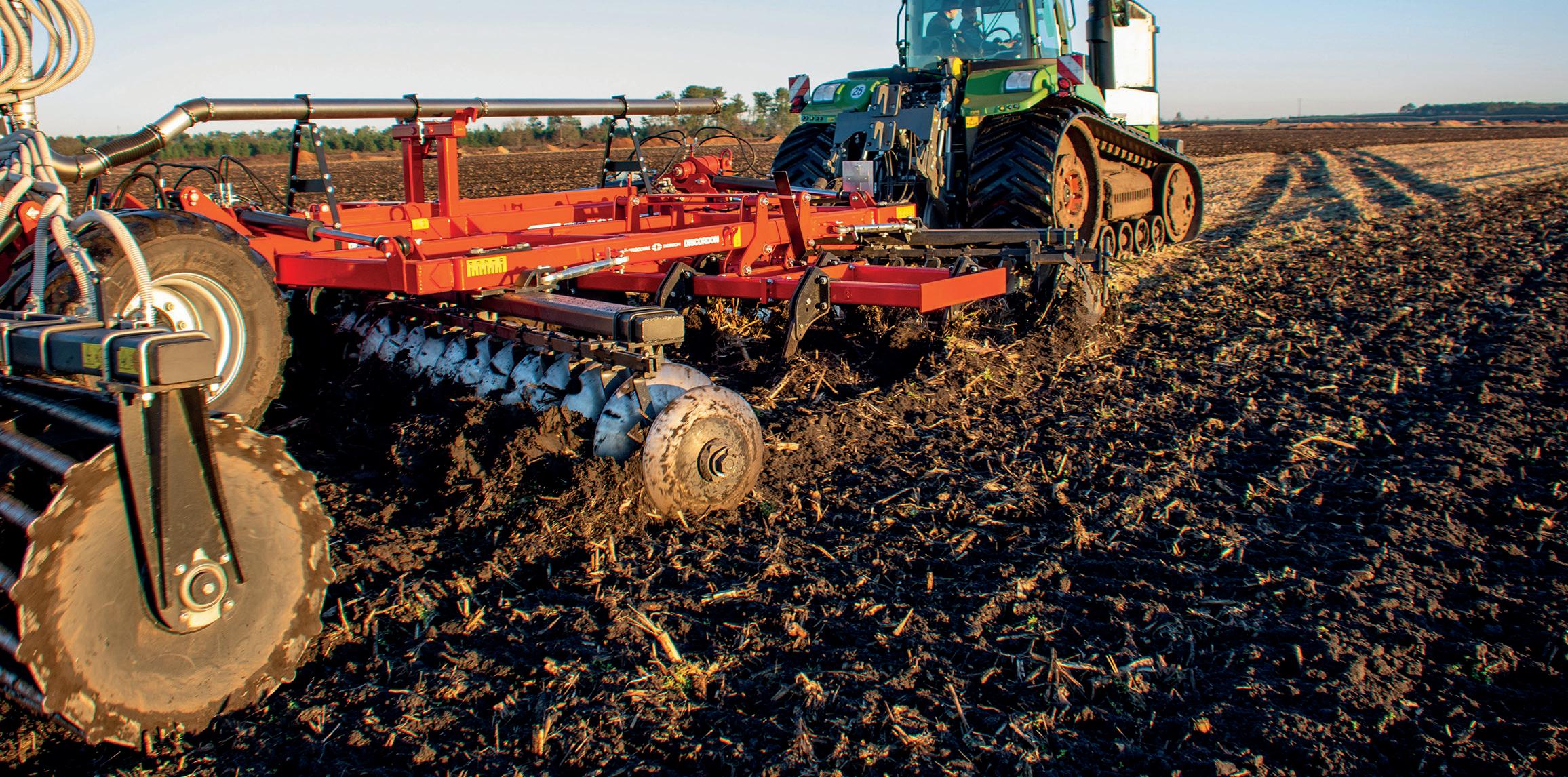
Grégoire Besson machines and parts
Kingdom by Maschio Gaspardo UK. For
nearest Maschio Gaspardo




The performance of this year’s maize crops can be boosted with the application of a new postemergence biostimulant which improves root, shoot and leaf development to make young plants more vigorous and less susceptible to stress. Application in conjunction with a compatible herbicide at the same post-emergence timing further enhances crop performance without the need for an additional sprayer pass.
Trialled by ProCam agronomists last year and now available on a nationwide basis, Pro+ Fulvivex is a biostimulant comprising concentrated humic and fulvic acids as well micro and macro-nutrients which stimulate cell division to promote root, shoot and leaf growth. It also improves nutrient uptake and chlorophyll production, resulting in healthier, more vigorous plants which go on to produce higher yields.
“Pro+ Fulvivex stimulates specific hormonal pathways to enhance biological activity within
crops including cereals, oilseed rape, sugar beet and maize,” explains Ryan CameJohnson, maize technical lead for product manufacturer, Corteva.
“It also improves photosynthesis efficiency by activating enzymatic processes and increasing chlorophyll production, thereby enabling plants to utilise nutrients more effectively and making them more tolerant of stress.

“The end result in maize is a healthier, more vigorous crop which goes on to produce a greater fresh weight and higher dry matter yield. In fact, trials have shown that the inclusion of Pro+ Fulvivex can increase dry matter yield by 0.8 to 1.6 tonnes per hectare, with larger cobs resulting in an increase in overall starch production.”

ProCam agronomist
Guy Peters trialled Pro+ Fulvivex in the South West in 2025 and was impressed by its ability to push crops ahead of weed competition and weather-related stressors.
“Despite advances in maize genetics, we’re still essentially trying to grow a tropical crop in a temperate environment which, in recent years, has become increasingly volatile,” Guy explains.
“Last year’s drought highlighted just how easy it is for mother nature to put forage stocks in short supply, so it makes sense to take every step to ensure maize crops establish quickly and are able to grow away from weed or environmental pressures with as few hindrances as possible.”
For maize, this means getting the crop to the tasselling stage as quickly as possible to maximise the number of sunny days left in the season for the crop to set and fill cobs.
“Last year we saw that crops treated with Pro+ Fulvivex were able to get ahead and stay ahead of weed competition more effectively,”
Guy continues. “It mixed well with a wide range of post-emergence herbicides without hindering their performance, and without causing any undue crop effect, which meant it
could be applied while the crop was still quite small, but before weeds had grown large enough for them to be difficult to control, and without the need for a separate sprayer pass.
“It is an extra product to put through the sprayer, but it’s a well-priced, cost-effective way of ensuring crops can get ahead of weeds before they steal soil moisture or out-compete the crop for nutrients and sunlight. If we get another dry summer this year, it will once again prove invaluable in helping crops to produce larger roots so that they can cope with drought conditions, and make the most of sunny weather to produce energy dense, starch-filled cobs.”
Pro+ Fulvivex is approved for application on maize at BBCH GS12-16 (two to six leaves) and at a low rate of just 150 g/ha in 150-300 litres of water per hectare.
“It partners well with Corteva’s maize specific rimsulfuron plus thifensulfuron-methyl herbicide, Dragster, which is approved for use in the GS13-18 (three to eight leaves) window,” Ryan adds. “The two products can therefore be applied at the same time, negating the need for an additional sprayer pass. With fuel prices as high as they currently are, this makes a lot of sense, with the inclusion of Dragster providing rapid contact action to control a wide range of annual and perennial grass and broad-leaved weeds including fat hen, black bindweed, redshank, barnyard grass, hairy fingergrass, couch grass and more.”

Working with Capstan and Case, BfS has developed a low drift nozzle for use with Pulse Width Modulation (PWM) nozzle bodies.
Since the early days of the introduction of PWM, BfS have been marketing PulZar nozzles throughout north America and Canada and now the PulZar nozzle systems are being offered on machines coming onto the UK market.
PWM controls each nozzle separately, and the flow rate from each nozzle is managed by rapidly switching the nozzle control solenoid on/off. The duration that the nozzle is “on” is called the Duty Cycle and varying this duty cycle provides the

Flowgro Ltd
Barton Tumns Farm Lichfield Road, Burton upon Trent, DE13 8ED TEL: 01283 712172 www.flowgro.co.uk
CW Sprayers Ltd 14 Garden Village Micklefield, Leeds, LS25 4AB TEL: 0113 287 7674 / 07931 582713 www.cwsprayers.com
operator with the ability to control the volume output from each nozzle.
The system pressure, spray quality and fan pattern remain consistent.
The system can cope with a five-fold change in forward speed without affecting output.
PWM bodies will enable the correct application from each nozzle even when going around a corner where the outer edge of the boom is ravelling much faster than the inner edge, so giving a lower rate of application. PWM corrects this by changing the duty cycle at each nozzle to compensate accordingly.
For more information phone 01268 710237 or email stores@bfs.uk.com
Credit: Simon Nichols– BFS www.bfs.uk.com

The Sustainable Use Directive (SUD)* requires all pesticide application equipment to be tested by the relevant dates.

Legal requirements
First test due before the machine is 5 years old
1. Boom sprayers over 3 metres, air blast sprayers, train and aircraft sprayers
Re-test every 3 years
2. Booms 3 metres and under, slug pellet & micro-granular applicators, weed wipers, seed treatment, manually propelled or self-propelled trolley type equipment with 3 or more wheels & a motorised pump, and other specialist equipment
Re-test every 6 years
3. Knapsack, handheld and pedestrian* equipment
a. Must be checked on a regular basis by a competent person
b. Make any repairs necessary
c. Keep a record
* Maximum 2 wheels or with a manually pressurised pump
Farmstar Limited
Grove Farm, Church Lane, Marr, Doncaster, South Yorkshire, DN5 7AU
Agrifit Machinery Ltd
Crop assurance scheme requirements
a. Annual testing for sprayers over 3 metres and air blast sprayers
b. Annual testing of granular nematicide applicators
c. All other equipment to SUD timescales
* The legal requirements are contained in the Plant Protection Products (Sustainable Use) Regulations 2012
Flowgro Ltd
Bavenhill Mechanics

Dave Lightowler
Present in Yorkshire & Lincolnshire
Tel: 01302 786786
www.farmstar.co.uk

Arglam Dairy Farm Arglam Lane Holme on Spalding Moor YO43 4HG
Tel: 07966 112629
www.agribuggy-yorkshire.co.uk
Barton Tumns Farm, Lichfield Road, Burton upon Trent, DE13 8ED
Preston Cross, Ledbury, HR8 2LJ
www.nsts.org.uk
Tel: 01283 712172
www.flowgro.co.uk
Tel: 01283 712172
www.bavenhill.co.uk

penfield Group, the British farmer-owned co-operative, has teamed up with Scania and CNG Fuels to trial a 100% RTFOapproved Bio-CNG (compressed natural gas) heavy goods vehicle in a focused initiative to decrease Carbon Emissions.
The CNG Fuels infrastructure sources 100% RTFO-approved Bio-CNG for its stations. CNG vehicles can create considerable savings on fuel of up to 30-40% compared to a similar diesel fuelled vehicle. This innovative partnership will see bulk tipping vehicles moving grain from Openfield member farms to their consumer customers using a Bio-CNG powered vehicle which is Scania’s first ever 6x2 unit fitted with tipping gear, and capable of operating at 44 tonnes with a range of up to 500 miles. Bio-CNG is particularly well suited for the high performance and distance requirements of HGVs, with an expanding network of fast-fill CNG stations providing quick and efficient refuelling, with no smell from spillage and no safety equipment required when refuelling.
Openfield continues to evolve its’ Environmental, Social, and Governance plan, which includes a commitment to become netzero by 2040 and becoming the leading partner of net zero solutions for seed, fertiliser, grain, and storage. With the size of the Openfield fleet it means that in addition to Openfield’s increased service offer, they now
have a direct influence over their road haulage environmental impact, and as they use this Bio-CNG powered vehicle for deliveries they will gain useful insights into how this can support their targets on reducing their haulage carbon footprint.
“Green House Gas emissions from the transportation of grain and oilseeds are the single largest contributor to Openfield’s tonnes of CO2 equivalent footprint”, says Richard Jenner, Member Services Director. “Whilst we seek to become net-zero by 2040, we are also committed to supporting all our consumer customers and farmer members on their own journey to net zero. Using vehicles powered by diesel alternative fuel options, such as Bio-CNG, electric, and HVO, will reduce our transport emissions by up to 90%. “CNG is a promising solution for Openfield as we look to reduce emissions and improve operational efficiency, as outcomes of this trial”.
This trial marks an important step in demonstrating how collaboration across the supply chain can accelerate the transition to lower-carbon logistics. By working alongside CNG Fuels and Scania, Openfield is not only investing in innovative transport solutions but also reinforcing its commitment to a more sustainable future for British agriculture, delivering practical progress towards its netzero ambitions while continuing to support its farmers and customers.


ith harvest approaching, grain store preparation should already be underway. A mild autumn and fewer prolonged cold spells over winter mean pest pressures are expected to be significantly higher this season. For UK growers, early and thorough grain store cleaning and treatment is essential.
According to Ken Black, account manager at Envu, extended warm conditions have allowed grain store pests to breed later into the year than usual. Historically, cold winters helped suppress insect populations ahead of harvest, but increasingly mild conditions are removing that natural control. Pests such as weevils and saw toothed grain beetles thrive at temperatures of 12 degrees Celsius and above. Last summer’s heat, followed by a mild autumn, created ideal breeding conditions, leaving growers potentially facing high insect burdens going into harvest 2026.
The good news is that infestations are largely preventable with proper preparation.
Why Early Cleaning Matters
Grain quality depends on preparation. Cutting corners risks contamination, rejected loads, financial penalties and long term reputational damage. In severe cases, losses from pests can rival those caused by field diseases. Starting preparation at least two months before harvest allows time for a thorough job and reduces pressure during the busy harvest period. Completing cleaning and treatment early ensures the store is not already harbouring hidden insect populations when fresh grain arrives.
The Three Step Defence: Clean, Monitor, Treat
Effective pest control relies on three connected stages. Cleaning, monitoring and treatment must work together to provide robust protection.
Step One:
The first step is to remove everything from the store, including old grain residues, machinery, pallets and debris. The building should be treated as a three dimensional space. While floors and lower walls are often prioritised, higher ledges, beams, roof areas and floor voids are frequently overlooked. These warmer zones accumulate dust and debris, creating ideal harbourage for insects.
Key areas to target include floors, wall junctions, structural beams, roof spaces, cracks, expansion joints, pits and voids, and areas around conveyors and intake pits. Industrial vacuuming is recommended over sweeping, as it removes fine dust that supports pest development. After cleaning, inspect the structure carefully and repair any cracks or holes, as even small gaps can shelter significant insect populations.
Step Two: Monitoring Before Harvest
Once cleaning is complete and the structure is sound, monitoring should begin immediately. Insect traps should be placed strategically and checked every seven to ten days.
Monitoring confirms whether cleaning has been effective and provides early warning of residual pest activity before grain enters the store. Regular checks build a clear picture of pest pressure and support informed decisions on treatment timing.
A combined approach offers the strongest protection. The first stage involves applying a liquid insecticide such as K-Obiol to all internal surfaces, including floors, walls, ledges and roof areas. When applied correctly, treatments remain active for up to two months, providing residual protection against emerging insects. Coverage must be thorough, particularly in hard to reach areas.
For additional assurance, a smoke based treatment such as the Actellic Smoke Generator can follow. Smoke penetrates cracks, crevices and inaccessible voids, driving pests out of hiding and into contact with treated surfaces. This step should only be carried out after full cleaning and liquid application. The store must remain sealed for 48 hours to maximise effectiveness. This dual approach significantly reduces the risk of insects surviving in hidden areas.
Preparation goes beyond product application. A complete protection plan is essential.
Remove vegetation and spilled grain around the exterior of the building, as these can act as breeding reservoirs. Keeping the perimeter clean reduces reinfestation risk. Inspect doors, vents and intake areas for gaps, and install proofing measures to prevent pests entering after treatment.
Calibrate application equipment before use to ensure even coverage and effective residual protection. Plan cleaning schedules early in the farm calendar to avoid rushed preparation, especially if weather conditions shift in favour of field work.
Finally, keep detailed records of cleaning, monitoring and treatments. This supports compliance with assurance schemes and helps refine strategies over time.
With higher pest pressures expected due to changing weather patterns, early grain store preparation for harvest 2026 is critical. Mild winters and extended breeding periods mean insects are likely entering the season in greater numbers.
However, a structured approach of cleaning, monitoring and treating can dramatically reduce the risk of infestation. Starting at least two months before harvest, thoroughly cleaning all areas, monitoring consistently and applying both liquid and smoke treatments will help protect grain quality and avoid costly losses.
When it comes to stored grain pest control, preparation is everything. The earlier action is taken, the stronger the defence.
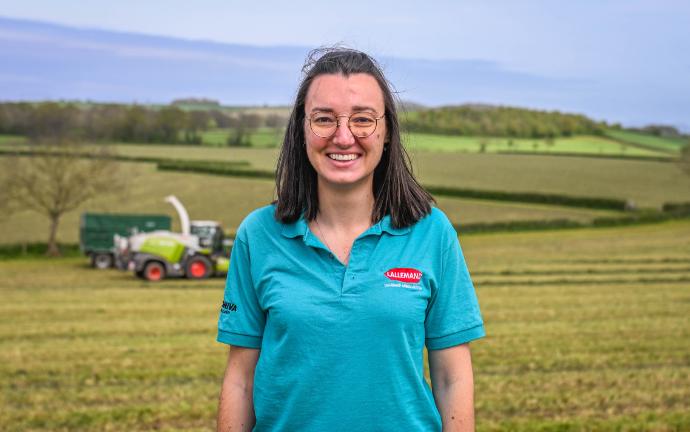
Following a wet winter, farmers are being alerted to a potential increase in contamination risk in first-cut silage, especially in fields that have not been grazed or where standing water has been present.
A wet start to the year, coupled with a mild winter, has created conditions that favour higher levels of naturally occurring spoilage bacteria and thatch, explains Lientjie Colahan, forage technical support at Lallemand Animal Nutrition UK & Ireland.
“With the ground being so wet, many farmers have been unable to graze or get onto the land, resulting in a build-up of dead thatch at the base of the sward,” she explains.
“This material has little to no nutritional value and will inevitably be picked up by the rake, reducing overall silage quality and bringing in fungus and yeasts that can compromise fermentation in the clamp.”
She adds that there is also a likelihood that there has been a surge in naturally occurring spoilage bacteria.
“When conditions are wet for an extended period of time, it can alter the microbiome of the sward and soil, causing an increase in clostridium bacteria, which can negatively impact silage fermentation,” she says.
“Clostridium bacteria break down proteins in the silage and produce butyric acid and ammonia, which makes the forage unpalatable.”
In light of these challenges, Mrs Colahan suggests taking an early first cut, even if quality and quantity are not perfect, allowing farmers to effectively ‘reset’ the sward and encourage fresh, leafy regrowth that can be cut in the next favourable weather window.
“This approach puts you in a much stronger position to achieve a higher quality and more productive second cut,” adds Mrs Colahan.
“I recommend walking the fields and opening up the sward to see how much dead material is sitting underneath to help set expectations for the first cut,” she says.
“Pre-cut testing a week or two ahead of cutting will also give a good indication of quality and dry matter (DM), helping farmers to make more informed decisions on timing and set a baseline for this year’s forage.”
While it’s likely for some that first cut silage quality will be poorer than anticipated, using a crop- and condition-specific inoculant can help to mitigate quality losses caused by yeasts and spoilage bacteria brought in by soil contamination or excess thatch.
“The specific combination of bacteria and enzymes in our crop- and condition-specific inoculants, such as Magniva Platinum Grass Wet, work together to quickly acidify the grass and inhibit the growth of spoilage bacteria as well as inhibiting yeast and mould growth,” explains Mrs Colahan.
“This helps improve silage digestibility by using enzymes to release sugars from the fibre and bacteria to limit the growth of nutrient-robbing microbes, helping preserve more energy for your cows,” she says.
When reviewing the average metabolisable energy (ME) of first cuts over recent years and its impact on milk yields, Mrs Colahan says there has been a
decline since 2023, likely due to adverse weather conditions.
“ME was 11.1 MJ/kg DM in 2023, which is very good, however, this reduced to 10.98 MJ/kg DM in 2024 and around 10.87 MJ/kg DM in 2025,” she says.
“This reduction in ME from 2023 to 2025 equates to over half a litre of milk per cow per day, simply due to the inherent quality of the first cut.”
While the weather is something farmers cannot control, crop- and condition-specific inoculants can help make the most of this year’s cuts, reducing the impact of quality fluctuations and improving silage preservation in the clamp.
Optimal ryegrass values for cutting:
• Dry matter (DM) – 18% at mowing, 30% for clamping, and 35-45% for baling
• Free nitrates – less than 1,000 mg/kg fresh weight because high soluble nitrogen levels will buffer the crop and prevent efficient fermentation
• Sugar as a percentage – more than 15% in the dry matter, or more than 3% if results are reported on a fresh weight basis
• Neutral detergent fibre (NDF) – 38-40%
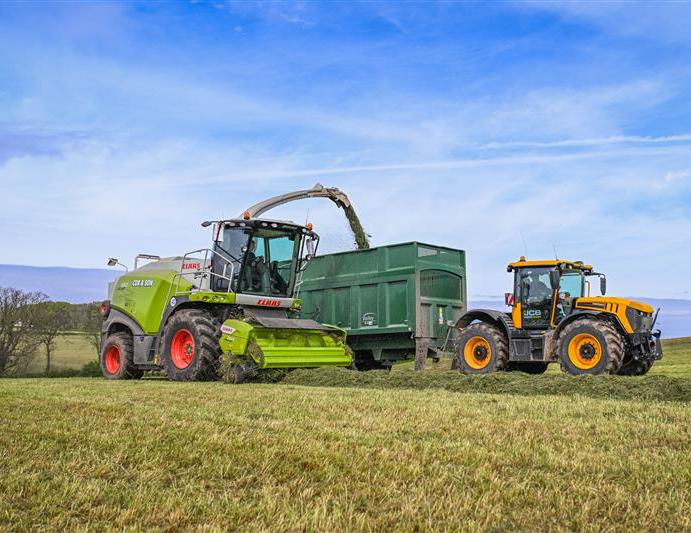
Dairy farmers making multi-cut grass silage seem to be in a stronger position when it comes to improving milk from forage and the resilience of their businesses to dry weather, a new survey suggests.
Conducted among more than 100 UK dairy farmers by Volac, the survey showed that more than three-quarters of all respondents (77%) rated maximising the amount of milk they produce from homegrown forage (silage and/or grazing) as extremely important to their business.
However, when exploring the differences between farmers taking four or more cuts a year in a multi-cut system, and those taking three cuts or fewer in a conventional system, multi-cut makers had made better milk from forage (MFF) progress, says Volac technical business manager, Amanda Clements, and seemed to cope better with the 2025 drought.

“What was clear was that a higher proportion of multi-cut makers had already increased their MFF figure over the last five years, at 93% versus 76% of conventional silage makers,” explains Amanda. “In addition, the grass silage yields and quality of those making multicut seemed to have been less severely impacted by 2025’s dry weather.
“Less than half (45%) of multicut makers whose farms were affected by the dry season said they had suffered reduced grass silage yields, compared with nearly three quarters (73%) of those who had made silage conventionally.
“Indeed, a quarter (25%) of conventional silage makers who suffered losses saw their yields cut by more than half, compared with just 14% of multi-cut makers. And a lower proportion of multi-cut makers whose farms were affected by the dry weather saw reduced grass silage quality – at 27% versus 44%.”
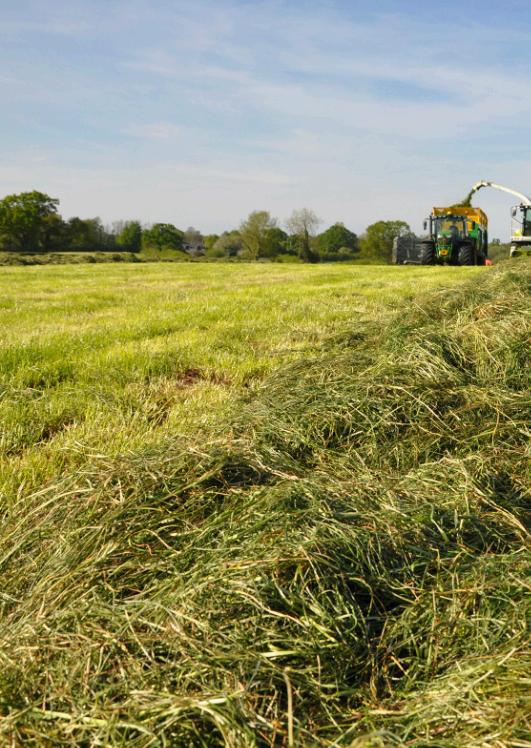
Amanda says these findings align with results of Volac’s on-farm trial work comparing the yield and quality of multi-cut versus conventionally-cut grass. Although not conducted in a drought year, the trial showed that five grass cuts yielded 0.92t/ha more dry matter (DM) over a season than three cuts, she says, with the multi-cut grass also being 0.5 MJ/ kgDM higher in metabolisable energy (ME) on average and almost 3% higher in crude protein.
“This higher quality fits with multi-cut’s potential to improve milk from forage. However, turning multicut grass into good silage does require attention to detail,” she adds. “Shorter cutting intervals mean less time for slurry bacteria to dissipate if applying slurry between cuts, and multi-cut’s higher protein
content can contribute to buffering the fermentation.
“Both these issues increase the case for using a quality inoculant to boost the fermentation. Indeed, a further stage of our multi-cut research showed that by applying Ecosyl inoculant, average DM loss was halved compared with leaving multi-cut untreated, and there was clear evidence of better protein preservation.”
Turning back to the survey findings, Amanda says of the farms affected by the drought, nearly all the multi-cut group (98%) had taken an early first cut in 2025, compared with less than three-quarters (71%) in the conventional group. However, of those who did, an almost identical proportion in each group (67% and 69%) felt the early first-cut helped to improve total tonnage. “This is important because an early first-cut not only removes old and dying overwintered grass, it also stimulates fresh regrowth, which can help with both yield and quality,” she adds.
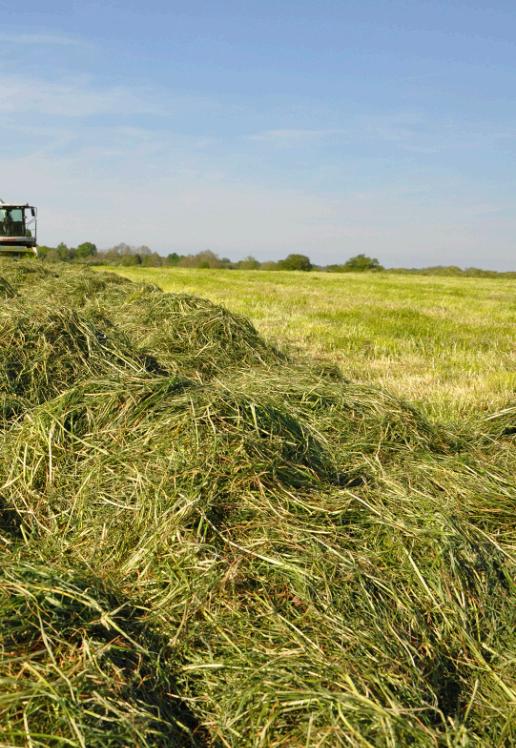
“Given the sharp reduction in milk prices we’ve seen recently, what was also interesting from the survey was how milk price influenced the views of the two farmer groups.
“Twice as many multi-cut makers than conventional makers (40% versus 18%) felt milk price didn’t affect the importance of MFF, while a far higher proportion of conventional producers (79% versus 60%) felt maximising MFF became more important with lower milk prices. This might suggest that multi-cut farmers are more routinely focused on MFF, not just when under milk price pressure.
“Also, more of the multi-cut farmers (82% versus 64%) who had already increased their MFF said they wanted to increase it further.”
A higher proportion of multicut silage makers than conventional silage makers had already increased their milk from forage over the last five years, says Volac technical business manager for Ecosyl, Amanda Clements

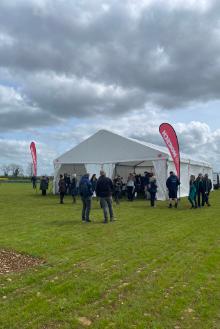
iddly Squat Farm hosted industry professionals and agricultural press for the Cereals Crop Plot Day, offering a first look at preparations for this year’s Cereals Event.
The preview event combined a press briefing with on-the-ground access to crop plots already established for the show. Attendees were able to assess a range of varieties and agronomic approaches, reflecting current priorities and innovation within the arable sector.
We attended to gain first-hand insight, with early crop establishment across the site indicating a strong foundation for the event. The plots demonstrated both the scale of planning and the level of technical input behind this year’s programme.
Event hosts Jeremy Clarkson, Charlie Ireland and Kaleb Cooper were present and fielded questions, alongside organisers and contributors who outlined what visitors can expect. From crop trials to technical demonstrations, the focus remains firmly on delivering practical, field-based knowledge for farmers.
The day also provided an opportunity for discussion among attendees, underlining the

continued importance of collaboration and knowledge exchange across the industry.
Cereals 2026 will take place on June 10–11, with the Crop Plot Day setting clear expectations for a well-prepared and informative event.
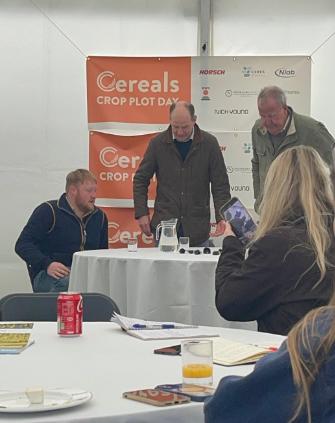

ollowing the major acquisitions of Strube, as well as Syngenta’s malting barley business in 2025, RAGT comes to Cereals 2026 with new team members, varieties and partnerships, says James Barlow, RAGT commercial manager.
Existing RAGT varieties like RGT Hexton have plots on the stand, alongside new RL entrants such as RGT Guardsman, which is attracting attention as the first variety with BYDV resistance to break the 100% yield barrier, adds James. These will be joined by varieties previously seen on other Cereals stands. Market leading spring barley Laureate is presented alongside its expected dual purpose successor Arrow.
The Strube-RAGT sugar beet plots will have the new second highest yielding variety on the RL, ST Rotterdam, as well as the highest yielding virus yellows tolerant variety, ST Tweed. Fodder beet varieties will add to the display, complementing RAGT’s other forage and environmental seed plots.
Also located on the RAGT stand will be James Peck and the P.X. Farms Ltd team. They have been following the progress of a crop of RGT Hexton in the ‘Field of Dreams’, and they plan to do the same with a crop of Arrow spring malting barley. James Peck will be on the stand to greet fans of his P.X. Farms Ltd YouTube channel.
RAGT will be giving away gelato to visitors, which is produced by Gloucestershire farmer Charlie Whitehouse under the brand Oh My Goat. Fittingly, his goats are fed silage from RGT Duxxbury maize.
“Much like Cereals being at Diddly Squat Farm, 2026 feels like a seminal year for RAGT. Our aim over the coming years is to become the number one plant breeder in the UK across plant species, and the recent acquisitions are a big step towards achieving this. We are excited to share these developments with farmers at Cereals this year,” concludes James Barlow.
You can find RAGT on stand 1040.

eaving has a host of new equipment and attachments for visitors to see at its stand (747) at Cereals this year. Headlining this is a new one pass cultivator, the Raptor, and a new drill, the exact details of which the firm is keeping under wraps until the event. However, Weaving sales director Simon Weaving has revealed that it will be the next generation of highoutput, low-disturbance seed drill
The Raptor will work down to depths of nine inches with two rows of 560mm cutting discs, followed by two rows of sprung-loaded tines, providing 900kg of force each. At the rear of the machine will be a row of levelling discs and a full width disc roller. It will be available in 3, 4, 5, and 6 metre versions.
“The Raptor has a lower link arm hitch to allow for tighter turning,” says Simon. “A switchbox control comes as standard, so you only need two hydraulic
functions. It needs a 160hp tractor and upwards, working at 10-12 km/h.”
Also on the stand will be two new options for Weaving’s Fenix disc drill. To broaden its appeal to mixed and livestock farmers operating smaller tractors, Weaving is launching a trailing kit for the Fenix this summer to enable smaller tractors with around 100hp to operate the drill. The weight of the drill will be distributed across the link arms and rear tyres when travelling between fields.
There is also a grain and fertiliser Fenix adaptation, where Weaving has done away with the usual dual head format for delivering grain and fertiliser into the slot; they are using two metering units to mix the seed with just one head. This system retains the Fenix’s compact design, offers a simple, single calibration point and allows the central seed delivery system to provide a smooth, consistent flow of product, says Simon.

ohn Deere's 500R sprayer will be making its first appearance at Cereals as the company plans a show stand packed full of innovation.
The self-propelled machine was unveiled in 2025 and will be travelling to Diddly Squat in June to take part in Sprays and Sprayers Arena demonstrations, as well as lining up alongside the 300M and R975i on the stand.
John Deere combined an eye-catching new design for its largest sprayer with technology and features to optimise performance while also simplifying daily operations.
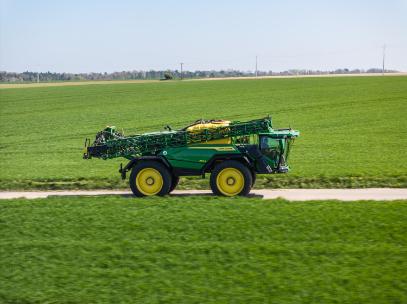
The UK and Ireland's largest arable farmers and contractors are expected to extract the most value from the 500R, which has been developed to meet the needs of those looking for the ultimate in cab comfort, spray accuracy, droplet quality and precision telematics.
The 550R and the 540R have tank capacities of 5,000 litres or 4,000 litres respectively. Both have
reasons to come to our stand at what should be a really great show in its new location," he said.
Over the past 18 months, John Deere has launched a huge array of new products, including, most recently, its 8R high-horsepower machines. While the Waterloo-built 634hp tractor will not be making its way to the Cotswolds in 2026, there will be plenty of green and yellow metal.
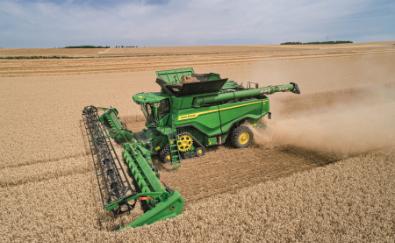
the option of a 30m or 36m steel boom – capacity and boom span are the only key differences in what is otherwise two almost identical standard specifications.
Chris Wiltshire, John Deere's Tactical Marketing Manager for the UK & Ireland, said the sprayer won't be the only new piece of equipment this year.
"We will have more news to share before the event gets underway, so there will be several very good
The flagship X9 combine, which delivers an average of 45% more capacity across all crop types with no sacrifice in grain quality – all while using 20% less fuel –will lead the harvesting line-up on the stand.
Both the 6M and 6R series tractors will also be on show, where attendees can see what makes these cost-effective tractors some of the most versatile machines on the market, with precision ag, high engine performance, and first-class cab comfort.
Attendees will also be able to learn more about John Deere's See & Spray technology, as well as the subscriptionbased Precision Essentials package, which allows operators to see the benefit of precision technologies without having to purchase the equipment outright, unlocking a simple, scalable way to introduce guidance and automation onto farms.
"Cereals is about the people as well as the product, and as usual we will have a big team of experts on hand to meet customers," Chris added. "We look forward to the chance to catch up with our existing contacts and also making some new ones."

he Processors and Growers
Research Organisation (PGRO) will take ownership of the pea and bean Yield Enhancement Networks (YEN) this autumn with the aim of modernising them for today's pulse grower.
At Cereals this June, growers and agronomists can visit the PGRO's stand to get a first look at how the YENs will develop and speak to staff about what changes they would like to see.
Streamlining data capture, reducing the time required to participate, and prioritising outcomes which deliver the most valuable insights for the farm are among the PGRO's key objectives.
Research Agronomist Erin Matlock said: "Using technology as much as possible to gather the data points needed for the pulse YENs is an obvious area where we can make it easier and slicker to participate. We will do this through an app which we will be demonstrating at Cereals."
Erin and other members of the PGRO team will be on hand to discuss the other main areas for development.
For 14 years the YEN has connected arable farmers and agricultural organisations who strive to improve their farm productivity and performance, whether they seek to improve crop yields, reduce environmental impact, or improve crop quality.
Originally set up and run by ADAS, the pulse YENs allow growers to measure their farm performance, compare their results, and share ideas with the rest of the industry to improve productivity.
ADAS will continue to run the pulse YENs for crops in the ground now, with PGRO taking over ahead of winter bean drilling this autumn.
Alongside the YEN focus at Cereals, the PGRO team will be on hand to discuss its current projects such as ANSWERS – an initiative that looks to optimise the on-farm yield and quality of faba bean as an alternative UK-produced protein source – and the NCS Project, which aims to reduce carbon emissions, increase pulses in arable rotations, and reduce soya meal.

ollowing the unveiling of the Smart Connected Farm concept at its Oxford Farming Conference panel discussion on Agriculture 5.0, Agrii Cereals stand is built around this vision of what future profitable crop production and agronomy will look like.
It shows how digital tools, data and people all work together rather than in isolation, says Ruth Mann, head of integrated crop technologies for Agrii. Central to this are digital tools like Contour, which Agrii believes will be the glue that binds variety choice, seed rates, nutrition planning and application, agronomic decision making, and data capture.
“It’s about bringing all the data together into one place, providing insights to farmers and agronomists, but, ultimately, they will still make the final decisions using their knowledge and experience,” adds Ruth.
With nitrogen prices relative to commodity prices still the biggest immediate challenge facing arable farmers, there will be an opportunity to discuss with the RHIZA team how variable-rate nitrogen will help them increase the efficacy of the nitrogen they apply next season. This starts
with effective soil sampling, followed by crop scanning and nutrient planning in the Contour tool, says Sam Fordham, head of technical for RHIZA.
He explains: “We’ll be running live demonstrations of our digital platforms, including soil scanning, drone data and how that information feeds into a real agronomy plan.”
There will be plots of Agrii’s catch crop mixtures on the stand, as well as Secobra’s three spring barley varieties, Belter, Hurler and Skyway. Secobra will support the stand with its ‘Score a Belter’ penalty shootout.
Finally, a cover crop showcase will highlight which mixes may work for specific situations or SFI actions, and there will be the farm saved seed processing team in attendance to meet new and existing users of this service by Agrii.
Farmers will leave with something very practical, say Ruth. A clearer understanding of how to connect the dots between crops, data, technology and expertise. It will give farmers tools and support that make sense in the real world, she concludes.

ou spend months preparing, sowing, and growing, so start planning for harvest now! With so much time and investment going into growing the crops, it is essential to have a storage building that is fit for purpose. Whether it’s fruit, grain, or potatoes you grow, we have the expertise in building them all.
Storing crops in tired or unsuitable buildings that allow access to the elements will only cause problems. Damp conditions act as a breeding ground for many species of insects. Therefore, it is essential to create suitable storage conditions to minimise waste and maximise returns.
A new crop store will offer a clean, dry, wellventilated, and watertight construction, all built with high-quality UKCA-marked steel and materials.
Concrete panels are a key feature in crop stores. They are easy to clean and exceptionally durable, withstanding the pressures of crop storage with ease. Concrete panels are also quick and easy to install, simply slotting in between steel supports. Graham Heath Construction always strives to provide its customers with the highest quality, value-for-money solution.
Straw sheds also offer a great storage option for keeping straw undercover and protected from the unpredictable British weather, for year-round use. Talk to us today about your building requirements, and we can design the perfect storage solution for your harvest of grain, fruit, potatoes, and straw.
Call us today for a free quote and the latest building offers:
Current Grain Store buildings:
• Grain Store Offer 1: 120ft x 60ft x 23ft - 1,500 Tonne - £80,000
• Grain Store Offer 2: 80ft x 60ft x 20ft - 1,000 Tonne - £50,000
• Straw Shed Offer: 100ft x 50ft x 21ft - £27,000
Further information about Graham Heath Construction can be found at https://www.ghconstruction.co.uk/offers/ or by calling: 01270 781158
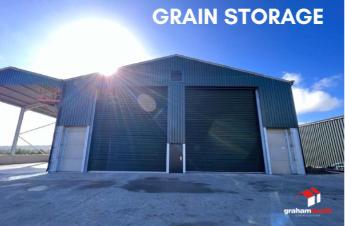

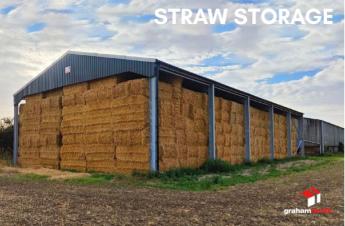



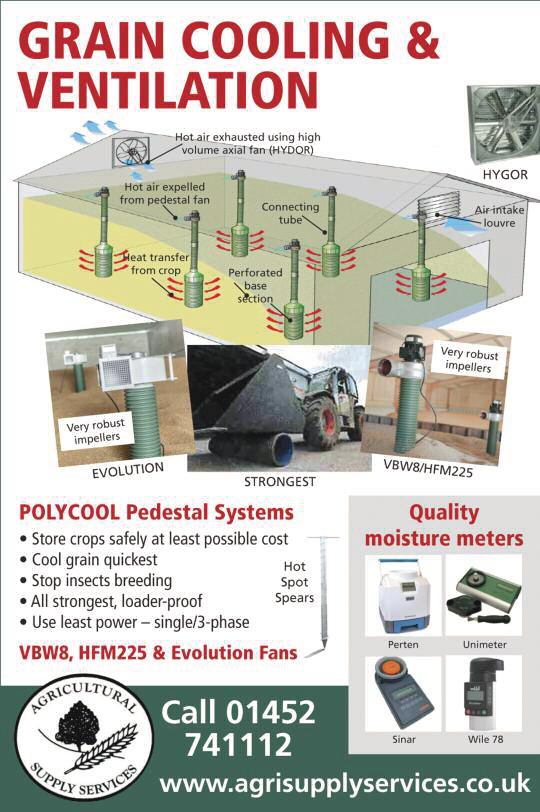



DAMA Agricultural Solutions UK will be making its debut as an exhibitor at Cereals in 2026 as the crop protection company prepares to launch two ground-breaking products: Gilboa®, a new top-performing fungicide with a unique mode of action in cereals, and Ferrabait®, a new molluscicide with a novel active ingredient which provides fast-acting, long-lasting control of all slug species.
“We’re looking forward to attending Cereals 2026 at Diddly Squat Farm on 10th and 11 June,” explains David Griffiths, Technical Manager, ADAMA UK, “where our fungicide and molluscicide technical experts, regional agronomy managers and global product development teams will be on hand to talk through any technical questions visitors may have about our new products.
“Gilboa and Ferrabait are game changers for UK arable producers, and we are excited to demonstrate how our value innovation strategy is giving growers access to products which provide rapid, effective and long-term crop protection to enable them to achieve better
yields and more sustainable returns.”
Gilboa®: the next generation of fungicides
Gilboa® is the trade name for flumetylsulforim, an imino-tosyl-pyrimidinone chemistry which has been classified as having a unique mode of action (Group 32) by the Fungicide Resistance Action Committee (FRAC). This new mode of action targets nucleic acid metabolism, a biochemical pathway that has never previously been utilised by cereal fungicides. This significant innovation provides valuable protection against key diseases in cereals and oilseed rape, including septoria and sclerotinia, offering UK farmers an additional form of defense in the fight against crop diseases and a powerful tool for disease resistance management.
Gilboa is currently progressing through the regulatory approval process with product availability expected for the 2027 season.
"Gilboa is an incredibly exciting and important new fungicide for the industry,” explains Jonny Oosthuizen, Portfolio and Campaign Manager – Cereals, ADAMA UK. “To be able to develop and bring to market a new mode of action that
is performing on a level with market leaders really proves ADAMA's commitment to UK arable farming. We're privileged to be leading the next generation of fungicides and look forward to sharing more about this gamechanging molecule at Cereals 2026."
Ferrabait®: it’s all about the pellet
Ferrabait is a brand new slug pellet which uses the novel molluscicide active ingredient, Feralla, to set a new standard in the rapid control of all slug and snail species.
Approved for use on all cereal, vegetable, grass ley and high value broad-field crops, Ferrabait® slug pellets contain a complex proprietary formulation of 12 ingredients including 1% w/w Feralla (10.2 g/kg elemental iron) which is toxic to slugs and causes rapid cessation of feeding. Ferrabait pellets also contain a blend of high-quality wheat flours which ensure optimum pellet palatability, and humic acids which stimulates rapid feeding. The pellets also boast class-leading levels of longevity thanks to ADAMA’s unique
manufacturing process.
Available in autumn 2026, Ferrabait pellets are manufactured to tight processing specifications to ensure each pellet is of a uniform size, shape, weight, consistency and colour. “At a size of 2.5mm by 2.1mm, Ferrabait pellets spread accurately to wide operating widths and provide the optimal number of baiting points (40-50 pellets per m2) when applied at typical field rates,” explains Catherine Whaley, Product Development Area Manager for ADAMA in Central and North Europe. “This spreading accuracy, combined with their rapidstop feeding effect, excellent palatability and durability even in the wettest conditions, ensures crops treated with Ferrabait are protected quickly and for longer against all species of slugs.”
The ADAMA stand at Cereals 2026 will be located within the Crop Plots and Agronomy zone (stand 1138). For more information visit https://www.adama.com/uk/en or https://www. thecerealsevent.co.uk
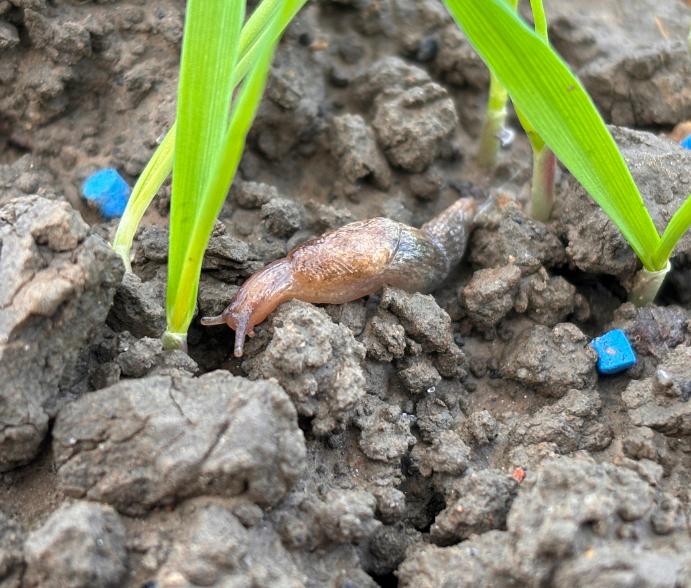

he return of one of the most anticipated beef classes is set to be a highlight at this year’s Royal Bath & West Show, with entries now open for both beef and dairy classes.
Following strong demand from exhibitors, the Senior Bull Class for bulls born before 2025 will return to the beef schedule on Thursday 28 May. A staple across all beef breed categories, the class is renowned for showcasing some of the most impressive animals on the showground.
These bulls are often the largest and most powerful examples of their breed, and their absence in 2025 was keenly felt by exhibitors.
Alongside the excitement in the beef ring, this year’s dairy competitions promise equally high standards, culminating in the prestigious interbreed championship, which takes place on Friday 29 May.
Interbreed judge Andy Cope, who has judged at major shows across the UK and Europe, including the Royal Welsh, Royal Cornwall and Great Yorkshire, will take on the task of selecting the Supreme Dairy Champion.
Explaining what he looks for in a winning animal, Andy says it’s key to have a functional, balanced cow that can produce quality milk while maintaining high standards of health and welfare.
“You’re looking for an animal that is well balanced, strong enough but still dairy, with good legs and feet and an excellent udder, which is one of the
most important functional traits in a dairy animal,” he adds.
“The Royal Bath & West has always been a very prestigious show and one that people talk about across the country,” says Andy. “It brings together some of the best livestock and gives farmers a chance to showcase their top breeding stock.
“It’s not just about winning; it’s about the camaraderie, meeting like-minded people and building connections. Farming can be quite isolating, and showing is a great way to bring people together,” he adds.
Adding to the livestock experience, cattle housing will return to the Showering Pavilion, giving visitors the opportunity to enter, get up close to the animals and see them being prepared for the showring.
“Showing is really important for pedigree breeders; you can have some of the best animals, but nobody might know about them. You never know who might be interested in buying from you in the future.”
Beef entries close on 16 April while dairy entries close on 7 May.
Enter competitions at: www.bathandwest.com/ royal-bath-and-west-show/competitions
Book tickets here: https://www.bathandwest.com/ royal-bath-and-west-show/visitors/tickets
The Royal Bath & West Show will take place at The Showground, Shepton Mallet, Somerset BA4 6QN, from 28–30 May.
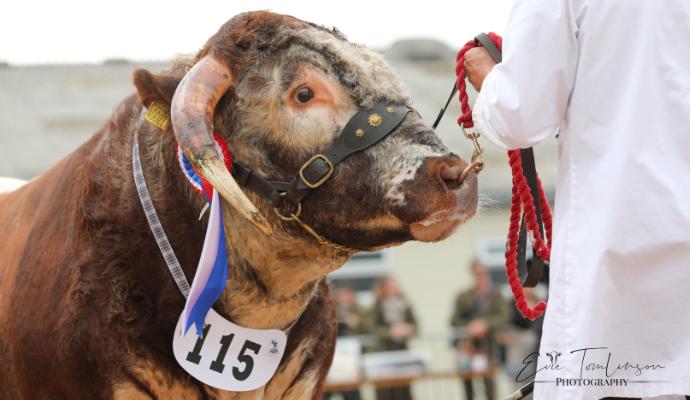
he Devon County Show is proud to announce the launch of its first‑ever Community Growing Hub, a major new feature for 2026 designed to inspire visitors of all ages to get growing, get gardening, and get connected. The Hub will be hosted by horticulturalist and community growing advocateKennyRaybould, who will lead a team of volunteers offering hands‑on advice, and practical support throughout the three‑day show.
Located within the Crafts & Flowers section, the Community Growing Hub will serve as an accessible, welcoming space where visitors can explore everything from seed sowing and soil health to container gardening, wildlife‑friendly planting, and sustainable home‑growing techniques. The feature has been created in response to the rising interest in gardening as a tool for wellbeing, resilience, and community building, as well as rising food costs.
As Kenny Raybould puts it "Growing something from scratch is incredibly rewarding especially when it's something you can eat, make with or simply enjoy! Not only can it help towards reducing food bills, but it's also even better for boosting your confidence, sense of independence and of course, community chats over the fence. And the best part? You don't need a big garden or fancy equipment to get started. A few pots, a patch of soil or even a tired-looking balcony, a bit of guidance, and the right plants can go a long way.
Throughout the show,Kennyand a team of will offer Visitors tailored advice, troubleshoot gardening challenges, and discover simple, achievable ways to grow more at home.
Show Manager Lisa Moore said: "We're thrilled to introduce the Community Growing Hub to this year's show. Gardening has become such an important part of people's lives—supporting wellbeing, sustainability, and community spirit.Kenny's passion and expertise make him the perfect person to lead this new feature, and we know visitors will absolutely love it."
The Community Growing Hub joins a number of new and expanded features at the 2026 Devon County Show, reflecting the event's commitment to celebrating rural skills, environmental stewardship, and the people who help Devon's countryside thrive.
And it's not just about growing for yourself whether you're feeding your family, sharing with neighbours, or even helping the bees, growing your own is one of life's simplest and most joyful pleasures."
As Kenny says, it's time to turn the volume up on growing our own.
We're looking for some extra plant loving people for a few hours here and there to support our big community growing space. If you're interested, we can provide you with show tickets and food vouchers.
If you're a business, you're very welcome to promote your services from the stand as part of your involvement.


oung writers across Scotland are being challenged to put pen to paper and bring the future of farming to life, as the Royal Highland Show launches a nationwide short story competition as part of Scotland's National Year of Reading.
Open to primary pupils from P5-P7 and Secondary pupils from S1 to S3, the competition aims to connect classrooms with Scotland's land, food systems and rural communities by encouraging pupils to explore one of four themes through their creative writing submissions: the future of farming, sustainable food production, innovation in agriculture or caring for animals, crops or the environment.
The Royal Highland Show - Scotland's largest fundraising event run by leading agricultural charity RHASS (Royal Highland Agricultural Society of Scotland) - has long championed education,
innovation and the future of farming. The competition aims to build on this legacy by inviting a new generation to imagine the future of agriculture, from futuristic farming methods and rural adventure stories, to exploring the connection between people, animals and the environment.
The judging panel for the competition brings together expertise from across the agriculture and the literary worlds and is formed of Keith-based children's author Catherine Stables, Head of the Royal Highland Show, David Tennant, and Dumfries and Galloway based author, bookseller and publisher at Foggie Toddle Books, Jayne Baldwin.
This year's Royal Highland Show takes place across four-days in June from Thursday 18th to Sunday 21st at the Royal Highland Centre in Ingliston, Edinburgh. Children aged 15 and under go for free and over 200k people are expected to attend. The Sunday of the Show will offer a
dedicated family day with activities including sheep shearing and milking demonstrations, a kids zone with mini tractors, hobby horsing and facepainting, as well as mountain bike displays and mini–Land Rovers.
Head of Show, David Tennant, said: "The Royal Highland Show is all about celebrating and sustaining the future of Scottish agriculture. This competition offers a unique way to help connect young people with rural Scotland, encouraging them to think creatively about how we might grow and source our food, or how innovation might support farmers in the decades ahead. We're excited to see how pupils across Scotland interpret these themes and bring them to life through their storytelling."
Children's author and competition judge, Catherine Stables, is a working vet based in Keith in the North East of Scotland with herseries ofShona the Vet books, inspired by her veterinary experienceand love of animals. Shesaid: "This new competition is a wonderful initiative and one I feel very passionate about. Encouraging children to read and write is so important, and when you connect that with learning about our rural landscape, farming and culture, it becomes something really special. You don't need a farming background to enter, just lots of creativity to imagine how our farms might operate in years to come. I'm excited to see the creativity it sparks."
entirely by you, of how we'll farm, look after animals and work in agriculture ten, twenty or thirty years from now. It'll be fascinating to read what's in store!"
Open to pupils across the country, entries must be original work, with one submission per pupil, and an accompanying illustration is welcomed but optional. Primary (P5-P7) pupils are asked that their stories have a maximum of 250 words, and Secondary (S1-S3) pupils have a maximum of 500 words. Entries can be hand written or typed.
All entries must relate to at least one of the following themes: The future of farming, Sustainable food production, Innovation in agriculture or Caring for animals, crops or the environment.

Dumfries and Galloway based author, bookseller and publisher at Foggie Toddle Books, Jayne Baldwin's books include Betty's New Best Friend about a Belted Galloway and a Highland Cow and The Highland Cowgirl - Showtime which is all about the adventures of a young girl at an agricultural show. Jayne, said: "The National Year of Reading provides such an excellent platform to encourage young people to discover or rediscover a love of reading, whether that's picking up a picture book, novel, comic book, or even a magazine.
"This competition is an opportunity to have fun with words and imagine an entirely new world, created
Winners will be announced ahead of the Show taking place in June, with two winners and two runners-up recognised across the primary and secondary categories. Prize packages will include family tickets to attend the Sunday of the Royal Highland Show, book vouchers (£100 for winners and £50 for runners-up) and the winning stories being published in national farming title, The Scottish Farmer. The winners will also receive family passes to the Wigtown Book Festival which takes place in Dumfries & Galloway in the autumn.
The competition closes on Friday 15th May. All entries should be emailed by teachers to rhsshortstorycomp@mucklemediagroup.co.uk and include the name of the pupil and their year group.

otato production is a risky business, but there are a growing number of strategies to combat the ever-growing lists of threat to the industry.
GB Potatoes recently discussed risk in itsCutting the odds: Managing risk in potato productionwebinar. It heard from GB Potatoes chair Alex Godfrey, the CEO and President of Potatoes USA, Blair Richardson and Rory Gibson, Scottish regional director of insurance specialists Howden, who introduced new cover especially for growers.
Potatoes have always been a weather-sensitive crop, but with conditions becoming more volatile, protecting production is essential, argued Rory as he explained a new parametric protection policy for GB Potatoes members.
"We are seeing increasingly extreme and unpredictable weather patterns, while traditional insurers are becoming more risk‑averse," he said.
"Meanwhile, reduced farming subsidies and more uncertainty in crop returns mean protection is more important than ever."
He explained that unlike traditional insurance that covers the risk of a peril such as fire, parametric insurance covers against a measurable event, such as 20 millimetres of rain. Once a certain threshold is met payment can be made in as little as 24 hours and always within two months without the need for an assessor visit. The offer for potato growers is:
• Main risks identified: excess rain during harvest, not drought.

• Cover period: 15 August – 15 November.
• Three rain‑trigger categories:
• Short, intense rainfall (3‑day event).
• Medium, prolonged rainfall (10‑day event).
• Cumulative wet season over the whole period.
These thresholds are measured by satellite data and information from local weather centres. Rory said that potato policyholders will typically look to cover £5,000 per hectare of income. That would cost approximately £259/ha or just over £5/tonne. Typical payments are likely to be £2,273/ha for £1,554 of cover over five years.
Blair Richardson explained how a concerted campaign over many years has helped manage the reputational risk of potatoes and reinforce their standing as nutritious and versatile food for all ages.
"Fifteen years ago, little research existed on potato nutrition. Misperceptions—like the 'couch potato' stereotype—shaped public opinion. In 2010 we began investing $2–2.5 million annually in health and nutrition research, totalling about $30 million so far. This investment now enables us to respond quickly and confidently when inaccurate information appears in the media."
He said the rise of social media has made the task of dispelling inaccurate information even more information, with studies showing that the vast majority of nutrition information on Tik Tok is


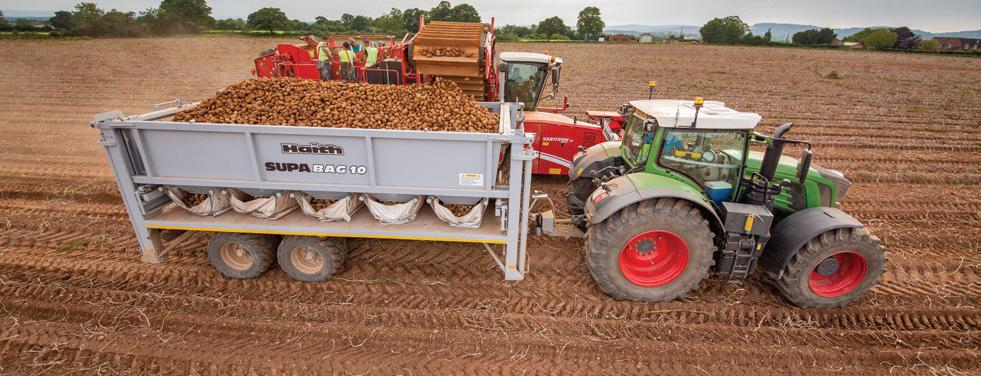
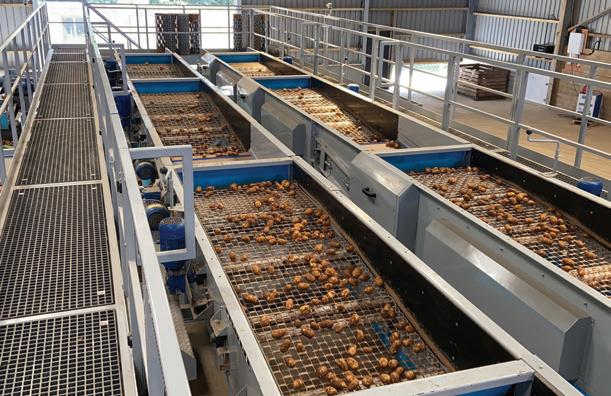
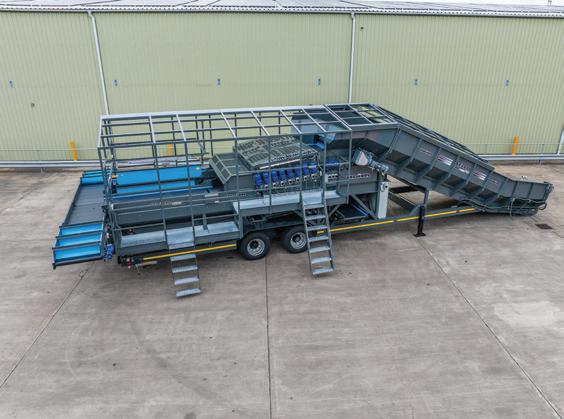


inaccurate and 45% of nutrition information on Instagram misleading.
"Influencers have financial incentives to prioritise virality over accuracy. This makes credible, science‑based research essential for defending the industry. Misinformation spreads faster than corrections, so our strategy includes engaging directly with media."
This approach has resulted in a 36% retraction rate and a 60% reduction in the number of misinformation incidents requiring intervention.
"Our messaging such as 'potatoes are real food, real performance' has gained strong traction, now ranking among the top search results for potatoes. This shift reflects the payoff of proactive investment rather than reactive communication."
Blair said that Potatoes USA's efforts to myth-bust are a global task and said that GB Potatoes is most welcome to use its information and resources to promote the benefits of potatoes in the UK and beyond. GB Potatoes has already taken him up on the offer to help develop its own nutritional messages.
During the webinar, Lincolnshire potato grower and GB Potatoes chair Alex Godfrey, demonstrated that the organisation is working to help growers and the wider industry to manage its risks by focusing on its five key aims of building collaboration across the supply chain; horizon scanning to identify emerging issues; lobbying to influence policy, legislation and research priorities; promoting the British potato industry through traditional and social media and
providing members with access to leading technical research and expertise.
Regular activity by GB Potatoes includes interaction with potato sector organisations and consultation groups for the seed and fresh groups. GB Potatoes also collaborates with the Horticultural Crop Protection forum and the National Potato Innovation Centre, with which it is running a joint summit in London in the summer to demonstrate the importance of the potato industry to policymakers.
Residual AHDB funding of £1.8 million means that risk-reducing projects such as the Fight Against Blight programme, aphid monitoring, virus management tools, CIPC residue monitoring and reputational management can continue, although Alex warned that the industry would need to selffinance these initiatives within the next three to five years.
A major win for GB Potatoes has been the CiCSTART PhD programme, said Alex. Run jointly with the Scotch Whisky Research Institute, it has secured funding for 24 PhD positions over three years, including money for pre-competitive research.
This focus on the next generation is also seen in the Potato Industry Development Programme, facilitated by GB Potatoes, which is supporting enthusiastic new entrants. Participants have already visited potato supply chain companies Haith, McCain, Branston and AKP, with visits to Scotland and London planned.
To find out more about becoming a member of GB Potatoes, visit www.gb-potatoes.co.uk

he 2025 crop in store seems to have bumped into almost every factor designed to create a difficult storage season. Early planting and emergence, followed by a (mostly) hot dry summer saw crops arriving in store in a state of considerable physiological age. The weather was also less than ideal for the application of MH for much of the key window. Harvest conditions were good (or perfect) for nearly everyone, so stores filled early, quickly and were warm. The weather kept them from cooling as swiftly as desired, and those crops, which had not sprouted in the field (plenty did), were opening their eyes much earlier than would normally be expected. Growers planning for early movement, and who would not normally expect to use a sprout suppressant, were scrambling for advice.
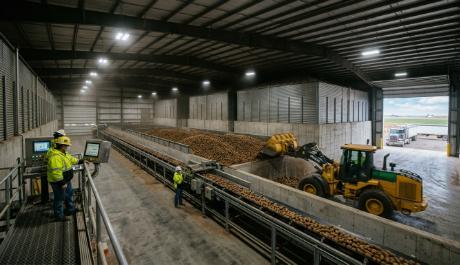
On top of the physical challenges of a sprouting crop was a hangover of crop in store from the 2024 harvest, some of it still finding a way to a generally weak market. And then came the French and the Germans. In 2024, it is reported that the French grew their first 9m tonne crop, and then went one better in 2025, with a first 10m tonne crop. The German 2025 crop is reported to be the largest for a quarter of a century. The continent was (is) awash with potatoes – free-buy crops were bid at €15/t during the autumn. There are reports of large areas in Poland being ripped up with a chisel plough, rather than being harvested.
Crops were sprouting and customers delaying movement, not just in the UK but across much of the continent. Significant (and early) demand for sprout suppressants put supply chains under pressure, with occasional reports of demand for product overwhelming availability.
The situation in the UK has not improved much in the new year. Crops are still in store, some with limited prospect of finding a market. Free buy is well-nigh impossible in the absence of strong relationships with end users. Crop quality in many stores, even with the good harvest, is deteriorating and sprouting continues apace. The season is proving to be hard for many growers, and now the weather seems to have turned in favour of some early planting on very light land.
The relatively flexible timing of application for BioxM places the product in a strong position to deal with most situations and keep crops secure. Early
sprouting was addressed, some requiring a full 90ml/t first application to do so. For more fortunate growers, with sprouts coming slightly later in cool and well-cured crops, Biox-M has worked effectively to keep control. Growers, who have been obliged to hold crops in stores destined to receive seed for 2026, also have the reassurance that treatment of the preceding ware crop with Biox-M in the store will not cause a problem.
Biox-M is the only 100% natural and sustainable sprout control for potatoes.
• Is a naturally occurring and truly sustainable product, in widespread use in the food industry
• Is approved for use on organic potato crops,
• Has no harvest interval or MRL beyond the one-day mandatory withholding period after treatment, and is thus ideal for use on crops for which the date of movement is uncertain,
• Has substantial flexibility of timing of application,
• Results in minimal weight loss in store,
• Does not leave persistent residues in the fabric of stores and boxes used for storage,
• And is therefore suitable for use in stores, which may subsequently be used for the storage of other crops or seed potatoes,
• Is effective at higher storage temperatures, reducing the risk of acrylamide development when crop is processed,
• Sequesters carbon during growth, removing 1t of CO2 for every 1,000t of potatoes treated,
• And should be a component of the sustainability plan for every farm and every customer; effectively carbon neutral.


The


Sequesters carbon during growth. Flexibility of timing.
Minimal weight loss in store. Curative and preventative. No MRL.

The
roviding essential aeration in a settlement pits, Landia Chopper Pumps have completed a decade of service at one of the UK’s leading producers of carrots.
At a site in the North of England, where around 30,000 tonnes of carrots are processed each year across 900 acres of prime sandy land, the 11kW Landia units have, without any breakdowns or rebuilds, managed the important job of handling effluent from the carrot washing process that uses recirculated lagoon water.
The design of the world’s first ever Chopper Pump, invented by Landia in 1950, has changed very little in more than 75 years, with its external knife system continuously reducing particle sizes to prevent important wastewater systems from blocking.
Tamas Rieder, Landia’s Service and Aftersales Manager, commented: “We are very proud of the performance of these pumps and our service engineers who carry out such a consistently high level of work. Ten years of operation with no major problems is quite a record, but we have numerous pumps that are still working just fine after 15 and 20-years-plus service.
He added: “We work as closely as possible with our customers, gaining an increasing number of service contracts, but even if we don’t regularly carry out
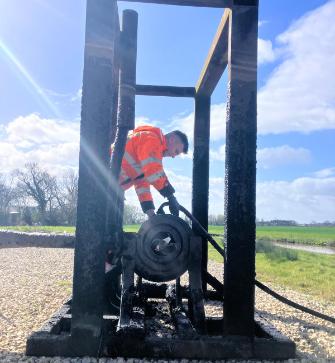
the maintenance ourselves, we are always ready to help at the end of ‘phone, and then get to site promptly, if required.”
In addition to this application for handling effluent from a carrot washing process, Landia’s large portfolio of similar projects also includes work with HAYLEY DEXIS at a company that makes machines for the post-harvest processing of vegetables.
Landia Chopper Pumps with special external shredders, replaced units from another manufacturer, whose equipment could not cope with the fibrous and gritty material that is an inevitable part of the wastewater process with vegetables.
Originally developed to deal with difficult wastewater solids in the fish processing industry, the Landia shredder-propeller design has now proved its capability in handling troublesome stringy material such as carrot tops, that typically cause problems for standard pumps.
Gary Wharton, Sales Team Leader for Landia, added:
“Our pre-cutting shredder-propeller brings another important chopping stage for certain effluents with difficult solids, as it continuously reduces particle size to keep process lines running efficiently.”
www.landiaworld.com
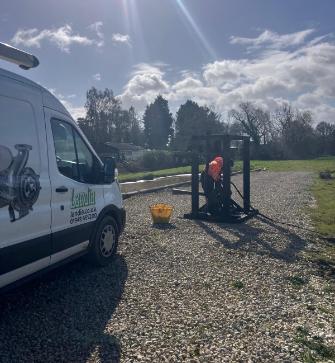


long‑term study from Michigan State University and the University of Wisconsin shows that while heat remains the strongest driver of Colorado potato beetle abundance, other weather and landscape factors also play key roles in predicting outbreaks.
Michigan State University researchers have uncoverednew insights into what drives Colorado potato beetle populations by analyzing 16 years of data. The team found that although heat is still the best predictor of when beetles appear and how abundant they become, other environmental factorslike precipitation and moisture in the air and soilalso shape population trends insignificant ways.
The project was led by Abigail L. Cohen of MSU's Department of Entomology, working with Benjamin Bradford and Russell Groves from the University of Wisconsin and MSU entomologist Zsofia Szendrei. The work is funded by a USDA‑SCRI grant led by Szendrei. Their goal was to better understand whatenvironmental factorstriggeroutbreaks of Colorado potato beetles, a major pest that causessignificant damageto potato crops each year. Predicting when these insects will show up is a critical part of protecting yields and reducing losses.
To build a more complete picture,the researchers pulled together a long-termdataset and used
twodifferent typesof models to (1) predict beetle numbers and (2) understand why those numbers change over time.
While heatis the dominant factor in driving Colorado potato beetle developmentand is thereforethe strongest predictor of beetle abundance,otherweather features mattered too. Precipitation, airsaturationand soil temperature during the beetles' overwintering period all influenced how populationsfluctuatedeach year. The study also found that extremely hot conditions tend to increase beetle numbers, while verycold conditionsdo not reduce them to the same extent. These patterns suggest the insects may thrive in more extreme future climates.
"This research grew out of a larger effort to decrease our reliance on neonicotinoid insecticides in potato production and combine new pest management programs with pest prediction and decision‑making tools," Cohen said.
The teamof researchersis now turningitsattention to developingforecasting modelstobetteranticipatewhen beetles are likely to appearin a potato field at the beginning of a growingseasonand how severe outbreaks may be. This can help producers prepare earlier and choose management strategies that best match current and futureColorado potato beetle pressure an increasingly important need as the climate continues to shift.

he James Hutton Institute, an internationally renowned research centre that aims to provide scientific solutions to the challenges of the climate and nature crises, is delighted to announced that Professor Ingo Hein has been appointed Deputy Director of the National Potato Innovation Centre (NPIC).
Professor Hein is Head of Potato Genetics at the Hutton, where he is based, and Professor of Crop Genetics at the University of Dundee. He has over twenty years of research experience in potato biology, with a focus on identifying disease resistance to the most significant pathogens threating global potato production.
His work explores the diversity of wild potato species in the Commonwealth Potato Collection, housed at the Hutton, and established varieties, to uncover novel traits, advancing these discoveries through state-of-the-art genomics and genetics technologies. By bridging fundamental research and applied breeding, he helps to develop potato cultivars that meet the needs of industry, growers and consumers.
NPIC is a partnership dedicated to finding scientific solutions to the challenges facing the potato industry. It draws on the Hutton's extensive expertise in delivering commercially successful
varieties for major breeding companies to develop sustainable, climate resilient production systems using precision agri-tech tools such as robots, drones and below ground phenotyping as well as AI and modelling to control disease, manage waste and contribute to net zero farming systems.
Commenting on his appointment, Professor Hein said, "I am very excited to be taking on the role of Deputy Director of the National Potato Innovation Centre. NPIC's alignment with industry needs provides a valuable opportunity to deliver real-world impact through our research.
"As the potato industry faces increasing, climatedriven threats, NPIC brings academia and industry together to safeguard potato production in the UK and globally."
Director of NPIC, Professor Ian Toth, said, "I am delighted that Ingo will be taking up this role at a critical time for NPIC as we continue to seek infrastructure support to enhance delivery of scientific solutions that will futureproof the £4.5 billion British potato industry.
"His experience and enthusiasm will be invaluable over the coming years as our science-industry partnerships continue to grow and these important solutions begin to impact and safeguard production of this vital food crop."

ith input costs already under intense scrutiny, and nitrogen prices rising sharply following instability in the Middle East, potato growers are carefully examining every expenditure line.
Yet Tom Decamp, Crop Nutrition Business Manager at Yara, says evidence suggests growers targeting prepack quality are largely maintaining their traditional nutrition programmes and seeking savings elsewhere –in land rental decisions, machinery investment and contractor use. Simply because of the financial prize at stake.
"Potato growers may cut back a little on total nitrogen," Tom explains. "But they're still trying to achieve that premium over the general ware price, which can add £40–£50 a tonne to the return from a crop.
"If you are achieving a yield of 50 tonnes per ha, for example, this could potentially increase margins by around £2,500 per ha from achieving pre-pack quality. That makes the use of Tropicote — currently costing under £200 per ha — a sound investment as part of a potato nutrition strategy.
"And when it comes to getting calcium and plantavailable nitrate nitrogen into the potato crop at tuber initiation, soil-applied calcium nitrate remains the most effective route."
Why calcium nitrate must go in through the roots –and early
The agronomic case for soil-applied calcium nitrate is rooted in fundamental plant science. Calcium is only mobile upwards within the potato plant, so the only pathway into the tuber is through the fine root hairs in the soil. Foliar calcium applied later to the canopy will stay within the canopy, enriching the foliage, but it cannot travel down into the developing tuber.
"When the tuber initiates, and it's just hooking over and booting up, that's when it's critical to get the calcium in," says Tom. "We've demonstrated this process using YaraLiva Tropicote and a red dye. You can see the calcium nitrate moving through the root hairs and flooding into the tuber, like blood through an artery."
Another key advantage of YaraLiva Tropicote is that it begins working immediately on contact with soil moisture, without requiring rain or irrigation to activate it.
"It works in cool, wet conditions as well as under drought stress conditions," adds Tom. "It doesn't have to go through the nitrification process – that all takes time. With YaraLiva Tropicote, the calcium and nitrogen are available straight away. Cool or dry, you will get uptake."
The recommended application is 400kg of YaraLiva Tropicote per hectare at, or close to, tuber initiation. At this rate, growers are delivering exactly 64kg of nitrogen per hectare – all in immediate, plant-available nitrate form – alongside 104kg of CaO, also instantly available. On timing, Tom is emphatic:
"You don't want to be moving way past tuber initiation because it becomes too late," he says.
Better structure, better skins – calcium's role inside the tuber
Once inside the tuber, calcium strengthens cell walls, providing the physical integrity needed to withstand the rapid growth spurts that occur during warm, moist conditions. Without adequate calcium, cells expanding too quickly simply burst.
"When the cell walls are not strong enough, they expand and burst — and that's necrosis," explains Tom. "They die, and that's the internal browning (rust spot) that triggers rejections at the packhouse and strips pre-pack growers of their hard-won premium."
The benefits of adequate calcium reach beyond internal quality. A stronger outer cuticle provides greater resistance to bacterial infections and skin disorders. Tom points to observed reductions in silver scurf and other skin complaints alongside improvements in storage performance, including reductions in soft rots. Calcium also builds stress tolerance: during dry periods where irrigation is unavailable, calcium-rich crops are better equipped to survive and recover.
"If they're looking at a sample and they start cutting them in half and there's internal rust spot, they'll get rejected –they won't get through for pre-pack and you lose your premium," says Tom. "Or if the skins are terrible, or they're all irregular sizes. Supermarket pre-packs might be four in a pack everything has to be absolutely right."
The benefits of well-supplied calcium also carry through into seed potato production. A stronger, healthier mother tuber produces better quality seed for the following season, which is a consideration of particular importance in Scotland, where Yara is well established in the seed potato sector.
The insurance policy that pays for itself
Although some potato varieties carry a lower rust spot risk, and some seasons are kinder than others, Tom Decamp says the unpredictability of which seasons and varieties will be affected is itself an argument for applying Tropicote early and treating it as a nonnegotiable part of the programme rather than a discretionary extra.
The arithmetic is unambiguous. A 50-tonne pre-pack crop losing its quality premium of £40 to £50 per tonne represents up to £2,500 per hectare forfeited at the point of sale. Against an application cost of under £200 per hectare for YaraLiva Tropicote even allowing for today's elevated input prices the potential return far outweighs the cost.
Growers spending on Tropicote are not paying for a product. They are protecting the premium that justifies their entire investment in the crop.
With the price of fertiliser subject to upward pressure due to geopolitical tensions in the Middle East, some growers may pause. But Tom's position is unequivocal:
"It's false economy not to apply the right nutrition if you're trying to grow a quality crop."

he farming community faces significant challenges year on year, from uneven crop yields to shifting global costs and policy changes. But in the last few years, these financial pressures have intensified.
Currency fluctuations are affecting longterm planning, local and international competition is impacting market access and Inheritance Tax (IHT) concerns are growing. And then there’s the unpredictable weather, which has a direct impact on outputs.
For many farm owners, these challenges highlight the importance of forward planning, regularly reviewing their financial performance and identifying areas for improvement. Having a clear view of your finances and planning ahead helps you make more confident decisions.
Strong financial decisions in agriculture begin by understanding how your farm is performing. This may include analysing outputs, reviewing revenue or assessing overall cost structure. Looking closely at key metrics, such as revenue per hectare, can help to highlight how efficiently land and resources are being used.
Recognising both strengths and weaknesses will allow you to take targeted action. For some, this may involve rethinking existing approaches to boost operational efficiency. For others, it might be more useful to refine budgets and reassess how resources are allocated. Developing a clear picture of financial performance is often the first step towards building a more resilient business.
After gathering financial insights, this information can inform practical planning with clear budgets. While external factors like policy changes can’t always be predicted, simple profit and loss forecasts, alongside cashflow projections, are useful indicators to identify potential issues early.
Effective budgeting can also support decisions around larger investments. For example, establishing a machine replacement policy can reduce unexpected expenditure, while regular reviews of borrowing and asset performance can ensure that each part of your business is supported and working efficiently.
Benchmarking is another valuable tool to gauge financial performance. Comparing key performance indicators with other farms - especially those of a similar size - can help you assess where your business sits within the market and highlight areas to improve.
With traditional farm incomes growing more unpredictable, many farmers are considering ways to diversify and strengthen their income streams. Diversification helps to safeguard businesses against relying on a single source of income.
To determine if and how to diversify, you should consider three key factors: skills, capital and time. Diversification often works best when it builds on the existing expertise of a business, whether this involves land use, property management or another form of specialist knowledge. And any new enterprise should be financially viable, with sufficient funds to support investment and ongoing costs.
Diversification projects will also require significant management, particularly in the early stages. It is important to assess whether your business has the capacity to take on additional responsibilities alongside vital day-to-day
farming operations.
When approached strategically, diversification can create more stable and varied income streams. Taking an evaluative approach can ensure that diversification supports long-term security while creating opportunities for growth.
Tax continues to be a major challenge in the agricultural financial landscape. With legislation continuing to evolve and the overall tax burden increasing, tax planning is critical to protect farm businesses now and in the future.
Income tax is a key consideration. Understanding how your profits are shared between partners or companies, and whether your business sits within basic or higher rate tax bands, can help you structure finances more accurately. Pension contributions are also important to factor into calculations, as they provide tax relief and support longer term financial security.
For investments, capital allowances can offer an advantage. The Annual Investment Allowance currently allows businesses to claim up to £1 million of qualifying expenditure each year, which can support machinery and equipment purchases. This can make it more manageable to secure the assets farmers need while navigating tax liabilities.
New IHT rules that were introduced at the start of April will be a welcome relief for farmers, as the threshold for Agricultural Property Relief and Business Property Relief has risen from £1 million to £2.5 million, or £5 million for married couples. For some businesses, projected IHT liabilities had previously reached around £50,000 per year over a 10-year period, often exceeding the average annual farm profit of around £40,000. Against that backdrop, the revised thresholds represent a meaningful intervention.
While larger and more diversified businesses will continue to feel the impact of wider tax pressures, proactive planning remains essential. Many farms now operate as small rural portfolios, rather than single-enterprise businesses, which brings opportunity alongside added complexity, so maintaining a balanced, up-to-date approach to taxes and investment will ensure that you can manage each opportunity and risk.
With the UK tax burden at its highest recorded level as a proportion of GDP, financial planning should be one of your top priorities - whether this involves tax-efficient investment options, transferring assets down a generation to benefit from Capital Gains Tax holdover relief, or looking for ways to diversify your income streams.
Agriculture always requires a level of adaptability. But in today’s unpredictable financial environment, taking a proactive approach to finances is one of the most essential steps you can take to remain secure. Those who plan early, measure honestly and build resilience into the very furrows of their operation will be the ones that reap the rewards.
Duncan & Toplis provides accounting and business services specifically designed to support farmers and agricultural businesses, including budgeting, forecasting, succession and tax planning. To find out more, contact Mark Chatterton or visit www.duncantoplis.co.uk
Mark Chatterton, Head of Agriculture at Duncan & Toplis

nmarried couples, divorcees and single farmers could face inheritance tax bills potentially hundreds of thousands of pounds greater than their married counterparts following the implementation of controversial IHT tax changes this month (April).
While the two significant changes announced at the end of last year, raising the 100% APR / BPR allowance from £1m to £2.5m per person and allowing the transfer of any unused allowance to a surviving spouse or civil partner have helped soften the blow for many, not all farming families will benefit to the same extent, according to calculations from NFU Mutual, the financial advice firm.
Married couples and civil partners have significant advantages when it comes to IHT planning. Anything left to the survivor on first death is normally exempt from IHT. The survivor can also benefit from any unused part of their late spouse's £2.5m 100% APR/ BPR allowance and £325,000 tax free allowance.
Unmarried couples do not benefit from the spousal exemption, meaning that leaving assets to a surviving partner could trigger an IHT bill. While the deceased's £2.5m APR/BPR allowance and £325,000 tax free allowance could reduce the amount payable, only the survivor's allowances would be available on the second death when passing assets to the younger generation.
Divorcees
While widow(er)s can benefit from their late spouse's unused £2.5m 100% APR/BPR allowance regardless of whether they owned agricultural or business assets, the same is not true of divorcees, who have not re-married and only benefit from their own allowances.
Sean McCann, chartered financial planner at NFU Mutual, has highlighted one example which shows the significant difference in the IHT bill depending on whether the deceased is a widower or a divorcee.
Example - Steve owns a farm and businessassetsworth £6.5m
• 300 Acres - £3.5m
• Machinery & Stock - £1m
• Farmhouse and buildings - £2m
Widower
• Own and late wife's £2.5m 100% APR / BPR allowance
• £5m tax free
• £1.5m x 50% relief = £750,000 taxable
• Less own and late wife's £325,000 tax free allowances (£650,000)
• £100,000 x 40% =£40,000IHT bill
Divorcee
• Own £2.5m APR / BPR allowance
• £2.5m tax free
• £4m x 50% relief = £2m taxable
• Less on £325,000 tax free allowance
• £1,675,000 x 40% =£670,000IHT bill
Sean McCann, chartered financial planner at NFU Mutual,said:
"While married couples can potentially leave up to £6.3m of qualifying agricultural and business assets free of inheritance tax, the same is not true for single farmers or divorcees who haven't subsequently remarried who are limited to a maximum of £3.15m.
"Couples who are not married face additional complexities, as they don't benefit from the tax-free exemption available to spouses, leaving assets to a common law partner could trigger an inheritance tax liability, followed by a second charge on their subsequent death.
"Unmarried couples who want to maximise the amount passed on to younger generations could consider using the £2.5m 100% APR / BPR allowance and £325,000 tax free allowance to leave assets to the younger generation on first death, leaving the survivor free to do the same.
''For those unmarried couples who don't wish to get married, it's important to take advice on the advantages and disadvantages of this approach before taking any action."
Sean added: ''Before the inheritance tax proposals were announced, the approach of many farmers was to gradually hand over more of the day-to-day management to the younger generation while holding onto the ownership of the assets until a later date.
"The new rules will prompt many to pass on the assets at an earlier stage, because if they live seven years, they would normally be free of inheritance tax.
''For that to work it's important that the farmer doesn't continue to benefit from the assets they give away. If they intend to continue in the business, they'll need to pay a market rent to the new owner or if in partnership with them, reduce their profit share to reflect the new ownership.''

ealers often work with several parallel systems. Different logins, scattered data and a lack of integration make it difficult to access key information and waste time in day-to-day operations. AriensCo has responded to this by developing the ExPort dealer platform. It brings together previously separate systems and provides centralised access to all key AriensCo processes and information.
Previously, sales partners used different platforms, for example for spare parts orders, marketing materials and training. This created additional work and hindered the consistent use of digital services. With ExPort, AriensCo now consolidates all systems into a single platform.
Via a central login, all dealers can access account details, orders, invoices, equipment information, as well as warranty and service processes. The platform combines applications such as the ordering and information system, media portal and learning platform into a unified environment. Key tasks such as maintaining contact details, registering machines, and submitting warranty claims and service requests can be handled directly and across all systems.
Dealers gain clearly structured access to all relevant information and processes. Queries are reduced, workflows are accelerated, and the dayto-day workload is noticeably eased. At the same time, this frees up capacity for targeted support with more complex issues.
With ExPort, AriensCo is clearly positioning itself as a customer-focused company. At its heart is a modern service process that simplifies workflows and makes collaboration with sales partners more efficient. At the same time, the platform lays the foundation for further digital development within the dealer network.
“The biggest hurdle in a dealer’s day-to-day work is not a lack of information, but access to it. Too many systems, too many logins. With ExPort, we bring everything together and create a central, clearly structured working environment for our sales partners,” says Georg-Otto Fuchs, Senior Vice President R&D, Product Management & Marketing – EMEAA, summarising the benefits of the new dealer platform.



TIHL has launched the BRA 200 and BRA 280 B backpack blowers, designed to quickly and effectively clear large areas. With batteries in place, the compact and lightweight machines weigh little over 10KG, making them ideal for professional landscaping jobs. In addition, the machines are both quick and easy to adjust ensuring that users can focus on the task at hand.
With a consistent and powerful blowing force, the BRA 280 B provides three easily controlled modes, while the BRA 200 offers a variable trigger control for simple operation. Both machines feature an additional boost function for tough clearing jobs, which can be activated for the duration of the tool's use.Weighing Maximum blowing force in boost is 26 Newtons for the BRA 280 B and 21 Newtons for the BRA 200.
To further support professionals, the blowers are equipped with a carrying system to guarantee reduced strain and comfortable working, even during long periods of operation. While their splash-proof design makes them ideal for use in all weather conditions.
In addition, both machines provide dual battery slots, enabling them to automatically draw power from their second battery, once the first is empty. This allows professionals to continue their work without interruption for ultimate convenience.
The backpack blowers are designed to support integration with STIHL's Connected system, a digital fleet management solution that helps professionals keep track of their tools, servicing schedules, and machine use.
Complete with an energy saving mode for optimised use, the BRA 280 B also comes with an advanced LED display, providing users with a clear view of working mode and battery levels.
The new designs arrive as STIHL celebrates its 100thanniversary. Since 1926, STIHL has defined the global standard for battery and petrol-powered forestry, landscaping, and residential gardening equipment for professional and domestic users.
For more information on STIHL products, visitwww.stihl.co.uk
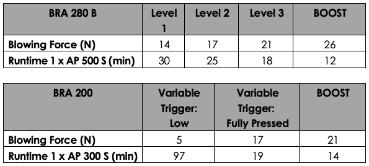



Find out more about STIHL's historic milestone here: https://100.stihl.com

Farmore Mills, Craven Arms, Shropshire
SY7 9QG
• Jim Price Machinery Ltd
01588 673746
www.jimpricemachinery.com
Southam Agricultural Services Station Road, Southam, CV47 2DH 01926 813426 www.southamagri.co.uk
Readman Mowers
The Shed, Sand Lane,Wilberfoss, YO41 5PB 01759 380 231 or 07860 684 597 www.readmanmowers.co.uk
Veryard Machinery Sales
Blackworthy Road Castle Cary, Somerset 01963 351089 / 07860 479700 richardveryardmachinery.co.uk
The ultimate combination of raw power, versatility and precision.
Easy to manoeuvre, delivering best-in-class cutting performance, STIGA Park can handle large multi-level grass areas with ease. The position of the deck ensures control and visibility around every corner


n the hills of North Aberdeenshire, where the seasons dictate both pace and possibility, Polly of Goatherdess is quietly redefining how farming, fashion and sustainability connect.
Her route into agriculture was anything but traditional. Beginning her career in science before retraining in fashion at the London College of Fashion, Polly found herself increasingly disconnected from the materials she was working with.
“I didn’t come to this in a straight line,” she says. “I became disillusioned with the pace of London, the disconnect between what we make and where it comes from.”
A move to a smallholding marked a turning point. What began with two pygmy goats soon grew into a flock of angora goats, and with them, a new question emerged, what do you do with the fibre?
That curiosity led to the creation of her natural mohair faux fur, an innovation rooted not in trend but in material. It also marked a fundamental shift in how Polly approached design: starting with the land and the animal, rather than the end product.
As her work evolved, so too did her purpose.

Discovering rare and heritage sheep breeds such as Castlemilk Moorits and Ouessants brought a deeper realisation.
“These animals once clothed communities,” she explains. “Now many are in decline, and in some cases at risk of disappearing.”
Today, Goatherdess is built on a “goatherdess to garment” philosophy, where every piece begins with the animal, the fibre and the landscape itself.
Living and working so closely with the land has reshaped Polly’s entire creative process.
“Nothing is instant,” she says. “Wool grows slowly. Seasons dictate colour, texture and mood. You learn to work with what you have, rather than forcing an outcome.”
Her designs are informed by the natural world, by the tones of a fleece, the realities of weather, and the functionality required of clothing that is truly lived in. There is also a literary influence, drawn from the worlds of Austen and the Brontës, where garments were made to endure and belong.
“Sustainability wasn’t something I set out to define,” she reflects. “It’s a natural result of living this way.”

By valuing animals over their lifetime and producing only what is needed, waste is reduced organically. The result is clothing that carries both longevity and meaning, pieces that feel rooted in place rather than dictated by season.
Inspired by Women of the Land
Polly draws inspiration from the women of the Hebrides, crofting women who balanced land, livestock and craft, often under demanding conditions.
“Their lives weren’t romantic, they were hard,” she says. “But there was an extraordinary level of resilience, skill and care.”
That ethos is reflected in her own work. At Goatherdess, nothing is wasted, and everything has purpose. Land, animals and craft are not separate, but interconnected.
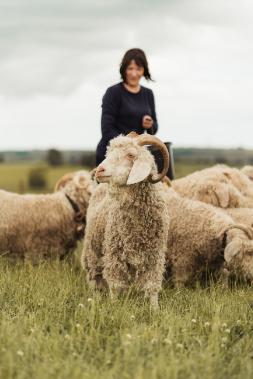
For Polly, the land has been the greatest teacher.
“Mother Nature is always in control,” she says.
Life on the smallholding brings both beauty and challenge, harsh weather, loss, and the constant responsibility of animal care. These experiences have shaped her understanding of resilience and sustainability.
“Resilience comes from staying through it,” she explains. “Not resisting it, but learning to adapt.”
Care becomes constant rather than convenient, and sustainability emerges not as a new idea, but as a return to living within natural limits.
This commitment to heritage extends beyond fibre. Polly has also brought an Eriskay pony, Hobby, back to Scotland, reviving a traditional working role and reinforcing the link between past and present farming practices.
Custodianship and Connection
At its core, Polly’s work is about the connection between people, animals and the land.
Everything is produced in her on-farm studio, allowing a rare level of transparency. Visitors and customers can see the full journey, from animal to fibre to finished garment.
“These animals once played an essential role in clothing communities,” she says. “By working with them and showing their value, we can give them a place again.”
Her approach challenges the scale and speed of modern production, instead prioritising depth, care and longevity. It is a model that places equal value on process and product.
In doing so, Polly is not just creating garments, she is helping to preserve heritage breeds, traditional skills and a more connected way of living.
As the UN Year of Women in Agriculture highlights the role of women across the sector, Polly’s story offers a powerful perspective.
Her work is not about scaling up or speeding up. Instead, it is about slowing down, reconnecting, and creating with intention.
Through Goatherdess, she is building more than a brand. She is telling a story of land, fibre and heritage, and demonstrating how these elements can shape a more sustainable future.

Images: @katecullenstyle (Mohair Faux Fur Jacket; Jacket and Plaid Skirt)
@lornamcniven.photography
Hair & Makeup: @rrmakeupltd @cocoonhairandmakeup @jdressingtable
Models: @premiereproductionsuk @meganmackenzie_official @oliviavilcu
@rosienorman.x
@bella.silvester
Goatherdess: @goatherdess www.goatherdess.co.uk

FU Energy made a £5,000 donation on behalf of 224 farmers who participated in its recent"Renew your energy and help save lives"buying group in partnership with Yü Energy, who also facilitated the funds.
The buying group used the collective bargaining power of the NFU, NFU Cymru and NFU Scotland to negotiate exclusive bulk prices on energy, giving members a chance to save on their gas or electricity renewals while also making a difference. For every eligible contract renewed through the scheme, Yü Energy contributed towards a collective donation, which reached a total value of £5,000.
The total raised was shared between two regional services, £2,500 to The Air Ambulance Service (covering Warwickshire, Northamptonshire, Derbyshire, Leicestershire and Rutland) and £2,500 to the Cornwall Air Ambulance.
Joshua Robinson, Assistant Director and Head of Utility Contract Sales at NFU Energy comments:"We are proud to support the lifesaving work of air ambulance charities on behalf of the farmers who took part in this buying group.

This is a cause that came about from consultation with our farmers and resonates strongly across rural communities. The level of participation shows how powerful collective action can be.
"Thank you to everyone who got involved and to Yü Energy, who understood what we wanted to achieve and helped bring this idea to life. We are excited to build on this success with future campaigns and support air ambulance charities in more regions of the UK."
Air ambulances make up a critical emergency care lifeline in many rural communities, where emergency response times can be longer and rapid access to care can be the difference between life and death.


For farmers, who often work alone with heavy machinery and livestock in remote locations, immediate access to specialist medical care is essential, making air ambulance services a vital safety net.
Sally Newman, Community Fundraising Executive from The Air Ambulance Service said:"Despite one-in-four people knowing someone who needed the help of an air ambulance, very few people realise that we are charities that receive no NHS funding and rely on public generosity. Helicopters, and rapid response vehicles, take doctors and paramedics to patients in the fastest time possible, and in an accident at
a rural location that time saved can make all the difference to a patient's chance of survival. That's why we are incredibly grateful for this donation and the support of NFU members."
Chris Broadbent, Sales Director at Yü Energy concludes:"We're proud to have partnered with NFU Energy to support the air ambulance charities through this campaign. Together we enabled customers to make a real difference through their energy choices, helping fund faster, life-saving medical responses when they are needed the most.
"This campaign shows how businesses and communities can work together to power a better future, and we thank everyone who played a part in making a meaningful impact."
This successful partnership highlights NFU Energy's ongoing commitment to delivering value for its customers while supporting causes that matter to the agricultural community.
For more information about NFU Energy, its services and current incentives visitwww. nfuenergy.co.uk

CONSISTENT MACERATION OF SOLIDS. PROTECTING YOUR PUMPS AND SYSTEMS.
+ EVEN CUTTING SPEED
+ AUTOMATIC BLADE ADJUSTMENT
+ PIVOTED CUTTING BLADES
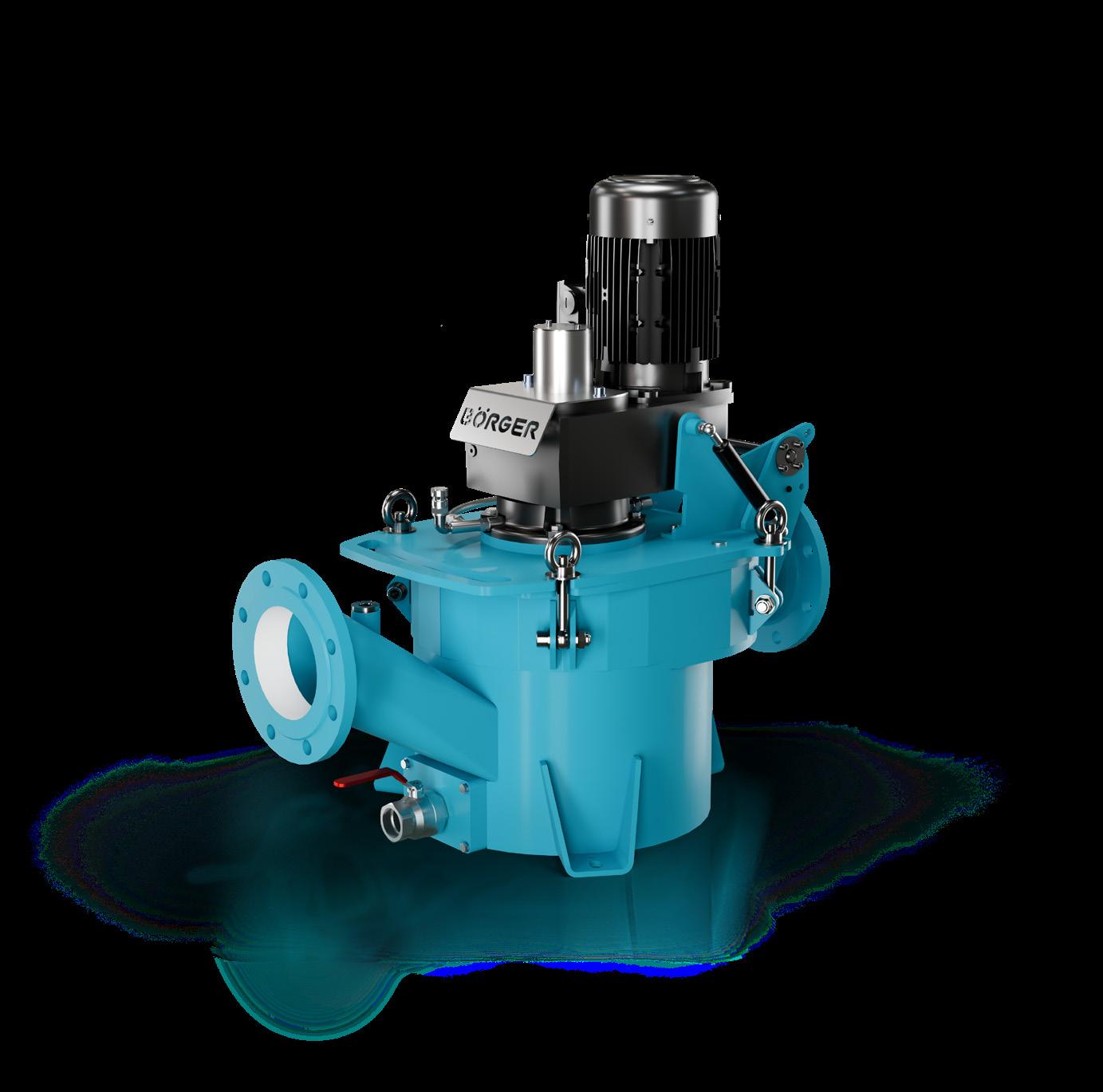


fter last successful edition in Stockholm, with over 120 biomass specialists and nearly 30 excellent speakers, we have pleasure to invite you to the8thEuropean Conference Biomass PowerONtaking place on7-8 October 2026.This year we are coming back toStockholm, Sweden.
Biomass is key to a low-carbon future, offering sustainable solutions for energy, fuels, and biobased products while reducing reliance on fossil fuels. Negative-emission bioenergy technologies, like bioenergy with carbon capture and storage (BECCS), enhance energy system flexibility and integrate renewables.
The 8th Biomass PowerON programme explores biomass resources, sustainability, policies, and advanced conversion technologies. Key themes include biomass for heat and power, bioenergy’s role in decarbonisation, and the forest industry’s response to increasing wood biomass demand. Discussions will also focus on EU policy impacts
on the bioenergy sector, spotlighting legislation’s influence on green solutions and biomass integration into a sustainable energy system.
Main topic & key points:
• Role of biomass in balancing, capacity and flexibility markets
• Cascading use conflicts: energy vs material use of biomass
• EU ETS, Carbon Removals (CRCF) and carbon pricing impacts
• Financing structures and risk mitigation for European investors
• Revenue optimisation through heat, flexibility and carbon-related streams
• Pellet trading, contract structures, and risk management globally
• Supply chain digitalisation: traceability, certification, and compliance
• Lessons learned from recent European Biomass projects
• Pyrolysis technologies and bio-oil applications
• Competition for feedstock: SAF vs heat & power
• BECCS project developments and regulatory readiness
• Advanced combustion and CHP efficiency improvements
• Beyond BECCS -Climate Impact, Carbon Solutions & Real-World Deployment
• Pellet stoves and boilers – is it a solution for energy deficyt
• Importance of certification – guarantee of sustainability
• AI, Digitalisation & Data-Driven Biomass Operations
On the day before the main event, on the6th October 2026, a limited number of participants will have the exclusive opportunity to visit theE.ON Högbytorp facility. The tour is organized thanks to E.ON.
Register your interest in the site visit when booking your ticket. Participation is free of charge, and spaces are allocated on a first-come, firstserved basis.
To sign up, please add “I would like to join the site visit” in the “More Information” section during registration.
The E.ON Högbytorp plant is a fully integrated recycling and energy recovery facility and a practical example of energy production in a circular economy. It produces 590 GWh of energy annually, enough to supply thousands of homes with electricity and district heating. Metals are recovered and hazardous substances removed, reducing landfill and supporting resource efficiency.
Site visit to the E.ON Högbytorp plant offers insight into modern energy and recycling systems. Participants will see how energy recovery and material reuse reduce environmental impact and support sustainable development.


f you’ve noticed steel prices creeping up recently, you’re not alone so we thought it was worth explaining what’s going on, in plain English.
There’s no panic here, but there are some real factors behind the scenes that are affecting costs across the UK. The biggest one? Energy.
Put simply, it costs more to make steel in the UK than it does in much of Europe, largely because electricity prices are higher. And because steel production uses a lot of energy, those costs inevitably feed through into the price of materials.
So, what’s actually causing the increase?
There isn’t just one reason, it’s a combination of things:
• Higher energy costs in the UK UK steel producers are paying significantly more for electricity than many European competitors, which makes production more expensive.
• Energy-heavy manufacturing
Steel is an energy-intensive product, so when energy prices rise, steel prices tend to follow.
• Wider market pressures
Global demand, policy changes, and investment in greener steel production are all playing a part in shaping pricing.
The good news is that the industry is actively working with the government to improve things, particularly around bringing UK energy costs more in line with Europe. That should help create more stability over time.
This isn’t a crisis, but it is something to be aware of
Behind the scenes, we’re taking a number of steps to protect our clients from unnecessary cost increases and uncertainty:
• Planning ahead with suppliers
We’re working closely with our supply chain and buying strategically to secure the best possible pricing.
• Getting involved earlier
The earlier we can look at a project, the more we can help optimise materials and reduce exposure to price changes.
• Practical value engineering
We’ll always look for smart ways to achieve the same end result more efficiently, without compromising quality.
• Keeping things open and honest
If there are changes in the market, we’ll tell you. No surprises.
• Running efficiently in-house
We’re constantly refining how we work to reduce waste and keep costs under control.
As Andrew Simpson, our Purchasing Manager, puts it:
“We’re seeing steady pressure on steel pricing, largely driven by energy costs within the supply chain. Our focus at S&A Fabrications is on managing that risk, through strong supplier relationships, forward planning, and making sure our clients get both value and certainty wherever possible.”
There’s a lot of work happening at industry level to improve the situation, particularly around energy pricing and long-term investment in UK steel production.


We want to be clear: steel is still readily available, and projects are continuing as normal.
What we’re seeing is more of a steady adjustment rather than sudden spikes or shortages. It just means planning and communication are a bit more important than usual.
What we’re doing at S&A Fabrications
Our job is to make this as straightforward as possible for you.
In the meantime, our approach is simple: stay ahead of the curve, keep things transparent, and help our clients make informed decisions.
If you’ve got a project coming up and want to sense-check costs or timings, we’re always happy to have a conversation.
Call us on: 01833 690 379 - www.s-and-a.co.uk

Find out why you should put preventative measures in place to reduce the chances of becoming a victim of fuel theft.
Police have issued warnings that heating oil tanks may be targeted as the conflict in the Middle East continue to have a knock-on effect on the demand for fuel.
Fuel thefts have been reportedin England and Northern Ireland recently.
The following security measures can help deter thieves:
Fuel theft – how to prevent it happening
There are a range of ways you can help increase the security of your tank.
Consider a cage for your fuel tank; this will provide an extra layer for thieves to break through. Fencing and defensive shrub planting will also help obscure your tank from the line of sight and will also prove another obstacle for uninvited guests. Where possible, store the tank where you can monitor it. Think about who can see it
Placetanks away from rights or way and other easily accessible areas. Use security lights in conjunction with motion sensors and install cameras.
These include gravel or other surfaces with audible qualities. Alarms that work on the principle of movement of liquid inside the tank (drop alarms), filing cap alarms and movement sensor alarms in and around the tank site will help alert you to activity around your tank.
Sometimes a leaky tank may give the impression that a tank has been targeted. Leaky tanks can be hazardous to the environment. Attempts to steal fuel may cause damage to a tank's structural integrity and allow hazardous substances into the wider environment.
Thieves have been known to steal fuel from inside farm vehicles and machinery. Lock up tractors and powered machinery at night. Where possible, keep them out of the view of the public and consider using locking caps.
NFU action – working with the police
We know that fuel theft is an issue that members may face and would like to see greater support to enable police forces to tackle it. Equally, police cohesion and engagement with other forces would be an important step forward and we would like to see more tactics and knowledge transfer.


n light of rising oil costs in the UK, we are offering security advice around fuel and heating oil to protect yourself from theft.
Many people rely on heating oil to keep their homes warm. Criminals will watch the market and take the opportunity to profit from these kinds of cost increases.
• Fuel tanks should be visible from the house to increase the chance of a thief being seen
• Use motion-sensor security lighting and consider installing a motion-sensor alarm in this area
• Use locking fuel caps and fit anti-siphoning devices
• Focus CCTV cameras on the tank
• Install cages or plant prickly plants around the tanks. It is important to screen your tank so that it cannot be seen from the road
• Install a fuel tank alarm – either one that triggers when the cap is tampered with or one that alerts the owner when the fuel level suddenly drops. More advanced systems can be linked to security lighting or send a text message to alert the owner
• The police can only recommend products that have been attack tested and come with the Secured by Design Police Preferred Specification accreditation. The following two

websites have a range of these suitable security products:Secured by DesignSecured by DesignandSold SecureSecurity Product Testing & Approval
• For further information and advice please see the following guide written by Secured by Design: Fuel.pdf
• Diesel theft is a problem for many farms and rural properties. Fuel tanks stored in rural and isolated locations are very attractive to thieves looking for an easy target.
• keep tanks stored close to the property where you can see them. If this isn't possible, you should consider installing CCTV to watch over isolated tanks and restrict access with walls, fences and hedges. Security lighting such as 'dusk till dawn' or motion detection lighting can also be an effective deterrent to thieves
• remember to check the oil level in your tank regularly. Look for any spilt fuel, marks on the locks or anything else suspicious
• avoid installing a storage tank in an isolated area or outlying building
• consider using a mobile bowser (tanker) kept in a secure place when not in use
• use 'diesel dye', making your diesel traceable and less attractive to thieves


Datatag has been shortlisted in theHire Industry Product of the Yearcategory at this year's Hire Association Europe and Event Hire Association (HAE EHA) Awards — one of the most competitive categories recognising innovation and real-world impact across the hire sector.
The nomination is for RAPID, Datatag's web-enabled search application, officially launched in October 2024 and developed to support the CEA's (Construction Equipment Association), CESAR Scheme and law enforcement agencies in tackling the growing issue of plant and agricultural machinery theft — a persistent challenge for hire companies affecting availability, costs and customer service.
RAPID was developed as a single, web-based platform to provide police officers and enforcement teams with immediate access to CESAR- and Datatag-protected asset information in the field. In its first year, the system has consolidated data on over 1.5 million assets — including plant and machinery, agricultural equipment, and motorcycles — and is accessible to all 142,000 UK police officers, as well as to users internationally.
From Southend to South Africa, a RAPID check can confirm a machine's identity in seconds via a
smartphone, including access to PNC data, helping officers to quickly establish ownership and status.
The application represents a year of focused development by Datatag's technical team, led by Adam Plaskitt, Lead Developer, alongside Vince Lane, Police Liaison Officer, whose frontline experience has helped shape the system into a practical and effective operational tool. The result is a platform already supporting faster recovery of stolen equipment, acting as a deterrent to organised crime, and reducing costly downtime for contractors and hire companies.
Kevin Howells, Managing Director of Datatag, said:
"Being shortlisted in what is a highly competitive category is a strong endorsement of the work that has gone into RAPID over the past year. The aim from the outset was simple — to give police officers a straightforward, reliable tool they can use in real time to identify equipment and support recovery.
"For the hire sector, theft has a direct impact on operations, from lost revenue through to project delays. Giving law enforcement the ability to act quickly and with confidence makes a real difference."
Winners will be announced on Saturday, 18 April 2026, at Grosvenor House, London.
Fingers crossed for the result — watch this space.
The NFU brought together key rural policing representatives alongside NFU Mutual to discuss how to secure fairer funding to help rural police forces tackle rural crime.
The roundtable discussion, chaired by NFU Vice-president Robyn Munt, made the case that funding must accurately reflect the true cost of delivering effective and equitable policing in rural communities.
The event brought together Police and Crime Commissioners, the National Rural Crime Network, the National Rural Crime Unit, the Rural Services Network and farm insurers NFU Mutual.
NFU Mutual’s figures estimate that rural crime cost the UK £44.1 million in 2024. While this decreased by 16.5% compared with 2023, demonstrating that greater coordination between police forces can deliver tangible change, the continuously high figures underline the scale and seriousness of rural crime.
NFU Vice-president Robyn Munt reiterated that too many farming businesses are “targeted relentlessly by criminals who see our countryside as easy pickings”.
“These farms are also homes. Farming families are left feeling terrified, isolated and vulnerable at the hands of these dangerous criminals.
“The roundtable was in agreement – this has to stop. Everyone has a right to feel safe in their own home, and for their businesses not to be disrupted.
“We know how underfunded and overstretched rural policing currently is, and that is why the NFU is calling on the government to recognise the unique pressures facing rural police forces. Government must ensure that funding is distributed fairly so that the police can put a stop to these heinous criminals.”
The discussions also underscored the human and business impacts of rural crime, and the power in demonstrating this in the drive for fairer funding.
NFU Bedfordshire County Chair Freya Morgan, who runs an arable farm in Bedfordshire, delivered a powerful and personal account of her own experiences, which span from hare coursing to vehicle theft. She said: “Rural crime is real, we live in it, we see it. The farm is not only our place of work, it’s our home.”

The GEA IQ's revolutionary fourway technology ensures that you always have maximum milk quality, quantity and udder health. Using it is incomparably easy! Easier attaching, milking and maintenance.

The new milk guide piece has been designed following the natural structure of a cows udder. It is sub-divided into four guide chambers. The milk flows directly and quarter individual to the outlet. Thanks to the incline in the respective cluster chamber this process is faster and much more gentle.
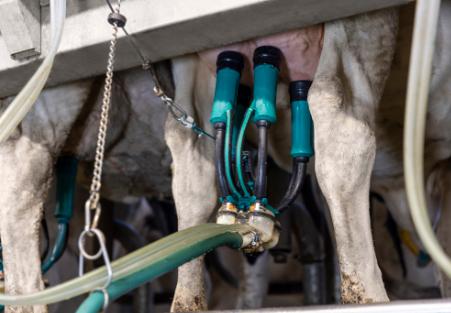

clean your milk filters are with the IQ Milking Unit.
Maximum milk quality - smarter vacuum control significantly reduces milk contamination. Vacuum is greatly reduced when the liner is not attached, which means less manure and other soil/debris is sucked into the milk line. You won't believe how
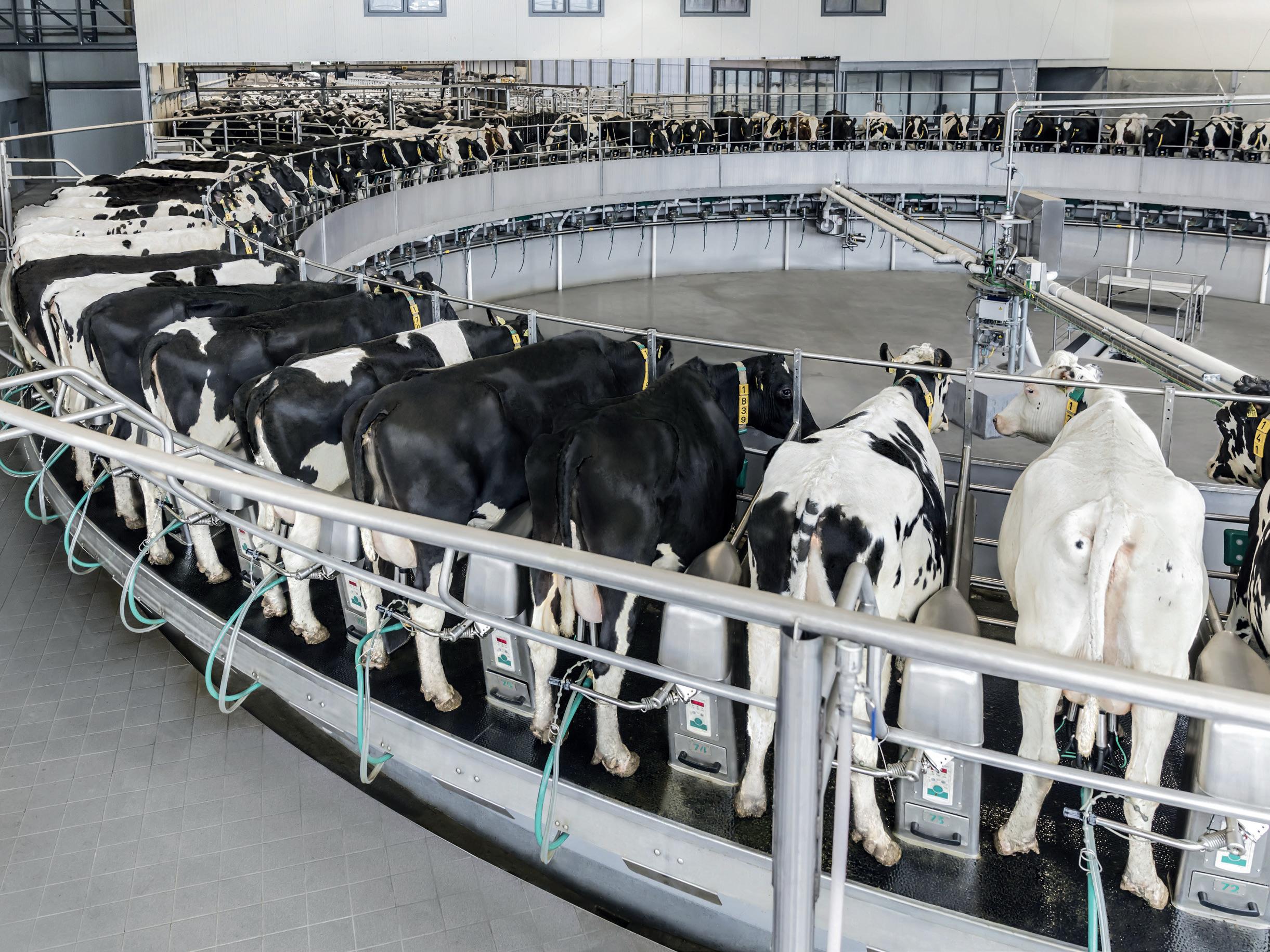
Improved udder health - with four separate guide chambers there is no threat of teat-to-teat cross contamination of mastitis-causing bacteria. Unlike conventional milking units, the new IQ unit is subdivided into four quarters, and milk from each


quarter is kept separate.
Holds on any shaped udderthe short milk tubes are longer which allows proper placement on virtually any udder shape. The unit weight is ideally distributed 80% on the teat and 20% in the claw. Plus, better unit alignment means fewer unit slips and squawks.
Easy maintenance - unique and patented liner connection makes liner changes quick and easy. Shells, liners, and air dividers can be preassembled to allow liner changes in minutes instead of hours.

Faster milk-out times - improved vacuum stability

increases flow rates and the sharper angle of the milk chamber speeds flow to the milk line.
Quieter operation - the automatic vacuum shifting system makes for virtually noise-free milking - even during attachment or during a kick-off.
More reliable performancethe slim profile of this unit is harder for cows to kick-off.
For the milkers of today and tomorrow: The GEA IQLiner is
unique in that it is fitted individually onto the IQ cluster! Take advantage of the optimum adhesion and flexibility on the udder! The well thought-out benefits of our IQLiner ensure animal-friendly milking together with the best possible teat conditions and the well proven rubber and silicone material works as reliably as ever.
GEA and local GEA Dealers are offering a special offer on the IQ Milking Cluster this Autumn until 31st October 2025. Benefits from four-way technology to ensure you always have maximum milk quality, quantity and udder health by contacting GEA today for the special offer price. Contact your local GEA Dealer or visit www.gea. com for further information.


new round of DEFRA funded FETF grants for animal health and welfare items now includes up to 50 percent funding towards battery powered clipping handpieces.
FETF331CA offers £136 towards the cost of a new clipper which can be used for sheep and cattle either on farm or as a contracted service. Commenting on the grant, Heiniger managing director Ashley Musgrave said:
“Clipping is an essential part of livestock health and welfare. This grant represents an opportunity for anyone looking to improve the health and wellbeing of their stock to save a significant amount and invest in a quality handpiece that will help them to do so.”
In 2025 Heiniger launched the Xcell, a battery powered clipper suitable for sheep and cattle.
“The Xcell is a dual speed clipper that can be supplied with two batteries to help even the most demanding users to clip all day. The high-speed unit can run at 2,500/2,800 double strokes a minute whilst remaining quiet with very low vibration levels. It qualifies for the FETF grant, which stipulates a contribution being given to only cordless devices with at least two batteries and a minimum power of 150 watts,” adds Mr Musgrave.
For farms using corded handpieces, the grant offers an opportunity to purchase a cordless, mobile solution which will expand the number of applications.
“The grant only applies to cordless handpieces. This can be seen as an opportunity for farms with mains operated clippers to invest in a battery powered alternative that can be carried anywhere to enable easy, small tasks like dagging, belly clipping lambs or trimming cattle to take blood tests without the need to round up stock,” he says.
The grant stipulates that both farmers and contractors can apply, which will make it appealing for those operating as contract sheep shearers or for farms looking to invest in new equipment.
“Contractors need a handpiece that is going to stand up to constant and prolonged use. It is also important that backup is provided, which is why Heiniger offers a threeyear warranty, and a UK-based service centre to repair handpieces and sharpen blades,” he says.
The new FETF application window opens on 17 March and will close on 28 April.
“It is a great opportunity, but a short window, so we implore all who qualify to take advantage and use the funds to invest in the best equipment to ensure livestock are managed safely and efficiently,” concludes Mr Musgrave.
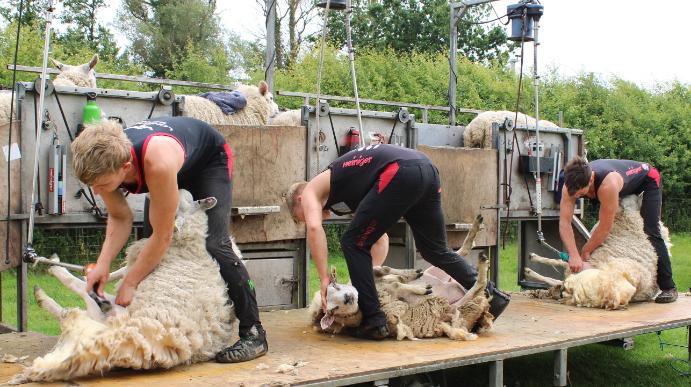
UK’s market leading bale processor range. | INTRODUCING
Up to 30% straw saved | As reported by users of our TOMAHAWK bale processors.
Consistently even chop | Proven to reduce waste, improve TMR and boost yield.
Improved cow health and happiness | Uniformly chopped straw in TMR supports rumen activity, fertility, and butterfat production.
Biomass pre-processing | Reliable, efficient performance for biofuel applications.
Value for money | Proven to reduce waste, improve TMR and boost yield.
2 year warranty* | Comes standard with all Teagle manufactured products.
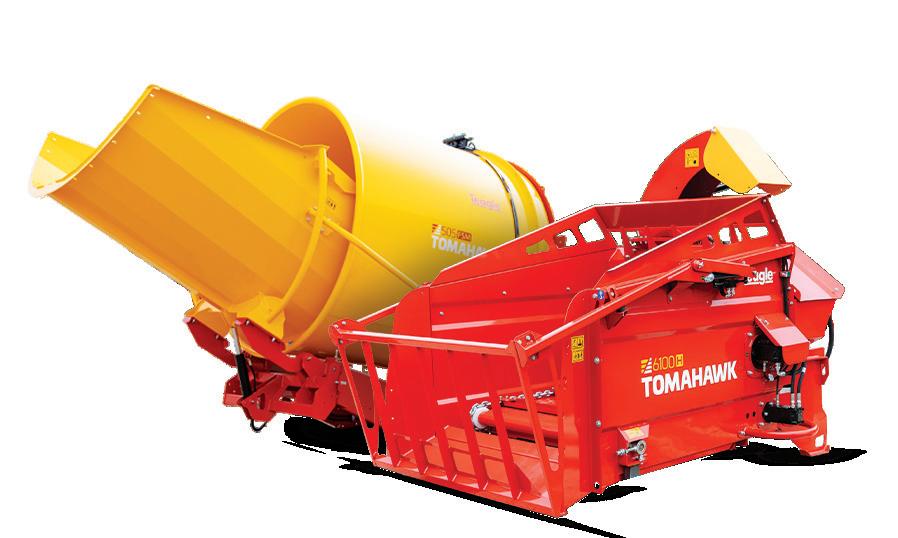
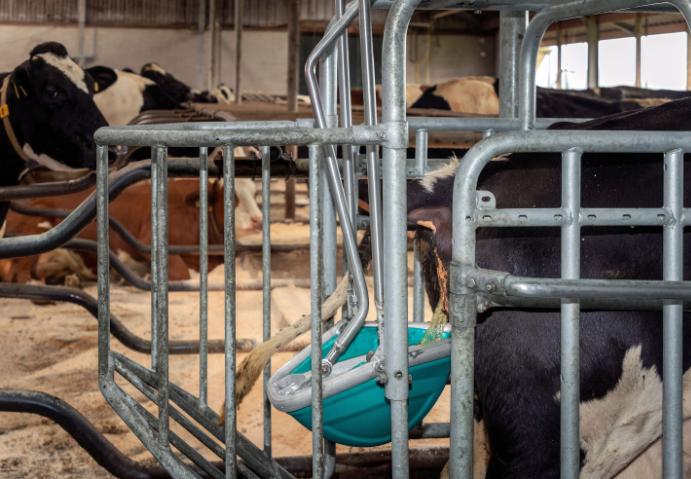
Agroundbreaking new technology, the CowToilet, is set to make its UK debut at Lamma 2026, offering dairy farmers a practical way to reduce ammonia emissions by up to a third, improve nutrient use, and enhance sustainability on-farm.
Developed by Dutch agri-tech company Hanskamp, the CowToilet offers a unique solution for reducing on-farm emissions by separating cow urine and faeces, which, when combined, produce ammonia.
Using the simple fact that cows never urinate and defecate at the same time, the CowToilet collects urine directly from under the cow’s tail before it mixes with solid manure.
The CowToilet integrates seamlessly into a free-access out-of-parlour feeding station which can be installed in most cattle sheds. As a cow enters to eat, the CowToilet gently rubs against the suspensory ligament of the udder, triggering a natural nerve reflex that encourages urination. The urine is then collected in a sealed receptacle, removed by suction, and stored in an airtight tank.
Research by Wageningen Livestock Research shows that keeping urine and manure separate can reduce ammonia emissions by up to 38%, total nitrogen by 33%, and nitrous oxide by 18% compared with conventional housing systems
“Ammonia is one of the biggest
environmental challenges facing the livestock sector,” explains Hanskamp founder Henk Hanskamp. “We wanted to create a system that works with nature, not against it – improving animal welfare and helping farmers meet environmental targets without adding to their workload. The CowToilet achieves this in a simple, natural, and effective way.”
In addition to reducing emissions, the CowToilet transforms waste into a resource. Nitrogen-rich urine can be reused as a natural fertiliser or even sold, while the remaining solid manure retains phosphate and organic matter for soil health. This separation allows farmers to apply nutrients more precisely, improving crop performance and reducing reliance on artificial fertilisers.
Separating cow faeces and urine also keeps housing cleaner and improves air quality, contributing to improved animal health and hygiene.
Developed in close collaboration with Dutch livestock farmers, engineers, and researchers – including Wageningen University’s Paul Galama – the CowToilet is already successfully operating on over 35 dairy farms in the Netherlands, delivering strong results and positive farmer feedback.
Each CowToilet unit is designed to serve 25 cows, and costs approximately £28,000 per unit (excluding installation).
“This technology is about more than compliance,” adds Mr Hanskamp. “It’s about giving farmers tools that make sense – improving the environment, animal health, and profitability. The CowToilet shows that innovation and sustainability can go hand in hand.”
To see the CowToilet in action, visit: https://hanskamp.com/en/solutions/ cowtoilet/
Watch the demo video: https://www. youtube.com/watch?v=c7duvrYtEmk
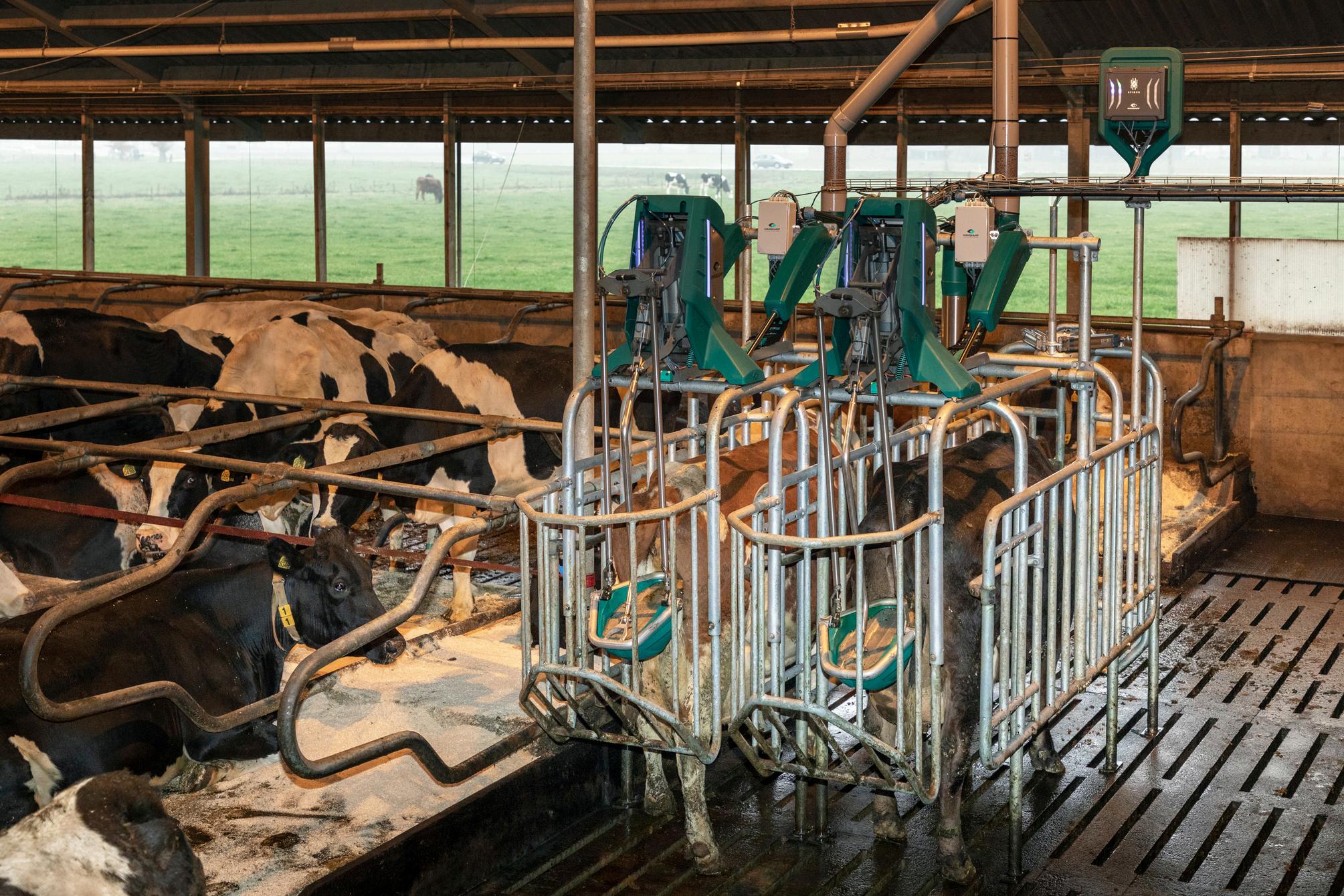
Mid-Ulster Dairy Services
21a Donaghrisk Road, Tullyhogue Cookstown, County Tyrone, BT80 8UU
Tel: 028 8676 5098
www.midulsterdairyservices.co.uk
Mcknight Dairy Services Ltd
Glenmaquin, Letterkenny, Co. Donegal, Ireland, Eir F92 X8C1
Tel: +353 8764 81124
www.mcknightdairyservices.com
Clarkson Dairy Services
East Witton, Leyburn, North Yorkshire, DL8 4SQ
Tel: 01969 623522 / 07703 535043 www.clarksondairyservices.co.uk
Wessex Farm Installations Ltd
The Old Cobblers, Langport, TA10 9DJ
Tel: 07867 507711
www.hanskamp.com

ave a clear plan for this spring's grazing, and then have a plan B and a plan C. That's the advice from grazing consultants and farmers Graham Lofthouse and John Ritchie, who are involved in helping Monitor Farm Scotland farms make more of their grass.
John, who farms at Montalt Farm in Perthshire, started closing up paddocks in mid-October, resting grass for 100-120 days over winter. This allows roots to recover so they have energy to 'get going' in spring. So far, he has opening paddocks for an initial 'spin round', with priority stock - twin- and triplet-bearing ewes - grazing each paddock for a day, starting about four to five weeks before lambing. "The grass is as good in protein and energy as bought-in feed.
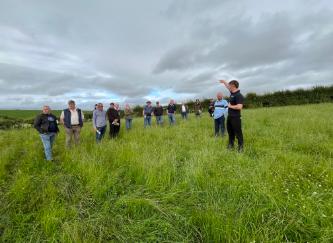

"This initial short, sharp graze helps eat off the winter growth, and sets grass up for spring. It'll grow four to five times quicker following this, but it must be a short, fast graze of not more than two days and then into the next paddock."
After this, and about 10 days before lambing, his ewes are set stocked in the fields where they will lamb. "They need some time to acclimatise and spread out, finding lambing spots, and this also makes it easier for shepherds."
Graham, who farms sheep and cattle near Stow in the Borders, takes a similar approach, but adds that turnout timings and 'magic day' when grass supply outstrips demand, are different for every farm, depending on their geography. "We're in a steep valley and it's windy, with little sun, so we are a week to 10 days behind farms over the hill in Lauderdale."
He says that whatever system you are using, it's essential not to overgraze at this early stage. "Grass grows grass; you need the leaf there to capture sunlight and take up nutrients."
With many farms enduring a very wet winter, John warns that growth may be slow as wet soils take longer to warm up and some leaching will have occurred. "Have a plan and know what's there, as stock must get what they need. If you need to buy an input such as feed or fertiliser, do it."
Having a plan B and even a plan C is important, adds Graham. "Plan A doesn't always work, so be ready for that. If you're grazing early, don't be afraid to take them off, and think about how you could manage silage or feed. If the weather goes to pot and there's no grass the worst thing you can do with ewe mobs is take the snacker out – that approach is carnage.
"If you're planning to apply N, wait until the soil temperature is 5.5-6degC otherwise the response will be lower." Even with higher fertiliser prices, a good growth response to N is cheaper and easier than looking for additional grass.
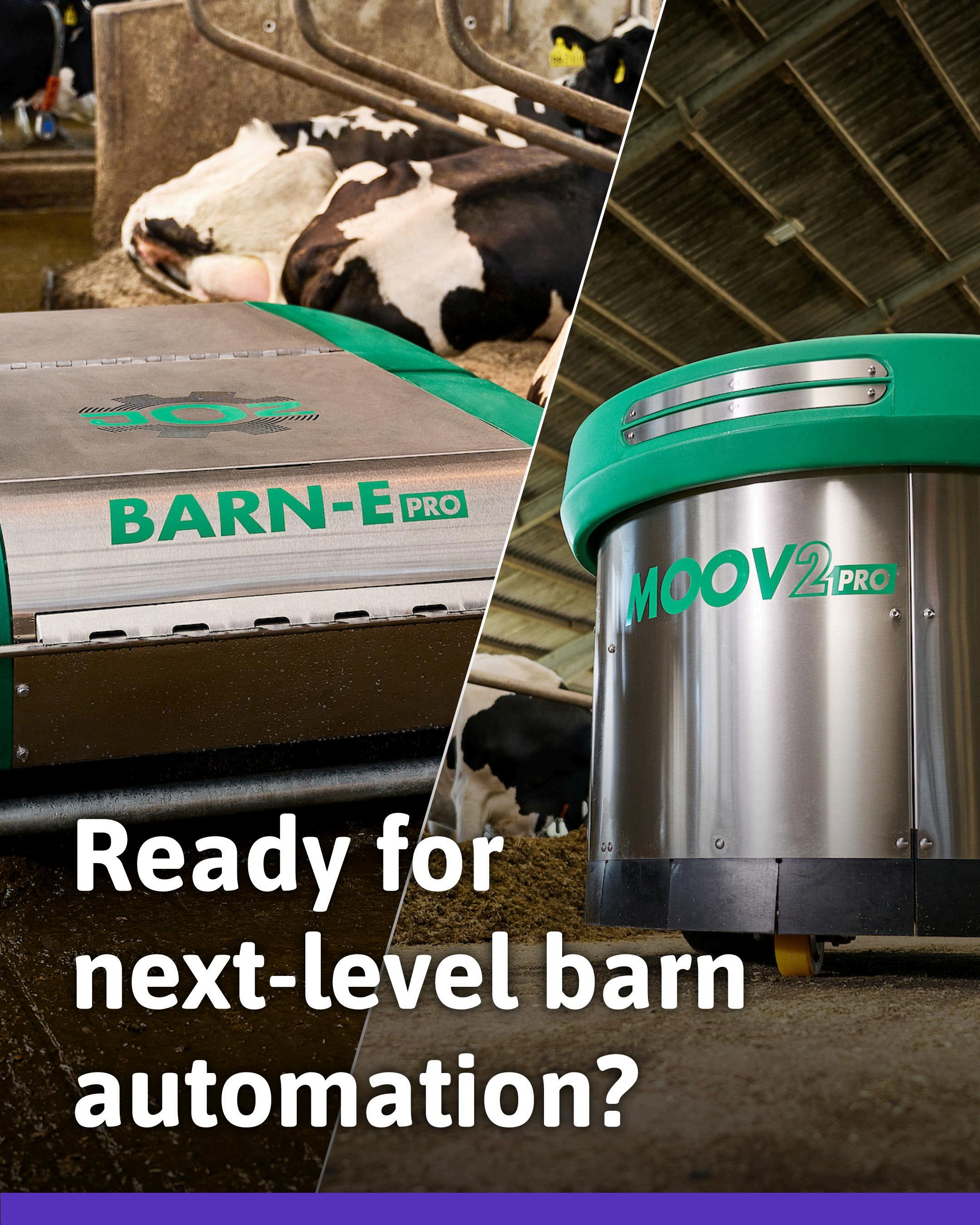
South Ayrshire Monitor FarmerDavid Andrew, who farms sheep and beef alongside his father John at Rowanston near Maybole, started rotational grazing last year. The first 250 ewes and lambs were mobbed and rotated round 26ha (65 acres) split into 1.4ha (3.5 acre) paddocks, with 20 store cattle following and stock moved every 2.5 days. This spring, ewes have come off fodder beet, have grazed the paddocks once and are now set stocked for lambing.
Having learned from last year, David will change a couple of things. "I'll have more confidence to put that many ewes and lambs together and turn out early - I was a week to 10 days too slow last year. It was a daunting sight, and I was worried about moving such a big group between paddocks because of mismothering, noise and stress, but when I did it and came back 10 minutes later, it was all quiet. The sheep and cattle learn quickly and cross the fence themselves when it's down."
Last year grass growth took off, and he ended up cutting a few paddocks for silage. "We didn't have enough cattle to clear up the paddocks behind the sheep, so this year we are looking at running 40-50 cattle. We want them to grow on at grass and they'll be finished in the house over winter – last year they were the best grazed cattle we had on the farm."

James Holding Dairy Engineering
Unit 18, The Gardens, Malton Road, York, YO32 9TN
Office Tel: 01904 400449
James: 07807704884 info@jamesholdingengineering.com
Mcknight Dairy Services Ltd
Glenmaquin, Letterkenny, Co. Donegal, Ireland, Eir F92 X8C1
Tel: +353 8764 81124 www.mcknightdairyservices.com

Unit 17, Stainton Grove industrial estate, Barnard Castle, DL12 8UJ
Office Tel: 01833 625361 Mobile: 07828532868 www.gawengineers.com

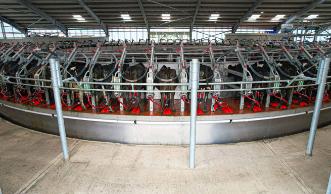
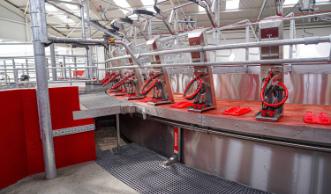
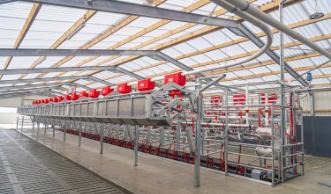
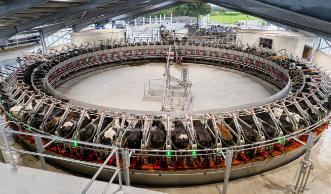
Established in 1948,Pearson Milking Technologyis a third-generation Irish engineering company with over 76 years of experience designing and manufacturingmilking parlours and dairy automation systems. From its headquarters inAthy, Co. Kildare, Pearson suppliesherringbone, double-up, rotary, and rapidexit parloursto dairy farms in over20 countries worldwide.

At the heart of every Pearson system is a commitment toengineering excellence, cow comfort, and milking efficiency. The company combines decades of craftsmanship with the
latestsmart technology and data-driven innovationto help farmers improve herd performance, reduce labour, and enhance overall dairy efficiency.
Through continuous product development and close collaboration with farmers, Pearson ensures that each system is tailored to meet the demands of modern dairy farming — balancing technology with reliability in every design.
Built on heritage, powered by innovation, and trusted by farmers globally, Pearson remainsthe farmer’s partner of choice — and The Smart Dairy Choice.
Apowerful new DEFRA-approved disinfectant designed to help farmers protect livestock and strengthen onfarm biosecurity has been launched by Roam Technology.
Virox is a broad-spectrum surface disinfectant that effectively eliminates bacteria, viruses, yeasts and fungi while meeting the strictest European EN standards. Developed for use across livestock systems, the product forms part of Roam Technology’s wider cleaning and disinfection portfolio, supporting high hygiene standards on livestock farms.
As a DEFRA-approved disinfectant, Virox is approved for use against several significant disease threats including foot-and-mouth disease, swine vesicular disease and avian influenza as well as general orders*.
Formulated using potassium peroxymonosulphate, Virox provides powerful antimicrobial activity. When dissolved in water, it produces reactive radicals that target the organic structures of microorganisms, including cell membranes. Surfactants within the formulation enhance this activity by increasing microbial membrane permeability while also helping to dissolve dirt and grease. Acids are included to lower pH and help remove rust and limescale.
Virox can be used across a range of applications including:
• Surfaces and equipment: disinfecting buildings, tools and equipment through spraying or immersion.
• Footbaths: helping reduce disease spread across the farm.
• Vehicles and wheels: helping prevent pathogens being brought onto the farm from external sources.
Nigel Bennet, biosecurity specialist at Roam Technology, says the product comes at an important time for livestock producers facing growing disease risks.
“Farmers are facing increasing disease threats from challenges such as avian influenza and African swine fever, while recent reports of foot and mouth disease being confirmed in the popular holiday destination of Cyprus are a timely reminder of how quickly diseases can spread,” he explains.
“Strong biosecurity has never been more important, and effective disinfection is a critical part of that. There has never been a better time for a new, powerful disinfectant to hit the market and help farmers meet biosecurity challenges and keep disease out of their herds and flocks.”
Virox will be officially showcased at the Pig & Poultry Fair on 13 & 14 May at the NEC, Birmingham, where farmers and producers will have the opportunity to find out more about the product and its on-farm applications and be in with a chance of winning some free prizes.
Roam Technology will also be showcasing their other industry leading brands including water disinfection Huwa-San TR-50 and cleaning solution Roam Eco Power.
*Consult the DEFRA approved dose rates via the following link: https://disinfectants.defra.gov.uk/? startwith=V#tableDisinfectant



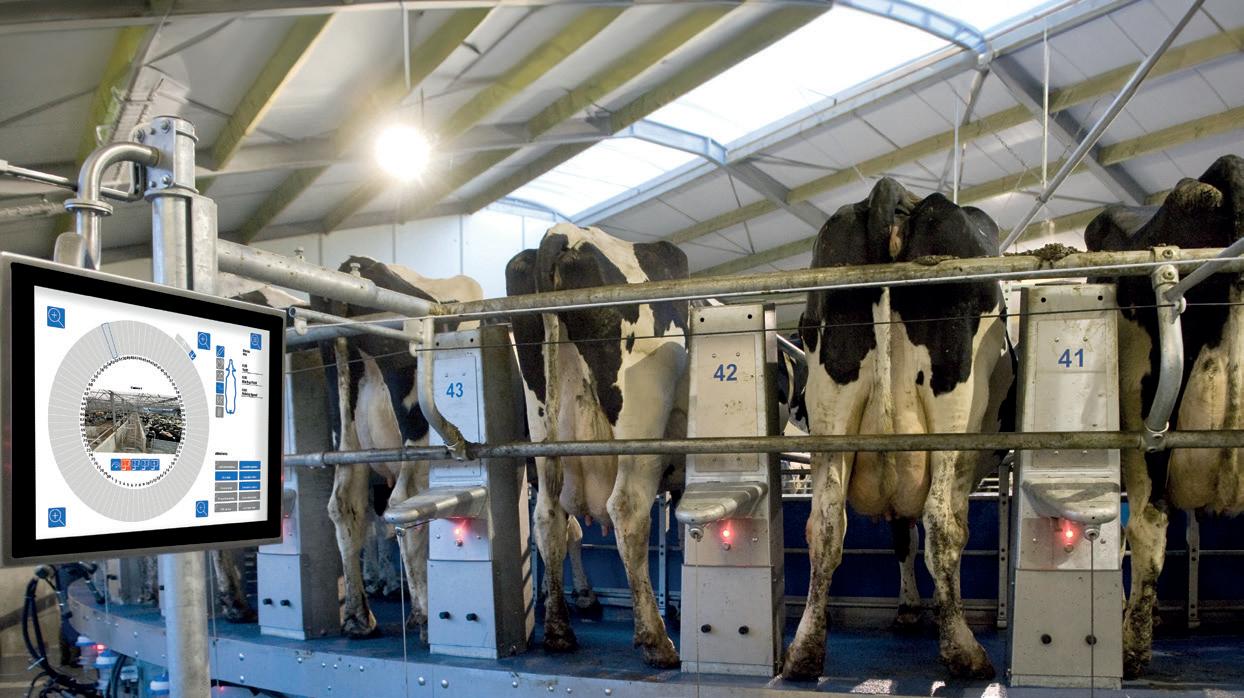

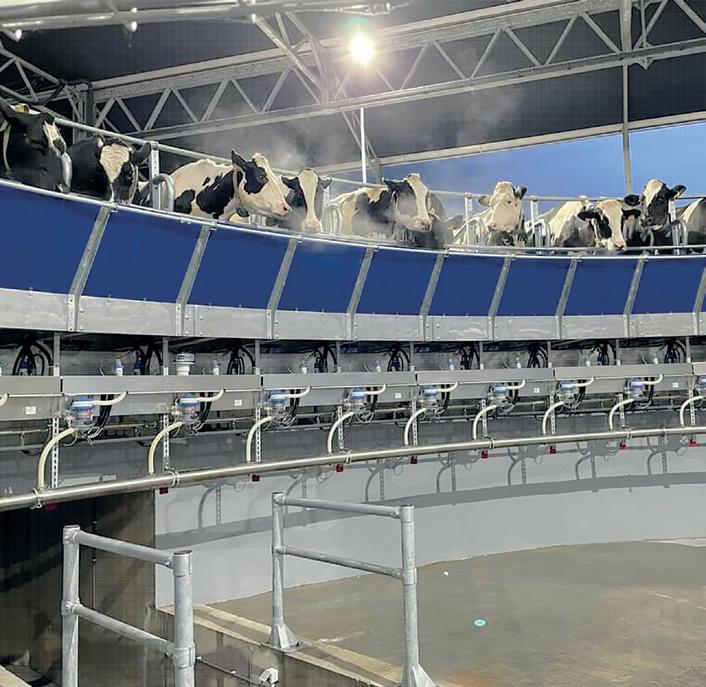

Dairy farms grazing pastures that have been waterlogged over the winter should be mindful of potential mineral imbalances and their impact on the reproductive performance of cows and heifers.
This is the advice of Rumenco’s Technical Services Manager Dr Alison Bond, who says that the anaerobic soil conditions resulting from flooding will have interfered with the mineral and trace element profile, potentially changing the availability of important nutrients in grass.
She points in particular to the risk of higher levels of available molybdenum, which is a known consequence of waterlogging and can lead to secondary copper deficiency.
“Copper deficiency is a common cause of reproductive problems in cattle,” she says, “as it causes depressed or delayed oestrus, and a reduction in conception rates. For spring calving herds, the early grazing season is the time for getting cows back in calf, so it will be particularly important to avoid any mineral imbalances at this time.
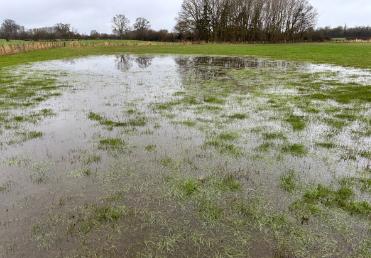

Dr Bond recommends the use of appropriately formulated mineral blocks as a convenient, lowlabour, and cost-effective solution for grazing cattle.
“Rumenco has developed Rumevite Cattle Booster as a high energy and protein feed and mineral block suitable for dairy cows, suckler cows, replacement heifers and other growing cattle,” she adds. “This block has been specifically formulated with optimal levels of minerals, vitamins and trace elements, including copper, to support fertility in breeding cattle, and protected zinc to guard against issues such as lameness and mastitis. In addition, Rumevite Cattle Booster contains good levels of energy, along with natural and urea protein sources that will complement and support the utilisation of lower quality forages or grazing as the season progresses, ensuring animals stay on track with growth and production.
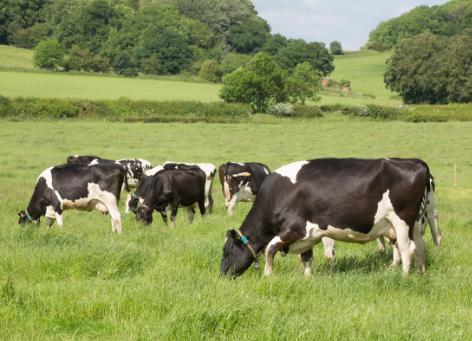

“Where there are high levels of available molybdenum, as can happen in soils that have been waterlogged, there is an increased risk of copper deficiency. This is due to an interaction between the available copper and molybdenum reducing overall copper absorption. In these situations, it is important to ensure that cattle are adequately supplemented to avoid any impact on fertility in particular.”
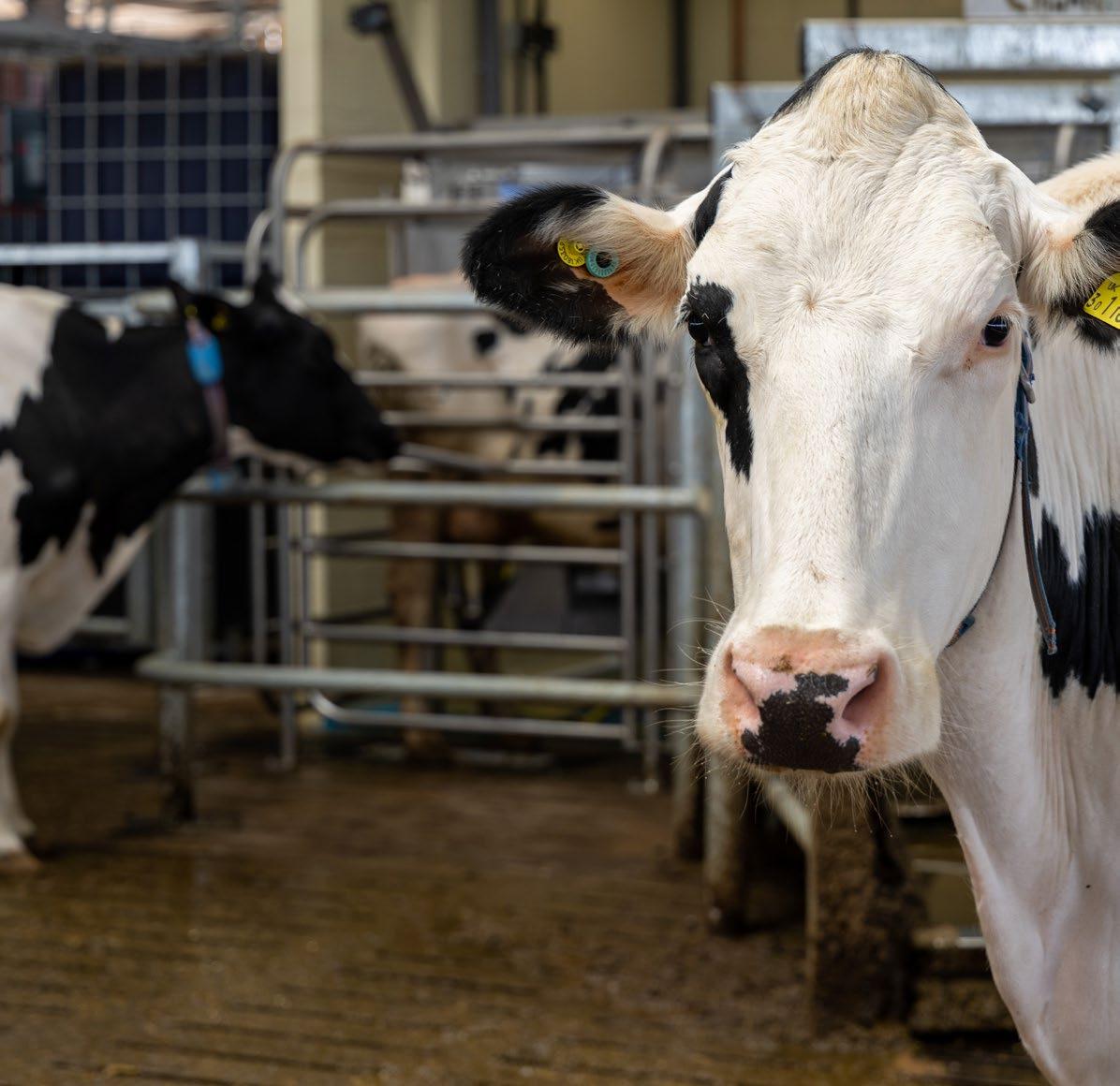
Dr Bond says the free-access nature of mineral blocks avoids bullying and ensures all cattle should receive adequate supplementation, with little impact on daily routines.
“Younger cattle can be particularly susceptible to copper deficiency, so supplementation of bulling heifers, for example, should be a priority, especially if there are any concerns about mineral imbalances in grazing or forage.”
Churchill Dairy & Parlour Services
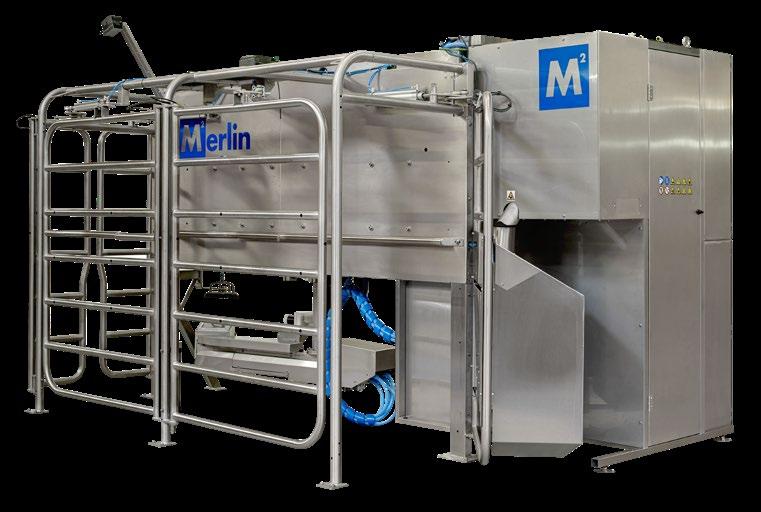
Goddards Farm, Sturminster Newton, DT10 2AZ
Tel: 07885371731
office@churchillsdairyandparlour.co.uk
Holding Dairy Engineering Unit 18, The Gardens, Malton Road, York, YO32 9TN
Office Tel: 01904 400449 James: 07807704884 info@jamesholdingengineering.com Fernshire Ltd
Chapmans Farm
Pristling Lane, Staplehurst, TN12 0HH
Tel: 01580 891199 www.neguschaseltd.co.uk
Wallace Engineers Ltd Unit 17, Stainton Grove industrial estate, Barnard Castle, DL12 8UJ
Office Tel: 01833 625361 Mobile: 07828532868 www.gawengineers.com
CalfExpert is a calf feeder that has been developed to meet the latest standards in calf feeding. State-of-the-art feeding technology ensures that the milk for the calves is always freshly mixed. It does not matter whether milk replacer or pasteurised whole milk is used. CalfExpert prepares the milk automatically and individually for each animal.

You, as farmer, remain completely flexible in your work schedule while calves are fed 24/7. The calf feeder takes your calf rearing management to a whole new level.
Intuitive operation via the graphic display and the link to the CalfGuide mobile app make it easier for you and your team to monitor your animals. All the information about your calves, status reports and alerts are at your fingertips in the app and directly on the calf feeder at all times.
Different feeding programmes form the basis of successful and performance-oriented calf rearing in automatic calf feeding. Labour savings and complete supervision included.
Individual animal feeding
Feeding a large number of calves with a fresh mix adapted to each individual calf is a major challenge. CalfExpert makes it child's play.
Always freshly mixed
The CalfExpert calf feeder mixes the milk fresh for each calf. Any residual milk is kept warm and flushed out of the system following longer drinking breaks. Other calf feeders work with a central milk supply. In milk stored this way at 40 °C, the bacterial count doubles every 20 minutes. In contrast, the CalfExpert guarantees maximum hygiene and feeding suitable for every individual animal.
Individual adaptation
A central milk supply has another major disadvantage:
Feed calves automatically.
Organise feed changes gently: milk mixed freshly and precisely matched to the calf.
For healthy and productive calves.
modern feeding programmes (e.g. metabolic programming) require a higher CMR concentration (e.g. 160 g/l) at the beginning of rearing to stimulate performance. However, a lower milk replacer powder concentration (130 g/l) is necessary in the weaning phase. This individual animal feeding can only be achieved if the mix is prepared individually for each calf, as is the case with CalfExpert.
We have accelerated the mixing process and the change of calves in the CalfExpert, thereby optimising utilisation of the HygieneStations.
Milk is mixed quickly and can be called up at the feeding station after just 3 seconds. Once the milk meal is finished, a switch is immediately made to the second feeding station. Here, a second calf can be fed immediately while the first is still satisfying its need to suckle.
In addition, priorities can be specified in the CalfExpert menu so that young or sick calves are given preferential treatment. The tried and tested flexitime programme ensures that meals are distributed very evenly throughout the day without clusters of visits to the stations. The result is reduced waiting times with high animal occupancy and a positive "visiting experience" for the calves.
Since CalfExpert does not restrict feeding to certain times of day, calves can come and feed at any time. Your calves will no longer see you as a nurse and will therefore remain calm when people enter the barn. Younger and weaker calves have all the time they need to consume their full ration.
As the CalfExpert also works with an intelligent credit logic, all calves have a feeding credit at a different time. As a result, fewer animals crowd around the station. The anti-pirate milk valve ensures that stronger calves do not steal milk. The result: extremely uniform, relaxed groups
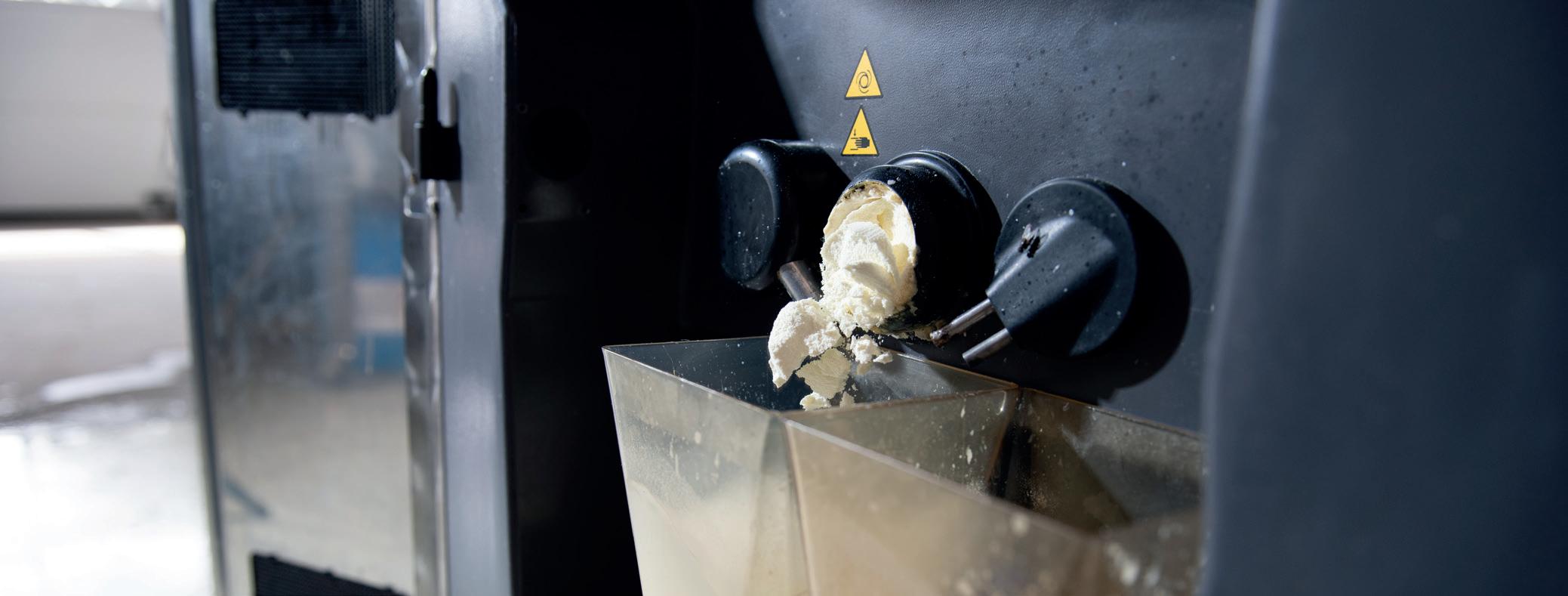
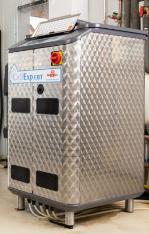
of calves.
QuadroFlex: simultaneous and yet flexible feeding
With the new QuadroFlex system, four calves can feed at the same time at two PowerMixers. The CalfExpert mixes the milk freshly when calves wish to drink. This means no tank supply system is required. The feeding quantity is determined precisely for each calf by maintenance-free sensors. If a calf requires a special mix e.g. including medicine or electrolytes, only the sister stall at the same PowerMixer is switched off. Feeding continues at the second Power Mixer at both stations. This allows 120 calves to be fed at 4 HygieneStations. Thus the capacity of the CalfExpert has been increased by approx. 20 – 30 % compared to its predecessor H&L100.
Flexible feeding programmes
Modern feeding programmes should always adapt to the age and breed, personally set rearing goals and state of health of the calves. CalfExpert allows you to do all this in the optimum way.
Weaning process
CalfExpert prepares your calves in a particularly gentle way for the intake of concentrate and roughage. It reduces the amount of feed at the end of rearing in small steps of 0.1 l per day and thus stimulates the development of the forestomach system.
8 feeding curves
CalfExpert can be used to turn any feeding programme into reality. Feeding curves can be adjusted very flexibly in each of the 8 groups. Up to 16 "turning points" allow you to fine-tune your personal feeding concept down to the last detail. Or you decide in favour of one of the proven and pre-set CalfExpert feeding programmes.
Metabolic programming
Intensive feeding in the first few weeks of a calf's life will usually lead to significantly higher milk production later. However, the correct weaning of calves, for example after an ad libitum phase, poses particular challenges for every calf breeder. With CalfExpert, each calf is slowly weaned off high milk intake, in terms of volume as well as concentration.
Effective mixing of milk replacer powder
Flexible feeding also means that a wide range of CMRs and additives have to be prepared in an optimum and lump-free way. The continuously variable PowerMixer ensures a soft start to avoid splashing and then stirs the milk replacer powder thoroughly. This means the calf receives its freshly mixed milk directly at the teat in just 3 seconds.
The feeding process can sometimes take longer where young or weak calves are involved. We prevent the separation of the milk replacer powder by slow permanent stirring. And if it gets colder, the heater in the mixer always ensures the mix is kept at a constant temperature, for no matter how long the calf needs.
Second milk powder chamber
The new option allows the CalfExpert to feed two different types of milk replacer (CMR).
The milk powder compartment is at a 90° angle to the CalfExpert and feeds milk powder into the PowerMixer of the machine via a dosing augur on the side. The volume of 50 kg of CMR can be supplemented by a further 25 kg via the additional powder chamber. This gives the CalfExpert the largest milk powder storage capacity of any automatic feeder on the market, with a maximum powder storage capacity of 150 kg (2 x (50 + 25 kg)). Ideally, this is done in such a way that one type of milk replacer slowly takes the place of the other. This can make sense, for example, if a high-quality skimmed milk replacer is to be used in the first few weeks of life in order to promote the early development of the calves with highly digestible CMR.
Later, cheaper milk replacers can be used, whose ingredients (e.g. certain proportions of high-quality vegetable proteins) are intended to support the transition to ruminant.
Specific additive feeding
Minimal doses of feed additives can be added to the milk diet in order to stabilise the gastrointestinal system. Sick calves can be treated with medicines in the milk. You can use two powder dosing units and two liquid dosing units. As with the milk programme, you can set different feeding curves for these additives as well. This means maximum flexibility for top calf health.
EvenMilk: intelligent whole milk feeding
Whole milk is digested perfectly by the calf and results in the best performance. With the CalfExpert whole milk programme you can set whole milk proportions or supplement the whole milk in the feeing programme flexibly. What happens with your feeder when the whole milk supply has been used up? Does it then feed powdered milk? This causes changeover stress with your calves and is likely to cause digestion problems. "EvenMilk", our intelligent whole milk control, knows how much whole milk is available and how much is to be fed. It makes sure that whole milk and CMR are mixed in balanced proportions even when whole milk quantities fluctuate daily.
Clean and reliable
A calf feeder is designed to make your work easier and perform continually for 24 hours. To achieve this it has to work reliably under the rough conditions of a calf stall, like the CalfExpert does.
Hose cleaning including the teat
All hose systems used to have deposits of contaminated milk because they had not been cleaned often enough or thoroughly enough. The HygieneStation rinses the entire milk hose through to the teat during longer drinking breaks. In addition, the complete milk system is cleaned several times every day. If theDoubleJugmilk tank is used, the supply line to the CalfExpert is also cleaned automatically. This will reduce a calf’s exposure to bacteria, improve the health of the calves and save on manual cleaning.
Two cleaning agents
To optimise cleaning even further, the CalfExpert can use two different cleaning agents: either alternate with each cleaning cycle or combine in one cleaning cycle (alkaline, rinse, acid, rinse). The cleaning agent pumps are fitted on the outside. They can thus draw directly
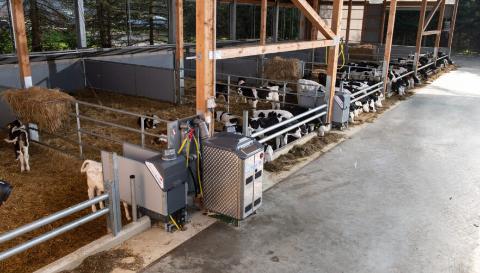
from the tanks. This is safe and convenient. In addition, the CalfExpert generates automatic messages as soon as a canister is empty.
Fly shield as standard
Two large doors protect the critical area where the mixer bowls are located. This keeps flies away from the milk and avoids problems in the milk system. The doors can be locked so children cannot be harmed or injured.
The 7″ graphic display not only allows all calf data to be conveniently viewed. Pressing the key with the book icon opens help texts and information from the operating instructions at every level of the application.
always surethat the calves have been fed correctly.
Smarter work – better performance
Kill two birds with one stone: CalfExpert not only frees you up from tedious and strenuous work. Intelligent software and smart operation also increase feeding quality.
We deliberately avoid the use of touch technology and rely instead on the use of SmartKeys, meaning that a CalfExpert can be operated reliably even in frost, rain, with gloves or even dirty fingers. The illuminated SmartKeys guide you through the programme.
The completely new control software offers maximum clarity and simple CalfExpert operation. All calf data with individual feeding curve, alarm lists, technical parameters etc. can be viewed on the 7" display. The Wi-Fi connection also allows you to retrieve individual items of data on mobile devices and to receive push notifications in the event of error messages.
Higher income thanks to improved performance

Calves love the outdoor climate, your CalfExpert does too. It comes with a frost protection programme that is activated automatically as soon as there is a risk of frost. Sensors in every HygieneStation and in the CalfExpert mixing chamber measure the ambient temperature and then adapt the mixing temperature and intensity of the frost protection programme accordingly. You can clean the outer surfaces of the automatic feeder with water, since all the sensitive components are water spray-proof.
Regular inspection of the technology is easy: you can test all the important CalfExpert components quickly and easily in the maintenance menu. You can also carry out calibration quickly yourself, because the software always tells you exactly what to do. We recommend that you have your CalfExpert serviced by a qualified technician at least once a year. This provides you with the peace of mind that the automatic feeder will be ready for the next rearing cycle.
The CalfExpert checks the flow rate of milk and water at regular intervals. ensuring a consistent amount of water for the calves without your needing to actively worry about it. Although this unfortunately does not apply to the amount of powder, the machine will remind you as soon as calibration needs to be performed. However, with its Brix-TS option, CalfExpert compensates for deviations in the mix concentration, so that you are
Calves supplied with a lot of energy start lactation at an earlier age and produce more milk later on. CalfExpert also provides you with the best prerequisites for optimum animal health. This means a lower death rate and more animals in the herd reared from your herd offspring. This in turn gives you the opportunity to select the offspring in a targeted manner and to sell surplus heifers at a profit. And last but not least: by saving working time, you are freeing up capacities on your farm that can be used profitably.
CalfExpert comes with a WiFi interface as standard. The CalfGuide app allows you to access important information directly on your mobile phone. This includes the general calf feeder data and details of the calf lists with the entire calf history. You can easily modify calf information and feeding curves in the app. The CalfExpert also sends messages when the cleaning containers are empty, for example. A particularly practical feature is a health check, which allows you to objectively assess the health of your calves.
Ammonia irritates the mucous membranes of calves, even in small doses. This can lead to bronchitis in the long run, which can soon turn into pneumonia. Ammonia is only perceived as an odour when it is already in the harmful range. AmmoniaDetect is an electrochemical sensor that permanently measures ammonia levels in the barn air. It is installed directly in the lying area, protected from the calves by a pipe. CalfExpert analyses the measured values continuously and documents them in a chart. This enables you to optimise the ventilation of the calf barn and determine the best time for mucking out.


James Holding Dairy Engineering
Unit 18, The Gardens, Malton Road, York, YO32 9TN
Office Tel: 01904 400449
James: 07807 704884
The Old Cobblers, Langport, TA10 9DJ
Tel: 07867 507711
Farmers turning cows out to grass are being urged to check trace element balance in dry cows, after goitre was listed among the top 10 abortion diagnoses recorded by the Animal and Plant Health Agency (APHA) between April and June last year (2025)1.

Paddy Gordon, veterinary surgeon at Shepton Vets, says farmers should be aware of iodine deficiency when turning dry cows out to grass, as it can cause goitre, an enlargement of the thyroid gland in unborn calves.
“Iodine deficiency is most often seen in grazed cattle in late gestation,” he explains. “If grass is deficient and as foetal demand for trace elements increases in late pregnancy, there can be a risk of deficiency, which may lead to late abortions, stillbirths or weak calves.”
While iodine deficiency is often associated with late summer when dry cows are out grazing, Mr Gordon says farmers calving from May onwards should also be aware of the risk if dry cows are being grazed earlier in the year.
“The risk will depend very much on individual farms, grazing and forage quality,” he adds. “Iodine is a vital trace element for metabolism, being essential for the production of the thyroid hormones, so it’s important to consider it and plan accordingly.”
Mr Gordon advises that dry cows can be blood tested to check for trace element deficiencies. In cases where stillbirths or abortions occur, postmortem examinations may also help determine the cause, with an enlarged thyroid gland the obvious sign of iodine deficiency.
He stresses that trace element monitoring should form part of a herd’s overall health plan
“Trace element status and assessment should form part of the herd health plan with a vet,” he says.
Selenium levels are also important, as a deficiency can contribute to iodine and thyroid issues. Selenium plays a key role in activating thyroid hormones and is also essential for immune function in both cows and unborn calves.
Mr Gordon highlighted research from Ireland involving 44 dairy farms which found that pastureonly diets provided only around 50% of iodine requirements. The study also reported that 87% of forage samples contained less than 0.5 mg iodine per kg of dry matter, supporting the case for iodine supplementation in dry cows grazing grass alone2.
“The broad message is to know the issues on your farm,” he says. “Test your forage, look out for challenges, and consider whether trace elements could be contributing. Work with your vet to develop a plan, because every season is different.”
When iodine deficiency is considered a risk, farmers can use boluses to help ensure the cow and unborn calf receive adequate supplementation.

According to Nia Williams, Technical Manager at Nettex, boluses can be particularly useful when animals at risk of deficiency are turned out to graze or managed away from the farm.
“In cases where animals are known to be low in iodine, administering a high-iodine bolus, such as EnduraBol High Iodine at drying off, can provide a slow, controlled release of iodine throughout the dry period, lasting up to 180 days.
“This approach ensures every cow receives the correct level of supplementation,” she explains. Iodine supplementation during the dry period supports foetal development and can help prevent issues such as weak calves and the risk of goitre. Maintaining adequate iodine levels can also help to support subsequent fertility and immune system function in cows.
Ms Williams advises farmers consult their vet or nutritionist before introducing supplementation and confirm the herd’s trace element status.
“Using an iodine bolus for dry cows is a proactive management tool,” she says. “It helps prevent iodine deficiency during critical non-lactating periods and supports the health of both the cow and the developing calf.”
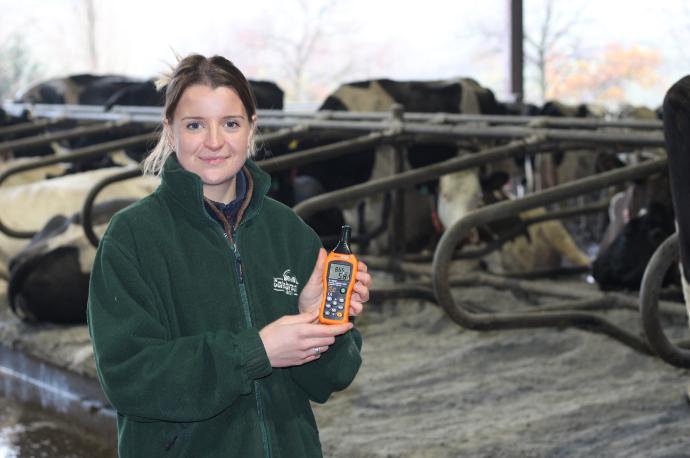
Livestock housing solutions specialist, Galebreaker, is encouraging dairy farmers to apply for the Farm Equipment and Technology Fund (FETF) 2026 grants to invest in ventilation and monitoring systems to combat heat stress ahead of the 28 April deadline.
Galebreaker’s animal welfare expert, Chloe Rodriguez, says high performing dairy cows in the UK can begin to experience heat stress at just 18°C, particularly in humid conditions.
“Through the FETF, farmers have the opportunity to get funding for equipment to tackle heat stress and safeguard herd health and productivity,” she says.
“I’d strongly encourage farmers to look at the options available. For many, last summer was a wake-up call. Four heatwaves in one season is not something dairy farmers can afford to ignore.”
“The impact of heat stress can be prolonged and costly – feed intakes drop, milk production
suffers and fertility rates decline. From a welfare perspective, it also puts animals under significant strain with associated health issues such a mastitis and lameness.”
As climate patterns shift and heat stress becomes more prevalent, the FETF grants present a timely opportunity for farmers to enhance their livestock environments before temperatures and humidity rise.
“Farmers cannot control the weather, but they can control how well their buildings help cows cope with it. With the FETF funding now available, there’s no better time to invest in solutions that will make a real difference this summer,” adds Miss Rodriguez.
Farmers can access Galebreaker’s heat stress advisory services for housing assessments, sensor installation, and monthly heat map reports via Galebreaker’s animal welfare team.
FETF applications are open until 28 April 2026 Farming Equipment and Technology Fund (FETF) 2026 - GOV.UK
undreds of dairy farmers and industry professionals are set to descend on Cornwall this June for the Open Day at the 2025 RABDF NMR Gold Cupwinning farm, a competition run by the Royal Association of British Dairy Farmers (RABDF).
The family-run T N Morrow and Partners, Treveale Farm, Ladock, near Truro, will open its doors on Tuesday 30 June 2025, giving visitors the chance to tour the farm, meet the award-winning team, hear from industry experts, and explore a line-up of trade stands.

youngstock mortality. This will offer visitors practical insights to take back to their own businesses. They will also be welcomed by RABDF Chairman Robert Craig and they can attend a series of talks throughout the day covering key topics including milk markets, maximising milk from forage, slurry management, business planning, and disease control.
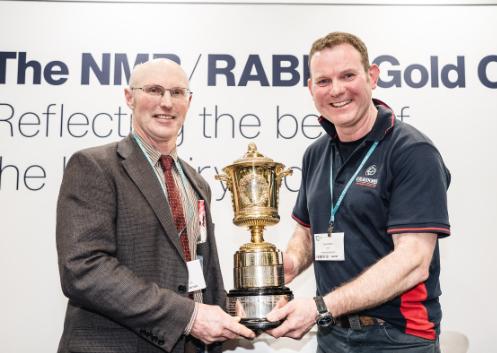
The farm, led by Paul Broad, his wife Wendy (née Morrow), Wendy’s brother Irwin Morrow, and Paul and Wendy’s sons David and Philip, was named winner of the prestigious 2025 RABDF NMR Gold Cup at Dairy-Tech, Stoneleigh, in February. The family manage every aspect of the farm themselves, from milking and calf rearing to forage management.
With significant investment in a new dairy unit in 2018 and youngstock facilities in 2023, the farm now runs the high-performing pedigree Holstein Maymor herd of 471 cows, producing over 12,000kg of milk per cow a year.
Attendees will see first-hand how a closed herd, strong genetics, and fine-tuned nutrition are driving performance and longevity, and ensuring low
Commenting on the Open Day, Robert Craig, RABDF Chairman, said: “Open days like this are a great opportunity for farmers and industry professionals to see best practice in action and network with other farmers. Treveale Farm is a worthy Gold Cup winner, and visitors will leave with practical ideas, fresh thinking, and valuable connections to help drive their own businesses forward."
Ben Bartlett, sales and marketing director at NMR, added: "As proud sponsors of the Gold Cup, NMR is delighted to support this Open Day and celebrate the achievements of Treveale Farm. It’s a fantastic opportunity for farmers to see, first-hand,how the management decisions are data drivenand the attention to detail which underpins such an outstanding dairy business.
To book your free ticket, please visit https://www. eventbrite.co.uk/e/2026-rabdfnmr-gold-cup-openday-tickets-1984616202486?aff=oddtdtcreator. More details on speakers and trade stands will be available soon. For further information, visit rabdf. co.uk.
The April release of dairy genetic evaluations, published today by AHDB (7 April, 2026) marks the first major run using the updated Spring Calving Index model, and as expected, the revisions have produced a shake‑up at the top. The new £SCI places greater emphasis on energy efficiency, fertility, health and functional traits, and introduces a penalty for high‑production daughters with elevated energy demand. As a result, the index now better reflects the needs of UK spring calving herds.
This release also reflects the updated £SCI genetic base, recalibrated to the performance of spring block calving cows. This ensures the index continues to benchmark bulls against the genetics most relevant to UK spring calving systems.
The Jersey, VJ Boman Lasky Lando moves up to take the number one position with an SCI of £448. He offers exceptional maintenance, fertility and udder health, aligning strongly with the needs of efficient, low‑input herds.
In second place, Holstein‑bred Denovo Invictus (SCI £408) rises thanks to his combination of excellent fertility, favourable SCC and an expanding UK daughter base, making him a reliable choice.
Taking third place is VJ Kjoelby Higher Highlan (SCI £398), a leader for milk quality, reflecting the new model’s weighting towards high value milk.
VJ Outrup Luxi Luxplus sits just behind in fourth (SCI £397), offering desirable longevity, strong components and all‑round balance.
The upward movement continues with VJ Ravninggaard Huus Hamlet (SCI £393) in fifth, excelling in daughter health – a trait now more strongly rewarded under the revised model.
A notable new addition in sixth is VJ Drostrupgaard Jojo Jabra (SCI £369), delivering desirable mastitis resistance and SCC performance, while VJ NR Haugaard Hays Hauga takes seventh (SCI £364), promoting excellent daughter longevity.
Breaking the Jersey run, FB 442861 Knighton P ranks eighth with an SCI of £355. Knighton offers exceptional milk, fat and protein kilos combined with desirable fertility, demonstrating that the revised £SCI continues to reward higher yielding Holsteins when they achieve production efficiency.
Rounding off the top 10 are VJ Risholm Luxi Lagoa P (SCI £352) and VJ Ulvsbjerg Giant Giga (SCI £340), both delivering strong udder health advantages, with Lagoa’s outstanding maintenance giving him a further edge.
Of particular note is the strong performance of New Zealand genetics under the revised weighting, with seven bulls appearing in the top 20. These include
the highest ranking NZ sires Mill‑Ridge TS Finn S1F (SCI £314) and Glen Kaycee Sherlock JG (SCI £313).
Autumn Calving Index (£ACI)
Winstar Graziano continues his dominance at the top of the Autumn Calving Index rankings at £555, driven by excellent milk components and strong SCC performance.
Moving into second, Winstar Maserati P (ACI £547) maintains his momentum with high milk solids transmission.
Third ranking Denovo Invictus (ACI £528) remains a reliable choice for fertility and maintenance, closely followed by FB 442861 Knighton P (ACI £520), who offers a similar balanced trait profile.
SDG‑PH Delux Dominance (ACI £515) ranks fifth, excelling in milk solids, while Peak AltaSolace (ACI £514) follows in sixth with notable advantages for udder health and fertility.
Taking seventh, Cogent Koepon Rocky (ACI £508) combines strong milk, fat and protein kilos with favourable maintenance.
Peak Mauney (ACI £503) remains inside the top 10 in eighth, supported by exceptional daughter fertility.
Rounding off the top 10 are Genosource Captain (ACI £502), offering strong production with good maintenance, and Peak Powerhouse (ACI £493), delivering high kilos of milk and solids.
Victoria Ashmore, animal genomics manager, AHDB, remarks: “Breeding indexes are regularly fine-tuned as industry needs dictate, and we are delighted we’ve been able to revise the formula of £SCI with these evaluations to better meet the needs of spring calving producers.
“We can see the effects in the type of bull rising to the top of the £SCI ranking, which is dominated by transmitters of high quality milk whose daughters will be capable of maintaining high health and efficiency under tight block calving, grazing based systems.
“As usual, it should be noted that these seasonal calving indexes are for use across the breeds, allowing producers with crossbred herds to easily compare the performance of any dairy breed against another.
“However, it’s important to remember that £SCI and £ACI cannot be compared with one another and equally, figures used to calculate these block calving indexes cannot be compared with any figures from the breed-specific £PLI lists.”
For the complete list of available bulls ranked on £ACI and £SCI, please visit the AHDB website.
New research from the Royal Veterinary College (RVC) has revealed that changing when animals are inspected during transport could significantly improve their welfare. The findings provide a practical framework for improving how animal wellbeing is assessed at abattoirs and could help guide future inspection practices.
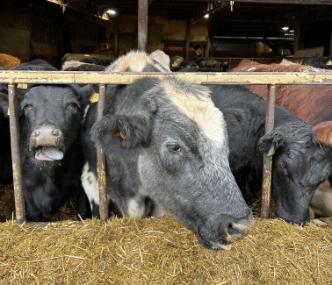

Each year, millions of animals in the UK are transported to abattoirs. Welfare issues such as injury, fatigue and distress can occur during transport but are not always identified under current inspection systems. This study shows that a simple change - observing animals as they are unloaded from vehicles, rather than once they are settled in holding pens - could dramatically improve how these are detected. Earlier identification of these potential welfare concerns could also help reduce unnecessary suffering and improve conditions for animals up to the end of life, while also supporting food safety standards.
Published inVeterinary Record, the study was led by a team of researchers at the RVC, including final-year veterinary student, Sayaka Mochizuki; and Senior Lecturer in Veterinary Public Health, Kurt Arden; assisted by Declan Arden from the University of Plymouth. Together, the researchers set out to understand how effectively welfare issues are identified during routine ante-mortem inspections, comparing observations made during unloading with those carried out later in lairage holding pens.
Over the course of the study, thousands of animals, including cattle, sheep and pigs, were observed at a UK abattoir. The results showed that observing animals during unloading significantly increased the detection of welfare issues such as lameness, slipping and falling. Across all species, welfare problems were far more likely to be identified at this stage, with detection rates increasing more than tenfold in some cases. This is largely because issues become much easier to spot while the animals are in motion, rather than while they are stationary.
As a result, the research team propose a simple solution – a new, practical inspection approach called Animal-Based Measurement (ABMs) which implements simple visual checks during unloading to identify potential health issues. Incorporating this strategy could enable veterinarians to identify problems earlier, provide more effective feedback to farmers and transporters and take action to reduce suffering. It also offers a straightforward, evidence-based way to improve food safety standards. Importantly, this method can be implemented in real-world settings without disrupting abattoir operations.
The research highlights a clear opportunity for simple but effective change. By updating inspection practices to require routine observation during unloading, regulation can take a meaningful step forward in protecting animal welfare.
Sayaka Mochizuki, final year veterinary student at RVC and lead author of the study, said:
"Animal transport ultimately serves the human economic and commodity interests. While the experience is relatively brief, it defines the final moments of the lives of production animals and the nature of their death. We have a moral obligation to undertake this process as ethically as possible, and our proposal provides a simple but effective way toward a more improved norm."
Kurt Arden, Senior Lecturer in Veterinary Public Health at the RVC and co-author of the study, said:
"Improving animal welfare does not always require complex solutions, sometimes all it requires is a new perspective. This study demonstrates how simple, practical changes can reduce suffering, and underscores the important role veterinary students play in producing research that delivers real-world impact.
The National SQP Weektoolkitis now live, giving Suitably Qualified Persons (SQPs)also known as Animal Medicines Advisors,employersand industry stakeholders a comprehensive package of resources to help them prepare for the first-ever National SQP Week, taking place from 5–12 June 2026.
National SQP Week aims to shine a spotlight on the professionalism,expertiseandpublic‑facingrole of SQPs - also known as Animal Medicines Advisorsand to improve understanding of theindepthtraining, qualification and regulation that underpins their work. The campaign has been developed following industryresearchby AMTRAhighlighting the need for greater awareness oftheSQProleamong animal owners and across parts of the wider animal health profession. National SQP Week aims toensure thescope of theSQProle is better understoodand the support theyare trained toprovidetoanimals isbetter utilisedby ownersand other stakeholders across the industry.
The toolkit has been developed collaboratively by the SQPprofession'sthree regulators — AMTRA,VetpolandVetSkill—andis designed to make participation in the inaugural campaign as simple,effectiveand impactful as possible. It includes downloadable materials, practical activationideasand clear guidance to support engagement across retail,veterinarypracticeand digital settings.
Fromin‑storeandin‑practiceresources to social and digital communications assets, the toolkit
equips organisations and individualswith helpful ways toraise awareness of the vital role SQPs play in safeguarding animal health and welfare across livestock, companion-animal and equine sectors. Stakeholders are encouraged to begin planning early to make the most of this national awareness week.
Commenting on the launchof the toolkit, Stephen Dawson, CEO of AMTRA, said:"National SQP Week is an important opportunity to shine a light ontheSQPprofession in a way thathasn'tbeen done before.SQPs arethoroughly trained animal medicines advisors who prescribe and supplya range ofanimal medicines and provideappropriate adviceto millions of owners every year, ensuring animals get the right treatments safelyand responsibly.Thisis a role that rightly deserves to be celebrated for the positive impact it has on animal wellbeing.
"Thecampaign aims to highlight not only the positive contribution SQPs make to animal health and welfare, but also the depth of knowledge and expertise they bringtothelivestock, companion animal and equine sectors."
With SQPs working across a wide range of roles and settings throughout the UK, National SQP Week provides a platform for the entire industry including retailers, veterinary teams,manufacturersand animal owners to celebrate their impact and help ensure theirexpertiseis fully understood and utilised.
The campaign toolkit offers everything needed to take part with confidence and help raise the profile of SQPs like never before. Access the toolkit here:National SQP WeekQR code below


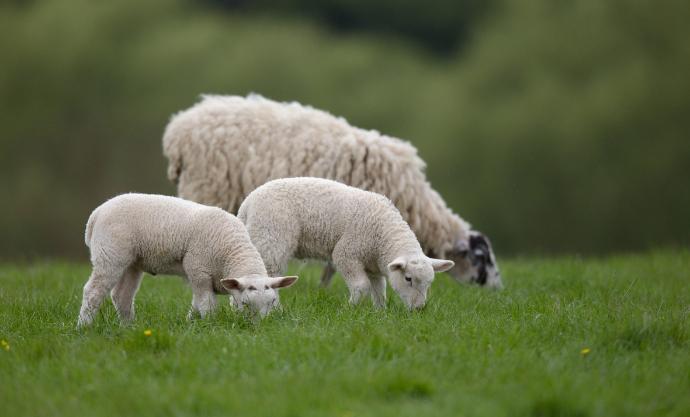

Sheep farmers in the UK are being urged to give greater consideration to the mineral and trace element supplementation of lactating ewes and their lambs during spring and summer grazing.
The advice comes from Rumenco’s Technical Services Manager Dr Alison Bond, who points to over-winter forage shortages, excessive soil nutrient leaching due to heavy rainfall, and the increased use of brassica forage crops as some of the factors behind potential deficiencies.
She says some flocks have endured ‘a perfect storm’ of nutritional challenges, and – whilst sheep may seem largely unaffected – the risk of underlying mineral and trace element deficits affecting crucial performance measures such as ewe lactation, lamb growth rates, and future ewe condition cannot be ignored.
“Many sheep farms will have endured unprecedented conditions over recent months, with forage supplies depleted after a dry summer,” she points out. “This may have resulted in lower quality fodder being fed, or greater reliance on grazed fodder crops, for example. In the case of brassicas, which include swedes, turnips, and forage rape, there are specific issues around iodine, vitamin B1 and other trace minerals, including copper, selenium and cobalt, that could present risks.


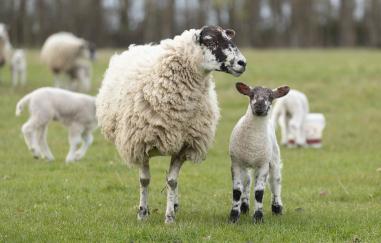
“We have then seen very heavy rainfall in many areas over the winter months, which will have increased the level of soil nutrient leaching, particularly on lighter soils. This may increase the level of mineral deficiencies seen in early season grazing.”
Dr Bond recommends supplementation of ewes and lambs at grass with a high quality mineral and trace element lick, to ensure all the potential risk factors are covered. Rumenco now offers its Supalyx 4 in 1 high specification mineral bucket for this purpose.
“Mineral buckets are an efficient way to provide supplementation and with Supalyx 4 in 1 Rumenco has developed a proven product that offers a balanced and effective solution, with a focus on palatability and availability of key minerals and trace elements,” she adds. “The formulation includes plant essential oils, to stimulate appetite and support gut health, which will in turn promote greater feed efficiency. It also includes important trace elements, including zinc and selenium in a bio-available form, which will help support key areas like foot and udder health, and immune function.”
B1 (thiamine), which is of particular relevance where sheep have been grazed on brassicas.
“Brassicas can cause shifts in the rumen bacteria environment which may affect the natural production of thiamine by the rumen,” she explains. “Furthermore, certain brassica crops can lead to the production of thiaminase which can destroy thiamine, leading to a deficiency. Vitamin B1 deficiency causes a condition called Cerebrocortical Necrosis (CCN) with common symptoms including blindness, head pressing and stargazing, something most farmers will have seen at some point.”
Brassicas also contain glucosinolates, which are converted by hydrolysis into goitrogens when in the rumen,” she explains. “Goitrogens interfere with iodine absorption, which commonly results in the disruption of thyroid function. This is a cause of the condition goitre in sheep, which shows as a swelling of the thyroid gland. Supalyx 4 in 1 includes vitamin B1 and iodine to help combat the potential issues seen when feeding brassica crops.”
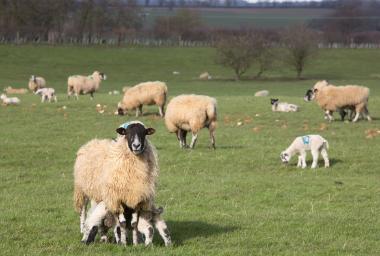

Dr Bond also outlines the importance of key vitamins, with vitamin B12 included to help support growth rates on pastures that may be deficient in cobalt. She also highlights the inclusion of vitamin
With market prices forecast to remain strong for the foreseeable future, Dr Bond adds that adequate nutritional supplementation should be seen as much as a sound longer term investment as a short-term fix.

“Ensuring that the flock avoids the effects of mineral and trace element deficiencies should help to prevent in-season health and performance problems,” she says, “but will also give lambs the best chance of reaching their full potential as quickly as possible. Equally importantly, it will impact positively on the condition of ewes, who should ideally not be losing more than 0.5 body condition score during their lactation. Keeping ewes in good condition during lactation is the first step towards a successful tupping later in the year and a healthy lamb crop in 2027.”
New figures on livestock worrying in Scotland show a decline in recorded incidents last year but rural business organisation Scottish Land & Estates (SLE) warns the number is still too high, notably in Spring, when lambs and calves are in the field.
According to data from Police Scotland’sNational Rural, Acquisitive and Business Prevention team, 211 incidents were recorded for the year ending March 30, 2026, down from 216 the previous year, a fall of 2.3 per cent.
The worst months each year are March to May with 83 incidents recorded last year during March-May 2025, but 80 incidents just in the month of March 2026, a worrying increase.
have devastating consequences, including serious injury, miscarriage, and death of animals, as well as a significant financial and emotional impact on farmers.
“Although reports are slightly down on last year’s figures, dog owners are reminded that they are legally responsible for ensuring their dog is under proper control at all times, particularly in the countryside where livestock may be present. Livestock worrying includes not only physical attacks but also chasing or allowing a dog to be loose among farm animals, which can cause severe stress and harm.
SLE is a member of the Scottish Partnership Against Rural Crime and the Livestock Worrying Priority Group, working in partnership with Police Scotland, NFUS and other rural organisations to help combat crime in the countryside.
Nic MacLeod, Policy & Public Affairs Adviser, SLE, said: “Working with partners over many years we have seen good progress in tackling livestock worrying and raising awareness among dog owners.
“We are hugely grateful to Police Scotland and the rural crime team for their dedication to intelligence gathering, practical crime prevention and enforcement.
“We remain concerned, however, that the number of incidents remains high, notably in the crucial Spring season, when new-born lambs and calves are in the field and the sheep and cows are also very vulnerable. The impact of a dog chasing, or even just approaching or barking at a pregnant ewe can cause miscarriage and the death of the sheep. This is a crime which has a huge impact on farmers and any incident of livestock worrying is one too many.”
The Dogs (Protection of Livestock) (Amendment) (Scotland) Act 2021 introduced stringent penalties for any individual convicted of such offences, including a fine of up to £40,000 and a prison sentence of up to 12 months. In all likelihood the dog would be destroyed.
Inspector Ian Harvey of Police Scotland’s Rural, Acquisitive and Business Preventions Team (RABPT) said: “Police Scotland is continuing to receive reports of dogs attacking and worrying livestock across rural areas of Scotland. These incidents can
“Domestic pets may act very differently to what their owners are used to, especially at this time of year due to the different odours in the environment. This can be an instinctive trigger for dogs which may result in them acting out of character catching owners off guard and a livestock attack occurring without warning.”
Under the Dogs (Protection of Livestock) (Amendment) (Scotland) Act 2021, offences can carry penalties of up to £40,000 or imprisonment, and police have powers to investigate incidents, seize dogs, and report offenders.
Dogs must be kept on a lead near livestock and dog-owners are advised not to enter fields where there are lambs or calves.
Farmers and land managers are encouraged by Scottish Land & Estates to display clear, simple information signs aimed at the public on gates and fences at certain times of year.Signage is available for free download from the SLE website or to be ordered for a nominal fee.
Inspector Ian Harvey continued “Livestock worrying is a serious offence and will be treated as such. We will continue to work with farming communities to investigate incidents and take appropriate enforcement action where necessary.
“Police Scotland are also committed to working closely with the Scottish Partnership Against Rural Crime (SPARC) in raising awareness and supporting partners to tackle livestock worrying and other crimes that impact rural communities.
“Police Scotland thanks the public and partners for their cooperation in helping protect Scotland’s rural communities and animal welfare.”
Anyone who witnesses livestock worrying can call Police Scotland on 101, or 999 if an attack is ongoing and animals are in immediate danger.

ith three open moorland wildfires currently burning outside Manchester in early April and warmer weather on the horizon, the National Sheep Association (NSA) is calling for an honest and practical debate on upland management.
Well intentioned agri-environment schemes have removed grazing animals from many upland areas to protect vegetation and improve the condition of designated sites. However, in many cases this has led to a significant buildup of fuel, with few managed fire breaks.
When these wildfires occur, they threaten people and property while also damaging peatland and wildlife, directly undermining the goals of these environmental schemes. This recent spate of wildfires in northern England comes at a critical time, as ground nesting birds are breeding and small reptiles are becoming active.
NSA Chief Executive Phil Stocker says: "It is surely time for a debate on this subject. This has become a regular problem that I can't see going away. It's time we took a real look at how we get the balance right in upland areas, creating resilient landscapes that are multifunctional and limit risks of damage.
"Too often we end up using a sledgehammer to crack a nut and the removal of grazing animals from many upland regions is one instance where farmers could be incentivised to manage stock in ways that rest protected areas from continual grazing, while improving land condition and wildfire management elsewhere, through appropriate grazing and better water control.
"Most experts would agree that upland areas thrive through creating 'mosaics of habitat' and this could be delivered by well managed grazing animals. This would benefit nature and reduce the devastating damage caused by difficult to control wildfires. We urgently need to re-examine the frequently conflicting outcomes of policies and schemes for farmers and upland managers. Schemes are designed to improve nature that instead place nature at increased risk of wildfires are not a good use of public money."
he flagship event of the National Sheep Association (NSA), NSA Sheep Event, returns this summer providing an ideal day out for anyone involved in the UK sheep industry.
Opening its gates on Tuesday 28th July at its usual home of the Three Counties Showground, Worcestershire, the business to business event will feature its usual impressive array of seminars featuring top industry names, interactive workshops passing on useful practical shepherding advice, more than 250 trade and breed society stands showcasing the latest innovations and products, demonstrations, competitions and more.
Warwickshire sheep farmer and Chair of the 2026 event Ant Spencer comments:"There is no better show to demonstrate and celebrate all that is great about the British sheep industry. It really is a great opportunity to have a day off the farm to get up to date with the latest news, browse sheep specific tradestands and most importantly catch up with farming friends."
The event seminar tent will no doubt be home to much insightful discussion as its speakers prepare to cover a number of topical issues such as the future of sheep farming and its multifunctional systems, and market and trade opportunities.
Those wishing to make more of a visit to the event can also sign up to join the pre event farm tours taking place on Monday 27th July, in conjunction with Field Farm Tours, and the NSA Sheep Event Dinner taking place on Monday evening.
Other features not to be missed at NSA Sheep Event include the ever popular cookery theatre, the entertaining and inspiring sheepdog demonstrations and competitions including the much anticipated national final of the NSA Next Generation Shepherd of the Year contest.
With the event taking place during UK school summer holidays, additional attractions will also keep everyone in the family entertained, no matter their age.
NSA members enter NSA Sheep Event for free on presentation of a current membership card. Tickets for non-members are available to buy online at an early bird rate, meaning less time at the gate and more time on the showground enjoying the event. To make the most of the event with your family, under 16's can enter for free.
Visitwww.sheepevent.org.ukfor more information and to secure your discounted tickets.
The Scottish SPCA is warning dog owners that there is no excuse for allowing pets to worry livestock, highlighting the serious physical and emotional toll it has on animals and people alike.
The stark warning forms part of a joint campaign to mark Sheep Worrying Awareness Week, with the National Sheep Association (NSA), and National Farmers Union – Scotland (NFUS).
"NSA urges dog walkers to ensure their dog is kept on a lead whenever sheep could be grazing nearby and to consider their routes, especially this lambing season where chasing from dogs can have even more negative impact."
Livestock worrying is when a dog attacks or chases livestock in rural areas or farmland. Spring brings the lambing season when sheep give birth to their young. Sadly, this is when livestock worrying can have the most disastrous and heart-breaking consequences.
The Scottish SPCA emphasises that even well-trained dogs who are off their leads or roaming unsupervised, can cause severe harm to sheep, cattle, and their offspring.
Even if the dog doesn't physically catch the livestock, the stress it inflicts can lead to death and cause pregnant ewes to miscarry. When livestock flee from dogs, they often suffer severe injuries or die during their frantic escape, causing significant damage to fences and field boundaries along the way.
Nicola Strachan, Head of Advocacy & Strategic Partnerships, says: "Livestock worrying is a serious animal welfare issue that can cause significant distress, injury and, in some cases, death to sheep and other farmed animals. Importantly, there is no excuse for dog attacks as these situations are entirely avoidable.
"Owners must understand that even well-behaved dogs can act on their predatory instincts when around livestock, leading to disastrous, and often, fatal consequences. The presence of a dog alone can cause fear and panic in sheep, particularly during sensitive times such as lambing, leading to real welfare consequences."
She adds: "Raising awareness is key to reducing these incidents, and we support efforts that help people better understand the impact their actions can have on animal welfare."
Findings from NSA's 2025 farmer survey revealed 96% of respondents had experienced 1-10 dog attacks on their sheep flock in the previous year, with 78 % saying the main cause of sheep worrying was dogs not being put on a lead.
NSA Communications Manager Kate James says: "Research from NSA surveys each year show that a high proportion of sheep keepers have been affected meaning their livestock's welfare is compromised and farmers themselves are left facing financial losses and extreme worry and distress affecting their mental wellbeing from the aftermath and threat of future attacks.
Emma Harper MSP echoes ongoing concerns, stressing the "catastrophic" consequences of livestock worrying and urging all dog owners to "exercise their access rights with responsibility."
She says: "As we hit the peak of lambing season it's more important than ever that people are aware of the devastating consequences livestock worrying can have on animals and people alike.
"While the majority of dog owners exercise their access rights with responsibility, sadly there are still a persistent minority who continue to allow their pets free rein and risk catastrophic impacts on livestock and on farmers.
"As the weather improves and daylight returns, the numbers coming to our countryside increase and while I welcome everyone who wants to enjoy Scotland's incredible scenery and environment, that enjoyment has to be balanced with the understanding that much of what might appear empty land is a working landscape, populated by animals who deserve the highest standards of welfare and safety. Sadly, too often that safety is threatened through the thoughtless actions of others."
Under the Dogs (Protection of Livestock) Act 1953, a dog owner commits a criminal offencewhere their dog worries livestock on any agricultural land. An amendment to the Act – introduced by Emma Harper MSP – came into force in 2021, increasing the maximum penalty to a fine of £40,000 or imprisonment for 12 months, and giving Police Scotland powers to seize dogs suspected of attacking or worrying livestock. In some circumstances, farmers are also legally entitled to shoot dogs if they are endangering their livestock.
However, NFUS stresses more still needs to be done to tackle the ongoing issue.
Rhiana Montgomery, Policy Manager at NFUS, says: "NFU Scotland is urging dog owners to act responsibly by keeping dogs under close control around farmland, stressing that livestock worrying is a serious offence and entirely preventable. We supported the changes to legislation, which came into force in 2021, however we are disappointed that the penalties do not seem to be being used to their full effect."
The Scottish SPCA is committed to making Scotland the best place in the world for an animal to call home, and we are tirelessly working to also make this a top priority for parliamentarians. Our recently published Manifesto outlines four key asks which will help ensure Scotland is at the forefront of animal welfare. Delivering on these asks is crucial to prevent future harm and tackle repeat offending, which will help achieve our mission to make Scotland the best place for an animal to call home. Read ourfull Manifesto and sign our petitionto show your support.
Sheep farmers are being encouraged to take a proactive approach to managing cobalt deficiency, also known as pine, in newly weaned lambs, as surveillance data1 continues to show a consistent seasonal spike in cases between July and September.
Figures from the Animal and Plant Health Agency (APHA) and Scotland’s Rural College (SRUC) quarterly surveillance reports1 identify cobalt deficiency as the third most common diagnosis during this period between 2016 and 2025. This highlights the need for targeted management during the post-weaning transition, when lambs are particularly vulnerable to nutritional and metabolic challenges.
Cobalt requirements
Cobalt is an essential trace element required for the synthesis of vitamin B12 in the rumen and plays a critical role in supporting growth, appetite and immune function. Deficiency can result in ill-thrift, reduced daily liveweight gain, lethargy and poor overall performance, known collectively as ‘pine’. In more advanced cases, neurological signs and liver damage associated with ovine white liver syndrome can occur.
vitamin B12 absorption, while on the other, cobalt/ vitamin B12 deficient lambs may have compromised immunity, increasing susceptibility to parasites. It is important to work closely with your vet or animal health adviser to establish if cobalt deficiency may be exacerbating a parasite challenge.”
Strategic supplementation remains one of the most effective ways to mitigate risk, with products such as Nettex’s Cobalt, Selenium & Vitamin B12 Drench providing a practical and reliable method of maintaining adequate trace element status during the high-risk weaning period.

Nia Williams, Technical Livestock Manager at Nettex, says the continued incidence of cobalt deficiency in mid- to late summer is likely influenced by a combination of environmental, nutritional and management factors.
Deficiency
She explains: “Weather patterns can have a significant impact on cobalt availability, with high rainfall leaching cobalt and other trace elements from soils and drought conditions limiting cobalt uptake. We often see a seasonal decline in pasture cobalt levels over the summer months because of this, coinciding with when lambs are weaned and have high requirements for growth.
“In addition, high iron or manganese levels, high pH soils and recent liming, can ‘lock up’ cobalt in the soil, further reducing its availability to livestock.
“There is also a close and interchangeable association between cobalt deficiency and parasitic challenge,” adds Ms Williams. “On one hand, high worm burdens can damage the gut, reducing
Ms Williams adds: “The post-weaning phase is a critical stage in a lamb’s development and with appropriate nutritional support, cobalt deficiency is largely preventable, helping to avoid unnecessary production losses and sustain optimal growth performance.”
Nettex’s Cobalt, Selenium & Vitamin B12 Drench also contains vitamin B1 (thiamine) and therefore can also help to reduce the potential risk of Cerebrocortical Necrosis (CCN), which typically affects lambs aged four to eight months.
“CCN is commonly triggered by dietary changes, such as weaning or movement onto new pasture, which disrupt rumen microbial populations,” explains Ms Williams.
Early clinical signs include blindness, isolation, aimless wandering and the characteristic “stargazing” posture, where the head is held arched backwards. The disease can progress rapidly, with affected animals becoming recumbent and developing seizures.
“A prevention strategy through the use of drenches such as Nettex’s Cobalt, Selenium & Vitamin B12 Drench is always preferable to treatment, especially in the case of CCN, as treatment requires veterinary intervention and multiple injections of vitamin B1 for at least three days,” adds Ms Williams.
Close observation, alongside appropriate nutritional and health management, is key to supporting lamb performance and reducing the risk of both conditions during the post-weaning period.
Great Britain small ruminant quarterly report, disease surveillance and emerging threats. Volume 28: Quarter 3 – July to September 2025.
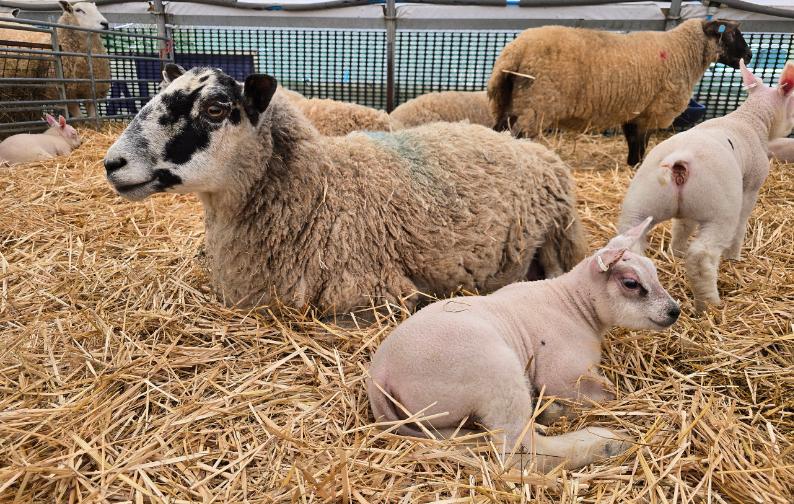
heep farmers are being urged to take part in an industry-wide lambing survey this spring to help build a clearer picture of the challenges facing the sector, from disease threats and vaccine supply issues to unpredictable weather and other emerging pressures.
The UK Lambing Survey 2026 is being led by the University of Nottingham and Fiona Lovatt of Flock Health Ltd, who also chairs the Sheep Antibiotic Guardian Group (SAGG).
Dr Lovatt is encouraging sheep producers to complete the survey, stressing the importance of gathering accurate information from farms across the UK.
She said: “There isn’t a time in a sheep farmer’s calendar more stressful than the lambing season. In recent years, the pressure has risen further due to the additional threat of both Schmallenberg and Bluetongue viruses, disrupted vaccine supplies, unpredictable weather conditions and increasing scrutiny of what, for some, had become routine lambing-time practices.
“The UK sheep industry has a good reputation for responsible medicine stewardship, good practice and high welfare standards, which we are keen to maintain and defend. For this to happen, it is essential we gather baseline data on what takes place ‘on the ground’ or ‘in the lambing shed’.
We are very grateful to everyone who supports this survey, both by filling it in and encouraging others to do so.”
The UK Lambing Survey 2026 is now live and is supported by organisations from across the sheep industry. The survey takes around 12 minutes to complete. All responses are anonymous, with no farmer, farm names or locations, identifiable from the answers.
Shepherds managing separate flocks with different tupping dates are encouraged to complete a separate survey for each flock, as soon as possible after the last ewe has lambed. The survey will close on 30th June 2026.
Aggregated findings from the survey will be made publicly available and will be used to directly inform the sheep section of the Responsible Use of Medicines in Agriculture Targets Task Force report (RUMA TTF) which contains antibiotic stewardship commitments and targets from each livestock sector from 2025 to 2029.

The results will also build on data collected, analysed and published by researchers at the University of Nottingham in 2012, 2017 and 2024, all years in which UK farmers faced severe losses due to Schmallenberg virus.
The survey can be completed using the following link https://bit.ly/ lambingsurvey2026 or by scanning the QR code.
Arecent survey by Elanco Animal Health has found that 70% of UK sheep farmers have seen cases of blowfly strike prior to shearing, highlighting the need to consider earlier application of preventative treatments.
The survey, designed to understand the parasite pressures facing sheep farmers amid changing weather patterns, suggests blowfly activity is beginning earlier than it was five years ago.

Carolyn Hogan, ruminant technical consultant at Elanco, says Met Office data shows a general trend towards increasingly milder weather, with temperatures this March being above average. “Our aim was to understand how this shift in weather might be influencing when farmers are seeing parasites on farm.
“The results corroborate the fact that blowfly emergence is happening earlier than it has in the past, with reports of strike as early as March and April in some regions.”
Ms Hogan says the pre-shear period is high risk for sheep with full fleeces, particularly when the weather is mild and wet.
This was reflected in the survey where results showed a large proportion of farmers across the UK have seen cases of strike in ewes before shearing.
“Blowfly emergence is driven by temperature. Once the temperature rises above 9C, flies begin to accumulate what we call degree days.
preventative treatment before blowflies become a problem can help reduce this risk and also limit the number of flies reproducing throughout the season,” she explains.
“If you’ve got ewes and lambs in for treatments post-lambing then it’s worth considering an IGR application for your ewes at the same time, to provide cover from blowfly strike during the preshearing period when they are particularly vulnerable.
“CLiKZiN™ is an ideal choice as it offers 8 weeks’ protection – often enough to cover ewes ahead of shearing – after which a longer-duration product such as CLiK™ Extra can be used after shearing to protect sheep through the main summer period.”
She adds: “CLiKZiN™ has a meat withdrawal of just 7-days, making it a suitable option for fat lambs too.”
Ms Hogan says while treatment timing and product choice are important, correct application will ensure you get the most out of preventative treatments.
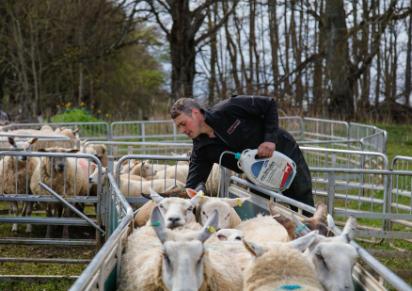

“Warmer conditions accelerate the accumulation of these degree-days, meaning that with higher temperatures earlier in the season, we’re seeing blowfly emergence sooner than in previous years.”
To help mitigate the risk of struck sheep, Ms Hogan recommends an early application of an Insect Growth Regulator (IGR).
“Blowfly strike can be costly for farmers and just one struck sheep is one too many, so applying a
“When using products from the CLiK™ range, following the 4-stroke application method will help you to get optimal results,” she says.
“Also, calibrating your dosing gun ensures that the right amount of product is applied, reducing waste and allowing you to get the most from each application.”
For more information on early preventative blowfly strike treatment, speak to your local SQP.
Farming never stands still. Fresh ideas, new products and the latest research all combine to ensure that production systems are constantly evolving, improving animal welfare, efficiencies, and environmental impact. Nowhere is this truer than in the pig and poultry sectors, which are perpetually pushing the boundaries to meet consumer needs and societal demands.
With over 330 exhibitors, visitors to the British Pig & Poultry Fair on May 13-14 will be treated to a wide range of new products and advice. In the egg sector, Farmermobil’s brand new Starter S mobile unit with multi-tier system is a ready-to-go solution for anyone looking to quickly add or scale up egg production on their farm. Combining proven aviary technology with smart automation - feeding, egg collection, and climate control - it delivers high output with minimal labour.
offer a simple, visual way to see bacterial pressures inside their poultry sheds. The kits provide clear visual results without specialist equipment, turning an invisible hygiene challenge into something farmers can see and track themselves. This enables producers to better understand hygiene conditions, compare sheds or crops, and make more informed management decisions.
Good biosecurity across the whole supply chain protects farms from ever-present disease threats, says Tessa Seymour, commercial director at Fair Partner ABN. “Biosecurity, from mill to farm, helps protect your livestock, your business, and the supply chain. Prevention isn’t optional – it’s essential.”
Biosecurity and health are key themes in the Innovation Theatre, examining issues like how Galebreaker’s automated micro-climate control in sheds can improve pig growth rates and health. Lallemand will explain how targeted microbial management can reduce ammonia emissions, while Jefo Nutrition will explore how advanced microencapsulation of essential oils and organic acids and improve pig and poultry performance.
For pig producers, new products range from a simple MS Rattle cup from Farm Mix, which helps with stock movements, to Livestock IQ from Blackston Coopers; a new farm management system with structured workflows and alerts. Other options include Porcilis PCV M Hyo ID from MSD Animal Health; a needle-free vaccine against PCV2 and Mycoplasma hyopneumoniae. Or producers could chill out with a ZenBlock from Hemp Feed –a new mineral block designed to support animal welfare and natural behaviour in modern production systems.
For those looking to tackle diseases and maximise biosecurity, Enviro Spore’s new Bioburden test kits
“Innovation comes in many forms,” says Alice Bell, event organiser at RASE. “From simple, effective ideas to cuttingedge artificial intelligence, each has a role to play on farm. Whether visitors are chatting to exhibitors or listening to expert speakers in the Forum programme, we aim to connect producers with the ideas that shape their tomorrow.”
The British Pig and Poultry Fair is free to attend and takes place on 13-14 May at the NEC, Birmingham. A full list of new products is available on the website - for more information and to register for your FREE ticket visit www.pigandpoultry.org.uk




The outlook for pork, poultry and egg markets is positive, but producers need clear guidance from the market and the government if they are to have the confidence to invest. And farmers will hopefully gain some of that confidence at the British Pig & Poultry Fair in May, with speakers attending from throughout the supply chain.
Dr Charlotte Evans, account manager at ABN, is chairing the Pig Outlook forum, and predicts that the mood will be cautiously optimistic. “People will be pleased with some of the commitments we’ve seen from retailers in terms of sourcing British pigmeat. But there are still a couple of things holding people back from investing.”
stocking densities or move to slower growing breeds are causing great concern over our ability to meet demand and compete against imports.”
If farmers must reduce stocking rates, they therefore require more space if they are to produce the same amount of chicken – but planning and environmental restrictions mean this is hugely challenging, says Mr Bishop. “Preference for British chicken is very strong on retail shelves, but the industry is very nervous about imports increasing if we can’t meet demand ourselves.”
The same is true of the egg sector, and producers will be keen to hear the outcome of two recent government consultations, says Gary Ford, head of strategy and producer engagement at the British Free Range Egg Producers Association. The first, over the proposed ban on colony cages from 2032, is opposed by the British egg sector on the grounds that consumers need an affordable, entry-level choice. “And if there is a ban then there needs to be a reciprocal ban on egg imports from cage systems,” says Mr Ford.

One example is changing animal welfare legislation – like potentially phased out farrowing crates, she notes. “Producers are going to be looking to really understand what consumers will pay for and what retailers are wanting from the supply chain before they can have the confidence to invest and grow their businesses.”
It’s a similar story in the poultry meat sector: Chicken remains immensely popular in the UK, but efforts to improve bird welfare and the environment are threatening the nation’s ability to meet consumer demand. Open discussions around the trade-offs between welfare, efficiencies and price –as well as planning policies – are therefore essential if producers are to have the confidence to invest.
“Welfare and sustainability are two areas that are always changing the market,” notes Ralph Bishop, poultry nutrition and innovation manager at Premier Nutrition. “And recent commitments to reduce
Free-range producers are particularly concerned about the impact on the egg market, he adds. “Free-range is a premium product –if we lose colony eggs, will they still command a premium?”
Clearly, if colony systems are phased out, while consumer demand for eggs continues to grow – at about 5% a year – then more freerange and barn units will be required – or imports will fill the space.
And that’s where the second consultation comes into play, looking at planning policy reform. Although it mostly focused on residential housing, there were questions in the consultation around agricultural development. It recognised the benefits of development for domestic food production, animal welfare and the environment, alongside an ambition to ‘strengthen support for various types of agricultural development and diversification’.
“That is hugely encouraging, and will be beneficial for all farm sectors, not just eggs,” says Mr Ford. “Anyone making planning applications can reference that direction of travel as a measure of support.”
The British Pig and Poultry Fair is free to attend and takes place on 13-14 May at the NEC, Birmingham. For more information and to register for your FREE ticket visit www.pigandpoultry.org.uk
new and vibrant pig marking spray will be launched at the British Pig & Poultry Fair 2026 on 13th & 14th May, offering producers a fast, effective solution for temporary animal identification.
PigMark from Nettex is a high-visibility, fast-drying marker spray, available in red and blue, designed to improve the accuracy and efficiency of identification during routine pig management. It is made in the UK and delivers durable, clearly visible marks that withstand handling with minimal smudging.
Nia Williams, Nettex livestock specialist says: “Clear identification is an important part of good stock management, and PigMark helps improve workflow efficiency, reducing the need for reapplication and supporting better organisation during sorting, treatment and transport.”
PigMark will be showcased alongside a range of other leading pig healthcare and enrichment solutions from Nettex, including the innovative Pig CalmBlock. This specialist pressed feed block provides both environmental enrichment and nutritional support, helping to reduce aggression and vice behaviours in pigs.
Designed to encourage natural foraging and rooting behaviour, CalmBlock is edible, chewable and easily manipulated, offering a convenient and effective way to help reduce stress within groups. In a major farm study involving 962 piglets1, CalmBlock was found to reduce tail biting compared to a control group with no enrichment.
StopBite - a tail biting deterrent containing Denatonium Benzoate, an extremely bitter substance that helps prevent biting behaviour.
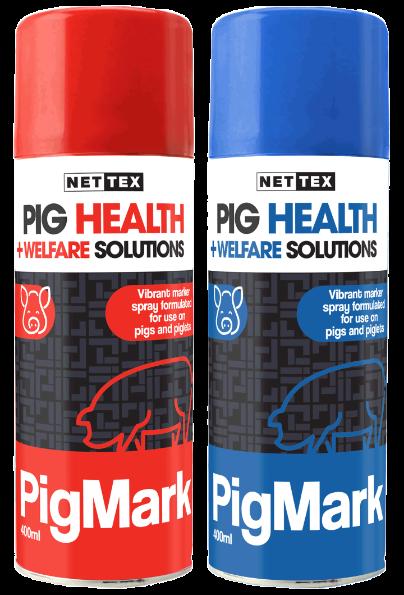
Ms Williams adds: “CalmBlock also provides supplementary minerals, including a high level of magnesium and Phytotec®, a unique blend of plant extracts and yeast components to help maintain optimal health and performance.”
Visitors to the Nettex stand (20-653) will also be able to learn more about other products in the Nettex pig range, including:
StimuLife - an oral paste containing optimum levels of vitamin E, digestible energy and probiotics to help support the piglet’s natural immune function.
RevitaLyte – a highly palatable blend of electrolytes, betaine, prebiotics and organic acids on a high-energy base, aiding hydration and stimulating water and feed intake, particularly during key challenging periods.
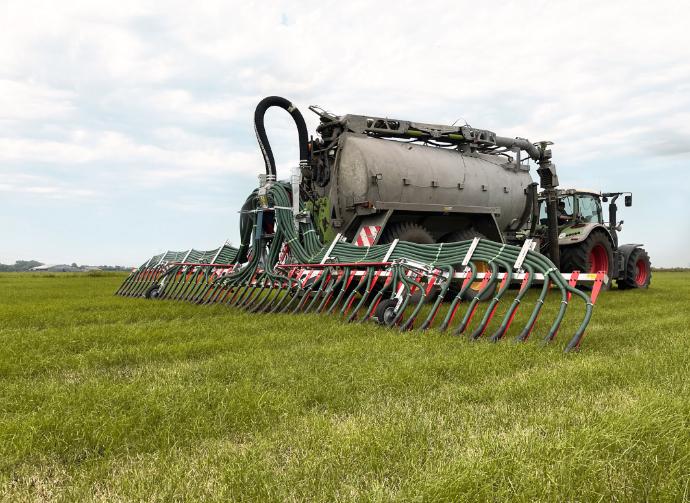

he latest round of Farming Equipment and Technology Fund (FETF) grants have been released, including new contributions of almost 50 percent towards both fixed and mobile slurry separators, applicators and equipment such as scrapers, nurse tanks and pumps.
Vogelsang’s Andy Hayhurst explains how this could make separation a more popular proposition and how farmers can benefit from improving their slurry equipment.
“FETF grants have covered separators in the past, but this latest round is offering £25,000 towards a mobile separator with an estimated average value of £54,580, and £9,516 towards a fixed separator with an average value of £19,033,” explains Mr Hayhurst.
Mobile separators represent a new opportunity for contractors and farms with multiple sites to manage slurry more efficiently. The grants dictate that the separator must be capable of producing a stackable fraction with a dry matter of 25 percent or more.
“The Vogelsang XSplit is capable of achieving a dry matter of 40 percent, which also makes the dry product suitable for green bedding. Whilst the grants don’t expect this level of separation, green bedding is a sustainable and cost-effective system that is used
widely in Europe and is starting to gather momentum in the UK too,” he says.
Higher than average rainfall during winter has put pressure on slurry store capacity. The national trend is also seeing herd sizes growing so many farms can reduce capital outlay on larger slurry storage by opting to separate.
“Many farms come very close to reaching storage capacity, especially over winter. Having a mobile separation service offered by a contractor, or investing in a fixed separator, could be a cost-effective option if farms intend to maintain or slightly increase cow numbers,” says Mr Hayhurst.
He suggests there may be ways for farms to share a mobile separator or to work with a contractor on a rota basis to reduce the pressure on storage.
“The key benefit of the mobile separator is that it can be operated almost anywhere to reduce the amount of liquid being stored. The size of grant towards a mobile unit is almost 50 percent, which will no doubt increase demand for farms that want to cooperate or contractors looking to offer an additional service,” he adds.
Beyond the storage benefits that separators offer are the advantages when it comes to applying slurry.

Applying a separated liquid is far less wearing on machinery and requires less pumping power for umbilical application.
“There are multiple grants offering a 50 percent contribution towards dribble bar, trailing shoe and shallow injection systems. All of these applicators work more efficiently when the slurry being pumped is homogenous. The use of a separator will take the strain off pumps, macerators and applicators by removing dry matter that can clog and wear machinery,” he says.
The focus of the grants is on smaller dribble bar, trailing shoe and injection applicators, which shows a move to encourage smaller farms to invest and move away from splash plates which have been banned in some countries and are likely to be phased out altogether in the UK.
Included in the list of grants are dribble bars with working widths of at least 6 metres and a separate grant for units with a minimum working width of 10 metres. However, no maximum working width has been stated.
“There are two grants for trailing shoe applicators, with the first for widths above 6 metres and the second for working with at least 8 metres. The lack of a maximum working width suggests that these grants could be used to gain funding for larger 12, 18, 24 and 36 metre
applicators. However, with a maximum amount of £8,016 available this will be a smaller contribution to a larger applicator,” he says.
Regardless of what investment farms are willing to make, the message from DEFRA is clear: slurry management needs to become more efficient to reduce emissions and make it more sustainable.
“It is ironic that the use of slurry is one of the most sustainable ways to fertilise the land, yet it has become a problem waste product. If managed well, separated, applied directly to soil at the optimum time, slurry is a valuable and sustainable resource,” says Mr Hayhurst.
The application window for the latest round of FETF grants runs from March 17th to April 28th. Farms and businesses wanting to apply for a grant should check the specifications of the equipment that is covered and use the online scoring system.
“For anybody looking at separators or application equipment such as trailing shoe machinery, Vogelsang has open days planned for 2026 and is always on hand to discuss what farms are looking to achieve and what the options are available. As ever, when these grants are made available, we see a sharp rise in demand which can only be a good thing for agriculture as a whole,” he concludes.
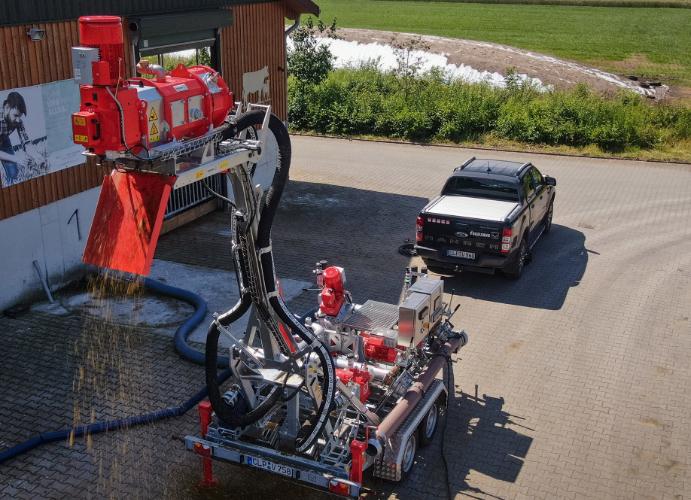
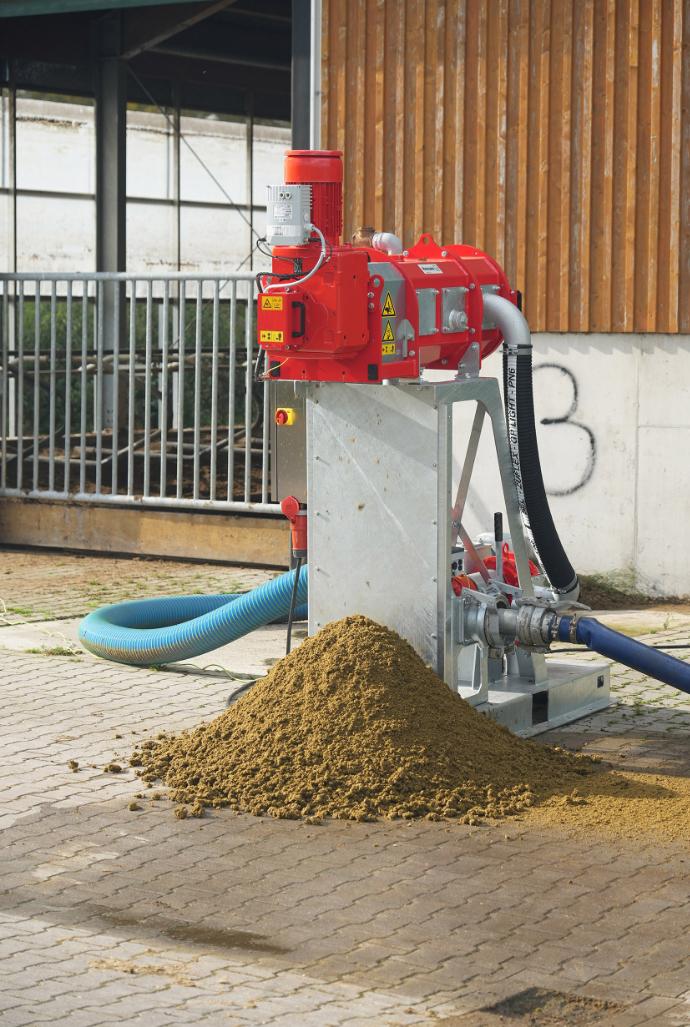

udges of one of the design industry’s most coveted prizes, the BIG SEE Product Design Awards, have recognized theadvanced stylingof the newSTEYR®Cervus CVT 360435hp tractors, with a category win for the range that marks the secondBIGSEE success for STEYR in just two years.

Launched in 2018 as a regional initiative to explore the creative potential of south-east Europe, the BIG SEE Awards have since grown to become globally recognized. Today, BIG SEE is a cultural and business platform that connects original creative achievements in product design globally.


Previewed at Agritechnica 2025, the Cervus CVT is a new tractor range manufactured at the brand’s St. Valentin plant in Austria, and is STEYR’s first 400hp+ range. A ground-up new design features an8.7-litre FPT Cursor 9 engine and new 4x2 range 60kph CVT, that combines high power in a compact package for maximum flexibility. This makes it equally suited to work ranging from ballasted heavy draft cultivations tofront/rear hitch tasksor unballasted high payloadtransport, all aided by optional central tire inflation. The Cervus CVT also features a new cab that is among the quietest in its class, with operator comfort further enhanced by semi-active cab suspension and a
new independent suspended front axle. All of this is packed within distinctive styling that also features high-intensity lighting and permits easy service access.
“It’s great to see the new Cervus CVT mark yet another win for STEYR in the BIG SEE Product Design awards,” says Franz Josef Silber, head of product marketing at STEYR.
“Creative yet practical design has always been a STEYR hallmark, and we are really looking forward to bringing the style and substance of the new Cervus CVT to market.” U d M hi

MF 5711M
Dyna 4 Essential
2021, 115hp, 986hrs 11024187
Fendt 516 Power+
2018,160hp, 6945hrs 31023814
MF 5S.125
Dyna 4 Essential 2022,125hp,1622hrs 11025483
MF 6716S
Dyna 6 Essential 2021,115hp,2371hrs 11026842
5506hrs 11022938
Deere 324A mower conditioner 2.5m working width 11026093
MF 7718S
Dyna 6 Efficient 2020,180hp, 5050hrs 21025136
MF 8S.225
Dyna 7 Exclusive 2021,225hp,4572hrs 11024977
Fendt 724 S4 2017,240hp,9099hrs 31023485 Fendt 824 Profi+ 2018,240hp,7400hrs 31027127 Fendt 939

TH WHITE Agriculture is expanding its presence in Gloucestershire and Oxfordshire with the acquisition of assets from Cotswold Farm Machinery at Fosse Cross, effective 1st April 2026.
The dealership will operate under the T H WHITE name, supplying the full Case IH range. This move follows the planned retirement of Cotswold Farm Machinery’s owners and sees the Cotswold team transfer to T H WHITE, ensuring continuity for customers to work with familiar faces whilst benefiting from the backing of a larger, long-established business, which also represents New Holland in the region.
Local farmers will have continued access to Case IH tractors, harvesting equipment, hay and forage machinery, precision technology and now, T H WHITE’s comprehensive parts and service support.
Director Adrian Lovegrove will oversee the integration of the Cotswold Farm Machinery business, maintaining the personal service customers value, backed by T H WHITE’s 194 years of experience supporting British agriculture.
Opening hours remain unchanged
Location:
Fosse Cross Industrial Estate Foss Cross, Cheltenham GL54 4NW Tel: 01285 720606
Adrian Lovegrove, Division Director at T H WHITE, said:
“As a family-owned business, we are pleased to welcome a team that shares our values and commitment to customer service. This expansion strengthens our presence in the region while ensuring farmers continue to receive trusted advice, expert engineering, enhanced infrastructure and reliable support from people they know.”
Cotswold Farm Machinery owners Simon and Janet Carrington added:
“After a long and successful tenure representing the Case IH brand, we are delighted to transition to such a trusted and reputable dealer as T H WHITE. This move gives us full confidence that the CFM workforce will remain secure and that valued customer relationships will continue to be maintained.”
David Rapkins, CNH Business Director for the UK and Ireland, added:

“We are delighted to expand our partnership with T H WHITE. Their customer-first approach, investment in facilities and strong local relationships make them an excellent partner to represent New Holland and Case IH in these territories. Together we will continue delivering value, choice and service to farmers across this important agricultural region.”

Readman Mowers
The Shed, Sand Lane, Wilberfoss, YO41 5PB
Tel: 01759 380 231 or 07860 684 597 www.readmanmowers.co.uk


New Holland has announced updates to its ROI dealer network. These changes ensure all New Holland customers across the region will continue to receive comprehensive sales and service support from well-established main dealers. The changes, effective immediately, are as follows:
• Murphy Motors will expand their territory to cover the entirety of Waterford County, supported from their Glenmore depot.
• MC & S Agri Sales will expand south to cover the Southern area of Cork County, supported by both their Bandon and Ballincollig depots.
• Colemans Millstreet will expand their territory to cover the Northern area of Cork County. Support for this area will be provided by their Millstreet and Mallow depots.
David Rapkins, Commercial Business Unit Director for UK and ROI said “This expansion signals an important step forward for these three dealers, highlighting their shared commitment to delivering continued support to New Holland customers. We would like to extend a sincere thank you to the entire team who worked at Cavanagh’s of Fermoy, for their longstanding service and commitment to the brand over the years”.
https://www.claas.co.uk
TheARION600and500range-thenewmid-rangestandard Assistingyou,whereveritisneeded. Oneofourmostpopulartractorshasjustgotevenbetterthankstoahostofnew functionsdevelopedbyourengineersinconsultationwithARIONdrivers. Afterall,theyworkinthefieldeveryday,sotheyknowexactlywhattheywant.

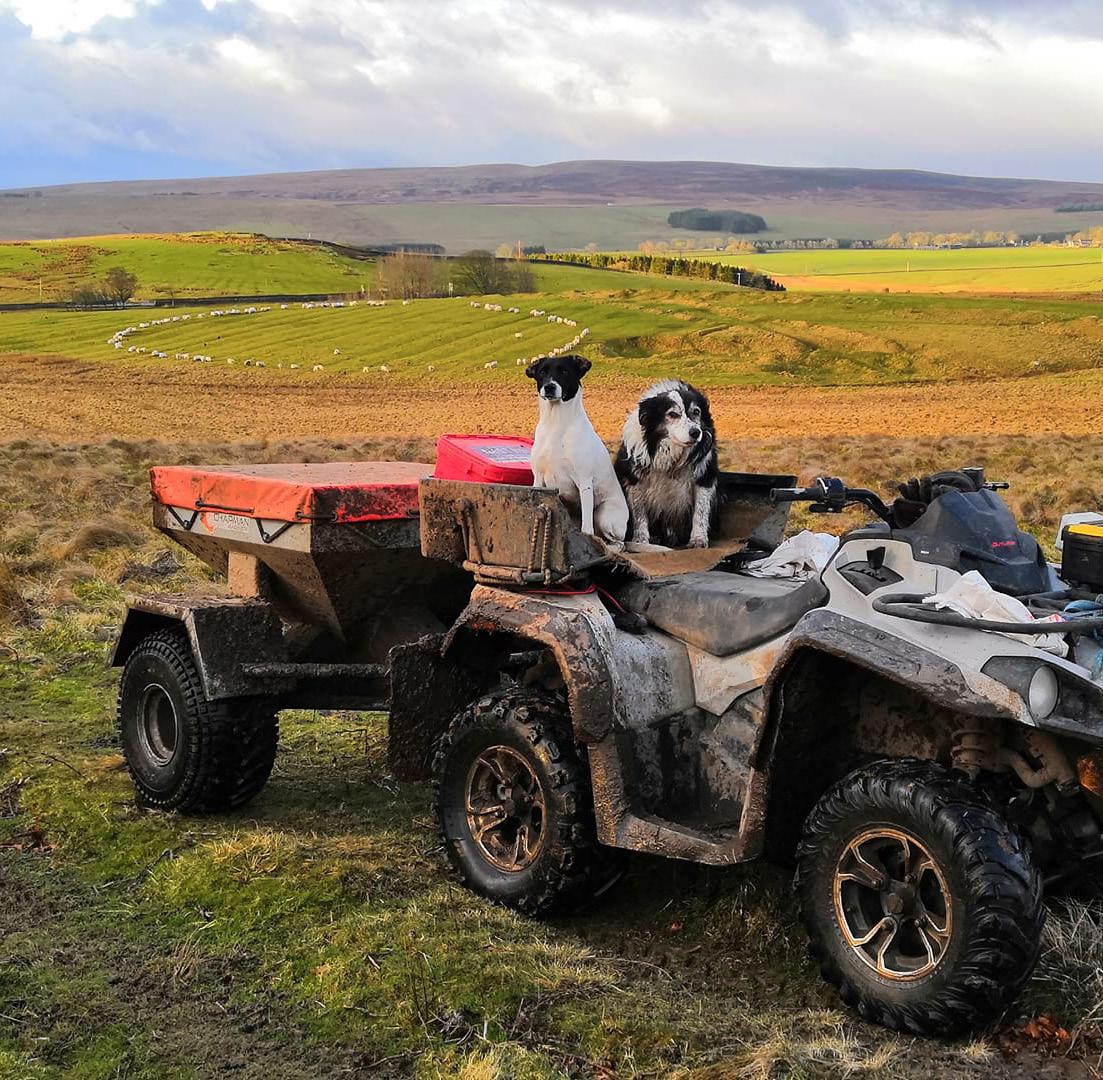

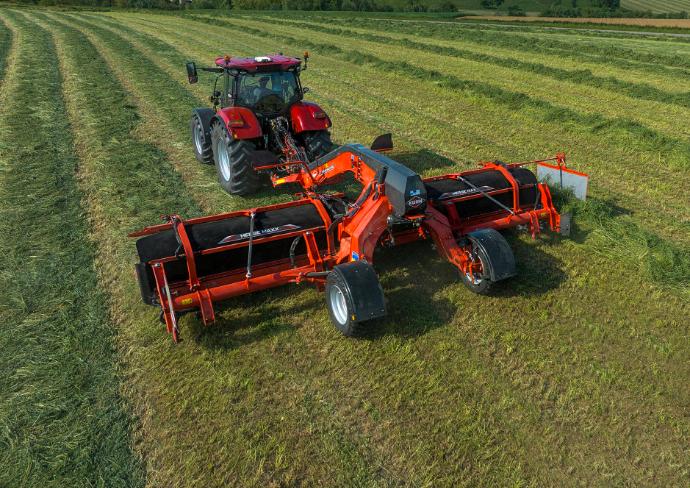
KUHN Farm Machinery will demonstrate some of its most recent product launches at Scotgrass 2026, including its GMD 15030 14.5m mounted mowers, new generation MergeMaxx 952, and updated VBP 7160 OC 14 combination round baler wrapper.

Capturing the attention of showgoers will be the GMD 15030 – the widest mounted mower on the market. Folding to under 3m for road transport, the non-conditioner model is suited to lighter crops or multi-cut systems, and features four 3.1m, seven-disc beds for a 14.5m one pass cutting width. The patented 180degree gearbox design allows each pair of beds to fold without breaking the driveline, with outputs up to 20ha/hr possible when used with KUHN’s 3.1m GMD front mower.
Sam Alford, KUHN’s grassland product specialist, says the GMD 15030 will be a popular machine at the show. “Dropping 14.5m of grass in one pass offers significant output per day to cut crops at the right time to preserve the highest quality. Existing KUHN features such as OPTI-DISC ELITE, LIFT-CONTROL and FAST-FIT knives are all available, while
operation through Isobus is also possible.”
Following the GMD will be the new generation MergeMaxx 952 model with significant design changes and strengthening of the pickup units and running gear for improved longevity and reliability. Modifications to the conveyor belt design will help reduce impurities and maintain reliability when handling a wide range of forage types. Forage in hard-to-reach areas can be picked up with the conveyors paused, allowing it to be moved to a more favourable part of the field.





KUHN’s latest VBP 7160 OC 14 will also be working with a redesigned bale weighing system integrated into the wrapping table for greater accuracy. The addition of the weigher on the table means only the bale is weighed and not the whole machine, with bales between 100-1500kg precisely measured. Standard VB 7100 models now have the weigher integrated into the bale kicker. Slope compensation is included for greater precision, with various Task Controller options for integration with farm management systems and recording locations of each bale for accurate yield measurements.
The practical demonstrations at the show will allow visitors to see how machines perform, with KUHN’s UK and European technical experts on hand to discuss requirements. Scotgrass is taking place on the 13th May 2026 at Slacks Farm, Lochmaben, DG11 1RY.


Contact your local dealer to book a demo on your premises today!
RVW Pugh
Mellington, Churchstoke, Montgomery, Powys, SY15 6TQ
Tel: 01588 620545
Web: www.rvwpugh.co.uk
RVW Pugh
Oakwood Park, Holmes Chapel, Cheshire, CW4 8AX Tel: 01477 533560
Web: www.rvwpugh.co.uk
RVW Pugh
Unit 2, Holland Business Park, Spa Lane, Lathom Lancashire, L40 6LN
Tel: 01695 816444
Web: www.rvwpugh.co.uk

Merlo UK is making it easier than ever for businesses to invest in premium agricultural equipment with its latest Retail Finance Schemes. Designed to help spread the cost while keeping cashflow healthy, the offer includes 0% APR options on selected agricultural telehandlers, so you can fix your finance and plan for growth with confidence.

Under the new terms, customers can choose from flexible payment options such as 1 + 2 annual payments or 4 + 20 monthly payments at 0% APR, available on up to 40% of the recommended retail price (RRP) on eligible models. There’s also an alternative 3 + 33 monthly payment plan at a competitive 1.99% APR for even greater flexibility.
For smaller machines like the CINGO range, the finance deal is equally attractive, with low-deposit plans and 0% interest spread over simple instalments.
Whether you’re expanding your fleet or upgrading to the latest Merlo technology, these retail finance options could make ownership more accessible and affordable than you think. Speak with your local Merlo dealer to explore the best package for your operation and see how you can benefit from this limited-time opportunity.
Finance Terms & Conditions
Retail customers only. Maximum balance
financed is 40% of RRP, subject to DLL terms and conditions. Finance offers exclude fleet deals of three or more machines.
Model eligibility:
• P27.6 and TF27.6 models are eligible only for the 4 + 20 payment plan at 0% APR.
CINGO Retail Finance Schemes (0% interest):
• CINGO M500DM: £500 deposit, 50% payable after 6 months, 50% after 18 months
• CINGO M700TD: £700 deposit, 50% payable after 6 months, 50% after 18 months
Finance for Merlo agricultural models is available through Merlo Finance, a trading style of De Lage Landen Leasing Limited (DLL). All finance is subject to status and approval. Applicants must be UK-registered businesses and aged 18 or over. VAT is excluded unless stated. Fees may apply. Finance cannot be combined with other campaigns.
DLL is authorised and regulated by the Financial Conduct Authority in respect of agreements regulated by the Consumer Credit Act 1974.
Merlo Finance Sales Desk: Agricultural: 01923 810078 Construction: 01923 810946

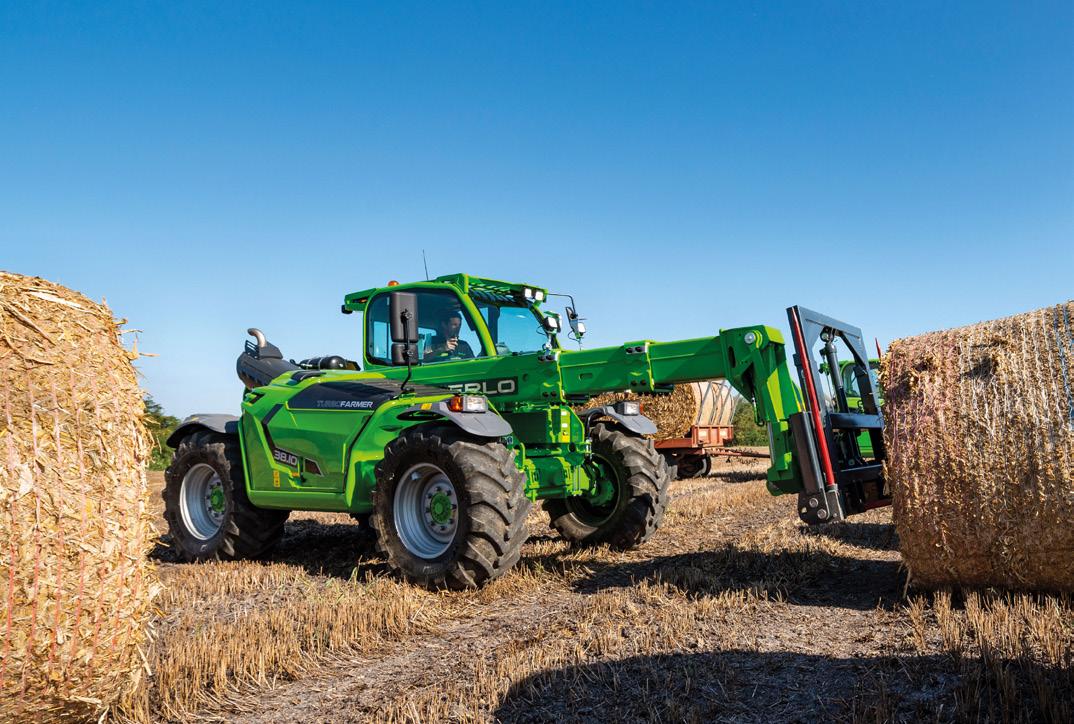
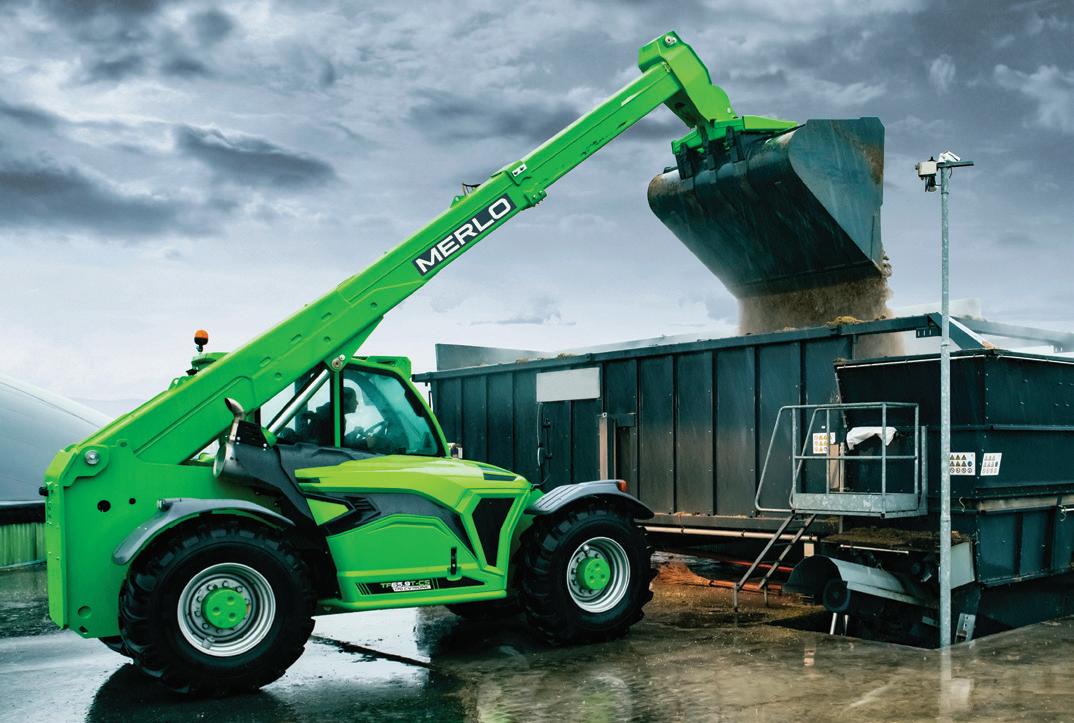

Stubbings Bros Ltd.
TR Machinery Ltd
Ventnor Isle of Wight PO38 2JN
TRMachinery Ltd
Oak Tree Works, NI Park, Newport, Shropshire
Phone : 01983 551443
TF10 9LH
www.stubbings-bros.co.uk
Phone: 01952 936900 www.trmachinery.co.uk
Turney Agriculture
Burnside Business Park Market Drayton Shropshire
Middleton Stoney Bicester Oxfordshire
TF9 3UX
D.A. Forgie Lisburn
BT27 5QB Phone: 02832 677736 www.forgie.com
OX25 4AB Phone: 01869 343333 www.turneygroup.com
Phone : 01630 653801 www.trmachinery.co.uk
Turney Agriculture Unit 8 Woodway Princes Risborough Buckinghamshire HP27 0NN Phone: 01844 346690 www.turneygroup.com
D.A. Forgie Co Londonderry
BT49 9DW Phone: 02877 722375 www.forgie.com
Turney Agriculture, Groundcare & Country Store Fleet Lane, Brendon Gloucestershire Tewkesbury, GL20 7EF
Phone: 01684 772912 www.turneygroup.com
RVW Pugh, Mellington, Churchstoke, Montgomery Powys.
RVW Pugh, Mellington, Churchstoke, Montgomery Powys. SY156TQ
SY15 6TQ
Phone: 01588 620545 www.rvwpugh.co.uk
Phone : 01588 620545
www.rvwpugh.co.uk
RVW Pugh
Spa Lane, Lathom, Unit 2, Holland Business Park, Lancashire, L40 6LN
Phone: 01695 816444
www.rvwpugh.co.uk
D.A.Forgie Lisburn,
RVW Pugh, Oakwood Park, Holmes Chapel, Cheshire
CW4 8AX
Phone : 02892677736 BT27 5QB www.forige.com
Phone : 01477 533560 www.rvwpugh.co.uk
RVW Pugh, CW4 8AX Chapel, Cheshire Oakwood Park, Holmes

Phone : 01477533560
www.rvwpugh.co.uk
D.A.Forgie Co Londonderry, BT49 9DW
RVW Pugh, Unit 2, Holland Business Park, Spa Lane, Lathom Lancashire, L40 6LN
Phone : 02877722375 www.forige.com
Phone : 01695 816444 www.rvwpugh.co.uk
Brian Robinson Machinery Ltd Birkby Lane East Cowton, Northallerton North Yorkshire
Cooks Midlands Ltd. Unit 10 Horsepool Grange Elliotts Lane, Markfield LE67 9TW
DL7 0DX
Phone: 01325 378552
Phone : 01530 249191
www.brianrobinson.co.uk
www.cooksmidlands.co.uk

Bobcat has announced the launch of new ranges of auger and trencher attachments compatible with a wide selection of the company’s loader, mini excavator and telehandler models. The new robust line of augers features five drive models and can be used with a comprehensive selection of auger bits designed for different ground conditions. Alongside this, the versatile and durable trencher range also comprises five new models offering a wide range of digging depths.
The new augers and trenchers join the Bobcat attachment line-up, one of the most extensive on the market. To take full advantage of this, all of Bobcat’s compact machines have been developed as tool carriers, which in combination with the wide selection of attachments, can be employed to tackle challenging applications within construction, landscaping, agriculture, demolition, recycling, material handling and many other industries.
The new generation of robust and reliable auger drives comprising the 11H, 28H, 28LH, 33H and 55LH models, is compatible with a wide range of Bobcat excavators, skid-steer and track loaders, small articulated loaders, compact wheel loaders and telehandlers. The new auger attachments allow users to dig holes with speed and plumb-line accuracy. Using heavyduty hydraulics with flows across the five models covering the range from 30 to 200 l/min, the auger attachments can bite into soil in any condition with ease and efficiency.
cover digging depths from 450-1500 mm, along with a selection of chains to match different job requirements. The trenchers use the existing Bobcat breaker fixing caps to ensure compatibility with Bobcat mini excavators. The Mini and Standard loader frames are the same as those for use with the new auger range.
Product features in the new augers include top mounted hose ports, where angled fittings route hydraulic hoses upwards from the hood, providing unobstructed operation and allowing the drives to fit easily down the hole. The integrated motor reduces the size and weight of the drive, as well as lowering the number of parts and potential leak points. The augers also provide added digging depth, gaining an extra 30 cm plus of dig depth because the entire drive unit follows the bit into the hole.

There are two LH auger drives in the range that come with an innovative LED alignment system integrated into the auger drive's hood. It offers operators a clear, simultaneous view of both the drive and the digging hole. When the auger is perfectly aligned, its lights display a full green ring. If it is misaligned, a mix of green and red lights appears, with the following illuminated green side guiding the operator to re-centre the auger for a full green indication.
The new range of augers uses the existing Bobcat breaker fixing caps to cover the full range of Bobcat mini excavators without introducing any new fixing caps. Bobcat has also introduced new loader frames (Mini and Standard) for use with the new range of augers.
The new generation of Bobcat trenchers encompasses the LT90, LT90 HD, LT120, LT120 HD and LT150 HD models, built for reliability, durability and outstanding performance. For the first time, these trenchers are also available for Bobcat mini excavators.
Spoil is efficiently removed and finely crumbled, making it easy to compact back into the trench for a stable foundation. The five new trencher models

In the trenchers, product features include a heavyduty crumbing system: a robust, spring-loaded crumber keeps constant contact with the trench floor, ensuring thorough spoil removal and a clean, finished trench without the need for extra passes. For added versatility, the crumber can be easily folded away when not required. The powerful planetary drive delivers exceptional torque and high-power output for tough digging conditions. This system enhances durability, extends service life and maximizes overall efficiency.
An adjustable skid foot features up to four preset digging depths: this provides flexibility to work at multiple depths using the same trencher model. Operators can quickly select the right setting to meet the specific requirements of each job. There is also side-shift capability for confined spaces: the trencher’s frame can be shifted to the side, making it easy to dig right up against foundations, kerbs and other permanent structures.


Tel: 01625 422489
www.barlowsfm.co.uk



Apacked display of static and working tractors and grassland equipment from Massey Ferguson will highlight the wide selection of products available from the brand to maximise forage production.
The MF working demonstrations begin with a front mounted MF DM 316 FQ-KC mower, combined with the rear mounted MF DM 316 TL-V-KC, which are both fitted with a tine conditioner to provide a faster wilt. These are followed by a MF TD 776 X, 7.7m hook tine tedder, and MF RK 662 6.6m twin rotor rake, before a MF RB 4160 V variable chamber baler, and an MF 3130 F Protec combination baler wrapper complete the working lineup.
Lindsay Haddon, advertising and sales promotion manager, Massey FergusonUK, says: “We’re really looking forward to Scotgrass to showcase our range of grassland equipment and tractors to farmers and growers. It’s great to have a grassland demonstration show again as it allows users to see the machines working and speak to product specialists, which may not be possible at indoor shows or on farm demos.”
Each grassland implement will be powered by an MF 5M, MF 5S, MF 6S or MF 7S, while collecting the bales will be handled using an MF 5S.145 fitted with an MF loader, and the latest MF TH 7038 telehandler, with the Dyna-CT transmission. This latest option provides stop/start technology, cruise control and speed limiter, to make daily operations more efficient and comfortable. The extensive static displays include models from the recently
revised MF 1M series and the new MF 2M compact range, along with an MF 9S that has been through the MF By You customisation studio.
“MF’s full range of machines will be at Scotgrass, including the MF 8S Xtra, which recently achieved first place in the DLG PowerMix tests. The Dyna EPower model beat six competitors in the 330hp category, with the results indicating unmatched possible fuel savings up to 3.74 l/hr. The Dyna-VT transmission recorded second place in the CVT category,” adds Lindsay.
Scotgrass is also the first stop for the latest MF eXperience tour, which is heading to Hexham and Surrey after the show. This provides customers with an immersive look at the MF range and the chance to operate machines. For more information regarding the invite-only MF eXperience tour, please contact your local MF dealer, or speak to the team at Scotgrass.
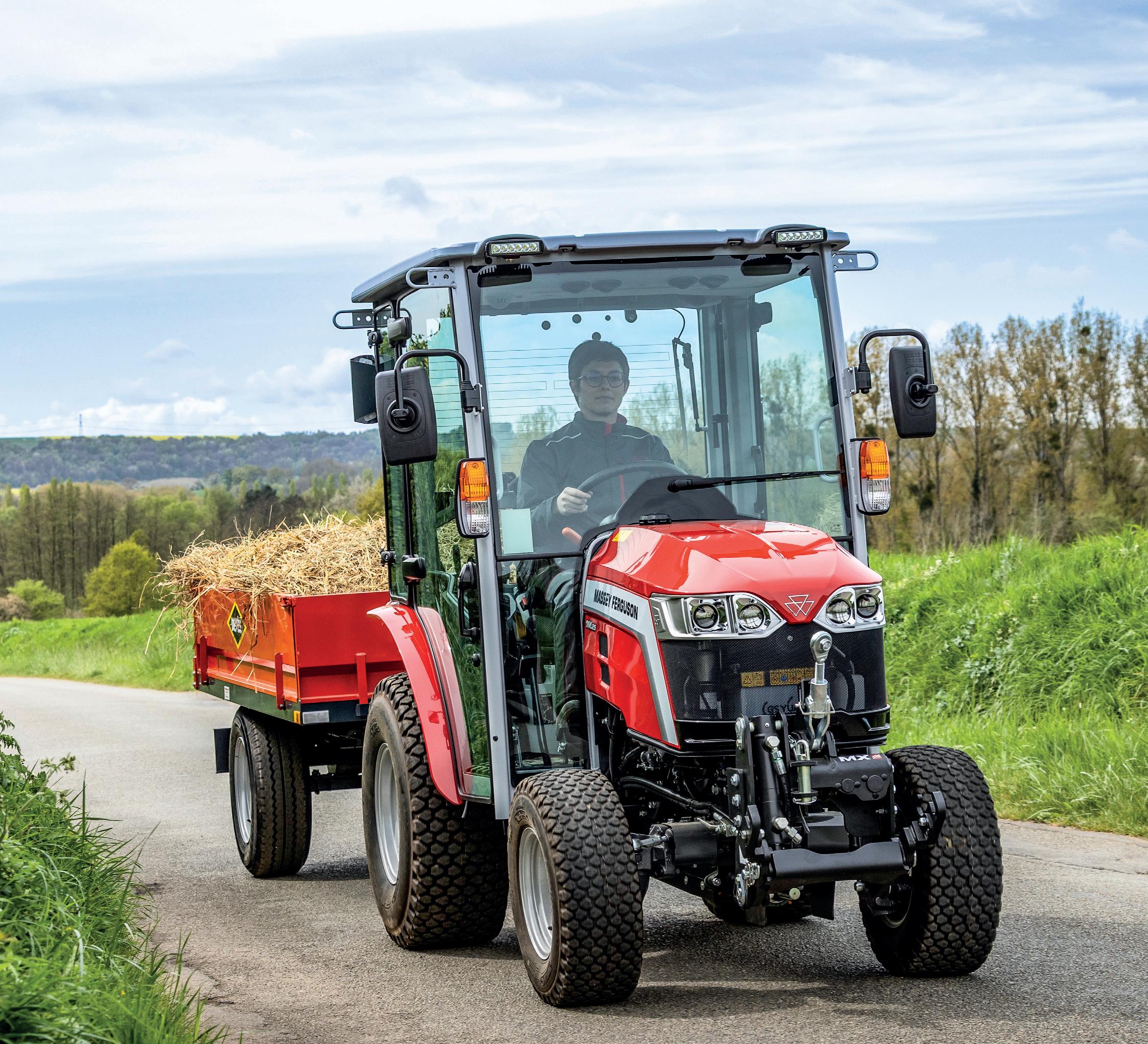
ANew Era in Power isn't defined by a single solution it's defined by choice.
But what does "choice" actually mean? It means having the right power for the right application, every time. For JohnDeere Power Systems, A New Era in Power is our commitment to providing a range of solutions that enables this choice at every stage.
We are actively advancing next-generation diesel engines, integrating cutting-edge battery technology where it delivers the most value, ensuring compatibility with renewable fuels, and delivering comprehensive aftermarket support. This multi-prong approach ensures that our customers have the proven, reliable, and optimal solutions to thrive in this new era.

Our commitment is reflected in our versatile lineup, engineered to meet power demands across industries. Our products are backed by comprehensive aftermarket support designed to protect your performance, time, and costs.
Small Size. Strong Impact.
Experience the high-horsepower industrial diesel engines that anchor the Next Generation Engine ("NGE") lineup, built to durably perform in the most demanding applications. This range unlocks bigger possibilities for heavy-duty equipment where relentless power is the only option.

Discover compact diesel engines and efficient power solutions engineered to deliver seamless integration and significant performance. This reliable industrial lineup provides strong, versatile power for a wide range of applications that keep communities running.
Mid-Size Muscle. Modern Energy.
Explore engines and hybrid-ready technologies that provide the robust, reliable power needed to drive the modern jobsite. These proven solutions offer an ideal balance of power density and advanced technology for demanding applications.
At CONEXPO 2026, we unveiled the latest additions to our Next Generation Engine lineup: the new JD5 and JD8 industrial engines. These 5.0L and 7.5L engines will be designed to provide our customers with flexibility and performance where they need it most. The JD5 will offer 93-200 kW (125-268 hp) and the JD8 will offer 187-290 kW (250389 hp).
As part of the NGE lineup, the JD5 and JD8 will be engineered for reliability, durability, performance, and simplified serviceability. This expansion means our customers will have an ideal fit for even more applications, empowering them to build best-in-class equipment powered by JohnDeere as we usher in A New Era in Power.
The JD5 and JD8 will be more than just new engines; they will demonstrate our continued, strategic commitment to investing in diesel technology. They are a core part of our plan to provide a complete power range, serving as the 'missing pieces' of our existing Next Generation Engine lineup. This means they deliver not only the proven reliability, durability, and performance our customers expect, but also the prioritized serviceability they need.





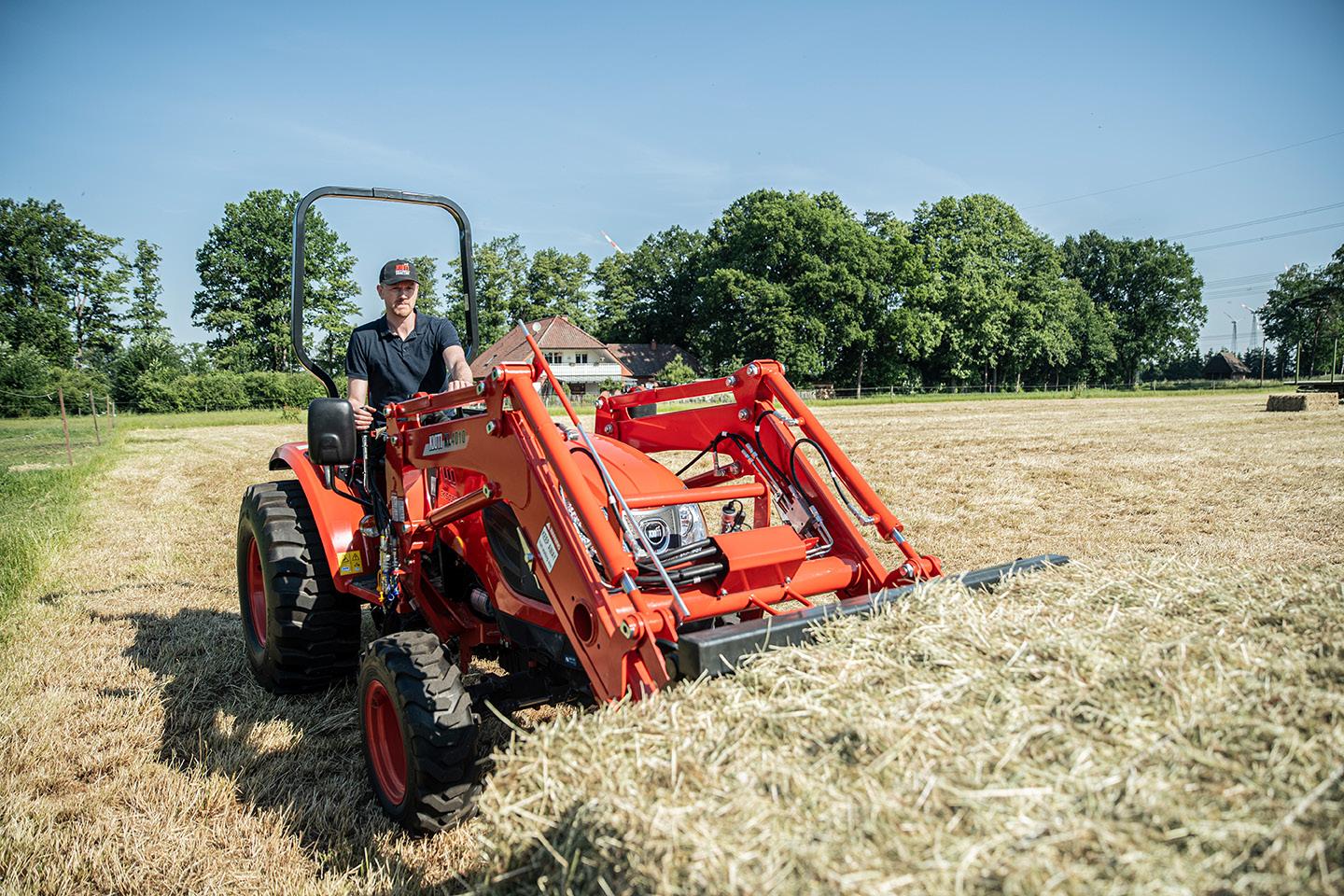
Cheffins, which conducts the largest monthly sale of second-hand tractors and agricultural machinery in the world, has reported sales of over £12.4 million in Q1 2026 throughout both the flagship Cambridge Machinery Sales at the firm’s dedicated site near Ely, and at on-farm auctions across the UK.

Sales are up 14.5 per cent in comparison with Q1 2025 which achieved total sales of £10,829,000. In all, 4,800 lots were offered at both the Cambridge Machinery Sale at on-farm auctions, with the average lot price standing at £2,850.
Export demand has remained particularly robust, with 34% of items sold at the Cambridge sales destined for overseas buyers, with leading

locations including Spain, Poland, Ireland, Ukraine and the Netherlands. To facilitate export, Cheffins processed 240 machines through its specialist washdown facility during the quarter, ensuring compliance with EU phytosanitary regulations for tractors, combines, self-propelled harvesters and a variety of other machinery.
A total of 3,000 lots were sold through the Cambridge Monthly Machinery Sale, with a notable increase in machinery consigned directly from farm, now accounting for approximately 25% of entries.
Headline prices from the Cambridge Monthly Machinery Sale demonstrate continued demand for high-quality, well-maintained equipment, particularly where provenance is clear.
Highlight sales from the quarter included:
• £110,000 for a 2022 Horsch Avatar disc drill which had been consigned straight from a local farm
• £105,000 for a 2023 Case IH 300 Optum tractor
• £62,000 for a 2017 Fendt 724 Profi tractor
• £43,500 for a 2001 John Deere 8410T tractor
• £33,800 for a 2018 Manitou MLT 741— 140V telehandler
Joe Page, Director at Cheffins comments:
exceptionally high. We have seen a marked increase in items consigned direct from farm, which is exactly what both domestic and international buyers are seeking. The Cambridge Monthly Machinery Sale continues to provide a global marketplace, and with our washdown facilities enabling EU export, we are helping farmers release capital quickly while achieving strong returns.”
Cheffins conducted a total of 12 on-farm sales in Q1 2026, with auctions hosted in Lancashire, Yorkshire, Cambridgeshire and Hampshire. One of the leading on-site sales of the quarter was hosted on behalf of Baybutt Holdings in Preston, Lancashire and saw a series of high value modern machinery go under the hammer on behalf of a national salad grower.
Highlight lots from the quarter from on-site sales include:
• £110,000 for a 2011 John Deere 7530 tractor
• £120,000 for a 1990 Mercedes MB Trac tractor
• £134,000 for a 2010 Fendt 820 Vario tractor
• £93,000 for a 2015 Claas Jaguar 870 tractor
Charles Wadsley, Director at Cheffins comments:
“The first quarter of this year has been mainly characterised by a lack of stock. As farming weathers the shockwaves of the new inheritance tax ruling, a lack of government funding, high input costs and wider macroeconomic uncertainty, we have seen a significant slowdown in new machinery trade-ins. This has reduced the volume of equipment entering the auction market. In January, the Agricultural Engineers Association (AEA) reported that new tractor registrations totalled just 8,791 machines in 2025 – down 14 per cent on the previous year and the lowest figure on record. This trend is feeding directly into the second-hand sector, with fewer tractors coming forward for sale.”
“However, while availability has tightened, the quality of machinery on offer has remained
“This quarter has seen a series of high-value on-site sales across the country, driven by a range of factors including retirement, business restructuring and fleet realignment with prices achieved holding firm due to the increasing cost of new machinery. Rising prices have led to farmers and contractors looking to purchase good quality second hand machinery in order to reinvest and improve their fleets ahead of the busy spring and summer months. A highlight of the first quarter was the auction on behalf of national salad grower, Baybutt Holdings, which saw high prices paid for wellmaintained machinery. Looking ahead, we anticipate a busy period of large-scale auctions nationwide, as farmers look to rationalise machinery fleets and release capital ahead of harvest.”

Sitting firmly at the top of Kawasaki’s ATV hierarchy, the Brute Force 750 range embodies everything the brand is known for: performance, real-world capability, and a no-nonsense, can-do attitude. Powered by a 749cc V-twin engine and equipped with electronic power steering, these flagship machines are designed to work hard, go further, and do it all with ease.
With an impressive 37.3 kW (51 PS) on tap and a class-leading 58.1 Nm of torque, the fuelinjected V-twin delivers relentless pulling power and effortless acceleration. Whether towing, climbing, or pushing through challenging terrain, the Brute Force 750 feels unflappable.
For 2026, Kawasaki expands the lineup with the introduction of the Brute Force 750 SE, a model that raises the bar on standard
equipment and everyday practicality. Hand guards come fitted as standard, alongside a robust front brush guard and a chassismounted Warn VRX 25-S winch, providing serious pulling power when conditions turn demanding. It’s a specification that underlines the SE’s all-season, all-terrain credentials.
Both standard and SE models benefit from electronically selectable two- and four-wheel drive, paired with double wishbone suspension at both ends. The result is a machine that


For more information and to find your local Kawasaki dealer, visit
combines automotive-style control with the compact agility only an ATV can offer.
Thoughtful details elevate the experience further. Variable front differential control improves traction in the toughest situations, while a practical handlebar-mounted LED light is a small but telling example of Kawasaki’s attention to real-world usability.
When it comes to allround performance, durability, and sheer capability, the search for the ultimate ATV begins—and ends— with the Brute Force 750.
The Brute Force 750 is available in Grayish Blue, while the Brute Force 750 SE is offered in camouflage colourways.
Kawasaki’s current UK ATV range includes the Brute Force 750/SE, Brute Force 450 T-Cat, and the KFX90 ATV. For more information, visit www.kawasaki.co.uk or contact your local Kawasaki Utility Dealer.




s newly appointed Main Dealers for Yamaha ATVs for North Yorkshire, Tom Taylor ATV can offer you a wealth of choice with their extensive range of New ATVs to suit your individual needs. All pre-owned ATVs are fully serviced in our own workshops to the highest standards, we aim to give you, the customer, that all important “peace of mind”. When your machine requires service or repairs, pick-ups and drop-offs can be pre-arranged. It’s just a phone call away. Specialists servicing Yamaha, Honda and Can-Am ATVs. Come and see us to

view new machine in our showroom, deals always available or call Tom Taylor for a demo on 01904 758105
With over 40 years ATV experience, Tom Taylor knows how provide the best possible service and support to the industry. We have a comprehensive selection of ATV Accessories and Equipment available from • C-DAX ATV Equipment • LOGIC ATV Equipment • TFM TRAILERS • Longdog ATV Equipment • Chapman Machinery • Moose ATV Products • Data Tool Tracker Recovery Systems.
RVW Pugh Ltd
Oakwood Park, Holmes Chapel Cheshire, CW4 8AX
Tel: 01477 533560 www.rvwpugh.co.uk
Stirling's Powersports
East Fulton House, Darluith Road, Paisley, Linwood, PA3 3TP
Tel: 01505 382222 www.stirlingspowersports.com
RVW Pugh Ltd
Mellington, Churchstoke Montgomery, Powys SY15 6TQ
Tel: 01588 620545
ATVTrac, the renowned agricultural machinery security device has been officially endorsed by a further two more brands, with both Aodes and Loncin ORV selecting the proven system as their preferred security partner.
Launched more than a decade ago, ATVTrac benefits from Thatcham approved, multi-tier technology, utilising GPS, GSM and Radio Frequency technology, enabling the recovery of stolen machinery in some of the most difficult locations, with no-less than 14 different manufacturers now endorsing the system for fitment.
ATVTrac’s Rupert Archer Smith, added,“We’re pleased to be able to add a further two manufacturers to our ever-growing endorsement programme, which very much demonstrates their trust in what we do. ATVTrac is a flexible security solution that can be installed on all products in both Loncin’s and Aodes ranges, and can be scaled to not only protect machinery for small holders for theft, but can also be used in large fleet scenarios too, to assist with asset location and job management, as well as protecting lone workers too.”
As well as proven security features, ATVTrac also offers useful additional functions too, such as the

log of usage (hours), the ability to set alerts for servicing or maintenance and even an emergency alert should the machinery be involved in a roll-over incident; a great function for lone workers.
And to make the adoption to tracking even easier, ATVTrac can now be funded and fitted with 0% finance, not only spreading the subscription but also covering fitment too, all from as little as £30 per month.
ATVTrac can be installed on many types of machinery too, with full support provided via the 24/7 Secure Operating Centre as well as additional support from Securitas too, should a stolen machine need to be secured quickly, when police resources may be stretched.
And as an added bonus, customers who insure their vehicle on an NFU Mutual Agricultural Vehicle Policy and have a Thatcham Category ST tracker such as ATVTrac fitted, can get up to 10% discount on their insurance policy. Additionally, customers who have an agricultural and construction security equipment registration (marking scheme) can get up to 12.5% discount on their NFU Mutual Agricultural Vehicle insurance policy too. These can be combined to receive up to 22.5% discount. Find out more atnfumutual.co.uk
For more information visitwww.atvtrac.co.ukor talk to your nearest Aodes or Loncin dealer.




Corvus Terrain DX4 and DX2. The first UTVs made in Europe bring together pioneering sustainability and advanced technology. Constructed for the hardest off-road work in agriculture, livestock, forestry, groundscare and construction.
Highly adaptable, the Terrain features a 3-cylinder 24hp Yanmar Diesel engine for excellent fuel efficiency and range.
• St ag e V emission compliant
• Road legal to T1a/T1b tractor regulation with top speed of 40mph/65kph
• Power steering
• Full cab and heater options, including air conditioning
Supported by a specialised dealer network throughout the UK and Ireland.
To find your local dealer, visit www.bossorv.co.uk
ABREY AGRICULTURAL
Pamphillions Farm, Purton End, Debden CB11 3JT 01799 543208
ACE ATV
Woodgate Road, Stoke Prior, Woodgate, Bromsgrove B60 4HB 01527 578668
DAVID TAYLOR GARAGES
Granada Park Motors, A4077, Llangattock, Crickhowell NP8 1HW 01873 810304
TOM TAYLOR ATV
Unit 16/17 Windmill House Ind Est, Sutton Road, York YO32 2RA 01904 758105




• Fuel-injected 420 cc OHV engine
• Auto clutch with manual shifting

£520 off (excl. VAT)
• Fuel-injected 518 cc OHV engine
• Auto clutch with manual shifting

• Fuel-injected 518 cc OHV engine
• 204 kg cargo bed capacity
TRX420FM1/FM2: £420 off (excl. VAT)
• Swing-Arm Suspension (Fixed Rear Axle)
• Power Steering (FM2)
• Fuel-injected 420 cc OHV engine
• Sturdy front and rear racks
• Auto clutch with manual shifting
• 1.9L water resistant utility box
• Swing-Arm Suspension (Fixed Rear Axle)
• TraxLok® switchable 2WD/4WD
• Available in Red or Green
• Power Steering (FM2)
• Sturdy front and rear racks
• 1.9L water resistant utility box
• TraxLok® switchable 2WD/4WD
• Available in Red or Green
• Independent Rear Suspension (IRS)
TRX520FM2/FM6: £520 off (excl. VAT)
• Swing-Arm or Independent Rear Suspension (IRS)
• Power Steering
• Fuel-injected 518 cc OHV engine
• Sturdy front and rear racks
• Auto clutch with manual shifting
• 1.9L water resistant utility box
• TraxLok® switchable 2WD/4WD
• Swing-Arm or Independent Rear Suspension (IRS)
• Available in Red or Green
• Power Steering
• Sturdy front and rear racks
• 1.9L water resistant utility box
• TraxLok® switchable 2WD/4WD
• Available in Red or Green
• Impressive 454 kg towing capacity
SXS520 PIONEER: £520 off (excl. VAT)
• Five-speed auto transmission with optional manual shifting
• Fuel-injected 518 cc OHV engine
• 204 kg cargo bed capacity
• TraxLok® switchable 2WD/4WD
• Independent Rear Suspension (IRS)
• Side-by-side seating with easy access
• Impressive 454 kg towing capacity
• Five-speed auto transmission with optional manual shifting
Honda ATVs & UTVs—Built to Work as Hard as You Do. Honda ATVs and UTVs deliver the performance and reliability professionals trust every day. From farming and forestry to gamekeeping, equestrian work, and snow clearing, these machines handle any terrain, any weather, and countless tasks with ease. Known for robust build quality and exceptional dependability, your Honda quickly becomes an essential part of your routine. Backed by a 2-year manufacturer’s warranty† as standard, your Honda ATV or UTV is ready whenever you are.
• TraxLok® switchable 2WD/4WD
• Side-by-side seating with easy access
Power of Dreams.
Honda ATVs & UTVs—Built to Work as Hard as You Do. Honda ATVs and UTVs deliver the performance and reliability professionals trust every day. From farming and forestry to gamekeeping, equestrian work, and snow clearing, these machines handle any terrain, any weather, and countless tasks with ease. Known for robust build quality and exceptional dependability, your Honda quickly becomes an essential part of your routine. Backed by a 2-year manufacturer’s warranty† as standard, your Honda ATV or UTV is ready whenever you are. The Power of Dreams.


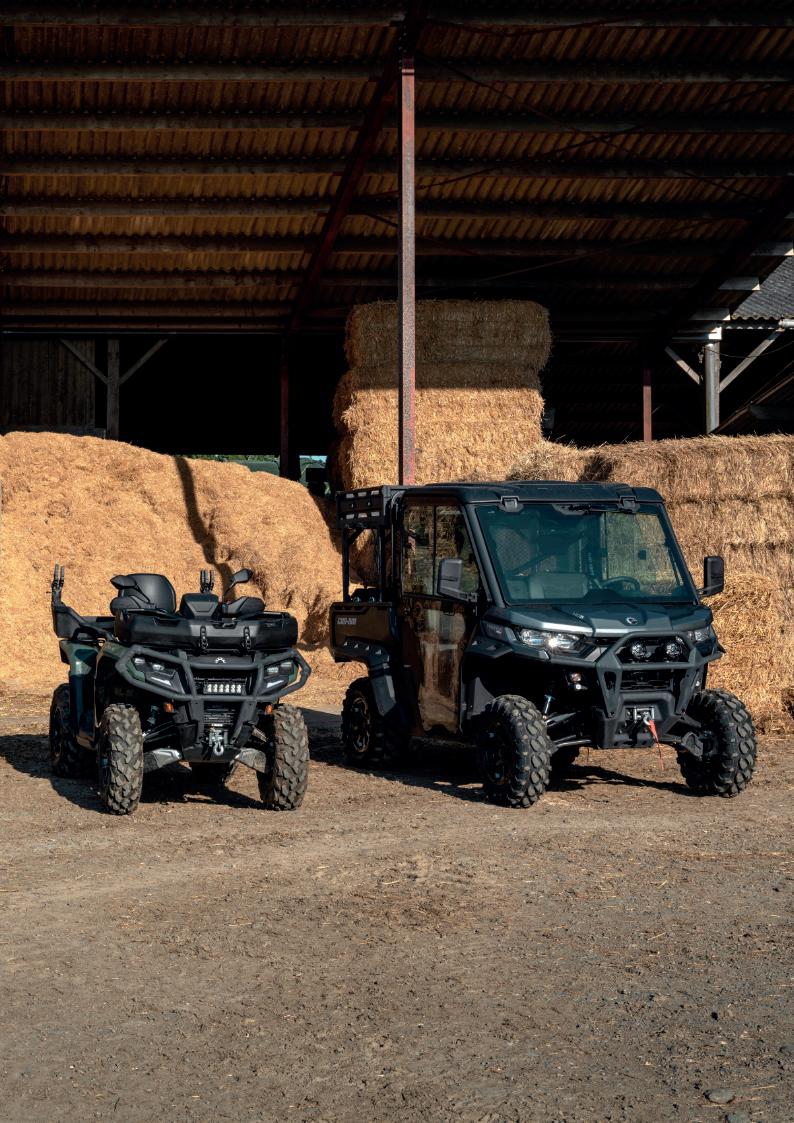



Discover the exceptional from a global leading powersports manufacturer. Unleash the power with V-Twin engines. Tackle the most rugged trails and rough terrain. Enhance your ride with advanced suspension and electronic fuel injection. Enjoy the comfort with a cab, heating and air conditioning. Choose
Satisfy all your expectations with the Workcross 525/650/800/1000cc



Whether you're managing a working farm in the Yorkshire Dales, maintaining a country estate in the Scottish Highlands, or simply demanding the best from your weekend off-road adventures, theKymco UTV 700is engineered to deliver. With a 695cc fuel-injected engine, Electric Power Steering, switchable four-wheel drive with a locking differential, and a towing capacity of 650kg, this is a machine that takes British conditions seriously.

The UTV market has grown enormously in the United Kingdom over recent years, and for good reason. Side-by-side vehicles (SSVs) occupy a uniquely practical space: they offer a comfortable seating position and weather protection that a quad bike cannot match, yet they maintain an off-road agility and ground clearance that leaves most compact tractors standing. The question is always which machine offers the best combination of capability, reliability, and value. After spending considerable time with the Kymco UTV 700, we're confident it makes an exceptionally strong case.
At the heart of the UTV 700 sits a695cc singleoverhead-cam (SOHC), four-stroke, liquid-cooled engine, paired with a fuel injection system that ensures reliable cold starts and consistent throttle response whether you're idling through a muddy gateway or climbing a steep hillside pasture. Producing45HP at 6,000rpm, this is not a machine that asks you to compromise on performance.
The transmission is a continuously variable automatic (CVT) with High, Low, Neutral, Reverse and Park modes, a selection that will feel immediately familiar to anyone who has driven an ATV or modern UTV. Low ratio provides the mechanical advantage you need for hauling heavy loads or crawling over uneven ground, whilst High gives you the pace to cover open fields and tracks in genuine comfort. There are no gearchanges to worry about; you simply select the appropriate range and the CVT manages everything else with smooth, progressive power delivery.
The38-litre fuel tankis a genuine standout in this class. Larger tanks mean fewer interruptions during a long working day, and for anyone covering substantial acreage, or tackling an extended off-road trail, having that reserve capacity is a genuine practical advantage. Running costs are also kept in check by the efficiency of modern fuel injection, which optimises the air-fuel mixture across varying loads and altitudes.
Off-Road Capability: Built for the British Countryside
British terrain demands versatility above all else. Rocky moorland, sodden clay fields, steep grazing hillsides, and churned-up forest tracks, a UTV destined for UK use must cope with all of them, often in the same afternoon. The Kymco UTV 700 is engineered with precisely this in mind.
Both front and rear suspension use adouble A-arm configuration, with the rear featuring a fully independent setup (IRS — Independent Rear Suspension). This matters enormously in practice. Where a solid rear axle transfers shocks from one wheel directly to the other, IRS allows each rear wheel to react independently to the ground beneath it. The result is vastly improved grip on uneven terrain and a significantly more comfortable ride for both driver and passenger.
That comfort is further enhanced by generous suspension travel, absorbing the impacts from roots, ruts and rocky outcrops that would leave a lessengineered machine battering its occupants. Long days in the field become markedly less fatiguing when the chassis is doing the hard work.
"A ground clearance of 309mm means ditches, deep ruts, and uneven gateways are navigated with confidence, and without compromise."
With a ground clearance of309.88mm (12.2 inches), the UTV 700 sits high enough to clear the sort of obstacles that regularly trap lower-slung machines. At2,897mm longand1,555mm wide, the vehicle's footprint is practical for navigating between farm buildings and along established tracks without feeling unduly large or unwieldy.
4WD, Diff-Lock & EPS: Technology That Earns Its Keep
Electric 2WD / 4WD with Differential Lock
Theelectrically selectable 2WD / 4WD systemmeans you can run in two-wheel drive on firm ground, saving fuel and reducing drivetrain wear, then switch to 4WD at the touch of a button when conditions demand. The addition of alocking differentialtakes this further still. Locking the differential forces equal drive to both axle shafts, maximising traction in the worst conditions: waterlogged fields, deep mud, or steep hillsides where one wheel risks lifting.
Electric Power Steeringhas transformed the UTV driving experience. Where older machines required
considerable physical effort to steer at low speeds, particularly in soft ground, EPS provides variable assistance that reduces driver fatigue without removing the steering feel that gives you confidence on challenging terrain. For professionals spending hours at the wheel each day, this is not a luxury; it is a meaningful ergonomic improvement.
Hydraulic disc brakes at both axles provide confident stopping power regardless of speed or load. TheCombined Braking System (CBS)links front and rear circuits to prevent the imbalanced braking that can unsettle a heavily loaded vehicle on a loose or downhill surface, a meaningful safety feature for those regularly descending steep pastures with a loaded cargo bed.
For farmers and estate managers, the headline towing figure of650kgis the one that matters most on paper. In real-world terms, that is sufficient to move a loaded livestock trailer, a substantial log trailer, or a fully laden equipment trailer around the farm without drama. Combine this with the engine's broad torque delivery and the low-range CVT ratio, and steep uphill tows with a heavy load are handled with composure.
The vehicle's substantial674kg dry weightalso works in your favour when towing: a heavier tow vehicle is a more stable one, less susceptible to the snaking and instability that can affect lighter machines when towing close to their rated capacity. The hitch assembly is a properly engineered unit with the maximum capacity label prominently displayed, a detail that matters when staying within legal load limits on UK roads.
The British climate is famously uncooperative, and an open-cockpit side-by-side becomes genuinely miserable during an autumn or winter spent in driving rain and single-figure temperatures. Kymco addresses this directly with two factory cab options:
TheFull Cab (£2,999)provides complete enclosure, protecting driver and passenger from rain, wind and cold, transforming the UTV 700 into a vehicle capable of genuine year-round use. TheHalf Cab (£1,599)offers a windscreen and roof to deflect rain and reduce wind chill without fully enclosing the cabin, a useful middle ground for kinder weather whilst retaining meaningful protection.
Both are designed and fitted as factory options rather than aftermarket additions of variable quality, ensuring a clean, integrated result that competitors at comparable price points struggle to match.
Kymco has manufactured vehicles for over six decades and currently produces in excess of one million units annually. That industrial scale translates into manufacturing quality and supply-chain maturity that smaller manufacturers struggle to match. Panel
fits are consistent, welds are clean, and hardware quality reflects a machine built to work rather than simply look the part at point of sale.
Importantly for UK buyers, Kymco UK providesfull UK parts and warranty support, distributed from Bridgend, South Wales. Parts held domestically means downtime in the event of a required repair is minimised, a genuine operational advantage for any working vehicle.
Farmers and agricultural workerswill appreciate the 650kg towing capacity, the locking differential, the 38litre tank, and the low-range transmission, all the tools needed for a productive day's work in all weathers.
Estate and land managerswill value the combination of genuine off-road capability with ride comfort that makes longer property journeys far less taxing than a comparable quad bike. The two-seater layout means a colleague can ride along, something an ATV simply cannot accommodate.
Off-road enthusiastswill find a machine with ample performance, excellent suspension, and EPS making it a satisfying and accessible drive on green lanes and off-road parks alike.
At£10,599 RRP excluding VAT, the Kymco UTV 700 positions itself as a genuinely competitive option in the mid-range UTV market. Add the half-cab for £1,599 and the total remains well below the entry price of several comparable European and American alternatives, without sacrificing Kymco's domestically held parts infrastructure.
The Full Cab at £2,999 brings the total to £13,598 (exc. VAT), still representing excellent value for a fully capable, weather-protected side-by-side with EPS and diff-lock as standard. For businesses, the UTV may also qualify as a legitimate capital expenditure against tax, worth discussing with your accountant.
The Kymco UTV 700 is a thoroughly competent, wellengineered, and genuinely practical side-by-side that serves the British market with an uncommon degree of thoughtfulness. Its combination of 45HP power, switchable 4WD with diff-lock, Electric Power Steering, and a 650kg towing capacity would be impressive at a higher price point. At £10,599 excluding VAT, with factory cab options and the full backing of Kymco UK's parts and warranty network, it makes a compelling case that is difficult to dismiss.
If you are in the market for a UTV that will genuinely earn its keep across the seasons, and across the challenging, unpredictable variety of British terrain, the UTV 700 belongs at the very top of your shortlist.
www.kymco.co.uk


Tday-to-day practicality. For those looking for a reliable workhorse without stretching into premium-brand pricing, it’s an option that deserves serious attention.
Out in the field, the X550 quickly proves it’s more than just good value on paper. The engine delivers plenty of low-end torque, which is exactly what you need when you’re pulling away with a load, climbing uneven ground, or working through soft, muddy conditions. It feels composed and predictable rather than overly aggressive, which makes it well suited to long days and varied jobs.
Handling is equally reassuring. Whether you’re weaving through tight gateways, crossing rutted tracks, or covering larger fields, it stays stable and easy to manage. The power steering takes the strain out of slower manoeuvres, especially when carrying weight on the racks or towing behind.
Towing is where this machine really earns its keep. In practical use, pulling a trailer with a round bale of silage didn’t faze it in the slightest. It remained steady, well-balanced, and never felt like it was working beyond its limits.
For typical farm duties: moving feed, shifting fencing gear, towing small livestock trailers, or carrying tools, it handles everything you’d reasonably ask of a mid-sized ATV. It’s the kind of machine you can rely on throughout the day without constantly thinking about its limitations.


One of the biggest surprises with the X550 is just how well equipped it is for the money. It comes ready to work, with features that often sit behind a higher price tag. The included tow pack and winch are immediately useful, while LED lighting and multiple power outlets add a level of convenience that’s easy to appreciate during early starts or late finishes.

CFORCE ATV’s from £4500 + VAT UFORCE600 from£9,999+VAT UFORCE600 from£9,999+VAT
when multiple people might be using it.
No machine is perfect, and there

Load capacity is generous too, making it practical for carrying feed bags, tools, or fencing supplies without

*Terms and Conditions apply
CFORCE ATV’s from £4500 + VAT
the showroom.
In short, it’s a practical, capable machine that earns its place quickly, and keeps it.


Highland Leisure Sport
Unit 20, Cromarty Firth Business Park
Invergordon, IV18 0LT
Tel: 01349 854620
www.highlandleisuresport.co.uk
Duncan Brassington Agricultural Sales & Service Ltd
Banbury Lane, Burwarton, Bridgnorth, WV16 6QN
Tel: 01746 787983
www.brassingtonagri.co.uk
158 Performance
Unit 1/2, Tallington Services, Main Road, Tallington, Lincolnshire, PE9 4RN
Tel: 01778 341144
www.158performance.co.uk







Huw: 07967 755256
Matt: 07794 335728 Dan: 07816 512059 https://www.huwevansandsons.co.uk/


Drawing on its extensive experience in the farming sector, BKT offers a tyre specifically designed to effectively support one of the season’s most important soil preparation activities.
Balkrishna Industries Ltd. (BKT), a leading multinational Off-Highway tyre manufacturer, highlights the importance of rotary tilling when preparing the soil for spring planting. This mechanical operation breaks up clods, mixes the soil, and creates a uniform, soft, and well-draining seedbed, ideal for receiving seeds and seedlings for the upcoming season.
BKT has designed a reliable solution that performs effectively in every stage of field work, including rotary tilling. With AGRIMAX V-FLECTO, the company offers a latest-generation VF tyre that guarantees maximum traction, soil protection, and operational efficiency, addressing the challenges that rotary tilling poses to tyres and tractors.
Freshly tilled soil becomes soft and unstable, increasing the risk of slipping and loss of traction. It is also crucial to minimize soil compaction, which would otherwise compromise soil quality. Spring weather conditions add further unpredictability. AGRIMAX V-FLECTO addresses all these challenges, combining strong field performance with road travel versatility.
One of the tyre’s key features is innovative VF technology, allowing transport of 40% heavier
loads compared to a standard tyre at the same inflation pressure. This enables operation at lower pressures, creating a wider footprint that distributes weight more evenly and significantly reduces soil compaction.
Piero Torassa, Field Engineering Director at BKT Europe, explains that soil compaction is a critical factor affecting productivity, sustainability, and soil fertility.
Another key feature is excellent self-cleaning capability, keeping the lugs free of mud and maintaining traction throughout the workday. This leads to improved efficiency, reduced slippage, lower fuel consumption, and higher productivity. The tyre’s robust construction also enhances lateral stability and operator comfort.
“For surface soil cultivation operations such as rotary tilling and harrowing, BKT engineers recommend tyres with smaller series sizes. These provide a larger footprint and allow further reduction in inflation pressure,” adds Piero Torassa.
Choosing the right tyre can determine whether tilling is efficient or requires additional passes, increased time, and energy, or even damages soil structure. AGRIMAX V-FLECTO represents BKT’s technological solution, combining VF innovation, agricultural expertise, and a global distribution network aligned with farmers’ needs.
t the Feria de Zaragoza in Spain, Balkrishna Industries Ltd—the leading multinational Off-Highway tire manufacturer showcases its tires, engineered and designed to ensure maximum reliability in the most challenging environments. Representing BKT’s solutions will be S. José Pneus, the official distributor for the Iberian Peninsula, with whom the company enjoys a long-standing partnership that marks its 19th anniversary this year.
In Hall 6 at Booth E-F / 1-10, San José Neumáticos will showcase the best of the BKT range for the construction and mining sectors, starting with the flagship tires of the EARTHMAX range, designed to provide reliable and uncompromising performance for dump trucks and dozers employed in transport and mining operations. At SMOPYC, the spotlight will be on EARTHMAX SR 47 TP, a tire designed for rigid dump trucks in applications requiring the highest level of resistance, such as rocky environments. Alongside it, EARTHMAX SR 35, a low-profile All-Steel radial tire for articulated dump trucks and wheel loaders, distinguished by its unmatched traction and stability.
“In recent years, we have seen significant growth in the Iberian market, a success that reflects the strong bond of trust between us and S. José
Pneus, with whom we have shared the same goals, values, and ambitions for nearly twenty years. They are not just a distributor, but also part of the BKT family, enabling us to be present in one of our key European markets, bringing new innovations and technologies, and responding promptly to the everevolving needs of end users. Smopyc is a clear example of how all this takes shape,” said Lucia Salmaso, Managing Director, BKT Europe.
Today, S. José Pneus is a recognized and wellestablished company in the tire industry, which thanks to its technical expertise, product offering, and wide availability, has reached the milestone of celebrating its 60th anniversary this year.
At SMOPYC, visitors will also find AIROMAX AM 27, BKT’s solution for cranes employed in on-road operations or construction applications, where both maneuverability and speed are essential requirements. Finally, the booth will feature LIFTMAX LM 81, a tire specifically developed for industrial material handling operations.
This event remains a key showcase for the mining and construction industries, and the presence of S. José Pneus and BKT is tangible proof of these two companies’ commitment to providing safe, reliable, and cutting-edge solutions for operators facing the most demanding challenges every day.

Mitas is proud to announce a threeyear partnership with the National Tractor Pullers Association (NTPA), strengthening its position at the heart of one of the most powerful and demanding motorsports in North America.

From 2026 through 2028, Mitas will serve as the Official Agriculture Tire sponsor of the championship. The company brings its proven expertise in traction and durability to a sport where tractors and trucks are pushed to the absolute limit.
Tractor pulling is a true test of raw power and engineering. Highly modified machines compete to drag a heavy sled down a dirt track, with resistance building foot by foot until only the strongest, and best-prepared, can go the distance. It's all about transferring massive horsepower to the ground under extreme conditions, where grip, consistency, and tire performance often decide the winner.
"The collaboration with NTPA connects Mitas to two worlds where performance truly matters: tough daily work in the field and the most extreme competitive environments. Tractor pulling is the ultimate expression of what farmers face every daydelivering power to the ground, staying consistent under pressure, and performing when limits are pushed", said Roberta D'Agnano, Global Marketing Director Mitas at Yokohama TWS.
"Performance isn't just about winning on the track - it's about delivering results when it counts most, whether in competition or on the farm. In tractor pulling, every component is tested to the extreme, just as it is in real agricultural operations. That's why we feel a strong connection with this community. The NTPA community embodies passion, resilience, and a nonstop drive to push boundaries; values that are core to the Mitas brand. We're excited to be part of this world, learning from these extreme conditions and turning that knowledge
into tires that perform where it matters most for farmers and pullers alike."
Across a season that spans more than 60 events throughout the United States, from spring to early fall, the NTPA circuit draws top competitors, cutting-edge machines, and thousands of passionate fans, throughout the Midwest where the sport has deep roots. As an official partner, Mitas will be present throughout the entire championship, gaining strong visibility on and off the track while actively supporting the growth of this iconic American motorsport.

Central to this partnership is the Mitas PowerPull tire, purpose-built for tractor pulling and designed to transform raw engine power into winning performance.
Designed to handle extreme torque and deliver maximum grip, the PowerPull is a slick tire that allows teams to cut custom tread patterns based on track conditions and strategy, giving competitors a real edge when it counts.
The season culminates at the Mitas National Finals Pull-Off, the ultimate showdown where the year's best competitors battle for national titles. Held in Urbana, Ohio, on September 18 and 19, 2026, this marquee event draws passionate fans and
showcases the best in the sport. As title sponsor, Mitas is proud to put its name on this premier event, deepening its ties to the pulling community. The Mitas National Finals Pull-Off represents the pinnacle of performance, innovation, and passion at the highest level.
Mitas actively supports tractor pulling worldwide, sustaining the motorsport and its community at every level. Learn more at: www.mitas-tires.com/ en/tractor-pulling-championship
To find out more about Mitas agricultural solutionsgo to:www.mitas-tires.com


s an official vehicle partner of the Royal National Lifeboat Institution (RNLI), INEOS Automotive has delivered the first batch of Grenadier 4X4s to support the charity’s vital lifesaving search and rescue work.
As part of a five-year partnership, INEOS Automotive is providing 20 Grenadier station wagons to the RNLI, to help volunteers position, launch and recover the charity’s D-class lifeboats. The Grenadiers will play a crucial role at locations where a robust, dependable vehicle is required to launch lifeboats straight from the beach, often traversing very soft or unstable ground and shallow water.
The RNLI’s Flint, Lytham, Morecambe and Seahouses stations are the first to receive their Grenadiers, for volunteers to use in preparation for and in the event of needing to launch the lifeboat to respond to an emergency at sea. The next batch of vehicles to enter service for the charity will be the most accomplished Grenadiers to date, with recent enhancements for 2026 models providing more assured and purposeful dynamic handling and enhanced safety equipment, without compromising its peerless off-road capability and performance. By August, a total of 12 lifeboat stations will have Grenadiers in operation.
Sam Barton – RNLI Engineer, said “After an extensive testing and evaluation period, working in conjunction with the specialist fleet team at INEOS
Automotive, it’s clear that the Grenadier has the required robustness and durability to safely withstand the rigours of RNLI lifesaving activities. It has proved to be perfect for active service with minor modifications to suit RNLI operations, including installation of marine-standard radios, a larger front winch and roof mounted light bars for low-light lifesaving. Our volunteers have loved getting to know the Grenadier and have every confidence that it can be relied upon in their toughest moments.”
Tony Lewis - Head of Fleet Sales, INEOS Automotive, said: “Our partnership with the RNLI delivers on the core purpose of the Grenadier –built on purpose to support those working in the most extreme environments. From conception, it was envisaged that the Grenadier would have an important role to play in a wide range of search and rescue activities, so we look forward to expanding our support for the RNLI and other emergency services in the coming years.”
The INEOS Grenadier was launched in 2022 as a global 4X4 that combines rugged British spirit and design with German engineering rigour. Its bodyon-frame construction provides huge versatility for customisation, which is now benefitting fire, police and rescue services in numerous countries around the world.
To find out more about the INEOS Grenadier, please visit www.ineosgrenadier.com



CHERY UK has unveiled the TI-NO 4 CSH, the latest addition to the brand’s compact SUV range alongside the recently announced TIGGO 4 Summit.
Priced at £21,995 OTR*, the TI-NO 4 CSH introduces a simplified specification for customers who want the design, space and core capability of the TIGGO 4 without the premium equipment.
Available exclusively in Pinch White, the CHERY TI-NO 4 CSH marks a minimalist interpretation of the line-up, while retaining the same core platform and electrified architecture of the TIGGO 4.
While the TIGGO 4 Summit focuses on a comprehensively equipped, comfort-led experience, the TI-NO 4 CSH does without convenience and premium features as standard.
This means the TI-NO 4 CSH is specified without heated wing mirrors, electric windows, leather upholstery, or a 360-degree camera system, while also eliminating the electrically adjustable driver’s seat, privacy glass and alloy wheels.
Joe King, Head of Reduction at CHERY UK, said: “While the new CHERY TIGGO 4 offers customers a comprehensive specification as standard, we understand there are those looking for something a little different. The TI-NO 4 CSH is designed to deliver on that promise, offering an opportunity for those looking for a lesser specification to stay with the brand.”
Available exclusively in Punch White, the TI-NO 4 CSH is supported by the brand’s 7-year warranty.
* All prices and specifications incorrect at time of writing.


Isuzu UK presents The New Isuzu DMax Electric Vehicle (EV) in right-hand drive at the Commercial Vehicle Show 2026. Announced in 2025 and previously shown in a European format, the new D-Max EV is the first fully electric pick-up in the UK to provide over 1-tonne payload, 3.5-tonne towing capacity and permanent four-wheel drive.
The D-Max EV is powered by a 66.9 kWh lithiumion battery and dual motors located on the front and rear axles, producing a total output of 149.3 kW (45.9 kW front, 103.4 kW rear). The new electric vehicle delivers 347.6 Nm of torque (115 Nm front, 232.6 Nm rear), for powerful, refined performance, accelerating from 0-62 mph in 10.1 seconds with a top speed of over 80 mph.
Full-time four-wheel drive delivers four selectable regenerative charging levels, while an optional Eco drive mode extends the range of the D-Max EV. The New Isuzu D-Max EV charges from an AC supply (maximum 11 kW) within six hours, and from a DC supply (maximum 50 kW) up to 80% within one hour. The New Isuzu D-Max EV provides UK professional and fleet customers with a powerful
and rugged work vehicle combined with comfort, practicality and zero emissions. Based on the latest generation Isuzu D-Max strengthened ladder chassis to withstand heavy payloads, a new DeDion semi-independent suspension system improves handling and ensures a more refined ride, contributing to a reduction in cabin noise and vibration under full acceleration by up to 10%.
The new fully electric pick-up features the D-Max Rough Terrain Mode for exceptional off-road capability, with ground clearance of 210 mm, water wading up to 600 mm, and impressive off-road approach and departure angles of 30.5 degrees and 24.2 degrees respectively.
The New Isuzu D-Max EV is available in Extended Cab and Double Cab configurations with eDL40 and eV-Cross trims levels featuring leather/highgrade cloth interiors. Standard features include Rough Terrain Mode; dual-zone climate control; heated seats; front and rear parking sensors; BiLED headlights; 7” driver information display; and eight-year, 125,000-mile battery warranty. Both eDL40 and eV-Cross are offered in Splash White with optional premium colours including Dolomite White pearl on the eV-Cross.
Prior to its official right-hand drive UK debut, the Isuzu DMax EV has already been trialled in left-hand format: Isuzu UK, in partnership with National Grid Electricity Distribution (NGED), put the EV pick-up to the test in the most challenging UK terrains and conditions, including towing and winching.
Managing Director of Isuzu UK, Alan Able, said: “The New Isuzu D-Max EV arrives in the UK, and for the first time in its segment provides the option of a fully electric pick-up with class-leading commercial capabilities. The new electric vehicle assures the reliability, comfort and versatility of the D-Max while supporting commercial operators aiming towards decarbonisation. This is an exciting moment for both Isuzu UK and hardworking commercial and fleet operations in many environments: The New Isuzu D-Max EV combines the work-ready toughness, durability and presence expected of the Isuzu D-Max with a zero emissions electric vehicle for the first time.”

Power type Single phase AC
Time to charge 0% to 100%, 10:00 hours
Public
Charge current 27 Amp
Charge voltage 400 V
Charge power 11 kW
Power type Three phase AC
The New Isuzu D-Max EV comes with five-year, 125,000-mile vehicle warranty and EU and UK roadside assistance. Deliveries commence May 2026.
Full specification
Power unit and performance
Total max. power and torque 149.3 kW and 347.6 Nm of torque
Front motor HC11 Permanent Magnet
Synchronised Motor
Max power and torque 45.9 kW/115 Nm
Rear motor HD11 Permanent Magnet
Synchronised Motor
Max power and torque 103.4 kW /232.6 Nm
Battery Lithium-ion, 66.9 kWh capacity, 530 kg
DC charging 50 kW
AC charging 11 kW
Electric driving range (comb.) WLTP 163.2 miles
Electric driving range (city) WLTP 223.9 miles
Acceleration (0-62mph) 10.1 secs
Max. speed 84 mph
Sound levels (moving) 67 dBA
EV charging
Home
Charge current 29 Amp
Charge voltage 240 V
Charge power 7 kW
Time to charge 0% to 100%, 6:00 hours
Rapid
Charge current 125 Amp
Charge voltage 400 V
Charge power 50 kW
Power type DC
Time to charge 20% to 80%, 1:00 hour
Capability
Maximum payload 1,060 kg
Max permissible front axle mass 1,450 kg
Max permissible rear axle mass 1,910 kg
Maximum towing capacity 3,500 kg (braked)
Gross Train Weight (GTW) 6,000 kg
Ground clearance 210 mm
Wading depth 600 mm
Dimensions, weight
Length/Width Double Cab/ Extended Cab 5,280 mm/1,870 mm
Wheelbase 3,125 mm
Internal bed length Double Cab 1,675 mm
Internal bed length Extended Cab 1,940 mm
Kerb weight Double Cab/ Extended Cab 2,345kg/2,300 kg
Min. turning circle kerb to kerb 12.5 m
Wheels/tyres Double Cab/ Extended Cab Alloy 18 x 7.5J/265/60R18


All fuel consumption and emission values are based on the new WLTP (Worldwide Harmonised Light Vehicle Test Procedure) test cycle which uses real-world driving data. Official fuel economy for the standard Isuzu D-Max range in MPG (l/100km): Low: 26.9 - 24.4 (10.5 - 11.6); Mid:
33.6 - 31.4 (8.4 – 9.0); High 39.2 - 37.2 (7.2 – 7.6); Extra-High 32.5 - 31.0 (8.7 - 9.1); Combined 33.6 - 31.4 (8.4 - 9.0). CO2 emissions 220 –235g/km Visit Isuzu.co.uk for more information.
†From price shown is an Isuzu D-Max 4x2 Utility Single Cab vehicle on the road price with manual transmission. Models shown in image are the Isuzu D-Max Utility 4x2 Single Cab, Utility Extended Cab CVOTR £32,305 & Utility Double Cab CVOTR £33,355. Optional special paint finish on Double & Extended Cabs start from £600 + 20% VAT. All prices shown include delivery, number plates, 12 months road fund licence and first registration fee, excludes VAT. Terms and conditions apply. Visit isuzu.co.uk.


acia is on tour! As the Official Vehicle Partner of the Kendal Mountain UK Tour 2026, Dacia has been supporting the Festival’s biggest-ever UK programme as it travels from Kendal to more than 50 venues across the country, inspiring over 12,000 outdoor enthusiasts along the way.
Two Dacia Bigster SUVs are being used by the Kendal team as they journey the length of the country, from Stornoway to Falmouth, carrying kit and the spirit of adventure to audiences nationwide.
The Kendal Mountain Tour brings award-winning adventure films and inspirational live talks together in a celebration of outdoor culture, sharing stories of human resilience, bold exploration and life lived outdoors.


and real adventure.
From legendary climbers to record-breaking endurance athletes, the Tour celebrates people who push boundaries and inspire audiences to step outside and do the same.
For Dacia, it’s a natural fit. The Dacia Bigster is designed for families who would rather be outdoors than in. Robust, spacious and built around what really matters, it delivers the essentials for real life
Whether it’s navigating mountain roads, loading up for the next venue or simply covering serious miles in comfort, Bigster brings Dacia’s no-nonsense approach to every journey.
Lina Ribeiro, Dacia Brand Director for the UK, said: “The Kendal Mountain Tour sits right at the heart of outdoor culture in the UK. It celebrates real people doing extraordinary things, and that’s exactly the kind of spirit Dacia connects with. That’s why Bigster is built for those who live life outside. It’s tough, practical and ready to get on with the job. Supporting the Tour as it travels the country is a simple, honest demonstration of what our vehicles are made for.”


The Kendal Mountain UK Tour runs now until May 2026, showcasing awardwinning adventure films and a line-up of world-class speakers.
For Dacia, it’s another step in championing accessible adventure everything you need, nothing you don’t.

yundai Motor UK has announced pricing and specification for the new TUCSON range, with order books now open.
Since its launch in 2021, TUCSON has become one of Hyundai’s most successful models, with more than 148,000 vehicles sold from the current generation alone. Its blend of striking design, everyday practicality and advanced connected technology has earned multiple industry awards and established TUCSON as one of the most complete SUV offerings in its class.
The latest range continues this strong reputation with three well-equipped trim levels - Element, Black Line and the range-topping N-Line Edition. The popular N Line S and Ultimate trim levels remain in the line-up for customers to place new factory orders.
The new Element trim starts from £30,935 for the Element 150PS 6-speed manual. Key features include black roof rails, dual-zone climate control, cloth interior upholstery, 40:20:40 splitfolding rear seats, wireless phone charging, Apple CarPlay & Android Auto, a Smart Key FOB with engine start button, 17-inch alloy wheels, E-Call, front and rear parking sensors, and a rearview camera, among many other features.
N-Line Edition includes N-Line styling, bodycoloured wheel arches, a Krell Premium audio system, 3-zone climate control, heated rear seats, a smart power tailgate, head-up display, Matrix LED headlamps, remote folding rear seats, and Highway Drive Assist.
As well as introducing a new trim line up, the TUCSON range has also benefitted from a price realignment across the range, with the range now starting from £30,935 for the Element trim. Finance contributions are also available for TUCSON, with Hybrid models benefitting from a £2,250 FDA and ICE models with a £1,750 FDA, both at 4.9% APR.
Ashley Andrew, President of Hyundai & Genesis UK, said: “Since its introduction, TUCSON has played a very important role in Hyundai’s success in the UK, combining distinctive design, advanced
Available initially on ICE and Hybrid powertrains, PHEV from April 2026
Up to £2,250 finance deposit contribution available
Prices start from £30,935
The Black Line trim starts from £33,435 for the Black Line 150PS 6-speed manual. Building on the Element specification, it adds 19-inch alloy wheels with satin grey detailing, a satin grey Hyundai logo in the front grille, black door mirrors, hidden daytime running lights (DRLs), black window surrounds, rear privacy glass, LED rear combination lamps, a 12.3-inch TFT digital driver display, metal door tread plates, cloth and leather upholstery, heated front seats, and a heated steering wheel.


Topping the range is the N-Line Edition, priced from £36,185 for the N-Line Edition 150PS 6-speed manual. In addition to the features listed above, the
technology and everyday practicality in a way that really resonates with customers. With the latest range, we’re continuing to build on that strong foundation by offering even greater choice and specification across the line-up. From the wellequipped Element trim through to the striking Black Line and the range-topping N-Line Edition, TUCSON remains one of the most complete and compelling SUVs available to UK drivers today.”

Humax EV Charging has announced a strategic partnership with Rightcharge to deliver a smarter, more transparent and scalable home charging solution for UK fleets.
With this new agreement, the integration of the Humax MX7 Vehicle-to-Grid ready EV charger with the Rightcharge payments platform creates a unified ecosystem for business charging at home. The system supports company cars, fleet vehicles and business-owned vehicles, while ensuring accurate reimbursement and full separation between business and personal use.
Traditional home EV charging reimbursement often relies on estimates or trust-based reporting, leaving businesses exposed to ‘grey’ charging costs where personal vehicles may be charged on company accounts. The Humax MX7 addresses this through advanced vehicle identification using ISO 15118compliant PLC technology. The charger recognises a vehicle’s unique ID as soon as it is plugged in. If the vehicle does not match the registered company car, the Rightcharge platform can automatically ring-fence the cost or block the transaction. This ensures a clear separation between business and personal charging. As a result, fleets benefit from
greater transparency, accuracy and control over home charging reimbursements.
home charging security for private users
Beyond fleet applications, the integration also enhances security for private Humax MX7 owners. Through the Humax Charge app, users can enable a ‘registered-only’ charging mode that allows them to pre-authorise specific vehicles. If an unrecognised vehicle is connected to the charger, for example a neighbour’s car or an unauthorised user, the system can automatically block the charging session and notify the homeowner via their smartphone. This feature helps protect against unauthorised energy use, while ensuring the charger remains a secure household asset.
Charger-level vehicle identification expands fleet compatibility
Thanks to the MX7, vehicle identification takes place at the charger level. This makes the solution revolutionary in its ability to bring a wider mix of vehicles into the reimbursement ecosystem, rather than limiting participation to specific models. Fleet managers can therefore scale reimbursement programmes more easily across mixed fleets.


The partnership also delivers significant benefits for fleet drivers. Charging at home is substantially cheaper than public charging and avoids the time lost waiting at public charge points during working hours. Drivers gain convenience, faster reimbursement and no out-of-pocket expenses, while businesses benefit from reduced operational costs.
Rightcharge consolidates public, home and workplace charging into one HMRC-compliant monthly invoice. As a result, fleet managers have full visibility over costs, usage and carbon data, reducing administrative burden and supporting sustainability targets.
Partnership highlights at a glance:
• Smart fraud prevention with automatic separation of business and personal charging
• Consolidated HMRC-compliant billing and reporting
• Charger-level vehicle identification using ISO 15118 technology
• Automated, accurate home charging reimbursement
• Broader vehicle compatibility, enabling more cars within the reimbursement ecosystem
• Lower charging costs and time savings for drivers
Jeff Kim, president of Humax, commented:
“Together, Humax and Rightcharge are redefining how fleets manage EV charging, turning home charging from an administrative challenge into a controlled, transparent and cost-efficient solution.
“Suitable for organisations of all sizes, the Humax MX7 is an intelligent, V2G ready charging solution purpose-built for fleet operators. Our collaboration with Rightcharge extends access to efficient business charging reimbursement to a wider range of vehicles, addressing previous limitations caused by restricted vehicle data availability. As a result, more drivers and businesses can benefit from a streamlined, compliant and efficient approach to home charging.”
Charlie Cook, CEO and founder at Rightcharge, added:
“Humax is a particularly special addition to the rapidly growing lineup of Rightcharge compatible chargers. Both Rightcharge and Humax share a keen desire to unlock the true potential of electric fleets as revenue-generating assets. We are excited to explore the future of fleet electrification with Humax, from automatic vehicle detection to grid flexibility and V2G.”
Designed to simplify energy management, streamline operations and maximise cost efficiency, the Humax MX7 combines cutting-edge communication technology, robust hardware and seamless software integration to deliver a charging experience that is secure, smart and scalable, and future-proofed for evolving fleet requirements.
The charger was developed with fleet efficiency at its core. Featuring intelligent vehicle identification, it recognises each EV’s unique ID through ISO 15118-compliant PLC technology, ensuring that only authorised vehicles can initiate charging. This advanced authentication system allows organisations to differentiate between business and private vehicles, improving accuracy in usage reporting and simplifying internal billing. The system also prevents unauthorised or fraudulent use, enhancing operational security.




Subaru UK & Ireland has partnered with Horatio’s Garden, the charity which creates and expertly staffs extraordinary gardens at NHS spinal injury rehabilitation centres across the UK.
Through the partnership, Subaru UK & Ireland has donated its award-winning ‘Subaru Cocoon’ show garden, which captivated judges and visitors alike at the most recent RHS Hampton Court Palace Garden Festival, for installation at a spinal injury rehabilitation centre at Horatio’s Garden South West at Salisbury District Hospital. The formal announcement coincides with the International Day of Forests, which is celebrated annually on March 21 to raise awareness about the importance of all types of forests and trees.
The garden, originally conceived to draw attention to the crisis faced by the UK’s rapidly shrinking temperate rainforest, has been sensitively adapted and repurposed to provide pleasure and a place of calm and comfort to people with spinal injuries, their families and hospital staff.
Lorraine Bishton, Managing Director at Subaru UK & Ireland, said: “From the outset, the Subaru Cocoon Garden was designed to be more than a one-off show garden; it was meant to spark debate
and draw attention to an element of the natural world in need of careful preservation: our rapidly shrinking temperate rainforests. We also wanted it to live on after the show, and now, through our partnership with Horatio’s Garden, it will.
“Horatio’s Garden does extraordinary work providing spaces of genuine sanctuary and healing for people facing life-changing spinal injuries - and the loved ones who support them. Partnering with them and ensuring the garden - and its vital conservation message - would continue to thrive under their custodianship.”
Horatio’s Garden creates and expertly staffs beautiful, vibrant gardens outside the clinical starkness of NHS spinal injury centres. The gardens offer space for reflection and adjustment, privacy and solace, and moments of joy and companionship for everyone who needs them. Evidence consistently shows that access to these gardens improves mental and physical well-being, reduces pain, and supports long-term recovery for people navigating life-changing spinal injuries.
Katie Tait, CEO of Horatio’s Garden said: “A spinal injury can be a devastating blow, with many people facing months of rehabilitation and an increased risk of anxiety and depression. That’s why we are
absolutely delighted that this award‑winning garden is being brought to life within Horatio’s Garden South West and thoughtfully adapted for people using wheelchairs or hospital beds. We are deeply grateful to Subaru for its extraordinary support and for recognising how a calming, immersive space just moments from the hospital ward can make such a transformative difference.”
The Subaru Cocoon Garden was conceived to highlight one of the UK’s most pressing, overlooked environmental crises: the nearextinction of Britain’s temperate rainforests. Once spanning 20% of the UK and Ireland, these rich, biodiverse ecosystems have dwindled to less than 1% of their former size. The temperate rainforest is among the most threatened habitats in the UK.

Created by Subaru UK & Ireland in collaboration with the Mike McMahon Studio, the Cocoon Garden evokes the quiet majesty of the rainforest, drawing visitors into a calming environment of texture, shadow and native planting.
Before being installed in its new home, the Subaru Cocoon has been thoughtfully modified to ensure it is fully accessible and welcoming to all those who will benefit from it. Adaptations have been made with the specific needs of Horatio’s Garden patients in mind, including those using wheelchairs or requiring bed access, ensuring that the garden’s restorative qualities can be enjoyed by everyone who visits.






GM Motors UK, is delighted to launch the all-new Musso EVthe brand’s first fully electric pickup for the UK market. Combining the strength and practicality of a traditional workhorse with the comfort of an SUV and the efficiency of an electric powertrain, Musso EV is aimed at both business and lifestyle customers who need capability without compromise.
Building on over 55-years of pick-up heritage, the Musso EV delivers a compelling balance of real-world electric range, serious towing strength and practical payload capacity, wrapped in head-turning design for a bold, contemporary presence on the road. Inside, its spacious, SUV-like cabin, advanced infotainment and thoughtful comfort and convenience features ensure drivers and passengers travel in exceptional ease,
whether for work or leisure. Together, these attributes position Musso EV as a distinctive, no-compromise choice in the growing electric pickup market.
Kevin Griffin, Managing Director of KGM Motors UK, said: “The launch of Musso EV represents a major step forward for KGM in the UK, setting new standards for capability and innovation in the pickup market. Its combination of usable electric range, towing and payload capacity, and driver convenience features, it gives both fleet and private customers a genuinely compelling alternative to diesel.”
The Musso EV is powered by an 80.6 kWh lithium iron phosphate battery from BYD, a global leader in eco-friendly vehicles, known for its durability and safety. With Cell to Pack technology for increased energy density, it
delivers a range of 240 miles (WLTP) and a 20 to 80% charge time of 31 minutes on a 300 kW DC rapid charge. Plus, Vehicle-to-Load (V2L) functionality allows users to power tools, equipment or leisure accessories directly from the vehicle.
Drivers can also adjust regenerative braking in three stages via steering wheel paddles, with the smart system adapting to gradients, traffic conditions, and even speed cameras to optimise efficiency and reduce driver effort.
Performance comes from front and rear 152.2kW motors producing 207PS and 339Nm of torque. A towing capacity of 2.3 tonnes and a 690kg payload underline its working credentials, with self-levelling suspension and a robust chassis for added support. Its dynamic, full-time AWD system continuously monitors wheel speeds for stability and automatically redistributes torque to improve stability on varying surfaces.
The load bed’s structure also allows for partitions to be fitted, preventing cargo from shifting, while the reinforced tailgate - capable of supporting 150kg - can also be used as seating for two adults, adding versatility for outdoor use.
At the front, a bold black grille, high-tech LED lighting, muscular wheel arches, and diamond-cut alloy wheels create a strong yet modern identity. From the side, the seamless body design integrates the cabin and deck, while the rear is distinguished by a large KGM emblem and toolinspired LED lamps. Six colours will be available to choose from, including Grand White, Amazon Green, Space Black, Ultra Marine, Marble Grey, and Blazing Gold.
Inside, the cabin has a clean, ergonomic layout. A panoramic widescreen integrates a 12.3-inch digital
cluster with a 12.3-inch infotainment display powered by Athena 2.0. Comfort is further enhanced with heated and ventilated front seats, and 8-way power-adjustable front seats with 2-way lumbar support. Plus, second-row passengers benefit from heated seats and SUV-level space, with class-leading legroom and reclining seats.
Safety is also a priority, with 78% high-tensile steel construction, eight airbags, and a suite of driver assistance systems. These include Adaptive Cruise Control, Autonomous Emergency Braking, Lane Keeping Assist, and Blind Spot Detection. A 3D Around-View Monitoring system further enhances manoeuvrability and driver confidence.
The Musso EV will arrive for customer test drives in May 2026 and will be available at participating dealers only. Pricing for the Musso EV starts at £42,495 including VAT, utilising the £2,500 Plug-in Van Grant (PiVG).
Explore the Musso EV now on the KGM website: www.kgm-motors.co.uk/new-cars/allnew-musso-ev/


JAECOO and its best-selling JAECOO 7 have been shortlisted in the New Car of the Year category at the AM Awards 2026, highlighting the brand’s growing impact in the UK since its launch in January 2025.
Organised by Automotive Management, the AM Awards celebrate excellence across the automotive sector, recognising vehicles and brands that demonstrate innovation, performance and strong customer appeal.
The JAECOO 7, available with a variety of powertrains and trim levels, starts from £29,105 OTR* in all-new SHS-H form. Combining adventure-ready styling with advanced technology and a competitive value proposition, the model has quickly established itself in the highly competitive SUV segment.
shortlist within the AM Awards reflects this momentum.
Victor Zhang, Managing Director of JAECOO UK, said: "Being shortlisted in the New Car of the Year category is a fantastic achievement for JAECOO and a testament to the JAECOO 7. Since launching in the UK, it has struck a chord with customers seeking a distinctive, high-quality SUV that delivers both substance and style."
The JAECOO 7 continues to play a central role in JAECOO’s UK growth strategy, offering an appealing alternative in the SUV market with strong standard equipment and a focus on quality and refinement. The brand’s market share has steadily risen since launch, reaching 2.25%** in February 2026, with the JAECOO 7 ranking as the fifth bestselling car in the UK** last month.
Since launch, the JAECOO 7 has resonated with both retailers – now numbering 122 dealerships –and customers, with over 36,500 sales to date. Its premium feel, generous specification and everyday usability have made it a standout choice, and its
Winners of the AM Awards 2026 will be announced at the official ceremony later this year.
* All prices quoted are correct at time of writing
** SMMT,smmt.co.uk/vehicle-data/car-registrations



The Renault Master has continued its success at the What Car? Van and Commercial Vehicle Awards, having been named ‘Best Large Van’ for the second year running, while the Master E-Tech electric retained its title as ‘Best Large Electric Van.’
The repeat recognition from the What Car? judging panel reinforces the Master’s position as the leading choice in the large van sector, with both powertrains praised for combining strong efficiency, practicality and everyday usability for businesses.
Highlighting the strengths that secured the Master its second consecutive ‘Best Large Van’ title, What Car? Editor Steve Huntingford said: “Last year, the Renault Master won our Large Van Award, and it continues to offer the best all-round package in the segment in 2026. It’s more efficient than rivals and comes loaded with safety kit. But crucially, this doesn’t come at the expense of practicality; on the contrary, the Master is one of the most versatile vans in the class, and access to its load space is superb.”
Explaining why the Master E-Tech electric remains the benchmark in its class, he added: “Despite the arrival of fresh competition in the large van market over the past year, no rival has managed to match the all-round package of last year’s winner, the Renault Master E-Tech. With a long official range, fast charging capabilities, and a practical, well-proportioned load area, the Master E-Tech proves that even drivers of large vans can go electric without compromising. Plus, drivers are well looked after, with a five-star Euro NCAP safety rating and a broad suite of assistance systems fitted as standard.”
ability to meet the evolving needs of fleets and operators.”
Designed to go further, carry more and cost less to run, the Renault Master is available in a wide range of versions tailored to the requirements of different businesses. With load volumes spanning 11 to 14.8 cubic metres, the Master provides exceptional cargo capacity, complemented by a wider-opening sliding side door and extended load length to make loading easier. Its modern cabin and comprehensive suite of safety and driver assistance systems are designed to support productivity and comfort throughout the working day.


The Renault Master E-Tech electric delivers the same practicality with the benefits of zeroemissions driving. Powered by a 105kW motor producing 300Nm of torque and paired with an 87kWh battery, it offers a WLTP range of up to 285 miles. Rapid charging capability enables up to 142 miles of range to be added in around 30 minutes using 130kW DC charging, while a 22kW AC charger allows a 10–100% recharge in under four hours.
Seb Brechon, Head of LCV and Brand Performance, Renault UK, said: “These awards from What Car? reinforce just how strong the Renault Master line-up is for businesses today. Whether customers choose the efficiency of the diesel model or the zero-emissions capability of Master E-Tech electric, they benefit from a van designed to maximise usability, productivity and comfort throughout the working day. Retaining these titles is a great endorsement of the Master’s
The Renault Master is available from £33,500 plus VAT or £37,500 plus VAT after PiVG for the E-Tech electric versions.

For more information on the award-winning range of Renault Pro+ light commercial vehicles, please visit: https://business.renault.co.uk/
Twisted Automotive, the world-renowned specialists in re-engineering iconic British 4x4s, has unveiled its first-ever Range Rover project: the Twisted interpretation of a Range Rover Classic (TRRC).
Following 25 years of perfecting the Defender, Twisted has applied its ‘anti-ordinary’ philosophy to the two-door Range Rover Classic.
The TRRC is a project rooted in deep personal nostalgia. For Twisted founder Charles Fawcett, the Range Rover Classic was the "king of the road" during his childhood.

"When I think back to the 1980’s, my father always seemed to have a two-door Range Rover, and there was one particular one that stood out," says Fawcett. "It was terracotta brown with fibreglass extended wheel arches and white Weller eight-spoke wheels shod with General Grabber road-oriented tyres. On the front, he’d fabricated a valance out of an MGB GT front spoiler. To me, it was just iconic. Today, the TRRC exists out of unapologetic nostalgia, recreating something I remember from when I was a tiny boy. I think many customers will relate to that feeling.”
At the core of the build is a high-performance LT1 V8 conversion producing 500hp, paired with an eight-speed automatic transmission. To manage this power, Twisted utilised two decades of engineering heritage from its Defender program.
While the TRRC drives similarly to Twisted’s T90 and T110 (re-engineered Defender), in terms of performance and communication, the handling has been specifically tuned for the Range Rover's unique character. "We spent an age tweaking the bushings so that you got something that was sharp and super drivable but not too harsh," explains Fawcett. "A Range Rover needs to be supple.”
True to the Twisted ethos, the TRRC is a curated mix of the best eras of the Classic, blending a 1970s front bumper with a 1990s-style grille and headlight surrounds. British engineering excellence runs through every detail, with bespoke tooling being designed to create new hammer-formed aluminium panels for every external surface of the TRRC. Twisted’s panel gap tolerance on the TRRC is obsessive.
Other bespoke design choices include the C-Pillar. Twisted customers can choose not to have the traditional floating roof look, instead painting the C-pillar in body colour to accentuate the two-door silhouette. The vehicle sits slightly lower on the nose to suit the Classic’s profile. Design touches such as vents formed in the C-pillar panel will be included in the final production design.
The TTRC's interior has been reengineered, too. Seats have been positioned lower than the originals, so the driver's eyeline is directed at the upper half of the windscreen, making the most of the vehicle's legendary glass-everywhere visibility.
In a move that honours the bare metalwork of early Range Rovers, Twisted attaches soundproofing to the underside of the carpet rather than the interior shell. It’s a small, obsessive detail synonymous with Twistedallowing customers to peel back the carpet to see the pristine paintwork, or even leave the rear inner arches uncarpeted to fully appreciate the metalwork.
Pricing for the Twisted TRRC starts at £350,000. Vehicles will be shipped globally. Every vehicle undergoes a rigorous 500-mile validation program before delivery.
Twisted will hand-build up to 12 TRRCs per year. “All of our 2026 build slots are already taken and 2027 is looking over-subscribed,” says Fawcett. “The Range Rover Classic is a British icon. It’s not for everyone, and that’s the point. As with all Twisted products, not everyone will want one and of those that do, not everyone will get one.”
• Donor Vehicle: 1990-92 Range Rover Classic twodoor sourced to Twisted criteria (available in LHD or RHD).
• Driveline: TV8 6.2l Petrol Auto (500bhp); Eightspeed automatic transmission; Progressive suspension and bushing upgrade; Twisted braking system (6-pot front, 4-pot rear); Upgraded differentials.
• Chassis/body: Chassis and axle casings stripped, blasted, and e-coated in a protective satin black finish. Full body-off panel-by-panel restoration to body shell. Complete set of new British hand formed, unique to Twisted, body panels which include front and rear rolled arches, colour-coded Cpillars and front splitter with high-output driving lights.
• Interior: Full cabin sealing and soundproofing; Premium-grade extended carpeting, Leathertrimming to all interior surfaces, heated front seats, Twisted 8-channel discreet audio and single-DIN infotainment system.



ia has expanded its Platform Beyond Vehicle (PBV) line-up with the introduction of the PV5 Crew, a new flexible conversion designed for mixed passenger and cargo transport. Based on the PV5 Cargo L2/H1, the Crew enables rapid tool‑free transitions between crew and cargo layouts.
Crew. Cargo. All the above.
The PV5 Crew forms part of Kia’s ‘Made In Plant’ (MIP) conversion strategy, in which the vehicle’s conversion is built directly in the Kia factory. Developed in collaboration with conversion partners, this approach delivers factory‑integrated solutions with higher levels of customisation. It is designed for businesses that require adaptable vehicle layouts across changing daily tasks.
Delivered as a factory‑integrated, one‑stop solution within Kia’s flexible conversion programme, the PV5 Crew is complemented by market‑specific local conversion offerings. These enable PV5 Cargo to be reconfigured into PV5 Crew, from additional fixed crew layouts to adaptations of existing vehicles.
“Expanding Kia’s PBV range with the PV5 Crew demonstrates our commitment to delivering practical, adaptable solutions for European customers,” said Erhan Eren, PBV Director at Kia Europe. “Many operators require vehicles that can support crew and cargo within the same working cycle. The PV5 Crew addresses this directly through a configurable interior system that enables fast transitions without slowing down daily operations.”

A one-touch seat lever system allows operators to switch from a two-seat cargo configuration to a five-seat crew layout in seconds: a single lever switch releases the recliner, tips the cushion, and slides the partition. The mechanism requires neither tools nor downtime.
The interior integrates an L-track mounting system for securing cargo and add-ons. This supports diverse operational needs in sectors such as construction, maintenance and repair, landscaping, and airport services. Additional features include easy-to-access Vehicle-to-Load (V2L) outlets in the cargo area and a durable, non-slip floor, for safer loading and unloading.
Built on a strong foundation
The PV5 Crew builds on the proven engineering of the PV5 Cargo L2/H1, winner of ‘2026 International Van of the Year’ (IVOTY) and based on Kia’s E-GMP.S (Electric-Global Modular for Service). This architecture supports long term durability, modularity, and advanced connectivity, including seamless integration with fleet management systems.
The vehicle offers a flexible cargo area ranging from 1,278mm (in fiveseat mode) to 1,965mm (in two-seat mode). Cargo volume expands from 2.4m³ to 3.7m³, depending on the configuration
The PV5 Crew is equipped with a 51.5kWh battery delivering up to 283km of estimated all-electric range (WLTP, pending homologation). The maximum payload is targeted at 625kg.
The start of production of the PV5 Crew is planned for 30 April 2026. Market availability will be announced in due course.


Mercedes-Benz Cars UK is the first Official Automotive Partner of the Alfred Dunhill Padel Classic, having entered into an agreement with the tournament’s organiser, TTB Sport.
Returning for its third edition on 13 and 14 May, the Alfred Dunhill Padel Classic will be hosted at the Hurlingham Club, the prestigious private members’ club in Fulham, South West London. The tournament unites professional padel players with well-known personalities, including sportspeople, actors and musicians, in aid of the Laureus Sport for Good Foundation.
The Alfred Dunhill Padel Classic continues to grow as one of the standout events in the UK lifestyle and sporting calendar. Mercedes-Benz Cars UK will showcase vehicles at the event itself and supply a small fleet for VIP guest transfers.
“Through our exciting partnership with the Alfred Dunhill Padel Classic, Mercedes-Benz Cars UK has the opportunity to support one of the world’s fastest-growing sports, and to directly connect with a community that shares our passion for performance.”
Olivier Reppert, CEO and Managing Director, Mercedes-Benz Cars UK
“Mercedes-Benz Cars UK is synonymous with performance, innovation and timeless luxury, making it a natural partner for the Alfred Dunhill Padel Classic. At TTB Sport we are committed to creating world-class sporting experiences, and collaborating with a brand with such strong heritage and prestige only strengthens that ambition.”
Sir Andrew Strauss, Executive Chairman, TTB Sport
The new partnership between Mercedes-Benz Cars UK and the Alfred Dunhill Padel Classic strengthens the brand’s portfolio of sports partnerships. In January, Mercedes-Benz Cars UK became the Official Automotive Partner of WSL Football, covering both the Barclays Women’s Super League and Barclays Women’s Super League 2. On a global level, Mercedes-Benz is the Premier Partner and Exclusive Automobile Partner of the Women’s Tennis Association, and has been a Patron of The Open golf tournament since 2011.


Volvo Car UK has expanded its electric vehicle line up with the introduction of the EX30 Cargo, a new car derived van designed specifically for business and fleet customers.
• Volvo Car UK unveils the EX30 Cargo, a new car derived van based on the fully electric EX30
• Available as both EX30 Cargo and EX30 Cross Country Cargo for enhanced ground clearance
• Designed for business and fleet customers requiring practical load space with premium comfort and safety
• Available exclusively through Volvo fleet sales channels, priced from £36,010 on the road
Developed from the fully electric EX30 compact SUV, the new Cargo variant delivers additional practicality and load carrying capability while retaining the comfort, technology and safety of its passenger cars.
To create the cargo bay, the rear seats have been replaced with a flat floor and an access panel to the lower floor, maximising the payload to 390 kg
and a load capacity of 1,000 litres. A specially designed payload bulkhead separates the cabin from the cargo area, while modified rear side panels and doors increase available load volume.
Created through a second stage conversion by Volvo Car UK, the EX30 Cargo transforms the electric SUV into a highly practical commercial vehicle available in two variants: the EX30 Cargo and the EX30 Cross Country Cargo which offers additional ground clearance. The conversion can be applied to both newly ordered vehicles and existing stock, making it available across Model Year 2026 and Model Year 2027 vehicles.
For MY27, the new P3 (150 hp) Extended Range powertrain will be introduced for customers who require lower power output than the P5 (272 hp) while still benefiting from an electric range of up to 300 miles.
Further enhancing practicality, the EX30 Cargo also benefits from extended rear door access, allowing the doors to open wider for easier loading. An additional cargo work light improves visibility within the load area, while the underfloor subframe introduces extra securing and mounting points to support a range of commercial uses.
Jack Munford, Head of Fleet at Volvo Car UK, said:
“While we are best known for our passenger vehicles, we recognise that business owners and fleets also want the quality, safety and technology that Volvo is renowned for in a compact commercial vehicle too, which is why we created the extremely practical EX30 Cargo.”
The EX30 Cargo continues to meet Volvo’s stringent safety standards. The vehicle has undergone comprehensive testing to ensure that all safety systems perform as intended, maintaining the high levels of protection that all Volvo vehicles offer.
The vehicle is available with the P3 (150 hp) or P5 (272 hp) powertrains in Extended Range form or P5 with the standard range. The powerful P8 (428 hp) All Wheel Drive powertrain is also offered for those seeking even higher performance. Two trims are available: Core and Plus, alongside the Cross Country Plus.
Equipment and Features
As standard, the EX30 Cargo Core includes:
• Safe Space Technology and Google Automotive Services
• Adaptive Cruise Control
• Front and rear Park Assist with rear camera
• Wireless Apple CarPlay and Android Auto
• Automatic LED headlights
• 3 phase 11 kW onboard charger with heat pump
• 18 inch Aero alloy wheels
The EX30 Cargo Plus adds:
• Pilot Assist and Digital Key Plus



• Wireless phone charging
• Dual tone roof
• Harman Kardon premium sound system
• Heated front seats and heated steering wheel
• Two zone climate control
• 19 inch Aero alloy wheels
The EX30 Cargo is on sale now, priced from £36,010 OTR (P5 standard range) and is available exclusively through Volvo Car UK fleet sales channels.

The new Sportline variant is available in Panel van and Kombi configurations, with a choice of wheelbase and diesel or electric powertrains – with eHybrid to follow – offering customers the ultimate flexibility to suit their needs.
Already an icon among performance-led vans, the new Transporter Sportline combines premium touches and a suite of exclusive design enhancements for a look that is immediately identifiable.
Prices start at £51,105 (excl VAT)1 for the Transporter Sportline Panel Van, and £53,085 (excl VAT)1 for the Transporter Sportline Kombi model.
Exterior features include Sportline-specific bumpers, a rear spoiler, gloss black grille, a 29mm lowered suspension, exclusive 19-inch dual-finish alloy wheels, and a Sportline signature red grille accent.
Inside, the new Sportline benefits from embossed, hand-crafted eco-leather sports seats with red stitching, Sportline-branded floor mats and highgloss black display surrounds for a premium, driver-centered cabin.
To celebrate order books opening, Volkswagen Commercial Vehicles is offering a number of compelling finance deals across the new Transporter line-up, with first deliveries expected in May 2026. The new Transporter Sportline Panel Van SWB 170PS 2.0TDI 8-Speed Auto is available on a Solutions Personal Contract Plan for just £589 per month2, which includes a £5,000 deposit contribution from Volkswagen Commercial Vehicles.
The entire Transporter line-up also includes Volkswagen’s enhanced warranty and service plan, the 5+ Promise, at no extra cost. This comprises five services – three services for electric models –three MOTs, a five-year Warranty and five years’ Roadside Assistance.3
• 19" premium diamond-cut alloy wheels with exclusive etched spoke detailing and Sportline centre caps
• IQ Light LED Matrix headlamps withcoming home and leaving function, and Dynamic LightAssist
• Dogbone-style front bumper design, sculpted



rear bumper, sport-profile rear spoiler with gloss black finish and Sportline-branded gloss black mirror caps
• Gloss black grille with ‘Sportline’ signature red line
• Sportline badging on rear tailgate
• Roof rails
• Gloss black side skirts
• ‘Eibach’ 29mm suspension lowering springs
• Power-adjustable, heated and power-folding mirrors

• Hand-crafted eco-leather sports seats with ‘Sportline’ embossing and red stitching
• ‘Sportline’ plaque on the dashboard
• ‘Sportline’ floor mats
• Heated leather steering wheel
• Carpet flooring in cab (Kombi only)
• Footwell lighting in cabin
• Illuminated metal scuff plates in cabin
• High-gloss black display frame
• Large centre console (Kombi only)
• Sun visors with illuminated mirrors
• Keyless Access with SAFELOCK
• Area view camera
• Rear tailgate
• 70l fuel tank (TDI only)
For more details on Volkswagen Commercial Vehicles’ Transporter range, visitwww.volkswagenvans.co.uk.