Growing through innovation Rutherford Farms validates new efficiencies
Built
ahead of our time, since 1985.
We started moving grain, seed, and fertilizer differently the moment we built our first conveyor. A decade later, we introduced the industry’s first Commercial Seed Tender. Then came our signature Hydraulic Drive in 2008- another benchmark the industry followed.
Others chase trends. We set them. And we’re not slowing down.
BY ANGELA LOVELL
Kevin Hursh
Pendulum by Scott Shiels
Kuntz
Kopochinski
McNaughton
Lisa Kopochinski
Spraying 101 PMRA Makes U-turn with Drones by Tom Wolf
KEVIN HURSH
TOM WOLF
SCOTT SHIELS
PAUL KUNTZ
Kevin Hursh, P.Ag.
Kevin Hursh is one of the country’s leading agricultural commentators. He is an agrologist, journalist and farmer. Kevin and his wife Marlene run Hursh Consulting & Communications based in Saskatoon. They also own and operate a farm near Cabri in southwest Saskatchewan growing a wide variety of crops. Kevin writes regular columns for farm publications and can often be heard on Saskatchewan radio stations. In 2021, Kevin received a Distinguished Agrologist Award from the Saskatchewan Institute of Agrologists. In 2023, he was inducted into the Saskatchewan Agricultural Hall of Fame.
X: @KevinHursh1
Where Ag Spending Could be Cut
Deficits year after year. Growing debt levels. Rising interest payments on the debt detracting from money that should be spent elsewhere. These are the realities in each province and at the federal level. Some crisis in the world always seems to justify overspending and budgets that don’t balance.
Governments try to minimize the problem by using debt-to-GDP (gross domestic product) comparisons and/or pointing to other jurisdictions with an even more severe problem. They typically promise a return to balanced budgets at some future date that never arrives.
Opposition parties complain about the rising debt levels and fiscal mismanagement, but scream even louder when the government makes any cuts or even if funding to a particular department doesn’t grow by at least the rate of inflation. As for increasing taxes, that’s a last resort for any politician wanting to be re-elected.
The federal government is making big cuts to research at Agriculture and Agri-Food Canada, with staff layoffs and facility closures. This is a poor target for cuts. Research funding, particularly for plant breeding, pays large dividends over time.
Expect a very different model to emerge for plant breeding, particularly for wheat varieties. Commodity groups and farmers will need to contribute more. Some or all of the land base at facilities such as Indian Head and Scott, Saskatchewan could very well end up owned provincially due to their importance for variety testing.
While farmers and farm organizations typically lobby for more government support, it would be useful to identify spending that could be eliminated while doing the least harm to the industry.
Near the top of that list should be the On-Farm Climate Action Fund. As reported by Robert Arnason of Glacier Farm Media, a disproportionate share of these funds is going to Atlantic Canada, while most Prairie farmers don’t even know the fund exists.
The money is being used to encourage cover crops, rotational grazing and nitrogen fertilizer stabilizers. Some $300 million was allocated to the program in January 2025, bringing total spending to $700 million. With the federal government no longer as fixated on climate change, hopefully this costly program will not be renewed.
Everyone likes free money. I certainly take my annual entitlement, but when you think about it, the principle of the program is misguided.
Here’s another area in which agriculture spending should be cut. This proposal will not be popular, but here goes.
AgriInvest should be discontinued. It pays out over $300 million to Canadian farmers each year, whether they need it or not. Over the past two years, payments have averaged around $70 million in Alberta, $100 million in Saskatchewan and $37 million in Manitoba.
The program pays producers one per cent of their eligible net sales, up to a maximum of $1 million. That equates to a maximum payment of $10,000 a year.
Farmers have to make a matching contribution with the fund held in a banking institution, but there are no restrictions on when the money can be withdrawn. However, the first money withdrawn is the government’s share, which is taxable.
Everyone likes free money. I certainly take my annual entitlement, but when you think about it, the principle of the program is misguided.
For a farm with a million dollars in eligible net sales, is $10,000 really that significant? The money comes in good times and in bad. The farm might be wildly profitable and still receive the government money.
Some farms just let AgriInvest funds accumulate hoping to use them for a down payment on a land purchase. Do land prices really need more upside pressure?
By comparison, AgriInsurance (crop insurance) and AgriStability make payments for crop failures and income drops. They pay when there’s a measurable hurt. Farm groups keep pushing for improvements to these business risk management programs and progress has been made over the years.
However, in my opinion, the maximum annual payment through AgriStability should not be increased, and a limit should be established for how much government-subsidized crop insurance is available to an individual farm.
It’s better for the agriculture sector to identify areas where spending can be cut rather than letting governments decide without enough consultation and thought.
Farming For Tomorrow is delivered to 79,873 farm and agribusiness addresses every second month. The areas of distribution include Manitoba, Saskatchewan, Alberta and the Peace region of B.C.
The publisher does not assume any responsibility for the content of any advertisement, and all representations of warranties made in such advertisements are those of the advertiser and not of the publisher. No portion of this publication may be reproduced, in all or in part, without the written permission of the publisher. Canadian Publications mail sales product agreement no. 41126516.
Scott Shiels grew up in Killarney, Man. and has been in the grain industry for 30 years. He has worked with Grain Millers Canada for over 10 years and manages procurement for both conventional and organic oats for their Canadian operation. Scott is an elected board member for Farm and Food Care Saskatchewan and sits on several other committees on both the organic and conventional sides of the oat industry. Scott and his wife Jenn live on an acreage near Yorkton, Sask. Find out more at www.grainmillers.com.
The Pendulum
As spring rolls into summer and you find yourself in the field, planting what is sure to be the best crop yet, marketing plans can take a back seat to everything else going on in your world. With wars around the globe causing abnormal daily fluctuations, I wanted to shed some light on the factors that affect how these swings occur and why they are sometimes more severe than others. Basically, I would like to arm you with information to watch for moving forward and the impact certain situations have on global grain markets.
This spring, we have been watching as instability in the Middle East has pushed oil prices over $100 a barrel, increasing fuel prices across the globe, resulting in freight cost increases and the cost of production for fertilizer. Of course, the cost increase for fertilizer has a double negative on grain markets. The first is easy: cost of production increases will cut profitability on any grains produced using nitrogen fertilizers. The second is the potential for global shortages of nitrogen due to the increased production costs. While we almost always think that these shortages are created to increase prices, the situation we saw this spring makes it a reality. We saw similar market reactions a few years ago at the start of the war in Ukraine, so we know this can happen in these situations.
When looking at the increase in energy prices and the input prices that follow, one thing that is often overlooked is the fact that there is a strong correlation between these factors and an increase in grain prices. While we tend to focus on cost of production increases, there are opportunities to be had for increasing gross returns on the commodities we are producing during these times. Even if cash grain prices are low due to wide-basis levels and seasonal demand limitations, there are futures trading opportunities that can be used to supplement net prices at the farm gate. Opening a futures trading account or hiring a competent consultant to manage even a small account can be well worth it in times like these.
With any kind of sustained disruption in our global energy supply, there is the potential for a bullish run-up in commodity prices. The potential that exists for reduced yields due to fertilizer reductions, as well as the potential for lower acres planted based on increased fuel costs, can drive prices higher especially in import-heavy parts of the world. Some analysts have predicted that corn prices – the one most closely tied to energy costs – could nearly double if we experience any kind of long-term disruption in global energy stability. While nobody wants to deal with the negative implications of these disruptions, we do need to acknowledge the volatility that they cause and take advantage of any pricing opportunities they open up.
Long story short, with every situation comes opportunity. Just be ready to grab them when they arise.
Until next time…
Scott Shiels
Cereal performance you can harvest
Paul Kuntz
Paul Kuntz is the owner of Wheatland Financial. He offers financial consulting and debt broker services. Paul is also an advisor with Global Ag Risk Solutions. He can be reached through wheatlandfinancial.ca.
Who is Going to Fund Research?
The federal government has decided to close seven research farms due to budget cuts. The one that is near and dear to my heart is the Indian Head Research Farm.
This facility opened in 1887. I remember, as a kid, visiting the site for school tours. When I bought my farm, that is where we went to get our trees for the shelterbelt. In past years, I have attended their annual crop tour day to see their plots and learn about agronomy.
The building that I love the most is the massive barn. While it has not been used for livestock in many years, it is an iconic structure that exhibits progress and forward thinking, considering when it was constructed.
There is a political fight to save this facility, and perhaps it will go back to what it was, but at the moment it seems like there will need to be a new direction for this research farm.
One of the biggest achievements from this farm was seed development, and in particular, cereal seeds. The government insists that this integral function will not be affected, but it is hard to see how that can be true considering all that is done at this farm.
This closure brings to light an issue that we as farmers have been facing for quite some time regarding the structure of cereal seed development for our industry. There is a struggle over how to fund this research.
As someone who shares conservative views, I believe in the idea of less taxes and less government spending. But when it affects us directly, our immediate reaction is to ask the government to keep funding our industry. We quickly find other examples of wasteful government spending and insist that our industry is more important than others. Regardless of political stripes, there is a lot of pressure on all governments to spend in certain areas all the while trying to cut costs. No government has enough money for everything.
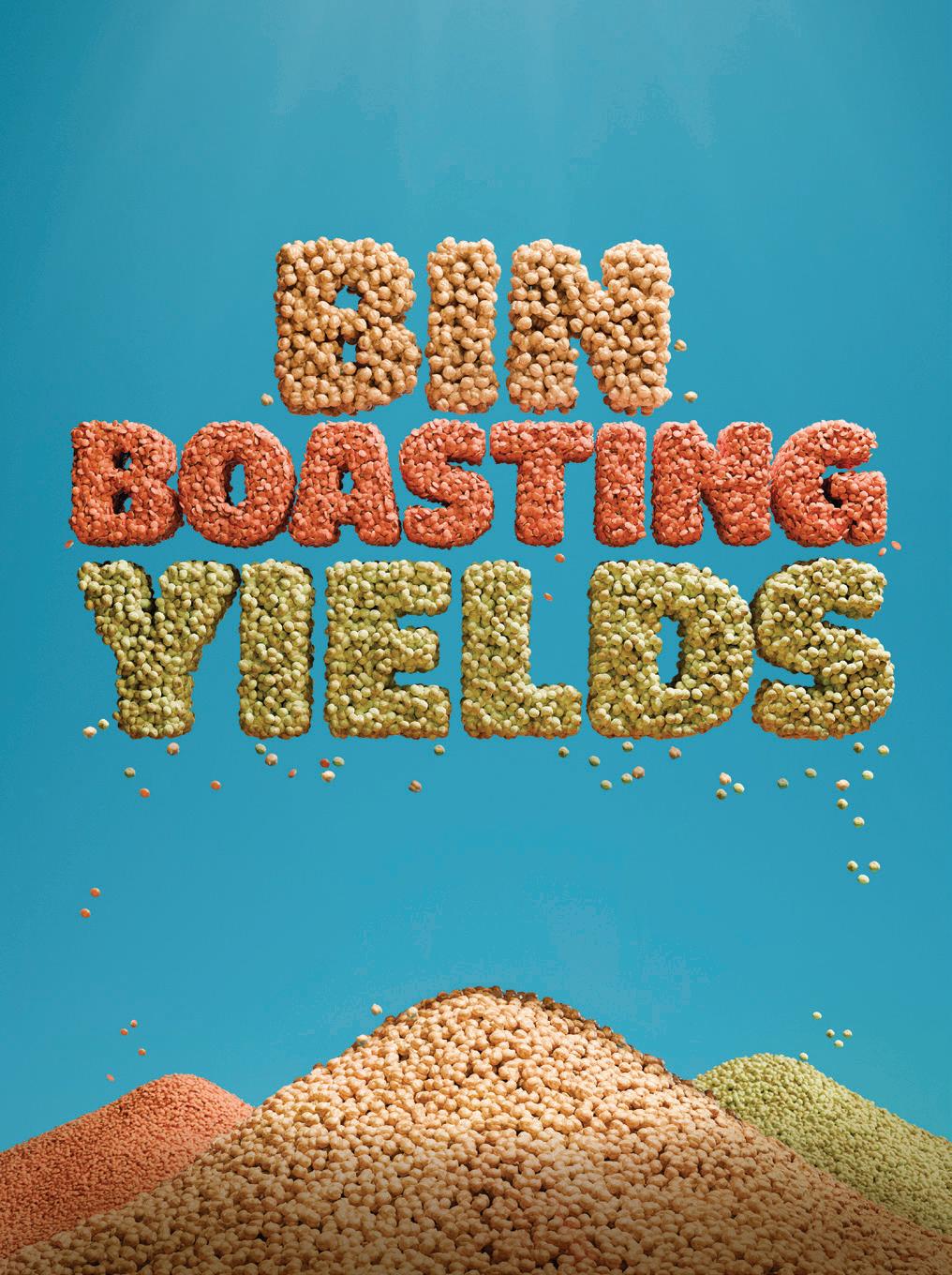
Powerful pulse performance to maximize your yield potential— and test just how humble you can be.
Delaro ® Complete fungicide is your best first pass choice on pulses. Delaro Complete effectively manages both Anthracnose and Ascochyta Group 11-resistant biotypes. Its unique combination of three powerful modes of action are expertly formulated to provide broad-spectrum disease control for your pulse crops, helping to protect your yield potential and maximizing your return on investment. With performance like this, don’t be surprised if you need bigger bins. See how it performs at DelaroComplete.ca
Research is often led by commodity groups like wheat growers, barley growers and oat growers. These groups are typically funded by checkoffs. In recent years, there has been a pushback on checkoffs. They are voluntary, so you can opt out. There is also pressure to keep these low.
There has been a push from the seed industry to collect royalties when we use farm-saved seed. This has been met with all sorts of resistance.
If we don’t want our tax dollars going to fund crop research, and if we don’t want to pay checkoff fees to fund research, and if we don’t want to reward breeders with ongoing royalties, who is going to pay for this research?
There are some examples in our industry of how to pay for research and development from the corn, soybean and canola seed industries. Because I do not grow beans and corn, I will focus on the canola industry.
I found a Crop Planning Guide issued by Sask Ag and Food for 1996. These guides go over the cost to grow each crop, and it is broken down into each expense. The seed cost in 1996 to grow canola was $6.05/acre.
If we don’t want our tax dollars going to fund crop research, and if we don’t want to pay checkoff fees to fund research, and if we don’t want to reward breeders with ongoing royalties, who is going to pay for this research?
Since then, the canola industry has developed thousands of new varieties, tested them all over Western Canada, and got them into our fields through great research and marketing. Today, I am paying $85/acre for seed and I have to seed at 4.2 lbs/acre to maintain that cost. That is a 1,300 per cent increase in cost.
To be fair, the price of canola in 1996 was $7.60/bushel and we expected 20 bushels per acre. Now we are getting $15.50/bushel and we grow 45 bushels per acre. We have gone from $152/acre in revenue to $698 which is a 360 per cent increase. A definite increase, but not as much as seed has increased.
Because of the hybrid industry, we must buy seed every year. It is a highly funded, well-oiled machine. They do not need government money. These seed companies hire their own professionals and create new seeds for our industry.
We, as producers, have a choice. We can use our own money to fund research and seed development, or we can wait for the seed companies to do it for us. They will either do it slowly because they are not getting paid to do it, or they will go down the road of the canola industry and figure out a way to get the money from us. Either way, we have to pay for this because it benefits us. We need new wheat, barley and oat varieties to keep up with the demands being made on our farms. This research turns into dollars and cents for us.
There are new diseases and growing challenges every year. We need a robust research industry to ensure we have the best plants to compete with growers in other countries.
My hope is that there will be an organization, or perhaps a few, that will step up and take over the Indian Head Research Farm. Maybe this will be a model for the future. It can be funded by producers and the work done will benefit producers. That is my hope for this farm.
We don’t
have gas stations at UFA
. Never have, never will.
We aren’t in the business of slushies and scratch tickets. What we do have is a network of petroleum agencies and cardlocks with a history that dates way back to the days of Charlie Chaplin and dancing the Charleston.
It was the roaring twenties and tractors were replacing horses on the farm. Fuel was in high demand, short supply and sold at an eye-watering premium by the Maple Leaf Oil and Refinery Company (which wasn't run by Canadians, by the way).
Canadian farmers are allergic to letting others solve their problems. It chaps their hides worse than a northerly November wind. They needed fuel, fast, and we weren't about to let a bunch of Americans squeeze the nozzle. So the farmers pooled their resources and we created Alberta’s first co-operative bulk fuel outlet.
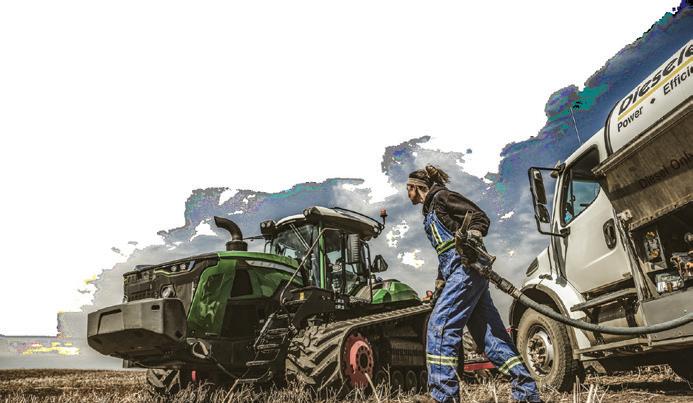
And that’s not the only time we thought outside the fence line. We brought cardlock technology to Western Canada and today operate one of the largest networks in the region, all available 24/7/365 (we’d run 25/8/366 if they’d let us). We expanded into BC, and then into Saskatchewan. We’re also the exclusive sellers of Dieselex ® Gold, arguably one of the best straight-no-chaser diesel fuels around, helping producers run longer, stronger and over time, cheaper. And you can take that to the bank.
Like a cow being prepped for auction, we grew and grew and grew. We even took over the Maple Leaf Oil and Refinery Co. and sent the owners packing (politely, because we’re Canadian, but firmly, because we’re Albertan). Our fuel distribution network served the whole province. It was fuel for Canadian prairie folk, by Canadian farmers. And just in case anyone questioned that, we purchased Maple Leaf Petroleum, adopted its logo and flew the maple leaf eight years before Canada.
Today, UFA’s petroleum business is owned and operated by your neighbours. Our Petroleum Agents live in the communities they serve, know their customers by name and understand that a late fuel delivery isn’t just inconvenient, it’s a broken axle on the road to payday.
If it runs, we’ve got what you need to run it and if it doesn’t run, our agents are the sort of folks that would help you push it into the shop. We supply over a billion litres of fuel per year from Western Canadian refineries to farmers, ranchers, industry and anyone else looking for a quality product at fair prices with the kind of personal touch that can only come from living in and loving the community you call home.
So no, we don’t have gas stations at UFA. We have something a little more rooted. Personal, even. Our petroleum agencies aren’t just places to fill up. They’re community cornerstones fuelling the West’s economic engine. And we wouldn’t do it any other way.
Your Farm is a Success... Now What?
By Nerissa McNaughton
Farmstrong Financial turns generations of work into generations of wealth for farming families building a legacy. In this series, we explore why the concept of a family office for farmers is so important, and we meet the professionals invested in your success.
The oilsands may grab the headlines when it comes to talking about Canada’s economic engine, but agriculture, with its 189,874 farms covering 62.2 million hectares of the nation’s landscape, deserves just as much attention. The most recent Government of Canada statistics show that as of 2024, farm market receipts (which show revenue from the sale of all commodities, including grains, oilseeds, red meat and dairy) topped $92 billion and grew over five per cent annually between 2014-2024.
According to the Government of Canada’s sector overview report, “Canadian agriculture is evolving over time in response to challenges, opportunities and market developments. The adoption of innovation contributes to increases in output and productivity.”
This has led to average farm sizes doubling over the past 50 years due to what the report calls “consolidation and technological advances.”
It is for this reason that, as of 2024, the largest 10 per cent of
farms in Canada generate more than two-thirds of the nation’s farm revenues.
That is wonderful for Canada, but what does that mean for the people actually working the land? The farmers?
As the size and structure of farms have changed, so have the management needs. It goes beyond the decisions to invest in combines and watching the weather. While farms are conglomerating, amalgamating, merging and growing, at the root of it all remains one constant: many farms remain family-owned and as the financial side of the business explodes, so too does the need to manage the wealth – not just season to season, but now on a generational scale.
And therein lies the challenge.
It is one thing to think generationally about a technological corporation where the family business is the seat of its power. It is quite different to think generationally about farming when paradigm shifts have changed the nature of business in unprecedented ways. From sudden mergers to future planning with capital purchases, to the acquisition of thousands of acres in mergers, successful farmers who earned their way into ultra-high-net-worth-individual (UHNWI) status can no longer manage their businesses with a spreadsheet and local banker. They need a family office.
The big question: What is a family office?
It is a financial service for UHNWI that goes beyond the usual services of a typical wealth management firm. A family office provides comprehensive financial management, handling everything from daily budgets and tax services to insurance, philanthropy and wealth transfer planning.
That is where Farmstrong comes in.
The man behind Farmstrong is none other than Derryn Shrosbree, founder and CEO of 33seven.
Shrosbree started 33seven to help farmers with continuity planning; an urgent need since 88 per cent of Canadian farmers lack a succession plan. As he worked with families to help prevent the fallout of farmers dying intestate, he came face-to-face with the realities of the rapidly changing (literal) agricultural landscape. Not only were farmers not managing their succession planning, but they were also not managing their finances, and now that many of those finances have hit UHNWI status, there is a loud echo in the room when it comes to what he calls “quotas, quarters and combines.”
“Farming
is no longer a local endeavour; it is a globally connected, technology-driven enterprise. Instead of lamenting the loss of the traditional smalltime family farm, progressive producers are stepping up to embrace the reality of modern agriculture as a sophisticated, large-scale business.”
- Derryn Shrosbree
“Farmers need one throat to choke,” he says with his signature bold bluntness. “If they are not managing succession planning because of all the lawyers, accountants and banks involved (which, shameless plug, 33seven takes care of with one call to us), how are busy farmers supposed to manage their quotas, quarters and combines alongside the generational wealth and wealth transfer while they are living? There is so much to consider. Planning for next year’s crops and herds, while managing personal and professional investments, while putting the children through university, while retirement planning, while satisfying the farm’s growing stakeholders and investors – and then the combine breaks down and that is a milliondollar machine, if not more.
“That,” he continues, “is what I mean by ‘one throat to choke.’ I saw the need for busy farmers, with their farmer mentality – which I feel harks back to the old world of do-it-yourselfers – to have one point of contact to manage succession. By extrapolating that to the new farming landscape where farms are now massive businesses with multiple levels of investment and investors, yet still owned and run by families, having a family office just for the ag industry addresses a very modern and new but urgent need.”
Shrosbree adds, “Farming is no longer a local endeavour; it is a globally connected, technology-driven enterprise. Instead of lamenting the loss of the traditional small-time family farm, progressive producers are stepping up to embrace the reality of modern agriculture as a sophisticated, large-scale business. You are integrating digital tools, managing complex supply chains and scaling operations to rival major conglomerates. To support this massive growth and protect the wealth it generates, you
need financial infrastructure that matches your ambition. The Farmstrong family office is built specifically for the unique needs of farmers willing to embrace the new reality. Just as ultrawealthy families use a family office to oversee their investments, wealth transfer and tax strategies, Farmstrong provides the comprehensive, high-level oversight required to manage and protect a modern agricultural empire.”
Farmstrong connects clients with Canada’s most important and impactful wealth managers that are ag-focused, such as HUB, Novel Wealth, Generational Wealth and PowerFarm – to name just a few.
“If you are a producer looking to build, grow and develop your operation to its absolute highest potential, this approach aligns perfectly with your mindset,” Shrosbree continues. “Farmstrong shows you exactly what is possible when you treat your farm not just as a piece of land, but as a generational wealth-building powerhouse. By adopting the specialized management strategies used by top-tier corporate entities, you can secure your legacy and ensure long-term prosperity for your family. For those ready to progress into the future of connected, high-powered agriculture, you will find immense value in what the stakeholders share throughout this series.”
“Farmstrong shows you exactly what is possible when you treat your farm not just as a piece of land, but as a generational wealth-building powerhouse.” - Derryn Shrosbree
Are you ready to grow your family’s future as heartily and resiliently as the canola on your farm? Are you ready to connect with those invested in the success of your brand and of your family? Have you been putting it all off because crop cycles and market rates consume your attention? The time is now. Farming has changed and you are changing with it.
Protect what generations before you built and future-proof it for the generations to come. Take the time to read this series and learn how the many different companies in Farmstrong take you and your farm to the next level.
Stay tuned. Growth happens now.
CULTIVATING A FUTURE AFTER AN ALS DIAGNOSIS
When Tre Archibald was 23, he was building a future rooted in the land. Raised in Strongfield, Saskatchewan, he had taken out a loan to start his own farming operation and was completing his fourth year of military service. Then he was diagnosed with amyotrophic lateral sclerosis (ALS), also known as Lou Gehrig’s disease.
ALS is a progressive neurological disease that causes paralysis, eventually taking away the ability to walk, talk, eat, and eventually breathe. It typically carries a life expectancy of two to five years after diagnosis.
Like many Canadians, Archibald had heard of ALS but did not know it could affect someone so young. What began as muscle twitching and stiffness, soon put his farming plans on hold, ended his military service, and raised new concerns about what the diagnosis would mean for his family.
Today, his story looks very different.
Behind experiences like Archibald’s is a nationally coordinated approach to ALS research and advocacy. The ALS Society of Canada (ALS Canada) funds research, advances national advocacy, and connects people and families to trusted information, virtual programming, and support groups. This work is carried out in collaboration with clinicians, researchers, and provincial partners across the country, with the shared goal of changing what it means to live with ALS.
For Archibald, that progress became tangible through Qalsody, a treatment developed for a rare genetic form of ALS known as SOD1. While not a cure,
the therapy has helped slow progression and improve some of his symptoms.
“When I was diagnosed, I thought ALS would take everything I had worked for. Thanks to research, I am still farming, still independent, and still planning for the future,” said Archibald.
According to Dr. David Taylor, Chief Scientific Officer at ALS Canada, treatments like Qalsody reflect a broader shift in how ALS is understood.
“Qalsody shows that ALS is treatable,” said Dr. Taylor. “It is the result of decades of research investment and collaboration. Continued investment is essential if we want to see this kind of progress reach more people.”
Now 29, Archibald is back on the farm, living independently and continuing to build the business he once feared he’d lose. He has also taken on a national advocacy role through ALS Canada’s Canadian ALS Learning Institute (CALI) as a Community Ambassador.
In October 2025, Archibald travelled to Ottawa with advocates from across Canada to urge the federal government to invest $50 million in the Canadian Collaboration to Cure ALS, supporting Canadian-led research initiatives to
Tre Archibald Diagnosed with ALS at age 23.
deepen understanding of the disease and advance new treatments.
While Qalsody is not a cure and does not work for all forms of ALS, stories like Archibald’s show what progress can look like when research, advocacy, and community come together. With more than 4,000 Canadians living with ALS today, continued national efforts led by organizations like ALS Canada remain essential to cultivating a future where an ALS diagnosis no longer defines what is possible.
June is ALS Awareness Month. Donate to help fund Canada’s most promising ALS research at als.ca/change.
Think of V27-1G as an improvement to a winning program you already know and trust. It offers strong disease protection, added flexibility in how you manage and harvest your crop, and the potential for stronger per-acre returns. With this addition to the lineup, the Victory Canola Program is showing its commitment to pushing your farm forward.
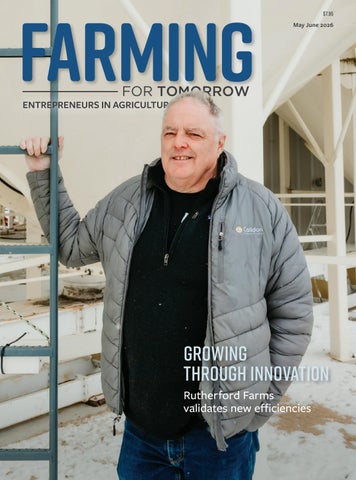
GROWING THROUGH INNOVATION
Rutherford Farms validates new efficiencies
BY ANGELA LOVELL
PHOTOGRAPHY BY PATRICIA CHARTIER PHOTOGRAPHY
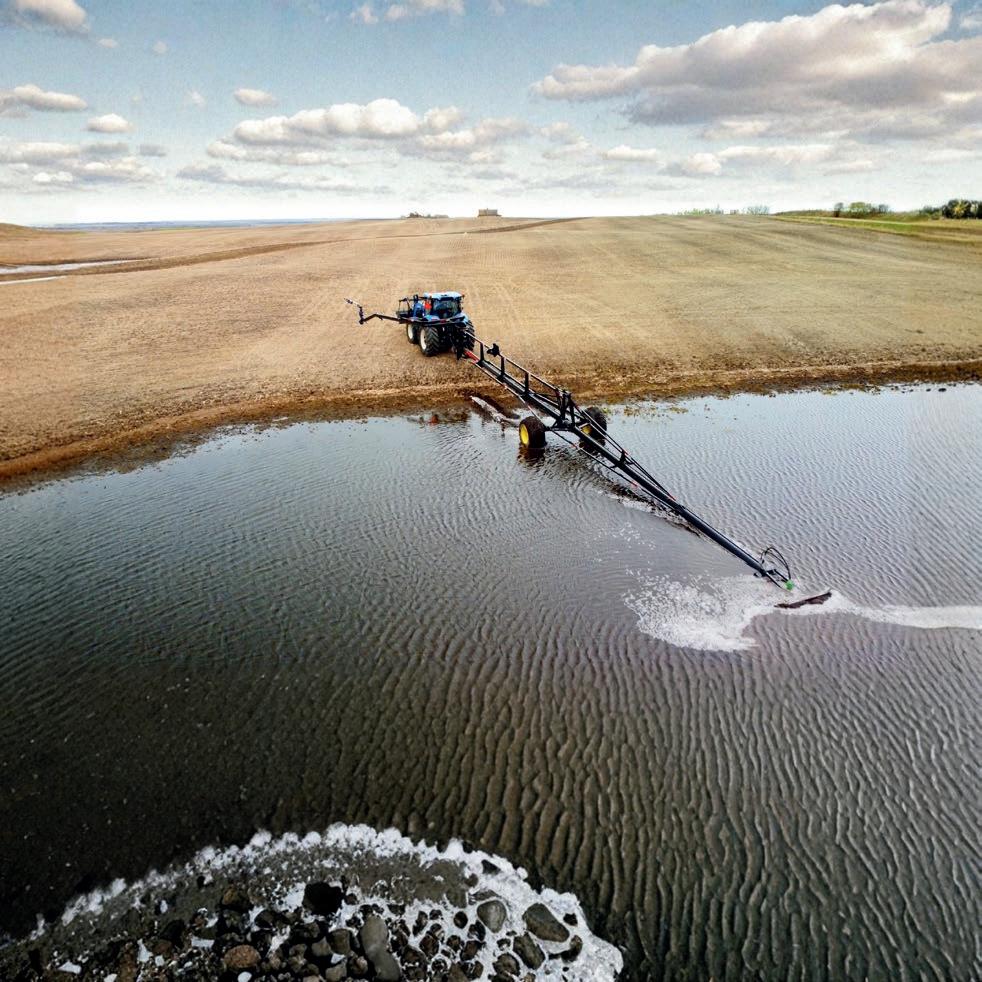
Rick Rutherford’s grandfather would be astounded if he could set foot on the family farm near Grosse Isle, Manitoba today. Back in the early 1900s, he and his brothers custom seeded over 2,000 acres for area farmers with five teams of four horses. Today, Rutherford Farms is an Innovation Farm that works with technology accelerator EMILI (Enterprise Machine Intelligence and Learning Initiative) and private companies to test and validate the most cutting-edge agricultural technology and equipment available.
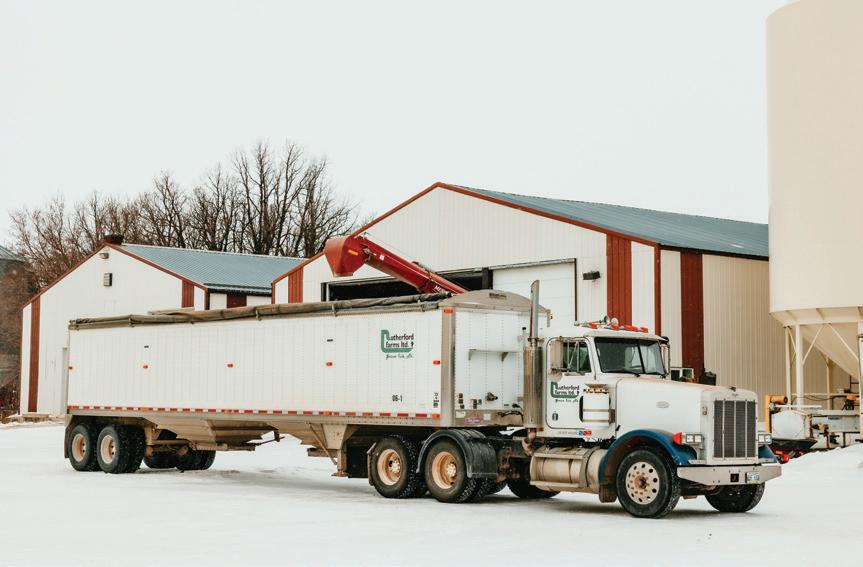
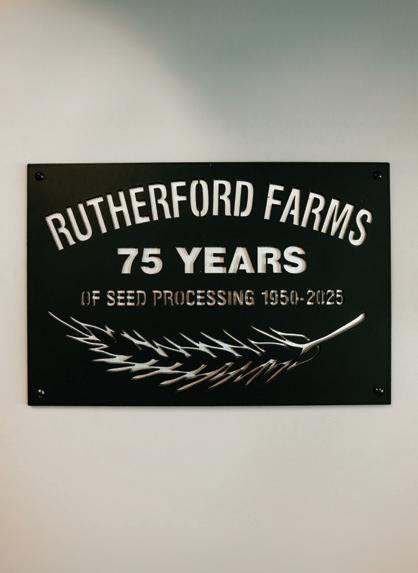
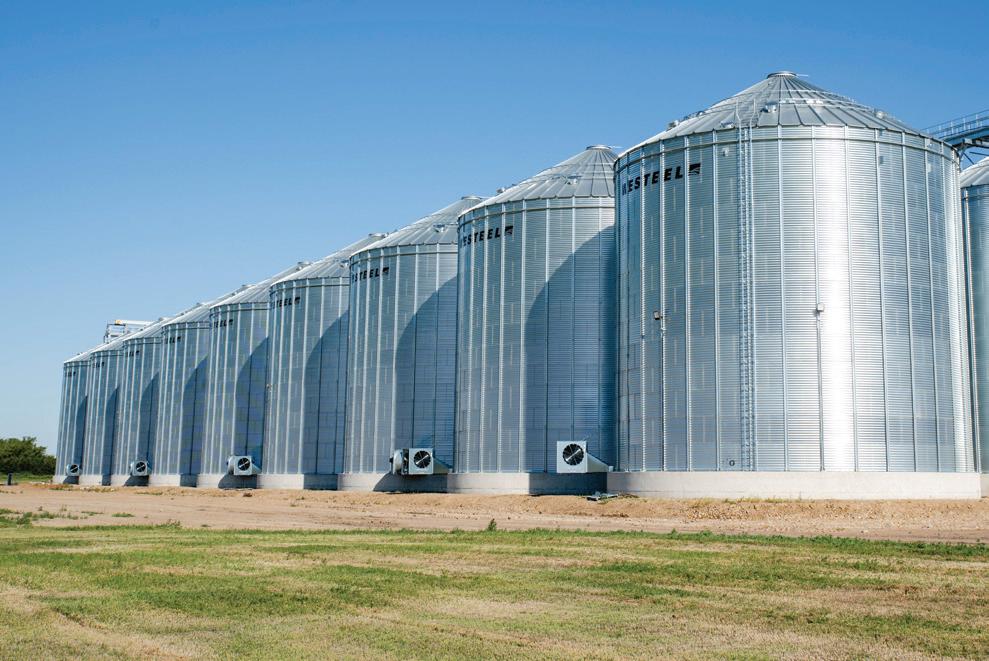
The third-generation farm has always embraced innovation and technology throughout their operations, which includes a pedigree seed business offering; a state-of-the-art, fully automated seed cleaning facility with the capacity to clean over 500 bushels of seed per hour; grain storage capacity of over 800,000 bushels; and hopper bins with bean ladders and conveyors for handling sensitive crops like soybeans and peas.
Since taking over the farm from his father, Jack, in 1980, Rick Rutherford has expanded the operation from three quarter sections to over 12,000 acres, which now includes a second farm two hours north at Gypsumville, Manitoba purchased three years ago. Over the years, he has used just about every technology available to improve productivity and efficiency, starting with his first geo-referenced field map in 1997. The innovation journey continued to autosteer, then sectional control on tractors, sprayers, seeders and fertilizer equipment, through to satellite images for monitoring different crop conditions.
The first Innovation Farm in Canada
Six years ago, Rutherford Farms moved to the next level by becoming the first Innovation Farm in Canada after EMILI’s managing director, Jacqueline Keena, and board chair, Ray Bouchard, (who is also CEO of Enns Brothers), approached Rutherford about working with the organization because they knew he had one of the most complete data sets of farm operations in Western Canada, dating back 12 years.
“Until I went with EMILI, I guarded my data fairly closely because I knew it was becoming something special,” Rutherford says. “When they came to me with the opportunity to use it to assist some of the tech companies for which this data was important, I felt that if the data set had value to it, I wanted to make sure it was shared with the right people.”
Initially, they had discussed doing some small plot work on the farm, but for Rutherford it was all or nothing, and he granted access to the entire farm.
“I said let’s take this to another level and make it a full-scale validation farm,” Rutherford says.
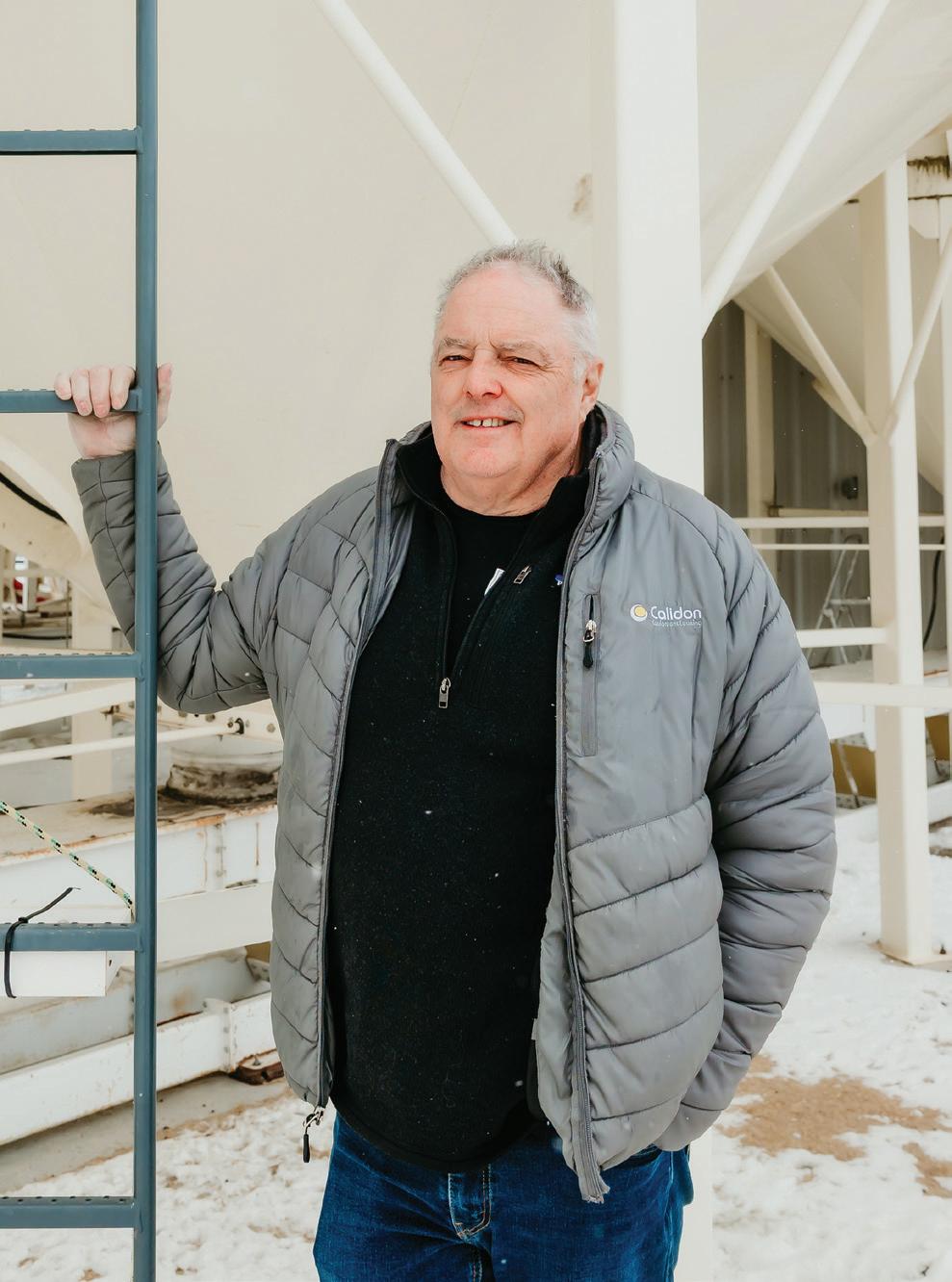
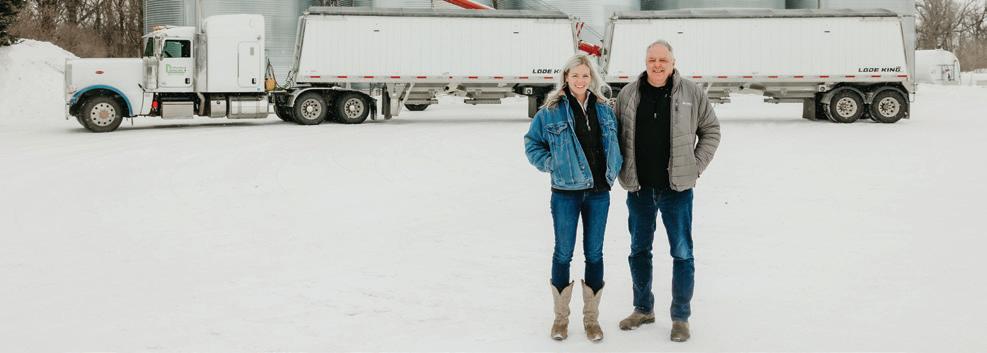
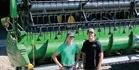
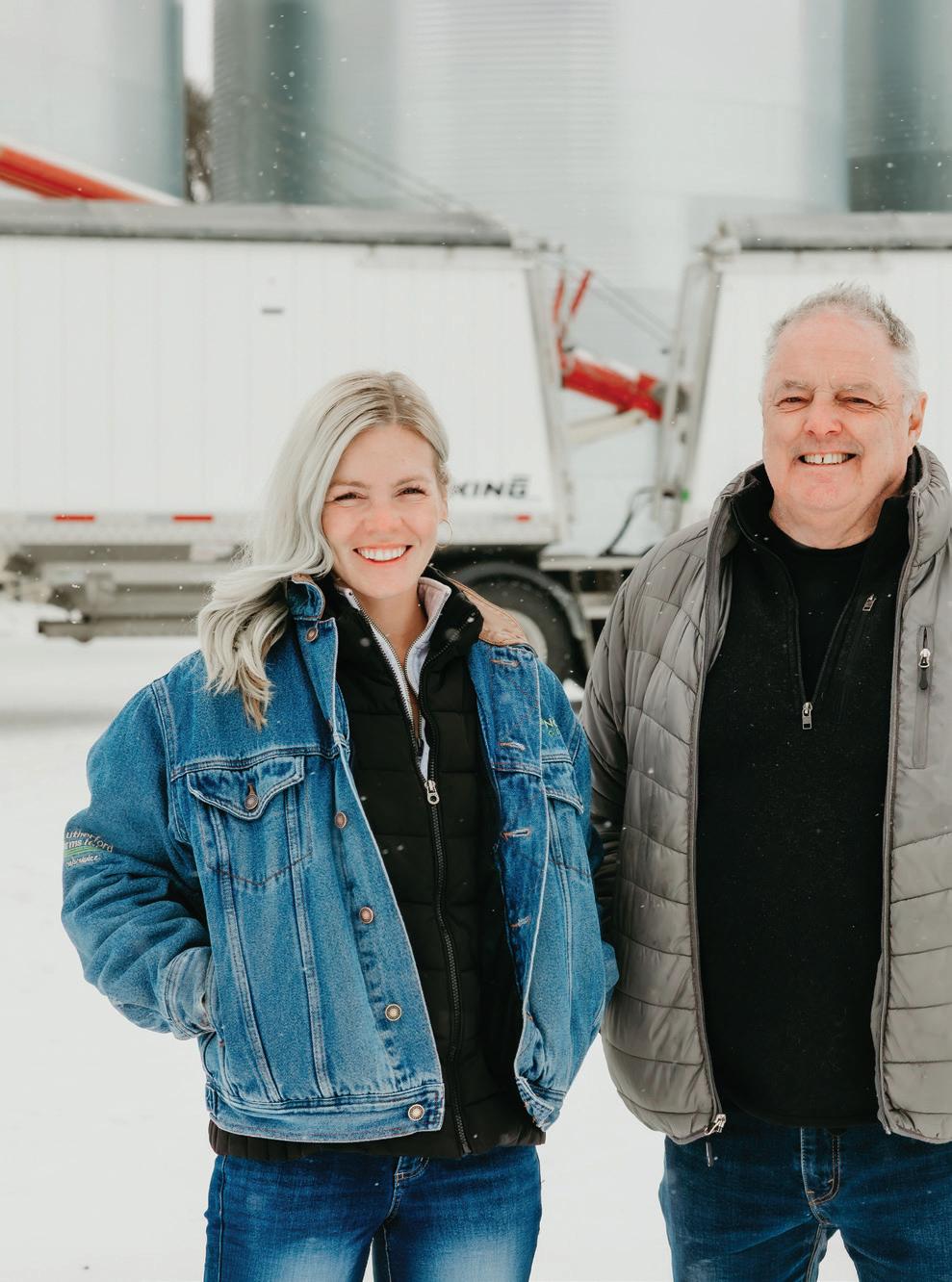
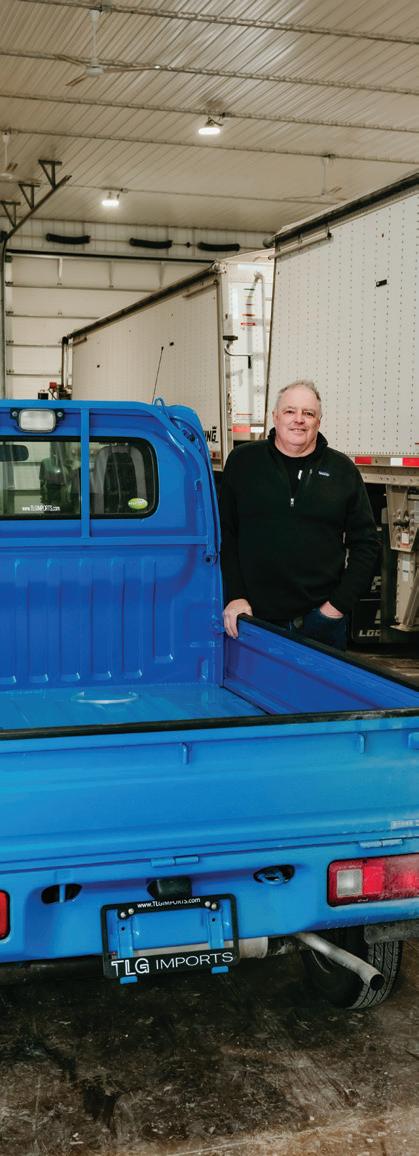
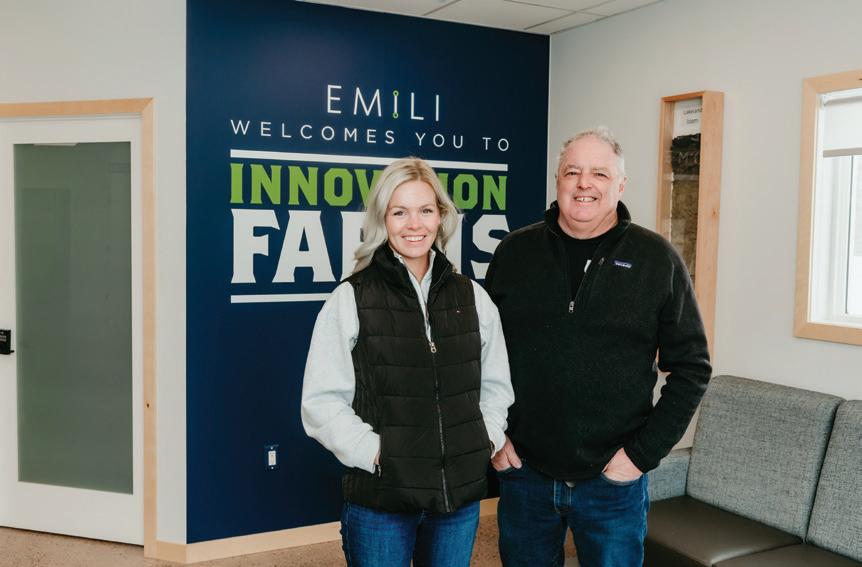
Emily Laudin, farm manager, and Rick Rutherford, president, Rutherford Farms.
“We have to prove there’s a return on investment (ROI).
Farmers don’t need to find out the hard way that something isn’t what it is cracked up to be, or doesn’t have a practical application on their farm. We can’t be supporting things that don’t have an ROI.”
- Rick Rutherford
Rutherford was also motivated by a strong desire to help validate new technologies while ensuring they were feasible with practical applications for farmers under real-world conditions.
“We have to prove there’s a return on investment (ROI),” Rutherford says. “Farmers don’t need to find out the hard way that something isn’t what it is cracked up to be, or doesn’t have a practical application on their farm. We can’t be supporting things that don’t have an ROI.”
Rutherford admits that not every new technology pans out – and that they are more involved in some projects than others, depending on the technology and the goals – but he meets with EMILI regularly to discuss existing and new project ideas.
“Ray and I will get together with Jacqueline and chat about where things are going,” Rutherford says. “They work on other projects too that may not relate to our farm at all, but the point is they are not handcuffed with what they’re doing here; they are always looking for different ways to innovate in other areas as well.”
Projects proving theory
Rutherford Farms has hosted drone projects for fungicide application and for identifying resistant weed patches in fields, as well as verification testing of new equipment, such as Elmer’s Manufacturing’s Hive Motherbin, a portable grain bin on wheels that can store up to 8,250 bushels in the field.
It’s a perfect example of how Rutherford Farm’s data helped validate the efficiencies of a new technology. In comparing data from corn crops harvested at the farm in previous years
Rick Rutherford took over the farm from his father, Jack, in 1980.
The third-generation farm offers a pedigree seed business, fully automated seed cleaning, grain storage capacity of over 800,000 bushels and hopper bins with bean ladders and conveyors for handling sensitive crops.
“When you create an absolute boundary like this, the data you collect is to a very high level, and that’s part of the introduction of autonomy; it has to be precise.” - Rick Rutherford
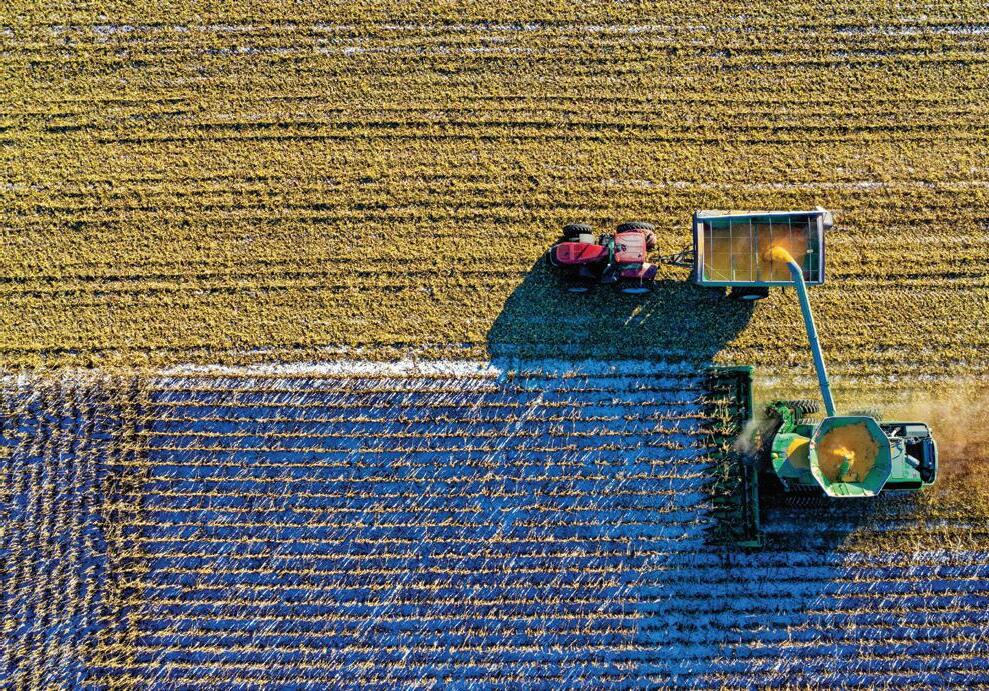
with a grain cart and truck, they found their combine was idle in the field 15 to 20 per cent of the time and the complete operation required five people. When they used the Hive Motherbin, they could harvest a quarter section with just three people, and the combine was idle less than three per cent of the time.
“This has become a huge selling point for big corn farmers in the U.S. Midwest because it’s something that can increase their efficiencies,” Rutherford notes. “That’s one example of a large manufacturer seeing a lot of benefit in having a thirdparty group verify what they actually know.”
Sometimes part of the project leads to identifying new applications for technologies that come as a result of their own experience as farmers. A good example is their work with LiDAR to show the exact amount of grain in a bin.
“We have challenged this group of people by saying if you can get your accuracy down on these bins by using LiDAR, it may be something that crop insurance will accept going forward,” Rutherford says. “So here’s a technology that they’ve used, but now we’ve given them ideas to put it into other practical applications that they hadn’t thought of. That’s part of the tech accelerator idea, that we can take something from an idea, put a practical twist to it and say there is more that you could do here.”
Next step: autonomous farming
The team, which includes Emily Laudin, who serves as farm manager of Rutherford’s South Farm at Grosse Isle, has also worked with John Deere to beta test new technology that uses RTK to establish permanent, fixed boundaries in a field – an essential next step to the deployment of autonomous equipment.
“Once we have these boundaries, it lets us design every path in the field before we even go into the field, and the passes are designed to be the most efficient,” Rutherford says. “When you create an absolute boundary like this, the data you collect is to a very high level, and that’s part of the introduction of autonomy; it has to be precise.”
Rutherford admits that their farm may well be one of the first to employ autonomous farming in the future, although he’s not entirely sure that the technology will be ready to run without a human being present for a while yet.
“If we are in the field harvesting corn, the autonomous tractor could be working in the same field, coming up behind us and tilling the field as we move across it, so in that specific case we’re still sitting with eyes on it,” Rutherford says.
For Rutherford Farms, their partnership with EMILI has given them first access to new equipment and sneak peeks at evolving technologies that help them continue to improve their own productivity and efficiency in ways they would not have discovered if they hadn’t been involved in this research and validation work.
“I’m not the innovator that I can be without them, and they’re not verifying stuff without me, so it’s a great marriage for us,” Rutherford says.
Emily Laudin and Rick Rutherford may soon employ autonomous farming at Rutherford Farms.
No One Size Fits All
What to consider when investing in the right mix of bins and handling equipment
By Lisa Kopochinski
The importance of grain quality and the impact it has on a grower’s profit cannot be understated. Investing in highquality grain storage and infrastructure is clearly a must.
Located approximately 20 kilometres northwest of Regina, CORR Grain Systems provides a wide range of grain storage and handling systems to a diverse clientele primarily located in Western Canada, ranging from small family operations to the largest producers in the region.
“We also work with pulse and seed plants, along with major companies in the export industry,” says CORR Grain Systems president and CEO Brett Schmidt.
The company offers a wide range of products, from 10,000-bushel hopper bins and dryers to large flats with terminal-type handling and dryer systems.
“Our territory sales managers assist customers in determining their grain storage and handling needs by providing product information and custom yard plans for today and for the future. This assistance can be provided over the phone or through on-site farm visits. This is particularly important for larger and more complex projects, where they help lay out comprehensive handling and dryer systems.”
Dawna Sloane helps share the workload by managing the office.
With a focus on understanding customers’ needs and ensuring product and construction services are ready for the upcoming
“Our sales process starts by understanding each farm’s location, acreage size, crops grown, harvest speed and existing grain handling equipment.”
- Chris Peterson
season, Schmidt says this process is managed from the company’s central ordering and distribution centre near Regina.
“Our selling season begins towards the end of harvest and continues throughout the winter. Construction typically begins in early April and slows down during winter months.”
Chris Peterson is the galvanized product sales manager for Meridian Manufacturing, working out of the Prairie Steel Products office in Clavet, Saskatchewan, which Meridian purchased in 2024.
“Our primary customers are grain farmers across Western Canada, along with the dealers who support them,” says Peterson. “Our sales process starts by understanding each
IT PAYS TO ADD SMART GRAIN MANAGEMENT
With GrainVue, you can add value to soybeans through automated rehydration and avoid overdrying corn to keep more of what you earned. It's less guesswork, less loss and more from every bushel. Contact your local GSI dealer to find the right GrainVue system for your operation.
“The storage period can range from a few weeks to several months, depending on market conditions and the farmer’s overall marketing plan. Proper storage and handling equipment can ensure grain quality is maintained and farmers can effectively move their products to market.”
- Chris Peterson
farm’s location, acreage size, crops grown, harvest speed and existing grain handling equipment,” he adds.
“We work closely with dealers and farmers to help identify each individual customer’s current and future needs. Then we recommend the right mix of bins and handling equipment with the goal in mind to provide reliable, cost-effective solutions to fit each operation. All sales transactions are predicated by a strong customer focus with effective communication to build trust, ensuring their needs are understood so they become repeat customers.”
Storage and Handling Options
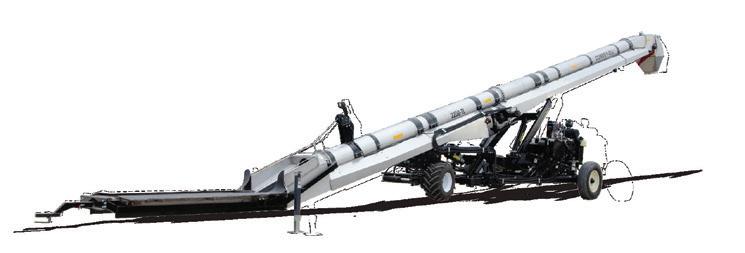
Meridian Manufacturing’s grain storage and handling generally include the equipment that is used to move, store and manage grain from harvest until it is sold or processed. This typically involves augers or conveyors for moving grain, along with bins and aeration systems for safe storage.
“The storage period can range from a few weeks to several months, depending on market conditions and the farmer’s overall marketing plan,” says Peterson. “Proper storage and handling equipment can ensure grain quality is maintained and farmers can effectively move their products to market.”
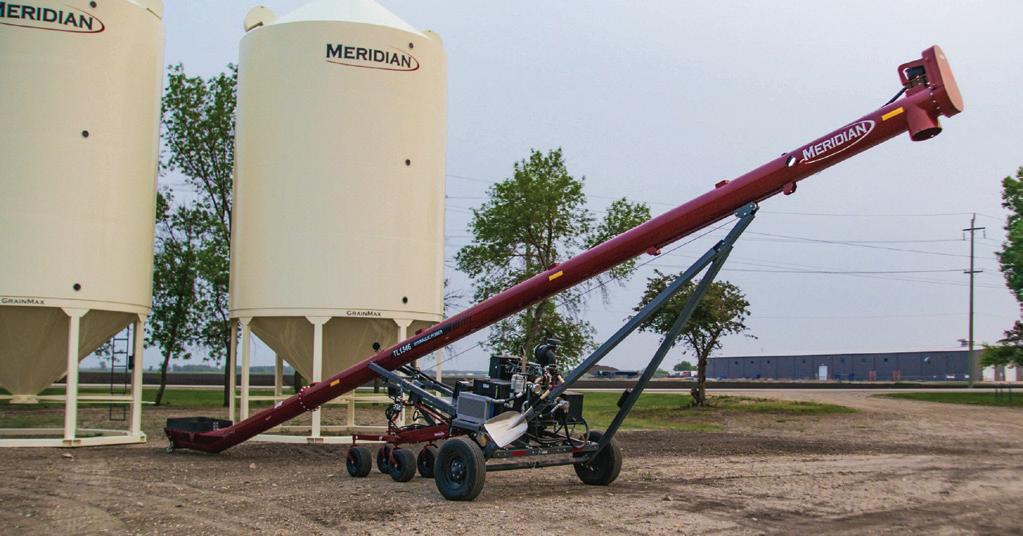
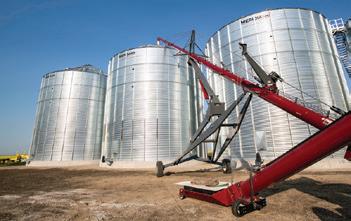
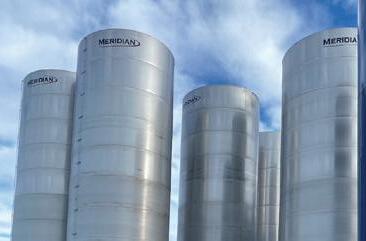
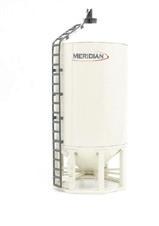
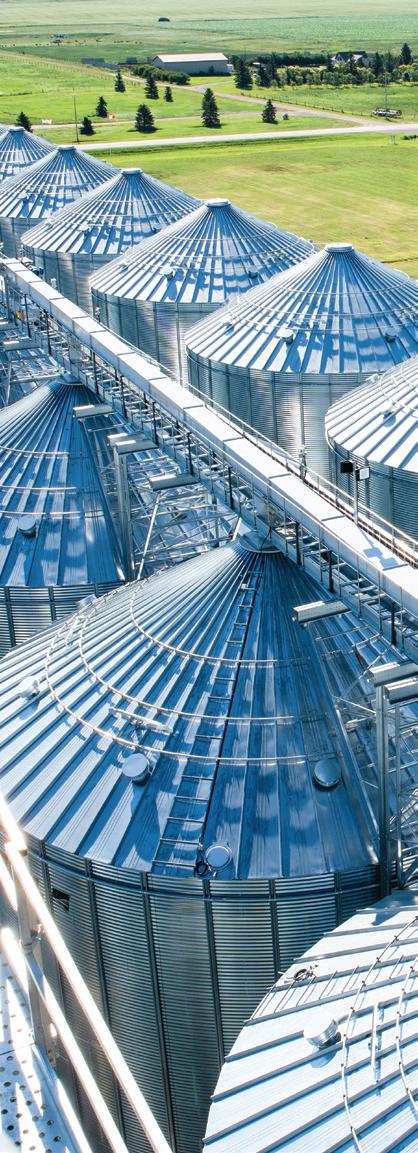
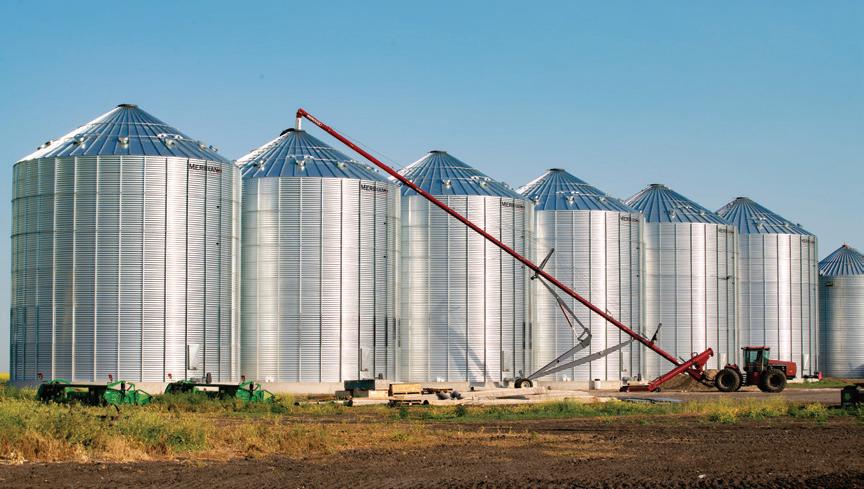
Meridian’s most common grain storage option on farms is its galvanized steel grain bins with aeration systems to maintain grain quality over time. There are two types of galvanized grain storage that Meridian manufactures. The first is galvanized Meridian hopper grain bins that allow farmers to load and unload quickly from the 5,000-bushel to 15,000-bushel range. The second, and larger storage option,
Meridian hopper combos with available staircases and aeration. Photo: Meridian Manufacturing
is Meridian flat-bottom bins, holding over 25,000 bushels.
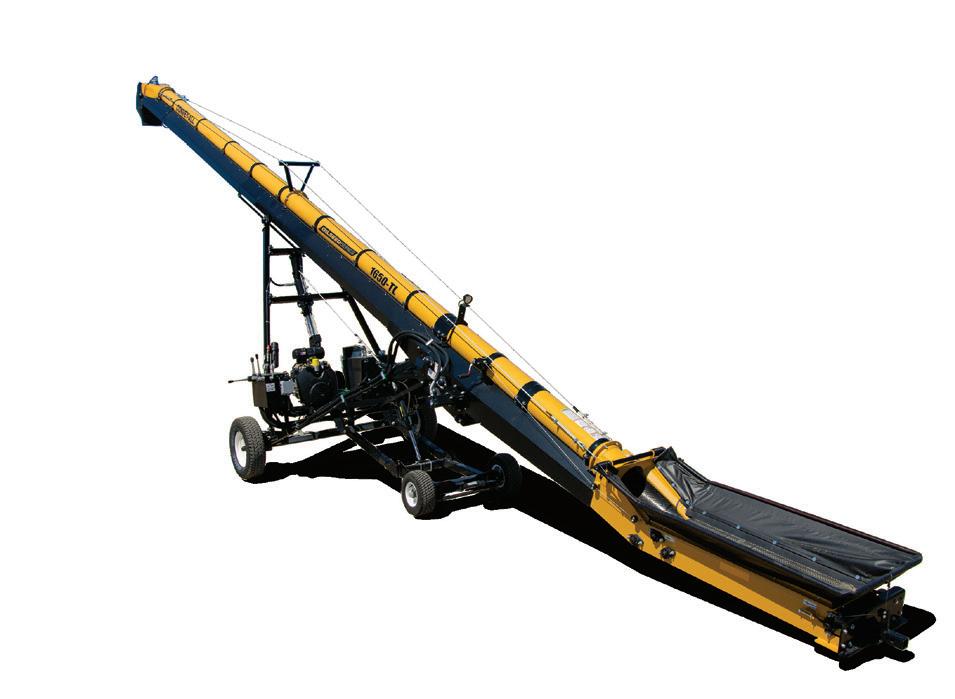
“For handling grain, truckload augers are widely used because they are efficient and easy to move between bins and trucks,” explains Peterson. “Many farms also use conveyors and swing augers to improve unloading speed during harvest. The right combination of storage and handling equipment helps farmers move grain quickly and safely while protecting the quality of their crop.”
Schmidt says the company’s top-selling product is its flatbottom bins ranging from 30,000 to 45,000 bushels.
“We’re fortunate to offer a product mix and construction services perfectly suited to meet the needs of western Canadian producers. In terms of handling, the most common system we see involves hopper bin wet storage in front of a dryer, followed by delivery from the dryer to large flats using a pneumatic system.”
However, the company has installed farm systems that rival the size and complexity of grain handling terminals.
“Some of these farms handle significantly more grain than the old wooden elevators that once dotted the Prairies,” he adds.
Important Considerations
When asked what farmers need to consider when it comes to their own storage and handling, and how this differs for farms that are 5,000 acres versus 25,000 acres, Schmidt says there
is no one size fits all in this business.
“Farms across Western Canada have diverse needs. However, I recommend customers consider their current and future requirements when planning grain handling systems. Building a system that accommodates both present and potential future needs is crucial. Providing ample space for expansion is advisable, as farm sizes and equipment continue to grow. Most farms prioritize systems that minimize stress and manpower while balancing costs. This consideration initiates the planning process for grain management solutions.”
Peterson adds that when planning grain storage and handling systems, farmers need to consider factors such as the size of their operation, harvest speed, crop types and how long they plan to store grain.
“For example, a 5,000-acre farm may focus on Meridian hopper storage with moderate capacity and smaller Meridian handling equipment that still provides efficiency during harvest and cost-effectiveness for smaller operations.”
Conversely, larger operations, such as 25,000-acre farms, typically require significantly more storage capacity such as large flat bottoms and higher-capacity handling equipment, to keep up with multiple combines and trucks moving grain quickly.
“To sum up,” says Peterson, “Meridian offers a range of products to ensure the investment required matches the size of their operation.”
Meridian flat-bottom corrugated bins with a Meridian 14-115 swing auger. Photo: Meridian Manufacturing
Grain Markets!
Navigating the News (Noise)
By David Drozd
Endless news stories and market volatility can often lead to confusion and worry.
Modern farmers face immense pressure to balance farm work with family, friends and hobbies. Despite the uncertainty, you can manage stress, support your family, and run your farm operation efficiently and profitably.
Farmers are strongly independent. Some sell grain when bills are due or when the elevator agent calls. However, there is a better way to manage cash flow, price and storage risk. Selling grain at or near market highs and avoid selling at market lows is the goal, but do you have the knowledge and/ or time to do so? A missed opportunity can cost you millions of dollars in the blink of an eye.
Partner With Someone
Consider working with someone who has the expertise to help you sell your grain for more. Some services simply relay the news. Others provide market outlooks, marketing strategies and recommendations on when to sell, while others market your grain for you, and some do a variation of sorts. It is important to hire a firm that aligns with your values and goals and provides what you need help with most.
A professional grain marketing advisory firm has a team of advisors providing pertinent information, marketing strategies, and sell recommendations on commodities of your choice. This saves you time, allowing you to focus on what’s important to you.
Reduce Stress
Hiring someone to help you market your grain can ease
David Drozd, co-founder and senior analyst, AgChieve
anxiety and improve your overall health. An advisory service takes the emotional attachment out of marketing your grain, allowing you to stay clear minded and make the best decisions for your farm.
AgChieve, founded in 2002, uses charting and technical analysis to cut through the news (noise). Long-term charts provide insight into the big picture. Short-term charts provide sell signals at market highs. Chart patterns repeat and are reliable indicators of the future because human nature does not change.
Hail Insurance: Why It Matters Across the Prairies
For many farmers, crop hail insurance is essential to the long-term viability of operations
By Lisa Kopochinski
The importance of crop hail insurance cannot be understated especially across Alberta, Saskatchewan and Manitoba.
Nancy Smith, product coordinator at Agriculture Financial Services (AFSC), says insurance is vital largely because thunderstorms bring an abundant amount of hail across this part of the country. This is particularly true of Alberta, being on the edge of the Rocky Mountains.
“The elevation and the mountains are the perfect combination to create hail. For hail to form, there needs to be plenty of cold air aloft and not too high off the ground. As Alberta has a higher elevation than the other Prairie provinces, the freezing layer of moisture is lower to the ground and has a greater chance of hail not melting before making it to the ground.”
And if this isn’t enough, Alberta averages almost double the number of days with hail during the summer months as either Saskatchewan or Manitoba.
“Due to the high rate of hail and likelihood of losses from hail, AFSC offers hail endorsement along with our suite of annual crop insurance programs for Alberta producers,” adds Smith.
Bruce Lowe, executive vice-president at AG Direct Hail Insurance – a leading crop hail insurance provider across the Prairies with its head office in Leduc, Alberta – says for most
“The elevation and the mountains are the perfect combination to create hail. For hail to form, there needs to be plenty of cold air aloft and not too high off the ground.”
- Nancy Smith
farmers, crop hail insurance is essential to the long-term viability of operations.
“With input costs at the levels they are – seed, fertilizer [and] chemicals – operators cannot take the risk of not having crop insurance. Without an appropriate level of coverage, most farms could not survive a major hail event from a financial perspective.”
When asked how he would describe 2025 overall from a hail perspective, Lowe says it was fairly typical. “Alberta has the highest risk of hail events and the highest average rates. We see lower risk in Saskatchewan, and the lowest in Manitoba.
The 2025 season had hail events that were in line with the risk profiles of each province. That said, there was a major storm in August that tracked more than 400 kilometres from Brooks, Alberta, into southwest Saskatchewan. About one-third of our losses were from one hail event.”
Rodney Schoettler, CEO of Regina’s Municipal Hail Insurance, says 2025 was a busy year for his firm.
“The claims by month: June was average, July was below, August was average and September above average. To give this some perspective, in a normal year, July would be the busiest month with hail falling every day. In 2024 and 2025, July saw a below-average number of events with hail activity on 21 of 31 days. The season started out with a typical number of claims in June; fewer claims than normal in July and August; and September producing more claims than normal. The severity of the losses in general was less than a typical season would have produced.”
Smith notes that the 2024 and 2025 crop years are tied for being the lowest hail event years since 2003 with just under 4,000 claims, which is well below the average of 6,700 claims.
“The highest claim year in the past 23 years is still 2012 at over 10,000 hail claims.”
“Trade negotiations with China and the recent events in the Middle East have resulted in significant price variations for soybeans over the last year.”
- Bruce Lowe
2026 Rates: What to Expect
As for what farmers can expect to pay for hail insurance this year, Smith says rates for 2026 are very similar to last year.
“However, as many commodity prices didn’t see much positive increase either, clients with annual crop insurance and spot-loss hail endorsement should review their dollar coverage per acre. If the coverage is lower than needed and/or wanted, they may look at taking some additional hail insurance to insure their fields for the value of the crop.”
Lowe says farmers can expect similar rates – or perhaps slightly lower rates than last year – if they did not file a hail claim.
“Unfortunately, those farmers who had significant losses will see upward pressure on their rates. We haven’t had a catastrophic loss since 2021. It is after years like what we experienced in 2021 that there is significant upward pressure on rates.”
He says world geopolitical events and supply/demand for individual crops have meant that commodity prices are very much a moving target. Canola, for example, had a solid supply coming out of 2025, which typically drives prices down, but world events have meant price increases in March.
“Trade negotiations with China and the recent events in the Middle East have resulted in significant price variations for soybeans over the last year.”
Smith adds that commodity prices fluctuate between crops, and for 2026, some spring insurance prices are up, and some are down.
“With wheat, for example, hard red spring wheat prices are down 11 per cent from 2025, whereas soft white spring wheat is up 18 per cent. Commodity prices for dry beans grown in southern Alberta saw a higher drop between 18 and 31 per cent. Barley prices remained stable at $5.56 per bushel, and Argentine canola saw a slight price increase from 2025 of three per cent. We recently posted the 2026 commodity prices on www.afsc.ca so producers can view
Nancy Smith, product coordinator, Agriculture Financial Services (AFSC) in Alberta. Photo: Nancy Smith
IN CONTROL
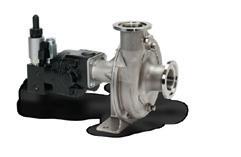
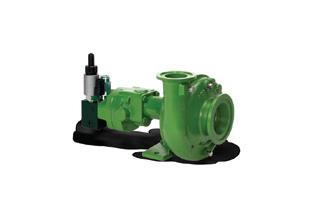
Now you can implement Pulse Width Modulated (PWM) technology on pull-type sprayers and fertilizer applicators, thanks to four new Ace pumps with integrated control valves. These pumps offer quick rate changes for variable or fixed rate applications. Plus, they only run as fast as necessary, minimizing horsepower along with wear and tear on the pump and other components.
To learn more about how Ace PWM pumps can keep you in control, visit www.acepumps.com or call 800-843-2293.
“I think the first and most important decision is how much I have invested in my crop and how much I can afford to absorb internally if hail hits.”
- Rodney Schoettler
the current year’s prices as well as the change over the previous year.”
Purchasing Hail Insurance: What to Know
When purchasing hail insurance, there are several things that should be taken into account.
“This is my favourite subject!” says Smith. “Both hail endorsement and straight hail insurance offer producers spot-loss coverage for losses due to hail, accidental fire and fire due to lightning. Crop insurance covers clients for production losses due to a list of designated perils, including drought or excess moisture.”
She says clients can mitigate the cost of their hail insurance by taking an annual crop insurance program to cover production
losses along with hail endorsement that provides spot-loss coverage for hail and fire losses.
“The maximum liability for both the annual crop policy and hail endorsement will not exceed the dollar coverage of the policy. In most instances, the cost is comparable and is sometimes even less than just taking straight hail insurance, depending on the frequency of hail and the hail rate in the producer’s area.”
Adds Schoettler, “I think the first and most important decision is how much I have invested in my crop and how much I can afford to absorb internally if hail hits.”
He says some farmers prefer to self-insure, but given the low cost of spot-loss hail insurance and the frequency of bad weather events, it should be purchased every year and treated in the same vein as one’s property insurance.
“You hope to never use it, but you sure appreciate it when a loss does occur. Does it cover damage to crops that have not been caused by hail? For instance, fire, drought or excessive moisture? Our product only indemnifies producers for spot-loss hail damage to their crops and loss caused by fire.”
Perhaps Lowe sums up things the best when he says, “Other than commodity price, factors include the value of input costs, the financial security (cash reserves) of the farm and whether a catastrophic hail event will put the farm at risk. Every farmer has to assess their individual risk tolerance and insurance decisions.”
Crop Hail Insurer Breaks
New Ground with First-Ever Claims-Free Discount
Going into its 13th season, AG Direct Hail Insurance has distinguished itself as a top crop hail insurance provider on the Prairies. They were the first company to offer up to a 5% customer loyalty discount for returning customers. AG Direct Hail is now launching the first-ever claims free discount designed to save hard-working Prairie farmers money on their current year application if they didn’t have a hail claim the prior season. Their relentless focus on providing farm families with exceptional rates, superior customer service and professional claims handling has made AG Direct one of the largest and fastest growing hail insurance companies. We caught up with Executive Vice-President Bruce Lowe to learn more about AG Direct Hail Insurance and their new claims-free discount.
FFT: Bruce, AG Direct was launched in 2014 and you said you were going to forever change the crop hail insurance landscape. It certainly looks like you are living up to your promise.
Bruce: Back in 2014, we felt that the crop hail industry was lacking innovation and had become complacent. We were confident that if we started with an easy, online application process designed to save farmers money on their premiums and then exceed their expectations on customer service and claims handling - then farmers would support us.
Bruce: Yes, we were the first to offer up to a 5% customer loyalty discount designed to thank and reward our customers for trusting their crops with us year after year. Then, we launched another innovation where we guaranteed the liability purchased the prior year by township so there wasn’t the risk that we would run out of coverage for returning customers.
FFT: And now another first. You are implementing a claimsfree discount.
Bruce: Yes, we are. Starting this season, our customers will receive a 1% discount on their current year application if they didn’t have a hail claim last year. Going forward, if they don’t have a hail claim for consecutive years, that will increase by 1% per year to a maximum of 5%. We often say that AG Direct Hail was built by farmers for farmers. The claims-free discount is just one example of us listening to what our customers want, and we are proud to deliver.
FFT: How can farmers check your rates or take advantage of your loyalty and claims-free discounts?
Bruce: They can visit agdirecthail.com or call us toll free at 1-855-686-5596
Selling Farmland Through a Paradigm Shift
Changing farmland dynamics in Saskatchewan are handled with experience and care by Realtors Darren and Tyler Sander
By Nerissa McNaughton
Father-and-son duo Darren and Tyler Sander, RE/MAX® farmland experts, are no strangers to the many ways farm realty differs from selling single-family homes in urban landscapes or commercial properties on main streets. Farms sit at the intersection of residential and acreage, private property and commercial enterprises, and often involve generational wealth and family dynamics. In short, it’s complicated. However, with Darren ranked by RE/MAX® as the 30th best commercial agent in the world and Tyler being the fourth-generation family member in agriculture, this dynamic team has what it takes to help property owners with everything from single-family residences on one acre to large commercial farm estates.
Their depth of experience was why the Sanders were recently asked to facilitate one of the largest land transfer sales in Saskatchewan to date.
“It started with selling over 18,000 acres across three transactions in the same area,” Darren explains. “The first sale was just over 12,380 acres, followed by an additional 5,900 acres. It’s worth noting that one of these sales also included approximately 12,000 acres of rented land, where the leases were assumed by the buyer. Altogether, it was a massive deal – just over 24,000 acres, including the rented lands.”
Land transfers of this scale may just become the new normal. Saskatchewan continues to dominate Canada’s agricultural landscape, accounting for the largest share of the country’s total farm area at 39.2 per cent (as per StatCan 2021). The province boasts 60.3 million acres of total farm area, with
cropland making up a significant 66.9 per cent – a figure higher than the national average of 60.9 per cent. Over the past 20 years, the shift in how this farmland is managed has changed dramatically. Farms are continuing to grow in size, driven by technology and shifting demographics.
Fewer children are choosing farm life, and the technology going from tractors you fix with a wrench to automated combines whose diagnostics automatically self-report to a computer means larger farms with fewer incoming generations to run them. It’s a paradigm shift, but not necessarily a bad one.
“During the last two decades the equipment and technology have driven a lot of the changes, such as huge advances with seed resistance and increased crop production,” says Darren. “The economics of farming are not unlike other businesses –as tech and capabilities increase, it makes sense for farms to amalgamate and get larger.”
Adding to this, family farms are continuing to grow in size and are transitioning out of generations of family ownership, or are dancing with the tricky (and often procrastinated) issue of succession. This translates into needing expert advice when it comes time to sell, transfer or merge.
This is where Darren and Tyler come in.
It’s not just their experience in real estate. It’s their deep understanding of the changing and challenging dynamics combined with their differing skill sets (spanning everything from realty to marketing) that have their clients saying things
like, “From start to finish, your professionalism, responsiveness and guidance were exceptional. Although our farmland sale was a relatively small transaction in the broader market, it represented something very significant to our families. At every step, you made us feel that our property and our concerns were just as important as those of your largest clients.”
This praise from clients Paul and Mike Foley continues with them adding, “Your attention to detail, clear communication and genuine care made the process smooth and reassuring. We truly appreciated the respect and value you placed on our situation, and we would not hesitate to recommend you to anyone looking for knowledgeable and dedicated realtors. Thank you again for your outstanding assistance.”
With Tyler focusing on both residential and farm properties, and Darren only focusing on farmland (and farms usually containing a residence), what this father-and-son team brings to each client is truly unique.
Darren says, “It’s not just about selling homes. Quite often we hear people say, ‘My great-grandfather or my grandfather bought this land in the early 1900s.’ On many farms, families haven’t had the discussions with their children about selling.”
Darren and Tyler often become part of the discussion about succession planning, bringing their decades of experience and empathy to what can be a sensitive topic.
Darren continues about the way they help generational farmers, “It is not uncommon for us to meet the whole family,
“When helping someone achieve their goals, whether it’s selling or buying, the real reward for us comes in helping people achieve their goals.”
- Darren Sander
have discussions about what everybody’s goals are and what future plans could look like, whether they keep the land or they don’t. We are not accountants and we are not lawyers, but we have a network of tax lawyers, accounting professionals, planners and financial advisors to whom we refer people.”
Client Jim Winny couldn’t agree more. When it came time to sell the Rosetown farm, he turned to Darren and Tyler for help.
“Their professionalism, communication and marketing made for a smooth transaction handling and achieving a good price and quick sale,” says Winny.
At the heart of it all is a deep understanding of what the client needs, even if the client does not yet understand those complex needs. Darren and Tyler sit down, listen and discover those needs, ensuring all parties are on the same page and feel empowered every step of the way.
“Sometimes we meet prospects when they are not ready to sell,” Darren says. “This is why it always starts by listening. When we listen, we learn how to best assist be it expanding, going into succession or selling the farm.”
This thoughtful approach is greatly appreciated, as evidenced by Bethany Hofer, who wrote to the team, “Amongst our menfolk, all that you do for us may simply seem like business, but I can guarantee you it means a lot more throughout [the experience of the ladies]! We truly appreciate your dedication, patience and understanding.”
Darren concludes, “Whether it is a small family farm, a growing commercial enterprise or a merger to create a larger operation, everyone wants to know they got a fair deal and that the history tied to the land is respected. When helping someone achieve their goals, whether it’s selling or buying, the real reward for us comes in helping people achieve their goals.”
No matter the size of your property or whether you are buying, selling, merging or rightsizing, Darren and Tyler have the experience, compassion and network to empower you through the process from start to finish. Learn more online at darrensanderrealty.ca
Tyler and Darren Sander.
Does It Pay to Spray?
Resources available for fungicide application
By Becky Zimmer
One of the hardest questions many farmers must deal with during their cropping season is whether it pays to spray for diseases that haven’t occurred yet.
Plant diseases are well recognized as the largest robber of canola yields but, when used properly, fungicide is the most effective tool in a farmer’s toolbox.
“Fungicide acts as a shield against disease, not a cure after diseases appear,” says Chris Manchur, manager of research, innovation and resilience with the Canola Council of Canada, but notes by the time farmers are seeing diseases in their field, it’s too late for spraying to impact levels of crop damage and yield losses.
“Diseases can get inside and wreak all kinds of havoc,” he adds, noting sclerotinia as an especially fast-acting disease. “Within a few days, it can start really progressing throughout that plant.”
Munchur helped write the council’s Canola Encyclopedia’s entry on sclerotinia stem rot, stating it’s “the most economically significant canola disease in Canada,” and very difficult to predict.
According to experts, there are four major questions farmers can ask themselves when they’re considering whether to spray for a possible sclerotinia outbreak.
1. Have environmental conditions prior to flowering been wet enough for apothecia (precursor to ascospores) development and survival?
Diseases need moisture to thrive, says Manchur, and many areas of the country are experiencing significant drought conditions over the last few years. If farmers are going to add fungicide costs to their expense column, how will that impact their bottom line if their chance of the disease is insignificant?
Newly retired research scientist Kelly Turkington has been looking at sclerotinia for the last 43 years. As a former plant pathologist at Agriculture and Agri-Food Canada, he believes
the question of whether it’s economical for farmers to spray – and what the consequences would be if they didn’t – is a tough one to answer for both farmers and consultants.
But there are resources available that can help farmers decide.
The wet pants test, which Turkington helped develop, has been a vital and simple tool for researchers, consultants and farmers.
When Kieth Gabert, a farmer near Red Deer, Alberta, asked Turkington whether he should spray for disease back in the early 2000s, Turkington said that at 10 a.m., the field was bone dry, a clear sign that the risk for disease was low, and therefore, fungicide wasn’t needed at that time. When Gabert saw him again later in the year, the farmer thanked Turkington for saving him thousands on fungicide costs for a disease that never appeared.
The incident led to Gabert developing the widely used, and often quoted, wet pants test. “Wet pants” early in the morning means conditions are favourable for disease occurrence, while dry pants means the disease risk is low.
2. Is the canola crop canopy dense and is yield potential high?
As a technical services manager for the western Prairies, Tyler Gullen spends his time doing small plot research of new products for Nufarm Canada, as well as providing technical sales support. He believes farmers pushing for higher yields could create a canola canopy more susceptible to disease pathogens.
“Especially for the farmers who are really trying to push their yield higher and getting thicker canopies that are trapping in a lot of that humidity,” he explains, “especially if they’ve got tighter canola rotation so they have that background spore load there.”
Gullen notes there has been some research out of Europe, mostly for winter oilseeds, on how fungicide can potentially
“You’re not just relying on one active specifically; you’re relying on all the ingredients doing the legwork. You’re not relying on one (ingredient) to carry the burden.” - Rongrong Xiang
provide yield benefits in the absence of disease, but he hasn’t seen the same research done in Canada. Any yield boosts that he has seen – anywhere between two to six bushels an acre – has been due to fungicide applications addressing low disease pressure versus not treating the crop at all.
“Depending on your crop prices and inputs and everything like that,” he says, “that may or may not be an economic benefit.”
3. Does the weather forecast predict precipitation and/or humidity during the flowering period?
Conducive environments are a strong factor in any fungicide spray decision, says Rongrong Xiang, technical fungicide specialist at BASF, but when it comes to sclerotinia, it’s not just about major rain events, but soil temperature and relative humidity.
“It’s really that heavy morning dew that comes in play that could create a very optimal environment for disease development,” she says.
With its narrow infection window, Xiang suggests a midflowering application, around 20 to 50 per cent bloom on the main stem, as the blooms become a “food source” for the spores to enter and infect the plant. Again, moisture does play a factor.
Xiang is in southern Alberta and says sometimes farmers are waiting past that 50 per cent bloom stage before spraying due to dry conditions. However, even with the lack of moisture on the southern Prairies, the best return on investment has still been to spray at that 20 to 50 per cent bloom stage.
4. Is the pathogen present in sufficient quantities?
Being a monocyclic disease, sclerotinia comes around once a growing season, and when it’s done, it’s done, says Xiang. However, the question is when and where it will come?
According to the Canola Council’s encyclopedia entry, “stem rot fungus overwinters as sclerotia in the soil, in stubble at the soil surface and mixed with seed,” and can, “remain viable in the field for five years or more.” Crop rotation plays a big role in how much sclerotia is in the soil.
Even with dry starts to the year, Turkington says significant rain events in June and July can still lead to significant disease risk, as the pathogens in the soil take a few weeks to start
sending out those apothecia.
“Your spore load probably is not going to come in at a significant level until the crop gets into full bloom. So that means, under those circumstances, you might want to look at a full-bloom (fungicide) application as being potentially more effective.”
In contrast, Turkington believes that if spring soil conditions include a wealth of moisture, and the canola canopy spreads out and seals in that humidity, early bloom application may be more effective as the disease spores could already be viable and looking for an infection point.
Gullen encourages all farmers to do their own trials and go back through their records to see what they’ve done in the past and what’s worked for them. Research exists for both small-plot and large-scale trials. However, there are conflicting opinions, and farmers should consider how the research matches with what they’re doing on their farms.
“It can be really hard to show sclerotinia in small-plot trials. So, a lot of the time in the research, they (researchers) will inoculate them just to get that disease development. It may or may not be reflective of those full scales…. The large scale can be nice, just because it is more realistic of what’s going to happen in the field and there’s tons of historical data out there for that.”
Best Practices
Looking at the effective fungicide lists in the encyclopedia entry, Groups 3, 7 and 11 – due to their active ingredients –remain the most effective, according to Xiang. However, farmers should still use multiple modes of action when disease pressure is high.
“You’re not just relying on one active specifically; you’re relying on all the ingredients doing the legwork. You’re not relying on one (ingredient) to carry the burden.”
While the chances of sclerotinia building up disease tolerance or resistance for fungicide is low, considering they are a monocyclic disease, the best practice is to always follow the instructions on the label for proper doses in the field. Those recommended doses ensure the pathogen gets a lethal dose, eliminating the chance of any disease coming back stronger and more resistant.
Tom Wolf, PhD, P.Ag.
Tom Wolf grew up on a grain farm in southern Manitoba. He obtained his BSA and M.Sc. (Plant Science) at the University of Manitoba and his PhD (Agronomy) at Ohio State University. Tom was a research scientist with Agriculture & Agri-Food Canada for 17 years before forming AgriMetrix, an agricultural research company that he now operates in Saskatoon. He specializes in spray drift, pesticide efficacy and sprayer tank cleanout, and conducts research and training on these topics throughout Canada. Tom sits on the board of the Saskatchewan Soil Conservation Association, is an active member of the American Society of Agricultural and Biological Engineers and is a member and past president of the Canadian Weed Science Society.
PMRA Makes U-turn with Drones
This winter, Canada’s Pest Management Regulatory Agency (PMRA) made one of the most dramatic changes of position in its history.
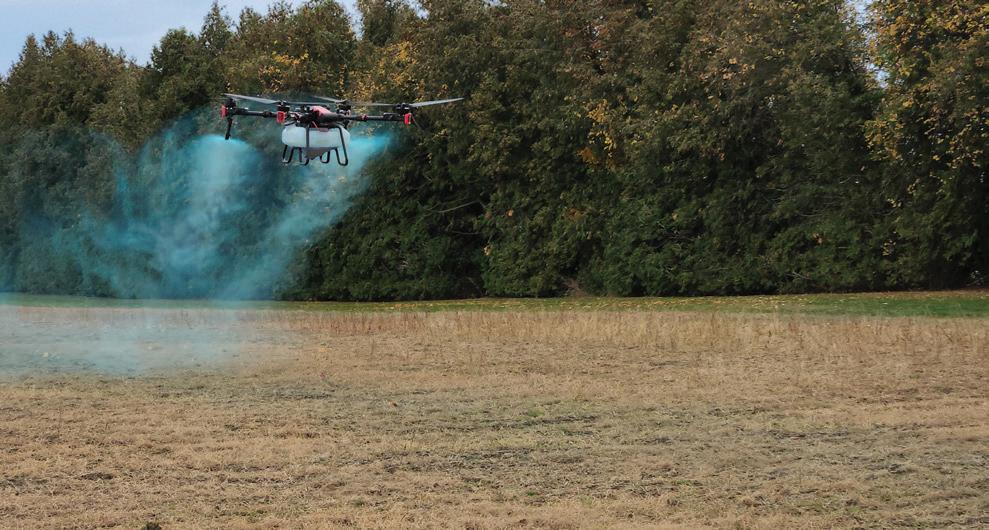
For the past six years, PMRA has maintained that spray drones, also known as RPAS (remotely piloted aerial systems), represent a unique application method for which new risk assessments were necessary. They identified efficacy, drift, residue and operator/bystander exposure as the key components of a risk assessment for which RPAS information was essentially missing.
Registrants went to work. They formed the Unmanned Aerial Pesticide Application System Task Force (UAPASTF) to generate spray drift data. They produced efficacy data for pesticides for which they sought an RPAS registration. Agriculture and Agri-Food Canada conducted pesticide residue experiments. Academic studies on applicator exposure were conducted. And yet, as of late March 2026, not a single agricultural pesticide has received registration by PMRA.
Yes, some pesticides can be applied by drone. Among those are several bacterial larvicides for mosquito control (as low-risk products, they circumvented the full-risk assessment), an organic fungicide (copper sulphate, again, a low-risk product), a herbicide (imazapyr) for phragmites control in wetlands, and an industrial herbicide (triclopyr) for control of woody perennials in rights of way.
Two agricultural fungicides are in the pipeline.
PMRA was criticized for being too conservative. For taking too long. Spray drones were necessary tools in modern agriculture, their proponents said.
PMRA maintained they were open to eventually joining the U.S. and Australia’s policies of allowing any agricultural product for which a crewed aircraft label existed to be sprayed by RPAS. But they wanted to ensure things were working as intended first. They stuck to their guns.
Then everything changed. A new policy – announced on February 23, 2026 – would open the door for all aerial products to suddenly be applied with RPAS. Proposed to come into effect mid-2026, according to a PMRA webinar on March 4, 2026, nobody saw it coming. Least of all the registrants who spent considerable time and resources to follow PMRA’s data requirements.
Some conditions reported by PMRA:
1. There would be a separation of duties between mixer/ loaders and pilots. In other words, two people will be required to spray: someone who pilots but does not touch the pesticide, and another who takes care of the mixing, filling and battery swapping.
2. There would be no new label language. No specific RPAS instructions on flying parameters, calibration requirements, etc.
3. There would be no federal RPAS-specific training or certification requirements. Those would be at the discretion of the provinces.
4. Registrants wishing to opt out of an RPAS label would need to file for an exemption with PMRA, and those labels would be revised to state: “Do not apply by RPAS.”
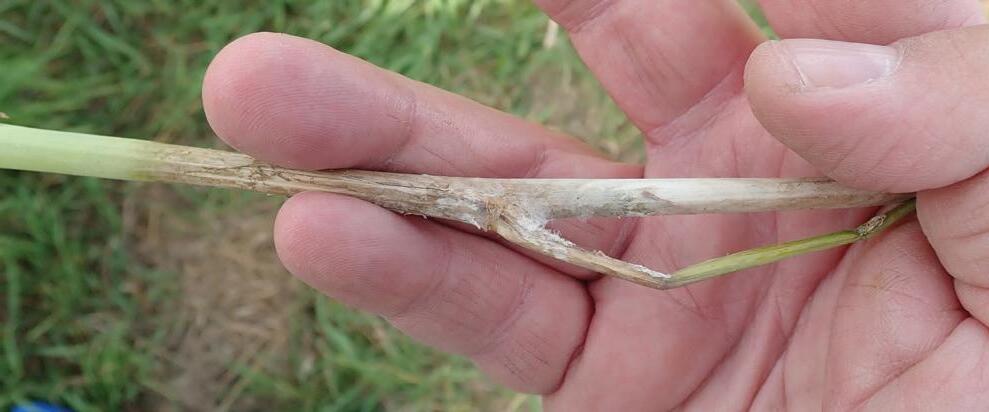
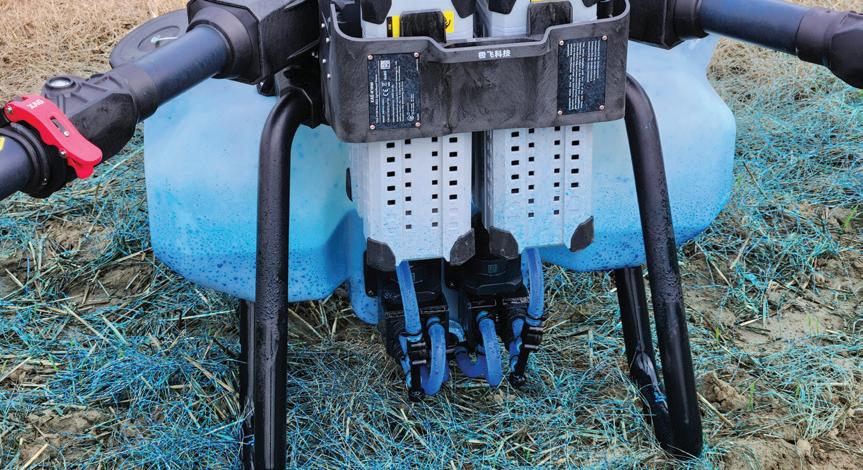
On the operator exposure and crop residue data, there are few dissenters. Sure, RPAS get wet with spray during operation, and they need to be manually moved and configured prior to and after a spray operation. But the existing label required PPE should be sufficient protection. What PMRA did not seem to know is that drone filling with pesticide is not very tidy. The tank lid is unscrewed. A hose is inserted. Pesticide mixture is pumped into the tank until it is full, at which time the hose is shut off. The problem is that the tanks are not translucent, so their liquid level can’t be seen. They don’t have sight tubes. Commonly, the foam and possibly bulk liquid overflow. It can be a bit of a slippery mess. Sort of like it was in 1955.
On the drift side, there are also some valid criticisms. The drift studies by UAPASTF showed RPAS drift is greater than ground spray drift, but less than crewed aircraft and similar to orchard air-blast applications. PMRA is proposing to use rotary-wing aircraft models to estimate RPAS drift. No problem.
The main issue with this decision is that the rate of evolution of RPAS has already outpaced these trials. UAPASTF used the DJI T30 drone for the drift studies. This now-discontinued 30-litre drone used hydraulic nozzles, which was desirable to UAPASTF scientists because specific nozzles with known American Society of Agricultural and Biological Engineers (ASABE) spray qualities could be used to make model comparisons for those exact same sprays. ASABE spray qualities are used by PMRA and other regulatory agencies around the world for risk assessments and are referenced on Canadian product labels.
Since the T30 was on the market, we have seen three new generations of DJI drones: the T40, T50 and T100. Each uses rotary atomizers. Hydraulic nozzles spray vertically down. Rotary atomizers spray horizontally. And the ASABE spray
PMRA is one of the world’s few regulatory agencies requiring registrants to submit efficacy data for their products. They do this in an effort to implement their policy to always register the lowest effective dose.
quality of those rotary atomizers is currently not known. Yes, a droplet size is reported by the DJI controller, but it does not match the spray qualities for which the UAPASTF trials were done. In fact, when a DJI drone reports a coarse spray, it is ASABE medium, according to a recent study reported by WinField United at the North Central Weed Science Society annual conference. And the DJI medium spray is in fact ASABE fine.
An applicator, believing the DJI controller, would unwittingly apply a more drift-prone spray, violating the label and possibly placing off-target areas at risk.
The most important aspect is efficacy, something PMRA calls “value.” PMRA is one of the world’s few regulatory agencies requiring registrants to submit efficacy data for their products. They do this in an effort to implement their policy to always register the lowest effective dose.
This requirement has been essentially waived, deferring to existing data for crewed aircraft that are already on file with PMRA.
This is a big problem. Deposition from RPAS is very nonuniform. It is significantly less uniform than that of crewed aircraft. RPAS deposit coefficient of variation (CV) values that are frequently so high they would be unacceptable by current industry standards. Experts are alarmed, shocked even. Farmers are seeing striping. It’s hard to gloss over that.
It’s unclear why PMRA is choosing to ignore this aspect. Given that there has been no legal application of agricultural pesticides by RPAS, it’s very likely that there has been no feedback on their performance to PMRA. Did they just assume that the efficacy would be more or less equal to existing application methods?
In addition, researchers have documented inconsistent swath widths from RPAS, even when weather conditions are good and application parameters have been optimized. Swath
widths within a single pass of an RPAS may vary by 50 per cent. This is akin to a boom sprayer randomly switching its boom sections off and back on again as it makes a spray pass, without control by or notice given to the operator. Is that progress?
Further, swath width is reduced in taller canopies and when flying with the wind direction (compared to against it).
There is no way to avoid either over- or under-application on significant portions of an RPAS-applied field. This is either product waste or sub-optimal efficacy. It goes against good practice.
There is an additional issue that is not explicitly stated in this regulatory proposal – operator training and certification. This is traditionally a provincial issue. PMRA sets minimum standards for content, and provinces develop and deliver the training material and certify applicators. In the Prairie provinces, farmers are exempt from certification as long as they do not deliver commercial services.
It’s an oddity – most other countries require operator certification to apply pesticides.
Experts feel that with RPAS, this policy may need a second look. Even experienced applicators need new information pertaining to the idiosyncrasies of RPAS sprays. They need to understand the aerodynamics of RPAS flight and the relationship to spray pattern formation and turbulent
Taken together, RPAS spray application may justify the federal government mandating certification of all applicators. Too much can go wrong.
deposition. Assumptions about flying height and spray drift are different for aircraft compared to boom sprayers. Applicators will definitely need to calibrate an RPAS if for no other reason than to discover its swath width, an essential part of accurate application. Calibrating an RPAS is not an easy task and requires special equipment. But it can be taught.
Taken together, RPAS spray application may justify the federal government mandating certification of all applicators. Too much can go wrong.
As I reviewed the spray performance data of RPAS, I was reminded of ground sprayer label statements that originated in the mid-1980s. These statements prohibited products from being used by certain sprayers or nozzle types. The reason? They didn’t deliver uniform-enough application.