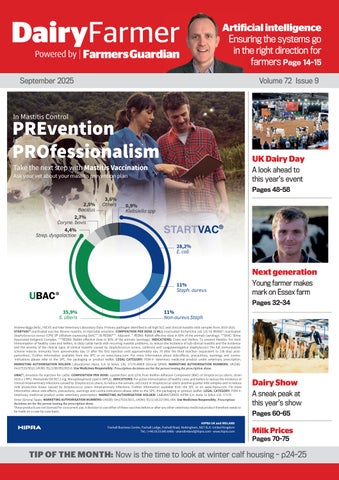
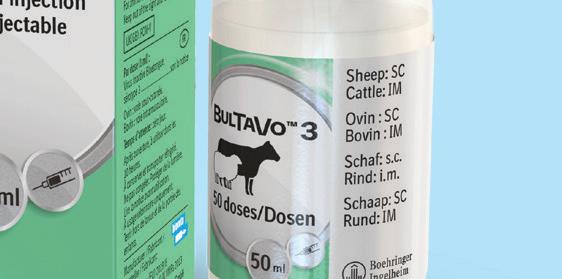
Andrew Biggs BVSc, FRCVS and Vale Veterinary Laboratory Data Primary pathogen identified in all high SCC and clinical mastitis milk samples from 2019-2021. STARTVAC® Inactivated vaccine, Bovine mastitis, in injectable emulsion. COMPOSITION PER DOSE (2 ML): Inactivated Escherichia coli (J5) 50 RED60*; Inactivated Staphylococcus aureus (CP8) SP 140strain expressing SAAC** 50 RED80***. Adjuvant. * RED60: Rabbit effective dose in 60% of the animals (serology). **SAAC: Slime Associated Antigenic Complex. ***RED80: Rabbit effective dose in 80% of the animals (serology). INDICATIONS: Cows and Heifers: To prevent Mastitis. For herd immunisation of healthy cows and heifers, in dairy cattle herds with recurring mastitis problems, to reduce the incidence of sub-clinical mastitis and the incidence and the severity of the clinical signs of clinical mastitis caused by Staphylococcus aureus, coliforms and coagulasenegative staphylococci.The full immunisation scheme induces immunity from aproximately day 13 after the first injection until approximately day 78 after the third injection (equivalent to 130 days postparturition). Further information available from the SPC or on www.hipra.com. For more information about side-effects, precautions, warnings and contraindications please refer to the SPC, the packaging or product leaflet. LEGAL
CATEGORY: POM-V- Veterinary medicinal product under veterinary prescription. MARKETING AUTHORISATION HOLDER: Laboratorios Hipra, S.A la Selva, 135, 17170-AMER (Girona) SPAIN MARKETING AUTHORISATION NUMBERS: UK(GB): Vm17533/5010, UK(NI): EU/2/08/092/003-6. Use Medicines Responsibly. Prescription decisions are for the person issuing the prescription alone. UBAC®, emulsion for injection for cattle. COMPOSITION PER DOSE: Lipoteichoic acid (LTA) from Biofilm Adhesion Component (BAC) of Streptococcus uberis, strain 5616 ≥ 1 RPU. Montanide ISA 907.1 mg. Monophosphoryl Lipid A (MPLA). INDICATIONS: For active immunisation of healthy cows and heifers to reduce the incidence of clinical intramammary infections caused by Streptococcus uberis, to reduce the somatic cell count in Streptococcus uberis positive quarter milk samples and to reduce milk production losses caused by Streptococcus uberis intramammary infections. Further information available from the SPC or on www.hipra.com. For more information about side-effects, precautions, warnings and contra-indications please refer to the SPC, the packaging or product leaflet. LEGAL CATEGORY: POM-VVeterinary medicinal product under veterinary prescription. MARKETING AUTHORISATION HOLDER: LABORATORIOS HIPRA S.A. Avda. la Selva 135. 17170 Amer (Girona) Spain. MARKETING AUTHORISATION NUMBERS: UK(GB): Vm17533/5011, UK(NI): EU/2/18/227/001-004. Use Medicines Responsibly. Prescription decisions are for the person issuing the prescription alone. These products are not licensed for concurrent use. A decision to use either of these vaccines before or after any other veterinary medicinal product therefore needs to be made on a case-by-case basis.
HIPRA UK and IRELAND Foxhall Business Centre, Foxhall Lodge, Foxhall Road, Nottingham, NG7 6LH. United Kingdom Tel.: (+44) 0115 845 6486 · ukandireland@hipra.com · www.hipra.com
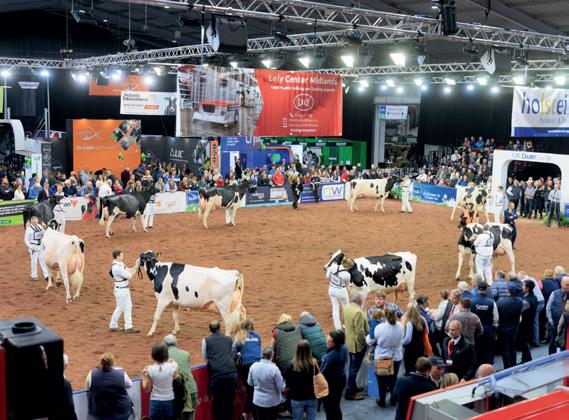
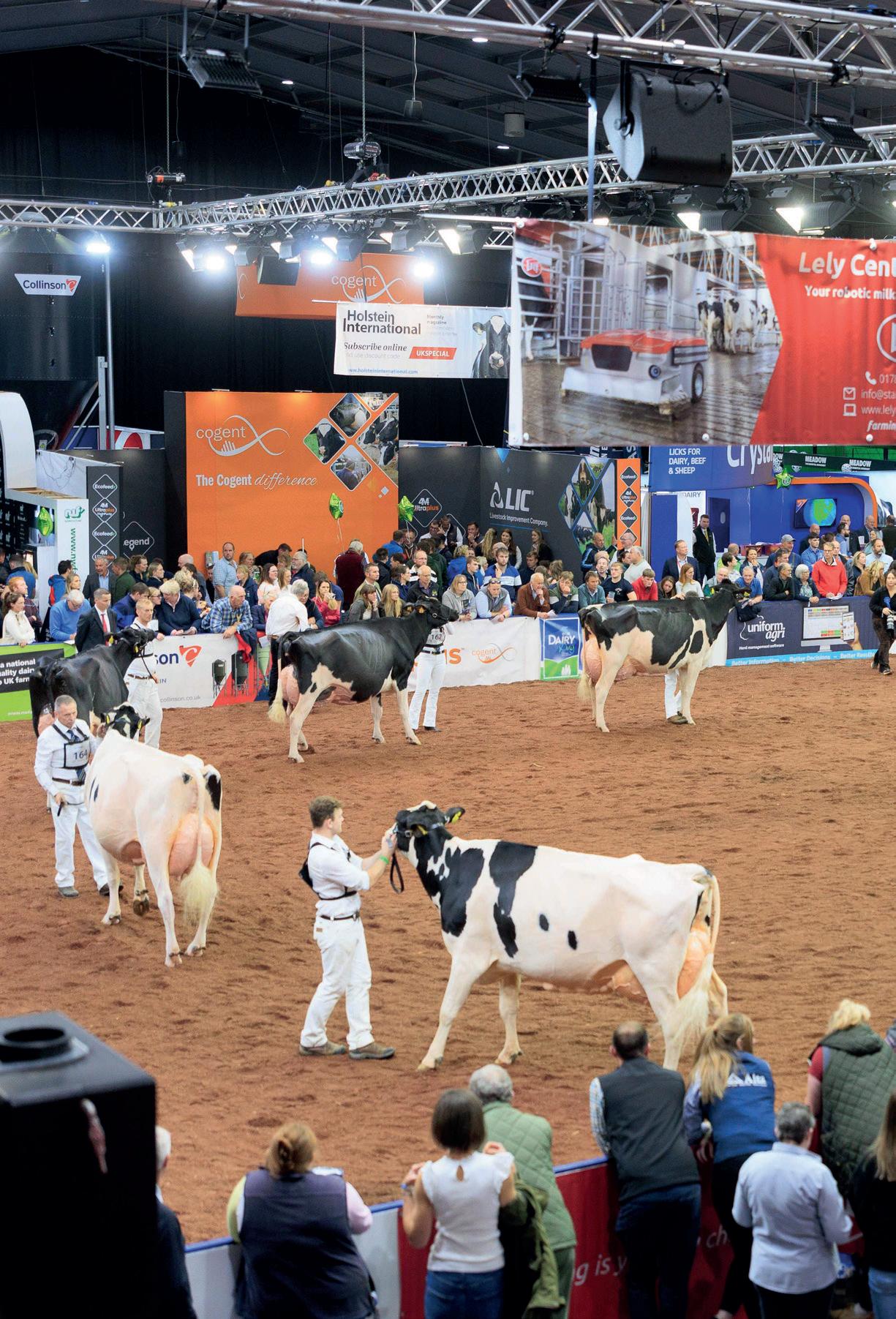
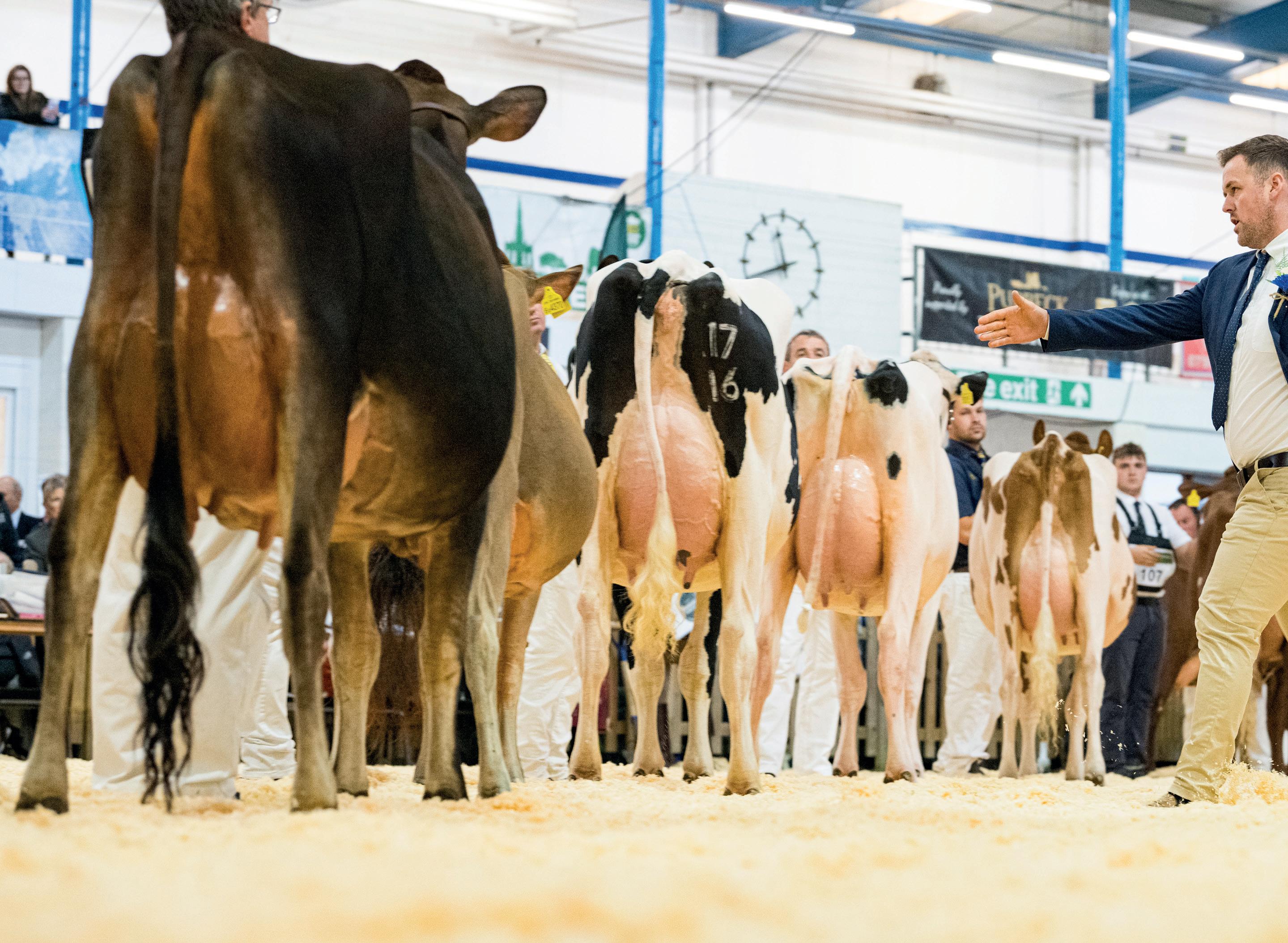
Dairy Show
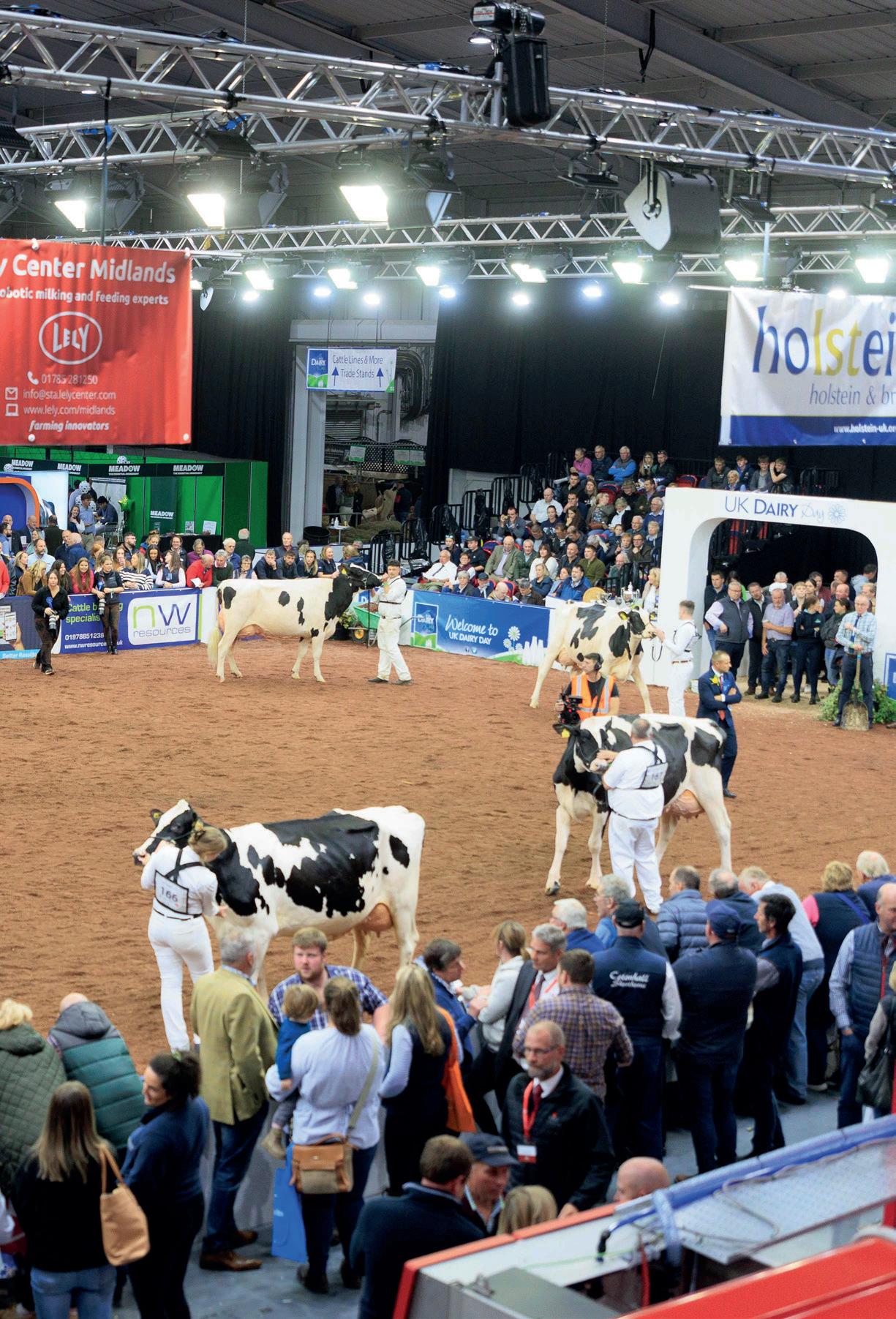
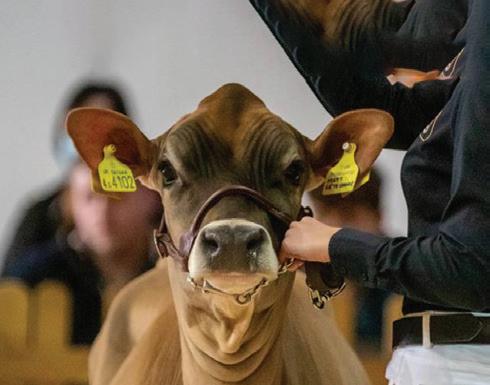
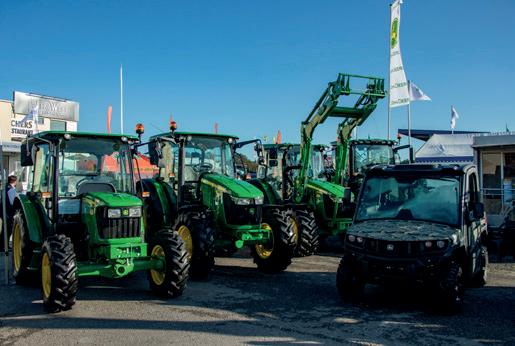
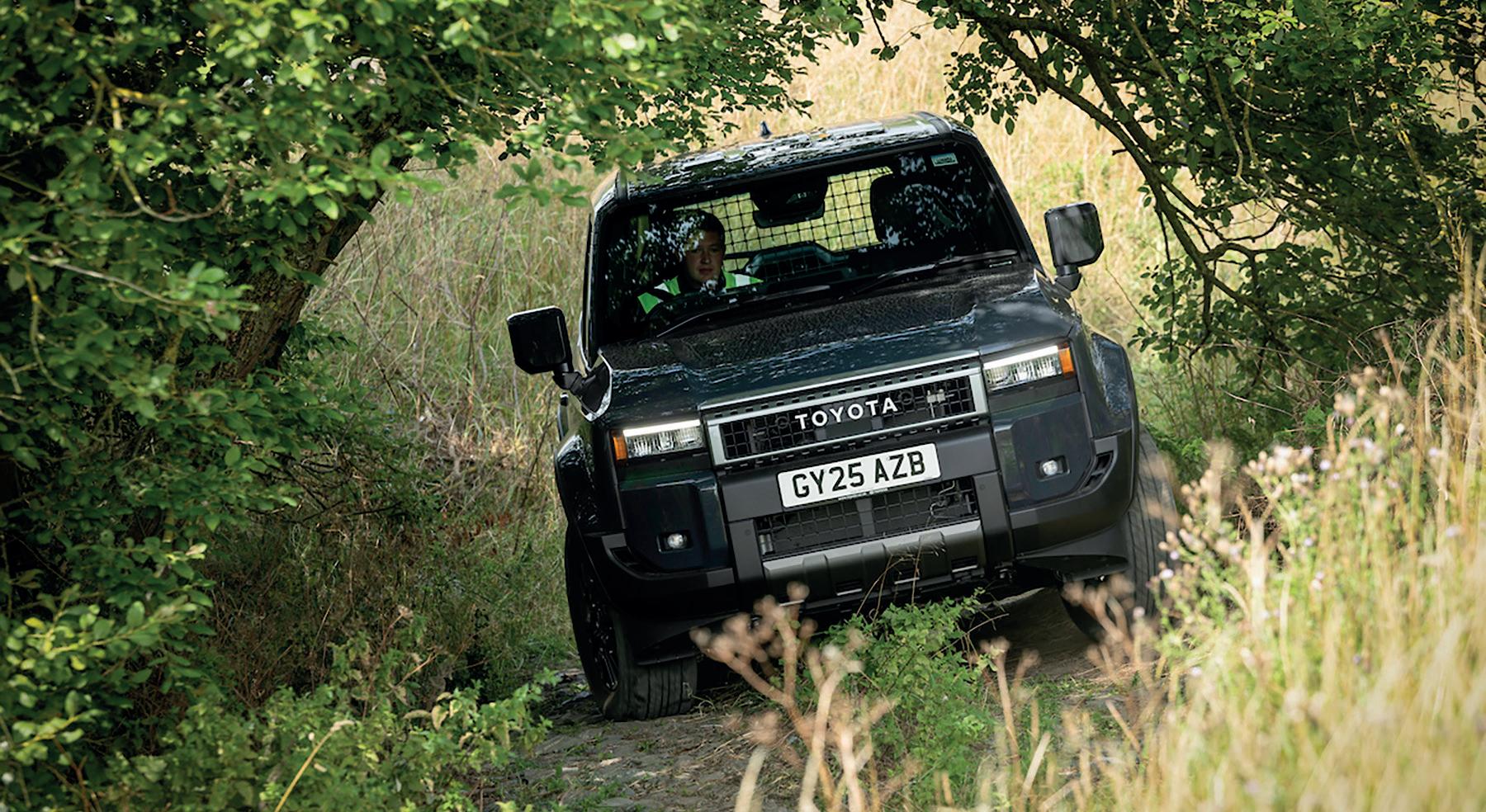
A sneak peak at this year’s show
Pages 60-65
Milk Prices Pages 70-75
To learn more about METACAM®, speak to your veterinarian. 04:53 AM
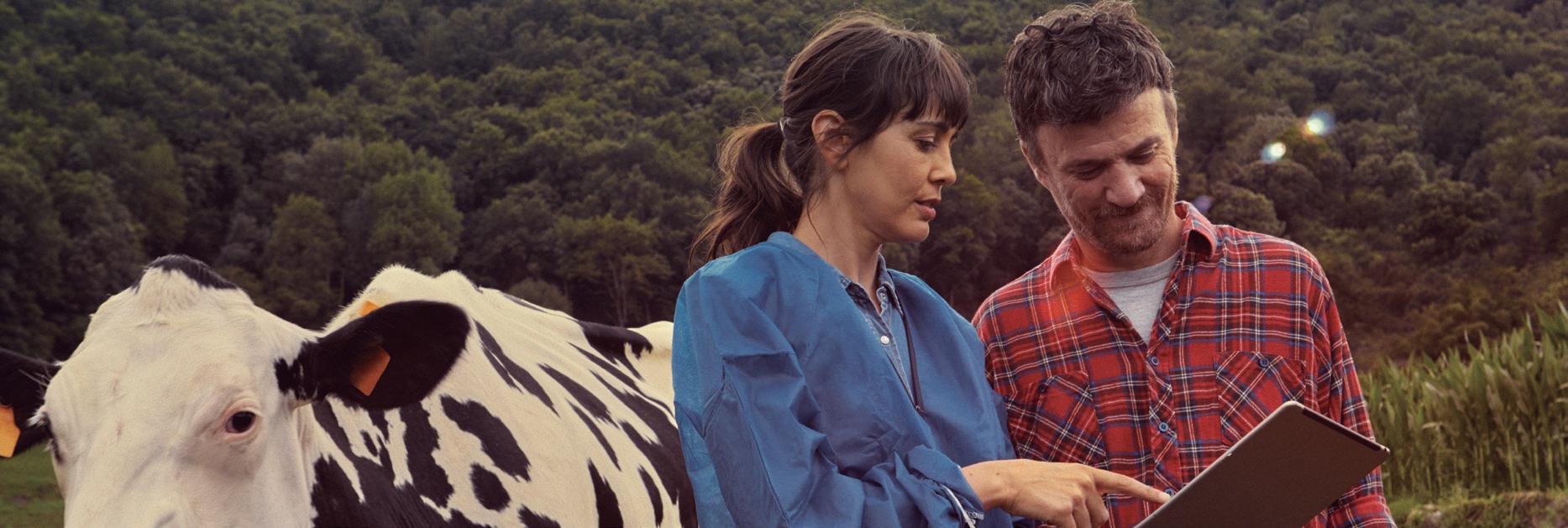
Come day or night, rain or shine, the well-being of your herd is what drives you, and you put everything into keeping them healthy and productive. METACAM® is proud to partner with cattle farmers to provide proven and trusted anti-inflammatory pain relief for mastitis management,* respiratory infections,* diarrhoea in young calves† and pain relief following dehorning and disbudding. You’re all in, and we are too.
Contacts
Editor Katie Jones 07786 856 439 katie.jones@agriconnect.com
All rights reserved. No part of this publication may be reproduced or transmitted in any form or by any means, electronic or mechanical including photocopying, recording, or any information storage or retrieval system without the express prior written consent of the publisher. The contents of Dairy Farmer are subject to reproduction in information storage and retrieval systems.
Dairy Farmer, Unit 4, Fulwood Business Park, Caxton Road, Preston, Lancashire PR2 9NZ
Origination by Farmers Guardian, Unit 4, Fulwood Business Park, Caxton Road, Preston, Lancashire PR2 9NZ. Printed by Warners Midlands, The Maltings, Manor Lane, Bourne, Lincolnshire, PE10 9PH. No responsibility can be accepted by Dairy Farmer for the opinions expressed by contributors.
a word from the editor
Ican not quite believe we are approaching the end of the summer, and once again as we start to think about autumn and winter, it is a good opportunity to reflect on the last few months.
Rainfall around the country has been hit and miss to say the least, and those of you farming in areas where the rain has ‘missed’ will have seen pressure put on grazing platforms and an impact on silage yields and quality.
Analysis of second cut silages (p40-41) paint a very variable picture indeed, with growing and harvesting conditions set to have a bearing on forage performance throughout the coming months. It seems more important than ever to make sure you have all the data you need to formulate rations effectively.
Speaking of data, this month’s opinion writer (p1415) raises some interesting questions about how artificial intelligence (AI) could be harnessed to help interpret the wealth of information available to us, potentially bringing significant productivity, health and environmental benefits to dairy farming businesses.
AI is undoubtedly set to continue transforming our daily lives, and as farmers, we’re certainly not immune to these changes.
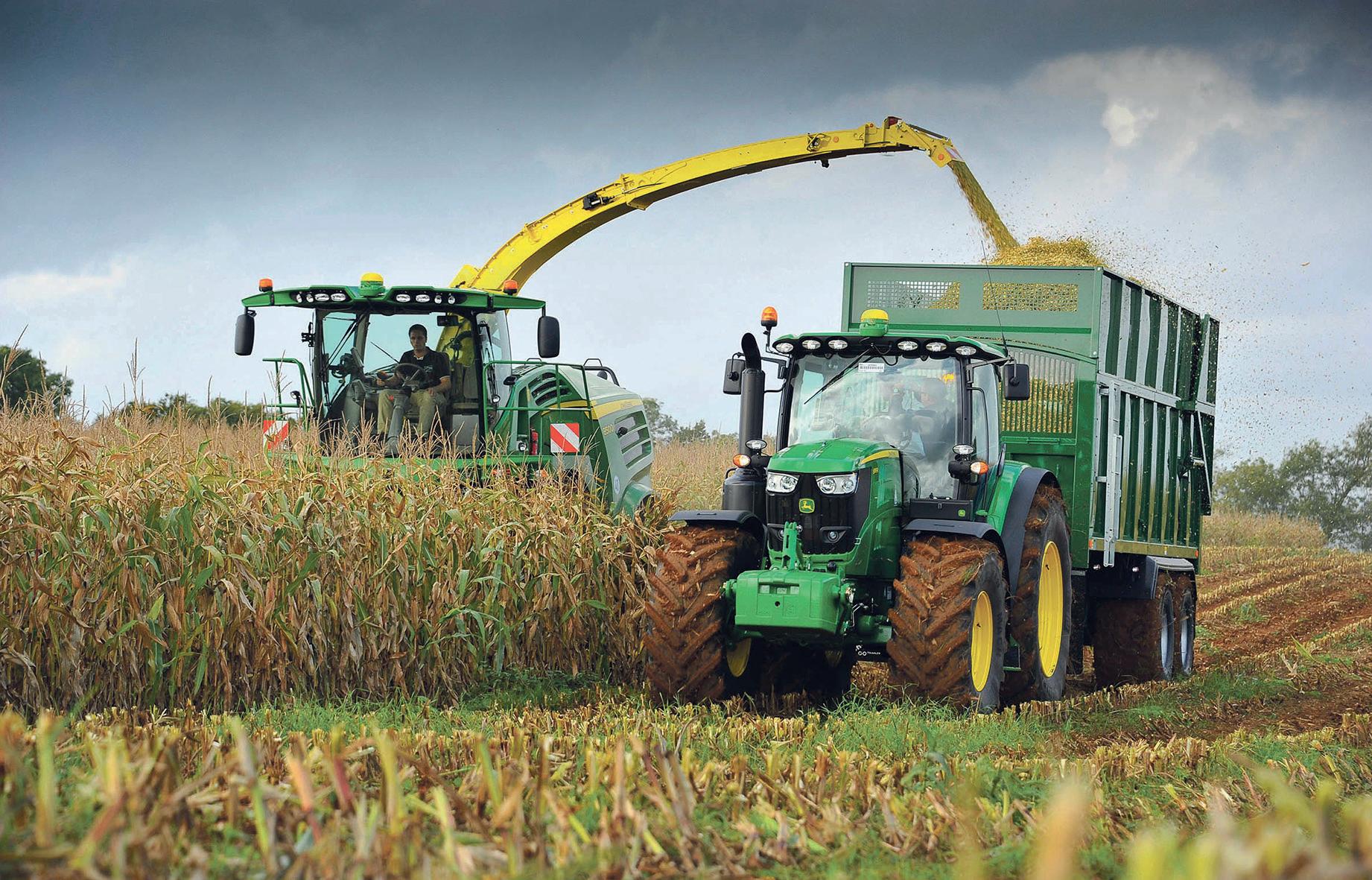
Returning to the practical side of farming, attention will soon turn to maize harvesting, with many of you considering an early start. From what we are seeing across different regions, performance and yields are likely to be as variable as everything else this season, again depending very much on your location.
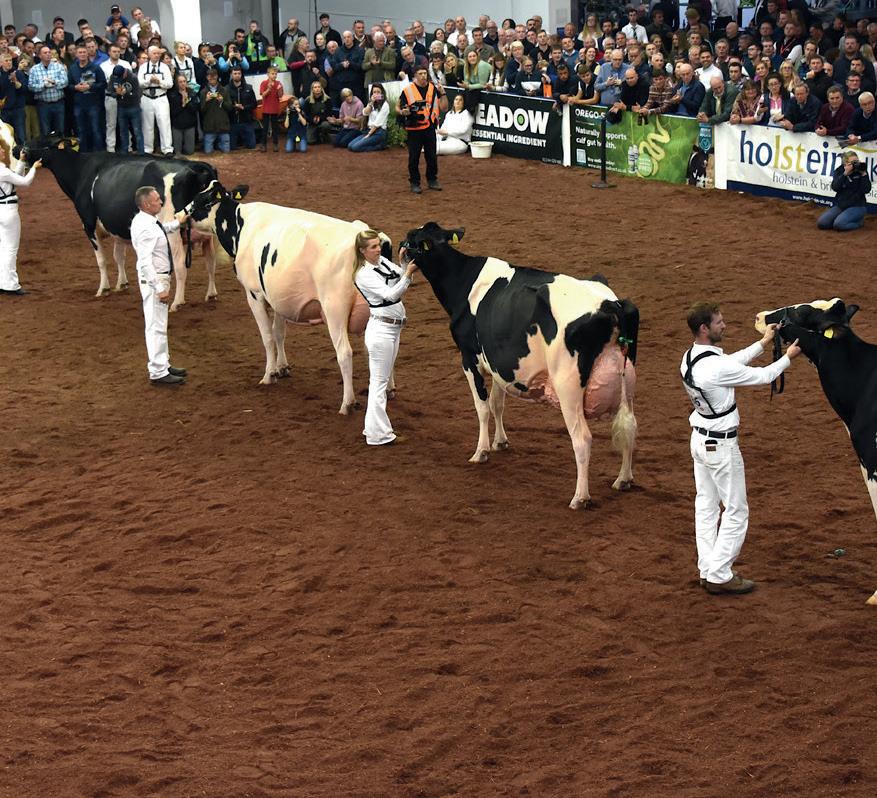
Finally, in this month’s edition, we are looking ahead to two cornerstone events in our dairy calendar: UK Dairy Day at Telford on September 10, followed by the Dairy Show at the Bath and West showground on October 1. Both promise to be great days, offering the chance not only to see outstanding show cows, but also to catch up with friends and colleagues from across the industry.
I very much look forward to meeting some of you at these events and hearing firsthand how your season has unfolded.
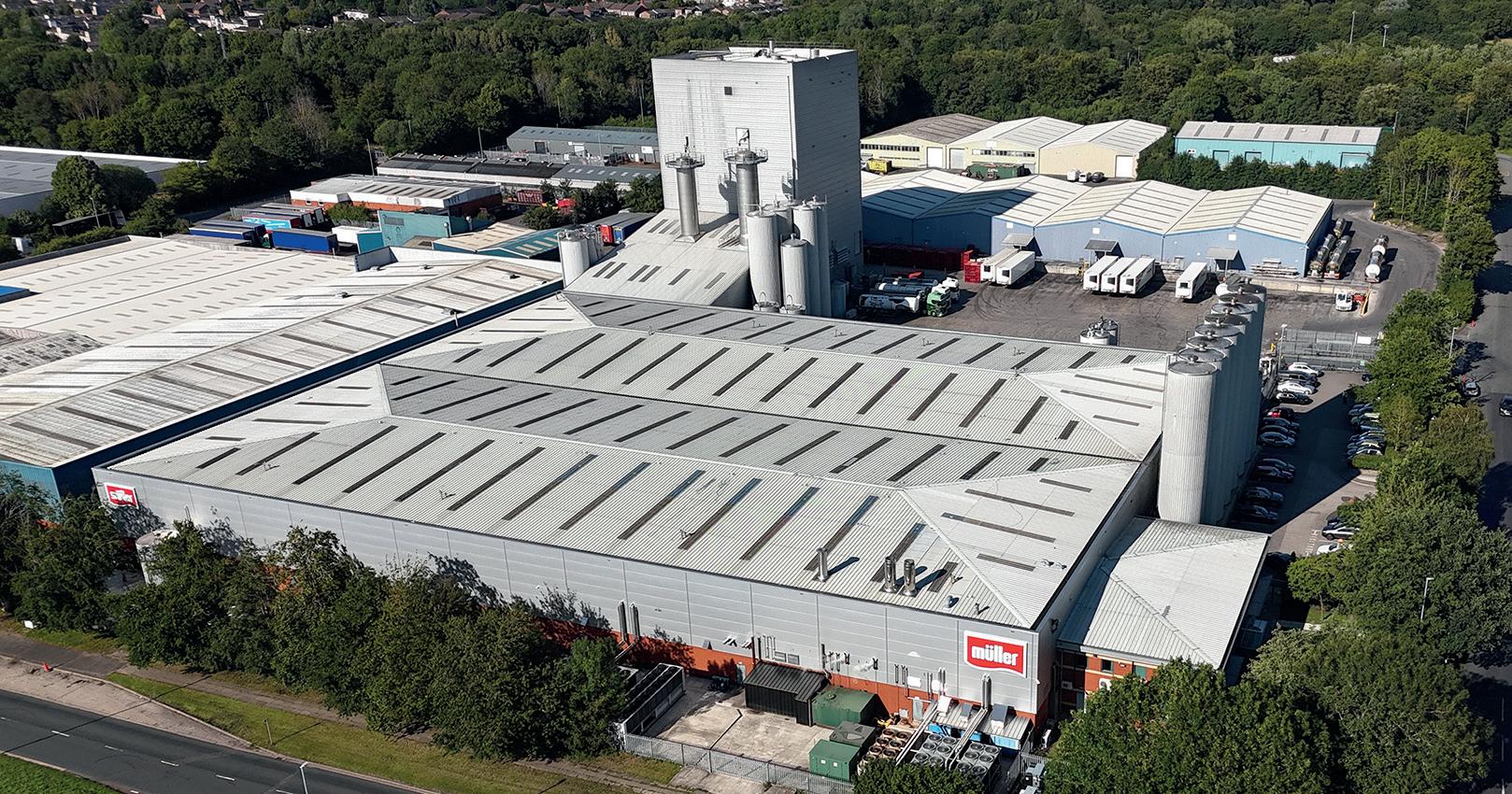
Muller to give Skelmersdale £45m boost
Ilook ahead to this year’s
if viewers know
ndustry figures have welcomed the announcement of a £45 million investment in Muller’s Skelmersdale plant, following a challenging spring which saw producers having to dispose of milk.
And Muller chief executive Rob Hutchison was optimistic about the future for UK dairy following the announcement, stating the investment was the ‘first step’ in assuaging farmers’ concerns.
“It was a challenging spring for everybody in the industry. This investment will help that.
“Unfortunately, it will not be fully completed by next spring,” he said, adding he was now looking to implement changes for next year.
As part of the changes, former Yew Tree suppliers have been offered new contract terms after frustration that there was a significant difference between their own contracts and Muller Direct.
Mr Hutchison said former Yew Tree Dairy suppliers had been included on its Muller Milk Group forum and involved in the development of contract offerings.
Benefit
Farmers will have the option of a manufacturing price, which he said would benefit those with high constituents, and a hybrid liquid ingredients price, which would pay 40% at a Muller fresh milk price. He said its Muller Advantage
Dairy singled out for council savings
JTHE future of council farm tenancies in Cornwall is hanging in the balance as councillors seek to clear the authority’s £1.2 billion debt.
Dairy farming was singled out as ‘expensive to deliver on small-scale land holdings’ such as those offered by the council.
Councillors have agreed to review the county’s agricultural portfolio, comprising 4,370 hectares (10,800 acres) and 81 farms, following recommendations from the county’s Sustainable Growth and Place Overview and Scrutiny Committee.
Jonny Alford, Cornwall Council’s acting head of property, told the committee the financial position had
changed since its 20-year farm estate strategy was introduced in 2019. He said: “The estate needs to be profitable and revenue returns are narrow.”
Members were told there was now a demand for farmland from other sectors, including solar energy, education and housing.
However, Tenant Farmers’ Association (TFA) chief executive George Dunn said: “County Farms Estates not only provide opportunities for individuals to join and progress within the agricultural industry, they also provide a raft of benefits to council taxpayers both financially and non-financially.”
As part of Muller’s changes, former Yew Tree suppliers have been offered new contract terms.
Programme would also be introduced to the ex-Yew Tree Dairy poo of suppliersl.
However, while the dairy said changes would mean the majority of ex-Yew Tree suppliers, those on ingredients contracts, would be better off, farmers who had been supplying on a liquid contracts would not be.
One producer said they expected they would effectively move from a milk price of around
42.75ppl to 39ppl or less, which they ‘cannot make pay’.
“I do not know what I am going to do,” they said.
Dairy Farmer also understands several Muller suppliers have been given their notice.
Mr Hutchison said there were two elements to this, with the first being changes to contracts due to the Fair Dealing Obligations (Milk) Regulations 2024. He said not all were returned before the regula-
tions came into force, meaning they had to give notice. However, those who had since returned them had had theirs rescinded.
Notices had also been served on a ‘small number’ of farmers in relation to quality. While some farmers had raised concerns that location or size may have been a consideration, Mr Hutchison denied this, and urged any who believed they were up to standards to contact the dairy directly.
Wales to ease bluetongue restrictions
JWALES has confirmed plans for a phased approach to easing bluetongue restrictions.
On Monday, August 4, Wales’ chief veterinary officer, Richard Irvine, confirmed that farmers could potentially take livestock to one of eight pre-approved markets in Eng-
land within a 12-mile radius of the border from August 18, but they would have had to complete a course of bluetongue serotype 3 (BTV3) vaccination to do so.
Since July 2024, there have been more than 270 cases of bluetongue in England and Wales.
Eligible markets include Bishops Castle, Hereford, Kington, Ludlow, Market Drayton, Oswestry, Rosson-Wye and Shrewsbury.
NFU Cymru president Aled Jones welcomed the announcement of a phased approach as a step in the right direction.
J TIGHT supplies have seen hay and straw prices increase, however quality has improved year-on-year.
According to the British Hay and Straw Merchants’ Association, big bale hay stood at an average of £91 per tonne for the week ending August 3, a £20 increase on the same period in 2024.
Big square baled barley straw was at £90/t, up £10 year-on-year, while big square baled wheat straw was fetching £79/t, down on 2024 price of £87/t. However, there was significant regional variation.
Confidence in future lacking
JONLY 4% of farmers feel very confident about the future of farming, latest Defra figures have revealed.
In what appears to be damning indictment of Labour’s agricultural policies, the latest Farmer Opinion Tracker revealed 0% of small or medium-sized holdings felt very confident that changes to schemes and regulations will lead to a successful future for farming.
Of those questioned, only 2% of farm businesses said they were very confident in Defra and its agencies’ ability to deliver changes to schemes and regulations.
Agri-Kit Equipment
Research to trial efficacy of vaccination to halt bTB
By Chris Brayford
Anew project is underway to explore the efficacy of badger vaccination as part of a comprehensive bovine TB (bTB) eradication strategy.
NFU and the Zoological Society of London (ZSL) have confirmed they are working together on a £1.4 million Defra funded project to understand the impact badger vaccination may have in preventing bTB in the badger population and in cattle herds.
Study
Led by farmers, the three-year study will explore how effective, practical and scalable badger vaccination could become part of a long-term strategy to eradicate the disease, with Labour having pledged to end badger culling by 2029.
It came as Clarkson’s Farm star Jeremy Clarkson confirmed one of
“What I remember most from that time was a constant sense of dread. I am hoping this project will deliver the evidence we currently do not have – that badger vaccination can be delivered at a much bigger scale across the country and help farmers in the fight against bTB.”
Diddly Squat Farms’ cows would have to be culled after testing positive for bTB.
Rosie Woodroffe, professor at the Institute of Zoology at ZSL, said a team of vaccinators will work with industry to train farmers and landowners in the area to increase the capacity for vaccination delivery which is an ‘effective’ and ‘sustain-
EU short-term outlook
J IN the latest EU short term outlook, the European Commission expects milk deliveries in the region to remain stable due to an increase in yields and prices above significant historical levels. However, there are regional differences following disease outbreaks on the continent.
Bluetongue
Milk deliveries are expected to decline in Germany, France, the Netherlands and Belgium as bluetongue impacted production and cow numbers fell. Conversely, production is expected to increase in Ireland and Poland following favourable grassland conditions and increasing
yields, respectively. Average raw milk prices in May 2025 remained 28% above the five-year average. In most countries in the EU, weather remains favourable for grassland conditions. This, coupled with overall stability in input costs is likely to support margins for farmers through 2025.
Fertiliser prices are stable, however energy prices are more volatile following tension in the Middle East. Demand is more questionable as consumers are spending more cautiously following increasing food inflation from Jan-Apr 2025.
J For more on the global milk market see pages 80-82
able’ TB control solution for the industry moving forward.
Livestock farmer Martin Howlett, of Luckett near Callington, said he is taking part in the project to end the hardship farm businesses face tackling the disease.
“My farm was repeatedly hit by bTB over a 15-year period,” Mr Howlett added.
“Losing cattle, even if it is only a few each time, takes a massive toll on the family and the business, which was essentially frozen.
Having dealt with the ‘devastating’ consequences of bTB at Leyonne Farm near Fowey in Cornwall for over 15 years, dairy farmer Bridget Whell said it is ‘frustrating’ that Government has halted badger culling, but added that the Cornwall-based project could help provide clarity on whether badger vaccination is cost-efficient and effective in reducing the disease.
Upper Bann MP Carla Lockhart said farmers, for too long, have faced a ‘vicious cycle’ of being forced to cull healthy cattle due to bTB, and added Government needs to get a handle on the situation to stop this.
Baroness Hayman of Ullock said Government is working to drive down disease rates to save cattle and farmers’ livelihoods and end the badger cull by the end of this Parliament, adding that Defra will monitor and review the project.
Dairy training programme
J APPLICATIONS are now open for the 2025 Entrepreneurs in Dairying programme, which starts in late September.
Entrepreneurs in Dairying is a business training programme for aspiring dairy producers organised by the Royal Association of British Dairy Farmers in collaboration with The Andersons Centre, AHDB Dairy and the NFU.
The course provides commercial experience and learnings in people development, financial skills,
business management, taxation and business structures.
Success
Now in its 12th year, the course has seen over 450 applicants complete it, all from varying backgrounds within or related to the industry.
Applications close on August 30, and applicants must be 20 years old or over.
J More details: www.rabdf.co. uk/entrepreneurs-in-dairying
The new study hopes to show that bTB badger vaccinations are a viable option.
OUR FORAGE VALUE IS PHENOMENAL
“We have used MAGNIVA Platinum Maize Elite inoculant on all our maize silage for over 10 years”.
“It’s an insurance to prevent secondary fermentation, reduce energy wastage from heating and shrinkage, and achieve a stable, better quality forage for our cows”.
“We have trialled various silage additives but Lallemand’s MAGNIVA range has proved most reliable year on year.”
“Regardless of dry matter or conditions, our forage value is phenomenal”.
“The cost of the inoculant is a small amount to pay considering all we gain – as the forage stays cool and stable, we see very little wastage and the cows perform well because the diet doesn’t change”
“We’ve used MAGNIVA on all our maize silage for over 10 years”
Chris Ford manages 850 AYR-housed cows at Peadon Farm in Somerset, supplying milk to Tesco Muller.
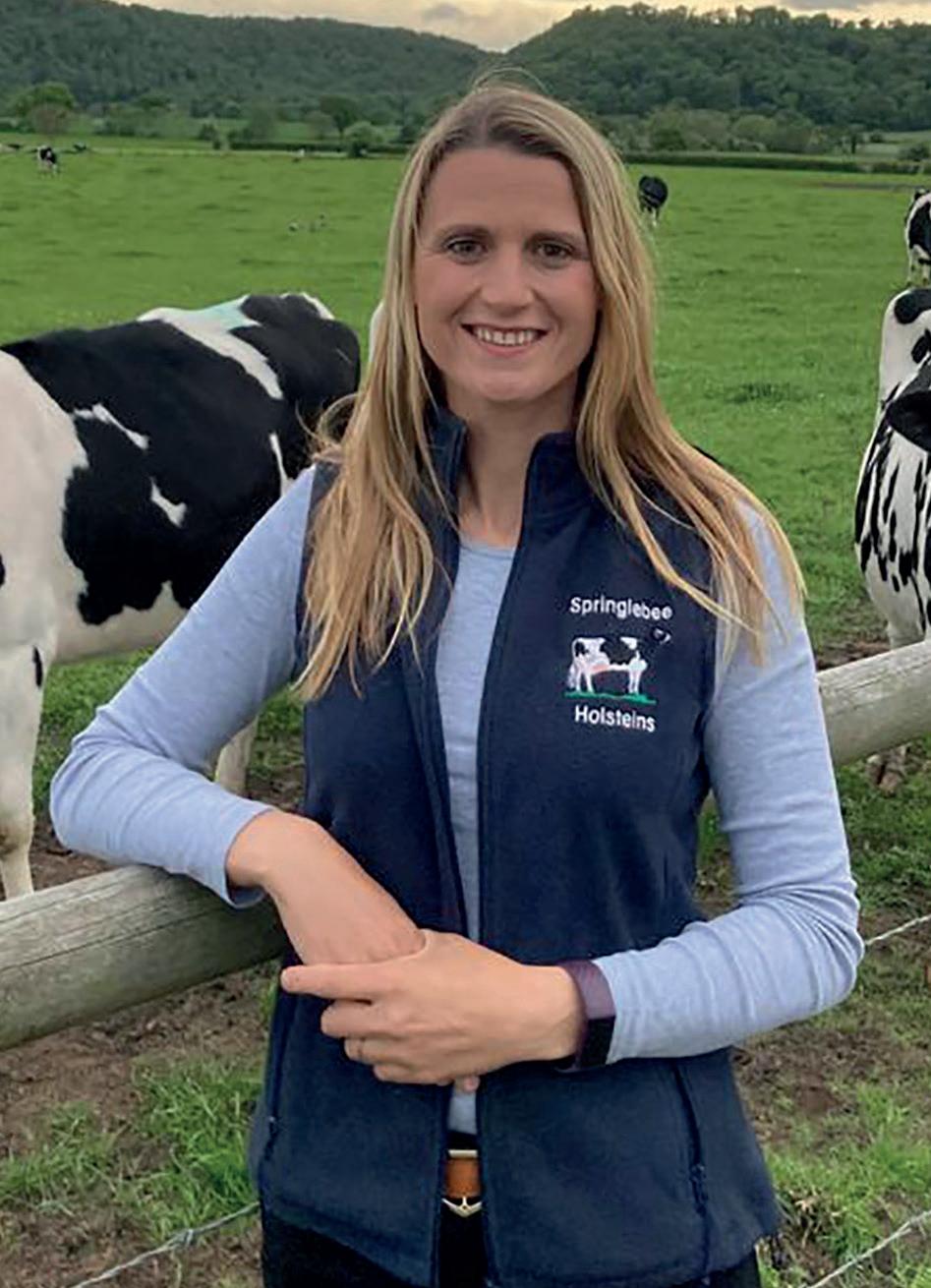
Becky Fenton
DAIRYTalk
Becky Fenton and husband Paul milk 200 pedigree Holsteins under the Springlebee prefix at Centenary Farm, a Cheshire county council farm. In 2021, they bought a farm in Staffordshire and they plan to farm there once the new dairy set-up has been built.
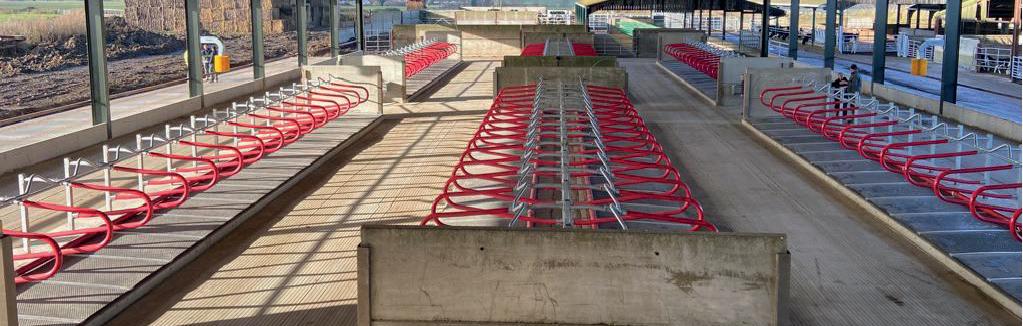
We learned that buildings don’t need to be expensive new sheds to meet standards. The key lies in moisture, airflow and temperature Stockjudging champion Ted with his certificates.
Ihave just come in from our weekly vet visit. To improve efficiency, we’ve installed 30 locking yokes in the bulling heifer cubicles. They’re serving a dual purpose; making it easier to serve heifers and for our weekly fertility visits.
We’re hoping this will cut vet costs by speeding up the process. The only drawback is I struggle to recognise the cows from behind, so we’re getting them freeze branded.
When it comes to farm meetings, we usually steer clear. They’re often repetitive. That said, I recently went to an on-farm meeting about cattle housing, mainly because it was hosted by friends.
The guest speaker was Jamie Robertson, a cattle housing expert, and it was refreshing to hear someone speak with such practical, insightful, no-nonsense advice. He emphasised that buildings don’t need to be expensive new sheds to meet standards. The key lies in managing moisture, airflow, wind speed, and temperature.
Fresh air must flow in and out, and while ventilation is crucial, it’s just as important to keep air speed under control. Moisture management is essential, too; drier environments help improve hygiene.
On our farm, we’ll be making a few changes based on his advice. The back wall of the calf shed faces the prevailing wind, so we’re adding internal Yorkshire boarding, staggered against the external boarding, which will help reduce wind speed while still maintaining good airflow.
en beneficial as the Welsh buyers have a limited pool of suitable vendors, making it a smart decision.
In the cubicle shed, we plan to remove the roof cap to take advantage of the stack effect. We’re hoping this will boost productivity by about 5%.
Impressive results
We’ve always turned out cattle over six months old during the summer. Partly because our grazing is further afield and partly because it gives us a bit of a break. But this year, with less grass available, we decided to keep the six- to 10-month-olds in and feed them a youngstock total mixed ration. The results have been impressive. They’ve grown like weeds compared to those turned out. It’s definitely given us something to think about for the future.
Earlier this spring, my husband and I had a bit of a debate about whether to vaccinate for bluetongue or not. I didn’t think it was necessary, but he disagreed and went ahead and ordered the vaccine anyway. In hindsight, he was right (unfortunately). Because we vaccinated early, our cattle are eligible to move into Wales. This has prov-
A few weeks ago, I was stewarding one of the classes in the Cheshire Farms Competition, a great chance to visit some impressive farms and meet new people. While chatting to one farmer, I mentioned we were in the process of moving our bank loan to a new lender. He suggested I speak to his bank manager, so I did. That conversation led to a better offer from them, which I then took back to our original choice – who, in turn, improved their rate. It just shows it’s good to talk, as we saved ourselves thousands. Two months ago, we attended stockjudging evenings with the Shropshire and Western Holstein Clubs. To our surprise, our youngest, Ted, was a natural. He’d disappear for five minutes and return with a burger in hand, having already handed in his judging card. He ended up winning both clubs overall and even matched the master judges’ placings in one class. When I asked him how he judged them? He simply said: “By their poo and dribble.”
Dan Burdett
Dan and his family own and run the 300-hectare (741-acre) Cockhaise Farm, near Haywards Heath, West Sussex. The farm is home to an organic autumn-calving herd of 240 Holstein and Friesian crosses. Until recently, he also contract farmed another organic autumn-calving herd at Bore Place, near Edenbridge, Kent.
The farm is now spotless, the parlour ready to be taken to pieces and hopefully put to good use elsewhere
Three months is a long time in farming and, thankfully, we have made it through TB and bluetongue tests unscathed, allowing us to wind down the second unit in Kent.
The last of the milking cows left for their new home in Wales at the end of July, leaving a disconcertingly empty and quiet farm. Even though I had planned for this day it still left me with a range of emotions – from relief to sadness that the time there was coming to an end, particularly as it looks likely that cows will never be milked there on that scale again.
The farm is now spotless, the parlour ready to be taken to pieces and hopefully put to good use elsewhere in the country, and the rest of the machinery has already been sold.
I have no regrets in taking this farm on six years ago, perhaps wishing I had been better prepared for what I was taking on at the time.
My priorities will now shift back home, especially as we head into another busy calving period, with new team members to get up to speed but, hopefully, a bit more time to iron out some of the issues we faced at calving last year.
Balance
My aim is to have a better balance in life, spending time looking after myself as well as my family and the farm. In the medium to long term, I will be able to refocus on improving our soils and the productivity of our farm, in particular our off lying silage ground, which lets us down in yield every year. With that in mind, I have engaged a local agronomist who will be able to give some structure to the things we would like to try, rather than the scattergun approach I have taken for many years.
In what has been a dry year we have had just enough rain to keep the grass ticking over, albeit smaller first and second cuts than I would normally like to have. We were fortunate enough to have grown 70 acres of fantastic wheat and barley, which have plugged the gap in grass and taken the pressure off the third and fourth cuts. One of the six-acre grazing paddocks had 11 silage trailers come off it, much to our joy and astonishment.
We had our costings group meeting here this week, with a focus on water resources management. We have just installed another rainwater harvesting system on our cubicle sheds and hope that will take a little more pressure off the river water drinking system.
The pressure on water resources here in the South East is only going to become more acute in the years to come, and it will be one of my priorities to make sure we have the capability to abstract the right amount of water and get it in the right quantities to all parts of the farm.
PICTURE: MATT BRODIE PHOTOGRAPHY
On Farm
Farm manager, Ollie Blackburn, is on a mission to increase milk yield from homegrown feed on a unit near Ilminster, Somerset. Wendy Short reports.
Switch in focus to milk from forage
The 350-cow herd at Knott Oak Dairy is fully housed and calves all year round, producing an average 12,000kg yield at 3.98% butterfat and 3.54% protein via six Lely robots.
The business, which is owned by Ewan Cameron as part of his 800-hectare (1,977-acre) Dillington Estate, has benefited greatly since joining the AHDB’s Strategic Dairy Farm network in autumn 2023, says farm manager Ollie Blackburn.
“It has given me access to work with some top experts, and their advice has been extremely helpful,” he says. “It challenged one of my main goals, which at the time was to improve the milk from forage figure; it is 4,200kg at present.
“It was suggested to me that milk from homegrown feed was the more significant, in financial terms. That made total sense and therefore my focus has been switched.”
He has since set a target to produce 5,000kg of milk from homegrown feed, prompting a series of trial cropping patterns.
“I would like to see a maximum of 2.2kg/head/day of purchased blend at the feed face,” he states. “It would represent huge progress, although there is an unavoidable reliance on purchased concentrate feed with robotic milking. It is a question of achieving a trade-off between feed cost savings and production results. At the end of the day, litres always pay.”
In 2024, wholecrop beans and peas were trialled for the first time, along with a selection of
other bi-crops. While the wholecrop did not supply the consistent feed he was seeking, it did prove that the two species grew well together, he comments. It led to a move into combined grain and legumes mixes, with the bean and pea mix rolled out across the allocated bean acreage this year.
Combined mix
Another new addition to the rotation is combined spring wheat grown with peas.
“Last year, the heifers were given 2kg/head of a combined pea and barley mix to replace 2kg of concentrate feed. Over the coming months, it will be included in the total mixed ration for the cows, with the wheat and pea mix replacing the straight wheat.
A major element of the overall plan is to minimise the inclusion
Farm facts
■ Milk is sold via a Muller/ Tesco liquid contract
■ A £3,500-£4,000 per month saving in electricity costs for the dairy unit has been made since the 2018 installation of a 42kW, bioelectric anaerobic digestion (AD) plant for slurry conversion
■ The digestate is a valuable by-product, and it is supplemented with additional material brought in from another AD installation
■ There are also solar panels on three farm buildings, providing electricity for sale to the national grid
of protected rape meal, which is expensive.
“The residual nitrogen from the legumes is partly responsible for the recent two thirds reduction in the farm’s purchased fertiliser bill. Further expansion is somewhat restricted, as the bean acreage has reached its limit within the arable rotation on the Estate.”
The herd is fully housed and calves year-round, producing an average 12,000kg yield at 3.98% butterfat and 3.54% protein.
However, ‘mixed results’ were achieved from whole cropping, he comments.
“Beans were introduced as the result of my research into trying to overcome a wireworm infestation problem in the potato acreage. Apparently, their roots release tannins which disrupt the pest’s lifecycle. It is too early to know whether it has worked out, but early indications are positive.
“Wholecrop has been used for the beef enterprise, but the combined grain and legume mixes are designed to take the concept a step further.”
Herbal leys
Some 120ha (297 acres) of herbal leys are grown for silage as part of the farm’s mid-tier countryside stewardship agreement, with 1.4 cuts taken annually. The majority of the acreage is sown in 15-metre strips on the arable field margins, where the plants attract high numbers of pollinators and other
beneficial insects. The farm also has 65ha (161 acres) of Italian ryegrass/red clover leys, made into first cut silage.
In 2011, the Estate was operating a 180-cow herd, managed organically and using the Holstein, the Norwegian red and the Fleck-
vieh. It was switched to conventional production that year and yields thereafter rose to 8,200kg, with the milking robots and full
GET MORE DONE IN A SINGLE PASS
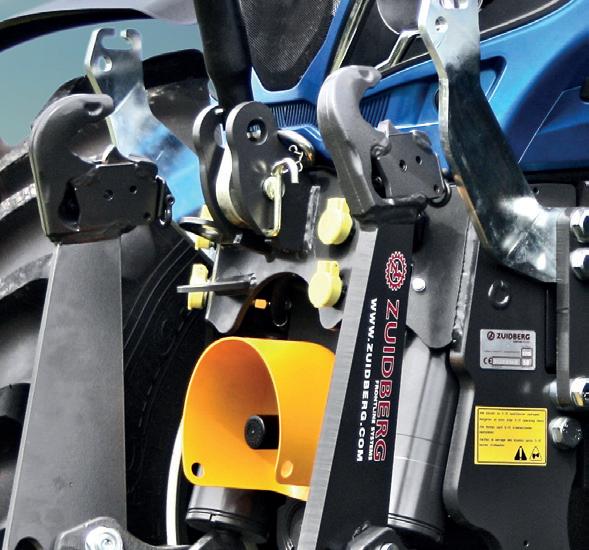
More farmers worldwide trust Zuidberg to provide the perfect platform for their front-mounted operations. Zuidberg front linkages are ultra-strong and built to last around a cast base frame.
A perfect fit for virtually any tractor, their compact design maintains full ground clearance and steering angle.
Full engine power is transferable with Zuidberg’s standard PTO. An integrated oil system ensures longer, trouble-free life and the range offers different speeds with left or right hand rotation.
Ollie Blackburn manages the 350-cow herd at Knott Oak Dairy.
On Farm
housing introduced in 2015. The cross breeding programme was adjusted in 2022, and the policy has since been changed for a second time.
“The Fleckvieh was removed three years ago,” says Mr Blackburn “It is a very good breed, but its yield potential fell slightly short on the rising level of performance, compared with the Holstein and the Norwegian Red.
“Despite this policy, the business has not specifically chased yield. Instead, the production increases have come from home grown proteins, genetic advancement, robotic milking and general management improvements.”
Cross-breeding policy
He adds: “For the past 12 months the entire cross-breeding policy has been paused, and Holstein sires have been used exclusively. This may be extended for the next three or four years, and the Norwegian Red will probably feature again.
Ideally, I would like to reach the same annual milk yield with fewer cows, possibly going down to 300 head
OLLIE BLACKBURN
“In general, I am a big fan of cross breeding, and my latest decision may turn out to be incorrect. It was taken to try and enhance the herd’s feed conversion efficiency performance.
“Ideally, I would like to reach the same annual milk yield with fewer cows, possibly going down to 300 head. That would enhance the farm’s environmental credentials and take some pressure off the workload.”
Mr Blackburn joined Dillington Estate in 2009 as assistant farm manager. The Estate has always been prepared to try new options for developing the business, he says, recognising the need to be flexible and adapt to changing external pressures.
“In the early days of the strategic farm network there were suggestions that the unit might eventually become self-sufficient in feed,” he says. “Looking back, that was probably an unrealistic ambition, although a lot of the decisions are still geared towards that aim.”
Net-zero
The farm is aiming to achieve net-zero production at some point in the future.
“As the carbon models are being developed, it strikes me that the parameters require a higher level of sound soil science behind them. Nevertheless, farm carbon footprint appears to be a worthwhile performance indicator. It seems to
Summer 2025 ration
Dillington Farms dairy herd (per head daily)
■ Maize silage 32kg
■ Water 7.5kg
■ First cut grass silage 6.2kg
■ Protected rape meal 3kg
■ Milled wheat 1.8kg
■ Propcorn-treated field beans 1.8kg
■ Herbal ley grass silage 1kg
■ Bicarbonate of soda 0.3kg
■ Limestone flour 0.14kg
■ Feed grade urea 0.10kg
■ Buffer product (Microsorb) 0.02kg
■ Milking cow supplement 0.02kg
■ Plus 6.8kg of specialised robot concentrate feed
have the potential for tweaking systems to maintain or increase outputs using fewer inputs.
“At present, carbon reduction is not heavily incentivised for farmers, but that may change in the future,” says Mr Blackburn.
Combined spring wheat grown with peas is a new addition to the home-grown feed ration.
Do you make maximum use of your robot data?
Using ForFarmers OptiRobot our Dairy and Robot Specialists are able to assess whether the interaction between robot settings, nutrition and health is optimal. It often turns out that small changes can make a big difference; Our Robot Specialists can help highlight areas where you can improve with the unique ForFarmers OptiRobot which provides:
9 Greater insight
9 More opportunities
9 Increased returns
For more information speak to your local ForFarmers Robotic Specialist or visit >
‘The livestock industry must lead artificial intelligence development’
Matt Dobbs is one of the organisers of AI(Live), the first conference dedicated to the application of AI in livestock farming.
It used to be said that only two things in life were unavoidable – death and taxes. To this list can now be added the inexorable march of artificial intelligence (AI). All sectors of the economy and all walks of live are increasingly being influenced by AI systems – and livestock farming is no exception.
AI has the potential to drive fundamental change in monitoring, data and reporting on UK farms, enabling ‘big data’ to be used for the first time to bring productivity, health and environmental benefits to all livestock farming businesses
But livestock farming is currently approaching the tipping point ahead of the widespread introduction of AI.
As yet there are no plans for how the industry ensures the full benefits from AI technologies are delivered in a controlled manner. A degree of industry self-regulation and farmer influence will help the industry derive the maximum value.
AI issues
AI is here to stay and is developing fast but who do you trust? How do you know that the systems are going in the right direction for farmers and addressing the core issues? These are just some of the issues that mean the industry needs to take a much closer involvement in how AI develops.
It has been claimed that in theory it is possible to run an entire farm from a Smartphone (assuming there is adequate broadband coverage). But how can you be confident that the IT will make the right decisions?
For many routine admin and scheduling tasks AI should be able to have an immediate benefit, removing mundane, repeatable tasks and freeing time for other tasks. But how and when will systems be developed that can be trusted with more fundamental tasks?
For example, a system could use data to indicate a health issue. It might even advise a treatment.
But can a system replace stockmanship skills? And what are the welfare and industry perception implications of wrong, unnecessary or missed treatments?
Another example might be nutrition where data could be used to monitor feed use and production and advise ration changes. But what if it only has access to an out-of-date silage analysis or does not know the accuracy of the weigh scales on the TMR feeder and is not making use of data of feed refusals? Inaccurate data misapplied could increase costs and reduce margins.
Without proactive and on-going engagement from the industry, the risk of poorly researched and developed systems landing on farms is considerable, and the consequences significant.
Currently it feels a bit like the wild west with a cavalcade of systems in development but a lack of regulation or overall governance. This is not to say that the system of AI development must be stringently regulated, but equally it must not be totally deregulated and free to do as it wishes.
A degree of industry-led regulation could deliver significant benefits and ensure that producers and the entire supply chain can derive value from de-
Matt Dobbs
velopments. But this needs to happen quickly, as once systems start being delivered widely it will be impossible to apply controls retrospectively.
Without on-going engagement from the industry, the risk of poorly researched systems landing on farms is considerable, and the consequences significant
While many industry bodies are actively developing AI position policy statements, the issue is wider than individual representative organisations and it is clearly not an area where Government will want to get involved and is currently showing no interest.
Industry body
Livestock farming industries will be best served by some form of industry-wide representation including producers, processors, the supply trade and vets. Such a body could perform several roles.
It will provide a point of contact between the industry, developers and investors and help shape the development of systems. It can help ensure that the systems meet the real needs of the industry and can help deliver economic, welfare and sustainability benefits. It can also allow developers to challenge the industry with new possibilities. Either way it will
An AI system could use data to indicate a health issue and advise on treatment, but can it replace stockmanship skills?
ensure AI systems deliver for the industry. It can then provide some form of quality assurance on the systems produced, perhaps introducing an industry standard. This will allow producers to be more methodical in choosing the systems they want to employ and most importantly help build trust in the systems being developed.
And with governance coming from within the industry, it will put the industry more in control of its AI supported future. AI will never replace farmers but can be seen as a co-pilot supporting the running of the business. The priority for the industry should be to ensure it has access to the best-developed and trusted co-pilots.
rThe AI(Live) conference will draw together people from across the livestock farming and AI development spectrum and provide a forum to raise some of the issues facing the industry and how they might be addressed. More details on www.ailive.farm/
UK beef and dairy farmers are being encouraged to be vigilant against signs of lumpy skin disease, with cases confirmed in France and Italy. Dairy Farmer reports.
What you need to know about lumpy skin disease
Caused by the lumpy skin disease virus, a member of the capripoxvirus genus, Lumpy Skin Disease (LSD) has been moving steadily across Europe this summer and recent outbreaks in France and Italy have sparked concern among vets and producers.
According to a Defra preliminary outbreak assessment in July, these are the first detections of the disease in Europe since the outbreaks in the Balkans in 2018. Now endemic within most African countries, the disease has been spreading in North Africa, specifically Algeria and Tunisia, since July 2024. Morrocco is now the only African country where no cases of LSD have been reported.
Stephane Alkabes, lead stud vet at cattle breeding company Synetics, says LSD is primarily spread by biting insects such as mosquitoes, horseflies, midges and ticks,
which carry the virus from infected to healthy animals.
The disease can spread rapidly, especially during warm weather and can also be transmitted through direct contact with infected saliva, nasal or eye secretions, milk or semen.
EU cases
On June 29, France confirmed its first cases of LSD in the region of Savoie, near Chambéry, not far from the Swiss border. Around the same time, Italian authorities reported outbreaks in Sardinia
and in the northern region of Lombardy. These are the first recorded cases in either country in over a decade.
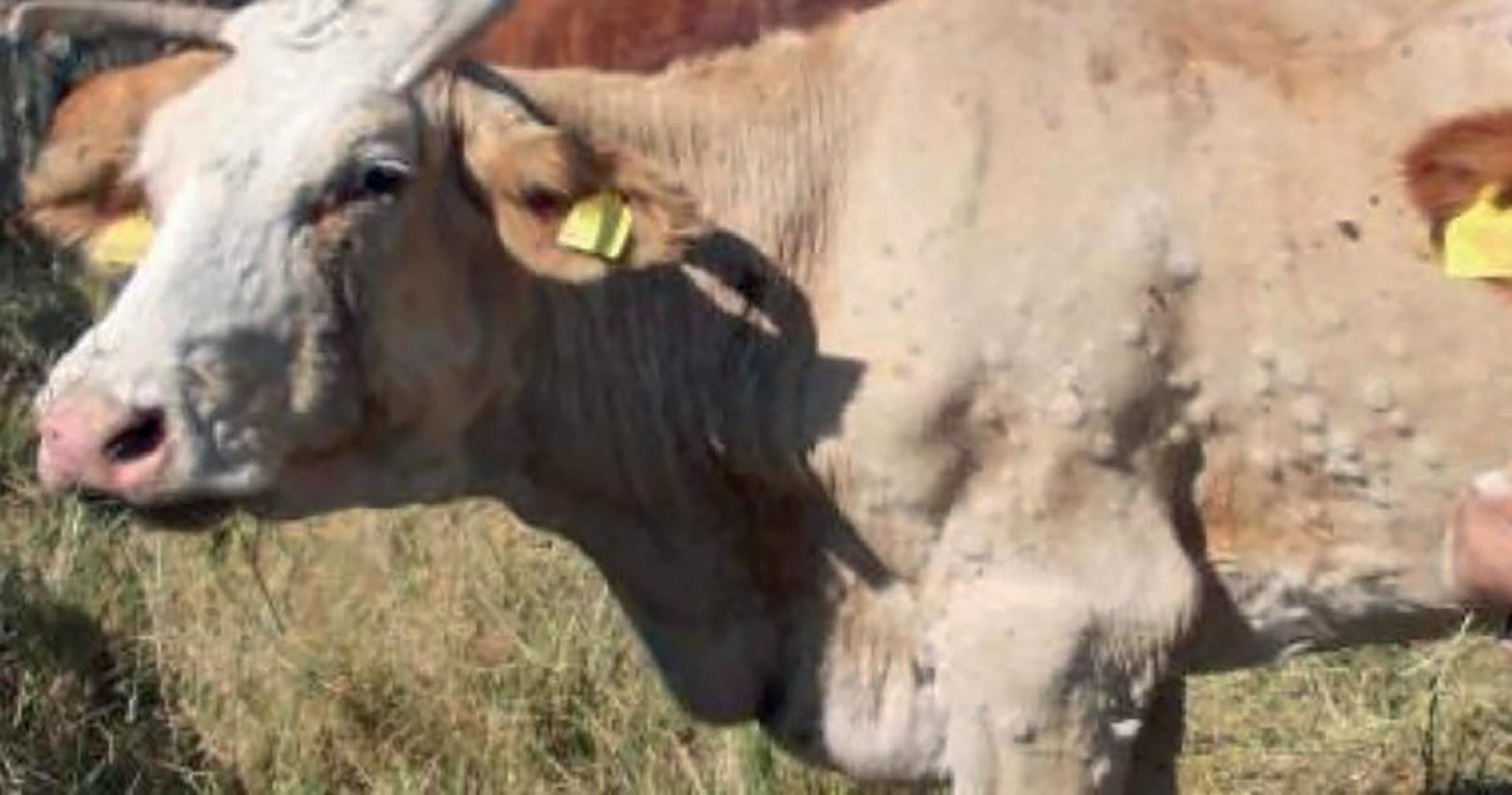
Symptoms of LSD are difficult to ignore, says Dr Alkabes, with infected cattle developing a high fever and large, round nodules on their skin – sometimes dozens or even hundreds of them.
Dr Alkabes says: “These nodules can rupture and become infected, leaving painful ulcers and permanent scars. Animals often show swelling of the limbs, drooling, reluctance to move, and clear signs of discomfort.”
He says the disease can also cause milk yields to plummet, often by 20% to 30%, and cows may abort or fail to conceive again quickly.
He adds: “Bulls can also suffer a loss in fertility lasting weeks or even months. Altogether, it is a blow to animal welfare, but also to the bottom line of any beef or dairy operation.”
So far, the UK remains LSDfree, and Government surveillance and import controls are working hard to keep it that way. Given the recent outbreaks on the continent and the growing pressure from climate conditions that favour insect spread, the risk of incursion is real, says Dr Alkabes.
The UK’s Chief Veterinary Officer, Dr Christine Middlemiss says: “Our risk of LSD has increased, it has gone from negligible to very low. So, compared to African swine fever and foot-andmouth disease [FMD], the risk is less. That is partly due to the fact it does not spread in meat and is mostly spread by biting insects.
“The bigger concern for me is what is causing these things to appear in Europe. The EU was free of FMD until the incursion in January, free of LSD until the detection in Sardinia. It feels like there are risk pathways and movement that is happening that is enabling disease to come in, which is increasing the risk for all of us.
Signs to watch for
Dr Middlemiss adds: “As the name suggests, farmers should be looking for nodules on their cattle specifically. There will be nodules along the back or scabbing. It can also be visible around the udder.
“Animals can be sick with it so have a reduced milk production, temperature, runny noses. Although those are more non-specific signs but if you have animals that are developing these with the nodules or scabs or just unusual nodules I would ask farm-
Dr Christine Middlemiss
LSD causes cattle to develop a high fever and large, round nodules on their skin, which can rupture and become infected.
ers to please contact Animal and Plant Health Agency [APHA] or your own vets and seek advice.”
Any suspected cases of LSD must be reported to the APHA by calling 03000 200 301.
LSD is a notifiable disease in the UK, and confirmed cases trig-
ger strict control measures.
According to current UK legislation, and in line with European Animal Health Law, all susceptible cattle on an infected holding must be culled under Government supervision to prevent further spread.
The disease can also cause milk yields to plummet, often by 20% to 30% .
Vaccination against LSD is not allowed in disease-free countries like the UK unless an outbreak occurs, and in the case of an outbreak special authorisation is required. Therefore, Dr Alkabes says the UK’s best defence is vigilance and rapid reporting.
Vet’s View
Animals often show swelling of the limbs, drooling, reluctance to move, and clear signs of discomfort.
DR STEPHANE ALKABES
He adds: “LSD may still be a few miles away, but it is getting closer. With good awareness and quick action, UK farmers can help keep this unwelcome visitor off our shores and protect both their animals and their livelihoods.”
Delivering top-tier nutrition from day one, Volac Milk Replacers’ formulas set calves on the path to success, ensuring strong growth, enhanced fertility, and superior milk production down the line.
Finding loyal skilled workers for dairy farms these days is akin to winning the lottery, so a couple in the United States decided to design their own low-labour unit that they could run themselves – that meant investing in robots and designing new infrastructure.
Kat and David Mageean run Lambarth Farms LLC based at Ann Arbor, in Michigan, along with their own dairy outlet, Annie G’s Dairy. The couple took over the farm from Kat’s dad in 2017 and built a new barn three years later with two robots and space for 100 cows. They have two children – six-year-old Annie and twoyear-old Angus – who they hope will some day take over the farm.
Kat says: “We started up the robots with 60 cows and we are up to about 85 cows now. David, who is originally from Northern Ireland, runs the day-to-day operations of the farm and I work off-site as a
A US couple have designed a low-labour dairy unit and opened their own direct sales outlet to future-proof the dairy business for their children. Chris McCullough reports.
Investing in the future with robotics and infrastructure
part-time veterinarian. I also look after the health of all our animals.”
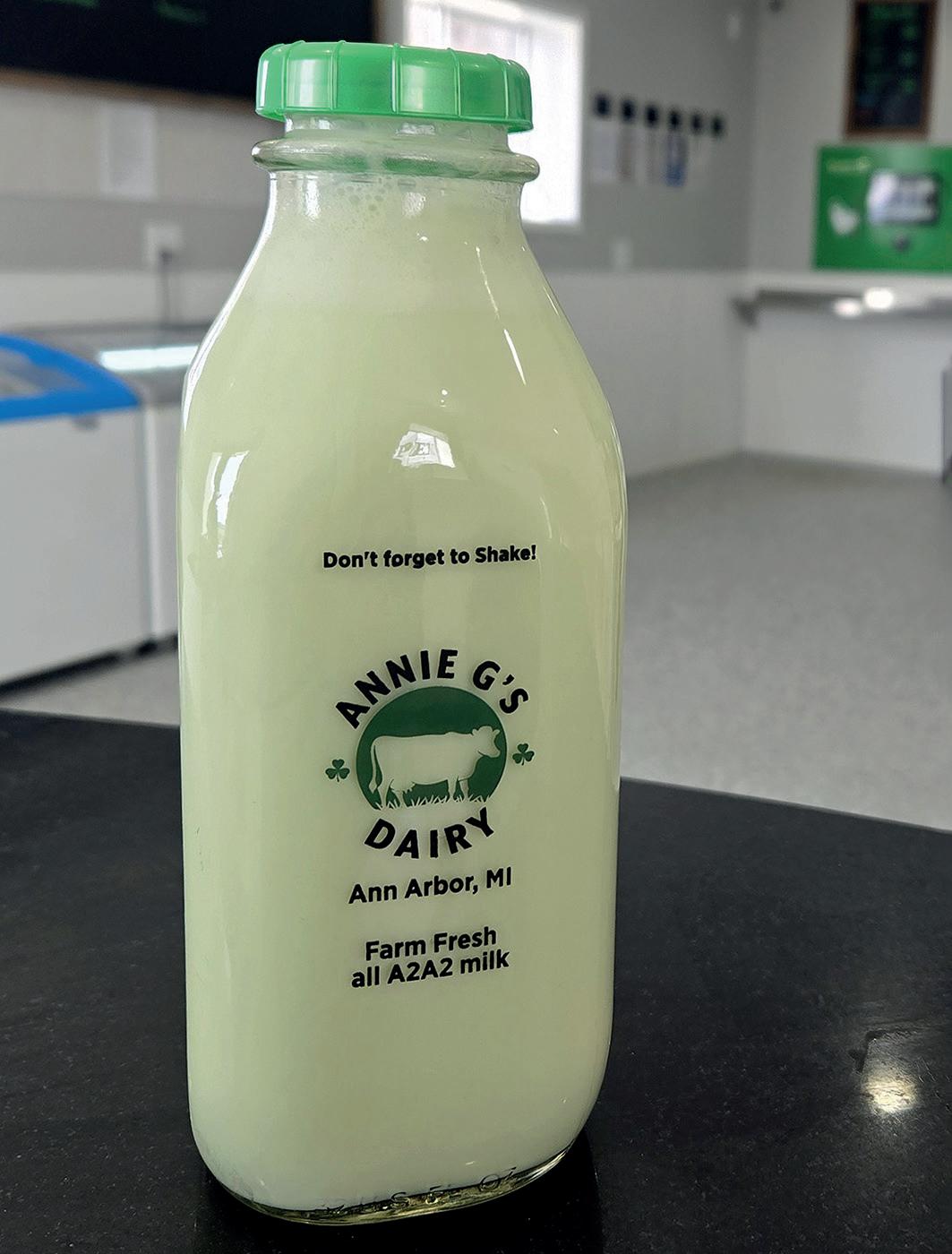
Annie G’s Dairy was built in 2023 and opened to the public in August of 2024. It sells low-temperature pasteurised, non-homogenised, 100% A2:A2 whole milk.
“We sell six different flavours of milk via a vending machine and
have started offering cheddar cheese curds as well,” says Kat.
The Mageeans’ herd comprises a mix of Holstein and cross-breds, using Jersey, Ayrshire, Brown Swiss and Norwegian Red genetics.
Milking
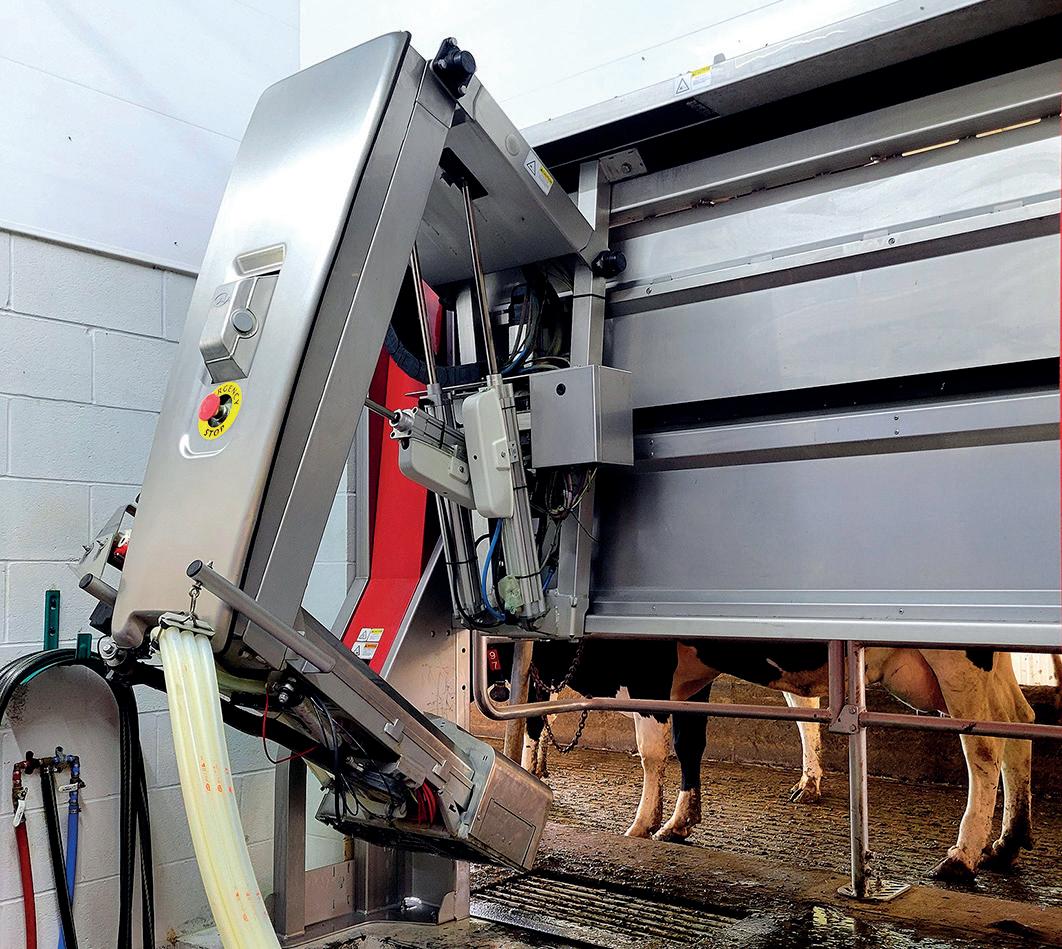
David says: “The cows are milked by two Lely A4 robots that we bought used and refurbished.
“Technically, they could handle 120 cows but even the few times we have got close to 100 cows milking, we noticed our increase in fetch cows and an increase in herd health issues. We are very comfortable with about 85 to 90 cows milking in our
Farm facts
■ Cows are averaging 2.8 milkings per day on the robots during the grazing season and 3.4 milkings per day during the winter housing period
set-up, which creates an environment the cows are comfortable in.
“During the summer we try not to buffer feed unless the days become too hot or too dry when we will feed hay in the barn. During winter, we mix a ration of ground corn, mineral concentrate, baleage and maize silage. We are currently transitioning to a 100% grass-fed system, where we will only use baleage and dry hay for winter and pasture in the summer to save money on concentrates.”
Summer yields are about 30kg per cow per day, sitting at about 4% butterfat and 3.2% protein. Winter yields are about 38.5kg/cow/day at 4.6% butterfat and 3.4% protein.
■ About 4% of the 800,000 litres of milk produced on-farm is sold through a vending machine for USD$5/half a gallon (£1.80/litre)
■ Started using A2:A2 artificial insemination sires in 2017
■ Cows are grazed from about mid-April to mid-October
The Mageeans’ herd comprises a mix of Holstein and cross-breds, using Jersey, Ayrshire, Brown Swiss and Norwegian Red genetics.
David and Kat Mageean with their children, Annie and Angus.
Kat says: “In 2017, we started breeding for A2:A2 and only used A2:A2 bulls. We focus more on producing smaller cows suitable for grazing, with better feet, legs and udders, before picking the A2 genetics on top.
“Our cows are grazed from about mid-April to mid-October, when the diet is pasture and robot pellet that we feed based on milking performance.”
During the winter, cows are housed in the barn in one large group with a separate dry cow area and another area where cows and heifers receive a higher energy concentrate 21 to 30 days prior to calving.
Kat says: “We use artificial insemination and calve year round but we block calve our replacements so that we only feed calves once a year in the nice days of the autumn. Our mortality rate is zero, so we only need 20 dairy replacements a year. Beef breed bulls are used on the remaining cows.”
Finances
Milk prices have proved to be good for the Mageeans, but costs of production on-farm have also stayed relatively high.
Kat says: “2024 was a better milk price year though costs remained quite high. We averaged USD$0.53 per litre for our milk, due to our butterfat and protein being fairly high for the conventional US market.
“The current milk price is a little lower at USD$0.51 per litre. However, our average cost of production is still higher than our milk price at USD$0.69 per litre, but that is due to debt servicing our expansion.”
David and Kat always knew their venture to create a low-labour unit
It is very rewarding to walk into the robot barn and see the cows comfortable, ready and willing to milk themselves
KAT MAGEEAN
would be expensive, but they also knew that, together with opening their dairy, it was the only way forward to future-proof their business for the next generation.
Kat says: “It is very rewarding to walk into the robot barn and see the cows comfortable, ready and willing to milk themselves. After being milked they can choose to go back to pasture or lay down in the sand bed cubicles.
“Herd health is also very good –even the calves do not take scour or other illnesses. They get high brix-tested colostrum and plenty of it. We have not needed to use an antibiotic in a calf pre-weaning since 2017, just milk and some milk balancer and some probiotics.
“With David being the only fulltime person and me working offfarm, we have to make sure everything is managed perfectly, because we do not have time to intervene and it costs us too much to stop and treat or fix what we forgot to manage for.”
Cows are milked by two Lely A4 robots which they bought used and refurbished, says David Mageean.
Colostrum
Feeding colostrum with a higher concentration of immunoglobulins at lower volumes is advised to reduce damage to calf gut health. Katie Fallon reports.
Feed smaller volumes of higher quality colostrum
Speaking on a recent Hoards Dairyman webinar, vet Barb Petersen of the Sunrise Veterinary Service in Amarillo, Texas, discussed some of the latest advice on colostrum feeding, as a result of new research mimicking the cow calf system.
Ms Petersen explained that the industry has traditionally followed the advice to feed between 10% and 12% of the calf’s body weight in the first colostrum feed and 5% of body weight in the second feed.
In terms of quality, traditionally farmers have been advised to aim for a Brix score of 22% or above to guarantee 50 grams or more, of immunoglobulins (IgG) per litre of colostrum.
However, Ms Petersen said that advice has shifted, with the goal to now focus on quantity in terms of IgG per feed, rather than volume of colostrum. She said: “We are now aiming for between 200g and 300g of IgG in the first feed and between 100g and 200g of IgG in the second feed.”
Quality wise she said the research supports increasing the IgG content to 75g or more, per litre of colostrum, especially for the first feed. “But how do we reach each calf’s IgG goals without overwhelming the stomach? As we cannot mess with the gut, which sometimes happens when feeding colostrum.”
She added: “Four litres of colostrum weighs approximately 9lbs [4kg] which is roughly 10% of a 90lb [40kg] Holstein calf’s body weight. As this has evolved, we have fed more and more colostrum to try and reach a high serum total protein score.”
However, new research suggests smaller volumes of colostrum with a higher concentration of IgG, could be better for gut health. But colostrum must be Brix tested to support this.
Brix value
A study at the University of Wisconsin in 2023, found that colostrum with a Brix value of 22% was predicted to have an IgG concentration of 75g per litre. However, results showed that the true IgG value per litre could range from 32g to 117g, with a 95% confidence.
Ms Petersen said: “This is where the paradigm shift comes in, because if we want to feed a smaller volume of colostrum, our target Brix score needs to be closer to 25%. That will give us 75g of IgG per litre and allow us to feed more grams of IgG in a smaller volume.”
If we want to feed a smaller volume of colostrum, our target Brix score needs to be closer to 25%
BARB PETERSEN
When looking at the volume of colostrum the abomasum can hold safely, studies have shown that in the first week of life, the total combined volume of the stomach compartments is three to four litres, with a 60% capacity in the abomasum.
As a result, Ms Petersen advised
Ms Petersen advises feeding between 6% and 8% of a calf’s body weight in the first 24 hours, with a Brix value of 25%.
feeding between 6% and 8% of a calf’s body weight in the first 24 hours, with a Brix value of 25% to guarantee 75g of IgG per litre.
This translates to three litres of colostrum in the first feed and two litres in the second feed for Holstein calves, and two litres in the first feed and one to two litres in the second feed for Jersey calves.
Ms Petersen said: “We want to improve the health of the stomach and sometimes when feeding such a large amount of colostrum, calves do not want to drink again.
“Sometimes they are listless and laying there as they rest and digest, but really it is a challenge because they do not want the next feed they are offered.
“We have got to shift how we feed colostrum to take care of the abomasum and maximise absorption of IgG.
Costings
The last milk year was a positive one for dairy producers according to the latest Kingshay Dairy Costings report.
Although the dreadful weather over the summer of 2024 saw yields from forage drop sharply, the reasonably high milk price and lower feed costs meant margins remained firm.
In fact, given the most favourable milk price: feed price ratio since 2001, the average margin over purchased feed (MOPF) was the strongest for a very long time, bar the milk spikes of 2022.
All reported health indicators saw year-on-year improvements. Mastitis dropped to 24 cases per 100 cows (down by two), and lameness from 37 to 34 cases per 100 cows. However, fertility last year saw a bit of a slide, most likely due to the poor-quality forage. Calving intervals extended by a day to 394 days, and days to first service crept up by two days to 72.
The age of cows at exit is steadily declining, but the proportion of selected versus forced culls has increased again, year-on-year. And given the higher milk prices, the cost of poor fertility and health increased, both on a per-case and per-herd basis.
Performance
Emma Puddy, farm services specialist at Kingshay, says: “This year housing-focused, all-year-round calving herds had the highest MOPF per cow at £2,937/cow, and the highest margin per litre was achieved by the low to moderate-yielding organic herds, at 41.15ppl.
“When it comes to MOPF, we are still seeing large ranges, even within the same production systems, where groups of herds have similar goals.”
Drawing on data from 1,064 conventional herds and 98 organic herds, the report showed a wide variation between the top and bottom quartile within each production system.
Organic herds made a strong
Figures show the last milk year was a positive one for dairy producers, with improvements in cow health and growing momentum in the organic milk sector. Dairy Farmer reports.
Strong milk year and improved cow health
All reported health indicators saw year-on-year improvements according to the latest Kingshay costings report.
showing after a difficult few years, with the milk price reaching a record high of 53.17ppl in March 2025. Milk from forage remains a key strength, with 44% of milk derived from forage compared to below 30% for conventional producers.
“It seems milk from forage is still very strongly linked to MOPF, with conventional herds in the top 10% for milk from forage achieving a margin that was 20% higher per cow and 14% higher per litre,” says Mrs Puddy.
“The best way for a farm business to see where they are successful and where they could improve is by putting their figures side-by-
The highest margin per litre was achieved by the low to moderateyielding organic herds, at 41.15ppl
EMMA PUDDY
side with other producers in similar systems. We hope that by publishing this report we can help
farmers to do exactly that, and to find ways to continue the positive trends we have seen.”
E-PILOT
Youngstock
It is important to provide the correct environment for the health and progression of a dairy herd, and ensuring calves and youngstock have the right winter housing plays a pivotal role in this. Dairy Farmer reports.
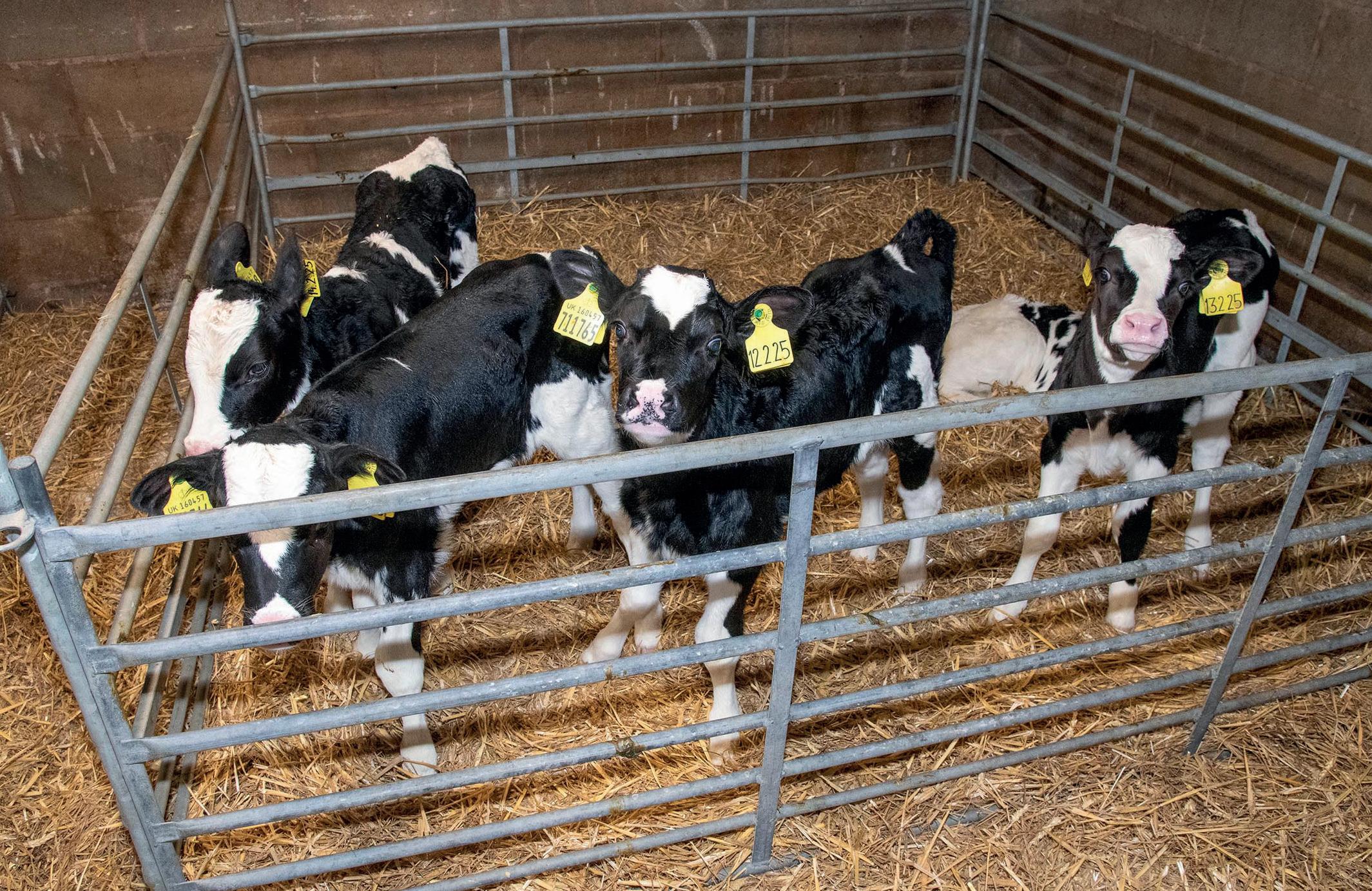
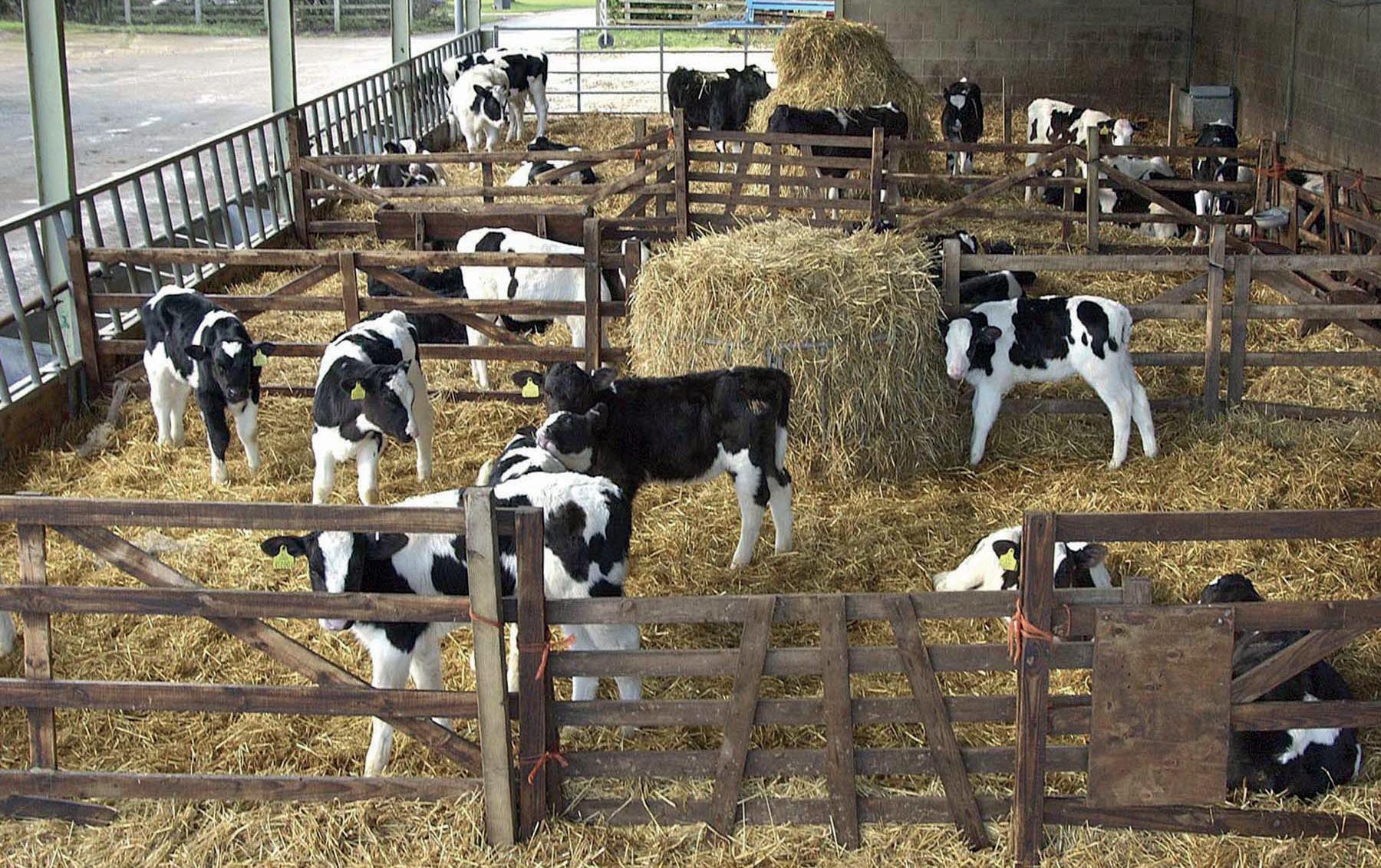
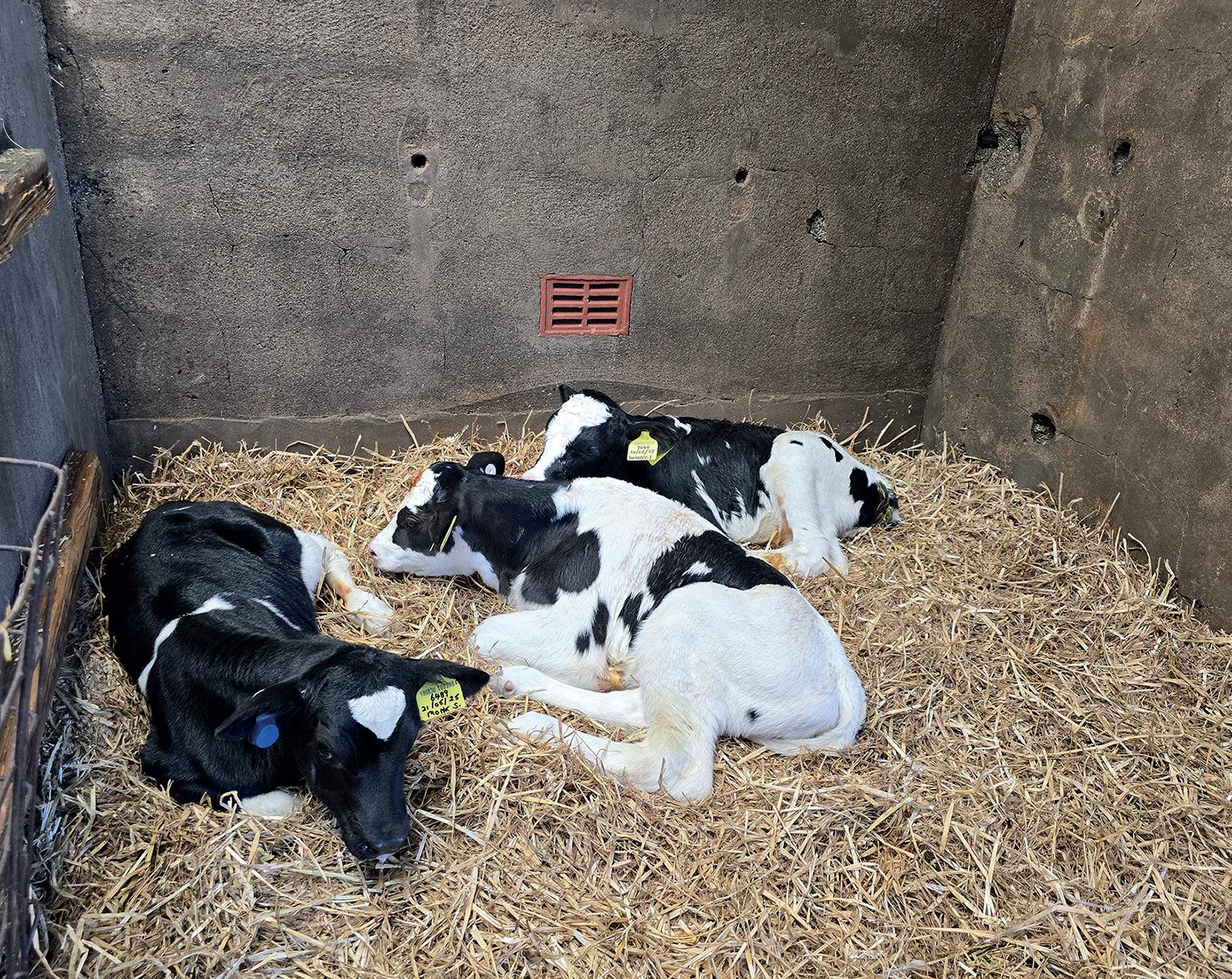
Suitable housing is known to improve the overall health and longevity of a herd, which results in economic returns. A key factor in poor growth rates and subsequent milking performance is inadequate housing and ventilation.
A poorly ventilated calf shed can lead to a host of respiratory issues, such as pneumonia and BRD, as well as other pathogen-caused diseases like coccidiosis plus other clostridial diseases.
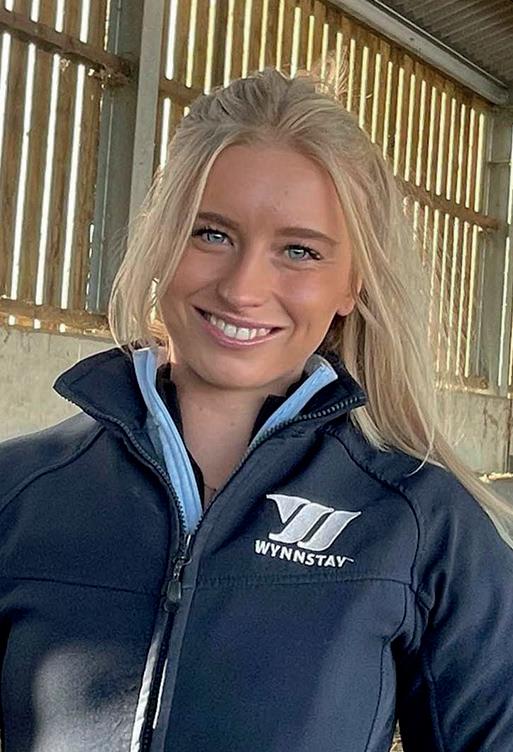
Lily Pardoe, calf and youngstock specialist for North and Mid Wales at Wynnstay, says: “It is a simple issue to identify and assess – the investments made will pay off in the bulk tank in 22-24 months, or by getting calves finished within 18 months.”
The first step is to identify the issue.
Ms Pardoe says: “We want good airflow, but this does not necessarily
Planning ahead for winter calf housing
mean we want an open shed. What is needed is a controlled environment where we can manage and monitor airflow, humidity and temperature, without the reliance on Mother Nature.”
Signs of poor ventilation include a musty, ‘unfresh’ smell in the building, cobwebs in the roof, increased cases of pneumonia and other respiratory issues.
“You can do the ‘smoke test’ to show air circulation – if it does not rise and ‘escape’, there is a ventilation issue,” says Ms Pardoe.
“Ideally, it is about having the balance between fresh air circulating,
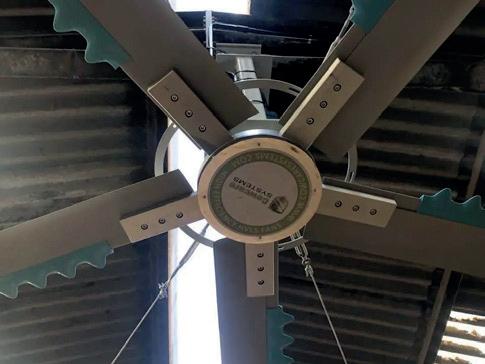
keeping the temperature optimum and avoiding overheating. You also do not want a draught at calf height. Using ventilation fans and curtains can be a useful way to help manage the environment.”
Bedding
There are several other factors that should be taken into account when preparing winter housing, including hygiene, bedding and space to optimise the stock’s welfare.
Making sure there is plenty of bedding helps prevent disease by maintaining the correct temperature for youngstock. Warm calves
will convert feed to growth, while cold calves use feed energy to maintain body temperature.
Tomi Jones, national hardware sales manager at Wynnstay, says: “Deep bedding, like straw, allows calves to get comfortable and also provides them with some insulation. It is important to particularly pay attention to ensuring adequate bedding in colder temperatures. Ensuring it is kept dry is also vital – if it is damp and wet it can promote disease risks.
“Doing a drop knee test is a good way to ensure bedding is dry and sufficient for calves to lie
Suitable calf housing is known to improve the overall health and longevity of the herd.
comfortably. Do this by dropping a knee from a standing position on to the bed. If you can do this without hurting yourself, the comfort is fine – if you hurt yourself, the comfort needs to improve.”
The area the youngstock are going into should also be clean and easy to maintain in terms of hygiene to lower disease risk and provide the best environment for welfare.
“You should ensure that stock are going into a shed that has been thoroughly prepared and cleaned from the previous group,” says Mr Jones.
“Make sure any repairs have been done to equipment and try to use materials that are easy to clean and disinfect, avoiding cracked surfaces that could harbour dangerous pathogens or disease.”
Drainage
Drainage is also important, he says.
“Ensure there is adequate drainage in pens and buildings to assist cleaning and reduce dampness,
which can impact air temperature and biosecurity. Also, implement measures like boot dipping and disinfection stations at the entrances and exits to the housing and feed storage areas,” says Mr Jones.
As well as checking the shed is the right size to provide each animal with enough room to be comfortable and able to lie down, feed space and water sources should not be underestimated. They are
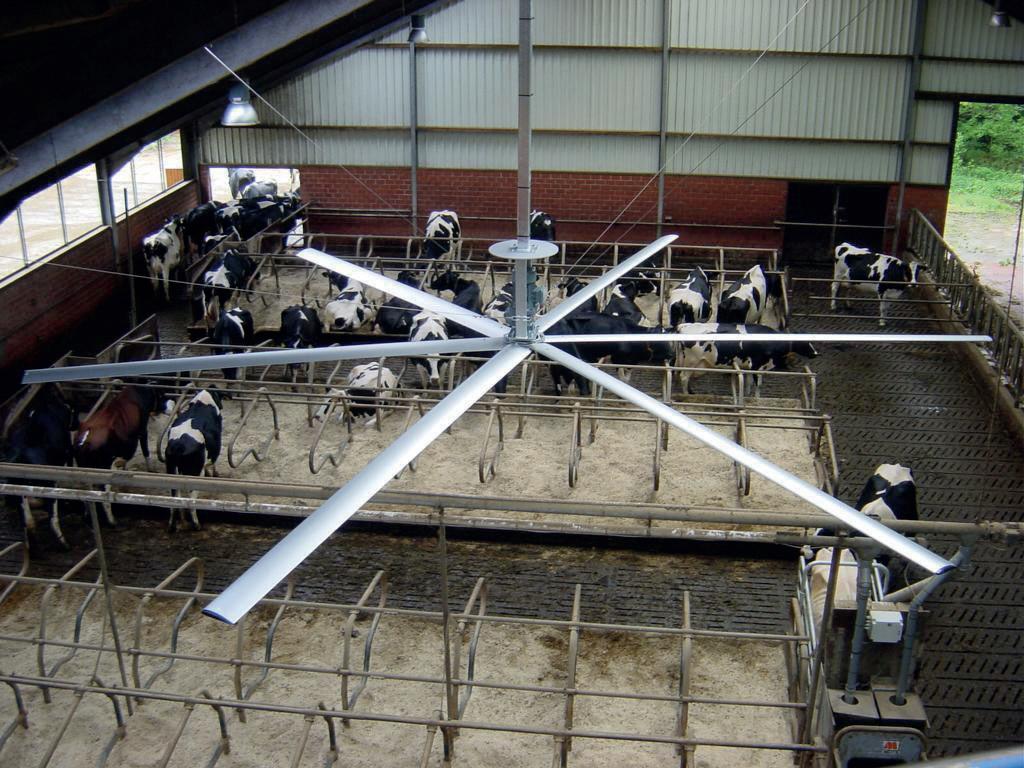
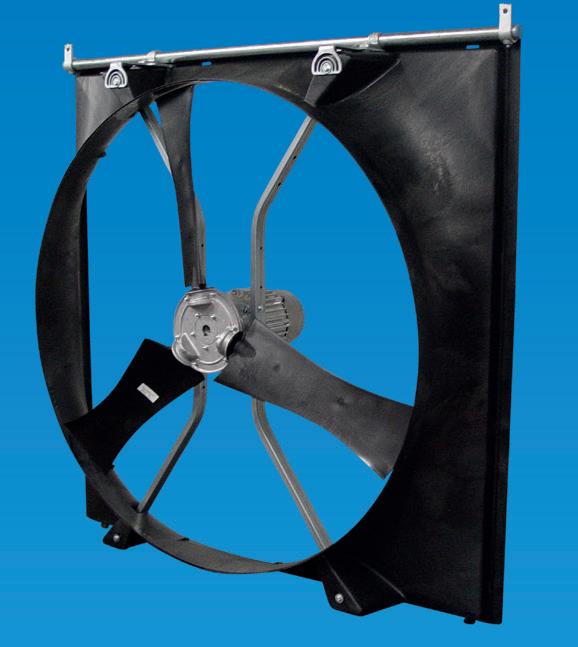
HVLS - FANS
What is needed is a controlled environment where we can manage and monitor airflow, humidity
LILY PARDOE
vital considerations for housing to make sure bullying is minimised and ensure animals have sufficient drinking space and water quality.
Water quality
“Stock must have access to clean, fresh drinking water at all times. It is important that troughs are sufficient for the number of animals and the height of the trough is suitable for the ages of stock
in the pen to be able to reach to drink from,” says Mr Jones.
“Enough space should be available for 10% of the stock to drink at any time, and flow rates to the troughs should be sufficient to cope with peak demands. It is advisable that the water trough/drinker is positioned so that it is easy to access for cleaning and maintenance. Ensure that water troughs are checked daily and cleaned out regularly.”
Mr Jones says that contaminated water will reduce intakes.
He says: “Contaminated water –from faeces or feed dropped into troughs by cattle – will reduce intakes and increase the risk of diseases like leptospirosis, Johne’s disease and e.coli, all of which can be spread by water contamination.
“You may need to make a bit of investment to help you get towards the best possible conditions for your winter housing, but if you get it right for your calves and youngstock, it can really make a difference in the long-term.”
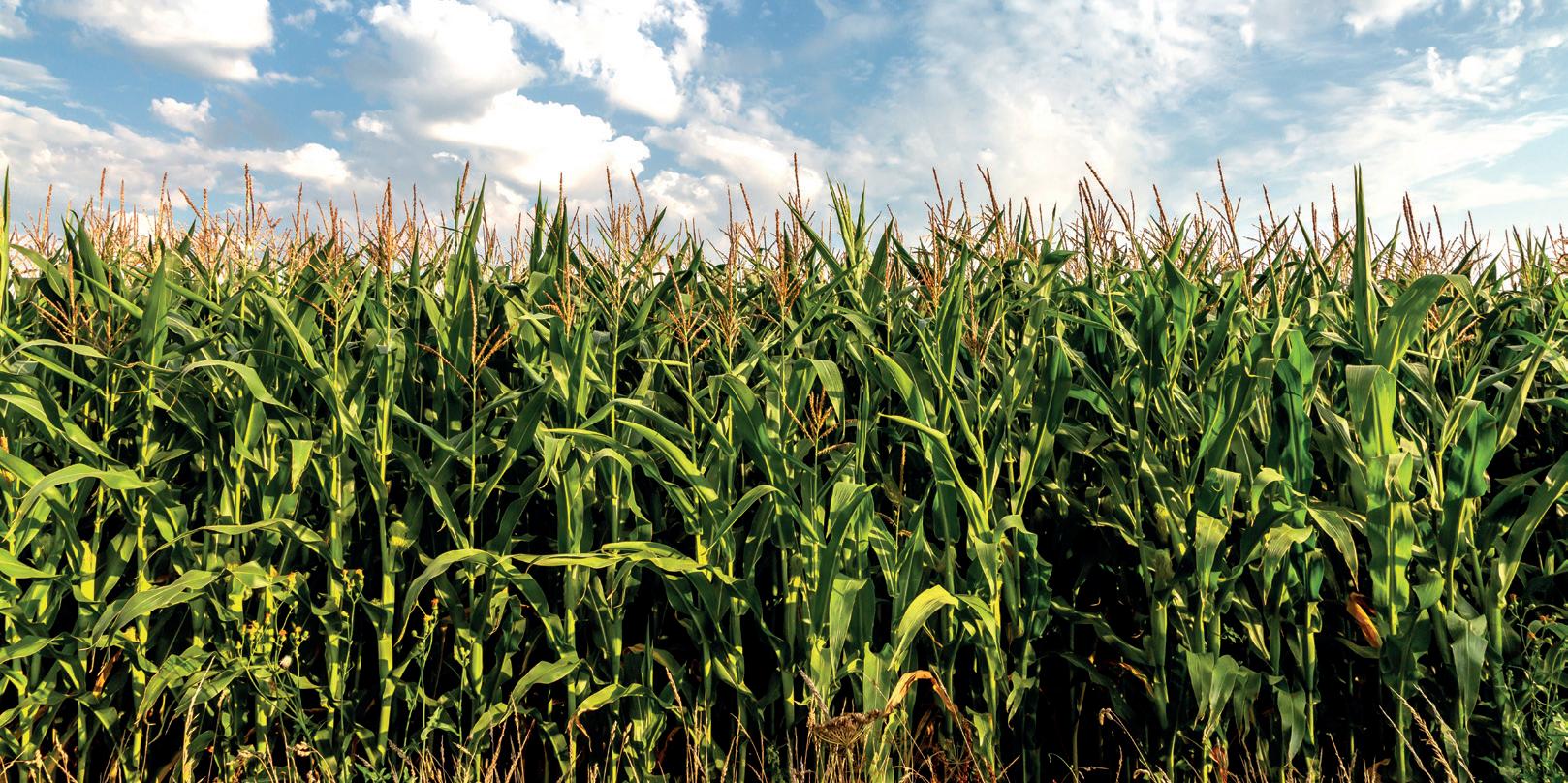
While many maize growers are enjoying a favourable year, drought in the first half of the season has led to problems in some regions. Dairy Farmer reports.
Maize harvest results are expected to vary widely this year according to Andrew Cook of KWS, who says quality and yield will be ‘across the spectrum’ with some ‘bumper yields and rocket fuel silages’.
He adds: “Maize crop potential has largely been set at this stage. Some of the earlier-sown maize fields are looking tremendous and have romped away, given the exceptionally high heat unit numbers.
“A number of crops in south west England, for example, had reached three to 3.5 metres in height by mid-July. They will have benefited from the significant rainfall that fell towards the end of the month on many farms. The generous number of sunlight hours will have boosted cob performance, and some top silages should be recorded for winter feeding.”
Meanwhile, a percentage of the later drillings have shown distinctly patchy emergence.
“Poor growth rates have been recorded, and even some losses where the crop simply did not receive enough water for healthy emergence and growth,” says Mr Cook.
“This year has highlighted the effect of localised rainfall at critical times, with variations not only between farms a few miles apart but even from field to field, also depending on the moisture-holding capacity of the different soil types.”
For some growers, maize performance will be affected by the dry spring weather that delayed emergence and slowed progress.
Mr Cook says: “It followed a very challenging autumn where harvest was put back by high rainfall in some regions and remedial operations have been needed to repair soil damage. But spring presented a very different picture, and lack of soil moisture limited growth on many farms.
“Every year, we issue a firm recommendation to wait until the soil
Variable outlook for maize harvest
temperature warms up before bringing out the drill. Very early sowing comes with a risk of frost damage from early emergence, and maize seed does not fare well if it is left in the ground for too long before higher temperatures trigger germination. The policy also carries an increased risk of bird predation.”
However, he says some growers ignored the warning this year and are now ‘reaping the benefits’.
He adds: “The early-drilled crops had the advantage of a degree of soil moisture that had all but evaporated later [in the] season. Some of these crops have performed the best, although there were a few reports of frost damage.
By contrast, some growers who stuck to the ‘rules’ and drilled at target temperatures encountered dry seedbeds, patchy germination and drought stress.”
The motivation to drill early and avoid the worst of the autumn weather at harvest is understandable, says Mr Cook.
“Nevertheless, it does not change the general advice to delay drilling
until soils have reached an even 8degC for three to four consecutive days on light soils, with 12degC for heavy soils,” he says.
“Overall, maize crops have proved exceptionally resilient, especially where localised rainfall came at just the right time. The contracted growing period this year is expected to continue to boost the popularity of early or ‘short season’ varieties.”
D-value
Producers with droughted crops may notice a decline in D-value, as plants will have been subject to senescence, particularly in the lower leaves.
“This will have created a more lignified stalk,” says Mr Cook.
“One option to mitigate the negative effect is to raise plant cutting height. It is not all bad news for farms where maize has finally emerged but has not reached its usual height, however, because this will increase the cob-to-stover ratio in favour of the cob. While overall yields may be down, starch levels should be relatively high.”
The synchronisation of cob and stem maturity in maize plants at harvest could be compromised by this year’s growing conditions, he adds.
“In seasons like this, the cob and the stover may mature at differing rates and this factor can compromise silage quality. Should dry conditions prevail, the stover may show rapid dry down pre-harvest, while the cob has yet to reach ideal maturity levels,” says Mr Cook.
He says it is essential to assess both elements in order to optimise harvest date.
“It is important that cob starch lay down is allowed to reach target levels, and chop length can be reduced if the stover is too dry,” adds Mr Cook.
“One useful technique to adopt after the cobs have been examined is to carry out a routine check on stover moisture levels. This can be achieved by cutting off a sample plant above the first node, which is normally found at about 15cm from the ground surface. If it produces liquid upon twisting the stem, the crop is not ready for cutting.”
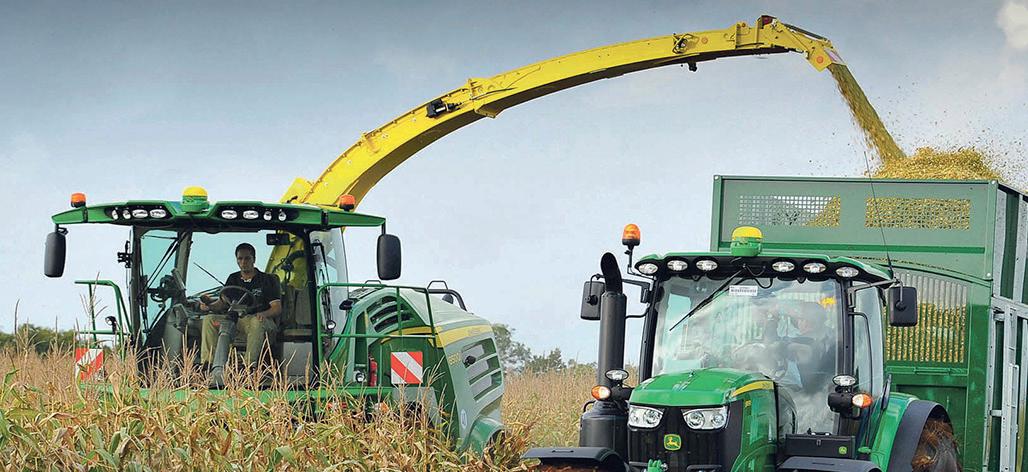
Some growers are reaping the benefits of early drilling.
Animal Health
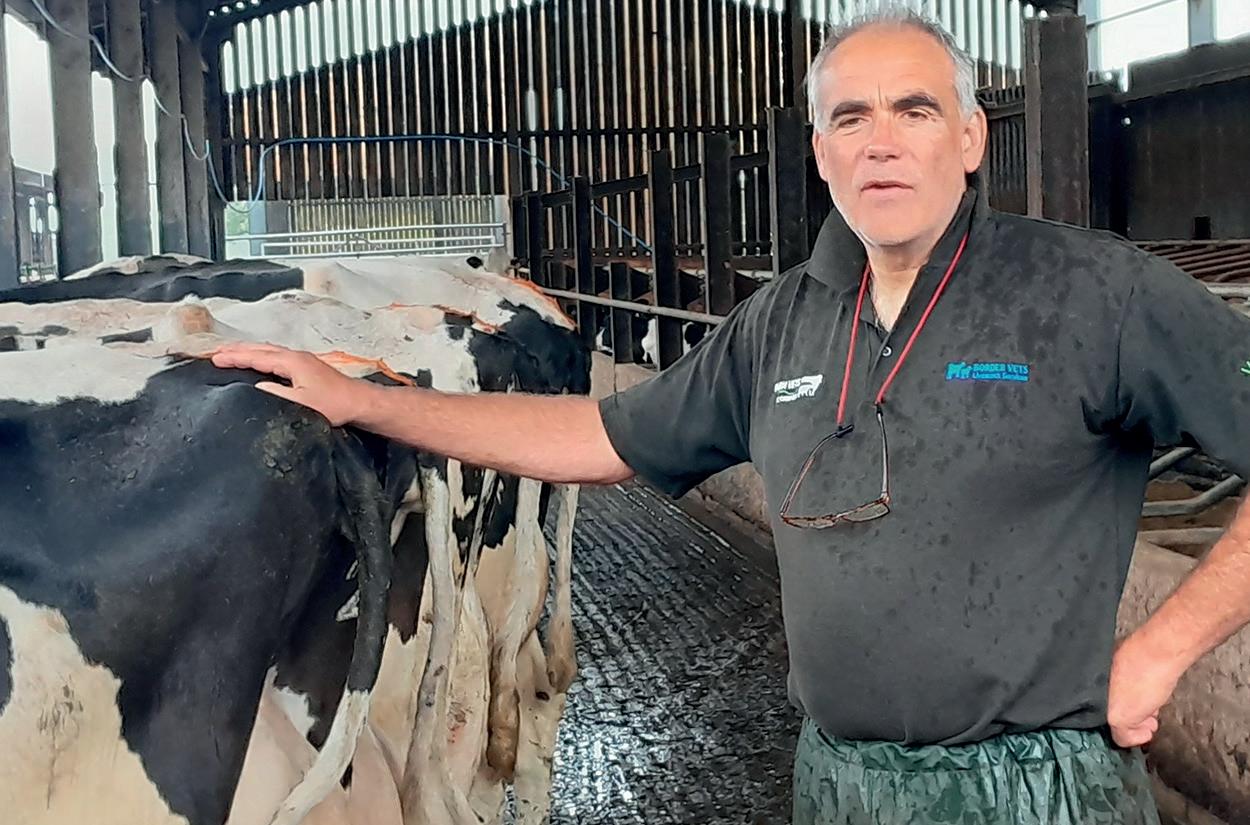
Supply interruptions for several common cattle medicines have added to the difficulty of keeping the bulk tank clear of drug residues, says Charlie Foster, of Cumbria-based Border Vets Livestock Services.
“The past 18 months have seen an interrupted supply of several regularly used branded medicines,” he says.
“Vets have had little option but to prescribe alternative products in these cases. However, even a slight difference in the preparation of an antibiotic, for example, can affect withdrawal timings. Therefore, I would urge producers to take extra care to check the details when using any new brand or unfamiliar medication type.
Herd size
“Another potential risk factor is the trend towards an increase in herd size, and that often leads to more people being involved in caring for the cows, compared with a traditional small family operation. Higher staff numbers, and/or shifting rotas can often lead to a greater risk of mistakes being made.
“It will become increasingly important to ensure that robust
Vet Charlie Foster points to a recent development that may increase the risk of exceeding milk maximum residue levels, and offers tips on due diligence. Wendy Short reports.
Risk of exceeding maximum residue levels in bulk tanks
procedures and protocols for marking and recording treated animals are in place,” he adds.
To further add to the complexity of navigating maximum residue levels (MRL) compliance, the vet may need to adjust the data sheet protocols for best results, says Mr Foster.
“It may be advisable in certain instances for the vet to treat an animal outside the usual parameters of the herd health plan, by deviating from the data sheet recommendation,” he says.
“This is called ‘off label’ use, and one example might be to extend
treatments by administering four intra-mammary tubes, instead of the data sheet direction of three tubes. The medication might also be prescribed in combination with another systemic treatment. It could include an antibiotic injection or a non-steroidal anti-inflammatory drug (NSAID), and it may not be specifically licenced as a combination therapy.”
He says: “Any deviation from standard treatment must by authorised by the farm vet, who can also advise on the appropriate withdrawal timing. In the example above, where four
intra-mammary tubes are combined with an NSAID, the default response would be to adhere to a seven-day milk and a 28-day meat withdrawal period.”
Intra-mammary antibiotics for treating both dry and lactating cows are often responsible for milk test failures, says Mr Foster.
“It only takes 1g of penicillin in 250,000 litres of milk to take the batch above the legal limit for residues. To put this in context, some of the lactating tubes contain 60% of this weight of product in a single treatment. Dry cow tubes will often contain a similar amount,
Intra-mammary antibiotics for treating both dry and lactating cows are often responsible for milk test failures.
Animal Health
and four tubes will typically be used at a single time.”
He says: “Injectable antibiotics are another source of contamination. Other risks are posed by teat disinfectants and creams, together with intra-uterine pessaries and ‘wash out’ solutions.”
Some producers test milk on farm as a precaution, to avoid triggering an MRL penalty, he says.
“I would recommend that producers invest in inhibitory substance testing to check milk samples, especially where MRL failures have been recorded in the past. Delvo SP is one example. A full starter kit for individual cow testing will cost a few hundred pounds, but it could be viewed as a small price to pay compared with the implications of an MRL test failure.
“Nevertheless, it will not pick up the presence of every antibiotic, and it cannot be used to detect pain killers or wormers.”
Record keeping
Poor communication between staff is frequently responsible for a bulk tank MRL failure, and meticulous recording keeping is key, Mr Foster adds.
“Several elements of record keeping following drug administration are a legal requirement. The information can be handwritten into a notebook kept specifically for the purpose, or it can be entered into the dairy management software.
“The ear tag number or management/freeze brand number of the relevant animal and the
Any deviation from standard treatment must be authorised by the farm vet CHARLIE FOSTER
route and volume of the drug that has been given must be noted, along with the calculated withdrawal time before milk/meat can re-enter the food chain. Other stipulations include the name, batch number and expiry date of the medicine used.
“This information will always be the first reference point if a problem occurs and an investigation is made,” he says.
MRLs are critical to ensure consumer safety, he adds.
“Strict licensing has been applied to veterinary medicines following rigorous testing, and it is a criminal offence to allow certain products to enter the food chain. In some instances, consumers could become ill due to hypersensitivities or allergies to certain drugs. They can also have a severely adverse effect on yoghurt or cheese production.
“Due diligence is vital to protect public confidence in milk, which should be viewed as one of the most wholesome and nutritious products available as a foodstuff,” says Mr Foster.
Charlie Foster
Livestock farmers are being urged to be vigilant and minimise losses in this year’s forage maize crops after the dry season has left many farms facing grass silage shortages. Dairy Farmer reports.
Protect maize crop to help offset grass silage shortfalls
Although maize crops are variable this year, Volac technical business manager Amanda Clements says they could still provide something of a lifeline for farms facing low grass silage stocks or disappointing grass silage quality.
The key will be to protect whatever dry matter (DM) and feed quality there is in maize at harvest and ensiling, she says.
As a starting point, Ms Clements says it is important to understand what is at stake nutritionally if maize is not harvested in a timely manner, and what the potential losses in the clamp could be.
She says: “Harvesting maize too early means cobs will not contain enough starch and will be too wet, [but] harvest too late when the leaves are dying and the feed value of dead maize foliage is like feeding straw.
“Additionally, maize suffers two types of in-clamp losses – obvious losses when the silage heats up, caused by yeasts and moulds growing in the presence of air, and hidden losses due to poor fermentation from inefficient fermentation bacteria. Typically, about one in every 10 trailer loads of maize DM ensiled is lost, but losses can reach double that if management is poor.
“Also, [it is important to] understand that the unwanted microbes that cause losses feed preferentially on sugars and starches, so the remaining DM will be of lower feed quality where losses occur.”
Nutritional peak
To harvest maize at its nutritional peak, Ms Clements says cobs should be ripe, leaves still green and the whole crop at 30-33% DM.
She says: “To check cob ripeness, select 10 representative cobs from
the field. Upper kernels should have a soft cheese texture, while a thumbnail should leave no indentation in kernels at the cob base, and the milk line in kernels halfway down cobs where the milky liquid turns to solid starch should be one-half yellow starch.
“Also, although it might be tempting to cut lower if looking for extra yield this year, avoid cutting maize
any closer to the ground than 15cm. The stem base typically contains more spoilage microorganisms and has poor nutritional value.
“Similarly, maize should be chopped short enough to aid consolidation – for example, consider 1.52cm or 1.2cm if needed, depending on the DM percentage. And if ever there was a year to reduce maize losses by preserving it with a quality silage inoculant, this is it.”
Attention to detail
Also important for minimising losses, says Ms Clements, is attention to detail at the clamp.
“Ensure clamps are clean and free from old silage that harbours mould spores, and that machines are not introducing soil or slurry on their tyres.
The key is to protect whatever dry matter and feed quality there is in maize at harvest and ensiling.
“Keeping air out of silage is also important to reduce yeast and moulds and for fermentation, so line clamp walls with polythene and do not skimp on consolidation. Typically, maize at 30% DM needs 25% of its weight arriving at the clamp per hour for consolidation. So 100 tonnes per hour requires 25t, which is two machines rolling constantly.
“Filling in horizontal layers no more than 10-15cm deep also aids consolidation versus filling in a wedge shape.
“Once consolidated, place an oxygen barrier film on top to seal the maize surface, and fold side sheets over this all around before adding a fully-weighted polythene top sheet then a woven sheet. Use netting to prevent bird damage and ensure rodents are not a problem,” adds Ms Clements.
Amanda Clements
A LITTLE BOOST MAKES A BIG DIFFERENCE
The sequential use of identical PI3 and RSV antigens in live and killed presentations, called a PRIME-BOOST effect, can optimise the immune response to two of the key viral pathogens associated with bovine respiratory disease (BRD).
References: 1. Philippe-Reversat et al. (2017) Acta Vet BRNO. 86: 325–332 2. Metcalfe et al. (2020) Vet Record Open 7: e000429 3. Ellis et al. (2018) Can Vet J. 59: 1311–1319 ® our farm has the ha iest Cows in the world!
BOVALTO® is the ONLY BRD VACCINE RANGE which provides ALL of these benefits:
Efficacy proven by challenge studies1
A duration of immunity proven by challenge: 12 weeks for BOVALTO Respi Intranasal2
6 months for BOVALTO Respi injectables1
Intranasal efficacy against BRSV and PI3 unaffected by MDAs, providing the optimal start to immune protection against BRD2
Bovalto® Respi Intranasal, nasal spray, lyophilisate and solvent for suspension contains Bovine parainfluenza 3 virus (PI3V), modified live virus, strain Bio 23/A 105.0 – 107.5 TCID50 and Bovine respiratory syncytial virus (BRSV), modified live virus, strain Bio 24/A 104.0 – 106.0 TCID50. Bovalto® Respi 3 Suspension for Injection and Bovalto® Respi 4 Suspension for injection contain inactivated bovine respiratory syncytial virus, strain BIO-24, inactivated bovine parainfluenza 3 virus, strain BIO- 23 and inactivated Mannheimia haemolytica, serotype A1 strain DSM 5283. Bovalto® Respi 4 also contains inactivated bovine viral diarrhoea virus, strain BIO-25. UK:
Enables sequential use of identical PI3 and RSV antigens in different forms for rapid and long-lasting immunity3
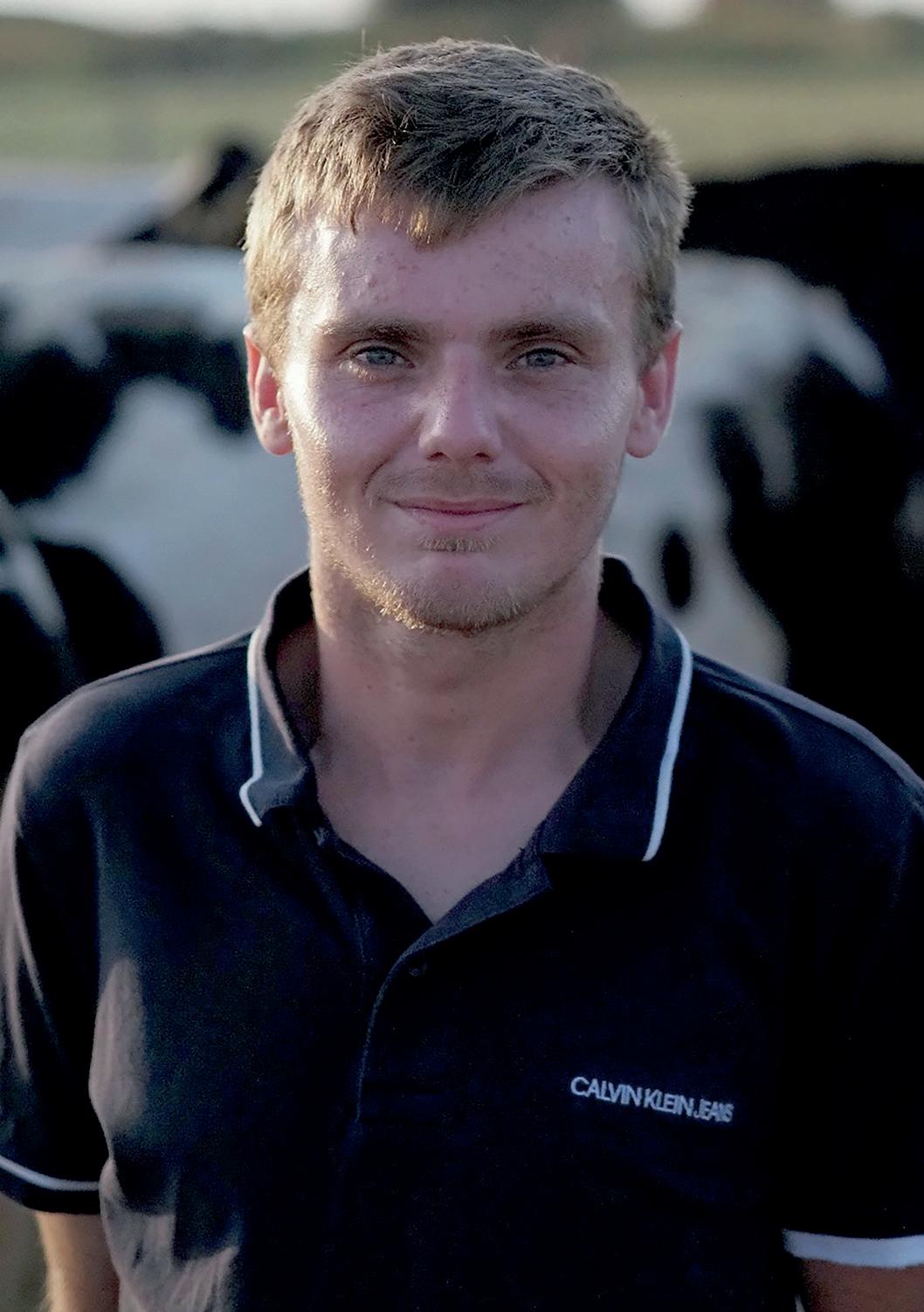
At just 21, Reggie Deakin has stepped into the role of assistant farm manager at Wigborough Wick Farm in St Osyth, Essex. Lydia Wombwell finds out more.
Essex dairy farm putting its faith in young farmer
Wigborough Wick Farm is a 146-hectare (360-acre) dairy unit on the Essex coast, operating under an Arla milk contract.
The 300-cow herd is primarily Holstein, with Ayrshire and Jersey crosses included to enhance milk constituents. The farm runs a high-input, fully housed system and milks three times a day using a 20:40 swingover parlour.
Assistant farm manager Reggie Deakin, 21, recently completed a degree in regenerative agriculture with livestock systems and now holds a senior position on the farm.
He says: “It is a big responsibility, but I feel very lucky to be given it at my age.
“Not many people get this level of trust so early in their career, so I do not take it for granted. I enjoy the challenge, especially being involved in decisions that affect all
areas of the business, from cow health and nutrition to labour planning and infrastructure.”
Mr Deakin grew up helping on his grandfather’s 50ha (123-acre) mixed farm, which grows cereals and finishes livestock for a farm shop.
“My granddad introduced me to farming and has been a huge influence on my decisions,” he says.
“But I had reached a point where I had done most things on that farm and wanted to step into a more commercial, challenging environment.”
■ High-input, fully housed dairy unit comprising 400 cows, primarily Holstein, with Ayrshire and Jersey crosses
■ Eight staff, a mix of full-time and part-time
■ Milk sold to Arla
■ 20:40 swingover parlour, milking three times daily
Consulting herd manager development programme.
Development
Mr Deakin began working parttime at Wigborough Wick Farm in January 2022 while studying at Writtle University, and then in May 2025 owner John Smith offered him the assistant farm manager role.
Mr Smith has also supported his professional development by enrolling Mr Deakin on the Kite
I am grateful to John for taking a chance on me.
Being trusted with this responsibility straight out of university means a lot
REGGIE DEAKIN
“The course has been really useful,” Mr Deakin says.
“Each month we visit a different farm and cover topics like cow and calf health, nutrition, data management and staffing. It has been a great way to learn from others in the industry.
“There are not many dairy units around here, so I am especially grateful to John for taking a chance on me,” he adds.
“Being trusted with this responsibility straight out of university means a lot. I prefer the assistant manager role over herd manager because it lets me learn every aspect of the business.”
In his new role, Mr Deakin helped implement a ‘fresh group’ system to improve post-calving transition, particularly for heifers.
“Moving from a straw yard to cubicles can be stressful, especially for first calvers,” he says.
“By giving cows that have just calved extra space and comfort, it helps them adjust to the main herd and supports milk production.”
Three-times-a-day milking is
Farm facts
Reggie Deakin began working at Wigborough Wick Farm three years ago.
labour-intensive, but Mr Deakin says it brings advantages.
“It is better for cow throughput and yields, and the afternoon milking finishes before 5pm, which helps keep the hours manageable for staff.”
The farm rears all its own heifers and keeps bull calves until around 12 weeks of age. After
that, they are passed on to a local beef unit, supporting a strong community network.
“We work closely with nearby farmers and also take part in a
muck-for-straw swap with a local arable grower,” says Mr Deakin.
“Having those relationships helps everything run more smoothly.”
Good communication and local
The 300-cow herd is made up of Holsteins with Ayrshire and Jersey crosses.
Young Farmers
collaboration are important to the business, especially given the limited number of dairy enterprises in the region.
As part of the management team, Mr Deakin is involved in reviewing efficiency and longterm planning. Labour is one of the farm’s highest costs, and automation is a focus area.
He says: “We recently trialled a robotic feed pusher and aim to bring it in full-time within the next three months. It improves consistency and frees up hours for staff.”
Efficient
Plans are also in place to install robotic slurry scrapers.
Mr Deakin says: “They could save up to 50 hours of labour per month, reducing costs by about £800 a month.
“It is not about replacing people, but making the work more efficient and sustainable.”
He has recently led the installation of a new high-health transition unit for weaned calves, aimed at maintaining growth rates and reducing health setbacks during a vulnerable stage of development.
Sometimes it is difficult asking people with decades of experience to do things differently
REGGIE DEAKIN
“This was a project I brought forward to tackle an issue we were seeing post-weaning,” he says.
“Once calves were weaned and moved into larger groups – typically around 30 – we saw a dip in performance. The transition can be stressful, and it was affecting growth rates.”
The new unit is designed to bridge the gap between individual or small-group housing and integration into the main youngstock system.
“The new set-up allows us to hold calves in smaller, more controlled groups for an extra few weeks post-weaning. We have pri-
oritised good airflow, plenty of lying space, and easy access to a high-quality feed,” says Mr Deakin.
“So far, it has made a real difference; our calf health has been excellent, and we are seeing far fewer growth checks during that transition period.”
Experience
Being in a senior role at a young age presents its own challenges, particularly when working with more experienced staff.
“Sometimes it is difficult asking people with decades of experience to do things differently,” says Mr Deakin.
“But I have found that if your reasoning is sound and you communicate clearly, people respect that.”
Alongside his full-time job, Mr Deakin and his partner Courtney Page are active on the show circuit, exhibiting cattle from the herd.
“We have recently won supreme champion at both the Suffolk and Lincolnshire shows,” he says.
“Showing is something I really enjoy, and I hope to start building my own string of cows in future.
I am lucky John is supportive and lets us take time to prepare and attend shows.”
While Mr Deakin’s long-term plans are still taking shape, he is focused on building experience and making a real difference on the farm.
“Right now, I want to keep learning and contribute to improving the business,” he says.
“Applying what I have studied and seeing the results on the ground is hugely rewarding. Ultimately, I would like to manage my own herd, whether that is here or elsewhere, and be the manager at the top, leading a team and shaping the future of the farm.”
So what is his advice to anyone wanting to get started in farming?
“Farming is such a hands-on business. You cannot get far just by sending texts or emails – you have got to get stuck in and prove your worth,” he says.
“I know most farmers are desperate for good people, whether you are a school leaver or someone wanting to change careers. Many are willing to give you a chance, even if you do not have all the skills yet.
“They will train you and show you the ropes – that is how most of us learn.”
Partner Courtney Page joins Reggie Deakin to exhibit cattle at shows.
Completing a calf health checklist has helped sharpen calf-rearing
practices at Greenrigg Farm, allowing the team to fine-tune protocols and improve youngstock performance. Dairy Farmer reports.
Fresh focus on calves driving farm success
Greenrigg Farm, near Wigton, Cumbria, is home to a 460-head all-year-round calving Holstein Friesian milking herd run by Johnny Graham and his father John.
It is also one of five farms involved in MSD Animal Health’s newly launched Demonstration Farm Network, which was rolled out earlier this year to provide actionable insights and highlight the value of proactive herd health management to the wider farming community.
Johnny and his youngstock team – including youngstock manager Bev Hennessy and farm manager Macie Graham – first completed a calf health checklist, designed by MSD, in July 2024.
Developed in collaboration with vets and nutritionists, the checklist, available for farms through their vets, consists of 10 targeted questions across five areas, helping farms benchmark against best-practice standards. It provides a practical tool for identifying areas for improvement and monitoring progress.
Ms Hennessy says the exercise has been instrumental in driving improvements.
■ Calves are initially housed in groups of three in clean, disinfected pens, bedded with straw, and fed transition milk from their dams twice daily for the first five to seven days
■ Beef calves are housed in groups of six in outdoor hutches
Calves are weighed every three to four weeks to monitor growth rates.
“The checklist focuses on key areas and helps highlight where changes can be made to further finetune performance,” she explains.
Following a review in 2024, two main actions were prioritised; the
YOUNGSTOCK MANAGEMENT
■ Heifer calves are moved into groups of 15 in straw-bedded loose housing and fed via an automatic milk feeder
■ All calves are bedded every other day
■ A strict all-in-all-out system operates between calf pens
introduction of calf jackets to reduce heat loss and cold-related stress in the winter months; and enhanced record-keeping, including tracking mortality trends, reviewing data regularly with their vet, and recording specific causes of calf losses.
In May 2025, the team completed a follow-up checklist and improved their score by actioning the priorities highlighted in 2024.
Ms Hennessy says using calf jackets up to four weeks of age has made a noticeable difference, reducing cold stress and supporting calf health. The team also introduced a ‘big sheet’ to monitor calf mortality trends more clearly.
The five core areas assessed are:
■ Setting goals and measuring performance
■ Colostrum management
■ Nutrition
■ Infection pressure
■ Healthy environment
They have also invested in SenseHub Dairy Youngstock — a 24/7 monitoring system that uses ear tags to detect animals needing attention.
Benefits
Mr Graham says early detection is crucial: “Anything we can do to pick up problems before they become serious benefits not just the calves but the entire dairy system – helping us hit target bulling weights and bring heifers into the milking herd more efficiently.”
Current age at first calving is around 25 to 26 months.
Johnny adds that calf losses have reduced in recent years.
Calf health checklist
“Most of our losses now occur at birth. In the past, we would lose calves at various stages, but now we have brought that down to just the first 24 hours.”
Data is now reviewed regularly with vet Iain Steele from Belle Vue Vets, who conducts quarterly reviews of calf health, supported by the vet tech team.
Calves are weighed every three to four weeks to monitor growth rates, and blood samples are taken to assess passive immunity transfer. Total protein levels are typically above six, with serum total protein of more than 5.2g per decilitre (dL) the threshold associated with adequate colostrum transfer.
However, Mr Graham believes the foundations of good calf health begin before birth, in the dry period.
“We have learned that calf health starts with the dry cows,” he explains.
“For example, at one point, high potassium levels in our silage led to more milk fevers, which impacted
Farm facts
■ 460 Holstein Friesian milking cows and 400 heifers
■ 11,500 litres per cow per lactation
■ Housed year-round, with low yielders grazing for six to seven months
■ Milked twice daily in a 20:40 herringbone parlour
■ Calving all year round with a calving index of 380 days
colostrum quality and caused retained placentas.”
Hygiene is another priority, adds Ms Hennessy.
“Cleanliness in the dry period is vital. If the system gets under pressure and standards slip, you start seeing issues like navel ill and scour creeping back in. We begin with clean teats and keep everything spotless.”
Vaccinations also play an important role in disease prevention. Cows
are vaccinated to reduce the severity and incidence of diarrhoea in calves.
Mr Graham says: “No one thing solves calf health. It is like a big jigsaw, and every piece plays a part.”
The team has recently installed fans in the dry cow and milk cow shed, which have helped reduce seasonal dips in conception rates and milk yield, while also improving hygiene by keeping passageways drier.
Next, the team will focus on improving their score in the checklist by addressing the points raised in the 2025 review. A key priority is increasing the amount of colostrum fed to calves within the first 24 hours. Currently, calves receive four litres within the first 12 hours, with two more litres offered if they will take it. Moving forward, the aim is to ensure calves receive at least six litres as a standard.
Left to right, Johnny Graham, Macie Graham and Bev Hennessy review their checklist annually.
New Zealand Vet’s View
This month, New Zealand vet Rory Dean gives us an insight into how his farmers are coping with the winter weather and how vet techs are increasingly important.
Optimism was the flavour of the recent New Zealand Veterinary Conference.
We were lucky enough to have Ian Lean, a renowned ruminant nutritionist speak on a variety of topics relating to modernising systems as consumer demand changes.
Refreshingly positive throughout, Ian at one point reminded us that there are over 4kg of by-product produced for every kg of vegan produce.
Perhaps it would be sustainable to continue using that by-product in cattle supplements to feed our growing population, he suggested. Wise words from a wise man.
The weather in Wellington where the conference had been held, had been blustery with heavy downpours of rain and seemed to follow me up north, and within a few days I was calving cows in the rain and trying to motivate farmers whose mood seemed to reflect the climatic conditions.
Some farmers have increased stocking density over the last few years and have supported this by installing feedpads and/or herd home structures, enabling them to stand cows off pasture in heavy rain.
While still far removed from the cubicle houses of the UK, these allow for better management of heat stress and more reliable nutrition, including mineral supplementation.
However, these investments in infrastructure have led to their own problems. As British dairy farms
‘We are watching our roles as vets change’
know only too well the risks of standing cows on concrete for too long, and due to a lack of bedding in these – often makeshift – facilities, cows eventually present with the inevitable solar bruising.
A fine balance must be struck, therefore, between ruining productive paddocks and minimising the deleterious effects of stand-off facilities on cow health.
Fortunately, we have been treated to some glorious winter days also. These days mean less down cows, less mastitis and less lameness – I spend my days on business administration, catching up on lab results or proactive health planning.
Changing times
At Kaipara Farm Vets, we are watching our roles as vets change. While it seems every vet was told at university that the skills they learned in their 20s won’t be relevant in 10 years or so, change is really catching up with us now.
We’re currently transitioning to veterinary technicians leading the disbudding jobs which has been a bit of a leap of faith for some of our team.
However, the technicians are very skilled and all bring extensive experience to their roles. They offer a qual-
ity service with a smile, and it is what our clients deserve.
A recent call-out lead to a rather embarrassed farmer and a confused vet. In the middle of a storm, my phone blared into life and before long I was making my way north in the dark.
Arriving on farm around 7pm to a heifer that had not been progressing with labour, I donned my gloves and apron preparing for a hard calving in a small Jersey.
My knowledgable, experienced client informed me that around an hour ago she had pushed the rear end of the calf back in but now couldn’t feel anything to pull out. As is my routine, I administered an epidural and prepared some lube to examine the patient.
My utter confusion was mistaken for concern and the farmer thought the worst, asking whether we would have to do a caesarean section.
I explained the cervix was closed and she didn’t appear to be calving. After a lengthy discussion and many confused looks, it transpired that in the dark my client had inadvertently replaced a vaginal prolapse. The heifer was returned to the springer mob and would calve some days later, perfectly normally despite the embarrassment.
Outside of work, I luckily drew a ballot for a hunt in Woodhill Forest, North Auckland at the end of July. My fiancée, her father and I got up early to get out to the forest and walk into our designated block. The area is a gorgeous blend of native bush, pine plantation and sand dunes out on the coast.
The fallow herd in the area move out from the bush to the dunes in the morning, and unfortunately we had spent too much time stalking in the bush and missed them moving out to the tussock covered grazing among the sand dunes. Here, they were easily spooked .
Despite the lack of hunting success, it was a fabulous day spent in the nature and with family.
A super escape from the smell of retained membranes, the vision of down cows in mud and the sound of squelching through pugged paddocks.
rRory Dean is a director at Kaipara Farm Vets in Northland New Zealand and member of the Dairy Cattle Vets Committee of the New Zealand Veterinary Association. He is also an initial investigating veterinarian for disease incursions with Asure Quality.
The dunes at Woodhill Forest, North Auckland.
Rory Dean
Second cut silage analyses clearly highlight how the weather has influenced silage quality and potential rumen efficiency. Dairy Farmer reports.
This year has delivered a forage season marked by extremes and the impact is now clearly visible in both fermentation quality and how forages will perform in the rumen.
Nacia Bonnick of Trouw Nutrition GB says: “Following an unusually dry start to the year, June brought some relief to some of the country.
“According to Met Office figures Scotland, Wales and the North West received 20-50% more rainfall than average, enabling strong second cuts. While, the South East and Midlands received just 30-40% of normal, severely stalling regrowth.
“These weather differences have translated directly into grass silage quality and quantity. Dry matter contents ranged from 33.6% in Scotland to over 43% in the East Midlands, reflecting both rainfall levels and the weather in the wilting windows.”
Overall, Ms Bonnick says fermentation quality in 2025 is more variable than 2024. While wetter northern regions generally benefitted from more favourable conditions for ensiling, drier regions, particular-
A silage growing season of extremes
ly the South East and East Midlands, faced greater challenges in achieving stable, well-fermented silage.
Lactic acid
The growing and harvesting conditions have a direct impact on how well crops will be preserved. Ms Bonnick explains lactic acid remains the key marker for desirable fermentation, driving rapid pH reduction and anaerobic preservation. Average lactic acid levels have declined from 74.8 to 70.8 g/kg DM, indicating a general fall in fermentation quality.
Regionally, in Scotland, Yorkshire and the West Midlands, crops show strong lactic acid production, suggesting rapid acidification and good aerobic stability.
However, in the West Midlands, high lactic levels were accompanied
by elevated total volatile fatty acids (VFAs), which may indicate less efficient fermentation.
In contrast, the South East experienced challenges due to excessively high dry matter contents. These drier silages struggled to acidify quickly, delaying pH drop and increasing the risk of aerobic spoilage, especially during feed out. A similar trend was seen in the East Midlands,
where high pH values combined with low lactic acid and elevated VFAs raise concerns around silage stability and nutrient preservation.
“Most regions still achieved an acceptable pH overall, but drier southern and midland silages showed signs of slower fermentation, leaving them more susceptible to yeast and mould development,” says Ms Bonnick.
Where lactic acid production was limited, VFAs were higher
NACIA
BONNICK
“The VFA profile mirrors this pattern. Where lactic acid production was limited, VFAs were higher, allowing spoilage organisms to persist. This not only compromises palatability but could also impact animal performance if left unchecked.”
She explains that rumen kinetics refers to how feed materials move through and are processed in the rumen, directly affecting how feeds
Dry matter contents ranged from 33.6% in Scotland to over 43% in the East Midlands, reflecting both rainfall levels and the weather in the wilting windows.
will perform in the diet. In a year marked by tight forage availability and stressed grassland, understanding rumen kinetics is more important than ever.
“Acid load has remained relatively stable but stayed elevated in regions like Scotland and the West Midlands, suggesting the need for buffering strategies to avoid ruminal acidosis.”
RFC and TFP
Ms Bonnick says: “On a more positive note, rapidly fermentable carbohydrate (RFC) levels have improved which will support stronger rumen microbial activity and fibre digestion. Additionally, total fermentable protein (TFP) has increased, boosting protein availability but also raising the risk of excess rumen ammonia, which may require attention to the energy-protein balance in diets.
“These shifts underline the need for precise rationing to manage this year’s variable silage quality and forage shortfalls.”
As expected, national dry matter levels have risen compared to 2024 due to improved harvesting conditions. However, this increase comes at the expense of fermentation quality.
“When it comes to crude protein,
Silage
regional differences have widened. Yorkshire leads with 15.13%, while the East Midlands lags at 13.59%. The national protein average has edged up slightly from last year.”
In terms of energy, ME has risen slightly on average, but again varies by region. Scotland, the South East and West Midlands all averaged D-values of ≥68 and ME >10.9 MJ/ kg, supporting improved energy intake and animal performance. However, the East Midlands recorded just 10.05 ME and a D-Value of 62.8, suggesting later cuts or over-mature swards with reduced feed value.
With silage supplies under pressure and fermentation quality under scrutiny, proactive planning will be essential this winter. Ms Bonnick advises that attention to detail will be needed to make the most of silages and benefit from the current stronger milk price. She emphasises that regular analysis of silages by clamp and by cut will be essential advises against relying on averages.
If rationing with high dry matter and less well fermented silages, Ms Bonnick advises balancing these with wet forages or buffer feeds to reduce the risk of rumen upset.
If silage samples show poor lactic or high VFAs, there will be an increased risk of spoilage in the clamp and the trough.
“In these instances, take action to reduce wastage and spoilage. Keep a tight clamp face and discard any spoilt material. Consider using a mycotoxin binder to mitigate the hidden losses that mycotoxins often present.
“When formulating diets, use rumen kinetic indicators such as rapidly and total fermentable carbohydrates and protein, fibre index and acid load to balance rations for optimum rumen efficiency. High sugars and fermentable carbohydrates are a positive but require careful balancing for optimal fibre index and acid load.
“Whether sourcing extra forage, adjusting TMRs or investing in additives, farmers must respond not just to what is in the clamp but also what it means for the cow,” says Ms Bonnick.
A focus on ration formulation has helped Wigtownshire dairy farmer Stuart Galloway maintain milk protein levels while boosting cow performance. Dairy Farmer reports.
Amino acids help maintain higher milk protein levels
Maintaining high milk protein and butterfat levels is paramount for Stuart Galloway who milks 170 Holstein Friesians at Barvernochan Farm near Newton Stewart.
Mr Galloway, who farms in partnership with his wife Karen and her parents Robin and Liz Vance, supplies milk to Lactalis McLelland on a manufacturing contract which rewards farmers for their protein and butterfat levels.
The family, which includes Stuart and Karen’s children Oliver, Evie and Amelia, have been at Barvernochan since 2001.
The farm was previously run as a beef and sheep unit, however a desire to milk cows and create a business which relied less on rented ground, led to a new dairy being established in 2019.
“In 2013, we had a cubicle shed
built with housing for 160 cows and when we designed it, we left space to adapt it if we decided to change the shed for dairying,” says Mr Galloway.
“This meant we were able to add in some extra cubicles and three Fullwood milking robots when we converted to dairy.”
The herd is housed all-year-round and average yields of 9,500-10,000 litres at 3.4% protein and 4.3% butterfat are achieved.
Calving
Calving takes place all-year-round to try and create a level milk profile across the year, and all replacements are home-bred.
“We work with Genus to select the right AI sires for the herd and we are planning to start genomic testing heifers to try and improve our breeding decisions,” says Mr Galloway.
“I am looking for cattle with high protein and butterfat levels, and I want to produce a robust, healthy
HOW AMINO ACIDS BENEFIT DAIRY COWS
INCLUDING amino acids in dairy cow rations delivers multiple benefits ranging from increased milk yields and quality to improved protein efficiency.
Dr Grace Smith, northern feed sales manager at Carr’s Billington says cows have a direct requirement for amino acids and these are the ‘building blocks of protein’.
“Cows do not have a direct requirement for crude protein, and when we feed it to them some of it escapes the rumen in the form of bypass protein, but most of it is broken down into nitrogen
and amino acids in the rumen,” adds Dr Smith.
“While higher crude protein diets do supply more amino acids, they also supply excessive nitrogen which is both costly and inefficient.”
She says supplementing cows with specific rumen-protected amino acids allows farmers to meet the cow’s amino acid requirement while maintaining –or even decreasing – the crude protein content of the diet.
“This improves protein efficiency, which is important for bottom lines and milk contracts,” adds Dr Smith.
cow that is not too big and is going to last a good few lactations.
Home-grown forage forms the basis of the herd’s diet, and three cuts of grass silage are taken from the farm every year, alongside 12-16 hectares (30-40 acres) of wholecrop wheat silage.
“The milking cows will usually get the first- and second-cut grass silage in their ration, along with the wholecrop, some caustic wheat, a protein blend, and some molasses, however this will vary depending on the monthly silage analysis results,” says Mr Galloway.
“The ration is mixed in a feeder wagon and given to the cows at the feed barrier once a day, with dairy cake fed to yield in the robots.”
The diet is developed in partnership with Dr Grace Smith from Carr’s Billington, and for the past year the farm has been trialling the inclusion of amino acids in the cake to boost milk protein levels.
“In early 2024 the milk yields were starting to rise in the spring, but the protein and butterfat levels
were dropping, so we spoke to Grace about how to address this in the feed,” says Mr Galloway.
“She suggested including amino acids in the dairy cake and the effect has been really positive.”
Performance
He says both protein and butterfat levels have risen – and been maintained– and overall cow performance has also improved.
“My butterfat and protein levels have held up well and I am getting a better, and more consistent, average yield,” adds Mr Galloway.
“By feeding good quality cake, the cows seem to perform well, and the cost of the amino acids is paid for by the improved performance and good butterfat and protein levels.”
Estimates by Dr Smith and Mr Galloway suggest the financial reward arising from improvements in milk quality means the inclusion of amino acids in the cake is bringing a 6:1 return on investment based on a cost of 12p/cow/day and a financial benefit of 68p/cow/day.
Left to right: Oliver and Stuart Galloway.
Technology Monitoring tech watches over satellite herd
The installation of a herd monitoring system has been key to the successful establishment of a satellite dairy unit on Anglesey. Dairy Farmer reports.
Cow handling facilities include a sorting gate which automatically drafts cows out for AI.
Rhys Williams runs a total of five dairy farms in North Wales.
I n addition to his home farm on the Lleyn Peninsula, he also runs three tenanted farms and is involved in a fifth on a share farming basis.
In total he oversees the management of almost 2,000 cows, of which 520 are milked at Gate Farm near Bodedern, Anglesey.
The 600-acre (243-hectare) tenanted farm, 50 miles and an hour and a half away from Rhys’s home, was initially used as a youngstock unit before being converted to milk production in 2018. The spring-calving herd of Jersey crosses is overseen by farm manager Aaron Wil-
liams (not related), with the unit run on a New Zealand system.
“We made a lot of changes to the farm’s infrastructure to convert it to a dairy unit,” Rhys says.
“As well as two cubicle sheds to house the cows during their winter dry period, a calving shed and slurry lagoon, we also installed two 20:40 herringbone parlours which sit alongside each other to create a 40:80 milking facility.”
Since 2018 the herd has averaged 5,200-5,500 litres per lactation, but yields have been lower in recent years due to several cold springs and dry summers, which have adversely affected grazing quality as well as body condition scores.
Rhys says: “This year has been a
Rhys Williams (left) runs the dairy farm, which is overseen by Aaron Williams.
lot kinder to us and we have been able to focus on improving the herd’s nutrition rather than having to battle the elements. However, because I cannot be there every single day, I rely heavily on Aaron and his team to keep everything on track and running smoothly.”
Up to speed
In addition to the farm’s infrastructure improvements, Rhys has also invested in a SenseHub Dairy herd monitoring system to enable him to keep up to speed with the herd’s day-to-day performance.
“We installed the system in spring 2023 to improve heat detection rates,” Rhys explains.
“We would have previously been tail-painting, but that needed an extra person in the milking parlour during the herd’s breeding season to apply tail-paint and sort animals for artificial insemination [AI].
“The system has streamlined the whole process by accurately spotting heat events, often before any
The system has streamlined the whole process by accurately spotting heat events, often before any visual bulling cues
RHYS WILLIAMS
visual bulling cues have been seen, and letting us know when each animal should be inseminated.”
This year, the herd’s three-week submission rate was 92%, rising to 97% after five weeks. During that period, 502 out of a total 515 cows were served, with slightly more than 100 returning to heat.
“That is an impressive set of statistics and shows just how
Rhys has focused on improving the herd’s nutrition this year.
Technology
accurately heats are being identified and acted upon,” Rhys adds.
“Aaron and his team have done a fantastic job of keeping on top of everything, and with the herd monitoring system app on my phone I have been able to keep an eye on progress as the mating season unfolded.”
Sorting gate
The system’s collars are also linked to a sorting gate, which automatically segregates cows for AI at the optimum time.
“With the collars detecting heats, and the gate automatically drafting cows, Aaron and his team can concentrate on the milking routine instead of worrying about which cows need to be pulled out for AI,” says Rhys.
“The system also helps to identify any anoestrus cows so that they can be treated and brought back into heat as soon as possible. When
Having the herd’s fertility and health records accessible on the app means everyone knows what is going on with each animal
RHYS WILLIAMS
you are trying to calve more than 500 cows in a narrow nine-week window, having the ability to spot problems even just a day or two earlier makes a huge difference.”
The sorting gate also makes drafting cows for day-to-day jobs such as foot-trimming, tagging, vet
inspections, blood sampling and routine vaccination against clostridial diseases, fluke and lungworm much quicker and less stressful for animals and staff alike.
“It is like having another member of staff to take the pressure off at busy times,” says Rhys.
“Having the herd’s fertility and health records accessible on the SenseHub app means everyone knows what is going on with each animal, and also allows me to check-in so that I can give Aaron a second opinion if there is anything he is not sure about.
“It also gives us a measurable and accurate set of parameters to benchmark the herd against each year and reduces the amount of paperwork we have to deal with.
“Without this kind of technology, trying to keep on top of five different dairy units would be much more time-consuming and stressful,” Rhys says.
Two 20:40 herringbone parlours sit side-by-side to create a 40:80 milking facility.
Farm facts
■ Gate Farm is part of the MSD Animal Health Demonstration Farm Network
■ Cows calve in a nine-week block starting in early February, with more than 50% of calvings taking place within the first fortnight
■ A 60-day dry period ensures cows are in prime condition ahead of calving, while a voluntary waiting period of 80 days ensures they have sufficient time to recover ahead of their next service
■ All cows go straight out to grass after calving and graze day and night for nine months of the year
“It also means Aaron and I can share and discuss the herd’s performance based on real and measurable statistics.”
With Semex Elevate you get a genetic prediction based on fact. Add the benefit of identifying high immunity females together with feed and methane efficiency scores for every animal genomically tested in your herd, you really are proving sustainable farming practices
This year’s UK Dairy Day is once again set to showcase the best of the dairy industry with cattle classes, practical demonstrations, trade stands and seminars. Dairy Farmer looks ahead to the event.
Industry showcase at UK Dairy Day 2025
New for this year’s UK Dairy Day is an enhanced practical demonstration area in the hall three foyer, adjacent to the cattle hall entrance, with lung scanning, biosecurity, calf painting, type classification and linear scoring demonstrations taking place throughout the day.
Highlights
AHDB and Shropshire Farm Vets will be doing lung scanning demonstrations at 10.00am, 11.30am and 1.00pm. Lung scanning can be used for earlier detection of disease, targeted and individual treatments, and identification of potential causes in the rearing process. ( See pages 54-55 for more details).
Neogen will be highlighting the key areas that dairy farmers should focus on when it comes to biosecurity. They will be doing talks at 10.30am, 12noon and 2.00pm and there will be an opportunity to seek additional
advice on protocols and products to use.
The “Beneath the Black and White” calf painting demonstration will be relocated from the external area to the hall three foyer. Carolyn Baguley and the team from Scarsdale Vets will use paint on calves to assist in understanding calf health and welfare.
Members of the NBDC Classification team will present type classification and linear scoring demonstrations at 12.30pm and 2.30pm.
Tim Carter, who is a board member of The Cattle Hoof Care Standards Board, will return to the external exhibition area with his live foot trimming and knife sharpening demonstration.
Cow comfort is essential and key areas to consider will be demonstrated in an upright crush including sole thickness, foot angle, and heel depth.
The new product competition, sponsored by IDEXX, returns to showcase the range of new products and services launched in the last 12 months, with entries judged by rep-
resentatives from IDEXX. The first floor will also feature exhibitors promoting industry initiatives, training providers and charities.
The careers board is a free service for everyone to advertise va-
cancies or looking for work. UK Dairy Day is registered with BASIS for two CPD professional development points for BASIS, BASIS Dairy Pro and BASIS Environmental.
SPEAKERS AND INDUSTRY PANELS
The first floor sharing knowledge zone will feature a programme of leading industry professionals covering a range of dairy related topics.
n 9.45am to 10.15am
Finance: Where are we? Tax changes and planning options for farmers and landowners.
Roy Jackson of WR Partners
n 10.30am to 11.30am
Industry panel one: People Chair: Emma Shaw, Real Success Panellists: Dairy farmer
Lyndsey Awde along with Hannah Baty of LLM Farm Vets, Hugh Pocock, of Cultura Connect and Alix Morley of Yellow Wellies.
n 11.45am to 12.15pm
Sustainability: Ben Williams of Leprino Foods
n 12.30pm to 1.30pm –Industry panel two: Data Chair: Phil Halhead, Norbreck Genetics
Panellists: Michael Wilkinson, Vet at Thomasson’s Farm, Cheshire, Paul Dover of Arla, Dan Humphries of Dairy Insight; Tom Hough of GroAgri and Michael Halliwell of Holstein UK Group. n 1.45pm to 2.15pm –
Seminar one: Lely Center Midlands n 2.30pm to 3.00pm –Seminar two: AFIMILK
CATTLE SHOW
The UK Dairy Day 2025 Cattle Show will host the National Shows for the Ayrshire, Brown Swiss, Dairy Shorthorn and Holstein breeds. In addition, dedicated classes will showcase Guernsey and Jersey cattle from across the country.
Cattle Show judges this year travel from across the UK to cast their eye over the breeds under the spotlights during a full day of cattle classes are:
n National Holstein Show
David Hodgson, Cumbria
n National Ayrshire Show and Guernsey classes
Peter Berresford, Derbyshire
n National Brown Swiss
UK Dairy Day
n When: September 10, 2025. Doors open at 8am.
n Where: Telford International Centre, Telford, TF3 4JH
n Tickets: Entry is free
n Parking: Due to installation of ANPR in some of the Telford
Show Andy Cope, Staffordshire
n National DairyShorthorn Show Kylie Preisinger, Gloucestershire
n Jersey classes Hefyn Wilson, Cardiganshire
One of the afternoon’s highlights in the show ring will be the presentation of the Holstein UK Premier Herd Award, with the 2025 winner being announced, judged by last year’s winner Brian Miller of the Moorshard herd, Bridgwater, Somerset.
Holstein UK banners will be presented to the Premier Holstein Breeder and Exhibitor of the show, along with the Howard Sneesby Award.
town centre car parks, free parking can no longer be offered. On-site parking remains free and is on a first-come, firstserved basis, otherwise please use car parks near the venue or the town centre.
As County Durham-based breeder Shaun Dixon looks ahead to this year’s UK Dairy Day, he reflects on the cow family that made it all happen. Katie Fallon reports.
Dairy Shorthorn breeder’s success with ‘micro’ herd
With a focus on quality over quantity, Shaun Dixon established his ‘micro’ Dairy Shorthorn herd under the Shaunlea prefix in 2008 and has been fine tuning genetics ever since.
Looking for a life in the country, Mr Dixon’s parents, Geoff and Sandra, moved from Boldon Colliery in South Tyneside, to their now smallholding at Rushy Lea, near Wolsingham, in 1984.
Mr Dixon says his parents began keeping a few Northern Dairy Shorthorns, a dual-purpose breed originating from the Pennines, Durham and Westmorland dales, which sparked his interest in the Dairy Shorthorn breed.
After attending a few local shows with his parent’s Northern Dairy Shorthorns, Mr Dixon says he started looking for ‘more modern’ breeding and in 2008 bought his first Dairy Shorthorn, Strickley Geri 15, a three-week-old heifer
calf from the Robinson family’s Strickley herd in Cumbria.
He says: “The calf was from the Geri family, which was quite an unknown family at the time, but they have been very prolific and have bred strong and consistently over the years. Now every animal I have is from the Geri family.”
He adds: “We have just registered Geri 39. Other families have come and gone, but the Geri family is the origin of all the success. I did buy a Wildeyes cow, Oxton Ric Wildeyes 970, two years ago, which was also very successful.”
Shaunlea herd
Today the Shaunlea herd stands at 14 animals, including eight cows in milk which are kept with the Baynes family’s Marleycote herd in Northumberland. Mr Dixon works full time as a logistics planning manager for a local company specialising in anaerobic digestion.
Mr Dixon says: “Richard Baynes and I became friends when I started showing for them and now, I
keep the milkers there and the youngstock at Rushy Lea.”
The cows are milked with the Bayne’s family’s 120 pedigree Ayrshires and Dairy Shorthorns through two Lely robots. A proportion of milk is sold direct through the family’s business, Northumbrian Pedigree Milk and Cheese, with the remainder sold on to First Milk.
The cows are grazed outside during the summer months, with an 18% protein concentrate nut fed in the robots alongside a simple ration of grass silage and wholecrop wheat.
Mr Dixon says his cows are currently averaging 9,482 kg of milk at 4.24% butterfat and 3.48% protein, making them one of the highest yielding Dairy Shorthorn herds in the country. He adds: “It works because the milkers are getting looked after by someone I know and trust.”
Mr Dixon says the cows are calved and milked at the Baynes’ farm, with the calves brought back
to Rushy Lea, where they are reared and halter trained. Maiden heifers are used as embryo recipients initially and are served conventionally after that.
He says: “I do this so that once they have calved as a heifer you know what you are dealing with udder wise etc. We are breeding our own recipients instead of buying them in.”
Calves are bottle fed three litres of milk replacer twice a day for eight weeks, before being weaned gradually over a two-week period. Ad-lib straw is also fed alongside an 18% coarse mix, before calves are transitioned onto an 18% concentrate nut after weaning.
“We used to feed hay but started feeding straw over the last few years as it is more consistent, and they develop a great rib for the show ring.” And it is the show ring that Mr Dixon has had his sights set on from first establishing the herd, 17 years ago.
After starting out on the local show circuit at Wolsingham and
Four-time Dairy Shorthorn Society Gold Cup winner Shaunlea Geri 9 (left) and Shaunlea Geri 25, which will be shown at UK Dairy Day.
PICTURES: JANE STEEL
Northumberland shows, Mr Dixon has achieved some key showing highlights at the national shows, including breed champion at Borderway UK Dairy Expo in 2024, with a Wildeyes cow.
He says: “The cow also won the any other breed championship the same year at AgriScot, which was a
big moment as it is a hard class to win.” Other highlights include championship and reserve championship wins at UK Dairy Day and class winners at the All Britian All Breeds calf show.
Mr Dixon says it was the Baynes family which got him into showing at the likes of UK Dairy Day. “I was
Shaun Dixon established his ‘micro’ Dairy Shorthorn herd under the Shaunlea prefix in 2008.
involved in showing in a smaller way and showed some cows for mum and dad and a few of my own, then started showing for the Baynes family.”
Gold Cup title
Perhaps his biggest achievement to date, is winning the Dairy Short-
horn Society Gold Cup, four years in a row, with Shaunlea Geri 9. Mr Dixon says: “Winning the Gold Cup was a major achievement. It is a production award that takes into account regular calvings, yield and total weight of fat and protein.”
Classified EX90, at nine years old Shaunlea Geri 9, is currently in the middle of her eighth lactation, with a lifetime yield of 85,735kg, 4.39% butterfat and 3.69% protein, and a profitable lifetime index (PLI) of 728 to date.
“She is the youngest Gold Cup winner and the youngest 75 tonne cow in the breed, in the UK. She is the most productive cow I have ever bred and will be competing on production with a Holstein.”
Mr Dixon says Shaunlea Geri 9 comes from a line of productive cows, with her dam and granddam previously reserve Gold Cup winners. Three of her daughters are currently classified VG, with all of her milking daughters achieving over 5% butterfat.
PICTURES: WAYNE HUTCHINSON
UK Dairy Day Preview
Mr Dixon says embryos retrieved from Geri 9 via IVF have helped to boost the genetic progression of the herd. He says: “The genetics is the passion for me. I have been selective in my breeding, only keeping and breeding from the best and breeding an animal that will appeal to the industry.
“In the early days I did not always get it right and not every breeding decision works. But I believe I want to sell the type of animal I want to keep.”
Currently two of Shaunlea Geri
9’s youngest daughters, Shaunlea Geri 37 and Shaunlea Geri 39 are looking promising, says Mr Dixon.
“Geri 37 will be going to the local Wolsingham Show and All Britain All Breeds calf show this year, and Geri 39 is only a few weeks old. Other family members are doing really well but they are the stars.”
This year, Mr Dixon will be taking Shaunlea Geri 25, shown fresh with her third calf, to UK Dairy Day, with hopes she will perform well in the ring. “She was reserve champion last year as a second calver and was second in her class at the Great Yorkshire Show last year.”
Breeding stock
I have always bred for the show ring and not for production, but that way has bred the right sort of animals
SHAUN DIXON
As well as showing, Mr Dixon also sells a selection of pedigree breeding stock, with Geri 37, heading to Carlisle’s Black and White sale later this year. Breeding heifers have also sold to the Hardington and Cotonhall herds, with embryos also sold to several pedigree herds.
Mr Dixon has also seen success with his pedigree breeding bulls for use in pedigree herds and bull studs. He says: “We have sold more bulls into other herds than females,
including the Cotwalton, Brimclose and Drisgol herds.”
The bull sold to the Drisgol herd, named Shaunlea Gold Rush, was out of Shaunlea Geri 9, explains Mr Dixon, and went onto be used in the Dairy Shorthorn society’s stud, with semen exported internationally. Mr Dixon says: “The semen sold out in record time but people who have got his early daughters are really pleased.”
The next up and coming bull is the 10-month-old Shaunlea Werewolf, which is out of Oxton Ric Wildeyes 970 and by Shaunlea Gangster, a son of the original Strickley Geri 15, which Mr Dixon bought in 2008. “He was sold at a young age and will be going straight to UK sires once he is old enough.”
He says: “I have always bred for the show ring and not for production, but that way has bred the right sort of animals, and the right traits needed for production.”
Whether it be in the show ring, the sale ring or in the parlour, Mr Dixon has shown that herd size does not matter, and through a passion for the Dairy Shorthorn breed, he has established a
reputable herd of genetics proven to perform. He says: “It is nice to be able to make a difference from a small herd.”
Looking ahead to UK Dairy Day, Mr Dixon says he is eager to see how Shaunlea Geri 25 performs in the show ring as a third calver and is looking forward to seeing the next generations of the Geri family come through the ranks.
Farm facts
■ 14 pedigree animals in the Shaunlea Dairy Shorthorn herd
■ Producing pedigree breeding bulls and females
■ Shaunlea Geri 9 has won the Gold Cup four times in a row and is the youngest 75 tonne cow in the breed, in the UK
■ Milkers are currently averaging 9,482 kg of milk at 4.24% butterfat and 3.48% protein
■ Mr Dixon is director of Shorthorn Sires UK and currently a member of the Dairy Shorthorn Society council.
Ad-lib straw is fed alongside an 18% coarse mix, before calves are transitioned onto an 18% concentrate nut after weaning.
Reducing the impact of stress
New data around the use of maternal bovine appeasing substance (MBAS) in dairy calf rearing and in cows at dry off will be unveiled at UK Dairy Day by the company behind FerAppease, a product which has been proven to reduce the impact of stress in cattle.
The impact of applying mBAS (Ferappease) on preweaned Holstein calves was studied by the team at Texas A&M University.
In total, 410 calves were individually enrolled and allocated to either treated or negative
Applying FerAppease reduced
the incidence of diarrhoea and significantly lowered mortality.
The FerAppease group also had higher bodyweight which was measured after they were moved from hutches to pens.
Meanwhile, work at the University of Florida set out to understand how administering FerAppease at dry-off alters behaviour (by monitoring rumination and eating time) alongside other health parameters up to 35 days in milk (DIM).
Rumen health
Rumination was significantly higher for the group that had FerAppease applied suggesting the treated animals were more relaxed and spent more time lying down and cudding, with better rumen health.
Post-calving the trial cows averaged 700ml/day of additional milk across the first 35 DIM compared to the controls, cases of metritis reduced by 54% and antibiotic treatment by 38%, and culls or exits by 100DIM reduced by 25%.
FerAppease experts, including Dr Rodrigo Bilcaho vet and founder of parent company, Fera, will be on-hand at UK Dairy Day to discuss the work in more detail.
Hoof health: have your say
GOOD hoof health is an important foundation for many aspects of herd health and performance and our understanding of how to positively improve it is increasing. But, what do you do around hoof health, mobility and lameness management?
The National Hoof Health Survey, sponsored by Progiene is being launched at UK Dairy Day and is the time to have your say on
issues around hoof health priorites, the use of formulin, and footbathing protocols.
One lucky respondent will win a Fortnum and Mason hamper worth £150 while 10 others will win 5 litres of Digicur Advanced footbath or a gilet worth £30.
rMore details on: www. progiene-dairy.com
Consider Dairy Shorthorn in your cross breeding plans for excellent feet, legs and fertility
Sexed semen available
Sire: Lynmark St Clare Dam: Cotonhall Comanche Duchess Ann EX92
Excellent milk, type, and solids.
FerAppease has been proven to reduce the impact of stress in cattle.
HAYVALLEY SC DUKE
SHORTHORN X HOLSTEIN FRIESIAN
Rodrigo Bilcaho
Lung scanning calves is one of the practical demonstrations which will be taking place at this year’s UK Dairy Day. Katie Fallon reports.
Lung scanning to feature as live demonstration
While still a relatively new diagnostic service, lung scanning is increasingly being used in vet practices across the UK to diagnose pneumonia in young calves. Using an ultrasound machine, used for pregnancy scanning cows, calves lungs are scanned to identify areas of tissue
damage and consolidation in the lungs, caused by pneumonia.
To help dairy farmers understand the practicalities and benefits of lung scanning calves, AHDB and Shropshire Farm Vets will be hosting practical demonstrations at this year’s UK Dairy Day.
Speaking ahead of the event, vet Duarte Monterio at Shropshire Farm Vets, who will be lead-
ing the demonstrations on the day, hopes farmers attending UK Dairy Day will see how quick and simple it is to lung scan calves.
He hopes the demonstrations will also show farmers how lung scanning can help to identify asymptomatic cases of pnuemonia, where calves might look healthy but have an underlying infection.
He says: “Hopefully on the day
there will not be any calves with lesions, but at the same time it would be good to show farmers a calf that looks healthy, but after we scan the lungs, we find there is damage.
He adds: “From a larger point of view, it is good to see damage and people might realise that could be their calf.”
Mr Monterio says a lot of the time calves with pneumonia will look completely fine and are not
Lung scanning is increasingly being used in vet practices across the UK to diagnose pneumonia in young calves
always picked up, due to cases of chronic pneumonia often being asymptomatic. He says only around 30% of calves with lung damage caused by pneumonia will show clinical signs, and sometimes the only reported problem is some calves not growing as well as others.
“Almost every heifer that will have problems reaching their desired weight at bulling age and calving age will have had some sort of chronic pneumonia,” says Mr Monterio.
Underperforming
Consequently, he advises farmers should try lung scanning calves if heifers are not growing as well as they should be, or are not producing as much milk as they are capable of in their first lactation.
He says: “If you already know
that your heifers are not performing, then where is the problem coming from? Is it coming in the first two weeks of life or after six months? That is another reason to do lung scanning to try and sense the period of time where problems are occurring.”
AHDB knowledge exchange manager, Kelly Seaton, adds: “It is also a question of genetic potential, so if the genetic potential is there and heifers are not reaching it then you need to unpack why that is.”
Mr Monterio says for best results, lung scanning is advised in calves up to 150 and 160kg in weight. He adds: “After that, the body muscles get too wide, and it loses sensitivity, and we might not be able to see the full length of the lung.”
He adds that while lung scanning is used to detect and diagnose pneumonia, in most cases pneumonia is caused by other problems such as nutritional stress, and therefore lung scanning can help identify other issues at play.
He says: “The lungs are the window to calf health. They basically show us if calf health is good or not.”
demonstrations
■ Lung scanning demonstrations will take place in the hall 3 foyer at 10am, 11.30am and 1pm
■ For more information go to www.ukdairyday.co.uk/visit/ practical-demonstrations/
• Over 300 Trade Stands
• Cattle Show featuring six dairy breeds
• Headline Speakers, Industry Panels and Seminars
• Practical Demonstrations
Building a reputation for producing good quality cattle is paying dividends for the Thomas family, at shows and in the sales ring. Jonathan Wheeler reports.
Guernsey champion set to defend UK Dairy Day title
The Thomas family –parents Alan and Rebecca and son
George – run 250 milkers on the 53-hectare (130-acre) Model Farm, Kimcote in South Leicestershire, to which they add a significant area of rented grass keep.
The herd comprises 220 Holsteins in the Wolston herd and 30 Guernseys in the Kimcote herd, which are farmed alongside a 120-strong Charollais flock.
At last year’s UK Dairy Day, Kimcote Brogdon Fragrant took the Guernsey breed championship, and the cow will be back to defend that title this year.
That was just one of a host of titles won at the UK Dairy Day and many other events.
And in the sales ring, the herd is also performing well. George took three Holsteins for sale at
Shrewsbury in August that sold for an average £3,283.
Success
He started showing with his brother Andrew – now a vet based in Devon – in around 2010, starting with Ashby Show, a local event in Leicestershire.
Showing now plays an import-
ant part in his life as well as the farm’s success.
George says: “Showing is important. I like to get off the farm and socialise with other farmers.
“I think everyone needs to get off the farm or they risk getting stuck in a rut and isolated. It is good to get out and discuss things with other farmers.”
Andrew remains an important part of the team, even after his move south.
George says: “Andrew comes back regularly at weekends and reviews our farm in the way he does those he works on. I am more practical, but he likes to examine the data and we discuss issues together.”
George has also hosted showmanship demos for members of the Holstein Young Breeders Club.
He says: “I think we need to do everything we can to encourage and interest youngsters in the industry.”
Good show results help highlight the quality of stock they have and bolster their earning potential when selling surplus stock.
“We aim to produce profitable animals and want to have cows that look the part as well,” says George.
He accepts that their Holsteins may not have the stature of the major prize-winning herds. But the smaller framed animals they produce are well-suited to their farm
I think everyone needs to get off the farm or they risk getting stuck in a rut and isolated. It is good to get out and discuss things
GEORGE THOMAS
George Thomas, 25, returned to his parents’ farm after graduating from Harper Adams University.
Kimcote Victory Georgina 15 is one of the Thomas family’s champions.
Farm facts
■ The overall average for the 250 cows is 10,487 litres at 3.8% fat and 3.27% protein –that includes the Guernseys, which currently average 5,898 litres at 4.9% fat and 3.42% protein
■ The total mixed ration comprises grass silage, straw, a soya blend, minerals plus brewers grains and potatoes as well as by-products of the food industry, including citrus peel and biscuits
■ Concentrates are fed through the parlour and robot
and their system – and, judging by the strength of their sale prices, those of many other breeders.
At the moment, he admits they are over-stocked, and with 100 maiden heifers due to enter the herd, that could mean a significant number of animals being available.
The family are tenants on the farm, with the main farmstead being a range of traditional buildings, which includes an ageing parlour with nine milking units per side.
They used to have a large outdoor woodchip corral, which was something of a local landmark, but stopped using it when ob-
taining woodchips became harder and they had problems with nails hidden in the chips.
A few years ago they took the decision to invest in a new shed with 104 sand-bedded four-foot cubicles and a milking robot, an investment that is paying off.
The initial impulse behind moving to robotic milking was a
desire to cut milking times from nine hours a day.
They also wanted to reduce the pressure on family members, and the need for hired labour, which can be difficult to obtain in their region.
George says both humans and cows are enjoying multiple benefits from the move.
“We realised milking was tak-
Focused on dairy nutrition
www.harpersfeeds.co.uk www.masseyfeeds.co.uk
The Thomas family is aiming to breed a smaller-framed Holstein to suit their system.. PICTURES: TIM SCRIVENER
UK Dairy Day Preview
ing too long. We all spent too much time in the parlour.
“The cows can now visit the robot when they want and yields have risen as a result because they all seem more comfortable.
“The average across the 100 cows using the robot is just under three visits a day.”
While the daily average for the robot-milked part of the herd is between 33 and 34 litres a day, one star cow is currently yielding 70 litres a day from four to five visits.
Both herds calve all year round and are housed throughout their lactations, with only youngstock and dry cows outside, such is the pressure on their land.
For that same reason they do not grow forage maize.
They need to take two main silage cuts each year, with any third cut being used to top up the clamps or big baled.
History
The family has a history with Guernseys – George’s grandfather kept them. The current herd was started when George and Andrew bought 10 animals from a dispersal sale in the area in 2009.
One animal, bought as a heifer from that sale, is still in the herd, aged 16, and having given more than 97 tonnes of milk.
George says: “Guernseys are known for their yield of fat and protein, although some of our Holsteins give 5% fat. They have
We had no showing background to begin with, but we have bought into the right families and learned how to show GEORGE THOMAS
to earn their keep, they are part of the business and certainly not a hobby herd.”
Their milk goes in with that of the main herd. The family did consider keeping it separate and processing it, but could not justify the work or expense.
Now aged 25, George returned to the farm four years ago after graduating from Harper Adams University.
While there his work placement was with the Knowlesmere herd.
He says: “That helped me improve connections in the Holstein world and I learned a lot about preparing cattle for the showring.
“I am pretty much on my own when showing at home – my parents simply do not have the time to help.
“So I do all the clipping, preparation and washing myself. I am happy to do it because it is my business to take over some time in the future.
“If you want to be successful you have to put in the work to make it happen.
“We had no showing background to begin with, but we have
bought into the right families and learned how to show animals.”
For the Guernseys they keep a stock bull and then seek out the best genetics they can find.
“We tend to use bulls out of proven American dams with 94 to 96 point scores.
“On the Holsteins, we aim to use bulls with 400 Profitable Lifetime Index minimum and select females with sound breeding behind them. The figures tell you so much.”
That approach to quality is paying off in the sales ring.
months.
“Regular buyers know that our cattle do a good job. We have built a good reputation and are benefiting from that.
“Every animal is for sale at the right price, but it can be very difficult to part company with a really good animal.”
George says he is now guided by some advice he picked up on a trip to the United States of America last year.
“I was told every cow is a mini enterprise on its own, and as long as it leaves the farm profitable you should be OK.”
Dry cows and youngstock graze during the summer
The farm’s new shed has 104 sand-bedded cubicles.
Discover the Astronaut A5 Next
How do you stay in touch with your cows? Understand your herd on a deeper level with the Astronaut A5 Next. Lely's new automatic milking system.
The next step in optimizing your life as a farmer. Our improved milking robot combines over 30 years of experience with the latest technologies. The Astronaut A5 Next offers great ease of use, reliability, better insights into your cows' health, and a solid return on investment.
Bright farming is yours by choice
Scan & Discover Astronaut A5 Next
Dairy Show Preview
This year’s Dairy Show will feature a full schedule of activities focused on building a bright and resilient future for the dairy sector. Dairy Farmer finds out more.
Focusing on the future at the Dairy Show 2025
Returning to the Bath and West Showground on October 1, the Dairy Show 2025 will welcome some of the UK’s finest dairy livestock, as well as showcasing the past, present and future talent that continues to shape the industry.
Exhibitors from across the country will compete in an array
of breed classes, culminating in the supreme champion title.
Before the final championship, the ring will shine a spotlight on rising stars through the showmanship classes, divided into age groups seven to 12, 13-17 and 18-26.
This will be followed by the calf classes, offering a chance to spot the industry’s next generation of showing talent.
The Dairy Show will also continue to host the UK Jersey Cattle Society and the English Guernsey Cattle Society’s national shows.
Technology showcase
Demonstrating the sector’s breadth of knowledge and innovation, this year’s event will include a showcase of the latest
technologies, services and advice, enabling farmers and stakeholders to collaborate, explore new opportunities, and future-proof their businesses.
New for 2025, the AgriForum, which is replacing the traditional seminar programme, has been developed to bring together expert voices in a lively, balanced format. Each session will
The Dairy Show 2025 will welcome some of the UK’s finest dairy livestock.
The Dairy Show
■ When: October 1, 2025
■ Where: Bath & West Showground
■ Tickets: Advance tickets are available at £21 per adult, increasing to £26 on the gate.
Students, with proof, will have discounted entry at £15 and children under 15 years old will have free entry.
■ More details: www.bathandwest.com/ the-dairy-show
CATTLE JUDGES
■ Ayrshire Arthur Walters, Cornwall
■ Dairy Shorthorn to be confirmed
■ Guernsey Dawn Coryn, Cornwall
■ Holstein Peter Cotton, Staffordshire
■ Jersey Rob Anderson, Australia
■ Any other dairy breed
Daniel Weaver, Staffordshire
feature a panel of three speakers, including a policymaker and two individuals directly impacted by the topic at hand. Expect real stories, real challenges, and real solutions.
To further extend its reach beyond the farm gate, the show will also launch its Dairy Discovery Day, connecting agriculture with science, technology, engineering and mathematics (STEM) education.
The event will feature a pilot interactive careers tour, offering an engaging new way for students and young people to explore the possibilities within the industry.
Visitors to the event can also expect to meet a wide range of industry leaders, including Hunt Forest Group, Duffields, AF Group, Barbers Cheese Makers,
■ Champion showmanship
Peter Cotton
■ Champion calf All calf judges
■ Inter-breed heifer
championship Rob Anderson
■ Supreme championship
All breed judges
and Headline Sponsors, Mole Valley Farmers.
Jack Cordery, chief executive of Mole Valley Farmers says:“We are extremely proud to once again be sponsoring and supporting the Dairy Show.
“Our feed, forage, minerals and on-farm teams will be on hand throughout the day to help our dairy and farming customers with any questions they might have.
“As a business with a co-operative ethos we are owned by our farmers and the Dairy Show provides a great opportunity for us to meet with our members and show our commitment to British agriculture.”
After starting out on a Wiltshire County Council small holding tenancy in 1972, Mike Windel and his wife Rosmary have proved passion pays off with their pedigree Ayrshire herd. Ellie Layton reports.
Margins over yield: Secret to success for Ayrshire herd
The Windel family have always milked Ayrshire cattle, and after starting out 57 years ago have grown the herd from 60 cows to just over 200.
Mike and Rosemary Windel have built up the system from a modest farm set up at Whitehouse Farm, on the outskirts of Swindon, alongside his son, Russell, full-time worker, Ryan and a relief milker. Alongside the dairy herd, the family run a contracting and straw business.
It is clear to see Mike’s life re-
volves around the well-being of his cows and he takes great pride in turning them out, which can be seen in the showring, especially when he claimed the overall championship at the Dairy Show, held at the Bath and West Showground in October 2024.
Legacy
The family have always kept the Ayrshire breed, with Mike’s father and uncle keeping them before him.
Originally the farm was 23 hectares (59 acres) but they have grown the system, now owning
54 hectares (132 acres) and renting a further 36 hectares (89 acres) in the locality.
The majority of the farm is in a six-year grassland rotation, with the exception of 5% which is planted in flowers which is required for their milk contract with Waitrose. Another 32 hectares (80 acres) is planted in arable crops of wheat, which is used to provide feed and wholecrop for the herd, alongside straw which is sourced from their hay and straw supplying business, which is headed up by Russell.
Over the years, a focus has been
Selection is made for traits providing longevity as well as fats and protein in mind
MIKE WINDEL put on creating an environment which will increase cow comfort
while allowing the herds expansion.
Mike Windel farms his 200-head Ayrshire herd at Whitehouse Farm, on the outskirts of Swindon.
This has proved especially needed over the past 12 months, with the herd being down with bovine TB for the first time since its establishment.
This has seen cow numbers rise from 160 to 200 and keeping an extra 30 heifers. This has resulted in the Windel’s putting more heifers to beef sires than usual, and housing 115 British Blue store cattle, which they sell at Cirencester market around 12 months old.
“We usually keep them slightly longer, but due to the extra headage we sold our first batch in July selling to 385p/kg at £1,500,” says Mike.
As an all-year-round calving herd, great attention to detail is put into breeding considerations, with the family carefully considering every cows mating choice.
Mike says: “For the past 25 years we have been a closed herd, so selecting sires is important to getting new blood into the herd. We look for a traditional Ayrshire type, using mainly sexed semen. Selection is made for traits providing longevity as well as fats and protein in mind, that is what we get paid on, we can get milk out of them, but we need that aspect too.
“We look at their back pedigree performance and their lifetime achievements, then look at the bulls qualities to strike a balance. Some of the sires we are fond of are West Mossgiel Modern Reality, Ardmore Crown Napier, Plaskett Bruno, Rosehill Vitality and Brieryside Magic.”
An Aberdeen-Angus sweeper bull is also used following the service period.
Family lines
The Wroughton female lines run over three main families; Alice, Nina and Mayflower.
Mike says: “Alice is an especially noted line, going back to Wroughton Alice who produced Replacements are bred for
A variety of hay, forage, and landscape maintenance machinery will be on display. Visit and speak with a member of the KUHN team to discuss your requirements.
Dairy Show Preview
128 tonne lifetime yield, which was a world record for a pure Ayrshire cow at the time.
Russell has spent many years transforming the existing yard of a haybarn, and parlour shed, fabricating sheds, cubicles, gates and laying concrete to host the expanded herd.
Five years ago, the farm replaced its 12:12 herringbone parlour, updating to a 16:32 Fullwood parlour which the cows are milked through twice a day.
“We focus on margins over yield, and are averaging £2,200 per cow,” says Mike.
“This is one of the reasons we love having Ayrshires on the farm. We admire their longevity, great legs and feet and their grazing ability meaning we can stock them tighter. They are also a lovely cow to look at.”
We admire their longevity, great legs and feet and their grazing ability meaning we can stock them tighter
MIKE WINDEL
The herd produced 1.3 million litres, averaging 8,000 litres per cow, with the best cow this lactation delivering 54kg daily. Butterfat levels currently stand at 4.26%, protein at 3.38% with a cell count of 86.
Mr Windel says this is achieved
through attention to detail in feeding.
Grassland is made up of herbal leys and ryegrass leys from April to November and are fed a total mixed ration in the winter that includes grass silage and a 22% blend.
“We work closely with our nutritionist and aim to keep optimum consistency in the diet. A ration of rolled wheat and grass silage from second and third cuts.
“In the parlour, 4kg of concentrates is fed per cow and then outside an allotted allocation is fed according to the cows needs through an out of parlour feeder,” adds Mike.
The dry cows are on a ration of grass silage, barley straw and pre-calving rolls. Nearer to calving date, they are moved onto 10kg of the milk cow ration plus
ad-lib barley straw which sees the herd have no issues with milk fever or displaced stomachs.
Calves are reared on milk powder and ad-lib course mix until they are weaned at between eight and 12 weeks before they are then moved onto an 18% concentrate with ad-lib straw.
At five months they move onto silage, chopped straw and concentrate up to being turned out once they are in calf.
Passion
The Windel’s passion for the breed sees them want to give back to the breed.
Last year, they invited Ayrshire breeders from across the world to Whitehouse Farm, as part of the World Ayrshire Conference.
This is also the case in the showring, which Mike says gives
Dry cows are on a ration of grass silage, barley straw and pre-calving rolls.
Preview Dairy Show
Farm facts
■ The Wroughton herd of Ayrshire cattle was established over 50 years ago
■ Milking over 200 pedigree cows
■ 32 hectares (80 acres) of arable crops grown
■ Winners at last years Dairy Show, held at the Bath and West Showground
■ Breeders of world record producing cow, Wroughton Alice, which produced a 128 tonne lifetime yield
him one of the greatest senses of achievement.
“Presenting good, home-bred stock to the public and other farmers gives me great pride and always has done. We can display the best of our herd off the farm,” he says.
“One of our favourite shows is the Dairy Show, held every October.”
They are pleased to have had much success at the show over the years, including last when they claimed the champion Ayrshire title.
The winner, Wroughton Mayflower 2, is an EX92 classified cow is sired by Wroughton
Lord Winston. The family are hoping to attend the show as usual this year.
“Dairy farming has always given me the greatest joy however I cannot help but notice its changes over the past 70 years. So much more time is de-
manded in the office than practically farming, which takes its toll on so many.
“My passion for the cattle has only strengthened and I will milk until I can no longer walk and show until I can no longer enter the ring,” says Mike.
CUSTOMISATION
THE Toyota Land Cruiser commercial is a market-specific conversion, and in the UK, Toyota orders batches of Land Cruiser J250s in a specification you would not come across in the car variant. Each vehicle is ordered without rear seats from the factory in Japan before it comes to the UK to be kitted out as a van conversion at the manufacturer’s Burnaston plant outside Derby.
Burnaston is best known for producing the Corolla, and in recent years it has taken on a number of new roles, including refurbishing tens of thousands of used Toyota and Lexus cars. In line with this, Burnaston has become Toyota’s central hub for in-house conversions, accessory fitment and livery work, providing a one-stop shop for fleet vehicle customers, including police forces.
INTERIOR
ALTHOUGH there are some slight variations in the digital dash and the odd blanked-off switch gear, the Land Cruiser commercial offers virtually the same driver experience as the car variant.
Improvement
But it remains a positive improvement over older models as it has a fresh-faced look inside, and some nice luxuries remain standard features – for instance, the power-adjustable driver’s seat and ventilated front seats which are both heated and cooled.
Dual-zone automatic air conditioning and smartphone integration with both Apple CarPlay and Android Auto are welcome additions.
In fact, for the vehicle’s price point, its standard specification remains very high and it outmatches many of its competitors in this bracket.
Toyota’s newest Land Cruiser is now offered as a commercial two-seater with full taxable benefits. James Huyton reports.
New Toyota Land Cruiser could be a tax-friendly option
Toyota has expanded its commercial vehicle portfolio with the latest-generation Land Cruiser. Initially introduced in 2017, this commercial specification vehicle has provided a sought-after format for rural users.
Although a double cab pickup might be the go-to farm vehicle because of its flexibility, changes to
vehicle taxation earlier in the year could open the door for a new wave of off-road commercial vehicles.
The latest Land Cruiser has been long-awaited for by its loyal following, and its new rugged styling harks back to some of the first vehicles produced about 70 years ago.
The new generation of car was launched in 2024, but at nearly £80,000 this seven-seat vehicle might not be the perfect fit for a farm.
However, the latest commercial variant could plug the gap with a lower price point – almost £30,000 less than the car. But what is the catch? Perhaps it is the reason the Land Cruiser got its commercial status in the first place – it only has two front seats. Although, this stripped-back version has a lot to offer in terms of comfort and specification while still retaining all the offroad capability and functionality.
The interior has a fresh-faced look, and some nice luxuries remain standard features, such as smartphone integration.
Toyota has launched its commercial edition of the new Land Cruiser priced at £51,729.17.
PICTURES: RKP PHOTOGRAPHY
Ventilated front seats which can be heated and cooled will be a welcome addition in both winter and summer.
Toyota’s own four-cylinder 2.8-litre diesel engine produces 202bhp and 500Nm of torque.
ENGINE AND DRIVETRAIN
THE Land Cruiser makes use of Toyota’s 2.8-litre diesel engine –also seen in the Hilux. With the engine putting out 202bhp and 500Nm of torque, getting to 62mph will take 10.9 seconds and 102mph is the top speed.
But the main variation in the drivetrain, compared to both the Hilux and previous generations of the Land Cruiser, is the new eightspeed automatic transmission. Toyota says this upgrade offers smoother power delivery with a better torque curve compared to previous vehicles.
The new Land Cruiser has permanent all-wheel drive and a number of selectable modes to suit driving conditions – it proved itself again and again on steep inclines
and in challenging conditions in a number of drive modes. Even in high box with no additional traction aids, the Land Cruiser proved its worth by throttling up inclines.
For users looking for a more controlled ascent and descent, the Land Cruiser has crawl control, hill-start assist control and downhill assist control, with crawl control making all decisions for a steady ascent.
Fuel consumption was one of the biggest choking points of the Land Cruiser, with the 2.8-litre engine proving a thirsty powerplant. But Toyota does have plans to move to a 48-volt mild hybrid system later this year, which might be something to consider for savvy buyers who are willing to wait.
Tub Grinders
- Exclusive UK Distributor of Haybuster & Rotogrind Grinders.
- Range of models from 5t - 25t / hour output.
- New, used & refurbished machines available.
- Ideal for straw, hay, green waste, roots, biogas feeds etc.
Root Choppers & Cleaners
- Loader, 3 point linkage, free standing PTO and electric drive available
- UK Distributor of VDW range of choppers, cleaners & feed dispensing equipment
- Output from 10t/hour to over 120t/hour available
LOAD BAY AND TOWING
THE commercial range comprises a single model based on the five-door, long-wheelbase version.
Unfortunately, Toyota seems to have no desire to introduce a short wheelbase variant of the vehicle. As mentioned, the vehicles come to the UK with no rear seats specified. Rear windows have opaque interior steel panel inserts installed, while a full-height metal bulkhead with a mesh top section is fitted behind the
front seats. The load bay measures 1,090mm high, 1,685mm long and a maximum 1,286mm wide, giving a cargo capacity of up to 2,000 litres and a maximum payload of 810kg.
A hard-wearing edge-to-edge floor tray is also inserted in the rear to complete the conversion.
Notably, the Land Cruiser commercial can also tow loads up to 3,500kg, which is a welcome addition to the vehicle.
Storth Scraper Systems
Continues over the page
Reduce your labour and improve the productivity of your farm with one of our scraper systems — each built on years of handson experience and trusted in countless installations.
Rope Scraper System – Our most popular option: cowfriendly, strong Pro-Rope
Diet Feeders
- Largest stock of mixers in the UKover 50 machines in current stock
Hydraulic Scraper System – A proven performer, refined and improved over 30 years; long lifespan, adaptable to flexible passages and lengths
Chain Scraper System – Ideal for tough conditions; robust design, hard-wearing, and simple to maintain
Current Used Stock:
Trioliet 8, 12, 14, 20
Strautmann 14, 20
BvL 15, 17, 20, 24
JF Kongskilde 12,14, 22
Kverneland / Siloking 14, 16,18,22
Keenan 10, 14, 16, 20, 24
Shelbourne 11, 22, CB150 bedder
Hi Spec 14 x 2, 16
Redrock 20
Seko Samaurai 14
Rotogrind x 4
Teagle C12 grinder
Farmhand 880
Profi freestanding root chopper x 3
VDW root bucket RS1800
Breaking for parts -Trioliet 28, Shelbourne 11, 13, 19, Abbey 1500, Strautmann 1250, Siloking 22,
Please visit www.enegis.co.uk for more photos or call 01789 205132 or 07721 442979
or
The rear windows have opaque interior steel panel inserts installed.
ON- AND OFF-ROAD DRIVE
THERE is no reason to doubt the Land Cruiser’s road capability as it offers far more ability than would be needed from it, even on daily farm field duties.
Throughout a day spent on Toyota’s road course, the Land Cruiser was put through a number of scenarios, and when tackling obstacles and climbs in both low and high box it never missed a beat.
Crawl mode
When customised to true effect, crawl mode is a highly effective off-road cruise control, working in conjunction with a speed control dial. Even though this slightly lower-spec version of the Land Cruiser foregoes the regular model’s disconnecting front antiroll bar and rear differential lock, it would be a surprise if it got stuck. Some developments in the
chassis design include the adoption of laser tailored blanks, frame reinforcement, improved suspension and upgraded wheel articulation, which is claimed to be a 20mm improvement over the former variant.
Another driver experience improvement is the adoption of an oil-free system, which relates to the replacement of the previous hydraulic power steering to a new electric variant.
It would be fair to say all these things have made some notable improvements to the vehicle’s onand off-road performance.
On the road, the Land Cruiser still does not quite offer the refinement in engine and ride seen in its Land Rover competitors, but the vehicle is far from uncomfortable and is a big improvement in driver experience over a lot of pickups.
Cowcare Rope Scraper System
Ideal for sand laden slurry
Timer clock to schedule cleaning
Easy control system
Lowest cost maintenance
5 year extended warranty available
Verdict
PRICED at £51,729.17 on the road, the new Land Cruiser commercial proves to be a tempting offering. Coupled with Toyota’s view to keep this vehicle as a low-volume product, it is likely to retain a strong residual value long-term – something which might be music to the ears of prospective buyers looking at the vehicle’s total cost of ownership. The Land Cruiser might still fall slightly short of the comfort provided by Land Rover products and lack the smoothness of engine found in the Discovery, the Defender and Ineos’
Grenadier, but what it does have is Toyota’s ingrained values of quality, durability and reliability. The brand’s real selling point is its warranty, which can last up to 10 years or 100,000 miles.
There is no denying the vehicle’s road performance will surpass the needs of most rural users, and the cargo bed is durable and practical with a decent amount of load space. If two seats in an off-road vehicle are ample, you would be hard-pressed to match the spec and value of the latest Land Cruiser commercial.
Crawl mode is a highly effective offroad cruise control.
MILKPrices
Competition helps lift prices
JSOME scenarios in the UK dairy industry are pretty much a given and one is that nothing moves the milk price in a positive direction like tight milk supplies or competition for milk supply.
For sure markets will move milk prices, but nothing like the previously mentioned and once again it is the latter that is making its mark, to the extent that for the best part of the remainder of this year it will likely subdue any negativity founded out of milk supply increasing nationally until Q1 and Q2 next year, when milk prices could face some pressure if the current year-on year-upward production trend continues. The news of price increases this autumn is only likely to fuel the possibility as producers look to maximise returns on the back of the favourable milk price to feed ratio.
sion to increase its Muller Direct milk price by 0.5ppl from September for both conventional and organic milk supply. This is the company’s first move on conventional milk since the 1ppl increase from November last year and the 1ppl increase on organic from April this year and takes our liquid standard litre* up to 42.75ppl.
The price compares with 40.25ppl paid for September 2024 and represents a total increase of 6.25ppl from seven price increases following the 0.5ppl reduction in November 2023.
The company’s move from September will likely spark price movement from other liquid players from October.
The increase in the company’s organic milk price of 0.5ppl takes our liquid standard up to 57.25ppl. This price also includes the 1pl Muller Advantage premium. Since the 0.5ppl decrease back November 2023 the current price reflects a total increase of 9.75ppl.
Arla Foods decided to hold its price for August. Muller, on the other hand, which has faced a little milk field competition in the south of the country, has taken the deci-
Dale Farm NI drops a penny
JWHILE Dale Farm decreased its base price by 1ppl from June to 40.8ppl for 3.95% butterfat and 3.24% protein, taking our manufacturing standard litre* down to 43.38ppl, other milk buyers who decreased this spring have started to lift prices.
Belton Farm has increased its producer milk price by 1ppl from
September, thereby restoring the penny reduction from June. This rise takes our manufacturing standard up to 42.55ppl.
Dairy Partners has also increased by 1ppl from September. This, being the first move on price since the 1.5ppl reduction from May this year, takes our manufacturing price up to 41.95ppl.
Milk price analyst
Stephen Bradley on the latest milk industry developments.
GRAHAMS INCREASE 1.75PPL
JHAVING to contend with the new kids on the block, McQueens Dairies (which started collecting milk from farms at the start of August), Grahams The Family Dairy has increased its black and white milk price by 1.75ppl from September.
This increase, its second for the year to date, follows the 0.25ppl increase from May 2024 and takes our liquid standard price up to 42ppl and compares with 38ppl paid for the same month last year.
The company reports solid progress with new business gains this summer, as well as signing off
on a £4m investment at its Glenfield site to increase cottage cheese production from February 2026. The combination of both, the company believes, will remove virtually all producer volume currently allocated to B litres.
While most other middle ground liquid milk prices have confirmed a hold for September, Pembrokeshire Creamery, staying loyal to its price basket movement, increased by 0.13ppl for September, taking our price up to 44.04ppl which reflects a premium of 2.68ppl on the price paid for the same month last year.
CHANGES FOR FORMER YEW TREE SUPPLIERS
JFRESH off announcing plans for a £45m expansion at Skelmersdale, Muller, as part of a longer-term trading relationship with producers supplying the site, has introduced an amended contract offering to all former Yew Tree milk suppliers, that comes into effect from November.
The unenviable task of trying to amalgamate all producers under the Muller MMG umbrella that pays the existing Muller Direct price was an unlikely option. Instead, Muller is offering two new contract variants, both non-exclusive evergreen.
While most Skelmersdale suppliers currently only receive an ingredients price, going forward the existing liquid and ingredients contracts will be superseded by all suppliers having the option to get a Muller Direct Skelmersdale milk price, whereby 60% of the producer’s milk will be destined for
the ingredients market and paid at the Skelmersdale Ingredients Milk Price, with the other 40% destined for the liquid milk market and paid at the discretionary base milk price (41.75ppl for our liquid standard as from September) with the same bandings/bonuses/penalties as the Muller Direct liquid price.
The second option is the Muller Skelmersdale Ingredients, where 100% of the producers’ milk will be destined for the ingredients market and will be paid at the Skelmersdale Ingredients Milk Price. This will benefit suppliers producing milk with butterfat above 4.7%. There is no payment for protein levels above 3%, which may affect decisions.
All Skelmersdale producers will come under the Muller seasonality schedule with suppliers zoned into haulage charges ranging from zero up to -2.75ppl.
* Our Liquid standard litre is 4%b/f & 3.3% protein, for our Manufacturing 4.2%b/f & 3.4% protein and in both cases Bactoscans of 30,000/ml & SCCs of 200,000/ml, with Thermodurics of 500/ml, 1mltrs/yr on EODC (max vehicle accessibility) based on level supply and therefore, before seasonality, (but includes the winter premiums paid in NI) as well as monthly profile adjustments, balancing charges, capital deductions or annual / part annual growth incentive schemes or supplements not directly linked to dairy market price movement.
Milk Prices
Latest milk prices from
Notes to table
Prices for both Liquid & Manufacturing tables paid for a producer sending 1mltrs/yr on EODC (max vehicle size accessibility) with Bactoscans of 30,000/ml and SCC’s of 200,000/ml with Thermodurics of 500/ml. Excludes capital retentions or AHDB levies, profile adjustments from level supply, seasonality, balancing and A&B price schemes (includes the winter premiums paid in NI). Excludes annual / part annual growth incentive schemes or supplements not directly linked to dairy market price movement. Liquid price for milk contains 4% b/f and 3.3% protein. Manufacturing price for milk containing 4.2%/b/f and 3.4% prot. All prices for non-aligned prices are before monthly retail supplements. (i) Apr’25 prices before seasonality or B pricing (ii) May’25 prices before seasonality or B pricing (iii) Table ranked on simple rolling 12mth average of monthly prices (Jun’24 to May’25). (i) v (ii) The difference May’25 compared with Apr’25. UK Arla Farmers 0.24ppl decrease for Apr’25 and hold for May & Jun’25 includes 1.616ppkg (1.664ppl) Sustainability Incentive and Guaranteed minimum supplementary payment of 1.230ppkg (1.267ppl) based on our liquid std litre. UK Arla Farmers 0.25ppl decrease for Apr’25 and hold for May & Jun’25 includes 1.687ppkg (1.738ppl) Sustainability Incentive and Guaranteed minimum supplementary payment of 1.278ppkg (1.316ppl) based on our manufacturing std litre. Tesco have increased their TSDG price by 2ppl backdated to 1st March effective until at least the end of Apr’25. First Milk price includes 0.5ppl Member Premium accrued as a 13th payment paid Apr’25. First Milk Haverfordwest Tesco Cheese Group includes 2ppl retailer premium averaged as 1.5ppl based on seasonal profile. Fresh Milk Company price before Morrisons monthly cheese supplement (payment made in May’25 of 0.012ppl for supplies Dec’24 to Apr’25). MMG Direct price includes 1ppl Premium paid quarterly in arrears to Direct/Organic farms meeting specific Müller Direct criteria (Quarterly payments started from Apr’22). Crediton Dairy price includes FarmMetrics Scheme Bonus of 0.5ppl (paid monthly) with 0.1ppl increase for Jan’25 resulting from commencement of new carbon footprinting bonus. South Caernarfon price includes flat 0.25ppl annual member for 2024/25. M&S prices in all UK regions equalised once again from Apr’25 due structural changes to the Green Fertiliser Payment, which has been rolled into a new 2025 Impact Zero order, which sits outside the milk price payment structure and applicable to all suppliers. Sainsbury’s have revised their COP model adding an additional 1.34ppl to their Apr’25 milk price increase of 0.54ppl making an overall increase of 1.88ppl compared with Mar’25. * UK Milk Futures Equivalent (UKMFE) net to producer includes 5% processor margin and allowing 3.32ppl ex-farm haulage for Apr’25 and 3.31ppl for May’25. (iv) Latest confirmed milk price at the time of going to press. UK Arla Farmers 0.14ppl decrease for Jul’25 and hold for Aug’25 includes 1.610ppkg (1.658ppl) Farm Ahead Sustainability Incentive and Guaranteed minimum supplementary payment of 1.220ppkg (1.257ppl) based on our liquid std. UK Arla Farmers 0.15ppl decrease for Jul’25 and hold for Aug’25 includes 1.681ppkg (1.731ppl) Farm Ahead Sustainability Incentive and Guaranteed minimum supplementary payment of
Holiday lull and high milk volumes dampen market
The holiday season is, as usual, taking its toll on trading sentiment, with most end use buyers having covered their requirements before they left, and not needing anymore product until they get back.
Milk volumes are also increas-
ing at pace, not least in the US which is up 3.3% for June compared to last year’s avian flu affected volumes. New Zealand is up 14%, albeit on tiny volumes in its lowest month of the year. Germany and France are also up compared to last year, with the former back to 2024 levels
Markets are sliding on the
Futures price trends in ppl (AMPE) (inc transport, processor margin and cost allowance)
FUTURES PRICES
EU butter futures have dropped by an average of €120 (£104) through July, to an average price of €7,060 (£6,121). EU SMP futures are similar to what they were at €2,500 (£2,167). Collectively the price
range converts into a milk price of between 37–38p, which will continue to support milk prices well in the 40p zone as most processors pay a 3–5p premium over the AMPE futures prices.
GDT POSTS SMALL BUT VITAL GAIN
THE GDT has had a run of four consecutive losses from the first May auction. Another bearish auction at the end of July would have reinforced the negative mood in the market. In the end, though, the index increased by 1.1%.
Cheddar was the big loser and was down 5.6% and $270 (£205) to $4,589 (£3,486). We have got to go back to last September to see a lower price.
WMP and SMP were up 1.7% and 2.5% respectively, with WMP crossing $3,900 (£2,963) again
and SMP within landing distance of $2,800 (£2,127).
Butter was flat at just under $7,500 (£5,698). EU butter dropped below €7,000 (£6,070) for August and September, but not by much, and stayed above €7,100 (£6,157) for October.
The GDT commodities convert into an approximate UK milk price equivalent of 37.3p, which is up marginally on the previous auction. The current UK premium over the GDT is averaging just under 4p over the last three months.
back of the mood, and this data. Currently butter is being quoted at €6,900/tonne (£5,982) to €7,000 (£6,069) on the spot markets in Europe and in the UK it is between £5,950 to £6,100 at the top end for unsalted.
Cream is equivalent to between £2.70 and £2.75/kg. SMP is unchanged at around €2,300 (£1,994), and £1,950 to £2,000 in the UK. It remains a hard sell.
Spot cheese demand is said by a few traders to be exceptionally poor with nothing happening.
The recent hot weather is likely to have dipped consumer appetites and thus spot demand, and traders have mostly sorted their requirements before they left for their holidays.
Mild Cheddar is between £3,850 and £3,950, its second highest July price after 2022, with mozzarella just below £3,700.
Nevertheless, despite the pressures and the quiet market, prices are good compared to previous years.
Mild Mature Cheddar maker milk price
Milk Analysis
UK MILK VOLUMES
UK milk volumes remain high compared to previous years, just not as high as they were, with the week to week decline being faster than the previous years, at between 1.5% and 2%.
The latest data puts UK milk volumes over the last two weeks at 42.53m litres per day, some 2m litres and 5% more than last year and the same amount compared
to the long-term average. GB milk volumes have averaged 34.64m litres per day, some 1.44m litres and 4.3% more than last year and 2.6% more than the long-term average. Northern Ireland volumes have averaged 7.89m litres per day, some 554,800 litres and 7.6% more than last year, and 8.9% more than the average.
DEFRA PRICE LIFTS FOR FIRST TIME THIS YEAR
AHDB’s latest AMPE figure for July is 42.47p, which is down 0.17p on June. After an allowance for a processor margin and processing costs the farmgate equivalent would be 38.47p. MCVE is at 42.10p, before costs and a margin, down 0.31p. It puts the farmgate equivalent at around 38.10p. Despite
THE latest official Defra milk price for June is 43.55ppl at 4.18% fat and 3.37% protein, which is 0.36p higher than last month. It is the first price increase this year. When corrected for constituents back to a standard 4% fat, 3.3% protein standard litre the price is around 42.7ppl.
Comprehensive
volumes and the quiet dairy market, prices are good compared to previous years.
NEW Products
This month’s new products section features a new on-farm silage analysis tool, investments in gene expression technology and a new round baler range from Claas.
INVESTMENT IN GENE EXPRESSION DAIRY TECHNOLOGY
JAntler Bio, which focuses on transforming dairy farming with gene expression technology, has announced a $4.3 million investment to scale its EpiHerd system.
Operating across the UK, Finland, Sweden, and Denmark, EpiHerd provides farmers with a unique understanding of their cows’ health. Using advanced data analytics, the technology interprets how a cow’s genes respond to its environment, detecting stress and nutritional imbalances, to help farmers take measures that improve wellbeing, increase milk yield and ultimately boost farm profitability.
Working with more than 100 farms, Antler Bio’s EpiHerd has delivered ‘transformative’ results, including milk yield increases of up to 22%, a 6% rise in milk fat, and a 5% increase in milk protein, and claims an average return on investment to the farmer of more than 7:1.
rMore information from antlerbio.com.
A step up in high-density variable chamber balers
Claas has launched a new round baler range with the Cerex 700 series. Formed of two models, the new variable chamber baler offers several bale diameter options. Adjustable from the control terminal, the Cerex 760RC operates from 0.9-1.6 metres, while the Cerex 780RC produces bale diameters of 0.9-1.83m.
Rather than four belts, the Cerex uses two endless HD belts, claimed to both reduce losses from belt spacings and gain improved bale compression and consistent formation.
The Cerex also incorporates the same five-row HD multiflow pickup and feed rotor first launched on the Uniwrap and claims to aid the production of up to 60 highdensity bales per hour.
The five-row HD pick-up operates at 146rpm, maximising the crop flow to the cutting rotor and forward speed in heavy crops.
The cam track, also first introduced on the Uniwrap last year, claims to offer smooth running with a 70mm pick-up reel shaft.
The baler uses a new chamber concept with separate hydraulics and net pre-stretch for maximum bale tension, with the belts operating with a new clamping arm cylinder for maximum bale density, achieving claimed bale densities of more 135kg/cu.m based on comparative tests.
Sensors on each belt monitor bale shape continuously, claiming to offer consistent bale shape regardless of crop type.
Operational control is through the Cemis 700 terminal with touch function, with 10 hotkeys for control, or via other IsoBus terminals.
Tyre options can be specified with 620/50 R22.5 or 560/60 R22.5 options on this 4,500kg machine.
rContact your local Claas dealer for more information.
JNew products are featured in each issue of Dairy Farmer. Please send details and pictures to Katie Fallon at katie.fallon@agriconnect.com, or call 07815 003 227.
JThe cutting-edge technology from HerdVision, measuring body condition score (BCS) and mobility, is now available exclusively from Wynnstay. The system uses a camera which can be fitted to any parlour or race, allowing a bird’seye view of the cows. The camera assesses each cow to give a BCS and a mobility score.
The partnership brings the
benefits of early identification alongside support from Wynnstay’s specialists, nutritionists and range of products. For example, data can be used alongside working with the farm’s foot trimmer to identify areas which may cause lameness.
The system costs £5,900 with a free subscription for the first year.
rMore information from wynnstay.co.uk/herdvision.
The Cerex 760RC promises consistent bales with fewer belt losses.
NEW POINT OF CONTACT FOR INGENUITY
JEye Farm Innovative Dairy Solutions are the new point of contact for Ingenuity, formerly part of Genus Breeding.
Using collars that transmit signals with pedometer-style ankle tags, the technology is designed to give farmers real-time data from their herd.
The ankle tag picks up on changes in movement and behaviour in cows on heat, sending an instant alert to an app. A notification then confirms that the cow has reached peak activity and is ready for insemination.
A wearable transponder that goes around the cow’s neck
tracks everything – right down to how much time each cow has spent eating. If body temperature goes up too much in a crowded shed, Ingenuity can automatically turn on a fan with misted water, if partnered with the Cool Cow system. The most recent innovation from Eye Farm is LED tags that can light up a particular collar for easy locating.
A mobile antenna has also been developed for farms with undulating terrain, and a sort gate that automatically selects and sorts cattle according to the criteria chosen.
rSee more at eyefarm.co.uk
ON-FARM NUTRITIONAL SILAGE ANALYSIS
JEurofins Agro Testing and trinamiX GmbH, a subsidiary of BASF, have launched the first jointly developed on-farm nutritional analysis for fresh maize, maize silage, corn cob mix, grass and clover silage and haylage.
This is now available with the mobile NIR spectrometer trinamiX PAL Two, which enables farmers and feed advisers to receive real-time forage information in any location. The data can be used to improve forage management and optimise feed formulations. By analysing forages both in the laboratories and frequently on the farm, nutritionists and advisers can deliver immediate insights and guidance to farmers.
The handheld trinamiX PAL
Two spectrometer comes with an intuitive guide app for mobile devices that takes users through the measurement process. The measurement results are additionally displayed directly on the spectrometer’s screen.
There will be a phased rollout of the technology and the PAL Two spectrometers will be available in an ever-growing geographical area.
rMore information from eurofins-agro.com and trinamixsensing.com.
• Cow kennels
• Perfect Shelter
• Designed for Animal Health
• Excellent Ventilation
• Shelter from Wind & Rain
• Shade from the Sun
• Plenty of Fresh Air
• Ample Space
• Minimum Draught
• Many options available
01772 785252 www.farmplus.co.uk RECRUITING REPS See website for details
GOODEvans
‘I wonder if viewers know that it is television money that pays for all this’
This month Roger Evans discusses farm visitor centres, arable crops, and his experiences when he has had ‘officialdom’ come calling.
How would you like pristine buildings, acres of clean concrete and a lot of shiny new kit? Of course you would, we all would, and there’s lots of ways to do this.
By far the best way is to have a visitor centre and a lot of free advertising on television. Viewing figures are critical on this and they must be good for this to continue. I wonder if viewers know that it is television money and not farming money that pays for all this.
I don’t think you could compete with the two main farming attractions that we have in this country –they are probably too well established now but you might compete with that nice family that run a hill farm in the Dales.
Have you noticed that all their kit is newer than it was five years ago? That’s television money for you. Of course, your wife would have to have nine or 10 children and it would help if she had a couple of those on the side of the road on her way to hospital, and two or three delivered by herself, in front of the kitchen fire. But that’s just detail - you’ll have to sort that yourself. Most of us will have to borrow the money, like we always have.
Papers
There’s lots of farming papers come through the post. I read all the articles on dairy farming and I scan-read everything else, just to keep in touch. I read one piece from an arable farmer who said his sector needed to emulate dairy farming and have a sort of code of practice between producers and the trade.
The last time I grew wheat, I had about 100 tonnes to sell. I didn’t have a drier, just a building to tip it. It came in at 0.5% over the deal we had done and I remember being well pleased.
I put one load on myself and asked the lorry driver where it was going. He said it was going in a moist
grain silo and would be used as pheasant food. In other words, no one was touching it.
When the cheque arrived, they’d deducted £15 a tonne for the moisture. I asked the merchant who had had the £15. He didn’t like it and got all aggressive and started waving his arms about. I expected a deduction for the moisture but not £15. Not if I knew it hadn’t been touched or dried. I think the lorry driver got into trouble as well. I got the £15 back, but that’s another story.
Visitor
So I’m sitting at the kitchen table and the door knocks. I shout: “Come in.” It saves me getting up. A man with a brief case and a laptop enters. Looks like officialdom has come a’calling.
“Mr Evans?” he asks. “Depends on who is asking,” I reply. Can’t be too careful these days.
I won’t tell you where he’s from but he tells me ‘it seems that we sent you a form and you haven’t returned it’. No surprises there. Time to play the dumb farmer.
He gets all his tack out on the other side of the table. His tone of voice changes, it is clear that he is going to give me a bo****king.
He said: “Not filling this form in on time carries a penalty. Is there any reason you haven’t filled it in?” Desperate times call for desperate action, so I tell him: “Yes I can’t read or write.” When I tell him this his whole attitude changes. I’m not usually good at being patronised but on this occasion I have to put up with it. He takes out the form and fills it in for me, which is what I wanted all along.
On the table in front of me is an A4 pad and a pen. I slide these out of sight, under a copy of Farmers Guardian, and put them where he can’t see them. Because he thinks I can’t read or write, and because he is patronising me, he starts to shout – not
aggressively, more in the fashion of ‘does he take sugar?’ I sign the form and he goes. He gives me a sympathetic look as he closes the door.
The older ones among you will remember the days when we had to stamp a card. In theory, you were supposed to do this every week but, of course, you didn’t. If you hadn’t put a stamp on for 12 months, you couldn’t afford it anyway. A lady used to call here to see my card was up to date and
Dairy Farmer 1/8pg Aut 25.qxp_Layout 1 06/08/2025 11:53 Page 1
one day she got quite cross with me. So I gave her the ‘reading and writing’ excuse and she was very sympathetic and she used to call here every two or three months.
She would tally up my card, I would give her a cheque and she would go to the Post Office in the village to buy some stamps. Then she would return and put them on my card. She did this for 20 years until she retired.
Building on Our Legacy to Help Ensure Yours
V Mix 22 2S: Non HDF, Tandem, 435/50R19.5 tyres, Front RHS door, 1000 mm elevator, LHS door with chute, RGB, Weighing, HD Lighting, 18 mm augers. POA
V Mix 24 2S: Non HDF, RGB, 435/50R19.5 tyres, Tandem, 18 mm augers, HD lights, 2 front doors, 600 mm elevator, rear door chute, mudguards, lights. POA All subject to availability. For more information, please contact either: North: Paul McUrich - 07810 040100 South: John Molton - 07947 719985 paulmcurich@gmail.com john.molton@bvl-group.de www.bvl-farmtechnology.com
Search for the origins of herd management technology and you’ll find Afimilk. Our innovation brought you the first milk meter, heat detection sensor and milk component analyzer. Over 50 years, our drive to revolutionize dairy Come visit us at
Although most of the milk produced here is consumed domestically, what happens internationally has a major impact on the fortunes of UK dairy farmers. Cedric Porter reports.
Outlook for global dairy
UK milk prices have held steady during the past few months, despite production being at record levels.
Values are governed by wholesale and retail markets, with average retail milk prices at £1.51 for
four pints in July, according to researcher Nielsen for AHDB. That was 1.5% more than the year before, but 10p or 6.2% less than in July 2023, when they were at an all-time high. Doorstep prices were unchanged on the year at £1.25 a pint.
There is evidence that dairy
farmers have had a greater share of the retail milk price in the past, suggesting that their power in the
VOLUME OF DAIRY TRADE IN TONNES, JANUARY TO MAY
SOURCE: AHDB AND HMRC
chain has increased. In August 2020, the Defra farmgate milk price represented 55.8% of the average retail milk price. Now that proportion is 65.9%, although it peaked at 87.9% in October 2022.
Cream
According to the Nielsen figures, retail cream prices increased by 6.4% in the past year to a record £4.75 a litre. But retail Cheddar prices have slipped by 0.5% to an average of £7.50/kg, after peaking at £7.73/kg in early 2024. The re-
RISING DAIRY TRADE
THE value of UK dairy imports rose by 11.5% in the first five months of 2025, compared with the same period last year to £1.497 billion. The volume of imports was up 7.0% to 524,621t, according to figures from the HMRC quoted by AHDB.
Imports of milk and cream and whey were up by more than 11%, with a 9.3% increase in butter imports. The value of exports in the January to May 2025 period was up 22.9% to £925.4 million, with a 3% increase in volume to 586 325t. The volume of powder and whey exports jumped by
more than 30%, with a 13.5% increase in butter shipments. Milk and cream and yoghurt exports slipped a little.
While British dairy farmers will welcome the stability in milk prices, they still sit near the bottom of European milk leagues. The average European milk price in May, according to Dutch dairy chain organisation ZuivelNL was €50.44/100kg. That was 14.0% more than in May 2024.
Cheesemaker Saputo is the only UK dairy in the ZuivelNL milk league. In May its average price
was €46.04/100kg, up from €39.72/100kg in May 2024. That compared with €54.77/100kg for Dutch processor Friesland Campina in May.
The average milk price from New Zealand processor Fonterra was €40/100kg, with the average USA Class III milk price at €41.29/100kg. That compares with an NZ price of €33.27/100kg in May 2024 and €43.81/100kg for the US price that month.
“Dairy commodity prices are high despite economic headwinds and trade tensions,”
says Mary Ledman, global dairy sector strategist for Rabobank in its most recent outlook.
“Rising supply and fragile demand could lead to a gradual market recalibration in the second half of 2025.”
She says China will be key to the global market because of its position as the world’s largest dairy importer and the continuing trade dispute between it and the US. Meanwhile, foot-and-mouth disease and bluetongue in Europe have the capability of upsetting the market.
UK milk prices still sit near the bottom of European milk leagues.
tail figures reflect stable wholesale prices. AHDB analysis of UK wholesale markets shows a 4% increase in bulk cream prices be-
tween June and July 2025, with an annual rise of 10% to £2,774/tonne.
Butter prices were at £6,150/t in July, an increase of 8% on the year,
with skimmed milk powder down 1% on the month and 2% on the year to £1,970/t. Mild Cheddar prices rose 3% in the year to £3,890/t.
Summer
AHDB suggested the hot early summer helped push up cream prices, while there are signs of pressure on butter prices. Skimmed milk powder stocks are increasingly putting pressure on those values, while summer demand for Cheddar is often weaker than other times of the year.
MARY LEDMAN
Business Clinic
WORLD DAIRY COMMODITY WHOLESALE PRICES IN US$/TONNE IN JUNE 2025
COMPETITIVE CHALLENGE FOR THE UK
AT the time of writing, world wholesale prices were only available for June. They paint a varied picture.
There was a little strength to EU prices, although this may have been more to do with currency values than a stronger market. EU butter prices were 21.2% more than in June 2024, with a 5.0% increase in skimmed milk prices and 21.7% increase in whole milk powder prices.
Values may come under pressure from increase production, most notably in France, Romania, Poland and, importantly for the UK, Ireland. In the year to June, Ireland produced 8.998 billion litres of milk, according to Eurostat, which was only 0.1%
more than the year before. However, output is speeding up. In the first six months of 2025, Irish producers delivered 9.3% more milk to dairies than the year before, with June production up 14.7% to more than 1.2bn litres in the month.
In global terms, New Zealand and Australia are important owing to their focus on exports. Production is increasing in New Zealand, according to AHDB, but challenging weather has reduced Australian output.
Butter prices in the Oceania region, which includes Australia and New Zealand, were 6.5% higher in June 2025 than June 2024, with skimmed milk powder prices up 4.3%, whole milk powder prices up 20.9% and
Cheddar cheese prices 15.6% higher. However, all those commodities were a little cheaper in June than they were in May.
Greater New Zealand production may put pressure on those prices, and there is some evidence that is already happening. The mid-July auction from New Zealand-based GDT was up 1.1% on the previous sale, but that had shown a 4.1% decline and was the fourth in a run of softer results.
US prices rose between May and June, but remained lower than the year before, with a 20% yearon-year drop for butter, a 4.3% decline for whole milk powder and 3.2% decline for Cheddar cheese.
Skimmed milk powder prices rose 6.5% in the year. Production
INDIA AND PAKISTAN LEAD THE WAY IN DAIRY EXPANSION
DEMAND for dairy is expected to outweigh other commodities in the next 10 years, according to the most recent outlook from the UN’s Food and Agricultural Organisation and think tank the Organisation for Economic Co-operation and Development.
Per capita dairy consumption is projected to increase by 1% a year, which along with population growth of 0.8% will require a 1.8% increase in global output to keep up with demand.
Growth will be outside the established and mature Europe and North America, with India set to increase its intake of milk solids from 23kg to 36kg a year and Pakistan from 40kg to 46kg.
For context, EU consumption is expected to fall from 25kg to 24kg per person over the next
decade. Production is expected to increase the fastest in India and Pakistan to keep up with that fast growth in consumption. And a rapid increase in the African
population will also drive a rise in output on the continent.
Meanwhile, fewer cows and a pivot to more environmentally focused systems means that EU production is expected to
is subdued, but showing some signs of increasing.
When up against global supplies, UK dairy products are not that competitive, increasing the risk of imports. Using a US$1 to £0.75 conversion rate, June UK butter prices were at US$8,213/t, 4.4% less than the average EU price, but 4.5% more than the average Oceania price and 50.2% more than the average US price.
British skimmed milk powder was competitive in June, trading at 4.4% less than the US price, 6.3% lower than Oceania and 5.4% below the EU price.
UK Cheddar prices were 22.1% more than the US price and 4.2% more than the Oceania price.
stagnate. Environmental pressure in New Zealand will also trim growth in production, while the US is expected to shift towards producing more skimmed milk powder for the global market.