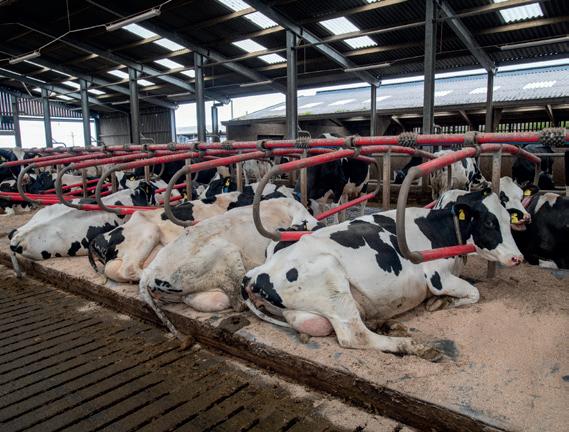
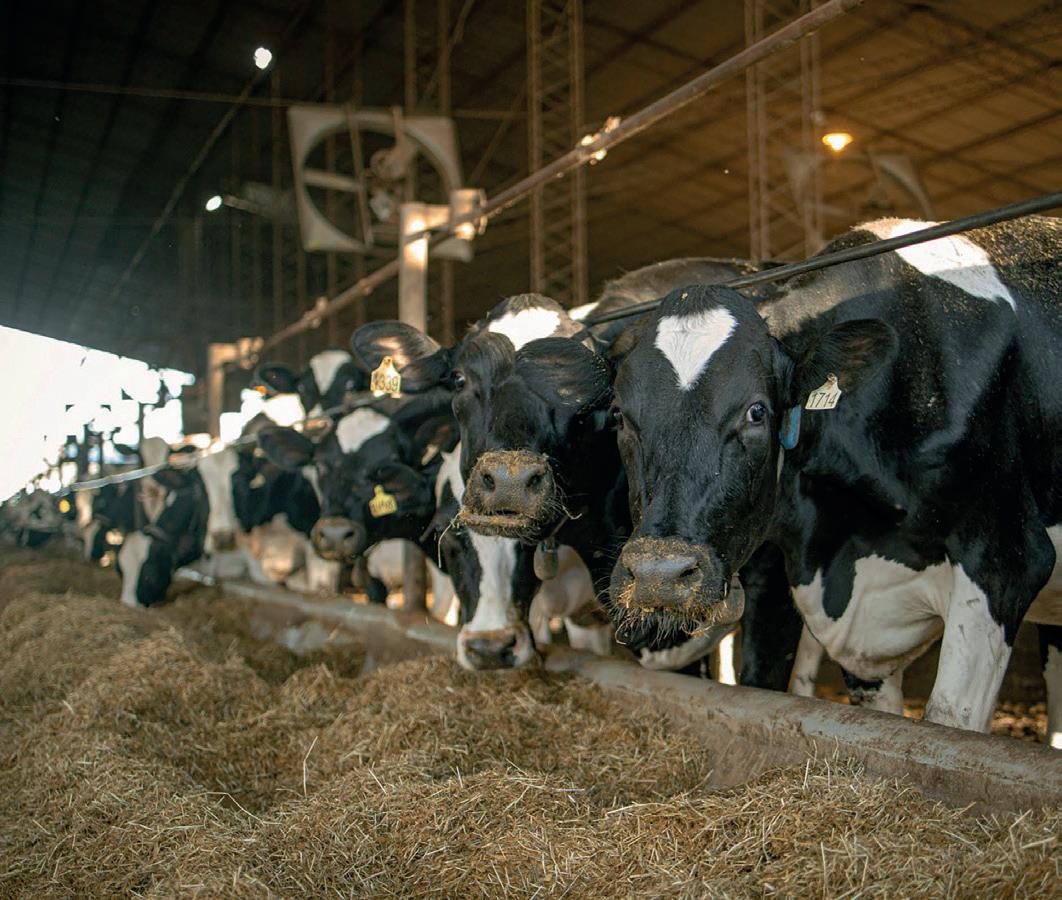
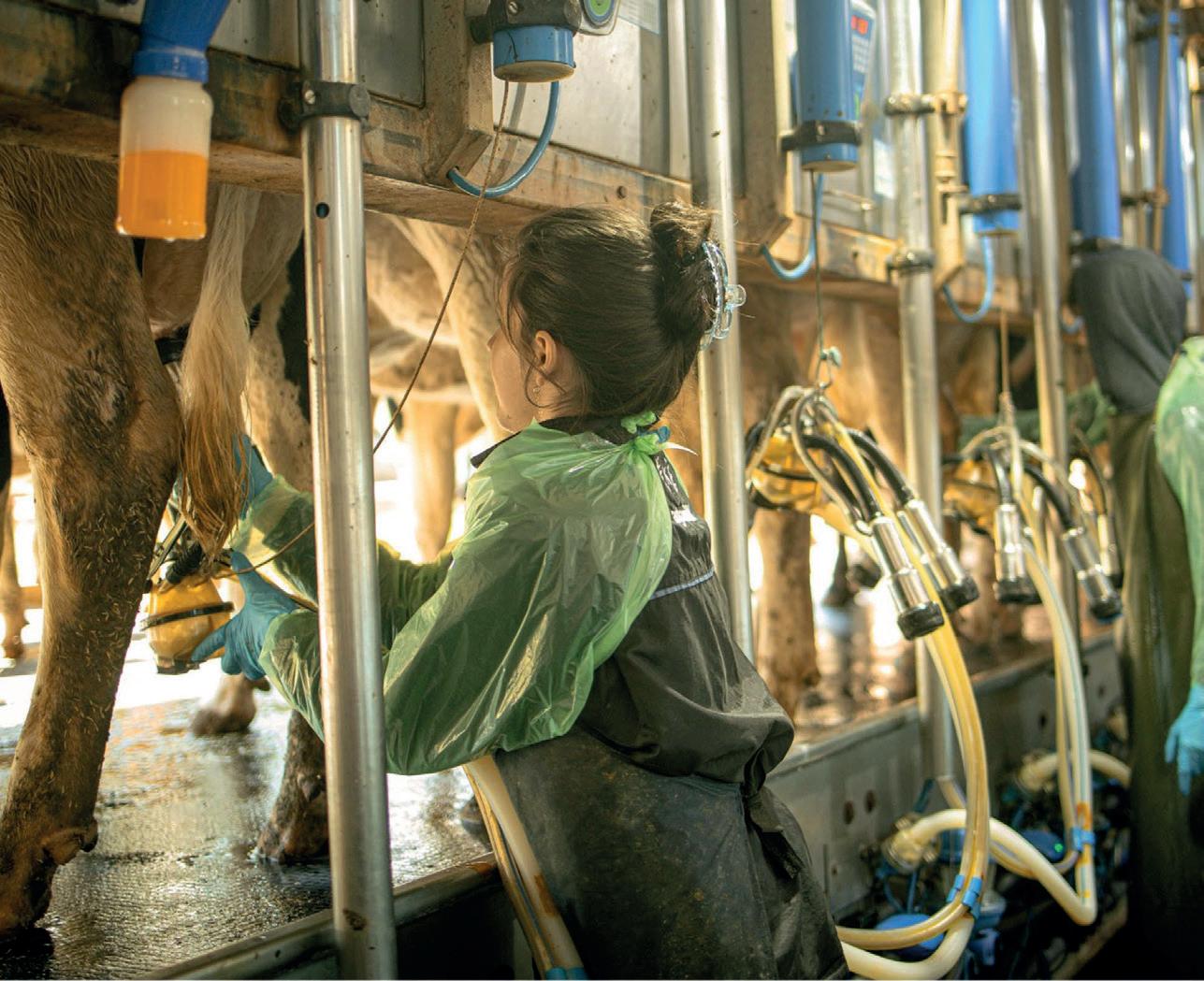
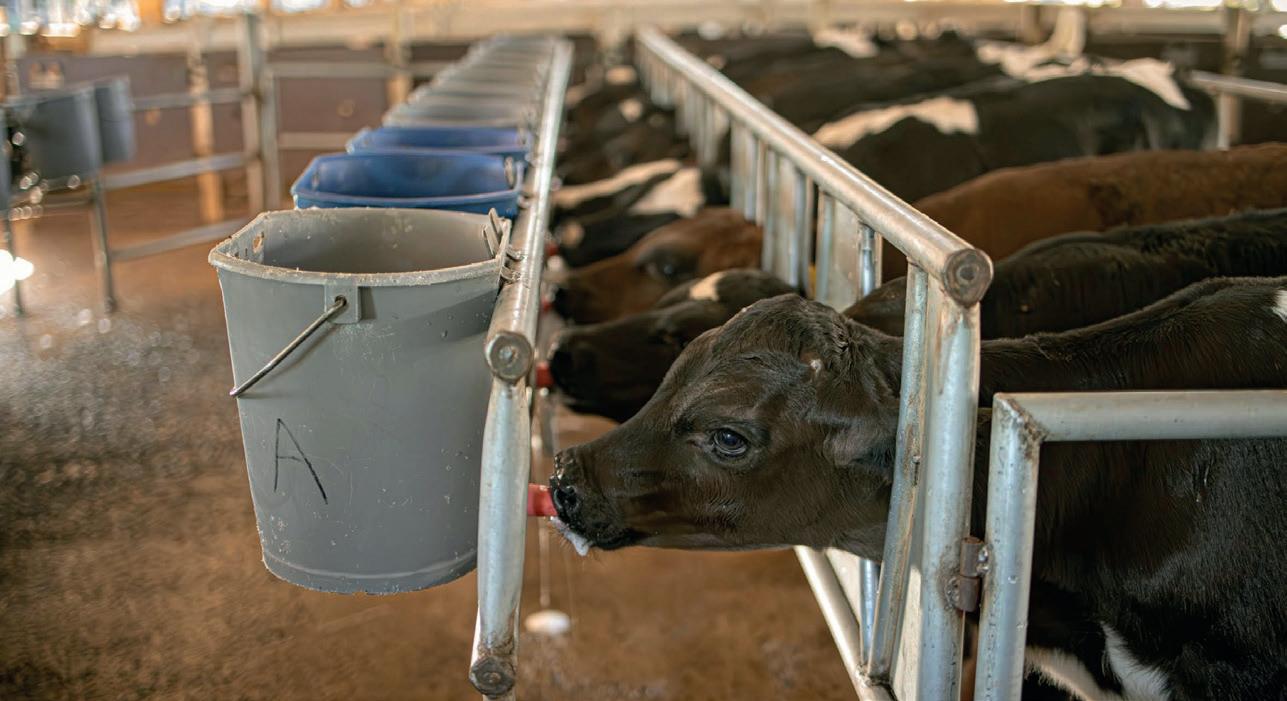
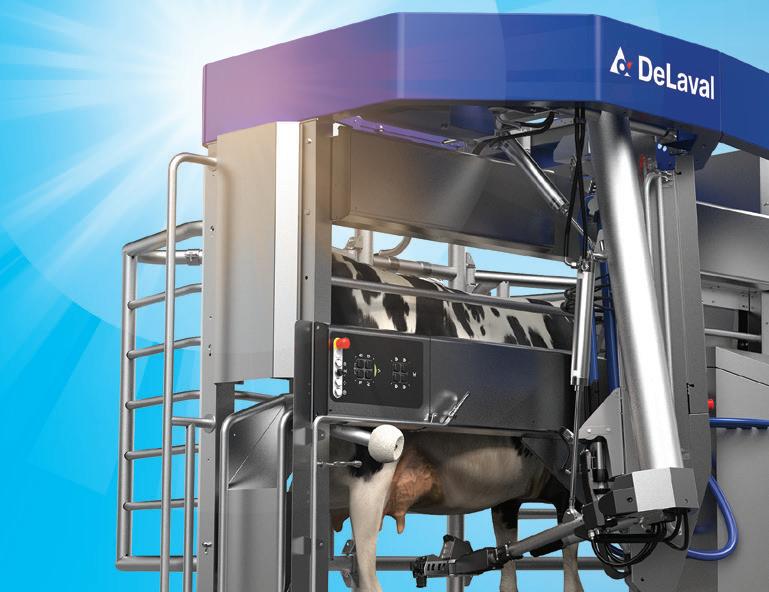
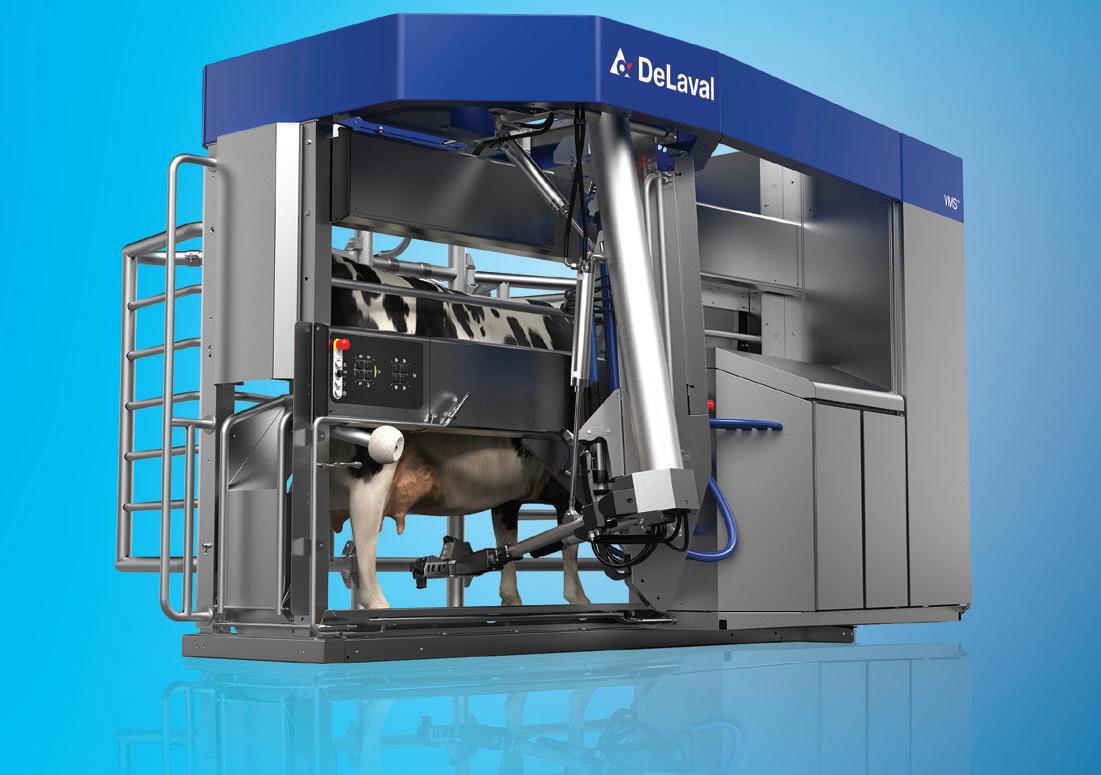
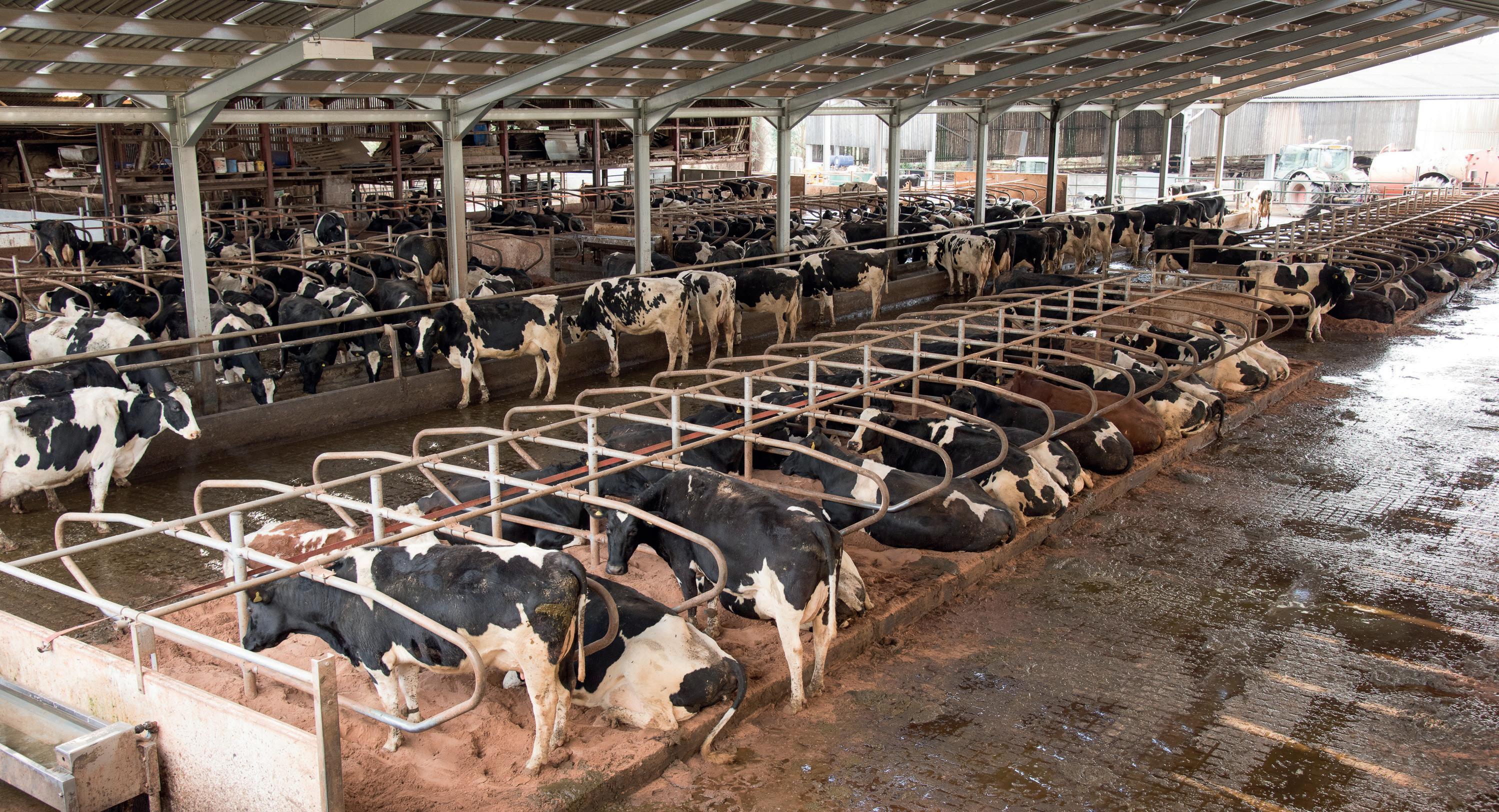
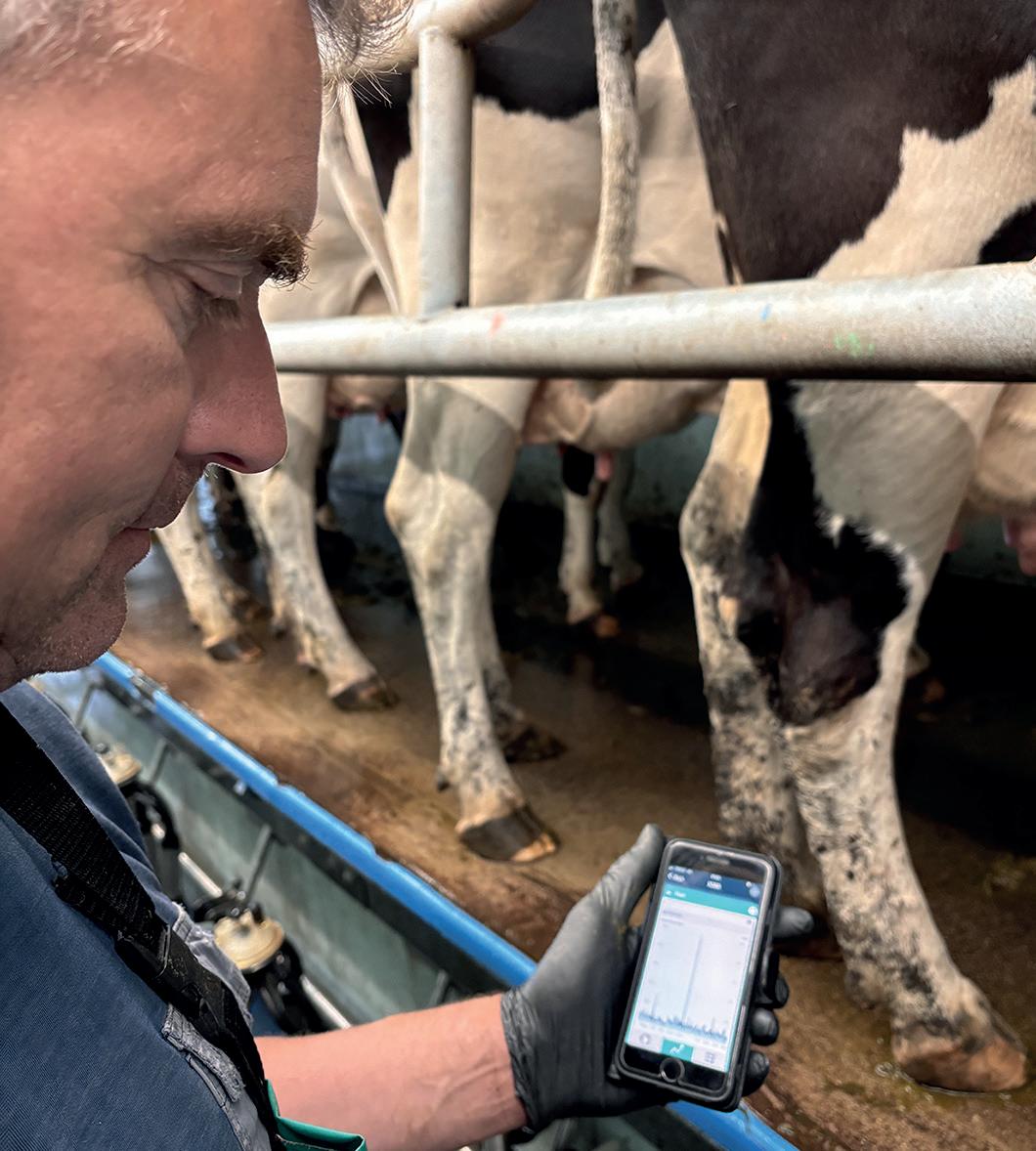
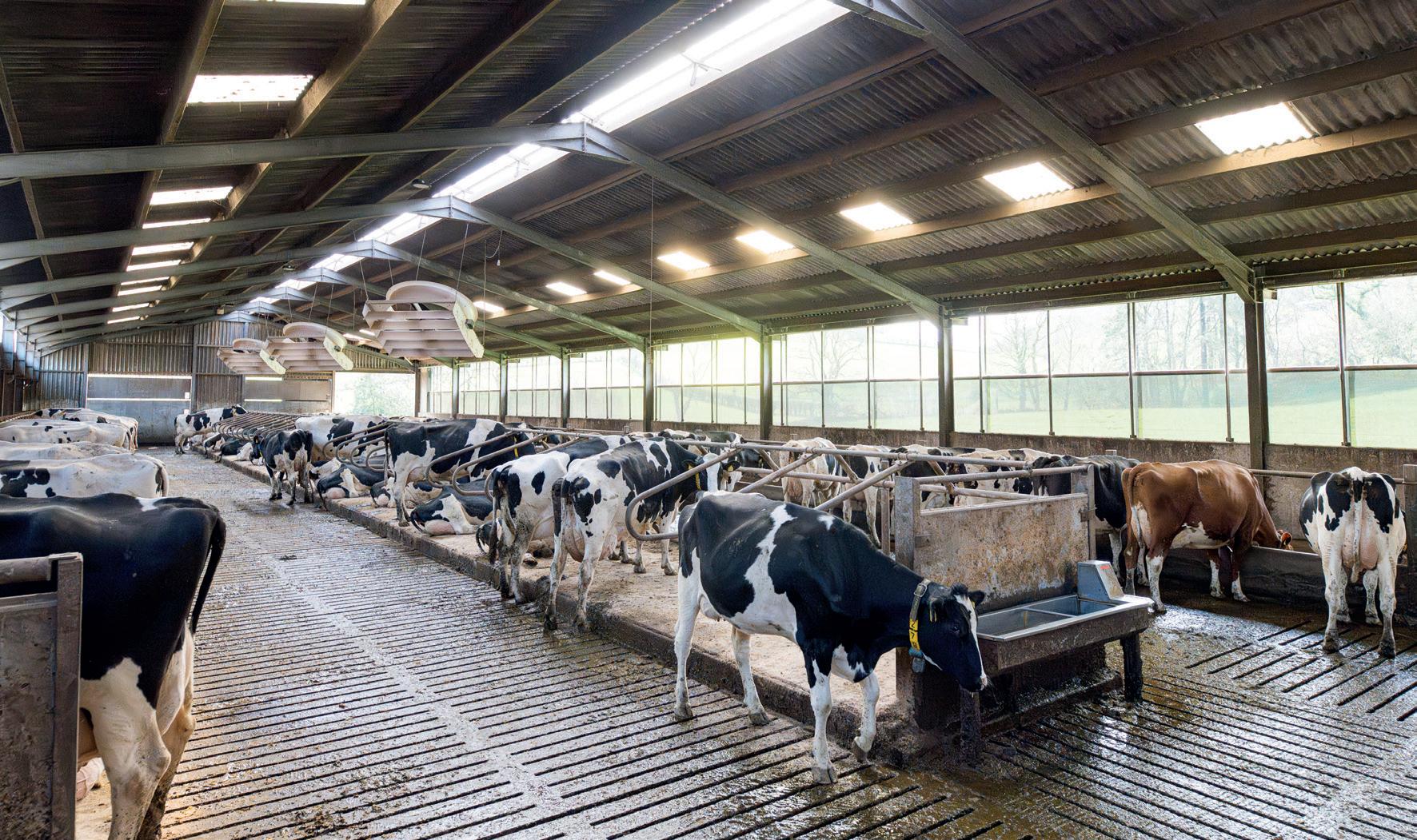
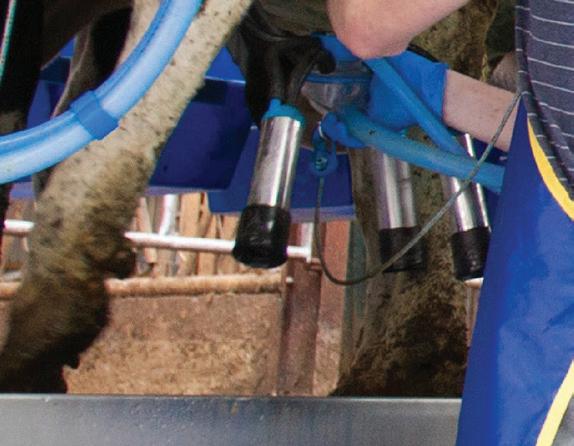
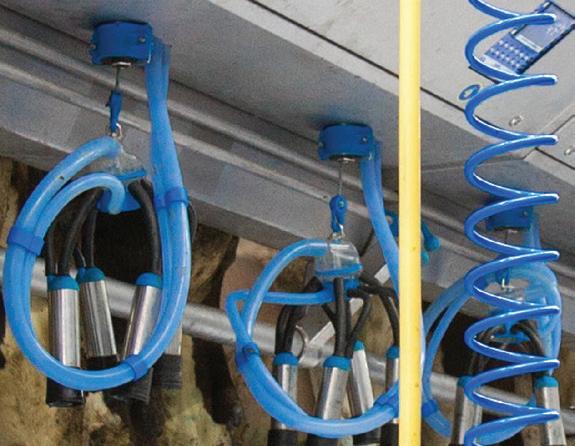
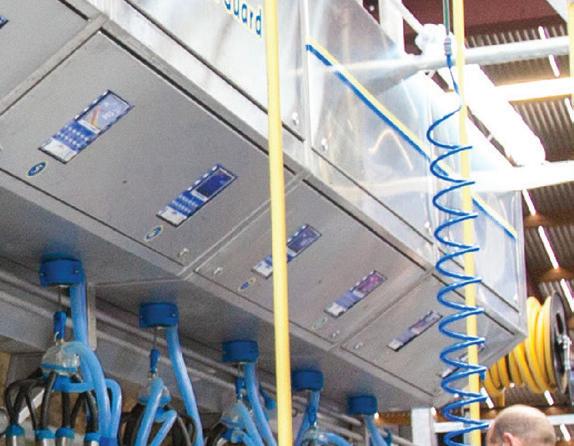
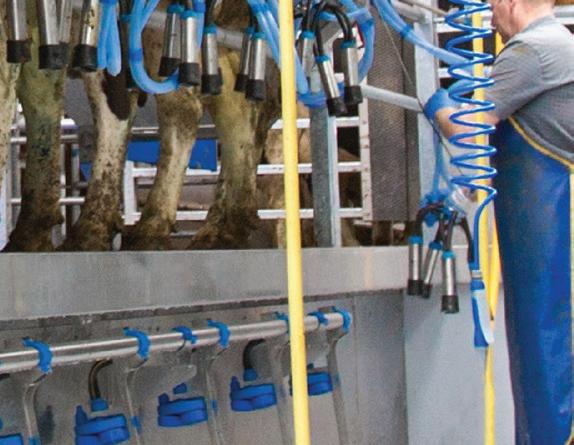
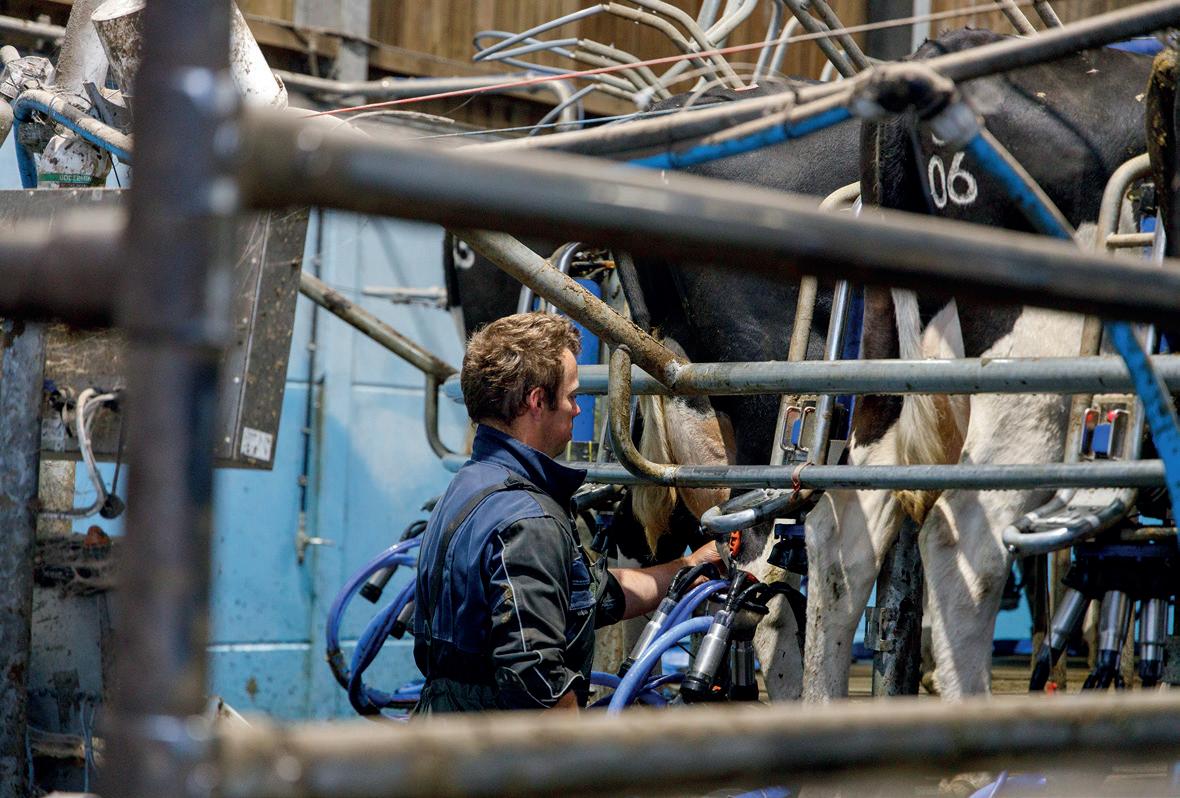
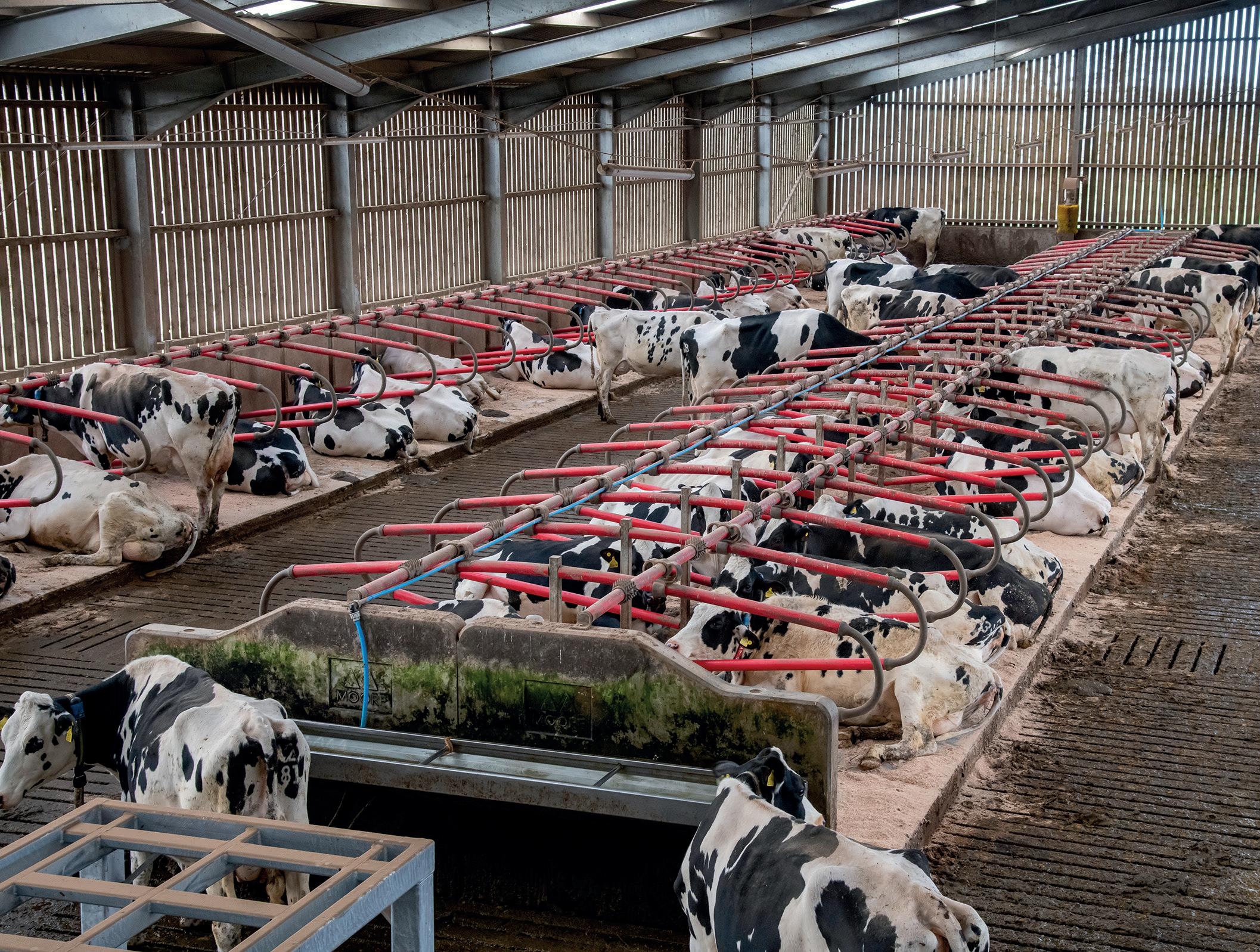
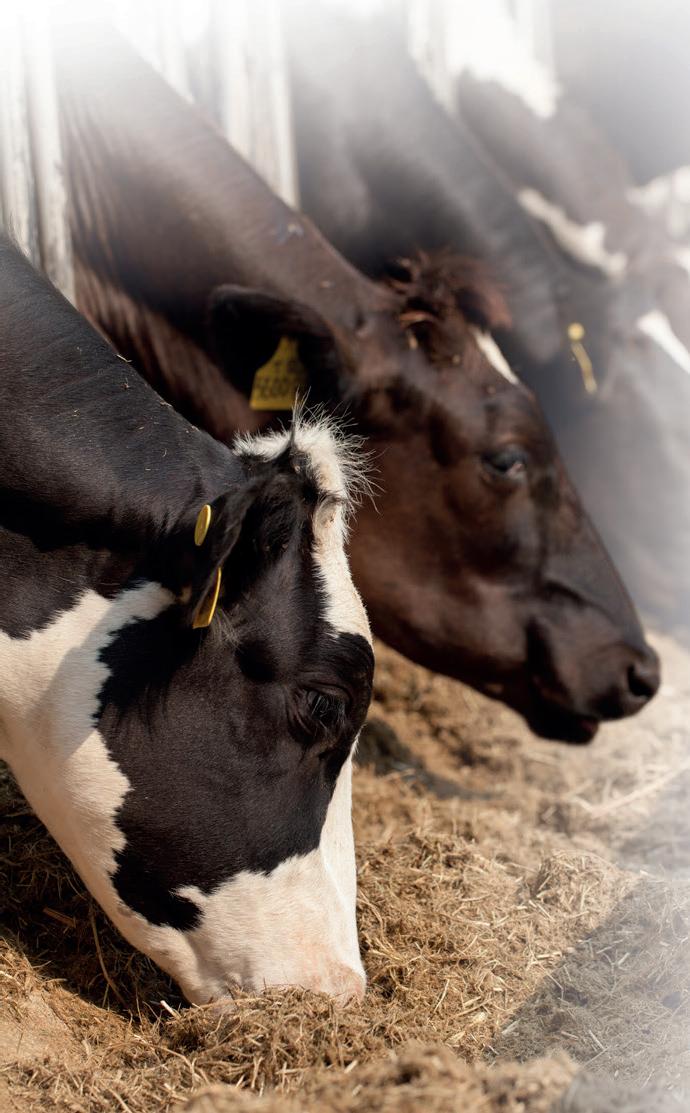
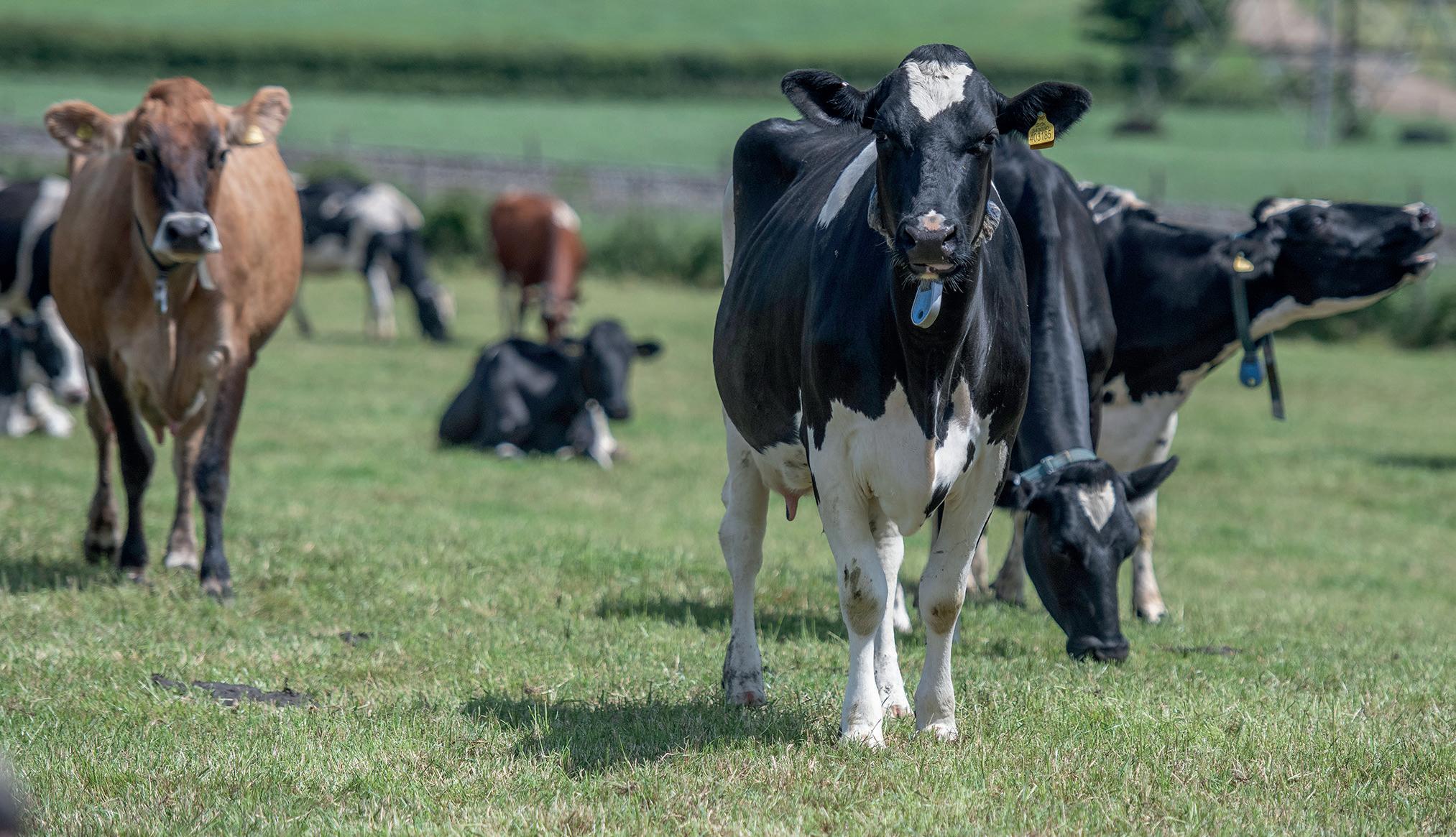
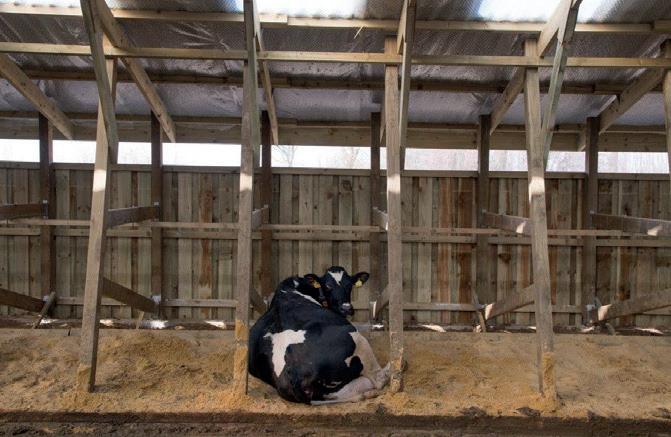
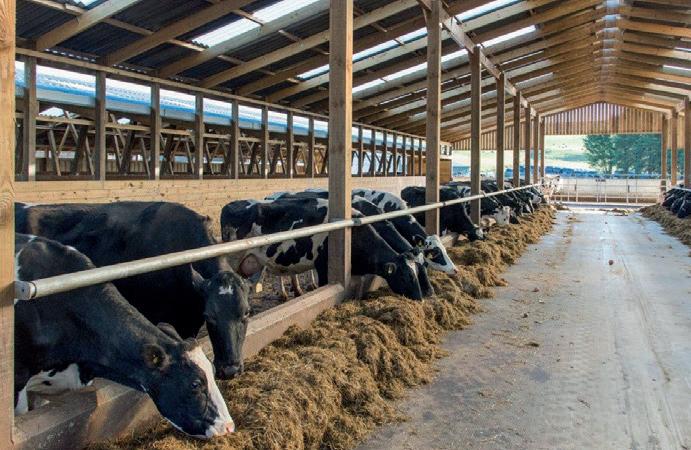
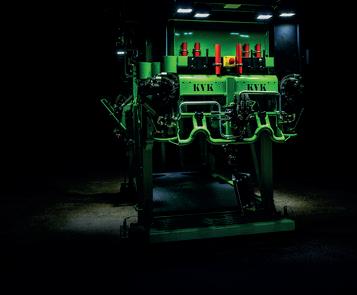
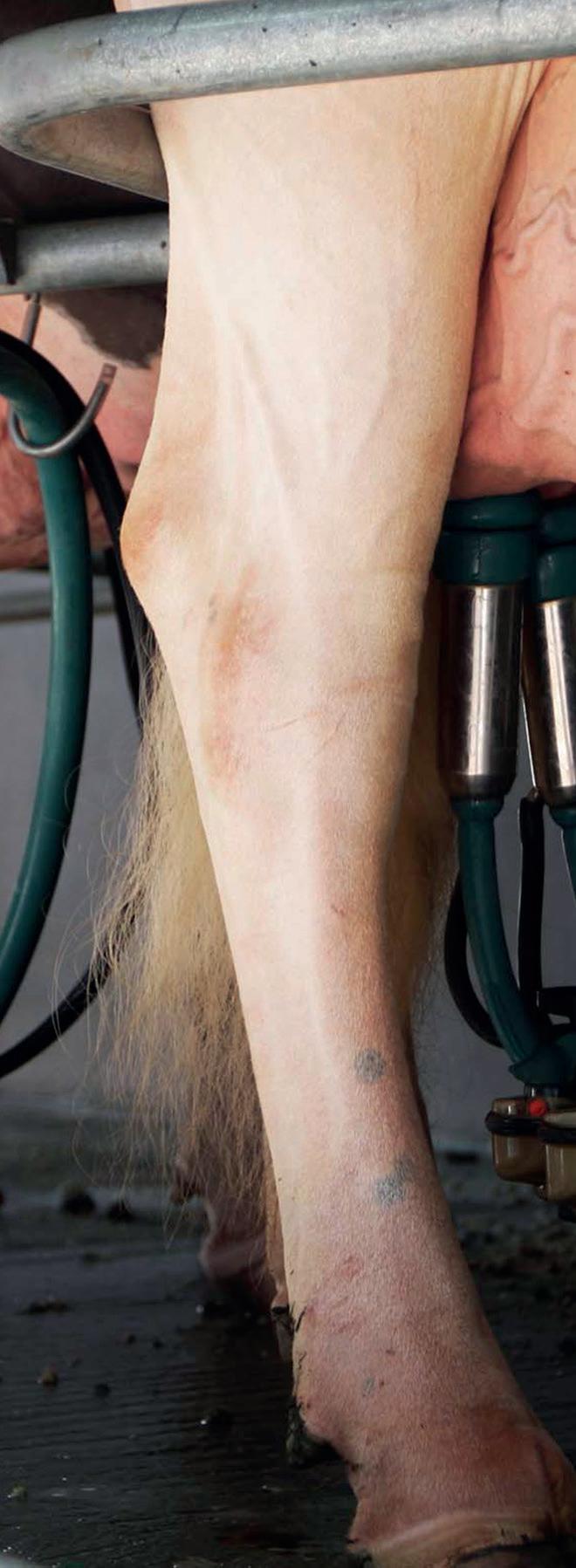
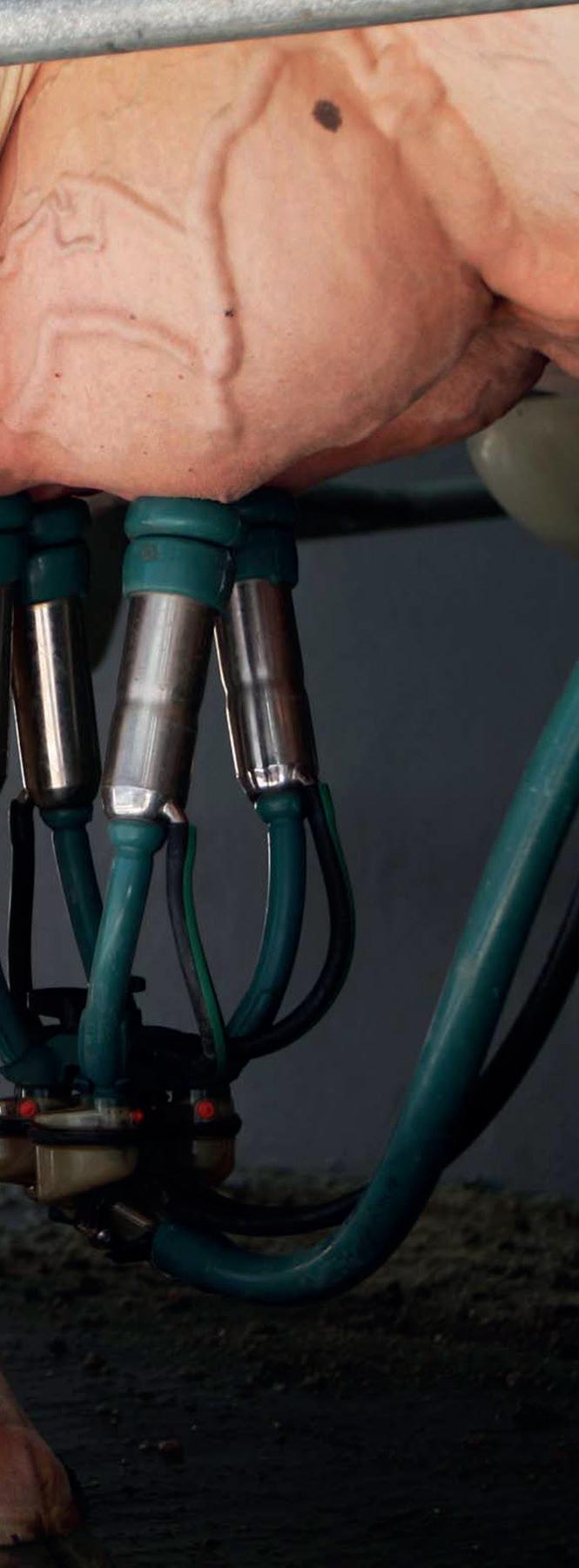
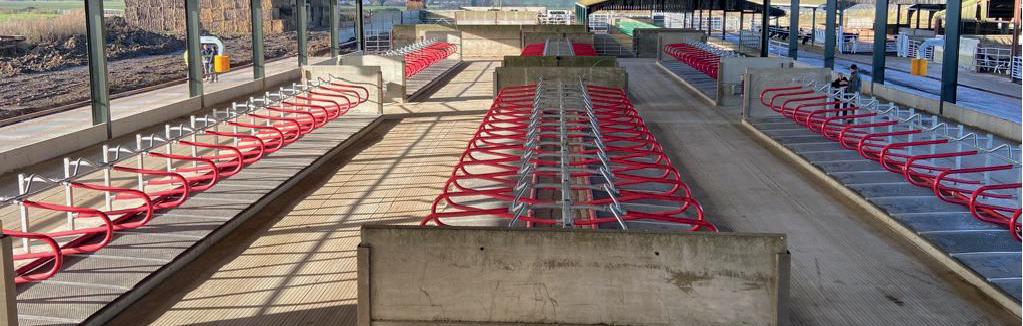
How do you stay in touch with your cows? Understand your herd on a deeper level with the Astronaut A5 Next. Lely's new automatic milking system.
The next step in optimising your life as a farmer. Our improved milking robot combines over 30 years of experience with the latest technologies. The Astronaut A5 Next offers great ease of use, reliability, better insights into your cows' health, and a solid return on investment.
Bright farming is yours by choice
Animal Health
Tackling Johne’s, Q Fever and disease at housing
Pages 32-34
Milk Prices Pages 62-67
Scan & Discover Astronaut A5 Next
Contacts
Editor Katie Jones 07786 856 439 katie.jones@agriconnect.com
All rights reserved. No part of this publication may be reproduced or transmitted in any form or by any means, electronic or mechanical including photocopying, recording, or any information storage or retrieval system without the express prior written consent of the publisher. The contents of Dairy Farmer are subject to reproduction in information storage and retrieval systems.
Dairy Farmer, Unit 4, Fulwood Business Park, Caxton Road, Preston, Lancashire PR2 9NZ
Origination by Farmers Guardian, Unit 4, Fulwood Business Park, Caxton Road, Preston, Lancashire PR2 9NZ. Printed by Warners Midlands, The Maltings, Manor Lane, Bourne, Lincolnshire, PE10 9PH. No responsibility can be accepted by Dairy Farmer for the opinions expressed by contributors.
a word from the editor
Despite previous predictions from dairy market analysts, it was still a bitter pill to swallow when several milk buyers announced farmgate price cuts going into the autumn and winter months
And in some cases, these price cuts have been dramatic, to say the least – we had to double-check we were not seeing things when processors began slashing prices by as much as 8ppl and 6ppl.
The reason? Put simply, dairy markets are under big pressure.
Despite the huge challenges posed by this summer’s drought and a lack of forage in many dairy areas of the UK this year, our farmers have continued to produce record levels of milk. It is hard to believe this is the case, especially as figures also show us that cow and producer numbers are on a downward trend.
Global markets are also playing their part.
Milk volumes in the EU are now ahead of where they were last year. Further afield, in the United States and New Zealand, supply continues to outstrip demand.
And while these prices cuts were not unexpected, it is little consolation to those dairy farmers currently looking ahead to a long winter where feed availability could be a major concern.
On the topic of feed availability, this month, we have gathered advice from nutritionists about how best to deal with limited forage supplies and what alternative options could be available.
And as we head into the colder months, and the winter jobs routine starts for many, we also take a look at how best to protect herd health with a focus on Johne’s disease, bovine TB and practical advice for the treatment and diagnosis of down cows.
With so much going on, it is important to keep up with our friends across the industry, so we also have plenty of reports from this year’s Dairy Show.
but when will
Dairy exports up to £1.1bn after 20% rise
airy exports from the UK reached £1.1 billion in the first half of 2024, an increase of 20% year-on-year.
AHDB and export businesses from the dairy and red meat sectors have been flying the flag for quality dairy and red meat on the global stage at Anuga in Cologne.
Jonathan Eckley, AHDB international trade development director, said the German event provided a stage to showcase quality British produce to a global audience.
He said: “Our export trade plays a major role in supporting our levy payers. Central to driving continued export success, and adding value for
our red meat sectors, is connecting with people and ensuring we have a broad portfolio of markets to balance the carcase and maximise opportunities for our products around the world.”
Mike King, dairy producer and dairy sector council member at AHDB, attended the event to speak to buyers and see how levy-payer money is being spent.
He said: “There has been a greater focus on exports and marketing. We are looking at upwards of 40% of the dairy levy budget now being spent on marketing and export.
“The more markets we have for our product, the better. To think that as a dairy producer we can sell
SFS may lead to farm income fall
J WALES’ Sustainable Farming Scheme (SFS) could lead to a 5% reduction in livestock numbers, a 4% drop in labour on-farm and a 16% decrease in farm business income, according to the Welsh Government’s own figures.
Presenting a written statement on the evidence base which underpins Wales’ first ever agricultural policy, Deputy First Minister Huw Irranca-Davies described the findings, which included the business case, an integrated impact assessment and an updated economic analysis, as ‘comprehensive’.
However, he also said the evidence came with ‘limitations’.
The SFS is being rolled out in January 2026 and is based on three layers of actions – Universal, Optional and Collaborative. The evidence base published today relates only to the Universal Layer.
NFU Cymru has called on Welsh Government to ‘evolve’ the SFS to ensure it does not have a negative impact on farming, describing the current evidence base as ‘extremely concerning’. FUW president Ian Rickman called on the next Welsh Government to increase the baselevel funding of £238 million for the Universal Layer by an amount which fully mitigates the estimated economic impacts shown.
everything we produce at home is very unrealistic.
“We managed to get an opportunity in the last couple of days to talk to some buyers from other countries and, I think what comes across, is how they enjoy the flavours and the textures of the cheese.”
High animal welfare standards and trusted provenance are key factors in making British meat and dairy stand out from the rest of the world.
Lucy Randolph, AHDB head of international trade development for the dairy sector, said: “AHDB’s aim
is to unlock the success of British agriculture and help ensure our world-class dairy produce thrives on the global stage.
“Our presence at Anuga follows a packed programme of activity in the first half of 2025 which saw the dairy sector team supporting a total of 36 UK companies at 14 events across the world.
“Our enhanced programme of activity will continue for the remainder of 2025 and into 2026, working towards maximising global export opportunities for quality British dairy produce.”
• Finance from £10k to £5m
• Excellent Rates
• 6 Month to 20 Year Terms
• Simple, quick phone application
JRED Tractor chief executive, Jim Moseley, will retire from full-time employment in April 2026.
It comes after nine years at the top of Red Tractor and 50 years in the food and drink industry.
Mr Moseley, who has overseen a turbulent couple of years at the assurance board following the attempt to enforce the Greener Farms Commitment on its members and subsequent sector review, said he left Red Tractor in a ‘strong position’.
To think that as a dairy producer we can sell everything we produce at home is very unrealistic
MIKE KING
J Former head of Scottish agriculture charity RHASS, Alan Laidlaw, is the first Tenant Farming Commissioner for England. A first for the sector, the role was one of the key recommendations of Baroness Kate Rock’s review in 2022.
Announcing Mr Laidlaw’s appointment, Defra said his work will centre on the Agricultural Landlord and Tenant Code of Practice, working closely with Defra and the Farm Tenancy Forum. His responsibilities include investigating complaints, tracking trends, guidance and reporting on tenant-landlord relations.
Decision within 24 hours
Bad credit history, large debts - No problem!
• T Tenant Farmers welcome
Dairy in firing line again
Updated guidance on global diets, which encourages consumers to eat less meat and dairy in favour of plant-based food, fails to acknowledge the environmental and nutritional benefits of grassbased food production in the UK, agricultural chiefs have said.
Authors of the EAT- Lancet Commission report, which was widely criticised by farming groups when it was published in 2019 for ‘vilifying’ meat and dairy, have doubled down on their recommendations, adding that shifting global diets could prevent up to 15 million premature deaths per year.
The researchers found many diets had a shortfall in fruits, vegetables, nuts, legumes and wholegrains, and in many places contained excess meat, dairy, animal fats, sugar and processed foods.
Messaging
Kate Rowell, chair of Quality Meat Scotland, said ‘blanket messaging’ about reducing meat and dairy risked worsening the nation’s ‘already poor diet’ by limiting vital nutrient intake.
NFU president Tom Bradshaw pointed out UK beef production emissions were at half the global average, dairy more so, and agriculture was responsible for just 11% of UK greenhouse gas emissions.
Industry figures said advice to cut out meat and dairy, which offer vital nutrients, could worsen health.
Chris Gooderham, environment director at AHDB, said: “The UK climate means we can produce red meat and dairy sustainably.
“That puts the UK in a great position to be part of the solution by supporting global emissions reductions through exporting more UK products to overseas markets as a more sustainable alternative, especially for countries where local meat and dairy production is more environmentally intensive.”
Tony Goodger, head of communications for the Association of Independent Meat Suppliers, said: “The 76-page report mentions the word ‘meat’ 117 times and it did
Farmers face a cliff edge
J FARMERS are facing a ‘cliff edge’ with the next six months ‘pivotal’ for the sector, according to Baroness Minette Batters, who was speaking as part of a panel on rural resilience at the IGD Future of the UK Food System Conference this week.
With her farm profitability review to be delivered to Defra Secretary of State Emma Reynolds on
October 31, Baroness Batters said any growth for the sector centred on confidence and whether governments valued food production.
Decision
“The Government has to decide whether food and farming actually matter,” she told delegates at the central London event. “At the moment, farmers do not feel it does.”
not take long to see that the authors, despite their errors in the last version, begin an attack on meat consumption and [it is] their view that food system transformation is needed to ‘supply a healthy diet for 9.6 billion people, with modest impacts on average food costs’, before suggesting the need for ‘a 33% reduction in ruminant meat production’ while others, most notably fruit, vegetable, and nut production would need to increase by 63%.
“And yet, there is no view given on the benefits of ruminant meat production’s role in providing organic nutrients for soil, attracting pollinators, its ability to offset the need for fossil fuel-based fertilisers within the production of fruit and vegetables.
“Equally, I was surprised to see that the report notes ‘our food supply is inherently sensitive to water scarcity and climatic variability, and is increasingly vulnerable to extreme events such as droughts, floods, heatwaves, or pest or disease outbreaks – all of which are induced by human-driven climate change’, but fails to acknowledge that global instability
through conflict creates a very real challenge to food supply.”
Asked if any farm groups had fed into the report, the commission highlighted Mario Herrero, professor of sustainable food systems and global change at Cornell University, and Namukolo Covic, director-general’s representative to Ethiopia for the International Livestock Research Institute.
Highlights
The report highlighted the fact food production was driving 30% of global greenhouse gas emissions. It called for major shifts in both what was grown and how it was produced but also emphasised protecting farmer livelihoods, with findings showing 32% of food workers earned below a living wage Its recommendations included the adoption of sustainable practices that store carbon, create wildlife habitats, and improve water quality, as well as stopping the conversion of natural ecosystems to farmland. It also advised using agroecological approaches to conserve ecosystems, and cutting food loss and waste throughout the supply chain.
Compound Feeds
DAIRYTalk
Ben Yates
Ben Yates manages Mells Park Estate, Somerset, where he oversees a 400-cow unit and manages the 405-hectare (1,000-acre) estate. Along with his wife and two sons, Ben has his own small herd of pedigree Holsteins under the Wowcow prefix. He joined the Holstein UK Board of Trustees in 2021.
Due to the lack of grass, we have been feeding full TMR to all cows since the start of August
Well, what a summer we have had. Since my last article, we had literally no rain until the last days of August, which left us with very little grass on the grazing platform and, for the most part, a third cut that was barely worth cutting.
To help to address the feed shortage, some extra wholecrop and maize needed to be purchased. The maize was harvested in early September, and it was a welcome sight to finally see full clamps in the yard.
There is hope that we will get a fourth cut in October. All our barren cows, which would normally be milked until October/November time, were culled in July to help ease the demand on feed.
Our calving block began on August 1, and we had a great start, with our busiest day seeing 16 calves born. The team has managed brilliantly, and the calves have done well, allowing us to sell beef calves sooner. These have doubled in value compared with last year.
Dried off
Once the dry cows were dried off, they spent three weeks outside on parkland grass, which has no artificial inputs, and the dry weather this year gave a greater consistency to this grass. They were then housed and fed a total mixed ration (TMR) until calving. This system has worked well previously for us, but this year has been exceptional, with only two cases of milk fever in the first 100 calvings, and one of those was a cow with twins.
Due to the lack of grass, we have been feeding full TMR to all cows since the start of August. The inclusion of wholecrop wheat, which was harvested in June, has been a great addition to our diet.
So far, we have seen a large proportion of cows cycling by 21 days and no metabolic issues – touch wood. It is also helping to maintain our high fats and proteins.
For two months, the farm looked desolate. Following the few days of very welcome rain, it was interesting to see that the herbal leys have recovered and greened up quicker than the straight grass leys, further proving that herbal leys are a good choice for our south-easterly facing farm.
I travelled up to Telford for UK Dairy Day in September. The event has really become a premier platform to exhibit top dairy cows and gives an opportunity to explore and purchase everything dairy-related, all in one place. It is a great meeting place for the industry to network and come together.
Shows
We were pleased that two calves we bred within our Wowcow herd qualified at our South West Club Calf Show at Sedgemoor Auction Centre at the end of August, to go on and represent the club at the All Breeds All Britain Calf Show at Staffordshire County Showground. The level of professionalism and dedication of the young people at this event is so impressive. Congratulations to everyone who took part and made it the spectacle that it is.
DAIRYTalk
Claire Eastham
Claire Eastham farms with her husband Martyn in Dorset, where they milk 120 spring calving cows. After gaining knowledge and experience working for other businesses, the couple started their own dairy farming journey in 2015 by taking on a share farming agreement before progressing to their current county council farm.
It is hard not to feel like we are being pulled in three directions at once –invest, adapt and somehow survive
At long last applications for the Farming Equipment and Technology Fund and the Farming Transformation Fund are materialising into agreement offers. After so many false starts and broken promises, it is a relief to see those long-awaited emails dropping into inboxes. For a moment, there is a flicker of optimism – maybe all those hours spent filling in forms and chasing the Rural Payments Agency were not for nothing after all.
It is heartening to see progress. Many of us have waited months, even years, for confirmation that our plans to improve slurry storage, update milking kit or introduce infrastructure might finally get support. The potential for investment in efficiency and sustainability is real – this is what the schemes were meant to do. But here is the rub – with milk prices sliding yet again, can producers actually afford to make the most of these grants? The support may part-fund the upgrades, but the capital outlay still has to come from somewhere, and with margins shrinking that is no small hurdle.
Contribution
A 40% contribution is generous on paper, but when your milk cheque has just been cut with more to come then that ‘farmer contribution’ becomes the difference between going ahead or shelving the plan. At the very moment the funding becomes real, the financial footing to take advantage of it has eroded.
Then there is the milk price. Cuts across the board, quietly announced, often with less notice than a supermarket promotion. Feed, fuel, energy, insurance are all still high, yet the farmgate price slides as if we have all suddenly become more efficient overnight. Thankfully, our cut was by no means the highest, and I feel for those with 8ppl taken off their milk price overnight.
We do the work, take the risks, and bear the costs, yet have no say in the value of our own product. The brutal truth is we are still price takers – and that, in 2025, feels nothing short of wild. No other sector is expected to operate like this – to produce a perishable, essential food commodity, only to be told what it is worth.
Here on the farm we have paid off debt through this higher price period, hopefully putting us in a strong position heading into this ‘low’. Spending on
the right things through the highs really does pay off – lower costs, higher efficiency, less pressure.
We have also seen a huge flush of grass, like a second spring (if springs operated as normal) and cut some more silage in early October, which should help to see us through the winter. Stocks are limited but as a spring calving herd we have more options than most to just feed youngstock and dry cows. Our empty rate still gives room for improvement at 10% but the cows look and have milked very well this season. So, yes, grants are coming good, and that is welcome. But with milk prices tumbling, input costs unrelenting and Government schemes still tied in knots, it is hard not to feel like we are being pulled in three directions at once – invest, adapt and somehow survive.
Farmers have always been resilient, but this should not mean running on empty. It is time for fairer treatment, for genuine collaboration, and for policy that recognises the economic reality on the ground.
Until then, I will take the wins where I can – a grant letter on the table, a healthy herd in the yard, and the faint hope that, one day, being a ‘price taker’ will not be our defining feature.
Brothers Rob and Tom Wilkinson are fourth-generation dairy farmers who operate a flying herd of just over 600 black and white cows at Carrsides Farm, near Ferryhill. The herd produces a yield average of 9,500kg at 4.3% butterfat and 3.4% protein from all-year-round calving – females go to continental beef bulls via artificial insemination (AI), and their bull and heifer calves are reared to 16 months.
Introduced in 2012, the flying herd system sees most heifer replacements sourced as fresh calvers from two local rearers, says Rob. The business also buys from the auction mart and from private vendors on occasion.
“One thing we have learned is that the more money we pay for replacements, the longer they last,” says Rob.
“The current lactation average is 5.5, although we would like the figure to be slightly higher. Heifer
A flying herd is the best economic option for a family farm in Co Durham, where females go to beef bull semen and their calves are sold as forward stores. Wendy Short reports.
Flying herd policy lowers business risk
rearing has become very specialised, and our contacts know the job inside out. We have some influence on the calf type, but otherwise they are left to make the decisions on management and feeding.
“They have a clear picture of the type of 25-month heifer that will fit in on our unit.”
Replacements are selected on visual appearance and health status.
Rob says: “A typical heifer will be a European Holstein type – robust and not too large, with correct conformation. For replacements bought
from the mart or from private sellers, Johne’s disease screening and BVD-negative status are priorities, and we will often buy from the same herds with a known health status.”
Decision-making
He outlines the decision-making process for the flying herd policy.
He says: “We were rearing a pen of 20 heifers, for example, and it was costing about £2,000 per head from birth to getting them into the parlour. There were times when four out of the group were judged
unsuitable, and that increased the total cost per head significantly.
“There is no pressure to buy a specific number from our rearers as they have other outlets, allowing us to cherry-pick the very best animals for our system. The policy drastically reduces our risk.”
The fully housed herd is milked twice a day in a 30:60 herringbone swingover parlour.
Rob says: “There is no in-parlour feeding, as we like to keep things simple. As many ingredients as possible are grown on-farm for the total
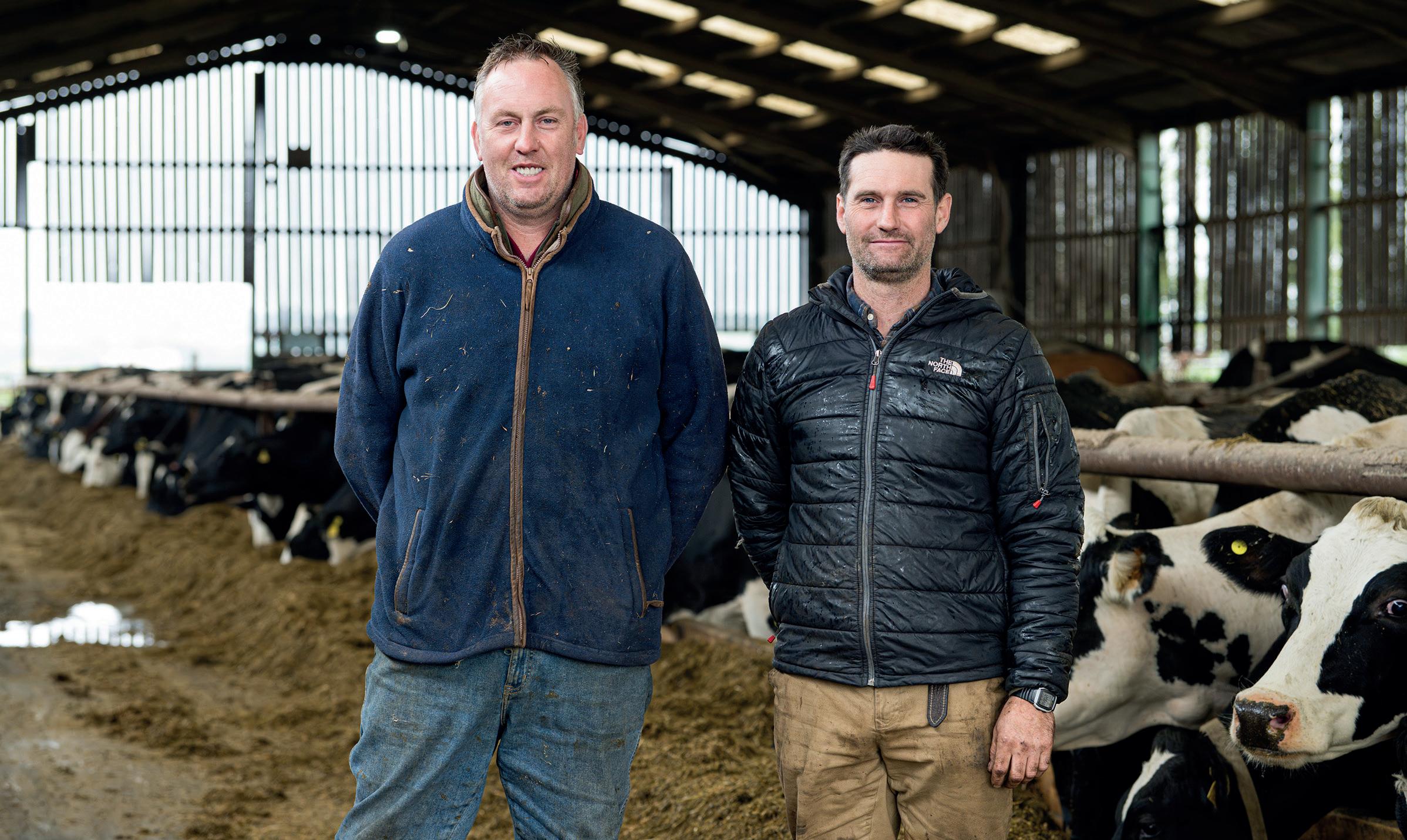
Left to right: Tom and Rob Wilkinson.
Farm facts
■ Milk is sold to Arla on an Asda contract
■ British Blue, Charolais and Limousin sires dominate, but other breeds like Wagyu and Parthenais are sometimes brought in for added interest
■ Three semen straws may be used in a single dose to maximise conception rates for selected females
mixed ration [TMR], which is standardised across all lactation stages. It is made up of grass silage and wholecrop cereals, plus rolled barley, rape meal, soya, pot-ale syrup and minerals.
“Bonuses are paid for milk solids, so protected fat is added to lift milk butterfat levels. The dry cows are given chopped straw, rolled barley and pot-ale syrup.”
A range of beef breed bulls are used via AI, with conventional
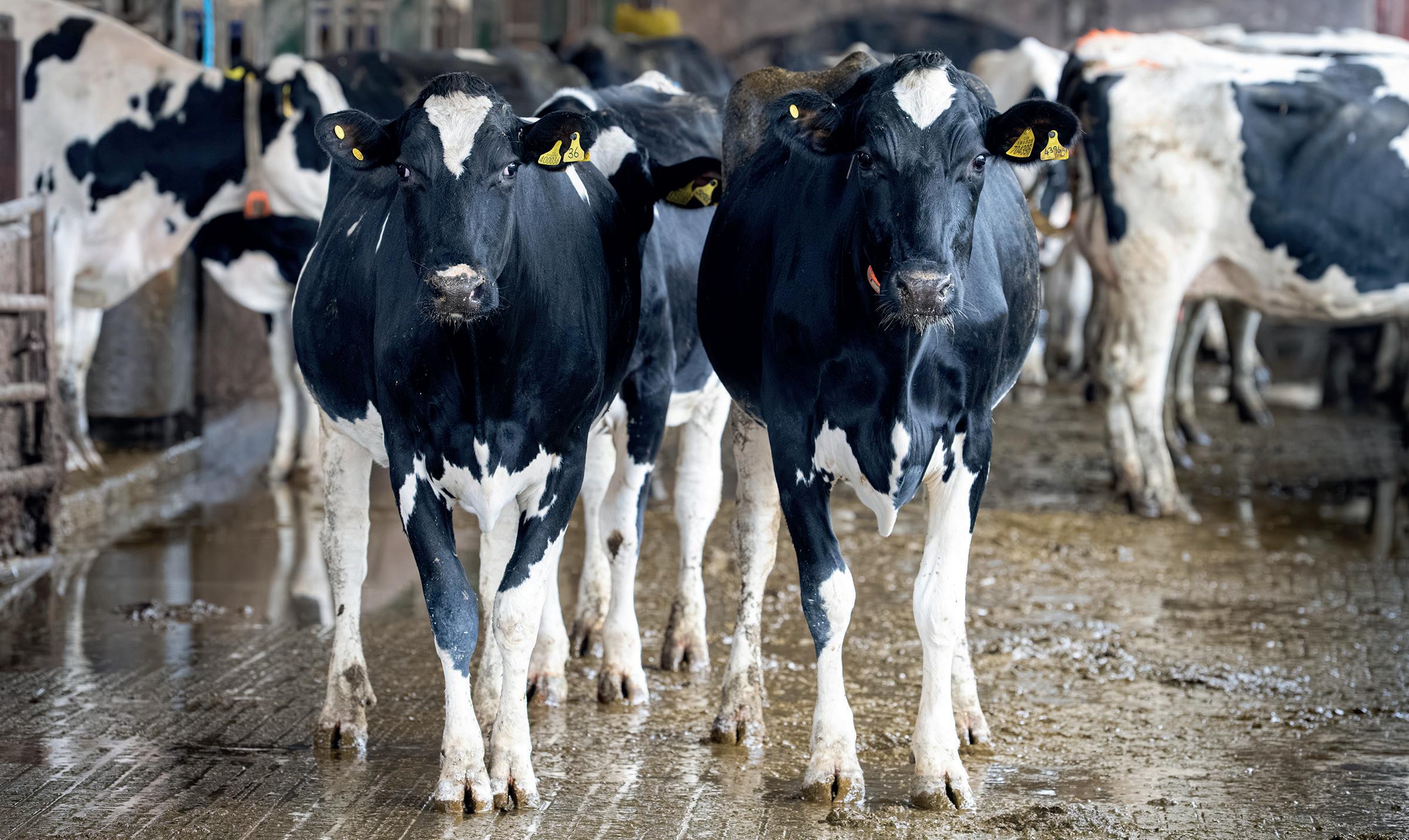
The ideal heifer is a robust European Holstein type with correct conformation.
semen as part of the reproductive management system (RMS), and AI technicians visit the farm almost daily.
The expense of the RMS can be justified, says Rob, and it may not rule out investment in heat detection collars.
He adds: “The cows have been fitted with the collars on a trial basis, and although the technology has definitely brought improvements, the additional cost has to be
weighed up. Savings could be made by switching to DIY AI, but it would increase the workload and involve staff training. The jury is still out on whether the collars will be returned after the trial period.”
Male calves are left entire, and bulls and heifers are fed ad-lib barley with added protein. The heifers are grazed over the summer, often on stewardship ground unsuitable for silage making, and they also receive dairy herd TMR left over after
feed pushing. The groups are sold at the auction mart and usually achieve good prices.
Digestate
The 404-hectare (1,000-acre) unit, where an additional 81ha (200 acres) is rented, has a medium-to-heavy clay soil type.
Digestate has been used extensively for the past decade, allowing chemical fertiliser input to be limited to wet spring conditions. Slurry
www.harpersfeeds.co.uk
PICTURES: MARCELLO GARBAGNOLI
On Farm
and digestate spreading services are offered through the family’s ‘Wilkinson and Son’ contracting business, headed by nephew Charlie Johnson.
Rob says: “We are passionate about full-circle farming and aim to get out of the land what we put in. Our success at growing high-quality grass has led to us being approached by local arable farmers who have asked us to grow grass in place of oilseed rape in their rotations. Surplus feedstock is sold to a local digester plant.”
The slurry spreading rules also apply to digestate, he adds.
As many ingredients as possible are grown on-farm for the total mixed ration.
local biogas plant. The highest rates are applied after first cut grass silage in the spring and a combination of digestate and slurry are applied to each cut thereafter,” he says.
“Digestate has many benefits over chemical fertiliser. It is cheaper, more nutrient-rich and better for the environment, as well as increasing soil organic matter content. It is a tremendous product, especially for grassland, and it also protects the business from the volatile prices in the chemical fertiliser marketplace.”
Silage
“Our digestate comes from food waste collected from a
Roughly half the wheat is sold off-farm and the remainder is added to the barley crop for the TMR.
Four cuts of silage are taken annually, and the entire platform has been dedicated
to herbal leys for the past two years as part of the farm’s Sustainable Farming Incentive agreement.
Rob says: “The silage leys meet the herbal ley option criteria, but they also contain Italian ryegrass. On some fields they have been established from scratch, and on others the species have been stitched in.
“It is difficult to fully evaluate their effect, because we have had one very wet season followed by an extremely dry one.
“They have met the target for a minimum 20 freshweight tonnes an acre, and they managed to keep going through the extreme drought periods when the ryegrass virtually gave up.”
Rob says that staffing is one of the biggest challenges that the farming industry faces. A team of eight work on the dairy unit, and a new herdsman is being sought.
months.
Despite these concerns, the family is planning to build a new cubicle house with 160 places.
“The herd expansion will be beneficial for spreading fixed costs, but it will turn a single milking into four hours instead of three, although the parlour has the capacity to handle increased numbers.
“Our business is a young, forward-thinking partnership and we want to keep striving for the best.
“The business is riding the crest of the wave in relation to beef prices at the moment, so it makes sense to take the groups to decent weights and let a specialist finisher manage the latter stage. That said, we have sold our young calves in the past, and the situation is always under review,” says Rob.
Beef sired bull and heifer calves are reared to 16
Beef heifers graze on stewardship ground unsuitable for silage making during summer.
A LITTLE BOOST MAKES A BIG DIFFERENCE
The sequential use of identical PI3 and RSV antigens in live and killed presentations, called a PRIME-BOOST effect, can optimise the immune response to two of the key viral pathogens associated with bovine respiratory disease (BRD).
References: 1. Philippe-Reversat et al. (2017) Acta Vet BRNO. 86: 325–332 2. Metcalfe et al. (2020) Vet Record Open 7: e000429 3. Ellis et al. (2018) Can Vet J. 59: 1311–1319 ® our farm has the ha iest Cows in the world!
BOVALTO® is the ONLY BRD VACCINE RANGE which provides ALL of these benefits:
Efficacy proven by challenge studies1
A duration of immunity proven by challenge: 12 weeks for BOVALTO Respi Intranasal2
6 months for BOVALTO Respi injectables1
Intranasal efficacy against BRSV and PI3 unaffected by MDAs, providing the optimal start to immune protection against BRD2
Bovalto® Respi Intranasal, nasal spray, lyophilisate and solvent for suspension contains Bovine parainfluenza 3 virus (PI3V), modified live virus, strain Bio 23/A 105.0 – 107.5 TCID50 and Bovine respiratory syncytial virus (BRSV), modified live virus, strain Bio 24/A 104.0 – 106.0 TCID50. Bovalto® Respi 3 Suspension for Injection and Bovalto® Respi 4 Suspension for injection contain inactivated bovine respiratory syncytial virus, strain BIO-24, inactivated bovine parainfluenza 3 virus, strain BIO- 23 and inactivated Mannheimia haemolytica, serotype A1 strain DSM 5283. Bovalto® Respi 4 also contains inactivated bovine viral diarrhoea virus, strain BIO-25. UK:
Enables sequential use of identical PI3 and RSV antigens in different forms for rapid and long-lasting immunity3
‘Staying informed about market trends is now essential practice’
NFU dairy board chair Paul Tompkins answers some of the questions that have emerged following recent milk price cut announcements.
QWhy have we seen a downward shift in milk prices recently?
AAfter a relatively stable period, for most, some dairy producers are once again facing steep price cuts as processors announce negative price adjustments, pointing to high domestic milk deliveries, an uptick in volumes globally and a drop in commodity prices, with bulk cream prices taking a dive.
This has, understandably, created concern among dairy producers, many of whom are coming out of a tough, dry summer that led to more feed being brought in, tough decisions around the proposed family farm tax, and significant investment needs linked to the cost of regulatory compliance.
Following AHBD’s recent dairy market forecast, it is clear that staying informed about market trends and understanding their impact on your milk pool is now essential practice for all UK dairy farmers.
QWhat about new regulations? How can they support farmers in times of market volatility and declining milk prices?
A The Fair Dealings Obligations Milk (FDOM) regulations, in force since July 2025, aim to make farmgate milk prices more transparent. While
Paul Tompkins
the regulations do not set milk prices, which remain market-led, the NFU succeeded in advocating for three key clauses focused on improving price transparency, reducing exploitive practices, and recognising the role of dairy producer organisations. Market volatility truly tests the resilience of the dairy sector. Global commodity prices are beyond local control and often put pressure on supply chains. The regulations were never aimed at setting the market price or preventing price fluctuations. What we do expect them to achieve, however, is an increase in transparency, trust and accountability across the supply chain. Producers should know what factors influence their milk price and be able to anticipate how the price will move, placing farmers in a stronger position than during previous periods of market volatility. Under the new regulations, dairy farmers can challenge their milk processor to justify any milk price adjustment and ask them to demonstrate how it aligns with the factors signed up to in their milk purchase agreement.
If this cannot be done satisfactorily, producers can then raise the issue with the new agricultural supply chain adjudicator.
QThere is a significant range in milk price drops for November, from -8ppl to -1.25ppl. How can this be justified and how does it align with the regulations?
AProcessors operate in different markets and will have different levels of exposure to global fluctuations in price. Under FDOM regulations, all milk contracts must clearly explain the pricing factors that milk buyers use to calculate milk prices. The transparency required should enable farmers to understand how their milk price is determined and, therefore, which market indicators to use for forecasting.
As market conditions fluctuate, clarity becomes even more important. If a contract lacks clear pricing mechanisms, farmers should discuss this with their milk buyer or milk pool representative. If the contract
PICTURE: JOHN EVESON
There is a significant range in milk price drops for November, from -8ppl to -1.25ppl.
does not include the required information and this cannot be resolved with the buyer, the regulations provide a mechanism to ensure these issues can be raised with the new agricultural supply chain adjudicator.
Additionally, any changes to the milk pricing mechanism used to generate farmgate prices require prior agreement from the farmer or, where relevant, their dairy producer organisation.
QW hat is the NFU doing to support dairy farmer members impacted by significant price drops?
AWe encourage all producers to engage in constructive dialogue with their buyer. If a member feels unable to do so, they have the option of raising a concern via the NFU’s CallFirst Service on 0370 845 8458, or through the office of the adjudicator. The NFU also offers a discounted contract-checking service to members.
The NFU will continue to monitor the impact of the regulations, working closely with producers, producer representatives and dairy producer organisations to
ensure all UK dairy producers receive fair and transparent contracts. We will also continue to raise any issues or potential incidences of non-compliance with the new adjudicator. Where we feel the new fair dealing regulations do not go far enough, or are not preventing further incidents of unfair behaviour, we will be tracking these and including them in our response to the Government’s review of the regulations, which must take place within five years of the regulations coming into force. It is important to note that the adjudicator can only officially investigate complaints made by farmers, so it is essential producers engage fully with the new regulations and make use of the dispute resolution process set out in their contracts.
r The agricultural supply chain adjudicator can be contacted either through a formal complaint or via the new confidential inbox: ASCA-in-confidence@defra.gov.uk.
For further information, visit gov.uk and search ‘contact ASCA in confidence or make a formal complaint’.
Agri-Kit Equipment
Sheep Handling Trailers | Adjustable Feeding Barriers | A selection of Sheep Hurdles | Swinging Gates | Gate & Hurdle Combos | Yard Races | Drafting Gates | Guillotine Gate | Hay Racks | Hanging Troughs | Walk -Through Feeders | Get in touch for a quote on our equipment for cattle and sheep. Call 028 7086 8430 to speak to your local sales rep
A study shows pair-housed calves experienced less disease during the pre-weaned period and were less likely to leave the herd. Katie Fallon reports.
Getting calf housing conditions right is key on any farm and the benefits of both pair and individual calf housing are often up for debate.
As more milk buyers introduce stipulations around housing calves in pairs, understanding the benefits and potential disadvantages of the system can be helpful.
Speaking during a recent AHDB webinar, Dr Sophie Mahendran, of the Royal Veterinary College, said the rise in liquid milk production in the 1960s meant that calves were separated from their dams, as milk yields and herd sizes increased.
As a result, individual calf housing has long been common practice, with 60% of farms using individual pens in 2010.
This has since reduced to 38%, from research carried out in 2022, likely driven by milk contracts.
Dr Mahendran said: “Individual calf housing was often used for bio-
Pair housing has positive impacts on disease and survival
containment reasons. Farmers wanted to reduce the risk of spreading both diarrhoea and respiratory pathogens between calves.”
In a farmer survey carried out by Dr Mahendran in 2022, it was found that the biggest perceived benefit of individual calf housing was the ability to monitor both calf health and feed intake.
However, several studies have demonstrated the benefits of pair housing over individual pen usage.
Dr Mahendran said: “Calves learn
in quite a structured way, they are a gregarious animal meaning that they like to live in social groups.
“We know that calves learn by both social facilitation and social learning, and this is typically seen around the consumption of solid feeds and the learning of social cues which are vital for their life in the milking herd.”
Research has shown calves housed in pairs consumed more concentrate feed, saw increased weight gains and had fewer cases of diarrhoea.
Dr Mahendran said: “We know pair housing also has calming effects on behaviour responses, which can be really helpful in stressful situations such as disbudding.”
However, much of the research in this area comes from outside the UK and is based on research farms.
Therefore, Dr Mahendran carried out a research project on a commercial UK farm, as part of her PhD, to see if the same findings applied.
After following a total of 457 calves from birth until first lactation,
Housing calves in pairs may be beneficial for social development and survivability, says Dr Sophie Mahendran.
Only 10% of both calves in a pair experienced disease at the same time. It actually seems to have a protective effect
DR SOPHIE MAHENDRAN
286 of which were housed in pairs and 171 housed individually, Dr Mahendran said a lot of the same findings did apply.
However, one of the main findings was the impact of housing type on calf survivability.
She said: “One of the biggest findings was that pair-housed calves had a reduced risk of exiting the herd between birth and first lactation.
“So, if you were individually housed as a pre-weaned calf, you were more likely to exit the herd, which is an interesting finding.”
Results also showed that pairhoused calves experienced less disease during the pre-weaning period.
Dr Mahendran said: “This mirrors a lot of other research and is hopefully something that will reassure farmers that they are not going to experience more calf sickness by putting them in pairs.
Protective
“Only 10% of both calves in a pair experienced disease at the same time. It actually seems to have a protective effect being in a pair –social contact and social stabilisation seems to help reduce the risk of disease.”
The study found that neither pair nor individual housing in preweaned calves had significant effect on average daily liveweight gain, fertility, age at first service, number of services, or the probability of reaching parturition. No differences in first lactation
total milk yields were seen between calves that were pair-housed and individually housed. However, Dr Mahendran said that because more pair-housed calves survived, they did produce more milk overall.
But she added: “The possible one negative finding from the study was that individually housed calves had reduced odds of udder health issues.”
Dr Mahendran said results found that pairs had more udder health issues including high cell counts, mastitis events and blind quarters.
She added: “It is difficult to know whether this is a direct consequence of cross-sucking, but it is something to consider.”
Results showed that pair-housed calves did spend longer engaged in cross-sucking, with an hour or more a day spent cross-sucking inanimate objects and other calves.
Behaviour
Cross-sucking is a non-nutritive oral behaviour that is seen in nearly all artificially reared calves and is heightened by restrictive milk allowances.
Dr Mahendran said: “We are still not 100% sure about the long-term impacts of cross-sucking, but a lot of farmers do think it is linked to blind quarters, so we really need to try and prevent excessive levels.”
To reduce cross-sucking in pair -housed systems, she advised making sure calves were receiving enough milk, as well as introducing environmental enrichment.
She said: “It is a challenge in hutches as they are quite barren environments, with no real room for calves to exercise and play. It limits their ability to exert these behaviours, which is why we do see more cross-sucking in a hutch setting.”
Dr Mahendran said that pairing calves of a similar size and breed can also help reduce cross-sucking.
Studies have shown that when calves of different sizes are paired together, it can negatively impact the smaller calf, with the larger calf tending to drink more strongly, more quickly and potentially consume more feed overall.
NEW Moist Feed Range
NWF Agriculture offer a new highly palatable moist feed, designed to drive milk yields and support forage utilisation and forage stocks.
NWF Brayton Gold
• Dry Matter 48.5%
• Protein 21.0% (DM)
Contains:
• NWF Ultra Pro-R
• Sugarbeet
• Feed-Grade Preservative
Meet the NWF Team at Borderway Agri Expo & AgriScot
Speak to your NWF Sales Specialist for feeding advice and prices on the Brayton moist feed range.
Or scan the below QR code to view the range
Lean Management
Increasing efficiency on-farm is a goal for farm businesses and, for many, building lean management practices and setting key performance indicators (KPIs) is becoming more important. Dairy Farmer reports.
Efficiency in action: lean management on the farm
For Jamie and Will Butler, farmers at Whitewool Farm, Hampshire, resilience, sustainability, enjoyment and profit are at the heart of their diversified farm business.
Efficiency is particularly important to them as they try to balance their mixed arable and dairy enterprises alongside various non-farming diversifications.
As a part of AHDB’s Strategic Dairy Farm programme, the brothers have been working with strategic advisor Briony Burge to identify other areas within their dairy that can be made more efficient.
Briony says it is important to remember that ‘what gets measured gets improved’.
She says: “For the team at Whitewool, this means setting clear, achievable goals, while maintaining a flexible, top-level vision”.
And Jamie says this balance allows the farm to move forward with purpose, without getting lost in the weeds. He explains that the vision
The Strategic Dairy Farm programme has been helping the team at Whitewool Farm to identify areas where they can be more efficient.
for the farm centres around maximising productivity, so using lean management practices and setting focused KPIs marks an important step towards achieving that goal.
Briony says that comparable farm performance (CFP) can help
businesses identify best practices and highlight underperformance through benchmarking.
“CFPs allow farmers to focus on what really matters – measurable improvements that align with the farm’s strategic goals.
Gains
“Commonly, feed accounts for approximately 30% and power and machinery 20-25% of total costs, making them prime areas for efficiency gains among farming businesses.”
Jamie and Will have taken a focused and strategic approach to performance, working closely with Briony to identify KPIs that truly reflect the farm’s priorities.
“We have learned that chasing numbers in isolation does not
work,” Jamie says. “It is about aligning everything to the bigger picture – what actually drives progress on the ground”
Among the KPIs Jamie tracks are what he calls the big three costs: feed, power and machinery, along with labour, which collectively account for up to 70% of farm expenses.
He adds he is also paying close attention to replacement heifer costs, which are often overlooked, but can significantly impact profitability.
Fertility, return on investment and wastage metrics such as culling percentage and youngstock losses are all part of the mix.
Briony says: “Farmers should not just look at milk yield any more. Milk solids per hectare and
Will and Jamie Butler
six-week in-calf rate gives us a much clearer picture of cow efficiency and herd health.”
Operational efficiency is another standout at Whitewool, with around 15 people managing the entire farm.
But Jamie is quick to point out that efficiency does not simply mean cutting corners.
“It is about working smarter, not harder,” he says.
Efficiency
Sustainability is woven into the farm’s strategy.
They have introduced a nitrate mitigation scheme that is already showing results, with local water nitrate levels dropping by 2-3 mg/ litre thanks to wetland restoration and nitrogen efficiency measures introduced on the farm.
Energy use is also carefully monitored and changes made, such as the introduction of a 100KW solar system meaning that the unit is now energy
Lean Management
self-sufficient during a lot of the daylight hours throughout the year. This broad approach reflects their focus on understanding not only what they are producing, but how they are producing it.
And a key message for the farm team is that KPIs should not just
PUT ON MORE WEIGHT WITHOUT INCREASING SIZE
be used as a stick, but also to motivate and celebrate wins.
Since working with Briony, Jamie has felt his KPIs have been more outcome-focused, looking at areas where they can see the direct result of actions and measure progress.
Local water nitrate levels have fallen by 2-3mg/litre since a mitigation scheme was introduced on-farm.
He says: “The Strategic Dairy Farm programme is ongoing, with a continued focus on refining and improving farm processes. Working with Briony showed that drilling down into what behaviour changes a KPI is key to measuring the right things.”
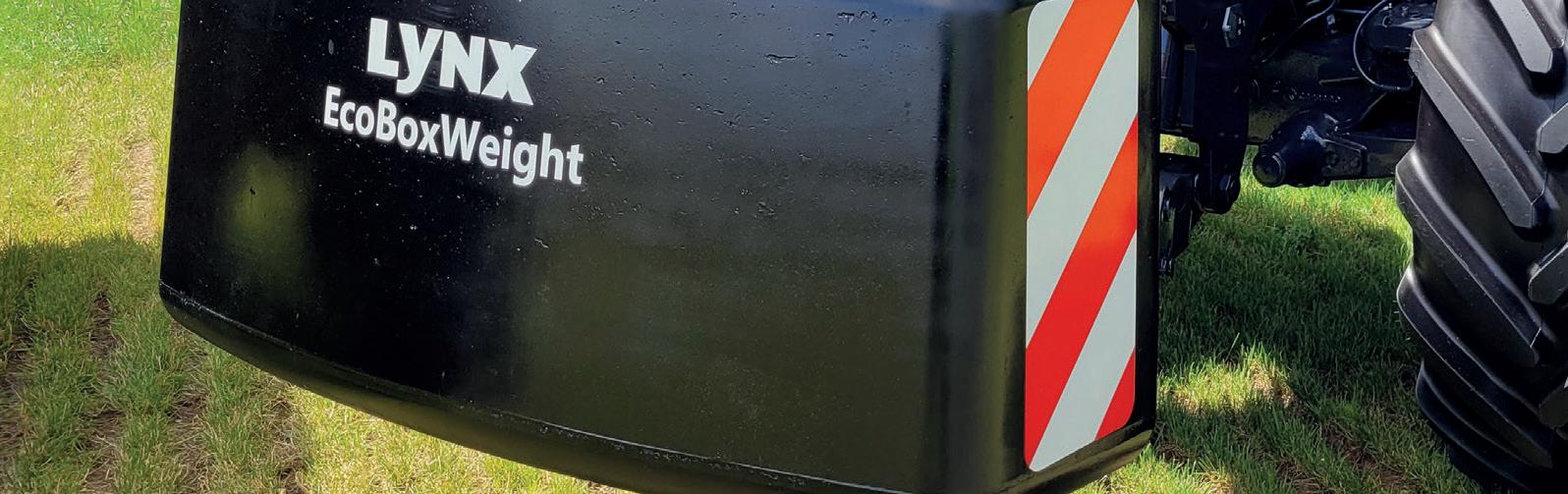
Variable Density Block and Toolbox Weights
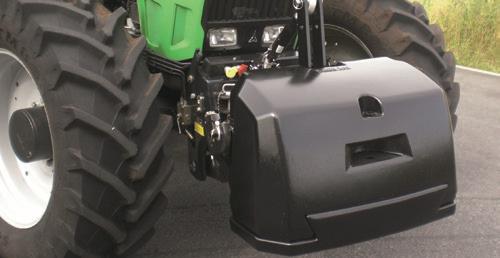
When it comes to weights, you don’t have to go bigger to get heavier. Thanks to the variable density technology of Lynx magnetite composite weights, you can increase the lbs without adding the inches. In short, you achieve the weight you need from a more compact unit.
Options include toolbox weights, add-ons and customisation on selected models. Capacities rise from 450kg to 2500kg across the full Lynx range from basic, economy concrete blocks to premium, single-piece cast iron weights.
For the past 26 years, cows have been milked on the 600-hectare (1,483-acre) Agromilk dairy farm in Paraguay, and today there are 30 staff working there.
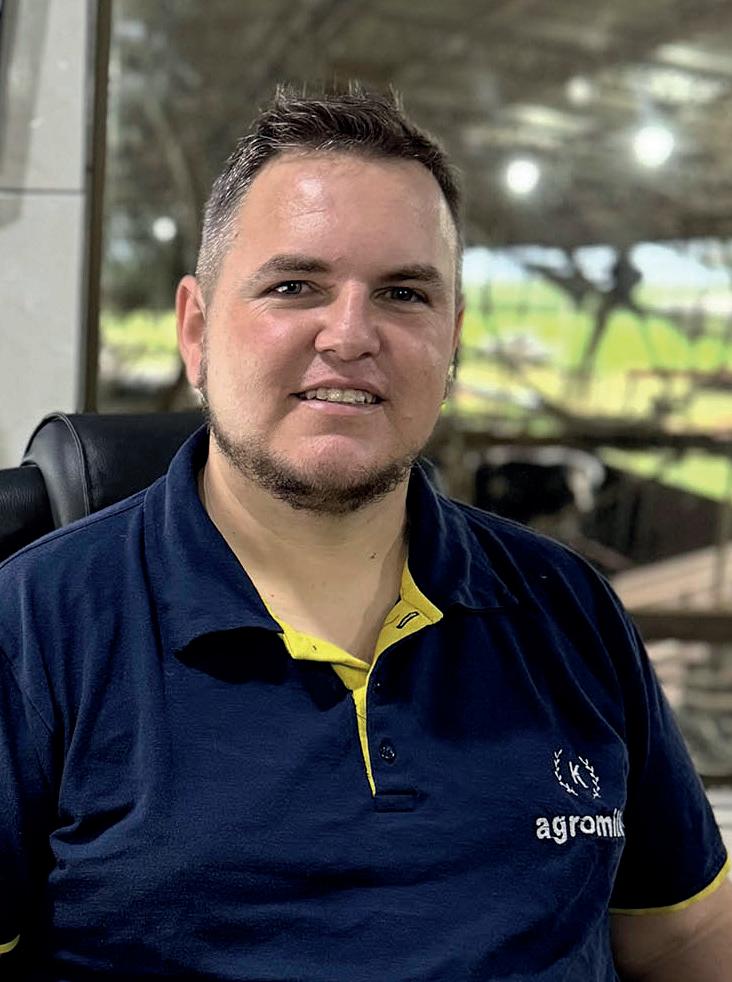
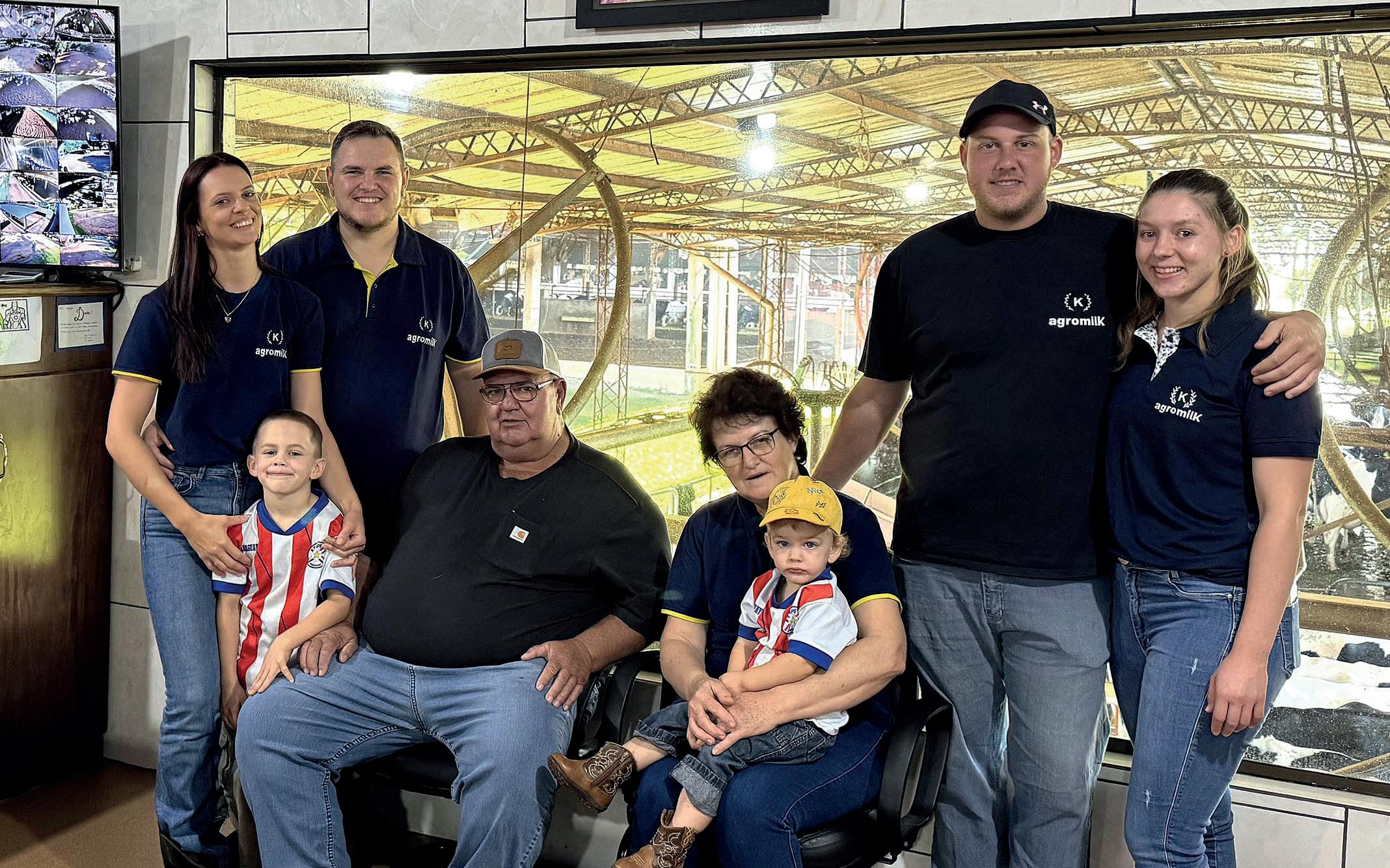
The farm, based at Colonia Tres Palmas, Caaguazu, is owned by the Kehler family: Franz, 63; his wife Maria, 59; their eldest son Hugo, 35, who manages the dairy farm; and their second son Sheldon, 25, who manages the crops.
Historically, Hugo’s grandparents were Mennonites who left Canada in 1948 and started farming in Paraguay about 40 years ago.
Better access to training in Paraguay is essential to ensure the country’s dairy farms become more efficient and the industry can thrive. Chris McCullough reports.
Paraguay aiming to grow its dairy sector
2024 an average yield of 37.9 litres per cow per day was achieved.
improve their comfort, and only the youngstock will be kept outdoors.”
them are beef animals and little is known about dairy cow numbers.
Hugo says: “Today, we dedicate 15ha to the dairy cows and 430ha are used for cultivating, with the rest used for forestry and our Brahman cattle ranching. We are currently milking 560 cows and have an additional 90 dry and pre-calving cows. About 98% of the cows are Holstein, and the remainder are Jersey or Jersey-Holstein crosses.”
Butterfat percentages are about 3.6%, increasing in winter months and occasionally dropping to 3.3% in summer. Protein is at 3.1% in summer and can rise to 3.4% in winter.
Artificial insemination
Approximately 15 years ago, the farm started using artificial insemination (AI).
All the cows on the Agromilk farm are housed in a compost barn system, with the herd split into groups of 60 cows.
The first group is fresh-calving cows up to 25 days in-milk. Then there is a group for cows selected for AI, one for late-lactation cows, and finally, the sick cow group. First-calving heifers are in separate groups.
Hugo, who is also president of the Association of Milk Producers and Breeders of Dairy Breeds, thinks there are 200,000 dairy cows in Paraguay.
About 98% of the cows
Jersey or Jercrosses.” a day, and in
Hugo says: “We always opt for medium or short-stature bulls – rare qualities in the American Holstein breed, but almost the only genetics available in our country.
The cows are milked three times a day, and in
“We choose shorter, stronger Holstein cows to withstand our high temperatures and humidity.
“Currently, we are working to house more cows in barns and
All animals at Agromilk are fed a total mixed ration (TMR) using a Storti self-propelled mixer wagon.
The cows receive four daily feedings, and all the feed in the barns is replaced once a day.
Young animals on pasture receive two additional TMR feedings.
While there are an estimated 14 million cattle in Paraguay, most of
He says: “The intention is for the entire country to develop further in the dairy sector. Currently, 50% of the country’s milk production is channelled through the La Holanda co-operative.”
Efficiency
In terms of his own business, Hugo says he plans to continue producing milk as efficiently and sustainably as possible.
He says: “We are open to growth if conditions allow, but it must be responsible growth.”
The Kehler family is helped by a team of 30 staff, who all live onfarm to run the dairy herd and the cropping enterprise. While there is interest in using new technology, Hugo says access to training is also very important, but not so readily available.
“The main problem here is a lowskilled workforce, which complicates the implementation of new technologies. In Paraguay, we have many people interested in working, but better training is necessary,” he says.
“Currently, we are looking for training methods in various areas of the farm, such as the calf-rearing unit, using the milking parlour and the operation of feeding machinery.
“Likewise, we are looking for individuals who can be developed into leaders on-farm, but finding suitable training opportunities for these is quite difficult.”
The Kehler family, from left: Vanessa and Hugo with son Santiago; Franz and Maria with grandson Yanael; Sheldon and Patricia.
Hugo Kehler
Farm facts
■ Current milk price is about USD$0.40 per litre (30ppl)
■ Milk is sold to a co-operative, La Holanda
■ In 2024, the cost per litre was USD$0.29 (22ppl)
■ Cows are milked in a 10:10 side-by-side parlour with rapid exit, using an Afimilk herdmanagement system
■ Since 2024, heifers have been genomically tested
Agromilk employs 30 workers, mostly Latinos from Paraguay who also live on-farm.
Breeding
Figures from the Kingshay Dairy Costings report show the need to focus on fertility and conception efficiencies to reduce forced culls. Dairy Farmer reports.
Drawing on data from herds using the Kingshay Dairy Manager service, the Kingshay Dairy Costings report showed 37% of cows leaving the herd in 2024-25 were selected or voluntary culls, while 63% were forced.
Within the forced group, 28% of cows were cited as leaving the herd for fertility reasons, with half of those being cows that simply did not get back in-calf.
Richard Simpson, development director at Kingshay dairy consultants, says: “For many farms, this equates to a significant 14% of all leavers and represents cows that could have stayed in production with a further focus on fertility management,” says Mr Simpson.
“With cull cows currently generating reasonable prices, there may be a tendency to take a relaxed approach to fertility, but this is a short-term solution.
“If you reduce the cows culled due to fertility complications, known as forced culls, then you can selectively cull the less-productive cows, or cows that may be at higher risk of other issues, or reduce your culling rate.”
“Addressing fertility is a critical factor for any dairy farm – and ensuring cows remain in-calf is not only essential for maintaining herd numbers, but also for optimising production and profitability.”
Focus on fertility to reduce forced culls
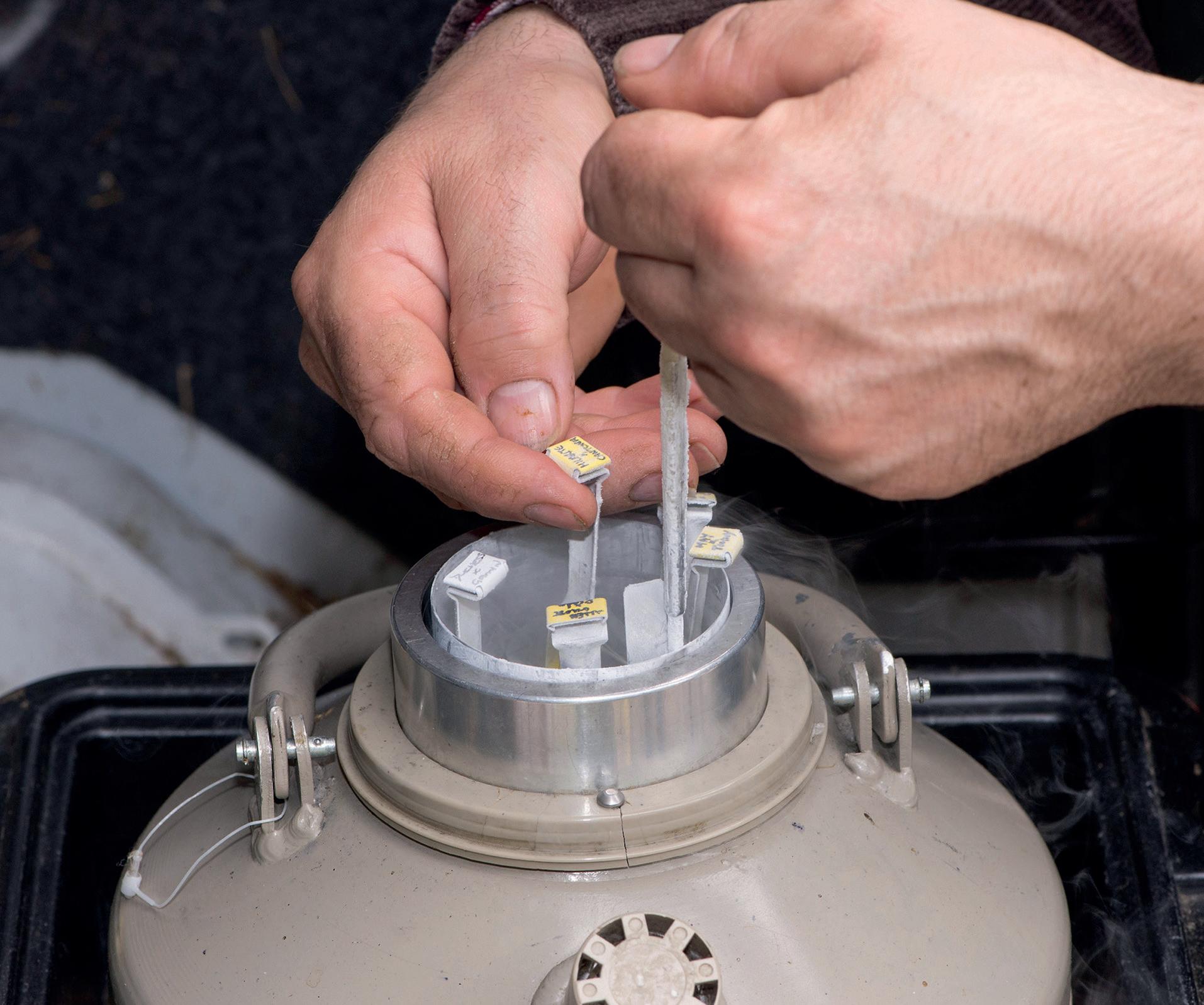
Semen should be analysed to ensure it contains enough viable sperm for a successful conception.
Richard Simpson
Breeding
VET COMMENT: IMPROVING FERTILITY AND CONCEPTION RATES
Fertility and conception rates can be improved with a targeted approach, says farm vet Eoghan McAlonan of FarmVets SouthWest, part of the VetPartners group.
“Improved fertility needs a whole-team approach including the nutritionist, breeding company and artificial insemination (AI) technicians, as well as the vet team,” says Mr McAlonan.
“As part of this, data metrics on reasons for leaving the herd should be reviewed quarterly. Fertility data allows the team to pinpoint specific areas affecting conception, whether it is heat detection, metabolic disease or transition health.”
On farms with less computerised records, he says cow-side targets can help identify areas to address – such as the number of pregnancies achieved per week, how many PDs [pregnancy diagnoses] were positive, with the aim of achieving a rate of 85%, and how many cystic cows or cows suffering from endometritis were treated.
Ensuring enough cows are being inseminated goes a long way towards improving pregnancy rates, explains Mr McAlonan.
“Focusing on the factors which directly impact whether cows get pregnant and stay in-calf is vital –the success of those inseminations should be based on targets for conception, ideally falling between 50-65%, depending on the farm system and the health of the cows,” he says.
“Also remember that healthy cows showing strong signs of oestrus are more likely to conceive, so optimising the environment where cows are housed – such as loafing space – can help them display these signs; I would aim for three sq.m per cow in the loafing area with a non-slip surface.”
Oestrus trend
An increasing trend witnessed on many farms is cows, especially higher-yielding ones, showing fewer signs of oestrus.
“Automated oestrus detection systems – such as activity monitors – can really help in picking up subtle signs of heat that may be missed,” says Mr McAlonan.
“Systems like this, in addition to making sure their environment is optimised to allow natural bulling behaviour, are both straightforward ways to make it easier to identify bulling cows.”
Monitoring bull fertility is essential,
and Mr McAlonan says farmers should ensure bulls are fertilitytested and those carrying out AI are properly trained to do the job.
Semen quality
“For AI, semen quality is key to successful conception, so semen should be analysed to ensure it contains enough viable sperm for a successful conception,” he adds.
“New technologies, such as automated semen analysis machines like Minitube, provide repeatable, objective results that ensure only the best-quality semen is used.”
Mr McAlonan says a cow’s energy status can also influence conception rates.
Cows that are underfed, overly
Focus on transition
Mr McAlonan says farmers can improve fertility factors by focusing on good transition care.
“Poor transition management can lead to health issues, such as endometritis, an infection of the uterus that reduces fertility,” he explains.
“Ensuring good transition care, with attention to nutrition, hygiene and avoidance of
Optimising the environment where cows are housed –such as loafing space – can help with conception rates.
stressed or struggling with metabolic diseases like ketosis are less likely to conceive,” he explains.
“Working with a nutritionist to ensure proper nutrition is essential for ensuring cows are in prime condition for breeding.”
dystocia, will reduce the risk of endometritis as well as improve the chances of a successful conception.
“Improving fertility is not an overnight fix, but with a targeted approach, there is significant action farmers can take to successfully reduce the 14% of cows leaving due to fertility issues.”
Eoghan McAlonan
Having installed a monitoring system to detect heats in his autumn-calving herd, Devon dairy farmer Alan Webber has seen submission and in-calf rates rise by as much as 10% in two years. Dairy Farmer reports.
For Alan and Donna Webber, who run a herd of 250 cross-bred cows at Hensley Farm near Tiverton, the focus is on producing as much milk as possible from grass.
Cows calve in an 11-week block starting in the first week of September, with a three-way cross of Friesian, Swedish Red and Montbeliarde genetics producing cows with strong feet and legs to enable them to thrive on the farm’s rolling pastures and steep cow tracks.
Mr Webber says: “We converted to organic in 2001 and try to keep things simple to minimise labour and machinery requirements.
Dry
“We run the herd on an autumn block calving system to produce milk from grass in the autumn and spring and because our land is very dry, which means milk yields naturally decline in the summer due to a lack of fresh growth.
“Having the entire herd dried off for the second half of August also gives us some quality time as a family and, by the time Christmas comes around, most of the hard work involved in rearing youngstock has been done, so we can enjoy the festive season with less to worry about.”
The herd averages 6,750-7,000 litres per lactation. Prior to 2022, tail paint was used to detect heats.
Organic herd benefits from monitoring tech
Mr Webber says: “We do all our own AI [artificial insemination], using sexed semen for the first 18 days to produce at least 60 replacement heifer calves. That means all our dairy heifers are born within three weeks, which makes rearing youngstock more efficient. We then switch to higher-fertility beef semen for the final six weeks and use a bull as well to catch anything that is not already back in calf.
“We were getting decent results by using tail paint, but I am always looking for ways to make our lives easier and to improve cow performance. I also wanted to shorten the breeding window to nine or 10 weeks to make our lives even easier in the summer.”
Using tailpaint to spot heats involved a lot of time spent inspecting
the herd, with a final walk through of the cows at 9:45 in the evening.
Mr Webber says: “The problem was, if a cow started bulling after 10pm, we would not see her until the next morning.
“And even then, we would not know when she came into heat, so we could not be sure when to AI her. We would therefore have to serve her in the morning and again that afternoon.”
Having been left unimpressed by a different heat detection system a decade ago, Mr Webber was hesitant about investing in new technology and talked to local farmers and vets when researching this new one.
However, since the SenseHub collars were installed in 2022, the herd’s fertility figures have improved significantly. The 24-day submission
rate has risen from 87% to 92%, with the six-week submission rate improving from 96% to 98%.
The herd’s in-calf rate at 24 days has also improved from 52% to 62%, with the six-week in-calf rate up from 74% to 80%.
“We have gone through two breeding cycles with the system and have a much clearer understanding of when each cow should be served depending on whether we are using conventional or sexed semen,” says Mr Webber.
“As a result, we are using sexed semen a little later, sometimes waiting for up to 12 hours instead of straight away. We are getting more consistent results, with the overall first service conception rate currently at 58%.”
He says the are using fewer straws
Since using the collar system, the 24-day submission rate has risen from 87% to 92%, with the six-week submission rate improving from 96% to 98%.
Alan Webber
of semen and have reduced their spend on fertility drugs to synchronise heats.
He adds: “Also, our vet visits are more productive as we are able to focus on preventative treatments rather than firefighting existing problems. This year has been our best ever in terms of fertility with more than 80% of the herd calving
in the first six weeks. We have already reduced the calving window from 12 to 11 weeks and we are on target to reach 10 weeks next year.
“We are producing replacement calves more efficiently from our best cows and, with calves born earlier, we are able to make better use of fresh grass in the autumn and spring.”
In addition to fertility improvements, the heat-detection system has also contributed to herd health benefits and labour savings.
Mr Webber says: “We no longer need to look for signs of heat and we have dropped our night-time inspection entirely.
“We bought the collars primarily to improve heat detection and did not know much about how the system monitored health based on rumination. We do not get too many serious health problems and have only had a handful of displaced abomasums over the past 10-15 years.
“So, when we had one recently, it was reassuring to know the system spotted the first signs of reduced rumination and it allowed us to inspect and treat the cow much sooner.”
Mr Webber has recently put collars on the herd’s heifer population, resulting in a 20% increase in in-calf rate.
He says: “We are spotting heats more accurately and inseminating at the optimum time.
Technology
“We are also using the system’s fertility and health data to operate the parlour’s shedding gate.
“It is not an Allflex gate, so it does not communicate directly with the SenseHub collars, but it only takes a minute or two each morning to transfer the heat and health reports into the gate’s system.
“It is a really reliable and accurate system which saves us a huge amount of time and hassle.
Saving
“For every 10 cows that need to be drafted for AI or treatment, we are comfortably saving more than 15 minutes per milking.
“We are hoping to install a similar system on a second unit where we have built a spring-calving herd of 220 cows.
“We have applied for a grant for collars and a sorting gate to improve heat detection and to modernise how the herd is managed, and to enable me to monitor the entire system from home.”
Winter Teat Dip Selection
How can Kersia help to protect teat skin condition?
•Pre and post, ready to use and highly convenient
•Actives: Chlorhexidine and lactic acid
•Contains a combination of e ective actives to provide good disinfection
•Formulated to create excellent foam quality and superior cleaning power
•High emollient content for excellent skin condition
Fertility figures and health have improved since installing the hub.
The UK Dairy Cattle Welfare Strategy
2023-2028 was launched two years ago by Ruminant Health and Welfare (RH&W), with the support of NFU, AHDB and 19 industry signatories.
Latest data and evidence shows advancements across the six welfare goals: healthy feet, thriving cows, healthy udders, positive welfare, comfortable cows and appropriately nourished cows.
At a briefing, Gwyn Jones, chair of RH&W, said: “Two years ago, we launched this critical strategy pathway, which detailed six ambitious welfare goals. This review shows key milestones achieved so far, and how farmers, vets, researchers, Government bodies and stakeholders throughout the dairy supply chain are working together to continue moving in the right direction.”
Data
Dr Alison Russell, animal health and welfare scientist at AHDB, said the progress report drew on data, where available, to look at the status of cow welfare to assess progress.
She said: “It brings to light the wide range of industry initiatives out there, and also looks at scientific research and data, collected by consultancy companies.”
Looking at the specific welfare goal of healthy feet, Dr Russell said while there was no standardised system of gathering foot health data, the report drew on a range of data streams and research and showed there had been a decrease in lameness incidence since 2020.
She said this was due, in part, to a
Reduced lameness and better udder health are key outcomes of an early-stage review of the UK Dairy Cattle Welfare Strategy. Katie Jones finds out more.
Progress in welfare of UK dairy cattle
number of industry initiatives, including the launch of the GB Dairy Cow Lameness Manifesto earlier this year. This details 21 action points across four strategies, aiming to reduce lameness prevalence to less than 5% in 95% of British dairy herds by 2044.
Dr Russell said the increase in professionally accredited courses and the number of registered mobility scorers was positive.
Carmarthenshire/Pembrokeshire border, has seen significant levels of improvement in his herd of 400 pedigree Holsteins and 200-plus followers. He has achieved this by focusing on improving mobility, with the implementation of the Healthy Feet Programme.
comfort took a step forward, as evidenced by less hair loss and fewer lesions and swellings, using Red Tractor Assurance data.
Welfare
There is already evidence to show improvement and goals are achievable
GWYN JONES
She said: “We have seen the expansion of the Register of Mobility Scorers, which boasts 860 accredited scorers, and the development of AHDB’s Healthy Feet Programme.
“This further demonstrates the industry’s commitment to advancing skills-based, welfare improvements at farm-level, with a particular focus on lameness.”
Farmer Richard Twose, from the
“A team effort and zero tolerance towards lameness, focused attention to detail, plus simple protocols and procedures have together made a great difference to overall herd foot health.
“We are seeing 30% less lameness, identified through mobility scoring, with massive reductions in digital dermatitis, sole ulcers and white line disease.”
The report also highlighted improvements in udder health, with reduced somatic cell counts and an improving mastitis picture. Cow
There were positive welfare advancements, with a focus on providing opportunities for cows to exhibit natural behaviours, such as access to brushes and outdoor areas.
Mr Jones said: “Economic and environmental pressures on farmers remain and continue to impact welfare outcomes, but there is already evidence to show improvement and goals are achievable.
“Innovation and technology also present opportunities for the future. These advances, alongside continued dedication and collaboration can enable us to elevate standards and improve farm efficiency.”
Six welfare goals were set out when the initiative launched two years ago.
PICTURE: MARCELLO GARBAGNOLI
Over the past seven years, Andrew Rees, who farms at Moor Farm, Walwyn’s Castle, which is just three miles from the coast in Pembrokeshire, has been adopting a number of regenerative farming principles.
The 182-hectare (450-acre) farm carries a herd of 300 Friesian cows plus replacements, and Mr Rees says the recent change in farming practice has included the introduction of adaptive grazing techniques to provide the paddock with longer rest periods.
He says: “The reasons for adopting these principles are numerous, but primarily the two leading factors were financial and observations that the farm ecosystem was stagnating in our previous prescriptive methods.”
While much of the development has been self-led, Mr Rees says that as a member of First Milk, he has also been encouraged to adapt to more regenerative farming techniques.
He says: “As the understanding within the industry continues to
Andrew
Rees
has
introduced
a number of initiatives designed to work with nature, minimise impacts on water quality and increase business resilience. Dairy Farmer reports.
Environmental and financial reasons for adopting regen ag
increase, there are more opportunities for peer-to-peer learning as opposed to getting information from the supply industry, as has typically been the case in recent history, as the great thing about farming this way is the reduced reliance on purchased inputs.
“I am a firm believer that learning by self-discovery is far more powerful than being spoon-fed information. That said, access to resources and signposting producers to independent resources that can make positive change would be appreciated. Grants offer encouragement and financial support, enabling farmers to experiment with ideas which provide the opportunity to shift mindsets.”
finances allow, he plans to plant more trees both in riparian areas and to create silvopasture-type environments.
He says: “We are trying to make decisions that have compounding effects on our ecosystem, so that things can continue to improve over time.”
Positive results
And he says the results are already positive, both in terms of performance and the environment.
improvements in the health of our farm ecosystem.”
He adds that other initially unexpected benefits have come in terms of animal health, with improved fertility rates and lower incidence of disease.
Mr Rees says the industry as a whole needs to have a greater understanding of soils and the way they function.
Financial support for riparian tree plantings has been received from the Welsh Government via the Small Grants – Woodland Creation scheme.
Mr Rees says as time and
He says: “Over a three-year period, we showed no change in grass production while achieving a 63% decrease in chemical fertiliser application. We are now also regularly having the two streams that run through the farm tested by Friends of the Cleddau.
“And over the past four years, we have conducted Ecological Outcome Verification monitoring through the Savory Institute.
“This monitoring has shown that in the past two years, we are starting to slowly see incremental
He says: “The six principles of soil health are well-documented and easily understood once a [farmer] understands their own context. Minimising disturbance, keeping the soil covered and having a diversity of plants and insects fosters robust soil aggregation. Better soil aggregation creates more stable pore spaces that allow water to infiltrate rapidly rather than pool or runoff.
“At the same time, having a living root in the soil and increased microbial activity can lead to an increase in soil organic matter, boosting the soil’s water-holding capacity, making farms more
Farm facts
■ The farm is bordered by streams to the north and south that are tributaries to the Cleddau River at Sandy Haven, in the Milford Haven estuary
■ Spring-calving herd
■ In 2022, Andrew Rees was runner-up in the Farm Carbon Toolkit’s Soil Farmer of the Year award
Andrew Rees
Adaptive grazing techniques have recently been introduced on Moor Farm.
PICTURES: GARETH TURNBULL
resilient to drought and heavy rainfall while reducing flood risk within the surrounding catchment.
“Every 1% increase in soil organic matter can increase the soil’s water-holding capacity by 20,000 gallons per acre. For the average-sized Welsh farm [48ha (118 acres)] that is the equivalent of 3.6 Olympic-sized swimming pools. That increased soil organic matter also binds nutrients, holding them in a stable form until plants need them.”
Cashflow
Mr Rees concedes that each farm has a different context financially and the changes made at Moor Farm have been carefully costed out and made as and when cashflow allowed.
He says: “It remains to be seen but should be hoped that the new Sustainable Farming Scheme [SFS] will be of assistance to those wishing to adopt more regenerative practices.
“The SFS has promising elements to support farmers in preventing water pollution, particularly around
I am a firm believer that learning by self-discovery is far more powerful than being spoonfed information
ANDREW REES
funding for riparian planting and fencing off waterways. Multi-species herbal leys also show potential to improve water-holding capacity and reduce runoff, though their success depends on proper management practices and they should not be seen as an alternative to reducing runoff in the first instance.
“While the intention behind SFS appears sound, its ability to deliver meaningful improvements to our rivers and farms will depend on the strength of its implementation.
Moving to regenerative farming techniques has led to a lower incidence of disease in the herd.
“Since leaving the EU and the security of the Common Agricultural Policy, being able to plan for the long term is now challenged by the Welsh Government’s four-year electoral and 12-month budget cycle, making it difficult for farmers to commit to significant changes, such as moving towards a more regenerative or nature-friendly approach.
“An indicative budget for the next five years would bring much-needed guidance to be able to successfully plan ahead for those wanting to make such changes.”
As well as Government support, Mr Rees also says financial support for regenerative farming practices from institutions like banks, which
are starting to recognise differences in farming practices and to lend more favourably to those implementing them, is a positive step.
He says: “It is also important to note that these transitions should be farmer-led: every farm is different, and what works for one may not work for another.
“There are also opportunities from the private sector to fund ecosystem services and drive change along the supply chain, such as organisations funding tree planting or the recently announced project between First Milk and Nestle to support farmers to reduce soil compaction and improve water infiltration on farmland.”
Animal Health
The winter housing period brings with it a number of pressures and problems which need to be tackled head-on, with the best expert advice.
34 JOHNE’S
The journey to becoming disease-free
36 BOVINE TB
Helping to prevent breakdowns at housing
38 DOWNER COWS Treatment and diagnosis
40 ARTIFICIAL
INTELLIGENCE
Co-pilot for animal health insight
42 BIRD FLU
A look at the situation in American dairies
Q fever affecting fertility
Caused by the bacterium coxiella burnetii, Q fever has the potential to impact herd productivity, particularly fertility. In the past, awareness of the disease has been low, but the industry is becoming more knowledgeable, says Helen Cockerill, of Derwent Vale Farm Vets.
Ms Cockerill says that until two years ago her practice had not diagnosed Q fever in her clients’ livestock as it was not a disease discussed during farm visits and they did not have any suspicions on-farm.
She says: “As many of the symptoms associated with Q fever can also be explained by other risk factors, diagnosis can be difficult.”
Recent data from 900 Ceva Q Test bulk milk tank polymerase chain reaction (PCR) samples has identified that symptoms reported in herds that tested positive for Q fever included abortions (52%), infertility (51%), metritis/endometritis (20%), retained placenta (14%) and pregnancy loss/still borns/weak newborns (2%), however the pregnancy loss data may well be higher as these were only logged after Ceva started looking into the other options. Herds have also reported pneumonia-type symptoms, which is similar to the disease in humans.
Audit
Ms Cockerill says her thoughts on the disease changed in 2023 when her practice was offered the opportunity to carry out an audit to identify cows with symptoms or parameters that suggested a problem within her clients’ dairy herds.
“Following the audit, the farms that identified Q fever symptoms in their herd submitted bulk milk samples and 33% came back PCR-positive for the disease. We submitted two bulk milk samples three months apart from any herds that were negative on the first test.
“The results were a surprise as we had not suspected Q fever on these units. However, it became apparent as we investigated further that Q fever could be playing an active role in these herds. We blood tested ‘suspect’ animals that had been recorded as having metritis, endometritis or pregnancy losses.
On all the farms these results showed exposure to the Q fever pathogen, with some very high antibody results in some cases.”
Ms Cockerill says that since the practice’s original audit in 2023, they are now more aware of what to look out for. They have identified another four farms that were PCR-negative on the first screening, that are now positive for Q fever. This was through a variety of testing including abortion sampling, bulk milk analysis and serology.
“We are now reviewing herds with renewed vigour and have identified a variety of Q fever symptoms. These include metritis and, in particular, cows that seem to struggle to clear uterine infections in a timely way. We are also seeing an increase in retained membranes and some pregnancy losses around 35 days or returns to oestrus post-service at irregular intervals.”
Vaccination is key to controlling the disease and involves a primary course of two injections three weeks apart, followed by a regular booster.
Ms Cockerill says: “Vaccination is proven to have had a significant impact on fertility in other herds and while this farm has started to vaccinate it is too soon to comment on the impact. The question for us remains, how has this disease entered the herd? We know it has not come in with infected animals. Was it biosecurity infringement and the fact that the infection can spread on wind for a number of miles?”
Ceva has recently introduced the Q Review, a free-of-charge service to provide farmers with a snapshot of costs associated with fertility issues linked to Q fever in all-yearround calving herds. Assessing an individual herd’s fertility in comparison to industry averages and targets provide farmers with useful information as a benchmark for infertility against industry targets. Ms Cockerill says that the practice has used the Q Review on a couple of farms to help establish the impact that the disease may be having on fertility and flagged any issues to investigate further.
A heat map showing incidence of Q fever as diagnosed by Ceva’s Q Test, with a national average of 46% recorded from 900 tests.
Problems with pregnancy and birth could be an indicator of Q fever.
IS BRD BOTHERING YOU?
BREATHE EASY
NASYM" : lyophilisate and solvent for suspension for injection or nasal spray for cattle. Each 2ml dose contains: Live attenuated bovine respiratory syncytial virus (BRSV), strain Lym-56 10 4.7 - 6.5 CCIDS0. INDICATIONS: Active immunisation of cattle to reduce virus shedding and respiratory clinical signs caused by bovine respiratory syncytial virus. For more information about side-effects, precautions, warnings and contra-indications please refer to the packaging or product leaflet. Further information available from SPC or on www.hipra.com. MARKETING AUTHORISATION NUMBERS: UK(GB): Vm17533/5008, UK(NI): EU/2/19/241/001-2 MARKETING AUTHORISATION
HOLDER: Laboratories Hipra, S.A. Amer (Girona), SPAIN. LOCAL REPRESENTATIVE: HIPRA UK&IRELAND, Foxhall Lodge, Foxhall Road, NG7 6LH, Nottingham, United Kingdom, Tel.: (+44) 0115 845 6486, ukandireland@hipra.com, www.hipra.com. LEGAL CATEGORY: UK: POM-V. Veterinary medicinal product subject to veterinary prescription. Use medicines responsibly. Under veterinary prescription, advice should be sought from veterinary prescriber. Prescription decisions are for the person issuing the prescription alone.
HIPRABov1s·� Inactivated vaccine with Histophi/us somni and Mannheimia haemolytica leukotoxoid in injectable emulsion for cattle INDICATIONS: For the reduction of clinical signs and lung lesions caused by Mannheimia haemolytica serotype Al and Histophilus somni in calves from 2 months of age. For more information about side-effects, precautions, warnings and contra-indications please refer to the packaging or product leaflet. Further information available from SPC or on www hipra.com. MARKETING AUTHORIZATION NUMBER: UK: Vm 17533/4005 MARKETING AUTHORIZATION HOLDER: LABORATORIOS HIPRA, S.A. Avda. La Selva, 135 17170Amer (Girona) Spain. Tel (972) 430660 - Fax (972) 430661. LOCAL
REPRESENTATIVE: HIPRA UK&IRELAND, Ltd Foxhall Business Centre, Foxhall Lodge, Foxhall Road, Nottingham - NG7 6LH - UNITED KINGDOM. LEGAL
CATEGORY: UK: POM-V. Use medicines responsibly. Under veterinary prescription, consult your veterinary prescriber for further advice. Prescription decisions are for the person issuing the prescription alone. Safety and efficacy of these products together have not been evaluated. A decision to use either of these vaccines before or after any other veterinary medicinal product therefore needs to be made on a case-by-case basis.
HIPRA UK AND IRELAND Foxhall Lodge, Foxhall Road, NG7 6LH, Nottingham, United Kingdom Tel (+44) 0115 845 6486 · ukandireland@hipra.com · www.hipra.com
The entire farm team has been involved in actions to eliminate Johne’s disease from Michael Brown’s dairy herd. Chloe Palmer reports.
Getting on top of Johne’s disease is a team effort
Dairy farmer Michael Brown is the first to admit that for several years, his approach to tackling Johne’s disease in his 400-head dairy herd was one of apathy.
Mr Brown who farms at Coton Hall Farm in Coton-in-the-Clay, Staffordshire, says: “We had been testing for Johne’s for years and had positive results, but never did anything about it. My vet told me I needed to change the system here to better manage the disease.
“In 2020, we had 39 cows which tested positive for Johne’s. There were 30 to 40 cows a week going into four calving bays which gave us very little opportunity to clean the sheds out properly.
“The first major change we made was to construct three new dedicated calving bays and two new yards, and this meant the density of cows and calves was reduced.”
The herd was also moved to autumn calving and sexed semen was introduced.
Mr Brown says: “This allowed us to calve down the low-risk Johne’s cows selected to breed replacements in August and September ahead of the rest of the herd and get the calves away.
“This means that our replacement calves are coming into housing which has been thoroughly cleaned out and has had no animals in for several months.”
Mr Brown acknowledges his approach to managing newly-born calves is ‘a little old fashioned’ as he lets them suckle for 24 hours to ensure they get adequate colostrum.
He says: “We remove the calves
at a day old and they then go on to powdered milk. Previously, we were feeding them whole milk, especially when the milk price was low, and feeding it straight from the parlour, and it may have included milk from Johne’s positive cows.”
Confronting Johne’s has been a team effort and everyone who works at the farm is involved.
Mr Brown says: “We now have regular meetings with all the staff, even the tractor drivers, to ensure everyone is aware of the protocols.
“We have a vet-led WhatsApp group so the team knows the highrisk cows which need to be tagged and managed carefully; they are calved separately away from the rest of the herd.
“We put all the box muck from the calving pens on to maize ground and any slurry scraped from yards or sheds is dragged well away from calves. We do not spread slurry on to any fields which will be grazed by the youngstock.”
Gill Whitehurst and Fiona Ridout from Glenthorne Vets have
worked closely with Mr Brown throughout the Johne’s journey and have brought ‘fresh pairs of eyes’ to the operation, pointing out
risks which might otherwise have gone unnoticed.
Ms Whitehurst says: “We walk around the farm and watch what is
Johne’s disease has been drastically reduced at Coton Hall Farm thanks to new calving bays and yards, plus a tight hygiene regime.
TOP TIPS TO PREVENT THE SPREAD OF JOHNE’S DISEASE
DR James Hanks, director and livestock information specialist at PAN Livestock Services, offers the following advice:
■ Instigate at least quarterly testing for Johne’s to highlight where it is in the herd
■ Prepare a farm-based risk assessment to predict and better understand how the disease is spreading in the herd
■ Identify high-risk animals and tag them clearly so they can be
carefully managed within the herd
■ Do not breed from infected animals with a test result above 30 – source replacements from low-risk animals with no family history of Johne’s
■ Calve replacements first from cows served with sexed semen so they are in the cleanest pens. Ensure these calves are isolated from the rest of the herd
■ Source stock bulls from low-risk Johne’s herds and ensure they are tested regularly for Johne’s with the
rest of the herd, as clinical symptoms rarely show until an animal is at least three years old
■ Animals with a test result of more than 100 or with two consecutive results above 60 should be a priority for culling
■ Hygiene is the central plank of effective Johne’s control – keep muck away from calving pens and do not spread any manure or slurry on pasture which will be grazed by youngstock
happening on a day-to-day basis and so we might spot something which presents a disease risk.
“For example, stock bulls are often overlooked and may not be included in the testing regime.
“These bulls might have come from a farm with Johne’s and if they are put in with the dry cows, they pose a huge risk.
“Ensuring that the staff member responsible for calf-rearing has limited contact with cows elsewhere on the farm is preferable. They should always put on clean overalls and footwear when working with the calves and this regime will have
benefits in reducing the risk of transmission of other diseases.
“Ensuring all high-risk animals are marked up correctly is important. As well as tags, they should also have tail and leg tapes so they are easily identifiable in the parlour so no colostrum is collected and saved from them.”
At the moment, there is now just one ‘red’ cow at Coton Hall Farm which has been left barren and Mr Brown accepts it will need to be culled at the end of its lactation or sooner if results start to climb. He is equally disciplined in his approach to breeding the next generation.
Farm facts
■ 264 hectares (650 acres) of mainly permanent and temporary grass with 32.5ha (80 acres) of maize
■ The farm is tenanted and Michael Brown is the second generation of his family to farm there
■ The milking herd comprises 400 head of Holstein cows plus
He says: “We take the time to look carefully through the information we get from Johne’s tests and exam-
around 250 followers. Average yield for the herd is 9,000 litres
■ Mr Brown employs four full-time members of staff and several part-time staff and relief milkers
■ The herd is seasonal calving and the farm supplies Arla with the milk going to Tesco on a non-aligned contract
ine the background to our maiden heifers, to make sure we make the correct breeding decisions.”
Ask your vet for more information
Michael Brown
There
are a number of measures farmers can take to help protect dairy herds from
the
risk of bovine TB at housing this autumn. Dairy Farmer reports.
Enhance biosecurity to lower bTB risk at housing
Akey way to reduce the challenge of bovine TB at housing is to focus on measures which reduce the source and reservoir of infection in buildings, says Micheal Head, an independent TB Advisory Service
(TBAS) adviser and Kingshay’s training and veterinary consultant.
He says this can be achieved by both eliminating the source of infection and putting measures in place to enhance biosecurity.
He says: “As a TBAS adviser, I regularly advise farmers to
BIOSECURITY TIPS
THE following tips will help boost biosecurity and protect herds against infectious diseases, such as bovine TB:
■ Provide foot dips for visitors to the farm – including vets, foot trimmers and sales representatives – and farm workers moving between different areas
■ Speak to a vet about identifying high-risk cattle and manage them separately at calving
■ Ensure water troughs are clean and use separate feed troughs for different groups of cattle
■ Avoid mixing groups, such as by age, production stage or housing unit, as this will help contain the spread of any disease
identify what type of wildlife risk they have on-farm and then make a targeted plan to deal with this.”
Wildlife cameras
Mr Head adds: “Installing wildlife cameras will give you a better understanding of what wildlife
is visiting the farm, including badgers, and allow you to assess what they are visiting for to help make decisions on which areas of the farmyard are a priority to focus on.
“From here you can look at implementing specific measures.”
Michael Head (see inset), of
says identifying the type of wildlife risk there is on-farm is integral for forming a
Kingshay,
‘targeted plan’.
PICTURE: JOHN EVESON
HOW TO REDUCE THE RISK FROM WILDLIFE
■ Regularly clean and disinfect water troughs when not in use as bovine TB can live in water for up to 60 days. This is particularly important prior to returning stock to housing to minimise the risk of cattle being exposed to contaminated water
■ Cover water troughs when not in use to ensure that wildlife cannot access water sources at housing
■ Apply roller bars to the side of troughs to reduce access from wildlife such as badgers
■ Close doors to livestock areas at night to prevent wildlife accessing them and to reduce the chance of bTB transmission through indirect transmission routes such as contamination of feed, water and bedding
■ Consider investing in roller
About the TB Advisory Service
THE TB Advisory Service (TBAS), which is being delivered by Farmcare Solutions Limited – a joint venture between VetPartners, Obligace, Independent Vetcare and UK Farmcare – offers livestock farmers with bovine TB-susceptible species free vet visits to receive biosecurity advice to protect their animals from the
disease. TBAS has trained more than 400 vets across England to deliver these funded on-farm visits, with cover available in all 48 counties in England.
rMore details at tbas.org.uk. Find out about level of risk of bTB from neighbouring herds at ibtb.co.uk
doors as an effective method to reduce the chance of wildlife visiting the farmyard at night
■ Add mesh or sheet to gates and doors to help prevent wildlife entering cattle yards and buildings. This helps reduce opportunities for badgers to come into contact with feed, water and bedding. An Animal and Plant Health Agency study found that panels were 100% successful in excluding badgers from buildings and yards when correctly installed and well maintained
■ To help reduce indirect bTB transmission, add badgerproof barriers to the bottom of gates and doors and ensure the ground underneath is level with gaps of less than 7.5cm to prevent badgers gaining access to sheds and feed stores. Use electric fencing to
protect routes of entry –strands of electric fencing wire at 10cm, 15cm, 20cm and 30cm above the ground will deter badger access to routes of entry to the farmyard and secure silage clamps
■ Consider installing badgerproof troughs and raise existing water and feed troughs to a height of more than one metre above the ground
■ Tidy up spilled feed –badgers are more likely to visit farmyards where feed is more readily available for them to access
■ Think about reducing the risk from badgers at next year’s turnout. Empty all water troughs over winter because troughs are easier to clean out and disinfect before refilling with clear, fresh water at turnout.
HAS YOUR HERD BEEN LEFT IN WORSE CONDITION FROM THIS SUMMER’S PROLONGED DRY SPELLS?
WEATHER vs. FORAGE: WHAT’S THE IMPACT ON YOUR CATTLE?
Drought has:
• Stunted grass growth and DM yield
• Reduced plant uptake of vital minerals
• Lowered energy, trace element, and vitamin levels in conserved forage
THE SOLUTION?
BRIDGE THE GAP with guaranteed supplementation from Agrimin’s ALL-TRACE® & SMARTRACE® boluses to help maintain:
• DLWG
• Fertility
• Immunity
• Feed conversion
Animal Health
Pinpointing the reasons for a cow being unable to rise can be problematic, says Sally Wilson of Evolution Farm Vets, Somerset. However, she says downer cows can be divided into primary and secondary categories.
“The primary category covers the cause of the cow being down, and the secondary category includes conditions that might develop as a result of her remaining in a recumbent position over several hours.”
She explains the primary category can be divided into four main types: metabolic, inflammatory, neurological and traumatic. Examples of metabolic diseases, which can be responsible include milk fever, nutritional acidosis, ketosis and fatty liver disease, as well as hypokalemia, which is associated with a potassium imbalance.
Conditions such as acute mastitis, septic metritis and peritonitis come under the inflammatory heading, while some downer cows will be suffering from neurological conditions like femoral or sciatic nerve paralysis.
A fractured femur or a dislocated hip fall into the traumatic category, although it can also include muscle, tendon or ligament rupture.
A downer cow is classified as an animal that is down and has been unable to rise for at least 12 hours, says Mrs Wilson. It will be vulnerable to developing conditions in the secondary category.
“It is not uncommon for downer cows to suffer from muscle and nerve damage, which can lead to muscle breakdown. This is sometimes called ‘crush’ syndrome, and it can be fatal. Once the muscle starts to break down, it can release proteins which put pressure on the kidneys and ultimately lead to kidney failure.
“More serious physical injuries can also be sustained by the cow as she attempts to get to her feet.”
Primary cause
She says the priority is to identify the primary cause. “If the cow has gone down with milk fever, for example, the response may be straightforward, and she can be treated without veterinary intervention. However, the farm vet should be called in if there is any doubt over the cause of her condition.
“She may have advanced toxic mastitis, for example, and culling may be the best option, in terms of both welfare and financial expenditure. The same could apply if she has
Downer cows can suffer injuries sustained as a result of bullying if space is not adequate, or if floor surfaces are unsuitable.
A downer cow’s best chance of rejoining the herd lies in having a strict protocol for rapid diagnosis and treatment. Wendy Short reports.
Treating and diagnosing downer cows
sustained a serious injury like a fractured femur or a dislocated hip.”
Initial action should include taking her temperature and checking for dehydration by pinching the skin, to determine whether it remains ‘tented.’ A very dehydrated cow will also have sunken eyes, she adds.
“A cow that looks bright and alert
and is trying to rise to her feet is more likely to have suffered a physical injury, while inactivity and apathy could point to a systemic disease. The longer she is down, the more likely she is to develop secondary physical injuries.”
After the cause has been confirmed, the cow will almost always
It is not uncommon for downer cows to suffer from muscle and nerve damage, which can lead to muscle breakdown
SALLY WILSON
PICTURE: JOHN EVESON
benefit from immediate pain relief, along with hydration and regular lifting, she advises.
“Hip clamps are most commonly used for lifting cows and they must be managed with care and attention, often with the addition of straps positioned behind the front legs. A flotation-type device is another option, although its use is less widespread.
“I would suggest that a downer cow is lifted and supported for 20-30 minutes at a time, at least twice a day, and more frequently if time allows.
“Pain relief, and any other treatment as advised by the vet, should continue, along with access to food and water. Ideally, she should be lying on deep sand to help with grip, but a thick straw bed can sometimes provide a more practical alternative. Cows in milk should be stripped out regularly to prevent mastitis.”
Threshold figure
She points to a threshold figure for annual downer cow numbers.
“Every farm will have an occasional downer cow. However, in my estimation a farm that records more than three annual cases per 100 cows may have a wider problem and would be advised to investigate further.
“Metabolic downer cow cases can often be traced back to dry cow management. I recom-
mend a review of general management, starting with dry cow nutrition and confirming that it meets the cows’ requirements. Deficient rations will increase the risk of metabolic disorders.”
A high number of difficult calvings is another red flag, as physical damage may not always be immediately evident. Another area of focus is to ensure adequate trough and/or pen space, because injuries can be sustained as a result of bullying.
“Along similar lines, frequent incidents of cows slipping or falling can be an indication that the floor surface is unsuitable, and a lack of planning on cow flow can produce similar results.
“Any measures that can reduce downer cow numbers in a herd will benefit both cow welfare and the bottom line,” says Mrs Wilson.
NEW
What if you could reduce losses due to Mycoplasma bovis respiratory disease?
Protivity ®: the first modified-live vaccine for Mycoplasma bovis.
The days of relying on antibiotics alone to help control Mycoplasma bovis are over. It’s time to change the game for your herd with Protivity.
Speak to your vet for more information
a Simcro VS Injector
Sally Wilson
Artificial intelligence features increasingly in day-to-day life, but how can livestock farmers harness the benefits of this fast-changing technology? Katie Jones reports.
Artificial intelligence must serve the farmer
While artificial intelligence (AI) heralds the ‘fifth industrial revolution’, according to speakers at the first AI(Live) event held at the Science Museum, London, the message was that it should be used by livestock farmers in a ‘co-pilot’ capacity.
Many of the speakers at the event agreed the technology must serve the farm and the farmer and not the other way around – but there would always be a place for good stockpersons.
AI expert and keynote speaker Dan Sodergren said: “AI does not care if you like it or not, it will change everything. It is not a ‘nice to have’, it
is vital for survival. We cannot leave farming in the third or fourth revolution.”
However, he added that it was important that farmers were involved in this AI journey.
He said: “Every farm and farmer is unique. AI can amplify the individuality of farms and farmers, but the technology must serve the farmer and the farm and not the other way around.”
Benefits
He highlighted the many ways in which AI could be a useful tool for livestock farmers, including its ability to provide earlier signals for health issues, increased sustainability, increased traceability, and
connectivity, but he also added there was debate about the ownership of data.
A number of the speakers also discussed the importance of knowing what the problem was that needed solving and engaging with technology companies about these problems.
Poultry farmer and director of
Optifarm, David Speller, stressed the importance of finding the real problems and then developing systems to address these.
He said: “The technology sector has to understand what farmers want, what they want to solve and whether they want to spend money on solving it. It is important that
AI does not care if you like it or not, it will change everything
DAN SODERGREN
Artificial intelligence should be used as a co-piloting tool for farmers.
these tech companies tap into the psyche of the farmer.”
He said, on the whole, farmers wanted technology which would do the tasks that no-one really wants to do, and it was important that farmers were not burdened with ‘more engineering tools’.
Instead, he said there was a need for AI to be a co-piloting tool.
He said: “It is going to have to be co-piloting, because AI cannot predict every single thing that every animal is going to do, never mind trying to predict what every single member of farm staff does, plus every single other variable.”
The technology sector has to understand what farmers want and need to solve before developing solutions.
The technology sector has to understand what farmers want DAVID
SPELLER
The issue of how to regulate AI was also discussed. An academic expert in agricultural AI, Simon Pearson from the University of Lincoln, said he felt it was ‘too early’ for new regulation to be enforced.
He added: “What we really need are standards. We need to be able to benchmark [the performance of AI] against human operators, and that is a role for the industry and no government. The industry should lead on this, so that the Government does not have to regulate and we should have industry-led standards.”
HOW MUCH IS AI BEING USED ON-FARM?
LAUNCHING the results of a new farmer survey, Gemma Norman, senior research director at Kynetec, told delegates that while 52% of respondents use data regularly, only 10% said they were using artificial intelligence (AI) for business decisions and to run their businesses.
Dairy farmers are leading the way in the adoption of AI, with 42% of those surveyed saying
they use some kind of smart technology on-farm.
Reliability, cost, trust and data security are all reasons why farmers are reluctant to engage and 57% want more education and training.
Ms Norman said: “The technology companies need to make sure the farmer is supported after they start using the technology.”
With more than one out of two herds testing positive for Q Fever (in some areas of the UK), farmers can no longer afford to ignore this disease1,2
Cattle are mainly infected by breathing in air particles contaminated with the bacteria.
Infected cows, even if asymptomatic, shed C. burnetii mainly through birth or abortion products, but also in vaginal mucus, faeces and milk4
• Q Fever is endemic in GB dairy herds1
• It causes reproduction and fertility issues to cattle, sheep and goats2
C.burnetii is able to travel up to 11 m carried by the wind and infect other herds in the process5
• It is also a zoonosis, risking the health of those working with livestock
• It is caused by the bacterium Coxiella burnetti
• Animals shed bacteria at calving in vaginal mucous, also in milk and faeces, with infection caused through inhalation of the bacteria.
• Coxiella b. can be carried on the wind3,4,5
• Coxiella b. is persistent, surviving up to 5 months in soil6
Reduced feed and water intakes, nasal discharge and reduced milk production are some of the signs of avian influenza seen in US dairy cattle. Katie Fallon reports.
Bird flu and the dairy sector: What is happening in the US
Over the last three and a half years, outbreaks of Highly Pathogenic Avian Influenza (HPAI) have been reported in dairy cattle in the United States, with a significant outbreak of the HN51 strain first reported in March 2024.
And while the UK remains free of HPAI within dairy cattle, it is wise to stay alert to the clinical signs and risk factors, as we head into the autumn and winter months and the UK’s migratory bird season.
Speaking on a recent Hoard’s Dairyman webinar, Jason Lombard, veterinary epidemiologist at Colorado State University, said that since 2022, 1,077 cases of HPAI had been confirmed in dairy cattle across 17 states in America.
He explained that in March 2024, a case of H5N1 was reported in dairy
cattle on farms in Texas and Kansas, which was thought to be a ‘single -time spillover’ from wild migratory birds into dairy cattle.
This marked the first time the strain had affected significant numbers of dairy cattle, and it has since
There was a lot of variety in the severity of clinical signs and the types of clinical signs seen across herds
JASON LOMBARD
also been detected in humans, cats and alpacas.
Looking at the clinical signs of HPAI seen in the US, Mr Lombard said many cows infected with the virus experienced a fever and had a temperature of up to 5degC above normal for around two days.
Clinical signs
He said infected cows also saw a severe decrease in water intakes of between 75% and 90%, as well as reduced feed intakes, reduced activity and a ‘depressed attitude’. Other clinical signs included milk having a thick consistency and being yellow in colour, while some cows presented with nasal discharge, sometimes with blood present in the discharge.
Mr Lombard said: “One of the things with this disease that was confusing was the variation in what it looked like from farm to farm. There
was a lot of variety in the severity of clinical signs and the types of clinical signs seen across herds.”
During the peak of the outbreak, Mr Lombard said farms saw 3.5-6.4% of lactating cows with clinical disease on a single day, with clinical signs stopping in most herds between 25 and 35 days into the outbreak.
For most cows with clinical cases, daily rumination reduced from around 500 minutes per day to 50 minutes. Milk production also dropped from 45 litres to nine litres and recovered to a production of around 32 litres.
Mr Lombard said: “In terms of clinical disease, we had three different outcomes. One was a cow which did recover back to 70-80% of her normal milk production.
“We had a percentage of cows that just completely dried off,
According to Jason Lombard, staff who work on both poultry and dairy units could carry the virus between the two.
and then some cows were euthanised or died.”
He explained that on one farm with a herd of 3,600 cows, around 22% of cows had clinical signs of
H5N1. Seven months later, 50% of those cows remained in the herd, 8.5% had died and almost 40% were sold. Studies also showed that older cows and cows in later lactations
Animal Health
were more affected by the virus, than younger cows.
When looking at the risk of virus spread, Mr Lombard said it is known that the disease spreads through lactating cattle, which is how it moved from Texas to Kansas and to almost every other state that has since become infected.
Human risk
People are also considered a known risk, particularly staff who work on both poultry and dairy units and could carry the virus between the two, said Mr Lombard. Service personnel and vehicle movements are also an assumed risk, especially as dairies get larger and have people moving on and off the farm regularly throughout the day.
Mr Lombard said studies have shown some of the routes in which cattle can be exposed to the virus include, orally through feed and water, respiratory, bites from flies, through the teats and udder.
Virus spread is also thought to
take place in the miking parlour. It was found that cattle were shedding the virus through nasal and respiratory secretions, in the urine and in the milk.
Mr Lombard said: “Milk was the primary place [where] we found it [H5N1].”
He added: “Milk was the most commonly HPAI positive sample we collected; about 60% of clinical cows that were presented to us had virus in the milk.”
When looking at reducing the spread of the virus among dairy cattle, Mr Lombard said reducing cattle movements is a key biosecurity measure, particularly in lactating cattle.
According to the US Department of Agriculture, enhanced biosecurity measures, including limiting farm visitors, cleaning and disinfection of footwear, vehicles and equipment, and keeping birds and wild animals out of livestock buildings, are advised to help reduce the spread of the virus.
KICKSTART THE NEW YEAR WITH...
11th - 13th January 2026
The Radisson Blu, Glasgow
Scan here to find out more and book your place
Fodder & Forage Crops
The 2025 season might not have been the kindest for growing forage maize, but it has offered some potentially valuable lessons. Dairy Farmer reports.
Learning lessons for less stressful maize growing
Drill according to field conditions, not diary date.
That is the suggestion from ProCam head of seed development, David Ramdhian, after the 2025 season.
Mr Ramdhian says: “In 2025, crops drilled earlier – for example early April – often benefited from sufficient soil moisture. But those drilled around late April to early May struggled because rains had stopped by then and soil moisture was already in deficit.”
Mr Ramdhian also says that 2025 saw another shift towards growing very early maturing varieties, with growers willing to sacrifice some yield for the prospect
of an earlier harvest in case of another wet autumn.
But with the hot, dry summer causing maize to mature particularly early this year, he has concerns this could lull growers into selecting varieties for yield at the expense of earliness next season.
While yield is important, growers should not undervalue an early harvest, he stresses.
“An earlier harvest is easier to manage than a later wet harvest. But it also allows more time to repair damaged soils and establish following crops, such as ryegrass for extra forage or a winter cereal.
“Ultimately, farmers need to assess the pros and cons of earliness versus yield for their situa-
tion. But the safest strategy might be to drill as early as is sensible and to harvest early,” he adds.
Agronomy and varieties
Simon Montgomery, ProCam technical lead for Field Options performance seeds, agrees with the merits of drilling early, if conditions allow.
He says: “Soil temperature for planting should ideally be 10degC. Some say 8degC, but if the weather turns, soil can quickly fall to 6 or 7degC, resulting in seedlings going into cold shock.
“Work with your agronomist to understand how your field situations interact with the crop –including heat units available;
average rainfall; altitude, which affects wind and temperature; and soil type and fertility. Finally, plant at the seed rate most suitable for the conditions.
“Very fertile soils and windy lo-
David Ramdhian says the safest strategy might be to drill as early as is sensible and to harvest early.
David Ramdhian
cations make susceptible varieties more prone to lodging. And know your disease pressures, especially if growing continuous maize, for example because of risks of smut. The descriptive list is a useful guide in this regard.”
When selecting varieties, Mr Montgomery says that for yield, crop height is not the be all and end all, and growers in the west will generally need earlier-maturing varieties than those in the east.
SIMON MONTGOMERY
“When assessing variety quality, scrutinise starch and energy contents and cell wall digestibility, plus whether the variety stays green at harvest. Agronomically, check the variety’s disease and lodging resistance and its rooting habit; varieties that put down bigger roots are less prone to drought and lodging,” he says.
“As well as these factors, a variety’s genetic stability and resilience are crucial. A thoroughbred
variety might promise stellar yield, but might not perform unless conditions are ideal. Conversely, a variety suited to the farm’s location that offers consistent performance over a range of seasons might be at a slight yield deficit, but that could be a small price to pay for a safely harvested crop.”
As examples, Mr Montgomery highlights Jardinero, Rodriguez and Marcopolo as dependable, consistent types. He says: “Jardinero is an early variety with big yield that stays green for longer offering an extended harvest window. It is stable in a range of conditions, has excellent cold vigour and is ideal for lighter or less fertile soil, but manage it carefully on very fertile land.
“Rodriguez appeals despite its older genetics. It resists lodging well, is very dependable, suitable for forage or grain, and can be grown from the side of a Welsh mountain to the flatlands of East Anglia.
“Finally, Marcopolo is a big, do-
it-all variety with large grains and stiff stems, suitable for a range of end uses, and for all but the very heaviest land. Towards harvest, it has rapid grain dry down while staying green.”
Growing under film
Devon dairy farmer Patrick Palmer has had strong results from growing maize under film again this season, and from feed-
Patrick Palmer
Fodder & Forage Crops
ing the crop using novel nitrogen-fixing bacteria.
Using film for the last 18 years to allow earlier planting and harvesting, with 247ha (610 acres) under film this year and 36ha (90 acres) grown in the open, he admits there were some timely summer showers. Nevertheless, compared to his typical fresh weight yield of 44 tonnes/hectare (18 t/acre), yields this year topped 54t/ha (22 t/acre), at 38% dry matter (DM) and a massive 43% starch.
“We started planting maize in the second week of April and finished the fourth week of April,” says Mr Palmer, who milks 1,250 year-round housed cows in a family partnership at Well Park Farm, Buckfastleigh.
“It was dry at the end of April, but because we had rain earlier and with the moisture-retaining benefits of film, it got its roots down quickly. It was then very dry, but with periodic rain it had enough to keep going.
“We used to grow 300-320 acres under film, but realised by using film we could grow a really high starch product. We have a forage lab on the forager and can see the difference between the two crops.
“With film, we can also get the following crop in by the end of October. Without film, we struggle to do this.”
Silage rotation
Milk is sold for cheesemaking, with yields averaging 11,500 litres/cow at 3.6% protein and 4.3% butterfat. The silage ration typically comprises 60% maize and 40% grass silage, along with concentrates, crushed homegrown cereals and rapemeal.
A nitrogen-fixing endophyte bacteria, Encera, was also used on the maize this season, applied with the post-emergence herbicide and a biostimulant plus trace elements.
Mr Palmer says: “We have had very high starch from the film and the Encera. They have worked well together.
If you look at the roots with the Samco system they can be five times the size of with maize in the open
BARRY MILLS
“We used Encera on all the maize this year because we could see a visual difference when we treated half the maize last year. I would say it has helped keep the plant alive.”
Film conditions
ProCam agronomist, Barry Mills, who works with Mr Plamer providing seed, advice and inputs, and with Samco who provide the film system, says film effectively gives maize more heat units and helps retain soil moisture by trapping condensation.
Mr Mills says: “The benefits start in the first few weeks of the
According to Simon Montgomery varieties that put down bigger roots are less prone to drought and lodging.
crop’s life. If you look at the roots with the Samco system they can be five times the size of maize in the open.
“You get more fresh weight tonnage, but the real benefits come in increasing the %DM; in a typical year, expect a significant increase in %DM with a film system. You can also increase metabolisable energy (ME). When you calculate the MJ/ha from a higher yield, higher %DM and higher ME, you really see the benefit of film.”
That said, Mr Mills only recommends certain maize hybrids under film, and says post-emergence weed
control can be more challenging, although film can be slit and opened up so post-emergence herbicides can be applied. Applying Encera with the post-emergence herbicide makes a very cost-effective operation, he explains.
Mr Palmer says: “Encera inoculates the plant with bacteria that fix N inside the cells, and drip feed this through the season. The aim is to make the plant more nutrient efficient – especially if soil N is limited, for example if it is dry – and to improve overall yields. But we are finding it also improves grain yields, which is important for starch.”
Barry Mills
Fodder & Forage Crops
Straw could be used to help stretch silage stocks this autumn and winter as farmers deal with reduced forage availability. Dairy Farmer reports.
Care needed to balance straw-based rations
In many part of the country, 2025 has been a challenging forage-growing season.
While in some regions of the country there are ample forage stocks, elsewhere shortages are a real concern.
In cases where forage is limited, dairy farmers are being advised to make plans now to minimise the impact of changes on production over the winter.
Dr Phil Holder, from molasses liquid blends specialists ED&F Man, emphasises that making small changes sooner will be more beneficial than major changes later in the season.
He says: “Cows perform at
their best on a consistent diet and it can take the rumen up to two weeks to adapt to a significant change in ration composition, so it is best to avoid major sudden changes.
“Adopting a strategy of hoping forage stocks will be adequate and then having to implement major changes will be less effective than facing up to the situation as soon as possible, so that the diet can remain as unchanged as possible throughout the winter.”
With grass silage cuts largely taken and maize crops harvested, he advises that it is imperative to carry out a stock check of forages in the clamp.
He stresses the sooner this is done, and there is a realistic picture of how stocks relate to expected requirements, the easi-
er it will be to plan how to manage the situation.
He says: “Once you know the forage available, you can compare this to what you need to identify any shortfall.
“Then you will be in a position to plan how to tailor rations to meet this shortfall most effectively. It might be that you feed less forage to all cows throughout the winter.
Prioritise
“Alternatively you might decide to prioritise silage, particularly the better-quality material, to fresh calved cows, cutting silage to later lactation animals.
“Finally it might be an option
Adding straw to the ration could be one ways of countering a shortage of forage stocks this winter.
Dr Phil Holder
Fodder & Forage Crops
FORAGE RESEARCH
TRIALS at the Southwest Dairy Development Centre in conjunction with Kingshay showed that it is possible to successfully replace 2.5kg silage dry matter in dairy diets (around 7-10kg freshweight) with 2.2kg freshweight of straw and 1kg of an 18% crude protein molasses blend (Regumix).
Assuming cows had been fed 12.5kg dry matter (DM) of silage, moving to 10kg DM of silage and the straw/molasses blend
to exclude silage altogether from dry cow and youngstock rations.
“But the sooner you start planning, the more effective the changes will be.”
One option to help stretch silage stocks will be straw, with every kilogramme of straw able to replace 4-5kg of silage depending on silage dry matter, although Dr
alternative would mean every four days on the new diet would save enough silage to allow an extra day of winter housing from current silage stocks.
Ration
Dr Holder says the ideal way to feed straw is as part of a total mix ration but it can be fed free access and top dressed with a molasses protein blend.
When implementing a strawbased diet, Dr Holder says it is
Holder stresses that straw alone will not fully replace silage.
He says: “While straw will produce fibre and bulk, it is low in many key nutrients.
“It is lower in metabolisable energy than silages and, in addition, straw-based rations need to be carefully balanced in terms of protein, specifically rumen
important to provide good access to a plentiful supply of clean water. He also says the transition from a silage-based diet to a straw-based one must be controlled, by introducing more straw into the diet and reducing silage over a few days to give the rumen microbes time to adjust to the new forage. Finally, straw is deficient in minerals so additional mineral supplementation could be necessary.
degradable protein. The key to replacing silage with straw is maximising intakes and digestibility and promoting high levels of rumen microbial activity.
Dr Holder says molasses-based liquid feeds can help overcome the shortfalls when feeding straw.
He explains that molasses contains sugars and numerous
Once you know the forage available, you can compare this to what you need to identify any shortfall
DR PHIL HOLDER
organic acids. The sugar fraction is a blend of different sugars including sucrose and glucose which are the important sixcarbon sugars.
These are proven to be more beneficial to dairy cows being more highly rumen fermentable, increasing microbial protein production and stimulating rumen fungi to improve fibre digestion.
Fodder & Forage Crops
Livestock farmers are being encouraged to do their winter forage budgets now and prioritise feeding their best quality forage to the animals which need it the most after warmest summer on record. Dairy Farmer reports.
Plan ahead for winter to avoid shortfalls in feed
Some farmers will be facing silage shortages, as well as problems with quality, following the dry growing season experienced in many parts of the country earlier this year.
Jimmy Goldie, chief technical officer at Carr’s Billington, says: “Some farms have plenty of good quality forage, while many farms are going to be seriously short this year.”
He adds: “It is important to start planning now – measure up silage clamps and count bales, so you know where you are starting from, and analyse forage to assess quality.”
Requirements
He recommends utilising a forage budgeting tool to estimate daily feed-out rates to help work out current forage stocks and future requirements.
“It is a lot easier to make a small adjustment now to ensure you get through the winter, rather than reaching February and realising you have run out of feed,” he says.
Once forage stocks have been properly counted and analysed, Mr Goldie says farmers need to compare this to the number of livestock on the farm – and be
prepared to adapt their plans if it becomes necessary.
“On beef farms, for example, farmers who finish calves may choose to take advantage of high-
On beef farms, for example, farmers who finish calves may choose to take advantage of higher store cattle prices and sell them early
JIMMY GOLDIE
er store cattle prices and sell them early or feed them a bit harder and finish them quicker, so they are not on the farm as long and do not need as much forage,” adds Mr Goldie.
“Feeding high barley diets to finish cattle quicker may also be an attractive option to reduce reliance on forage, because the onfarm price of barley is reasonably low at the moment due to many crops not meeting malting specifications this year.
“However, high barley diets put cattle at possible risk of acidosis, so take care to balance the diet to ensure optimal rumen function and the best feed conversion possible.”
Meanwhile, for dairy herds, Mr Goldie says the current milk price to feed ratio means buying in concentrates to make up energy shortfalls from forage could be a cost-effective option, however farmers need to ensure diets are balanced to match milk quality requirements.
Prioritising
In all instances, Mr Goldie says farmers should ensure their best quality forage is given to the animals who need it the most –including transition dairy cows and milking cows.
He advises assessing body condition and prioritising the main-
tenance of this when planning winter feeding.
He says that although there is no one-size-fits-all approach to winter feeding in 2025, the key to a successful season will be careful forward planning in collaboration with experts, such as nutritionists and feed advisers.
“You almost need to start with a blank sheet of paper, work out what you want to achieve and what feed you have got available to do that,” says Mr Goldie.
“It is also important to ensure any bought-in feed is both nutritionally efficient and makes economic sense.”
STRAW PRICES AND AVAILABILITY
TIGHTER supplies of straw going into winter has meant that straw prices have already started to climb.
Jess Corsair, senior economist at AHDB, says as of the end of September, the price for straw had increased by 19% for barley straw, and 18% for wheat straw compared to September last year.
She says: “As straw supply tightens over the winter it is likely these prices will continue to rise.”
And Ms Corsair says it is also
important to consider the cost of hay.
Limited
“Big bale hay prices have increased 46% compared to this time last year due to poor harvest and dry weather.
“With limited hay stock and increasing prices it might prompt businesses to look at feeding straw as a bulking ingredient instead of hay, which will increase demand for straw in an already tight year.”
As well as the cattle show classes, The Dairy Show also hosted a number of industry panel sessions and, new for this year, LandAlive, which looked at dairy through a regen lens. Ellie Layton reports.
South West dairy farmers have experienced a notable financial rebound over the past 12 months, but margins remain fragile.
That is according to the latest Milk Cost of Production report from Old Mill and the Farm Consultancy Group, which was unveiled at The Dairy Show.
Stronger milk prices and easing feed costs have lifted average comparable farm profits to £644 per cow in the year to March 31, 2025, a significant recovery from just £153 per cow the year before.
Milk income rose by £425 per cow, a 15% increase, to reach £3,335, while the total cost of production climbed from £3,153 to £3,269 per cow.
Non-milk income jumped from £395 to £578 per cow, helped by stronger beef prices. This tipped the balance back into profit, providing welcome news after the sharp squeeze of the 2023/24 period.
The average herd size in the survey increased from 295 to 322 head, with yields improving to 7,435 litres per cow, up from 7,256 litres the previous year, thanks in part to better silage made in 2024.
Feed costs eased by £19 per cow,
Focus on input costs to boost resilience
but other inputs moved upwards.
Labour costs increased by £29 per cow, with power, machinery, administration and repairs also rising, adding renewed cost pressure.
Bradley Causey, of Old Mill, said: “Overall, the rise in milk income of around 4.9p per litre was not completely offset by costs, which have slowed the rate of increase.
“Milk prices began to tick up partway through the 2024/25 period and feed prices continued to soften, following a trend since April 2023.
Positive
“These two key trends have therefore both moved in a positive general direction for dairy farmers in 2024/25, which we can see trickling down to create increased comparable farm profits.
“Fortunately, the rises in other costs did not eat away at this profit.”
The gulf between the most and least efficient producers con-
tinues to widen. The top 10% of farms achieved profits of £1,098 per cow, while the bottom 10% lost £497 per cow.
Inteestingly, the most profitable herds actually produced slightly less milk – 6,135 litres per cow compared with 6,342 litres in the bottom 10% – but they maintained much tighter control over costs, particularly over feed and labour. On average, the top 10% spent £218 less on feed per cow than the bottom 10%, and more than £1,000 less on labour, power and machinery combined.
“Those businesses that successfully controlled power, machinery and labour costs made the most of increasing milk prices in 2024/25,” said Allaster Dallas at the Farm Consultancy Group.
“The most profitable farms averaged 540 cows, compared with 198 cows in the bottom group.”
Smaller herds are finding it increasingly difficult to absorb rising fixed costs.
Mr Dallas said: “Economies of scale allow larger farms to spread the cost of labour and machinery more effectively, leaving them in a
stronger position when milk prices fluctuate.”
Looking ahead, milk income in 2025/26 is forecast to increase to £3,465 per cow; however, costs are expected to rise further to £3,467, resulting in a forecast profit of £514 per cow.
This is down on the 2024/25 peak but still ahead of the 2023/24 low point and broadly in line with the four-year average of £520.
Businesses that used the better times of 2022 to strengthen their cash positions were best placed to weather the difficulties of 2023/24.
Now, with profitability restored, the report highlights how farmers should look to future-proof their business by paying down debt, investing in resilience, or putting succession plans in place.
Volatility, however, remains an ever-present challenge.
Labour shortages, rising machinery costs, and uncertain milk contracts all continue to put pressure on the sector.
Added to this are unpredictable external factors such as disease outbreaks and global market shocks.
Bradley Causey
Allaster Dallas
Stonger milk prices and lower feed costs lifted average comparable farm profits to £644 per cow over the past year.
The panel of judges at this year’s Dairy Show, held at Bath and West showground, Shepton Mallet, were in agreement that the Holstein deserved to win the inter-breed ticket. Ellie Layton reports.
Top marks for Holstein at The Dairy Show 2025
After claiming the Holstein championship, Davlea Chief Lulu, from Olly and Rebecca Reed, Cullompton, went on to achieve full marks in the inter-breed supreme.
It was the first time in the ring for the Stantons Chief daughter which is out of Davlea Stanleycup Lulu. It is producing 60 litres daily
and it was not the first win for the Reed family at the show, who won the Holstein championship in 2022 and reserve breed champion in 2023.
The family milks 150 cows through three robots and started to breed pedigree Holsteins in 2010.
The reserve ticket went to the champion Jersey, Mydrim Tequila Spring Tracy, from James Evans, Carmarthen.
The event also hosted the Jer-
sey National Show and this was the first time that longtime exhibitor, Mr Evans, had won the title and the breed championship at The Dairy Show.
Champion
Earlier in the season, it was breed champion at the Royal Welsh Show after calving down in June.
The April 2022-born Tequila daughter is out of M. Expectations Tracy and is delivering 40
litres daily. Following a successful UK Dairy Day, the honourable mention, went to the Dairy Shorthorn, Churchroyd Bronte Wildeyes 62, bred and exhibited by the Collins family, West Yorkshire.
The five-year-old cow is homebred on both sides and currently on its fifth lactation, producing 57 litres daily.
Young Staffordshire-based judge, Peter Cotton, was praised
Holsteins were judged by Staffordshire breeder Peter Cotton.
The Dairy Show’s 2025 inter-breed and Holstein champion, Davlea Chief Lulu, from Olly and Rebecca Reed, Cullompton.
for the professionalism he showed throughout his task to judge the Holstein section.
He placed Rivermead Lambda Missy, from the Davis family, Tiverton, in reserve. Earlier in the show, this January 2023-born heifer was awarded reserve in the inter-breed heifer championship.
It claimed the honourable mention in the Holstein heifer championships at UK Dairy Day and is a daughter of Willsbro Milestone Missy 85.
Wowcow Lambda Roza from Ben and Lizzie Yates, Shepton Mallet, took the honourable mention ticket.
At last year’s show, the July 2022-born, Topfarm Euclid Roza daughter won the Holstein heifer champion and went on to take the reserve inter-breed heifer title.
Travelling from Australia, this year’s Jersey National Show
CALF SHOW
THE calf show, which is held on the eve of the main cattle show, saw the Jersey stand as champion and the Holstein placed reserve.
The Jersey calf, Rivermead Addiction Candy, was exhibited by Kevin and Sian Richard, Chepstow. Bred by the Davis
judge, Rob Anderson, gave the reserve and honourable mention to the Rivermead herd from the Davis family.
The reserve, Rivermead Casino Ceres is out of Rivermead Rufus Ceres which was reserve champion at the 2022 Jersey National Show. The home-bred January 2022-born heifer is an Elliotts Regency Casino daughter.
Heifer
After claiming the inter-breed heifer title, the Davis’ heifer Rivermead Ferdinand Candy 2, a Lightning Ridge Ferdinand daughter, went on to take breed honourable mention.
The VG88 heifer is fresh from UK Dairy Day, where it was awarded the breed champion title.
The Collins family had a clean sweep in the Dairy Shorthorn section, with Churchroyd Fay 22 be-
family, it is a March-born Rivermead Casino Addiction daughter.
The reserve title went to overall Holstein champions, Oliver and Rebecca Reed, Cullompton, with Beaconhill Arrow Kelly, an October 2024born Dg Nh Arrow daughter.
The Dairy Show
Inter-breed heifer champion, Rivermead Ferdinand Candy 2, from the Davies family, Tiverton.
ing tapped out as reserve. The Blackwood Park Butternut sired cow took the same title at the show in 2023.
Honourable mention was the heifer in-milk, Churchroyd Heather 151, another from the Collins
consignment. It calved down in May and the first calver was classified VG88 max score as a heifer. In the any other breed section, it was the Brown Swiss that dominated. Despite usually having a Holstein on the end of the halter,
The Dairy Show
W.H. Ley, Thuborough, Devon, rose to the top with Culverden Tiramisu. The home-bred junior cow is a daughter of Xdobers Bs Umberto Uduro.
Coming from the same stable, Culverden Uduro Honeysuckle stood reserve after being placed second to the champion in the junior cow class.
Sharing the same sire, it was breed champion at last year’s Devon County Show.
Guernsey
The Guernsey Cattle Society also held its National Show at the event, which saw Dawn Coryn, Newquay, take on the task of judging the entries.
After a break from the ring in 2024, the Greenslade family, Cullompton, rose to the top with the senior cow, Greensfield Dandy Dans Dolly Star.
Sired by Greensfield Dandy Dan, it calved down in the spring and is giving 30 litres daily.
Results
Dairy
Inter-breed (Panel of judges) Supreme, O. and R. Reed, Davlea Chief Lulu (Holstein); reserve, J. Evans, Mydrim Tequila Spring Tracy (Jersey).
Holstein (P. Cotton, Stafford) Sup., O. and R. Reed, Davlea Chief Lulu; res., Davis family, Rivermead Lambda Missy.
Jersey (A. Anderson, Australia) Sup., J. Evans, Mydrim Tequila Spring Tracy; res., Davis family, Rivermead Casino Ceres.
Any other breed (D. Weaver, Stoke-on-Trent) Sup., W.H. Ley, Culverden Tiramisu (Brown Swiss); res., W.H. Ley, Culverden Uduro Honeysuckle (Brown Swiss).
Guernsey (D. Coryn, Newquay) Sup., Greenslade family, Greensfield Dandy Dans Dolly Star; res., N. Bottom, Trewarnevas Toby Keith Flora. Ayrshire (A. Walters, Cornwall) Sup., M. Windel, Wroughton Jungle 2; res., R. and A. Cornish, Butterbesley Precision Daffodil.
Reserve came from Nicola Bottom, Helston, Cornwall, with Trewarnevas Toby Keith Flora.
The junior cow is a Coulee Crest Toby Keith daughter.
Honourable mention went to the intermediate cow, Greensfield Dans B Seagull, from the Greenslade family, which shares the same sire as the champion.
Ayrshire judge, Aurther Wal-
and
ters, Cornwall, described the display as low on numbers, but high on quality.
This led to Wroughton Jungle 2 from Mike Windel, Swindon, claiming the championship.
The Swaites Nickle daughter is a March 2021-born cow.
Reserve was awarded to the
senior cow, Butterbesley Precision Daffodil by Tristar Precision from Rob and Anita Cornish, Wellington, Somerset, was placed second at UK Dairy Day.
The Cornish family was also given an honourable mention with its heifer in-milk, Butterbesley Ebony.
The event hosted the Jersey National Show.
Reserve inter-breed
Jersey champion, Mydrim Tequila Spring Tracy, from James Evans, Carmarthen.
Dairy Show plays host to the LandAlive Conference
Everybody in the supply chain is exposed to risk from climate change and geopolitical situations, so need to back the shift to regenerative farming, according to the speakers.
Tamara Giltsoff, senior associate at the Soil Association Exchange, said: “We need to start thinking longer term and less year-to-year. The pain point we are resolving is long-term resilient supply chains.”
Barriers to farmers adopting regen practices include not having the financial flexibility to try something new and potentially fail.
This is where Defra’s Accelerating Development of Practices and Technologies (ADOPT) fund can help, said Thomas Slattery, communications specialist at the ADOPT Support Hub. The £20m fund exists to help farmers implement trials, new technology and new practices.
Lending
An understanding of lending to farmers was highlighted, with a focus on acknowledging the realities of seasonal production and cash flow.
Harry Farnsworth at Rabobank said: “We also need data to understand regenerative models better. Useful examples might be repayment freezes during periods of drought, or capping interest rates when milk prices drop.”
Big businesses all need to reduce their Scope 3 greenhouse gas emissions and, rather than passing the buck to farmers, they should be helping to fund the transition, he added.
Lee Truelove, head of regenerative farming at First Milk, said: “The
current food system rewards mining the soil more than rebuilding it.
“That is why we need to work with large companies to change the system.”
Neils Corfield, independent farming adviser said that adopting regenerative practices did not have to be expensive.
He said: “It is low capital and has a short return on investment. Re ducing a farm’s reliance on pur chased feed, improving soil health and cutting input costs all makes for a win-win. However, it does require a mindset change. Are you optimis ing your system for productivity or profit? They are different things.”
Farmers from different systems shared their experiences of scaling back inputs in the interest of live stock and the environment.
Kendal based James Robinson, who runs 120 Dairy Shorthorns on an organic system, admitted that he does not like the term, regen, but converting to organic has led his farm to integrating many regenerative practices.
He said: “Once you take out the artificial elements of a system, natur al processes quickly take hold.
“A yield drop is initially seen and,
for us, dry matter levels took six years to bounce back.
“Being able to grow 90-95% of our crop from natural processes is a great way to go. There is no end to the process and the hunger to keep producing more from less drives you forward, while being able to appreciate nature around you. This process requires optimism, when comparing it to conventional systems.
“This summer was definitely one of those times. However, the soil will adjust to the system. You will look over the hedge and sometimes be envious and the other way, but you know the reduction of input costs.”
Shorthorn,
Sires – Firefox, Finnan and Goldrush daughters
James Robinson said regen practices came with a move to organic.
Aimed at improving welfare and safety for animals and operators on farm, CowRecovery is a vet-backed system designed by Dorset dairy farmer James Yeatman, to move down cows. Mel Jenkins reports.
It goes without saying that the UK dairy industry continually strives to prioritise cow welfare, but as one entrepreneurial farmer in North Dorset demonstrates, there is always room for improvement.
While no one wants a down cow, there are unavoidable circumstances where a cow finds herself unable to stand, and intervention is required. However, it is the nature of this intervention that dairy farmer, James Yeatman is aiming to revolutionise with the creation of the CowRecovery system.
Using a specially adapted bucket, he has designed a system on his home farm that allows farmers and workers to carefully move a down cow without risking further injury to the animal or to operators.
He says: “In the same way that people need ambulances, it is no different for injured animals –we have to be prepared in a professional way.”
Initially, Mr Yeatman had his own method of moving a down cow using a bucket and grab, whereby the grab never touched the cow but enabled straps to be attached.
“It worked for me, but was not something that could be marketed as a universal method,” he says.
He then bought a second-hand bucket, which he adapted specifically for handling a down cow, includ-
Engineering a new standard of cow and operator welfare
ing creating a rounded edge and adding ropes that are attached to prevent further injury.
He says: “I shared the design with some friends who work for Tesco’s research and development department – they were supportive, so I looked for a veterinary partnership to develop and trial it.”
This is where Synergy Farm Health Vets became involved and, working with veterinarian Rachel Hayton, research was conducted, trials carried out and grant funding was applied for via Innovate UK.
Rachel Hayton says: “The grant enabled us to distribute buckets to 15 farms, covering the cost of travel, time and data analysis.
“We trained the farmers to use the system and recorded each use so we could watch the videos back
to assess what could be improved.”
Originally, the bucket and rope system relied on a crank handle to reel the cow in, but this required a degree of strength.
After refinement, the crank handle was replaced with a steering wheel, allowing the cow to be drawn in slowly and safely, letting her shuffle inches at a time and without strain for the operator.
“It is now designed so that anyone can use it, irrespective of physical strength,” adds Mrs Hayton.
As part of the trial, Jim Green, director of operations at the British Animal Rescue and Trauma Care Association, was consulted.
Mrs Hayton says: “He contributed
James Yeatman and Rachel Hayton have developed the CowRecovery system to improve safety on-farm.
CowRecovery has a wheel to make moving the cow easier.
CowReceovery uses a modified bucket to make moving down cows easier and safer for both the animals and operator.
incredibly helpful techniques and feedback from participants identified common issues, so our training was modified to equip operators with the knowledge they will need.”
At the end of the study, 120 cows had been handled using the system, with zero reports of injury to the cows or operators, and each move taking around 15 minutes.
Mr Yeatman says that he found the feedback humbling.
He says: “It came from no-nonsense farmers with many cows and little time – they were really grateful for the innovation and the chance to be involved.”
While new equipment comes at a
cost, cows are extremely valuable, highlights Mr Yeatman.
“A cow in early lactation could cost £3,500, so using the recovery system for just a few cows covers the cost,” he says.
And it is not just the cows which are valuable; staff are too, he says.
He explains: “Every person I have spoken to who has moved a down cow without our system has experienced injury or near-misses – from scuffs and grazes to slipped discs. It is an unpredictable situation that is not worth risking your health over.
“This extends to the emotional impact of wanting to do a good job and being unable to. Pressures and
time constraints can force poor decisions. But if the correct equipment is accessible, all these risks and pressures are removed.”
Mrs Hayton says: “Down cows are a massive stress, second only to parlour breakdowns.
“We want to remove this stress and implement protocols that keep everyone calm and allow professional, safe handling.
“The idea that anyone would move a 700kg animal without training is frightening, yet it is standard on many farms.
“Fire brigade animal rescues require numerous firefighters, a vet and can take hours. On farms, it is often one person with little time.”
This is why training is integral to the CowRecovery system.
“We want farmers using a vet-approved system so, if filmed, they can show they are following best welfare practice for both animal and operator,” says Mr Yeatman.
Training is online and accessible indefinitely with a bucket purchase.
Machinery
However, Mrs Hayton is a firm believer in face-to-face training and hopes to engage more veterinary practices so that this can be offered on a wider scale in future.
Mr Yeatman says: “Recording incidents and producing a heat map to assess with your vet helps to determine if there are issues with concrete or metabolic problems.”
Future development includes multilingual training modules.
“It is important to have access to this on-farm because there is often more than one language spoken among workers now,” he says.
The training will be reviewed and improved upon where necessary with new learnings included.
The bucket has been exported to Ireland, and Mr Yeatman hopes to expand further.
“Produced by Albutt Attachments, it fits any telehandler and tractor with a loader and is 2,286mm (7’6”) wide. We are researching a narrow version to make it accessible to all farmers.”
Due to be shown at Agritechnica, New Holland has added a dedicated shovel to its range for silage contractors. Toby Whatley reports.
New Holland introduces silage-focused shovel
In the loading shovel market, JCB remains the dominant force, with its range of machines proving popular for pushing and compacting
winter forage. However, New Holland has recognised that its combination of forage harvester and tractor manufacturing, together with its separate
construction division, could offer a complete solution for some customers.
New Holland shovels are not new to the agricultural sector, but the introduction of the W170D+ Forage Power represents, the manufacturer says, a wheel loader specifically designed for silage clamping and a direct evolution of the existing W170D.
Engine
to a fixed engine speed function. These engine upgrades equate to a claimed 37% increase in torque and 30% more power compared to the standard W170D.
Cooling
Engine cooling and dust management are handled by New Holland’s Cooling Cube system with a reversible fan.
The
Powered by the same 6.7-litre FPT engine found in several of the brand’s tractors, the W170D+ delivers an operating weight of 16.4 tonnes, engine torque of 1,300Nm, and a peak power output of 255hp.
A maximum road speed of just under 50km/h is achieved thanks
For operator comfort and visibility, the cab features a onepiece panoramic windscreen with full glazing from roof to floor. Rearward visibility is enhanced by a compact engine compartment and a 178° wide-angle camera. A full LED lighting system is fitted as standard, while an optional rear obstacle detection radar is also available.
The WD170+ provides users with a silage-focused shovel, with peak power outputs of 255hp.
machine claims a 37% increase in torque and 30% more power compared to the standard W170D.
Two models for Pottinger’s silage additive front tank
Cited as a multi-purpose tool, Pottinger’s new silage additive front tank is available in two models. The Liquido F 2000 has an application rate of 40-245 litres/hr, while the premium F 3000 version can achieve 470 litres/hr with the addition of two nozzles.
The nozzle header is positioned between the pickup and the rotor, applying inoculant directly to forage, with flowrate adjusted using the incab control. The F 3000 model flowmeter automatically regulates application based on a target
rate and current operating conditions. An additional option for this model controls the application rate according to forward speed.
Application rate is selected before each job and can be switched on and off manually or automatically, according to the position of the pick-up. To avoid waste, it automatically switches off when the pickup is lifted.
The main tank has a 200-litre capacity, with a 400-litre option available. A freshwater tank allows for mixing and cleaning, while the F 3000 also features an integrated cleaning nozzle.
Cowcare Rope Scraper System
Manufacturing & installing rope scrapers for over 25 years
• Ideal for sand laden slurry
• Timer clock to schedule cleaning
• Easy control system
• Lowest cost maintenance
• 5 year extended warranty available
additive tanks are compatable with various brands of balers.
Additional features include a level indicator, jaw hitch and toolbox, while work area lights and storage rollers are optional. The tank
triples up as a front bumper and front weight, and is compatible with various brands of loader wagons and balers.
The
MILKPrices Parkham Farms cuts by 8ppl
JAGAINST a backdrop of collapsing wholesale prices for cheese, butter and bulk cream along with the ongoing surge in milk supply, Parkham Farms has reduced its milk price by 8ppl from November.
The move is an attempt to tackle head-on the wall of milk currently being delivered, which looks set to continue this autumn/winter, with producers forecasting to deliver an additional 16% on average next year.
News of the price reduction sent a shockwave around the industry. However, when it comes to having to make the tough decisions on milk price reductions and the speed of its implementation, history has shown few milk buyers are willing to stand with the North Devon Farmhouse cheesemaker. Instead, they would prefer to drag out similar cuts, if not greater, over a longer period.
This cut ushers back memories of the company having to cut the milk price by 7ppl in one hit back in March 2023 as part of an overall 13.65ppl cut from the February to July of that year to address the imbalance between milk price and
market returns coming off their highs the previous year. This move ultimately saw most other milk purchasers having to take similar action.
This time there is a difference; in 2023 the industry was not trying to deal with anywhere near the same levels of milk production as today. Since increasing its milk price 12 months ago by 1ppl, the company reports wholesale mild Cheddar prices have fallen by about £1,000/tonne, albeit well over half this decline coming in the last couple of months, with the likelihood that mature and extra mature prices will also be dragged down quickly.
At the same time, the dramatic collapse in bulk cream price has also reduced the overall returns from cheesemaking. The company is said to be making more cheese than it can sell or store, as buyers pull back on orders to utilise cheese from other sources at low prices, some of which presumably made from opportunistic cheap milk this spring. The decrease takes our manufacturing standard litre* down to 35.5ppl – this price including the
Sainsbury’s lift for October
JAFTER a run of small positive and negative price adjustments this summer, our Muller Sustainable Dairy Development Group supplier milk price has increased by 2.85ppl from October to 45.48ppl.
With the 2025 base cost data now fed in the retailer’s COP model, actual costs have risen by 0.84ppl with the inclusion of a new Capex
benchmark adjustment of 2.01ppl. Meanwhile, our M&S price increases by 0.88ppl to 45.15ppl. With Tesco implementing a newly agreed cost tracker review for November, our Tesco Sustainable Dairy Group price slips 0.05ppl to 44.10ppl – including the average group sustainability incentive increasing from 1.4ppl to 1.46ppl.
Milk price analyst
Stephen Bradley on the latest milk industry developments.
1ppl premium for those producers on the company’s Tesco contract. Our liquid standard* reduces by 7.68ppl to 34.12ppl. The company says the industry is going to have to consider different ways of buying milk that stops over-producing milk that inevitably collapses markets, warning next spring could be a disaster whereby milk will be left on farms unless milk production scales back. Having a loyalty to pay a competitive price to suppliers, the company says it also has a loyalty to customers
to keep them market competitive and neither can the business simply take a hit on margin to encourage more milk to be produced at farm level, in order to keep cheese prices high only to risk losing sales.
The company says as soon as it sees any recovery in the cheese market the milk price will respond. But with not enough demand to meet current supply, the company sees this as an unlikely scenario any time soon, while it cannot wait around for something else to solve the problem.
BLINDSIDED INTO VARYING DEGREES OF ACTION
JTHE ferociousness and timing of the recent descent in market values after a sustained period of stability appears to have almost blindsided some milk buyers, which has led to varying degrees of the opening salvo of milk price cuts this October and November.
This ranges from retailers increasing milk prices this autumn, after working on their COP pricing models through the summer to increase the level of competition against non-aligned milk prices to others, making sizeable price reductions from November after the Parkham Farms announcement set the tone. Some did so having only just increased their milk prices from October, albeit in certain cases the decision to do so was taken earlier in the summer.
Having already reduced by 1ppl from October, First Milk, Leprino Foods and South Caernarfon have decreased their November milk price by 2ppl, 4ppl and 3.5ppl, respectively, taking our manufacturing price down to
41.85ppl, 38ppl and 38.5ppl. Reducing for the first time this autumn, Wyke Farms decreased by 5.19ppl to 38.34ppl while Dairy Partners took 4ppl to 37.95ppl.
Other first-time reducers include Barbers Cheesemakers, which has cut by 2.57ppl to 42.51ppl, and Belton Farm by 1.5ppl to 41.05ppl.
Liquid milk buyers have also reduced prices, with Freshways taking action by reducing 6ppl to take our liquid price down to 36ppl. By contrast, Muller has reduced its Muller Direct milk price by 1.25ppl to 41.5ppl (England and Wales) and 41.25ppl (Scotland) while Crediton Dairy has reduced by 2ppl to 42.1ppl, having at the same time reduced its butterfat payment +/- their 4% butterfat base from 3p to 2.5p per %.
Having reduced by 0.32ppl for October, BV Dairy (First Milk) has reduced by a further 2.86ppl to 39.84ppl while Pembrokeshire Dairy has reduced by a further 1.2ppl to 42.39ppl following its 0.45ppl reduction from October.
* Our Liquid standard litre is 4%b/f & 3.3% protein, for our Manufacturing 4.2%b/f & 3.4% protein and in both cases Bactoscans of 30,000/ml & SCCs of 200,000/ml, with Thermodurics of 500/ml, 1mltrs/yr on EODC (max vehicle accessibility) based on level supply and therefore, before seasonality (but includes the winter premiums paid in NI), as well as monthly profile adjustments, balancing charges, capital deductions or annual / part annual growth incentive schemes or supplements not directly linked to dairy market price movement.
door, up - down & down to up chute, 435/50R19.5 tyres, App based weighing, 18 mm augers, RGB.
V Mix 17 2S: Non HDF, Window, Front R H S door c/w chute preparation for an elevator, Rear door, RGB & Bowden cable, EMVSC & Electrics, 16 ton tandem axle, 435/50R19.5 tyres, 18 mm augers, Stainless lining, Root crop Knives, PTM Weighing. £46,995 + VAT
V Mix 22 2S: Non HDF, Tandem, 435/50R19.5 tyres, Front RHS door, 1000 mm elevator, LHS door with chute, RGB, Weighing, HD Lighting, 18 mm augers. POA
V Mix 24 2S: Non HDF, RGB, 435/50R19.5 tyres, Tandem, 18 mm augers, HD lights, 2 front doors, 600 mm elevator, rear door chute, mudguards, lights. POA All subject to availability. For more information, please contact either: North: Paul McUrich - 07810
Calf Jacket Calf Jacket
• Quality breathable/water repellent materials to maintain body heat
• Strong metal buckles for Longer life • Crossover straps for secure fit
Machine washable
Sawdust Dispenser
With the Scrapenser, now you can spread sawdust into your cubicles while you scrape out!
✔ Time saving - two jobs in one trip
✔ Fuel saving - always have your dispenser with your scraper
✔ Low investment - scraper tractor does both jobs
✔ Better husbandry for your cattlespending more time in clean beds
✔ Easy adoption - bolts onto you existing scraper
✔ Yes, it can spread both sides
Milk Prices
Notes to table
Prices for both Liquid & Manufacturing tables paid for a producer sending 1mltrs/yr on EODC (max vehicle size accessibility) with Bactoscans of 30,000/ml and SCC’s of 200,000/ml with Thermodurics of 500/ml. Excludes capital retentions or AHDB levies, profile adjustments from level supply, seasonality, balancing and A&B price schemes (includes the winter premiums paid in NI). Excludes annual / part annual growth incentive schemes or supplements not directly linked to dairy market price movement. Liquid price for milk contains 4% b/f and 3.3% protein. Manufacturing price for milk containing 4.2%/b/f and 3.4% prot. All prices for non-aligned prices are before monthly retail supplements. (i) Jun’25 prices before seasonality or B pricing (ii) Jul’25 prices before seasonality or B pricing (iii) Table ranked on simple rolling 12mth average of monthly prices (Aug’24 to Jul’25). (i) v (ii) The difference Jul’25 compared with Jun’25. UK Arla Farmers hold for Jun’25 includes 1.616ppkg (1.664ppl) Sustainability Incentive and Guaranteed minimum supplementary payment of 1.230ppkg (1.267ppl) based on our liquid std litre. UK Arla Farmers hold for Jun’25 includes 1.687ppkg (1.738ppl) Sustainability Incentive and Guaranteed minimum supplementary payment of 1.278ppkg (1.316ppl) based on our manufacturing std litre. UK Arla Farmers 0.14ppl decrease for Jul’25 and hold for Aug’25 includes 1.610ppkg (1.658ppl) Farm Ahead Sustainability Incentive and
Haverfordwest
retailer premium averaged as 1.5ppl based on seasonal profile. Fresh Milk Company price before Morrisons monthly cheese supplement (payment made in May’25 of 0.012ppl for supplies Dec’24 to Apr’25). MMG Direct price includes 1ppl Premium paid quarterly in arrears to Direct/Organic farms meeting specific Müller Direct criteria (Quarterly payments started from Apr’22). Crediton Dairy price includes FarmMetrics Scheme Bonus of 0.5ppl (paid monthly) with 0.1ppl increase for Jan’25 resulting from commencement of new carbon footprinting bonus. South Caernarfon price includes flat 0.25ppl annual member for 2024/25. * UK Milk Futures Equivalent (UKMFE) net to producer includes 5% processor margin and allowing 3.33ppl ex-farm haulage for Jun’25 and 3.35ppl for Jul’25. (iv) Latest confirmed milk price at the time of going to press. N/C in this context means no change for the last relevant month highlighted since Jul’25. UK Arla Farmers 0.84ppl decrease for Sept’25 includes 1.610ppkg (1.658ppl) Farm Ahead Sustainability Incentive and Guaranteed minimum supplementary payment of 1.220ppkg (1.257ppl) based on our liquid std litre. UK Arla Farmers 0.87ppl decrease for Sept’25 includes 1.681ppkg (1.731ppl) Farm Ahead Sustainability Incentive and Guaranteed minimum supplementary payment of 1.274ppkg (1.312ppl) based on our manufacturing std litre. UK Arla Farmers 1.59ppl decrease for Oct’25 includes 1.612ppkg (1.660ppl) Farm Ahead Sustainability Incentive and Guaranteed minimum supplementary
Global milk volumes continue to surge
There is no let-up in global milk growth, with all the major regions now increasing volumes significantly on the back of favourable weather, good milk prices and cheap feed.
In the US, August’s milk volume was up 3.2%, on top of July’s revised
growth rate of 4.2%. Not only are volumes up but so are fats and proteins. Cumulative volumes are now 70.10 million tonnes, up 1.1mt and 1.6% more.
The EU is also tracking up significantly now, with volumes in August (including the UK) at 13,341m litres, which is 440m litres and 3.41% more than last year, and slightly less against the average. Cumulative volumes are
AMPE and MCVE sink for September Butter vs
AHDB is stating that the September AMPE figure is 41.27ppl, which is down 0.9ppl on August. After an allowance for a processor margin and processing costs, the farmgate equivalent will be around 33.06ppl. MCVE is at 38.47ppl, before costs and a margin, which is down 4.78ppl. The farmgate equivalent will also be in the mid-30ppl range.
These are derived from the average prices in September. However, commodity prices have dropped since then, with both AMPE and MCVE now below 30ppl for October after costs have been applied.
COMMODITIES STABILISE
COMMODITY prices have crashed over the past month, with UK butter down from about £6,100/tonne in late July and August to below £5,000/t.
Cream is down from touching
107,287m litres, which is 684m and 0.6% more than last year, and 1,042m litres and 1% more against the average of the past three years.
New Zealand is also posting record amounts for its season, and its volumes in August were 1.444mt, which is 26,000t and 1.83% more on a volume basis, with solids at 126.87m kg and 2.46% higher. Cumulative solids are up 2.33% for the year.
the £2.80/kg level to about the £2/kg threshold. The cream income to a processor has thus fallen from over 15p down to 11p.
Cheddar has fallen from £3,900/t
August’s milk volume was up 3.2% in the US.
In the UK, volumes over the last two weeks have averaged 41.09m litres per day, which is 2.27m litres –6% more than last year and 6.6% more than the long-term average.
GB milk volumes have averaged 34.5m litres per day, which is 1.84m litres – 5.6% more – than last year and 6% more than the average.
down to £3,200/t, with mozzarella falling from £3,700/t to £2,850/t. These levels of decline explain why milk prices have corrected to the degree some have, with others promising further drops. However, in Europe, which the UK market generally tracks, the drops might have stabilised for now, although there is no guarantee they will not fall further when more global milk volume data is released.
The market is on a knife edge, and even if prices have stabilised, analysts say it will be many months before they start to improve.
PICTURE: GETTY
Milk prices crash
MILK prices are tumbling across the board after the commodity price crash, with more to follow for December.
The biggest drop has been 8ppl on a manufacturing litre by Parkham Farms, and so far there have been 10 price reductions for November on top of six in October. This is the most in two years. They take the average aligned price down to about 42.2pppl for October and 41pppl for November –the lowest since September 2024.
Official price
Defra’s official milk price lags at least two months, and it has put the August price at 45.62ppl at 4.21% fat and 3.42% protein, which is up 1.23p on last month.
When corrected for constituents back to a standard 4% fat, 3.3% protein standard litre, the price is around 43.2ppl.
Feed Processing Specialists
Tub Grinders
- Exclusive UK Distributor of Haybuster & Rotogrind Grinders.
- Range of models from 5t - 25t / hour output.
- New, used & refurbished machines available.
- Ideal for straw, hay, green waste, roots, biogas feeds etc.
Root Choppers & Cleaners
- Loader, 3 point linkage, free standing PTO and electric drive available
- UK Distributor of VDW range of choppers, cleaners & feed dispensing equipment
- Output from 10t/hour to over 120t/hour available
GDT DIPS FOR FOURTH TIME IN A ROW
THE GDT index was down another 1.6% at the first October auction, which was the fourth consecutive decline. It took the average price for all commodities below USD$4,000/ tonne (£2,983/t) for the first time since January, and to its lowest price since last October.
Butter fell 3% across all contracts, WMP fell 2%, SMP was down 0.5%, and Cheddar was up 0.8%. But there was more bad news for the mozzarella makers; it suffered a 12% crash to USD$3,393/t (£2,530/t),
which was its lowest price on the auction by far. The previous low was just over USD$3,750/t (£2,796/t).
All of the mozzarella on the auction was from EU sources, with Arla one of the major players. In Euro terms, it sold for €2,900/t (£2,500/t).
EU butter and SMP sold as per current market levels, with no major price gains nor losses.
The GDT commodities converted into an approximate UK milk price equivalent of 34.40ppl, which was down 2ppl on the previous auction.
Diet Feeders
- Largest stock of mixers in the UKover 50 machines in current stock
Breaking for parts -Trioliet 28, Shelbourne 11, 13, 19, Abbey 1500, Strautmann 1250, Siloking 22,
Please visit www.enegis.co.uk for more photos or call 01789 205132 or 07721 442979
or
NEW Products
This month we feature a sensor to tackle calf pneumonia, a range of colostrum products and a world first in artificial intelligence for farming.
WORLD’S FIRST AI FARM ASSISTANT LAUNCHED
JHerdwatch has launched Herdi, the world’s first artificial intelligence (AI) farm assistant built specifically for livestock farmers. Herdi is now part of the Herdwatch app and is designed to give farmers instant and reliable answers to both herd-specific and general farming questions.
James Greevy, director of product at Herdwatch, said: “Farmers are drowning in data spread across too many places. Herdi takes herd records, compliance, breeding info, even prices, and turns them into one clear answer a farmer can act on immediately.”
Privacy
Director of technology, Pat Bolger, said Herdi had been built with ‘privacy at its core’, with individual farm data never leaving the farmer’s account.
Herdi is available in the Herdwatch app and will be showcased at LAMMA, where farmers will have the chance to try it first-hand.
r More information from fabien@herdwatch.com
Got a new product?
JNew products are featured in each issue of Dairy Farmer. Please send details and pictures to Katie Fallon at katie.fallon@agriconnect.com, or call 07815 003 227.
Cargill’s new colostrum range
Cargill has introduced two new 100% naturally derived bovine colostrum products as part of its NeoMilk calf milk range.
In situations where maternal colostrum is unavailable, the Neo Complete Gold Replacer provides a high quality and consistent complete first feed. Where extra volume or quality is required alongside maternal colostrum, Neo Golden Supplement and Enhancer provides a high-spec additional colostrum feed.
Both products are made from 100% spray-dried bovine colostrum proteins and bovine fats to supply energy.
Safe
They are produced under strict quality assurance standards to ensure a safe and consistent product and are easy to mix.
Where a replacement product is required, 1kg of Neo Complete Gold colostrum powder is mixed with two litres of warm water to make three
litres of ready-to-feed colostrum. Alternatively, for two feeds, 500g of the product can be mixed with 1.5 litres of water to make two litres of ready-to-feed colostrum fed six hours apart.
The Neo Golden supplement is supplied in 400g sachets.
To supplement maternal colostrum, one sachet is mixed with 1.6 litres of warm water to make two litres of ready-to-feed colostrum.
A second feed is repeated six to
eight hours later. To support maternal colostrum quality, half a sachet of Neo Golden supplement is mixed into maternal colostrum to increase the Brix reading by 2%.
Cargill has developed a flow chart to help calf rearers decide if a replacement, supplementary or enhancer colostrum is desirable. rAvailable from the QR code or from provimi. com/en/NAVIGATION/ neo-gold-range
BOUMATIC INTRODUCES FARM MANAGEMENT PLATFORM
JBouMatic has launched the Apollo farm-management platform to reshape how modern dairies operate by enabling smarter, datadriven decisions that enhance herd health and productivity. With modular components, smartphone access and remote support, the system aims to reduce downtime and simplifies maintenance. Apollo also
addresses common industry challenges such as unreliable communication, complex wiring and limited data access, while allowing dairy professionals to manage milking, feeding and sorting remotely.
Apollo is compatible with the newest Microsoft PC operating systems and the database runs on a dedicated Apollo controller, which eliminates the stress of disconnected
or outdated parlour software. It can also monitor milk weights, flow rates and milking duration in real time, allowing producers to identify patterns and catch issues before they become problems.
Data filtering by group, pen, or milking stage helps make herd and feeding decisions more effective.
rMore information from wfeikema@boumatic.com
Two new products have been added to Cargill’s NeoMilk range.
Pneumonitor collects real-time data on environmental conditions.
INNOVATIVE SENSOR TACKLES CALF PNEUMONIA
JA new sensor developed through a UK-wide innovation programme led by SRUC is helping dairy farmers prevent pneumonia in calves, by monitoring pen-level conditions before illness can take hold.
Created by Cumbria-based Isaac Orr and Clyne Albertelli, Pneumonitor, the in-pen device, collects real-time data on the environmental conditions calves experience, measuring temperature, humidity, pressure, gusts, and relative volatile organic compounds. It sits at calf height within the pen, where conditions can vary significantly even one metre away.
Pneumonitor sends targeted alerts to smartphones when environmental conditions become risky, allowing preventative action to be taken before calves show symptoms, protecting yields.
Data
The system also benefits veterinary professionals, who can monitor devices across multiple farms, review live and historical data and work collaboratively with farmers to mitigate health risks and optimise care.
NEW SERVICE SHOWS COSTS OF Q FEVER
JCeva Animal Health has launched an innovative new service called Q Review, to provide farmers with a snapshot into costs associated with the fertility issues linked to Q fever.
The new service is free of charge and can be used by Ceva representatives in partnership with vet practices, to assess an individual herd’s fertility in comparison to industry averages and targets.
Suitable for all year-round calving herds in the UK, the service can be used in herds that have not yet tested for Q fever, but are experiencing clinical signs of disease, and herds that have tested positive, but are not yet vaccinating.
The app collects information on herd disease status, vaccination status and fertility
rMore information from pneumonitor.farm status to provide a traffic light colour-coded review, demonstrating where the herd is against industry standards.
Results will show the financial cost of fertility issues to the individual farm, the industry average cost and the difference between the two.
It also demonstrates the specific costs of fertility split between abortion, metritis, endometritis, retained placenta, extended calving intervals per day, weak newborns or stillbirths and culling due to fertility issues.
rMore information from qfever.co.uk or contact your local vet.
GOODEvans
‘If there are fewer farmers, the countryside will be a lot poorer’
This month Roger Evans discusses his experience of being a lifeguard at a local swimming pool and the benefit that farming brings to wider society.
It was the 50th birthday of our local swimming pool recently. It was built with a lot of local fundraising.
It’s changed a lot since it first opened, as you would expect over 50 years.
There’s now a gym and a small theatre on the site. But the biggest change of all is in how it is run.
It’s open all day now and you can pay on the door, but when it started it had to be hired by the hour.
It had to be hired by a school or youth club and those who hired it had to staff it as well, including a lifeguard.
About 12 of us were identified as possible lifeguards and I was asked to take part.
We trained quite hard for 12 months.
You had to be quite fit – I can’t remember if you had to be able to swim either a mile or three miles (three miles sounds better).
On the day we had our final tests, there were about 10 tests in total.
It was one of those tests where if you failed one element, you were considered to have failed the lot, so you would have to start again.
Drowning
About three failed at throwing the rope to a ‘drowning man’. All of the three were lorry drivers who threw ropes most days.
the jaw. I didn’t knock him out, but I nearly did. He was very placid after that.
I towed him to the side and got him out – I had passed.
In the hot dry summer of 1976, I went to the pool every day so that the local schoolchildren could have a swim.
I went to the pool some years later with my grandsons where there was a young girl about nine or 10 years old, who had just learned to swim and she wanted to show her dad that she could swim a full length.
She had made two mistakes – she should had started in the shallow end and she should have stayed close to the rail.
Instead she went towards the deep end, right in the middle and got into trouble.
There were two lifeguards on duty, they soon became aware that there was a problem, but all they did was blow whistles and shout “clear the pool”.
The little girl was on her way down for the third time and I thought someone ought to do something. So I dived in and got her off the bottom, towed her to the side and got her out. Just like I’d been taught, but this time it was for real.
In my opinion, farming is in for a hard time – that means farmers will have a hard time as well
In the last test of all, you had to rescue a ‘drowning man’, tow him to the side and get him out unaided. My drowning man was one of those who had failed with the rope earlier.
They were supposed to struggle a bit, but I could soon tell that his attitude was: ‘I have failed, I’ll make sure Roger does as well’.
I couldn’t get near him, let alone save him. His flailing arms and legs were everywhere.
I could see 12 months hard work being wasted, so I blocked one of his arms and I hit him quite hard on
Looking back over this piece it looks as if I am trying to promote my own self-esteem, but I am only trying to remind you just how much farmers put into local society.
Lots of farmers have done the sort of thing that I have done.
In my opinion, farming is in for a hard time – that means that farmers will have a hard time as well.
If there are fewer farmers, the countryside will be a lot poorer.
When you are a lifeguard and if there are 10 children at the pool, you have to show some discipline. The little boys who I used to shout ‘don’t run’ at are now burly men and they give me the hard look.
HVLS - FANS
High Volume Low Speed
100 by 100 (30.48m)
efective working area
Key features:
• Ultra low noise
• Rapid cooling
• High ventilation
• Helps reduce heat stess
• Flying insects stay away
• Birds stay out
It is no surprise that milk prices have fallen after months of record production, but producers have been stunned by the scale of the drop. Cedric Porter reports.
For the year ending August 2025, 15.493 billion litres of milk were produced in the UK, according to Defra. That was 4.2% more than in the year before, a new 12-month record and the sixth month in a row that an annual production record had been broken.
Production has been speeding up, with output in the first five months of the 2025/26 milk year 5.9% more than the same period last season at 6.786bn litres.
August production was 5.4% more than August 2024, and May production was the highest ever
FALLING PROFITS
THE impact of falling milk prices on bottom lines can be seen in the long-running costings by consultants Andersons.
In October, with a rolling milk price of 43.60ppl, its notional Friesian Farm was making a business surplus of £96,331 a year. The farm is a 220-cow business in the English Midlands, with an all-year-round calving system and selling milk on
Milk prices fall, but when will they stop?
monthly total at 1.459bn litres –3.7% more than the previous high set in May 2021.
Consumption has not been keeping up with that increase.
Figures from Nielsen for AHDB for the year ending July 12 showed total cow-based dairy retail volumes were down 1.2% and there was a 2.6% drop in
contract on a constituent basis. Every 1ppl drop in milk price wipes almost £16,300 off the bottom line, so a 6ppl decline in milk price would mean a loss.
However, it would only take a 5ppl drop in the milk price to mean the farm was losing money from milk production, as £31,053 of its income is derived from the Basic Payment Scheme and the Sustainable Farming Initiative.
retail liquid milk sales, with cream down too. Better cheese, butter and yoghurt sales helped limit the decline in overall dairy demand.
Exports and imports
Dairy volume exports increased this year, but so did imports. In the first seven months of the year, the UK exported 800,000 tonnes of dairy
Business surplus has been healthy in some of the previous years – in 2022/23 it was above £105,000, and it was almost £85,000 in 2024/25 – but the plunge in milk prices in 2023 pushed its overall business surplus down to a little less than £23,000, with the margin from production at a paltry £1,630.
Andersons consultant Lily Gibson Fleming said: “The milk price is one of the key factors to
products, with 506,000t in milk or cream form. The total was up 4%, with the value of trade up 19.7% to £1.282bn, according to HMRC figures as published by AHDB. Imports were up 4.4% to 756,000t, with a 11.1% increase in value. Cheese was the largest import category at 274,000t, worth £1.309bn. Milk prices were relatively stable
the profitability of Friesian Farm. There are efficiencies that can be made, such as continuing to maximise the amount of milk from forage and closely monitoring variable costs such as bought-in feed and vet and medicines costs.
“However, variable costs only make up 45% of total costs on the farm, and reducing fixed costs should also be considered, although often more challenging.”
Production in the first five months of the 2025/26 milk year was 5.9% more than the same period last season.
Slumping commodity prices
and falling milk prices will begin to feed through levels of milk production
SOUMYA BEHERA
over the year to August, according to latest Defra figures, ranging from a low of 43.23ppl in June to 46.47ppl in December 2024 – a difference of only 3.24ppl.
In the previous 12 months the range was 5.16ppl, and in the 12 months before that it was a mammoth 15.93ppl as values plunged from a record 51.62ppl in December 2022 to 35.69ppl the following July. That was a 30.9% drop in value.
Producers will be hoping that the decline is not so deep and rapid this time round. If it was, the average price would fall to 31.4ppl by the beginning of April, which would be well below the
cost of production for producers and probably prompt a significant reduction in output, then strengthening prices.
The previous significant drop in milk prices was longer but even deeper. In November 2013, the average price, according to Defra, was 34.52ppl before they started to fall. The drop lasted for twoand-a-half years and was at 42%.
Global outlook
Prices held through most of 2025, despite the increase in UK production, because of more subdued output in the rest of the world. But that has been changing: EU
production in June (latest figure for total production) was down 0.2%, but there has been an increase in key countries since then. Most importantly, Irish production in August was 13.5% more than August 2024 and rose 1.7% over the year.
French production in August was 4.2% more than it had been the same month last year, with a 3.5% increase in Polish production. US and New Zealand production has also been increasing, along with exports.
AHDB released its latest forecast for GB milk production in the 2025/26 milk year, which began on April 1, 2025. It expected an output of 12.890bn litres (unlike Defra figures, AHDB’s forecast does not include Northern Ireland). That level of production would be a new record and represent a 3.6% increase on the 2024/25 milk year.
Soumya Behera, senior dairy analyst at AHDB, said: “Spectacular
year-on-year growth in milk volumes began last year in September, driven by higher milk prices, lower feed costs and improving margins.
“The momentum is likely to be carried forward in the remaining months of the 2025 calendar year, with milk volumes recording new highs in the current milk year [2025/26], before beginning to fall back in early 2026.”
Feed costs
She added the milk-to-feed ratio had been at an almost 20-year high because of lower grain prices and that had incentivised production. Autumn rain had also allowed late cuts of silage to help boost the more meagre cuts taken during the spring and summer drought.
Ms Behera said: “Slumping commodity prices and falling milk prices will begin to feed through levels of milk production. As mentioned, the extent of the decline in milk output will depend on how much milk prices fall in the coming months.
“Our forecast is based on current observed falls in commodity prices and normal weather conditions. However, a more severe fall in prices and extreme weather conditions could result in further lowering of output in the next milk season.”
12.890bn
AHDB’s forecast for GB milk production in the 2025/26 milk year in litres.
A new study into the effects of disbudding calves under sedation has shown a correlation with lower growth rates. Katie Jones reports.
Sedation when disbudding calves affects growth rate
New research from the Royal Veterinary College (RVC) into the effectiveness of sedation and any associated health impacts when disbudding calves has revealed a correlation with lower growth rates after the procedure.
There has been a large increase in knockdown disbudding (disbudding under sedation with xylazine) in recent years, but little research has been done into the effects this sedation has on calves’ development.
Now researchers say this new study will help support veterinary practitioners to make informed decisions when disbudding calves and support animal welfare best practice.
The research, led by Dr Sophie Mahendran, lecturer in farm animal health and welfare at the RVC, and Tom Angel, farm resident at the RVC, alongside Synergy Farm Health and a large calf rearer, set out to understand the impact of sedation versus conscious disbudding on calves.
Study
The researchers monitored the disbudding of 485 calves in Somerset between April and August 2024 and their welfare thereafter.
There were two treatment groups, one which received local anaesthetic and non-steroidal anti-inflammatory drugs (NSAIDs) without sedation, and one group which received local anaesthetic, NSAIDs and xylazine sedation.
The sedation quality was also recorded for the second group, namely, whether it was sternal
cumbency had the greatest reduction in growth at 0.89 kg per day compared to 0.98 kg per day for lateral recumbency.
And almost one in five calves (19.3%) showed either movement or ended up in sternal recumbency, suggesting that this type of sedation was not always deep enough.
The researchers say these findings of reduced growth and the impact of lighter and deeper sedation are not only an economic concern for farmers, but may also indicate stress or welfare compromise for the animal.
Effects
Dr Mahendran says: “The use of sedation for disbudding calves is becoming very common practice, so understanding the effects that xylazine use has is important. Knockdown disbudding is often used when calf-handling facilities are poor, or to try and increase efficiency when disbudding large numbers of calves.
“This work has shown that it causes reduced calf growth rates for approximately 20 days following disbudding, and that this effect was worse in calves that only experienced a light plane of sedation and were able to enter sternal recumbency during the procedure.
recumbency (lighter sedation, lying on their chest) or lateral recumbency (deeper sedation, lying on their side).
The findings revealed that sedat-
ed calves grew 0.14kg per day less in the 20 days post-disbudding compared to conscious calves.
Within the sedated group, calves that entered sternal re-
“Vets should consider whether sedation should be used as a standard restraint method, or whether investment into appropriate calf-handling facilities should be encouraged on farms.”
Dr Mahendran says further research would now be beneficial to monitor any longer-term impacts of disbudding with sedation on growth rates and calf health.
The study hopes to support veterinary practitioners to make informed decisions when disbudding calves.
CRYPTOSPORIDIOSIS
COCCIDIOSIS
ROTAVIRUS, CORONAVIRUS, E. COLI
SALMONELLOSIS
In the event of a Cryptosporidium parvum outbreak Halocur® can help. Contact us to find out how we can help protect the long-term productivity of your herd or visit www.msd-animal-health-hub.co.uk