









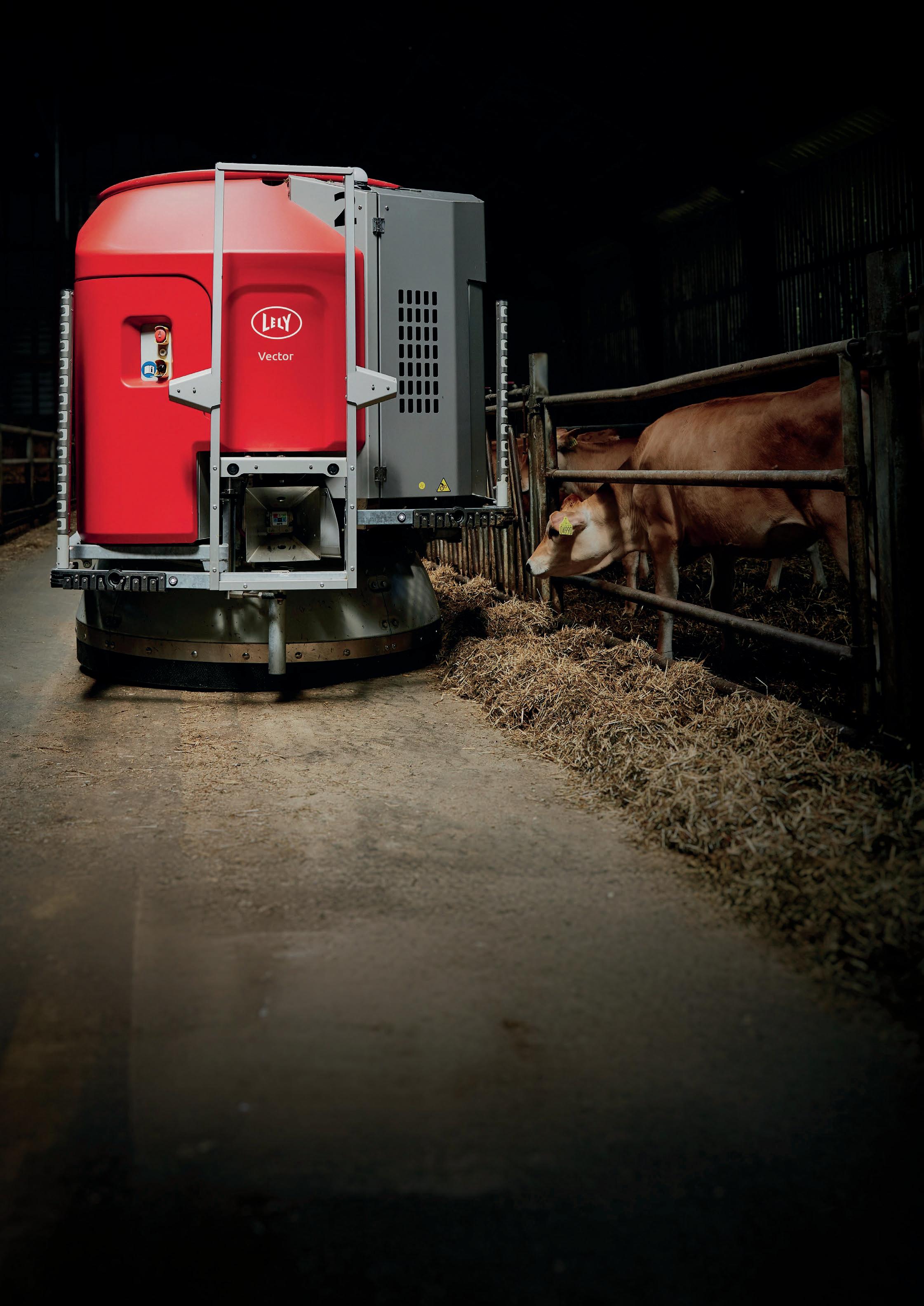























Pushes up feed left and right

eed











Feed to need with the New Lely Vector M2 Next
he feeds autonomously week, MFR that more the Vector M2 Next
Lely Vector Mixer Feeder Robot assesses, pushes, mixes, and fe onomously 24 hours a day, seven days a week, making it the never sleeps! To find out more about the New Lely Vector t, scan the QR Code below Scan and asses feed levels



Editor Katie Jones 07786 856 439 katie.jones@agriconnect.com
Picture Editor
Marcello Garbagnoli 07815 003 236 marcello.garbagnoli@agriconnect.com
Sales
Gemma Thorpe 01772 799 500 gemma.thorpe@agriconnect.com
Account Manager
Mark Jackson 01322 449 624, mark.jackson@agriconnect.com
Classified Advertisements 01772 799 400 fgclassified@agriconnect.com
Advertising Production
Justine Sumner 01772 799 437 Fax: 01772 796 747 justine.sumner@agriconnect.com
Circulation and subscriptions 0330 333 0056 help@subscribe.farmers-guardian.com
Subscription rates: UK £65 a year Europe: £85 World: £95
ISSN 1475-6994
© Farmers Guardian 2025
All rights reserved. No part of this publication may be reproduced or transmitted in any form or by any means, electronic or mechanical including photocopying, recording, or any information storage or retrieval system without the express prior written consent of the publisher. The contents of Dairy Farmer are subject to reproduction in information storage and retrieval systems.
Dairy Farmer, Unit 4, Fulwood Business Park, Caxton Road, Preston, Lancashire PR2 9NZ
Origination by Farmers Guardian, Unit 4, Fulwood Business Park, Caxton Road, Preston, Lancashire PR2 9NZ. Printed by Warners Midlands, The Maltings, Manor Lane, Bourne, Lincolnshire, PE10 9PH. No responsibility can be accepted by Dairy Farmer for the opinions expressed by contributors.

News headlines of late have been dominated by Donald Trump’s trade tariffs, with his initial socalled ‘reciprocal tariffs’ announcement on what he called ‘liberation day’ sending shockwaves through the global trading system and financial markets.
Just a week later, Mr Trump went on to announce a 90-day pause on some of these tariffs, which brought some relief to world markets, although the new minimum 10% tariff rate is still in place for all goods going to the US from all countries, including the UK.
For the UK, cheesemakers could be some of those most impacted by the tariffs in the agricultural sector.
As these turbulent trade winds blow in across the Atlantic, our Government has said it will focus on negotiating an economic deal with the United States. Sir Keir Starmer has always said he would not be hasty in any retaliatory measures but when it comes to trade deals farmers have been let down before by previous Governments.
We know the US would love greater access to our market, but worries abound that this would go against our own high standards of food safety and animal welfare.




















he UK dairy sector has previously navigated tariff challenges under a Donald Trump administration and will once again have to adapt.
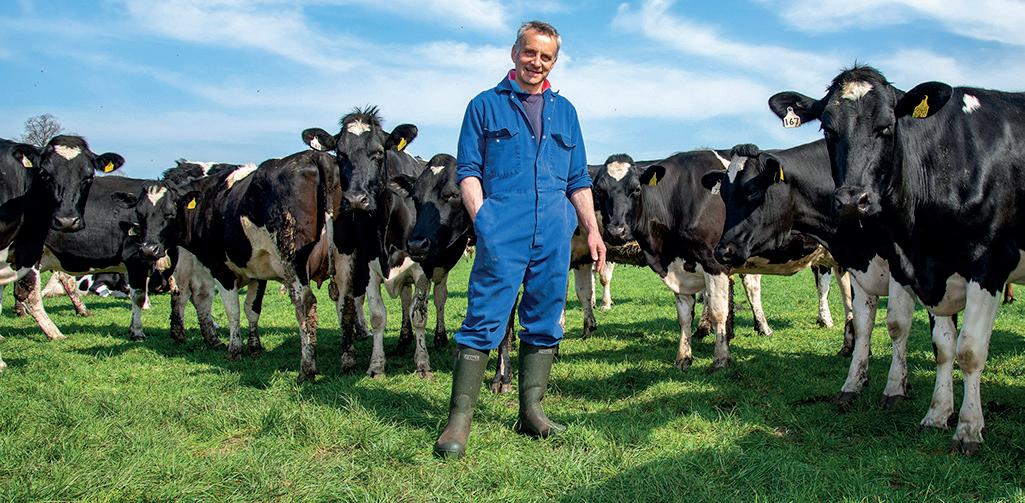
That was the message from Vale of York dairy farmer and NFU dairy board chair Paul Tompkins.
Cheesemakers could be some of those most impacted by the tariffs in the agricultural sector.
Mr Tompkins said that while
the 10% tariff imposed by the US President Donald Trump would ‘not be easy’ for UK exporters, it was clear with European competitors potentially facing higher tariffs after Mr Trump’s 90-day pause, there was also potential for ‘increased demand’ for UK dairy products in the US.
Mr Tompkins said: “For years, US consumers have enjoyed high-quality dairy products from England and Wales.
“Despite the challenges posed by newly introduced tariffs, we
J Former NFU president and farmer Baroness Minette Batters is to lead the Government’s Farm Profitability Review, Defra has announced.
The Crossbench peer has been appointed by Secretary of State Steve Reed to provide recommendations on matters of farm viability and will be supported by a new Defra Profitability Unit.
She will provide short, medium and long-term recommendations and propose actions for the Government and industry that will support farming profitability as part of this Govern -
ment’s New Deal for Farmers and the department’s Plan for Change.
Baroness Batters, who stepped down from her role as president of NFU in 2024, said she would leave ‘no stone unturned’ in her attempts to find ways to boost farm profitability, but added that it would be ‘difficult’.
She said: “There will not be one ‘silver bullet’ to fire, but I am hopeful this review can make a difference to a sector that produces the nation’s food, underpins the rural economy and delivers so much for the environment.”
remain committed to serving this important and growing market.
“British cheese, particularly Cheddar, has demonstrated strong demand, with a total market value of around £75 million last year.
“Organic cheese also maintains a prominent presence on US supermarket shelves.”
He said it was important to emphasise to Government that UK dairy farmers valued access to essential US agricultural inputs such as animal feed, as well as exporting their products there.
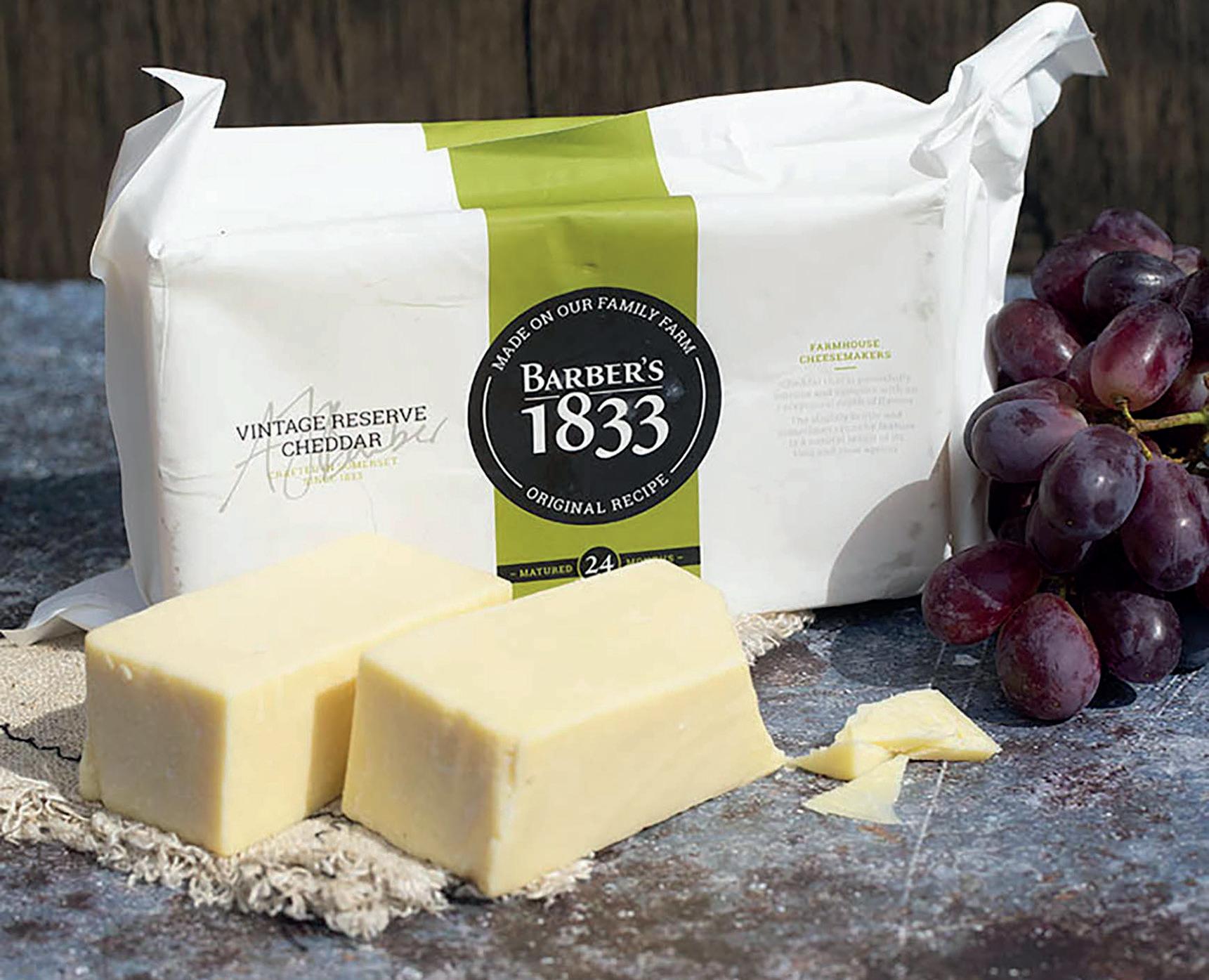
As the largest independent exporter of British cheese to the US, Barber’s cheesemakers said Mr Trump’s 10% tariff would inevit-
ably be ‘disruptive’, but history suggested the US consumer would remain loyal to its distinctive product.
Speaking on BBC Radio 4’s Today Programme last week, Barber’s managing director Giles Barber warned it was likely the cost of the tariff would be passed on to the US consumer.
He said: “We work in the food business where margins remain small, so unfortunately, this will result in some inflationary pressure in our products.
“We would anticipate an application of a retail price rise of between 5% and 10%.”
In a newsletter, Barber’s reassured its farmer suppliers that it had built 15 years’ worth of relationships with its customer
We would anticipate an application of a retail price rise of between 5% and 10%
base and that the business was ‘well prepared’.
He stressed the need to defend the high animal and welfare standards of farmer suppliers in the UK, should subsequent negotiations result in a ‘potential deeper’ trade deal with the US.
News in brief Minister apologises to farmers who missed on SFI
JFarming Minister Daniel Zeichner was asked to apologise for the sudden closure of the Sustainable Farming Incentive (SFI) as he faced a barrage of questions and criticisms during his first appearance in front of the Efra Committee.
The committee chair Alistair Carmichael said rumours had been circulating that the SFI was due to close, but only those within the ‘inner track’ had been able to get ‘under the wire’, adding that it must have been ‘galling for all those farmers who had the door slammed in their faces’.
“I am sorry some missed out and it is obviously not the way we would have wanted to do it,” Mr Zeichner replied.
But he insisted the policy had been carried out in order to prevent a spike in applications.
What was important, he said, was that the money had been spent.
He revealed the scheme could have could closed much earlier, but Defra ‘chose not to’.
It was also confirmed further information on the next SFI iteration would be released in July.



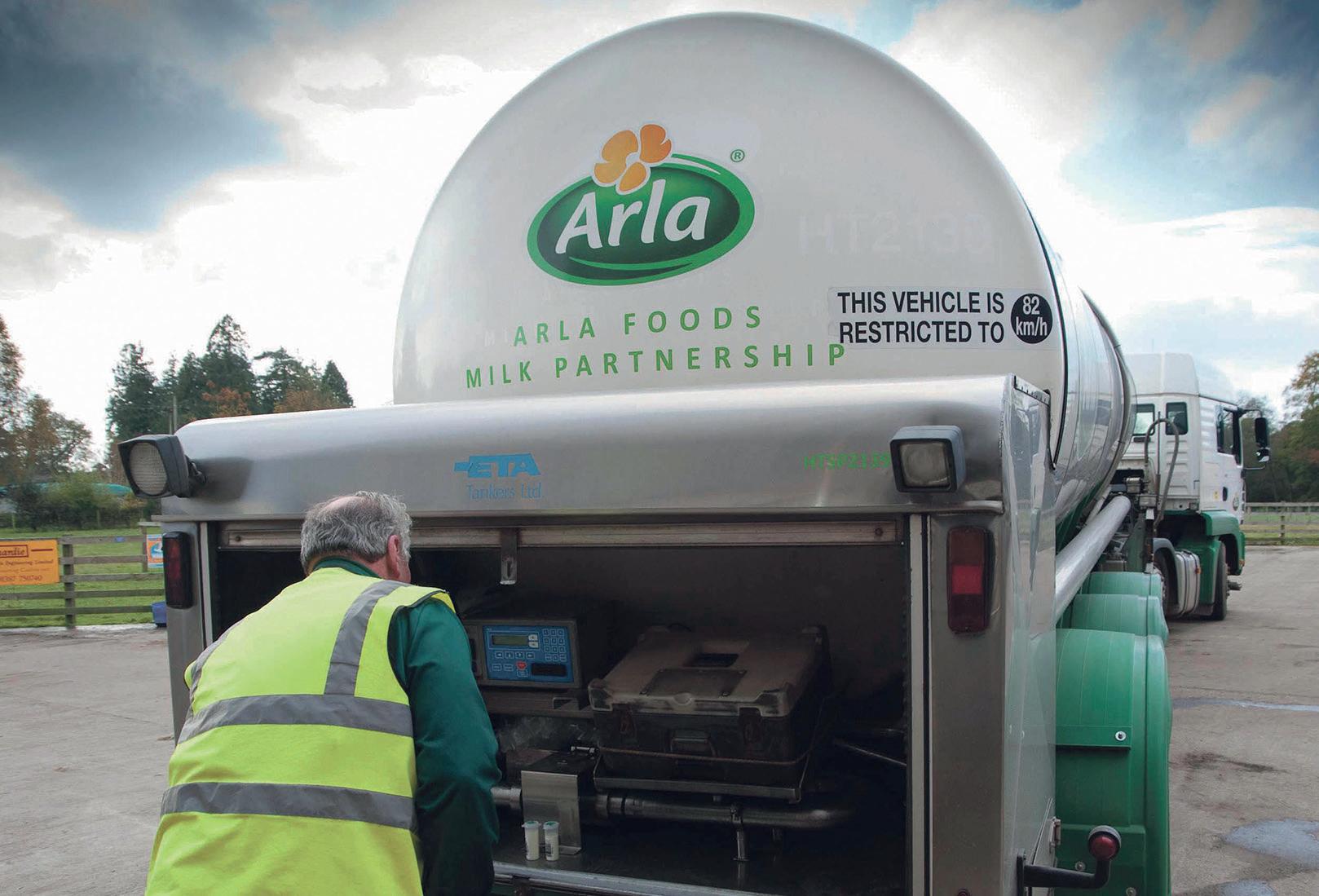
Arla Foods and DMK Group have announced their intention to merge to create the strongest dairy co-operative in Europe. The merged entity will carry the Arla name.
The co-operatives said the merger represented a ‘union of shared values and complementary strengths’ and that the joint co-operative will have a solid supply of milk in the coming years, ensuring the financial ability to invest in the future of dairy.
Arla Foods and DMK Group have successfully co-operated on several projects in recent years, including the joint venture project ArNoCo, which processes whey from DMK’s cheese production into high-quality whey protein concentrate and lactose for Arla’s global ingredients business.
Arla Foods has 7,600 owners producing 13.7 billion kg of milk. DMK Group produces 5.3bn kg with 4,600 owners.
Jan Toft Norgaard, chair of Arla Food (who will be chair of the combined business), said: “The foundation of this partnership is formed by our shared values, and I am immensely proud of this proposed merger, which is a win-win for our co-operatives.
“The strength of both Arla and DMK Group lies in our shared

commitment to quality and innovation, and I see DMK Group as the perfect partner in shaping a new and strengthened Arla, poised to lead in the dairy industry.”
Heinz Korte, chair of DMK Group, added: “This partnership strengthens the resilience of our co-operatives
FARMERS could face ‘enforcement action’ if caught taking more water than they are allowed from private springs, wells and boreholes, the Environment Agency (EA) has warned.
The caution comes after EA officials reported numerous unlicensed abstractions taking place in Devon and Cornwall during routine farm inspections. There have been 70 enforcement actions demanding farmers install a water metre issued over the past two years.
Many farms rely on their own private water supply from springs,
wells and boreholes. How much water is being taken is unmonitored, meaning farmers could be unknowingly breaching the allowed limit for abstraction without a licence.
Lisa Best, agriculture team leader for the EA in Devon and Cornwall, said: “All landowners should know how much water they are abstracting and ensure they have the relevant licence if needed.
“Abstracting water without the necessary licence or in breach of your licence conditions is an offence and could lead to enforcement action.”
and significantly contributes to strengthening the competitiveness of our farmers. Together, we can expand our reach for our dairy products, thus improving our offering and jointly driving the further development of innovative products for the benefit of our members.”
Peder Tuborgh, chief executive of Arla Foods (who will be chief executive of the new group), said: “Our strong market positions and product portfolios complement each other very well, and our strong partnership in recent years has proven that DMK Group is an ideal partner for Arla.”
The foundation of this partnership is formed by our shared values, and I am immensely proud of this proposed merger
JAN TOFT NORGAARD
VEGAN activists held a protest at Lowfields Farm in Northallerton on April 5 to highlight the ‘exploitation’ of over 2,000 cows in the wake of an undercover investigation into suspected animal cruelty.
Arla had suspended the business last month after the Animal Justice Project uncovered footage of alleged animal cruelty towards dairy cattle.
An investigation into the incident is still underway. Arla and Red
Tractor have said they take animal welfare seriously.
An Arla spokesperson said: “The people involved in the incidents no longer work at the farm. The farmer has reported these individuals to the relevant authorities, including the police, for animal abuse.”
“Since the footage came to light, independent auditors and Red Tractor performed assessments at the farm.”








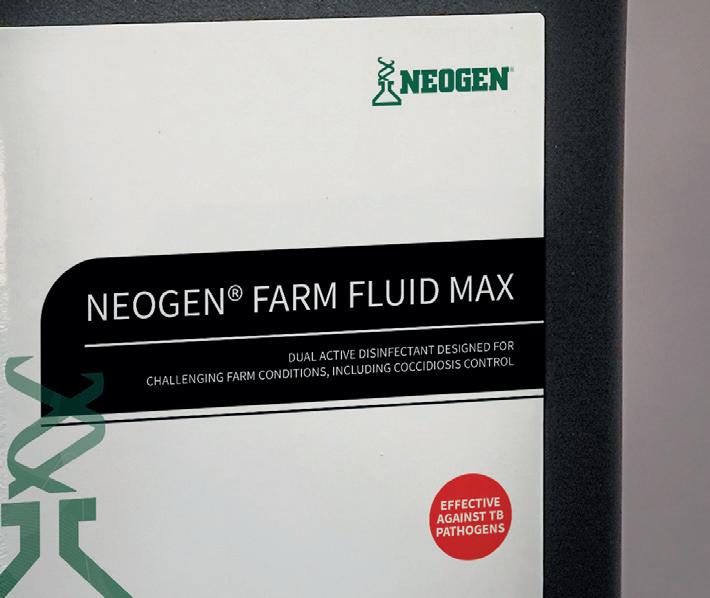
DEFRA - approved dilutions: E ective against TB at 1:20, FMDv 1:1000, Bovine Rotavirus at 1:67 and Bovine Johne’s disease at 1:100
Active Disinfectant







Farm Fluid







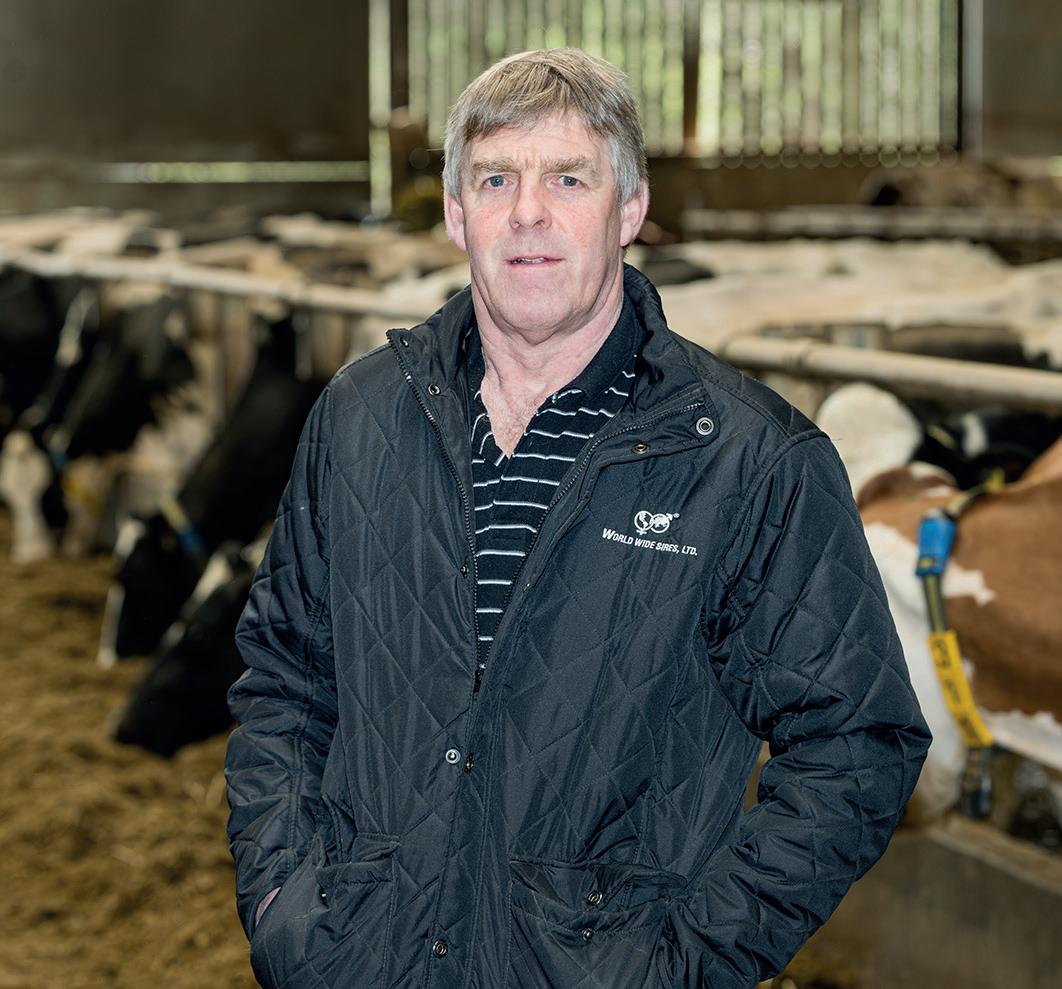
Claire Eastham farms with her husband Martyn in Dorset, where they milk 120 spring calving cows. After gaining knowledge and experience working for other businesses, the couple started their own dairy farming journey in 2015 by taking on a share farming agreement before progressing to their current county council farm.
The cows are enjoying the fresh spring grass, which is helping to push yields on
Well, it has been a tumultuous three months since I wrote my last article and it looks like we are in for a bumpy ride ahead, so buckle in.
Firstly, we had the Sustainable Farming Incentive (SFI) closure. As well as the impact on farmers, this has also had an impact on my business of undertaking grants for other farmers and landowners.
One of the farmers I worked for passed me in the lane and through the car windows we finalised the last small area he had just measured. But by the time I got home, the scheme had closed.
I feel the Government have just wasted so much energy, time and effort on even making the SFI scheme to try and reinvent it again. They would have been better saying: ‘We are up against it, we will try and aid a better food system. Basic Payment Scheme is going – there will be no schemes and the market will sort it in time’.
I really feel this is the way forward now and that a fairer food system, where we all make good returns and are paid by the consumer for the environmental goods they want to see, is now the way agriculture must go.
Then we have the ‘Trump tariffs’ – now paused for 90 days after he tanked the markets. No doubt him and his cronies bought up plenty of stocks when the markets were down.
Our milk buyer is the largest exporter of British cheese to the US, but with the EU block seeing tariffs of 20%, could this actually mean we see our products perform more competitively?
It is definitely one to watch and we will certainly be thinking about the products we might need in the year ahead and will be trying to buy some bits upfront before prices increase again (as will happen in this world market and likely recession).
The beef market is also performing well, and we sold a calf for over £400 recently at Salisbury Market.
As we are in the bluetongue zone, and fortunately so is the market, we do not need to test the calves or apply for licences, which is proving incredibly frustrating for some farmers.
Although we sold a lovely batch of calves, the
rearer taking them must have faith in the markets for the next couple of years to finish them efficiently and make a profit.
The sexed semen definitely worked, as we got only two bull calves, but the conception rates have meant calving was slower than we had hoped and we still do not have enough heifer calves.
We have bought in 10 heifers from a local farmer, and potentially might look for some more – especially as each beef calf is equating to two heifers.
Thank goodness for the beautiful spring weather, which has seen an early turnout. The cows are enjoying the fresh spring grass, which is helping to push yields on.
There have been some serious temperature fluctuations, from 17degC in the day to -2degC at night, so some warmer evening temperatures would help – as would a little rain.
The settled diet and weather should really help the cows in a few weeks when we start serving again. With turnout, we also saw the return of hearing: ‘The cows are out!’. There is nothing quite like the adrenaline rush which follows, which I am sure was the same for our poor neighbour who I had to call at 1.30am as the cows ran past his farm.
We are so fortunate that we are in a densely populated dairy area with neighbours like that who are always willing to help, no questions asked and at the drop of a hat – so thank you to them.
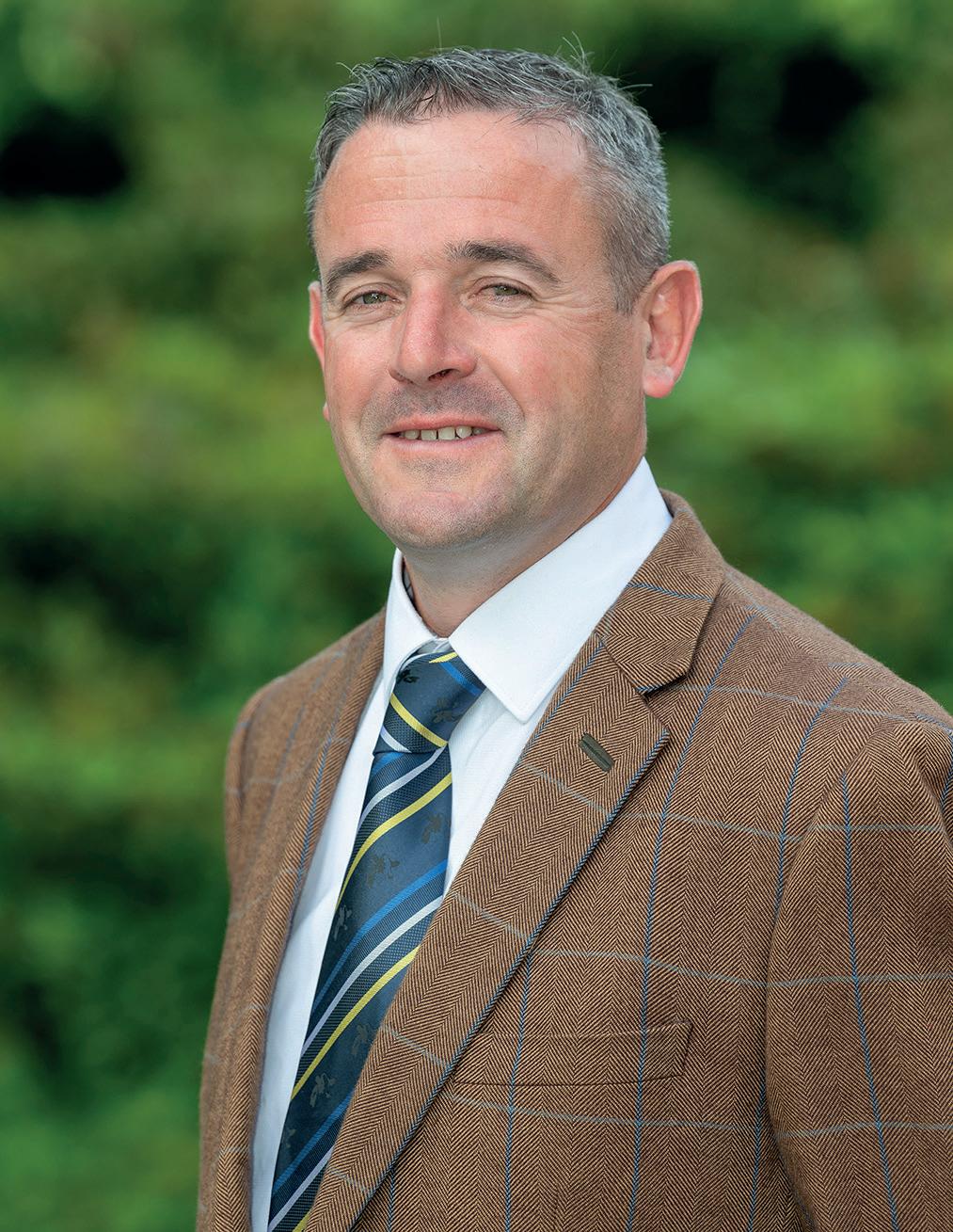
Ben Yates manages Mells Park Estate, Somerset, where he oversees a 400-cow unit and manages the 405-hectare (1,000-acre) estate. Along with his wife and two sons, Ben has his own small herd of pedigree Holsteins under the Wowcow prefix. He joined the Holstein UK Board of Trustees in 2021.
Our cows have milked exceptionally well this winter [...] I am pleased we have managed to achieve 53% of milk from forage
After a wet start to the year, we finally managed to turn the cows out in the last days of February. The cold nights we had in March meant grass growth was slow, but I’m hopeful that it is going to warm up in the coming weeks to give us the growth we need to be out grazing full-time, as our clamps are starting to look very empty.
The dry weather has enabled us to empty the slurry lagoon onto the silage ground, which we will top up with bagged fertiliser as required.
With the imminent move of milk buyers to a regenerative contract, the use of slurries and fertilisers will be even more closely monitored to make sure we are utilising them to their full value.
Ground conditions have allowed us to be able to tidy up after all the storms that we had in the winter, which resulted in 150 tonnes of pine timber being sold and the areas are now re-planted.
A member of the team on the estate has also been doing some hedgelaying, though we still have a long way to go.
As our farmyard is located within a catchment-sensitive zone, we have been collaborating with our local water authority to enhance the surface water quality flowing into the nearby brook.
The scheme has led to the installation of two sediment settlement tanks in the yard to capture any field run-off during heavy storms, along with additional concreted areas in the yard to facilitate this process.
With the serving season concluded, we have observed a consistent pattern where we experience a check at the beginning of December coinciding with the introduction of the new season’s maize into the diet. Given this annual trend, we have decided to remove maize from the diet moving forward and will replace it with wholecrop wheat. This option will be hugely beneficial for our soils, offer greater consistency for feeding, and the earlier harvest will facilitate easier reseeding afterwards.
Our cows have milked exceptionally well this winter, which, along with maintaining a better
milk price than we predicted last April, led to a re-budget forecast.
I am pleased we have managed to achieve 53% of milk from forage.
With barren cows hitting prices I have never seen, we took a decision to sell the lowest yielding empty cows earlier than first planned. However, replacing them with young cows that fit within our calving block has been trickier than I had anticipated.
The school half-term in February saw the beginning of my lads halter-breaking their group of calves in preparation for the upcoming local shows and Young Farmers Club county rally. Discussions are still taking place as to who gets which calf for which show. Our weekends have been kept busy with them both playing plenty of rugby for Frome RFC and enjoying watching the Six Nations.
The Yates family run two pedigree Holstein herds on the same management system, with one milked three times a day and the other twice. Wendy Short reports.
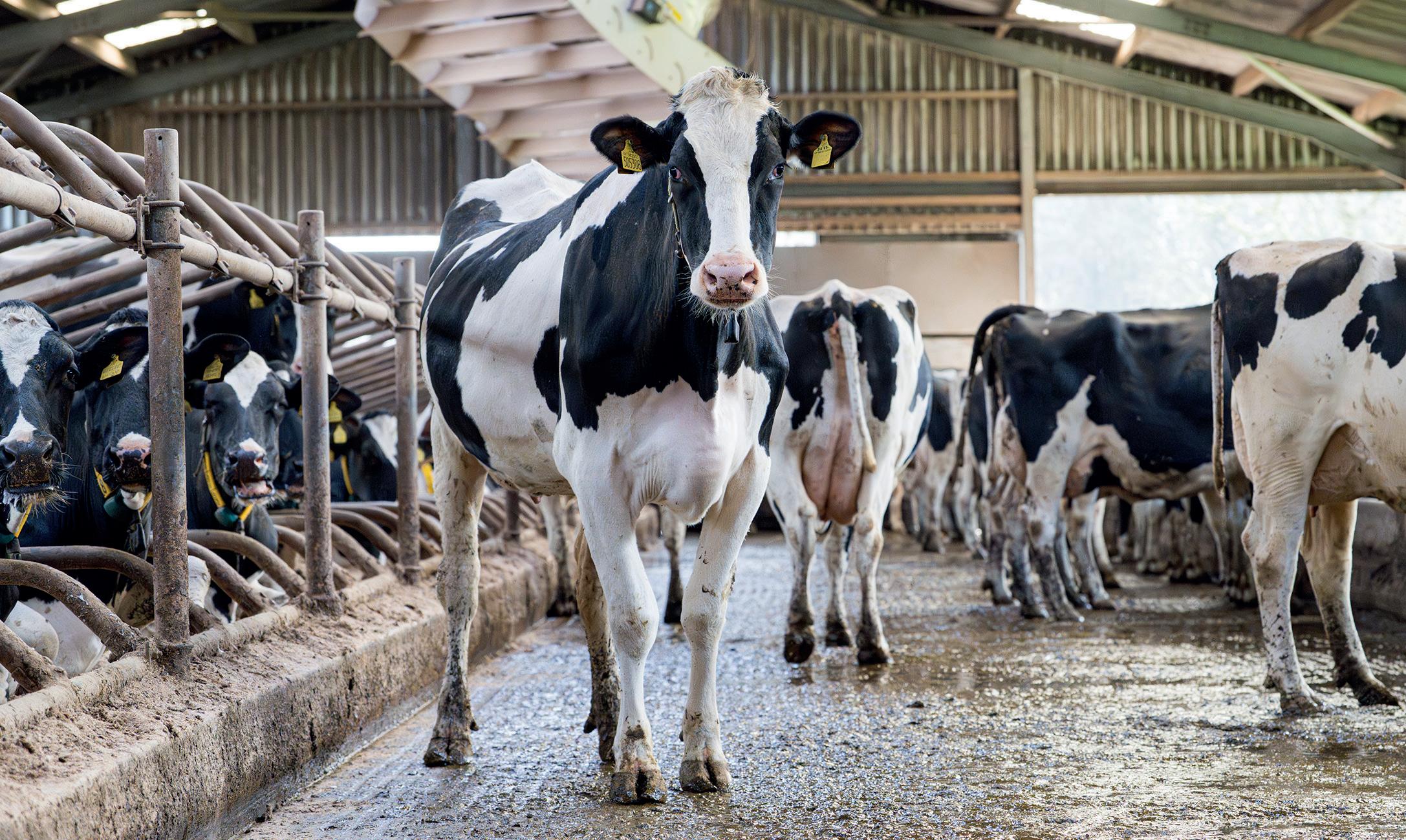
East Logan Farm, near Castle Douglas, Dumfriesshire, has been owned by the Yates family since the early 1970s, and they bought the neighbouring Stepend Farm and took over its existing herd in 2020.
East Logan carries 300 head on a three-times-a-day frequency, with the 180 head at Stepend milked twice daily on a steading situated less than a mile away. The herds, which calve all year round, are managed by Brian and Sheila Yates and their son Michael.
Brian says: “The switch to three-times-a-day milking at East Logan was introduced in 2006 to coincide with the modernisation of the facilities.
“Yields went up by about 10% within the first fortnight and they have continued to rise ever since, in tandem with genetic improvements and tweaks to the diet.
“The ration is closely monitored, because the modern Holstein is a finely tuned machine, and every


aspect of its management has to be right for the breed to reach its production potential.”
When the family took on Stepend, a replacement parlour was needed and robotic milking was discussed at the time.
Brian says: “I had installed one


robot in 1996 to take the pressure off parlour milking, but it was not a particularly good experience. Nevertheless, I appreciate that the technology has moved on at a rapid pace and they work very well on some farms.
“Another sticking point was the capital investment required for robots. A cost comparison at the time showed a 75% increase in outlay compared with a new parlour. It would have hugely increased busi-
ness borrowings. In the end, we went ahead and put in the same 20:40 swingover parlour that we have on the home farm.”
Brian adds that a lack of available labour has been one of the barriers preventing a move to a three-timesa-day policy for both herds.
He says: “It has never been easy to find good staff, and we have noticed that the problem has escalated further since the Covid-19 pandemic.
“East Logan has three full-time staff, while the one full-time person at Stepend is supported by a small team of relief milkers, plus family labour across the two farms and a full-time calf feeder, who also milks some shifts.
“We have an excellent team at present, but it has been hard enough to find enough staff for the threetimes-a-day milking at one farm, let alone adding a second. There are a couple of well-populated towns locally, so it is not as if the sites are particularly isolated.
“The first question in response to our job advertisements is usually whether any accommodation is available. Some of the staff live onsite, so the surplus housing is already occupied. Most jobs do not come

with accommodation, but it seems to be a main attraction for farm workers. Staffing is a constant battle that seems to be getting harder.”
He adds that had he known the labour situation would deteriorate even further after Covid-19, it might have weighted the decision in favour of robots.
He says: “I did say that I would never work with robots again, but it is important to be flexible and they have not been ruled out for East Logan in the future.
“There is no question that the extra milking session promotes feed intakes and boosts yields.
“The cows tend to eat three large
■ 219 hectares (540
■ Two fully housed Holstein herds on neighbouring farms
■ A 300-cow herd is milked three times daily at East Logan Farm and a 180-cow herd is milked
twice a day at Stepend Farm
■ Lower end inseminated with Aberdeen-Angus semen
■ Land grows grass, maize and oats for wholecropping
■ Cows housed in cubicles

meals each day, as opposed to two.”
The two herds receive exactly the same compact feeding system, with no concentrates offered in the parlour. The ration includes grass and maize silage, a protein blend, soda wheat and molasses, plus added water to encourage feed intakes and prevent sorting. The rate is about 20kg, with slight adjustments made according to forage dry matter (DM) content.
“The water is added about six hours before feed time,” says Brian.
“We tend to make fairly high DM grass silages, and the water volume will depend on the analysis figures. It was introduced on the advice of herd nutritionist Hugh Kerr, and has been part of the routine since 2002.”
A breeding programme selects sires for the Logan herd, which is genomically tested and uses female sexed semen for replacements.
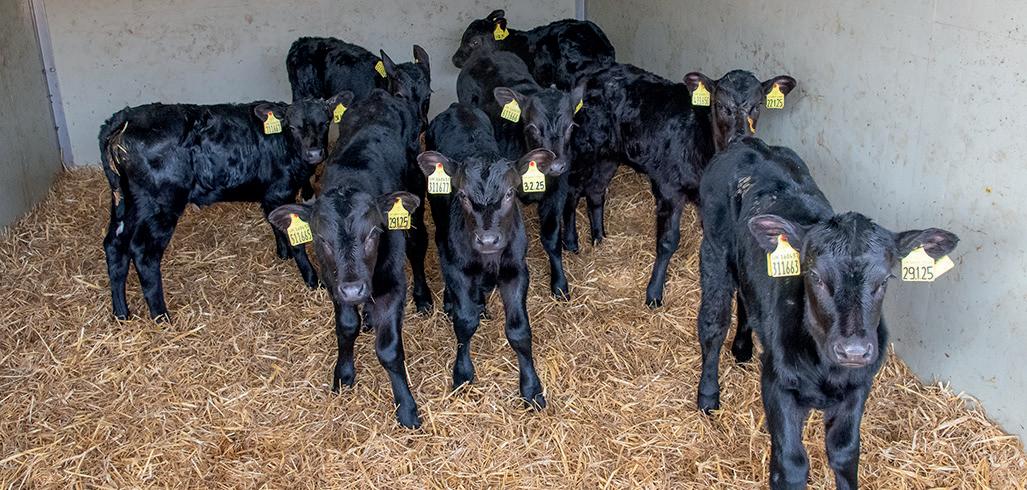
The majority of the Stepend females are inseminated with Aberdeen-Angus semen and their beef cross calves sold at a few weeks old.
Combined with genomic testing, restricting replacement selection to the top 40-50% of the females has allowed rapid genetic progress to be made, says Brian. Individuals achieve an average of four lactations currently, but the business is aiming for a figure of five.
“Stepend represents our in-house version of a flying herd, as it is made up of females that are not required as replacements,” he says.



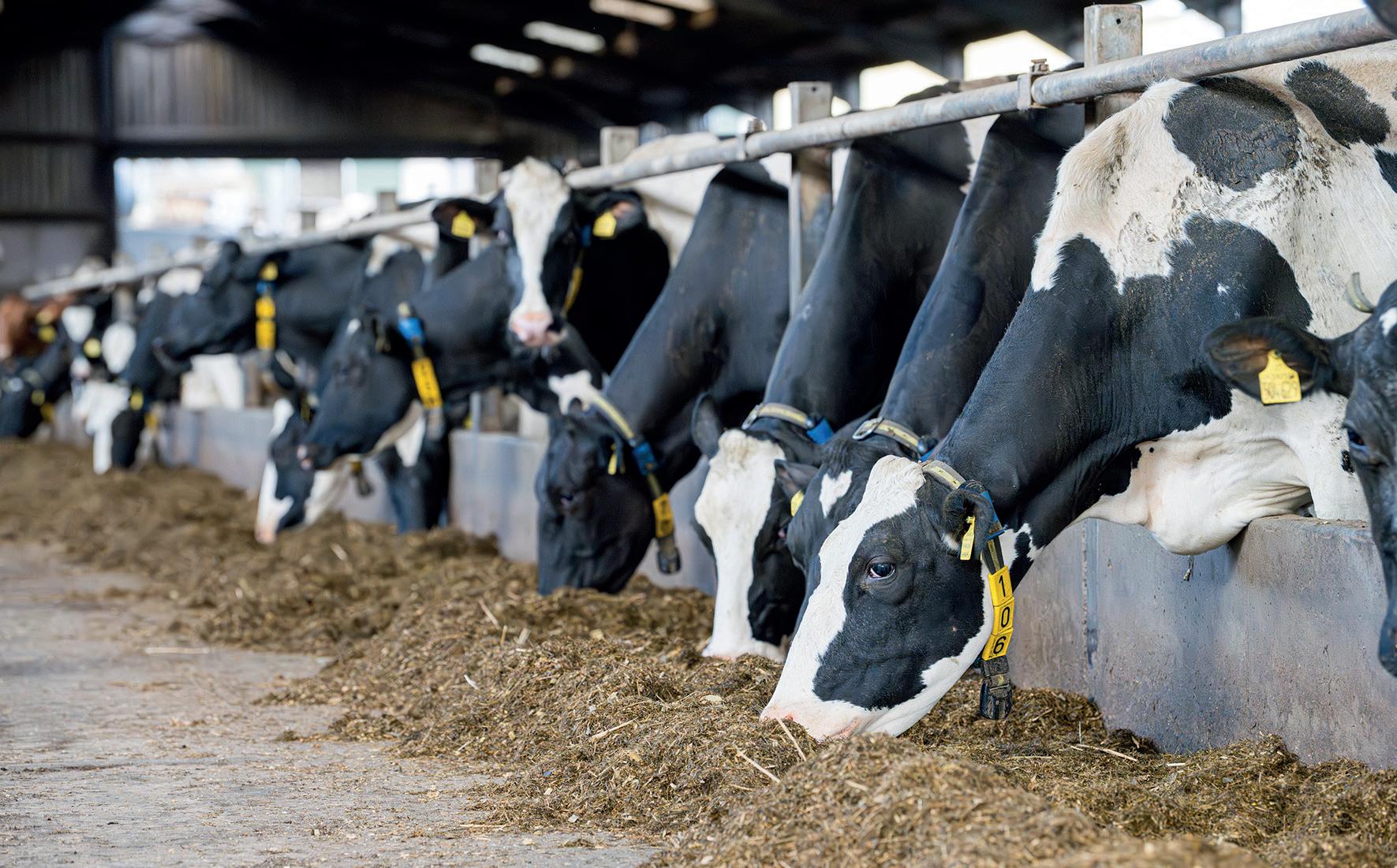
Both herds receive exactly the same compact feeding system.
■ Grass silage: 8-9kg dry matter (DM)
■ Maize silage: 3kg DM
■ Protein blend (23%): 11kg
■ Soda wheat: 6kg
■ Molasses: 0.5kg
■ Water: about 20kg (according to forage DM)
“They usually join as in-calf heifers, or as females in the latter stage of lactation.
“Any East Logan cows that do not get in-calf after two Holstein inseminations will also be moved across for serving with a beef bull.
“They may be given a chance to produce replacements the next time round, but only if they meet the standard on pedigree, genomics, performance and a visual appraisal.”
The family, who have reached the finals of the Royal Association of British Dairy Farmers/National Milk Records Gold Cup award on two occasions, have no plans for herd expansion or a change in milking frequency.
Brian says: “Our acreage is a limiting factor, and we also have to consider quality of life for ourselves and for our staff.
“We count ourselves fortunate to have an Arla contract for the amount of milk that is currently produced, and in fact the additional litres from Stepend had been accepted before the farm sale went ahead. We would not have gone through with the property purchase otherwise.
“I would never say never with the milking regime because in farming the situation can change with the flip of a coin. However, given all the issues associated with three-times-a-day milking for both herds, it is not something that is
I would never say never with the milking regime because in farming the situation can change with the flip of a coin
BRIAN YATES
under consideration for the near future. What is more certain is that we are committed to dairying.”
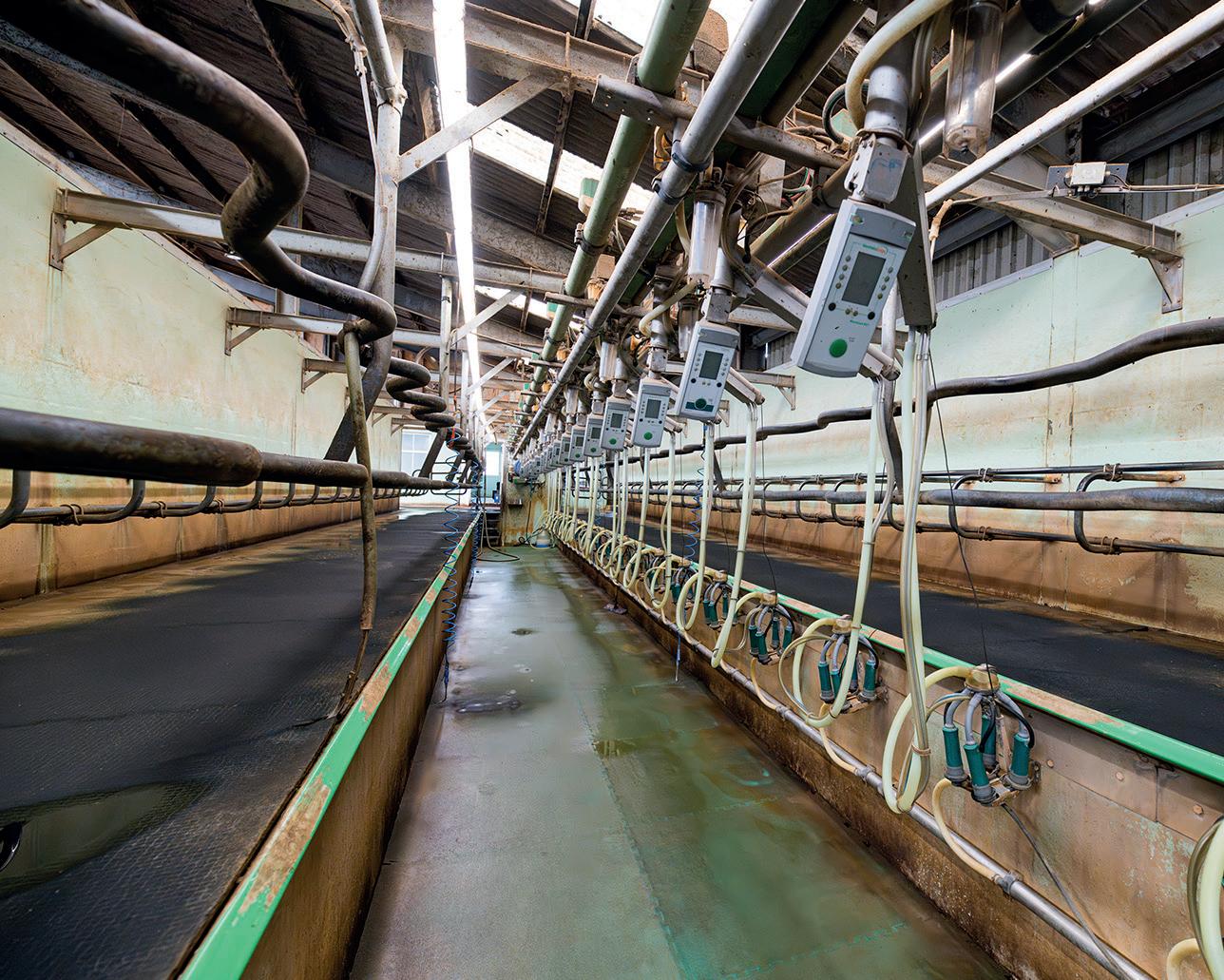
The cows are milked in 20:40 swingover parlours.



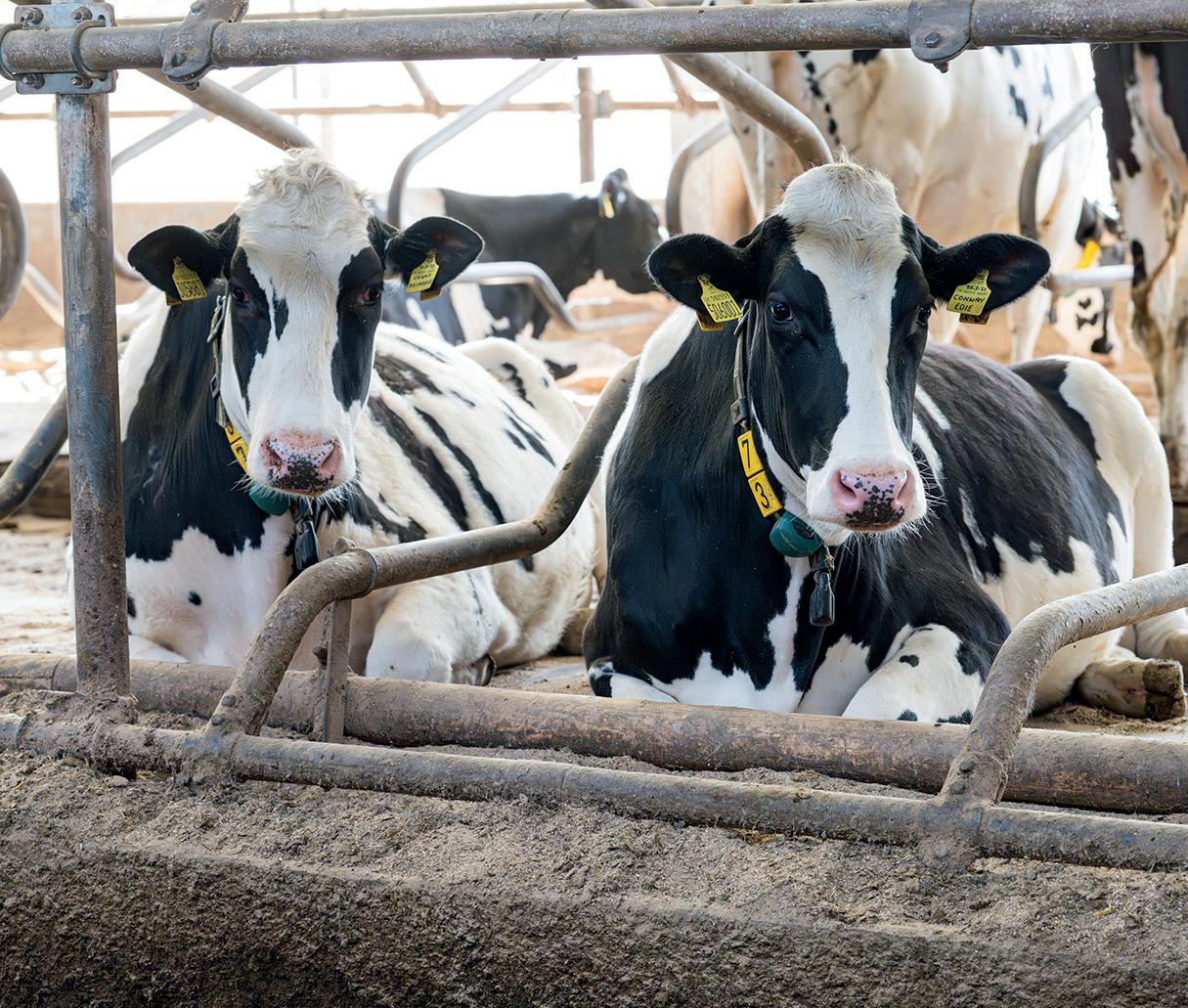
Restricting replacement selection to the top 40-50% of the females has allowed rapid genetic progress.
Do you make maximum use of your robot
Using ForFarmers OptiRobot our Dairy and Robot Specialists are able to assess whether the interaction between robot settings, nutrition and health is optimal. It often turns out that small changes can make a big difference; Our Robot Specialists can help highlight areas where you can improve with the unique ForFarmers OptiRobot which provides:
9 Greater insight
9 More opportunities
9 Increased returns
For more information speak to your local ForFarmers Robotic Specialist or visit >


0330 678 0982
info.uk@forfarmers.eu
www.forfarmers.co.uk @ForFarmersUK
‘Surely there is a way we can be speed up bTB control dramatically’
This month, former cowman and agrimarketing contractor Phil Christopher discusses why he thinks AHDB should provide a ‘boots on the ground’ farm support service to educate and support farmers in the fight against bovine TB
You deserve better, dear reader, from our supposed ‘control’ strategy for bovine TB, because a crucial practical element is missing that I believe AHDB is uniquely equipped to provide.
This is based on its ‘market failure’ reason-for-being, which essentially means doing essential stuff that otherwise would not happen.
Surely you levy payers should not be expected to pay for service elements you can obtain elsewhere, or that offer no benefit to your business.
Instead of sometimes poorly attended farm open days that must absorb huge amounts of capable people’s time, the dairy sector’s commercial advice providers can stage such events if farmers want them.
This would liberate the AHDB knowledge exchange team for genuine ‘market failure’ work in a one-to-one, boots-on-the-ground farm support service, to work sideby-side in the bTB trenches with you who pay their wages.
Their job? To provide you with accurate knowledge and explanation, reassurance and encouragement, trouble-shooting and progress tracking and, just as im-

Phil Christopher
portant as all these, realistic expectations and genuine hope, moral support and farmer ownership.
Here is one example to start with of the need for clear explanation: what percentage of your fellow dairy or beef cattle owners do you think understand the sensitivity and specificity of the skin test?
For sensitivity, I’m sure you know that it indicates the ability to identify bTB-positive animals.
But how many readers are aware that on average it catches 80%, although the range is a somewhat alarming 50–100 per cent? This means some infected cattle will be missed routinely.
This being the case, what is your strategy to address this?
As a consequence, such missed positives probably explain, for example, how closed herds that buy an occasional bull which has passed a pre-movement skin-test can import the disease. Yes, the bull was an unidentified bTB-positive.
Next, specificity indicates the correct identification of bTB-free animals and is almost, but not quite, infallible at 99.98 per cent. This still means an occasional one being classified mistakenly as infected.
In a nutshell, the skin test mistakes some infected animals as clear, but is rarely wrong with those that truly are bTB-free.
It is encouraging, of course, that 10 years into the 25year bTB eradication strategy, England has the lowest level of bTB for 20 years (with my apologies to Wales).
However, I guess this is little comfort to James Robinson, whose recent compelling account of bTB’s impact on his family’s fifth generation farm in Cumbria has prompted this item.
Despite the past decade’s progress, due it is said to a combination of more stringent cattle testing, biosecurity measures and reducing badger numbers, how many of you over the next 15 years will survive the spectre of bTB unscathed, unless we all raise our game?
As I see it from the safety of my laptop keyboard, we
already have an engine, however imperfect, of researchand farm-based knowledge, which I hope can still be made more potent by new developments.
Farmers are the wheels on the ground to propel you in the right direction as quickly and safely possible. But is this really the case?
My suggestion is that our bTB control strategy is missing an essential component. Have you got it yet?
Where’s the gearbox, without which the engine and wheels aren’t connected?
It is here that AHDB could provide all British cattle farmers without exception with a truly gold-standard service.
Because what we need is an available-to-all, AHDB-funded (from dairy and beef levies levy) advisory army to provide the crucial missing gearbox between bTB high command and your dirty work at ground level. For guidance, precedent and perhaps reassurance too, it can sometimes be helpful to look back in time.
In 1946, the UK’s National Agricultural Advisory Service (NAAS) was established by our Ministry of Agriculture, Fisheries and Food (MAFF) to tackle severe post-
World War II food rationing.
Specialist advisers were available throughout the UK (note, none of today’s devolved nonsense) to help farmers and growers increase productivity and it was a great success. NAAS was rebranded ADAS in 1971.
However, such is my cynicism about public bodies in general that I suspect nothing much will really change unless enough people make a song and dance about this.
How many is enough? In the run up to AHDB levies being increased a couple of years ago, the priorities for which they were being sought were influenced significantly by a Shape The Future vote. Out of 100,000+ levy payers, just 5% (4,478 to be precise) took part.
Surely today, more than 5% of Dairy Farmer readers can be motivated to top this and call for a ‘Let’s Beat bTB’ advisory army based on the market failure principle? In this I include those of you in low risk, edge and bTB-free areas to reduce the risk for all from this terrible disease.
If you agree, get this on the record by emailing info@ ahdb.org.uk or in a nice old-fashioned letter to AHDB, Middlemarch Business Park, CV3 4PE.
Best wishes from me, come what may.






Pain and inflammation relief medication can improve recovery times for many of the major diseases, but it is important to understand their uses and follow advice for correct administration. Wendy Short reports.
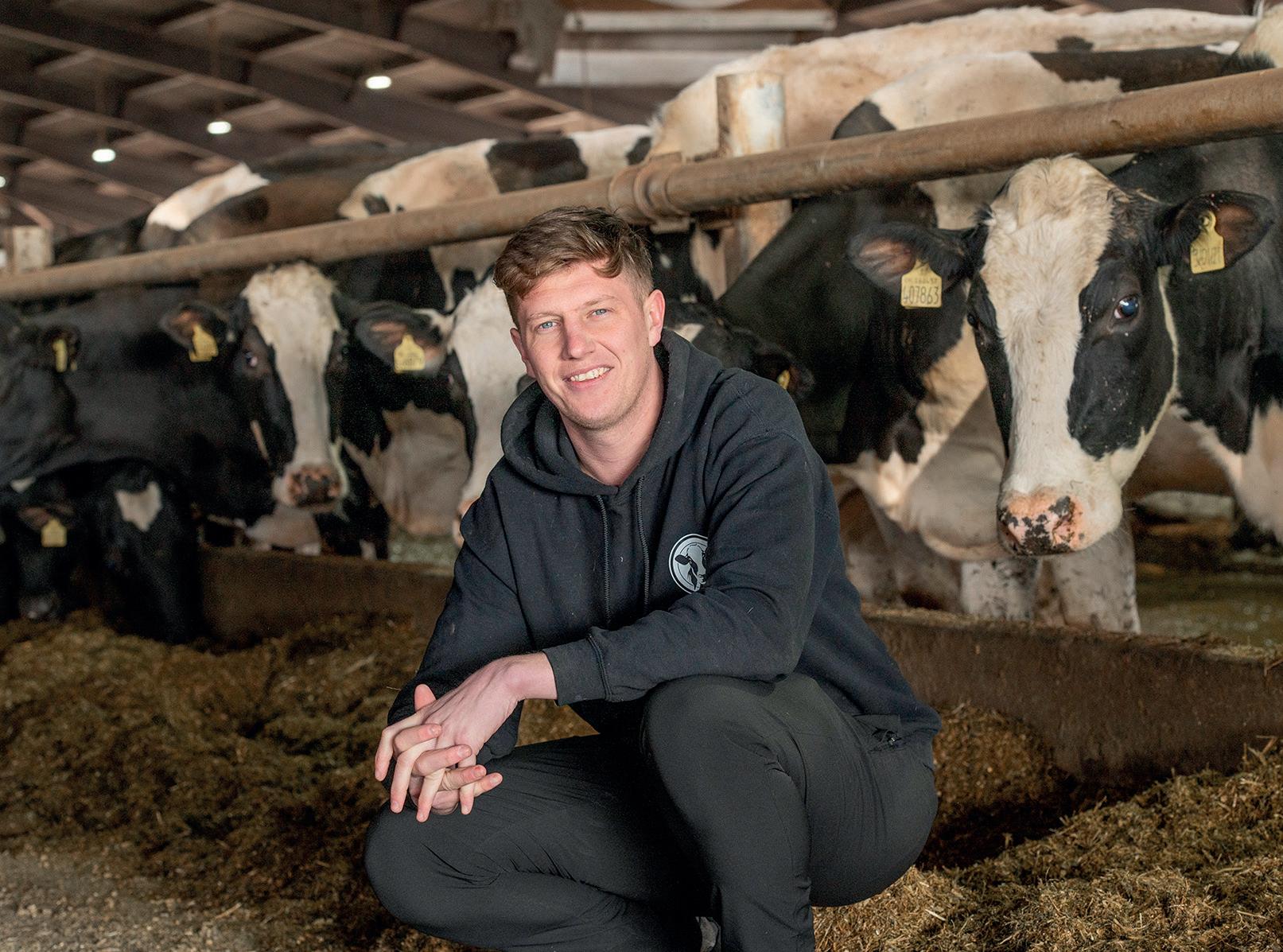
The use of non-steroidal anti-inflammatory drugs (NSAIDs) has increased as a result of extensive research which has confirmed their positive role in speeding up livestock recovery times during bouts of ill health, says Owen Atkinson, of Dairy Veterinary Consultancy.
“The three most commonly used NSAIDs are flunixin, meloxicam and ketoprofen,” he says.
“Each has a slightly different action, so the choice of drug must be matched to the individual case. In addition, some of the drugs are longer acting than others and they
have varying milk withdrawal times, although there is no milk withdrawal period for ketoprofen.
“Something to bear in mind is that overdosing can cause toxicity, for example stomach ulcers or kidney damage in some patients. Incorrect use could even lead to death in some situations.
“The products require veterinary prescription and, as always with such medicines, all prescription decisions are for the person issuing the prescription alone.”
At an average cost per typical cow dose of about £15, Mr Atkinson
believes that NSAIDs will produce a return on investment.
“They will physically reduce the inflammation, which limits the damage caused by the inflammatory chemicals in the body,” he says.
“They will bring down the animal’s temperature and they help to block pain, so it may be more inclined to resume eating and drinking more quickly.
“Ideally, NSAIDs should be the first course of action, maybe even before antibiotics are brought into the equation, although the vet will usually prescribe antibiotics as well for conditions like mastitis.”
Relieving the symptoms will also
improve the cow or calf’s ability to fight the infection, and a lesser-known role of NSAIDs is their use in enhancing the effect of antibiotic treatment, he says.
They can improve the ability and speed of antibiotics to penetrate to the tissues where they are needed, for example the lung or the udder.
When the various beneficial effects are considered as a whole, the cow will normally regain full productivity at an earlier date, while a sick calf should start to express its daily liveweight gain potential within a shorter time frame.
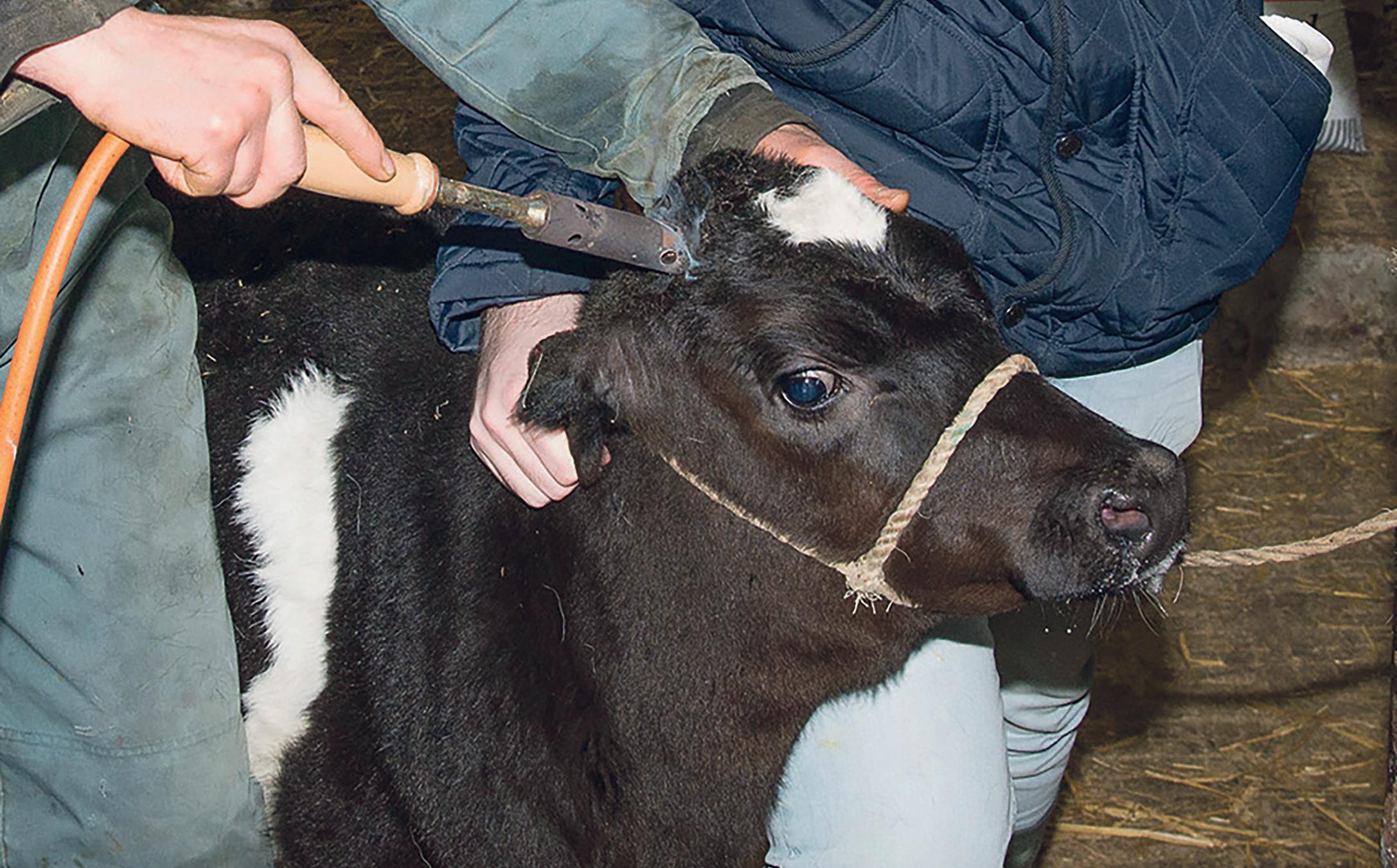




NSAIDs perform a useful function for calf disbudding and castration.
Ideally, NSAIDs should be the first course of action, maybe even before antibiotics are brought into the equation
OWEN ATKINSON
Yet another advantage is the reduced likelihood of long-term health impairment.
“When considering lameness, damage from inflammation caused by a sole ulcer, for example, can lead to permanent changes in the bones within the foot,” says Mr Atkinson.
“A calf with a respiratory illness will have excess fluid in the lungs
due to inflammation. While this is the body’s natural response for fighting the infection, it can also lead to permanent lung damage and tissue scarring.
“In general terms, when treating pneumonia, I would recommend an NSAID for any calf with a temperature of 39.5degC or above.”
NSAIDs perform a useful function for calf disbudding and castration, he adds, and the same applies to physical wounds and conditions like navel ill. Their use is mandatory on welfare grounds for compliance with some milk contracts.
Despite being an advocate of NSAIDs, Mr Atkinson cites some of the risk factors.
“Incorrect dosage administration can harm a calf with pneumonia, because it will sometimes be dehydrated. This will increase the drug’s toxicity and heighten the possibility of kidney damage,” he says.
“Overdosing can also lead to abomasal ulcers in cattle of any
age. That is why there are strict safety limits for administration, and data sheet guidelines must be strictly complied with.
“Treating a cow repeatedly for longer than the licensed treatment would be highly inadvisable, and the drugs may not be appropriate for some digestive upsets.”
None of the licensed NSAIDs could be considered truly long acting, he says, but the length of time it takes for the chemicals to be broken down in the body differs slightly.
Mr Atkinson says the effects of a single dose of ketoprofen or flunixin will persist for about 24 hours, while the figure for meloxicam may be about 48 hours, so the vet may advise different treatment regimes depending on the diagnosis. Administration techniques will vary according to product type. When NSAIDs were first launched, the licensed products available were by intravenous injection only,






but there are now also subcutaneous and intramuscular options.
Mr Atkinson says he is reluctant to give specific advice on which NSAID to select for treatment because of the complexity of the issue, although he urges producers to act swiftly.
He says: “It is much better to avoid waiting until an animal is really sick before giving the drugs. In human medicines, we rely on over-the-counter products to treat pain and inflammation caused by a range of problems, including headache and toothache.
“We would not delay taking a tablet until the pain became unbearable, and the same applies to treating livestock. Basically, they work better the earlier they are used.
“The cost of the products was fairly high when they were first introduced for livestock and there is still a perception that they are expensive, but the price has come down to a much more affordable level.”
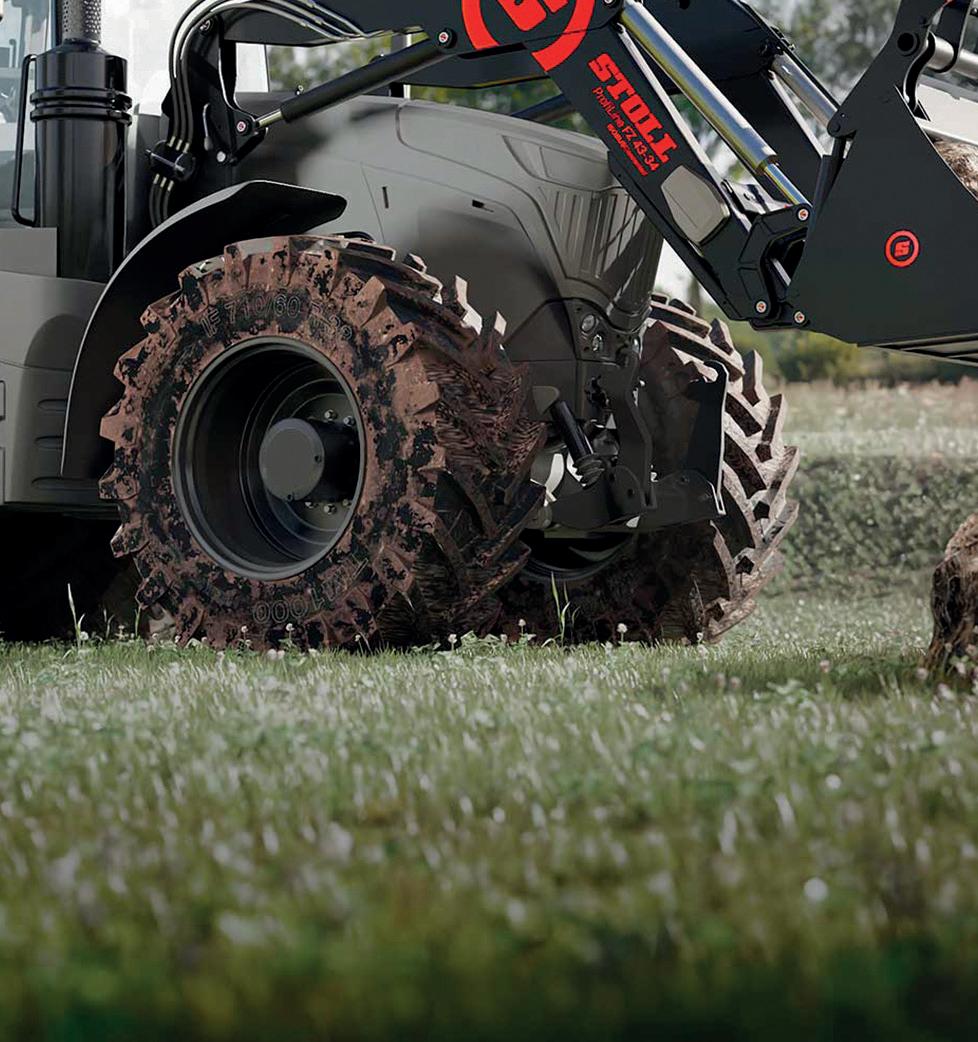
Introducing the new, innovative front loader that integrates totally with your tractor. A loader that enables you to get through your workload faster, with more precision, efficiency and safety than ever before.
Controlled via the tractor’s onboard joystick and ISOBUS terminal, the new Stoll ISOBUS-Connected front loader delivers twelve additional productivityboosting functions. All selectable from the tractor’s display terminal and set according to your preferences.

For Jack Allwood, having a clear policy for the beef-sired calves on his family’s dairy farm is key. Katie Jones reports.
After a period of continued expansion between 2008 and 2019, cow numbers at Huntington Hall Farm, near Chester, currently stand at 800.
However, for Jack Allwood who farms with his father John, continued expansion is on the cards and during the winter of 2025/2026 the aim is to take numbers up to 1,000 milking cows.
Jack, who also runs the successful Moo’trition business, which sees about 1,900 litres of milk sold each week through vending machines in a purpose-built facility on the farm, explains there are plans to convert some of the current youngstock sheds into cow accommodation and they will also install a new 72-point GEA parlour.
This will replace the farm’s existing 40-point Fullwood parlour which was put in almost 20 years ago and is now coming to the end of its serviceable lifetime.
Jack says: “The bigger parlour will speed up milking, allow us to milk more cows and will also give us the ability to incorporate rotary robots in the future.
“1,000 cows is not really enough for the size of parlour we will be putting in, but the marginal litres it will give us will be a big gain.”
To grow numbers, some stock will be bought in, but breeding replacements will also form part of the policy for the commercial Holstein herd.
All females are genomically tested and sexed semen is used on every-




thing in the top 40-50% of the herd, based on their genomic index.
If any of these fails to hold in calf after three services, they are then inseminated with Aberdeen-Angus semen along with the rest of the herd.
Jack says: “We have moved to sexed Aberdeen-Angus semen, so from May onwards we will see predominantly male Aberdeen-Angus calves being born.”
About 95% of these beef-sired calves are sold on the Gamechanger scheme, with the Allwoods longtime suppliers to the scheme.
Jack says: “Gamechanger gives us clear targets to meet, calves need to weigh at least 45kg at 10-41 days of age. Most will have reached the target weight and are off the farm be-
It costs about £35 a week to keep these calves, so if we can get them away at 10 days old, we will
JACK ALLWOOD
fore they are two to three weeks old.
“We know what price we are going to receive for these calves and we know pick-up is guaranteed, with weekly collections when needed.”
This guaranteed pick-up helps Jack avoid over-stocking in the youngstock rearing sheds with the herd calving all year round.
Jack says these weight targets are realistic, which means it is easier to keep the calves healthy and the focus on good health and good weight gains, begins immediately after calves are born.
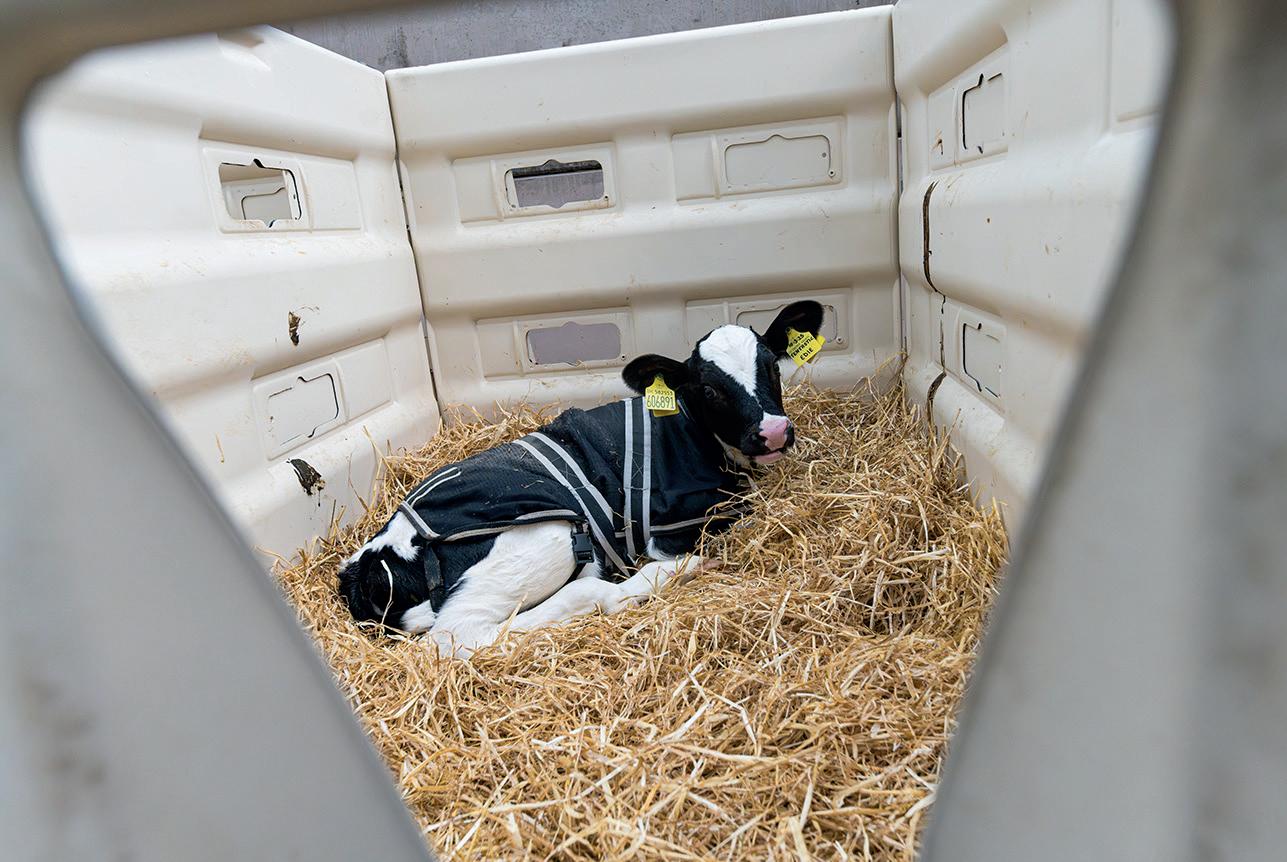
All calves are given a colostrum feed straight away. This needs to be equivalent to about 10% of their body weight and Jack says at worst this happens within two hours of calving. He says: “Calves may get a second feed before being moved on to transition milk, which they stay on for at least five to seven days.
“Black and white heifer calves will go on to powdered milk, while beef
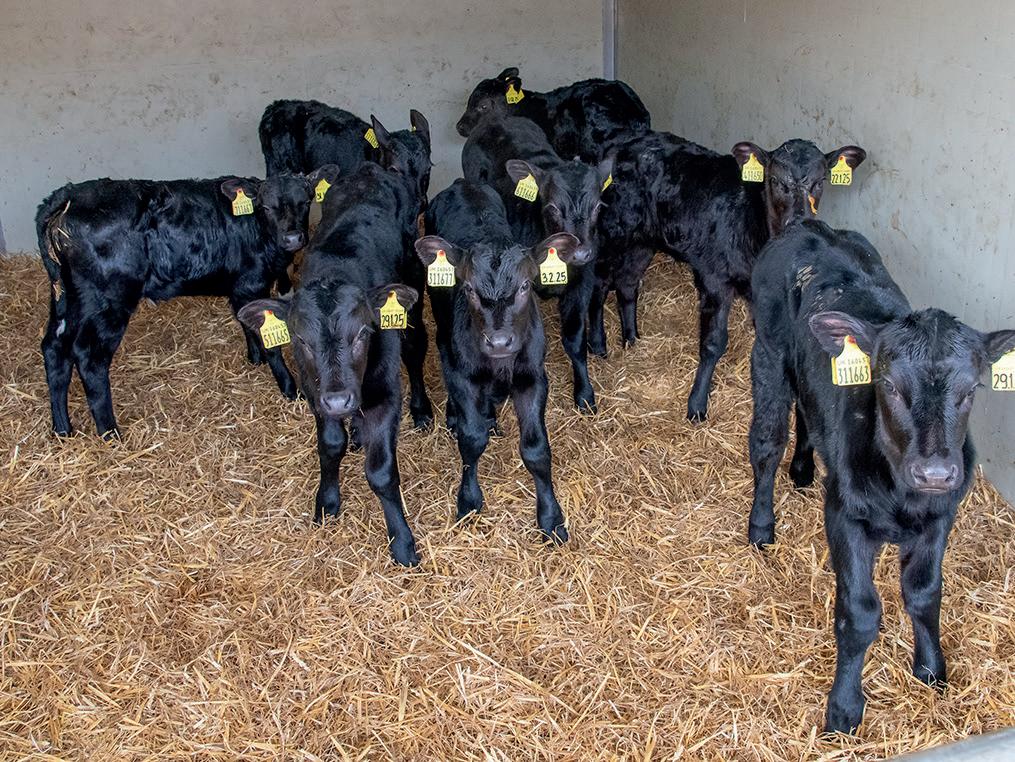
About 95% of the Aberdeen-Angus beef-sired calves are sold on the Gamechanger scheme.
sired calves will continue on transition milk until they leave the farm.”
The few calves that do not make the required weight within the first month, will move to hard feed before being sold through at market.
Jack says: “It costs about £35 a week to keep these calves, so if we can get them away at 10 days old, we will.”
All colostrum is tested using a Brix refractometer before it is fed.
Anything below 24 Brix is not fed and any surplus good quality colostrum is frozen.
Jack explains that calves are not routinely vaccinated against crypto, but instead the focus is on cleanliness to prevent any disease risk.
He says: “It is about keeping the calf environment, bedding and calf feeding equipment clean.”
Calves are kept in pairs until they are about 10 days old and then moving into larger groups.
These larger groups, which are based on weight rather than age, are housed in Calf Company Optimum Climate Calf Barns, which were put up six months ago.
Once a batch of calves leaves the farm, the pens are cleaned before the next batch is moved in.
Cows and youngstock over five months old are bedded on sand, and
heifer replacements are offered the dairy cow TMR from three months old.
Jack says: “This gets them used to the ration before weaning, and helps us achieve target growth rates.
“We want heifers at 350kg at 400 days. At the moment we are calving our heifers at 22.9 months on average, but that figure is now coming down.”
The dairy cow ration comprises maize and grass silage, plus straight minerals, chopped straw and a little water.
Dry cows and heifers have slightly more maize in their diet.
■ Pregnancy rates stand at 37% for cows and 40% for heifers
■ Conception rate is 51% and 1.9 straws of semen are used per conception
■ Cows are averaging 12,000 litres, which is down slightly due to the lower starch maize in the ration
■ Youngstock are reared on a rented farm on the Wirral
■ The farm employs 10 fulltime members of staff, plus some part-time staff
■ Milk sold to Muller Tesco



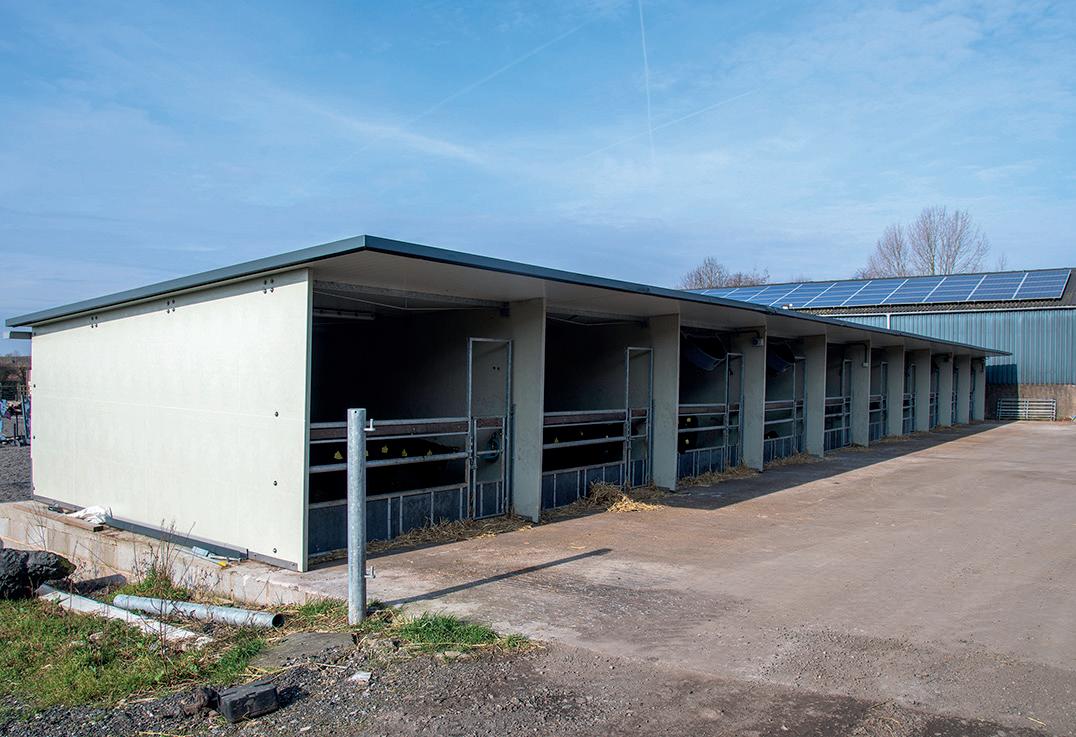
Once one batch of calves leave the farm the pens are cleaned ready for the next.










































































































A sixth-generation young farmer is bucking the trend and considering reducing cow numbers so her family’s farm can stay in business. Chris McCullough reports.
The farm run by 34-year-old Anne Ennis in Brooklyn, Connecticut, is fairly typical of a dairy unit in the USA; it has stood the test of time, but is now in need of significant investment to bring it up to modern standards.
Anne returned home to work on the farm after completing a Bachelor’s degree in dairy science at Virgina Tech in 2012.
Now extending to 101 hectares (250 acres), the farm has been in the family since 1884 and is jointly owned by Anne’s dad John Ennis and his cousin Frederick Eggers.
Anne says the investment now needed is a bridge too high to climb, and rather than boosting cow num-
bers like other dairy farms are doing, she is considering reducing the herd size and working with the simple infrastructure that exists on-farm to bring costs down.
She says: “I am the only person interested in the farm, but it is no longer a viable way to make a living in this area.
“We are the only dairy farm left in my town and one of about 20 in my county, down from around 150 dairy farms in the past. The facilities need modernising and the money is just not there to do it.”
She says her options are either dropping cow numbers to 30 and purchasing in feed or finding a job as a herdsperson at a another farm where she can also take her cows.
“The farm and my cows are
everything to me and I take a lot of pride in looking after the animals and the farm,” she says.
Stock on the farm totals 191 animals, including 74 milking Ayrshire cows and seven Brown Swiss milking cows.
Anne says: “The cows are currently yielding an average of 50lbs [23kg] per day at 4.6% butterfat and 3.4% protein. My main breeding strategy is achieving a balance of type and production, as I want correct cows that milk well but that are not necessarily show cows.
spend most of the time thanks to the favourable Connecticut weather.
Cows are fed a total mixed ration (TMR) top dressed with pelleted grain based on their milk production and stage of lactation. Most of the TMR is fed outside, with some placed inside on a daily basis.
Anne says: “The feed is mixed together in a Patz mixer wagon and then distributed by a Weaverline electric feed cart to most of the barn.
“We use an old Allis Chalmers 615B backhoe to fill the wagon and an Allis Chalmers 6080 tractor to operate it.”



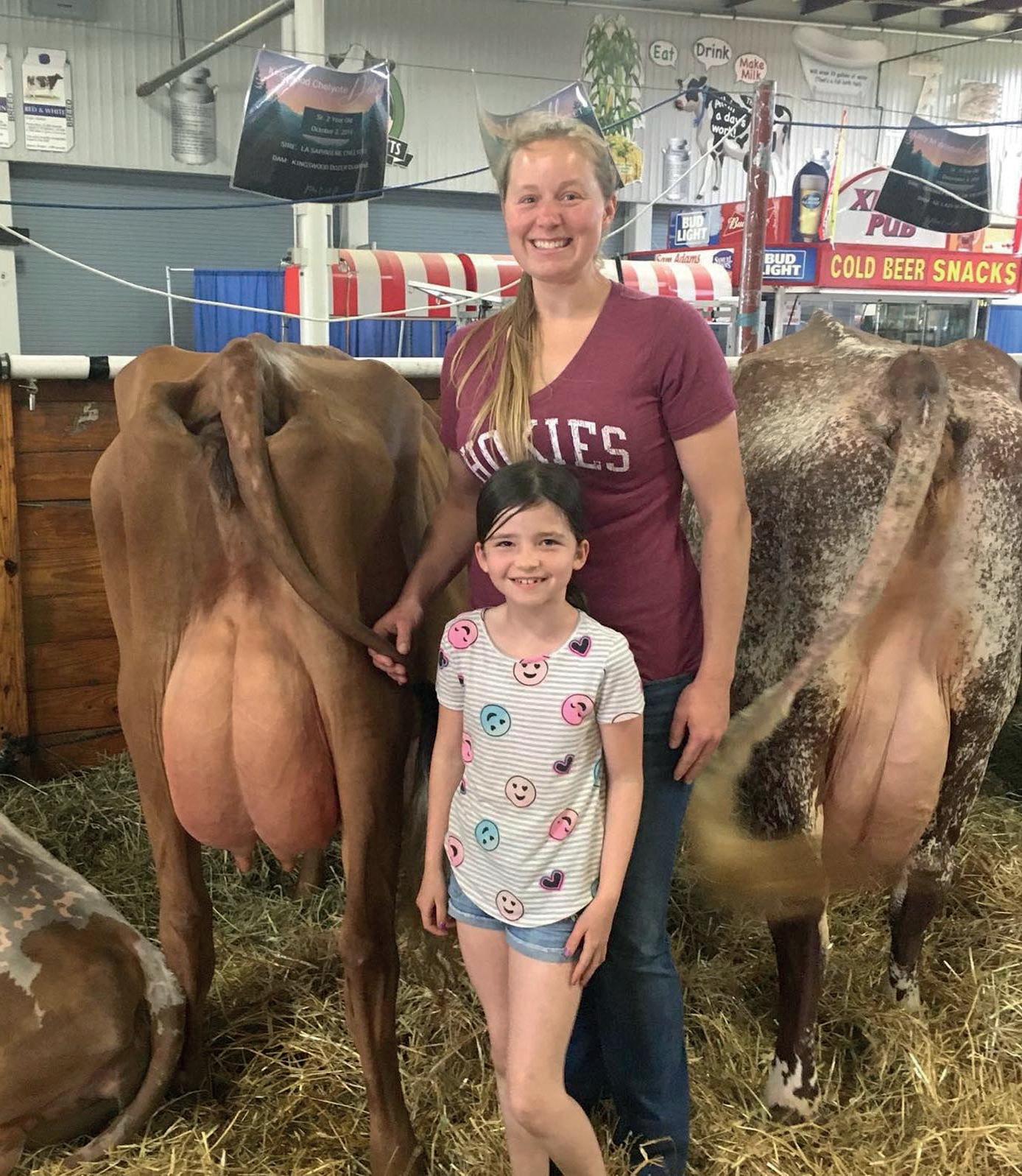

“Having said that, we have had some big successes in the show world with the all-American fall yearling Ayrshire, Kingswood Cheylote Destiny, in 2021, and also a nominated all-American four-year-old Ayrshire in 2021, Kingswood Double Barrel Sunshine 94EX.
“I like to use a variety of bulls to branch genetics out, as the Ayrshire breed is quite small in numbers and many sires are related.”
Anne’s cows are housed in a traditional tie-stall barn, with access to 4ha (10 acres) of grass where they
Cows are milked with six Surge milking machines: three for each side of the tie-stall barn, with two people milking each time.
Milk is sold to Agrimark Co-op which owns Cabot and McCadam cheese.
Anne says: “We also sell milk every week to a local cheese company called Mystic Cheese, who pay us above market price. They purchase milk from us direct on a payas-you-go system. This year they won a national award with cheese
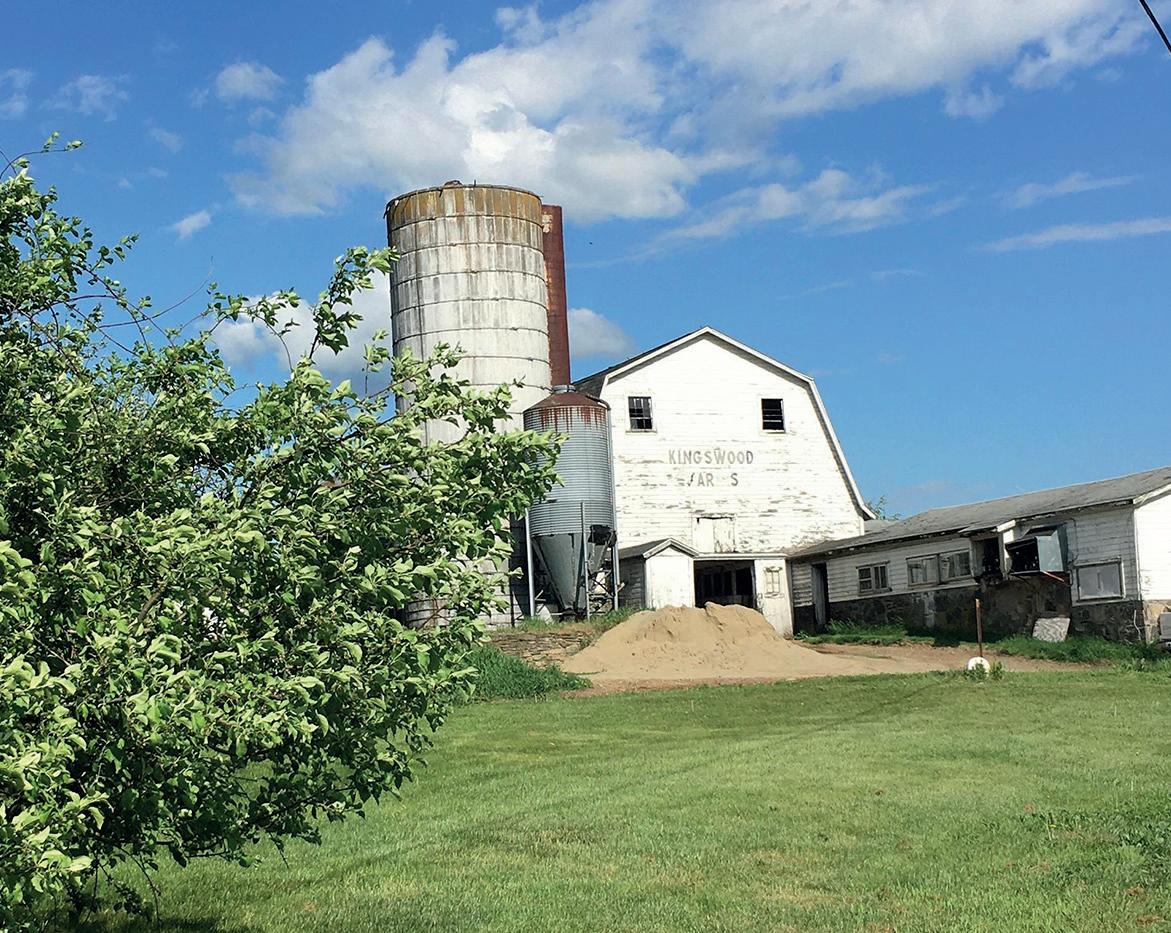
The farm in Brooklyn, Connecticut, is dated and needs significant investment to modernise it.

■ Cows are milked twice a day at 4am and 4pm
■ Milk is sold to Agrimark Co-op and the current price is about USD$22 (£17) net per 100lb (45.5kg)
■ Milk is also sold direct to local cheese company Mystic Cheese
■ Cows are milked with six Surge milking machines
made from our milk which was very exciting, and [it] was also the only cheese in the contest made with Ayrshire milk.
“Fred and I milk every morning and I also work the afternoon shift helped by some others on a parttime basis.
“My sister Martha milks one night a week and my 11-year-old cousin Mackenzie milks four nights a week and also helps with barn chores.
“I have a local girl in high school who milks two nights a week, which is a big help. Our work crew is small but gets the job done.”




































Breeding Bull Proofs
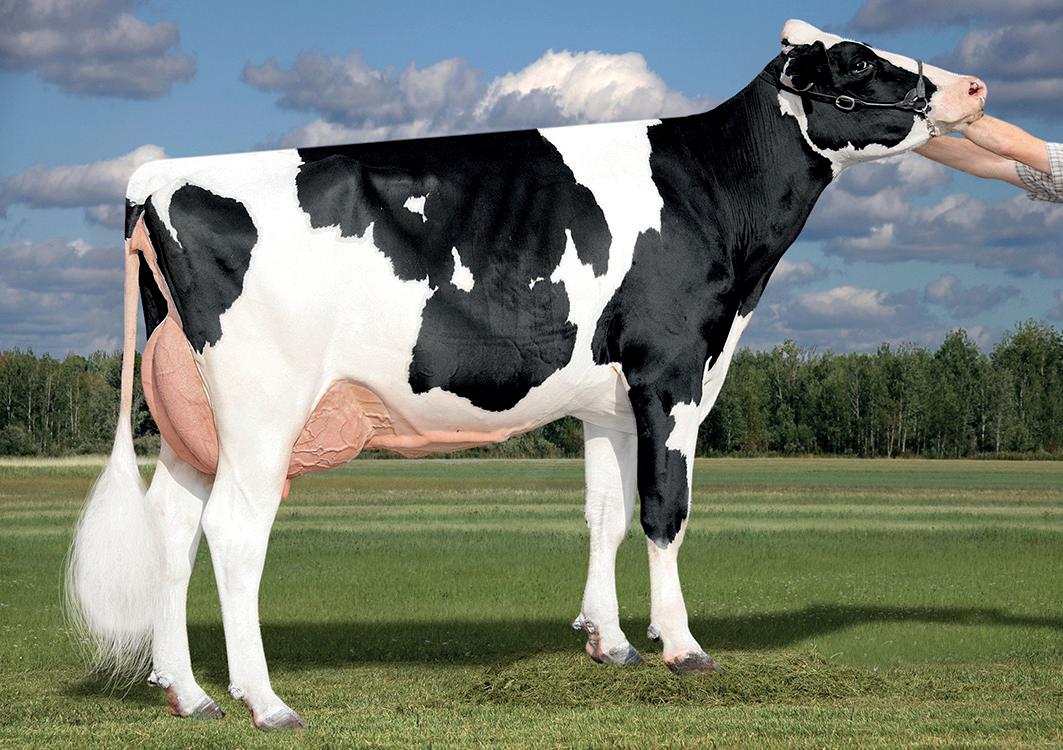
Strong stability at the top of the Holstein young sire rankings sees the same four bulls leading the way as last December, featuring all the credentials needed for modern dairy systems. Particularly notable are their transmission of low Maintenance costs, light environmental impact and high weights of milk solids. Alongside the four leaders comes new interest from 12 young bulls making their debut in the top 20. Holding on to the number one position is Denovo 20893 Harmony, one of the four Denovo 2776 Leeds sons which take the lead. Harmony’s Predicted Transmitting Abilities (PTAs) typify the breeding pattern of its sire, with standout PTAs for milk and protein yields (1,121kg and 41.2kg respectively),
which are achieved by very efficient, smaller daughters (-28 Maintenance). This makes this bull the breed leader for Feed Advantage (290) as well as the best EnviroCow bull at +5.0.
Harmony’s Profitable Lifetime Index (£PLI) of £881 takes in the routine annual base adjustment implemented by the AHDB this April, which has reduced £PLI figures by £56 points on average for Holsteins. Its stablemate Denovo 20723 Columbia now ranks second (£PLI £876) and up from third place with equally strong production ratings and stronger udder health (-16 somatic cell count [SCC], -2 Mastitis).
T-Spruce Denovo Zest, also by Leeds, ranks third (down from second) with a £PLI of £870. Denovo 20771 Segment is the final of the four Leeds sons in the top 20
and has a £PLI of £855. In fifth place is the first new entry, Progenesis Preston (Sheepster x Jalapeno). Preston is a high protein transmitter (40.7kg, +0.10%) which is combined with a Type Merit of 1.13.
Denovo 22192 Sector-P (PineTree Adventure x Winstar Mendel-P) in sixth (£PLI £846) is also new since December and is the highest weight of fat transmitter of the breed at 61.3kg (+0.28%).
FOR those looking ahead to calve in autumn, there is only one new graduate in the top 10 ranked on the Autumn Calving Index (£ACI), which is Progenesis Ascend. This bull immediately takes the lead with exceptional fat yields and a favourable Maintenance Index while also promoting healthy daughters. Its £ACI is £701. Winstar Graziano (£ACI £693) remains comfortably in the top two
for another consecutive proof run, continuing to transmit good milk solids and a good somatic cell count (SCC). With an £ACI of £677, Peak Mauney and Denovo Invictus jointly rank third, both with outstanding daughter fertility. Invictus now has 2,846 UK milking daughters.
Ranking in fifth and sixth are Denovo 15969 Atlantis (£ACI £657) and Denovo 3426 Avery (£ACI £653), both excelling in fat and
protein solids and components.
The number one spot on the Spring Calving Index (£SCI) is shared by two Holstein sires, Denovo Invictus and Progenesis Ascend, each with an £SCI of £592. Invictus moves up two places, with desirable daughter fertility and SCC figures, while Ascend is a new graduate, also offering improving SCC.
Winstar Graziano (£SCI £579) ranks third, ahead of the highest
placed Jersey on this acrossbreeding ranking, VJ Boman Lasky Lando (£SCI £566). The British-bred Holstein Huddlestone Slindon (£SCI £559) enters the running in fifth, having been a popular young sire among grazing farmers and quickly achieving a daughter proof with over 500 now milking in the UK and contributing to his figures.

Anewly available British Friesian sire from the Inch herd in Northern Ireland (NI) has claimed the top spot in the breed Profitable Lifetime Index (£PLI) rankings. Inch Next, by Catlane Chad and out of a Hylke dam, has a £PLI of £334 and delivers outstanding production (265kg milk, 31.3kg fat plus protein), strong udder health (-5 somatic cell count [SCC], -3 Mastitis), and an excellent EnviroCow score of 1.9.
Previous front-runner Bloemplaat Hoeve Ewoud (£PLI £307) now holds second place. This bull continues to excel in yields of fat (13.3kg) and protein (10.5kg), boasts
strong SCC control (-11 SCC), and a high EnviroCow score (1.6).
The Friesian genomic young sire rankings remain largely unchanged at the top, with Wyevalley Veritas holding on to first place (£PLI £315) and maintaining a strong HealthyCow score of £157. Goonhilly Coverack (£PLI £313) also retains second position, offering solid overall health traits and a high daughter Fertility Index (3.7).
A notable mover is Beaufort Supersonic (£PLI £306), climbing from seventh to third, driven by excellent production (395kg milk, 29kg fat plus protein) alongside good health.
Within the Jersey breed, VJ
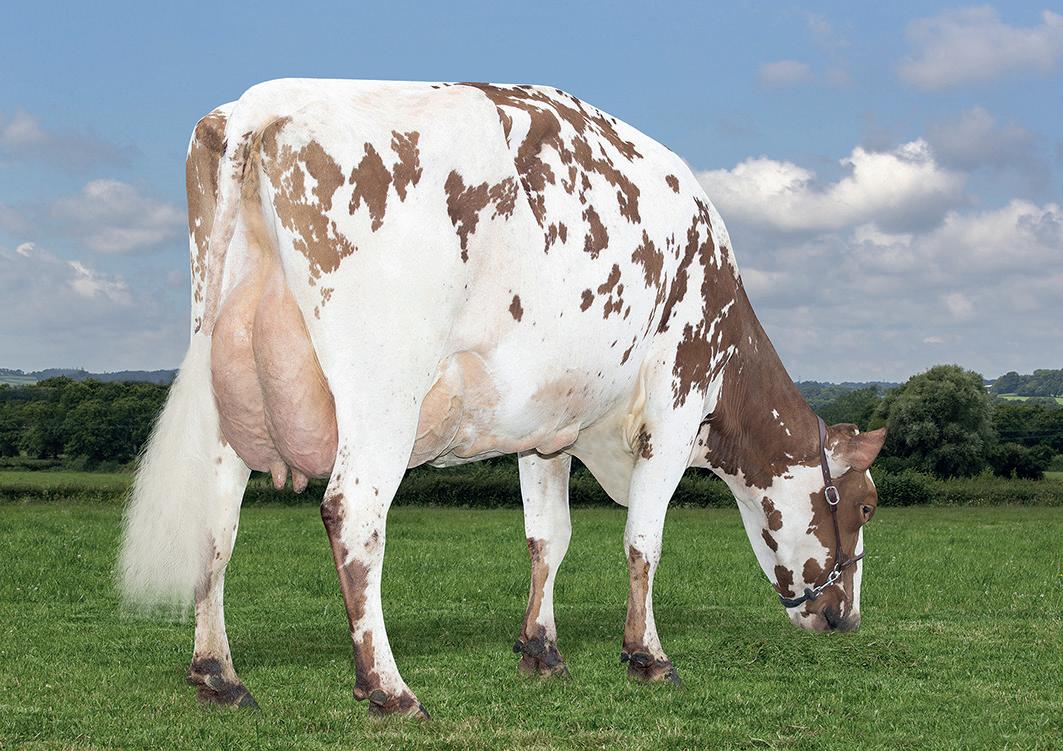
Kibsgaard Jocko Jojo retains its position at the top of the list with a £PLI of £500. This bull’s strong production figures (402kg milk, 39.6kg fat plus protein) are complemented by excellent lifespan (+100 days) and good mastitis resistance (-2).
Climbing up to second place is VJ NR Haugaart Hays Hauga (£PLI £414). Previously ranked fourth, this bull stands out for an exceptional daughter Fertility Index of 12.2. For the third consecutive time, the UKbred Tontine Astorwell proves unbeatable at the top of the Ayrshire rankings and boasts an impressive £PLI of £543. This reflects extreme production figures (845kg milk, 57.6kg fat plus protein) and an outstanding EnviroCow score of 3.
Holding firm in second place is VR Hakvin (£PLI £502), which
DAUGHTER-PROVEN Holstein sires have a new front-runner in the Profitable Lifetime Index (£PLI) ranking in the form of Denovo 15969 Atlantis, which is buoyed by the 158 daughters now milking in UK herds. This bull’s £PLI of £717 is thanks in part to very high transmission of fat (51.4kg and +0.32%), a good score for Maintenance (-12), and a Lameness Advantage of 4.1.
Holding firm in second place is long-term leading sire Genosource Captain (£PLI £716), continuing to excel in milk yield (1,079kg) and Maintenance (-29). Climbing into third place is Plain-Knoll Renegad Trooper (£PLI £713), a bull with good lifespan transmission (LS +137 days) and a Type Merit of 1.98. Long-termer Westcoast River now ranks fourth, with 684 UK milking daughters
helping to earn it a £PLI of £703. The next few places feature sires graduating from the young sire lists, first of which is Stgen Cowen Thorson (Pine-Tree Lionel Cowen). A high fat transmitter (52.8kg) with good calf survival (+4), this bull has a £PLI of £681. Next comes the Peak AltaZazzle son Progenesis Ascend (£PLI £673), which offers calving ease (1.6), short gestation length (-4)
continues to deliver with strong longevity (LS 88), a daughter Fertility Index of 10.3, plus well-balanced production.
Dr Daniel Pitt, animal genetics manager at the AHDB, says that as producers seek genetics for these dairy breeds from many countries around the world, the importance of using UK-equivalent figures cannot be over-emphasised.
He adds: “The only accurate way to compare say a Scandinavian with an American or New Zealand Jersey is to use the UK-equivalent figures calculated independently by the AHDB, and I would urge producers to do so.” Other dairy breed indexes are published online on the AHDB website, where the Montbeliarde, Brown Swiss, Guernsey, Shorthorn and Fleckvieh are all represented.
and low Maintenance costs (-31). Lars-Acres George Miller is seventh, with excellent daughter lifespans (156) and a high HealthyCow rating of £265 (£PLI £669). Peak Playback jumps up to eighth place and shares this position with Winstar Graziano. Closing the top 10 are jointly ranked sires Peak Mauney and FB Kenobi Targaryen, both with a £PLI of £663.









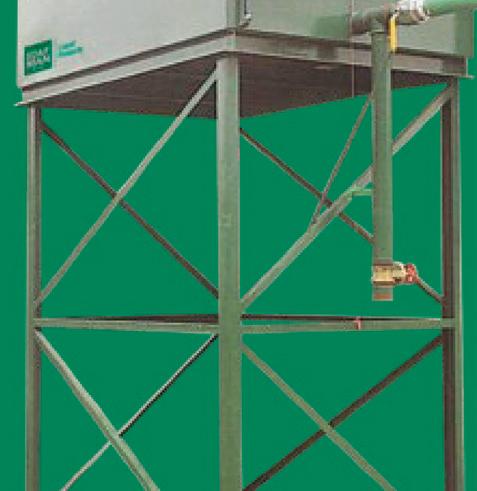
















Molasses based liquid feeds offer a cost-effective solution for dairy, beef and sheep rations



High sugar options to drive forage utilisation and feed efficiency
Include magnesium to reduce the risk of grass staggers at turnout
Flexible load sizes from 1T to 29T
Interest free Tank Finance Scheme available





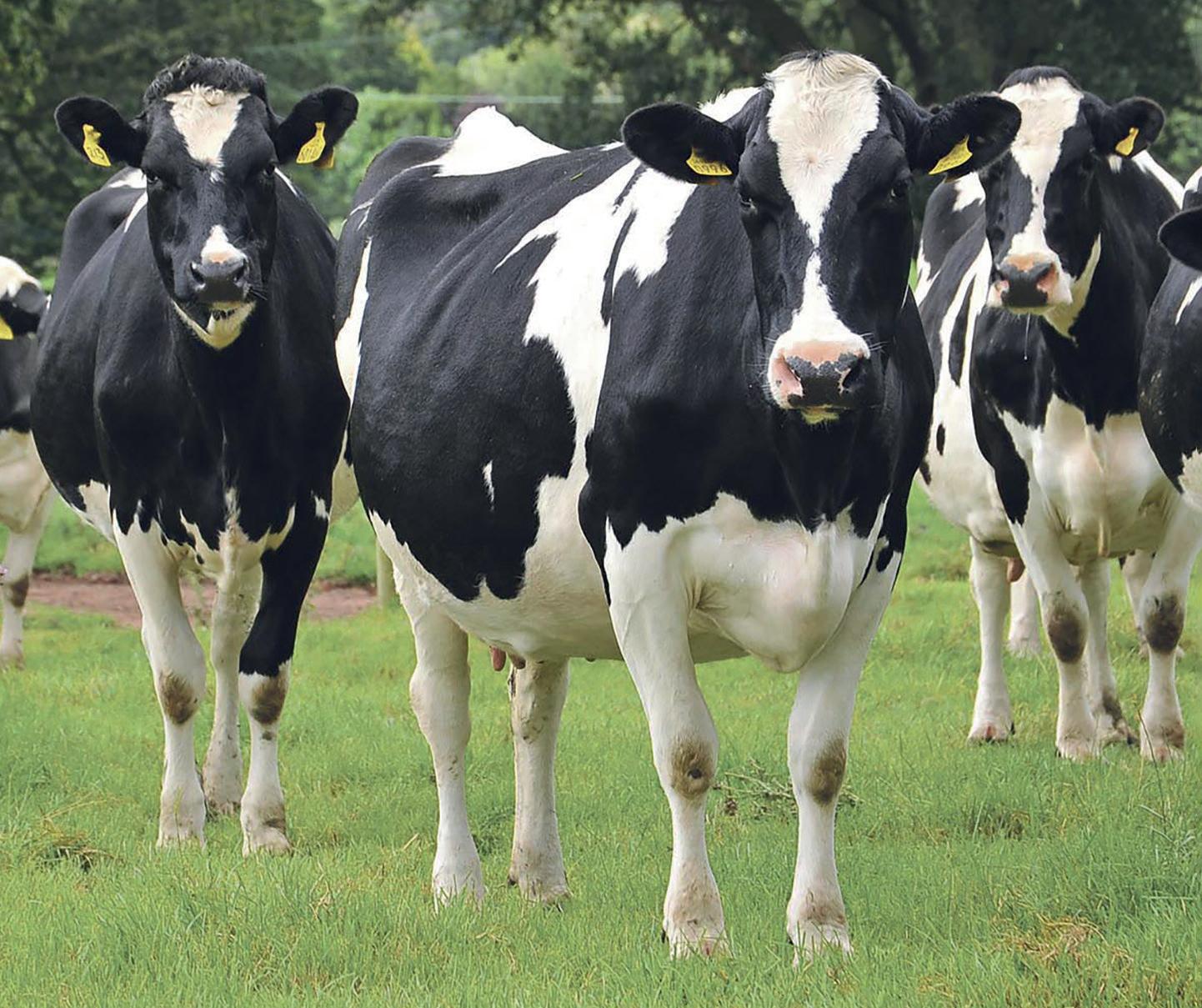
With changes being made to the BVD control schemes in England and Wales, it is no surprise that many farmers and their vets are unsure on the next steps to take.
BVD remains one of the most serious diseases affecting cattle across the UK. It can have devastating economic and health impacts on herds, leading to reduced fertility, increased calf mortality and greater susceptibility to other infections.
Understanding BVD, its symptoms, prevention and control measures is crucial for maintaining a healthy and productive herd.
Gwyn Jones, chair of Ruminant Health and Welfare, says: “In England, the BVDFree scheme has transitioned to being part of the Animal Health and Welfare Pathway, which has introduced a new voluntary eradication scheme.
“Already, producers in England can access a funded vet visit as part of the Annual Health and Welfare Pathway Review. There will be further financial support available to target support for herds where test results may come back positive or inconclusive.
“As with previous Animal Health and Welfare Pathway activity, this will also incorporate biosecurity assessment.
“For farmers in England, the advice is to take

BVD presents in various forms, including:
l Acute BVD: Symptoms include fever, lethargy, nasal discharge, diarrhoea and reduced appetite
l Reproductive issues: Infertility, abortion, stillbirths and weak calves are common
l Persistently Infected animals (PIs): If a pregnant cow is infected during early gestation, the virus can pass to the foetus, creating a PI calf; PI animals shed the virus continuously, acting as a major source of infection
ECONOMIC IMPACT OF BVD
BVD can lead to significant economic losses due to:
l Reduced milk yield
full advantage of the funded BVD Eradication Scheme and the funded vet visits, as once the BVD Eradication Scheme becomes mandatory in 2027, there will not be any further funding.”
In Wales, funded testing under the Gwaredu BVD scheme ceased at the end of 2023. A voluntary scheme which differed from those
The framework of the mandatory BVD Eradication Scheme is a significant step up in comparison to obligations for farmers now, in the voluntary phase
GWYN JONES
l Poor growth rates in calves
l Increased veterinary costs
l Higher mortality rates
l Fertility issues leading to lower calving rates
STEPS TO TAKE
l Regular testing and monitoring to detect BVD early
l Implement a robust vaccination programme to prevent outbreaks
l Cull persistently infected animals to stop viral transmission
l Maintain high biosecurity standards to prevent introduction and spread of the virus
elsewhere in the UK, it led with blood screening for antibodies at the same time as the herd’s TB test.
From July 1, 2024, all cattle herds in Wales were required to carry out antibody screening for BVD annually.
In Scotland and Northern Ireland, the mandatory schemes continue to run and are making good progress towards eradication.
Mr Jones says: “It is really important that farmers engage with the scheme while it remains in its voluntary phase, as costs for the vet visit, testing and a biosecurity assessment will be covered. Once it switches to being mandatory, the funding will be withdrawn.”
As with BVD control schemes in Scotland and the Ireland, once the scheme in England becomes mandatory, there will be several categories farms can fall into.
Mr Jones says: “We will go to consultation with the industry this autumn, but in the plan we have drawn up any positive BVD tests, persistently infected [PI] animals or animals showing as ‘not negative’ will influence the category the farm ends up in.
“And once categorised, any which are positive for BVD must start a PI hunt within 30 days, with all animals tested within a week, and all calves, aborted foetuses or calves born dead tag tested. Any animal identified as a PI must be slaughtered.
“This will be carried out in partnership with your vet and a programme of routine testing, vaccination and biosecurity assessments will follow.
Framework
“There is no denying it, the framework of the mandatory BVD Eradication Scheme is a significant step up in comparison to obligations for farmers now, in the voluntary phase.
“This is partly why it is so important that farmers make inroads with BVD control in the next
two years, when funding is available and the scheme is voluntary.”
BVD affects the immune system of cattle and the virus is highly contagious, spreading through direct contact with infected animals and via the placenta from an infected dam to her unborn calf.
Dr Becca Cavill, vet at Boehringer Ingelheim Animal Health – maker of the live BVD vaccine, Bovela® – says: “Whether running a closed or open herd, in a country with a voluntary or mandatory control scheme, the role of vaccination and testing are important to prevent the BVD virus causing losses.
“According to last year’s National BVD Survey, while tag and test is now the most common type of testing [47% respondents], people are often choosing not to tag test everything.

“From those using this form of testing [320 respondents], only 43% are tag and testing all calves born dead or alive, while 47% are only tagging calves born alive and the remainder were only tagging some calves, mainly live heifer calves [5%].
“This is a very risky strategy as PI animals can be born dead or weak and could easily be missed by not tagging every single calf born on the farm whether it is alive or dead at or soon after birth.”
The use of vaccination is widespread, but not without issue for some producers.
“Over half – 60% [386] of those who responded report using vaccination, yet 86 [13%] of those vaccinating had to restart their vaccination course because they had either incorrectly timed the twoshot primary course [30%], had gone beyond the 12-month booster window [49%] or had missed giving the six-month booster [21%], required in cases of the inactivated vaccine.
“When timings are out, the herd’s BVD pro tection can become compromised and the virus can creep in leading to losses.
“Opting for Bovela®, a live vaccine which has a flexible and simple single injection protocol, can make a busy life managing a herd slightly easier.
“Talk to your vet to find out more and check makebvdhistory.co.uk to plan vaccination timings.”

Bovela® contains Modified live BVDV-1, non-cytopathic parent strain KE-9: 104.0–106.0 TCID50, Modified live BVDV-2, non-cytopathic parent strain NY-93:104.0–106.0 TCID50. UK(GB): POM-V. Advice should be sought from the prescriber. Prescription decisions are for the person issuing the prescription alone. Further information available in the SPC or from Boehringer Ingelheim Animal Health UK Ltd., RG12 8YS, UK. UK Tel: 01344 746957; IE Tel: 01 291 3985. Email: vetenquiries@boehringer-ingelheim.com. Bovela® is a registered trademark Boehringer Ingelheim Vetmedica GmbH, used under licence. ©2025 Boehringer Ingelheim Animal Health UK Ltd. All rights reserved. Date of preparation: March 2025. UI-BOV-0018-2024. Use Medicines Responsibly.
A lack of tenant interest and heavy financial losses have forced Jason and Katherine Salisbury to quit their farm on Sark. Chris McCullough reports.
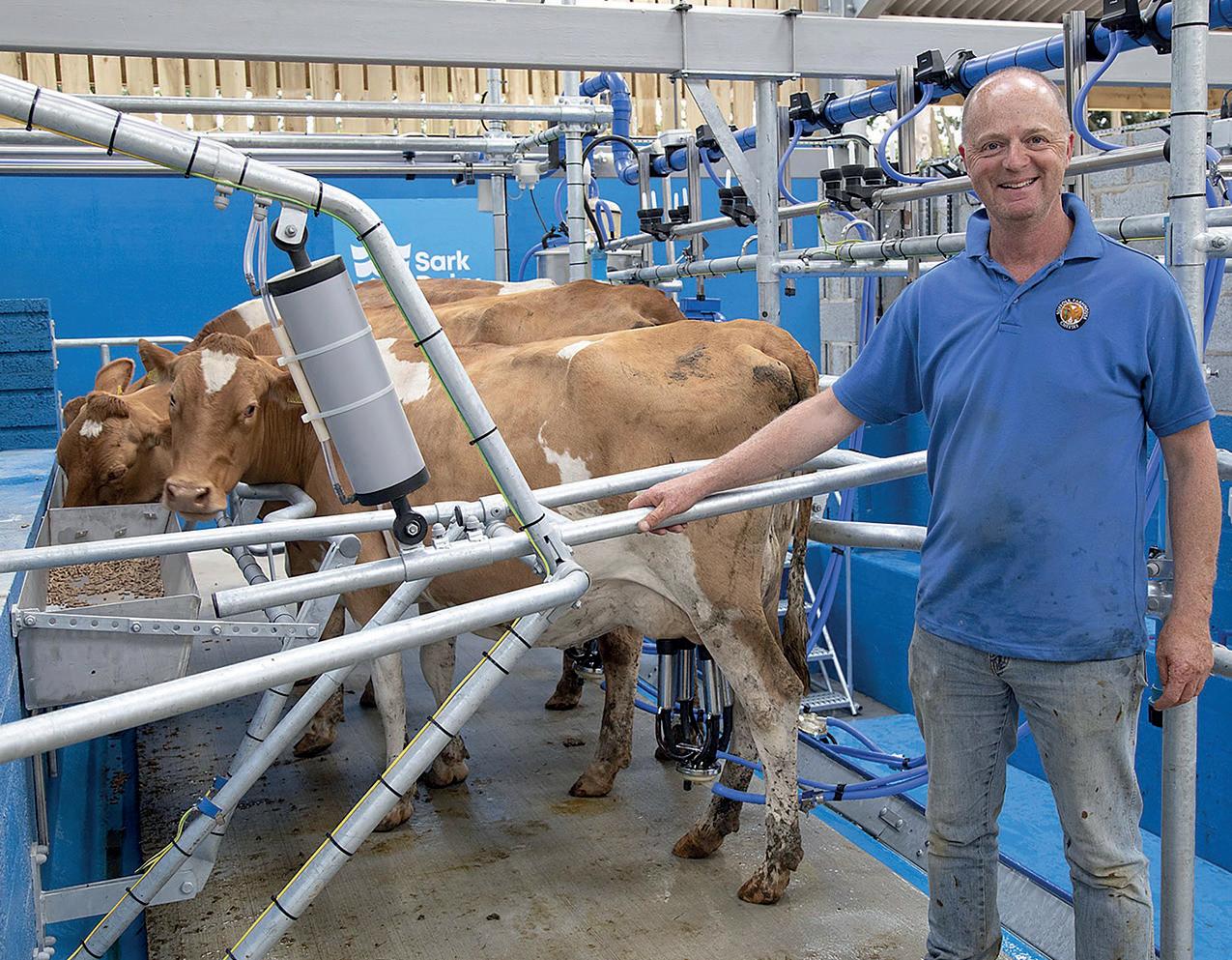
Afarmer that set up a new dairy farm on the island of Sark has decided to close the farm and not renew the tenancy, following substantial financial loss.
In 2021, Jason Salisbury and his wife Katherine took on a fiveyear lease to set up a dairy farm on the island, following a worldwide search for a new tenant.
That lease agreement finishes at the end of April, but the Salisburys have decided not to renew it and will instead return to their own 40-cow dairy farm in Suffolk, which is currently being run by their son, James.
This brings Sark’s own milk production, and the manufacture of other dairy produce, to a halt, with the cows already sold and moved off the island.
However, all is not what it
seemed on Sark island, as fresh milk was still being imported from neighbouring Guernsey all the time the Salisburys were producing their own milk.
This meant Jason was throwing away around 50 litres per day as he was battling with the imported supply that the islanders had to pay more for, compared with the Sark milk.
Although the couple thoroughly enjoyed their Sark adventure, they have decided to cut their losses and move back home.
Mr Salisbury says: “We have been milking on the island for four years and spent the previous two planning the farm – that’s six years in total.
“Our tenancy was for five years so we have decided to move on as we are at the point where continuing milking on the island does not make financial sense. The is-

land community has been fantastic and Sark is really an idyllic place to live and work but the figures are not stacking up.
“We have lost around £60,000 in our time here, in terms of buying equipment for the farm, the cows and other costs. Plus, the trust that runs the dairy is doubling our rent in April 2026, so we see no point in continuing.”
With a population of just 562, Sark Island is one of the Channel Islands. It measures 3.5 miles long and 1.5 miles wide, and relies on tourism and agriculture to support its economy.
It has no cars, no paved roads, no street lighting and almost no pollution but does attract more than 50,000 visitors each year, fed by a number of eateries that need milk.
Back in 2021, a trust had been set up on Sark to project manage the building of the new dairy, with an investment total needed of around £400,000. The Sark Dairy Trust was chaired by the island’s Seigneur Christopher Beaumont, who also donated 16 hectares (40 acres) of land on which to build the dairy and manage the cows.
Sark milk was sold to the islanders via a vending machine, as well as other dairy produce such as butter and the farm’s award-winning cheese.
Although there was an international search for a dairy farm when Mr Salibsbury took on the challenge, he is quite disappointed that the trust has not been so
proactive this time – no suitable tenant has been found.
He says: “We are quite disappointed with the trust in terms of seeking a new tenant. It has not been very proactive this time and only found one candidate who could not commit to the move.
“We gave the trust seven months’ notice that we were moving on, even though the terms were four months’ notice. That should have given plenty of time, but nothing really has been done.
“I have sold nine cows back to Guernsey and we are planning to take 17 other cows and followers back to our herd in Suffolk, to try and recoup some losses,” he says.
Dairy farmers on Guernsey receive around 32p per litre for their milk, but the costs of production can be over 70ppl. That shortfall is boosted by a headage payment that Guernsey pays its farmers; therefore, the more cows they have, the more money they receive.
Mr Salisbury says: “That means it will be incredibly difficult for any new farmer here on Sark to buy cows back from Guernsey, as no farmer will want to sell them given the financial benefits of keeping more cows. Plus there is an import ban on livestock from anywhere else.
“The entire ethos of us coming to Sark and setting up the dairy farm was to ensure the island community had its own supply of milk. We were producing around 150 litres per day, which was not all being sold, so we had to either throw 50 litres per day away, or turn it into butter and cheese.
“It was quite a shock, and hard to believe that during our entire time on Sark the island was still importing 500 litres per week from Guernsey. And that doubled to 1,000 litres per week in the main tourist season.
“That milk cost the islanders £2.25 per litre, while ours was for sale at £2 per litre. It does not make any sense to me that milk was being imported even though we were there to produce the island’s milk,” he says.
With the odds stacked against them, Mr and Mrs Salisbury say it is with some relief that they are quitting Sark’s only dairy farm, but they will miss the people they have made friends with during the past four years.
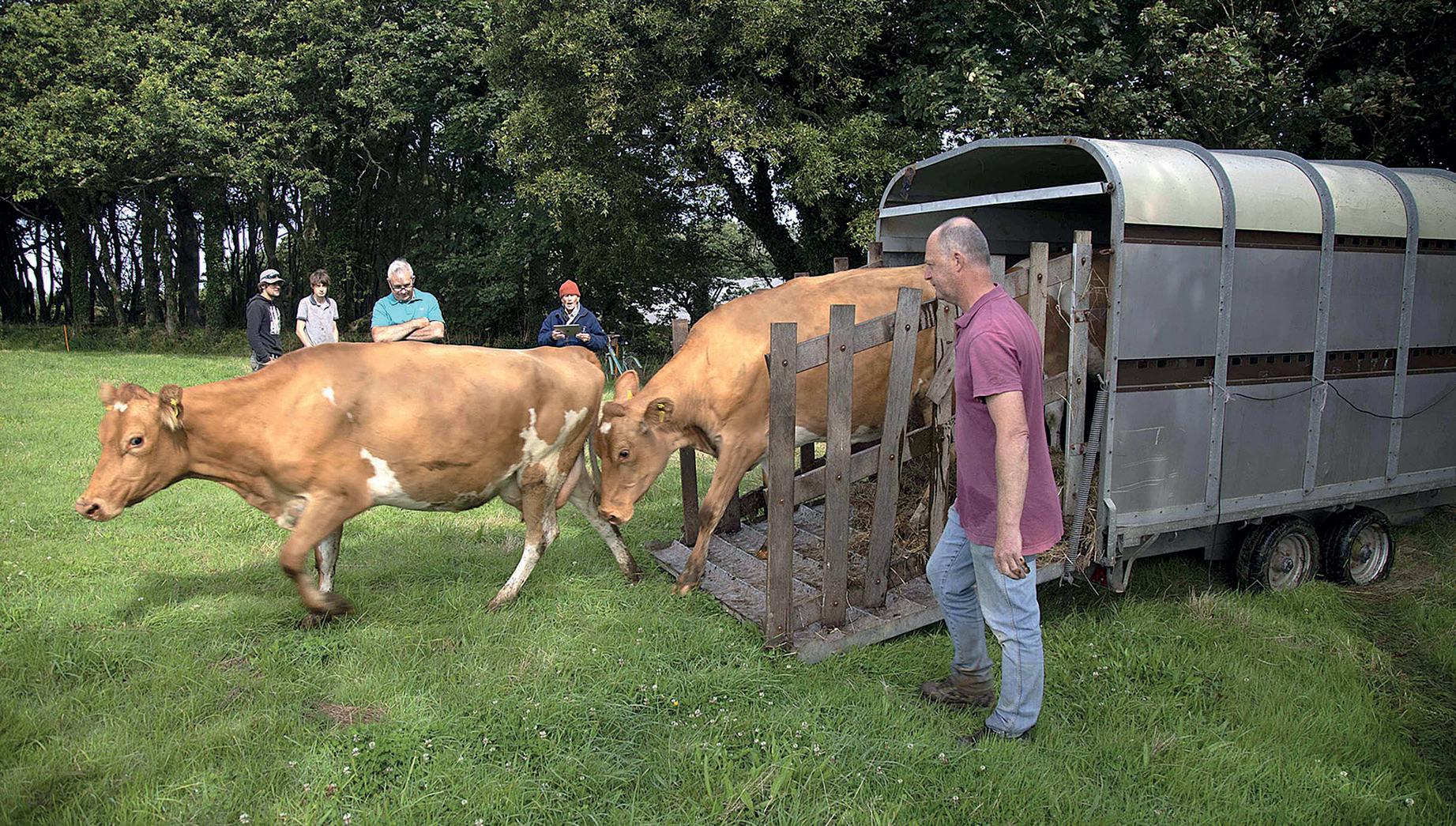
The Salisburys loved the Sark community but it no longer made business sense to stay.

Mr Salisbury says: “In September last year, Katherine and I sat down to re-evaluate our business and we agreed, given all the financial hurdles with rent doubling, higher costs, that we would be crazy to continue.


“I am 54 now and Katherine is 50, and although we do not want to retire, we do want to do more things as a family.
“We both have elderly parents and family at home we want to take care of, as well as spend more time with our son, James, 21, and daughter Emily, 23, who is currently travelling.

“Right now we are going through the difficult process of selling some of our equipment and trying to arrange the paperwork for our cows to go back to our Suffolk farm.”








A willingness to adopt new technology, carefully considered maize variety selection and targeted agronomy are among the ingredients in one Cumbrian dairy farmer’s recipe for success. Dairy Farmer reports.
John Ferguson farms about 161 hectares (400 acres) at Blencogo House Farm, near Wigton, on the southern fringe of the Lake District, milking 300 cows and producing forage and straw from 32ha (80 acres) of maize, 16ha (40 acres) of winter wheat, 20ha (50 acres) of winter barley, with the remainder down to grass.
The farm’s milk is destined for First Milk’s creamery at Aspatria, just a few miles away.
An early adopter of digital technology, John uses the Omnia Digital Farming platform, the Terramap high-definition soil mapping service and John Deere’s HarvestLab for on-the-go analysis of silage, slurry and farmyard manure.
He has also invested heavily in winter slurry storage and has installed a slurry separator on-farm, allowing organic manures to be used to maximum efficiency.
Technology is also helping to improve milking efficiency, with two-thirds of the dairy herd milked through four Lely robotic milking units.
Maize variety selection is made with the support of agronomist Jim Clark and typically involves a visit to the Hutchinsons Cumbria Maize Trials site at Smalmstown Farm, near Carlisle,

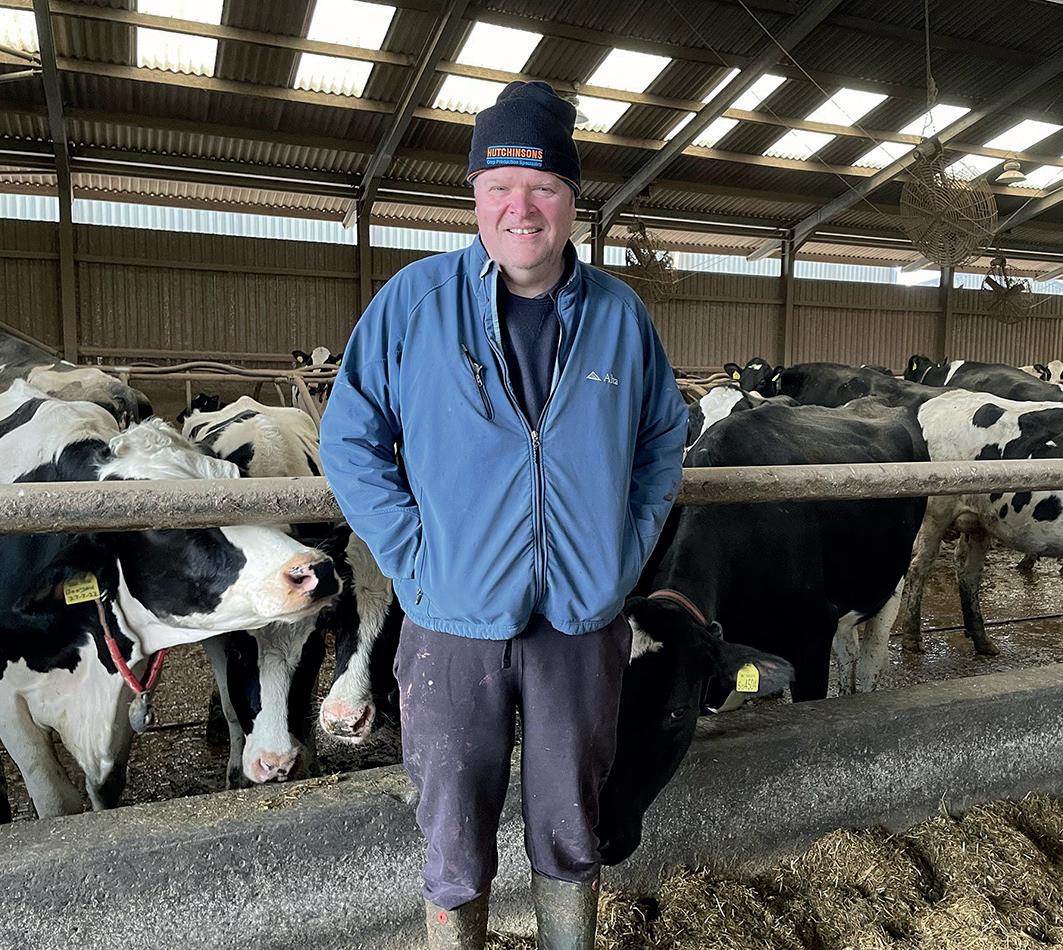

which Mr Clark manages.
Most of the 2024 maize acreage at Blencogo House Farm was drilled to the Dekalb variety DKC3204, which will also be the farm’s primary maize variety in 2025.
A small acreage of Pioneer P7034, a variety which produces highly degradable starch, is also grown for feeding first in the transition from old- to new-crop silage.
Mr Ferguson says: “The P7034 will go at the front of the clamp so we can feed it straight away. It is probably not really ready to feed until after Christmas, but nobody has that luxury nowadays.”
SOURCE: HUTCHINSONS
(Crystal Green)
(Primary P)
DKC3204 treated with Primary P starter fertiliser was the top yielding variety in the Hutchinsons 2024 Cumbria maize trials, producing a freshweight yield of 39.92 tonnes per ha (16t/acre), over 2t/ha (0.8t/acre) more than its closest competitor, and 24,456.10 litres/ha (9,901 litres/acre) of milk (calculated at 5.3 MJ/ME/ litre) at a value of over £11,000/ha (£4,453/acre).
This was despite the challenges of growing maize in a region where conditions are often less conducive to warm-season crops.
Mr Ferguson says: “We had a shocking year for maize last year; for maize last year; the worst since 2012 here in the North West. It was weather-related. We had a wet, cool spring and getting maize drilled in good conditions was difficult, and then we had almost no sunshine at
all, but the DKC3204 made the best of a bad situation.”
Mr Ferguson’s contractor finished drilling the farm’s maize on May 1.
“What should have been a week’s drilling took a month to complete,” says Mr Ferguson.
With crops on the back foot for most of the season, 10 days of warm weather and sunshine in early September saved a lot of crops and helped with cob maturity and filling, adds Mr Clark.
All Blencogo House Farm’s maize is grown under Samco Systems’ biodegradable film which, says Mr Ferguson, provides a six- to seven-week greenhouse effect after drilling, doubling the number of heat units that would normally be available this far north and helping the maize crop get off to a strong start.
Without the film, Mr Ferguson would not be able to grow the high-yielding varieties he wants to grow, says Mr Clark.
He adds: “We need to drill earlier up here, not be messing around in the middle of May drilling in the open. We need maize in the ground in the middle of April with a starter fertiliser.
“We like the Dekalb varieties for several reasons and one is that they are very vigorous out the ground, noticeably so in the plots.
“You can tell which ones are Dekalb [because] they stand out – the plants are big, which means they take more advantage of the film.”
This early vigour trait is also considered important in ensuring maize is able to access the nutrients
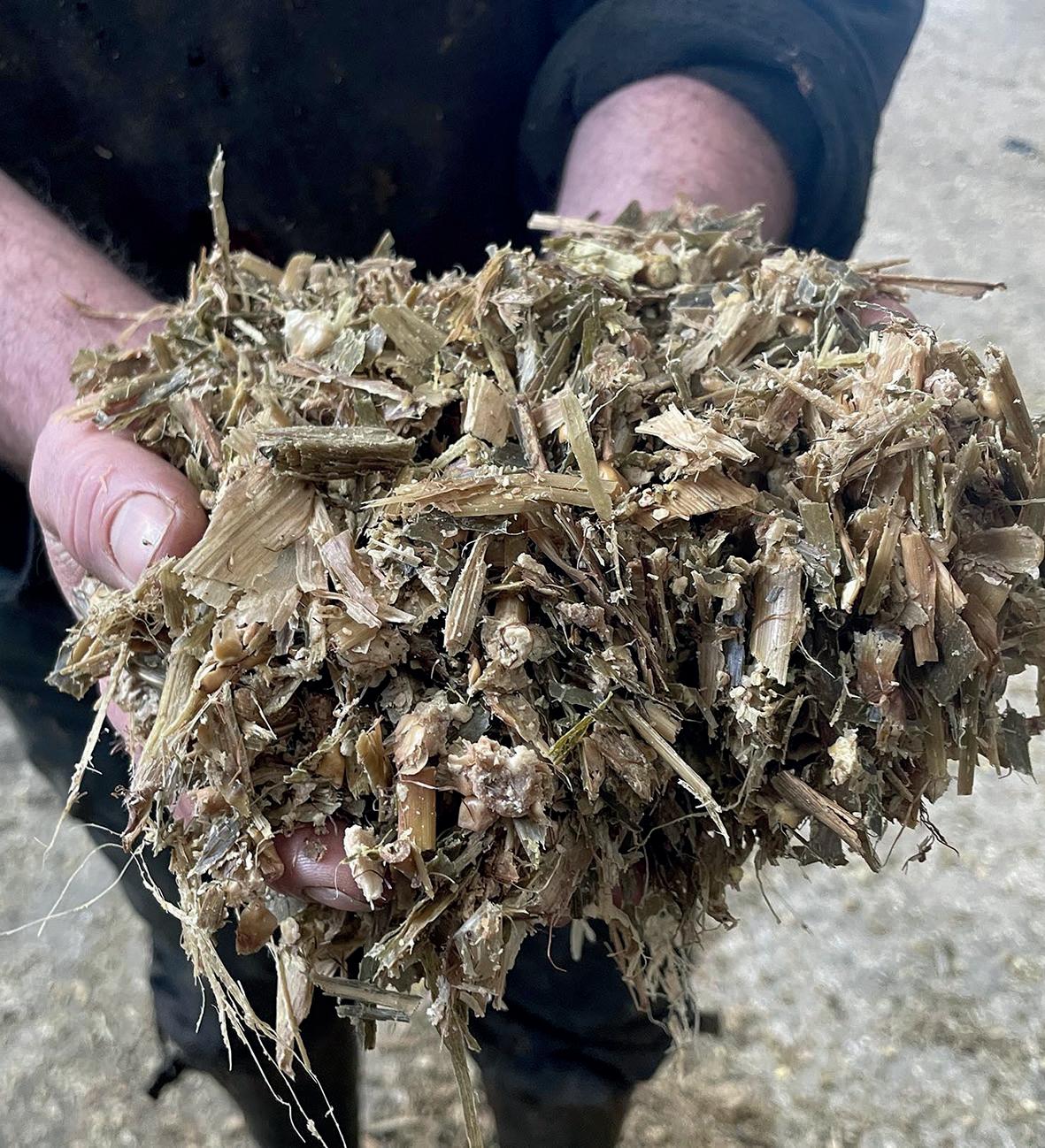
Most of the 2024 maize acreage at Blencogo House Farm was drilled to the Dekalb variety DKC3204.
it needs. With early season N requirements and up to 90% of P and potassium nutrients typically supplied by slurry on-farm, good root development is essential.
“We need that early vigour [and] those big roots to pick up that N, P and K,” says Mr Clark.
Maize makes up about 20% of the dairy herd’s ration, with the remainder comprising 50% silage,10% grains (barley or wheat), 15% a blend of soya and rapeseed, plus 5% minerals.
Four cuts of grass silage are taken each year: the spring barley is wholecropped in early July, wheat in early August, and the maize is harvested in September/early October.
Home-grown maize could potentially replace some of the bought-in blend, but as with all components of the ration, the figures need to stack up in terms of milk output and value to the farm’s bottom line.
“We just have not got enough land and most of the land is not




good enough for maize,” says Mr Ferguson.
Replacing the cereals with maize might be another option, he says, but the straw they produce is used on-farm and would be expensive to buy in.
Forage availability is a constant challenge for dairy farmers in the North West, says Mr Clark, who suggests that maize could potentially be a valuable cash crop on arable farms in the region, as well as further afield.
“There is not enough maize land in Cumbria to fulfil the dairy industry’s needs.
“If you look at the output in tonnes of dry matter, nothing is going to touch a good crop of maize; you would feed maize every day if you could grow enough of it,” he says.




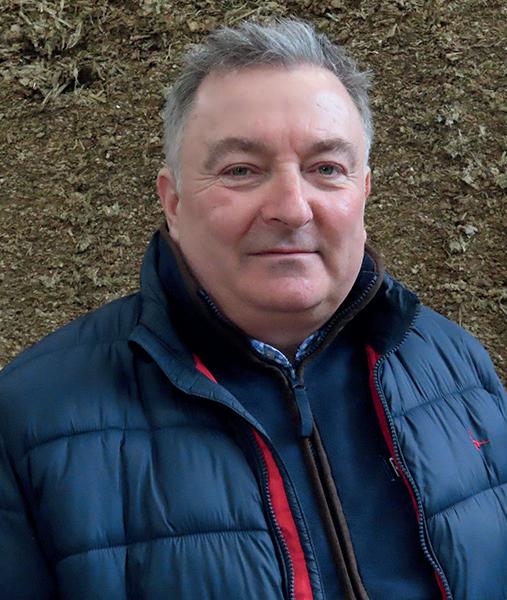
Mr Ferguson’s forward-thinking approach to technology also extends to his maize agronomy. In addition to selecting the most productive varieties (he was one of the first farmers to trial DKC3204 on-farm) he is applying late season N to his maize in July to boost cob fill and will be trialling Primary P starter fertiliser for the first time this season.






Terramap soil mapping has enabled lime to be variably applied according to variations in soil pH across fields, while maize sap testing is used to monitor nutrient balances and availability.





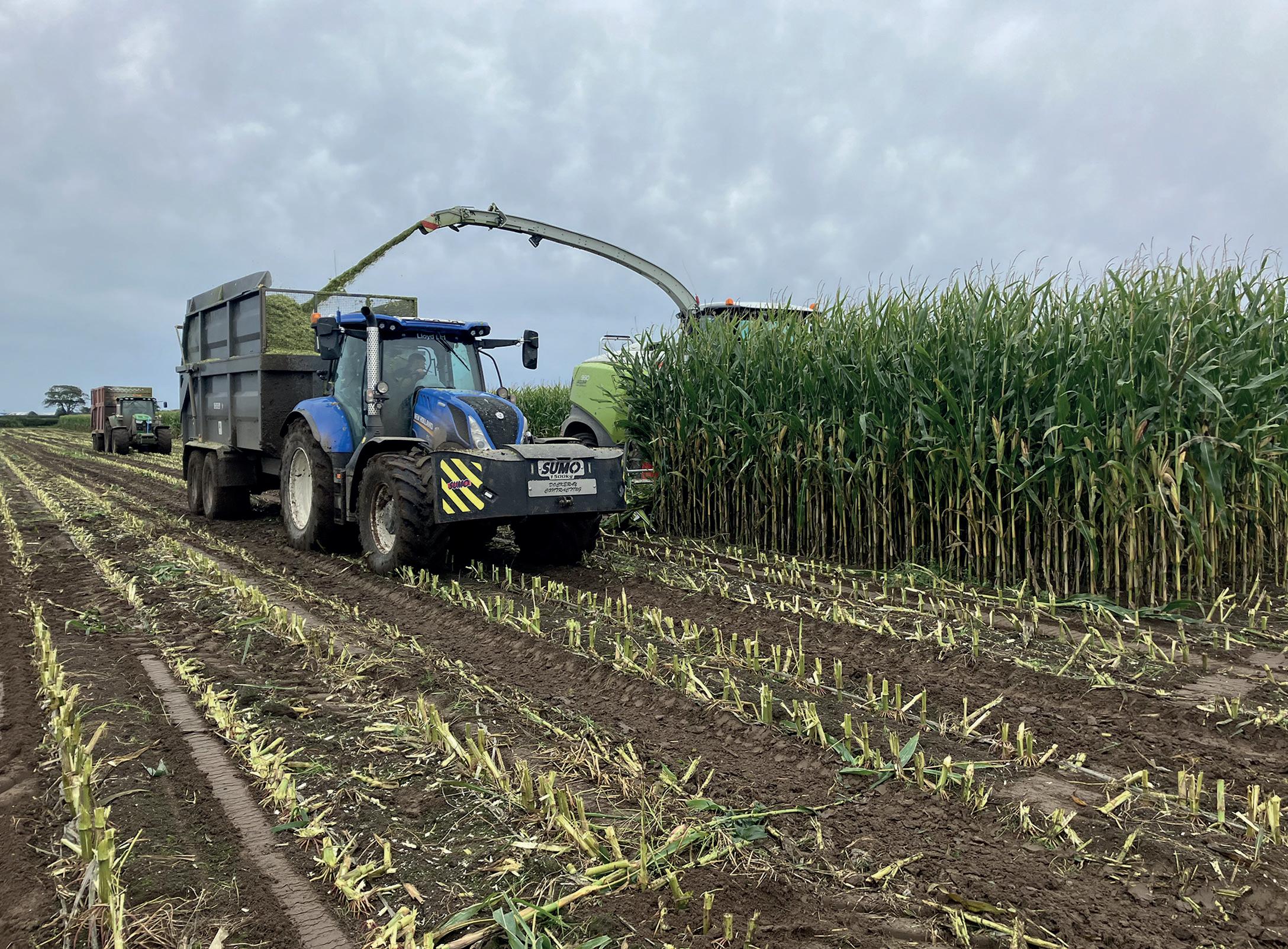
Maize grown at W.C. Little and Son is used in the TMR for the herd of 180 milkers and 400 youngstock, as well as the farm’s anaerobic digestion power plant.
Despite challenging weather conditions in an already marginal area for production, maize remains the main forage driving high milk yields at Cumbrian dairy producers W.C. Little and Son at Kirkbride. Dairy Farmer reports.
With more than 25 years’ experience of growing maize plus an established contracting business serving producers in the area, brothers Stephen and Mike Little know a lot about establishing and managing the crop across a variety of conditions.
“No two years are the same and
the last one was particularly bad,” says Stephen.
“But we have learned that ensuring land is prepared well, getting lots of fertility in to it and making a deep enough seedbed, are the key priorities for good establishment.
“A variety’s suitability to the particular location is also key and we have also found out the hard way that growing under a film is an absolute must on our farm.”
Stephen says they first started using film more than 25 years ago and at various points in time have tried without it, but have been back using it since 2015.
He says: “With the growing conditions we have experienced in recent years, I do not see this changing in the near future.”
It is a feeling supported by the customers’ of his contracting business with more than 80% now using film,
he points out.
He says: “I think there has probably been a drift away from film over recent years as people tried to reduce their production costs, but last year certainly made people think again.
“This coming year we will drill more maize under film than last year and some of that increase is a direct result of the difficulties many customers experienced last year.”
We are currently growing around 100 hectares of maize with 40ha of the best used for the dairy herd and the rest ends up in the digester
STEPHEN LITTLE
The Littles’ dairy and livestock business consists of 180 ProCross milkers calving all year round and around 400 youngstock on farm at any one time, he explains.
“We rear all own followers, plus the beef bulls are reared on-farm, too. In addition to the contracting business, we also have a 500 kilowatt anaerobic digestion plant.
“We are currently growing around 100 hectares of maize with 40ha of the best of this used for the dairy herd and the rest ends up in the digester, which also takes some wholecrop wheat and grass silage.”
Feeding the dairy herd is mainly Mike’s responsibility with the maize and grass silage fed as part of a single ration TMR which is topped up with concentrate through the robotic milkers, he points out.
“The forage base for the TMR is 60% maize and 40% grass silage and this is supplemented with a high protein blend, pot ale syrup and caustic treated wheat,” Mike says.
“We are aiming to get 25litres day from the mixed ration and they then get fed according to yield through the robots.
“We are currently at around 36.2 litres/cow/day at 4.3% butterfat and 3.6% protein with all the milk going to Meadow Foods.”
Stephen and Mike are advised by Agrovista’s Simon Nelson who says variety choice is an essential element
Manufacturing & installing rope scrapers for over 25 years
• Ideal for sand laden slurry
• Timer clock to schedule cleaning
• Easy control system
• Lowest cost maintenance
• 5 year extended warranty available
For a no obligation quote or more information please contact:
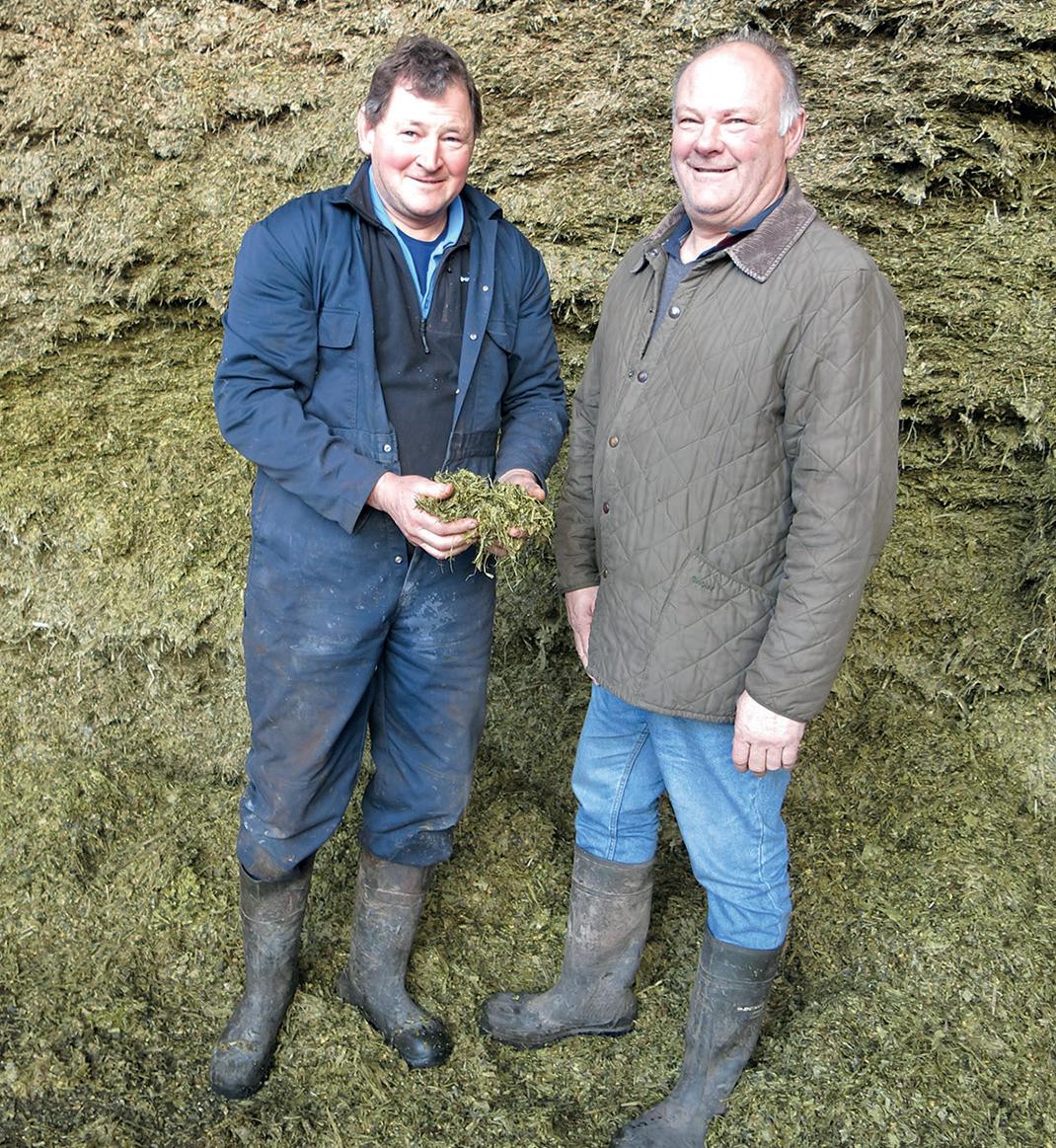
of getting the most of the Samco film system used by the Littles.
“People have been growing maize
up here for many years now and, while it was pretty marginal and success was not guaranteed 30 years
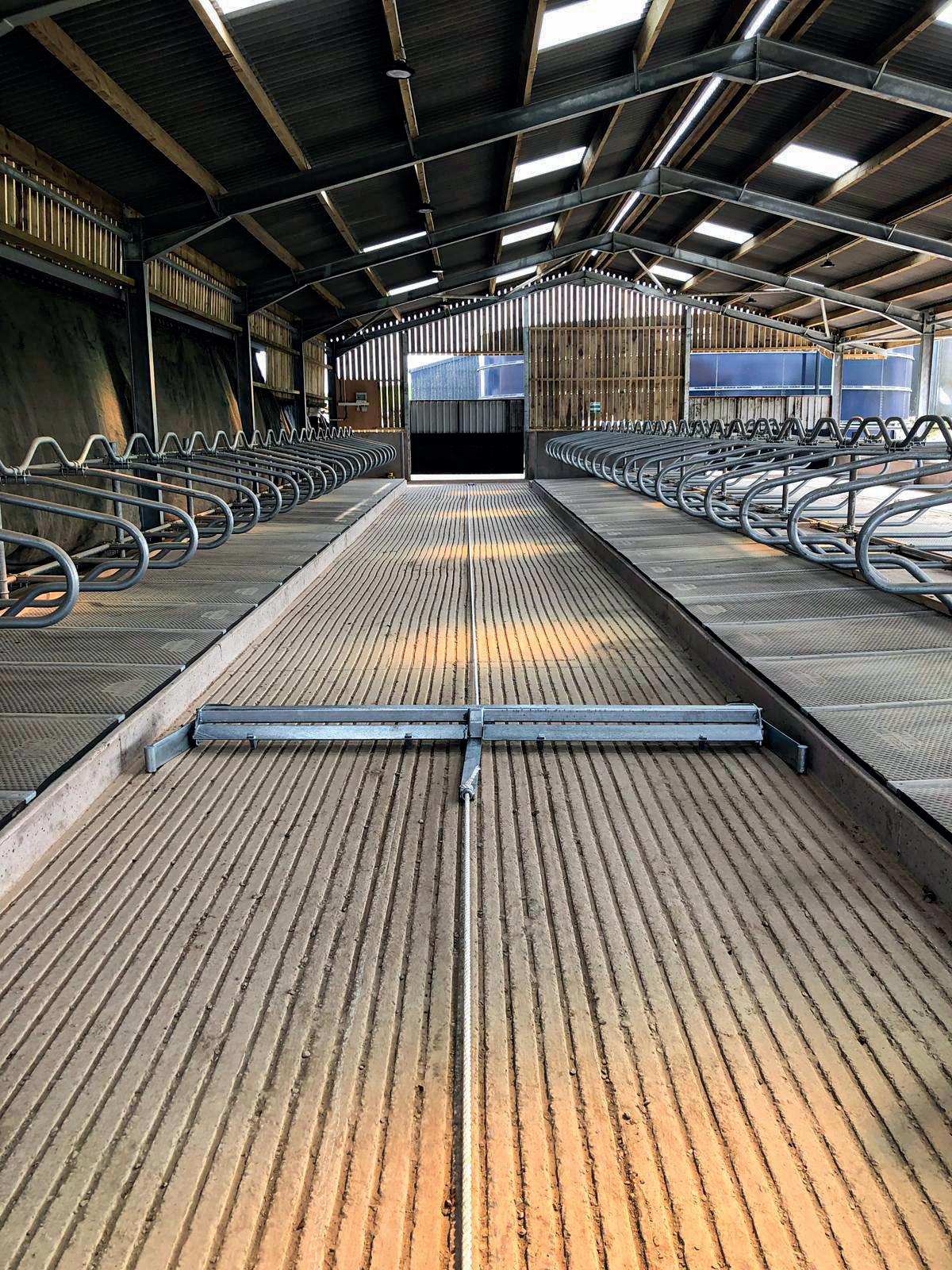


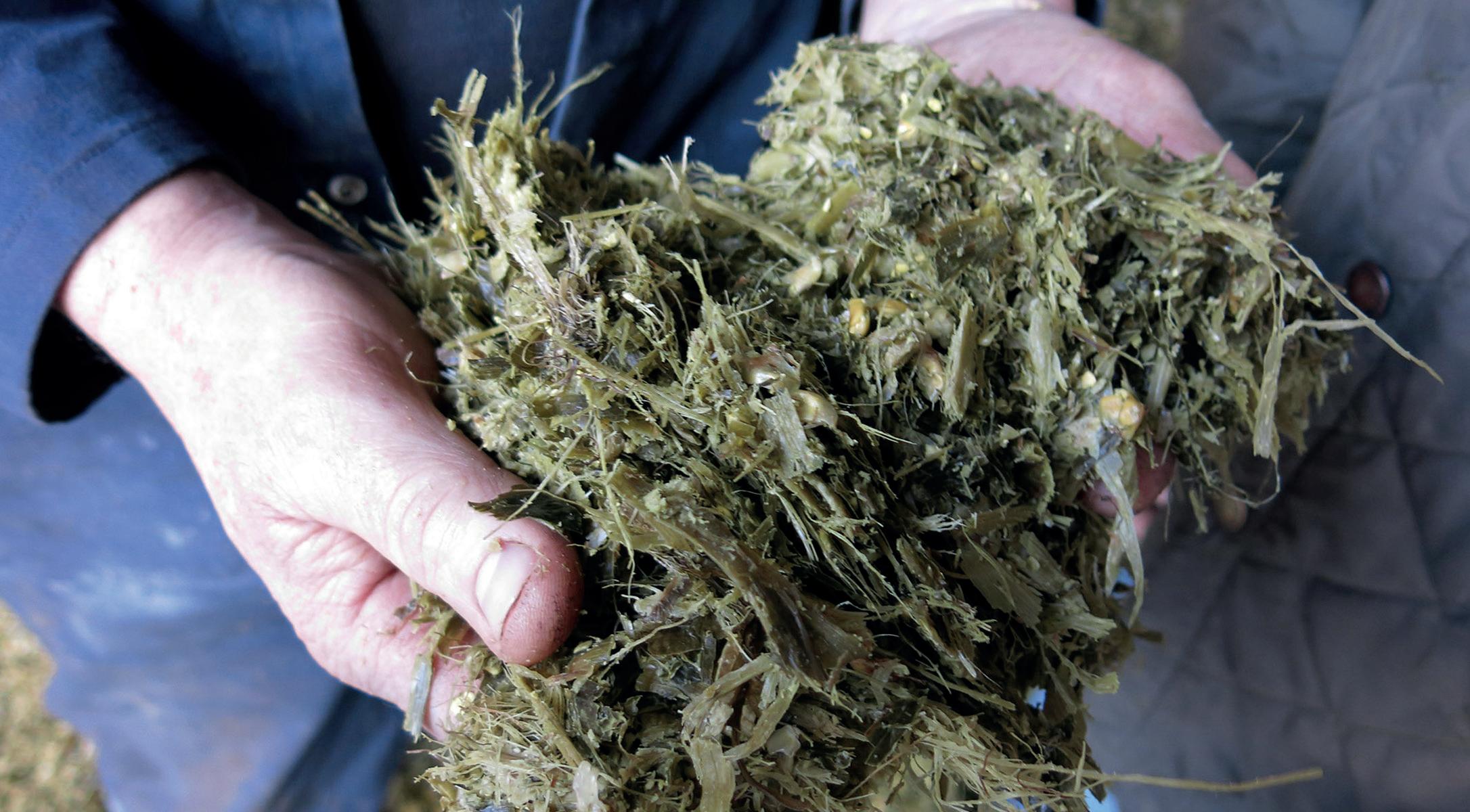
ago, it is not such a leap in the dark now,” says Simon.
“Early varieties have come on a lot, but it is still the safer bet to use film. The film lets you aim for a bigger yield by allowing you to make greater use of later maturing, higher yielding varieties that can deliver increased yields of starch per hectare.”
Variety selection is assisted by trials conducted by Agrovista and forage specialists Grainseed, which have been carried out on the farm for the past 15 years, he explains.
“You have to choose varieties that suit your particular location including height above sea level, soil type and the exposure of the site in ques-
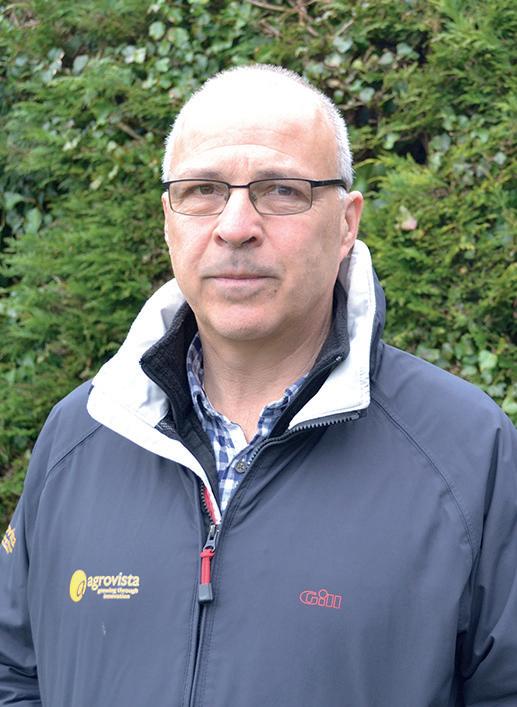
tion.
“Varieties such as Hobbit and Marco have done particularly well here in recent years, but more recently Blackjack and Palladium have come to the fore, showing the right balance of high yield potential and feeding quality.
“They are all probably slightly later varieties than you would choose for this particular location, but they all have high yield potential in the right conditions and the film allows them to express that.
“We are also going to be growing the new early variety Faith that looked well in the trials last year and has a good combination of early grain maturity, plant dry down and big plant yields.”
Stephen says maize is a very site specific and the combination of variety and site can make a huge differ-
ence to the end result.
“We are looking for a later maturing, high yielding variety that can deliver a high output of energy/ha to drive the dairy herd’s production and cope with the challenging conditions that prevail up here.
“Two years ago, we had probably the best maize year we have had for five years, but last year was more challenging, so you never know what you are going to have to deal with.
“The maize is grown predominantly in a continuous maize system on the farm’s best land and this year it will all follow a multi-species cover crop mix based on forage rye.
“This will be harvested and ensiled as a forage crop at the end of April or early May.
“Farmyard manure will be applied before ploughing and then a dressing of slurry put on top of the upturned soil. This will then be flat-lifted and power harrowed with drilling starting as soon as ground conditions allow.”
No seedbed fertiliser is applied down the spout but a pre-emergence herbicide is essential at drilling time, says Simon.
“A late applied foliar urea nitro-
You have to choose varieties that suit your particular location
SIMON NELSON
gen in a safe polymer form has been used for the last four years with good results, too,” he says.
“This is applied as late as possible and, depending on drilling date, this can range from mid-June to midJuly. It is now proving to be more effective than extra seedbed nitrogen.”
Harvesting of the maize usually take place late September into October says Stephen.
“If we have done everything right, we should see fresh weight yields of 45t/ha, but Blackjack has achieved over 60t/ha in a really good year,” he says.
“A dry matter of 30% is the target with an analysis of over 30% starch and an ME of around 11.5 Mj/ kgDM.”

As soils warm, growers will be drilling the 2025 forage maize crop, but good weed control will be key this year. Dairy Farmer reports.
The first step in getting weed control in maize crops right is identifying targets and taking action early.
David Peach, Certis Belchim’s technical account manager, says the six weeks post crop emergence are critical to forage maize crop performance, as plants are so sensitive to competition from weeds for water and nutrients.
He adds: “If left unchecked during this period, yield losses can hit 50%. This makes a pre-emergence herbicide important, as it holds weeds back and limits the impact of any delay in post-emergence spraying.”
He also says this sensitises target weeds and improves efficacy of follow-up sprays.
He says: “The most damaging species include polygonums such as knotgrass, black nightshade, mayweed, orache and fat-hen. Blackgrass and annual meadow grass are also problematic in some regions.”
The next stage is to design a herbicide programme and Mr Peach says either straight pendimethalin or Wing-P (pendimethalin + dimethenamid P) pre-emergence are solid, broad-spectrum foundations to a maize weed control programme.
“Following your pre-emergence
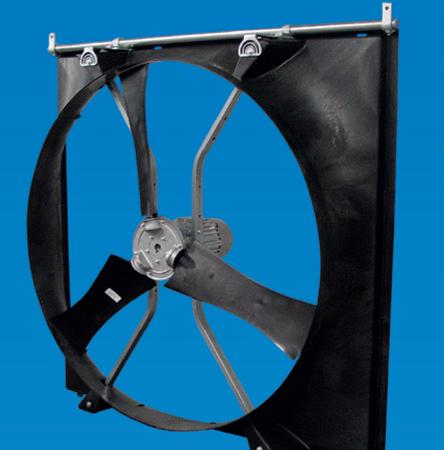


spray, it is then crucial to be walking the crop regularly and see what weeds come through,” he says.
“You are inevitably going to have some broad-leaved weeds and, in some situations, growers will need a herbicide mix with activity on grassweeds. A three-way mix of Osorno (mesotrione), Fornet 6 OD (nicosulfuron) and Diva (pyridate) covers all bases, with the three actives complimenting each other well.
“Mesotrione boosts residual control, nicosulfuron is effective on grass-weeds and a range of broadleaved weeds, and Diva offers broad-spectrum contact activity.”
Mr Peach advises applying herbicide mixtures when weeds are small to get the best control.
The final step is being able to adapt to the season says Mr Peach.
He says: “Since February, it has been very dry across the UK.
“Bear in mind that pendimethalin is relatively insoluble, so if you are faced with low soil moisture, it might be worth delaying your first spray.”
Growers have the option of going early post-emergence says Mr Peach, and adding a contact herbicide to a residual like pendimethalin to take out any emerged weeds.
This mix needs to be applied from the 2 true leaf stage of the crop.

























This animal health special focuses on managing disease threats this year, and also takes a look at how to make sure rumen health is optimised
Phase three of the National Johne’s Management Plan includes four key changes dairy farmers should be aware of. Katie Fallon reports.
Since starting 15 years ago, the Action Group on Johne’s has been driving improvements in both the control of Johne’s disease and the prevalence of the disease on UK dairy farms.
In 2009, the Action Group on Johne’s developed the National Johne’s Management Plan, a framework for farmers and vets to work together to reduce the incidence of Johne’s on-farm across England, Scotland and Wales, by implementing one of six control strategies.
The initiative has been deliv-
ered via two phases previously, with phase three of the initiative launched on March 31.
Peter Orpin, director of My Healthy Herd and chair of the Action Group on Johne’s Technical Group explained that phase three of the National Johne’s Management Plan will help to ‘empty the Johne’s disease sink’ by reducing the risk of new infections, limit disease persistence and disease pressure.
While the objectives of the new phase remain the same, it includes four ‘subtle but important’ changes.
ANOTHER change in the new phase of the initiative is the requirement for a minimum 60-cow random screen, as opposed to the 30-cow targeted screen that was previously required in phase two of the initiative.
Mr Orpin said the 60-cow sample is the minimum number of samples required to provide an estimate Average Test Value (ATV) in herds that are not annually or quarterly testing.
He said: “The random 60-cow screen gives you an idea of roughly what ballpark your herd sits in,
THE first change is the requirement for dairy farmers to determine their Average Test Value (ATV), to help assess the level of disease present within their herds and track progress.
This is alongside the second change – the creation of a national Johne’s Control Index target of ATV 5.5 to be achieved by 2030.
Lyndon Edwards, chair of the Action Group on Johne’s, said the ATV is a robust indicator of disease prevalence and a good guide to
success in managing and reducing the incidence of Johne’s on a farm.
He said: “It [ATV] will provide a benchmark against which a farmer can assess their performance against their peers and the expectations of the industry. Given what many farmers have achieved already, we believe the 2030 target is eminently achievable.”
Mr Orpin said the ATV was introduced due to animals fluctuating in and out of test positivity and Johne’s not being a ‘yes or no disease’.
He said: “The ATV is a continuous
variable that measures Johne’s in your herd and measures all the data within your herd.
“If you want to reduce your ATV you have got to switch off the tap and we have got good data to suggest that the herds that get good risk assessments in place and stop calves getting infected see their ATV fall away.
“We have set it [national Johne’s Control Index target] at 5.5, which means the test prevalence is about 2%. It basically means that you do not have to eradicate the disease, you just
provides a springboard for further engagement and is pretty low cost –probably about £60 to £70 a herd.”
Previously farmers were asked to complete targeted screens and hunt out high-risk cows.
However, the requirement now is to complete a random sample, with vets advising on best practice.
Mr Orpin noted that farms already performing a whole herd or quarterly test will already have an ATV, so the 60-cow random screen mainly applies to herds that are not currently whole herd testing.
have to get it to a position of good control.”
Mr Orpin explained that once herds get below 5.5 the new infection rate is normally low, the priority culls are largely absent, and the disease becomes a minor nuisance.
“For you as an individual farmer, if you get to a position where you are below 5.5 you are going to have good control of Johne’s disease. Economically you will have it pretty well nailed.”
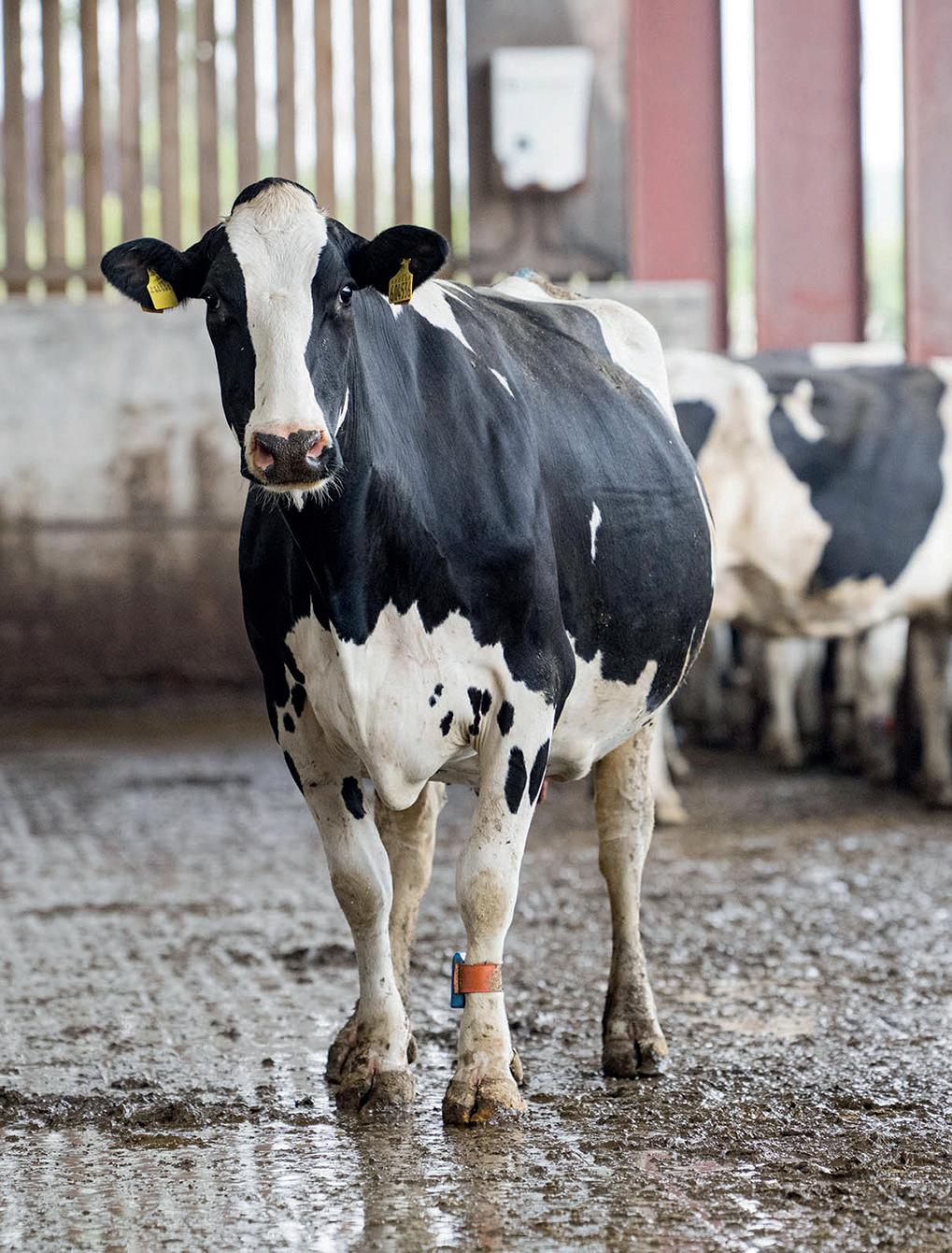
IMPROVEMENTS have also been made to declarations as part of the changes in phase three of the initiative, including SMART targets for farmers and vets to agree priority actions to focus on.
Mr Orpin said: “What we want is for you to put slightly firmer targets in there to make sure you can actually hold yourself to account.

Phase three key changes:
■ Average Test Value now required from all herds to assess level of disease present and track progress
■ National Johne’s Control Index target of ATV 5.5 to be achieved by 2030
■ Random 60-cow screen replaces previous 30-cow targeted screen
■ Declarations have been strengthened

“These are targets that you and your vets are going to agree on; it is nothing to do with us.”
The declaration will now need to include the herd’s ATV and what surveillance strategy is being used.
Written disease management plans remain the same, but SMART targets are to be added into the declaration.
“Hopefully it provides an opportunity to celebrate
success as a lot of herds are improving quite quickly, so it should be an opportunity to pat staff on the back rather than get despondent,” says Mr Orpin.
In summary, Mr Orpin said the objectives of the National Johne’s Management Plan remain the same, to control and reduce the incidence of Johne’s disease on-farm.
He said: “If we want to empty the Johne’s disease sink, you have got to reduce the risk of new infections, limit the disease persistence through removing the right cows and culling those priority cows, and trying to decrease disease pressure through selective breeding.
“We are here to help you, we are not here to police you. We are here to provide guidance and targets to aim for.”




Rumen status audits can be a useful tool for monitoring rumen health and maximising production. Wendy Short finds out more.
The drive for increased yields demands precision in ration formulation, and one way of checking that herds are on track is to conduct a rumen status audit.
A specialist subject for James Ireland of Agri-Lloyd, a rumen status audit will determine feed utilisation, rumen function, and check the diet is matching the cows’ needs.
The audit will take about two hours for an average-sized herd, says Mr Ireland, and they are carried out at six- or 12-week intervals and prior to turnout as confirmation of correct rumen function. They can also be helpful following any major dietary change.
During the audit, dung samples are passed through a sieve and flushed with water.
Cases of sub-acute acidosis in the herd can potentially incur a yield penalty of two to three kilos per cow, or even higher if the issue is not addressed
JAMES IRELAND
revealed that the clay balls contained statistically higher percentages of calcium, phosphorus, manganese, selenium, cobalt and copper. The balls were not found in dry cow audits and only appeared post-calving.
Mr Ireland says: “The researchers concluded that the balls are probably caused by digestive problems which impair protein and mineral absorption. Another factor could be excess levels of the contents in the diet.
“Either way, their presence is a possible sign of dietary imbalance. They vary from golf ball size down to marbles.”
Meanwhile, mucin casts can be ‘the size of a finger, up to the size of a hand’, he says.

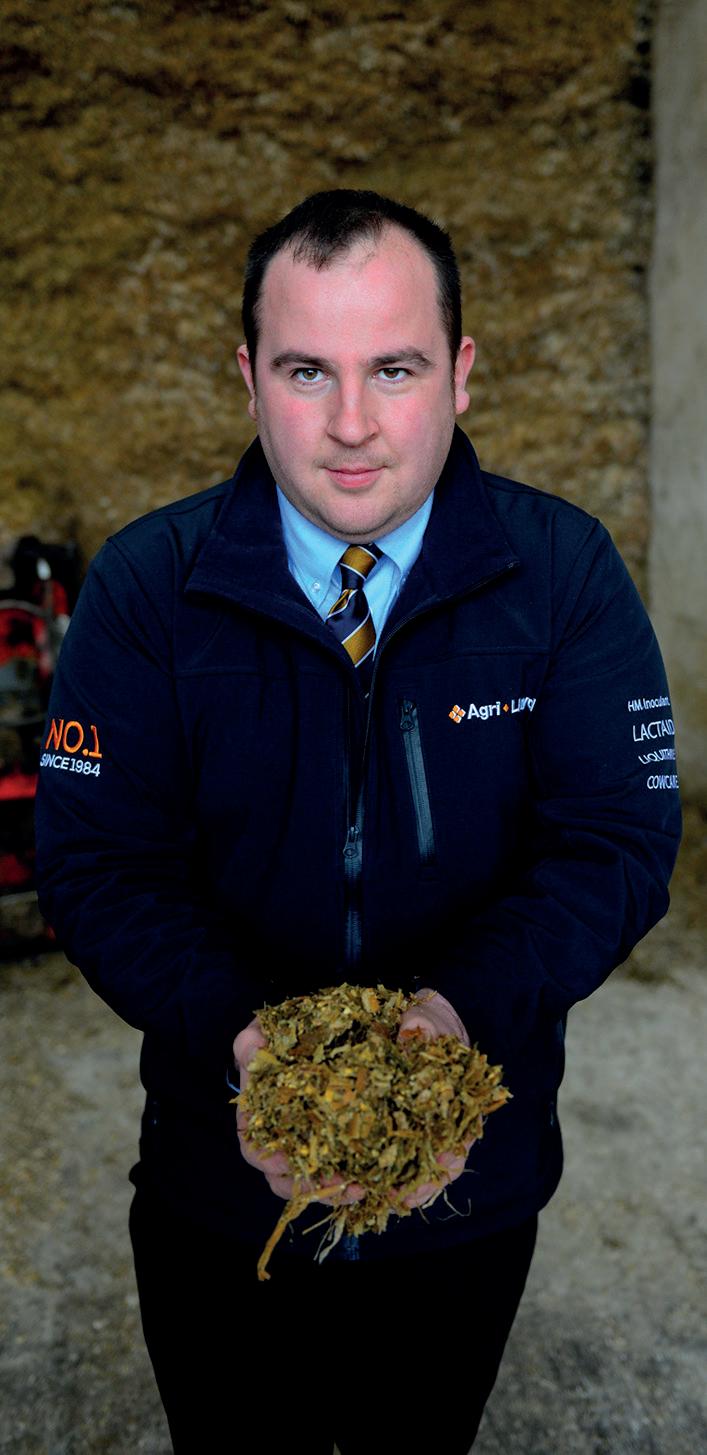

If rumen health is compromised, the process can reveal the presence of clay balls and/or mucin casts. The results are presented in report format, with scores allocated for the relevant factors.
Mr Ireland says: “It is unusual to visit a farm where the clay balls are not present after dung-sieving. A large number of clay balls and mucin casts indicate possible sub-acute acidosis [SARA].
“Even one clay ball in the samples should prompt an investigation. However, some units will have zero scores for both clay balls and mucin casts, so the audit will simply confirm that the ration is correct.”
It is only recently that the contents of the clay balls have been analysed, says Mr Ireland.
He adds: “Research results published in 2018 revealed little or no oil, starch or sugar, but high levels of protein and ash.
“It was a surprise to find that protein and ash percentages in the balls were higher than the contents of the cows’ diet, and also in comparison with the contents of the fresh manure and the ‘non-sievable’ material. “
In addition, a comparison with the forage
He adds: “The casts also point to SARA, and I am finding their numbers are increasing in line with the push to enhance yields.
“They comprise mucin, which is produced to cover damage to the hindgut due to acidic conditions. The casts look similar to sausage casings.”
The audit will also be looking for grain at a range of digestive stages, where appropriate, as well as signs of foaming.
Mr Ireland says that ideally only the grain shells will be visible in the sieve as proof that all the nutritional content has been extracted.
He says soft grains indicate only partial digestion and a failure of the rumen microbes to fully utilise the feed energy content.
“I have seen 100-plus grains of this type in just one sample, although that would be the extreme,” says Mr Ireland.
“The most serious aspect is finding hard grain, which can be an indication that the cereal content has not been effectively cracked by the feed processor. If large numbers of grains in this category are found, it may be worth contacting the supplier.
“The samples should not show any foam-
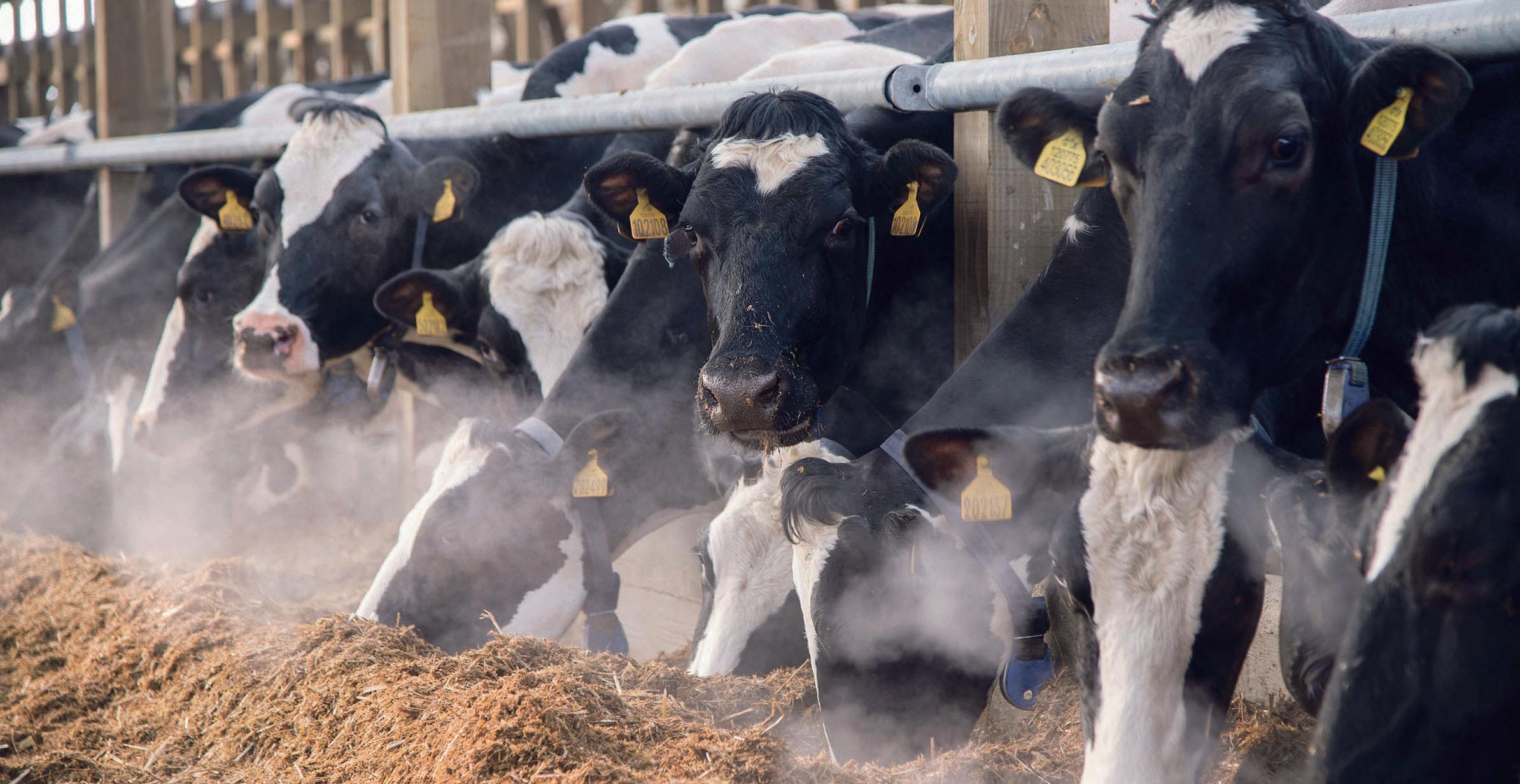
A rumen status audit will determine feed utilisation, rumen function, and check the diet is matching the cows’ needs.

ing, as bubbles are another indicator of SARA. They should not be present in healthy cow dung.”
Producers can request that individual samples are taken from underperforming cows during the visit.
Rumen status audits can be conducted for cows in loose housing, although the process is more challenging, says Mr Ireland.
The usual practice is to take 300g samples from 10 fresh cow manure samples, with the cows sometimes split into two audit groups of high and low yielders in a large herd.
The dung will be rated according to consistency and the process will also cover some general observations.
Mr Ireland says: “I will look at yields, cells counts and cow condition. I will also award a cudding score, which works on the basis that 66% of the resting cows should be ruminating at any one time in an undisturbed herd.”
Mr Ireland says feed efficiency is also coming under increased focus.
He says: “Average yields are rising and herds are getting larger. Rumen audit reports can be helpful for monitoring rumen health and maximising production, and also for avoiding expensive wastage in some of the dietary ingredients.
“Cases of SARA in the herd can potentially incur a yield penalty of two to three kilos per cow, or even higher if the issue is not addressed. If problems are found, a rumen audit can be a good starting point.”
The cost of a rumen audit is currently £100 per audit and free of charge to AgriLloyd customers, says Mr Ireland.
What if you could reduce losses due to Mycoplasma bovis respiratory disease?





Protivity ®: the first modified-live vaccine for Mycoplasma bovis.
The days of relying on antibiotics alone to help control Mycoplasma bovis are over. It’s time to change the game for your herd with Protivity. Speak to your vet for more information


Sign up today for Zoetis Communications for

As the UK sees changing weather patterns, including prolonged periods of hot and dry weather, dairy cows are increasingly at risk of heat stress. Dairy Farmer reports.
Heat stress can have significant implications for cows both in the short and long-term and David Howard, head of dairy at Wynnstay, says cows which have been impacted by heat stress may experience knock-on effects in overall health and production.
For dry cows, heat stress can affect both the cow and the unborn calf.
Mr Howard says: “Heat-stressed cows will have reduced dry matter intakes (DMI), increased metabolic stress, a poor transition, decreased milk production and a hampered immune response.”
Maintenance requirements for heat-stressed cows can increase by around 30% and Mr Howard says, when this is combined with an often lower DMI for cows experi-
PANTING is one behaviour to watch out for, particularly a cow taking more than 60 breaths per minute, says Tomi Jones, national hardware sales manager at Wynnstay. He adds: “Also keep an eye out for reduced lying times and activity, and cows bunching to seek shade and breeze.”
encing heat stress, cows can go into negative energy balance easily.
This leads to reduced milk yield.
“Studies suggest that for every temperature humidity index (THI) value over 68, milk yield declines by 0.41kg/cow per day. Protein and milk fat content are also negatively affected when the THI goes above 72,” he says.
This can also lead to a decreased milk yield in the subsequent lactation due to reduced mammary cell proliferation.
He says: “Calves born to heatstressed mothers are often lighter at birth and have a reduced ability to absorb Immunoglobulin Gs (antibodies) due to gut closure being accelerated.
“Long-term implications of heat stress can be profound, affecting the whole lifetime health and production of offspring.”

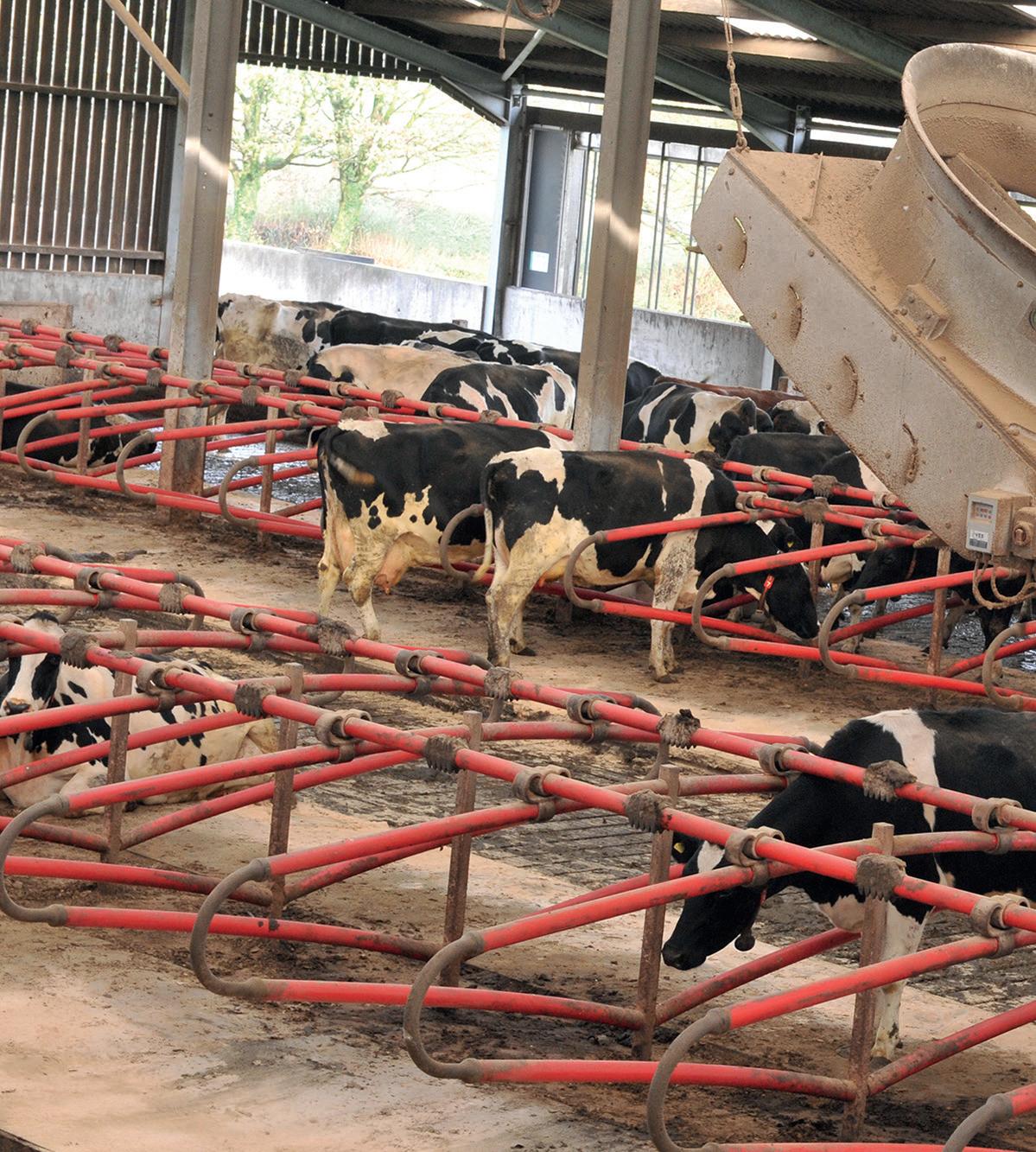
For every temperature humidity index (THI) value over 68, milk yield declines by 0.41kg/cow per day.
TWO key factors of heat stress are environmental conditions and management practices.
■ Environmental conditions: High temperatures: prolonged exposure to high ambient temperatures can overwhelm a cow’s ability to dissipate heat
High humidity: increased humidity levels reduce the effectiveness of evaporative cooling through
Heat stress can also hit fertility.
“Higher temperatures will affect the cow’s ability to display natural bulling behaviour, due to a reduction in the duration and intensity of
Visible signs
Higher core body temperature
Increased respiratory rate
Reduced cudding
Lower milk yield
Higher somatic cell count
Reduced lying times
Reduced DMI
Invisible signs
Decreased conception rate
Lower immunity
Increased risk of mastitis
Increased risk of lameness
Increased maintenance energy
Increased risk of acidosis
Decreased rumen function
sweating and respiration
Lack of airflow: poor ventilation and stagnant air can exacerbate heat build-up
■ Management practices: Housing: inadequate shade and poorly designed sheds can increase heat exposure
Water availability: insufficient access to cool water can impair cows’ ability to regulate temperature
oestrous, leading to a silent heat,” says Mr Howard.
“Studies have also found that conception rates at 60 days decline when the rectal temperature is greater than 39.1degC at the time of artificial insemination (AI).
“Coupled with a reduction in oocyte quality due to poorer growth and development, heat stress can have a more profound impact than anticipated.”
Lameness can also be a result of heat stress.
“Lameness can increase, due to cows standing more to expel heat,
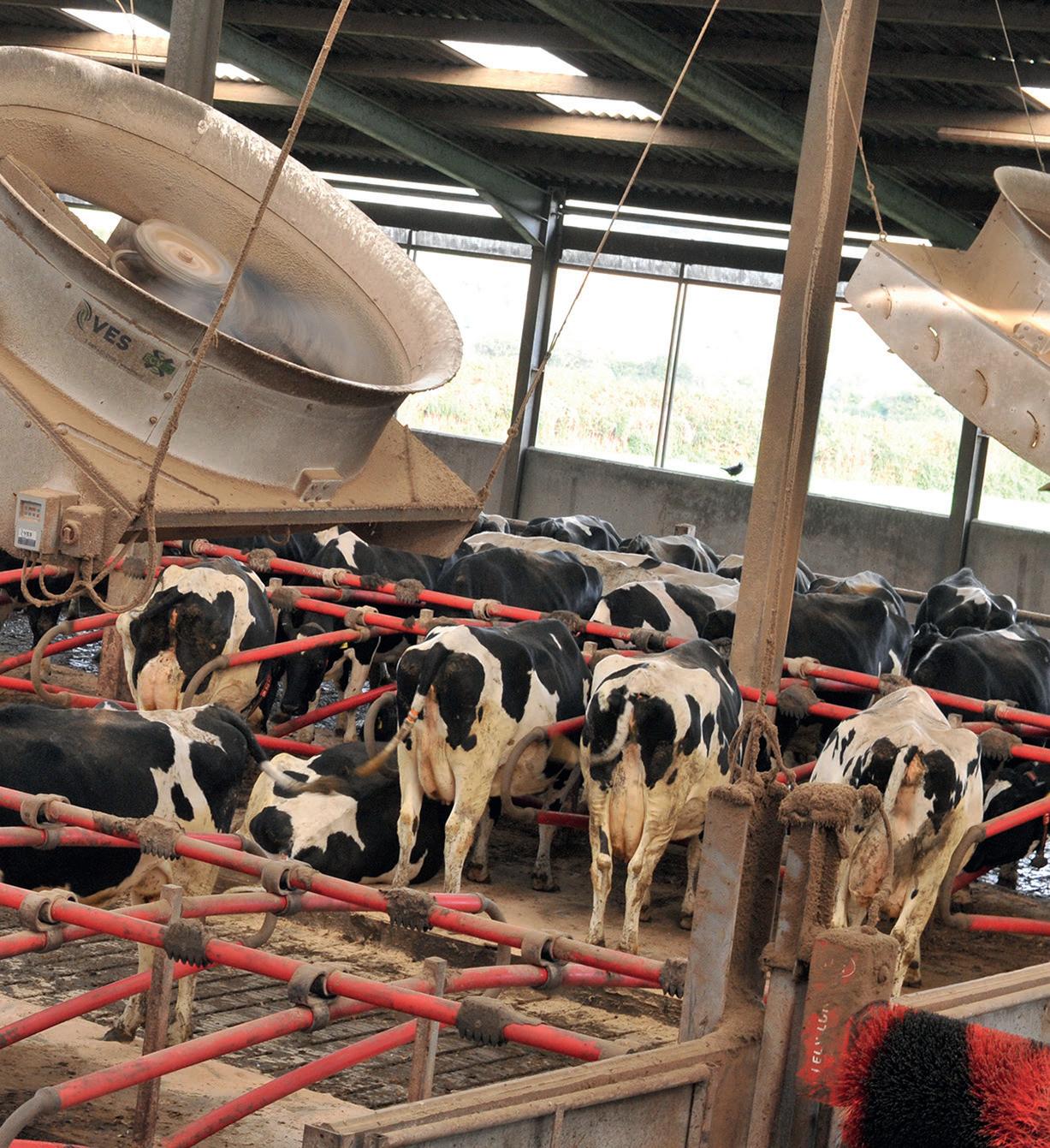
FORTUNATELY, there are various strategies to adopt when it comes to preventing heat stress.
“Water is the most important resource to a cow suffering from heat stress, so ensure the supply is plentiful,” says Tomi Jones, national hardware sales manager at Wynnstay.
Shade is another important factor. He says: “Make sure shade is available to the cows at all times, to give protection from solar radiation. It can be better to house cows in the day and allow them to graze at night to ensure shade and good water supply, as well as maximising intakes.”
Producers could also consider installing fans. He says: “Fans increase cooling by convection, but this is only effective when air temperature is lower than body temperature. Although air
staying under shade, or in areas where a breeze enters the shed.
“ Increased standing time is well

With more than one out of two herds testing positive for Q Fever (in some areas of the UK), farmers can no longer afford to ignore this disease1,2




Cattle are mainly infected by breathing in air particles contaminated with the bacteria.
Infected cows, even if asymptomatic, shed C. burnetii mainly through birth or abortion products, but also in vaginal mucus, faeces and milk4
temperature being higher than body temperature is usually only a problem in more humid climates.
“When considering a fan installation, it is important to remember the system must create air velocity at cow level.
“The best place to begin to cool cows down is often in the collecting yard, before entering the parlour, where aggressive air movement along with sprinklers can cool all cows effectively.”
Adopting these strategies can provide effective solutions to mitigate the impacts of heat stress.
Mr Jones says: “A reduced DMI, and therefore a reduced metabolic rate and poorer performance, are the cow’s natural strategies to help her maintain her normal body temperature, but with proper control procedures, the effects can be minimised.”
known to be a cause of foot lesions such as sole ulcers and bruising,” he says.






• Q Fever is endemic in GB dairy herds1
• It causes reproduction and fertility issues to cattle, sheep and goats2
C.burnetii is able to travel up to 11 m carried by the wind and infect other herds in the process5
• It is also a zoonosis, risking the health of those working with livestock
• It is caused by the bacterium Coxiella burnetti
Animals shed bacteria at calving in vaginal mucous, also in milk and faeces, with infection caused through inhalation of the bacteria.
Coxiella b. can be carried on the wind3,4,5
Coxiella b. is persistent, surviving up to 5 months in soil6
With warmer weather approaching, the conversation around bluetongue is heating up. Ellie Layton looks at the threat across the country.
On the continent, Europe has reported thousands of bluetongue virus cases, with BTV-3 being the most prevalent strain.
Speaking on a recent AHDB webinar, Defra cattle veterinary lead Vanessa Swinson, explained that cases have escalated.
However, she said that due to the dynamic nature of the outbreak and potential underreporting, obtaining an exact total number of cases across Europe has been challenging.
In the Netherlands, in excess of 8,900 cases were reported as of
LIVESTOCK technical service manager at Boehringer Ingelheim, Sioned Timothy, is based in Newcastle Emlyn, Carmarthenshire.
She believes it is difficult to predict the virus, especially in Wales where the disease has not been seen at scale. However, she says the situation in the Netherlands should serve as a warning.
She says: “From mid-April, I believe we could start to see midge activity and farmers across the UK should be on high alert, not only in the southern and eastern counties. If all of the risk factors align, we could see an eruption of the virus.”
She says Welsh farmers should
DESPITE no cases of the virus being found in Scotland, Deputy Chief Veterinary Officer, Jesus Gallego says bluetongue remains a concern.
He says: “Our main concern has been long-term distance spread from other parts of the UK, so we have had measures in place, which are currently derogated due to the winter weather, but we are looking at reintroducing these.”
While vaccination is the preferred control option around the UK, Mr Gallego says Scotland is not yet
permitting the use of vaccines without emergency authorisation.
He adds this position could change if disease risk increases.
Mr Gallego also says that livestock producers should remember that bluetongue is not the only disease concern.
He says: “Good biosecurity and vigilance for any notifiable disease is currently vital. Bluetongue shares clinical signs with foot-and-mouth disease so we should not be complacent.”
April 2025, while Germany reported more than 17,312 cases.
Currently, the total number of BTV-3 cases in Great Britain stands at 256, with 254 cases confirmed in England and two in Wales. Only one case of BTV-12 has been diagnosed. (Figures correct as of April 11).
In March, it was announced that three vaccines were licensed for use in both England and Wales.
Different parts of the UK are seeing various threats to bluetongue, three vets and animal health professionals across the UK have shared their expertise to help concentrate their advice.
be mindful of livestock movements and clinical signs. The signs can be easily mistaken for other health issues, so she says vigilance is vital.
She says: “There are limited control strategies available that have considerable impact. Insecticides are not proven to be an effective way of control for midges, with no evidence of pyrethroid products. Housing animals could be used to attempt to reduce infection, however in reality this could cause more harm to the animal’s welfare than its protection in the few cases that there may be suitable housing,”
She encourages farmers to talk to their vets about vaccinations.
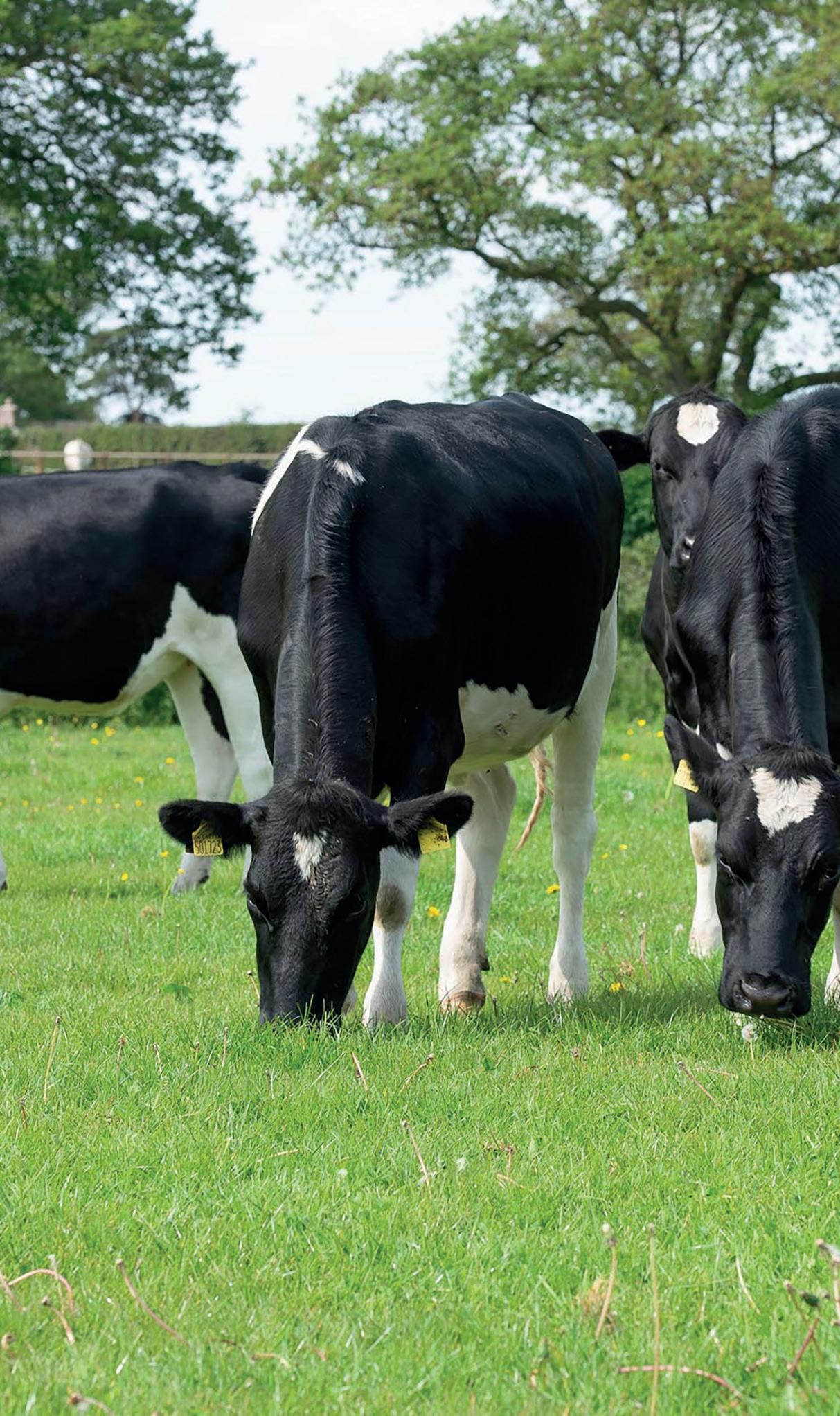
Farmers are being urged to be vigilant over bluetongue in the herd this year.

BASED at the UK’s frontline of the virus incursion, vet Dr Ami Sawran of Westpoint Farm Vets in Chelmsford, Essex, says England has seen a different virus pattern to that seen on the continent.
She says: “BTV-8 has overwintered in the UK, and BTV-3 has successfully overwintered in other European countries, so as the weather warms up, we could see cases crop up sooner than last year.
“When the temperature is low, even if a midge bites an infected
animal, it is unlikely to incubate the disease and transmit it further, but once the temperature picks up, there is potential for the virus to incubate and start a new wave of disease with a reservoir of infected animals already on the ground.”
Dr Sawran adds that the impact of last year’s cases is still ongoing.
“Barren rates, still births and the emergence of poor doing calves and lambs with neurological signs suggest the possibility of maternal transmission of the virus,” she says.
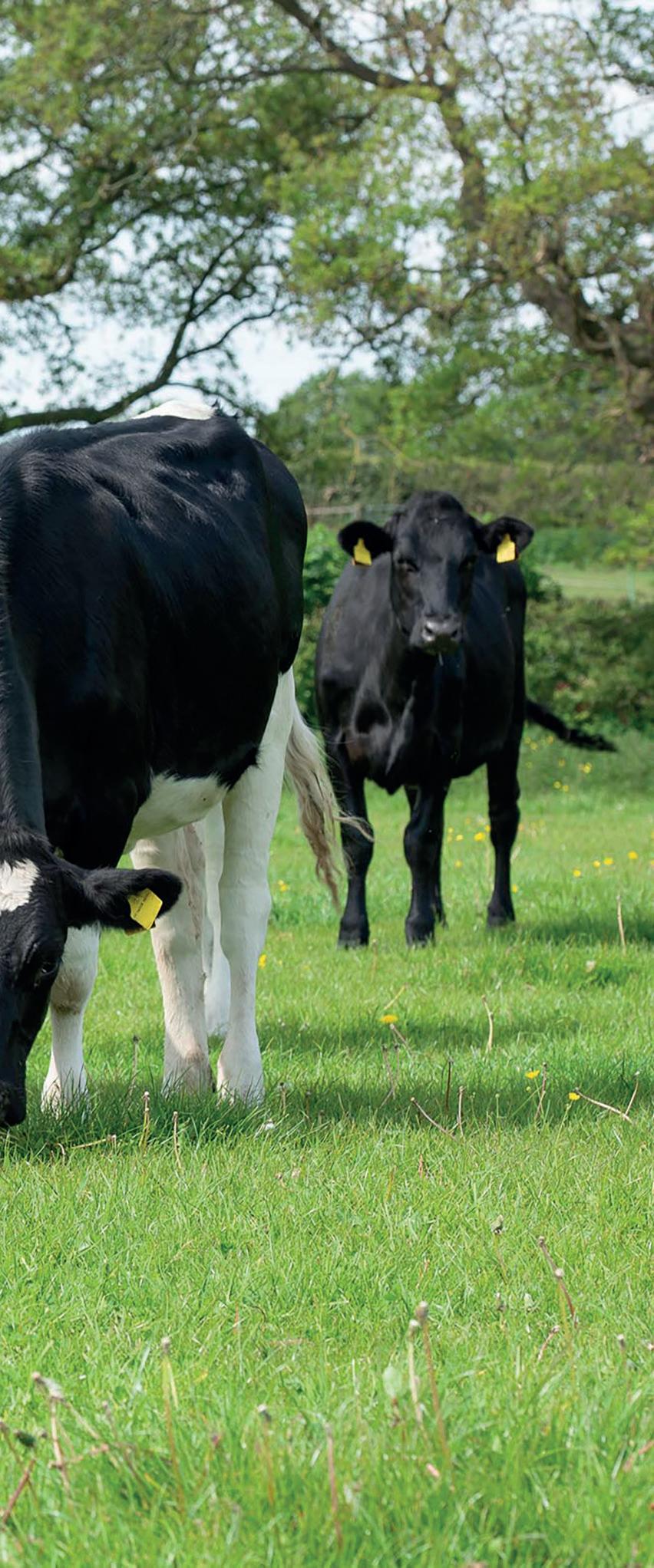
Symptoms vary across ruminants, but include fever, lesions, redness of the mouth, eyes, nose, reddening of the skin above the hoof, excessive salivation and nasal discharge. However, some animals may show little or no clinical signs.
Some animals which have recovered from infection have had slow growth rates and Dr Sawran says investigations are ongoing to determine the impacts of the disease on fertility of breeding animals. She says fastidious biosecurity is vital.
She says: “This will help to counter any potential infectious disease incursion on to farms. Healthy livestock are in a better position to fight any exposure to the virus.
“If clinical signs of BTV are suspected in any animals, farmers
should not hold back on notifying the APHA and discussing concerns with their vet. Reporting suspicion of this disease is a legal requirement, and your vet is there to guide you through the process if you have concerns. I have seen this disease first-hand, and here in the east, we are right at the frontline of where the virus has presented itself. Vaccination, vigilance and biosecurity are key weapons in our arsenal.”
She believes uptake of the vaccine has been promising.
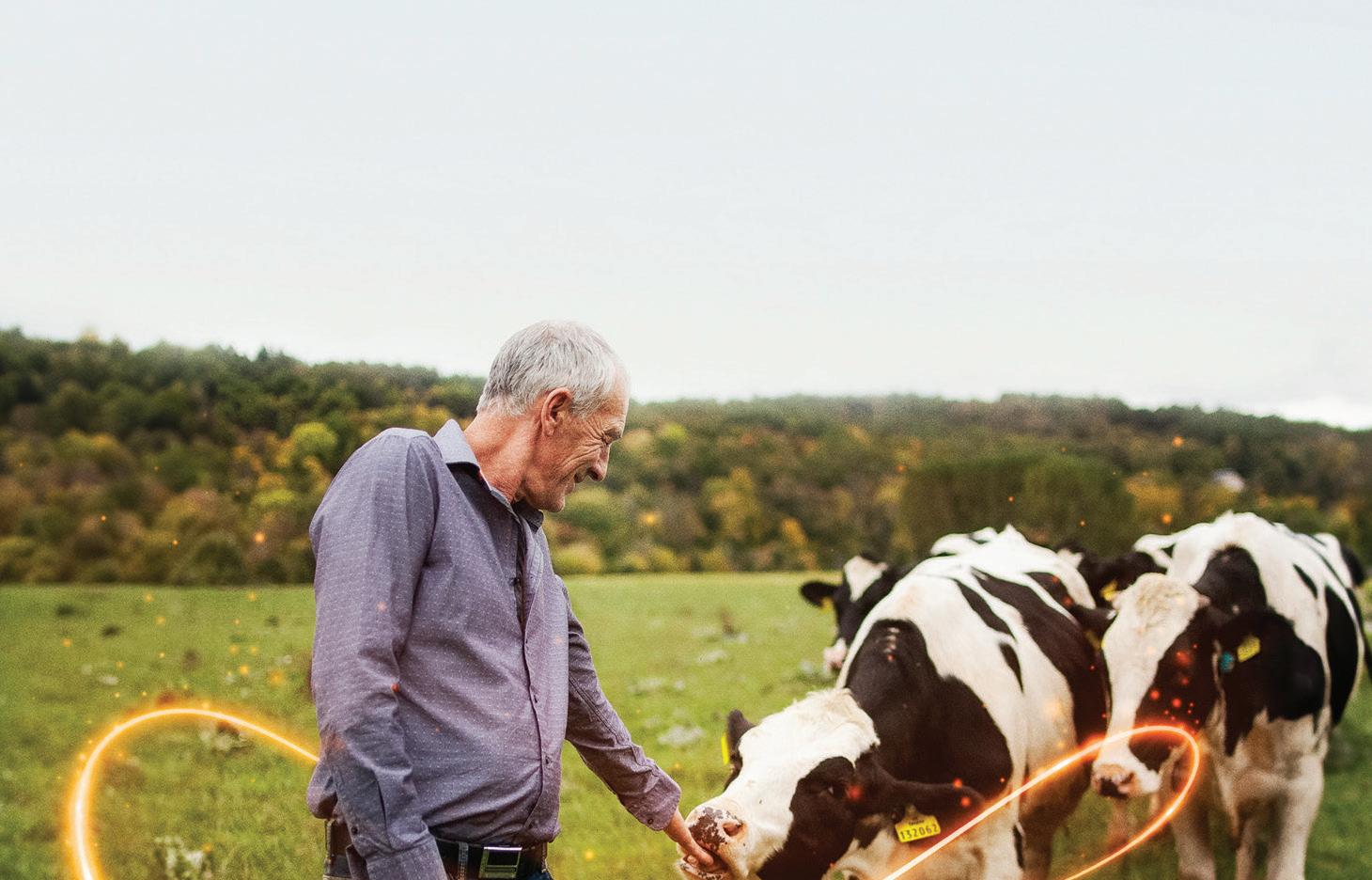


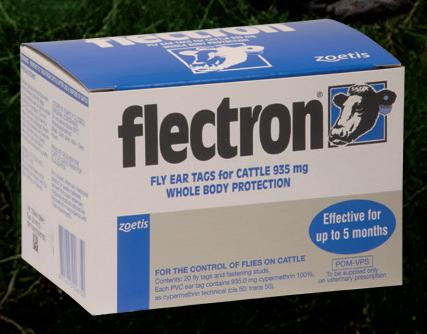

• Provide season-long fly control from a single tag
• 100% compliance once inserted as no need to re-treat
– Reduces labour costs
– Minimises production losses associated with handling
• Use in all ages of cattle
• Zero day milk and meat withdrawal



Protects against both nuisance and biting flies
Suitable to use with season-long worming products •



With milk prices stable, and in many cases marginal litres profitable, Kite Consulting ran a series of events to discuss effective feeding methods to drive performance.
Dairy Farmer reports.
As an advocate of compact feeding, Niels Kristensen of Aarhus University in Denmark, urged farmers to think about reducing rumen fill, to encourage intakes and therefore milk.
Speaking at the recent Kite Consulting organised events, Mr Kristensen said: “With diets consisting of a high proportion of grass silage, the fill of the rumen needs to be considered. Cows that are full up will not
■ Monitor your mixer: It is important to monitor your mixer, especially as you start your move to a more compact way of feeding.
“Check that the feeder wagon is mixing feed correctly. When you look in can you see what I call a ‘frozen’ mix?” asked Mr Kristensen.
“This is, when you see feed at the top that is not moving at all. In this case, there is no movement down the side of the mixer and some parts of the feed are simply
keep eating or drive production.
“You can reduce the fill by chopping the grass shorter at harvest, by reducing the particle length with the mixer and, if neither of these work, we have to leave the whole job to the cow. And that takes time.
“The concept we call ‘compact TMR’ is a strategy for mixing which, from our experience in Denmark, has a significant positive impact on the productivity of cows, their behaviour at the feed barrier and the robustness of dairy production.”
not being mixed.
“The issue is the mixer’s inability to clear the floor of the feeder wagon and the feed flow does not work.
“You can fix this in a vertical auger feeder wagon by mounting a metal plate to help increase the impact of the feed on to the floor of the mixer wagon. Contact your mixer wagon manufacturer – they can supply this.
“Is there a problem with auger speed? If the feeder is automatically set to reduce speed
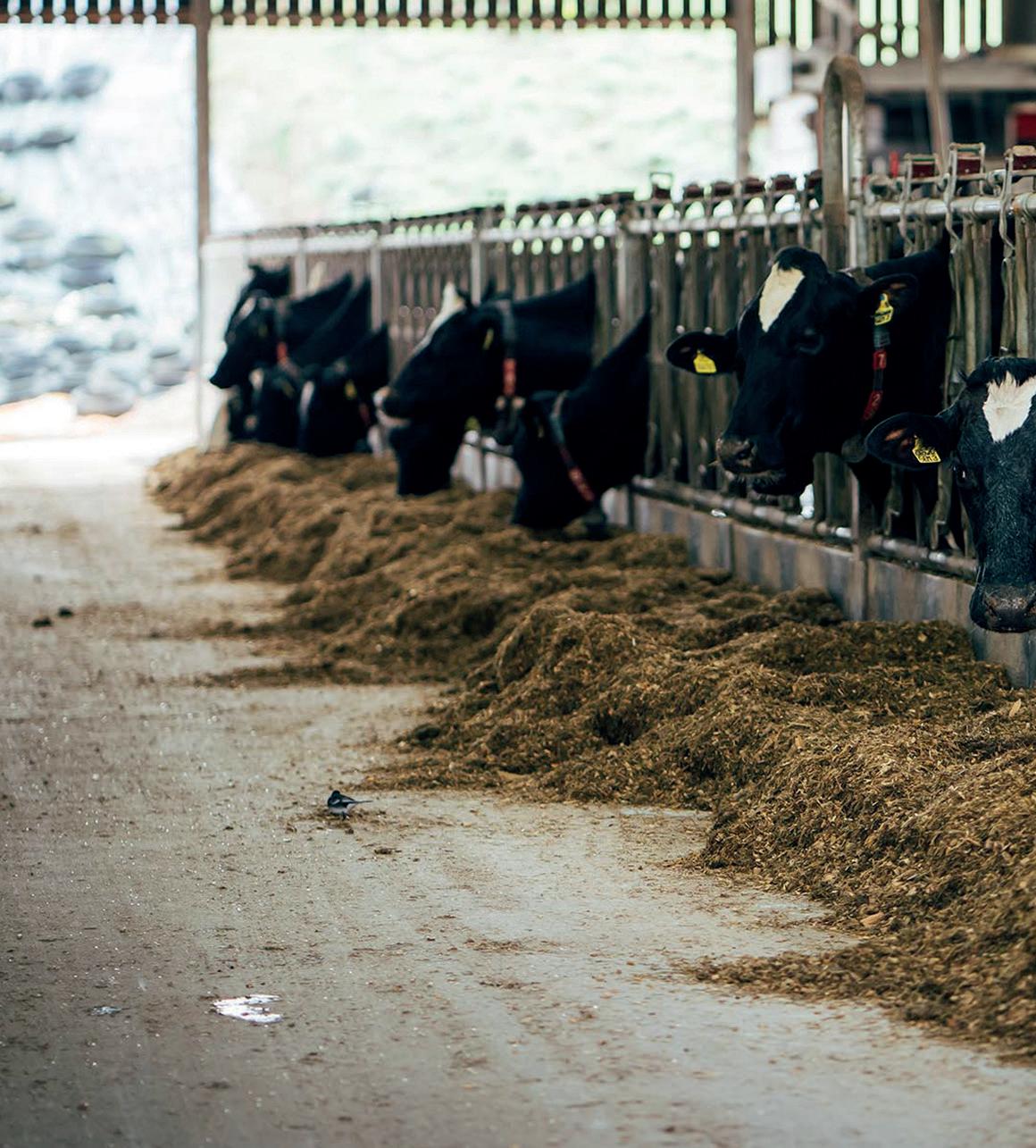
Compact feeding can reduce rumen fill and encourage more eating and therefore milk production.

Compact feeding is an approach whereby feed is mixed to such an extent that the ration is turned into one complete feedstuff that cannot be separated, providing every cow with a consistent diet that is easier for her to digest and use in milk production.
Mr Kristensen explained that in the past, advice has been all about putting physical structure into the cows’ ration to ensure chewing activity.
“Grass can be a very filling feedstuff in a lactating cow’s ration.
“Those long particles fill up the cow’s rumen, reducing her available time to eat more and drive that extra production.”
Mr Kristensen explained that the
as the load increases to ‘look after’ the mixer, it is not providing an efficient mix.”
■ Monitor the cows at the feed barrier: “Are the cows eating from the top of the pile?” asked Mr Kristensen.
“If they are working into the feed and it is being moved around, it is not mixed enough. Any leftover feed and fresh feed should have exactly the same consistency.”
■ It starts with harvest: Mr Kristensen was keen to make the point that the process of good
aim of compact feeding is to make every mouthful the cow eats as consistent as possible, eliminating long particles and stopping the cows sorting the diet.
“When cows are sorting at the feed barrier they are wasting time. It is a very time-consuming task to be going through the feed for the ‘good’ bits,” he said.
“They are spending more time on their feet and not lying down ruminating and producing milk.
“As cows sort through a ration, those that are eating first are having most of the concentrate and the less dominant cows waiting their turn are having less.”
If cows are not sorting, they do not rush to the feed barrier at feed-
compact feeding starts with grass harvest.
“You want to be harvesting grass with a chop length of a maximum of 8mm, preferably 5mm, to get the right length fibres into your clamp.
“The mixer is not a great chopper so get the chopping to take place at harvest and the mixing in the feeder wagon. With low dry matter silage, you might need to be more flexible with length to try and avoid slippage in the clamp.”
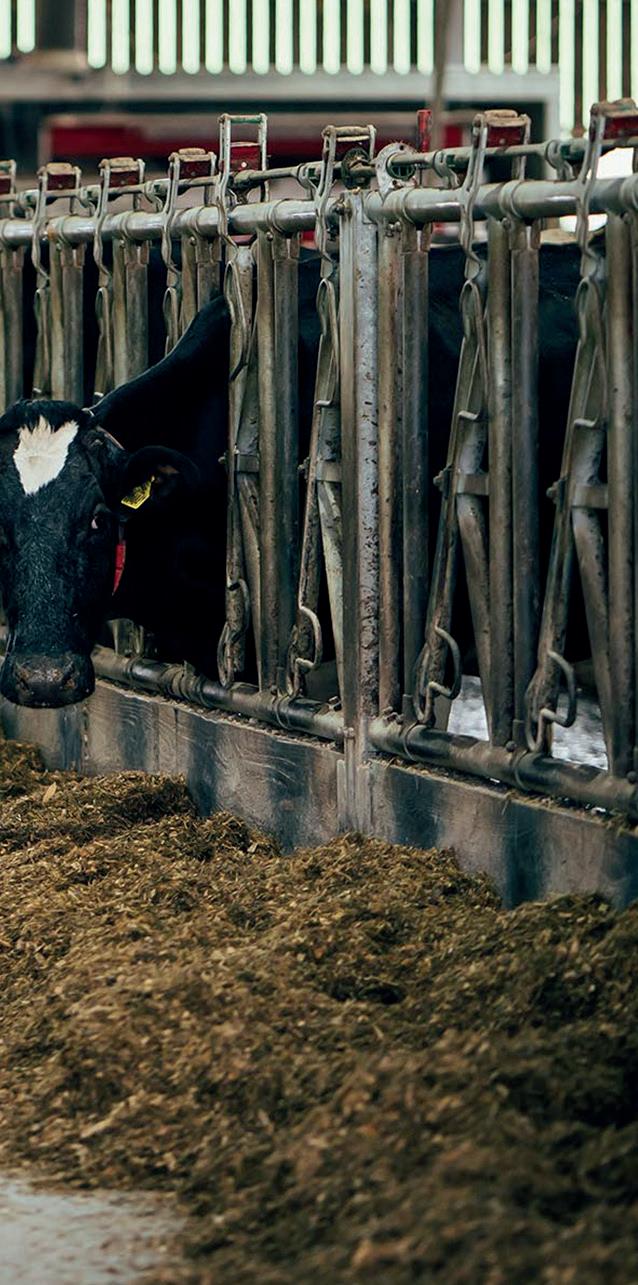
ing-out. They know that the feed will be the same whether they get there first or last, said Mr Kristensen.
“Look at the diet you are feeding now,” he suggested.
“Can you see fibrous lumps of grass or distinct pellets within the feed? These fibrous lumps will sit in
Phase of mix Ingredients Time
Grass Grass silage, other fibrous feed stuff and minerals.
Commodities
Concentrate, pellets, minerals.
Water Load water.
Finishing Maize silage.
the cow’s stomach, filling her up and taking time to be digested. The distinct pellets will be sorted out and eaten by the first cows at the feed barrier.
“In Denmark we have looked into whether you can overmix the diet in the feeder wagon and if there is a lower limit of the physical structure of the diet. But in reality, the diet




Start the mixer before loading.
Continuous mixing as adding, add final mix time of 10 to 20 minutes. Mixer slowly running when you add the water, before being turned off and left for one to 12 hours.
Restart the mixer and add maize silage. Mixing time 15 to 20 minutes. Horizontal 20 minutes.
would need to be pretty much all concentrate for this to be a problem.
“So, in reality you do not destroy the cows’ ration by overmixing it, but you are certainly wasting the cows’ time by not mixing enough.”
When it comes to mixing the ration in the right way for compact feeding, Mr Kristensen suggested adding the most fibrous part of the
feed, the grass silage, to the mixer wagon first, before any water, as the physical impact of the auger on the grass will be higher when dry.
The table above is an example of a mixing protocol Mr Kristensen has seen have success in compact feeding.
He added: “When you start to change the way you are mixing your ration, it is important you monitor what is happening in the mixer, at the feed barrier and with the cows.”
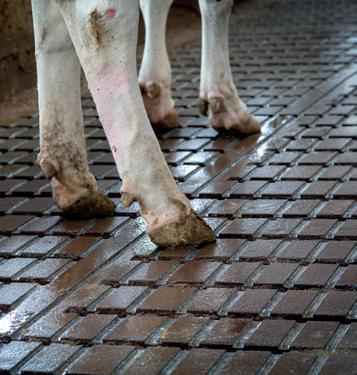



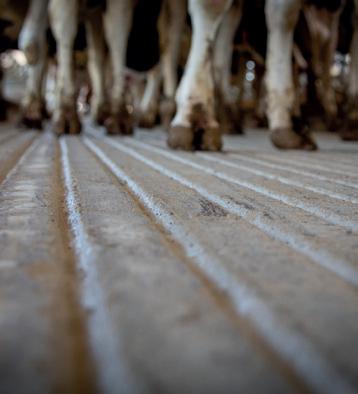

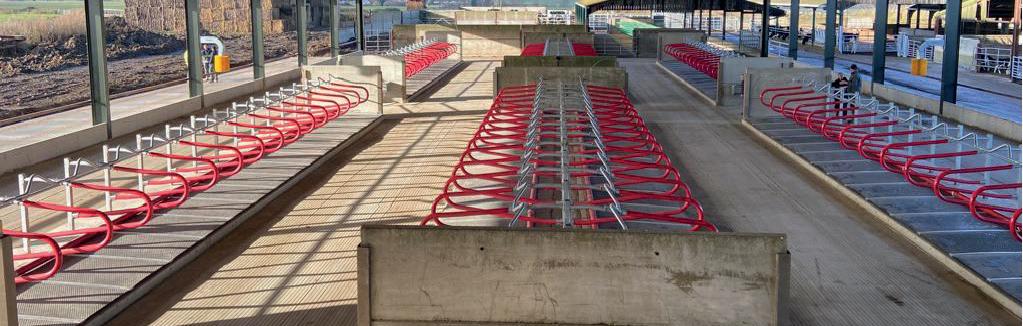

With warmer spring weather comes increased grass growth so here we speaker to farmers and advisors about getting the most from forage this year.
The significant uptake in multi-species leys, driven by the Sustainable Farming Incentive, is resulting in many dairy farmers trying them for the first time this spring with a danger they will use the same thinking as with grassland establishment, which could backfire on them, says Jim Juby of Horizon Seeds.
He says: “Establishing herbal and multi-species leys is fundamentally different from grassland reseeding and it is important that people appreciate this if they want to get the best out of them.
“Herbal and multi-species leys are far less likely to respond well to a low soil temperature. A soil temperature of 6degC recorded five days consecutively, which is usually achieved in mid- to late April, is more than adequate for grass to grow away quickly.
“This is, however, too cold for these more vulnerable and slower-growing forage species, with the herb and legumes in the ley requiring a warmer soil to establish well.”
Mr Juby says the legumes contained in multi-species leys mixes are
particularly susceptible, and these are a key element of the crops as they provide the protein content that makes them so beneficial to cows and livestock.
He says: “If these do not grow away quickly when sown, they will simply be overwhelmed by grasses and potentially weeds, and their contribution will be negligible.
“It is far better to wait until May when soil temperatures have been 8-10degC for five consecutive days than go earlier for the sake of it.”
Heavier soils that hold on to water are likely to be the most problematic, he points out.
“You might be able to go earlier in lighter soils that are more free draining, but the recommendations regarding soil temperature remain,” he says.
“The last thing you want is weak, open leys that can simply not get going and quickly succumb to weed pressure and more vigorously growing plants in the mix.
“Depth of sowing is another critical area and one where you are likely to have to compromise. Direct drilling can push the seed down too deep, and while grass will push straight through, legumes will not be able to.
“Closer to the surface is better, with a 3-4mm depth being ideal but
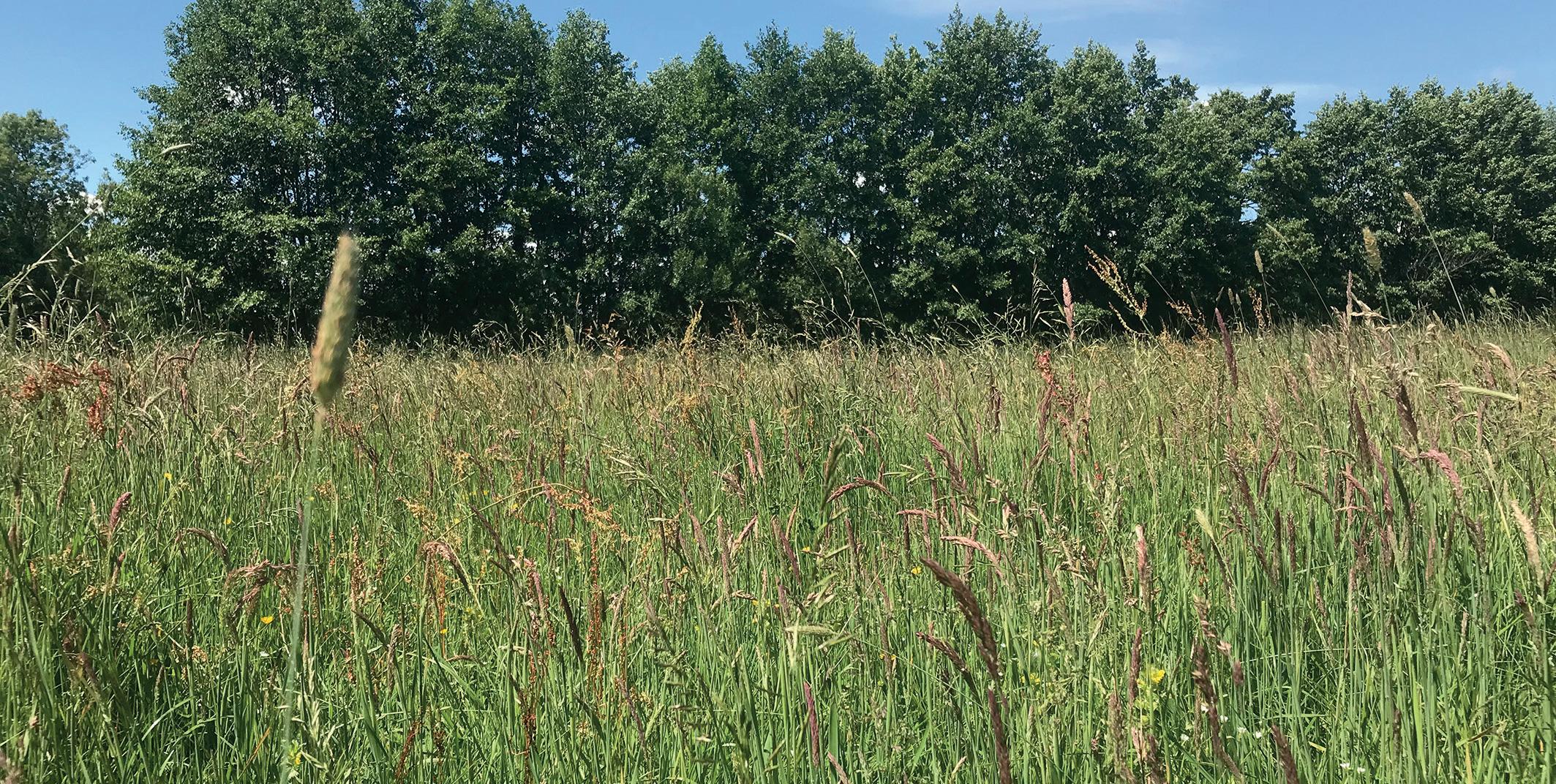


5-10mm is acceptable. In an ideal world, you would drill the grass-type species of the mix and spin the herbs and legumes on separately, and seed can be supplied separately if required.”
Sowing in late spring and into summer is far more preferable than autumn drilling, says Mr Juby.
He says: “It takes multi-species leys six weeks to establish themselves and to grow away, so you are unlikely to get the right conditions if you drill after September 1.
“Soil moisture can be a problem as the summer develops, but there is far less risk of this being an issue than there is of too cold a temperature and day length post-autumn. A good herbal ley will, however, be capable of surviving and succeeding in both drought and waterlogged conditions where pure grass leys may suffer.
“They have generally high nutri-
WHILE establishment and time of sowing are key elements of weed control, post-emergence treatment can be very tricky with multispecies leys, says Jim Juby of Horizon Seeds.
“Weeds can be controlled by grazing hard and spot spraying or using a weed wiper for taller weeds, but spot spraying needs to be done very carefully as many of the species are very susceptible to sprays, and drift can cause a lot of damage,” he says.
“The best advice is to leave the ley for a minimum of six to eight weeks before taking a light graze to encourage tillering. Topping and mowing can also be carried out to control weed flushes.
“The ley will vary in make-up as the season evolves, and strict grazing control and management is key in maintaining the quality as well as allowing for a good recovery.
“Over the life cycle of the ley, its composition will alter – often in line with changes in season and soil structure – but a well-managed ley should last up to five or six years.
“It is also noticeable that the multi-species leys can improve soil structure and soil drainage, and this helps considerably with future rotations – particularly on mixed farms.”
Whatever mix you choose, the starting point is to base your choice on containing roughly 40% grasses, 30% legumes and 30% beneficial herbs, says Mr Juby.
“Ultimately, the best combination of species will be determined by your individual soil type and rotation, but chosen wisely herbal leys will be a valuable addition to your home-grown grazing and forage resources,” he says.
“Such mixes provide the best balance between performance, soil improvement and feed quality, but the individual constituents will depend on your soil type, with deep rooted cultivars particularly suited to lighter soils.
“Get the mix right, however, and you will benefit from a rich source of protein and beneficial trace minerals to promote good herd health, fertility and milk production.”
■ Choose a mix suited to your soil’s conditions/individual requirements
■ Aim for an overall mix of 40% grasses, 30% legumes and 30% beneficial herbs
■ Wait for a minimum soil temperature of 8degC for five consecutive days and plan the
sowing date around weed flushes
■ Choose cultivations to prepare a fine seedbed and roll after sowing to aid moisture retention and good seed-to-soil contact
■ Leave the ley for a minimum of six to eight weeks before taking a light graze
Herbal and multi-species leys are far less likely to respond well to a low soil temperature
JIM JUBY
ent value, with second cut silage in particular capable of containing very high protein levels, plus there are numerous animal health benefits associated with them too, including athelmintic properties of the species included in the leys.”
It is a good idea to plan drilling around weed flushes, says Mr Juby. Every farm has its own unique weed growth pattern, so making sowing arrangements around these is always a good idea.


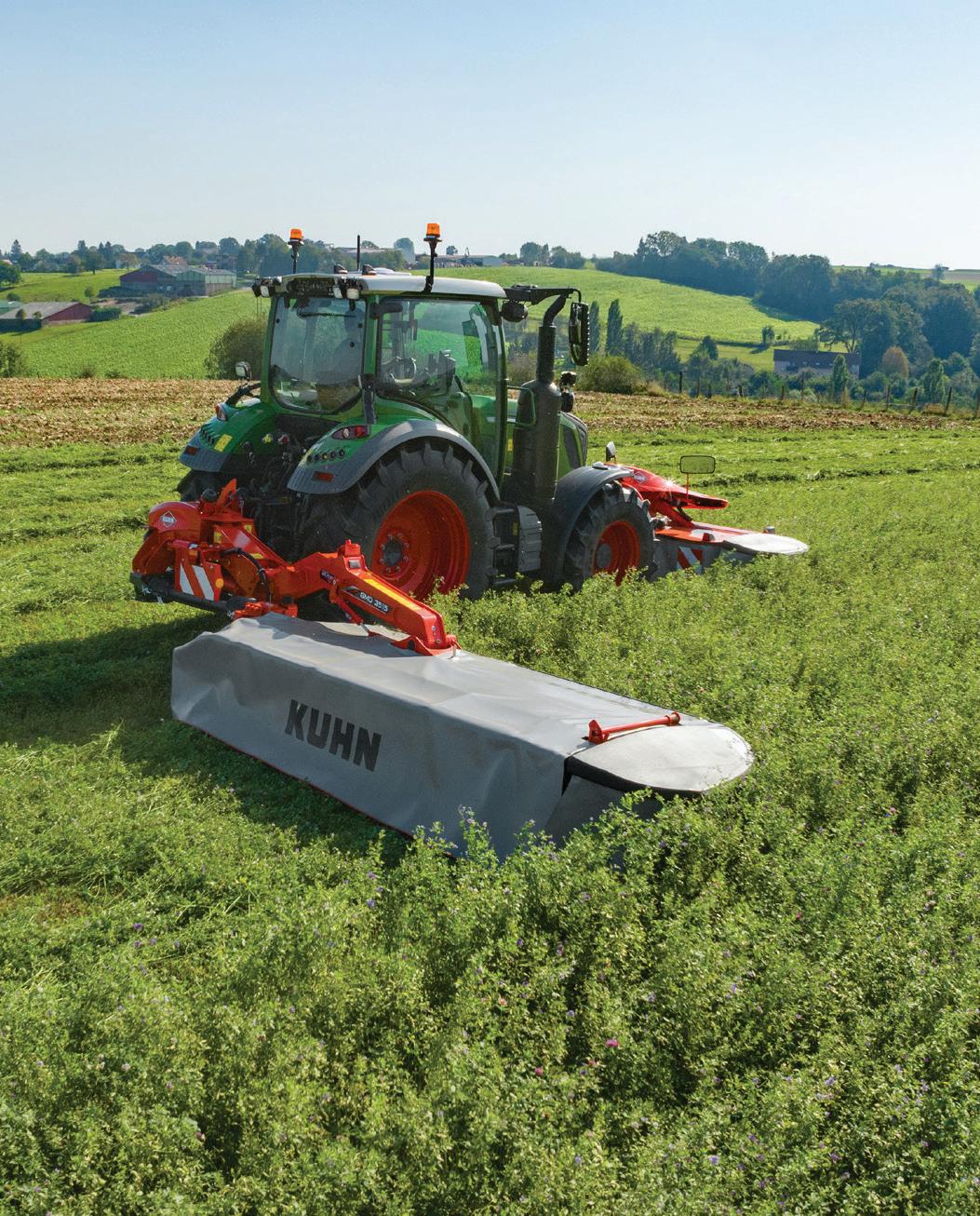


Equipped with patented KUHN technologies:
• OPTIDISC ELITE maintenance free cutter bar with PROTECTADRIVE disc hub protection
• LIFT-CONTROL system with NON-STOP safety protection.
Treating grass like a crop and delivering the nutrients it requires will secure good levels of quality forage for the year ahead whatever the weather. Dairy Farmer reports.
Planning for success and adapting with the weather will help tip the odds in dairy farmers’ favour and ensure a successful forage season, says Lisa Hambly, head of grassland and forage agronomy for Mole Valley Farmers.
She says farmers have a real opportunity to take control of how they produce forage and, in doing so, boost the bottom line.
She says: “The recent withdrawal of the Sustainable Farming Incen-
TWO example diets were compared: one with an average 10 metabolisable energy (ME) grass silage as the forage component, and one with an 11.5ME grass silage. Both diets were balanced to support 40 litres of milk production.
■ Cows ate 9% more forage when fed the better quality silage due to improved digestibility
■ Fewer bought in concentrates were required with the higher quality grass silage, resulting in
tive has put farmers under huge pressure and created a great deal of worry and uncertainty.
“Against this backdrop, it is important to take control of the things in your power that will benefit business profitability – that starts with taking a renewed look at forage management and making incremental gains to improve forage quality.”
Quality forage forms the foundations to success (see box), yet Ms Hambly says Kingshay Dairy Manager figures show that milk from forage has remained static for the
a feed rate of 0.31kg/litre versus 0.35kg/litre on the average silage
■ Feed costs were lower with the better silage (9.7ppl vs 10.7ppl)
■ Good silage saved 46p/cow/ day in feed costs. That equated to £34,000 a year across a 200 cow herd
■ In terms of production, given the excellent milk price/feed price ratio, good silage was worth an extra 3 litres/cow/day or £98,000 a year at 45ppl
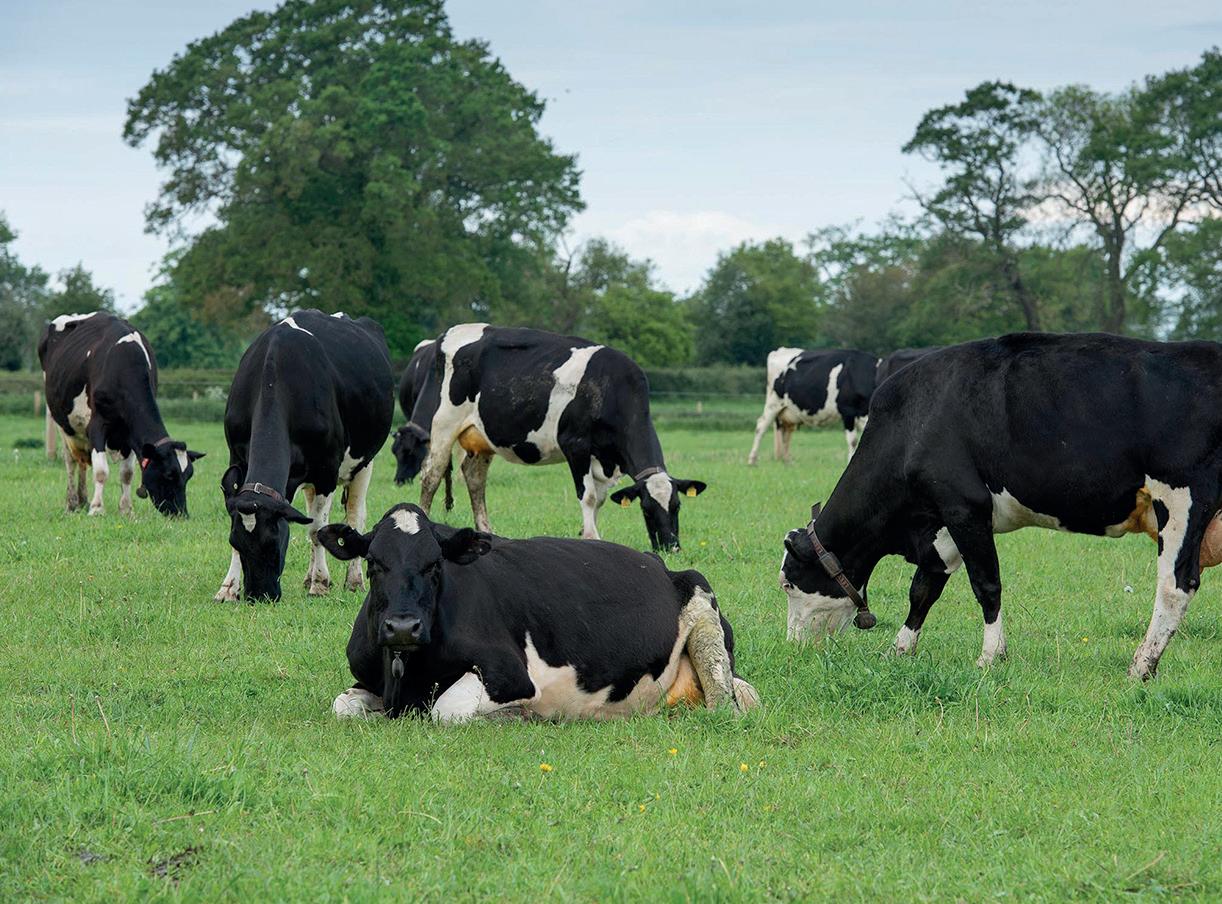
Last year’s poor forage making season also dropped average milk from forage by 7.7%.

past five years, averaging 2,714 litres a cow a year.
Last year’s poor forage-making season also dropped average milk from forage by 7.7%, taking it below the five-year average.
Ms Hambly says it is important to question how practices can be changed to avoid a repeat of 2024 and this starts with a mindset change around treating grass like a crop.
That means selecting the best varieties and planning plant nutrition to give the crop the best chance of success.
Last year, many crops were stressed and performance was compromised because farmers were not able to apply nutrients at the right time due to the wet spring.
“It is about feeding grass to yield in the same way you feed your cows for milk yield,” says Ms Hambly.
“That plant nutrition needs to cover all basis: nitrogen, phosphate, potash, sulphur, magnesium, calcium and trace elements; all of which need to be balanced.
“The cold, dry start to the spring has already slowed grass growth and put producers on the back foot, so now is the ideal time to identify issues and address them.”
Lisa Hambly
Ms Hambly advises carrying out a visual assessment of fields now and identifying those in need of a spring reseed.
If soil moisture is sufficient, grass could be over-seeded after first cut. It is also worth taking fresh grass samples 10 days ahead of first cut to check free nitrate levels says Ms Hambly. The cold start to the spring may have slowed the uptake of nitrogen from slurry and fertiliser leading to higher residual free nitrates. If these nitrates are present at harvest, clamp fermentation will be compromised leading to nutrient loss, reduced eating quality and lower intakes.
If free nitrates are above 10%, tests should be repeated a few days prior to harvest and harvest delayed if levels are still too high.
“It is essential to use a quality additive to dominate the fermentation, otherwise quality will be lost,” adds Ms Hambly.
Foliar tests should also be carried out on fresh grass in mid-April or after first cut to determine nutrient status and identify any deficiencies that need addressing in order to produce quality growth.
Ms Hambly also highlights the value of applying the required nutrients to grassland via a foliar spray, rather than a solid compound.
As a foliar spray is absorbed through the leaf, it is not reliant on soil temperature or moisture to feed the plant. With the current dry conditions, and soils slow to warm, foliar application is even more relevant. She says there is also the potential to halve nitrogen application rates thanks to improved nitrogen use efficiency.
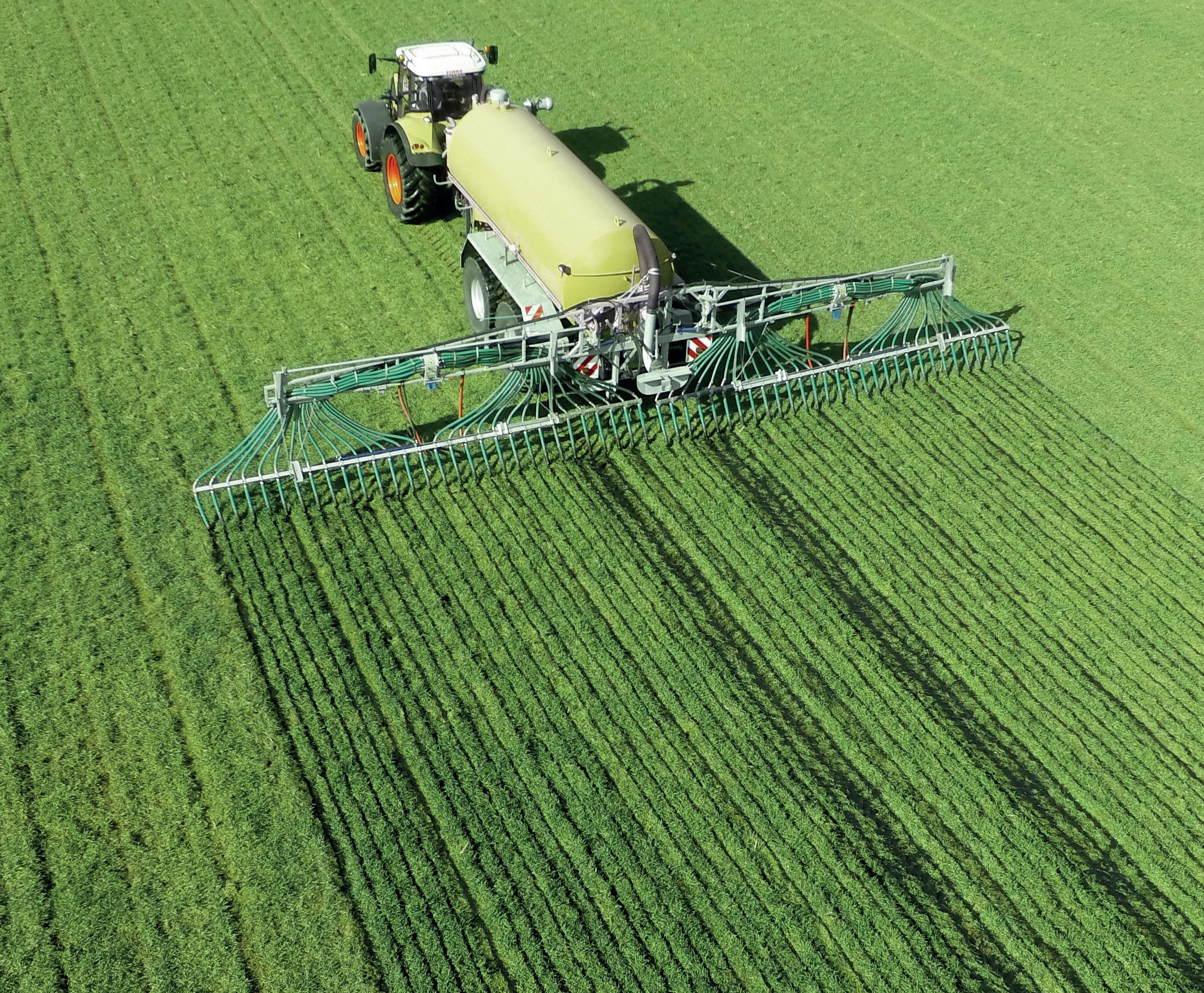
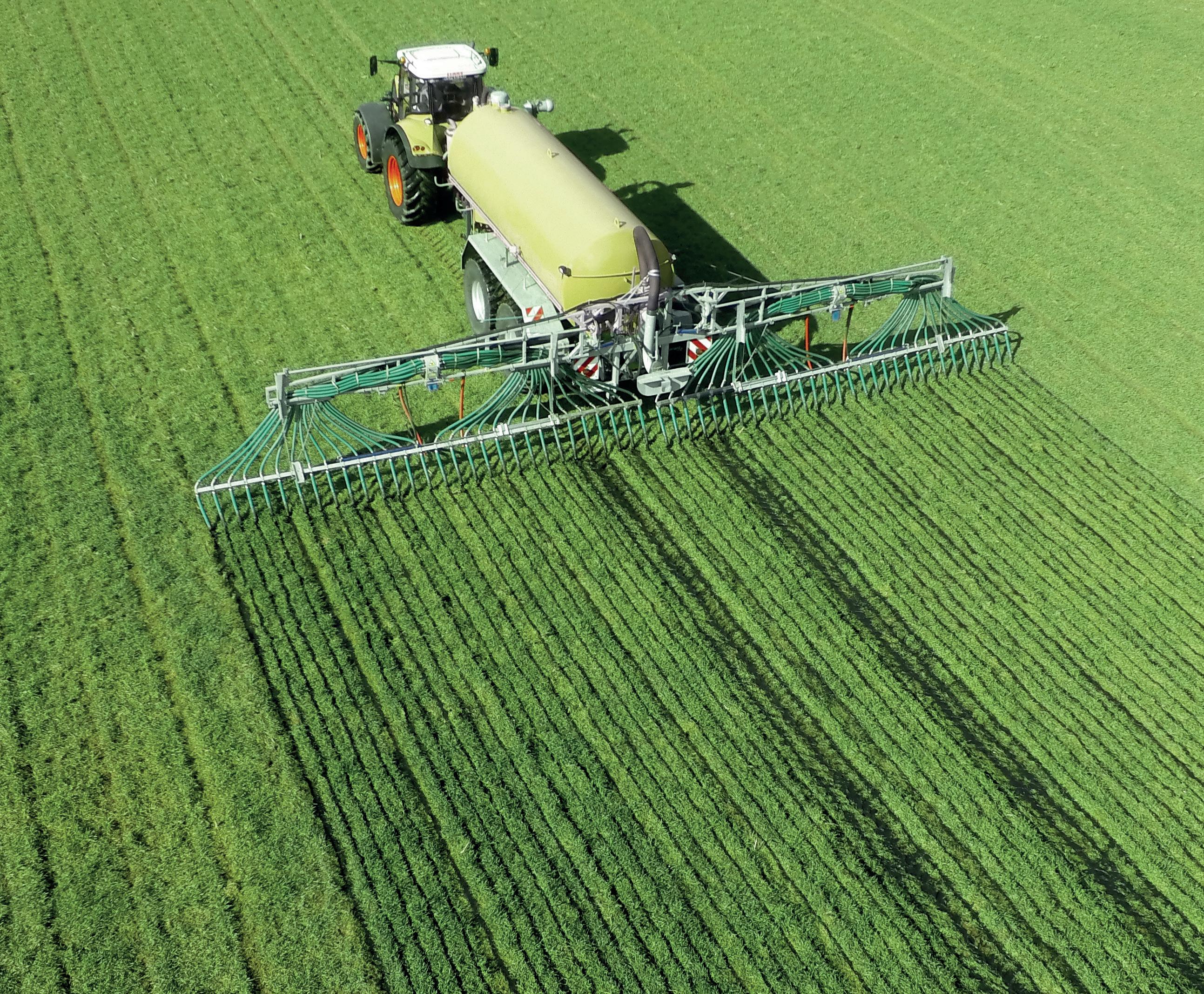
Flexible, reliable and easy to maintain:
Flexible, reliable and easy to maintain:
As a pioneer in agricultural technology, Vogelsang leads the way in environmental friendly spreading equipment. The dribble bar systems combined with the ExaCut distributor give the highest application of liquid manure nutrients.


As a pioneer in agricultural technology, Vogelsang leads the way in environmental friendly spreading equipment. The dribble bar systems combined with the ExaCut distributor give the highest application of liquid manure nutrients.
Dribble bars are available in working widths of 7.5m right up to 36m and are retrofit-friendly.
Dribble bars are available in working widths of 7.5m right up to 36m and are retrofit-friendly.
For more information visit
www.vogelsang.info/en-uk/dribble-bar-systems
For more information visit
www.vogelsang.info/en-uk/dribble-bar-systems
VOGELSANG – LEADING IN TECHNOLOGY
Contact us at: 01270 216 600 | sales.uk@vogelsang.info vogelsang.co.uk
VOGELSANG – LEADING IN TECHNOLOGY
Contact us at: 01270 216 600 | sales.uk@vogelsang.info vogelsang.co.uk
Larkton House has long been a grazing farm, but over the years Peter Done and his team have worked hard to refine the system to ensure grass remains at the core of the business. Katie Jones reports.
The Done family has farmed at Larkton House in Malpas, Cheshire, since 1927 and it is now run by fourth generation Peter Done, in partnership with his mother Anne.
Peter explains the farm was bought nearly a century ago by his great-grandfather, who already owned a nearby farm. He had three sons and was able to secure three neighbouring farms for them.
The farm’s light sandy soils mean it is well-suited to grazing and, while Peter says he is doing ‘nothing new’ in comparison to how his late father Roger farmed, he adds the system has been refined over the years.
He explains: “It has always been a grazing farm and we have never had a feeder wagon on the farm, but Dad was putting cows
to graze in much longer grass, in much bigger fields and with no proper cow tracks to allow for a much wider grazing platform.”
Now some 2.25km of concrete sleeper tracks are used to send the cows to 35 grazing paddocks across the farm.
In total, Peter is milking 175 Friesian-type cows on 105 hectares (259 acres) of which 85ha (210 acres) is owned and the remainder rented.
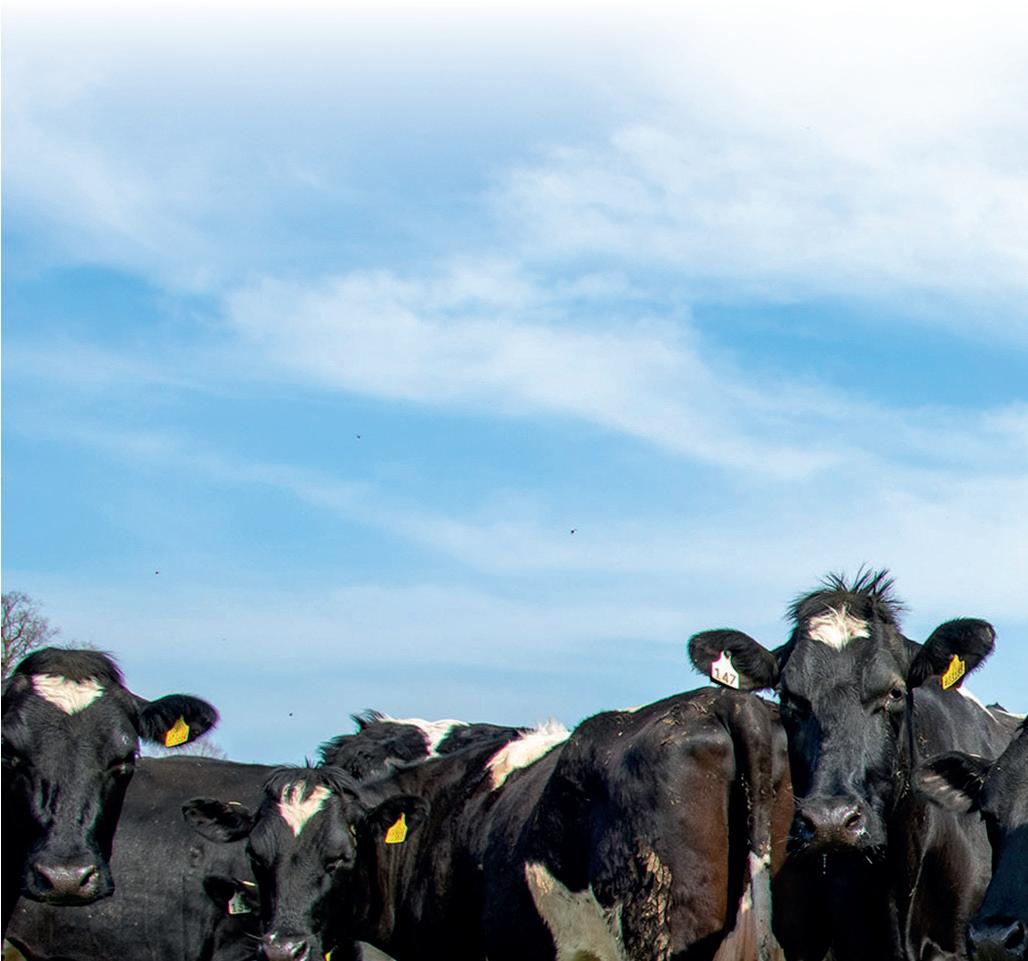
This year, cows started grazing on February 15, going out for a couple of hours in between milkings when weather allowed.
From the beginning of March, cows were out every day and, by the beginning of April, they were out day and night.
Cows continue to graze during the day into October and last year were fully housed from October 20.
Peter says: “In the past we have over-egged grazing at the end of the season, and have not left ourselves enough grass come the spring.
“So last year, even though it was probably still fit for grazing,
we decided to call it quits and bring them in.”
At the shoulders of the season, if silage needs to be offered and ground conditions are fit, big bales of silage are spread out in the fields to save cows coming into the sheds.
In the winter months, cows are housed in straw and lime-bedded cubicles, with blocks of silage put out into the middle of the feed passage twice a week.
Peter works with herdsman, Dan Minshall, who has worked at Larkton House since 2018 and long-serving member of staff
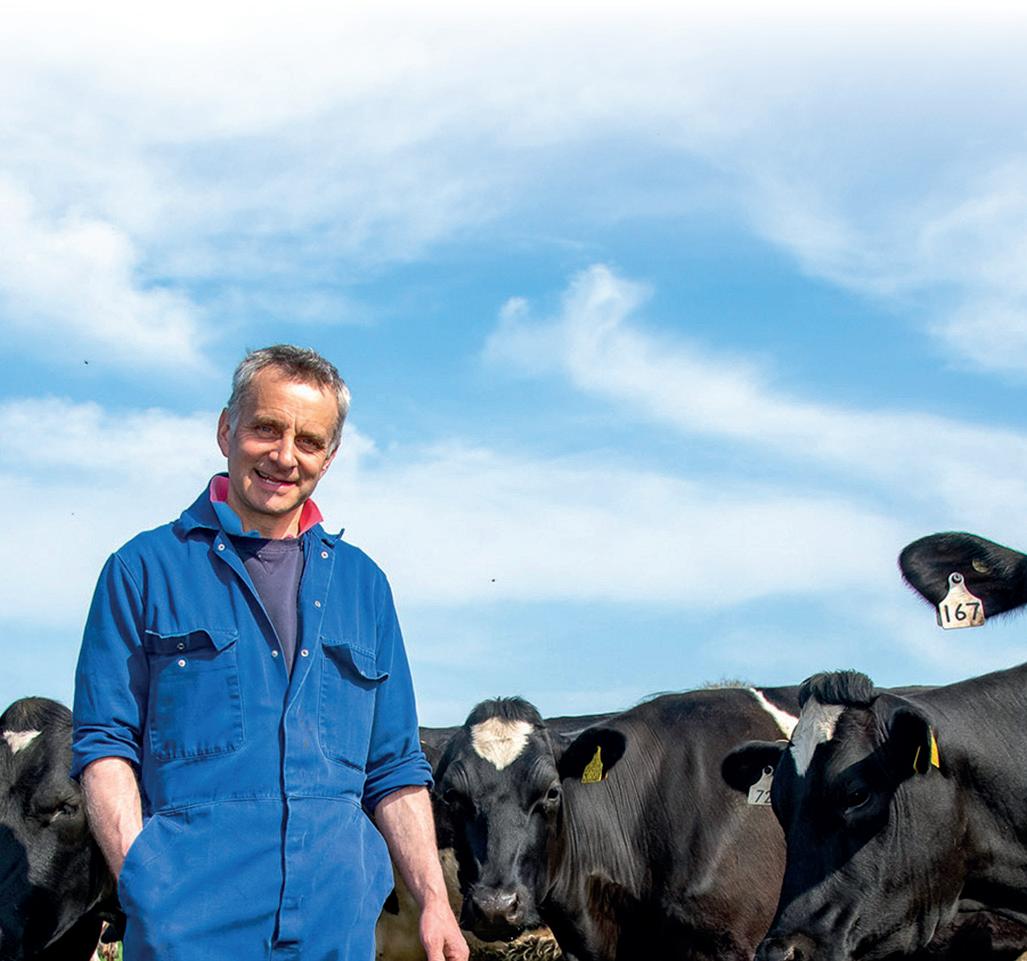

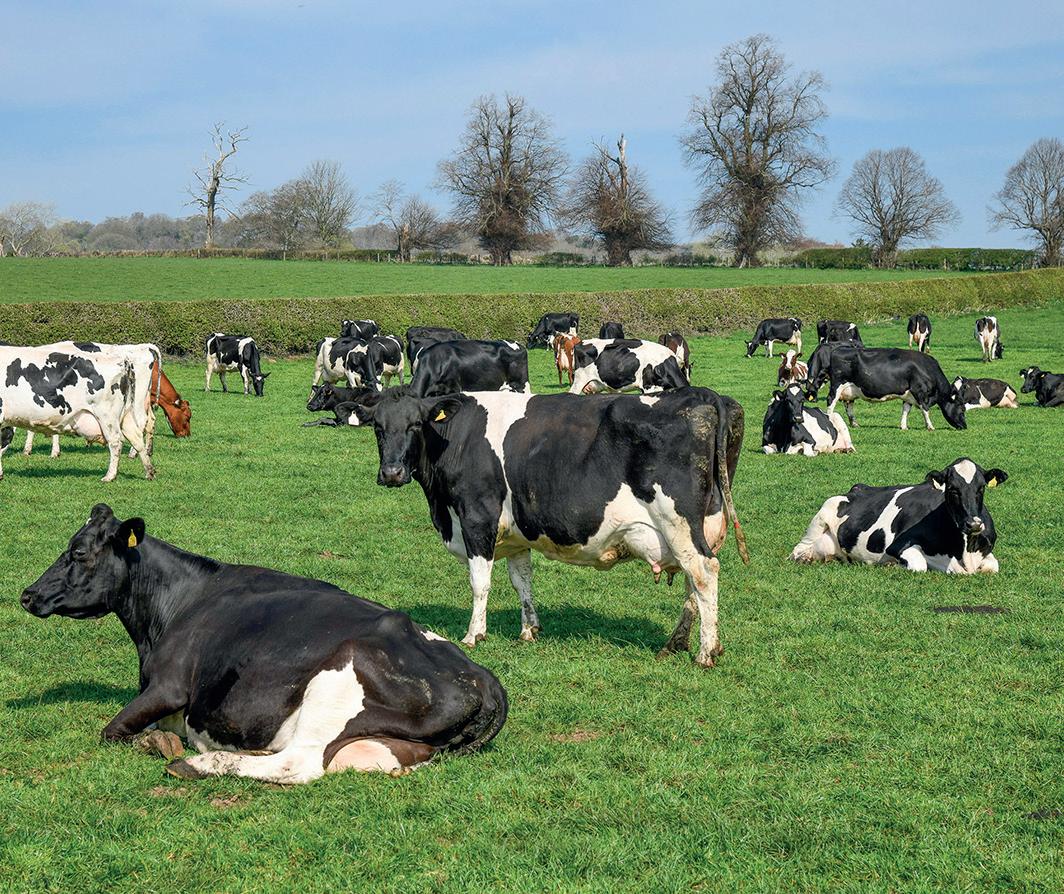
David Hodkinson, who has been with the Done family for more than 55 years.
Teamwork was one of the areas praised by the judges during last year’s British Grassland Society’s grassland farmer of the year judging. Peter and his team went on to take the runners-up award.
Dan is responsible for measuring grass covers and last year grass was measured 32 times.
In 2024, the farm produced 13.5 tonnes of grass/ha and with an average yield of 6,700 litres. About 4,100 litres of that came from forage.
Cows receive 1.3t of concentrate through the parlour.
Standard targets for grazing covers are worked to, with cows going in at a cover of about 3,000kg/ha and coming out of paddocks when they reach about 1,500kg/ha.
Despite ‘dabbling’ with some herbal leys, Peter says grass and clover are best suited to his system.
The grass and clover mix, MegaBite, is used across the grazing platform and Peter aims to reseed about 10% of the farm annually.
He says: “We will reseed if cows have made a mess of a pad-





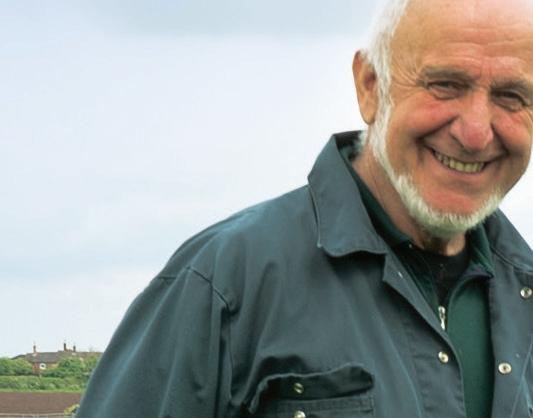
We will reseed if cows have made a mess of a paddock, or if the Agrinet figures that the performance is not quite where it should be.
PETER DONE
dock, or if we can see from the Agrinet figures that the performance is not quite where it should be.”
Peter says for a few years after the ban on chlorpyrifos, he managed to reseed grass following grass, but he now uses a break crop.
“We put in a crop of brassicas and dry cows or in-calf heifers will graze this in the spring or autumn, depending on when the crop was sown.
“We might put some big bales in with this, or if there is a neighbouring paddock that can be grazed as standing hay alongside the brassica we will do that.”
Heifers calve into the herd at


Since we switched, we’ve had better grass as regards cutting and grazing, than we’ve ever had before.




Brian Rowley, Dairy Farmer, Derbyshire














Discover a complete range of high-performing grass seed mixtures, backed by comprehensive knowledge and the global experience of a partner you can trust.



SCAN to hear Brian’s story


■ Milk sold to Belton Cheese
■ Cows are foot bathed using formalin twice a week
■ Foot trimming is done in-house with feet lifted as and when necessary
■ Herd is vaccinated for salmonella, calves are BVD tag and tested, and youngstock is vaccinated for lungworm
■ 6,700 litres average at 4.53% fat and 3.38% protein
■ Overall stocking rate of 2.14 livestock units/ha and on the grazing platform it is 2.5-3.75 livestock units/ha
26-27 months and Peter is aiming to breed a 550kg mature weight cow, which can graze well and turn grass into milk efficiently.
With this in mind, he selects Irish Economic Breeding Index (EBI) sires to use on the herd.
The herd calves all year round with an average pregnancy rate of 42% and a first service pregnancy rate of 71%.
An Aberdeen-Angus stock bull runs with the heifers, while the rest of the herd is artificially inseminated.
Heat detection is done via scratchcards; a blue scratchcard is put on 49 days post-calving to catch the first heat that can be served too.
Once served, a red scratchcard is applied and will be replaced
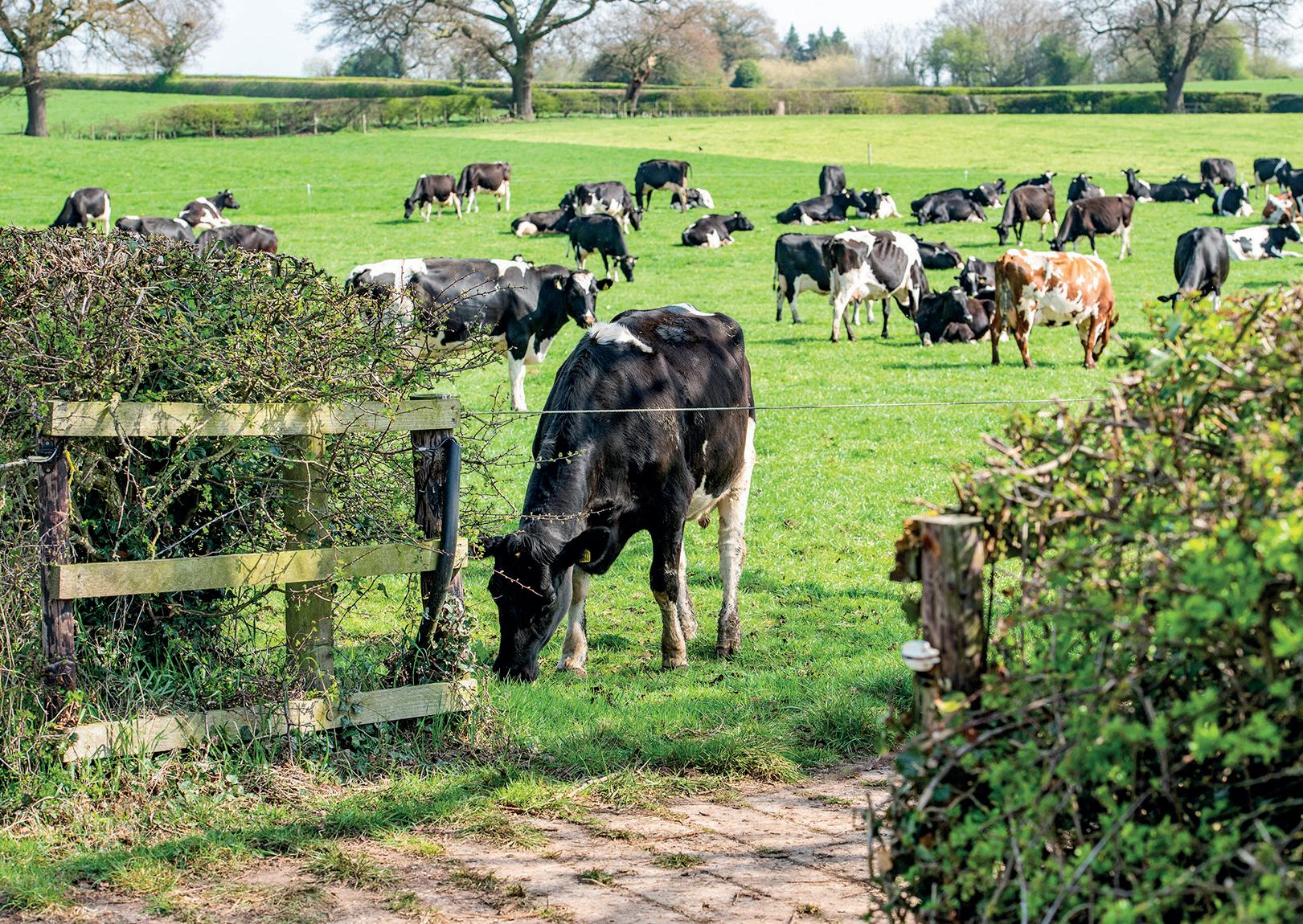
until the cow is PD’d in calf.
After calving, calves are given two colostrum feeds before being moved into calf pens in a shippon near the parlour where they are fed whole milk until weaning at eight to nine weeks.
The herd is tag and tested for BVD, and is screened for Johne’s.
Calves are vaccinated for lungworm before going out to graze in the summer months.
Dry cows are also grazed and this year the plan is to set the dry cows up as a ‘nomadic group’.
Peter explains: “In the past we
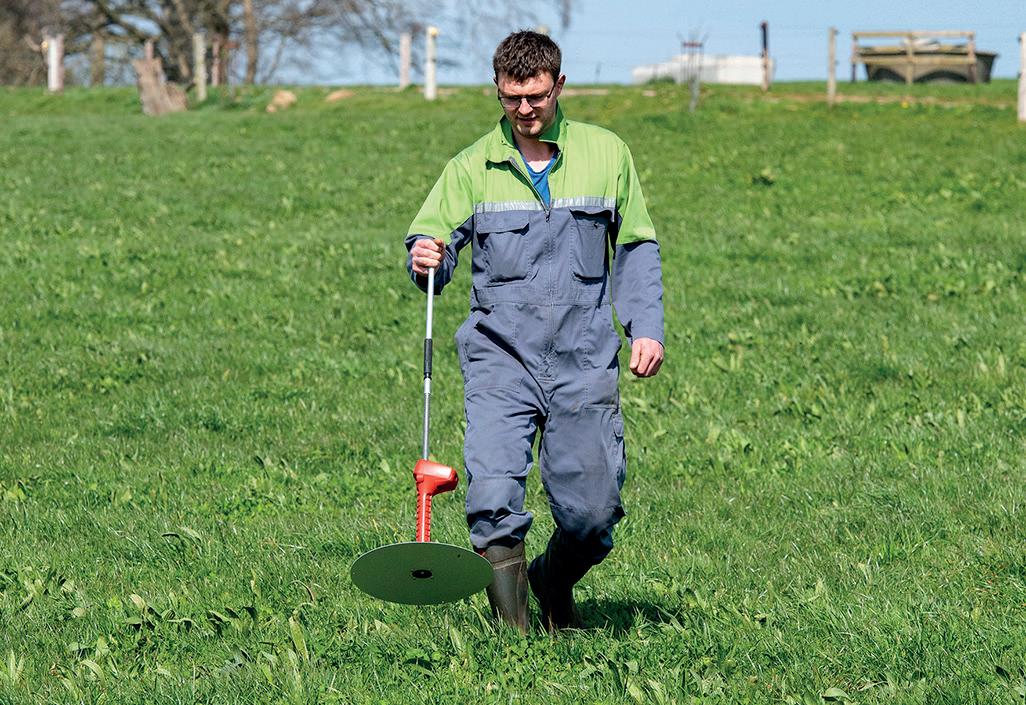
have had set fields for the dry cows, but this year we will not have a specific field for them, so instead they will follow the milking group around.
“During the summer, if we have a field we can shut up we might let it go to seed and strip graze them through that.”
Three cuts of silage are taken, with a ‘bonus’ fourth cut where possible.
Peter says: “We used to be quite traditional before that and would do two-and-a-bit cuts.
“We would do the silaging ourselves, which would end up taking quite a bit of time, and we

would end up with fairly average silage.
“We have moved to doing three smaller cuts, with outside help, and we have definitely improved the silage and are getting more milk through the winter months as a result.”
Looking ahead, Peter says plans include an upgrade to the parlour and the installation of a slurry lagoon.
A grant for this has been applied for, and Peter plans to site the lagoon towards the back of the main farm steading allowing for easy access to pump slurry on to the grazing platform.
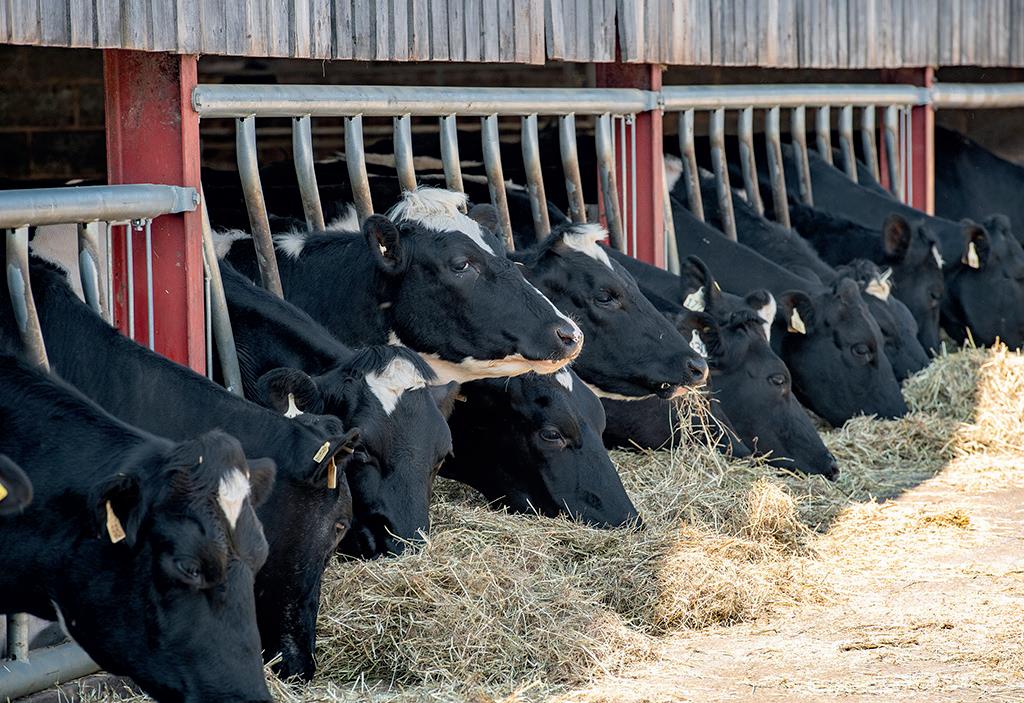
Grass is the biggest crop in the UK, but the attention on its agronomy and productivity is quite different to arable crops which attract much more focus from crop protection companies. Dairy Farmer reports.
This year, two new grassland herbicides will be brought to market, but prior to this the last new herbicide active for use on grassland in the UK was introduced 20 years ago.
Dairy Farmer posed some questions to Robin Bentley, category marketing manager at Corteva Agriscience to find out how research and development can enhance grassland management and what these new solutions represent.
QWhat are some of the emerging trends or challenges in grassland management that Corteva is focusing on in its research?
AFor some regions and for some enterprise types whether driven by cost, regulation or sustainability, reducing the amount of applied nitrogen whether organic or artificial is a particular trend of note as is a desire to grow more home-grown


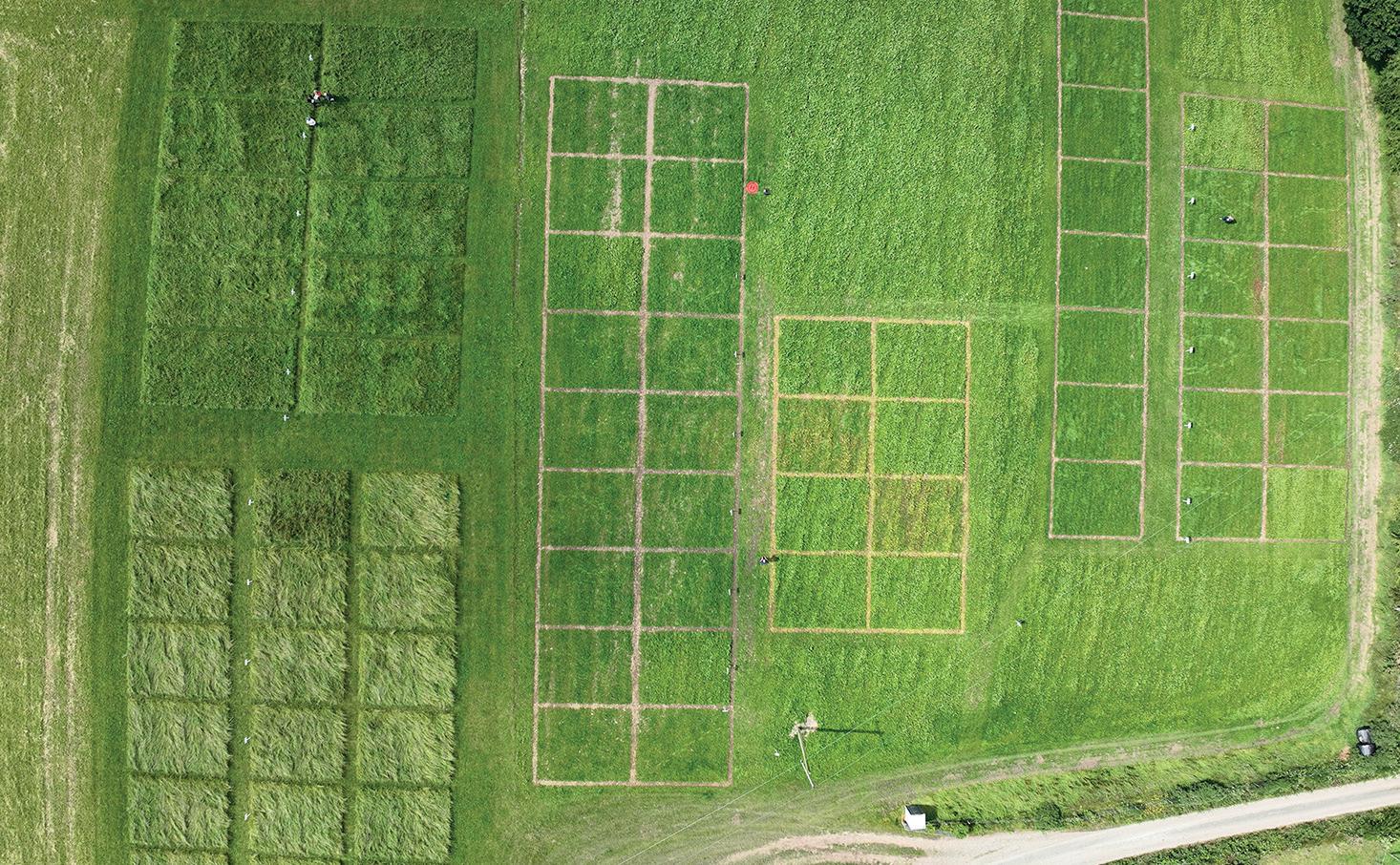
The regulatory environment for crop protection products is continually evolving as scientific knowledge increases, technology improves.
protein. This leads to more diverse grassland with incorporation of clovers or more complex multispecies leys.
Establishing and maintaining clover populations successfully will, in many situations, require a need for effective weed control while being safe to both grass and clover populations.
Climate change means more variable weather patterns.
For instance, there is a trend of milder winters so annual weeds may increasingly survive through into spring and represent a tougher target to control.
Prolonged dry periods in the summer could see weeds better adapted to these conditions become more widespread, such as dandelions, hogweed or cow parsley.
Reducing nitrogen, coupled
with more weather extremes, could lead to grass weeds in pasture becoming more of a concern.
QOur world continues to evolve and present new challenges – how does Corteva react to this?
AInnovation is a vital tool to help food security in this changing landscape.
It can help us to feed a growing world on less land and manage the threat from new pests and diseases, while also helping to mitigate the impact or climate change and fuel the future with bioenergy.
Further to this, the regulatory environment for crop protection products is continually evolving as scientific knowledge increases, technology improves and new procedures are adopted.
The system is inherently precautionary leading to conservative outcomes. As innovation yields new answers to today’s problems, the associated new approvals will have had to go through an increasingly tough and demanding review process. The resulting product labels can be more restrictive than in the past which means more consideration by advisors and user to secure optimal effects on target weeds.
QHow can Corteva contribute to farmers’ sustainability approaches?
AHaving effective herbicides which help maximise the productivity of grass and grass plus clover leys will mean less reliance on bought-in animal feed with more, and better quality for-
age production.
Newly sown leys are particularly at risk from weeds with many now being sown to include clover. It is a big investment, so new herbicide options such as ProClova XL which controls a wide spectrum of key weeds and is safe to the grass and clovers are crucial management tools.
Where silage is produced with a significant component coming from clovers, it can be low dry matter and can need a special type of silage inoculant to help optimise the fermentation process.
Where a crop requires more nitrogen to optimise output than is available from applied nitrogen, using a nutrient efficiency bio-stimulant containing a natural bacteria that fixes nitrogen from the air and converts it into ammonium inside the plant, can secure up to 30 kg additional nitrogen/ha.
A nitrogen stabiliser reduces

environmental loss by slowing the nitrification process, helping to keep nitrogen in the soil profile in a more available form for longer for plants to use and limiting the propensity of nitrogen to leach into waterways.
Where tough to control perennial weeds such as docks and buttercups and weeds such as nettles and dandelions dominate, quality herbage provision is compromised.
An effective herbicide solution which delivers lasting control to limit the need for a follow up
spray makes good sense.
New herbicide ProGrass will resonate in these circumstances.
QWhat do you think are the future trends in forage weed control solutions?
AGlyphosate is a valued burn down tool on grass swards ahead of re-seeding.
If future labels restrict its use in some way, then weeds such as docks and thistles can carry over via root fragments into the next crop.
tion. Dealing with docks in a shortened application window typical of a multi-cut silage system means a herbicide, such as ProGrass, which supports a cutting interval of just seven days if needed will have appeal.
Being able to use effective weed control solutions where valued species are present such as chicory, birds foot trefoil and plantains, but the unwanted perennial weeds are targeted, will become an increasingly demanded solution.
Herbicide options for use on lucerne and red clover crops are currently limited. If these crop areas increase, there will be a wider interest in selective herbicides for these crops.
Herbicides which are safe to ryegrass, but will take out weed grasses such as couch, Yorkshire Fog and annual meadow grass will take grassland productivity to a higher level. New herbicide options appropriate to changes in climate and regulation are being researched.
Different ideas on how to manage that will need considera-
We’re

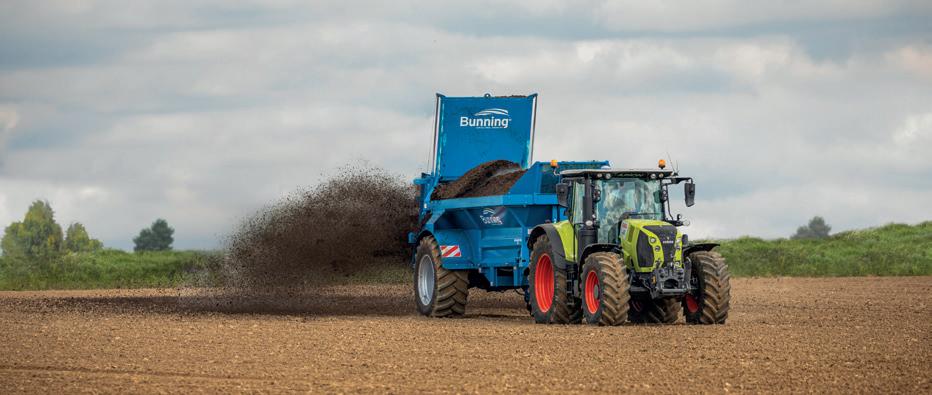







A new loading design on the Trioliet X Series diet feeder makes for more efficient feeding for a Shropshire herd. Jane Carley reports.
Meeting nutritional requirements is a key element to ensuring the best performance from the herd, and it was with this in mind that Heaths of Stockton made the decision to revise its feeding regime last year.
The large dairy enterprise, based near Newport, Shropshire, is well invested where equipment and technology is concerned, from the forage crops grown and harvested by the in-house team to a new rotary parlour in-build.
So it made sense to look at the latest designs when considering a new feeder wagon, explains partner Simon Heath.
He says: “The tractor used for feeding, which had outlasted two trailed wagons, also needed replacing, so it was a matter of considering the depreciation on a tractor and trailed wagon versus the cost of a self-propelled wagon.
“We have seen the benefits of self-propelled machines with our
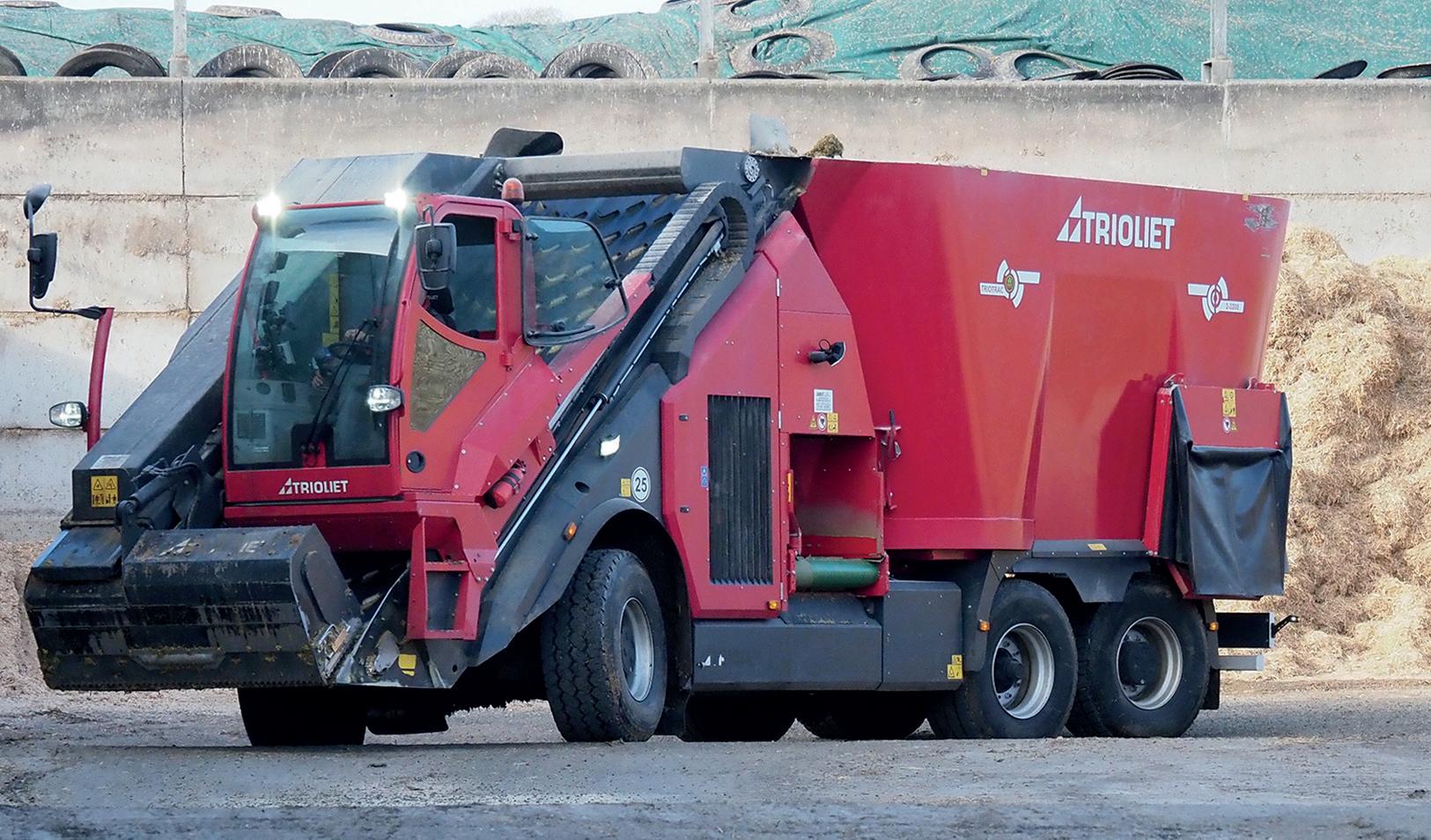
sprayer and potato harvester and were also conscious of the potential savings in hours on the telehandler.”
Mixing quality was another factor, he says.
“Our trailed machine was struggling to mix the ration – the last part to be unloaded was always poor quality. We had a demo of a Trioliet
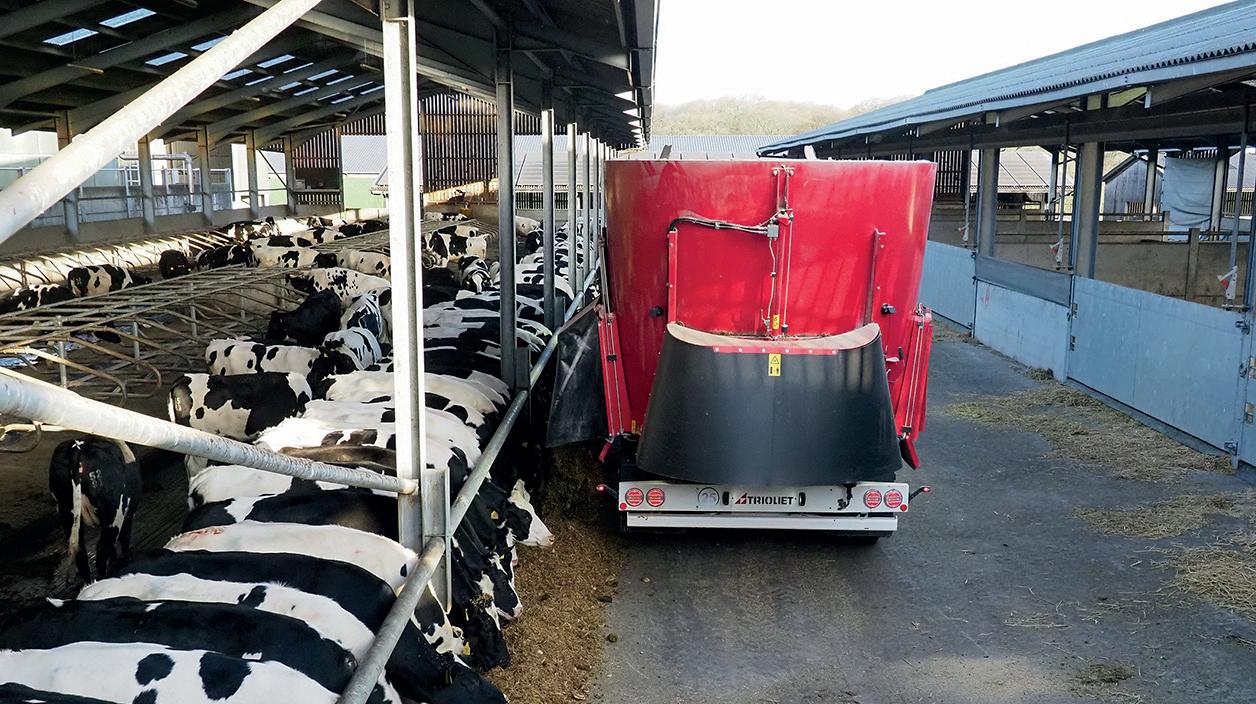
trailed wagon and could see that it was more thorough,” he explains.
Mr Heath says that he was leaning towards a self-propelled machine by this point, ‘although it is tenuous in terms of the direct financial benefit’.
With little direct experience of Trioliet machines – although the business’s AD plant uses a static version – he then looked at the Triotrac X 2-3200 self-propelled.
He says: “It is a radically different machine; most others on the market use a milling head to gather the ingredients and then convey the materials to the mixing tub via an auger.
“Another issue was that most can only load at up to three-metre clamp height, which would leave an ‘overhang’ on our taller clamps with the risk of collapse when an operator is removing covers or walking beneath it.”
The Triotrac X uses a rotary cutter which feeds into a 1.85m wide conveyor passing below the cab that

transfers the material into the 32 cu.m tub.
Hydraulic rams on the front axle tip the conveyor which also has a bucket edge, ensuring that no ingredient residue is left behind. It then returns to level at the touch of a button.
He says: “The cutter has an 8.0m reach and its action produces a flat face which is which is both weather-
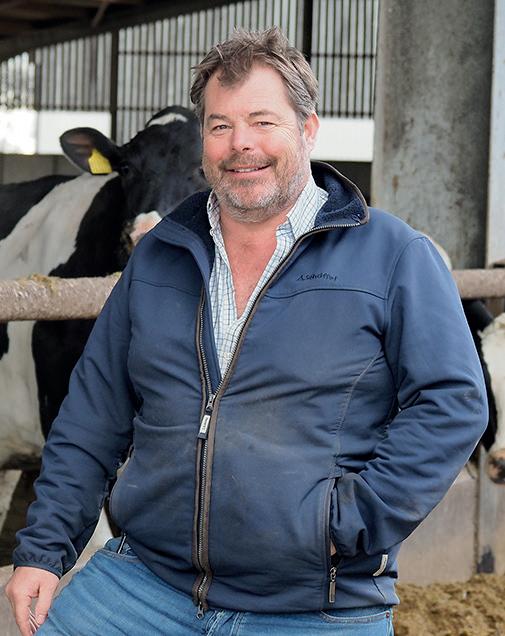
Materials are loaded via a spiral cutting auger on a telescopic arm which can reach up to 8m high.
tight and safe. The conveyor can be run at variable speeds depending on the density of the material to spread it along the length of the tub so it can be evenly mixed.”
Mr Heath recalls that when loading the trailed machine with a fourtonne shear grab, it was necessary to split the loads to allow the augers time to thoroughly mix the ration.
“So a five-ingredient load became a seven-ingredient load just to get the mix right.”
Hydrostatic drive to the augers gives infinite control of their speed and the Triotrac X is capable of working at 20km/h and emptying via the 1.0m wide front conveyor to either side and both rear doors simultaneously.
He says: “You would not go at that speed in practice, but the machine is very quick and does offer a huge time saving on feeding.”
And efficient feeding out is key to Heaths of Stockton’s herd manage-
The operator’s cab moves up and down on a sliding rail, affording a clear view of the loading process.
ment – the aim is to deliver the seven daily loads of feed to each group of cows as they return from the parlour.
“It gives the optimum timing for and the cows to eat their feed and for their teats to dry after washing, then lie down.”
Mixing quality means that they are always eating a consistent ration right along the feed fence every day,
he points out, rather than gorging on the bulkier material and picking at the lighter rations.
The Triotrac X is used to premix four or five concentrate and mineral ingredients three times a week, stockpiling them via the reversible double front conveyor to streamline daily feeding.
“The hydrostatic drive also means that there is less waste – with the


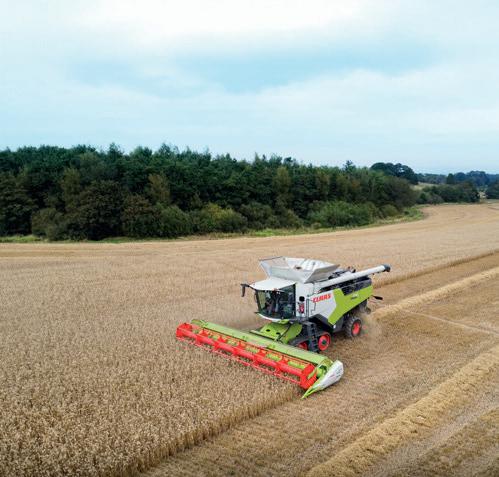

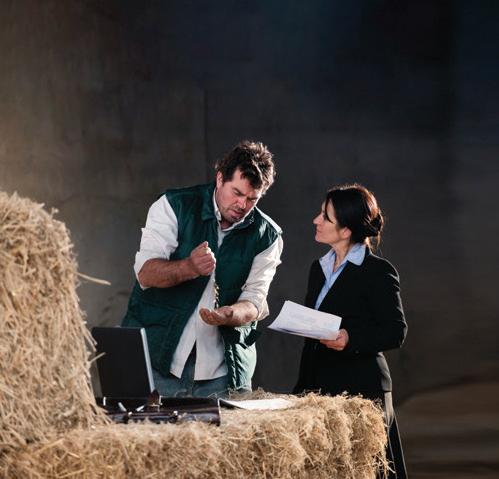

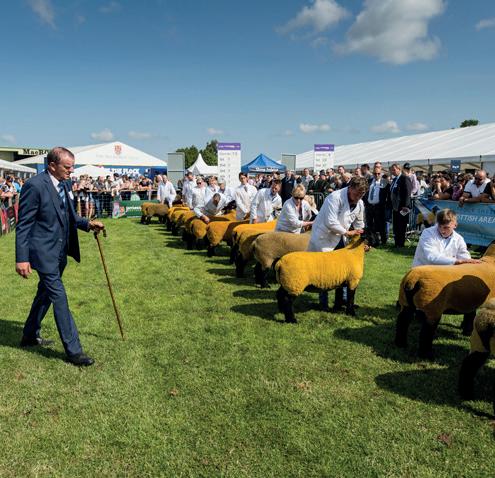







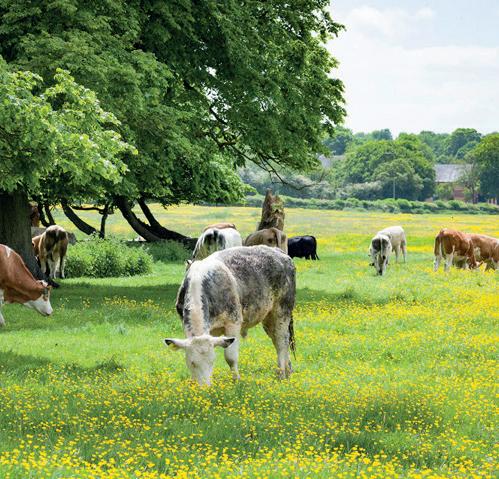































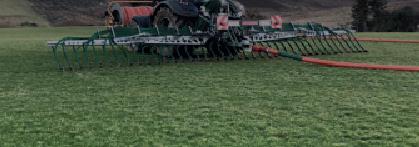




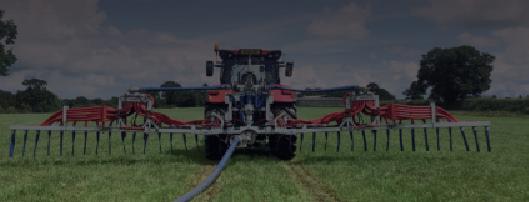
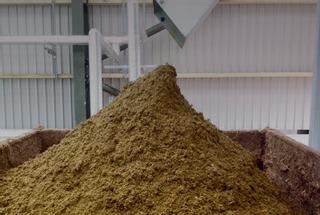
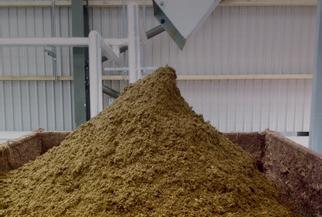





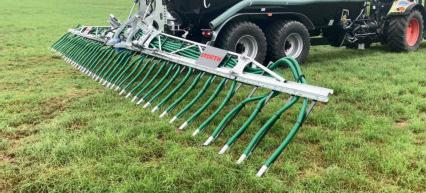
trailed machine there could be 350kg of premix left in the bottom at the end of the feed; these augers mix and feed every last bit out,” he says.
Quicker, flexible loading has been seen to be a major advantage, he adds.
He says: “The farm has developed from when the family purchased the site in 1910 in an ‘organic’ way, so there are clamps in lots of different places. With this machine, the operator can simply drive to them and load, rather than having to get in and out of the tractor to load or have a loader driver sitting around and waiting for him.
“There is less waste as the silage is not being ‘plucked’ from the clamp and there is no spillage from buckets which can encourage vermin.”
Ration management is via the
proprietary Feedlink system, in which the farm has recently invested as the previous feeder came with its own system.
“The website is intuitive to use and our feed advisor can log in and adjust rations as required,” he says.
“We can use it to manage the process by studying data, such as loading time, and our milk buyer also has access to information on feed conversion efficiency for carbon audits.”
Further management functions include analysis of milk yield trends and ingredient troubleshooting; being cloud-based Mr Heath can also login remotely and adjust diets or group sizes in real-time.
Ration information, plus loading and feeding totals, are displayed on a tablet used in the cab by the operator Mel Bishop.
speed is adjustable to alter the ‘throw’ of material into the tub, spreading it evenly along the length.
“With the data so easily at hand we can be more confident of providing the consistency of ration needed for cow health,” he says.
While Mr Heath is confident that the Triotrac X is more fuel efficient than a tractor and trailed machine, the telehandler was used for a multitude of other jobs – and thus is still a key part of the fleet – so its costings are harder to pin down.
“Undoubtedly the hydrostatic drive is more efficient than pto-driven mixing, as it uses engine revs ‘on demand’ when hydraulic oil flow is needed,” he explains.
“In the trailed system, the load would slump on the augers if they were turned off, so it needed to be kept mixing.
“There is also the temptation to overfill as it takes so much time to load. Now, if we want to just make up a small load, we can.”
The Triotrac X is quite a unit at 11.35m long, but Mr Heath suggests that it is more manoeuvrable than a tractor and trailed outfit with its allwheel steer and four-wheel drive, steering towards the clamp wall and crabbing away from it.
It is the first of its kind in the UK, so a learning curve all round, but he says that its working elements are familiar to the farm and dealer.
Installation was especially thorough, Mr Heath points out, with a Trioliet technician working with Mel Bishop and back-up operators plus the dealer staff for a full week while they got used to the machine.
Mr Bishop, who has been at the farm 32 years, says: “It is a long way from the simple box feeder that I started with to feed 75 cows, and I
was unsure initially, but once you get used to it, the Triotrac is straightforward to drive.
“Feedlink is easy to use via a tablet in the cab and I can see exactly what is being loaded and quickly make adjustments – to reduce amounts if the cows are not eating up in hot weather, for example.”
Mr Heath also points to the improved visibility for loading offered by the elevating cab which moves up and down on a sliding rail so that the operator has a clear view of the clamp or stockpile, and the reduced fatigue compared to using a telehandler.
Initial concerns about parts supply were addressed by ordering a couple of service kits at the time of purchase; Trioliet is now maintaining stocks in the UK so there will be no issue in the future, he suggests.
“It is a different mindset moving to a self-propelled machine which works well for our feed regime – we even have to stop halfway through and do another job while we wait for the next group to come through, so it could undoubtedly feed more cows,” he says.

Great performance, design and price? Challenge accepted. With the NIGHT EDITION.
Secure your exclusive benefits:
Take advantage of a special discount on the list price
CEBIS multifunction armrest
CMATIC continuously variable transmission
Dark grey special paint finish
Apple CarPlay
High quality interior

Scan to find out more.
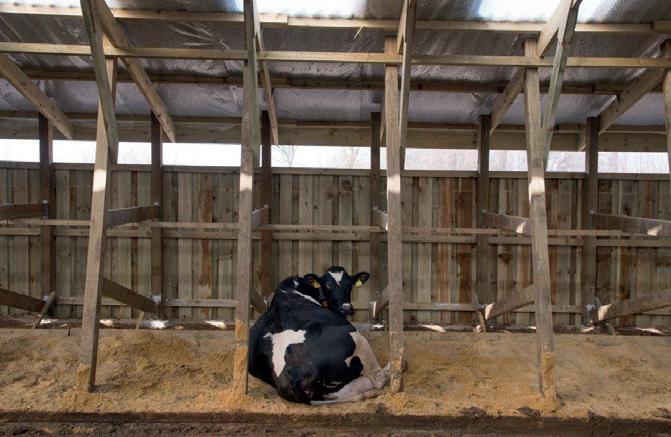



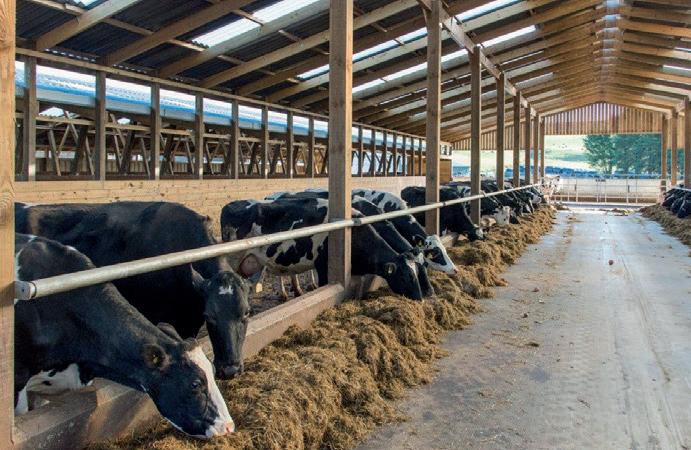

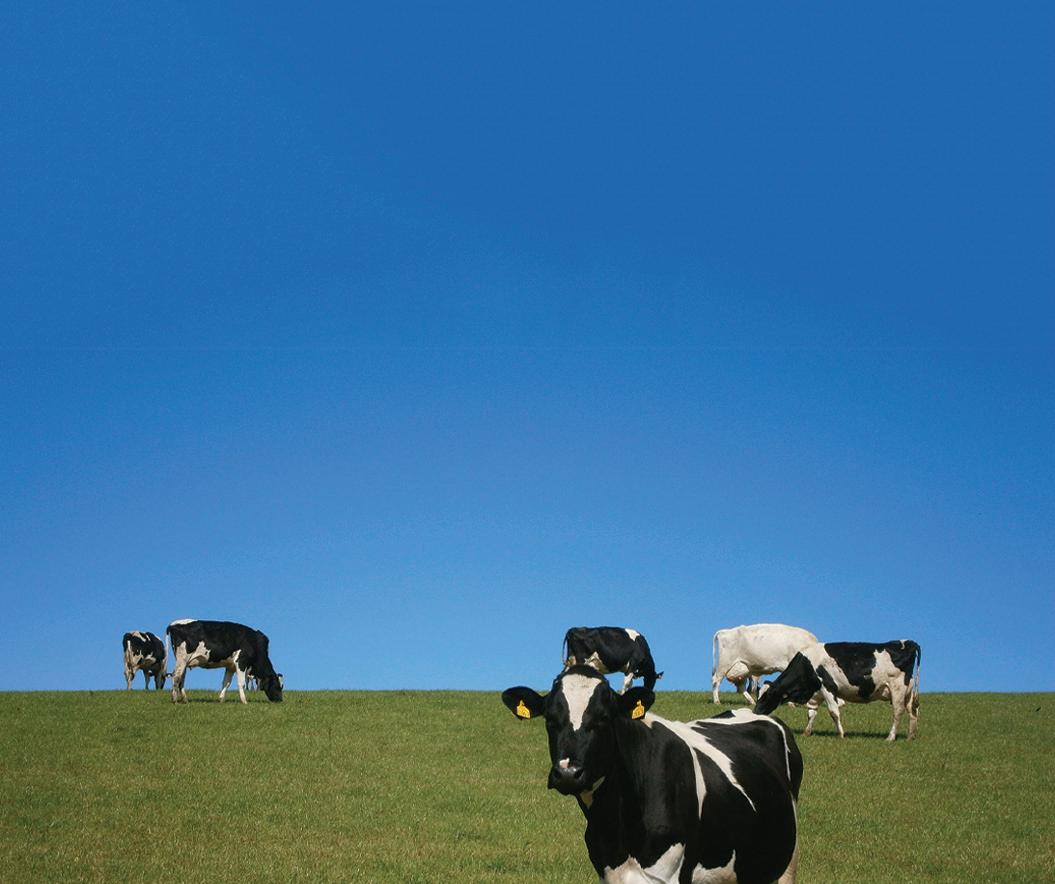




JThis spring is turning into a real mixed bag for price movements, with some milk buyers being forced to reduce prices while others hold theirs steady, seemingly to be under no pressure to reduce, although it might be a different story within boardrooms.
Several retailers have also felt it necessary to review their cost tracker models while paying milk price increases over and above to put their milk prices on a more competitive footing with non-aligned milk prices.
Tesco is currently conducting a full review of its Tesco Sustainable Dairy Group (TSDG) cost tracker as well as discussing with TSDG representatives several changes, which the retailer says will ensure it always pays a fair milk price in the future.
In the meantime, as a gesture of
JFreshways, which was first to bring the 42ppl level for producers into the frame last summer via its penny increases for October and November, has had to yield on its price position and has made a cut of 2ppl from May. The decrease taking its price down to 40ppl.
Pledging a floor in the milk price until the end of June, the company says associated business costs and
goodwill to help move things forward, the retailer has also agreed to pay a short-term bonus payment of 2ppl backdated for March and April with the bonus remaining in place until parity with Müller Direct milk price is achieved or the cost tracker review has been implemented.
The bonus takes our liquid standard* price for these months up to 42.02ppl for our Muller supplier (the Arla Direct Tesco price having now been disbanded with all suppliers having now become owners of UK Arla Farmers and receiving the Tesco cost compensation).
From May 1 (the next quarterly pricing period) and with the tracker review scheduled for completion by June 1 and with Muller holding their Direct Price for May, the Tesco price increased by a further 0.23ppl to match the 42.25ppl.
surplus liquid milk working its way into the fresh liquid market has forced it into a position of having to reduce its own wholesale prices to customers, in order to stem the loss of orders from trying to hold onto existing price levels.
Also reducing its price for May was Pembrokeshire Creamery which reduced by 0.43ppl to 44.07ppl.

JSainsbury’s has undergone a major review of its Sainsbury’s Dairy Development Group (SDDG) cost model which moving forward will ensure the producer receives a 5% margin (currently set at 2ppl) to enable investment on farm, while remaining fully committed to the cost of production model.
The model will also assess farm profitability across total farm volume as opposed to just the volume received by the retailer.
In addition, and in recognition of the model having been backward looking, the changes will be applied to volumes supplied for the previous 12 months and paid out for the next 12 months as an additional 0.71ppl.
With the retailer having already increased its April price by 0.54ppl the new changes add up to a further 1.34ppl to be added to the existing increase taking the total increase up to 1.88ppl thereby taking our Muller
SDDG price up to 42.58ppl.
Muller M&S suppliers have also received a healthy increase from April, with England and Wales suppliers receiving an increase of 0.92ppl to 44.27ppl which has also seen the 0.62ppl Green Fertiliser Payment rolled into a new 2025 Impact Zero order, which sits outside the milk price structure as a separate payment.
Suppliers in Scotland and Northern Ireland have also been moved across to the same scheme meaning their price moves in line with the 44.27ppl, thereby representing an increase of 1.54ppl.
In recognition of the challenges of its pricing basket price remaining competitive with the Muller Direct price, the Co-op has agreed to move its price for the next quarter (May to July) either to that of the Muller Direct milk price or the basket average whichever is higher.
JMore milk buyers have reduced their milk price from April, including First Milk’s Blackmore Vale Dairy which, in its first milk price move since December 2024, decreased by 1.31ppl taking our liquid price down to 43.19ppl.
The Fresh Milk Company (Lactalis) also made its first milk price move for 2025 reducing our manufacturing standard* by 0.9ppl to 43.82ppl.
Other cheesemakers who reduced included Saputo Dairy UK whose Wensleydale price fell by
0.26ppl to 42.87ppl.
While down at Davidstow, the company held its price for May with the current price of 43ppl being a guaranteed floor until the end of June 2025.
While Arla Foods held their on-account milk price for owners’ conventional and organic for April, the quarterly currency exchange rate adjustment negatively impacted its UK headline price by 0.25 ppl. The reduction took our manufacturing standard litre down 0.25ppl to 48.02ppl.
* Our Liquid standard litre is 4%b/f & 3.3% protein and our Manufacturing 4.2%b/f & 3.4% protein. In both cases for Bactoscans of 30,000/ml & SCCs of 200,000/ml, 1mltrs/yr on EODC (max vehicle accessibility) but before B pricing, balancing, seasonality, monthly profile payments, capital deductions or annual/part annual growth incentive schemes or supplements not directly linked to dairy market price movement.



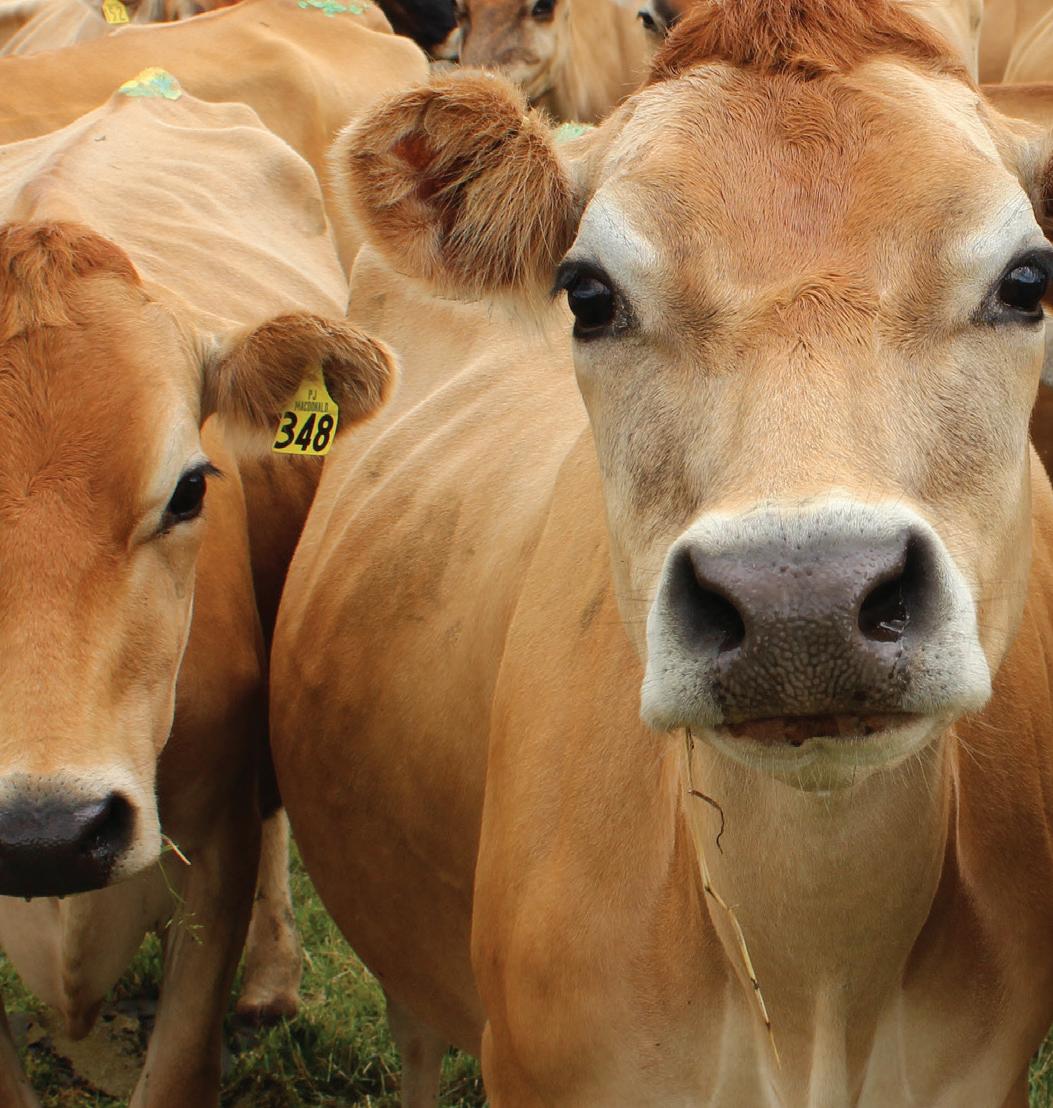


Notes to table
for Feb’25 & Mar’25 includes 1.627ppkg (1.676ppl)
&



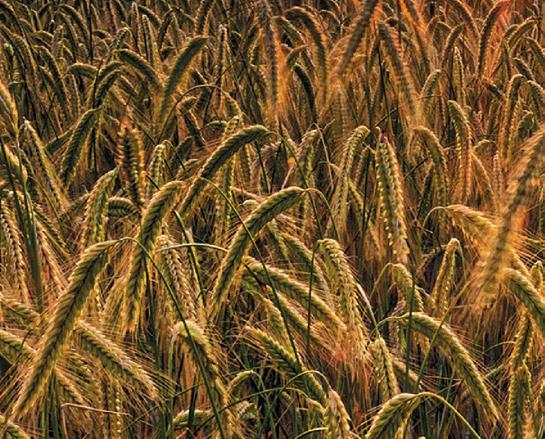



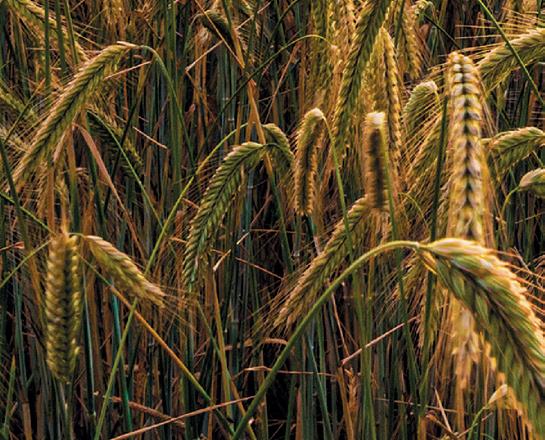
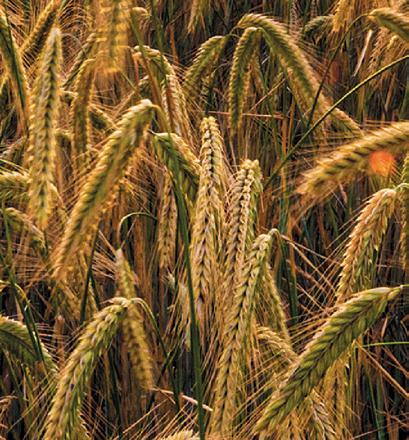



For the past five years
UK peak milk day has come between the May 5 and May 12.
This year it looks as if it is going to be a huge one too. A new record high has been set for the UK practically every day this year, thanks in part to Northern Ireland’s phenomenal milk production right now.
GB has seen record production in hardly any days – just 17, in fact.
The latest data shows that UK milk volumes at the end of March/ beginning of April averaged 44.89 million litres per day, up 2.05m litres and 4.8% more than last year and up 4.35% on the
long-term average.
GB milk volumes have averaged 36.47m litres per day, up 1.28m litres and 3.65% more than last year, and up 3.9% on the long-
UK cheddar exports for 2024 continued to grow on 2023, and totalled 110,640 tonnes, which is 21,128 tonnes and 23.6% more.
The majority of the cheese went to the EU, with the top five destinations being Netherlands with 22,508 tonnes, France at 17,040 tonnes, Ireland at 16,314, Germany at 7,224 and United States at 6,951. The top five destinations account for 70,037 tonnes of the 110,640 total, or 63.3%.
UK cheddar imports totalled
65,377 tonnes, which is 2,400 tonnes and 3.8% more than 2023.
Irish cheddar imports totalled 53,703 tonnes, which is down 8,680 tonnes and 14% compared to last year. It represented 82% of all cheddar imports.
Second on the rankings was New Zealand, with 9,600 tonnes being imported.
The differential between exports and imports totalled 45,000 tonnes, which is a record differential.
AFTER three lacklustre events, the first April auction increased by a not exactly inspiring 1.1%.
SMP performed the best, being up 5.9% and $150 (£117) to $2,876/t (£2,253/t), with southern hemis-
phere prices for June through to September driving the gains.
In contrast Arla’s SMP could not grab on to its coat tails and it dropped $10 (£7.83) to $2,535 (£1,986). It equates to €2,350 and £1,960.
THE latest official Defra milk price for February is 46.05ppl at 4.38% fat and 3.41% protein, which is up just 0.04p on last month.
When corrected for constituents back to a standard 4% fat, 3.3% protein standard litre, the price is 44.4ppl.
However NMR has reported average fats for the month at 4.49% and proteins at 3.42%, pointing to an average milk price nearer to 46p.
Prices have stayed higher than expected for the past three months, with the average manufacturing price (on a 4.2% fat, 3.4% protein) litre from the cheesemakers being 44.19ppl for May, and the standard litre a penny down on that.
The top price is Arla on 48.02ppl, while the lowest payer on a manufacturing basis is 42.55ppl.
term average.
Northern Ireland volumes have averaged 8.31m litres per day, 717,000 litres and 9.4% higher than last year.
On the indices, the latest AMPE figure for March is 42.66p, which is up 0.66p on February.
After a processor margin and costs the farmgate equivalent is around 39p.
WMP hardly moved at $4,062 (£3,182). Butter dipped a touch but stayed above $7,600 (£5,954), while Cheddar increased marginally to cross $5,000 (£3,917) for the first time since early February.
But mozzarella could not hold on to a three-auction run of decent gains and dropped $190 (£149) to $4,517 (£3,539).
The commodities convert into a UK milk price of around 40p.
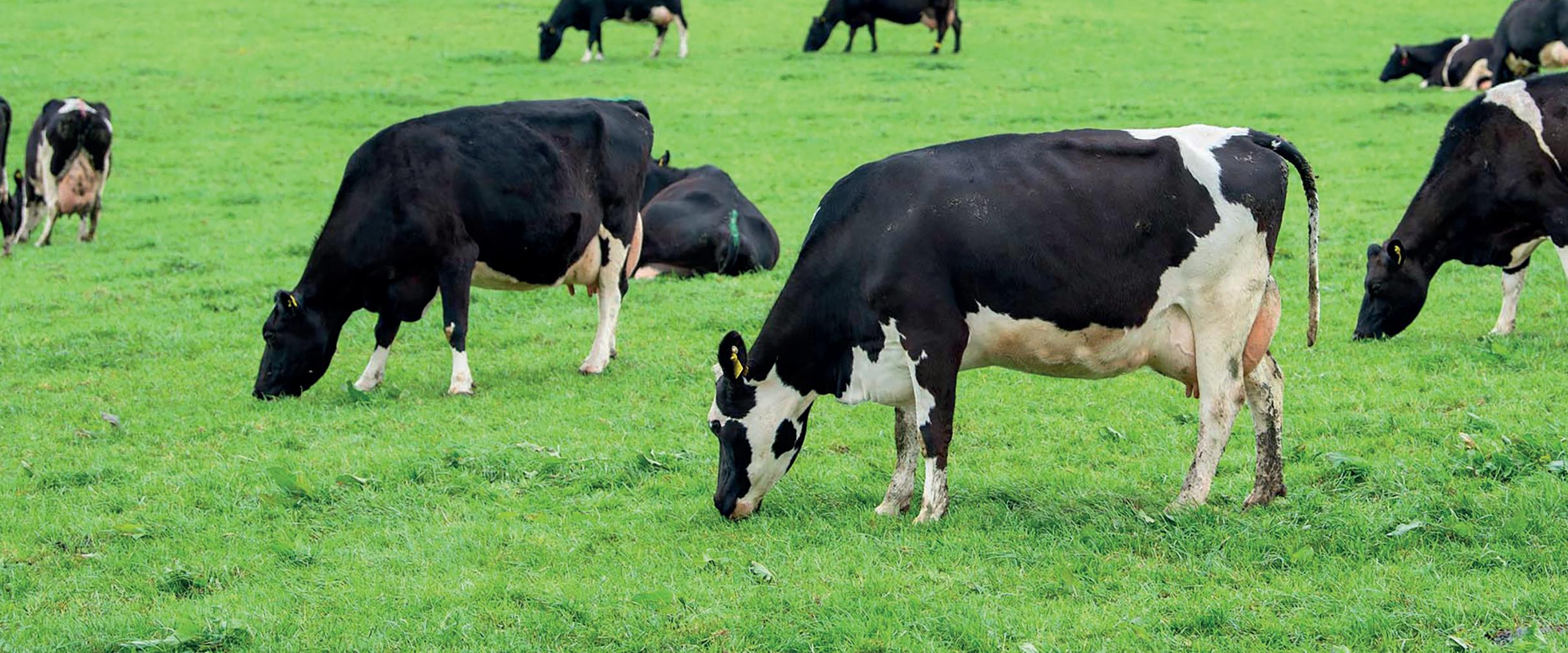
WHETHER it is the time of year, or jitters over tariffs, or both, butter prices are coming off from their recent €7,500/t (£6,438) highs, with prices having dropped to €7,400/t (£6,352/t) for Dutch butter in the first week of April, and with spot prices going for as low as €7,100/t (£6,095/t) for the next quarter.
UK prices are around £6,000/t to £6,100/t.
If this holds for the whole of April it would be a record high prices for this time of year.
Cream is around £2.65/kg, which is again an extremely high
price for the time of year. SMP is still an extremely hard sell, however.
Although the commodity got a boost on the first April GDT it was New Zealand’s SMP that increased, not Arla’s, which actually fell in price. Arla’s sold for the equivalent of £1,960/t, which is about where UK traders say the price is.
Butter and SMP result in an AMPE price of around 36p.
Cheddar is relatively stable at £4,000, but mozzarella is weakening in line with butter sentiment, and is down £50 to £3,650.




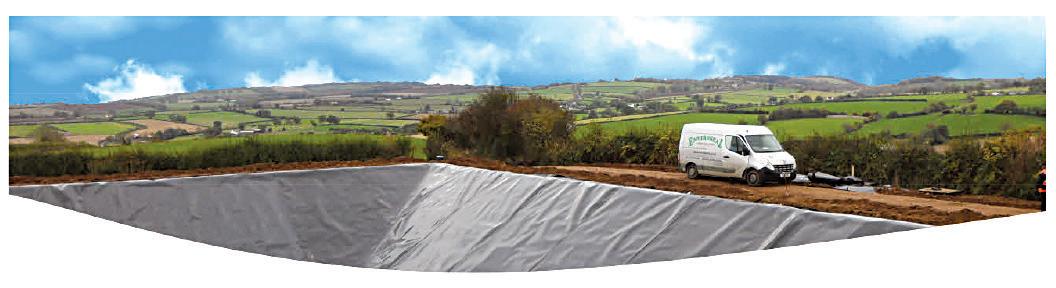














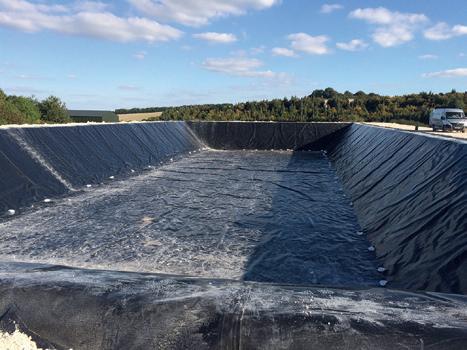


This month’s new products section features the new Lely Vector MFR model, a forage plantain which offers a natural solution to nitrate leaching and a new perennial ryegrass variety.
Lely Vector MFR Next is the new and updated mixing and feeding robot, which forms part of the Lely Vector feeding system.
With new specifications, the Vector MFR Next has a strong drive line and frame with a loading capacity of up to 800kg, to provide a 35% increase in feed loading capacity, compared to the previous generation.
Front and rear lights have been added to provide extra visibility, and the drive line has been updated, allowing the Vector MFR Next to handle gradients of up to 8%.
The electronics and software have also been updated, as has the app for
optimal access to details and controls. This saves time and simplifies management, giving farmers more time to respond quickly to the needs of their herd.
The new feed centre offers the ability to load two feeding robots simultaneously, increasing the Vector’s effectiveness on farms with more than 800 cows.
In addition, using electrical technology makes a direct impact on lowering CO2 footprint through lower diesel consumption, leading to a quieter and more energy-efficient working environment around the farm.
rMore information from evanwijmen@lely.com
JA new forage plantain, AgritaiN, which reduces nitrate leaching from dairy cow urine patches, as well as providing high quality feed, is now available in DLF and Oliver Seeds grass ley mixtures in the UK.
Bred in New Zealand, AgritaiN is managed similarly to perennial ryegrass and will withstand a grazing round of between 20 and 30 days. It is a good companion to red and white clover and can produce between 10 to 19 tonnes of dry matter per hectare a year.
Trials at News Zealand’s Massey University measured nitrate leaching from paddocks grazed by
80 dairy cows. Researchers found that nitrogen losses were reduced by up to 60% in perennial ryegrass swards containing between 30% and 50% plantain. There were no differences in milk production compared to the control pastures.
AgritaiN also has a high value feed when grazed and fed in its vegetative state, with zero to 25% stem. Being deep rooting, it also draws up high levels of vitamins and minerals from the soil and is very responsive to nitrogen fertiliser. AgritaiN is available in grass seed mixtures from DLF UK.
rMore information from rod. bonshor@oliver-seeds.co.uk
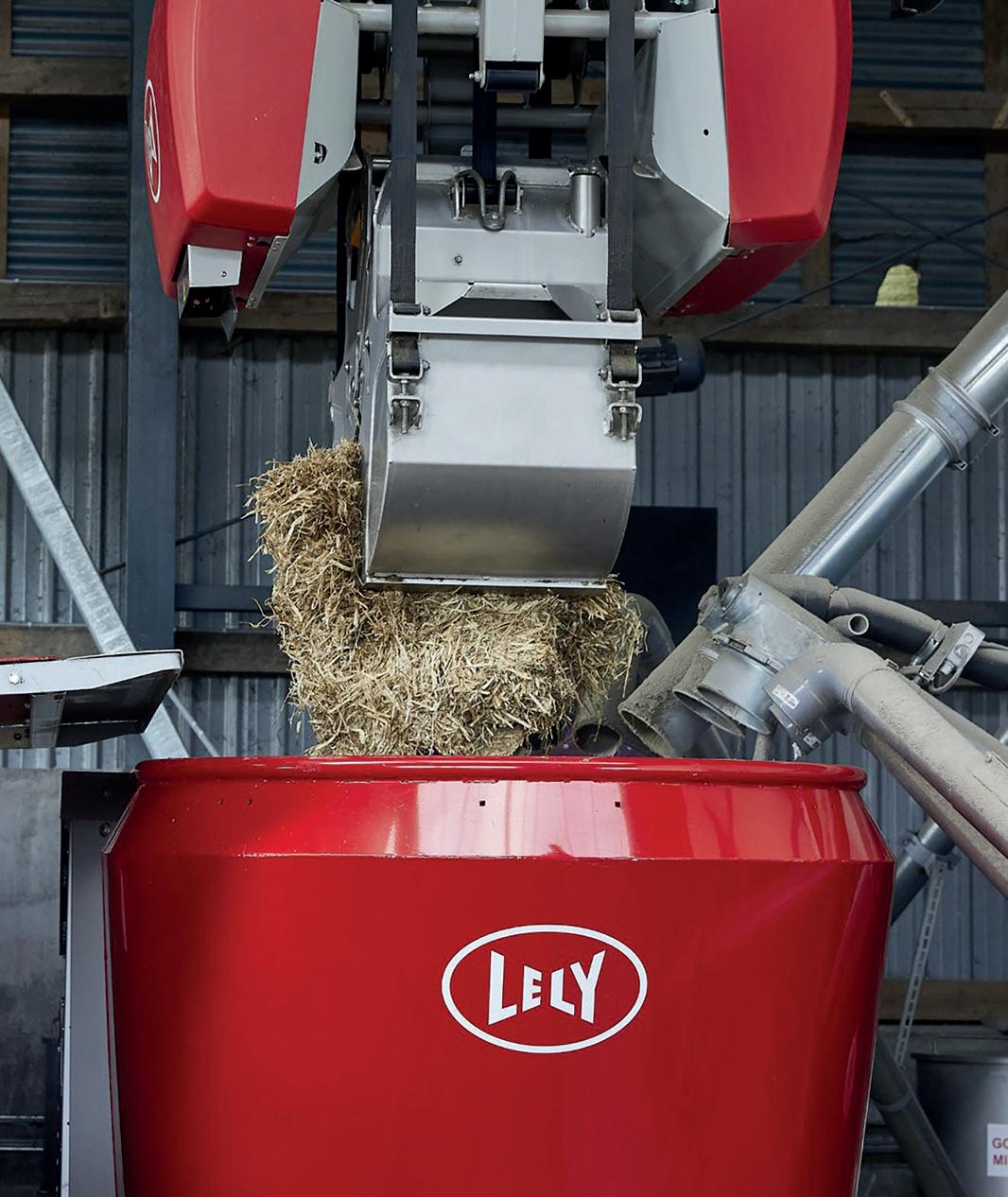

JNew products are featured in each issue of Dairy Farmer. Please send details and pictures to Katie Fallon at katie.fallon@agriconnect.com, or call 07815 003 227. Got a new product?
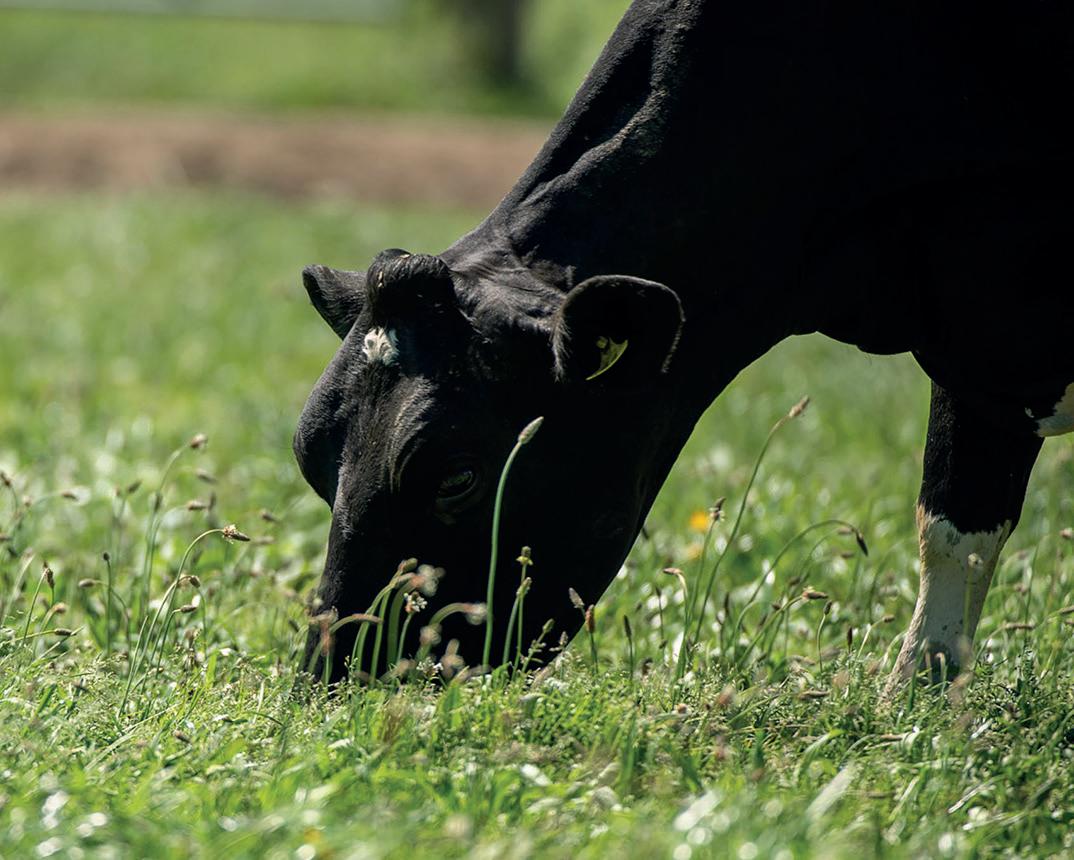

JJohn Deere has announced steps to support customers’ ability to maintain and repair its machines across the agricultural and construction industries.
While the new functions primarily expand the repair options in the US, functionalities have also been added for UK and Irish customers.
One new feature is the integration into the John Deere Operations CenterTM, allowing farmers to use the operations centre not only to manage field and machine data, but also for maintenance and machine information.
The extension also offers a user-
friendly, centralised platform with a comprehensive range of tools for the entire life cycle of machines.
The new features also include a free app with extensive machine information including operator and parts manuals, maintenance schedule and quick reference information, as well as access to Shop.Deere.com for finding and purchasing parts online, quick reference guides, and customer services ADVISOR, which provides free digital manuals for clearing and updating codes and reading diagnostic data.
rMore information from your local John Deere dealer https:// dealerlocator.deere.com/
JThe new perennial ryegrass variety, Banbridge, from Barenbrug is an intermediate tetraploid and one of the strongest in its class according to agriculture product manager Janet Montgomery.
Ms Montgomery says: “We are very excited about Banbridge.
“This is a class in which Barenbrug has enjoyed a longstanding reputation for highperforming varieties, so for this to top-out over favourites such as Seagoe, Fintona and Tollymore is remarkable.”
The variety’s genetics stand out in conservation use, sporting very high yields of dry matter and ME.
In grazing, Banbridge is second only to Tollymore for early and late spring yield.
Banbridge is marked for Provisional General Use in the


England and Wales
Recommended Grass and Clover Lists, and 1st Choice (P) in SRUC’s Grass and Clover varieties for Scotland.
rDetails at adrian.bell@ agromavens.com or 020 3637 6636.
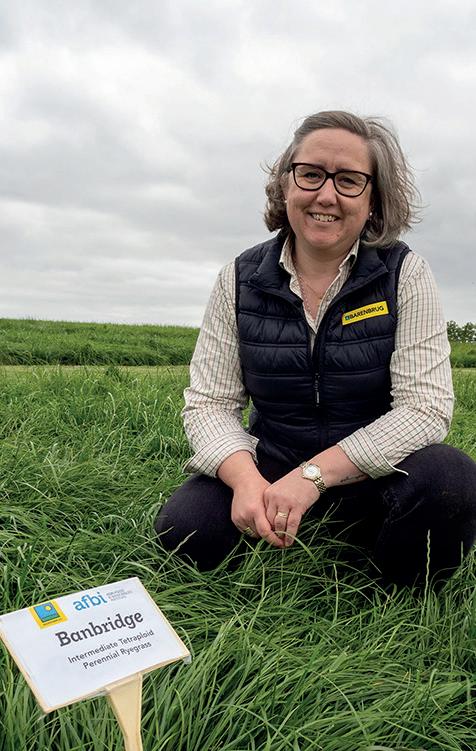

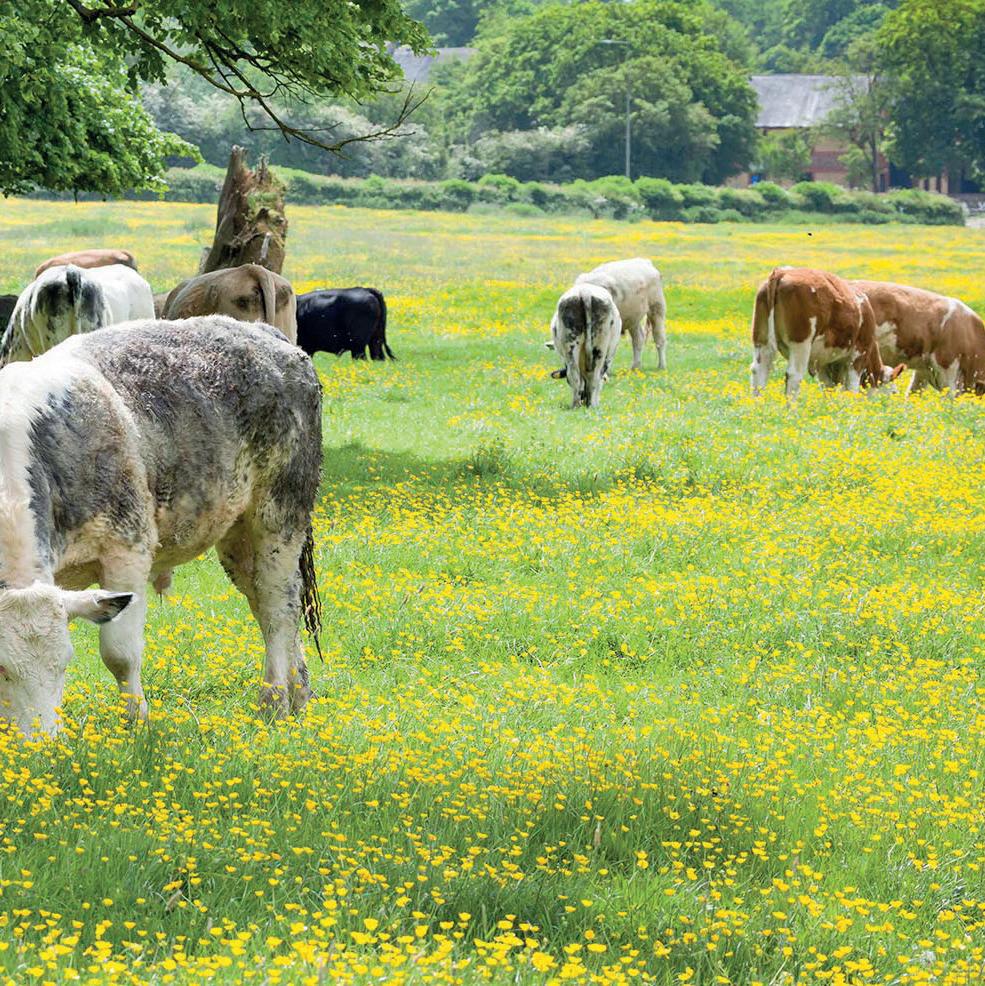


to Katie O’Hagan today and start converting
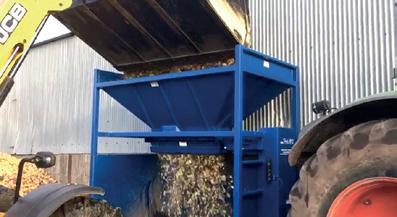

Tub Grinders
- Exclusive UK Distributor of Haybuster & Rotogrind Grinders.
- Range of models from 5t - 25t / hour output.
- New, used & refurbished machines available.
- Ideal for straw, hay, green waste, roots, biogas feeds etc.
Root Choppers & Cleaners
- Loader, 3 point linkage, free standing PTO and electric drive available
- UK Distributor of VDW range of choppers, cleaners & feed dispensing equipment
- Output from 10t/hour to over 120t/hour available
Diet Feeders
- Largest stock of mixers in the UKover 50 machines in current stock
- Refurbished, used & nearly new units available
- New Mini Mixer available
- Diet feeder parts available- Blades, Conveyor belts, gearboxes, weigh cells.
-All feeders undergo 30 point service
-Finance available subject to terms
-Nationwide delivery available
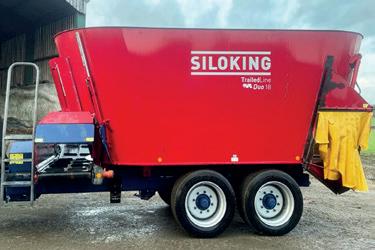
Current Used Stock:
Trioliet 8, 12, 14, 20
Strautmann 14, 20
BvL 15, 17, 20, 24
JF Kongskilde 12,14, 22
Kverneland / Siloking 14, 16,18,22
Keenan 10, 14, 16, 20, 24
Shelbourne 11, 22, CB150 bedder
Used Diet Feeders always wanted
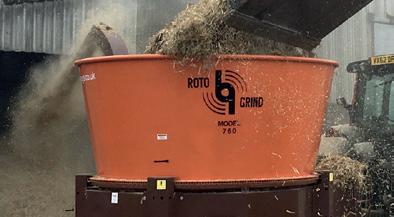
Hi Spec 14 x 2, 16
Redrock 20
Seko Samaurai 14
Rotogrind x 4
Teagle C12 grinder
Farmhand 880
Profi freestanding root chopper x 3
VDW root bucket RS1800
Breaking for parts -Trioliet 28, Shelbourne 11, 13, 19, Abbey 1500, Strautmann 1250, Siloking 22,
Anew report by the British Ecological Society has assessed the evidence for whether regenerative agriculture approaches can achieve positive outcomes like improving soil health, increasing biodiversity and minimising environmental damage.
Dr Roy Neilson, soil ecologist at the James Hutton Institute and lead author on the report, said: “There are five principles of regenerative agriculture but there is no one principle that delivers clear change on its own.
“To achieve meaningful change requires a good understanding of the context of the individual farming system. When possible, multiple principles ideally need to be adopted.”
Of the core principles of regenerative farming, which are minimising soil disturbance, minimising bare soil, increasing farm diversity, integrating livestock, and favouring nature-based methods over synthetic inputs, the report finds the strongest evidence of benefits comes from minimising bare soil.
Brown fields of bare soil are a common sight throughout the UK in the winter months, but keeping roots in the ground year-round, through practices like cover crops, can increase soil organic matter, enhance soil structure, improve nutrient availability and increase biodiversity.
The report also finds good evidence that integrating livestock into arable land benefits weed, disease and pest suppression.
The evidence is weaker on the benefits of reducing soil disturbance with no-till or min-till under UK conditions, despite its prominence as a principle of regenerative agriculture.
The report finds there is strong evidence that soil health and biodiversity can improve under regenerative agricultural practices in the UK but that a whole systems approach is needed.
Individual principles of regenerative agriculture used in isolation are rarely sufficient, though the auth-
Regenerative agriculture is attracting increasing attention, and a new report has collated evidence on the benefits of implementing different regen strategies. Dairy Farmer reports.
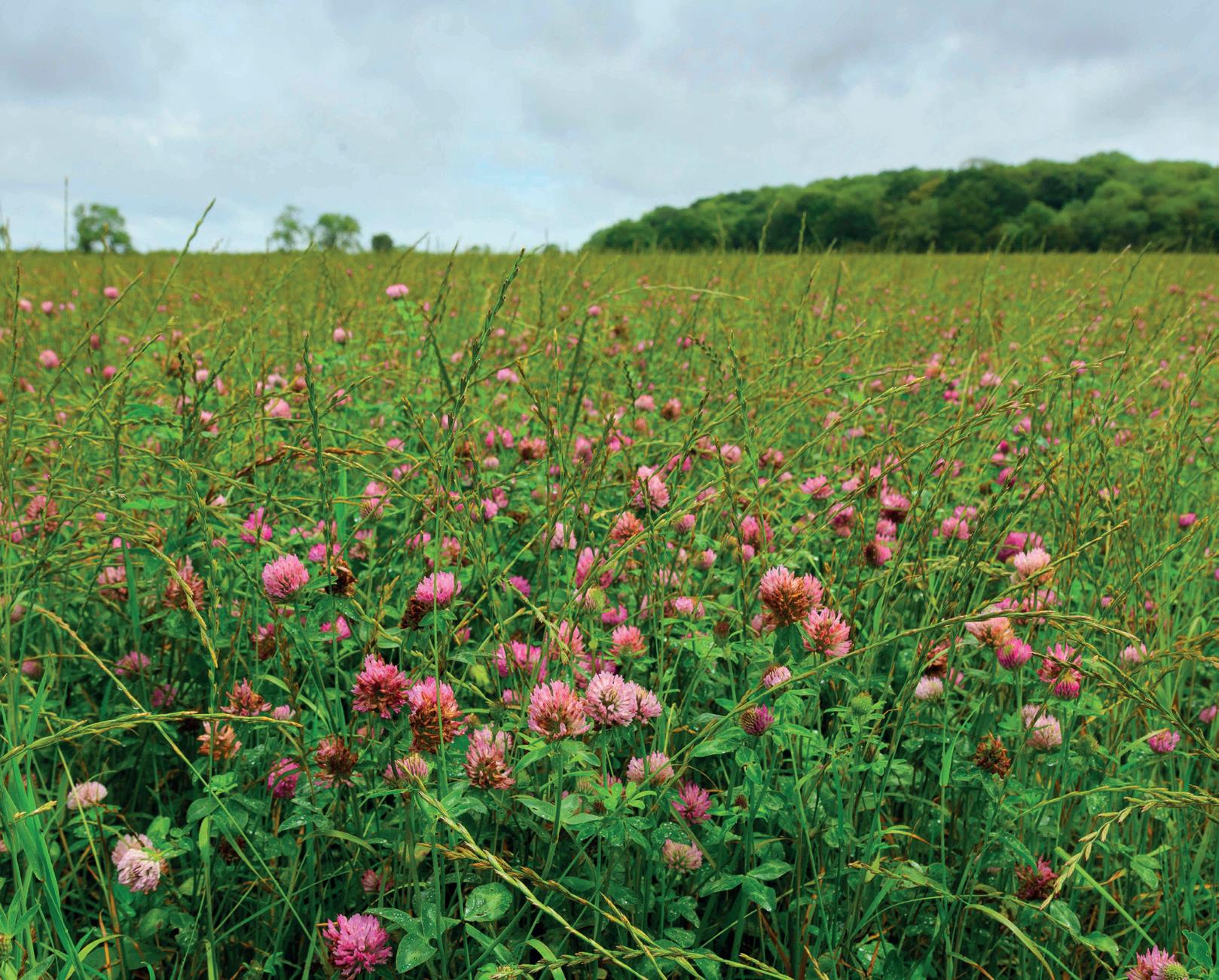
Keeping roots in the ground yearround, through practices like cover crops, can increase soil organic matter.

ors do not wish to discourage farmers from taking up just a few new approaches.
Dr Lucie Buchi, researcher in crop and weed ecology at the Natural Resources Institute of the University of Greenwich and lead author on the report, said: “Moving from one farming system to another is complex, difficult and risky.
“A whole systems approach is an ideal end goal, but this should not discourage farmers from picking up certain regenerative agriculture elements that they can implement on their farms; people need to start somewhere.”
Advancing technologies and
experimentation will also be vital in this transition.
Prof Nicola Randall of Harper Adams University, also a lead author of the report, said: “Science and ecologists have a big part to play in regenerative agriculture along with farmers. There is a perception that regenerative agriculture or nature-friendly farming is going backwards, rediscovering past ways of farming. In actual fact, there is a lot of exciting new technology and developments involved; the movement is very much forward-looking.”
To transition effectively to a more sustainable farming future,
the report recommends promoting knowledge sharing between farmers, ecologists and policymakers.
This is echoed in another report by the British Ecological Society and the Scottish Government looking at how farmers in Scotland can be supported in the transition to regenerative agriculture.
James Robinson, a PhD candidate at the University of Edinburgh and author of the report, said: “The transition to regenerative agriculture is highly knowledge-intensive. Knowledge exchange involving trusted sources – ideally other farmers sharing experiences – is key to a farm’s successful transition.”
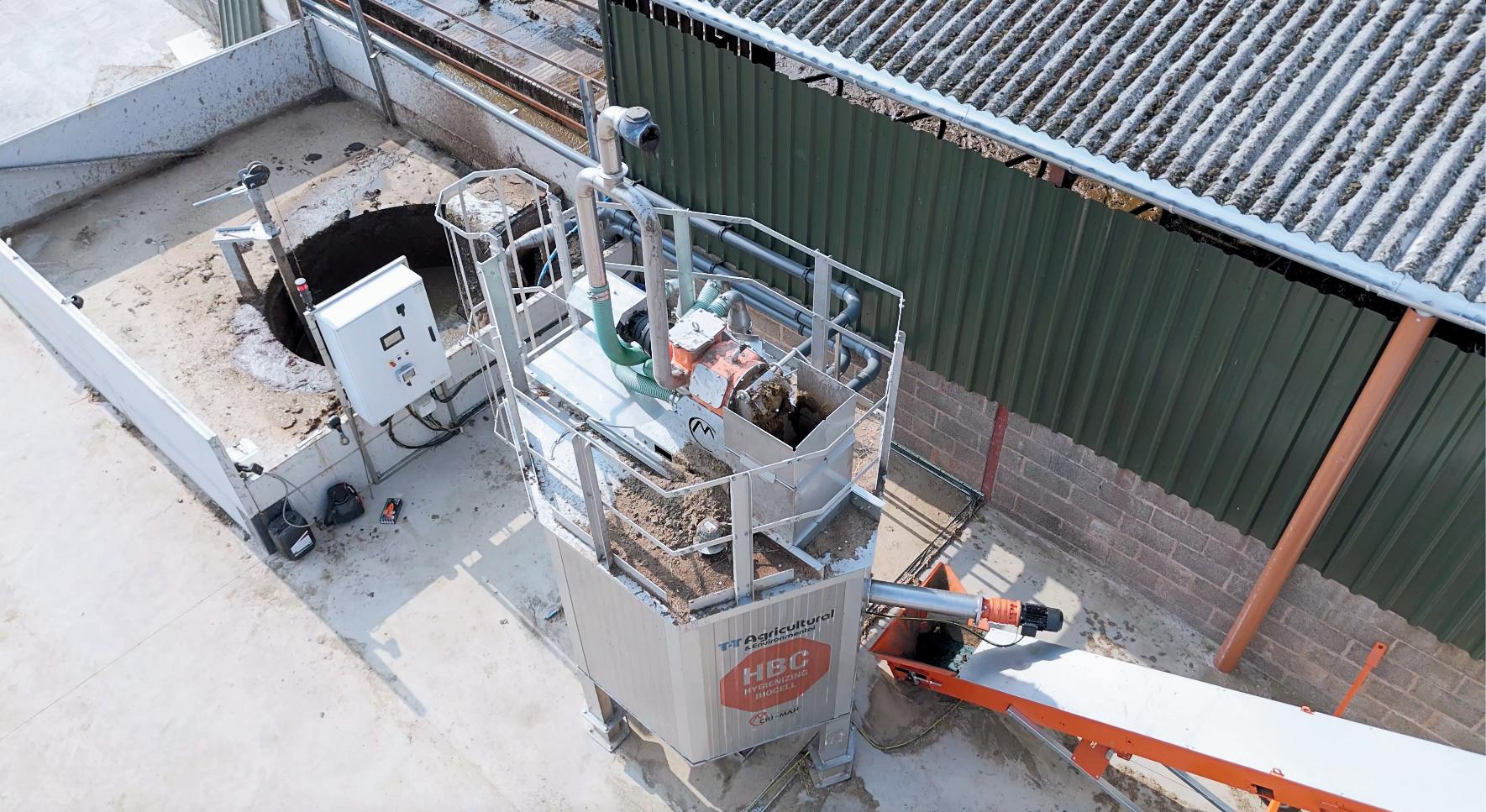
Say goodbye to traditional bedding materials and hello to sustainable, hygienic solutions with the HBC Biocell. Our cutting-edge technology transforms slurry into comfortable, pasteurised bedding, guaranteed
Say goodbye to traditional bedding materials and hello to sustainable, hygienic solutions with the HBC Biocell. Our cutting-edge technology transforms slurry into comfortable, pasteurised bedding, guaranteed to deliver consistent quality and sanitisation—even in tough
Say goodbye to traditional bedding materials and hello to sustainable, hygienic solutions with the HBC Biocell. Our cutting-edge technology transforms slurry into comfortable, pasteurised bedding, guaranteed to deliver consistent quality and sanitisation—even in tough conditions. Call
Call us today to discover how the HBC Biocell can transform your farm’s operations!


‘I see lot of dairy farmer’s with lumps on their feet’
This month Roger Evans discusses grazing, artificial intelligence and regales us with tales of the visitors to the farm and conversations with a doctor.
Every time I switch the TV on there seems to be someone advertising the growing of flowers of trees or rewilding. These are mostly people without careers, busy building careers for themselves as they try to jump on this latest bandwagon.
Never mind that they have little regard for future food supplies.
I watched the one feature, it’s best to know what people are saying.
They were interviewing a farmer who had divided his grazing area into three paddocks and one paddock was grazed each day.
I can’t remember why, I wasn’t that interested, but the interviewer was.
He asked: “You have divided all the area you graze into one day a month paddocks.”
The farmer replied: “Yes.”
The interviewer breathlessly replied: “Wow!” I divided all my grazing area into 30 semi-permanent paddocks 50 or 60 years ago.
It didn’t work because grass growth didn’t always coincide with the herds grazing needs.
But it was a route I needed to go down, together with regular applications of fertiliser and regular topping.
It was a discipline that was to serve us well in subsequent years.
I sometimes think that people need to find out for themselves that they can’t live on tree bark and dandelions.
Is it just me, or am I the only one that doesn’t know what artificial intelligence (AI) means? Am I bothered? Not a bit.
I’ve got a grandson who is in his first year of university and he is studying mathematics and computer science and I think part of his course is AI.
So I ask him to explain what AI means.
He tells me: “You wouldn’t understand it, Pop.”
He’s probably right, but I don’t need him to tell me.
To me AI will always be how I got my cows in calf.
Over the years there have been many AI men and women that came to inseminate our cows, most of them became good friends.
When I first started out we had an abreast parlour and the cows used to be served there.
We used a milk crate for the inseminator to stand on, so that they were at the right level.
I also had a man working there. His name was Bill Davies, but he was best known locally as Rattler Bill, this was because he never stopped talking.
Bill was very deaf. He had a hearing aid, but he’d had a hard life, so it was mostly switched off to save the battery.
One day the AI man called and Bill got two cows in for him.
There was no need for me to be there, but I went along anyway.
If there was any banter between the two, I wanted to hear it.
The cows had been released by the time I got there and Bill was sweeping down the brown stuff.
The AI man was chatting away to Bill, but Bill couldn’t hear him so took no notice.
Eventually the AI man realised that he was being ignored and touched Bill quite sharply on the leg. It wasn’t a real kick, but it was close to it.
Bill turned around quite sharply and the AI man said: “I’ve been talking to you.”
And Bill said: “No you haven’t, I’m deaf, you’ve been talking to yourself.”
At about 10:30am, Bill would always have his ‘bait’. It was always at the same time and he would always have bread and cheese.
My son was only a little boy then, it was pre-school and every morning he would insist on joining Bill for bait with his own bread and cheese.
Bill would have his hearing aid switched off and they would sit there in companionable silence.
They would sit there with their heads towards each other, there’s a photo of them somewhere, I must dig it out.
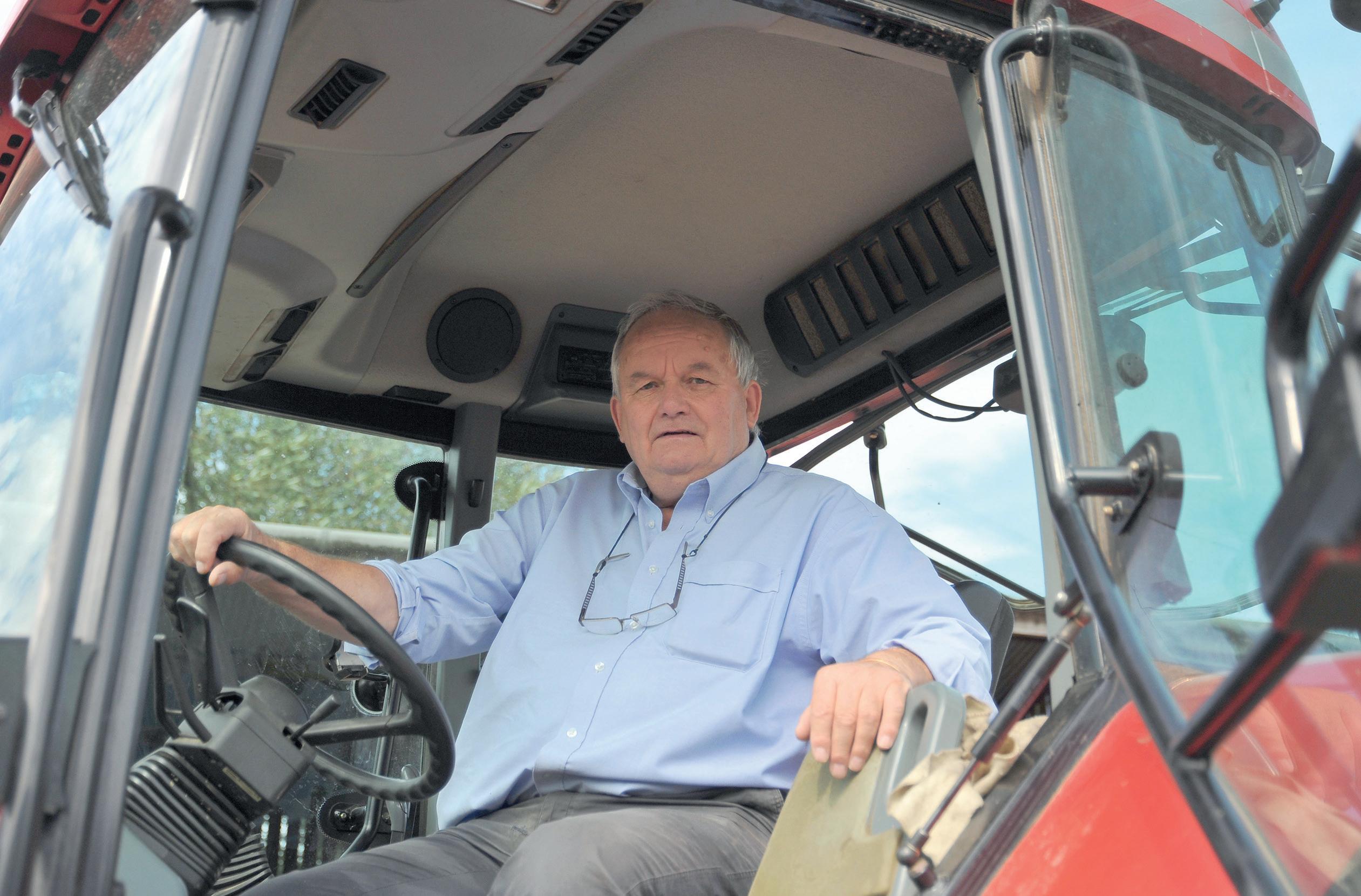
I’m in hospital and a doctor is looking at my knees.
Me: “Yes”
I sometimes think that people need to find out for themselves that they can’t live on tree bark and dandelions
We both know that I need two new knees, but I am reluctant to join a queue that is two years long as I’m not sure that the Lord will spare me that long.
“Let’s have a look at your feet,” the doctor said. If I’d known she’d be looking at my feet, I’d have washed them.
The conversation went like this:
Doctor: “What’s that big lump down by your big toe?”
Me: “That’s a bunion.”
Doctor: “How long has it been there?”
Me “About 20 years.”
Doctor: “It’s not a bunion, it’s a bone, and it should be over there. Are you a farmer?”
Me: “Yes”
Doctor: “A dairy farmer?”
Are you a looking to kick-start your career in the agricultural industry?
Doctor: “I see lot of dairy farmer’s with lumps on their feet like this, it’s where cows have stood on them and they have a permanent injury to show for it.
“It’s a funny thing with cows standing on your feet, they always stand on the bit that hurts already.”
I wonder how she knows that.
It’s usually at bovine TB testing time and there is an audience, vets and the like, so you can’t make too much fuss.
The doctor asks whether I want to go on the list for my knees.
I tell I’m fine and I’ll continue with the udder mint.
The doctor rolls her eyes at me, and there is something in that that tells me she knows exactly what uddermint is.

Whether you’re passionate about farming, sustainability, technology, or animal care, there are countless exciting opportunities waiting for you. Scan the QR code, or visit JobsinAgriculture.com










The raft of tax and other business changes means dairy farmers are spending just as much time in the office as the parlour. Cedric Porter reports.
Milking cows has been a tough business over the last year or so. Latest Defra figures put average English dairy farmer incomes at £70,900 in 2023/24, a drop of 68% on the 2022/23 figure. Less than half of that figure came from production, showing the reliance on other sources of income, many of which were under pressure.
Defra is expecting the average income to bounce back 150% to £176,000 in 2024/25, supported by higher milk prices.
Production from agriculture accounted for £34,700 of the total in 2023/24. The next largest contributor was the Basic Payment Scheme (BPS) at £17,700. Those legacy Common Agricultural Policy (CAP)
payments have been diminishing since the UK left the EU. That means the average English dairy farm 2024/25 support payment amounts to about £13,000.
However, Defra has accelerated cuts in direct support and no farmer will get more than £7,200 in 2025/26, whatever the size of their enterprise. Scottish and Welsh farmers still receive payments largely based on the CAP system, amounting to about £223/hectare in Scotland and £158/ha in Wales.
Agri-environment and other payments accounted for £8,200 of average English dairy farmer income in 2023/24. Defra expects that to be at £12,000 in 2024/25.
However, the sudden suspension of applications for the Sustainable Farming Incentive (SFI) in early March 2025 means that farmers
n A basic English rate of 20% is charged for income from £12,570 to £50,270
n A 40% tax rate is applied for income above £50,270, and 45% for income above £125,140
n The payment bands will remain until April 2028, potentially tipping more people into higher rates
n There are six payment bands ranging from 19% to 48% in Scotland
n Wales has the right to vary Income Tax rates, but in 2025/26 tax payable is the same as England and Northern Ireland
n Corporation Tax remains at 19% for businesses with a profit of less than £50,000 and 25% for those
above £250,000. There is marginal relief for profits between £50,001 and £250,000
n The employer National Insurance contribution is up from 13.8% to 15%, with employee contributions at 8%
n Employer National Insurance has to be paid for employees earning £5,000 or more a year rather than above £9,100 previously
n Under Employment Allowance, businesses will be able to deduct £10,500 from National Insurance bills. Previously, only those with National Insurance bills of less than £100,000 could deduct £5,000. This effectively means that there is no National Insurance for up to four

Kathy Ferris
who did not get applications in before they were suspended are uncertain when they will be able to apply for new schemes. They might not be available until 2026.
According to Defra, the final portion of income for the average English dairy farmer in 2023/24 was £10,400 in diversifications.
A struggling economy might put pressure on some of that income, since it often relies on discretionary spending by the public for tourism
workers being paid the National Living Wage
n The National Living Wage increases from £11.44 to £12.21 an hour. The rate for 18- to 20-year-olds is up £1.40 to £10.00. The rate for apprentices and 16- to 17-year-olds is £7.55 an hour
n The annual Capital Gains Tax exemption amount remains at £3,000
n Business Asset Disposal Relief and Investors’ Relief has increased from 10% to 14%, with an 18% rate from April 6, 2026. The lifetime limit for Investors’ Relief has reduced from £10 million to £1m
n The nil rate Inheritance Tax (IHT) band remains at £325,000 and will be frozen until at least 2030. The
or leisure pursuits, or small businesses renting property.
Kathy Ferris, an adviser at Old Mill Group accountants, said: “Our recent management accounts meetings with our dairy farmers with March year ends are projecting another bumper year in terms of profitability – and tax liabilities.
“While the profits are not quite at the level of those in the year to March 2023, they are much improved on that of the year to March 2024. For unincorporated entities, while we can use farmers’ averaging to smooth tax liabilities year-onyear, this is proving more challenging for many to materially reduce tax liabilities as it is the second good year in three, meaning that it may result in the majority of profits still being taxed at 40%.”
She said there was a reluctance from dairy clients to invest in new machinery outside of cycle as a way of reducing tax bills through the use of capital allowances, but she was urging dairy farmers to help manage volatility of income by maximising
residence nil rate ban is also frozen at £175,000
n The changes to Agricultural Property Relief (APR) and Business Property Relief for IHT, which will limit exemption up to £1m, do not come into effect until April 6, 2026. However, changes to APR already apply to lifetime gifts made on or after October 30, 2024, if the donor dies within seven years of the gift, meaning they are effectively in place
n The Annual Investment Allowance of a 100% write-off of up to £1m for certain types of plant and machinery remains
Source: Old Mill Group and Price Bailey
the value out of their milk contracts, taking and achieving bonuses, and forward buying and fixing input prices.
Research and development tax incentives are another way of helping to manage tax liabilities. To qualify, a project must research or develop a technological or scientific advance, with costs such as staff, materials, utilities and subcontracted work eligible. Using the system can reduce a business’ profits by £86 for every £100 spent.
The volatility in incomes and the increasing size of businesses means that more dairy farmers are looking at changing the structure of their businesses.
Mrs Ferris said: “Limited companies are a key feature in terms of
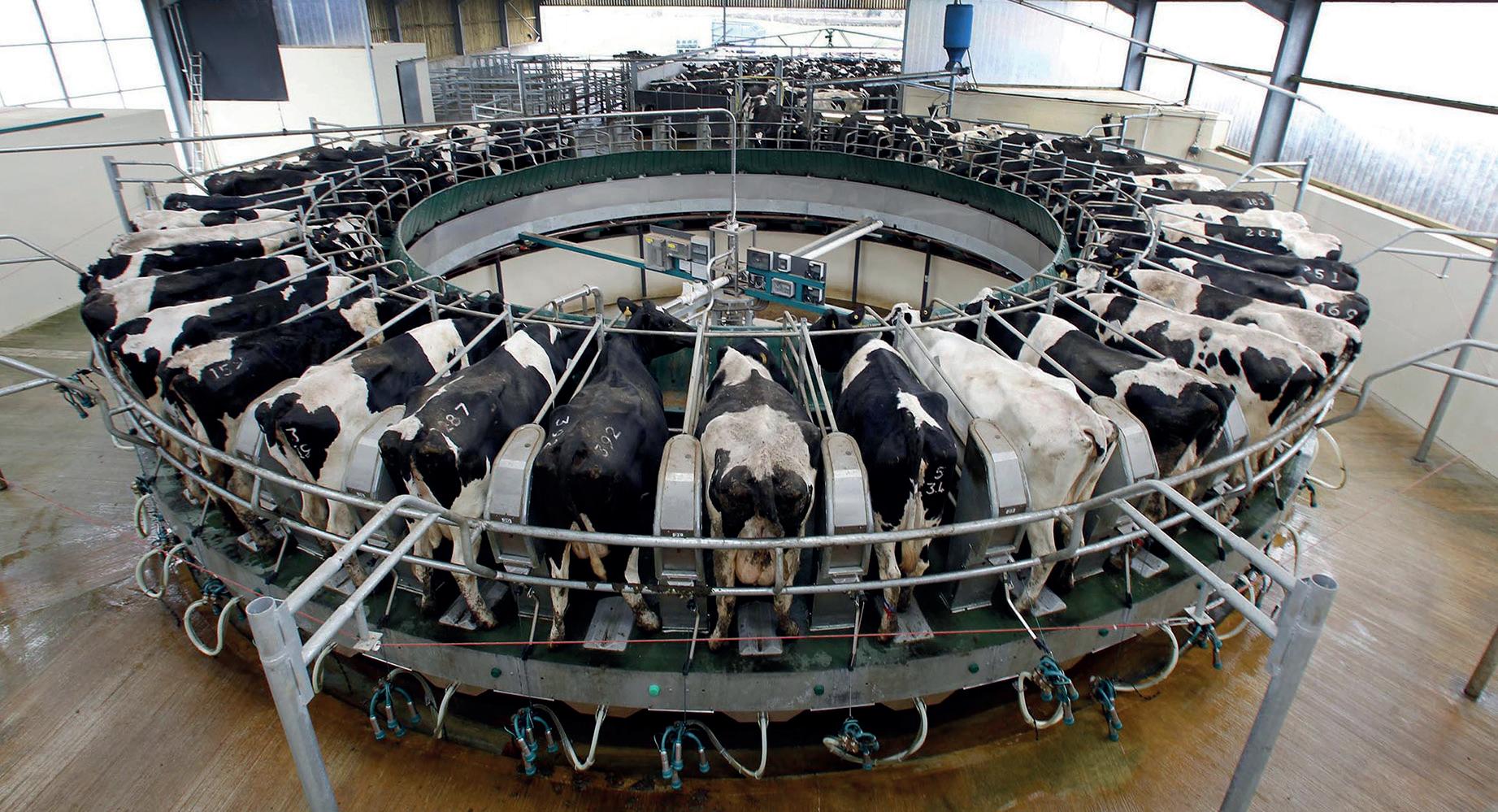
Defra has accelerated cuts in direct support and no farmer in England will get more than £7,200 in 2025/26, whatever the size of their enterprise.

managing annual tax bills as profits increase in dairying.
“Many that do not already have a limited company within their current structure are now considering incorporation.
“However, with the proposed introduction of the new Inheritance Tax [IHT] rules, real care needs to be taken regarding the capital tax side of things to ensure Income Tax savings are not at the detriment of IHT bills.”
The cut in BPS support and the sudden end of the latest SFI scheme

means that non-farming sources of income are also more uncertain. Mrs Ferris suggested that dairy farmers could expect any new SFI scheme to be capped and more targeted, while Capital Grants were also capped at £25,000 for improvements to water or air quality and flood management. There is a cap of £35,000 for boundaries, trees and orchards.
She also warned that there were changes from April to furnished holiday lets, a popular diversification for many farmers.
She added: “Previously, capital

purchases for holiday lets could be offset against taxable profits. Now, you will only be able to claim a deduction of replacing domestic items against your rents, and income from furnished holiday lets will no longer contribute to relevant earnings for pension contribution purposes.”
Reliefs that allow the proceeds from the disposal of a furnished holiday let to be put into a replacement business asset have also been removed, as has the ability to gift furnished holiday lets using gift holdover relief.
Brought to you by Farmers Guardian, FGBuyandSell is the platform for you to sell your items to a responsive farming community.



‘Why
Dear Paul,
I have been told I need to improve the working conditions on my farm, but I do not really understand why. We have always just got on with the job – no one ever needed fancy extras before. Now all I keep hearing is people want proper toilets, warm staff rooms and branded clothing. Is this just people being soft, or is there a reason I need to make changes?
Yours,
Exasperated Operator
Dear Exasperated Operator,
Thank you for your honest question – it is one I hear more and more often. You are not alone in feeling puzzled by the shift in expectations, especially when you have probably spent a lifetime working in your wellies, eating a sandwich in the cab and nipping behind a hedge when nature calls. But here is the truth: times have changed. And if we want to attract and keep good staff – particularly younger people or those new to farming – we must create working environments that meet modern expectations. This is not about being soft; it is about being smart.
This is simple, really. If you expect people to spend 10-12 hours a day on your farm, they need a proper toilet. Not just a portable toilet that

is only cleaned when the rain gets in, but a clean, working facility that people feel comfortable using. And yes, this includes women. If you are hoping to attract female staff (and many farms are), you need to provide sanitary bins, a clean handwashing station and a bit of privacy. It is basic respect, and it tells people you care about their well-being.
No one expects luxury, but expecting your team to sit in a draughty corner of a barn or eat their lunch standing up in a workshop is not good enough anymore.
A warm, tidy room with a kettle, a microwave and somewhere clean to sit makes a huge difference to morale.
It also gives your team a chance to recharge properly during breaks, which helps productivity and reduces the risk of accidents
the expert
Paul Harris, managing director of Real Success, is a thought leader, inspirational keynote speaker and people management coach for agribusinesses.
He is also the author of Happy Team, Happy Farm
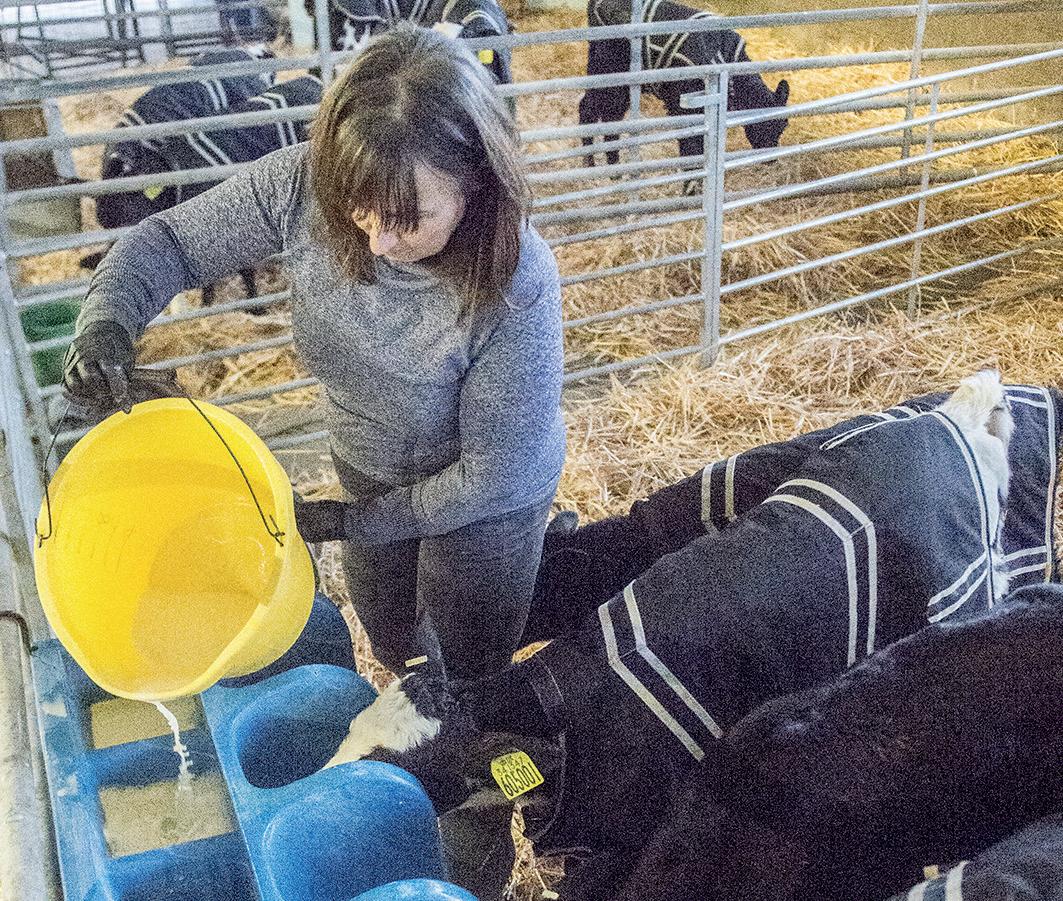
caused by tiredness or rushing. Think of it as a small investment with a big return.
If you want a job done well – and done safely – your team needs the right tools. That means equipment that works properly, is regularly maintained and is fit for purpose.
Broken pto guards, blunt penknives and wobbly ladders might save you a few quid today, but they cost you in lost time, frustration and injuries down the line.
When staff see you are willing to invest in the tools they need, it tells them that safety and efficiency matter.
This is not just about keeping people warm and dry – though that is important too. Providing branded protective clothing like waterproofs, hi-vis jackets or workwear builds a sense of identity and pride in the job.
It also means your staff do not
Farming is no longer the only option for people who want a hands-on, outdoorsy job.

have to fork out for kit themselves or turn up in old mismatched gear. And a team that looks smart and professional helps build your reputation too.
Here is the bottom line: farming is no longer the only option for people who want a hands-on, outdoorsy job. We are now competing with the likes of construction, landscaping, delivery services – even retail and hospitality. These sectors are offering better working hours, structured rotas, proper breaks and safer conditions. If farming is seen as tough, dirty, and dangerous, people will simply choose to work elsewhere. By improving your working conditions, you will not only keep your staff happier and safer, but you will also improve your farm’s productivity, reputation and chances of attracting great people.
Trust me, it is worth it.
Yours supportively, Paul

Empowering farmers, landowners and agricultural professionals
Join us at Farm Business Innovation, the show dedicated to connecting farmers, landowners and agricultural professionals with the tools and inspiration to drive diversification and growth in their businesses.
Bringing together industry experts, suppliers and thought leaders to create a dynamic platform for learning and networking. Scan the QR code to pre-register.
farm business show co.uk







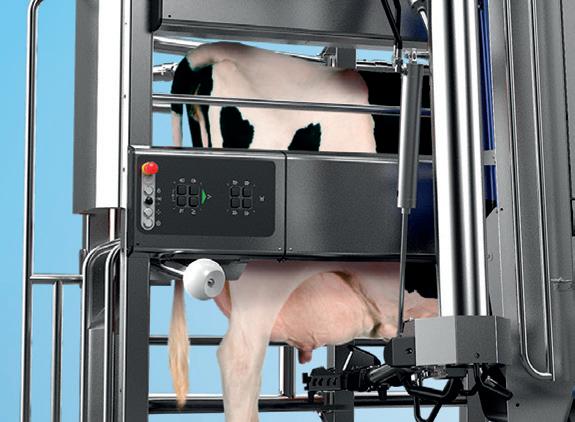







With our rotary we couldn’t expand to three milkings a day, but with VMS Batch Milking we can. And we can handle that third milking without additional staff, while having a better balance between work, sleep and family.
Johan and Willem Loonen De Boterpot
Merselo, The Netherlands




500 cows on 11 VMS™ V310 (Batch)


To find out more about how DeLaval VMS can work for you, visit www.delaval.com or Scan this QR Code