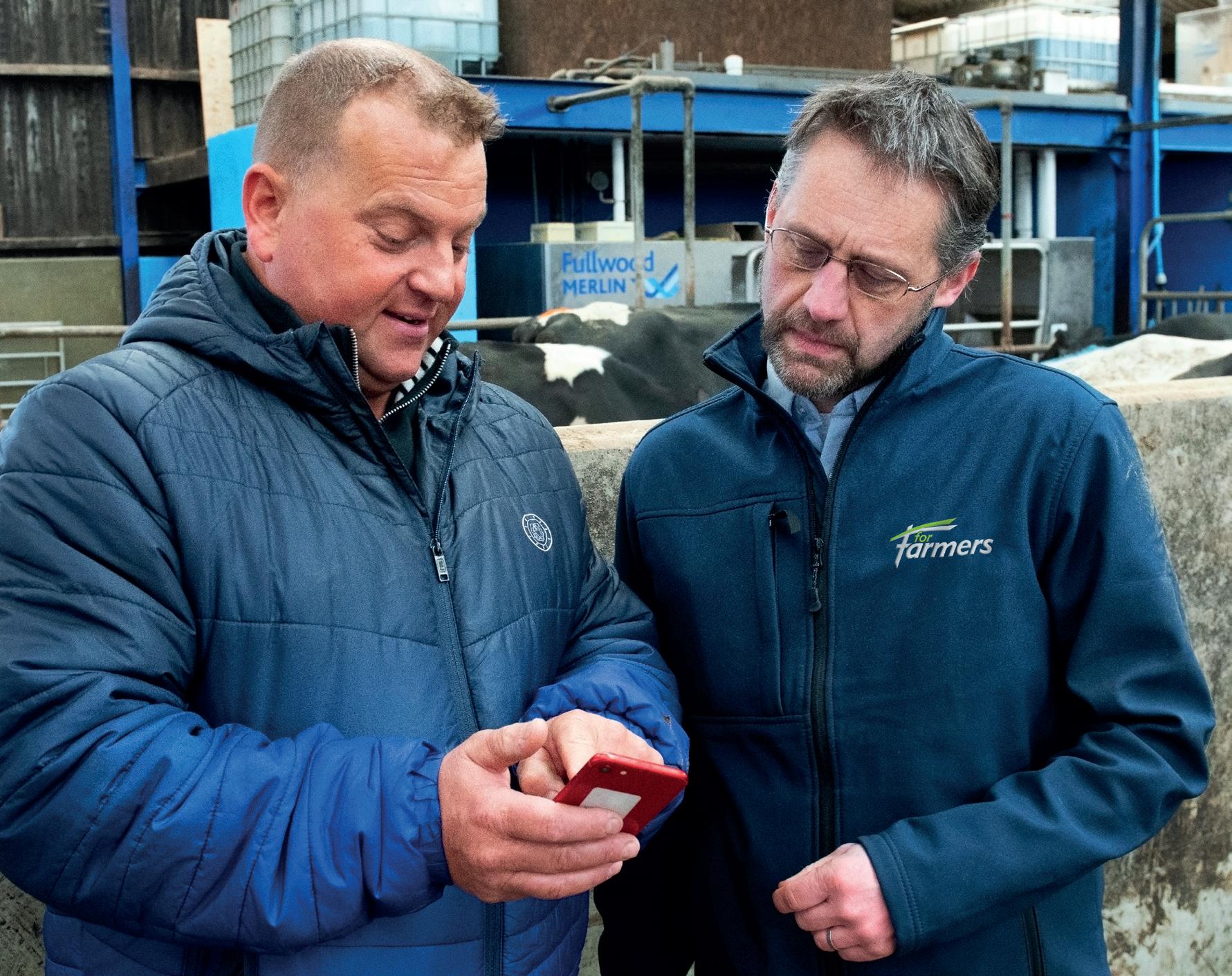
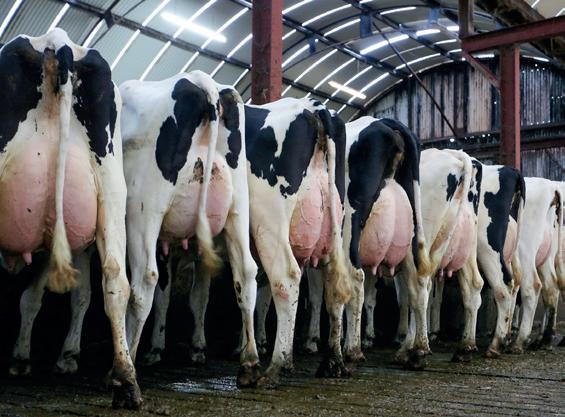
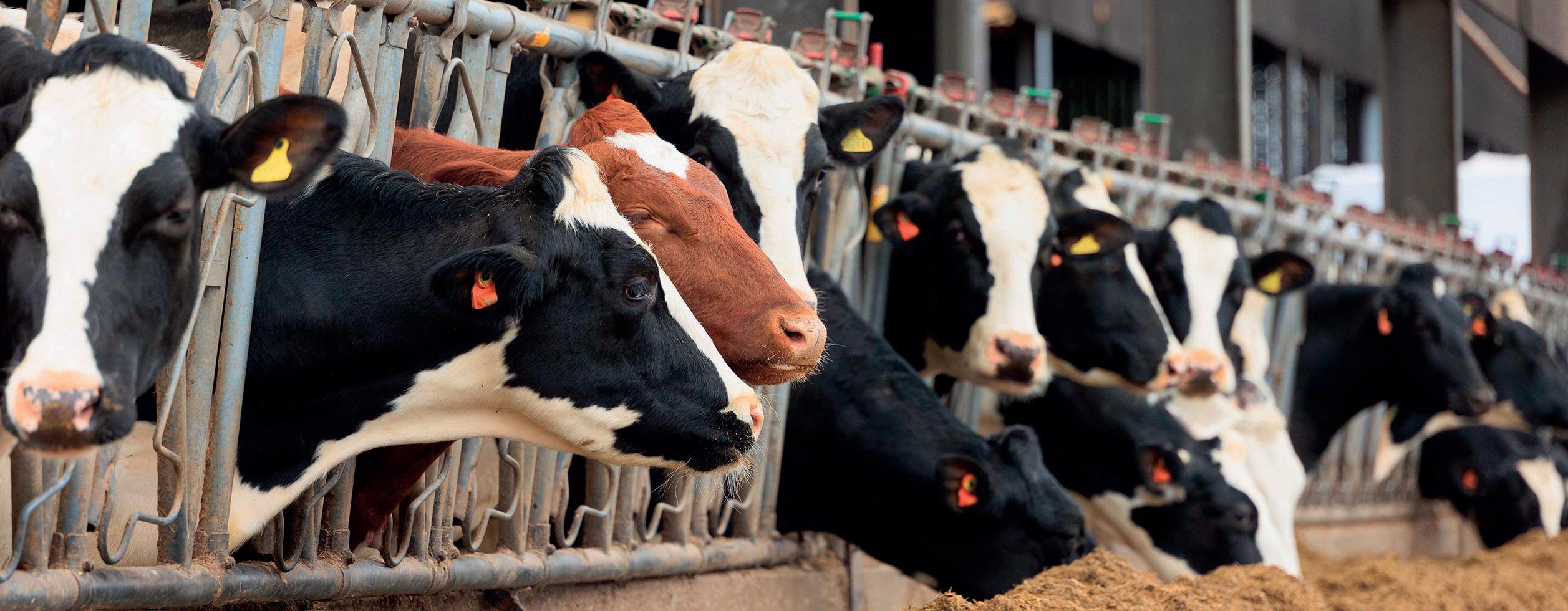
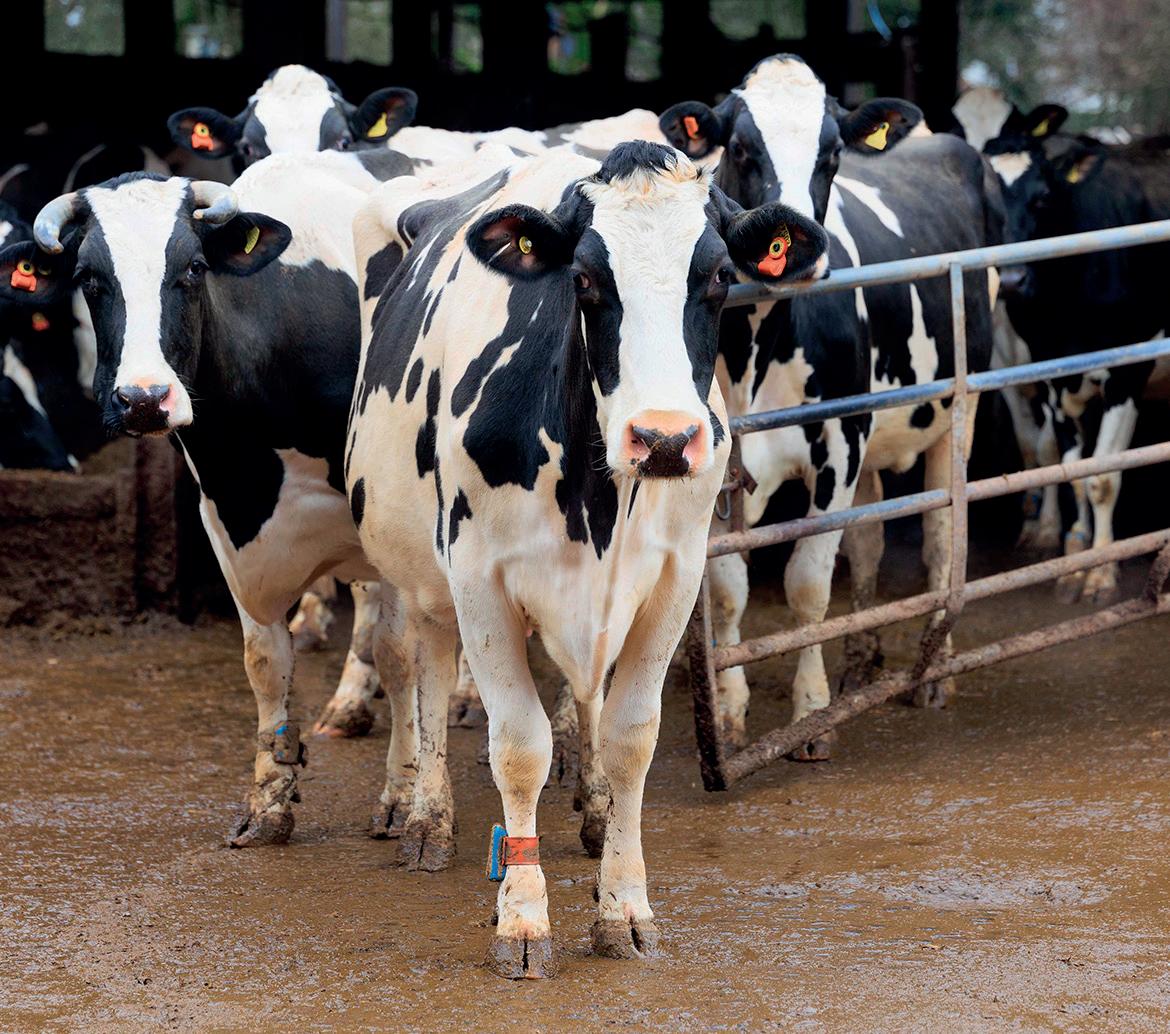
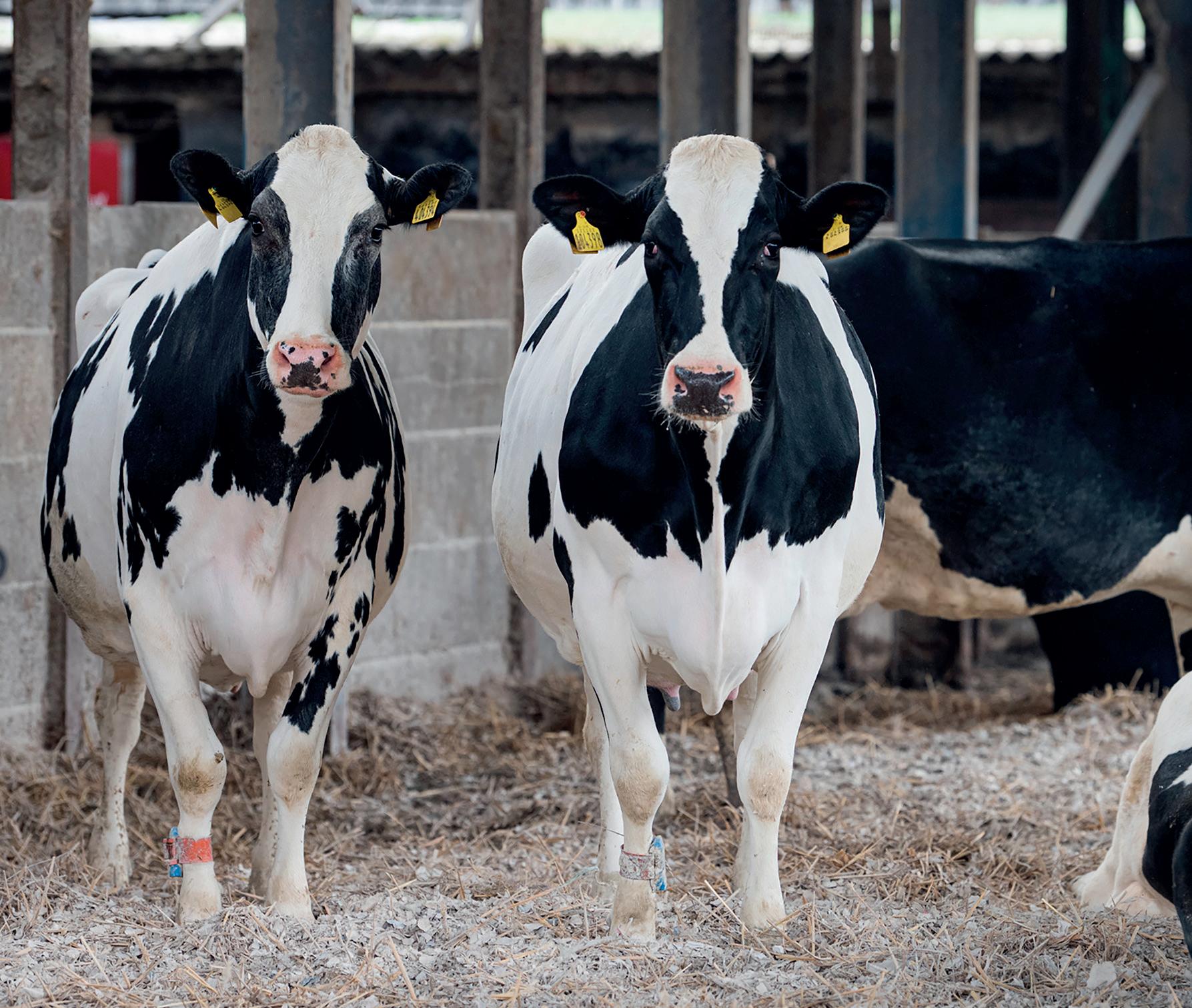
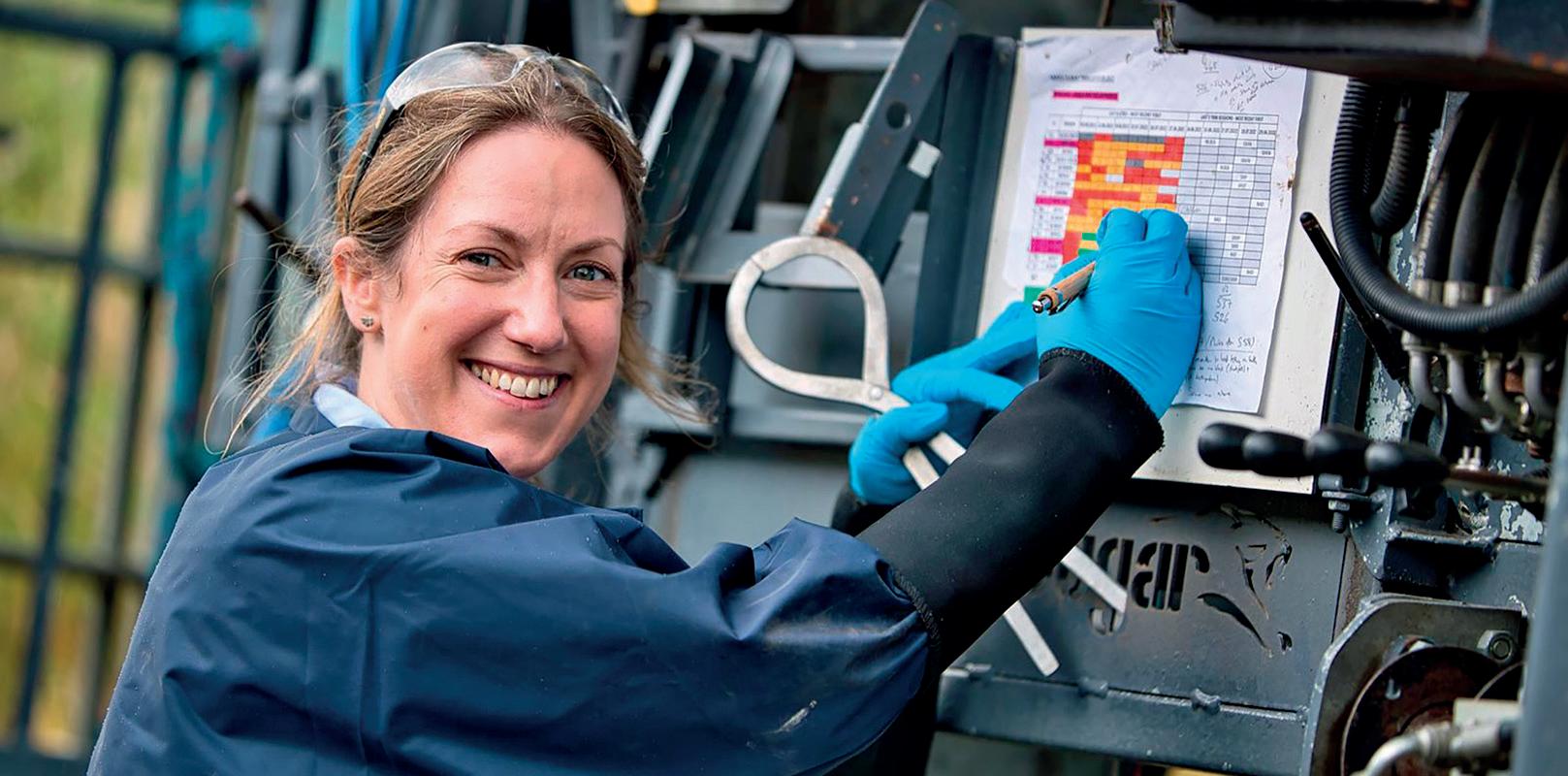
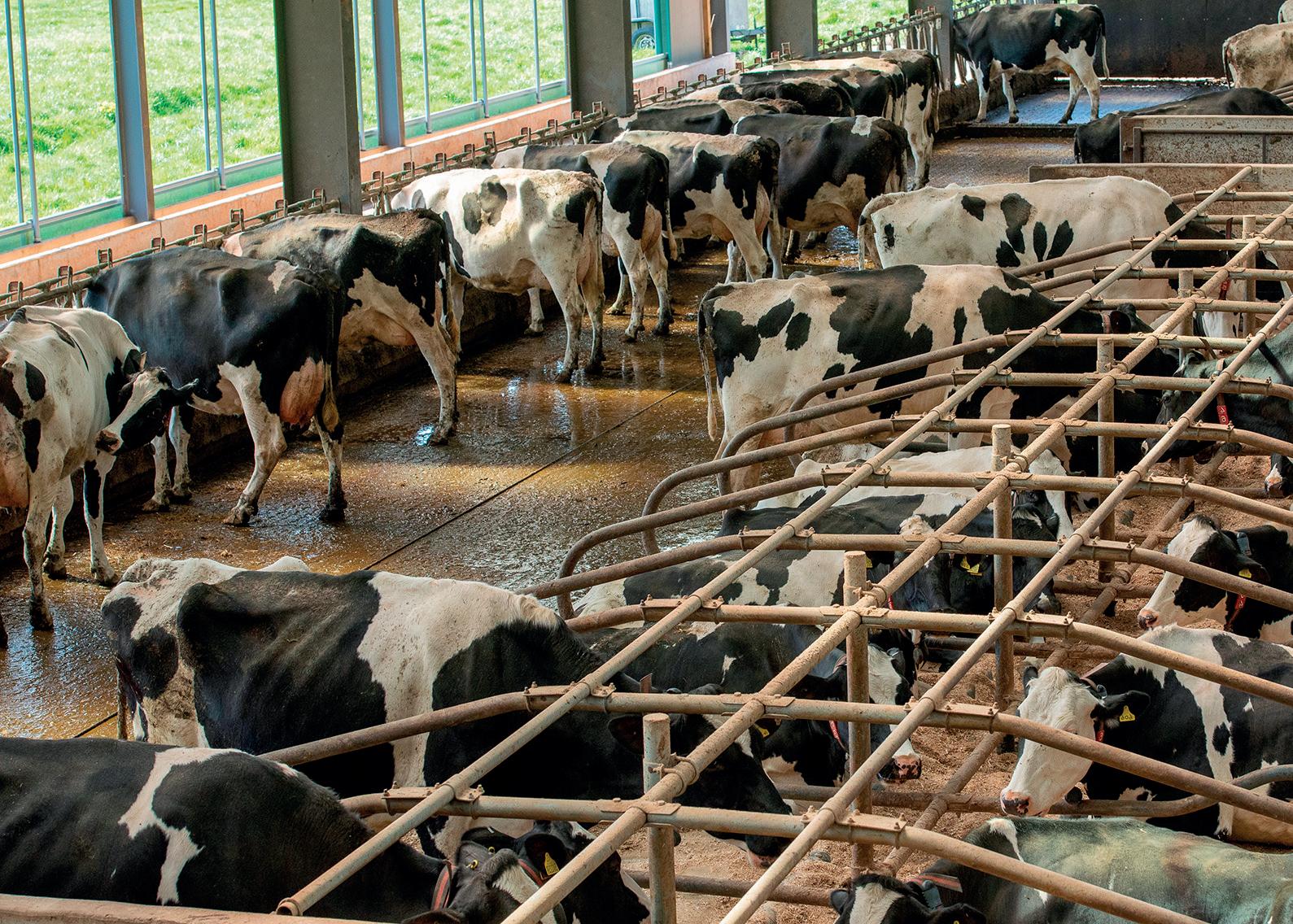
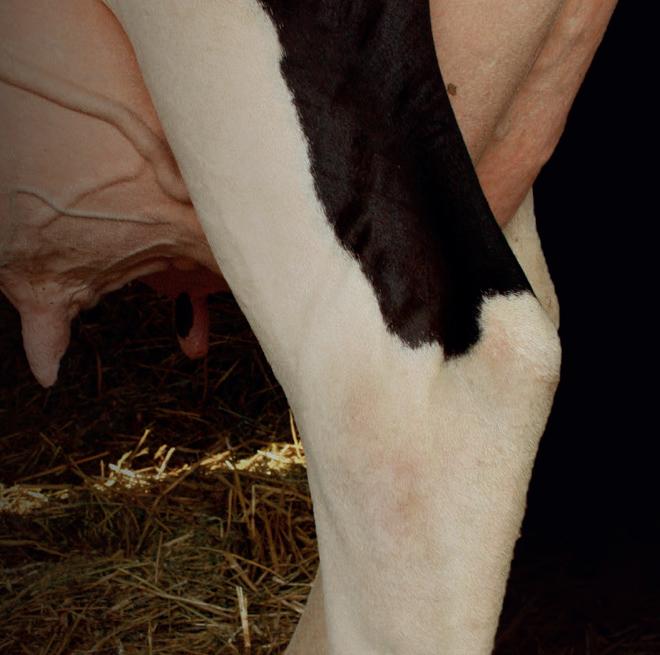
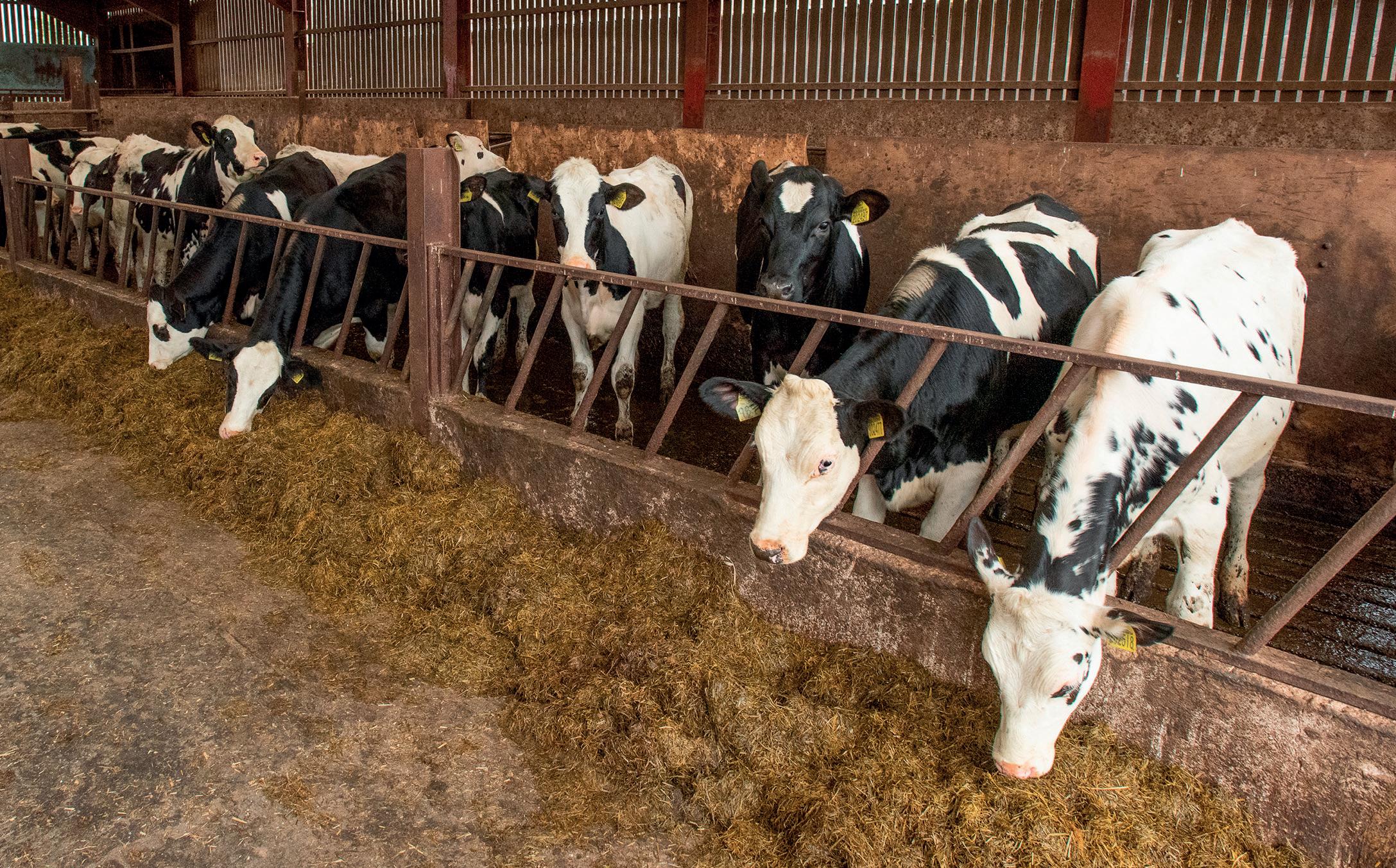
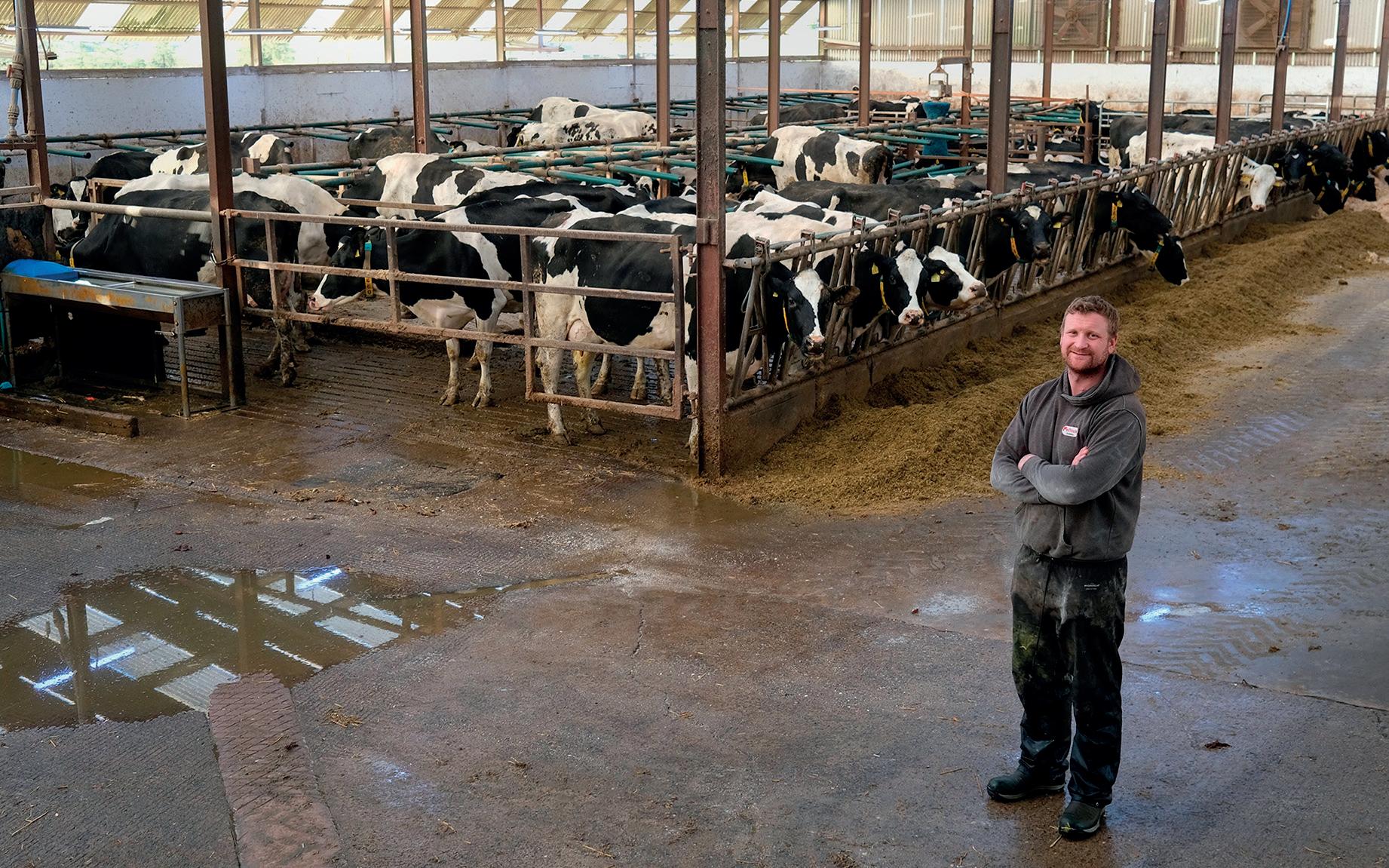
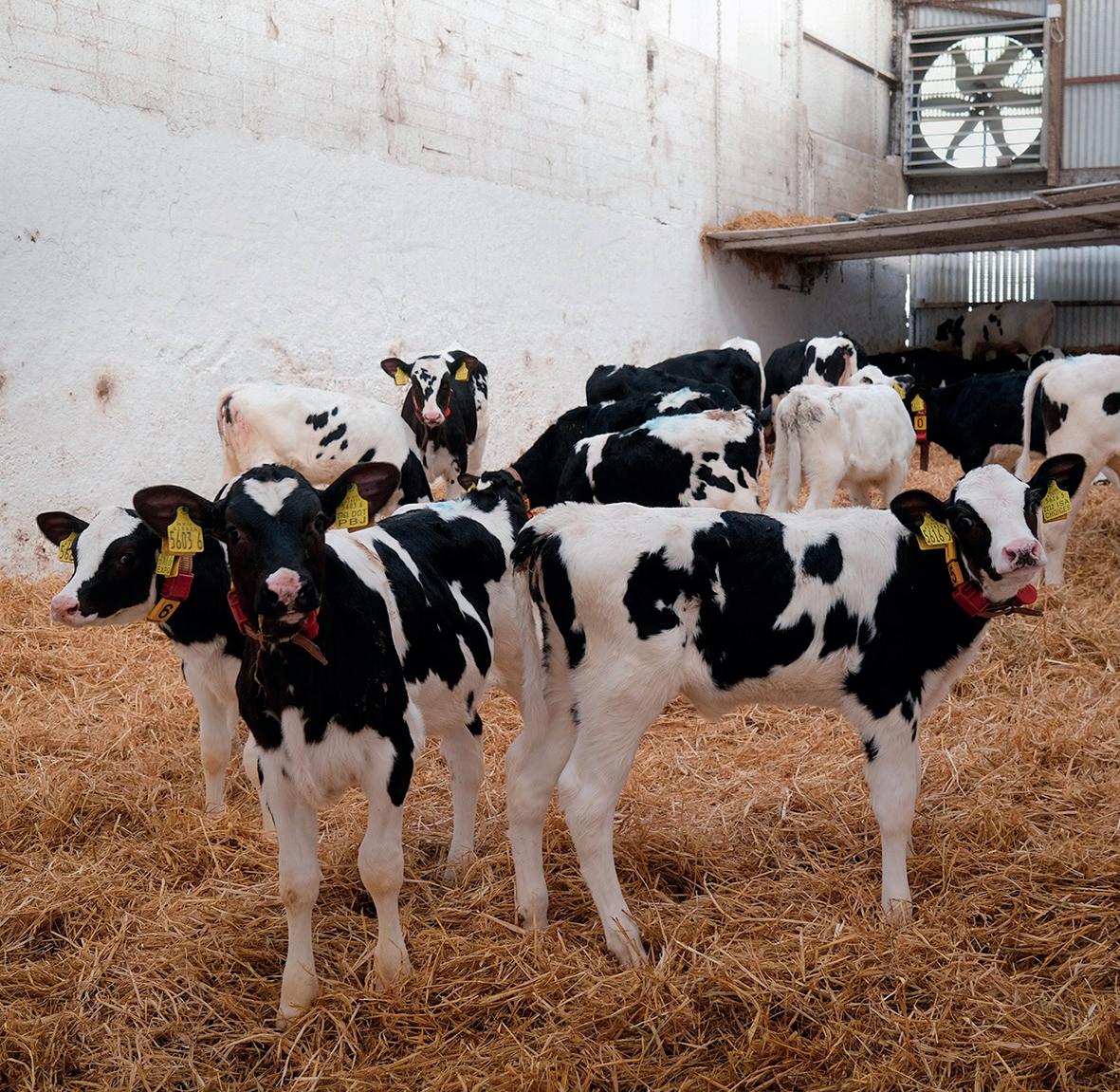
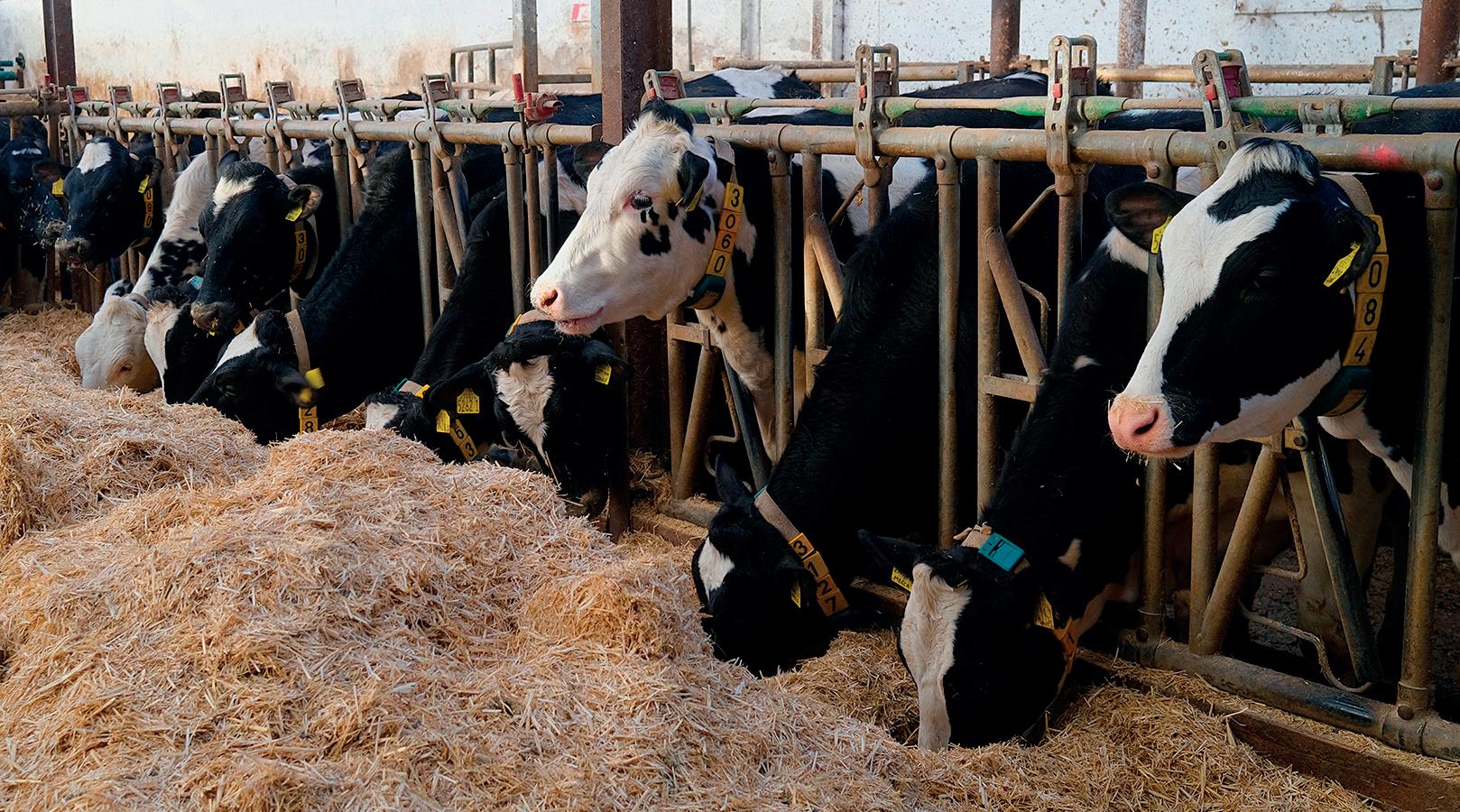
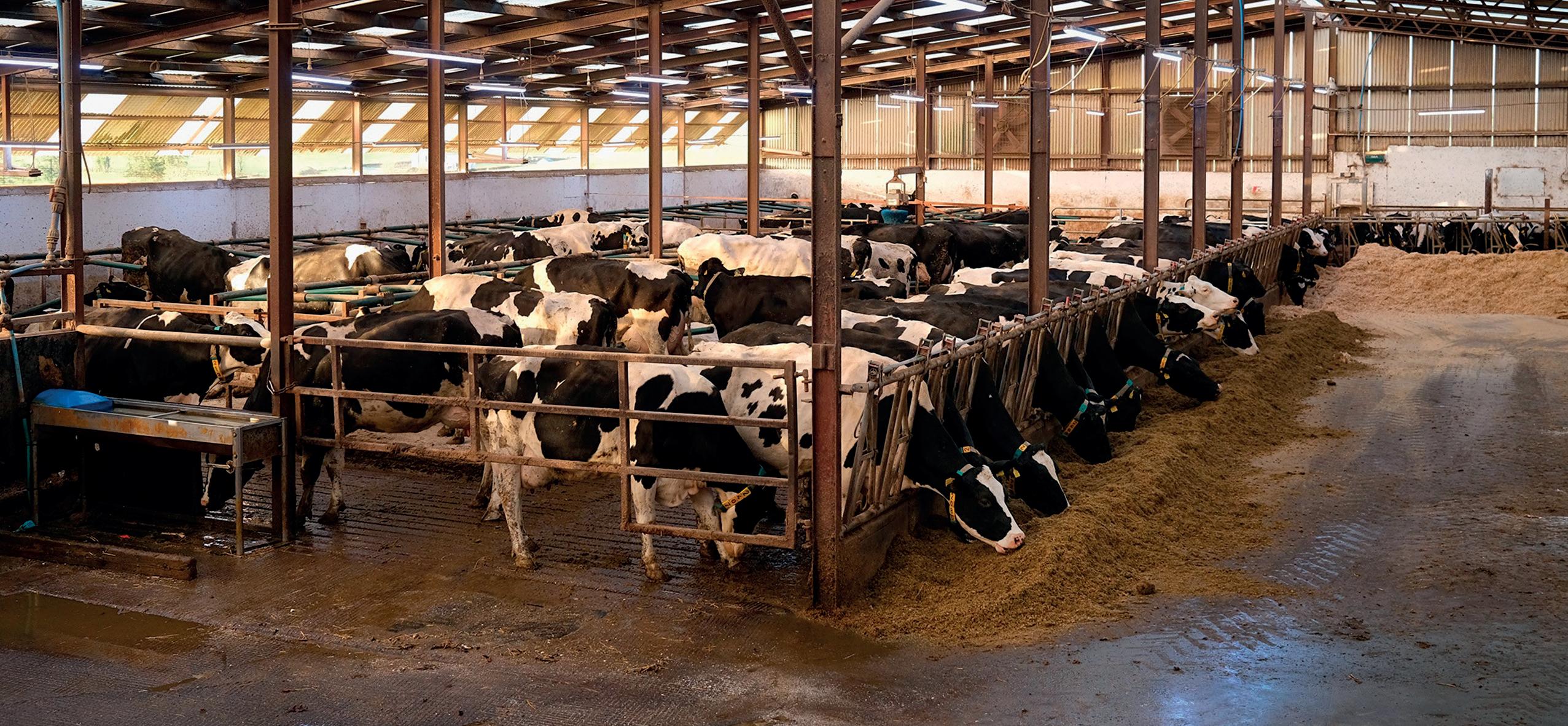
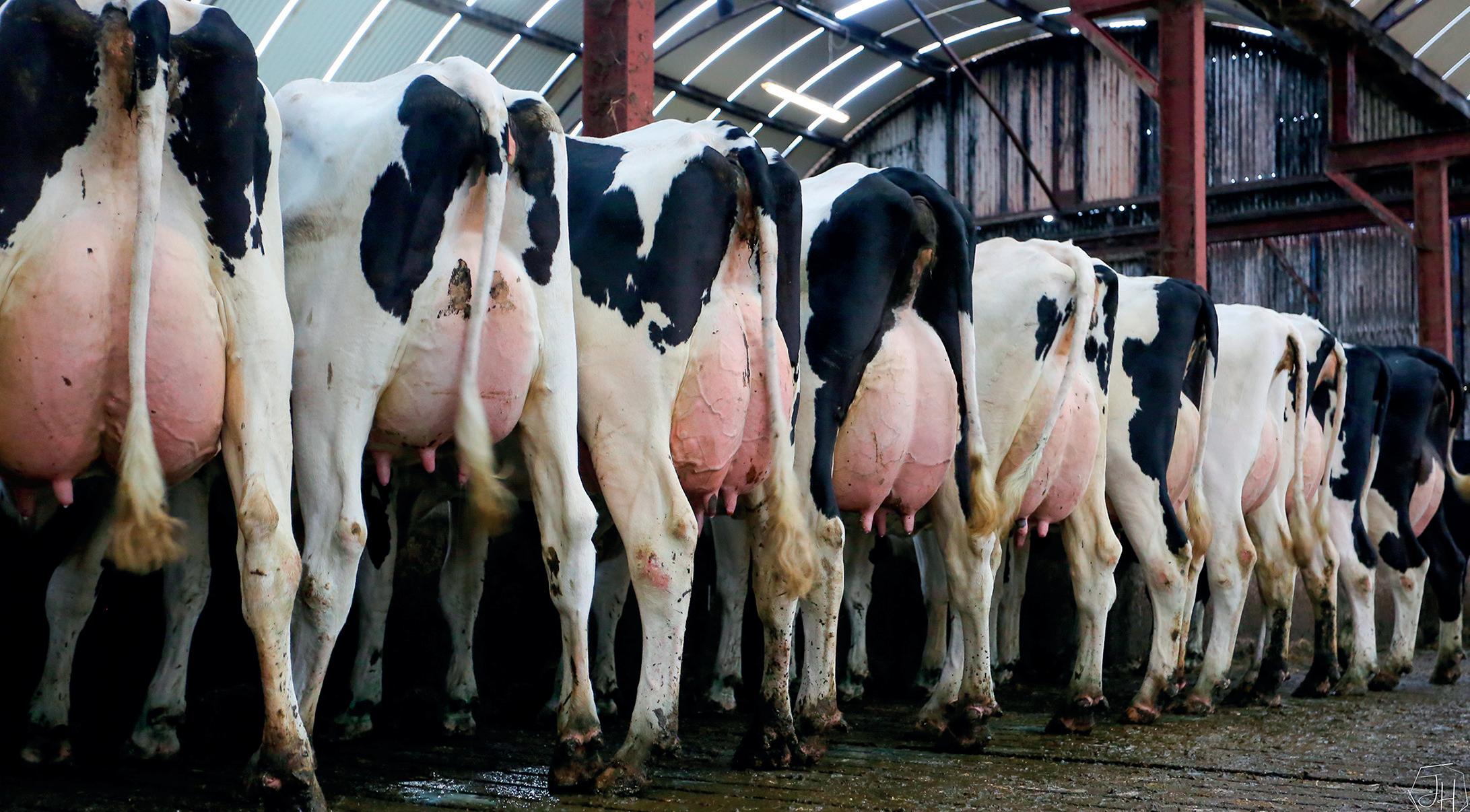
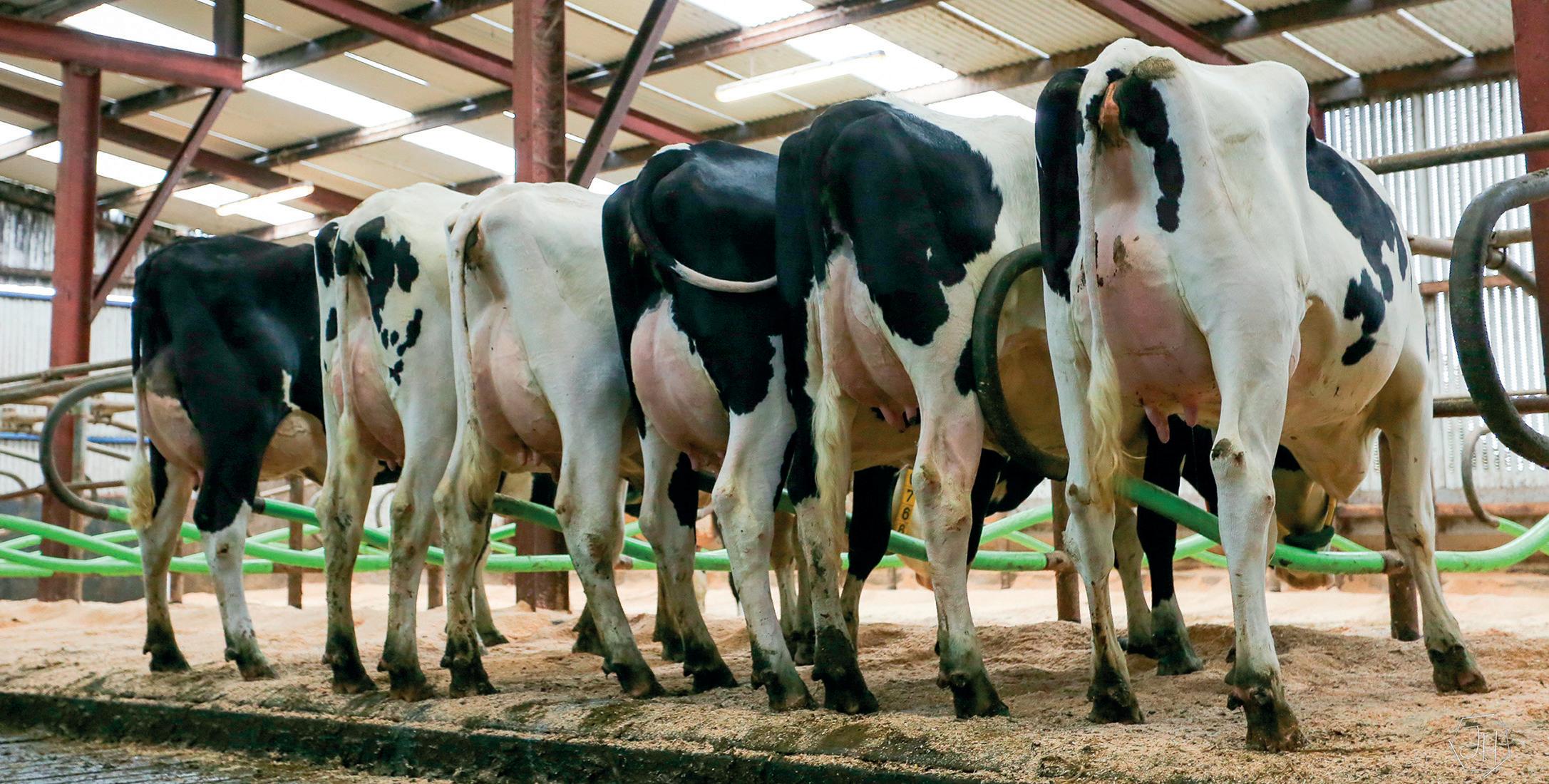
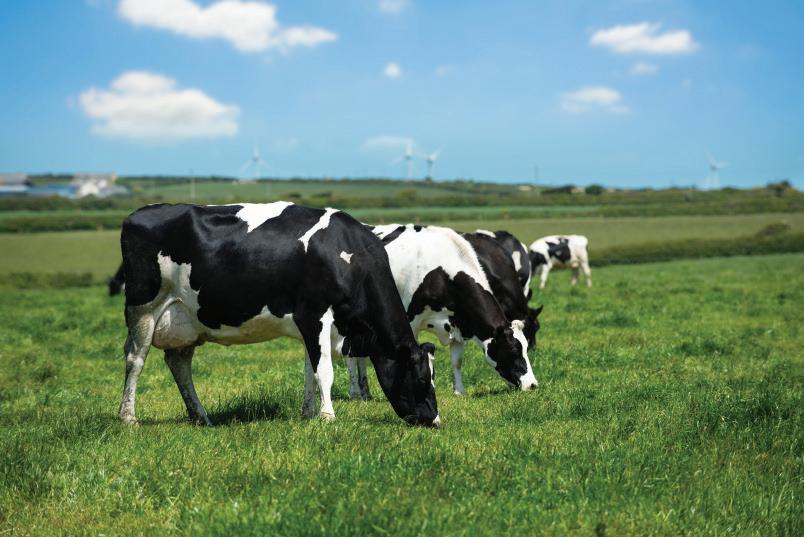
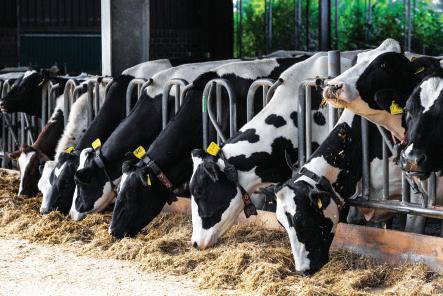
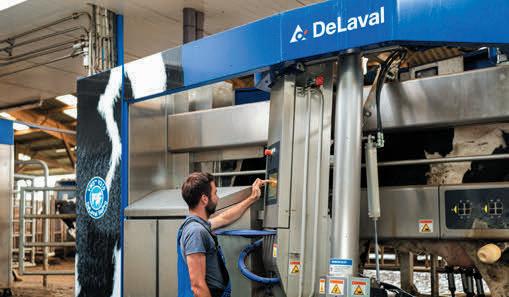
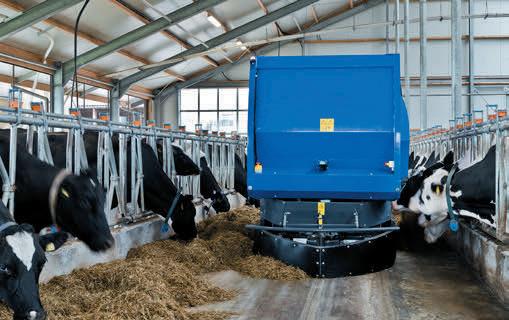
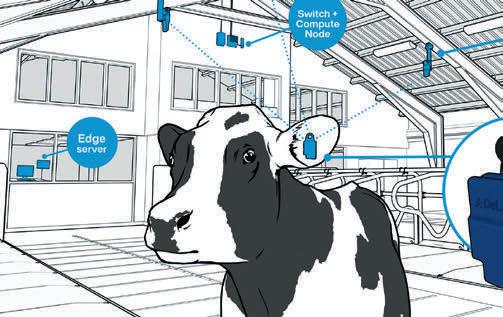
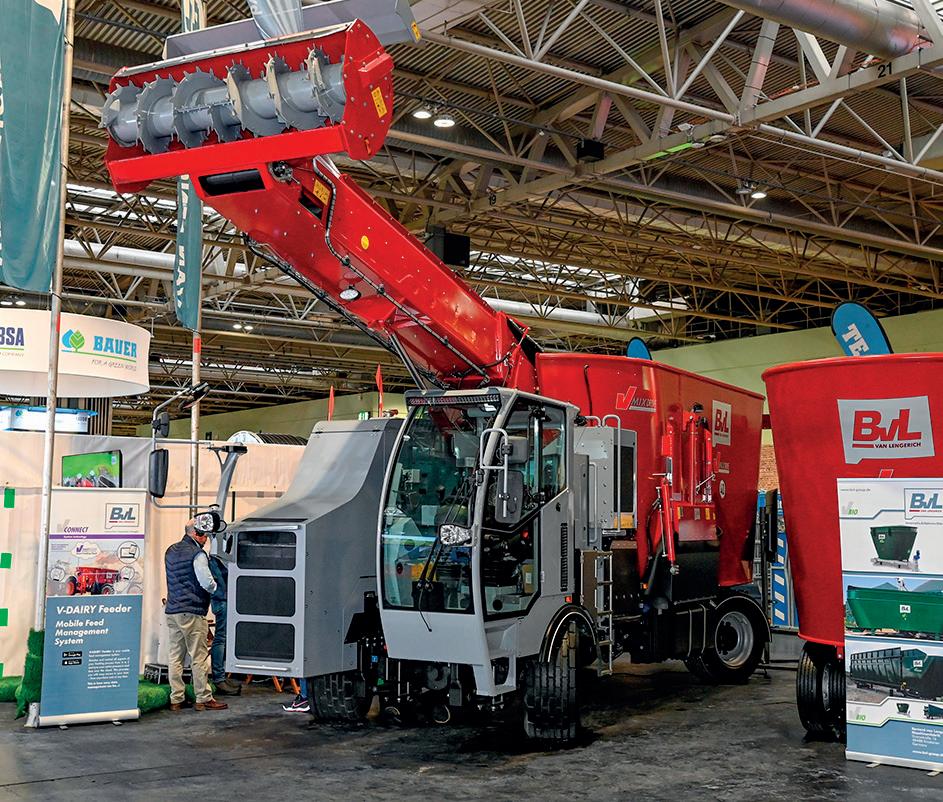
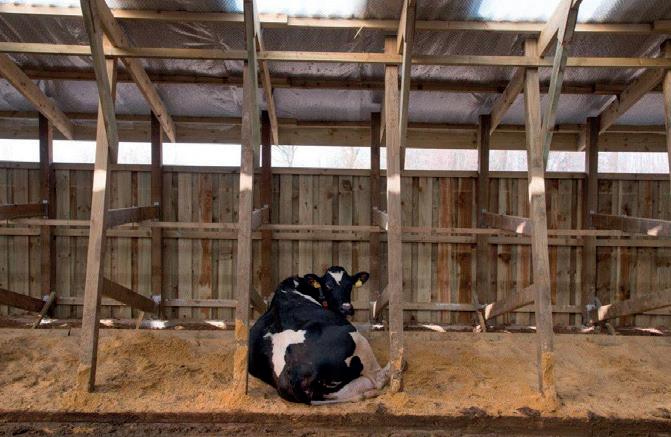
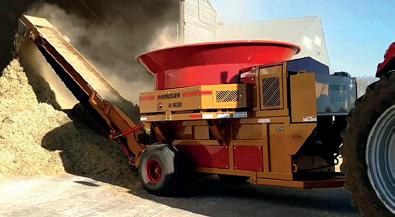
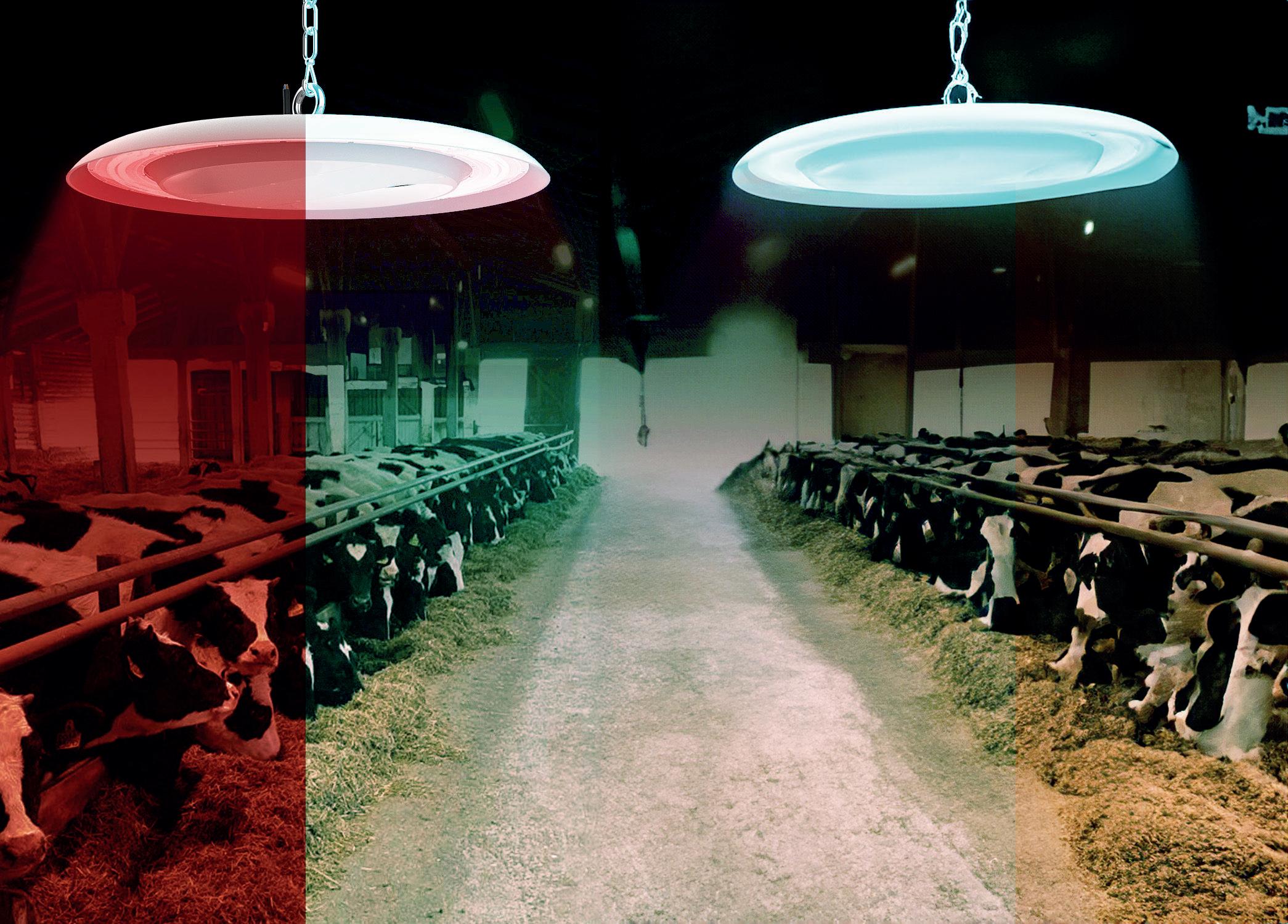
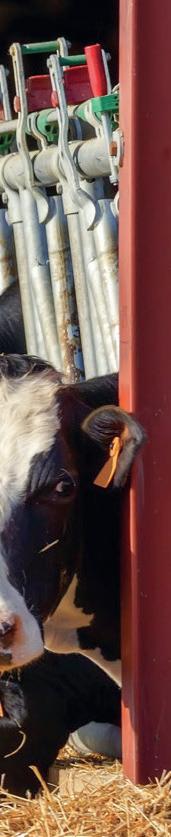
Using ForFarmers OptiRobot our Dairy and Robot Specialists are able to assess whether the interaction between robot settings, nutrition and health is optimal. It often turns out that small changes can make a big difference; Our Robot Specialists can help highlight areas where you can improve with the unique ForFarmers OptiRobot which provides:
9 Greater insight
9 More opportunities
9 Increased returns
For more information speak to your local ForFarmers Robotic Specialist or visit >
Are you getting the most out of your farm mineral?
Choosing a farm mineral containing Selko IntelliBond:
• Reduces carbon footprint*
• Improves fibre digestibility for a healthy rumen environment
• High bioavailability = maximum absorption and less waste
Are you still feeding copper sulphate?
Copper sulphate is an effective anti-microbial used in footbaths. Data has shown that sulphate based minerals have a negative impact on the rumen’s fermentation capabilities and rumen bugs. Selko IntelliBond does not harm rumen bugs.
Editor Katie Jones 07786 856 439 katie.jones@agriconnect.com
All rights reserved. No part of this publication may be reproduced or transmitted in any form or by any means, electronic or mechanical including photocopying, recording, or any information storage or retrieval system without the express prior written consent of the publisher. The contents of Dairy Farmer are subject to reproduction in information storage and retrieval systems.
Dairy Farmer, Unit 4, Fulwood Business Park, Caxton Road, Preston, Lancashire PR2 9NZ
Origination by Farmers Guardian, Unit 4, Fulwood Business Park, Caxton Road, Preston, Lancashire PR2 9NZ. Printed by Warners Midlands, The Maltings, Manor Lane, Bourne, Lincolnshire, PE10 9PH. No responsibility can be accepted by Dairy Farmer for the opinions expressed by contributors.
a word from the editor
Aer over a decade of campaigning by farming unions, the Fair Dealing Obligations (Milk) Regulations 2024 (FDOM24) nally came into force in July last year.
e regulations apply to all new contracts made for the purchase of milk from a producer and following a 12-month transition period, all contracts will need to be compliant with the regulations by July 9, 2025.
Transparency
It is hoped the regulations will establish transparency and accountability by stopping unscrupulous processors imposing contract changes without agreement, and will also provide a way for farmers to ensure they are being treated fairly by their buyers.
It is disappointing therefore to hear at the Semex International Dairy conference in January that there are some issues with the legislation which could make it di cult for farmers to raise concerns themselves. As Chris Walkland pointed out at the conference, this makes the legislation ‘pre y useless’.
e NFU have said they are continuing to lobby Government to expand the functions of the Agricultural Supply Chain Adjudicator, which is so important in this legislation, to make sure the Adjudicator’s o ce has the power not just to be a deterrent for bad behaviour, but also so that farmers feel con dent that raising a complaint will lead to action.
It is clear that these issues need to ironed out, and this needs to happen quickly.
What’s inside?
Supply c out on fa
Retailers and dairy processors have spoken out against the proposed changes to Inheritance Tax in the Government’s Autumn Budget.
NFU president Tom Bradshaw called on the whole food supply chain to support farmers’ campaigning, highlighting the damaging ripple effect on the whole supply chain.
Supporting
Morrisons was the first retailer to publicly back farmers, supporting their calls to put an end to what critics have dubbed the family farm tax.
Morrisons’ head of agriculture Sophie Throup shared on social media a video message saying the supermarket understood
There is a real risk that domestic food production could be eroded
NIGEL MURRAY
farmers’ anger and frustration and shared their concerns about the long-term impact, particularly on smaller family farms.
“We are with you”, she said, adding that Morrisons has been raising concerns at the highest level of Government and will continue to do so.
Vigilance call over FMD in Germany
JIndustry leaders have highlighted the importance of border control following confirmation of foot-andmouth disease in Germany.
The import of cattle, pigs and sheep and their products from Germany to Great Britain has now been banned to protect farmers and their livelihoods.
GB health certificates will no longer be issued for animals susceptible to foot-and-mouth, including all live animals and fresh meat and animal products.
The UK chief veterinary officer has urged livestock keepers to remain vigilant to the clinical signs
of the disease. The outbreak was confirmed on January 10 in a herd of water buffalo in Markisch-Oderland, the first case in Germany since 1988.
The last outbreak in Great Britain was in 2007. Currently, there are no cases in the UK.
Scott Donaldson, managing director of Harrison and Hetherington, said it had been common practice for flying dairy herds to source replacement heifers from mainland Europe.
“We must be vigilant and cannot afford for any animal to come onto our shores that would risk the health status of British livestock,” he said.
hain speaks mily farm tax
Farmers praised Morrisons for being the rst supermarket to speak out and called on others to do the same.
Booths managing director
Nigel Murray said any challenges to farmers a ected the entire food industry, including the consumer.
Risk
He said: “ e impact of changes to Agricultural Property Relief may not be immediate and will not a ect all farm businesses however over time there is a real risk that domestic food production could be eroded, and it is our view that we should be producing more of our own food, not less.
“Generational succession, con dence levels and business sustainability already present signi cant challenges to the
News in brief Muller plan to cut emissions
JMuller has announced the launch of ‘Fast Track’, a programme aiming to cut carbon emissions from supplying farms by introducing real-time data analysis.
Delivered in partnership with Kite Consulting and 40 supplying farms, the processor said the project will support its plan to cut on-farm emissions by 30% by 2030.
The three-year scheme will use automated data integration from sources including a cloud-based feed management system, to monitor fertility, feed efficiency, stock numbers, and energy-corrected milk.
Festive spend
JIn the three weeks before Christmas shoppers spent £14.6 billion, according to data from market researcher NIQ.
However, promotions were at their highest levels for three years at 27% of the total.
farming sector and this change simply adds to that.”
A First Milk spokesperson said it was disappointed to see the changes in the Budget. e spokesperson said: “We have spoken to our members to o er our on-going support on how to make sure that they get the right advice to put e ective succession plans in place for their businesses, which is something we have done in the past.”
A spokesperson for Meadow said it shared the community’s concerns over proposed changes to IHT, adding a ‘sustainable farming sector in the UK’ was crucial for the economy but also ‘the nation’s need for quality, locally sourced produce’.
Star performer in the four weeks to December 28 was online retailer Ocado’s sales up 13.9%, which was impressive as overall online sales were down 1.7% as shoppers opted for an-store experience.
Irish record
JIrish food and drink exports to the UK reached a record 5.9 billion euros (£4.9bn) in 2024, a 7% increase on 2023.
According to the latest Export Performance and Prospects report from Bord Bia, the UK remained the largest single destination for Irish food and drink, at 35%. Dairy exports were valued at 1.05bn euros (£871.6bn).
Sophie Throup
Retailers have shown support for farmers in their fight against Inheritance Tax changes.
NEWS CONFERENCES
The Fair Dealing Obligations (Milk) Regulations 2024 are ‘impotent’ said market analyst Chris Walkland, speaking at the recent Semex International Dairy Conference in Glasgow.
Mr Walkland said the new legislation, which came into force for all new contracts from July last year, was ‘supposed to give farmers greater power’ but he had been disappointed to recently discover that ‘third parties’, such as himself and the NFU, would not be able to complain to the adjudicator.
Instead, the complaint must be made by a farmer, and that farmer must rst make the complaint to the milk purchaser and also be prepared to be named.
is, he said, rendered the legislation ‘pre y useless’ as farmers could be put o from raising a complaint.
Mr Walkland said: “ is legislation is based on the unscrupulous processor who does not play fair. But if those processors then start intimidating or threatening the farmer, especially in milk elds where there is no choice of processor, then the farmer is not going to complain and the farmer is going to be no be er o . is has to change. We need stronger legislation than we have got.”
Responding to Mr Walkland’s comments, NFU chief dairy adviser Verity Richards said the
Dairy legislation is ‘impotent’
regulations had been a ‘big step’ for UK dairy but this was ‘just the start’.
She said: “It is vital that the new Agricultural Supply Chain Adjudicator is not just seen as a deterrent to bad behaviour but also has the power to actively ensure all purchasers are compliant with the regulations.
“ at is why the NFU continues
Farmers frustrated as Defra
to lobby Government to expand the functions of the Agricultural Supply Chain Adjudicator o ce, in line with those of the Groceries Code Adjudicator, to enable it to proactively investigate potential breaches without necessarily needing a named complainant to ensure all producers have access to a fair, transparent and compliant contract. is will be
Secretary says farms should diversify to remain profitable
JFarmers have shared their frustration over Defra Secretary Steve Reed’s comment that all farmers should diversify to manage risk across the food supply chain.
Speaking to delegates at the Oxford Farming Conference, Mr Reed said: “Food production will always be the primary purpose of the farming sector, but for all farm businesses, tenants, upland and
others, to stay viable in an increasingly uncertain world and to make sure they can keep producing the food we all need, they must be able to pro t from other activities.”
He added that the Government would introduce reforms to support all farmers to innovate and diversify their businesses and to build resilience, even where there was a ‘bad harvest or disease outbreak’.
NFU dairy board chair Paul Tompkins said: “Dairy farming is a demanding 24/7 job, making it challenging for farmers to follow the Minister’s suggestion of seeking pro ts from other activities to remain in food production.
“While diversi ed income has its merits, the primary focus should be on generating revenue from milking cows.”
even more important was the remit of the adjudicator is expanded to cover other sectors.”
Milk prices
Mr Walkland also gave his predictions on what the future might hold for milk prices for 2025.
He said: “Currently, milk prices are strong and they exceed the cost of production.
“I think we have got a few good months of really good milk incomes. ere is every reason to start 2025 on an optimistic note.”
However, he added that he expected the ‘next milk price moves to be down’, especially from those processors currently paying the higher prices.
“Overall, I think we will see prices above 40ppl for quarter one, but if the rising milk volume predictions are correct, we will probably see less than 40ppl for quarter two,” he said.
“But overall, I think prices will be over 40ppl for the rst half of 2025. A er that, it is too close to call.”
Chris Walkland told the Semex conference that the Fair Dealing Obligations (Milk) Regulations 2024 were ‘pretty useless’.
BRIGHTER ORANGE FOR OPTIMUM VISIBILITY
Come and visit our stand at : Dairy Tech 2025 5th February Stand No. T64
Receive a pair of overalls with all orders over 200 L
Synofilm GL is a Post-Milking Teat Dip Based on Lactic Acid and Glycolic By Neogen
DAIRYTalk
Claire Eastham
Claire Eastham farms with her husband Martyn in Dorset, where they milk 120 spring calving cows. After gaining knowledge and experience working for other businesses, the couple started their own dairy farming journey in 2015 by taking on a share farming agreement before progressing to their current county council farm.
“ We need to operate as the profitable business we all really know that farms can be
Oh what a three months it’s been; Inheritance Tax, Basic Payment Scheme slashing, capital grants ‘paused’, the removal of commercial vehicle status on double cab pickups and let’s not forget the Bovaer foray.
At least with Bovaer the message was that the public care, they don’t want food messing with and nature’s way is the best despite what the green washers may argue. The Government on the other hand don’t have a blinking clue, with the Budget fast tracking to high inflation rates and a bust rather than boom economy it was hoping to achieve. There must be some positives? I think agriculture has to evolve and fast.
That’s something farmers are good at – thinking outside the box, problem solving and perhaps less so, embracing change.
We must look at lessons learned from around the world in New Zealand with the removal of subsides. It is, after all, where many of the young farmers, and I am sure many of your sons and daughters, go to ‘learn how to do it’. So why aren’t we taking that on-board?
The Kiwis talk about KPIs and profits freely. They have a culture of wanting to improve and do better as a business, for nature and the welfare of their cows. Sure they moan about their lot too, but then they pull up their gum boots and set about learning from the best.
We need to be more open in what is working on-farm and really, what isn’t.
Pride
Unfortunately, the stiff upper lip and pride has to go, we need to become more commercial. Farming does indeed tie you to the land, but would you want your family tied to a lead balloon?
We need to operate as the profitable business we all really know that farms can be. We need to stop talking litres, looking at the new kit our neighbours have (looks can be deceiving) and start focusing on the bottom line and how to make that attractive to incomers, a business family want to run because they see the benefits not because they feel the heavy sense of obligation.
An accountant said to me once that you must think to yourself ‘what changes?’ What changes if you don’t buy a tractor on HP? What are the costs versus contractors? Can you keep your farmworker busy without it?
What changes if you move to 10 milkings in seven? Does the electric, water and staffing decreased costs cover the potential loss in production? Would there be fertility gains to cost back in?
So, lots can change, and lots will change – but it’s guaranteed that we must.
Meanwhile, back on the farm all the cows are dry and so we are doing general maintenance. Currently we are looking out at snowy scenes and hoping for a kind spring with the past two limiting production, and cows not quite reaching peak yields.
The milk:feed price ratio is holding strong meaning national production is up and a fall in the current milk price is anticipated – it is not the time to get complacent.
Our current council tenancy comes to an end in 2027 and we along with many other tenants are sat awaiting the outcome of an independent review to be followed by a ‘Farms Plan’.
Given this uncertainty, we are focused on increasing stock numbers and output for as long as we can so that we increase our capital. We are always on the lookout for the next step in order to expand our business – but as yet it is proving elusive.
Ben Yates
Ben Yates manages Mells Park Estate, Somerset, where he oversees a 400-cow unit and manages the 405-hectare (1,000-acre) estate. Along with his wife and two sons, Ben has his own small herd of pedigree Holsteins under the Wowcow prefix. He joined the Holstein UK Board of Trustees in 2021.
“ We were relieved to have a clear TB test at the beginning of November
We were lucky enough to have a relatively quiet and dramafree Christmas period on the farm, with some drier weather helping.
The New Year, however, has brought wet and windy storms back to us. We have a local weatherman/weather enthusiast who I follow on social media; his annual review showed that we had 139% of our long-term average total rainfall in 2024, 1,602mm (64 inches).
He also reported the average temperature in our area was up by 0.5degC to 11.1degC. Both factors will have helped grass growth, but are concerning nonetheless.
Our slurry lagoon is not covered, but working out how we are going to cover it is fast becoming a priority with the wet weather. With that, we would need to install a separator system first so we can manage the issues crusts bring under a cover.
It will be interesting to see if there will be any financial support through grants going to become available this year for these projects.
We were relieved to have a clear TB test at the beginning of November, just as we started our breeding season. We achieved a submission rate of 95% in the first 21 days in the cows and 98% in the heifers, which we are pleased with.
All the inseminations were done in-house this year by the team. The first few PD sessions have gone well, with more to come before we have any figures.
It was great to win champion native calf at Frome Market’s Christmas Fatstock Show at the end of November with a Hereford cross calf which went on to make £380 at six weeks old.
Heifer calves
All heifer calves have now been weaned and moved to our youngstock unit on the other side of the village. We have started this year weighing all the heifer calves monthly to check their daily liveweight gains – so far, we have achieved 0.9kg/day, so the transition through weaning has been very successful.
On the estate, the decision was made to fell areas of woodland which were suffering from high levels of ash dieback. This has seen 14 hectares of clear fell. Unfortunately, subsequently, we have also lost some areas of softwood pockets following high winds.
We are now two-thirds of the way through the replanting of these areas, which will total 15,000 whips of 16 species being planted.
As a Holstein UK board member, I am pleased to see that we have completed the sale of the former headquarters, Scotsbridge House, back in October.
The sale of the main building and its immediate garden marks the end of a long process to get planning permission, which began in 2018.
Holstein UK retains the ownership of most of the land surrounding Scotsbridge House. The wise investment made by previous board members will help secure the society’s future.
A year on from CIS moving into its new laboratory, it is pleasing that it is now performing well, and providing a prompt milk recording and health testing service.
We milk record monthly with CIS and have been getting our results back in less than 48 hours.
ON FARM
The West family combine teamwork and a passion for excellence to create a thriving dairy enterprise. Danusia Osiowy finds out more about their shared achievements.
There is a real sense of pride fuelling the family at Stocken Farm, Risborough, Buckinghamshire, which is driven by innovation, teamwork and a commitment to excellence. For the family, it is more than just a business; it is a blueprint for unapologetic achievement.
e predominantly dairy-focused mixed 405-hectare (1,000-acre) farm, which also incorporates beef and arable operations, is home to 400 milking cows and a team passionate about its people and performance alongside animal welfare.
With Richard and Maxine West responsible for the overall management, their daughter Charlo e, 27, and son Robert, 25, take charge of the dairy and arable respectively.
e Holstein Friesian herd calves year-round but with a heavy focus on autumn calving, ensuring all heifer calves are born in a block from June to September, with beef calves arriving throughout the rest of the year.
is structure allows the family to balance the demands of a diverse farm while ensuring each aspect gets the a ention it needs.
Charlo e says: “We have worked hard to divide responsibilities and play to our strengths. It is not always easy, but having a clear structure keeps everything running smoothly.”
Charlo e’s path back to Stocken
Family redefines farm’s success
Farm was not quite the one she had envisaged. Keen to travel or secure a job before returning to the family business, the choice to come home was made out of necessity when the Covid-19 pandemic disrupted both plans.
Approach
Her international experiences, however, have shaped her approach to farming. During her
placement on the McDonald’s Progressive Young Farmer scheme, she gained insights into production, processing, and consumer trends, while time spent working in New Zealand and the US were, in her own words, ‘transformational’.
“New Zealand’s grass management was a real eye-opener, and I have implemented some of their practices here,” says Charlo e.
“In the US, the focus on hygiene
and protocols was everything, and it is something we have worked hard to improve on-farm.”
Recognising that youngstock are the foundation of a productive herd, Charlo e has transformed the farm’s calf-rearing practices, and her rigorous protocols ensure calves receive the best possible start while also empowering the sta to deliver consistent care.
“Protocols play a very important
PICTURES : Tim Scrivener
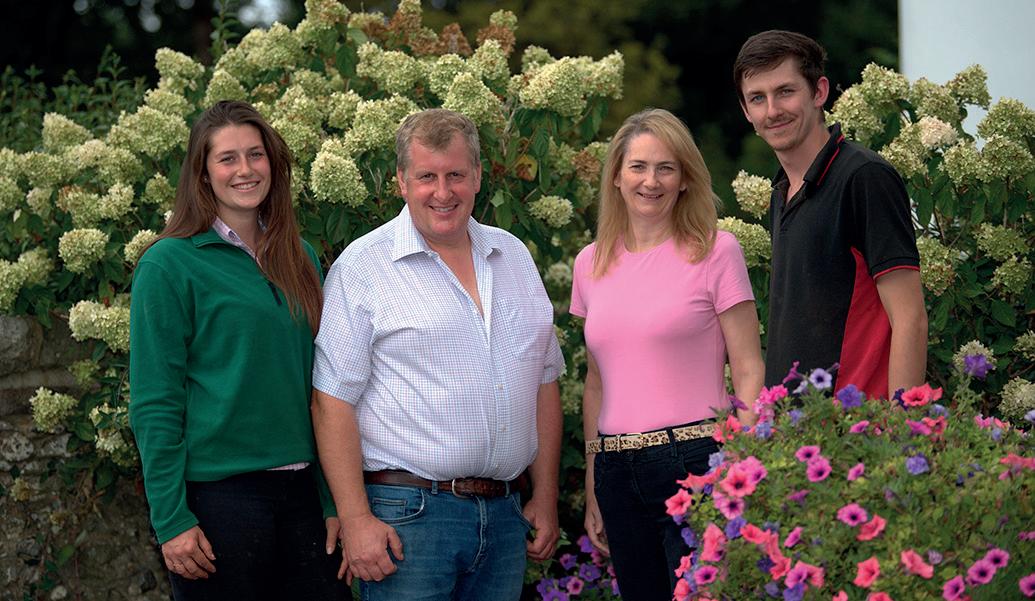
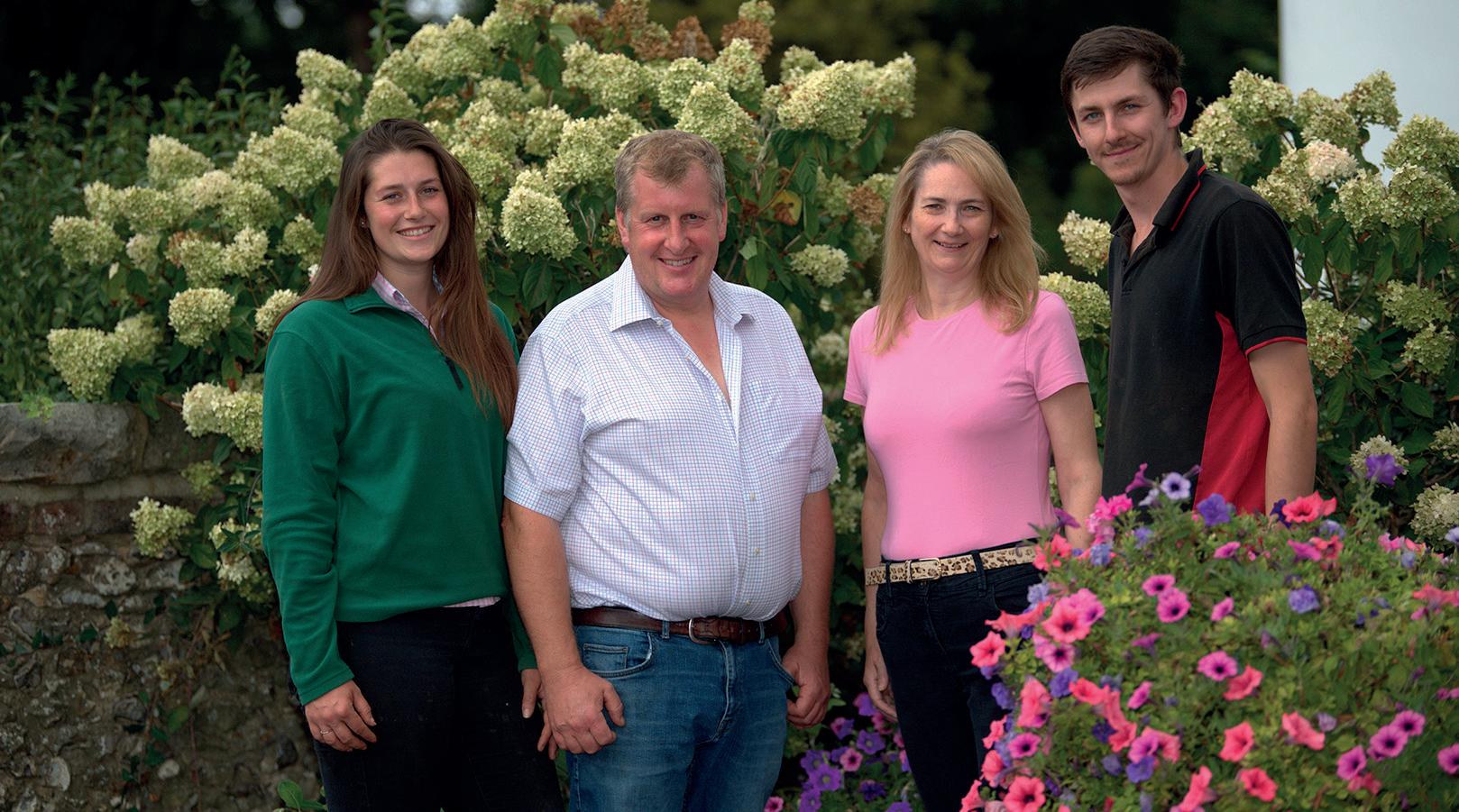
Left to right: Charlotte, Richard, Maxine and Robert West.
Stocken Farm is home to 400 milking cows.
role in enabling everyone to be doing the same job and understand why they are doing what they are doing,” she says.
“My goal was for any member of sta to treat the calves at any given time, so we introduced a ow chart to ensure the correct treatment for every sickness, and it worked.”
“Our heifers are the most important and genetically valued animals on-farm and if we can give them the best start possible then they will grow to be a successful and pro table animal for the farm.”
Calves
Charlo e has focused on every detail, from colostrum management to growth monitoring. Calves receive four litres of high-quality colostrum within two hours of birth, tested using a Brix refractometer, followed by another three-litre feed within 12 hours.
A er being moved into individual pens, they are provided with fresh water, nuts and a high-protein milk powder, fed twice daily. At four weeks, milk volume increases to four litres per feed to support growth.
Weaning begins at seven weeks, but only for calves that have doubled their birth weight. ose that have not achieved this milestone remain on milk until their growth is satisfactory.
Once weaned, they stay on calf pellets for a while and then move onto a blended straights and chopped straw ration and are moved to larger groups of 30.
“We did struggle just a er the calves were weaned. We found they were not hi ing their target weights
ON FARM
Farm facts
r400-head Holstein
Friesian herd
rAll heifers kept for replacements
rBeef calves sold privately at 42 days
rFinish 100 cows a year through the local market
rMilk sold to Arla on the CARE programme
rAverage 11,700 litres, 4.1% fat and 3.18% protein
for weaning and [were] therefore struggling once weaned. at is when we moved to feeding the four litres from week four and started monitoring and weighing them on a more regular basis to ensure they were on track,” says Charlo e.
“By weighing them just before we plan to wean them, we can then do something about it if they have not hit their weights.
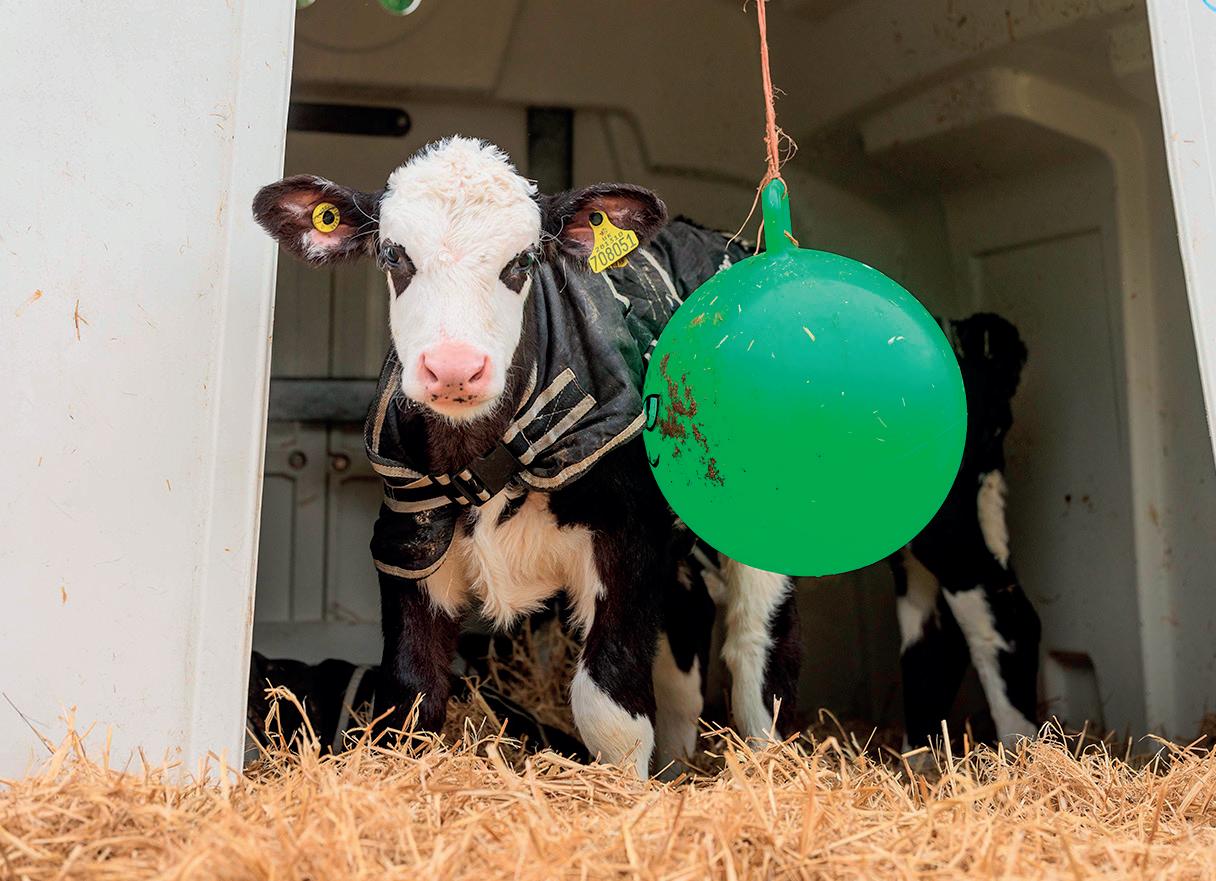
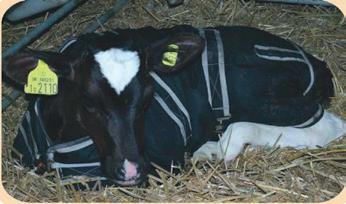
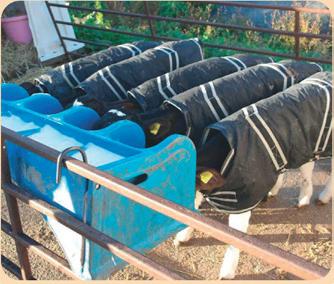
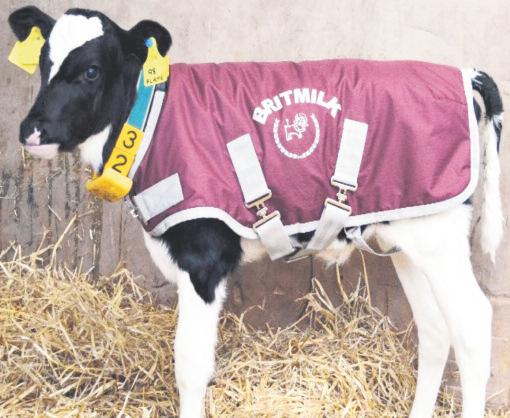
“Winter months see the use of calf coats to preserve energy for growth, and a new weaned calf shed has signi cantly improved conditions.”
Results
is meticulous approach has delivered impressive results, with calf mortality rates reducing dramatically from 4.6% in 2020 to 1.8%.
Charlo e credits the success to her calf-rearing team, who are a mix of new entrants and those living and working in farming.
She says: “We all worked together to develop protocols, and they have taken real ownership of the calves. It has been amazing to
DUKE FORAGE MAIZE
The Holstein Friesian herd calves year-round with a heavy focus on autumn calving.
The quality ultra early maize variety with a touch of class!
Wayne Bean, Newcastle upon Tyne
ON FARM
Happy people mean happy cows, and that is what it all comes down to CHARLOTTE
WEST
see their con dence and skills grow.” e team also tackled cryptosporidium scours by implementing biosecurity measures, improving calving pen hygiene and re ning treatment protocols.
She says: “Sick calves can be incredibly demoralising for the team, especially when dealing with cryptosporidium.
“In our case, we discovered the calves were not picking up the oocysts in the calf shed but from the calving pen. Educating the entire team about cryptosporidium and the interconnection of our roles improved calf health and strengthened team collaboration.
“We rarely see cases now. And when we do, we catch them early and the calves recover well.”
Mastitis was once a major issue on-farm, with rates as high as 80 cases per 100 cows, but rather than immediately turning to expensive vaccines, Charlo e focused on identifying and addressing the root causes.
Teat scrubbers, a change in milking liners, and strict hygiene protocols have since reduced mastitis cases to just 12 per 100 cows.
Extensive sampling revealed that E. coli from the environment was the main culprit, leading to an emphasis on clean bedding and improved communication about hygiene practices.
“ e whole team got involved,” she says.
“It was inspiring to see everyone’s commitment to improving herd health.”
Team culture
A strong team culture has been central to Charlo e’s vision for Stocken Farm, and with 13 team members working varied shi s to support three-times-a-day milking, communication and engagement is critical.
She introduced monthly team meetings, which have since become a cornerstone of farm operations, although admi edly with teething problems.
“At rst, they were rigid, and the older sta members were awkward, but now everyone looks forward to them,” she says.
“We share successes, set targets, and celebrate even the smallest wins.”
Initiatives like Project Lemon, an e ciency drive inspired by Charlo e’s placement at Arla, have further united the team.
“Everyone got involved and everyone came up with an idea to identify small changes that could make a big di erence, from turning o unused lights to streamlining work ows,” she says.
“It was not just about e ciency; it was about bringing the team together and giving everyone a voice.”
e family is now preparing to host Open Farm Sunday this year –an event they have not hosted since
2018 – to connect with their community and showcase their work.
“ is was a team decision,” says Charlo e.
“Everyone takes pride in what we have achieved and wants to share it with the public.”
While Charlo e continues to set high standards across the dairy, she credits her parents for fostering a culture of trust and innovation.
Family
“I am lucky my parents have always supported my ideas, but I have to do the research and explain why they will work,” she says.
“I am incredibly proud of what we have achieved as a team. Happy people mean happy cows, and that is what it all comes down to. We are not just a farm; we are a family, and we are building something special for the future.”
The calf-rearing team are a mix of new entrants and those living and working in farming.
Calf mortality rates on-farm have reduced from 4.6% in 2020 to 1.8% due to the meticulous care approach being taken.
Richard and Maxine’s daughter, Charlotte, has transformed the farm’s calf-rearing practices with rigorous protocols in areas such as colostrum management and growth management.
The Calf Innovation Roadshow
Level up your calf management for a stronger herd
Latest science & best practice | Practical know how | Q&A technical advice
Sponsored by
Feb ...and preview the exciting new advanced calf milk technology
A groundbreaking innovation is on its way, brought to you by the Trouw Nutrition LifeStart Science team who developed Energized Calf Milk.
FREE EVENT Register now
‘For
DAIRYMatters
me national security and food security are one and the same’
Glyn Lucas, dairy sales manager for Harrison and Hetherington, discusses the role of beef from the dairy herd, and how it fits into the food chain.
How do you like your steak? My personal favourite is rare, well-seasoned with salt and pepper and a creamy stilton sauce. We will all have our own preferred level of ‘doneness’ when it comes to our steaks, but one thing that all our steaks have in common is that almost 50% of the animals that these steaks derive from have been bred from a dairy cow. Beef from the dairy herd is continuing to grow yearon-year in the UK and plays an integral role in the UK’s beef market and supply chain.
According to the latest data from AHDB, just over half of all cattle processed in the UK are born in the dairy herd, with 37% of the prime cattle now coming from dairy dams.
So how has this change happened? Over the past decade, beef calves from the dairy herd have risen by a massive 77% due to advancement and reliability of dairy sexed semen.
This figure will continue to rise as dairy farmers embrace new technologies and strive for additional efficiencies within their business. Technologies such as
genomic evaluations and IVF will be key factors if this trend is to continue.
At the top of this change is the Aberdeen-Angus calf followed closely by the British Blue.
These two breeds equate to almost 40% of the beef calves born in the dairy herd (approximately 560,000 calves according to AHDB).
Most other beef breeds have declined or plateaued apart from Wagyu beef calves which have risen from a few thousand in 2019 to 31,000 Wagyu beef calves being born in the dairy herd in 2023.
The UK suckler herd still plays a key part in producing more than half our beef, but the important role the dairy cow and the dairy industry will play in the future of the beef industry is huge.
Opportunities within this rapidly developing market are there for those with the resources to grow, feed and finish cattle.
Successful
Vertical integration of this part of the supply chain has been successful and has made the process of selling the beef calf seamless.
The original integrated supply chain continues to lead the way in its flexibility and transparency with its sole objective to add value and help protect the economies they serve.
This means that the live auction ring currently wins at delivering the best margins for these special beef calves bred from the dairy herd.
The weekly sale rings at Borderway demonstrate the same trends as the national cattle figures show with quality Angus and British Blues cross-bred from dairy dams being marked from newborn calves up to finished cattle.
In an industry where every little bit helps, it is necessary to make sure the true value of your stock is being realised.
This has become even more essential with the
Glyn Lucas
“ Dairy producers on some occasions are missing out on the true value of these important beef cattle.
drastic rise in costs and interest rates over the past two years or more, and the removal of Inheritance Tax relief on farm businesses which threatens to literally pull the ground from under the feet of the farming industry.
Struggling in this challenging landscape, losing the essential support of the Basic Payment Scheme, tasked with hi ing net zero within the next ve years, and now faced with the possibility of losing generations of careful ownership to Inheritance Tax, farmers need to make the most of all their assets, and I’m convinced that dairy producers on some occasions are missing out on the true value of these important beef ca le.
I would like to encourage you to explore the options within the live auction system which is of course the original integrated supply chain. You might just be pleasantly surprised.
is leads nicely on to another important subject. For me our national security and food security are one and the same.
e new UK Government, like the previous one, continues to ounder along with a policy focused on so-called ‘environmental good’ with no ambitious strategy to expand our home-grown food production.
We do this at our nation’s peril especially when so many geopolitical situations currently seem increasingly fragile.
From a highpoint of 78% total food security in 1984, the UK has declined in self-su ciency to our current level of just over 60%, which means that we’re dependent on the global supply chain for nearly 40% of the food we eat.
e Russian war in Ukraine has been a stark reminder of the stress that con ict and uncertainty places on supply and costs, not just of food, but also on vital agricultural inputs such as fertiliser.
We should be treating our food security as a national security priority and the dairy cow can and must play an important role, not only in providing our nation with milk and dairy produce, but also top-quality beef, allowing us to rely less heavily on imports.
So, however we like our steaks, we should be thankful that we have a choice and let’s appreciate the dairy cow for everything she contributes to the national food chain – high quality milk along with all those delicious dairy products and remember that when you order your next steak the chances are its dam was a dairy cow.
Numbers of beef calves from the dairy herd have risen by 77% over the past 10 years.
Acommon disease affecting between 5% and 60% of dairy cattle in the UK, cystic ovarian disease negatively impacts cow productivity, with effects on both farm efficiency and profitability.
Vet Esme Moffett, of Synergy Farm Health, says cystic ovarian disease is the presence of a large anovulatory structure at least 20mm in size on the ovary, in the absence of any other functional structures.
The structures are fluid filled and thin walled with a thickness of less than 3mm and tend to have been present for more than 10 days.
Mrs Moffett explains that cystic ovarian disease results in a disruption to normal cyclicity, with the cystic structure dominating the hormonal process. She says: “We all commonly call them cysts but technically they are an anovulatory follicle, which forms when there is a breakdown of the normal hormonal pathways to the ovary, preventing the follicle from ovulating and allowing its continued growth.”
Few or no signs of heat, known as anoestrus, is one of the key signs that indicate cystic ovarian disease could be present, says Mrs Moffett, with an ultrasound examination required for an official veterinary diagnosis.
She says: “We used to see cows with ovarian cysts displaying nymphomaniac behaviour [or] irregular or very frequent oestrus activities, including a lot of standing to heat or roaring and trying to ride other cows. But we see that a lot less now. We might detect irregular bulling on heat detection monitors but not signs of a lot of behavioural heat activity.”
Mrs Moffett says cystic ovarian disease mainly affects cows in the very early post-partum period, with cows either having a very early heat and then becoming anoestrus or showing very little activity at all since calving. She says: “Cysts affect fertility by delaying first service, so it is
Managing transition cows, specifically the nutritional needs of early post-partum cows, is key to reducing the risk of cystic ovarian disease. Katie Fallon reports.
Preventing cystic ovarian disease
extending that period between getting her back in calf and recalving, thereby extending the calving interval.”
Cysts are more common in older and high-yielding cows, says Mrs Moffett, with these cows at greater risk of a negative energy balance, which severely impacts the hormone pathways between the brain and the ovary. She says: “Negative energy balance would be one of the main causes of cystic ovarian disease. Higher yielding cows can struggle to meet the energy demands of their high milk production through their diet, so they are more inherently likely to be in a negative energy balance.”
Consequently, managing cows during the transition period, par-
ticularly those which are at risk of being in a negative energy balance post calving, including high-yielding cows, over fat cows and cows with twins, is important.
Nutrition
Mrs Moffett says nutrition plays a big role in the development of cystic ovarian disease, and managing the transition cow and the early post-partum cow is key to ensuring the negative energy balance is as short and as minimal as possible.
Cysts can also be a result of low insulin levels or an insulin resistance which is caused by genetics or diet, affecting the hormone pathways. Fat cows or older cows in later lactations and high-producing cows are particularly vulnerable to this.
Mrs Moffett says: “The main reason the follicle does not ovulate is due to the failure of the luteinising hormone (LH) surge, which is required for ovulation. The failure of this happening creates the persistent follicle which becomes cystic.”
While cows can still have enough of the hormone, they may not have it in the right volume or at the right frequency, or it may be slightly mistimed, so the LH surge comes before the follicle is ready. Mrs Moffett explains that cases of cystic ovarian disease are farm specific, with some farms experiencing it more than others. She says: “You will get some farms that experience it a lot more and some that do not. Like any disease diagnosis, if you are not going looking
PICTURE : MARCELLO GARBAGNOLI
or no signs
for it you are not going to nd it.”
When looking to treat the disease, Mrs Mo e says management of external risk factors and treatment of the individual cyst should result in cyclicity returning to normal, however, some cows may repeatedly become cystic until external factors are corrected.
“Some cysts will sort themselves out depending on external factors and risk factors. If the situation gets corrected, they may well resume to normal cyclicity before they are agged as being a problem by the farmer or the vet.”
Treatment
Mrs Mo e says the most common form of treatment is hormonal intervention, with the main options being a gonadotropin releasing hormone (GnRH) injec-
VET’S VIEW
tion, an intra-vaginal progesterone device or a synchronisation programme.
She says: “An old-fashioned treatment was to pop cysts, although some are so thin walled that you can glide your hand over them, and they disappear. But the recommendation now is to not force the cyst to pop due to the risk of haemorrhage and scarring.”
When trying to prevent cystic ovarian disease, the focus needs to be on transition cow management, speci cally nutritional management of dry cows and early postpartum cows, particularly higher risk cows.
Mrs Mo e says: “Higher producing cows, early lactation cows or those that have already had some kind of post-partum issue such as retained cleansing or milk fever –put the e ort into those ones.”
She says there will also be some genetic predisposition for developing cystic ovarian disease, therefore, she advises tracking cows which have had more issues and being aware of breeding replacements from these animals.
Mrs Mo e also advises avoiding over fat and over thin cows in the dry period, and recommends cows enter the dry period at a body condition score of 3 to 3.5, as a desirable position to calve down in.
“Be aware of minimising body condition loss post calving, ideally no more than a score of 0.5, and encourage good feed intakes. Diet formulation is important but [so is] the bigger picture of nutrition, including feed space, fresh food and access to plenty of clean water.”
“With increased stocks from the improved harvest with Dignity maize, we’re in a much better position!”
Robert Symms, Dorset
Esme Moffett
Few
of heat, known as anoestrus, is one of the key signs that indicate cystic ovarian disease could be present, says vet Esme Moffett.
While calf housing and ventilation have improved over the years, there is still progress to be made in terms of reducing the risk of pneumonia in young calves. That was the message on a recent webinar hosted by Galebreaker, where vet and youngstock specialist Kat Hart, of The George Farm Vets, discussed several small changes which could help improve overall calf health.
Firstly, Mrs Hart advised farmers to think about moisture levels within calf sheds. She said moisture in buildings could increase the lifespan of any viruses within the environment, and when the floor of a building was wet, bacteria and single cell pathogens – such as cryptosporidium – could spread between pens and throughout the whole building.
Mrs Hart said: “A practical thing I do on-farm is to get a litre of water in a jug and pour it on the floor. This roughly covers 1sq.m on the floor and we can quite easily see that a small amount of water covers a large space within a calf shed. Then we have to think about how much energy is going to [be used for it to] evaporate into the air.”
During the winter months, calves will require either more feed or a calf jacket to maintain a lower critical temperature (LCT) and ensure they are using their energy for growth and development. Mrs Hart said each calf had an LCT, and when temperatures dropped below that, calves would use their own energy to keep warm.
Make sure the milk powder is palatable; calves should be really driven to drink a lot of milk
KAT HART
A focus on the calf shed environment, including temperature and cleanliness, can help to prevent the risk of pneumonia. Katie Fallon reports.
Hints and tips for reducing pneumonia risk
For a typical Holstein calf, the LCT would be approximately 16degC, said Mrs Hart, with a native beef or cross-bred beef calf at about 10degC, compared to a Jersey calf at 20degC.
She said: “When it [the LCT] goes below that, they are going to use their own energy to keep warm. We want them to be using their energy to grow and increase their immune system and progress as a calf. So as soon as they are using their energy to keep warm, we are going to lose a share of that.”
She added that putting calves in a pen with damp straw would increase their LCT by a further 6degC, or if buildings had a draught
it could increase the LCT by 9degC. The combination of a damp bed and a draught can increase a calf’s LCT to nearly 30degC.
There are three main strategies to prevent a calf’s LCT from increasing, including calf jackets, heat lamps and nutrition.
Calf jackets
Mrs Hart said: “Coats have really taken hold over the last 10 years and on a lot of farms they can work okay, but we have to be aware that they can mask and spread disease.”
She advised calf jackets should be washed at over 60degC and ideally rested between uses to prevent disease spread.
Heaters are also becoming more common in calf sheds, and in some cases the use of both a heat lamp and a calf jacket is appropriate. Mrs Hart advised that if using linear or patio heaters in calf sheds then the aim was to heat the surface that it was in contact with and not the air, as the air in the shed needed to be changing quickly.
When looking at nutrition to help provide calves with more energy, Mrs Hart advised feeding a higher volume or a better quality milk powder.
She recommended calves should receive roughly 1kg of milk powder per day, and to ensure feeding equipment was regularly cleaned
Pneumonia often develops following a period of scour, due to cryptosporidium, therefore the cleanliness of the calf environment is key to reducing the risk of disease.
to avoid feeding a ‘bacterial soup’.
“Make sure the milk powder is palatable; calves should be really driven to drink a lot of milk and in the rst weeks of life we are looking for dairy-only protein sources and high-quality powder, with fats that are as digestible as possible,” she said.
Pneumonia o en develops following a period of scour, due to cryptosporidium, therefore the cleanliness of the calf environment is key to reducing the risk of disease. Mrs Hart said it was important to think about cleanliness holistically and advised trying to achieve an all-in, all-out approach.
She said: “Try to remove as much organic ma er as you can, and a general clean-out should be done including some type of deep cleaning or pressure washing. An option which is o en overlooked is the simplest and cheapest, and that is time and UV light.”
She said that in calf sheds which had the time to rest and fully dry out, quite a high proportion of bacteria within the environment would be killed. She advised an ideal rest period of two weeks, however she admi ed this was a logistical challenge for all-year-round calving herds.
She also advised being cautious about the bacteria and viruses
which go back into the shed, and suggested using foot dips and limiting the amount of time calves spent with their dam, helping to reduce this risk. Lower stocking densities could also help prevent disease, with a space of 2sq.m per calf recommended.
Vaccines
Vaccines are another way to improve calf resilience to pneumonia, and Mrs Hart advised farmers to speak with their farm vet about the best option for their individual farms. She said there were two main groups of vaccines for pneumonia, for post- and pre-weaned calves.
Calves which have an issue with pneumonia at pre-weaning generally need an intranasal vaccine, which acts quickly.
Mrs Hart said: “ ey are working within the nasal cavities to try and stop the viruses before they get into the body and are not a ected by how much colostrum or maternal antibodies there are.”
Calves which are more likely to su er from pneumonia post-weaning will require an injectable vaccination, with two injections o en administered four weeks apart. Mrs Hart said there were a range of vaccines available on the market, depending on the farm’s individual disease status.
A group of Argentinian dairy farmers have joined forces to form a mini cooperative and bolster their selling power with their milk processor. Chris McCullough reports.
Teamwork offers power to negotiate milk price
Rather than accepting the milk price the processor wanted to pay, a group of dairy farmers in Argentina have joined forces to shi the power balance.
With the ball in their court, the group of farmers can guarantee a greater supply to the processor and with that, have the ability to negotiate a be er price.
Patrick Gahan is one of those dairy farmers. He joined six others in his area to form an alliance to act as one voice with the processor.
Mr Gahan’s farm extends to 1,150 hectares (2,842 acres) and is located in Canals, south of the Province of Cordoba, with half of the farm dedicated to the farm’s dairy production and the remainder to crops.
Mr Gahan says: “ e dairy farm was started in March 1992, with 550 hectares dedicated exclusively to dairy operations. Previously, we focused on beef ca le breeding.
“I own the farm, but the next generation is beginning to take over.”
When Mr Gahan started the dairy enterprise, he planned to have 100 cows that would graze out in the pasture elds and be bu er-fed with corn silage.
Efficiency
However, in order to increase his herd management e ciency he made the decision to switch from pasture grazing to a paddock feeding system.
With more contact with the cows on a daily basis, Mr Gahan was able
to boost his herd fertility, feeding e ciency and overall cow health, when feeding the cows a total mixed ration in the paddocks.
He says: “When we started out with the dairy farm, it was decided to adapt part of the barn for milking facilities, the idea was to have about 100 cows fed by grazing the elds.
“Today, we have a total of 1,275 dairy animals, of which we are milking 560 cows twice a day.”
When it comes to breeding, Mr Gahan says he is aiming for a smaller animal with a clear focus on improving udders and the Total Performance Index.
“We do not want that larger cow as it is harder to manage, feed and has higher costs,” says Mr Gahan.
“Our cows are split into six
milking groups according to their milk production and fed in separate paddocks.
“Until two years ago, all milking cows grazed in the pastures, but we took the decision to change the system to streamline management e ciency.
“All our cows are now fed their formulated rations in paddocks using tractors and mixer wagons.”
When it comes to selling his milk, Mr Gahan has joined forces with six other dairy farmers in the region forming a mini co-operative to give them be er bargaining power with the processor.
Processor
He says: “Our milk is sold to the Punta del Agua processor which
Patrick Gahan has 1,275 dairy animals and milks 560 cows twice a day.
WORLD DAIRYING
is located 170km from the farm.
e trucks have some challenges collecting our milk with more than 12km of dirt roads to negotiate.
“In order to supply a large volume of milk to the processor, and to make it worth the long haulage, six other local dairy farmers and I came together, joining forces if you like.
“ is means we are supplying more than 110,000 litres of milk per day to the processor and gives us more power to negotiate the price we receive. At the moment we are receiving more than US$0.40 per litre for the milk.”
Cows are fed a ration containing corn and alfalfa/lucerne silage, together with concentrated feed such as wheat pellets and soyabean husks.
“ e rations can change a li le depending on the advice of the nutritionist and the price and availability of the various ingredients on the market,” says Mr Gahan.
“While the cows are being milked they also receive a balanced concentrate feed.”
Looking ahead, Mr Gahan says he would like to invest in some of the farm’s infrastructure, particularly the milking equipment. However, there are a number of factors that in uence these goals.
He says: “Due to our tough economic challenges, heavy investment in new technology has been quite
limited. However, I participate in a dairy farmers’ discussion group every month, which helps with sharing insights and advice.
“I would like to move into robotic milking systems in the future, but when our currency ba les with multiple exchange rates, the in ation rates increase, pu ing investments on hold. Our country tends to export with a cheap dollar and import with an expensive dollar, which distorts our prices. Also, the consumption rate for dairy products in Argentina has gone down signicantly, which does not help us.
“In the past, high taxes and Government policies were not conducive to agriculture or any other production. However, we hope this will now change with the new president and administration in power.”
Farm facts
rMr Gahan employs 15 staff to work on the farm, each with their own specific roles in milking, breeding, calving and feeding
rThe team exclusively uses artificial insemination across all of the herd
rThe herd’s average milk yield per cow is 28 litres per day with butterfat at 3.8% and protein at 3.58%
ADDRESS STRESS
with FerAppease
a new product that provides a simple spot-on application to help increase performance by reducing the impact of stress
FerAppease is a synthetic analogue of the Maternal Bovine Appeasing Substance, mBAS, a naturally secreted pheromone.
This is a non-medicinal product and no prescription is required.
Visit the FerAppease stand (P110) at Dairy Tech 2025 to learn more about decreasing stress and increasing performance.
You can also enter for a chance to win one of nine 10-dose packs with a builtin applicator, as well as keyrings, hats, coolers, and mugs.
Mr Gahan, seen here left, with his herd manager, feeds the animals in paddocks with a total mixed ration using tractors and feeding wagons.
ANIMAL HEALTH
Foul (of the foot)
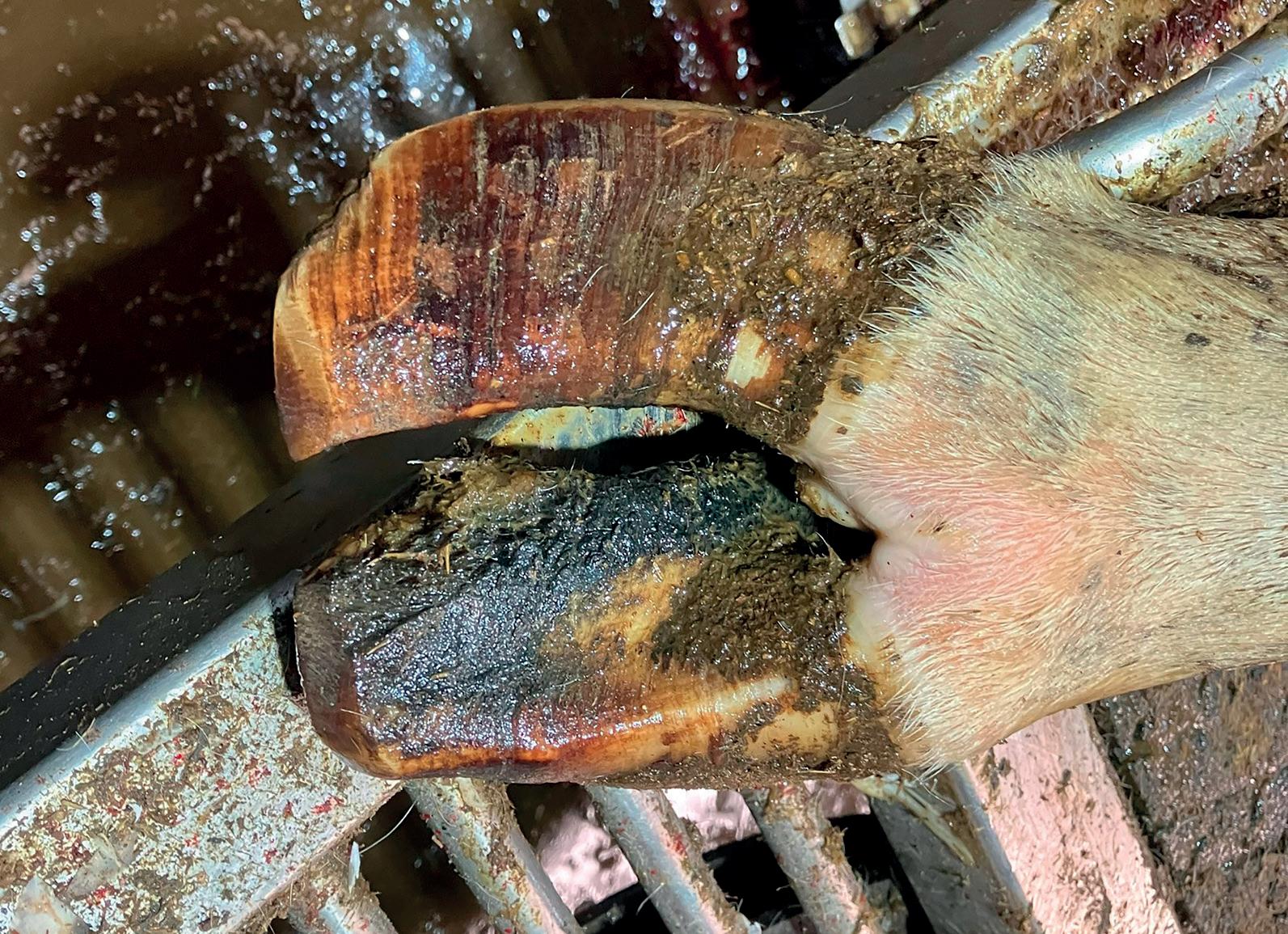
JUnlike sole bruising, white line and sole ulcers, foul (of the foot) is caused by a bacterium affecting the soft tissues of the foot, rather than the hoof horn itself.
In most cases an injury or weakening of the skin in the interdigital space between claws allows bacteria, primarily fusobacterium necrophorum, to infect the skin and soft tissues between the claws.
Damaging
Ms Pedersen says: “Foul develops when the bacteria have the opportunity to invade the soft tissue in between the claws, which could be through a foreign body puncturing the skin, or wet conditions damaging the skin between the claws.”
Seen in both housed and grazing herds and across all age groups, cases of foul are usually sporadic, but outbreaks
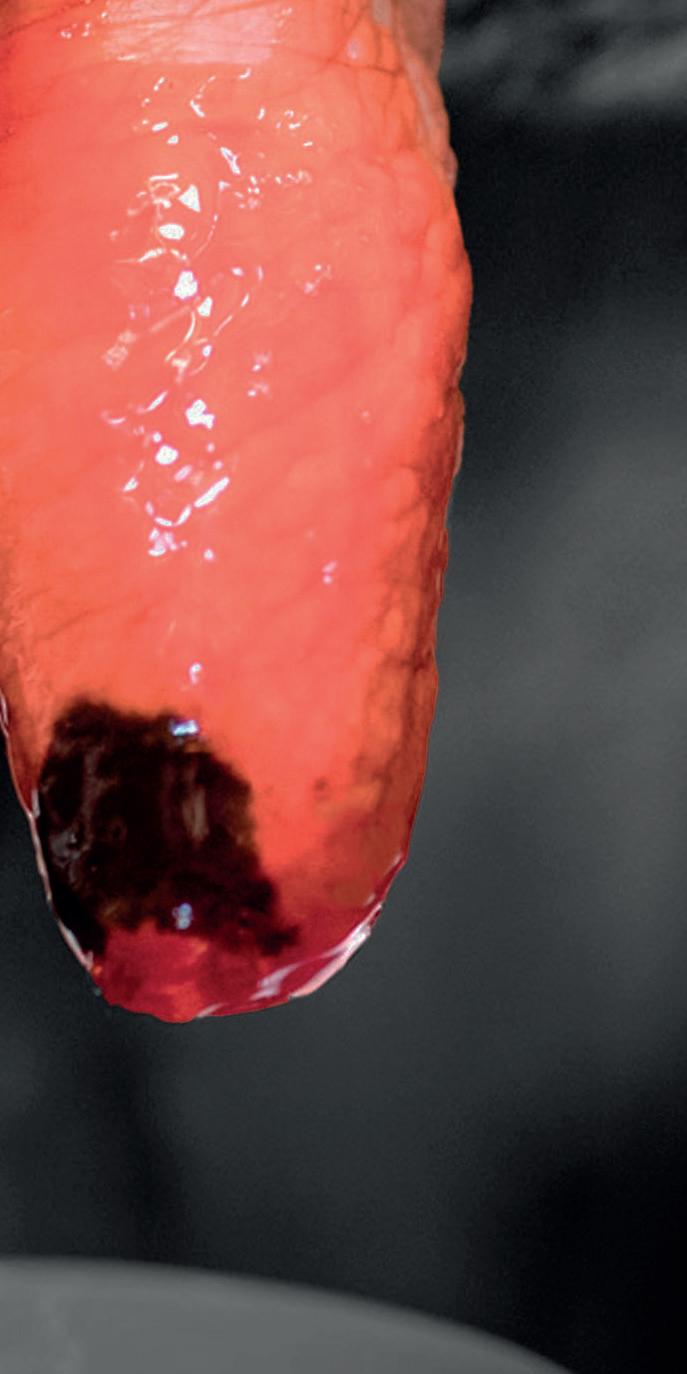
Foul occurs where bacteria infect the interdigital tissues.
can happen at specific times of year when weather conditions are favourable for both skin damage and bacteria establishment.
Ms Pedersen says more cases of foul are seen during wet, mild, autumn weather when the cows are out and pastures are poached, or during the summer when the skin between the claws
dries and cracks.
While the impacts of foul on dairy cattle are less studied than other lesions, Ms Pedersen says the condition is very acute and very severe.
She says: “It will make a cow go from sound to severely lame very quickly. She will be walking fine one day then the next day she is hanging back with a swollen foot and is not wanting to bear weight on it.”
As a result, cattle tend to either lie down and not get up, or do not lie down at all, which combined with reduced feed intake often results in reduced milk production.
“In some cases, due to the bacterial infection, cows will also become unwell.
Some of the key signs to look out for when identifying foul include, acute onset lameness, swelling of the foot, which also feels hot to touch, separation of
the toes due to swelling and necrotic tissue, non-weight bearing lameness, or standing on tip toes to relieve pressure on the foot.
Early diagnosis and timely treatment are key to managing foul, says Ms Pedersen.
Principles
She says: “All of those principles about early detection and prompt effective treatment are especially applicable to foul.
“If you get it really early at the first sign of swelling, it is much more likely to respond quicker to treatment.”
In all cases of foul, treatment should include injectable antibiotics and pain relief, says Ms Pedersen, who advises farmers to speak to their farm vet about which products are most suitable.
She also advises the interdigital space between the
Managing on-farm risk factors is key to preventing cases of both foul (of the foot) and corkscrew claw in the dairy herd. Katie Fallon reports.
Corkscrew claw and foul (of the foot) tips
While foul (of the foot) and corkscrew claw are not considered major causes of lameness among the UK’s dairy herds, they can have serious impacts on cow health, particularly in the case of foul.
Sara Pedersen, veterinary consultant at Farm Dynamics, shares her advice on managing both of the conditions along with best practice for treatment and prevention.
Sara Pedersen says hygiene and prevention are the best ways to lessen the risk of corkscrew claw and foul.
PICTURE : Richard Stanton
PICTURE : Sara Pedersen
claws should be inspected for foreign bodies, cleaned and treated with a licensed topical antibiotic spray.
When looking to prevent foul, Ms Pedersen says the focus should be on reducing the infection pressure of bacteria through good slurry management, as well as reducing the risk of skin damage.
She says: “All of the same principles as digital dermatitis apply; it is about keeping the feet as clean as possible.
“Maintain tracks and gateways and make sure there is not too much poaching or too many little stones they could pick up between their feet.
“Foot bathing is really important as well.”
Continues over the page...
• DCAB value calcium (Calcium Chloride & Calcium Sulphate) support the cow with the calcium she needs and also the ability to mobilise her own calcium
• A bottle of injectable calcium, given sub-cut:
• Will only last around 4 hours after administration1
Foul can affect both grazing and housed herds and Ms Pedersen advises keeping feet clean as possible and maintaining walkways to minimise risk of infection.
ANIMAL HEALTH
Corkscrew claw
JUnlike foul, corkscrew claw impacts the anatomy of the foot meaning the condition cannot be treated, only managed.
Ms Pedersen says corkscrew claw happens when the horn in the claws does not grow straight, but twists as it grows, forming a distinctive corkscrewlike spiral.
Cases of corkscrew claw can vary between herds, with some herds seeing sporadic cases and others subject to high numbers of cases where specific risk factors are present.
The frequency of the condition is often dependent on the type of corkscrew claw at play – either classic or reverse corkscrew.
Ms Pedersen explains the outside wall of the hoof is twisted and placed in direct contact with the ground, while the inside wall rotates upwards in the interdigital cleft.
The twisting results in a rotation of the toe, creating an inward and upward going spiral.
She says most farms will have had the odd case of classic corkscrew, which commonly affects the outside claw of the hind feet of older cattle.
She says: “It is often caused by factors such as age, genetics, poor housing or inappropriate trimming.
“But unless you have a specific bull in the herd that is causing a lot of issues, you may not see more than a few cases.”
Hind feet
Reverse corkscrew effects the inside claws of the hind feet and is more commonly seen in heifers, says Ms Pedersen.
She says there has been an increase in cases in systems which have adopted best practice cow comfort principles from cow housing and applied it to heifers, such as sand bedding (especially recycled sand), good concrete grooving and head locking yokes.
She says: “The additional grip provided by good grooving and the sand creates a situation where heifers are more confident
to push more and can put pressure on their feet as they feed.
“When they push more, they put more forces through the feet, and this leads to permanent changes as they continue to grow.”
Dairy farms in America are also seeing cases of reverse corkscrew, with research showing farms which have reverted to not having head locking yolks, but are instead ensuring feed is always pushed up, so heifers are not reaching and pushing, have been able to stop cases of reverse corkscrew.
“Some of the work by the University of Wisconsin indicates that this is happening because of the management.
“This tells us that what we consider to be gold standard housing for cows may not be optimal for growing heifers.”
Ms Pedersen says head locking yolks can still be used in heifer systems, but making sure they are an appropriate size and that heifers do not have to push
for feed is important.
Once a case of corkscrew is established it cannot be reversed, says Ms Pedersen, therefore, the focus is on reducing ongoing deterioration and adaptation of trim techniques because of the change in anatomy.
Due to rotation of the bone within the claw, thin soles are more of a risk and so extra caution must be taken when trimming the sole.
“If you have got those abnormal forces through the feet while the heifer is growing, it leads to anatomical changes that we cannot correct through trimming,” she says.
“We can manage it through trimming, but we need to be going a step back and thinking about when this is happening and how we alleviate it.”
Risk
For herds experiencing high levels of corkscrew claw, the focus must be on removing the risk factors associated with their development, says Ms Pedersen. Researchers in America suggest sand bedding increases hoof wear and thin soles, leading to inflammation of the pedal bone of the medial claws.
The claws are then susceptible to abnormal weight bearing forces during the period of skeletal development.
As a result, Ms Pedersen says a risk-based approach must be taken, with simple changes to feed barrier dimensions and space and design should be made initially to reduce forces through the feet, followed by assessing whether sand bedding should be avoided.
“Where changes have been made to remove these risk factors, corkscrews have been prevented,” she says.
In corkscrew claw, the outside wall of the hoof becomes twisted resulting in the rotation of the toe.
PICTURE : Sara Pedersen
Heifers pushing too much when feeding is a typical cause of reverse corkscrew claw.
BREEDING & FERTILITY
This breeding and fertility special highlights herds around the UK which are maximising genetic potential, and also gives expert advice on reviewing AI techniques.
Despite the focus on maximising yields, fourth-generation dairy farmer David Irwin is also committed to boosting solids production and promoting the longevity of his family’s Redhouse herd of Holsteins, farmed in Benburb, Co Tyrone.
David, who farms in partnership with his parents Sylvia and Alan, milks 170 Holsteins with milk income supplemented by breeding stock sales, including embryos, heifer calves and freshly calved heifers, as well as 30-40 stock bulls per year.
David explains he has always favoured the USA’s total performance index (TPI) ranking system for sire selection over the UK’s pro table lifetime index (PLI) evaluation. Nevertheless, the herd is positioned number eight in the PLI rankings.
Pedigree
He scrutinises every aspect of bull pedigree and performance before making a decision on individual matings and has recently signed up to the Select Sires NxGEN pro-
The Irwin family has achieved great success in Holstein breeding, with one of the highest indexing UK herds and more than 50 cows exceeding the 100-tonne-plus production milestone. Wendy Short reports.
Genetic potential through exemplary management
gramme, giving him access to an elite group of North American sires.
Sexed semen is used unless a particular cow is earmarked for bull calf production, with genomic technology introduced as far back as 2011.
He says: “In my opinion, the PLI favours a low-maintenance, smaller cow which performs well on a grazing programme. at type of system would not be a viable option on this farm, because regional land prices have spiralled out of reach
and expanding the acreage is out of the question.
Support
“Without extra land, a grazing herd would lead to a reduction in milk output. Yields have to be maximised for the business to be able to support two generations.
“ is means breeding for size and capacity to drive dry ma er intakes and taking full control of the environment and the diet.
“An annual 2.5 million litres of milk is generated on the 200 acres and the TPI is more geared towards the type of cow which matches our system.
“Many USA herds can reach a 15,000kg yield average, but American producers can make be er forages and they also have cheaper labour and feed input costs in general. erefore, they have greater opportunity to invest in housing and the cow’s environment, allowing cows to be er ful l their genetic potential.”
He says bulls are used to ‘push the herd in the right direction’.
The females are highly consistent in terms of conformation and production, as all the AI sires have very similar qualities
DAVID IRWIN
David Irwin
Calves are fed ad-lib milk up to weaning at 66-67 days.
“I would never usually use more than 20 straws from one AI bull each year to reduce the impact of genomic failures. ey do happen
and that is a chance we take. Despite this policy, the females are highly consistent in terms of conformation and production, as all the AI sires
Real-time insights anytime, anywhere.
We see farming differently.
Tru-Test Active Tag lets you access real-time heat and health data via your phone, while the Dairy Drafter ensures precise, autonomous drafting every time.
We create products and services that deliver measurable benefits, making farming more efficient through accurate tracking and data-driven decisions.
Scan the QR code to register your interest today.
Making a measurable difference.
Farm facts
rThe farm is 81 hectares (200 acres), with 16ha (40 acres) of cereals grown
rIn 2023, the homozygous polled sire Redhouse Zeus was purchased by Genus, with Cogent purchasing the homozygous polled heifer, Redhouse 2850 Mecca Ida
rCalving is from September to Christmas
have very similar qualities. Renegade is one bull which stands out as a good in uence; he was the ultimate all-rounder.
“Bulls must have a TPI gure of 220-plus for combined fat and protein. Milk constituents make a valuable addition to the base price, which was recently 44.1ppl and rose to 49.7ppl, with the solids bonus factored in along with hygiene and winter bonuses.”
And he says it is important that
rThe herd is fully housed
rMilk is sold to the Dale Farm co-operative
rCurrent milk yield average is 13,500kg at 4.4% butterfat and 3.4% protein
rIn 2021, Redhouse Holsteins topped the UK list for combined fat and protein production, with solids averaging 1,060kg for 2023
he likes the look of the cows, not only for his own personal satisfaction, but also because correct conformation and type will translate into higher sale prices.
Pleasing the eye
He says: “If the ca le do not please the eye, then producers will not buy them.”
e herd is fed a total mixed ration, which includes grass silage and straw nuts, plus a blend made
BREEDING & FERTILITY
on the farm comprising barley, rape meal, ground maize, sugar beet pulp, soya, distillers’ grains and minerals.
Concentrates are fed to yield in the parlour. Highly focused on the breeding programme, David delegates the dietary formulation to the farm’s nutritionist Steve Swales, who has been visiting once a month from England since 2011.
Maintaining a high standard of herd health and fertility are two other key priorities, and the herd, which was registered in 1988 a er grading up from British Friesians, and has been closed for 51 years.
e cows are certi ed BVDand Johne’s-free and vaccinated for protection against IBR and leptospirosis.
David says: “ e calving index is 385 days, with good results from DIYAI using the sexed semen.
“ e replacement rate is 25% and, within that gure, one quarter will be removed as voluntary and involuntary culls and deaths.
“Heifers are calved at 24 months to t into the breeding pa ern, but 21 months would be feasible.”
All the hard work which is put into the breeding programme would be wasted if the calves were not reared to the highest standards, he says.
“ ey have been given ad-lib milk up to weaning at 66-67 days for the past three years. It has boosted growth rates by about 30% and there has been a big improvement
in general health compared with the previous restricted system.
“Calves used to receive 900g of powder daily and on ad-lib they are consuming 1.2-1.5kg, more than doubling their birth weight during the pre-weaning period.
Calorific intake
“I have come to the conclusion that restricting their calori c intake impairs their ability to resist disease.”
And he says the correct environment is another essential factor for maximising the herd’s genetic potential.
“A change to exible plastic and rubber cubicles eight years ago has proved to be one of the best investments, because the
cows can easily free themselves if they get stuck. ere is a fan system for good air ow and the building’s long sides are louvred. e sides have to be adjusted manually, but they will be fully automated within the next year and the grooved concrete is being replaced with rubber slats.”
As for the future, ‘the sky is the limit’, says David.
“Ten years ago, the herd was averaging 3.8% bu erfat and 3% protein and the gures have climbed every year.
“I have had six cows with a lifetime combined fat and protein of 10 tonnes. One of my goals is for many more to reach that level.
“It is not easily achievable, but it gives me something to strive for.
“ e plan is to increase the embryo transfer work, because rapid genetic progress is the way forward, although I am convinced that herd performance is 75% management and nutrition and only 25% genetics.
“No major changes have been made over the years; it is a case of hammering away at making small, incremental advances in every aspect of breeding and management to reduce the disparity between the top and bo om performers and bring the lower end of the herd closer to the average.
“I have a huge passion for Holsteins and genetics. My ethos is to allow the cows to express their genetic potential through exemplary management.”
a
Maintaining
high standard of herd health and fertility are two key priorities for David Irwin.
Cows are fed a total mixed ration which includes grass silage and straw nuts, plus a blend.
Try our award winning high quality rumen bypass protein in your blend or as a straight today.
BREEDING & FERTILITY
The Ballycairn herd is the highest ranking for AHDB’s Profitable Lifetime Index in the UK. Ann Hardy spoke to herd owner Andrew McCollum to find out more.
Maintaining the UK top spot of highest £PLI herd
Northern Ireland dairy producers, William and Andrew McCollum, never set out to have the highest £PLI herd in the UK.
Pro table Lifetime Index was never a goal in its own right, but
We realised £PLI had a nice combination of health traits alongside production ANDREW MCCOLLUM
rather a mechanism through which they could breed exactly the type of cows they liked.
ese would be small, easycare cows with high milk solids together with good fertility, low cell counts and outstanding locomotion.
ey would slot e ortlessly into the system the father-andson team were running at Cairn Farm, close to the north coast in Coleraine.
Experience
Being an early adopter of genetic indexes in general gave the McCollums’ Ballycairn herd a good start, and by the time AHDB launched the £PLI in the late 1990s, they had wide experience of the power of heredity and
were keen to adopt genetic indexes as they were developed.
“We have always seen the need for bu erfat and protein and pushed the early indexes which included milk solids at that time,” says Andrew. is feeds through to the autumn calving herd on the 162-hectare (400-acre) farm today, where around 300 milking Holsteins – 60% of which are rst calvers – produce an annual average of 9,131 litres at 4.49% fat and 3.55% protein on twice-a-day milking.
Non-production traits have also been a priority and Andrew clearly recalls when AHDB introduced the genetic index for somatic cell count (SCC) in 1990.
“We could see from our cows
that SCC was hereditary so when the index came along, we jumped on it as quickly as we could,” he says.
Now seeing the dividends in the herd’s current performance, its rolling annual cell count is generally maintained at under 100,000 cells/ml.
Also critically important has been a cut in antibiotic use, and today, 90% of the herd is dried o with teat sealant, without recourse to antibiotic tubes.
By 2003, SCC had been included in the £PLI formula.
Andrew says: “We quickly realised it had become a very useful index for genetic selection.”
As more health and tness components continued to be added, he also appreciated
Being early adopters of genetic indexes gave the McCollums a head start with their Ballycairn herd.
£PLI in figures
JThe Ballycairn herd is the UK’s number one herd ranked on £PLI, with an average of £469 across the age profile.
And at £677 across the youngest generation, including £914 for the herd’s best heifer calf (Ballycairn Wesson 6438 Wilma), its lead looks likely to continue and will be accelerated by genomically testing and strictly selecting every heifer calf born.
With the herd’s best twoyear-olds giving 11,000 litres
the balance of its traits.
“We realised £PLI had a nice combination of health traits alongside production, so we were not selecting for one thing against another,” he says.
Anxious not to breed a herd of healthy cows which did not give any milk, he is happy with
with high solids and calving again inside the year, Andrew says: “I would like to think that in a few years’ time, our average production could be at that level.”
The role of conformation in Andrew’s selection may seem ambiguous, as although the herd is classified, he makes no bull selection on type.
He says: “I do not look at type indexes; I do not even give them a glance.
They are calculated from an
the balance the index has struck.
“Our cows today are easier to manage; they calve themselves and lameness is not an issue,” he says.
He particularly rates their improvement in fertility, which is achieved without any fertility programmes.
He says: “We have fewer
opinion based on a 10-second inspection, made once in an animal’s lifetime,” he says, also believing classification disproportionately favours taller animals.
However, despite his reservations, he enjoys the process for his own herd, whose outstanding results –including 52% of two-year-olds classified VG – demonstrate that a high-index herd can achieve top classification grades.
interventions in each cow than we ever had before and there are no washouts a er calving.”
Reproductive indicators have correspondingly improved and include a conception rate to rst service of 46% and a calving interval of 370 days.
However, despite the £PLI’s
Andrew McCollum says the family looks to breed small, easy-care cows with high milk solids and good fertility.
negative weighting for stature, Andrew is disappointed that he has struggled to prevent an increase in the height of his cows.
“I have been trying to use bulls which will breed smaller cows for many years, but our stature has not gone down,” he says, remarking that the UK’s
BREEDING & FERTILITY
national average for stature, continually reset to zero on the genetic index scale, has crept relentlessly up.
“People o en think a -1 score will breed a very small cow, but in today’s bull population, -1 is exactly what we want,” he says.
Farm facts
r162-hectare (400acre) farm milking 300 Holsteins (60% first calvers)
rAverage 9,131 litres at 4.49% fat and 3.55% protein
rFocused on using genetics to improve performance
rAverage £PLI £469; youngest generation £677 (£914 for best calf)
r52% of two-year-olds classified VG
rSells milk to Aurivo and increasingly focused on fat plus protein
rUses sexed dairy semen on all dairy cattle
rTypically sells 100-150 milking cows and 120 calves/year
rBred Ballycairn Tiergan, an international top 10 £PLI bull in 2011
In fact, a bull scoring of zero is the tallest he would want to use. However, today he places his focus on Maintenance Index and Feed Advantage rather than on stature, preferring their combined emphasis on overall weight and body traits and the e ciency of converting feed into milk.
“We want our cows to make more milk from less feed, which is both more e cient for us and for our carbon footprint,” he says.
Also observing that his cows are far healthier today and managed with fewer sta , he says: “ is de nitely feeds through to pro ts; it is also so much be er for cow welfare and for the consumer looking on.”
rTo get your AHDB Herd Genetic Report: Fully milk recorded dairy producers can sign up for their own report at ahdb. org.uk/knowledge-library/dairyherd-genetic-reports which will provide the full genetic potential of the herd’s milking cows and youngstock, including £PLI, PTAs for production, health and management traits, and levels of inbreeding.
Industry concerns
JFor the future, Andrew says he has concerns that some of the AI industry is placing too great an emphasis on international indexes while also limiting availability to UK producers to some of its bulls, through restrictive contracts.
“It is all about the shareholders. The international market gives wider opportunities, but we know from experience that the American indexes are not serving UK dairy farmers well.
“Genetics work slightly differently in different climates, with different forages and on different cows,” he says.
“And where a company gives preference to America’s TPI [Total Performance Index] to serve international markets, it is hoping for a crossover with £PLI, which is not always the case.”
Carefully
In the Ballycairn herd, Andrew and his father will continue to use £PLI as their main breeding tool, while keeping a watching brief on the recently introduced EnviroCow, and selecting Holstein bulls as carefully as they can from the largest and most genetically diverse breed population in the world.
Sires used at Ballycairn
rOlder cows are by: Harper, Applejax, Littlerock, Guarantee, Freewill
rYounger cows are by: Crosby, Captain, Plinko, Knight, Ginetta,Kenmore
rMilking two-year-olds are by: Knowhow, Aladdin, Alanzo,
Applaud, Avery, Breaking News
rYearlings are by: Peace, Ebersol, Severus, Holysmokes, Jimbo, Aleo
rCalves are by: Orvar, Morpheus, Powerhouse, Hargrove, Calabria, Knowhow
The cows are also healthier and more efficient, making more milk from less feed.
BREEDING & FERTILITY
Poor conception rates from DIY AI are often due to multifactorial problems, but any measures towards rectification should include a review of practices. Wendy Short reports.
National average gures show that conception rates from DIY arti cial insemination (AI) have the potential to match results from a professional technician, but results can be improved by following recommended guidelines for semen handling and insemination methods, says vet Claire Walker, of e Livestock Partnership, based in Petworth, West Sussex.
She says: “It is di cult to compare conception rate results from DIY AI between farms, because the on-farm technician is only one element of the wider picture.
“ erefore, a good starting point is to keep detailed records which show individual performance, assuming that more than one person is responsible for insemination.
“Some people are naturally more skilled than others, but all technicians will bene t from annual refresher training.”
Reviewing DIY AI practices to get best results
She suggests se ing a conception rate target based on current farm performance.
“A 60% gure would be an extremely good result for a DIY AI conception rate, although 30% would be considered acceptable, depending on the unit and breeding pa erns and strategies. Any change in performance results should prompt an investigation,” she says.
“Achieving consistently good gures is sometimes easier for DIY AI technicians on all-year-round
calving farms, as they have the advantage of regular practice. Block calving herd technicians will bene t from a refresher course before the start of service, to ensure there is no compromise in the crucial rst three weeks.”
Problems
One of the most common problems is placing the semen too far into the uterus.
“Semen should be deposited into the body of the uterus, without
going up the horn. is is taught using postmortem specimens and palpation practice, to become accustomed to the relevant anatomy,” she says.
“ e most e ective method of learning is to work alongside a vet, who will provide a straw loaded with a substance that can be detected on ultrasound. is practical experience, combined with the checking method, will improve familiarity and determine whether the semen is being correctly placed.”
AI semen quality can be affected by mishandling of straws from the nitrogen flask, warns Claire Walker.
Another issue linked to poor conception rates is the mishandling of semen straws, says Mrs Walker.
She says: “Too many temperature changes can have a highly negative e ect on semen quality, and a rapid thaw should be the goal.
“ ere is a potential risk to semen quality every time a straw is taken out of the storage tank. I will o en see operators pull the canister too high for removal, when the tank frost line should be the limit.
“It will promote good results if the straws in each tank are not too tightly packed, as well as being clearly labelled to prevent them from having to be pulled from storage for identi cation.
“A semen storage problem will a ect all inseminator results, rather than one individual being responsible for poor performance. However, it may be that one member of the team will bene t from additional training on procedure.”
Flask nitrogen levels should be measured frequently to check for leaks.
She says: “Many units are on contracts with semen companies for liquid nitrogen top-ups and semen straw delivery.
“Nevertheless, checks should also be carried out on farm because falling liquid levels can cause semen quality to rapidly deteriorate.
“ e quality of the semen in the tank can be assessed by analysing a prepared straw using a heated microscope, once it has been removed and correctly thawed.”
Once removed from the thawing process in the water bath, the straw must be kept at a consistent temperature of 36 to 37degC until it is placed in the gun and sheath, which
should be warmed to the same temperature, says Mrs Walker.
“Specialised gun warmers are available, although other methods include rubbing the equipment with a paper towel or simply pu ing it down the operator’s back,” she says.
“ ere is a strict time limit of 10 minutes from the removal of the straw from the tank, to placing it in the correct position in the cow. Conception rates will be compromised, if this time limit is exceeded.”
Limit
She outlines some practical measures to help with meeting the 10-minute time limit.
She advises: “Prior to removing the straw from the tank, the bulling female should be safely restrained in a calm environment, ideally with a herd mate.
“It is also worth double-checking the records, to make sure that she has been correctly identi ed.
“All of the items that will be needed, such as gloves, lubricant
and paper towels, should be within easy reach before the semen straw is brought in.”
e serving area location is also important.
She says: “An experienced inseminator on a unit where conception rate targets are being met can serve cows in the cubicle shed or similar environment without issue.
“However, on farms with poor gures, and/or where an inexperienced inseminator is involved, it is best to restrain the animal in a crush or AI stall.”
She adds that successful DIY AI results depend on paying a ention to detail during every step of the procedure from storage tank to cow without compromise.
“On most modern dairy farms, there is always a li le room for improvement,” she says.
“It pays to keep a close eye on records, schedule refresher courses and achieve marginal gains in every aspect. ese will add up to improve the results as a whole.”
Claire Walker
MACHINERY LAMMA SHOW
The UK’s largest machinery show opened its doors on January 15-16 with crowds looking to get the first view of new machinery innovation from leading manufacturers.
James Huyton, Jane Carley and Toby Whatley took a look at the eye-catching kit displayed.
LAMMA highlights
Vogelsang XSplit
JVogelsang’s new XSplit Compact press screw separator is a smaller, more affordable option for farms looking to improve slurry management.
It features much of the same technology as the full sized XSplit model and can separate up to 40% dry matter, but is better suited to farms with up to 100 cows.
It is a fixed separator, and, due to its compact dimensions, it can be housed more easily in smaller farm buildings and moved between buildings if necessary.
Capable of up to 10 cu.m/hr, the unit weighs just 875kg and
BvL V-MIX Drive Maximus Plus
J BvL unveiled a new higher capacity 25cu.m version of the V-MIX Drive Maximus Plus self-propelled diet feeder, that also includes a number of updates and new features to the specification.
It features the BvL loading head fitted with tines instead of knives to effectively comb the silage from the clamp face, so preserving its plant structure.
When loading at the silage clamp, the creep speed function enables the driver to set the maximum travel speed to suit his needs, allowing sensitive control of the accelerator pedal. Fine adjustment of the speed simplifies manoeuvring at the silage face.
The automatic mixing system can be activated at the push of a button with settings for the auger speed and mixing time. When the set mixing time has elapsed, the augers automatically stop and the machine decreases the engine rpm to idle speed. Diesel consumption is therefore reduced as soon as the augers are switched off.
Additional tasks such as cleaning the feed table or pushing in feed can be carried out at the same time, since the operator does not have to stay in the cab. The BvL V-Connect dairy feeder feed management system has also been updated and incorporates a number of new features.
Teagle Tomahawk 6100H
features a 4kW power pump.
The XSplit Compact features VarioAdjust, a hydraulic closure unit that provides full control over solids output, dry matter content and throughput.
A pressure gauge offers precise control up to a pressure of 25 bar using the hydraulic pump and no tools are required.
The Vogelsang stand at LAMMA also had the full size XSplit in its trailer mounted, mobile specification which is likely to appeal to contractors. The latest BlackBird and UniSpread application units were available to see.
JAimed at the skid steer and small pivot-steer market, the Teagle Tomahawk 6100H is the latest addition to the manufacturer’s line-up. This straw-only machine uses the manufacturer’s 280-degree swivel shoot system, which is capable of directing bedding up to 12 metres into a livestock pen.
With a 40 litre per minute oil flow requirement the Teagle can
take a 4ft or 5ft round bale, or alternatively, the leading shear gate can be used to cut a Heston bale in half and feed it into the chopper for spreading. The manufacturer also claims the design of the chopping unit aids in the reduction of dust emissions when operating. The compact machine also offers a 1,400kg payload option for loader and three-point linkage fitment can also be specified.
Kubota RT305
JShown for the first time in the UK, the RT305T-2 is now the largest pivot steer loader in the RT range and offers a 1.2 tonne lift capacity and a maximum lift height of 4.3 metres.
A maximum horizontal reach of 3m can be achieved with a 750kg load. Power is supplied by a Stage V compliant, fourcylinder turbocharged Kubota diesel engine producing 66hp.
The driveline is hydrostatic and is supplied though a Bosch Rexroth hydraulic motor which drives both Carraro axles
through mechanical driveshafts, and offers two speed ranges –0-15 and 0-30km/h.
A 45-degree steering articulation angle is claimed with an additional four degrees of rear-axle oscillation which Kubota says provides consistent traction and power delivery. The RT305T-2 is another product from the partnership between Dutch manufacturer Tobroco-Giant and Kubota and was shown with a full cab. The range will also be offered with a semi-glazed ROPS frame and safety doors.
Cowcare Rope Scraper System
Manufacturing & installing rope scrapers for over 25 years
• Ideal for sand laden slurry
• Timer clock to schedule cleaning
• Easy control system
• Lowest cost maintenance
• 5 year extended warranty available
For a no obligation quote or more information please contact:
Malone Proline 610 LAMMA SHOW MACHINERY
JSeen as a prototype in 2024, Malone’s Proline 610 rake was shown as a production machine for the first time.
The twin 11 rotor rake has a working width of 6.1 metres with rotor working height and cam angle mechanically adjusted.
It is the first machine in a planned range of rakes, with the current version placed as an entry-level machine for farmers producing their own winter fodder or smaller
contractors working ahead of balers. Malone says the Proline has been developed following customers demand for simple and robust rakes to operate alongside its established range of plain and conditioner mowers.
The Proline has a recommended input power of 50hp and can be adjusted to produce swaths of 1.3 to 1.7m wide, mechanical push-rod axle steering is offered with a folded transport height of 3.8m.
07591 833853
MACHINERY LAMMA SHOW
Bauer Plug and Play
JBauer’s new Plug and Play slurry elevator offers increased flexibility for the company’s mobile separator packages, designed for contractors providing an on-farm separation service.
The new elevator version can be trailer-mounted, but also has a parallel lift structure incorporating slurry intake and separated dirty water pipes, so that the separator can be positioned to discharge the solids into a trailer or spreader, or into a large loader bucket.
It comprises a galvanised steel frame housing a pump, all necessary pipework and an enclosed control panel, with a choice of screw press separators mounted on top.
The Bauer S655 and S855 (and equivalent FAN) screw-andscreen separators are suitable for the new Elevator package.
Mobile separation packages require minimal permanent infrastructure, so can be useful in situations where planning restrictions hamper a fixed installation.
TRACTORS UK
Abbey VF3350 diet feeder
JAbbey Machinery showed the VF3350 triple auger model from its towed diet feeder range, en route to a customer in Scotland.
While the company is well known for its single and twin auger machines, increased demand is being seen for the larger wagons, driven by dairy farms scaling up and moving to green field site units purpose built to accommodate larger machinery.
The VF3350 has three vertical 22mm augers, and 8mm walls, its heavy build
Pottinger Jumbo
JPottinger showed the Jumbo 5390, part of a new mid-range series of loader wagons.
The Jumbo 5000 is available in six new models ranging in DIN capacity between 32 and 54cu.m. It can be specified with a six-row, all-rounder pickup with an effective width of 1,890mm or the seven-row Profi pick-up with a DIN width of 2,350mm, both controlled from each end by a steel cam track.
The central component of the Jumbo 5000 is the 1,580mm
being one of its selling points, says the company. It also features a wide angle pto shaft with shearbolt protection.
With 24 knives and two counter knives, materials are thoroughly processed and fed out via a pair of wide hydraulic discharge doors, using a twospeed gearbox for different feeding needs.
Electronic scales with six weigh bars are linked to DigiStar technology for ration recording. For manoeuvrability, the chassis has a sprung tandem steering axle.
wide loading rotor which has a diameter of 800mm and helix eight row tine arrangement, which can actively feed the forage smoothly through the chopping system.
It also features the Powercut short-chop chopping system with 45 knives to cut forage to just 34mm in length.
The Easy Move swing-out knife bank makes it easy to change and reverse the knives and Autocut knife sharpening system is an option.
LAMMA SHOW MACHINERY
JCB TM280S
JCreated to occupy a position in the manufacturer’s TM range between the smaller TM220 and larger TM320 models, the TM280 and TM280S have been introduced to provide a 2.75 tonne lift capacity and a 4.8 metre lift height, with an overall machine height of 2.6m.
Output
Power is supplied from an in-house assembled 4.8 litre, Stage V DieselMax 448 engine, which provides an output of 109hp and 516Nm in the TM280 version, with the uprated S designation delivering an output of 130hp and 550Nm.
Both machines use a 140 litre/min, 240 bar variable displacement hydraulic pump. Two transmission options
are provided, with the smaller TM280 operating with a singlerange 30km/h hydrostatic, and the TM280S fitted with a version of the manufacturer’s DualTech VT hydrostatic mechanical hybrid, which provides hydrostatic drive at lower speeds of up to 25km/h, and changes to a direct mechanical drive at higher velocities, with a maximum speed of 40 km/h.
For users of high hydraulic flow attachments, including brushes, root chopping buckets and bedding dispensers, a creep transmission mode is provided on both transmission options which separates engine speed control from the accelerator pedal so that the full hydraulic pump output is available while operating at up to 20km/h.
Weidemann T6025
JDesigned in the UK and assembled in Germany, the T6025 follows a similar route to the larger 7042 machine, with several controls and cab fit and finish features shared between the models.
The introduction of the T6025 replaces the existing T5522 and Kramersourced 6027. The T6025 is a completely in-house Weidemann development and provides a 2.5 tonne lift capacity to a maximum height
of 6.0 metres. Hydraulic output extends to a maximum flow of 75 litre/minute at 250 bar.
Power is supplied from a 2.2-litre, four-cylinder 75hp Perkins engine with a two-speed hydrostatic transmission providing a maximum speed of 30 km/h. The introduction of the T6025 adds another machine into the now competitive group of telehandlers with an overall width and height of less than two metres.
GRANTS
Speak to Katie O’Hagan today and start converting our readers to your customers. 01772 799500 | fgclassified@farmersguardian.com Advertising opportunities now available in our
MILKprices
Milk prices into holding pattern
JWith a string of milk price holds for February, there is now a holding pa ern formed while milk buyers wait for clearer signals from the market and from milk production levels, before taking decisions on prices going into spring.
e recent cold snap of weather through the rst half of January has done no harm, trimming back the weekly growth in milk production while at the same time having a positive e ect on demand.
the larger ones take, for the obvious reason that, in the main, their actions help steer milk price direction.
While market signals early in the year are failing to give any real clear indication of market sentiment, the current undertone is one that is leaning slightly more to the positive and therefore, stability rather than any serious downturn.
All said, there is a slowly growing consensus however, that a small pull back on milk prices this spring would be healthy, as it might create a be er price consolidation in the market from which to build on later in the year. e last thing on anyone’s list, whether seller or buyer, is boom and bust as, over the longer term, it does few people any favours.
What may likely happen, certainly if there are no price signals to the upside this spring, is some buyers who are paying higher milk prices, may be forced to correct to move more in line with milk prices that failed to reach similar higher levels.
Another bellweather guide for smaller milk buyers is what action
As expected, Arla Foods has started 2025 on a cautious footing and while it held its on-account milk price for January, quarterly currency movement meant a small downward adjustment for UK owners of the business. e company reported that global milk supplies are increasing slightly while retail sales continue to grow, albeit at a low level. Commodity markets are seeing a weakening a er the seasonal Christmas peak, while retail markets are stable and therefore, the outlook is slightly negative, due to uncertainty on commodity prices.
Arla UK’s decrease linked to currency takes our manufacturing* standard litre down 0.27ppl to 48.27ppl while our liquid standard* decreases by 0.3ppl to 46.28ppl.
e company’s organic price decreasing the same amounts to 58.26ppl and 55.86ppl respectively.
e liquid standard price declining by more than manufacturing this time around appears a li le odd, however it is down to an annual review where the company decided to put further payment emphasis on bu erfat at the expense of protein.
e Arla Direct price, without currency adjustment, is unchanged for February on 45.47ppl for our manufacturing standard.
Milk price analyst Stephen Bradley on the latest milk industry developments.
Tesco reduces 0.42ppl
JThe Tesco Sustainable Dairy Group (TSDG) quarterly price from this February to the end of April this year has reduced by 0.42ppl, after applying the October 2024 to March 2025 feed, fuel and fertiliser price movement to the annual cost tracker budget.
The decrease, which follows the 0.43ppl reduction from November 2024 takes our Müller TSDG direct supplier price down to 40.02ppl and the same level of cut to 39.77ppl for our Arla direct supplier.
The annual tracker currently has variable costs of 22.79ppl, overheads as
15.04ppl with depreciation of 2.72ppl giving a total cost of 40.55ppl before this last feed, fuel and fertiliser adjustment.
After four price decreases since September last year totalling 0.26ppl, the Sainsbury’s price increased by 0.08ppl for February following a 0.09ppl increase in its sustainability bonus, taking our Müller supplier price up to 40.59ppl.
The Co-operative quarterly price, which tracks the three prices of Müller Direct, Tesco and Sainsbury’s, decreased by 0.18ppl to 40.95ppl for February 2024 with the new price change potentially from May 2025.
Wyke Farms increases its producer sustainability bonus
JWyke Farms has increased its sustainability bonus by 0.2ppl to 1.2ppl from February with the introduction of a sixth pillar to its scheme.
The producer has to comply with four out of the five sustainability modules in each pillar to achieve the full bonus, which takes our price up to 44.69ppl
for manufacturing and 43.20ppl for liquid.
The other price move for February is a small deduction by Pembrokeshire Creamery, which after eight monthly price increases in a row totalling 6.38ppl, has reduced by 0.08ppl to take our liquid price down to 44.80ppl.
* Our Liquid standard litre is 4%b/f & 3.3% protein, for our Manufacturing 4.2%b/f & 3.4% protein and in both cases Bactoscans of 30,000/ml & SCCs of 200,000/ml, with Thermodurics of 500/ml, 1mltrs/yr on EODC (max vehicle accessibility) based on level supply and therefore, before seasonality, (but includes the winter premiums paid in NI) as well as monthly profile adjustments, balancing charges, capital deductions or annual / part annual growth incentive schemes or supplements not directly linked to dairy market price movement.e movement.
• Cow kennels
• Perfect Shelter
• Designed for Animal Health
• Excellent Ventilation
• Shelter from Wind & Rain
• Shade from the Sun
• Plenty of Fresh Air
• Ample Space
• Minimum Draught
• Many options available
Tub Grinders
- Exclusive UK Distributor of Haybuster & Rotogrind Grinders.
- Range of models from 5t - 25t / hour output.
- New, used & refurbished machines available.
- Ideal for straw, hay, green waste, roots, biogas feeds etc.
Root Choppers & Cleaners
- Loader, 3 point linkage, free standing PTO and electric drive available
- UK Distributor of VDW range of choppers, cleaners & feed dispensing equipment
- Output from 10t/hour to over 120t/hour available
Diet Feeders
- Largest stock of mixers in the UKover 50 machines in current stock
Breaking for parts -Trioliet 28, Shelbourne 11, 13, 19, Abbey 1500, Strautmann 1250, Siloking 22,
Please visit www.enegis.co.uk for more photos or call 01789
FEBRUARY 2025
MILK PRICES
‘B’ Price Indicators
Notes to table
&
(1.760ppl)
CCJ’s
2025 starts off on a positive note
Before Christmas, commodity prices were falling, and enduse buyers sensed the tables had turned in their favour once again. It was predicted that 2025 would start with those commodity prices falling again.
So far, though, bu er and cream seem to have rallied, with bu er prices rising to the mid €7,000 (£5,860) range as opposed to falling below the threshold.
Cream had risen from below £2.50/kg before Christmas to around £2.75 to £2.80 now. It is hard to underestimate the signi cance of these moves, given the speed at which prices and sentiment were slipping before Christmas. But it is still early days and much could change yet.
Cheese forward prices were also tumbling fast and furiously through December, but they also look as if they may have stabilised. Traders are reporting selling at £4,000 now for
mild, and at £3,500 for mozzarella. Again prices were lower before Christmas.
Stone X’s cheese futures prices are also up across the board, with curd and cheddar up £80 to £3,830; gouda up the same to £3,475 and mozzarella up £110 to £3,340. Again these are very positive developments.
All of that said, though, the over-the-counter prices were
EEX Weekly European Cheese Indices ( )
tumbling below what was logical and sensible for market stability, so an increase was inevitable.
e EEX futures exchange is another indication of trends. Although Cheddar curd has still continued to fall this week it is by just 5 (£4.19) to €3,925 (£3,286), and mild cheddar is up €2 (£1.67) to €3,943 (£3,301).
Mozzarella has increased by a decent €85 (£71) to €3,280 (£2,746). While the gains do not sound much, their signi cance becomes clear when they are put in context of the last few months – all prices have dropped signi cantly every week since October. at they look as if they might be stabilising is an undoubted positive. is week’s GDT will also have helped, with both Cheddar and mozzarella increasing in price.
Milk volumes up
JUK milk volumes continue to be higher than last year at this time, but the percentage increase is now down to 3% to 4% as opposed to being 6% to 7% higher back in November.
Volumes over the last two weeks averaged 41.45m litres per day; 1.5m litres a day more than last year and 4% higher than the long-term average.
GB milk volumes averaged 34.05m litres per day, some 865,000 litres and 2.61% more than last year, with Northern Ireland volumes averaging 7.40m litres per day, up 606,000 litres and 9% more.
As it stands the late surge in production will push total volumes for the calendar year over the 15bn litre threshold. 2020 saw volumes top it by just 1.5m litres. This year looks to set a new record high of around 15.04bn litres.
So far butter and cream prices seem to have rallied with butter prices rising to the mid 7,000 (£5,860) range.
Mild Cheddar
Currency changes give a boost to milk, butter and cheese prices
JMilk prices can be significantly impacted by currency changes, of course, although they largely go unnoticed. Sterling is now tracking at its lowest level for a year as Government borrowings soar. Currently the dollar rate is down at $1.23, which means the latest GDT commodity average price of $4,030 converts to £3,280. Back in August the rate was $1.34, and the current GDT price would have been equivalent to £3,040. In euro terms the rate is now € 1.18. Its recent peak was € 1.21. Butter at € 7,000 thus converts to £5,870. At its peak it converted to £5,780. In milk price terms it probably
equates to a gain of between 0.5 and 1ppl.
Aside from the boost to commodity prices it also means that it is harder now for those striving to import New Zealand product. During 2024 around 10,000 tonnes of Cheddar was imported from New Zealand, and a few firms were hoping to continue that this year. They are unlikely to do so now – this week Cheddar sold on the GDT for $4,700 (£3,830). Back in August the same price would have equated to £3,500, so the price is now £300 more and, in the words of one (previously) interested cheese buyer ‘imports from New Zealand are totally not workable’.
Reduce Your Carbon Footprint
At KW we are passionate about working with you to reduce your carbon footprint, therefore we offer support via our nutritional advice, reducing your feed carbon footprint with our various lower carbon feeds and our on-farm technology, Feedlync.
December 17 January 7
GDT drops 1.4%
JThere was a relatively neutral start to the year for the GDT, with the index down 1.4% – the second consecutive reduction.
Traders were expecting a fall, and the fact that it only dropped just over 1% on all contracts could be seen as a decent result. Nevertheless the moves take the average commodity price down to $4,029 (£3,274). Powders dropped 2%, but butter increased by nearly 3%. Mozzarella also saw a useful
3.6% gain, having struggled since November.
Arla’s mozzarella sold for $4,165, equivalent to € 3,970 and £3,280 – a pretty awful price. Its SMP dropped for the fourth auction in a row, down to $2,510 (£2,040) and € 2,400 (£1,950). It has now fallen over $200 (£163) since its early November peak of over $2,700 (£2,194). The commodities convert into an approximate UK milk price equivalent of 37.61p.
NEWProducts
This month’s new product section looks at the latest John Deere Gator model, a Defraapproved disinfectant and a digital assistant service to help farmers prioritise workloads.
John Deere introduces its new Gator
John Deere has launched the new diesel Gator XUV 875M utility vehicle, designed to improve productivity across various tasks, it o ers increased cargo capacity, enhanced comfort and improved functionality.
Key features include a 22.8hp engine with a fuel tank volume of 42.4 litres, a seating for three, a cargo box capacity of 454kg and fully independent suspension with 203/229mm travel.
Comfort
e new model includes an updated rear suspension design and tuned shock absorbers to enhance comfort.
Key improvements include relocating the air intake 30cm higher to ensure cleaner air is taken in, thus protecting the engine.
e redesigned cargo box offers 13% more space than the XUV865M model, allowing for greater carrying capacity.
e John Deere Gator XUV 875M utility vehicle will be
available to dealers from spring 2025.
rFor more information, contact your local John Deere dealer.
Defra-approved disinfectant launched
JA new Defra approved disinfectant has been launched by Neogen, which is proven against a wide range of pathogenic threats including bovine TB, foot-and-mouth disease, cryptosporidium, coccidiosis, rotavirus, BVD and Johne’s disease-causing mycobacteria.
The product can be used in a variety of applications
for the general disinfection of both indoor and outdoor animal housing, as well as in wheel and boot dips with minimal degradation by direct sunlight. It should be applied to pre-cleaned, dry surfaces, following the label instructions.
For best results, the company says, it should be used as part of a Neogen Pathogen Control Programme, which is designed
to be effective against the broad spectrum of disease-causing pathogens in livestock production.
The typical recommendation is to use Neogen Farm Fluid MAX as the third step of the programme, following the cleaning of all surfaces with Farm-Foam EVO and an initial application of Neogen Viroxide Super disinfectant.
rFor more information, email biosecuritysales@neogen.com
JNew products are featured in each issue of Dairy Farmer. Please send details and pictures to Katie Fallon at katie.fallon@ agriconnect.com, or call 07815 003 227. Got a new product?
The air intake on the Gator XUV 875M has been raised by 30cm to protect the engine.
Digital agroforestry toolkit
JA new free digital agroforestry designer toolkit is being launched by cloud-based mapping software company Land App.
Aimed at farmers, estate managers and land agents across the UK, Land App’s new Agroforestry Designer Toolkit aims to transform how agroforestry is planned and implemented across the UK, enabling it to become an integral part of wider landscape management.
The new toolkit is included in the free tier of Land App, therefore is available to all. By answering a short series of questions, it will generate
bespoke agroforestry initial designs tailored to each farm in just 30 seconds, allowing farmers, estate managers and land agents to visualise what could be possible on their land.
The designs are flexible and can be customised to meet specific requirements. The toolkit can also create initial designs that are compatible with current Government incentives and payment schemes, making it easier to align with Defra’s Sustainable Farming Incentive and Countryside Stewardship Higher Tier.
rFor more information, go to thelandapp.com
New smaXtec digital assistant
JDairy health system management provider smaXtec has launched a new digital assistant service to help farmers prioritise workloads and improve herd and reproductive health.
The service draws on data direct from the herd via its ruminal bolus technology, alongside artificial intelligence (AI), to create automated management lists and reports for farmers and staff. It also creates a to-do list based on a farm’s individual needs so that staff know what tasks to carry out first.
The digital assistant is designed to work alongside smaXtec’s TruAdvice technology, which has been expanded to include alerts for a wider range of health problems. Launched last year, TruAdvice uses AI technology to generate
highly accurate disease indication notifications for common dairy cow diseases.
SmaXtec’s bolus technology provides accurate insight into a cow’s inner body temperature; water intake and drinking cycles; rumination and activity levels by taking continuous measurements directly from the reticulum.
rFor more information, go to smaXtec.com
DAIRY REGEN
Protein extracted from organic grass has great potential as a climate and environmentally efficient alternative protein source for animal feed and for humans. Aage Krogsdam reports.
Grass protein, a future replacement for soya
Experts believe the ‘protein of the future’ is going to be grass protein made with clover and alfalfa.
Because of this, three Danish agricultural companies, Dansk Landbrugs Grovvareselskab, Danish Agro and Dansk Landbrugs Froforsyning have come together to found BioRene Denmark A/S, which will produce green proteins from organic clover and alfalfa.
e rst production facility is located north of Varde in West Jutland. Around 20 suppliers deliver clover and alfalfa from more than 1,000 hectares (2,471 acres) to the plant.
Goal
e preliminary goal is to produce around 1,500 tonnes of organic protein annually with a crude protein content of more than 50%.
In the coming years, the plan is to slowly increase the production of grass protein, so that in the longterm, grass protein can replace imports of around 50,000 tonnes of organic soya and increase the share
of feed protein produced in Denmark. e green protein extracted from organic grass has great potential as a climate-e cient ingredient in feed for livestock and, in the longterm, also food.
One of the suppliers of grass to the factory is farmer Brian Pagaard, Kvong near Varde, who has about 13,500 laying hens and grows 91ha of grass, mostly white clover, for BioRe ne.
Mr Pagaard explains he is responsible for the growing of the crop, but harvesting and transport to the plant is carried out by BioRe ne.
e farm is only 12km from the facility, so the climate footprint is also minimal in terms of transport.
He says: “I receive continuous payments for my crops over the season and therefore I do not tie up any money a er the harvest. e payment is fully competitive with ordinary cereal products.”
When the clover eld is suitable for harvesting, it is swathed and
picked up by a machine that chops the white clover. e chopped white clover is then transported directly to the factory, where it is chopped and pressed within eight hours.
During the pressing process, the crop separates into two separate parts; a green liquid and a green bre.
e liquid contains the proteins that pigs and chickens can digest.
e bre has a dry ma er percentage of about 32% and is used mainly for biogas production.
In the long-term the bre is expected to be used for packaging, textiles and insulation and other forms of upcycling, as well as potentially feed for ca le.
e liquid is heated a er pressing, so that the proteins clump together. It is then centrifuged, which separates the liquid fraction and the proteins.
A er centrifugation, the proteins are in a form similar to co ee grounds and they are then dried.
BioRefine is using clover and alfalfa to produce protein for animal feed and other uses.
Once the product is dried and ready for storage it is bagged ready for sale as livestock feed for ca le, sheep and pigs.
Managing director of BioRe ne Vagn Hundebøll says: “In the coming years, we expect a signi cant increase in the production of green proteins.
“ ere is great potential for the extraction of green protein, and in the-long term it will be an obvious opportunity to place similar factories next to biogas plants in order to link the processes further together.
“Grass protein can be used in feed for all livestock, but the ambition is that it will also be used for food, which makes the market potential large.
“Our facility is therefore built in accordance with the rules for approved food production.
“In collaboration with researchers, we are looking at technologies that can make grass an a ractive protein source in plant-based foods.”
Please email your order to sales@raytradeuk.co.uk and we’ll contact you for payment.
Further information on Humane Slaughter products can be found at www.raytradeuk.co.uk/humane-slaughter
If you have any other questions or wish to make a payment over the telephone please call us on 01635 253344
Calf Jacket Calf Jacket
GOODEvans
‘It is a short-term view that spells hard times ahead for those of us who are farmers’
This month, Roger Evans discusses cheap food, recounts a tale about horse thefts and gives his thoughts on the debate around right to die legislation.
We lost most of the land we farmed a couple of years ago. It was a difficult time for our family. Now, strangely, we are understocked, but you would think it would be the other way around.
I don’t know when cheap food will arrive from the southern hemisphere but it will. The present Government is more concerned with keeping inflation down than it is with food security. It is a short-term view that spells hard times ahead for those of us who are farmers.
Empty shelves
I suspect that no Government wants to be in power when there are empty supermarket shelves, but that is the way we are heading.
For a cheap food policy to work, values for sheep and cattle need to crash, and we need to avoid that if we can. I have asked auctioneers when the crash will come and they say they don’t know. I bet they do as it will affect their commission.
This is a hunting story. I know that’s not to everyone’s taste, but bear with me. It’s more a story of audacity.
There’s this local huntsman and he always takes two horses in his lorry to the meet. This is a quite common practice as it gives the huntsman a fresh horse to use later in the day. He is also in the habit of going to the nearest home of a hunt supporter for a meal and, if it’s been a wet day, a change of clothes. This is not as casual an arrangement as
it first appears – the meal is waiting for him and everyone seems to know where he will go.
So, he goes hunting and at the end of the day he drives his lorry to where he is to have his meal. When he comes out, about three hours later, the lorry and the horses are gone, stolen.
About three days later, a hunt supporter is driving on a motorway and all the vehicles are at a standstill – there’s been an accident. He is looking about him and nearby he can see a horsebox, and he says to himself: “That looks like the huntsman’s lorry.” He has a better look and it is, so he phones the police.
The police come quite quickly and it is the huntsman’s lorry and inside are the two horses.
To cut a long story short, the lorry and the horses were on their way to Fishguard and onto Ireland. But they had been booked on to the ferry three days before they were stolen. There are some rascals about aren’t there?
Good life
I know it’s still got some way to go but I’m a bit uneasy about the right to die legislation. It’s sort of okay as it stands – it’s where it ends up that worries me. If I ever have to use it I want it to be my choice, not decided by some young doctors who think I’ve had a good life and that will do.
We are repeatedly told that it is the lack of a care system that is jeopardising the efficient working of the NHS. It’s a bit like when you are a bit short of cubicles; the easiest way to remedy this,
“ For a cheap food policy to work, values for sheep and cattle need to crash, and we need to avoid that if we can
and the quickest, is to send some cull cows o . Who is to say that they won’t do this with humans in the future?
I’ve already decided that if I ever exercised my right to die I’d do it in the village hall. I’d probably be able to sell tickets for people to watch. en I could give the money to a children’s charity.
I know there are some people in a terrible state with terminal illness and not for a second am I light-hearted about their end. If I’ve o ended anyone, I apologise unreservedly.
For reasons I can’t explain, I’m fascinated by the prospect of my own funeral. I’d just love to know who will be there.
For a start, there are four or ve local people that I don’t want to be there. ey don’t particularly like me but they won’t forgo the prospect of a free sandwich. So I’ll need a couple of bouncers at the church door to stop them ge ing in.
I’ve decided to have just lady bearers – I’ll only need two or three. And the ones I have in mind are big strong women so they will easily manage. Someone will read Eli Jenkins’ prayer from Under Milk Wood – it’s favourite of mine. ere are messages there that we should all heed. If we did, we would all live be er lives.
Funeral medley
An important part of a funeral is the music that is played when the co n leaves the church. I’m in some quandary about this. ere is Calon Lan, sung by a male voice choir, or I quite like When You Were Sweet Sixteen by e Fureys. Or I could have Dolly Parton singing Islands in the Stream. Or a medley of them all.
I don’t want to die, I just want to know who will go to the funeral. I haven’t worked out how to do that yet. Perhaps I should make it invitation only.
After milk prices plunged in 2023, last year saw a welcome recovery with many values approaching 50ppl, but can producers expect prices to continue rising? Cedric Porter reports.
The price of Arla’s conventional milk contract was 48.54ppl in December 2024, and was unchanged in January. The December price was 34.4% more than the year before and less than 4p lower than the all-time high at the end of 2022.
Prices from other dairies rose throughout 2024, but there are reasons to suggest that price increases will slow throughout 2025.
UK milk production was up 0.1% in the year ending October 2024 to 14.906 billion litres, with output in the first seven months of the 2024/25 milk year (beginning in April) up 0.2% to 8.772bn litres.
October production was 2.8% higher than October 2023, suggesting increased output as producers responded to higher prices at a time when weather conditions were better than the year before. Further increases in production are likely to reduce the pressure for price increases.
Higher farmgate prices in 2024 were driven by increases in wholesale dairy prices. The average December 2024 bulk cream price was 46.8% higher than the year before at £3,016/tonne, according to AHDB, with butter prices up 36.5% to £6,470/t and mild Cheddar values 16.2% higher at £4,080/t.
However, skimmed milk powder prices were 5.8% lower at £2,100/t.
Milk price stability on the horizon?
The prices of other commodities were also weakening. Butter prices hit an all-time high of £6,730/t in September 2024, while bulk cream prices were at a record £3,147/t in the same month.
In its December commentary, AHDB said: “Growing milk supplies, both domestically and on the continent, combined with better coverage, have eased pressure on commodity prices for fats through December.”
It added that end-of-month cream quotes were nearer to £2,500/t than £3,000/t, with a £1,000 range of butter prices during the month.
Arla also said that it was seeing a stabilisation in the milk market.
A spokesperson said: “Global
milk supplies are stable and retail sales are growing, however this growth is softening compared with previous months. The commodity and retail markets are stabilising. Overall, the outlook is stable.”
Positive outlook
Despite the softening of the dairy market, there is a strong future for dedicated British dairy producers according to Mike Houghton, partner and dairy consultant at Andersons, in the company’s 2025 outlook.
He says: “The dairy outlook is positive, with milk prices having increased beyond 47ppl and most of the UK’s major UK processors continuing an investment programme.
“Greater weather resilience and investment to comply with legislation are probably the immediate challenges, but demand for high-quality milk and milk products appears to remain strong, which should underpin a profitable future for those who remain in UK dairy production.”
But Mr Houghton questions how many producers will be benefiting from what could be a brighter future. The number of milk producers in Great Britain (England, Scotland and Wales) is expected to fall below 7,000 over the next few months, and Mr Houghton says
he believes there might only be between 5,000 and 6,000 within the next two years.
Despite significant losses in the number of dairy farms over the last few years, UK production has been maintained at almost 15bn litres. If that is to continue, it will mean the need for a significant increase in production per farm.
In October, there were 7,200 GB dairy producers producing 12.5bn litres of milk (or 1.736 million litres each). If that output were to be maintained by 5,500 producers, then average production per farm would need to increase by 31% to 2.272m litres within the next two to three years.
Remaining in dairy production will require producers to meet an increasing number of regulations. For English producers, this includes new Silage, Slurry and Agricultural Fuel Oil regulations that are due to come into force in the next two years , while Welsh producers are subject to new Nitrate Vulnerable Zone rules.
Meanwhile, dairy processors are insisting on more sustainability and net zero measures.
Mr Houghton says the requirement for investment to meet these regulations and measures might speed up the numbers abandoning milk production.
“Producers will need to become aware of milk contract regulations and address these,” he says.
Global dairy trade
The UK is not alone in placing new environmental regulations on dairy producers, with major milk-producing countries such as Ireland, the Netherlands and New Zealand all imposing new rules that have prompted push-back from farmers. There is already an impact on production in these countries.
In the short-term, there is a slightly bearish tone to the global dairy market. The last Global Dairy Trade auction of 2024 saw a 2.8%
UK wholesale dairy prices in £/tonne
drop in average prices, although the previous three auctions had seen increases. ere were drops in butter and cheese prices, but the largest losses were in milk powder values. Despite this, prices are still above where they were two years ago.
e EU saw a decline in bu er prices into December – dropping by 3.1% in November, according to AHDB. Despite a seasonal upli in milk production in New Zealand and Australia, prices remained strong into December. Values were
also supported in the US by tight supply and steady domestic and export sales.
Dairy market watcher Rabobank painted a positive picture in its latest market outlook.
It said: “Farmgate milk prices are trending higher. Across the global feed complex, there are no signi cant issues for dairy producers, with mostly favourable prices and availability. e combination of rising milk prices and a ordable feed means dairy farm margins have
improved and will likely expand further in 2025.
“Global dairy fundamentals remain mostly balanced moving into 2025. ere are more milk and dairy products in the pipeline, and dairy demand should also improve in 2025. China has made signi cant progress in rebalancing stocks.
“Based on our assumption of normalised trade, excluding proposed tari s by Donald Trump, we see the current dairy commodity prices supporting improved farm
The only event solely focused on climate-friendly practices in farming
5th - 6th March 2025
Are
margins through 2025, but without causing major margin compression for food and beverage manufacturers – at least not due to the cost of dairy products.”
Long-term investment
Although the everyday costs of producing milk might ease in 2025 and prices might hold up, the need for long-term capital investment might result in very few producers bene ting from the bull run in milk prices.
you passionate about the future of our planet and
the
agricultural
community? Then don’t
miss the Low Carbon Agriculture Show!
‘Why should I train staff if they just leave?’
Dear Paul,
I am getting very confused about whether I should bother training and developing my staff. I am committed to helping them grow, but every time I invest in training, they become so good that they end up leaving for better opportunities. What is the point in training people if they just end up walking out the door?
Dear Confused Farmer,
Ah, the classic dilemma: ‘What if I train them and they leave?’ But let me ask you this: ‘What if you do not train them and they stay?’ Now that is a scary thought. Imagine a team of unskilled, unmotivated sta running your farm. Training is not just about the individuals – it is about your whole business thriving. So, let us unpack this kno y issue together
1Training is not optional – it is essential
Farming is not the same as it was 20 years ago. Fewer people are entering the industry, labour is more mobile, and the younger generation want di erent things from their careers. e traditional route of ‘born and bred into farming’ is not necessarily delivering the workforce we need any more.
To a ract people from outside
agriculture – or even from other parts of the sector – you will need to train them. Skills gaps are real, and if the industry is going to survive and thrive, we all need to step up and accept that investing in training is not a ‘nice-to-have’ but instead a ‘must-have’.
2
Training is a powerful motivational tool
Here is a li le secret: every single member of your team is walking around with the le ers ‘MMFI’ printed invisibly on their forehead – it stands for ‘Make Me Feel Important’.
When you invest in training, you show your sta that you value them, that they ma er, and that their growth is worth your time and money. People who feel valued are more likely to stick around, work harder, and show loyalty.
Training is not just about skill development – it is about building trust and respect.
About the expert
JPaul Harris, founder and chief executive of Real Success, is a thought leader, inspirational keynote speaker and people management coach for agribusinesses. He is also the author of Happy Team, Happy Farm
To attract people from outside agriculture – or even from other parts of the sector – you will need to train them, says Paul Harris.
3 Training frees you up to be a business owner, not just a farmer
Let us face it, you did not start your farm to be run ragged every day, juggling every task yourself. When you invest in training your team, you create opportunities to delegate tasks con dently.
A skilled team means you can step back from the day-to-day re ghting and focus on running your business strategically. You can spend time on planning, decision-making, and maybe even take a holiday without worrying the whole place will fall apart in your absence.
4 It does not have to cost a fortune
When we talk about training, most people imagine he y course fees, overnight stays, and hours lost ofarm, but training does not have to break the bank.
Sometimes, it is as simple as giving a team member a day o to visit an agricultural show, spend time with a vet on-site, or shadow a farm consultant. It could be as small as se ing aside an hour a week to teach a new skill or recommend an online resource. Training is about creating growth opportunities – it does not always mean expensive courses and certi cates.
5
Create a clear pathway
People want to know where they are going in their careers. If they cannot see a path forward, they will look elsewhere.
Build a simple skills matrix for your team, showing the skills they already have and those they could develop. Be er yet, sit down with them and create a personal development plan. is helps them see where they t into your business, their growth opportunities, and what they need to do to reach the next step. It is motivating, clear, and professional.
6 Training pays off in reputation
Here is something many farmers overlook – your reputation as an employer ma ers. Word travels fast in the farming world, and if people hear that you invest in your team, they will want to work for you. Even if a trained employee decides to move on, they will leave with good things to say about you – they might even recommend you to others.
In an industry where recruitment can feel like shing in a nearly empty pond, your reputation is one of your most valuable assets.