





















































Nedap SmartTags deliver smarter herd management — without compromising on performance, reliability, or durability. Gain 24/7 insights into reproduction, health, behaviour and location to make more informed decisions, every day. Smart herd management, powered by Nedap, provided by your trusted dairy tech specialists.












Editor
Katie Jones 07786 856 439 katie.jones@agriconnect.com
Picture Editor
Marcello Garbagnoli 07815 003 236 marcello.garbagnoli@agriconnect.com
Sales
Katie O’Hagan 01772 799 500 katie.ohagan@agriconnect.com
Classified Advertisements 01772 799 400 fgclassified@agriconnect.com
Advertising Production
Justine Sumner 01772 799 437 Fax: 01772 796 747 justine.sumner@agriconnect.com
Circulation and subscriptions 0208 955 7064 help@farmersguardian.com
Subscription rates: UK £65 a year Europe: £85 World: £95
ISSN 1475-6994
© Farmers Guardian 2025
All rights reserved. No part of this publication may be reproduced or transmitted in any form or by any means, electronic or mechanical including photocopying, recording, or any information storage or retrieval system without the express prior written consent of the publisher. The contents of Dairy Farmer are subject to reproduction in information storage and retrieval systems.
Dairy Farmer, Unit 4, Fulwood Business Park, Caxton Road, Preston, Lancashire PR2 9NZ
Origination by Farmers Guardian, Unit 4, Fulwood Business Park, Caxton Road, Preston, Lancashire PR2 9NZ. Printed by Warners Midlands, The Maltings, Manor Lane, Bourne, Lincolnshire, PE10 9PH. No responsibility can be accepted by Dairy Farmer for the opinions expressed by contributors.

For dairy farmers, the end of 2025 has been marred by news of decreasing prices amid record milk production volumes and a challenging world marketplace.
The dairy market experts suggest it could unfortunately be some months before the dial starts to move in the right direction in terms of milk price. The months ahead will undoubtedly require patience and, more importantly, strategic cost management as we wait for global markets to shift in our favour.
That’s why this month’s issue focuses squarely on what’s within our control. We’ve gathered expert insights on winter nutrition planning and
disease management – two areas where careful attention can deliver those crucial marginal gains
Yet for all the challenges we face, the dairy sector has never been an industry that simply circles the wagons and waits. Even in difficult markets, forward-thinking farmers continue to invest strategically in their futures.
This month we explore opportunities in milking technology upgrades and slurry storage infrastructure – investments that may seem counterintuitive now but could position your operation for stronger performance when conditions improve.
And finally, as this is the last edition of 2025, I would like to wish you and your families a Merry Christmas and a Happy New Year.



of the
Baroness Minette Batters has used the launch of her long-awaited Farm Profitability Review to warn that the Government and industry must deliver a ‘fundamental reset’ of farming policy within the next 12 months, or risk losing the opportunity to rebuild profitable, productive farm businesses.
Speaking at the Northern Farming Conference at Hexham on November 5, the former NFU president outlined key findings from the 50,000-word report, which sets out 57 recommendations to inform the forthcoming Land Use Framework, Food Strategy and Farming Roadmap.
She told delegates: “I know I could have written a great review that everyone would have loved, that would have sat on the shelf forever. But this had to deliver
real change, for Government and for farmers.”
The report sets out a sobering picture of farm finances.
Baroness Batters said fixed costs were up 30%, input costs had risen by a similar amount and Defra was still ‘working with a budget equivalent to that of
JGREATER policy support for organic farmers and capturing younger people as consumers and producers is key not just to growing the organic sector, but also to ensuring the UK’s food security and resilience.
That was the key message from the Soil Association’s annual 2025 Organic Trade Conference, held at the Barbican in central London on November 7.
The event, ‘How Organic can Win Hearts and Minds’, brought together major stakeholders
from right across the sector including farmers, retailers, brands, manufacturers and policy experts.
According to the latest figures from retail management service NIQ Scantrack, the UK organic market is continuing to grow despite food inflation rising –with organic growth ahead of non-organic at almost double in volume terms, at 2.5% against 0.2% for total food, as well as +8% in value terms compared to +3.5% for total food.
2007’. With little prospect of new public investment, she warned fundamental change at Government level was needed.
She said: “Defra has to become an economic department.
“It is unachievable for it to do what it needs to do if it remains the same.”
Analysis by Strutt and Parker for the review found that farms would need to earn £34,500 a year, or £250/hectare, to match UK median household income, yet around half currently fall below that level.
The report highlights that ‘mid-performing’ farms now produce 65% of the nation’s output across 57% of the farmed area, making them particularly exposed as support schemes shift.
Baroness Batters said the review called for the next iteration of the Sustainable Farming Incentive to be tied directly to food production and to be opened quickly, so the 50% of farmers currently outside any scheme could access it.
It also recommended mandatory country-of-origin labelling
for the out-of-home sector, which accounts for half of UK food spend.
She said: “There are no requirements on out-of-home at all. The emphasis really needs to be on transparency and honesty.”
Closing her speech, Baroness Batters urged Ministers to act swiftly, saying there was still time.
She said: “But we do not have time on our side.
“If it does not happen in the next 12 months, we are going to massively regret it.
“Action must happen.”

• Finance from £10k to £5m
• Excellent Rates
• 6 Month to 20 Year Terms
• Simple, quick phone application • Decision within 24 hours • Bad credit history, large debts - No problem!
• T Tenant Farmers welcome
Farms need to earn £34,500 a year to match UK median household income.

There are no requirements on out-of-home at all. The emphasis really needs to be on transparency and honesty
JSALES of county farms have been halted in Staffordshire, with the Reform UK administration highlighting their importance.
The council’s estate includes 63 equipped let farms with other land and rural property covering some 2,671 hectares. The majority of the equipped farm units are dairy units.
Deputy leader of the county council Martin Murray said: “Why? Because we believe in food security, we believe in helping new farmers, young farmers get on the ladder to feed our nation.”
Star says milk is ‘superfood’
JFOOTBALL star Erling Haaland has again championed milk for its health benefits, saying it is vital for his bones and muscles, having visited a Cheshire farm to purchase it raw.
In a video viewed more than 6.6 million times on YouTube, the Manchester City and Norway football star highlighted the fresh produce.
He said: “Milk is a superfood. It is good for us, for our stomach, our skin, our bones, and our muscles. That is why I drink it.”
BARONESS BATTERS News in brief Staffordshire halts sales of county farms


Dairy farmers are under severe pressure this winter, with farmgate prices falling below production costs for many.
That was the message from Ulster Farmers’ Union, highlighting a ‘bleak outlook’ for Northern Irish farmers in the winter months.
UFU deputy president John McLenaghan said: “Whole milk has seen an inflationary increase of 12.6% since 2020, and though retail prices continue to rise significantly – by about 37% in five years – NI farmers, in many cases, are seeing a decrease in the price received for their product.
“This imbalance between low farmgate milk prices and premium rates for milk in stores is a result of big supermarket chains using milk as a loss leader to draw customers in.”
He added it was putting pressure on farm incomes but consumers were also not seeing the benefit.
“If farmers continue getting shortchanged for the products that stock our shelves, they will inevitably be forced out of business; supplies will drop, food security will worsen and prices at the till will continue to soar,” he said.
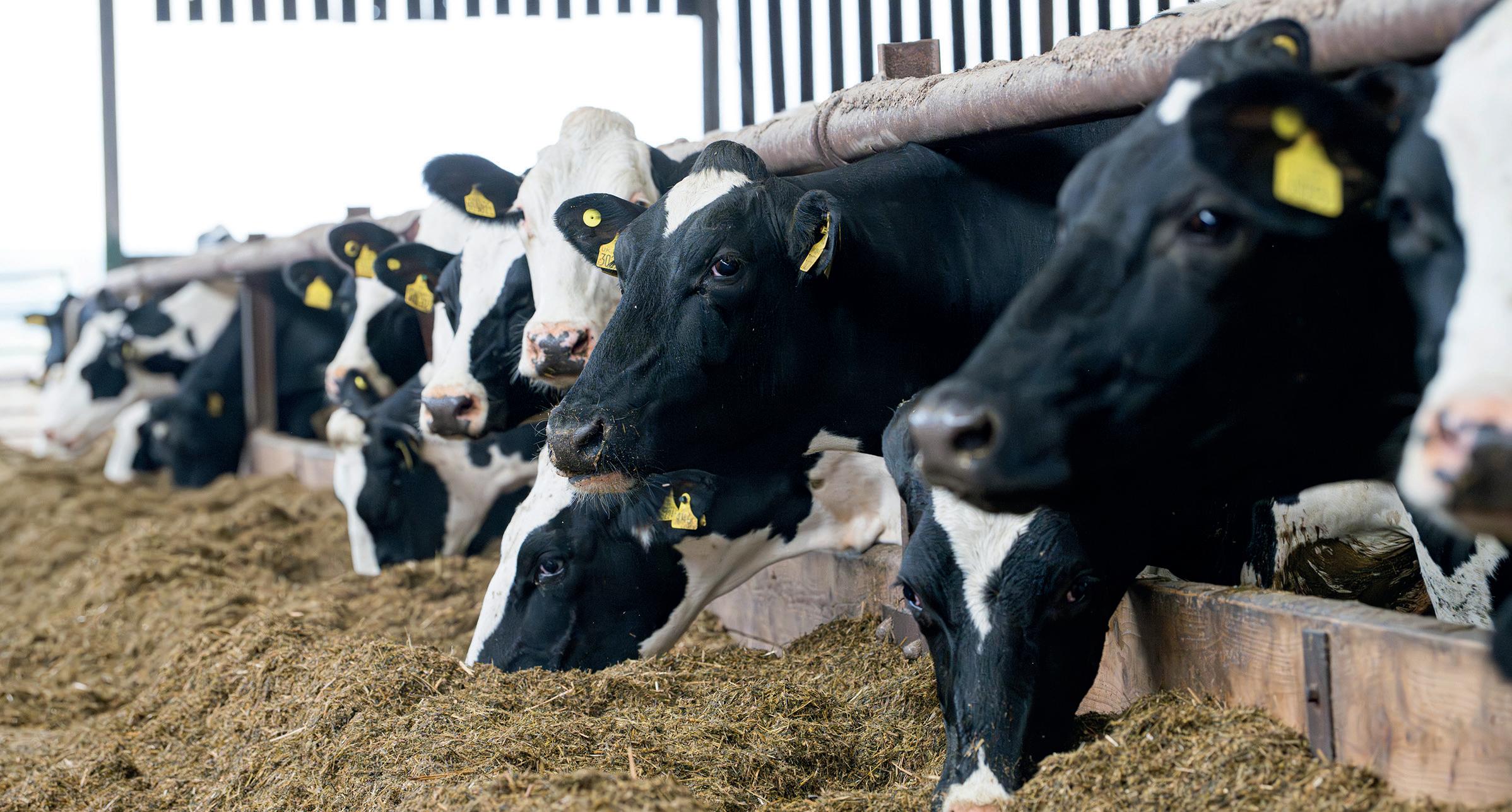
Weaker commodity prices could stimulate late demand for milk supplies.

It came as AHDB warned farmers might be in for a ‘bumpy ride’ with global milk supplies racing ahead.
Susie Stannard, lead dairy analyst at AHDB, highlighted increased production in both the EU and the US in recent months.
EU production remained in either
very low levels of growth or decline until August. But a combination of a shift in calving patterns following the impact of bluetongue in many countries and improved margins were potentially behind the growth in production in recent months.
Looking ahead, Ms Stannard
J A NUMBER of farmers in Denmark have reported health issues in cows being fed with the feed additive Bovaer.
The farmers said their cows were suffering from issues including fever and diarrhoea, that fertility performance had been affected, and in some instances farmers reported cows had collapsed and died.
Bovaer is a feed additive containing the active ingredient 3-nitrooxypropanol and reduces methane emissions produced by cattle.
Manufactured by Swiss company DSM-Firmenich, it is designed to be added to cow feed in small quantities to inhibit a specific enzyme in the animal’s digestive system. It can
cut methane production by up to 30% in dairy cows.
Arla hit the headlines last year after it began a project of the supplements on-farm. The dairy giant has now ended the projects, with the findings being reviewed. It confirmed the project finished when planned and there was no link between this and the reports in Denmark.
The Danish Government made the feeding of Bovaer in herds of more than 50 cows compulsory on October 1, 2025. On these farms, Bovaer must be added to the cow’s ration for at least 80 days a year. Farmers who do not comply could be faced with fines.
There are about 2,000 dairy farmers in Denmark, 1,400 of whom are
thought to have started feeding Bovaer on October 1, 2025. The Danish Dairy Board has advised farmers to report any issues with the additive.
Jacob Jensen, the Danish Minister of Food, Agriculture and Fisheries, said he was aware some farmers were ‘reporting challenges’ in connection with the use of Bovaer.
He added: “I of course take this very seriously, and the Danish Veterinary and Food Administration is following the matter closely.”
A spokesperson from DSMFirmenich said: “We are actively engaging with the relevant organisations to ensure that all these concerns are fully investigated and properly addressed.”
said that milk supplies were ‘running too far ahead of what global demand can absorb’, with inventories also growing globally.
However, she added that weaker commodity prices could stimulate demand.
“Particularly in butter, there is pent-up consumer and industrial demand as consumers and manufacturers have had to substitute more desirable butter for cheaper vegetable oils,” she said.
“Forage availability following the dry summer could be a brake in the UK.”
She also highlighted strong UK beef prices should encourage ‘some reassessments of herd size’.
Disease risks had not gone away in the EU and US, which could also slow production.
Ms Stannard said: “On balance, this points to supplies in the largest milk-producing regions putting pressure on the global outlook well into 2026, at which point equilibrium will resume. Until then, farmers may expect a bumpy ride.”
»
»
Burdett
Dan and his family own and run the 300-hectare (741-acre) Cockhaise Farm, near Haywards Heath, West Sussex. The farm is home to an organic autumn-calving herd of 240 Holstein and Friesian crosses.
We started serving on November 17, so had to house a few days before then to get them settled, but this has given me the confidence to push a little more next year
If Carlsberg did autumn, then this would be it. We’ve had years before with spectacular autumn grass growth, but this is usually limited to September and quickly turns problematic during a wet October.
This year, despite several inches of rain, the grass has continued to grow well into November, with the soil temperature at the beginning of November being 12.8°C.
This has meant that cows were not housed by night until October 19 and are still grazing by day, far beyond our normal parameters.
Not only has quantity been good, but also quality has been maintained throughout, leading to the highest yields given by the cows since I have been farming. Our 26 litres may seem small to many, but for us it’s a giant leap in the right direction and gives us a great springboard into the rest of the season.
Each year, I try to push at the edges of the shoulders of the season, especially when we have lower-than-expected silage yields, but this has taken me a long way out of my comfort zone.
We started serving on November 17, so had to house a few days before then to get them settled, but this has given me the confidence to push a little more next year.
Calving was a great success this year, with 253 cows calved, four milk fever, three assists, two retained cleansings and no casualties.
The cows have been bulling well, with very few put up for the vet pre-serving so far, so I’m hoping for a good few weeks in the lead-up to Christmas.
Calves hit the ground well and look in great shape, with fields holding up well for them as they start their grazing journey.
We have also finished installing the last of the 1,000 concrete railway sleepers that I bought earlier in the year.
I have spent the past few years desperately trying to source these, so when they came up on Facebook locally, I snapped them up.
This will certainly help with early season grazing next year, as they have replaced a track that sometimes became hazardous for the cows to walk

on in wet conditions. After the financially challenging winters of 2022 and 2023, it is refreshing that our organic milk price looks like holding firm for a second winter in a row, thus allowing us to rebuild our finances and invest back into the farm with some confidence again.
During my 18 years back at home, I have seen at least three or four occasions when confidence in organic dairy farming hit rock bottom and I have always asked myself whether we are doing the right thing or not?
It is always our belief in this way of farming that keeps us going through these tougher times and the knowledge that there will be a demand for our product returning just around the corner.
Becky Fenton
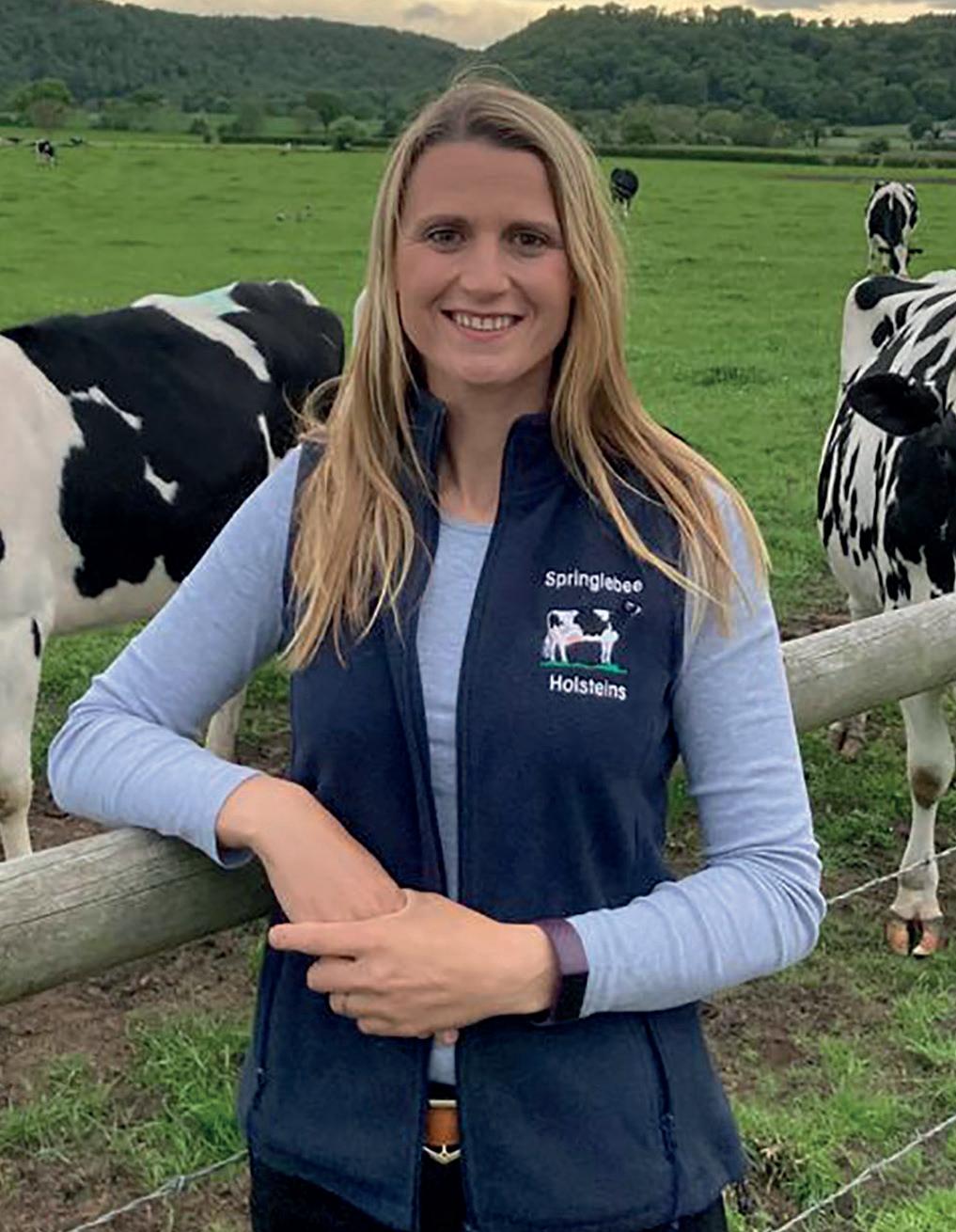
Becky Fenton and husband Paul milk 200 pedigree Holsteins under the Springlebee prefix at Centenary Farm, a Cheshire county council farm. In 2021, they bought a farm in Staffordshire and they plan to farm there once the new dairy set-up has been built.
Two Aperol Spritzes later, I thought I was E.T. flying through the air. Landing on my head, however, wasn’t part of the plan
How can it be December already? With it being the season to be jolly, I won’t dwell on the negatives. That said, I cannot ignore the milk price. We’ve had two significant reductions so far, totalling 8.25ppl. I’d be lying if I said I wasn’t worried. Between the bank loan, rent, corn, fertiliser, straw, etc and Christmas approaching, it’s going to be a very difficult winter.
Trying to shake off my pessimism, I’m hoping there are a few positives. AHDB is reporting a small decrease in daily milk deliveries and, across Europe, milk volumes might slow down owing to changes in calving patterns caused by bluetongue. In the UK, the availability of good forage could help to lessen production.
This year’s maize harvest went well, and we got the cover crop in with ease. Thanks to the mild weather, the seeds are looking good. We should be okay for forage this winter, having bought an extra 20 acres of maize. If conditions remain dry and there’s enough grass, we’ll keep the heifers out for as long as possible, then feed them a predominantly straw-based total mixed ration once housed to stretch our stocks.
The cows have been in for about a month now, and the winter routine is in full swing. I’m starting to regret not applying for a muck hoover on the farming equipment and technology (FETF) grant – it amazes me how much cows produce and how much time we spend moving it around. We’ve received our FETF offer for collars, footbath, lights and a few other items, but it’s very much a question of budget.
When farmers say they can never have enough sheds, I now fully understand what they mean. We’re currently building shed number three in just two years. To keep costs down, my husband and father-inlaw are building it themselves. The roof is almost finished, with panels and Yorkshire boarding going on next week. I’ll blink, and it’ll be full of heifers. January will mark five years since we purchased Eccleshall Farm. Back then, we thought our longterm plan was clear – move there once our tenancy ended. But now, we feel differently. We’ve really settled in Cheshire, as have the boys, and it feels like home. With several years left on the tenancy, there’s
no immediate pressure, but we’ve started looking ahead to the next chapter, whatever that might be. Farming has its ups and downs and always will. We have to ride out the storms and remember that as long as we have our health that’s what really matters. I had a stark reminder of that earlier this year. Somehow, I found myself extreme mountain biking in Morzine, France. Two Aperol Spritzes later, I thought I was E.T. flying through the air. Landing on my head, however, wasn’t part of the plan.
Unconscious, memory lost, a mountain rescue and a hospital visit were certainly not on the agenda. I’m incredibly lucky to be here and, apart from a few scars and a broken bike, all is well.
So, this Christmas, despite the milk price, the worries, and the challenges, I’ll raise a glass (just one this time) to good health, resilience, and the hope that better times lie ahead. As a friend reminded me, ‘tough times don’t last forever, tough people do’.
Most of the high-protein milk from the Vine Farm dairy herd in Leicestershire is sold for cheesemaking, with the remainder marketed direct to customers who value its health benefits. Wendy Short reports.
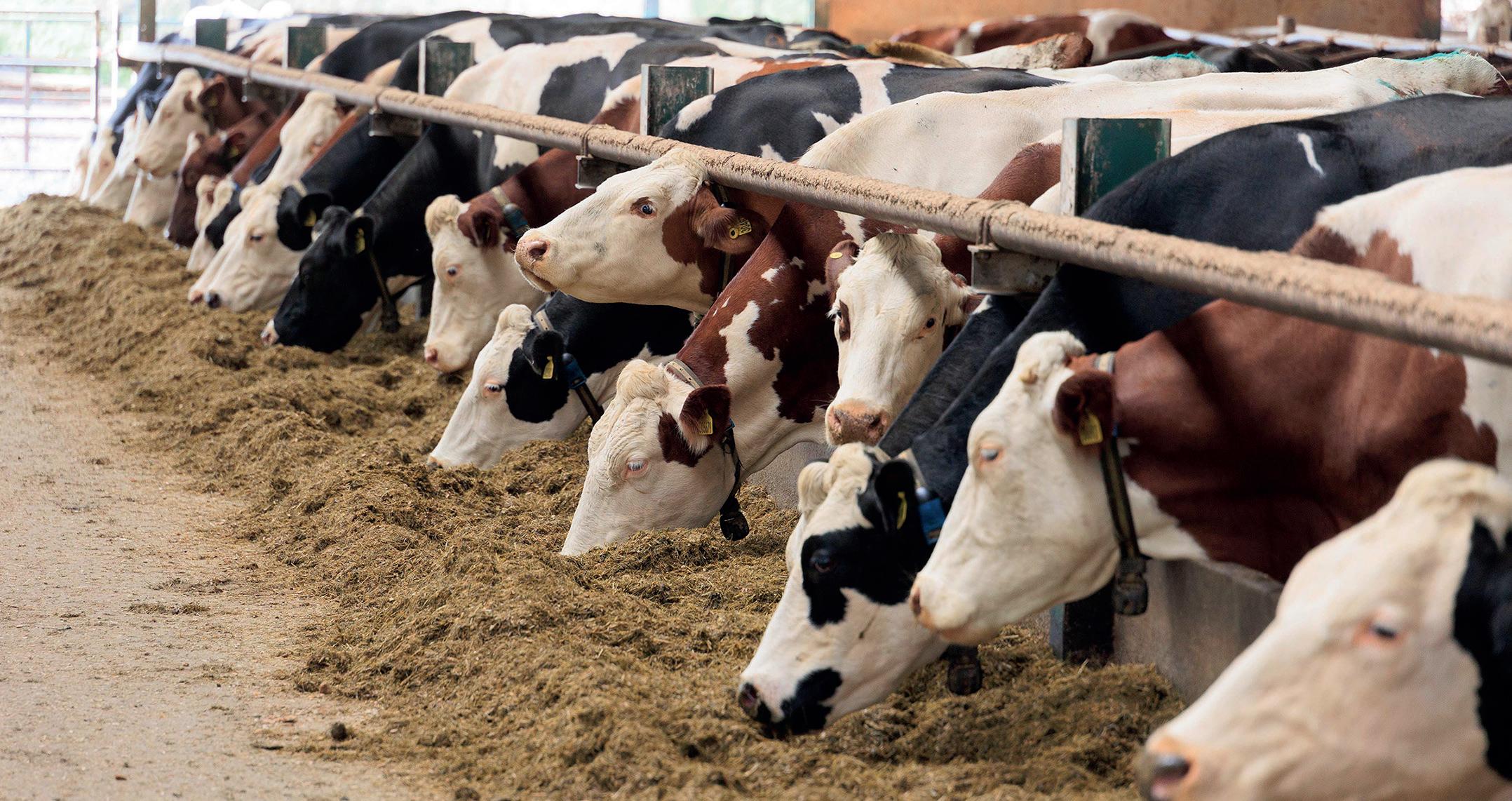

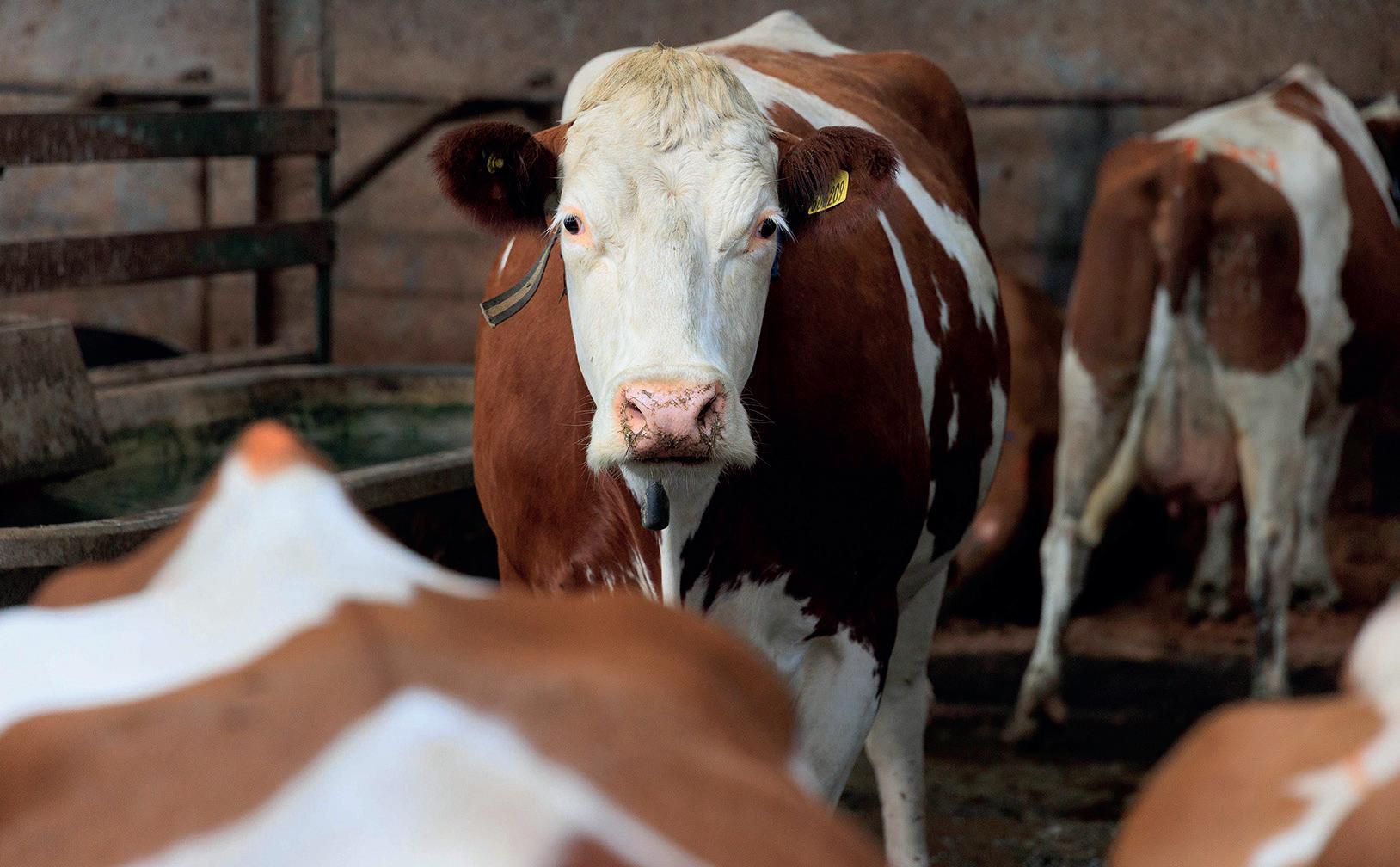
Afocus on milk protein has produced a yield average of 3.8% from the herd at Vine Farm, Great Dalby, which is farmed by James Mann, his parents Ruth and Phil and his brother, Richard. James says this focus allows the direct sales enterprise to promote the product’s 20% increase in protein, compared with a standard litre.
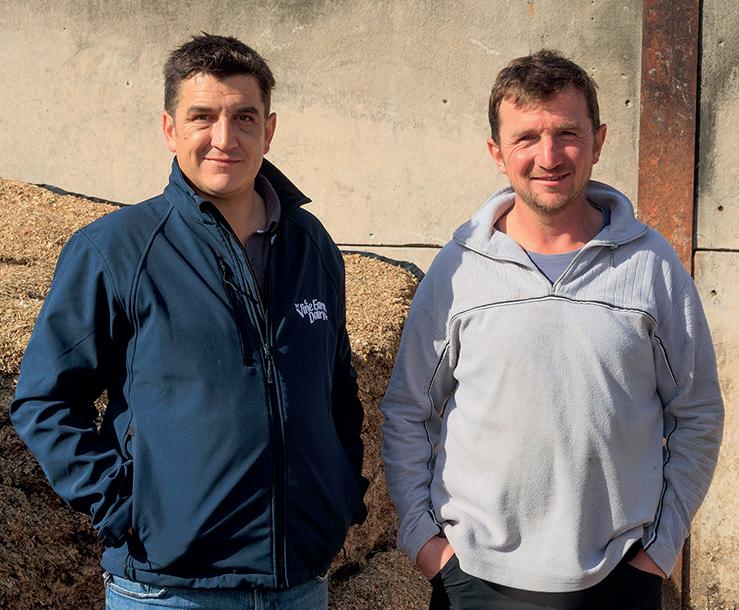
Analysis shows that one litre of the farm’s milk contains 40g of protein, in contrast to 33g for standard supermarket whole milk.
The herd calves all year round and about 10% of the 3.4 million litres produced is sold through three vending machines and direct to around 25 local businesses including the Leicester Tigers rugby club and the Leicester City football team, explains James.
He says: “The high milk protein content appeals to sports nutritionists and health enthusiasts, as
well as barista-type coffee shops and ice cream makers. It is achieved through a combination of breeding selection and diet.
“Our milk contract with Long Clawson Dairy stipulates a fixed annual volume and the business is currently looking for additional supplies, so the opportunity for increasing direct sales is limited at present.”
James says the family’s 450-cow herd size is probably the maximum for the 202-hectare (500acre) unit and this season’s droughts have confirmed the need for caution with stocking rates.
The breeding policy has been subject to a number of changes
over the years and a two-way criss-crossing policy between the Holstein and the Montbeliarde is operating at present.
The herd is not genomically tested and the lower end of the herd is put to an Aberdeen-Angus stock bull, which is also used as a sweeper, with the cross-bred calves sold at 10-12 weeks.
“Several coloured breeds have been trialled with the Holstein,” says James.
“The Montbeliarde has been a key element of the drive for milk protein, also producing respectable yield figures. It is a robust breed, which helps to minimise vet bills, and the calves have a slightly higher value compared with the pure-bred Holstein.
“However, yields in general were going into a slight decline, so our response was to use more Holstein semen straws from bulls with good protein figures; the first of these heifers calved down this summer.
“We may also move partly to a three-way cross, bringing in either the Swedish Red or the Norwegian Red within the reproductive management system.
“The programme will continue with a calving break from November to January, as it gives the opportunity to thoroughly clean, disinfect and rest the cubicle housing for biosecurity purposes.”
The average calving interval is 385-days and this represents significant progress, James says.
He says: “The figure has come down from 400 days over the past few years. It has been achieved by
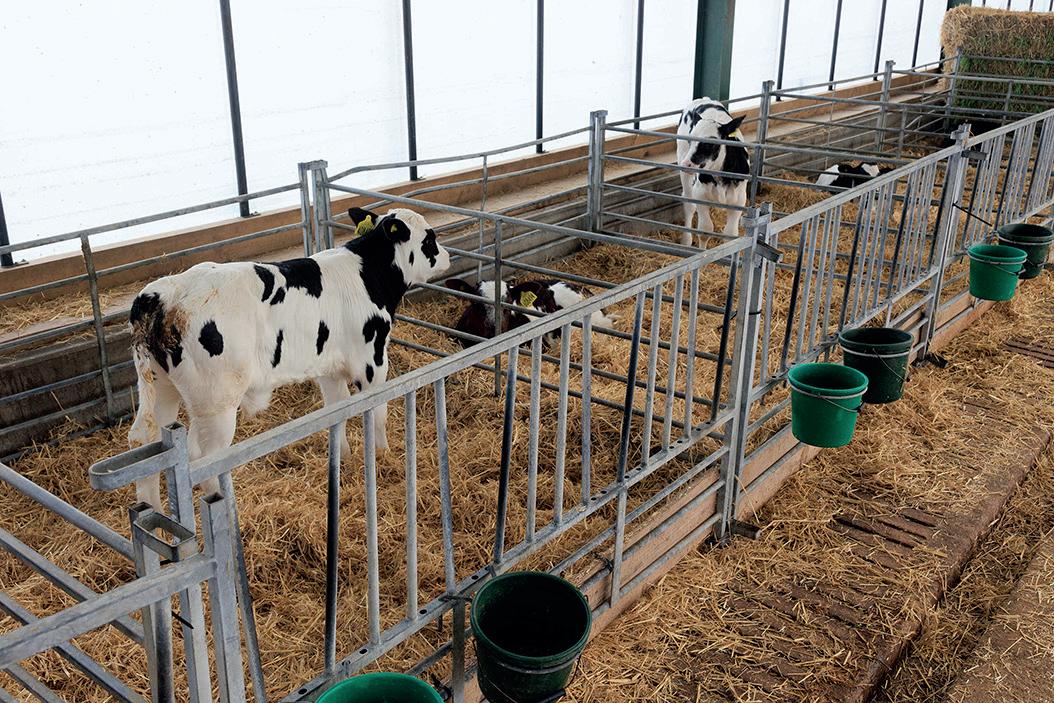
several small improvements, including activity monitors, although we continue to also rely on tail paint for signs of heat.
“The heifers are calved at two years, but the long-term aim is to bring it down to 23 months through closer individual weight monitoring and more targeted feeding.”
The cows are milked twice a day through a 40-point rotary parlour, which was installed in 2007.
James says: “The positive element is cow flow, but the machinery has had some electrical problems. Volume washing was causing issues and the cows are fed a flat rate of 2kg of a 16% protein concentrate in the parlour.
“I would have a rotary parlour again, but not everyone in the team would agree. Assuming the investment is repeated, I would go for a simpler model, with not so
Robinson,

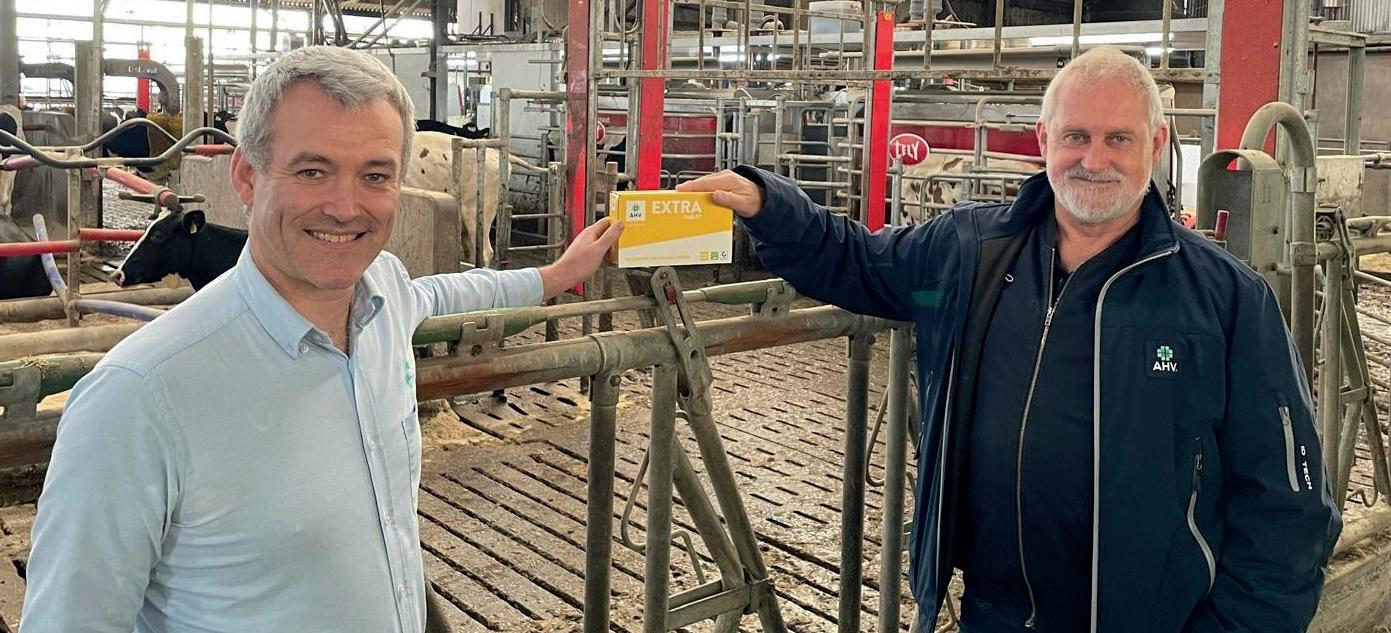
Zwolle, NL – 5 November 2025 - AHV (Animal Health Vision) has been granted a patent for its Quorum Sensing Inhibition (QSI) technology, representing a signi�cant advancement in the development of natural, science-backed solutions to support livestock health and resilience.
“This patent is an important milestone for AHV,” said Adam Robinson, Managing Director, AHV UK & Ireland. “It reinforces our focus on keeping cows healthy. By supporting natural immunity and herd resilience, cows can optimise their genetic potential and improve their lifetime production, with less reliance on antibiotics - Contributing to improved pro�tability and sustainability for dairy businesses.”
and Dr.
The Science Behind the Patent
Independent research indicates that over involve bio�lm formation.¹
Bio�lm acts as a protective shield, enabling bacteria to persist, evade immune response, and contribute to recurring udder, reproductive and respiratory challenges.
At AHV we keep animals healthy via key products, which contain speci�c patented QSI Technology Extract, by in�uencing quorum sensing of bacteria, a�ecting bio�lm-related disorders, thereby reducing the incidence of bio�lm-related chronic conditions in ruminants, swine, poultry, and aquatic animals.
This mechanism supports the animal’s own immune function to work more e�ectively, enabling a more natural recovery process.
The patented QSI Technology (EP4117654B) is already used in three AHV products widely recognised in dairy herd health.
AHV Extra supports udder health by helping maintain normal somatic cell levels and resilience during challenges associated with Staphylococcus aureus, Streptococcus spp. and E. coli, which are commonly linked to recurrent mastitis.
AHV Quick provides more rapid support where cows are facing more advanced udder or reproductive challenges, including mastitis, metritis and chronic wound-related conditions.
For calves, AHV ReaQt o�ers fast-acting respiratory and immune support during periods of increased vulnerability, helping reduce the incidence and impact of bio�lm-associated respiratory conditions, including Bovine Respiratory Disease.
Across all three, products containing the patented QSI Technology support the animal’s natural immune response with no milk withdrawal, no meat withdrawal and no risk to the bulk tank, enabling farmers to act early and con�dently.
A Step Forward for Herd Health and Sustainability
This patent supports AHV’s mission to shift herd management from reactive �re�ghting to proactive, animal-�rst care
This has meaningful bene�ts on farms, including:
� Healthier cows that recover more e�ectively
� Reduced reliance on antibiotics
� Lower recurrence of udder and reproductive challenges
� Improved performance and longevity
“Receiving this patent is a proud moment for our entire R&D team”, said Maarten van der Heijden, Chief Research & Product Development at AHV. “This con�rms the scienti�c foundation of our quorum sensingapproachandreinforcesourcommitment to developing natural solutions with proven results. By promoting animal health andreducingtheneedforantibiotics,we help lower the risk of antibiotic resistance, supportingconsumerdemandsforanimal welfareandfoodsafety.”
Patent Information
Patent Title: Compositions for disruptingbio�lmformationand forsupportingresilienceto bio�lm-related disorders
Patent Number: EP4117654B
More Information: ahvint.com/patents

■ Cross-bred herd yields an average 8,800kg at 4.4% butterfat and 3.8% protein
■ The business employs five full-time and part-time staff and two relief milkers
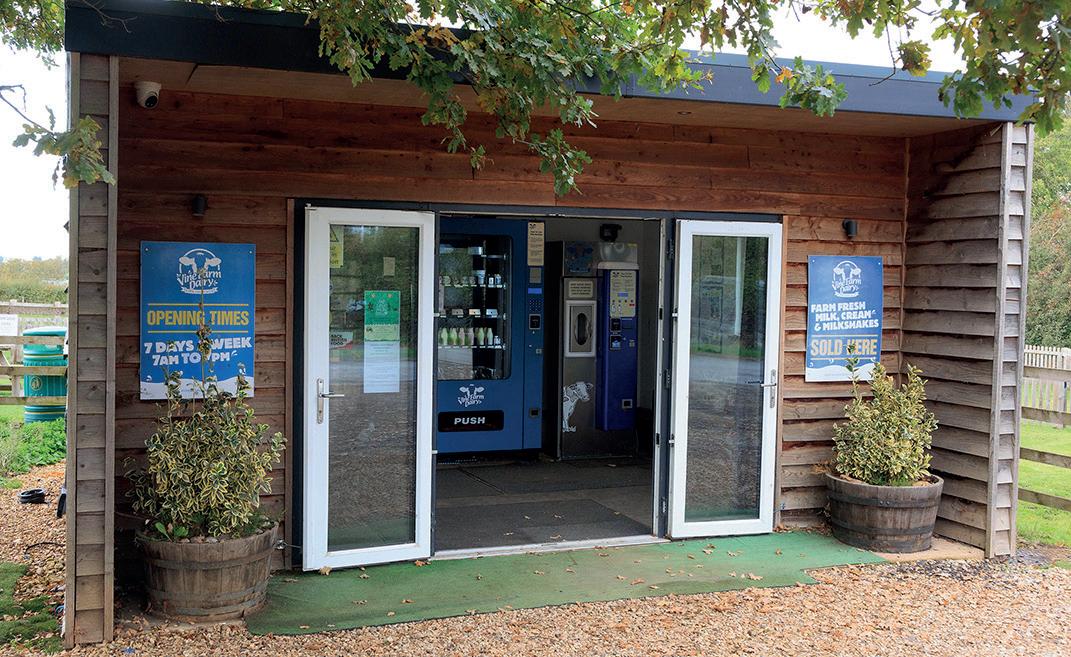
■ The vending machines are open from 7am-7pm daily and also serve milkshakes
■ Cows are milked twice a day in a 40-point rotary parlour
many bells and whistles that are prone to breaking down.”
The land, which is a combination of owned and rented acreage, has a heavy clay soil type.
In a standard year, winter wheat is sown for wholecropping, or in a wet autumn, triticale would be drilled in the spring.
However, recent extremes of weather have forced a rethink.
“It was too wet for winter wheat sowing in the autumn and the soil was far too dry in the spring for establishing triticale,” says James.
“Therefore, the seed bags were left in the shed, and we returned to maize. It had not been grown for eight years because of harvest challenges on the heavy land.
“Some 55-acres of maize were sown and a further 60-acre block was purchased to make up the forage shortfall.
“The problem required some thinking on our feet in the spring

The grazing season starts in March/April, and the high-yielders are housed in late September/October.
and decision-making was not easy.
“The crop has performed reasonably well, but the extra expense is likely to have a negative effect on the bottom line.”
Winter wheat followed the September maize harvest in a return to the usual sequence.
He says: “Weather permitting, triticale will feature next year, but the jury is still out on whether maize will stay in the rotation.
“It will all depend on the final costings, and the yield response to the maize silage, especially its effect on milk protein.
“The winter ration will be made up of maize and grass silage, a protein blend, brewers’ grains and minerals.”
Direct sales gives us another string to our bow, and the high milk protein content is a unique selling point
JAMES MANN
The grazing season normally starts in March/April, and the high-yielders are housed in late September/October, with the dry cows and low-yielders out at grass until the weather turns.
The farm usually takes three cuts of grass silage.
First cut did not disappoint and James describes second cut yields as ‘adequate’. However, third cut was so sparse that it was baled, instead of being clamped as usual.
The vending machines were installed in 2018 as a diversification enterprise, with one in the village
and the others at local farm shops.
James says: “The village vending machine is on a small parcel of land that we rent to the community for a nominal £1/year, alongside a community-funded playground. The arrangement was made after the school stopped its pupils from using its premises after hours and they had nowhere to play.
“Our customers appreciate the non-homogenised milk, which we think has a fuller flavour.
“They can buy it in glass bottles, which we wash and reuse, or bring their own containers.
“The vending machines need to be topped up two or three times a day, giving us a valuable chance to connect with consumers, who are very supportive in general.”
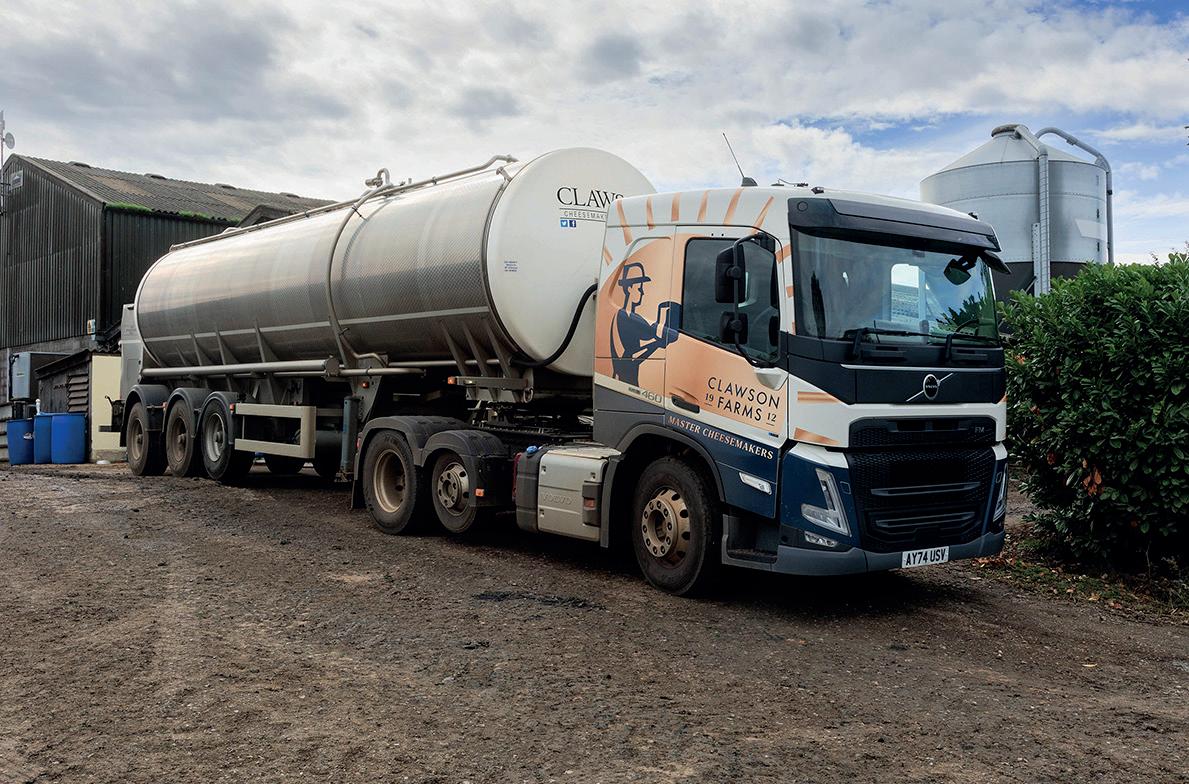
The family has been selling milk to Long Clawson Dairy for more than a century.
James and Richard are the fourth generation at Vine Farm.
James says: “Our milk is mostly made into blue Stilton cheese and there is a bonus payment based on solids production. Direct sales gives us another string to our bow, and the high milk protein content is a unique selling point.
“We could easily increase our customer base, but our first commitment is to our main buyer.
“The diversification project was definitely the right move.
“It not only spreads risk, but the daily contact with consumers is an important public relations exercise for dairy farming.”




































































































































































































This month, former cowman and agri-marketing contractor Phil Christopher gives us his thoughts on the Association of Dairy Producer Organisations.

How timely it was that the new Association of Dairy Producer Organisations (ADPO) went public at UK Dairy Day in early September, just as the ink was drying on savage milk price cuts that have followed for many of you.
Of course, these two developments are not linked. On the contrary, in my view, ADPO could be instrumental in achieving more stable and fairer pricing of ex-farm milk, but only if you, dear readers, have the courage to play your part.
According to chair Rory Christie, ADPO has been established to give a unified voice to GB farmers who are members of a registered Dairy Producer Organisation (DPO).
“This initiative recognises the growing need for structured, effective and respectful dialogue between farmers and the dairy processing sector,” he said.
ADPO has four existing DPO members. DPO status is a legal structure that enables groups of farmers to negotiate collectively with milk buyers, within competition law.
The idea is elegantly simple: by pooling its members’ milk volumes and information, a DPO can bargain more effectively on pricing, haulage, seasonality, service levels and dispute procedures than individuals.
When a single, co-ordinated voice with buyers, Government and the wider industry is needed,
ADPO can provide it on behalf of member DPOs and their farmers. In conjunction with the Fair Dealing Obligations (Milk) Regulations 2024, which cover core terms of business in milk purchase agreements, it aims to adjust the commercial balance towards farmers in our long-standing processor-led market. But in pursuit of this ambition to strengthen farmers’ bargaining power and reduce milk price volatility, it will only be as strong as members’ participation, data and negotiating discipline make possible.
If ADPO can standardise best practice, this promises to avoid any DPO, either one of today’s founding four or future new ones, from reinventing the wheel, buyer by buyer. Aggregating robust cost and market data could and should strengthen members’ negotiating positions, too.
As I see things, however, it does have a significant Achilles’ heel: discipline. Or, more accurately, the real risk of indiscipline. Without powers to control production, for example, the reality of oversupply remains, as seen for much of this year.
A critical question for ADPO is whether it is bold enough for some straight talking. The early signs are mixed. On October 23, its press release said: “ADPO has issued a caution to the UK dairy farming sector, highlighting the potential financial and operational impacts of sustained growth in national milk production. Recent trends indicate that milk output continues to rise, with forecasts suggesting that spring 2026 could see daily volumes approaching or exceeding the UK’s current processing and storage capacity. Producers are encouraged to take account of market signals and to plan responsibly for the year ahead. Continued production growth without corresponding market demand or processing capacity could adversely affect market stability.”
That’s 86 words to say what only needs 24: The only thing we control that will improve milk prices is aligning production with demand. This depends on each milk producer individually… yes, you.
Four months ago, respected pundit Chris Walkland noted that in October 2024, milk volumes were
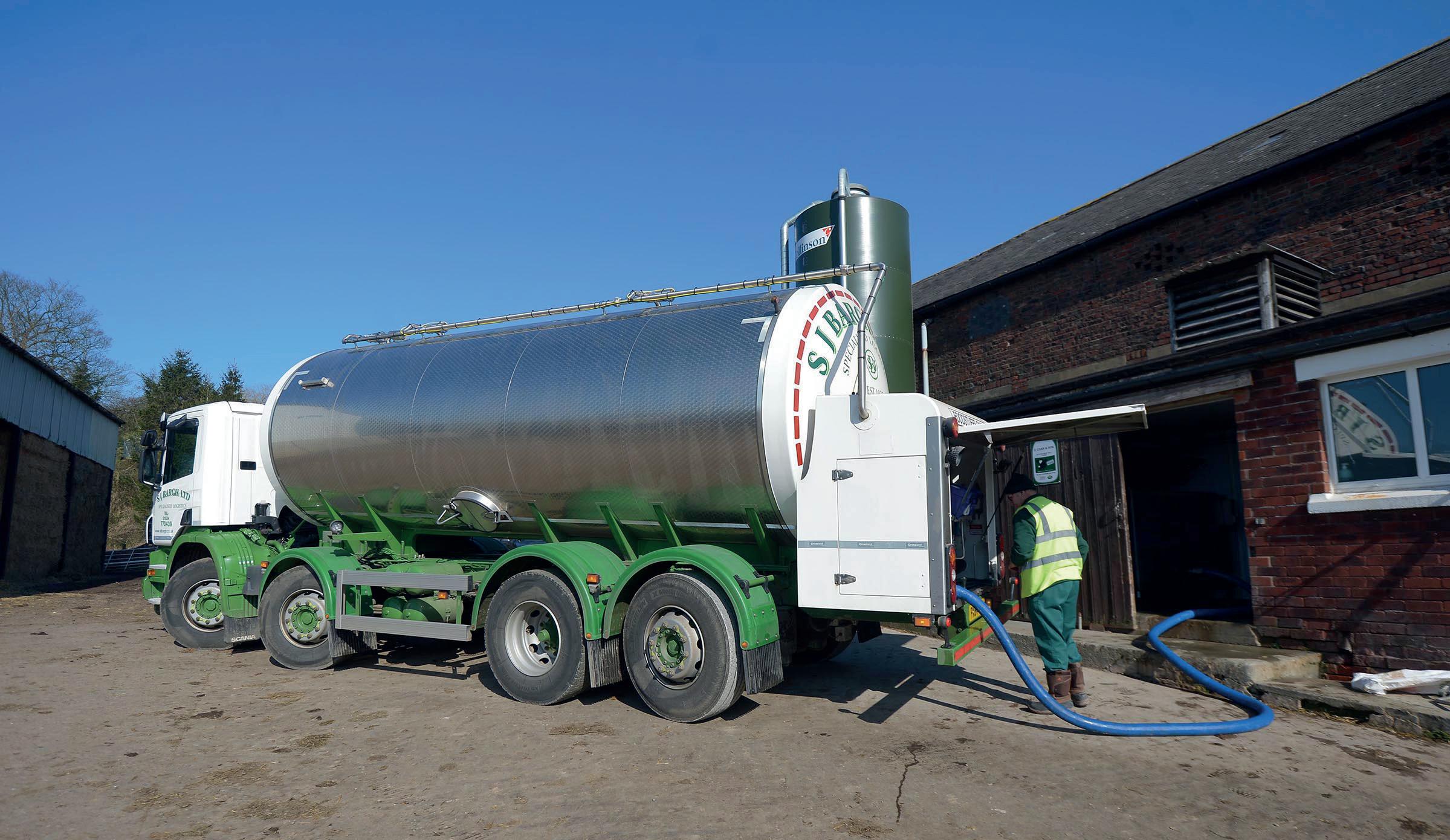
Milk producers should have more say by acting together, but it will only be as strong as its members, says Phil Christopher.
A criticial question for ADPO is whether it is bold enough for some straight talking. The early signs are mixed…
starting to surge, coinciding with much reduced demand from processors. The result, he said, was that ‘spot prices fell from 46.8ppl at the time to an average of 33ppl ever since’.
So it is hardly surprising the milk processors who are reliant on selling large volumes of milk in the spot market will have taken a big hit, which has since been passed on to their unfortunate suppliers, of course.
For a glimpse of ADPO’s future direction, director of one of the founding four, Selkley Vale Milk Group, Max Sealey has said: “Our focus will be on growing our representation for our current members and offering the opportunity of ADPO membership to those producer organisations who wish to join us in the future.”
Roughly 2,000 GB dairy farmers are represented by the founding four DPOs. A similar number are members of the Arla supply group. So together, membership of these five groups covers nearly 60% of GB producers.
What about the other 40%? Are they – or indeed you – out in the cold? Can you get a piggy-back ride for free? Or might there be a straightforward,
painting-by-numbers template by which genuine milk producer strength in numbers can be grown to a powerful 90%+ majority?
One conundrum right now is that each of the founding four is committed to just one processor: Davidstow Creamery Direct (Saputo), MMG Dairy Farmers (Muller), Milk Suppliers Association (Lactalis, Stranraer) and Selkley Vale Milk Group (Cadbury). It’s said that a business with only one customer isn’t a business so much as a hostage, or a servant to their master. Will this change and how might it affect ADPO’s hinted-at potential recruitment of the as-yet outsiders?
To a significant extent, dear reader, I suggest this ball is as much in your court as ADPO’s. For those of you currently outside the ADPO tent, two key questions are whether you have the courage to join its bandwagon and, if so, how? Or do you go it alone and continue being blown in whatever direction the winds of change decide for you?
For the avoidance of suspicion, the author is not on the payroll of any organisation mentioned in this article.

A strong vaccination protocol is key to preventing and controlling infectious bovine rhinotracheitis infections on-farm. Katie Fallon finds out more.
Infectious bovine rhinotracheitis (IBR) is a highly contagious virus, affecting most dairy herds in the UK, with studies in South West England showing 83% of unvaccinated dairy herds were seropositive for IBR.
Caused by bovine herpesvirus 1, IBR is usually brought on to farms through latently infected cattle and is spread both directly via aerosol transmission, direct contact with infected ocular cattle and nasal discharge, or indirectly via clothing and equipment.
Farm vet Anna Hewison, of the
Shepton Mallet-based Shepton Vets, says that once a cow becomes infected with the virus, there is usually an incubation period of two to five days before clinical signs may appear.
She explains that IBR is a latent infection, meaning once cattle become infected they remain so for life. Stressful periods around calving, peak lactation or immune suppression can reactivate infections and cause the cow to start shedding the virus again, although they might not show clinical signs.
Ms Hewison says: “The virus will spread quickly once one animal has
been infected, especially due to direct contact and the virus being so contagious. Once one animal has got it, it is likely that the rest of the group will get it.”
Generally, clinical cases of IBR are seen in growing and adult cattle, with infections not usually considered a problem in young calves.
Ms Hewison says respiratory clinical signs of IBR include conjunctivitis, nasal discharge, fast breathing, coughing, fever, secondary pneumonia and milk drop. The virus can also impact
reproduction and cause abortions up to 100 days after the initial respiratory signs.
As well as clinical cases, IBR can also cause sub-clinical infections, where one of the only symptoms of infection could be reduced milk production.
Ms Hewison says: “Even if you are not seeing clinical signs in your herd, if you are monitoring for IBR and know that there is IBR circulating on your farm, then you will be experiencing this sub-acute milk drop.”
This tends to occur when the virus is reactivated, and the immune system has to respond.
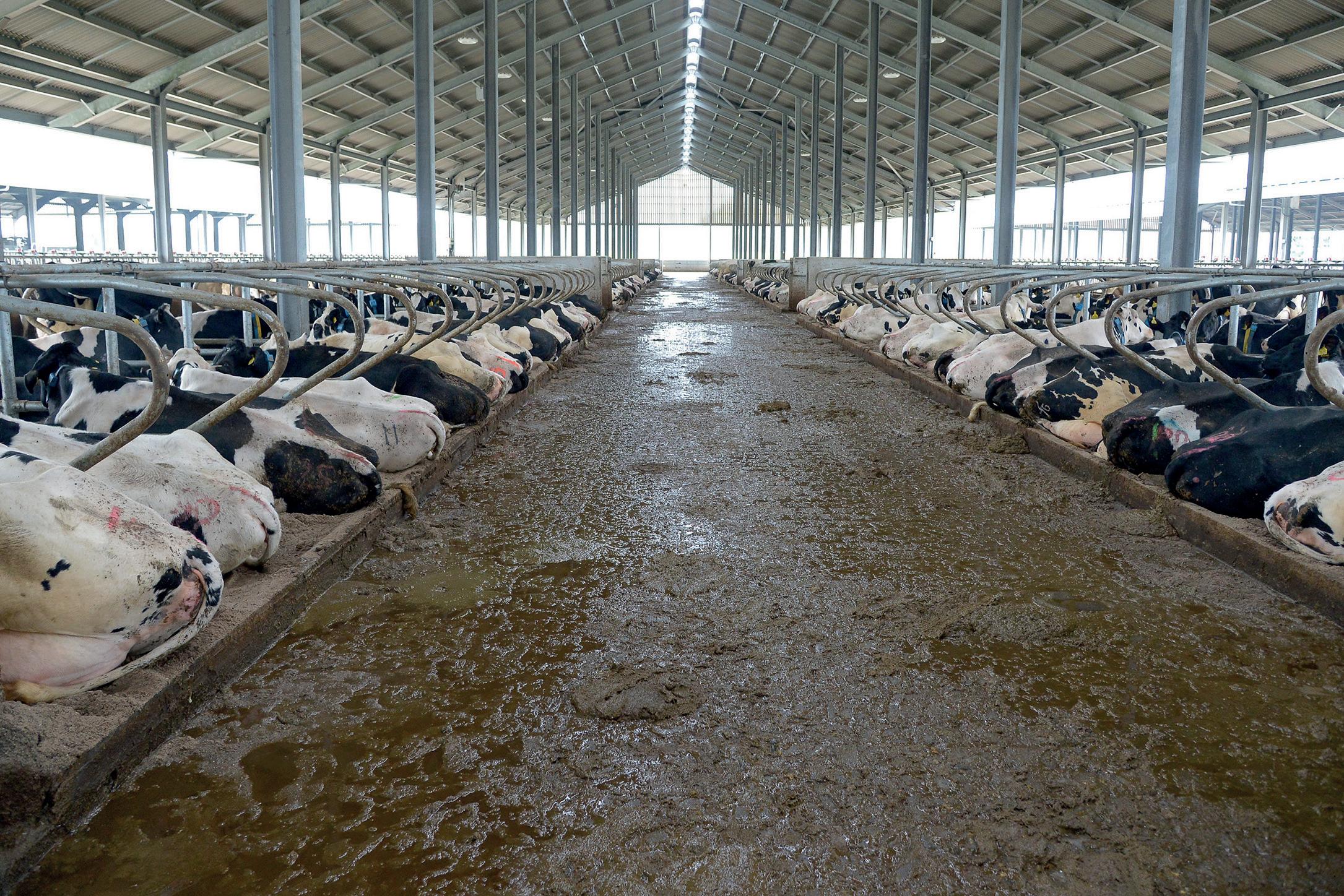
Well-ventilated sheds can help mitigate against infectious bovine rhinotracheitis, which can spread through the air.

Ms Hewison adds: “On average, cattle can have 2.6 ‘flare-ups’ during a 305-day lactation period. This has been found to cause a milk loss of up to 336 litres per latently infected cow per 305-day lactation period. Using the current milk price of 38.64ppl, this would equate to £129.83 loss per cow per 305-day lactation period.”
When diagnosing IBR, Ms Hewison says most farms tend to monitor for antibodies in bulk milk samples, with the exact test used dependent on whether farms are vaccinating or not.
She advises quarterly monitoring of the bulk milk tank to provide a good indication of IBR levels in the herd.
A youngstock screen is also useful to determine if IBR is actively circulating in this age group by blood sampling a small group of bulling heifers.
Alternatively, farms can test on an individual animal level. For example, in the case of a clinically
sick animal, nasal or conjunctival swabs can be taken and a PCR test used to look for the active virus.
Paired serology can also be used where two blood samples are taken from an infected animal, three weeks apart, to look for an increase in antibody level.
In terms of treatment, a ‘prevention rather than cure’ approach is advised.
However, in clinical cases Ms Hewison advises managing IBR with supportive therapy, such as anti-inflammatories and oral fluids in the case of dehydration.
Antibiotics may be required in the case of a secondary pneumonia infection.
When looking at prevention, vaccination is key in controlling IBR infections on-farm, and there are three main vaccine strategies which can be followed, with advice from a farm vet:
■ Option 1: An intramuscular live vaccine followed by subcutaneous inactivated vaccine six months


later and annual inactivated vaccine subcutaneous boosters.
■ Option 2: Intramuscular live vaccine every six months.
■ Option 3: Two doses of subcutaneous inactivated vaccine three to five weeks apart followed by subcutaneous inactivated vaccine boosters every six months.
Ms Hewison says: “Ideally you want to administer IBR boosters in autumn, before housing grazing herds. When cattle are housed,
Anna Hewison’s top tips for controlling IBR
■ 83% of UK dairy herds have IBR circulating
■ Vaccination is effective at managing clinical signs and reducing shedding of IBR
■ Ensure heifers are protected before entering main dairy herd
■ Monitor the bulk tank for IBR status
■ Do not overstock sheds
■ Make sure you have adequate ventilation
■ Try to reduce other disease load so animals are not immunocompromised
direct contact and aerosol spread is more likely.
“It is also important to protect your heifers before they enter the main dairy herd. Vaccinating them before first service will also ensure that the risk of abortion due to IBR is minimised.”



















































Dam vaccination protocols in late pregnancy have had a transformative effect on early life calf health at one Shropshire farm. Dairy Farmer reports.
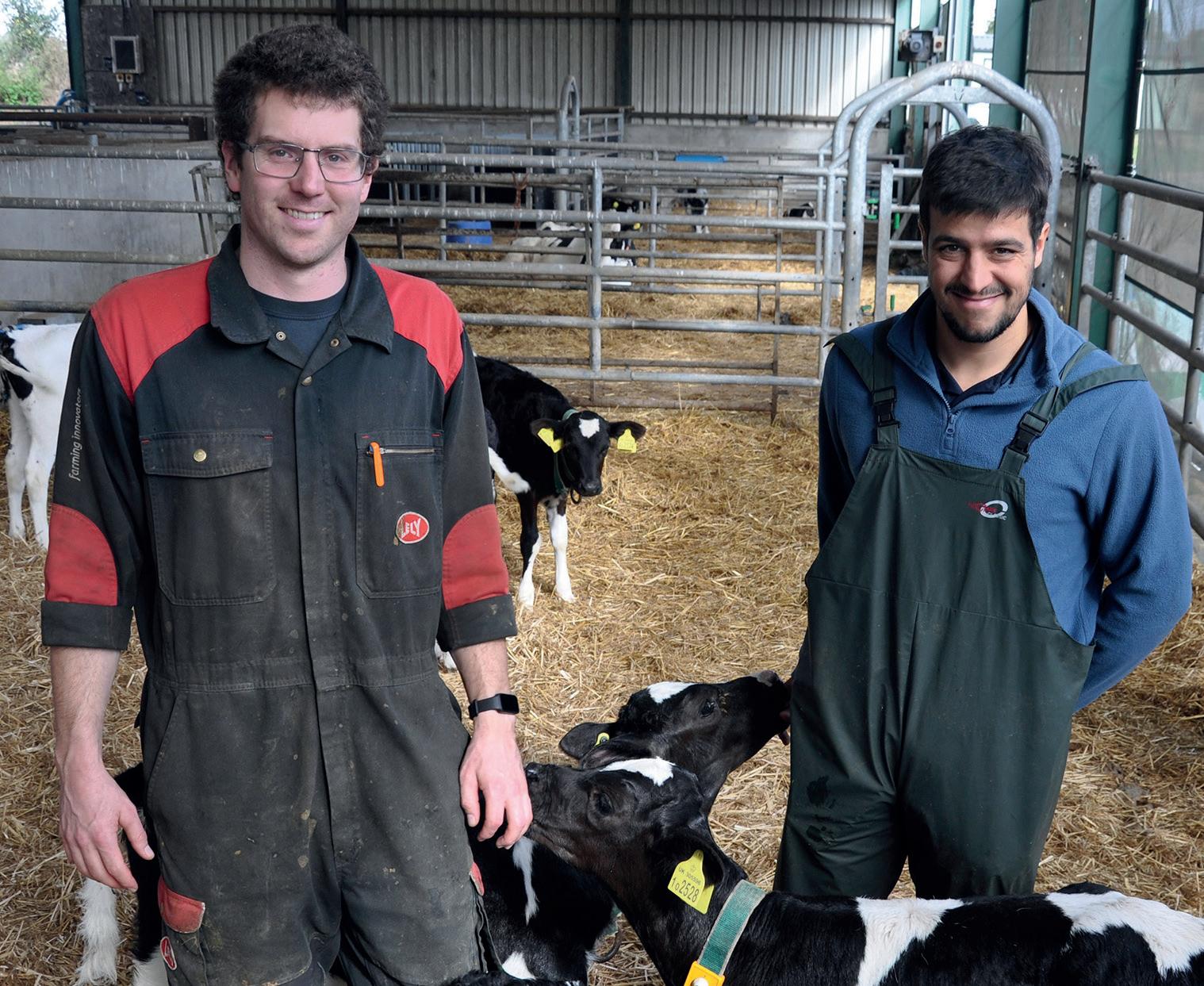
George Lester, who farms the family dairy unit at Manor Farming Company, Shropshire, in partnership with his father, Jeff, and mother Judith, had been at his wit’s end until new vaccination regimes helped stabilise debilitating infectious calf scour problems.
“Cryptosporidiosis caused by the cryptosporidium parvum parasite being present persistently in the rearing environment was the main issue,” says George.
“We saw it in four-to-five-dayold calves particularly, with the bulk of cases tending to occur
during October and November every year.
“Infected calves could look perfectly normal and healthy first thing in the morning but by the evening these same animals were visibly sick and needing rehydration therapy. Then, by the next morning, they could even be found dead, despite overnight intervention.
“It was just so quick I found it soul-destroying – and as well as being highly costly, the whole situation was depressing.”
Calf disease incidence on the allyear-round calving holding tended to be lower during the warmer summer months but would return

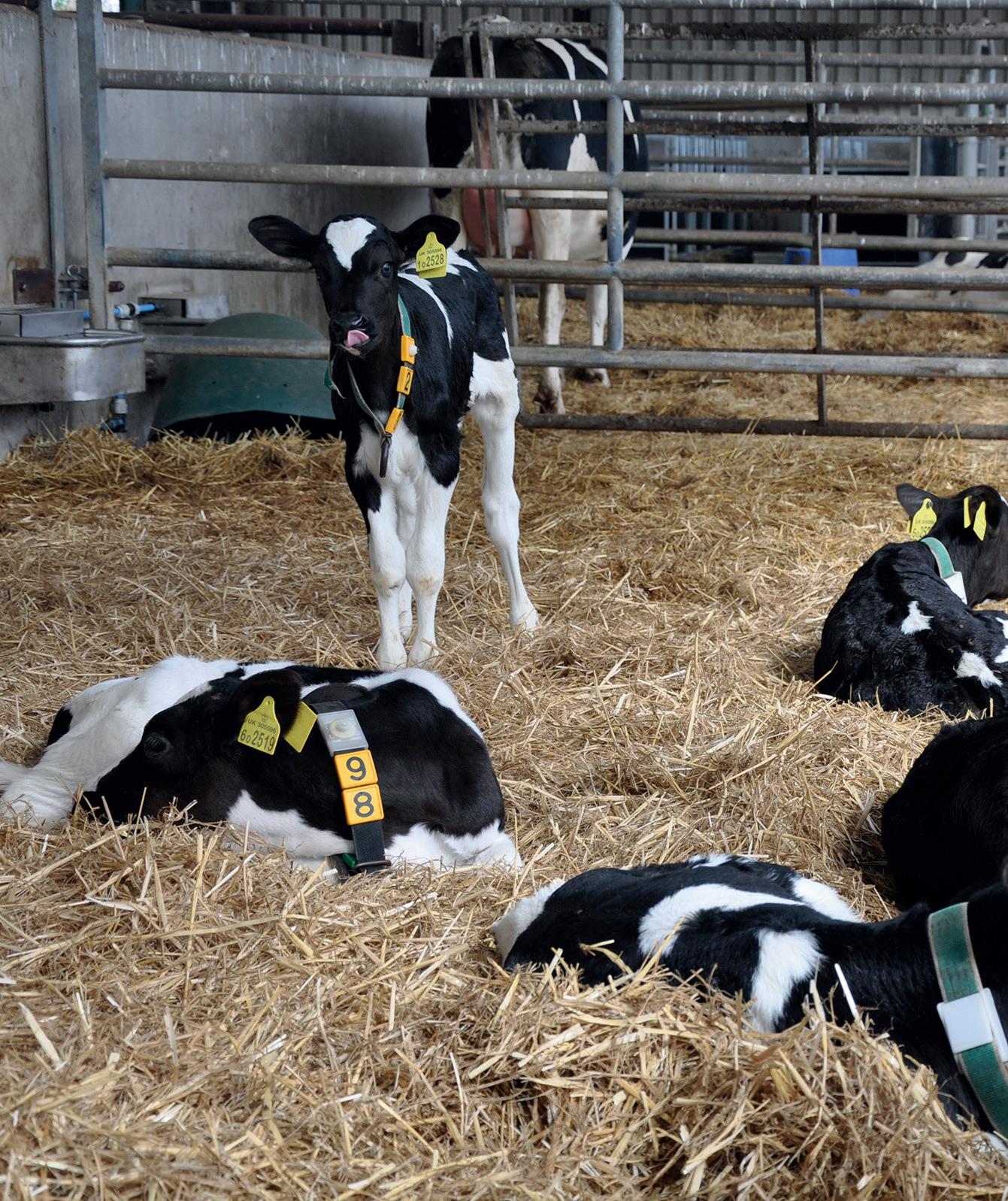
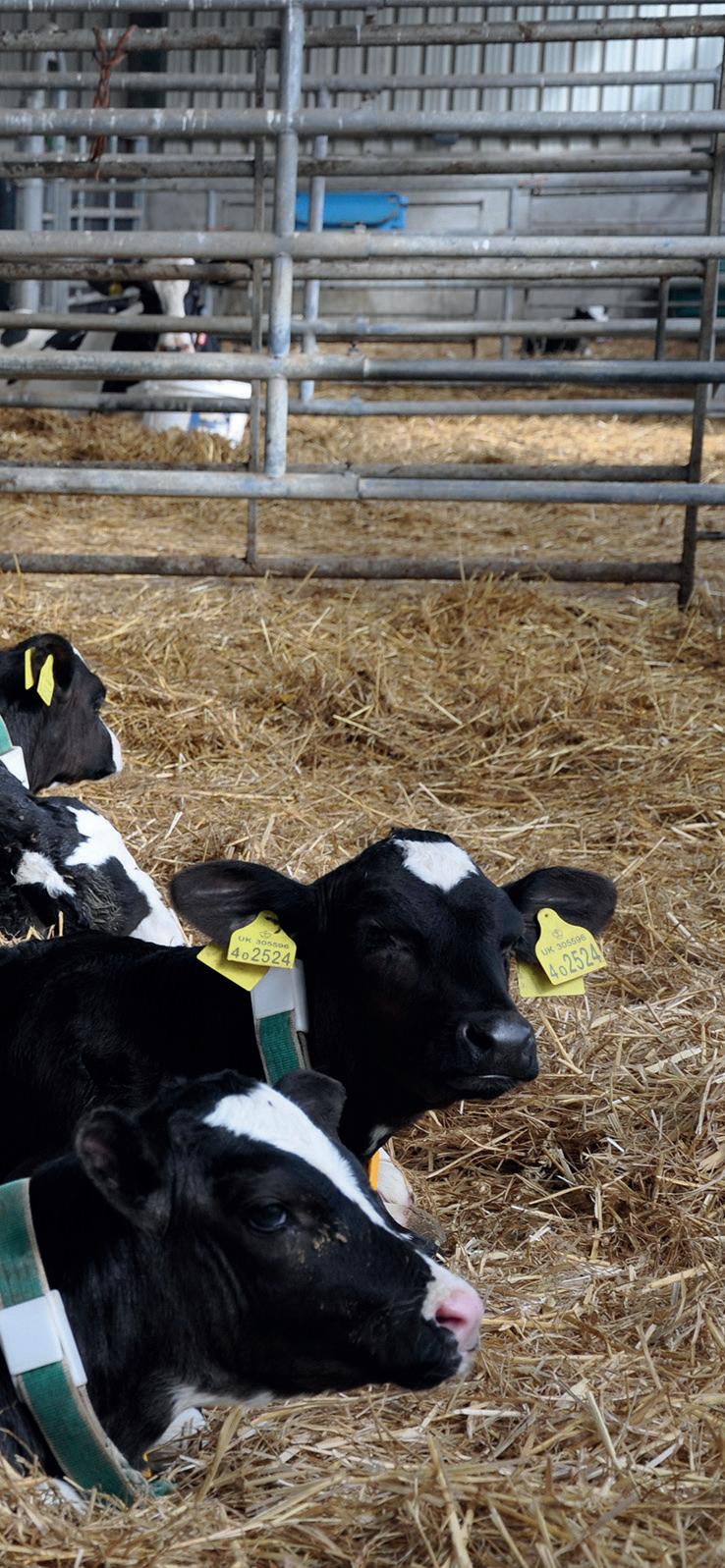
Pre-weaned heifer calves are currently being reared in proximity to the calving pen, which George Lester says is not ideal.

with a vengeance as autumn closed in each year.
George readily admits that his calf rearing set-up is not as good as it could be, but he works hard to mitigate inherent challenges caused by limitations with the current available housing.
He says: “Calves are reared in the same pen area as any dry cows calving and this proximity does not help, so we try to be meticulous with hygiene protocols.
“Unfortunately, with cryptosporidiosis being such a highly contagious disease – with millions of oocysts being shed from infected calves and spreading to pen mates via the faecal-oral route – we are always up against it, despite a rigorous pen disinfection regime.”
Oocysts can persist in the environment for months, and calves often become infected from contaminated bedding, feeding equipment or contact with other calves. Once present on a farm, eradication is nearly impossible – making ongoing disease management critical.
Because the infection dose is so low, even the cleanest-looking calf sheds can pose a risk if not rigorously managed. To make matters worse, only certain disinfectants are effective against the C. parvum parasite,
making environmental hygiene a crucial control point. This is why so many farms wrestle with calf cryptosporidiosis problems.
It was a visit by George’s father to a dairy unit in Anglesey that first opened their eyes to the benefits of dam vaccination to boost colostrum antibodies. Jeff returned home keen to discuss the potential for boosting calf health on their own unit.
George says: “Dad said that the calves he saw on Anglesey looked tremendous, despite the unit also having a historic problem with infectious calf scours. At the time, there were only dam vaccines available for protecting calves from rotavirus, coronavirus and e.coli, but since they started to vaccinate the dams and then feed the fortified colostrum to their calves, calf health there had been much improved.
“We talked to Shropshire Farm Vets and agreed such a regime could probably help us too. Although we knew cryptosporidiosis was our main challenge, and at that time there was no vaccine available, faecal testing highlighted the fact that the other main infectious pathogens were present alongside it. These were, therefore, potentially causing disease issues too, so it made sense to see if dam vaccination could help alongside improved hygiene protocols. And it did.”
The improvement the Lesters saw was enough to build their confidence in the benefit of dam vaccination – so much so that when the calf cryptosporidiosis vaccine, Bovilis Cryptium, became available
late in 2024, they were keen to use it straight away.
Administered to pregnant cows in the third trimester of gestation, the vaccine requires two doses to be given four to five weeks apart, with the final dose completed at least three weeks before calving. For subsequent pregnancies, only a single booster is required.
George explains that calves born to their vaccinated mothers are bottle- or tube-fed their own dam’s colostrum/transition milk for four days before moving onto two different milk-feeding regimes. The recommended time for feeding this fortified milk is five days.
The female heifer calves are grouped after colostrum feeding, trained on to a computerised feeder and fed milk replacer according to a pre-programmed growth curve. The male beef calves are fed unsold milk from the milking herd. Herd replacements are weaned over a two-week period from seven to eight weeks of age, when the
n Farming 141 hectares (347 acres), owned and rented n Greenfield site (from 2016)
n Housed, all year-round calving herd of 180 cows milked through three robots
n Calves currently reared in main cow shed but planning secured for bespoke calf housing in the future
n Growing maize, grass and wheat in rotation
n Robot feeding programmed to mix rations and feed cows up to 10 times a day
n Currently supplying Muller/ Tesco dairy group
youngstock are moved to a neighbouring tenanted unit up the road.
George says: “Our vet calculated that, previously, 50% of the farm’s antibiotic and anti-inflammatory usage was going into calves under 14 days. Now that is no longer the case.”
As there is a correlation between calves suffering from scours and bovine respiratory disease, the farm’s vet Duarte Monteiro also now scans the calves’ lungs every two weeks to check for any damage caused by sub-clinical pneumonia.
George says: “It has been very illuminating how much lung consolidation we do pick up, even in apparently healthy calves. So much so that we now vaccinate calves themselves to help protect them from key pneumonia pathogens.”
Mr Monteiro adds that in the past, youngstock mortality rates at Manor Farming Company were above 5% in some years and calves did not always achieve the 0.8kg daily liveweight gain target.
He says: “But after these changes, we are comfortably under 3% mortality and would like to see it drop to under 1%. And two years on from starting lung scanning, our daily liveweight gain target is now 1kg per day for every calf, which we believe is achievable.”

Virtual fencing is allowing one farm in Norway to expand its grazing perimeters and use previously unused land. Chris McCullough reports.
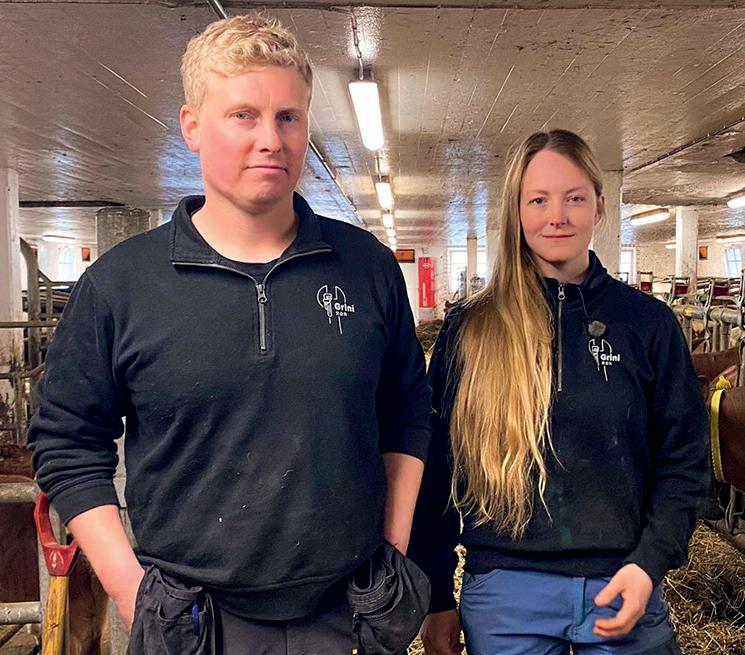
Grini Farm in Norway is one of a growing number of farms that is benefiting from virtual fencing. In particular on this farm, the technology is allowing them to graze more areas of the farm with youngstock.
This farm dates back to the 1500s and is now run by Maren Grini and her husband Hans Olav, with their three young children, Ingebjorg (four), Margit (three), and Olav (six months).
Maren works full-time on the farm, located in the Ringsaker municipality, helped by her husband who also runs his own plumbing business. Hans Olav’s father also helps out part-time.
Maren says: “We bought the farm in 2018 and converted to organic production the next year. The farm is primarily based on dairy and grass production, although in good years we also grow some grain.
“The property extends to around 500 acres, of which 408 acres are forest and outlying land, and 92 are fully cultivated. In addition, we rent another 60 acres of
fully cultivated land from a neighbouring farm.”
The Grini family runs a milking herd of 40 Norwegian Red and Jersey cows with an additional 70 dry cows and youngstock.
The farm has the capacity to produce 300,000kg of milk annually.
Maren says: “We use a Lely A5 robot to milk the cows in a renovated barn from 1960. We began converting it from a tie-stall to a freestall system the year after we took over the farm.
“In terms of feeding the cows, in 2024, we achieved a roughage intake of 80.3 megajoules per cow per day and used 23kg of concentrate feed per 100kg of milk.
“This resulted in an average yield of 7,540kg and we sell at a milk price of NOK 8.38 per litre [63ppl].
Maren follows a strict breeding plan and selects artificial insemin-
ation bulls with genetics tailored to the individual needs of each cow. All heifers are genomically tested.
Maren says: “We aim for a good proportion of Jersey due to their higher fat and protein content and because their smaller size suits our barn well.”
The cows’ diet consists of feed roughage from a grass seed mix that includes Timothy, ryegrass, meadow grass, red clover and white clover.
Maren says: “In recent years, we have also tested more grass species to adapt better to changing weather conditions, including tall fescue.
“All our forage is stored in round bales and we handle the entire harvest line ourselves. The forage is chopped with a bale cutter and fed out with a mini loader.
“All concentrate feed is given in the robot and the cows receive long-acting mineral boluses.”
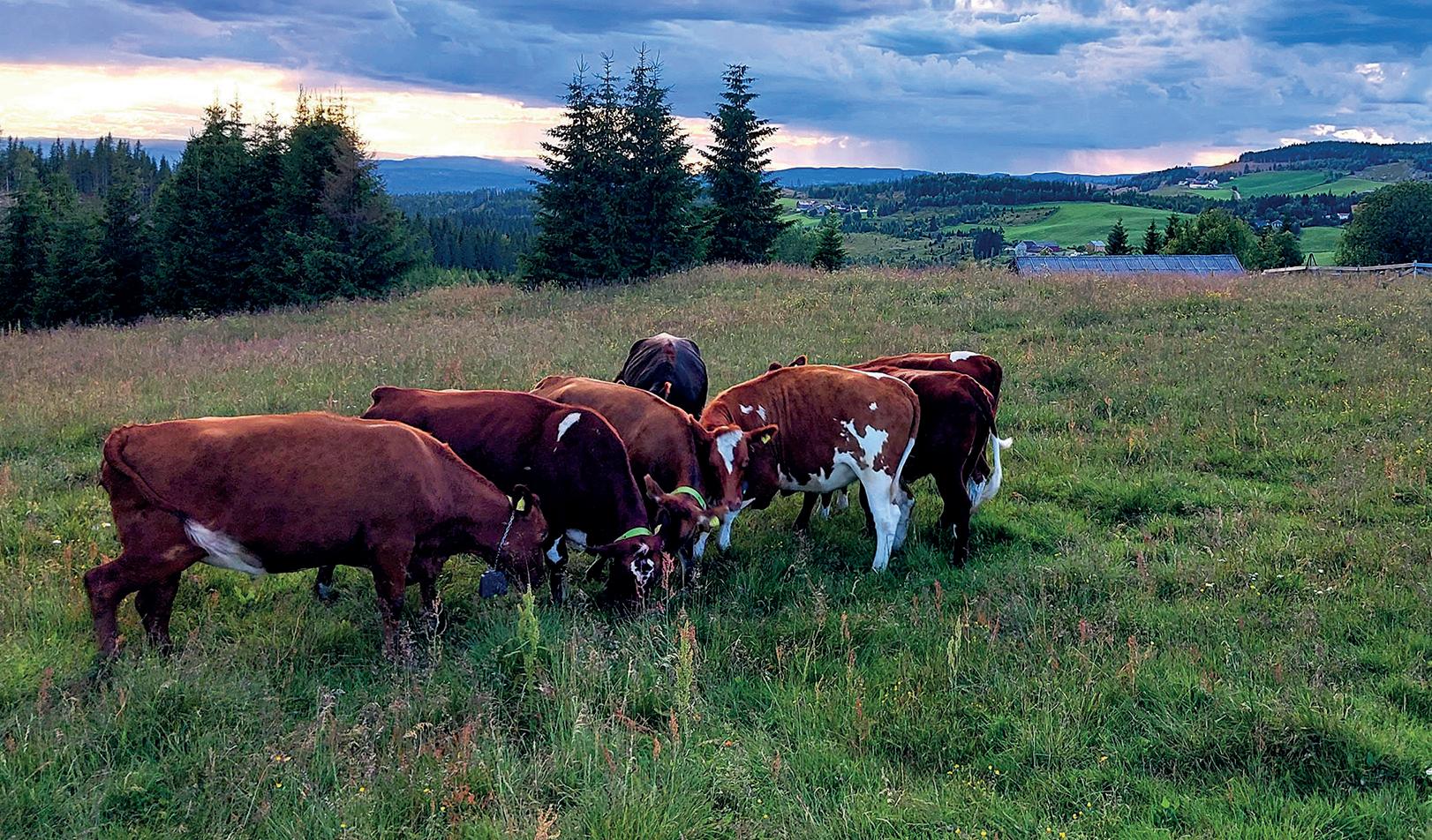
They operate an intensive grazing system for the dairy cows with 14

The NoFence collars allow for intensive grazing of 14 paddocks and daily rotation.
paddocks and daily rotation. The cows graze rye and ryegrass, which is mowed several times through the grazing season, which runs from early July until the end of September.
Calves are provided with unrestricted access to milk from birth.
Maren says: “Initially, they remain with the dam for up to five days before being transferred to so-called nurse cows for the entire milk-feeding period, which lasts three months.
“Each nurse cow is responsible
■ The herd is mostly spring calving as the milk price is highest in Norway during the summer
■ All bull calves are sold for finishing at three months of age
■ The herd’s average butterfat is 4.6% and protein is 3.7%
■ Milk is sold to the co-operative Tine Farm facts
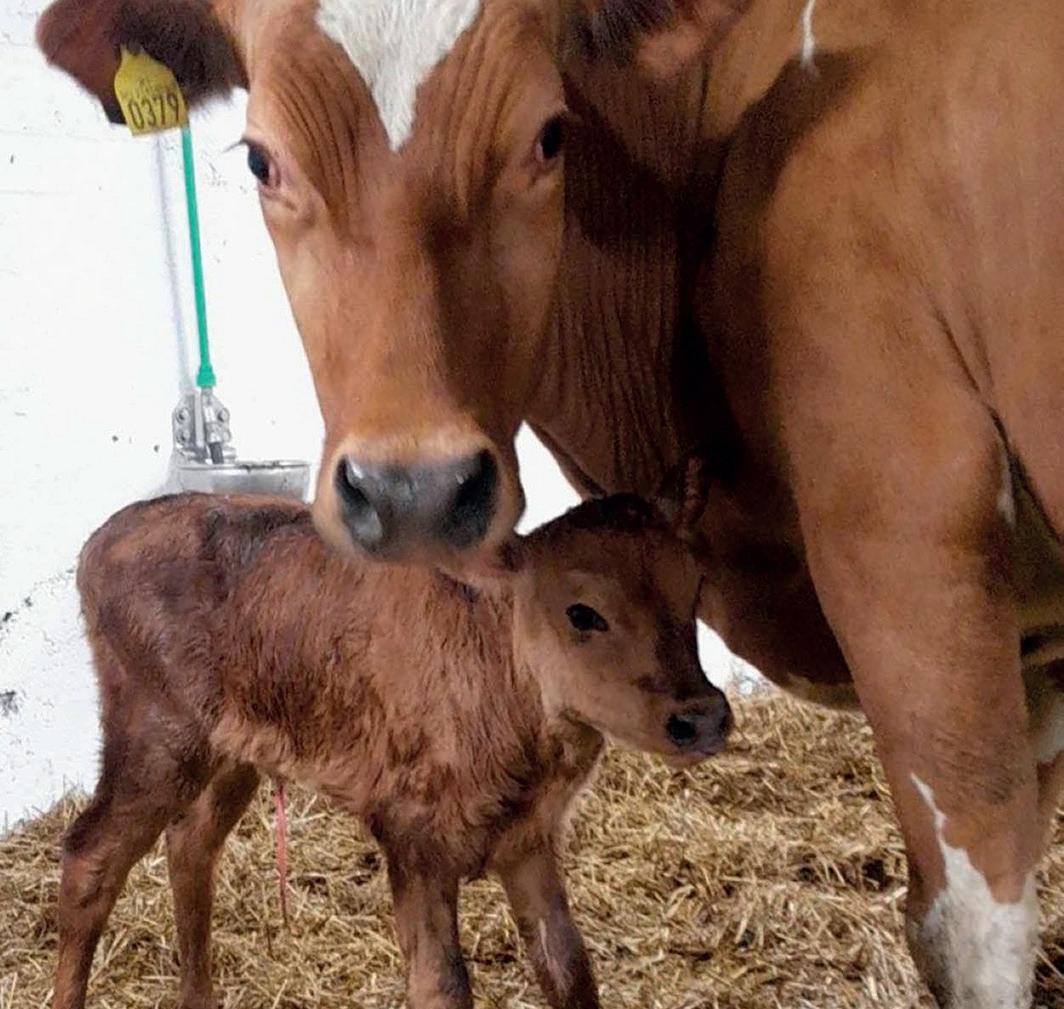
for three to four calves and is housed on deep straw bedding.”
Maren and Hans Olav have invested heavily in the barn to make it modern and more efficient.
In addition, they have invested in NoFence virtual fencing to make better use of the farm’s land.
She says: “We have a lot of forest and outlying land that had not previously been utilised. Using this technology allows us to extend the grazing season and save roughage.
“We bought our first 15 NoFence
collars in 2023 and we cannot imagine ever using traditional fencing for youngstock and heifers again.
“After the first season, we were so impressed that we bought 10 more collars in 2024, and another 15 this year. Due to our snow-rich winters and forests full of moose, our traditional physical fences required a lot of repair work every year.
“It used to take about a week of work before we could release our heifers on to fenced pasture. Now we can use more land without any work

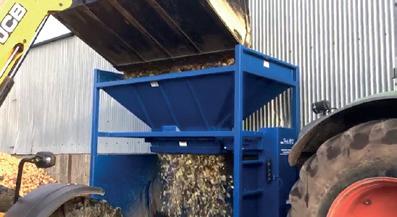
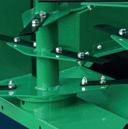
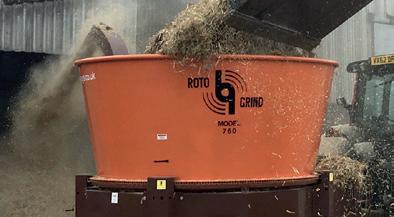
Tub Grinders
- Exclusive UK Distributor of Haybuster & Rotogrind Grinders.
- Range of models from 5t - 25t / hour output.
- New, used & refurbished machines available.
- Ideal for straw, hay, green waste, roots, biogas feeds etc.
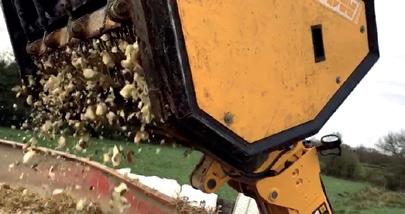
Root Choppers & Cleaners
- Loader, 3 point linkage, free standing PTO and electric drive available
- UK Distributor of VDW range of choppers, cleaners & feed dispensing equipment
- Output from 10t/hour to over 120t/hour available
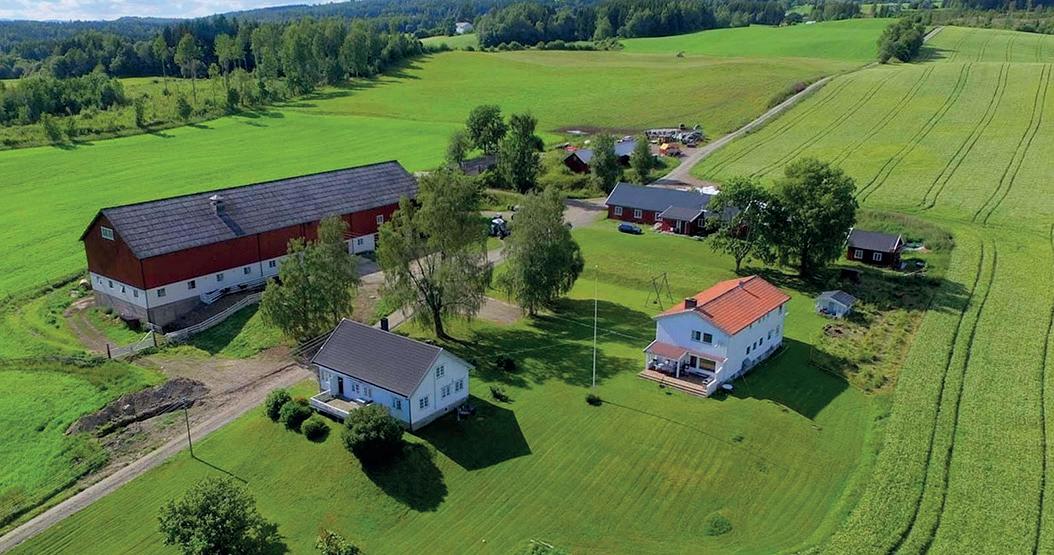
The farm has the capacity to produce 300,000kg of milk annually.
beyond putting on the collars and transporting the animals.
“Last winter, we even had 10 animals grazing year-round using the virtual fencing and we only had to replace two batteries throughout the entire winter season. Plus, we no longer get those Saturday evening calls from annoyed neighbours about trampled lawns.
“Now we just simply draw the virtual fence with a finger on the app wherever we want it. This gives us the opportunity to graze systematically over large areas.”
Maren says the cattle have adapted to the technology easily. They get a sound signal when they approach the virtual boundary, followed by a small electric pulse if they continue.
She says: “If an animal crosses the boundary, we receive a notification in the app, and we can simply ‘fence’ it back in. It usually only takes one attempt before they respect the warning sound. The app also alerts us if an animal has not moved for several hours, which helps us quickly detect illness or injury.”









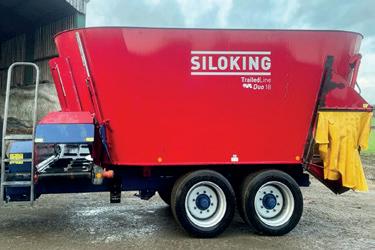
Diet Feeders
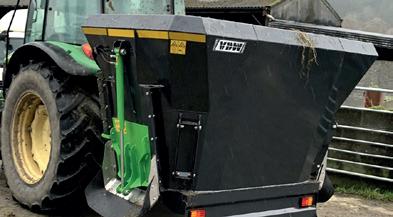
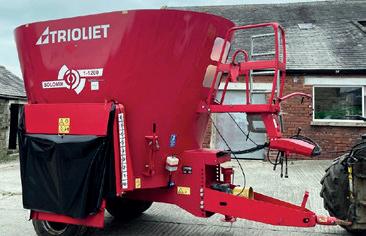
- Largest stock of mixers in the UKover 50 machines in current stock
- Refurbished, used & nearly new units available
- New Mini Mixer available
- Diet feeder parts available- Blades, Conveyor belts, gearboxes, weigh cells.
- All feeders undergo 30 point service
- Finance available subject to terms
- Nationwide delivery available







Current Used Stock:
Trioliet 8, 12, 14, 20
Strautmann 14, 20
BvL 15, 17, 20, 24
JF Kongskilde 12,14, 22
Kverneland / Siloking 14, 16,18,22
Keenan 10, 14, 16, 20, 24
Shelbourne 11, 22, CB150 bedder







Hi Spec 14 x 2, 16
Redrock 20
Seko Samaurai 14
Rotogrind x 4
Teagle C12 grinder
Farmhand 880
Profi freestanding root chopper x 3
VDW root bucket RS1800
Breaking for parts -Trioliet 28, Shelbourne 11, 13, 19, Abbey 1500, Strautmann 1250, Siloking 22,

This month, New Zealand vet Rory Dean talks about running low on medication, ‘robust discussions’ with farming clients and the fortunate growing season.
We are incredibly lucky at our clinic, that on the whole, our farmers really appreciate what we do for their businesses and their animals. However, the working relationship between the vet and the farmer is put to the test when you don’t have the necessary medicines to prevent and treat sickness in your cows.
Over the past few years, we’ve seen a significant increase in the number of herds diagnosed with salmonella. This disease causes high levels of sickness in affected herds, and often dead cows. Stress levels rocket for herd owners and the team as separate mobs need to be created for this highly infectious disease.
However, there was a widespread shortage of the highly effective, affordable vaccine across the country this winter due to issues with manufacturing. This caused considerable issues, and we found ourselves under pressure to ration vaccines to our clients that already used the vaccine in seasons gone by.
Fortunately, we got through without too many heated conversations. Then, our main injectable penicillin preparation went on back order, prompting us to

Rory Dean
change brand. For the average veterinarian in practice, this is no big deal.
But for the farmer, often these different brands have got different withholds and even dose rates, causing unnecessary confusion for staff members.
Our final test came in a major source of calf scour protection, the powdered product with antibodies for rotavirus, etc., inside that protects and nurses scouring calves. Just when the chaos of calving seemed over, I found myself traipsing back out to an otherwise very patient client to apologise profusely for not having stocked up sufficiently with this product prior to the calf scour season.
In my slight defence, it was a perfect storm. Almost immediately before the shortage began, the supplier reported that there was an increase of 30% demand for calf scour therapeutics, largely attributable to more calves being kept in sheds fit for smaller numbers of animals.
After what I believe is termed a ‘robust discussion’, I returned to the clinic, tail between legs, having received some ‘honest feedback’. I’ll know to be better stocked next season.
Self-flagellation aside, we’ve had a very fortunate season so far. Growing conditions have been favourable, and as I write there are lush, high-quality crops of silage being drawn in with mod-
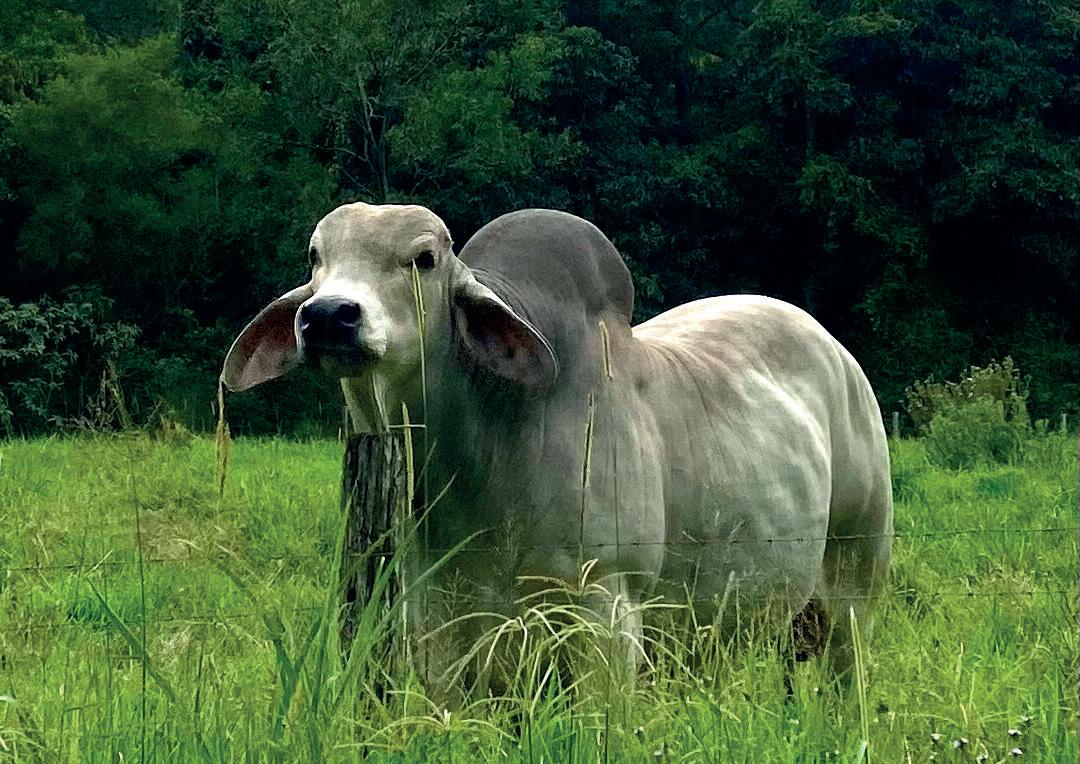
The Brahman, a beef breed developed in America, can be found in New Zealand and are well-suited to the country’s climate.

ern forage wagons across the district. This has been matched by a promising pay-out: Fonterra’s forecast has a midpoint of $10 (£4.30) this 2025/2026 season, alongside a small capital return for shareholders.
This has really exaggerated the role of agriculture in New Zealand’s rural economy and as the cities continue to struggle, there are green shoots in some of the rural economies here.
We have been far more involved in non-cycler intervention this mating season, which is typically a direct flow on from better payouts, and farmers choosing to try to advance the mean calving date.
I’m sure readers are tired of reading about stories of technology in agriculture, but I was amazed to find an unusual benefit on-farm just a couple of weeks ago.
On a Monday morning, I was asked to have a look at cow 429 that had been identified as sick by the electronic collar system.
She was vaguely unwell, but after clinical examination, it was clear that she had a type of twisted gut called caecal dilatation. I donned my gloves, picked up my scalpel and – after anaesthetising the cow – relieved the litres of mucky fluid that had built up in her caecum before closing her up, giving her some drugs, fluids and wishing her the best of luck. Ever the pessimist, I felt that there must have been some contamination into her abdomen and she was doomed, but she was caught early by the collar system and survived. She didn’t even look back – success.
rRory Dean is a director at Kaipara Farm Vets in Northland New Zealand and member of the Dairy Cattle Vets Committee of the New Zealand Veterinary Association. He is also an initial investigating veterinarian for disease incursions with Asure Quality.























































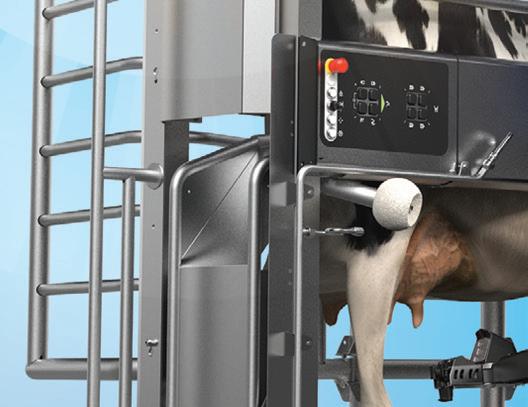








































Mastitis cases have fallen to record lows, but with milk prices dropping, the financial case for maintaining prevention efforts is stronger than ever. Dairy Farmer reports.
Dairy farmers are being reminded of the costly impact of mastitis and how continued industry efforts to reduce incidence of the disease are paying off.
Kingshay development director, Richard Simpson, says the dairy industry should be proud of its track record when it comes to mastitis control, but this good work needs to be sustained to prevent lost milk production.
He says: “From the figures we have recorded, we are continuing to see a gradual reduction in the number of mastitis cases recorded.
“That is largely down to improved management across the board, including genetics and breeding for less mastitis and industry efforts to reduce antimicrobial use through
JMICHAEL Head, farm vet and Kingshay training consultant, says good mastitis control is reliant on ensuring everyone follows the farm’s protocols for dealing with the disease.
He says: “Use your records to help you draw up your action plan for mastitis and look back at the records for new infection rates. From that, create an early warning system based on when mastitis cases might become elevated.”
Mr Head says farmers should also view somatic cell counts as a pre-warning for cases of mastitis and, in instances where it is confirmed, he advocates getting the cause of the disease identified.
the use of teat sealants and selective dry cow therapy.”
Data from the latest Kingshay Dairy Costings report shows the average number of mastitis cases per 100 cows in the year ending March 2025 was 24 – down from 26 cases in 2024 and 32 cases in 2021.
This reduction in cases was mirrored in the figures for the average somatic cell count for conventional herds – down 8.3% to a record low of 154,000.
Meanwhile, the report estimated that the average cost of a case of mastitis was £367 – up from £314 the year before and based on a milk price of 42.4ppl, concentrate costs of £309 per tonne, a herd size of 200 cows, and average yields of 8,500 litres per cow.
“Do not overlook the financial impact of mastitis on your herd; the biggest proportion of
He says: “Have a checklist, based on the Mastitis Control Plan developed by AHDB, and discuss this with your vet or adviser.”
The AHDB Mastitis Control Plan focuses on the following six areas:
■ Cow-to-cow infection – look at how to control the spread of infection between cows via effective group management, culling strategies and proper handling of infected animals
■ Risk of infection during milking
– look at the milking process and parlour hygiene in particular and ensure measures are taken to minimise infection and stress on the udder all-year-round
■ Risk of infection from the
There has been a gradual reduction in UK mastitis cases.

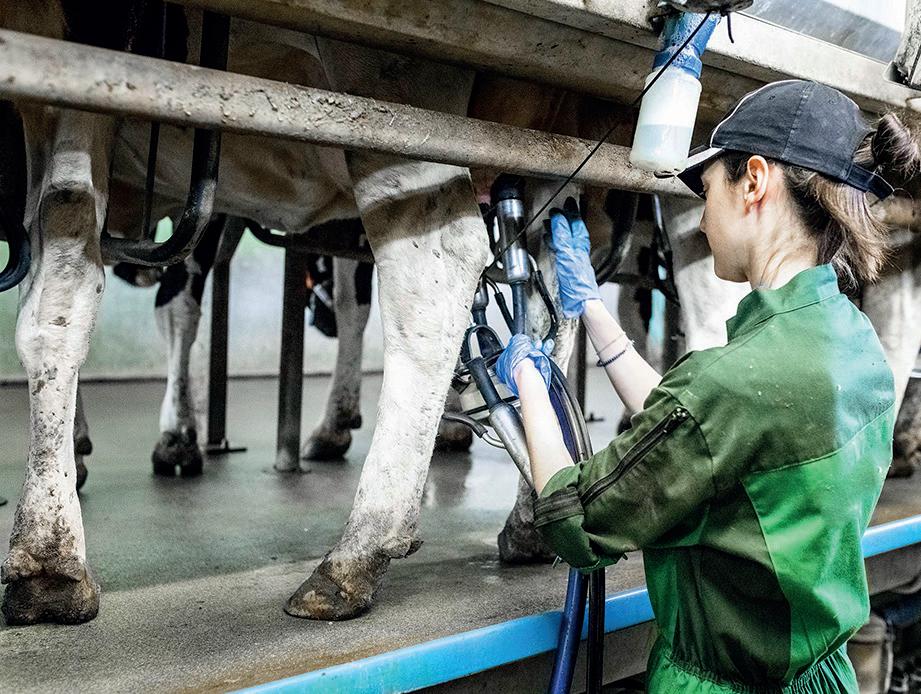
this cost is lost milk production,” says Mr Simpson.
“With rising costs across the board – and falling milk prices –every cow has to pay its way and continued efforts to curb mastitis are part of this.”
environment – focus areas include stocking density, bedding quality, ventilation and overall cleanliness
■ Improve udder defences –support cow immunity with good nutrition, stress reduction and effective dry cow management including the use of teat sealants and selective antibiotic therapy
■ Early detection – use regular monitoring, including somatic cell count testing, to detect cases and ensure appropriate treatment protocols are in place
■ Monitor and review control measures – keep accurate records and work with your vet to analyse trends and refine mastitis control strategies over time
He says good record-keeping, along with a regularly reviewed standard operating procedure for dealing with cases of mastitis, will help farmers keep on top of the disease.
“Consistent recording of data gives you the opportunity to be more proactive with treating cases and allows you to benchmark your herd against others on a similar system and scale,” explains Mr Simpson.
“Continually review how you manage the disease and set appropriate targets for a year-on-year reduction in cases.
“There are plenty of herds achieving consistently low levels of mastitis, so it is achievable.”

The first maize silage analysis results for 2025 clearly show the impact of the atypical growing season this year and the need for attention to detail when formulating diets in the months ahead. Dairy Farmer reports.
Maize silage analysis results indicate that the crop will offer some respite from the challenges of downward pressure on margins and variable grass silage stocks being faced by many dairy farmers, says Isabelle England, ruminant nutritionist with Trouw Nutrition GB. She says crops have the potential to feed well, but careful balancing will be required to get the best from them.
The maize season was characterised by a warm, dry spring across much of the UK. In most cases crops were drilled early into good seed beds and established rapidly.
However, a prolonged period of high summer temperatures and low rainfall resulted in low soil moisture, which impacted ongoing growth and development. This resulted in inconsistent cob development and maturity, and affected the development of the vegetative parts of the plant.
Ms England says: “While the overall consequence is more variable maize crops this winter, the results of more than 1,600 samples analysed at our laboratory in Ashbourne suggest that farmers can be encouraged by the prospects for feeding maize.
“That said, it will be vital to understand the analysis of the maize being fed, making regular analysis crucial.”
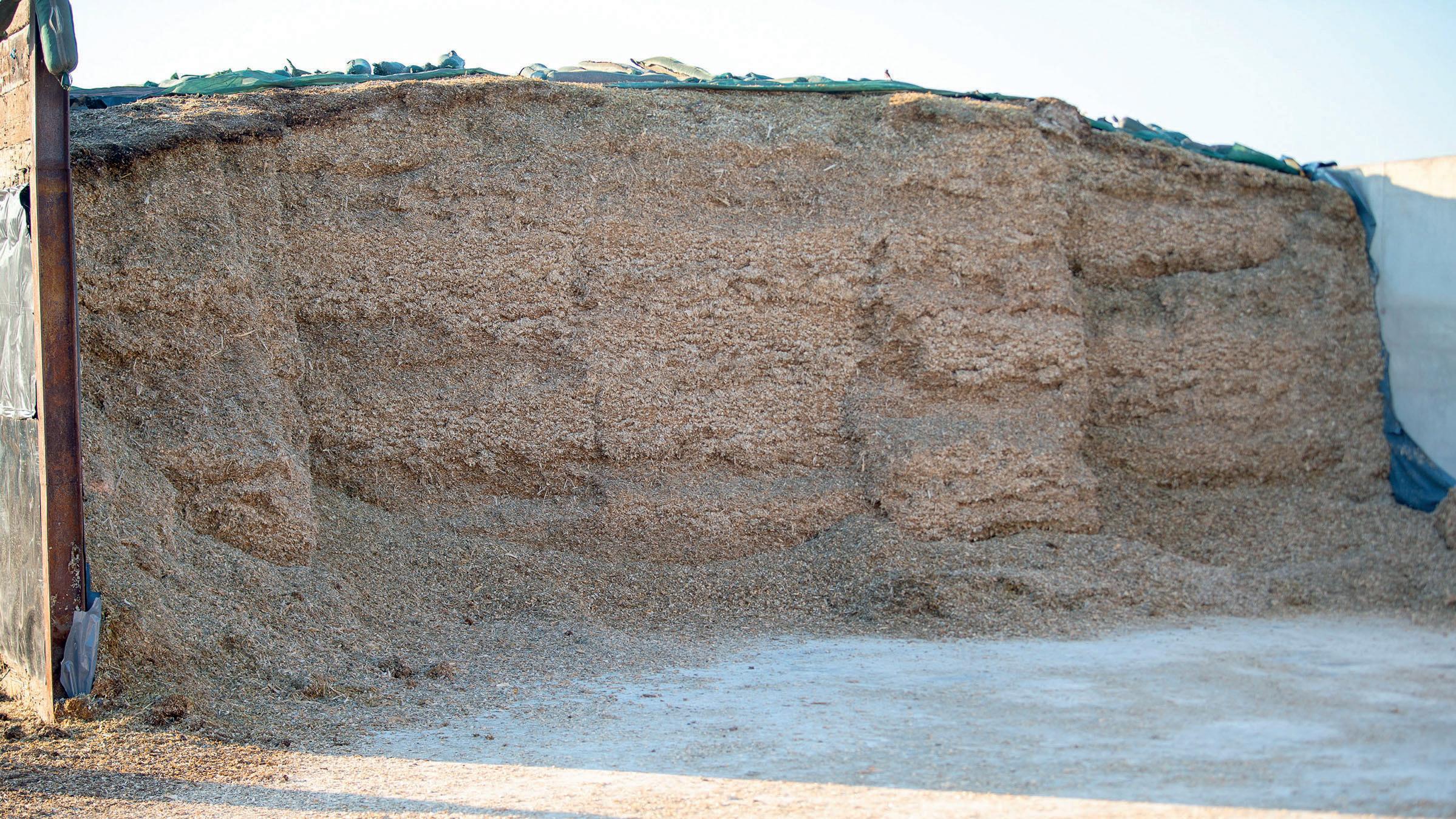
While average dry matter (DM) this year is only slightly lower than 2024 at 29.9%, Ms England says there is a wide variation reflecting how quickly crops dried down in the field. Crops that dried
SOURCE: TROUW NUTRITION GB
quicker may have proved more difficult to compact in the clamp.
Uneven cob fill and less mature kernels, resulting from heat stress and lower soil moisture, have contributed to a small decline in starch content at 26.2%, compared with 28.4% in 2024.
Starch degradability is also slightly lower at 76.8%, suggesting that while rumen-available starch remains high, energy release may be marginally lower. Overall, energy levels are similar with metabolisable energy averaging 11.1MJ per kg of DM, and average crude protein has increased to 8.3% while the supply of metabolisable protein is slightly lower.
With around 40% of the total dry matter in maize silage represented by the vegetative parts of the plant, fibre digestibility has a significant impact on how well crops will be digested.
Ms England says: “We have seen changes in the make-up of fibre this year, reflecting drought
conditions and slightly ‘tougher’ plant material. While neutral detergent fibre [NDF] has increased to 43.5% DM, acid detergent fibre has decreased, indicating that while there is more fibre in the plant, it will be more digestible.
“This is also reflected in lignin content, the proportion of indigestible fibre, which is down from 34.2g/kg DM to 30.2g/kg DM. Combined, these results point to good fibre digestibility, meaning cows will be able to make more of this valuable energy source.
“These results offer some encouragement to dairy producers. Although starch content has fallen slightly, the high degradability means that attention will have to be paid to other energy sources in the diet. The higher NDF and lower acid load will help stabilise rumen function.”
The higher fibre and lower starch levels may result in a slower but more sustained energy release which will enhance rumen


stability. This should help balance out high sugar, rapidly fermentable grass silages. She advises ensuring rapidly and total fermentable energy and protein are in balance and supplement accordingly.
“The analyses indicate that metabolisable protein supply will

be reduced, so complementary protein sources may need to supply both rumen-degradable and bypass fractions. Feeds such as rapeseed meal and distillers’ grains will help maintain microbial efficiency,” says Ms England.
“The average maize analyses


provide some better news for dairy farmers facing a challenging winter.
“When used alongside well-fermented grass silage, maize should contribute to more cost-effective rations. But it will be vital to focus on rumen stability, starch manage-






















Crops that dried quicker may have proved more difficult to compact in the clamp, says Isabelle England.
ment and mycotoxin control to achieve optimal health and production. Recognise that the crop will change with time in the clamp and between different fields and varieties. Analyse clamps at least monthly and fine-tune diets to help maintain margins this winter.”






Optimising rumen development during a heifer’s first 16 weeks is critical for the best health, feed efficiency and future milk performance. Dairy Farmer reports.
Maintaining a well-structured calf rearing programme with a focus on rumen health is key to ensuring a heifer’s long-term success and performance.
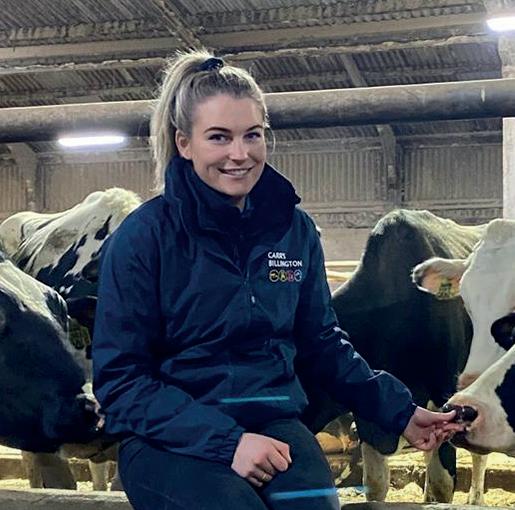
Calf and youngstock specialist at Carr’s Billington, Saskia Fletcher, says good rumen health and development is the key to ensuring a heifer reaches its full potential – and farmers only have one chance to get this right.
“A calf is born with a non-functioning and underdeveloped rumen, and it is what we put into it in the first 16 weeks of life that allows it to develop and thrive,” she says.
“Neglecting rumen development in those early weeks can impact future milk yield, fertility and overall longevity – leading to higher veterinary costs and delayed first calving.”
Ms Fletcher says the foundation of good rumen development starts with ensuring calves get the right amount of good-quality colostrum immediately after birth.
“Colostrum is the first line of defence,” she explains.
“The first feed should be given within two hours of birth at 1012% of the animal’s bodyweight.”
She highlights the importance of testing colostrum before feeding it to calves and says good-quality colostrum should give a minimum reading of 25% on a Brix refractometer.
Ensuring good hygiene is vital during the first 16 weeks of a calf’s life and Ms Fletcher says it should be a priority across the board on all calf-rearing units.
“We should be rearing calves with the same standards we apply to babies in those first weeks,” she says.
“Whether it is what you are using to take colostrum off each cow, the dump bucket, or the water available for drinking, good hygiene counts for a lot.
“As water is the first thing that enters the rumen, it is vital that it is
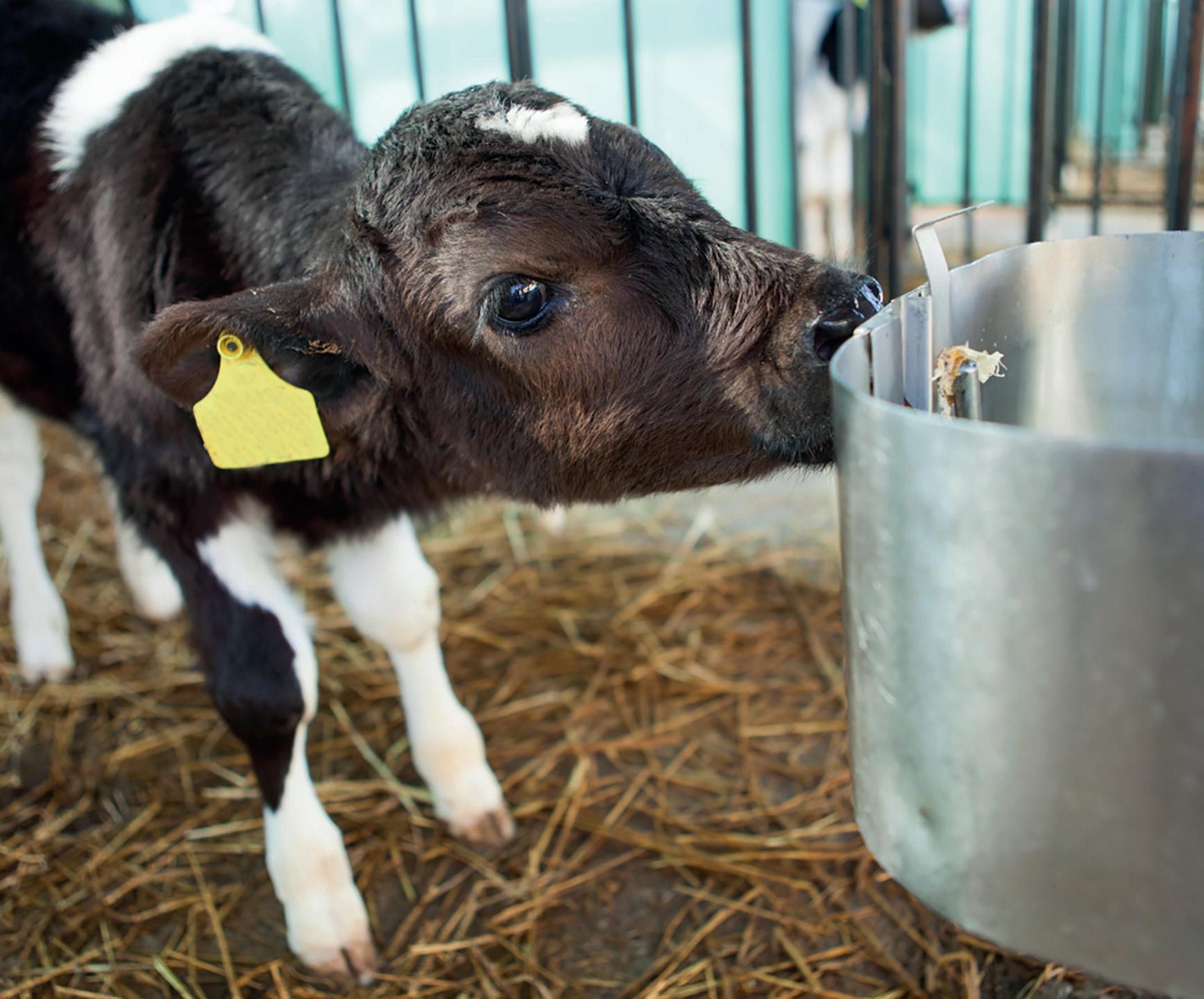
Hygiene should be a priority for the first 16 weeks of a calf’s life.

clean – if you would not drink it yourself, it is not clean enough for them either.”
As well as potentially introducing harmful pathogens to calves, Ms Fletcher says dirty water also impacts feed intake, especially when starter feeds are introduced.
Ms Fletcher highlights the importance of preparing the rumen for weaning and says calves should be offered hard feed and ad-lib straw from day one, with the aim of them eating a minimum
of 2kg of hard feed each day before they are weaned.
“Newborn calves are unlikely to consume much concentrate to begin with, however, by having a hard feed available from day one you minimise the change in surroundings the calf must endure, therefore reducing stress on the animal,” she says.
“Steady exposure to straw in the early days provides scratch factor, which stimulates the development of the rumen’s papillae, to open them up and get the rumen functioning.”
Other factors to consider during the first 16 weeks of a calf’s life include its housed environment and how it is handled.
“Not everyone has the perfect calf shed, but we can all take steps to make it the most pleasant environment for them to be in,” says Ms Fletcher.
“If calves are overstocked, you
are reducing their chance to thrive, so ensure they have got adequate space and that the air movement in the shed is sufficient.
“They also need a good, thick bed of straw – a really good indicator of this is kneeling in the straw. If your knees and legs are wet when you get up, it is not good enough and more straw is needed.”
In addition, she says stress factors – such as any form of handling or moving the calves – should be minimised as these will negatively impact daily liveweight gain.
Ms Fletcher says the benefits of staff training for a calf-rearing team are often overlooked.
“For me, rearing calves successfully is about having consistency – calves thrive off having a uniform routine, so it is important to make sure everyone in the calf-rearing team is on the same page and all deliver the same attention to detail,” she adds.

With milk prices dropping, it would be easy to have a negative outlook on dairy, but a recent dairy exports conference hosted by AHDB highlighted global demand for quality British products. Anna Bowen reports.

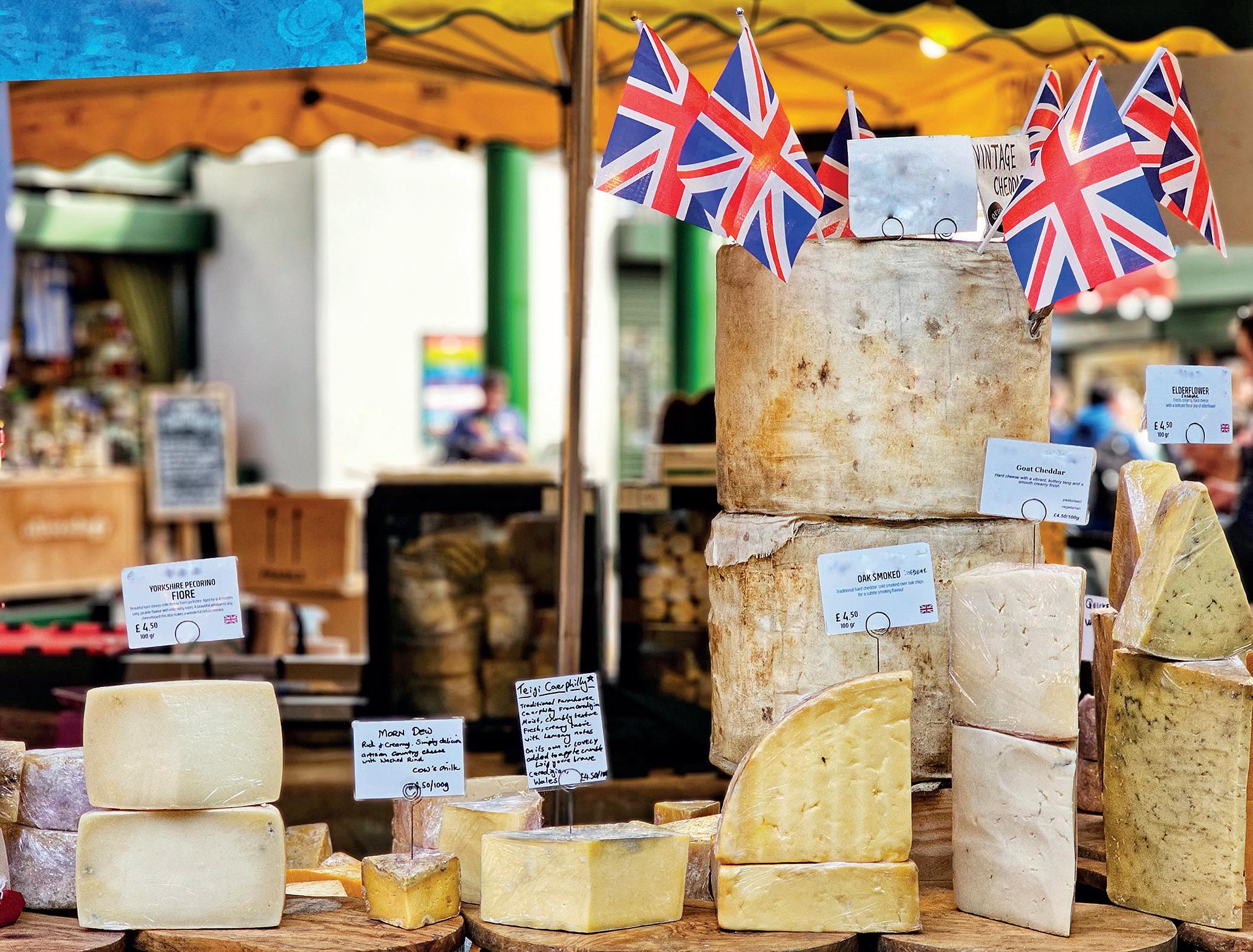
xports are ‘absolutely vital’ to the success and resilience of the domestic dairy sector, said Emily Norton, AHDB chair, speaking at the recent dairy exports conference hosted by AHDB.
She said: “Already this year, in just the first half of 2025, dairy exports have been worth £1.1 billion, showing strong growth of 20% compared to the same period in 2024.
“They can provide an outlet for milk production to reach markets that can offer higher returns than we see at home. And as prices dip again here in the UK, the need to diversify markets and drive demand for our world-class dairy products has never been more critical.”
British dairy is in a good position to export due to a combination of a favourable climate for production and a positive reputation. Exports are also critical to balance supply and demand, said Laurent Cambier of Philpot Dairy
THE EU remains the biggest market for exports, with a share of around 80%, worth £1.4 billion in 2024. John Giles, of agricultural consultancy Promar, described how important the region is for Britain’s dairy exports, with values up 5.6% on last year and opportunities remaining despite post-Brexit challenges.
“Europe still has 450 million people,” he said.
“The vast majority of them, in relative global terms, are still relatively affluent. There are 27 countries there and some are more important than others; five countries account for about 65% of the overall population.”
“The SPS [Sanitary and Phytosanitary] agreement was started in May and that signals the start of a different relationship with Europe going forward. If it is agreed, things like
export health certificates, particular inspections for organic products and border control checks should all disappear.”
While the EU is an established and strong market, the conference also covered changes in less traditional export countries.
With a population of 1.5 billion people, 65% of whom are under 35, India has a huge market with rising disposable incomes. AHDB reported that demand is high for
liquid milk, butter and skimmed milk powder (SMP) and that dairy products now make up 19% of monthly per capita food expenditure, rising to 20% in urban areas. Tariffs are currently high (60% for SMP) but a free trade agreement this year may make exporting easier. From 2019 to 2024 the volume of British dairy exports to India increased 119.8%, with an increase in value of 88.7%.
ALTHOUGH there are challenges navigating tariffs, local rules and cultural differences, speakers at the export conference were positive about the outlook for dairy exports and consumption.
“I do not see a lot of industries
Products, who added that changes in global production should bring additional opportunities.
“We are producing more milk and there is potential for further growth, whereas if you take
that have these type of dynamics,” said Laurent Cambier of Philpot Dairy Products.
“It is a really good position when you have people wanting more of the products that we are producing and exporting.”
competing origins in our vicinity they are not looking at the same dynamics and, actually, they are looking more at a potential stagnation or even a drop in milk collections,” he said.
“This is due to several factors, which are related to environmental regulations and general Government policies that will restrain growth.”
Mr Cambier said the global demand for dairy was strong and continued to grow, which created opportunities for exports into countries that were not as well set in terms of climate or infrastructure to supply dairy products.
“Although local milk collections are increasing in several of the important countries there is still that
trade deficit, so people still need to import to complement their local milk productions,” he said.
“And that is where we are coming in, supplying this additional product.”
He added that the UK’s low emissions compared to some other dairy industries was a selling point when exporting to climate-conscious countries and that exporters should use this to promote their product.
DAIRY products continue to be highly valued by consumers as a key component of an overall healthy, balanced and nutritious diet. As income and population increases, more dairy products are expected to be consumed globally over the medium term, according to the latest Food and Agriculture report from the Organisation for Economic Co-operation and Development.







As farmers continue to look at investment opportunities here, we feature two farms with different approaches to upgrading their milking facilities.
34 PHASED
Introducing robotics in stages on Cornish farm
38 PRECISION
A farm’s experience on new out-of-parlour feeders
40 COMPANY NEWS
Innovations and insights from the tech world
Every milking can now generate thousands of data points, transforming how farmers manage their herd – with more efficiency, profitability and better welfare. Dairy Farmer reports.
In the modern world, data is key and this is no different for dairy farmers, says Derrick Davies, business development manager at Dairymaster UK.
He says a modern milking system is not just about harvesting milk, it is an integral part of the cow herd management system, and platforms that collect a wide range of metrics at every milking can help highlight changes straight away – usually a good few days before it is brought to the attention of the naked eye.
And he adds these early warning systems have real impact. For example, detecting mastitis through conductivity monitoring can dramatically reduce clinical cases, cutting antibiotic use and improving recovery rates.
He says: “If we are starting to see a fluctuation in milk quality, you can get it flagged immediately. That could result in using something other than antibiotics.”
Beyond udder health, data also plays a role in fertility management and hoof health, says Mr Davies. Being able to detect the window for optimal insemination improves conception rates by reducing missed breeding windows. Likewise, a reduction in activity could indicate early lameness. Mr Davies also says that precision milking systems can also
personalise milking for each cow, suiting the animal’s needs.
He says: “Optimised pulsation and vacuum settings reduce udder stress and improve milk let-down, while automated cluster flushing and teat spraying are tailored to suit. Reducing bacterial contamination helps keep somatic cell counts consistently below the industry average of 170,000. This protects premium contracts and reduces waste from rejected milk batches.”
Technology also transforms daily routines, and Mr Davies explains that instead of relying on visual checks, farmers receive actionable insights on their phone or computer, allowing optimisation of their time.
“Drafting gates and automated sorting reduce handling touchpoints and removing the need to fetch cows prevents unnecessary disruption of the herd. Health alerts allow planned veterinary visits rather than emergency calls, saving time and money.”
Mr Davies adds that these platforms also allow farmers to share herd data with third parties, vets and nutritionists, enabling targeted advice and faster problem-solving.
“Nutritionists can adjust rations based on real-time rumination and feed intake, improving dry matter


achieve a quicker return on investment, even on large set-ups. Do not just look at the upfront cost. Consider the potential savings data management can provide.”
Mr Davies also stresses the importance of future-proofing farmers’ investments.


utilisation and increase the performance of the tailored ration. Vets can review alerts before visiting, ensuring treatments are precise and effective.”
Environmental resilience is another consideration.
Mr Davies adds: “We have to minimise stress on cows. Heat stress can affect fertility and milk production for weeks, even months. Ventilation, water availability and cow comfort are crucial.”
Heat stress monitoring can help farmers adapt housing and ventilation to suit the herd’s needs, improving cow comfort.
And while advanced parlours and robotics typically involve higher upfront costs, Mr Davies believes the payback is clear.
He says: “Savings come from reduced labour, improved fertility and higher milk yields. Farms using integrated monitoring often
He says: “Succession planning is huge. Every farmer wants to hand over their lifetime’s work, and if you get this right at the time you are investing, it ringfences your business for the future.”
And he says systems should allow for expansion and easy integration of new software.
“Build in room for growth and make the working environment appealing for the next generation.”
Mr Davies says he believes technology, monitoring and data management are no longer optional – they are essential.
“They improve cow welfare, enhance milk quality, and help make farms more profitable and sustainable. By embracing these innovations, UK dairy farmers can move from reactive management to proactive control, securing the future of their businesses and the well-being of their herds. Do not be frightened of new modern technology. There is so much support to take you on the journey.”












































































Technology has brought benefits on a Cornish farm, where the Marshall family have invested in robotic milking as well as an automated feed pusher and a new computerised management system. Wendy Short reports.
The long-term aim at Porthilly Farm, near Wadebridge, Cornwall, is to milk 450 cows on eight robots. However, a phased approach has been adopted to ease the financial burden and to minimise business risk, says Chris Marshall, who farms with his father Jerry and brother Matt.
Chris says: “Switching from a parlour system to robots is not only a huge financial commitment, but there is also considerable risk involved with such a significant change.
“We were unsure whether things would work out for the best; therefore, four robots were installed in the summer of 2024 in a building erected a decade ago, about a mile away from the main steading, and the 215 cows were relocated.
“It has been successful, so we have pressed ahead with the expansion plan and have since bought a further 50 cows, which are milked twice daily through the parlour and housed in the
original building. This was not the intention at the outset, but has allowed us to continue to increase numbers until we have the finances to carry on with the investment programme,” he adds.
“There is an added bonus, as the parlour can be used for any cows that fail to fully adapt to the robots – although problems have been minimal and are not associated with any conformational defects.”
The farm steading was hemmed in on three sides and
offered little room for expansion, says Chris.
He adds: “The second cubicle house was built on a greenfield site, with the intention of installing robots, and it was designed to house the 170 cows that were being milked at that time. That phase was delayed until last year for various reasons, and a wing has been added to accommodate the extra numbers.”
Genomic testing is not used in the breeding programme, which has, until recently, comprised a
three-way cross using the Holstein, the Montbeliarde and the Viking Red.
“The cross-breeding has been paused in favour of Holstein sires – the breed suits robotic milking, and it also helps to boost production, but there may be a return if health traits come under pressure,” says Chris.
“More data is needed before a firm figure can be allocated to the
It has been successful, so we have pressed ahead with the expansion plan and have since bought a further 50 cows
CHRIS MARSHALL
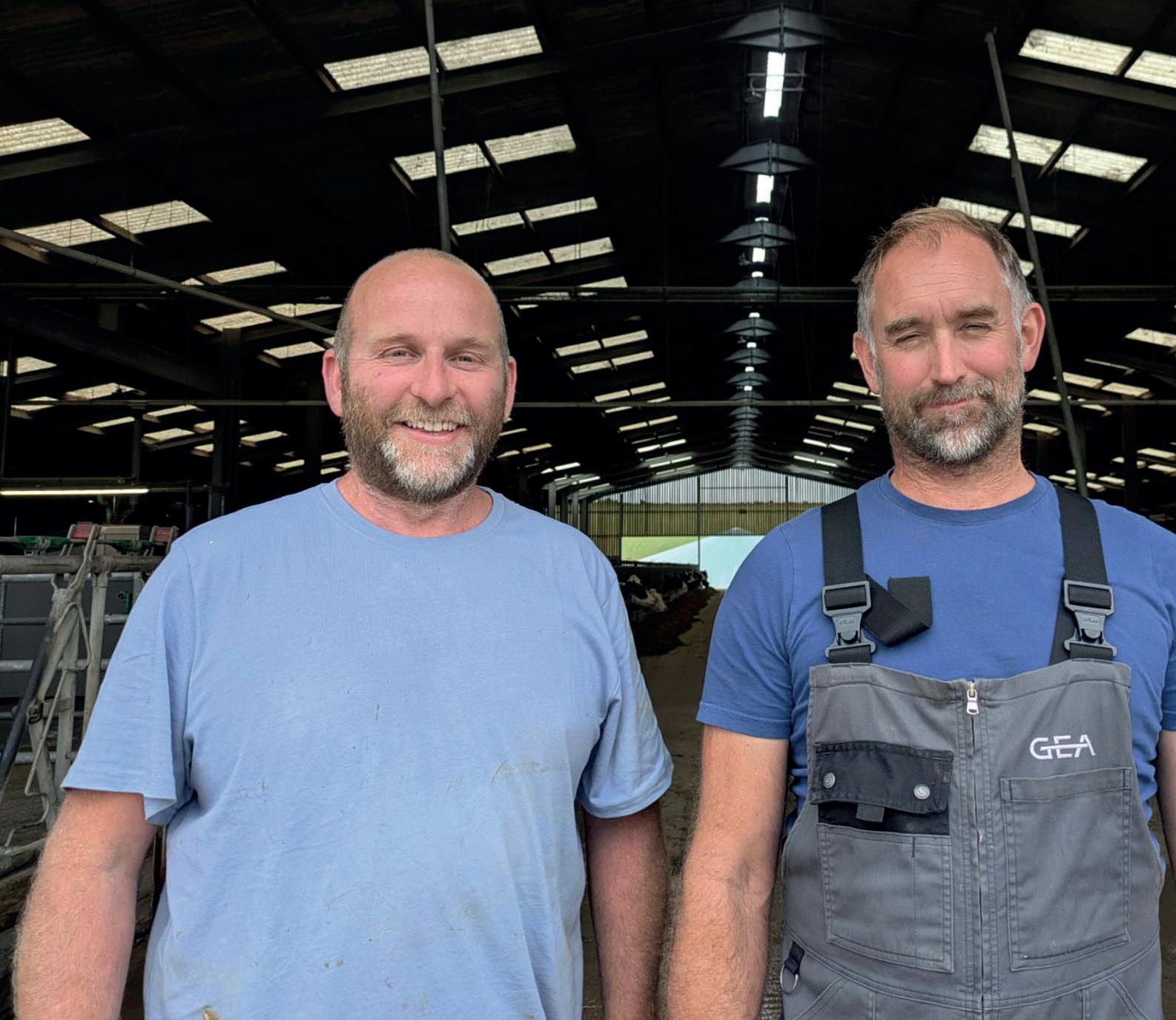
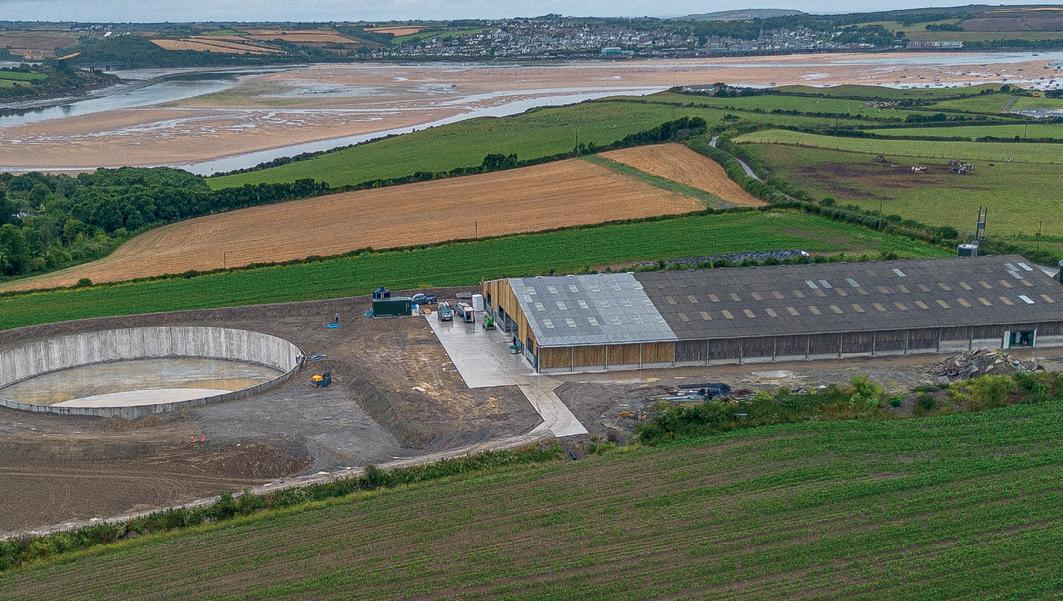
robots’ effect on average yield, which was previously about 8,500kg. This is partly because there has also been a switch from late summer/autumn block calving. Nevertheless, the cows used to peak at 35-37kg, and the figure has climbed to 40kg.”
In terms of technological investment, the robot installation comprises four GEA DairyRobot R9500 milkers, installed by Venture Dairy Services.
Each machine is set in a headto-head, free access configuration and occupies 5.3m2
Features include in-liner technology for rapid single attachment and quarter separation,


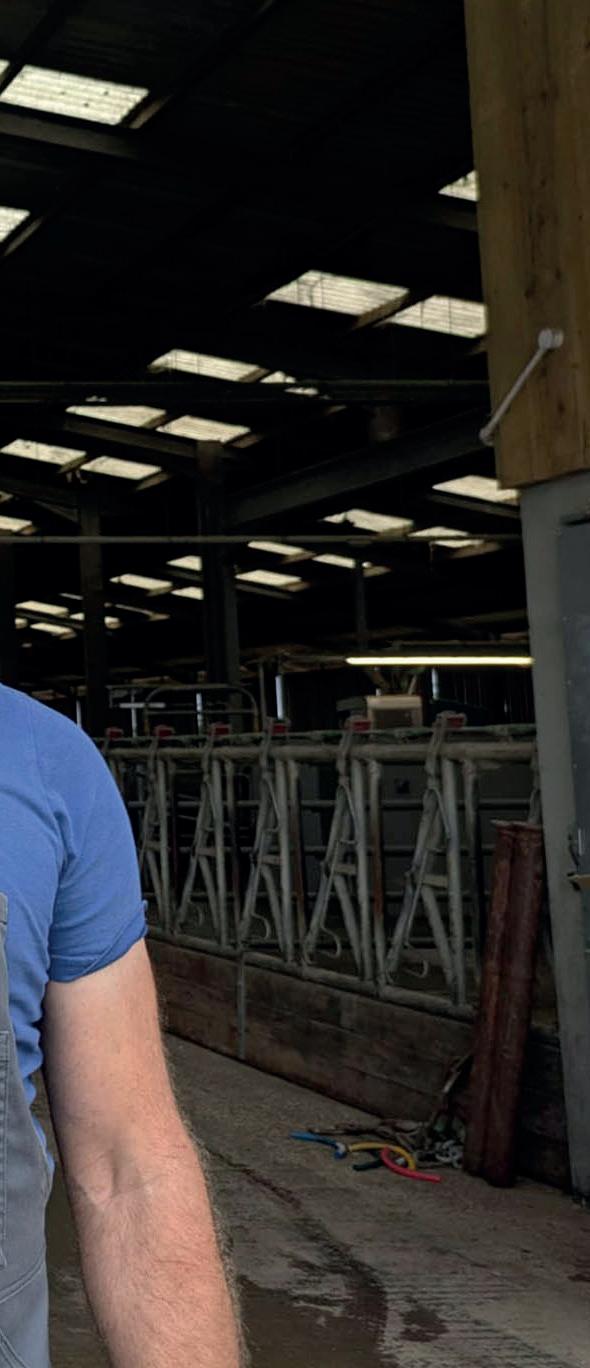


plus cell count and conductivity per quarter, recording in real time. The system allows separate milking for each quarter and covers pre- and post-dipping, teat cleaning and udder stimulation.
Meanwhile, the GEA DairyFeed F4800 feed pusher has a rotating drum driven by two electric motors. It is fitted with smart speed control, designed to handle uneven feed heaps.
The machine uses a transponder, sensor technology and a gyroscope embedded in the floor for obstacle avoidance, and it has lift capability to handle uneven surfaces. Operation timing can be set to a specific schedule.
The unit also has JOZ manure robots, plus a comprehensive GEA DairyNet programme that covers herd data, milking, cow sorting and feed management elements. It uses an on-farm server and is linked to a mobile app, with a ‘one-click’ facility to pull up individual cow data at a glance.
The machine also encompasses
■ Calving is all year round, with an average 12,000kg yield at 4.1% butterfat and 3.5% protein
■ Milk is sold to Arla
■ The family also operate a seafood enterprise, Porthilly Shellfish, which grows oysters and mussels in the Camel Estuary and then sells the produce wholesale

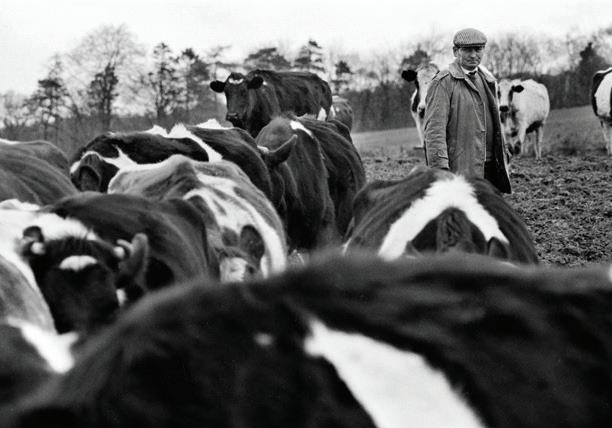






















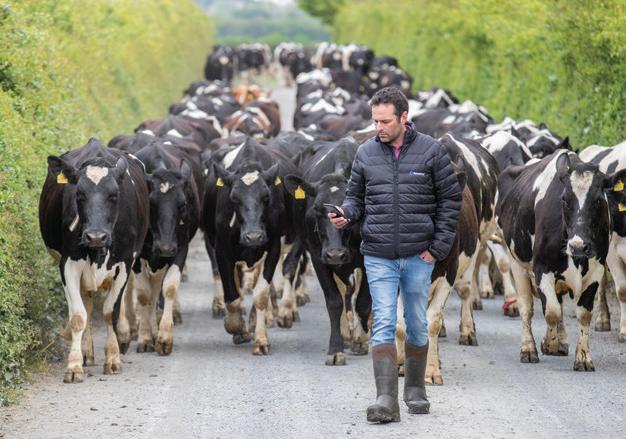































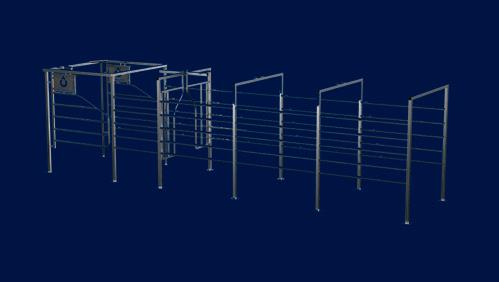






















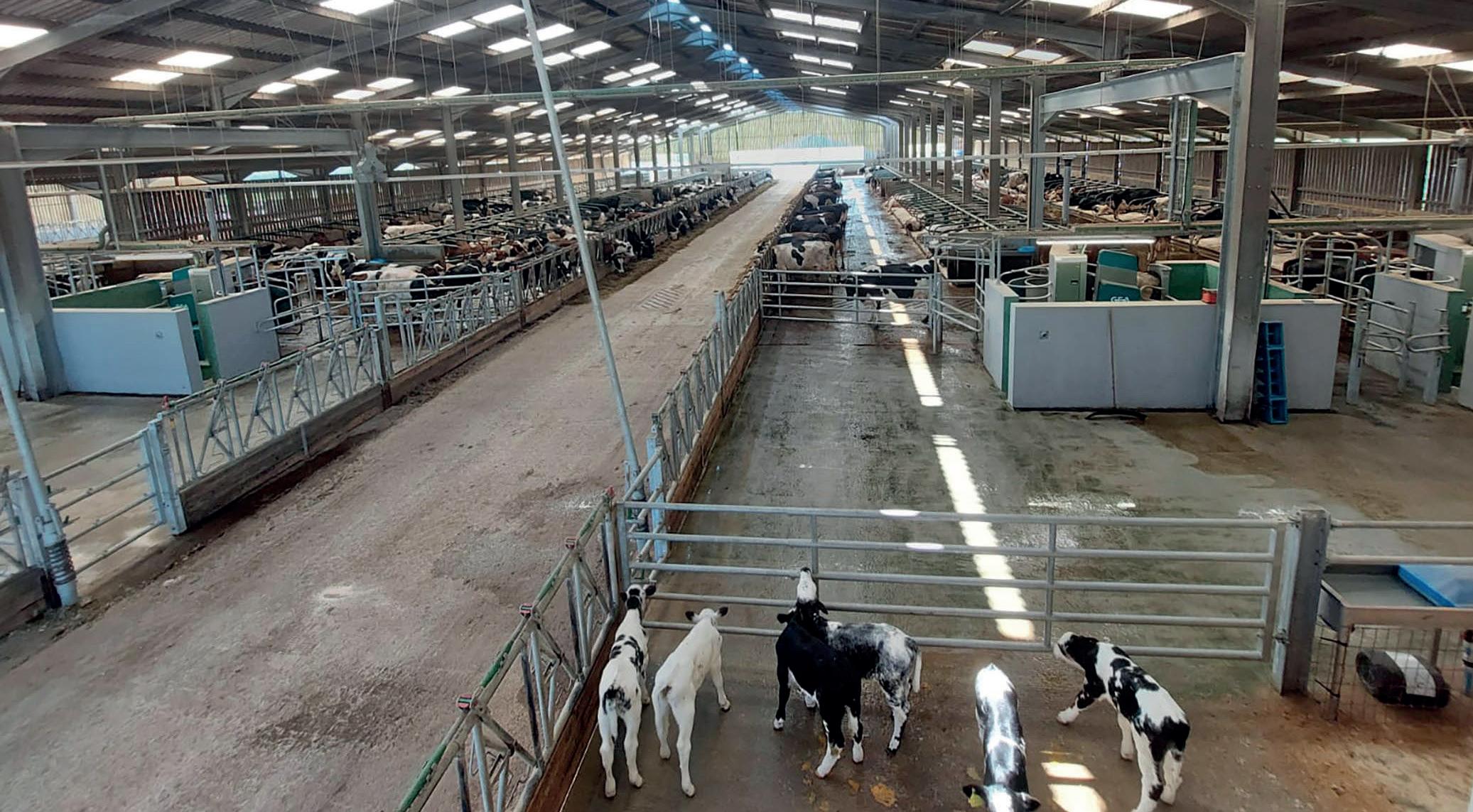
a virtual journal to flag up daily tasks such as service and veterinary treatment.
The decision is yet to be made on the exact date when the Marshalls will purchase the final four robots and move their entire herd to the new site.
The family employs a herdsman and a general farm worker, as well as a part-time relief milker on-farm.
Chris’s son, James, also works for the business, alongside a fulltime farm apprentice.
Chris says: “The loan for the investment is being repaid at a more rapid rate than we had
The crossbreeding has been paused in favour of Holstein sires –the breed suits robotic milking
CHRIS MARSHALL
anticipated, and we are looking forward to being able to finance the additional robots and make the parlour redundant.”
Unlike some farms, the project was not driven by staffing issues.
The number of people working on-farm has remained unchanged, but that is partly due to the return to parlour milking.
“The main motivation was
linked to our goal to make the business as efficient as possible, and we had also visited farms and been impressed by the way the cows looked and behaved in robotic systems.
“We are fully committed to the expansion plan, as we feel that unless the unit keeps moving forward, there is a risk that it will start to go backwards.”
■ Robot milkings/day: 3.22
■ Average days in milk: 185
■ Milk/cow: 39.71kg
■ Milk flow: 2.8kg/minute
■ Robot utilisation: 83%
■ Feed/cow: 8.1kg
■ Feed rate in robot: 0.2kg/litre
■ Attachment time: 36 seconds
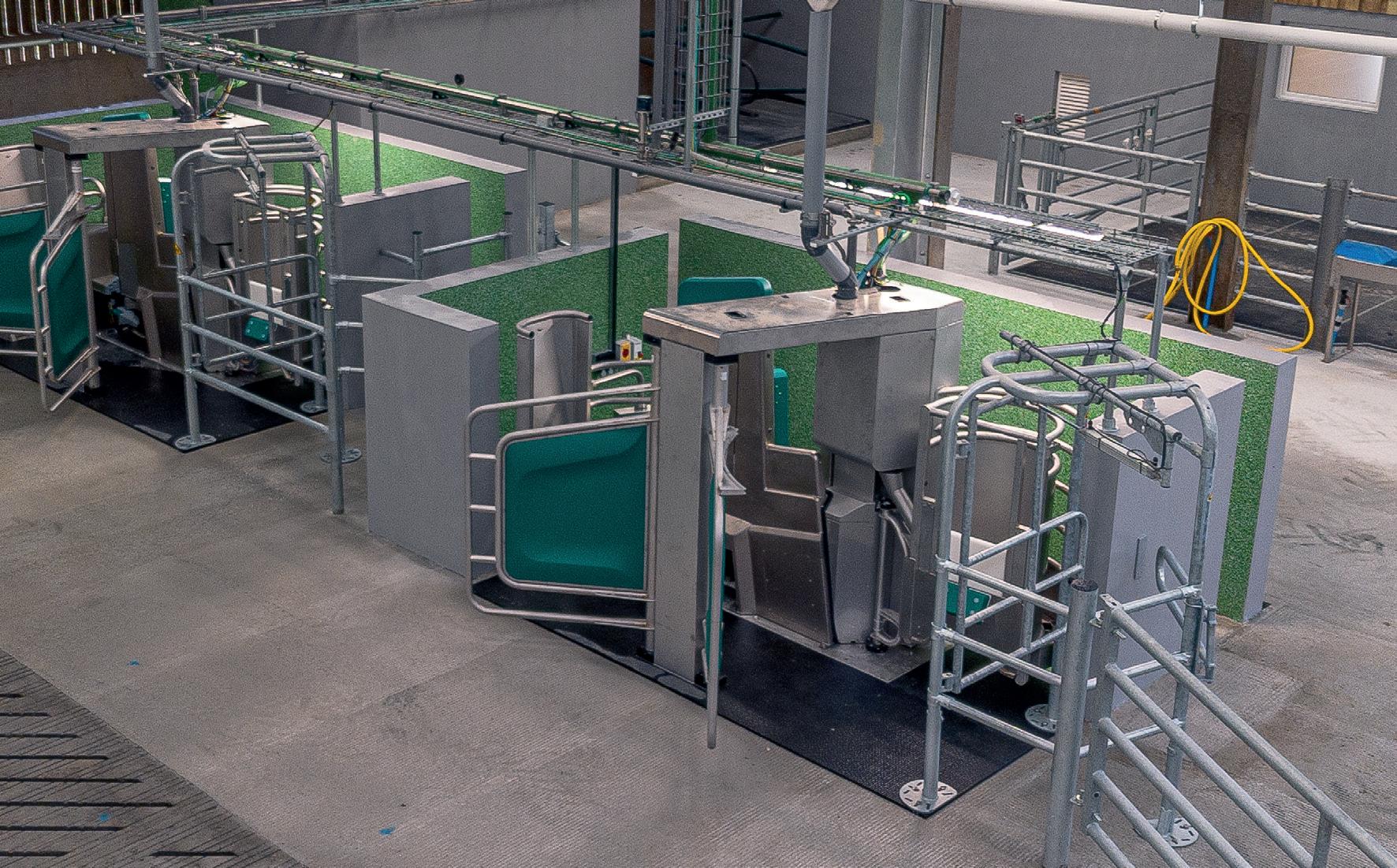




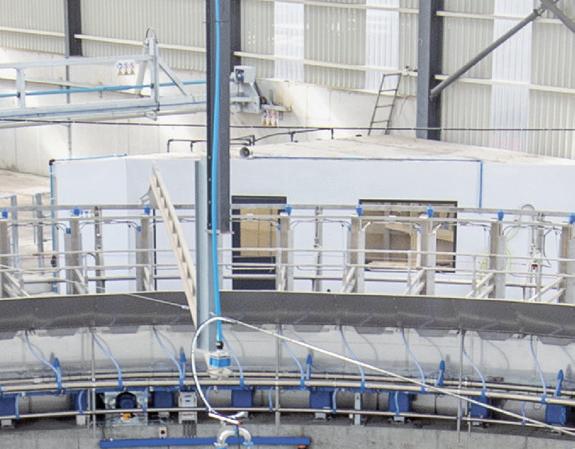




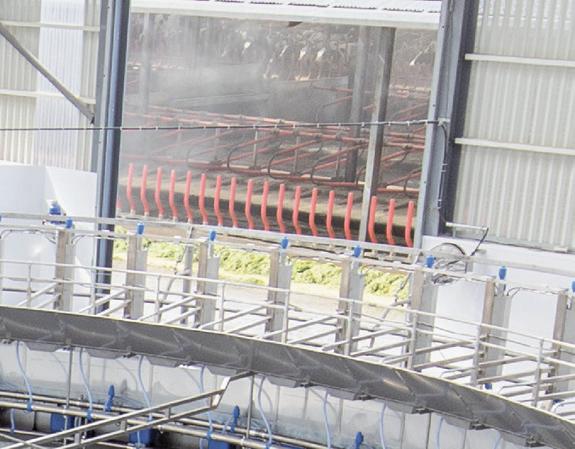

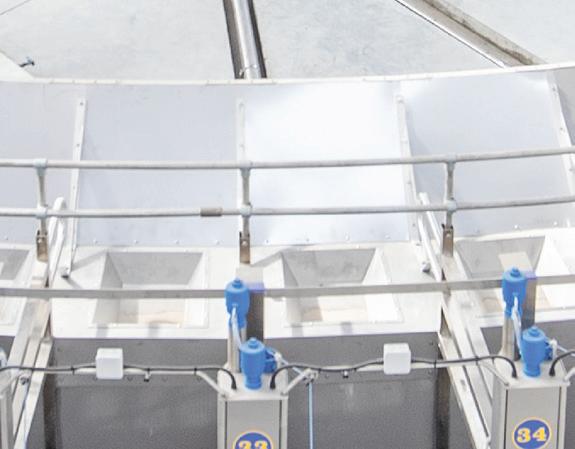
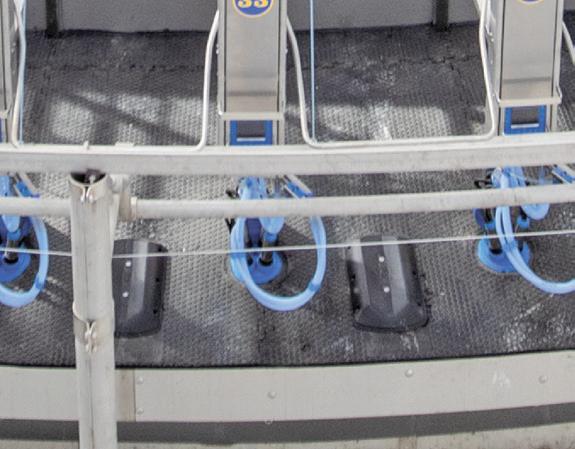
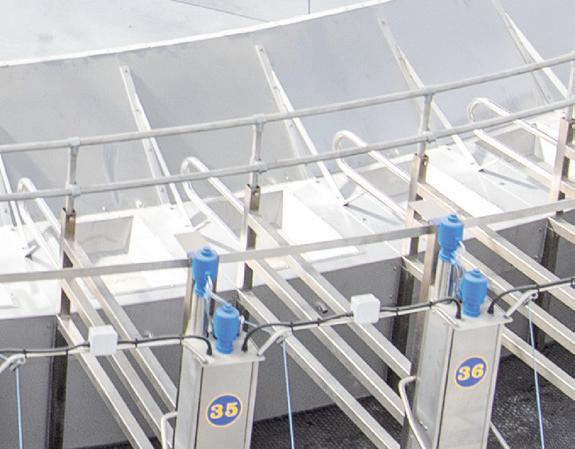
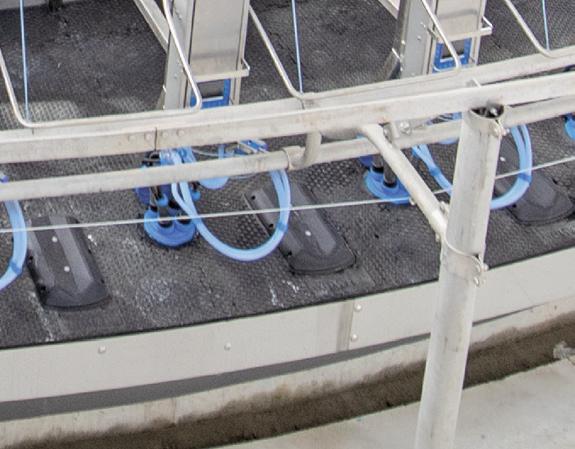





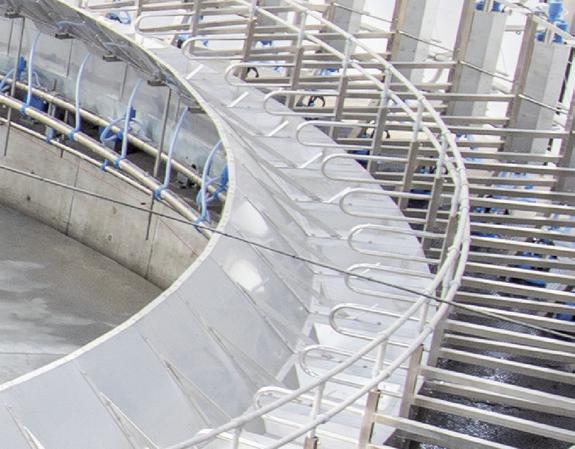
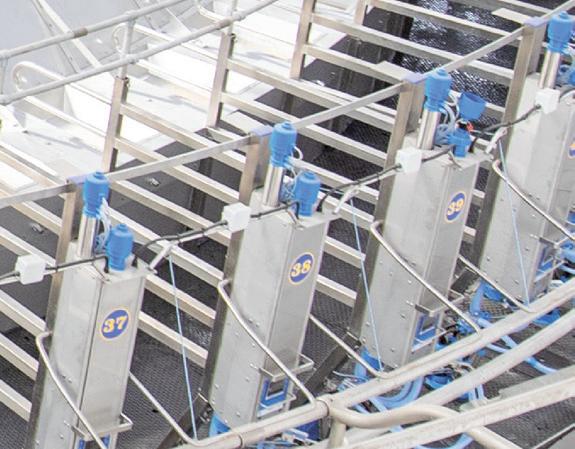















A Shropshire farm has cut feed waste, removed metabolic disease issues and increased average yields since upgrading their out-of-parlour feeding system and installing in-parlour feeders. Dairy Farmer finds out more.
Alan Watkins, who farms near Ludlow with his son Will, brother Edwin and dad John, runs a 400-head cross-bred autumn block calving herd.
For more than a decade, the family has used out-of-parlour feeders to tailor rations to the nutritional needs of each cow, rather than relying on a one-size-fits-all total mixed ration (TMR).
It also means that when cows are turned out in spring and no longer have access to the TMR, they can be supplemented through the outof-parlour feeders. However, in recent years, a growing problem with feed wastage – and clever cows – was causing frustration.
Alan says: “We were losing a lot of cake every day. The cows had learned how to bang the system to knock out extra feed from the
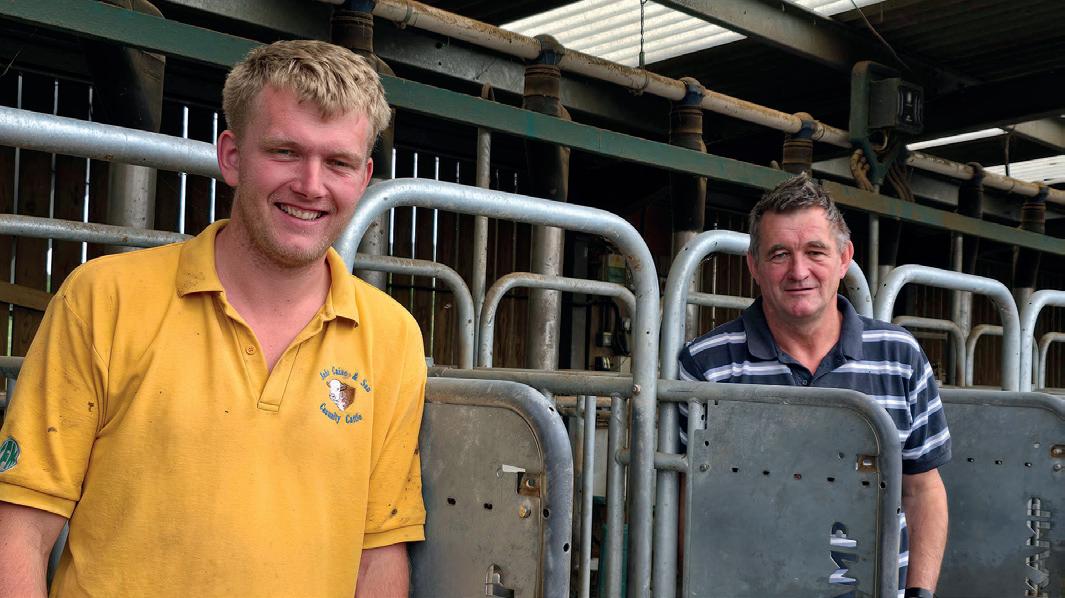
out-of-parlour feeders. One morning, we found 300kg of feed on the floor – which was not just wasteful, it was undoubtedly impacting the bottom line.”
The final straw came after a chimney fire forced Alan and his wife to sleep at the end of the house nearest the cow sheds.
“I could hear them all night,

that prevents feed from spilling –even if cows bang the pipe. Using EID eartags, each cow is individually recognised and dispensed a specific amount of feed based on feed curve and stage of lactation.
banging the feeders. It only takes one to figure it out and, before long, they are all doing it. It was a real wake-up call – literally.”
In 2022, when the Watkins family heard about out-of-parlour feeders with an anti-spill function, they spoke to their supplier, John Tarr of Wooldridge Dairy Services, who recommended Hanskamp FeedStations.
These feature a unique design
The family installed 15 of these out-of-parlour feeders in 2022, each fitted with the anti-spill mechanism that ensures feed is only accessed when the cow is authorised and actively feeding. The system works by using a motor inside the feeder to drive an auger, which dispenses feed in portions rather than continuously. At the end of the auger sits an outfall cup, which makes one rotation to release the feed. This means that if a cow bangs the feeder or pipe, no feed is dispensed.
To enhance precision further, the Watkins family uses Hanskamp’s Spider feeding system, which syncs with the FeedStations to provide real-time data on feed intakes and cow behaviour.

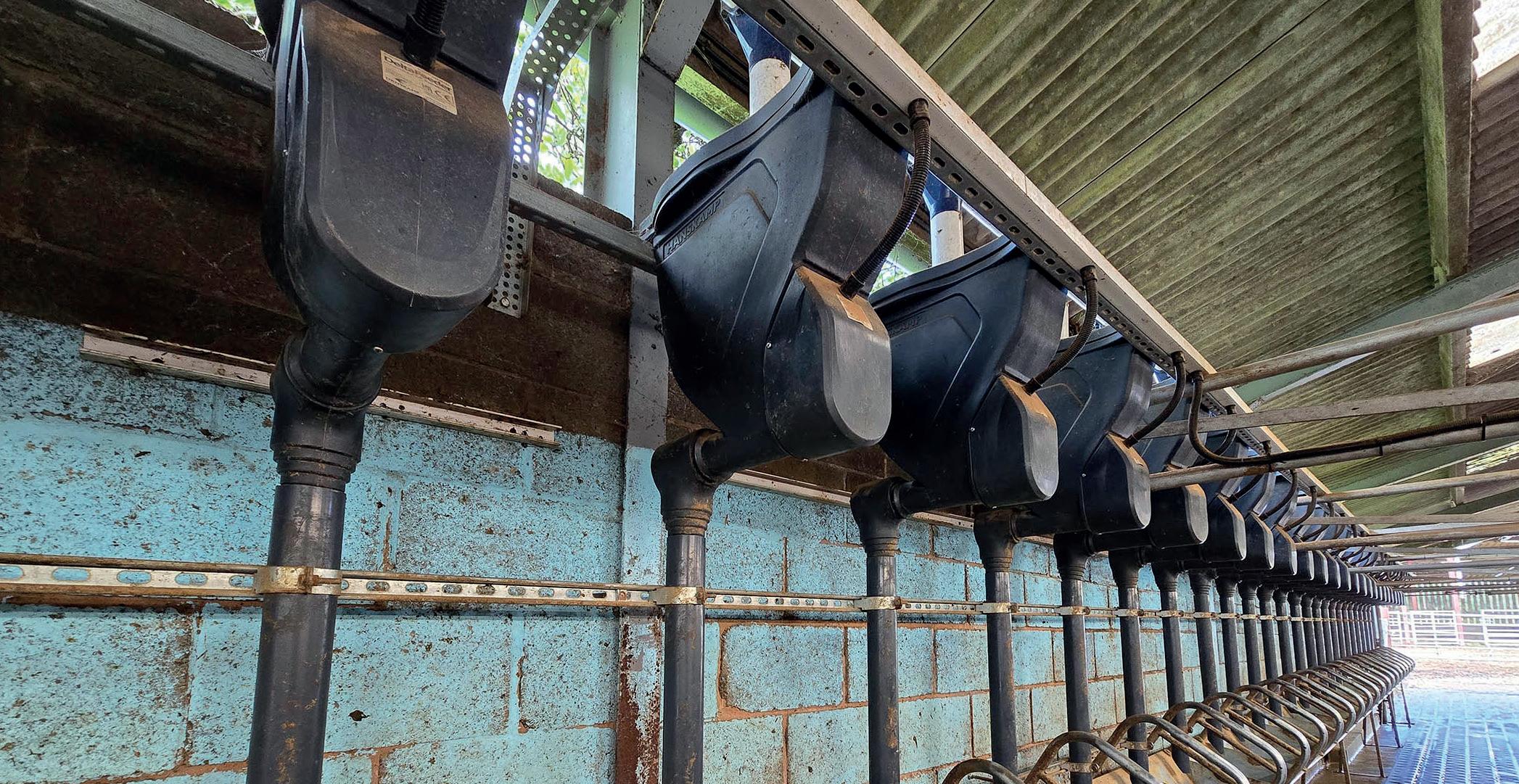
Will says: “It is all on our phones. We can see which cows are feeding, how many visits they have made, and how much they have eaten. It helps us spot problems early – a drop in visits might be the first sign something is not right.” Each cow is placed on a tailored group feed curve, but they could be fed to yield individually. For example, high-yielding cows receive up to 3kg of an 18% protein cake per day until 100 days in milk, gradually reducing after 150 days. Heifers follow a separate curve. In winter, the feed is typically split over six visits per day to promote consistent intake and better rumen health.
“It prevents cows from gorging

The out-of-parlour feeders are fitted with an anti-spill mechanism.
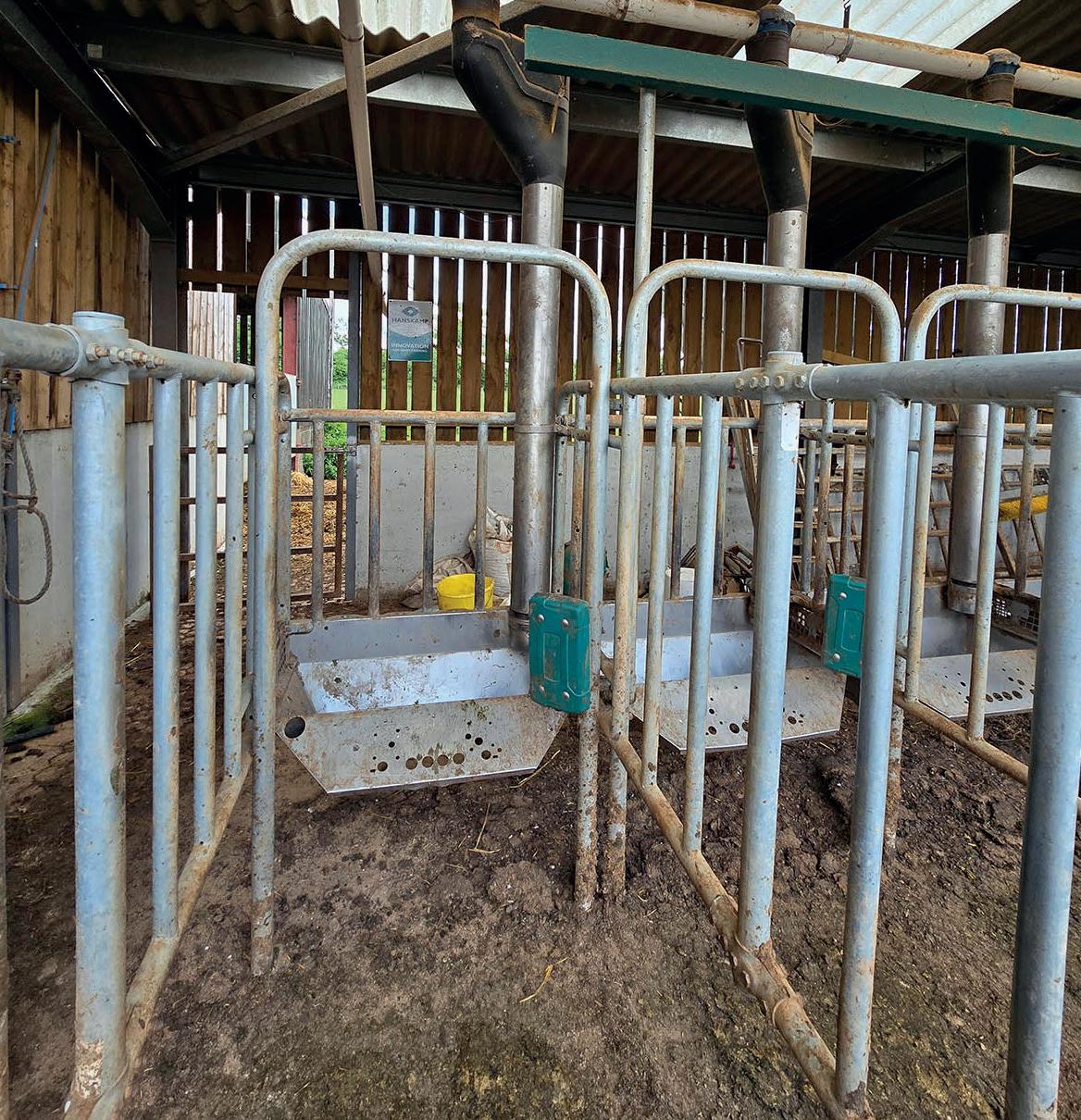
bypass the out-of-parlour feeders in their rush to return to grass.
“Some cows were not spending enough time at the out-of-parlour feeders in summer, so were missing out on energy. That is why we added the in-parlour feeders –they are simple, quiet, and use the same anti-spill design.”

and helps reduce the risk of acidosis. We do not have to be physically feeding cows all the time – they manage it themselves,” adds Alan.
Although the herd is a robust cross-bred mix of Norwegian Red and Holstein Friesian – which Alan believes provides a strong foundation for health and fertility – he credits the targeted feeding system with improving transition management and reducing metabolic problems.
“We used to see a few displaced
abomasums – mostly left-sided –but now they are rare. I would say it is a combination of genetics and nutrition. We are not overfeeding the tail-enders anymore, and it has made a real difference.”
With around 40% (3,000 litres) of their milk coming from forage, Alan wanted to push performance further. Last year, the family installed Hanskamp Pipeline in-parlour feeders to supplement grazing cows that sometimes

The system allows them to feed 5kg of concentrate per cow per day, split between two milkings. The results speak for themselves: average yields have increased from 7,000 litres to 7,500 litres, and Alan thinks this may go higher.
The in-parlour feeders have also helped improve milking efficiency.
“Milking has sped up by about 30 minutes each time,” Will says.
“Cows enter the parlour faster and let down milk more quickly. The feeders are also very quiet, so the cows are really relaxed.”
John says the design is helping to improve the environment as well as cow welfare.
“They make less noise, there is


no dust, and because they gradually release the feed, you do not get bullying from neighbouring cows. It also means cows release their milk quicker.”
■ 400 cross-bred cows
■ Milked twice a day through a 34:68 herringbone parlour
■ Yielding 7,500 litres at 4.6% butterfat and 3.5% protein
■ 3,000 litres of milk from forage
■ Fed 18% protein ration in summer and winter
■ In winter: free access to out-of-parlour feeders and also fed a partial mixed ration of grass, maize silage and some wholecrop
■ Farming 291 hectares (720 acres), 82ha (203 acres) of which are owned
■ Grow 48ha (120 acres) of spring barley and 16ha (40 acres) of maize – all fed to cows

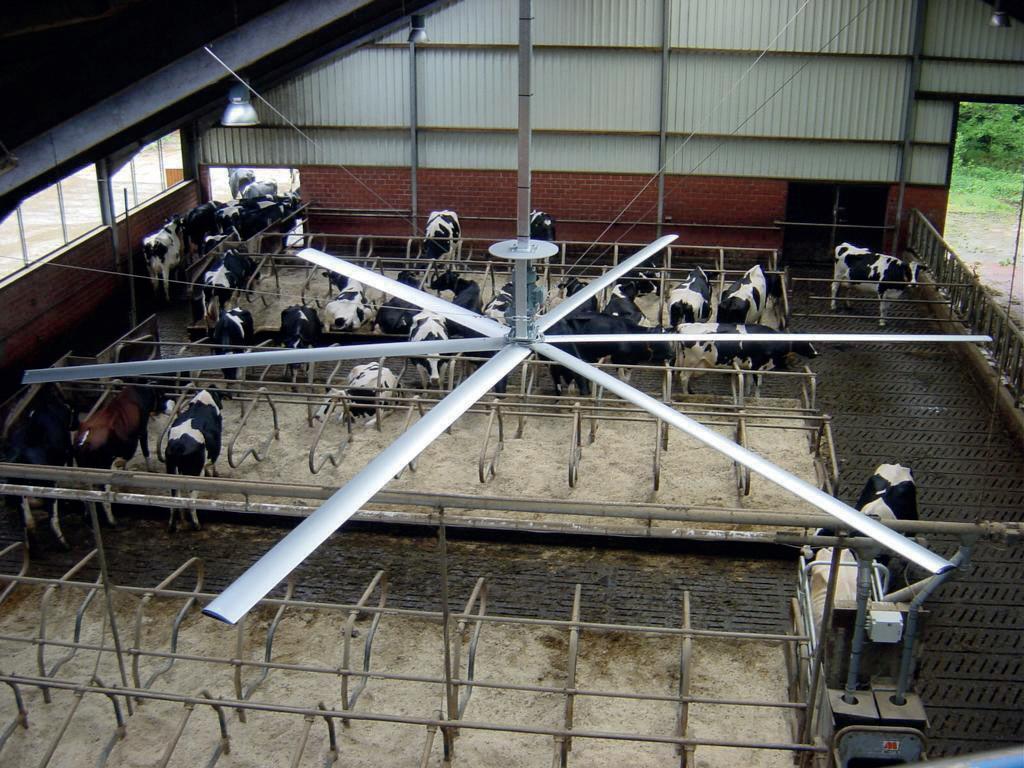
The world of milking parlour technology is constantly changing, with new products entering the market and company developments announced. Dairy Farmer takes a look at some of the latest market news.
JTHE DairyVue 360 management platform, from Dairymaster, is now available in the UK following two years of deployment and refinement in international markets.
Originally launched in 2023, DairyVue 360 offers a digital solution to monitor, manage and optimise every aspect of the milking process.
It collects real-time data from the milking parlour – including milk yield, let-down time, flow rates and performance deviations. This data is analysed and displayed via a dashboard accessible on desktop or mobile.
The platform supports remote diagnostics and troubleshooting, enabling dealer technicians to resolve issues quickly. Farmers can also customise milking settings for individual cows and integrate fertility and health monitoring systems for proactive herd management.
More details available at dairymaster.com
INTEREST in a no-feed approach in robotic milkers is growing, says DeLaval. The company says it has seen feed eliminated in rotary and parlour systems, but there are now more farming businesses following a similar approach in robotics set-ups.
However, DeLaval says that when looking at this approach it is important to be aware of what this entails for a farm’s operation, management routine and herd.
A DeLaval spokesperson said: “Of course, robots are only intended for certain dairy farm management styles, and,
DeLaval has doubled the size of its own commercial dairy farm, using its own equipment.
Hamra Farm, located in Tumba, Sweden, is a research and training centre for the brand, where improvements and expansion will more than double the number of milking cows from 260 to 550, and increase the total herd to more than 1,000.
DeLaval’s chief executive, Paul Lofgren, said: “The latest developments include three new sheds: a maternity and calf shed, a heifer shed and a VMS milking robot shed that doubles as a visitor centre.”
The expansion has increased the size of the farm to 12,000m2, roughly the size of two football pitches, with four DeLaval VMS V310 machines and one DeLaval VMS V300.
Market solutions manager for the UK and Ireland, Ben Thompson, said: “The area for milkers has been extended to 5,000m 2 ,
therefore, so is the ability to have no feed in the robot.”
To successfully have no feed in the robot, DeLaval has deemed these main factors as necessary:
n Guided traffic: The shed must be set up as a guided-flow traffic system to ensure cows are going to the robots based on the milking permissions that are set. This will ensure the cows are arriving in the robot area and getting milked at the appropriate time, based on stage of lactation and production n Cow training protocol: New cows entering the robot facility (fresh heifers or cows that have
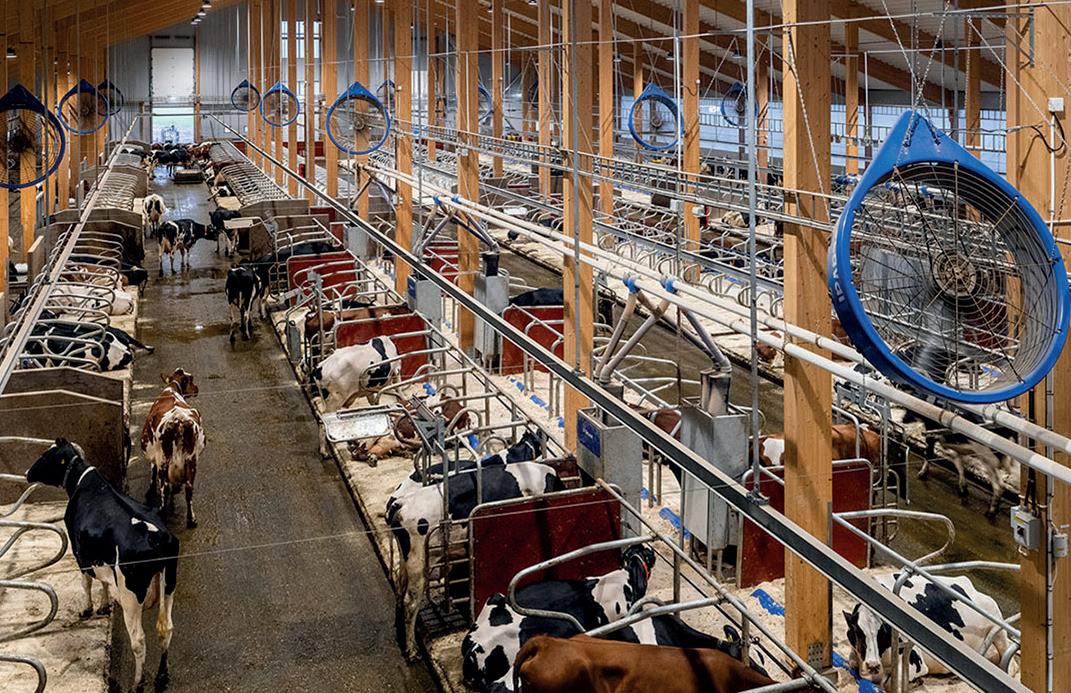
DeLaval’s Hamra Farm in Sweden has extended its housing space.
with a further 1,000m 2 housing DeLaval’s automated Optimat feeding system, which includes OptiWagon, a feeding robot to take forage to the herd.”
The developments at Hamra Farm, and the data generated, are being recorded by DeLaval Plus analysis software which feeds into a new, global, artificial intelligence-managed database called DeepBlue. Every farm on the DeLaval Plus network feeds data to DeepBlue, which subsequently
previously been fed in robots) must be on a training programme where the operator brings the cow to the commitment pen and through the robot at a minimum of three times a day for two full days or until the cow is comfortable doing this routine on its own n Feed quality in total mixed ration: It is critical to have a high-energy TMR in a no-feed robotic operation to encourage the cow to eat from the bunk. The cow’s desire to eat from the feed bunk is what will drive her to voluntarily go through the robots and get milked
sends analysis and guidance, based on farms worldwide, back to individual farms.
“The potential for DeepBlue, as more farms come online with DeLaval Plus, is overwhelming. To capture, compare and analyse data from thousands of farms worldwide and use artificial intelligence to provide globally informed data to a single farm is unique and will transform the way producers make decisions now and in the future,” said Mr Thompson.
n Farm commitment: The farm, its staff and its consultants must be fully committed to all the protocols, procedures and changes needed to ensure this feed management strategy will be organised and well-executed. The farm must be committed to training cows to go to the robot commitment area, which may require additional fetching of cows during certain points of the day. The feed consultants and farm’s decision-makers must align on the plan to make high-quality and nutritionally balanced forages for the TMR
JGEA now offers a new option for its DairyRotor models that reduces freshwater consumption during cleaning by up to 30%.
The company say the feature maintains hygiene and cleaning performance and is available for new installations as well as
retrofitting existing systems. The core of the new function is the reuse of the post-rinse water for the subsequent pre-rinsing process, with an additional collection tank installed for this purpose. The system is available in two versions: pump solution, which actively pumps the water
into the rinse tank; and a gravity solution, which uses an elevated container system which saves space and does not have moving components.
The system is supplemented by advanced valve and pipe technology that feeds the postrinse water into the reuse cycle in a targeted and safe manner. A prerequisite for use is the use of
fresh water without cleaning agents or disinfectants.
The system is suitable for farms of all sizes – especially where water resources are scarce or expensive, or where legal requirements for resource conservation apply. And the company says farms will benefit from lower operating costs with the same cleaning quality.
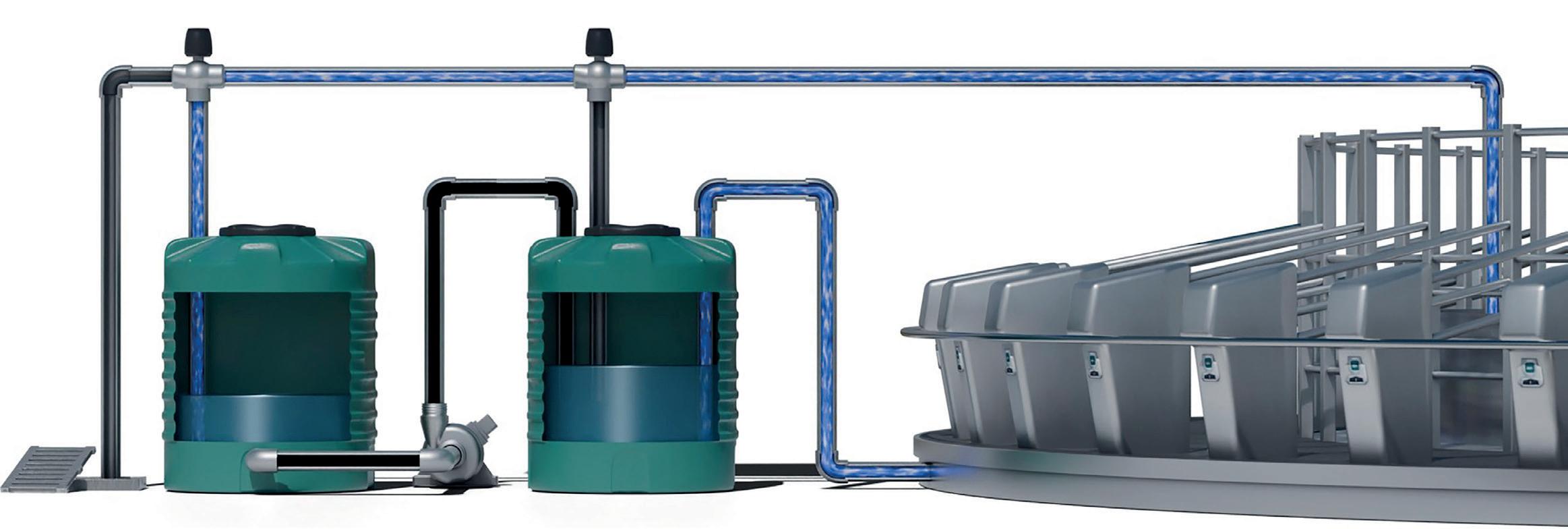










Andrew and Claire Brewer have been benefiting from the advantages of electronic identification (EID) for almost 20 years. Dairy Farmer finds out more.
Cornish dairy farmers
Andrew and Claire Brewer decided to embrace electronic identification technology in order to streamline their cattle movement, treatment and handling records.
With benefits including time savings, improved record keeping accuracy and the ability to interrogate data to ensure their dairy and beef herds are performing as expected, they are advocates for the advantages of ‘going digital’.
In addition to milking 500 cross-bred Jersey cows on an autumn block calving system at Ennis Barton near St Columb, the couple also rear their own replacement dairy heifers alongside 200 beef bulls and 200 beef heifers.
They use the EID technology to tag and record all aspects of herd management including bovine TB testing, weighing, PD scanning, foot trimming, dehorning, vaccinating and recording move-
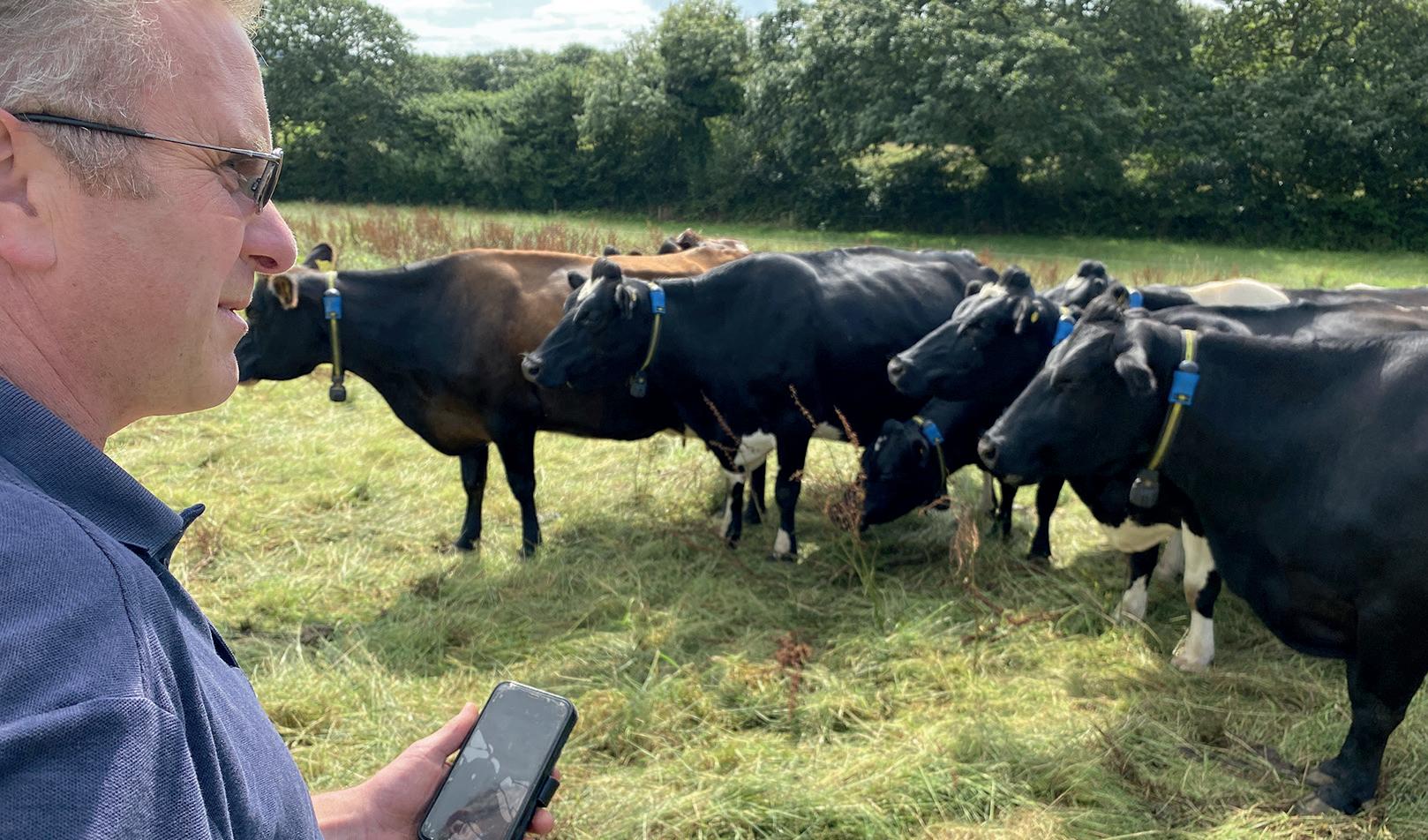
ments with British Cattle Movement Service (BCMS).
All cattle are fitted with a distance-readable primary tag in one ear and an Allflex button EID tag, which acts as the animal’s secondary tag, in the other.
Mr Brewer says: “We started using EID to ensure our cattle
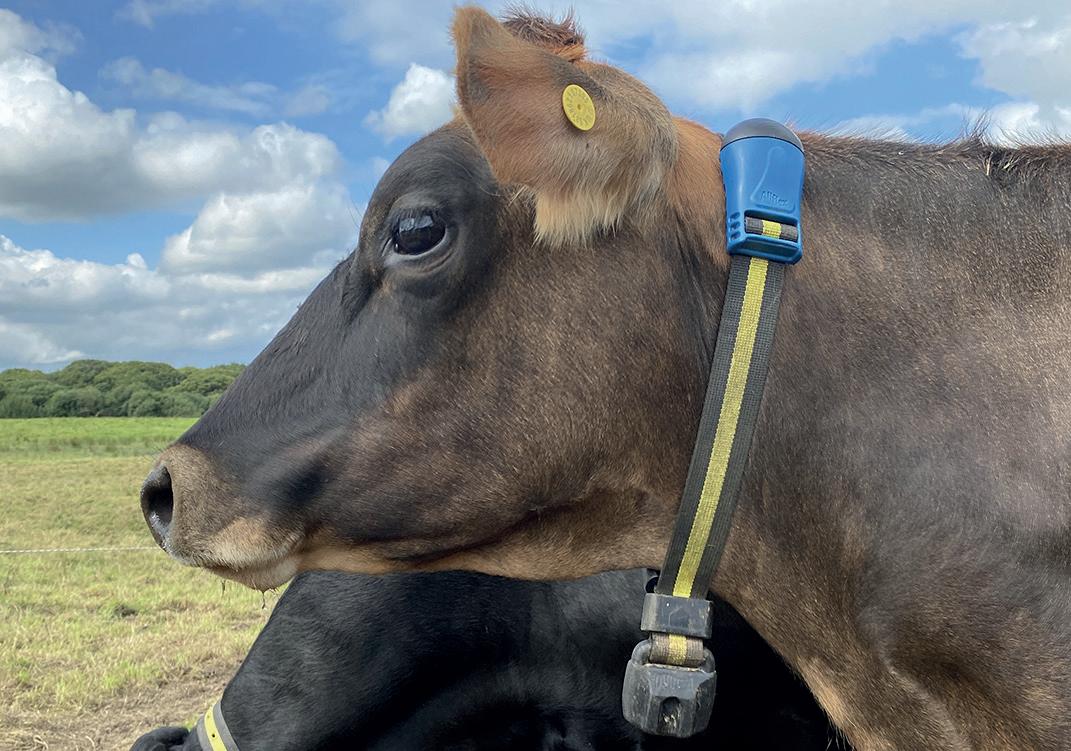
movement and treatment records were accurate and to save time by removing the need to duplicate written records onto our herd management software.
“We apply both tags as soon after birth as possible, so that the first time we weigh or treat a calf it can be scanned and automatically entered onto the farm’s management software.”
And Mr Brewer says that it was when bTB first struck the herd in 2014 that EID really came into its own.
“As soon as it became apparent we were going to have to bTB test on a regular basis, we realised we were going to have to find an efficient way of getting all cattle processed as quickly as possible.
“Using the EID tags to identify each animal when it is injected and examined three days later saves at least a couple of hours every time we are skin testing.

“We do not have to struggle trying to read a visual ear tag which can be tricky as eyesight worsens, or if the tag is dirty, and we have fine-tuned our system so that we can now check all 1,200 of our beef and dairy animals in half a day.”
The Brewers also use their EID scanner and tags to expediate the weighing of youngstock.
“EID has revolutionised the way we record the weights of our beef and dairy herds,” says Mr Brewer.
“We aim to finish beef bulls out of our cross-bred cows at 14 months and a deadweight of 313kg, with beef heifers finishing at 17 months and an average deadweight of 282kg.
“We also weigh our replacement dairy heifers to ensure they are on target to be served at 15 months and a liveweight of 350-
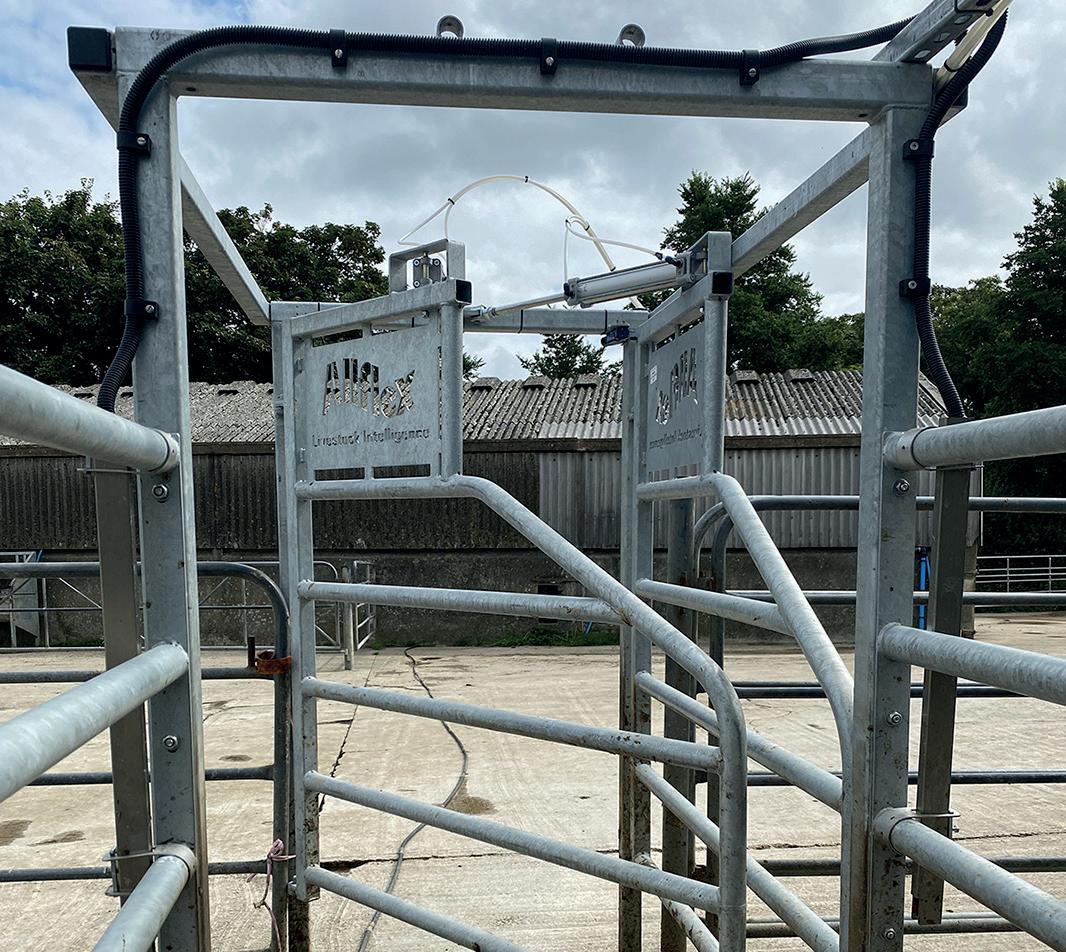

A sorting gate works with the EID tags to segregate cows for inspection, treatment and breeding purposes.
AS one of the UK’s main tag manufacturers, Allflex is working closely with the English, Welsh and Scottish Governments on their implementation plans for mandatory cattle EID.
sometime in 2027, while the Scottish Government has decided to implement ultra-high frequency technology in December 2026.
The Welsh Senedd has recently consulted with a recommendation to use the same low frequency technology as England, thereby enabling seamless cross-border trade. 360kg. And we weigh our adult dairy cows to check we are feeding them accurately to maintain a target weight of 550kg, and to ensure any drugs are administered at a correct and effective dose.”
When the beef cattle are approaching finishing weight, they are weighed on a fortnightly basis.
Mr Brewers says: “It is important we are as efficient as possible. Using EID makes the whole process much quicker as there is no need to type tag numbers and weights into the computer.
“Instead, the data captured by
our EID reader is automatically loaded on to our herd management software, which means we can immediately interrogate the data to assess how each group of animals is performing.
“And we do not have to struggle with a clipboard and paper in rain or strong winds which is something we definitely do not miss.”
In her capacity as the person responsible for overseeing the farm’s admin and record keeping, Mrs Brewer agrees that EID has




Due to this being a devolved matter, three separate decisions are required: the English Government has elected to adopt low-frequency technology
improved the way information is handled.
She says: “Using EID saves us a huge amount of time and trouble, but its advantages go much further.
“With digital records we can analyse growth rates for each individual animal or group and create lists based on breed, age, sex or weight, so that we can segregate animals quickly and safely via our sorting gate.
“No matter who has treated,
handled, weighed, moved or inspected an individual or group of animals, our records are always accurate, as we have removed the risk of any errors being made by inputting data manually.
“Admittedly the EID tags do cost more than standard visual tags, but because we are using the tags so often and for so many tasks, the time savings and accuracy benefits more than outweigh the extra expense.”




































































































































Muck and slurry is an increasingly valuable resource on-farm, so how we measure, manage and use it is now more important than ever before.
Why having a plan in place pays dividends
50 STORAGE
Looking at return on investment
54 VALUE
Getting the most out of your manures
Splash plate slurry application was banned in Scotland this year and the rest of the UK is expected to follow suit by Jan 2027. Wendy Short looks at how best to make the switch to low emission spreading alternatives.
Dribble bar application is by far the most popular option for low emission spreading by tanker or umbilical systems, as operators move away from splash plate equipment, says Terry Baker of machinery manufacturer Tramspread.
He says: “Trailing shoe applicators occupy a small percentage of the market, mainly because they cost about twice as much, compared with a dribble bar set-up.
“Dribble bar applicators are also lighter in weight and require less maintenance, by comparison.
“Trailing shoe systems are predominantly used on grassland, but many livestock producers also grow crops and a dribble bar machine is a good all-rounder.”
Operators planning a move to dribble bar slurry application will need to consider the available tractor horsepower and their target application width, he advises.
On many livestock farms, a 12 metre applicator width will be adequate.
He says: “There is usually a choice of a single or twin macerator distributor. These use a cutting action to break down any bulky material and minimise blockages.
“A single macerator will usually be sufficient for machines with a 12m application width or below.
“A twin system will add extra cost to additional width choices, but it will be necessary for maintaining a higher flow of material.
“A macerator stone trap can re-
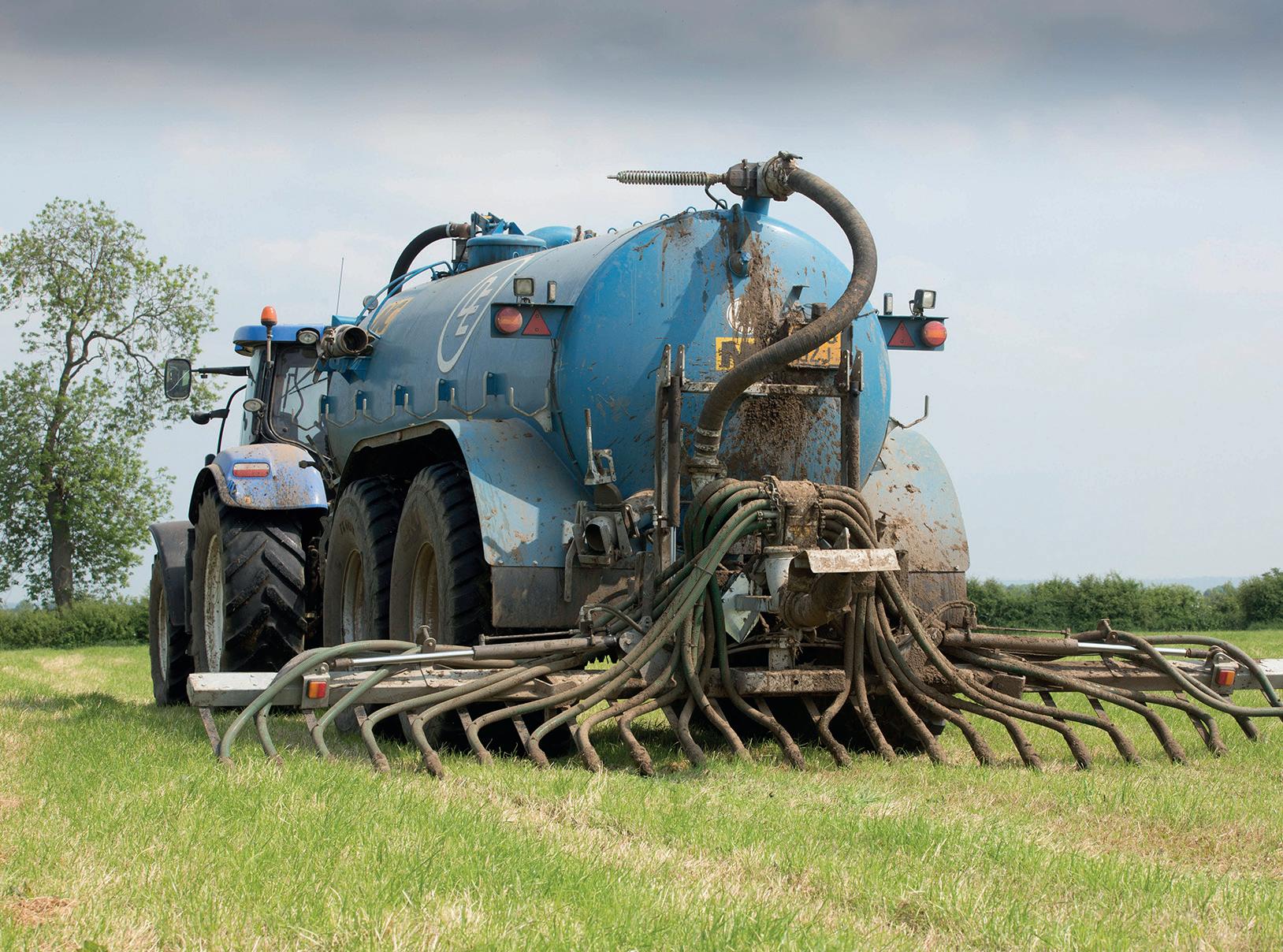
duce replacement part costs by preventing blockages and equipment damage, thereby minimising part replacement costs.
“When operating on undulating land, it is important to choose a dribble bar with left and right boom height adjustment, to promote evenness of application.”
Meanwhile, terrain type, slurry
dry matter averages and the goal for spreading distance should be taken into account when buying an umbilical system.
He says: “These factors will help with narrowing down choices and keeping the investment within budget. As a general rule, a large hose measuring five inches in diameter should be used in close proxim-


Dribble bar applications of slurry are more environmentally-friendly than splash plates.
ity to the pump, and the figure can be reduced to four to 4.5 inches for dragging in the field.
“A five inch hose is sometimes used across the board, depending on pump type and output, but the swinging arm on the applicator must have the strength to cope with the additional weight.
“The distance potential that can

be achieved for pumping slurry through an umbilical system has increased in line with manufacturing developments and a typical set-up will have a range of at least 2,000m.
“If the plan is to exceed this distance, or when pumping to a higher head, one, or even two, additional pumps should be
connected in line at outlying points, with a six inch hose diameter recommended.”
He points to a common mistake when using umbilical slurry kit.
He says: “Some operators have a tendency to think that increasing the engine RPM will speed up the output. However, it can simply
result in a waste of diesel, as well as creating unwanted pressure in the system that could harm the equipment.
“A good exercise is, when using a flowmeter, to reduce the RPM and monitor the flow, to see whether the target flow figure changes.
“In many instances it will remain the same. In cases where the rate is considered too slow, the solution is to choose a larger diameter hose size, especially in the area in close proximity to the pump or pumps.”
There is no doubt that switching to low-emissions slurry application has environmental benefits, he states.
“Our trials with a splash plate applicator showed a high level of accuracy in calm conditions, but wind interference had a marked effect on spread pattern.
“It affected accuracy and there was a significant level of volatilisation. By contrast, dribble bar application all but eliminates the issue,
producing a steady, even application which reaches the target area.
“I would suggest setting the dribble hoses approximately 100mm above the ground.
“On undulating terrain, boom height can be adjusted. If it is operated at a very low level, there is a risk that the pipes will kink, cutting off the flow of material and resulting in uneven application.”
Tramspread, which applies an annual 400,000 cubic metres of slurry as part of its contracting services, is gearing up to launch the first commercial 24m vertical-fold machine for the UK at the Lamma event next year.
Mr Baker says: “It is a 24m model in our Suffolk range. The challenge when developing this type of machine is to ensure there is sufficient strength in the equipment.
“The dribble bar has been extensively tested for 12 months in practical use, and it will save time across larger acreages, also enhancing manoeuvring capability.”

Accuracy is key when it comes to utilising the nutrient value of muck and slurry, but how can this be best achieved? Dairy Farmer reports.
How farmers feed their crops with farm nutrients needs to be given the same level of attention as cow diets, says Lisa Hambly, head of grassland and forage agronomy for Mole Valley Farmers.
Ms Hambly says that all too often the temptation can be to use average ‘book’ numbers for slurry analysis, which immediately means farmers are at a disadvantage – one that could be costing them money and reducing efficiencies.
“You would not guess how much you were feeding your cows, but you expect crops to perform not knowing how much they are being fed,” says Ms Hambly.
“To get the most from your muck you need to include as many layers of accuracy as possible, and that means understanding individual field requirements and the quality of muck you have available.”
Making more efficient use of
slurry and muck will ultimately help to reduce bought-in fertiliser requirements, helping a farm’s carbon footprint and bottom line.
Ms Hambly says: “Slurry and muck are highly valuable onfarm resources that can be targeted to create better crops and improve soil organic matters, which directly improve carbon sequestration potential, while also raising trace element status: it is a no-brainer.”
n Create an on-farm nutrient management plan
This is the ‘number-one’ area for attention and lays the foundations for success, says Lisa Hambly, of Mole Valley Farmers. As part of Farming Rules for Water and Nitrate Vulnerable Zone requirements, all farmers should have a nutrient management plan in
place. However, all too often it can get put in a drawer and ignored due to its complexities. To avoid issues, Ms Hambly advises using a FACTS-qualified agronomist who specialises in grass – such as the Mole Valley Farmers forage agronomy team – to pull together a nutrient management plan.
She says: “Adopting a blanket approach for the whole farm is
Slurry and muck are highly valuable on-farm resources that can be targeted to create better crops and improve soil organic matters
LISA HAMBLY
Be prepared and get fertiliser on-farm early
GET your spring fertilisers on-farm now in preparation for 2026 so you are ready and able to take advantage of any early application weather windows, says Lisa Hambly, of Mole Valley Farmers.
“Last year, many farmers were caught out because they could not get fertiliser on-farm
quickly enough and were not able to take advantage of optimal spreading conditions before it went dry,” she says.
“It is worth filling sheds as soon as possible and then you have got all the tools at the ready to set yourself up for a successful forage growing season.”
going to get you poor results. The key is to be targeted and design a nutrient management plan that reflects your soils and their indexes: What forage yield have you been getting, what would you like to achieve and how can you use on-farm nutrients to do that?”
This should include reviewing crop performance in individual
fields, walking the farm and identifying fields that could do with improvement.
n Undertake soil analysis
Only by testing soils will farmers be able to efficiently target nutrients to deliver the results they require.
Ms Hambly says now is a good time to undertake soil analysis.
Continues over the page...
12m dribble bar plus 1000m random wrap reeler
• Reeler easily removed
• Heavy-duty 5” swinging arm
• 5” pipework to the T-piece manifold
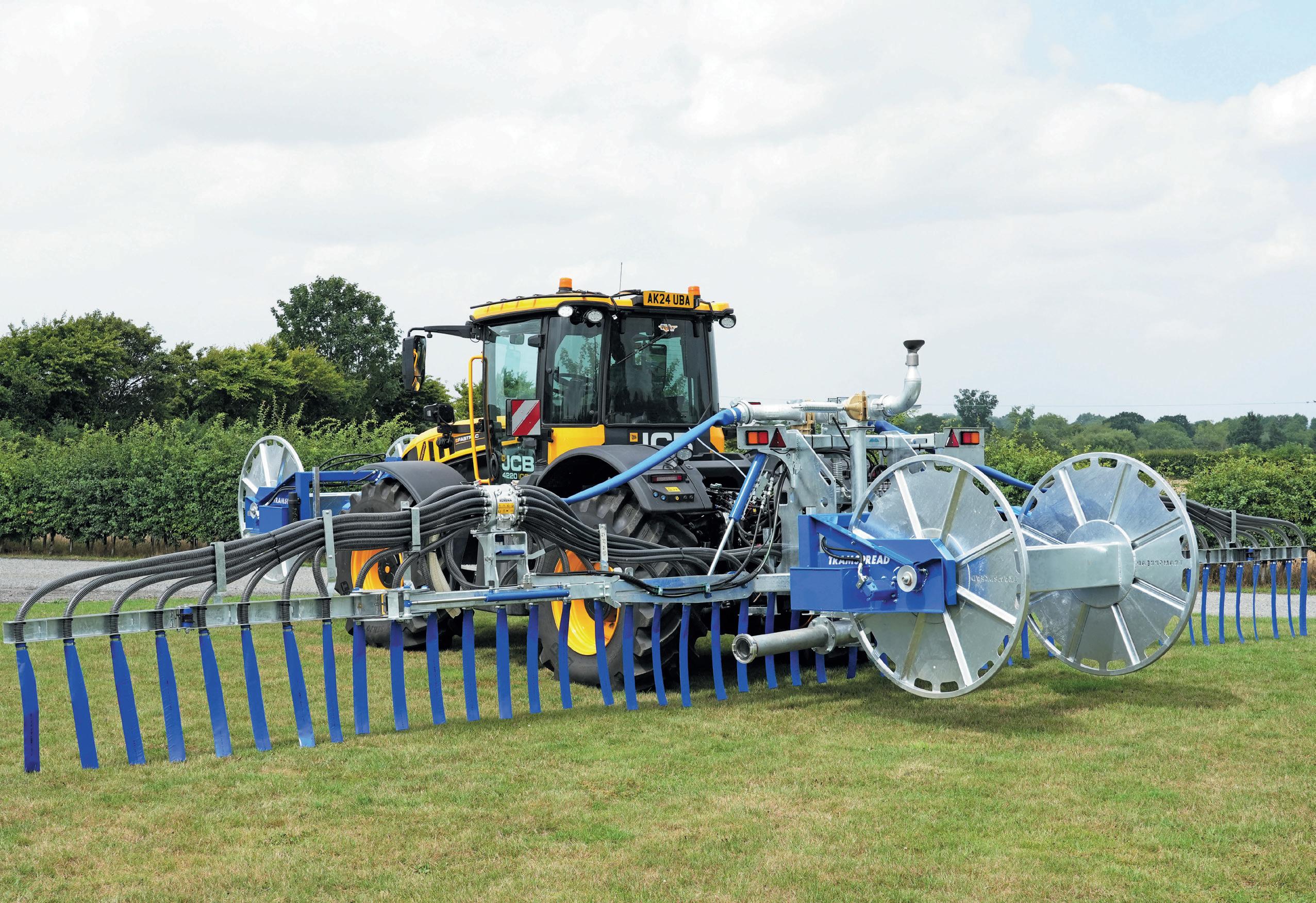
• New breakback end sections
• Tractor pickup hitch accessible
• Alrena or Vogelsang macerators
• Premium quality
• Competitive pricing
• Optional purge valve



Engine-driven pump remote controls
• Unlimited range with GSM communication
• Accessible from any device with internet access
• Labour saving solo umbilical system operation
• Engine/pump/compressor control and monitoring
• Pressure and flow monitoring can identify issues
• Recording of hours and volume applied
• 360-degree camera and other options
• Remote sponge ball (pig) launcher option
• Transfer mode option
■ Test the muck
Ms Hambly advises testing a farm’s slurry in the spring and for a second time later in the year, then using this to inform the nutrient management plan rather than using book numbers from RB209.
She says slurry analysis will vary hugely between farms and will be influenced by what cows are being fed. For example, analysis highlighted that one of Mole Valley Farmers’ customers had slurry with 1.5kg nitrogen per m3, compared to 2.9kg N/m3 on another similar unit.
“That is a huge difference and equates to about 28kg of N per hectare when applied at 20m3/ha, or 82kg/ha of ammonium nitrate, which is worth £32/ha.
“That means there is potential to either over- or undersupply the crop and miss the planned cutting date,” says Ms Hambly.
■ Consider slurry additives Slurry additives have a role in improving consistency and spreadability of slurry, while
also potentially reducing smell and emissions.
Slurry additives work by pre-digesting slurry before it is applied to the crop, making it more available and potentially reducing the need for as much bought-in fertiliser.
“Even by making slurry nutrients a conservative 10% more available, that could result in 10% more crop. That stacks up quickly year-on-year,” says Ms Hambly, underlining the ongoing need to test slurry to determine its true value.
Slurry separators are also a useful tool in separating the solid and liquid fraction of slurry, allowing solids to be more easily transported to off-lying ground. Both fractions should be tested for quality to enable targeted applications.
■ Compost farmyard manure Could farmyard manure be composted to improve crop nutrient availability? Ms Hambly says composting acts in a similar way to using a slurry additive by

pre-digesting the straw in farmyard manure using naturally occurring bugs.
She says: “It saves the bugs in the soil from doing all of the work. You are doing some of the prep by composting.”
For the best results, narrow heaps will need to be turned regularly to introduce oxygen to support bug activity.
A specially formulated ‘soiltype’ molasses can also be sprayed on to compost to help feed and support the bacteria. Heaps can be covered in between turning to prevent losses of ammonia into the atmosphere.
Heaps should be sited to prevent any run-off entering water courses. Ms Hambly advises referring to Protecting our Water, Soil and Air: A Code of Good Agricultural Practice for Farmers, Growers and Land Managers ■ Address compaction Soil compaction is the numberone challenge that all farmers need to overcome, says Ms
Hambly. Compacted soils will drain and warm up slower, making them less efficient at nutrient cycling.
She says: “Walk the fields now, dig a hole and carry out a visual assessment to establish if surface or deeper level compaction is an issue.
“Surface issues can be addressed using a soil aerator now, as long as soils are not too wet and smearing is not an issue.
“Get soils healthy in the autumn and they are more likely to leap into action in the spring.”
■ Test forages and assess for mineral levels
Forage mineral analysis plays an equally important role as soil and slurry testing in establishing the most effective nutrient plan for a farm.
Forage mineral levels can give an indication of soil mineral lock up and allow greater investigation into field-level issues such as compaction or pH imbalance.
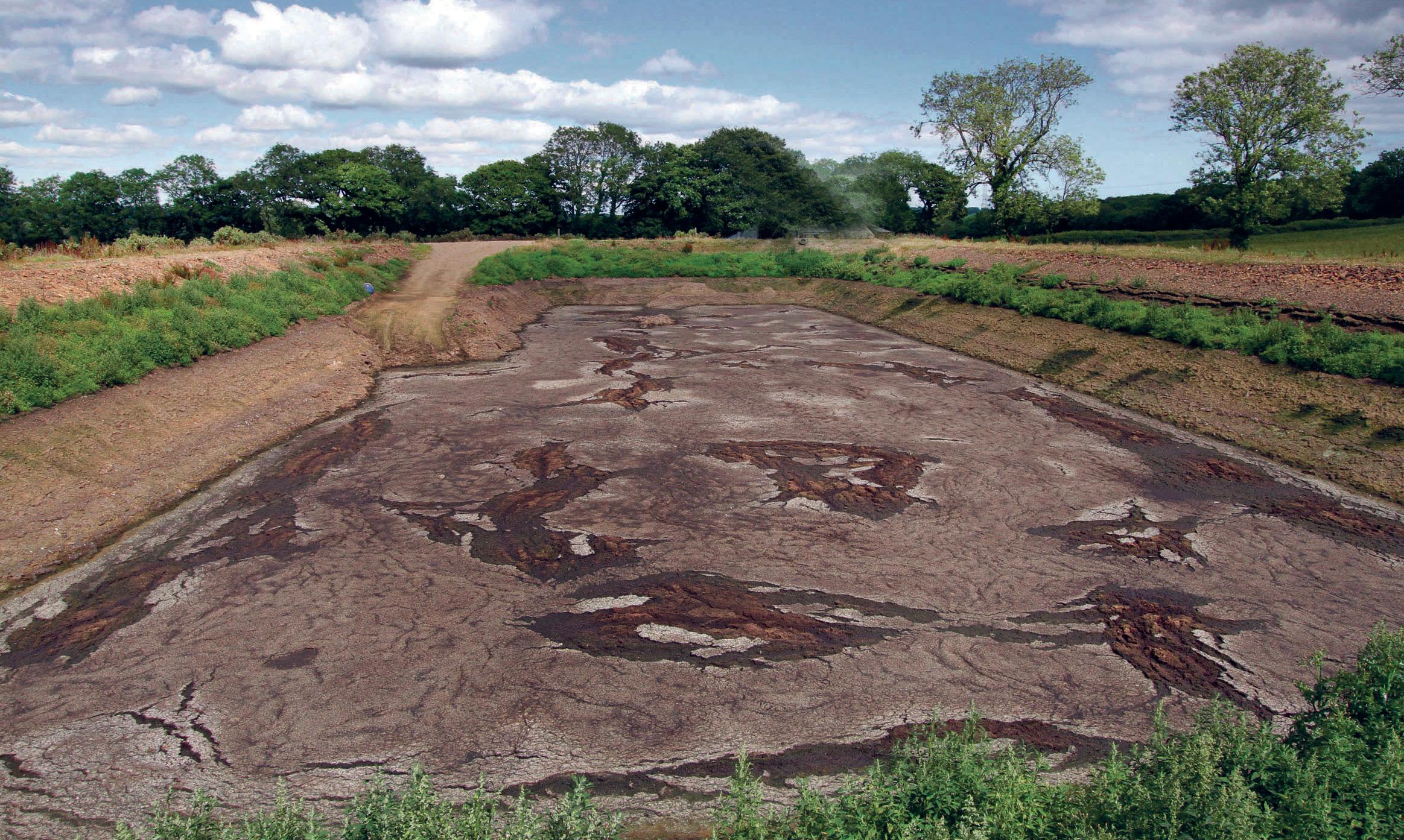



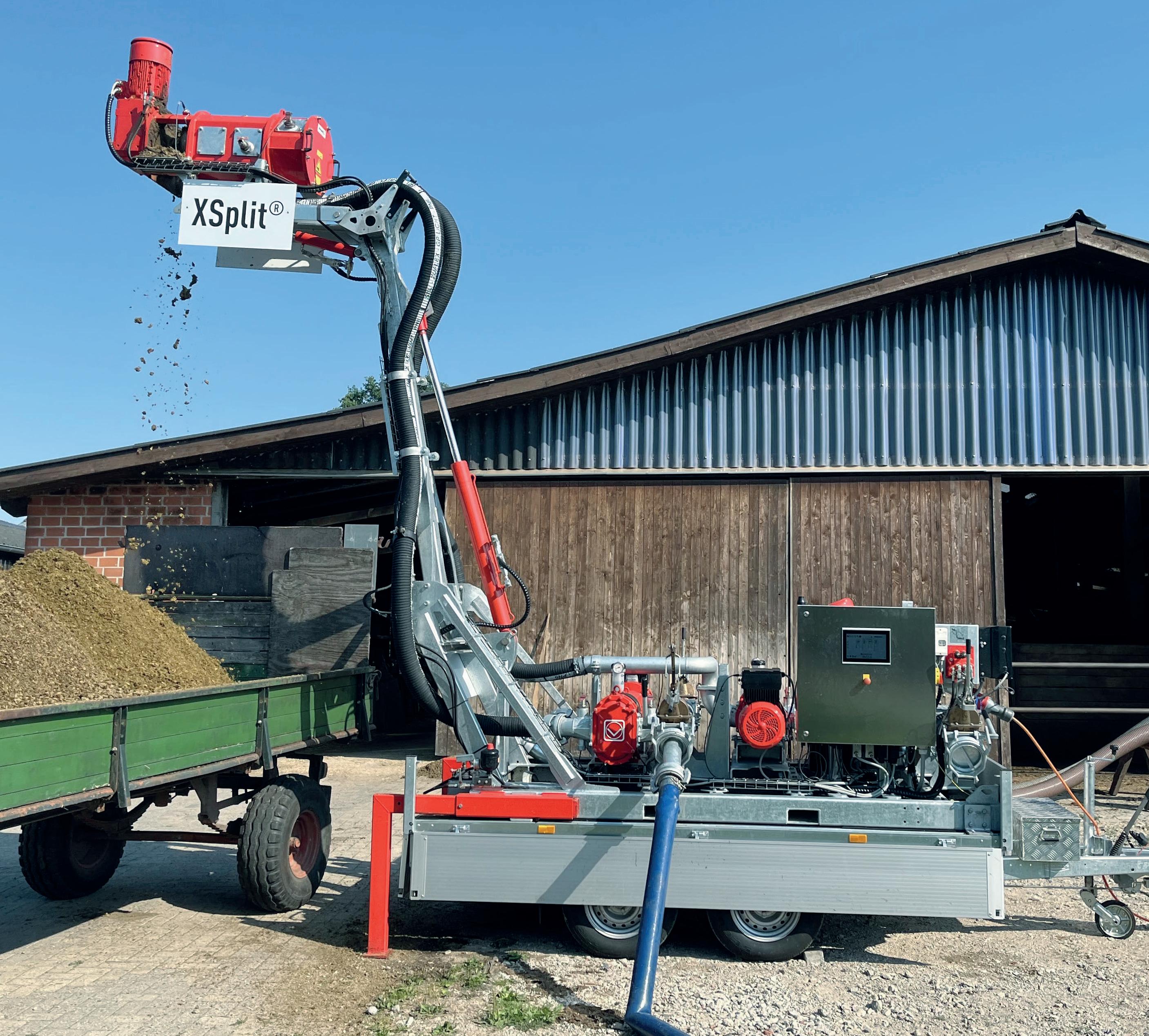
XSplit - the ultimate separation solution
XSplit - the ultimate separation solution





Separating makes slurry handling much easier and significantly reduces the amount of slurry needing to be stored. Vogelsang’s XSplit slurry separator can produce solids of up to 40% dry matter, making liquid slurry much easier to apply during spreading season.
Get in touch to arrange a demo today.
Separating makes slurry handling much easier and significantly reduces the amount of slurry needing to be stored. Vogelsang’s XSplit slurry separator can produce solids of up to 40% dry matter, making liquid slurry much easier to apply during spreading season.
Get in touch to arrange a demo today.
VOGELSANG – LEADING IN TECHNOLOGY
Contact us at: 01270 216 600 | sales.uk@vogelsang.info vogelsang.co.uk
VOGELSANG – LEADING IN TECHNOLOGY
Contact us at: 01270 216 600 | sales.uk@vogelsang.info vogelsang.co.uk





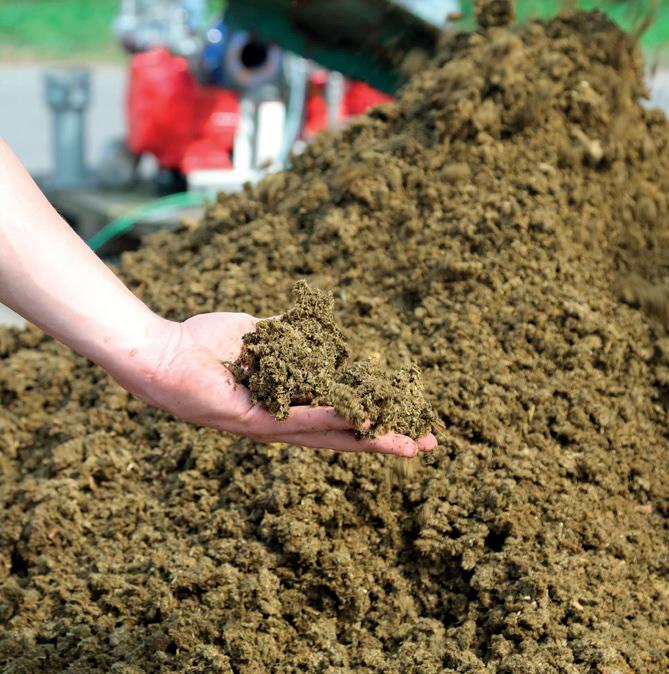
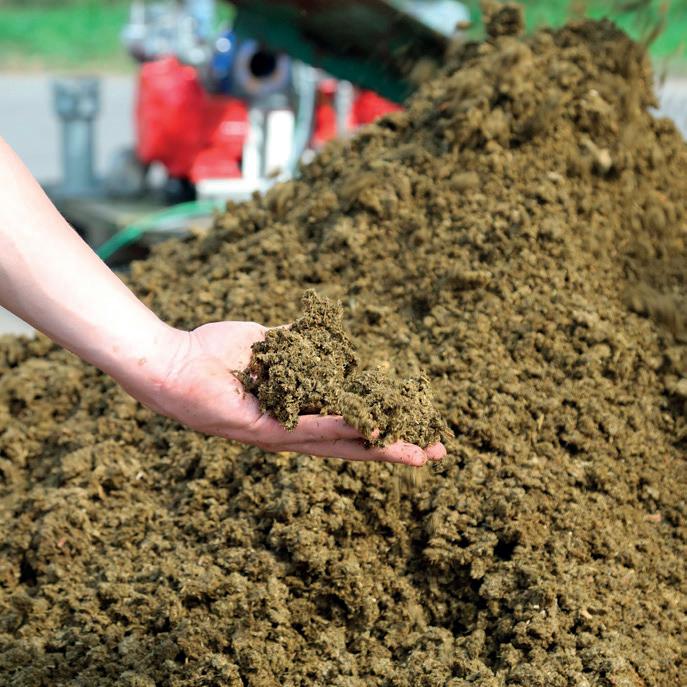




Investing in a 9,000m3 aerated slurry lagoon with eight months’ storage and a floating cover has future-proofed Rheinallt Harries’ dairy. Dairy Farmer reports.
Significant investment in slurry storage is paying for itself ‘hands down’, says Rheinallt Harries, who together with his wife Rachel, manages a 240-cow spring block calving herd unit near Bethlehem, Carmarthenshire.
Mr Harries says: “Aerating the slurry has enhanced its nutrient value to the extent we have been able to cut our nitrogen fertiliser requirements by 30%, and it is ready to spread when we choose to,
without any agitation or the need to add water, as it is already mixed.”
Mr Harries adds running costs are ‘minimal’ and with savings being made on labour, machinery and diesel, he expects to see a return on investment within eight years.
He says: “We agreed this method was the way to go, simply because as tenant farmers we are focused on minimising both fixed and variable costs – our objective is to turn grass into milk in a lowinput, low-output grazing system.”
Since taking on the farm’s tenancy almost 10 years ago, Mr Harries says he has refurbished the parlour, silage clamp and water system and installed cow tracks. Increasing the capacity of the 1,137m 3 tin tank, which had just three weeks’ storage, was last on the to-do list.
He says: “At the time there was no closed period; every three weeks during the winter housing
period we were throwing slurry over hedges and wasting nutrients. It was also costing up to £70 to agitate and mix to get it out of the tank each time.
“A lagoon worked out to be the most cost-effective way to increase storage capacity to two million gallons, the scale we needed for this size of unit, without the stress of having to get slurry out or spreading it at inappropriate times. Excavating a hole and lining it cost 10 times less than in-
Rheinallt Harries installed the lagoon after refurbishing the parlour, silage clamp and water system.
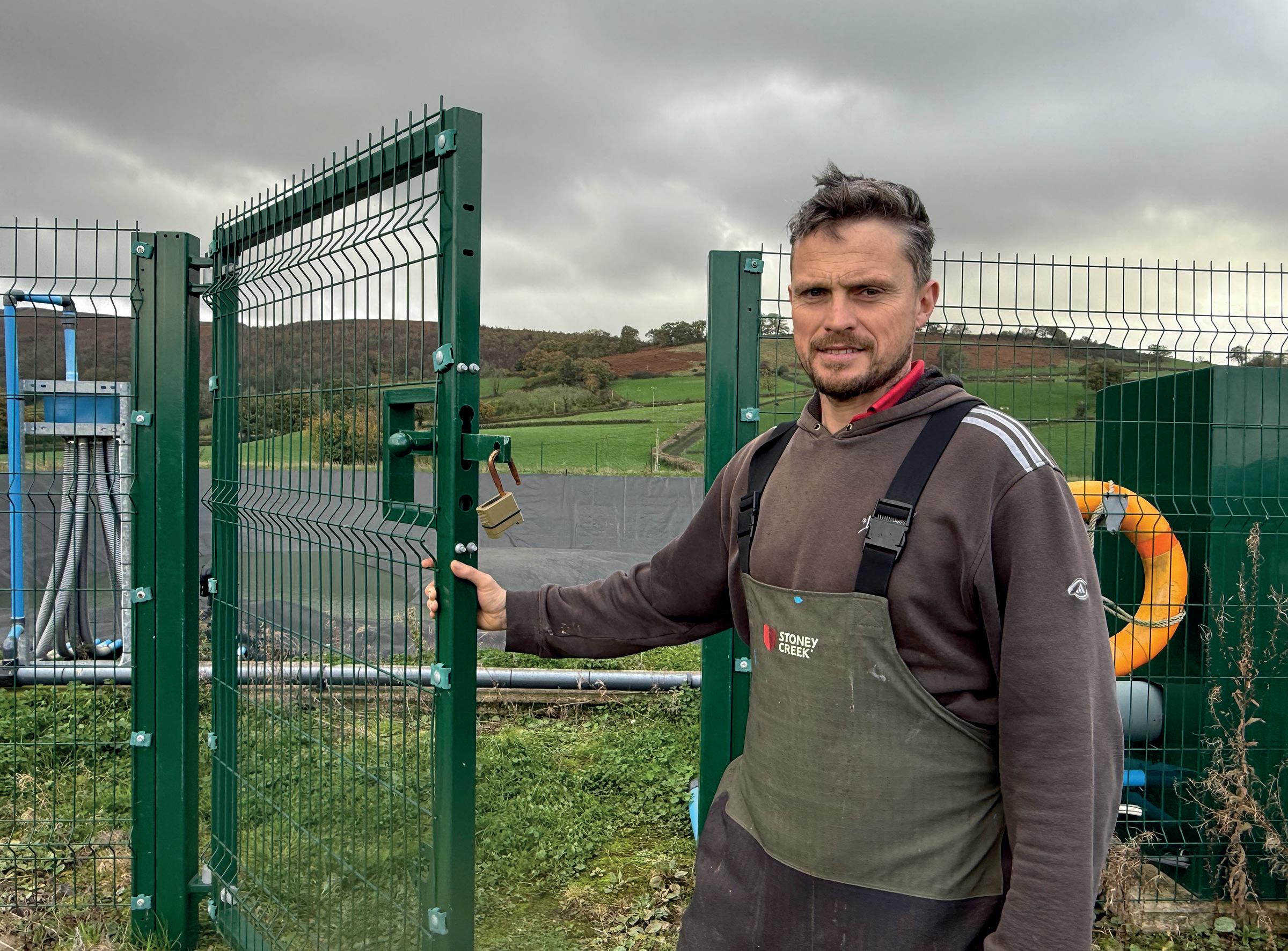
vesting in another tin tank or building a concrete tank with slats and a
He also decided to introduce a floating cover – otherwise, with an annual 1,778mm of rainfall, he would have ended up with an extra 750,000 gallons of slurry a year, costing up to £10,000 to cart out and spread, when in fact it is now capturing that rainwater separately.
He says: “We then UV-filter that water and use it to wash down the parlour, so making further cost savings, as that is up to 2,500 gallons a day.
“When it came to how we were going to mix slurry in a lined and covered lagoon, I did not like mechanical agitators due to their associated problems, including ripping the lining.
“That is when we began to explore aeration and found that Dairypower’s fully automated Smart Slurry aeration system, along with its other benefits, was the only one with the pipes safely secured to the lagoon floor.”




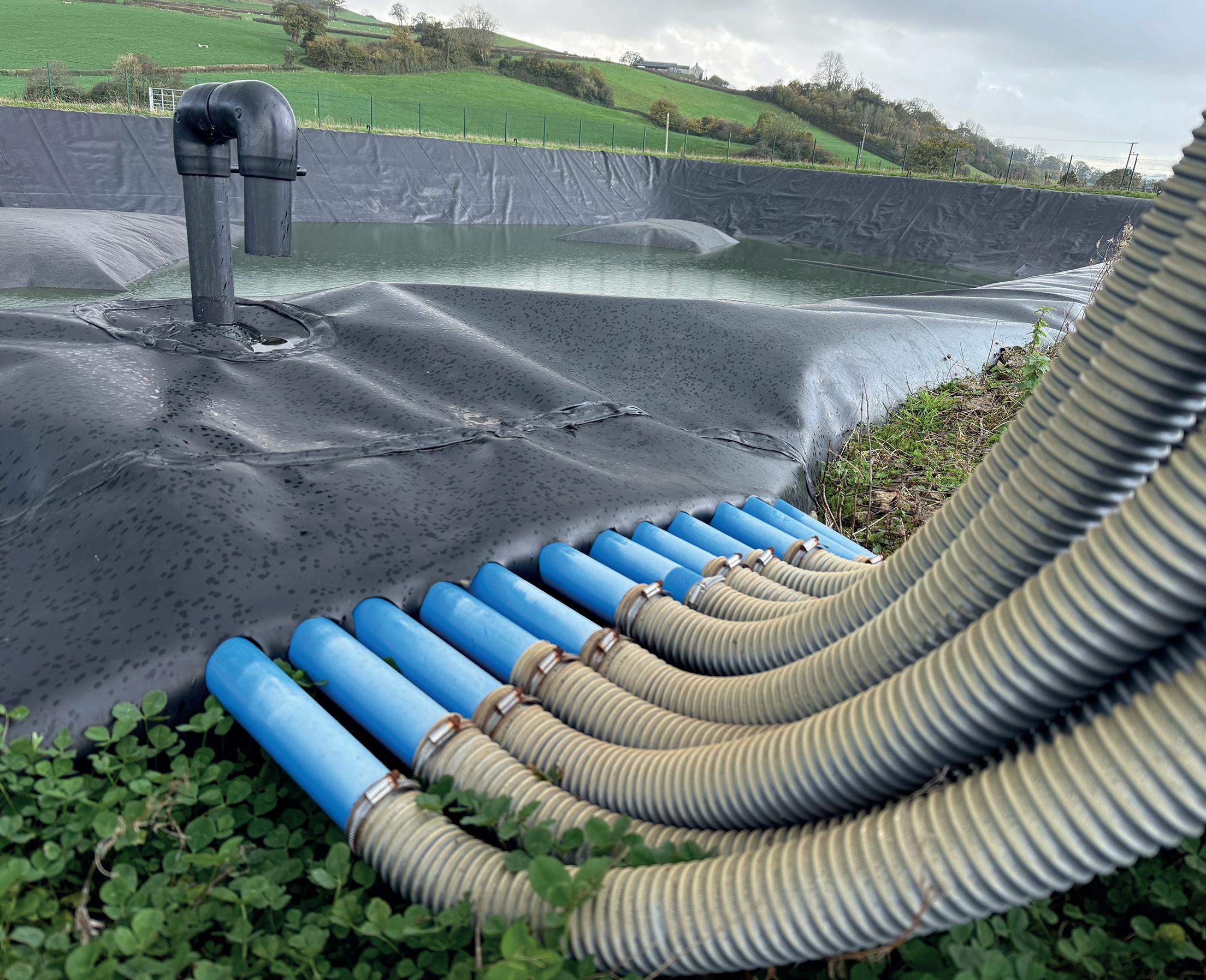

Work commenced in autumn 2022 and was completed four months later. To meet with safety requirements, the lagoon was closed off with a two-metre-high security fence.

The custom-designed aeration system features more than one mile of non-degrading uPVC pipework covering the 52m x 35m base of the lagoon. The 50mm-diameter pipes are con-
nected to the layout of aeration manifolds, which have multiple self-closing non-return outlets.
The Smart Slurry aeration system is serviced by a single pump unit and five patented rotary valves

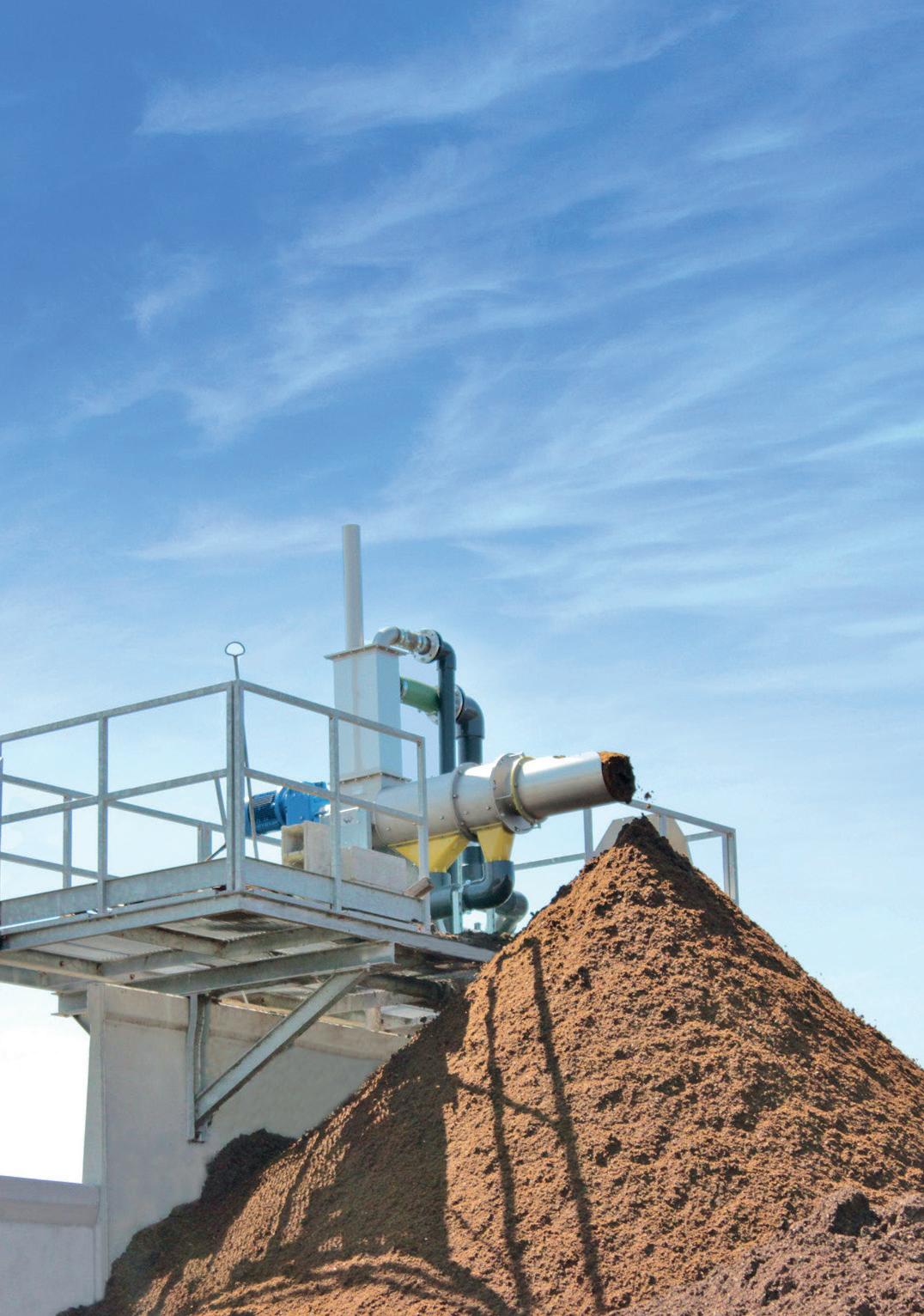
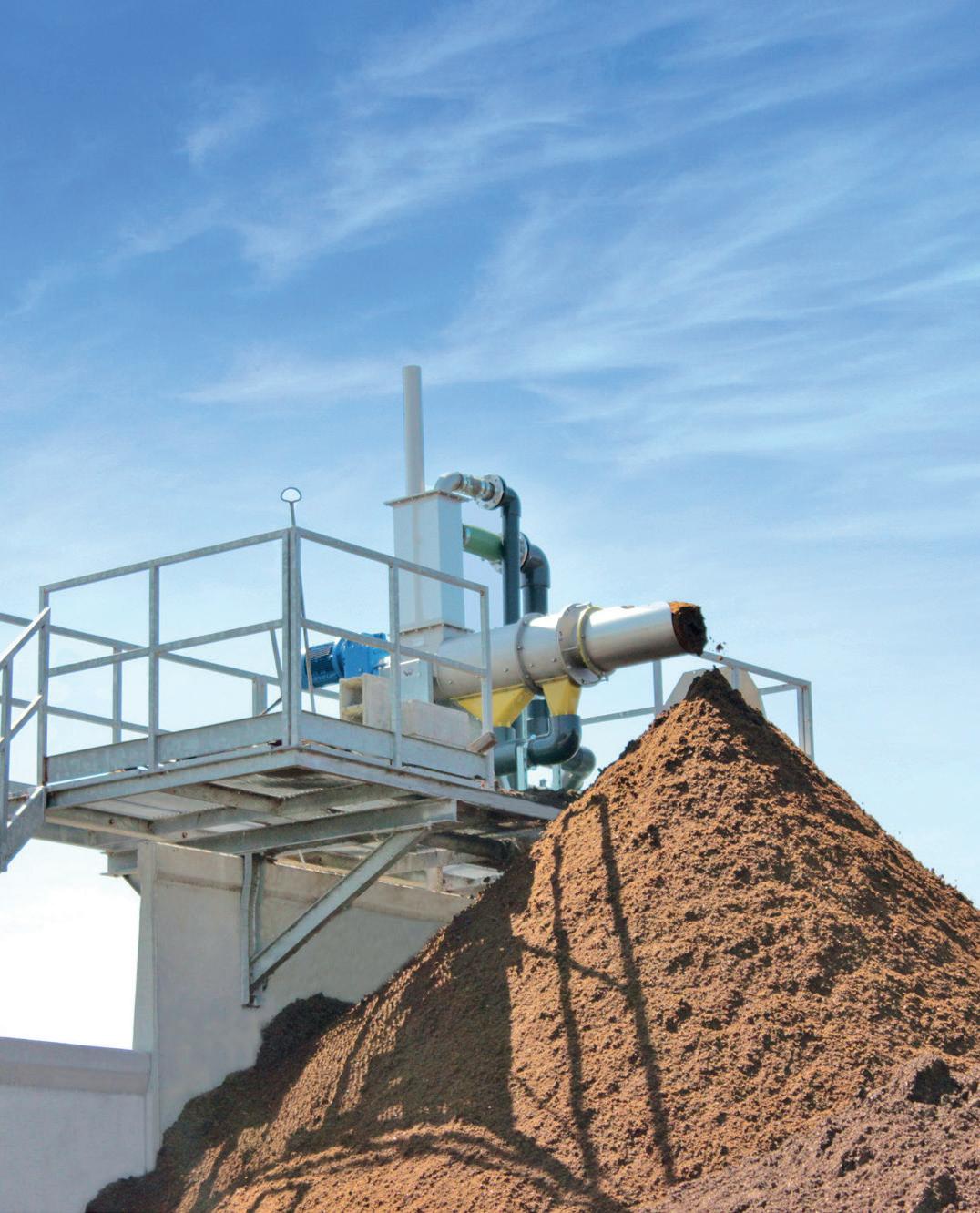



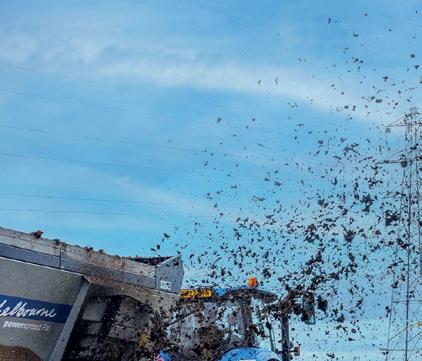







A single pump unit with five patented rotary valves is the key to the system.
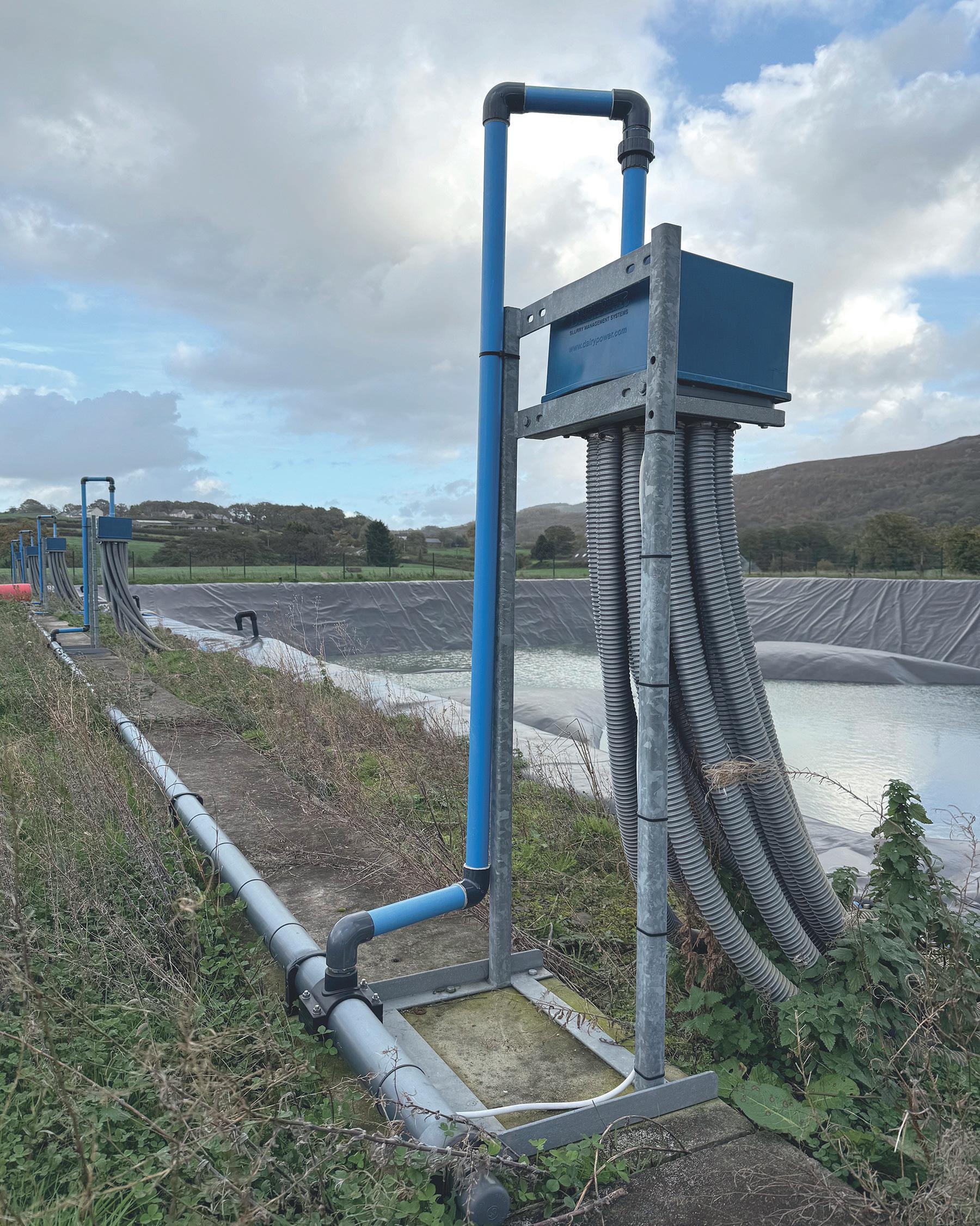
COMPARED with slurry from a mechanically agitated tank, aerated slurry has been proven to deliver conditions for the tank’s micro organisms to create less nitrogen loss through ammonia emissions and generate more plant-available organic nitrogen that stays longer in the soil and helps prevent loss through wash-off of more mobile forms, such as nitrate and ammonium.
Frequent slurry aeration led to reducing methane and ammonia emissions by a
TABLE 1
respective 40% and 51% and a subsequent significant increase in slurry nutritional value, according to independent trials carried out at Wageningen University and Research. That improved value led to a 14% increase in grass yield. The trials compared two treatments – aerated slurry from a tank with a Smart Manure aeration system, and a control featuring slurry from a conventional tank requiring agitation. Each treatment was applied five times in one season –twice on grazed grass and three
which distribute a high volume of low-pressure air to each manifold.
The aeration system is programmed to run automatically six times a day, pumping air on a rotary basis around the whole lagoon. The rising air bubbles automatically mix the slurry into a consistent, homogeneous and pumpable state. It runs on the 5.5kWh generated by the Harries’ own solar power system, otherwise they estimate it would cost £6.30 per day, off-peak.
Maintenance requirements are minimal – their system is serviced twice a year.
Slurry and yard washings are initially pumped into the Harries’ existing tin tank, positioned near the parlour, before being pumped as and when needed 180m away to the lagoon, located off-site from the main steading.
Slurry is pumped out of the lagoon via a sump to one of two main outlet pipes which connect up to an umbilical spreading system. The Harries’ contractor begins spreading on to the silage leys from March
A lagoon worked out to be the most cost-effective way to increase storage capacity to two million gallons, the scale we needed RHEINALLT HARRIES
onwards, following each of the three to four cuts, while two applications are made to the grazing platform during the year, depending on weather conditions.
Mr Harries says: “Apart from the cost efficiency aspect, investing in the Smart Slurry aeration system is proving to be safer for the environment, as well as ourselves. We have noticed reduced odour while spreading and the slurry’s improved nutrient content is enabling us to take more forage from our own resources.”
SOURCE: WAGENINGEN UNIVERSITY AND RESEARCH
times on mowing leys, and measured at the 5cm growth height (see table 1).
A full season’s mown grass was weighed on a weigh bridge; the aerated treatment recorded a 14% yield increase over the control (see table 2).
The 14% yield increase reflects
SOURCE:
the higher value of nutrients retained in the slurry from the aerated tank compared with control slurry. The aerated tank was analysed and showed a 48% increase in total nitrogen and a 71% increase in ammonia nitrogen. And the aeration system made for a reduced carbon footprint; it eliminated the need to agitate the slurry along with diesel emissions, along with reduced fuel logistics with fewer deliveries of fertilisers and diesel.
COWS daily consume quantities of nitrogen. The volume depends on their diet. Only 25-35% is excreted into the milk and the remainder in the urine.
While the objective is to maximise the value of that nitrogen as fertiliser, there are a number of mixed factors which lead to losses, mainly as volatile ammonia gases.
Nitrogen losses begin in the slurry tank when urine mixes with dung; the bacteria from the faeces degrades the urine urea to ammonia, a volatile gas which immediately reduces the amount of valuable nitrogen in the slurry. Carbon dioxide is also emitted while decomposition of the slurry’s organic matter also releases carbon monoxide, methane and hydrogen sulphide.
However, bacteria that grow in conditions with plenty of
oxygen generate less ammonia than those in anaerobic conditions. These nitrogenconsuming bacteria utilise the urea and retain it in their bodies as organic nitrogen and in the form of ammonium and soluble nitrogen, which is also mineralised as nitrate. These forms of nitrogen remain in the slurry tank and on application are available for crop uptake.
Rhys McLoughlin, of Dairypower, says aerating slurry by introducing high volumes of air into defined areas in the tank via non-return valves offers dairy farmers two major benefits.
He says: “The air bubbles rise to the surface, literally mixing the slurry and subsequently preventing a crust forming on the surface and the build-up of dangerous gases.
“Stored aerated slurry is continuously kept in a suspension,
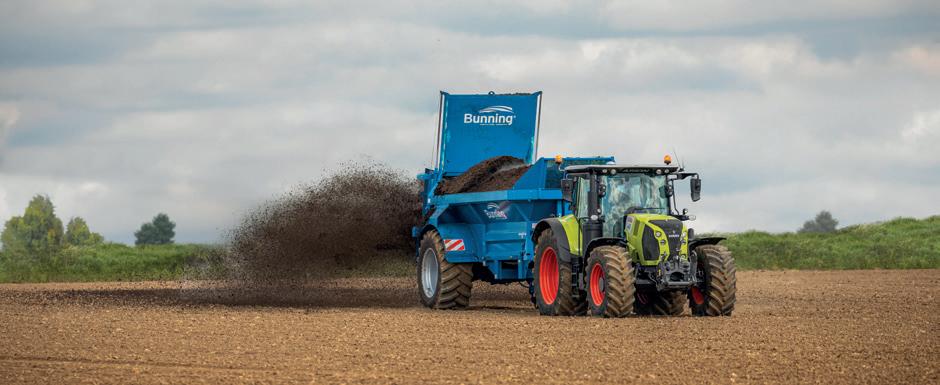





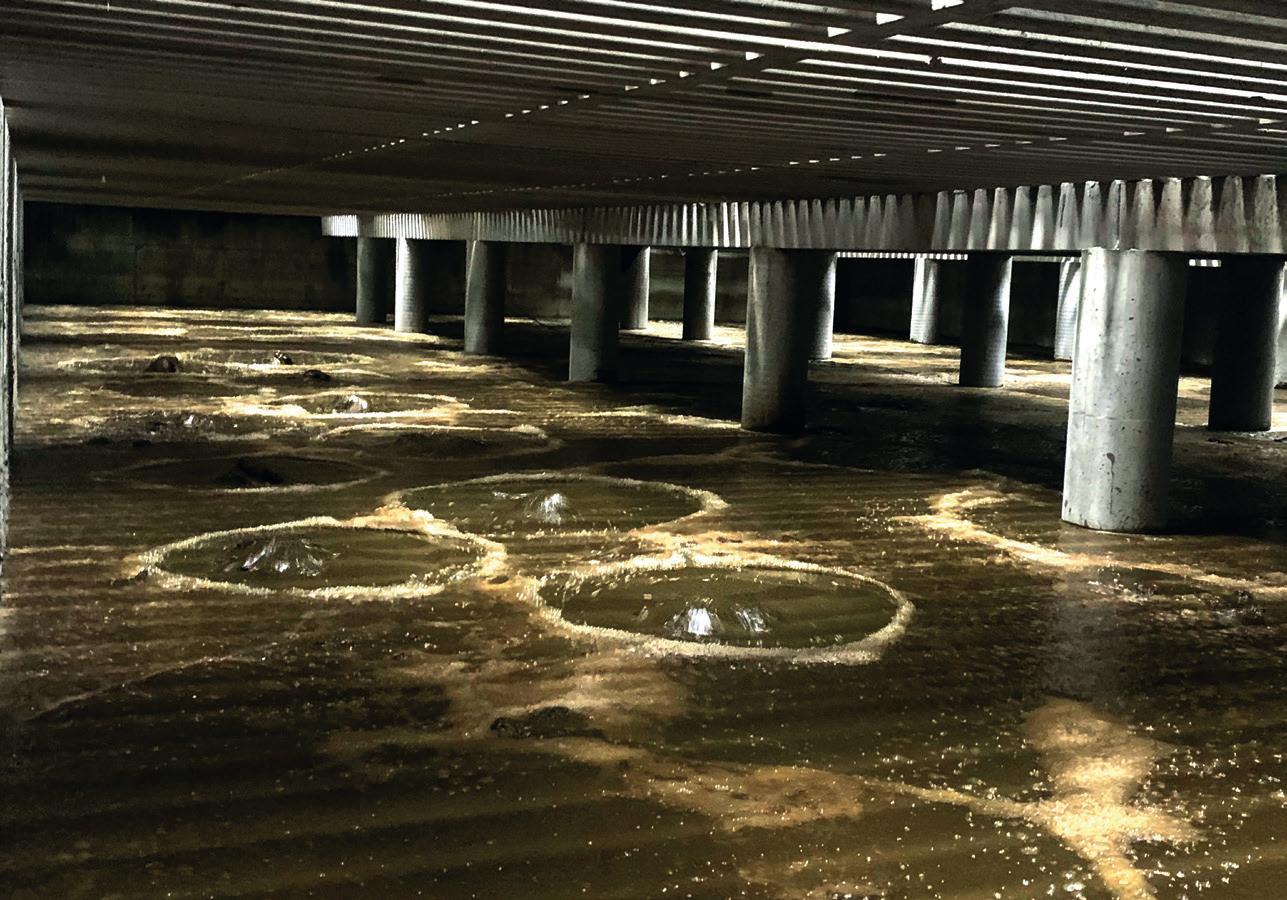



so there is no requirement for additional mechanical agitation prior to pumping for application and its associated costs, while maintaining NPK concentrations.”
He adds that it also means the aerobic bacteria already present are encouraged to multiply.
“They prevent an anaerobic fermentation, reducing the production of ammonia and methane, while enhancing the breakdown of the organic material and producing and maintaining a homogeneous slurry.”





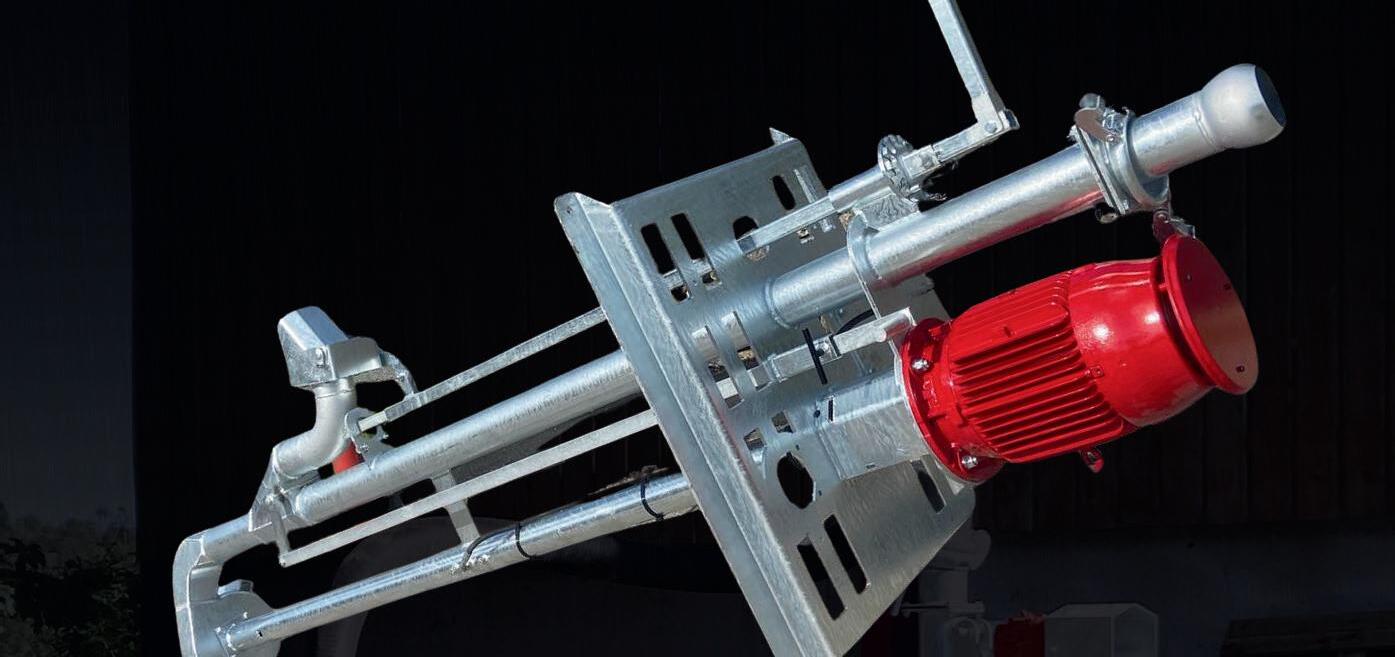












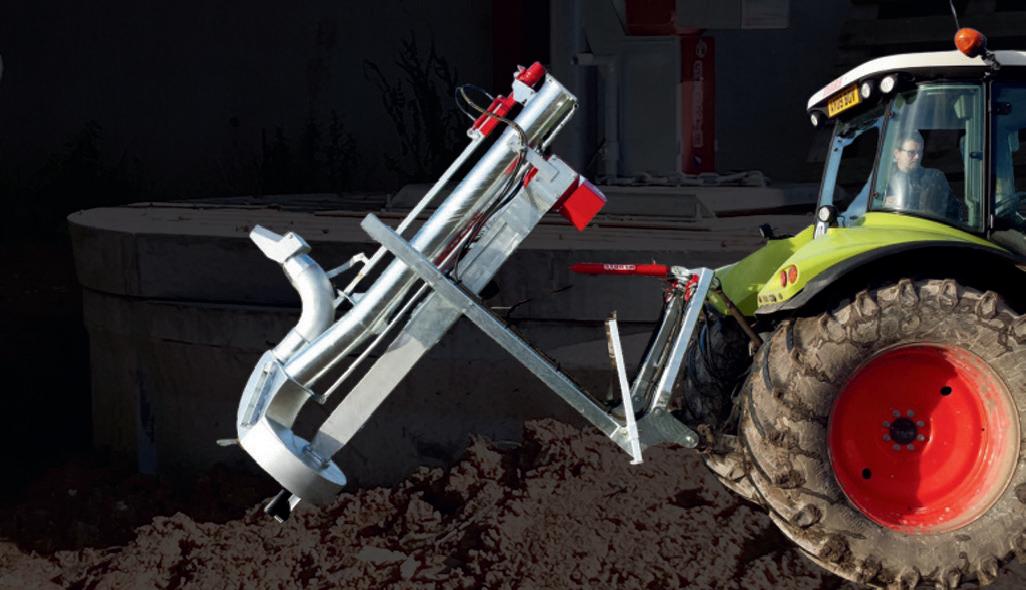



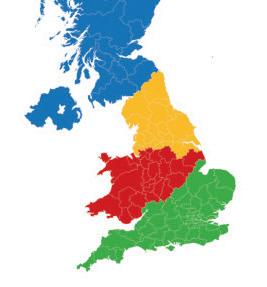




How managing slurry as a vital nutrient resource makes good business sense for dairy farmers. Chloe Palmer hears from the experts.
Farmers at an AHDB and Catchment Sensitive Farming (CSF) workshop were urged to know the value of their slurry and use it wisely to save money and minimise adverse environmental impacts.
David Ball, lead environment specialist with AHDB, defined any liquid on a farm which comes into contact with livestock excreta as slurry. He said: “Parlour washings, dirty water from yards, seepage from weeping walls and even silage effluent are all slurry and need to be treated as such.
“Know the volumes you need to store, what nutrients are in your slurry and plan how to optimise its use.
“The best way of obtaining a comprehensive account of slurry nutrient content is to send a representative sample to a laboratory.
To get this sample, place a tray in the field as slurry is being spread. Cows will typically produce 100kg of nitrogen in manure in a year which equates to the equivalent of 290kg of ammonium nitrate, which at the current price of £390/ tonne is worth more than £113.
“If correctly stored and covered and applied at the right time, at the appropriate rate and method, 45% of the nitrogen in this slurry should be available to the growing crop.
“The nitrogen, phosphate and potash in this slurry can be
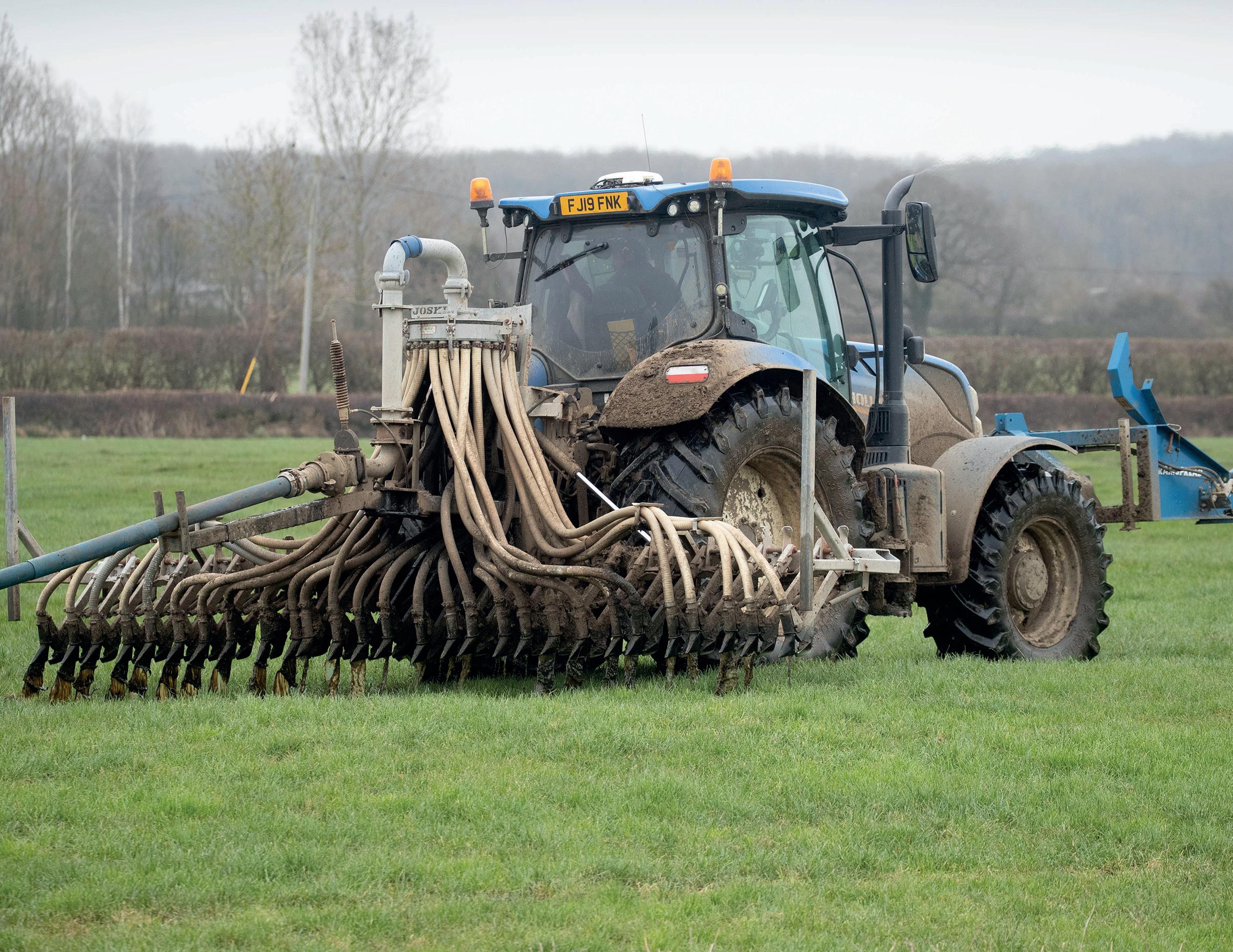

worth £100 per hectare for a typical application.”
Mr Ball advised that fitting a floating cover to a slurry store could prevent 60% of ammonia losses and for a self-supporting cover this figure rises to 80%.
Other, cheaper options such as clay aggregates or floating hexagonal plates are also effective.
Mr Ball highlighted the added benefit of preventing rainfall entering the store, meaning capacity is not reduced.
He said: “For a lagoon, 63% of the working volume can be rainfall captured on the surface and the figure is 35% for aboveground tanks.
“Not only is this lost capacity, but there is also the extra cost of spreading the water along with the slurry at £3/m3
“Annual savings from fitting a cover can be as much as £9,461, taking into account the value of the retained ammonia and the reduced spreading cost.”
Mr Ball explained that a slurry separator can enable better targeting of slurry nutrients.
He said: “Many soils across dairy farms are already high in phosphate, which can be oversupplied in slurry applications.
“The liquid fraction is a good source of nitrogen with very little phosphate so it can be applied to these fields.
“The solid fraction can be transported to fields further away which may not have received slurry for many years and are lower in phosphate.
“Although separators can reduce slurry volumes by up to 20%, the required storage capacity should be provided without using a separator.”
Mr Ball warned it was likely low-emission spreading will become mandatory in the future.
He added: “Shallow injection or the use of precision equipment
Manufacturing & installing rope scrapers for over 25 years
• Ideal for sand laden slurry
• Timer clock to schedule cleaning
• Easy control system
• Lowest cost maintenance
• 5 year extended warranty available
information please contact:
such as dribble bars and trailing shoes can reduce ammonia emissions at spreading by up to 70%.”
Jonathan Skidmore, CSF senior adviser, urged farmers to adopt best practice to reduce the value of nutrients lost off farm and potentially negate the need for more regulation.
He said: “Many of the management practices which are good for animal welfare and the business are positive for the environment. Ammonia emissions within housing increase with higher humidity and temperature whereas cows prefer cooler, well-ventilated spaces.
“Guidelines state buildings
n Maximise home-grown feeds to replace bought-in concentrate
n Look at the scope for reducing purchased N without impacting on tonnes of dry matter (DM) per hectare
n Adopt precision spreading technology – GPS and optimum calibration
n Assess slurry storage infrastructure and adopt lowemission spreading technology
n Minimise wastage in grazing and silage systems
n Consider scope for increased feed efficiency – ration formulation, animal health, genetics
Phosphorous:
n Identify scope for purchased P savings without reducing tonnes DM/ha
n Monitor total soil P as well as available P
n Maintain optimum soil pH of 6.2
n Consult your nutritionist regarding options for reducing P content in the diet and feeding phytase
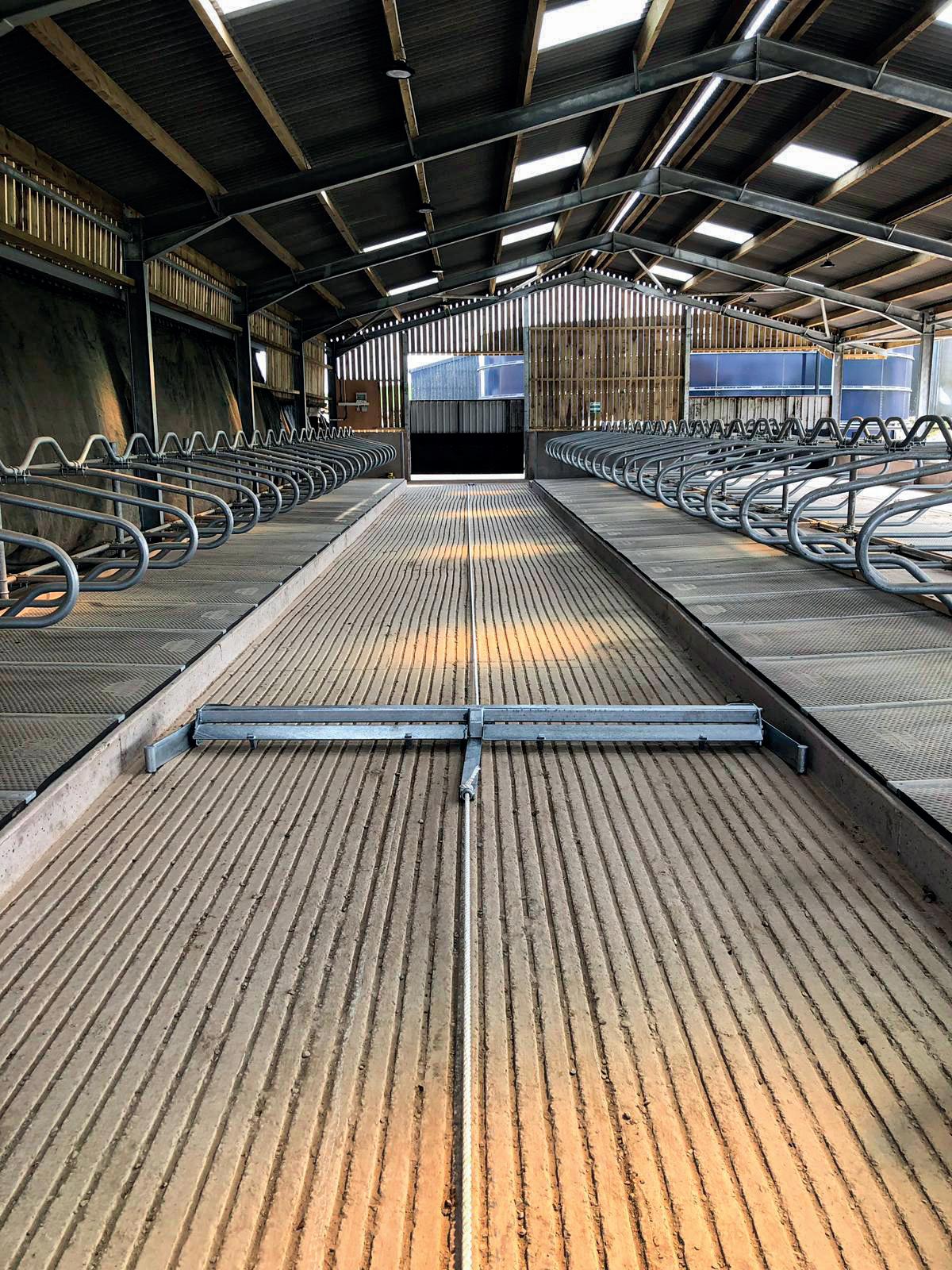


should ideally have roof ridge openings of at least 0.15m2 per cow, equating to 15m 2 of ridge space for a 100-cow herd.
“This will improve ventilation and herd health and will reduce ammonia production.
“Increasing the regularity of scraping of cubicle sheds from twice to four times a day will reduce ammonia emissions by 15% which helps cut the incidence of lameness. Low-emission flooring has also been shown to improve hoof health.”
Mr Skidmore also said farmers should look at the grant opportunities which will become available again in 2026 and start planning for that now.
He said: “A wide range of capital items will be available through the Capital Grant scheme and Farming Equipment and Technology Fund when they reopen.
“Some capital items require CSF approval so it is better to contact your CSF adviser at the earliest opportunity.”
JNUTRIENT management plans should be practical, working documents and should not simply live in the filing cabinet, said Chris Duller, independent grassland adviser.
He also said such a plan should be central to the whole farming operation.
He said: “A nutrient management plan is essentially a measure of what comes on to the farm in terms of feed and fertiliser and what goes off as milk and meat.
“RB209 provides standard figures which are used to produce a nutrient management plan, but every slurry, soil and sward is different, so it is important to crunch the numbers and validate them.
“For example, including an analysis of soil organic matter is helpful, but to properly assess soil health, it has to go hand-inhand with a soil inspection.
“It is vital to look at sward composition when making fertiliser recommendations, as a sward which has a high perennial ryegrass content will convert 1kg of nitrogen into as much as 30kg of dry matter.
“The figure for a Yorkshire fog dominated sward would be dramatically reduced.”
Mr Duller urged farmers to walk the farm with their consultants when they are preparing a management plan.
He said: “Fields will have hot spots where phosphorus and potassium indices will be much higher such as where feeders have been placed and 90% of pollution will often originate from 10% of the farm.
“Map the results of your soil testing and the visual soil inspection, as well as the percentage of ryegrass in fields, as presenting the information visually is very helpful when assessing spreading risk and planning remedial actions.
“A good nutrient management plan will include whole-farm targets as well as individual field recommendations.”
Mr Duller also suggested that dairy processing companies are beginning to look at nitrogen and P surplus targets, and therefore it could be a helpful benchmark.
He said: “An overall surplus of 100kg of N and 10kg of P is realistic for a grass-based dairy system.
“Once these figures rise to 200kg of N and 20kg of P, I would argue it may be time to consider exporting nutrients from the farm.
“Technology will have a role to play in improving efficiency to reduce these surpluses.
“For example, modern animal genetics are increasing feed efficiency and plant breeding is now focusing on developing grasses which will grow more at lower nutrient indices.”







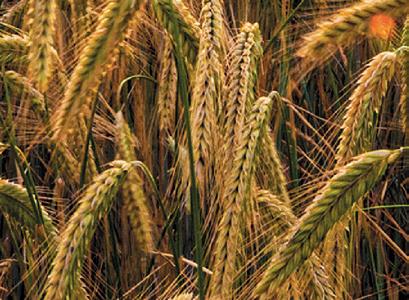




There was a strong emphasis on power, precision and practicality at Agritechnica 2025, with many of its headline exhibitors displaying larger and higher capacity machines for the first time. James Huyton and Toby Whatley report.
FOCUSED on the needs of evergrowing dairies, Kverneland claims the SelfLine 4.0 System 2000+ can serve 2,000-plus cow units, with capacity to feed up to 320 cows in a single mix, combining a 45m3 tank and a 510hp engine.
Using a low-speed concept, the machine can achieve maximum torque at just 1,200rpm, which Kverneland says helps reduce fuel
consumption and operational noise levels. The feeder wagon also incorporates a newly developed heavy-duty axle and chassis to improve stability.
The four-axle steering system aids manoeuvrability, while three driven axles help manage a machine with a permissible gross vehicle weight of 50 tonnes.
Kverneland’s high-performance milling head operates to a maximum height of seven metres.
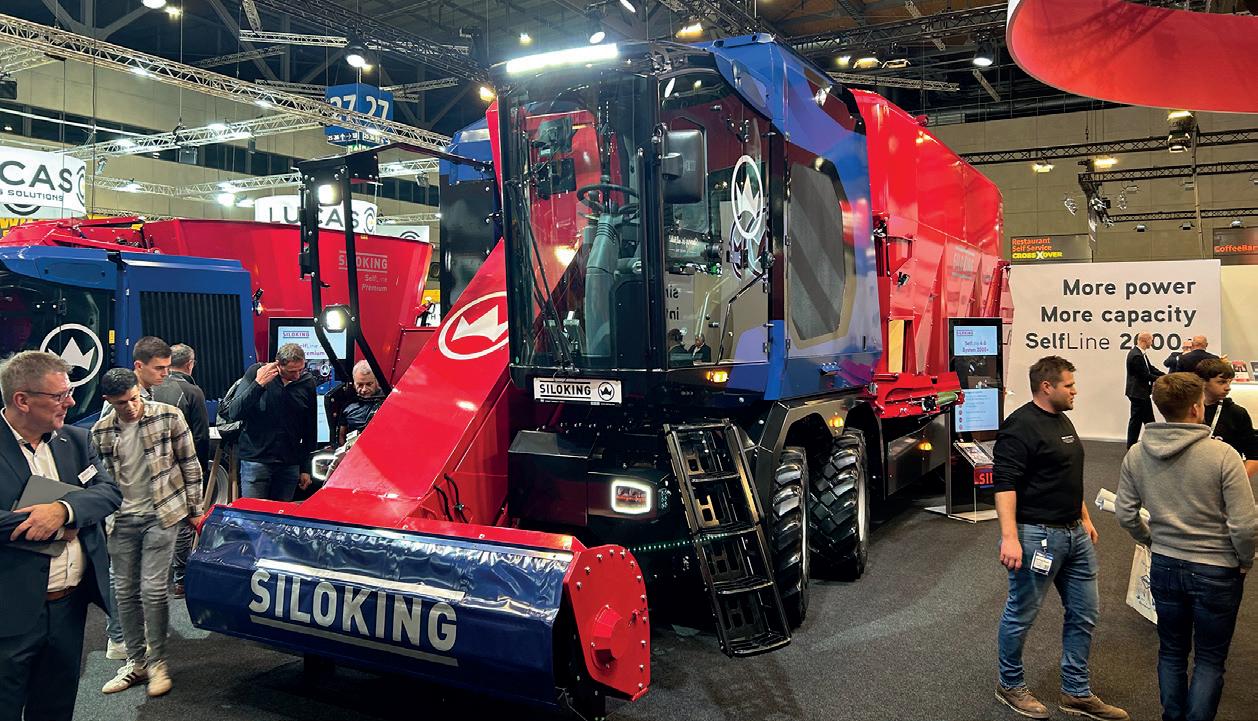
FINNISH manufacturer Elho has introduced updates to its trailed Cobra forager.
Operating with a belt feed into compression rollers and an in-line 1,000mm-wide chopping cylinder, the 500hp-rated machine now features metal and stone detection plus IsoBus control for chop length, additive application
and spout adjustment. Although now rare in the UK, trailed foragers remain popular in Finland, where limited maize cropping and the availability of high-horsepower forestry tractors have kept this design in use, although updated to match the power and technology of modern machines.
ALIGNING with the launch of its 1,110hp Jaguar 1200, Claas has set a new world record for silage harvesting, officially recognised by Guinness World Records as 4,096 tonnes of wholecrop harvested in 12 continuous hours.
The record was achieved in Texas by contractors P.M.S. Harvesting. A centre-pivot irrigated crop of wholecrop wheat was cut in a continuous circle. Logistics were handled by a fleet of 30 articulated lorries, with 266 loads transported to the clamp.
Of particular note to most farm businesses was the machine’s fuel efficiency, with a claimed consumption of 0.49 litres/t of crop harvested.



PREVIEWED at the event, JCB has updated two of its compact telehandlers, with the 526-60 replacing the existing 525-60 and the introduction of an all-new 530-60. The 526-60 gains an additional 100kg of lift capacity over its predecessor, offering a
2.6-tonne lift and six-metre reach, while the 530-60 provides a 3t lift to the same height.
The hydrostatic driveline remains unchanged, but the new cab platform delivers more storage, a wider-opening door, foot-operated steering column adjustment,
improved glass seals and antivibration mounts to reduce noise.
A seven-inch touch-screen manages machine functions and allows operator and attachment profiles to customise hydraulic flow
rates. Both machines are offered with full T1A tractor homologation –a feature in demand in the UK and Germany – providing an improved power brake system and twin-line trailer braking.
Continues over the page...




to tag twice One simple step saves time and stress. Better animal welfare Fewer applications, less handling. Accurate results Sealed tissue samples, no refrigeration needed. Smarter breeding Genomic insights on production, health, fertility.





SHOWN for the first time in Europe, John Deere’s E-Power 130hp tractor prototype marks the company’s first battery-electric tractor, developed using technology from Austrian battery manufacturer Kreisel Electric, acquired by John Deere in 2022.
The 5M-sized tractor uses up to five battery packs to deliver the claimed output, with
performance said to mirror that of a diesel model.
Hydraulic and linkage connections remain identical, allowing like-for-like implement use. While exact figures for endurance and charging time have not been released, the concept could appeal to dairy and livestock users with roof-mounted solar and low-cost recharging potential.

PLANNED for production in late 2026, Merlo previewed a new 43.7 model with a 4.3-tonne lift and seven-metre reach, alongside an updated version of its current 38.10.
Both models feature revised lighting, improved cab access and the return of the steel
protective ring around the chassis — a feature brought back following customer demand.
The design changes also include enhancements to access points and work lighting based on feedback from users of earlier machines.




INTRODUCED as an option on Fusion 4 combi-wrappers, McHale’s TerraDrive system provides a hydraulic-assisted driven axle for the baler. Operating through the tractor’s power-beyond connection, the IsoBus-linked axle adjusts its assistance based on tractor feedback,
automatically disengaging at certain baling stages or above preset speeds.
Fitted with VF710 tyres, the system is claimed to improve performance in soft, wet or hilly conditions, and to reduce sward damage during late-season collections.
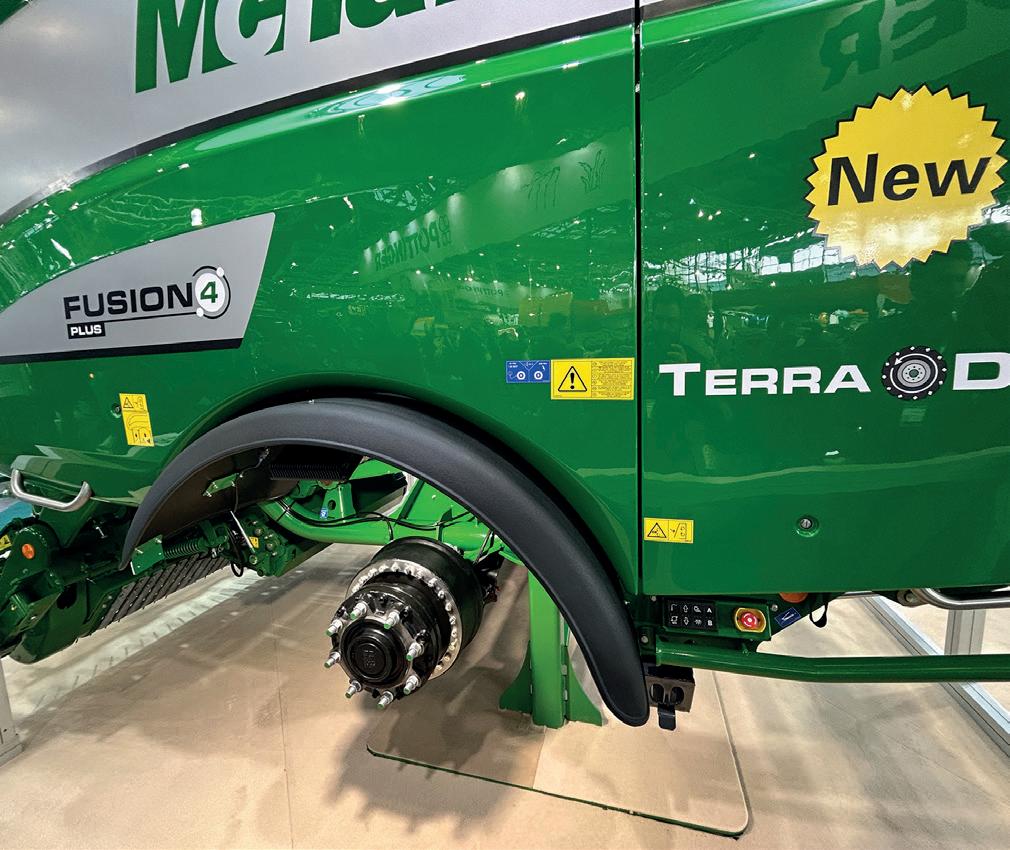
PEECON’S four-axle, four-auger Biga Mega Mammoet 64m³ diet feeder has enough capacity to feed about 400 cows in one mix, designed for herds exceeding 2,000 cows.
The 12.8-metre-long unit uses three steered axles for manoeuvrability, with total
machine weight measured via 10 load cells across the chassis.
Unloading can be carried out from the front or rear via twin doors on either side. With a minimum power requirement of 280hp, Peecon reports that some farms are running the machine with 400hp tractors.
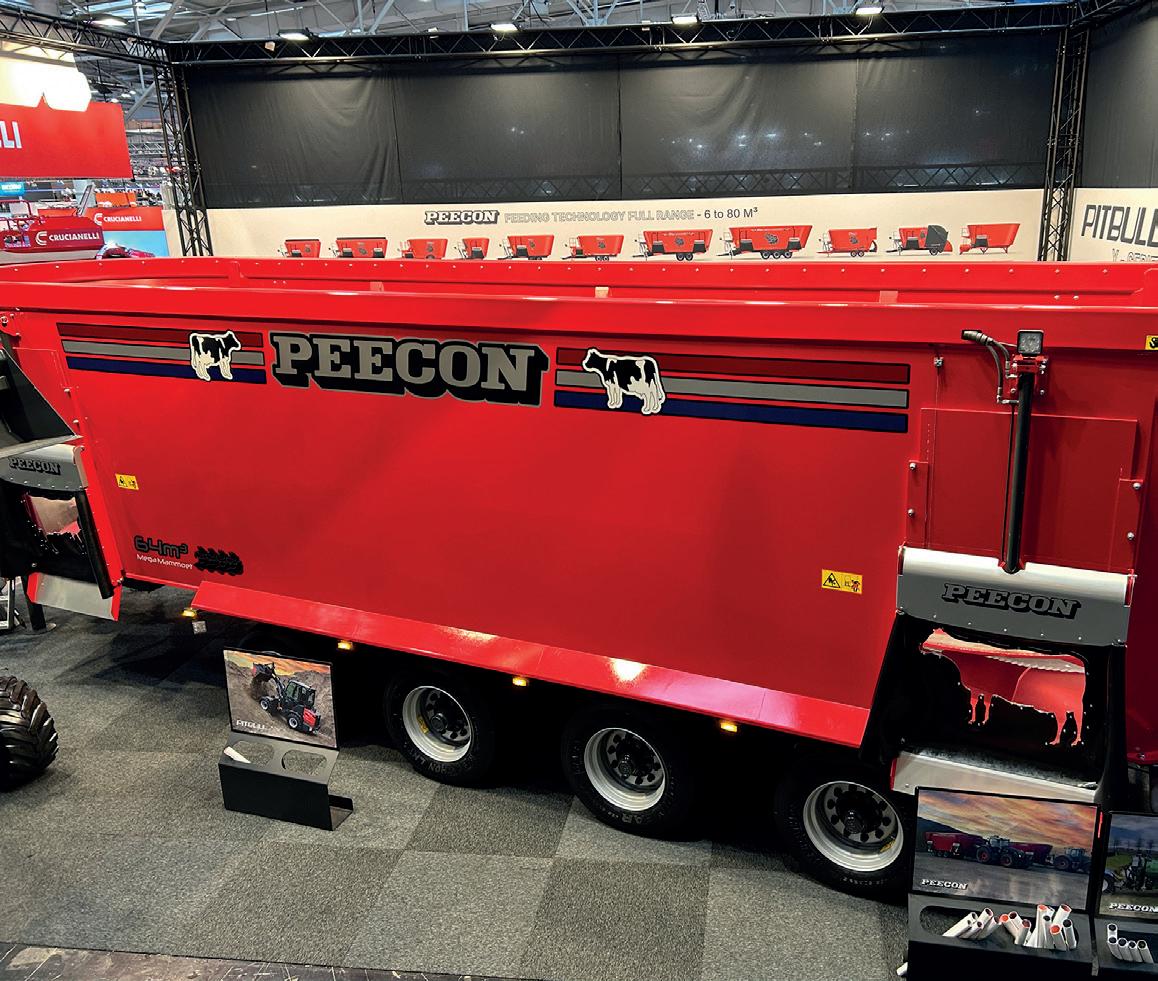

AS part of Kubota’s technology demonstrations, Vicon showcased its dry matter (DM) measurement concept on the Extra 736T mower.
Using an NIR sensor mounted above the conditioner, the
system measures fresh-cut crop DM and generates a field heat map, helping operators make more informed decisions on tedding, raking or direct baling/foraging, depending on crop conditions.

OPERATING entirely on battery power, Faresin’s Leader PF 2.24 is the manufacturer’s all-electric feeder wagon, available with either 91.3kWh or 137kWh battery packs.
Running at 435V, the smaller pack is said to provide enough charge for four mixes of the 24m³ machine, while the larger option allows up to seven before recharging. When connected to a three-phase fast charger, users can restore the battery from 20% to 80% in about four hours.
While all-electric tractors are still largely at the prototype stage, the repetitive daily operation of diet feeders, combined with short travel distances and the growing availability of on-farm solar generation, could make the switch to electric a practical and economical choice for dairy farmers.
Faresin reports that the unit shown has already been sold to a large Italian dairy, with a second and third machine on order.

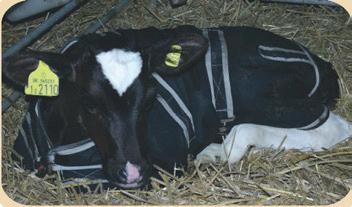
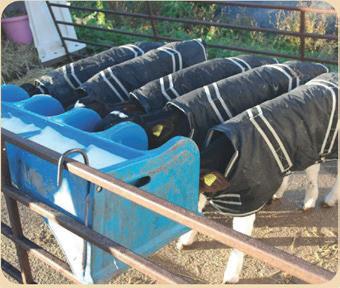

•
•
•
•
•
Material: Outer shell 6000 Oxford, 200g filling, 2100 lining. Price: £22.00+VAT.


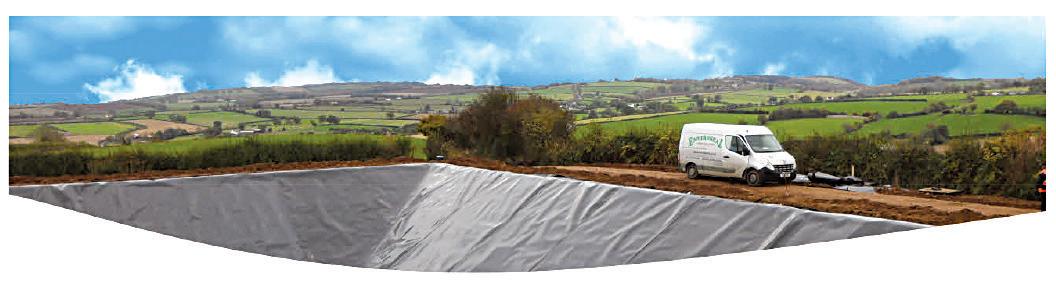
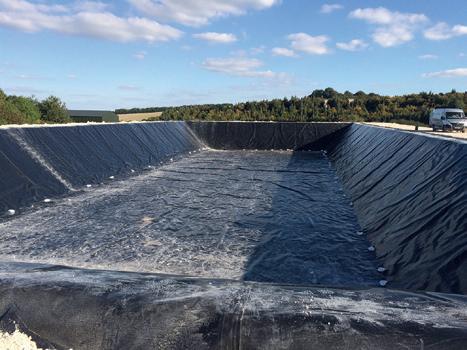
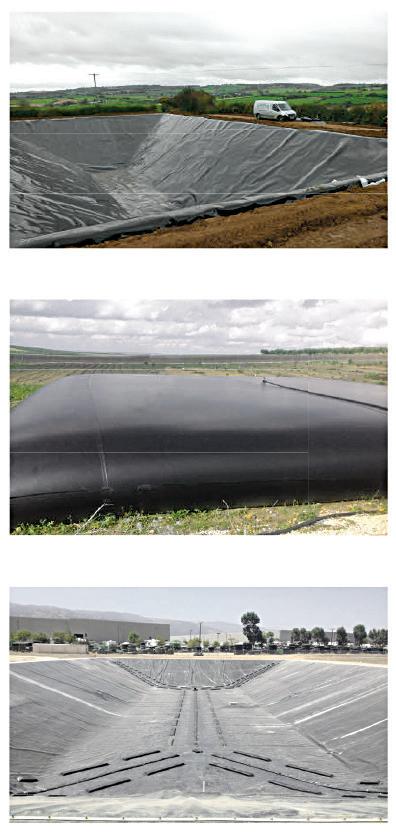


NO FIREARMS PERMIT REQUIRED SUITABLE FOR FARM ANIMALS OF ALL SIZES
Adler Captive Bolt Stunner just £215 + VAT
Adler Captive Bolt Stunner PackageStunner, 100 Blanks, Carriage... just £249 + VAT

Please email your order to sales@raytradeuk.co.uk and we’ll contact you for payment. Further information on Humane Slaughter products can be found at www.raytradeuk.co.uk/humane-slaughter
If you have any other questions or wish to make a payment over the telephone please call us on 01635 253344


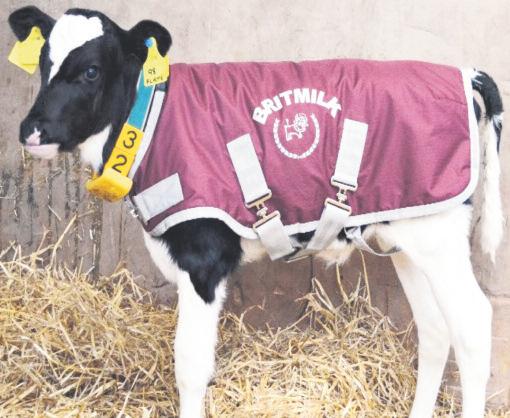



• Quality breathable/water repellent materials to maintain body heat
• Strong metal buckles for Longer life
• Crossover straps for secure fit
• Machine washable
Tel. +44 (0)1387 750459 E: info@britmilk co uk | W: www britmilk co uk
Search for the origins of herd management technology and you’ll find Afimilk. Our innovation brought you the first milk meter, heat detection sensor and milk component analyzer. Over 50 years, our drive to revolutionize dairy technology has never wavered.




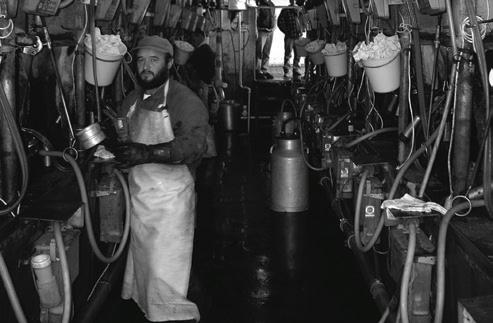
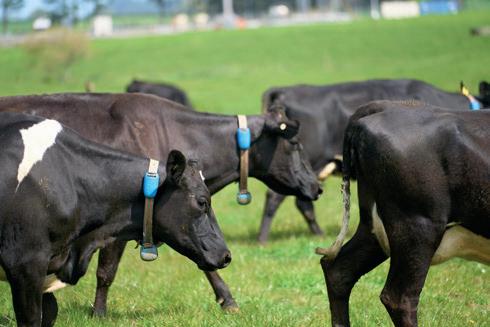
JMILK volumes coming off farms remaining well ahead of this time last year continue to exert pressure both physically in terms of milk processing (several companies having to abandon maintenance shutdowns this autumn with nowhere to place the milk) as well as non-aligned milk prices.
There is unlikely to be any let-up in the pressure until markets witness a substantial drop in milk volume. That said, there might be a little respite in the wave of negative price pressure in the seasonal buildup to Christmas, after which focus, as always, will turn to what the spring months may have to offer.
Cheesemakers are having a
JLIQUID processors are reducing prices, although most have not picked up with the same pace as cheesemakers.
really torrid time as the growing surplus of milk has been finding its way into store racking, although it is the likes of the quick turnaround, short maturation mozzarella market that has taken a real beating in market value. Having decreased by 1ppl from October and 4ppl from November, Leprino Foods has reduced its milk price by a further 5ppl from December, taking our manufacturing standard* price down 10ppl in total to 33ppl.
Over in South Wales, Dairy Partners, in taking a further 5ppl for December, along with the 4ppl reduction from November, takes our price down to 32.95ppl.
of new zoned ex-farm haulage charge. Before the haulage charge has been ratified, the 4ppl decrease takes our liquid standard down to 38ppl.










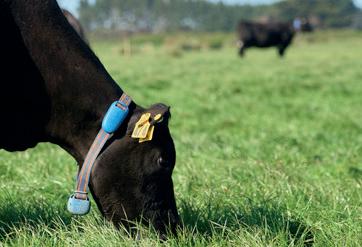





Muller has added to its 1.25ppl November reduction with a further 1.5ppl reduction for December, taking the Muller Direct price down to 40ppl (England and Wales) and 39.75ppl (Scotland).



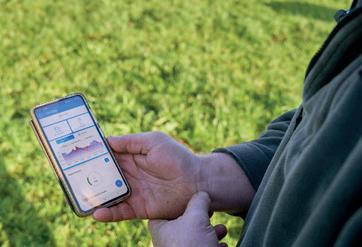
Scott Henshaw | Email: scott_h@afimilk.com | Phone: 07394 198 613
Danny O'Connor | Email: danny_o@afimilk.com | Phone: 00353 85 8621280
Following its decision to increase by 2ppl for October to move in line with competitors, Paynes Dairies decreased its producer milk price by 4ppl from November. In addition, the company has also taken an additional 1ppl operational charge from all producers, pending the introduction and announcement
Freshways has reduced by a further 2ppl for December, taking our price down to 34ppl, while Meadow has moved to the same level for November after its first reduction of 6ppl. November has also seen the McQueens milk price reduce by 1.5ppl to 41ppl while Graham’s The Family Dairy held its milk price unchanged on 42ppl.
Staying true to their basket movement, Pembrokeshire Dairies have reduced by 3.94ppl to 38.45ppl, with Crediton Dairy going down 2ppl to 40.1ppl.
Stephen Bradley on the latest milk industry developments.
Cheddar makers are not having a much better time this autumn with every milk buyer that we monitor having now notified their suppliers of a reduction, with the last mover being Saputo Dairy UK’s first reduction of 1ppl for its Davidstow suppliers, taking its December price down to 42ppl.
The company has also reduced its Wensleydale price by 2.55ppl for November following a 0.2ppl decrease from October.
While Parkham Farms has held its December price unchanged on 35.5ppl after its 8ppl reduction the previous month, others have decided to cut prices harder, having perhaps underestimated the pace of market value decline back at the end of September in setting their November price.
First Milk’s decision to reduce by 6ppl for December follows a 2ppl reduction for November and with the 1ppl reduction from October takes its total decrease to date to 9ppl and 35.85ppl, with

Haverfordwest Tesco Cheese Group on 37.35ppl. The company has also reduced the BV Dairy price by 3.43ppl to 36.4ppl.
In its first downward price adjustment since April, The Fresh Milk Company (Lactalis) has reduced its MSA Stranraer November milk price by 5.19ppl to 38.63ppl.
Barber’s Cheesemakers has reduced by a further 3.87ppl for December to 38.64ppl taking the Somerset cheesemaker’s total reduction this autumn to date to 6.44ppl.
South Caernarfon Creameries has taken a second cut of 3.5ppl to take its December price down to 35ppl, representing an overall cut of 8ppl over the last three months.
Also reducing by 3.5ppl for December, Belton Farm’s latest move takes its December price down to 37.55ppl from 42.55ppl paid for October supplies.
Meanwhile Dale Farm has decreased its base price by a further 2.5ppl from September to 38.88ppl – this being the sixth price decrease this year to date, totalling 8.54ppl.
JARLA Foods has reduced its on-account milk price for owners’ conventional milk by a further three eurocents per kg from November while its organic milk price will hold unchanged for the seventh month.
The company reports that milk supplies are increasing both globally and in the EU. Retail sales are flat while commodity markets are adjusting down due to plenty of milk being available. Negative momentum is likely to continue for conventional milk, while the market for organic milk at the moment is less volatile.
This is the company’s third straight cut totalling six eurocents, and takes our manufacturing standard litre down 2.63ppl to 42.71ppl, a total reduction of 5.16ppl.
Professional Cold Water Pressure Washers, Hot Water Pressure Washers, Electric Pressure Washers, Petrol Pressure Washer or Diesel Pressure Washers, you’ll be sure to find the best deals here and we won’t be beaten on price!

* Our Liquid standard litre is 4%b/f & 3.3% protein, for our manufacturing 4.2%b/f & 3.4% protein and in both cases bactoscans of 30,000/ml & SCCs of 200,000/ml, with thermodurics of 500/ml, 1mltrs/yr on EODC (max vehicle accessibility) based on level supply and therefore, before seasonality, (but includes the winter premiums paid in NI) as well as monthly profile adjustments, balancing charges, capital deductions or annual / part annual growth incentive schemes or supplements not directly linked to dairy market price movement.

W. Bateman & Co. GARSTANG ROAD, BARTON, PRESTON, LANCS TEL: (01772) 862948 FAX: (01772) 861639








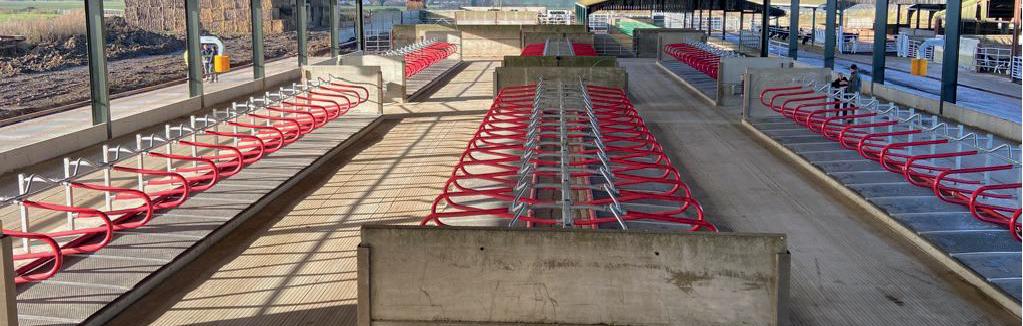

Price Indicators
Notes to table
Prices for both Liquid & Manufacturing tables paid for a producer sending 1mltrs/yr on EODC (max vehicle size accessibility) with Bactoscans of 30,000/ml and SCC’s of 200,000/ml with Thermodurics of 500/ml. Excludes capital retentions or AHDB levies, profile adjustments from level supply, seasonality, balancing and A&B price schemes (includes the winter premiums paid in NI). Excludes annual / part annual growth incentive schemes or supplements not directly linked to dairy market price movement. Liquid price for milk contains 4% b/f and 3.3% protein. Manufacturing price for milk containing 4.2%/b/f and 3.4% prot. All prices for non-aligned prices are before monthly retail supplements. (i) Jul’25 prices before seasonality or B pricing (ii) Aug’25 prices before seasonality or B pricing (iii) Table ranked on simple rolling 12mth average of monthly prices (Sept’24 to Aug’25). (i) v (ii) The difference Aug’25 compared with Jul’25. UK Arla Farmers 0.14ppl decrease for Jul’25 and hold for Aug’25 includes 1.610ppkg (1.658ppl) Farm Ahead Sustainability Incentive and Guaranteed minimum supplementary payment of 1.220ppkg (1.257ppl) based on our liquid std litre. UK Arla Farmers 0.15ppl decrease for Jul’25 and hold for Aug’25 includes 1.681ppkg (1.731ppl) Farm Ahead Sustainability Incentive and Guaranteed minimum supplementary payment of 1.274ppkg (1.312ppl) based on our manufacturing std litre. First Milk price includes 0.5ppl Member Premium accrued as a 13th payment paid
2024/25. * UK Milk Futures Equivalent (UKMFE) net to producer includes 5% processor margin and allowing 3.35ppl ex-farm haulage for Jul’25 and 3.34ppl for Aug’25. N/C in this context means no change for the last relevant month highlighted since Aug’25. UK Arla Farmers 0.84ppl decrease for Sept’25 includes 1.610ppkg (1.658ppl) Farm Ahead Sustainability Incentive and Guaranteed minimum supplementary payment of 1.220ppkg (1.257ppl) based on our liquid std litre. UK Arla Farmers 0.87ppl decrease for Sept’25 includes 1.681ppkg (1.731ppl) Farm Ahead Sustainability Incentive and Guaranteed minimum supplementary payment of 1.274ppkg (1.312ppl) based on our manufacturing std litre. UK Arla Farmers 1.59ppl decrease for Oct’25 includes 1.612ppkg (1.660ppl) Farm Ahead Sustainability Incentive and Guaranteed minimum supplementary payment of 1.220ppkg (1.257ppl) based on our liquid std litre. UK Arla Farmers 1.66ppl decrease for Oct’25 includes 1.683ppkg (1.733ppl) Farm Ahead Sustainability Incentive and Guaranteed minimum supplementary payment of 1.275ppkg






















The latest Defra milk price for September is 46.54ppl at 4.38% fat and 3.55% protein, which is up 0.9p on last month.
At a standard 4% fat, 3.3% protein standard litre, the price is just under 43p, and around 0.3p less than last month.
The estimated non-aligned average price for September is 42.5p and for October is slightly lower at 42.2p.
But after significant price reductions for November and more for December the nonaligned estimates are 39.68p and 38p respectively.
For November, 18 processors
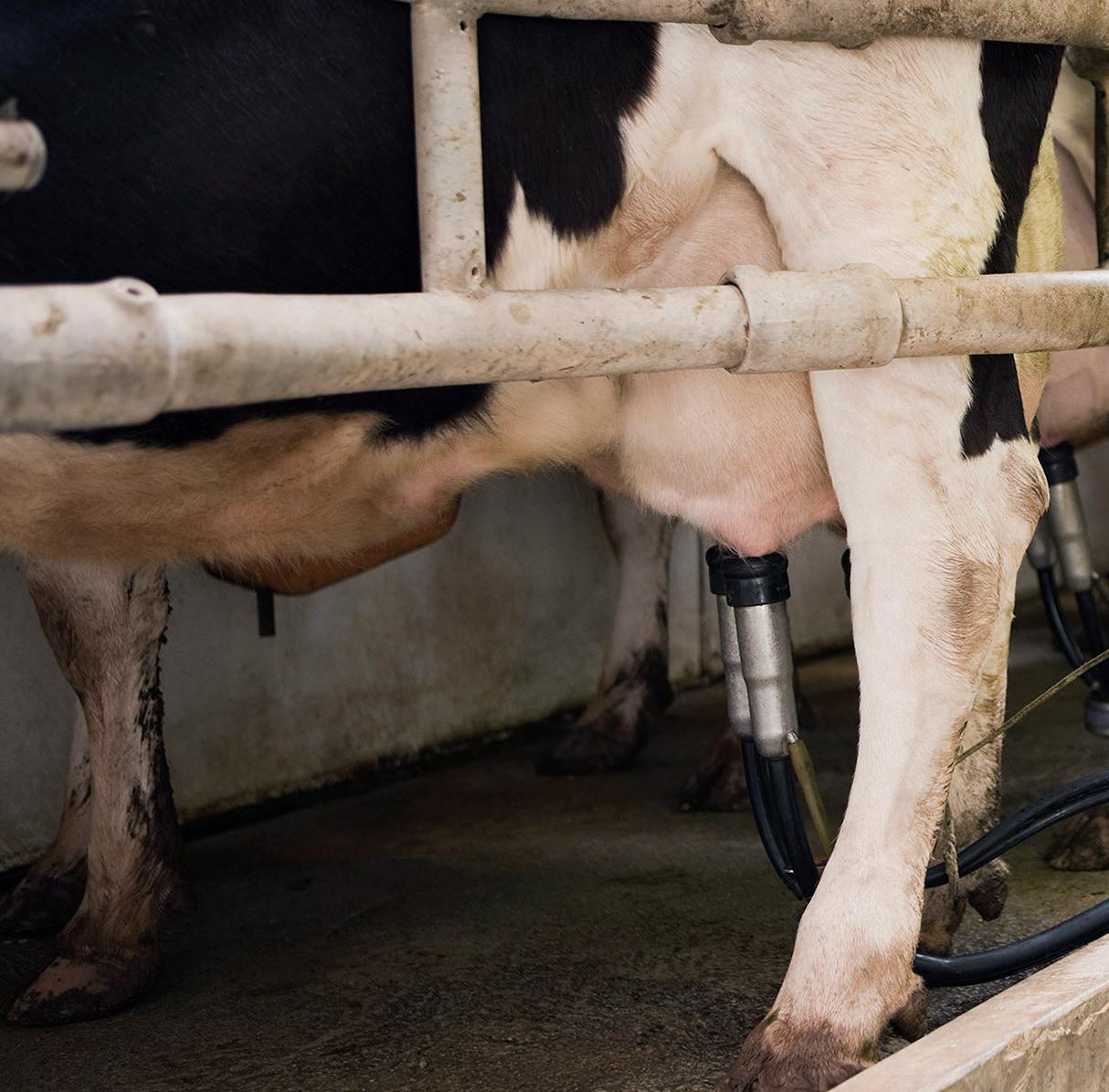
out of 26 tracked dropped their prices and another 16 have so far done it for December.
JEU commodity prices continue to drop, with Dutch butter falling another €50 (£44) in the first week of November to €5,100/ tonne (£4,488/t), and with spot prices down below €5,000 (£4,400).
UK butter is around £4,500£4,600. Cream is around the £1.75/kg level, and is thus down £1 in 10–12 weeks.
SMP prices are also falling, to close to the €2,000 (£1,760) threshold. There has not been a lower price since Covid-19. As with the real market, the EU
butter futures have also lost ground again and are down by €90 (£79) over the next six month’s contracts to an average of €5,040 (£4,435). That is the same price as EU butter settled out on at the GDT.
Although prices continue to dip, the pace of change is slowing –possibly due to the Christmas trading period.
But with quarter one notoriously bad for the dairy markets, further dips cannot be ruled out.
The bad news continues for UK Cheddar, with mild prices falling towards the £3,000 threshold.
The highest price being paid is currently 46p, by Waitrose, and the lowest prices around 32p from mozzarella makers, on a standard litre basis. It takes the difference between the highest and lowest milk price, including the aligned pools, to 15p and more than 5%.
In early November the EEX’s price fell below the threshold to £2,980, which is the lowest price since 2021. However its mozzarella price increased thanks to the GDT boost and was up £40 to £2,530. It is the first increase since June 18.
Stone X is listing Cheddar down £70 to £2,875 and it does not cross £3,000 again until quarter two next year. It has mozzarella at £2,475 for now, and for the next quarter at £2,550. UK manufacturers will be selling it for more, however, but not much more.
Excluding the aligned pools, the gap is now 13p and 42%. They are the biggest differentials since 2023.
AHDB’s AMPE and MCVE indexes continue to fall too – AMPE is at 35.87p, which is down 5.40p compared to September. After an allowance for a processor margin and costs, it equates to a farmgate price of 27.6p. MCVE is at 34.6p, before costs and a margin, down 3.8p. The farmgate equivalent is around 29.3p.
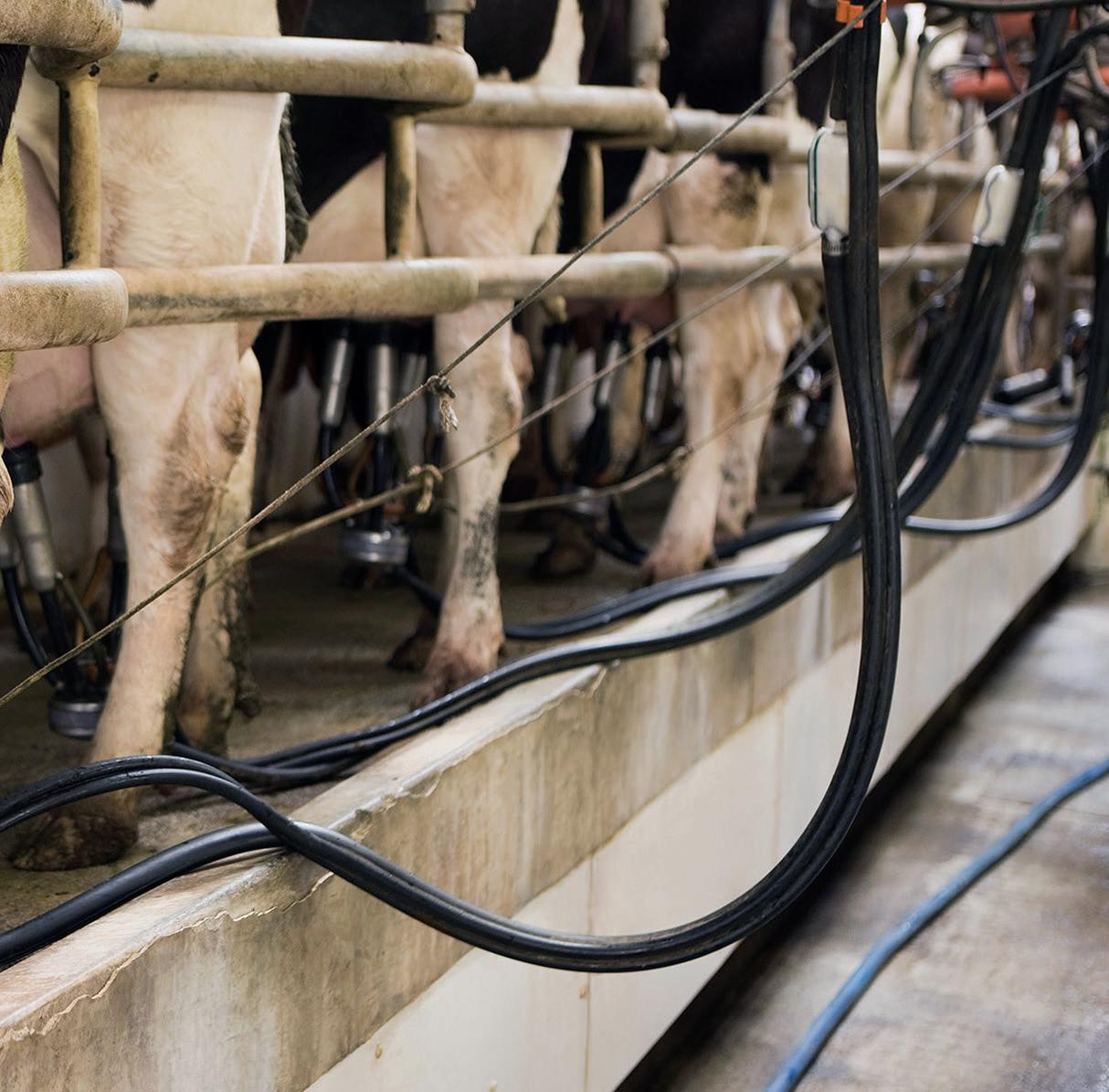
THE Global Dairy Trade event on November 4 fell again, by 2.4% –the sixth consecutive drop in a row and the 10th in 12 auctions. It is the longest run of declines since 2018, when there was a seven-auction run of losses, and a 12 consecutive run, if the hold in the index in the first August auction of 2018 is ignored. It is down 11% since the last time it increased in early August. At $3,768 (£2,860) it is at its lowest level since the end of summer 2024.
WMP dropped 3%, but managed to stay above $3,500
(£2,656), just, while SMP held. Butter dropped more than 4% to below $6,400 (£4,858), with Cheddar down 6.6% to below $4,450 (£3,377).
But mozzarella put its nineauction run of negatives to bed and increased by 1.6% over all contracts to $3,300 (£2,505).
Over that period of time it has lost half of its value, having dropped from $4,900 (£3,719).
The GDT commodities convert into an approximate UK milk price equivalent of around 33.5p, which is down 1p compared to the previous auction.

JUK milk volumes still show no signs of falling. September’s total yield was 1,239 million litres, which was 86.04m litres and 7.5% more than last year. Volumes for the calendar year so far are 11,855m litres, which is 546.01m litres and 4.8% more than last year.
Over the past two weeks they have averaged 42.63m litres per day, which is 2.67m litres and 6.7% more than last year and 8.9% more than the long-term average.
GB milk volumes have averaged 35.73m litres per day, 2.21m litres and 6.6% more than last year and 8.0% up on the long-term average. EU plus UK volumes in September were 12,775m litres, around 541m litre, and 4.4% more than last year and 513m litres and 4% more than the three-year average. Cumulative volumes are 120,034m litres, which is 1,208m, and 1% more than last year, and 1,533m litres and 1.3% above the three-year average.




This month, we feature a new roofing material, an upgraded calculator to assess rumen protected fat in diets, new telescopic handlers and a silage additive.
JVolac Wilmar Feed Ingredients’ launch of the upgraded Return on Investment (ROI) Calculator 2.0 offers farmers and nutritionists further support in assessing the financial and nutritional impact of rumenprotected fat supplementation in dairy rations.
The ROI Calculator 2.0 allows farmers anywhere in the world to input their herd data, for an instant projection on profitability and nutrient digestibility.
Key inputs for the model, including expected milk yield, milk composition and feed efficiency, come from two metaanalyses from Michigan State University, US, which collated more than 65 peer-reviewed research papers.
The new ROI Calculator 2.0 builds from those data points, giving users the ability to analyse hydrogenated fatty acid products, calcium salts and high-C16 rumen-protected fat supplements at flexible inclusion rates.
Users also receive a greater amount of feedback with 15 selectable graphs, covering metrics such as margin, ROI, nitrogen efficiency, feed efficiency, and neutral detergent fibre and fatty acid digestibility.
It is free and available from volacwilmarfeedingfats.com.
rDetails from laura.steeden@ volac.com.
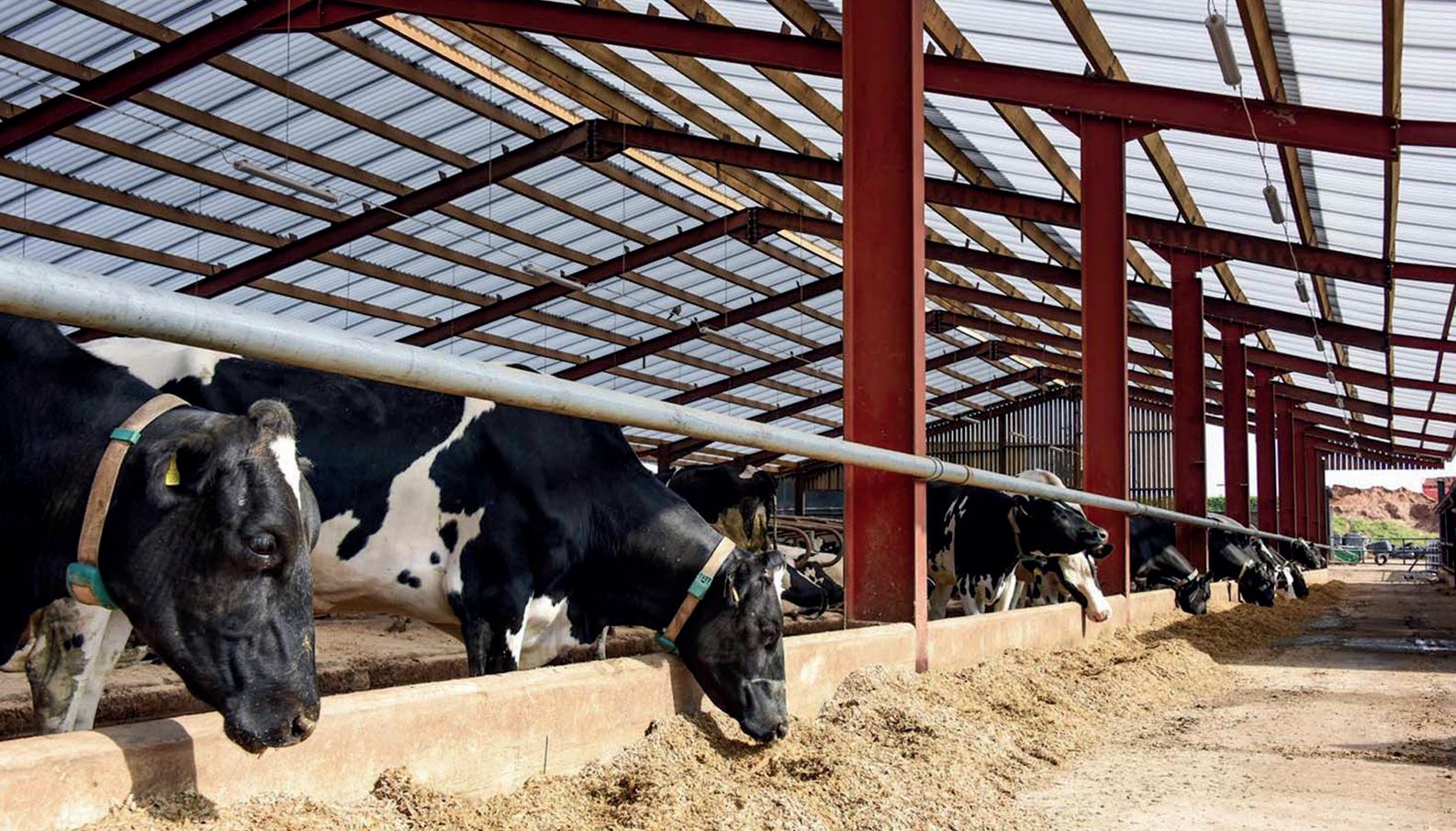
Global rooflight supplier Brett Martin has launched the Marlon CST Heatguard product on to the UK market.
Manufactured in the UK and developed with advanced heat -reflective pigments, the original Marlon CST Heatguard sheet
JNew products are featured in each issue of Dairy Farmer.
Please send details and pictures to Katie Fallon at katie.fallon@agriconnect.com, or call 07815 003 227.
allows high levels of natural daylight to be transmitted into buildings to improve animals’ wellbeing and productivity, without the risk of excessive heat gain.
Constructed from corrugated 6mm triplewall polycarbonate, eight times lighter than fibre cement sheeting, the Marlon CST Heatguard has the impact resistance and durability of standard corrugated polycarbonate sheeting, with added insulation and rigidity.
An advanced heat-reflective pigment reduces solar transmission by up to 68%. This gives the benefit of up to 36% light transmission into a building, while maintaining a controlled and
comfortable internal temperature for livestock.
Available in three different pigment intensities, the Marlon CST Heatguard can be incorporated to suit any specification; as a complete roof covering, in combination with fibre cement sheeting or as a wall-cladding material. .
rMore information from brettmartin.com/agri.


JRumenco has launched NovaSile Cool and Stable (NovaSile CS), a new silage additive designed to work across all silage types including grass, maize, wholecrop and legumes.
The additive contains two fastacting lactic acid bacteria that reduce the pH level of a clamp or bale quickly, to protect its nutrient value and prevent against yeast and mould development that can cause silage to heat.
NovaSile CS also contains an acetic acid producing bacteria that improves aerobic stability once silage is exposed to oxygen. Having two independent bacteria working in harmony enables NovaSile CS to keep ensiled forage cool and improve dry matter retention when the clamp is opened.
NovaSile CS is suitable for all forage types, making it easy to adopt on larger farms that produce maize and wholecrop in addition to grass.
The product is available in 200g sachets each able to treat 100 tonnes of fresh forage when diluted in up to seven litres of water.
It is best applied during chopping to ensure even coverage and can be applied via both low-dosing systems and standard systems. .
rMore from tom@abccomms.co.uk.

JJCB has responded to the continuous call from farmers and contractors for greater performance and productivity from their farm machinery, by developing two new additions to the marketleading JCB Loadall telescopic handler range.
Both machines – the Loadall 54670 and Loadall 555-70 – achieve a 7m lift height with their telescopic boom fully raised and extended, increased tear-out force at the bucket or muck fork, and greater lift capacity. They are no bigger than JCB’s existing 7m handlers and are just as manoeuvrable in and around farm buildings.
The Loadall 546-70 is capable of
lifting up to 4.6 tonnes, an 8.7% or 400kg capacity boost over the current 542-70, and generates greater bucket/fork tear-out force.
The 546-70 will be available in three of JCB’s well-established performance and equipment packages – AGRI Super with 97kW (130hp), AGRI Xtra with 112kW (150hp) and top-spec AGRI Pro with 129kW (173hp).
The new JCB Loadall 555-70 provides even more of a performance boost, lifting 5.5 tonnes – almost 24% more than the 542-70 – and will come in AGRI Xtra and AGRI Pro forms.
rMore information from 01889 59359 or nigel.chell@jcb.com
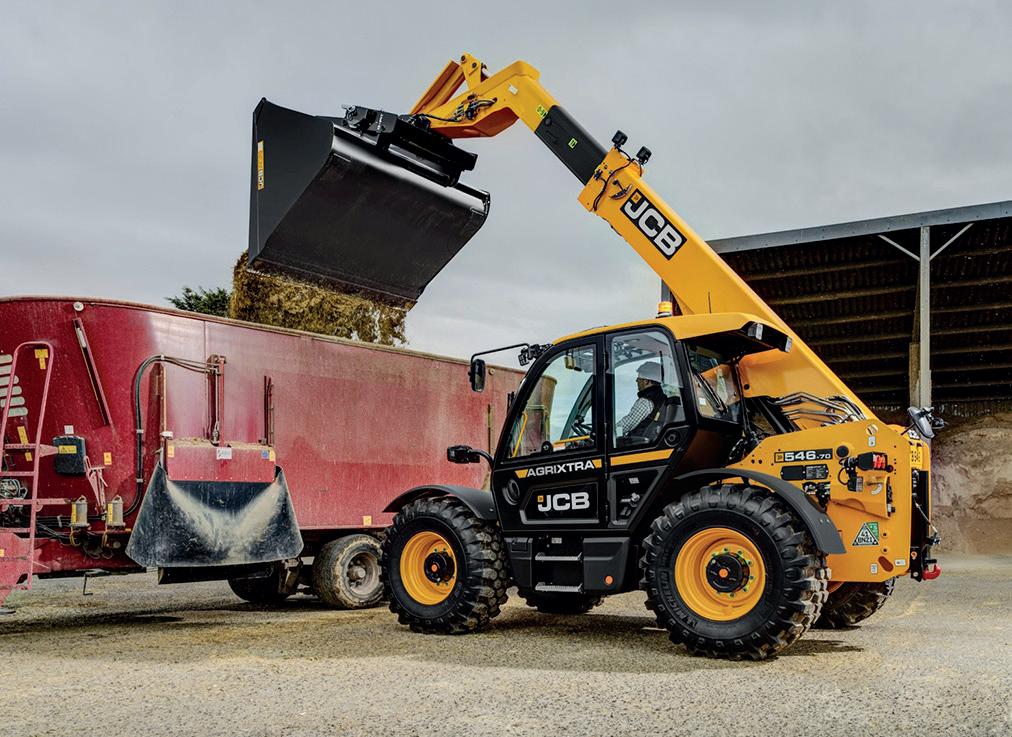




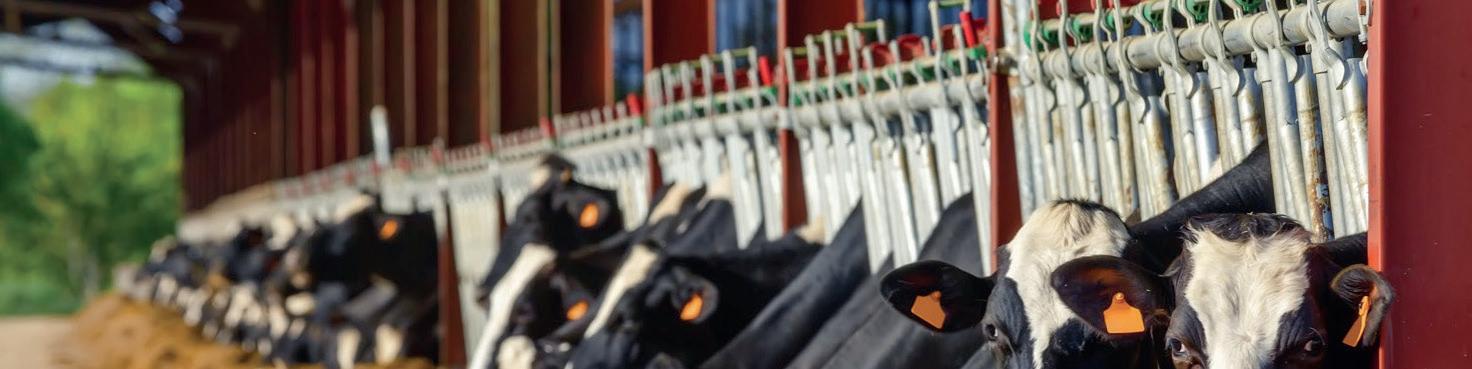



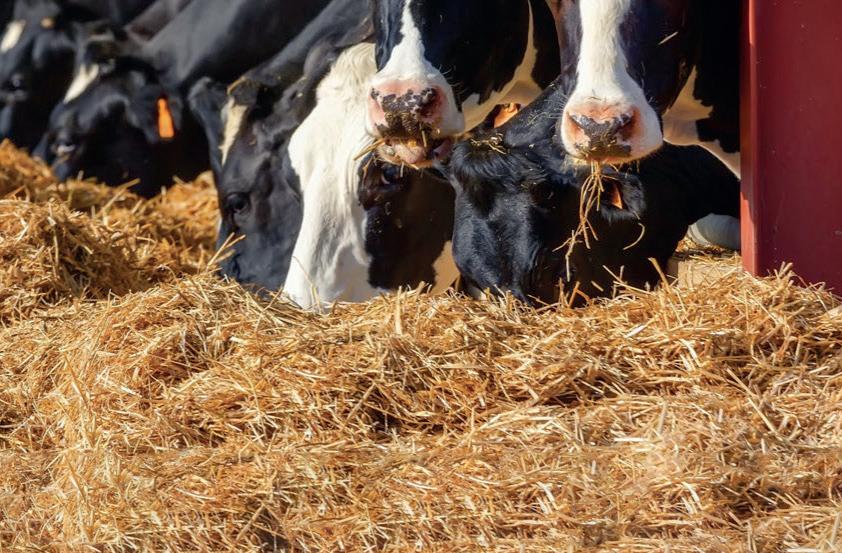
‘The
This month, Roger Evans discusses min-till, Environment Agency visits and farmers becoming ‘low hanging fruit’.
I’ve always said that it is money that makes a real difference.
The latest ‘fashion’ in cereal growing is mintill. This, simplistically, is the drilling of a new crop into stubble of the old one.
As far as I can see, the min-till scuffles up the stubble and drills the new seed into the ground.
There’s a fair bit around here and it looks okay, the real test will be how it looks in three or four weeks time; after all, people have been ploughing for years.
There’s an irony, there always is.
You save the cost of ploughing, that’s got to be good. I don’t want to be a prophet of doom, but I reckon farming is in for a hard time, there won’t be much money about.
The cost of food is too close to inflation and is a serious factor.
There’s all that cheap food to come from the southern hemisphere. The irony would be that we will see more min-till about when folk see how much a new plough costs.
It’s often the case within dairy farming that you often say to yourself: ‘things can’t get any worse.’ But as we all know, they can and do.
Here’s an example; we knew that the slurry lagoon was full, we didn’t usually let this happen, but we’d been bovine TB testing and silage-making at the same time. Because we had cattle at two sites, milking cows at home and dry cows and heifers two miles away, the vets that did our testing had moved to four days of testing.
It was a weekend, so I went to our tractor driver’s house and said to him: “When you come to work tomorrow, put the tanker on and start on the slurry pit, it is full.”
I told him that David and I would get the dry cows and heifers in to read their tests.
He said that would be fine.
Halfway through milking the next morning his wife phoned up to say he had hurt himself, and he had to go to A&E but he would be along about 10am.
I had just put my phone back in my pocket when the man from the Environment Agency strolled in. There
was no ‘good morning’, just a very stern ‘your slurry pit is full’.
I explained our predicament as best I could, but all he said was that I had a clear obligation to do all in my power to prevent a pollution incident.
I told him that I also had a commitment to present my cattle for bTB testing when officialdom demanded it of me.
His face was a picture as he worked out the chances of success of a prosecution.
We were that close to a prosecution.
There were factors in our favour.
The bTB testing was one. Most people were sympathetic about how bTB testing has got out of hand.
Our delay was due to a visit to hospital, that could happen to anyone. We were doing our best in the circumstances, not trying to avoid anything. And we had a good record, touch wood, no incidents.
You could almost see the inspector working all this out and so he said: “Don’t wash that parlour out, the dirty water will go straight down the ditch, I’ll be back at 10am, you’d better be okay by then.”
As it happened he came back at 11am and things were okay by then. We had passed our bTB test, the tanker was going and there was six inches of room in the pit. We had washed the parlour out and the inspector wasn’t there long. He parted with a warning, but we had had warnings before.
At that time I didn’t know that some water authorities were polluting streams, rivers and the sea on a regular daily basis.
If I had known that, the inspector would have found himself on the end of some of my sarcasm.
I’ve long been of the view that, at a very high level, it was decided not to prosecute water companies, but to chase small businesses like farmers.
If water companies were fined, they would simply put their charges up. Farmers on the other hand would rely on insurance.
You rarely hear the saying ‘blue sky thinking’ anymore. The people who used to say it, now say ‘pick the low-hanging fruit first’. This sums up the attitude perfectly – ‘let’s take the farmers to court, few of them have the resources to fight us’.
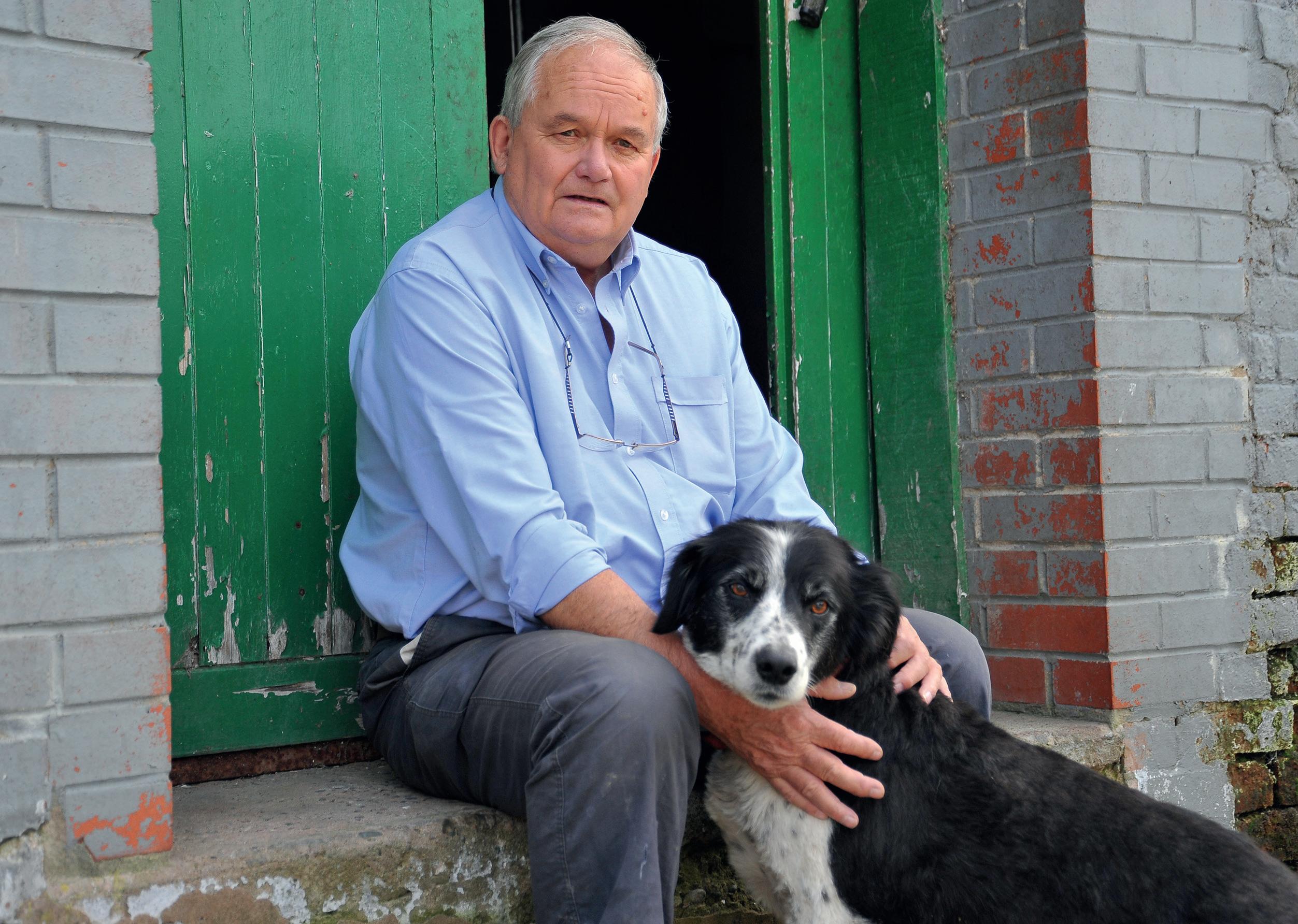





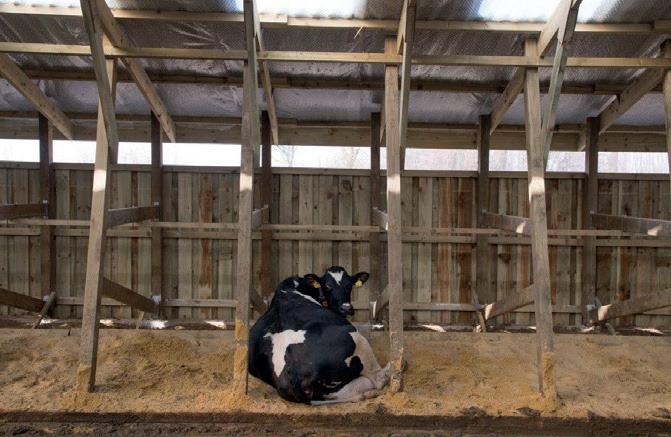



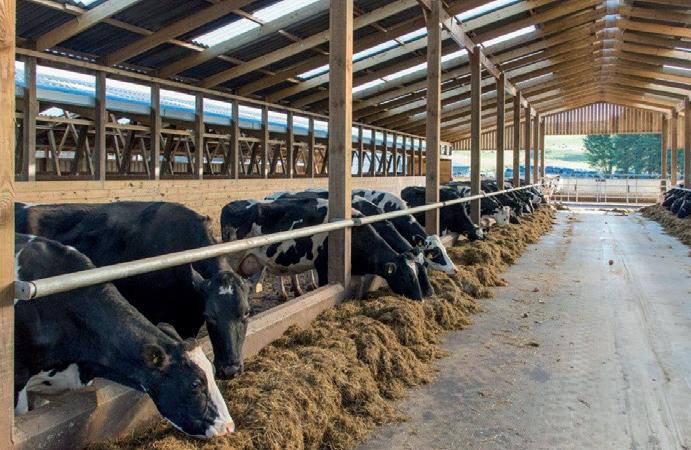
The fall in milk prices and the strengthening of some input prices means that managing costs of production is vital. Cedric Porter finds out more.
Farmer-owned agricultural supplier AF put overall input cost inflation at 0.77% in the past year, but it said that dairy producers have seen costs drop.
The annual AgInflation Index from AF said: “The cost of dairy farming has been helped significantly by a drop of -7.4% in feed and medicine costs to contribute to a small rate of deflation, measured at -0.81%.
“Milk prices paid by consumers show no increase in value in the retail price index which may be factor in holding fresh milk sales and cheese consumption [whether in home-cooked or ready meals] stable.”
AF reported fertiliser inflation of 10.9% in the past year, with farm contractor and hire prices up 6.1%, machinery costs up 2.9%, fuel and electricity up 2.6%, rent, interest, property and office costs 0.7% higher and labour up 0.2%. Seed costs had fallen 1.2% and crop protection costs were down 11.2%.
The only other sector aside from dairy to see a drop in overall costs was beef and lamb, which AF said was down 0.4%. Sectors that were reliant on large volumes of fertiliser had been the most ex-
WHILE every business, its circumstances and how the business owners choose to respond will be different, Kaia Hillsmith of Kite Consulting says there are key points dairy farmers should focus on:
n Know your cash and profit break-even points and monitor actuals against budgets to identify shortfalls before they happen. A cash budget will help you keep an eye on ongoing costs and income, while a profit budget will allow you to monitor
posed to input cost rises. Potato production costs were 4.8% higher, sugar beet is up 3.9% and cereals and oilseed rape up 1.5%.
Costs of production were not at the heights they were in the aftermath of Russia’s invasion of Ukraine, but they were edging upwards, AF reported. Leading the way were fertiliser prices – AHDB’s latest fertiliser price analysis had ammonium nitrate at an average of £393 per tonne, which was 16.3% up on a year before. A worldwide shortage of ammonia is adding to fertiliser costs, with producers warned that prices are not likely to fall in coming months.
Energy costs were far off where they were in 2022, but producers were being hit with higher standing charges that are levied whatever electricity is used, something dairy farmers cannot avoid because of the need to power par-
the performance of the business over the year
n Carefully consider any costcutting decisions that will impact the cow. Do not make knee-jerk reactions and reduce feeding or cull cows without detailed cost analysis. It is easy to reduce performance but not as easy to get it back
n There is far more upside risk on both feed and fertiliser prices at present, so make the most of forward-buying opportunities and if you have storage space, buy
lours, sheds and milk tanks. Advice service This Is Money estimated that standing charges have tripled in the past six years and the NFU wrote to regulator Ofgem complaining about spiralling costs and how charges are based on a business’s peak energy use.
“Production costs are high across the economy and have been for some time,” said NFU president Tom Bradshaw.

now as prices are unlikely to fall into next season
n If you can fix your feed and fertiliser costs and you know your labour costs, you can fix more than 50% of your cost base
n Do not keep passengers, know your margins per cow and use this information to make culling decisions
n Have a long-term plan of what you and your family or business partners want to achieve and do not let short-term issues derail you from your vision
“But there is a fairer way to approach the current standing charge model, one that would allow businesses to reinvest, improving efficiency and resilience.”
Lower grain costs had kept feed prices in check, but a dry spring and summer in many parts of the country increased the use of feed, which meant the overall feed spend on many farms may be higher than last year.
In July and August, production of dairy feed compounds was 6.4% higher than the same period last year at 344,400 tonnes, according to the AHDB.
Production in the year to the end of August was up 2.4% to 2.164 million tonnes.
The lack of forage and a small UK cereal crop also pushed hay and straw prices up. In the week to November 2, a big bale of hay cost £121/t on average, according to figures from the British Hay and Straw Merchants Association, as quoted by AHDB. That was 49% higher than the year before.
Barley straw was trading at £92/t – 18% more than November 2024, with a 17% increase in wheat straw to £81/t.
Cost management has certainly moved up the agenda as milk prices have fallen, according to Kaia Hillsmith, a consultant with Kite Consulting.
“We have come out of a year of relatively good milk prices and low feed prices; however, there has been a huge variation of milk prices over the last 18 months of more than 10ppl at points be -
tween the top and bottom of the league tables,” she said.
“Some farms have accumulated cash during this period, but this has not been the case for all businesses due to variation in contracts and, often, those who have invested in smooth-running dairy units that are fit for the future on environmental compliance, working conditions and animal health and welfare do not have the lowest cost of production or accumulate the most cash, as they are already committed to investment costs.”
As a rule of thumb, we estimate that the average breakeven milk price in Great Britain is 41ppl, leaving a deficit for a lot of businesses in the coming months
KAIA HILLSMITH

Ms Hillsmith said cost management would be different on each farm, according to its system and its milk buyer.
“There will be some farms on retailer contracts that are still receiving payments in the mid40ppl range, while others on liquid contracts are circa 40ppl and the price for some milk processors, particularly cheesemakers, will be sub-35ppl.
“As a rule of thumb, we estimate that the average break-even milk price in Great Britain is 41ppl, leaving a deficit for a lot of businesses in the coming months. This reduction in prices is not forecast to recover until late summer 2026 at the earliest.”
She added that lower feed prices meant producers had fed more over the past year, which helped mitigate the impact of a
reduction in the availability of forage for many farms.
“In actual terms, total feed spend may have been similar to previous years, but the extra concentrates that have been fed have allowed more milk to be produced and ppl feed costs have reduced by circa 8%,” she said.
“The profitability of extra litres has meant that cows that may have been culled have been kept on. All of these factors have contributed to production in the UK being more than 6% up on last year.”
The full impact of the drop in milk prices might not be seen until early next year, said Ms Hillsmith, when cashflows would begin to be affected.
“This gives some time to prepare for reduced income,” she said.
This summer’s widespread drought has led to lower forage stocks for many and recent silage analysis has also shown variations in grass mineral levels, coupled with increased dry matters. Dairy Farmer finds out more.

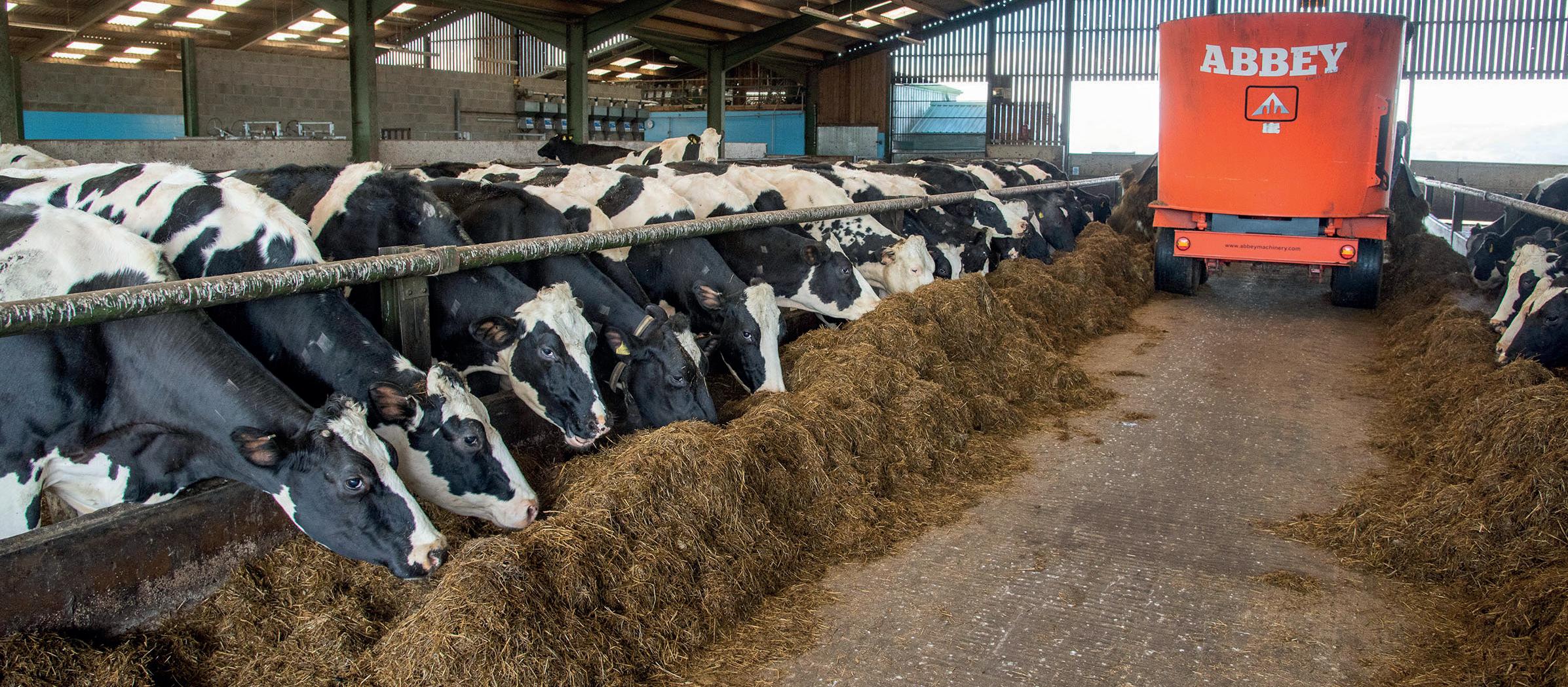
Having collected results from 2,600 samples harvested in 2025 across Great Britain, ForFarmers product manager Bruce Forshaw says it is important to look at the change in mineral levels and how these levels should be managed in dairy cow diets.
He says: “This year’s grass silages have been lower in chloride which we would expect to reduce the DCAB [dietary cation-anion balance], but because potassium and sodium are higher than in 2024, the DCAB has increased.
“It is not a big shift but one to be aware of if you are relying on low DCAB diets to control milk fever.”
There has also been a downwards trend found in analyses of grass silage’s magnesium content over the past three years.
Mr Forshaw says: “Over the past three years, we have seen reduced levels of both zinc and copper in silages, but only slightly.”
Copper levels were 8mg per kg dry matter (DM) in 2023, 7mg in 2024 and 6mg in 2025 – while zinc was 32mg/kg DM in 2023, 28mg
in 2024 and 27mg in 2025. However, it is worth noting that if 12kg DM of this average silage was fed alongside a compound with a standard winter mineral pack, both would be over-supplied.
“We have also seen cobalt levels lower in 2025. This mineral is essential in the production of B12, which in turn is needed for energy metabolism,” says Mr Forshaw.
“Drought can affect cobalt uptake as lack of moisture reduces the solubility of the cobalt ions in the soil.”
Drought has also affected other minerals, such as iron, which is significantly lower across this year’s silage analyses.
Dry harvest conditions led to lower soil contamination in this year’s silage, with iron averaging 258mg/kg DM, in contrast to 2023’s wet summer, when iron averaged 473mg/kg DM.
He says: “It could be argued that as iron is an antagonist, al-
WINTER rations could benefit from rumen-protected fats this year to help boost energy balance and cow performance.
Dr Richard Kirkland, of Volac Wilmar Feed Ingredients, says: “With grass and maize silages forming the base of most diets, achieving the energy density required to sustain milk production and fertility can be difficult.”
He says with a wide range in energy content, depending on cutting date, regrowth interval and fermentation quality, it is
though copper levels are lower, the mineral could be more available to the cow.
“Providing the right vitamins and minerals is essential to support optimal milk yield and herd health, but more is not always better. Even a mild oversupply of nutrients can increase production costs, while significant excesses may lead to subclinical toxicity or, in extreme cases, serious health issues.”
important to balance these silages correctly to reduce the risk of acidosis and milk fat depression.
Dr Kirkland adds: “While high-fibre ingredients such as straw can slow digestion, they also fill the rumen with lowquality bulk. Avoid overloading the diet with cereals to make up for the energy deficit because that will raise rumen acidity. Instead, choose a rumenprotected fat supplement that will not disrupt rumen function while providing a dense, rumen-safe energy source.”






























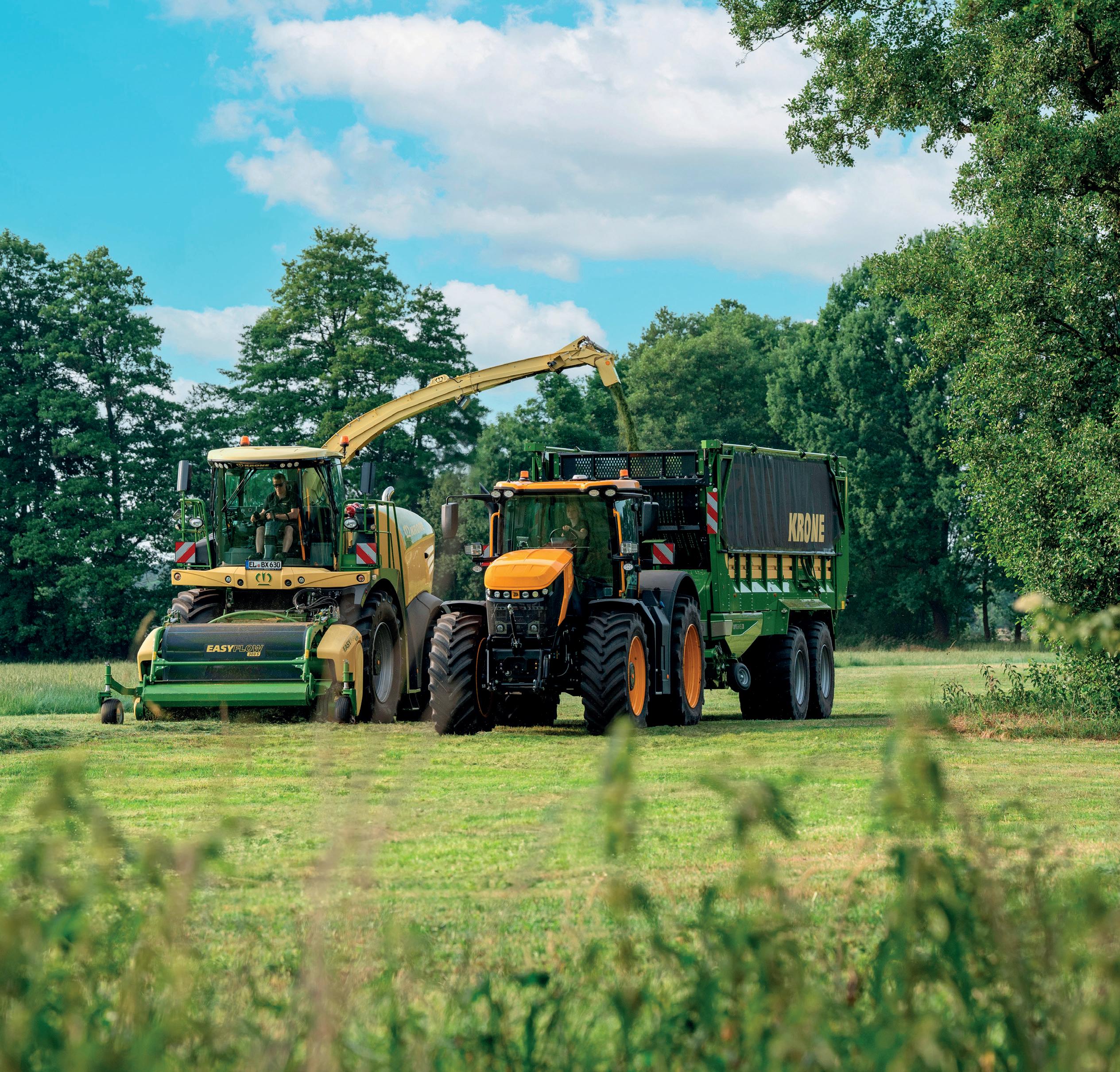

Grass needs more than just nitrogen. SWEETGRASS® PLUS provides balanced nutrition for high yielding nutritious grass. It improves sward palatability, and milk and meat production for optimum economic returns.
•Contains nitrogen for grass growth
• Contains sulphur for nitrogen use efficiency and is proven to increase dry matter, true protein and D-value1. Yet sulphur is only applied to 12% of grazed grass2
• Contains sodium to improve palatability and is proven to increase D-value, sugar content, DM intake, milk yield and butterfat. Yet 99% of soil samples are deficient3
• Contains sustained release selenium on every granule, to increase fertility, auto-immunity and liveweight gain. Yet ~90% of GB soils are deficient4
• Contains sustained release cobalt on every granule, essential for vitamin B12 and has a key role in nerves, blood and energy, plus liveweight gain. Yet ~90% of GB soils are sub-optimal4