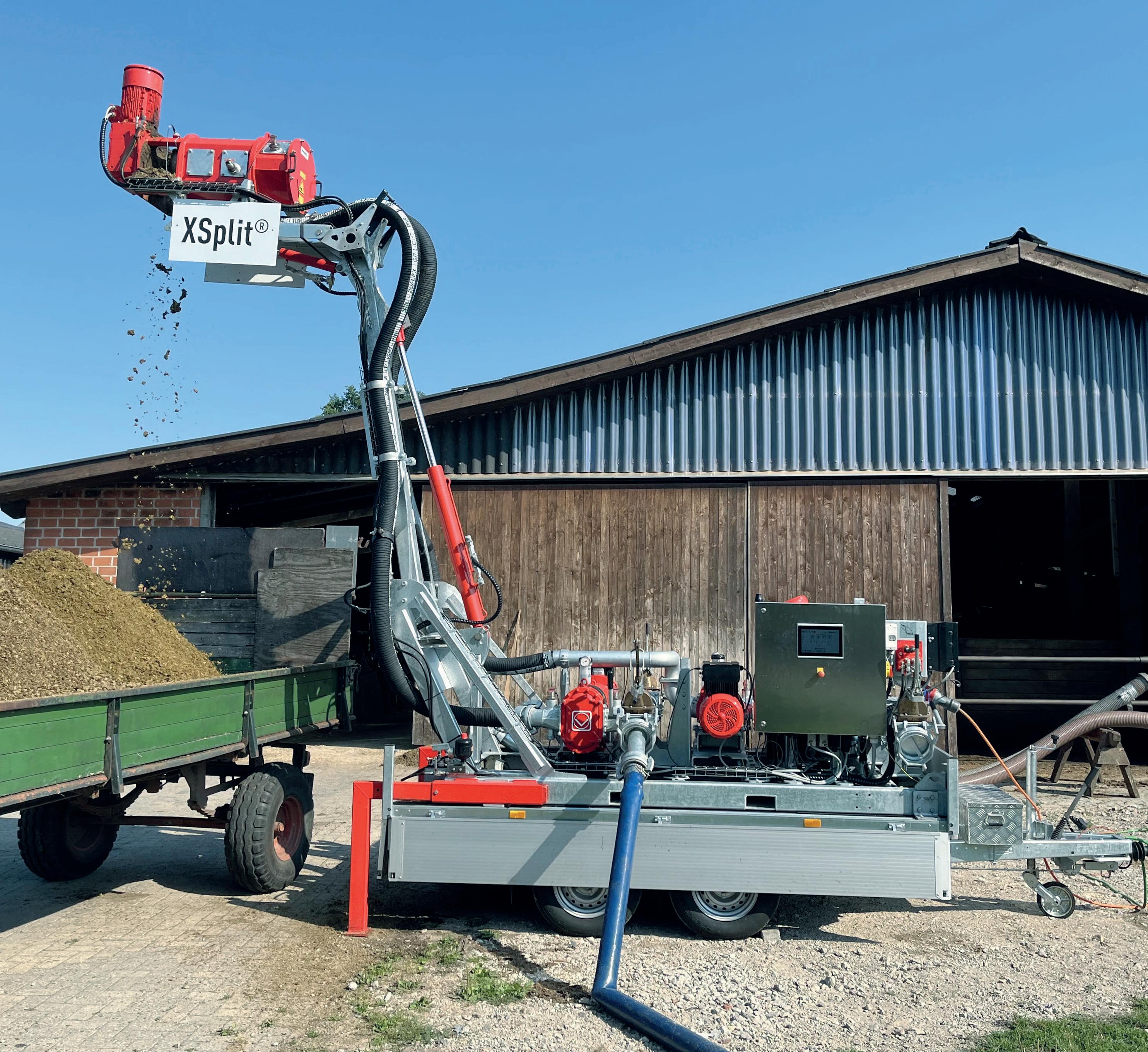
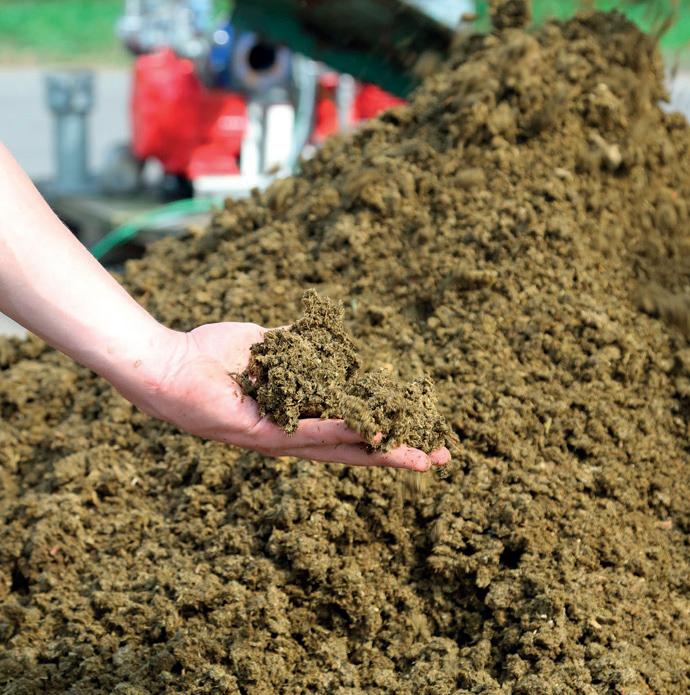
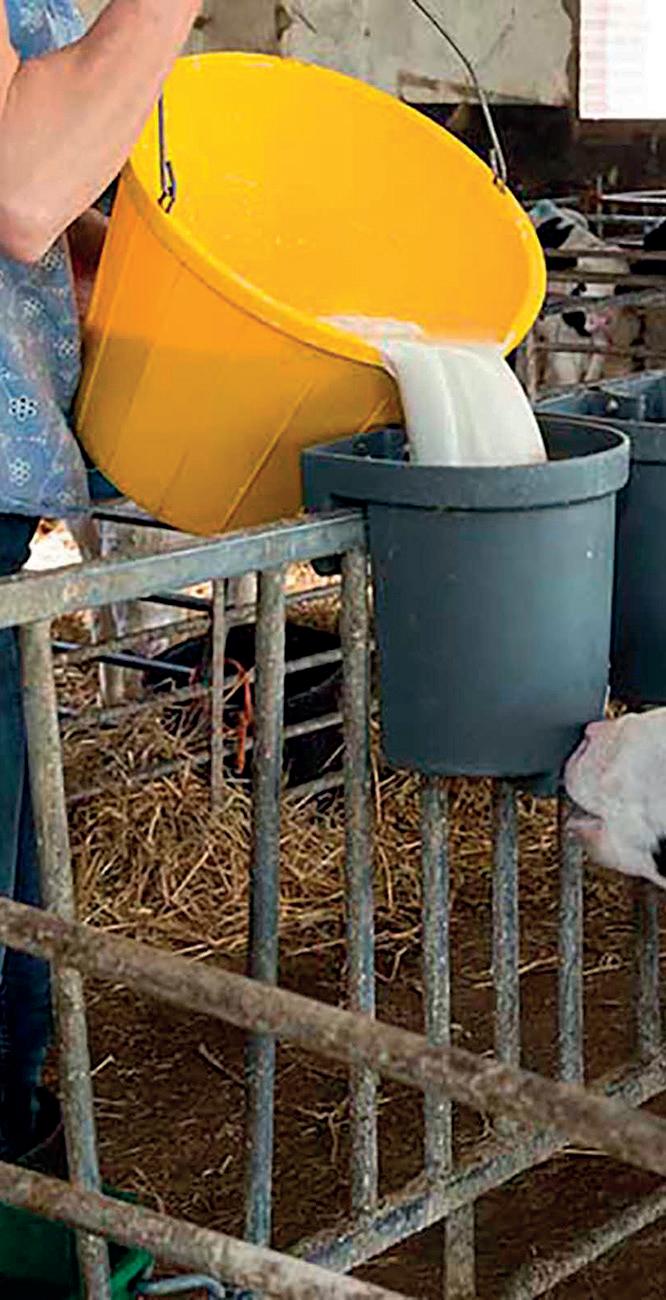
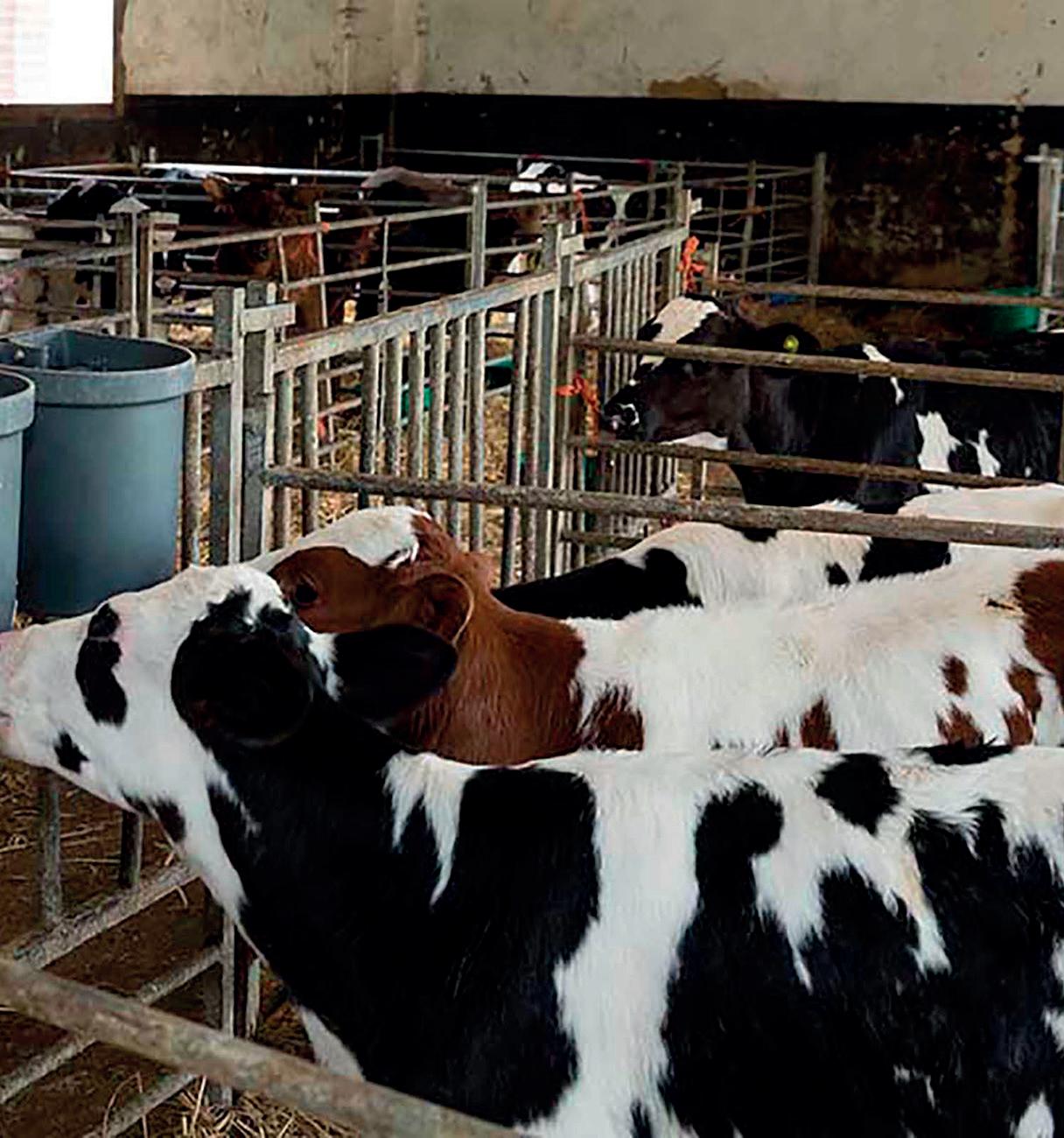
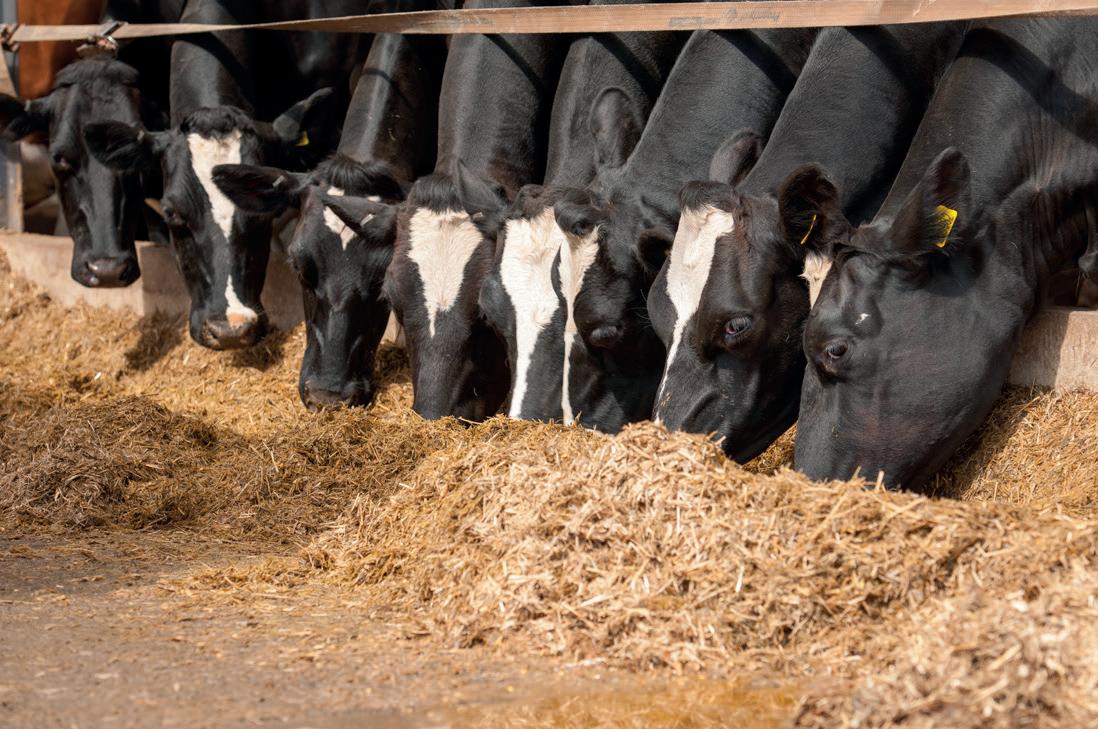
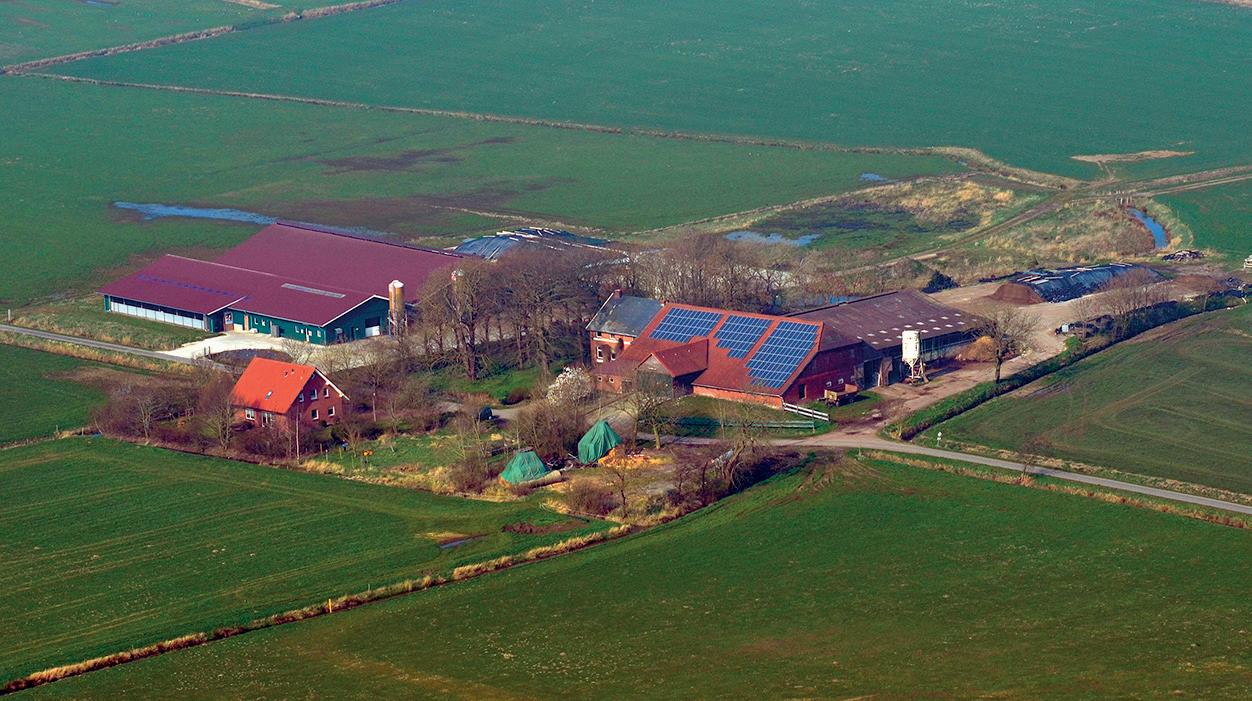
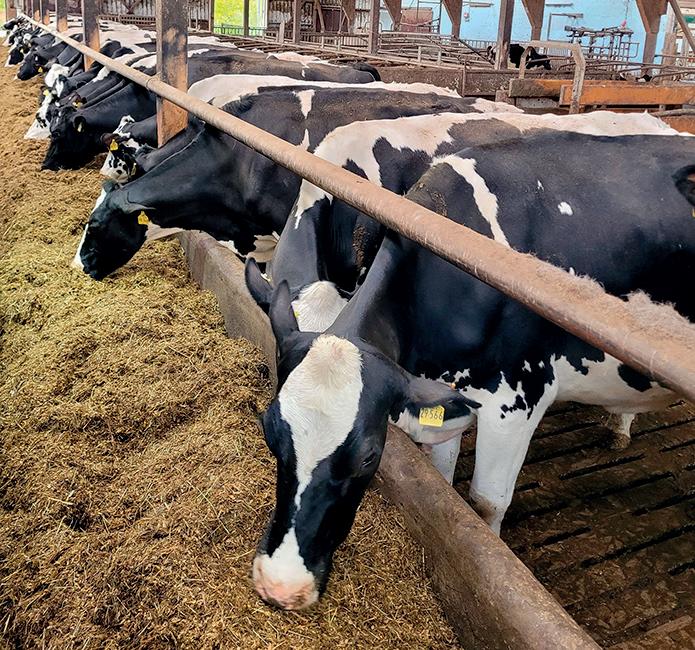
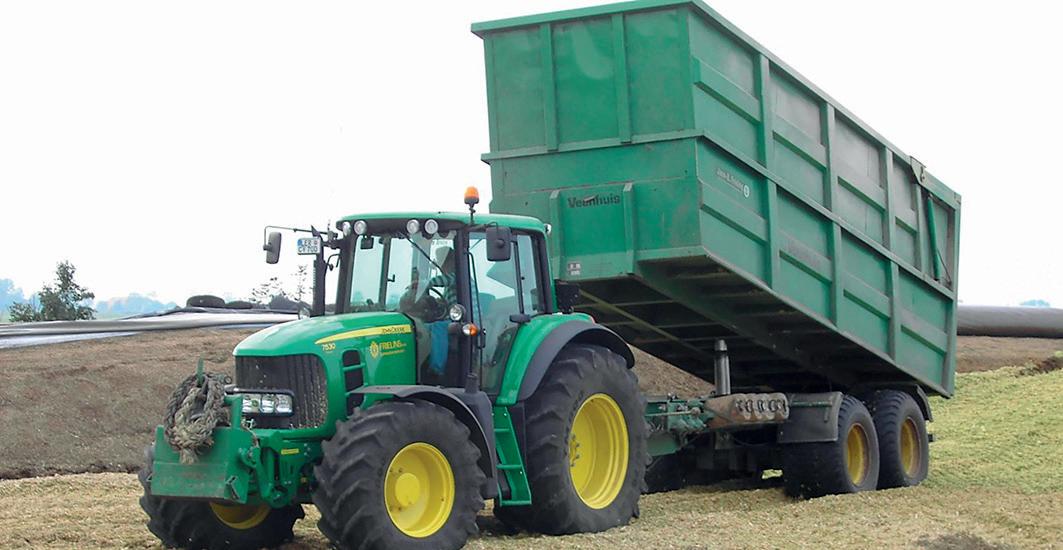
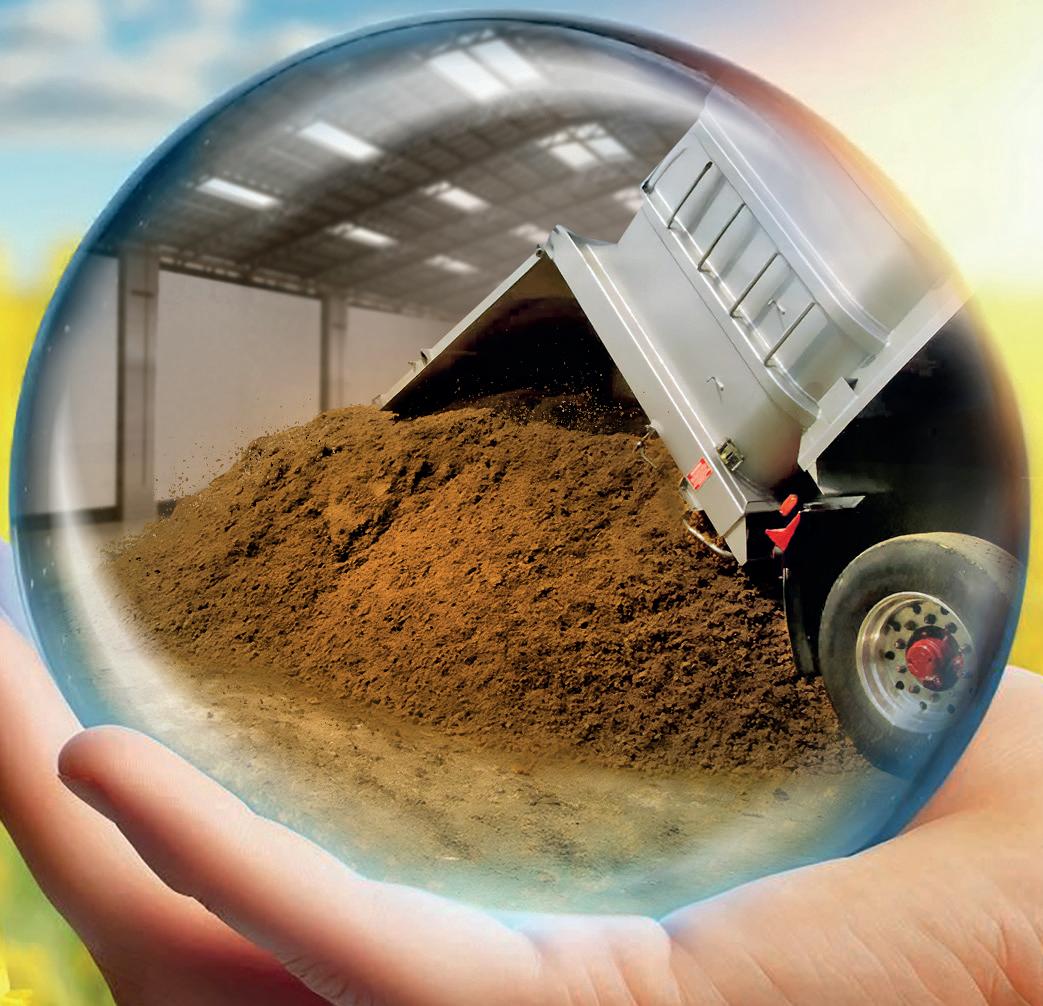
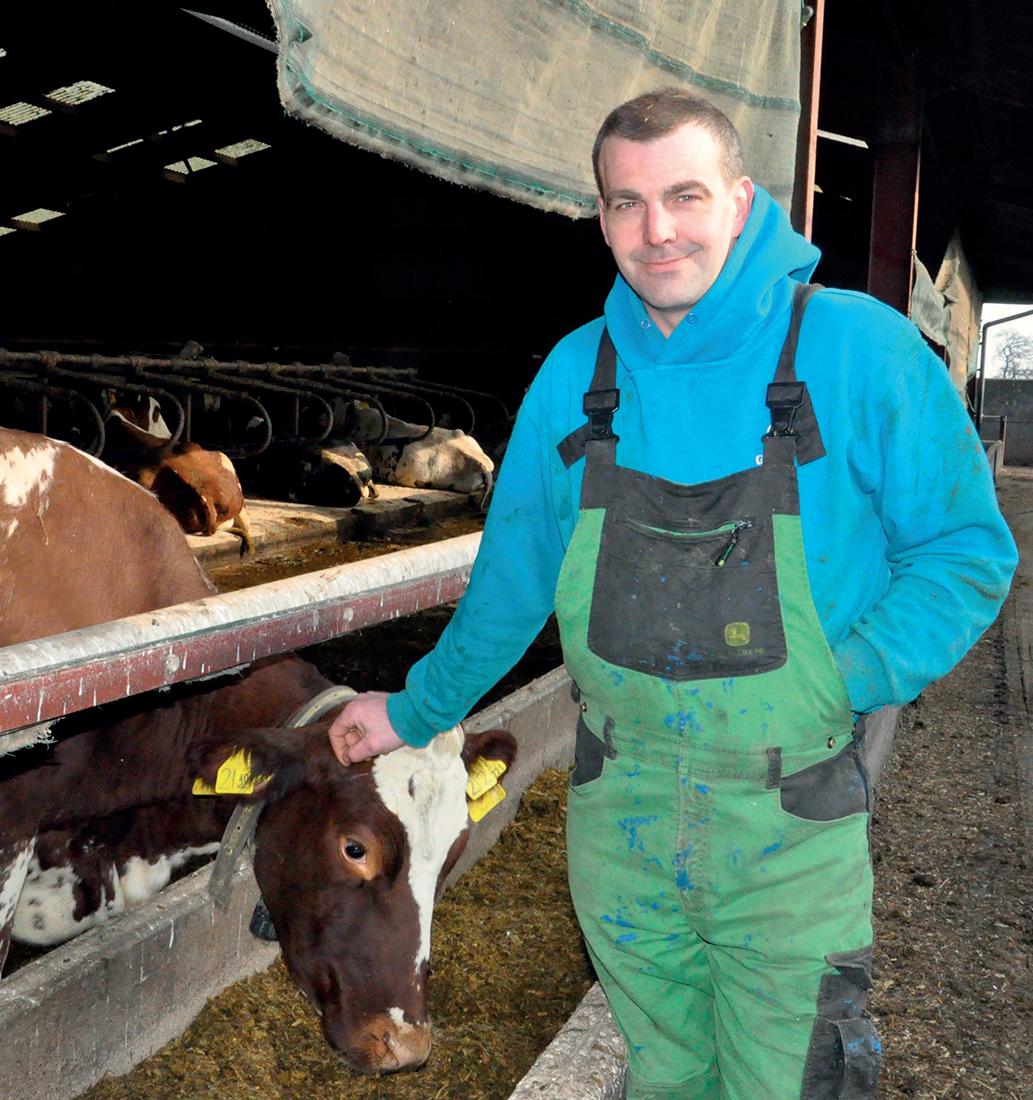
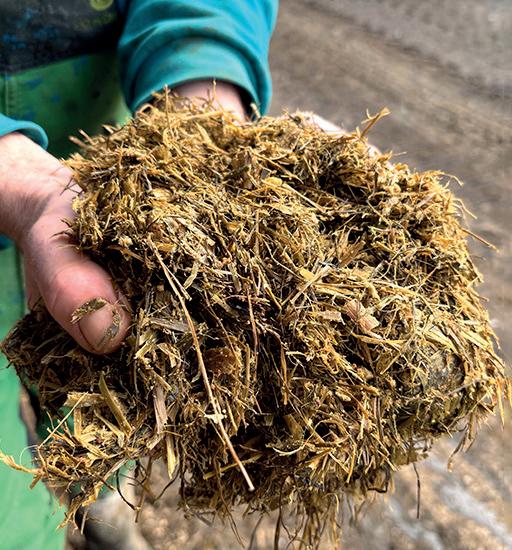
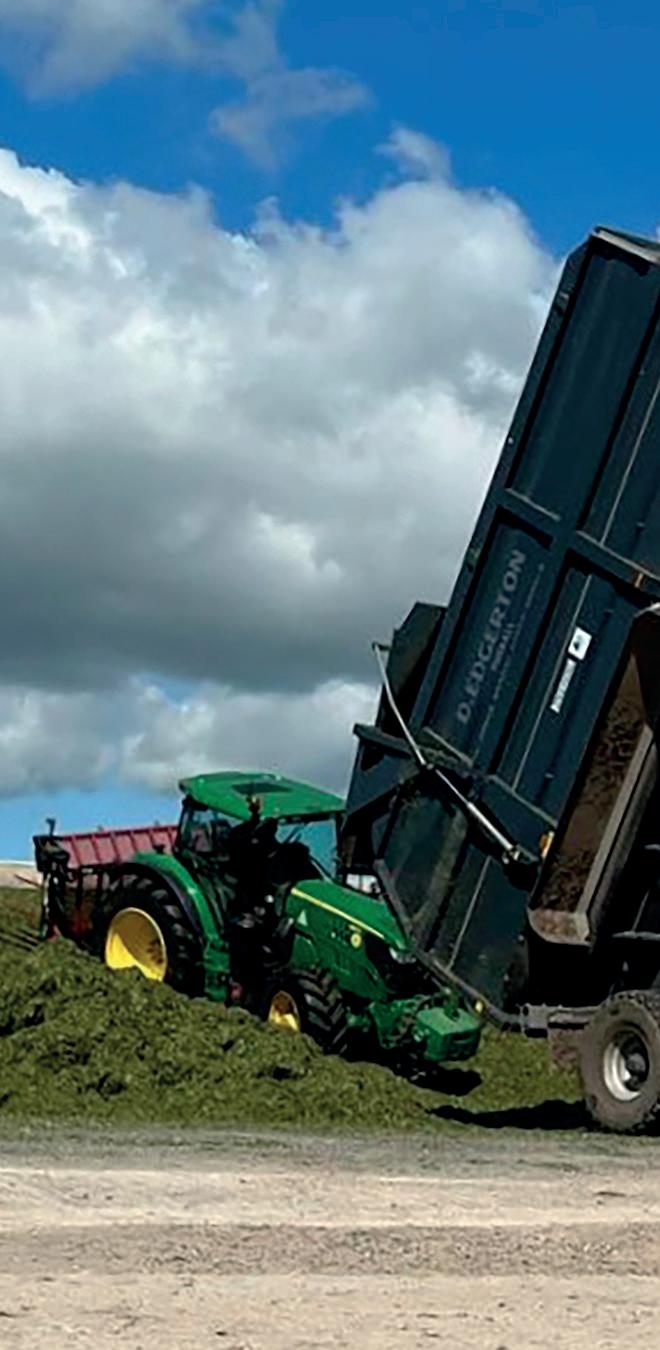
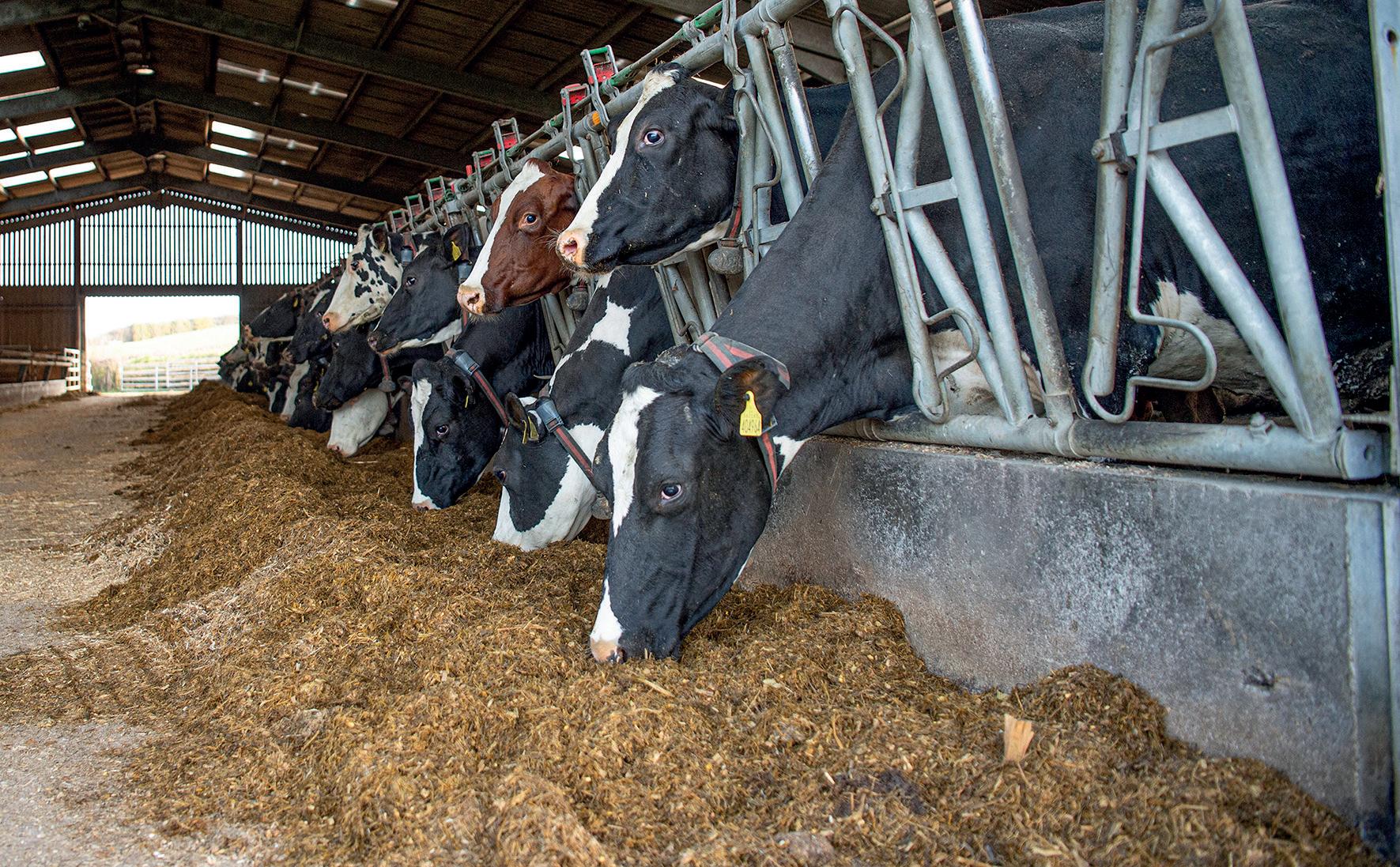
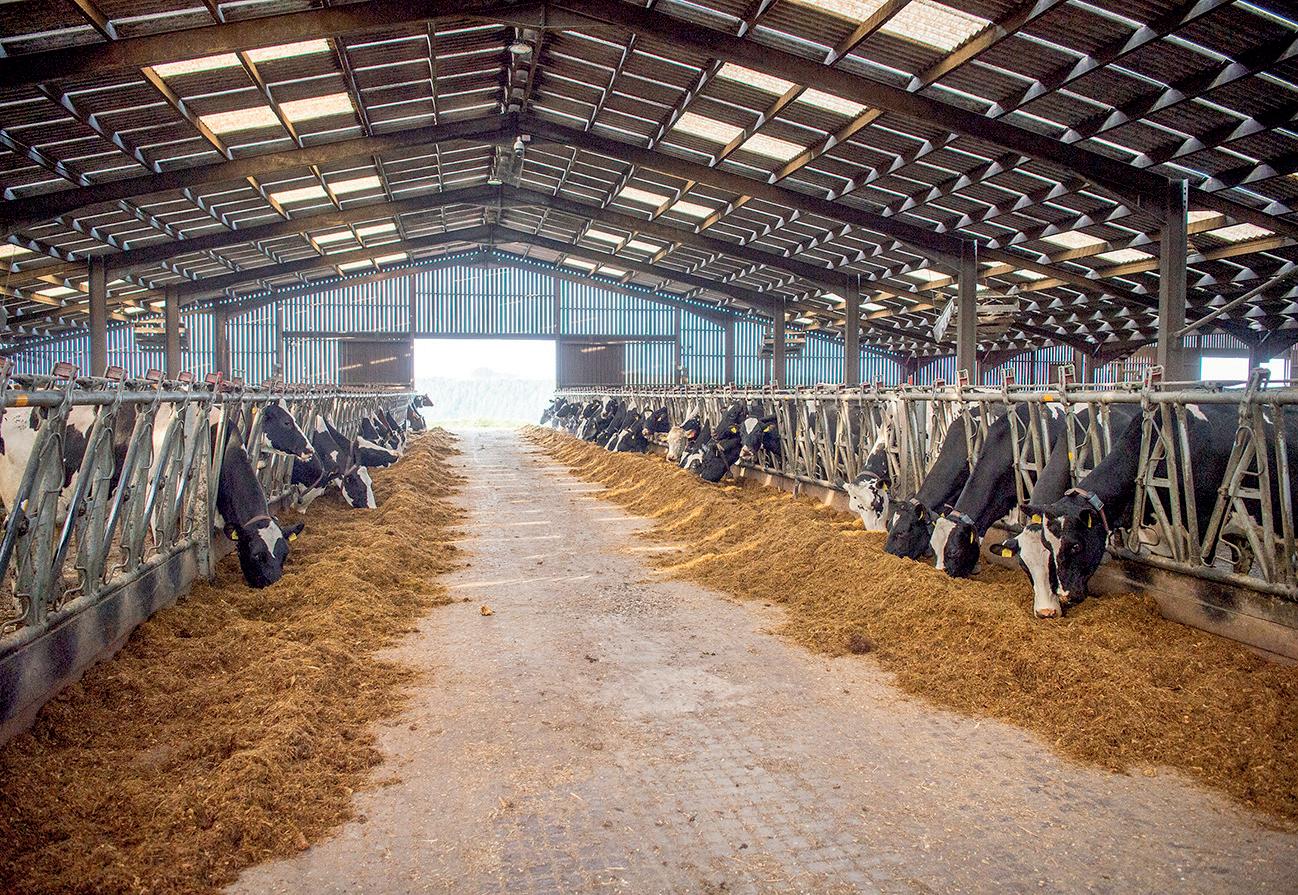
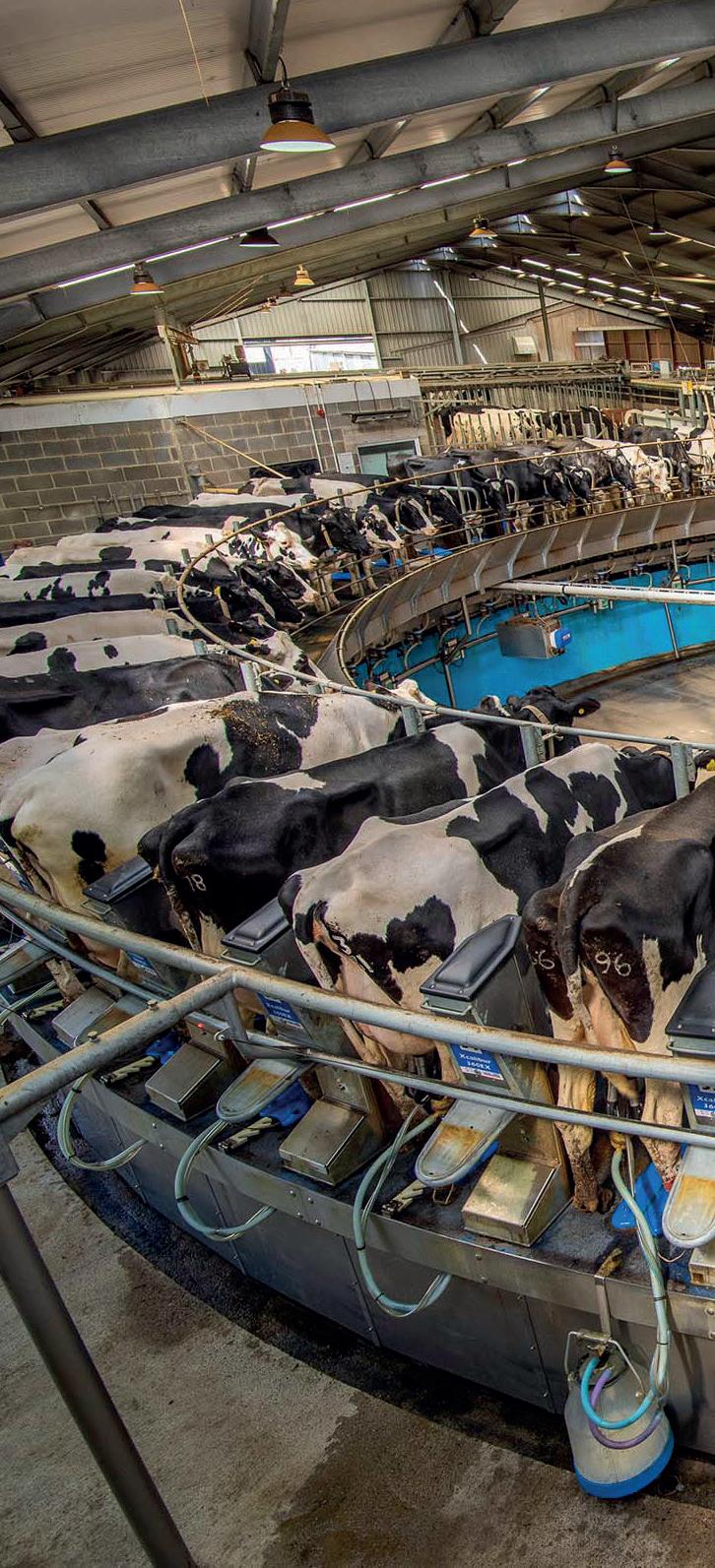
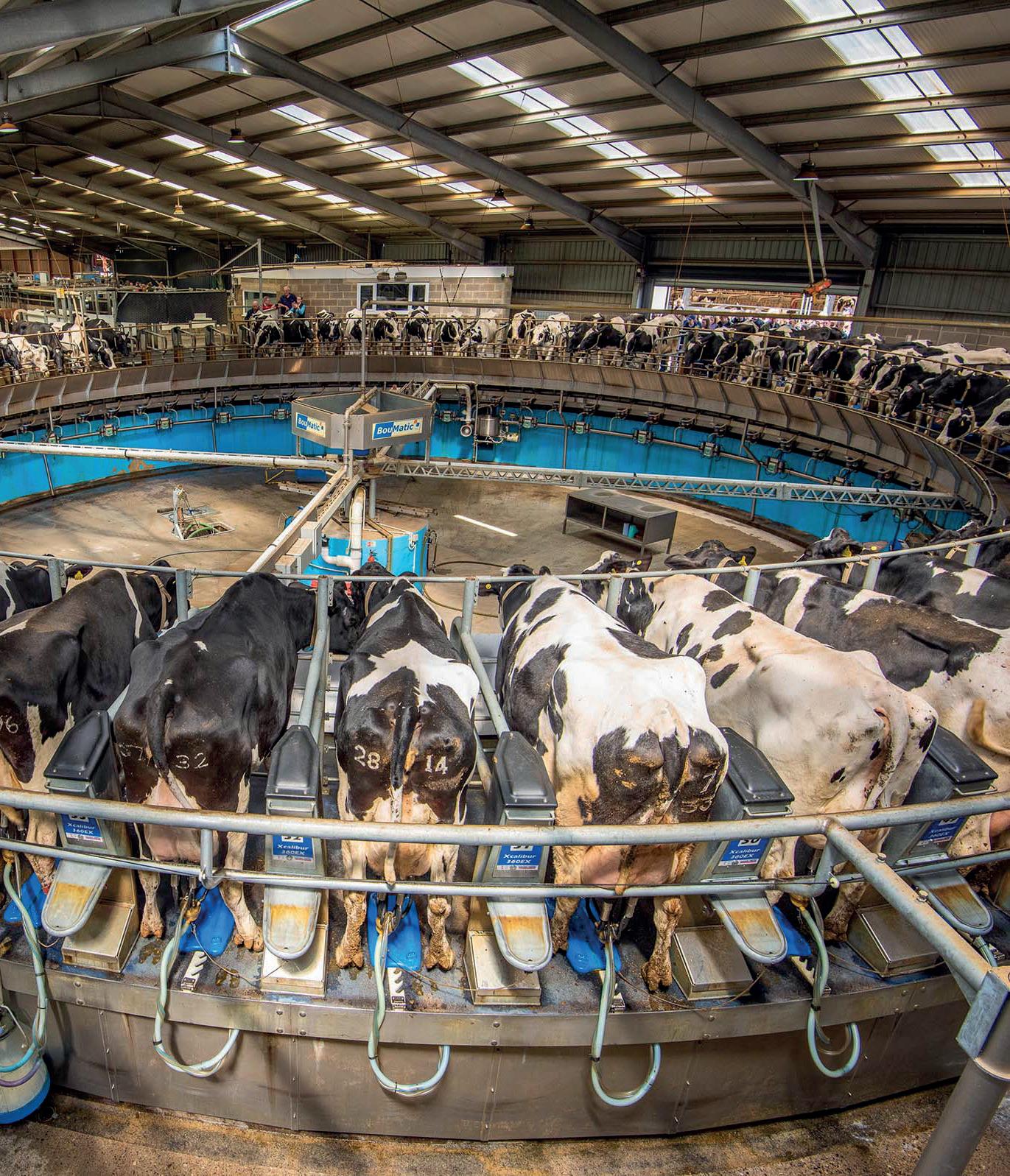
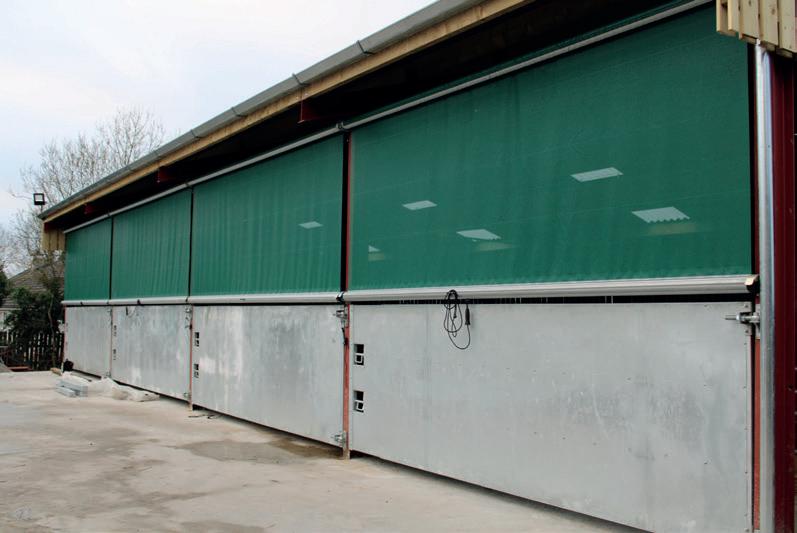
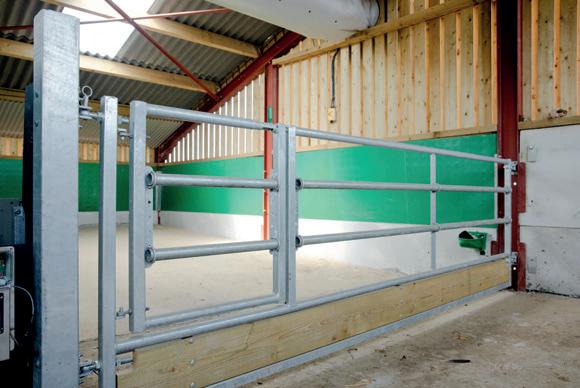
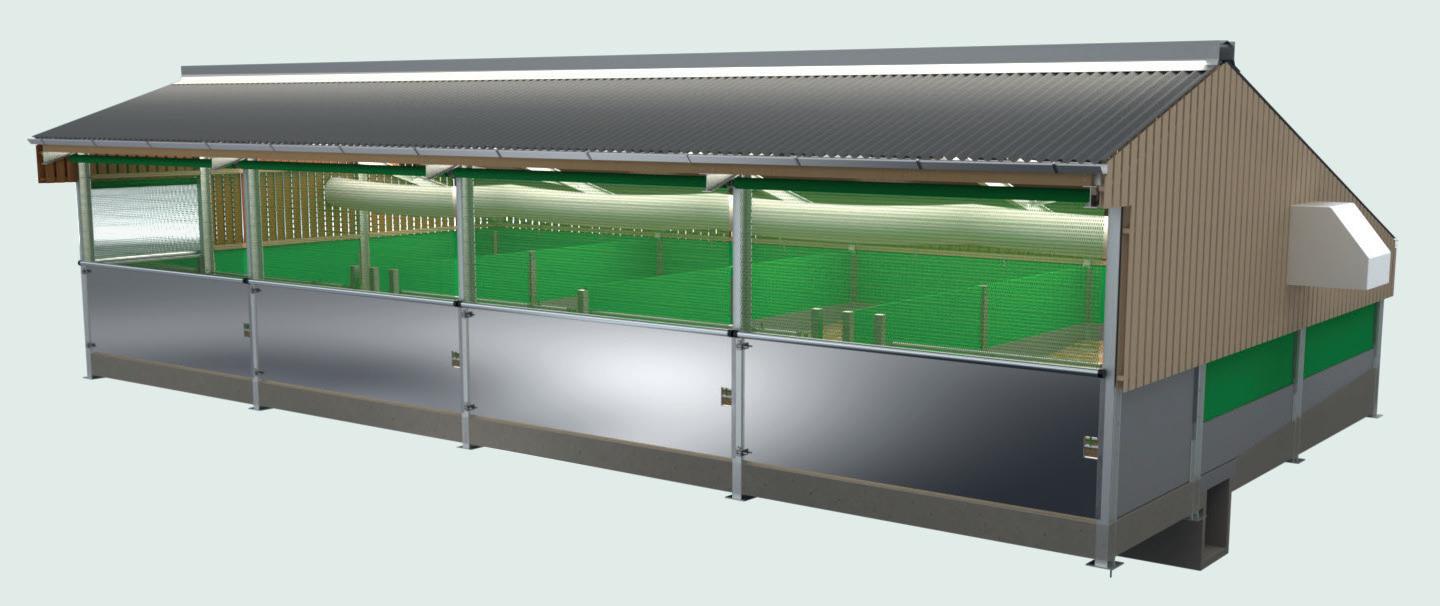
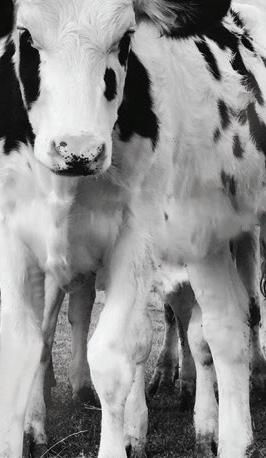
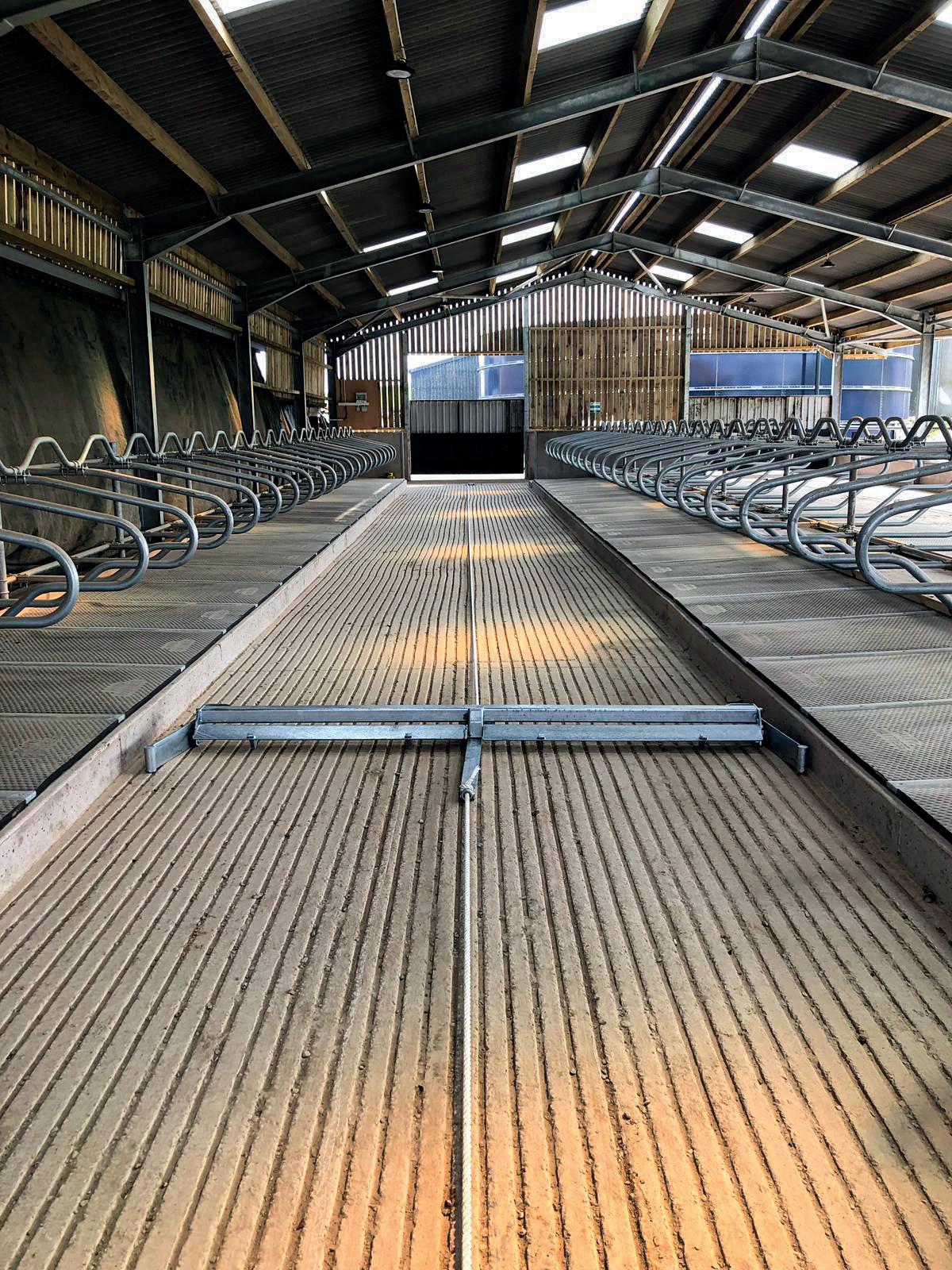
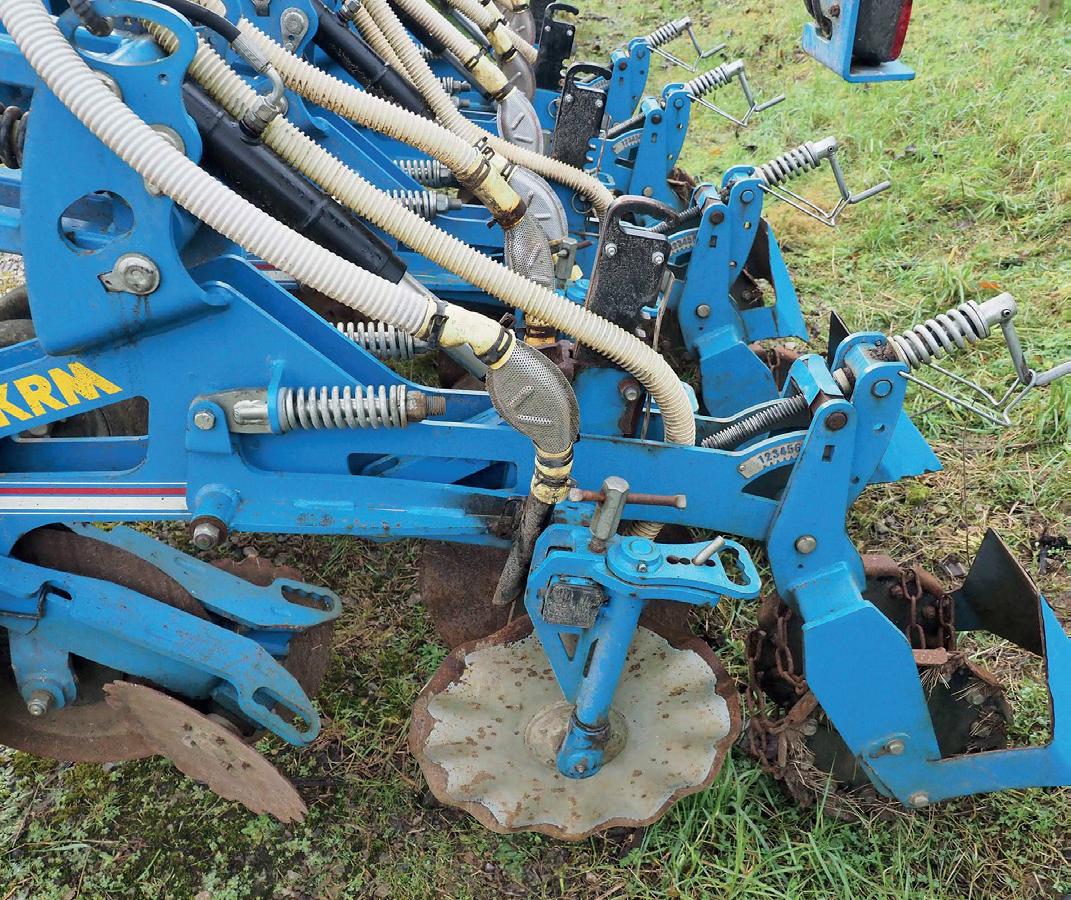
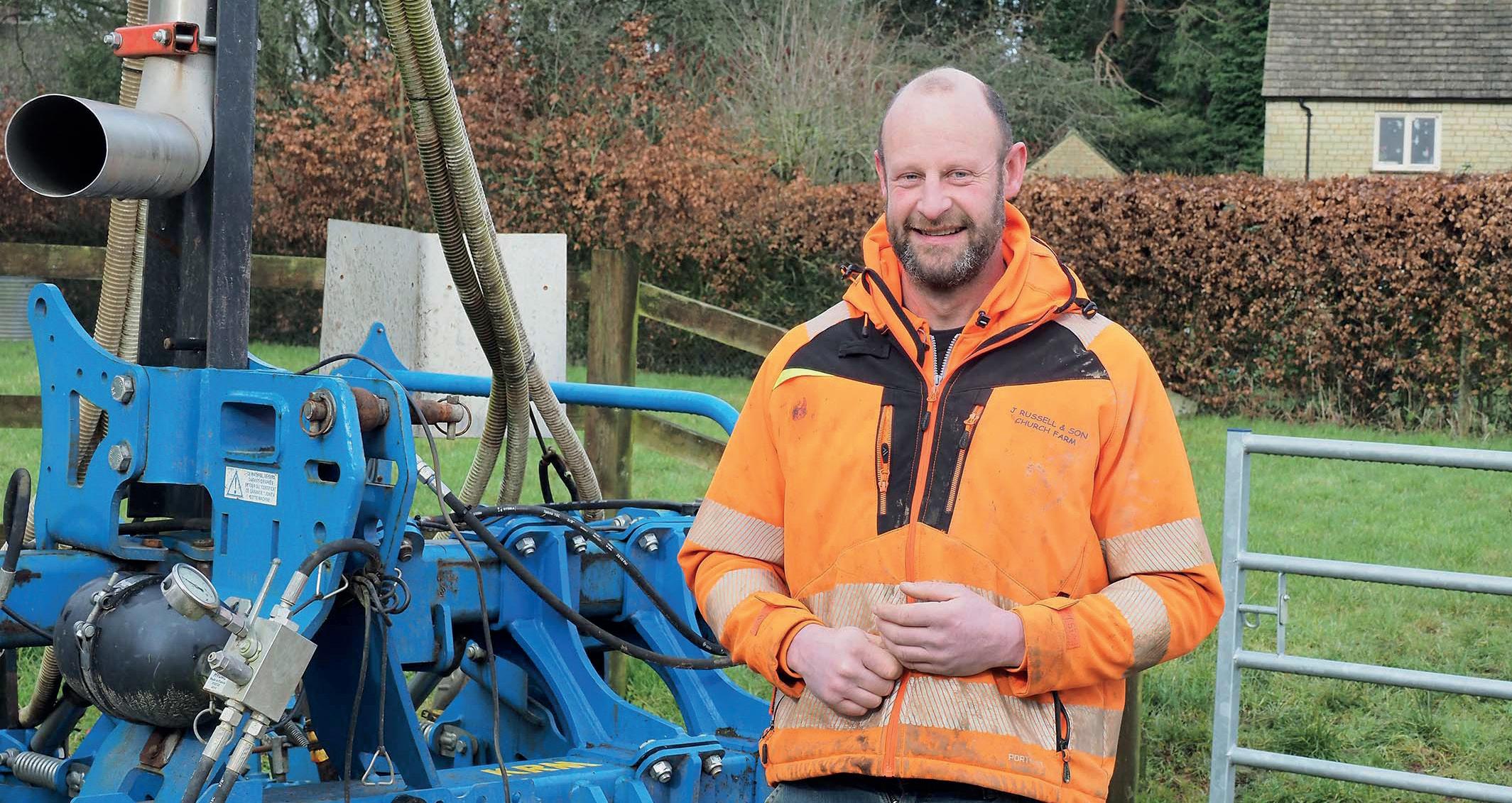
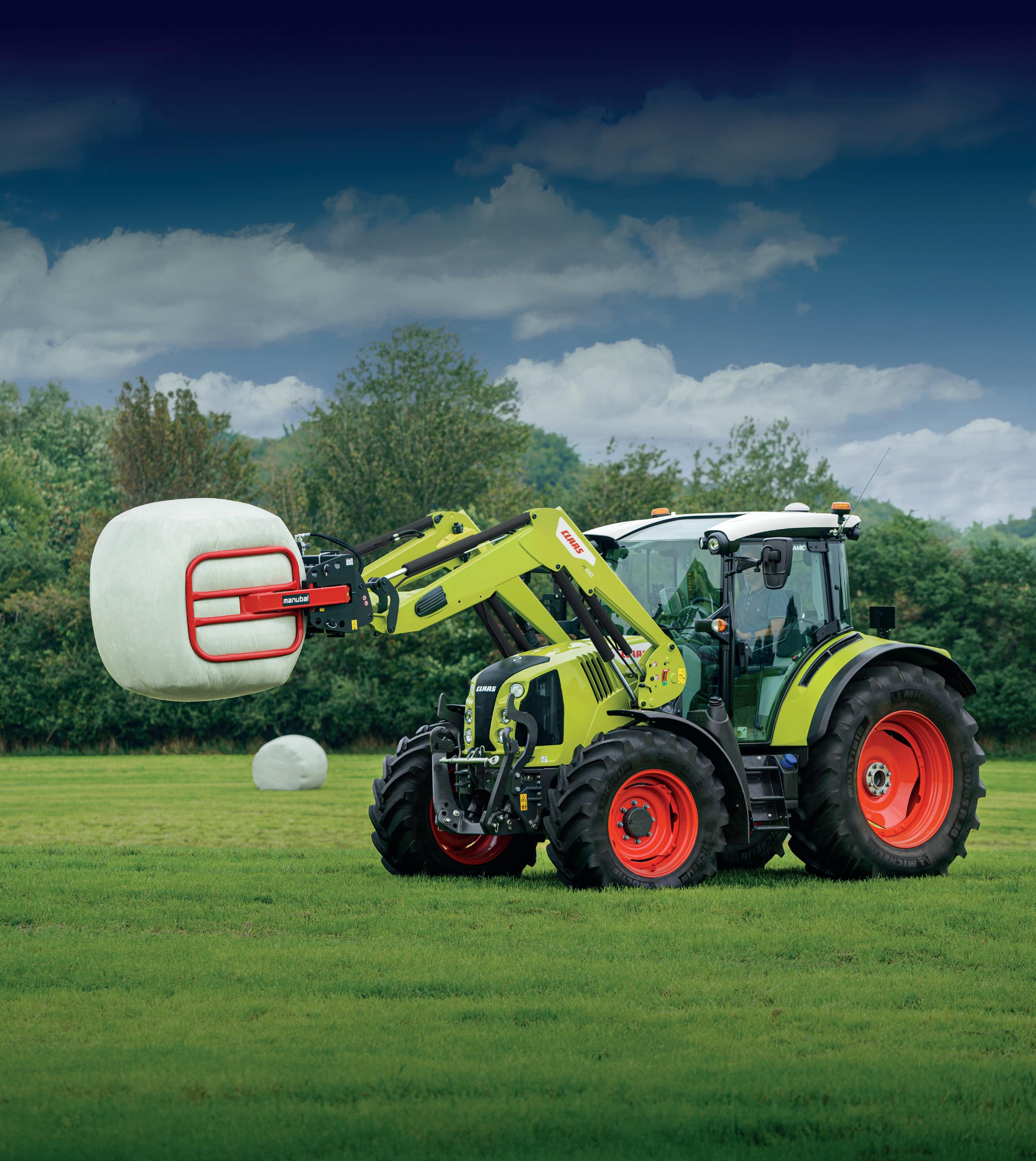
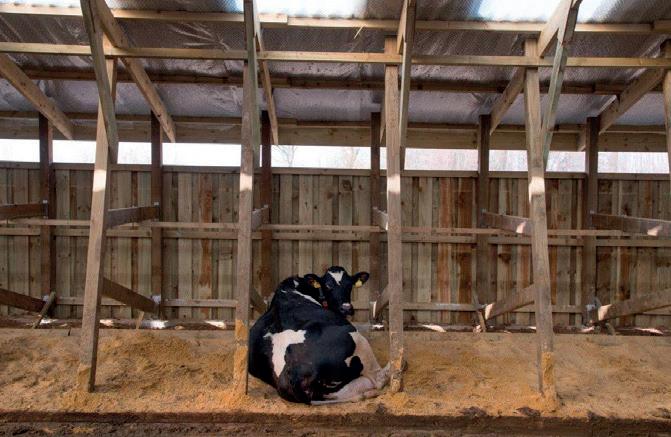
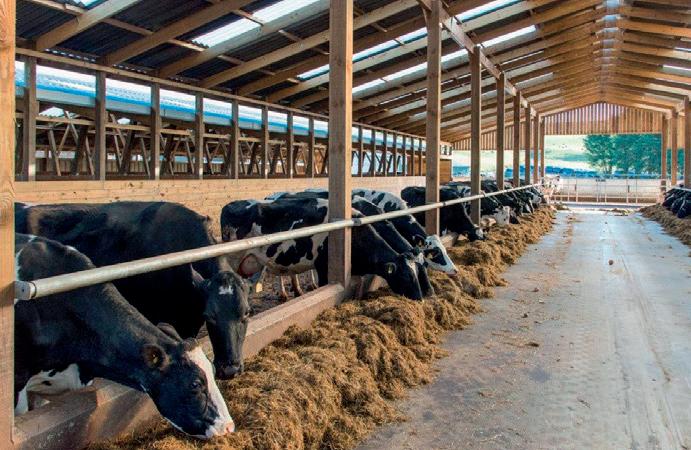
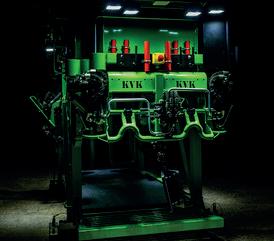
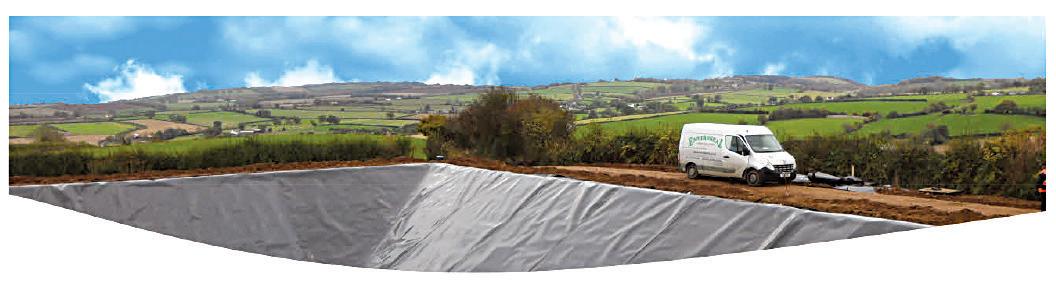
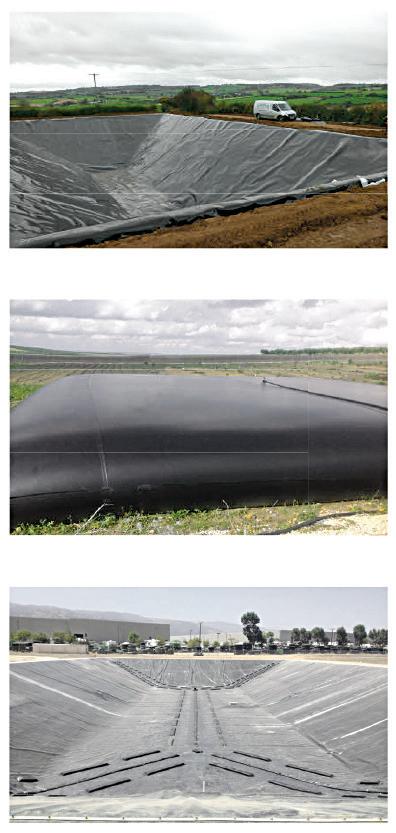
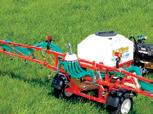
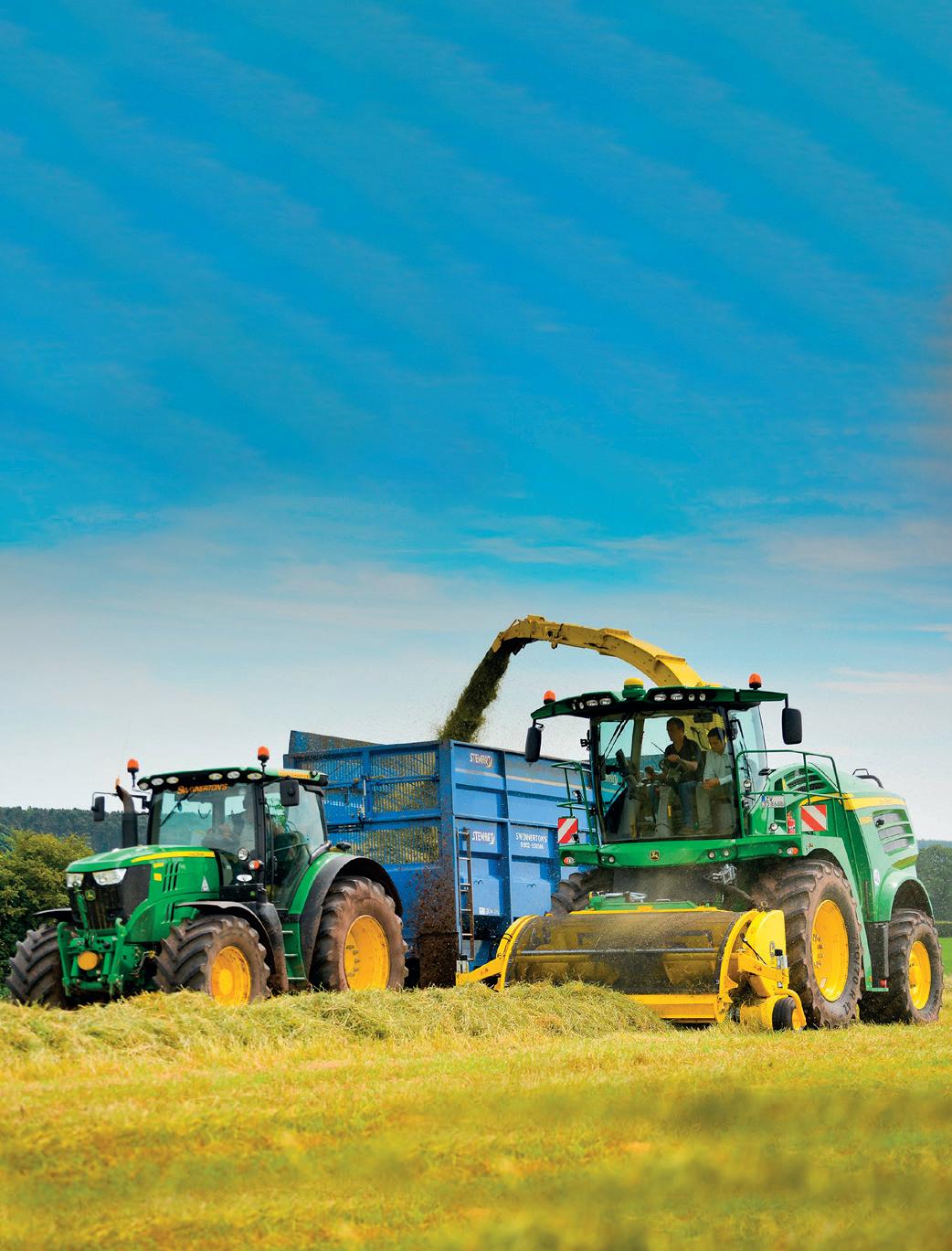
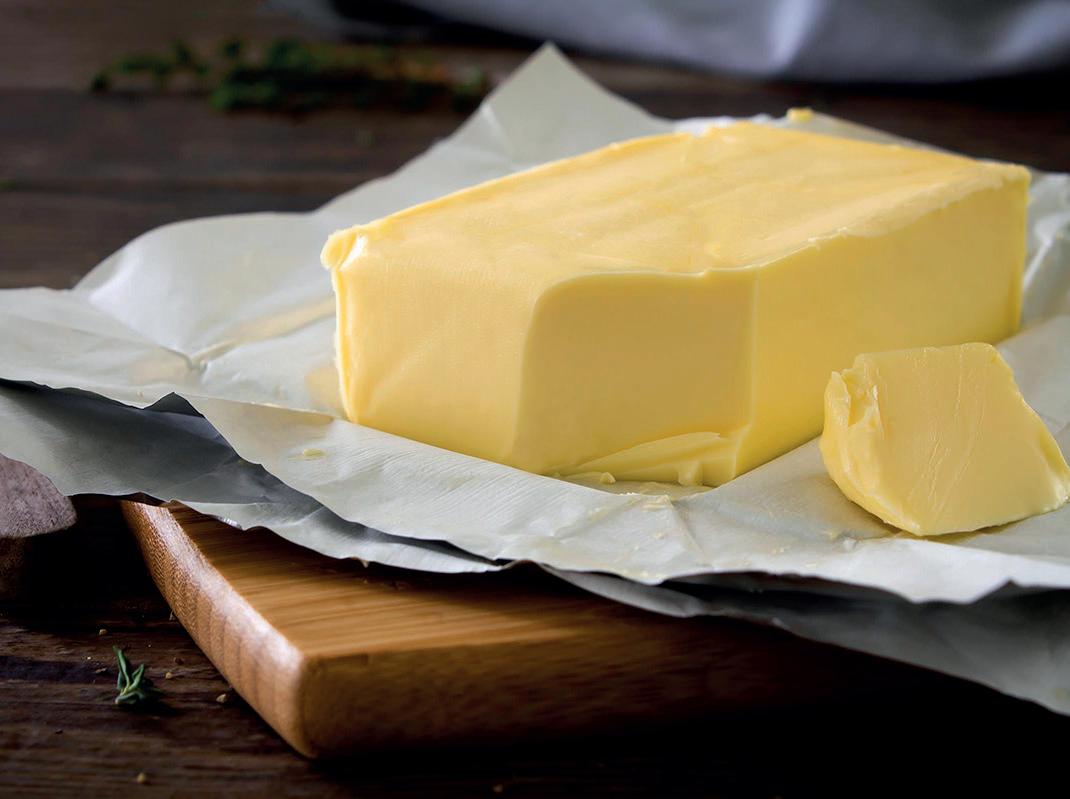
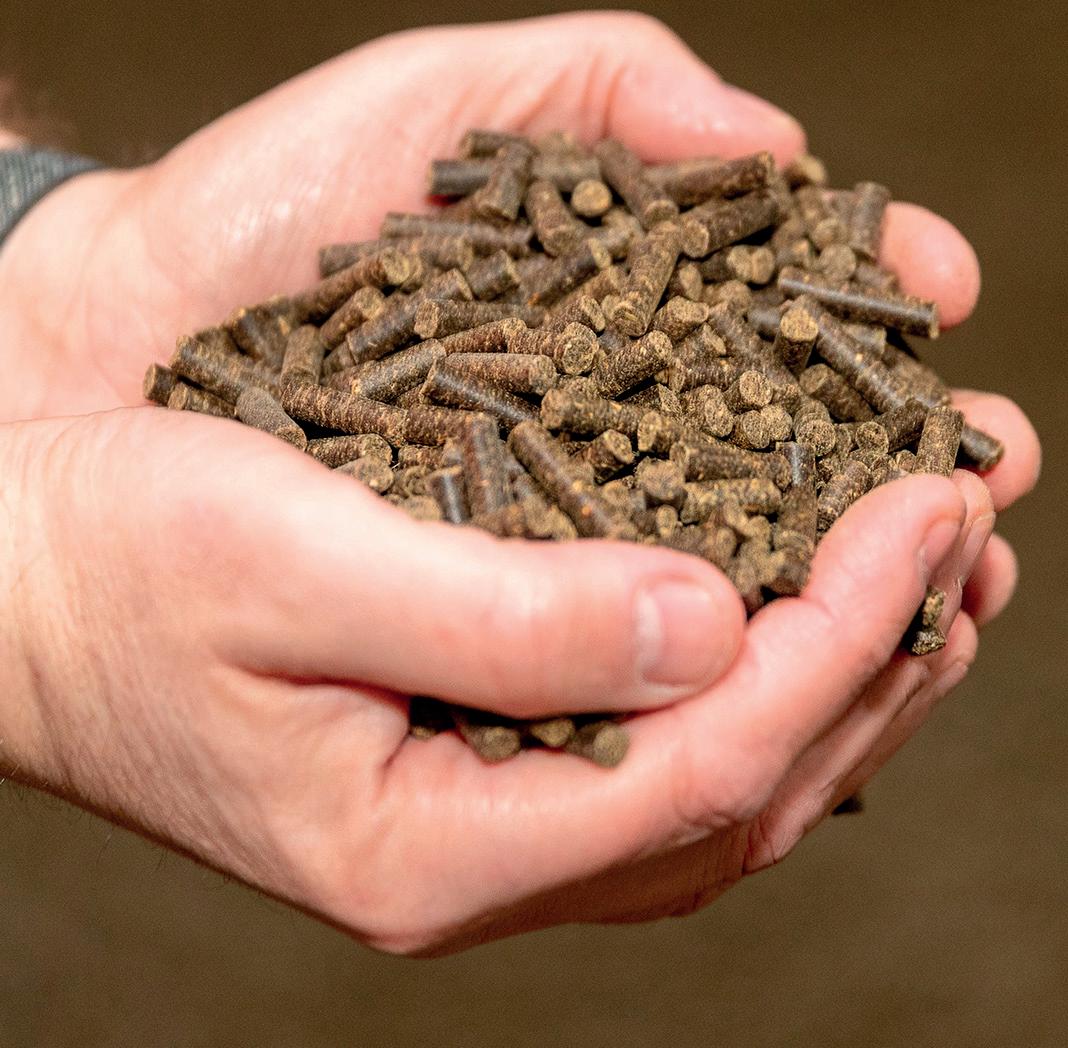
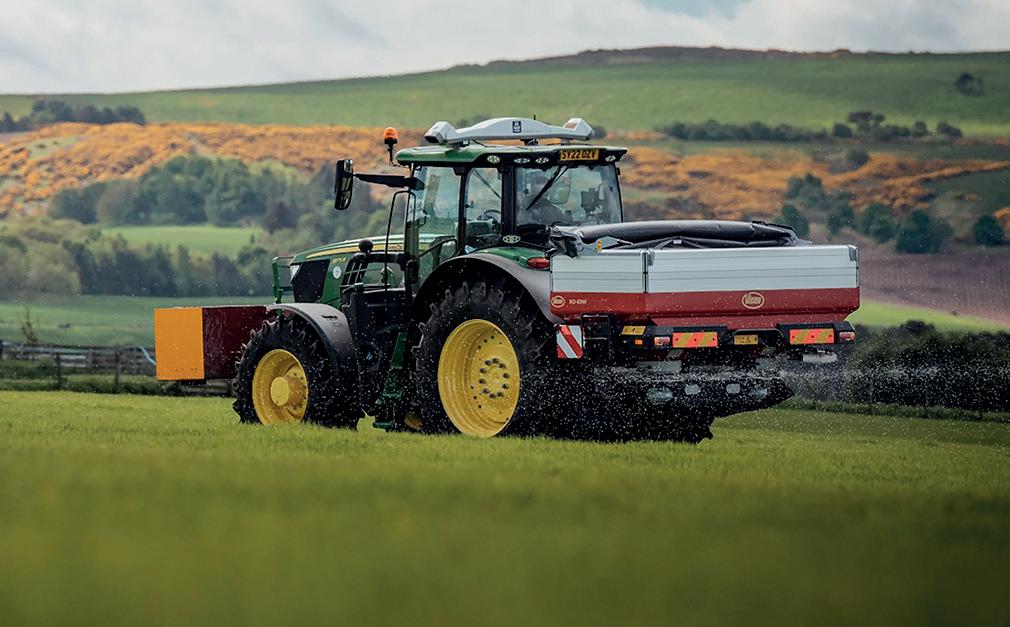
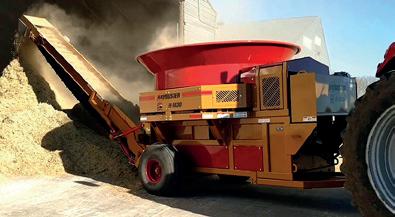
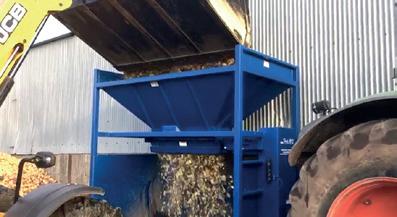
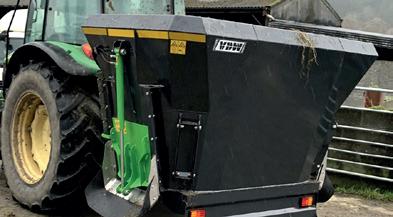
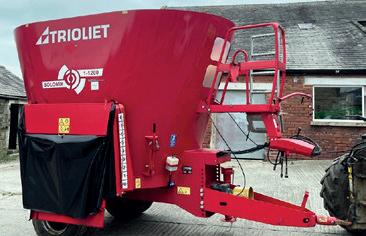
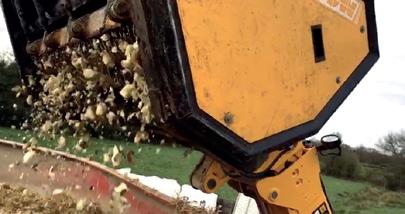
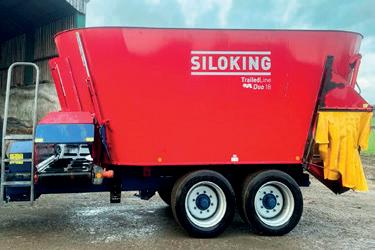
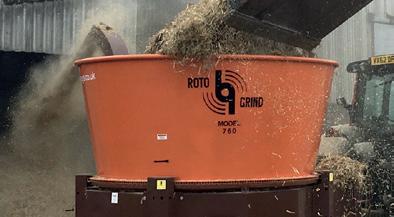
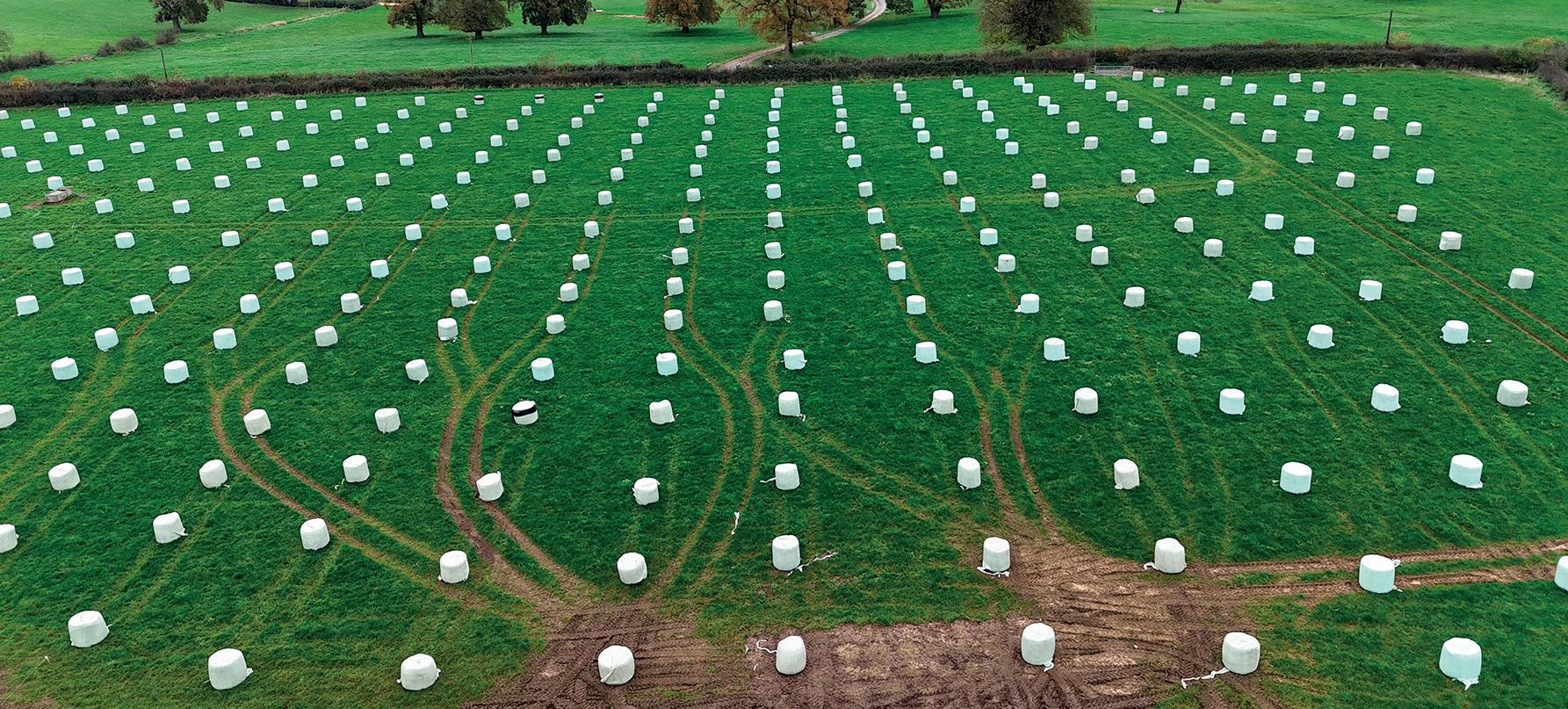
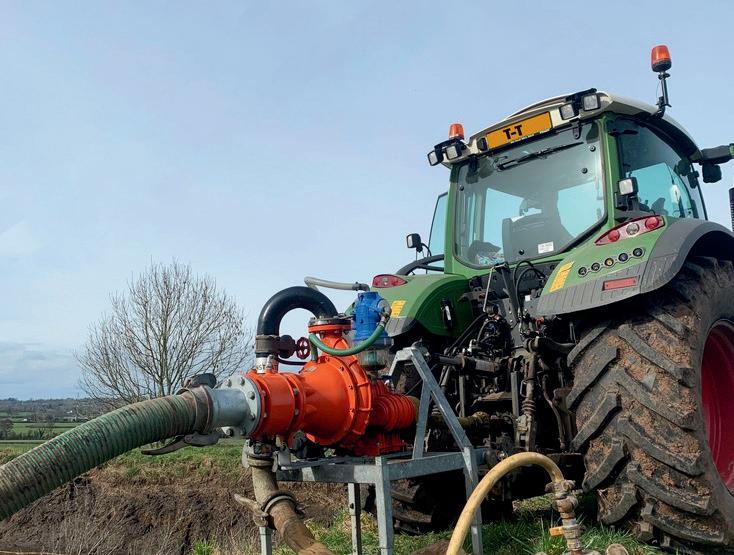
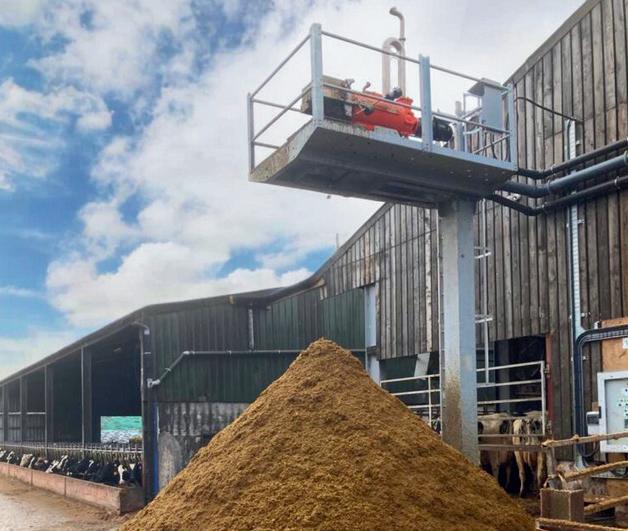
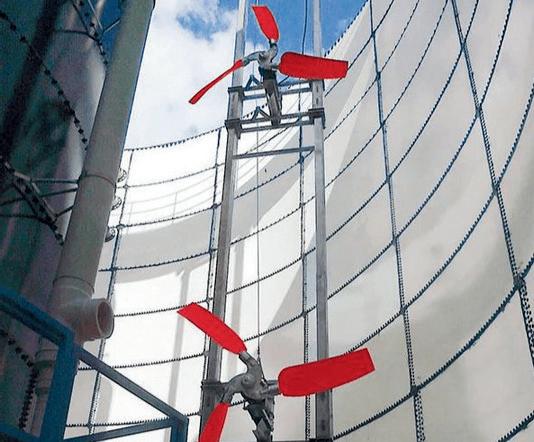
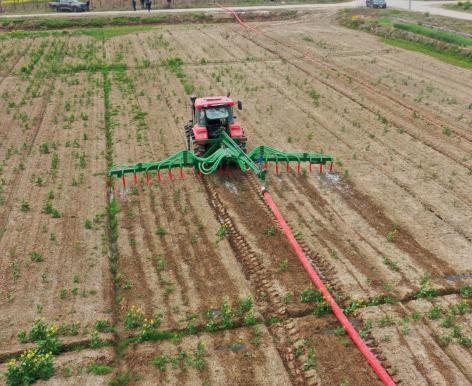
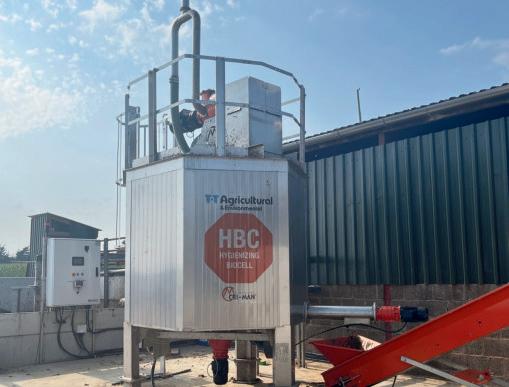
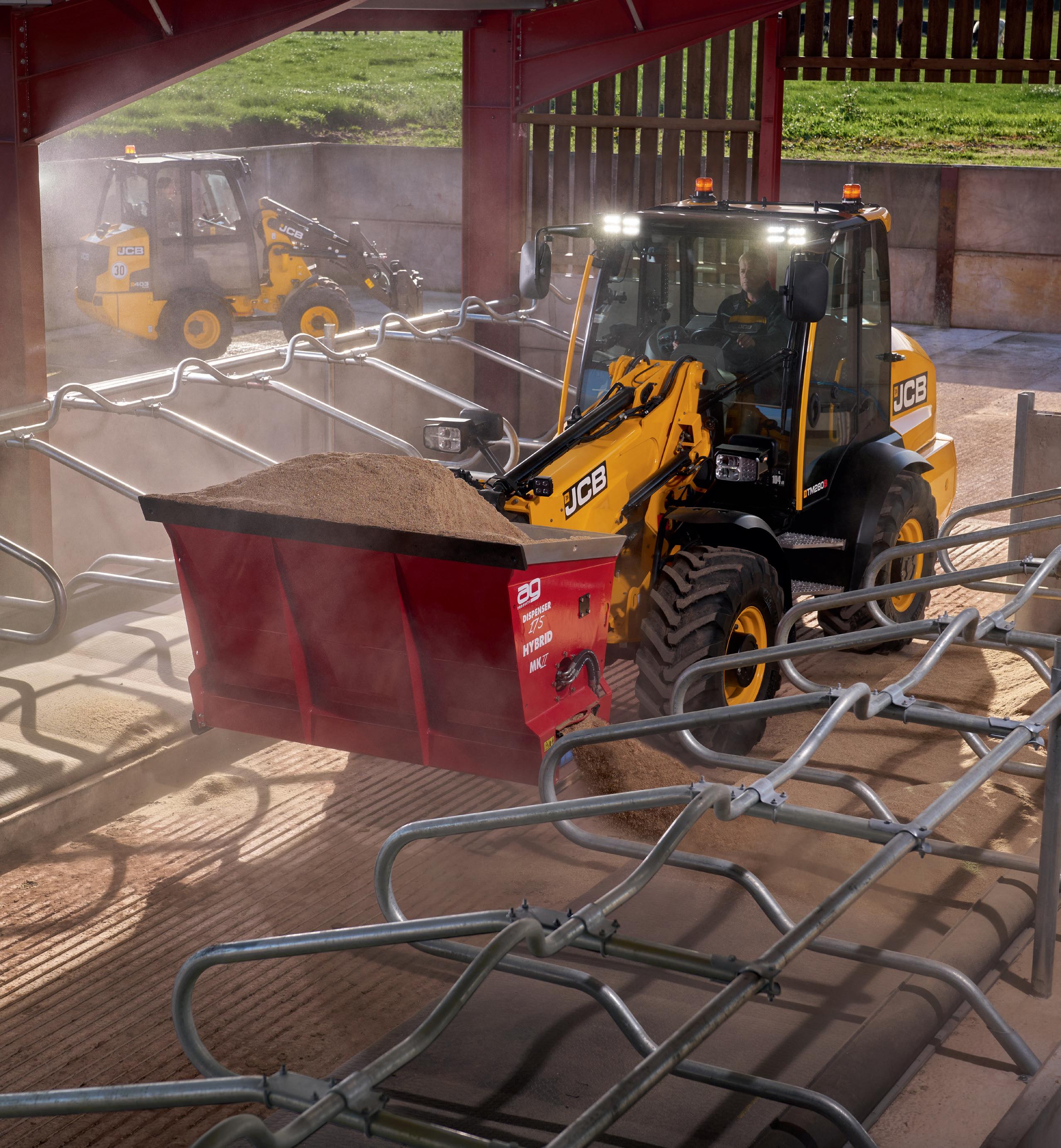
Separating makes slurry handling much easier and significantly reduces the amount of slurry needing to be stored. Vogelsang’s XSplit slurry separator can produce solids of up to 40% dry matter, making liquid slurry much easier to apply during spreading season.
Get in touch to arrange a demo today.
VOGELSANG – LEADING IN TECHNOLOGY
Contact us at: 01270 216 600 | sales.uk@vogelsang.info vogelsang.co.uk
Editor Katie Jones 07786 856 439 katie.jones@agriconnect.com
All rights reserved. No part of this publication may be reproduced or transmitted in any form or by any means, electronic or mechanical including photocopying, recording, or any information storage or retrieval system without the express prior written consent of the publisher. The contents of Dairy Farmer are subject to reproduction in information storage and retrieval systems.
Dairy Farmer, Unit 4, Fulwood Business Park, Caxton Road, Preston, Lancashire PR2 9NZ
Origination by Farmers Guardian, Unit 4, Fulwood Business Park, Caxton Road, Preston, Lancashire PR2 9NZ. Printed by Warners Midlands, The Maltings, Manor Lane, Bourne, Lincolnshire, PE10 9PH. No responsibility can be accepted by Dairy Farmer for the opinions expressed by contributors.
word from the editor
Once again it feels like the Government has pulled the rug from under the feet of farmers with the announcement that the Sustainable Farming Incentive has closed to new applicants.
Despite past assurances that any such decision would be made following consultation with the industry and have a six-week notice period, this announcement was made with no prior warning.
Coming so soon a er changes to Inheritance Tax, this will undoubtedly feel like another kick in the teeth and yet another sign that UK agriculture is at the bo om of the Government’s priority list.
I’m not sure what we need to do to prove to the Government that given the right
support, we can be a valuable asset to this country’s economy while looking a er the environment and producing food.
All this announcement does is erode any last bit of trust farmers have in the Government, and will leave them questioning whether they should commit to future policies or schemes, which may or may not be rolled out.
But despite all of this, farm life continues. As the days lengthen and the weather warms up, cows will be out already for some, and thoughts will turn to eld work, maize planting and rst cut silage. is edition focuses on animal health, and in particular looks at addressing issues around turnout and ensuring milk from forage is maintained.
What’s inside?
Updates
Herdsperson course a boost for everyone
‘There is a risk farmers focus on what funding they can get’
Why turnout should be a slow transition
Going minimal with maize with Carre Inro strip
Outrage over SFI scheme closure
The industry has been dealt another ‘shattering blow’ as Defra decided to ‘pull up the drawbridge’ on the Sustainable Farming Incentive (SFI) with no warning, denying farmers the chance to submit any new applications.
The announcement on March 11 brought into question Defra’s ‘transparency’ and its capacity to
deliver an agricultural transition as promised, with the NFU president Tom Bradshaw branding Defra as a ‘failing department’. Farmers reacted with anger to the announcement, with Devon organic dairy farmer Adam Westaway describing the current situation as ‘an absolute shambles’. He said it appeared that both farming and the environment were taking a ‘back seat’ with this
FBI forecast for dairy tops £176,000
JThe latest farm business income (FBI) figures forecast a positive outlook for dairy farmers – with the recovery of the farmgate milk price, the sector has seen the average FBI forecast top £176,000, more than double the 2023/2024 figures.
At a UK level, the average farm gate milk price rose by around 12% in the period of March 2024 to January 2025 compared to the previous year, according to Defra’s figures.
Defra said the recovery of milk prices, supported by tight supplies in the early part of the year, was expected to increase output from milk by 12% and be a key driver raising FBI for dairy farms. But it flagged that there was still wide
variation in milk prices, with some farmers receiving considerably more or less than the average.
CLA president Victoria Vyvyan said comparing year-to-year change does ‘not give the full picture’, and the five-year trends showed farm incomes across most sectors had ‘dropped significantly’.
She said: “Farming profitability is hugely dependent on volatile market prices and input costs, alongside increasingly unpredictable weather impacting on yields.
“The accelerated cuts to the remaining BPS will also have an impact.”
rFor more on milk prices, see p60-62.
Government and its policies. He said: “ e only certainty is the uncertainty of which scheme or payment will be paused or withheld next.”
Mr Westaway said his SFI payment had been delayed and was paid it mid-March, with payment held up due to not being able to access a spreadsheet in relation to herbal leys.
“So much for being a ‘light touch’ scheme,” he said.
Commitment
Cumbria farmer and Nature Friendly Farming chair James Robinson expressed frustration with the manner in which Defra made the announcement ‘trumpeting’ it as the most successful farming scheme ever and then, in the next breath, stopping it.
He added there needed to be a commitment as to which direction Government wanted the industry to go in.
He said: “At the moment they say one thing, everyone moves that way, then they shut the door
The only certainty is the uncertainty of which scheme will be paused or withheld next
ADAM WESTAWAY
before we get a chance to get there.”
Defra said ‘every penny in every existing SFI agreement will be paid’ and those who entered into a three-year SFI agreement earlier this year will be paid until 2028.
When the Farming Minister Daniel Zeichner was probed about a future SFI o er, he refused to give a timeline, but con rmed it would be ‘a er the spending review’ following discussions on how to best take the scheme forward.
Milk pool ‘an afterthought’ in processor acquisitions
JThe significant investment processor acquisitions bring into the dairy industry is welcomed, but there is fear that while the money increases the processing capacity, the milk pool is still an afterthought.
Speaking in an NFU Conference fringe panel discussion, dairy farmer and NFU Dairy Board chair Paul Tompkins said consolidation and investment can be viewed as a ‘good thing’, but the lack of competition for milk was a ‘bad thing’ for producers.
He said the implications for the milk pool are often a ‘second thought’ when investments are made, rather than a ‘first’, which can result in ‘friction’.
Dairy farmer and NFU Dairy Board vice-chair Ian Harvey added: “In the longer term we want more processing capacity. We want our processors to add value effectively, cheaply and with innovation.”
Expansion
He said the investment must help make the product profitable.
“Some of the expansion we have seen perhaps in the last 12 months in creating new investment did not end quite so well.”
He added acquisitions needed to be ‘well thought through’ to allow dairy to ‘sensibly’ expand and deliver value throughout the supply chain.
Farmers have lambasted Defra and the Government over the suspension of the Sustainable Farming Incentive.
PICTURE : Wayne Hutchinson
Lab-grown products to hit shelves in two years
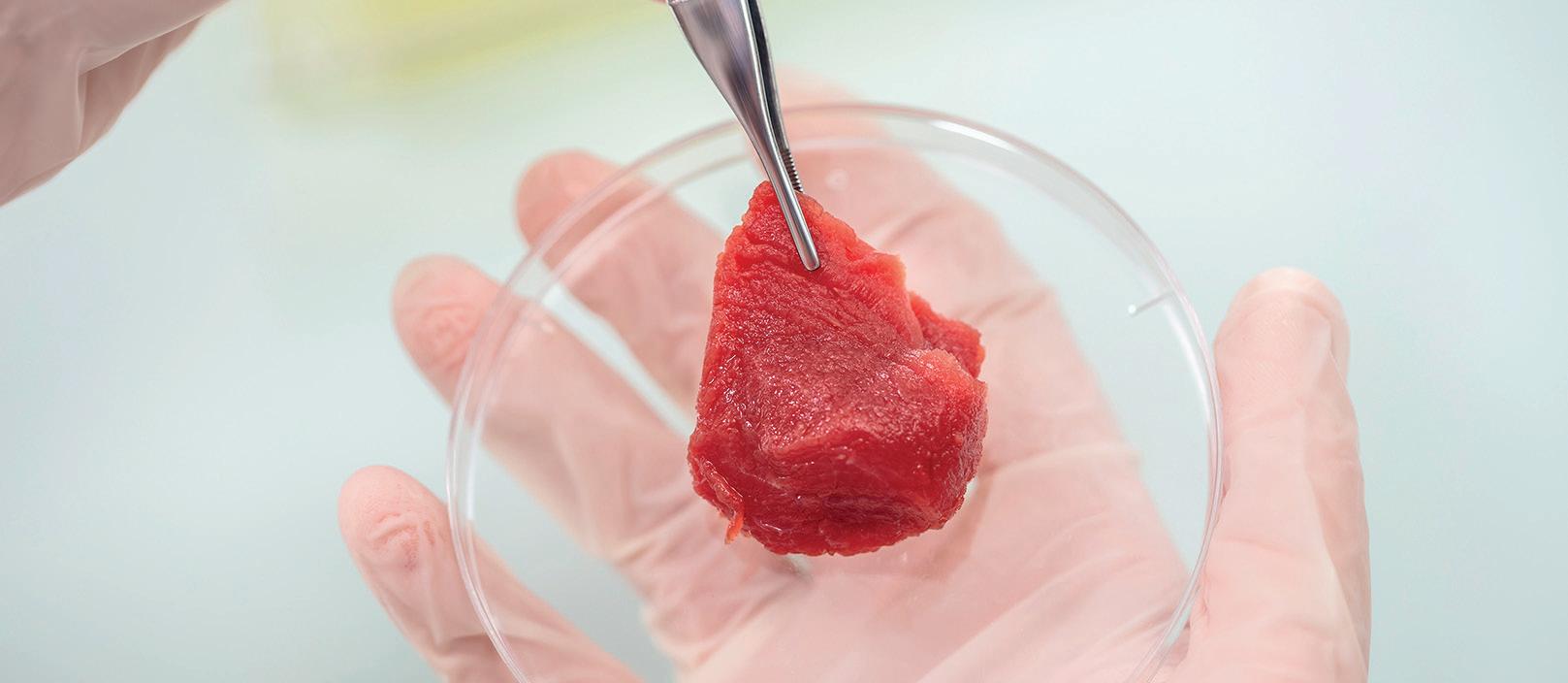
Dairy, meat and sugar products grown in a lab could be on sale in the UK within just two years, according to the Food Standards Agency (FSA).
The FSA said a team of scientists, regulatory experts and industry experts were ready to begin work on a two-year programme to gather rigorous scientific evidence about Cell-Cultivated Products (CCPs) and how they were made.
Prof Robin May, chief scientific adviser at the FSA, insisted food safety was at the heart of the twoyear project.
The FSA said it would provide clearer guidance to businesses
and address questions that must be answered before any CCPs could enter the market.
But Jason Aldiss, executive director at the Association of Independent Meat Suppliers,
Waitrose launches net zero fund for British farmers
JWaitrose has announced the launch of a £500,000 fund to support its British farmers in their transition to net zero emissions.
Part of Waitrose’s Farming For Nature programme, the net zero farm fund will finance projects by farmers and suppliers that will support the adoption of low-carbon farming practices.
The new fund will see individual grants made available to British farmers or producers who supply Waitrose.
The programme will invite applications to fund projects that will reduce the carbon emissions associated with the products supplied to Waitrose, as well as helping boost resilience to combat the effects of climate change.
James Bailey, executive director at Waitrose, said: “The fund is about
giving farmers access to financial backing to invest in sustainable practices that will benefit their farms in the long run and support a rapid reduction in the carbon footprint of the food we eat.”
The funding is available for smallscale projects as well as large-scale investments. For example, it could go towards rainwater capture tanks and sustainable fertilisers, or for successful applicants to invest in low-carbon heating systems and soil-friendly machinery.
The application window will be open for one month, closing on April 13, 2025, after which a shortlist will be agreed and winning applicants will be selected by a steering group.
rWaitrose farmers can apply through their supplier or by emailing climate@waitrose.co.uk
The Food Standards Agency has insisted food safety will be at the heart of a project looking at lab-grown food products.
said: “Traditional farming practices play a crucial role in environmental stewardship and combating climate change.
“Sustainable livestock farming contributes to carbon sequestration, maintains biodiversity, and supports rural livelihoods.
“Investing in concrete and steel vats to produce synthetic meat products not only threatens these benefits but also raises questions about the long-term sustainability and safety of such alternatives.”
Efra chair demands answers from Defra over its FMD response
JAlistair Carmichael, chair of the Environment, Food and Rural Affairs Committee (Efra), has written a letter to the Parliamentary Under-Secretary of State at Defra, Baroness Hayman of Ullock, demanding answers on the department’s response to the foot-andmouth outbreak in Germany in January.
The Committee said it was not satisfied with the response it received to a letter sent to the Minister back in February.
Mr Carmichael asked for further clarification on when IPAFFS (Defra’s IT system import of products, animals, food and feed systems) was successfully updated and operating to reflect the policy change announced on January 10 in response to the outbreak in Germany.
He also asked the Minister what
quantity of prohibited goods were able to enter the country in the time between controls being approved and IPAFFS being updated, and what steps the department had taken to track and remove those prohibited products.
When Efra sought clarity on the above issues in its recent evidence session with the Chief Veterinary Officer Dr Christine Middlemiss, she said she did not know when IPAFFS was updated and was not aware of reports that some consignments were bypassing controls.
The chair has reiterated his calls for Defra to ensure the Dover Port Health Authority (DPHA) has adequate funding to carry out its role in protecting the UK’s biosecurity.
Mr Carmichael warned no new funding settlement had yet been agreed with DPHA.
PICTURE : Getty
Maxcare minerals and packs are expertly balanced with Selko IntelliBond minerals and no sulphate and oxide sources to optimise health and productivity.
Why choose Selko IntelliBond?
• Reduces carbon footprint*
• Improved fibre digestibility for a healthy rumen environment
• High bioavailability for maximal trace mineral delivery
• Healthier, more productive animals
DAIRY TALK
Robert Reed
Farming 405 hectares (1,000 acres), a mix of tenanted and owned land at Gatcombe Farm, near Seaton, Devon, Robert Reed and his family milk 350 all-year-round calving Holstein cows via five robots and are achieving average yields of 12,000 litres.
“ He said the difference between the UK and every other country he dealt with was the power of the supermarkets
As I write this, we have just had our first week of sun and warmer weather, although it is still cold by night.
The winter seemed to drag on, with a lot of wet days and very little sun, but grass did not stop growing and sheep have now grazed off most of the grass leys twice and were off the cutting fields by the end of January.
We have finished putting our first application of fertiliser on the grass ground and most of the fields have a good cover of grass.
We opened the 2024 maize clamp only a few weeks ago and are still feeding the 2023 maize crop, which should last until the end of March, with a good amount of grass silage still in stock.
We have planted grass after maize for many years but this time, only about 25% of what was planted has survived this winter. This is the first time it has failed, but the later harvest and wet and cold conditions was too much for the seeds.
selling all over the world, said he had not made a profit in the UK for the last two years and would need a 10% rise in his sales to break even again this year.
We had a good clear out of beef cattle last Autumn. I was hoping to outwinter quite a few animals, but as it was so wet, I was lucky to find someone who had some spare room in a shed and could house some of my bigger cattle. This has paid off as the price of beef keeps on rising.
We have outwintered about 100 smaller cattle, which look good and as they are younger, the fields are looking okay. The least damaged fields have been rolled and will remain to grass.
We are still tag and testing for BVD and have still not found any more PIs. Our next bTB test is early April, which we are not looking forward to.
A couple of weeks ago I went to the NFU conference in London. As you can imagine, Steve Reed had a hard time, but for me the standout speakers were Angus Davison of Haygrove and Paul Johnson, director of the Institute for Fiscal Studies.
Paul was very informative, and he said the Government was stretching money everywhere. He said the costs of interest on Government debt and the cost of health is just eating their budget.
Looking forward, the Government is going to be clawing in money from everywhere and I can see the agriculture budget being squeezed in every way they can.
Angus Davison, an entrepreneur growing all sorts of fruit in many countries and making polytunnels and
He said the difference between the UK and every other country he dealt with was the power of the supermarkets, which means they can dictate UK prices.
I used to sell my milk on an aligned supermarket contract. In the early days we were paid the going price plus a premium. I think it was about 1.8ppl above everyone else for doing the extra requirements for the supermarket. They then brought out the cost of production pricing. This never sat well with me as a tenant farmer with lots of costs. My cost of production was at the top end of their costing pool. I used to have a warm discussion with the lady who was running our group as I could not see how my cost of production, which is close to 40ppl, could be compared to a farmer who was lucky enough to own his farm, have a cottage for his herdsman, have no borrowings and a cost of production of 20ppl.
We need to distance ourselves from supermarkets. If you look at beef and lamb, where the supermarkets have little control, their prices are thriving.
Arla is constantly setting a price trend to which all the other processors struggle to keep up with. Arla has excelled itself over the past few years and if it was not for Arla and it was left to the supermarkets, the milk price would be a lot lower.
Angus spoke very positively of UK production, but said the supermarkets were holding us back.
Ifan Roberts
Ifan Roberts is a new entrant who has established a contract farming agreement milking 500 block calving cows in Cheshire, and is aiming to improve the land farmed, encourage others to participate in the industry and deliver attractive returns to his stakeholders.
“ Having this spring grass available in the milking herd ration is also driving some very encouraging milk yields
As I write this, I am sat in the farm office at 7.15pm the night this article is due. I’m tired, hungry and stinking of milk after feeding calves. I guess it’s safe to say it has been a busy couple of weeks on the new farm.
Calving the spring herd got underway around February 8, and following that we have calved over 390 cows.
So far (touch wood), the whole process have been fairly uneventful, which is particularly positive when you consider the fact that this is a new farm for me and three out of the four other team members.
The herd has also been bolted together with just over 300 of my cows that followed me from my previous farm in Leicester, and with another 200 in-calf cows purchased in the run up to calving from three other holdings.
Infrastructure improvements
In addition to all this, with the help of some great service from local companies, we have also executed various infrastructure improvements including upgrading parlour feeders, setting up a new calf shed for 340 calves and upgrading all internal electric fences. We haven’t done too badly.
This has, of course, also been helped by what I could call extremely favourable spring weather conditions for once, which allowed us to graze the calved cows by day from the beginning of February and also by night from late February, lessening our labour demand.
Having this spring grass available in the milking herd ration is also driving some very encouraging milk yields, with the spring herd now averaging 22.5 litres/cow with 4kg of concentrate fed, which is comfortably ahead of our budget for the month.
With the team also delivering on protocols and closely formulated dry cow and transition rations, we have seen very few retained cleansings, assisted calvings, or milk fever, and the herd post-calved body condition on the whole looks very positive.
One challenge we are facing is some milk quality issues with some fluctuations in bactoscans, which I think should mainly be sorted through further improvements to plant and infrastructure. The cell
counts are rising higher than we would like at times, which could again be another symptom of a new farm and merging herds, although I am extremely confident the team will have this under control as the busyness of calving dissipates and conditions further improve.
In the calf shed, although manic at times with up to 15-20 new arrivals each day, it has also been much of the same: very few losses, low levels of disease and calves all looking to be gaining weight healthily.
Teamwork
This, I believe, is in some part thanks to our investment in infrastructure, allowing for 300 calves to be fed in just over two hours, but mainly thanks again to the dedication of the team adhering to protocols set with our vet in the pre-calving meeting, and to our dedicated calf rearer who has embarked on her first full calving season. Although she came with very little previous calf rearing experience, she has performed to a very high standard under pressure. By the time I write in Dairy Farmer again, this bubble and false sense of security may well have been effectively burst by say something like ‘the drought of 2025’ or whatever, but for now we will continue to enjoy ourselves.
ON FARM
From handcrafted butter to A2 milk and kefir production, Ed Gosling is ensuring the family business stays resilient in a changing dairy industry. Danusia Osiowy finds out more.
Redefining a business in a changing world
If there is one thing the Gosling family knows, it is how to evolve while staying true to their roots.
Berkeley Farm Dairy has been a cornerstone of the Wroughton and Swindon community since 1908, when Ed Gosling’s great-grandfather began delivering fresh Guernsey milk by horse and cart.
More than a century later, the family is still at it, only now, their dairy operation is a multi-faceted business, combining tradition with modern innovation.
At the helm is third generation farmer Ed Gosling, working alongside his parents, Nick and Christine, to steer it into the future.
Blending time-honoured dairy practices with evolving market trends, they have transformed what was once a simple milk delivery service into a thriving enterprise, producing everything from organic milk and bu er to ke r and sustainable doorstep deliveries.
At Wood Farm, their 142-hectare (350-acre) mixed arable and livestock farm, Ed manages a herd of 120 Guernsey cows, with 60 youngstock waiting to join the herd.
Animal welfare is central to their organic management system with the cows grazing outdoors as much as possible.
“It is only in the winter, when it is too wet or too cold, that they come inside,” says Ed, who returned to the farm in 2012 a er working as a farm consultant.
“And even then, they have got deep straw bedding to allow them to behave naturally.”
With a £2 million investment in dairy infrastructure, including a 20/20 parlour, upgraded housing, cubicles, feeding systems, and improved tracks for grazing, the business has seen rapid growth.
Now processing around 30,000
litres of milk daily, Berkeley Farm
Dairy supplies supermarkets, wholesalers, high-end restaurants, and hospitality venues across southern England.
But for Ed, growth is not just about scale, it is about smart diversi cation.
“We produce our own organic dairy products, but we also process milk under license for companies such as Abel & Cole,” he says.
Game-changer
“Abel & Cole approached us in 2005 looking for a supplier for their ownlabel milk. at was a game-changer for us.”
e family have also ventured into ke r, a probiotic fermented drink
that has surged in popularity among consumers.
“We started out making 5,000 litres a week and now we are up to 115,000,” explains Ed.
“Gut health is a massive trend and we have been able to tap into that demand.”
Similarly, they o er A2 milk for those with dairy intolerances.
“People do not realise, but Guernsey milk is something special. It is naturally high in A2 protein, which some say is easier to digest. We had our herd tested, and 95% of our cows produce A2 milk. Within two years, we should be at 100%.”
Ed is not just focused on producing quality milk, he is also making
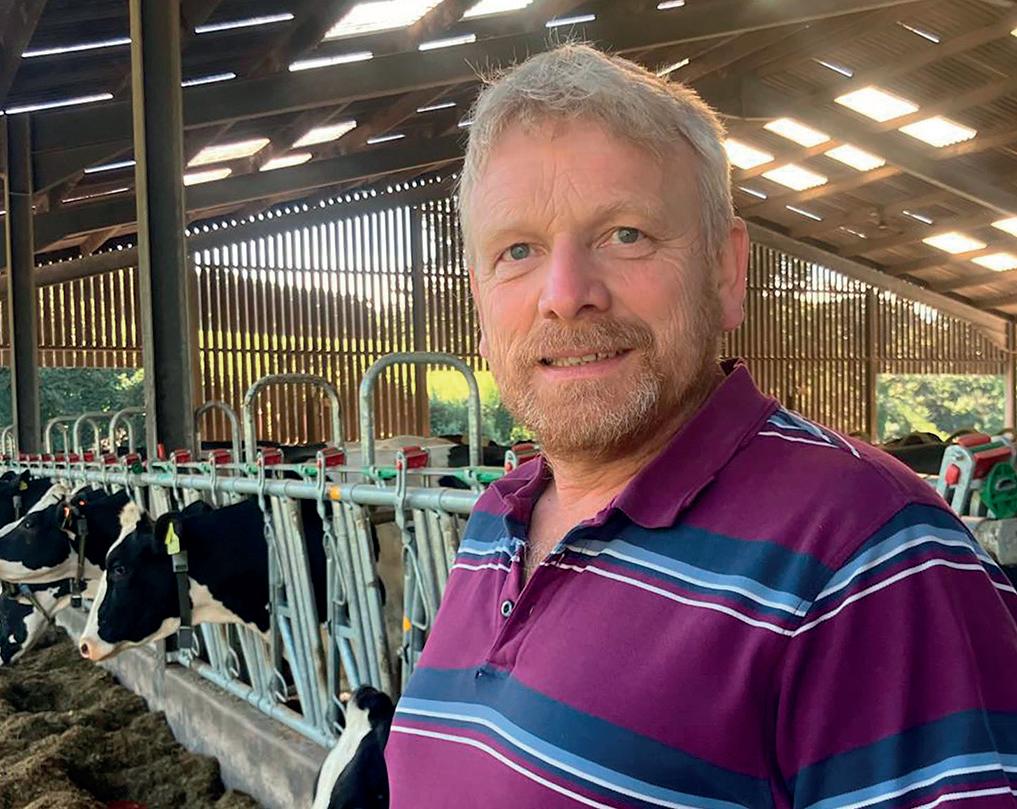
Ed Gosling says blending timehonoured dairy practice with innovation has transformed the business at Wood Farm.
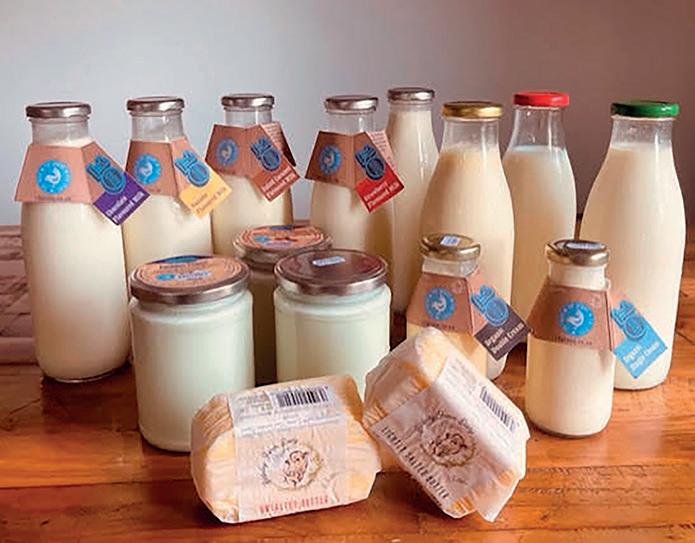
Butter, various milks and kefir are among the products offered locally by the family.
We honour tradition, but we are not afraid to innovate
ED GOSLING
sure the business is sustainable.
e farm has secured planning permission for solar panels that will eventually supply 70% of its electricity needs and they now run a small eet of electric milk oats, powered by their solar setup.
“It is a big investment, but energy costs have skyrocketed to £200,000 a year, so it is the right move for us,” says Ed.
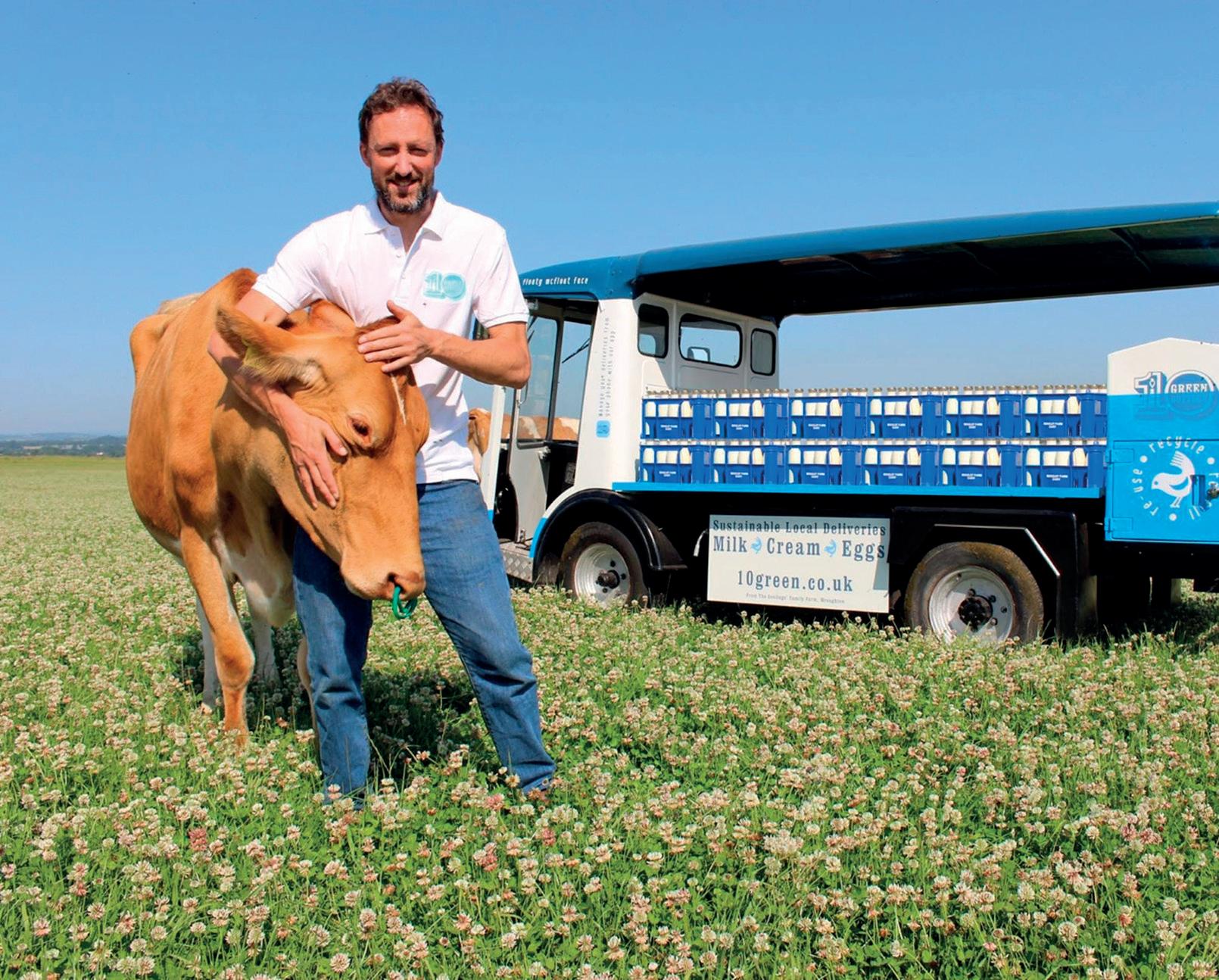
A major part of Berkeley Farm Dairy’s sustainability mission is their doorstep delivery service, ‘10 Green Bo les’.
ED says: “My dad had to sell o
our milk rounds in the 1980s because of cash ow issues. Supermarket footfall increased, and doorstep deliveries dwindled until we were le with just one customer per street.”
But, in 2012 the family revived the service with a modern twist.
“Customers now order online or via our app, and we deliver in reusable glass bo les,” says Ed.
“ e most debt a customer can build up now is one day.”
ey now serve 3,500 households within a 12-mile radius of Swindon, with seven milkmen and a relief driver making twice-weekly deliveries.
Door-knocking
To a ract new customers, Ed employs two independent contractors.
He says: “We have found that door-knocking and sharing our story is the best way to bring in new customers. Once customers join us, they tend to stay.”
Ed believes doorstep delivery, along with other areas of di erence,
The family runs a 120-strong Guernsey herd, plus 60 youngstock.
ON FARM
helps in their point of difference.
Unlike many large-scale dairies, Berkeley Farm Dairy does not homogenise its milk, allowing it to retain its traditional ‘cream line.’
He is also sceptical about companies offering nationwide doorstep deliveries believing the messaging jars with the original purpose.
He explains: “They deviate from the ethos of local and sustainable. A pint of our organic milk is cheaper than conventional milk in these business models.
Cost
“While they might market themselves as cheaper and using less packaging, in reality, shipping heavy products across the country comes at a cost.
“We do not have distribution costs, our milk is not homogenised and it is local. To me, a doorstep delivery business should operate within 10-15 miles, beyond that, it does not
make sense.”
Ed’s business acumen is evident in how he has structured Berkeley Farm Dairy.
He says: “We have made sure not to put all our eggs in one basket. We produce 250,000 litres of conventional and organic milk a week. We do wholesale, retail, doorstep delivery and contract processing for other brands. It keeps us resilient.”
Ed has made strategic moves to supply major supermarket chains while maintaining relationships with small-scale retailers and recently, has signed a deal to supply Ocado with 30,000 litres of milk a week.
“We reached out to Ocado ourselves. I just emailed them to ask if they needed a supplier. That turned into attending one of their supplier days and now we are one of their partners.”
In addition to their traditional dairy liquid products, organic butter
and cream are also popular.
“My mum started making butter in 1990 and it has become one of our flagship products. We still hand-pat it after churning, and we are one of the few who have continued with the tradition.”
While cream production has grown, the Goslings refuse to compromise on taste for shelf life.
“A lot of producers repasteurise cream to give it a longer shelf life, but that affects the taste, so we will not do that. We believe in quality over convenience.”
Like many farms, Berkeley has faced issues with bovine TB and Johne’s disease.
“We lost 40 animals to bTB in the past and we brought in Johne’s with replacement cows,” Ed admits.
Health
“Now we use sexed semen for breeding replacements, which has helped control the problem.
“We also work closely with our vet and nutritionist to stay on top of herd health.”
The cows are milked twice a day and fed grass with a TMR buffer feed and nuts in the summer, with additional silage in the winter.
Ed is also navigating the challenges of scaling up while maintaining sustainability.
“We do not want to be the biggest, we just want to be the best at what we do,” he says.
“That means making sure every part of our process, from milking to packaging to delivery, meets our high standards.”
Interestingly, Ed has also started working with smaller dairy farms via a franchise business model, helping them implement Berkeley’s successful doorstep delivery model.
He says: “We introduce them to the software we use, which is easy to set up and adds real value to their business. It is something I’d like to develop further.”
For Ed, the key to success is balance and looking ahead is keen to now focus on consistency and consolidation.
“We honour tradition, but we are not afraid to innovate,” he says.
“We are proving that a small, family-run dairy can compete in today’s market by staying smart, adaptable, and true to our roots.”
Farm facts
r120 Guernsey cows, 60 youngstock
r142ha (350-acre) mixed arable and livestock farm
r30,000 litres of milk processed daily
r£2 million in dairy infrastructure, equipment, and branding
rKey products include milk, butter, cream, kefir, A2 milk
rDoorstep deliveries to 3,500 households within a 12-mile radius
rSolar-powered electric milk floats
Ed’s parents, Nick and Christine Gosling.
The family’s herd produces 115,000 litres a week of which 30,000 litres are processed at their Berkley Farm Dairy.
Sexed semen is used to breed replacements.
Do you make maximum use of your robot
data?
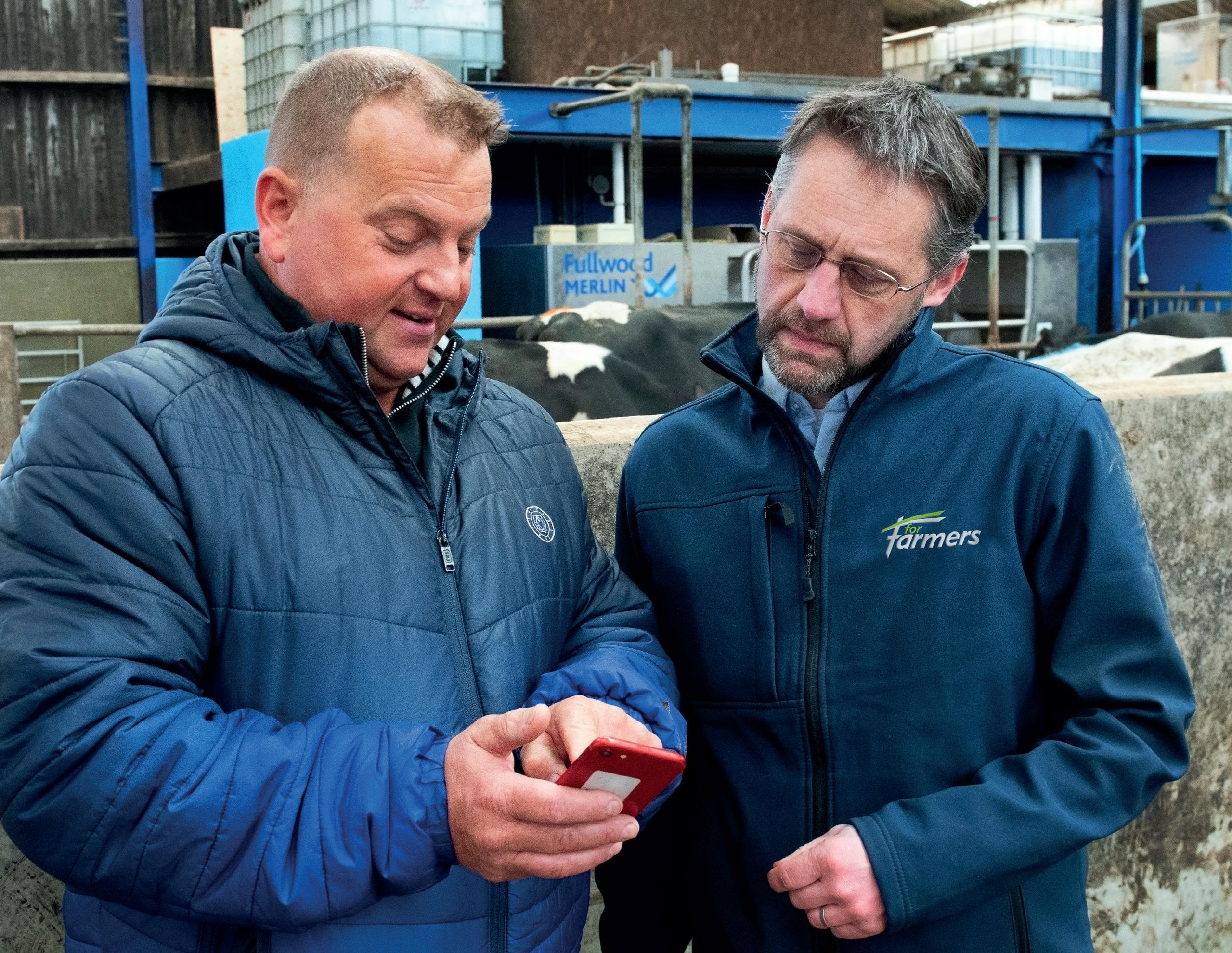
Using ForFarmers OptiRobot our Dairy and Robot Specialists are able to assess whether the interaction between robot settings, nutrition and health is optimal. It often turns out that small changes can make a big difference; Our Robot Specialists can help highlight areas where you can improve with the unique ForFarmers OptiRobot which provides:
9 Greater insight
9 More opportunities
9 Increased returns
For more information speak to your local ForFarmers Robotic Specialist or visit >
0330 678 0982
info.uk@forfarmers.eu
www.forfarmers.co.uk @ForFarmersUK
DAIRYMatters
‘There is a risk farmers focus on what funding they can get rather than what they need’
Robert Kirk is the UK country sales manager for smaXtec, a leading provider of a ruminal-bolus-based comprehensive health management system for dairy cows.
All eyes were on Environment Secretary Steve Reed during his address at this year’s NFU Conference, with many hoping for reassurance on Inheritance Tax (IHT). That reassurance did not come, and Mr Reed’s reluctance to answer audience questions left many feeling increasingly frustrated.
Beyond IHT, however, there were some positive takeaways, including Defra’s announcement of a new round of the Farming Equipment and Technology Fund (FETF) in spring 2025 – just three months after closing additional application windows in December 2024.
Dairy farmers will have access to grants ranging from £1,000 to £25,000 to invest in equipment and technology that enhance productivity, sustainability and animal welfare.
These investments aim to support a more efficient and environmentally responsible agricultural sector.
Strengthening these areas is crucial for the future of UK agriculture, helping to improve efficiency, reduce environmental impact and reinforce food security – key factors in maintaining competitiveness in both domestic and international markets.
As part of this drive for innovation, the FETF expanded its Animal Health and Welfare grant list in 2024, now covering more than 130 items.
Among the 29 new additions are automatic animal health and welfare remote monitoring systems, reflecting the increasing role of technology in proactive herd management.
While many dairy farms already use some form of automated monitoring to improve herd health and welfare, cost remains a barrier for some.
The new round of FETF funding in spring 2025 presents an opportunity for more farmers to invest in these technologies, making them more accessible across the sector.
However, when grant funding becomes available, there is a risk that farmers focus on what they can get rather than what they actually need. This can lead to investment in systems that might not fully align with a farm’s long-term requirements, reducing the overall value and effectiveness of the technology.
With a wide range of automatic health monitoring systems available, including tags, collars and boluses (many of which are eligible under the FETF grant), choosing the right solution can feel overwhelming.
To make an informed decision, farmers should first identify the key challenges on their farm: is fertility, lameness or mastitis the main issue affecting performance?
Once the priority areas are clear, researching the different automatic health monitoring systems and their capabilities is crucial to finding the right fit.
“ To make an informed decision, farmers should first identify the key challenges on their farm
Robert Kirk
Involving nutritionists and vets early in the process can provide valuable guidance, as can speaking to other farmers who have experience with different technologies.
Another key consideration when investing in new technology is how well it integrates with existing farm systems; any new investment should complement these systems rather than add complexity.
Farmers should prioritise technology that enables seamless data exchange, ensuring information is captured once and shared across all relevant systems.
While grant funding can ease the initial cost of adopting new technology, long-term value should always be a primary consideration.
Some farmers hesitate due to upfront expenses, but financial benefits often accumulate over time, making
Among the 29 new additions to the Animal Health and Welfare grant list are automatic animal health and welfare remote monitoring systems.
strategic investment worthwhile.
For example, fertility management is one area where technology delivers strong returns.
Prolonged calving intervals impact pro tability, yet many farmers underestimate the costs associated with extended days open.
Heat detection and reproductive
monitoring systems can optimise fertility, leading to improved milk yields and overall e ciency.
Early calving detection, thanks to technology, also delivers bene ts by giving the farmer time to prepare the calving pen and provide support if necessary. is results in less stress; be er
cow and calf health; and a higher chance of a smooth, complication-free birth, which is key to ensuring long-term productivity.
Beyond fertility and early calving detection, reduced veterinary costs, lower replacement rates and improved feed e ciency all contribute to long-term nancial gains.
e latest round of FETF funding presents a valuable opportunity, but investment decisions should be guided by business needs rather than grant eligibility alone.
e best investment decisions are those that enhance e ciency, improve herd health and provide lasting value to the farm.
Ultrasound lung scanning can be a quick and effective diagnostic tool for monitoring calf respiratory disease and pointing to treatment options. Wendy Short reports.
Ultrasound lung scans provide instant result
The main advantage of ultrasound lung scanning is that it can be carried out with the same instrument used for pregnancy diagnosis, explains Jenny Marmion, of Cheshire Farm Vets.
“Every farm vet will carry a portable ultrasound scanner as a ma er of routine, and about ve years ago it became common to use these scanners for live lung examination, also known as thoracic ultrasound scanning,” she says.
“ e scanner head is positioned in between the ribs, to show an image of the le and right lungs. is technique provides a snapshot of lung condition, and the results are instant.
“ e vet will be looking for le-
Research
JNew research from the Royal Veterinary College (RVC), combining thoracic ultrasound alongside the measurement of clinical signs, has revealed that nearly a third of calves in the UK experience bovine respiratory disease and subclinical pneumonia.
Researchers measured the occurrence of bovine respiratory disease in 476 calves born on 16 dairy farms in south-west England.
George Lindley, a PhD student at RVC, led the research and he explained a total of 3,344 weekly exams from birth until weaning (approximately eight weeks of
Calves that are not showing any clinical signs of respiratory disease can be detected with an ultrasound
sions, which show up as brighter images compared with normal lung tissue. Alternatively, what is referred to as consolidation may be visible. is is a solid area which oxygen is unable to penetrate, and it is displayed on the screen as a wide, highlighted
age), were carried out by the researchers, which measured the respiratory health of calves using both ultrasound and traditional scoring techniques.
Prevelance
The research revealed that the peak prevalence of lung consolidation, where air in the lungs is replaced by a solid, fluid or other material, occurred at eight weeks of age, reaching 29%.
The research also found that sub-clinical pneumonia, the presence of lung consolidation without outward clinical signs, was common. At any week of age, up to 28.7% of calves
JENNY MARMION
area against a background of normal lung tissue.”
Some vets will use a scoring system to categorise lung damage levels that are revealed by the scan.
And Mrs Marmion says the process will help the vet to give
were diagnosed with sub-clinical pneumonia.
Mr Lindley says: “While the disease has negative welfare consequences, affecting growth, survivability and future productivity, our research suggests that a significant proportion of calves born on UK dairy farms may remain undiagnosed when assessed by clinical signs only.”
He adds that clinical respiratory scoring will not identify all disease cases and thoracic ultrasound is an essential diagnostic technique which should be implemented by vets in clinical practice to support cattle welfare.
a prognosis, as it adds to the range of information about the calf’s condition. Other indicators include nasal discharge, rapid breathing and high temperature. In cases where severe damage shows up on the image, it may a ect decisions on whether to continue to invest in further treatment.
Mrs Marmion explains thoracic ultrasound scanning also allows sub-clinical cases to be identi ed. She says: “In these cases, calves that are not showing any clinical signs of respiratory disease, but which are revealed to have lung lesions on scanning, can be detected and treated appropriately.
“ ese sub-clinical cases are known to have reduced growth rates. erefore, if they can be pinpointed at an early stage and given the right treatment, growth rates – as well as general health – can be improved.”
Recovery
Another use for the scanning technique is to check whether treatment has been e ective.
“Calves will o en recover following a respiratory illness, although the lungs may not fully heal in severe cases. Nevertheless, it can be encouraging to conduct a second scan and nd that the images reveal signi cant improvement, which could mean that no further action needs to be taken.
“I have seen cases where a calf is quite badly a ected, with fairly serious lung changes, but a second scan has pointed to a good rate of recovery and healing.”
Jenny Marmion.
Lung scanning is not used routinely across all practices, and vets new to the technique may require some training, she states.
“ e training is relatively straightforward, and it is mainly aimed at making sure that the probe is positioned accurately and that the internal lung landmarks are identi ed, but all vets will be able to interpret the results a er examining the images.
“Both sides of the calf’s chest
will need to be scanned, and with repetition the procedure will only take a couple of minutes.”
oracic ultrasound scanning can also be used for adult cows, she adds.
“It is not commonly used for adult ca le, but it can be helpful where there is a history of respiratory disease, and new clinical signs have been reported,” she says. “However, it could also be conducted if a group of four or
ve cows were showing signs of respiratory disease, for example.
“On one occasion, I found approximately 40% lung consolidation in a dry cow that was displaying symptoms. She had been treated with antibiotics for the same condition about 12 months earlier. In this case, the scanning con rmed that severe lung pathology was present.
e cow went on to calve successfully and she was removed
from the herd at the end of her lactation.
“It is widely accepted that lung damage will have a negative e ect on calf performance. In the same way it will also depress milk yields, especially as dry ma er intakes will be reduced in a sick animal.”
oracic ultrasound scanning is another tool in the toolbox for vets to use to identify respiratory illnesses in ca le, she says.
“Previously, the only available tools for use in a farm se ing were a thermometer, as well as a stethoscope to listen for respiratory rate and sounds, combined with a visual assessment of a suspect case.
“Today, a simple scan can add to the available diagnostic procedures. With respiratory illnesses one of the most common calf health problems, thoracic ultrasound scanning can only be of bene t to dairy farmers, given the appropriate situation,” says Mrs Marmion.
Thoracic ultrasound scanning can detect sub-clinical respiratory disease.
As a common issue affecting pre-weaned dairy calves, rumen drinking can have significant impacts on calf performance and, in severe cases, can result in death. Katie Fallon reports.
What you need to know about rumen drinking
With a range of clinical signs, some more obvious than others, learning how to identify and prevent rumen drinking is key, said Dr Colin Mason, veterinary investigation officer and veterinary centre manager at SRUC, who was speaking at the inaugural Calf Conference held in Dumfries.
Dr Mason told attendees that after routine surveillance testing at SRUC’s vet labs of over 600 pre-weaned dairy calves, rumen drinking was found to be the second most common cause of death after infectious diseases.
He said rumen drinking happened as a result of a poor oesophageal groove reflex, leading to milk entering the rumen and reticulum stomachs rather
than the abomasum. The milk in the rumen then begins to ferment, causing inflammation and damage to the rumen wall and, in severe cases, acidosis.
Dr Mason said: “It becomes a bit of a vicious circle; if you have milk accumulation in the rumen, the rumen is going to start trying to ferment that milk.
Lactic acid
“As this milk ferments, this is going to produce a lot of lactic acid and that is going to cause the pH of the material within that rumen to fall quite dramatically to pH4 and below in severe cases.
“That is serious for a calf. One outcome is that it is a short-lived event – the calf gets rid of the low pH digestive material quite quickly and it recovers.
“But in the most severe forms
For the oesophageal groove to work really well, the calf needs to be in the mood for drinking
DR COLIN MASON
it produces so much acid that the acid spills over into the general circulation and you end up with an acidotic calf, which can be life-threatening.”
Dr Mason said it was more likely at a sub-clinical level that acid production would lead to local damage and inflammation of the rumen wall. Consequently, the oesophageal groove would not work as well, resulting in more milk accumulating in the rumen, more acid production and more damage to the wall.
He said that as a result of rumen drinking, the calf could suffer with rumen wall damage, rumenitis, fungal infections of the rumen wall, bloating of the rumen and bloating of the abomasum.
Symptoms
With there being a variety of signs and symptoms, identifying rumen drinking is not always straightforward.
Dr Mason said: “Some calves will have all of them [symptoms] and be quite severely ill; some calves will die of this, other calves might be very subtly ill and will survive okay but could have done better.”
However, Dr Mason said the main signs included poor appetite, poor drinking and frustrated calf rearers.
“One day they might be drinking well, the next day they might not drink quite so much and they never quite drink the full volumes that you want them to,” he added.
Calves might also scour and present as chronic ‘poor doing’ calves which might be thinner, not grow as well as the rest of the group, be dehydrated, be more prone to digestive upset and bloat, and not suckle as well.
When looking at the role of the oesophageal groove reflex, Dr Mason said that for the calf to drink and to suckle milk, a groove would form which would take the milk from the oesophagus and transfer it directly to the abomasum, through the omasum, missing out the rumen and the reticulum. He said this process was critical to how the calf digested milk.
“For the oesophageal groove to work really well, the calf needs to be in the mood for drinking. The sight, sound, taste and smell of milk being produced, milk being mixed and other calves being fed is all part
PICTURES
of the stimuli that cause a positive e ect on the oesophageal groove re ex,” he said.
Practical factors
ere are a range of practical on-farm factors that in uence how well the oesophageal groove re ex works, including regularity of feeding, temperature of the milk, suckling and teat feeding.
Factors that negatively impact the re ex include stress, pain and the position of the feeder. erefore, Dr Mason advised that teats should be positioned at a height of 60cm to replicate the natural height a calf would suckle from its dam.
He said: “A lot of it comes down to how quickly calves drink. When calves drink really fast, some of that milk is probably going to overspill [from] the oesophageal groove.”
He said that damaged teats, stomach tubing, bucket feeding, milk quality, disease and acidosis could all lead to fast drinking speeds.
As a result, when looking to
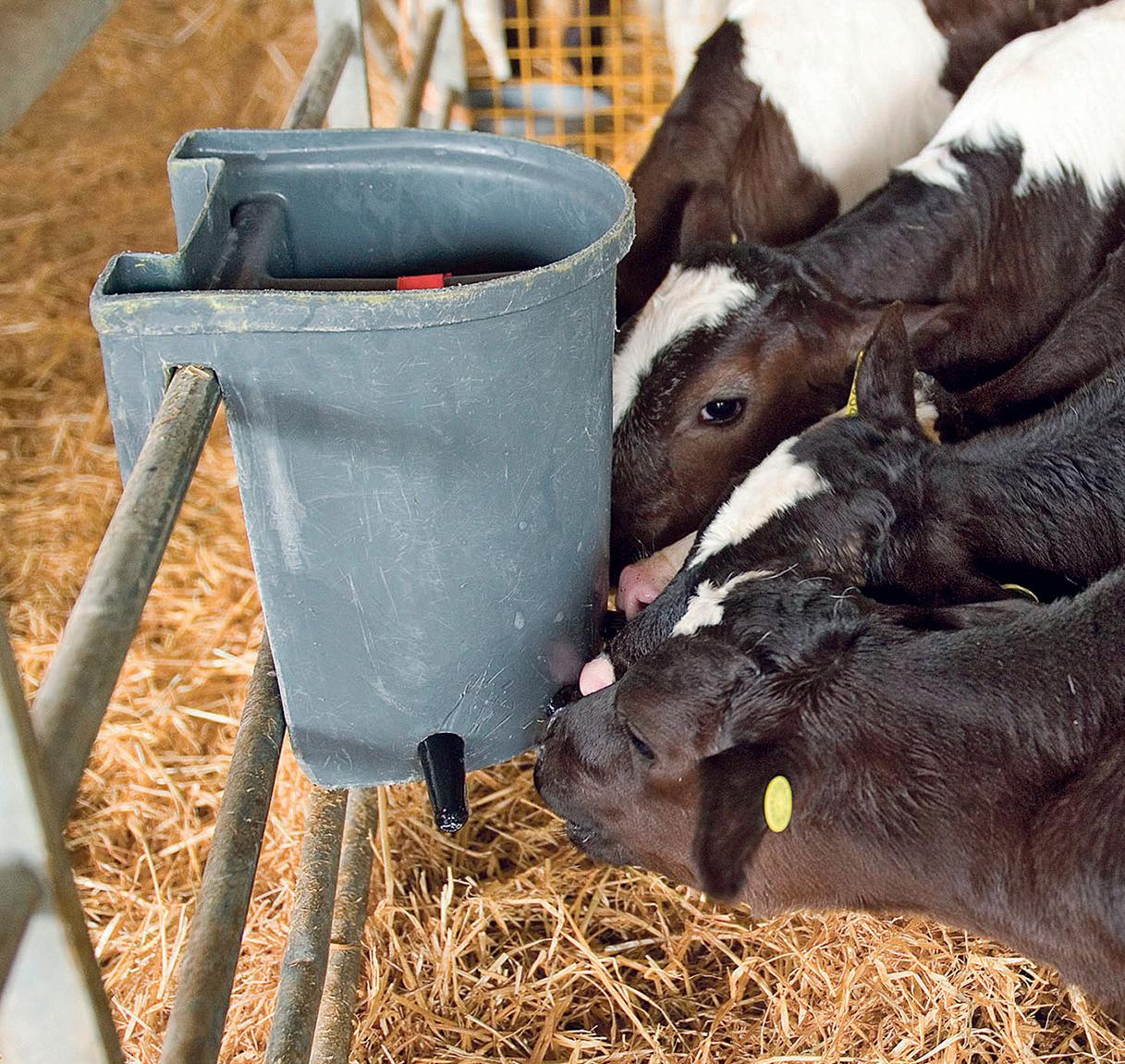
prevent rumen drinking, Dr Mason advised using teat feeders rather than buckets.
He said: “Bucket feeding is more likely to end up with more milk spilling over into the rumen. We need to promote the oesophageal groove by feeding through a teat.”
Avoiding the use of stomach tubes where possible when feeding calves could also help to prevent rumen drinking, as stomach tubing could increase the risk of milk ending up in the rumen.
Dr Mason said: “Trying to avoid resorting to the stomach tube as much as possible is going to be really important.”
Bicarbonate
When looking to treat calves with rumen drinking, Dr Mason said oral uids containing bicarbonate to try and neutralise acid production could be helpful in rebalancing calves. Reducing the amount of milk feeding could also be an option, along with providing uids to keep calves hydrated and slowly reintroducing milk.
Fusion Dairy Feeds
Sustainable High Performing Feed
SINCE 2021
The NWF Fusion Dairy feed range excludes soya, soya hulls and palm kernel. An efficient and cost-effective feed range for early lactation and high yielding cows.
• The Fusion range features high quality ingredients with high by-pass nutrients and varying protein levels to suit a range of dairy feeding systems.
• Ultra Pro-R is a high-quality vegetable protein which, as a result of precise treatment of rapeseed meal, contains a high level of DUP.
• Ultra Starch-W, a protected wheat, aids rumen health to achieve feed utilisation, reducing the rate of ‘quick fizz’ in the rumen preventing a pH drop.
• Formulated utilising 90% British and/or European sourced raw materials helping to reduce agriculture’s carbon footprint, keeping raw material provenance in mind.
• Manufactured at UFAS accredited NWF feed mills in Cheshire, Cumbria and Devon.
Dr Colin Mason advises using teat feeders rather than buckets.
WORLD DAIRYING
Making daily social media videos about his dairy farm in Germany is no easy task but it is one that Amos Venema carries out with dedication. Chris McCullough reports.
Passion for educating the public
In a bid to keep consumers connected to how milk is produced, Amos Venema regularly discusses his farm on social media platforms.
Amos uses a number of online outlets, such as X (formerly Twi er) and Instagram, as well as MyKuhTube, to interact with the public, educating them on where their food comes from.
With a reach of over two million people per month, Amos says the goal of his videos is to allow consumers to approach him with openness and curiosity and take the time to understand how farming works.
He says: “Appreciation begins with understanding. Talking to one another is always be er than talking about one another.”
e 55-year-old farmer runs the dairy farm with his brother Jan in the East Frisia region of northern Germany.
Dating back to 1865, the farm extends to 130 hectares (322 acres) and runs 150 milking cows.
Amos says: “I started working on
Farm facts
rCows yield around 9,000kg of milk per cow per year at 4.4% butterfat and 3.4% protein.
rMilk is sold to the DMK co-op at an average price for 2024 of 47 euro cents (39p) per litre
rAmos and Jan are the only labour carrying out day-to-day tasks, while local contractors carry out all the fieldwork
rCows are milked through a 16-point swingover herringbone parlour from Lemmer Fullwood fitted with Afimilk sensors and software
our traditional family farm in 1989 a er nishing college. My younger brother Jan joined us on the farm in 2010.”
About 122ha (301 acres) is down to grass, and the remainder used for
corn silage production. Amos says: “We achieve about 14 tonnes of dry ma er per hectare from the grassland and 15 tonnes per hectare from the corn silage.”
All the cows are Holstein Friesian and are milked twice a day.
Amos says: “Our top 25% of cows are bred to polled AI bulls, usually via sexed semen, with bulls such as Skala PP, Member PP, Keane PP, Solist PP, Advokat PP and Signum PP.
“Over 50% of the cows are bred to a beef bull, usually Belgian Blue and the remainder with plainer dairy bulls.
“For us, it is important to have cows with good longevity and a good health index. We do not prefer
cows with a very high milk yield, because these types of animals o en need a lot of maize in their diet, which is an extra cost as we need to purchase it in. We prefer cows with a low lactation curve.”
Cows graze outside about 180 days a year and the heifers graze for about 200 days per year.
Cows are bu er fed when grazing with a high energy ration. e winter ration is formulated with energy and protein in mind.
Both rations include grass silage, maize, hay, beet pulp, rape and grain. e milking cows are fed a TMR in the barn using a Sgariboldi Gulliver self-propelled machine with a horizontal paddle system.
Cows also receive 3kg of con-
Amos Venema farms 130ha (322 acres), most of which is in grassland.
The Venema brothers run their dairy farm in the East Frisia region of northern Germany.
The cows are Holstein Friesian bred for longevity rather than high milk production.
centrate in the milking parlour with cows giving over 25kg able to get more, up to 7kg from out of parlour feeders.
Modernising
In terms of looking to the future, Amos says they do not want to expand the herd, because labour at an a ordable price is becoming increasingly hard to nd.
He says: “We just rented the neighbours’ farm which means we will invest in modernising the whole set up in the barns. We are not planning to expand because to get good
A self-propelled Sgariboldi Gulliver mixer wagon is used to feed the cows.
farm workers for a payable price is a major problem.
“Looking ahead, I can see how the carbon footprint of a farm will have a major e ect on farmers as we will be forced to spend money to cut our emissions, as per regulations.”
He adds that animal welfare and environment regulations will be other challenges the farm has to face.
“Already, on our farm we have around 80% of our elds participating in special environmental programmes and we are paid extra for them.
“Two years ago we calculated
Real-time insights anytime, anywhere.
We see farming differently.
Tru-Test Active Tag lets you access real-time heat and health data via your phone, while the Dairy Drafter ensures precise, autonomous drafting every time.
We create products and services that deliver measurable benefits, making farming more efficient through accurate tracking and data-driven decisions.
Scan the QR code to find out more.
our carbon footprint and since then we have reduced our footprint by 300g/kg of milk produced by reducing our electric power consumption for the milk cooling.
“For 150 cows we now need around 43,000kwh per year, and that is down from 55,000kwh for the same amount of milk two years ago.”
And he says another challenge he faces is wild bird migration. He explains: “From September until the end of May we have lots of wild geese, up to 150,000 of them, on our elds that destroy about 60% of our rst and fourth cuts of silage.”
Cows are fed a TMR in the winter time topped up with concentrates in the parlour.
About 8ha (19 acres) of corn silage is grown on the farm to feed the cows.
Good colostrum management and cleanliness of calf housing and equipment is key to managing cryptosporidiosis infections. Katie Fallon reports.
Managing crypto in calves
Cryptosporidiosis (crypto) is the biggest cause of mortality in calves and the most common cause of scour in the UK. Caused by the parasite cryptosporidium, the disease can have serious impacts on calf health and performance, with symptoms including intermi ent scouring, loss of appetite, dehydration, lethargy, abdominal pain and fever.
Colostrum
rKatherine Halliday Rowell, of MSD Animal Health, said immunity-led prevention was key to controlling crypto, therefore the importance of colostrum could not be overemphasised
rShe advised measuring colostrum quality, with a target immunoglobulin (IgG) level of 50 IgG or above, and target Brix value of 22% or above
rFeed 10-12% of calf body weight of colostrum at the first feed
rShe also advised getting colostrum into calves as quickly as possible after birth due to IgG levels in colostrum reducing by 3.7% per hour
She said that six hours postcalving, antibody levels would have dropped by 22%
Speaking at a recent Women in Dairy event at Abbo Lodge, near Penrith, senior account manager at MSD Animal Health Katherine Halliday Rowell said crypto was mostly seen in calves between seven and 14 days of age, however it could strike at any time.
She said that when calves became infected with crypto, the pathogens caused blunting of the intestinal villi, which reduced their capacity to absorb water and nutri-
Calves with scour are 17 times more likely to develop pneumonia.
ents and signi cantly impacted the calf’s future productivity.
She said: “Calves with scour are 17 times more likely to develop pneumonia, even if they have been treated for scour due to a weakened immune system.”
Additionally, the biggest impacts of the disease are o en not seen until calves are weighed. In a study which looked at beef calves that were infected with crypto in the rst 16 days of life, a signi cant reduction in weight gain was seen over a sixmonth period, and calves with the most severe cases of scour weighed 34 kilos less on average.
Predominantly spread through
Environment and management
rRemove all dry faeces from sheds before steam cleaning or power washing, then use an effective disinfectant
rDisinfect entrances to calf sheds
rIdentify and isolate sick calves – keep them warm and hydrated as soon as possible after scour starts
rWork with healthy calves before sick calves in order to
Treatment
rOral rehydration for 48-72 hours as soon as possible after scouring starts
minimise the spread of disease
rDo not mix newborn calves with calves that are older than three to four days, as older calves might still shed crypto oocysts
rReplenish bedding every one to two days
rRaise feed and water troughs off the ground by at least 0.75 metres to reduce the faecal contamination risk
rWhere a calf with scour is in a pen with other calves, treat the others as well to get on top of any infection that might have spread
rAdminister oral rehydration in addition to regular milk feeding
rSpeak with your vet about appropriate treatment options
faecal to oral infection via contaminated equipment, previously used calf pens, and faeces from older infected calves, Mrs Halliday Rowell highlighted that cleanliness was key to preventing crypto infections.
She said: “It only takes 17 oocysts to start the infection, but millions are then excreted seven to 10 days a er infection. Calves need to be subject to some sort of infection to develop an immune system, but it needs to be a balance of infection pressure and calf resistance.”
To control and prevent crypto infections on-farm, Mrs Halliday Rowell advised following a vepoint control plan, looking at diagnosis, colostrum, environment and management, prevention, and treatment.
Diagnosis
rIf scour is present on-farm, it is important to work with your vet to identify which pathogens are present, as treatment can differ depending on the type of pathogens
Prevention
rVaccinate dams during pregnancy to provide calves with maternal antibodies from birth through quality colostrum
rLook at your colostrum management – there is always somewhere to improve
PICTURE
: Tim Scrivener
DEFRA - approved dilutions: E ective against TB at 1:20, FMDv 1:1000, Bovine Rotavirus at 1:67 and Bovine Johne’s disease at 1:100
Active Disinfectant
Farm
BIOGAS
New technology which utilises methane from slurry to power on-farm generators could help make biogas energy more accessible for UK dairy farmers. Katie Fallon reports.
Making energy from biogas more accessible
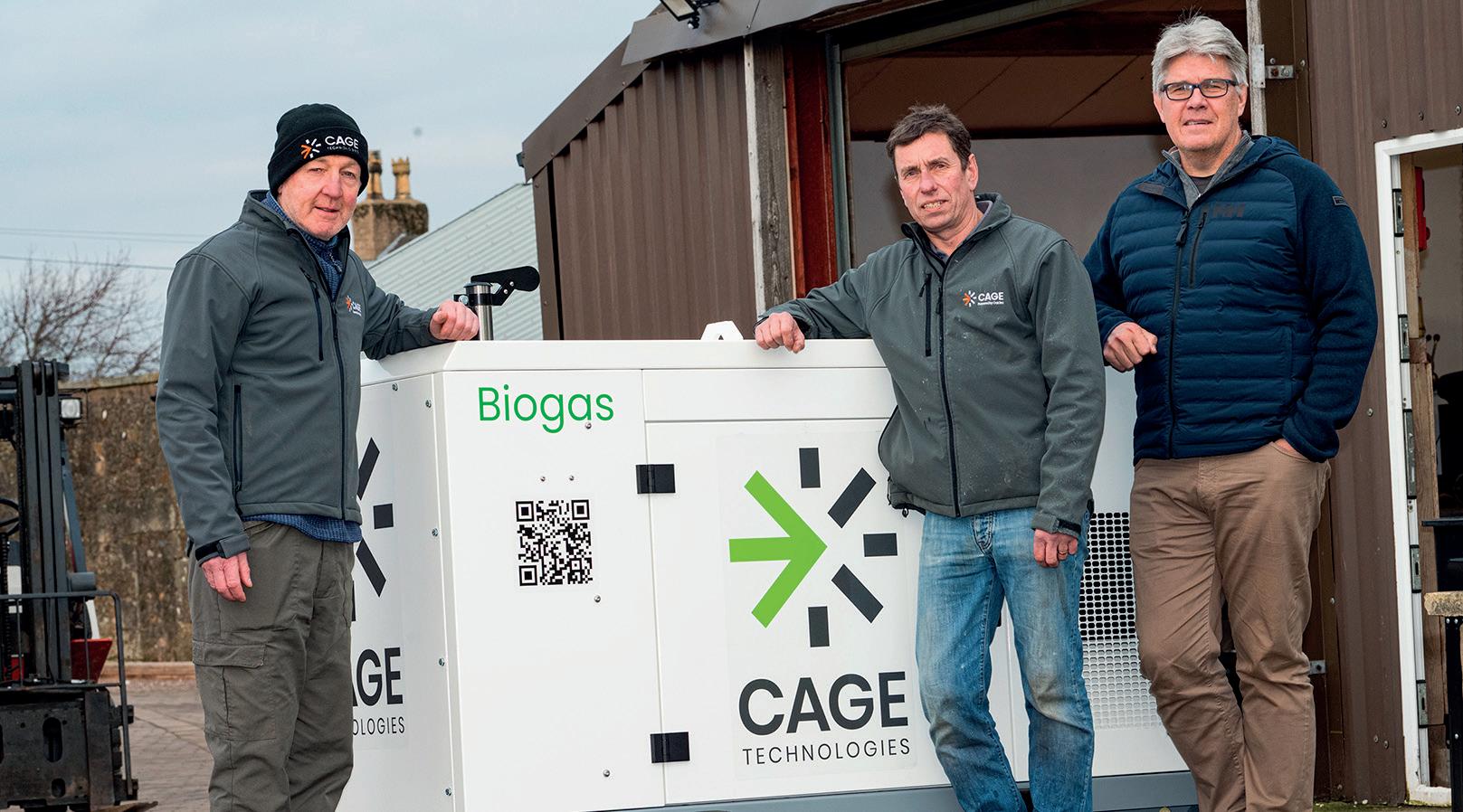
Lancashire-based engineering research and development business CAGE Technologies has developed a technology that enables plug-and-play power from small-scale biogas reactors on-farm, including conventional anaerobic digesters (AD) and covered slurry lagoons.
Chief executive and founder Paul Andrews says the technology uses smart engine systems to convert biogas into energy, allowing farmers to plug a CAGE Technologies generator into a biogas supply and instantly receive electricity.
A er initially designing and developing biogas engine prototypes over 10 years ago for use in emerging economies (as part of a Government-funded project through Innovate UK), ve prototype generators were sent out to small-scale rural dairy farmers in Kenya.
Mr Andrews says that following the success of the rst prototypes, which are still working today a er three years of daily use, their a ention turned to scaling up and developing a generator for use in UK systems.
Acknowledging the opportunity within the UK agricultural industry to utilise methane produced from slurry, Mr Andrews says the technology is ideal for lower-cost, simple systems such as small-scale AD plants and slurry lagoons.
He says one of the biggest opportunities to utilise biogas lies with covered lagoon systems, as the lagoon e ectively acts as a bag full of methane gas.
He says that as the covers on slurry lagoons are only designed to hold in the ammonia produced, in
most cases the methane is wasted and still vents and damages the atmosphere.
erefore, Mr Andrews says the engine technology within the generators has been developed to allow the gas to be fed through a pipe from the lagoon into the generator to generate electricity.
He says the technology uses intelligent systems to control and manage combustion within the engine, se ing them apart from other products on the market.
He adds: “ e gas comes out of the bag and goes through a carbon lter that will take out any acidity in the gas, then it will go through a pipe system to get rid of some of the moisture and then it goes straight into the engine.
“ e same goes for a small AD unit, and our systems work on low pressure so you do not need to put a large pressurising pump in.”
Chair of CAGE Technologies
Ian Cooke says the process is a productive use of an otherwise wasted
methane gas, to create a ‘complete recycling process’.
He says: “Some farmers have AD units where the gas goes into a large generator which feeds into the grid, and they get a fee from the grid. Whereas they would use our generators for local use to power their own farm. e ideal solution for farmers is a captive system on-farm, where they are using their own waste to power their farm – the perfect model being the milking parlour.”
‘Instantaneous’
Mr Andrews says the process is just like turning a diesel-powered generator on; once the gas is there, the electricity is ‘instantaneous’ by the press of a bu on.
He says: “We have done trials in the UK where they literally got a pipe of the gas coming out of the covered lagoon, plugged it into our generator, and it worked.”
As well as producing electricity, the generators can also produce heat to provide hot water.
Requiring a considerably lower investment than a standard AD plant, and li le infrastructure, both Mr Andrews and Mr Cooke believe the technology will be accessible to most farm businesses.
“For farms with a small-scale AD or slurry lagoon with a cover, the economics stack up really well. And an absolute driver is helping dairy companies and farmers meet their environmental targets,” says Mr Andrews.
Other bene ts include an optimised slurry fertiliser le over a er the gas is removed.
Mr Andrews says: “It depends on the processing time and how much gas comes o it, but there is a whole load of developments going on around ge ing the maximum amount of gas out and the best quality fertiliser.”
Currently, the generators are available up to 15kW in size, with an estimated payback time between four and ve years and a lifespan of over 10 years
Left to right: CAGE Technologies’ Paul Andrews, Tom Harrison and Ian Cooke.
PICTURE :Marcello Garbagnoli
THE SMART CHOICE
Feeding NovaPro avoids worry about new EUDR legislation
THE PROVEN CHOICE
SPONSORED CONTENT
For Shropshire farmer Mark Fitton, good silage is a key pillar for farm profitability, but it still has to be produced in a practical way.
A precise but practical approach to better silage
Mark Fitton, who runs The Farms, near Whitchurch, North Shropshire, is laser-focused when it comes to farming profitably for a sustainable future.
Accordingly, making good silage to keep down concentrate costs for the unit’s 250 year-round-calved ProCROSS Swedish Red cross Montbéliarde cross Holstein cows is key.
Average yields on the 160-hectare (400-acre) farm stand at 9,000 litres per cow, with an impressive 4,000 litres/cow coming from forage. With some of the milk going into the powdered market, milk solids also have to be kept high.
Mark says: “There are savings to be made on blends and concentrates by making better silage.
Cows can only eat so much silage, says Mark Fitton, so if you are filling them up with poor quality silage, they are not going to do so well.
“At the end of the day, cows can only eat so much silage. So if you are filling them up with poor quality, they are not going to do so well. We can get up to 5.3% butterfat and 3.8% protein.”
Depending on the season, cows are housed from September to March/April, but the aim is to extend the grazing season as long as possible. The winter total mixed ration comprises grass and home-grown maize silages fed in a 50:50 ratio, plus a concentrate blend, but the grass to maize silage ratio can reach 30:70 in poor grass years.
Mark says: “We have to get the ratio right so we are not buying as much concentrate.”
Grass quality
Achieving maximum grass productivity and quality begins with leys being reseeded at least every five years. Silage is then made using a multi-cut approach.
Mark says: “We cut four or five times a year – four times in 2024 because of the weather. First-cut is the last week of April or first week of May.
“Second-cut is as soon as grass is ready. We go with the weather. You are better off following what the grass is doing rather than cutting routinely every five or six weeks.
“There has to be enough grass there. I am not into getting lawn clippings, but we always cut before it goes to head.”
Four or five grass silage cuts a year are taken, depending on season.
Mowing is carried out with the farm’s own triple mower plus a single mower. The aim is to cut 60ha (150 acres) in six or seven hours while the sun is out to maximise sugar.
Rowing up, harvesting and most of the carting are then carried out by a local contractor, although Mark remains hands-on by helping out with carting.
Mark says: “We mow ourselves and ted ourselves if the grass needs it. If we are in a heatwave we do not need to ted.
“We also run the mowers without conditioners. I do not like smashing the grass. Plus, we can mow quicker and it requires less diesel and horsepower.
“Conditioning does speed up drying, but nine times out of 10 we end up tedding anyway. The normal approach is we mow, then start tedding that afternoon, then row up the next afternoon and harvest the next day.
“It all depends on the weather. The key is having the correct kit. We have an 11-metre tedder and can ted as fast as we can cut.
The winter total mixed ration comprises grass and maize silages in a 50:50 ratio.
“We aim for 28% dry matter [DM], so that if it gets a bit drier we are alright, but sometimes we do not get the choice. If it is sunny and windy, it dries out quickly. The weather is the biggest dictator.”
Minimised loss
Volac silage specialist Peter Smith highlights the importance of wilting grass promptly after cutting, then ensiling as soon as practically possible, in order to minimise losses of sugars and protein in the field.
Peter says: “You lose almost 20% of the sugar in the grass in the first 24 hours after cutting, so the clock is ticking.
“That race against time to conserve nutrients continues once grass is in the clamp. This is where a proven additive comes in.
“By using a quality inoculant which produces an efficient fermentation, you lower the clamp pH faster and therefore better preserve the silage against unwanted bacteria that
The ProCROSS Swedish Red cross Montbéliarde cross Holstein herd averages 9,000 litres/cow at up to 5.3% butterfat and 3.8% protein and an impressive 4,000 litres from forage.
want to feed on the most nutritious parts of its DM.
“We have seen this clearly in research on Ecosyl, where a lower pH is achieved much more rapidly than in untreated silage, and this has been reflected in the treated silage losing less DM and maintaining higher metabolisable energy [ME] and protein contents.
“Ultimately, in independent feeding trials across a range of silages, Ecosyl treatment resulted in 1.2 litres more milk/cow/day.”
A long-term additive user, Mark tried Ecosyl for the first time last season and used it on all cuts. As well as finding it easy of use, he is positive about the results.
Despite a difficult 2024 season for grass growing, a February analysis of first-cut revealed it as being 32.7% DM, 15.5% protein, 68.8% D value and 11MJ/kg ME, with a lactic acid
to volatile fatty acids ratio of nearly 4:1.
Mark says: “I rate Ecosyl for a better and faster fermentation. The proof is in the pudding. If you have used it and it has been good, why change?”
Clamp management
Taking steps to better silage conservation also continues with managing the clamp.
Historically, one tractor plus the loading shovel have been used for clamp consolidation. But after trying a compactor on the tractor rolling the maize clamp last season, Mark is also considering this on the grass.
Clamp walls are resin lined against air ingress, which also saves on plastic side sheets, while a multi-layered sheet, which includes an oxygen barrier layer, is placed over the top, followed by a woven sheet weighted with gravel bags.
At feedout, Mark is a convert to using
a shear bucket to remove silage to maintain a cleaner clamp face.
He says: “With a shear grab you get the part of the face where the tines go in.
“You do not get that with a shear bucket, so it keeps the face fresher. It also only takes silage out about a foot deep, so you work across the face faster. And it leaves the face cleaner at the bottom where it meets the clamp floor.
“We analyse the silage as we change from one cut to the next at feedout, but we find each one can be just as good as the other.”
FAMILY FARM
The Rowe family made the final six in the NMR/RABDF Gold Cup award for 2024 with their 450-cow herd in Cornwall. Wendy Short finds out more about the family’s business.
Dual milking system at Cornish family farm
The Rowe family are no strangers to the NMR/ BDF competition, having also made the nal shortlist a decade ago.
But as Ma hew Rowe, h generation to farm at Tredinnick Farm, near Liskeard, Cornwall explains, this time round the business had changed.
He says: “When the entry form came through this time, we felt that the business had developed to the point that we were ready to try again. Filling out all the required details was a useful exercise, as it made us look at the business objectively. e overview gave us an opportunity to take a fresh look at the management system.”
e family partnership includes Ma hew and his wife, Kathryn, their son Andrew, and Ma hew’s parents, Joseph and Judith. ey operate a dual milking system, with fresh calvers put through robots before moving on to a conventional parlour in the second half of lactation.
Cross breeding
In terms of the cows, they adopted a three-way cross breeding system in 2021, having moved away from the commercial purebred Holstein.
Ma hew explains: “ e programme uses Holstein, VikingRed and Montbeliarde bloodlines. It could take eight or nine years until we see the full
Two of the major reasons for installing robots were staff retention and to improve our own quality of life
MATTHEW ROWE
e ect of the anticipated hybrid vigour, but we are already seeing some bene ts. e rst batch of three-way crosses have recently been born and we are very pleased with their appearance.”
Installed in the cubicles in the summer of 2023, the four robots are used for cows in the rst half of lactation and they move to the parlour therea er.
“Two of the major reasons for installing the robots were to help with sta retention and to improve our own quality of life,” says Ma hew. “Another consideration was that fresh calvers would ideally be milked three times a day, but that would have meant turning the farm into something more like a factory, from our point of view.
“New calvers milk four or ve times a day in the robots, taking pressure o the udder and boosting milk yield, while there can be up to 250 head milked in the parlour at peak times.
“ e average number of robot visits in early lactation is 3.6 per cow, which meets our target. If certain individuals visit too frequently it will deter others, to the detriment of overall yields. Our dual-milking arrangement prevents stale cows from holding up the queue for the robots.”
Ma hew does say there is a slight issue when transitioning cows from robot to parlour.
He says: “Some cows will show mild signs of stress, but they always se le down within a couple of days. Moving to fully robotic milking would limit possible expansion, and the exibility of having the parlour as well leaves the door open for possibly increasing cow numbers by at least 50.”
Heifers are calved at 24 months and the herd has had a 48% conception rate over the past 12 months.
“Fertility is the key to maximis-
A three-way cross breeding system was adopted in 2021.
ing milk production, but performance has never fully recovered since the hot summer of 2023 and it has proved di cult to pinpoint the cause,” he says.
e 324-acre (800-acre) farm is a combination of owned and rented land on the edge of Bodmin Moor. It is situated in a fairly high rainfall area, with most of the soil
a relatively free-draining clay loam over rock. e altitude ranges from 10m (30 feet) to 167m (550 feet) above sea level.
A high proportion of ca le
feed is home-grown, with the 18% protein total mixed ration made up of grass and maize silage, home-produced, crimped wheat and rapemeal. Meanwhile, fodder
Matthew, Andrew and Joseph Rowe represent three generations of farming at Tredinnick.
FAMILY FARM
beet is o ered for nine months starting in September. Molasses helps to bind the ration, which also has added vitamins and minerals.
“Some of the maize is grown under plastic because it increases starch content, compared with conventional production, and the crop yields about 15 tonnes/ acre,” says Ma hew.
“ e fodder beet is added because we nd that it li s milk proteins to the extent that it more than pays for itself. e cows nd it highly palatable and we are only prevented from feeding it all year round through lack of availability in this area. We cannot a ord to sacri ce forage ground to grow fodder beet ourselves.”
Herbal leys
Turnout usually runs from late March to October and the family uses a rotational grazing system.
Some land parcels are in a Countryside Stewardship agreement with one year to run, and they have taken up some of the SFI options, including herbal leys.
“ e rst herbal leys went in last season and some were established as total reseeds, which were quite successful. However, the stitched in crops were not without problems, because the clover, plaintain and chicory struggled to compete with the existing grass species. Hopefully, we will learn more about the best techniques for this farm as we go along.”
e grazing paddocks are electric-fenced and ve cuts of silage are usually taken.
“Grass availability is measured by eye at present, although we are looking into buying a plate meter,” says Ma hew.
“Our silage analyses show an ME of about 11 on average. Over the 2024 season, rst cut was disappointing, but the frequent rainfall that followed kept the grass growing well and it turned out to be a good year.”
e farm’s ‘Cornish Regen’ milk contract with Trewithen Dairy was launched last autumn. Tredinnick is one of several farmer suppliers based within 25 miles of the business, which is based at Lostwithiel.
“Milk is already being sold in more than 300 Tesco stores and the potential premium will depend on milk sales,” says Matthew. “ e cows must have at least 120 days grazing and it also means taking a regenerative soil management approach, driving down CO2 production and encouraging biodiversity.”
Managing a family farm is not
without its challenges, Ma hew comments.
“We have a wind turbine which generates electricity for the farm and for sale to the National Grid. It was put up 12 years ago and although it has been a good investment, we still have electricity bills because it either generates excess energy or falls short of requirements. To solve the issue, 100kW solar panels were installed on the cowshed roof last autumn, to balance out supply.
“Bovine TB is a constant ba le. e herd has just come under restrictions again a er 12 months clear.
“As for future plans, achieving a satisfactory work/life balance is very important to us and to our sta . We take pleasure in milking cows and for me personally, counting down the days to my retirement is the furthest thing from my mind,” says Ma hew.
Farm facts
rCalving takes place in two, 10-week blocks in January and June
rCows have an average yield of 9,500kg at 4.1% butterfat and 3.3% protein
rMilk is sold to Trewithen Dairy, which pays constituents bonuses and has plans to reward producers for regenerative practices. It stipulates a minimum number of grazing days
rThe lower end of the herd is put to a British Blue or Aberdeen-Angus sire
rSome young cattle are sold as stores through the local auction market, others are finished at 21-22 months
rThe finishers utilise the heifer cubicles and only spend one winter on the farm
Four milking robots were installed in the cubicle shed in the summer of 2023.
A high proportion of the cattle feed is home-grown.
Fresh calvers visit the robot on average 3.6 times a day.
NEW ZEALAND VET’S VIEW
In his latest update, New Zealand vet Rory Dean discusses his clients’ herd performance, the country’s changing rural landscape and some of the disease challenges he is seeing.
Change afoot in rural New Zealand landscape
We have seen some great spring growth, and some thick silage crops coming in as we enter summer in Northland.
Cows are holding production as we are seeing strong grass covers across the district. Many herds that rely on some kikuyu grass (a drought tolerant, low nutritive quality species) to feed through the drier months are nding their rye/clover mixes are hanging on, and the di erence in performance is remarkable. Most herds will be able to reach condition score targets for dry o , securing some production for next season.
Long, bright, hot days are accompanied by periodic showers of rain, and while the ground is still dry compared to irrigated country in Canterbury, most of my clients are content. Furthermore, with a midpoint price per kg of milk solids at $10 [£4.48] announced at the end of last year, increased con dence in the rural sector is palpable.
ere is real change afoot in the rural landscape in New Zealand. Land use change is impacting rural communities signi cantly, with
Rory Dean
many former productive farms being turned into huge monocultures of pine trees.
Recently I a ended and spoke at a farm focus group discussion on improving farm e ciency, a particularly hot topic worldwide. e focus was on reducing emissions through environmental measures, genetic improvement of the herd to maintain yield while decreasing cow numbers, and maintaining a healthy, productive herd.
Ironically, a er the discussion group ended, I was given a stark reminder of why this ‘e ciency stu ’ is important to our industry as we will have to produce similar (or more) amounts of milk from fewer cows. On leaving the local conference centre in Whangarei, and while I was on the winding Waiotira back roads, the rst step of a forestry conversion was plain to see. A rolling property that used to milk around 450 cows and rear several hundred more beef calves on a very simple, almost all pasture system, was a suspicious yellow-brown colour.
Slowing my truck, and li ing my sunglasses, my suspicions were conrmed. e whole place had been sprayed o and was do ed with the beginnings of a pine forest.
Rory Dean
JRory is a self-employed large animal veterinarian based in Northland, New Zealand, originally hailing from Dumfries and Galloway. He is a member of the Dairy Cattle Vets committee and also an initial investigating veterinarian (exotic disease) for the Ministry for Primary Industries.
Grazing cows are becoming a sight of the past as many New Zealand farms are switching to pine trees.
I know the farm well, and I was saddened to see the degrading pasture and cow tracks broadened and strengthened like highways for the huge logging trucks. ese plantations have a knock-on e ect for the rural economies all around New Zealand that rely on farmers to survive.
Luckily, our Government has brought in legislation to prevent more of these investment properties being developed on be er land. is has not stopped isolated schools, fuel stations, electricians, accountants, vets and many more feeling the e ects of the barren forestry replacing vibrant, busy farms.
Recently, we have seen many cases of eileria in weaner calves around the district. is protozoa parasite is transmi ed by the NZ ca le tick Haemaphysalis longicornis.
About a month or two a er tick exposure, a ected ca le show tell-tale signs of anaemia that many Northland farmers have become accustomed to. A ected calves are typically picked up as they lag behind the rest of the mob, and begin breathing heavily due to the reduced oxygen carrying capacity of their depleted blood volume.
Unfortunately, there is no speci c treatment, and I always tell my farmers they will get the best results if they leave well alone. While if we are already handling the calf, we may give the ailing beast some supportive therapies, the stress of handling will be far more detrimental than any blood builder injection.
My farmers with experience of the debilitating, blood sucking disease simply o er shade, ensure good water access, increase feed o ered and reduce any stressors until the calf has time to recover.
Discussing these cases with a fellow vet at my practice, we believe we are seeing so many cases this year because of a mild winter and a signi cant build-up of ticks, causing disease on blocks that do not usually have to deal with eileria.
And nally, I have wri en a book, Adventures of a Country Vet, based on my experiences in the UK and NZ. It was released in paperback form and as an audiobook in February. I have decided to contribute a portion of my royalties to Rural Youth and Adult Literacy Trust here in New Zealand, a brilliant charity whose aim is to provide accessible literacy coaching for isolated kiwis.
Investing in staff and their futures can increase employee retention and up output on-farm. Dairy Farmer finds out about Kite Consulting’s new herdsperson course and its benefits.
Herdsperson course a boost for both employer and staff
Henry Wilson returned home to farm in Shropshire nearly a decade ago, having previously worked as a chartered surveyor in London for seven years.
Nowadays he runs Lower Wood Farm near Shrewsbury alongside his parents Jean and Chris. Milking 300 Holsteins on a three-times-a -day system, the farm has bene ted from investment in recent years with modern buildings and machinery. Alongside Henry, three other full-time members of sta and various relief milkers are also employed. Having discussed labour requirements with Kite consultant Helen Evans at their regular meetings, Henry identi ed a skills gap in his sta ng.
With the labour challenges faced by the dairy sector, particularly nding and retaining sta , Henry believed he needed to invest in his existing loyal sta rather than recruiting to ll the gaps.
Helen explained the herdsperson training which Kite has recently started providing to Henry. Although an additional cost to his business, Henry could see the benet this could bring. Having an existing strong relationship with sta member Shannon Campbell, he saw an opportunity to upskill her. He says: “ ere was a skills gap in our sta ng. Mum and dad are at retirement age, although they are both still very actively involved, and we needed someone to step up and take on more responsibility.”
Learn and engage Shannon leaves the farm to carry out her training and is able to learn and engage in the wider business as a result.
Henry continues: “Two sessions in, the course already has brought many bene ts to Shannon as an individual and also to the business
It has been really helpful to have someone to share ideas with and to be able to make use of Shannon in
About Kite’s herdsperson course
JLabour plays a crucial part in the delivery of good technical performance and farm profitability. For this reason
Kite Consulting designed a herd manager training course designed to upskill staff members in a variety of areas, explains Tillie Williams of Kite Consulting.
She says: “By investing in
staff training, employers can reap the rewards of better skilled staff through improved business performance.
“Employers who are willing to invest in their employees will increase the chance of retaining good employees within the business as well as motivating and empowering them to deliver for the business.”
that way. It has been a great investment and I think she feels empowered as a result.
“Since Shannon has undertaken the training, she has taken on more responsibility including some of the day-to-day management of sta . I always do the rota but Shannon will sort out the job sheets and follow
The course is designed to cater for all systems, with training taking place over a 12-month period, covering eight modules delivered by specialist consultants covering topics from fertility to staff management. Training is aimed at anyone with the potential to become a herd manager, whether they are family members or employees.
up with sta to ensure jobs have been completed and to the desired standard.
“I now also have a third party who I can run ideas past. e last training session Shannon a ended was all about nutrition. Now, she is included in our regular meetings with our nutritionist and we can have be er discussions as a result.”
Henry comments he has been able to be more productive in this new way of working.
He says: “I have been on several management courses over time. I go home to the farm and try to implement what I have learned but a er some time it loses momentum and we revert to as we were before.
“Having put Shannon through the course, it means she can see what I have been trying to achieve in the past and is now in a position to implement it.”
The 300-cow herd at Lower Wood Farm is milked three-times-a-day.
The employee
JNot from a farming family, Shannon studied a level three diploma in agriculture at Moulton College, Northamptonshire, with a niggling feeling farming might be something she enjoyed.
Initially meeting Henry while working as a milk recorder in the area, Shannon asked if he had any milking work available and so started their working relationship. Eventually Shannon began to work for Henry full-time.
Having now been on the farm for five years, she returned to work at Lower Wood following maternity leave when there was a herdsperson vacancy, which Shannon approached Henry about and subsequently filled.
She says: “When I started working for Henry full-time, I was just milking. On taking on
the herdsperson role, I moved to doing one of the three milkings each day, managing herd health, looking after youngstock, scraping out and using the UNIFORM-Agri herd management software.”
Diverse mix
When Henry approached Shannon about undertaking the herdsperson training, she had some reservations.
She says: “I was a bit concerned about what might be expected of me, particularly as I am not from a farming background. But those feelings quite quickly disappeared when I went to the course’s first session. There was such a diverse mix of people there, and everyone was very supportive and welcoming.”
Shannon has been able to bring her learnings back to the
farm to be put into practice. She explains: “Our first session was all about staff management and as a result I think we do this better now. We have weekly staff meetings and make good use of whiteboards around the farm as well as protocol signage.
“There is a better flow of communication all round. Henry and I work a lot better together
following the sessions and are more organised. It always felt like we were on the back foot before but now we are on top of things and I am more confident in deciding when and how we are going to do certain tasks.
“Generally, I feel more motivated in my job and enjoy playing a role in being able to push the herd forward.”
A new era of forage
Shannon Campbell and Henry Wilson.
As the financial year comes to an end, Kingshay senior farm services manager Kathryn Rowland shares industry trends from the latest dairy costings report. Dairy Farmer reports.
Keeping tabs on milk from forage a crucial way to boost margins
Farmers can improve their e ciencies and margin over purchased feed by focusing on making more milk from forage and shopping around for bought-in feeds, particularly supplements or minerals at is the key message from Kingshay senior farm services manager Kathryn Rowland, who advises milk from forage gures should be used as a key indicator of a herd’s feed e ciency.
Trends identi ed in Kingshay’s
latest dairy costings report –which analysed 1,068 conventional herds and 83 organic herds in 2024 – highlight where margins can be improved.
“In the year ending 2024, it was clear to see that across the year there was a signi cant dip in milk from forage gures compared with the previous ve years,” says Mrs Rowland.
“ is is sadly evidence that challenging weather across the previous year had impacted forage quality, which in turn made
a big di erence to yields in herds up and down the country.”
Market demand
To ll the void made by the drop in availability of quality forage, Mrs Rowland says the costings report shows that market demand for feed has increased, with concentrate prices per tonne lower than last year.
“ e milk price to feed price ratio was low in 2023 at 1.17, but now we have year-end gures, it has risen to 1.30 as milk prices
are higher and feed costs having dropped by 7.1% in the year,” adds Mrs Rowland.
“As a result, we saw a gure for margin over purchased feed (MOPF) per cow rise by 1.9% in 2024.”
She says although feed costs have dropped, it is still important to keep a close eye on MOPF gures and regularly shop around for feed.
“Given overhead costs such as labour and energy do not show signs of coming down, you want
The figure for margin over purchased feed (MOPF) per cow rose by 1.9% in 2024.
Kathryn Rowland.
to get the best bought-in feed price while you can and fix contracts for the year ahead,” says Mrs Rowland.
“It is really important to be looking at the efficiency of the herd – so we also recommend monitoring milk from forage figures on a monthly basis and using that data to make sure you are optimising your herd’s digestive efficiencies.”
She adds: “Given the milk price [at the time of writing] is creeping up and the new financial year is fast approaching, this is a useful point for farmers to be thinking about ‘controlling the controllables’ and looking at where they can make some tweaks to help
Vet comment
JMatt Berriman, senior clinical director and vet at Rosevean Vets in Cornwall, part of the VetPartners group, advises how dairy farmers can enhance their MOPF and milk from forage by focusing on herd fertility, mastitis reduction, and lowering replacement rates in collaboration with their vets.
“Fertility is the most significant factor influencing margin over feed, second only to forage quality and intake,” explains Mr Berriman.
“You want to aim for a 365-day calving interval because in extended lactations you get lower yields.
“A 365-day calving interval will maximise lifetime
production, reduce input costs, and help benefit the bottom line.
“It is well worth looking at how
production as it avoids having long low yielding tails to lactations.”
To help achieve this, Mr Berriman says farmers can work with vets to develop a fertility protocol outlining how to get cows cycling and served quickly.
“Getting cows back in-calf as quickly as possible after they have calved, with intervention programmes and management changes, is key alongside working with the nutritionist to minimise negative energy balance at calving,” he adds.
He says mastitis control is another way of improving MOPF, and he recommends working with the farm vet to develop a mastitis analysis and control programme.
you can be improving feed efficiency by working with vets and advisors to improve health and
“High somatic cell count cows have slightly less milk, so keeping cell counts down will help increase margin over purchased feed,” explains Mr Berriman.
Lastly, Mr Berriman says working to reduce replacement rates will also improve MOPF.
“Heifers have lower yields so if we have a lower replacement rate, there will be fewer heifers and overall milk production will go up – meaning better feed conversion,” he explains.
“Fertility and mastitis –alongside lameness and Johne’s – are key reasons for culling cows, so getting these under control will reduce your replacement rate.”
fertility – so yields are optimised without having to buy in additional feed.”
As we head into spring, we take a look at how best to manage animal health around turnout and also focus on mastitis testing, lameness control and calf health.
Turning cows out to grass gradually is key to prevent the risk of sub-acute acidosis and impacts on production. Katie Fallon reports.
Why turnout should be a slow transition
As we head into spring and a ention turns to grazing, it is all too tempting to ditch the winter routine and turn cows to grass with immediate e ect.
However, Debby Brown, veterinary technical manager at Dugdale Nutrition, says turnout should be a gradual process and prepared for ahead of time.
Mrs Brown advises turnout should be a slow transition to allow the bugs in the rumen to adapt to the changing diet and re-
duce the impacts on productivity. While cows will have likely been on a grass silage-based diet over the winter months, Mrs Brown says it is very di erent to grazing grass, which is potentially high in nitrogen and low in bre.
She says cows which are turned out to grass straight away, without giving the rumen bugs time to adapt, could be at risk of developing sub-acute acidosis, particularly if the grass is lush. However, there is also the risk of reduced milk yields at turnout, if grass is not optimal.
Mrs Brown says: “Most people will see a li in milk when they rst turnout because they go from something that is maybe a bit stemmy and low in protein and energy, to something that if they have got the grass right, should be of higher nutrient value.”
She adds: “ e key is that you are ge ing the best grass, while there is still leaf there and it is going to have the highest digestibility.”
Daylight
To achieve a gradual transition, Mrs Brown advises that for the
rst week, cows should graze for a couple of hours in the morning before being brought back in for a ernoon milking. She says: “As daylight increases and as grass in front of the cows increases, increase the time that they are going out and increase the grass availability.”
Depending on grass growth and grass management in early spring, Mrs Brown says farmers can then work out how much bu ering diet is required, what they are going to be short of, energy or protein wise, and what
Bugs in the rumen need time to adapt to the changing diet when cows move to grazing, says Debby Brown.
PICTURE : John Eveson
are they going to have an excess of that needs to be balanced.
In the case of a good spring, where the grass is ‘nice and lush’, has been well fed with fertiliser, and is high in nitrogen, Mrs Brown advises the amount of protein within supplementary feed may need reducing.
Similarly, the amount of energy in the diet may need to increase depending on the type of energy being provided. Mrs Brown says: “Do you need something to speed up the rumen bugs so that they can digest that rapidly digestible grass? Or it might be that you need a bit more digestible bre.”
Gentle
Mrs Brown says three weeks should be allowed for any dietary changes, as grass behaves di erently within the rumen compared to a grass-silage based diet. She says: “ e gentler you can make that transition the less of a negative impact they are going to see.
ANIMAL HEALTH
ink ahead and give the cow a chance to respond.”
She adds: “If a farmer sees a li at turnout, they are usually doing something right. But if they do not see a li then they need to seriously re-think that transition.”
Alongside preparing the rumen, Mrs Brown says foot health should also be considered at turnout. She says while lameness pressure will likely reduce while cows are
grazing, it will not disappear completely. “Is there as risk of stones, what is the access like to elds, have you thought about tracks?”
Mrs Brown advises walking tracks which have been regularly travelled over winter, to check if any remedial work is required to reduce the risk of stone damage once cows go out.
She says: “Do not forget about foot health. It is still there, but
you just need to consider and adjust your management practices for the summer.”
Parasite control should also be considered ahead of turnout and while most of the risks are present later in the grazing season, if issues such as lungworm are a risk factor on-farm, ca le should be vaccinated before turnout where possible.
Consideration should also be taken to the herd’s magnesium requirements when grazing. Mrs Brown says: “In fast growing grass the uptake of magnesium is low so there is the risk of grass staggers. It is worse if the grass is high in potassium, so if people have put a lot of slurry on early in the season the risk will be greater.”
She says there are several ways to e ectively supplement magnesium and prevent grass staggers, including increasing magnesium levels within compound feed, adding magnesium akes to water troughs and o ering high magnesium buckets.
Debby Brown
ANIMAL HEALTH
The stress of dietary and social changes at turnout can have a significant impact on cow productivity. Dairy Farmer learns how to achieve a gradual transition.
How to smooth the transition at turnout
Planning subtle changes to a cow’s diet can help with the transition to spring grazing, minimising stress and the associated productivity dips, says Hefin Richards, of Rumenation Nutrition Consultancy.
He explains there are a number of ways to improve grass utilisation, optimise rumen function, and safeguard milk production.
Hefin Richards.
Support the rumen
JAny form of forage change, whether switching to maize, wholecrop, or grass, will challenge the rumen, says Mr Richards.
However, there are practical ways in which producers can support rumen health and function at turnout.
“The move from a high-fibre, fermented forage-based winter diet to lush, protein-rich spring grass presents a major change for the rumen population; suddenly, they are dealing with something very different,” says Mr Richards.
He describes the rumen microbiota as a “constantly evolving population” which is not going to adapt overnight.
“Rumen health and efficiencies will be challenged, affecting how well the grass can be utilised to produce milk, so it is important to consider what you can do to promote rumen function,” adds Mr Richards.
Alongside a gradual introduction to grazing, he says live yeast-based supplements are increasingly used on-farm to help smooth the transition.
“Supplements like live yeast
Separate groups in advance
JEffective grazing management requires strategic grouping – particularly for high yielding herds where a proportion of the herd may graze while the rest remain housed.
Mr Richards emphasises the importance of pre-grouping several weeks before turnout to prevent additional stress.
“We want to avoid multiplying the stress of a major diet change by making sure group changes do not happen at exactly the same time as turnout,” he says.
As an example, he says higher yielding, all-year-round
help manage the turmoil in rumen function when you make major feed changes, stabilising and supporting the microbial population, so they can keep degrading fibre efficiently and improving feed utilisation,” he explains.
On-farm trial evidence from Lallemand Animal Nutrition
calving herds are increasingly only turning out a proportion of their cows – usually mid- and late-lactation cows.
“In this situation, it is key to form that group well in advance of turnout, so they have the chance to get settled and establish their new social group while they are still on consistent winter feed,” says Mr Richards.
“Then when conditions are good enough for grazing, the group is ready to go and can be turned out for a few hours a day at very short notice, and then grazing time increased as required.”
shows feeding the live yeast Saccharomyces cerevisiae CNCM I-1077, known as Levucell SC, during the grazing season, improved rumen efficiency – resulting in an average milk yield increase of 0.5 litres per day, with higher butterfat and protein levels.
Be flexible on turnout date
JWhile a well-considered plan for turnout is important, sticking to a historical planned date every year can pose problems, especially given the increased seasonal variability facing farmers, explains Mr Richards.
“One of the traditions a lot of people have is a certain turnout date in mind, but the unpredictability of recent springs tells us that has gone out the window,” he says.
“You have got to have flexibility and a plan B, because grazing is so dependent on weather conditions and obviously grass availability.”
Delaying turnout until a certain date can lead to missed opportunities and sudden, disruptive changes for the cows that exacerbate stress, he says.
“If you are holding off, because you ‘never normally’ turnout this early, even if conditions are good, then panicking because there is loads of grass available and throwing cows out all day, this is a major change very quickly,” Mr Richards explains.
“It is much better to get the cows out earlier, for a few hours a day, in a more gradual, planned way, and give them a chance to adjust to this major diet change.
“This way, you are also managing the grazing wedge, and encouraging staggered regrowth instead of a sudden explosion of grass that can not be utilised.”
He adds: “If the weather turns bad, do not be afraid to bring the cows back in for a few days – this is better than
Fine-tune buffer feed
JBuffer feeding is another valuable way to support rumen function through turnout, helping to smooth the transition to a highly variable grass diet.
Mr Richards says buffer feed rations need to be adapted to cows’ nutritional needs.
“If turning cows out for four to six hours a day, we can expect them to consume 25-30% of their total intake from grass, so the remainder of their diet needs to take that into account,” he explains.
“Considering that spring grass is likely to be high in protein, yet low in fibre, you do
trying to muddle through and causing additional stress, lost performance, and damaging grazing.”
not want to be overfeeding protein in the buffer.”
He recommends regular grass analysis throughout the grazing season and says this is ‘money well spent’.
“Grass quality is going to vary through the season and between fields,” says Mr Richards. “It is important to try and balance out that variability and grass analysis gives you a heads up on when the grass protein is high, for instance, so you can cut the protein in the feed or parlour compound.”
He says farmers should also be mindful of the risk of hypomagnesaemia –staggers – at turnout. “Adding an appropriate level of magnesium can help mitigate the risk of magnesium deficiency, which is often fatal,” says Mr Richards.
ANIMAL HEALTH
Clostridial disease can pose a high risk to cattle health, especially during the grazing period and, while case numbers are relatively low in general, infection is usually fatal. Wendy Short reports.
Preventing clostridial disease at grazing
Clostridial bacteria are ubiquitous in the soil, where they can survive for many years, says vet Claire Walker, who works for e Livestock Partnership vet practice, based in Petworth, West Sussex. She says: “Most clostridial organisms can also be found in the gut of healthy ca le and they may not cause any overt disease.
“However, they can then be passed via the faeces, where they have the potential to re-contam-
inate the soil. Disease in ca le is triggered by various factors which damage body tissues and can activate latent spores.
“ is can be followed by very rapid multiplication within the animal’s body and the toxins that are produced can cause death within just a few hours.
“ e response to antibiotic treatment is generally poor.”
A wide range of clostridial bacteria can a ect ca le health and she believes that conditions may be underdiagnosed.
“Clostridial infection is not always easy to con rm, even with laboratory testing,” she explains.
“ e clinical signs vary, but the symptoms can be severe and the prognosis is unlikely to be optimistic.
“Many animals are simply found dead in the eld or at housing.”
Two clostridium species which present risk to ca le at grass are Clostridium botulinum, which causes botulism, and Clostridium tetani, or tetanus, she states.
“ ese two organisms can be found in the soil and the long survival rate of the associated spores poses a challenge,”she says.
Contaminated
“ e main preventative measure for botulism is to avoid spreading poultry li er in the eld, because it can be contaminated and the bacteria will thrive in the decaying material.
“Due to the persistence of clostridial bacteria, elds which have received an application of poultry li er even many years previously should not be considered as safe.
“Ca le can disturb the soil in many di erent ways and their
actions can uncover bare soil which is carrying the infection.”
Tetanus also comes with an increased risk during the grazing season and this risk is heightened when an animal has a wound, she adds.
Infected ca le may show the classic ‘lockjaw’ symptoms, with general sti ness, a raised tailhead and a reluctance to move. Most will not regain full health.
Ms Walker says: “Tetanus infection relies on the bacteria entering a break in the skin of some description and that can occur when ca le su er minor accidents in the eld, or they have recently been castrated.
“ ey can also get scratched on barbed wire or tread on a foreign object.
“ erefore, it is worth checking the elds before turnout, to make sure that fences are in good order and any debris has been removed.
“Tetanus is also a risk to housed ca le if the pens have not been properly maintained. Other pinch points for tetanus risk are any type of surgical wound and, therefore care should be taken to maintain a clean environment when dehorning calves, for example.”
Claire Walker
A wide range of clostridial bacteria can affect cattle health.
Fallen stock with con rmed or suspected infection should be kept away from the herd and collected as
Clostridial infection is not always easy to confirm, even with laboratory testing
CLAIRE WALKER
soon as possible, although the diseases are not passed from one live animal to another, she points out.
And Ms Walker adds treatment options are limited.
Cost
“Antitoxins are administered to humans for botulism and tetanus and they can be a empted for ca le, but the treatment is o licence and the cost may be prohibitive,” she says.
“Antibiotics for ca le can only have a chance of being e ective if issues are identi ed early and the
di culties with making a rm diagnosis complicates the issue. Cases are o en euthanised on welfare grounds.”
Mrs Walker says she is an advocate of clostridial disease vaccination.
“ e ca le vaccination to cover several of the most high-risk clostridial diseases is comparatively cheap, at about £1/dose,” she says.
“It provides six-months’ protection, so it would be given at the start
Blackleg
JBlackleg, another type of clostridial disease, is caused by Clostridium chauvoei.
Ms Walker says: “These clostridial spores will enter through skin wounds or contaminated equipment and the spores can be activated when the host undergoes muscle trauma, such as bruising from bulling behaviour.
of the grazing season. e vaccine is administered in two doses, six weeks apart and it will be fully effective about 14 days a er the nal dose.
“If one animal is lost to clostridial disease, the cost of vaccination would have been covered for a large herd.
“Nevertheless, vaccination should only be considered along with the practical precautions to avoid initial infection.”
“Affected cattle are often found dead, but they can also demonstrate high temperature, muscle stiffness and pain.
“Postmortem examination will reveal swollen or necrotic muscle tissue.
“Treatment with penicillin may be successful, but like the other clostridial diseases, only if an early diagnosis is made.”
BOLUSING YOUR ADULT CATTLE?
ANIMAL HEALTH
A new technique for identifying mastitis infection pathogens in milk samples within one to two hours could be commercially available by the end of this year. Wendy Short reports.
Significant step forward in mastitis testing
The research project for RapiPath mastitis testing has been in the advanced testing stage for the past 12 months, and vet Prof Jonathan Statham says the test will be available in two options: the rst is designed for a veterinary practice laboratory or a large dairy unit, and the second is portable and can be taken from farm to farm or stay on one unit.
e cost is expected to be comparable with the standard mastitis bacteriology test, which has a turnaround time of at least a couple of days, says Prof Statham of FT Solutions, who is one of the research project leaders.
“ e RapiPath technique involves taking a milk sample from a cow with suspected mastitis
on-farm using the usual hygienic method,” he says.
“With the vet practice-based option, the sample is taken to the farm vet, or to the nearest laboratory with RapiPath equipment. It could also be collected by a technician.
“In the future, we may see the portable equipment being kept permanently on farms, although it is still under development.
“ e results will come through within a couple of hours and therefore they could potentially be available before the end of that milking, and certainly in time for the next session.
“ e system can currently identify 16 di erent pathogens, and also provide veterinary advice and guidance on treatment options through the smartphone-enabled reporting
RapiPath will help reduce the unnecessary use of antibiotics as a treatment option by identifying these cases early
JONATHAN STATHAM
platform, VetDx. is new technology could have a very positive impact on several industry challenges, including enhanced animal welfare, targeted antibiotic usage, and a reduced risk of product resistance development and milk tank residue issues.”
e RapiPath rapid molecular test project began in 2019 and the technology is currently being trialled on dairy farms in Yorkshire.
e mastitis testing process uses two physical stages in the practice laboratory, followed by so ware-supported interpretation. It works in a similar way to the standard, laboratory-based polymerase chain reaction molecular test by recognising the DNA of mastitis pathogens in milk.
Analysis
Prof Statham says: “ e sample goes into the extraction machine for automated DNA extraction and is then transferred to a reader, where a detailed analysis is conducted.
“It works in conjunction with the VetDx so ware programme, which shares the results interpretation via mobile phone or a personal computer, along with the treatment guidance led by the herd vet as a shared system.
“At present, the results do not indicate disease severity. e system is designed to be used
alongside the usual observation of a range of clinical signs made by a skilled stockperson.”
He also cites some of its potential advantages.
“In some cases, a cow may show signs of mastitis on visual presentation, but in fact her immune system has already overcome the infection. e milk clots are simply a response to in ammation and tissue damage post-infection.
“ erefore, it would be unnecessary to give antibiotics while awaiting a standard bacteriology test result. e be er solution would be to use a non-steroidal anti-in ammatory product for pain and in ammation relief,” he says.
“A cow which has previously received antibiotics following repeated mastitis infections can be vulnerable to subsequent yeast and fungal infections, because antibiotics will also disrupt the population of ‘friendly’ bacteria.
Test results will come through within a couple of hours and therefore could potentially be available before the end of that milking.
PICTURES : John Eveson
ANIMAL HEALTH
“RapiPath will help to reduce the unnecessary use of antibiotics as a treatment option by identifying these cases early. is compares favourably with having to wait for standard test results, which can lead to a degree of guesswork in the initial treatment decisions.”
Prompt identi cation of the causal pathogen can also help to pinpoint the bugs which are likely to respond well to a narrow-spectrum antibiotic, he adds. is can reduce the risk of resistance development, which has been linked to the inappropriate use of broad-spectrum products.
Portability
e portability of the RapiPath cartridge that is under development means that it could be kept permanently on-farm for herds of all sizes in the future, says Prof Statham.
e technology rst came to the a ention of the research
THE MONO CALF BUILDING
Feed barriers with built in access gates to make calf rearing easier
group via its use in plant disease identi cation in the eld, and it could be extended to other uses for the bene t of ca le health.
“A range of tools are needed in the toolkit for mastitis management. Detailed laboratory investigation will o er more speci c and comprehensive testing, and this will remain very important.
“However, standard bacteriology-based testing to detect the presence of mastitis pathogens in milk relies on the sample being ‘grown’ in a laboratory se ing, and it can take two or three days for the results to become evident.
“By that time, the infection could have advanced, particularly if the treatment has not been targeted towards a speci c pathogen. Alternatively, antibiotics may have been used unnecessarily.
“RapiPath represents a signi cant step forward in mastitis testing,” says Prof Statham.
Galebreaker Roller Screen and Teemore Sheeted Doors allows each pen to be accessed individually
Plastic Panels to prevent cross-contamination between batches.
Farmers are being warned that bluetongue shows no signs of slowing and are urged to have proactive discussions with their vets to assess risk factors. Ellie Layton reports.
Vets say plan ahead to keep bluetongue at bay
In a recent AHDB webinar introducing the ‘Ba le Bluetongue’ campaign, industry advisers warned that bluetongue bears a risk of becoming a countrywide threat, a er looking at disease trends in Europe.
Speaking on the webinar, Gareth Hateley from the British Veterinary Association said disease prevalence was a fastchanging situation.
But Mr Hateley said that unlike in 2007 and 2008, when bluetongue was rst seen in the UK and voluntary vaccination was introduced, the industry now had a competent guide to help farmers make the decision on whether they should choose to vaccinate their livestock.
Mr Hateley said: “ e new Ba le Bluetongue campaign is something that will help veterinary and livestock health professionals and guide farmers through the ongoing bluetongue situation.
“ e campaign has been launched by AHDB and Ruminant Health and Welfare in col-
Vaccination is the most effective tool we have to protect the national herd and flock against BTV-3 FIONA LOVATT
laboration with key veterinary and industry associations.”
Both England and Wales have given licenses for three BTV-3 vaccinations, being eligible for use in both countries from March 1.
Dr Amey Brassington, senior animal health and welfare scientist at AHDB, said: “By working through the new resource produced for the campaign with their vet – a vaccine decision maker tool – farmers can understand their BTV-3 risk to then defend their stock by vaccinat-
ing the right animals.
“Farmers are encouraged to develop farm speci c ba le plans with the aim to help increase the level of vaccination for high-risk stock to provide some level of defence against the disease on farms.”
rough the campaign, farmers are being encouraged to:
r Assess their risk.
r Protect their business.
r Defend their stock.
e seasonal vector low period is expected to end in midMarch and vet, Fiona Lova , of Flock Health Limited, said it was important to keep an eye on the situation as the weather warms up.
She referenced the situation elsewhere in Europe.
She said: “ e disease’s e ect on Germany is an example of how quickly the BTV-3 situation could turn. e country’s
number of cases grew by 1,333 within a month from July, 1 to August 1, 2024, and a further 6,342 by September, 6.
“In the Netherlands, 55,000 sheep died from BTV-3 in 2023 and a further 65,000 in 2024, reducing the national ock by 20%.
“From these gures, you can see how seriously this disease must be taken.
Prevalence
“Before this situation, Germany had a similar disease prevalence to us and, despite the UK being an island, this is not enough of a protection to rely on when these could be the consequences.”
Ms Lova said the gures spoke for themselves, and this was why she was advising farmers to discuss the vaccine with their vets.
She said: “We do not know
Farmers can use a vaccine decision maker tool to understand their BTV-3 risk to then defend their stock by vaccinating the right animals.
PICTURES : Marcello Garbagnoli
all the answers, but we do have these facts.
“Every farmer has to make their own decision and it is likely this will be di erent for every farmer and their stock.
“Vaccination is the most effective tool we have to protect the national herd and ock against BTV-3, but it requires action now.
Bluetongue facts
rBTV-3 continues to pose a significant threat to both cattle, sheep, goats and camelids with potential impacts on animal health, productivity and trade
rAs there is no treatment for the disease, slowing its spread through vaccination and restricted movements in affected areas remains the
“At present, vaccination is only licensed for use in England and Wales from 1 March, however we continue to encourage vets and farmers across the UK to make sure they are aware of how BTV-3 is transmi ed and take caution to protect their herds or ocks by following evidence based on farm midge control tactics.”
best defence
rIf you suspect bluetongue, you must report it immediately by calling 03000 200 301 in England, 03003 038 268 in Wales or your local Field Services Office in Scotland
rBluetongue is a notifiable disease. This means if you do not report it, you are breaking the law
ANIMAL HEALTH
Research continues to improve the formulation of milk replacers bringing significant benefits. Dairy Farmer reports.
Calf milks continuing to evolve
Today’s calf milk replacers are substantially di erent to those used 20 years ago and they are continuing to evolve to be er meet the requirements of preweaned calves, said Georgina omas from Trouw Nutrition.
Speaking at the LifeStart Calf Innovation Roadshow, sponsored by MSD Animal Health, SCCL and organised by Trouw Nutrition, she emphasised that science has allowed a be er understanding to be developed of what is required in milk replacer formulations.
She said: “ e objective when formulating a calf milk replacer should be to make it as close as possible to cows’ milk which is the gold standard.
“Bovine milk is a very complex feed and nothing is in it for
The objective when formulating a calf milk replacer should be to make it as close as possible to cows’ milk which is the gold standard says Georgina Thomas.
the sake of it, so the closer milk replacers get to replicating the nutrients and the balance of nutrients, the be er for the calf.”
Ms omas explained that most milk replacers have lower protein and fat content than cows’ milk, but higher lactose (Fig 1).
Increasing fat in milk replacer should be a priority as fat is the highest energy component of milk and increasing fat will increase ME/kgDM.
And she said, the label on the bag will give some basic information but not the full picture.
Low fat and protein intakes will mean lower levels of amino acids and energy which will compromise growth and development.
Concern
High bre or high lactose should be a cause for concern, especially if bre is greater than 0.05%.
“We also know that calves have the capacity to readily consume more than eight litres/day of milk replacer,” she said.
“Higher volume intakes combined with higher energy content due to higher fat, improves overall energy intakes, which supports be er developed and more robust calves at weaning.
“ e latest Trouw Nutrition Lifestart research has focused on unlocking the potential of
fat content in milk replacers, revealing signi cant bene ts from achieving the optimal balance of fa y acids within the fat.”
e fat in bovine milk contains more than 400 di erent fa y acids, making it one of the most complex fats in nature. Each fa y acid plays a speci c role, and Ms omas explained that fat composition was crucial to calf development.
“When we compare whole milk with the vegetable fat blends typically used in calf milk replacer, there are some signicant di erences.
“Vegetable based fats are missing the shorter chain fa y
acids, meaning the overall fat is unbalanced and de cient compared to cows’ milk.”
Ms omas said that these shorter chain fa y acids bring multiple bene ts to the calf. Most signi cantly they play a key role in the development of the rumen and gastrointestinal tract, helping make calves more resilient and less prone to scours.
e challenge has been how to supplement milk replacers e ectively as the two common supplementation methods both have drawbacks, a ecting palatability and having a strong smell.
Ms omas explained that a
Georgina Thomas
Fig 1. Typical macronutrient profile
new patented fatty acid product, LactoFat Pro successfully overcomes the issues of inclusion, meaning milk replacers
containing it will provide a more complete fatty acid profile.
She said: “Trials confirm the benefits of feeding a fatty acid profile which more closely resembles the fat in bovine milk.
“The biggest difference is in the development of the gastrointestinal tract, where the villi, the absorptive area in the gut, were longer and more developed. This means there was a bigger surface area for absorbing nutrients.
“The improved gut integrity plays a vital role in protecting calves against scours. Calves fed the better-balanced fatty acids showed a reduce incidence of scours compared to a traditional Energized Calf Milk (Fig 2).
“These calves required fewer treatment days reducing costs and the stress on calf rearers and had a reduced risk of mortality.
“Lactofat Pro has also been shown to improve rumen development meaning calves were
Fig 2. Incidence and severity of diarrhoea
better placed to move onto solid feed, consuming 26% more starter feed over the milk feeding period when fed milk replacer ad lib.”
She said the combination of a higher intakes of a higher energy milk replacer and greater solid feed intakes combined to increase overall energy intakes for faster growing, stronger and more robust calves.
“The opportunity to improve calves’ resilience to scours should not be under-estimated,” she said.
“Furthermore, the better the gastrointestinal tract develops in young calves, the better placed they will be to thrive and hit target calving age. This new research has demonstrated the key role of milk replacer formulation in achieving these goals.”
ANIMAL
A Lancashire dairy farmer has significantly reduced calf scours, mortality, and antibiotic use by vaccinating cows in late pregnancy against cryptosporidium parvum. Dairy Farmer reports.
Lancashire dairy cuts calf scour losses and use of antibiotics
The cryptosporidium parvum parasite was identi ed as being the cause of scour in David Bradley’s youngstock four years ago.
David, who farms at Derby Hill Farm, Weeton, Preston, believes this pathogen may have entered his herd a er purchas-
ing second-hand calf hutches.
C. parvum eggs can persist in bedding, soil, water, pasture, on equipment and even be transmi ed via humans. Infected calves can shed up to one million oocysts per gram of faeces, with as few as 17 oocysts needed to cause clinical disease.
David explains the rst signs
of infection were a loss of appetite, a change in faeces and a drop in growth rates normally occurring in the rst 10-14 days. Calves over 14 days old did not seem to be a ected.
“It was di erent from normal scours,” says David, who milks 250 cross-bred cows in partnership with his brother, John.
rIntroducing rubber-ma ed calf pens for easier cleaning.
rSterilising stomach tubes used for feeding colostrum at 90degC with Deosan D90 cleaning solution.
rOperating an all-in, all-out system for individual calf hutches.
rWashing calf jackets.
“We had a history of great growth rates exceeding 1 kg/day liveweight gain as normal and almost zero mortality, so the rst sign that things were not right were a dip in growth rates to below 0.8 kg/day and, in extreme cases, the occasional loss of a calf, which is literally unheard of on our farm,” he says.
David and his herd manager, Stephen Hindle, worked closely with the team at Ribble Vets to identify the cause, and develop ways to reduce the parasite’s impact on the farm.
Key changes
e farm introduced stricter hygiene and disease control measures, including:
rReplacing a sand-based calving pen with a concrete oor to allow for a stringent wash-down procedure, including foaming and disinfecting a er every calving.
David says removing the sand bedding made a di erence.
“When the sand was fresh, we would not see as many problems, but as soon as 10-15 cows had calved through the pen, the problem would are up. We assumed the calving pen was a source,” he says.
Newborns
At its worst, the farm had to treat every newborn calf with paromomycin from birth until seven days old, costing around £60 per calf.
David says: “Not only was it a big cost, but it was not solving the problem – it was just masking it.
“Also, with Red Tractor clamping down on routine antibiotic use, this was not a viable long-term solution.”
Although improved biosecurity helped to lower the number of cases, the parasite infection
An all-in, all-out system for individual calf hutches is now in operation.
remained a persistent challenge.
Ti any Horn from Ribble Vets explains that even with the best hygiene, C. parvum is di cult to eradicate due to its resilience against extreme temperatures and many disinfectants.
“Cleanliness and good colostrum management help provide the foundations for be er disease control. But it is
About Derby Hill Farm
JDerby Hill Farm has been a working Lancashire farm since 1850 and has been in the Bradley family for five generations.
Brothers David and John took over from their father, George, who passed away at the age of 97 in October 2024.
All milk is processed on-site for sale through doorstep de-
a hard parasite to eradicate as it can survive for many years,” she says.
However, the launch in the UK of a new vaccine against calf cryptosporidiosis, late in 2024, presented the team with an opportunity to improve disease control signi cantly.
Ti any says: “By vaccinating cows in late pregnancy with the new Bovilis Cryptium vaccine,
liveries and local shops via a dairy run by John.
David and John’s wives, Nicola and Karen, also play key roles on the farm, managing the accounts and butter-making, respectively.
David’s children, Liam and Zoe, and John’s children, Isabelle and Ellen, are also integral to the business, helping out during university holidays.
calves can gain disease protection from birth at the start of colostrum feeding – when they are most vulnerable.
“Active immunisation of the cows raises antibodies in their colostrum against C. parvum, which will help to reduce clinical signs [i.e. diarrhoea] in the newborn calves when they are fed this forti ed colostrum.”
Since starting to vaccinate
David Bradley, left, with his herd manager Stephen Hindle.
ANIMAL HEALTH
cows in November 2024, the team at Derby Hill Farm have seen huge improvements. In fact, no calves have shown symptoms since increasing the colostrum and transition milk feeding from vaccinated dams. e vaccine is administered to cows in the third trimester of pregnancy, with two doses given four to ve weeks apart and completed at least three weeks before calving.
Boost
For subsequent pregnancies, a one-dose booster is needed in the third trimester. is can be given alongside vaccination of pregnant dams with the Bovilis Rotavec Corona vaccine, which the farm also uses to protect calves against other important neonatal scour pathogens (rotavirus, coronavirus and E.coli F5 (K99) and F41).
Ti any says: “Bovilis Cryptium works by raising the antibody levels in the dam’s colostrum. is immunity is then passed on to their calves via colostrum and transition milk, reducing clinical disease signs caused by the C. parvum infection.”
At Derby Hill Farm, a great deal of a ention is paid to colostrum feeding to ensure calves
Farm facts
rMilking 250 cross-bred Montbeliarde, Norwegian Red, Holstein, Jersey, and Brown Swiss cows
rCalving all year round
rLow cull rate of 22% due to the hybrid vigour from cross breeding
rMilking three times a day
rCows yielding 10,400litres, butterfat 4%, protein 3.3%
rAll milk processed on-farm for sale via doorstep deliveries and through local shops
rSexed semen used on cows
get the protection needed from their dam’s milk, with a robust milk feeding protocol in place.
Before vaccinating, calves would get colostrum for two days before being moved on to powdered milk. However, since vaccinating they now feed colostrum and transition milk for the rst ve days of life.
Mr Hindle explains: “As soon as calves are born, they are stomach-tubed with four litres of colostrum and then another three litres six hours later.
“On day two, they then get three litres in the morning and two litres in the a ernoon, and from day three until day ve, this drops to two litres in the morning and two litres in the a ernoon of transition milk from vaccinated cows before being moved on to powdered milk from day six.”
Stephen says they initially fed colostrum and transition milk for only four days a er starting vaccination, but some calves still showed signs of cryptosporidiosis infection.
However, vaccine manufacturer MSD Animal Health
stresses that colostrum and transition milk from vaccinated dams should be fed for ve days for maximum bene t.
Dr Kat Baxter-Smith, veterinary adviser from MSD Animal Health, says: “You can either feed colostrum and transition milk from a vaccinated dam for ve days or, if there is a short supply of milk from vaccinated cows, supplement the usual feed.
“When supplementing, for calves to receive full protection they need at least three litres of colostrum on day one, one litre on day two, and 0.5 litres of colostrum or transition milk on days three to ve.”
Noticeable
Stephen says there is a noticeable di erence in calves receiving milk from vaccinated dams. “ ese calves are just di erent altogether. ey are thriving. It is also a boost to sta morale. It was hard when we were just losing one calf a er another,” he adds.
Any excess colostrum or transition milk from vaccin-
ated dams is frozen to ensure a steady supply should one dam not produce enough.
Although the vaccine is an added cost, they say it is far cheaper than using antibiotics and helps to ensure that calves remain in the herd and go on to hit their target calving age of two years old.
“We do not want to be using antibiotics as a rst-line treatment. We have not used any paromomycin since we started vaccinating three months ago, which says a lot,” says Stephen.
All calves, whether dairy heifers or beef calves, are treated the same, with beef calves sold o the farm at three weeks old. Calves are individually housed for the rst two weeks before being housed in groups of ve with similarly sized calves. e proactive disease management at Derby Hill Farm demonstrates how a targeted vaccination programme, combined with strict biosecurity measures, can e ectively tackle disease challenges like cryptosporidiosis, improving calf health and farm e ciency.
Calves are moved to groups of five following individual housing for the first two weeks.
ANIMAL HEALTH
A rapid treatment response for lame cows in between scheduled hoof trimmer visits can pay dividends according to vet Hana Cooper. Wendy Short reports.
Minimising the risks associated with lameness should be a priority.
Act swiftly to rectify early-stage lameness
Time pressure and a lack of con dence are o en cited as reasons why some producers will wait for the hoof trimmer’s scheduled visit, rather than tackling the early signs of lameness themselves, says vet Hana Cooper of Torch Farm Vets, based in south west England.
However, swi action to rectify early-stage mobility problems will save time and money in the long term and producers can access training to keep up to date with the latest advice and techniques, she points out.
Untreated lameness will usually
progress in severity and the changes to the cow’s gait will in uence weight bearing on the feet and legs. is, in turn, can lead to irreversible tendon and bone structure damage.
Mrs Cooper says: “Lameness should be addressed within a maximum of 24 hours, to give the cow the best chance of making a full recovery.
“It will also allow the hoof trimmer more time for ‘maintenance work,’ rather than the appointment becoming a re ghting exercise.
“I recommend using the AHDB’s dairy cow mobility scoring system for reference and
all relevant sta should study the parameters on a regular basis, to ensure that the scoring process is consistently accurate.
“ e most obvious signs, apart from an obvious limp, are head nodding and arching of the back.
“ e cow should also track up properly when walking at a normal pace.”
e basic equipment for treating lameness includes hoof testing pliers to pinpoint the pain site, as well as knives, hoof blocks and glue.
A tetracycline spray or similar should be on hand to treat digital dermatitis and hoof trimmers will be needed for shortening toes, if
required. Disinfectant is another essential and Mrs Cooper suggests Defra-approved products such as Virkon, sodium hypochlorite or FAM30.
“Gloves and wrist protectors are useful for safety reasons, while hands and all the equipment which comes into contact with the foot should be disinfected between animals,” she says.
A diagnosis should only be made a er the lame cow is safely restrained and the feet have been examined. Mrs Cooper says toe length should be corrected for every cow as a starting point.
She says: “It should begin with the outer claw of the hind limb
PICTURES : Ruth Rees Photography
If an ulcer is present, it should be modelled and the lesion trimmed out
HANA COOPER
and the inner claw of the fore limb, so that a match is achieved for the opposing claws.
“If an ulcer is present, it should be modelled and the lesion trimmed out to take the weight off the affected area, with any loose horn also removed.
“A block should be applied to the opposite toe and the cow will benefit from pain relief from a non-steroidal anti-inflammatory drug.
“A systemic, injectable anti-
biotic treatment will only be relevant in cases where foul in the foot has been identified, unless there are signs of toe necrosis, or a severe foot lesion.
Otherwise, an antibiotic spray will be sufficient.
“Digital dermatitis is a localised infection, so an injectable antibiotic is not appropriate.”
It is important to avoid over-trimming, which can cause further problems down the line, adds Mrs Cooper.
Paring
Paring should be limited to the one third of the inner hind claw as a maximum, with a figure of two thirds for the outer hind claw.
She outlines how severe lameness can lead on to permanent damage that will inevitably result in culling.
“A prolonged period of incorrect weight bearing will result in changes and cows will often rock back on their heels,” she
ANIMAL HEALTH
says. “Over time, it will affect mainly the pedal bone and the bone itself will restructure to the point where it cannot be rectified.
“One of the most common symptoms is haemorrhaging in the foot. In addition, stretching of the tendon will seriously impair her locomotion.
“This type of cow would be classified as a three on the mobility scoring system.
“It is not possible to specify the length of time it would take for the cow to reach this level, because a lot will depend on the walking surface and the amount of time she spends on her feet.
“Obviously, continually walking on concrete will accelerate the condition, compared to a cow at grass.”
Despite offering corrective advice for lameness, Mrs Cooper stresses that minimising the risks is the main priority.
She says: “Keeping the foot clean is one of the best defences
against lameness, so attention should be paid to slurry management, and feet must be maintained in the correct shape.
“The digital cushion acts as a shock absorber and it is made up of fat. Therefore, a thin cow is at greater risk and regular body condition scoring is critical, so that diets can be adjusted accordingly.
“Prevention is better than cure, when it comes to minimising lameness cases.”
Hana Cooper
MACHINERY
Strip till cultivation is becoming a popular option for maize growers wishing to reduce tillage passes and establishment costs. Jane Carley meets a dairy farmer with several seasons’ experience.
Going minimal with maize with Carre Inro strip till
Changing cultivations strategy means looking at all the pros and cons of a system and how they work for the business, and this has been the approach with maize establishment for J. Russell and Son, a mixed farm near Cirencester, Gloucestershire
“ is will be our h season strip tilling ahead of maize with a Carre Inro from KRM, and we thought it would be a very straightforward win,” Austin Russell comments.
“But although it works very well, there is a lot to consider to get the best out of it.”
Mr Russell grows 100 hectares (247 acres) of maize at Church
Farm, Barnsley, on soils that vary from free draining brash to stonier land with patches of clay.
He says: “We would have always ploughed and power harrowed, but had moved to direct drilling for the cereals, so wanted a solution for maize.
“Strip tilling presented an opportunity and we already had a larger tractor equipped with real-time kinematic (RTK) positioning to pull the cultivator. Most of our sta are busy with the dairy, so it makes sense to be able to produce a seedbed in one pass with one machine.”
He purchased a three-metre xed beam Carre Inro non-powered strip till cultivator from KRM dealer JJ Farm Services,
snapping up an ex-demo unit. Each strip till unit on the cultivator has a pair of depth wheels followed by a 500mm opening disc and a pair of trash-clearing discs.
e loosening leg, which can work from 50-30mm deep, has a wavy disc each side which can be angled to recreate the required strip. To consolidate the strip, a chain roller is ed as standard, with other options available.
Spacings
“ e Carre Inro was purchased as a four-row implement at 750mm spacings, and we ed our own fertiliser kit,” he explains.
“In the second year of ownership, a neighbour was interested in using it for fodder beet, so we
added two more units to work as a six-row at 500mm spacings.”
However, Mr Russell felt that the narrower spacing was not ideal for the high starch maize he wanted to produce, leading to spindlier plants, and later swapped back to four units.
He says: “ e adjustable trash-clearing discs are useful where muck has been spread, pushing it out of the way to avoid trapping in the leg; the berm makers can also be set for the conditions and how much you want them to do.”
e plan was to strip till the heavier land in the autumn and put fertiliser down the leg of the units; lighter land would be worked in the spring a er a cover
Austin Russell has cut establishment costs and eased pressure on a busy mixed farm team by switching to strip till cultivations ahead of maize planting.
crop had been sprayed off and muck applied.
“We have not had much opportunity to use it in autumn as by the optimum timing in October, the conditions have usually deteriorated,” he says.
“It would be an ideal opportunity to plant a cover crop in the strip as well, blowing the seed on from the fertiliser tank. The strip is then ‘freshened up’ in the spring and, if a second deep cultivation is not needed, the leg can be swapped for a pair of discs.”
Spring work starts in late February ahead of drilling from around April 20.
“We use a contractor with an eight-row drill – RTK is essential and it helps if you can share the maps, as all the software seems fractionally different,” Mr Russell explains.
A modern disc drill is considered the best match to get into the firmer ground, he suggests.
“Occasionally we have drilled right behind the strip tiller on lighter soils; it is useful to roll ahead
Cowcare Rope Scraper System
Manufacturing & installing rope scrapers for over 25 years
• Ideal for sand laden slurry
• Timer clock to schedule cleaning
• Easy control system
• Lowest cost maintenance
• 5 year extended warranty available
For a no obligation quote or more information please contact:
of the drill in these conditions to help the disc pull through.”
When freshening up an autumn strip before drilling, urea is dropped down into the strip to give the emerging maize early access to nutrients.
Working depth is individually adjusted so the leg can give more or less of a subsoiling effect and this depends on the field as some have very shallow soils, Mr Russell says.
Continues over the page...
Strips made in spring on light Cotswold brash; planting will follow up to six to eight weeks later.
Creating the strip in sprayed off grass; going into a dense sward can lead to the grass plants competing with the emerging maize for nutrients.
MACHINERY
The strip till unit, showing the position of the loosening leg between the berm formation discs.
Pulled behind an 180hp MF 7718 and working at forward speeds of around 8.5km/h, output for the four-row Carre Inro is 3ha/hour.
“It is straightforward to use, but you have to consider the whole system,” Mr Russell says.
“We trialled drilling into grass, but unless it has just a been shortterm ley or you have sprayed it off, the grass can take nutrients away from the maize causing poor development; it does need additional fertiliser.
“It also needs care on clay soils which can split along the strip
– getting the conditions right is important.”
Benefit
Aside from lower cultivation costs, another major benefit is improved travel at harvest as the soil structure is maintained, he suggests.
“This is especially important when we establish first wheats after maize. At 750mm rows, lots of land is uncultivated so the field takes the traffic better and there is less mud on the road. And where a grass ley is being established subsequently there is less rutting to impact on the establishment.”
A fertiliser kit has been fitted to the Carre Inro which puts nutrients down the slot for ready availability to the maize seed.
Agronomist John Vickery has worked closely with Mr Russell on the integration of strip tilling.
He says: “There are definitely pros and cons; conventional cultivations are reliable in all conditions, but in a dry season strip till will certainly help retain moisture.
“In maize, less soil disturbance and maintaining cover reduces weed activity in a crop with limited weed control options.”
Mr Russell adds that while overall yields may reduce slightly, this is not a concern.
“With conventional cultivation you get a big plant with lots of stem,
Austin Russell cites improved travel for harvest machinery as a major benefit of strip tilling maize.
whereas I want high starch – I use a combine header on the forage harvester to take the cobs, so smaller plants are no disadvantage.”
Mr Vickery says that the ability to front load nitrogen in the strip where it can be used by the crop can be useful in areas where maize could become marginal due to run-off concerns.
He adds: “As carbon becomes more of a selling point, the low carbon release characteristics of strip till will also be more important.”
Mr Russell agrees, commenting that he is already one of the lowest carbon producers on his milk buyer’s books due to his establishment regime.
Mr Vickery comments that a four-row strip tiller and fourrow maize drill would be a good combination for a farm looking to handle its own maize establishment work.
As an early adopter of the strip till cultivator in the UK, Mr Russell says that he has had good back-up from KRM, who beefed up the intermediate supports on the frame to accommodate the extra drag from six units.
“One year the Carre Inro did 300ha on a neighbour’s farm as well as our own work, so it has covered 1,000ha without any new wearing parts,” he adds.
0
• Cow kennels
• Perfect Shelter
• Designed for Animal Health
• Excellent Ventilation
• Shelter from Wind & Rain
Telephone: 01772 785252 www.farmplus.co.uk
UPPLIERS & ANIMAL
SUPPLIERS OF HOOF TRIMMING & ANIMAL HUSBANDRY EQUIPMENT
• Shade from the Sun
• Plenty of Fresh Air
• Ample Space
• Minimum Draught
• Many options available
RECRUITING REPS See website for details
BD SUPPLIES
MILKprices
Averages rise 7.8ppl in 2024
Enviroseal provide a complete range of products for slurry storage
J is month our milk price league table ranking is based on the average milk price paid for the calendar year 2024 where the average milk price across all our conventional milk sectors, liquid* and manufacturing* as well as retailer aligned, overall increased by 10.7% or 7.8ppl.
e gain within each sector varies dramatically to the extent where the yearly movement of some of the retail aligned, certainly the top order, has been negative albeit stable.
e most stable of these has been Waitrose, whose price for the year
Sainsbury’s up
last year dipped 0.25ppl. is was followed by M&S whose England and Wales suppliers, following an increase in their green fertiliser supplement from October 2024, decreased by 1.46ppl while the price for Scotland and Northern Ireland suppliers dropped 1.82ppl.
e Tesco Sustainable Dairy Group price dropped 1.29ppl, but the Arla Foods UK Tesco price jumped 11.56ppl on the back of the rocketing Arla Foods owner price.
e Arla Foods UK Morrisons price bene ed in a similar fashion with a gain of 11.26ppl.
Comprehensive 25 year warranty Materials meet EA and SEPA requirements Installed and tested by certified technicians
LAGOON FLOATING COVERS Keeps rainwater out of slurry Reduces odour from lagoons Covers comply with EA and SSAFO legislation SLURRY LAGOON LINERS
JThe Müller Sainsbury’s Dairy Development Group price has increased 0.54ppl from April, the third straight month of increase, taking the liquid standard price to 41.24ppl. Currently the retailer's cost tracker for April puts feed, fuel and fertiliser cost up 0.05ppl on the previous month to 15.36ppl, variable costs up 0.15ppl to 8.33ppl and overheads up 0.69ppl to 21.97ppl. Netting off associated income of 6.04ppl compared with 5.69ppl the previous month, and adding 1ppl for margin and 0.63ppl sustainability bonus, brings the price to 41.24ppl.
e Müller Sainsbury’s price managed a tiny gain of 0.07ppl while the Müller Co-op price, bene ing from the Müller Direct price in their basket tracker, increased by 1.56ppl. Staying with the liquid standard price, the overall average price in our league increased by 5.29ppl however, once the retail prices are removed, the non-aligned prices averaged an overall increase of 7.55ppl.
A er the Arla Foods UK gain of 11.90ppl other stand out price performers – some partly on the basis that as with Arla, their prices increased from a lower price level at the end of 2023 – include Dale Farm, with their Northern Ireland price increasing by 9.59ppl and their GB Cumbrian price up 9.15ppl. Meadow increased their price by 8.5ppl while others such as BV Dairy, Crediton Dairy, Freshways and Paynes Dairies all achieved increases of between 7ppl and 7.5ppl.
Milk price analyst Stephen Bradley on the latest milk industry developments.
Manufacturing on a different scale
JPrice increases last year from manufacturing milk buyers were on somewhat of a different scale as our manufacturing standard litre increased by an average of 13.2% or 9.2ppl.
With only two retail prices in our listing, the First Milk Haverfordwest Tesco Cheese Group price increased by 9.35ppl and Parkham Farms Tesco up 6.25ppl. This resulted in a minor difference of just 0.2ppl when removing these two prices to establish the average price increase of 9.3ppl from the remainder of the group.
The standout performer will come as no surprise with Arla Foods UK increasing the manufacturing standard litre last year by a whopping 12.44ppl.
The Arla Direct price also
benefitted on the back of the owner price with an average increase of 11.9ppl although, this was also delivered from a very low price at the end of 2023.
The competition for milk in Somerset last year was also clearly visible with Barbers Cheesemakers increasing their milk price by just under 10ppl, followed by First Milk 9.35ppl, and Wyke Farms on 8.38ppl.
Dale Farm’s increase of 9.7ppl also indicates strong price movement in Northern Ireland, while The Fresh Milk Company (Lactalis) put on a good show with an average increase of 9.33ppl.
Both Leprino Foods and South Caernarfon increased by an average of 9ppl while the other buyers in our table averaged gains of between 7.25ppl and 7.8ppl.
Barbers Cheesemakers cut a penny
JWhile most buyers have held their prices for April, Barbers Cheesemakers are the latest to succumb to the pressures of paying a league-topping milk price.
Citing market competition, its standard litre decrease of 1ppl takes the manufacturing standard down 1.02ppl to 45.08ppl while the liquid standard litre decreases 0.98ppl to 43.56ppl.
After a review of its basket tracker, Pembrokeshire Creamery has reduced its milk price by 0.3ppl, taking the liquid standard down to what is a still a very competitive 44.50ppl. With the Dale Farm 2ppl winter bonus in Northern Ireland finishing in December the co-op increased its base price by 2ppl from January, maintaining a 46.92ppl price.
Our Liquid standard litre is 4%b/f & 3.3% protein, for our Manufacturing 4.2%b/f & 3.4% protein and in both cases Bactoscans of 30,000/ml & SCCs of 200,000/ml, with Thermodurics of 500/ml, 1mltrs/yr on EODC (max vehicle accessibility) based on level supply and therefore, before seasonality, (but includes the winter premiums paid in NI) as well as monthly profile adjustments, balancing charges, capital deductions or annual / part annual growth incentive schemes or supplements not directly linked to dairy market price movement.
Advertising Deadline May 19 10am
MILK PRICES
‘B’ Price Indicators
StoneXMilkprices.com UKMFE (gross)
*StoneXMilkprices.com UKMFE (net)
**Delivered spot milk (net to the producer)
**Delivered spot milk (net to the producer)
Notes to table Prices for both Liquid & Manufacturing tables paid for a producer sending 1mltrs/yr on EODC (max vehicle size accessibility) with Bactoscans of 30,000/ml and SCC’s of 200,000/ml with Thermodurics of 500/ml. Excludes capital retentions or AHDB levies, profile adjustments from level supply, seasonality, balancing and A&B price schemes (includes the winter premiums paid in NI). Excludes annual / part annual growth incentive schemes or supplements not directly linked to dairy market price movement. Liquid price for milk contains 4% b/f and 3.3% protein. Manufacturing price for milk containing 4.2%/b/f and 3.4% prot. All prices for non-aligned prices are before monthly retail supplements. (i) Nov’24 prices before seasonality or B pricing (ii) Dec’24 prices before seasonality or B pricing (iii) Table ranked on simple rolling 12mth average of monthly prices (Jan’24 to Dec'24). (i) v (ii) The difference Dec’24 compared with Nov’24. UK Arla Farmers 2.53ppl increase for Nov'24 includes 1.638ppkg (1.687ppl) Sustainability Incentive and Guaranteed minimum supplementary payment of 1.242ppkg (1.279ppl) based on our liquid std litre. UK Arla Farmers 0.86ppl increase for Dec'24 includes 1.638ppkg (1.687ppl) Sustainability Incentive and Guaranteed minimum supplementary payment of 1.242ppkg (1.279ppl) based on our liquid std litre. UK Arla Farmers 0.89ppl increase for Dec'24 includes 1.709ppkg (1.760ppl) Sustainability Incentive and Guaranteed minimum supplementary payment
EMPOWERING FARMERS, LANDOWNERS AND AGRICULTURAL PROFESSIONALS
5-6 November 2025
Join us at Farm Business Innovation, the show dedicated to connecting farmers, landowners, and agricultural professionals with the tools and inspiration to drive diversification and growth in their businesses.
Bringing together industry experts, suppliers, and thought leaders to create a dynamic platform for learning and networking. NEC, Birmingham
Co-located with
Trump’s tariff threat boosts butter returns
The bu er market had been falling through February, but then Trump jumped in with his big size 20s and his threat of tari s against Canada, Mexico and the EU.
is bolstered prices on the back of a scramble to export bu er to the US before those tari s were introduced. e Irish in particular were believed to be exporting as much as they could.
Whereas buyers had been waiting for prices to drop further (and they did – down to around £6,800/ tonne for late February deals) their wait-and-see a itude caught them out again and prices jumped – also helped by the GDT, which saw EU bu er prices increase by €450 (£380) on the previous auction.
Bu er prices se led at the end of the rst week in March at around the €7,300 (£6,160) zone, with some traders saying it might go to €7,400 (£6,244).
In the UK traders put the price at £6,050 to as high as £6,200. Cream has also strengthened to between £2.55 and £2.60/kg.
While bu er gets an upli , though, SMP continues to wane, with prices dropping to between €2,400/tonne (£2,025) to €2,500 (£2,109) again as opposed to being above it.
Mild Cheddar is seemingly stable at £4,000, but prices were under pressure and some traders say it is a hard move at that threshold, but a rising bu er price should help it stay at that.
Curd is reported to be €4,800/ tonne (£4,050) to €4,850 (£4,092)
UK volumes 3% up on last year
JUK milk volumes over the past two weeks have averaged 42.5m litres per day, up 1.17m litres and 2.8% more than last year and up 3% on the long-term average.
GB milk volumes have averaged 34.5m litres per day, up 520,000 litres and
1.5% more than last year and 2% more than the long-term average. Northern Ireland volumes are just over 8m litres per day, up 643,000 litres and 8.7% more than last year.
The percentage monthly difference between this year and last year is dropping.
which should be, but currently does not seem to be, a positive driver for mild. e mature price has dropped, though, with some saying the price is now down at £4,350 to £4,400.
In contrast mozzarella has increased, and thanks in part to a very strong GDT result, which increased
by 8%. e price equated to £3,500, which pushed the premium UK price up £100 to £3,600.
Spot milk has been through tricky times recently, and is between 30ppl and 36ppl, with breakdowns and maintenance programmes a ecting the amount of milk on the market.
Net AMPE and MCVE below 40p
JThe latest AMPE figure for February is 42ppl, which is down 2ppl on January.
After an allowance for a processor margin and processing costs the farmgate
equivalent is around 38ppl. MCVE is at 43.25ppl, before costs and a margin, down 0.25ppl.
The farmgate equivalent is around 39.25ppl.
Exporters have scrambled to send butter to the US before any tariffs are introduced, and as result prices have been bolstered.
GDT dips but still bodes well for stable prices
JThe GDT Index for the March 4 auction dropped again, but by just 0.5% compared to a fall of 0.6% previously.
The average price was $4,209/tonne (£3,253) compared to $4,370 (£3,377) at the previous auction.
On a like for like basis the average price dropped 3.7% and $160 (£124) to just over $4,200 (£3,246).
WMP dropped 2%, and SMP gained 0.6%. Butter was up 2.7%, with EU butter selling
for 7,500 euros (£6,328) for next month. Cheddar improved marginally and mozzarella surged by nearly 8%, to $4,477 (£3,461), its eighth highest price on the auction since its debut in December 2023.
The GDT commodities convert into an approximate UK milk price equivalent of 40.8ppl, which is down 1.3ppl on the previous auction.
It will contribute to a record payout for New Zealand farmers this season.
Defra price drops for first time since April 2024
JThe latest official Defra milk price for January was 46.01ppl at 4.39% fat and 3.41% protein, which is down 0.57p on December – the first drop since April 2024.
It is around 44.5p on a standard litre basis. NMR reported average fats for the month at 4.49% and proteins at 3.42%, which points to an average milk price of 44.65p.
Milk prices have started to slip, though, as a result of negative market movements, the time of year and exceptional milk quality.
So far for March and April
there have been four downward movements – the first (noncurrency related ones) since November 2023. The average non-aligned standard litre price is 43.4p for April.
NEWProducts
This month’s new products section features two new launches from ForFarmers, a milk replacer containing a unique fatty acid technology and updates on a soil health monitoring tool.
New protected rape product
ForFarmers has launched a new protected rape product called ermoPlus Rape which can be used as a sustainable alternative to soya, and can be made from UK-grown rape if available.
e product includes a formulation of rapemeal, molasses, and other distinct ingredients, which are mixed, compressed and heated using a high temperature short time process, resulting in increased rumen undegradable protein (RUP%).
e nal stage of the process is pelleting, which combines
the mix and adds additional heat to increase the rumen bypass of the product, meaning the animal can get more of the right amino acids to the right places of its digestive system.
Digestable
ermoPlus Rape can achieve levels of 18-19% digestible undegradable protein dry matter and total digestible protein levels of up to 240-260 in dry ma er.
It also contains more bypass protein compared to standard rapemeal, so cows receive a greater supply of methionine and lysine, and less essential
ThermoPlus Rape is a formulation of rapemeal and molasses.
amino acids lost to protein degradation.
rMore information from 0300 678 0982.
UK patent granted for soil health monitoring tool
JSoil Acoustics has been granted a UK patent for its pioneering Soil Acoustic Meter (SAM), with EU and other worldwide patents pending.
The ecoacoustics technology provides a rapid and non-invasive method for monitoring soil health.
The patent follows two years of extensive research and development, partfunded by a Defra Farming Innovation Programme grant, in collaboration with scientists from the University of Warwick.
The handheld device records GPS-located sound samples for approximately three minutes, which are then
analysed against an extensive soil sound database giving a Soil Acoustics Quality Index (SAQI) score.
Got a new product?
JNew products are featured in each issue of Dairy Farmer. Please send details and pictures to Katie Fallon at katie.fallon@ agriconnect.com, or call 07815 003 227.
The database allows for comparative analysis, helping land managers make datadriven decisions regarding soil treatments, fertilisation, cover crops and regenerative farming practices.
The technology is applicable across various sectors, including arable and dairy farming, agroforestry and viticulture, as well as monitoring biodiversity, rewilding and habitat restoration projects worldwide.
rMore information from www.soilacoustics.com
Multi-nutrient fertiliser range
JForFarmers has also released a new fertiliser offering, the TopFert range, containing polysulphate, a multi-nutrient fertiliser made up of sulphur, potassium, calcium and magnesium.
Sourced in the UK, the TopFert range includes blends for all crop requirements including reseeding, grazing and cutting.
There are two TopFert grazing blends. TopFert Graze includes OEN, a dual-action nitrogen protector, to minimise losses through volatilisation, leaching and nitrification. It also includes sodium, calcium and sulphur which is supplied from polysulphate.
the addition of phosphate, as well as sodium, calcium and sulphur. The sustained release of sulphur improves nitrogen efficiency and plant protein levels.
The final blend in the range is TopFert Cutting, which also contains a dual-action nitrogen protector. The addition of sodium increases grass palatability and intake, and improves utilisation, while the calcium improves plant cell-wall strength.
ForFarmers recommends regular soil and slurry analysis before purchasing bagged fertiliser, so blends can be adjusted to suit specific requirements.
rMore information from 01509 501 830.
Trouw Nutrition milk replacer
-
-
-
-
-
Root
3 point linkage, free standing PTO and electric drive available
- UK Distributor of VDW range of choppers, cleaners & feed dispensing equipment
- Output from 10t/hour to over 120t/hour available
Diet Feeders
As an alternative, TopFert GrazePluS is AN based and has and rumen. Trials have shown calves fed Milkivit ONE had reduced incidence and severity of diarrhoea with lower treatment days.
JA unique patent-pending fatty acid technology brings an energised calf milk even closer to cows’ milk, boosting gut resilience and calf performance.
Milkivit ONE from Trouw Nutrition is the only milk replacer to contain Lactofat Pro, a unique fatty acid technology which helps balance the fatty acids in the milk replacer.
Milkivit ONE is a 27% fat and 23% protein energised calf milk containing 50% skimmed milk and 100% dairy protein for optimum digestion and low osmolality.
The product also contains a superior balance of fatty acids that have been shown to elevate calf health by supporting better development of the gastrointestinal tract
Improved rumen development also led to a 26% increase in starter feed intakes over the milk feeding period where calves were fed milk ad lib.
rMore information from 01335 341 100 or technical. gb@trouwnutrition
- Largest stock of mixers in the UKover 50 machines in current stock
Breaking for parts -Trioliet 28, Shelbourne 11, 13, 19, Abbey 1500, Strautmann 1250, Siloking 22,
Ben and Jonathan Charmley say their contractor’s combination baler and wrapper offers flexibility in their transition towards a more regenerative system. Dairy Farmer reports.
Quality bales key to dairy extended grazing
Extending grazing in the shoulders of the season for dry cows and in-calf heifers is an important part of Ben and Jonathan Charmley’s extensive grassbased approach to dairy farming at Kennels Farm, near Whitchurch in north Shropshire.
Creating what Ben describes as an outdoor shed between October and mid-December, the system takes pressure o housing at a critical time, while providing a healthy environment for the stock. It is also an integral part of the farm’s reseeding policy.
Silage, fed in ring feeders to supplement autumn grazing, is essential. Having this in the form of well-made round bales that retain their shape and quality is key.
e round bales are made from grass that becomes surplus as the 500-cow spring block-calved milking herd makes its way around the paddocks. Baling what is usually stemmy, poorer quality grass, in relatively small parcels, is far more e cient than trying to clamp it.
“We have a great relationship with A.R. Richards contractors, and really like their Kuhn combination baler-wrapper,” says Ben. “ e fact they can come with just one tractor and one machine to bale and wrap is so much easier.”
e baler-wrapper combination’s lm binding system uses the same 750mm stretch- lm rolls as the machine’s bale wrapper, simplifying operations and leaving just a single waste material to deal with.
While there is a net binding option, lm binding is now the method of choice for most, giving the added bene t of an extra layer
of seal that signi cantly reduces the risk of damage and spoilage.
e machine run by A.R. Richards uses Kuhn’s 3D wrapping system, which ensures optimum coverage of bales, and has the Intelliwrap feature that gives the operator exibility in selecting the number of lm layers to apply.
Consistency
e result is consistent squareedged bales, without weak points where air ingress might become a problem, and an overall saving in the amount of lm being used.
“As the bales are made over the summer, we initially stack them in the eld where they are going to be used,” says Ben. “We then lay them out in the extended grazing paddocks in October, but the bales retain their shape and integrity, despite being handled at least twice.”
e move to a more sustainable, regenerative type of farming has largely been Ben and his brother Jonathan’s initiative, converting the farm from a more intensive system.
e introduction of Jersey bloodlines into the original Holstein Friesian genetics has created a small but robust cross-bred that is well-suited to the system. e leys now grown across the farm are more resilient, having greater diversity with increased clover content and herbal elements like plantain and sheep’s burnet.
“ e overriding aim is to produce as much milk as possible from grazed grass,” says Ben. “ e cows are now averaging around 6,500 litres, and we aim to keep concentrate feed levels somewhere between 0.5 and 0.75kg/cow.”
e extended grazing area is carefully selected, being within the 24 hectares (60 acres) of sandy loam soils that contrast with the heavier land at Kennels Farm.
Careful management is required, with the land vacant from September to ensure there is su cient cover to help the ground tolerate the we er conditions, but not so much that grass is wasted.
In October, Ben measures out the grazing area and places bales in
situ, so the only daily job is moving the fence and placing the ring feeders over the next bales.
“We avoid using ground where the soil indices are too high,” adds Ben. “ e cows are e ectively mucking it while they are grazing, so you want lower indices to avoid the risk of leaching over the winter.
“We monitor the cows closely when they are on the extended grazing, in particular their intake of silage, and always have the exibility to move cows inside –or turn more cows outside.”
e cows clean up the silage as they go, with a back fence being moved behind them as they progress uphill, allowing ground to rest and recover before it is reseeded.
“ e extended grazing is an important part of our sustainable approach to dairy farming. It is good for the land, good for the cows, and helps us to control costs and, therefore, continue to produce milk pro tably. Being able to make and feed good-quality bales is an important part of its success,” says Ben.
Ben Charmley says the bales retain their shape and integrity.
Please email your order to sales@raytradeuk.co.uk and we’ll contact you for payment. Further information on Humane Slaughter products can be found at www.raytradeuk.co.uk/humane-slaughter
If you have any other questions or wish to make a payment over the telephone please call us on 01635 253344
GOODEvans
‘Don’t you sometimes think it is something of a battle – us
against the world’
This month, Roger Evans discusses rugby, dairy farmer diets and pickled onions.
It’s not been a good time to be a Welsh rugby supporter. I console myself by saying that you have to have the bad times in order to enjoy the good, a bit like dairy farming really. A lot of my very best friends are England rugby supporters. The big difference between English and Welsh supporters is that the English expect to win every game while the Welsh hope to do well.
I remember that two car loads of us went to Twickenham in 2015 to watch England play Wales. Some of the England supporters were inconsolable afterwards. It had never crossed their minds that they might lose. Some of them hadn’t spoken four hours after the final whistle and when they finally did it was only to order a pizza.
I was discussing the malaise of Welsh rugby with a fellow supporter. I said: “We’d better keep quiet for a couple of years.” He said he thought I was being too optimistic.
Cereal
I met a dairy farmer the other day and he was telling me what he had everyday for his breakfast. He would get a big bowl and put two pieces of Shredded Wheat in the bottom. Then he would cover the Shredded Wheat with brown sugar until he couldn’t see the Shredded Wheat.
During the evening, he would switch his milk tank off so he always had a jug of creamy milk in the fridge. He would cover the brown sugar with this cream until he couldn’t see it. And then he would eat it.
But this was only the starter. After that he would
always have bacon and eggs and there would be something else like sausage, tomato or mushrooms. He didn’t say as much but it wouldn’t surprise me if he finished with two pieces of toast and marmalade all washed down with two mugs of sweet tea. He was quite thin but this sort of diet wouldn’t suit me for long. I wouldn’t need a doctor to tell me I was overweight.
It reminds me of a dairy farmer I used to work for when I was at school. He used to say, among a lot of other things, ‘the husbandman should always be the first partaker of the fruits’. He reckoned this was in the bible, I don’t know if it is or not. But what he really meant was that the husbandman or ‘the farmer’, should always be able to afford to have the very best of the food that he produced.
It doesn’t always feel like that it does. It feels as if the consumer has a go, then the supermarkets have the rest and we have just what is left, just enough to keep us going until next year.
Maybe the farmer with his sumptuous breakfast and his jug of creamy milk in the fridge was ahead of his time and the rest of us need to catch up.
I know a young man, his father is a dairy farmer but he works in another industry. I won’t tell you where he works because some of you might work out who he is, and that would never do, as we shall see.
Anyway, his employer decides to send him on a course, the course is for three days and he has to stay in a hotel for four nights.
Unfortunately, as it turns out, this young man has to share a room with a complete stranger. The
“To say the atmosphere in the room is hostile when they are both there would be an understatement.
stranger knows nothing of farms and farming but soon makes it very clear that he doesn’t like either. To say the atmosphere in the room is hostile when they are both there would be an understatement.
Still, it’s only for four nights so the man I know decides to try to make the best of it. As an aside this young man is very fond of pickled onions. Pickled onions are a bit like Marmite, you either hate them or love them. Our young man loves them, he loves them so much he has a jar beside his bed.
A er two days the onions are well down and the man who owns them is convinced that his roommate is also eating them. e atmosphere in the room doesn’t get any be er with the passage of time and the two men are soon barely speaking although they are on the same course. Meanwhile the number of pickled onions is going down.
One night, the stranger is having a shower so the man I know unscrews the jar and pees in it, just to put an inch or so into the liquid.
It’s the last day of the course, everyone has had their breakfast and thus are now clearing their rooms
Are you a looking to kick-start your career in the agricultural industry?
so they can leave a er lunch. ey are packing their belongings, but there’s no need to pack the pickled onion jar because there are no onions le in it.
Fettle
e countryside around here is in good fe le, there are trees and hedges everywhere. ese were created by farmers and country people so they are our tress and hedges and it is our countryside.
Don’t you sometimes think it is something of a ba le, us against the world. It’s a ba le we will win because our cities like their warm cosy homes and working from home too much and while they are clinging on to what they really value they will drop their guard just a li le bit.
And like the man who was stealing pickled onions, they won’t always know that we have won.
And nally on the subject of inheritance tax, could not the land just be passed on to the next generation, much as it is now? But then if it was cashed in, why not then pay the tax like everyone else? Or is that too simple?
Whether you’re passionate about farming, sustainability, technology, or animal care, there are countless exciting opportunities waiting for you. Scan the QR code, or visit JobsinAgriculture.com
The next 10 years could deliver profit for dairy producers, but there are likely to be fewer of them to enjoy that better fortune, according to Andersons experts. Cedric Porter reports.
Prospects brighter for remaining dairy farmers
When looking towards 2035, Michael Haverty, Andersons partner and senior research consultant, said there would be ‘fewer dairy farmers, continuing a trend seen for many years’.
Speaking at an Andersons Spring business seminar held in March, Mr Haverty said: “The decline in actual dairy units might be slightly less as businesses managing multiple units become more common.”
He said he expected to see a 13.4% drop in dairy business numbers in the UK over the next decade – down from 9,700 to 8,400.
And he predicted the size of the UK dairy herd may shrink by 5% to 1.715 million head, with average herd sizes above 200 cows.
However, he also said that rising
Friesian Farm costings in
average yields could take production to record levels of well above the current 15 billion litres a year.
The move towards milk production for manufacturing will continue, with less than 40% of milk sold in liquid form by 2035, he predicted.
In 2024, 43.4% of milk was sold in liquid form and, as recently as 2013, it accounted for more than half of usage. In the shorter term, Mr Haverty expected milk prices to continue to rise, although at a slow rate.
The average Defra milk price in January was 46.01 pence a litre.
That was 7.54ppl or 19.6% more than the year before, but 5.59ppl or 10.8% less than the all-time peak price set in December 2023.
He said: “Global dairy markets are still very finely balanced, but British milk prices are above historic levels. There might be a cap on milk prices with a return to values above
50ppl in the short to medium term looking very unlikely.”
The improvement in milk prices over the last year will inevitably help profits in the current milk year.
For more than 30 years, Andersons has published notional farm business models. Its dairy model is based on Friesian Farm, a 220-cow plus followers, 130-hectare (321acre) part rented farm.
Farms
It has two variations – one in England and one in Scotland. Both farms are year-round calving, sell on a milk constituent contract and are operated by an owner and worker.
The English version of Friesian Farm is based in the Midlands.
In the 2024/25 milk year, the average milk price increased by 4.8ppl or 13.1% to 41.5ppl.
That is still some way behind the
all-time high average in 2022/23 when it was 47.1ppl.
Sales of calves and other stock take the total output for the farm in 2024/25 to 45ppl.
Record beef prices have helped the farm’s finances and with high values expected to continue, beef could play an increasingly important role in the coming years.
Variable costs have edged up from the equivalent of 17.6ppl to 17.8ppl in the last year, but they are still significantly below the 23.6ppl in 2022/23 when feed and fertiliser input prices soared.
Overheads have jumped, driven by higher labour costs and are estimated to be 17.2ppl in 2024/25, up from 14.8ppl in 2022/23. Rent, finance and drawings have also risen.
That takes the total cost of production for the year to 42.3ppl, up 2.7ppl on the year and delivers a
Source: Andersons
While the size of the UK dairy herd may shrink, rising average yields could take production to record levels.
margin from production of 2.7ppl, much healthier than in 2023/24 when it was 0.1ppl, but below the record 4.9ppl margin in 2022/23.
e business continues to be boosted by support and environmental payments, but they have varied considerably in the last few years and will continue to do so as basic payments are phased out.
e farm received the equivalent of 1.6ppl in basic payments in 2022/23. at fell to 1.3ppl in 2023/24 and to 1.0ppl in 2024/25.
However, in 2024/25 the basic payment was boosted by 1.5ppl in
Sustainable Farming Initiative (SFI) funding, taking the overall payment to 2.5ppl. England’s Friesian Farm was expecting 0.6ppl in basic payments in 2025/26, but that has been cut to 0.4ppl and will disappear in 2026/27. SFI funding will remain if all its requirements are met.
Andersons predicts that total output in 2025/26 will be up 0.4ppl on the year before to 45.4ppl, but a 1ppl rise in the total cost of production and a 0.6ppl fall in support and environmental payments will mean the business surplus will fall by 1.2ppl to 4.0ppl.
Business Development Executive (Digital)
e Sco ish equivalent of Friesian Farm also saw record returns in 2022/23 with the margin from production of 4.1ppl boosted by 1.8ppl in continued basic payments taking the business surplus to 5.9ppl.
But falling milk prices in 2023/24 meant a 0.3ppl loss from production, with business rescued by the basic payment.
e margin from production is expected to bounce-back to 3.3ppl in 2024/25, while the Sco ish farm is predicted to make a 0.6ppl greater business surplus in 2025/26 than its English equivalent at 4.6ppl helped by a greater margin from production and a stable basic payment.
“ e steady contribution of the basic payment In Scotland and Wales contrasts with the major changes in England,” said Mr Haverty.
“But both Scotland and Wales are introducing new schemes that might make funding less predictable in the future, especially given the pressure on public nances.”
Reporting to: Group Head of Media Sales | Location: Preston/Hybrid | Hours: 35 hours (full-time)
The role:
Looking ahead over the next 10 years for UK dairying, Mr Haverty identi es some risks, including more volatile weather pa erns, something that has already impacted forage output in the last few seasons.
Climate variability will require investment as will meeting environmental compliance requirements including spending on slurry and waste management systems.
Scrutiny
Dairying is also under greater scrutiny which makes producing in a way that is socially acceptable more important, said Mr Haverty.
“ e issue of calf slaughter was addressed with bans on its use, but other animal welfare issues may arise such as calf separation and access to grazing,” he said.
“ ere is the focus of the inputs used in dairying too, including the use of soya and new feed ingredients designed to reduce greenhouse gas emissions, which is an area that, like all industries, has to be addressed.”
LATEST VACANCY
Farmers Guardian is looking for an experienced digital sales professional to identify new opportunities and influence companies’ media buying habits, with a focus on their digital media advertising and marketing spend. Due to the ever-changing nature of the industry, you’ll be expected to spot new revenuegenerating opportunities and exploit market trends in order to exceed revenue targets. The main function of the role is to grow digital revenues, broadening the client base whilst providing world-class service to existing clients.
Duties and responsibilities:
• Business development: Identify and pursue new sales opportunities to expand your portfolio and drive revenue growth with both agencies and direct clients.
• Account management: Proactively manage and nurture existing accounts, ensuring high-quality service, timely solutions and strong, long-term relationships.
• Client engagement: Act as the primary point of contact for digital clients, leveraging strong presentation skills and relationship-building.
• Collaboration: Work closely with internal teams including marketing, content solutions and operations to execute successful campaigns across web, video, podcast, socials and events.
• Reporting: Manage an up-to-date sales pipeline, tracking progress and providing accurate business forecasts to management.
About you
Experience: Minimum of 3+ years in digital media sales. An understanding of the agricultural sector is desirable but not essential.
Agency expertise: Strong portfolio of UK media agency accounts and prospective clients, with a proven track record of business growth.
Proactive & driven: A target-driven strategic thinker who thrives on selling, networking and securing new business opportunities.
Strong communication skills: A trusted partner to clients, able to deliver clear, compelling solutions that address their business needs, with the ability to present and negotiate at all levels.
Organised & detail-orientated: Effectively manage your pipeline, track progress, and provide accurate forecasting to achieve business goals.
For more information or to apply, head to: agriconnect.bamboohr.com/careers/71
‘How do we talk about succession planning?’
I am a next-generation farmer keen to start planning for the future of our family farm. The problem is, every time I try to bring up succession, my parents shut the conversation down. I know it is a difficult topic, but I do not want to wait until there is a crisis before we figure things out. How do I even begin to talk to them about this without causing arguments or upsetting them?
Dear Stuck and Frustrated Farmer, you are not alone in this struggle. For your parents, it is probably one of the hardest topics to face. ey might be worried about Inheritance Tax, fairness among siblings, or they might have had a tough experience with their parents when it came to succession.
But here is the good news: you are asking the right questions. e hardest part is starting – but once you do, you will be on the path to a clearer future for everyone.
So, let us talk about how you can start this conversation in a way that does not end in silence, stress, or slammed doors.
1Choose the right time and approach
Bringing up succession in the middle of calving, a stressful weather period or a tax return deadline is not going to get you anywhere – timing
is everything. Choose a quiet moment – perhaps over dinner, during a farm walk or when you are travelling together – to gently introduce the subject.
How you phrase it ma ers too. Instead of saying: ‘We need to talk about succession planning’, try something so er like: ‘I have been thinking a lot about the future of the farm, and I would really like to understand what your hopes and plans are’, and ‘I do not expect decisions today, but could we start talking about what the future looks like?’
Sometimes, starting with a personal story – maybe about another farm that struggled because they did not plan ahead – can help it feel less personal and more practical.
2
Understand their fears
If your parents shut down the conversation, there is a reason. e most common worries include Inheritance Tax, fairness to siblings,
About the expert
JPaul Harris, managing director of Real Success, is a thought leader, inspirational keynote speaker and people management coach for agribusinesses. He is also the author of Happy Team, Happy Farm
Succession planning is not a one-time conversation, it is a process
loss of control, and perhaps bad memories if their parents handled succession badly.
Reassure them that succession planning does not mean they are handing over the keys tomorrow, it is about making sure their wishes are followed and avoiding problems down the road.
3 Bring in the right people to help
Sometimes, it helps to have an outsider facilitate the conversation. Di erent types of advisers can help, depending on where the roadblocks are. ese include family business mediators, succession planning specialists, and tax and legal experts. It can be helpful to suggest an informal meeting with an adviser to explore options without commi ing to making decisions right away.
4 Take it step by step
Succession planning is not a one-time conversation, it is a process. If your rst a empt is met with resistance, do not give up. Keep coming back to it in small, manageable steps.
e rst conversation might just be about their thoughts and concerns. e second might introduce the idea of ge ing some expert advice. And later conversations can start exploring speci c options and plans.
e key is persistence. If they will not talk today, try again in a few weeks. If they still resist, try framing it di erently – perhaps call it ‘future-proo ng’ rather than ‘succession planning’
5 Do not get disheartened
I know this is not easy, but do not give up. Succession planning is one of the most important conversations for any farming family, and your determination to get it started is a sign that you truly care.
Start small, listen to their concerns, involve the right professionals, and be patient. e rst conversation is the hardest, but once it is out in the open you will be on your way to building a secure future for everyone involved.