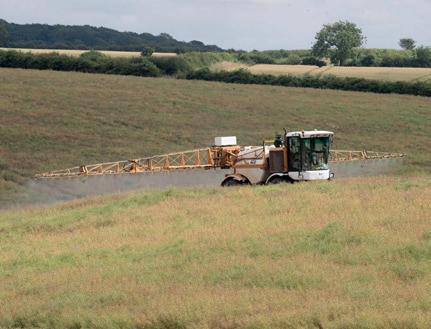
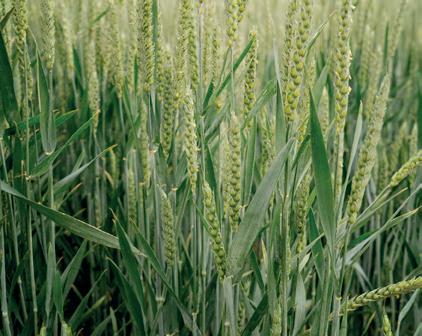
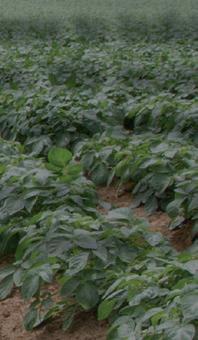
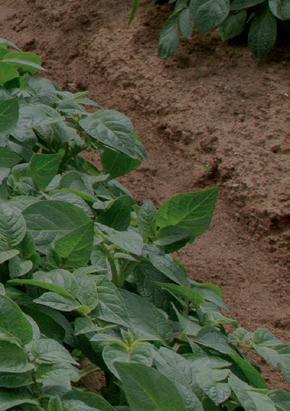
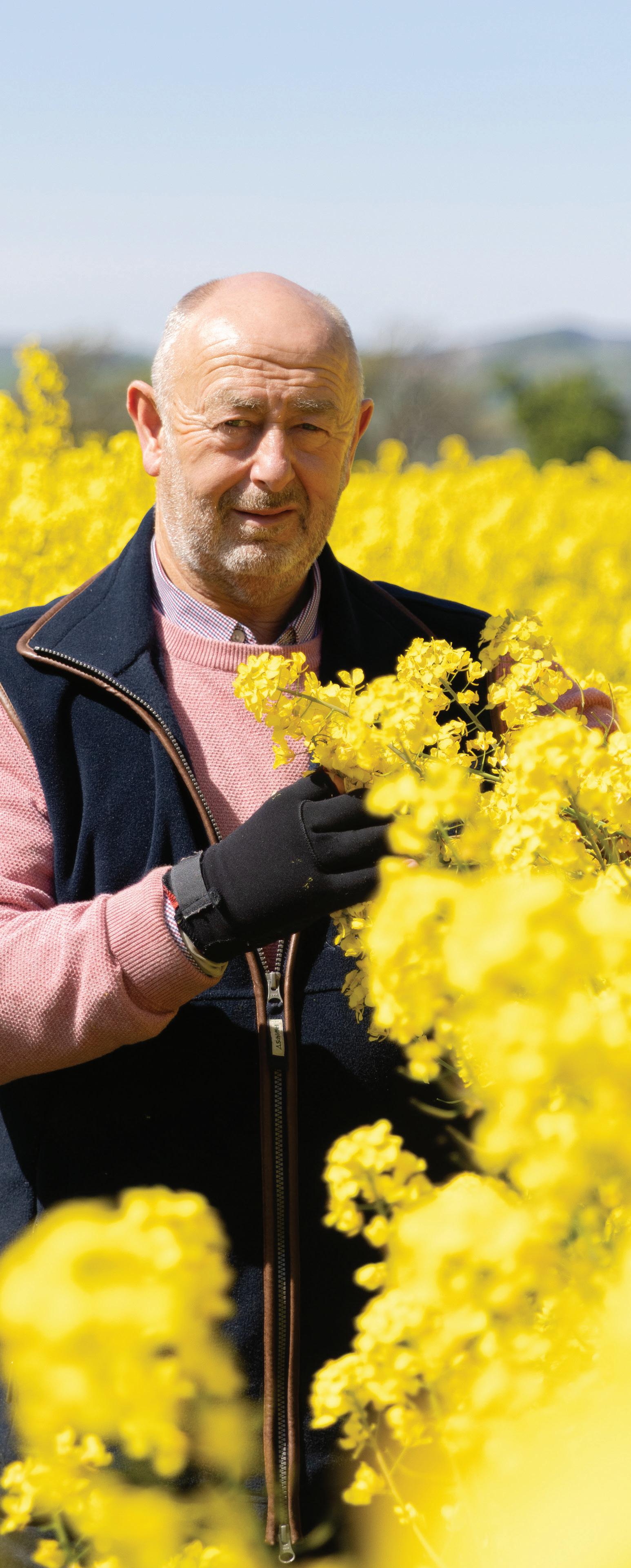
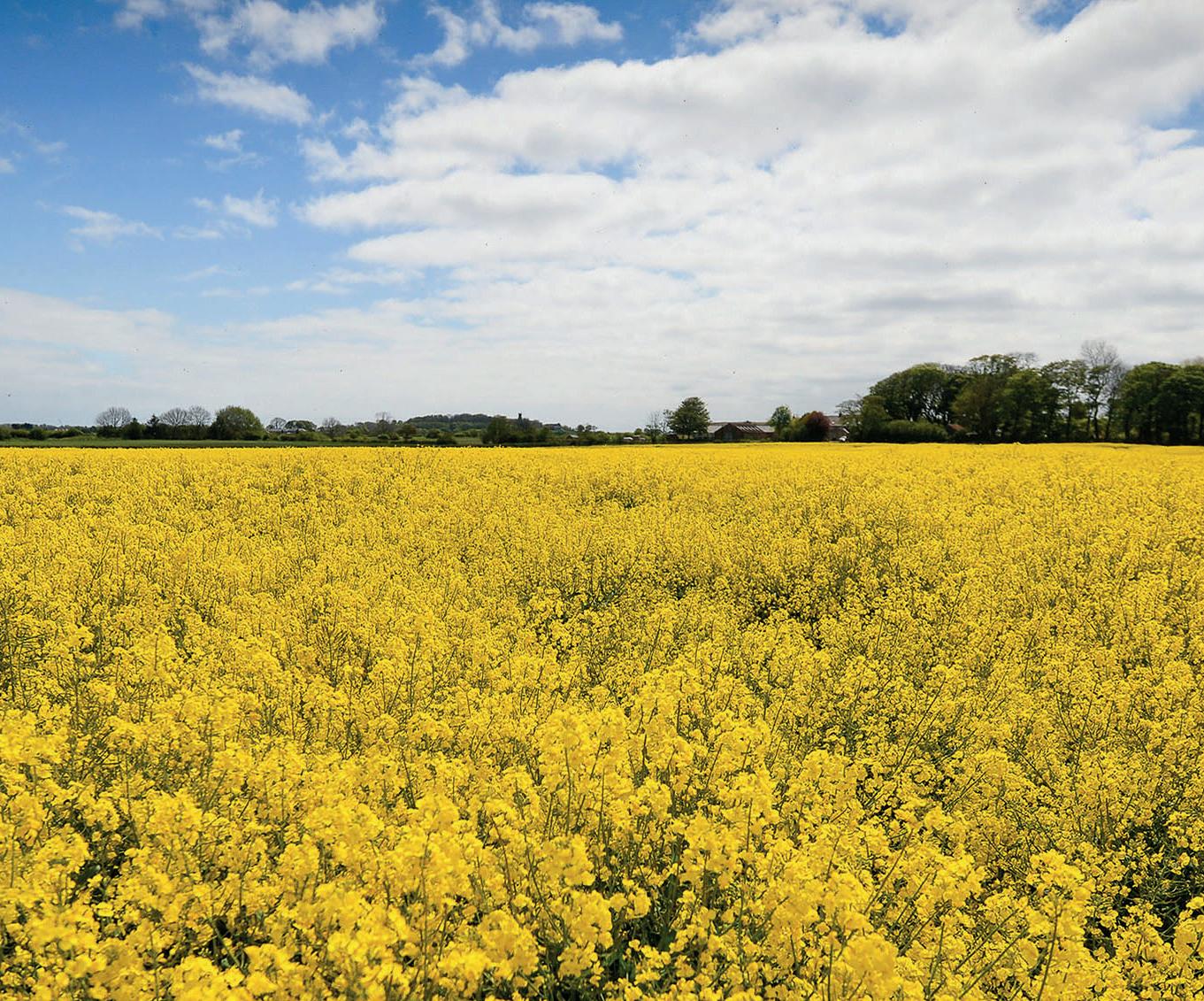
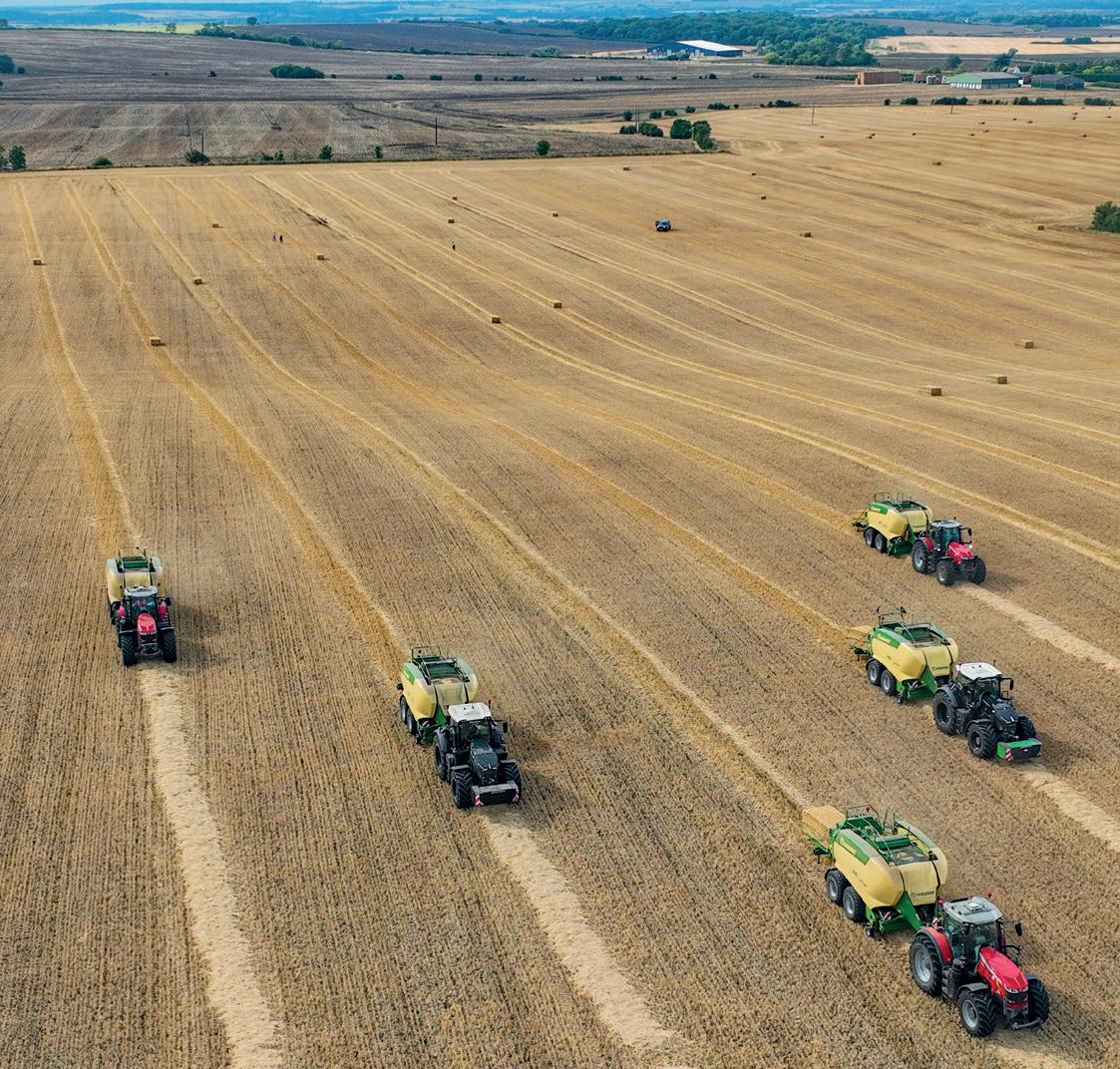
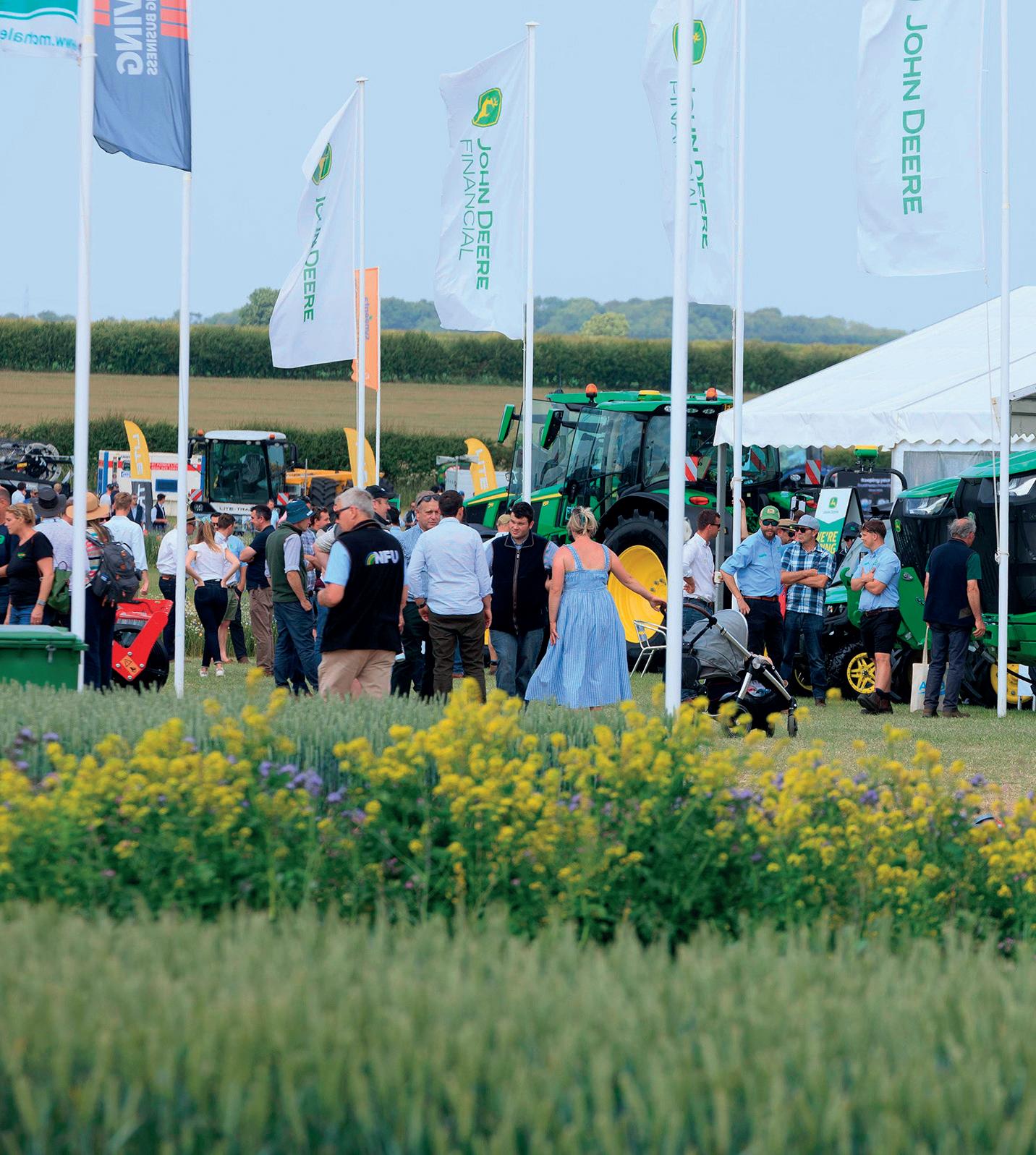
As uncertainty surrounds glyphosate’s future as a pre-harvest desiccant, growers are weighing its value against mounting pressure to reduce reliance and build more resilient farming systems. Ash Ellwood finds out more.
As debate continues around the future of glyphosate, particularly its use as a preharvest desiccant, some within the industry believe the discussion should extend beyond whether the chemistry remains available and instead focus on how farming systems can become less reliant on it over time.
Tim Williams, a regenerative farming adviser who has spent more than two decades working in farming across the UK, New Zealand and Australia, says that while glyphosate remains an important tool for many growers, the current focus presents an opportunity to reassess arable systems to build less reliant rotations.
“A truly regenerative system is having a deep understanding of your soils and crops, and how systems actually work from an ecological perspective, and then applying modern knowledge to that approach,” he says.
Significant implications
However, any potential restriction on pre-harvest use would have significant implications for many businesses.
Reducing reliance on glyphosate in rotations
Nigel Padbury, seeds and marketing manager at Premium Crops, says the impact will depend heavily on the detail of any future regulation.
“The devil is going to be in the detail about the approval or the banning of it as a pre-harvest desiccant,” he says.
“The situation, as I understand it, is growers will still be able to use glyphosate as a herbicide, and there is no clear end date as to when that use might change.”
For some minor crops and in years when weather creates variable ripening stages, the alternatives are currently limited.
“Glyphosate is pretty much the only option, and having a pre-harvest desiccant ban on a lot of minor crops is going to be really bad news for the UK,” he says.
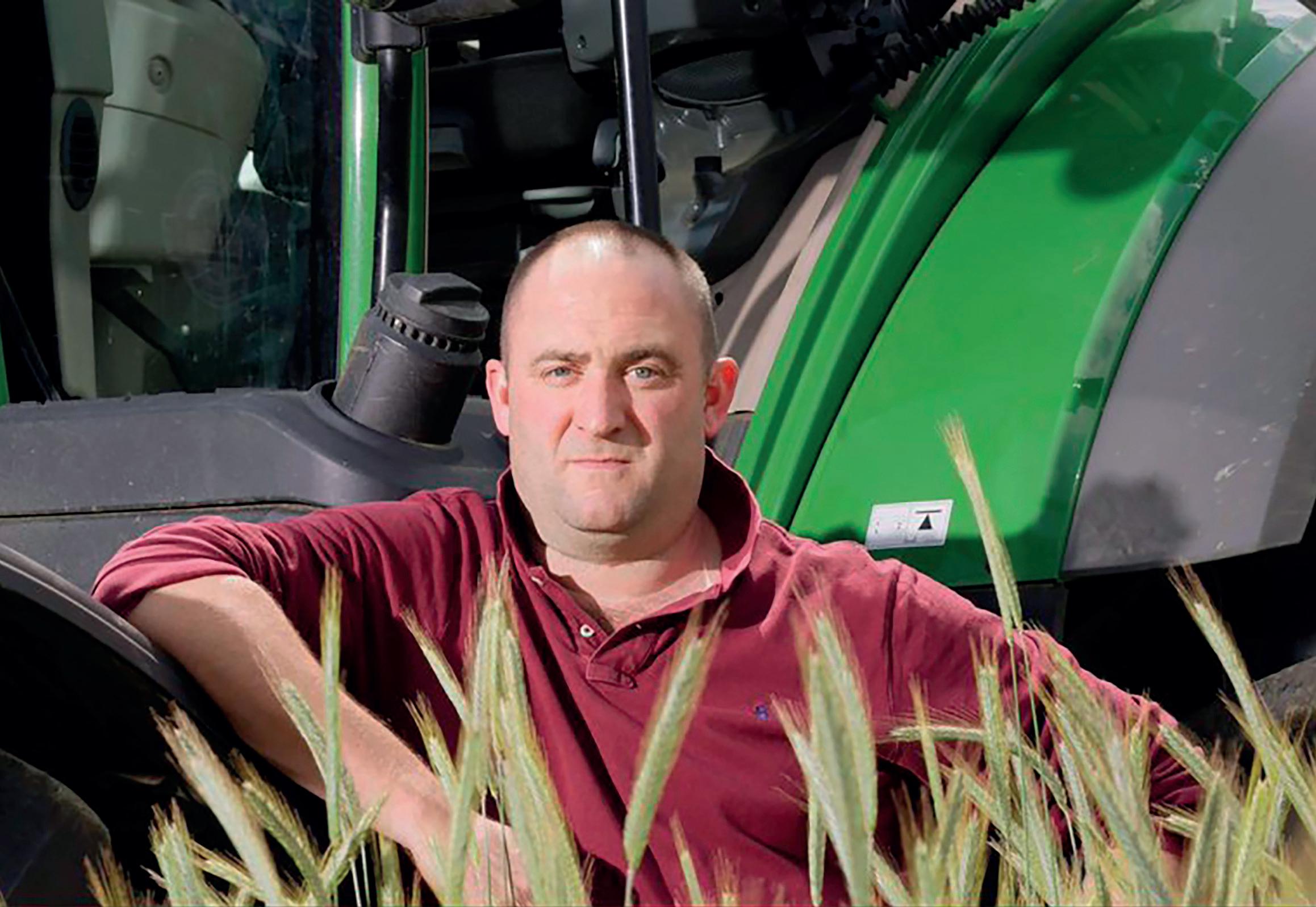
Tom Baker, Dorset farm manager
at ACF Drax Farm, says glyphosate remains an important management tool during seasons where crop maturity is uneven.
“Last year we did not desiccate
Having a pre-harvest desiccant ban on a lot of minor crops is going to be really bad news for the UK
NIGEL PADBURY
any oilseed rape and just let it senesce naturally,” he says.
“Looking at crop development this year, I very much doubt we will be pre-harvest desiccating again. But it does have a place, and I think we need to try to keep it as a tool in our armoury for when it is required.”
Wider glyphosate use
Glyphosate plays a major role in weed control for many arable systems, being particularly crucial for regenerative growers who have reduced cultivations and rely more heavily on sprays to control weeds.
While acknowledging the value of glyphosate, Mr Williams believes the debate should not be reduced to a choice between ploughing to control weeds and simply spraying glyphosate.
“There is so much in between,
and it is often not so black and white,” he says.
Modern systems have become increasingly dependent on external inputs and, while increased inputs have delivered higher yields, Mr Williams says they can also mask underlying soil health issues. In many cases, nutrients are present within the soil profile, but remain unavailable because biological processes are not functioning effectively.
Opportunities
He believes growers should use the current uncertainty to identify opportunities to reduce reliance on glyphosate without compromising profitability or productivity.
Part of that process may involve looking at cultivation differently rather than eliminating tillage altogether; Mr Williams advocates using cultivation strategically where it delivers a clear benefit. He has seen long-term no-till systems begin to stagnate, with declining performance and increasing weed pressure.
“You cannot just keep doing the same thing year on year and expect improvements,” he says.
Rotation design will also become increasingly important if restrictions
A truly regenerative system is having a deep understanding of your soils and crops, and how systems actually work from an ecological perspective
TIM WILLIAMS
tighten; utilising cover crops, livestock integration, and careful crop selection can all help reduce reliance on both cultivation and herbicides.
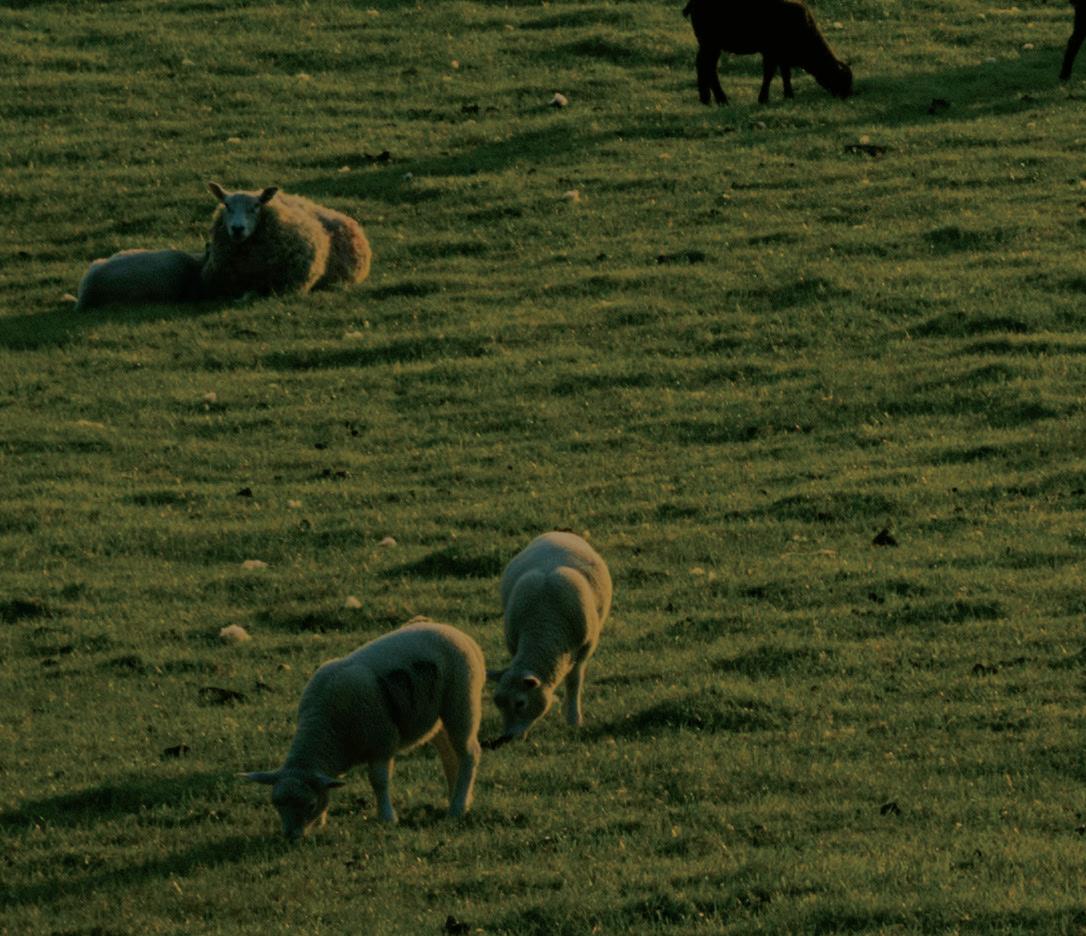
The growing interest in bringing livestock back into arable systems is one example of how farmers are looking to rebuild resilience while improving soil function.
When it comes to weed control, Mr Williams believes growers
should focus on understanding the conditions that favour problem species rather than simply treating the symptom.
“Weeds are indicators, so it is important to look at what they are telling you,” he says.
Specifically for pre-harvest applications, Mr Williams believes growers should start by examining why glyphosate is being used.
“It is probably because you are under time pressure and need to get the crop dry and harvested, which makes sense,” he says.
“But from a farming perspective, it is about trying to create a system whereby you can mitigate its use a bit more.”
As public awareness of food production practices grows, pressure may come not only from regulators but also from supply chains and consumers, as Mr Williams believes that consumer attitudes could increasingly influence the decision.
“The way I talk to my clients about it is you are either working in an overdraft or working in a savings account,” he says.
“If you are constantly eating into your assets and hurting your soils, that is going to become significant. Whereas, if you can turn your farming system around so you are less input dependent, you can be more flexible with your approach and start feeding your savings account.”
Opinions on glyphosate
■ To read more on the glyphosate debate, read two farmers’ opinions in our new ‘Yes/No’ column on P14
GET MORE DONE IN A SINGLE PASS
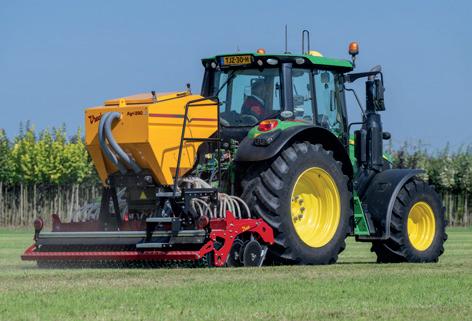
Zuidberg Front Linkages and PTOs
More farmers worldwide trust Zuidberg to provide the perfect platform for their front-mounted operations. Zuidberg front linkages are ultra-strong and built to last around a cast base frame. A perfect fit for virtually any tractor, their compact design maintains full ground clearance and steering angle.
Full engine power is transferable with Zuidberg’s standard PTO. An integrated oil system ensures longer, trouble-free life and the range offers different speeds with left or right hand rotation.
Regional Agronomy
From yellow rust to drought risk, agronomists across the UK report strong crop potential, but final yields now depend on conditions through grain fill. Ash Ellwood finds out more.
Disease pressure meets weather stress
WITH T2 now largely complete, attention is firmly on how crops will respond to the current conditions. While much of the spring has been dry in the Midlands, many crops have held
LOUISE
PENN AGRONOMIST FOR CERES RURAL, COVERING BEDFORDSHIRE, NORTHAMPTONSHIRE AND CAMBRIDGESHIRE
on to good potential. Following some rain, most wheat has received about 1-1.25 litres per hectare of Univoq at T2, partnered with a rust-active product where needed, to protect green leaf area as we move into grain fill. However, the focus is quickly shifting from disease control to stress management. As temperatures climb towards 30°C, crops are entering a critical period where both drought and heat will influence final yield.
Ceres research, drawing on UK field data and published work from Nature Climate Change, ScienceDirect and BMC
HARRY GIBSON AGRONOMIST AT SPUNHILL, COVERING CHESHIRE, SHROPSHIRE AND STAFFORDSHIRE
THE last few days of 30°C heat has really pushed winter wheat crops along, with many now starting ear emergence. On the whole cereals are looking well, we haven’t suffered the drought as has been experienced elsewhere in the country. The trade-off for this is the disease pressure crops are facing is higher than last season.
Robust fungicide treatments for both yellow rust and septoria are paying dividends. This has been exacerbated by the YR15 gene resistance breakdown against yellow rust, and previously less susceptible varieties succumbing to the disease.
Fields that didn’t receive an autumn
insecticide are showing the classic yellowing and stunting symptoms of BYDV, and following the mild winter aphid pressure remains high. Crops, however, are full of ladybirds which at present will be helping control numbers –this leaves a difficult decision for many ahead of the T3 timing.
Oilseed rape has now finished flowering, with crops looking very even and full of potential. Pigeon and flea beetle pressure has been far lower than previous seasons, with all the crop making it to harvest. Maize has gone in well, and many fields are now approaching their post-emergent herbicide timing to clean up any
Plant Biology, highlights an important distinction. Drought during grain fill can reduce yields by up to 2.6 tonnes/ha in dry seasons in the UK, but some recovery is possible if rainfall returns. In contrast, high temperatures during flowering and grain fill can cause losses of 20-50%, accelerating senescence and reducing grain number and size.
From here on in, it is down to the weather. A bit of timely rain and some consistent sunshine could see crops finish well, and after the last few years, we could all do with a good harvest.
remaining weed burden. Care must be taken with these applications during hot weather with bright sunlight.
On the whole, the prospects for harvest 2026 in the area are looking far better than last season.
EMMA DENNIS AGRONOMIST FOR PROCAM, COVERING SOMERSET, DEVON AND CORNWALL
SOME well-timed rain across the region has reduced drought concerns currently faced by other parts of the country, with growth stages slightly ahead for the time of year, and good potential in most crops.
Drier springs are becoming the norm, which places importance on variety selection and drilling timings. This year, later-drilled autumn crops into good seedbeds have shown significantly less BYDV and septoria pressure than early-drilled ones.
With T2 sprays applied in good
conditions, we are keeping an eye on disease pressure ahead of T3 applications. Septoria remains our priority but the YR15 breakdown has heightened the risk of yellow rust. Fusarium threat at wheat flowering needs close attention, as does ramularia and brown rust in winter barley.
Oilseed rape flowering has turned to pod fill, with low lodging risk as crops are even and consistent. We will trial a bio-based pod sealant as an alternative to synthetic products to evaluate it.
Maize is a big crop here, and well-
timed pre-ems activated well, with rain arriving on cue, and soil moisture preserved through a tight cultivation window. Winter beans have recovered from early chocolate spot pressure, and Encera nitrogen-fixing bacteria has been applied to reduce spend and reliance on artificial N.
Regional Agronomy
STEVIE GRAY AGRONOMIST FOR SCOTTISH AGRONOMY, COVERING THE SCOTTISH BORDERS
A MIXED, predominantly cool spring has followed a wetter-than-average winter for most in Scotland. The
upside of the cooler weather has meant sprayers have been able to keep up with crop development better than in recent years. Winter barley and winter oilseed rape fungicide programmes are now finished, wheat is approaching the T2 timing, and most spring crops have received the T1 applications.
OSR has benefited from a relatively dry flowering period and looks to have a lot of potential – only the weather from this point will decide if the final yield can match the highs achieved last year.
Cooler temperatures have meant that symptom expression of septoria tritici in wheat has been low, however there
is plenty of disease on susceptible varieties and with temperatures warming up, the disease will cycle more rapidly.
Well-timed T2 applications will help to control septoria and keep the upper canopy clean, as well as providing a top-up to yellow rust control, which continues to appear on susceptible varieties where spray timings, or product choice, have been sub-optimal.
Crop potential also looks positive at this stage for the spring crops, which so far have had a less stressful start than at this stage last year.
GEORGE SWANN INDEPENDENT AGRONOMIST, COVERING SOUTH YORKSHIRE, NORTH NOTTINGHAMSHIRE AND NORTH LINCOLNSHIRE
YELLOW rust has added another serious layer of pressure this year. Several wheat varieties that previously appeared dependable have broken down badly against the new YR15 strain, forcing growers to remain especially vigilant. In some cases, infections have spread rapidly where spray timings were stretched, while background pressure has been clearly visible where applications were missed altogether due to blocked nozzles or slightly wider tramlines.
Despite these challenges, strong fungicide programmes have largely kept crops clean where management has been timely and robust. T0, T1 and T2 applications have all played a vital
role this season, but maintaining protection has required significant attention and investment.
The season has also highlighted the growing importance of variety choice. Growers must now assess disease ratings and resilience carefully, rather than relying solely on untreated yield figures. In a different year where weather, workload or product availability could disrupt spray timings, genetic resistance may prove to be the most valuable tool on-farm.
There have also been major differences in varieties’ tolerance to drought stress. Growers should take the opportunity to look critically at what is performing well not only on their own
farms, but also on neighbouring farms with similar soil types. The difficult spring weather conditions experienced this year increasingly appear to be becoming the norm.
SIMON ROBERTS MANAGING DIRECTOR AND SENIOR AGRONOMIST AT CCC AGRONOMY, IN THE SOUTH
THE season started full of promise with good crop establishment in the autumn, and low cabbage stem flea beetle numbers mean that very few oilseed rape crops are giving cause for concern. Residual herbicides gave good levels of grass-weed control, despite the earlier drilling of cereals as a result of a very wet Autumn 2024.
Early drilling and higher aphid pressure posed a higher risk of BYDV. In general, where treatments were well-timed we haven’t seen any major issues, but where application was delayed it is easy to find evidence of BYDV. Aphids persisted well into the spring, and although the classic stunting cannot be seen, there is some yellowing of flag leaves.
After the wet start to the year it felt like septoria was going to be an issue, but the weather pattern that followed had a different bearing on the outcome to date. Conditions have favoured rust, and where fungicide intervals have exceeded 18 days – even despite a robust fungicide treatment – it has reappeared without fail.
EAST
Spring crops have been challenging to establish with very dry seedbeds; moisture conservation has been key to good establishment. Spring barley and oats have raced through their growth stages and are barely knee-high as ears start to emerge.
The biggest concern now, which will determine how successful harvest will be, is rainfall: when, how much, and will it stop in time for harvest?
From rust threats to the role of foliar nitrogen and micronutrients, crop specialists outline key considerations for helping wheat finish the season strongly. Farmers Guardian reports.
Cereal Crops Making the most of T3: Protecting protein, yield and profitability
As late-season disease pressure and unpredictable weather continue to challenge cereal crops, crop production specialists Hutchinsons is urging growers to take a proactive approach to T3 fungicide timing and late foliar nutrition to protect both yield and grain quality.
Agronomy innovation director David Howard says the importance of the T3 timing has increased significantly, particularly following seasons such as 2024, where late disease flare-ups rapidly compromised crop potential.
Mr Howard says: “Growers cannot afford to let rust or septoria run rampant on upper leaves and risk wiping them out before grain filling occurs.
“In high-value milling wheats especially, protecting green leaf area is critical for ensuring protein is moved into the ear.”
As winter wheat rapidly moves towards the traditional T3
window, with ears emerging and flowering starting in forward crops, Oliver Thomas, crop pathology consultant at ADAS, says: “Septoria remains present in the lower canopy, particularly in thick and early-sown crops.”
The recent dry spell and heatwave has helped hold the disease at bay on the upper leaves, and the next few days will be important for assessing whether the early rainfall seen in the middle to the end of May has initiated new infections.
Rust management
While T3 fungicides remain essential for controlling fusarium, microdochium and sooty moulds, Mr Howard warns growers should also pay close attention to rust management this season.
He says: “The breakdown of Yr15 resistance in some wheat varieties, coupled with heightened brown rust pressure earlier this spring, could lead to increased disease pressure later in the season.”
THE ROLE OF FOLIAR NUTRITION
ALONGSIDE disease control, lateseason nutrition plays a key role in maintaining green leaf area, supporting grain fill and improving protein content, says crop nutrition specialist Rob Jewers.
He recommends tissue testing before T3 to identify micronutrient deficiencies, with zinc and boron frequently lacking late in the season.
“Both nutrients are important for seed vigour and overall plant robustness,” he says.
“Tissue analysis is relatively inexpensive and can provide valuable guidance for late-season nutrition decisions.
“Interest in foliar nitrogen products has increased this season, particularly following dry
spring conditions that reduced uptake of soil-applied nitrogen.”
Mr Jewers says methylene urea products are proving increasingly attractive because of their efficiency, low scorch risk and compatibility with T3 fungicides.
“Methylene urea provides nitrogen directly in the amine form that plants can use very efficiently,” he adds.
“A typical 20-litre application supplies about 7kg N/hectare, but this can deliver the equivalent benefit of 30-40kg/ha of soilapplied nitrogen.
“Where the objective is milling specification protein, traditional late liquid nitrogen applications at milky ripe stage remain highly effective. However, earlier foliar nitrogen
Fortunately, many T3 products offering ear disease protection are also highly effective on rusts
DAVID HOWARD
According to Mr Thomas, yellow rust remains the main rust concern this year.
He says: “In most crops, it is just about under control, but in the worst crops, control has only just kept leaf 2 clean, with significant damage lower in the canopy.
“Brown rust has not yet become a major issue in most winter wheat crops, but high temperatures
applications around T3 can also help prolong greening and drive yield potential across feed and milling wheats alike.”
increase the need to keep susceptible varieties under review. If warm conditions persist, brown rust could become more important throughout the rest of the season.”
Mr Howard highlights concern around increasing SDHI resistance in brown rust populations, potentially reducing the effectiveness of earlier fungicide programmes.
“Fortunately, many T3 products offering ear disease protection are also highly effective on rusts,” he says.
SPRING CEREALS
SPRING cereals are moving quickly through growth stages, with T1 applications underway. Oliver Thomas, crop pathology consultant at ADAS, says: “Disease pressure remains low, but the main challenge appears to be with stress rather than disease; short crops, rapid development and dry soils may complicate decisions around timings as crops move towards ear emergence.”
Rob Jewers
PICTURE: RUTH DOWNING
Cereal Crops
Growers have been urged to take a proactive approach to T3 fungicide timing.
“Where a strobilurin application remains available, it can provide a valuable addition, but correct dose rates are crucial to maximise longevity and performance.
“Traditional azole-based T3 programmes remain a cost-effective option in lower-risk situations, particularly combinations such as prothioconazole plus tebuconazole.”
However, he advises that more robust programmes may be justified
where septoria and rust pressure are building, including SDHI-based options or combinations containing fenpicoxamid and prothioconazole.
“For premium milling wheats, higher-rate pydiflumetofen programmes may offer additional value through improved fusarium control and grain quality protection. Growers are also reminded to stay within maximum mode of action guidance limits,” adds Mr Howard.
Ben Sharp, Lincolnshire
LESS RISK MORE REWARD
A quality varietyLG Challenger delivered great yield & agronomics in a difficult year.. the full package!
Delivers on grain quality, yield & agronomics
Highest yielding early driller
Stand out performance in the East, West & North
lgseeds.co.uk/lg-challenger
Limagrain Field Seeds
Oliver Thomas
David Howard
Machinery
Big changes to John Deere’s sprayer line-up could help propel the manufacturer back into contention in the UK self-propelled sprayer market. James Huyton test drives the 550R.
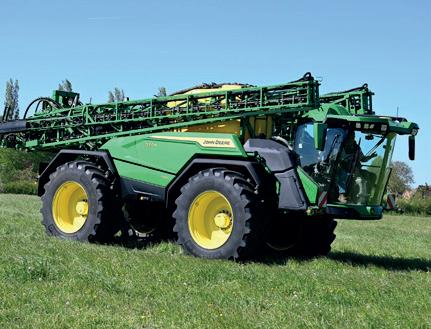
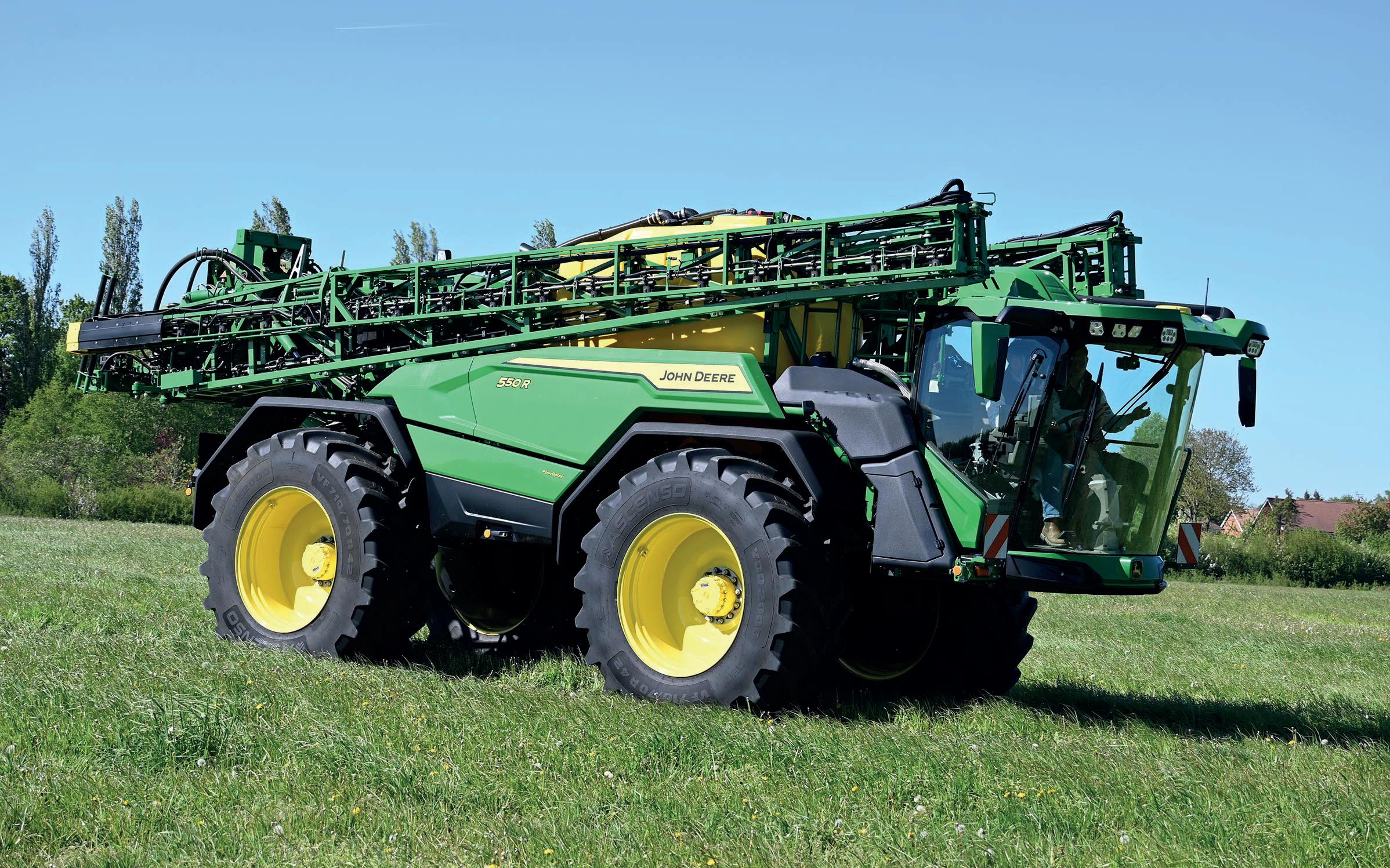
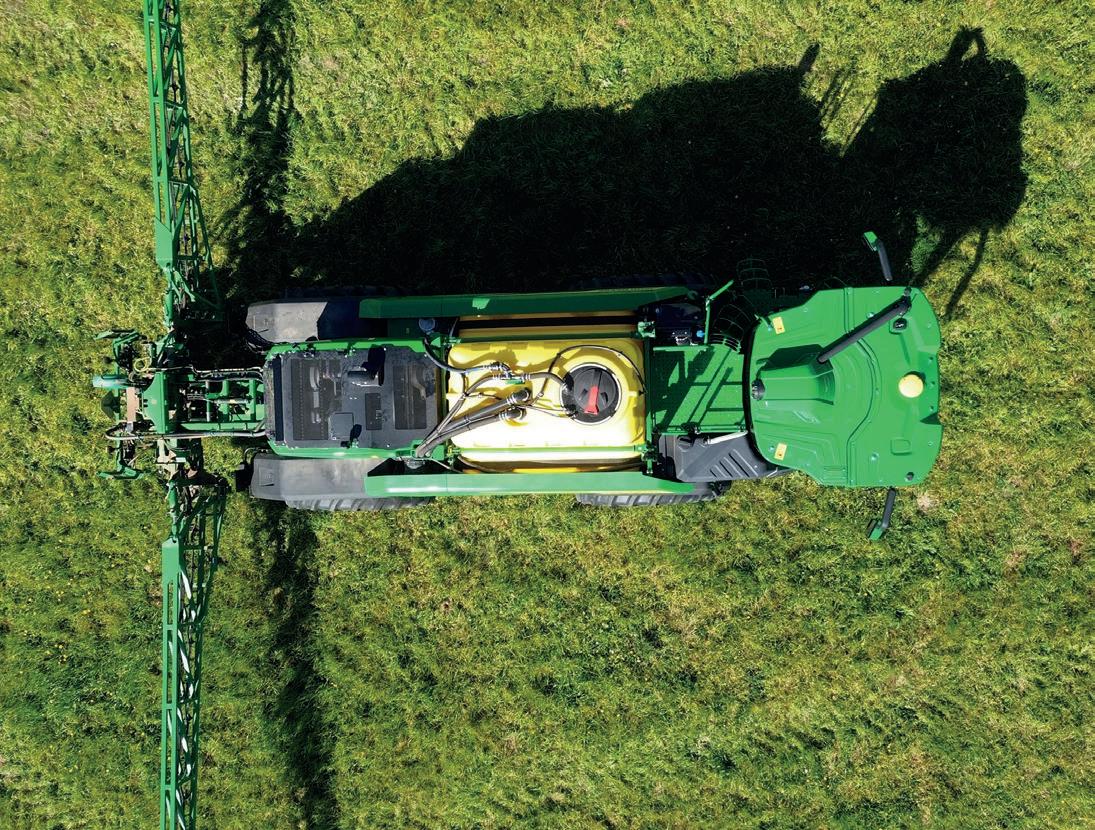
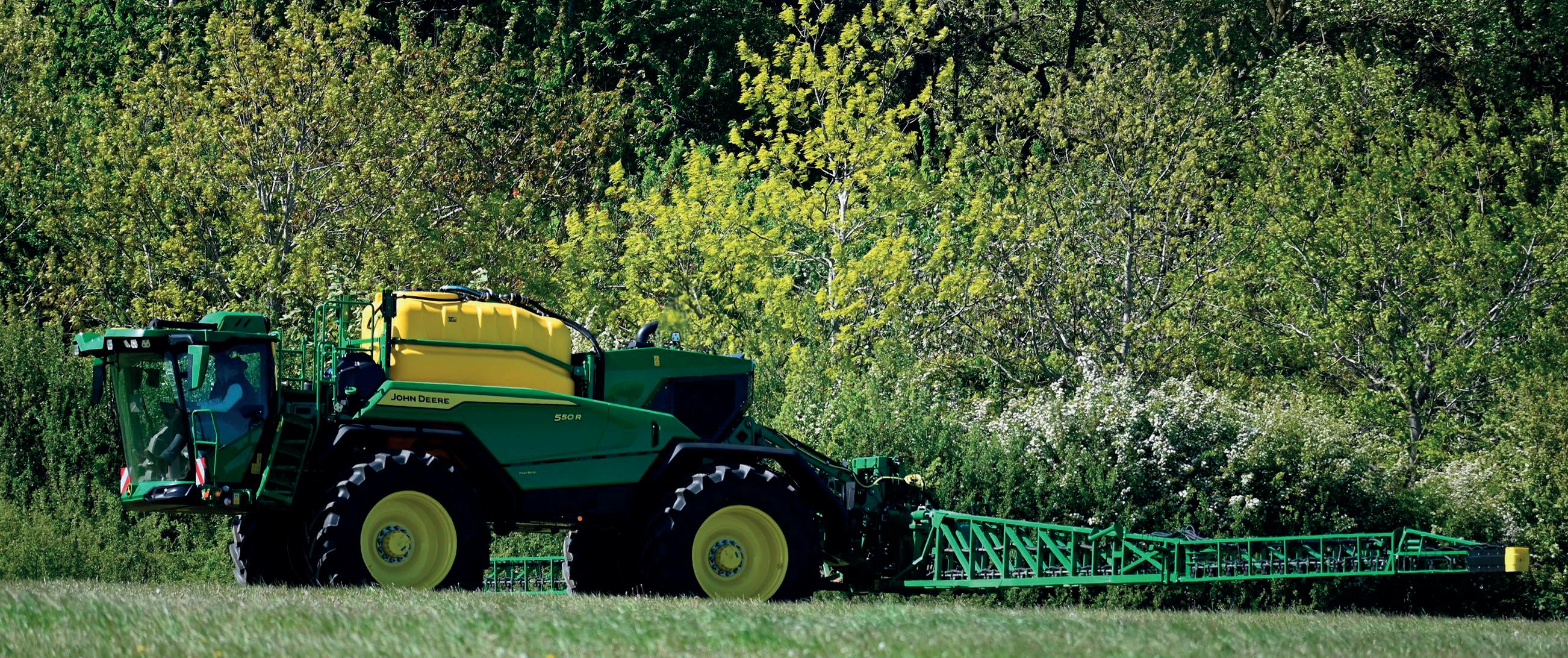
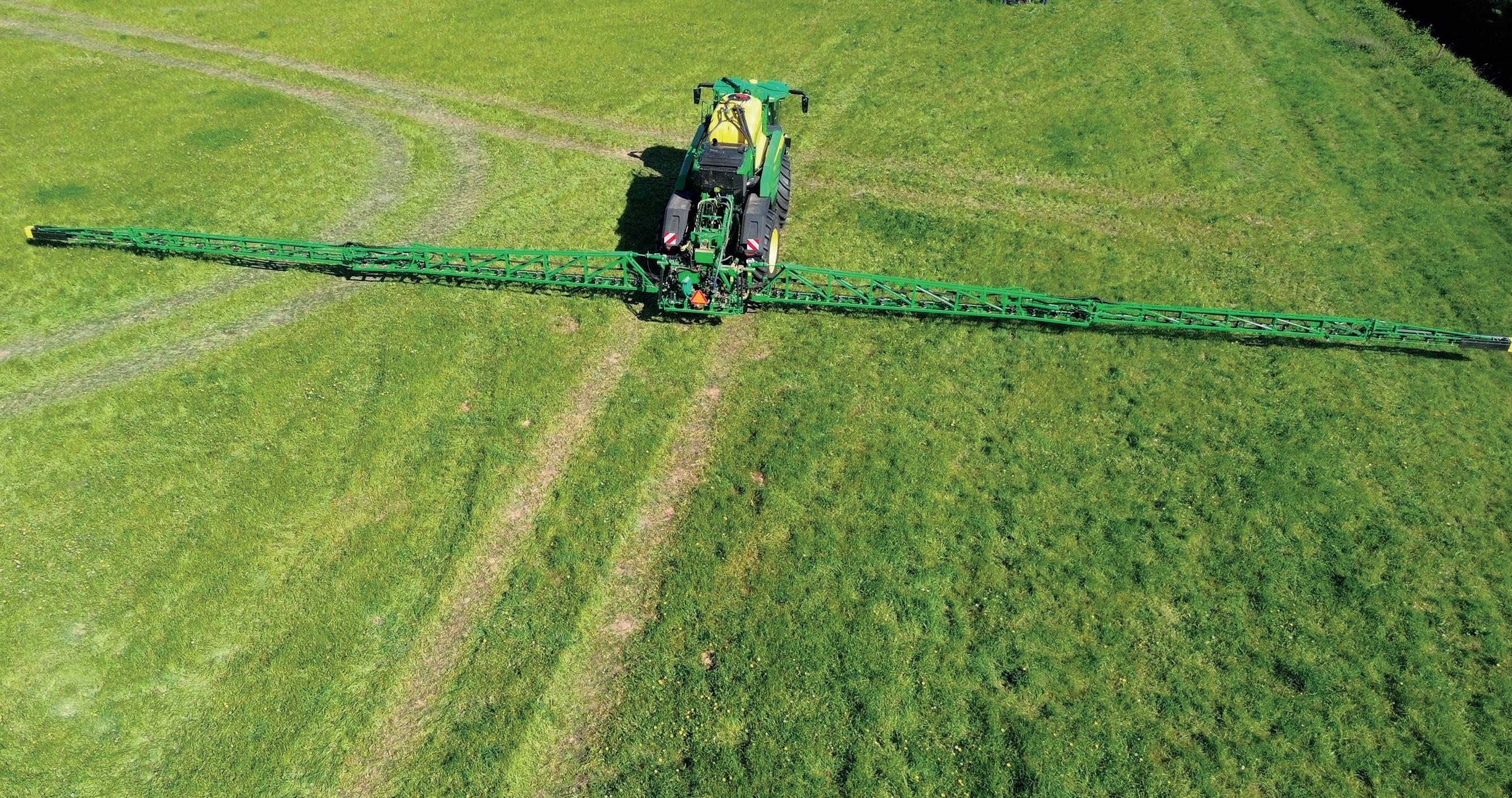
The 550R test machine was specified with a 36-metre boom and 500mm nozzle spacings, with the 5,000-litre tank standard specification.
First drive: John Deere 550R
John Deere is no stranger to the self-propelled sprayer market, but while the manufacturer enjoys a dominant position in parts of mainland Europe, particularly France, that success has never fully
translated to the UK. One factor may have been Deere’s long-standing preference for a mid-mounted cab layout, while UK operators have traditionally favoured the front-mounted design used by several competing manufacturers.
ENGINE AND TRANSMISSION
THE 550R is powered by the same 6.8-litre engine used in the manufacturer’s popular 6R 250 tractor, producing 280hp.
The engine is mounted facing rearwards, while airflow from the cooling pack is directed upwards through louvres, a design claimed to minimise interference with the spray pattern.
Coupled to a 350-litre fuel tank and 21-litre AdBlue tank, the engine sits towards the rear of the machine.
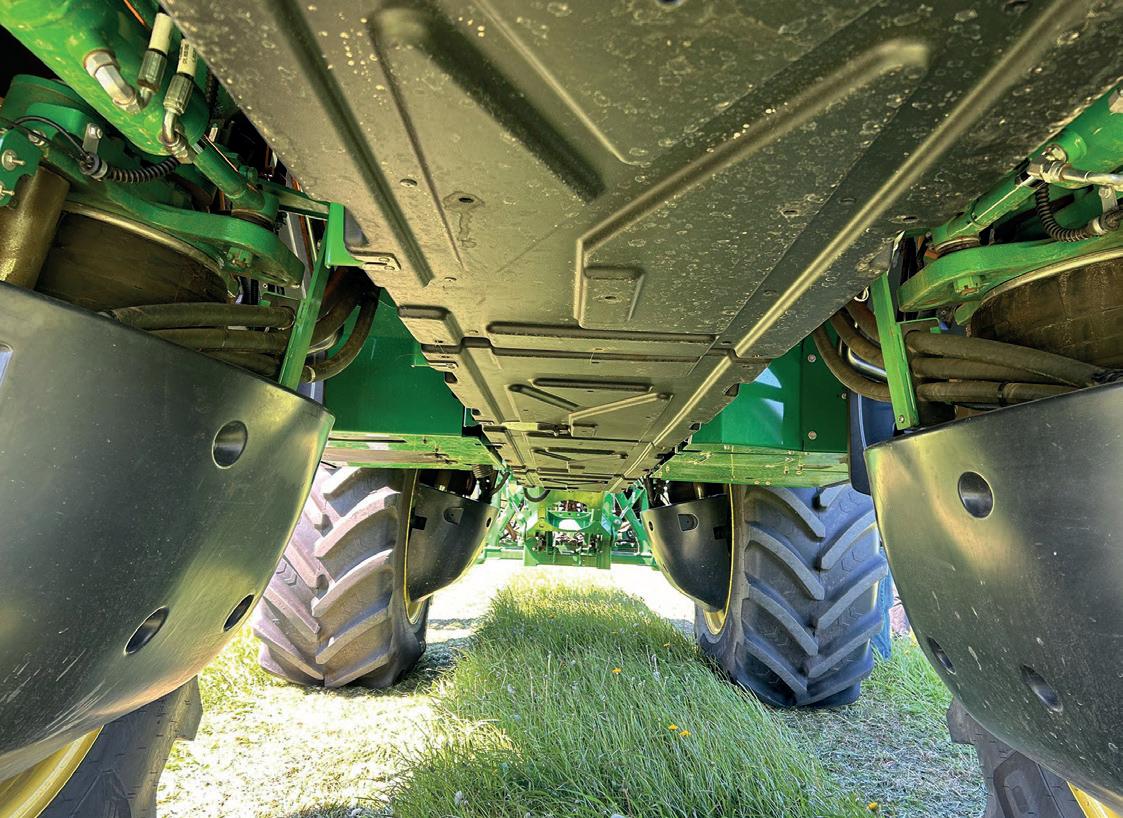
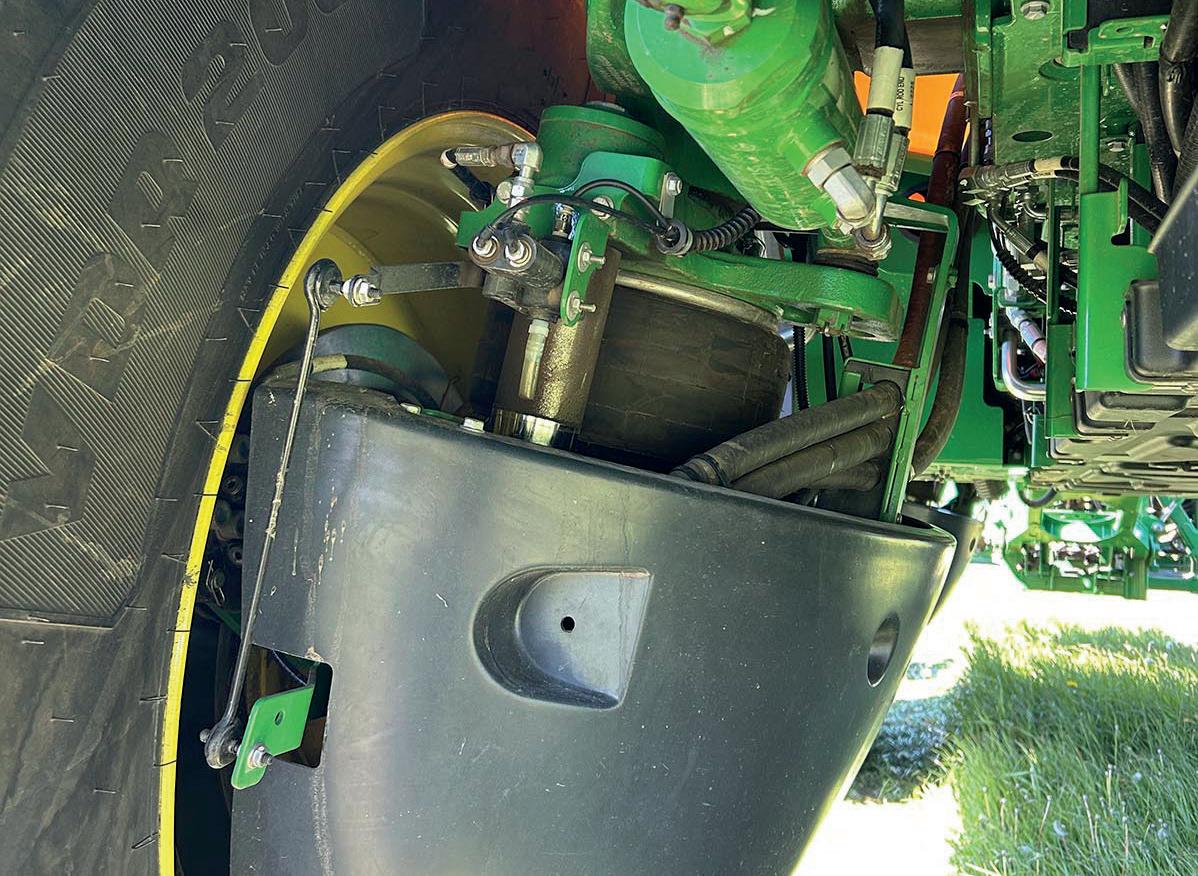
John Deere says this layout delivers an optimal 51:49 front-torear weight distribution with a full tank and the boom unfolded. Each wheel is supported by an
independent air suspension unit designed to maintain ride quality and stability across uneven terrain. Daily maintenance points and filters are accessible from ground level.
Hydrostatic
Drive is provided by a fly-bywire hydrostatic transmission, with both 40km/h and 50km/h variants available.
As expected, operators can select between two-wheel and four-wheel steering modes, while hydraulic track-width adjustment allows the front and rear axles to be set independently between 1.8 metres and 3m.
However, unveiled ahead of Agritechnica last year, the new 500R sprayer range has been developed to reposition the manufacturer in the self-propelled sprayer sector.
On paper, the 500R goes headto-head with established competitors, but does it have what it takes to challenge the market leaders? With a number of components, including the cab, drawn from John Deere’s flagship X9 combine range, we got into the driver’s seat to see what the 550R has to offer.
The 6.8-litre engine fits towards the rear of the machine, with tank positioning slightly forward to give a claimed 51:49 front-to-rear weight distribution with the boom unfolded.
TANK, BOOM AND INDUCTION SYSTEM
THE 500R range is currently available with a tank of either 4,000 or 5,000 litres.
The boom is derived from the manufacturer’s R41 sprayer and is available in 30-metre and 36m working widths.
Revised boom pivot points and suspension geometry are aimed at improving stability and ride quality at higher forward speeds.
The updated arrangement works alongside the BoomTrac Pro system and linked centreframe control to help the boom respond more smoothly to changing ground conditions.
while travelling back to the yard.
Automatic agitation management reduces foaming and protects the spray pump as tank levels fall.
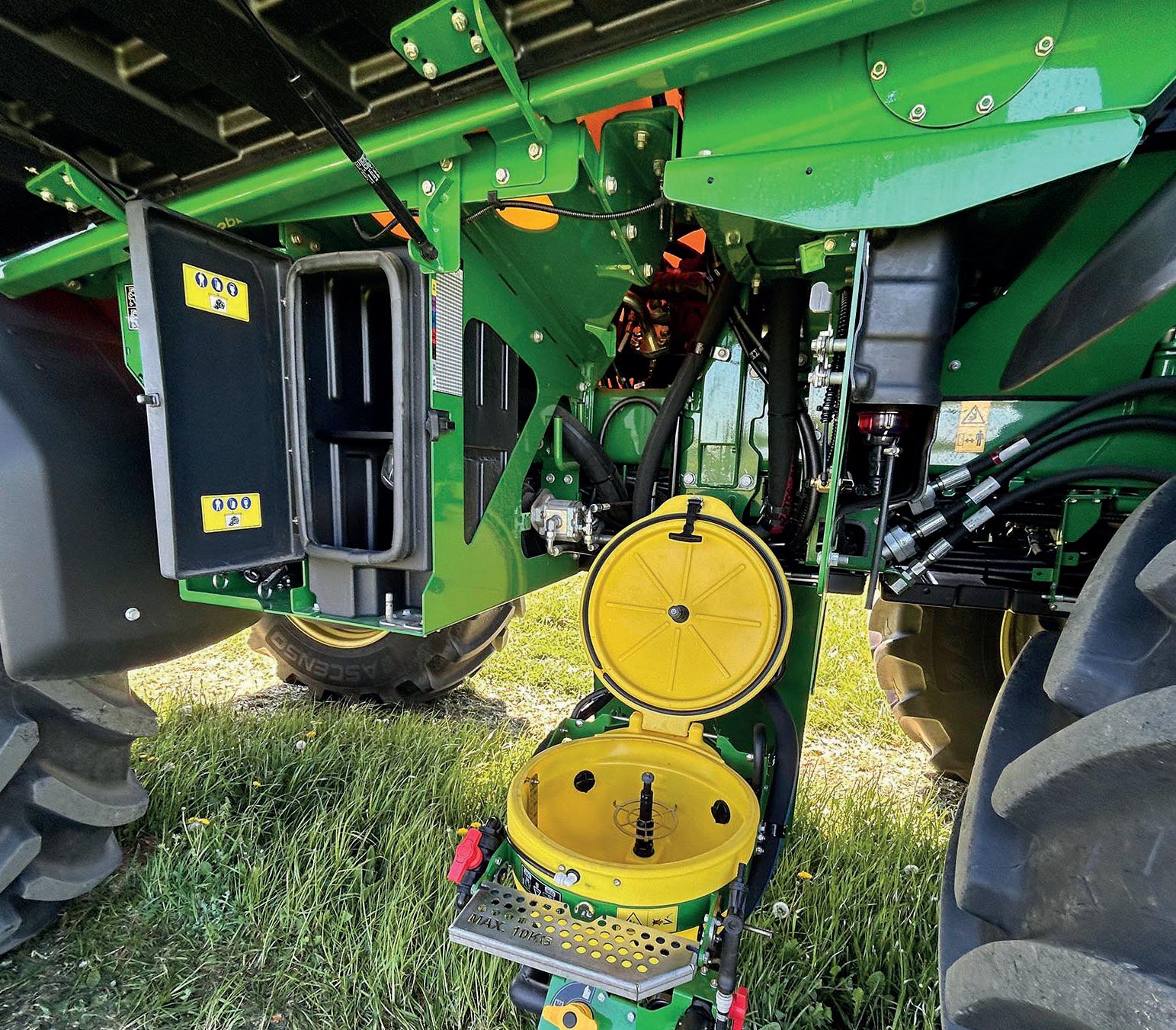
Chemical induction is handled through a Venturi-based transfer system with three selectable pressure settings from two to eight bar, allowing operators to reduce foaming and maintain stability when handling sensitive or volatile products.
Alongside the 50-litre induction bowl, a closed-transfer system is also available.
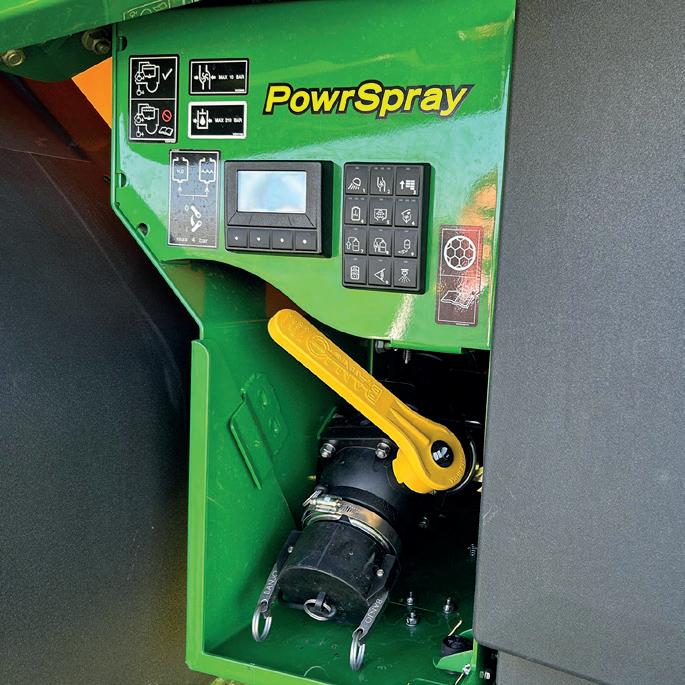
Operators can manage induction, rinsing and tank transfers either from the external filling station or from the cab via the main display, reducing the need to repeatedly climb in and out of the machine.
The system allows the 500-litre clean-water tank to be transferred directly into the solution tank at the touch of a button, while automated rinse and dilution programmes help clean spray lines and booms
Above and inset: Chemical induction is handled through a 50-litre induction hopper using a Venturi-based system with three selectable pressure settings and the option of a closed transfer system.
Continues over the page
Ed Scaman, Bayer Technical Manager
GET AHEAD WITH INFINITO.
*Source: Kynetec, GB, Farmgate Value 2025.
Start In nito® applications early in your programme to build strong foundations for foliar and tuber blight protection. We recommend 3-4 applications through the season, up to seven days before harvest. With no reported resistance, 70% of UK growers trust its two complementary active substances from di erent modes of action*
Machinery
CAB AND CONTROLS
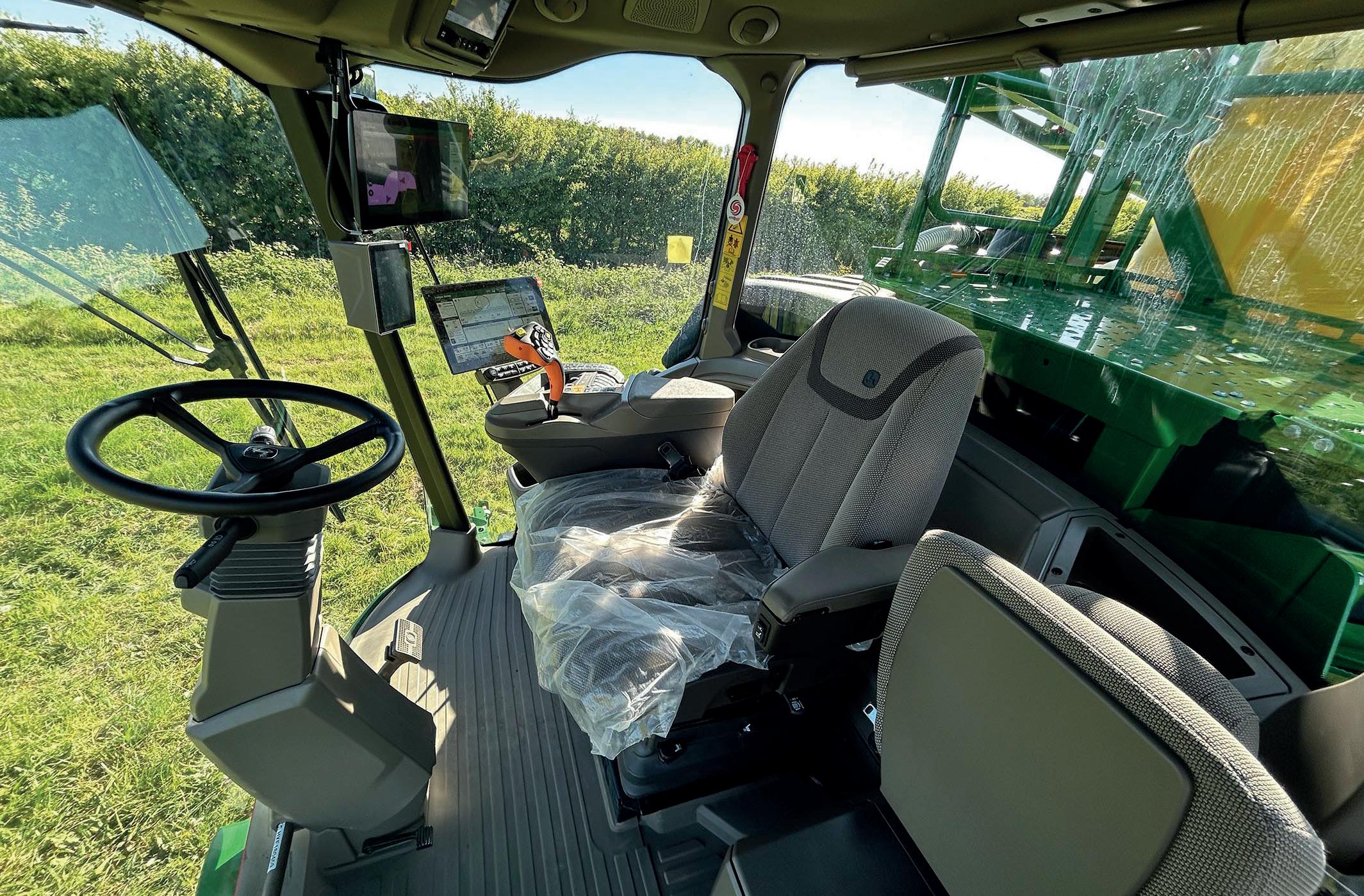
THE cab of the new 500R has been designed to provide operators with a familiar and highly intuitive working environment, drawing heavily on the layout found across Deere’s premium machinery range.
Taken from the manufacturer’s X9 combine, the cabin has impressive visibility, with an integrated camera system adding additional operator aids.
Key functions including AutoTrac guidance, boom control, track-width adjustment, four-wheel steering and
spray system settings can all be accessed through the display or directly from the armrest.
The advanced headland management system allows multiple functions, including boom adjustment, speed control, steering modes and spray activation, to be automated at the touch of a button.
Operators also benefit from integrated camera views, Google Maps field overlays and configurable run screens, helping simplify machine operation during long spraying days.
Above and inset: The 550R offers a familiar operating environment to John Deere users. The joystick and terminal with the now customisable headland management control and the secondary screen give a clear display of worked area and rate maps if selected.
Belly pans protect the undercarriage from tall crops and drop down for cleaning and access.
Four independent air suspension bags control ride height and quality.
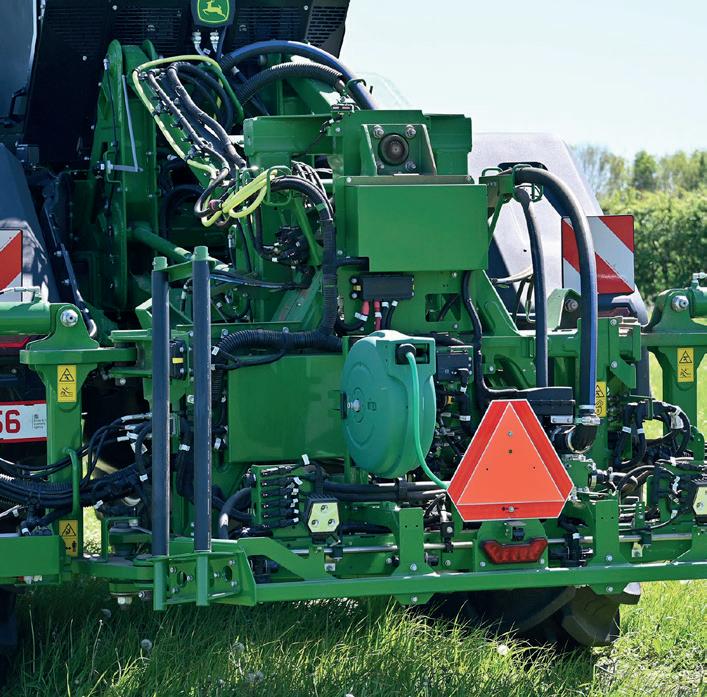
Below and inset: A new feature to the booms is active yaw, so the twopart system resists boom movement caused by acceleration and braking.
APPLICATION TECHNOLOGY
OPERATORS can control boom height, wing tilt and headland functions manually or automatically from the cab.
The ExactApply pulse-width modulation system provides individual nozzle control, turn
compensation and section-by-section shut-off to maintain application accuracy and reduce overlap.
The integration of ExactApply ensures more consistent coverage across varying forward speeds and field conditions, while also laying
the foundations for future spotspraying capabilities. Rinse, transfer and agitation functions are fully integrated into the machine’s operating platform and can be
controlled either externally, or through the in-cab display, helping reduce downtime between products during busy spraying periods.
Continues over the page
VERSATILE DRILLING - DIRECT & MIN-TILL
Direct and min-till seeding drills that offer renowned precision, reliability and versatility from 3m to 12m: Avatar, Pronto, Sprinter, Focus, Maestro, Express and Versa. To discover more about the wide and versatile range of cultivators, drills and sprayers, speak to your local HORSCH branch HORSCH.COM
Avatar SD
Sprinter SL
Machinery
range
FUTURE UPDATES
LOOKING ahead, John Deere has announced a significant update to the 500R range for 2027, headlined by the introduction of the new 560R, which increases maximum tank capacity from 5,000 litres to 6,000 litres.
Alongside the larger tank, John Deere will introduce an all-new boom platform.
Available in 30-metre, 36m and 42m widths, the revised steel boom design is expected to be lighter and more compact, with
DRIVING the 550R, it is clear John Deere has gone to considerable lengths to put itself back into contention against machines such as the Amazone Pantera, Horsch Leeb PT and Fendt Rogator.
A significant change in direction was needed if the manufacturer was to strengthen its position in the UK market and the 500R could represent exactly that.
There is still work to do if John Deere is to win over businesses currently operating competing brands, but there is no doubt this new sprayer shows the manufacturer’s ambition.
In the field, the 550R had a quiet and refined persona, something that was quite striking for someone used to driving selfpropelled sprayers of old.
During testing, the largest boom available was 36 metres.
faster folding and unfolding times, while maintaining a transport width of 2.55m. The nozzles and stainless-steel spray lines will be housed within the boom structure to improve protection and reduce maintenance requirements.
Buyers will also be able to specify either 250mm or 500mm nozzle spacing.
Boom control will also receive a significant upgrade through the introduction of BoomTrac Pro 2.
Depending on boom width, the system will use up to seven ultrasonic
With some competitors now offering widths approaching 48m, the machine did feel slightly limited in its current form.
Likewise, the boom design carried over from the R41 sprayer appears somewhat bulky and dated compared with some rival offerings.
However, recent announcements suggest these concerns may be short-lived. From 2027, John Deere plans to offer a new boom design with working widths of up to 42m, alongside larger tank capacities of up to 6,000 litres.
Those changes will go a long way towards levelling the playing field.
One area where John Deere continues to hold a significant advantage is precision technology and connectivity through Operations Center.
The in-house platform delivers a level of integration across machines
sensors to maintain target height over both the crop and soil surfaces.
A redesigned centre frame will incorporate active yaw and roll control to counter chassis movement and improve stability across the full boom width.
Combined with ExactApply and Individual Nozzle Control Pro, the updates are expected to increase maximum spraying speeds from 25km/h to 30km/h while maintaining application accuracy.
Further updates will include the
that many competitors still struggle to match.
Integrating the ExactApply pulsewidth modulation (PWM) system across the sprayer range also creates opportunities for more advancements, including spot spraying.
The availability of only 500mm nozzle spacing on the test machine also felt slightly counterintuitive given the accuracy potential of PWM application systems.
Spacing
However, John Deere has since announced a 250mm nozzle spacing option on the new boom platform.
BoomTrac Pro and active yaw control delivered stable and consistent boom performance throughout the demonstration.
Although field size prevented testing at the full 25km/h working speed, it was evident that the boom
PowrSpray solution system, capable of fill rates of up to 1,200 litres/ minute. John Deere’s sprayer line-up will no doubt continue to evolve over time, as the brand’s recent decision to close the Mazzotti factory in Italy and withdraw the 300M in recent weeks has once again opened up space in its portfolio.
Should John Deere wish to make smaller entry level variants of the 500R in the future, it will have steep competition from well known UK manufacturers.
had ample stability to achieve that. From an operator’s perspective, the 550R also offers several thoughtful features designed to keep large tank mixes stable during filling and spraying, while reducing the workload associated with rinsing and machine management.
On the whole, the 550R is a much more serious contender than its previous market offering, a clear indication of where John Deere intends to position itself in the self-propelled sprayer market.
Undoubtedly, the 500R range will continue to evolve as additional features and specifications are introduced. With the test machine carrying a list price of £527,409, accuracy, efficiency and work rate will be key factors in determining its appeal on UK farms.
FG verdict
A new
of booms up to 42 metres wide is expected in future updates.
After years of cabbage stem flea beetle pressure and reduced areas, oilseed rape is making a comeback. Ash Ellwood finds out some practical tips to help growers establish profitable crops.
Seven steps to successful oilseed rape reintroduction
After several difficult seasons, oilseed rape is seemingly finding its way back into more UK rotations with help from improved market prospects, lower pest pressures and a better understanding of establishment, all helping to rebuild crop confidence.
However, both growers and advisers warn against becoming complacent. The challenges that led many farmers to reduce or abandon OSR have not disappeared, meaning success still depends on careful planning and attention to detail.
1 Remember why OSR disappeared
The decline of OSR was driven by a combination of factors, but cabbage stem flea beetle (CSFB) remains the most significant.
Tom Baker, farm manager at ACF Drax Farms in Dorset, says the loss of neonicotinoid seed treatments coincided with severe CSFB pressure on his farm.
He says: “When we lost neonicotinoids there was quite a big change. It was two-fold really. We had been using them for many years, as everyone else had been, to good effect, and there was also the really high-pressure flea beetle year in 2019.”
Like many growers, he reduced the OSR area on-farm after suffering establishment losses.
“We caught a little bit of a cold, lost quite a bit of crop, and what was left was severely damaged by the flea beetle,” he says.
2 Understand why confidence is returning
Despite those challenges, Nigel Padbury, seeds and marketing
When we lost neonicotinoids there was quite a big change. We had been using them for many years, as everyone else had been, to good effect
TOM BAKER
LG Avenger’s spring growth has been markedly quicker than some other varieties - it has all traits we would consider essential when selecting a variety, as well as a high oil content.
lgseeds.co.uk/lg-avenger
Ben Jackson, Lincolnshire
manager at Premium Crops, believes that the market for the crop remains as strong as ever.
PROVEN ON FARM
He says: “The UK demand for oil and vegetable oil has not gone away. We are very much net importers at the moment, so there is definitely a strong market there.”
He also says that stronger prices and a reduction in CSFB pressure over the past two seasons have contributed to the successful harvests.
“We have not seen as many CSFBs as in previous years. Some of that will be because growers are now getting used to how to handle them and avoid the worst of the problems,” he says.
LG Calvin CL allows me to get control early, without compromise.
Brian Dudgeon, Perthshire
Mr Baker agrees and adds: “We have had two years of relatively low flea beetle pressure, but off the back of that, last year was a very good OSR year and this year’s crops are looking very promising so far.”
3 Focus on establishment above everything else
“We have learned to deal with the crop better,” says Mr Baker.
“It is more around the conditions that we plant in, making sure that there is plenty of moisture there, so it gets in and gets away from any pests.”
His OSR typically follows winter barley or forage rye in the rotation, giving enough time to create stale seedbeds and apply organic manures before drilling.
Mr Padbury believes timing and crop vigour are equally important when establishing OSR and selecting varieties.
“Predominantly, the pests seem to be emerging at the end of August, so having an emerging OSR crop at the end of August is probably something to avoid,” he says.
“If you are going, drilling later, using hybrid vigour and choosing more vigorous crops to get that ground cover in place is probably one of the characteristics people should be looking for.”
4 Choose varieties with vigour and disease resistance
Variety selection has become increasingly important as growers seek every advantage possible during establishment. For Mr Baker, early growth remains a key consideration.
“I look for something that is going to get up and go early on, get up and get away from the flea beetle.
“We grow RGT Kanzzas, Maverick and Murray. They get up and go, and I look for a pretty decent disease profile across the variety as well. It just makes managing the crop a little bit easier,” he says.
5 Build resilience through nutrition and soil management
Successful OSR crops are increasingly being supported by better soil management and more targeted nutrition, and Mr Padbury says many growers are adapting cultivations to improve moisture retention.
The UK demand for oil and vegetable oil has not gone away. We are very much net importers at the moment, so there is definitely a strong market there
NIGEL PADBURY
PICTURE: MARCELLO GARBAGNOLI
Improved market prospects, lower pest pressures and a better understanding of establishment are all helping to rebuild oilseed rape crop confidence.
He says: “A lot of people are moving to min-till or very little soil disturbance in order to try and preserve the moisture.”
Meanwhile, Mr Baker believes early nutrition is essential, and adds: “Getting that early nutrition right and getting 30kg of nitrogen per hectare under the crop in the seedbed ready to go means it has got everything it needs.
“Our biggest change this year was going across to green area index testing and tailoring N requirements.”
Using biomass maps, satellite imagery and tissue testing has helped reduce fertiliser use while maintaining crop performance.
He says: “If we can shave eight, nine, 10 or 11 tonnes of N off our OSR area, that is welcomed.”
6 Take a layered approach to the management of CSFB
With reduced pressure from CSFB seen across the last two growing seasons, there is still no silver bullet control method and, instead, success comes from combining several small improvements.
The OSR Reboot programme is a campaign designed by James Warner, managing director at United Oilseeds, and central to this is the continued focus on managing CSFB and following sound agronomic principles.
The industry has already taken important steps, with a collaborative effort bringing together a clear set of practical, field-based recommendations including the AHDB’s ‘Top 10 CSFB Management Strategies for OSR’.
One of the 10 factors for controlling CSFB in the pre-sowing
period was stubble cultivation before drilling.
Mr Padbury adds: “Certainly some of the data has shown that we can knock down adult flea beetle numbers by as much as 50% by pre-cultivating the previous year’s stubble.
“But of course sometimes that stubble is not yours; it may be your neighbours, so there is a fair amount of collaboration that will need to go on in the next few years, with growers working with their neighbour’s to prevent inoculum build-up.”
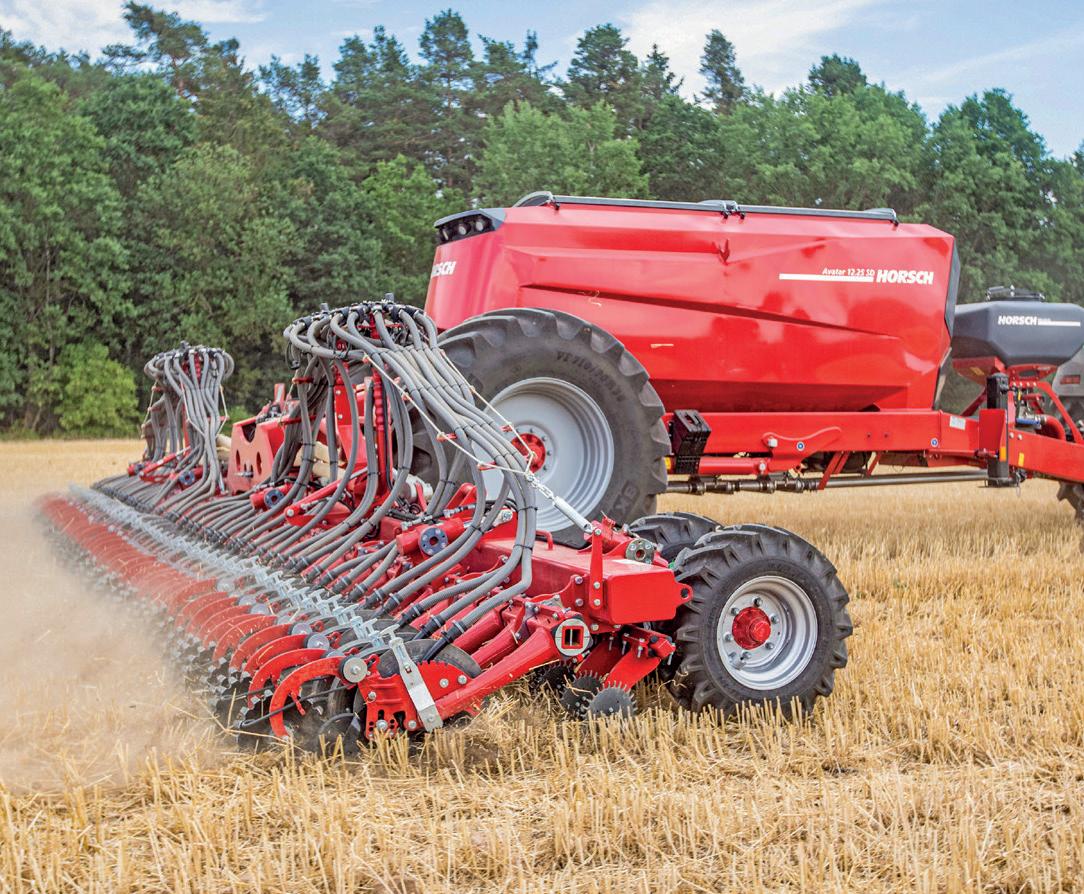
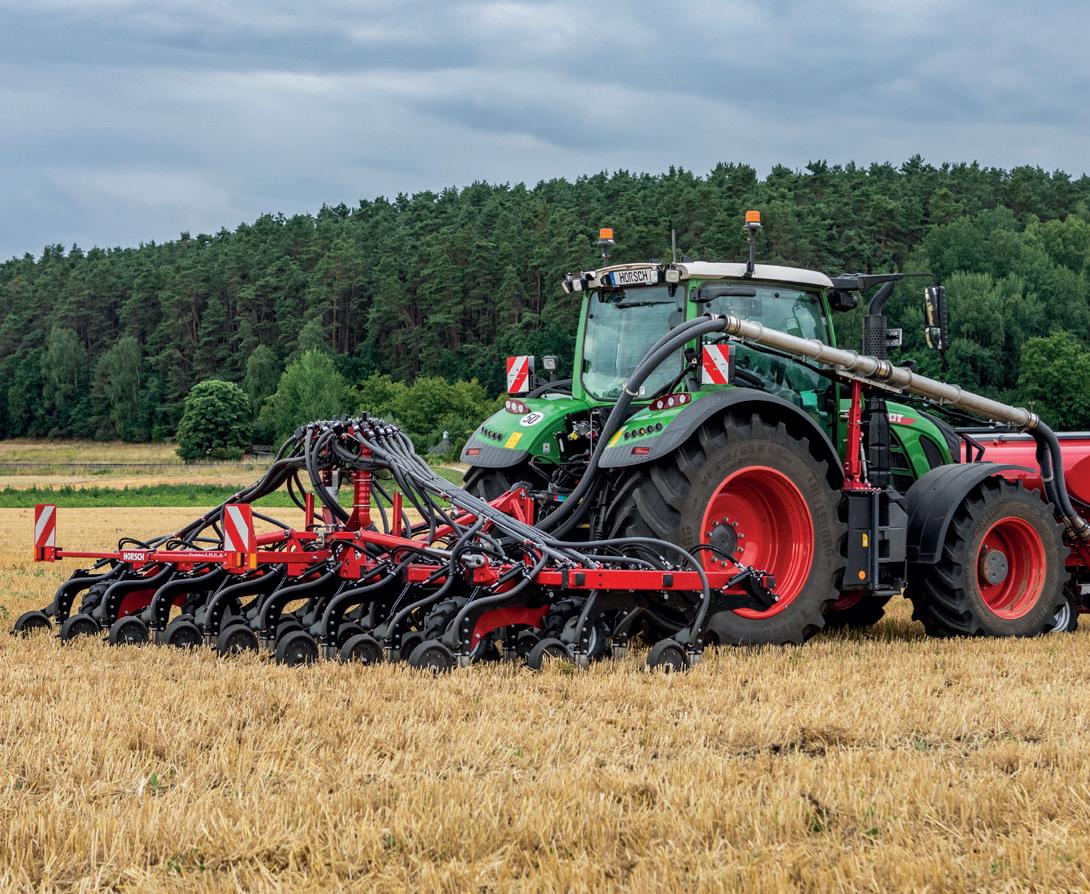
Trap crops have also proven successful across the industry, and Mr Baker has started companion cropping his OSR with buckwheat, drilling it at 5kg/ha at the same time as the OSR using an Horsch Avatar seed drill.
He says: “The buckwheat got up and away very nicely, but at first was almost shadowing the OSR, which was concerning, but it seemed to do a good job, and after the first frost it was pretty much gone, so we are definitely going to put it in again this year.”
7 Make sure to keep rotations wide
The future success of the UK home-grown OSR market depends on avoiding past mistakes.
Mr Padbury adds: “We do not want to get back to where we were eight or 10 years ago with a very strong wheat-rape rotation.”
Tighter rotations can increase pressure from pests and diseases, including verticillium and light leaf spot.
“It is quite important to keep at least a five-year gap between OSR crops in the field. That seems to be working well,” says Mr Baker.
PROVEN ON FARM
LG Adapt stood out to me due to its consistent performance in RL trials.
Paul Rogers, North Yorkshire
LG
ADAPT FULLY LOADED HYBRID
Consistently high yielding variety with pod shatter resistance, well adapted for British farms thanks to our UK breeding programme
lgseeds.co.uk/lg-adapt
Limagrain Field Seeds
Talking Policy
As chair of the NFU
Combinable Crops Board, every day I see first-hand the determination, resilience and ambition that drives the arable sector forward.
Whether it is volatile weather, supply chain challenges or the availability of fuel at critical moments such as harvest, these pressures are no longer occasional hurdles but an unfortunate everyday reality of producing crops here in the UK. For many farmers, this new reality is becoming increasingly difficult to navigate.
As I write this, much of the country is preparing for temperatures pushing 30°C – a sharp contrast to the prolonged wet spells seen in previous years. This is a stark reminder of just how unpredictable our weather patterns have become. For farmers, this volatility is difficult to navigate and has a direct impact on crop yields, farm income and long-term business confidence. It was welcome to see the Climate Change Committee recognise the growing impact of extreme weather on agriculture. What is clear is that this is not about isolated events but a pattern of sustained volatility. Farmers are already adapting by experimenting with different crop varieties, improving soil health and adjusting practices, but there are limits to what can be done at the farm level alone. Continued collaboration between Government and industry will be essential to build resilience for the future of the arable sector.
Alongside weather pressures, farmers are also grappling with rising input costs. The conflict in the Middle East is driving up the cost of fuel, energy and fertiliser, leaving farm businesses to grapple with even more uncertainty. Fertiliser is a critical input, yet pricing can be volatile, making it difficult for farmers to plan. Now, more than ever, the arable sector needs greater clarity and transparency in the fertiliser market.
Risk
Fairness within the supply chain is just as important. Too often, farmers are left carrying a disproportionate share of the risk. Greater transparency and fairness would not only improve confidence, but also ensure that farmers are properly rewarded for the vital role they play in feeding the nation. The NFU has consistently campaigned for the Government to review fairness in the crops supply chain, bringing the sector in line with the dairy and pig sectors, and has argued that changes are needed to ensure fairer terms and a stronger voice for arable farmers.
Practical considerations must not be overlooked either. The availability
NFU Combinable Crops Board chair Jamie Burrows discusses the impact of weather volatility and rising input costs, plus the importance of fairness within the supply chain.
‘This new reality is becoming increasingly difficult to navigate’
of fuel during harvest is critical. Any disruption to fuel supply could have serious consequences, so ensuring
If we want our arable sector to be resilient and productive, we need the Government to help us create the conditions that will allow it to thrive
reliable access to fuel in key periods such as harvest should be recognised as essential to maintaining food production. At the NFU, we have been calling on the Government to support farmers with rising costs and welcome the decision to cut the fuel duty rate on red diesel from June 15, which will make a real difference to arable farmers.
The Government recently committed to a Sector Growth Plan for each sector, and the build-up of pressure in the combinable crops sector only amplifies the urgency of this being delivered. Such a plan should bring together action on climate resilience, input market transparency, supply chain fairness and infrastructure reliability.
I know that us farmers are doing our bit to adapt, innovate and continue to produce top-quality food under what seems to be ever-increasing
pressures, but we cannot do it alone. If we want our arable sector to be resilient and productive, we need the Government to help us create the conditions that will allow it to thrive.
Supporting arable farming is not just about supporting a sector, it is about safeguarding the future of food production.
n Farms on the fringe of St Albans n Jamie is one half of Sandcross Farming, which farms about 1,000 hectares of cereals, mostly in south Herefordshire
n Mixture of owned, tenanted and contract farming agreements n Grows milling and feed wheat, milling oats, feed and malting barley, peas, beans and oilseed rape
About Jamie Burrows
May 26 LIFFE wheat futures closed on Tuesday (June 2) at £184.25/tonne, a fall of £4.25/t on the week.
GLOBAL PRICES TAKE A TUMBLE
GRAIN markets tumbled last week across the derivative boards and oceans. Why? Because the supply and demand profile tells it to.
Simply put, both the Southern and Northern Hemispheres have between them managed to produce enough carbohydrates and proteins that there is no shortage of either.
Nonetheless, the big hedge funds appear quite clear in their intentions, right now. We need to sell agricultural derivative
UK
LIFFE WHEAT FUTURES
OILSEEDS MARKET FINELY BALANCED
products. Not hastily, but perhaps with a little more sense of purpose. We cannot blame these people, they are just doing their job, and it sort of makes sense.
For a start, how about the fact that the Northern Hemisphere is on target to produce a staggeringly large crop of wheat, upon which humans and animals rely?
Looking to the Southern Hemisphere and, admittedly, China has been experiencing flooding, just at harvest, so that is one to watch, bearing in mind it is the world’s largest producer of wheat.
THE UK oilseed rape market remains finely balanced as June begins. Paris rapeseed futures (November 2026) ticked up to €459/tonne (£396/t), testing resistance at €460/t (£397/t). Weather concerns in Central and Eastern Europe, including late frosts and drought conditions, have shaved EU yield forecasts to 3.19t per hectare, according to the EU’s Monitoring Agricultural Resources service.
Yet, overall EU production is still expected to rise modestly yearon-year to 20.85 million tonnes, keeping a lid on price momentum.
Domestically, crop conditions have deteriorated. Good-to-
excellent ratings for UK winter OSR fell to 78% by late May, down from 84% a month earlier. Persistent dryness and high temperatures have increased crop stress, raising yield concerns as harvest approaches. Ex-farm prices remain firm, underpinned by strong biodiesel demand and volatile global fundamentals.
However, sterling’s recent weakening against the euro (£1 is roughly at €1.1531 at time of writing) has offered limited price support relative to MATIF benchmarks.
Globally, the oilseed complex faces competing pressures.
Do not forget India, either. The Indian monsoon issue has not yet dissolved into what the Americans would call a ‘nothing burger’.
Overall, we see the Northern Hemisphere crop (wheat) progressing without any particular issues. We see demand being dampened in our region. So, that just leaves the energy complex… Good luck.
WHEAT MARKETS BACK FROM MAY HIGHS
WHEAT prices have fallen rapidly, but not as rapidly as in other countries.
Sure, London November 2026 futures are, at time of writing, down 4% from late-May highs. However, Paris December 2026 futures are down 5.3% in sterling terms, and Chicago peers are 7% lower.
Indeed, the London contract has flirted this week with a premium over its (higher quality) Paris peer for the first time, closing the gap from the near -£10/tonne discounts in March. The outperformance reflects in
part increased ideas for UK demand in 2025-26, spurred by factors such as the reopening of the Ensus ethanol plant and data showing UK stocks lower than had been thought, suggesting higher-thanexpected feed use on-farm.
outlook in the eastern barley belt is mixed, and in some cases dire. Some growers report crops in a worse state than last year.
Indonesian palm oil exports surged in early 2026, weighing on vegetable oil prices, while Canadian canola shipments hit crop-year highs following tariff reductions in China. Australian production forecasts, meanwhile, are down 19%, tightening global supply chains.
For UK farmers, forward sales are ahead of recent years, reflecting early season pricing opportunities amid persistent market uncertainty.
Prospects for the UK’s wheat import needs have grown, warranting UK price outperformance, although the quality make-up of the 2026-27 import programme will be unknown for a while.
However, growing concerns over this year’s harvest are playing a role too.
While farms in many areas of the UK – for example, in the west – are entering the run-in to harvest with strong crops, the
Still, harvest pressure – which is weighing in particular on US prices – may come to bear more significantly on UK values ahead, potentially reversing some of London’s outperformance.
Mike Verdin, CRM Agri.
LIFFE wheat, May 5, 2027
LIFFE wheat, Nov 11, 2026
Jacob Duce, Frontier.
Rupert Somerscales, Agri-Analytics UK.
Talking Roots
Spring in the Waveney Valley is a very special time; the early risers among us do not need an alarm as the cuckoos start at about 4.30am. It is wonderful listening to them echo back and forth across the valley, as I occasionally sit in my ice bath with a cup of tea, contemplating the day ahead.
The hobbies are back too – proper little hunters, built like large swifts, scything along the river margins and picking off dragonflies mid-flight. There is a kingfisher nesting close by somewhere; that unmistakable flash of blue keeps catching my eye on the way to the fields. The mayflies are conspicuously absent still, but I am putting that down to the cold snap –they will show eventually.
That persistent cold has been keeping aphid pressure in check, which is one small mercy. Myzus persicae and cavariella aegopodii numbers are only just beginning to creep upward, but they will need watching closely as temperatures lift.
Sugar beet emergence continues to frustrate with another dry spring, and the stronger land in particular is throwing up very uneven stands – I am walking fields where some of the plants are at 6 leaves, while their neighbours are still at the cotyledon stage.
This is proving to be very challenging for the timing of aphicides where thresholds have been reached on the larger plants but still only with 60% emergence, and also trying to come to a compromise on product choice, especially where flea beetles have also been found nibbling away.
Weeds continue to be a challenge; as was the case last year, larger fat hen plants are difficult to treat as they are so waxy and it is taking some back-to-back hits to get on top of them, with an increase in herbicide costs.
Conviso beet is facing a similar situation as the cool weather conditions and waxy leaves of the fat hen mean they are taking some time to die, unlike most of the other weeds, which are much more quickly controlled.
Identification
My weed identification was challenged when I had to look more than once to confirm that the large poppy-like weeds, which can be resistant to ALS herbicides, were in fact lesser swine-cress – or so the app told me – but at least they are dead now.
Potato irrigation has already started on some of the earlier-emerged crops, and there are reports of seed throwing tubers almost immediately on emergence. My feeling is that the seed was grown under significant heat stress last season and
Weeds continue to be a challenge; as was the case last year, larger fat hen plants are difficult to treat as
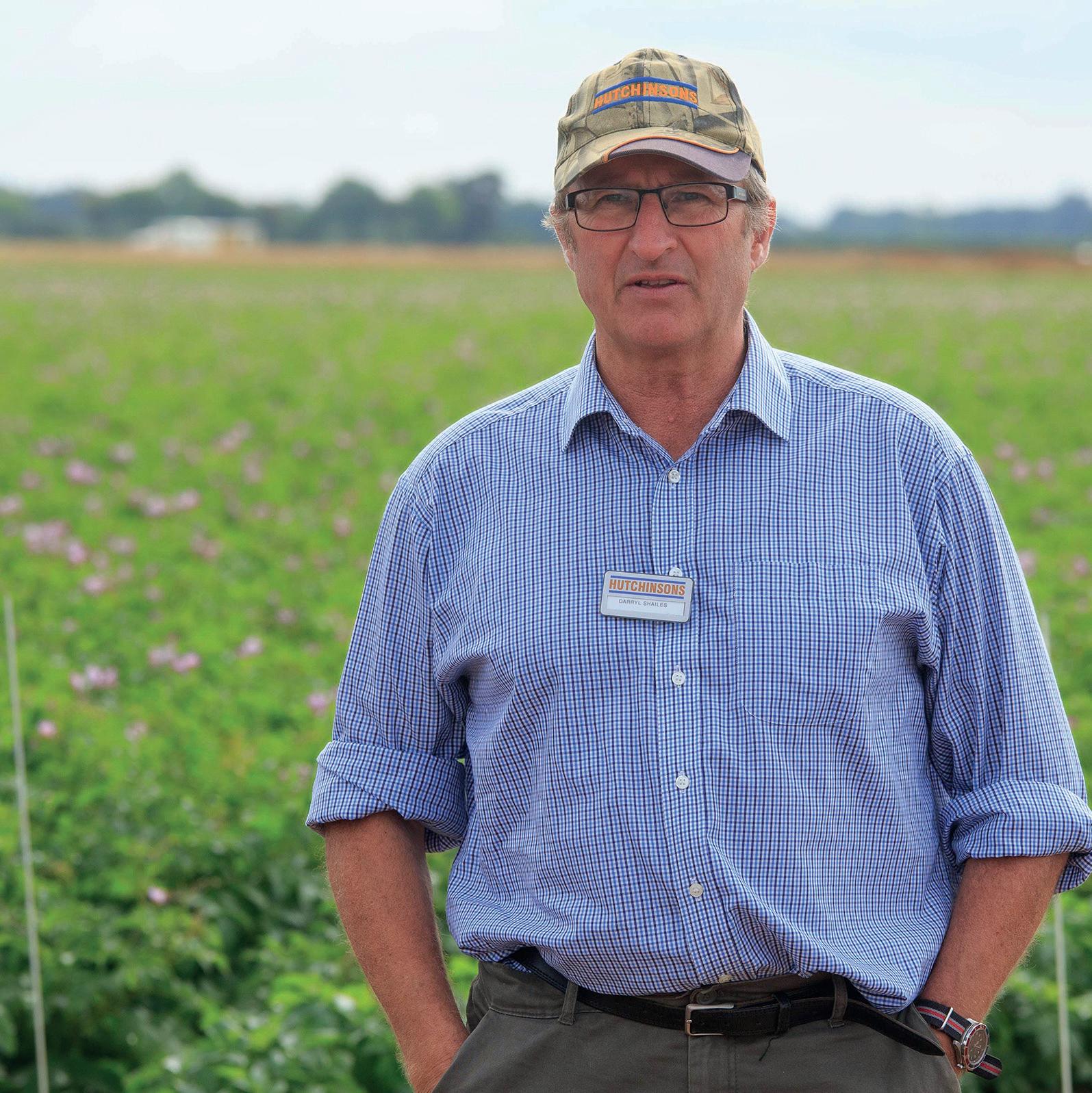
DARRYL SHAILES
Darryl Shailes reflects on a cold snap keeping aphids at bay, the fight against fat hen and the looming threat of blight.
‘Resistance in the
UK blight
population has to be front of mind’
came out of store physiologically older than ideal.
We have also seen water shedding on some fields where the beds had dried down to the point of becoming hydrophobic – more water than usual was required just to get adequate moisture around the tubers to kick off the scab control programme properly.
As I write, blight has already been found in the West and in Kent and the forecast from BlightSpy suggests we are getting a period
fitting the Hutton criteria in the East this coming weekend.
With the EU43 strain of blight confirmed in Suffolk back in October, resistance in the blight population in the UK has to be front of mind this season – we cannot afford to be complacent about fungicide programme design.
Alternaria also deserves more attention than it has perhaps received in recent years. We still have good chemistry available, but the loss of
mancozeb removes a useful background safety net, and more varieties might now need targeted treatment.
PICTURE:
TIM SCRIVENER
DARRYL Shailes is root crop technical manager for Hutchinsons, with a nationwide remit. He has been working in potato agronomy for more than 20 years. Agronomist facts
A decade of learning pays off for Lincoln farm manager
Dave Craig grew up visiting farms and pursued a career that ultimately led him to achieve one of agronomy’s most prestigious qualifications: the BASIS diploma in agronomy.
Now managing a 220-hectare arable unit near Lincoln, Mr Craig began his qualifications journey in 2015 as a sprayer operator, taking his BASIS foundation qualification to deepen his understanding of crop protection.
“I was motivated by a desire to learn more technically,” he says, progressing through the BASIS certificate in crop protection before adding his FACTS qualification.
Studying at Riseholme College, Mr Craig valued the networking as much as the coursework, exchanging knowledge with both farmers and agronomists.
The benefits quickly became tangible on-farm. His crop protection training enabled him to cut agrochemical spend, while his FACTS qualification delivered a measurable reduction in fertiliser costs.
What the BASIS diploma involves
The BASIS diploma represents the culmination of several qualifications alongside practical crop production experience.
Built on the certificate in crop protection and FACTS, candidates must also complete:
■ Certificate in sustainable land management: Covering agri-environment schemes and biodiversity.
■ Plant protection award: Pesticide technology, safety, application and formulation.
■ Soil and water management certificate: Knowledge of soil health and water stewardship.
■ Advanced module: Specialist knowledge of specific crops, marketing, food industry, and assurance schemes.
When Mr Craig moved on to the sustainable land management
course in 2025, he developed a keen interest in environmental conservation and the Sustainable Farming Incentive options available.
He believes academic grounding helps explain the rationale behind the practices being promoted and is now actively working to integrate practical farming with sustainability goals.
Committed
Having completed the pathway over a decade, he recently achieved his BASIS diploma in agronomy – and has no intention of standing still.
Mr Craig remains committed to continuing professional development and actively supports the next generation, helping trainee agronomists gain practical farm experience and prepare for their viva examinations.
“Continuing development is vital to maintain professional standards in crop protection,” he says.
The BASIS diploma in agronomy is open to those working towards or already in agronomy careers seeking high-level understanding of crop production and land management.
CAN YOU SCORE A BELTER?
Dave Craig
Cereals Preview
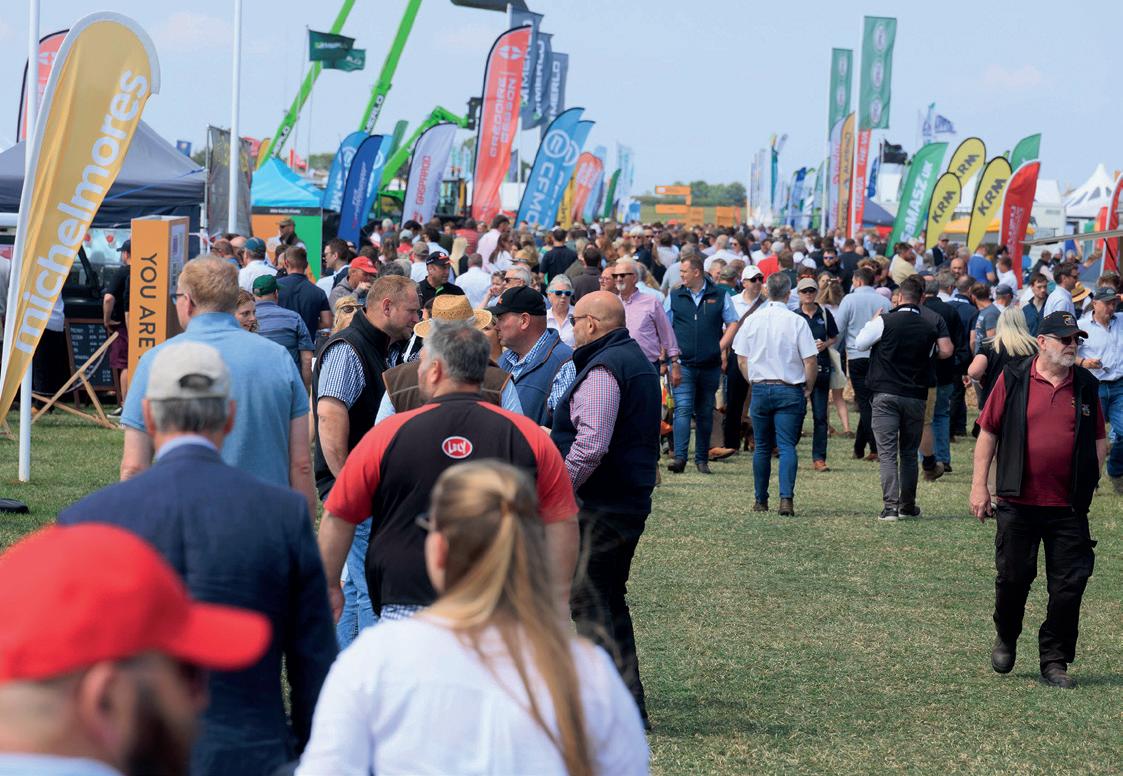
New genetics, smarter technologies and farmer-led research will all be on display at this year’s Cereals event, which has moved to a new venue at Diddly Squat Farm. Ash Ellwood finds out what the exhibitors are planning.
What to check out at Cereals
NEW GENETICS IN THE CROP PLOTS
IF there is a theme running through this year’s variety plots, it is the search for resilience.
Whether the challenge is disease pressures, changing regulations, tighter input budgets or increasingly unpredictable weather, crop breeders are seemingly focusing their breeding plans on delivering varieties that help growers manage risk without sacrificing crucial outputs.
On the DSV stand, visitors can explore the plant breeder’s latest wheat and oilseed rape genetics, with the newly announced nabim Group 1 milling wheat Arlington among the headline attractions, generating interest in combining breadmaking quality with a strong agronomic package.
DSV will also showcase Loxton, which continues to establish itself on-farm thanks to its strong combination of disease resistance, early maturity and
proven milling credentials. Early harvestability is becoming an increasingly important characteristic as growers look to spread workload, improve crop dry-down times and manage harvest logistics more effectively.
Recommended
In OSR, DSV will be highlighting Dompteur, which is currently at the top of the latest AHDB Recommended List for yield.
Alexander Doering, managing director at DSV UK, says: “Growers are facing significant changes in the way crops will need to be managed over the next decade.
“Whether it is the future of glyphosate, increasing disease pressure or more volatile weather, variety selection is becoming one of the most important decisions on-farm.”
As the crop continues to divide opinion amid industry debates over the use of glyphosate as a
pre-harvest desiccant, varieties that combine early maturity, dry down more quickly and deliver greater harvest resilience are attracting growing interest.
Dompteur brings a package that includes turnip yellows virus resistance, pod shatter resistance and Phoma Blocker technology alongside yield performance, helping growers reduce some of the production risks associated with the crop.
Breeder Senova will be presenting what it describes as ‘compromisefree’ genetics across cereals and pulses. The company believes that recent changes in disease pressure, including the breakdown of the Yr15 resistance gene, have highlighted the importance of robust genetics. For growers facing tighter margins and volatile markets, reducing production risk is becoming just as important as chasing headline yields.
George Goodwin, managing
director at Senova, says: “Given the current headwinds in arable farming and the volatile situation in the Gulf, most growers are looking for varieties that help them to manage risk, not add to it.
“That is why we are delighted to have new wheat varieties coming through which do not have the disease susceptibility or weak straw compromises that currently exist. Our wheats work in lower input regimes, are easier to manage and suit the end user.”
The winter wheat candidates to be exhibited – including NOS Beast, Girton and Gibson – are likely to attract significant interest as each targets slightly different market opportunities, but all have been selected for strong disease resistance and agronomic reliability.
NOS Beast is a soft Group 4 candidate that combines a UK yield of 108% with untreated performance and strong disease ratings, including a septoria score of 8 and a yellow rust score of 9.
Early indications also suggest potential opportunities within distilling markets, adding another layer of commercial appeal.
Girton occupies a different position, offering growers a hard Group 4 option with stiff straw, good disease resistance and early maturity.
It is already being viewed as a potential successor to Graham on some farms, particularly where flexibility and ease of management remain priorities.
Regenerative
Meanwhile, Group 2 candidate Gibson has been attracting attention for its suitability within lower input and regenerative systems. Good disease resistance, strong agronomics and encouraging quality data make it one to watch as growers increasingly seek varieties that perform well under reducedinput regimes.
Winter barley also remains an important part of the Senova portfolio, with existing variety Kitty continuing to gain market
Continues on page 44
NOS Beast is a new soft Group 4 candidate showing a UK yield of 108%.
To know your farm is to your farm
To know your farm is to your farm
THE BEST ADVICE COMES FROM UNDERSTANDING YOUR FARM AND YOUR GOALS.
Partner with Agrii’s 200+ agronomists for a tailored, integrated management plan designed for your needs, backed by local and national trials. Our expertise ensures your farm can adapt quickly, helping you grow a strong, sustainable business with ease.
Discover agronomy that truly understands you.
FIND
Cereals Preview
NEW GENETICS (CONTINUED)
share by combining yield with practical agronomic strengths such as standing ability, high specific weight and resistance to two strains of barley yellow mosaic virus.
As virus pressure remains a concern in some regions, in-built resistance continues to provide reassurance. Senova says earlier drilling can further unlock yield potential, making Kitty an attractive option where establishment conditions allow.
New candidate Paquita highlights another developing trend within barley breeding.
As a barley yellow dwarf virus-tolerant variety, it offers growers additional protection against a disease that has become increasingly challenging to manage following restrictions on insecticide use. Importantly, newer tolerant varieties are now delivering yields comparable to conventional alternatives, removing one of the key barriers to wider adoption.
NEW TOOLS FOR AN INCREASINGLY COMPLEX CHALLENGE
CROP protection remains a rapidly evolving area of arable farming, and Cereals provides an opportunity to see not only the products available but also some of the chemistry that could shape future disease, weed and pest management programmes.
Making its first appearance as an exhibitor at Cereals, Adama is
placing considerable emphasis on two upcoming products that could prove significant for UK growers.
The first is Gilboa, a new fungicide based on flumetylsulforim, and while growers regularly hear about incremental improvements in disease-control chemistry, entirely new modes of action are relatively rare.
Biochemical
We look forward to sharing more about how Gilboa’s game-changing molecule works at our Adama in Action trial sites
JOHNNY OOSTHUIZEN
2026 STRAW REQUIRED
Are you planning to have straw in the swath this season?
At Genesis Biomass, we offer:
•Modern fleet of Krone balers and Heath Engineering chasers, all operated in-house.
•Ability to operate within CTF (Controlled Traffic Farming) requirements to suit your farm system
•All balers are blown down between farms to reduce the risk of blackgrass contamination.
The benefits to you:
• Straw swap available for solid digestate
• Digestate delivered and spread in-house
• Full payment completed by the last working Friday in October 2026
• Very competitive rates
• Tailored payment options to support farmers’ cash flow
Gilboa has been classified by the Fungicide Resistance Action Committee as a Group 32 fungicide, targeting nucleic acid metabolism through a biochemical pathway not previously utilised by cereal fungicides.
That distinction matters because resistance management is becoming a growing concern across the industry, particularly in septoria control programmes.
Although commercial availability
is not expected until next year, the product is already attracting attention as a potential tool to diversify fungicide programmes and reduce reliance on existing chemical groups.
Jonny Oosthuizen, portfolio and campaign manager at Adama, says: “Gilboa represents the next generation of fungicides and is therefore an incredibly exciting and important new molecule for the crop protection industry.”
He adds: “To be able to develop and bring to market a new mode of action that is performing on a level with market-leading products really proves Adama’s commitment to UK arable farming.
“We are privileged to be leading the next generation of fungicides by introducing the first DRSP [DNA/RNA synthesis proposed] mode of action in cereals, and we
Tom Coxall Director 07815 709933 tom@genesisbiomass.co.uk
Joseph Brennan General Manager 07780 143351 joseph.brennan@genesisbiomass.co.uk GET IN TOUCH TODAY!
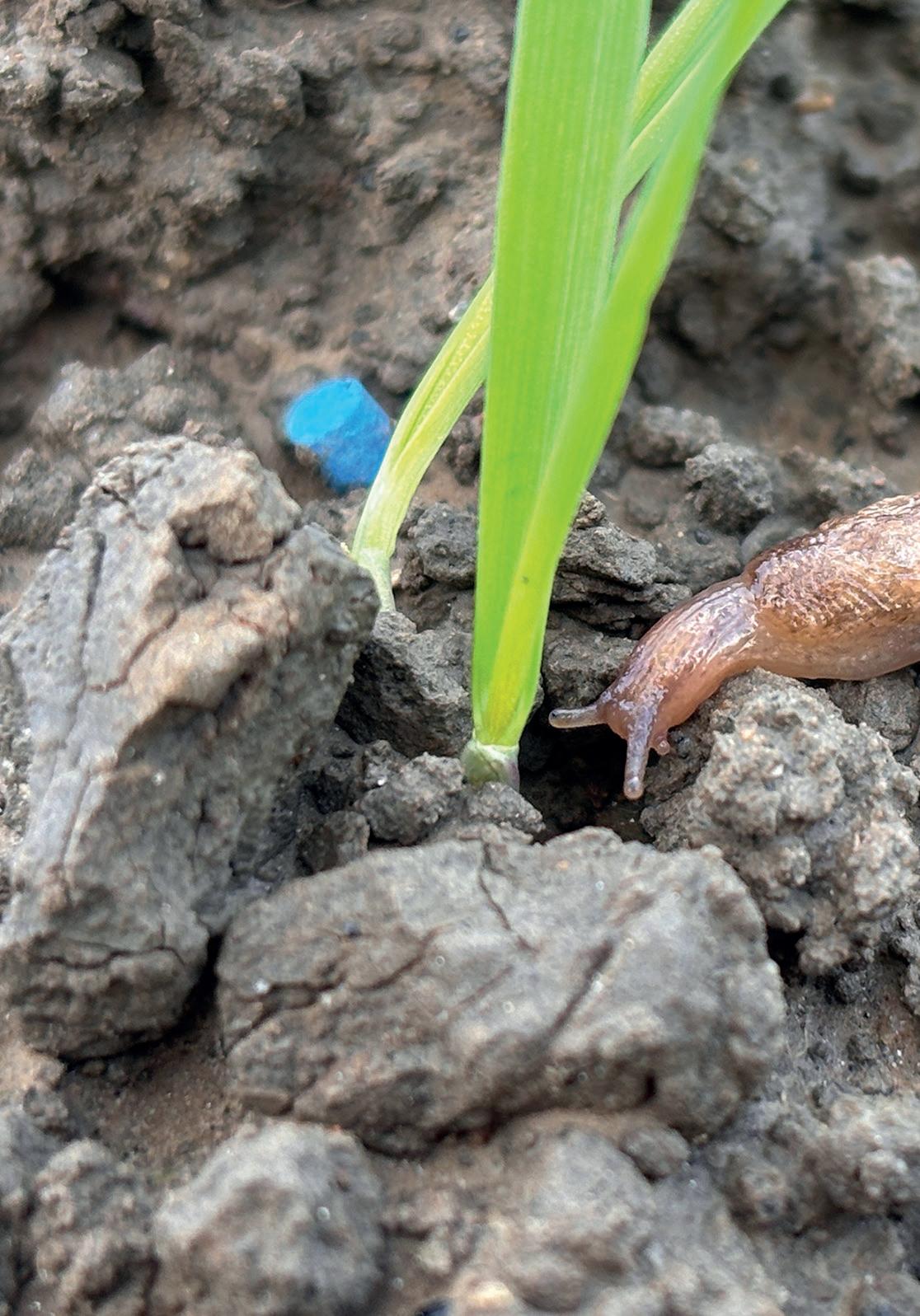
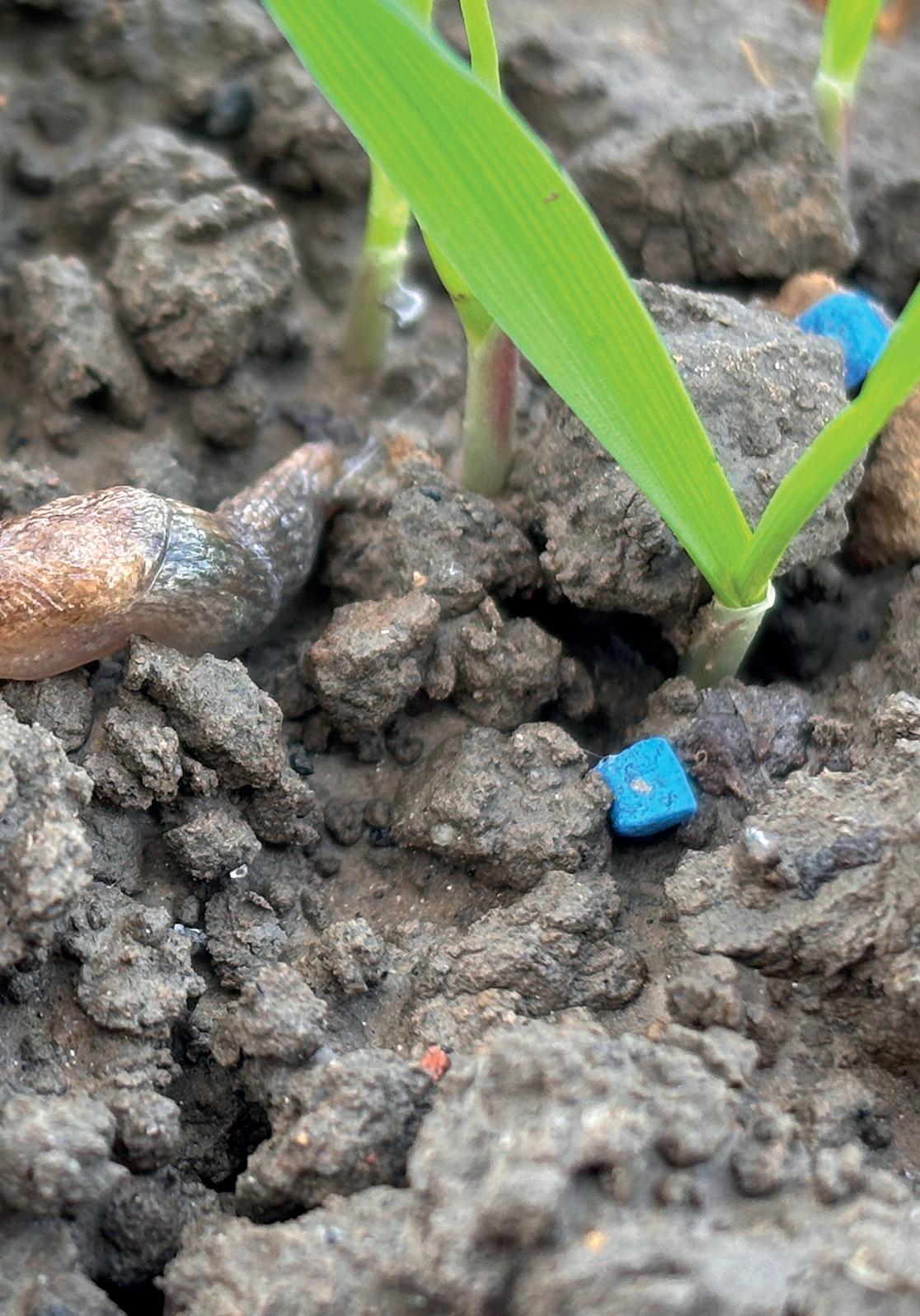
Ferrabait is Adama’s new slug pellet due for launch this autumn, based on a novel active ingredient, Feralla.
Cereals Preview
look forward to sharing more about how Gilboa’s game-changing molecule works at our Adama in Action trial sites across the UK in the summer.”
Slug pellet
The company’s second focus is Ferrabait, a new slug pellet due for launch this autumn.
Slugs remain one of the most costly and difficult pests facing UK arable growers, particularly following oilseed rape and during autumn establishment periods.
Ferrabait is based on a novel active ingredient, Feralla, and is designed to rapidly terminate feeding while maintaining strong pellet durability under challenging field conditions.
Corteva’s stand will offer a broader look at weed and disease management across several crop sectors, and one of the key talking
points will be Broadway Ultra, a new cereal herbicide developed for winter wheat and triticale.
With grass-weed management continuing to challenge many growers across large parts of the country, products that offer flexible and effective control remain in high demand.
Visitors will have the opportunity to discuss fungicide strategies with the Corteva team, including the role of Univoq (fenpicoxamid + prothioconazole) in programmes that balance efficacy and resistance stewardship.
OSR weed control remains another area of interest, and Corteva will showcase its product range and provide growers with an opportunity to discuss autumn weed control strategies ahead of the next establishment season.
A CLEAR PLAN FOR THE SEASON. SWITCH
ON TO OMNIA.
Omnia helps you to plan for the season with all your data in one place. Turn your farm information into clear and visual insight where every colour, layer and detail has a purpose.
Built with farmers and agronomists, and backed by UK-based support, Omnia gives you the clarity, control, and confidence to act. Make faster, better decisions, work more efficiently, and get more from every hectare.
Cereals Preview
TECHNOLOGY at Cereals is increasingly about practical solutions that can be integrated into everyday farm operations rather than futuristic concepts.
One company illustrating that trend is Scott Country International, which will be demonstrating thermal imaging and drone technologies designed to support both productivity and wildlife protection.
The use of thermal drones to identify hidden wildlife before mowing or silage operations has grown significantly in recent years. Roe deer fawns, leverets and ground-nesting birds can be difficult to spot in standing crops and grassland, creating both welfare concerns and operational challenges.
Thermal imaging offers a practical solution by allowing operators to scan fields before machinery enters, helping locate animals that would otherwise remain hidden.
At Cereals, visitors will be able to see DJI Enterprise drone systems and Nocpix thermal
technology while discussing how the equipment can be used across a range of agricultural applications.
Beyond wildlife protection, thermal imaging is increasingly being used for infrastructure inspection, crop monitoring, estate management and farm security. As equipment becomes more accessible and easier to operate,
adoption is gradually moving beyond specialist users into mainstream farming.
Data management and decision support will be the focus on the Hutchinsons stand. The Omnia platform is now used across more than two million hectares of UK farmland and has become one of the most widely adopted digital management tools in the sector.
leave our stand with ideas they can put to work as soon as they get home.”
Visitors will be able to see live demonstrations covering rotational planning, field records, crop performance analysis and business reporting, with the aim not simply to collect data, but to turn information into practical management decisions.
See at Agri Expo -March 7th
Rachael Roberts, marketing manager at Hutchinsons, says: “Whether it is making better use of farm data, fine-tuning input decisions, planning rotations, navigating the Sustainable Farming Incentive and environmental schemes, or simply cutting back the paperwork, we want growers to
STRIAL, AGRICULTURAL OR COMMERCIAL
NDUSTRIAL, AGRICULTURAL OR COMMERCIAL
NDUSTRIAL, AGRICULTURAL OR COMMERCIAL TERNAL OR EXTERNAL
TERNAL OR EXTERNAL
NTERNAL OR EXTERNAL
•STEEL FIXING
One area likely to generate considerable interest is Omnia’s integration with John Deere systems, enabling smoother data transfer between machinery and farm management software. As farms continue to invest in precision technologies, reducing the burden of data management is increasingly important.
•STEEL FIXING
USH, TAMP OR POWER FLOATFINISHES
•STEEL FIXING RUSH, TAMP OR POWER FLOATFINISHES
•FOUNDATIONS
•FOUNDATIONS
•FOUNDATIONS
• POULTRYUNITS AND STABLE YARDS
POULTRYUNITS AND STABLE YARDS
• POULTRYUNITS AND STABLE YARDS
MATERIAL ADVICE AND COSTING
MATERIAL ADVICE AND COSTING
•SILO BASES
•SILO BASES
•SILO BASES
RONS &SHED FLOORS
PRONS &SHED FLOORS
RONS &SHED FLOORS
NAEROBIC DIGESTION
•ANAEROBIC DIGESTION
TANK BASES
NAEROBIC DIGESTION TANK BASES
•GRAIN, POTATO& MACHINERYSTORES
•GRAIN, POTATO& MACHINERYSTORES
•GRAIN, POTATO& MACHINERYSTORES
•PATHS, PATIOS AND DRIVEWAYS
•PATHS, PATIOS AND DRIVEWAYS
•PATHS, PATIOS AND DRIVEWAYS
•GROUNDWORKS & PREPARATION
•GROUNDWORKS & PREPARATION
•GROUNDWORKS & PREPARATION
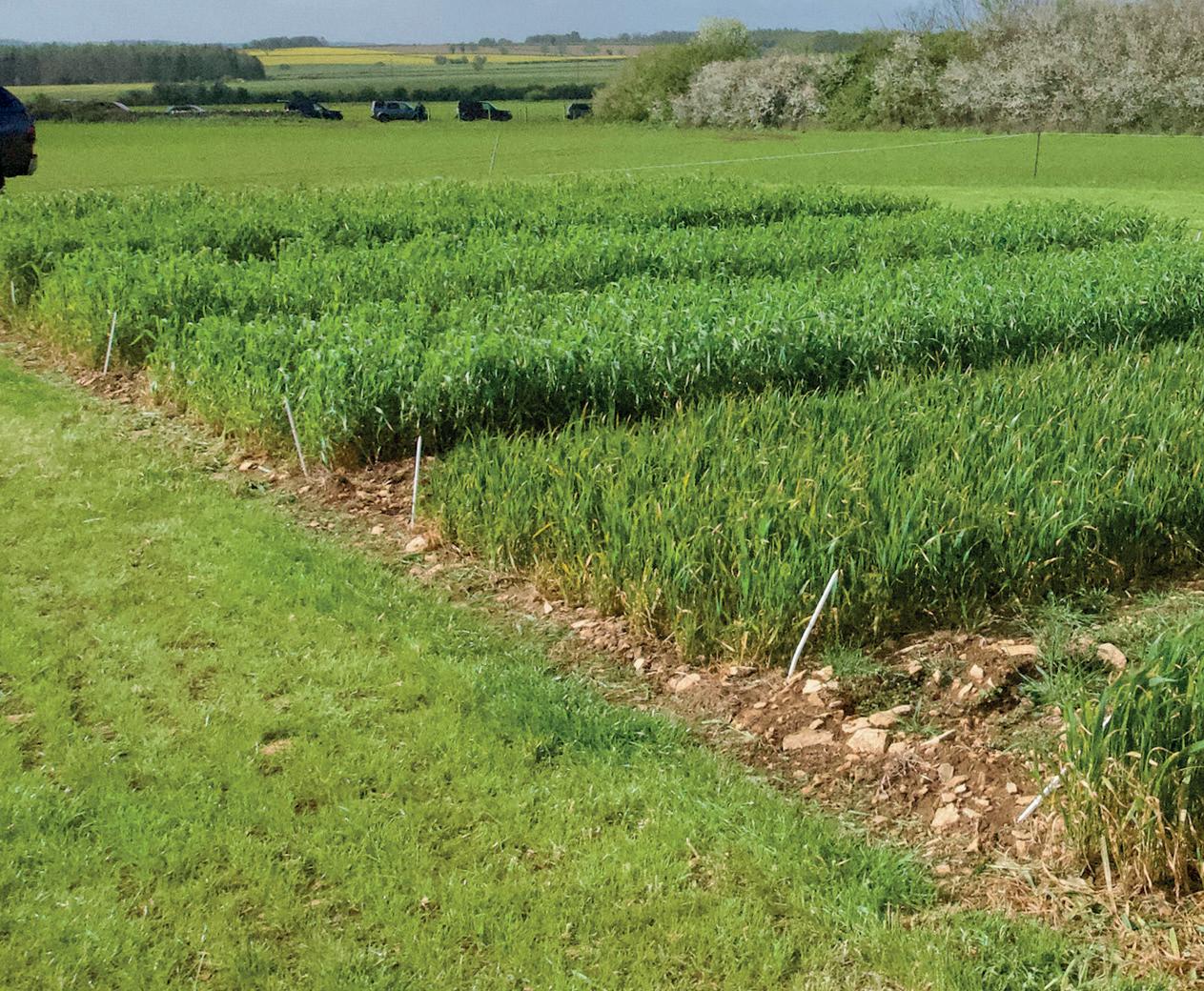
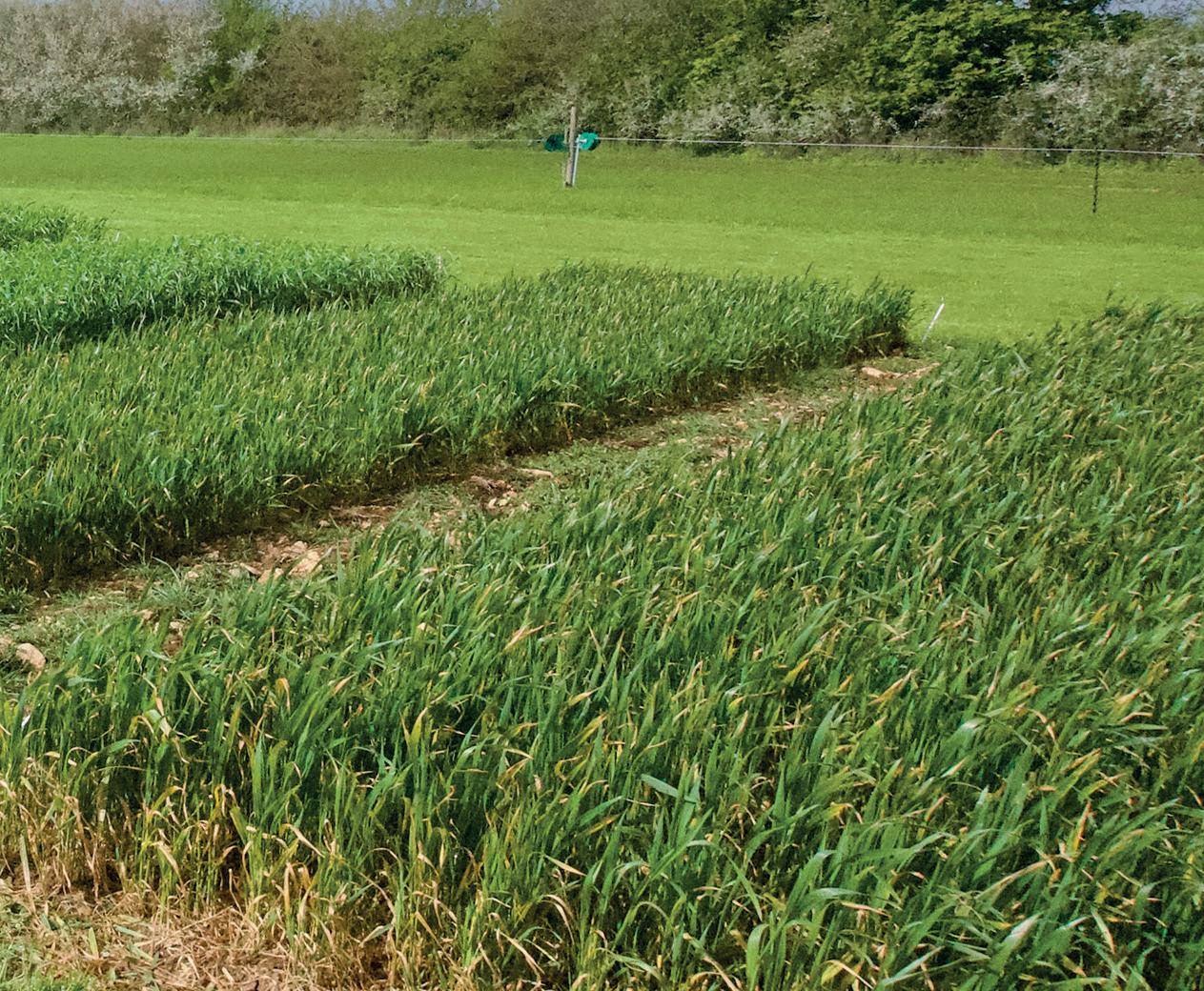
Trial plots operated by the British On-Farm Innovation Network at Diddly Squat Farm, pictured at the end of April this year.
The Omnia platform is used across more than two million hectares of UK farmland.
Cereals Preview
FARMER-LED INNOVATION DELIVERS ANSWERS
THE British On-Farm Innovation Network (BOFIN) has built its reputation around farmer-led research, bringing together growers, scientists and technology companies to tackle real-world challenges under commercial farming conditions.
A major focus this year will be ‘Strategies Leading to Improved Management and Enhanced Resilience against Slugs’, also known as the SLIMERS project, a three-year programme investigating improved approaches to slug management.
Prof Keith Walters of Harper Adams University says: “One of the strengths of the SLIMERS project is the close partnership between farmers and scientists.
“By combining farmers’ observations with scientific analysis, we have developed our slug prediction maps, which have the potential to transform how and where control measures are applied. I am looking forward to introducing these brand new concepts to visitors at Cereals.”
Involving more than 100 farms, the project has generated one of the largest datasets yet assembled on slug populations and activity under UK conditions. The results are beginning to provide new insights into how slug pressure develops and how control measures might be targeted more effectively.
The project has also supported development of automated slug identification and monitoring technologies, demonstrating how
digital tools may play a larger role in future integrated pest management programmes.
Another attraction will be BOFIN’s demonstration plots, featuring six novel wheat varieties currently undergoing evaluation through the network’s farmer trial programme.
These plots are closely linked to the projects TRUTH (short for ‘Thriving Roots Underpinning Total soil Health’) and PROBITY (short for ‘a Platform to Rate Organisms Bred for Improved Traits and Yield’), which explore how root traits and plant architecture influence nutrient use efficiency, resilience and soil health.
Gravitropism
Researchers from agricultural consultancy ADAS and the John Innes Centre will be discussing traits such as biological nitrification and enhanced gravitropism, both of which could contribute to more resilient cropping systems.
Enhanced gravitropism, for example, promotes deeper root growth, potentially improving access to water and nutrients while increasing tolerance to drought stress.
Visitors will also hear about Shovelomics, a practical method for assessing root structure in the field. While the science behind root architecture can seem complex, the aim is to develop straightforward tools that farmers can use to evaluate crop performance and soil health on their own farms.
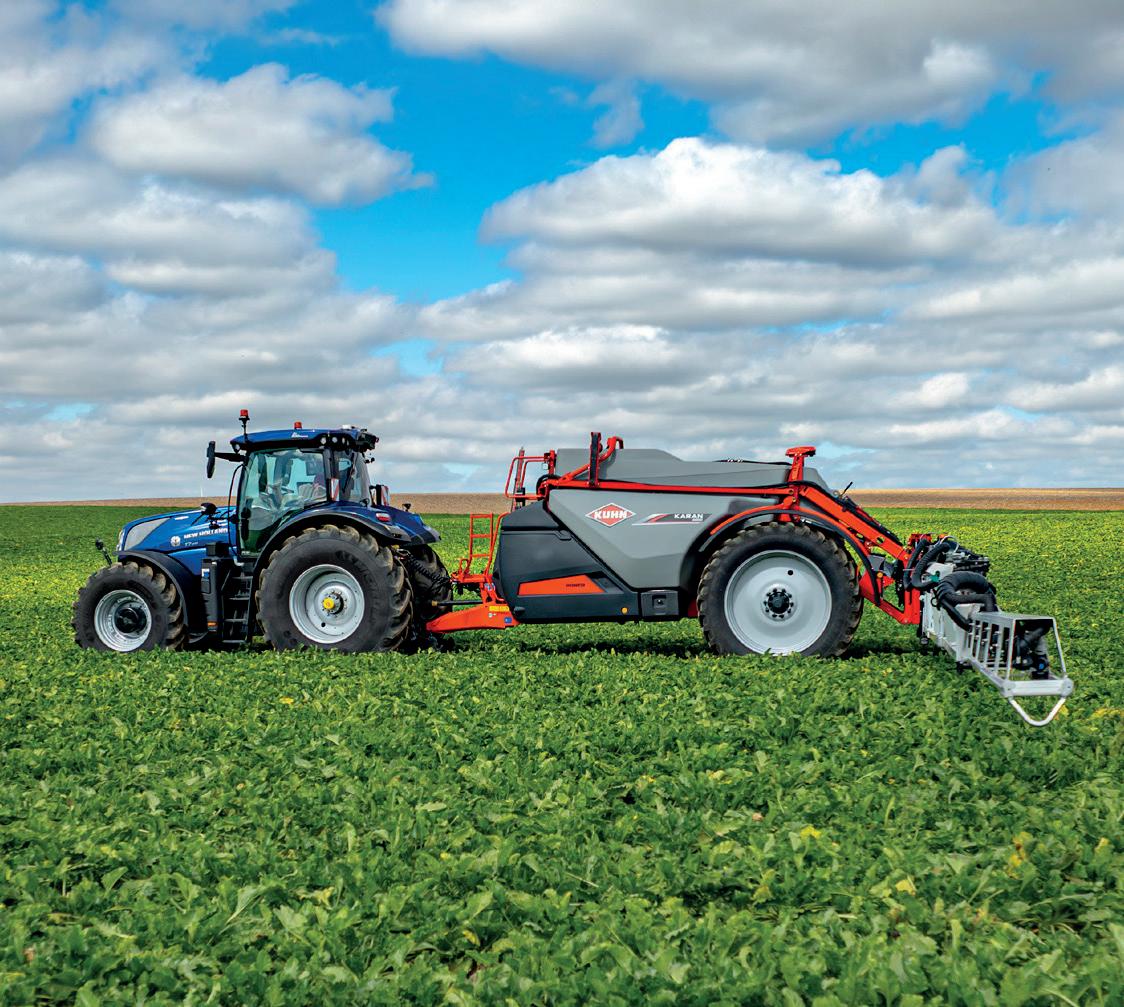
KARAN Trailed Sprayer
• Aluminium booms from 24 to 39m, with EAGLE boom height control
• Hydraulic, electric or AUTOSPRAY pulse width modulation circulations
• 280l/min or 560l/min pumps available
Cereals Preview
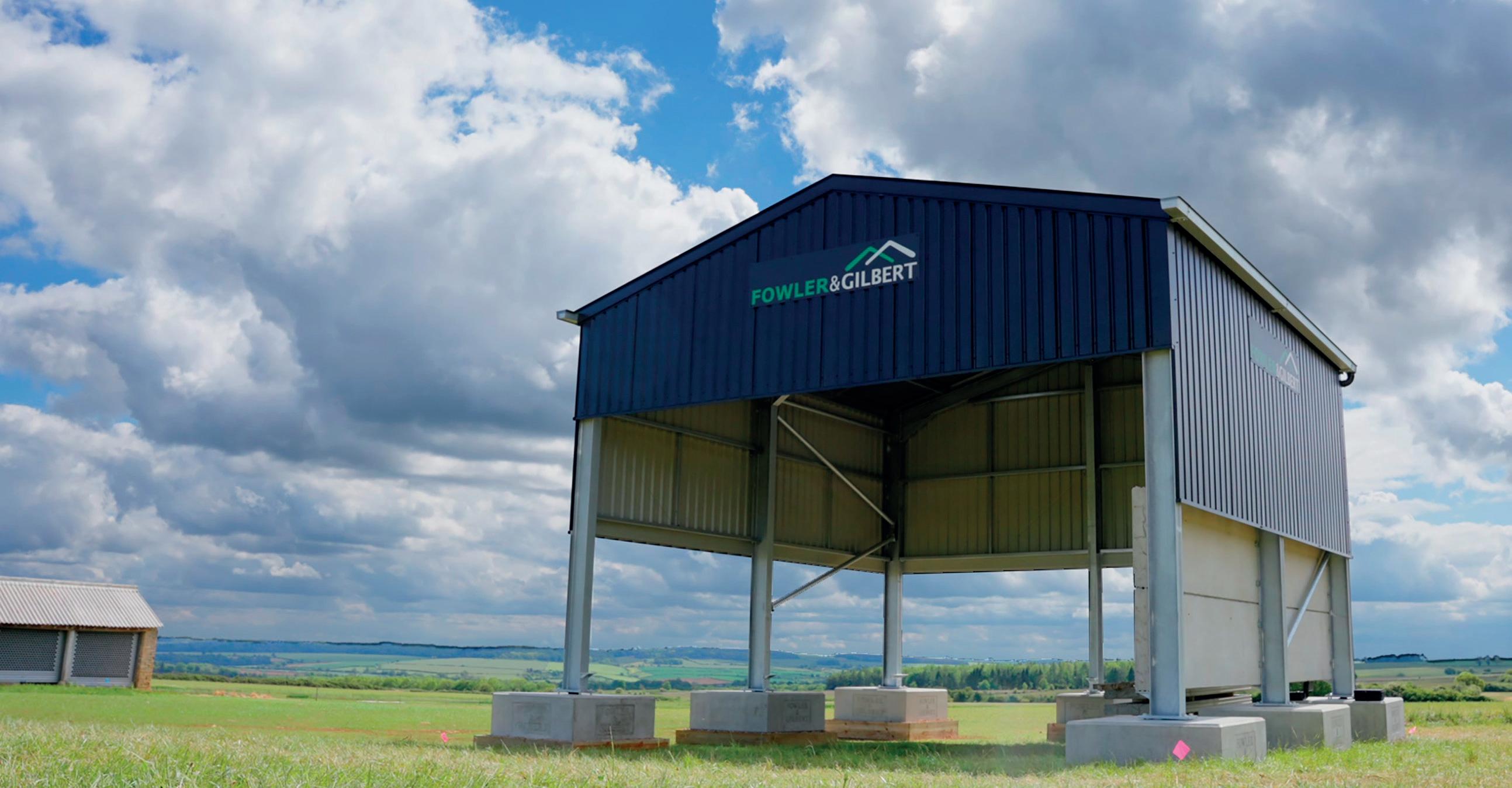
Fowler and Gilbert is giving away a building package worth more than £26,000.
COULD YOU BE TAKING A STEEL-FRAMED SHED HOME FROM CEREALS?
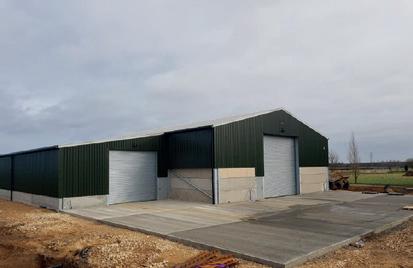
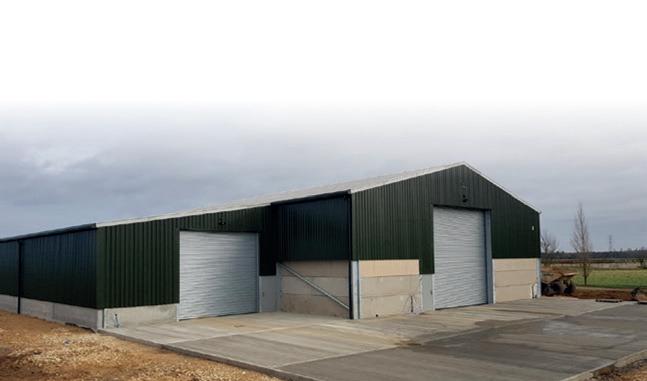
WITH a combined package worth more than £26,000, the Shropshire-based steel-framed building manufacturer Fowler and Gilbert has launched a competition allowing entrants to win an 8m2 steel-framed building, along with pad foundations and building erection.
Lee Gilbert, managing director, says the company is celebrating 15 years of manufacturing, winning the King’s Award for Enterprise in early May, and being nominated for the Company of the Year at the Shropshire Business Awards.
He says: “Having exhibited at Cereals for the past 15 years, we wanted to give back to our customers, new and old, to say a bit of a thank you.”
The exact building that will be won is fully erected at Diddly Squat Farm, the Cereals host farm, for use as the business show exhibition, but after the event the structure will be dismantled and delivered to the winner’s address.
MORE INFORMATION
For full terms and conditions and to enter the competition, visit: flgb.co.uk
■ Tickets: Prices start from £20, although Young Farmers can enter for free, with tickets available only at thecerealsevent.co.uk
■ Arrival: Visitors driving to the event will be signposted to available car parking along the A40 and A44; those travelling by train can access a dedicated shuttle bus service from Kingham Station between 7am and 5pm
■ Accommodation: Visitors can check availability at local hotels via cereals2026.hotelplanner.com, while registered attendees can also opt for glamping options provided by Yippee Tents’ Boutique Campsite
■ A note from the host farmer, Jeremy Clarkson: “Hosting Cereals was an opportunity for us to run a large-scale, practical event for UK food producers. For us, it will be interesting to see how the event’s crop plots perform on our Cotswold brash land, and of course there will be the pop-up Farmer’s Dog bar to enjoy.”
Powering the Future of UK Farming Through Electrification
ture
Rising electricity prices, increasing pressure to decarbonise and growing on-farm energy demand are forcing farming businesses to rethink how they generate and manage power. For many farms, renewable energy is no longer simply a sustainability initiative, it is becoming a practical strategy for improving resilience, reducing long-term costs and supporting future growth
Modern farms depend heavily on reliable electricity supplies to maintain productivity and protect supply chains. Grain drying, cold storage, irrigation systems, packhouses and livestock facilities all require consistent energy. As agricultural operations modernise further, electricity demand is expected to increase through the adoption of automated handling systems, refrigeration, electric
At the same time, grid instability and connection delays are creating additional challenges for rural businesses that rely on uninterrupted power. This has accelerated interest in on-site renewable energy generation and storage solutions that can reduce dependence on the grid while improving operational security
RenEnergy UK Ltd supports farming businesses through tailored Solar PV and Battery Energy Storage System (BESS) solutions and storing electricity on-site, farms can improve energy resilience, gain greater control over operational costs and support long-term sustainability goals
RenEnergy’s combines roof-mounted and ground-mounted Solar PV systems, solar vehicle ports with EV charging infrastructure and battery storage technologies to create integrated renewable energy solutions Systems are tailored around each farm’s infrastructure, operational requirements and future ambitions
alongside consultancy and post-installation asset management support, help ensure projects continue delivering value over the long term
One of the major advantages of Solar PV within agriculture is the ability to maximise existing infrastructure. Buildings such as grain stores, livestock sheds and packing facilities can be transformed into energygenerating assets without disrupting productivity. RenEnergy works closely with customers during installation to minimise disruption and ensure projects align with seasonal workloads and daily farm operations.
Farmers attending Cereals 2026 will have the opportunity to explore how renewable technologies can support their own operations by visiting RenEnergy UK Ltd on Stand 232. The team will showcase its Solar PV Vehicle Port and discuss how Solar PV, EV charging infrastructure and battery storage technologies can be integrated into modern farming operations
As farming businesses continue balancing economic pressures with environmental responsibilities, renewable energy is increasingly proving to be a commercially viable route to building stronger, more resilient and future-ready agricultural operations. Through tailored solutions and proven expertise, RenEnergy continues to help farms across the UK take greater control of their energy future
Insights and innovation take the stage at Cereals
The Knowledge Exchange programme at this year’s Cereals event is designed to be the educational and discussion-led hub of the show, bringing together farmers, agronomists, researchers, advisers, policy experts and industry leaders to address the future of UK arable farming.
Taking place across both days at
the new Diddly Squat Farm venue on June 10-11, 2026, the programme aims to provide practical, actionable insights into some of the biggest challenges and opportunities facing the arable industry.
Key topics include regenerative farming, Government legislation, succession planning, agricultural technology innovations, business diversification, livestock, and pro-
fessional development. At the heart of the speaker sessions will be the ‘Seed to Shelf’ Mainstage, serving as the flagship discussion platform for the event.
Debates
There will be a host of expert panels, debates, networking opportunities and presentations from leading in-
Cereals 2026 promises a range of seminars and debates.
dustry voices across the sector including Jeremy Moody, James Peck, Tom Martin and Ryan McCormack. It will include a packed schedule highlighting the future of grain marketing, British agricultural media, the adoption of agricultural technology and integrated pest management in autumn crop establishment. The aim is to help visitors understand how
new technologies, policy changes and business strategies can improve both profitability and sustainability of UK agricultural systems.
Alongside the mainstage is the BASE-UK Regenerative Agriculture Knowledge Exchange Conference, featuring a dedicated area focused solely on regenerative farming practices.
The 2026 theme for the conference is ‘Growing Without Government Support’, reflecting increasing industry interest and reliance on building resilient farm businesses that can thrive independently of changing support schemes, in challenging weather patterns and through volatile marketplaces.
Regenerative
Discussions surrounding regenerative farming are expected to cover soil health, sustainable production systems, input reductions and building long-term farm resilience.
The third stage for 2026 will feature live debate and audience engagement on current farming issues.
The space aims to create opportunities for visitors to hear a variety of perspectives and allow people to participate in discussions that are affecting the industry.
Themes will include small seed crop questions and how the industry can build a stable malting barley supply chain.
Zone
As a first for the event, the Knowledge Exchange programme will also include a Livestock Zone (see p52-53 for more information)
This new addition reflects the increased interest among growers in learning how to integrate livestock into arable rotations.
The sessions will focus on how livestock can improve soil health, assist with weed management and create additional income streams for arable growers.
Those who are considering mixed-farming approaches will be able to access advice and practical guidance on specialist topics such as breed selection, as well as case studies from businesses already successfully using integrated systems.
Supporting the next generation of farmers will be the Young Farmers Programme, delivered by the National Federation of Young Farmers’ Clubs and the Oxfordshire Young Farmers’ Club.
This zone will focus on topical subjects, including succession planning, career development, diversity, wellbeing and the future workforce.
The sessions are designed to help younger farmers navigate the challenges of entering and developing careers within the agricultural sector.
Visitors can also gain professional
Cereals
Hot topics for this year’s Cereals
■ Regenerative agriculture
BASE-UK Regenerative Agriculture Stage
One of the headline attractions for 2026, focusing on practical regenerative farming techniques and the theme ‘Growing Without Government Support’. Sessions will explore soil health, resilience and lower-input systems.
■ AgTech and innovation
Seed to Shelf Mainstage
Learn how emerging technologies, precision farming and data-led
development benefits by earning BASIS and NRoSO points throughout the event.
decision-making can improve productivity, efficiency and profitability.
■ Government policy and farm business strategy
Seed to Shelf Mainstage
Expert discussions examining postbudget agricultural policy, legislation and the financial implications for farm businesses.
■ Succession planning
Seed to Shelf Mainstage and Young Farmers Programme
Essential sessions for family farms looking at ownership transfer,
Knowledge trails and educational sessions will provide attendees with a practical way to
business continuity and preparing the next generation.
■ Diversification and new revenue streams
Seed to Shelf Mainstage
Explore opportunities beyond traditional cropping, including diversification strategies to improve business resilience.
■ Livestock integration
Livestock Zone
How introducing livestock into arable rotations can improve soil health, weed control and profitability.
maintain accreditation while learning about new techniques, as well as technologies and regulations.
RECOMMENDED
Outshines the best.
Sparkler crackles with real potential. Scan the QR code to discover how Sparkler promises brighter returns.
As more arable businesses explore integrating livestock, Cereals will showcase practical solutions, innovative technologies and low-input livestock systems designed to make the transition easier and more profitable. Ash Ellwood reports.
Livestock Zone highlights opportunities for growers
As more UK growers look to integrate livestock into their arable systems, a new zone at this year’s Cereals event will provide them with the opportunity to see how a mixed-farming approach can improve soil health and build strong additional revenue streams.
Exhibitors include cattle and sheep societies, poultry producers and the latest products and technologies to make a transition to livestock as simple as possible.
Sponsoring the Livestock Zone at Cereals is NoFence, a virtual livestock fencing company. Finlay
Russell, senior sales executive, says the company will have two stands, one in the Regenerative Agriculture section of the showground and the second in the Livestock Zone, demonstrating how the virtual fence and collars work in practice.
Mr Russell says: “We will have five of the Diddly Squat goats with our NoFence collars on, demonstrating one virtual boundary and how the collars work to keep the livestock in an assigned area.”
The collars work by emitting an audible cue to alert the animal to the boundary, with the tone increasing for at least five seconds. If
The EasyCare Sheep Society will be around to answer questions on the breed.
Livestock seminar sessions
■ Livestock: The Good, The Bad and The Ugly BASE-UK Regenerative Agriculture Stage
Both days, 10-11am
■ The Future is On-Farm Young Farmers Programme
Wednesday, June 10, 11am-12pm
■ Updating Red Tractor Standards for a Resilient UK Agriculture Sector
Seed to Shelf Mainstage
Both days, 12-12.30pm
the animal does not turn around within this time frame, a mild electrical pulse will be administered, and the farmer will be alerted via an app on their phone.
“Our data has shown that when the first beeping starts, 96% of animals will turn around, with only 4% of animals receiving the pulse,” says Mr Russell. He describes the technology as ‘game-changing’ for arable growers looking to include livestock in rotations, given the lack of infrastructure needed to graze their crops.
“With the prices of grain and beef this year, we are looking forward to
having some interesting conversations. The virtual fencing can bring real opportunities to arable growers, making livestock a more genuine option to be able to graze cover crops between rotations and deliver on their sustainable goals,” he says.
Forage crops
Also exhibiting in the Livestock Zone is seed company DLF, with plans to display 20 tubes of various forage crops, each growing to examine different root structures and depths.
Rosie Badger, business manager for specialist seeds, says: “We are excited to provide guidance and advice on a host of crops, including grass, herbs, legumes and cover crops.
“We will have conversations about root depths and how best growers can select their variety mixtures to enable them to achieve the most productivity from their land and individual system requirements.”
For growers interested in implementing livestock but looking for a hardy, low-input animal, the EasyCare Sheep Society will be on hand to answer questions and demonstrate a selection of yearlings, lambs and tups on its stand.
Louise Hobson, society secretary, says: “The EasyCare sheep breed is
brilliant for arable farmers – you do not have to rely on a shearer, as the wool comes out itself.
“The breed is best suited to outdoor lambing. They have no horns to get stuck in fencing, and they also give a decent carcase as a meat sheep, averaging R3L and U3L.”
In October 2024, Jeremy Clarkson
purchased a small flock of EasyCare sheep from Ms Hobson to utilise in his arable rotation, inspiring the society to attend the show hosted at his farm. She adds: “They are not big sheep and are light on the land. They also have strong feet, neat bags and can be a great addition to farmers’ black-grass control.”
DEPENDABLE SLURRY TECHNOLOGY
Vogelsang dribble bar and trailing shoe linkages, from 6 m to 36 m, combine the highest quality applicators with heavy duty macerators. Dependable, even in the toughest conditions.
NoFence will be using
Jeremy Clarkson’s goats to demonstrate its technology.
Cereals Preview
Demos remain a key part of the Cereals format and this year will be no different. Jane Carley takes a closer look ahead of the 2026 event.
Alongside the spray arena, Cereals will once again host a number of working demonstrations from land drainage to drilling.
The drill demos are always a key feature and will run across both days, allowing visitors to compare conventional plough-based approaches with no-till systems and other crop establishment tech. Demonstrators include Agri-linc, Novag, and UK Farm Agri.
Novag will showcase its T-Force Plus Series on-stand and in the demo field. The drill features up to four tanks, up to 500kg coulter pressure, automatic downforce control and the patented T-Slot opener.
Agri-linc will showcase the Moore Unidrill, a direct drill designed for contractors and used for planting grass, fodder crops, clover, cover crops and stewardship mixes. The three-metre arable direct drill features 24 rows, Accord metering, an 850-litre hopper and a Guttler rear packer.
UK Farm Agri will demonstrate the Taege DB300E and the wider Taege drill range, which combines zero-tillage direct drilling, digital seed metering, angled tines and galvanised chassis construction.
Agriweld will return with live demonstrations of cultivation machinery including the 6m Agri Press and the Multi-Till 3M. The demonstrations will show how the machines support seedbed preparation, consolidation, residue handling and crop establishment across varied soil conditions.
Arcusin UK returns to Cereals to demonstrate its bale chaser equipment selection.
NAAC LAND DRAINAGE HUB AND DEMO
THE NAAC Land Drainage Hub returns with expert advice on drainage, productivity, trafficability, soil structure, runoff, nutrient loss and flood mitigation. New for 2026, the NAAC will run land drainage demonstrations near the northern entrances at 8.30am and 10am on both mornings, showing how the drainage pipe is professionally installed using modern mapping technology.
Seeing it work: Cereals demos
OFF-ROAD
THE Isuzu 4x4 off-road driving experience will give visitors the chance to test the latest Isuzu D-Max vehicles on a purpose-built off-road track. This year will see the debut of the new 2.2 diesel version
of the D-Max, which is released in July, alongside the new D-Max EV, which combines work-ready toughness with zero-emission performance, full-time 4WD and 3.5-tonne towing capacity.
AGXEED will again demonstrate the 230hp tracked AgBot, aimed at larger-scale farmers using sixmetre-plus implements. Visitors will be able to see the autonomous machine working live and speak to users and customers already benefiting from driverless technology.
PICTURE: TIM SCRIVENER
Techneat will also be showing its new Weed Wizard Agri spot sprayer, an intelligent tractor-mounted system using camera recognition tech for precision applications in carrot, leek, onion and row crops. The 6m hydraulic folding boom is supported by one camera per bed and an in-cab monitor.
POLARIS
POLARIS is also coming to Cereals for the first time to showcase the Ranger line-up on a dedicated demo course, giving farmers the chance to experience offroad handling and instant torque across varied terrain. The all-new Polaris Ranger 500 will take centre stage, alongside models including the Diesel, XP1000 and allelectric Kinetic.
n A premium high-quality breadmaking wheat with full UKFM Group 1 approval
n The highest grain protein under a milling regime which helps growers achieve contract specifications
n High untreated yield driven by best-in-class yellow rust resistance in combination with high Septoria resistance