
2025












MESSAGE FROM THE CHAIRPERSON OF THE BOARD AND PRESIDENT AND CHIEF EXECUTIVE OFFICER

On behalf of the Board of Directors, Senior Management Team, and employees, we are pleased to present the Farm Credit Services of Western Arkansas, ACA 2025 Annual Report.
In 2025, we saw encouraging shifts in the economic landscape as interest rates eased, including a further 0.75% reduction by the Federal Reserve. These conditions supported robust loan growth and contributed to one of the Association’s strongest performances in recent years. This momentum is a testament to our members, whose trust and advocacy continue to reinforce our mission and advance our strategic objectives.
We made significant strategic investments in 2025 to advance our technology and improve operational efficiency. While these initiatives reduced net income in the short term, they position us for greater speed, accuracy, and cost savings in the coming years. Despite these investments, our 2025 patronage, to be paid out in 2026, remained strong at $10.0 million, and our permanent capital ratio of 17.1% reflects the continued financial strength of the Association. These accomplishments underscore our members’ ongoing commitment to Farm Credit and our mission to deliver dependable, high-quality financial services.
Looking ahead to 2026, interest rate trends appear poised to continue trending downward, creating opportunities for customers to refinance at more favorable rates.
We appreciate your continued trust and partnership. Together, we are building a stronger, more resilient future for rural Arkansas. With a solid financial foundation, strategic investments, and a relentless focus on member service, we are well-positioned to seize the opportunities ahead. We look forward to continuing this important work with you in 2026 and beyond.
Stephen “Steve” Young Chairperson of the Board Farm Credit Services of Western Arkansas, ACA
Brandon Haberer President and Chief Executive Officer Farm Credit Services of Western Arkansas, ACA
March 5, 2026
CONSOLIDATED FIVE-YEAR SUMMARY OF SELECTED FINANCIAL DATA
Farm Credit Services of Western Arkansas, ACA
(dollars in thousands) As of December 31,
Financial Ratios
Net Income Distributed For the Year
MANAGEMENT’S DISCUSSION AND ANALYSIS
Farm Credit Services of Western Arkansas, ACA
The following commentary reviews the consolidated financial condition and consolidated results of operations of Farm Credit Services of Western Arkansas, ACA (the Association) and its subsidiaries, Farm Credit Services of Western Arkansas, FLCA and Farm Credit Services of Western Arkansas, PCA, and provides additional specific information. The accompanying Consolidated Financial Statements and Notes to the Consolidated Financial Statements also contain important information about our financial condition and results of operations.
The Farm Credit System (System) is a federally chartered network of borrower-owned lending institutions comprised of cooperatives and related service organizations, established by Congress to meet the credit needs of American agriculture. As of January 1, 2026, the System consisted of three Farm Credit Banks, one Agricultural Credit Bank, and 55 borrower-owned cooperative lending institutions (associations) The System serves all 50 states, Washington D.C., and Puerto Rico. This network of financial cooperatives is owned and governed by the customers the System serves
The AgriBank Farm Credit District (AgriBank District or the District) is primarily comprised of AgriBank, FCB (AgriBank), a System Farm Credit Bank, and its District associations. We are an association in the District.
The Farm Credit Administration (FCA) is authorized by Congress to regulate the System The Farm Credit System Insurance Corporation (FCSIC) administers the Farm Credit Insurance Fund (Insurance Fund). The Insurance Fund is used to ensure the timely payment of principal and interest on Systemwide debt obligations, to ensure the retirement of protected borrower capital at par or stated value, and for other specified purposes
Due to the nature of our financial relationship with AgriBank, the financial condition and results of operations of AgriBank materially impact our members’ investment. To request free copies of AgriBank financial reports, contact us at:
Farm Credit Services of Western Arkansas, ACA AgriBank, FCB 5177 US Highway 64 West 30 East 7th Street, Suite 1600 Russellville, AR 72802 St. Paul, MN 55101 (479) 968-1434 (651) 282-8800 www.myaglender.com
www.AgriBank.com
FinancialReporting@AgriBank.com
Our Annual Report is available on our website no later than 75 days after the end of the calendar year and members are provided a copy of such report no later than 90 days after the end of the calendar year. The Quarterly Reports are available on our website no later than 40 days after the end of each calendar quarter. To request free copies of our Annual or Quarterly Reports, contact us as stated above.
FORWARD-LOOKING INFORMATION
This Annual Report includes forward-looking statements. These statements are not guarantees of future performance and involve certain risks, uncertainties, and assumptions that are difficult to predict. Words such as "anticipate", “believe", "estimate", "may", “expect”, “intend”, “outlook”, and similar expressions are used to identify such forward-looking statements. These statements reflect our current views with respect to future events. However, actual results may differ materially from our expectations due to a number of risks and uncertainties which may be beyond our control. The information in this report is based on current knowledge and is subject to many risks and uncertainties including, but not limited to:
• Political (including trade policies, environmental policies, and civil unrest), legal, regulatory, financial markets, and economic conditions, or other conditions and developments in the United States (U.S.) and abroad
• Economic fluctuations, including inflationary indicators, in the agricultural, international, rural, and farm-related business sectors
• Weather-related, disease, and other adverse climatic or biological conditions that periodically occur and can impact agricultural productivity and income
• Changes in U.S. government support of the agricultural industry (including government support payments) and the System as a governmentsponsored enterprise, as well as investor and rating agency reactions to events involving the U.S. government, other government-sponsored enterprises, and other financial institutions
• Actions taken by the Federal Reserve and U.S. Treasury in implementing monetary policy
• Cybersecurity risks, including a failure or breach of our operational or security systems or infrastructure, or those of our third-party vendors or other service providers
• Credit, interest rate, and liquidity risks inherent in our lending activities
• Disruptive technologies impacting the banking and financial services industries or implemented by our competitors which negatively impact our ability to compete in the marketplace
• Length and severity of an epidemic or pandemic
• Changes in our assumptions for determining the allowance for credit losses and fair value measurements
• Industry outlooks for agricultural conditions
AGRICULTURAL AND ECONOMIC CONDITIONS
The broader U.S. economy in 2025 remained resilient but uneven. Inflation moderated from prior-year highs yet stayed above long-run averages. Interest rates eased late in the year but remained elevated enough to keep debt-service costs and capital spending discipline front of mind for producers. These macro conditions, together with mixed commodity price trends, shaped operating cash flows and borrowing behavior across agriculture. The FCA,
in its December 11, 2025, quarterly briefing to the Board, described stable headline indicators alongside sector-specific pressures in agriculture where bumper crops created marketing frictions.
Grains and oilseeds contended with abundant supplies into year-end. In its December 9, 2025, World Agricultural Supply and Demand Estimates and National Agricultural Statistics Service Crop Production reports, the U.S. Department of Agriculture (USDA) kept U.S. corn production historically large and lowered 2025 and 2026 ending stocks to 2.029 billion bushels on stronger export demand and a record early-season shipment pace, reinforcing a supply-heavy backdrop despite improved movement. This backdrop pressured futures and, in some regions, basis, which is the difference between local cash prices and the corresponding futures contract, contributing to margin compression for many row-crop producers despite solid domestic use. FCA’s December 11, 2025, quarterly update likewise emphasized bumper crops, storage constraints, and marketing challenges consistent with conditions producers faced during harvest and post-harvest marketing.
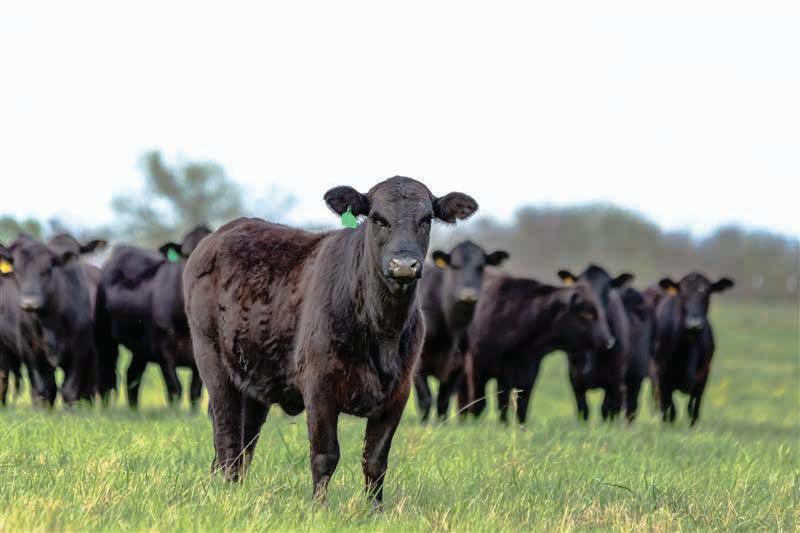
Livestock conditions were comparatively more constructive, supported by tighter beef supplies and relatively improved feed affordability versus recent years, though outcomes varied by operation size and cost structure. This divergence between pressure in grains and comparatively steadier signals in livestock is reflected in FCA’s December 11, 2025, assessment of sector conditions.
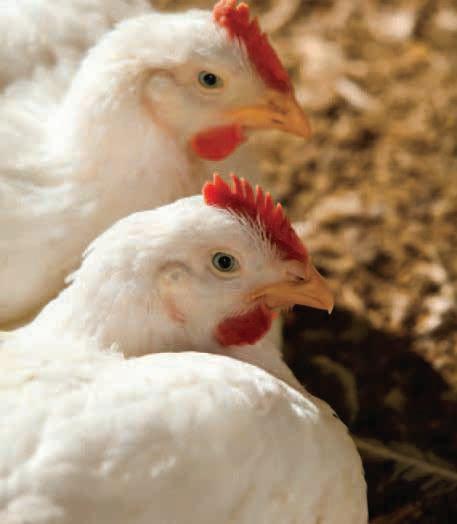
Within western Arkansas, poultry agriculture remains anchored by an exceptionally strong and highly integrated poultry production system, encompassing major poultry companies, contract growers, hatcheries, feed mills, and processing facilities. The integrated structure helped moderate grower income volatility in 2025, as contract arrangements and integrator-managed scheduling provided relative stability compared with spot-market exposure in other commodities. At the same time, growers continued to navigate higher operating costs, labor availability, and integrator-driven capital needs, sustaining a focus on cost control and facility efficiency.
Disease risk and biosecurity remained a priority in 2025. After relatively light commercial impacts through most of the year, highly pathogenic avian influenza was confirmed in a commercial poultry operation in Arkansas in December 2025; the Arkansas Department of Agriculture and USDA’s Animal and Plant Health Inspection Service implemented quarantine and response protocols and monitored nearby flocks. Broiler-focused production and heightened biosecurity helped limit broader operational disruption, but the detections underscored continued vigilance heading into 2026. Within that environment, poultry activity in the Association’s territory remained generally stable in 2025. Even so, participants remained attentive to evolving disease dynamics and to regulatory and environmental compliance factors that may influence long-term operating costs.
Cattle and hay continue to complement farm income in the region. Producers managed the year around forage availability, input costs, and feeder and fed cattle price relationships, with localized pasture stress at times tied to abnormally dry to moderate drought conditions across parts of Arkansas Industry and weather statements during 2025 flagged intermittent drought development and the potential for rapid-onset drought as factors influencing grazing decisions, feed procurement, and hay markets, as monitored by the National Oceanic and Atmospheric Administration/National Integrated Drought Information System and the National Weather Service.
Credit and portfolio implications have been reported by FCA. Operating lines reflected higher interest expenses and selective working-capital draws; term borrowing remained measured as producers sequenced capital investments. Poultry growers generally saw steadier cash flows than more price-exposed row-crop operations, though integrator scheduling and contract terms remained important determinants of individual outcomes. Row-crop borrowers managed tighter margins through disciplined input purchasing, opportunistic forward sales and hedging, and the use of liquidity accumulated in prior years. Consistent with FCA’s December 11, 2025, briefing, these conditions informed the Association’s prudent underwriting, borrower engagement, and portfolio monitoring throughout the year.
LOAN PORTFOLIO
Loan Portfolio
Total loans were $2.1 billion at December 31, 2025, an increase of $120.1 million from December 31, 2024
Components of Loans
(in thousands)
As of December 31, 2025 2024 2023
Accrual loans:
The other category is primarily composed of rural infrastructure and rural residential real estate related loans.
The increase in total loans from December 31, 2024, was primarily due to growth in our poultry and real estate mortgage portfolios. Partially offsetting this increase was activity related to asset pool programs
We may purchase or sell participation interests with other parties to diversify risk, manage principal and accrued interest on loans, or comply with the limitations of the FCA Regulations or General Financing Agreement (GFA) with AgriBank.
Loan Participations Purchased and Sold
(in thousands)
We have no loans sold with recourse, retained subordinated participation interests in loans sold, or interests in pools of subordinated participation interests that are held in lieu of retaining a subordinated participation interest in the loans sold.
The Association participates in asset pool programs to effectively leverage District capital and other cooperative benefits, as well as manage concentration risk and portfolio growth Annually we have the option to sell additional loan participations into the asset pool program During 2025, we sold AgriBank participations of $120.0 million, representing a participation interest across the majority of our loan portfolio. The sale also included increasing the participation portion on loans previously sold to AgriBank from 10.0% to 15.0%. The total outstanding participation interests in loans sold to AgriBank as part of asset pool programs were $240.9 million, $161 1 million, and $161.8 million at December 31, 2025, 2024, and 2023, respectively.
We offer variable, fixed, capped, indexed, and adjustable interest rate loan programs to our borrowers. We determine interest margins charged on each lending program based on cost of funds, credit risk, market conditions, and the need to generate sufficient earnings.
Portfolio Distribution
We are chartered to serve certain counties in western Arkansas At December 31, 2025, 68.2% of our total loan portfolio was in Arkansas. The remainder of our portfolio was purchased outside of the state to support rural America and to diversify our portfolio risk. At December 31, 2025, approximately 14.0% of our total loan portfolio was in Washington and Benton counties. No other counties comprised more than 5.0% of our total loan portfolio at December 31, 2025
Agricultural Industry Concentrations
Industry categories are based on the borrower’s primary intended industry at the time of loan origination and may change over time due to borrower business decisions as a result of changes in weather, prices, input costs, and other circumstances.
Portfolio Credit Quality
The credit quality of our portfolio remained stable from December 31, 2024 Adversely classified loans increased slightly to 1.5% of the portfolio at December 31, 2025, from 1.4% of the portfolio at December 31, 2024 Adversely classified loans are loans we have identified as showing some credit weakness according to our credit standards. We have considered portfolio credit quality in assessing the reasonableness of our allowance for credit losses on loans Additional credit quality information is included in Note 3 to the accompanying Consolidated Financial Statements.
In certain circumstances, government agency guarantee programs are used to reduce the risk of loss. At December 31, 2025, $29.6 million of our loans were substantially guaranteed under these government programs.
Components of Nonperforming Assets
in thousands)
December 31,
1Total delinquencies include accrual and nonaccrual loans 30 days or more past due.
Our nonperforming assets have increased from December 31, 2024, but remained at acceptable levels. Despite the increase in nonperforming assets, total nonperforming loans as a percentage of total loans were well within our established risk management guidelines
The increase in nonaccrual loans was primarily due to several commercial agribusiness loans which were transferred to nonaccrual during the year ended December 31, 2025. Nonaccrual loans remained at an acceptable level at December 31, 2025, 2024, and 2023
The increase in accruing loans 90 days or more past due was due to two real estate mortgage loans becoming past due during the year ended December 31, 2025. Our accounting policy requires loans past due 90 days or more to be transferred into nonaccrual status unless adequately secured and in the process of collection.
The decrease in other property owned was due to the sale and disposal of property during the year ended December 31, 2025.
Allowance for Credit Losses on Loans
The allowance for credit losses on loans is an estimate of expected credit losses in our portfolio. We determine the appropriate level of allowance for credit losses on loans based on a disciplined process and methodology that incorporates expected probabilities of default and loss given default based on historical portfolio performance, forecasts of future economic conditions, and management's judgment with respect to unique aspects of current and expected conditions that may not be contemplated in historical loss experience or forecasted economic conditions.
Allowance for Credit Losses on Loans and Coverage Ratios
(dollars in thousands)
The increase in allowance for credit losses on loans from December 31, 2024, was primarily related to our capital markets portfolio, specifically the establishment of specific reserves for two relationships and the establishment of qualitative reserves for a select group of agribusiness loans within the portfolio
Additional loan information is included in Notes 3, 10, 11, and 12 to the accompanying Consolidated Financial Statements
RESULTS OF OPERATIONS Profitability Information (dollars in thousands)
Changes presented in the profitability information table relate directly to:
• Changes in net income discussed in this section
• Changes in assets discussed in the Loan Portfolio section
• Changes in capital discussed in the Capital Adequacy section
Changes in Significant Components of Net Income
Interest Income
Changes in Net Interest Income (in
Net interest margin (net interest income as a percentage of average earning assets) was 3.0%, 3.1%, and 3.0% in 2025, 2024, and 2023, respectively Our net interest margin is sensitive to interest rate changes and competition.
Provision for Credit Losses
The “Provision for credit losses” in the Consolidated Statements of Income includes a provision for credit losses on loans as well as a provision for credit losses on unfunded commitments. The provision for credit losses for the year ended December 31, 2025, was $5.4 million and was primarily related to our capital markets portfolio, specifically the establishment of specific reserves for two relationships and the establishment of qualitative reserves for a select group of agribusiness loans within the portfolio. Additional information is included in Note 3 to the accompanying Consolidated Financial Statements
Non-Interest Expense
Components of Non-Interest Expense
(dollars in thousands) For
1Salaries and employee benefits and other operating expense divided by average earning assets.
The change in non-interest expense was primarily related to an increase in other non-interest expense and other operating expense.
Other Non-Interest Expense: Other non-interest expense was higher in 2025 compared to 2024 primarily due to a loss recorded based on our estimate of a fee that will be charged for terminating a technology replacement project.
Other Operating Expense: Other operating expense increased primarily due to an increase in loan servicing expense related to growth in our capital markets portfolio, as well as additional training and incurred travel expenses for our Board of Directors.
Benefit from Income Taxes
The change in benefit from income taxes was primarily related to our estimate of taxes based on taxable income Additional disclosure is included in Note 8 to the accompanying Consolidated Financial Statements
FUNDING AND LIQUIDITY
We borrow from AgriBank, under a note payable, in the form of a line of credit, as described in Note 6 to the accompanying Consolidated Financial Statements This line of credit is our primary source of liquidity and is used to fund operations and meet current obligations. At December 31, 2025, we had $295.2 million available under our line of credit. We generally apply excess cash to this line of credit. Due to the cooperative structure of the Farm Credit System and as we are a stockholder of AgriBank, we expect this borrowing relationship to continue into the foreseeable future. We also fund our portfolio from equity.
Note Payable Information
(dollars in thousands)
For the year ended December 31, 2025 2024 2023
Our average cost of funds is variable and may fluctuate based on the current interest rate environment.
The repricing attributes of our line of credit generally correspond to the repricing attributes of our loan portfolio, which significantly reduces our market interest rate risk. However, we maintain some exposure to interest rates, primarily from loans to customers which may not have a component of our line of credit with an exact repricing attribute.
On May 16, 2025, Moody's Ratings lowered the U.S sovereign's long-term issuer rating to Aa1 from Aaa. The outlook on the long-term debt rating of the U.S. was revised to stable from negative. On May 19, 2025, Moody's Ratings lowered the long-term senior unsecured debt rating for the Farm Credit System to Aa1 from Aaa; the Prime-1 short-term rating was affirmed. The outlook on the long-term debt rating was revised to stable from negative. As a government-sponsored entity, the Farm Credit System benefits from the implicit government support and, therefore, the ratings are directly linked to the U.S. sovereign rating.
Moody's Ratings also affirmed AgriBank's long-term issuer rating of Aa3, and affirmed the stable long-term issuer rating outlook.
The reduction in the credit rating by Moody's Ratings for the Farm Credit System, including AgriBank, could result in higher funding costs which could impact our costs and, ultimately, retail loan rates. However, to date we have noticed no significant impact as a result of this rating change.
CAPITAL ADEQUACY
Total members’ equity was $422.2 million, $405 2 million, and $383.3 million at December 31, 2025, 2024, and 2023, respectively. Total members’ equity increased $17.0 million from December 31, 2024, primarily due to net income for the year partially offset by patronage distribution accruals.
The FCA Regulations require us to maintain minimums for our common equity tier 1, tier 1 capital, total capital, and permanent capital risk-based capital ratios. In addition, the FCA requires us to maintain minimums for our non-risk-adjusted ratios of tier 1 leverage and unallocated
and equivalents leverage
As of December 31,
Our capital plan is designed to maintain an adequate amount of retained earnings and allowance for credit losses which represents our reserve for adversity prior to impairment of stock. We manage our capital to allow us to meet member needs and protect member interests, both now and in the future.
Capital ratios are directly impacted by changes in capital, assets, and off-balance sheet commitments. Refer to the Loan Portfolio section for further discussion of the changes in assets. Additional information on regulatory ratios and members’ equity information is included in Note 7 to the accompanying Consolidated Financial Statements and information on off-balance sheet commitments is included in Note 11 to the accompanying Consolidated Financial Statements
In addition to these regulatory requirements, we establish an optimum permanent capital target. This target allows us to maintain a capital base adequate for future growth and investment in new products and services. The target is subject to revision as circumstances change. Our optimum permanent capital target is 15.5%, as defined in our 2026 capital plan
If the capital ratios fall below the total requirements, including the buffer amounts, capital distributions (equity redemptions, dividends, and patronage) and discretionary senior executive bonuses are restricted or prohibited without prior FCA approval. We do not foresee any events that would result in this prohibition in 2026
RELATIONSHIP WITH AGRIBANK
Borrowing
We borrow from AgriBank to fund our lending operations in accordance with the Farm Credit Act. Approval from AgriBank is required for us to borrow elsewhere. A GFA, as described in Note 6 to the accompanying Consolidated Financial Statements, governs this lending relationship.
The components of cost of funds under the GFA include:
• A marginal cost of debt component
• A spread component, which includes cost of servicing, cost of liquidity, and bank profit
• A risk premium component, if applicable
In the periods presented, we were not subject to the risk premium component. Certain factors may impact our cost of funds, which primarily include market interest rate changes impacting marginal cost of debt as well as changes to pricing methodologies impacting the spread components described above.
The marginal cost of debt approach simulates matching the cost of underlying debt with similar terms as the anticipated terms of our loans to borrowers. This approach substantially protects us from market interest rate risk. We may occasionally engage in funding strategies that result in limited interest rate risk with approval by AgriBank’s Asset/Liability Committee.
Investment
We are required to invest in AgriBank capital stock as a condition of borrowing. This investment may be in the form of purchased stock or stock representing distributed AgriBank retained earnings As of December 31, 2025, we were required by AgriBank to maintain an investment equal to 3.1% of the average quarterly balance of our note payable The required investment will remain unchanged for 2026 at 3.1% In addition to the required investment based on the note payable, we are also required to hold additional investment in AgriBank for asset pool programs we participate in, which are typically capitalized at a higher rate that is mutually agreed upon in the asset pool program agreements
As an AgDirect, LLP partnering association, we are required to purchase stock in AgDirect, which purchases an equivalent amount of stock in AgriBank.
Patronage
AgriBank’s capital plan is intended to provide for adequate capital at AgriBank under capital regulations as well as to create a path to long-term capital optimization within the AgriBank District. The plan optimizes capital at AgriBank; distributing available AgriBank earnings in the form of patronage, either cash or AgriBank stock, which is at the sole discretion of the AgriBank Board of Directors The plan is designed to maintain capital adequacy such that sufficient earnings will be retained in the form of unallocated retained earnings and allocated stock to meet the leverage ratio target and other regulatory or policy constraints prior to any cash patronage distributions.
Purchased
Services
We purchase certain business services, primarily financial reporting, from AgriBank. Additional related party information is included in Note 10 to the accompanying Consolidated Financial Statements.
Impact on Members’ Investment
Due to the nature of our financial relationship with AgriBank, the financial condition and results of operations of AgriBank materially impact our members’ investment.
OTHER RELATIONSHIPS AND PROGRAMS
Relationships with Other Farm Credit Institutions
Capital Markets Collaboration: We participate in the Capital Markets Collaboration (CMC) with three other AgriBank District associations, which involves purchasing participation interests in loans to eligible borrowers GreenStone Farm Credit Services, ACA is the lead lender and facilitating agent
of these participations. The CMC focuses on generating revenue and portfolio growth for the financial benefit of all four participating associations. Management for each association has direct decision-making authority over the loans purchased and serviced for their respective association. The business arrangement provides additional means for diversifying each participant’s portfolio, helps reduce concentration risk, and positions the participants for continued growth
CentRic Technology Collaboration: We participate in CentRic Technology Collaboration (CTC) with certain other AgriBank District associations. The CTC facilitates the development and maintenance of certain retail technology systems essential to providing credit and other services to our members The CTC operations are governed by representatives of each participating association. The expenses of CTC are allocated to each of the participating associations based on an agreed upon formula. The systems developed are owned by each of the participating associations.
CoBank, ACB: We have a relationship with CoBank, ACB (CoBank), a System bank, which involves purchasing and selling participation interests in loans. As part of this relationship, our equity investment in CoBank was $72 thousand, $31 thousand, and $8 thousand at December 31, 2025, 2024, and 2023, respectively.
SunStream Business Services: We have a relationship with SunStream Business Services (SunStream), a System service corporation, which involves purchasing the following services: financial and retail information technology, collateral, tax reporting, and insurance. As of December 31, 2025, 2024, and 2023, our investment in SunStream was $696 thousand. Additional related party information is included in Note 10 to the accompanying Consolidated Financial Statements. We also guarantee the amounts borrowed by SunStream on their line of credit with AgriBank, up to $50.0 million. Refer to Note 11 to the accompanying Consolidated Financial Statements for further disclosure.
Farm Credit Foundations: We have a relationship with Farm Credit Foundations (Foundations), a System service corporation, which involves purchasing human resource, benefit, payroll, and workforce management services As of December 31, 2025, 2024, and 2023, our investment in Foundations was $17 thousand. Additional related party information is included in Note 10 to the accompanying Consolidated Financial Statements.
Rural Business Investment Company: We and other Farm Credit institutions are among the limited partners for a Rural Business Investment Company (RBIC) Our investment in a RBIC, was $1.7 million, $1.7 million, and $1.8 million at December 31, 2025, 2024, and 2023, respectively.
Unincorporated Business Entities (UBEs)
In certain circumstances we may establish separate entities to acquire and manage complex collateral, primarily for legal liability purposes
AgDirect, LLP: We participate in the AgDirect trade credit financing program, which includes origination and refinancing of agriculture equipment loans through independent equipment dealers. The program is facilitated by another AgriBank District association through a limited liability partnership in which we are a partial owner. Our investment in AgDirect, LLP, was $2.8 million, $2.6 million, and $1.9 million at December 31, 2025, 2024, and 2023, respectively. We also receive a partnership distribution resulting from our participation in the program, which is included in “Patronage income” in the Consolidated Statements of Income.
PW PropCo Holdings, LLC: As of December 31, 2025, we held a minority non-controlling interest in a limited liability company established for the purpose of acquiring and selling collateral acquired through the loan collection process, primarily for legal liability purposes. The name of this LLC is PW PropCo Holdings, LLC.
Programs
We are involved in the following programs designed to improve our credit delivery, related services, and marketplace presence.
AgDirect: We participate in the AgDirect trade credit financing program. Refer to the UBEs section for further discussion on this program.
Farm Cash Management: We offer Farm Cash Management to our members. Farm Cash Management links members’ revolving lines of credit with an AgriBank investment bond to optimize members’ use of funds.
REPORT OF MANAGEMENT
Farm Credit Services of Western Arkansas, ACA
We prepare the Consolidated Financial Statements of Farm Credit Services of Western Arkansas, ACA (the Association) and are responsible for their integrity and objectivity, including amounts that must necessarily be based on judgments and estimates. The Consolidated Financial Statements have been prepared in conformity with accounting principles generally accepted in the United States of America. The Consolidated Financial Statements, in our opinion, fairly present the financial condition of the Association. Other financial information included in the Annual Report is consistent with that in the Consolidated Financial Statements.
To meet our responsibility for reliable financial information, we depend on accounting and internal control systems designed to provide reasonable but not absolute assurance that assets are safeguarded and transactions are properly authorized and recorded. Costs must be reasonable in relation to the benefits derived when designing accounting and internal control systems. Financial operations audits are performed to monitor compliance. PricewaterhouseCoopers LLP, our independent auditors, audit the Consolidated Financial Statements. They also consider internal controls to the extent necessary to design audit procedures that comply with auditing standards generally accepted in the United States of America. The Farm Credit Administration also performs examinations for safety and soundness as well as compliance with applicable laws and regulations
The Board of Directors has overall responsibility for our system of internal control and financial reporting. The Board of Directors and its Audit Committee consults regularly with us and meets periodically with the independent auditors and other auditors to review the scope and results of their work. The independent auditors have direct access to the Board of Directors, which is composed solely of directors who are not officers or employees of the Association
The undersigned certify we have reviewed the Association’s Annual Report, which has been prepared in accordance with all applicable statutory or regulatory requirements. The information contained herein is true, accurate, and complete to the best of our knowledge and belief.
Stephen “Steve” Young Chairperson of the Board
Farm Credit Services of Western Arkansas, ACA
Brandon Haberer
President and Chief Executive Officer
Farm Credit Services of Western Arkansas, ACA
Lori Schumacher
Senior Vice President of Finance and Chief Financial Officer
Farm Credit Services of Western Arkansas, ACA
March 5, 2026
REPORT ON INTERNAL CONTROL OVER FINANCIAL REPORTING
Farm Credit Services of Western Arkansas, ACA
The Farm Credit Services of Western Arkansas, ACA (the Association) principal executives and principal financial officers, or persons performing similar functions, are responsible for establishing and maintaining effective internal control over financial reporting for the Association’s Consolidated Financial Statements. For purposes of this report, “internal control over financial reporting” is defined as a process designed by, or under the supervision of the Association’s principal executives and principal financial officers, or persons performing similar functions, and effected by its Board of Directors, management and other personnel, to provide reasonable assurance regarding the reliability of financial reporting information and the preparation of the Consolidated Financial Statements for external purposes in accordance with accounting principles generally accepted in the United States of America and includes those policies and procedures that: (1) pertain to the maintenance of records that in reasonable detail accurately and fairly reflect the transactions and dispositions of the assets of the Association, (2) provide reasonable assurance that transactions are recorded as necessary to permit preparation of financial information in accordance with accounting principles generally accepted in the United States of America, and that receipts and expenditures are being made only in accordance with authorizations of management and directors of the Association, and (3) provide reasonable assurance regarding prevention, or timely detection and correction, of unauthorized acquisition, use, or disposition of the Association’s assets that could have a material effect on its Consolidated Financial Statements.
Because of its inherent limitations, internal control over financial reporting may not prevent or detect misstatements. Projections of any evaluation of effectiveness to future periods are subject to the risk that controls may become inadequate because of changes in conditions, or that the degree of compliance with the policies or procedures may deteriorate.
The Association’s management has completed an assessment of the effectiveness of internal control over financial reporting as of December 31, 2025. In making the assessment, management used the 2013 framework in Internal Control Integrated Framework, promulgated by the Committee of Sponsoring Organizations of the Treadway Commission, commonly referred to as the “COSO” criteria.
Based on the assessment performed, the Association concluded that as of December 31, 2025, the internal control over financial reporting was effective based upon the COSO criteria. Additionally, based on this assessment, the Association determined that there were no material weaknesses in the internal control over financial reporting as of December 31, 2025.
Brandon Haberer President and Chief Executive Officer Farm Credit Services of Western Arkansas, ACA
Lori Schumacher
Senior Vice President of Finance and Chief Financial Officer
Farm Credit Services of Western Arkansas, ACA
March 5, 2026
REPORT OF AUDIT COMMITTEE
Farm Credit Services of Western Arkansas, ACA
The Consolidated Financial Statements were prepared under the oversight of the Audit Committee. The Audit Committee is composed of a subset of the Board of Directors of Farm Credit Services of Western Arkansas, ACA (the Association). The Audit Committee oversees the scope of the Association’s internal audit program, the approval and independence of PricewaterhouseCoopers LLP (PwC) as independent auditors, the adequacy of the Association’s system of internal controls and procedures, and the adequacy of management’s actions with respect to recommendations arising from those auditing activities. The Audit Committee’s responsibilities are described more fully in the Internal Control Policy and the Audit Committee Charter.
Management is responsible for internal controls and the preparation of the Consolidated Financial Statements in accordance with accounting principles generally accepted in the United States of America. PwC is responsible for performing an independent audit of the Consolidated Financial Statements in accordance with auditing standards generally accepted in the United States of America and to issue their report based on their audit. The Audit Committee’s responsibilities include monitoring and overseeing these processes
In this context, the Audit Committee reviewed and discussed the audited Consolidated Financial Statements for the year ended December 31, 2025, with management. The Audit Committee also reviewed with PwC the matters required to be discussed by Statement on Auditing Standards AU-C 260, The Auditor’s Communication with Those Charged with Governance, and both PwC and the internal auditor directly provided reports on any significant matters to the Audit Committee.
The Audit Committee had discussions with and received written disclosures from PwC confirming its independence. The Audit Committee also reviewed the non-audit services provided by PwC, if any, and concluded these services were not incompatible with maintaining PwC’s independence. The Audit Committee discussed with management and PwC any other matters and received any assurances from them as the Audit Committee deemed appropriate.
Based on the foregoing review and discussions, and relying thereon, the Audit Committee recommended the audited Consolidated Financial Statements be included in the Annual Report for the year ended December 31, 2025.
Kim
Hogan Chairperson of the Audit Committee Farm Credit Services of Western Arkansas, ACA
Audit Committee Members:
Audie “Renny” Chesshir
Cody R. Jones
Carol “Ann” Russell
Gerald W. Strobel
March 5, 2026

Report of Independent Auditors
To the Board of Directors of Farm Credit Services of Western Arkansas, ACA:
Opinion
We have audited the accompanying consolidated financial statements of Farm Credit Services of Western Arkansas, ACA, and its subsidiaries (the “Association”), which comprise the consolidated statements of condition as of December 31, 2025, 2024, and 2023, and the related consolidated statements of income, of changes in members’ equity and of cash flows for the years then ended, including the related notes (collectively referred to as the “consolidated financial statements”).
In our opinion, the accompanying consolidated financial statements present fairly, in all material respects, the financial position of the Association as of December 31, 2025, 2024 and 2023, and the results of its operations and its cash flows for the years then ended in accordance with accounting principles generally accepted in the United States of America.
Basis for Opinion
We conducted our audit in accordance with auditing standards generally accepted in the United States of America (US GAAS). Our responsibilities under those standards are further described in the Auditors’ Responsibilities for the Audit of the Consolidated Financial Statements section of our report We are required to be independent of the Association and to meet our other ethical responsibilities, in accordance with the relevant ethical requirements relating to our audit. We believe that the audit evidence we have obtained is sufficient and appropriate to provide a basis for our audit opinion.
Emphasis of Matter
As discussed in Note 2 to the consolidated financial statements, the Association changed the manner in which it accounts for the allowance for credit losses in 2023. Our opinion is not modified with respect to this matter.
Responsibilities of Management for the Consolidated Financial Statements
Management is responsible for the preparation and fair presentation of the consolidated financial statements in accordance with accounting principles generally accepted in the United States of America, and for the design, implementation, and maintenance of internal control relevant to the preparation and fair presentation of consolidated financial statements that are free from material misstatement, whether due to fraud or error.
In preparing the consolidated financial statements, management is required to evaluate whether there are conditions or events, considered in the aggregate, that raise substantial doubt about the Association’s ability to continue as a going concern for one year after the date the consolidated financial statements are available to be issued
Auditors’ Responsibilities for the Audit of the Consolidated Financial Statements
Our objectives are to obtain reasonable assurance about whether the consolidated financial statements as a whole are free from material misstatement, whether due to fraud or error, and to issue an auditors’ report that includes our opinion. Reasonable assurance is a high level of assurance but is not absolute assurance and therefore is not a guarantee that an audit conducted in accordance with US GAAS will always detect a material misstatement when it exists. The risk of not detecting a material misstatement resulting from fraud is higher than for one resulting from error, as fraud may involve collusion, forgery, intentional omissions, misrepresentations, or the override of internal control. Misstatements are considered material if there is a substantial likelihood that, individually or in the aggregate, they would influence the judgment made by a reasonable user based on the consolidated financial statements.
In performing an audit in accordance with US GAAS, we:
• Exercise professional judgment and maintain professional skepticism throughout the audit.
• Identify and assess the risks of material misstatement of the consolidated financial statements, whether due to fraud or error, and design and perform audit procedures responsive to those risks. Such procedures include examining, on a test basis, evidence regarding the amounts and disclosures in the consolidated financial statements.
• Obtain an understanding of internal control relevant to the audit in order to design audit procedures that are appropriate in the circumstances, but not for the purpose of expressing an opinion on the effectiveness of the Association’s internal control. Accordingly, no such opinion is expressed.
• Evaluate the appropriateness of accounting policies used and the reasonableness of significant accounting estimates made by management, as well as evaluate the overall presentation of the consolidated financial statements.
• Conclude whether, in our judgment, there are conditions or events, considered in the aggregate, that raise substantial doubt about the Association’s ability to continue as a going concern for a reasonable period of time.
We are required to communicate with those charged with governance regarding, among other matters, the planned scope and timing of the audit, significant audit findings, and certain internal control-related matters that we identified during the audit.
Other Information
Management is responsible for the other information included in the annual report. The other information comprises the information included in the 2025 Annual Report, but does not include the consolidated financial statements and our auditors’ report thereon. Our opinion on the consolidated financial statements does not cover the other information, and we do not express an opinion or any form of assurance thereon.
In connection with our audit of the consolidated financial statements, our responsibility is to read the other information and consider whether a material inconsistency exists between the other information and the consolidated financial statements or the other information otherwise appears to be materially misstated. If, based on the work performed, we conclude that an uncorrected material misstatement of the other information exists, we are required to describe it in our report.
Minneapolis, Minnesota March 5, 2026
CONSOLIDATED STATEMENTS OF CONDITION
Farm Credit Services of Western Arkansas, ACA (in thousands)
Contingencies and commitments (Note 11)
The accompanying notes are an integral part of these Consolidated Financial Statements.
CONSOLIDATED STATEMENTS OF INCOME
Farm Credit Services of Western Arkansas, ACA (in thousands)
The accompanying notes are an integral part of these Consolidated Financial Statements.
CONSOLIDATED STATEMENTS OF CHANGES IN MEMBERS’ EQUITY
Farm Credit Services of Western Arkansas, ACA (in thousands)
The accompanying notes are an integral part of these Consolidated Financial Statements.
CONSOLIDATED STATEMENTS OF CASH FLOWS
Farm Credit Services of Western Arkansas, ACA (in thousands)
NOTES TO CONSOLIDATED FINANCIAL STATEMENTS
Farm Credit Services of Western Arkansas, ACA
NOTE 1: ORGANIZATION AND OPERATIONS
Farm Credit System and District
The Farm Credit System (System) is a federally chartered network of borrower-owned lending institutions comprised of cooperatives and related service organizations, established by Congress to meet the credit needs of American agriculture. As of January 1, 2026, the System consisted of three Farm Credit Banks, one Agricultural Credit Bank, and 55 borrower-owned cooperative lending institutions (associations) The AgriBank Farm Credit District (AgriBank District or the District) is primarily comprised of AgriBank, FCB (AgriBank), a System Farm Credit Bank, and its District associations. The AgriBank District associations consist of Agricultural Credit Associations (ACA) that each have wholly-owned Federal Land Credit Association (FLCA) and Production Credit Association (PCA) subsidiaries.
FLCAs are authorized to originate long-term real estate mortgage loans. PCAs are authorized to originate short-term and intermediate-term loans. ACAs are authorized to originate long-term real estate mortgage loans and short-term and intermediate-term loans either directly or through their subsidiaries. Associations are authorized to provide lease financing options for agricultural purposes and are also authorized to purchase and hold certain types of investments. AgriBank provides funding to all associations chartered within the District.
Associations are authorized to provide, either directly or in participation with other lenders, credit and related services to eligible borrowers. Eligible borrowers may include farmers, ranchers, producers or harvesters of aquatic products, rural residents, and farm-related service businesses. In addition, associations can participate with other lenders in loans to similar entities. Similar entities are parties that are not eligible for a loan from a System lending institution, but have operations that are functionally similar to the activities of eligible borrowers.
The Farm Credit Administration (FCA) is authorized by Congress to regulate the System banks and associations. The Association is examined by the FCA and certain association actions are subject to the prior approval of the FCA and/or AgriBank.
The Farm Credit System Insurance Corporation (FCSIC) administers the Farm Credit Insurance Fund (Insurance Fund). The Insurance Fund is used to ensure the timely payment of principal and interest on Systemwide debt obligations, to ensure the retirement of protected borrower capital at par or stated value, and for other specified purposes.
At the discretion of the FCSIC, the Insurance Fund is also available to provide assistance to certain troubled System institutions and for the operating expenses of the FCSIC. Each System bank is required to pay premiums into the Insurance Fund until the assets in the Insurance Fund reach the “secure base amount”, which is defined in the Farm Credit Act as 2.0% of the aggregate outstanding insured obligations adjusted to reflect the reduced risk on loans or investments guaranteed by federal or state governments. This percentage of aggregate obligations can be changed by the FCSIC, at its sole discretion, to a percentage it determines to be actuarially sound. When the amount in the Insurance Fund exceeds the secure base amount, the FCSIC is required to reduce premiums and, under certain circumstances, is required to transfer excess funds to establish Allocated Insurance Reserves Accounts (AIRAs). The FCSIC may also distribute all or a portion of the AIRAs to the System banks, which AgriBank passes on as income to the associations. The basis for assessing premiums is insured debt. Nonaccrual loans and impaired investment securities are assessed a surcharge, while guaranteed loans and investment securities are deductions from the premium base. AgriBank, in turn, assesses premiums to District associations each year based on similar factors.
Association
Farm Credit Services of Western Arkansas, ACA (the Association) and its subsidiaries, Farm Credit Services of Western Arkansas, FLCA and Farm Credit Services of Western Arkansas, PCA (subsidiaries) are lending institutions of the System. We are a borrower-owned cooperative providing credit and credit-related services to, or for the benefit of, eligible members for qualified agricultural purposes in the counties of Baxter, Benton, Boone, Calhoun, Carroll, Clark, Columbia, Conway, Crawford, Dallas, Faulkner, Franklin, Garland, Grant, Hempstead, Hot Spring, Howard, Johnson, LaFayette, Little River, Logan, Madison, Marion, Miller, Montgomery, Nevada, Newton, Ouachita, Perry, Pike, Polk, Pope, Saline, Scott, Searcy, Sebastian, Sevier, Union, Van Buren, Washington, and Yell in the state of Arkansas
We borrow from AgriBank and provide financing and related services to our members. Our ACA holds all the stock of the FLCA and PCA subsidiaries.
We offer credit life and term life insurance to borrowers and those eligible to borrow. We also offer fee appraisals to our members
NOTE 2: SUMMARY OF SIGNIFICANT ACCOUNTING POLICIES
Accounting Principles and Reporting Policies
Our accounting and reporting policies conform to generally accepted accounting principles in the United States of America (GAAP) and the prevailing practices within the financial services industry. Preparing financial statements in conformity with GAAP requires us to make estimates and assumptions that affect the reported amounts of assets and liabilities and disclosure of contingent assets and liabilities at the date of the Consolidated Financial Statements and the reported amounts of revenues and expenses during the period. Actual results could differ from those estimates.
Principles of Consolidation
The Consolidated Financial Statements present the consolidated financial results of Farm Credit Services of Western Arkansas, ACA and its subsidiaries. All material intercompany transactions and balances have been eliminated in consolidation.
Significant Accounting Policies
Loans: Loans are carried at their principal amount outstanding, net of any unearned income, cumulative net charge-offs, unamortized deferred fees and costs on originated loans, and unamortized premiums or discounts on purchased loans Loan interest is accrued and credited to interest income based upon the daily principal amount outstanding. Origination fees, net of related costs, are deferred and recognized over the life of the loan as an adjustment to net interest income The net amount of loan fees and related origination costs are not material to the Consolidated Financial Statements taken as a whole.
A loan is considered contractually past due when any principal repayment or interest payment required by the loan instrument is not received on or before the due date. A loan remains contractually past due until certain modifications are completed or until the entire amount past due, including principal, accrued interest and penalty interest incurred as the result of past due status, is collected or otherwise discharged in full.
Generally, loans are placed in nonaccrual status when principal or interest is delinquent for 90 days or more (unless adequately secured and in the process of collection) or circumstances indicate that full collection is not expected. When a loan is placed in nonaccrual status, and the interest is determined to be both uncollectible and the loss is known, we immediately reverse current year accrued interest to the extent principal plus accrued interest exceeds the net realizable value of the collateral prior to reclassification. When we deem a loan to be uncollectible, we charge the loan principal and prior year(s) accrued interest against the allowance for credit losses on loans. Subsequent recoveries, if any, are added to the allowance for credit losses on loans. Any cash received on nonaccrual loans is applied to reduce the carrying amount of the loan, except in those cases where the collection of the carrying amount is fully expected and certain other criteria are met. In these circumstances, interest is credited to income when cash is received. Loans are charged-off at the time they are determined to be uncollectible. Nonaccrual loans may be returned to accrual status when principal and interest are current, the customer’s ability to fulfill the contractual payment terms is fully expected, and, if the loan was past due when placed in nonaccrual status, the loan has evidence of sustained performance in making on-time contractual payments (typically based on payment frequency).
Loan modifications may be granted to borrowers experiencing financial difficulty. Modifications are one or a combination of principal forgiveness, interest rate reduction, other-than-insignificant term extension, or other-than-insignificant payment deferrals. Other-than-insignificant term extensions are defined as those greater than or equal to six months. Covenant waivers and modifications of contingent acceleration clauses are not considered term extensions. Other-than-insignificant payment deferrals are defined as cumulative or individual payment delays greater than or equal to six months. In situations when more than two types of modifications are granted on the same loan we only report the two most material modification types.
Loans that are sold as participations are transferred as entire financial assets, groups of entire financial assets, or participating interests in the loans. The transfers of such assets or participating interests are structured such that control over the transferred assets, or participating interests have been surrendered and that all the conditions have been met to be accounted for as a sale.
Allowance for Credit Losses: Effective January 1, 2023, we adopted Accounting Standards Update 2016-13 “Financial Instruments – Credit Losses (Topic 326): Measurement of Credit Losses on Financial Instruments. The allowance for credit losses utilizes a framework for all financial assets measured at amortized cost and certain off-balance sheet credit exposures and replaced the incurred loss guidance. This framework requires that management’s estimate reflects credit losses over the asset’s remaining expected life and considers expected future changes in macroeconomic conditions and is referred to as the Current Expected Credit Loss (CECL) model. The allowance for credit losses comprises the allowance for credit losses on loans and unfunded commitments.
Allowance for Credit Losses on Loans
The allowance for credit losses on loans (ACLL) represents the estimated current expected credit losses on the loan portfolio over the remaining contractual life of the loan portfolio adjusted for expected prepayments. The ACLL takes into consideration relevant information about past events, current conditions, and reasonable and supportable macroeconomic forecasts of future conditions. The contractual term excludes expected extensions, renewals, and modifications unless the extension or renewal options are not unconditionally cancellable.
The ACLL is increased through provisions for credit losses on loans and loan recoveries and is decreased through reversals of provision for credit losses on loans and loan charge-offs. The provision activity is included as part of the “Provision for credit losses” in the Consolidated Statements of Income.
Determining the appropriateness of the ACLL is complex and requires judgment by management about the effect of matters that are inherently uncertain. Loans are evaluated on the amortized cost basis, which includes unamortized premiums and discounts
We employ a disciplined process and methodology to establish the ACLL that has two basic components: first, an asset-specific component involving individual loans that do not share risk characteristics with other loans and the measurement of expected credit losses for such individual loans; and second, a pooled component for estimated expected credit losses for pools of loans that share similar risk characteristics. When a loan does not share risk characteristics with other loans, expected credit loss is measured as the difference between the amortized cost basis in the loan and the present value of expected future cash flows discounted at the loan’s effective interest rate except that, for collateral-dependent loans, credit loss is measured as the difference between the amortized cost basis in the loan and the fair value of the underlying collateral. If the calculated expected credit loss is determined to be permanent, fixed or non-recoverable, the credit loss portion of the loan will be charged-off against the ACLL. For more information see the Collateral Dependent Loans policy in the significant accounting policies section of this report
In estimating the pooled component of the ACLL that share common risk characteristics, loans are pooled and segregated into loan classes based on loan type, commodity, and internal risk rating. For reporting purposes, the portfolio is classified by loan type. We utilize a model to calculate an expected life-of-loan loss percentage for each loan pool by considering the probability of default, based on the migration of loans from performing to loss by
internal risk rating, and the loss given default, based on historical experience Loan borrower characteristics are also utilized and include internal risk ratings, delinquency status, and the remaining term of the loan, adjusted for expected prepayments.
In order to calculate this estimated migration of loans from performing to loss, we utilize a single economic scenario over a reasonable and supportable forecast period of three years. The economic forecasts are updated on a quarterly basis and include macroeconomic variables such as net farm income, unemployment rates, real gross domestic product levels, housing price index, and agricultural land values. Subsequent to the forecast period, our model applies a smoothed reversion to historical loss experience to estimate losses for the remaining estimated contractual life of the portfolio
The final credit loss estimate also considers factors not reflected in the economic forecast and historical loss experience due to the unique aspects of current conditions and expectations. These factors may include, but are not limited to: lending policies and procedures, experience and depth of lending staff, credit quality and delinquency trends, individual borrower and industry concentrations, national, regional, and local economic business conditions and developments, collateral value trends, and expected performance of specific industry sectors not reflected in the economic forecast. Consideration of these factors, as well as the imprecision inherent in the process and methodology may lead to a management adjustment to the modeled ACLL results. Expected credit loss estimates also include consideration of expected cash recoveries on loans previously charged-off or expected recoveries on collateral dependent loans where recovery is expected through sale of the collateral.
Allowance for Credit Losses on Unfunded Commitments
Under CECL, we evaluate the need for an allowance for credit losses on unfunded commitments, which is included in “Other liabilities” in the Consolidated Statements of Condition. The related provision is included as part of the “Provision for credit losses” in the Consolidated Statements of Income. The amount of expected losses is determined by calculating a commitment usage factor over the contractual period for exposures that are not unconditionally cancellable by the Association and applying the loss factors used in the ACLL methodology to the results of the usage calculation. No allowance for credit losses is recorded for commitments that are unconditionally cancellable.
Collateral Dependent
Loans:
Collateral dependent loans are loans secured by collateral, including but not limited to real estate, equipment, inventory, livestock, and income-producing property. We measure the expected credit losses based on the fair value of collateral at the reporting date when we determine that foreclosure is probable. Under the fair value practical expedient measurement approach, the expected credit losses are based on the difference between the fair value of the collateral less estimated costs to sell and the amortized cost basis of the loan.
The fair value of the collateral is adjusted for the estimated costs to sell if repayment or satisfaction of a loan is dependent on the sale (rather than only on the operation) of the collateral. In accordance with our appraisal policy, the fair value of collateral-dependent loans is based upon in-house or independent third-party appraisals or on in-house collateral valuations. When an updated appraisal or collateral valuation is received, management reassesses the need for adjustments to the loan’s expected credit loss measurements and, where appropriate, records an adjustment.
Additionally, when a borrower is experiencing financial difficulty, we apply the fair value practical expedient measurement approach for loans when the repayment is expected to be provided substantially through the operation or sale of the collateral.
Accrued Interest Receivable: Accrued interest receivable on loans is presented separately in the Consolidated Statements of Condition.
Investment in AgriBank: Our stock investment in AgriBank is on a cost plus allocated equities basis.
Other Property Owned: Other property owned, consisting of real and personal property acquired through foreclosure or deed in lieu of foreclosure, is recorded at the fair value less estimated selling costs upon acquisition and is included in “Other assets” in the Consolidated Statements of Condition. Any initial reduction in the carrying amount of a loan to the fair value of the collateral received is charged to the allowance for credit losses on loans Revised estimates to the fair value less costs to sell are reported as adjustments to the carrying amount of the asset, provided that such adjusted value is not in excess of the carrying amount at acquisition. Related income, expenses, and gains or losses from operations and carrying value adjustments are included in “Other non-interest expense” in the Consolidated Statements of Income.
Premises and Equipment: The carrying amount of premises and equipment is at cost, less accumulated depreciation Calculation of depreciation is generally on the straight-line method over the estimated useful lives of the assets. Depreciation and maintenance and repair expenses are included in “Other operating expense” in the Consolidated Statements of Income and improvements are capitalized.
Post-Employment Benefit Plans: The District has various post-employment benefit plans in which our employees participate Expenses related to these plans are included in “Salaries and employee benefits” in the Consolidated Statements of Income.
We participate in the AgriBank District Retirement Plan (qualified plan). The plan is comprised of two benefit formulas. At their option, employees hired prior to October 1, 2001, are on the cash balance formula or on the final average pay formula. Benefit eligible employees hired between October 1, 2001, and December 31, 2006, are on the cash balance formula. Effective January 1, 2007, the AgriBank District Retirement Plan was closed to new employees. The AgriBank District Retirement Plan utilizes the "Projected Unit Credit" actuarial method for financial reporting and funding purposes
We also provide certain health insurance benefits to eligible retired employees according to the terms of those benefit plans. The anticipated cost of these benefits is accrued during the employees’ active service period.
The defined contribution plan allows eligible employees to save for their retirement either pre-tax, post-tax, or both, with an employer match on a percentage of the employee’s contributions. In addition to the employer match, we provide benefits under this plan for those employees that do not participate in the AgriBank District Retirement Plan in the form of a fixed percentage of salary contribution. Employer contributions are expensed when incurred.
We participate in the Nonqualified Deferred Compensation Plan. Eligible participants must meet one of the following criteria: certain salary thresholds as determined by the Internal Revenue Service (IRS), are either a Chief Executive Officer or President of a participating employer, or have previously elected pre-tax deferrals in 2006 under predecessor nonqualified deferred compensation plans. Under this plan the employee may defer a portion of
his/her salary, bonus, and other compensation. Additionally, the plan provides for supplemental employer matching contributions related to any compensation deferred by the employee that would have been eligible for a matching contribution under the retirement savings plan if it were not for certain IRS limitations.
Income Taxes: The ACA and PCA accrue federal and state income taxes. Deferred tax assets and liabilities are recognized for future tax consequences of temporary differences between the carrying amounts and tax basis of assets and liabilities Net deferred tax assets are included in “Other assets” in the Consolidated Statements of Condition and net deferred tax liabilities are included in “Other liabilities” in the Consolidated Statements of Condition Deferred tax assets are recorded if the deferred tax asset is more likely than not to be realized. If the realization test cannot be met, the deferred tax asset is reduced by a valuation allowance. The expected future tax consequences of uncertain income tax positions are accrued.
The FLCA is exempt from federal and other taxes to the extent provided in the Farm Credit Act.
Patronage Program: We accrue patronage distributions according to a prescribed formula approved by the Board of Directors. Generally, we pay the accrued patronage during the first quarter after year end
Off-Balance Sheet Credit Exposures: Commitments to extend credit are agreements to lend to a borrower as long as there is not a violation of any condition established in the loan contract. The commitments to extend credit generally have fixed expiration dates or other termination clauses Standby letters of credit are agreements to pay a beneficiary if there is a default on a contractual arrangement. We evaluate the need for an allowance for credit losses on unfunded commitments, which is included in “Other liabilities” in the Consolidated Statements of Condition. For more information see the allowance for credit losses on unfunded commitments policy in the significant accounting policies section of this report.
Cash: For purposes of reporting cash flows, cash includes cash on hand
Fair Value Measurement: The accounting guidance describes three levels of inputs that may be used to measure fair value.
Level 1 Unadjusted quoted prices in active markets for identical assets or liabilities that the reporting entity has the ability to access at the measurement date.
Level 2 Observable inputs other than quoted prices included within Level 1 that are observable for the asset or liability either directly or indirectly. Level 2 inputs include:
• Quoted prices for similar assets or liabilities in active markets
• Quoted prices for identical or similar assets or liabilities in markets that are not active so that they are traded less frequently than exchangetraded instruments, quoted prices that are not current, or principal market information that is not released publicly
• Inputs that are observable such as interest rates and yield curves, prepayment speeds, credit risks, and default rates
• Inputs derived principally from or corroborated by observable market data by correlation or other means
Level 3 Unobservable inputs that are supported by little or no market activity and that are significant to the fair value of the assets or liabilities. These unobservable inputs reflect the reporting entity’s own judgments about assumptions that market participants would use in pricing the asset or liability. Level 3 assets and liabilities include financial instruments whose value is determined using pricing models, discounted cash flow methodologies, or similar techniques, as well as instruments for which the determination of fair value requires significant management judgment or estimation.
Recently Issued or Adopted Accounting Pronouncements
We have assessed the potential impact of accounting standards that have been issued by the Financial Accounting Standards Board (FASB) and have determined the following standards to be applicable to our business. While we are a nonpublic business entity, our financial results are closely related to the performance of the combined Farm Credit System. Therefore, we typically adopt accounting pronouncements in alignment with other System institutions.
Standard and effective date
In December 2023, the FASB issued Accounting Standards Update (ASU) 2023-09, “Income Taxes (Topic 740): Improvements to Income Tax Disclosures.” This guidance is effective for annual periods beginning after December 15, 2025.
Description
This guidance requires more transparency about income tax information through improvements to income tax disclosures. The improvements applicable to our Association include enhancements to the rate reconciliation disclosure and adding an income taxes refunded disclosure.
Adoption status and financial statement impact
We early adopted this standard for the year ended December 31, 2025. The adoption of this guidance did not have a material impact on our financial statements, but modified certain disclosures beginning in our 2025 Annual Report on a prospective basis.
Standard and effective date
In July 2025, the FASB issued ASU 2025-05 “Financial Instruments – Credit Losses –Measurement of Credit Losses for Accounts Receivable and Contract Assets.” This guidance is effective for all entities for annual and interim periods beginning after December 15, 2025.
In September 2025, the FASB issued ASU 2025-06 "Intangibles – Goodwill and Other –Internal-Use Software (Subtopic 350-40): Targeted Improvements to the Accounting for Internal-Use Software." This guidance is effective for all entities for annual and interim periods beginning after December 15, 2027. Early adoption is permitted.
In November 2025, the FASB issued ASU 202508, “Financial Instruments – Credit Losses (Topic 326) – Purchased Loans”. This guidance is effective for annual and interim periods beginning after December 15, 2026. Early adoption is permitted.
In December 2025, the FASB issued ASU 202511, “Interim Reporting (Topic 270): NarrowScope Improvements”. This guidance is effective for annual and interim periods beginning after December 15, 2028. Early adoption is permitted.
Description
The standard provides all entities with a practical expedient and entities other than public business entities with an accounting policy election when estimating expected credit losses for current accounts receivable and contract assets arising from transactions accounted for under Topic 606. The practical expedient allows entities to assume that current conditions as of the date of the statement of condition do not change for the remaining life of the asset The accounting policy election allows entities to consider collection activity after the date of the statement of condition when estimating expected credit losses.
The standard includes several key changes: (1) eliminates the stage-based rules for capitalization, (2) replaces these rules with a principles-based framework where capitalization occurs when management has authorized and committed to funding, and it is probable that the project will be completed and the software used as intended, (3) clarifies website developments costs, and (4) modifies the disclosure requirements for capitalized software costs.
The standard simplifies accounting for purchased loans by expanding the “gross-up” method to “purchased seasoned loans (PSLs)”. This eliminates Day 1 credit loss expense for most acquired loans, improves comparability, and reduces earnings volatility.
The standard provides narrow-scope improvements to interim reporting guidance (Topic 270) to enhance clarity, navigability, and completeness of interim financial statements and disclosures, without fundamentally changing reporting requirements.
NOTE 3: LOANS AND ALLOWANCE FOR CREDIT LOSSES ON LOANS
Loans by Type
(dollars in thousands)
As of December 31,
Adoption status and financial statement impact
We adopted this standard as of January 1, 2026. The adoption of this guidance will not have a material impact on our financial statements or disclosures.
We expect to adopt the standard as of January 1, 2028. The adoption of this guidance is not expected to have a material impact on our financial statements or disclosures.
We expect to adopt the standard as of January 1, 2027. We are currently assessing the impact of this standard on our financial statements and disclosures.
We expect to adopt the standard as of January 1, 2029. We are currently assessing the impact of this standard on our financial statements and disclosures.
The other category is primarily composed of rural infrastructure and rural residential real estate related loans.
Throughout Note 3 accrued interest receivable on loans of $17.3 million, $16.3 million, and $14.9 million at December 31, 2025, 2024, and 2023, respectively, has been excluded from the amortized cost of loans and is presented in “Accrued interest receivable” in the Consolidated Statements of Condition.
Portfolio Concentrations
Loan concentrations exist when there are amounts loaned to multiple borrowers engaged in similar activities or within close geographic proximity, which could cause them to be similarly impacted by economic or other conditions. We lend primarily within agricultural industries.
As of December 31, 2025, amortized cost on loans plus commitments, reduced by government guaranteed portions of loans, to our ten largest borrowers totaled an amount equal to 6.5% of total loans and commitments.
Total loans plus any unfunded commitments represent a proportionate maximum potential credit risk. However, substantial portions of our lending activities are collateralized. Accordingly, the credit risk associated with lending activities is generally less than the recorded loan principal. The amount of
collateral obtained, if deemed necessary upon extension of credit, is based on management’s credit evaluation of the borrower. Collateral held varies, but may include real estate, equipment, inventory, livestock, and income-producing property.
Participations
We may purchase or sell participation interests with other parties to diversify risk, manage portfolio size, or comply with the limitations of the FCA Regulations or General Financing Agreement (GFA) with AgriBank
Participations
Credit Quality and Delinquency
Credit risk arises from the potential inability of a borrower to meet its payment obligation and exists in our outstanding loans, letters of credit, and unfunded loan commitments. We manage credit risk associated with our lending activities through an analysis of the credit risk profile of an individual borrower based on management established underwriting standards and board approved lending policies. The evaluation of the borrower’s credit risk profile may include analysis of several factors including, but not limited to, credit history, repayment capacity, financial position, and collateral. Real estate mortgage loans must be secured by first liens on the real estate. As required by the FCA regulations, each institution that makes loans on a secured basis must have collateral evaluation policies and procedures. Real estate mortgage loans may be made only in amounts up to 85% of the original appraised value of the property taken as security or up to 97% of the appraised value if guaranteed by a state, federal, or other governmental agency. The actual loan to appraised value when loans are made is generally lower than the statutory maximum percentage. Loans other than real estate mortgage may be made on a secured or unsecured basis.
We use a two-dimensional risk rating model based on an internally generated combined System risk rating guidance that incorporates a 14-point probability of default rating scale to identify and track the probability of borrower default and a separate 6-point scale addressing loss given default. Probability of default is our assumption of the probability that a borrower will experience a default during the next twelve months Borrowers within each probability of default rating category are expected to experience similar rates of default occurrences across geographic areas and industries. Each of the 14 probability of default rating categories carries a distinct percentage of default probability and is associated with a FCA Uniform Classification System credit quality category. The loss given default is our assumption as to the anticipated principal loss on a specific loan assuming default occurs. A default is considered to have occurred if the lender believes the borrower will not be able to pay its obligation in full or the borrower or the loan is classified as nonaccrual. This credit risk rating process incorporates objective and subjective criteria to identify inherent strengths, weaknesses, and risks in a particular relationship. We review the probability of default category periodically in accordance with our policy, or when a credit action is taken.
We utilize the FCA Uniform Classification System, which categorizes loans into five credit quality categories:
• Acceptable – loans are non-criticized loans representing the highest quality. They are expected to be fully collectible. This category is further differentiated into various probabilities of default.
• Other assets especially mentioned (special mention) – loans are currently collectible but exhibit some potential weakness. These loans involve increased credit risk, but not to the point of justifying a substandard classification.
• Substandard – loans exhibit some serious weakness in repayment capacity, equity, and/or collateral pledged on the loan
• Doubtful – loans exhibit similar weaknesses as substandard loans. Doubtful loans have additional weaknesses in existing factors, conditions, and values that make collection in full highly questionable
• Loss – loans are considered uncollectible
We had no loans categorized as loss at December 31, 2025, 2024, or 2023
The probability of default rate of the acceptable category reflects almost no default to a minimal default percentage. The probability of default rate grows more rapidly as a loan moves from acceptable to special mention and grows significantly as a loan moves to a substandard (viable) level. A substandard (non-viable) rating indicates that the probability of default is almost certain.
Credit Quality of Loans at Amortized Cost
(dollars in thousands)
As of December 31, 2025
As of December 31, 2023
At the time loans transfer to nonaccrual status, we write-off accrued interest receivable as a
receivable were not material for the years ended December 31, 2025, 2024, or 2023.
of
Loan Modifications Granted to Borrowers Experiencing Financial Difficulty
Included within our loans are loan modifications; some of which are granted to borrowers experiencing financial difficulty. Loans that both modify and are paid off or charged-off during the period, resulting in an amortized cost balance of zero at the end of the period, are not included in the modification disclosures. There were no outstanding loan modifications at amortized cost at December 31, 2024.
Loan Modifications at Amortized Cost
Loan modifications granted as a percentage
Financial Effect of Loan Modifications
There were no loans to borrowers experiencing financial difficulty that defaulted during the years ended December 31, 2025, or 2023, in which the modifications were within twelve months preceding the default
The following table presents the payment status at amortized cost of loans that have been modified for borrowers experiencing financial difficulty within twelve months of the respective reporting period.
Payment Status of Loan Modifications
Not Past Due
(in thousands) or Less than 30
As of December 31, 2025 Days Past Due
As of December 31, 2023
Accrued interest receivable related to loan modifications granted to borrowers experiencing financial difficulty was not material at December 31, 2025, or 2023
There were no material commitments to lend to borrowers experiencing financial difficulty whose loans were modified during the years ended December 31, 2025, or 2023.
Allowance for Credit Losses
Our loan portfolio is divided into segments primarily based on loan type which are the segments used to estimate the allowance for credit losses. As our lending authorities limit the types of loans we can originate, our portfolio is concentrated in the agriculture sector. The credit risk associated with each of our portfolio segments includes a strong correlation to agricultural commodity prices and input costs. Specifically for our real estate mortgage segment, the value of poultry houses and agricultural land that serves as collateral is a key risk characteristic. Additionally, unemployment rates and gross domestic product levels are additional key risk characteristics attributable to our portfolio. We consider these characteristics, among others, in assigning internal risk ratings and forecasting credit losses on our loan portfolio and related unfunded commitments.
We develop our reasonable and supportable forecast by considering a multitude of macroeconomic variables. Our forecasts of United States (U S ) net farm income, U S real gross domestic product, and U S unemployment rate represent the key macroeconomic variables that most significantly affect the estimate of the allowance for credit losses on loans and unfunded commitments
We utilize a single macroeconomic scenario in the estimate of the allowance for credit losses on loans and unfunded commitments which represents the most probable forecasted outcome. Subsequent changes in the macroeconomic forecasts will be reflected in the provision for credit losses in future periods.
Changes in Allowance for Credit Losses
(in thousands)
As of December 31, 2025 2024 2023
Allowance for Credit Losses on Loans
Allowance for Credit Losses on Unfunded Commitments
The change in the allowance for credit losses on loans from December 31, 2024, was primarily driven by our capital markets portfolio, specifically the establishment of specific reserves for two relationships and the establishment of qualitative reserves for a select group of agribusiness loans within the portfolio.
in Allowance for Credit Losses on Loans by Loan Type
NOTE 4: INVESTMENT IN AGRIBANK
Our investment in AgriBank was $74.0 million, $64 4 million, and $60.6 million at December 31, 2025, 2024, and 2023, respectively. As of December 31, 2025, we were required by AgriBank to maintain an investment equal to 3.1% of the average quarterly balance of our note payable We are also required to hold AgriBank stock based on a contractual agreement under any asset pool program in which we participate. The required investment amount varies by asset pool program and is generally a percentage of the loan balance in the pool
AgriBank’s capital plan provides for annual retirement of AgriBank stock and optimizes capital at AgriBank by distributing all available AgriBank earnings in the form of patronage, either in cash or stock. The plan is designed to maintain capital adequacy such that sufficient earnings will be retained in the form of unallocated retained earnings and allocated stock to meet the leverage ratio target and other regulatory or policy constraints prior to any cash patronage distributions.
NOTE 5: PREMISES AND EQUIPMENT, NET
NOTE 6: NOTE PAYABLE TO AGRIBANK
Our note payable to AgriBank represents borrowings, in the form of a line of credit, to fund our loan portfolio. The line of credit is at a variable rate as governed by a GFA and substantially all of our assets serve as collateral.
Note Payable Information
(dollars in thousands)
As of December 31, 2025
Our note payable is scheduled to mature on May 31, 2027 We intend to renegotiate the note payable no later than the maturity date.
The GFA provides for limitations on our ability to borrow funds based on specified factors or formulas relating primarily to outstanding balances, credit quality, and financial condition. Additionally, we have requirements to maintain an effective program of internal controls over financial reporting At December 31, 2025, and throughout the year, we were not declared in default under any GFA covenants or provisions.
NOTE 7: MEMBERS’ EQUITY
Capitalization Requirements
In accordance with the Farm Credit Act, each borrower is required to invest in us as a condition of obtaining a loan. As authorized by the Agricultural Credit Act and our capital bylaws, the Board of Directors has adopted a capital plan that establishes a stock purchase requirement for obtaining a loan of 2.0% of the customer’s total loan(s) or one thousand dollars, whichever is less. The purchase of one participation certificate is required of all nonstockholder customers who purchase financial services. The Board of Directors may increase the amount of required investment to the extent authorized in the capital bylaws. The borrower acquires ownership of the capital stock at the time the loan is made. The aggregate par value of the stock is added to the principal amount of the related obligation. We retain a first lien on the stock or participation certificates owned by customers.
Regulatory Capitalization Requirements
Regulatory Capital Requirements and Ratios
As of December 31,
Risk-adjusted assets have been defined by the FCA Regulations as the Statement of Condition assets and off-balance-sheet commitments adjusted by various percentages, depending on the level of risk inherent in the various types of assets.
Risk-adjusted assets are calculated differently for the permanent capital ratio (referred herein as PCR risk-adjusted assets) compared to the other riskbased capital ratios. The primary difference is the inclusion of the allowance for credit losses on loans and the allowance for credit losses on investment securities, if applicable, as a deduction to risk-adjusted assets for the permanent capital ratio.
These ratios are based on a three-month average daily balance in accordance with the FCA Regulations and are calculated as follows (not all items below may be applicable to our Association):
• Common equity tier 1 ratio is statutory minimum purchased member stock, other required member stock held for a minimum of 7 years, allocated equities held for a minimum of 7 years or not subject to retirement, unallocated retained earnings as regulatorily prescribed, paid-in capital, less certain regulatory required deductions including the amount of allocated investments in other System institutions, and the amount of purchased investments in other System institutions under the corresponding deduction approach, divided by average risk-adjusted assets.
• Tier 1 capital ratio is common equity tier 1 plus non-cumulative perpetual preferred stock, divided by average risk-adjusted assets.
• Total capital is tier 1 capital plus other required member stock held for a minimum of 5 years, allocated equities held for a minimum of 5 years, subordinated debt, and limited-life preferred stock greater than 5 years to maturity at issuance subject to certain limitations, allowance for credit losses on loans, unfunded commitments, and investment securities subject to certain limitations, less certain investments in other System institutions under the corresponding deduction approach, divided by average risk-adjusted assets.
• Permanent capital ratio is all at-risk borrower stock, any allocated excess stock, unallocated retained earnings as regulatorily prescribed, paidin capital, subordinated debt, and preferred stock subject to certain limitations, less certain allocated and purchased investments in other System institutions divided by PCR risk-adjusted assets.
• Tier 1 leverage ratio is tier 1 capital, including regulatory deductions, divided by average assets less regulatory deductions subject to tier 1 capital.
• Unallocated retained earnings and equivalents leverage ratio is unallocated retained earnings as regulatorily prescribed, paid-in capital, allocated retained earnings not subject to retirement less certain regulatory required deductions including the amount of allocated investments in other System institutions divided by average assets less regulatory deductions subject to tier 1 capital.
If the capital ratios fall below the total requirements, including the buffer amounts, capital distributions (equity redemptions, dividends, and patronage) and discretionary senior executive bonuses are restricted or prohibited without prior FCA approval.
Description of Equities
The following represents information regarding classes and number of shares of stock and participation certificates outstanding. All shares and participation certificates are stated at a $5.00 par value.
Number of Shares
Under our bylaws, we are also authorized to issue Class B, Class D, and Class E common stock and Class F preferred stock Each of these classes of common stock is at-risk and nonvoting with a $5.00 par value per share Currently, no stock of these classes has been issued
Only holders of Class C common stock have voting rights Our bylaws do not prohibit us from paying dividends on any classes of stock. However, no dividends have been declared to date
Our bylaws generally permit stock and participation certificates to be retired at the discretion of our Board of Directors and in accordance with our capitalization plans, provided prescribed capital standards have been met. At December 31, 2025, we exceeded the prescribed standards. We do not anticipate any significant changes in capital that would affect the normal retirement of stock.
In the event of our liquidation or dissolution, according to our bylaws, any remaining assets after payment or retirement of all liabilities shall be distributed first pro rata to holders of preferred stock, and lastly, pro rata, to holders of all classes of common stock and participation certificates.
In the event of stock impairment, losses will be absorbed first pro rata by holders of common stock and participation certificates, then pro rata by holders of preferred stock.
All classes of stock are transferable to other customers who are eligible to hold such class as long as we meet the regulatory minimum capital requirements.
Patronage Distributions
We accrued patronage distributions of $10.0 million, $12.0 million, and $11.7 million at December 31, 2025, 2024, and 2023, respectively The patronage distributions are paid in cash, generally during the first quarter after year end. The Board of Directors may authorize a distribution of earnings provided we meet all statutory and regulatory requirements.
NOTE 8: INCOME TAXES
Benefit from Income Taxes
in thousands)
Reconciliation of Taxes at Federal Statutory Rate to Benefit from Income Taxes (in thousands)
year ended December 31,
We had no foreign income or foreign benefit from income taxes during the years ended December 31, 2025, 2024, or 2023.
Refer to the income taxes policy in Note 2 for information on exemptions related to our non-taxable entity.
For the year ended December 31, 2025, we adopted ASU 2023-09 “Income Taxes (Topic 740): Improvements to Income Tax Disclosures.” The information in the following table was required prior to the adoption of ASU 2023-09 and is no longer required prospectively.
Reconciliation of Taxes at Federal Statutory Rate to Benefit from Income Taxes (in thousands)
year ended December 31, 2024
Income Taxes Refunded
We had no foreign taxes paid during the years ended December 31, 2025, 2024, or 2023.
Income Taxes
Tax laws require certain items to be included in our tax returns at different times than the items are reflected on our Consolidated Statements of Income. Some of these items are temporary differences that will reverse over time. We record the tax effect of temporary differences as deferred tax assets and liabilities netted on our Consolidated Statements of Condition Deferred Tax Assets and Liabilities
A valuation allowance for the deferred tax assets was not necessary at December 31, 2025, 2024, or 2023
We have not provided for deferred income taxes on patronage allocations received from AgriBank prior to 1993. Such allocations, distributed in the form of stock, are subject to tax only upon conversion to cash. Our intent is to permanently maintain this investment in AgriBank. Our total permanent
investment in AgriBank is $19.6 million. Additionally, we have not provided deferred income taxes on accumulated FLCA earnings of $405.3 million as it is our intent to permanently maintain this equity in the FLCA or to distribute the earnings to members in a manner that results in no additional tax liability to us.
Our income tax returns are subject to review by various U.S. taxing authorities. We record accruals for items that we believe may be challenged by these taxing authorities. However, we had no uncertain income tax positions at December 31, 2025 In addition, we believe we are no longer subject to income tax examinations for years prior to 2022
NOTE 9: EMPLOYEE BENEFIT PLANS
Pension and Post-Employment Benefit Plans
Complete financial information for the pension and post-employment benefit plans may be found in the AgriBank 2025 Annual Report.
The Farm Credit Foundations Plan Sponsor and Trust Committees provide oversight of the benefit plans for which AgriBank and District associations are participating employers. These governance committees are comprised of elected or appointed representatives (senior leadership and/or Board of Director members) from the participating organizations. The Plan Sponsor Committee is responsible for employer decisions regarding all benefit plans including retirement benefits. These decisions could include plan design changes, vendor changes, determination of employer subsidies (if any), and termination of specific benefit plans. Any action to change or terminate the retirement plan can only occur at the direction of the AgriBank District participating employers. The Trust Committee is responsible for fiduciary and plan administrative functions.
Pension Plan: We participate in the AgriBank District Retirement Plan (qualified plan), a District-wide multi-employer defined benefit retirement plan The Department of Labor has determined the plan to be a governmental plan; therefore, the plan is not subject to the provisions of the Employee Retirement Income Security Act of 1974, as amended (ERISA). As the plan is not subject to ERISA, the plan’s benefits are not insured by the Pension Benefit Guaranty Corporation. Accordingly, the amount of accumulated benefits that participants would receive in the event of the plan’s termination is contingent on the sufficiency of the plan’s net assets to provide benefits at that time. This plan is noncontributory and covers certain eligible District employees. The assets, liabilities, and costs of the plan are not segregated by participating entities. As such, plan assets are available for any of the participating employers’ retirees at any point in time. Additionally, if a participating employer stops contributing to the plan, the unfunded obligations of the plan may be borne by the remaining participating employers. Further, if we choose to stop participating in the plan, we may be required to pay an amount based on the underfunded status of the plan. Because of the nature of the plan, any individual employer is not able to unilaterally change the provisions of the plan. If an employee transfers to another employer within the same plan, the employee benefits under the plan transfer. Benefits are based on salary and years of service. There is no collective bargaining agreement in place as part of this plan.
AgriBank District Retirement Plan Information
(in thousands)
The funded (unfunded) status reflects the net of the fair value of the plan assets and the projected benefit obligation at December 31 The projected benefit obligation is the actuarial present value of all benefits attributed by the pension benefit formula to employee service rendered prior to the measurement date based on assumed future compensation levels. The accumulated benefit obligation is the actuarial present value of the benefits attributed to employee service rendered before the measurement date and based on current employee service and compensation. The funding status is subject to many variables including performance of plan assets and interest rate levels. Therefore, changes in assumptions could significantly affect these estimates.
Costs are determined for each individual employer based on costs directly related to their current employees as well as an allocation of the remaining costs based proportionately on the estimated projected liability of the employer under this plan. We recognize our proportional share of expense and contribute a proportional share of funding
Benefits paid to participants in the District were $91.1 million in 2025 While the plan is a governmental plan and is not subject to minimum funding requirements, the employers contribute amounts necessary on an actuarial basis to provide the plan with sufficient assets to meet the benefits to be paid to participants. The amount of the total District employer contributions expected to be paid into the pension plan during 2026 is $13.3 million. Our allocated share of these pension contributions is expected to be $245 thousand The amount ultimately to be contributed and the amount ultimately recognized as expense as well as the timing of those contributions and expenses, are subject to many variables including performance of plan assets and interest rate levels. These variables could result in actual contributions and expenses being greater than or less than the amounts reflected in the District financial statements.
Retiree Medical Plans: District employers also provide certain health insurance benefits to eligible retired employees according to the terms of the benefit plans The anticipated costs of these benefits are accrued during the period of the employee’s active status. Net periodic benefit cost is included in “Salaries and employee benefits” in the Consolidated Statements of Income. Postretirement benefit costs related to the retiree medical plans were not considered material for any of the years presented. Our cash contributions were equal to the benefits paid.
Defined Contribution Plans
We participate in a District-wide defined contribution plan. For employees hired before January 1, 2007, employee contributions are matched dollar for dollar up to 2.0% and 50 cents on the dollar on the next 4.0% on both pre-tax and post-tax contributions. The maximum employer match is 4.0%. For employees hired after December 31, 2006, we contribute 3.0% of the employee’s compensation and will match employee contributions dollar for dollar up to a maximum of 6.0% on both pre-tax and post-tax contributions The maximum employer contribution is 9.0%
We also participate in a District-wide Nonqualified Deferred Compensation Plan. Eligible participants must meet one of the following criteria: certain salary thresholds as determined by the IRS, are either a Chief Executive Officer or President of a participating employer, or have previously elected pretax deferrals in 2006 under predecessor nonqualified deferred compensation plans. Under this plan the employee may defer a portion of his/her salary, bonus, and other compensation. Additionally, the plan provides for supplemental employer matching contributions related to any compensation deferred by the employee that would have been eligible for a matching contribution under the defined contribution plan if it were not for certain IRS limitations. Employer contribution expenses for these plans, included in “Salaries and employee benefits” in the Consolidated Statements of Income, were $1.1 million, $1.1 million, and $1.0 million in 2025, 2024, and 2023, respectively These expenses were equal to our cash contributions for each year.
NOTE 10: RELATED PARTY TRANSACTIONS
In the ordinary course of business, we may enter into loan transactions with our officers, directors, their immediate family members, and other organizations with which such persons may be associated. Such transactions may be subject to special approval requirements contained in the FCA Regulations and are made on the same terms, including interest rates, amortization schedules, and collateral, as those prevailing at the time for comparable transactions with other persons. In our opinion, none of these loans outstanding at December 31, 2025, involved more than a normal risk of collectability There were no material related party transactions other than the loan transactions disclosed in the following related party loans information table
Related Party Loans Information
The related parties can be different each year end primarily due to changes in the composition of the Board of Directors and the mix of organizations with which such persons may be associated. Advances and repayments on loans in the preceding table are related to those considered related parties at each respective year end. Amounts in the preceding table are reduced by participation interests we have sold in these loans.
As described in Note 6, we borrow from AgriBank, in the form of a line of credit, to fund our loan portfolio. All interest expense as shown in the Consolidated Statements of Income was paid to AgriBank.
Total patronage from AgriBank, which includes a partnership distribution from AgDirect, LLP, was $6.8 million, $7.8 million, and $8.3 million in 2025, 2024, and 2023, respectively. Patronage income for 2025 was received in cash. Patronage income for 2024 and 2023 was received in cash and AgriBank stock.
In addition, we received compensation of $371 thousand, $317 thousand, and $55 thousand in 2025, 2024, and 2023, respectively, from AgriBank for servicing loans
Refer to Note 3 for information on participations sold to AgriBank and Note 4 for stock investment in AgriBank information.
We purchase certain business services, primarily financial reporting, from AgriBank. We also purchase the following services from SunStream Business Services (SunStream): financial and retail information technology, collateral, tax reporting, and insurance. In addition, we purchase human resource, benefit, payroll, and workforce management services from Farm Credit Foundations (Foundations). SunStream and Foundations are both System service corporations within the AgriBank District and the costs incurred are included in the following table in AgriBank District purchased services In addition to the services we purchase from AgriBank, SunStream, and Foundations we also hold an investment in each of these institutions.
Related Party Information
NOTE 11: CONTINGENCIES AND COMMITMENTS
In the normal course of business, we have various contingent liabilities and commitments outstanding, which may not be reflected in the Consolidated Financial Statements. We do not anticipate any material losses because of these contingencies or commitments.
We may be named as a defendant in certain lawsuits or legal actions in the normal course of business. At the date of these Consolidated Financial Statements, our management team was not aware of any material actions. However, management cannot ensure that such actions or other contingencies will not arise in the future.
We have commitments to extend credit and letters of credit to satisfy the financing needs of our borrowers. These financial instruments involve, to varying degrees, elements of credit risk in excess of the amount recognized on the financial statements. Commitments to extend credit are agreements to lend to a borrower as long as there is not a violation of any condition established in the loan contract. Standby letters of credit are agreements to pay a beneficiary if there is a default on a contractual arrangement. At December 31, 2025, we had commitments to extend credit and unexercised commitments related to standby letters of credit of $439.9 million Additionally, we had $3.8 million of issued standby letters of credit as of December 31, 2025
Commitments to extend credit and letters of credit generally have fixed expiration dates or other termination clauses and we may require payment of a fee. If commitments to extend credit and letters of credit remain unfulfilled or have not expired, they have off-balance sheet credit risk because their contractual amounts are not reflected on the balance sheet until funded or drawn upon. Many of the commitments to extend credit and letters of credit will expire without being fully drawn upon. Therefore, the total commitments do not necessarily represent future cash requirements. Certain letters of credit may have recourse provisions that would enable us to recover from third parties, amounts paid under guarantees, thereby limiting our maximum potential exposure. The credit risk involved in issuing these financial instruments is essentially the same as that involved in extending loans to borrowers and we apply the same credit policies. The amount of collateral obtained, if deemed necessary by us upon extension of credit, is based on management’s credit evaluation of the borrower.
We guarantee the amounts borrowed by SunStream on their line of credit with AgriBank, up to $50.0 million. The term of the line of credit is 36 months and scheduled to mature on June 30, 2027, and will likely be extended. The guarantee is in effect until any outstanding balance is paid in full. While we are primarily liable for our pro rata portion of SunStream’s indebtedness to AgriBank, we are jointly and severally liable with certain other owners of SunStream. In the event of default by SunStream, we are responsible for the prompt and full payment of amounts outstanding. However, we may seek reimbursement from the remaining owners of SunStream subject to the guarantee agreement. The outstanding balance on the SunStream line of credit at December 31, 2025, was $17.5 million. At this time we believe it is unlikely that we will be required to make payment under this guarantee.
NOTE 12: FAIR VALUE MEASUREMENTS
Fair value is defined as the price that would be received to sell an asset or paid to transfer a liability in an orderly transaction between market participants at the measurement date in the principal or most advantageous market for the asset or liability. Accounting guidance also establishes a fair value hierarchy, with three input levels that may be used to measure fair value. Refer to Note 2 for a more complete description of the three input levels.
We did not have any assets or liabilities measured at fair value on a recurring basis at December 31, 2025, 2024, or 2023
Non-Recurring Basis
We may be required, from time to time, to measure certain assets at fair value on a non-recurring basis.
Assets Measured at Fair Value on a Non-Recurring Basis
(in thousands) As of December 31, 2025
December 31, 2024
Measurement Using
As of December 31, 2023
Valuation Techniques
Loans: Represents the carrying amount of loans evaluated individually for credit losses and deemed to be collateral dependent. The carrying value amount is based on the estimated value of the underlying collateral, less costs to sell. When the fair value of the collateral, less costs to sell, is less than the amortized cost basis of the loan, a specific allowance for expected credit losses is established. Costs to sell represent transaction costs and are not included as a component of the collateral’s estimated fair value. Typically, the process requires significant input based on management’s knowledge of and judgment about current market conditions, specific issues relating to the collateral and other matters and, therefore, are classified as Level 3 fair value measurements.
Other Property Owned: Represents the fair value of foreclosed assets measured based on the collateral value, which is generally determined using appraisals, or other indications based on sales of similar properties Costs to sell represent transaction costs and are not included as a component of the asset’s fair value. If the process uses observable market-based information, they are classified as Level 2. If the process requires significant input based on management’s knowledge of and judgment about current market conditions, specific issues relating to the property and other matters, they are classified as Level 3.
NOTE 13: SUBSEQUENT EVENTS
We have evaluated subsequent events through March 5, 2026, which is the date the Consolidated Financial Statements were available to be issued. There have been no material subsequent events that would require recognition in our 2025 Consolidated Financial Statements or disclosure in the Notes to Consolidated Financial Statements.
DISCLOSURE INFORMATION REQUIRED BY REGULATIONS
Farm Credit Services of Western Arkansas, ACA (Unaudited)
Description of Business
General information regarding the business is incorporated herein by reference from Note 1 to the Consolidated Financial Statements in this Annual Report
The description of significant business developments, if any, is incorporated herein by reference from the Management's Discussion and Analysis section of this Annual Report
Description of Property
Property Information
Location Description Usage
Russellville Owned Headquarters
Alma Leased Branch
Arkadelphia Owned Branch
Benton Leased Branch
Bentonville Leased Branch
Clarksville Owned Branch
Danville Owned Branch
DeQueen Leased Branch
Fort Smith Owned Branch
Greenbrier Owned Branch
Greenforest Owned Branch
Harrison Owned Branch
Hope Owned Branch
Huntsville Owned Branch
Magnolia Owned Branch
Mena Owned Branch
Morrilton Owned Branch
Nashville Owned Branch
Ozark Leased Branch
Paris Owned Branch
Prairie Grove Owned Branch
Russellville Owned Branch
Siloam Springs Owned Branch
Texarkana Owned Branch
Tontitown Owned Branch
Legal Proceedings
Information regarding legal proceedings is included in Note 11 to the Consolidated Financial Statements in this Annual Report. We were not subject to any enforcement actions as of December 31, 2025
Description of Capital Structure
Information regarding our capital structure is included in Note 7 to the Consolidated Financial Statements in this Annual Report
Description of Liabilities
Information regarding liabilities is included in Notes 6, 7, 8, 9, and 11 to the Consolidated Financial Statements in this Annual Report All debt and other liabilities in the financial statements are uninsured.
Selected Financial Data
The Consolidated Five-Year Summary of Selected Financial Data is presented at the beginning of this Annual Report
Management’s Discussion and Analysis
Information regarding any material aspects of our financial condition, changes in financial condition, and results of operations are discussed in the Management's Discussion and Analysis section of this Annual Report
Board of Directors
Our Board of Directors is organized into the following committees to carry out Board responsibilities:
• The Audit Committee oversees financial reporting, the adequacy of our internal control systems, the scope of our internal audit program, the independence of the outside auditors, the processes for monitoring compliance with laws and regulations and the code of ethics The Audit Committee also oversees the adequacy of management’s action with respect to recommendations arising from auditing activities
• The Governance Committee addresses issues of Board governance and the Board’s continuing efforts to strengthen and renew the Board, administers a process for maintaining and periodically reviewing Board policies, and administers a planning process focused upon achieving our mission and maintaining a viable, competitive institution
• The Compensation Committee oversees and provides overall direction and/or recommendations for compensation, benefits, and human resource performance management programs
• The Legislative/Public Relations Committee oversees advocacy within the State of Arkansas with other AgriBank District associations, along with member public relations.
• The Risk Management Committee assists the full Board in overseeing the integration of risk management in our organization through a formal enterprise risk management process. The Committee monitors the risk framework of the organization, promotes effective management of all risks and fosters the establishment and maintenance of an effective risk culture throughout the organization.
Board of Directors as of December 31, 2025, including business experience during the last five years
Name Principal occupation and other business affiliations
Steve Burke
Board Service Began: 2005
Current Term Expires: 2027
Audie "Renny" Chesshir
Board Service Began: 2019
Current Term Expires: 2027
Jennifer J. Cook
Board Service Began: 2025
Current Term Expires: 2026
Kim Hogan
Appointed Director
Financial Expert
Board Service Began: 2012
Current Term Expires: 2028
Ron Hubbard
Appointed Director
Board Service Began: 2004
Current Term Expires: 2026
Cody R. Jones
Board Service Began: 2018
Current Term Expires: 2026
Julie A. Lively
Board Service Began: 2018
Current Term Expires: 2026
Principal occupation:
Self-employed livestock and timber farmer
Former self-employed poultry (grew poultry for Tyson) farmer (ended 2023)
Principal occupation:
Self-employed livestock (cow calf operation) farmer
Principal occupation:
Self-employed cattle farmer with 5C Cattle
Sales & Marketing Coordinator for MTI Commercial Construction & Greenhouse Solutions
Former Foundation Director for Arkansas Future Farmers of America (FFA) Foundation (ended 2024)
Other business affiliations:
Board Member Greenbrier FFA Foundation, supports local FFA chapter
Board Member Arkansas Youth Expo, supports youth agriculture
Board Secretary Faulkner County Animal Coalition, an animal shelter non-profit
Principal occupation:
Co-owner/Practicing CPA: Leding and Hogan, CPAs, P.A.
Self-employed livestock farmer
Other business affiliations:
Secretary and Treasurer of Toby Hogan, Inc., a property, auto, and life insurance agency
President of Watalula Water Users Association, a rural water association
Principal occupation:
Self-employed livestock (cow calf operation) farmer
Principal occupation:
Self-employed livestock (cow calf operation) farmer
Former self-employed poultry farmer (grew poultry for OK Foods) (ended 2025)
Other business affiliations:
Board Member for Milltown Washburn Water, public water authority
Board Member for AgriBank District Farm Credit Council, a trade association representing the AgriBank District
Principal occupation:
Self-employed livestock farmer
Former self-employed poultry farmer (grew poultry for Tyson) (ended 2024)
Former consultant for Southwestern Educational Cooperative (ended 2024)
Former administrative assistant for The CALL Arkansas (ended 2022)
Name Principal occupation and other business affiliations
Carol "Ann" Russell
Board Service Began: 2025
Current Term Expires: 2029
Gerald W. Strobel
Vice Chairperson
Board Service Began: 2023
Current Term Expires: 2027
Elizabeth F. Walker
Board Service Began: 2021
Current Term Expires: 2029
Stephen "Steve" Young
Chairperson
Board Service Began: 2020
Current Term Expires: 2028
Principal occupation:
Self-employed cattle farmer with Russell Cattle LLC & Milltown Valley Meats
Other business affiliations:
Board Member Arkansas Tech University Agriculture Advisory Board, an advisory board
Principal occupation:
Self-employed cattle farmer with Short Mountain Creek Farms, LLC
Former self-employed poultry farmer (grew poultry for OK Foods) (ended 2025)
Other business affiliations:
Chairperson of Logan County Conservation District, conservation group
Board Member for Subiaco Academy Alumni Board, an education alumni association
Principal occupation:
Self-employed cattle and poultry farmer with Lucky 13 Farm
Other business affiliations:
Board President of Horatio School District
Vice Chairperson Arkansas Rural Development Commission, rural development organization
Vice Chairperson of Sevier County Farm Bureau, agricultural agency
Committee Vice President Arkansas Cattlemen's Association Advocacy (Area 3), cattle producers advocate
Committee Member Arkansas Farm Bureau Trade Committee, agricultural agency
Committee Member Arkansas Farm Bureau Women's Leadership Committee, agricultural agency
Board Member Friends Foundation of Sevier County, fosters economic growth and community development
Committee Member University of Arkansas College of Agriculture Advisory Board
Principal occupation:
Self-employed cattle farmer with Triple T Farms
Former self-employed poultry farmer (ended 2023)
Self-employed cabinet maker with Triple T Farms
Other business affiliations:
Committee Chairperson for AgriBank Nominating Committee, responsible for identifying, evaluating, and nominating candidates for election to the AgriBank board of directors
Pursuant to our bylaws, directors are paid a reasonable amount for attendance at board meetings, committee meetings, or other special assignments. Directors are also reimbursed for reasonable expenses incurred in connection with such meetings or assignments. Our Board of Directors has adopted a rate of $150 to $600 per day depending on the length of the official event Board members also receive a $700 monthly retainer fee. The monthly retainer fee was increased to $800 effective January 1, 2026 The chairperson of the Board is paid an additional monthly retainer fee of $500 a month, the vice chairperson of the Board is paid an additional monthly retainer fee of $300 a month, the audit committee chairperson receives a monthly retainer fee of $600 a month, the financial expert(s) are paid an additional monthly retainer fee of $200 a month, and the chairperson of the remaining committees receives an additional monthly retainer fee of $100 per month.
Information regarding compensation paid to each director who served during 2025 follows:
1Elected to the Board during 2025
2Term expired during 2025
Senior Officers
Senior Officers as of December 31, 2025, including business experience during the last five years
Name and Position
Brandon Haberer
President/Chief Executive Officer
Lori Schumacher
Business experience and other business affiliations
Business experience:
President/Chief Executive Officer from February 2019 to present
Other business affiliations:
Board Member Arkansas Valley Electric, rural electricity
Business experience:
Senior Vice President of Finance/ Senior Vice President of Finance/Chief Financial Officer from December 2005 to present Chief Financial Officer
Justin Carter
Other business affiliations:
Owner Arkansas IV Hydration & Wellness, vitamin health and wellness
Business experience:
Executive Vice President/ Executive Vice President/Chief Credit Officer from October 2023 to present Chief Credit Officer
Charlie McConnell
Senior Vice President of Credit/Chief Credit Officer from October 2016 to September 2023
Self-employed part-time farmer
Business experience:
Senior Vice President/ Senior Vice President/Chief Lending Officer from October 2016 to present Chief Lending Officer
Andrea Leding
Senior Vice President of Operations
Luann Berry
Business experience:
Senior Vice President of Operations from October 2023 to present
Senior Vice President Commercial Agriculture Lending from January 2023 to September 2023
Regional Vice President from February 2018 to December 2022
Other business affiliations:
Board Member Fort Smith Crisis Intervention Center, voluntary board service for non-profit organization
Board Member Arkansas Tech University (ATU) Agriculture Advisory Board, advocate for agricultural industry
Board Member Arkansas Tech University Foundations, promotes welfare and future development of ATU
Board Member Lead Arkansas Advisory Council, voluntary board service for a program that empowers individuals to positively impact communities
Business experience:
Senior Vice President/ Senior Vice President/Chief Human Resources Officer from April 2017 to present Chief Human Resources Officer
Senior Officer Compensation
Compensation Risk Management: We believe the design and governance of our Chief Executive Officer (CEO) and senior officer compensation program is consistent with the highest standards of risk management and provides total compensation that promotes our mission to ensure a safe, sound, and dependable source of credit and related services for agriculture and rural America Our compensation philosophy aims to provide a competitive total rewards package that will enable us to attract and retain highly qualified officers with the requisite expertise and skills while achieving desired business results aligned with the best interests of our shareholders The design of our CEO and senior officer compensation program supports our risk management goals through a set of checks and balances, including (1) a balanced mix of base and variable pay, (2) a balanced use of performance measures that are risk-adjusted where appropriate, and (3) a pay-for-performance process that allocates individual awards based on both results and how those results were achieved
Elements of Compensation: The CEO and senior officers are compensated with a mix of salary, incentives, as well as retirement plans generally available to all full-time employees. Our Board of Directors determines the appropriate balance of incentives while keeping in mind their responsibilities to our shareholders. Base salary and short-term incentives are intended to be competitive with annual compensation for comparable positions at peer organizations.
Base Salary: The CEO and senior officer base salaries reflect the employee’s experience and level of responsibility. Salary programs and guidelines are subject to review and approval by our Board of Directors and are subject to adjustment based on changes in responsibilities or competitive market conditions. Market surveys are performed periodically to ensure alignment with competition.
Short-term Incentives: The CEO and senior officer incentives are paid annually based on performance criteria established by our Board of Directors. The criteria related to the overall association performance include return on assets, loan volume growth, operational expense management, customer growth, net income, and credit quality. These items are separately weighted throughout the plan to ensure a proper balance of risk where appropriate. To adjust for extraordinary items that may occur within a given year, incentives on performance measures are calculated on a 3-year rolling average. Additionally, performance criteria related to personal performance include attainment of personal objectives regarding leadership and integrity performance ratings. The incentives are calculated after the end of the plan year (the plan year is the calendar year). The incentives are paid out within 90 days of year end.
Retirement Plans: We have various post-employment benefit plans which are generally available to all full-time Association employees, including the CEO and senior officers, based on continuous dates of service with the Association or, in certain situations, with other participating District employers. These plans are not otherwise differentiated by position, unless specifically stated. Information regarding the post-employment benefit plans is included in Notes 2 and 9 to the Consolidated Financial Statements in this Annual Report
Other Components of Compensation: Additionally, compensation associated with any vehicles, group term life insurance premiums, disability insurance premiums, or other taxable reimbursements may be made available to the CEO and senior officers based on job criteria or similar plans available to all employees.
Compensation to the CEO and Senior Officers (in thousands)
1Includes a full year of compensation for one individual that became a senior officer in October 2023.
The Farm Credit Administration (FCA) Regulations require the disclosure of the total compensation paid during the last fiscal year to all senior officers included in the above table be available and disclosed to our members upon request.
The amount in the “Other” category in the preceding table primarily includes:
• Employer match on defined contribution plans available to all employees.
• Changes in the value of pension benefits. The change in value of the pension benefits is defined as the change in the vested portion of the present value of the accumulated benefit obligation from December 31 of the prior year to December 31 of the most recent year for the District-wide Pension Plan as disclosed in Note 9 to the Consolidated Financial Statements in this Annual Report This change in value does not represent cash payments made by the Association during the year, but rather is an estimate of the change in the Association’s future obligations under the pension plan. The change in the value of the pension benefits is highly sensitive to discount rates used to value the plan liabilities to participants.
• Employer match on District-wide Nonqualified Deferred Compensation plan which is available for the CEO and other employees meeting certain eligibility criteria.
Any dollar value of tax reimbursement provided to the CEO or senior officers is included in the column for which the reimbursement was provided.
Generally, pension benefits increase annually as a result of an additional year of credited service and related compensation for plan participants. The value of the pension benefits can also be significantly impacted by changes in interest rates as of the measurement date.
The change in composition of the aggregate number of senior officers can have a significant impact on the calculation of the
Effective January 1, 2007, the AgriBank District Retirement Plan was closed to new employees. Therefore, any employee starting employment at an Association within the AgriBank District after that date is not eligible to be in the plan.
Transactions with Senior Officers and Directors
Information regarding related party transactions is included in Note 10 to the Consolidated Financial Statements in this Annual Report
Travel, Subsistence, and Other Related Expenses
Directors and senior officers are reimbursed for reasonable travel, subsistence, and other related expenses associated with business functions. A copy of our policy for reimbursing these costs is available by contacting us at:
5177 US Highway 64 West Russellville, AR 72802
(479) 968-1434
www.myaglender.com
The total directors’ travel, subsistence, and other related expenses were $331 thousand, $281 thousand, and $297 thousand in 2025, 2024, and 2023, respectively The Association revised directors’ travel, subsistence, and other related expenses for 2024 and 2023 to reflect a change in the interpretation of applicable regulations.
Involvement in Certain Legal Proceedings
No events occurred during the past five years that are material to evaluating the ability or integrity of any person who served as a director or senior officer on January 1, 2026, or at any time during 2025
Member Privacy
The FCA Regulations protect members’ nonpublic personal financial information. Our directors and employees are restricted from disclosing information about our Association or our members not normally contained in published reports or press releases.
Relationship with Qualified Public Accountant
There were no changes in the independent auditors since the last Annual Report to members and we are in agreement with the opinion expressed by the independent auditors. The total financial statement audit fees paid during 2025 were $106 thousand. Our engagement letter commits to reimbursing the external auditor for reasonable out-of-pocket expenses as incurred. In addition, we incurred $6 thousand for tax services
Financial Statements
The Report of Management, Report on Internal Control over Financial Reporting, Report of Audit Committee, Report of Independent Auditors, Consolidated Financial Statements, and Notes to Consolidated Financial Statements are presented prior to this portion of the Consolidated Financial Statements in this Annual Report.
Young, Beginning, and Small Farmers and Ranchers
Information regarding credit and services to young, beginning, and small farmers and ranchers, and producers or harvesters of aquatic products is included in an addendum to this Annual Report
YOUNG, BEGINNING, AND SMALL FARMERS AND RANCHERS
Farm Credit Services of Western Arkansas, ACA (Unaudited)
We have specific programs in place to serve the credit and related needs of young, beginning, and small farmers and ranchers (YBS) in our territory. The definitions of YBS as developed by the Farm Credit Administration (FCA) follow:
• Young: A farmer, rancher, or producer or harvester of aquatic products who is age 35 or younger as of the date the loan is originally made
• Beginning: A farmer, rancher, or producer or harvester of aquatic products who has 10 years or less of experience at farming, ranching, or producing or harvesting aquatic products as of the date the loan is originally made
• Small: A farmer, rancher, or producer or harvester of aquatic products who normally generates less than $350 thousand in annual gross cash farm income of agricultural or aquatic products at the date the loan is originally made
Mission Statement
The mission statement for Young, Beginning, and Small Farmers and Ranchers is to maximize their financial success by providing industry leading financial services, agricultural expertise, and cooperative educational opportunities to help them succeed in the marketplace
The Association believes it is living up to this mission because we are continually developing new programs and evolving the Young Beginning Small and Diverse (YBSD) Farmer program, which was introduced in 2010. The programs offer support toward minority farmer groups or needs; and for YBS farmers features differential lending standards, interest rate discounts, first-time real estate owner credits, and payment of loan guarantee fees if a guaranteed loan is required. Annual financial reporting and meeting with a loan officer is also part of the program. Another program component is for YBS farmers to pursue farm management and/or financial management education.
Demographics
The 2022 United States Department of Agriculture (USDA) Ag-Census is the source of demographic data for YBS farmer comparison and reflects 23,881 farms in the 41 counties served by Farm Credit Services of Western Arkansas, ACA. According to the 2022 USDA Ag-Census of farmers in Arkansas, 8.6% are young farmers, 32.5% are beginning farmers, and 89.4% are small farmers. Our market analysis incorporates insights from the 2022 Census of Agriculture and our internal data. While Census data provides valuable context, it is reported statewide and does not fully align with System YBS classifications (e.g., gross sales segments up to $350,000). Small farms listed in the Census data above are reported as gross sales totaling $249,999 and under. Historical performance and localized analysis weigh heavily in establishing the Association’s goals.
Farm Credit Services of Western Arkansas, ACA serves 12,518 customers as of December 31, 2025, in the territory, of which 33% are young farmers, 63% are beginning farmers, and 94% are small farmers.
Quantitative Goals
Our goals and results for the 2025 YBS program are as follows:
Note: Aggregate percentages exceed 100% as the categories overlap with one another.
1Percentage of total number of borrowers
2Percentage of total volume of loans outstanding
Outreach Programs
As part of our commitment to supporting YBS farmers, each branch office supports a number of local events and activities that respond to their needs.
The Association has a long-standing Youth Loan Program for 4-H and FFA students. In 2010, the Association introduced a YBSD Farmer program. In 2015, the Military Lending Program was implemented. In 2016, a special loan program known as “Fresh and Local” was created for farmers who market products direct to consumers (i.e., farmers markets, etc.). All of these programs were created to enhance lending to qualified farmers and features adjusted lending standards, interest rate advantages, and reduced fees. In 2019, a loan program titled the YBS Poultry Loan Lending Program was developed to assist YBS farmers with limited equity and collateral by offering reduced interest rates and fees as well as reduced lending standards.
We provide essential related services as part of our commitment to the YBSD Farmer program. We offer these services throughout the year through our normal delivery channels.
Safety and Soundness of the Program
The YBS policy has been reviewed by the Board and deemed to be within compliance and spirit of the FCA Regulations. Our Board monitors the program on an ongoing basis and reviews YBS results on a quarterly basis.
Implementation of this policy is carried out through a sound, adequate, and constructive credit and related services program for YBS farmers and ranchers.
FUNDS HELD PROGRAM
Farm Credit Services of Western Arkansas, ACA (Unaudited)
We offer a Funds Held Program (“Program”) that provides for Borrowers to make uninsured advance payments on designated loans for the purpose of paying future maturities or other related charges.
The following terms and conditions apply to Program accounts in connection with loans from the Association, subject to any rights that the Association or Borrower may have as specified in loan documents governing designated loans.
Handling Advance Payments
• Advance payments received on a loan participating in the Program before the loan has been billed will normally be placed in the Program account (“Account”) as of the date received, to be applied against the next installment or other related charges on the installment due date. This is subject to any rights that the Association may have to apply such payments in a different manner as specified in loan documents governing designated loans.
• Advance payments received on a loan participating in the Program after the loan has been billed will be directly applied to the installment due on the loan or other related charges and will not earn interest.
• Funds received in excess of the billed amount or other related charges will be placed in the Account.
• If a special prepayment of principal is desired, Borrowers must so specify at the time funds are paid to the Association.
• When an installment becomes due, any accrued interest in the Account and other funds in the Account will be automatically applied toward payment of the installment or related charges on the due date. If the balance in the Account is not adequate to pay the installment or related charges in full, Borrowers are expected to pay the difference by the installment due date. Any excess funds will remain in the Account.
Even when no installment or related charges are due, the Association may, at its option, apply funds from the Account without notice to Borrower as follows:
• Protective Advances. If the Borrowers fail to pay when due other items as required pursuant to the mortgage, deed of trust, promissory note or any other loan documents, the Association may apply funds in the Account to pay them.
• Account Ceiling. At any given point in time, the total in the Account may not exceed the unpaid balance of the related loans. If the Account balance exceeds the unpaid balance of the loan, the Association may apply the funds in the Account to repay the entire unpaid balance and will return any excess funds.
• Transfer of Security. If Borrowers sell, assign, or transfer any interest in the underlying collateral, the Association may apply the funds in the Account against the remaining loan balance.
• Deceased Borrowers. If all Borrowers are deceased, the Association may apply the funds in the Account to the remaining loan balance.
Interest on the Account
Interest will accrue on the Account at a rate determined by the Association, but the rate may never exceed the interest rate charged on the related loan. The current interest rate is calculated at a rate equal to two percent less the interest rate on the related loan. Interest on Account balances will normally accrue from the date of receipt of the funds until the date the funds are applied to the loan against an installment due or other related charges. The Association may change the interest rate from time to time, and may provide for different interest rates for different categories of loans. The Borrowers receive periodic statements of accounts, including Account balances, interest rates, and amounts of interest credit to the Account.
Borrower Withdrawals from Accounts
The Association may permit Borrowers to withdraw funds from the Account at the Association’s discretion based on a credit review of each specific request. The Association permits up to four (4) withdrawals by Borrowers from Accounts within a calendar year.
Liquidation
Account balances are not insured. In the event of Association liquidation, all Borrowers having balances in these uninsured Accounts shall be notified according to FCA Regulations then in effect. Applicable FCA Regulations now provide that the notice shall instruct that the funds ceased earning interest when the receivership was instituted and will be applied against the outstanding indebtedness of any loans of the Borrowers unless, within 15 days notice, the Borrower provides direction to the Association to apply the funds according to existing loan documents.
Termination
If the Association terminates the Program, Account balances will be applied to the loan balance, and any remaining excess funds will be refunded to the Borrower.