While every effort has been made to ensure the accuracy of the information contained herein and the reliability of the source, the publisher in no way guarantees nor warrants the information and is not responsible for errors, omissions or forward looking statements made by advertisers.
Articles and advertisements in this publication are not solicitations to buy, hold or sell specific securities; they are for information purposes only.
Opinions and recommendations made by contributors or advertisers are not necessarily those of the publisher, its directors, officers or employees. Investors should be aware that risk is associated with any security, strategy or investment and are advised to seek the counsel of a competent investment advisor before making any investment, or utilizing any information contained in this publication.
Subscription, advertising and circulation information can be obtained from the publisher.
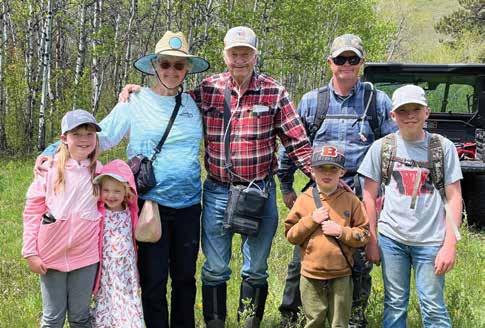
CYNDI JOHNSON President, MFBF
Looking for Solutions in a Tough Grain Market
“ Wheat is under pressure”. “Ugly overnight”. “Negative rhetoric out of the China over the weekend”. “Commodity prices generally lower overnight across the board”. “Wheat was generally weaker overnight which has been the case for every Sunday open over the last two months”. My favorite – “Another bad session overnight with wheat grinding lower despite negative headlines involving Russia.”
These are the morning messages in my “grain brain” – the app on my phone that delivers upto-date grain marketing information. They aren’t the news that make me want to enthusiastically run out the door and tackle weed control, soil health monitoring and pest reconnaissance.
Commodity prices—other than livestock— are in the tank. The higher prices for grains, a result of the COVID-19 pandemic, were shortlived. Even as the value of raw materials used for agricultural inputs has stabilized, the costs of equipment, fertilizer and chemicals continue to rise.
A sobering thought: The annual average price of wheat in 1980 was $4.57. The closing price for Golden Triangle winter wheat on September 17, 2025, was $4.48. In 1980, a new combine was approximately $50,000 with a good header. Today, a new combine runs $850,000 for a comparable machine. Higher end models cost
well over $1,000,000. Yet the price of wheat is less than when my family was buying a $50,000 combine. The balance sheet is very unbalanced for many farmers.
Although livestock producers are seeing recordhigh prices for their animals, those who must buy replacement animals to rebuild their herds are facing exponentially higher costs and their costs of equipment and fuel have also risen even above and beyond what high-priced calves bring.
Existing government solutions don't appear to address the specific challenges facing Montana's farmers and ranchers, such as crop conditions, high production costs, or limited access to trade. This is a common experience shared by agricultural producers across the country, as the current dynamics of the industry are influenced by a wide range of interconnected factors.
Hope may be found in developing more valueadded options for our commodities in our state. We must embrace technology, attempt new crops and approaches to production, welcome the next generation and tap into resources that already exist through Montana State University research and Extension, and the Montana Department of Agriculture.
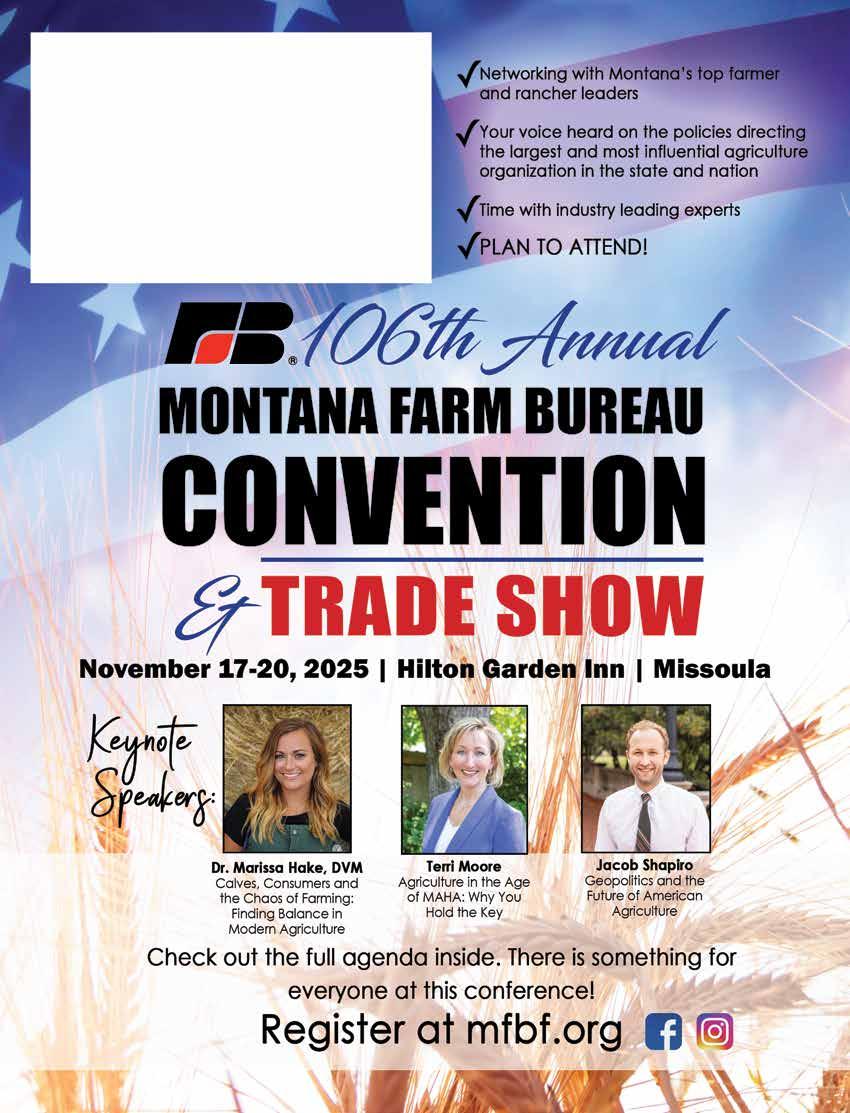
It’s paramount to get engaged. These are not problems we solve or successfully endure on our own. As we look forward to our annual Montana Farm Bureau Federation meeting, invite someone who has never been. Bring a neighbor or a friend to Missoula to experience the amazing workshops, keynotes, entertainment and lively debate that comes with our grassroots policy development process.
May your chores be quick, your efforts rewarding and the grain news positive. See you soon!
Your future self will thank you.
When it comes to planning for the future, sometimes getting started is the hardest part. That’s where we come in. From life insurance and annuities to retirement planning and more, we’ll help you get started and stay with you every step of the way.
Contact your local Farm Bureau agent, and together, we’ll make your future self proud.
Just Bought a Home? Here’s Your Essential Guide to Home Insurance
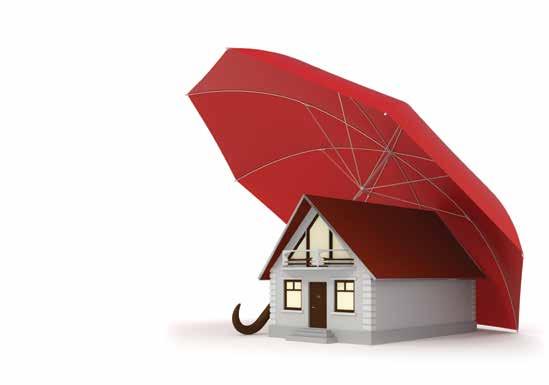
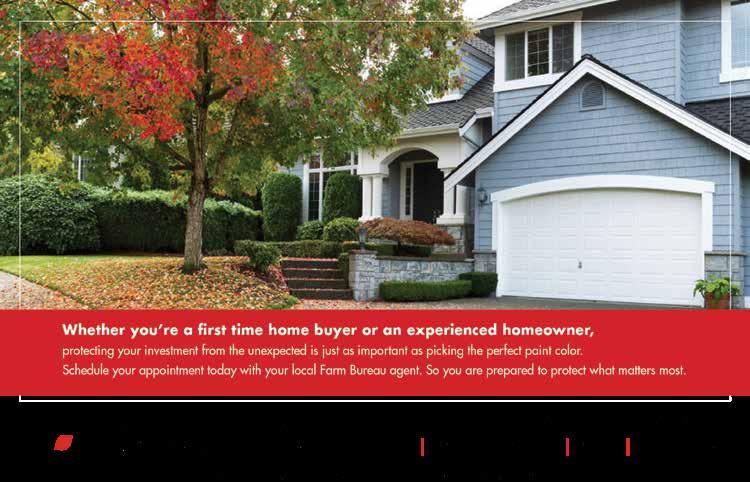
Buying a new home is one of the most exciting— and expensive—milestones in life. Between signing documents, arranging a move, and setting up utilities, it’s easy to overlook one crucial detail: home insurance. Protecting your investment is as important as picking the perfect paint color. Whether you’re a first-time buyer or an experienced homeowner, here are essential tips and tricks for insuring your new home the right way.
3. BUNDLE AND SAVE
1. DON’T WAIT—INSURE BEFORE YOU CLOSE
One of the most common mistakes homebuyers make is waiting until the last minute to arrange homeowners insurance. But your lender will require proof of insurance before you can close on the home. It's a good idea to start shopping for coverage early—at least two to three weeks before your closing date.
This gives you time to compare policies, ask questions, and understand your coverage options. And if your new home has any unusual features, like a wood-burning stove, swimming pool, or is located in a high-risk area (think flood zones or wildfire-prone regions), you may need additional inspections or endorsements, which can take time.
2. KNOW WHAT YOUR POLICY COVERS—AND WHAT IT DOESN’T
Standard homeowners insurance typically includes coverage for:
◾ Dwelling (the structure of the home)
◾ Other structures (like detached garages or sheds)
◾ Personal property (your belongings)
◾ Liability protection (if someone gets hurt on your property)
◾ Loss of use (if your home becomes unlivable due to a covered event)
However, most policies do not cover certain disasters like floods or earthquakes without separate coverage. Ask your agent to walk you through what’s included—and what’s not—so there are no surprises down the road.
Buying a new home is the perfect time to reevaluate all your insurance needs. Many insurers offer multipolicy discounts if you bundle your homeowners insurance with auto, umbrella, or life insurance. These discounts can be significant and streamline your monthly payments.
4. DO A HOME INVENTORY
Creating a home inventory is one of the smartest steps you can take after buying a new home. This detailed list of your personal belongings—including furniture, electronics, appliances, clothing, and even valuables—helps ensure you have the right amount of personal property coverage.
Should you ever need to file a claim, a home inventory makes the process much easier and faster. Take photos or videos of each room, store receipts when possible, and keep your inventory in a safe digital location.
5. ASK ABOUT REPLACEMENT COST VS. ACTUAL CASH
VALUE
Not all policies reimburse the same way. One of the most important choices you’ll make is whether to insure your home and belongings for replacement cost or actual cash value (ACV).
Replacement cost pays to repair or rebuild your home and replace your belongings at today’s prices.
Actual cash value factors in depreciation—meaning your reimbursement might be less than you expect.
While replacement cost policies are generally more expensive, they provide far better protection, especially for newer homes.
6. INCREASE YOUR DEDUCTIBLE TO LOWER YOUR PREMIUM
If you’re looking to save on your premium, one trick is to choose a higher deductible. Your deductible is the amount you’ll pay out of pocket before your insurance kicks in after a claim. Common deductible amounts range from $500 to $2,500.
Choosing a higher deductible can reduce your monthly premium, but make sure it’s an amount you’re comfortable paying if a loss occurs.
7. REVIEW COVERAGE ANNUALLY
Your home, lifestyle, and belongings can change over time. Maybe you’ve renovated your kitchen, added a home office, or bought new electronics. These changes can affect how much coverage you need.
That’s why it’s a good idea to review your policy every year—preferably with your agent—to make sure your coverage still matches your needs. Life moves fast. Make sure your insurance keeps up.
8. WORK WITH A LOCAL AGENT
While online tools and quote engines can be convenient, there’s no substitute for personalized advice. A local insurance agent understands the unique risks of your area, whether it’s hailstorms or wildfire threats in the West.
They can also help you find discounts, answer tricky questions, and guide you through claims should the need arise. Insurance isn’t just about protection—it’s about peace of mind.
FINAL THOUGHTS
Purchasing a new home is a huge accomplishment. Making sure it’s properly insured is one of the smartest things you can do to protect that investment. By understanding your policy, taking inventory, and working with a trusted advisor, you’ll have peace of mind—no matter what life throws your way.
Need help choosing the right coverage? Contact one of our local agents today. We’re here to make home insurance easy, clear, and tailored to your life. ◾
A Peaceful Passing
BY MARIAH SHAMMEL
When Favorite Farmer and I first had kids, we always knew we wanted to give them the opportunity to come back to the ranch if that’s what they eventually wanted. We weren’t sure what that would look like, but it was important that we could to make that option a possibility. Shammel cows have been eating grass in the mountains that surround our house since 1942. That’s four generations, with the fifth being our kids. We met with the lawyer and made it a reality. Even at their young ages of 14, 11, 9, and 6, they’re aware of their future options and where everything stands with the ranch. Should something happen to my better half and I, the ranch would stay intact and funded until the kids came of age and were able to make decisions for themselves.
My in-laws did the same thing for us. My father-in-law passed away unexpectedly in January. When something like that happens, it’s a lot to deal with. Each of the kids were mourning in their own way. Favorite Farmer and his mom were constantly at the forefront of my mind, as I worried about how they were coping each day while going through all the feeings myself. We had started calving the day it all went down, not giving us much time to wallow, which is what we really wanted to do. There aren’t any personal days to take when you’ve got a bunch of cows depending on you. One thing I wasn’t worried about, though, was the future of the ranch–who would get it and what would happen to us. We already knew.
would have to be sold, town jobs would most likely have to be had, futures would most definitely be changed. We have neighbors and friends this has happened to and it’s absolutely devastating to watch. Dealing with the tangible parts of an operating ranch are one thing but when it comes to the emotions attached to something that’s been the nucleus of a family for generations, it’s a different story. Siblings no longer speak to each other because of how everything played out, families get kicked off the place so it can be subdivided to pay outstanding debts nobody knew about, land is unexpectedly given to relatives with no connection to it, due to to a lack planning.
Though my in-laws had mostly stepped back from the day-to-day operations and management of our place, they still maintain ownership on their sections of land. We run everything together, so unexpectedly losing or greatly decreasing the ability to use their portion of the land, machinery, buildings, and everything else that comes with this lifestyle, would be catastrophic. Cows
There is so much we miss about Grandpa Tractor. The kids love telling stories with Grandma Peacock about his silly antics, and Favorite Farmer still picks up the phone to call for advice. My parents-in-law have given us a lot of great memories over the years but the best gift of all is the peace of mind they gave us in knowing our future on Shammel Ranch is in our hands, as it will be for our kids. Their willingness to throw the stigmas of their generation away, literally opening their books and planning with us has allowed us the ability to focus on the things that really matter. ◾
Mariah Shammel ranches in Hilger with her husband, four active kids, and various cows, dogs, and other critters.
Proper estate planning has allowed generations of Shammels to keep ranching.
Look Up and Look Out
BY DANA JANSEN, DIRECTOR, MONTANA AG SAFETY PROGRAM
While it is hard to imagine life without electricity today, it wasn’t all that long ago that having electricity available at your farm or ranch was simply a dream, something only “city folks” had the luxury of. Thanks to the Rural Electrification Act of 1936 and the creation of rural electric cooperatives, most U.S. farms and ranches had power to make daily life and chores easier by the early 1950s. Since then, operations have grown larger, raising more crops and livestock with more powerful equipment than could have been dreamed of a half-century ago. Our reliance on safe and reliable electricity has also grown, not only in rural areas, but in cities and towns across the United States meaning more powerlines and more services to distribute the necessary energy. One thing that hasn’t changed is most powerlines haven’t gotten any taller despite the increase in equipment size. It isn’t uncommon to find that portions of the line running to your own farm or ranch may be the original infrastructure! In fact, the average height of powerlines over agricultural lands is a mere 15.5 feet. To put that measurement into perspective, most combines (without hopper extensions and the auger fully retracted) today measure at 16 feet. This means it is imperative that we consider the dangers of accidental contact with electrical lines whether in the farmyard or in the field as even a single-phase line can carry a dangerous 7,200 volts of electricity!
KEY SAFETY POINTS
◾ Maintain a 10-foot clearance around all utility equipment in all directions.
◾ Remember to account for the total distance of extended booms or augers, raised loader buckets, irrigation pipes or items being hauled such as hay.
◾ Avoid emptying combines, refilling sprayers, or loading/unloading hay near powerlines. If possible, select locations for bin yards well away from any overhead lines.
◾ Be sure to carry irrigation pipe horizontally to the ground rather than carrying it vertically. Lower all augers to their transport position before moving them to a new site.
◾ Use a spotter and physical reminders, such as flags or cones, to maintain a safe distance from powerlines when doing field work or completing overhead operations.
◾ Contact your energy provider to have lines raised in areas where oversized equipment operates or overhead work is completed regularly. Never measure a powerline on your own. If you have clearance concerns, contact your provider.
STAY SAFE!
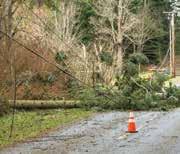
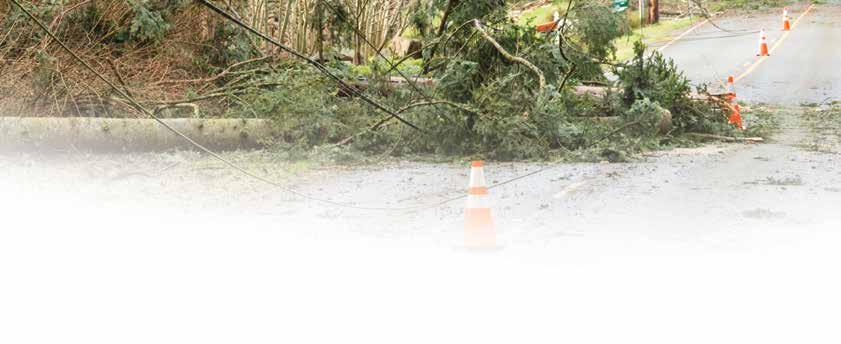
If your equipment contacts an energized or downed powerline, call your energy provider immediately and remain inside the vehicle until the powerline is deenergized. Assume that all downed lines are energized. In case of smoke or fire, exit the cab by making a solid jump out of the cab, without touching it at the same time, and hop (or take small, shuffling steps) away to safety. Ensure no one comes in contact with the machine until it is confirmed that the power line has been de-energized. If you aren’t sure whether you have contacted the powerline, err on the side of caution and remain in the cab. Phone help but remind them to stay back a minimum of 50 feet. Avoid parking equipment under powerlines for any length of time. Powerlines “shed” energy which can, in turn, energize items left near them. Powerlines do more than just keep the lights on for us. They connect us to critical information, make daily life easier, and help us to grow the food and fiber necessary to supply the masses. Remember to look up and look out so you can safely continue to provide food and fiber for the world.
For more information regarding the Montana Ag Safety Program or task-specific safety visit www.mtagrisafety.com or contact danaj@mtagrisafety.com or 406-850-9978. ◾
From Young Farmers & Ranchers to the Legislature
In our ongoing Producer Member Series, we spotlight Jeff Welborn, a long-time and well-known Farm Bureau member who developed leadership skills through serving as Young Farmer and Rancher Committee Chair and became a Montana state legislator.
WHAT BUSINESS ARE YOU CURRENTLY INVOLVED IN?
I own and operate diversified business interests consisting of a full-service trailer dealership, an interest in a small hay and grain farm, a heavy machinery rental & operator service, and am also a professional auctioneer.
WHAT ABOUT YOUR PASSION FOR PUBLIC SERVICE?
I was recently elected to the Montana Public Service Commission, where I serve as one of five elected, statewide, regulating investor-owned natural gas and electric utilities, garbage haulers, railroad safety, and pipelines. Over the past 16 years I served in the Montana House of Representatives from 2008-2016 where I was the Majority Whip and served on several committees. I was elected to the Montana Senate in 2017 and served until 2025, where I served chaired the Senate Natural Resources, Vice Chair of Transportation, chair of Water Policy Interim Committee, and was the ranking Senate Republican on the Appropriations and Finance sub-committee.
HOW HAS FARM BUREAU BEEN INFLUENTIAL IN YOUR LIFE?
My Farm Bureau story starts as a young kid, inspired by the legendary MFBF President Bernard Harkness and
admiring his ability to bring people together for the greater good of the industry. I feel my interest in serving people, be it my community, the industries where I’m involved, or the roughly 200,000 people who elect me, started with my involvement in Farm Bureau.
I have returned Farm Bureau’s investment in me by ensuring that I always put rural communities and private property rights at the forefront of every discussion I have in the public policy arena. In addition, I volunteer my time and resources to programs like Hoofin’ it for Hunger, Southwest Counties Farm Bureau and the YF&R program, among others. Farm Bureau brings folks together to help each other with one collective voice.
WHERE IS YOUR FAVORITE PLACE TO BE?
Anywhere my feet land, or a motorcycle can travel, snowshoeing, adventure travel in Montana's backcountry, or sitting on a piece of machinery, with my hands-free device talking to customers and constituents. I have clocked over 300,000 miles by motorcycle, spanning 49 states, nine Canadian provinces, and also rode in parts of Asia, Europe and Pacific Rim. Of course, I especially enjoy spending time with my wife, Marni Fifield and my stepsons, Kash and Wyatt. ◾
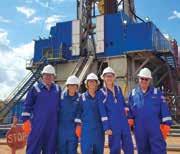
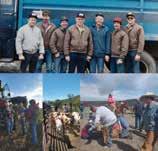
Joining Jeff Welborn (far right) on a REAL Montana trip to the Bakken Oil Field are Ben Lehfeldt, Lexi Palagi-Jones, Montana Director of Agriculture Jillien Streit and Lori Saulsbury-Nelson.
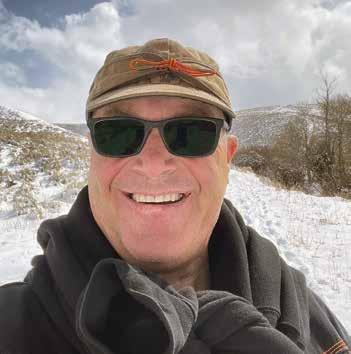
Jeff on his home turf of southwestern Montana.
One Big Beautiful Bill Provides Clarity to Estate Planning, Taxes
Signed into law by President Trump on July 4, 2025, the One Big Beautiful Bill Act provides many benefits for business owners including those in agricultural production. The bill was met with enthusiasm by farmers and ranchers as the legislation will bring certainty. Modernizing important farm safety net programs and making permanent critical tax provisions could be the difference between staying in business or shutting down the family farm.
“More than half of farmers are losing money, so an increase in reference prices is desperately needed, and tax tools will help farmers and ranchers plan for the next season and the next generation,” said American Farm Bureau
President Zippy Duvall.
“Lawmakers took a big step toward ensuring America’s farmers and ranchers can continue to keep pantries filled for America’s families.”
STANDARD
DEDUCTION
– The amount has increased from 2024, plus seniors (65 and older) will get an additional $6,000 per individual starting in 2025.
SALT – The amount of itemized deduction taxes (state, real estate and personal property taxes) has increased from $10,000 to $40,000 starting in 2025, with some limitations.
BONUS DEPRECIATION – The write-off of new and used personal property with a life of 20 years or less has been restored to 100% if acquired and placed in service after January 19, 2025
SECTION 179 – The write-off of new and used personal property with a life of 20 years or less has increased from $1.250M to $2.500M in 2025 with maximum of $4.000M.
QBI – QUALIFIED BUSINESS INCOME DEDUCTION
– The 20% qualified business income adjustment to reduce taxable income was retained.
ESTATE TAXES – The estate tax exemption is $13.990 million in 2025 but on January 1, 2026, the exemption increases to $15 million per individual or $30 million for married, plus is indexed for inflation in 2027. Although this may seem like an exorbitant amount of money, in areas of Montana facing rampant development, the value of a family ranch has skyrocketed. If the exemptions weren’t raised, ranch and farm families would have to sell a large portion of the ranch to pay estate tax, thus potentially taking that land out of agricultural production.
Marilyn Dusenberry, a certified public accountant from Helena, provides a review of the OBBA. Dusenberry is no stranger to agriculture; she runs the XX Bar Ranch with her family, featuring direct- to-consumer beef and pasture-raised chickens.
HIGHLIGHTS OF THE ONE BIG BEAUTIFUL BILL ACT
(Always check with your accountant for additional clarification and information on any tax issues.)
FEDERAL TAX RATES – The rates we have had for several years are made permanent with inflation adjustments.
OVERTIME - Overtime (OT) hours are the hours worked over 40 hours per week. The OT portion of the wage is an adjustment to taxable income with limit of $12,500 per year ($25,000 married joint). Employers will need to report the OT portion on the W-2, 1099-MISC AND 1099 NEC – starting in 2026 the threshold for reporting contracted services, rents, etc. will increase from $600 to $2,000.
TIPS – Tips up to $25,000 per year may reduce taxable income. This is great news for a family member in an off-the-farm job who works in a restaurant or other tip-oriented business. The Internal Revenue Service is to issue a comprehensive list of occupations that qualify in October 2025. ◾
Note: These are general changes. Some additional limitations due to income are required.
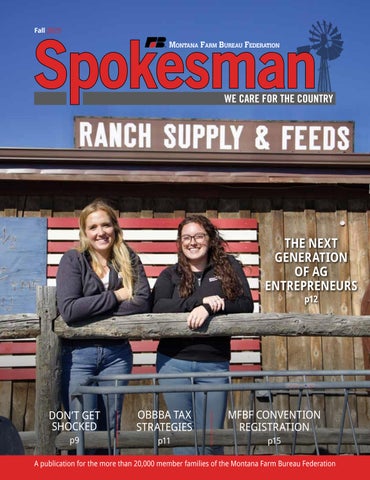
More Than a Store: The Women Behind Livingston's Beloved Feed Business
BY REBECCA COLNAR , EDITOR, MFBF SPOKESMAN
AWednesday afternoon and customers bustle around The Spur Line, selecting unique dog treats and loading bags on senior horse feed into a pickup, while another customer selects a waterer for their backyard chickens and grabs brightly colored pitchfork. Outside, an older rancher examines a round bale feeder before placing an order for a cattle protein tub. It’s all part of the scene at the independently owned feed store.
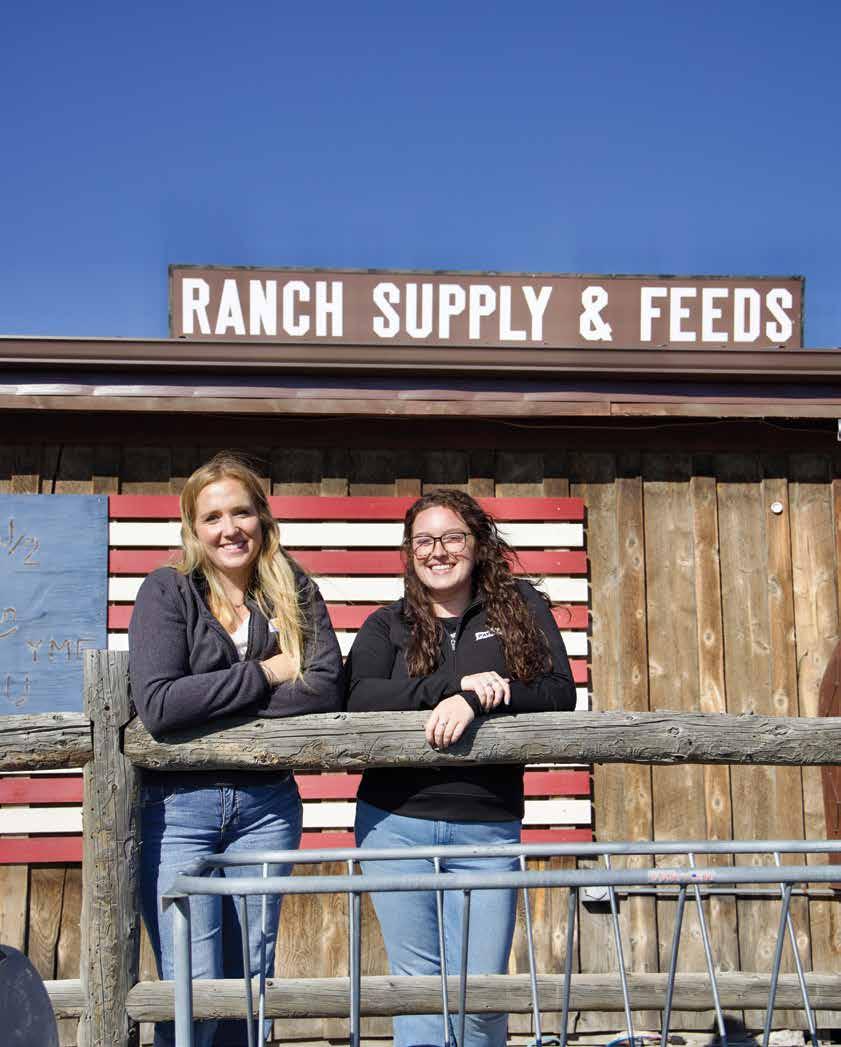
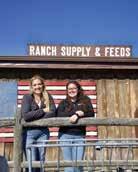
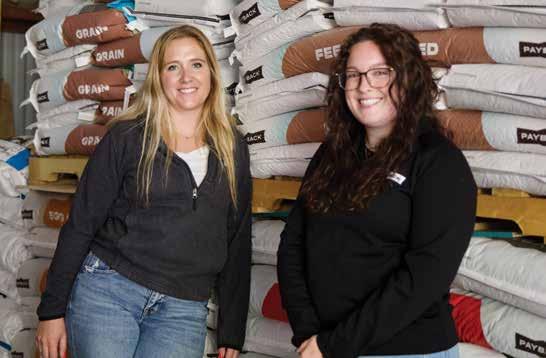
Even more impressive is the store is run by two young women, Lauren Kett and Lily Andersen, who have owned the thriving business in Livingston for four years.
“Sometimes when we get a new rep for a product they don’t believe we’re the owners,” said Lauren with amusement. However, for many regular customers and field reps, two women owning The Spur Line makes sense; two women previously owned the store.
Lily, 32, and Lauren, 31, knew the store well before purchasing the business—both had been working at the store for two years before being offered the opportunity to dive into ownership.
What makes their store unique in the world of chain livestock supply and pet stores?
“We are all about customer
service,” Lily said, explaining that not only do they offer a wide range of products and have knowledgeable staff, but they make the store more than just retail with relevant producer meetings including an annual artificial insemination class where people can learn to do this technology themselves.
Sitting at their desks in the back room of the store full of paperwork, file cabinets, product samples and computers, both enthusiastically shared about their involvement in the community.
“We donate to most groups in town, and we go to many events whether it’s having a float in a parade or a gala,” said Lauren, admitting it’s not uncommon to see the pair donning sparkly dresses for fundraisers, whether Livingston Roundup Boots & Buckles Ball, Stafford Animal Shelter Fur Ball or the Prosperas Prosperity Annual Party.
The hard-working entrepreneurs both have agricultural backgrounds from opposite sides of the country.
“I grew up in Vermont working for local dairies, and came out to Bozeman to attend Montana State, where I earned a degree in Animal Science and livestock management,” explained Lily. “That’s also where I met my husband and together, we carry on his family’s fourthgeneration dairy.
“I always joke that my husband married me because I was the only girl in Montana who didn’t run away when he said he had a dairy. We milk twice a day, he takes weekday mornings, I do weekday nights, and his mom covers weekends. We put up all of our own feed, from hay to barley for the dairy cows. I handle irrigating the pastures, since we’re a
Friends Lily Andersen and Lauren Kett run the successful feed store.
pasture-based dairy with our cows out on grass about 12 hours a day.”
In addition to her work on the farm and The Spur Line, Lily runs Milkmaid Meats, a direct-to- consumer meat company, which started with her
great-grandfather-in-laws legacy, starting with a dairy and later when he had extra hay, a cow-calf operation in Paradise Valley. She also helped launch The Meat Up, a food hub connecting our community with local proteins. “I serve as the secretary treasurer for the Paradise Canal Water Users in our valley.”
She’s also raising two daughters, Daisy, 7, and Rose, 5, who love to feed calves and move cows horseback.
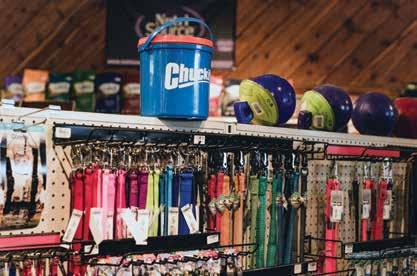
The Spur Line carries everything from pet supplies to feed to mineral tubs and offers hay testing, too.
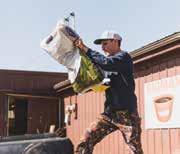
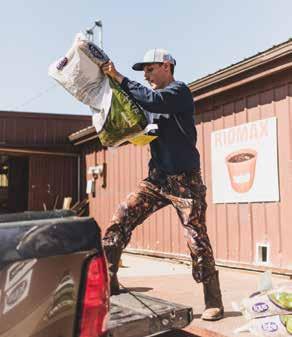
Marshall Pierce loads a truck for a customer. The store has several full-time/part-time employees.
Lauren, who hails from north central California, became involved in agriculture through 4-H and FFA and met Lily while they both worked on a ranch outside of Bozeman. (Read more on Lauren in the ACE story. page 22.). Like her counterpart, two other jobs fill her plate—she is a nanny for a three-year-old and works on a nearby ranch. In addition, Lauren owns Lauren Kett Photography specializing in family sessions, high school photos and more.
As if having multiple talents and businesses isn’t enough, both are active in a variety of associations. Lily serves on the Dairy MAX board, which promotes dairy across Montana, Wyoming, Colorado, Kansas, Oklahoma, Texas, and New Mexico. She also represents dairy on Montana’s Board of Livestock and serves as a delegate for Dairy Farmers of America.
A bit about dairy….
FROM LILY ANDERSEN
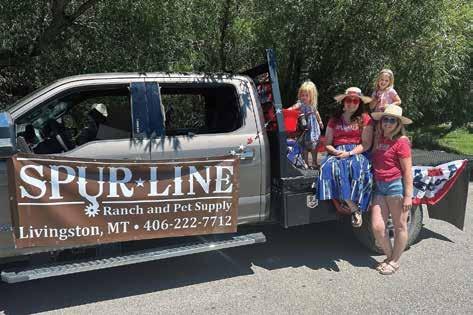
Being part of the community includes participation in the July Fourth Parade.
Lauren was honored by making the Wrangler “Cowgirl 30 Under 30” in April 2025. She is active in the 2025 MFBF ACE class and serves as chair for Park County’s Young Farmers and Ranchers, helping the county Farm Bureau with projects. Lily serves as a board member
All of our milk goes to Meadow Gold (Billings), so it’s the same milk you’ll see in almost every grocery store across Montana. Know that grocery store milk is local milk. When milk leaves our farm, it’s processed and back on store shelves within 48 hours. In Montana, all Montana milk stays in Montana. Nationwide, you can go into any grocery store, pick up a gallon of milk, and know it was produced within about 100 miles of that store. If you’re curious, you can even go to whereismymilkfrom.com and type in the code on your jug to see exactly where it came from. Farm Bureau has always been a strong ally for Montana dairy farmers. They’ve supported the 12-day rule, which is critical for our industry, and they stand behind legislation that protects and strengthens dairy here in Montana. Last session, I brought forward policy around milk inspection fees, and Farm Bureau was right there backing me up. Having that kind of support both at the grassroots level and in policy really helps ensure that dairies like ours can stay viable for the next generation. ◾
for the Park County Farm Bureau.
“I really value how grassroots it is. Policy starts with people like us sitting around a table, talking through the real issues we’re facing on our farms and ranches. Farm Bureau is also a great community. In a county where agriculture isn’t really growing, it means a lot to be surrounded by like-minded people who are all working to keep ag thriving in Park County and across Montana.”
The two credit Farm Bureau for helping them develop into successful leaders in agriculture and want people to understand that being involved in agriculture is more than just producing food or owning cows.
“It’s community, hard work and determination. It’s deeply rewarding to see the impact you make every day, you feel like you are a part of something bigger. Being engaged in Farm Bureau, local boards, or other ag organizations gives you a voice and a network. Agriculture isn’t always easy but when you find a good group like Farm Bureau, you can share knowledge and solve problems.” ◾
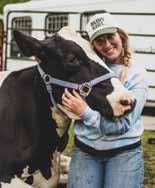
Lily Andersen says you really get to know a cow by milking her twice a day.
A Note from the Chair: Reflecting on Success
BY NICK COURVILLE, MFBF YF&R CHAIR
As I reflect on the past few years as the Young Farmer & Rancher Committee Chair, I'm struck by the incredible opportunities I’ve been given. The networking alone has been invaluable. I've attended state conventions in Billings, traveled to Puerto Rico and Texas for the American Farm Bureau Convention, and participated in professional development meetings across Florida, Nebraska, and Colorado. At each event, I met people who added immense value to both my professional and personal life.
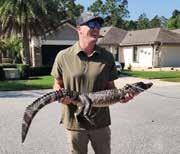
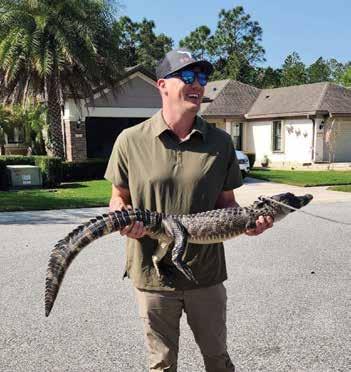
My travels also led to some unforgettable experiences. I helped with an iguana hunt to eradicate an invasive species in Puerto Rico and learned how to bring a 5-foot alligator back from Florida—packed with frozen corn cobs and vegetables to get it through TSA. I got some strange looks, but the persuasive talking skills I learned through the ACE program helped me navigate security. When I finally made it through, my wife, Randi, had distanced herself so far that I didn't feel bad about not paying for us to sit together on the plane! In Nebraska, I enjoyed upland bird hunting and learned from my guide how his outfitting business allowed him and his wife to return home.
On most of these trips, I was able to support agriculture directly. I met with the Governor of Montana on multiple occasions and was even invited to his house twice. I had dinner with American Farm Bureau Federation President Zippy Duvall and participated in a Farmside Chat podcast about our ranch and my journey as committee chair.
Through my involvement, I was able to hone my leadership skills. The networking and education I received through the ACE program were amazing. I also competed in the Montana Farm Bureau (MFBF) Young Farmer & Rancher Discussion Meet three times. The knowledge I gained and the experience of discussing agricultural topics far exceeded my expectations. I'm fortunate to be a member of the Northwest County Farm Bureau, which held multiple discussion meet practices that ultimately helped me win a Polaris Ranger in the 2024 MFBF Discussion Meet. This led me to compete
at the American Farm Bureau Convention in San Antonio against 35 other competitors who were just as passionate as I was about the issues.
My involvement in Farm Bureau has allowed me to surround myself with like-minded people. Most importantly, it has given me a platform to discuss what matters to me. I've been on multiple podcasts and have spoken on the radio, both live and recorded, about important issues. I was interviewed in a newspaper about the "Yellowstone effect," where I shared my perspective on the struggles our community faced after the show aired. I also had the opportunity to write multiple articles myself—none of which would have been possible without Farm Bureau.
I've been able to plan some awesome events and showcase the incredible people we work with every day. In my very first article for the Spokesman, I shared a key takeaway from the ACE program: "Success breeds success. If you want to start something, just do it."
I still feel that way and am so glad I raised my hand in my first Young Farmer & Rancher committee meeting when Sue Ann Streufert asked if anyone was interested in being chair. I barely knew anyone in the room, I had just sweated through my shirt during the first round of my first discussion meet, and I had no idea what was in store. The opportunities have been endless, and what drives me now is the hope that I can put as much into Montana Farm Bureau as I was able to get out of it while serving the members. ◾
You never know what you’ll experience at a Young Farmers & Ranchers Conference. Pictured is Nick Courville and his alligator during the YF&R Conference in Jacksonville, Fla.
In Other News…
LEARN, COMPETE, WIN A POLARIS AND A TRIP
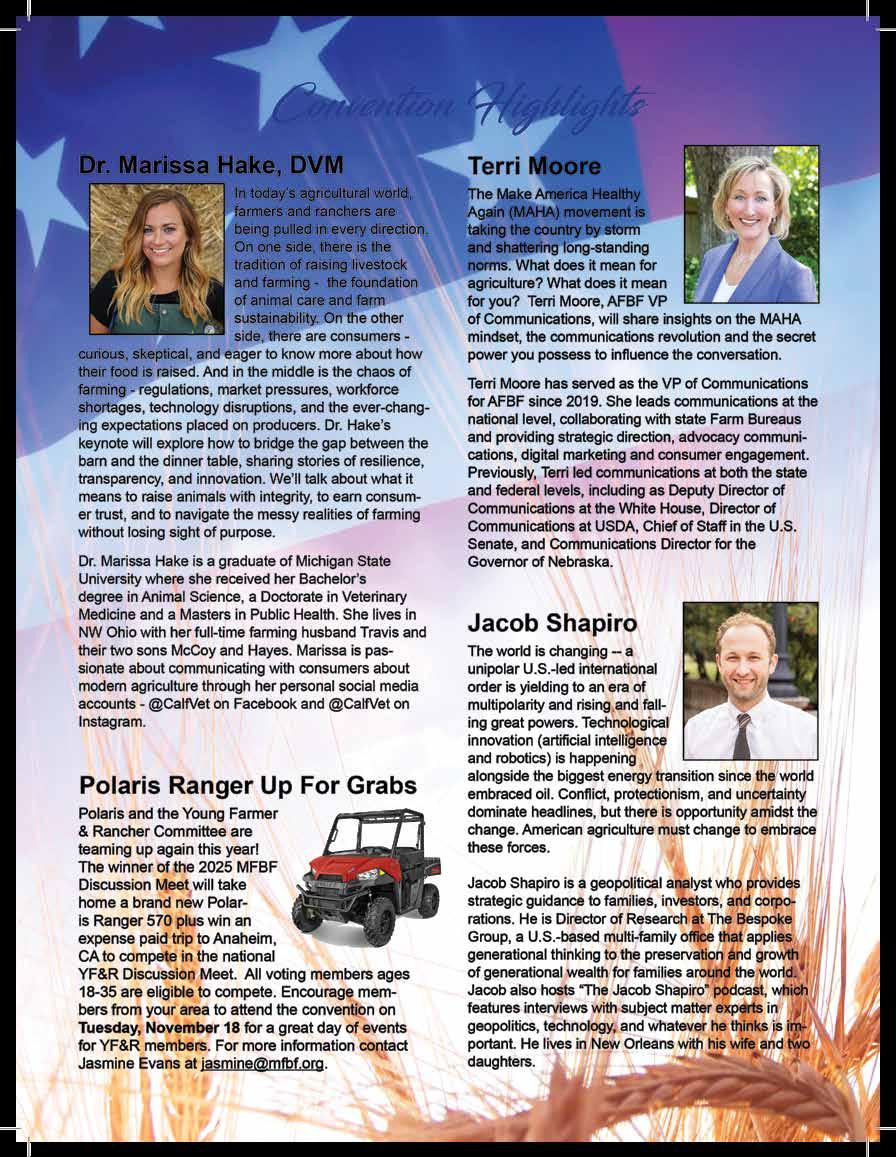
The Farm Bureau Federation Discussion Meet competitive event simulates a committee meeting where discussion and active participation are expected from each participant. This competition is evaluated on an exchange of ideas and information on a pre-determined topic. The Montana Farm Bureau Discussion Meet will be held Tuesday, November 18 during the MFBF Annual Convention in Missoula. The winner receives the keys to a Polaris Ranger and an all-expense paid trip to compete in the American Farm Bureau Discussion Meet in January 2026 in Anaheim, CA.
2026 DISCUSSION MEET QUESTIONS
1. Urban sprawl presents significant challenges for farmers and ranchers, impacting access to land and resources. We see that 1.9 million acres of agricultural land are lost to development each year. How can Farm Bureau help promote responsible growth in communities while mitigating the loss of farms, ranches, and the agrarian way of life?
2. Technology has made the world more interconnected than ever, creating new avenues for communication with policymakers. How can digital engagement be leveraged to effectively connect Farm Bureau members with their local, state, and national elected and appointed officials?
3. There are numerous resources available to support seamless farm and ranch succession planning. How can Farm Bureau help increase understanding, access and utilization of tools and resources that help facilitate the smooth transition of land and capital from one generation to the next?
4. Farmers and ranchers are at the forefront of environmental stewardship. From soil health to local ecosystems, producers are concerned about how to be both environmentally and financially sustainable. How can farmers and ranchers effectively advance environmental stewardship while balancing the needs of their farms?
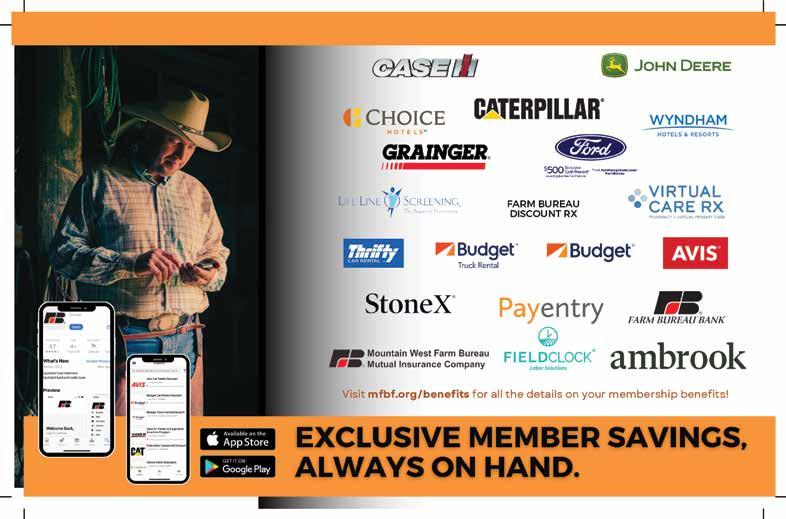
5. Farm Bureau offers a diverse range of member benefits at the state and national levels. What strategies can be implemented to ensure members
are fully informed about the savings on products and services available to them? Additionally, how can young farmers and ranchers leverage these industry relationships to strengthen local partnerships and increase utilization of these discounts to keep their operations.
YF&R LEADERSHIP CONFERENCE
Mark your calendars for the 2026 Montana Farm Bureau YF&R Leadership Conference
January 23-25 at the Holiday Inn in Great Falls. Look for details in the Winter 2025 Spokesman and on Facebook and Instagram.
YF&R HOOFIN’ IT FOR HUNGER
Runners enjoyed the YF&R Hoofin’ it for Hunger race September 20 in Dillon which raised funds for the Montana Food Bank Network. The check will be presented to the MFBN during the MFBF Convention in Missoula. Many thanks to our generous sponsors.
Silver Sponsors:
Dillon Jaycees
JC Bar – Harris Wheat
MT Beef Council
AgWest Farm Credit
Trapper Creek Ranch
UM-Western
MT Bucks and Ducks
Richland County Farm Bureau
Northwest County Farm Bureau
Stockman Bank
Stock Drive Trailer Sales
Frontline Ag
Yellowstone County Farm Bureau
Farm Bureau Financial Services, Julie Bramlet, Agent
Bronze Sponsors:
Carquest of Dillon
The Notch PT and Wellness
Hampton Contracting, Inc.
Big Horn County Farm Bureau
Lohr Farm Co.
Equine Align
Rocky Mountain Supply
CHS Animal Nutrition - Payback Feeds
Copper Sponsors:
Carbon/Stillwater County Farm Bureau
Meagher County Farm Bureau
Southwest County Farm Bureau
Advocate. Communicate. Educate.
Montana Farm Bureau’s Premiere Leadership Program, ACE, is designed to empower Farm Bureau members to be confident, effective leaders in their county Farm Bureau and local communities. Advocacy follows leadership and with practiced, ever-evolving leadership skills, participants will be prepared to actively advocate on key industry issues.
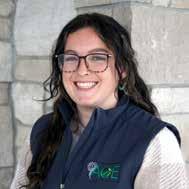
LAUREN KETT
Lauren grew up in Dixon, an agricultural town located in North Central California. Her passion for agriculture started with 4H and FFA through childhood and continued through her jobs and education. She has a B.S. in Animal Science from Montana State University and a M.S. in Meat Science from University of Nebraska - Lincoln.
“My dream was to be an extension agent to connect community and agriculture. Life had another path for me that led me to Livingston, Montana where I am now five years into operating a ranch and pet supply store called The Spur Line with one of my college friends.
Lauren joined the Park County Farm Bureau when she bought The Spur Line as a way to be more connected with others in agriculture in her community.
“During my time with Farm Bureau I was asked to be on my county’s board to help organize, plan, and grow in our community. I am now the chair for Park County’s Young Farmers and Ranchers group and help with regular county projects,” said Lauren. “ When I learned about ACE I thought it would be the next best step to continue to grow and learn in Montana Farm Bureau.”
The announcement about the upcoming public speaking session gave the young entrepreneur pause. “When I got the email to prepare for our next session and
saw Public Speaking as a topic I was beyond nervous. I had to prepare a two-minute speech on our ACE topic. I did it, and was proud of what I had put together, but after listening to Maegan Meredith’s presentation about public speaking the panic set in again. One thing I love about ACE is my classmates. They are some of the most supportive, insightful, welcoming, and fantastic people I have met, and I knew they had my back. I gave my speech and got over my fear of talking in front of people. I received excellent feedback on how to improve.”
Lauren said if anyone is thinking about it, just do it. “This program has helped me gain confidence, knowledge, and improve my leadership skills, and I can’t wait to start bringing all of it back to my community.”
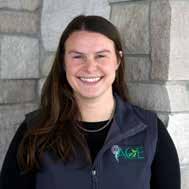
KASYDI LUCAS
Kasydi was born and raised in Helena, Montana, and has always had an interest in ranching and agriculture, even though she wasn't directly involved with it growing up.
“No matter where I was, I always found myself seeking opportunities within the industry. I'm now with DNRC as a Land Use Specialist, where I get to combine my passion for agriculture with stewardship of Montana's working lands,” Kasydi said.
She wanted to participate in ACE because she saw it as a way to grow as a leader, while learning how to better advocate for agriculture. It also gave her the chance to connect with other members who share a strong passion for the future of Montana agriculture.
“One takeaway that really resonated with me was a message from J.M. Peck: rural coalitions turn limited resources into collective strength. In rural areas, where people often know one another personally, trust and local knowledge become powerful tools for problem-solving,” noted
Kasydi. “I also appreciated the public speaking training with Meagan Meredith, which helped me think differently about how I show up and influence others.”
Kasydi said she tells her colleagues that ACE is an investment in yourself. “It's a unique chance to develop both personally and professionally. It not only sharpens your leadership skills but also gives you the confidence and community to put those skills into action.”
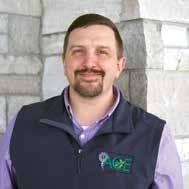
ANDY SCHWAB
Many Spokesman readers will recognize Andy Schwab as a farm broadcaster with Northern Ag Network. Andy grew up in Powell on a horse racing farm, and after high school he worked several jobs in farm and ranch retail, which gave him acquaintances involved in agriculture. He started as a farm broadcaster with the Northern Ag Network in 2019.
“I really enjoyed the messages at the June ACE program where we heard from Farm Bureau members who are community leaders—like Chris King from Winnett ACES, and J.M. Peck with the Big Hole
Watershed Committee who had great messages on working with people you normally wouldn’t work with by using shared values to achieve a common goal.”
Schwab said he applied for the ACE class to learn more about advocating for agriculture. “I’m passionate about wanting to educate people who don’t know about agriculture in their towns. I also want to visit with my colleagues and let them know that ACE shows you the different ways to lead and lets you get out there to make a difference.”
MFBF is now accepting applications for the 2026 ACE class. Visit https://mfbf.org/ Programs/ACE-Program to apply or to learn more about the program. Questions? Contact Contact Sue Ann Streufert, sueanns@mfbf.org, 406-587-3153 or Karli Johnson: karlij@mfbf.org, 406-868-1233. ◾
The “Ups” of Serving as the Women’s Leadership Chair
BY CARLA LAWRENCE, MFBF WOMEN’S LEADERSHIP COMMITTEE CHAIR
It has been my pleasure and honor to serve as the Women’s Leadership Committee chair and on the Montana Farm Bureau Federation board these past six years. As my term ends, I would like to express my gratitude to the amazing women and men I have had the privilege to serve alongside. Though my service is ending, my commitment to the organization and its mission will remain strong. I wanted to leave each of you with some UPbeat thoughts from my time as the WLC chair and MFBF board member.
Show UP: Attend all the meetings and events, and make your presence known. Get involved with the members and make an active contribution. Show up for yourself and for others. Showing up allows you to have influence and input into the discussions and decisions.
Build UP: A term defined as “promoting the health, strengths and esteem of those around you.” An organization is only as strong as its weakest link. It
does no good to build UP yourself if you do not build UP everyone around you. If you build UP others, they will reciprocate in-kind, and the team will be stronger.
Speak UP: My favorite UP. I support the idea of expressing one’s opinion without fear or hesitation and encouraging others to do the same. David Brinkley, American television reporter, wrote the book, “Everyone is Entitled to MY Opinion,” which suggests that while everyone can hold personal views, opinions are not the same as objective facts and are open to disagreement and discussion. So Speak UP!
Shut UP: Here is the UP that I need to work on. I admire those members who are good listeners, who are quiet thinkers. Those who consider all sides of the discussion then elegantly provide their input. There are times when we need to be still and listen.
Lift UP: In my mind this means to lift UP yourself or others physically, mentally or spiritually; to revitalize or motivate or fill with high spirits, hope and optimism. It may be the most important UP of all.
I thank the talented women who allowed me to lead the Women’s Leadership Committee, the board members for allowing me to thrive, and the staff who always has our back. I am proud of the work we have accomplished across the state and nationally. My friend, Heidi Brewer, has agreed to run for the position of WLC chair. Heidi is very familiar with the WLC program at the state and national level. I would ask each of you to show her your support; she certainly has mine. I look forward to seeing you down the trail. ◾
FOR THE FARMERS
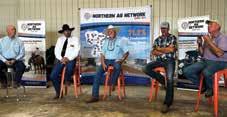
The Northern Ag Network held a For the Farmers event in Yellowstone and Stillwater Counties September 10 to thank farmers and ranchers for their hard work by bringing lunch, beverages and an entourage of sponsors (including MFBF) and supporters. Governor Greg Gianforte joined the group at the Kraft Farm west of Billings to participate in an agricultural producer roundtable. A producer panel discussed everything from low grain prices and labor to predator control, taxes, water and value-added agriculture. Following the tours and round table the group gathered for a social at the High Horse Saloon in Billings. NAN also held a For the Farmers in Hill County in August.
STEINBEISSER RANCH INDUCTED INTO MONTANA PRO-RODEO HALL AND WALL OF FAME
The Steinbeisser family of Sidney was inducted into the Montana Pro Rodeo Hall and Wall of Fame September 27, 2025. Joseph Steinbeisser came to the Sidney area from Germany in 1933 looking for a better life for his family. After traveling around the west working different jobs, Joseph and Mary started their Montana ranch in Richland County with 3,000 head of sheep. Today the diversified farm/ranch which includes cattle, a feedlot along with farming corn and soybeans, is run by Don (MFBF District 6 Director), James, Craig, Russell and Keith Steinbeisser and their families. The Steinbeissers are active in Richland County Farm Bureau and serve on Montana Farm Bureau committees. Congratulations to the Steinbeisser family and their legacy in farming and ranching. ◾
The Producer Roundtable with (left to right) Governor Greg Gianforte, MFBF Vice President Casey Mott, Monty Lesh, Courtney Herzog and Gary Broyles.
County News
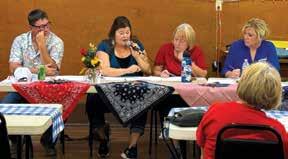
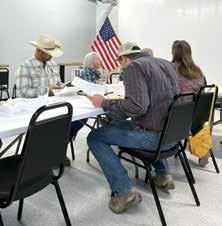
The Farm Bureau County annual meeting season was in full swing when the Fall Spokesman went to press. Look for more photos and information about county meetings on Montana Farm Bureau’s Facebook page.
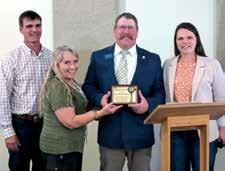
During the Cascade County meeting Representative Eric Tilleman received his Rookie of the Year MFBF Legislative Award.
Custer/Fallon County President Eric Moore discussed policy resolutions and shared information about the MFBF Fly-In in July to Washington, D.C. Members enjoyed the event hosted September 9 at Tongue River Winery in Miles City.
Yellowstone County’s Annual Meeting September 6 in Worden tied in with the Beef, Beets and Barley Community Celebration.
Board members Greg Gabel, Lindsay Harper, Jodie Drange and Teddi Vogel.
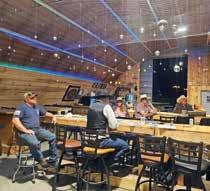
Carbon-Stillwater County met at the Palladium Draughthouse in Columbus for their annual meeting September 9 where they discussed water issues, selected voting delegates and elected a new president, Tyler Petersen.
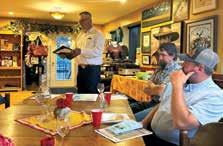
Long-time Fergus County member Earl Bricker shares his thoughts during the Fergus County Meeting September 16 at the Elk Pine Meadows in Lewistown.
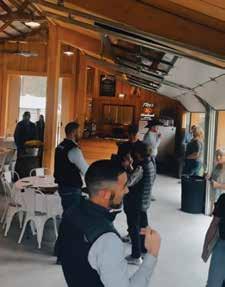
Brandon Braaten’s Barn in Stevensville provided a fantastic location for the well-attended Ravalli County meeting September 11.
Dawson/Wibaux County held their meeting September 16 at the 17 Club in Glendive where they received MFBF updates, elected voting delegates and worked on resolutions.
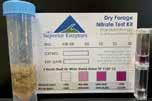
NECi’s nitrate test kits are reliable, accurate, and safe
NECi’s nitrate test kits are reliable, accurate, and safe
Test it yourself - on site or at home or of fice
NECi’s nitrate test kits are reliable, accurate, and safe.
Test it yourself - on site or at home or of fice
All you need is distilled water and a blender Hay or green forage kits available Only $7/s It’s biotechnologypeople can USE.
All you need is distilled water and a blender
Hay or green forage kits available Only $7/sample! It’s biotechnologypeople can USE
Want digital data?
NECi’s nitrate test kits are reliable, acc and safe
Want digital data?
Check out the photometer and app developed by our partner GaiaXus.com
Test it yourself - on site or at home or of fice.
Addatestingservice!
Test it yourself - on site or at home or office. All you need is distilled water and a blender. Hay or green forage kits available. Only $7/sample! It’sbiotechnologypeoplecanUSE.
Want the Spokesman at Your Fingertips?
All you need is distilled water and a blender. Hay or green forage kits available Only $7/sample! It’s biotechnologypeople can USE
Check out the photometer and app developed by our partner GaiaXus.com Addatestingservice!
Want digital data?
Want digital data?
WGaiaXus.com testingservice!
Check out the photometer and app developed by our partner GaiaXus.com
Check out the photometer and app developed by our partner GaiaXus.com
ant to have the Spokesman at your fingertips? Sign up for the digital version of this awardwinning publication. First, access your website account. If you don’t have an account, visit mfbf.org, choose Log In → Create an Account, and follow the steps to set up your website account with your preferred email address. If you already have an account, simply log in.
Addatestingservice!
Addatestingservice!
Visit www.nitrate.com for more
217 Calumet St., Lake Linden, MI 49945 US
NECi: Powered by Picobots!
Next, select your preference. Go to My Account → Communication Preferences and choose whether you’d like the Spokesman delivered digitally or by mail. You can also update other communication preferences while you’re there.
Your website account also gives you access to the many benefits of being a Montana Farm Bureau member.
Montana Farm Bureau Annual Convention November 17-20, 2025, Hilton Garden Inn – Missoula American Farm Bureau Annual Convention January 9-14, 2026, Anaheim, California
MFBF Young Farmer & Rancher Leadership Conference January 23-25, 2026, Holiday Inn – Great Falls
MFBF Summer Conference June 15-17, 2026, Kalispell
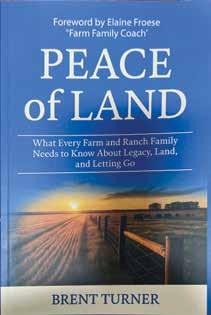
Peace of Land
Written by Brent Turner
REVIEWED BY REBECCA COLNAR , EDITOR, MFBF SPOKESMAN
If the title of the book doesn’t attract someone, the subtitle “What Every Farm and Ranch Family Needs to Know About Legacy, Land and Letting Go” will certainly draw the attention of many people in agriculture. Attend any agricultural organization’s conference and estate planning surfaces in key note speakers or workshops.
Brent Turner, who is a trained family enterprise advisor, financial planner and facilitator, penned this book after working with farm families. Not only does the book cover how to talk about money, fairness and offers a step-by-step system real families can use, but Turner has put together his knowledge in an easy-to-read novel. The fictional family of the Hartwells struggle with confusion and concerns about the ranch and their relationships which include son Jake who works on the ranch beside his father, Tom, and daughter Sarah who has a career in Denver. Big Mac MacAllister is an advocate who understands that successful agricultural succession requires more than legal documents and tax strategies.
“Wherever you see yourself in their story, I want you know that hope exists,” says Turner in his preface.
“While the Hartwells are fictional, their struggles and solutions are drawn from real families I’ve worked with over the years.”
The book is easy and compelling to read with its larger print and friendly typeface and spacing. The Hartwell family is likeable and realistic. I would have liked to see a few other scenarios, such as a family member who desires to be bought out of the ranch, or a new domineering spouse entering the family.
Communication remains key to making a family ranch thrive. Transitioning the ranch from one generation to the next must be done so everyone feels valued.
Turner has created a free resource for readers which is continually updated with newsletters, free checklists, planning templates and more. Visit www.peaceoflandbook.com for additional information.
“Because peace of land isn’t just about holding onto the soil, it’s about holding together what matters most.” ◾
THE POWER OF LOCAL
We know ag nancing like you know how to onboard new employees. For over a century we’ve supported the people who are the heart of ag. You deserve a financial partner who works as hard as you do.