Long summer days can lead to long work hours. When temperatures climb, fatigue and heat-related illnesses become serious concerns.
Heat stress can affect anyone, regardless of experience or physical condition. Symptoms such as dizziness, headaches, confusion, and dehydration should never be ignored.
Safety Tip: Stay hydrated throughout the day, take breaks when needed, and watch for signs of heat exhaustion in family members, employees, and neighbors. Sometimes the most productive decision is taking a short break before fatigue leads to a costly mistake.
A QUICK SUMMER SAFETY CHECKUP
Before the busy season gets into full swing, consider reviewing this simple checklist:
✓ Inspect fire extinguishers and emergency equipment
✓ Service tractors, haying equipment, and utility vehicles
✓ Review severe weather and wildfire plans
✓ Check livestock handling facilities for needed repairs
✓ Document buildings, equipment, and major assets with photos
✓ Address property hazards before visitors arrive
✓ Encourage safe work practices and adequate hydration
PROTECTING WHAT MATTERS MOST
For Montana farm and ranch families, summer is about more than work. It's about continuing a way of life built on dedication, resilience, and stewardship. While accidents and unexpected events can't always be prevented, many risks can be reduced through preparation, maintenance, and awareness.
This summer, take a few moments to review your operation, identify potential hazards, and make safety a priority. The investment of time today may help protect your family, your operation, and your future tomorrow. After all, the best claim is often the one you never have to file. ◾
Risk Assessment and Management
BY DANA JANSEN, DIRECTOR, MONTANA AG SAFETY PROGRAM
I’ve said it before and I will say it again – it isn’t “if”, but “when” and “how badly.” While there are ways we can minimize the frequency and severity of agriculture-related workplace incidents there isn’t a way we can completely eliminate the ever-present risks of this high- hazard industry.
You cannot manage what you cannot measure. When considering something like risk in the workplace, it can be difficult to manage because it is difficult to measure. To reduce the incidence of workplace injuries and disease, we must understand the hazards we face and their associated risk. A hazard is any thing or condition that may expose a person to a risk of injury or occupational disease. The risk is the probability that someone could be harmed as a result of the hazard. The hazard assessment process is relatively simple and can be applied to operations of any type or size.
1. Identify the hazard – There is no need for consultants or elaborate assessments; this starts simply with the acknowledgment of the hazards that are present. When we fail to see the hazards associated with the tasks we do every day, we set ourselves up for disaster. There are sample farm assessments readily available online, one of which being through Montana State Fund, that can help make the process more concrete.
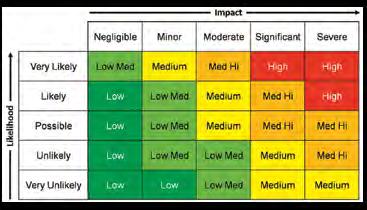
2. Assess the risk – Once the hazard has been identified, it is time to determine how much risk is associated with that hazard. This could mean a general assessment across your whole operation or an assessment of the risk associated with each task or job necessary to complete daily operations. Using a risk assessment matrix can be helpful in visualizing the severity of each hazard. Hazards that are unlikely to cause harm and will result in minor or negligible impacts are not considered as risky and can be managed easily, often through awareness. Hazards
that are very likely to cause harm and will result in severe impacts are considered much higher risk and demand immediate attention and more aggressive risk management strategies. It is important to note that each of us perceive risk differently. What one may consider high risk, others may consider “just another day at the office.” Ask for multiple opinions and take into consideration all possible outcomes for each hazard assessed.
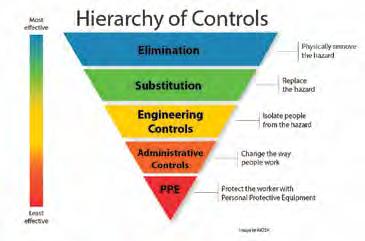
3. Control the hazard – The National Institute of Occupational Safety and Health’s Hierarchy of Controls provides an easy to visualize framework for how hazards are controlled. At the bottom of the hierarchy is Personal Protective Equipment because in many instances it is the least effective means by which to control the hazard, although sometimes it is the only control we may have. The most effective method of control is elimination of the hazard entirely. This is also the most impractical solution in many cases. In all reality, control of hazards likely employs strategies from more than one area of the hierarchy.
4. Monitor and review the control measures –Once you have chosen a control measure, you need to determine if it is working. Maybe the control measure essentially reduced the risk to a level where it is no longer of concern or maybe the control measure isn’t
adequately addressing the risk and there are improvements that can be made. Frequent check-ins can help assess ongoing risk and serve as an important touchpoint to ensure employees feel heard and that their concerns are being addressed. As mentioned, one of our greatest risk control strategies is simply awareness and acknowledgment of the hazards and their risk. There are tools and resources available for farmers and ranchers to facilitate these important discussions. While lengthy, formal training is effective, simple toolbox or tailgate talks have immense value. These are short, less formal meetings held before the work begins highlighting some of the most important considerations to keep in mind while completing the task. ◾
Resources Available:
◾ Montana Ag Safety Program www.mtagrisafety.com
Here you will find a collection of task-specific safety sheets, access to safety awareness signs, and links to helpful websites and virtual training.
◾ Montana State Fund www.safemt.com
Find workers’ compensation specific information, safety awareness material, and resources for things like safety committees and return to work programs.
◾ AgriSafe www.agrisafe.org
A one-stop shop for safety and health information for all things agriculture. Access free, online learning opportunities and connect with safety resources from across the US.
Agriculture Will Play a Major Role in Upcoming Corner Crossing Discussions
BY MORGAN KUNTZ-GARRISON
Corner crossing has long been a hot-button issue across many western states but a recent string of litigation stemming out of Wyoming has brought the corner crossing debate into sharper focuses.
Corner crossing comes into play when two opposite sections of public land touch two opposite sections of private land with the question being: if a person crosses from public land to public land over that point where all four sections meet- are they technically trespassing on the private land? Montana has long maintained that yes, corner crossing is in fact a form of trespassing and is therefore punishable.
Like many western states, Montana has “checkerboarded” private and public lands. In fact, a 2022 OnX analysis of the subject found that Montana has 871,000 acres of “corner locked” public lands. While that number certainly seems impressive by itself, it is much less so when compared to a state like Wyoming that has 2.44 million acres of corner locked public land. All told, the OnX report highlighted there are 8.3 million acres of corner locked public land across the West.
This is to say, the issue is not insignificant but to fully understand why corner crossing is upheld as trespassing in Montana, it is imperative to first become familiar with private property rights.
When a person purchases a piece of property, it is important to note they own more than just the physical land. Within private property rights is a principle that has come to be known as the “heaven to hell doctrine” which maintains that ownership of a tract of land also includes the air above and the depths below. When first applied, the “heaven to hell doctrine” was thought to be infinite in either direction but that idea was of course massaged some in the mid-20th century when airplanes
became more prevalent. As a general rule, the “heaven” part of private property ownership now applies up to 500 feet of airspace.
Continuing, private property ownership comes with what is best described as a “bundle” of rights. Owning a tract of land means the owner has the RIGHT to possess their property, the RIGHT to use the land however they want, the RIGHT to exclude other people from their land and the RIGHT to sell or transfer the property whenever they want.
Laying these facts out it becomes clearer as to why corner crossing is such a fiercely debated topic. It is impossible to cross from public land to public land without transecting the airspace of the private land and by doing so without permission is a clear violation of a property owner’s right to exclude.
“For us, it is really about protecting private property rights and making sure we are really conscious because any small erosion of private property rights should be a concern to all of us,” said Karli Johnson, director of State Governmental Affairs for the Montana Farm Bureau Federation (MFBF). Based on policy written by its membership, MFBF is an organization that is opposed to corner crossing as a form of legal access in Montana.
The flip side of that same coin, however, is the fact that public lands are just that-open to the public and that is a principle also worth protecting. The issue of corner crossing came to a head in 2022 when pharmaceutical mogul, Fred Eshelman filed civil and criminal trespassing charges against four hunters from Missouri who corner-crossed his private property by deploying a collapsible ladder over the top of a corner section marker. The lawsuits volleyed through
Corner crossing is becoming an increasingly debated topic across the west following a 10th Circuit Court of Appeals decision to effectively legalize it within that jurisdiction.
the courts before landing in the 10th Circuit Court of Appeals where it was ultimately decided the hunters could not be charged with trespassing because they never physically touched Eshelman’s land.
The Appellant court’s decision rang across the West because it set the precedent that trespassing involved physical contact with land, not just airspace. While the ruling legalizes corner crossing in the states within the 10th Circuit (Oklahoma, Kansas, New Mexico, Colorado, Wyoming and Utah), the issue remains complicated. Wyoming’s state legislature recently killed a bill set to codify corner crossing legalization into law, effectively kicking corner crossing back into the murky legal grey area in which it has resided for decades.
What does all that actually mean for a state like Montana? Well, it is of course complicated as well. It has been nearly a decade since corner crossing legislation has been presented in Montana, but one Senator and one Representative have already promised to present bills in the state’s upcoming 2027 session. A bill would certainly bring clarity to corner crossing, but can definition really be brought to something so ambiguous? And at what cost-both literally and figuratively?
Presently, Montana has worked to toe the line between protecting private property rights and ensuring access to public lands with incentive-based programs like Block Management and Public Access Land Agreements (PALA) that encourage private landowners to allow easements across corners. Montana has more acres enrolled in these programs than any other state, with a total of 6.9 million acres, over doubling the acres enrolled in Wyoming, the second highest state. Johnson articulated that MFBF believes the solution to corner crossing lies in bolstering these already existing programs.
“We recognize that public access is a big issue as our population grows but we also recognize that protecting private property rights is a value in Montana. We want to find a way we can do both. We support improving the incentive programs that are out there for landowners that want to utilize those, but we can also make sure that we are respecting the people that don’t,” she stated.
The discussion of corner crossing may go deeper than the black and white issue of trespassing. Private Property rights are fundamental and constitutionally protected and perhaps the bigger question is whether or not legalizing corner crossing undercuts those principles.
Demographics within western states like Montana
are changing and the change is fueling passionate discussions about public lands, private land management and access to the beloved landscape. Agriculturalists will no doubt play an important role in upcoming corner crossing discussions and Johnson emphasized just how pivotal those conversations will be.
“I think Montana is in a really interesting place right now where we are growing and changing but we want to make sure we preserve who we are and what our value set is. That is why it is so important for agriculture to have a seat at the table because we are the largest industry in the state and we are a huge part of Montana’s culture and character. Making sure we can preserve agriculture and private property rights as we move forward as a state is critical to preserving the Montana that we know and love,” she concluded. ◾
Editor’s note: Since this article was written, Backcountry Hunters & Anglers has filed a lawsuit against Montana Fish, Wildlife & Parks challenging the state’s enforcement of corner crossing as trespass.
Grassroots Policy and Economic Outlook Take Center Stage at Montana Farm Bureau Summer Conference
More than 170 members and guests of the Montana Farm Bureau Federation (MFBF) gathered for the organization’s annual Summer Conference, held June 15–17 in Kalispell. Serving as a critical component of MFBF’s grassroots policy development process, the summer committee meetings provided a vital forum to discuss pressing issues facing agriculture, including the 2026 Farm Bill, trade and labor challenges, and the broader economic outlook.
The event kicked off early Monday with the Young Farmers & Ranchers (YF&R) tour and committee meetings. (See page 26 for more details.)
Monday included an all-day program for the MFBF ACE Leadership seminar which focused on coalition building and rural communities. The group heard from Chris King of Winnett Aces and Tash Williams of USDA Rural Development. In addition, the Women’s Leadership Committee held their meeting where they discussed the application for a Montana Woman Farmer/Rancher of the Year Award as part of the continued celebration of the International Year of the Woman Farmer. The winner will be announced at the Montana Farm Bureau Convention in November. The women also discussed plans to continue their support of the two Ronald McDonald Houses in Montana.
With the agricultural economy top-of-mind for attendees, Dr. John Newton, Vice President of Public Policy and Economic Analysis for the American Farm Bureau Federation, provided a keynote economic outlook. Newton noted that while record-high cattle prices continue to support livestock producers, crop farmers face a deepening downturn. He acknowledged that high input costs remain a significant burden, specifically
pointing to spiking fertilizer costs driven by geopolitical tensions and the closure of the Strait of Hormuz.
“We’re seeing high interest rates, our losses for crops are deepening, and this is making it very hard, especially for beginning farmers,” Newton said. He emphasized that while farmers appreciate government safety nets, sustainable recovery requires expanded trade markets and renewed trade agreements. We also need to see a new farm bill and look forward to seeing that marked up in the Senate Agriculture Committee.”
Throughout the conference, MFBF advisory committees tackled a wide range of critical topics, including the surveillance and eradication of the New World Screwworm, public land grazing updates, conservation strategies to reduce conifer encroachment, equine health, and labor supply. Committees also voiced formal opposition to the proposed Union Pacific/Norfolk Southern railroad merger.
Beyond policy development, attendees participated in highly successful fundraising events for the Montana Farm Bureau Foundation, which supports agricultural education and youth leadership development. More than $19,000 was raised for the MFB Foundation between the Blue Jean Ball district basket auction/ games and the Foundation Golf Scramble at the Buffalo Hill Golf Club.
The conference concluded Wednesday with agricultural tours of the Flathead Valley, featuring Farm to Market Pork, Kalispell Kreamery, and Longview Lavender Farm, giving members a firsthand look at the success and innovation of local farming operations in the region. ◾
The "ag team" of Sky Anderson, Monica Switzer, Nicole Rolf and Walt Anseth.
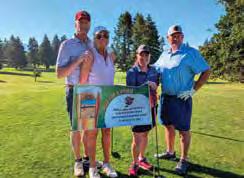
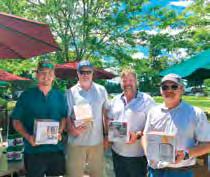
Ian Plutt, Jess Bandel, Michael Stuart, and JM Peck had a great time on the links.
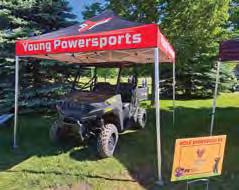
Polaris supported the Foundation with a spot at the Golf Scramble.
people
Cascade
ACE
meetings
Former
Northern
District 8 Director Ed Bandel talks with state Representative Russ Miner.
County President Merrill McKamey asks about current economics during American Farm Bureau's Dr. John Newton presentation.
Hertha Lund, Lund Law, visits with Mary Hill.
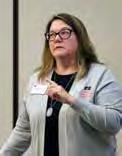
Speaker Karen McNenny shares thoughts about leadership with Cady Brown and Doreen Gillespie.
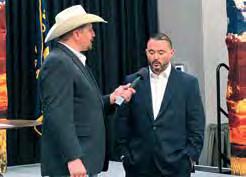
Ag Network's Andy Schwab interviews AFBF's Dr. John Newton about the farm bill.
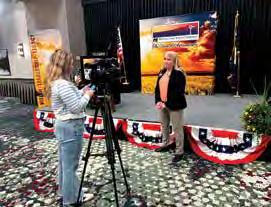
Kenzie Valenteen, SBGTV Kalispell, interviews MFBF President Cyndi Johnson.
AFBF's Shelby Hagenauer covers public lands grazing rules.
AFBF's R.J. Layher covers the opposition to the UP/NS railroad merger in the Farm & Trade Committee Meeting.
Park County President Nick Jerke and past president Garrett Hamm.
District 2 Director J.M. Peck talks about the Big Hole Watershed Group.
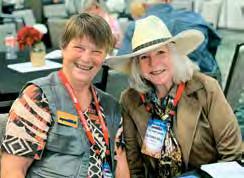
District 1 Director Dr. Beth Blevins and Glenna Bell Orman.
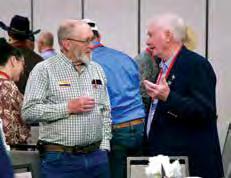
MFBF Executive John Youngberg and Stan Olson.
class participants Vern Hankins and Amber Elliott watch Christopher Gartner share ideas for the Real Colors Personality Test.
Peter Taylor, Lund Law, and Senator Butch Gillespie.
Dillon rancher Jim Hagenbarth in the Public & Private Lands Committee meeting.
tours
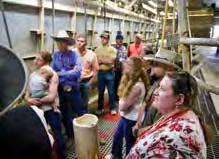
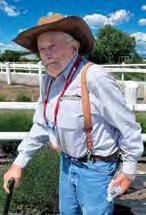
Jules Marchesseault and his wife, Bonnie, have been MFBF members for more than 60 years. Checking out the milking parlor at Kalispell Kreamery.
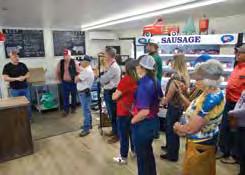
Learning about running a meat shop at Farm to Market Pork and Beef.
Logan Braaten with a seven week old piglet.
The tour
the MFBF Summer Conference sponsors:
AgWest Farm Credit
BNSF Railway
Dakota Access Pipeline
Southwest Counties Farm Bureau
Fergus County Farm Bureau
Torgerson's Equipment
Trapper Creek Ranch
Stoner’s Stables
Polaris/Young Powersports
MT Pulse Crop Committee
MT Livestock Ag Credit Bank of the Rockies
MT Ag Safety Program
Western Ag Network
Edward Jones, Kris Kumlien
Lower Valley Processing
JC Sealcoating
CHS Inc.
Equine Align
Flathead Electric Co-op
Mountain West Farm Bureau Mutual Insurance Company
Interbel Telephone Cooperative
Blue Jean Ball
Shaylee Wahl enjoying the Heads & Tails game.
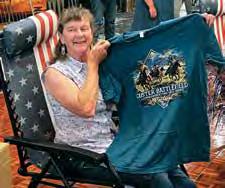
Big Horn County secretary Gina Stevens shows a patriotic T-shirt from the District 4 basket.
New District 4 Director Greg Gabel sporting the blue jean look.
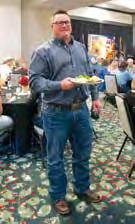
Klayton Lohr dressed the part and generously supported the Foundation Fundraiser.
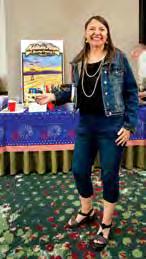
Paula Steinbeisser gets in the spirit of "denim and pearls."
at the Longview Lavender Farm .
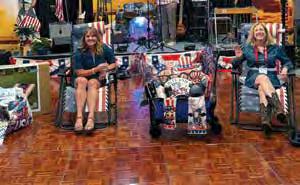
MFBF staff Nicole Rolf and Rebecca Colnar show off District 4's exceptionally large and patriotic "basket."
Teaming Up To Support Montana Farms and Communities
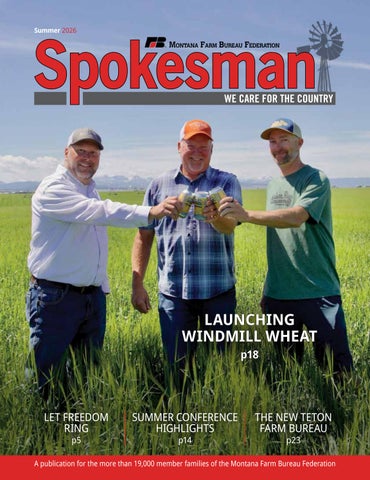
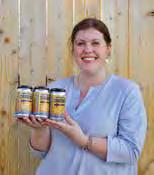
Montana Farm Bureau’s Windmill Wheat officially launched June 16 during the organization’s Summer Conference in Kalispell. Brewed by Madison River Brewery in Belgrade, the Hefeweizen is a traditional wheat beer. An earlier naming contest found Taylor Standley’s “Windmill Wheat” being selected as the official moniker.
The launch during the MFB Foundation Fundraiser “Blue Jean Ball” raised money for the foundation with members receiving a can of Windmill Wheat wrapped in a specially designed koozie.
Montana Farm Bureau urges beer-enjoying members to encourage bars, restaurants and convenience stores to talk to their beer distributor to carry Windmill Wheat.
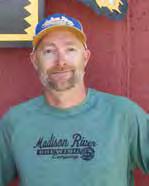
Spokesman Editor Rebecca Colnar had the opportunity to visit with Madison River Brewery’s John Acheson about the connection with Farm Bureau and the beer making process.
Q: How did this partnership between Madison River Brewing and the Montana Farm Bureau Foundation first come about? Who approached whom, and what made it feel like a natural fit?
Acheson: Scott Kulbeck and I go back many years. I used to coach against him back when his son, Aidan, was playing baseball, and we served together on the
Belgrade youth baseball board. We developed a great friendship through that. One day, Scott approached me and asked, "What do you think about doing a partnership?"
I told him it sounded great. At Madison River Brewing, we are strictly pro-local and pro-Montana—if we can get an ingredient from Montana, we do. I brought the idea back to our brewers and the other owners—there are three families involved in the brewery—and said, "Let’s get this going." It has felt like a perfect match from the start.
Q: Agriculture and craft brewing are deeply connected. What shared values do you think this collaboration highlights between Montana’s farmers and ranchers and local craft brewers?
Acheson: The Montana Farm Bureau is all about supporting Montana, and so are we. We try to source everything we can right here. This state is where we were born and raised, so we want our products to reflect that. Montana has incredible people, but it also produces phenomenal wheat and grain. When you combine those two things, you get a stellar product.
Diving into wheat beer was particularly cool because it’s not our typical niche. Our brewers knew it would be a challenge, and honestly, it has been challenging. But it’s a starting point that allows our brewers to grow and expand their horizons and their craft. Scott has been fantastic throughout this process; he just wants a great product that gets the MFBF name out there, whether it’s in a can or on tap. We want to develop a truly exceptional Hefeweizen. My wife loves being involved in the work, too, and she designed the label.
Q: Why was it important for Madison River Brewing to put the MFBF label on this beer? What message do you hope it sends to consumers about where their food—and drink—comes from?
Acheson: A lot of consumers genuinely don't know where their food and beverages come from. In all my years in business, I’ve learned that local is honestly the best way to go. It’s about a shared community effect— local people helping each other out to create the best possible product. We want to send a clear message: Support your local agriculture. When you understand that we live in an agricultural state, you realize that buying local goes a long way toward ensuring freshness and quality. Local folks take pride in what they do, and that means the consumer gets the very best.
Sweet Grass County Member Taylor Standley won the beer naming contest.
John Acheson, co-owner of Madison River Brewing
ACE Class Shares Thoughts On Program
The ACE Leadership Program is in its ninth year of empowering Farm Bureau members to become confident and effective leaders in their local communities, for Montana agriculture and for their county Farm Bureaus. The program provides its participants with skills to communicate industry issues and represent Farm Bureau interests at the local, state and national level. ACE successfully does this by focusing on leadership development, engaging local communities and issues advocacy.
ACE participants were asked what they do, their favorite speaker or session so far and how they plan to use their ACE training to help their communities. Look for the five other class members comments in the 2026 Fall Spokesman.
CATHERINE MCNEIL
HELENA – LEWIS & CLARK COUNTY FARM BUREAU
I work as a realtor and own a berry orchard where I grow haskaps (also known as honeyberries), dwarf sour cherries, saskatoons, currants, raspberries and some apples.
I really connected with Bruce Vincent’s message. Growing up on a cattle ranch in Idaho, where we ran cattle in the hills during the summer, I remember the intense conflict between cattle and sheep ranchers over scarce grazing land and water. I deeply appreciated how Bruce spoke about the friction between loggers and other groups. He is working hard to reframe that mindset—moving away from constant conflict and toward finding ways everyone can work together to achieve the same end goal.” I wish more of the world was able to work that way!
The trainings have been incredible and the speakers are absolutely wonderful. This program hasn’t just
given me the encouragement to make meaningful changes; it has given me the confidence to actually follow through on them—even though I’m still a work in progress.
WYATT ULLERY
DILLON – SOUTHWEST COUNTIES FARM BUREAU
I work for an independent ag retailer, Lakeland Feed & Supply, managing daily operations. I also have a small hobby farm with a few cows and horses.
I am incredibly grateful for the opportunity to hear Bruce Vincent speak and to tour one of their logging sites. Both Bruce and his son, Chaz, possess an incredible passion for what they do, and they have an amazing ability to find common ground and work constructively with those who oppose their industry.
ACE has been a fantastic program so far. The knowledge and skills I have obtained so far are invaluable. I believe I have grown as a leader through this program in my work, my community and being a more active member within the Farm Bureau.
SHAYLEE WAHL
CIRCLE
– MCCONE COUNTY FARM BUREAU
I work for Great Northern Development Corporation in the Food and Ag Development Center, where I help agriculture and food businesses work through the challenges and opportunities that come with growing, marketing, and sustaining their operations. Agriculture is also
personal to me — I grew up watching my family build their cow/calf and registered Red Angus ranch, and my husband and I are working toward growing our own operation someday.
The speaker I got the most out of was Michele Payn and her session on translating farm to food. Her message really stuck with me because she challenged us to think about how we communicate in agriculture, recognize our own biases, and do a better job telling our stories and explaining our “why” instead of fighting within our own industry.
ACE has given me more confidence to communicate, listen, and advocate for agriculture, and it reminded me that if farmers and ranchers do not tell our
own story, someone else will — often without understanding the work, care, and sacrifice behind it. In my job, community, and county Farm Bureau, I want to use this training to help producers share their “why” and make sure the narrative around
ACE challenged us to think about how we communicate in agriculture, recognize our own biases, and do a better job telling our stories.
From Broadcasters to Mechanics: ACE Project Brings Ag Careers to Life
Andy Schwab’s Montana Farm Bureau ACE (Advocate. Communicate. Educate.) project focused on bridging the gap between high school students and viable future careers. By partnering with Reach Higher Montana, Schwab helped expand the agricultural footprint of the organization's third annual Career Quest and Construction Day, creating a robust hands-on experience for nearly 500 students.
The event, held April 21, 2026, in Harlowton offered four career tracks: agriculture, contracting, human services and industry. Schwab focused his leadership project entirely on the educational portion.
“With the average age of farmers and ranchers being nearly 60, there are going to be a lot of folks retiring, and we need to educate the next generation,” Schwab said.
He first discovered the event after attending a "Dig Day" in Harlowton, sponsored by the Montana Contractors Association.
“MCA’s idea was to get kids interested in contracting, and I realized it would be great to add agriculture to the mix,” Schwab said. “So I reached out to them, and they were thrilled.”
The expanded agricultural track featured interactive stations, including Crazy Mountain Veterinary, where students watched a calf-pulling demonstration using "Stella," a fiberglass cow. Attendees also practiced chainsaw cutting with Montana Loggers, analyzed soil samples with the local soil conservation district, learned basic maintenance from Running R Equipment, and participated in mock interviews and radio broadcasts with the Northern Ag Network.
“We had planned for 300 to 400 kids to show up, but the official number that day came in at 498, which was phenomenal,” Schwab said. “Thanks to support from the Montana Farm Bureau, we were able to feed those kids burgers from the Producer Partnership for lunch.”
The two-day event kicked off with a family night April 20 for elementary and middle school students, allowing parents to watch their children operate miniexcavators, cut tree coasters, scale a National Guard rock wall, and stamp leather with a local saddle maker. Local emergency services also joined the fun, featuring a fire department hose demonstration and a taser demonstration by the local sheriff's department.
“They appreciated the hands-on learning opportunities, and in particular our Northern Ag Network booth,” Schwab said. “It was one of those steps that says ag needs farm broadcasters, just like it says ag needs someone to change oil in a tractor and ag needs someone to check soils.”
"Schwab plans to help Reach Higher Montana next year with the annual Career Quest and Construction Day and would love to have additional ag businesses join in to help the future workforce understand how many different roles are available in agriculture.
agriculture is shaped by the people living it, not by assumptions that could affect our livelihoods and way of life.
TRAVIS STUBER
MANHATTAN – GALLATIN COUNTY FARM BUREAU
I am a seed potato farmer using regenerative farming practices.
I was impacted most by the leadership training by Sarah Bohnenkamp. I was able to learn how to use my strengths and which weaker areas needed attention. This has helped me to see where I can best apply my skills both on and off the farm.
I have been able to take the skills I have learned as I manage my farm duties, in my church community, while coaching high school basketball, and in marketing our regenerative seed potatoes. I am gaining confidence to step into more leadership roles.
MIKAYLA CONNELLY
HELENA – LEWIS & CLARK COUNTY FARM BUREAU
I’m originally from Valier Montana but reside in Helena now. I am the social media manager for Montana Fish, Wildlife & Parks and assist my family’s registered Black Angus ranch, Connelly Angus, with marketing.
I have enjoyed all of our instruction on media and interviewing preparation as I can apply it to my career and advocating for agriculture in general. I also have gained a lot of knowledge on how to play to my strengths and develop my skills based on our personality and values evaluations.
My ACE training will help me continue to improve my skills in my career and allow me to pursue my marketing passions by helping other people in agriculture market their products and advocate for agriculture.
To learn more about the ACE Program, visit: https://mfbf.org/a-c-e ◾
ACE Participants Turn Media Training into Real-World Advocacy
ACE class members have already had the opportunity to use their media training learned at presentations in May.
Amber Elliott is not only a 2026 ACE class participant but was interviewed by Hannah Pedeferri regarding the second annual Intermountain & Beyond the Beartooth Livestock Judging Camp, where participants of all ages and skill levels built practical knowledge in livestock judging through hands-on experience.
The television story noted, “The camp was brought to Red Lodge by Amber Elliott, agriculture and 4-H extension agent in Carbon County, who saw a gap in accessible opportunities for local youth. Elliott noted that the closest camp was down either in Utah or down in Casper. It's really hard for families to justify that kind of travel and that kind of expense. So, she brought the camp to them.”
Elliott plans to stay in contact with the reporter to teach her more about agriculture and share pertinent information and contacts.
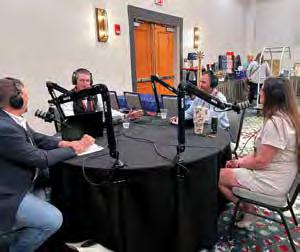
Travis Stuber and Shaylee Wahl were featured on the Northern Ag Network Podcast “Next Year Country” with Andy Schwab (2025 ACE class graduate) and broadcaster Colter Brown. They discussed how the ACE program is developing the next generation of agricultural leaders and how they can make a difference in their operations, communities, and the industry as a whole.
New Farm Bureau Formed in Teton County
Montana has a new county Farm Bureau. The MFBF board of directors voted to accept Teton Farm Bureau’s application for membership during their June meeting. Teton is the thirtieth county Farm Bureau in the Montana Farm Bureau. Although their original registration dates to 1919, Teton had previously been a part of Front Range Farm Bureau which includes Glacier, Toole, and Pondera counties. An enthusiastic group of volunteers met in March, adopted by-laws, and elected a temporary Board of Directors. They are looking forward to hitting the ground running and bringing a local flare to the good work county Farm Bureaus do.
“By taking advantage of Teton County's tight geography, we can bring in new members and get more people involved,” Shick said. “We have a tremendous amount of enthusiasm to get this new chapter off the ground, and we look forward to working with surrounding counties to tackle regional policy issues.”
Teton Farm Bureau is excited to support the local area by providing agricultural education for students, learning
opportunities for farmers and ranchers, and direct connections with elected officials. All of these initiatives align with Montana Farm Bureau's vision of fostering thriving rural communities and a prosperous agricultural economy in Teton County.
For more information on the Teton Farm Bureau or to get involved, please contact Cody Shick at 406-697-3838 or MFBF Regional Manager Karli Johnson at 406-868-1233. ◾
(Left) Teton Farm Bureau plans to continue hosting the annual pasture to plate field trip. In the photo, Tryg Brosten explains his family’s feeding operation to 4th grade students.
(Right) Cody Shick talks to the MFBF Board of Directors about the newly formed Teton Farm Bureau.
Strengthening Voices from Montana to Washington, D.C.
BY HEIDI BREWER, CHAIR, MFBF WOMEN’S LEADERSHIP COMMITTEE
The Montana Farm Bureau Women’s Leadership program champions agriculture through educational programming, leadership development, and industry advocacy.
County committees across the state have had a busy spring. Members have conducted agriculture safety programs for school-age children, judged Ag in Color contest entries, reviewed scholarship applications, and provided vital donations to the Ronald McDonald Houses in Billings and Missoula.
Earlier this year, members from both the Women’s Leadership and the Promotion and Engagement committees participated in the inaugural DUAL (Developing Unity through Agricultural Leadership) joint training. This powerful, hands-on session brought both groups together to build collaboration and strengthen their collective impact as agricultural leaders.
A GLOBAL VOICE IN WASHINGTON, D.C.
Six women represented Montana at the 2026
International Year of the Woman Farmer ACE (Advocate, Cultivate, Empower) Summit in Washington, D.C. This global celebration coincided perfectly with the 250th anniversary of the United States.
Approximately 500 women from 46 states and four countries gathered to network and build a global voice for agriculture. It is a vital conversation, considering women farmers and ranchers are responsible for half of the world's food production. Because consumers highly respect farmers and want to know where their food comes from, this summit provided a crucial platform.
While in the nation's capital, the Montana delegation met with the state's congressional delegation to advocate on several key issues. Discussions focused on the critical importance of passing a comprehensive farm bill, the potential supply chain impacts of the proposed railroad merger, the necessity of modernizing the Endangered Species Act and securing support for the Veterinary Medicine Loan Repayment Program Enhancement Act to help bring large-animal veterinarians back to rural communities.
To review broader insights into our industry, the American Farm Bureau recently led a nationwide Women in Agriculture study, gathering more than 4,300 responses. A summary of those findings is available online at fb.org
LOOKING AHEAD TO 2027
The Women’s Leadership Committee recently met during the Montana Farm Bureau Summer Conference
in Kalispell to map out objectives for the remainder of 2026 and into 2027. Future initiatives include:
◾ Inaugurating a new award to recognize an outstanding Montana woman in agriculture at the MFB Annual Convention in November.
◾ Expanding support for Montana’s Ronald McDonald Houses.
◾ Hosting a joint training session with the Promotion and Engagement and the Young Farmers & Ranchers committees.
◾ Planning a legislative visit to the state Capitol during the upcoming session.
◾ Encouraging members to attend American Farm Bureau national conferences.
Together, we will continue to gain the skills necessary to strengthen women’s voices and bolster
leadership across our agricultural community.. For more information about the WLC, please contact Heidi Brewer at Hbrewer4026@icloud.com
Montana Farm Bureau members at the Russell Senate Office Building in Washington, D.C. Front Row: Montana Farm Bureau Women’s Leadership Committee Chair Heidi Brewer, Jeanne McKamey, Karen Allen. Back Row: Kathy Teter, Colleen Gustafson, MFBF President Cyndi Johnson, Greta Gustafson and MFBF WLC Coordinator Alena Standley.
TOURS, PLANS AND A NEW CHAIR
On the first day of the Montana Farm Bureau Summer Conference in Kalispell, the Young Farmers and Ranchers Committee finalized plans for their “Ask a Farmer. Feed a Family.” event. This community initiative, led jointly by the MFBF YF&R and Promotion & Engagement (P&E) Committees, connects consumers directly with local farmers and ranchers while addressing regional food insecurity. Through food donations, educational outreach, and open conversations about modern agriculture, the program encourages community members to learn where their food comes from while supporting local families in need through food bank partnerships.
In addition, the committee elected Lauren Kett as the new YF&R chair. Kett is co-owner of the Spur Line, a feed and farm supply store in Livingston. (See the Fall 2025 Spokesman for more information on Lauren.)
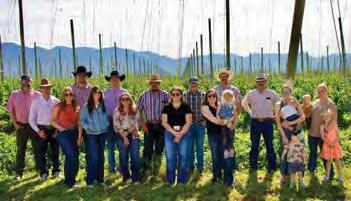
The YF&R Tour showcased local agricultural diversity with stops at Heritage Custom Farming, Flathead Valley Hops, Chuck’s Cherries, and Spotted Bear Vineyards and Lavender Farm.
POLARIS DONATES A RANGER® TO THE YOUNG FARMERS & RANCHERS PROGRAM
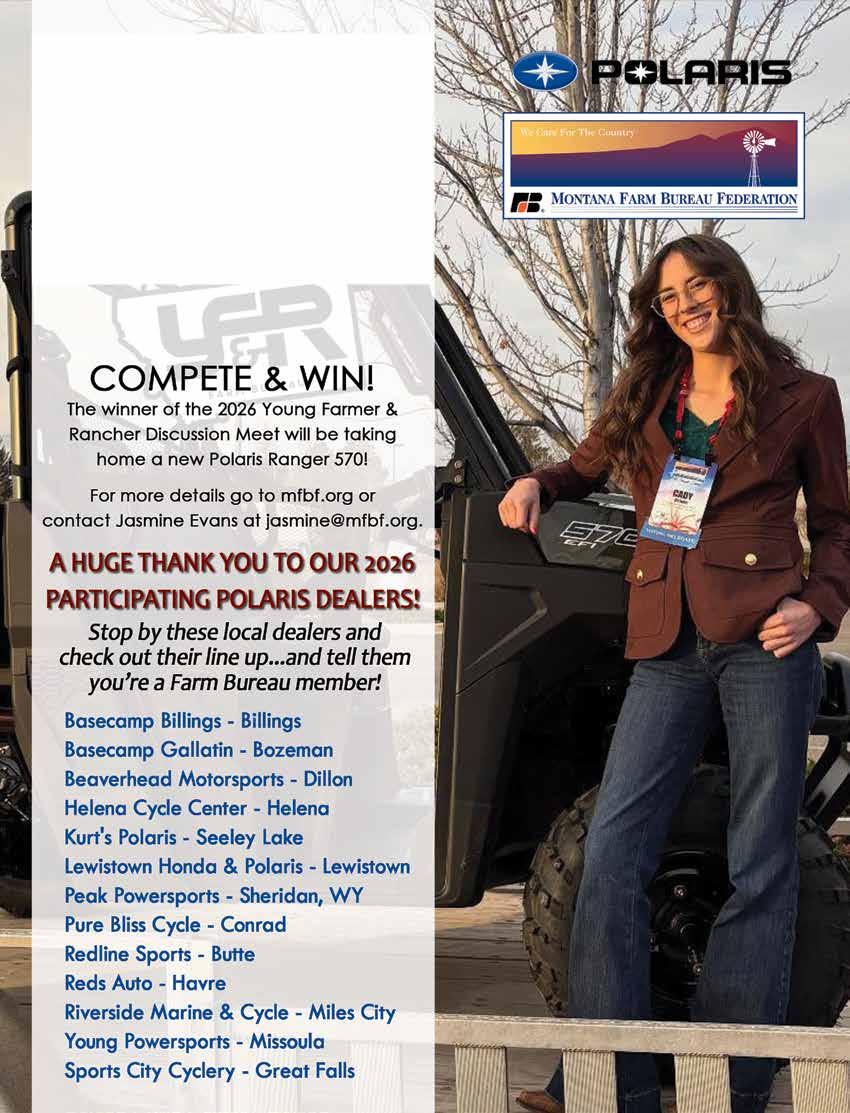
Selected Montana Polaris dealers will sponsor the YF&R Discussion Meet for the 12th year, awarding a Ranger® 570 Side by Side to the winner of the competition. The Discussion Meet will be held during the Montana Farm Bureau Annual Convention
November 15-18, 2026, in Billings.
The Discussion Meet contest is designed to simulate a committee meeting where discussion and active participation are expected from each participant. This competition is evaluated on an exchange of ideas and information on a pre-determined topic and is an excellent way for young people to learn more about agricultural issues.
Last November, then-UM-Western senior and Southwest Counties Farm Bureau Women’s Leadership Committee member Cady Brown won the MFBF YF&R Discussion Meet and took home a Polaris Ranger.
“Having the support of such an influential company such as Polaris shows their support of young agriculturists and the industry as a whole,” Brown said. “The donated Polaris sets up young agriculturists for their future. No matter what commodity you have, a Polaris is a vital tool to have on the farm/ranch, and because of Polaris's donation, that's a tool that can be obtained without the financial burden.”
Since winning the UTV, Brown said she’s been, “zipping around my family's property, spraying weeds, checking fences, and enjoying the lovely Montana weather.”
“Polaris and the sponsoring dealers of Montana and Wyoming are again proud to continue this partnership into its 12th year,” said Polaris District Retail Manager Kyle Hoover. “It’s great to be a part of supporting the Young Farmer and Rancher program and the greater Farm Bureau family.”
Not only will the winner of the Montana YF&R Discussion Meet receive a Polaris Ranger 570, but they will also earn an expense-paid trip to participate in the national Discussion Meet in January 2027 in Charlotte, North Carolina.
For more information on the MFBF YF&R Committee, the YF&R Discussion Meet and more, visit mfbf.org or contact Jasmine Evans, jasmine@mfbf.org ◾
Thanks to these participating Polaris dealers for supporting our Young Farmers and Ranchers: Beaverhead Motorsports – Dillon; Pure Bliss Cycle –Conrad; Basecamp Gallatin – Bozeman; Basecamp Billings – Billings; Helena Cycle Center – Helena; Kurt’s Polaris – Seeley Lake; Lewistown Honda & Polaris - Lewistown; Redline Sports, Inc – Butte; Riverside Marine & Cycle – Miles City; Young Powersports – Missoula; Sports City Cyclery –Great Falls; Peak Powersports - Sheridan, Wyoming.
Young Farmers & Ranchers on a tour at Flathead Valley Hops.
Newly elected YF&R Chair Lauren Kett.
County News
Dawson-Wibaux County held their summer picnic June 7 at Jaycee West Park in Glendive.
Northwest Counties sponsored a spot at the Ronan Brewfest June 20 where they showcased MFBF Windmill Wheat Hefeweizen. Pictured are NW President Buddy Cheff, Natalie O’Halloran and Megan Callahan.
Richland County held their summer picnic June 24 in Quillings Park in Sidney in addition to an ATV Safety demonstration for the Boys & Girls Club.
Yellowstone County sponsored a Farm Bureau Day at the June 29 Billings Mustangs Baseball Game in Dehler Park. The event saw more than 87 Farm Bureau members enjoying free tickets and receiving Farm Bureau swag. Mountain West Farm Bureau agent Mike Leisy gave away two soft-sided coolers. Wyatt Johannes, son of Cheri and board member Clint Johannes, threw the first pitch. Wyatt also was the YCFB Scholarship winner and is vice president of the state FFA. County president Jodie Drange noted that people enjoyed learning about farming and ranching and “milking” the fake cow and “shearing” the fake sheep.
Chouteau County held their community breakfast in front of the Farm Bureau Office during the Fort Benton Summer Celebration June 27 in Fort Benton. County members served up flapjacks and sausages to more than 300 people.
Valley County helped host a Father’s Day picnic at Genevieve Hall in Hinsdale.
Powder River-Carter County has a membership extravaganza planned for August 2.
Ask a Farmer. Feed a Family
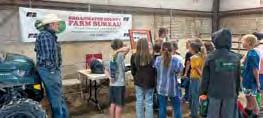
Broadwater County hosted an ATV Safety Station at their local farm fair on May 29. School kids ranging from 1st to 5th grade spent the day learning the importance of using ATVs safely and properly with real world examples from the experienced leaders in Broadwater County.
Lewis & Clark County is hosting a summer picnic with berry picking June 30 at Apple Bar Orchard in Helena.
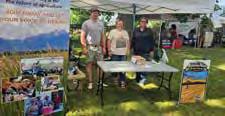
The Montana Farm Bureau Federation (MFBF) Young Farmers & Ranchers (YF&R) Committee, in partnership with the Promotion & Engagement (P&E) Committee, is launching Ask a Farmer. Feed a Family, a new statewide initiative aimed at connecting consumers with Montana farmers and ranchers while stocking the shelves of local food pantries during the summer months, when demand is often highest. Shoppers will have the opportunity to meet real farmers and ranchers, ask questions about agriculture, and donate food items to support local families in need. From June through August, all 10 Montana Farm Bureau districts will host events at local grocery stores across the state. The campaign will feature a statewide raffle fundraiser benefiting the Montana Food Bank Network. Only 500 raffle tickets will be sold for a chance to win a $500 Scheels gift card. Tickets are $10 each or three for $20 and may be purchased at Ask a Farmer. Feed a Family events or from your local district YF&R Committee member. Keep an eye out for an Ask a Farmer. Feed a Family event in your area this summer. For more information contact Jasmine Evans, jasmine@mfbf.org.
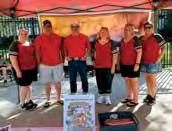
(Left) Yellowstone County’s hardworking crew: Rikki Swant, Greg Gabel, Clint Johannes, Jodie Drange, Teddi Vogel and Lindsey Harper. (Right) Sawyer Swant and the Mustang mascot.
Congratulations scholarship recipients!
The Montana Farm Bureau Federation and the Montana Farm Bureau Foundation presented continuing education scholarships to six deserving students across the state. This year, funding increased for the Future of Agriculture Honor Scholarship and the Collegiate YF&R Scholarship, and the Foundation added the new Janet Krob Memorial Scholarship. This year, the Women’s Leadership Committee added trade schools and other forms of secondary education to their scholarship.
MFBF WOMEN’S LEADERSHIP COMMITTEE (WLC) SCHOLARSHIP – $1500 EACH
The MFBF Women’s Leadership Committee Scholarship is offered to any grade in any postsecondary education including college, trade schools, etc. The scholarship is made available through special efforts of the MFB Women’s Leadership Committee.
Kalen Martinell, Dell – Kalen graduated from Lima High School and plans to attend Montana State University to pursue a degree in agricultural business and management.
Addison Reichelt, Carter – Addison is attending Montana State University and is enrolled in the Dan Scott Ranch Management Program and majoring in ranching systems.
MONTANA FARM BUREAU FOUNDATION FUTURE OF AGRICULTURE HONOR SCHOLARSHIP - $2000
The Future of Agriculture Honor Scholarship Application is administered by the Montana Farm Bureau Foundation through generous donations from Seed Source, Inc. of Toston, MT. The purpose of this scholarship is to assist students towards the completion of a degree in a field pertaining to agriculture. A special emphasis will be given to applicants who have shown ingenuity in agricultural production and advancement of small-scale agriculture.
Mariah Creason, Livingston – Mariah is a senior at Montana State University
and is part of the Hilleman Scholars Program. She is working on a degree in animal science and livestock management. She has a background in agriculture where she continues to help on the farm with her family’s dairy and commercial Angus business.
BERNARD GREUFE HONOR SCHOLARSHIP - $1500
The $1500 Bernard Greufe Honor Scholarship, presented by the MFB Foundation, was established to assist Montana Farm Bureau members and children of members pursue higher education.
Katilyn Noyes, Toston – Kaitlyn graduated from Broadwater High School and will be attending Montana State University where she will pursue a degree in business marketing and graphic design.
2025 COLLEGIATE YOUNG FARMER & RANCHER SCHOLARSHIP – $1500
Presented by the Montana Farm Bureau Foundation, this $1500 scholarship is awarded to a current member of the Collegiate Chapter of Young Farmers and Ranchers at MSU Bozeman, UM Western, Miles Community College or Dawson Community College.
Kylee Finn, Cascade – Kylee is a student at Montana State University pursuing a degree in animal science with a minor in pre-veterinary studies. She has been a member of the Collegiate Young Farmers & Ranchers since August 2025.
JANET KROB MEMORIAL SCHOLARSHIP - $1000
This scholarship is a one-time memorial scholarship made possible by a generous donation from the Krob Family and offered to a current member of the MSU Collegiate Young Farmer and Rancher Club. The MFB Foundation is pleased to celebrate her memory through this scholarship.
James Malchow, Shepherd – James is the current president of the Montana State University Collegiate Young Farmers & Ranchers. He is pursuing a degree in agricultural business with a minor in animal science. ◾
Martinell
Reichelt
Noyes
Finn
Malchow
Creason
COUNTY SCHOLARSHIPS
At press time, the following county Farm Bureaus had awarded scholarships:
Broadwater County Farm Bureau
Spencer Braaten, Townsend - $1,000
Fergus County Farm Bureau
Shaylie Ahlgren, Winnett - $1,000
Jaden Martin, Lewistown - $500
TJ Hickey, Moore - $500
Gallatin County Farm Bureau
Jenna Hodik, MSU CYF&R member, Hobson - $500
Natalie Samson, Bozeman - $500
Powder River/Carter County Farm Bureau
Colt Patten, Broadus - $500
Richland County Farm Bureau
Lauren Prevost, Lambert - $1,500
Cade Verschoot, Lambert - $1,500
Southwest Counties Farm Bureau
Hank Hagenbarth, Dillon - $750
Kalen Martinell, Dell - $750
Yellowstone County Farm Bureau
High School Scholarships
Emma Heiken, Broadview
- $500 Montana State University - Ag Marketing
Wyatt Johannes, Worden - $500 Montana State University - Biotechnology
Kamdyn McFarland, Billings
- $500 University of Mississippi
- Pharmacy
Sophia Wagner, Laurel - $500 University of Montana
- Criminal Justice Collegiate Scholarship
Abigail Wagner, Laurel
- $500 University of Montana
- Communicative Sciences
Cascade County Farm Bureau
Kylee Finn - $1000
Emma McGraw - $1000
MFBF Washington, D.C. Fly-In September 15-18, 2026
AFBF Women’s Communications Boot Camp
October 26-29, 2026 | Washington, D.C.
MFBF Annual Convention
November 15-18, 2026 | Billings, Montana
AFBF Annual Convention
January 8-12, 2027 | Charlotte, North Carolina
MFBF FUSION Conference
February 6-7, 2027 | Helena, Montana
MFBF Calling on the Capitol
February 8-9, 2027 | Helena, Montana
Stay up to date with the MFBF Spokesman and News Brief.
Let Freedom...
(continued from page 5)
same liberties without judgement and would feel empowered to further the cause; a certain passing of the flag, so to speak.
Just as our kids can’t expect to get all the benefits of their independence without having to bear the responsibilities that come with it, neither can we. We spend our whole lives preparing our kids, just as those who came before us did for us. Just like we use the mistakes we’ve made in the past to help our kids avoid the same pitfalls, America has a colorful history we can learn from to guide us in the right direction.
As Americans, we have so much to be proud of. (Just check out the World Cup coverage, where everything between ranch dressing, mega gas stations and our welcoming attitudes are getting love.) Sure, we’ve made some mistakes along the way and have occasionally lost sight of what we know is right but like I tell my kids, as long as you eventually get there, that’s all that matters. Our country is built on freedom, but it didn’t happen overnight. It didn’t come cheap, and it will forever need improvements. We must remember how we got to where we are today, acknowledging both the people who brought us here and the full history—the good, the bad, and the ugly. It might not always be showroom-ready, but it is our responsibility. ◾
Mariah Shammel ranches in Hilger with her husband, four active kids, and various cows, dogs, and other critters.
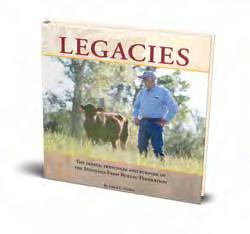
Legacies – The Values, Principles and Purpose of The Montana Farm Bureau Federation
Written by Laura C. Nelson
REVIEWED BY REBECCA COLNAR , EDITOR, MFBF SPOKESMAN
Published in 2020, Legacies is the perfect book to reflect upon as our country celebrates its semiquincentennial—250 years of being the land of the free and the home of the brave. George Washington was a successful farmer, as were many of our Founding Fathers. To farm, one must possess determination, open-mindedness, grit, and strong work ethic—traits that have been proudly passed down through the last two and a half centuries.
Throughout the book, author Laura Nelson weaves
themes of values, principles, and purpose. She masterfully combines stories of current Montana Farm Bureau families with historical news clippings and compelling, in-depth biographies of every MFBF president since John Davis was elected in 1919.
I truly admire how the book bridges the past and the present. It is just as captivating to read about the history of Montana in the early 1900s as it is to turn the page and see folks you know today—the Stenbergs, Diehls, Lakes, Bandels, Andersons, Quinns, Nelsons, McPhersons, Steinbeissers, and Johnsons, just to name a few.
The book’s organization is compelling, and Nelson’s photography is stunning. Though it spans 218 pages, the narrative keeps you turning pages by juxtaposing the "old days"—when this country was only 125 years old— with the perspectives of young farmers looking toward a prosperous future. Legacies is so impactful that even the Montana Farm Bureau’s ACE leadership class uses it as a core selection for their book club. ◾
Convenient, innovative financial solutions, backed by the power of local management and decision making. This commitment empowers our team to make quick, informed, local decisions, ensuring you receive the services you need, when you need them.